window.__IS_SSR__=true
window.__INITIAL_STATE__={
"attachmentsReducer": {
"audio_0": {
"type": "attachments",
"id": "audio_0",
"imgSizes": {
"kqedFullSize": {
"file": "https://ww2.kqed.org/news/wp-content/themes/KQED-unified/img/audio_bgs/background0.jpg"
}
}
},
"audio_1": {
"type": "attachments",
"id": "audio_1",
"imgSizes": {
"kqedFullSize": {
"file": "https://ww2.kqed.org/news/wp-content/themes/KQED-unified/img/audio_bgs/background1.jpg"
}
}
},
"audio_2": {
"type": "attachments",
"id": "audio_2",
"imgSizes": {
"kqedFullSize": {
"file": "https://ww2.kqed.org/news/wp-content/themes/KQED-unified/img/audio_bgs/background2.jpg"
}
}
},
"audio_3": {
"type": "attachments",
"id": "audio_3",
"imgSizes": {
"kqedFullSize": {
"file": "https://ww2.kqed.org/news/wp-content/themes/KQED-unified/img/audio_bgs/background3.jpg"
}
}
},
"audio_4": {
"type": "attachments",
"id": "audio_4",
"imgSizes": {
"kqedFullSize": {
"file": "https://ww2.kqed.org/news/wp-content/themes/KQED-unified/img/audio_bgs/background4.jpg"
}
}
},
"placeholder": {
"type": "attachments",
"id": "placeholder",
"imgSizes": {
"thumbnail": {
"file": "https://cdn.kqed.org/wp-content/uploads/2024/12/KQED-Default-Image-816638274-2000x1333-1-160x107.jpg",
"width": 160,
"height": 107,
"mimeType": "image/jpeg"
},
"medium": {
"file": "https://cdn.kqed.org/wp-content/uploads/2024/12/KQED-Default-Image-816638274-2000x1333-1-800x533.jpg",
"width": 800,
"height": 533,
"mimeType": "image/jpeg"
},
"medium_large": {
"file": "https://cdn.kqed.org/wp-content/uploads/2024/12/KQED-Default-Image-816638274-2000x1333-1-768x512.jpg",
"width": 768,
"height": 512,
"mimeType": "image/jpeg"
},
"large": {
"file": "https://cdn.kqed.org/wp-content/uploads/2024/12/KQED-Default-Image-816638274-2000x1333-1-1020x680.jpg",
"width": 1020,
"height": 680,
"mimeType": "image/jpeg"
},
"1536x1536": {
"file": "https://cdn.kqed.org/wp-content/uploads/2024/12/KQED-Default-Image-816638274-2000x1333-1-1536x1024.jpg",
"width": 1536,
"height": 1024,
"mimeType": "image/jpeg"
},
"fd-lrg": {
"file": "https://cdn.kqed.org/wp-content/uploads/2024/12/KQED-Default-Image-816638274-2000x1333-1-1536x1024.jpg",
"width": 1536,
"height": 1024,
"mimeType": "image/jpeg"
},
"fd-med": {
"file": "https://cdn.kqed.org/wp-content/uploads/2024/12/KQED-Default-Image-816638274-2000x1333-1-1020x680.jpg",
"width": 1020,
"height": 680,
"mimeType": "image/jpeg"
},
"fd-sm": {
"file": "https://cdn.kqed.org/wp-content/uploads/2024/12/KQED-Default-Image-816638274-2000x1333-1-800x533.jpg",
"width": 800,
"height": 533,
"mimeType": "image/jpeg"
},
"post-thumbnail": {
"file": "https://cdn.kqed.org/wp-content/uploads/2024/12/KQED-Default-Image-816638274-2000x1333-1-672x372.jpg",
"width": 672,
"height": 372,
"mimeType": "image/jpeg"
},
"twentyfourteen-full-width": {
"file": "https://cdn.kqed.org/wp-content/uploads/2024/12/KQED-Default-Image-816638274-2000x1333-1-1038x576.jpg",
"width": 1038,
"height": 576,
"mimeType": "image/jpeg"
},
"xxsmall": {
"file": "https://cdn.kqed.org/wp-content/uploads/2024/12/KQED-Default-Image-816638274-2000x1333-1-160x107.jpg",
"width": 160,
"height": 107,
"mimeType": "image/jpeg"
},
"xsmall": {
"file": "https://cdn.kqed.org/wp-content/uploads/2024/12/KQED-Default-Image-816638274-2000x1333-1-672x372.jpg",
"width": 672,
"height": 372,
"mimeType": "image/jpeg"
},
"small": {
"file": "https://cdn.kqed.org/wp-content/uploads/2024/12/KQED-Default-Image-816638274-2000x1333-1-672x372.jpg",
"width": 672,
"height": 372,
"mimeType": "image/jpeg"
},
"xlarge": {
"file": "https://cdn.kqed.org/wp-content/uploads/2024/12/KQED-Default-Image-816638274-2000x1333-1-1020x680.jpg",
"width": 1020,
"height": 680,
"mimeType": "image/jpeg"
},
"full-width": {
"file": "https://cdn.kqed.org/wp-content/uploads/2024/12/KQED-Default-Image-816638274-2000x1333-1-1920x1280.jpg",
"width": 1920,
"height": 1280,
"mimeType": "image/jpeg"
},
"guest-author-32": {
"file": "https://cdn.kqed.org/wp-content/uploads/2025/01/KQED-Default-Image-816638274-1333x1333-1-160x160.jpg",
"width": 32,
"height": 32,
"mimeType": "image/jpeg"
},
"guest-author-50": {
"file": "https://cdn.kqed.org/wp-content/uploads/2025/01/KQED-Default-Image-816638274-1333x1333-1-160x160.jpg",
"width": 50,
"height": 50,
"mimeType": "image/jpeg"
},
"guest-author-64": {
"file": "https://cdn.kqed.org/wp-content/uploads/2025/01/KQED-Default-Image-816638274-1333x1333-1-160x160.jpg",
"width": 64,
"height": 64,
"mimeType": "image/jpeg"
},
"guest-author-96": {
"file": "https://cdn.kqed.org/wp-content/uploads/2025/01/KQED-Default-Image-816638274-1333x1333-1-160x160.jpg",
"width": 96,
"height": 96,
"mimeType": "image/jpeg"
},
"guest-author-128": {
"file": "https://cdn.kqed.org/wp-content/uploads/2025/01/KQED-Default-Image-816638274-1333x1333-1-160x160.jpg",
"width": 128,
"height": 128,
"mimeType": "image/jpeg"
},
"detail": {
"file": "https://cdn.kqed.org/wp-content/uploads/2025/01/KQED-Default-Image-816638274-1333x1333-1-160x160.jpg",
"width": 160,
"height": 160,
"mimeType": "image/jpeg"
},
"kqedFullSize": {
"file": "https://cdn.kqed.org/wp-content/uploads/2024/12/KQED-Default-Image-816638274-2000x1333-1.jpg",
"width": 2000,
"height": 1333
}
}
},
"news_12032227": {
"type": "attachments",
"id": "news_12032227",
"meta": {
"index": "attachments_1716263798",
"site": "news",
"id": "12032227",
"found": true
},
"title": "240311-JewishProtest-JY-24_qed",
"publishDate": 1742490045,
"status": "inherit",
"parent": 12032222,
"modified": 1757631348,
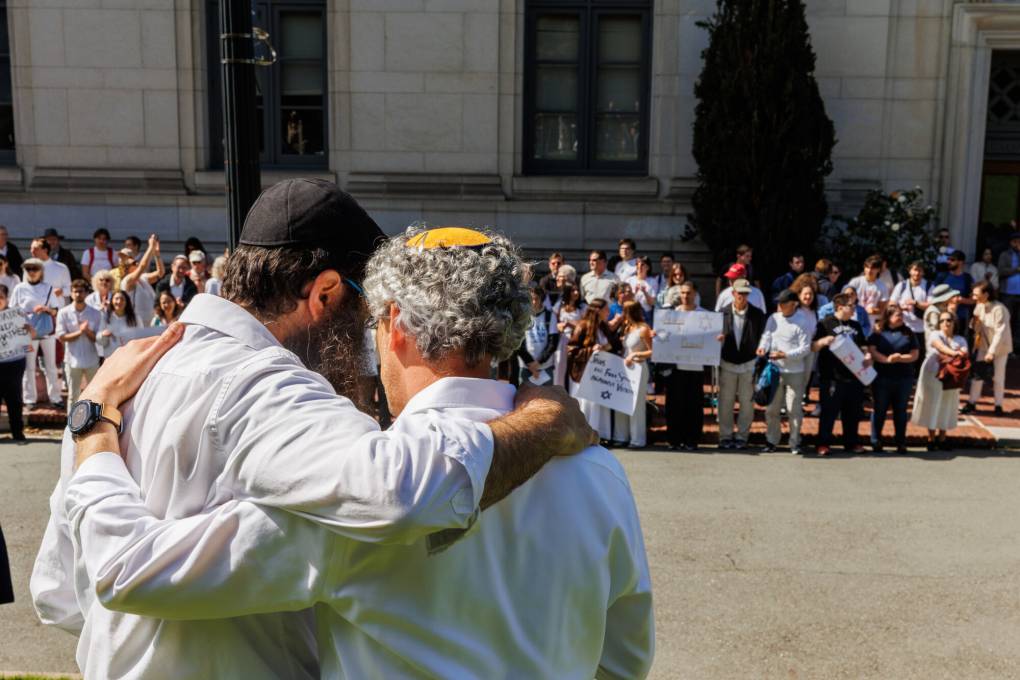
"caption": "Rabbis and Jewish Berkeley students, faculty and community members rally on campus in Berkeley, California, on March 11, 2024. While Bay Area Jewish groups seek clarity on what Trump’s FEMA freeze means, one nonprofit leader said the cuts could be “financially devastating.” ",
"credit": "Juliana Yamada for KQED",
"altTag": null,
"description": null,
"imgSizes": {
"medium": {
"file": "https://cdn.kqed.org/wp-content/uploads/sites/10/2025/03/240311-JewishProtest-JY-24_qed-800x533.jpg",
"width": 800,
"height": 533,
"mimeType": "image/jpeg"
},
"large": {
"file": "https://cdn.kqed.org/wp-content/uploads/sites/10/2025/03/240311-JewishProtest-JY-24_qed-1020x680.jpg",
"width": 1020,
"height": 680,
"mimeType": "image/jpeg"
},
"thumbnail": {
"file": "https://cdn.kqed.org/wp-content/uploads/sites/10/2025/03/240311-JewishProtest-JY-24_qed-160x107.jpg",
"width": 160,
"height": 107,
"mimeType": "image/jpeg"
},
"1536x1536": {
"file": "https://cdn.kqed.org/wp-content/uploads/sites/10/2025/03/240311-JewishProtest-JY-24_qed-1536x1024.jpg",
"width": 1536,
"height": 1024,
"mimeType": "image/jpeg"
},
"post-thumbnail": {
"file": "https://cdn.kqed.org/wp-content/uploads/sites/10/2025/03/240311-JewishProtest-JY-24_qed-672x372.jpg",
"width": 672,
"height": 372,
"mimeType": "image/jpeg"
},
"twentyfourteen-full-width": {
"file": "https://cdn.kqed.org/wp-content/uploads/sites/10/2025/03/240311-JewishProtest-JY-24_qed-1038x576.jpg",
"width": 1038,
"height": 576,
"mimeType": "image/jpeg"
},
"full-width": {
"file": "https://cdn.kqed.org/wp-content/uploads/sites/10/2025/03/240311-JewishProtest-JY-24_qed-1920x1280.jpg",
"width": 1920,
"height": 1280,
"mimeType": "image/jpeg"
},
"kqedFullSize": {
"file": "https://cdn.kqed.org/wp-content/uploads/sites/10/2025/03/240311-JewishProtest-JY-24_qed.jpg",
"width": 2000,
"height": 1333
}
},
"isLoading": false,
"fetchFailed": false
},
"news_12032331": {
"type": "attachments",
"id": "news_12032331",
"meta": {
"index": "attachments_1716263798",
"site": "news",
"id": "12032331",
"found": true
},
"title": "npr.brightspotcdn copy",
"publishDate": 1742506555,
"status": "inherit",
"parent": 12032228,
"modified": 1742506576,
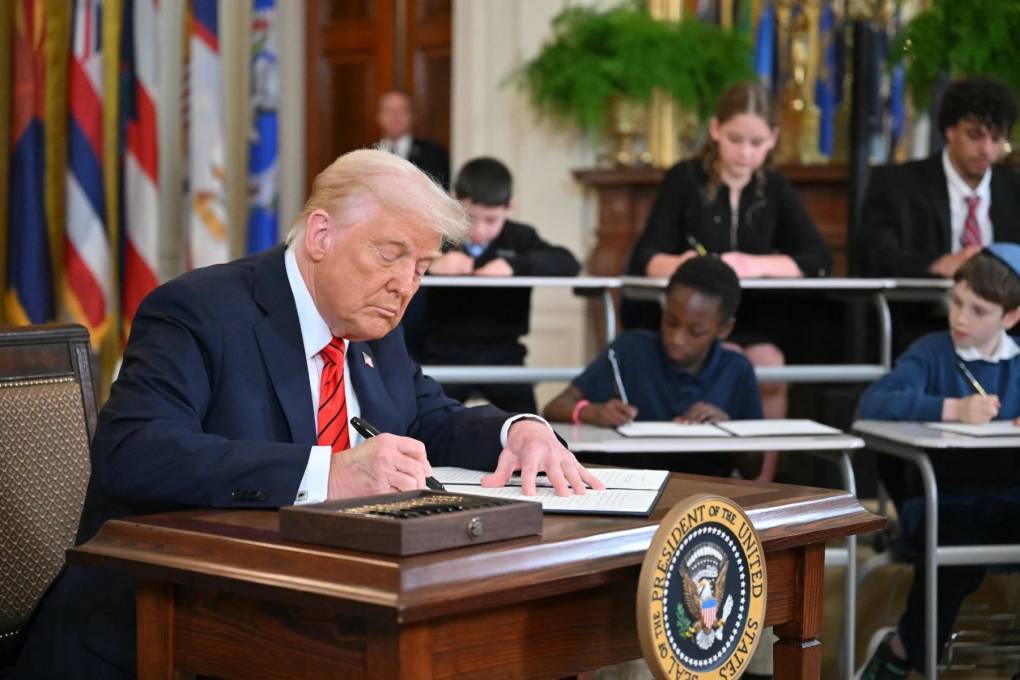
"caption": "On Thursday, President Donald Trump signed an executive action to begin dismantling the US Department of Education.",
"credit": "Mandel Ngan/AFP via Getty Images",
"altTag": null,
"description": null,
"imgSizes": {
"medium": {
"file": "https://cdn.kqed.org/wp-content/uploads/sites/10/2025/03/npr.brightspotcdn-copy-7-800x533.jpg",
"width": 800,
"height": 533,
"mimeType": "image/jpeg"
},
"large": {
"file": "https://cdn.kqed.org/wp-content/uploads/sites/10/2025/03/npr.brightspotcdn-copy-7-1020x680.jpg",
"width": 1020,
"height": 680,
"mimeType": "image/jpeg"
},
"thumbnail": {
"file": "https://cdn.kqed.org/wp-content/uploads/sites/10/2025/03/npr.brightspotcdn-copy-7-160x107.jpg",
"width": 160,
"height": 107,
"mimeType": "image/jpeg"
},
"1536x1536": {
"file": "https://cdn.kqed.org/wp-content/uploads/sites/10/2025/03/npr.brightspotcdn-copy-7-1536x1024.jpg",
"width": 1536,
"height": 1024,
"mimeType": "image/jpeg"
},
"post-thumbnail": {
"file": "https://cdn.kqed.org/wp-content/uploads/sites/10/2025/03/npr.brightspotcdn-copy-7-672x372.jpg",
"width": 672,
"height": 372,
"mimeType": "image/jpeg"
},
"twentyfourteen-full-width": {
"file": "https://cdn.kqed.org/wp-content/uploads/sites/10/2025/03/npr.brightspotcdn-copy-7-1038x576.jpg",
"width": 1038,
"height": 576,
"mimeType": "image/jpeg"
},
"kqedFullSize": {
"file": "https://cdn.kqed.org/wp-content/uploads/sites/10/2025/03/npr.brightspotcdn-copy-7.jpg",
"width": 1800,
"height": 1200
}
},
"isLoading": false,
"fetchFailed": false
},
"news_12032068": {
"type": "attachments",
"id": "news_12032068",
"meta": {
"index": "attachments_1716263798",
"site": "news",
"id": "12032068",
"found": true
},
"title": "npr.brightspotcdn copy",
"publishDate": 1742412353,
"status": "inherit",
"parent": 12032067,
"modified": 1742412375,
"caption": "Across the federal government, agencies have been busy scrubbing photographic and written references about women, people of color and members of the LGBTQ+ community from their websites.",
"credit": "Tara Anand for NPR",
"altTag": null,
"description": null,
"imgSizes": {
"medium": {
"file": "https://cdn.kqed.org/wp-content/uploads/sites/10/2025/03/npr.brightspotcdn-copy-5-800x524.jpg",
"width": 800,
"height": 524,
"mimeType": "image/jpeg"
},
"large": {
"file": "https://cdn.kqed.org/wp-content/uploads/sites/10/2025/03/npr.brightspotcdn-copy-5-1020x668.jpg",
"width": 1020,
"height": 668,
"mimeType": "image/jpeg"
},
"thumbnail": {
"file": "https://cdn.kqed.org/wp-content/uploads/sites/10/2025/03/npr.brightspotcdn-copy-5-160x105.jpg",
"width": 160,
"height": 105,
"mimeType": "image/jpeg"
},
"1536x1536": {
"file": "https://cdn.kqed.org/wp-content/uploads/sites/10/2025/03/npr.brightspotcdn-copy-5-1536x1006.jpg",
"width": 1536,
"height": 1006,
"mimeType": "image/jpeg"
},
"2048x2048": {
"file": "https://cdn.kqed.org/wp-content/uploads/sites/10/2025/03/npr.brightspotcdn-copy-5-2048x1341.jpg",
"width": 2048,
"height": 1341,
"mimeType": "image/jpeg"
},
"post-thumbnail": {
"file": "https://cdn.kqed.org/wp-content/uploads/sites/10/2025/03/npr.brightspotcdn-copy-5-672x372.jpg",
"width": 672,
"height": 372,
"mimeType": "image/jpeg"
},
"twentyfourteen-full-width": {
"file": "https://cdn.kqed.org/wp-content/uploads/sites/10/2025/03/npr.brightspotcdn-copy-5-1038x576.jpg",
"width": 1038,
"height": 576,
"mimeType": "image/jpeg"
},
"full-width": {
"file": "https://cdn.kqed.org/wp-content/uploads/sites/10/2025/03/npr.brightspotcdn-copy-5-1920x1258.jpg",
"width": 1920,
"height": 1258,
"mimeType": "image/jpeg"
},
"kqedFullSize": {
"file": "https://cdn.kqed.org/wp-content/uploads/sites/10/2025/03/npr.brightspotcdn-copy-5-scaled.jpg",
"width": 2560,
"height": 1677
}
},
"isLoading": false,
"fetchFailed": false
},
"news_12032118": {
"type": "attachments",
"id": "news_12032118",
"meta": {
"index": "attachments_1716263798",
"site": "news",
"id": "12032118",
"found": true
},
"title": "250319-UCBerkeleyProtest-13-BL",
"publishDate": 1742420513,
"status": "inherit",
"parent": 12056908,
"modified": 1758321320,
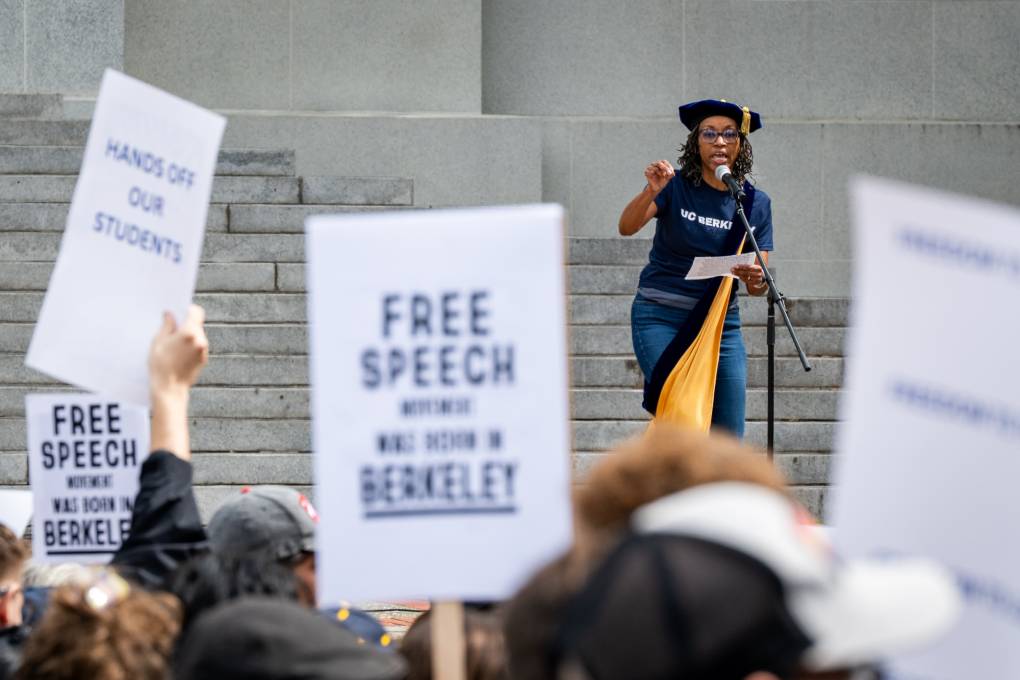
"caption": "Ula Taylor, professor of African American studies, speaks during a rally in Sproul Plaza at UC Berkeley on March 19, 2025, to protest the Trump administration's scrutiny of campus protests and curriculum nationwide. The demonstration comes amid broader concerns over federal funding cuts and actions perceived as threats to academic freedom.",
"credit": "Beth LaBerge/KQED",
"altTag": null,
"description": null,
"imgSizes": {
"medium": {
"file": "https://cdn.kqed.org/wp-content/uploads/sites/10/2025/03/250319-UCBerkeleyProtest-13-BL-800x533.jpg",
"width": 800,
"height": 533,
"mimeType": "image/jpeg"
},
"large": {
"file": "https://cdn.kqed.org/wp-content/uploads/sites/10/2025/03/250319-UCBerkeleyProtest-13-BL-1020x680.jpg",
"width": 1020,
"height": 680,
"mimeType": "image/jpeg"
},
"thumbnail": {
"file": "https://cdn.kqed.org/wp-content/uploads/sites/10/2025/03/250319-UCBerkeleyProtest-13-BL-160x107.jpg",
"width": 160,
"height": 107,
"mimeType": "image/jpeg"
},
"1536x1536": {
"file": "https://cdn.kqed.org/wp-content/uploads/sites/10/2025/03/250319-UCBerkeleyProtest-13-BL-1536x1024.jpg",
"width": 1536,
"height": 1024,
"mimeType": "image/jpeg"
},
"post-thumbnail": {
"file": "https://cdn.kqed.org/wp-content/uploads/sites/10/2025/03/250319-UCBerkeleyProtest-13-BL-672x372.jpg",
"width": 672,
"height": 372,
"mimeType": "image/jpeg"
},
"twentyfourteen-full-width": {
"file": "https://cdn.kqed.org/wp-content/uploads/sites/10/2025/03/250319-UCBerkeleyProtest-13-BL-1038x576.jpg",
"width": 1038,
"height": 576,
"mimeType": "image/jpeg"
},
"full-width": {
"file": "https://cdn.kqed.org/wp-content/uploads/sites/10/2025/03/250319-UCBerkeleyProtest-13-BL-1920x1280.jpg",
"width": 1920,
"height": 1280,
"mimeType": "image/jpeg"
},
"kqedFullSize": {
"file": "https://cdn.kqed.org/wp-content/uploads/sites/10/2025/03/250319-UCBerkeleyProtest-13-BL.jpg",
"width": 2000,
"height": 1333
}
},
"isLoading": false,
"fetchFailed": false
},
"news_12031870": {
"type": "attachments",
"id": "news_12031870",
"meta": {
"index": "attachments_1716263798",
"site": "news",
"id": "12031870",
"found": true
},
"title": "US-FRAUD-AUTOMOBILE-INTERNET-MUSK-TWITTER",
"publishDate": 1742324979,
"status": "inherit",
"parent": 12081802,
"modified": 1777579953,
"caption": "The exterior of the Phillip Burton Federal Building and U.S. Courthouse in San Francisco, California, on Jan. 20, 2019. ",
"credit": "Patrick T. Fallon/AFP via Getty Images",
"altTag": null,
"description": null,
"imgSizes": {
"medium": {
"file": "https://cdn.kqed.org/wp-content/uploads/sites/10/2025/03/GettyImages-1246387515-800x533.jpg",
"width": 800,
"height": 533,
"mimeType": "image/jpeg"
},
"large": {
"file": "https://cdn.kqed.org/wp-content/uploads/sites/10/2025/03/GettyImages-1246387515-1020x680.jpg",
"width": 1020,
"height": 680,
"mimeType": "image/jpeg"
},
"thumbnail": {
"file": "https://cdn.kqed.org/wp-content/uploads/sites/10/2025/03/GettyImages-1246387515-160x107.jpg",
"width": 160,
"height": 107,
"mimeType": "image/jpeg"
},
"1536x1536": {
"file": "https://cdn.kqed.org/wp-content/uploads/sites/10/2025/03/GettyImages-1246387515-1536x1024.jpg",
"width": 1536,
"height": 1024,
"mimeType": "image/jpeg"
},
"2048x2048": {
"file": "https://cdn.kqed.org/wp-content/uploads/sites/10/2025/03/GettyImages-1246387515-2048x1365.jpg",
"width": 2048,
"height": 1365,
"mimeType": "image/jpeg"
},
"post-thumbnail": {
"file": "https://cdn.kqed.org/wp-content/uploads/sites/10/2025/03/GettyImages-1246387515-672x372.jpg",
"width": 672,
"height": 372,
"mimeType": "image/jpeg"
},
"twentyfourteen-full-width": {
"file": "https://cdn.kqed.org/wp-content/uploads/sites/10/2025/03/GettyImages-1246387515-1038x576.jpg",
"width": 1038,
"height": 576,
"mimeType": "image/jpeg"
},
"full-width": {
"file": "https://cdn.kqed.org/wp-content/uploads/sites/10/2025/03/GettyImages-1246387515-1920x1280.jpg",
"width": 1920,
"height": 1280,
"mimeType": "image/jpeg"
},
"kqedFullSize": {
"file": "https://cdn.kqed.org/wp-content/uploads/sites/10/2025/03/GettyImages-1246387515-scaled-e1742325160899.jpg",
"width": 2000,
"height": 1334
}
},
"isLoading": false,
"fetchFailed": false
},
"news_12032137": {
"type": "attachments",
"id": "news_12032137",
"meta": {
"index": "attachments_1716263798",
"site": "news",
"id": "12032137",
"found": true
},
"title": "DonaldTrumpTigerWoods",
"publishDate": 1742423041,
"status": "inherit",
"parent": 12031850,
"modified": 1742425306,
"caption": "U.S. President Donald Trump and golf legend Tiger Woods arrive for a reception honoring Black History Month in the East Room of the White House on Feb. 20, 2025, in Washington, D.C. The Black History Month celebration comes as Trump has signed a series of executive orders ending federal diversity, equity and inclusion (DEI) programs and cutting funding to schools and universities that do not cut DEI programs. ",
"credit": "Win McNamee/Getty Images",
"altTag": null,
"description": null,
"imgSizes": {
"medium": {
"file": "https://cdn.kqed.org/wp-content/uploads/sites/10/2025/03/DonaldTrumpTigerWoods-800x533.jpg",
"width": 800,
"height": 533,
"mimeType": "image/jpeg"
},
"large": {
"file": "https://cdn.kqed.org/wp-content/uploads/sites/10/2025/03/DonaldTrumpTigerWoods-1020x680.jpg",
"width": 1020,
"height": 680,
"mimeType": "image/jpeg"
},
"thumbnail": {
"file": "https://cdn.kqed.org/wp-content/uploads/sites/10/2025/03/DonaldTrumpTigerWoods-160x107.jpg",
"width": 160,
"height": 107,
"mimeType": "image/jpeg"
},
"1536x1536": {
"file": "https://cdn.kqed.org/wp-content/uploads/sites/10/2025/03/DonaldTrumpTigerWoods-1536x1024.jpg",
"width": 1536,
"height": 1024,
"mimeType": "image/jpeg"
},
"2048x2048": {
"file": "https://cdn.kqed.org/wp-content/uploads/sites/10/2025/03/DonaldTrumpTigerWoods-2048x1366.jpg",
"width": 2048,
"height": 1366,
"mimeType": "image/jpeg"
},
"post-thumbnail": {
"file": "https://cdn.kqed.org/wp-content/uploads/sites/10/2025/03/DonaldTrumpTigerWoods-672x372.jpg",
"width": 672,
"height": 372,
"mimeType": "image/jpeg"
},
"twentyfourteen-full-width": {
"file": "https://cdn.kqed.org/wp-content/uploads/sites/10/2025/03/DonaldTrumpTigerWoods-1038x576.jpg",
"width": 1038,
"height": 576,
"mimeType": "image/jpeg"
},
"full-width": {
"file": "https://cdn.kqed.org/wp-content/uploads/sites/10/2025/03/DonaldTrumpTigerWoods-1920x1280.jpg",
"width": 1920,
"height": 1280,
"mimeType": "image/jpeg"
},
"kqedFullSize": {
"file": "https://cdn.kqed.org/wp-content/uploads/sites/10/2025/03/DonaldTrumpTigerWoods-e1742423060297.jpg",
"width": 2000,
"height": 1334
}
},
"isLoading": false,
"fetchFailed": false
},
"news_12023747": {
"type": "attachments",
"id": "news_12023747",
"meta": {
"index": "attachments_1716263798",
"site": "news",
"id": "12023747",
"found": true
},
"title": "US-POLITICS-TRUMP-INAUGURATION",
"publishDate": 1737658482,
"status": "inherit",
"parent": 12023740,
"modified": 1737660022,
"caption": "U.S. President Donald Trump signs an executive order in the Oval Office of the White House in Washington, D.C., on Jan. 20, 2025.",
"credit": "Jim Watson/Pool/AFP via Getty Images",
"altTag": null,
"description": null,
"imgSizes": {
"medium": {
"file": "https://cdn.kqed.org/wp-content/uploads/sites/10/2025/01/DonaldTrumpEOGetty-800x521.jpg",
"width": 800,
"height": 521,
"mimeType": "image/jpeg"
},
"large": {
"file": "https://cdn.kqed.org/wp-content/uploads/sites/10/2025/01/DonaldTrumpEOGetty-1020x664.jpg",
"width": 1020,
"height": 664,
"mimeType": "image/jpeg"
},
"thumbnail": {
"file": "https://cdn.kqed.org/wp-content/uploads/sites/10/2025/01/DonaldTrumpEOGetty-160x104.jpg",
"width": 160,
"height": 104,
"mimeType": "image/jpeg"
},
"1536x1536": {
"file": "https://cdn.kqed.org/wp-content/uploads/sites/10/2025/01/DonaldTrumpEOGetty-1536x1000.jpg",
"width": 1536,
"height": 1000,
"mimeType": "image/jpeg"
},
"post-thumbnail": {
"file": "https://cdn.kqed.org/wp-content/uploads/sites/10/2025/01/DonaldTrumpEOGetty-672x372.jpg",
"width": 672,
"height": 372,
"mimeType": "image/jpeg"
},
"twentyfourteen-full-width": {
"file": "https://cdn.kqed.org/wp-content/uploads/sites/10/2025/01/DonaldTrumpEOGetty-1038x576.jpg",
"width": 1038,
"height": 576,
"mimeType": "image/jpeg"
},
"full-width": {
"file": "https://cdn.kqed.org/wp-content/uploads/sites/10/2025/01/DonaldTrumpEOGetty-1920x1250.jpg",
"width": 1920,
"height": 1250,
"mimeType": "image/jpeg"
},
"kqedFullSize": {
"file": "https://cdn.kqed.org/wp-content/uploads/sites/10/2025/01/DonaldTrumpEOGetty.jpg",
"width": 2000,
"height": 1302
}
},
"isLoading": false,
"fetchFailed": false
},
"news_12031968": {
"type": "attachments",
"id": "news_12031968",
"meta": {
"index": "attachments_1716263798",
"site": "news",
"id": "12031968",
"found": true
},
"title": "npr.brightspotcdn copy",
"publishDate": 1742342000,
"status": "inherit",
"parent": 12031966,
"modified": 1742342029,
"caption": "The Statue of Liberty was a gift from France to the US in the 1880s, celebrating their friendship and the anniversary of US independence.",
"credit": "Pamela Smith/AP",
"altTag": null,
"description": null,
"imgSizes": {
"medium": {
"file": "https://cdn.kqed.org/wp-content/uploads/sites/10/2025/03/npr.brightspotcdn-copy-3-800x533.jpg",
"width": 800,
"height": 533,
"mimeType": "image/jpeg"
},
"large": {
"file": "https://cdn.kqed.org/wp-content/uploads/sites/10/2025/03/npr.brightspotcdn-copy-3-1020x680.jpg",
"width": 1020,
"height": 680,
"mimeType": "image/jpeg"
},
"thumbnail": {
"file": "https://cdn.kqed.org/wp-content/uploads/sites/10/2025/03/npr.brightspotcdn-copy-3-160x107.jpg",
"width": 160,
"height": 107,
"mimeType": "image/jpeg"
},
"1536x1536": {
"file": "https://cdn.kqed.org/wp-content/uploads/sites/10/2025/03/npr.brightspotcdn-copy-3-1536x1024.jpg",
"width": 1536,
"height": 1024,
"mimeType": "image/jpeg"
},
"post-thumbnail": {
"file": "https://cdn.kqed.org/wp-content/uploads/sites/10/2025/03/npr.brightspotcdn-copy-3-672x372.jpg",
"width": 672,
"height": 372,
"mimeType": "image/jpeg"
},
"twentyfourteen-full-width": {
"file": "https://cdn.kqed.org/wp-content/uploads/sites/10/2025/03/npr.brightspotcdn-copy-3-1038x576.jpg",
"width": 1038,
"height": 576,
"mimeType": "image/jpeg"
},
"kqedFullSize": {
"file": "https://cdn.kqed.org/wp-content/uploads/sites/10/2025/03/npr.brightspotcdn-copy-3.jpg",
"width": 1800,
"height": 1200
}
},
"isLoading": false,
"fetchFailed": false
},
"news_12032005": {
"type": "attachments",
"id": "news_12032005",
"meta": {
"index": "attachments_1716263798",
"site": "news",
"id": "12032005",
"found": true
},
"title": "250318-SF ISRAEL AIRSRTIKES PROTEST-AC-06-KQED",
"publishDate": 1742382881,
"status": "inherit",
"parent": 0,
"modified": 1742400682,
"caption": "A huge crowd marches down Montgomery Street following a protest against Israel's breaking of a ceasefire agreement with Gaza on March 18, 2025.",
"credit": "Aryk Copley/KQED",
"altTag": null,
"description": null,
"imgSizes": {
"medium": {
"file": "https://cdn.kqed.org/wp-content/uploads/sites/10/2025/03/250318-SF-ISRAEL-AIRSRTIKES-PROTEST-AC-06-KQED-800x533.jpg",
"width": 800,
"height": 533,
"mimeType": "image/jpeg"
},
"large": {
"file": "https://cdn.kqed.org/wp-content/uploads/sites/10/2025/03/250318-SF-ISRAEL-AIRSRTIKES-PROTEST-AC-06-KQED-1020x680.jpg",
"width": 1020,
"height": 680,
"mimeType": "image/jpeg"
},
"thumbnail": {
"file": "https://cdn.kqed.org/wp-content/uploads/sites/10/2025/03/250318-SF-ISRAEL-AIRSRTIKES-PROTEST-AC-06-KQED-160x107.jpg",
"width": 160,
"height": 107,
"mimeType": "image/jpeg"
},
"1536x1536": {
"file": "https://cdn.kqed.org/wp-content/uploads/sites/10/2025/03/250318-SF-ISRAEL-AIRSRTIKES-PROTEST-AC-06-KQED-1536x1024.jpg",
"width": 1536,
"height": 1024,
"mimeType": "image/jpeg"
},
"post-thumbnail": {
"file": "https://cdn.kqed.org/wp-content/uploads/sites/10/2025/03/250318-SF-ISRAEL-AIRSRTIKES-PROTEST-AC-06-KQED-672x372.jpg",
"width": 672,
"height": 372,
"mimeType": "image/jpeg"
},
"twentyfourteen-full-width": {
"file": "https://cdn.kqed.org/wp-content/uploads/sites/10/2025/03/250318-SF-ISRAEL-AIRSRTIKES-PROTEST-AC-06-KQED-1038x576.jpg",
"width": 1038,
"height": 576,
"mimeType": "image/jpeg"
},
"full-width": {
"file": "https://cdn.kqed.org/wp-content/uploads/sites/10/2025/03/250318-SF-ISRAEL-AIRSRTIKES-PROTEST-AC-06-KQED-1920x1280.jpg",
"width": 1920,
"height": 1280,
"mimeType": "image/jpeg"
},
"kqedFullSize": {
"file": "https://cdn.kqed.org/wp-content/uploads/sites/10/2025/03/250318-SF-ISRAEL-AIRSRTIKES-PROTEST-AC-06-KQED.jpg",
"width": 2000,
"height": 1333
}
},
"isLoading": false,
"fetchFailed": false
},
"news_12031851": {
"type": "attachments",
"id": "news_12031851",
"meta": {
"index": "attachments_1716263798",
"site": "news",
"id": "12031851",
"found": true
},
"title": "Department Of Education Plans To Lay Off Half Of Its Staff",
"publishDate": 1742322731,
"status": "inherit",
"parent": 12031831,
"modified": 1745958272,
"caption": "The headquarters of the Department of Education are shown on March 12, 2025 in Washington, DC. ",
"credit": "Win McNamee/Getty Images",
"altTag": null,
"description": null,
"imgSizes": {
"medium": {
"file": "https://cdn.kqed.org/wp-content/uploads/sites/10/2025/03/GettyImages-2204718967-800x534.jpg",
"width": 800,
"height": 534,
"mimeType": "image/jpeg"
},
"large": {
"file": "https://cdn.kqed.org/wp-content/uploads/sites/10/2025/03/GettyImages-2204718967-1020x680.jpg",
"width": 1020,
"height": 680,
"mimeType": "image/jpeg"
},
"thumbnail": {
"file": "https://cdn.kqed.org/wp-content/uploads/sites/10/2025/03/GettyImages-2204718967-160x107.jpg",
"width": 160,
"height": 107,
"mimeType": "image/jpeg"
},
"post-thumbnail": {
"file": "https://cdn.kqed.org/wp-content/uploads/sites/10/2025/03/GettyImages-2204718967-672x372.jpg",
"width": 672,
"height": 372,
"mimeType": "image/jpeg"
},
"twentyfourteen-full-width": {
"file": "https://cdn.kqed.org/wp-content/uploads/sites/10/2025/03/GettyImages-2204718967-1024x576.jpg",
"width": 1024,
"height": 576,
"mimeType": "image/jpeg"
},
"kqedFullSize": {
"file": "https://cdn.kqed.org/wp-content/uploads/sites/10/2025/03/GettyImages-2204718967.jpg",
"width": 1024,
"height": 683
}
},
"isLoading": false,
"fetchFailed": false
},
"news_12031336": {
"type": "attachments",
"id": "news_12031336",
"meta": {
"index": "attachments_1716263798",
"site": "news",
"id": "12031336",
"found": true
},
"title": "Alicia Portnoy, photographed at her home in Los Angeles, on March 12, 2025.",
"publishDate": 1741960821,
"status": "inherit",
"parent": 0,
"modified": 1742239269,
"caption": "Alicia Partnoy posed for a photograph at her home in Los Angeles on March 12, 2025.",
"credit": "James Bernal for KQED",
"altTag": null,
"description": null,
"imgSizes": {
"medium": {
"file": "https://cdn.kqed.org/wp-content/uploads/sites/10/2025/03/20250312_Alicia-Portnoy_JB_00003-800x533.jpg",
"width": 800,
"height": 533,
"mimeType": "image/jpeg"
},
"large": {
"file": "https://cdn.kqed.org/wp-content/uploads/sites/10/2025/03/20250312_Alicia-Portnoy_JB_00003-1020x680.jpg",
"width": 1020,
"height": 680,
"mimeType": "image/jpeg"
},
"thumbnail": {
"file": "https://cdn.kqed.org/wp-content/uploads/sites/10/2025/03/20250312_Alicia-Portnoy_JB_00003-160x107.jpg",
"width": 160,
"height": 107,
"mimeType": "image/jpeg"
},
"1536x1536": {
"file": "https://cdn.kqed.org/wp-content/uploads/sites/10/2025/03/20250312_Alicia-Portnoy_JB_00003-1536x1024.jpg",
"width": 1536,
"height": 1024,
"mimeType": "image/jpeg"
},
"post-thumbnail": {
"file": "https://cdn.kqed.org/wp-content/uploads/sites/10/2025/03/20250312_Alicia-Portnoy_JB_00003-672x372.jpg",
"width": 672,
"height": 372,
"mimeType": "image/jpeg"
},
"twentyfourteen-full-width": {
"file": "https://cdn.kqed.org/wp-content/uploads/sites/10/2025/03/20250312_Alicia-Portnoy_JB_00003-1038x576.jpg",
"width": 1038,
"height": 576,
"mimeType": "image/jpeg"
},
"full-width": {
"file": "https://cdn.kqed.org/wp-content/uploads/sites/10/2025/03/20250312_Alicia-Portnoy_JB_00003-1920x1280.jpg",
"width": 1920,
"height": 1280,
"mimeType": "image/jpeg"
},
"kqedFullSize": {
"file": "https://cdn.kqed.org/wp-content/uploads/sites/10/2025/03/20250312_Alicia-Portnoy_JB_00003.jpg",
"width": 2000,
"height": 1333
}
},
"isLoading": false,
"fetchFailed": false
},
"news_12030970": {
"type": "attachments",
"id": "news_12030970",
"meta": {
"index": "attachments_1716263798",
"site": "news",
"id": "12030970",
"found": true
},
"title": "UC Berkeley Students Hold Rally In Support Of Gaza",
"publishDate": 1741802904,
"status": "inherit",
"parent": 12066489,
"modified": 1765410696,
"caption": "Pro-Palestinian protesters set up a tent encampment in front of Sproul Hall on the UC Berkeley campus on April 22, 2024, in Berkeley, California. ",
"credit": "Justin Sullivan/Getty Images",
"altTag": null,
"description": null,
"imgSizes": {
"medium": {
"file": "https://cdn.kqed.org/wp-content/uploads/sites/10/2025/03/GettyImages-2149730456-800x543.jpg",
"width": 800,
"height": 543,
"mimeType": "image/jpeg"
},
"large": {
"file": "https://cdn.kqed.org/wp-content/uploads/sites/10/2025/03/GettyImages-2149730456-1020x693.jpg",
"width": 1020,
"height": 693,
"mimeType": "image/jpeg"
},
"thumbnail": {
"file": "https://cdn.kqed.org/wp-content/uploads/sites/10/2025/03/GettyImages-2149730456-160x109.jpg",
"width": 160,
"height": 109,
"mimeType": "image/jpeg"
},
"1536x1536": {
"file": "https://cdn.kqed.org/wp-content/uploads/sites/10/2025/03/GettyImages-2149730456-1536x1043.jpg",
"width": 1536,
"height": 1043,
"mimeType": "image/jpeg"
},
"post-thumbnail": {
"file": "https://cdn.kqed.org/wp-content/uploads/sites/10/2025/03/GettyImages-2149730456-672x372.jpg",
"width": 672,
"height": 372,
"mimeType": "image/jpeg"
},
"twentyfourteen-full-width": {
"file": "https://cdn.kqed.org/wp-content/uploads/sites/10/2025/03/GettyImages-2149730456-1038x576.jpg",
"width": 1038,
"height": 576,
"mimeType": "image/jpeg"
},
"full-width": {
"file": "https://cdn.kqed.org/wp-content/uploads/sites/10/2025/03/GettyImages-2149730456-1920x1304.jpg",
"width": 1920,
"height": 1304,
"mimeType": "image/jpeg"
},
"kqedFullSize": {
"file": "https://cdn.kqed.org/wp-content/uploads/sites/10/2025/03/GettyImages-2149730456.jpg",
"width": 2000,
"height": 1358
}
},
"isLoading": false,
"fetchFailed": false
}
},
"audioPlayerReducer": {
"postId": "stream_live",
"isPaused": true,
"isPlaying": false,
"pfsActive": false,
"pledgeModalIsOpen": true,
"playerDrawerIsOpen": false,
"liveAudioPlayStartedAt": 0,
"liveAudioPlayContext": ""
},
"authorsReducer": {
"byline_news_12032228": {
"type": "authors",
"id": "byline_news_12032228",
"meta": {
"override": true
},
"slug": "byline_news_12032228",
"name": "\u003ca href=\"https://www.npr.org/people/349625027/cory-turner\">Cory Turner\u003c/a>, NPR",
"isLoading": false
},
"byline_news_12032067": {
"type": "authors",
"id": "byline_news_12032067",
"meta": {
"override": true
},
"slug": "byline_news_12032067",
"name": "\u003ca href=\"https://www.npr.org/people/726257042/huo-jingnan\">Huo Jingnan\u003c/a> and \u003ca href=\"https://www.npr.org/people/105678418/quil-lawrence\">Quil Lawrence\u003c/a>, NPR",
"isLoading": false
},
"byline_news_12031966": {
"type": "authors",
"id": "byline_news_12031966",
"meta": {
"override": true
},
"slug": "byline_news_12031966",
"name": "\u003ca href=\"https://www.npr.org/people/776048102/rachel-treisman\">Rachel Treisman\u003c/a>, NPR",
"isLoading": false
},
"ninathorsen": {
"type": "authors",
"id": "246",
"meta": {
"index": "authors_1716337520",
"id": "246",
"found": true
},
"name": "Nina Thorsen",
"firstName": "Nina",
"lastName": "Thorsen",
"slug": "ninathorsen",
"email": "nthorsen@kqed.org",
"display_author_email": false,
"staff_mastheads": [
"news"
],
"title": "Producer, Radio",
"bio": "\u003cspan style=\"color: #000000;\">Nina Thorsen is a KQED radio producer, and frequently reports on sports and culture. \u003c/span>\u003cspan style=\"color: #000000;\">She co-created and produced KQED's \u003cem>Pacific Time, \u003c/em> a weekly radio program on Asian and Asian American issues that aired from 2000 to 2007. Before coming to KQED, Thorsen was the deputy foreign editor for \u003cem>Marketplace, \u003c/em>and in her home state of Minnesota, worked for \u003cem>A Prairie Home Companion\u003c/em> and for Public Radio International. \u003c/span>",
"avatar": "https://secure.gravatar.com/avatar/e13dc7282cec33c15d973ebb56d57ead?s=600&d=blank&r=g",
"twitter": "NinaKQED",
"facebook": null,
"instagram": null,
"linkedin": null,
"sites": [
{
"site": "news",
"roles": [
"editor"
]
},
{
"site": "podcasts",
"roles": [
"editor"
]
}
],
"headData": {
"title": "Nina Thorsen | KQED",
"description": "Producer, Radio",
"ogImgSrc": "https://secure.gravatar.com/avatar/e13dc7282cec33c15d973ebb56d57ead?s=600&d=blank&r=g",
"twImgSrc": "https://secure.gravatar.com/avatar/e13dc7282cec33c15d973ebb56d57ead?s=600&d=blank&r=g"
},
"isLoading": false,
"link": "/author/ninathorsen"
},
"sasha-khokha": {
"type": "authors",
"id": "254",
"meta": {
"index": "authors_1716337520",
"id": "254",
"found": true
},
"name": "Sasha Khokha",
"firstName": "Sasha",
"lastName": "Khokha",
"slug": "sasha-khokha",
"email": "skhokha@kqed.org",
"display_author_email": true,
"staff_mastheads": [
"news"
],
"title": "Host, The California Report Magazine",
"bio": "Sasha Khokha is the host of \u003cem>The California Report's \u003c/em> weekly magazine program, which takes listeners on sound-rich excursions to meet the people that make the Golden State unique -- through audio documentaries and long-form stories. As \u003cem>The California Report's\u003c/em> Central Valley Bureau Chief based in Fresno for nearly a dozen years, Sasha brought the lives and concerns of rural Californians to listeners around the state. Her reporting helped expose the hidden price immigrant women janitors and farmworkers may pay to keep their jobs: sexual assault at work. It inspired two new California laws to protect them from sexual harassment. She was a key member of the reporting team for the Frontline film \u003cem>Rape on the Night Shift, \u003c/em>which was nominated for two national Emmys. Sasha has also won a national Edward R. Murrow and a national PRNDI award for investigative reporting, as well as multiple prizes from the Society for Professional Journalists. Sasha is a proud alum of the UC Berkeley Graduate School of Journalism and Brown University and a member of the South Asian Journalists Association.",
"avatar": "https://secure.gravatar.com/avatar/e4b5e1541aaeea2aa356aa1fb2a68950?s=600&d=blank&r=g",
"twitter": "KQEDSashaKhokha",
"facebook": null,
"instagram": null,
"linkedin": null,
"sites": [
{
"site": "news",
"roles": [
"editor"
]
},
{
"site": "stateofhealth",
"roles": [
"author"
]
},
{
"site": "science",
"roles": [
"author"
]
},
{
"site": "quest",
"roles": [
"subscriber"
]
}
],
"headData": {
"title": "Sasha Khokha | KQED",
"description": "Host, The California Report Magazine",
"ogImgSrc": "https://secure.gravatar.com/avatar/e4b5e1541aaeea2aa356aa1fb2a68950?s=600&d=blank&r=g",
"twImgSrc": "https://secure.gravatar.com/avatar/e4b5e1541aaeea2aa356aa1fb2a68950?s=600&d=blank&r=g"
},
"isLoading": false,
"link": "/author/sasha-khokha"
},
"tychehendricks": {
"type": "authors",
"id": "259",
"meta": {
"index": "authors_1716337520",
"id": "259",
"found": true
},
"name": "Tyche Hendricks",
"firstName": "Tyche",
"lastName": "Hendricks",
"slug": "tychehendricks",
"email": "thendricks@kqed.org",
"display_author_email": true,
"staff_mastheads": [
"news"
],
"title": "KQED Senior Editor, Immigration",
"bio": "\u003cspan style=\"font-weight: 400;\">Tyche Hendricks is KQED’s senior editor for immigration, leading coverage of the policy and politics that affect California’s immigrant communities. Her work for KQED’s radio and online audiences is also carried on NPR and other national outlets. She has been recognized with awards from the Radio and Television News Directors Association, the Society for Professional Journalists; the Education Writers Association; the Best of the West and the National Federation of Community Broadcasters. Before joining KQED in 2010, Tyche spent more than a dozen years as a newspaper reporter, notably at the \u003c/span>\u003ci>\u003cspan style=\"font-weight: 400;\">San Francisco Chronicle\u003c/span>\u003c/i>\u003cspan style=\"font-weight: 400;\">. At different times she has covered criminal justice, government and politics and urban planning. Tyche has taught in the MFA Creative Writing program at the University of San Francisco and at UC Berkeley’s Graduate School of Journalism, where she was co-director of a national immigration symposium for professional journalists. She is the author of \u003c/span>\u003ci>\u003cspan style=\"font-weight: 400;\">The Wind Doesn't Need a Passport: Stories from the U.S.-Mexico Borderlands\u003c/span>\u003c/i>\u003cspan style=\"font-weight: 400;\"> (University of California Press). \u003c/span>",
"avatar": "https://secure.gravatar.com/avatar/b8ee458e2731c2d43df86882ce17267e?s=600&d=blank&r=g",
"twitter": "tychehendricks",
"facebook": null,
"instagram": null,
"linkedin": null,
"sites": [
{
"site": "news",
"roles": [
"editor"
]
},
{
"site": "stateofhealth",
"roles": [
"editor"
]
}
],
"headData": {
"title": "Tyche Hendricks | KQED",
"description": "KQED Senior Editor, Immigration",
"ogImgSrc": "https://secure.gravatar.com/avatar/b8ee458e2731c2d43df86882ce17267e?s=600&d=blank&r=g",
"twImgSrc": "https://secure.gravatar.com/avatar/b8ee458e2731c2d43df86882ce17267e?s=600&d=blank&r=g"
},
"isLoading": false,
"link": "/author/tychehendricks"
},
"matthewgreen": {
"type": "authors",
"id": "1263",
"meta": {
"index": "authors_1716337520",
"id": "1263",
"found": true
},
"name": "Matthew Green",
"firstName": "Matthew",
"lastName": "Green",
"slug": "matthewgreen",
"email": "mgreen@kqed.org",
"display_author_email": false,
"staff_mastheads": [],
"title": "KQED Editor/Reporter",
"bio": "Matthew Green is a digital media producer for KQED News. He previously produced \u003ca href=\"http://www.kqed.org/lowdown\">The Lowdown\u003c/a>, KQED’s multimedia news education blog. Matthew's written for numerous Bay Area publications, including the Oakland Tribune and San Francisco Chronicle. He also taught journalism classes at Fremont High School in East Oakland.\r\n\r\nEmail: mgreen@kqed.org; Twitter: @MGreenKQED",
"avatar": "https://secure.gravatar.com/avatar/3bf498d1267ca02c8494f33d8cfc575e?s=600&d=blank&r=g",
"twitter": "MGreenKQED",
"facebook": null,
"instagram": null,
"linkedin": null,
"sites": [
{
"site": "news",
"roles": []
},
{
"site": "lowdown",
"roles": []
},
{
"site": "science",
"roles": []
},
{
"site": "education",
"roles": []
},
{
"site": "quest",
"roles": []
},
{
"site": "liveblog",
"roles": []
}
],
"headData": {
"title": "Matthew Green | KQED",
"description": "KQED Editor/Reporter",
"ogImgSrc": "https://secure.gravatar.com/avatar/3bf498d1267ca02c8494f33d8cfc575e?s=600&d=blank&r=g",
"twImgSrc": "https://secure.gravatar.com/avatar/3bf498d1267ca02c8494f33d8cfc575e?s=600&d=blank&r=g"
},
"isLoading": false,
"link": "/author/matthewgreen"
},
"mlagos": {
"type": "authors",
"id": "3239",
"meta": {
"index": "authors_1716337520",
"id": "3239",
"found": true
},
"name": "Marisa Lagos",
"firstName": "Marisa",
"lastName": "Lagos",
"slug": "mlagos",
"email": "mlagos@kqed.org",
"display_author_email": false,
"staff_mastheads": [
"news"
],
"title": "KQED Contributor",
"bio": "Marisa Lagos is a correspondent for KQED’s California Politics and Government Desk and co-hosts the award-winning show and podcast, Political Breakdown. At KQED, Lagos also conducts reporting, analysis and investigations into state, local and national politics for radio, TV, online and onstage. In 2022, she and co-host, Scott Shafer, moderated the only gubernatorial debate in California. In 2020, the \u003ci>Washington Post\u003c/i> named her one of the top political journalists in California; she was nominated for a Peabody and won several other awards for her work investigating the 2017 California wildfires. She has worked at the \u003ci>San Francisco Chronicle\u003c/i>, \u003ci>San Francisco Examiner\u003c/i> and \u003ci>Los Angeles Times\u003c/i>. A UC Santa Barbara graduate, she lives in San Francisco with her two sons and husband.",
"avatar": "https://secure.gravatar.com/avatar/a261a0d3696fc066871ef96b85b5e7d2?s=600&d=blank&r=g",
"twitter": "@mlagos",
"facebook": null,
"instagram": null,
"linkedin": null,
"sites": [
{
"site": "arts",
"roles": [
"author"
]
},
{
"site": "news",
"roles": [
"editor"
]
},
{
"site": "science",
"roles": [
"editor"
]
},
{
"site": "forum",
"roles": [
"author"
]
},
{
"site": "liveblog",
"roles": [
"author"
]
}
],
"headData": {
"title": "Marisa Lagos | KQED",
"description": "KQED Contributor",
"ogImgSrc": "https://secure.gravatar.com/avatar/a261a0d3696fc066871ef96b85b5e7d2?s=600&d=blank&r=g",
"twImgSrc": "https://secure.gravatar.com/avatar/a261a0d3696fc066871ef96b85b5e7d2?s=600&d=blank&r=g"
},
"isLoading": false,
"link": "/author/mlagos"
},
"kmonahan": {
"type": "authors",
"id": "11842",
"meta": {
"index": "authors_1716337520",
"id": "11842",
"found": true
},
"name": "Katherine Monahan",
"firstName": "Katherine",
"lastName": "Monahan",
"slug": "kmonahan",
"email": "kmonahan@kqed.org",
"display_author_email": true,
"staff_mastheads": [],
"title": "Reporter / Sound Engineer",
"bio": "I cover state and local news. I’m also a sound engineer at the station, mixing stories and running live broadcasts. I link to source materials so that readers can draw their own conclusions, and seek comment from a range of perspectives, including from people directly affected by events. Awards received include from the Society of Professional Journalists, Northern California chapter and the Alaska Press Club. I speak multiple languages and have reported and engineered in the Bay Area, Alaska, West Africa and Latin America.",
"avatar": "https://secure.gravatar.com/avatar/ff257b3a5da88893781a3d3266904b2d2f91c7f0e1bbf728f61f5fb81b74a669?s=600&d=blank&r=g",
"twitter": null,
"bluesky": null,
"facebook": null,
"instagram": null,
"linkedin": null,
"sites": [
{
"site": "news",
"roles": [
"editor"
]
},
{
"site": "science",
"roles": [
"contributor"
]
}
],
"headData": {
"title": "Katherine Monahan | KQED",
"description": "Reporter / Sound Engineer",
"ogImgSrc": "https://secure.gravatar.com/avatar/ff257b3a5da88893781a3d3266904b2d2f91c7f0e1bbf728f61f5fb81b74a669?s=600&d=blank&r=g",
"twImgSrc": "https://secure.gravatar.com/avatar/ff257b3a5da88893781a3d3266904b2d2f91c7f0e1bbf728f61f5fb81b74a669?s=600&d=blank&r=g"
},
"isLoading": false,
"link": "/author/kmonahan"
},
"nkhan": {
"type": "authors",
"id": "11867",
"meta": {
"index": "authors_1716337520",
"id": "11867",
"found": true
},
"name": "Nisa Khan",
"firstName": "Nisa",
"lastName": "Khan",
"slug": "nkhan",
"email": "nkhan@kqed.org",
"display_author_email": false,
"staff_mastheads": [],
"title": "KQED Contributor",
"bio": "Nisa Khan is a reporter for KQED's Audience News Desk. She was formerly a data reporter at Michigan Radio. She earned a Bachelor of Science in Information from the University of Michigan and a Master of Arts in Communication from Stanford University.",
"avatar": "https://secure.gravatar.com/avatar/a3bf1efcfbe7658d13a434cc54d0b2e3?s=600&d=blank&r=g",
"twitter": "mnisakhan",
"bluesky": null,
"facebook": null,
"instagram": null,
"linkedin": null,
"sites": [
{
"site": "arts",
"roles": [
"editor"
]
},
{
"site": "news",
"roles": [
"editor"
]
},
{
"site": "science",
"roles": [
"editor",
"author"
]
},
{
"site": "forum",
"roles": [
"editor"
]
},
{
"site": "liveblog",
"roles": [
"contributor"
]
}
],
"headData": {
"title": "Nisa Khan | KQED",
"description": "KQED Contributor",
"ogImgSrc": "https://secure.gravatar.com/avatar/a3bf1efcfbe7658d13a434cc54d0b2e3?s=600&d=blank&r=g",
"twImgSrc": "https://secure.gravatar.com/avatar/a3bf1efcfbe7658d13a434cc54d0b2e3?s=600&d=blank&r=g"
},
"isLoading": false,
"link": "/author/nkhan"
},
"rcooke": {
"type": "authors",
"id": "11921",
"meta": {
"index": "authors_1716337520",
"id": "11921",
"found": true
},
"name": "Riley Cooke",
"firstName": "Riley",
"lastName": "Cooke",
"slug": "rcooke",
"email": "rcooke@kqed.org",
"display_author_email": true,
"staff_mastheads": [
"news"
],
"title": "KQED Contributor",
"bio": "Riley is a senior at UC Berkeley, where she studies political science and journalism. Her work has appeared in SFGate, NBC Bay Area, Local News Matters and more. She enjoys reporting on politics, housing and homelessness — and using as many em dashes as her editors will allow.",
"avatar": "https://secure.gravatar.com/avatar/792f98c126cc5e270a8a96f77f7224ea?s=600&d=blank&r=g",
"twitter": "rrileycooke",
"facebook": null,
"instagram": null,
"linkedin": null,
"sites": [
{
"site": "arts",
"roles": [
"author"
]
},
{
"site": "news",
"roles": [
"author"
]
}
],
"headData": {
"title": "Riley Cooke | KQED",
"description": "KQED Contributor",
"ogImgSrc": "https://secure.gravatar.com/avatar/792f98c126cc5e270a8a96f77f7224ea?s=600&d=blank&r=g",
"twImgSrc": "https://secure.gravatar.com/avatar/792f98c126cc5e270a8a96f77f7224ea?s=600&d=blank&r=g"
},
"isLoading": false,
"link": "/author/rcooke"
},
"skennedy": {
"type": "authors",
"id": "11935",
"meta": {
"index": "authors_1716337520",
"id": "11935",
"found": true
},
"name": "Samantha Kennedy",
"firstName": "Samantha",
"lastName": "Kennedy",
"slug": "skennedy",
"email": "SKennedy@kqed.org",
"display_author_email": false,
"staff_mastheads": [],
"title": "KQED Contributor",
"bio": null,
"avatar": "https://secure.gravatar.com/avatar/adc7b14bf1e801793202a156ecc864d4ad505b0fd63162a2f3da0e5ba57222d0?s=600&d=blank&r=g",
"twitter": null,
"bluesky": null,
"facebook": null,
"instagram": null,
"linkedin": null,
"sites": [
{
"site": "arts",
"roles": [
"author"
]
},
{
"site": "news",
"roles": [
"editor"
]
},
{
"site": "science",
"roles": [
"editor"
]
}
],
"headData": {
"title": "Samantha Kennedy | KQED",
"description": "KQED Contributor",
"ogImgSrc": "https://secure.gravatar.com/avatar/adc7b14bf1e801793202a156ecc864d4ad505b0fd63162a2f3da0e5ba57222d0?s=600&d=blank&r=g",
"twImgSrc": "https://secure.gravatar.com/avatar/adc7b14bf1e801793202a156ecc864d4ad505b0fd63162a2f3da0e5ba57222d0?s=600&d=blank&r=g"
},
"isLoading": false,
"link": "/author/skennedy"
}
},
"pagesReducer": {
"news_tag_donald-trump": {
"type": "terms",
"id": "news_1323",
"meta": {
"index": "terms_1716263798",
"site": "news",
"id": "1323",
"score": 8.5546055
},
"featImg": null,
"name": "Donald Trump",
"description": null,
"taxonomy": "tag",
"headData": {
"twImgId": null,
"twTitle": null,
"ogTitle": null,
"ogImgId": null,
"twDescription": null,
"description": null,
"title": "Donald Trump Archives | KQED News",
"ogDescription": null
},
"ttid": 1335,
"slug": "donald-trump",
"isLoading": false,
"title": "Donald Trump",
"pageMeta": {
"site": "news",
"WpPageTemplate": "page-topic-editorial",
"currentPage": 47
},
"blocks": [
{
"blockName": "kqed/post-list",
"attrs": {
"layout": "cardArticle2",
"query": "posts/news?tag=donald-trump",
"seeMore": false,
"paginated": true,
"page": 47
}
},
{
"blockName": "kqed/ad"
}
]
}
},
"pfsSessionReducer": {},
"postsReducer": {
"stream_live": {
"type": "live",
"id": "stream_live",
"audioUrl": "https://streams.kqed.org/kqedradio",
"title": "Live Stream",
"excerpt": "Live Stream information currently unavailable.",
"link": "/radio",
"featImg": "",
"label": {
"name": "KQED Live",
"link": "/"
}
},
"stream_kqedNewscast": {
"type": "posts",
"id": "stream_kqedNewscast",
"audioUrl": "https://www.kqed.org/.stream/anon/radio/RDnews/newscast.mp3?_=1",
"title": "KQED Newscast",
"featImg": "",
"label": {
"name": "88.5 FM",
"link": "/"
}
},
"news_12032222": {
"type": "posts",
"id": "news_12032222",
"meta": {
"index": "posts_1716263798",
"site": "news",
"id": "12032222",
"score": null,
"sort": [
1742513230000
]
},
"guestAuthors": [],
"slug": "bay-area-jewish-nonprofits-say-trump-fema-cuts-left-them-without-security",
"title": "Bay Area Jewish Nonprofits Say Trump FEMA Cuts Have Left Them Without Security",
"publishDate": 1742513230,
"format": "standard",
"headTitle": "Bay Area Jewish Nonprofits Say Trump FEMA Cuts Have Left Them Without Security | KQED",
"labelTerm": {
"site": "news"
},
"content": "\u003cp>\u003ca href=\"https://www.kqed.org/news/tag/jewish\">Bay Area Jewish \u003c/a>nonprofits say millions in grant funding for necessary security enhancements is stuck in limbo after a funding freeze by \u003ca href=\"https://www.kqed.org/news/tag/donald-trump\">the Trump administration. \u003c/a>\u003c/p>\n\u003cp>The 30-day pause on funding through the Federal Emergency Management Agency’s Nonprofit Security Grant Program has left many Jewish groups without the tools needed to combat what some have called a nationwide surge in antisemitic incidents.\u003c/p>\n\u003cp>“There is a lot of uncertainty across the board for people who have received these grants, especially with the Jewish community and the rise in antisemitism in these spaces,” said Molly Jozer, a community security adviser for the Bay Area Jewish Community Federation. “A lot of people are really concerned, rightfully so.”\u003c/p>\n\u003cp>[ad fullwidth]\u003c/p>\n\u003cp>Summer camps, community centers and several synagogues did not receive their disbursements. Jozer said that funding — which is at least $5 million in Northern California — would have supported the installation of fencing or security cameras.\u003c/p>\n\u003cp>“Not getting reimbursed is financially devastating to these groups,” she said. “It’s just further stalling the progression of these projects being completed and building that safer community for themselves and the people they serve in that capacity.”\u003c/p>\n\u003cp>Jozer first received notification of the freeze around March 13 and expects funding to resume by mid-April, but has yet to receive confirmation and said communication with FEMA has been limited. FEMA did not respond to a request for comment.\u003c/p>\n\u003cp>Deborah Gottlieb, the director of grants management at the Secure Community Network, which advises synagogues on safety, said at that meeting of leaders from the Jewish Federation of North America that she believes nonprofits will be reimbursed at some point.[aside postID=news_11974526 hero='https://cdn.kqed.org/wp-content/uploads/sites/10/2024/02/240201-OCT-7-SURVIVORS-MD-02-KQED-1-1020x680.jpg']“There is a contractual obligation that you signed in your grant agreement,” she said, according to \u003ca href=\"https://jewishinsider.com/2025/03/jewish-security-grants-in-limbo-amid-fema-funding-freeze/\">Jewish Insider\u003c/a>. But Gottlieb was unsure of when that reimbursement might happen.\u003c/p>\n\u003cp>Until then, Jozer said the Bay Area Community Federation has been telling nonprofits to ensure paperwork for their grants is submitted.\u003c/p>\n\u003cp>“We’re standing by just to stand by and white-knuckling it through to see whether that funding freeze will be lifted or not,” she said.\u003c/p>\n\u003cp>The Trump administration’s cuts to FEMA and layoffs of hundreds of staffers have degraded the agency’s ability to respond to natural disasters and threats.\u003c/p>\n\u003cp>In 2024, more than \u003ca href=\"https://www.fema.gov/grants/preparedness/nonprofit-security\">$450 million\u003c/a> in funding was available for nonprofit organizations “at high risk of a terrorist attack,” according to the agency.\u003c/p>\n\u003cp>Part of the funding was also allocated by Congress by the National Security Act of 2024, which provided more than $95 billion in funding for Israel, Ukraine and Taiwan.\u003c/p>\n\u003cp>Jozer said getting through the freeze includes advocating for Jewish organizations, some of which are too small to do on their own.\u003c/p>\n\u003cp>“We’ve been doing the best on our side, as well as nationally across multitudes of Jewish organizations, to advocate on behalf of the nonprofits affected, both within our space and across the United States,” she added. “We’re really hoping the administration hears this and can make quick decisions to end this funding freeze.”\u003c/p>\n\u003cp>\u003c/p>\n",
"blocks": [],
"excerpt": "While Bay Area Jewish groups seek clarity on what Trump’s FEMA freeze means, one nonprofit leader said the cuts could be “financially devastating.” ",
"status": "publish",
"parent": 0,
"modified": 1742516101,
"stats": {
"hasAudio": false,
"hasVideo": false,
"hasChartOrMap": false,
"iframeSrcs": [],
"hasGoogleForm": false,
"hasGallery": false,
"hasHearkenModule": false,
"hasPolis": false,
"paragraphCount": 16,
"wordCount": 555
},
"headData": {
"title": "Bay Area Jewish Nonprofits Say Trump FEMA Cuts Have Left Them Without Security | KQED",
"description": "While Bay Area Jewish groups seek clarity on what Trump’s FEMA freeze means, one nonprofit leader said the cuts could be “financially devastating.” ",
"ogTitle": "",
"ogDescription": "",
"ogImgId": "",
"twTitle": "",
"twDescription": "",
"twImgId": "",
"schema": {
"@context": "https://schema.org",
"@type": "NewsArticle",
"headline": "Bay Area Jewish Nonprofits Say Trump FEMA Cuts Have Left Them Without Security",
"datePublished": "2025-03-20T16:27:10-07:00",
"dateModified": "2025-03-20T17:15:01-07:00",
"image": "https://cdn.kqed.org/wp-content/uploads/2020/02/KQED-OG-Image@1x.png",
"isAccessibleForFree": "True",
"publisher": {
"@type": "NewsMediaOrganization",
"@id": "https://www.kqed.org/#organization",
"name": "KQED",
"logo": "https://cdn.kqed.org/wp-content/uploads/2020/02/KQED-OG-Image@1x.png",
"url": "https://www.kqed.org",
"sameAs": [
"https://www.facebook.com/KQED",
"https://twitter.com/KQED",
"https://www.instagram.com/kqed/",
"https://www.tiktok.com/@kqedofficial",
"https://www.linkedin.com/company/kqed",
"https://www.youtube.com/channel/UCeC0IOo7i1P_61zVUWbJ4nw"
]
}
}
},
"sticky": false,
"nprStoryId": "kqed-12032222",
"templateType": "standard",
"featuredImageType": "standard",
"excludeFromSiteSearch": "Include",
"articleAge": "0",
"path": "/news/12032222/bay-area-jewish-nonprofits-say-trump-fema-cuts-left-them-without-security",
"audioTrackLength": null,
"parsedContent": [
{
"type": "contentString",
"content": "\u003cdiv class=\"post-body\">\u003cp>\u003cp>\u003ca href=\"https://www.kqed.org/news/tag/jewish\">Bay Area Jewish \u003c/a>nonprofits say millions in grant funding for necessary security enhancements is stuck in limbo after a funding freeze by \u003ca href=\"https://www.kqed.org/news/tag/donald-trump\">the Trump administration. \u003c/a>\u003c/p>\n\u003cp>The 30-day pause on funding through the Federal Emergency Management Agency’s Nonprofit Security Grant Program has left many Jewish groups without the tools needed to combat what some have called a nationwide surge in antisemitic incidents.\u003c/p>\n\u003cp>“There is a lot of uncertainty across the board for people who have received these grants, especially with the Jewish community and the rise in antisemitism in these spaces,” said Molly Jozer, a community security adviser for the Bay Area Jewish Community Federation. “A lot of people are really concerned, rightfully so.”\u003c/p>\n\u003cp>\u003c/p>\u003c/div>",
"attributes": {
"named": {},
"numeric": []
}
},
{
"type": "component",
"content": "",
"name": "ad",
"attributes": {
"named": {
"label": "fullwidth"
},
"numeric": [
"fullwidth"
]
}
},
{
"type": "contentString",
"content": "\u003cdiv class=\"post-body\">\u003cp>\u003c/p>\n\u003cp>Summer camps, community centers and several synagogues did not receive their disbursements. Jozer said that funding — which is at least $5 million in Northern California — would have supported the installation of fencing or security cameras.\u003c/p>\n\u003cp>“Not getting reimbursed is financially devastating to these groups,” she said. “It’s just further stalling the progression of these projects being completed and building that safer community for themselves and the people they serve in that capacity.”\u003c/p>\n\u003cp>Jozer first received notification of the freeze around March 13 and expects funding to resume by mid-April, but has yet to receive confirmation and said communication with FEMA has been limited. FEMA did not respond to a request for comment.\u003c/p>\n\u003cp>Deborah Gottlieb, the director of grants management at the Secure Community Network, which advises synagogues on safety, said at that meeting of leaders from the Jewish Federation of North America that she believes nonprofits will be reimbursed at some point.\u003c/p>\u003c/div>",
"attributes": {
"named": {},
"numeric": []
}
},
{
"type": "component",
"content": "",
"name": "aside",
"attributes": {
"named": {
"postid": "news_11974526",
"hero": "https://cdn.kqed.org/wp-content/uploads/sites/10/2024/02/240201-OCT-7-SURVIVORS-MD-02-KQED-1-1020x680.jpg",
"label": ""
},
"numeric": []
}
},
{
"type": "contentString",
"content": "\u003cdiv class=\"post-body\">\u003cp>“There is a contractual obligation that you signed in your grant agreement,” she said, according to \u003ca href=\"https://jewishinsider.com/2025/03/jewish-security-grants-in-limbo-amid-fema-funding-freeze/\">Jewish Insider\u003c/a>. But Gottlieb was unsure of when that reimbursement might happen.\u003c/p>\n\u003cp>Until then, Jozer said the Bay Area Community Federation has been telling nonprofits to ensure paperwork for their grants is submitted.\u003c/p>\n\u003cp>“We’re standing by just to stand by and white-knuckling it through to see whether that funding freeze will be lifted or not,” she said.\u003c/p>\n\u003cp>The Trump administration’s cuts to FEMA and layoffs of hundreds of staffers have degraded the agency’s ability to respond to natural disasters and threats.\u003c/p>\n\u003cp>In 2024, more than \u003ca href=\"https://www.fema.gov/grants/preparedness/nonprofit-security\">$450 million\u003c/a> in funding was available for nonprofit organizations “at high risk of a terrorist attack,” according to the agency.\u003c/p>\n\u003cp>Part of the funding was also allocated by Congress by the National Security Act of 2024, which provided more than $95 billion in funding for Israel, Ukraine and Taiwan.\u003c/p>\n\u003cp>Jozer said getting through the freeze includes advocating for Jewish organizations, some of which are too small to do on their own.\u003c/p>\n\u003cp>“We’ve been doing the best on our side, as well as nationally across multitudes of Jewish organizations, to advocate on behalf of the nonprofits affected, both within our space and across the United States,” she added. “We’re really hoping the administration hears this and can make quick decisions to end this funding freeze.”\u003c/p>\n\u003cp>\u003c/p>\n\u003c/div>\u003c/p>",
"attributes": {
"named": {},
"numeric": []
}
}
],
"link": "/news/12032222/bay-area-jewish-nonprofits-say-trump-fema-cuts-left-them-without-security",
"authors": [
"11935"
],
"categories": [
"news_31795",
"news_8",
"news_13"
],
"tags": [
"news_1386",
"news_22960",
"news_1323",
"news_20466",
"news_27626",
"news_34377",
"news_20310",
"news_17968",
"news_22456",
"news_25573"
],
"featImg": "news_12032227",
"label": "news"
},
"news_12032228": {
"type": "posts",
"id": "news_12032228",
"meta": {
"index": "posts_1716263798",
"site": "news",
"id": "12032228",
"score": null,
"sort": [
1742503853000
]
},
"guestAuthors": [],
"slug": "trump-signs-executive-order-to-begin-dismantling-the-department-of-education",
"title": "Trump Signs Executive Order to Begin Dismantling the Department of Education",
"publishDate": 1742503853,
"format": "standard",
"headTitle": "Trump Signs Executive Order to Begin Dismantling the Department of Education | KQED",
"labelTerm": {
"term": 253,
"site": "news"
},
"content": "\u003cp>\u003cem>Updated 2:30 p.m. Thursday\u003c/em>\u003c/p>\n\u003cp>President Trump signed a long-expected executive action on Thursday calling on U.S. Education Secretary Linda McMahon to dismantle the Department of Education. The president signed the order at an event at the White House, alongside a dozen students sitting in desks and the Republican governors of Texas, Indiana, Florida and Ohio.\u003c/p>\n\u003cp>“We’re going to be returning education, very simply, back to the states where it belongs,” Trump said. “And this is a very popular thing to do, but much more importantly, it’s a common sense thing to do, and it’s going to work, absolutely.”\u003c/p>\n\u003cp>The move has been expected since early February, when the \u003ca href=\"https://www.npr.org/2025/02/03/nx-s1-5282233/trump-to-make-big-cuts-to-education-department\" target=\"_blank\" rel=\"noopener\">White House revealed\u003c/a> its intentions but withheld the action until after McMahon’s Senate confirmation. It now arrives more than a week after the Trump administration has \u003ca href=\"https://www.npr.org/2025/03/11/nx-s1-5324746/trump-education-department-layoffs-closure-reorganization\" target=\"_blank\" rel=\"noopener\">already begun sweeping layoffs\u003c/a> at the Education Department.\u003c/p>\n\u003cp>[ad fullwidth]\u003c/p>\n\u003cp>According to the \u003ca href=\"https://www.ed.gov/about/news/press-release/us-department-of-education-initiates-reduction-force\" target=\"_blank\" rel=\"noopener\">administration’s own numbers\u003c/a>, Trump inherited a department with 4,133 employees. Nearly 600 workers have since chosen to leave, by resigning or retiring. And last week, 1,300 workers were told they would lose their jobs as part of a reduction in force. That leaves 2,183 staff at the department — roughly half the size it was just a few weeks ago.\u003c/p>\n\u003cp>Text of the executive order was not immediately available, but a draft, \u003ca href=\"https://www.npr.org/2025/03/05/nx-s1-5316227/trump-order-dismantling-education-department\" target=\"_blank\" rel=\"noopener\">\u003cu>previously obtained by NPR\u003c/u>\u003c/a>, instructed McMahon to act “to the maximum extent appropriate and permitted by law,” an acknowledgement that the department and its signature responsibilities were created by Congress and cannot legally be altered without congressional approval. That would almost certainly require 60 votes in the U.S. Senate to overcome a Democratic filibuster.[aside postID=news_12031831 hero='https://cdn.kqed.org/wp-content/uploads/sites/10/2025/03/GettyImages-2204718967-1020x680.jpg']Within hours of \u003ca href=\"https://www.npr.org/2025/03/03/nx-s1-5307078/trump-cabinet-linda-mcmahon-confirmed-education\" target=\"_blank\" rel=\"noopener\">McMahon’s confirmation\u003c/a> earlier this month, she shared a \u003ca href=\"https://www.ed.gov/about/news/speech/secretary-mcmahon-our-departments-final-mission\" target=\"_blank\" rel=\"noopener\">lengthy message\u003c/a> with Education Department staff attempting to rally support for the department’s unwinding, calling it “our opportunity to perform one final, unforgettable public service to future generations of students.”\u003c/p>\n\u003cp>“What’s the end goal here? Destroying public education in America,” said Sen. Patty Murray, D-Wash., in a statement. “The effects of Trump and [Trump adviser Elon] Musk’s slash and burn campaign will be felt across our state — by students and families who suffer from the loss of Department staff working to ensure their rights under federal law.”\u003c/p>\n\u003cp>In an NPR/PBS News/Marist poll taken in late February, 63% of Americans surveyed said they would oppose getting rid of the department, compared with 37% who supported its closure.\u003c/p>\n\u003ch2 class=\"edTag\">Blaming the department for lackluster student achievement\u003c/h2>\n\u003cfigure id=\"attachment_12032332\" class=\"wp-caption aligncenter\" style=\"max-width: 1800px\">\u003cimg loading=\"lazy\" decoding=\"async\" class=\"size-full wp-image-12032332\" src=\"https://cdn.kqed.org/wp-content/uploads/sites/10/2025/03/npr.brightspotcdn-1-copy.jpg\" alt=\"\" width=\"1800\" height=\"1200\" srcset=\"https://cdn.kqed.org/wp-content/uploads/sites/10/2025/03/npr.brightspotcdn-1-copy.jpg 1800w, https://cdn.kqed.org/wp-content/uploads/sites/10/2025/03/npr.brightspotcdn-1-copy-800x533.jpg 800w, https://cdn.kqed.org/wp-content/uploads/sites/10/2025/03/npr.brightspotcdn-1-copy-1020x680.jpg 1020w, https://cdn.kqed.org/wp-content/uploads/sites/10/2025/03/npr.brightspotcdn-1-copy-160x107.jpg 160w, https://cdn.kqed.org/wp-content/uploads/sites/10/2025/03/npr.brightspotcdn-1-copy-1536x1024.jpg 1536w\" sizes=\"auto, (max-width: 1800px) 100vw, 1800px\">\u003cfigcaption class=\"wp-caption-text\">President Donald Trump, left, hugs US Secretary of Education Linda McMahon after he signed an executive order in the East Room of the White House on Thursday. \u003ccite>(Ben Curtis/AP)\u003c/cite>\u003c/figcaption>\u003c/figure>\n\u003cp>In a \u003ca href=\"https://www.whitehouse.gov/articles/2025/03/on-education-president-trump-knows-we-can-do-better/\" target=\"_blank\" rel=\"noopener\">\u003cu>Thursday statement\u003c/u>\u003c/a>, the White House justified the department’s closure, claiming that, since its founding in 1979, the Department of Education has spent over $3 trillion without improving student achievement.\u003c/p>\n\u003cp>According to \u003ca href=\"https://www.nationsreportcard.gov/reports/mathematics/2024/g4_8/?grade=8\" target=\"_blank\" rel=\"noopener\">The Nation’s Report Card\u003c/a>, one of the oldest and most reliable barometers of student achievement in the U.S., reading scores changed little between 1992 and 2019, though math achievement improved considerably. The pandemic also wrought havoc on student achievement, with \u003ca href=\"https://www.npr.org/2025/01/29/nx-s1-5270880/math-reading-covid-naep\" target=\"_blank\" rel=\"noopener\">many learning gaps remaining\u003c/a> five years after schools first closed to in-person learning.\u003c/p>\n\u003cp>These “scores reveal a national crisis — our children are falling behind,” said White House principal deputy press secretary Harrison Fields in a statement to NPR. Trump’s order, Fields wrote, “will empower parents, states, and communities to take control and improve outcomes for all students.”[aside postID=forum_2010101909180 hero='https://cdn.kqed.org/wp-content/uploads/sites/43/2025/03/GettyImages-2203640514-1-1020x574.jpg']Federal dollars make up a small fraction of public schools’ funding — between 6% and 13%, according to a \u003ca href=\"https://www.gao.gov/products/gao-18-154\" target=\"_blank\" rel=\"noopener\">2018 report\u003c/a> from the U.S. Government Accountability Office. The overwhelming majority comes from states and local taxes. And those federal dollars are largely intended to help schools serve the nation’s most vulnerable students: those living in low-income communities, including millions of rural students, and children with disabilities.\u003c/p>\n\u003cp>At Thursday’s signing, Trump said he would “preserve” those federal funding streams.\u003c/p>\n\u003cp>The Education Department is prohibited by law from telling schools what, or how, to teach. Nor does it coordinate or control how states and districts handle even fundamental subjects, like math and reading.\u003c/p>\n\u003cp>Two rare success stories from the recent Nation’s Report Card — \u003ca href=\"https://www.npr.org/2025/03/17/nx-s1-5328723/alabama-math-learning-teaching-test-scores\" target=\"_blank\" rel=\"noopener\">Alabama in math\u003c/a> and\u003ca href=\"https://www.npr.org/2025/03/13/nx-s1-5304415/louisiana-reading\" target=\"_blank\" rel=\"noopener\"> Louisiana in reading\u003c/a> — highlight just how much control states and local districts have over their educational destinies. After abysmal finishes in 2019 (Louisiana in fourth-grade reading, Alabama in fourth-grade math), both states implemented sweeping changes to help their districts improve — with a big assist from federal COVID relief funds. Both states showed remarkable improvement by 2024.\u003c/p>\n\u003cp>\u003c/p>\n",
"blocks": [],
"excerpt": "Trump signed the executive order dismantling the US Department of Education Thursday, days after the White House released a statement saying it would cut nearly 50% of the department’s workforce.",
"status": "publish",
"parent": 0,
"modified": 1742506942,
"stats": {
"hasAudio": false,
"hasVideo": false,
"hasChartOrMap": false,
"iframeSrcs": [],
"hasGoogleForm": false,
"hasGallery": false,
"hasHearkenModule": false,
"hasPolis": false,
"paragraphCount": 16,
"wordCount": 877
},
"headData": {
"title": "Trump Signs Executive Order to Begin Dismantling the Department of Education | KQED",
"description": "Trump signed the executive order dismantling the US Department of Education Thursday, days after the White House released a statement saying it would cut nearly 50% of the department’s workforce.",
"ogTitle": "",
"ogDescription": "",
"ogImgId": "",
"twTitle": "",
"twDescription": "",
"twImgId": "",
"schema": {
"@context": "https://schema.org",
"@type": "NewsArticle",
"headline": "Trump Signs Executive Order to Begin Dismantling the Department of Education",
"datePublished": "2025-03-20T13:50:53-07:00",
"dateModified": "2025-03-20T14:42:22-07:00",
"image": "https://cdn.kqed.org/wp-content/uploads/2020/02/KQED-OG-Image@1x.png",
"isAccessibleForFree": "True",
"publisher": {
"@type": "NewsMediaOrganization",
"@id": "https://www.kqed.org/#organization",
"name": "KQED",
"logo": "https://cdn.kqed.org/wp-content/uploads/2020/02/KQED-OG-Image@1x.png",
"url": "https://www.kqed.org",
"sameAs": [
"https://www.facebook.com/KQED",
"https://twitter.com/KQED",
"https://www.instagram.com/kqed/",
"https://www.tiktok.com/@kqedofficial",
"https://www.linkedin.com/company/kqed",
"https://www.youtube.com/channel/UCeC0IOo7i1P_61zVUWbJ4nw"
]
}
}
},
"sticky": false,
"nprByline": "\u003ca href=\"https://www.npr.org/people/349625027/cory-turner\">Cory Turner\u003c/a>, NPR",
"nprStoryId": "kqed-12032228",
"templateType": "standard",
"featuredImageType": "standard",
"excludeFromSiteSearch": "Include",
"showOnAuthorArchivePages": "No",
"articleAge": "0",
"path": "/news/12032228/trump-signs-executive-order-to-begin-dismantling-the-department-of-education",
"audioTrackLength": null,
"parsedContent": [
{
"type": "contentString",
"content": "\u003cdiv class=\"post-body\">\u003cp>\u003cp>\u003cem>Updated 2:30 p.m. Thursday\u003c/em>\u003c/p>\n\u003cp>President Trump signed a long-expected executive action on Thursday calling on U.S. Education Secretary Linda McMahon to dismantle the Department of Education. The president signed the order at an event at the White House, alongside a dozen students sitting in desks and the Republican governors of Texas, Indiana, Florida and Ohio.\u003c/p>\n\u003cp>“We’re going to be returning education, very simply, back to the states where it belongs,” Trump said. “And this is a very popular thing to do, but much more importantly, it’s a common sense thing to do, and it’s going to work, absolutely.”\u003c/p>\n\u003cp>The move has been expected since early February, when the \u003ca href=\"https://www.npr.org/2025/02/03/nx-s1-5282233/trump-to-make-big-cuts-to-education-department\" target=\"_blank\" rel=\"noopener\">White House revealed\u003c/a> its intentions but withheld the action until after McMahon’s Senate confirmation. It now arrives more than a week after the Trump administration has \u003ca href=\"https://www.npr.org/2025/03/11/nx-s1-5324746/trump-education-department-layoffs-closure-reorganization\" target=\"_blank\" rel=\"noopener\">already begun sweeping layoffs\u003c/a> at the Education Department.\u003c/p>\n\u003cp>\u003c/p>\u003c/div>",
"attributes": {
"named": {},
"numeric": []
}
},
{
"type": "component",
"content": "",
"name": "ad",
"attributes": {
"named": {
"label": "fullwidth"
},
"numeric": [
"fullwidth"
]
}
},
{
"type": "contentString",
"content": "\u003cdiv class=\"post-body\">\u003cp>\u003c/p>\n\u003cp>According to the \u003ca href=\"https://www.ed.gov/about/news/press-release/us-department-of-education-initiates-reduction-force\" target=\"_blank\" rel=\"noopener\">administration’s own numbers\u003c/a>, Trump inherited a department with 4,133 employees. Nearly 600 workers have since chosen to leave, by resigning or retiring. And last week, 1,300 workers were told they would lose their jobs as part of a reduction in force. That leaves 2,183 staff at the department — roughly half the size it was just a few weeks ago.\u003c/p>\n\u003cp>Text of the executive order was not immediately available, but a draft, \u003ca href=\"https://www.npr.org/2025/03/05/nx-s1-5316227/trump-order-dismantling-education-department\" target=\"_blank\" rel=\"noopener\">\u003cu>previously obtained by NPR\u003c/u>\u003c/a>, instructed McMahon to act “to the maximum extent appropriate and permitted by law,” an acknowledgement that the department and its signature responsibilities were created by Congress and cannot legally be altered without congressional approval. That would almost certainly require 60 votes in the U.S. Senate to overcome a Democratic filibuster.\u003c/p>\u003c/div>",
"attributes": {
"named": {},
"numeric": []
}
},
{
"type": "component",
"content": "",
"name": "aside",
"attributes": {
"named": {
"postid": "news_12031831",
"hero": "https://cdn.kqed.org/wp-content/uploads/sites/10/2025/03/GettyImages-2204718967-1020x680.jpg",
"label": ""
},
"numeric": []
}
},
{
"type": "contentString",
"content": "\u003cdiv class=\"post-body\">\u003cp>Within hours of \u003ca href=\"https://www.npr.org/2025/03/03/nx-s1-5307078/trump-cabinet-linda-mcmahon-confirmed-education\" target=\"_blank\" rel=\"noopener\">McMahon’s confirmation\u003c/a> earlier this month, she shared a \u003ca href=\"https://www.ed.gov/about/news/speech/secretary-mcmahon-our-departments-final-mission\" target=\"_blank\" rel=\"noopener\">lengthy message\u003c/a> with Education Department staff attempting to rally support for the department’s unwinding, calling it “our opportunity to perform one final, unforgettable public service to future generations of students.”\u003c/p>\n\u003cp>“What’s the end goal here? Destroying public education in America,” said Sen. Patty Murray, D-Wash., in a statement. “The effects of Trump and [Trump adviser Elon] Musk’s slash and burn campaign will be felt across our state — by students and families who suffer from the loss of Department staff working to ensure their rights under federal law.”\u003c/p>\n\u003cp>In an NPR/PBS News/Marist poll taken in late February, 63% of Americans surveyed said they would oppose getting rid of the department, compared with 37% who supported its closure.\u003c/p>\n\u003ch2 class=\"edTag\">Blaming the department for lackluster student achievement\u003c/h2>\n\u003cfigure id=\"attachment_12032332\" class=\"wp-caption aligncenter\" style=\"max-width: 1800px\">\u003cimg loading=\"lazy\" decoding=\"async\" class=\"size-full wp-image-12032332\" src=\"https://cdn.kqed.org/wp-content/uploads/sites/10/2025/03/npr.brightspotcdn-1-copy.jpg\" alt=\"\" width=\"1800\" height=\"1200\" srcset=\"https://cdn.kqed.org/wp-content/uploads/sites/10/2025/03/npr.brightspotcdn-1-copy.jpg 1800w, https://cdn.kqed.org/wp-content/uploads/sites/10/2025/03/npr.brightspotcdn-1-copy-800x533.jpg 800w, https://cdn.kqed.org/wp-content/uploads/sites/10/2025/03/npr.brightspotcdn-1-copy-1020x680.jpg 1020w, https://cdn.kqed.org/wp-content/uploads/sites/10/2025/03/npr.brightspotcdn-1-copy-160x107.jpg 160w, https://cdn.kqed.org/wp-content/uploads/sites/10/2025/03/npr.brightspotcdn-1-copy-1536x1024.jpg 1536w\" sizes=\"auto, (max-width: 1800px) 100vw, 1800px\">\u003cfigcaption class=\"wp-caption-text\">President Donald Trump, left, hugs US Secretary of Education Linda McMahon after he signed an executive order in the East Room of the White House on Thursday. \u003ccite>(Ben Curtis/AP)\u003c/cite>\u003c/figcaption>\u003c/figure>\n\u003cp>In a \u003ca href=\"https://www.whitehouse.gov/articles/2025/03/on-education-president-trump-knows-we-can-do-better/\" target=\"_blank\" rel=\"noopener\">\u003cu>Thursday statement\u003c/u>\u003c/a>, the White House justified the department’s closure, claiming that, since its founding in 1979, the Department of Education has spent over $3 trillion without improving student achievement.\u003c/p>\n\u003cp>According to \u003ca href=\"https://www.nationsreportcard.gov/reports/mathematics/2024/g4_8/?grade=8\" target=\"_blank\" rel=\"noopener\">The Nation’s Report Card\u003c/a>, one of the oldest and most reliable barometers of student achievement in the U.S., reading scores changed little between 1992 and 2019, though math achievement improved considerably. The pandemic also wrought havoc on student achievement, with \u003ca href=\"https://www.npr.org/2025/01/29/nx-s1-5270880/math-reading-covid-naep\" target=\"_blank\" rel=\"noopener\">many learning gaps remaining\u003c/a> five years after schools first closed to in-person learning.\u003c/p>\n\u003cp>These “scores reveal a national crisis — our children are falling behind,” said White House principal deputy press secretary Harrison Fields in a statement to NPR. Trump’s order, Fields wrote, “will empower parents, states, and communities to take control and improve outcomes for all students.”\u003c/p>\u003c/div>",
"attributes": {
"named": {},
"numeric": []
}
},
{
"type": "component",
"content": "",
"name": "aside",
"attributes": {
"named": {
"postid": "forum_2010101909180",
"hero": "https://cdn.kqed.org/wp-content/uploads/sites/43/2025/03/GettyImages-2203640514-1-1020x574.jpg",
"label": ""
},
"numeric": []
}
},
{
"type": "contentString",
"content": "\u003cdiv class=\"post-body\">\u003cp>Federal dollars make up a small fraction of public schools’ funding — between 6% and 13%, according to a \u003ca href=\"https://www.gao.gov/products/gao-18-154\" target=\"_blank\" rel=\"noopener\">2018 report\u003c/a> from the U.S. Government Accountability Office. The overwhelming majority comes from states and local taxes. And those federal dollars are largely intended to help schools serve the nation’s most vulnerable students: those living in low-income communities, including millions of rural students, and children with disabilities.\u003c/p>\n\u003cp>At Thursday’s signing, Trump said he would “preserve” those federal funding streams.\u003c/p>\n\u003cp>The Education Department is prohibited by law from telling schools what, or how, to teach. Nor does it coordinate or control how states and districts handle even fundamental subjects, like math and reading.\u003c/p>\n\u003cp>Two rare success stories from the recent Nation’s Report Card — \u003ca href=\"https://www.npr.org/2025/03/17/nx-s1-5328723/alabama-math-learning-teaching-test-scores\" target=\"_blank\" rel=\"noopener\">Alabama in math\u003c/a> and\u003ca href=\"https://www.npr.org/2025/03/13/nx-s1-5304415/louisiana-reading\" target=\"_blank\" rel=\"noopener\"> Louisiana in reading\u003c/a> — highlight just how much control states and local districts have over their educational destinies. After abysmal finishes in 2019 (Louisiana in fourth-grade reading, Alabama in fourth-grade math), both states implemented sweeping changes to help their districts improve — with a big assist from federal COVID relief funds. Both states showed remarkable improvement by 2024.\u003c/p>\n\u003cp>\u003c/p>\n\u003c/div>\u003c/p>",
"attributes": {
"named": {},
"numeric": []
}
}
],
"link": "/news/12032228/trump-signs-executive-order-to-begin-dismantling-the-department-of-education",
"authors": [
"byline_news_12032228"
],
"categories": [
"news_18540",
"news_8",
"news_13"
],
"tags": [
"news_1323",
"news_20466",
"news_21567"
],
"affiliates": [
"news_253"
],
"featImg": "news_12032331",
"label": "news_253"
},
"news_12032067": {
"type": "posts",
"id": "news_12032067",
"meta": {
"index": "posts_1716263798",
"site": "news",
"id": "12032067",
"score": null,
"sort": [
1742493651000
]
},
"guestAuthors": [],
"slug": "here-are-all-the-ways-people-are-disappearing-from-government-websites",
"title": "Here Are All the Ways People Are Disappearing From Government Websites",
"publishDate": 1742493651,
"format": "standard",
"headTitle": "Here Are All the Ways People Are Disappearing From Government Websites | KQED",
"labelTerm": {
"term": 253,
"site": "news"
},
"content": "\u003cp>People applying for grants and certificates using the Small Business Administration’s website used to see a photograph of a group of people of varying ages, genders, and skin tones smiling in front of a white board.\u003c/p>\n\u003cp>In mid-February, the SBA removed the image from its website, documents shared with NPR show.\u003c/p>\n\u003cp>\u003ca href=\"https://cdn.kqed.org/wp-content/uploads/sites/10/2025/03/ImagesAB-scaled-e1742416143337.jpg\">\u003cimg loading=\"lazy\" decoding=\"async\" class=\"aligncenter size-full wp-image-12032074\" src=\"https://cdn.kqed.org/wp-content/uploads/sites/10/2025/03/ImagesAB-scaled-e1742416143337.jpg\" alt=\"\" width=\"2385\" height=\"660\" srcset=\"https://cdn.kqed.org/wp-content/uploads/sites/10/2025/03/ImagesAB-scaled-e1742416143337.jpg 2385w, https://cdn.kqed.org/wp-content/uploads/sites/10/2025/03/ImagesAB-scaled-e1742416143337-800x221.jpg 800w, https://cdn.kqed.org/wp-content/uploads/sites/10/2025/03/ImagesAB-scaled-e1742416143337-1020x282.jpg 1020w, https://cdn.kqed.org/wp-content/uploads/sites/10/2025/03/ImagesAB-scaled-e1742416143337-160x44.jpg 160w, https://cdn.kqed.org/wp-content/uploads/sites/10/2025/03/ImagesAB-scaled-e1742416143337-1536x425.jpg 1536w, https://cdn.kqed.org/wp-content/uploads/sites/10/2025/03/ImagesAB-scaled-e1742416143337-2048x567.jpg 2048w, https://cdn.kqed.org/wp-content/uploads/sites/10/2025/03/ImagesAB-scaled-e1742416143337-1920x531.jpg 1920w\" sizes=\"auto, (max-width: 2385px) 100vw, 2385px\">\u003c/a>\u003c/p>\n\u003cp>A person with knowledge of the SBA’s website update said the minor task of removing the photo was strangely urgent.\u003c/p>\n\u003cp>“If someone says stop everything, do this specifically … it’s reserved for just instances where there’s like a system failure” said the person, who requested anonymity to share internal documentation fearing reprisal. “To have an immediate deployment of … a visual change is very, very uncommon.”\u003c/p>\n\u003cp>SBA did not respond to NPR’s requests for comment.\u003c/p>\n\u003cp>[ad fullwidth]\u003c/p>\n\u003cp>Across the federal government, agencies have been busy scrubbing photographic and written references about women, people of color and members of the LGBTQ+ community from their websites.\u003c/p>\n\u003cp>In at least one instance, NPR’s reporting shows that the Department of Veterans Affairs is aware that removing categories of people from the agency’s website can affect the delivery of the services it provides.\u003c/p>\n\u003cp>Agencies say the removals are to comply with President Trump’s \u003ca href=\"https://www.whitehouse.gov/presidential-actions/2025/01/ending-radical-and-wasteful-government-dei-programs-and-preferencing/\">executive\u003c/a> orders \u003ca href=\"https://www.whitehouse.gov/presidential-actions/2025/01/ending-illegal-discrimination-and-restoring-merit-based-opportunity/\">removing\u003c/a> “diversity, equity, inclusion, and accessibility policies.” The removals aren’t universal, and sometimes pages are restored as agencies figure out what compliance means.\u003c/p>\n\u003cp>Transgender and non-binary people, on the other hand, are explicitly targeted by a \u003ca href=\"https://www.whitehouse.gov/presidential-actions/2025/01/defending-women-from-gender-ideology-extremism-and-restoring-biological-truth-to-the-federal-government/\">separate executive order\u003c/a> and faced the most consistent removal from government websites.\u003c/p>\n\u003cp>Historians warn that this kind of systematic erasure has in the past come when governments strip rights from people, starting from the most marginalized groups.\u003c/p>\n\u003cp>“If you erase the memory, we really forget the people,” said Alessio Ponzio, whose research focuses on LGBTQ history and women’s studies and is a visiting professor at Memorial University of Newfoundland. “It’s an act of violence that is very subtle but can really destroy the psychology of people. Basically, ‘I’m telling you that I do not recognize you.'”\u003c/p>\n\u003ch2>‘Women,’ ‘girls,’ people of color\u003c/h2>\n\u003cp>“Immigrant children, children with disabilities, and those who are LGBTQ+” were removed from a 2022 letter from the Biden administration to governors about supporting school-based health services in late January.\u003c/p>\n\u003cp>\u003cimg loading=\"lazy\" decoding=\"async\" class=\"aligncenter size-full wp-image-12032085\" src=\"https://cdn.kqed.org/wp-content/uploads/sites/10/2025/03/Image1-scaled-e1742416258756.jpg\" alt=\"\" width=\"1818\" height=\"690\" srcset=\"https://cdn.kqed.org/wp-content/uploads/sites/10/2025/03/Image1-scaled-e1742416258756.jpg 1818w, https://cdn.kqed.org/wp-content/uploads/sites/10/2025/03/Image1-scaled-e1742416258756-800x304.jpg 800w, https://cdn.kqed.org/wp-content/uploads/sites/10/2025/03/Image1-scaled-e1742416258756-1020x387.jpg 1020w, https://cdn.kqed.org/wp-content/uploads/sites/10/2025/03/Image1-scaled-e1742416258756-160x61.jpg 160w, https://cdn.kqed.org/wp-content/uploads/sites/10/2025/03/Image1-scaled-e1742416258756-1536x583.jpg 1536w\" sizes=\"auto, (max-width: 1818px) 100vw, 1818px\">\u003c/p>\n\u003cp>The Department of Education did not respond to NPR’s requests for comment.\u003c/p>\n\u003cp>The State Department instructed its staff to not mention a list of terms and phrases including “women” and “girls” when trying to attract international students to come to study in the US, though the agency later rescinded the direction, \u003ca href=\"https://www.npr.org/2025/03/04/nx-s1-5316196/state-dept-staffers-get-mixed-messages-on-how-to-serve-international-students\">NPR reported\u003c/a> recently.\u003c/p>\n\u003cp>\u003cimg loading=\"lazy\" decoding=\"async\" class=\"aligncenter size-full wp-image-12032086\" src=\"https://cdn.kqed.org/wp-content/uploads/sites/10/2025/03/Image2-scaled-e1742416392470.jpg\" alt=\"\" width=\"1775\" height=\"750\" srcset=\"https://cdn.kqed.org/wp-content/uploads/sites/10/2025/03/Image2-scaled-e1742416392470.jpg 1775w, https://cdn.kqed.org/wp-content/uploads/sites/10/2025/03/Image2-scaled-e1742416392470-800x338.jpg 800w, https://cdn.kqed.org/wp-content/uploads/sites/10/2025/03/Image2-scaled-e1742416392470-1020x431.jpg 1020w, https://cdn.kqed.org/wp-content/uploads/sites/10/2025/03/Image2-scaled-e1742416392470-160x68.jpg 160w, https://cdn.kqed.org/wp-content/uploads/sites/10/2025/03/Image2-scaled-e1742416392470-1536x649.jpg 1536w\" sizes=\"auto, (max-width: 1775px) 100vw, 1775px\">\u003c/p>\n\u003cp>The Defense Department issued a \u003ca href=\"https://www.defense.gov/News/Releases/Release/Article/4079501/pentagon-releases-digital-content-refresh-memorandum/\">Feb. 26 memo\u003c/a> instructing the military to remove digital content that “focus on immutable characteristics, such as race, ethnicity or sex” by early March.\u003c/p>\n\u003cp>Arlington National Cemetery \u003ca href=\"https://kevinmlevin.substack.com/p/us-army-deletes-lesson-plans-focusing\" target=\"_blank\" rel=\"noopener\">removed its education programs\u003c/a> about the history of women and people of color in the armed services though some biographies remain available on its site. The Army and the Navy removed web pages about the history of women in the military and \u003ca href=\"https://web.archive.org/web/20250304210520/https://www.army.mil/asianpacificamericans/442.html\">ones\u003c/a> about a decorated Japanese-American Army unit and \u003ca href=\"https://www.axios.com/local/salt-lake-city/2025/03/17/navajo-code-talkers-trump-dei-military-websites-wwii\">pages\u003c/a> about Navajo Code Talkers.\u003c/p>\n\u003cp>A page celebrating the military service of baseball legend Jackie Robinson, who integrated major league baseball, has also been taken down. The Air Force took down, among other pages, a \u003ca href=\"https://web.archive.org/web/20250304141713/https://www.whiteman.af.mil/News/Article-Display/Article/1984981/making-history-ten-women-make-up-elite-small-cadre-of-b-2-pilots/\">2019 profile\u003c/a> of the 10 women who piloted one specific stealth bomber that carried out important missions. The archived profile shows that at that point, the 10 women made up about 2% of all the pilots who flew the aircraft.\u003c/p>\n\u003cp>Some of the pages about the Japanese-American unit and the Code Talkers have since been restored after their removal received attention and media coverage.\u003c/p>\n\u003cp>The Pentagon marked tens of thousands photographs for removal, the \u003ca href=\"https://apnews.com/article/dei-purge-images-pentagon-diversity-women-black-8efcfaec909954f4a24bad0d49c78074\">Associated Press\u003c/a> reported. Some were of war heroes, many photos feature women and people of color.\u003c/p>\n\u003cp>\u003cimg loading=\"lazy\" decoding=\"async\" class=\"aligncenter size-full wp-image-12032087\" src=\"https://cdn.kqed.org/wp-content/uploads/sites/10/2025/03/Image345-scaled-e1742416491323.jpg\" alt=\"\" width=\"1165\" height=\"674\" srcset=\"https://cdn.kqed.org/wp-content/uploads/sites/10/2025/03/Image345-scaled-e1742416491323.jpg 1165w, https://cdn.kqed.org/wp-content/uploads/sites/10/2025/03/Image345-scaled-e1742416491323-800x463.jpg 800w, https://cdn.kqed.org/wp-content/uploads/sites/10/2025/03/Image345-scaled-e1742416491323-1020x590.jpg 1020w, https://cdn.kqed.org/wp-content/uploads/sites/10/2025/03/Image345-scaled-e1742416491323-160x93.jpg 160w\" sizes=\"auto, (max-width: 1165px) 100vw, 1165px\">\u003c/p>\n\u003cp>\u003cimg loading=\"lazy\" decoding=\"async\" class=\"aligncenter size-full wp-image-12032090\" src=\"https://cdn.kqed.org/wp-content/uploads/sites/10/2025/03/Image345-1-scaled-e1742416547406.jpg\" alt=\"\" width=\"1170\" height=\"653\" srcset=\"https://cdn.kqed.org/wp-content/uploads/sites/10/2025/03/Image345-1-scaled-e1742416547406.jpg 1170w, https://cdn.kqed.org/wp-content/uploads/sites/10/2025/03/Image345-1-scaled-e1742416547406-800x446.jpg 800w, https://cdn.kqed.org/wp-content/uploads/sites/10/2025/03/Image345-1-scaled-e1742416547406-1020x569.jpg 1020w, https://cdn.kqed.org/wp-content/uploads/sites/10/2025/03/Image345-1-scaled-e1742416547406-160x89.jpg 160w\" sizes=\"auto, (max-width: 1170px) 100vw, 1170px\">\u003c/p>\n\u003cp>\u003cimg loading=\"lazy\" decoding=\"async\" class=\"aligncenter size-full wp-image-12032092\" src=\"https://cdn.kqed.org/wp-content/uploads/sites/10/2025/03/Image345-2-scaled-e1742416608425.jpg\" alt=\"\" width=\"1170\" height=\"858\" srcset=\"https://cdn.kqed.org/wp-content/uploads/sites/10/2025/03/Image345-2-scaled-e1742416608425.jpg 1170w, https://cdn.kqed.org/wp-content/uploads/sites/10/2025/03/Image345-2-scaled-e1742416608425-800x587.jpg 800w, https://cdn.kqed.org/wp-content/uploads/sites/10/2025/03/Image345-2-scaled-e1742416608425-1020x748.jpg 1020w, https://cdn.kqed.org/wp-content/uploads/sites/10/2025/03/Image345-2-scaled-e1742416608425-160x117.jpg 160w\" sizes=\"auto, (max-width: 1170px) 100vw, 1170px\">\u003c/p>\n\u003cp>“This administration has hung a sign outside the armed forces saying if you’re not a white male, you are no longer welcome,” said Sue Fulton, senior advisor to advocacy group SPARTA Pride and formerly an assistant secretary at the Department of Veterans’ Affairs.\u003c/p>\n\u003cp>“And that’s a tragedy because it’s going to make our military weaker,” says Fulton. “It’s not just about getting rid of trans people and gay people and women and black folks. It’s about getting rid of leaders. It’s about disrupting units, taking people out of those units who are fully trained and fully qualified and replacing them with who? People who pass Trump’s ideological test?”\u003c/p>\n\u003cp>Spokespersons from the military branches say they’re complying with the memo and executive orders.\u003c/p>\n\u003cp>“The Navy continues to execute and implement all directives issued by the President with professionalism, efficiency, and in full alignment with national security,” said Navy spokesperson, Lieutenant Commander Lauren Chatmas.\u003c/p>\n\u003cp>“Social media posts were removed, archived, or changed to avoid noncompliance with executive orders,” said Army spokesperson Major Travis Shaw.\u003c/p>\n\u003cp>The Air Force did not respond to requests for comment.\u003c/p>\n\u003ch2>Agencies respond differently to Trump orders\u003c/h2>\n\u003cp>While there’s no comprehensive analysis on how much content each agency has removed, each agency seems to be going about it their own way. NASA asked its staff to scrub “anything specifically targeting women” off of its website in late January, according to \u003ca href=\"https://www.404media.co/nasa-dei-drop-everything-executive-order/\">404 Media\u003c/a>.\u003c/p>\n\u003cp>Following the directive, some articles featuring women went dark, including one about \u003ca href=\"https://www.nasa.gov/universe/nasa-intern-found-hope-in-the-moon-2/\">Rose Ferreira\u003c/a>, who was born in the Dominican Republic and was featured when she was an intern at NASA. The incident prompted \u003ca href=\"https://badastronomy.beehiiv.com/p/the-attacks-on-science\">a public outcry\u003c/a>, and Ferreira’s page, along with some others, were restored. According to the \u003ca href=\"https://web.archive.org/web/20250000000000*/https://www.nasa.gov/universe/nasa-intern-found-hope-in-the-moon-2/\">Internet Archive records\u003c/a>, her profile went dark at least on Feb. 7 before it went back up again.\u003c/p>\n\u003cp>But Ferreira said the restoration of the feature invited more harassment. “I started getting messages from people, who I guess were late to the conversation, calling me a liar, or saying that I was attacking NASA and that I was trying to cause drama,” she told NPR.\u003c/p>\n\u003cp>Ferreira said that she was proud when NASA profiled her – but she now resents how her story was subject to the whims of a changed administration. “I didn’t ask for it [the feature]. You didn’t give it to me. I earned it … If it’s so easily removable, then what was the point?”\u003c/p>\n\u003cp>In a statement to NPR, NASA said the agency is “looking at content that was previously removed out of an abundance of caution and restoring content as appropriate,” as it complies with executive orders.\u003c/p>\n\u003cp>Historical articles on agency websites have also been edited as a result of the executive orders. The National Park Service removed references to transgender people from an article by historian Wendy Rouse titled “The Very Queer History of the Suffragist Movement” as part of the agency’s commemoration of the movement. When Rouse requested that the original version of her article be restored, the Park Service took it down.\u003c/p>\n\u003cp>\u003cimg loading=\"lazy\" decoding=\"async\" class=\"aligncenter size-full wp-image-12032093\" src=\"https://cdn.kqed.org/wp-content/uploads/sites/10/2025/03/Image6-scaled-e1742416710426.jpg\" alt=\"\" width=\"1758\" height=\"1186\" srcset=\"https://cdn.kqed.org/wp-content/uploads/sites/10/2025/03/Image6-scaled-e1742416710426.jpg 1758w, https://cdn.kqed.org/wp-content/uploads/sites/10/2025/03/Image6-scaled-e1742416710426-800x540.jpg 800w, https://cdn.kqed.org/wp-content/uploads/sites/10/2025/03/Image6-scaled-e1742416710426-1020x688.jpg 1020w, https://cdn.kqed.org/wp-content/uploads/sites/10/2025/03/Image6-scaled-e1742416710426-160x108.jpg 160w, https://cdn.kqed.org/wp-content/uploads/sites/10/2025/03/Image6-scaled-e1742416710426-1536x1036.jpg 1536w\" sizes=\"auto, (max-width: 1758px) 100vw, 1758px\">\u003c/p>\n\u003cp>“While we initially attempted to edit your article in an attempt to keep the rest of the content active, we have since removed it so as not to alter your work,” the agency wrote to Rouse, in an email Rouse shared with NPR.\u003c/p>\n\u003cfigure id=\"attachment_12032070\" class=\"wp-caption aligncenter\" style=\"max-width: 2560px\">\u003cimg loading=\"lazy\" decoding=\"async\" class=\"size-full wp-image-12032070\" src=\"https://cdn.kqed.org/wp-content/uploads/sites/10/2025/03/npr.brightspotcdn-copy-6-scaled.jpg\" alt=\"\" width=\"2560\" height=\"1707\" srcset=\"https://cdn.kqed.org/wp-content/uploads/sites/10/2025/03/npr.brightspotcdn-copy-6-scaled.jpg 2560w, https://cdn.kqed.org/wp-content/uploads/sites/10/2025/03/npr.brightspotcdn-copy-6-800x534.jpg 800w, https://cdn.kqed.org/wp-content/uploads/sites/10/2025/03/npr.brightspotcdn-copy-6-1020x680.jpg 1020w, https://cdn.kqed.org/wp-content/uploads/sites/10/2025/03/npr.brightspotcdn-copy-6-160x107.jpg 160w, https://cdn.kqed.org/wp-content/uploads/sites/10/2025/03/npr.brightspotcdn-copy-6-1536x1024.jpg 1536w, https://cdn.kqed.org/wp-content/uploads/sites/10/2025/03/npr.brightspotcdn-copy-6-2048x1366.jpg 2048w, https://cdn.kqed.org/wp-content/uploads/sites/10/2025/03/npr.brightspotcdn-copy-6-1920x1280.jpg 1920w\" sizes=\"auto, (max-width: 2560px) 100vw, 2560px\">\u003cfigcaption class=\"wp-caption-text\">The US Department of Veterans Affairs building in Washington, DC in a 2024 file photo. \u003ccite>(Tierney L. Cross/Getty Images)\u003c/cite>\u003c/figcaption>\u003c/figure>\n\u003ch2>Transgender people are the biggest targets\u003c/h2>\n\u003cp>Rolling back societal recognition of transgender people was a key part of President Trump’s campaign platform that was quickly expressed as a series of executive orders after he took office. Many agencies have removed references to transgender people, including the \u003ca href=\"https://www.washingtonpost.com/health/2025/01/31/cdc-website-gender-lgbtq-data/\">Centers for Disease Control\u003c/a>, the \u003ca href=\"https://www.npr.org/2025/03/05/nx-s1-5318767/nps-lgbtq-transgender-history\">National Park Service\u003c/a>,\u003ca href=\"https://www.nbcnews.com/nbc-out/out-politics-and-policy/government-agencies-scrub-lgbtq-web-pages-remove-info-trans-intersex-p-rcna190519\"> the State Department\u003c/a>, and the \u003ca href=\"https://www.404media.co/trumps-administration-is-taking-down-sites-about-gender-identity-all-over-the-internet/\">Social Security Administration\u003c/a>.\u003c/p>\n\u003cp>\u003cimg loading=\"lazy\" decoding=\"async\" class=\"aligncenter size-full wp-image-12032095\" src=\"https://cdn.kqed.org/wp-content/uploads/sites/10/2025/03/Image7-scaled-e1742416837261.jpg\" alt=\"\" width=\"1762\" height=\"1506\" srcset=\"https://cdn.kqed.org/wp-content/uploads/sites/10/2025/03/Image7-scaled-e1742416837261.jpg 1762w, https://cdn.kqed.org/wp-content/uploads/sites/10/2025/03/Image7-scaled-e1742416837261-800x684.jpg 800w, https://cdn.kqed.org/wp-content/uploads/sites/10/2025/03/Image7-scaled-e1742416837261-1020x872.jpg 1020w, https://cdn.kqed.org/wp-content/uploads/sites/10/2025/03/Image7-scaled-e1742416837261-160x137.jpg 160w, https://cdn.kqed.org/wp-content/uploads/sites/10/2025/03/Image7-scaled-e1742416837261-1536x1313.jpg 1536w\" sizes=\"auto, (max-width: 1762px) 100vw, 1762px\">\u003c/p>\n\u003cp>The Department of Health and Human Services effort to remove references to transgender people from its websites, including the CDC’s, was halted by a\u003ca href=\"https://www.npr.org/sections/shots-health-news/2025/02/11/nx-s1-5293387/judge-orders-cdc-fda-hhs-websites-restored\"> court order\u003c/a>. The removal of transgender people from the Park Service’s website introducing the Stonewall monument has led to protests at the monument itself.\u003c/p>\n\u003cp>The administration’s actions targeting transgender people follow a drumbeat of misleading content about transgender people spread by far-right activists in recent years. Those narratives focused on unsubstantiated threats of sex crime, \u003ca href=\"https://www.npr.org/2024/06/10/1253921751/introducing-tested-from-npr-and-cbc\">concerns about fairness in women’s sports\u003c/a> and healthcare for minors with gender dysphoria diagnoses, as \u003ca href=\"https://www.npr.org/2022/08/26/1119634878/childrens-hospitals-are-the-latest-target-of-anti-lgbtq-harassment\">conservative influencers\u003c/a> used transgender issues to garner money, fame and support for Trump.\u003c/p>\n\u003cp>It’s not the first time transgender people became a target of governments, historians say. They were one of the groups that were persecuted early alongside suspected communists and Jews by Nazi Germany, said Laurie Marhoefer, a specialist on the history of Weimar and Nazi Germany at the University of Washington who also studies transgender and queer history.\u003c/p>\n\u003cp>“Transgender people are the canary in the coal mine of democracy,” said Marhoefer.\u003c/p>\n\u003cp>There are instances in which these efforts could have serious consequences for people the government is supposed to serve. The Department of Veterans Affairs’ suicide prevention strategy \u003ca href=\"https://www.documentcloud.org/documents/25558024-1160-07-d-2021-05-24/\">mandates (DOC)\u003c/a> community outreach to veterans vulnerable to suicide, including transgender veterans, whom the department now declines to name.\u003c/p>\n\u003cp>The agency’s own \u003ca href=\"https://jamanetwork.com/journals/jamanetworkopen/fullarticle/2774495\">research\u003c/a> shows that LGBTQ veterans are more likely than the average veteran to take their own lives, and \u003ca href=\"https://pubmed.ncbi.nlm.nih.gov/33544021/\">transgender veterans\u003c/a> even more so. Veterans already have a higher average suicide rate than the general population.\u003c/p>\n\u003cp>In an internal memo that NPR obtained dated Feb. 20, the Department of Veterans Affairs proposed editing all external communication, which includes its website, to remove the term “gender” and only use “sex,” as well as taking out the letter “T” from the term “LGBTQ+ Care.”\u003c/p>\n\u003cp>The memo also included an analysis of risks of the proposals, which includes “potential to impact Veteran access to care of Veteran perception of welcome at HVA facilities.”\u003c/p>\n\u003cp>This week, the department says it will \u003ca href=\"https://news.va.gov/press-room/va-to-phase-out-treatment-for-gender-dysphoria/\">deny gender-affirming\u003c/a> treatment to new patients altogether.\u003c/p>\n\u003cp>The VA did not respond to NPR’s request for comment.\u003c/p>\n\u003cp>\u003cem>NPR’s Selena Simmons-Duffin and Greg Myre contributed reporting.\u003c/em>\u003c/p>\n\u003cp>\u003cem>Have a tip? NPR’s Huo Jingnan can be contacted through encrypted communications at _J_H.07 on Signal.\u003c/em>\u003c/p>\n\u003cp>[ad floatright]\u003c/p>\n",
"blocks": [],
"excerpt": "Across the federal government, agencies have been scrubbing photographic and written references about women, people of color and members of the LGBTQ+ community from their websites.",
"status": "publish",
"parent": 0,
"modified": 1742486754,
"stats": {
"hasAudio": false,
"hasVideo": false,
"hasChartOrMap": false,
"iframeSrcs": [],
"hasGoogleForm": false,
"hasGallery": false,
"hasHearkenModule": false,
"hasPolis": false,
"paragraphCount": 55,
"wordCount": 1825
},
"headData": {
"title": "Here Are All the Ways People Are Disappearing From Government Websites | KQED",
"description": "Across the federal government, agencies have been scrubbing photographic and written references about women, people of color and members of the LGBTQ+ community from their websites.",
"ogTitle": "",
"ogDescription": "",
"ogImgId": "",
"twTitle": "",
"twDescription": "",
"twImgId": "",
"schema": {
"@context": "https://schema.org",
"@type": "NewsArticle",
"headline": "Here Are All the Ways People Are Disappearing From Government Websites",
"datePublished": "2025-03-20T11:00:51-07:00",
"dateModified": "2025-03-20T09:05:54-07:00",
"image": "https://cdn.kqed.org/wp-content/uploads/2020/02/KQED-OG-Image@1x.png",
"isAccessibleForFree": "True",
"publisher": {
"@type": "NewsMediaOrganization",
"@id": "https://www.kqed.org/#organization",
"name": "KQED",
"logo": "https://cdn.kqed.org/wp-content/uploads/2020/02/KQED-OG-Image@1x.png",
"url": "https://www.kqed.org",
"sameAs": [
"https://www.facebook.com/KQED",
"https://twitter.com/KQED",
"https://www.instagram.com/kqed/",
"https://www.tiktok.com/@kqedofficial",
"https://www.linkedin.com/company/kqed",
"https://www.youtube.com/channel/UCeC0IOo7i1P_61zVUWbJ4nw"
]
}
}
},
"sticky": false,
"nprByline": "\u003ca href=\"https://www.npr.org/people/726257042/huo-jingnan\">Huo Jingnan\u003c/a> and \u003ca href=\"https://www.npr.org/people/105678418/quil-lawrence\">Quil Lawrence\u003c/a>, NPR",
"templateType": "standard",
"featuredImageType": "standard",
"excludeFromSiteSearch": "Include",
"showOnAuthorArchivePages": "No",
"articleAge": "0",
"path": "/news/12032067/here-are-all-the-ways-people-are-disappearing-from-government-websites",
"audioTrackLength": null,
"parsedContent": [
{
"type": "contentString",
"content": "\u003cdiv class=\"post-body\">\u003cp>\u003cp>People applying for grants and certificates using the Small Business Administration’s website used to see a photograph of a group of people of varying ages, genders, and skin tones smiling in front of a white board.\u003c/p>\n\u003cp>In mid-February, the SBA removed the image from its website, documents shared with NPR show.\u003c/p>\n\u003cp>\u003ca href=\"https://cdn.kqed.org/wp-content/uploads/sites/10/2025/03/ImagesAB-scaled-e1742416143337.jpg\">\u003cimg loading=\"lazy\" decoding=\"async\" class=\"aligncenter size-full wp-image-12032074\" src=\"https://cdn.kqed.org/wp-content/uploads/sites/10/2025/03/ImagesAB-scaled-e1742416143337.jpg\" alt=\"\" width=\"2385\" height=\"660\" srcset=\"https://cdn.kqed.org/wp-content/uploads/sites/10/2025/03/ImagesAB-scaled-e1742416143337.jpg 2385w, https://cdn.kqed.org/wp-content/uploads/sites/10/2025/03/ImagesAB-scaled-e1742416143337-800x221.jpg 800w, https://cdn.kqed.org/wp-content/uploads/sites/10/2025/03/ImagesAB-scaled-e1742416143337-1020x282.jpg 1020w, https://cdn.kqed.org/wp-content/uploads/sites/10/2025/03/ImagesAB-scaled-e1742416143337-160x44.jpg 160w, https://cdn.kqed.org/wp-content/uploads/sites/10/2025/03/ImagesAB-scaled-e1742416143337-1536x425.jpg 1536w, https://cdn.kqed.org/wp-content/uploads/sites/10/2025/03/ImagesAB-scaled-e1742416143337-2048x567.jpg 2048w, https://cdn.kqed.org/wp-content/uploads/sites/10/2025/03/ImagesAB-scaled-e1742416143337-1920x531.jpg 1920w\" sizes=\"auto, (max-width: 2385px) 100vw, 2385px\">\u003c/a>\u003c/p>\n\u003cp>A person with knowledge of the SBA’s website update said the minor task of removing the photo was strangely urgent.\u003c/p>\n\u003cp>“If someone says stop everything, do this specifically … it’s reserved for just instances where there’s like a system failure” said the person, who requested anonymity to share internal documentation fearing reprisal. “To have an immediate deployment of … a visual change is very, very uncommon.”\u003c/p>\n\u003cp>SBA did not respond to NPR’s requests for comment.\u003c/p>\n\u003cp>\u003c/p>\u003c/div>",
"attributes": {
"named": {},
"numeric": []
}
},
{
"type": "component",
"content": "",
"name": "ad",
"attributes": {
"named": {
"label": "fullwidth"
},
"numeric": [
"fullwidth"
]
}
},
{
"type": "contentString",
"content": "\u003cdiv class=\"post-body\">\u003cp>\u003c/p>\n\u003cp>Across the federal government, agencies have been busy scrubbing photographic and written references about women, people of color and members of the LGBTQ+ community from their websites.\u003c/p>\n\u003cp>In at least one instance, NPR’s reporting shows that the Department of Veterans Affairs is aware that removing categories of people from the agency’s website can affect the delivery of the services it provides.\u003c/p>\n\u003cp>Agencies say the removals are to comply with President Trump’s \u003ca href=\"https://www.whitehouse.gov/presidential-actions/2025/01/ending-radical-and-wasteful-government-dei-programs-and-preferencing/\">executive\u003c/a> orders \u003ca href=\"https://www.whitehouse.gov/presidential-actions/2025/01/ending-illegal-discrimination-and-restoring-merit-based-opportunity/\">removing\u003c/a> “diversity, equity, inclusion, and accessibility policies.” The removals aren’t universal, and sometimes pages are restored as agencies figure out what compliance means.\u003c/p>\n\u003cp>Transgender and non-binary people, on the other hand, are explicitly targeted by a \u003ca href=\"https://www.whitehouse.gov/presidential-actions/2025/01/defending-women-from-gender-ideology-extremism-and-restoring-biological-truth-to-the-federal-government/\">separate executive order\u003c/a> and faced the most consistent removal from government websites.\u003c/p>\n\u003cp>Historians warn that this kind of systematic erasure has in the past come when governments strip rights from people, starting from the most marginalized groups.\u003c/p>\n\u003cp>“If you erase the memory, we really forget the people,” said Alessio Ponzio, whose research focuses on LGBTQ history and women’s studies and is a visiting professor at Memorial University of Newfoundland. “It’s an act of violence that is very subtle but can really destroy the psychology of people. Basically, ‘I’m telling you that I do not recognize you.'”\u003c/p>\n\u003ch2>‘Women,’ ‘girls,’ people of color\u003c/h2>\n\u003cp>“Immigrant children, children with disabilities, and those who are LGBTQ+” were removed from a 2022 letter from the Biden administration to governors about supporting school-based health services in late January.\u003c/p>\n\u003cp>\u003cimg loading=\"lazy\" decoding=\"async\" class=\"aligncenter size-full wp-image-12032085\" src=\"https://cdn.kqed.org/wp-content/uploads/sites/10/2025/03/Image1-scaled-e1742416258756.jpg\" alt=\"\" width=\"1818\" height=\"690\" srcset=\"https://cdn.kqed.org/wp-content/uploads/sites/10/2025/03/Image1-scaled-e1742416258756.jpg 1818w, https://cdn.kqed.org/wp-content/uploads/sites/10/2025/03/Image1-scaled-e1742416258756-800x304.jpg 800w, https://cdn.kqed.org/wp-content/uploads/sites/10/2025/03/Image1-scaled-e1742416258756-1020x387.jpg 1020w, https://cdn.kqed.org/wp-content/uploads/sites/10/2025/03/Image1-scaled-e1742416258756-160x61.jpg 160w, https://cdn.kqed.org/wp-content/uploads/sites/10/2025/03/Image1-scaled-e1742416258756-1536x583.jpg 1536w\" sizes=\"auto, (max-width: 1818px) 100vw, 1818px\">\u003c/p>\n\u003cp>The Department of Education did not respond to NPR’s requests for comment.\u003c/p>\n\u003cp>The State Department instructed its staff to not mention a list of terms and phrases including “women” and “girls” when trying to attract international students to come to study in the US, though the agency later rescinded the direction, \u003ca href=\"https://www.npr.org/2025/03/04/nx-s1-5316196/state-dept-staffers-get-mixed-messages-on-how-to-serve-international-students\">NPR reported\u003c/a> recently.\u003c/p>\n\u003cp>\u003cimg loading=\"lazy\" decoding=\"async\" class=\"aligncenter size-full wp-image-12032086\" src=\"https://cdn.kqed.org/wp-content/uploads/sites/10/2025/03/Image2-scaled-e1742416392470.jpg\" alt=\"\" width=\"1775\" height=\"750\" srcset=\"https://cdn.kqed.org/wp-content/uploads/sites/10/2025/03/Image2-scaled-e1742416392470.jpg 1775w, https://cdn.kqed.org/wp-content/uploads/sites/10/2025/03/Image2-scaled-e1742416392470-800x338.jpg 800w, https://cdn.kqed.org/wp-content/uploads/sites/10/2025/03/Image2-scaled-e1742416392470-1020x431.jpg 1020w, https://cdn.kqed.org/wp-content/uploads/sites/10/2025/03/Image2-scaled-e1742416392470-160x68.jpg 160w, https://cdn.kqed.org/wp-content/uploads/sites/10/2025/03/Image2-scaled-e1742416392470-1536x649.jpg 1536w\" sizes=\"auto, (max-width: 1775px) 100vw, 1775px\">\u003c/p>\n\u003cp>The Defense Department issued a \u003ca href=\"https://www.defense.gov/News/Releases/Release/Article/4079501/pentagon-releases-digital-content-refresh-memorandum/\">Feb. 26 memo\u003c/a> instructing the military to remove digital content that “focus on immutable characteristics, such as race, ethnicity or sex” by early March.\u003c/p>\n\u003cp>Arlington National Cemetery \u003ca href=\"https://kevinmlevin.substack.com/p/us-army-deletes-lesson-plans-focusing\" target=\"_blank\" rel=\"noopener\">removed its education programs\u003c/a> about the history of women and people of color in the armed services though some biographies remain available on its site. The Army and the Navy removed web pages about the history of women in the military and \u003ca href=\"https://web.archive.org/web/20250304210520/https://www.army.mil/asianpacificamericans/442.html\">ones\u003c/a> about a decorated Japanese-American Army unit and \u003ca href=\"https://www.axios.com/local/salt-lake-city/2025/03/17/navajo-code-talkers-trump-dei-military-websites-wwii\">pages\u003c/a> about Navajo Code Talkers.\u003c/p>\n\u003cp>A page celebrating the military service of baseball legend Jackie Robinson, who integrated major league baseball, has also been taken down. The Air Force took down, among other pages, a \u003ca href=\"https://web.archive.org/web/20250304141713/https://www.whiteman.af.mil/News/Article-Display/Article/1984981/making-history-ten-women-make-up-elite-small-cadre-of-b-2-pilots/\">2019 profile\u003c/a> of the 10 women who piloted one specific stealth bomber that carried out important missions. The archived profile shows that at that point, the 10 women made up about 2% of all the pilots who flew the aircraft.\u003c/p>\n\u003cp>Some of the pages about the Japanese-American unit and the Code Talkers have since been restored after their removal received attention and media coverage.\u003c/p>\n\u003cp>The Pentagon marked tens of thousands photographs for removal, the \u003ca href=\"https://apnews.com/article/dei-purge-images-pentagon-diversity-women-black-8efcfaec909954f4a24bad0d49c78074\">Associated Press\u003c/a> reported. Some were of war heroes, many photos feature women and people of color.\u003c/p>\n\u003cp>\u003cimg loading=\"lazy\" decoding=\"async\" class=\"aligncenter size-full wp-image-12032087\" src=\"https://cdn.kqed.org/wp-content/uploads/sites/10/2025/03/Image345-scaled-e1742416491323.jpg\" alt=\"\" width=\"1165\" height=\"674\" srcset=\"https://cdn.kqed.org/wp-content/uploads/sites/10/2025/03/Image345-scaled-e1742416491323.jpg 1165w, https://cdn.kqed.org/wp-content/uploads/sites/10/2025/03/Image345-scaled-e1742416491323-800x463.jpg 800w, https://cdn.kqed.org/wp-content/uploads/sites/10/2025/03/Image345-scaled-e1742416491323-1020x590.jpg 1020w, https://cdn.kqed.org/wp-content/uploads/sites/10/2025/03/Image345-scaled-e1742416491323-160x93.jpg 160w\" sizes=\"auto, (max-width: 1165px) 100vw, 1165px\">\u003c/p>\n\u003cp>\u003cimg loading=\"lazy\" decoding=\"async\" class=\"aligncenter size-full wp-image-12032090\" src=\"https://cdn.kqed.org/wp-content/uploads/sites/10/2025/03/Image345-1-scaled-e1742416547406.jpg\" alt=\"\" width=\"1170\" height=\"653\" srcset=\"https://cdn.kqed.org/wp-content/uploads/sites/10/2025/03/Image345-1-scaled-e1742416547406.jpg 1170w, https://cdn.kqed.org/wp-content/uploads/sites/10/2025/03/Image345-1-scaled-e1742416547406-800x446.jpg 800w, https://cdn.kqed.org/wp-content/uploads/sites/10/2025/03/Image345-1-scaled-e1742416547406-1020x569.jpg 1020w, https://cdn.kqed.org/wp-content/uploads/sites/10/2025/03/Image345-1-scaled-e1742416547406-160x89.jpg 160w\" sizes=\"auto, (max-width: 1170px) 100vw, 1170px\">\u003c/p>\n\u003cp>\u003cimg loading=\"lazy\" decoding=\"async\" class=\"aligncenter size-full wp-image-12032092\" src=\"https://cdn.kqed.org/wp-content/uploads/sites/10/2025/03/Image345-2-scaled-e1742416608425.jpg\" alt=\"\" width=\"1170\" height=\"858\" srcset=\"https://cdn.kqed.org/wp-content/uploads/sites/10/2025/03/Image345-2-scaled-e1742416608425.jpg 1170w, https://cdn.kqed.org/wp-content/uploads/sites/10/2025/03/Image345-2-scaled-e1742416608425-800x587.jpg 800w, https://cdn.kqed.org/wp-content/uploads/sites/10/2025/03/Image345-2-scaled-e1742416608425-1020x748.jpg 1020w, https://cdn.kqed.org/wp-content/uploads/sites/10/2025/03/Image345-2-scaled-e1742416608425-160x117.jpg 160w\" sizes=\"auto, (max-width: 1170px) 100vw, 1170px\">\u003c/p>\n\u003cp>“This administration has hung a sign outside the armed forces saying if you’re not a white male, you are no longer welcome,” said Sue Fulton, senior advisor to advocacy group SPARTA Pride and formerly an assistant secretary at the Department of Veterans’ Affairs.\u003c/p>\n\u003cp>“And that’s a tragedy because it’s going to make our military weaker,” says Fulton. “It’s not just about getting rid of trans people and gay people and women and black folks. It’s about getting rid of leaders. It’s about disrupting units, taking people out of those units who are fully trained and fully qualified and replacing them with who? People who pass Trump’s ideological test?”\u003c/p>\n\u003cp>Spokespersons from the military branches say they’re complying with the memo and executive orders.\u003c/p>\n\u003cp>“The Navy continues to execute and implement all directives issued by the President with professionalism, efficiency, and in full alignment with national security,” said Navy spokesperson, Lieutenant Commander Lauren Chatmas.\u003c/p>\n\u003cp>“Social media posts were removed, archived, or changed to avoid noncompliance with executive orders,” said Army spokesperson Major Travis Shaw.\u003c/p>\n\u003cp>The Air Force did not respond to requests for comment.\u003c/p>\n\u003ch2>Agencies respond differently to Trump orders\u003c/h2>\n\u003cp>While there’s no comprehensive analysis on how much content each agency has removed, each agency seems to be going about it their own way. NASA asked its staff to scrub “anything specifically targeting women” off of its website in late January, according to \u003ca href=\"https://www.404media.co/nasa-dei-drop-everything-executive-order/\">404 Media\u003c/a>.\u003c/p>\n\u003cp>Following the directive, some articles featuring women went dark, including one about \u003ca href=\"https://www.nasa.gov/universe/nasa-intern-found-hope-in-the-moon-2/\">Rose Ferreira\u003c/a>, who was born in the Dominican Republic and was featured when she was an intern at NASA. The incident prompted \u003ca href=\"https://badastronomy.beehiiv.com/p/the-attacks-on-science\">a public outcry\u003c/a>, and Ferreira’s page, along with some others, were restored. According to the \u003ca href=\"https://web.archive.org/web/20250000000000*/https://www.nasa.gov/universe/nasa-intern-found-hope-in-the-moon-2/\">Internet Archive records\u003c/a>, her profile went dark at least on Feb. 7 before it went back up again.\u003c/p>\n\u003cp>But Ferreira said the restoration of the feature invited more harassment. “I started getting messages from people, who I guess were late to the conversation, calling me a liar, or saying that I was attacking NASA and that I was trying to cause drama,” she told NPR.\u003c/p>\n\u003cp>Ferreira said that she was proud when NASA profiled her – but she now resents how her story was subject to the whims of a changed administration. “I didn’t ask for it [the feature]. You didn’t give it to me. I earned it … If it’s so easily removable, then what was the point?”\u003c/p>\n\u003cp>In a statement to NPR, NASA said the agency is “looking at content that was previously removed out of an abundance of caution and restoring content as appropriate,” as it complies with executive orders.\u003c/p>\n\u003cp>Historical articles on agency websites have also been edited as a result of the executive orders. The National Park Service removed references to transgender people from an article by historian Wendy Rouse titled “The Very Queer History of the Suffragist Movement” as part of the agency’s commemoration of the movement. When Rouse requested that the original version of her article be restored, the Park Service took it down.\u003c/p>\n\u003cp>\u003cimg loading=\"lazy\" decoding=\"async\" class=\"aligncenter size-full wp-image-12032093\" src=\"https://cdn.kqed.org/wp-content/uploads/sites/10/2025/03/Image6-scaled-e1742416710426.jpg\" alt=\"\" width=\"1758\" height=\"1186\" srcset=\"https://cdn.kqed.org/wp-content/uploads/sites/10/2025/03/Image6-scaled-e1742416710426.jpg 1758w, https://cdn.kqed.org/wp-content/uploads/sites/10/2025/03/Image6-scaled-e1742416710426-800x540.jpg 800w, https://cdn.kqed.org/wp-content/uploads/sites/10/2025/03/Image6-scaled-e1742416710426-1020x688.jpg 1020w, https://cdn.kqed.org/wp-content/uploads/sites/10/2025/03/Image6-scaled-e1742416710426-160x108.jpg 160w, https://cdn.kqed.org/wp-content/uploads/sites/10/2025/03/Image6-scaled-e1742416710426-1536x1036.jpg 1536w\" sizes=\"auto, (max-width: 1758px) 100vw, 1758px\">\u003c/p>\n\u003cp>“While we initially attempted to edit your article in an attempt to keep the rest of the content active, we have since removed it so as not to alter your work,” the agency wrote to Rouse, in an email Rouse shared with NPR.\u003c/p>\n\u003cfigure id=\"attachment_12032070\" class=\"wp-caption aligncenter\" style=\"max-width: 2560px\">\u003cimg loading=\"lazy\" decoding=\"async\" class=\"size-full wp-image-12032070\" src=\"https://cdn.kqed.org/wp-content/uploads/sites/10/2025/03/npr.brightspotcdn-copy-6-scaled.jpg\" alt=\"\" width=\"2560\" height=\"1707\" srcset=\"https://cdn.kqed.org/wp-content/uploads/sites/10/2025/03/npr.brightspotcdn-copy-6-scaled.jpg 2560w, https://cdn.kqed.org/wp-content/uploads/sites/10/2025/03/npr.brightspotcdn-copy-6-800x534.jpg 800w, https://cdn.kqed.org/wp-content/uploads/sites/10/2025/03/npr.brightspotcdn-copy-6-1020x680.jpg 1020w, https://cdn.kqed.org/wp-content/uploads/sites/10/2025/03/npr.brightspotcdn-copy-6-160x107.jpg 160w, https://cdn.kqed.org/wp-content/uploads/sites/10/2025/03/npr.brightspotcdn-copy-6-1536x1024.jpg 1536w, https://cdn.kqed.org/wp-content/uploads/sites/10/2025/03/npr.brightspotcdn-copy-6-2048x1366.jpg 2048w, https://cdn.kqed.org/wp-content/uploads/sites/10/2025/03/npr.brightspotcdn-copy-6-1920x1280.jpg 1920w\" sizes=\"auto, (max-width: 2560px) 100vw, 2560px\">\u003cfigcaption class=\"wp-caption-text\">The US Department of Veterans Affairs building in Washington, DC in a 2024 file photo. \u003ccite>(Tierney L. Cross/Getty Images)\u003c/cite>\u003c/figcaption>\u003c/figure>\n\u003ch2>Transgender people are the biggest targets\u003c/h2>\n\u003cp>Rolling back societal recognition of transgender people was a key part of President Trump’s campaign platform that was quickly expressed as a series of executive orders after he took office. Many agencies have removed references to transgender people, including the \u003ca href=\"https://www.washingtonpost.com/health/2025/01/31/cdc-website-gender-lgbtq-data/\">Centers for Disease Control\u003c/a>, the \u003ca href=\"https://www.npr.org/2025/03/05/nx-s1-5318767/nps-lgbtq-transgender-history\">National Park Service\u003c/a>,\u003ca href=\"https://www.nbcnews.com/nbc-out/out-politics-and-policy/government-agencies-scrub-lgbtq-web-pages-remove-info-trans-intersex-p-rcna190519\"> the State Department\u003c/a>, and the \u003ca href=\"https://www.404media.co/trumps-administration-is-taking-down-sites-about-gender-identity-all-over-the-internet/\">Social Security Administration\u003c/a>.\u003c/p>\n\u003cp>\u003cimg loading=\"lazy\" decoding=\"async\" class=\"aligncenter size-full wp-image-12032095\" src=\"https://cdn.kqed.org/wp-content/uploads/sites/10/2025/03/Image7-scaled-e1742416837261.jpg\" alt=\"\" width=\"1762\" height=\"1506\" srcset=\"https://cdn.kqed.org/wp-content/uploads/sites/10/2025/03/Image7-scaled-e1742416837261.jpg 1762w, https://cdn.kqed.org/wp-content/uploads/sites/10/2025/03/Image7-scaled-e1742416837261-800x684.jpg 800w, https://cdn.kqed.org/wp-content/uploads/sites/10/2025/03/Image7-scaled-e1742416837261-1020x872.jpg 1020w, https://cdn.kqed.org/wp-content/uploads/sites/10/2025/03/Image7-scaled-e1742416837261-160x137.jpg 160w, https://cdn.kqed.org/wp-content/uploads/sites/10/2025/03/Image7-scaled-e1742416837261-1536x1313.jpg 1536w\" sizes=\"auto, (max-width: 1762px) 100vw, 1762px\">\u003c/p>\n\u003cp>The Department of Health and Human Services effort to remove references to transgender people from its websites, including the CDC’s, was halted by a\u003ca href=\"https://www.npr.org/sections/shots-health-news/2025/02/11/nx-s1-5293387/judge-orders-cdc-fda-hhs-websites-restored\"> court order\u003c/a>. The removal of transgender people from the Park Service’s website introducing the Stonewall monument has led to protests at the monument itself.\u003c/p>\n\u003cp>The administration’s actions targeting transgender people follow a drumbeat of misleading content about transgender people spread by far-right activists in recent years. Those narratives focused on unsubstantiated threats of sex crime, \u003ca href=\"https://www.npr.org/2024/06/10/1253921751/introducing-tested-from-npr-and-cbc\">concerns about fairness in women’s sports\u003c/a> and healthcare for minors with gender dysphoria diagnoses, as \u003ca href=\"https://www.npr.org/2022/08/26/1119634878/childrens-hospitals-are-the-latest-target-of-anti-lgbtq-harassment\">conservative influencers\u003c/a> used transgender issues to garner money, fame and support for Trump.\u003c/p>\n\u003cp>It’s not the first time transgender people became a target of governments, historians say. They were one of the groups that were persecuted early alongside suspected communists and Jews by Nazi Germany, said Laurie Marhoefer, a specialist on the history of Weimar and Nazi Germany at the University of Washington who also studies transgender and queer history.\u003c/p>\n\u003cp>“Transgender people are the canary in the coal mine of democracy,” said Marhoefer.\u003c/p>\n\u003cp>There are instances in which these efforts could have serious consequences for people the government is supposed to serve. The Department of Veterans Affairs’ suicide prevention strategy \u003ca href=\"https://www.documentcloud.org/documents/25558024-1160-07-d-2021-05-24/\">mandates (DOC)\u003c/a> community outreach to veterans vulnerable to suicide, including transgender veterans, whom the department now declines to name.\u003c/p>\n\u003cp>The agency’s own \u003ca href=\"https://jamanetwork.com/journals/jamanetworkopen/fullarticle/2774495\">research\u003c/a> shows that LGBTQ veterans are more likely than the average veteran to take their own lives, and \u003ca href=\"https://pubmed.ncbi.nlm.nih.gov/33544021/\">transgender veterans\u003c/a> even more so. Veterans already have a higher average suicide rate than the general population.\u003c/p>\n\u003cp>In an internal memo that NPR obtained dated Feb. 20, the Department of Veterans Affairs proposed editing all external communication, which includes its website, to remove the term “gender” and only use “sex,” as well as taking out the letter “T” from the term “LGBTQ+ Care.”\u003c/p>\n\u003cp>The memo also included an analysis of risks of the proposals, which includes “potential to impact Veteran access to care of Veteran perception of welcome at HVA facilities.”\u003c/p>\n\u003cp>This week, the department says it will \u003ca href=\"https://news.va.gov/press-room/va-to-phase-out-treatment-for-gender-dysphoria/\">deny gender-affirming\u003c/a> treatment to new patients altogether.\u003c/p>\n\u003cp>The VA did not respond to NPR’s request for comment.\u003c/p>\n\u003cp>\u003cem>NPR’s Selena Simmons-Duffin and Greg Myre contributed reporting.\u003c/em>\u003c/p>\n\u003cp>\u003cem>Have a tip? NPR’s Huo Jingnan can be contacted through encrypted communications at _J_H.07 on Signal.\u003c/em>\u003c/p>\n\u003cp>\u003c/p>\u003c/div>",
"attributes": {
"named": {},
"numeric": []
}
},
{
"type": "component",
"content": "",
"name": "ad",
"attributes": {
"named": {
"label": "floatright"
},
"numeric": [
"floatright"
]
}
},
{
"type": "contentString",
"content": "\u003cdiv class=\"post-body\">\u003cp>\u003c/p>\n\u003c/div>\u003c/p>",
"attributes": {
"named": {},
"numeric": []
}
}
],
"link": "/news/12032067/here-are-all-the-ways-people-are-disappearing-from-government-websites",
"authors": [
"byline_news_12032067"
],
"categories": [
"news_8",
"news_13"
],
"tags": [
"news_4750",
"news_32395",
"news_1323",
"news_2582",
"news_22681",
"news_4691",
"news_28094",
"news_20004",
"news_19216",
"news_2486"
],
"affiliates": [
"news_253"
],
"featImg": "news_12032068",
"label": "news_253"
},
"news_12032030": {
"type": "posts",
"id": "news_12032030",
"meta": {
"index": "posts_1716263798",
"site": "news",
"id": "12032030",
"score": null,
"sort": [
1742475605000
]
},
"guestAuthors": [],
"slug": "uc-berkeley-faculty-rally-to-defend-free-speech-and-protest-cuts",
"title": "UC Berkeley Faculty Rally to Defend Free Speech and Protest Cuts",
"publishDate": 1742475605,
"format": "standard",
"headTitle": "UC Berkeley Faculty Rally to Defend Free Speech and Protest Cuts | KQED",
"labelTerm": {
"site": "news"
},
"content": "\u003cp>Hundreds of faculty and students flooded UC Berkeley’s Sproul Plaza on Wednesday to defend academic freedom and free speech amid \u003ca href=\"https://www.kqed.org/news/tag/donald-trump\">the Trump administration’s\u003c/a> escalating threats to withhold funding from the campus.\u003c/p>\n\u003cp>Both UC Berkeley and UCLA are among the 10 universities under investigation by the Federal Task Force to Combat Anti-Semitism after the Justice Department alleged that the schools failed to protect Jewish students during the widespread pro-Palestinian protests on college campuses last spring. UC Berkeley is also the subject of another investigation from the Department of Education over alleged “race-exclusionary practices” in its graduate programs.\u003c/p>\n\u003cfigure id=\"attachment_12032122\" class=\"wp-caption aligncenter\" style=\"max-width: 2000px\">\u003cimg loading=\"lazy\" decoding=\"async\" class=\"size-full wp-image-12032122\" src=\"https://cdn.kqed.org/wp-content/uploads/sites/10/2025/03/250319-UCBerkeleyProtest-03-BL.jpg\" alt=\"\" width=\"2000\" height=\"1333\" srcset=\"https://cdn.kqed.org/wp-content/uploads/sites/10/2025/03/250319-UCBerkeleyProtest-03-BL.jpg 2000w, https://cdn.kqed.org/wp-content/uploads/sites/10/2025/03/250319-UCBerkeleyProtest-03-BL-800x533.jpg 800w, https://cdn.kqed.org/wp-content/uploads/sites/10/2025/03/250319-UCBerkeleyProtest-03-BL-1020x680.jpg 1020w, https://cdn.kqed.org/wp-content/uploads/sites/10/2025/03/250319-UCBerkeleyProtest-03-BL-160x107.jpg 160w, https://cdn.kqed.org/wp-content/uploads/sites/10/2025/03/250319-UCBerkeleyProtest-03-BL-1536x1024.jpg 1536w, https://cdn.kqed.org/wp-content/uploads/sites/10/2025/03/250319-UCBerkeleyProtest-03-BL-1920x1280.jpg 1920w\" sizes=\"auto, (max-width: 2000px) 100vw, 2000px\">\u003cfigcaption class=\"wp-caption-text\">Faculty, students, and supporters gather in Sproul Plaza at UC Berkeley on March 19, 2025. \u003ccite>(Beth LaBerge/KQED)\u003c/cite>\u003c/figcaption>\u003c/figure>\n\u003cp>The Trump administration said both of these may be grounds to withhold federal funding from the university.\u003c/p>\n\u003cp>“Academic freedom is under assault,” African American studies professor Ula Taylor told the crowd at Sproul. “When we accepted the honor to teach and conduct research at this public university, we did so because of a long commitment to academic freedom.”\u003c/p>\n\u003cfigure id=\"attachment_12032123\" class=\"wp-caption aligncenter\" style=\"max-width: 2000px\">\u003cimg loading=\"lazy\" decoding=\"async\" class=\"size-full wp-image-12032123\" src=\"https://cdn.kqed.org/wp-content/uploads/sites/10/2025/03/250319-UCBerkeleyProtest-17-BL.jpg\" alt=\"\" width=\"2000\" height=\"1333\" srcset=\"https://cdn.kqed.org/wp-content/uploads/sites/10/2025/03/250319-UCBerkeleyProtest-17-BL.jpg 2000w, https://cdn.kqed.org/wp-content/uploads/sites/10/2025/03/250319-UCBerkeleyProtest-17-BL-800x533.jpg 800w, https://cdn.kqed.org/wp-content/uploads/sites/10/2025/03/250319-UCBerkeleyProtest-17-BL-1020x680.jpg 1020w, https://cdn.kqed.org/wp-content/uploads/sites/10/2025/03/250319-UCBerkeleyProtest-17-BL-160x107.jpg 160w, https://cdn.kqed.org/wp-content/uploads/sites/10/2025/03/250319-UCBerkeleyProtest-17-BL-1536x1024.jpg 1536w, https://cdn.kqed.org/wp-content/uploads/sites/10/2025/03/250319-UCBerkeleyProtest-17-BL-1920x1280.jpg 1920w\" sizes=\"auto, (max-width: 2000px) 100vw, 2000px\">\u003cfigcaption class=\"wp-caption-text\">Faculty, students, and supporters gather in Sproul Plaza at UC Berkeley on March 19, 2025. \u003ccite>(Beth LaBerge/KQED)\u003c/cite>\u003c/figcaption>\u003c/figure>\n\u003cp>Some speakers were scheduled to teach at the same time as the rally. Lecturer Matthew Parker’s solution was to bring his class to Sproul Plaza, where he spoke about the importance of maintaining an open dialogue — especially those with whom he “fruitfully disagrees.”\u003c/p>\n\u003cp>[ad fullwidth]\u003c/p>\n\u003cp>Professors also pointed to the university’s history of championing free speech and diversity efforts as a strength the federal administration is attacking. Demonstrators held signs that read “Education not censorship,” “We are the university” and “Free speech movement was born in Berkeley.”[aside postID=news_12032046 hero='https://cdn.kqed.org/wp-content/uploads/sites/10/2025/01/DonaldTrumpEOGetty-1020x664.jpg']“I love that here is where I first danced with a wheelchair-bound student who also taught me disability law,” Berkeley Law professor Claudia Polsky said. “I love that UC Berkeley science helped lead to the COVID vaccine, saving over 14 million lives. And best of all, I love that here, status cannot be bought: The only route to a personal parking space is to win a Nobel prize.”\u003c/p>\n\u003cp>UC Berkeley professors also spoke about their rising concern of political deportations after the detention of Columbia University graduate \u003ca href=\"https://www.kqed.org/news/12031867/israels-renewed-assault-gaza-draws-hundreds-streets-san-francisco\">Mahmoud Khalil\u003c/a> last week. Amid chants to free Khalil, Polsky urged faculty to protect those who are vulnerable to similar arrests for the purpose of deportation.\u003c/p>\n\u003cp>“Today, let us learn the lesson of good instincts that were deployed too late. Our time is right now,” she said. “Trump’s attacks on Columbia University are just the beginning.”\u003c/p>\n\u003cfigure id=\"attachment_12032120\" class=\"wp-caption aligncenter\" style=\"max-width: 2000px\">\u003cimg loading=\"lazy\" decoding=\"async\" class=\"size-full wp-image-12032120\" src=\"https://cdn.kqed.org/wp-content/uploads/sites/10/2025/03/250319-UCBerkeleyProtest-19-BL.jpg\" alt=\"\" width=\"2000\" height=\"1333\" srcset=\"https://cdn.kqed.org/wp-content/uploads/sites/10/2025/03/250319-UCBerkeleyProtest-19-BL.jpg 2000w, https://cdn.kqed.org/wp-content/uploads/sites/10/2025/03/250319-UCBerkeleyProtest-19-BL-800x533.jpg 800w, https://cdn.kqed.org/wp-content/uploads/sites/10/2025/03/250319-UCBerkeleyProtest-19-BL-1020x680.jpg 1020w, https://cdn.kqed.org/wp-content/uploads/sites/10/2025/03/250319-UCBerkeleyProtest-19-BL-160x107.jpg 160w, https://cdn.kqed.org/wp-content/uploads/sites/10/2025/03/250319-UCBerkeleyProtest-19-BL-1536x1024.jpg 1536w, https://cdn.kqed.org/wp-content/uploads/sites/10/2025/03/250319-UCBerkeleyProtest-19-BL-1920x1280.jpg 1920w\" sizes=\"auto, (max-width: 2000px) 100vw, 2000px\">\u003cfigcaption class=\"wp-caption-text\">Juana Maria Rodriguez, professor of ethnic studies, speaks at the rally in Sproul Plaza at the UC Berkeley on March 19, 2025. \u003ccite>(Beth LaBerge/KQED)\u003c/cite>\u003c/figcaption>\u003c/figure>\n\u003cp>Other professors also compared Khalil’s detention to the internment of Japanese Americans and the persecution of European Jews at the start of the Holocaust.\u003c/p>\n\u003cp>As faculty spoke at the rally, UC President Michael Drake was leading the UC Regents meeting in Los Angeles, where he announced a systemwide hiring freeze in anticipation of both state and federal funding cuts.\u003c/p>\n\u003cfigure id=\"attachment_12032117\" class=\"wp-caption aligncenter\" style=\"max-width: 2000px\">\u003cimg loading=\"lazy\" decoding=\"async\" class=\"size-full wp-image-12032117\" src=\"https://cdn.kqed.org/wp-content/uploads/sites/10/2025/03/250319-UCBerkeleyProtest-09-BL.jpg\" alt=\"\" width=\"2000\" height=\"1333\" srcset=\"https://cdn.kqed.org/wp-content/uploads/sites/10/2025/03/250319-UCBerkeleyProtest-09-BL.jpg 2000w, https://cdn.kqed.org/wp-content/uploads/sites/10/2025/03/250319-UCBerkeleyProtest-09-BL-800x533.jpg 800w, https://cdn.kqed.org/wp-content/uploads/sites/10/2025/03/250319-UCBerkeleyProtest-09-BL-1020x680.jpg 1020w, https://cdn.kqed.org/wp-content/uploads/sites/10/2025/03/250319-UCBerkeleyProtest-09-BL-160x107.jpg 160w, https://cdn.kqed.org/wp-content/uploads/sites/10/2025/03/250319-UCBerkeleyProtest-09-BL-1536x1024.jpg 1536w, https://cdn.kqed.org/wp-content/uploads/sites/10/2025/03/250319-UCBerkeleyProtest-09-BL-1920x1280.jpg 1920w\" sizes=\"auto, (max-width: 2000px) 100vw, 2000px\">\u003cfigcaption class=\"wp-caption-text\">Faculty, students, and supporters gather in Sproul Plaza at UC Berkeley on March 19, 2025. \u003ccite>(Beth LaBerge/KQED)\u003c/cite>\u003c/figcaption>\u003c/figure>\n\u003cp>Drake called the funding uncertainties and resulting hiring freeze a “lose-lose proposition” for the country.\u003c/p>\n\u003cp>Other universities, such as Harvard University, the University of Pennsylvania and the University of Washington, announced freezes this week, citing similar uncertainties about federal funding.\u003c/p>\n\u003cp>Faculty vowed to return to Sproul on April 8 as part of a national labor action to protest cuts to education and research.\u003c/p>\n\u003cp>\u003c/p>\n",
"blocks": [],
"excerpt": "Hundreds of UC Berkeley professors and students rallied in defense of academic freedom as President Donald Trump threatened to pull funding and “punish” higher education.",
"status": "publish",
"parent": 0,
"modified": 1742431652,
"stats": {
"hasAudio": false,
"hasVideo": false,
"hasChartOrMap": false,
"iframeSrcs": [],
"hasGoogleForm": false,
"hasGallery": false,
"hasHearkenModule": false,
"hasPolis": false,
"paragraphCount": 15,
"wordCount": 645
},
"headData": {
"title": "UC Berkeley Faculty Rally to Defend Free Speech and Protest Cuts | KQED",
"description": "Hundreds of UC Berkeley professors and students rallied in defense of academic freedom as President Donald Trump threatened to pull funding and “punish” higher education.",
"ogTitle": "",
"ogDescription": "",
"ogImgId": "",
"twTitle": "",
"twDescription": "",
"twImgId": "",
"schema": {
"@context": "https://schema.org",
"@type": "NewsArticle",
"headline": "UC Berkeley Faculty Rally to Defend Free Speech and Protest Cuts",
"datePublished": "2025-03-20T06:00:05-07:00",
"dateModified": "2025-03-19T17:47:32-07:00",
"image": "https://cdn.kqed.org/wp-content/uploads/2020/02/KQED-OG-Image@1x.png",
"isAccessibleForFree": "True",
"publisher": {
"@type": "NewsMediaOrganization",
"@id": "https://www.kqed.org/#organization",
"name": "KQED",
"logo": "https://cdn.kqed.org/wp-content/uploads/2020/02/KQED-OG-Image@1x.png",
"url": "https://www.kqed.org",
"sameAs": [
"https://www.facebook.com/KQED",
"https://twitter.com/KQED",
"https://www.instagram.com/kqed/",
"https://www.tiktok.com/@kqedofficial",
"https://www.linkedin.com/company/kqed",
"https://www.youtube.com/channel/UCeC0IOo7i1P_61zVUWbJ4nw"
]
}
}
},
"sticky": false,
"templateType": "standard",
"featuredImageType": "standard",
"excludeFromSiteSearch": "Include",
"articleAge": "0",
"path": "/news/12032030/uc-berkeley-faculty-rally-to-defend-free-speech-and-protest-cuts",
"audioTrackLength": null,
"parsedContent": [
{
"type": "contentString",
"content": "\u003cdiv class=\"post-body\">\u003cp>\u003cp>Hundreds of faculty and students flooded UC Berkeley’s Sproul Plaza on Wednesday to defend academic freedom and free speech amid \u003ca href=\"https://www.kqed.org/news/tag/donald-trump\">the Trump administration’s\u003c/a> escalating threats to withhold funding from the campus.\u003c/p>\n\u003cp>Both UC Berkeley and UCLA are among the 10 universities under investigation by the Federal Task Force to Combat Anti-Semitism after the Justice Department alleged that the schools failed to protect Jewish students during the widespread pro-Palestinian protests on college campuses last spring. UC Berkeley is also the subject of another investigation from the Department of Education over alleged “race-exclusionary practices” in its graduate programs.\u003c/p>\n\u003cfigure id=\"attachment_12032122\" class=\"wp-caption aligncenter\" style=\"max-width: 2000px\">\u003cimg loading=\"lazy\" decoding=\"async\" class=\"size-full wp-image-12032122\" src=\"https://cdn.kqed.org/wp-content/uploads/sites/10/2025/03/250319-UCBerkeleyProtest-03-BL.jpg\" alt=\"\" width=\"2000\" height=\"1333\" srcset=\"https://cdn.kqed.org/wp-content/uploads/sites/10/2025/03/250319-UCBerkeleyProtest-03-BL.jpg 2000w, https://cdn.kqed.org/wp-content/uploads/sites/10/2025/03/250319-UCBerkeleyProtest-03-BL-800x533.jpg 800w, https://cdn.kqed.org/wp-content/uploads/sites/10/2025/03/250319-UCBerkeleyProtest-03-BL-1020x680.jpg 1020w, https://cdn.kqed.org/wp-content/uploads/sites/10/2025/03/250319-UCBerkeleyProtest-03-BL-160x107.jpg 160w, https://cdn.kqed.org/wp-content/uploads/sites/10/2025/03/250319-UCBerkeleyProtest-03-BL-1536x1024.jpg 1536w, https://cdn.kqed.org/wp-content/uploads/sites/10/2025/03/250319-UCBerkeleyProtest-03-BL-1920x1280.jpg 1920w\" sizes=\"auto, (max-width: 2000px) 100vw, 2000px\">\u003cfigcaption class=\"wp-caption-text\">Faculty, students, and supporters gather in Sproul Plaza at UC Berkeley on March 19, 2025. \u003ccite>(Beth LaBerge/KQED)\u003c/cite>\u003c/figcaption>\u003c/figure>\n\u003cp>The Trump administration said both of these may be grounds to withhold federal funding from the university.\u003c/p>\n\u003cp>“Academic freedom is under assault,” African American studies professor Ula Taylor told the crowd at Sproul. “When we accepted the honor to teach and conduct research at this public university, we did so because of a long commitment to academic freedom.”\u003c/p>\n\u003cfigure id=\"attachment_12032123\" class=\"wp-caption aligncenter\" style=\"max-width: 2000px\">\u003cimg loading=\"lazy\" decoding=\"async\" class=\"size-full wp-image-12032123\" src=\"https://cdn.kqed.org/wp-content/uploads/sites/10/2025/03/250319-UCBerkeleyProtest-17-BL.jpg\" alt=\"\" width=\"2000\" height=\"1333\" srcset=\"https://cdn.kqed.org/wp-content/uploads/sites/10/2025/03/250319-UCBerkeleyProtest-17-BL.jpg 2000w, https://cdn.kqed.org/wp-content/uploads/sites/10/2025/03/250319-UCBerkeleyProtest-17-BL-800x533.jpg 800w, https://cdn.kqed.org/wp-content/uploads/sites/10/2025/03/250319-UCBerkeleyProtest-17-BL-1020x680.jpg 1020w, https://cdn.kqed.org/wp-content/uploads/sites/10/2025/03/250319-UCBerkeleyProtest-17-BL-160x107.jpg 160w, https://cdn.kqed.org/wp-content/uploads/sites/10/2025/03/250319-UCBerkeleyProtest-17-BL-1536x1024.jpg 1536w, https://cdn.kqed.org/wp-content/uploads/sites/10/2025/03/250319-UCBerkeleyProtest-17-BL-1920x1280.jpg 1920w\" sizes=\"auto, (max-width: 2000px) 100vw, 2000px\">\u003cfigcaption class=\"wp-caption-text\">Faculty, students, and supporters gather in Sproul Plaza at UC Berkeley on March 19, 2025. \u003ccite>(Beth LaBerge/KQED)\u003c/cite>\u003c/figcaption>\u003c/figure>\n\u003cp>Some speakers were scheduled to teach at the same time as the rally. Lecturer Matthew Parker’s solution was to bring his class to Sproul Plaza, where he spoke about the importance of maintaining an open dialogue — especially those with whom he “fruitfully disagrees.”\u003c/p>\n\u003cp>\u003c/p>\u003c/div>",
"attributes": {
"named": {},
"numeric": []
}
},
{
"type": "component",
"content": "",
"name": "ad",
"attributes": {
"named": {
"label": "fullwidth"
},
"numeric": [
"fullwidth"
]
}
},
{
"type": "contentString",
"content": "\u003cdiv class=\"post-body\">\u003cp>\u003c/p>\n\u003cp>Professors also pointed to the university’s history of championing free speech and diversity efforts as a strength the federal administration is attacking. Demonstrators held signs that read “Education not censorship,” “We are the university” and “Free speech movement was born in Berkeley.”\u003c/p>\u003c/div>",
"attributes": {
"named": {},
"numeric": []
}
},
{
"type": "component",
"content": "",
"name": "aside",
"attributes": {
"named": {
"postid": "news_12032046",
"hero": "https://cdn.kqed.org/wp-content/uploads/sites/10/2025/01/DonaldTrumpEOGetty-1020x664.jpg",
"label": ""
},
"numeric": []
}
},
{
"type": "contentString",
"content": "\u003cdiv class=\"post-body\">\u003cp>“I love that here is where I first danced with a wheelchair-bound student who also taught me disability law,” Berkeley Law professor Claudia Polsky said. “I love that UC Berkeley science helped lead to the COVID vaccine, saving over 14 million lives. And best of all, I love that here, status cannot be bought: The only route to a personal parking space is to win a Nobel prize.”\u003c/p>\n\u003cp>UC Berkeley professors also spoke about their rising concern of political deportations after the detention of Columbia University graduate \u003ca href=\"https://www.kqed.org/news/12031867/israels-renewed-assault-gaza-draws-hundreds-streets-san-francisco\">Mahmoud Khalil\u003c/a> last week. Amid chants to free Khalil, Polsky urged faculty to protect those who are vulnerable to similar arrests for the purpose of deportation.\u003c/p>\n\u003cp>“Today, let us learn the lesson of good instincts that were deployed too late. Our time is right now,” she said. “Trump’s attacks on Columbia University are just the beginning.”\u003c/p>\n\u003cfigure id=\"attachment_12032120\" class=\"wp-caption aligncenter\" style=\"max-width: 2000px\">\u003cimg loading=\"lazy\" decoding=\"async\" class=\"size-full wp-image-12032120\" src=\"https://cdn.kqed.org/wp-content/uploads/sites/10/2025/03/250319-UCBerkeleyProtest-19-BL.jpg\" alt=\"\" width=\"2000\" height=\"1333\" srcset=\"https://cdn.kqed.org/wp-content/uploads/sites/10/2025/03/250319-UCBerkeleyProtest-19-BL.jpg 2000w, https://cdn.kqed.org/wp-content/uploads/sites/10/2025/03/250319-UCBerkeleyProtest-19-BL-800x533.jpg 800w, https://cdn.kqed.org/wp-content/uploads/sites/10/2025/03/250319-UCBerkeleyProtest-19-BL-1020x680.jpg 1020w, https://cdn.kqed.org/wp-content/uploads/sites/10/2025/03/250319-UCBerkeleyProtest-19-BL-160x107.jpg 160w, https://cdn.kqed.org/wp-content/uploads/sites/10/2025/03/250319-UCBerkeleyProtest-19-BL-1536x1024.jpg 1536w, https://cdn.kqed.org/wp-content/uploads/sites/10/2025/03/250319-UCBerkeleyProtest-19-BL-1920x1280.jpg 1920w\" sizes=\"auto, (max-width: 2000px) 100vw, 2000px\">\u003cfigcaption class=\"wp-caption-text\">Juana Maria Rodriguez, professor of ethnic studies, speaks at the rally in Sproul Plaza at the UC Berkeley on March 19, 2025. \u003ccite>(Beth LaBerge/KQED)\u003c/cite>\u003c/figcaption>\u003c/figure>\n\u003cp>Other professors also compared Khalil’s detention to the internment of Japanese Americans and the persecution of European Jews at the start of the Holocaust.\u003c/p>\n\u003cp>As faculty spoke at the rally, UC President Michael Drake was leading the UC Regents meeting in Los Angeles, where he announced a systemwide hiring freeze in anticipation of both state and federal funding cuts.\u003c/p>\n\u003cfigure id=\"attachment_12032117\" class=\"wp-caption aligncenter\" style=\"max-width: 2000px\">\u003cimg loading=\"lazy\" decoding=\"async\" class=\"size-full wp-image-12032117\" src=\"https://cdn.kqed.org/wp-content/uploads/sites/10/2025/03/250319-UCBerkeleyProtest-09-BL.jpg\" alt=\"\" width=\"2000\" height=\"1333\" srcset=\"https://cdn.kqed.org/wp-content/uploads/sites/10/2025/03/250319-UCBerkeleyProtest-09-BL.jpg 2000w, https://cdn.kqed.org/wp-content/uploads/sites/10/2025/03/250319-UCBerkeleyProtest-09-BL-800x533.jpg 800w, https://cdn.kqed.org/wp-content/uploads/sites/10/2025/03/250319-UCBerkeleyProtest-09-BL-1020x680.jpg 1020w, https://cdn.kqed.org/wp-content/uploads/sites/10/2025/03/250319-UCBerkeleyProtest-09-BL-160x107.jpg 160w, https://cdn.kqed.org/wp-content/uploads/sites/10/2025/03/250319-UCBerkeleyProtest-09-BL-1536x1024.jpg 1536w, https://cdn.kqed.org/wp-content/uploads/sites/10/2025/03/250319-UCBerkeleyProtest-09-BL-1920x1280.jpg 1920w\" sizes=\"auto, (max-width: 2000px) 100vw, 2000px\">\u003cfigcaption class=\"wp-caption-text\">Faculty, students, and supporters gather in Sproul Plaza at UC Berkeley on March 19, 2025. \u003ccite>(Beth LaBerge/KQED)\u003c/cite>\u003c/figcaption>\u003c/figure>\n\u003cp>Drake called the funding uncertainties and resulting hiring freeze a “lose-lose proposition” for the country.\u003c/p>\n\u003cp>Other universities, such as Harvard University, the University of Pennsylvania and the University of Washington, announced freezes this week, citing similar uncertainties about federal funding.\u003c/p>\n\u003cp>Faculty vowed to return to Sproul on April 8 as part of a national labor action to protest cuts to education and research.\u003c/p>\n\u003cp>\u003c/p>\n\u003c/div>\u003c/p>",
"attributes": {
"named": {},
"numeric": []
}
}
],
"link": "/news/12032030/uc-berkeley-faculty-rally-to-defend-free-speech-and-protest-cuts",
"authors": [
"11921"
],
"categories": [
"news_18540",
"news_8",
"news_13"
],
"tags": [
"news_129",
"news_1323",
"news_20013",
"news_34377",
"news_17968",
"news_1100",
"news_17597"
],
"featImg": "news_12032118",
"label": "news"
},
"news_12031821": {
"type": "posts",
"id": "news_12031821",
"meta": {
"index": "posts_1716263798",
"site": "news",
"id": "12031821",
"score": null,
"sort": [
1742468441000
]
},
"guestAuthors": [],
"slug": "legal-showdown-over-sanctuary-laws-tests-federal-vs-state-power-again",
"title": "Legal Showdown Over Sanctuary Laws Tests Federal vs. State Power Again",
"publishDate": 1742468441,
"format": "standard",
"headTitle": "Legal Showdown Over Sanctuary Laws Tests Federal vs. State Power Again | KQED",
"labelTerm": {
"site": "news"
},
"content": "\u003cp>\u003ca href=\"https://www.kqed.org/news/tag/donald-trump\">\u003cspan style=\"font-weight: 400\">President Donald Trump\u003c/span>\u003c/a>\u003cspan style=\"font-weight: 400\"> has made no secret of his disdain for sanctuary laws, but the first time he was president, his administration repeatedly ended up on the losing side of legal cases over whether states, cities and counties can be forced to participate in immigration enforcement.\u003c/span>\u003c/p>\n\u003cp>\u003cspan style=\"font-weight: 400\">In 2017, courts of appeals \u003c/span>\u003ca href=\"https://www.npr.org/sections/thetwo-way/2017/11/21/565678707/enter-title\">\u003cspan style=\"font-weight: 400\">sided\u003c/span>\u003c/a>\u003cspan style=\"font-weight: 400\"> with San Francisco and Santa Clara counties, as well as the city of Chicago, in two cases challenging Trump’s attempts to withhold federal law enforcement funds from sanctuary jurisdictions. An appeals court also \u003c/span>\u003ca href=\"https://www.scotusblog.com/2020/06/court-turns-down-governments-sanctuary-state-petition/\">\u003cspan style=\"font-weight: 400\">ruled\u003c/span>\u003c/a>\u003cspan style=\"font-weight: 400\"> that California’s statewide sanctuary law was legal in a suit brought by the Trump administration. \u003c/span>\u003c/p>\n\u003cp>\u003cspan style=\"font-weight: 400\">However, none of the cases went to the U.S. Supreme Court. Eight years later, the legal battle is being reprised. San Francisco and Santa Clara counties, along with 14 other jurisdictions, \u003c/span>\u003ca href=\"https://www.kqed.org/news/12026179/san-francisco-leads-lawsuit-against-trumps-threats-to-punish-sanctuary-cities\">\u003cspan style=\"font-weight: 400\">are suing again\u003c/span>\u003c/a>\u003cspan style=\"font-weight: 400\"> over Trump’s expanded order to strip sanctuary jurisdictions of all federal funding, not just law enforcement grants. The Trump administration has filed two lawsuits — one against the state of Illinois and one against the state of New York — over laws limiting cooperation with federal immigration enforcement officials.\u003c/span>\u003c/p>\n\u003cp>[ad fullwidth]\u003c/p>\n\u003cp>\u003cspan style=\"font-weight: 400\">Trump and the Department of Justice are also threatening to investigate and prosecute state and local officials who impede or interfere with the enforcement of federal immigration laws. Defenders of sanctuary laws argue that they do not obstruct immigration enforcement but simply prevent local police from carrying out the federal government’s responsibilities.\u003c/span>\u003c/p>\n\u003cp>\u003cspan style=\"font-weight: 400\">“This is the federal government coercing local officials to bend to their will or face defunding or prosecution and that is illegal,” San Francisco City Attorney David Chiu said as he introduced the latest San Francisco lawsuit last month. “Last I checked, we still live in a democracy under the rule of law.”\u003c/span>\u003c/p>\n\u003cfigure id=\"attachment_12024429\" class=\"wp-caption aligncenter\" style=\"max-width: 2000px\">\u003cimg loading=\"lazy\" decoding=\"async\" class=\"size-full wp-image-12024429\" src=\"https://cdn.kqed.org/wp-content/uploads/sites/10/2025/01/250128-SFImmigration-05-BL.jpg\" alt=\"\" width=\"2000\" height=\"1333\" srcset=\"https://cdn.kqed.org/wp-content/uploads/sites/10/2025/01/250128-SFImmigration-05-BL.jpg 2000w, https://cdn.kqed.org/wp-content/uploads/sites/10/2025/01/250128-SFImmigration-05-BL-800x533.jpg 800w, https://cdn.kqed.org/wp-content/uploads/sites/10/2025/01/250128-SFImmigration-05-BL-1020x680.jpg 1020w, https://cdn.kqed.org/wp-content/uploads/sites/10/2025/01/250128-SFImmigration-05-BL-160x107.jpg 160w, https://cdn.kqed.org/wp-content/uploads/sites/10/2025/01/250128-SFImmigration-05-BL-1536x1024.jpg 1536w, https://cdn.kqed.org/wp-content/uploads/sites/10/2025/01/250128-SFImmigration-05-BL-1920x1280.jpg 1920w\" sizes=\"auto, (max-width: 2000px) 100vw, 2000px\">\u003cfigcaption class=\"wp-caption-text\">San Francisco City Attorney David Chiu speaks during a press conference with elected and public safety officials and labor leaders in front of City Hall in San Francisco on Jan. 28, 2025, to reaffirm San Francisco’s commitment to being a Sanctuary City. \u003ccite>(Beth LaBerge/KQED)\u003c/cite>\u003c/figcaption>\u003c/figure>\n\u003cp>\u003cspan style=\"font-weight: 400\">At issue are decades-old policies that supporters say encourage immigrant communities to cooperate with police, as well as fundamental disagreements over the separation of powers between federal and state governments.\u003c/span>\u003c/p>\n\u003cp>\u003cspan style=\"font-weight: 400\">Backers of sanctuary laws say they exist to enhance public safety and they point to \u003c/span>\u003ca href=\"https://www.pnas.org/doi/10.1073/pnas.2014673117\">\u003cspan style=\"font-weight: 400\">studies\u003c/span>\u003c/a>\u003cspan style=\"font-weight: 400\"> showing no negative effects on crime rates. \u003c/span>\u003c/p>\n\u003cp>\u003cspan style=\"font-weight: 400\">“We are striving to create a culture of trust and security within our communities so that our residents know that they can come to the county when they are in need,” Santa Clara County Counsel Tony LoPresti said. “That includes feeling safe, coming to local law enforcement to report crimes or to participate in investigations without fearing that they or their loved ones face deportation.”\u003c/span>\u003c/p>\n\u003cp>\u003cspan style=\"font-weight: 400\">LoPresti and other local officials argue that immigration enforcement is the purview of the federal government and that state and local officials cannot be forced or coerced into doing that job. Chiu said the purpose of sanctuary laws is not to interfere with Immigration and Customs Enforcement, or ICE.\u003c/span>\u003c/p>\n\u003cfigure id=\"attachment_12024430\" class=\"wp-caption aligncenter\" style=\"max-width: 2000px\">\u003cimg loading=\"lazy\" decoding=\"async\" class=\"size-full wp-image-12024430\" src=\"https://cdn.kqed.org/wp-content/uploads/sites/10/2025/01/250128-SFImmigration-08-BL.jpg\" alt=\"\" width=\"2000\" height=\"1333\" srcset=\"https://cdn.kqed.org/wp-content/uploads/sites/10/2025/01/250128-SFImmigration-08-BL.jpg 2000w, https://cdn.kqed.org/wp-content/uploads/sites/10/2025/01/250128-SFImmigration-08-BL-800x533.jpg 800w, https://cdn.kqed.org/wp-content/uploads/sites/10/2025/01/250128-SFImmigration-08-BL-1020x680.jpg 1020w, https://cdn.kqed.org/wp-content/uploads/sites/10/2025/01/250128-SFImmigration-08-BL-160x107.jpg 160w, https://cdn.kqed.org/wp-content/uploads/sites/10/2025/01/250128-SFImmigration-08-BL-1536x1024.jpg 1536w, https://cdn.kqed.org/wp-content/uploads/sites/10/2025/01/250128-SFImmigration-08-BL-1920x1280.jpg 1920w\" sizes=\"auto, (max-width: 2000px) 100vw, 2000px\">\u003cfigcaption class=\"wp-caption-text\">A group of elected and public safety officials, labor leaders, and community members fill the steps in front of City Hall in San Francisco on Jan. 28, 2025, during a press conference to reaffirm San Francisco’s commitment to being a Sanctuary City. \u003ccite>(Beth LaBerge/KQED)\u003c/cite>\u003c/figcaption>\u003c/figure>\n\u003cp>\u003cspan style=\"font-weight: 400\">“ICE agents can come to all of our cities and states and enforce immigration law lawfully,” Chiu said. “What we are saying is under the Constitution, under the law, immigration enforcement is squarely a responsibility of the federal government, not a responsibility of state and local government … and we have a right to use our scarce law enforcement resources to actually solve crimes and promote public safety, not to be forced to have our law enforcement officers commandeered as ICE agents.”\u003c/span>\u003c/p>\n\u003cp>\u003cspan style=\"font-weight: 400\">Critics maintain sanctuary laws make people less safe.\u003c/span>\u003c/p>\n\u003cp>\u003cspan style=\"font-weight: 400\">“The main objection that I have to sanctuary policies is that they undermine public safety because they inevitably result in criminal aliens that ICE is trying to take custody of for removal being released back into the community,” said Jessica Vaughan, director of policy studies at the Center for Immigration Studies, which advocates for less immigration into the U.S.\u003c/span>\u003c/p>\n\u003cp>[aside postID=news_12030930 hero='https://cdn.kqed.org/wp-content/uploads/sites/10/2025/03/250312-RICHMOND-CITY-HALL-MD-02-KQED-1-1020x680.jpg']\u003c/p>\n\u003cp>\u003cspan style=\"font-weight: 400\">Vaughan was referring to the limits sanctuary policies place on prison and jail officials’ ability to communicate with ICE about people in their custody. While federal officials are automatically notified about every inmate booked into a jail or prison and sent their fingerprints, many sanctuary policies prohibit local and state officials from cooperating further, such as by providing a release date or holding someone in custody beyond that release date for ICE.\u003c/span>\u003c/p>\n\u003cp>\u003cspan style=\"font-weight: 400\">“ICE isn’t asking [local officials] to enforce immigration laws,” Vaughan said. “They’re asking them to give the kind of cooperation that these local agencies would give to any other — and every other — law enforcement agency.” \u003c/span>\u003c/p>\n\u003cp>\u003cspan style=\"font-weight: 400\">Vaughan rejects the argument that immigration communities will be scared to come forward and report crimes in the absence of sanctuary policies, saying federal surveys of victims show immigrants are actually \u003c/span>\u003ca href=\"https://cis.org/Report/Are-Immigrants-Less-Willing-Report-Crime\">\u003cspan style=\"font-weight: 400\">more likely than citizens\u003c/span>\u003c/a>\u003cspan style=\"font-weight: 400\"> to report crimes. \u003c/span>\u003c/p>\n\u003cp>\u003cspan style=\"font-weight: 400\">However, the legal cases do not focus on public safety; they largely center on how much power the federal government has to compel state and local governments to act — or to punish them for refusing to comply.\u003c/span>\u003c/p>\n\u003cp>\u003cspan style=\"font-weight: 400\">Liberal and conservative scholars agree that the Tenth Amendment of the Constitution, which divides power between the federal and state governments, offers sanctuary jurisdictions some legal protection.\u003c/span>\u003c/p>\n\u003cfigure id=\"attachment_12024757\" class=\"wp-caption aligncenter\" style=\"max-width: 2000px\">\u003cimg loading=\"lazy\" decoding=\"async\" class=\"wp-image-12024757 size-full\" src=\"https://cdn.kqed.org/wp-content/uploads/sites/10/2025/01/20250125_Immigration-Forum_DB_00985.jpg\" alt=\"\" width=\"2000\" height=\"1333\" srcset=\"https://cdn.kqed.org/wp-content/uploads/sites/10/2025/01/20250125_Immigration-Forum_DB_00985.jpg 2000w, https://cdn.kqed.org/wp-content/uploads/sites/10/2025/01/20250125_Immigration-Forum_DB_00985-800x533.jpg 800w, https://cdn.kqed.org/wp-content/uploads/sites/10/2025/01/20250125_Immigration-Forum_DB_00985-1020x680.jpg 1020w, https://cdn.kqed.org/wp-content/uploads/sites/10/2025/01/20250125_Immigration-Forum_DB_00985-160x107.jpg 160w, https://cdn.kqed.org/wp-content/uploads/sites/10/2025/01/20250125_Immigration-Forum_DB_00985-1536x1024.jpg 1536w, https://cdn.kqed.org/wp-content/uploads/sites/10/2025/01/20250125_Immigration-Forum_DB_00985-1920x1280.jpg 1920w\" sizes=\"auto, (max-width: 2000px) 100vw, 2000px\">\u003cfigcaption class=\"wp-caption-text\">People wait in line to register and enter an informational session about immigration services at Willow Cove Elementary in Pittsburg, California, on Jan. 29, 2025. More than 300 people attended the event organized by Stand Together Contra Costa and the Pittsburg Unified School District, which offered free, private consultation with immigration attorneys, medical services and a resource fair. \u003ccite>(David M. Barreda/KQED)\u003c/cite>\u003c/figcaption>\u003c/figure>\n\u003cp>\u003cspan style=\"font-weight: 400\"> \u003c/span>\u003cspan style=\"font-weight: 400\">“The federal government can’t force the states to enforce immigration law,” said Josh Blackman, a constitutional law professor at the South Texas College of Law Houston. “That’s called commandeering.”\u003c/span>\u003c/p>\n\u003cp>\u003cspan style=\"font-weight: 400\">Blackman, an adjunct scholar at the conservative Cato Institute, said that the constitutional principle — that the federal government cannot force state and local governments to use their resources for federal purposes — was the basis of court rulings in favor of sanctuary jurisdictions during Trump’s first term.\u003c/span>\u003c/p>\n\u003cp>\u003cspan style=\"font-weight: 400\">Trump’s first administration tried to cut off law enforcement grant funding, but the courts found that cooperation with immigration enforcement was not a condition Congress had placed on the grants. Trump’s recent executive order goes even further, threatening to cut off all federal funding to sanctuary jurisdictions. \u003c/span>\u003c/p>\n\u003cp>\u003cspan style=\"font-weight: 400\">The broadness of the executive order is giving some sanctuary supporters hope that they will prevail again. \u003c/span>\u003c/p>\n\u003cfigure id=\"attachment_12024505\" class=\"wp-caption aligncenter\" style=\"max-width: 2000px\">\u003cimg loading=\"lazy\" decoding=\"async\" class=\"size-full wp-image-12024505\" src=\"https://cdn.kqed.org/wp-content/uploads/sites/10/2025/01/05162019_Trump_qed.jpg\" alt=\"\" width=\"2000\" height=\"1316\" srcset=\"https://cdn.kqed.org/wp-content/uploads/sites/10/2025/01/05162019_Trump_qed.jpg 2000w, https://cdn.kqed.org/wp-content/uploads/sites/10/2025/01/05162019_Trump_qed-800x526.jpg 800w, https://cdn.kqed.org/wp-content/uploads/sites/10/2025/01/05162019_Trump_qed-1020x671.jpg 1020w, https://cdn.kqed.org/wp-content/uploads/sites/10/2025/01/05162019_Trump_qed-160x105.jpg 160w, https://cdn.kqed.org/wp-content/uploads/sites/10/2025/01/05162019_Trump_qed-1536x1011.jpg 1536w, https://cdn.kqed.org/wp-content/uploads/sites/10/2025/01/05162019_Trump_qed-1920x1263.jpg 1920w\" sizes=\"auto, (max-width: 2000px) 100vw, 2000px\">\u003cfigcaption class=\"wp-caption-text\">U.S. President Donald Trump gestures as he delivers remarks on immigration at the Rose Garden of the White House in Washington, D.C. on May 16, 2019. \u003ccite>(Mandel Ngan/AFP/Getty Images)\u003c/cite>\u003c/figcaption>\u003c/figure>\n\u003cp>\u003cspan style=\"font-weight: 400\">Fred Tsao, senior policy counsel with the Illinois Coalition for Immigrants and Refugee Rights, said even if Congress were to pass a law similar to the executive order, “they’re still going to run afoul of the 10th Amendment issue.”\u003c/span>\u003c/p>\n\u003cp>\u003cspan style=\"font-weight: 400\">Tsao noted that the current Supreme Court precedent on federal overreach was established through a lawsuit brought by Republican-led states challenging the Affordable Care Act’s requirement to expand Medicaid or risk losing funding. The court ruled in favor of the states.\u003c/span>\u003c/p>\n\u003cp>\u003cspan style=\"font-weight: 400\">Tsao helped write the Illinois and Chicago sanctuary laws, which the Trump administration is suing to overturn. He said the suit relies on another constitutional principle: the Supremacy Clause, which establishes that federal law takes precedence over state law if the two conflict. \u003c/span>\u003c/p>\n\u003cp>\u003cspan style=\"font-weight: 400\">But UCLA School of Law professor Hiroshi Motomura\u003c/span> \u003cspan style=\"font-weight: 400\">said it’s not clear that sanctuary laws actually conflict with federal immigration laws because they’ve been narrowly crafted to specify only what local officials cannot do.[aside postID=news_12026179 hero='https://cdn.kqed.org/wp-content/uploads/sites/10/2025/02/250128-SFImmigration-04-BL_qed-1020x680.jpg']\u003c/span>\u003cspan style=\"font-weight: 400\">Motomura, a scholar of immigration and citizenship, argued that the Trump administration’s goal in pursuing litigation likely goes beyond just winning the legal case: The suits are forcing sanctuary cities, counties and states to use their resources to mount costly legal battles.\u003c/span>\u003c/p>\n\u003cp>\u003cspan style=\"font-weight: 400\">UC Berkeley’s Caitlin Patler agreed, noting that the lawsuits send a message to other local and state officials who may be considering enacting their own sanctuary laws. \u003c/span>\u003c/p>\n\u003cp>\u003cspan style=\"font-weight: 400\">“I think there is some element of the federal government right now trying to put pressure on local governments,” said Patler, an associate professor at the Goldman School of Public Policy. “Litigation is costly. Litigation is time-consuming. Litigation can be politically detrimental for, say, an elected sheriff. And so, it could have a chilling effect on other jurisdictions.\u003c/span>\u003c/p>\n\u003cp>\u003cspan style=\"font-weight: 400\">“It’s bullying.”\u003c/span>\u003c/p>\n\u003cp>\u003cspan style=\"font-weight: 400\">Vaughan said litigation and funding threats may be the only tools at the federal government’s disposal to push local officials to change policies she believes “cross a line and undermine public safety.”\u003c/span>\u003c/p>\n\u003cp>\u003cspan style=\"font-weight: 400\">“We didn’t get any real (legal) impact on the sanctuary cities in the last administration,” Blackman said. “I think to the extent you have a different story now, it might actually be political more than legal.”\u003c/span>\u003c/p>\n\u003cp>\u003cspan style=\"font-weight: 400\">There have been several unsuccessful attempts in Chicago to repeal that city’s sanctuary laws. And in California, Republican lawmakers recently introduced legislation to \u003c/span>\u003ca href=\"https://www.kqed.org/news/12028147/republicans-seek-to-weaken-californias-sanctuary-law\">\u003cspan style=\"font-weight: 400\">weaken the state’s sanctuary law\u003c/span>\u003c/a>\u003cspan style=\"font-weight: 400\">. \u003c/span>\u003c/p>\n\u003cp>\u003cspan style=\"font-weight: 400\">The bill has not yet received a hearing. \u003c/span>\u003c/p>\n\u003cp>[ad floatright]\u003c/p>\n",
"blocks": [],
"excerpt": "The Trump administration is threatening to investigate and prosecute state and local officials who impede the enforcement of federal immigration laws. California cities and counties are in the crosshairs.",
"status": "publish",
"parent": 0,
"modified": 1742495450,
"stats": {
"hasAudio": false,
"hasVideo": false,
"hasChartOrMap": false,
"iframeSrcs": [],
"hasGoogleForm": false,
"hasGallery": false,
"hasHearkenModule": false,
"hasPolis": false,
"paragraphCount": 34,
"wordCount": 1683
},
"headData": {
"title": "Legal Showdown Over Sanctuary Laws Tests Federal vs. State Power Again | KQED",
"description": "The Trump administration is threatening to investigate and prosecute state and local officials who impede the enforcement of federal immigration laws. California cities and counties are in the crosshairs.",
"ogTitle": "",
"ogDescription": "",
"ogImgId": "",
"twTitle": "",
"twDescription": "",
"twImgId": "",
"schema": {
"@context": "https://schema.org",
"@type": "NewsArticle",
"headline": "Legal Showdown Over Sanctuary Laws Tests Federal vs. State Power Again",
"datePublished": "2025-03-20T04:00:41-07:00",
"dateModified": "2025-03-20T11:30:50-07:00",
"image": "https://cdn.kqed.org/wp-content/uploads/2020/02/KQED-OG-Image@1x.png",
"isAccessibleForFree": "True",
"publisher": {
"@type": "NewsMediaOrganization",
"@id": "https://www.kqed.org/#organization",
"name": "KQED",
"logo": "https://cdn.kqed.org/wp-content/uploads/2020/02/KQED-OG-Image@1x.png",
"url": "https://www.kqed.org",
"sameAs": [
"https://www.facebook.com/KQED",
"https://twitter.com/KQED",
"https://www.instagram.com/kqed/",
"https://www.tiktok.com/@kqedofficial",
"https://www.linkedin.com/company/kqed",
"https://www.youtube.com/channel/UCeC0IOo7i1P_61zVUWbJ4nw"
]
}
}
},
"audioUrl": "https://traffic.omny.fm/d/clips/0af137ef-751e-4b19-a055-aaef00d2d578/ffca7e9f-6831-41c5-bcaf-aaef00f5a073/dbbac2c9-4bd8-4252-b541-b2a301057c64/audio.mp3",
"sticky": false,
"nprStoryId": "kqed-12031821",
"templateType": "standard",
"featuredImageType": "standard",
"excludeFromSiteSearch": "Include",
"articleAge": "0",
"path": "/news/12031821/legal-showdown-over-sanctuary-laws-tests-federal-vs-state-power-again",
"audioTrackLength": null,
"parsedContent": [
{
"type": "contentString",
"content": "\u003cdiv class=\"post-body\">\u003cp>\u003cp>\u003ca href=\"https://www.kqed.org/news/tag/donald-trump\">\u003cspan style=\"font-weight: 400\">President Donald Trump\u003c/span>\u003c/a>\u003cspan style=\"font-weight: 400\"> has made no secret of his disdain for sanctuary laws, but the first time he was president, his administration repeatedly ended up on the losing side of legal cases over whether states, cities and counties can be forced to participate in immigration enforcement.\u003c/span>\u003c/p>\n\u003cp>\u003cspan style=\"font-weight: 400\">In 2017, courts of appeals \u003c/span>\u003ca href=\"https://www.npr.org/sections/thetwo-way/2017/11/21/565678707/enter-title\">\u003cspan style=\"font-weight: 400\">sided\u003c/span>\u003c/a>\u003cspan style=\"font-weight: 400\"> with San Francisco and Santa Clara counties, as well as the city of Chicago, in two cases challenging Trump’s attempts to withhold federal law enforcement funds from sanctuary jurisdictions. An appeals court also \u003c/span>\u003ca href=\"https://www.scotusblog.com/2020/06/court-turns-down-governments-sanctuary-state-petition/\">\u003cspan style=\"font-weight: 400\">ruled\u003c/span>\u003c/a>\u003cspan style=\"font-weight: 400\"> that California’s statewide sanctuary law was legal in a suit brought by the Trump administration. \u003c/span>\u003c/p>\n\u003cp>\u003cspan style=\"font-weight: 400\">However, none of the cases went to the U.S. Supreme Court. Eight years later, the legal battle is being reprised. San Francisco and Santa Clara counties, along with 14 other jurisdictions, \u003c/span>\u003ca href=\"https://www.kqed.org/news/12026179/san-francisco-leads-lawsuit-against-trumps-threats-to-punish-sanctuary-cities\">\u003cspan style=\"font-weight: 400\">are suing again\u003c/span>\u003c/a>\u003cspan style=\"font-weight: 400\"> over Trump’s expanded order to strip sanctuary jurisdictions of all federal funding, not just law enforcement grants. The Trump administration has filed two lawsuits — one against the state of Illinois and one against the state of New York — over laws limiting cooperation with federal immigration enforcement officials.\u003c/span>\u003c/p>\n\u003cp>\u003c/p>\u003c/div>",
"attributes": {
"named": {},
"numeric": []
}
},
{
"type": "component",
"content": "",
"name": "ad",
"attributes": {
"named": {
"label": "fullwidth"
},
"numeric": [
"fullwidth"
]
}
},
{
"type": "contentString",
"content": "\u003cdiv class=\"post-body\">\u003cp>\u003c/p>\n\u003cp>\u003cspan style=\"font-weight: 400\">Trump and the Department of Justice are also threatening to investigate and prosecute state and local officials who impede or interfere with the enforcement of federal immigration laws. Defenders of sanctuary laws argue that they do not obstruct immigration enforcement but simply prevent local police from carrying out the federal government’s responsibilities.\u003c/span>\u003c/p>\n\u003cp>\u003cspan style=\"font-weight: 400\">“This is the federal government coercing local officials to bend to their will or face defunding or prosecution and that is illegal,” San Francisco City Attorney David Chiu said as he introduced the latest San Francisco lawsuit last month. “Last I checked, we still live in a democracy under the rule of law.”\u003c/span>\u003c/p>\n\u003cfigure id=\"attachment_12024429\" class=\"wp-caption aligncenter\" style=\"max-width: 2000px\">\u003cimg loading=\"lazy\" decoding=\"async\" class=\"size-full wp-image-12024429\" src=\"https://cdn.kqed.org/wp-content/uploads/sites/10/2025/01/250128-SFImmigration-05-BL.jpg\" alt=\"\" width=\"2000\" height=\"1333\" srcset=\"https://cdn.kqed.org/wp-content/uploads/sites/10/2025/01/250128-SFImmigration-05-BL.jpg 2000w, https://cdn.kqed.org/wp-content/uploads/sites/10/2025/01/250128-SFImmigration-05-BL-800x533.jpg 800w, https://cdn.kqed.org/wp-content/uploads/sites/10/2025/01/250128-SFImmigration-05-BL-1020x680.jpg 1020w, https://cdn.kqed.org/wp-content/uploads/sites/10/2025/01/250128-SFImmigration-05-BL-160x107.jpg 160w, https://cdn.kqed.org/wp-content/uploads/sites/10/2025/01/250128-SFImmigration-05-BL-1536x1024.jpg 1536w, https://cdn.kqed.org/wp-content/uploads/sites/10/2025/01/250128-SFImmigration-05-BL-1920x1280.jpg 1920w\" sizes=\"auto, (max-width: 2000px) 100vw, 2000px\">\u003cfigcaption class=\"wp-caption-text\">San Francisco City Attorney David Chiu speaks during a press conference with elected and public safety officials and labor leaders in front of City Hall in San Francisco on Jan. 28, 2025, to reaffirm San Francisco’s commitment to being a Sanctuary City. \u003ccite>(Beth LaBerge/KQED)\u003c/cite>\u003c/figcaption>\u003c/figure>\n\u003cp>\u003cspan style=\"font-weight: 400\">At issue are decades-old policies that supporters say encourage immigrant communities to cooperate with police, as well as fundamental disagreements over the separation of powers between federal and state governments.\u003c/span>\u003c/p>\n\u003cp>\u003cspan style=\"font-weight: 400\">Backers of sanctuary laws say they exist to enhance public safety and they point to \u003c/span>\u003ca href=\"https://www.pnas.org/doi/10.1073/pnas.2014673117\">\u003cspan style=\"font-weight: 400\">studies\u003c/span>\u003c/a>\u003cspan style=\"font-weight: 400\"> showing no negative effects on crime rates. \u003c/span>\u003c/p>\n\u003cp>\u003cspan style=\"font-weight: 400\">“We are striving to create a culture of trust and security within our communities so that our residents know that they can come to the county when they are in need,” Santa Clara County Counsel Tony LoPresti said. “That includes feeling safe, coming to local law enforcement to report crimes or to participate in investigations without fearing that they or their loved ones face deportation.”\u003c/span>\u003c/p>\n\u003cp>\u003cspan style=\"font-weight: 400\">LoPresti and other local officials argue that immigration enforcement is the purview of the federal government and that state and local officials cannot be forced or coerced into doing that job. Chiu said the purpose of sanctuary laws is not to interfere with Immigration and Customs Enforcement, or ICE.\u003c/span>\u003c/p>\n\u003cfigure id=\"attachment_12024430\" class=\"wp-caption aligncenter\" style=\"max-width: 2000px\">\u003cimg loading=\"lazy\" decoding=\"async\" class=\"size-full wp-image-12024430\" src=\"https://cdn.kqed.org/wp-content/uploads/sites/10/2025/01/250128-SFImmigration-08-BL.jpg\" alt=\"\" width=\"2000\" height=\"1333\" srcset=\"https://cdn.kqed.org/wp-content/uploads/sites/10/2025/01/250128-SFImmigration-08-BL.jpg 2000w, https://cdn.kqed.org/wp-content/uploads/sites/10/2025/01/250128-SFImmigration-08-BL-800x533.jpg 800w, https://cdn.kqed.org/wp-content/uploads/sites/10/2025/01/250128-SFImmigration-08-BL-1020x680.jpg 1020w, https://cdn.kqed.org/wp-content/uploads/sites/10/2025/01/250128-SFImmigration-08-BL-160x107.jpg 160w, https://cdn.kqed.org/wp-content/uploads/sites/10/2025/01/250128-SFImmigration-08-BL-1536x1024.jpg 1536w, https://cdn.kqed.org/wp-content/uploads/sites/10/2025/01/250128-SFImmigration-08-BL-1920x1280.jpg 1920w\" sizes=\"auto, (max-width: 2000px) 100vw, 2000px\">\u003cfigcaption class=\"wp-caption-text\">A group of elected and public safety officials, labor leaders, and community members fill the steps in front of City Hall in San Francisco on Jan. 28, 2025, during a press conference to reaffirm San Francisco’s commitment to being a Sanctuary City. \u003ccite>(Beth LaBerge/KQED)\u003c/cite>\u003c/figcaption>\u003c/figure>\n\u003cp>\u003cspan style=\"font-weight: 400\">“ICE agents can come to all of our cities and states and enforce immigration law lawfully,” Chiu said. “What we are saying is under the Constitution, under the law, immigration enforcement is squarely a responsibility of the federal government, not a responsibility of state and local government … and we have a right to use our scarce law enforcement resources to actually solve crimes and promote public safety, not to be forced to have our law enforcement officers commandeered as ICE agents.”\u003c/span>\u003c/p>\n\u003cp>\u003cspan style=\"font-weight: 400\">Critics maintain sanctuary laws make people less safe.\u003c/span>\u003c/p>\n\u003cp>\u003cspan style=\"font-weight: 400\">“The main objection that I have to sanctuary policies is that they undermine public safety because they inevitably result in criminal aliens that ICE is trying to take custody of for removal being released back into the community,” said Jessica Vaughan, director of policy studies at the Center for Immigration Studies, which advocates for less immigration into the U.S.\u003c/span>\u003c/p>\n\u003cp>\u003c/p>\u003c/div>",
"attributes": {
"named": {},
"numeric": []
}
},
{
"type": "component",
"content": "",
"name": "aside",
"attributes": {
"named": {
"postid": "news_12030930",
"hero": "https://cdn.kqed.org/wp-content/uploads/sites/10/2025/03/250312-RICHMOND-CITY-HALL-MD-02-KQED-1-1020x680.jpg",
"label": ""
},
"numeric": []
}
},
{
"type": "contentString",
"content": "\u003cdiv class=\"post-body\">\u003cp>\u003c/p>\n\u003cp>\u003cspan style=\"font-weight: 400\">Vaughan was referring to the limits sanctuary policies place on prison and jail officials’ ability to communicate with ICE about people in their custody. While federal officials are automatically notified about every inmate booked into a jail or prison and sent their fingerprints, many sanctuary policies prohibit local and state officials from cooperating further, such as by providing a release date or holding someone in custody beyond that release date for ICE.\u003c/span>\u003c/p>\n\u003cp>\u003cspan style=\"font-weight: 400\">“ICE isn’t asking [local officials] to enforce immigration laws,” Vaughan said. “They’re asking them to give the kind of cooperation that these local agencies would give to any other — and every other — law enforcement agency.” \u003c/span>\u003c/p>\n\u003cp>\u003cspan style=\"font-weight: 400\">Vaughan rejects the argument that immigration communities will be scared to come forward and report crimes in the absence of sanctuary policies, saying federal surveys of victims show immigrants are actually \u003c/span>\u003ca href=\"https://cis.org/Report/Are-Immigrants-Less-Willing-Report-Crime\">\u003cspan style=\"font-weight: 400\">more likely than citizens\u003c/span>\u003c/a>\u003cspan style=\"font-weight: 400\"> to report crimes. \u003c/span>\u003c/p>\n\u003cp>\u003cspan style=\"font-weight: 400\">However, the legal cases do not focus on public safety; they largely center on how much power the federal government has to compel state and local governments to act — or to punish them for refusing to comply.\u003c/span>\u003c/p>\n\u003cp>\u003cspan style=\"font-weight: 400\">Liberal and conservative scholars agree that the Tenth Amendment of the Constitution, which divides power between the federal and state governments, offers sanctuary jurisdictions some legal protection.\u003c/span>\u003c/p>\n\u003cfigure id=\"attachment_12024757\" class=\"wp-caption aligncenter\" style=\"max-width: 2000px\">\u003cimg loading=\"lazy\" decoding=\"async\" class=\"wp-image-12024757 size-full\" src=\"https://cdn.kqed.org/wp-content/uploads/sites/10/2025/01/20250125_Immigration-Forum_DB_00985.jpg\" alt=\"\" width=\"2000\" height=\"1333\" srcset=\"https://cdn.kqed.org/wp-content/uploads/sites/10/2025/01/20250125_Immigration-Forum_DB_00985.jpg 2000w, https://cdn.kqed.org/wp-content/uploads/sites/10/2025/01/20250125_Immigration-Forum_DB_00985-800x533.jpg 800w, https://cdn.kqed.org/wp-content/uploads/sites/10/2025/01/20250125_Immigration-Forum_DB_00985-1020x680.jpg 1020w, https://cdn.kqed.org/wp-content/uploads/sites/10/2025/01/20250125_Immigration-Forum_DB_00985-160x107.jpg 160w, https://cdn.kqed.org/wp-content/uploads/sites/10/2025/01/20250125_Immigration-Forum_DB_00985-1536x1024.jpg 1536w, https://cdn.kqed.org/wp-content/uploads/sites/10/2025/01/20250125_Immigration-Forum_DB_00985-1920x1280.jpg 1920w\" sizes=\"auto, (max-width: 2000px) 100vw, 2000px\">\u003cfigcaption class=\"wp-caption-text\">People wait in line to register and enter an informational session about immigration services at Willow Cove Elementary in Pittsburg, California, on Jan. 29, 2025. More than 300 people attended the event organized by Stand Together Contra Costa and the Pittsburg Unified School District, which offered free, private consultation with immigration attorneys, medical services and a resource fair. \u003ccite>(David M. Barreda/KQED)\u003c/cite>\u003c/figcaption>\u003c/figure>\n\u003cp>\u003cspan style=\"font-weight: 400\"> \u003c/span>\u003cspan style=\"font-weight: 400\">“The federal government can’t force the states to enforce immigration law,” said Josh Blackman, a constitutional law professor at the South Texas College of Law Houston. “That’s called commandeering.”\u003c/span>\u003c/p>\n\u003cp>\u003cspan style=\"font-weight: 400\">Blackman, an adjunct scholar at the conservative Cato Institute, said that the constitutional principle — that the federal government cannot force state and local governments to use their resources for federal purposes — was the basis of court rulings in favor of sanctuary jurisdictions during Trump’s first term.\u003c/span>\u003c/p>\n\u003cp>\u003cspan style=\"font-weight: 400\">Trump’s first administration tried to cut off law enforcement grant funding, but the courts found that cooperation with immigration enforcement was not a condition Congress had placed on the grants. Trump’s recent executive order goes even further, threatening to cut off all federal funding to sanctuary jurisdictions. \u003c/span>\u003c/p>\n\u003cp>\u003cspan style=\"font-weight: 400\">The broadness of the executive order is giving some sanctuary supporters hope that they will prevail again. \u003c/span>\u003c/p>\n\u003cfigure id=\"attachment_12024505\" class=\"wp-caption aligncenter\" style=\"max-width: 2000px\">\u003cimg loading=\"lazy\" decoding=\"async\" class=\"size-full wp-image-12024505\" src=\"https://cdn.kqed.org/wp-content/uploads/sites/10/2025/01/05162019_Trump_qed.jpg\" alt=\"\" width=\"2000\" height=\"1316\" srcset=\"https://cdn.kqed.org/wp-content/uploads/sites/10/2025/01/05162019_Trump_qed.jpg 2000w, https://cdn.kqed.org/wp-content/uploads/sites/10/2025/01/05162019_Trump_qed-800x526.jpg 800w, https://cdn.kqed.org/wp-content/uploads/sites/10/2025/01/05162019_Trump_qed-1020x671.jpg 1020w, https://cdn.kqed.org/wp-content/uploads/sites/10/2025/01/05162019_Trump_qed-160x105.jpg 160w, https://cdn.kqed.org/wp-content/uploads/sites/10/2025/01/05162019_Trump_qed-1536x1011.jpg 1536w, https://cdn.kqed.org/wp-content/uploads/sites/10/2025/01/05162019_Trump_qed-1920x1263.jpg 1920w\" sizes=\"auto, (max-width: 2000px) 100vw, 2000px\">\u003cfigcaption class=\"wp-caption-text\">U.S. President Donald Trump gestures as he delivers remarks on immigration at the Rose Garden of the White House in Washington, D.C. on May 16, 2019. \u003ccite>(Mandel Ngan/AFP/Getty Images)\u003c/cite>\u003c/figcaption>\u003c/figure>\n\u003cp>\u003cspan style=\"font-weight: 400\">Fred Tsao, senior policy counsel with the Illinois Coalition for Immigrants and Refugee Rights, said even if Congress were to pass a law similar to the executive order, “they’re still going to run afoul of the 10th Amendment issue.”\u003c/span>\u003c/p>\n\u003cp>\u003cspan style=\"font-weight: 400\">Tsao noted that the current Supreme Court precedent on federal overreach was established through a lawsuit brought by Republican-led states challenging the Affordable Care Act’s requirement to expand Medicaid or risk losing funding. The court ruled in favor of the states.\u003c/span>\u003c/p>\n\u003cp>\u003cspan style=\"font-weight: 400\">Tsao helped write the Illinois and Chicago sanctuary laws, which the Trump administration is suing to overturn. He said the suit relies on another constitutional principle: the Supremacy Clause, which establishes that federal law takes precedence over state law if the two conflict. \u003c/span>\u003c/p>\n\u003cp>\u003cspan style=\"font-weight: 400\">But UCLA School of Law professor Hiroshi Motomura\u003c/span> \u003cspan style=\"font-weight: 400\">said it’s not clear that sanctuary laws actually conflict with federal immigration laws because they’ve been narrowly crafted to specify only what local officials cannot do.\u003c/p>\u003c/div>",
"attributes": {
"named": {},
"numeric": []
}
},
{
"type": "component",
"content": "",
"name": "aside",
"attributes": {
"named": {
"postid": "news_12026179",
"hero": "https://cdn.kqed.org/wp-content/uploads/sites/10/2025/02/250128-SFImmigration-04-BL_qed-1020x680.jpg",
"label": ""
},
"numeric": []
}
},
{
"type": "contentString",
"content": "\u003cdiv class=\"post-body\">\u003cp>\u003c/span>\u003cspan style=\"font-weight: 400\">Motomura, a scholar of immigration and citizenship, argued that the Trump administration’s goal in pursuing litigation likely goes beyond just winning the legal case: The suits are forcing sanctuary cities, counties and states to use their resources to mount costly legal battles.\u003c/span>\u003c/p>\n\u003cp>\u003cspan style=\"font-weight: 400\">UC Berkeley’s Caitlin Patler agreed, noting that the lawsuits send a message to other local and state officials who may be considering enacting their own sanctuary laws. \u003c/span>\u003c/p>\n\u003cp>\u003cspan style=\"font-weight: 400\">“I think there is some element of the federal government right now trying to put pressure on local governments,” said Patler, an associate professor at the Goldman School of Public Policy. “Litigation is costly. Litigation is time-consuming. Litigation can be politically detrimental for, say, an elected sheriff. And so, it could have a chilling effect on other jurisdictions.\u003c/span>\u003c/p>\n\u003cp>\u003cspan style=\"font-weight: 400\">“It’s bullying.”\u003c/span>\u003c/p>\n\u003cp>\u003cspan style=\"font-weight: 400\">Vaughan said litigation and funding threats may be the only tools at the federal government’s disposal to push local officials to change policies she believes “cross a line and undermine public safety.”\u003c/span>\u003c/p>\n\u003cp>\u003cspan style=\"font-weight: 400\">“We didn’t get any real (legal) impact on the sanctuary cities in the last administration,” Blackman said. “I think to the extent you have a different story now, it might actually be political more than legal.”\u003c/span>\u003c/p>\n\u003cp>\u003cspan style=\"font-weight: 400\">There have been several unsuccessful attempts in Chicago to repeal that city’s sanctuary laws. And in California, Republican lawmakers recently introduced legislation to \u003c/span>\u003ca href=\"https://www.kqed.org/news/12028147/republicans-seek-to-weaken-californias-sanctuary-law\">\u003cspan style=\"font-weight: 400\">weaken the state’s sanctuary law\u003c/span>\u003c/a>\u003cspan style=\"font-weight: 400\">. \u003c/span>\u003c/p>\n\u003cp>\u003cspan style=\"font-weight: 400\">The bill has not yet received a hearing. \u003c/span>\u003c/p>\n\u003cp>\u003c/p>\u003c/div>",
"attributes": {
"named": {},
"numeric": []
}
},
{
"type": "component",
"content": "",
"name": "ad",
"attributes": {
"named": {
"label": "floatright"
},
"numeric": [
"floatright"
]
}
},
{
"type": "contentString",
"content": "\u003cdiv class=\"post-body\">\u003cp>\u003c/p>\n\u003c/div>\u003c/p>",
"attributes": {
"named": {},
"numeric": []
}
}
],
"link": "/news/12031821/legal-showdown-over-sanctuary-laws-tests-federal-vs-state-power-again",
"authors": [
"3239"
],
"categories": [
"news_31795",
"news_8",
"news_13"
],
"tags": [
"news_34903",
"news_18538",
"news_1323",
"news_20466",
"news_34377",
"news_16",
"news_20202",
"news_17968",
"news_38",
"news_20445",
"news_18188"
],
"featImg": "news_12031870",
"label": "news"
},
"news_12031850": {
"type": "posts",
"id": "news_12031850",
"meta": {
"index": "posts_1716263798",
"site": "news",
"id": "12031850",
"score": null,
"sort": [
1742423465000
]
},
"guestAuthors": [],
"slug": "latest-trumps-attacks-law-firms-targets-several-bay-area-over-dei",
"title": "Latest of Trump’s Attacks on Law Firms Targets Several in Bay Area Over DEI",
"publishDate": 1742423465,
"format": "standard",
"headTitle": "Latest of Trump’s Attacks on Law Firms Targets Several in Bay Area Over DEI | KQED",
"labelTerm": {
"site": "news"
},
"content": "\u003cp>A federal civil rights agency sent letters to 20 major law firms this week, including three based in the Bay Area, requesting detailed information about hiring practices and diversity, equity and inclusion policies — the latest move in\u003ca href=\"https://www.kqed.org/news/tag/donald-trump\"> the Trump administration’s\u003c/a> ongoing assault on law firms.\u003c/p>\n\u003cp>In \u003ca href=\"https://www.eeoc.gov/sites/default/files/2025-03/Law_Firm_Letters_-_03.17.2025.pdf\">the letters\u003c/a>, Trump’s newly appointed head of the Equal Employment Opportunity Commission suggests the firms’ employment practices, “including those labeled or framed as DEI,” may be in violation of Title VII of \u003ca href=\"https://www.eeoc.gov/statutes/title-vii-civil-rights-act-1964\">the Civil Rights Act of 1964\u003c/a>, which prohibits employment discrimination.\u003c/p>\n\u003cp>“The EEOC is prepared to root out discrimination anywhere it may rear its head, including in our nation’s elite law firms,” EEOC Acting Chair Andrea Lucas said in a statement. “No one is above the law — and certainly not the private bar.”\u003c/p>\n\u003cp>[ad fullwidth]\u003c/p>\n\u003cp>The scrutiny follows other recent federal actions against law firms that have represented Trump’s political opponents or participated in investigations of him. The targeted firms include Morrison Foerster in San Francisco, Cooley in Palo Alto and Freshfields Bruckhaus Deringer, which has an office in Redwood City, where the EEOC sent its letter.\u003c/p>\n\u003cp>“It is curious to me how this list [of firms] was selected,” said Charles Jung, president of the Bar Association of San Francisco, which issued a statement supporting attorneys and firms the administration has targeted. “It appears to be kind of a brushback: ‘If you don’t get in line with our policies and our cultural priorities, then even you are not safe.’”\u003c/p>\n\u003cp>“And if you’re not safe, implicitly, your clients are not safe,” he added.\u003c/p>\n\u003cp>The letters ask all the firms to provide a litany of hiring and employment information, including detailed applicant and employee data, descriptions of scholarship and internship programs, and details about case staffing decisions.\u003c/p>\n\u003cp>[aside postID=news_12032046 hero='https://cdn.kqed.org/wp-content/uploads/sites/10/2025/01/DonaldTrumpEOGetty-1020x664.jpg']\u003c/p>\n\u003cp>“There is no ‘diversity’ exception to these prohibitions,” the EEOC said in its statement. The agency also set up an email address for whistleblowers to report any “potentially unlawful DEI practices” at law firms.\u003c/p>\n\u003cp>Trump and his allies have long sought to \u003ca href=\"https://www.theguardian.com/us-news/2025/jan/24/diversity-backlash-what-is-dei-and-why-is-trump-opposed-to-it\">dismantle DEI policies\u003c/a>, which they lambast as “reverse discrimination” against white people. Within hours of taking office on Jan. 20, the president began issuing a slew of executive orders to \u003ca href=\"https://www.usatoday.com/story/money/2025/01/20/trump-dei-rollback-executive-order/77749870007/\">dismantle federal DEI programs\u003c/a> and target similar initiatives within the private sector.\u003c/p>\n\u003cp>The EEOC’s recent actions mark a stark departure for an agency that was established during the Civil Rights Movement to protect certain groups of people who have historically been most vulnerable to workplace discrimination.\u003c/p>\n\u003cp>The letters were delivered on the heels of \u003ca href=\"https://www.politico.com/news/2025/03/15/donald-trump-law-firm-attack-025949\">several executive orders\u003c/a> Trump signed in recent weeks aimed at hamstringing three major law firms — all with offices in San Francisco — that have represented or employed his perceived enemies, including former U.S. Justice Department special counsel Jack Smith and former Secretary of State and presidential candidate Hillary Clinton.\u003c/p>\n\u003cp>The orders strip the firms’ employees of security clearances, limit their access to federal buildings and potentially rescind government contracts from their clients.\u003c/p>\n\u003cp>“Lawyers and law firms have to be able to represent those that are currently unpopular. They serve that vital role in our legal system,” Jung said. “When you have one branch of our government making specific attacks against lawyers and law firms, it creates at least the appearance that that branch is attacking the broader legal system as a whole, and that’s very concerning.”\u003c/p>\n\u003cp>\u003c/p>\n",
"blocks": [],
"excerpt": "The warning issued to major law firms across the U.S. comes as the Trump administration targets attorneys and firms who have investigated the president, as well as DEI policies.",
"status": "publish",
"parent": 0,
"modified": 1742426632,
"stats": {
"hasAudio": false,
"hasVideo": false,
"hasChartOrMap": false,
"iframeSrcs": [],
"hasGoogleForm": false,
"hasGallery": false,
"hasHearkenModule": false,
"hasPolis": false,
"paragraphCount": 16,
"wordCount": 620
},
"headData": {
"title": "Latest of Trump’s Attacks on Law Firms Targets Several in Bay Area Over DEI | KQED",
"description": "The warning issued to major law firms across the U.S. comes as the Trump administration targets attorneys and firms who have investigated the president, as well as DEI policies.",
"ogTitle": "",
"ogDescription": "",
"ogImgId": "",
"twTitle": "",
"twDescription": "",
"twImgId": "",
"schema": {
"@context": "https://schema.org",
"@type": "NewsArticle",
"headline": "Latest of Trump’s Attacks on Law Firms Targets Several in Bay Area Over DEI",
"datePublished": "2025-03-19T15:31:05-07:00",
"dateModified": "2025-03-19T16:23:52-07:00",
"image": "https://cdn.kqed.org/wp-content/uploads/2020/02/KQED-OG-Image@1x.png",
"isAccessibleForFree": "True",
"publisher": {
"@type": "NewsMediaOrganization",
"@id": "https://www.kqed.org/#organization",
"name": "KQED",
"logo": "https://cdn.kqed.org/wp-content/uploads/2020/02/KQED-OG-Image@1x.png",
"url": "https://www.kqed.org",
"sameAs": [
"https://www.facebook.com/KQED",
"https://twitter.com/KQED",
"https://www.instagram.com/kqed/",
"https://www.tiktok.com/@kqedofficial",
"https://www.linkedin.com/company/kqed",
"https://www.youtube.com/channel/UCeC0IOo7i1P_61zVUWbJ4nw"
]
}
}
},
"sticky": false,
"nprStoryId": "kqed-12031850",
"templateType": "standard",
"featuredImageType": "standard",
"excludeFromSiteSearch": "Include",
"articleAge": "0",
"path": "/news/12031850/latest-trumps-attacks-law-firms-targets-several-bay-area-over-dei",
"audioTrackLength": null,
"parsedContent": [
{
"type": "contentString",
"content": "\u003cdiv class=\"post-body\">\u003cp>\u003cp>A federal civil rights agency sent letters to 20 major law firms this week, including three based in the Bay Area, requesting detailed information about hiring practices and diversity, equity and inclusion policies — the latest move in\u003ca href=\"https://www.kqed.org/news/tag/donald-trump\"> the Trump administration’s\u003c/a> ongoing assault on law firms.\u003c/p>\n\u003cp>In \u003ca href=\"https://www.eeoc.gov/sites/default/files/2025-03/Law_Firm_Letters_-_03.17.2025.pdf\">the letters\u003c/a>, Trump’s newly appointed head of the Equal Employment Opportunity Commission suggests the firms’ employment practices, “including those labeled or framed as DEI,” may be in violation of Title VII of \u003ca href=\"https://www.eeoc.gov/statutes/title-vii-civil-rights-act-1964\">the Civil Rights Act of 1964\u003c/a>, which prohibits employment discrimination.\u003c/p>\n\u003cp>“The EEOC is prepared to root out discrimination anywhere it may rear its head, including in our nation’s elite law firms,” EEOC Acting Chair Andrea Lucas said in a statement. “No one is above the law — and certainly not the private bar.”\u003c/p>\n\u003cp>\u003c/p>\u003c/div>",
"attributes": {
"named": {},
"numeric": []
}
},
{
"type": "component",
"content": "",
"name": "ad",
"attributes": {
"named": {
"label": "fullwidth"
},
"numeric": [
"fullwidth"
]
}
},
{
"type": "contentString",
"content": "\u003cdiv class=\"post-body\">\u003cp>\u003c/p>\n\u003cp>The scrutiny follows other recent federal actions against law firms that have represented Trump’s political opponents or participated in investigations of him. The targeted firms include Morrison Foerster in San Francisco, Cooley in Palo Alto and Freshfields Bruckhaus Deringer, which has an office in Redwood City, where the EEOC sent its letter.\u003c/p>\n\u003cp>“It is curious to me how this list [of firms] was selected,” said Charles Jung, president of the Bar Association of San Francisco, which issued a statement supporting attorneys and firms the administration has targeted. “It appears to be kind of a brushback: ‘If you don’t get in line with our policies and our cultural priorities, then even you are not safe.’”\u003c/p>\n\u003cp>“And if you’re not safe, implicitly, your clients are not safe,” he added.\u003c/p>\n\u003cp>The letters ask all the firms to provide a litany of hiring and employment information, including detailed applicant and employee data, descriptions of scholarship and internship programs, and details about case staffing decisions.\u003c/p>\n\u003cp>\u003c/p>\u003c/div>",
"attributes": {
"named": {},
"numeric": []
}
},
{
"type": "component",
"content": "",
"name": "aside",
"attributes": {
"named": {
"postid": "news_12032046",
"hero": "https://cdn.kqed.org/wp-content/uploads/sites/10/2025/01/DonaldTrumpEOGetty-1020x664.jpg",
"label": ""
},
"numeric": []
}
},
{
"type": "contentString",
"content": "\u003cdiv class=\"post-body\">\u003cp>\u003c/p>\n\u003cp>“There is no ‘diversity’ exception to these prohibitions,” the EEOC said in its statement. The agency also set up an email address for whistleblowers to report any “potentially unlawful DEI practices” at law firms.\u003c/p>\n\u003cp>Trump and his allies have long sought to \u003ca href=\"https://www.theguardian.com/us-news/2025/jan/24/diversity-backlash-what-is-dei-and-why-is-trump-opposed-to-it\">dismantle DEI policies\u003c/a>, which they lambast as “reverse discrimination” against white people. Within hours of taking office on Jan. 20, the president began issuing a slew of executive orders to \u003ca href=\"https://www.usatoday.com/story/money/2025/01/20/trump-dei-rollback-executive-order/77749870007/\">dismantle federal DEI programs\u003c/a> and target similar initiatives within the private sector.\u003c/p>\n\u003cp>The EEOC’s recent actions mark a stark departure for an agency that was established during the Civil Rights Movement to protect certain groups of people who have historically been most vulnerable to workplace discrimination.\u003c/p>\n\u003cp>The letters were delivered on the heels of \u003ca href=\"https://www.politico.com/news/2025/03/15/donald-trump-law-firm-attack-025949\">several executive orders\u003c/a> Trump signed in recent weeks aimed at hamstringing three major law firms — all with offices in San Francisco — that have represented or employed his perceived enemies, including former U.S. Justice Department special counsel Jack Smith and former Secretary of State and presidential candidate Hillary Clinton.\u003c/p>\n\u003cp>The orders strip the firms’ employees of security clearances, limit their access to federal buildings and potentially rescind government contracts from their clients.\u003c/p>\n\u003cp>“Lawyers and law firms have to be able to represent those that are currently unpopular. They serve that vital role in our legal system,” Jung said. “When you have one branch of our government making specific attacks against lawyers and law firms, it creates at least the appearance that that branch is attacking the broader legal system as a whole, and that’s very concerning.”\u003c/p>\n\u003cp>\u003c/p>\n\u003c/div>\u003c/p>",
"attributes": {
"named": {},
"numeric": []
}
}
],
"link": "/news/12031850/latest-trumps-attacks-law-firms-targets-several-bay-area-over-dei",
"authors": [
"1263",
"246"
],
"categories": [
"news_31795",
"news_8",
"news_13"
],
"tags": [
"news_1386",
"news_32395",
"news_20228",
"news_17687",
"news_1323",
"news_21405",
"news_20466",
"news_34377",
"news_17968",
"news_28180"
],
"featImg": "news_12032137",
"label": "news"
},
"news_12032046": {
"type": "posts",
"id": "news_12032046",
"meta": {
"index": "posts_1716263798",
"site": "news",
"id": "12032046",
"score": null,
"sort": [
1742415899000
]
},
"guestAuthors": [],
"slug": "as-anxiety-mounts-possible-new-trump-travel-ban-community-leaders-speak-out",
"title": "As Anxiety Mounts Over a Possible New Trump Travel Ban, Community Leaders Speak Out",
"publishDate": 1742415899,
"format": "standard",
"headTitle": "As Anxiety Mounts Over a Possible New Trump Travel Ban, Community Leaders Speak Out | KQED",
"labelTerm": {
"site": "news"
},
"content": "\u003cp>California lawmakers and civil rights advocates are voicing condemnation as President Trump is expected to impose a new “travel ban” barring foreign nationals from entering the U.S. based simply on their country of origin.\u003c/p>\n\u003cp>The expected ban was prefigured by \u003ca href=\"https://www.whitehouse.gov/presidential-actions/2025/01/protecting-the-united-states-from-foreign-terrorists-and-othernational-security-and-public-safety-threats/\">a Jan. 20 executive order\u003c/a> that called on several agencies to identify countries with “deficiencies” in vetting the identity of their citizens and determine how many people from those countries entered the U.S. since former President Joe Biden took office. The order gave the agencies — including the departments of State, Justice and Homeland Security — 60 days to produce such a list, meaning it could be released by Friday.\u003c/p>\n\u003cp>Such a ban would echo \u003ca href=\"https://www.kqed.org/news/11346996/trump-signs-new-order-blocking-arrivals-from-6-majority-muslim-countries\">restrictions from Trump’s first term\u003c/a>, which barred admission to people from several majority-Muslim countries.\u003c/p>\n\u003cp>[ad fullwidth]\u003c/p>\n\u003cp>Drafts of the new list described in recent reports by \u003ca href=\"https://www.reuters.com/world/us/trump-administration-weighs-travel-ban-dozens-countries-memo-says-2025-03-15/\">Reuters\u003c/a> and the \u003ca href=\"https://www.nytimes.com/2025/03/14/us/politics/trump-travel-ban.html\">New York Times\u003c/a> suggest more than 40 countries divided into red, orange and yellow tiers. The most restrictive “red” tier — a flat ban on entry — would include Afghanistan, Cuba, Iran, Libya, North Korea, Somalia, Sudan, Syria, Venezuela and Yemen.\u003c/p>\n\u003cp>Rep. Judy Chu (D–Pasadena) called it “discrimination, pure and simple,” that would disproportionately affect not only travelers but also Muslim Americans from targeted countries.\u003c/p>\n\u003cfigure id=\"attachment_11889809\" class=\"wp-caption aligncenter\" style=\"max-width: 1920px\">\u003cimg loading=\"lazy\" decoding=\"async\" class=\"size-full wp-image-11889809\" src=\"https://cdn.kqed.org/wp-content/uploads/sites/10/2021/09/RS51647_GettyImages-1318655605-qut.jpg\" alt=\"\" width=\"1920\" height=\"1313\" srcset=\"https://cdn.kqed.org/wp-content/uploads/sites/10/2021/09/RS51647_GettyImages-1318655605-qut.jpg 1920w, https://cdn.kqed.org/wp-content/uploads/sites/10/2021/09/RS51647_GettyImages-1318655605-qut-800x547.jpg 800w, https://cdn.kqed.org/wp-content/uploads/sites/10/2021/09/RS51647_GettyImages-1318655605-qut-1020x698.jpg 1020w, https://cdn.kqed.org/wp-content/uploads/sites/10/2021/09/RS51647_GettyImages-1318655605-qut-160x109.jpg 160w, https://cdn.kqed.org/wp-content/uploads/sites/10/2021/09/RS51647_GettyImages-1318655605-qut-1536x1050.jpg 1536w\" sizes=\"auto, (max-width: 1920px) 100vw, 1920px\">\u003cfigcaption class=\"wp-caption-text\">Rep. Judy Chu (D-CA) at the U.S. Capitol on May 18, 2021 in Washington, D.C. \u003ccite>(Kevin Dietsch/Getty Images)\u003c/cite>\u003c/figcaption>\u003c/figure>\n\u003cp>“To say that those who are coming in just as visitors, but possibly as graduate students or as relatives, that they would automatically be under suspicion and must be banned, is a sweeping indictment of those folks,” she said. “All it does is heighten prejudice and discrimination against people from those countries or who are of that heritage.”\u003c/p>\n\u003cp>The Department of Homeland Security did not respond to KQED’s requests for comment on a possible travel ban.\u003c/p>\n\u003ch2>‘We don’t know how far this administration will go’\u003c/h2>\n\u003cp>The mounting anxiety over another travel ban comes during \u003ca href=\"https://www.kqed.org/news/12029204/ramadan-2025-where-to-find-iftar-and-suhoor-in-the-bay-area\">the holy month of Ramadan,\u003c/a> when more Muslims are attending congregational prayers. Zahra Billoo, executive director of the Council on American-Islamic Relations of the San Francisco Bay Area, and her colleagues have been visiting mosques nightly to inform people about the risks facing Muslims under the Trump administration.\u003c/p>\n\u003cp>“And every single night, I have been approached by one or more people asking about the safety of their upcoming travel,” she said, adding that CAIR is advising people to pause international travel plans for 30 days until the outlines of a travel ban become clear and encouraging visa holders outside the country to return as soon as possible.\u003c/p>\n\u003cfigure id=\"attachment_12008663\" class=\"wp-caption aligncenter\" style=\"max-width: 2000px\">\u003cimg loading=\"lazy\" decoding=\"async\" class=\"size-full wp-image-12008663\" src=\"https://cdn.kqed.org/wp-content/uploads/sites/10/2024/10/241008-UCB-CAMPUS-WALKOUT-MD-09-KQED.jpg\" alt=\"\" width=\"2000\" height=\"1333\" srcset=\"https://cdn.kqed.org/wp-content/uploads/sites/10/2024/10/241008-UCB-CAMPUS-WALKOUT-MD-09-KQED.jpg 2000w, https://cdn.kqed.org/wp-content/uploads/sites/10/2024/10/241008-UCB-CAMPUS-WALKOUT-MD-09-KQED-800x533.jpg 800w, https://cdn.kqed.org/wp-content/uploads/sites/10/2024/10/241008-UCB-CAMPUS-WALKOUT-MD-09-KQED-1020x680.jpg 1020w, https://cdn.kqed.org/wp-content/uploads/sites/10/2024/10/241008-UCB-CAMPUS-WALKOUT-MD-09-KQED-160x107.jpg 160w, https://cdn.kqed.org/wp-content/uploads/sites/10/2024/10/241008-UCB-CAMPUS-WALKOUT-MD-09-KQED-1536x1024.jpg 1536w, https://cdn.kqed.org/wp-content/uploads/sites/10/2024/10/241008-UCB-CAMPUS-WALKOUT-MD-09-KQED-1920x1280.jpg 1920w\" sizes=\"auto, (max-width: 2000px) 100vw, 2000px\">\u003cfigcaption class=\"wp-caption-text\">A walkout and rally for Gaza and Lebanon at the University of California, Berkeley, on Oct. 8, 2024. \u003ccite>(Martin do Nascimento/KQED)\u003c/cite>\u003c/figcaption>\u003c/figure>\n\u003cp>Billoo also said the recent arrest of Mahmoud Khalil, a Columbia University graduate and pro-Palestinian activist, by immigration officers — and the Trump administration’s stated intention to strip him of his green card (something that an immigration judge will have to decide) — have chilling implications for other non-citizens.\u003c/p>\n\u003cp>“This administration has demonstrated its complete disregard for due process. Mahmoud Khalil has not been charged with a crime, and he was abducted from his home without the presentation of any evidence of wrongdoing,” she said. “So when we take this one scenario, and we extrapolate how a new travel ban could affect people, what’s most concerning is that we don’t know how far this administration will go.\u003cem>”\u003c/em>\u003c/p>\n\u003cp>Officials with Jewish Family and Community Services of the East Bay say they’ve helped resettle more than 2,300 Afghans who fled the 2021 Taliban takeover of Afghanistan and are assisting many others with applications still in the pipeline.\u003c/p>\n\u003cp>JFCS director of refugee services Fouzia Azizi said the possibility of a new travel ban is leading to panic among Afghans who are here and trying to bring their spouses and children, as well as among those who’ve been approved for Special Immigrant Visas based on their work alongside U.S. troops in Afghanistan.\u003c/p>\n\u003cp>And the uncertainty comes at a time when Trump has declared that admitting refugees is \u003ca href=\"https://www.whitehouse.gov/presidential-actions/2025/01/realigning-the-united-states-refugee-admissions-program/\">“detrimental to the interests of the United States”\u003c/a> and the \u003ca href=\"https://apnews.com/article/trump-refugee-seattle-ruling-lawsuit-90d4f5eef5ff751e5b4fd45e5c9d9358\">refugee resettlement system is in peril\u003c/a>.\u003c/p>\n\u003cp>“All of this has had a significant impact, creating fear and anxiety among the community we serve,” said Azizi. “We are also getting calls daily from Special Immigrant Visa holders who had their travel and resettlement canceled and are arriving to our community on their own. Everyone is trying to get out before the travel ban begins so they can reunite with their families.”\u003c/p>\n\u003ch2>Concerns over broad language\u003c/h2>\n\u003cp>Legal and policy advocates representing Arab and Muslim Americans say they are concerned that a new order from the Trump administration could affect not only new arrivals from targeted countries but also people in the U.S. who came from those countries during the Biden years.\u003c/p>\n\u003cp>They point to language in the Jan. 20 executive order titled, Protecting the United States From Foreign Terrorists and Other National Security and Public Safety Threats, that says:\u003c/p>\n\u003cp>“… the United States must ensure that admitted aliens and aliens otherwise already present in the United States do not bear hostile attitudes toward its citizens, culture, government, institutions, or founding principles, and do not advocate for aid, or support designated foreign terrorists and other threats to our national security.”[aside postID=news_12031867 hero='https://cdn.kqed.org/wp-content/uploads/sites/10/2025/03/250318-SF-ISRAEL-AIRSRTIKES-PROTEST-AC-06-KQED-1020x680.jpg']Yasmine Taeb, legislative director for the Muslim political organization MPower Change, called that “retroactive” language alarming.\u003c/p>\n\u003cp>“The order referenced removals for those in the U.S. that hold hostile attitudes towards the government or institutions,” she said. “We could potentially see an uptick in the number of individuals targeted under the travel ban and threatened with deportation because of their activism for Gaza … [or] based on their First Amendment protected activity and political speech.”\u003c/p>\n\u003cp>Rep. Chu recently re-introduced a bill in Congress, dubbed the NO BAN Act, that \u003ca href=\"https://www.coons.senate.gov/imo/media/doc/no_bans_act_section_by_section.pdf\">would require visa restrictions\u003c/a> to be narrowly tailored, non-discriminatory and based on specific evidence. The bill passed the House in 2021 on a largely party-line vote, including support from all California Democrats and opposition from all California Republicans. It stalled in the Senate.\u003c/p>\n\u003cp>This year, Bay Area lawmakers Rep. Zoe Lofgren (D–San José) and Rep. Lateefah Simon (D–Oakland) have expressed support for the bill, and U.S. Sen. Alex Padilla (D–Calif.) is a co-sponsor of the Senate version. None of California’s Republican delegation, including Rep. Tom McClintock (R–Modesto), the chair of the House Judiciary Committee’s immigration subcommittee, responded to requests for comment on their positions on the NO BAN Act or a possible travel ban.\u003c/p>\n\u003cp>For her part, Chu remembered rushing to Los Angeles International Airport in 2017 when Trump’s first travel ban was imposed — a scenario she hopes will never be repeated.\u003c/p>\n\u003cp>“I got these frantic calls about 50 Muslims being detained who had green cards, legitimate travel documents, but they were kept there with no food, water or access to basic legal representation,” she said. “Our legislation would say that future presidents can’t abuse their authority to suspend the entry of people to pursue anti-immigrant or bigoted ends.”\u003c/p>\n\u003ch2>Chaos at airports from first-term travel ban\u003c/h2>\n\u003cp>In January 2017, at the start of his first term, Trump signed an executive order banning travel to the U.S. by people from seven predominantly Muslim countries: Iraq, Iran, Syria, Yemen, Libya, Somalia and Sudan. The order created chaos at airports, as \u003ca href=\"https://www.nytimes.com/2018/01/19/us/politics/homeland-security-travel-ban-inspector-general.html\">border officials were initially caught off guard\u003c/a> and travelers with valid visas were \u003ca href=\"https://www.kqed.org/news/11301672/girl-12-caught-in-trump-ban-to-reunite-with-california-family\">stuck in transit\u003c/a>, turned back or stranded inside airports.\u003c/p>\n\u003cp>The ban sent \u003ca href=\"https://www.kqed.org/news/11291018/protesters-rush-to-airports-as-trump-order-targeting-refugees-take-effect\">hundreds of protesters rushing to San Francisco International Airport\u003c/a> and other airports nationwide, while \u003ca href=\"https://www.sfbar.org/wp-content/uploads/2021/06/fighting-power-with-knowledge.pdf\">dozens of civil rights attorneys\u003c/a> set up shop in SFO’s arrival areas to assist families or travelers in limbo. By the time a federal judge stayed the executive order on Feb. 3,\u003ca href=\"https://www.npr.org/sections/thetwo-way/2017/02/03/513306413/state-department-says-fewer-than-60-000-visas-revoked-under-travel-order\"> 60,000 visas\u003c/a> had been provisionally revoked nationwide.\u003c/p>\n\u003cfigure id=\"attachment_11847558\" class=\"wp-caption aligncenter\" style=\"max-width: 1920px\">\u003cimg loading=\"lazy\" decoding=\"async\" class=\"size-full wp-image-11847558\" src=\"https://cdn.kqed.org/wp-content/uploads/sites/10/2020/11/GettyImages-634187236_1920x.jpg\" alt=\"Protesters stand in front of the United States Court of Appeals for the Ninth Circuit in San Francisco, California on February 7, 2017.\" width=\"1920\" height=\"1157\" srcset=\"https://cdn.kqed.org/wp-content/uploads/sites/10/2020/11/GettyImages-634187236_1920x.jpg 1920w, https://cdn.kqed.org/wp-content/uploads/sites/10/2020/11/GettyImages-634187236_1920x-800x482.jpg 800w, https://cdn.kqed.org/wp-content/uploads/sites/10/2020/11/GettyImages-634187236_1920x-1020x615.jpg 1020w, https://cdn.kqed.org/wp-content/uploads/sites/10/2020/11/GettyImages-634187236_1920x-160x96.jpg 160w, https://cdn.kqed.org/wp-content/uploads/sites/10/2020/11/GettyImages-634187236_1920x-1536x926.jpg 1536w\" sizes=\"auto, (max-width: 1920px) 100vw, 1920px\">\u003cfigcaption class=\"wp-caption-text\">Protesters stand in front of the United States Court of Appeals for the Ninth Circuit in San Francisco on Feb. 7, 2017. \u003ccite>(Josh Edelson/AFP via Getty Images)\u003c/cite>\u003c/figcaption>\u003c/figure>\n\u003cp>A \u003ca href=\"https://www.kqed.org/news/11459169/9th-circuit-focuses-on-trumps-muslim-statements-in-travel-ban-hearing\">series of court challenges\u003c/a> prompted the Trump administration to revise the order twice before the U.S. Supreme Court \u003ca href=\"https://www.npr.org/2018/06/26/606481548/supreme-court-upholds-trump-travel-ban\">upheld a third version\u003c/a> in June 2018. That version applied to individuals from Iran, Libya, North Korea, Somalia, Syria and Yemen, plus government officials from Venezuela.\u003c/p>\n\u003cp>On his first day in office in 2021, former President Joe Biden \u003ca href=\"https://bidenwhitehouse.archives.gov/briefing-room/presidential-actions/2021/01/20/proclamation-ending-discriminatory-bans-on-entry-to-the-united-states/\">rescinded the ban\u003c/a>, calling it “a stain on our national conscience.”\u003c/p>\n\u003cp>The third version of the ban was supposed to include a mechanism for citizens from banned countries to request a waiver permitting them to travel to the U.S. However, \u003ca href=\"https://www.kqed.org/news/11763562/federal-judge-in-s-f-allows-challenge-to-travel-ban-visa-waiver-program-to-proceed\">the process was unclear, and most applications were denied\u003c/a>. The San José-based Pars Equality Center sued and won.\u003c/p>\n\u003cp>Finally, in May, \u003ca href=\"https://parsequalitycenter.org/2024/05/15/travel-ban-victims-reach-landmark-agreement-for-redress/\">a federal judge cleared the way\u003c/a> for 25,000 people from affected countries to submit new visa applications, with fees waived.\u003c/p>\n\u003cp>Pars Equality Center’s legal director, Paris Etemadi Scott, said a new travel ban could do away with that access. She added that \u003ca href=\"https://www.federalregister.gov/documents/2017/04/03/2017-06702/implementing-immediate-heightened-screening-and-vetting-of-applications-for-visas-and-other\">Biden-era vetting and screening protocols for visa applicants\u003c/a> are already so rigorous that a total travel ban seems unnecessary.\u003c/p>\n\u003cp>“We’re all for keeping terrorists out. We’re all for keeping bad elements out,” she said. “But we already have such an extreme vetting system that you’d think that they would catch whoever may be a risk to the security of the United States. So that’s the part we don’t understand.”\u003c/p>\n\u003cp>[ad floatright]\u003c/p>\n",
"blocks": [],
"excerpt": "California lawmakers and civil rights advocates are preparing for President Trump to impose a new “travel ban” based on foreign nationals’ countries of origin.",
"status": "publish",
"parent": 0,
"modified": 1742424201,
"stats": {
"hasAudio": false,
"hasVideo": false,
"hasChartOrMap": false,
"iframeSrcs": [],
"hasGoogleForm": false,
"hasGallery": false,
"hasHearkenModule": false,
"hasPolis": false,
"paragraphCount": 33,
"wordCount": 1702
},
"headData": {
"title": "As Anxiety Mounts Over a Possible New Trump Travel Ban, Community Leaders Speak Out | KQED",
"description": "California lawmakers and civil rights advocates are preparing for President Trump to impose a new “travel ban” based on foreign nationals’ countries of origin.",
"ogTitle": "",
"ogDescription": "",
"ogImgId": "",
"twTitle": "",
"twDescription": "",
"twImgId": "",
"schema": {
"@context": "https://schema.org",
"@type": "NewsArticle",
"headline": "As Anxiety Mounts Over a Possible New Trump Travel Ban, Community Leaders Speak Out",
"datePublished": "2025-03-19T13:24:59-07:00",
"dateModified": "2025-03-19T15:43:21-07:00",
"image": "https://cdn.kqed.org/wp-content/uploads/2020/02/KQED-OG-Image@1x.png",
"isAccessibleForFree": "True",
"publisher": {
"@type": "NewsMediaOrganization",
"@id": "https://www.kqed.org/#organization",
"name": "KQED",
"logo": "https://cdn.kqed.org/wp-content/uploads/2020/02/KQED-OG-Image@1x.png",
"url": "https://www.kqed.org",
"sameAs": [
"https://www.facebook.com/KQED",
"https://twitter.com/KQED",
"https://www.instagram.com/kqed/",
"https://www.tiktok.com/@kqedofficial",
"https://www.linkedin.com/company/kqed",
"https://www.youtube.com/channel/UCeC0IOo7i1P_61zVUWbJ4nw"
]
}
}
},
"audioUrl": "https://traffic.omny.fm/d/clips/0af137ef-751e-4b19-a055-aaef00d2d578/ffca7e9f-6831-4[…]f-aaef00f5a073/1b0530af-bd8e-4afe-aa2e-b2a501684792/audio.mp3",
"sticky": false,
"nprStoryId": "kqed-12032046",
"templateType": "standard",
"featuredImageType": "standard",
"excludeFromSiteSearch": "Include",
"articleAge": "0",
"path": "/news/12032046/as-anxiety-mounts-possible-new-trump-travel-ban-community-leaders-speak-out",
"audioTrackLength": null,
"parsedContent": [
{
"type": "contentString",
"content": "\u003cdiv class=\"post-body\">\u003cp>\u003cp>California lawmakers and civil rights advocates are voicing condemnation as President Trump is expected to impose a new “travel ban” barring foreign nationals from entering the U.S. based simply on their country of origin.\u003c/p>\n\u003cp>The expected ban was prefigured by \u003ca href=\"https://www.whitehouse.gov/presidential-actions/2025/01/protecting-the-united-states-from-foreign-terrorists-and-othernational-security-and-public-safety-threats/\">a Jan. 20 executive order\u003c/a> that called on several agencies to identify countries with “deficiencies” in vetting the identity of their citizens and determine how many people from those countries entered the U.S. since former President Joe Biden took office. The order gave the agencies — including the departments of State, Justice and Homeland Security — 60 days to produce such a list, meaning it could be released by Friday.\u003c/p>\n\u003cp>Such a ban would echo \u003ca href=\"https://www.kqed.org/news/11346996/trump-signs-new-order-blocking-arrivals-from-6-majority-muslim-countries\">restrictions from Trump’s first term\u003c/a>, which barred admission to people from several majority-Muslim countries.\u003c/p>\n\u003cp>\u003c/p>\u003c/div>",
"attributes": {
"named": {},
"numeric": []
}
},
{
"type": "component",
"content": "",
"name": "ad",
"attributes": {
"named": {
"label": "fullwidth"
},
"numeric": [
"fullwidth"
]
}
},
{
"type": "contentString",
"content": "\u003cdiv class=\"post-body\">\u003cp>\u003c/p>\n\u003cp>Drafts of the new list described in recent reports by \u003ca href=\"https://www.reuters.com/world/us/trump-administration-weighs-travel-ban-dozens-countries-memo-says-2025-03-15/\">Reuters\u003c/a> and the \u003ca href=\"https://www.nytimes.com/2025/03/14/us/politics/trump-travel-ban.html\">New York Times\u003c/a> suggest more than 40 countries divided into red, orange and yellow tiers. The most restrictive “red” tier — a flat ban on entry — would include Afghanistan, Cuba, Iran, Libya, North Korea, Somalia, Sudan, Syria, Venezuela and Yemen.\u003c/p>\n\u003cp>Rep. Judy Chu (D–Pasadena) called it “discrimination, pure and simple,” that would disproportionately affect not only travelers but also Muslim Americans from targeted countries.\u003c/p>\n\u003cfigure id=\"attachment_11889809\" class=\"wp-caption aligncenter\" style=\"max-width: 1920px\">\u003cimg loading=\"lazy\" decoding=\"async\" class=\"size-full wp-image-11889809\" src=\"https://cdn.kqed.org/wp-content/uploads/sites/10/2021/09/RS51647_GettyImages-1318655605-qut.jpg\" alt=\"\" width=\"1920\" height=\"1313\" srcset=\"https://cdn.kqed.org/wp-content/uploads/sites/10/2021/09/RS51647_GettyImages-1318655605-qut.jpg 1920w, https://cdn.kqed.org/wp-content/uploads/sites/10/2021/09/RS51647_GettyImages-1318655605-qut-800x547.jpg 800w, https://cdn.kqed.org/wp-content/uploads/sites/10/2021/09/RS51647_GettyImages-1318655605-qut-1020x698.jpg 1020w, https://cdn.kqed.org/wp-content/uploads/sites/10/2021/09/RS51647_GettyImages-1318655605-qut-160x109.jpg 160w, https://cdn.kqed.org/wp-content/uploads/sites/10/2021/09/RS51647_GettyImages-1318655605-qut-1536x1050.jpg 1536w\" sizes=\"auto, (max-width: 1920px) 100vw, 1920px\">\u003cfigcaption class=\"wp-caption-text\">Rep. Judy Chu (D-CA) at the U.S. Capitol on May 18, 2021 in Washington, D.C. \u003ccite>(Kevin Dietsch/Getty Images)\u003c/cite>\u003c/figcaption>\u003c/figure>\n\u003cp>“To say that those who are coming in just as visitors, but possibly as graduate students or as relatives, that they would automatically be under suspicion and must be banned, is a sweeping indictment of those folks,” she said. “All it does is heighten prejudice and discrimination against people from those countries or who are of that heritage.”\u003c/p>\n\u003cp>The Department of Homeland Security did not respond to KQED’s requests for comment on a possible travel ban.\u003c/p>\n\u003ch2>‘We don’t know how far this administration will go’\u003c/h2>\n\u003cp>The mounting anxiety over another travel ban comes during \u003ca href=\"https://www.kqed.org/news/12029204/ramadan-2025-where-to-find-iftar-and-suhoor-in-the-bay-area\">the holy month of Ramadan,\u003c/a> when more Muslims are attending congregational prayers. Zahra Billoo, executive director of the Council on American-Islamic Relations of the San Francisco Bay Area, and her colleagues have been visiting mosques nightly to inform people about the risks facing Muslims under the Trump administration.\u003c/p>\n\u003cp>“And every single night, I have been approached by one or more people asking about the safety of their upcoming travel,” she said, adding that CAIR is advising people to pause international travel plans for 30 days until the outlines of a travel ban become clear and encouraging visa holders outside the country to return as soon as possible.\u003c/p>\n\u003cfigure id=\"attachment_12008663\" class=\"wp-caption aligncenter\" style=\"max-width: 2000px\">\u003cimg loading=\"lazy\" decoding=\"async\" class=\"size-full wp-image-12008663\" src=\"https://cdn.kqed.org/wp-content/uploads/sites/10/2024/10/241008-UCB-CAMPUS-WALKOUT-MD-09-KQED.jpg\" alt=\"\" width=\"2000\" height=\"1333\" srcset=\"https://cdn.kqed.org/wp-content/uploads/sites/10/2024/10/241008-UCB-CAMPUS-WALKOUT-MD-09-KQED.jpg 2000w, https://cdn.kqed.org/wp-content/uploads/sites/10/2024/10/241008-UCB-CAMPUS-WALKOUT-MD-09-KQED-800x533.jpg 800w, https://cdn.kqed.org/wp-content/uploads/sites/10/2024/10/241008-UCB-CAMPUS-WALKOUT-MD-09-KQED-1020x680.jpg 1020w, https://cdn.kqed.org/wp-content/uploads/sites/10/2024/10/241008-UCB-CAMPUS-WALKOUT-MD-09-KQED-160x107.jpg 160w, https://cdn.kqed.org/wp-content/uploads/sites/10/2024/10/241008-UCB-CAMPUS-WALKOUT-MD-09-KQED-1536x1024.jpg 1536w, https://cdn.kqed.org/wp-content/uploads/sites/10/2024/10/241008-UCB-CAMPUS-WALKOUT-MD-09-KQED-1920x1280.jpg 1920w\" sizes=\"auto, (max-width: 2000px) 100vw, 2000px\">\u003cfigcaption class=\"wp-caption-text\">A walkout and rally for Gaza and Lebanon at the University of California, Berkeley, on Oct. 8, 2024. \u003ccite>(Martin do Nascimento/KQED)\u003c/cite>\u003c/figcaption>\u003c/figure>\n\u003cp>Billoo also said the recent arrest of Mahmoud Khalil, a Columbia University graduate and pro-Palestinian activist, by immigration officers — and the Trump administration’s stated intention to strip him of his green card (something that an immigration judge will have to decide) — have chilling implications for other non-citizens.\u003c/p>\n\u003cp>“This administration has demonstrated its complete disregard for due process. Mahmoud Khalil has not been charged with a crime, and he was abducted from his home without the presentation of any evidence of wrongdoing,” she said. “So when we take this one scenario, and we extrapolate how a new travel ban could affect people, what’s most concerning is that we don’t know how far this administration will go.\u003cem>”\u003c/em>\u003c/p>\n\u003cp>Officials with Jewish Family and Community Services of the East Bay say they’ve helped resettle more than 2,300 Afghans who fled the 2021 Taliban takeover of Afghanistan and are assisting many others with applications still in the pipeline.\u003c/p>\n\u003cp>JFCS director of refugee services Fouzia Azizi said the possibility of a new travel ban is leading to panic among Afghans who are here and trying to bring their spouses and children, as well as among those who’ve been approved for Special Immigrant Visas based on their work alongside U.S. troops in Afghanistan.\u003c/p>\n\u003cp>And the uncertainty comes at a time when Trump has declared that admitting refugees is \u003ca href=\"https://www.whitehouse.gov/presidential-actions/2025/01/realigning-the-united-states-refugee-admissions-program/\">“detrimental to the interests of the United States”\u003c/a> and the \u003ca href=\"https://apnews.com/article/trump-refugee-seattle-ruling-lawsuit-90d4f5eef5ff751e5b4fd45e5c9d9358\">refugee resettlement system is in peril\u003c/a>.\u003c/p>\n\u003cp>“All of this has had a significant impact, creating fear and anxiety among the community we serve,” said Azizi. “We are also getting calls daily from Special Immigrant Visa holders who had their travel and resettlement canceled and are arriving to our community on their own. Everyone is trying to get out before the travel ban begins so they can reunite with their families.”\u003c/p>\n\u003ch2>Concerns over broad language\u003c/h2>\n\u003cp>Legal and policy advocates representing Arab and Muslim Americans say they are concerned that a new order from the Trump administration could affect not only new arrivals from targeted countries but also people in the U.S. who came from those countries during the Biden years.\u003c/p>\n\u003cp>They point to language in the Jan. 20 executive order titled, Protecting the United States From Foreign Terrorists and Other National Security and Public Safety Threats, that says:\u003c/p>\n\u003cp>“… the United States must ensure that admitted aliens and aliens otherwise already present in the United States do not bear hostile attitudes toward its citizens, culture, government, institutions, or founding principles, and do not advocate for aid, or support designated foreign terrorists and other threats to our national security.”\u003c/p>\u003c/div>",
"attributes": {
"named": {},
"numeric": []
}
},
{
"type": "component",
"content": "",
"name": "aside",
"attributes": {
"named": {
"postid": "news_12031867",
"hero": "https://cdn.kqed.org/wp-content/uploads/sites/10/2025/03/250318-SF-ISRAEL-AIRSRTIKES-PROTEST-AC-06-KQED-1020x680.jpg",
"label": ""
},
"numeric": []
}
},
{
"type": "contentString",
"content": "\u003cdiv class=\"post-body\">\u003cp>Yasmine Taeb, legislative director for the Muslim political organization MPower Change, called that “retroactive” language alarming.\u003c/p>\n\u003cp>“The order referenced removals for those in the U.S. that hold hostile attitudes towards the government or institutions,” she said. “We could potentially see an uptick in the number of individuals targeted under the travel ban and threatened with deportation because of their activism for Gaza … [or] based on their First Amendment protected activity and political speech.”\u003c/p>\n\u003cp>Rep. Chu recently re-introduced a bill in Congress, dubbed the NO BAN Act, that \u003ca href=\"https://www.coons.senate.gov/imo/media/doc/no_bans_act_section_by_section.pdf\">would require visa restrictions\u003c/a> to be narrowly tailored, non-discriminatory and based on specific evidence. The bill passed the House in 2021 on a largely party-line vote, including support from all California Democrats and opposition from all California Republicans. It stalled in the Senate.\u003c/p>\n\u003cp>This year, Bay Area lawmakers Rep. Zoe Lofgren (D–San José) and Rep. Lateefah Simon (D–Oakland) have expressed support for the bill, and U.S. Sen. Alex Padilla (D–Calif.) is a co-sponsor of the Senate version. None of California’s Republican delegation, including Rep. Tom McClintock (R–Modesto), the chair of the House Judiciary Committee’s immigration subcommittee, responded to requests for comment on their positions on the NO BAN Act or a possible travel ban.\u003c/p>\n\u003cp>For her part, Chu remembered rushing to Los Angeles International Airport in 2017 when Trump’s first travel ban was imposed — a scenario she hopes will never be repeated.\u003c/p>\n\u003cp>“I got these frantic calls about 50 Muslims being detained who had green cards, legitimate travel documents, but they were kept there with no food, water or access to basic legal representation,” she said. “Our legislation would say that future presidents can’t abuse their authority to suspend the entry of people to pursue anti-immigrant or bigoted ends.”\u003c/p>\n\u003ch2>Chaos at airports from first-term travel ban\u003c/h2>\n\u003cp>In January 2017, at the start of his first term, Trump signed an executive order banning travel to the U.S. by people from seven predominantly Muslim countries: Iraq, Iran, Syria, Yemen, Libya, Somalia and Sudan. The order created chaos at airports, as \u003ca href=\"https://www.nytimes.com/2018/01/19/us/politics/homeland-security-travel-ban-inspector-general.html\">border officials were initially caught off guard\u003c/a> and travelers with valid visas were \u003ca href=\"https://www.kqed.org/news/11301672/girl-12-caught-in-trump-ban-to-reunite-with-california-family\">stuck in transit\u003c/a>, turned back or stranded inside airports.\u003c/p>\n\u003cp>The ban sent \u003ca href=\"https://www.kqed.org/news/11291018/protesters-rush-to-airports-as-trump-order-targeting-refugees-take-effect\">hundreds of protesters rushing to San Francisco International Airport\u003c/a> and other airports nationwide, while \u003ca href=\"https://www.sfbar.org/wp-content/uploads/2021/06/fighting-power-with-knowledge.pdf\">dozens of civil rights attorneys\u003c/a> set up shop in SFO’s arrival areas to assist families or travelers in limbo. By the time a federal judge stayed the executive order on Feb. 3,\u003ca href=\"https://www.npr.org/sections/thetwo-way/2017/02/03/513306413/state-department-says-fewer-than-60-000-visas-revoked-under-travel-order\"> 60,000 visas\u003c/a> had been provisionally revoked nationwide.\u003c/p>\n\u003cfigure id=\"attachment_11847558\" class=\"wp-caption aligncenter\" style=\"max-width: 1920px\">\u003cimg loading=\"lazy\" decoding=\"async\" class=\"size-full wp-image-11847558\" src=\"https://cdn.kqed.org/wp-content/uploads/sites/10/2020/11/GettyImages-634187236_1920x.jpg\" alt=\"Protesters stand in front of the United States Court of Appeals for the Ninth Circuit in San Francisco, California on February 7, 2017.\" width=\"1920\" height=\"1157\" srcset=\"https://cdn.kqed.org/wp-content/uploads/sites/10/2020/11/GettyImages-634187236_1920x.jpg 1920w, https://cdn.kqed.org/wp-content/uploads/sites/10/2020/11/GettyImages-634187236_1920x-800x482.jpg 800w, https://cdn.kqed.org/wp-content/uploads/sites/10/2020/11/GettyImages-634187236_1920x-1020x615.jpg 1020w, https://cdn.kqed.org/wp-content/uploads/sites/10/2020/11/GettyImages-634187236_1920x-160x96.jpg 160w, https://cdn.kqed.org/wp-content/uploads/sites/10/2020/11/GettyImages-634187236_1920x-1536x926.jpg 1536w\" sizes=\"auto, (max-width: 1920px) 100vw, 1920px\">\u003cfigcaption class=\"wp-caption-text\">Protesters stand in front of the United States Court of Appeals for the Ninth Circuit in San Francisco on Feb. 7, 2017. \u003ccite>(Josh Edelson/AFP via Getty Images)\u003c/cite>\u003c/figcaption>\u003c/figure>\n\u003cp>A \u003ca href=\"https://www.kqed.org/news/11459169/9th-circuit-focuses-on-trumps-muslim-statements-in-travel-ban-hearing\">series of court challenges\u003c/a> prompted the Trump administration to revise the order twice before the U.S. Supreme Court \u003ca href=\"https://www.npr.org/2018/06/26/606481548/supreme-court-upholds-trump-travel-ban\">upheld a third version\u003c/a> in June 2018. That version applied to individuals from Iran, Libya, North Korea, Somalia, Syria and Yemen, plus government officials from Venezuela.\u003c/p>\n\u003cp>On his first day in office in 2021, former President Joe Biden \u003ca href=\"https://bidenwhitehouse.archives.gov/briefing-room/presidential-actions/2021/01/20/proclamation-ending-discriminatory-bans-on-entry-to-the-united-states/\">rescinded the ban\u003c/a>, calling it “a stain on our national conscience.”\u003c/p>\n\u003cp>The third version of the ban was supposed to include a mechanism for citizens from banned countries to request a waiver permitting them to travel to the U.S. However, \u003ca href=\"https://www.kqed.org/news/11763562/federal-judge-in-s-f-allows-challenge-to-travel-ban-visa-waiver-program-to-proceed\">the process was unclear, and most applications were denied\u003c/a>. The San José-based Pars Equality Center sued and won.\u003c/p>\n\u003cp>Finally, in May, \u003ca href=\"https://parsequalitycenter.org/2024/05/15/travel-ban-victims-reach-landmark-agreement-for-redress/\">a federal judge cleared the way\u003c/a> for 25,000 people from affected countries to submit new visa applications, with fees waived.\u003c/p>\n\u003cp>Pars Equality Center’s legal director, Paris Etemadi Scott, said a new travel ban could do away with that access. She added that \u003ca href=\"https://www.federalregister.gov/documents/2017/04/03/2017-06702/implementing-immediate-heightened-screening-and-vetting-of-applications-for-visas-and-other\">Biden-era vetting and screening protocols for visa applicants\u003c/a> are already so rigorous that a total travel ban seems unnecessary.\u003c/p>\n\u003cp>“We’re all for keeping terrorists out. We’re all for keeping bad elements out,” she said. “But we already have such an extreme vetting system that you’d think that they would catch whoever may be a risk to the security of the United States. So that’s the part we don’t understand.”\u003c/p>\n\u003cp>\u003c/p>\u003c/div>",
"attributes": {
"named": {},
"numeric": []
}
},
{
"type": "component",
"content": "",
"name": "ad",
"attributes": {
"named": {
"label": "floatright"
},
"numeric": [
"floatright"
]
}
},
{
"type": "contentString",
"content": "\u003cdiv class=\"post-body\">\u003cp>\u003c/p>\n\u003c/div>\u003c/p>",
"attributes": {
"named": {},
"numeric": []
}
}
],
"link": "/news/12032046/as-anxiety-mounts-possible-new-trump-travel-ban-community-leaders-speak-out",
"authors": [
"259"
],
"categories": [
"news_1169",
"news_8",
"news_13"
],
"tags": [
"news_18538",
"news_1323",
"news_20466",
"news_27626",
"news_34377",
"news_20202",
"news_17968",
"news_20467"
],
"featImg": "news_12023747",
"label": "news"
},
"news_12031966": {
"type": "posts",
"id": "news_12031966",
"meta": {
"index": "posts_1716263798",
"site": "news",
"id": "12031966",
"score": null,
"sort": [
1742403647000
]
},
"guestAuthors": [],
"slug": "does-the-us-deserve-the-statue-of-liberty-not-anymore-one-french-politician-says",
"title": "Does the US Deserve the Statue of Liberty? Not Anymore, One French Politician Says",
"publishDate": 1742403647,
"format": "standard",
"headTitle": "Does the US Deserve the Statue of Liberty? Not Anymore, One French Politician Says | KQED",
"labelTerm": {
"term": 253,
"site": "news"
},
"content": "\u003cp>A French politician facetiously asked the U.S. to return the Statue of Liberty, suggesting the country no longer lives up to the values the green-hued gift represents.\u003c/p>\n\u003cp>Raphaël Glucksmann, a member of the European Parliament with the Progressive Alliance of Socialists and Democrats, said at a party convention on Sunday that he had a message “to the Americans who have chosen to side with the tyrants … who fired researchers for demanding scientific freedom.”\u003c/p>\n\u003cp>“Give us back the Statue of Liberty,” he \u003ca href=\"https://video.lefigaro.fr/figaro/video/elle-sera-tres-bien-ici-chez-nous-raphael-glucksmann-demande-aux-americains-de-rendre-la-statue-de-la-liberte/?utm_source=app&utm_medium=share&utm_campaign=android_Figaro\">said with a smile\u003c/a> as the crowd cheered. “We gave it to you as a gift, but apparently you despise it. So it will be just fine here at home.”\u003c/p>\n\u003cp>[ad fullwidth]\u003c/p>\n\u003cp>Lady Liberty — full name “\u003ca href=\"https://www.nps.gov/stli/learn/historyculture/places_creating_statue.htm\">Liberty Enlightening the World\u003c/a>” — was conceptualized by French anti-slavery activist Édouard de Laboulaye in 1865 to honor the centennial of the U.S. Declaration of Independence and its friendship with France, whose support helped win the American Revolution.\u003c/p>\n\u003cp>After years of construction, shipping and assembly, the statue was officially unveiled in 1886 in New York Harbor, where its raised torch and \u003ca href=\"https://www.poetryfoundation.org/poems/46550/the-new-colossus\">inscribed words of welcome\u003c/a> greeted the \u003ca href=\"https://www.nps.gov/museum/exhibits/statue_liberty/embracing_liberty.html#:~:text=Mother%20of%20Exiles&text=To%20many%20of%20these%20new,became%20an%20icon%20of%20immigration.\">millions of immigrants\u003c/a> who arrived at Ellis Island in the late 19th and early 20th centuries.\u003c/p>\n\u003cp>It has endured as a global \u003ca href=\"https://www.nps.gov/museum/exhibits/statue_liberty/embracing_liberty.html#:~:text=Mother%20of%20Exiles&text=To%20many%20of%20these%20new,became%20an%20icon%20of%20immigration.\">symbol of freedom\u003c/a>, patriotism and democracy — and the lack thereof — in the decades since.[aside postID=news_12031891 hero='https://cdn.kqed.org/wp-content/uploads/sites/10/2025/03/GettyImages-2201640564-1020x680.jpg']“Ordinary people, from American suffragists in the 1800s and 1900s to Chinese students in the 1980s, have raised up the Statue’s likeness to call for greater equality, an end to injustice, and more enlightened societies,” says the \u003ca href=\"https://www.nps.gov/museum/exhibits/statue_liberty/embracing_liberty.html#:~:text=Mother%20of%20Exiles&text=To%20many%20of%20these%20new,became%20an%20icon%20of%20immigration.\">National Park Service\u003c/a> (NPS), which maintains the site.\u003c/p>\n\u003cp>Glucksmann’s comments come at a time when the U.S. has been criticized at home and abroad for abandoning some of those commitments, including by \u003ca href=\"https://www.npr.org/2025/02/27/nx-s1-5310556/trump-immigration-crackdown-misperceptions\">cracking down on immigration\u003c/a> and \u003ca href=\"https://www.npr.org/2025/03/03/nx-s1-5316261/with-trump-in-office-u-s-allies-lose-standing-security\">alienating European allies\u003c/a>. Glucksmann has been a vocal critic of President Trump’s decision to temporarily \u003ca href=\"https://www.npr.org/2025/03/11/nx-s1-5324651/ukraine-us-saudi-arabia-talks-russia-war\">suspend aid to Ukraine\u003c/a> as it defends itself from Russia.\u003c/p>\n\u003cp>When asked about Glucksmann’s request — which he has since confirmed was symbolic — at a Monday briefing, White House press secretary \u003ca href=\"https://x.com/cspan/status/1901688362378957273\">Karoline Leavitt said,\u003c/a> “Absolutely not.”\u003c/p>\n\u003cp>“And my advice to that unnamed, low-level French politician would be to remind them that it’s only because of the United States of America that the French are not speaking German right now, so they should be very grateful to our great country,” Leavitt added — an apparent reference to the U.S. role, alongside other allied nations, in \u003ca href=\"https://www.npr.org/2024/06/05/nx-s1-4993711/d-day-80th-anniversary-world-war-ii-france\">liberating France from Nazi occupation\u003c/a> in World War II.\u003c/p>\n\u003ch2>No one is actually taking the statue back\u003c/h2>\n\u003cp>Glucksmann responded in a \u003ca href=\"https://x.com/rglucks1/status/1901748979236217146\">10-part thread on X\u003c/a> addressed to the American people, acknowledging, “I would simply not be here if hundreds of thousands of young Americans had not landed on our beaches in Normandy.”\u003c/p>\n\u003cp>But, he said, that was a different version of America — one that “fought against tyrants, it did not flatter them;” one that “welcomed the persecuted and didn’t target them.”\u003c/p>\n\u003cp>“It was far, so far from what your current President does, says, and embodies,” he wrote.\u003c/p>\n\u003cp>He specifically cited the Trump administration’s “betrayal of Ukraine and Europe,” as well as its treatment of scientists. Notably: One French university recently \u003ca href=\"https://www.rfi.fr/en/france/20250315-french-university-opens-doors-to-us-scientists-fleeing-trump-s-research-cuts\">launched an initiative\u003c/a> to welcome American scientists whose work is untenable due to the administration’s research cuts.\u003c/p>\n\u003cp>Glucksmann said his comments were meant as “a wake up call.”\u003c/p>\n\u003cp>“No one, of course, will come and steal the Statue of Liberty,” he wrote. “The statue is yours. But what it embodies belongs to everyone. And if the free world no longer interests your government, then we will take up the torch, here in Europe.”\u003c/p>\n\u003cp>The Statue of Liberty would be hard for France to recall, since it is owned by the U.S. government, \u003ca href=\"https://whc.unesco.org/en/list/307/\">according to UNESCO\u003c/a>. It’s also a national monument and major tourist attraction, drawing \u003ca href=\"https://www.nps.gov/stli/learn/management/park-statistics.htm\">3 million visitors\u003c/a> in 2023 alone.\u003c/p>\n\u003ch2>The US had to work for the gift\u003c/h2>\n\u003cfigure id=\"attachment_12031971\" class=\"wp-caption aligncenter\" style=\"max-width: 1800px\">\u003cimg loading=\"lazy\" decoding=\"async\" class=\"size-full wp-image-12031971\" src=\"https://cdn.kqed.org/wp-content/uploads/sites/10/2025/03/npr.brightspotcdn-copy-4.jpg\" alt=\"\" width=\"1800\" height=\"1156\" srcset=\"https://cdn.kqed.org/wp-content/uploads/sites/10/2025/03/npr.brightspotcdn-copy-4.jpg 1800w, https://cdn.kqed.org/wp-content/uploads/sites/10/2025/03/npr.brightspotcdn-copy-4-800x514.jpg 800w, https://cdn.kqed.org/wp-content/uploads/sites/10/2025/03/npr.brightspotcdn-copy-4-1020x655.jpg 1020w, https://cdn.kqed.org/wp-content/uploads/sites/10/2025/03/npr.brightspotcdn-copy-4-160x103.jpg 160w, https://cdn.kqed.org/wp-content/uploads/sites/10/2025/03/npr.brightspotcdn-copy-4-1536x986.jpg 1536w\" sizes=\"auto, (max-width: 1800px) 100vw, 1800px\">\u003cfigcaption class=\"wp-caption-text\">An engraving depicting the fireworks display at the inauguration of the Statue of Liberty in 1886. \u003ccite>(Universal History Archive/Universal Images Group via Getty)\u003c/cite>\u003c/figcaption>\u003c/figure>\n\u003cp>While the Statue of Liberty was a gift, its creators believed the project should be a joint effort: The French paid for the statue, while the U.S. paid for its pedestal.\u003c/p>\n\u003cp>That involved a massive fundraising effort in both countries, through advertising, public events and souvenir sales.\u003c/p>\n\u003cp>“Though wealthy individuals did contribute, it was the small donations of hundreds of thousands of working people and children on both sides of the Atlantic that made the Statue of Liberty a reality,” the NPS says.\u003c/p>\n\u003cp>French sculptor Frédéric-Auguste Bartholdi led the \u003ca href=\"https://www.nps.gov/stli/learn/historyculture/places_creating_statue.htm\">design and construction\u003c/a> of the statue’s copper components — from crown to gown — over several years, while working with American architect Richard Morris Hunt to design the 154-foot pedestal.\u003c/p>\n\u003cp>The 151-foot statue was assembled in France by 1884 and presented to the U.S. minister to France that same year. Then came the challenge of actually bringing it stateside.\u003c/p>\n\u003cp>Bartholdi had selected Bedloe’s Island — now called Liberty Island — in New York as the site for the statue, since it was visible to every ship entering New York Harbor. But to get there, the statue had to be disassembled into 350 pieces, transported on a French navy ship and reassembled — by a construction crew largely made up of new immigrants, according to the NPS.\u003c/p>\n\u003cp>The statue was finally unveiled on a rainy day in October 1886, as 1 million New Yorkers watched and cheered.\u003c/p>\n\u003cp>“When it was time for Bartholdi to release the tricolor French flag that veiled Liberty’s face, a roar of guns, whistles, and applause sounded,” the NPS says.\u003c/p>\n\u003cp>A bronze plaque inscribed with “\u003ca href=\"https://www.nps.gov/stli/learn/historyculture/colossus.htm\">The New Colossus\u003c/a>” — a poem by Jewish-American poet and activist Emma Lazarus — was added to the pedestal in 1903, memorializing the famous phrase: “Give me your tired, your poor, your huddled masses yearning to breathe free.”\u003c/p>\n\u003cp>The statue’s symbolism and likeness have stretched far beyond New York in the years since. Replicas can be found around the world, and have even been traded by the U.S. and France.\u003c/p>\n\u003cp>French people living in the U.S. sent a \u003ca href=\"https://frenchmoments.eu/statue-of-liberty-on-the-ile-aux-cygnes-paris/\">replica to their homeland\u003c/a> in 1889 for the 100th anniversary of the French Revolution. The statue was placed on an artificial island in the River Seine in Paris, originally facing the French presidential palace. It turned to face its American sister in New York in 1937.\u003c/p>\n\u003cp>Decades later, in 2021, France sent a second, \u003ca href=\"https://www.npr.org/2021/06/10/1005110512/little-lady-liberty-france-is-sending-the-u-s-a-second-smaller-statue-of-liberty\">smaller replica of the statue\u003c/a> — at just 9 feet tall — to the U.S. on a 10-year loan as a reminder of the friendship and shared values between the two countries. “Little Lady Liberty” briefly joined her big sister in New York before heading to Washington, D.C., where she is on display outside the residence of the French ambassador.\u003c/p>\n\u003cp>[ad floatright]\u003c/p>\n",
"blocks": [],
"excerpt": "A French member of the European Parliament suggests the US return the Statue of Liberty because it no longer lives up to the values the gift represents. ",
"status": "publish",
"parent": 0,
"modified": 1742344147,
"stats": {
"hasAudio": false,
"hasVideo": false,
"hasChartOrMap": false,
"iframeSrcs": [],
"hasGoogleForm": false,
"hasGallery": false,
"hasHearkenModule": false,
"hasPolis": false,
"paragraphCount": 30,
"wordCount": 1276
},
"headData": {
"title": "Does the US Deserve the Statue of Liberty? Not Anymore, One French Politician Says | KQED",
"description": "A French member of the European Parliament suggests the US return the Statue of Liberty because it no longer lives up to the values the gift represents. ",
"ogTitle": "",
"ogDescription": "",
"ogImgId": "",
"twTitle": "",
"twDescription": "",
"twImgId": "",
"schema": {
"@context": "https://schema.org",
"@type": "NewsArticle",
"headline": "Does the US Deserve the Statue of Liberty? Not Anymore, One French Politician Says",
"datePublished": "2025-03-19T10:00:47-07:00",
"dateModified": "2025-03-18T17:29:07-07:00",
"image": "https://cdn.kqed.org/wp-content/uploads/2020/02/KQED-OG-Image@1x.png",
"isAccessibleForFree": "True",
"publisher": {
"@type": "NewsMediaOrganization",
"@id": "https://www.kqed.org/#organization",
"name": "KQED",
"logo": "https://cdn.kqed.org/wp-content/uploads/2020/02/KQED-OG-Image@1x.png",
"url": "https://www.kqed.org",
"sameAs": [
"https://www.facebook.com/KQED",
"https://twitter.com/KQED",
"https://www.instagram.com/kqed/",
"https://www.tiktok.com/@kqedofficial",
"https://www.linkedin.com/company/kqed",
"https://www.youtube.com/channel/UCeC0IOo7i1P_61zVUWbJ4nw"
]
}
}
},
"sticky": false,
"nprByline": "\u003ca href=\"https://www.npr.org/people/776048102/rachel-treisman\">Rachel Treisman\u003c/a>, NPR",
"templateType": "standard",
"featuredImageType": "standard",
"excludeFromSiteSearch": "Include",
"showOnAuthorArchivePages": "No",
"articleAge": "0",
"path": "/news/12031966/does-the-us-deserve-the-statue-of-liberty-not-anymore-one-french-politician-says",
"audioTrackLength": null,
"parsedContent": [
{
"type": "contentString",
"content": "\u003cdiv class=\"post-body\">\u003cp>\u003cp>A French politician facetiously asked the U.S. to return the Statue of Liberty, suggesting the country no longer lives up to the values the green-hued gift represents.\u003c/p>\n\u003cp>Raphaël Glucksmann, a member of the European Parliament with the Progressive Alliance of Socialists and Democrats, said at a party convention on Sunday that he had a message “to the Americans who have chosen to side with the tyrants … who fired researchers for demanding scientific freedom.”\u003c/p>\n\u003cp>“Give us back the Statue of Liberty,” he \u003ca href=\"https://video.lefigaro.fr/figaro/video/elle-sera-tres-bien-ici-chez-nous-raphael-glucksmann-demande-aux-americains-de-rendre-la-statue-de-la-liberte/?utm_source=app&utm_medium=share&utm_campaign=android_Figaro\">said with a smile\u003c/a> as the crowd cheered. “We gave it to you as a gift, but apparently you despise it. So it will be just fine here at home.”\u003c/p>\n\u003cp>\u003c/p>\u003c/div>",
"attributes": {
"named": {},
"numeric": []
}
},
{
"type": "component",
"content": "",
"name": "ad",
"attributes": {
"named": {
"label": "fullwidth"
},
"numeric": [
"fullwidth"
]
}
},
{
"type": "contentString",
"content": "\u003cdiv class=\"post-body\">\u003cp>\u003c/p>\n\u003cp>Lady Liberty — full name “\u003ca href=\"https://www.nps.gov/stli/learn/historyculture/places_creating_statue.htm\">Liberty Enlightening the World\u003c/a>” — was conceptualized by French anti-slavery activist Édouard de Laboulaye in 1865 to honor the centennial of the U.S. Declaration of Independence and its friendship with France, whose support helped win the American Revolution.\u003c/p>\n\u003cp>After years of construction, shipping and assembly, the statue was officially unveiled in 1886 in New York Harbor, where its raised torch and \u003ca href=\"https://www.poetryfoundation.org/poems/46550/the-new-colossus\">inscribed words of welcome\u003c/a> greeted the \u003ca href=\"https://www.nps.gov/museum/exhibits/statue_liberty/embracing_liberty.html#:~:text=Mother%20of%20Exiles&text=To%20many%20of%20these%20new,became%20an%20icon%20of%20immigration.\">millions of immigrants\u003c/a> who arrived at Ellis Island in the late 19th and early 20th centuries.\u003c/p>\n\u003cp>It has endured as a global \u003ca href=\"https://www.nps.gov/museum/exhibits/statue_liberty/embracing_liberty.html#:~:text=Mother%20of%20Exiles&text=To%20many%20of%20these%20new,became%20an%20icon%20of%20immigration.\">symbol of freedom\u003c/a>, patriotism and democracy — and the lack thereof — in the decades since.\u003c/p>\u003c/div>",
"attributes": {
"named": {},
"numeric": []
}
},
{
"type": "component",
"content": "",
"name": "aside",
"attributes": {
"named": {
"postid": "news_12031891",
"hero": "https://cdn.kqed.org/wp-content/uploads/sites/10/2025/03/GettyImages-2201640564-1020x680.jpg",
"label": ""
},
"numeric": []
}
},
{
"type": "contentString",
"content": "\u003cdiv class=\"post-body\">\u003cp>“Ordinary people, from American suffragists in the 1800s and 1900s to Chinese students in the 1980s, have raised up the Statue’s likeness to call for greater equality, an end to injustice, and more enlightened societies,” says the \u003ca href=\"https://www.nps.gov/museum/exhibits/statue_liberty/embracing_liberty.html#:~:text=Mother%20of%20Exiles&text=To%20many%20of%20these%20new,became%20an%20icon%20of%20immigration.\">National Park Service\u003c/a> (NPS), which maintains the site.\u003c/p>\n\u003cp>Glucksmann’s comments come at a time when the U.S. has been criticized at home and abroad for abandoning some of those commitments, including by \u003ca href=\"https://www.npr.org/2025/02/27/nx-s1-5310556/trump-immigration-crackdown-misperceptions\">cracking down on immigration\u003c/a> and \u003ca href=\"https://www.npr.org/2025/03/03/nx-s1-5316261/with-trump-in-office-u-s-allies-lose-standing-security\">alienating European allies\u003c/a>. Glucksmann has been a vocal critic of President Trump’s decision to temporarily \u003ca href=\"https://www.npr.org/2025/03/11/nx-s1-5324651/ukraine-us-saudi-arabia-talks-russia-war\">suspend aid to Ukraine\u003c/a> as it defends itself from Russia.\u003c/p>\n\u003cp>When asked about Glucksmann’s request — which he has since confirmed was symbolic — at a Monday briefing, White House press secretary \u003ca href=\"https://x.com/cspan/status/1901688362378957273\">Karoline Leavitt said,\u003c/a> “Absolutely not.”\u003c/p>\n\u003cp>“And my advice to that unnamed, low-level French politician would be to remind them that it’s only because of the United States of America that the French are not speaking German right now, so they should be very grateful to our great country,” Leavitt added — an apparent reference to the U.S. role, alongside other allied nations, in \u003ca href=\"https://www.npr.org/2024/06/05/nx-s1-4993711/d-day-80th-anniversary-world-war-ii-france\">liberating France from Nazi occupation\u003c/a> in World War II.\u003c/p>\n\u003ch2>No one is actually taking the statue back\u003c/h2>\n\u003cp>Glucksmann responded in a \u003ca href=\"https://x.com/rglucks1/status/1901748979236217146\">10-part thread on X\u003c/a> addressed to the American people, acknowledging, “I would simply not be here if hundreds of thousands of young Americans had not landed on our beaches in Normandy.”\u003c/p>\n\u003cp>But, he said, that was a different version of America — one that “fought against tyrants, it did not flatter them;” one that “welcomed the persecuted and didn’t target them.”\u003c/p>\n\u003cp>“It was far, so far from what your current President does, says, and embodies,” he wrote.\u003c/p>\n\u003cp>He specifically cited the Trump administration’s “betrayal of Ukraine and Europe,” as well as its treatment of scientists. Notably: One French university recently \u003ca href=\"https://www.rfi.fr/en/france/20250315-french-university-opens-doors-to-us-scientists-fleeing-trump-s-research-cuts\">launched an initiative\u003c/a> to welcome American scientists whose work is untenable due to the administration’s research cuts.\u003c/p>\n\u003cp>Glucksmann said his comments were meant as “a wake up call.”\u003c/p>\n\u003cp>“No one, of course, will come and steal the Statue of Liberty,” he wrote. “The statue is yours. But what it embodies belongs to everyone. And if the free world no longer interests your government, then we will take up the torch, here in Europe.”\u003c/p>\n\u003cp>The Statue of Liberty would be hard for France to recall, since it is owned by the U.S. government, \u003ca href=\"https://whc.unesco.org/en/list/307/\">according to UNESCO\u003c/a>. It’s also a national monument and major tourist attraction, drawing \u003ca href=\"https://www.nps.gov/stli/learn/management/park-statistics.htm\">3 million visitors\u003c/a> in 2023 alone.\u003c/p>\n\u003ch2>The US had to work for the gift\u003c/h2>\n\u003cfigure id=\"attachment_12031971\" class=\"wp-caption aligncenter\" style=\"max-width: 1800px\">\u003cimg loading=\"lazy\" decoding=\"async\" class=\"size-full wp-image-12031971\" src=\"https://cdn.kqed.org/wp-content/uploads/sites/10/2025/03/npr.brightspotcdn-copy-4.jpg\" alt=\"\" width=\"1800\" height=\"1156\" srcset=\"https://cdn.kqed.org/wp-content/uploads/sites/10/2025/03/npr.brightspotcdn-copy-4.jpg 1800w, https://cdn.kqed.org/wp-content/uploads/sites/10/2025/03/npr.brightspotcdn-copy-4-800x514.jpg 800w, https://cdn.kqed.org/wp-content/uploads/sites/10/2025/03/npr.brightspotcdn-copy-4-1020x655.jpg 1020w, https://cdn.kqed.org/wp-content/uploads/sites/10/2025/03/npr.brightspotcdn-copy-4-160x103.jpg 160w, https://cdn.kqed.org/wp-content/uploads/sites/10/2025/03/npr.brightspotcdn-copy-4-1536x986.jpg 1536w\" sizes=\"auto, (max-width: 1800px) 100vw, 1800px\">\u003cfigcaption class=\"wp-caption-text\">An engraving depicting the fireworks display at the inauguration of the Statue of Liberty in 1886. \u003ccite>(Universal History Archive/Universal Images Group via Getty)\u003c/cite>\u003c/figcaption>\u003c/figure>\n\u003cp>While the Statue of Liberty was a gift, its creators believed the project should be a joint effort: The French paid for the statue, while the U.S. paid for its pedestal.\u003c/p>\n\u003cp>That involved a massive fundraising effort in both countries, through advertising, public events and souvenir sales.\u003c/p>\n\u003cp>“Though wealthy individuals did contribute, it was the small donations of hundreds of thousands of working people and children on both sides of the Atlantic that made the Statue of Liberty a reality,” the NPS says.\u003c/p>\n\u003cp>French sculptor Frédéric-Auguste Bartholdi led the \u003ca href=\"https://www.nps.gov/stli/learn/historyculture/places_creating_statue.htm\">design and construction\u003c/a> of the statue’s copper components — from crown to gown — over several years, while working with American architect Richard Morris Hunt to design the 154-foot pedestal.\u003c/p>\n\u003cp>The 151-foot statue was assembled in France by 1884 and presented to the U.S. minister to France that same year. Then came the challenge of actually bringing it stateside.\u003c/p>\n\u003cp>Bartholdi had selected Bedloe’s Island — now called Liberty Island — in New York as the site for the statue, since it was visible to every ship entering New York Harbor. But to get there, the statue had to be disassembled into 350 pieces, transported on a French navy ship and reassembled — by a construction crew largely made up of new immigrants, according to the NPS.\u003c/p>\n\u003cp>The statue was finally unveiled on a rainy day in October 1886, as 1 million New Yorkers watched and cheered.\u003c/p>\n\u003cp>“When it was time for Bartholdi to release the tricolor French flag that veiled Liberty’s face, a roar of guns, whistles, and applause sounded,” the NPS says.\u003c/p>\n\u003cp>A bronze plaque inscribed with “\u003ca href=\"https://www.nps.gov/stli/learn/historyculture/colossus.htm\">The New Colossus\u003c/a>” — a poem by Jewish-American poet and activist Emma Lazarus — was added to the pedestal in 1903, memorializing the famous phrase: “Give me your tired, your poor, your huddled masses yearning to breathe free.”\u003c/p>\n\u003cp>The statue’s symbolism and likeness have stretched far beyond New York in the years since. Replicas can be found around the world, and have even been traded by the U.S. and France.\u003c/p>\n\u003cp>French people living in the U.S. sent a \u003ca href=\"https://frenchmoments.eu/statue-of-liberty-on-the-ile-aux-cygnes-paris/\">replica to their homeland\u003c/a> in 1889 for the 100th anniversary of the French Revolution. The statue was placed on an artificial island in the River Seine in Paris, originally facing the French presidential palace. It turned to face its American sister in New York in 1937.\u003c/p>\n\u003cp>Decades later, in 2021, France sent a second, \u003ca href=\"https://www.npr.org/2021/06/10/1005110512/little-lady-liberty-france-is-sending-the-u-s-a-second-smaller-statue-of-liberty\">smaller replica of the statue\u003c/a> — at just 9 feet tall — to the U.S. on a 10-year loan as a reminder of the friendship and shared values between the two countries. “Little Lady Liberty” briefly joined her big sister in New York before heading to Washington, D.C., where she is on display outside the residence of the French ambassador.\u003c/p>\n\u003cp>\u003c/p>\u003c/div>",
"attributes": {
"named": {},
"numeric": []
}
},
{
"type": "component",
"content": "",
"name": "ad",
"attributes": {
"named": {
"label": "floatright"
},
"numeric": [
"floatright"
]
}
},
{
"type": "contentString",
"content": "\u003cdiv class=\"post-body\">\u003cp>\u003c/p>\n\u003c/div>\u003c/p>",
"attributes": {
"named": {},
"numeric": []
}
}
],
"link": "/news/12031966/does-the-us-deserve-the-statue-of-liberty-not-anymore-one-french-politician-says",
"authors": [
"byline_news_12031966"
],
"categories": [
"news_8",
"news_13"
],
"tags": [
"news_28843",
"news_1323",
"news_34265",
"news_32162"
],
"affiliates": [
"news_253"
],
"featImg": "news_12031968",
"label": "news_253"
},
"news_12031867": {
"type": "posts",
"id": "news_12031867",
"meta": {
"index": "posts_1716263798",
"site": "news",
"id": "12031867",
"score": null,
"sort": [
1742402338000
]
},
"guestAuthors": [],
"slug": "israels-renewed-assault-gaza-draws-hundreds-streets-san-francisco",
"title": "Israel’s Renewed Assault on Gaza Draws Hundreds Into Streets of San Francisco",
"publishDate": 1742402338,
"format": "standard",
"headTitle": "Israel’s Renewed Assault on Gaza Draws Hundreds Into Streets of San Francisco | KQED",
"labelTerm": {
"site": "news"
},
"content": "\u003cp>Several hundred people gathered Tuesday evening in front of the Israeli Consulate in San Francisco to protest Israel’s renewed attack on Gaza after nearly \u003ca href=\"https://www.kqed.org/news/12024365/its-a-mixed-feeling-palestinian-americans-react-to-the-gaza-ceasefire\">two months of ceasefir\u003c/a>e.\u003c/p>\n\u003cp>They drummed, waved Palestinian flags and raised signs that read “Stop arming Israel” and “Hands off the Middle East.”\u003c/p>\n\u003cp>“We need a ceasefire immediately,” Palestinian protester Suzanne Ali said, “and we also need an arms embargo to really make the ceasefire happen because the U.S. has no business giving Israel billions of dollars to support the slaughtering and massacres of our people.”\u003c/p>\n\u003cp>[ad fullwidth]\u003c/p>\n\u003cp>Israel \u003ca href=\"https://www.npr.org/2025/03/19/nx-s1-5332204/israel-breaks-ceasefire-as-it-strikes-gaza-killing-hundreds\">launched its air assault\u003c/a> early Tuesday, killing over 400 people — many of them children — and injuring over 500 more, according to Gaza health officials.\u003c/p>\n\u003cp>White House press secretary Karoline Leavitt told Fox News that Israel consulted the Trump administration before launching the attacks. President Trump has proposed clearing Palestinians out of Gaza to create the “Riviera of the Middle East” and approved \u003ca href=\"https://www.state.gov/military-assistance-to-israel/\">$12 billion in arms sales\u003c/a> to Israel since taking office.\u003c/p>\n\u003cfigure id=\"attachment_12032003\" class=\"wp-caption aligncenter\" style=\"max-width: 2000px\">\u003cimg loading=\"lazy\" decoding=\"async\" class=\"size-full wp-image-12032003\" src=\"https://cdn.kqed.org/wp-content/uploads/sites/10/2025/03/250318-SF-ISRAEL-AIRSRTIKES-PROTEST-AC-04-KQED.jpg\" alt=\"\" width=\"2000\" height=\"1333\" srcset=\"https://cdn.kqed.org/wp-content/uploads/sites/10/2025/03/250318-SF-ISRAEL-AIRSRTIKES-PROTEST-AC-04-KQED.jpg 2000w, https://cdn.kqed.org/wp-content/uploads/sites/10/2025/03/250318-SF-ISRAEL-AIRSRTIKES-PROTEST-AC-04-KQED-800x533.jpg 800w, https://cdn.kqed.org/wp-content/uploads/sites/10/2025/03/250318-SF-ISRAEL-AIRSRTIKES-PROTEST-AC-04-KQED-1020x680.jpg 1020w, https://cdn.kqed.org/wp-content/uploads/sites/10/2025/03/250318-SF-ISRAEL-AIRSRTIKES-PROTEST-AC-04-KQED-160x107.jpg 160w, https://cdn.kqed.org/wp-content/uploads/sites/10/2025/03/250318-SF-ISRAEL-AIRSRTIKES-PROTEST-AC-04-KQED-1536x1024.jpg 1536w, https://cdn.kqed.org/wp-content/uploads/sites/10/2025/03/250318-SF-ISRAEL-AIRSRTIKES-PROTEST-AC-04-KQED-1920x1280.jpg 1920w\" sizes=\"auto, (max-width: 2000px) 100vw, 2000px\">\u003cfigcaption class=\"wp-caption-text\">Protesters chant along with organizers during a protest against Israel’s breaking of a ceasefire agreement in San Francisco on March 18, 2025. \u003ccite>(Aryk Copley/KQED)\u003c/cite>\u003c/figcaption>\u003c/figure>\n\u003cp>Several protesters held signs calling for the release of \u003ca href=\"https://www.npr.org/2025/03/19/g-s1-54663/columbia-mahmoud-khalil-new-jersey\">Mahmoud Khalil\u003c/a>, a green card holder who was arrested by federal authorities and has been held in a Louisiana immigration detention center for over a week. As a student, Khalil had organized pro-Palestinian protests at Columbia University.\u003c/p>\n\u003cp>Max Flynt, a student at San Francisco State University, attended Tuesday’s protest. He said he’s not intimidated by Trump’s warning that \u003ca href=\"https://www.kqed.org/news/12030938/uc-berkeley-students-faculty-rally-against-trumps-push-to-deport-protesters\">more arrests will come\u003c/a>.\u003c/p>\n\u003cp>“They know that public opinion about Israel and the genocide they’re committing on the Palestinian people has become so unpopular,” Flint said, “and I think that’s why they’re cracking down. And the more they push us down, the more they repress us, the stronger our movement is going to get.”[aside postID=news_12030271 hero='https://cdn.kqed.org/wp-content/uploads/sites/10/2024/04/240425-STANFORDGAZAPROTEST-026-BL-KQED-1020x680.jpg']Tuesday’s airstrikes marked the breakdown of a complicated ceasefire agreement. Phase 1 of \u003ca href=\"https://www.kqed.org/news/12022344/israel-hamas-cease-fire-not-end-humanitarian-crisis-bay-area-activists-say\">the ceasefire\u003c/a>, which began Jan. 19, saw an exchange of almost 2,000 Palestinian prisoners and detainees for 33 of the Israeli hostages taken by Hamas in its Oct. 7, 2023 attack on Israel.\u003c/p>\n\u003cp>Phase 2 would have included the withdrawal of all Israeli troops from Gaza in exchange for the remaining hostages — but it never began. Israel demanded the release of additional hostages before negotiations could start, and Hamas refused to free them until end-of-war talks commenced.\u003c/p>\n\u003cp>Since early March, Israel has blocked deliveries of food, medicine and electricity to Gaza.\u003c/p>\n\u003cp>Rami Abdelkarim, a member of the Palestinian Youth Movement who helped organize Tuesday’s protest, pointed out that the blockade and the airstrikes come during the Islamic holy month of Ramadan.\u003c/p>\n\u003cp>“Israel proclaims that its starvation of children is their religious right,” Abdelkarim said, “but we know that what’s happening right now is the absolute antithesis of spirituality, of respect for life, of respect for people.”\u003c/p>\n\u003cp>Protests against the renewed attacks also took place in New York, Boston, Los Angeles and other major U.S. cities, as well as in Tel Aviv.\u003c/p>\n\u003cp>\u003c/p>\n",
"blocks": [],
"excerpt": "Protesters outside the Israeli Consulate in San Francisco drummed, waved Palestinian flags and raised signs that read “Stop arming Israel” and “Hands off the Middle East.”",
"status": "publish",
"parent": 0,
"modified": 1742409653,
"stats": {
"hasAudio": false,
"hasVideo": false,
"hasChartOrMap": false,
"iframeSrcs": [],
"hasGoogleForm": false,
"hasGallery": false,
"hasHearkenModule": false,
"hasPolis": false,
"paragraphCount": 15,
"wordCount": 576
},
"headData": {
"title": "Israel’s Renewed Assault on Gaza Draws Hundreds Into Streets of San Francisco | KQED",
"description": "Protesters outside the Israeli Consulate in San Francisco drummed, waved Palestinian flags and raised signs that read “Stop arming Israel” and “Hands off the Middle East.”",
"ogTitle": "",
"ogDescription": "",
"ogImgId": "",
"twTitle": "",
"twDescription": "",
"twImgId": "",
"schema": {
"@context": "https://schema.org",
"@type": "NewsArticle",
"headline": "Israel’s Renewed Assault on Gaza Draws Hundreds Into Streets of San Francisco",
"datePublished": "2025-03-19T09:38:58-07:00",
"dateModified": "2025-03-19T11:40:53-07:00",
"image": "https://cdn.kqed.org/wp-content/uploads/2020/02/KQED-OG-Image@1x.png",
"isAccessibleForFree": "True",
"publisher": {
"@type": "NewsMediaOrganization",
"@id": "https://www.kqed.org/#organization",
"name": "KQED",
"logo": "https://cdn.kqed.org/wp-content/uploads/2020/02/KQED-OG-Image@1x.png",
"url": "https://www.kqed.org",
"sameAs": [
"https://www.facebook.com/KQED",
"https://twitter.com/KQED",
"https://www.instagram.com/kqed/",
"https://www.tiktok.com/@kqedofficial",
"https://www.linkedin.com/company/kqed",
"https://www.youtube.com/channel/UCeC0IOo7i1P_61zVUWbJ4nw"
]
}
}
},
"sticky": false,
"nprStoryId": "kqed-12031867",
"templateType": "standard",
"featuredImageType": "standard",
"excludeFromSiteSearch": "Include",
"articleAge": "0",
"path": "/news/12031867/israels-renewed-assault-gaza-draws-hundreds-streets-san-francisco",
"audioTrackLength": null,
"parsedContent": [
{
"type": "contentString",
"content": "\u003cdiv class=\"post-body\">\u003cp>\u003cp>Several hundred people gathered Tuesday evening in front of the Israeli Consulate in San Francisco to protest Israel’s renewed attack on Gaza after nearly \u003ca href=\"https://www.kqed.org/news/12024365/its-a-mixed-feeling-palestinian-americans-react-to-the-gaza-ceasefire\">two months of ceasefir\u003c/a>e.\u003c/p>\n\u003cp>They drummed, waved Palestinian flags and raised signs that read “Stop arming Israel” and “Hands off the Middle East.”\u003c/p>\n\u003cp>“We need a ceasefire immediately,” Palestinian protester Suzanne Ali said, “and we also need an arms embargo to really make the ceasefire happen because the U.S. has no business giving Israel billions of dollars to support the slaughtering and massacres of our people.”\u003c/p>\n\u003cp>\u003c/p>\u003c/div>",
"attributes": {
"named": {},
"numeric": []
}
},
{
"type": "component",
"content": "",
"name": "ad",
"attributes": {
"named": {
"label": "fullwidth"
},
"numeric": [
"fullwidth"
]
}
},
{
"type": "contentString",
"content": "\u003cdiv class=\"post-body\">\u003cp>\u003c/p>\n\u003cp>Israel \u003ca href=\"https://www.npr.org/2025/03/19/nx-s1-5332204/israel-breaks-ceasefire-as-it-strikes-gaza-killing-hundreds\">launched its air assault\u003c/a> early Tuesday, killing over 400 people — many of them children — and injuring over 500 more, according to Gaza health officials.\u003c/p>\n\u003cp>White House press secretary Karoline Leavitt told Fox News that Israel consulted the Trump administration before launching the attacks. President Trump has proposed clearing Palestinians out of Gaza to create the “Riviera of the Middle East” and approved \u003ca href=\"https://www.state.gov/military-assistance-to-israel/\">$12 billion in arms sales\u003c/a> to Israel since taking office.\u003c/p>\n\u003cfigure id=\"attachment_12032003\" class=\"wp-caption aligncenter\" style=\"max-width: 2000px\">\u003cimg loading=\"lazy\" decoding=\"async\" class=\"size-full wp-image-12032003\" src=\"https://cdn.kqed.org/wp-content/uploads/sites/10/2025/03/250318-SF-ISRAEL-AIRSRTIKES-PROTEST-AC-04-KQED.jpg\" alt=\"\" width=\"2000\" height=\"1333\" srcset=\"https://cdn.kqed.org/wp-content/uploads/sites/10/2025/03/250318-SF-ISRAEL-AIRSRTIKES-PROTEST-AC-04-KQED.jpg 2000w, https://cdn.kqed.org/wp-content/uploads/sites/10/2025/03/250318-SF-ISRAEL-AIRSRTIKES-PROTEST-AC-04-KQED-800x533.jpg 800w, https://cdn.kqed.org/wp-content/uploads/sites/10/2025/03/250318-SF-ISRAEL-AIRSRTIKES-PROTEST-AC-04-KQED-1020x680.jpg 1020w, https://cdn.kqed.org/wp-content/uploads/sites/10/2025/03/250318-SF-ISRAEL-AIRSRTIKES-PROTEST-AC-04-KQED-160x107.jpg 160w, https://cdn.kqed.org/wp-content/uploads/sites/10/2025/03/250318-SF-ISRAEL-AIRSRTIKES-PROTEST-AC-04-KQED-1536x1024.jpg 1536w, https://cdn.kqed.org/wp-content/uploads/sites/10/2025/03/250318-SF-ISRAEL-AIRSRTIKES-PROTEST-AC-04-KQED-1920x1280.jpg 1920w\" sizes=\"auto, (max-width: 2000px) 100vw, 2000px\">\u003cfigcaption class=\"wp-caption-text\">Protesters chant along with organizers during a protest against Israel’s breaking of a ceasefire agreement in San Francisco on March 18, 2025. \u003ccite>(Aryk Copley/KQED)\u003c/cite>\u003c/figcaption>\u003c/figure>\n\u003cp>Several protesters held signs calling for the release of \u003ca href=\"https://www.npr.org/2025/03/19/g-s1-54663/columbia-mahmoud-khalil-new-jersey\">Mahmoud Khalil\u003c/a>, a green card holder who was arrested by federal authorities and has been held in a Louisiana immigration detention center for over a week. As a student, Khalil had organized pro-Palestinian protests at Columbia University.\u003c/p>\n\u003cp>Max Flynt, a student at San Francisco State University, attended Tuesday’s protest. He said he’s not intimidated by Trump’s warning that \u003ca href=\"https://www.kqed.org/news/12030938/uc-berkeley-students-faculty-rally-against-trumps-push-to-deport-protesters\">more arrests will come\u003c/a>.\u003c/p>\n\u003cp>“They know that public opinion about Israel and the genocide they’re committing on the Palestinian people has become so unpopular,” Flint said, “and I think that’s why they’re cracking down. And the more they push us down, the more they repress us, the stronger our movement is going to get.”\u003c/p>\u003c/div>",
"attributes": {
"named": {},
"numeric": []
}
},
{
"type": "component",
"content": "",
"name": "aside",
"attributes": {
"named": {
"postid": "news_12030271",
"hero": "https://cdn.kqed.org/wp-content/uploads/sites/10/2024/04/240425-STANFORDGAZAPROTEST-026-BL-KQED-1020x680.jpg",
"label": ""
},
"numeric": []
}
},
{
"type": "contentString",
"content": "\u003cdiv class=\"post-body\">\u003cp>Tuesday’s airstrikes marked the breakdown of a complicated ceasefire agreement. Phase 1 of \u003ca href=\"https://www.kqed.org/news/12022344/israel-hamas-cease-fire-not-end-humanitarian-crisis-bay-area-activists-say\">the ceasefire\u003c/a>, which began Jan. 19, saw an exchange of almost 2,000 Palestinian prisoners and detainees for 33 of the Israeli hostages taken by Hamas in its Oct. 7, 2023 attack on Israel.\u003c/p>\n\u003cp>Phase 2 would have included the withdrawal of all Israeli troops from Gaza in exchange for the remaining hostages — but it never began. Israel demanded the release of additional hostages before negotiations could start, and Hamas refused to free them until end-of-war talks commenced.\u003c/p>\n\u003cp>Since early March, Israel has blocked deliveries of food, medicine and electricity to Gaza.\u003c/p>\n\u003cp>Rami Abdelkarim, a member of the Palestinian Youth Movement who helped organize Tuesday’s protest, pointed out that the blockade and the airstrikes come during the Islamic holy month of Ramadan.\u003c/p>\n\u003cp>“Israel proclaims that its starvation of children is their religious right,” Abdelkarim said, “but we know that what’s happening right now is the absolute antithesis of spirituality, of respect for life, of respect for people.”\u003c/p>\n\u003cp>Protests against the renewed attacks also took place in New York, Boston, Los Angeles and other major U.S. cities, as well as in Tel Aviv.\u003c/p>\n\u003cp>\u003c/p>\n\u003c/div>\u003c/p>",
"attributes": {
"named": {},
"numeric": []
}
}
],
"link": "/news/12031867/israels-renewed-assault-gaza-draws-hundreds-streets-san-francisco",
"authors": [
"11842"
],
"categories": [
"news_31795",
"news_8",
"news_13"
],
"tags": [
"news_1386",
"news_18538",
"news_1323",
"news_27626",
"news_34377",
"news_6631",
"news_33333",
"news_17968",
"news_33647",
"news_38"
],
"featImg": "news_12032005",
"label": "news"
},
"news_12031831": {
"type": "posts",
"id": "news_12031831",
"meta": {
"index": "posts_1716263798",
"site": "news",
"id": "12031831",
"score": null,
"sort": [
1742391053000
]
},
"guestAuthors": [],
"slug": "i-have-student-loans-what-should-i-do-during-these-department-of-education-cuts",
"title": "Got Student Loans? Here’s What to Know During These Department of Education Cuts",
"publishDate": 1742391053,
"format": "standard",
"headTitle": "Got Student Loans? Here’s What to Know During These Department of Education Cuts | KQED",
"labelTerm": {
"site": "news"
},
"content": "\u003cp>\u003cem>\u003cb data-stringify-type=\"bold\">Update, 11 a.m. March 31: \u003c/b>\u003c/em>\u003cem>As of March 26, the income-driven repayment plans Pay As You Earn (PAYE) and Income-Contingent Repayment (ICR) are \u003ca href=\"https://www.npr.org/2025/03/31/nx-s1-5343770/trump-student-loan-forgiveness\">now open to enrollment again\u003c/a>. Borrowers can also now \u003ca href=\"https://studentaid.gov/loan-consolidation/\">apply for loan consolidation online\u003c/a>.\u003c/em>\u003c/p>\n\u003cp>On March 11, President Donald Trump’s administration\u003ca href=\"https://www.kqed.org/news/12030839/us-education-department-says-it-is-cutting-nearly-half-of-all-staff\"> announced plans to \u003c/a>cut half of the \u003ca href=\"https://www.kqed.org/news/12030839/us-education-department-says-it-is-cutting-nearly-half-of-all-staff\">Department of Education’s workforce\u003c/a> starting Friday, fulfilling parts of a long-held\u003ca href=\"https://www.kqed.org/forum/2010101909180/what-trumps-threatened-education-cuts-mean-for-students-schools\"> conservative mission\u003c/a> to\u003ca href=\"https://www.nea.org/nea-today/all-news-articles/how-project-2025-would-devastate-public-education\"> weaken the agency\u003c/a>. More than 1,300 positions will be eliminated, according to the announcement, and around 600 more employees accepted voluntary resignations or retired over the last two months.\u003c/p>\n\u003cp>The Department of Education administers student loans and aid programs and many of the layoffs occurred within \u003ca href=\"https://www.npr.org/2025/03/12/nx-s1-5325854/trump-education-department-layoffs-civil-rights-student-loans\">the Federal Student Aid\u003c/a> department. One in four adults under 40 in the United States \u003ca href=\"https://www.pewresearch.org/short-reads/2024/09/18/facts-about-student-loans/\">has student loan debt,\u003c/a> and Americans owed about $1.6 trillion in student loans as of June 2024, according to a Pew Research Center analysis.\u003c/p>\n\u003cp>In\u003ca href=\"https://www.ed.gov/about/news/press-release/us-department-of-education-initiates-reduction-force\"> a statement\u003c/a>, the Department of Education said it would “continue to deliver on all statutory programs that fall under the agency’s purview,” including student loans and \u003ca href=\"https://studentaid.gov/understand-aid/types/grants/pell\">Pell Grants\u003c/a>.\u003c/p>\n\u003cul>\n\u003cli style=\"list-style-type: none\">\n\u003cul>\n\u003cli>\u003cstrong>\u003ca href=\"#A\">Jump straight to: I have student loans. Should I be backing up my payment records?\u003c/a>\u003c/strong>\u003c/li>\n\u003c/ul>\n\u003c/li>\n\u003c/ul>\n\u003cp>Beth Maglione, the interim president and CEO of the National Association of Student Financial Aid Administrators, called the idea that services will not be interrupted “at best, naive and, at worst, \u003ca href=\"https://www.nasfaa.org/news-item/35826/Trump_s_Plan_to_Dismantle_the_Department_of_Education_Is_Officially_Underway\">deliberately misleading\u003c/a>.”\u003c/p>\n\u003cp>According to \u003cem>Inside Higher Ed\u003c/em>, many of the dismissed employees within the Federal Student Aid department assisted with the technical administration of student loans, including working on \u003ca href=\"https://www.insidehighered.com/news/government/student-aid-policy/2025/03/13/how-education-department-layoffs-could-affect-higher\">functionalities for \u003c/a>the Free Application for Federal Student Aid (FAFSA), which was hit hard during its \u003ca href=\"https://www.kqed.org/news/11979367/fafsa-2024-the-big-error-affecting-mixed-status-families-and-what-to-do-if-youre-an-affected-student\">troubled revamp\u003c/a> last year. The planned cuts also include staffers who answered FAFSA questions for students and parents and who handle disputes between \u003ca href=\"https://www.forbes.com/sites/adamminsky/2025/03/12/yes-your-student-loans-will-be-impacted-by-the-mass-department-of-education-layoffs/\">borrowers and loan services\u003c/a>.\u003c/p>\n\u003cp>[ad fullwidth]\u003c/p>\n\u003cp>“One of the big themes that I noticed is that a lot of the helpers are gone,” said Betsy Mayotte, the founder of the nonprofit \u003ca href=\"https://freestudentloanadvice.org/\">Institute of Student Loan Advisors\u003c/a>. “Borrowers need more help, not less.”\u003c/p>\n\u003cp>California quickly joined other states \u003ca href=\"https://www.kqed.org/news/12031176/california-other-states-gear-up-fight-department-educations-dismantling\">in a lawsuit\u003c/a> to fight the cuts, but the Department of Education’s precarious situation is now coupled with ongoing uncertainty around repayment plans. Eight million student loan borrowers were enrolled in former President Joe Biden’s SAVE income-driven repayment plan in hopes of cheaper payments and a shorter \u003ca href=\"https://www.businessinsider.com/save-plan-permanently-struck-down-student-loan-borrowers-lose-relief-2025-1\">loan repayment timeline\u003c/a>, but the Eighth Circuit Court of Appeals blocked the plan in February in a decision that also prevented borrowers from enrolling in other \u003ca href=\"https://www.bankrate.com/loans/student-loans/court-decision-blocks-save-plan-and-idr-access/\">income-driven repayment plans\u003c/a> for their student loans.\u003c/p>\n\u003cp>All this has left the 42.7 million Americans who have \u003ca href=\"https://educationdata.org/student-loan-debt-statistics\">federal loan debt\u003c/a> with little clarity on what will happen to their current debt, said Adam S. Minsky, a\u003ca href=\"https://minsky-law.com/\"> lawyer specializing\u003c/a> in student loans.\u003c/p>\n\u003cp>“It’s very difficult right now for borrowers to be able to make informed decisions because there is so much uncertainty and volatility right now,” Minsky said. “We don’t know what the landscape is going to look like in a month or six months or a year.”\u003c/p>\n\u003cp>So, if you have student loans, what \u003cem>do \u003c/em>we know right now? KQED spoke to Minsky and Mayotte about what borrowers should know in the immediate aftermath of the Department of Education cuts and what practical actions they can take right now amid so much confusion. You can also regularly check \u003ca href=\"http://studentaid.gov\">studentaid.gov\u003c/a> for the latest official updates.\u003c/p>\n\u003ch2>\u003cstrong>At a glance: What different types of student loan borrowers should know \u003c/strong>\u003c/h2>\n\u003cp>If you’re a borrower, make sure you know what kind of \u003ca href=\"https://studentaid.gov/manage-loans/repayment/plans/income-driven\">income-driven repayment plan\u003c/a> you’re enrolled in for your student loan debt:\u003c/p>\n\u003cul>\n\u003cli>Pay As You Earn (PAYE) Repayment Plan\u003c/li>\n\u003cli>New Income-Based Repayment (IBR) Plan\u003c/li>\n\u003cli>Old Income-Based Repayment (IBR) Plan\u003c/li>\n\u003cli>Income-Contingent Repayment (ICR) Plan\u003c/li>\n\u003cli>Saving on a Valuable Education (SAVE) Plan\u003c/li>\n\u003c/ul>\n\u003cp>Unless you are on SAVE, you should be making your payments, Mayotte said.\u003c/p>\n\u003cp>The Trump administration’s cuts to the Department of Education and \u003ca href=\"https://www.npr.org/2025/01/08/nx-s1-5250031/federal-student-loan-borrowers-await-court-decision-on-repayment-plan\">SAVE court orders\u003c/a> mean that borrowers could be at the mercy of potential changes to their income-driven payment plans, said Minsky. Some borrowers may see their monthly payments increase. Other borrowers may no longer qualify for certain types of forgiveness programs.\u003c/p>\n\u003cp>“It is possible that borrowers could see some very tangible, possibly negative changes as a result of what’s going on right now with student loans,” Minsky said.\u003c/p>\n\u003cp>If you are currently unable to afford your payments, Mayotte said you can ask your servicer \u003ca href=\"https://studentaid.gov/manage-loans/lower-payments/get-temporary-relief/forbearance\">for a “forbearance\u003c/a>” — which is the chance to pause payments temporarily. Keep in mind that this is a move you can only make a limited number of times, and interest does accrue during this period.\u003c/p>\n\u003cfigure id=\"attachment_12031854\" class=\"wp-caption aligncenter\" style=\"max-width: 1024px\">\u003cimg loading=\"lazy\" decoding=\"async\" class=\"size-full wp-image-12031854\" src=\"https://cdn.kqed.org/wp-content/uploads/sites/10/2025/03/GettyImages-2204396329.jpg\" alt=\"\" width=\"1024\" height=\"683\" srcset=\"https://cdn.kqed.org/wp-content/uploads/sites/10/2025/03/GettyImages-2204396329.jpg 1024w, https://cdn.kqed.org/wp-content/uploads/sites/10/2025/03/GettyImages-2204396329-800x534.jpg 800w, https://cdn.kqed.org/wp-content/uploads/sites/10/2025/03/GettyImages-2204396329-1020x680.jpg 1020w, https://cdn.kqed.org/wp-content/uploads/sites/10/2025/03/GettyImages-2204396329-160x107.jpg 160w\" sizes=\"auto, (max-width: 1024px) 100vw, 1024px\">\u003cfigcaption class=\"wp-caption-text\">Demonstrators gather outside of the offices of the US Department of Education in Washington, DC on March 13, 2025 to protest against mass layoffs and budget cuts at the agency, initiated by the Trump administration and DOGE. \u003ccite>(Bryan Dozier/Middle East Images / Middle East Images via AFP)\u003c/cite>\u003c/figcaption>\u003c/figure>\n\u003ch2>\u003cstrong>If you are on the SAVE plan, look for alternatives\u003c/strong>\u003c/h2>\n\u003cp>The SAVE program was meant to serve as \u003ca href=\"https://www.pbs.org/newshour/politics/despite-collapse-of-his-forgiveness-plan-millions-had-student-loans-canceled-under-biden\">Biden’s victory lap\u003c/a> in fulfilling a campaign promise. However, the courts have now more or less sunk SAVE, said Mayotte,\u003ca href=\"https://www.studentloanplanner.com/doge-access-save-injunction/\"> forcing millions of Americans\u003c/a> into\u003ca href=\"https://studentaid.gov/manage-loans/lower-payments/get-temporary-relief/forbearance\"> forbearance\u003c/a>.\u003c/p>\n\u003cp>People enrolled in SAVE\u003ca href=\"https://www.bankrate.com/loans/student-loans/court-decision-blocks-save-plan-and-idr-access/\"> do not need to make payments\u003c/a> and interest does not apply. They will need to wait to see when the other income-driven payment programs open enrollment in order to switch to those plans. However, \u003ca href=\"https://studentaid.gov/manage-loans/forgiveness-cancellation/public-service/public-service-loan-forgiveness-buyback\">in most cases\u003c/a>, time in this forbearance does not count toward other payment programs.\u003c/p>\n\u003cp>It “might be a good idea” for borrowers to “start exploring what your alternative repayment plan options are going to look like” so they are not unprepared for when the change comes, Minsky added.\u003c/p>\n\u003ch2>\u003cstrong>If you are on ICR or PAYE, you may run into restrictions\u003c/strong>\u003c/h2>\n\u003cp>Some of the other repayment plans like\u003ca href=\"https://www.bankrate.com/loans/student-loans/court-decision-blocks-save-plan-and-idr-access/\"> Pay As You Earn (PAYE) and Income Contingent Repayment (ICR)\u003c/a> also got caught up in \u003ca href=\"https://www.nasfaa.org/news-item/35688/Court_Ruling_Affirms_Blocking_of_SAVE_Plan_While_Next_Steps_for_the_Program_Remain_Uncertain\">SAVE’s legal challenges\u003c/a> — and after the February court ruling, the Department of Education is now barring people from new enrollment or recertifying their income. You can still enroll in the \u003ca href=\"https://studentaid.gov/manage-loans/repayment/plans/extended\">\u003cem>non-\u003c/em>income-driven plans\u003c/a> for the chance of having a lower monthly payment.\u003c/p>\n\u003cp>If you are already enrolled in these plans, you can and should still make your payments.\u003c/p>\n\u003cp>If you cannot recertify your income,\u003ca href=\"https://studentaid.gov/manage-loans/repayment/plans/income-driven\"> you will not be kicked off\u003c/a> your PAYE or ICR plan. There is a chance that the Department of Education will extend the deadline for recertifying, but that has not been announced yet, said Mayotte. According to the federal student aid website, your required monthly payment amount “will be the amount you would pay under a\u003ca href=\"https://studentaid.gov/manage-loans/repayment/plans/standard\"> Standard Repayment Plan with a 10-year repayment period\u003c/a>, based on the loan amount you owed when you initially entered the income-driven repayment plan.”\u003c/p>\n\u003cp>If you completed your required number of months under PAYE, you would be placed in a forbearance.\u003c/p>\n\u003cp>But in general, it is unknown when recertification of income or new enrollment for these plans may resume.\u003c/p>\n\u003cp>“We’re hoping that whatever this pause is, it’s temporary and that processing will resume soon,” Minsky said. “It’s still fairly new, so we’ll have to see what happens.”\u003c/p>\n\u003cp>Mayotte predicts that these repayment programs — except for SAVE — “are going to come back.”\u003c/p>\n\u003cp>Acknowledging that it “can be really difficult” not to panic, Mayotte urged borrowers not to “make any rash decisions based on something that happened today.”\u003c/p>\n\u003cp>“I’ve never seen the chaos that we’re experiencing today, but I do think that in the end, a lot of this is going to shake out,” she said. “Just sort of take a deep breath, keep yourself educated [on the latest updates] and wait and see.”\u003c/p>\n\u003cp>According to the Department of Education, “payments on PAYE, SAVE, and ICR are counted toward \u003ca href=\"https://studentaid.gov/announcements-events/save-court-actions\">IBR Plan forgiveness\u003c/a> if the borrower enrolls in IBR.”\u003c/p>\n\u003ch2>\u003cstrong>You can’t submit online applications for consolidation\u003c/strong>\u003c/h2>\n\u003cp>Consolidation allows you to combine your different loan types into one large single loan.\u003c/p>\n\u003cp>However, because of the \u003ca href=\"https://www.nasfaa.org/news-item/35688/Court_Ruling_Affirms_Blocking_of_SAVE_Plan_While_Next_Steps_for_the_Program_Remain_Uncertain\">SAVE court block\u003c/a>, you are currently unable to apply for this online. You can file a \u003ca href=\"https://studentaid.gov/announcements-events/save-court-actions\">paper application and mail it\u003c/a> to loan servicer Aidvantage.\u003c/p>\n\u003cfigure id=\"attachment_12031869\" class=\"wp-caption aligncenter\" style=\"max-width: 2121px\">\u003cimg loading=\"lazy\" decoding=\"async\" class=\"size-full wp-image-12031869\" src=\"https://cdn.kqed.org/wp-content/uploads/sites/10/2025/03/GettyImages-1403066184.jpg\" alt=\"\" width=\"2121\" height=\"1414\" srcset=\"https://cdn.kqed.org/wp-content/uploads/sites/10/2025/03/GettyImages-1403066184.jpg 2121w, https://cdn.kqed.org/wp-content/uploads/sites/10/2025/03/GettyImages-1403066184-800x533.jpg 800w, https://cdn.kqed.org/wp-content/uploads/sites/10/2025/03/GettyImages-1403066184-1020x680.jpg 1020w, https://cdn.kqed.org/wp-content/uploads/sites/10/2025/03/GettyImages-1403066184-160x107.jpg 160w, https://cdn.kqed.org/wp-content/uploads/sites/10/2025/03/GettyImages-1403066184-1536x1024.jpg 1536w, https://cdn.kqed.org/wp-content/uploads/sites/10/2025/03/GettyImages-1403066184-2048x1365.jpg 2048w, https://cdn.kqed.org/wp-content/uploads/sites/10/2025/03/GettyImages-1403066184-1920x1280.jpg 1920w\" sizes=\"auto, (max-width: 2121px) 100vw, 2121px\">\u003cfigcaption class=\"wp-caption-text\">Avoid online misinformation and get your information straight from the source itself, from sites like \u003ca href=\"https://studentaid.gov/\">studentaid.gov\u003c/a> or the \u003ca href=\"https://dfpi.ca.gov/consumers/student-loans/\">Department of Financial Innovation and Protection (DFPI)\u003c/a>. \u003ccite>(Carol Yepes/Getty Images)\u003c/cite>\u003c/figcaption>\u003c/figure>\n\u003ch2>\u003cstrong>Download copies of your Public Service Loan Forgiveness progress \u003c/strong>\u003c/h2>\n\u003cp>More than\u003ca href=\"https://www.epi.org/policywatch/executive-order-on-restoring-public-service-loan-forgiveness/#:~:text=Impact%3A%20More%20than%202%20million,organizations%20qualify%20for%20the%20program.\"> two million Americans\u003c/a> qualify for the\u003ca href=\"https://studentaid.gov/manage-loans/forgiveness-cancellation/public-service\"> Public Service Loan Forgiveness \u003c/a>(PSLF) program, which wipes out your debt when you work for a nonprofit and make 120 monthly payments while at a nonprofit.\u003c/p>\n\u003cp>Minsky advised that if you are in the program, take screenshots of your progress by heading to “Track Your PSLF Progress” on your online dashboard and certify your employment if you haven’t in a while. Borrowers on the PSLF program need to enroll their employer on the website so their payments can be counted successfully.\u003c/p>\n\u003cp>Trump issued an executive order \u003ca href=\"https://www.businessinsider.com/public-service-student-loan-forgiveness-pslf-not-changing-today-trump-2025-3\">to limit the program\u003c/a> to exclude employees working for\u003ca href=\"https://www.whitehouse.gov/presidential-actions/2025/03/restoring-public-service-loan-forgiveness/\"> certain nonprofits\u003c/a>, like organizations the order deems to be “supporting terrorism” and offering “\u003ca href=\"https://www.kqed.org/news/12023784/after-trumps-order-on-two-genders-trans-rights-groups-taking-action\">so-called transgender sanctuary\u003c/a>.” However, those changes are not happening any time soon, according to Federal Student Aid, which is part of the Department of Education. “The PSLF Program is not changing today, and borrowers do not need to take any action,” the agency wrote on\u003ca href=\"https://x.com/FAFSA/status/1899103979549667522\"> social media\u003c/a>.\u003c/p>\n\u003cp>“Several advocacy groups for student loan borrowers have said that the proposed changes would likely be illegal or unconstitutional,” Minsky said. “And so depending on when they get implemented and what the final regulations look like, there might be legal challenges.\u003c/p>\n\u003cp>“Programs that were created by Congress typically would require Congress to fundamentally change or repeal.”\u003c/p>\n\u003ch2>\u003cstrong>\u003ca id=\"A\">\u003c/a>How can student loan borrowers back up their records?\u003c/strong>\u003c/h2>\n\u003cp>“Anytime you have a debt, it never hurts to keep good records on that debt,” said Mayotte.\u003c/p>\n\u003cp>In an \u003ca href=\"https://www.forbes.com/sites/adamminsky/2025/02/05/student-loan-borrowers-do-these-7-things-as-the-department-of-education-faces-uncertain-future/\">article for \u003cem>Forbes\u003c/em>\u003c/a>, Minsky detailed several ways borrowers should save their loan information in case of any changes the federal government may make, like taking down agency websites. (Several digital archivist groups, like the Wayback Machine, have already been attempting to\u003ca href=\"https://www.vox.com/culture/400705/internet-purge-offline-government-website-archive-trump\"> save records\u003c/a> of these shuttered websites, and Minsky suggested you may \u003ca href=\"https://www.forbes.com/sites/adamminsky/2025/02/05/student-loan-borrowers-do-these-7-things-as-the-department-of-education-faces-uncertain-future/\">consider taking screenshots\u003c/a> of the details of your plan on the Department of Education website.)\u003c/p>\n\u003cp>Minsky advises you to consider:\u003c/p>\n\u003cp>\u003cstrong>Taking screenshots of your student loan dashboard on studentaid.org\u003c/strong>\u003c/p>\n\u003cp>Include any progress you may have made on income-driven repayment plans.\u003cstrong> \u003c/strong>\u003c/p>\n\u003cp>\u003cstrong>Downloading your federal student loan data \u003c/strong>\u003c/p>\n\u003cp>Log into your studentaid.org account on your computer, which may make this process easier than navigating on mobile. Click on “View Details” on your dash and then select “My Aid.” There should be a “Download My Aid Data” in the top right corner. This will result in a raw file downloaded to your computer.\u003cstrong> \u003c/strong>\u003c/p>\n\u003cp>\u003cstrong>Downloading your student loan record from your loan servicers\u003c/strong>\u003c/p>\n\u003cp>Use studentaid.org to find out if your loan servicer is either MOHELA, EdFinancial, Aidvantage or Nelnet. You can then check your account directly with these services and download your loan data to complement the data you downloaded straight from studentaid.org.\u003c/p>\n\u003ch2>\u003cstrong>How to add extra security to your student aid account\u003c/strong>\u003c/h2>\n\u003cp>In late February, \u003ca href=\"https://www.nbclosangeles.com/news/business/money-report/federal-judge-blocks-musks-doge-from-access-to-student-loan-borrowers-personal-data/3639469/?os=v%5B0%5D&ref=app\">a judge blocked efforts\u003c/a> by billionaire Elon Musk and staffers at the unofficial Department of Government Efficiency (\u003ca href=\"https://apnews.com/article/trump-musk-doge-congress-4e0c025629e8a0c758d13dc916ab4f43\">DOGE)\u003c/a> to \u003ca href=\"https://apnews.com/article/trump-musk-doge-congress-4e0c025629e8a0c758d13dc916ab4f43\">gain access\u003c/a> to student loan data. This came after labor unions like the American Federation of Teachers sued agencies for allowing Musk to have access to the data in the first place, stating\u003ca href=\"https://apnews.com/article/education-department-trump-doge-8c5bba3883b3d924b28114a4f291bec4\"> concerns about\u003c/a> the privacy of millions of borrowers.\u003c/p>\n\u003cp>While Minsky noted there has been “\u003ca href=\"https://archive.ph/WMXai#selection-887.135-887.299\">no clear indication\u003c/a>” of widespread danger to borrower accounts, he wrote that it could be helpful for Americans to update the passwords on their studentaid.gov account and enable two-factor authentication (also known as 2FA), which will send a code to your phone or email that you would then use to access your dashboard.\u003c/p>\n\u003ch2>\u003cstrong>How to recognize misinformation about student loans right now \u003c/strong>\u003c/h2>\n\u003cp>Mayotte stressed that “wrong” and “damaging” rumors about student loans have spread far and wide on TikTok and Facebook. “So be wary where you’re getting your student loan information,” she said.\u003c/p>\n\u003cp>Mayotte said posts she’s already debunked from other borrowers include:\u003c/p>\n\u003cp>\u003cstrong>False: Current events may mean your loans could be wiped out\u003c/strong>\u003c/p>\n\u003cp>Online, some hopeful borrowers posted — perhaps in an ironic vein — that if the Department of Education is gone, so are student loans.\u003c/p>\n\u003cp>But Minsky said even with cuts at the agency, “it doesn’t fundamentally change the nature of the debt that folks owe. It doesn’t mean that you don’t have to repay their loans. It doesn’t mean that loans disappear.”\u003c/p>\n\u003cp>\u003cstrong>False: Your loans could change — or be reduced — by being moved into another part of the federal government.\u003c/strong>\u003c/p>\n\u003cp>Even if a person’s student loan portfolio \u003cem>was \u003c/em>moved out of the Department of Education and into another office like \u003ca href=\"https://time.com/7265794/what-will-happen-to-student-loans-if-department-of-education-closes/\">the Treasury\u003c/a>, as Trump has proposed, “it would just mean that a different agency was performing the oversight,” said Mayotte. “Terms and conditions of the loans aren’t going to change, the servicers aren’t going to change.”\u003c/p>\n\u003cp>\u003cstrong>False: Student loans can be forgiven because of Musk getting access to data \u003c/strong>\u003c/p>\n\u003cp>A judge issued a \u003ca href=\"https://www.cnbc.com/2025/02/24/federal-judge-blocks-musks-doge-access-to-student-loan-borrowers-data.html\">temporary restraining order\u003c/a> that stopped Musk’s DOGE staffers from accessing student loan data due to privacy concerns.\u003c/p>\n\u003cp>However, even if Musk and his affiliates were found to have isolated the Family Educational Rights and Privacy Act (FERPA), students would not be able to have their loans forgiven despite what circulating social media posts may claim.\u003c/p>\n\u003cp>Mayotte said this has not historically ever been a way to \u003ca href=\"https://www.studentloanplanner.com/doge-access-save-injunction/\">rectify a FERPA violation\u003c/a>.\u003c/p>\n\u003ch2>\u003cstrong>Where can I find information and guidance about my student loans?\u003c/strong>\u003c/h2>\n\u003cp>The best information comes straight from the source itself —\u003ca href=\"http://studentaid.gov\"> studentaid.gov\u003c/a>, said Mayotte. But Californians also have a \u003ca href=\"https://dfpi.ca.gov/consumers/student-loans/\">student loan ombudsman\u003c/a> that they can reach out to for questions or be reminded \u003ca href=\"https://dfpi.ca.gov/consumers/student-loans/rights/\">of their rights\u003c/a>. Questions can be sent to Celina.Damian@dfpi.ca.gov.\u003c/p>\n\u003cp>https://www.youtube.com/watch?v=ApJrmMwZAt4\u003c/p>\n\u003cp>If you have an issue with your loan servicer, you can file a complaint with the state’s \u003ca href=\"https://dfpi.ca.gov/submit-a-complaint/\">Department of Financial Protection and Innovation\u003c/a> (DFPI). You can also reach out to DPFI by email at ask.DFPI@dfpi.ca.gov and by phone at 866-275-2677.\u003c/p>\n\u003cp>Other places to get updates on student loans include:\u003c/p>\n\u003cul>\n\u003cli>\u003ca href=\"https://www.studentloanplanner.com/\">Student Loan Planner\u003c/a>\u003c/li>\n\u003cli>\u003ca href=\"https://freestudentloanadvice.org/about_us/our-staff/\">The Institute of Student Loan Advisors\u003c/a>\u003c/li>\n\u003cli>\u003ca href=\"https://www.savingforcollege.com/authors/mark-kantrowitz\">Saving for College\u003c/a>\u003c/li>\n\u003c/ul>\n\u003ch2>\u003cstrong>Lastly, don’t forget to keep paying your student loans\u003c/strong>\u003c/h2>\n\u003cp>Mayotte added that what has been buried under the latest news concerning the Department of Education layoffs is that many Americans’ credit sources have been going down due to not paying their student loans on time.\u003c/p>\n\u003cp>For the first time in over four years, said Mayotte, borrowers are “at risk of having their loans affect their credit reports for being 90 days or more delinquent. And I am seeing borrowers that were caught off guard by that.”\u003c/p>\n\u003cp>She said many borrowers have been used to \u003ca href=\"https://studentaid.gov/debt-relief-announcement\">pauses on payments\u003c/a> during the height of the pandemic. However, those\u003ca href=\"https://www.attigo.com/news-and-insights/borrower-protections-from-missed-student-loan-payments-expired\"> COVID-era \u003c/a>protections are \u003ca href=\"https://www.attigo.com/news-and-insights/borrower-protections-from-missed-student-loan-payments-expired\">more or less gone\u003c/a>, and Mayotte urged people to check their repayment schedule on studentaid.org to see if they need to resume their monthly payments.\u003c/p>\n\u003cp>She said people should check on what payment plans work best for them and try to reach out to a loan servicer if they need help.\u003c/p>\n\u003cp>“Most people — unless you’re on the SAVE plan or you’re in school — you’re due for payment now. If you become 90 days past due or more, it is going to affect your credit,” she warned.\u003c/p>\n\u003cp>[ad floatright]\u003c/p>\n",
"blocks": [],
"excerpt": "Amid looming federal education cuts, it’s important to keep calm and know where to find reliable information. We talked to the experts about how to manage your student loans in uncertain times.",
"status": "publish",
"parent": 0,
"modified": 1743444232,
"stats": {
"hasAudio": false,
"hasVideo": true,
"hasChartOrMap": false,
"iframeSrcs": [],
"hasGoogleForm": false,
"hasGallery": false,
"hasHearkenModule": false,
"hasPolis": false,
"paragraphCount": 68,
"wordCount": 2761
},
"headData": {
"title": "Got Student Loans? Here’s What to Know During These Department of Education Cuts | KQED",
"description": "Amid looming federal education cuts, it’s important to keep calm and know where to find reliable information. We talked to the experts about how to manage your student loans in uncertain times.",
"ogTitle": "",
"ogDescription": "",
"ogImgId": "",
"twTitle": "",
"twDescription": "",
"twImgId": "",
"schema": {
"@context": "https://schema.org",
"@type": "NewsArticle",
"headline": "Got Student Loans? Here’s What to Know During These Department of Education Cuts",
"datePublished": "2025-03-19T06:30:53-07:00",
"dateModified": "2025-03-31T11:03:52-07:00",
"image": "https://cdn.kqed.org/wp-content/uploads/2020/02/KQED-OG-Image@1x.png",
"isAccessibleForFree": "True",
"publisher": {
"@type": "NewsMediaOrganization",
"@id": "https://www.kqed.org/#organization",
"name": "KQED",
"logo": "https://cdn.kqed.org/wp-content/uploads/2020/02/KQED-OG-Image@1x.png",
"url": "https://www.kqed.org",
"sameAs": [
"https://www.facebook.com/KQED",
"https://twitter.com/KQED",
"https://www.instagram.com/kqed/",
"https://www.tiktok.com/@kqedofficial",
"https://www.linkedin.com/company/kqed",
"https://www.youtube.com/channel/UCeC0IOo7i1P_61zVUWbJ4nw"
]
}
}
},
"sticky": false,
"nprStoryId": "kqed-12031831",
"templateType": "standard",
"featuredImageType": "standard",
"excludeFromSiteSearch": "Include",
"articleAge": "0",
"path": "/news/12031831/i-have-student-loans-what-should-i-do-during-these-department-of-education-cuts",
"audioTrackLength": null,
"parsedContent": [
{
"type": "contentString",
"content": "\u003cdiv class=\"post-body\">\u003cp>\u003cp>\u003cem>\u003cb data-stringify-type=\"bold\">Update, 11 a.m. March 31: \u003c/b>\u003c/em>\u003cem>As of March 26, the income-driven repayment plans Pay As You Earn (PAYE) and Income-Contingent Repayment (ICR) are \u003ca href=\"https://www.npr.org/2025/03/31/nx-s1-5343770/trump-student-loan-forgiveness\">now open to enrollment again\u003c/a>. Borrowers can also now \u003ca href=\"https://studentaid.gov/loan-consolidation/\">apply for loan consolidation online\u003c/a>.\u003c/em>\u003c/p>\n\u003cp>On March 11, President Donald Trump’s administration\u003ca href=\"https://www.kqed.org/news/12030839/us-education-department-says-it-is-cutting-nearly-half-of-all-staff\"> announced plans to \u003c/a>cut half of the \u003ca href=\"https://www.kqed.org/news/12030839/us-education-department-says-it-is-cutting-nearly-half-of-all-staff\">Department of Education’s workforce\u003c/a> starting Friday, fulfilling parts of a long-held\u003ca href=\"https://www.kqed.org/forum/2010101909180/what-trumps-threatened-education-cuts-mean-for-students-schools\"> conservative mission\u003c/a> to\u003ca href=\"https://www.nea.org/nea-today/all-news-articles/how-project-2025-would-devastate-public-education\"> weaken the agency\u003c/a>. More than 1,300 positions will be eliminated, according to the announcement, and around 600 more employees accepted voluntary resignations or retired over the last two months.\u003c/p>\n\u003cp>The Department of Education administers student loans and aid programs and many of the layoffs occurred within \u003ca href=\"https://www.npr.org/2025/03/12/nx-s1-5325854/trump-education-department-layoffs-civil-rights-student-loans\">the Federal Student Aid\u003c/a> department. One in four adults under 40 in the United States \u003ca href=\"https://www.pewresearch.org/short-reads/2024/09/18/facts-about-student-loans/\">has student loan debt,\u003c/a> and Americans owed about $1.6 trillion in student loans as of June 2024, according to a Pew Research Center analysis.\u003c/p>\n\u003cp>In\u003ca href=\"https://www.ed.gov/about/news/press-release/us-department-of-education-initiates-reduction-force\"> a statement\u003c/a>, the Department of Education said it would “continue to deliver on all statutory programs that fall under the agency’s purview,” including student loans and \u003ca href=\"https://studentaid.gov/understand-aid/types/grants/pell\">Pell Grants\u003c/a>.\u003c/p>\n\u003cul>\n\u003cli style=\"list-style-type: none\">\n\u003cul>\n\u003cli>\u003cstrong>\u003ca href=\"#A\">Jump straight to: I have student loans. Should I be backing up my payment records?\u003c/a>\u003c/strong>\u003c/li>\n\u003c/ul>\n\u003c/li>\n\u003c/ul>\n\u003cp>Beth Maglione, the interim president and CEO of the National Association of Student Financial Aid Administrators, called the idea that services will not be interrupted “at best, naive and, at worst, \u003ca href=\"https://www.nasfaa.org/news-item/35826/Trump_s_Plan_to_Dismantle_the_Department_of_Education_Is_Officially_Underway\">deliberately misleading\u003c/a>.”\u003c/p>\n\u003cp>According to \u003cem>Inside Higher Ed\u003c/em>, many of the dismissed employees within the Federal Student Aid department assisted with the technical administration of student loans, including working on \u003ca href=\"https://www.insidehighered.com/news/government/student-aid-policy/2025/03/13/how-education-department-layoffs-could-affect-higher\">functionalities for \u003c/a>the Free Application for Federal Student Aid (FAFSA), which was hit hard during its \u003ca href=\"https://www.kqed.org/news/11979367/fafsa-2024-the-big-error-affecting-mixed-status-families-and-what-to-do-if-youre-an-affected-student\">troubled revamp\u003c/a> last year. The planned cuts also include staffers who answered FAFSA questions for students and parents and who handle disputes between \u003ca href=\"https://www.forbes.com/sites/adamminsky/2025/03/12/yes-your-student-loans-will-be-impacted-by-the-mass-department-of-education-layoffs/\">borrowers and loan services\u003c/a>.\u003c/p>\n\u003cp>\u003c/p>\u003c/div>",
"attributes": {
"named": {},
"numeric": []
}
},
{
"type": "component",
"content": "",
"name": "ad",
"attributes": {
"named": {
"label": "fullwidth"
},
"numeric": [
"fullwidth"
]
}
},
{
"type": "contentString",
"content": "\u003cdiv class=\"post-body\">\u003cp>\u003c/p>\n\u003cp>“One of the big themes that I noticed is that a lot of the helpers are gone,” said Betsy Mayotte, the founder of the nonprofit \u003ca href=\"https://freestudentloanadvice.org/\">Institute of Student Loan Advisors\u003c/a>. “Borrowers need more help, not less.”\u003c/p>\n\u003cp>California quickly joined other states \u003ca href=\"https://www.kqed.org/news/12031176/california-other-states-gear-up-fight-department-educations-dismantling\">in a lawsuit\u003c/a> to fight the cuts, but the Department of Education’s precarious situation is now coupled with ongoing uncertainty around repayment plans. Eight million student loan borrowers were enrolled in former President Joe Biden’s SAVE income-driven repayment plan in hopes of cheaper payments and a shorter \u003ca href=\"https://www.businessinsider.com/save-plan-permanently-struck-down-student-loan-borrowers-lose-relief-2025-1\">loan repayment timeline\u003c/a>, but the Eighth Circuit Court of Appeals blocked the plan in February in a decision that also prevented borrowers from enrolling in other \u003ca href=\"https://www.bankrate.com/loans/student-loans/court-decision-blocks-save-plan-and-idr-access/\">income-driven repayment plans\u003c/a> for their student loans.\u003c/p>\n\u003cp>All this has left the 42.7 million Americans who have \u003ca href=\"https://educationdata.org/student-loan-debt-statistics\">federal loan debt\u003c/a> with little clarity on what will happen to their current debt, said Adam S. Minsky, a\u003ca href=\"https://minsky-law.com/\"> lawyer specializing\u003c/a> in student loans.\u003c/p>\n\u003cp>“It’s very difficult right now for borrowers to be able to make informed decisions because there is so much uncertainty and volatility right now,” Minsky said. “We don’t know what the landscape is going to look like in a month or six months or a year.”\u003c/p>\n\u003cp>So, if you have student loans, what \u003cem>do \u003c/em>we know right now? KQED spoke to Minsky and Mayotte about what borrowers should know in the immediate aftermath of the Department of Education cuts and what practical actions they can take right now amid so much confusion. You can also regularly check \u003ca href=\"http://studentaid.gov\">studentaid.gov\u003c/a> for the latest official updates.\u003c/p>\n\u003ch2>\u003cstrong>At a glance: What different types of student loan borrowers should know \u003c/strong>\u003c/h2>\n\u003cp>If you’re a borrower, make sure you know what kind of \u003ca href=\"https://studentaid.gov/manage-loans/repayment/plans/income-driven\">income-driven repayment plan\u003c/a> you’re enrolled in for your student loan debt:\u003c/p>\n\u003cul>\n\u003cli>Pay As You Earn (PAYE) Repayment Plan\u003c/li>\n\u003cli>New Income-Based Repayment (IBR) Plan\u003c/li>\n\u003cli>Old Income-Based Repayment (IBR) Plan\u003c/li>\n\u003cli>Income-Contingent Repayment (ICR) Plan\u003c/li>\n\u003cli>Saving on a Valuable Education (SAVE) Plan\u003c/li>\n\u003c/ul>\n\u003cp>Unless you are on SAVE, you should be making your payments, Mayotte said.\u003c/p>\n\u003cp>The Trump administration’s cuts to the Department of Education and \u003ca href=\"https://www.npr.org/2025/01/08/nx-s1-5250031/federal-student-loan-borrowers-await-court-decision-on-repayment-plan\">SAVE court orders\u003c/a> mean that borrowers could be at the mercy of potential changes to their income-driven payment plans, said Minsky. Some borrowers may see their monthly payments increase. Other borrowers may no longer qualify for certain types of forgiveness programs.\u003c/p>\n\u003cp>“It is possible that borrowers could see some very tangible, possibly negative changes as a result of what’s going on right now with student loans,” Minsky said.\u003c/p>\n\u003cp>If you are currently unable to afford your payments, Mayotte said you can ask your servicer \u003ca href=\"https://studentaid.gov/manage-loans/lower-payments/get-temporary-relief/forbearance\">for a “forbearance\u003c/a>” — which is the chance to pause payments temporarily. Keep in mind that this is a move you can only make a limited number of times, and interest does accrue during this period.\u003c/p>\n\u003cfigure id=\"attachment_12031854\" class=\"wp-caption aligncenter\" style=\"max-width: 1024px\">\u003cimg loading=\"lazy\" decoding=\"async\" class=\"size-full wp-image-12031854\" src=\"https://cdn.kqed.org/wp-content/uploads/sites/10/2025/03/GettyImages-2204396329.jpg\" alt=\"\" width=\"1024\" height=\"683\" srcset=\"https://cdn.kqed.org/wp-content/uploads/sites/10/2025/03/GettyImages-2204396329.jpg 1024w, https://cdn.kqed.org/wp-content/uploads/sites/10/2025/03/GettyImages-2204396329-800x534.jpg 800w, https://cdn.kqed.org/wp-content/uploads/sites/10/2025/03/GettyImages-2204396329-1020x680.jpg 1020w, https://cdn.kqed.org/wp-content/uploads/sites/10/2025/03/GettyImages-2204396329-160x107.jpg 160w\" sizes=\"auto, (max-width: 1024px) 100vw, 1024px\">\u003cfigcaption class=\"wp-caption-text\">Demonstrators gather outside of the offices of the US Department of Education in Washington, DC on March 13, 2025 to protest against mass layoffs and budget cuts at the agency, initiated by the Trump administration and DOGE. \u003ccite>(Bryan Dozier/Middle East Images / Middle East Images via AFP)\u003c/cite>\u003c/figcaption>\u003c/figure>\n\u003ch2>\u003cstrong>If you are on the SAVE plan, look for alternatives\u003c/strong>\u003c/h2>\n\u003cp>The SAVE program was meant to serve as \u003ca href=\"https://www.pbs.org/newshour/politics/despite-collapse-of-his-forgiveness-plan-millions-had-student-loans-canceled-under-biden\">Biden’s victory lap\u003c/a> in fulfilling a campaign promise. However, the courts have now more or less sunk SAVE, said Mayotte,\u003ca href=\"https://www.studentloanplanner.com/doge-access-save-injunction/\"> forcing millions of Americans\u003c/a> into\u003ca href=\"https://studentaid.gov/manage-loans/lower-payments/get-temporary-relief/forbearance\"> forbearance\u003c/a>.\u003c/p>\n\u003cp>People enrolled in SAVE\u003ca href=\"https://www.bankrate.com/loans/student-loans/court-decision-blocks-save-plan-and-idr-access/\"> do not need to make payments\u003c/a> and interest does not apply. They will need to wait to see when the other income-driven payment programs open enrollment in order to switch to those plans. However, \u003ca href=\"https://studentaid.gov/manage-loans/forgiveness-cancellation/public-service/public-service-loan-forgiveness-buyback\">in most cases\u003c/a>, time in this forbearance does not count toward other payment programs.\u003c/p>\n\u003cp>It “might be a good idea” for borrowers to “start exploring what your alternative repayment plan options are going to look like” so they are not unprepared for when the change comes, Minsky added.\u003c/p>\n\u003ch2>\u003cstrong>If you are on ICR or PAYE, you may run into restrictions\u003c/strong>\u003c/h2>\n\u003cp>Some of the other repayment plans like\u003ca href=\"https://www.bankrate.com/loans/student-loans/court-decision-blocks-save-plan-and-idr-access/\"> Pay As You Earn (PAYE) and Income Contingent Repayment (ICR)\u003c/a> also got caught up in \u003ca href=\"https://www.nasfaa.org/news-item/35688/Court_Ruling_Affirms_Blocking_of_SAVE_Plan_While_Next_Steps_for_the_Program_Remain_Uncertain\">SAVE’s legal challenges\u003c/a> — and after the February court ruling, the Department of Education is now barring people from new enrollment or recertifying their income. You can still enroll in the \u003ca href=\"https://studentaid.gov/manage-loans/repayment/plans/extended\">\u003cem>non-\u003c/em>income-driven plans\u003c/a> for the chance of having a lower monthly payment.\u003c/p>\n\u003cp>If you are already enrolled in these plans, you can and should still make your payments.\u003c/p>\n\u003cp>If you cannot recertify your income,\u003ca href=\"https://studentaid.gov/manage-loans/repayment/plans/income-driven\"> you will not be kicked off\u003c/a> your PAYE or ICR plan. There is a chance that the Department of Education will extend the deadline for recertifying, but that has not been announced yet, said Mayotte. According to the federal student aid website, your required monthly payment amount “will be the amount you would pay under a\u003ca href=\"https://studentaid.gov/manage-loans/repayment/plans/standard\"> Standard Repayment Plan with a 10-year repayment period\u003c/a>, based on the loan amount you owed when you initially entered the income-driven repayment plan.”\u003c/p>\n\u003cp>If you completed your required number of months under PAYE, you would be placed in a forbearance.\u003c/p>\n\u003cp>But in general, it is unknown when recertification of income or new enrollment for these plans may resume.\u003c/p>\n\u003cp>“We’re hoping that whatever this pause is, it’s temporary and that processing will resume soon,” Minsky said. “It’s still fairly new, so we’ll have to see what happens.”\u003c/p>\n\u003cp>Mayotte predicts that these repayment programs — except for SAVE — “are going to come back.”\u003c/p>\n\u003cp>Acknowledging that it “can be really difficult” not to panic, Mayotte urged borrowers not to “make any rash decisions based on something that happened today.”\u003c/p>\n\u003cp>“I’ve never seen the chaos that we’re experiencing today, but I do think that in the end, a lot of this is going to shake out,” she said. “Just sort of take a deep breath, keep yourself educated [on the latest updates] and wait and see.”\u003c/p>\n\u003cp>According to the Department of Education, “payments on PAYE, SAVE, and ICR are counted toward \u003ca href=\"https://studentaid.gov/announcements-events/save-court-actions\">IBR Plan forgiveness\u003c/a> if the borrower enrolls in IBR.”\u003c/p>\n\u003ch2>\u003cstrong>You can’t submit online applications for consolidation\u003c/strong>\u003c/h2>\n\u003cp>Consolidation allows you to combine your different loan types into one large single loan.\u003c/p>\n\u003cp>However, because of the \u003ca href=\"https://www.nasfaa.org/news-item/35688/Court_Ruling_Affirms_Blocking_of_SAVE_Plan_While_Next_Steps_for_the_Program_Remain_Uncertain\">SAVE court block\u003c/a>, you are currently unable to apply for this online. You can file a \u003ca href=\"https://studentaid.gov/announcements-events/save-court-actions\">paper application and mail it\u003c/a> to loan servicer Aidvantage.\u003c/p>\n\u003cfigure id=\"attachment_12031869\" class=\"wp-caption aligncenter\" style=\"max-width: 2121px\">\u003cimg loading=\"lazy\" decoding=\"async\" class=\"size-full wp-image-12031869\" src=\"https://cdn.kqed.org/wp-content/uploads/sites/10/2025/03/GettyImages-1403066184.jpg\" alt=\"\" width=\"2121\" height=\"1414\" srcset=\"https://cdn.kqed.org/wp-content/uploads/sites/10/2025/03/GettyImages-1403066184.jpg 2121w, https://cdn.kqed.org/wp-content/uploads/sites/10/2025/03/GettyImages-1403066184-800x533.jpg 800w, https://cdn.kqed.org/wp-content/uploads/sites/10/2025/03/GettyImages-1403066184-1020x680.jpg 1020w, https://cdn.kqed.org/wp-content/uploads/sites/10/2025/03/GettyImages-1403066184-160x107.jpg 160w, https://cdn.kqed.org/wp-content/uploads/sites/10/2025/03/GettyImages-1403066184-1536x1024.jpg 1536w, https://cdn.kqed.org/wp-content/uploads/sites/10/2025/03/GettyImages-1403066184-2048x1365.jpg 2048w, https://cdn.kqed.org/wp-content/uploads/sites/10/2025/03/GettyImages-1403066184-1920x1280.jpg 1920w\" sizes=\"auto, (max-width: 2121px) 100vw, 2121px\">\u003cfigcaption class=\"wp-caption-text\">Avoid online misinformation and get your information straight from the source itself, from sites like \u003ca href=\"https://studentaid.gov/\">studentaid.gov\u003c/a> or the \u003ca href=\"https://dfpi.ca.gov/consumers/student-loans/\">Department of Financial Innovation and Protection (DFPI)\u003c/a>. \u003ccite>(Carol Yepes/Getty Images)\u003c/cite>\u003c/figcaption>\u003c/figure>\n\u003ch2>\u003cstrong>Download copies of your Public Service Loan Forgiveness progress \u003c/strong>\u003c/h2>\n\u003cp>More than\u003ca href=\"https://www.epi.org/policywatch/executive-order-on-restoring-public-service-loan-forgiveness/#:~:text=Impact%3A%20More%20than%202%20million,organizations%20qualify%20for%20the%20program.\"> two million Americans\u003c/a> qualify for the\u003ca href=\"https://studentaid.gov/manage-loans/forgiveness-cancellation/public-service\"> Public Service Loan Forgiveness \u003c/a>(PSLF) program, which wipes out your debt when you work for a nonprofit and make 120 monthly payments while at a nonprofit.\u003c/p>\n\u003cp>Minsky advised that if you are in the program, take screenshots of your progress by heading to “Track Your PSLF Progress” on your online dashboard and certify your employment if you haven’t in a while. Borrowers on the PSLF program need to enroll their employer on the website so their payments can be counted successfully.\u003c/p>\n\u003cp>Trump issued an executive order \u003ca href=\"https://www.businessinsider.com/public-service-student-loan-forgiveness-pslf-not-changing-today-trump-2025-3\">to limit the program\u003c/a> to exclude employees working for\u003ca href=\"https://www.whitehouse.gov/presidential-actions/2025/03/restoring-public-service-loan-forgiveness/\"> certain nonprofits\u003c/a>, like organizations the order deems to be “supporting terrorism” and offering “\u003ca href=\"https://www.kqed.org/news/12023784/after-trumps-order-on-two-genders-trans-rights-groups-taking-action\">so-called transgender sanctuary\u003c/a>.” However, those changes are not happening any time soon, according to Federal Student Aid, which is part of the Department of Education. “The PSLF Program is not changing today, and borrowers do not need to take any action,” the agency wrote on\u003ca href=\"https://x.com/FAFSA/status/1899103979549667522\"> social media\u003c/a>.\u003c/p>\n\u003cp>“Several advocacy groups for student loan borrowers have said that the proposed changes would likely be illegal or unconstitutional,” Minsky said. “And so depending on when they get implemented and what the final regulations look like, there might be legal challenges.\u003c/p>\n\u003cp>“Programs that were created by Congress typically would require Congress to fundamentally change or repeal.”\u003c/p>\n\u003ch2>\u003cstrong>\u003ca id=\"A\">\u003c/a>How can student loan borrowers back up their records?\u003c/strong>\u003c/h2>\n\u003cp>“Anytime you have a debt, it never hurts to keep good records on that debt,” said Mayotte.\u003c/p>\n\u003cp>In an \u003ca href=\"https://www.forbes.com/sites/adamminsky/2025/02/05/student-loan-borrowers-do-these-7-things-as-the-department-of-education-faces-uncertain-future/\">article for \u003cem>Forbes\u003c/em>\u003c/a>, Minsky detailed several ways borrowers should save their loan information in case of any changes the federal government may make, like taking down agency websites. (Several digital archivist groups, like the Wayback Machine, have already been attempting to\u003ca href=\"https://www.vox.com/culture/400705/internet-purge-offline-government-website-archive-trump\"> save records\u003c/a> of these shuttered websites, and Minsky suggested you may \u003ca href=\"https://www.forbes.com/sites/adamminsky/2025/02/05/student-loan-borrowers-do-these-7-things-as-the-department-of-education-faces-uncertain-future/\">consider taking screenshots\u003c/a> of the details of your plan on the Department of Education website.)\u003c/p>\n\u003cp>Minsky advises you to consider:\u003c/p>\n\u003cp>\u003cstrong>Taking screenshots of your student loan dashboard on studentaid.org\u003c/strong>\u003c/p>\n\u003cp>Include any progress you may have made on income-driven repayment plans.\u003cstrong> \u003c/strong>\u003c/p>\n\u003cp>\u003cstrong>Downloading your federal student loan data \u003c/strong>\u003c/p>\n\u003cp>Log into your studentaid.org account on your computer, which may make this process easier than navigating on mobile. Click on “View Details” on your dash and then select “My Aid.” There should be a “Download My Aid Data” in the top right corner. This will result in a raw file downloaded to your computer.\u003cstrong> \u003c/strong>\u003c/p>\n\u003cp>\u003cstrong>Downloading your student loan record from your loan servicers\u003c/strong>\u003c/p>\n\u003cp>Use studentaid.org to find out if your loan servicer is either MOHELA, EdFinancial, Aidvantage or Nelnet. You can then check your account directly with these services and download your loan data to complement the data you downloaded straight from studentaid.org.\u003c/p>\n\u003ch2>\u003cstrong>How to add extra security to your student aid account\u003c/strong>\u003c/h2>\n\u003cp>In late February, \u003ca href=\"https://www.nbclosangeles.com/news/business/money-report/federal-judge-blocks-musks-doge-from-access-to-student-loan-borrowers-personal-data/3639469/?os=v%5B0%5D&ref=app\">a judge blocked efforts\u003c/a> by billionaire Elon Musk and staffers at the unofficial Department of Government Efficiency (\u003ca href=\"https://apnews.com/article/trump-musk-doge-congress-4e0c025629e8a0c758d13dc916ab4f43\">DOGE)\u003c/a> to \u003ca href=\"https://apnews.com/article/trump-musk-doge-congress-4e0c025629e8a0c758d13dc916ab4f43\">gain access\u003c/a> to student loan data. This came after labor unions like the American Federation of Teachers sued agencies for allowing Musk to have access to the data in the first place, stating\u003ca href=\"https://apnews.com/article/education-department-trump-doge-8c5bba3883b3d924b28114a4f291bec4\"> concerns about\u003c/a> the privacy of millions of borrowers.\u003c/p>\n\u003cp>While Minsky noted there has been “\u003ca href=\"https://archive.ph/WMXai#selection-887.135-887.299\">no clear indication\u003c/a>” of widespread danger to borrower accounts, he wrote that it could be helpful for Americans to update the passwords on their studentaid.gov account and enable two-factor authentication (also known as 2FA), which will send a code to your phone or email that you would then use to access your dashboard.\u003c/p>\n\u003ch2>\u003cstrong>How to recognize misinformation about student loans right now \u003c/strong>\u003c/h2>\n\u003cp>Mayotte stressed that “wrong” and “damaging” rumors about student loans have spread far and wide on TikTok and Facebook. “So be wary where you’re getting your student loan information,” she said.\u003c/p>\n\u003cp>Mayotte said posts she’s already debunked from other borrowers include:\u003c/p>\n\u003cp>\u003cstrong>False: Current events may mean your loans could be wiped out\u003c/strong>\u003c/p>\n\u003cp>Online, some hopeful borrowers posted — perhaps in an ironic vein — that if the Department of Education is gone, so are student loans.\u003c/p>\n\u003cp>But Minsky said even with cuts at the agency, “it doesn’t fundamentally change the nature of the debt that folks owe. It doesn’t mean that you don’t have to repay their loans. It doesn’t mean that loans disappear.”\u003c/p>\n\u003cp>\u003cstrong>False: Your loans could change — or be reduced — by being moved into another part of the federal government.\u003c/strong>\u003c/p>\n\u003cp>Even if a person’s student loan portfolio \u003cem>was \u003c/em>moved out of the Department of Education and into another office like \u003ca href=\"https://time.com/7265794/what-will-happen-to-student-loans-if-department-of-education-closes/\">the Treasury\u003c/a>, as Trump has proposed, “it would just mean that a different agency was performing the oversight,” said Mayotte. “Terms and conditions of the loans aren’t going to change, the servicers aren’t going to change.”\u003c/p>\n\u003cp>\u003cstrong>False: Student loans can be forgiven because of Musk getting access to data \u003c/strong>\u003c/p>\n\u003cp>A judge issued a \u003ca href=\"https://www.cnbc.com/2025/02/24/federal-judge-blocks-musks-doge-access-to-student-loan-borrowers-data.html\">temporary restraining order\u003c/a> that stopped Musk’s DOGE staffers from accessing student loan data due to privacy concerns.\u003c/p>\n\u003cp>However, even if Musk and his affiliates were found to have isolated the Family Educational Rights and Privacy Act (FERPA), students would not be able to have their loans forgiven despite what circulating social media posts may claim.\u003c/p>\n\u003cp>Mayotte said this has not historically ever been a way to \u003ca href=\"https://www.studentloanplanner.com/doge-access-save-injunction/\">rectify a FERPA violation\u003c/a>.\u003c/p>\n\u003ch2>\u003cstrong>Where can I find information and guidance about my student loans?\u003c/strong>\u003c/h2>\n\u003cp>The best information comes straight from the source itself —\u003ca href=\"http://studentaid.gov\"> studentaid.gov\u003c/a>, said Mayotte. But Californians also have a \u003ca href=\"https://dfpi.ca.gov/consumers/student-loans/\">student loan ombudsman\u003c/a> that they can reach out to for questions or be reminded \u003ca href=\"https://dfpi.ca.gov/consumers/student-loans/rights/\">of their rights\u003c/a>. Questions can be sent to Celina.Damian@dfpi.ca.gov.\u003c/p>\u003c/p>\u003cp>\u003cspan class='utils-parseShortcode-shortcodes-__youtubeShortcode__embedYoutube'>\n \u003cspan class='utils-parseShortcode-shortcodes-__youtubeShortcode__embedYoutubeInside'>\n \u003ciframe\n loading='lazy'\n class='utils-parseShortcode-shortcodes-__youtubeShortcode__youtubePlayer'\n type='text/html'\n src='//www.youtube.com/embed/ApJrmMwZAt4'\n title='//www.youtube.com/embed/ApJrmMwZAt4'\n allowfullscreen='true'\n style='border:0;'>\u003c/iframe>\n \u003c/span>\n \u003c/span>\u003c/p>\u003cp>\u003cp>If you have an issue with your loan servicer, you can file a complaint with the state’s \u003ca href=\"https://dfpi.ca.gov/submit-a-complaint/\">Department of Financial Protection and Innovation\u003c/a> (DFPI). You can also reach out to DPFI by email at ask.DFPI@dfpi.ca.gov and by phone at 866-275-2677.\u003c/p>\n\u003cp>Other places to get updates on student loans include:\u003c/p>\n\u003cul>\n\u003cli>\u003ca href=\"https://www.studentloanplanner.com/\">Student Loan Planner\u003c/a>\u003c/li>\n\u003cli>\u003ca href=\"https://freestudentloanadvice.org/about_us/our-staff/\">The Institute of Student Loan Advisors\u003c/a>\u003c/li>\n\u003cli>\u003ca href=\"https://www.savingforcollege.com/authors/mark-kantrowitz\">Saving for College\u003c/a>\u003c/li>\n\u003c/ul>\n\u003ch2>\u003cstrong>Lastly, don’t forget to keep paying your student loans\u003c/strong>\u003c/h2>\n\u003cp>Mayotte added that what has been buried under the latest news concerning the Department of Education layoffs is that many Americans’ credit sources have been going down due to not paying their student loans on time.\u003c/p>\n\u003cp>For the first time in over four years, said Mayotte, borrowers are “at risk of having their loans affect their credit reports for being 90 days or more delinquent. And I am seeing borrowers that were caught off guard by that.”\u003c/p>\n\u003cp>She said many borrowers have been used to \u003ca href=\"https://studentaid.gov/debt-relief-announcement\">pauses on payments\u003c/a> during the height of the pandemic. However, those\u003ca href=\"https://www.attigo.com/news-and-insights/borrower-protections-from-missed-student-loan-payments-expired\"> COVID-era \u003c/a>protections are \u003ca href=\"https://www.attigo.com/news-and-insights/borrower-protections-from-missed-student-loan-payments-expired\">more or less gone\u003c/a>, and Mayotte urged people to check their repayment schedule on studentaid.org to see if they need to resume their monthly payments.\u003c/p>\n\u003cp>She said people should check on what payment plans work best for them and try to reach out to a loan servicer if they need help.\u003c/p>\n\u003cp>“Most people — unless you’re on the SAVE plan or you’re in school — you’re due for payment now. If you become 90 days past due or more, it is going to affect your credit,” she warned.\u003c/p>\n\u003cp>\u003c/p>\u003c/div>",
"attributes": {
"named": {},
"numeric": []
}
},
{
"type": "component",
"content": "",
"name": "ad",
"attributes": {
"named": {
"label": "floatright"
},
"numeric": [
"floatright"
]
}
},
{
"type": "contentString",
"content": "\u003cdiv class=\"post-body\">\u003cp>\u003c/p>\n\u003c/div>\u003c/p>",
"attributes": {
"named": {},
"numeric": []
}
}
],
"link": "/news/12031831/i-have-student-loans-what-should-i-do-during-these-department-of-education-cuts",
"authors": [
"11867"
],
"categories": [
"news_18540",
"news_34168",
"news_8"
],
"tags": [
"news_32707",
"news_20382",
"news_34975",
"news_1323",
"news_20013",
"news_3897",
"news_31715",
"news_27626",
"news_26702",
"news_25523",
"news_21567"
],
"featImg": "news_12031851",
"label": "news"
},
"news_12030626": {
"type": "posts",
"id": "news_12030626",
"meta": {
"index": "posts_1716263798",
"site": "news",
"id": "12030626",
"score": null,
"sort": [
1742310053000
]
},
"guestAuthors": [],
"slug": "this-la-poet-survived-torture-and-exile-shes-got-advice-for-how-californians-can-stay-resilient",
"title": "This LA Poet Survived Torture and Exile. She’s Got Advice for Californians on How to Stay Resilient",
"publishDate": 1742310053,
"format": "standard",
"headTitle": "This LA Poet Survived Torture and Exile. She’s Got Advice for Californians on How to Stay Resilient | KQED",
"labelTerm": {
"term": 26731,
"site": "news"
},
"content": "\u003cp>Alicia Partnoy survived torture and violence as one of thousands of people who were forcibly “disappeared” during Argentina’s “Dirty War,” a seven-year government campaign to suppress suspected dissidents in the 1970s. Her memoir, \u003ca href=\"https://www.simonandschuster.com/books/The-Little-School/Alicia-Partnoy/9781573440295\">\u003cem>The Little School: Tales of Disappearance and Survival\u003c/em>\u003c/a>, originally published in 1986, is still being used as evidence in ongoing trials to bring perpetrators of torture to justice.\u003c/p>\n\u003cp>Partnoy, professor emerita at Loyola Marymount University in Los Angeles, spoke with \u003ca href=\"https://www.kqed.org/californiareportmagazine\">The California Report Magazine\u003c/a> host Sasha Khokha as part of a series on Californians and resilience.\u003c/p>\n\u003cp>\u003cem>Below are excerpts from their conversation, edited for brevity and clarity. For the full interview, listen to the audio linked at the top of this story.\u003c/em>\u003c/p>\n\u003cp>[ad fullwidth]\u003c/p>\n\u003ch2>On why she was targeted as a student activist in Argentina in the 1970s\u003c/h2>\n\u003cp>We had many, many years of dictatorships. In fact, since the moment I was born until I turned 18, we had dictatorships. The youth movement was very active in the goal of changing the country. That’s why we were targeted. They disappeared 30,000 people in a country of 30 million. They tried to stop any kind of dissidence.\u003c/p>\n\u003cfigure id=\"attachment_12031350\" class=\"wp-caption aligncenter\" style=\"max-width: 1730px\">\u003ca href=\"https://cdn.kqed.org/wp-content/uploads/sites/10/2025/03/Alicia-Portnoy_Picture1.jpg\">\u003cimg loading=\"lazy\" decoding=\"async\" class=\"size-full wp-image-12031350\" src=\"https://cdn.kqed.org/wp-content/uploads/sites/10/2025/03/Alicia-Portnoy_Picture1.jpg\" alt=\"\" width=\"1730\" height=\"1095\" srcset=\"https://cdn.kqed.org/wp-content/uploads/sites/10/2025/03/Alicia-Portnoy_Picture1.jpg 1730w, https://cdn.kqed.org/wp-content/uploads/sites/10/2025/03/Alicia-Portnoy_Picture1-800x506.jpg 800w, https://cdn.kqed.org/wp-content/uploads/sites/10/2025/03/Alicia-Portnoy_Picture1-1020x646.jpg 1020w, https://cdn.kqed.org/wp-content/uploads/sites/10/2025/03/Alicia-Portnoy_Picture1-160x101.jpg 160w, https://cdn.kqed.org/wp-content/uploads/sites/10/2025/03/Alicia-Portnoy_Picture1-1536x972.jpg 1536w\" sizes=\"auto, (max-width: 1730px) 100vw, 1730px\">\u003c/a>\u003cfigcaption class=\"wp-caption-text\">The last picture of Alicia Partnoy (second from right) with her daughter, Ruti, as a baby and her family before she was kidnapped and detained by the Argentinian military government during \u003cem>La Guerra Sucia\u003c/em>, or the ‘Dirty War.’ \u003ccite>(Courtesy of Alicia Partnoy)\u003c/cite>\u003c/figcaption>\u003c/figure>\n\u003ch2>On her experience being detained\u003c/h2>\n\u003cp>The military men came to my house when I was 21. They took me to a secret detention center, interrogated me, and threatened to kill my little daughter, Ruti, who stayed behind crying while they dragged me into an army truck. They kept me — blindfolded, hands tied, lying on a mattress — for 105 days. They killed my best friends from college, tortured my husband. I disappeared from the world for five months and was held in a detention camp under the constant vigilance of a torturer. Later, I was jailed with no charges for two and a half years. For the past almost 50 years, people have been asking me, “What kept you going?”\u003c/p>\n\u003cblockquote>\u003cp>“…\u003cem>She walked that room a thousand times from one end to the other until they came to take her. Through a peep hole under her blindfold, she could see her feet on the tiny black and white tiles, the stairs, the corridor. Then came the trip to the Little School.\u003c/em>\u003c/p>\n\u003cp>\u003cem>At the concentration camp kitchen, they made a list of her belongings. “What for, if you’re going to steal them all?” she asked. \u003c/em>\u003c/p>\n\u003cp>\u003cem>“A wedding ring, a watch … dress … color… bra … she doesn’t wear one … shoes … she doesn’t have any.”\u003c/em>\u003c/p>\n\u003cp>\u003cem>“She doesn’t? It doesn’t matter. She won’t have to walk much.” Loud guffaws.\u003cbr>\nShe was not paying attention to what they were saying. She did try to guess how many of them there were. When she thought the interrogation session was about to begin, they took her to a room. She walked down a tiled corridor, then an old wooden floor. After arriving at the wretched bed assigned to her, she discovered a ragged blanket. She used it to cover her feet and did not feel so helpless. \u003c/em>\u003c/p>\n\u003cp>\u003cem>The following morning, someone tapped her on the shoulder and made her stand up. Someone had re-tied her blindfold during the night. The peep hole was smaller, but still big enough for her to be able to see the floor: blood on the tiles next to a spot of sky blue. They made her walk on the blood stains; she tried not to avoid them so they would not notice that she could see.” \u003c/em>\u003c/p>\n\u003cp>\u003cem>— Excerpt from The Little School: Tales of Disappearance and Survival. \u003c/em>\u003c/p>\u003c/blockquote>\n\u003ch2>On why she wrote about herself in the third person\u003c/h2>\n\u003cp>[aside postID=news_12022760 hero='https://cdn.kqed.org/wp-content/uploads/sites/10/2025/01/Jamil-Zaki-1-1536x1025.jpeg']\u003c/p>\n\u003cp>The first version of \u003cem>The Little School\u003c/em> had very little about myself. And then, the editors told me, “In the States, people cannot relate to a collective tragedy. You have to talk about your individual tragedy.” I felt really awful talking about myself with all the people who had not survived.\u003c/p>\n\u003cp>But also, it was a defense mechanism. I remembered it as if it were a movie, and it was easier to write in the third person as if it was something that happened to somebody else. \u003cem>The Little School\u003c/em> helped [identify the former site of the detention center] even after the military destroyed it and left only the foundations. But they left pieces of the tiles there that were recognized and were evidence for the trials.\u003c/p>\n\u003cp>https://www.youtube.com/watch?v=O82G-Fb6HBM\u003c/p>\n\u003ch2>On what it took for her to finally be able to cry about her experience\u003c/h2>\n\u003cp>For me to cry, I needed to have my friends close. I started to cry when [after being released] I was in touch with other political prisoners. What helped me was the support — to see the mothers, the grandmothers [Argentina’s well-known citizen-activists “Mothers of the Plaza de Mayo”] protesting the disappearance of their loved ones, marching the streets. To see the young people marching in the streets today, protesting and working for human rights organizations. To see that my pain was not vain. There are people that will have a hard time finding a reason for their pain.\u003c/p>\n\u003cp>The bottom line for me is solidarity. Solidarity is what has kept me going. Solidarity that I feel from people and the solidarity that I can direct to people who are suffering.\u003c/p>\n\u003cp>It gives me a lot of strength to see all these young students [in the U.S.] walking out of schools in solidarity with the immigrants who are being kicked out of this country or being persecuted today.\u003c/p>\n\u003ch2>On how her experience in Argentina shapes her perspective on political instability in the U.S. today\u003c/h2>\n\u003cp>There are mechanisms in this country that we didn’t have during the dictatorship. I see how organizations — like the ACLU — and how mass demonstrations in the streets produce something. You still have a Congress, which we didn’t have. There are people who are corrupt in the judiciary, but you still have a Supreme Court.\u003c/p>\n\u003cp>[aside postID=news_12029560 hero='https://cdn.kqed.org/wp-content/uploads/sites/10/2024/12/CSRM_39595_p-1020x679.jpg']\u003c/p>\n\u003cp>If there is something similar between the dictatorship [in Argentina] and a government that was elected [in the U.S.], it’s that they both try to make you think that the person who is different is not a person. Back in Argentina, they said [protesters] didn’t have a soul, that we didn’t care for our families.\u003c/p>\n\u003cp>Here, the discourse of Trump against the immigrants is very similar. “These people are useless. These people are stealing our resources here. We need to get rid of them.”\u003c/p>\n\u003ch2>On why ‘healing is overrated’ and how it differs from resilience\u003c/h2>\n\u003cp>With the current trauma here — the fires in Los Angeles — the advice is, “Yes, feel sorry for yourself. It’s fine to cry.” The problem is people want the survivors to heal. They want everybody to feel nice again. But you have to listen. Listen to each person. Listen to their voices and see where they find comfort.\u003c/p>\n\u003cfigure id=\"attachment_12031339\" class=\"wp-caption aligncenter\" style=\"max-width: 2000px\">\u003ca href=\"https://cdn.kqed.org/wp-content/uploads/sites/10/2025/03/20250312_Alicia-Portnoy_JB_00020.jpg\">\u003cimg loading=\"lazy\" decoding=\"async\" class=\"size-full wp-image-12031339\" src=\"https://cdn.kqed.org/wp-content/uploads/sites/10/2025/03/20250312_Alicia-Portnoy_JB_00020.jpg\" alt=\"\" width=\"2000\" height=\"1333\" srcset=\"https://cdn.kqed.org/wp-content/uploads/sites/10/2025/03/20250312_Alicia-Portnoy_JB_00020.jpg 2000w, https://cdn.kqed.org/wp-content/uploads/sites/10/2025/03/20250312_Alicia-Portnoy_JB_00020-800x533.jpg 800w, https://cdn.kqed.org/wp-content/uploads/sites/10/2025/03/20250312_Alicia-Portnoy_JB_00020-1020x680.jpg 1020w, https://cdn.kqed.org/wp-content/uploads/sites/10/2025/03/20250312_Alicia-Portnoy_JB_00020-160x107.jpg 160w, https://cdn.kqed.org/wp-content/uploads/sites/10/2025/03/20250312_Alicia-Portnoy_JB_00020-1536x1024.jpg 1536w, https://cdn.kqed.org/wp-content/uploads/sites/10/2025/03/20250312_Alicia-Portnoy_JB_00020-1920x1280.jpg 1920w\" sizes=\"auto, (max-width: 2000px) 100vw, 2000px\">\u003c/a>\u003cfigcaption class=\"wp-caption-text\">Books written by Alicia Partnoy, including her 1986 memoir, ‘The Little School,’ photographed at her home in Los Angeles on March 12, 2025. \u003ccite>(James Bernal for KQED)\u003c/cite>\u003c/figcaption>\u003c/figure>\n\u003cp>For me, comfort comes from solidarity. It also comes from connecting with other survivors because we speak the same language. It doesn’t matter what trauma you’ve gone through, but if you’ve survived something, you have a bridge to connect. We could talk a long, long time about our experiences, about how our resilience helps us deal with these tragedies with these complications in our life.\u003c/p>\n\u003ch2>On how to stay resilient\u003c/h2>\n\u003cp>For a moment, when justice started to happen in Argentina, in the cases of the people who killed my friends, I said, “Now I can take a break.” But it seems the struggle never ends. We need to be active. We need to be awake. We need to be vigilant.\u003c/p>\n\u003cp>But we also need to rest. Replenish your energy. Enjoy. Laugh. I rejoice in the company of my friends, my family and how much a little plant on my desk blossoming makes me happy.\u003c/p>\n\u003cp>[ad floatright]\u003c/p>\n",
"blocks": [],
"excerpt": "Alicia Partnoy survived torture and violence as one of thousands of the 'disappeared' during Argentina’s political suppression and government violence in the 1970s. She shares advice with Californians on staying resilient. ",
"status": "publish",
"parent": 0,
"modified": 1765928138,
"stats": {
"hasAudio": false,
"hasVideo": true,
"hasChartOrMap": false,
"iframeSrcs": [],
"hasGoogleForm": false,
"hasGallery": false,
"hasHearkenModule": false,
"hasPolis": false,
"paragraphCount": 27,
"wordCount": 1475
},
"headData": {
"title": "This LA Poet Survived Torture and Exile. She’s Got Advice for Californians on How to Stay Resilient | KQED",
"description": "Alicia Partnoy survived torture and violence as one of thousands of the 'disappeared' during Argentina’s political suppression and government violence in the 1970s. She shares advice with Californians on staying resilient. ",
"ogTitle": "",
"ogDescription": "",
"ogImgId": "",
"twTitle": "",
"twDescription": "",
"twImgId": "",
"schema": {
"@context": "https://schema.org",
"@type": "NewsArticle",
"headline": "This LA Poet Survived Torture and Exile. She’s Got Advice for Californians on How to Stay Resilient",
"datePublished": "2025-03-18T08:00:53-07:00",
"dateModified": "2025-12-16T15:35:38-08:00",
"image": "https://cdn.kqed.org/wp-content/uploads/2020/02/KQED-OG-Image@1x.png",
"isAccessibleForFree": "True",
"publisher": {
"@type": "NewsMediaOrganization",
"@id": "https://www.kqed.org/#organization",
"name": "KQED",
"logo": "https://cdn.kqed.org/wp-content/uploads/2020/02/KQED-OG-Image@1x.png",
"url": "https://www.kqed.org",
"sameAs": [
"https://www.facebook.com/KQED",
"https://twitter.com/KQED",
"https://www.instagram.com/kqed/",
"https://www.tiktok.com/@kqedofficial",
"https://www.linkedin.com/company/kqed",
"https://www.youtube.com/channel/UCeC0IOo7i1P_61zVUWbJ4nw"
]
}
}
},
"primaryCategory": {
"termId": 8,
"slug": "news",
"name": "News"
},
"audioUrl": "https://traffic.omny.fm/d/clips/0af137ef-751e-4b19-a055-aaef00d2d578/ffca7e9f-6831-41c5-bcaf-aaef00f5a073/976ce164-8dc2-43fb-9f17-b2910187dc01/audio.mp3",
"sticky": false,
"nprStoryId": "kqed-12030626",
"templateType": "standard",
"featuredImageType": "standard",
"excludeFromSiteSearch": "Include",
"articleAge": "0",
"path": "/news/12030626/this-la-poet-survived-torture-and-exile-shes-got-advice-for-how-californians-can-stay-resilient",
"audioTrackLength": null,
"parsedContent": [
{
"type": "contentString",
"content": "\u003cdiv class=\"post-body\">\u003cp>\u003cp>Alicia Partnoy survived torture and violence as one of thousands of people who were forcibly “disappeared” during Argentina’s “Dirty War,” a seven-year government campaign to suppress suspected dissidents in the 1970s. Her memoir, \u003ca href=\"https://www.simonandschuster.com/books/The-Little-School/Alicia-Partnoy/9781573440295\">\u003cem>The Little School: Tales of Disappearance and Survival\u003c/em>\u003c/a>, originally published in 1986, is still being used as evidence in ongoing trials to bring perpetrators of torture to justice.\u003c/p>\n\u003cp>Partnoy, professor emerita at Loyola Marymount University in Los Angeles, spoke with \u003ca href=\"https://www.kqed.org/californiareportmagazine\">The California Report Magazine\u003c/a> host Sasha Khokha as part of a series on Californians and resilience.\u003c/p>\n\u003cp>\u003cem>Below are excerpts from their conversation, edited for brevity and clarity. For the full interview, listen to the audio linked at the top of this story.\u003c/em>\u003c/p>\n\u003cp>\u003c/p>\u003c/div>",
"attributes": {
"named": {},
"numeric": []
}
},
{
"type": "component",
"content": "",
"name": "ad",
"attributes": {
"named": {
"label": "fullwidth"
},
"numeric": [
"fullwidth"
]
}
},
{
"type": "contentString",
"content": "\u003cdiv class=\"post-body\">\u003cp>\u003c/p>\n\u003ch2>On why she was targeted as a student activist in Argentina in the 1970s\u003c/h2>\n\u003cp>We had many, many years of dictatorships. In fact, since the moment I was born until I turned 18, we had dictatorships. The youth movement was very active in the goal of changing the country. That’s why we were targeted. They disappeared 30,000 people in a country of 30 million. They tried to stop any kind of dissidence.\u003c/p>\n\u003cfigure id=\"attachment_12031350\" class=\"wp-caption aligncenter\" style=\"max-width: 1730px\">\u003ca href=\"https://cdn.kqed.org/wp-content/uploads/sites/10/2025/03/Alicia-Portnoy_Picture1.jpg\">\u003cimg loading=\"lazy\" decoding=\"async\" class=\"size-full wp-image-12031350\" src=\"https://cdn.kqed.org/wp-content/uploads/sites/10/2025/03/Alicia-Portnoy_Picture1.jpg\" alt=\"\" width=\"1730\" height=\"1095\" srcset=\"https://cdn.kqed.org/wp-content/uploads/sites/10/2025/03/Alicia-Portnoy_Picture1.jpg 1730w, https://cdn.kqed.org/wp-content/uploads/sites/10/2025/03/Alicia-Portnoy_Picture1-800x506.jpg 800w, https://cdn.kqed.org/wp-content/uploads/sites/10/2025/03/Alicia-Portnoy_Picture1-1020x646.jpg 1020w, https://cdn.kqed.org/wp-content/uploads/sites/10/2025/03/Alicia-Portnoy_Picture1-160x101.jpg 160w, https://cdn.kqed.org/wp-content/uploads/sites/10/2025/03/Alicia-Portnoy_Picture1-1536x972.jpg 1536w\" sizes=\"auto, (max-width: 1730px) 100vw, 1730px\">\u003c/a>\u003cfigcaption class=\"wp-caption-text\">The last picture of Alicia Partnoy (second from right) with her daughter, Ruti, as a baby and her family before she was kidnapped and detained by the Argentinian military government during \u003cem>La Guerra Sucia\u003c/em>, or the ‘Dirty War.’ \u003ccite>(Courtesy of Alicia Partnoy)\u003c/cite>\u003c/figcaption>\u003c/figure>\n\u003ch2>On her experience being detained\u003c/h2>\n\u003cp>The military men came to my house when I was 21. They took me to a secret detention center, interrogated me, and threatened to kill my little daughter, Ruti, who stayed behind crying while they dragged me into an army truck. They kept me — blindfolded, hands tied, lying on a mattress — for 105 days. They killed my best friends from college, tortured my husband. I disappeared from the world for five months and was held in a detention camp under the constant vigilance of a torturer. Later, I was jailed with no charges for two and a half years. For the past almost 50 years, people have been asking me, “What kept you going?”\u003c/p>\n\u003cblockquote>\u003cp>“…\u003cem>She walked that room a thousand times from one end to the other until they came to take her. Through a peep hole under her blindfold, she could see her feet on the tiny black and white tiles, the stairs, the corridor. Then came the trip to the Little School.\u003c/em>\u003c/p>\n\u003cp>\u003cem>At the concentration camp kitchen, they made a list of her belongings. “What for, if you’re going to steal them all?” she asked. \u003c/em>\u003c/p>\n\u003cp>\u003cem>“A wedding ring, a watch … dress … color… bra … she doesn’t wear one … shoes … she doesn’t have any.”\u003c/em>\u003c/p>\n\u003cp>\u003cem>“She doesn’t? It doesn’t matter. She won’t have to walk much.” Loud guffaws.\u003cbr>\nShe was not paying attention to what they were saying. She did try to guess how many of them there were. When she thought the interrogation session was about to begin, they took her to a room. She walked down a tiled corridor, then an old wooden floor. After arriving at the wretched bed assigned to her, she discovered a ragged blanket. She used it to cover her feet and did not feel so helpless. \u003c/em>\u003c/p>\n\u003cp>\u003cem>The following morning, someone tapped her on the shoulder and made her stand up. Someone had re-tied her blindfold during the night. The peep hole was smaller, but still big enough for her to be able to see the floor: blood on the tiles next to a spot of sky blue. They made her walk on the blood stains; she tried not to avoid them so they would not notice that she could see.” \u003c/em>\u003c/p>\n\u003cp>\u003cem>— Excerpt from The Little School: Tales of Disappearance and Survival. \u003c/em>\u003c/p>\u003c/blockquote>\n\u003ch2>On why she wrote about herself in the third person\u003c/h2>\n\u003cp>\u003c/p>\u003c/div>",
"attributes": {
"named": {},
"numeric": []
}
},
{
"type": "component",
"content": "",
"name": "aside",
"attributes": {
"named": {
"postid": "news_12022760",
"hero": "https://cdn.kqed.org/wp-content/uploads/sites/10/2025/01/Jamil-Zaki-1-1536x1025.jpeg",
"label": ""
},
"numeric": []
}
},
{
"type": "contentString",
"content": "\u003cdiv class=\"post-body\">\u003cp>\u003c/p>\n\u003cp>The first version of \u003cem>The Little School\u003c/em> had very little about myself. And then, the editors told me, “In the States, people cannot relate to a collective tragedy. You have to talk about your individual tragedy.” I felt really awful talking about myself with all the people who had not survived.\u003c/p>\n\u003cp>But also, it was a defense mechanism. I remembered it as if it were a movie, and it was easier to write in the third person as if it was something that happened to somebody else. \u003cem>The Little School\u003c/em> helped [identify the former site of the detention center] even after the military destroyed it and left only the foundations. But they left pieces of the tiles there that were recognized and were evidence for the trials.\u003c/p>\u003c/p>\u003cp>\u003cspan class='utils-parseShortcode-shortcodes-__youtubeShortcode__embedYoutube'>\n \u003cspan class='utils-parseShortcode-shortcodes-__youtubeShortcode__embedYoutubeInside'>\n \u003ciframe\n loading='lazy'\n class='utils-parseShortcode-shortcodes-__youtubeShortcode__youtubePlayer'\n type='text/html'\n src='//www.youtube.com/embed/O82G-Fb6HBM'\n title='//www.youtube.com/embed/O82G-Fb6HBM'\n allowfullscreen='true'\n style='border:0;'>\u003c/iframe>\n \u003c/span>\n \u003c/span>\u003c/p>\u003cp>\u003ch2>On what it took for her to finally be able to cry about her experience\u003c/h2>\n\u003cp>For me to cry, I needed to have my friends close. I started to cry when [after being released] I was in touch with other political prisoners. What helped me was the support — to see the mothers, the grandmothers [Argentina’s well-known citizen-activists “Mothers of the Plaza de Mayo”] protesting the disappearance of their loved ones, marching the streets. To see the young people marching in the streets today, protesting and working for human rights organizations. To see that my pain was not vain. There are people that will have a hard time finding a reason for their pain.\u003c/p>\n\u003cp>The bottom line for me is solidarity. Solidarity is what has kept me going. Solidarity that I feel from people and the solidarity that I can direct to people who are suffering.\u003c/p>\n\u003cp>It gives me a lot of strength to see all these young students [in the U.S.] walking out of schools in solidarity with the immigrants who are being kicked out of this country or being persecuted today.\u003c/p>\n\u003ch2>On how her experience in Argentina shapes her perspective on political instability in the U.S. today\u003c/h2>\n\u003cp>There are mechanisms in this country that we didn’t have during the dictatorship. I see how organizations — like the ACLU — and how mass demonstrations in the streets produce something. You still have a Congress, which we didn’t have. There are people who are corrupt in the judiciary, but you still have a Supreme Court.\u003c/p>\n\u003cp>\u003c/p>\u003c/div>",
"attributes": {
"named": {},
"numeric": []
}
},
{
"type": "component",
"content": "",
"name": "aside",
"attributes": {
"named": {
"postid": "news_12029560",
"hero": "https://cdn.kqed.org/wp-content/uploads/sites/10/2024/12/CSRM_39595_p-1020x679.jpg",
"label": ""
},
"numeric": []
}
},
{
"type": "contentString",
"content": "\u003cdiv class=\"post-body\">\u003cp>\u003c/p>\n\u003cp>If there is something similar between the dictatorship [in Argentina] and a government that was elected [in the U.S.], it’s that they both try to make you think that the person who is different is not a person. Back in Argentina, they said [protesters] didn’t have a soul, that we didn’t care for our families.\u003c/p>\n\u003cp>Here, the discourse of Trump against the immigrants is very similar. “These people are useless. These people are stealing our resources here. We need to get rid of them.”\u003c/p>\n\u003ch2>On why ‘healing is overrated’ and how it differs from resilience\u003c/h2>\n\u003cp>With the current trauma here — the fires in Los Angeles — the advice is, “Yes, feel sorry for yourself. It’s fine to cry.” The problem is people want the survivors to heal. They want everybody to feel nice again. But you have to listen. Listen to each person. Listen to their voices and see where they find comfort.\u003c/p>\n\u003cfigure id=\"attachment_12031339\" class=\"wp-caption aligncenter\" style=\"max-width: 2000px\">\u003ca href=\"https://cdn.kqed.org/wp-content/uploads/sites/10/2025/03/20250312_Alicia-Portnoy_JB_00020.jpg\">\u003cimg loading=\"lazy\" decoding=\"async\" class=\"size-full wp-image-12031339\" src=\"https://cdn.kqed.org/wp-content/uploads/sites/10/2025/03/20250312_Alicia-Portnoy_JB_00020.jpg\" alt=\"\" width=\"2000\" height=\"1333\" srcset=\"https://cdn.kqed.org/wp-content/uploads/sites/10/2025/03/20250312_Alicia-Portnoy_JB_00020.jpg 2000w, https://cdn.kqed.org/wp-content/uploads/sites/10/2025/03/20250312_Alicia-Portnoy_JB_00020-800x533.jpg 800w, https://cdn.kqed.org/wp-content/uploads/sites/10/2025/03/20250312_Alicia-Portnoy_JB_00020-1020x680.jpg 1020w, https://cdn.kqed.org/wp-content/uploads/sites/10/2025/03/20250312_Alicia-Portnoy_JB_00020-160x107.jpg 160w, https://cdn.kqed.org/wp-content/uploads/sites/10/2025/03/20250312_Alicia-Portnoy_JB_00020-1536x1024.jpg 1536w, https://cdn.kqed.org/wp-content/uploads/sites/10/2025/03/20250312_Alicia-Portnoy_JB_00020-1920x1280.jpg 1920w\" sizes=\"auto, (max-width: 2000px) 100vw, 2000px\">\u003c/a>\u003cfigcaption class=\"wp-caption-text\">Books written by Alicia Partnoy, including her 1986 memoir, ‘The Little School,’ photographed at her home in Los Angeles on March 12, 2025. \u003ccite>(James Bernal for KQED)\u003c/cite>\u003c/figcaption>\u003c/figure>\n\u003cp>For me, comfort comes from solidarity. It also comes from connecting with other survivors because we speak the same language. It doesn’t matter what trauma you’ve gone through, but if you’ve survived something, you have a bridge to connect. We could talk a long, long time about our experiences, about how our resilience helps us deal with these tragedies with these complications in our life.\u003c/p>\n\u003ch2>On how to stay resilient\u003c/h2>\n\u003cp>For a moment, when justice started to happen in Argentina, in the cases of the people who killed my friends, I said, “Now I can take a break.” But it seems the struggle never ends. We need to be active. We need to be awake. We need to be vigilant.\u003c/p>\n\u003cp>But we also need to rest. Replenish your energy. Enjoy. Laugh. I rejoice in the company of my friends, my family and how much a little plant on my desk blossoming makes me happy.\u003c/p>\n\u003cp>\u003c/p>\u003c/div>",
"attributes": {
"named": {},
"numeric": []
}
},
{
"type": "component",
"content": "",
"name": "ad",
"attributes": {
"named": {
"label": "floatright"
},
"numeric": [
"floatright"
]
}
},
{
"type": "contentString",
"content": "\u003cdiv class=\"post-body\">\u003cp>\u003c/p>\n\u003c/div>\u003c/p>",
"attributes": {
"named": {},
"numeric": []
}
}
],
"link": "/news/12030626/this-la-poet-survived-torture-and-exile-shes-got-advice-for-how-californians-can-stay-resilient",
"authors": [
"254"
],
"programs": [
"news_26731"
],
"categories": [
"news_31795",
"news_8",
"news_33520"
],
"tags": [
"news_32662",
"news_18538",
"news_1323",
"news_1222",
"news_35872",
"news_30233"
],
"featImg": "news_12031336",
"label": "news_26731"
},
"news_12030938": {
"type": "posts",
"id": "news_12030938",
"meta": {
"index": "posts_1716263798",
"site": "news",
"id": "12030938",
"score": null,
"sort": [
1742072416000
]
},
"guestAuthors": [],
"slug": "uc-berkeley-students-faculty-rally-against-trumps-push-to-deport-protesters",
"title": "UC Berkeley Students, Faculty Rally Against Trump’s Push to Deport Protesters",
"publishDate": 1742072416,
"format": "standard",
"headTitle": "UC Berkeley Students, Faculty Rally Against Trump’s Push to Deport Protesters | KQED",
"labelTerm": {
"site": "news"
},
"content": "\u003cp>As the \u003ca href=\"https://www.kqed.org/news/tag/donald-trump\">Trump administration\u003c/a> pledges to continue arresting pro-Palestinian protesters with the aim of deporting them, faculty and students at UC Berkeley rallied to challenge Trump’s assertion that the arrests are tied to combating antisemitism.\u003c/p>\n\u003cp>Students held two major campus protests this week in response to the arrest and detention of Mahmoud Khalil, a former Columbia University student and permanent legal resident of the United States who organized pro-Palestinian demonstrations on the school’s campus last year.\u003c/p>\n\u003cp>Khalil is being held in a Louisiana detention facility as federal officials attempt to deport him. He has not been charged.\u003c/p>\n\u003cp>“Solidarity alone is not enough. We must take action and move with the oppressed communities. Just as those before us who fought for our rights, just as they resisted injustice to pave the way for our presence here today, it is now our turn to rise,” second-year student Charlie Cea told protesters at UC Berkeley’s Sproul Plaza on Thursday. “We carry a privilege just being on this campus, and we need to acknowledge and utilize it.”\u003c/p>\n\u003cp>[ad fullwidth]\u003c/p>\n\u003cp>On Monday, UC Berkeley professors released a statement signed by over 100 Jewish faculty and staff members, urging their colleagues to refuse pressure from the Trump administration to compile lists of \u003ca href=\"https://www.kqed.org/news/12008430/uc-berkeley-walkout-grows-tense-bay-area-college-students-mark-1-year-war-gaza\">pro-Palestinian activists\u003c/a>.\u003c/p>\n\u003cp>The protests come after White House Press Secretary Karoline Leavitt told reporters on Tuesday that the Department of Homeland Security has been “using intelligence to identify individuals on our nation’s colleges and universities” who took part in pro-Palestinian protests. The Trump administration has repeatedly referred to the actions as “pro-Hamas” activities that align with terrorism and threaten Jewish students.\u003c/p>\n\u003cfigure id=\"attachment_12031514\" class=\"wp-caption aligncenter\" style=\"max-width: 2000px\">\u003ca href=\"https://cdn.kqed.org/wp-content/uploads/sites/10/2025/03/AP25068571884044-scaled-e1741996644763.jpg\">\u003cimg loading=\"lazy\" decoding=\"async\" class=\"size-full wp-image-12031514\" src=\"https://cdn.kqed.org/wp-content/uploads/sites/10/2025/03/AP25068571884044-scaled-e1741996644763.jpg\" alt=\"\" width=\"2000\" height=\"1334\">\u003c/a>\u003cfigcaption class=\"wp-caption-text\">Student negotiator Mahmoud Khalil is on the Columbia University campus in New York at a pro-Palestinian protest encampment on April 29, 2024. Khalil is currently being held in Louisiana and is not charged with a crime. \u003ccite>(AP Photo/Ted Shaffrey)\u003c/cite>\u003c/figcaption>\u003c/figure>\n\u003cp>“We expect all of America’s colleges and universities to comply with this administration’s policy,” Leavitt said.\u003c/p>\n\u003cp>UC Berkeley is also \u003ca href=\"https://www.kqed.org/news/12029887/trump-doj-investigate-university-california-over-antisemitism-allegations\">one of five universities under investigation\u003c/a> by the Department of Education for reports of “widespread antisemitic harassment.” The investigation is part of the Trump administration’s promise to crack down on antisemitism in the wake of widespread student protests last spring. Critics say that the tactics stretch the meaning of antisemitism.\u003c/p>\n\u003cp>Associate professor Ethan Katz, who helped circulate the statement signed by Jewish faculty and staff members, said the coalition of signatories includes people with both Zionist and anti-Zionist beliefs.\u003c/p>\n\u003cp>[aside postID=news_11821950 hero='https://ww2.kqed.org/app/uploads/sites/10/2023/04/RS64575_022_KQED_AntiochPoliceRacistTextProtest_04182023-qut-1020x680.jpg']\u003c/p>\n\u003cp>“The Trump administration, when it does these things in the name of combating antisemitism, it can confuse people and give them the impression that Jews are aligned with those measures,” Katz said. “And I believe the vast majority of Jews in our community, and in most communities in this country, are not aligned with those measures.”\u003c/p>\n\u003cp>Although the statement does not name Khalil, it describes detentions like his as a dangerous precedent.\u003c/p>\n\u003cp>“As Jews, we know from our history that the compiling of lists of those who are legally vulnerable with the intent to deport is an authoritarian practice that is never benign,” the statement reads.\u003c/p>\n\u003cp>Bay Area officials have expressed concern that Khalil’s arrest has dire implications not just for lawful permanent residents but potentially U.S. citizens as well.\u003c/p>\n\u003cp>“The first amendment explicitly guarantees freedom of expression for people in the United States and everyone — including green card holders — is entitled to due process,” Democratic Sen. Alex Padilla said in a statement. “President Trump is clearly willing to weaponize the government against his political enemies or people he disagrees with.”\u003c/p>\n\u003cp>Rep. Mark DeSaulnier (D-Concord) said Khalil is “entitled to First Amendment protections, one of our most sacred rights in this country.”\u003c/p>\n\u003cp>[aside postID=news_11978998 hero='https://cdn.kqed.org/wp-content/uploads/sites/10/2024/03/240311-JEWISHPROTEST-JY-31-KQED-1020x680.jpg']\u003c/p>\n\u003cp>“We should all be concerned that the President is trying to revoke green cards from people whose speech he doesn’t like,” he said in a statement. “This is a slippery slope on the path to full-blown authoritarianism.”\u003c/p>\n\u003cp>Just 13 representatives in the House signed a letter demanding the immediate release of Khalil immediately, including East Bay Rep. Lateefah Simon. The letter, signed on Tuesday, describes his arrest as “a direct assault on the freedom of speech of everyone in this country” and motivated by anti-Palestinian racism.\u003c/p>\n\u003cp>Representatives also called on universities across the country to protect their students from similar attempts by Homeland Security and ICE to make arrests.\u003c/p>\n\u003cp>UC Berkeley Chancellor Rich Lyons reiterated Thursday that campus police will not detain or arrest students based on immigration status.\u003c/p>\n\u003cp>“The UC has shown already levels of support, but we are really hoping that this support continues very strong, that we don’t buckle under the pressures of the national administration,” said second-year Renaissance Zhang, who helped organize Thursday’s campus protest.\u003c/p>\n\u003cp>\u003c/p>\n",
"blocks": [],
"excerpt": "Students held two major campus protests this week in response to the arrest and detention of a former Columbia University student who organized pro-Palestinian demonstrations on campus last year.",
"status": "publish",
"parent": 0,
"modified": 1742075045,
"stats": {
"hasAudio": false,
"hasVideo": false,
"hasChartOrMap": false,
"iframeSrcs": [],
"hasGoogleForm": false,
"hasGallery": false,
"hasHearkenModule": false,
"hasPolis": false,
"paragraphCount": 24,
"wordCount": 886
},
"headData": {
"title": "UC Berkeley Students, Faculty Rally Against Trump’s Push to Deport Protesters | KQED",
"description": "Students held two major campus protests this week in response to the arrest and detention of a former Columbia University student who organized pro-Palestinian demonstrations on campus last year.",
"ogTitle": "",
"ogDescription": "",
"ogImgId": "",
"twTitle": "",
"twDescription": "",
"twImgId": "",
"schema": {
"@context": "https://schema.org",
"@type": "NewsArticle",
"headline": "UC Berkeley Students, Faculty Rally Against Trump’s Push to Deport Protesters",
"datePublished": "2025-03-15T14:00:16-07:00",
"dateModified": "2025-03-15T14:44:05-07:00",
"image": "https://cdn.kqed.org/wp-content/uploads/2020/02/KQED-OG-Image@1x.png",
"isAccessibleForFree": "True",
"publisher": {
"@type": "NewsMediaOrganization",
"@id": "https://www.kqed.org/#organization",
"name": "KQED",
"logo": "https://cdn.kqed.org/wp-content/uploads/2020/02/KQED-OG-Image@1x.png",
"url": "https://www.kqed.org",
"sameAs": [
"https://www.facebook.com/KQED",
"https://twitter.com/KQED",
"https://www.instagram.com/kqed/",
"https://www.tiktok.com/@kqedofficial",
"https://www.linkedin.com/company/kqed",
"https://www.youtube.com/channel/UCeC0IOo7i1P_61zVUWbJ4nw"
]
}
}
},
"sticky": false,
"nprStoryId": "kqed-12030938",
"templateType": "standard",
"featuredImageType": "standard",
"excludeFromSiteSearch": "Include",
"articleAge": "0",
"path": "/news/12030938/uc-berkeley-students-faculty-rally-against-trumps-push-to-deport-protesters",
"audioTrackLength": null,
"parsedContent": [
{
"type": "contentString",
"content": "\u003cdiv class=\"post-body\">\u003cp>\u003cp>As the \u003ca href=\"https://www.kqed.org/news/tag/donald-trump\">Trump administration\u003c/a> pledges to continue arresting pro-Palestinian protesters with the aim of deporting them, faculty and students at UC Berkeley rallied to challenge Trump’s assertion that the arrests are tied to combating antisemitism.\u003c/p>\n\u003cp>Students held two major campus protests this week in response to the arrest and detention of Mahmoud Khalil, a former Columbia University student and permanent legal resident of the United States who organized pro-Palestinian demonstrations on the school’s campus last year.\u003c/p>\n\u003cp>Khalil is being held in a Louisiana detention facility as federal officials attempt to deport him. He has not been charged.\u003c/p>\n\u003cp>“Solidarity alone is not enough. We must take action and move with the oppressed communities. Just as those before us who fought for our rights, just as they resisted injustice to pave the way for our presence here today, it is now our turn to rise,” second-year student Charlie Cea told protesters at UC Berkeley’s Sproul Plaza on Thursday. “We carry a privilege just being on this campus, and we need to acknowledge and utilize it.”\u003c/p>\n\u003cp>\u003c/p>\u003c/div>",
"attributes": {
"named": {},
"numeric": []
}
},
{
"type": "component",
"content": "",
"name": "ad",
"attributes": {
"named": {
"label": "fullwidth"
},
"numeric": [
"fullwidth"
]
}
},
{
"type": "contentString",
"content": "\u003cdiv class=\"post-body\">\u003cp>\u003c/p>\n\u003cp>On Monday, UC Berkeley professors released a statement signed by over 100 Jewish faculty and staff members, urging their colleagues to refuse pressure from the Trump administration to compile lists of \u003ca href=\"https://www.kqed.org/news/12008430/uc-berkeley-walkout-grows-tense-bay-area-college-students-mark-1-year-war-gaza\">pro-Palestinian activists\u003c/a>.\u003c/p>\n\u003cp>The protests come after White House Press Secretary Karoline Leavitt told reporters on Tuesday that the Department of Homeland Security has been “using intelligence to identify individuals on our nation’s colleges and universities” who took part in pro-Palestinian protests. The Trump administration has repeatedly referred to the actions as “pro-Hamas” activities that align with terrorism and threaten Jewish students.\u003c/p>\n\u003cfigure id=\"attachment_12031514\" class=\"wp-caption aligncenter\" style=\"max-width: 2000px\">\u003ca href=\"https://cdn.kqed.org/wp-content/uploads/sites/10/2025/03/AP25068571884044-scaled-e1741996644763.jpg\">\u003cimg loading=\"lazy\" decoding=\"async\" class=\"size-full wp-image-12031514\" src=\"https://cdn.kqed.org/wp-content/uploads/sites/10/2025/03/AP25068571884044-scaled-e1741996644763.jpg\" alt=\"\" width=\"2000\" height=\"1334\">\u003c/a>\u003cfigcaption class=\"wp-caption-text\">Student negotiator Mahmoud Khalil is on the Columbia University campus in New York at a pro-Palestinian protest encampment on April 29, 2024. Khalil is currently being held in Louisiana and is not charged with a crime. \u003ccite>(AP Photo/Ted Shaffrey)\u003c/cite>\u003c/figcaption>\u003c/figure>\n\u003cp>“We expect all of America’s colleges and universities to comply with this administration’s policy,” Leavitt said.\u003c/p>\n\u003cp>UC Berkeley is also \u003ca href=\"https://www.kqed.org/news/12029887/trump-doj-investigate-university-california-over-antisemitism-allegations\">one of five universities under investigation\u003c/a> by the Department of Education for reports of “widespread antisemitic harassment.” The investigation is part of the Trump administration’s promise to crack down on antisemitism in the wake of widespread student protests last spring. Critics say that the tactics stretch the meaning of antisemitism.\u003c/p>\n\u003cp>Associate professor Ethan Katz, who helped circulate the statement signed by Jewish faculty and staff members, said the coalition of signatories includes people with both Zionist and anti-Zionist beliefs.\u003c/p>\n\u003cp>\u003c/p>\u003c/div>",
"attributes": {
"named": {},
"numeric": []
}
},
{
"type": "component",
"content": "",
"name": "aside",
"attributes": {
"named": {
"postid": "news_11821950",
"hero": "https://ww2.kqed.org/app/uploads/sites/10/2023/04/RS64575_022_KQED_AntiochPoliceRacistTextProtest_04182023-qut-1020x680.jpg",
"label": ""
},
"numeric": []
}
},
{
"type": "contentString",
"content": "\u003cdiv class=\"post-body\">\u003cp>\u003c/p>\n\u003cp>“The Trump administration, when it does these things in the name of combating antisemitism, it can confuse people and give them the impression that Jews are aligned with those measures,” Katz said. “And I believe the vast majority of Jews in our community, and in most communities in this country, are not aligned with those measures.”\u003c/p>\n\u003cp>Although the statement does not name Khalil, it describes detentions like his as a dangerous precedent.\u003c/p>\n\u003cp>“As Jews, we know from our history that the compiling of lists of those who are legally vulnerable with the intent to deport is an authoritarian practice that is never benign,” the statement reads.\u003c/p>\n\u003cp>Bay Area officials have expressed concern that Khalil’s arrest has dire implications not just for lawful permanent residents but potentially U.S. citizens as well.\u003c/p>\n\u003cp>“The first amendment explicitly guarantees freedom of expression for people in the United States and everyone — including green card holders — is entitled to due process,” Democratic Sen. Alex Padilla said in a statement. “President Trump is clearly willing to weaponize the government against his political enemies or people he disagrees with.”\u003c/p>\n\u003cp>Rep. Mark DeSaulnier (D-Concord) said Khalil is “entitled to First Amendment protections, one of our most sacred rights in this country.”\u003c/p>\n\u003cp>\u003c/p>\u003c/div>",
"attributes": {
"named": {},
"numeric": []
}
},
{
"type": "component",
"content": "",
"name": "aside",
"attributes": {
"named": {
"postid": "news_11978998",
"hero": "https://cdn.kqed.org/wp-content/uploads/sites/10/2024/03/240311-JEWISHPROTEST-JY-31-KQED-1020x680.jpg",
"label": ""
},
"numeric": []
}
},
{
"type": "contentString",
"content": "\u003cdiv class=\"post-body\">\u003cp>\u003c/p>\n\u003cp>“We should all be concerned that the President is trying to revoke green cards from people whose speech he doesn’t like,” he said in a statement. “This is a slippery slope on the path to full-blown authoritarianism.”\u003c/p>\n\u003cp>Just 13 representatives in the House signed a letter demanding the immediate release of Khalil immediately, including East Bay Rep. Lateefah Simon. The letter, signed on Tuesday, describes his arrest as “a direct assault on the freedom of speech of everyone in this country” and motivated by anti-Palestinian racism.\u003c/p>\n\u003cp>Representatives also called on universities across the country to protect their students from similar attempts by Homeland Security and ICE to make arrests.\u003c/p>\n\u003cp>UC Berkeley Chancellor Rich Lyons reiterated Thursday that campus police will not detain or arrest students based on immigration status.\u003c/p>\n\u003cp>“The UC has shown already levels of support, but we are really hoping that this support continues very strong, that we don’t buckle under the pressures of the national administration,” said second-year Renaissance Zhang, who helped organize Thursday’s campus protest.\u003c/p>\n\u003cp>\u003c/p>\n\u003c/div>\u003c/p>",
"attributes": {
"named": {},
"numeric": []
}
}
],
"link": "/news/12030938/uc-berkeley-students-faculty-rally-against-trumps-push-to-deport-protesters",
"authors": [
"11921"
],
"categories": [
"news_31795",
"news_8",
"news_13"
],
"tags": [
"news_18538",
"news_18123",
"news_1323",
"news_20013",
"news_20466",
"news_27626",
"news_34377",
"news_6631",
"news_20202",
"news_33333",
"news_20310",
"news_19904",
"news_17968",
"news_33647",
"news_17597"
],
"featImg": "news_12030970",
"label": "news"
}
},
"podcastsReducer": {
"isFetching": false,
"fetchFailed": false,
"hasFetched": false,
"podcasts": {}
},
"radioProgramsReducer": {
"isFetching": false,
"fetchFailed": false,
"hasFetched": false,
"radioPrograms": {}
},
"programsReducer": {
"all-things-considered": {
"id": "all-things-considered",
"title": "All Things Considered",
"info": "Every weekday, \u003cem>All Things Considered\u003c/em> hosts Robert Siegel, Audie Cornish, Ari Shapiro, and Kelly McEvers present the program's trademark mix of news, interviews, commentaries, reviews, and offbeat features. Michel Martin hosts on the weekends.",
"airtime": "MON-FRI 1pm-2pm, 4:30pm-6:30pm\u003cbr />SAT-SUN 5pm-6pm",
"imageSrc": "https://cdn.kqed.org/wp-content/uploads/2024/04/All-Things-Considered-Podcast-Tile-360x360-1.jpg",
"officialWebsiteLink": "https://www.npr.org/programs/all-things-considered/",
"meta": {
"site": "news",
"source": "npr"
},
"link": "/radio/program/all-things-considered"
},
"american-suburb-podcast": {
"id": "american-suburb-podcast",
"title": "American Suburb: The Podcast",
"tagline": "The flip side of gentrification, told through one town",
"info": "Gentrification is changing cities across America, forcing people from neighborhoods they have long called home. Call them the displaced. Now those priced out of the Bay Area are looking for a better life in an unlikely place. American Suburb follows this migration to one California town along the Delta, 45 miles from San Francisco. But is this once sleepy suburb ready for them?",
"imageSrc": "https://cdn.kqed.org/wp-content/uploads/2024/04/American-Suburb-Podcast-Tile-703x703-1.jpg",
"officialWebsiteLink": "/news/series/american-suburb-podcast",
"meta": {
"site": "news",
"source": "kqed",
"order": 19
},
"link": "/news/series/american-suburb-podcast/",
"subscribe": {
"npr": "https://rpb3r.app.goo.gl/RBrW",
"apple": "https://itunes.apple.com/WebObjects/MZStore.woa/wa/viewPodcast?mt=2&id=1287748328",
"tuneIn": "https://tunein.com/radio/American-Suburb-p1086805/",
"rss": "https://ww2.kqed.org/news/series/american-suburb-podcast/feed/podcast",
"google": "https://podcasts.google.com/feed/aHR0cHM6Ly9mZWVkcy5tZWdhcGhvbmUuZm0vS1FJTkMzMDExODgxNjA5"
}
},
"baycurious": {
"id": "baycurious",
"title": "Bay Curious",
"tagline": "Exploring the Bay Area, one question at a time",
"info": "KQED’s new podcast, Bay Curious, gets to the bottom of the mysteries — both profound and peculiar — that give the Bay Area its unique identity. And we’ll do it with your help! You ask the questions. You decide what Bay Curious investigates. And you join us on the journey to find the answers.",
"imageSrc": "https://cdn.kqed.org/wp-content/uploads/2024/04/Bay-Curious-Podcast-Tile-703x703-1.jpg",
"imageAlt": "KQED Bay Curious",
"officialWebsiteLink": "/news/series/baycurious",
"meta": {
"site": "news",
"source": "kqed",
"order": 3
},
"link": "/podcasts/baycurious",
"subscribe": {
"apple": "https://podcasts.apple.com/us/podcast/bay-curious/id1172473406",
"npr": "https://www.npr.org/podcasts/500557090/bay-curious",
"rss": "https://ww2.kqed.org/news/category/bay-curious-podcast/feed/podcast",
"amazon": "https://music.amazon.com/podcasts/9a90d476-aa04-455d-9a4c-0871ed6216d4/bay-curious",
"stitcher": "https://www.stitcher.com/podcast/kqed/bay-curious",
"spotify": "https://open.spotify.com/show/6O76IdmhixfijmhTZLIJ8k"
}
},
"bbc-world-service": {
"id": "bbc-world-service",
"title": "BBC World Service",
"info": "The day's top stories from BBC News compiled twice daily in the week, once at weekends.",
"airtime": "MON-FRI 9pm-10pm, TUE-FRI 1am-2am",
"imageSrc": "https://cdn.kqed.org/wp-content/uploads/2024/04/BBC-World-Service-Podcast-Tile-360x360-1.jpg",
"officialWebsiteLink": "https://www.bbc.co.uk/sounds/play/live:bbc_world_service",
"meta": {
"site": "news",
"source": "BBC World Service"
},
"link": "/radio/program/bbc-world-service",
"subscribe": {
"apple": "https://itunes.apple.com/us/podcast/global-news-podcast/id135067274?mt=2",
"tuneIn": "https://tunein.com/radio/BBC-World-Service-p455581/",
"rss": "https://podcasts.files.bbci.co.uk/p02nq0gn.rss"
}
},
"californiareport": {
"id": "californiareport",
"title": "The California Report",
"tagline": "California, day by day",
"info": "KQED’s statewide radio news program providing daily coverage of issues, trends and public policy decisions.",
"imageSrc": "https://cdn.kqed.org/wp-content/uploads/2024/04/The-California-Report-Podcast-Tile-703x703-1.jpg",
"imageAlt": "KQED The California Report",
"officialWebsiteLink": "/californiareport",
"meta": {
"site": "news",
"source": "kqed",
"order": 8
},
"link": "/californiareport",
"subscribe": {
"apple": "https://podcasts.apple.com/us/podcast/kqeds-the-california-report/id79681292",
"amazon": "https://music.amazon.com/podcasts/26099305-72af-4542-9dde-ac1807fe36d5/kqed-s-the-california-report",
"npr": "https://www.npr.org/podcasts/432285393/the-california-report",
"stitcher": "https://www.stitcher.com/podcast/kqedfm-kqeds-the-california-report-podcast-8838",
"rss": "https://ww2.kqed.org/news/tag/tcram/feed/podcast"
}
},
"californiareportmagazine": {
"id": "californiareportmagazine",
"title": "The California Report Magazine",
"tagline": "Your state, your stories",
"info": "Every week, The California Report Magazine takes you on a road trip for the ears: to visit the places and meet the people who make California unique. The in-depth storytelling podcast from the California Report.",
"airtime": "FRI 4:30pm-5pm, 6:30pm-7pm, 11pm-11:30pm",
"imageSrc": "https://cdn.kqed.org/wp-content/uploads/2024/04/The-California-Report-Magazine-Podcast-Tile-703x703-1.jpg",
"imageAlt": "KQED The California Report Magazine",
"officialWebsiteLink": "/californiareportmagazine",
"meta": {
"site": "news",
"source": "kqed",
"order": 10
},
"link": "/californiareportmagazine",
"subscribe": {
"apple": "https://podcasts.apple.com/us/podcast/the-california-report-magazine/id1314750545",
"google": "https://podcasts.google.com/feed/aHR0cHM6Ly9mZWVkcy5tZWdhcGhvbmUuZm0vS1FJTkM3NjkwNjk1OTAz",
"npr": "https://www.npr.org/podcasts/564733126/the-california-report-magazine",
"stitcher": "https://www.stitcher.com/podcast/kqed/the-california-report-magazine",
"rss": "https://ww2.kqed.org/news/tag/tcrmag/feed/podcast"
}
},
"city-arts": {
"id": "city-arts",
"title": "City Arts & Lectures",
"info": "A one-hour radio program to hear celebrated writers, artists and thinkers address contemporary ideas and values, often discussing the creative process. Please note: tapes or transcripts are not available",
"imageSrc": "https://ww2.kqed.org/radio/wp-content/uploads/sites/50/2018/05/cityartsandlecture-300x300.jpg",
"officialWebsiteLink": "https://www.cityarts.net/",
"airtime": "SUN 1pm-2pm, TUE 10pm, WED 1am",
"meta": {
"site": "news",
"source": "City Arts & Lectures"
},
"link": "https://www.cityarts.net",
"subscribe": {
"tuneIn": "https://tunein.com/radio/City-Arts-and-Lectures-p692/",
"rss": "https://www.cityarts.net/feed/"
}
},
"closealltabs": {
"id": "closealltabs",
"title": "Close All Tabs",
"tagline": "Your irreverent guide to the trends redefining our world",
"info": "Close All Tabs breaks down how digital culture shapes our world through thoughtful insights and irreverent humor.",
"imageSrc": "https://cdn.kqed.org/wp-content/uploads/2025/02/CAT_2_Tile-scaled.jpg",
"imageAlt": "KQED Close All Tabs",
"officialWebsiteLink": "/podcasts/closealltabs",
"meta": {
"site": "news",
"source": "kqed",
"order": 1
},
"link": "/podcasts/closealltabs",
"subscribe": {
"apple": "https://podcasts.apple.com/us/podcast/close-all-tabs/id214663465",
"rss": "https://feeds.megaphone.fm/KQINC6993880386",
"amazon": "https://music.amazon.com/podcasts/92d9d4ac-67a3-4eed-b10a-fb45d45b1ef2/close-all-tabs",
"spotify": "https://open.spotify.com/show/6LAJFHnGK1pYXYzv6SIol6?si=deb0cae19813417c"
}
},
"code-switch-life-kit": {
"id": "code-switch-life-kit",
"title": "Code Switch / Life Kit",
"info": "\u003cem>Code Switch\u003c/em>, which listeners will hear in the first part of the hour, has fearless and much-needed conversations about race. Hosted by journalists of color, the show tackles the subject of race head-on, exploring how it impacts every part of society — from politics and pop culture to history, sports and more.\u003cbr />\u003cbr />\u003cem>Life Kit\u003c/em>, which will be in the second part of the hour, guides you through spaces and feelings no one prepares you for — from finances to mental health, from workplace microaggressions to imposter syndrome, from relationships to parenting. The show features experts with real world experience and shares their knowledge. Because everyone needs a little help being human.\u003cbr />\u003cbr />\u003ca href=\"https://www.npr.org/podcasts/510312/codeswitch\">\u003cem>Code Switch\u003c/em> offical site and podcast\u003c/a>\u003cbr />\u003ca href=\"https://www.npr.org/lifekit\">\u003cem>Life Kit\u003c/em> offical site and podcast\u003c/a>\u003cbr />",
"airtime": "SUN 9pm-10pm",
"imageSrc": "https://cdn.kqed.org/wp-content/uploads/2024/04/Code-Switch-Life-Kit-Podcast-Tile-360x360-1.jpg",
"meta": {
"site": "radio",
"source": "npr"
},
"link": "/radio/program/code-switch-life-kit",
"subscribe": {
"apple": "https://podcasts.apple.com/podcast/1112190608?mt=2&at=11l79Y&ct=nprdirectory",
"google": "https://podcasts.google.com/feed/aHR0cHM6Ly93d3cubnByLm9yZy9yc3MvcG9kY2FzdC5waHA_aWQ9NTEwMzEy",
"spotify": "https://open.spotify.com/show/3bExJ9JQpkwNhoHvaIIuyV",
"rss": "https://feeds.npr.org/510312/podcast.xml"
}
},
"commonwealth-club": {
"id": "commonwealth-club",
"title": "Commonwealth Club of California Podcast",
"info": "The Commonwealth Club of California is the nation's oldest and largest public affairs forum. As a non-partisan forum, The Club brings to the public airwaves diverse viewpoints on important topics. The Club's weekly radio broadcast - the oldest in the U.S., dating back to 1924 - is carried across the nation on public radio stations and is now podcasting. Our website archive features audio of our recent programs, as well as selected speeches from our long and distinguished history. This podcast feed is usually updated twice a week and is always un-edited.",
"airtime": "THU 10pm, FRI 1am",
"imageSrc": "https://cdn.kqed.org/wp-content/uploads/2024/04/Commonwealth-Club-Podcast-Tile-360x360-1.jpg",
"officialWebsiteLink": "https://www.commonwealthclub.org/podcasts",
"meta": {
"site": "news",
"source": "Commonwealth Club of California"
},
"link": "/radio/program/commonwealth-club",
"subscribe": {
"apple": "https://itunes.apple.com/us/podcast/commonwealth-club-of-california-podcast/id976334034?mt=2",
"google": "https://podcasts.google.com/feed/aHR0cDovL3d3dy5jb21tb253ZWFsdGhjbHViLm9yZy9hdWRpby9wb2RjYXN0L3dlZWtseS54bWw",
"tuneIn": "https://tunein.com/radio/Commonwealth-Club-of-California-p1060/"
}
},
"forum": {
"id": "forum",
"title": "Forum",
"tagline": "The conversation starts here",
"info": "KQED’s live call-in program discussing local, state, national and international issues, as well as in-depth interviews.",
"airtime": "MON-FRI 9am-11am, 10pm-11pm",
"imageSrc": "https://cdn.kqed.org/wp-content/uploads/2024/04/Forum-Podcast-Tile-703x703-1.jpg",
"imageAlt": "KQED Forum with Mina Kim and Alexis Madrigal",
"officialWebsiteLink": "/forum",
"meta": {
"site": "news",
"source": "kqed",
"order": 9
},
"link": "/forum",
"subscribe": {
"apple": "https://podcasts.apple.com/us/podcast/kqeds-forum/id73329719",
"google": "https://podcasts.google.com/feed/aHR0cHM6Ly9mZWVkcy5tZWdhcGhvbmUuZm0vS1FJTkM5NTU3MzgxNjMz",
"npr": "https://www.npr.org/podcasts/432307980/forum",
"stitcher": "https://www.stitcher.com/podcast/kqedfm-kqeds-forum-podcast",
"rss": "https://feeds.megaphone.fm/KQINC9557381633"
}
},
"freakonomics-radio": {
"id": "freakonomics-radio",
"title": "Freakonomics Radio",
"info": "Freakonomics Radio is a one-hour award-winning podcast and public-radio project hosted by Stephen Dubner, with co-author Steve Levitt as a regular guest. It is produced in partnership with WNYC.",
"imageSrc": "https://ww2.kqed.org/news/wp-content/uploads/sites/10/2018/05/freakonomicsRadio.png",
"officialWebsiteLink": "http://freakonomics.com/",
"airtime": "SUN 1am-2am, SAT 3pm-4pm",
"meta": {
"site": "radio",
"source": "WNYC"
},
"link": "/radio/program/freakonomics-radio",
"subscribe": {
"npr": "https://rpb3r.app.goo.gl/4s8b",
"apple": "https://itunes.apple.com/us/podcast/freakonomics-radio/id354668519",
"tuneIn": "https://tunein.com/podcasts/WNYC-Podcasts/Freakonomics-Radio-p272293/",
"rss": "https://feeds.feedburner.com/freakonomicsradio"
}
},
"fresh-air": {
"id": "fresh-air",
"title": "Fresh Air",
"info": "Hosted by Terry Gross, \u003cem>Fresh Air from WHYY\u003c/em> is the Peabody Award-winning weekday magazine of contemporary arts and issues. One of public radio's most popular programs, Fresh Air features intimate conversations with today's biggest luminaries.",
"airtime": "MON-FRI 7pm-8pm",
"imageSrc": "https://cdn.kqed.org/wp-content/uploads/2024/04/Fresh-Air-Podcast-Tile-360x360-1.jpg",
"officialWebsiteLink": "https://www.npr.org/programs/fresh-air/",
"meta": {
"site": "radio",
"source": "npr"
},
"link": "/radio/program/fresh-air",
"subscribe": {
"npr": "https://rpb3r.app.goo.gl/4s8b",
"apple": "https://itunes.apple.com/WebObjects/MZStore.woa/wa/viewPodcast?s=143441&mt=2&id=214089682&at=11l79Y&ct=nprdirectory",
"tuneIn": "https://tunein.com/radio/Fresh-Air-p17/",
"rss": "https://feeds.npr.org/381444908/podcast.xml"
}
},
"here-and-now": {
"id": "here-and-now",
"title": "Here & Now",
"info": "A live production of NPR and WBUR Boston, in collaboration with stations across the country, Here & Now reflects the fluid world of news as it's happening in the middle of the day, with timely, in-depth news, interviews and conversation. Hosted by Robin Young, Jeremy Hobson and Tonya Mosley.",
"airtime": "MON-THU 11am-12pm",
"imageSrc": "https://cdn.kqed.org/wp-content/uploads/2024/04/Here-And-Now-Podcast-Tile-360x360-1.jpg",
"officialWebsiteLink": "http://www.wbur.org/hereandnow",
"meta": {
"site": "news",
"source": "npr"
},
"link": "/radio/program/here-and-now",
"subsdcribe": {
"apple": "https://itunes.apple.com/WebObjects/MZStore.woa/wa/viewPodcast?mt=2&id=426698661",
"tuneIn": "https://tunein.com/radio/Here--Now-p211/",
"rss": "https://feeds.npr.org/510051/podcast.xml"
}
},
"hidden-brain": {
"id": "hidden-brain",
"title": "Hidden Brain",
"info": "Shankar Vedantam uses science and storytelling to reveal the unconscious patterns that drive human behavior, shape our choices and direct our relationships.",
"imageSrc": "https://ww2.kqed.org/radio/wp-content/uploads/sites/50/2018/05/hiddenbrain.jpg",
"officialWebsiteLink": "https://www.npr.org/series/423302056/hidden-brain",
"airtime": "SUN 7pm-8pm",
"meta": {
"site": "news",
"source": "NPR"
},
"link": "/radio/program/hidden-brain",
"subscribe": {
"apple": "https://itunes.apple.com/us/podcast/hidden-brain/id1028908750?mt=2",
"tuneIn": "https://tunein.com/podcasts/Science-Podcasts/Hidden-Brain-p787503/",
"rss": "https://feeds.npr.org/510308/podcast.xml"
}
},
"how-i-built-this": {
"id": "how-i-built-this",
"title": "How I Built This with Guy Raz",
"info": "Guy Raz dives into the stories behind some of the world's best known companies. How I Built This weaves a narrative journey about innovators, entrepreneurs and idealists—and the movements they built.",
"imageSrc": "https://ww2.kqed.org/news/wp-content/uploads/sites/10/2018/05/howIBuiltThis.png",
"officialWebsiteLink": "https://www.npr.org/podcasts/510313/how-i-built-this",
"airtime": "SUN 7:30pm-8pm",
"meta": {
"site": "news",
"source": "npr"
},
"link": "/radio/program/how-i-built-this",
"subscribe": {
"npr": "https://rpb3r.app.goo.gl/3zxy",
"apple": "https://itunes.apple.com/us/podcast/how-i-built-this-with-guy-raz/id1150510297?mt=2",
"tuneIn": "https://tunein.com/podcasts/Arts--Culture-Podcasts/How-I-Built-This-p910896/",
"rss": "https://feeds.npr.org/510313/podcast.xml"
}
},
"hyphenacion": {
"id": "hyphenacion",
"title": "Hyphenación",
"tagline": "Where conversation and cultura meet",
"info": "What kind of no sabo word is Hyphenación? For us, it’s about living within a hyphenation. Like being a third-gen Mexican-American from the Texas border now living that Bay Area Chicano life. Like Xorje! Each week we bring together a couple of hyphenated Latinos to talk all about personal life choices: family, careers, relationships, belonging … everything is on the table. ",
"imageSrc": "https://cdn.kqed.org/wp-content/uploads/2025/03/Hyphenacion_FinalAssets_PodcastTile.png",
"imageAlt": "KQED Hyphenación",
"officialWebsiteLink": "/podcasts/hyphenacion",
"meta": {
"site": "news",
"source": "kqed",
"order": 15
},
"link": "/podcasts/hyphenacion",
"subscribe": {
"apple": "https://podcasts.apple.com/us/podcast/hyphenaci%C3%B3n/id1191591838",
"spotify": "https://open.spotify.com/show/2p3Fifq96nw9BPcmFdIq0o?si=39209f7b25774f38",
"youtube": "https://www.youtube.com/c/kqedarts",
"amazon": "https://music.amazon.com/podcasts/6c3dd23c-93fb-4aab-97ba-1725fa6315f1/hyphenaci%C3%B3n",
"rss": "https://feeds.megaphone.fm/KQINC2275451163"
}
},
"jerrybrown": {
"id": "jerrybrown",
"title": "The Political Mind of Jerry Brown",
"tagline": "Lessons from a lifetime in politics",
"info": "The Political Mind of Jerry Brown brings listeners the wisdom of the former Governor, Mayor, and presidential candidate. Scott Shafer interviewed Brown for more than 40 hours, covering the former governor's life and half-century in the political game – and Brown has some lessons he'd like to share. ",
"imageSrc": "https://cdn.kqed.org/wp-content/uploads/2024/04/The-Political-Mind-of-Jerry-Brown-Podcast-Tile-703x703-1.jpg",
"imageAlt": "KQED The Political Mind of Jerry Brown",
"officialWebsiteLink": "/podcasts/jerrybrown",
"meta": {
"site": "news",
"source": "kqed",
"order": 18
},
"link": "/podcasts/jerrybrown",
"subscribe": {
"npr": "https://www.npr.org/podcasts/790253322/the-political-mind-of-jerry-brown",
"apple": "https://itunes.apple.com/us/podcast/id1492194549",
"rss": "https://ww2.kqed.org/news/series/jerrybrown/feed/podcast/",
"tuneIn": "http://tun.in/pjGcK",
"stitcher": "https://www.stitcher.com/podcast/kqed/the-political-mind-of-jerry-brown",
"spotify": "https://open.spotify.com/show/54C1dmuyFyKMFttY6X2j6r?si=K8SgRCoISNK6ZbjpXrX5-w",
"amazon": "https://music.amazon.com/podcasts/44420f75-3b0e-4301-ab3b-16da6b09e543/the-political-mind-of-jerry-brown"
}
},
"latino-usa": {
"id": "latino-usa",
"title": "Latino USA",
"airtime": "MON 1am-2am, SUN 6pm-7pm",
"info": "Latino USA, the radio journal of news and culture, is the only national, English-language radio program produced from a Latino perspective.",
"imageSrc": "https://ww2.kqed.org/radio/wp-content/uploads/sites/50/2018/04/latinoUsa.jpg",
"officialWebsiteLink": "http://latinousa.org/",
"meta": {
"site": "news",
"source": "npr"
},
"link": "/radio/program/latino-usa",
"subscribe": {
"npr": "https://rpb3r.app.goo.gl/xtTd",
"apple": "https://itunes.apple.com/WebObjects/MZStore.woa/wa/viewPodcast?s=143441&mt=2&id=79681317&at=11l79Y&ct=nprdirectory",
"tuneIn": "https://tunein.com/radio/Latino-USA-p621/",
"rss": "https://feeds.npr.org/510016/podcast.xml"
}
},
"marketplace": {
"id": "marketplace",
"title": "Marketplace",
"info": "Our flagship program, helmed by Kai Ryssdal, examines what the day in money delivered, through stories, conversations, newsworthy numbers and more. Updated Monday through Friday at about 3:30 p.m. PT.",
"airtime": "MON-FRI 4pm-4:30pm, MON-WED 6:30pm-7pm",
"imageSrc": "https://cdn.kqed.org/wp-content/uploads/2024/04/Marketplace-Podcast-Tile-360x360-1.jpg",
"officialWebsiteLink": "https://www.marketplace.org/",
"meta": {
"site": "news",
"source": "American Public Media"
},
"link": "/radio/program/marketplace",
"subscribe": {
"apple": "https://itunes.apple.com/WebObjects/MZStore.woa/wa/viewPodcast?s=143441&mt=2&id=201853034&at=11l79Y&ct=nprdirectory",
"tuneIn": "https://tunein.com/radio/APM-Marketplace-p88/",
"rss": "https://feeds.publicradio.org/public_feeds/marketplace-pm/rss/rss"
}
},
"masters-of-scale": {
"id": "masters-of-scale",
"title": "Masters of Scale",
"info": "Masters of Scale is an original podcast in which LinkedIn co-founder and Greylock Partner Reid Hoffman sets out to describe and prove theories that explain how great entrepreneurs take their companies from zero to a gazillion in ingenious fashion.",
"airtime": "Every other Wednesday June 12 through October 16 at 8pm (repeats Thursdays at 2am)",
"imageSrc": "https://cdn.kqed.org/wp-content/uploads/2024/04/Masters-of-Scale-Podcast-Tile-360x360-1.jpg",
"officialWebsiteLink": "https://mastersofscale.com/",
"meta": {
"site": "radio",
"source": "WaitWhat"
},
"link": "/radio/program/masters-of-scale",
"subscribe": {
"apple": "http://mastersofscale.app.link/",
"rss": "https://rss.art19.com/masters-of-scale"
}
},
"mindshift": {
"id": "mindshift",
"title": "MindShift",
"tagline": "A podcast about the future of learning and how we raise our kids",
"info": "The MindShift podcast explores the innovations in education that are shaping how kids learn. Hosts Ki Sung and Katrina Schwartz introduce listeners to educators, researchers, parents and students who are developing effective ways to improve how kids learn. We cover topics like how fed-up administrators are developing surprising tactics to deal with classroom disruptions; how listening to podcasts are helping kids develop reading skills; the consequences of overparenting; and why interdisciplinary learning can engage students on all ends of the traditional achievement spectrum. This podcast is part of the MindShift education site, a division of KQED News. KQED is an NPR/PBS member station based in San Francisco. You can also visit the MindShift website for episodes and supplemental blog posts or tweet us \u003ca href=\"https://twitter.com/MindShiftKQED\">@MindShiftKQED\u003c/a> or visit us at \u003ca href=\"/mindshift\">MindShift.KQED.org\u003c/a>",
"imageSrc": "https://cdn.kqed.org/wp-content/uploads/2024/04/Mindshift-Podcast-Tile-703x703-1.jpg",
"imageAlt": "KQED MindShift: How We Will Learn",
"officialWebsiteLink": "/mindshift/",
"meta": {
"site": "news",
"source": "kqed",
"order": 12
},
"link": "/podcasts/mindshift",
"subscribe": {
"apple": "https://podcasts.apple.com/us/podcast/mindshift-podcast/id1078765985",
"google": "https://podcasts.google.com/feed/aHR0cHM6Ly9mZWVkcy5tZWdhcGhvbmUuZm0vS1FJTkM1NzY0NjAwNDI5",
"npr": "https://www.npr.org/podcasts/464615685/mind-shift-podcast",
"stitcher": "https://www.stitcher.com/podcast/kqed/stories-teachers-share",
"spotify": "https://open.spotify.com/show/0MxSpNYZKNprFLCl7eEtyx"
}
},
"morning-edition": {
"id": "morning-edition",
"title": "Morning Edition",
"info": "\u003cem>Morning Edition\u003c/em> takes listeners around the country and the world with multi-faceted stories and commentaries every weekday. Hosts Steve Inskeep, David Greene and Rachel Martin bring you the latest breaking news and features to prepare you for the day.",
"airtime": "MON-FRI 3am-9am",
"imageSrc": "https://cdn.kqed.org/wp-content/uploads/2024/04/Morning-Edition-Podcast-Tile-360x360-1.jpg",
"officialWebsiteLink": "https://www.npr.org/programs/morning-edition/",
"meta": {
"site": "news",
"source": "npr"
},
"link": "/radio/program/morning-edition"
},
"onourwatch": {
"id": "onourwatch",
"title": "On Our Watch",
"tagline": "Deeply-reported investigative journalism",
"info": "For decades, the process for how police police themselves has been inconsistent – if not opaque. In some states, like California, these proceedings were completely hidden. After a new police transparency law unsealed scores of internal affairs files, our reporters set out to examine these cases and the shadow world of police discipline. On Our Watch brings listeners into the rooms where officers are questioned and witnesses are interrogated to find out who this system is really protecting. Is it the officers, or the public they've sworn to serve?",
"imageSrc": "https://cdn.kqed.org/wp-content/uploads/2024/04/On-Our-Watch-Podcast-Tile-703x703-1.jpg",
"imageAlt": "On Our Watch from NPR and KQED",
"officialWebsiteLink": "/podcasts/onourwatch",
"meta": {
"site": "news",
"source": "kqed",
"order": 11
},
"link": "/podcasts/onourwatch",
"subscribe": {
"apple": "https://podcasts.apple.com/podcast/id1567098962",
"google": "https://podcasts.google.com/feed/aHR0cHM6Ly9mZWVkcy5ucHIub3JnLzUxMDM2MC9wb2RjYXN0LnhtbD9zYz1nb29nbGVwb2RjYXN0cw",
"npr": "https://rpb3r.app.goo.gl/onourwatch",
"spotify": "https://open.spotify.com/show/0OLWoyizopu6tY1XiuX70x",
"tuneIn": "https://tunein.com/radio/On-Our-Watch-p1436229/",
"stitcher": "https://www.stitcher.com/show/on-our-watch",
"rss": "https://feeds.npr.org/510360/podcast.xml"
}
},
"on-the-media": {
"id": "on-the-media",
"title": "On The Media",
"info": "Our weekly podcast explores how the media 'sausage' is made, casts an incisive eye on fluctuations in the marketplace of ideas, and examines threats to the freedom of information and expression in America and abroad. For one hour a week, the show tries to lift the veil from the process of \"making media,\" especially news media, because it's through that lens that we see the world and the world sees us",
"airtime": "SUN 2pm-3pm, MON 12am-1am",
"imageSrc": "https://ww2.kqed.org/radio/wp-content/uploads/sites/50/2018/04/onTheMedia.png",
"officialWebsiteLink": "https://www.wnycstudios.org/shows/otm",
"meta": {
"site": "news",
"source": "wnyc"
},
"link": "/radio/program/on-the-media",
"subscribe": {
"apple": "https://itunes.apple.com/us/podcast/on-the-media/id73330715?mt=2",
"tuneIn": "https://tunein.com/radio/On-the-Media-p69/",
"rss": "http://feeds.wnyc.org/onthemedia"
}
},
"pbs-newshour": {
"id": "pbs-newshour",
"title": "PBS NewsHour",
"info": "Analysis, background reports and updates from the PBS NewsHour putting today's news in context.",
"airtime": "MON-FRI 3pm-4pm",
"imageSrc": "https://cdn.kqed.org/wp-content/uploads/2024/04/PBS-News-Hour-Podcast-Tile-360x360-1.jpg",
"officialWebsiteLink": "https://www.pbs.org/newshour/",
"meta": {
"site": "news",
"source": "pbs"
},
"link": "/radio/program/pbs-newshour",
"subscribe": {
"apple": "https://itunes.apple.com/us/podcast/pbs-newshour-full-show/id394432287?mt=2",
"tuneIn": "https://tunein.com/radio/PBS-NewsHour---Full-Show-p425698/",
"rss": "https://www.pbs.org/newshour/feeds/rss/podcasts/show"
}
},
"perspectives": {
"id": "perspectives",
"title": "Perspectives",
"tagline": "KQED's series of daily listener commentaries since 1991",
"info": "KQED's series of daily listener commentaries since 1991.",
"imageSrc": "https://cdn.kqed.org/wp-content/uploads/2025/01/Perspectives_Tile_Final.jpg",
"imageAlt": "KQED Perspectives",
"officialWebsiteLink": "/perspectives/",
"meta": {
"site": "radio",
"source": "kqed",
"order": 14
},
"link": "/perspectives",
"subscribe": {
"apple": "https://podcasts.apple.com/us/podcast/id73801135",
"npr": "https://www.npr.org/podcasts/432309616/perspectives",
"rss": "https://ww2.kqed.org/perspectives/category/perspectives/feed/",
"google": "https://podcasts.google.com/feed/aHR0cHM6Ly93dzIua3FlZC5vcmcvcGVyc3BlY3RpdmVzL2NhdGVnb3J5L3BlcnNwZWN0aXZlcy9mZWVkLw"
}
},
"planet-money": {
"id": "planet-money",
"title": "Planet Money",
"info": "The economy explained. Imagine you could call up a friend and say, Meet me at the bar and tell me what's going on with the economy. Now imagine that's actually a fun evening.",
"airtime": "SUN 3pm-4pm",
"imageSrc": "https://ww2.kqed.org/radio/wp-content/uploads/sites/50/2018/04/planetmoney.jpg",
"officialWebsiteLink": "https://www.npr.org/sections/money/",
"meta": {
"site": "news",
"source": "npr"
},
"link": "/radio/program/planet-money",
"subscribe": {
"npr": "https://rpb3r.app.goo.gl/M4f5",
"apple": "https://itunes.apple.com/us/podcast/planet-money/id290783428?mt=2",
"tuneIn": "https://tunein.com/podcasts/Business--Economics-Podcasts/Planet-Money-p164680/",
"rss": "https://feeds.npr.org/510289/podcast.xml"
}
},
"politicalbreakdown": {
"id": "politicalbreakdown",
"title": "Political Breakdown",
"tagline": "Politics from a personal perspective",
"info": "Political Breakdown is a new series that explores the political intersection of California and the nation. Each week hosts Scott Shafer and Marisa Lagos are joined with a new special guest to unpack politics -- with personality — and offer an insider’s glimpse at how politics happens.",
"airtime": "THU 6:30pm-7pm",
"imageSrc": "https://cdn.kqed.org/wp-content/uploads/2024/04/Political-Breakdown-2024-Podcast-Tile-703x703-1.jpg",
"imageAlt": "KQED Political Breakdown",
"officialWebsiteLink": "/podcasts/politicalbreakdown",
"meta": {
"site": "radio",
"source": "kqed",
"order": 5
},
"link": "/podcasts/politicalbreakdown",
"subscribe": {
"apple": "https://podcasts.apple.com/us/podcast/political-breakdown/id1327641087",
"amazon": "https://music.amazon.com/podcasts/e0c2d153-ad36-4c8d-901d-f1da6a724824/political-breakdown",
"npr": "https://www.npr.org/podcasts/572155894/political-breakdown",
"stitcher": "https://www.stitcher.com/podcast/kqed/political-breakdown",
"spotify": "https://open.spotify.com/show/07RVyIjIdk2WDuVehvBMoN",
"rss": "https://ww2.kqed.org/news/tag/political-breakdown/feed/podcast"
}
},
"possible": {
"id": "possible",
"title": "Possible",
"info": "Possible is hosted by entrepreneur Reid Hoffman and writer Aria Finger. Together in Possible, Hoffman and Finger lead enlightening discussions about building a brighter collective future. The show features interviews with visionary guests like Trevor Noah, Sam Altman and Janette Sadik-Khan. Possible paints an optimistic portrait of the world we can create through science, policy, business, art and our shared humanity. It asks: What if everything goes right for once? How can we get there? Each episode also includes a short fiction story generated by advanced AI GPT-4, serving as a thought-provoking springboard to speculate how humanity could leverage technology for good.",
"airtime": "SUN 2pm",
"imageSrc": "https://cdn.kqed.org/wp-content/uploads/2024/04/Possible-Podcast-Tile-360x360-1.jpg",
"officialWebsiteLink": "https://www.possible.fm/",
"meta": {
"site": "news",
"source": "Possible"
},
"link": "/radio/program/possible",
"subscribe": {
"apple": "https://podcasts.apple.com/us/podcast/possible/id1677184070",
"spotify": "https://open.spotify.com/show/730YpdUSNlMyPQwNnyjp4k"
}
},
"pri-the-world": {
"id": "pri-the-world",
"title": "PRI's The World: Latest Edition",
"info": "Each weekday, host Marco Werman and his team of producers bring you the world's most interesting stories in an hour of radio that reminds us just how small our planet really is.",
"airtime": "MON-FRI 2pm-3pm",
"imageSrc": "https://cdn.kqed.org/wp-content/uploads/2024/04/The-World-Podcast-Tile-360x360-1.jpg",
"officialWebsiteLink": "https://www.pri.org/programs/the-world",
"meta": {
"site": "news",
"source": "PRI"
},
"link": "/radio/program/pri-the-world",
"subscribe": {
"apple": "https://itunes.apple.com/us/podcast/pris-the-world-latest-edition/id278196007?mt=2",
"tuneIn": "https://tunein.com/podcasts/News--Politics-Podcasts/PRIs-The-World-p24/",
"rss": "http://feeds.feedburner.com/pri/theworld"
}
},
"radiolab": {
"id": "radiolab",
"title": "Radiolab",
"info": "A two-time Peabody Award-winner, Radiolab is an investigation told through sounds and stories, and centered around one big idea. In the Radiolab world, information sounds like music and science and culture collide. Hosted by Jad Abumrad and Robert Krulwich, the show is designed for listeners who demand skepticism, but appreciate wonder. WNYC Studios is the producer of other leading podcasts including Freakonomics Radio, Death, Sex & Money, On the Media and many more.",
"airtime": "SUN 12am-1am, SAT 2pm-3pm",
"imageSrc": "https://ww2.kqed.org/radio/wp-content/uploads/sites/50/2018/04/radiolab1400.png",
"officialWebsiteLink": "https://www.wnycstudios.org/shows/radiolab/",
"meta": {
"site": "science",
"source": "WNYC"
},
"link": "/radio/program/radiolab",
"subscribe": {
"apple": "https://itunes.apple.com/us/podcast/radiolab/id152249110?mt=2",
"tuneIn": "https://tunein.com/radio/RadioLab-p68032/",
"rss": "https://feeds.wnyc.org/radiolab"
}
},
"reveal": {
"id": "reveal",
"title": "Reveal",
"info": "Created by The Center for Investigative Reporting and PRX, Reveal is public radios first one-hour weekly radio show and podcast dedicated to investigative reporting. Credible, fact based and without a partisan agenda, Reveal combines the power and artistry of driveway moment storytelling with data-rich reporting on critically important issues. The result is stories that inform and inspire, arming our listeners with information to right injustices, hold the powerful accountable and improve lives.Reveal is hosted by Al Letson and showcases the award-winning work of CIR and newsrooms large and small across the nation. In a radio and podcast market crowded with choices, Reveal focuses on important and often surprising stories that illuminate the world for our listeners.",
"airtime": "SAT 4pm-5pm",
"imageSrc": "https://ww2.kqed.org/radio/wp-content/uploads/sites/50/2018/04/reveal300px.png",
"officialWebsiteLink": "https://www.revealnews.org/episodes/",
"meta": {
"site": "news",
"source": "npr"
},
"link": "/radio/program/reveal",
"subscribe": {
"apple": "https://itunes.apple.com/us/podcast/reveal/id886009669",
"tuneIn": "https://tunein.com/radio/Reveal-p679597/",
"rss": "http://feeds.revealradio.org/revealpodcast"
}
},
"rightnowish": {
"id": "rightnowish",
"title": "Rightnowish",
"tagline": "Art is where you find it",
"info": "Rightnowish digs into life in the Bay Area right now… ish. Journalist Pendarvis Harshaw takes us to galleries painted on the sides of liquor stores in West Oakland. We'll dance in warehouses in the Bayview, make smoothies with kids in South Berkeley, and listen to classical music in a 1984 Cutlass Supreme in Richmond. Every week, Pen talks to movers and shakers about how the Bay Area shapes what they create, and how they shape the place we call home.",
"imageSrc": "https://cdn.kqed.org/wp-content/uploads/2024/04/Rightnowish-Podcast-Tile-500x500-1.jpg",
"imageAlt": "KQED Rightnowish with Pendarvis Harshaw",
"officialWebsiteLink": "/podcasts/rightnowish",
"meta": {
"site": "arts",
"source": "kqed",
"order": 16
},
"link": "/podcasts/rightnowish",
"subscribe": {
"npr": "https://www.npr.org/podcasts/721590300/rightnowish",
"rss": "https://ww2.kqed.org/arts/programs/rightnowish/feed/podcast",
"apple": "https://podcasts.apple.com/us/podcast/rightnowish/id1482187648",
"stitcher": "https://www.stitcher.com/podcast/kqed/rightnowish",
"google": "https://podcasts.google.com/feed/aHR0cHM6Ly9mZWVkcy5tZWdhcGhvbmUuZm0vS1FJTkMxMjU5MTY3NDc4",
"spotify": "https://open.spotify.com/show/7kEJuafTzTVan7B78ttz1I"
}
},
"science-friday": {
"id": "science-friday",
"title": "Science Friday",
"info": "Science Friday is a weekly science talk show, broadcast live over public radio stations nationwide. Each week, the show focuses on science topics that are in the news and tries to bring an educated, balanced discussion to bear on the scientific issues at hand. Panels of expert guests join host Ira Flatow, a veteran science journalist, to discuss science and to take questions from listeners during the call-in portion of the program.",
"airtime": "FRI 11am-1pm",
"imageSrc": "https://cdn.kqed.org/wp-content/uploads/2024/04/Science-Friday-Podcast-Tile-360x360-1.jpg",
"officialWebsiteLink": "https://www.wnycstudios.org/shows/science-friday",
"meta": {
"site": "news",
"source": "npr"
},
"link": "/radio/program/science-friday",
"subscribe": {
"apple": "https://itunes.apple.com/WebObjects/MZStore.woa/wa/viewPodcast?s=143441&mt=2&id=73329284&at=11l79Y&ct=nprdirectory",
"tuneIn": "https://tunein.com/radio/Science-Friday-p394/",
"rss": "http://feeds.wnyc.org/science-friday"
}
},
"snap-judgment": {
"id": "snap-judgment",
"title": "Snap Judgment",
"tagline": "Real stories with killer beats",
"info": "The Snap Judgment radio show and podcast mixes real stories with killer beats to produce cinematic, dramatic radio. Snap's musical brand of storytelling dares listeners to see the world through the eyes of another. This is storytelling... with a BEAT!! Snap first aired on public radio stations nationwide in July 2010. Today, Snap Judgment airs on over 450 public radio stations and is brought to the airwaves by KQED & PRX.",
"airtime": "SAT 1pm-2pm, 9pm-10pm",
"imageSrc": "https://cdn.kqed.org/wp-content/uploads/2024/05/Snap-Judgment-Podcast-Tile-703x703-1.jpg",
"imageAlt": "KQED Snap Judgment",
"officialWebsiteLink": "https://snapjudgment.org",
"meta": {
"site": "arts",
"source": "kqed",
"order": 4
},
"link": "https://snapjudgment.org",
"subscribe": {
"apple": "https://podcasts.apple.com/us/podcast/snap-judgment/id283657561",
"npr": "https://www.npr.org/podcasts/449018144/snap-judgment",
"stitcher": "https://www.pandora.com/podcast/snap-judgment/PC:241?source=stitcher-sunset",
"spotify": "https://open.spotify.com/show/3Cct7ZWmxHNAtLgBTqjC5v",
"rss": "https://snap.feed.snapjudgment.org/"
}
},
"soldout": {
"id": "soldout",
"title": "SOLD OUT: Rethinking Housing in America",
"tagline": "A new future for housing",
"info": "Sold Out: Rethinking Housing in America",
"imageSrc": "https://cdn.kqed.org/wp-content/uploads/2024/04/Sold-Out-Podcast-Tile-703x703-1.jpg",
"imageAlt": "KQED Sold Out: Rethinking Housing in America",
"officialWebsiteLink": "/podcasts/soldout",
"meta": {
"site": "news",
"source": "kqed",
"order": 13
},
"link": "/podcasts/soldout",
"subscribe": {
"npr": "https://www.npr.org/podcasts/911586047/s-o-l-d-o-u-t-a-new-future-for-housing",
"apple": "https://podcasts.apple.com/us/podcast/introducing-sold-out-rethinking-housing-in-america/id1531354937",
"rss": "https://feeds.megaphone.fm/soldout",
"spotify": "https://open.spotify.com/show/38dTBSk2ISFoPiyYNoKn1X",
"stitcher": "https://www.stitcher.com/podcast/kqed/sold-out-rethinking-housing-in-america",
"tunein": "https://tunein.com/radio/SOLD-OUT-Rethinking-Housing-in-America-p1365871/"
}
},
"spooked": {
"id": "spooked",
"title": "Spooked",
"tagline": "True-life supernatural stories",
"info": "",
"imageSrc": "https://cdn.kqed.org/wp-content/uploads/2024/10/Spooked-Podcast-Tile-703x703-1.jpg",
"imageAlt": "KQED Spooked",
"officialWebsiteLink": "https://spookedpodcast.org/",
"meta": {
"site": "news",
"source": "kqed",
"order": 7
},
"link": "https://spookedpodcast.org/",
"subscribe": {
"apple": "https://podcasts.apple.com/us/podcast/spooked/id1279361017",
"npr": "https://www.npr.org/podcasts/549547848/snap-judgment-presents-spooked",
"spotify": "https://open.spotify.com/show/76571Rfl3m7PLJQZKQIGCT",
"rss": "https://feeds.simplecast.com/TBotaapn"
}
},
"tech-nation": {
"id": "tech-nation",
"title": "Tech Nation Radio Podcast",
"info": "Tech Nation is a weekly public radio program, hosted by Dr. Moira Gunn. Founded in 1993, it has grown from a simple interview show to a multi-faceted production, featuring conversations with noted technology and science leaders, and a weekly science and technology-related commentary.",
"airtime": "FRI 10pm",
"imageSrc": "https://cdn.kqed.org/wp-content/uploads/2024/04/Tech-Nation-Radio-Podcast-Tile-360x360-1.jpg",
"officialWebsiteLink": "http://technation.podomatic.com/",
"meta": {
"site": "science",
"source": "Tech Nation Media"
},
"link": "/radio/program/tech-nation",
"subscribe": {
"rss": "https://technation.podomatic.com/rss2.xml"
}
},
"ted-radio-hour": {
"id": "ted-radio-hour",
"title": "TED Radio Hour",
"info": "The TED Radio Hour is a journey through fascinating ideas, astonishing inventions, fresh approaches to old problems, and new ways to think and create.",
"airtime": "SUN 3pm-4pm, SAT 10pm-11pm",
"imageSrc": "https://ww2.kqed.org/radio/wp-content/uploads/sites/50/2018/04/tedRadioHour.jpg",
"officialWebsiteLink": "https://www.npr.org/programs/ted-radio-hour/?showDate=2018-06-22",
"meta": {
"site": "news",
"source": "npr"
},
"link": "/radio/program/ted-radio-hour",
"subscribe": {
"npr": "https://rpb3r.app.goo.gl/8vsS",
"apple": "https://itunes.apple.com/WebObjects/MZStore.woa/wa/viewPodcast?s=143441&mt=2&id=523121474&at=11l79Y&ct=nprdirectory",
"tuneIn": "https://tunein.com/radio/TED-Radio-Hour-p418021/",
"rss": "https://feeds.npr.org/510298/podcast.xml"
}
},
"thebay": {
"id": "thebay",
"title": "The Bay",
"tagline": "Local news to keep you rooted",
"info": "Host Devin Katayama walks you through the biggest story of the day with reporters and newsmakers.",
"imageSrc": "https://cdn.kqed.org/wp-content/uploads/2024/04/The-Bay-Podcast-Tile-703x703-1.jpg",
"imageAlt": "KQED The Bay",
"officialWebsiteLink": "/podcasts/thebay",
"meta": {
"site": "radio",
"source": "kqed",
"order": 2
},
"link": "/podcasts/thebay",
"subscribe": {
"apple": "https://podcasts.apple.com/us/podcast/the-bay/id1350043452",
"amazon": "https://music.amazon.com/podcasts/d800ea4c-7a2c-42f2-b861-edaf78a5db0b/the-bay",
"npr": "https://www.npr.org/podcasts/586725995/the-bay",
"stitcher": "https://www.stitcher.com/podcast/kqed/the-bay",
"spotify": "https://open.spotify.com/show/4BIKBKIujizLHlIlBNaAqQ",
"rss": "https://feeds.megaphone.fm/KQINC8259786327"
}
},
"thelatest": {
"id": "thelatest",
"title": "The Latest",
"tagline": "Trusted local news in real time",
"info": "",
"imageSrc": "https://cdn.kqed.org/wp-content/uploads/2025/05/The-Latest-2025-Podcast-Tile-703x703-1.jpg",
"imageAlt": "KQED The Latest",
"officialWebsiteLink": "/thelatest",
"meta": {
"site": "news",
"source": "kqed",
"order": 6
},
"link": "/thelatest",
"subscribe": {
"apple": "https://podcasts.apple.com/us/podcast/the-latest-from-kqed/id1197721799",
"npr": "https://www.npr.org/podcasts/1257949365/the-latest-from-k-q-e-d",
"spotify": "https://open.spotify.com/show/5KIIXMgM9GTi5AepwOYvIZ?si=bd3053fec7244dba",
"rss": "https://feeds.megaphone.fm/KQINC9137121918"
}
},
"theleap": {
"id": "theleap",
"title": "The Leap",
"tagline": "What if you closed your eyes, and jumped?",
"info": "Stories about people making dramatic, risky changes, told by award-winning public radio reporter Judy Campbell.",
"imageSrc": "https://cdn.kqed.org/wp-content/uploads/2024/04/The-Leap-Podcast-Tile-703x703-1.jpg",
"imageAlt": "KQED The Leap",
"officialWebsiteLink": "/podcasts/theleap",
"meta": {
"site": "news",
"source": "kqed",
"order": 17
},
"link": "/podcasts/theleap",
"subscribe": {
"apple": "https://podcasts.apple.com/us/podcast/the-leap/id1046668171",
"npr": "https://www.npr.org/podcasts/447248267/the-leap",
"stitcher": "https://www.stitcher.com/podcast/kqed/the-leap",
"spotify": "https://open.spotify.com/show/3sSlVHHzU0ytLwuGs1SD1U",
"rss": "https://ww2.kqed.org/news/programs/the-leap/feed/podcast"
}
},
"the-moth-radio-hour": {
"id": "the-moth-radio-hour",
"title": "The Moth Radio Hour",
"info": "Since its launch in 1997, The Moth has presented thousands of true stories, told live and without notes, to standing-room-only crowds worldwide. Moth storytellers stand alone, under a spotlight, with only a microphone and a roomful of strangers. The storyteller and the audience embark on a high-wire act of shared experience which is both terrifying and exhilarating. Since 2008, The Moth podcast has featured many of our favorite stories told live on Moth stages around the country. For information on all of our programs and live events, visit themoth.org.",
"airtime": "SAT 8pm-9pm and SUN 11am-12pm",
"imageSrc": "https://ww2.kqed.org/radio/wp-content/uploads/sites/50/2018/04/theMoth.jpg",
"officialWebsiteLink": "https://themoth.org/",
"meta": {
"site": "arts",
"source": "prx"
},
"link": "/radio/program/the-moth-radio-hour",
"subscribe": {
"apple": "https://itunes.apple.com/us/podcast/the-moth-podcast/id275699983?mt=2",
"tuneIn": "https://tunein.com/radio/The-Moth-p273888/",
"rss": "http://feeds.themoth.org/themothpodcast"
}
},
"the-new-yorker-radio-hour": {
"id": "the-new-yorker-radio-hour",
"title": "The New Yorker Radio Hour",
"info": "The New Yorker Radio Hour is a weekly program presented by the magazine's editor, David Remnick, and produced by WNYC Studios and The New Yorker. Each episode features a diverse mix of interviews, profiles, storytelling, and an occasional burst of humor inspired by the magazine, and shaped by its writers, artists, and editors. This isn't a radio version of a magazine, but something all its own, reflecting the rich possibilities of audio storytelling and conversation. Theme music for the show was composed and performed by Merrill Garbus of tUnE-YArDs.",
"airtime": "SAT 10am-11am",
"imageSrc": "https://cdn.kqed.org/wp-content/uploads/2024/04/The-New-Yorker-Podcast-Tile-360x360-1.jpg",
"officialWebsiteLink": "https://www.wnycstudios.org/shows/tnyradiohour",
"meta": {
"site": "arts",
"source": "WNYC"
},
"link": "/radio/program/the-new-yorker-radio-hour",
"subscribe": {
"apple": "https://itunes.apple.com/us/podcast/id1050430296",
"tuneIn": "https://tunein.com/podcasts/WNYC-Podcasts/New-Yorker-Radio-Hour-p803804/",
"rss": "https://feeds.feedburner.com/newyorkerradiohour"
}
},
"the-sam-sanders-show": {
"id": "the-sam-sanders-show",
"title": "The Sam Sanders Show",
"info": "One of public radio's most dynamic voices, Sam Sanders helped launch The NPR Politics Podcast and hosted NPR's hit show It's Been A Minute. Now, the award-winning host returns with something brand new, The Sam Sanders Show. Every week, Sam Sanders and friends dig into the culture that shapes our lives: what's driving the biggest trends, how artists really think, and even the memes you can't stop scrolling past. Sam is beloved for his way of unpacking the world and bringing you up close to fresh currents and engaging conversations. The Sam Sanders Show is smart, funny and always a good time.",
"airtime": "FRI 12-1pm AND SAT 11am-12pm",
"imageSrc": "https://cdn.kqed.org/wp-content/uploads/2025/11/The-Sam-Sanders-Show-Podcast-Tile-400x400-1.jpg",
"officialWebsiteLink": "https://www.kcrw.com/shows/the-sam-sanders-show/latest",
"meta": {
"site": "arts",
"source": "KCRW"
},
"link": "https://www.kcrw.com/shows/the-sam-sanders-show/latest",
"subscribe": {
"rss": "https://feed.cdnstream1.com/zjb/feed/download/ac/28/59/ac28594c-e1d0-4231-8728-61865cdc80e8.xml"
}
},
"the-splendid-table": {
"id": "the-splendid-table",
"title": "The Splendid Table",
"info": "\u003cem>The Splendid Table\u003c/em> hosts our nation's conversations about cooking, sustainability and food culture.",
"imageSrc": "https://cdn.kqed.org/wp-content/uploads/2024/04/The-Splendid-Table-Podcast-Tile-360x360-1.jpg",
"officialWebsiteLink": "https://www.splendidtable.org/",
"airtime": "SUN 10-11 pm",
"meta": {
"site": "radio",
"source": "npr"
},
"link": "/radio/program/the-splendid-table"
},
"this-american-life": {
"id": "this-american-life",
"title": "This American Life",
"info": "This American Life is a weekly public radio show, heard by 2.2 million people on more than 500 stations. Another 2.5 million people download the weekly podcast. It is hosted by Ira Glass, produced in collaboration with Chicago Public Media, delivered to stations by PRX The Public Radio Exchange, and has won all of the major broadcasting awards.",
"airtime": "SAT 12pm-1pm, 7pm-8pm",
"imageSrc": "https://ww2.kqed.org/radio/wp-content/uploads/sites/50/2018/04/thisAmericanLife.png",
"officialWebsiteLink": "https://www.thisamericanlife.org/",
"meta": {
"site": "news",
"source": "wbez"
},
"link": "/radio/program/this-american-life",
"subscribe": {
"apple": "https://itunes.apple.com/WebObjects/MZStore.woa/wa/viewPodcast?s=143441&mt=2&id=201671138&at=11l79Y&ct=nprdirectory",
"rss": "https://www.thisamericanlife.org/podcast/rss.xml"
}
},
"tinydeskradio": {
"id": "tinydeskradio",
"title": "Tiny Desk Radio",
"info": "We're bringing the best of Tiny Desk to the airwaves, only on public radio.",
"airtime": "SUN 8pm and SAT 9pm",
"imageSrc": "https://cdn.kqed.org/wp-content/uploads/2025/04/300x300-For-Member-Station-Logo-Tiny-Desk-Radio-@2x.png",
"officialWebsiteLink": "https://www.npr.org/series/g-s1-52030/tiny-desk-radio",
"meta": {
"site": "news",
"source": "npr"
},
"link": "/radio/program/tinydeskradio",
"subscribe": {
"rss": "https://feeds.npr.org/g-s1-52030/rss.xml"
}
},
"wait-wait-dont-tell-me": {
"id": "wait-wait-dont-tell-me",
"title": "Wait Wait... Don't Tell Me!",
"info": "Peter Sagal and Bill Kurtis host the weekly NPR News quiz show alongside some of the best and brightest news and entertainment personalities.",
"airtime": "SUN 10am-11am, SAT 11am-12pm, SAT 6pm-7pm",
"imageSrc": "https://cdn.kqed.org/wp-content/uploads/2024/04/Wait-Wait-Podcast-Tile-300x300-1.jpg",
"officialWebsiteLink": "https://www.npr.org/programs/wait-wait-dont-tell-me/",
"meta": {
"site": "news",
"source": "npr"
},
"link": "/radio/program/wait-wait-dont-tell-me",
"subscribe": {
"npr": "https://rpb3r.app.goo.gl/Xogv",
"apple": "https://itunes.apple.com/WebObjects/MZStore.woa/wa/viewPodcast?s=143441&mt=2&id=121493804&at=11l79Y&ct=nprdirectory",
"tuneIn": "https://tunein.com/radio/Wait-Wait-Dont-Tell-Me-p46/",
"rss": "https://feeds.npr.org/344098539/podcast.xml"
}
},
"weekend-edition-saturday": {
"id": "weekend-edition-saturday",
"title": "Weekend Edition Saturday",
"info": "Weekend Edition Saturday wraps up the week's news and offers a mix of analysis and features on a wide range of topics, including arts, sports, entertainment, and human interest stories. The two-hour program is hosted by NPR's Peabody Award-winning Scott Simon.",
"airtime": "SAT 5am-10am",
"imageSrc": "https://cdn.kqed.org/wp-content/uploads/2024/04/Weekend-Edition-Podcast-Tile-360x360-1.jpg",
"officialWebsiteLink": "https://www.npr.org/programs/weekend-edition-saturday/",
"meta": {
"site": "news",
"source": "npr"
},
"link": "/radio/program/weekend-edition-saturday"
},
"weekend-edition-sunday": {
"id": "weekend-edition-sunday",
"title": "Weekend Edition Sunday",
"info": "Weekend Edition Sunday features interviews with newsmakers, artists, scientists, politicians, musicians, writers, theologians and historians. The program has covered news events from Nelson Mandela's 1990 release from a South African prison to the capture of Saddam Hussein.",
"airtime": "SUN 5am-10am",
"imageSrc": "https://cdn.kqed.org/wp-content/uploads/2024/04/Weekend-Edition-Podcast-Tile-360x360-1.jpg",
"officialWebsiteLink": "https://www.npr.org/programs/weekend-edition-sunday/",
"meta": {
"site": "news",
"source": "npr"
},
"link": "/radio/program/weekend-edition-sunday"
}
},
"racesReducer": {},
"racesGenElectionReducer": {},
"racesGenElection2026Reducer": {},
"radioSchedulesReducer": {},
"listsReducer": {
"posts/news?tag=donald-trump": {
"isFetching": false,
"latestQuery": {
"from": 552,
"size": 12
},
"vitalsOnly": false,
"totalRequested": 12,
"isLoading": false,
"isLoadingMore": true,
"total": {
"value": 2273,
"relation": "eq"
},
"items": [
"news_12032222",
"news_12032228",
"news_12032067",
"news_12032030",
"news_12031821",
"news_12031850",
"news_12032046",
"news_12031966",
"news_12031867",
"news_12031831",
"news_12030626",
"news_12030938"
],
"complete": true
}
},
"recallGuideReducer": {
"intros": {},
"policy": {},
"candidates": {}
},
"savedArticleReducer": {
"articles": [],
"status": {}
},
"newslettersReducer": {
"isFetching": false,
"fetchFailed": false,
"hasFetched": false,
"newsletters": {},
"isSubscribing": false,
"isUnsubscribing": false,
"subscribedNewsletters": {}
},
"termsReducer": {
"about": {
"name": "About",
"type": "terms",
"id": "about",
"slug": "about",
"link": "/about",
"taxonomy": "site"
},
"arts": {
"name": "Arts & Culture",
"grouping": [
"arts",
"pop",
"trulyca"
],
"description": "KQED Arts provides daily in-depth coverage of the Bay Area's music, art, film, performing arts, literature and arts news, as well as cultural commentary and criticism.",
"type": "terms",
"id": "arts",
"slug": "arts",
"link": "/arts",
"taxonomy": "site"
},
"artschool": {
"name": "Art School",
"parent": "arts",
"type": "terms",
"id": "artschool",
"slug": "artschool",
"link": "/artschool",
"taxonomy": "site"
},
"bayareabites": {
"name": "KQED food",
"grouping": [
"food",
"bayareabites",
"checkplease"
],
"parent": "food",
"type": "terms",
"id": "bayareabites",
"slug": "bayareabites",
"link": "/food",
"taxonomy": "site"
},
"bayareahiphop": {
"name": "Bay Area Hiphop",
"type": "terms",
"id": "bayareahiphop",
"slug": "bayareahiphop",
"link": "/bayareahiphop",
"taxonomy": "site"
},
"campaign21": {
"name": "Campaign 21",
"type": "terms",
"id": "campaign21",
"slug": "campaign21",
"link": "/campaign21",
"taxonomy": "site"
},
"careers": {
"name": "Careers",
"type": "terms",
"id": "careers",
"slug": "careers",
"link": "/careers",
"taxonomy": "site"
},
"checkplease": {
"name": "KQED food",
"grouping": [
"food",
"bayareabites",
"checkplease"
],
"parent": "food",
"type": "terms",
"id": "checkplease",
"slug": "checkplease",
"link": "/food",
"taxonomy": "site"
},
"education": {
"name": "Education",
"grouping": [
"education"
],
"type": "terms",
"id": "education",
"slug": "education",
"link": "/education",
"taxonomy": "site"
},
"elections": {
"name": "Elections",
"type": "terms",
"id": "elections",
"slug": "elections",
"link": "/elections",
"taxonomy": "site"
},
"events": {
"name": "Events",
"type": "terms",
"id": "events",
"slug": "events",
"link": "/events",
"taxonomy": "site"
},
"event": {
"name": "Event",
"alias": "events",
"type": "terms",
"id": "event",
"slug": "event",
"link": "/event",
"taxonomy": "site"
},
"filmschoolshorts": {
"name": "Film School Shorts",
"type": "terms",
"id": "filmschoolshorts",
"slug": "filmschoolshorts",
"link": "/filmschoolshorts",
"taxonomy": "site"
},
"food": {
"name": "KQED food",
"grouping": [
"food",
"bayareabites",
"checkplease"
],
"type": "terms",
"id": "food",
"slug": "food",
"link": "/food",
"taxonomy": "site"
},
"forum": {
"name": "Forum",
"relatedContentQuery": "posts/forum?",
"parent": "news",
"type": "terms",
"id": "forum",
"slug": "forum",
"link": "/forum",
"taxonomy": "site"
},
"futureofyou": {
"name": "Future of You",
"grouping": [
"science",
"futureofyou"
],
"parent": "science",
"type": "terms",
"id": "futureofyou",
"slug": "futureofyou",
"link": "/futureofyou",
"taxonomy": "site"
},
"jpepinheart": {
"name": "KQED food",
"relatedContentQuery": "posts/food,bayareabites,checkplease",
"parent": "food",
"type": "terms",
"id": "jpepinheart",
"slug": "jpepinheart",
"link": "/food",
"taxonomy": "site"
},
"liveblog": {
"name": "Live Blog",
"type": "terms",
"id": "liveblog",
"slug": "liveblog",
"link": "/liveblog",
"taxonomy": "site"
},
"livetv": {
"name": "Live TV",
"parent": "tv",
"type": "terms",
"id": "livetv",
"slug": "livetv",
"link": "/livetv",
"taxonomy": "site"
},
"lowdown": {
"name": "The Lowdown",
"relatedContentQuery": "posts/lowdown?",
"parent": "news",
"type": "terms",
"id": "lowdown",
"slug": "lowdown",
"link": "/lowdown",
"taxonomy": "site"
},
"mindshift": {
"name": "Mindshift",
"parent": "news",
"description": "MindShift explores the future of education by highlighting the innovative – and sometimes counterintuitive – ways educators and parents are helping all children succeed.",
"type": "terms",
"id": "mindshift",
"slug": "mindshift",
"link": "/mindshift",
"taxonomy": "site"
},
"news": {
"name": "News",
"grouping": [
"news",
"forum"
],
"type": "terms",
"id": "news",
"slug": "news",
"link": "/news",
"taxonomy": "site"
},
"newsletters": {
"name": "newsletters",
"type": "terms",
"id": "newsletters",
"slug": "newsletters",
"link": "/newsletters",
"taxonomy": "site"
},
"perspectives": {
"name": "Perspectives",
"parent": "radio",
"type": "terms",
"id": "perspectives",
"slug": "perspectives",
"link": "/perspectives",
"taxonomy": "site"
},
"podcasts": {
"name": "Podcasts",
"type": "terms",
"id": "podcasts",
"slug": "podcasts",
"link": "/podcasts",
"taxonomy": "site"
},
"pop": {
"name": "Pop",
"parent": "arts",
"type": "terms",
"id": "pop",
"slug": "pop",
"link": "/pop",
"taxonomy": "site"
},
"pressroom": {
"name": "Pressroom",
"type": "terms",
"id": "pressroom",
"slug": "pressroom",
"link": "/pressroom",
"taxonomy": "site"
},
"quest": {
"name": "Quest",
"parent": "science",
"type": "terms",
"id": "quest",
"slug": "quest",
"link": "/quest",
"taxonomy": "site"
},
"radio": {
"name": "Radio",
"grouping": [
"forum",
"perspectives"
],
"description": "Listen to KQED Public Radio – home of Forum and The California Report – on 88.5 FM in San Francisco, 89.3 FM in Sacramento, 88.3 FM in Santa Rosa and 88.1 FM in Martinez.",
"type": "terms",
"id": "radio",
"slug": "radio",
"link": "/radio",
"taxonomy": "site"
},
"root": {
"name": "KQED",
"image": "https://ww2.kqed.org/app/uploads/2020/02/KQED-OG-Image@1x.png",
"imageWidth": 1200,
"imageHeight": 630,
"headData": {
"title": "KQED | News, Radio, Podcasts, TV | Public Media for Northern California",
"description": "KQED provides public radio, television, and independent reporting on issues that matter to the Bay Area. We’re the NPR and PBS member station for Northern California."
},
"type": "terms",
"id": "root",
"slug": "root",
"link": "/root",
"taxonomy": "site"
},
"science": {
"name": "Science",
"grouping": [
"science",
"futureofyou"
],
"description": "KQED Science brings you award-winning science and environment coverage from the Bay Area and beyond.",
"type": "terms",
"id": "science",
"slug": "science",
"link": "/science",
"taxonomy": "site"
},
"stateofhealth": {
"name": "State of Health",
"parent": "science",
"type": "terms",
"id": "stateofhealth",
"slug": "stateofhealth",
"link": "/stateofhealth",
"taxonomy": "site"
},
"support": {
"name": "Support",
"type": "terms",
"id": "support",
"slug": "support",
"link": "/support",
"taxonomy": "site"
},
"thedolist": {
"name": "The Do List",
"parent": "arts",
"type": "terms",
"id": "thedolist",
"slug": "thedolist",
"link": "/thedolist",
"taxonomy": "site"
},
"trulyca": {
"name": "Truly CA",
"grouping": [
"arts",
"pop",
"trulyca"
],
"parent": "arts",
"type": "terms",
"id": "trulyca",
"slug": "trulyca",
"link": "/trulyca",
"taxonomy": "site"
},
"tv": {
"name": "TV",
"type": "terms",
"id": "tv",
"slug": "tv",
"link": "/tv",
"taxonomy": "site"
},
"voterguide": {
"name": "Voter Guide",
"parent": "elections",
"alias": "elections",
"type": "terms",
"id": "voterguide",
"slug": "voterguide",
"link": "/voterguide",
"taxonomy": "site"
},
"guiaelectoral": {
"name": "Guia Electoral",
"parent": "elections",
"alias": "elections",
"type": "terms",
"id": "guiaelectoral",
"slug": "guiaelectoral",
"link": "/guiaelectoral",
"taxonomy": "site"
},
"news_tag_donald-trump": {
"isLoading": true
},
"news_1323": {
"type": "terms",
"id": "news_1323",
"meta": {
"index": "terms_1716263798",
"site": "news",
"id": "1323",
"found": true
},
"relationships": {},
"featImg": null,
"name": "Donald Trump",
"description": null,
"taxonomy": "tag",
"headData": {
"twImgId": null,
"twTitle": null,
"ogTitle": null,
"ogImgId": null,
"twDescription": null,
"description": null,
"title": "Donald Trump Archives | KQED News",
"ogDescription": null
},
"ttid": 1335,
"slug": "donald-trump",
"isLoading": false,
"link": "/news/tag/donald-trump"
},
"news_31795": {
"type": "terms",
"id": "news_31795",
"meta": {
"index": "terms_1716263798",
"site": "news",
"id": "31795",
"found": true
},
"relationships": {},
"featImg": null,
"name": "California",
"description": null,
"taxonomy": "category",
"headData": {
"twImgId": null,
"twTitle": null,
"ogTitle": null,
"ogImgId": null,
"twDescription": null,
"description": null,
"title": "California Archives | KQED News",
"ogDescription": null
},
"ttid": 31812,
"slug": "california",
"isLoading": false,
"link": "/news/category/california"
},
"news_8": {
"type": "terms",
"id": "news_8",
"meta": {
"index": "terms_1716263798",
"site": "news",
"id": "8",
"found": true
},
"relationships": {},
"featImg": null,
"name": "News",
"description": null,
"taxonomy": "category",
"headData": {
"twImgId": null,
"twTitle": null,
"ogTitle": null,
"ogImgId": null,
"twDescription": null,
"description": null,
"title": "News Archives | KQED News",
"ogDescription": null
},
"ttid": 8,
"slug": "news",
"isLoading": false,
"link": "/news/category/news"
},
"news_13": {
"type": "terms",
"id": "news_13",
"meta": {
"index": "terms_1716263798",
"site": "news",
"id": "13",
"found": true
},
"relationships": {},
"name": "Politics",
"slug": "politics",
"taxonomy": "category",
"description": null,
"featImg": null,
"headData": {
"title": "Politics | KQED News",
"description": null,
"ogTitle": null,
"ogDescription": null,
"ogImgId": null,
"twTitle": null,
"twDescription": null,
"twImgId": null
},
"ttid": 13,
"isLoading": false,
"link": "/news/category/politics"
},
"news_1386": {
"type": "terms",
"id": "news_1386",
"meta": {
"index": "terms_1716263798",
"site": "news",
"id": "1386",
"found": true
},
"relationships": {},
"featImg": null,
"name": "Bay Area",
"description": null,
"taxonomy": "tag",
"headData": {
"twImgId": null,
"twTitle": null,
"ogTitle": null,
"ogImgId": null,
"twDescription": null,
"description": null,
"title": "Bay Area Archives | KQED News",
"ogDescription": null
},
"ttid": 1398,
"slug": "bay-area",
"isLoading": false,
"link": "/news/tag/bay-area"
},
"news_22960": {
"type": "terms",
"id": "news_22960",
"meta": {
"index": "terms_1716263798",
"site": "news",
"id": "22960",
"found": true
},
"relationships": {},
"featImg": null,
"name": "community",
"description": null,
"taxonomy": "tag",
"headData": {
"twImgId": null,
"twTitle": null,
"ogTitle": null,
"ogImgId": null,
"twDescription": null,
"description": null,
"title": "community Archives | KQED News",
"ogDescription": null
},
"ttid": 22977,
"slug": "community",
"isLoading": false,
"link": "/news/tag/community"
},
"news_20466": {
"type": "terms",
"id": "news_20466",
"meta": {
"index": "terms_1716263798",
"site": "news",
"id": "20466",
"found": true
},
"relationships": {},
"featImg": null,
"name": "Executive Order",
"description": null,
"taxonomy": "tag",
"headData": {
"twImgId": null,
"twTitle": null,
"ogTitle": null,
"ogImgId": null,
"twDescription": null,
"description": null,
"title": "Executive Order Archives | KQED News",
"ogDescription": null
},
"ttid": 20483,
"slug": "executive-order",
"isLoading": false,
"link": "/news/tag/executive-order"
},
"news_27626": {
"type": "terms",
"id": "news_27626",
"meta": {
"index": "terms_1716263798",
"site": "news",
"id": "27626",
"found": true
},
"relationships": {},
"featImg": null,
"name": "featured-news",
"description": null,
"taxonomy": "tag",
"headData": {
"twImgId": null,
"twTitle": null,
"ogTitle": null,
"ogImgId": null,
"twDescription": null,
"description": null,
"title": "featured-news Archives | KQED News",
"ogDescription": null
},
"ttid": 27643,
"slug": "featured-news",
"isLoading": false,
"link": "/news/tag/featured-news"
},
"news_34377": {
"type": "terms",
"id": "news_34377",
"meta": {
"index": "terms_1716263798",
"site": "news",
"id": "34377",
"found": true
},
"relationships": {},
"name": "featured-politics",
"slug": "featured-politics",
"taxonomy": "tag",
"description": null,
"featImg": null,
"headData": {
"title": "featured-politics Archives | KQED News",
"description": null,
"ogTitle": null,
"ogDescription": null,
"ogImgId": null,
"twTitle": null,
"twDescription": null,
"twImgId": null
},
"ttid": 34394,
"isLoading": false,
"link": "/news/tag/featured-politics"
},
"news_20310": {
"type": "terms",
"id": "news_20310",
"meta": {
"index": "terms_1716263798",
"site": "news",
"id": "20310",
"found": true
},
"relationships": {},
"featImg": null,
"name": "Jewish",
"description": null,
"taxonomy": "tag",
"headData": {
"twImgId": null,
"twTitle": null,
"ogTitle": null,
"ogImgId": null,
"twDescription": null,
"description": null,
"title": "Jewish Archives | KQED News",
"ogDescription": null
},
"ttid": 20327,
"slug": "jewish",
"isLoading": false,
"link": "/news/tag/jewish"
},
"news_17968": {
"type": "terms",
"id": "news_17968",
"meta": {
"index": "terms_1716263798",
"site": "news",
"id": "17968",
"found": true
},
"relationships": {},
"name": "Politics",
"slug": "politics",
"taxonomy": "tag",
"description": null,
"featImg": null,
"headData": {
"title": "Politics | KQED News",
"description": null,
"ogTitle": null,
"ogDescription": null,
"ogImgId": null,
"twTitle": null,
"twDescription": null,
"twImgId": null
},
"ttid": 18002,
"isLoading": false,
"link": "/news/tag/politics"
},
"news_22456": {
"type": "terms",
"id": "news_22456",
"meta": {
"index": "terms_1716263798",
"site": "news",
"id": "22456",
"found": true
},
"relationships": {},
"featImg": null,
"name": "public safety",
"description": null,
"taxonomy": "tag",
"headData": {
"twImgId": null,
"twTitle": null,
"ogTitle": null,
"ogImgId": null,
"twDescription": null,
"description": null,
"title": "public safety Archives | KQED News",
"ogDescription": null
},
"ttid": 22473,
"slug": "public-safety",
"isLoading": false,
"link": "/news/tag/public-safety"
},
"news_25573": {
"type": "terms",
"id": "news_25573",
"meta": {
"index": "terms_1716263798",
"site": "news",
"id": "25573",
"found": true
},
"relationships": {},
"featImg": null,
"name": "synagogue",
"description": null,
"taxonomy": "tag",
"headData": {
"twImgId": null,
"twTitle": null,
"ogTitle": null,
"ogImgId": null,
"twDescription": null,
"description": null,
"title": "synagogue Archives | KQED News",
"ogDescription": null
},
"ttid": 25590,
"slug": "synagogue",
"isLoading": false,
"link": "/news/tag/synagogue"
},
"news_33738": {
"type": "terms",
"id": "news_33738",
"meta": {
"index": "terms_1716263798",
"site": "news",
"id": "33738",
"found": true
},
"relationships": {},
"featImg": null,
"name": "California",
"description": null,
"taxonomy": "interest",
"headData": {
"twImgId": null,
"twTitle": null,
"ogTitle": null,
"ogImgId": null,
"twDescription": null,
"description": null,
"title": "California Archives | KQED News",
"ogDescription": null
},
"ttid": 33755,
"slug": "california",
"isLoading": false,
"link": "/news/interest/california"
},
"news_33734": {
"type": "terms",
"id": "news_33734",
"meta": {
"index": "terms_1716263798",
"site": "news",
"id": "33734",
"found": true
},
"relationships": {},
"featImg": null,
"name": "Local Politics",
"description": null,
"taxonomy": "interest",
"headData": {
"twImgId": null,
"twTitle": null,
"ogTitle": null,
"ogImgId": null,
"twDescription": null,
"description": null,
"title": "Local Politics Archives | KQED News",
"ogDescription": null
},
"ttid": 33751,
"slug": "local-politics",
"isLoading": false,
"link": "/news/interest/local-politics"
},
"news_33733": {
"type": "terms",
"id": "news_33733",
"meta": {
"index": "terms_1716263798",
"site": "news",
"id": "33733",
"found": true
},
"relationships": {},
"featImg": null,
"name": "News",
"description": null,
"taxonomy": "interest",
"headData": {
"twImgId": null,
"twTitle": null,
"ogTitle": null,
"ogImgId": null,
"twDescription": null,
"description": null,
"title": "News Archives | KQED News",
"ogDescription": null
},
"ttid": 33750,
"slug": "news",
"isLoading": false,
"link": "/news/interest/news"
},
"news_18540": {
"type": "terms",
"id": "news_18540",
"meta": {
"index": "terms_1716263798",
"site": "news",
"id": "18540",
"found": true
},
"relationships": {},
"featImg": null,
"name": "Education",
"description": null,
"taxonomy": "category",
"headData": {
"twImgId": null,
"twTitle": null,
"ogTitle": null,
"ogImgId": null,
"twDescription": null,
"description": null,
"title": "Education Archives | KQED News",
"ogDescription": null
},
"ttid": 2595,
"slug": "education",
"isLoading": false,
"link": "/news/category/education"
},
"news_21567": {
"type": "terms",
"id": "news_21567",
"meta": {
"index": "terms_1716263798",
"site": "news",
"id": "21567",
"found": true
},
"relationships": {},
"featImg": null,
"name": "U.S. Department of Education",
"description": null,
"taxonomy": "tag",
"headData": {
"twImgId": null,
"twTitle": null,
"ogTitle": null,
"ogImgId": null,
"twDescription": null,
"description": null,
"title": "U.S. Department of Education Archives | KQED News",
"ogDescription": null
},
"ttid": 21584,
"slug": "u-s-department-of-education",
"isLoading": false,
"link": "/news/tag/u-s-department-of-education"
},
"news_253": {
"type": "terms",
"id": "news_253",
"meta": {
"index": "terms_1716263798",
"site": "news",
"id": "253",
"found": true
},
"relationships": {},
"featImg": null,
"name": "NPR",
"description": null,
"taxonomy": "affiliate",
"headData": {
"twImgId": null,
"twTitle": null,
"ogTitle": null,
"ogImgId": null,
"twDescription": null,
"description": "KQED is the NPR station for the Bay Area, providing award-winning news, programming, and community engagement.",
"title": "NPR Archives - Get the Latest News and Reports from California | KQED",
"ogDescription": null
},
"ttid": 7083,
"slug": "npr",
"isLoading": false,
"link": "/news/affiliate/npr"
},
"news_33746": {
"type": "terms",
"id": "news_33746",
"meta": {
"index": "terms_1716263798",
"site": "news",
"id": "33746",
"found": true
},
"relationships": {},
"featImg": null,
"name": "Education",
"description": null,
"taxonomy": "interest",
"headData": {
"twImgId": null,
"twTitle": null,
"ogTitle": null,
"ogImgId": null,
"twDescription": null,
"description": null,
"title": "Education Archives | KQED News",
"ogDescription": null
},
"ttid": 33763,
"slug": "education",
"isLoading": false,
"link": "/news/interest/education"
},
"news_4750": {
"type": "terms",
"id": "news_4750",
"meta": {
"index": "terms_1716263798",
"site": "news",
"id": "4750",
"found": true
},
"relationships": {},
"featImg": null,
"name": "civil rights",
"description": null,
"taxonomy": "tag",
"headData": {
"twImgId": null,
"twTitle": null,
"ogTitle": null,
"ogImgId": null,
"twDescription": null,
"description": null,
"title": "civil rights Archives | KQED News",
"ogDescription": null
},
"ttid": 4769,
"slug": "civil-rights",
"isLoading": false,
"link": "/news/tag/civil-rights"
},
"news_32395": {
"type": "terms",
"id": "news_32395",
"meta": {
"index": "terms_1716263798",
"site": "news",
"id": "32395",
"found": true
},
"relationships": {},
"featImg": null,
"name": "DEI",
"description": null,
"taxonomy": "tag",
"headData": {
"twImgId": null,
"twTitle": null,
"ogTitle": null,
"ogImgId": null,
"twDescription": null,
"description": null,
"title": "DEI Archives | KQED News",
"ogDescription": null
},
"ttid": 32412,
"slug": "dei",
"isLoading": false,
"link": "/news/tag/dei"
},
"news_2582": {
"type": "terms",
"id": "news_2582",
"meta": {
"index": "terms_1716263798",
"site": "news",
"id": "2582",
"found": true
},
"relationships": {},
"featImg": null,
"name": "government",
"description": null,
"taxonomy": "tag",
"headData": {
"twImgId": null,
"twTitle": null,
"ogTitle": null,
"ogImgId": null,
"twDescription": null,
"description": null,
"title": "government Archives | KQED News",
"ogDescription": null
},
"ttid": 2598,
"slug": "government-2",
"isLoading": false,
"link": "/news/tag/government-2"
},
"news_22681": {
"type": "terms",
"id": "news_22681",
"meta": {
"index": "terms_1716263798",
"site": "news",
"id": "22681",
"found": true
},
"relationships": {},
"featImg": null,
"name": "homophobia",
"description": null,
"taxonomy": "tag",
"headData": {
"twImgId": null,
"twTitle": null,
"ogTitle": null,
"ogImgId": null,
"twDescription": null,
"description": null,
"title": "homophobia Archives | KQED News",
"ogDescription": null
},
"ttid": 22698,
"slug": "homophobia",
"isLoading": false,
"link": "/news/tag/homophobia"
},
"news_4691": {
"type": "terms",
"id": "news_4691",
"meta": {
"index": "terms_1716263798",
"site": "news",
"id": "4691",
"found": true
},
"relationships": {},
"featImg": null,
"name": "human rights",
"description": null,
"taxonomy": "tag",
"headData": {
"twImgId": null,
"twTitle": null,
"ogTitle": null,
"ogImgId": null,
"twDescription": null,
"description": null,
"title": "human rights Archives | KQED News",
"ogDescription": null
},
"ttid": 4710,
"slug": "human-rights-2",
"isLoading": false,
"link": "/news/tag/human-rights-2"
},
"news_28094": {
"type": "terms",
"id": "news_28094",
"meta": {
"index": "terms_1716263798",
"site": "news",
"id": "28094",
"found": true
},
"relationships": {},
"featImg": null,
"name": "identity",
"description": null,
"taxonomy": "tag",
"headData": {
"twImgId": null,
"twTitle": null,
"ogTitle": null,
"ogImgId": null,
"twDescription": null,
"description": null,
"title": "identity Archives | KQED News",
"ogDescription": null
},
"ttid": 28111,
"slug": "identity",
"isLoading": false,
"link": "/news/tag/identity"
},
"news_20004": {
"type": "terms",
"id": "news_20004",
"meta": {
"index": "terms_1716263798",
"site": "news",
"id": "20004",
"found": true
},
"relationships": {},
"featImg": null,
"name": "LGBTQ",
"description": null,
"taxonomy": "tag",
"headData": {
"twImgId": null,
"twTitle": null,
"ogTitle": null,
"ogImgId": null,
"twDescription": null,
"description": null,
"title": "LGBTQ Archives | KQED News",
"ogDescription": null
},
"ttid": 20021,
"slug": "lgbtq",
"isLoading": false,
"link": "/news/tag/lgbtq"
},
"news_19216": {
"type": "terms",
"id": "news_19216",
"meta": {
"index": "terms_1716263798",
"site": "news",
"id": "19216",
"found": true
},
"relationships": {},
"featImg": null,
"name": "racism",
"description": null,
"taxonomy": "tag",
"headData": {
"twImgId": null,
"twTitle": null,
"ogTitle": null,
"ogImgId": null,
"twDescription": null,
"description": null,
"title": "racism Archives | KQED News",
"ogDescription": null
},
"ttid": 19233,
"slug": "racism",
"isLoading": false,
"link": "/news/tag/racism"
},
"news_2486": {
"type": "terms",
"id": "news_2486",
"meta": {
"index": "terms_1716263798",
"site": "news",
"id": "2486",
"found": true
},
"relationships": {},
"featImg": null,
"name": "transgender",
"description": null,
"taxonomy": "tag",
"headData": {
"twImgId": null,
"twTitle": null,
"ogTitle": null,
"ogImgId": null,
"twDescription": null,
"description": null,
"title": "transgender Archives | KQED News",
"ogDescription": null
},
"ttid": 2501,
"slug": "transgender",
"isLoading": false,
"link": "/news/tag/transgender"
},
"news_129": {
"type": "terms",
"id": "news_129",
"meta": {
"index": "terms_1716263798",
"site": "news",
"id": "129",
"found": true
},
"relationships": {},
"featImg": null,
"name": "Berkeley",
"description": null,
"taxonomy": "tag",
"headData": {
"twImgId": null,
"twTitle": null,
"ogTitle": null,
"ogImgId": null,
"twDescription": null,
"description": null,
"title": "Berkeley Archives | KQED News",
"ogDescription": null
},
"ttid": 133,
"slug": "berkeley",
"isLoading": false,
"link": "/news/tag/berkeley"
},
"news_20013": {
"type": "terms",
"id": "news_20013",
"meta": {
"index": "terms_1716263798",
"site": "news",
"id": "20013",
"found": true
},
"relationships": {},
"featImg": null,
"name": "education",
"description": null,
"taxonomy": "tag",
"headData": {
"twImgId": null,
"twTitle": null,
"ogTitle": null,
"ogImgId": null,
"twDescription": null,
"description": null,
"title": "education Archives | KQED News",
"ogDescription": null
},
"ttid": 20030,
"slug": "education",
"isLoading": false,
"link": "/news/tag/education"
},
"news_1100": {
"type": "terms",
"id": "news_1100",
"meta": {
"index": "terms_1716263798",
"site": "news",
"id": "1100",
"found": true
},
"relationships": {},
"featImg": null,
"name": "protest",
"description": null,
"taxonomy": "tag",
"headData": {
"twImgId": null,
"twTitle": null,
"ogTitle": null,
"ogImgId": null,
"twDescription": null,
"description": null,
"title": "protest Archives | KQED News",
"ogDescription": null
},
"ttid": 1111,
"slug": "protest",
"isLoading": false,
"link": "/news/tag/protest"
},
"news_17597": {
"type": "terms",
"id": "news_17597",
"meta": {
"index": "terms_1716263798",
"site": "news",
"id": "17597",
"found": true
},
"relationships": {},
"featImg": null,
"name": "UC Berkeley",
"description": null,
"taxonomy": "tag",
"headData": {
"twImgId": null,
"twTitle": null,
"ogTitle": null,
"ogImgId": null,
"twDescription": null,
"description": null,
"title": "UC Berkeley Archives | KQED News",
"ogDescription": null
},
"ttid": 17631,
"slug": "uc-berkeley",
"isLoading": false,
"link": "/news/tag/uc-berkeley"
},
"news_33742": {
"type": "terms",
"id": "news_33742",
"meta": {
"index": "terms_1716263798",
"site": "news",
"id": "33742",
"found": true
},
"relationships": {},
"featImg": null,
"name": "Berkeley",
"description": null,
"taxonomy": "interest",
"headData": {
"twImgId": null,
"twTitle": null,
"ogTitle": null,
"ogImgId": null,
"twDescription": null,
"description": null,
"title": "Berkeley Archives | KQED News",
"ogDescription": null
},
"ttid": 33759,
"slug": "berkeley",
"isLoading": false,
"link": "/news/interest/berkeley"
},
"news_34903": {
"type": "terms",
"id": "news_34903",
"meta": {
"index": "terms_1716263798",
"site": "news",
"id": "34903",
"found": true
},
"relationships": {},
"name": "birthright citizenship",
"slug": "birthright-citizenship",
"taxonomy": "tag",
"description": null,
"featImg": null,
"headData": {
"title": "birthright citizenship | KQED News",
"description": null,
"ogTitle": null,
"ogDescription": null,
"ogImgId": null,
"twTitle": null,
"twDescription": null,
"twImgId": null
},
"ttid": 34920,
"isLoading": false,
"link": "/news/tag/birthright-citizenship"
},
"news_18538": {
"type": "terms",
"id": "news_18538",
"meta": {
"index": "terms_1716263798",
"site": "news",
"id": "18538",
"found": true
},
"relationships": {},
"featImg": null,
"name": "California",
"description": null,
"taxonomy": "tag",
"headData": {
"twImgId": null,
"twTitle": null,
"ogTitle": null,
"ogImgId": null,
"twDescription": null,
"description": null,
"title": "California Archives | KQED News",
"ogDescription": null
},
"ttid": 31,
"slug": "california",
"isLoading": false,
"link": "/news/tag/california"
},
"news_16": {
"type": "terms",
"id": "news_16",
"meta": {
"index": "terms_1716263798",
"site": "news",
"id": "16",
"found": true
},
"relationships": {},
"featImg": null,
"name": "Gavin Newsom",
"description": null,
"taxonomy": "tag",
"headData": {
"twImgId": null,
"twTitle": null,
"ogTitle": null,
"ogImgId": null,
"twDescription": null,
"description": null,
"title": "Gavin Newsom Archives | KQED News",
"ogDescription": null
},
"ttid": 16,
"slug": "gavin-newsom",
"isLoading": false,
"link": "/news/tag/gavin-newsom"
},
"news_20202": {
"type": "terms",
"id": "news_20202",
"meta": {
"index": "terms_1716263798",
"site": "news",
"id": "20202",
"found": true
},
"relationships": {},
"featImg": null,
"name": "immigration",
"description": null,
"taxonomy": "tag",
"headData": {
"twImgId": null,
"twTitle": null,
"ogTitle": null,
"ogImgId": null,
"twDescription": null,
"description": null,
"title": "immigration Archives | KQED News",
"ogDescription": null
},
"ttid": 20219,
"slug": "immigration",
"isLoading": false,
"link": "/news/tag/immigration"
},
"news_38": {
"type": "terms",
"id": "news_38",
"meta": {
"index": "terms_1716263798",
"site": "news",
"id": "38",
"found": true
},
"relationships": {},
"featImg": null,
"name": "San Francisco",
"description": null,
"taxonomy": "tag",
"headData": {
"twImgId": null,
"twTitle": null,
"ogTitle": null,
"ogImgId": null,
"twDescription": null,
"description": null,
"title": "San Francisco Archives | KQED News",
"ogDescription": null
},
"ttid": 58,
"slug": "san-francisco",
"isLoading": false,
"link": "/news/tag/san-francisco"
},
"news_20445": {
"type": "terms",
"id": "news_20445",
"meta": {
"index": "terms_1716263798",
"site": "news",
"id": "20445",
"found": true
},
"relationships": {},
"featImg": null,
"name": "Sanctuary Cities",
"description": null,
"taxonomy": "tag",
"headData": {
"twImgId": null,
"twTitle": null,
"ogTitle": null,
"ogImgId": null,
"twDescription": null,
"description": null,
"title": "Sanctuary Cities Archives | KQED News",
"ogDescription": null
},
"ttid": 20462,
"slug": "sanctuary-cities",
"isLoading": false,
"link": "/news/tag/sanctuary-cities"
},
"news_18188": {
"type": "terms",
"id": "news_18188",
"meta": {
"index": "terms_1716263798",
"site": "news",
"id": "18188",
"found": true
},
"relationships": {},
"featImg": null,
"name": "Santa Clara County",
"description": null,
"taxonomy": "tag",
"headData": {
"twImgId": null,
"twTitle": null,
"ogTitle": null,
"ogImgId": null,
"twDescription": null,
"description": null,
"title": "Santa Clara County Archives | KQED News",
"ogDescription": null
},
"ttid": 18222,
"slug": "santa-clara-county",
"isLoading": false,
"link": "/news/tag/santa-clara-county"
},
"news_33729": {
"type": "terms",
"id": "news_33729",
"meta": {
"index": "terms_1716263798",
"site": "news",
"id": "33729",
"found": true
},
"relationships": {},
"featImg": null,
"name": "San Francisco",
"description": null,
"taxonomy": "interest",
"headData": {
"twImgId": null,
"twTitle": null,
"ogTitle": null,
"ogImgId": null,
"twDescription": null,
"description": null,
"title": "San Francisco Archives | KQED News",
"ogDescription": null
},
"ttid": 33746,
"slug": "san-francisco",
"isLoading": false,
"link": "/news/interest/san-francisco"
},
"news_20228": {
"type": "terms",
"id": "news_20228",
"meta": {
"index": "terms_1716263798",
"site": "news",
"id": "20228",
"found": true
},
"relationships": {},
"featImg": null,
"name": "discrimination",
"description": null,
"taxonomy": "tag",
"headData": {
"twImgId": null,
"twTitle": null,
"ogTitle": null,
"ogImgId": null,
"twDescription": null,
"description": null,
"title": "discrimination Archives | KQED News",
"ogDescription": null
},
"ttid": 20245,
"slug": "discrimination",
"isLoading": false,
"link": "/news/tag/discrimination"
},
"news_17687": {
"type": "terms",
"id": "news_17687",
"meta": {
"index": "terms_1716263798",
"site": "news",
"id": "17687",
"found": true
},
"relationships": {},
"featImg": null,
"name": "diversity",
"description": null,
"taxonomy": "tag",
"headData": {
"twImgId": null,
"twTitle": null,
"ogTitle": null,
"ogImgId": null,
"twDescription": null,
"description": null,
"title": "diversity Archives | KQED News",
"ogDescription": null
},
"ttid": 17721,
"slug": "diversity",
"isLoading": false,
"link": "/news/tag/diversity"
},
"news_21405": {
"type": "terms",
"id": "news_21405",
"meta": {
"index": "terms_1716263798",
"site": "news",
"id": "21405",
"found": true
},
"relationships": {},
"featImg": null,
"name": "equity",
"description": null,
"taxonomy": "tag",
"headData": {
"twImgId": null,
"twTitle": null,
"ogTitle": null,
"ogImgId": null,
"twDescription": null,
"description": null,
"title": "equity Archives | KQED News",
"ogDescription": null
},
"ttid": 21422,
"slug": "equity",
"isLoading": false,
"link": "/news/tag/equity"
},
"news_28180": {
"type": "terms",
"id": "news_28180",
"meta": {
"index": "terms_1716263798",
"site": "news",
"id": "28180",
"found": true
},
"relationships": {},
"featImg": null,
"name": "racial discrimination",
"description": null,
"taxonomy": "tag",
"headData": {
"twImgId": null,
"twTitle": null,
"ogTitle": null,
"ogImgId": null,
"twDescription": null,
"description": null,
"title": "racial discrimination Archives | KQED News",
"ogDescription": null
},
"ttid": 28197,
"slug": "racial-discrimination",
"isLoading": false,
"link": "/news/tag/racial-discrimination"
},
"news_1169": {
"type": "terms",
"id": "news_1169",
"meta": {
"index": "terms_1716263798",
"site": "news",
"id": "1169",
"found": true
},
"relationships": {},
"featImg": null,
"name": "Immigration",
"description": null,
"taxonomy": "category",
"headData": {
"twImgId": null,
"twTitle": null,
"ogTitle": null,
"ogImgId": null,
"twDescription": null,
"description": null,
"title": "Immigration Archives | KQED News",
"ogDescription": null
},
"ttid": 1180,
"slug": "immigration",
"isLoading": false,
"link": "/news/category/immigration"
},
"news_20467": {
"type": "terms",
"id": "news_20467",
"meta": {
"index": "terms_1716263798",
"site": "news",
"id": "20467",
"found": true
},
"relationships": {},
"featImg": null,
"name": "Travel Ban",
"description": null,
"taxonomy": "tag",
"headData": {
"twImgId": null,
"twTitle": null,
"ogTitle": null,
"ogImgId": null,
"twDescription": null,
"description": null,
"title": "Travel Ban Archives | KQED News",
"ogDescription": null
},
"ttid": 20484,
"slug": "travel-ban",
"isLoading": false,
"link": "/news/tag/travel-ban"
},
"news_33748": {
"type": "terms",
"id": "news_33748",
"meta": {
"index": "terms_1716263798",
"site": "news",
"id": "33748",
"found": true
},
"relationships": {},
"featImg": null,
"name": "Immigration",
"description": null,
"taxonomy": "interest",
"headData": {
"twImgId": null,
"twTitle": null,
"ogTitle": null,
"ogImgId": null,
"twDescription": null,
"description": null,
"title": "Immigration Archives | KQED News",
"ogDescription": null
},
"ttid": 33765,
"slug": "immigration",
"isLoading": false,
"link": "/news/interest/immigration"
},
"news_28843": {
"type": "terms",
"id": "news_28843",
"meta": {
"index": "terms_1716263798",
"site": "news",
"id": "28843",
"found": true
},
"relationships": {},
"featImg": null,
"name": "democracy",
"description": null,
"taxonomy": "tag",
"headData": {
"twImgId": null,
"twTitle": null,
"ogTitle": null,
"ogImgId": null,
"twDescription": null,
"description": null,
"title": "democracy Archives | KQED News",
"ogDescription": null
},
"ttid": 28860,
"slug": "democracy",
"isLoading": false,
"link": "/news/tag/democracy"
},
"news_34265": {
"type": "terms",
"id": "news_34265",
"meta": {
"index": "terms_1716263798",
"site": "news",
"id": "34265",
"found": true
},
"relationships": {},
"name": "foreign affairs",
"slug": "foreign-affairs",
"taxonomy": "tag",
"description": null,
"featImg": null,
"headData": {
"title": "foreign affairs Archives | KQED News",
"description": null,
"ogTitle": null,
"ogDescription": null,
"ogImgId": null,
"twTitle": null,
"twDescription": null,
"twImgId": null
},
"ttid": 34282,
"isLoading": false,
"link": "/news/tag/foreign-affairs"
},
"news_32162": {
"type": "terms",
"id": "news_32162",
"meta": {
"index": "terms_1716263798",
"site": "news",
"id": "32162",
"found": true
},
"relationships": {},
"featImg": null,
"name": "France",
"description": null,
"taxonomy": "tag",
"headData": {
"twImgId": null,
"twTitle": null,
"ogTitle": null,
"ogImgId": null,
"twDescription": null,
"description": null,
"title": "France Archives | KQED News",
"ogDescription": null
},
"ttid": 32179,
"slug": "france",
"isLoading": false,
"link": "/news/tag/france"
},
"news_6631": {
"type": "terms",
"id": "news_6631",
"meta": {
"index": "terms_1716263798",
"site": "news",
"id": "6631",
"found": true
},
"relationships": {},
"featImg": null,
"name": "Gaza",
"description": null,
"taxonomy": "tag",
"headData": {
"twImgId": null,
"twTitle": null,
"ogTitle": null,
"ogImgId": null,
"twDescription": null,
"description": null,
"title": "Gaza Archives | KQED News",
"ogDescription": null
},
"ttid": 6655,
"slug": "gaza",
"isLoading": false,
"link": "/news/tag/gaza"
},
"news_33333": {
"type": "terms",
"id": "news_33333",
"meta": {
"index": "terms_1716263798",
"site": "news",
"id": "33333",
"found": true
},
"relationships": {},
"featImg": null,
"name": "Israel-Hamas War",
"description": null,
"taxonomy": "tag",
"headData": {
"twImgId": null,
"twTitle": null,
"ogTitle": null,
"ogImgId": null,
"twDescription": null,
"description": null,
"title": "Israel-Hamas War Archives | KQED News",
"ogDescription": null
},
"ttid": 33350,
"slug": "israel-hamas-war",
"isLoading": false,
"link": "/news/tag/israel-hamas-war"
},
"news_33647": {
"type": "terms",
"id": "news_33647",
"meta": {
"index": "terms_1716263798",
"site": "news",
"id": "33647",
"found": true
},
"relationships": {},
"featImg": null,
"name": "pro-palestinian protest",
"description": null,
"taxonomy": "tag",
"headData": {
"twImgId": null,
"twTitle": null,
"ogTitle": null,
"ogImgId": null,
"twDescription": null,
"description": null,
"title": "pro-palestinian protest Archives | KQED News",
"ogDescription": null
},
"ttid": 33664,
"slug": "pro-palestinian-protest",
"isLoading": false,
"link": "/news/tag/pro-palestinian-protest"
},
"news_34168": {
"type": "terms",
"id": "news_34168",
"meta": {
"index": "terms_1716263798",
"site": "news",
"id": "34168",
"found": true
},
"relationships": {},
"name": "Guides and Explainers",
"slug": "guides-and-explainers",
"taxonomy": "category",
"description": null,
"featImg": null,
"headData": {
"title": "Guides and Explainers Archives | KQED News",
"description": null,
"ogTitle": null,
"ogDescription": null,
"ogImgId": null,
"twTitle": null,
"twDescription": null,
"twImgId": null
},
"ttid": 34185,
"isLoading": false,
"link": "/news/category/guides-and-explainers"
},
"news_32707": {
"type": "terms",
"id": "news_32707",
"meta": {
"index": "terms_1716263798",
"site": "news",
"id": "32707",
"found": true
},
"relationships": {},
"featImg": null,
"name": "audience-news",
"description": null,
"taxonomy": "tag",
"headData": {
"twImgId": null,
"twTitle": null,
"ogTitle": null,
"ogImgId": null,
"twDescription": null,
"description": null,
"title": "audience-news Archives | KQED News",
"ogDescription": null
},
"ttid": 32724,
"slug": "audience-news",
"isLoading": false,
"link": "/news/tag/audience-news"
},
"news_20382": {
"type": "terms",
"id": "news_20382",
"meta": {
"index": "terms_1716263798",
"site": "news",
"id": "20382",
"found": true
},
"relationships": {},
"featImg": null,
"name": "debt",
"description": null,
"taxonomy": "tag",
"headData": {
"twImgId": null,
"twTitle": null,
"ogTitle": null,
"ogImgId": null,
"twDescription": null,
"description": null,
"title": "debt Archives | KQED News",
"ogDescription": null
},
"ttid": 20399,
"slug": "debt",
"isLoading": false,
"link": "/news/tag/debt"
},
"news_34975": {
"type": "terms",
"id": "news_34975",
"meta": {
"index": "terms_1716263798",
"site": "news",
"id": "34975",
"found": true
},
"relationships": {},
"name": "doge",
"slug": "doge",
"taxonomy": "tag",
"description": null,
"featImg": null,
"headData": {
"title": "doge | KQED News",
"description": null,
"ogTitle": null,
"ogDescription": null,
"ogImgId": null,
"twTitle": null,
"twDescription": null,
"twImgId": null
},
"ttid": 34992,
"isLoading": false,
"link": "/news/tag/doge"
},
"news_3897": {
"type": "terms",
"id": "news_3897",
"meta": {
"index": "terms_1716263798",
"site": "news",
"id": "3897",
"found": true
},
"relationships": {},
"featImg": null,
"name": "Elon Musk",
"description": null,
"taxonomy": "tag",
"headData": {
"twImgId": null,
"twTitle": null,
"ogTitle": null,
"ogImgId": null,
"twDescription": null,
"description": null,
"title": "Elon Musk Archives | KQED News",
"ogDescription": null
},
"ttid": 3916,
"slug": "elon-musk",
"isLoading": false,
"link": "/news/tag/elon-musk"
},
"news_31715": {
"type": "terms",
"id": "news_31715",
"meta": {
"index": "terms_1716263798",
"site": "news",
"id": "31715",
"found": true
},
"relationships": {},
"featImg": null,
"name": "FAFSA",
"description": null,
"taxonomy": "tag",
"headData": {
"twImgId": null,
"twTitle": null,
"ogTitle": null,
"ogImgId": null,
"twDescription": null,
"description": null,
"title": "FAFSA Archives | KQED News",
"ogDescription": null
},
"ttid": 31732,
"slug": "fafsa",
"isLoading": false,
"link": "/news/tag/fafsa"
},
"news_26702": {
"type": "terms",
"id": "news_26702",
"meta": {
"index": "terms_1716263798",
"site": "news",
"id": "26702",
"found": true
},
"relationships": {},
"featImg": null,
"name": "KQED guides",
"description": null,
"taxonomy": "tag",
"headData": {
"twImgId": null,
"twTitle": null,
"ogTitle": null,
"ogImgId": null,
"twDescription": null,
"description": null,
"title": "KQED guides Archives | KQED News",
"ogDescription": null
},
"ttid": 26719,
"slug": "kqed-guides",
"isLoading": false,
"link": "/news/tag/kqed-guides"
},
"news_25523": {
"type": "terms",
"id": "news_25523",
"meta": {
"index": "terms_1716263798",
"site": "news",
"id": "25523",
"found": true
},
"relationships": {},
"featImg": null,
"name": "student loans",
"description": null,
"taxonomy": "tag",
"headData": {
"twImgId": null,
"twTitle": null,
"ogTitle": null,
"ogImgId": null,
"twDescription": null,
"description": null,
"title": "student loans Archives | KQED News",
"ogDescription": null
},
"ttid": 25540,
"slug": "student-loans",
"isLoading": false,
"link": "/news/tag/student-loans"
},
"news_26731": {
"type": "terms",
"id": "news_26731",
"meta": {
"index": "terms_1716263798",
"site": "news",
"id": "26731",
"found": true
},
"relationships": {},
"featImg": null,
"name": "The California Report Magazine",
"description": null,
"taxonomy": "program",
"headData": {
"twImgId": null,
"twTitle": null,
"ogTitle": null,
"ogImgId": null,
"twDescription": null,
"description": null,
"title": "The California Report Magazine Archives | KQED News",
"ogDescription": null
},
"ttid": 26748,
"slug": "the-california-report-magazine",
"isLoading": false,
"link": "/news/program/the-california-report-magazine"
},
"news_33520": {
"type": "terms",
"id": "news_33520",
"meta": {
"index": "terms_1716263798",
"site": "news",
"id": "33520",
"found": true
},
"relationships": {},
"featImg": null,
"name": "Podcast",
"description": null,
"taxonomy": "category",
"headData": {
"twImgId": null,
"twTitle": null,
"ogTitle": null,
"ogImgId": null,
"twDescription": null,
"description": null,
"title": "Podcast Archives | KQED News",
"ogDescription": null
},
"ttid": 33537,
"slug": "podcast",
"isLoading": false,
"link": "/news/category/podcast"
},
"news_32662": {
"type": "terms",
"id": "news_32662",
"meta": {
"index": "terms_1716263798",
"site": "news",
"id": "32662",
"found": true
},
"relationships": {},
"featImg": null,
"name": "arts and culture",
"description": null,
"taxonomy": "tag",
"headData": {
"twImgId": null,
"twTitle": null,
"ogTitle": null,
"ogImgId": null,
"twDescription": null,
"description": null,
"title": "arts and culture Archives | KQED News",
"ogDescription": null
},
"ttid": 32679,
"slug": "arts-and-culture",
"isLoading": false,
"link": "/news/tag/arts-and-culture"
},
"news_1222": {
"type": "terms",
"id": "news_1222",
"meta": {
"index": "terms_1716263798",
"site": "news",
"id": "1222",
"found": true
},
"relationships": {},
"featImg": null,
"name": "poetry",
"description": null,
"taxonomy": "tag",
"headData": {
"twImgId": null,
"twTitle": null,
"ogTitle": null,
"ogImgId": null,
"twDescription": null,
"description": null,
"title": "poetry Archives | KQED News",
"ogDescription": null
},
"ttid": 1234,
"slug": "poetry",
"isLoading": false,
"link": "/news/tag/poetry"
},
"news_35872": {
"type": "terms",
"id": "news_35872",
"meta": {
"index": "terms_1716263798",
"site": "news",
"id": "35872",
"found": true
},
"relationships": {},
"name": "Resilience",
"slug": "resilience",
"taxonomy": "tag",
"description": "This story is part of The California Report Magazine’s series about resilient Californians, and what lessons they may have for the rest of us.",
"featImg": null,
"headData": {
"title": "Resilience | KQED News",
"description": "This story is part of The California Report Magazine’s series about resilient Californians, and what lessons they may have for the rest of us.",
"ogTitle": null,
"ogDescription": null,
"ogImgId": null,
"twTitle": null,
"twDescription": null,
"twImgId": null
},
"ttid": 35889,
"isLoading": false,
"link": "/news/tag/resilience"
},
"news_30233": {
"type": "terms",
"id": "news_30233",
"meta": {
"index": "terms_1716263798",
"site": "news",
"id": "30233",
"found": true
},
"relationships": {},
"featImg": null,
"name": "TCR Mag",
"description": null,
"taxonomy": "tag",
"headData": {
"twImgId": null,
"twTitle": null,
"ogTitle": null,
"ogImgId": null,
"twDescription": null,
"description": null,
"title": "TCR Mag Archives | KQED News",
"ogDescription": null
},
"ttid": 30250,
"slug": "tcr-mag",
"isLoading": false,
"link": "/news/tag/tcr-mag"
},
"news_33736": {
"type": "terms",
"id": "news_33736",
"meta": {
"index": "terms_1716263798",
"site": "news",
"id": "33736",
"found": true
},
"relationships": {},
"featImg": null,
"name": "Arts and Culture",
"description": null,
"taxonomy": "interest",
"headData": {
"twImgId": null,
"twTitle": null,
"ogTitle": null,
"ogImgId": null,
"twDescription": null,
"description": null,
"title": "Arts and Culture Archives | KQED News",
"ogDescription": null
},
"ttid": 33753,
"slug": "arts-and-culture",
"isLoading": false,
"link": "/news/interest/arts-and-culture"
},
"news_18123": {
"type": "terms",
"id": "news_18123",
"meta": {
"index": "terms_1716263798",
"site": "news",
"id": "18123",
"found": true
},
"relationships": {},
"featImg": null,
"name": "deportation",
"description": null,
"taxonomy": "tag",
"headData": {
"twImgId": null,
"twTitle": null,
"ogTitle": null,
"ogImgId": null,
"twDescription": null,
"description": null,
"title": "deportation Archives | KQED News",
"ogDescription": null
},
"ttid": 18157,
"slug": "deportation",
"isLoading": false,
"link": "/news/tag/deportation"
},
"news_19904": {
"type": "terms",
"id": "news_19904",
"meta": {
"index": "terms_1716263798",
"site": "news",
"id": "19904",
"found": true
},
"relationships": {},
"name": "Labor",
"slug": "labor",
"taxonomy": "tag",
"description": null,
"featImg": null,
"headData": {
"title": "Labor | KQED News",
"description": null,
"ogTitle": null,
"ogDescription": null,
"ogImgId": null,
"twTitle": null,
"twDescription": null,
"twImgId": null
},
"ttid": 19921,
"isLoading": false,
"link": "/news/tag/labor"
}
},
"userPermissionsReducer": {
"wpLoggedIn": false
},
"eventsReducer": {},
"fssReducer": {},
"tvDailyScheduleReducer": {},
"tvWeeklyScheduleReducer": {},
"tvPrimetimeScheduleReducer": {},
"tvMonthlyScheduleReducer": {},
"userAccountReducer": {
"user": {
"email": null,
"emailStatus": "EMAIL_UNVALIDATED",
"loggedStatus": "LOGGED_OUT",
"loggingChecked": false,
"articles": [],
"firstName": null,
"lastName": null,
"phoneNumber": null,
"fetchingMembership": false,
"membershipError": false,
"memberships": [
{
"id": null,
"startDate": null,
"firstName": null,
"lastName": null,
"familyNumber": null,
"memberNumber": null,
"memberSince": null,
"expirationDate": null,
"pfsEligible": false,
"isSustaining": false,
"membershipLevel": "Prospect",
"membershipStatus": "Non Member",
"lastGiftDate": null,
"renewalDate": null,
"lastDonationAmount": null
}
]
},
"authModal": {
"isOpen": false,
"view": "LANDING_VIEW"
},
"error": null
},
"youthMediaReducer": {},
"checkPleaseReducer": {
"filterData": {
"region": {
"key": "Restaurant Region",
"filters": [
"Any Region"
]
},
"cuisine": {
"key": "Restaurant Cuisine",
"filters": [
"Any Cuisine"
]
}
},
"restaurantDataById": {},
"restaurantIdsSorted": [],
"error": null
},
"userAgentReducer": {
"userAgent": "Mozilla/5.0 AppleWebKit/537.36 (KHTML, like Gecko; compatible; ClaudeBot/1.0; +claudebot@anthropic.com)",
"isBot": true
}
}