window.__IS_SSR__=true
window.__INITIAL_STATE__={
"attachmentsReducer": {
"audio_0": {
"type": "attachments",
"id": "audio_0",
"imgSizes": {
"kqedFullSize": {
"file": "https://ww2.kqed.org/news/wp-content/themes/KQED-unified/img/audio_bgs/background0.jpg"
}
}
},
"audio_1": {
"type": "attachments",
"id": "audio_1",
"imgSizes": {
"kqedFullSize": {
"file": "https://ww2.kqed.org/news/wp-content/themes/KQED-unified/img/audio_bgs/background1.jpg"
}
}
},
"audio_2": {
"type": "attachments",
"id": "audio_2",
"imgSizes": {
"kqedFullSize": {
"file": "https://ww2.kqed.org/news/wp-content/themes/KQED-unified/img/audio_bgs/background2.jpg"
}
}
},
"audio_3": {
"type": "attachments",
"id": "audio_3",
"imgSizes": {
"kqedFullSize": {
"file": "https://ww2.kqed.org/news/wp-content/themes/KQED-unified/img/audio_bgs/background3.jpg"
}
}
},
"audio_4": {
"type": "attachments",
"id": "audio_4",
"imgSizes": {
"kqedFullSize": {
"file": "https://ww2.kqed.org/news/wp-content/themes/KQED-unified/img/audio_bgs/background4.jpg"
}
}
},
"placeholder": {
"type": "attachments",
"id": "placeholder",
"imgSizes": {
"thumbnail": {
"file": "https://cdn.kqed.org/wp-content/uploads/2024/12/KQED-Default-Image-816638274-2000x1333-1-160x107.jpg",
"width": 160,
"height": 107,
"mimeType": "image/jpeg"
},
"medium": {
"file": "https://cdn.kqed.org/wp-content/uploads/2024/12/KQED-Default-Image-816638274-2000x1333-1-800x533.jpg",
"width": 800,
"height": 533,
"mimeType": "image/jpeg"
},
"medium_large": {
"file": "https://cdn.kqed.org/wp-content/uploads/2024/12/KQED-Default-Image-816638274-2000x1333-1-768x512.jpg",
"width": 768,
"height": 512,
"mimeType": "image/jpeg"
},
"large": {
"file": "https://cdn.kqed.org/wp-content/uploads/2024/12/KQED-Default-Image-816638274-2000x1333-1-1020x680.jpg",
"width": 1020,
"height": 680,
"mimeType": "image/jpeg"
},
"1536x1536": {
"file": "https://cdn.kqed.org/wp-content/uploads/2024/12/KQED-Default-Image-816638274-2000x1333-1-1536x1024.jpg",
"width": 1536,
"height": 1024,
"mimeType": "image/jpeg"
},
"fd-lrg": {
"file": "https://cdn.kqed.org/wp-content/uploads/2024/12/KQED-Default-Image-816638274-2000x1333-1-1536x1024.jpg",
"width": 1536,
"height": 1024,
"mimeType": "image/jpeg"
},
"fd-med": {
"file": "https://cdn.kqed.org/wp-content/uploads/2024/12/KQED-Default-Image-816638274-2000x1333-1-1020x680.jpg",
"width": 1020,
"height": 680,
"mimeType": "image/jpeg"
},
"fd-sm": {
"file": "https://cdn.kqed.org/wp-content/uploads/2024/12/KQED-Default-Image-816638274-2000x1333-1-800x533.jpg",
"width": 800,
"height": 533,
"mimeType": "image/jpeg"
},
"post-thumbnail": {
"file": "https://cdn.kqed.org/wp-content/uploads/2024/12/KQED-Default-Image-816638274-2000x1333-1-672x372.jpg",
"width": 672,
"height": 372,
"mimeType": "image/jpeg"
},
"twentyfourteen-full-width": {
"file": "https://cdn.kqed.org/wp-content/uploads/2024/12/KQED-Default-Image-816638274-2000x1333-1-1038x576.jpg",
"width": 1038,
"height": 576,
"mimeType": "image/jpeg"
},
"xxsmall": {
"file": "https://cdn.kqed.org/wp-content/uploads/2024/12/KQED-Default-Image-816638274-2000x1333-1-160x107.jpg",
"width": 160,
"height": 107,
"mimeType": "image/jpeg"
},
"xsmall": {
"file": "https://cdn.kqed.org/wp-content/uploads/2024/12/KQED-Default-Image-816638274-2000x1333-1-672x372.jpg",
"width": 672,
"height": 372,
"mimeType": "image/jpeg"
},
"small": {
"file": "https://cdn.kqed.org/wp-content/uploads/2024/12/KQED-Default-Image-816638274-2000x1333-1-672x372.jpg",
"width": 672,
"height": 372,
"mimeType": "image/jpeg"
},
"xlarge": {
"file": "https://cdn.kqed.org/wp-content/uploads/2024/12/KQED-Default-Image-816638274-2000x1333-1-1020x680.jpg",
"width": 1020,
"height": 680,
"mimeType": "image/jpeg"
},
"full-width": {
"file": "https://cdn.kqed.org/wp-content/uploads/2024/12/KQED-Default-Image-816638274-2000x1333-1-1920x1280.jpg",
"width": 1920,
"height": 1280,
"mimeType": "image/jpeg"
},
"guest-author-32": {
"file": "https://cdn.kqed.org/wp-content/uploads/2025/01/KQED-Default-Image-816638274-1333x1333-1-160x160.jpg",
"width": 32,
"height": 32,
"mimeType": "image/jpeg"
},
"guest-author-50": {
"file": "https://cdn.kqed.org/wp-content/uploads/2025/01/KQED-Default-Image-816638274-1333x1333-1-160x160.jpg",
"width": 50,
"height": 50,
"mimeType": "image/jpeg"
},
"guest-author-64": {
"file": "https://cdn.kqed.org/wp-content/uploads/2025/01/KQED-Default-Image-816638274-1333x1333-1-160x160.jpg",
"width": 64,
"height": 64,
"mimeType": "image/jpeg"
},
"guest-author-96": {
"file": "https://cdn.kqed.org/wp-content/uploads/2025/01/KQED-Default-Image-816638274-1333x1333-1-160x160.jpg",
"width": 96,
"height": 96,
"mimeType": "image/jpeg"
},
"guest-author-128": {
"file": "https://cdn.kqed.org/wp-content/uploads/2025/01/KQED-Default-Image-816638274-1333x1333-1-160x160.jpg",
"width": 128,
"height": 128,
"mimeType": "image/jpeg"
},
"detail": {
"file": "https://cdn.kqed.org/wp-content/uploads/2025/01/KQED-Default-Image-816638274-1333x1333-1-160x160.jpg",
"width": 160,
"height": 160,
"mimeType": "image/jpeg"
},
"kqedFullSize": {
"file": "https://cdn.kqed.org/wp-content/uploads/2024/12/KQED-Default-Image-816638274-2000x1333-1.jpg",
"width": 2000,
"height": 1333
}
}
},
"news_11899767": {
"type": "attachments",
"id": "news_11899767",
"meta": {
"index": "attachments_1716263798",
"site": "news",
"id": "11899767",
"found": true
},
"title": "Immigration_08232021",
"publishDate": 1639851163,
"status": "inherit",
"parent": 11899667,
"modified": 1745519909,
"caption": "A couple holds hands in their yard on Aug. 23, 2021. Along with their three children, they fled Mexico and are seeking asylum in the U.S., but their case has dragged on for six years in immigration court. On Wednesday, the ACLU filed a motion in federal court to stop the Department of Justice from cutting off legal services for families separated at the U.S.-Mexico border during the first Trump administration.",
"credit": "Beth LaBerge/KQED",
"altTag": "Two people hold hands with late afternoon orange sunlight creating a shadow of the two people on the fence behind them.",
"description": "Herrera and Gonzalez hold hands in their yard on Aug. 23, 2021. Along with their three children, the couple fled Mexico and are seeking asylum in the U.S. But their case has dragged on for six years in immigration court. ",
"imgSizes": {
"medium": {
"file": "https://cdn.kqed.org/wp-content/uploads/sites/10/2021/12/026_SanJose_Immigration_08232021-800x533.jpg",
"width": 800,
"height": 533,
"mimeType": "image/jpeg"
},
"large": {
"file": "https://cdn.kqed.org/wp-content/uploads/sites/10/2021/12/026_SanJose_Immigration_08232021-1020x680.jpg",
"width": 1020,
"height": 680,
"mimeType": "image/jpeg"
},
"thumbnail": {
"file": "https://cdn.kqed.org/wp-content/uploads/sites/10/2021/12/026_SanJose_Immigration_08232021-160x107.jpg",
"width": 160,
"height": 107,
"mimeType": "image/jpeg"
},
"1536x1536": {
"file": "https://cdn.kqed.org/wp-content/uploads/sites/10/2021/12/026_SanJose_Immigration_08232021-1536x1024.jpg",
"width": 1536,
"height": 1024,
"mimeType": "image/jpeg"
},
"post-thumbnail": {
"file": "https://cdn.kqed.org/wp-content/uploads/sites/10/2021/12/026_SanJose_Immigration_08232021-672x372.jpg",
"width": 672,
"height": 372,
"mimeType": "image/jpeg"
},
"twentyfourteen-full-width": {
"file": "https://cdn.kqed.org/wp-content/uploads/sites/10/2021/12/026_SanJose_Immigration_08232021-1038x576.jpg",
"width": 1038,
"height": 576,
"mimeType": "image/jpeg"
},
"kqedFullSize": {
"file": "https://cdn.kqed.org/wp-content/uploads/sites/10/2021/12/026_SanJose_Immigration_08232021.jpg",
"width": 1920,
"height": 1280
}
},
"isLoading": false,
"fetchFailed": false
},
"news_12037387": {
"type": "attachments",
"id": "news_12037387",
"meta": {
"index": "attachments_1716263798",
"site": "news",
"id": "12037387",
"found": true
},
"title": "May Day Protests",
"publishDate": 1745447079,
"status": "inherit",
"parent": 12037376,
"modified": 1765486756,
"caption": "Protesters walk during a march in San Francisco on May 1, 2017. ",
"credit": "Jeff Chiu/AP Photo",
"altTag": null,
"description": "Protesters walk during a march in San Francisco on May 1, 2017. Immigrant groups and their allies have joined forces to carry out marches, rallies and protests in cities nationwide to mark May Day, saying there's renewed momentum to fight back against Trump administration policies. ",
"imgSizes": {
"medium": {
"file": "https://cdn.kqed.org/wp-content/uploads/sites/10/2025/04/SanctuaryCitySFTrumpAP-800x569.jpg",
"width": 800,
"height": 569,
"mimeType": "image/jpeg"
},
"large": {
"file": "https://cdn.kqed.org/wp-content/uploads/sites/10/2025/04/SanctuaryCitySFTrumpAP-1020x725.jpg",
"width": 1020,
"height": 725,
"mimeType": "image/jpeg"
},
"thumbnail": {
"file": "https://cdn.kqed.org/wp-content/uploads/sites/10/2025/04/SanctuaryCitySFTrumpAP-160x114.jpg",
"width": 160,
"height": 114,
"mimeType": "image/jpeg"
},
"1536x1536": {
"file": "https://cdn.kqed.org/wp-content/uploads/sites/10/2025/04/SanctuaryCitySFTrumpAP-1536x1092.jpg",
"width": 1536,
"height": 1092,
"mimeType": "image/jpeg"
},
"post-thumbnail": {
"file": "https://cdn.kqed.org/wp-content/uploads/sites/10/2025/04/SanctuaryCitySFTrumpAP-672x372.jpg",
"width": 672,
"height": 372,
"mimeType": "image/jpeg"
},
"twentyfourteen-full-width": {
"file": "https://cdn.kqed.org/wp-content/uploads/sites/10/2025/04/SanctuaryCitySFTrumpAP-1038x576.jpg",
"width": 1038,
"height": 576,
"mimeType": "image/jpeg"
},
"full-width": {
"file": "https://cdn.kqed.org/wp-content/uploads/sites/10/2025/04/SanctuaryCitySFTrumpAP-1920x1365.jpg",
"width": 1920,
"height": 1365,
"mimeType": "image/jpeg"
},
"kqedFullSize": {
"file": "https://cdn.kqed.org/wp-content/uploads/sites/10/2025/04/SanctuaryCitySFTrumpAP.jpg",
"width": 2000,
"height": 1422
}
},
"isLoading": false,
"fetchFailed": false
},
"news_12037322": {
"type": "attachments",
"id": "news_12037322",
"meta": {
"index": "attachments_1716263798",
"site": "news",
"id": "12037322",
"found": true
},
"title": "A blow-up inflatable reproduces Elon Musk's infamous Nazi",
"publishDate": 1745439957,
"status": "inherit",
"parent": 12037319,
"modified": 1745440047,
"caption": "A blow-up inflatable reproduces Elon Musk's infamous Nazi salute at an anti-Musk rally outside the Tesla Showroom in West London on March 29, 2025.",
"credit": "Lab Ky Mo/SOPA Images/LightRocket via Getty Images",
"altTag": null,
"description": null,
"imgSizes": {
"medium": {
"file": "https://cdn.kqed.org/wp-content/uploads/sites/10/2025/04/GettyImages-2207057172-800x533.jpg",
"width": 800,
"height": 533,
"mimeType": "image/jpeg"
},
"large": {
"file": "https://cdn.kqed.org/wp-content/uploads/sites/10/2025/04/GettyImages-2207057172-1020x680.jpg",
"width": 1020,
"height": 680,
"mimeType": "image/jpeg"
},
"thumbnail": {
"file": "https://cdn.kqed.org/wp-content/uploads/sites/10/2025/04/GettyImages-2207057172-160x107.jpg",
"width": 160,
"height": 107,
"mimeType": "image/jpeg"
},
"1536x1536": {
"file": "https://cdn.kqed.org/wp-content/uploads/sites/10/2025/04/GettyImages-2207057172-1536x1024.jpg",
"width": 1536,
"height": 1024,
"mimeType": "image/jpeg"
},
"2048x2048": {
"file": "https://cdn.kqed.org/wp-content/uploads/sites/10/2025/04/GettyImages-2207057172-2048x1366.jpg",
"width": 2048,
"height": 1366,
"mimeType": "image/jpeg"
},
"post-thumbnail": {
"file": "https://cdn.kqed.org/wp-content/uploads/sites/10/2025/04/GettyImages-2207057172-672x372.jpg",
"width": 672,
"height": 372,
"mimeType": "image/jpeg"
},
"twentyfourteen-full-width": {
"file": "https://cdn.kqed.org/wp-content/uploads/sites/10/2025/04/GettyImages-2207057172-1038x576.jpg",
"width": 1038,
"height": 576,
"mimeType": "image/jpeg"
},
"full-width": {
"file": "https://cdn.kqed.org/wp-content/uploads/sites/10/2025/04/GettyImages-2207057172-1920x1280.jpg",
"width": 1920,
"height": 1280,
"mimeType": "image/jpeg"
},
"kqedFullSize": {
"file": "https://cdn.kqed.org/wp-content/uploads/sites/10/2025/04/GettyImages-2207057172-scaled.jpg",
"width": 2560,
"height": 1707
}
},
"isLoading": false,
"fetchFailed": false
},
"news_12037132": {
"type": "attachments",
"id": "news_12037132",
"meta": {
"index": "attachments_1716263798",
"site": "news",
"id": "12037132",
"found": true
},
"title": "250319-UCBerkeleyProtest-02-BL_qed",
"publishDate": 1745351560,
"status": "inherit",
"parent": 12037114,
"modified": 1745351607,
"caption": "Faculty, students and supporters gather in Sproul Plaza at UC Berkeley, on March 19, 2025, to protest the Trump administration's scrutiny of campus protests and curriculum nationwide. The demonstration comes amid broader concerns over federal funding cuts and actions perceived as threats to academic freedom.",
"credit": "Beth LaBerge/KQED",
"altTag": null,
"description": null,
"imgSizes": {
"medium": {
"file": "https://cdn.kqed.org/wp-content/uploads/sites/10/2025/04/250319-UCBerkeleyProtest-02-BL_qed-800x533.jpg",
"width": 800,
"height": 533,
"mimeType": "image/jpeg"
},
"large": {
"file": "https://cdn.kqed.org/wp-content/uploads/sites/10/2025/04/250319-UCBerkeleyProtest-02-BL_qed-1020x680.jpg",
"width": 1020,
"height": 680,
"mimeType": "image/jpeg"
},
"thumbnail": {
"file": "https://cdn.kqed.org/wp-content/uploads/sites/10/2025/04/250319-UCBerkeleyProtest-02-BL_qed-160x107.jpg",
"width": 160,
"height": 107,
"mimeType": "image/jpeg"
},
"1536x1536": {
"file": "https://cdn.kqed.org/wp-content/uploads/sites/10/2025/04/250319-UCBerkeleyProtest-02-BL_qed-1536x1024.jpg",
"width": 1536,
"height": 1024,
"mimeType": "image/jpeg"
},
"post-thumbnail": {
"file": "https://cdn.kqed.org/wp-content/uploads/sites/10/2025/04/250319-UCBerkeleyProtest-02-BL_qed-672x372.jpg",
"width": 672,
"height": 372,
"mimeType": "image/jpeg"
},
"twentyfourteen-full-width": {
"file": "https://cdn.kqed.org/wp-content/uploads/sites/10/2025/04/250319-UCBerkeleyProtest-02-BL_qed-1038x576.jpg",
"width": 1038,
"height": 576,
"mimeType": "image/jpeg"
},
"full-width": {
"file": "https://cdn.kqed.org/wp-content/uploads/sites/10/2025/04/250319-UCBerkeleyProtest-02-BL_qed-1920x1280.jpg",
"width": 1920,
"height": 1280,
"mimeType": "image/jpeg"
},
"kqedFullSize": {
"file": "https://cdn.kqed.org/wp-content/uploads/sites/10/2025/04/250319-UCBerkeleyProtest-02-BL_qed.jpg",
"width": 2000,
"height": 1333
}
},
"isLoading": false,
"fetchFailed": false
},
"news_12036953": {
"type": "attachments",
"id": "news_12036953",
"meta": {
"index": "attachments_1716263798",
"site": "news",
"id": "12036953",
"found": true
},
"title": "250421-PopeReax-05-BL_qed",
"publishDate": 1745264889,
"status": "inherit",
"parent": 12036912,
"modified": 1745264901,
"caption": "A parishioner kneels in front of a portrait of Pope Francis at the Cathedral of Saint Mary of the Assumption in San Francisco on April 21, 2025.",
"credit": "Beth LaBerge/KQED",
"altTag": null,
"description": null,
"imgSizes": {
"medium": {
"file": "https://cdn.kqed.org/wp-content/uploads/sites/10/2025/04/250421-PopeReax-05-BL_qed-800x533.jpg",
"width": 800,
"height": 533,
"mimeType": "image/jpeg"
},
"large": {
"file": "https://cdn.kqed.org/wp-content/uploads/sites/10/2025/04/250421-PopeReax-05-BL_qed-1020x680.jpg",
"width": 1020,
"height": 680,
"mimeType": "image/jpeg"
},
"thumbnail": {
"file": "https://cdn.kqed.org/wp-content/uploads/sites/10/2025/04/250421-PopeReax-05-BL_qed-160x107.jpg",
"width": 160,
"height": 107,
"mimeType": "image/jpeg"
},
"1536x1536": {
"file": "https://cdn.kqed.org/wp-content/uploads/sites/10/2025/04/250421-PopeReax-05-BL_qed-1536x1024.jpg",
"width": 1536,
"height": 1024,
"mimeType": "image/jpeg"
},
"post-thumbnail": {
"file": "https://cdn.kqed.org/wp-content/uploads/sites/10/2025/04/250421-PopeReax-05-BL_qed-672x372.jpg",
"width": 672,
"height": 372,
"mimeType": "image/jpeg"
},
"twentyfourteen-full-width": {
"file": "https://cdn.kqed.org/wp-content/uploads/sites/10/2025/04/250421-PopeReax-05-BL_qed-1038x576.jpg",
"width": 1038,
"height": 576,
"mimeType": "image/jpeg"
},
"full-width": {
"file": "https://cdn.kqed.org/wp-content/uploads/sites/10/2025/04/250421-PopeReax-05-BL_qed-1920x1280.jpg",
"width": 1920,
"height": 1280,
"mimeType": "image/jpeg"
},
"kqedFullSize": {
"file": "https://cdn.kqed.org/wp-content/uploads/sites/10/2025/04/250421-PopeReax-05-BL_qed.jpg",
"width": 1999,
"height": 1333
}
},
"isLoading": false,
"fetchFailed": false
},
"news_12036838": {
"type": "attachments",
"id": "news_12036838",
"meta": {
"index": "attachments_1716263798",
"site": "news",
"id": "12036838",
"found": true
},
"title": "npr.brightspotcdn copy",
"publishDate": 1745089686,
"status": "inherit",
"parent": 12036835,
"modified": 1745089711,
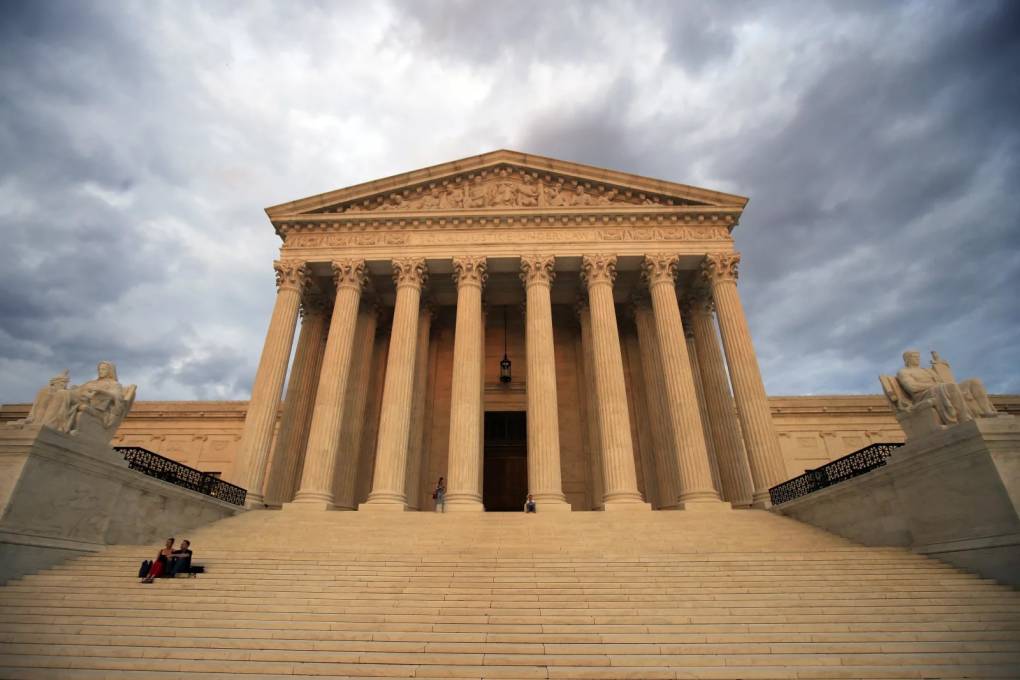
"caption": "The US Supreme Court is seen near sunset in Washington on Oct. 18, 2018.",
"credit": "Manuel Balce Ceneta/AP",
"altTag": null,
"description": null,
"imgSizes": {
"medium": {
"file": "https://cdn.kqed.org/wp-content/uploads/sites/10/2025/04/npr.brightspotcdn-copy-16-800x533.jpg",
"width": 800,
"height": 533,
"mimeType": "image/jpeg"
},
"large": {
"file": "https://cdn.kqed.org/wp-content/uploads/sites/10/2025/04/npr.brightspotcdn-copy-16-1020x680.jpg",
"width": 1020,
"height": 680,
"mimeType": "image/jpeg"
},
"thumbnail": {
"file": "https://cdn.kqed.org/wp-content/uploads/sites/10/2025/04/npr.brightspotcdn-copy-16-160x107.jpg",
"width": 160,
"height": 107,
"mimeType": "image/jpeg"
},
"1536x1536": {
"file": "https://cdn.kqed.org/wp-content/uploads/sites/10/2025/04/npr.brightspotcdn-copy-16-1536x1023.jpg",
"width": 1536,
"height": 1023,
"mimeType": "image/jpeg"
},
"post-thumbnail": {
"file": "https://cdn.kqed.org/wp-content/uploads/sites/10/2025/04/npr.brightspotcdn-copy-16-672x372.jpg",
"width": 672,
"height": 372,
"mimeType": "image/jpeg"
},
"twentyfourteen-full-width": {
"file": "https://cdn.kqed.org/wp-content/uploads/sites/10/2025/04/npr.brightspotcdn-copy-16-1038x576.jpg",
"width": 1038,
"height": 576,
"mimeType": "image/jpeg"
},
"kqedFullSize": {
"file": "https://cdn.kqed.org/wp-content/uploads/sites/10/2025/04/npr.brightspotcdn-copy-16.jpg",
"width": 1600,
"height": 1066
}
},
"isLoading": false,
"fetchFailed": false
},
"news_12036589": {
"type": "attachments",
"id": "news_12036589",
"meta": {
"index": "attachments_1716263798",
"site": "news",
"id": "12036589",
"found": true
},
"title": "Beijing Zoo Giant Panda",
"publishDate": 1744997266,
"status": "inherit",
"parent": 12036582,
"modified": 1745007135,
"caption": "A giant panda plays at Beijing Zoo in Beijing, capital of China, on April 7, 2025. ",
"credit": "CFOTO/Future Publishing via Getty Images",
"altTag": null,
"description": null,
"imgSizes": {
"medium": {
"file": "https://cdn.kqed.org/wp-content/uploads/sites/10/2025/04/PandaGetty-800x600.jpg",
"width": 800,
"height": 600,
"mimeType": "image/jpeg"
},
"large": {
"file": "https://cdn.kqed.org/wp-content/uploads/sites/10/2025/04/PandaGetty-1020x764.jpg",
"width": 1020,
"height": 764,
"mimeType": "image/jpeg"
},
"thumbnail": {
"file": "https://cdn.kqed.org/wp-content/uploads/sites/10/2025/04/PandaGetty-160x120.jpg",
"width": 160,
"height": 120,
"mimeType": "image/jpeg"
},
"1536x1536": {
"file": "https://cdn.kqed.org/wp-content/uploads/sites/10/2025/04/PandaGetty-1536x1151.jpg",
"width": 1536,
"height": 1151,
"mimeType": "image/jpeg"
},
"post-thumbnail": {
"file": "https://cdn.kqed.org/wp-content/uploads/sites/10/2025/04/PandaGetty-672x372.jpg",
"width": 672,
"height": 372,
"mimeType": "image/jpeg"
},
"twentyfourteen-full-width": {
"file": "https://cdn.kqed.org/wp-content/uploads/sites/10/2025/04/PandaGetty-1038x576.jpg",
"width": 1038,
"height": 576,
"mimeType": "image/jpeg"
},
"full-width": {
"file": "https://cdn.kqed.org/wp-content/uploads/sites/10/2025/04/PandaGetty-1920x1439.jpg",
"width": 1920,
"height": 1439,
"mimeType": "image/jpeg"
},
"kqedFullSize": {
"file": "https://cdn.kqed.org/wp-content/uploads/sites/10/2025/04/PandaGetty.jpg",
"width": 2000,
"height": 1499
}
},
"isLoading": false,
"fetchFailed": false
},
"news_12036053": {
"type": "attachments",
"id": "news_12036053",
"meta": {
"index": "attachments_1716263798",
"site": "news",
"id": "12036053",
"found": true
},
"title": "Bikes for sale at The New Wheel in San Francisco on April 15, 2025.",
"publishDate": 1744745086,
"status": "inherit",
"parent": 0,
"modified": 1744745235,
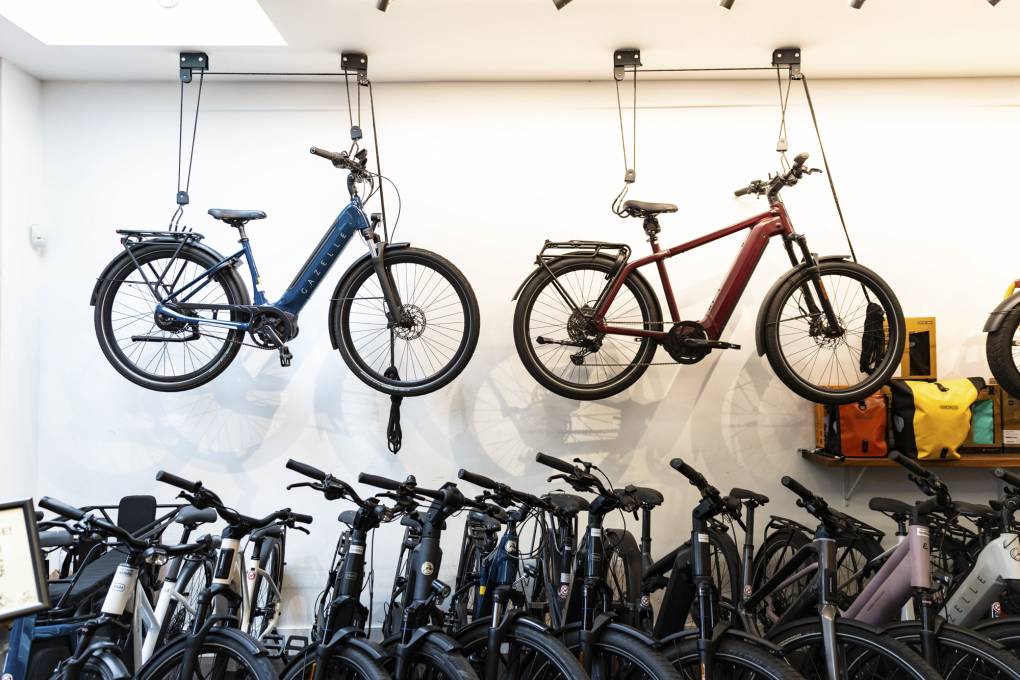
"caption": "Bikes for sale at The New Wheel in San Francisco on April 15, 2025.",
"credit": "Gina Castro/KQED",
"altTag": null,
"description": null,
"imgSizes": {
"medium": {
"file": "https://cdn.kqed.org/wp-content/uploads/sites/10/2025/04/20250415_BIKETARIFF_GC-3-KQED-800x533.jpg",
"width": 800,
"height": 533,
"mimeType": "image/jpeg"
},
"large": {
"file": "https://cdn.kqed.org/wp-content/uploads/sites/10/2025/04/20250415_BIKETARIFF_GC-3-KQED-1020x680.jpg",
"width": 1020,
"height": 680,
"mimeType": "image/jpeg"
},
"thumbnail": {
"file": "https://cdn.kqed.org/wp-content/uploads/sites/10/2025/04/20250415_BIKETARIFF_GC-3-KQED-160x107.jpg",
"width": 160,
"height": 107,
"mimeType": "image/jpeg"
},
"1536x1536": {
"file": "https://cdn.kqed.org/wp-content/uploads/sites/10/2025/04/20250415_BIKETARIFF_GC-3-KQED-1536x1024.jpg",
"width": 1536,
"height": 1024,
"mimeType": "image/jpeg"
},
"post-thumbnail": {
"file": "https://cdn.kqed.org/wp-content/uploads/sites/10/2025/04/20250415_BIKETARIFF_GC-3-KQED-672x372.jpg",
"width": 672,
"height": 372,
"mimeType": "image/jpeg"
},
"twentyfourteen-full-width": {
"file": "https://cdn.kqed.org/wp-content/uploads/sites/10/2025/04/20250415_BIKETARIFF_GC-3-KQED-1038x576.jpg",
"width": 1038,
"height": 576,
"mimeType": "image/jpeg"
},
"full-width": {
"file": "https://cdn.kqed.org/wp-content/uploads/sites/10/2025/04/20250415_BIKETARIFF_GC-3-KQED-1920x1280.jpg",
"width": 1920,
"height": 1280,
"mimeType": "image/jpeg"
},
"kqedFullSize": {
"file": "https://cdn.kqed.org/wp-content/uploads/sites/10/2025/04/20250415_BIKETARIFF_GC-3-KQED.jpg",
"width": 2000,
"height": 1333
}
},
"isLoading": false,
"fetchFailed": false
},
"news_12036506": {
"type": "attachments",
"id": "news_12036506",
"meta": {
"index": "attachments_1716263798",
"site": "news",
"id": "12036506",
"found": true
},
"title": "250417-HIGHEREDPROTESTS-08-BL-KQED",
"publishDate": 1744930148,
"status": "inherit",
"parent": 0,
"modified": 1744930309,
"caption": "San Francisco State University students, faculty and staff rally at Civic Center Plaza across from City Hall in San Francisco on April 17, 2025, to demand reinvestment in public higher education. The demonstration follows a day of organizing on campus led by the SFSU community in response to proposed budget cuts.",
"credit": "Beth LaBerge/KQED",
"altTag": null,
"description": null,
"imgSizes": {
"medium": {
"file": "https://cdn.kqed.org/wp-content/uploads/sites/10/2025/04/250417-HIGHEREDPROTESTS-08-BL-KQED-800x533.jpg",
"width": 800,
"height": 533,
"mimeType": "image/jpeg"
},
"large": {
"file": "https://cdn.kqed.org/wp-content/uploads/sites/10/2025/04/250417-HIGHEREDPROTESTS-08-BL-KQED-1020x680.jpg",
"width": 1020,
"height": 680,
"mimeType": "image/jpeg"
},
"thumbnail": {
"file": "https://cdn.kqed.org/wp-content/uploads/sites/10/2025/04/250417-HIGHEREDPROTESTS-08-BL-KQED-160x107.jpg",
"width": 160,
"height": 107,
"mimeType": "image/jpeg"
},
"1536x1536": {
"file": "https://cdn.kqed.org/wp-content/uploads/sites/10/2025/04/250417-HIGHEREDPROTESTS-08-BL-KQED-1536x1024.jpg",
"width": 1536,
"height": 1024,
"mimeType": "image/jpeg"
},
"post-thumbnail": {
"file": "https://cdn.kqed.org/wp-content/uploads/sites/10/2025/04/250417-HIGHEREDPROTESTS-08-BL-KQED-672x372.jpg",
"width": 672,
"height": 372,
"mimeType": "image/jpeg"
},
"twentyfourteen-full-width": {
"file": "https://cdn.kqed.org/wp-content/uploads/sites/10/2025/04/250417-HIGHEREDPROTESTS-08-BL-KQED-1038x576.jpg",
"width": 1038,
"height": 576,
"mimeType": "image/jpeg"
},
"full-width": {
"file": "https://cdn.kqed.org/wp-content/uploads/sites/10/2025/04/250417-HIGHEREDPROTESTS-08-BL-KQED-1920x1280.jpg",
"width": 1920,
"height": 1280,
"mimeType": "image/jpeg"
},
"kqedFullSize": {
"file": "https://cdn.kqed.org/wp-content/uploads/sites/10/2025/04/250417-HIGHEREDPROTESTS-08-BL-KQED.jpg",
"width": 2000,
"height": 1333
}
},
"isLoading": false,
"fetchFailed": false
},
"news_12036066": {
"type": "attachments",
"id": "news_12036066",
"meta": {
"index": "attachments_1716263798",
"site": "news",
"id": "12036066",
"found": true
},
"title": "California Medicaid",
"publishDate": 1744746796,
"status": "inherit",
"parent": 12036063,
"modified": 1749663522,
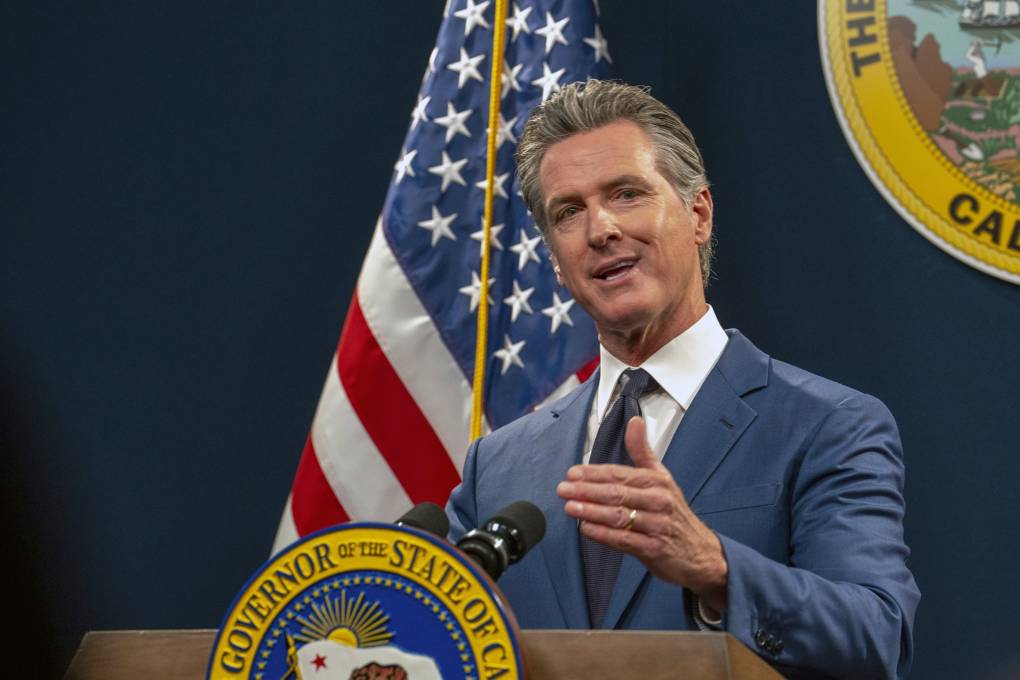
"caption": "Gov. Gavin Newsom discusses his revised 2024-25 state budget during a news conference in Sacramento, California, on May 10, 2024. ",
"credit": "Rich Pedroncelli/AP Photo",
"altTag": null,
"description": null,
"imgSizes": {
"medium": {
"file": "https://cdn.kqed.org/wp-content/uploads/sites/10/2025/04/GavinNewsom1AP-800x533.jpg",
"width": 800,
"height": 533,
"mimeType": "image/jpeg"
},
"large": {
"file": "https://cdn.kqed.org/wp-content/uploads/sites/10/2025/04/GavinNewsom1AP-1020x680.jpg",
"width": 1020,
"height": 680,
"mimeType": "image/jpeg"
},
"thumbnail": {
"file": "https://cdn.kqed.org/wp-content/uploads/sites/10/2025/04/GavinNewsom1AP-160x107.jpg",
"width": 160,
"height": 107,
"mimeType": "image/jpeg"
},
"1536x1536": {
"file": "https://cdn.kqed.org/wp-content/uploads/sites/10/2025/04/GavinNewsom1AP-1536x1024.jpg",
"width": 1536,
"height": 1024,
"mimeType": "image/jpeg"
},
"post-thumbnail": {
"file": "https://cdn.kqed.org/wp-content/uploads/sites/10/2025/04/GavinNewsom1AP-672x372.jpg",
"width": 672,
"height": 372,
"mimeType": "image/jpeg"
},
"twentyfourteen-full-width": {
"file": "https://cdn.kqed.org/wp-content/uploads/sites/10/2025/04/GavinNewsom1AP-1038x576.jpg",
"width": 1038,
"height": 576,
"mimeType": "image/jpeg"
},
"full-width": {
"file": "https://cdn.kqed.org/wp-content/uploads/sites/10/2025/04/GavinNewsom1AP-1920x1280.jpg",
"width": 1920,
"height": 1280,
"mimeType": "image/jpeg"
},
"kqedFullSize": {
"file": "https://cdn.kqed.org/wp-content/uploads/sites/10/2025/04/GavinNewsom1AP.jpg",
"width": 2000,
"height": 1333
}
},
"isLoading": false,
"fetchFailed": false
},
"news_12036217": {
"type": "attachments",
"id": "news_12036217",
"meta": {
"index": "attachments_1716263798",
"site": "news",
"id": "12036217",
"found": true
},
"title": "The Port of Oakland on March 6, 2025.",
"publishDate": 1744808969,
"status": "inherit",
"parent": 0,
"modified": 1744833789,
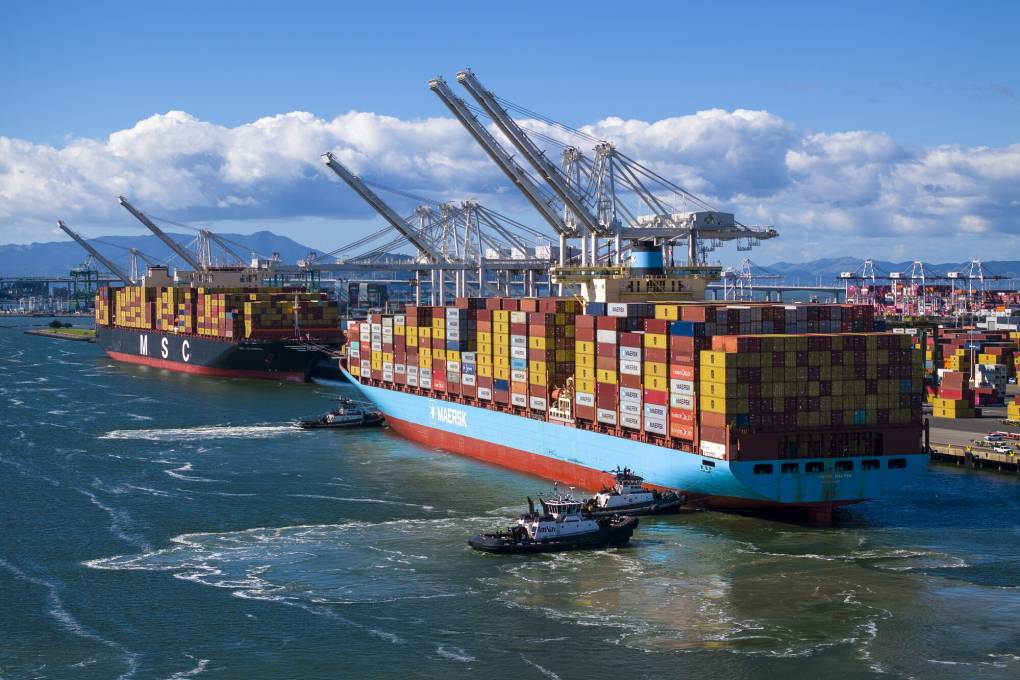
"caption": "A cargo ship docks at the Port of Oakland on March 6, 2025.",
"credit": "Martin do Nascimento/KQED",
"altTag": null,
"description": null,
"imgSizes": {
"medium": {
"file": "https://cdn.kqed.org/wp-content/uploads/sites/10/2025/04/250306-PORT-OF-OAKLAND-MD-01_qed-800x533.jpg",
"width": 800,
"height": 533,
"mimeType": "image/jpeg"
},
"large": {
"file": "https://cdn.kqed.org/wp-content/uploads/sites/10/2025/04/250306-PORT-OF-OAKLAND-MD-01_qed-1020x680.jpg",
"width": 1020,
"height": 680,
"mimeType": "image/jpeg"
},
"thumbnail": {
"file": "https://cdn.kqed.org/wp-content/uploads/sites/10/2025/04/250306-PORT-OF-OAKLAND-MD-01_qed-160x107.jpg",
"width": 160,
"height": 107,
"mimeType": "image/jpeg"
},
"1536x1536": {
"file": "https://cdn.kqed.org/wp-content/uploads/sites/10/2025/04/250306-PORT-OF-OAKLAND-MD-01_qed-1536x1024.jpg",
"width": 1536,
"height": 1024,
"mimeType": "image/jpeg"
},
"post-thumbnail": {
"file": "https://cdn.kqed.org/wp-content/uploads/sites/10/2025/04/250306-PORT-OF-OAKLAND-MD-01_qed-672x372.jpg",
"width": 672,
"height": 372,
"mimeType": "image/jpeg"
},
"twentyfourteen-full-width": {
"file": "https://cdn.kqed.org/wp-content/uploads/sites/10/2025/04/250306-PORT-OF-OAKLAND-MD-01_qed-1038x576.jpg",
"width": 1038,
"height": 576,
"mimeType": "image/jpeg"
},
"full-width": {
"file": "https://cdn.kqed.org/wp-content/uploads/sites/10/2025/04/250306-PORT-OF-OAKLAND-MD-01_qed-1920x1280.jpg",
"width": 1920,
"height": 1280,
"mimeType": "image/jpeg"
},
"kqedFullSize": {
"file": "https://cdn.kqed.org/wp-content/uploads/sites/10/2025/04/250306-PORT-OF-OAKLAND-MD-01_qed.jpg",
"width": 1999,
"height": 1333
}
},
"isLoading": false,
"fetchFailed": false
},
"news_12036244": {
"type": "attachments",
"id": "news_12036244",
"meta": {
"index": "attachments_1716263798",
"site": "news",
"id": "12036244",
"found": true
},
"title": "The LCBO removes US products off the shelves on the first day of the trade war instigated by Donald Trump's Administration.",
"publishDate": 1744821145,
"status": "inherit",
"parent": 12036225,
"modified": 1744995823,
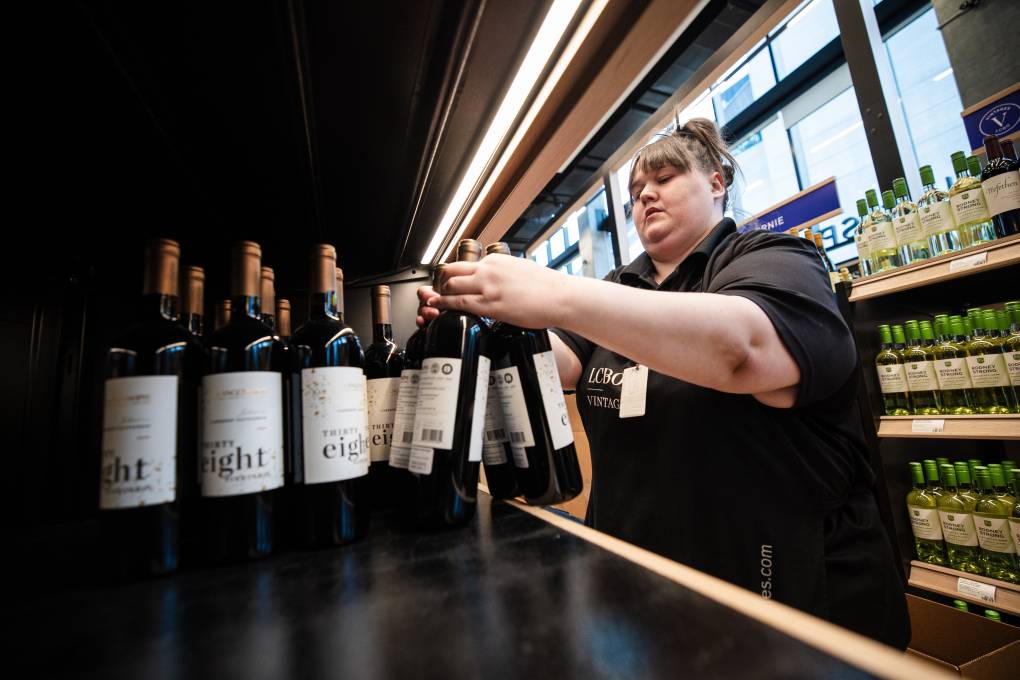
"caption": "A store clerk removes American wine from the LCBO shelves in Toronto, Ontario, Canada. (Nick Lachance/Toronto Star via Getty Images)",
"credit": null,
"altTag": null,
"description": null,
"imgSizes": {
"medium": {
"file": "https://cdn.kqed.org/wp-content/uploads/sites/10/2025/04/GettyImages-2202727364-800x533.jpg",
"width": 800,
"height": 533,
"mimeType": "image/jpeg"
},
"large": {
"file": "https://cdn.kqed.org/wp-content/uploads/sites/10/2025/04/GettyImages-2202727364-1020x680.jpg",
"width": 1020,
"height": 680,
"mimeType": "image/jpeg"
},
"thumbnail": {
"file": "https://cdn.kqed.org/wp-content/uploads/sites/10/2025/04/GettyImages-2202727364-160x107.jpg",
"width": 160,
"height": 107,
"mimeType": "image/jpeg"
},
"1536x1536": {
"file": "https://cdn.kqed.org/wp-content/uploads/sites/10/2025/04/GettyImages-2202727364-1536x1024.jpg",
"width": 1536,
"height": 1024,
"mimeType": "image/jpeg"
},
"2048x2048": {
"file": "https://cdn.kqed.org/wp-content/uploads/sites/10/2025/04/GettyImages-2202727364-2048x1365.jpg",
"width": 2048,
"height": 1365,
"mimeType": "image/jpeg"
},
"post-thumbnail": {
"file": "https://cdn.kqed.org/wp-content/uploads/sites/10/2025/04/GettyImages-2202727364-672x372.jpg",
"width": 672,
"height": 372,
"mimeType": "image/jpeg"
},
"twentyfourteen-full-width": {
"file": "https://cdn.kqed.org/wp-content/uploads/sites/10/2025/04/GettyImages-2202727364-1038x576.jpg",
"width": 1038,
"height": 576,
"mimeType": "image/jpeg"
},
"full-width": {
"file": "https://cdn.kqed.org/wp-content/uploads/sites/10/2025/04/GettyImages-2202727364-1920x1280.jpg",
"width": 1920,
"height": 1280,
"mimeType": "image/jpeg"
},
"kqedFullSize": {
"file": "https://cdn.kqed.org/wp-content/uploads/sites/10/2025/04/GettyImages-2202727364-scaled.jpg",
"width": 2560,
"height": 1707
}
},
"isLoading": false,
"fetchFailed": false
}
},
"audioPlayerReducer": {
"postId": "stream_live",
"isPaused": true,
"isPlaying": false,
"pfsActive": false,
"pledgeModalIsOpen": true,
"playerDrawerIsOpen": false,
"liveAudioPlayStartedAt": 0,
"liveAudioPlayContext": ""
},
"authorsReducer": {
"byline_news_12037508": {
"type": "authors",
"id": "byline_news_12037508",
"meta": {
"override": true
},
"slug": "byline_news_12037508",
"name": "Mark Betancourt, The California Newsroom",
"isLoading": false
},
"byline_news_12037114": {
"type": "authors",
"id": "byline_news_12037114",
"meta": {
"override": true
},
"slug": "byline_news_12037114",
"name": "\u003ca href=\"https://www.marketplace.org/author/matt-levin\">Matt Levin\u003c/a>, Marketplace",
"isLoading": false
},
"byline_news_12036835": {
"type": "authors",
"id": "byline_news_12036835",
"meta": {
"override": true
},
"slug": "byline_news_12036835",
"name": "\u003ca href=\"https://www.npr.org/people/297147616/jasmine-garsd\">Jasmine Garsd\u003c/a>, NPR",
"isLoading": false
},
"minakim": {
"type": "authors",
"id": "243",
"meta": {
"index": "authors_1716337520",
"id": "243",
"found": true
},
"name": "Mina Kim",
"firstName": "Mina",
"lastName": "Kim",
"slug": "minakim",
"email": "mkim@kqed.org",
"display_author_email": false,
"staff_mastheads": [
"news"
],
"title": "Host, Forum",
"bio": "Mina Kim is host of the 10 a.m. statewide hour of Forum; a live daily talk show for curious Californians on issues that matter to the state and nation, with a particular emphasis on race and equity.\r\n\r\nBefore joining the Forum team, Mina was KQED’s evening news anchor, and health reporter for The California Report. Her award-winning work has included natural disasters in Napa and gun violence in Oakland. Mina grew up in St. John’s, Newfoundland.",
"avatar": "https://secure.gravatar.com/avatar/145ce657a2d08cb86d93686beb958982?s=600&d=blank&r=g",
"twitter": "mkimreporter",
"facebook": null,
"instagram": null,
"linkedin": null,
"sites": [
{
"site": "news",
"roles": [
"contributor"
]
},
{
"site": "stateofhealth",
"roles": [
"author"
]
},
{
"site": "forum",
"roles": [
"editor"
]
}
],
"headData": {
"title": "Mina Kim | KQED",
"description": "Host, Forum",
"ogImgSrc": "https://secure.gravatar.com/avatar/145ce657a2d08cb86d93686beb958982?s=600&d=blank&r=g",
"twImgSrc": "https://secure.gravatar.com/avatar/145ce657a2d08cb86d93686beb958982?s=600&d=blank&r=g"
},
"isLoading": false,
"link": "/author/minakim"
},
"matthewgreen": {
"type": "authors",
"id": "1263",
"meta": {
"index": "authors_1716337520",
"id": "1263",
"found": true
},
"name": "Matthew Green",
"firstName": "Matthew",
"lastName": "Green",
"slug": "matthewgreen",
"email": "mgreen@kqed.org",
"display_author_email": false,
"staff_mastheads": [],
"title": "KQED Editor/Reporter",
"bio": "Matthew Green is a digital media producer for KQED News. He previously produced \u003ca href=\"http://www.kqed.org/lowdown\">The Lowdown\u003c/a>, KQED’s multimedia news education blog. Matthew's written for numerous Bay Area publications, including the Oakland Tribune and San Francisco Chronicle. He also taught journalism classes at Fremont High School in East Oakland.\r\n\r\nEmail: mgreen@kqed.org; Twitter: @MGreenKQED",
"avatar": "https://secure.gravatar.com/avatar/3bf498d1267ca02c8494f33d8cfc575e?s=600&d=blank&r=g",
"twitter": "MGreenKQED",
"facebook": null,
"instagram": null,
"linkedin": null,
"sites": [
{
"site": "news",
"roles": []
},
{
"site": "lowdown",
"roles": []
},
{
"site": "science",
"roles": []
},
{
"site": "education",
"roles": []
},
{
"site": "quest",
"roles": []
},
{
"site": "liveblog",
"roles": []
}
],
"headData": {
"title": "Matthew Green | KQED",
"description": "KQED Editor/Reporter",
"ogImgSrc": "https://secure.gravatar.com/avatar/3bf498d1267ca02c8494f33d8cfc575e?s=600&d=blank&r=g",
"twImgSrc": "https://secure.gravatar.com/avatar/3bf498d1267ca02c8494f33d8cfc575e?s=600&d=blank&r=g"
},
"isLoading": false,
"link": "/author/matthewgreen"
},
"mlagos": {
"type": "authors",
"id": "3239",
"meta": {
"index": "authors_1716337520",
"id": "3239",
"found": true
},
"name": "Marisa Lagos",
"firstName": "Marisa",
"lastName": "Lagos",
"slug": "mlagos",
"email": "mlagos@kqed.org",
"display_author_email": false,
"staff_mastheads": [
"news"
],
"title": "KQED Contributor",
"bio": "Marisa Lagos is a correspondent for KQED’s California Politics and Government Desk and co-hosts the award-winning show and podcast, Political Breakdown. At KQED, Lagos also conducts reporting, analysis and investigations into state, local and national politics for radio, TV, online and onstage. In 2022, she and co-host, Scott Shafer, moderated the only gubernatorial debate in California. In 2020, the \u003ci>Washington Post\u003c/i> named her one of the top political journalists in California; she was nominated for a Peabody and won several other awards for her work investigating the 2017 California wildfires. She has worked at the \u003ci>San Francisco Chronicle\u003c/i>, \u003ci>San Francisco Examiner\u003c/i> and \u003ci>Los Angeles Times\u003c/i>. A UC Santa Barbara graduate, she lives in San Francisco with her two sons and husband.",
"avatar": "https://secure.gravatar.com/avatar/a261a0d3696fc066871ef96b85b5e7d2?s=600&d=blank&r=g",
"twitter": "@mlagos",
"facebook": null,
"instagram": null,
"linkedin": null,
"sites": [
{
"site": "arts",
"roles": [
"author"
]
},
{
"site": "news",
"roles": [
"editor"
]
},
{
"site": "science",
"roles": [
"editor"
]
},
{
"site": "forum",
"roles": [
"author"
]
},
{
"site": "liveblog",
"roles": [
"author"
]
}
],
"headData": {
"title": "Marisa Lagos | KQED",
"description": "KQED Contributor",
"ogImgSrc": "https://secure.gravatar.com/avatar/a261a0d3696fc066871ef96b85b5e7d2?s=600&d=blank&r=g",
"twImgSrc": "https://secure.gravatar.com/avatar/a261a0d3696fc066871ef96b85b5e7d2?s=600&d=blank&r=g"
},
"isLoading": false,
"link": "/author/mlagos"
},
"lklivans": {
"type": "authors",
"id": "8648",
"meta": {
"index": "authors_1716337520",
"id": "8648",
"found": true
},
"name": "Laura Klivans",
"firstName": "Laura",
"lastName": "Klivans",
"slug": "lklivans",
"email": "lklivans@kqed.org",
"display_author_email": true,
"staff_mastheads": [
"news",
"science"
],
"title": "Reporter",
"bio": "Laura Klivans is an award-winning science reporter for KQED News, where she covers climate change with an eye on both groundbreaking progress and gaps in action. She is the former host of KQED's blockbuster video series about tiny, amazing animals, \u003cem>Deep Look\u003c/em>. Her work reaches national audiences through NPR, \u003cem>Here & Now, \u003c/em>PRI, and other major outlets. \r\n\r\nLaura’s won five Northern California Area Emmy Awards for Deep Look and First Place in the Greater Bay Area Journalism Awards for a podcast exploring how one Oakland neighborhood teamed up to reduce planet-heating pollution.\r\n\r\nBeyond her reporting, she hosts and moderates events. In the past, she taught audio storytelling at the UC Berkeley Graduate School of Journalism, led international education programs, worked with immigrants and refugees along the Thai-Burmese border, taught high schoolers sex ed, and was an actress. \r\n\r\nShe's a former UC Berkeley Human Rights Fellow, USC Center for Health Journalism's California Fellow and Coro Fellow in Public Affairs. Laura has a master’s in journalism from UC Berkeley, a master’s in education from Harvard, and an undergraduate degree from Northwestern University.\r\n\r\nShe loves trying to riddle the meaning out of vanity license plates.",
"avatar": "https://secure.gravatar.com/avatar/af8e757bb8ce7b7fee6160ba66e37327?s=600&d=blank&r=g",
"twitter": "lauraklivans",
"facebook": null,
"instagram": null,
"linkedin": null,
"sites": [
{
"site": "news",
"roles": [
"editor"
]
},
{
"site": "stateofhealth",
"roles": [
"contributor",
"editor"
]
},
{
"site": "science",
"roles": [
"editor"
]
},
{
"site": "forum",
"roles": [
"editor"
]
}
],
"headData": {
"title": "Laura Klivans | KQED",
"description": "Reporter",
"ogImgSrc": "https://secure.gravatar.com/avatar/af8e757bb8ce7b7fee6160ba66e37327?s=600&d=blank&r=g",
"twImgSrc": "https://secure.gravatar.com/avatar/af8e757bb8ce7b7fee6160ba66e37327?s=600&d=blank&r=g"
},
"isLoading": false,
"link": "/author/lklivans"
},
"adahlstromeckman": {
"type": "authors",
"id": "11785",
"meta": {
"index": "authors_1716337520",
"id": "11785",
"found": true
},
"name": "Azul Dahlstrom-Eckman",
"firstName": "Azul",
"lastName": "Dahlstrom-Eckman",
"slug": "adahlstromeckman",
"email": "adahlstrom-eckman@kqed.org",
"display_author_email": true,
"staff_mastheads": [],
"title": "Reporter",
"bio": "Azul is a reporter for KQED focusing on transportation and features. He joined KQED in 2021 as an alumna of KALW's Audio Academy radio journalism training program.",
"avatar": "https://secure.gravatar.com/avatar/9cb750298435add7815a777f55bf1f46845c1386bb8452555c60a7b820b5aba3?s=600&d=blank&r=g",
"twitter": "@zuliemann",
"bluesky": "@azul415.bsky.social",
"facebook": null,
"instagram": null,
"linkedin": null,
"sites": [
{
"site": "arts",
"roles": [
"editor"
]
},
{
"site": "news",
"roles": [
"editor"
]
},
{
"site": "science",
"roles": [
"editor"
]
},
{
"site": "liveblog",
"roles": [
"author"
]
}
],
"headData": {
"title": "Azul Dahlstrom-Eckman | KQED",
"description": "Reporter",
"ogImgSrc": "https://secure.gravatar.com/avatar/9cb750298435add7815a777f55bf1f46845c1386bb8452555c60a7b820b5aba3?s=600&d=blank&r=g",
"twImgSrc": "https://secure.gravatar.com/avatar/9cb750298435add7815a777f55bf1f46845c1386bb8452555c60a7b820b5aba3?s=600&d=blank&r=g"
},
"isLoading": false,
"link": "/author/adahlstromeckman"
},
"nkhan": {
"type": "authors",
"id": "11867",
"meta": {
"index": "authors_1716337520",
"id": "11867",
"found": true
},
"name": "Nisa Khan",
"firstName": "Nisa",
"lastName": "Khan",
"slug": "nkhan",
"email": "nkhan@kqed.org",
"display_author_email": false,
"staff_mastheads": [],
"title": "KQED Contributor",
"bio": "Nisa Khan is a reporter for KQED's Audience News Desk. She was formerly a data reporter at Michigan Radio. She earned a Bachelor of Science in Information from the University of Michigan and a Master of Arts in Communication from Stanford University.",
"avatar": "https://secure.gravatar.com/avatar/a3bf1efcfbe7658d13a434cc54d0b2e3?s=600&d=blank&r=g",
"twitter": "mnisakhan",
"bluesky": null,
"facebook": null,
"instagram": null,
"linkedin": null,
"sites": [
{
"site": "arts",
"roles": [
"editor"
]
},
{
"site": "news",
"roles": [
"editor"
]
},
{
"site": "science",
"roles": [
"editor",
"author"
]
},
{
"site": "forum",
"roles": [
"editor"
]
},
{
"site": "liveblog",
"roles": [
"contributor"
]
}
],
"headData": {
"title": "Nisa Khan | KQED",
"description": "KQED Contributor",
"ogImgSrc": "https://secure.gravatar.com/avatar/a3bf1efcfbe7658d13a434cc54d0b2e3?s=600&d=blank&r=g",
"twImgSrc": "https://secure.gravatar.com/avatar/a3bf1efcfbe7658d13a434cc54d0b2e3?s=600&d=blank&r=g"
},
"isLoading": false,
"link": "/author/nkhan"
},
"bsiavoshy": {
"type": "authors",
"id": "11890",
"meta": {
"index": "authors_1716337520",
"id": "11890",
"found": true
},
"name": "Bejan Siavoshy",
"firstName": "Bejan",
"lastName": "Siavoshy",
"slug": "bsiavoshy",
"email": "bsiavoshy@kqed.org",
"display_author_email": false,
"staff_mastheads": [],
"title": "KQED Contributor",
"bio": null,
"avatar": "https://secure.gravatar.com/avatar/ead3e7c509634b37a73b1f57677e49f9?s=600&d=blank&r=g",
"twitter": null,
"facebook": null,
"instagram": null,
"linkedin": null,
"sites": [
{
"site": "news",
"roles": [
"editor"
]
}
],
"headData": {
"title": "Bejan Siavoshy | KQED",
"description": "KQED Contributor",
"ogImgSrc": "https://secure.gravatar.com/avatar/ead3e7c509634b37a73b1f57677e49f9?s=600&d=blank&r=g",
"twImgSrc": "https://secure.gravatar.com/avatar/ead3e7c509634b37a73b1f57677e49f9?s=600&d=blank&r=g"
},
"isLoading": false,
"link": "/author/bsiavoshy"
},
"kdebenedetti": {
"type": "authors",
"id": "11913",
"meta": {
"index": "authors_1716337520",
"id": "11913",
"found": true
},
"name": "Katie DeBenedetti",
"firstName": "Katie",
"lastName": "DeBenedetti",
"slug": "kdebenedetti",
"email": "kdebenedetti@kqed.org",
"display_author_email": false,
"staff_mastheads": [
"news",
"science"
],
"title": "KQED Contributor",
"bio": "Katie DeBenedetti is a digital reporter covering daily news for the Express Desk. Prior to joining KQED as a culture reporting intern in January 2024, she covered education and city government for the Napa Valley Register.",
"avatar": "https://secure.gravatar.com/avatar/6e31073cb8f7e4214ab03f42771d0f45?s=600&d=blank&r=g",
"twitter": null,
"facebook": null,
"instagram": null,
"linkedin": null,
"sites": [
{
"site": "news",
"roles": [
"author"
]
},
{
"site": "science",
"roles": [
"author"
]
},
{
"site": "liveblog",
"roles": [
"author"
]
}
],
"headData": {
"title": "Katie DeBenedetti | KQED",
"description": "KQED Contributor",
"ogImgSrc": "https://secure.gravatar.com/avatar/6e31073cb8f7e4214ab03f42771d0f45?s=600&d=blank&r=g",
"twImgSrc": "https://secure.gravatar.com/avatar/6e31073cb8f7e4214ab03f42771d0f45?s=600&d=blank&r=g"
},
"isLoading": false,
"link": "/author/kdebenedetti"
}
},
"pagesReducer": {
"news_tag_donald-trump": {
"type": "terms",
"id": "news_1323",
"meta": {
"index": "terms_1716263798",
"site": "news",
"id": "1323",
"score": 8.5546055
},
"featImg": null,
"name": "Donald Trump",
"description": null,
"taxonomy": "tag",
"headData": {
"twImgId": null,
"twTitle": null,
"ogTitle": null,
"ogImgId": null,
"twDescription": null,
"description": null,
"title": "Donald Trump Archives | KQED News",
"ogDescription": null
},
"ttid": 1335,
"slug": "donald-trump",
"isLoading": false,
"title": "Donald Trump",
"pageMeta": {
"site": "news",
"WpPageTemplate": "page-topic-editorial",
"currentPage": 41
},
"blocks": [
{
"blockName": "kqed/post-list",
"attrs": {
"layout": "cardArticle2",
"query": "posts/news?tag=donald-trump",
"seeMore": false,
"paginated": true,
"page": 41
}
},
{
"blockName": "kqed/ad"
}
]
}
},
"pfsSessionReducer": {},
"postsReducer": {
"stream_live": {
"type": "live",
"id": "stream_live",
"audioUrl": "https://streams.kqed.org/kqedradio",
"title": "Live Stream",
"excerpt": "Live Stream information currently unavailable.",
"link": "/radio",
"featImg": "",
"label": {
"name": "KQED Live",
"link": "/"
}
},
"stream_kqedNewscast": {
"type": "posts",
"id": "stream_kqedNewscast",
"audioUrl": "https://www.kqed.org/.stream/anon/radio/RDnews/newscast.mp3?_=1",
"title": "KQED Newscast",
"featImg": "",
"label": {
"name": "88.5 FM",
"link": "/"
}
},
"news_12037508": {
"type": "posts",
"id": "news_12037508",
"meta": {
"index": "posts_1716263798",
"site": "news",
"id": "12037508",
"score": null,
"sort": [
1745578814000
]
},
"guestAuthors": [],
"slug": "aclu-fights-trump-court-preserve-legal-aid-border-separated-families",
"title": "ACLU Fights Trump in Court to Preserve Legal Aid for Border-Separated Families",
"publishDate": 1745578814,
"format": "standard",
"headTitle": "ACLU Fights Trump in Court to Preserve Legal Aid for Border-Separated Families | KQED",
"labelTerm": {
"site": "news"
},
"content": "\u003cp>The American Civil Liberties Union has filed a motion in federal court to stop the Department of Justice from cutting off legal services for families who were \u003ca href=\"https://www.kqed.org/news/11785409/new-search-begins-for-deported-parents-of-separated-migrant-children\">forcibly separated\u003c/a> at the U.S.-Mexico border during the first Trump administration.\u003c/p>\n\u003cp>A \u003ca href=\"https://www.kqed.org/news/12026959/families-separated-at-the-border-are-protected-by-a-2023-settlement-will-trump-honor-it\">settlement agreement reached during the Biden Administration\u003c/a> requires the government to provide legal services to those families in order to help them navigate the complex U.S. immigration system. According to the ACLU’s motion, filed Wednesday in the U.S. District Court for the Southern District of California, the DOJ has declined to renew a contract for the services without specifying what will replace it.\u003c/p>\n\u003cp>Under the “Zero Tolerance” immigration policy of Trump’s first term, federal agencies detained families entering the country illegally, took children away from their parents, sent them to separate facilities and eventually released them to other family members or to foster care. Nearly 5,000 family members were separated. In many cases, the government did not take steps to reunite them and lost track of which children belonged to which parents.\u003c/p>\n\u003cp>[ad fullwidth]\u003c/p>\n\u003cp>In 2018, the \u003ca href=\"https://www.kqed.org/news/12026959/families-separated-at-the-border-are-protected-by-a-2023-settlement-will-trump-honor-it\">ACLU filed a class action lawsuit against the federal government\u003c/a> for \u003ca href=\"https://www.aclu.org/cases/ms-l-v-ice\">violating families’ right to due process\u003c/a> under the U.S. Constitution, and for separating them without cause. The Biden administration settled the lawsuit in December 2023 by agreeing to reunite families who were still separated and provide them with a pathway to asylum in the United States, including a temporary status called parole. Before approving the settlement, federal Judge Dana Sabraw of the U.S. District Court for the Southern District of California in San Diego said family separation “represents one of the most shameful chapters in the history of our country.”\u003c/p>\n\u003cp>Because the special conditions granted to these families created a complex web of applications to fill out and documents to produce, the agreement also required the government to ensure access to lawyers who could guide them. The ACLU said those services are now at risk.\u003c/p>\n\u003cfigure id=\"attachment_11738375\" class=\"wp-caption aligncenter\" style=\"max-width: 1920px\">\u003cimg loading=\"lazy\" decoding=\"async\" class=\"size-full wp-image-11738375\" src=\"https://cdn.kqed.org/wp-content/uploads/sites/10/2019/04/RS36430_GettyImages-978854834-qut.jpg\" alt=\"A young girl holds a sign during a demonstration outside of the San Francisco office of the Immigration and Customs Enforcement (ICE) on June 19, 2018 in San Francisco over the Trump administration family separation policy.\" width=\"1920\" height=\"1276\" srcset=\"https://cdn.kqed.org/wp-content/uploads/sites/10/2019/04/RS36430_GettyImages-978854834-qut.jpg 1920w, https://cdn.kqed.org/wp-content/uploads/sites/10/2019/04/RS36430_GettyImages-978854834-qut-160x106.jpg 160w, https://cdn.kqed.org/wp-content/uploads/sites/10/2019/04/RS36430_GettyImages-978854834-qut-800x532.jpg 800w, https://cdn.kqed.org/wp-content/uploads/sites/10/2019/04/RS36430_GettyImages-978854834-qut-1020x678.jpg 1020w, https://cdn.kqed.org/wp-content/uploads/sites/10/2019/04/RS36430_GettyImages-978854834-qut-1200x798.jpg 1200w\" sizes=\"auto, (max-width: 1920px) 100vw, 1920px\">\u003cfigcaption class=\"wp-caption-text\">A young girl holds a sign during a demonstration outside of the San Francisco office of the Immigration and Customs Enforcement (ICE) on June 19, 2018 in San Francisco over the Trump administration family separation policy. \u003ccite>(Justin Sullivan/Getty Images)\u003c/cite>\u003c/figcaption>\u003c/figure>\n\u003cp>“Babies were horrifically ripped from their parents’ arms under the first Trump administration’s family separation policy,” said ACLU attorney Lee Gelernt, lead counsel in the family separation lawsuit. “Depriving these families of vital services needed to remedy these tragic events is just the latest cruelty inflicted upon the families.”\u003c/p>\n\u003cp>The government claims it is only declining to renew the existing contract, according to \u003ca href=\"https://www.aclu.org/documents/motion\">the ACLU’s filing\u003c/a>, and does not intend to allow legal services to lapse.\u003c/p>\n\u003cp>However, with less than a week before the contract expires, the ACLU said the government has yet to explain how it will do that. “Absent the contract,” the filing reads, “the legal services subcontractors have no choice but to stop services altogether.”\u003c/p>\n\u003cp>The DOJ did not respond to requests for comment.[aside postID=news_12026959 hero='https://ww2.kqed.org/app/uploads/sites/10/2020/10/CBP-family-border-1020x680.jpg']The program, formally called Legal Access Services for Reunified Families, was created in May 2024 through a contract between the DOJ and Acacia Center for Justice, a nonprofit immigrant legal defense organization based in Washington, D.C. Acacia distributed the funding to nine organizations around the country that have been providing legal services directly to families impacted by Zero Tolerance. Services include workshops on how to navigate immigration court proceedings, assistance with immigration applications and referrals to pro bono attorneys.\u003c/p>\n\u003cp>However, Acacia notes that the funding level of the existing contract only covered 12% of the thousands who qualify for legal guidance under the settlement agreement.\u003c/p>\n\u003cp>Acacia expected the contract to be renewed at the end of this month, and subcontractors had been slating waitlisted families for support starting May 1, according to declarations filed with the ACLU motion.\u003c/p>\n\u003cp>“A lot of them have parole that are ending now in May and June. So they are really desperate to receive services, and they kept calling us and we would tell them we have you on the list,” said Marien Velez-Alcaide, a managing attorney for the family reunification program at \u003ca href=\"https://alotrolado.org/\">Al Otro Lado\u003c/a>, one of the organizations that has received funding through Acacia.\u003c/p>\n\u003cp>The nonprofit operates on both sides of the U.S.-Mexico border in San Diego, Los Angeles and Tijuana, and said it has served 140 people impacted by Zero Tolerance family separations, including 97 in California.\u003c/p>\n\u003cp>The DOJ informed Acacia of the non-renewal on April 11, less than a month before the contract was set to end.\u003c/p>\n\u003cfigure id=\"attachment_12037592\" class=\"wp-caption aligncenter\" style=\"max-width: 1545px\">\u003cimg loading=\"lazy\" decoding=\"async\" class=\"size-full wp-image-12037592\" src=\"https://cdn.kqed.org/wp-content/uploads/sites/10/2025/04/DOJ-Acacia-letter.pdf.png\" alt=\"\" width=\"1545\" height=\"2000\" srcset=\"https://cdn.kqed.org/wp-content/uploads/sites/10/2025/04/DOJ-Acacia-letter.pdf.png 1545w, https://cdn.kqed.org/wp-content/uploads/sites/10/2025/04/DOJ-Acacia-letter.pdf-800x1036.png 800w, https://cdn.kqed.org/wp-content/uploads/sites/10/2025/04/DOJ-Acacia-letter.pdf-1020x1320.png 1020w, https://cdn.kqed.org/wp-content/uploads/sites/10/2025/04/DOJ-Acacia-letter.pdf-160x207.png 160w, https://cdn.kqed.org/wp-content/uploads/sites/10/2025/04/DOJ-Acacia-letter.pdf-1187x1536.png 1187w\" sizes=\"auto, (max-width: 1545px) 100vw, 1545px\">\u003cfigcaption class=\"wp-caption-text\">A copy of a notice-of-termination letter sent by the U.S. Department of Justice to Acacia Center for Justice, a nonprofit immigrant legal defense organization that has been providing legal services to members of separated families in accordance with a 2023 settlement between the Biden Administration and the ACLU.\u003c/figcaption>\u003c/figure>\n\u003cp>While the settlement agreement does not require the government to provide full legal representation to family members who were separated under Zero Tolerance, advocates say the support is vital.\u003c/p>\n\u003cp>“[Family members who’ve been separated] don’t know what their rights are,” under the settlement, said Velez-Alcaide. “So it’s really fundamental for them to be able to receive assistance and know what they qualify for, what are the deadlines, how to fill out the applications.”\u003c/p>\n\u003cp>In a declaration filed with the ACLU motion, Velez-Alcaide wrote that she has heard from clients who are “terrified of the potential consequences for themselves and their families,” including being separated again if their immigration claims fail, or losing their jobs if they’re unable to obtain or renew work permits.\u003c/p>\n\u003cp>“This is family separation by another name,” said Zain Lakhani, director of migrant rights and justice at the Women’s Refugee Commission, at a virtual press conference convened by Acacia on Thursday.\u003c/p>\n\u003cp>The apparent threat to legal services for separated families comes as the Trump administration continues to dismantle other supports for people seeking asylum in the United States, including a program providing legal representation for unaccompanied children. Many children were designated unaccompanied after they were separated from their families and have been represented by attorneys under that program.\u003c/p>\n\u003cfigure id=\"attachment_12035874\" class=\"wp-caption aligncenter\" style=\"max-width: 2000px\">\u003cimg loading=\"lazy\" decoding=\"async\" class=\"size-full wp-image-12035874\" src=\"https://cdn.kqed.org/wp-content/uploads/sites/10/2025/04/gettyimages-2210243092-scaled-e1745537471811.jpeg\" alt=\"President Trump meets with President Nayib Bukele of El Salvador in the Oval Office on April 14, 2025.\" width=\"2000\" height=\"1333\">\u003cfigcaption class=\"wp-caption-text\">President Trump meets with President Nayib Bukele of El Salvador in the Oval Office on April 14, 2025. \u003ccite>(Win McNamee/Getty Images)\u003c/cite>\u003c/figcaption>\u003c/figure>\n\u003cp>Some legal services providers have begun laying off staff in the wake of federal funding cuts across the immigration field.\u003c/p>\n\u003cp>“The risks for class members are skyrocketing, and the elimination of services means the further erosion of due process,” said Sara Van Hofwegen, managing director of legal access programs at the Acacia Center for Justice, during Thursday’s event. “These families who’ve endured so much trauma at the hand of our government have been told that the United States is not keeping our promise to help them rebuild their lives or assist them with their cases.”\u003c/p>\n\u003cp>Velez-Alcaide said Al Otro Lado has ramped up fundraising efforts to avoid having to leave separated families in the lurch after May 1, especially because the ACLU’s court challenge may move slowly.\u003c/p>\n\u003cp>“We don’t know how long it’s going to take, and a lot of these families don’t have the time to wait,” she said. “In the meantime, they’re living in fear.”\u003c/p>\n\u003cp>\u003ca href=\"https://www.kqed.org/californianewsroom#:~:text=About%20the%20California%20Newsroom&text=The%20California%20Newsroom%3A&text=provides%20one%2Don%2Done%20mentorship,UC%20Berkeley%20Journalism%20Fellows%20program.\">\u003cem>The California Newsroom\u003c/em>\u003c/a>\u003cem> is a KQED-led collaboration of public media outlets throughout the state, with NPR as its national partner.\u003c/em>\u003c/p>\n\u003cp>[ad floatright]\u003c/p>\n",
"blocks": [],
"excerpt": "The DOJ told a legal services provider it would not renew its contract at the end of April. The decision could leave families separated at the U.S.-Mexico border during Trump 1.0 without the support they were promised under a federal settlement agreement.",
"status": "publish",
"parent": 0,
"modified": 1745602414,
"stats": {
"hasAudio": false,
"hasVideo": false,
"hasChartOrMap": false,
"iframeSrcs": [],
"hasGoogleForm": false,
"hasGallery": false,
"hasHearkenModule": false,
"hasPolis": false,
"paragraphCount": 26,
"wordCount": 1307
},
"headData": {
"title": "ACLU Fights Trump in Court to Preserve Legal Aid for Border-Separated Families | KQED",
"description": "The DOJ told a legal services provider it would not renew its contract at the end of April. The decision could leave families separated at the U.S.-Mexico border during Trump 1.0 without the support they were promised under a federal settlement agreement.",
"ogTitle": "",
"ogDescription": "",
"ogImgId": "",
"twTitle": "",
"twDescription": "",
"twImgId": "",
"schema": {
"@context": "https://schema.org",
"@type": "NewsArticle",
"headline": "ACLU Fights Trump in Court to Preserve Legal Aid for Border-Separated Families",
"datePublished": "2025-04-25T04:00:14-07:00",
"dateModified": "2025-04-25T10:33:34-07:00",
"image": "https://cdn.kqed.org/wp-content/uploads/2020/02/KQED-OG-Image@1x.png",
"isAccessibleForFree": "True",
"publisher": {
"@type": "NewsMediaOrganization",
"@id": "https://www.kqed.org/#organization",
"name": "KQED",
"logo": "https://cdn.kqed.org/wp-content/uploads/2020/02/KQED-OG-Image@1x.png",
"url": "https://www.kqed.org",
"sameAs": [
"https://www.facebook.com/KQED",
"https://twitter.com/KQED",
"https://www.instagram.com/kqed/",
"https://www.tiktok.com/@kqedofficial",
"https://www.linkedin.com/company/kqed",
"https://www.youtube.com/channel/UCeC0IOo7i1P_61zVUWbJ4nw"
]
}
}
},
"sticky": false,
"nprByline": "Mark Betancourt, The California Newsroom",
"nprStoryId": "kqed-12037508",
"templateType": "standard",
"featuredImageType": "standard",
"excludeFromSiteSearch": "Include",
"showOnAuthorArchivePages": "No",
"articleAge": "0",
"path": "/news/12037508/aclu-fights-trump-court-preserve-legal-aid-border-separated-families",
"audioTrackLength": null,
"parsedContent": [
{
"type": "contentString",
"content": "\u003cdiv class=\"post-body\">\u003cp>\u003cp>The American Civil Liberties Union has filed a motion in federal court to stop the Department of Justice from cutting off legal services for families who were \u003ca href=\"https://www.kqed.org/news/11785409/new-search-begins-for-deported-parents-of-separated-migrant-children\">forcibly separated\u003c/a> at the U.S.-Mexico border during the first Trump administration.\u003c/p>\n\u003cp>A \u003ca href=\"https://www.kqed.org/news/12026959/families-separated-at-the-border-are-protected-by-a-2023-settlement-will-trump-honor-it\">settlement agreement reached during the Biden Administration\u003c/a> requires the government to provide legal services to those families in order to help them navigate the complex U.S. immigration system. According to the ACLU’s motion, filed Wednesday in the U.S. District Court for the Southern District of California, the DOJ has declined to renew a contract for the services without specifying what will replace it.\u003c/p>\n\u003cp>Under the “Zero Tolerance” immigration policy of Trump’s first term, federal agencies detained families entering the country illegally, took children away from their parents, sent them to separate facilities and eventually released them to other family members or to foster care. Nearly 5,000 family members were separated. In many cases, the government did not take steps to reunite them and lost track of which children belonged to which parents.\u003c/p>\n\u003cp>\u003c/p>\u003c/div>",
"attributes": {
"named": {},
"numeric": []
}
},
{
"type": "component",
"content": "",
"name": "ad",
"attributes": {
"named": {
"label": "fullwidth"
},
"numeric": [
"fullwidth"
]
}
},
{
"type": "contentString",
"content": "\u003cdiv class=\"post-body\">\u003cp>\u003c/p>\n\u003cp>In 2018, the \u003ca href=\"https://www.kqed.org/news/12026959/families-separated-at-the-border-are-protected-by-a-2023-settlement-will-trump-honor-it\">ACLU filed a class action lawsuit against the federal government\u003c/a> for \u003ca href=\"https://www.aclu.org/cases/ms-l-v-ice\">violating families’ right to due process\u003c/a> under the U.S. Constitution, and for separating them without cause. The Biden administration settled the lawsuit in December 2023 by agreeing to reunite families who were still separated and provide them with a pathway to asylum in the United States, including a temporary status called parole. Before approving the settlement, federal Judge Dana Sabraw of the U.S. District Court for the Southern District of California in San Diego said family separation “represents one of the most shameful chapters in the history of our country.”\u003c/p>\n\u003cp>Because the special conditions granted to these families created a complex web of applications to fill out and documents to produce, the agreement also required the government to ensure access to lawyers who could guide them. The ACLU said those services are now at risk.\u003c/p>\n\u003cfigure id=\"attachment_11738375\" class=\"wp-caption aligncenter\" style=\"max-width: 1920px\">\u003cimg loading=\"lazy\" decoding=\"async\" class=\"size-full wp-image-11738375\" src=\"https://cdn.kqed.org/wp-content/uploads/sites/10/2019/04/RS36430_GettyImages-978854834-qut.jpg\" alt=\"A young girl holds a sign during a demonstration outside of the San Francisco office of the Immigration and Customs Enforcement (ICE) on June 19, 2018 in San Francisco over the Trump administration family separation policy.\" width=\"1920\" height=\"1276\" srcset=\"https://cdn.kqed.org/wp-content/uploads/sites/10/2019/04/RS36430_GettyImages-978854834-qut.jpg 1920w, https://cdn.kqed.org/wp-content/uploads/sites/10/2019/04/RS36430_GettyImages-978854834-qut-160x106.jpg 160w, https://cdn.kqed.org/wp-content/uploads/sites/10/2019/04/RS36430_GettyImages-978854834-qut-800x532.jpg 800w, https://cdn.kqed.org/wp-content/uploads/sites/10/2019/04/RS36430_GettyImages-978854834-qut-1020x678.jpg 1020w, https://cdn.kqed.org/wp-content/uploads/sites/10/2019/04/RS36430_GettyImages-978854834-qut-1200x798.jpg 1200w\" sizes=\"auto, (max-width: 1920px) 100vw, 1920px\">\u003cfigcaption class=\"wp-caption-text\">A young girl holds a sign during a demonstration outside of the San Francisco office of the Immigration and Customs Enforcement (ICE) on June 19, 2018 in San Francisco over the Trump administration family separation policy. \u003ccite>(Justin Sullivan/Getty Images)\u003c/cite>\u003c/figcaption>\u003c/figure>\n\u003cp>“Babies were horrifically ripped from their parents’ arms under the first Trump administration’s family separation policy,” said ACLU attorney Lee Gelernt, lead counsel in the family separation lawsuit. “Depriving these families of vital services needed to remedy these tragic events is just the latest cruelty inflicted upon the families.”\u003c/p>\n\u003cp>The government claims it is only declining to renew the existing contract, according to \u003ca href=\"https://www.aclu.org/documents/motion\">the ACLU’s filing\u003c/a>, and does not intend to allow legal services to lapse.\u003c/p>\n\u003cp>However, with less than a week before the contract expires, the ACLU said the government has yet to explain how it will do that. “Absent the contract,” the filing reads, “the legal services subcontractors have no choice but to stop services altogether.”\u003c/p>\n\u003cp>The DOJ did not respond to requests for comment.\u003c/p>\u003c/div>",
"attributes": {
"named": {},
"numeric": []
}
},
{
"type": "component",
"content": "",
"name": "aside",
"attributes": {
"named": {
"postid": "news_12026959",
"hero": "https://ww2.kqed.org/app/uploads/sites/10/2020/10/CBP-family-border-1020x680.jpg",
"label": ""
},
"numeric": []
}
},
{
"type": "contentString",
"content": "\u003cdiv class=\"post-body\">\u003cp>The program, formally called Legal Access Services for Reunified Families, was created in May 2024 through a contract between the DOJ and Acacia Center for Justice, a nonprofit immigrant legal defense organization based in Washington, D.C. Acacia distributed the funding to nine organizations around the country that have been providing legal services directly to families impacted by Zero Tolerance. Services include workshops on how to navigate immigration court proceedings, assistance with immigration applications and referrals to pro bono attorneys.\u003c/p>\n\u003cp>However, Acacia notes that the funding level of the existing contract only covered 12% of the thousands who qualify for legal guidance under the settlement agreement.\u003c/p>\n\u003cp>Acacia expected the contract to be renewed at the end of this month, and subcontractors had been slating waitlisted families for support starting May 1, according to declarations filed with the ACLU motion.\u003c/p>\n\u003cp>“A lot of them have parole that are ending now in May and June. So they are really desperate to receive services, and they kept calling us and we would tell them we have you on the list,” said Marien Velez-Alcaide, a managing attorney for the family reunification program at \u003ca href=\"https://alotrolado.org/\">Al Otro Lado\u003c/a>, one of the organizations that has received funding through Acacia.\u003c/p>\n\u003cp>The nonprofit operates on both sides of the U.S.-Mexico border in San Diego, Los Angeles and Tijuana, and said it has served 140 people impacted by Zero Tolerance family separations, including 97 in California.\u003c/p>\n\u003cp>The DOJ informed Acacia of the non-renewal on April 11, less than a month before the contract was set to end.\u003c/p>\n\u003cfigure id=\"attachment_12037592\" class=\"wp-caption aligncenter\" style=\"max-width: 1545px\">\u003cimg loading=\"lazy\" decoding=\"async\" class=\"size-full wp-image-12037592\" src=\"https://cdn.kqed.org/wp-content/uploads/sites/10/2025/04/DOJ-Acacia-letter.pdf.png\" alt=\"\" width=\"1545\" height=\"2000\" srcset=\"https://cdn.kqed.org/wp-content/uploads/sites/10/2025/04/DOJ-Acacia-letter.pdf.png 1545w, https://cdn.kqed.org/wp-content/uploads/sites/10/2025/04/DOJ-Acacia-letter.pdf-800x1036.png 800w, https://cdn.kqed.org/wp-content/uploads/sites/10/2025/04/DOJ-Acacia-letter.pdf-1020x1320.png 1020w, https://cdn.kqed.org/wp-content/uploads/sites/10/2025/04/DOJ-Acacia-letter.pdf-160x207.png 160w, https://cdn.kqed.org/wp-content/uploads/sites/10/2025/04/DOJ-Acacia-letter.pdf-1187x1536.png 1187w\" sizes=\"auto, (max-width: 1545px) 100vw, 1545px\">\u003cfigcaption class=\"wp-caption-text\">A copy of a notice-of-termination letter sent by the U.S. Department of Justice to Acacia Center for Justice, a nonprofit immigrant legal defense organization that has been providing legal services to members of separated families in accordance with a 2023 settlement between the Biden Administration and the ACLU.\u003c/figcaption>\u003c/figure>\n\u003cp>While the settlement agreement does not require the government to provide full legal representation to family members who were separated under Zero Tolerance, advocates say the support is vital.\u003c/p>\n\u003cp>“[Family members who’ve been separated] don’t know what their rights are,” under the settlement, said Velez-Alcaide. “So it’s really fundamental for them to be able to receive assistance and know what they qualify for, what are the deadlines, how to fill out the applications.”\u003c/p>\n\u003cp>In a declaration filed with the ACLU motion, Velez-Alcaide wrote that she has heard from clients who are “terrified of the potential consequences for themselves and their families,” including being separated again if their immigration claims fail, or losing their jobs if they’re unable to obtain or renew work permits.\u003c/p>\n\u003cp>“This is family separation by another name,” said Zain Lakhani, director of migrant rights and justice at the Women’s Refugee Commission, at a virtual press conference convened by Acacia on Thursday.\u003c/p>\n\u003cp>The apparent threat to legal services for separated families comes as the Trump administration continues to dismantle other supports for people seeking asylum in the United States, including a program providing legal representation for unaccompanied children. Many children were designated unaccompanied after they were separated from their families and have been represented by attorneys under that program.\u003c/p>\n\u003cfigure id=\"attachment_12035874\" class=\"wp-caption aligncenter\" style=\"max-width: 2000px\">\u003cimg loading=\"lazy\" decoding=\"async\" class=\"size-full wp-image-12035874\" src=\"https://cdn.kqed.org/wp-content/uploads/sites/10/2025/04/gettyimages-2210243092-scaled-e1745537471811.jpeg\" alt=\"President Trump meets with President Nayib Bukele of El Salvador in the Oval Office on April 14, 2025.\" width=\"2000\" height=\"1333\">\u003cfigcaption class=\"wp-caption-text\">President Trump meets with President Nayib Bukele of El Salvador in the Oval Office on April 14, 2025. \u003ccite>(Win McNamee/Getty Images)\u003c/cite>\u003c/figcaption>\u003c/figure>\n\u003cp>Some legal services providers have begun laying off staff in the wake of federal funding cuts across the immigration field.\u003c/p>\n\u003cp>“The risks for class members are skyrocketing, and the elimination of services means the further erosion of due process,” said Sara Van Hofwegen, managing director of legal access programs at the Acacia Center for Justice, during Thursday’s event. “These families who’ve endured so much trauma at the hand of our government have been told that the United States is not keeping our promise to help them rebuild their lives or assist them with their cases.”\u003c/p>\n\u003cp>Velez-Alcaide said Al Otro Lado has ramped up fundraising efforts to avoid having to leave separated families in the lurch after May 1, especially because the ACLU’s court challenge may move slowly.\u003c/p>\n\u003cp>“We don’t know how long it’s going to take, and a lot of these families don’t have the time to wait,” she said. “In the meantime, they’re living in fear.”\u003c/p>\n\u003cp>\u003ca href=\"https://www.kqed.org/californianewsroom#:~:text=About%20the%20California%20Newsroom&text=The%20California%20Newsroom%3A&text=provides%20one%2Don%2Done%20mentorship,UC%20Berkeley%20Journalism%20Fellows%20program.\">\u003cem>The California Newsroom\u003c/em>\u003c/a>\u003cem> is a KQED-led collaboration of public media outlets throughout the state, with NPR as its national partner.\u003c/em>\u003c/p>\n\u003cp>\u003c/p>\u003c/div>",
"attributes": {
"named": {},
"numeric": []
}
},
{
"type": "component",
"content": "",
"name": "ad",
"attributes": {
"named": {
"label": "floatright"
},
"numeric": [
"floatright"
]
}
},
{
"type": "contentString",
"content": "\u003cdiv class=\"post-body\">\u003cp>\u003c/p>\n\u003c/div>\u003c/p>",
"attributes": {
"named": {},
"numeric": []
}
}
],
"link": "/news/12037508/aclu-fights-trump-court-preserve-legal-aid-border-separated-families",
"authors": [
"byline_news_12037508"
],
"categories": [
"news_31795",
"news_8",
"news_13"
],
"tags": [
"news_23087",
"news_26233",
"news_23653",
"news_18538",
"news_1323",
"news_20466",
"news_27626",
"news_34377",
"news_20202",
"news_2403",
"news_17968",
"news_21038"
],
"featImg": "news_11899767",
"label": "news"
},
"news_12037376": {
"type": "posts",
"id": "news_12037376",
"meta": {
"index": "posts_1716263798",
"site": "news",
"id": "12037376",
"score": null,
"sort": [
1745516342000
]
},
"guestAuthors": [],
"slug": "sf-santa-clara-counties-ask-us-court-halt-trumps-sanctuary-city-funding-freeze",
"title": "US Court Bars Trump’s ‘Sanctuary’ City Funding Freeze",
"publishDate": 1745516342,
"format": "standard",
"headTitle": "US Court Bars Trump’s ‘Sanctuary’ City Funding Freeze | KQED",
"labelTerm": {
"site": "news"
},
"content": "\u003cp>\u003cem>Updated 10:38 a.m. Thursday\u003c/em>\u003c/p>\n\u003cp>A federal judge in San Francisco on Thursday blocked President Donald Trump’s executive actions to withhold federal funds from states, cities and counties with so-called \u003ca href=\"https://www.kqed.org/news/12027607/sfs-long-history-as-sanctuary-city-faces-renewed-challenges-under-trump\">sanctuary policies\u003c/a>.\u003c/p>\n\u003cp>U.S. District Judge William Orrick said a preliminary injunction against the administration was appropriate because the plans were unconstitutional — just as they were in 2017 when Trump ordered officials to withhold billions from San Francisco and California because of sanctuary policies.\u003c/p>\n\u003cp>“The Cities and Counties have also demonstrated a likelihood of irreparable harm. The threat to withhold funding causes them irreparable injury in the form of budgetary uncertainty, deprivation of constitutional rights and undermining trust between the Cities and Counties and the communities they serve,” Orrick wrote in the six-page ruling.\u003c/p>\n\u003cp>[ad fullwidth]\u003c/p>\n\u003cp>The president’s initial \u003ca href=\"https://www.federalregister.gov/documents/2025/01/29/2025-02006/protecting-the-american-people-against-invasion\">order\u003c/a> was issued on his first day in office and called for the Department of Homeland Security and attorneys general to ensure that sanctuary jurisdictions — those that restrict local law enforcement officials from cooperating with immigration enforcement — to lose federal funds.\u003c/p>\n\u003cp>It was followed by \u003ca href=\"https://www.whitehouse.gov/presidential-actions/2025/02/ending-taxpayer-subsidization-of-open-borders/\">another executive order \u003c/a>in February that broadened the directive to include all taxpayer funds to sanctuary jurisdictions, as well as a \u003ca href=\"https://www.justice.gov/ag/media/1388531/dl?inline\">memo\u003c/a> from Attorney General Pam Bondi directing the Department of Justice to stop sending money to cities, counties and states with those types of policies and investigate local officials that “impede” operations.\u003c/p>\n\u003cp>Orrick ordered that the defendants are restrained and enjoined “from directly or indirectly taking any action to withhold, freeze, or condition federal funds,” and the administration must provide written notice of his order to all federal departments and agencies by Monday.\u003c/p>\n\u003cfigure id=\"attachment_12024430\" class=\"wp-caption aligncenter\" style=\"max-width: 2000px\">\u003cimg loading=\"lazy\" decoding=\"async\" class=\"size-full wp-image-12024430\" src=\"https://cdn.kqed.org/wp-content/uploads/sites/10/2025/01/250128-SFImmigration-08-BL.jpg\" alt=\"\" width=\"2000\" height=\"1333\" srcset=\"https://cdn.kqed.org/wp-content/uploads/sites/10/2025/01/250128-SFImmigration-08-BL.jpg 2000w, https://cdn.kqed.org/wp-content/uploads/sites/10/2025/01/250128-SFImmigration-08-BL-800x533.jpg 800w, https://cdn.kqed.org/wp-content/uploads/sites/10/2025/01/250128-SFImmigration-08-BL-1020x680.jpg 1020w, https://cdn.kqed.org/wp-content/uploads/sites/10/2025/01/250128-SFImmigration-08-BL-160x107.jpg 160w, https://cdn.kqed.org/wp-content/uploads/sites/10/2025/01/250128-SFImmigration-08-BL-1536x1024.jpg 1536w, https://cdn.kqed.org/wp-content/uploads/sites/10/2025/01/250128-SFImmigration-08-BL-1920x1280.jpg 1920w\" sizes=\"auto, (max-width: 2000px) 100vw, 2000px\">\u003cfigcaption class=\"wp-caption-text\">A group of elected and public safety officials, labor leaders, and community members fill the steps in front of City Hall in San Francisco on Jan. 28, 2025, during a press conference to reaffirm San Francisco’s commitment to being a Sanctuary City. \u003ccite>(Beth LaBerge/KQED)\u003c/cite>\u003c/figcaption>\u003c/figure>\n\u003cp>In all, 16 cities and counties from around the U.S. have \u003ca href=\"https://www.kqed.org/news/12026179/san-francisco-leads-lawsuit-against-trumps-threats-to-punish-sanctuary-cities\">sued\u003c/a> in an action brought Feb. 7 and led by Santa Clara and San Francisco. The suit asks the court to block all of the Trump administration’s actions related to stripping funding from sanctuary jurisdictions.\u003c/p>\n\u003cp>In their lawsuit, San Francisco and Santa Clara counties argue that the government’s threats are unconstitutional, and note that \u003ca href=\"https://www.kqed.org/news/12031821/legal-showdown-over-sanctuary-laws-tests-federal-vs-state-power-again\">the issue has been litigated before\u003c/a>: In 2017, courts of appeals \u003ca href=\"https://www.npr.org/sections/thetwo-way/2017/11/21/565678707/enter-title\">sided\u003c/a> with the counties, as well as the city of Chicago, in two cases challenging a similar executive order issued during Trump’s first term in office. That case was also heard by Orrick, who presided over Wednesday’s hearing.\u003c/p>\n\u003cp>“Both this court and the Ninth Circuit found that the clear and specific directive to ensure that sanctuary jurisdictions are not eligible to receive federal grants was unconstitutional,” Deputy City Attorney Karun Tilak told the court Wednesday.[aside postID=news_12035610 hero='https://cdn.kqed.org/wp-content/uploads/sites/10/2025/04/20250129_UCBerkeleyRally_GC-72_qed-1020x680.jpg']In court — and a filing last month — lawyers for the Trump administration argued that an injunction would be premature because the federal government hasn’t actually withheld any money yet, meaning that the cities and counties can’t show they’ve been harmed by the executive order.\u003c/p>\n\u003cp>“Without knowing which programs are going to be impacted upon what conditions, under what basis. It’s difficult to evaluate the contours of how preliminary relief would be appropriate right now,” said Caroline McGuire, an attorney for the Department of Justice.\u003c/p>\n\u003cp>Tilak responded that the cities and counties suing cannot continue paying for programs that rely on federal reimbursements, and that even the threat of withholding funds is harming local governments by making it difficult for them to plan and budget.\u003c/p>\n\u003cp>“They are incurring costs every day, contingent on being able to get reimbursement. If that reimbursement were frozen or if those funds were taken away, that would harm their ability to carry out those programs, and for present purposes, creates an existential uncertainty about whether they should continue funding those programs,” Tilak said, noting that most jurisdictions must finalize their budgets for next fiscal year by the end of June.\u003c/p>\n\u003cp>McGuire said that in previous cases, during Trump’s first term, the plaintiffs only won injunctions when they identified specific money that was withheld, and could specify the harm that was caused.\u003c/p>\n\u003cfigure id=\"attachment_12023747\" class=\"wp-caption aligncenter\" style=\"max-width: 2000px\">\u003cimg loading=\"lazy\" decoding=\"async\" class=\"size-full wp-image-12023747\" src=\"https://cdn.kqed.org/wp-content/uploads/sites/10/2025/01/DonaldTrumpEOGetty.jpg\" alt=\"\" width=\"2000\" height=\"1302\" srcset=\"https://cdn.kqed.org/wp-content/uploads/sites/10/2025/01/DonaldTrumpEOGetty.jpg 2000w, https://cdn.kqed.org/wp-content/uploads/sites/10/2025/01/DonaldTrumpEOGetty-800x521.jpg 800w, https://cdn.kqed.org/wp-content/uploads/sites/10/2025/01/DonaldTrumpEOGetty-1020x664.jpg 1020w, https://cdn.kqed.org/wp-content/uploads/sites/10/2025/01/DonaldTrumpEOGetty-160x104.jpg 160w, https://cdn.kqed.org/wp-content/uploads/sites/10/2025/01/DonaldTrumpEOGetty-1536x1000.jpg 1536w, https://cdn.kqed.org/wp-content/uploads/sites/10/2025/01/DonaldTrumpEOGetty-1920x1250.jpg 1920w\" sizes=\"auto, (max-width: 2000px) 100vw, 2000px\">\u003cfigcaption class=\"wp-caption-text\">U.S. President Donald Trump signs an executive order in the Oval Office of the White House in Washington, D.C., on Jan. 20, 2025. \u003ccite>(Jim Watson/Pool/AFP via Getty Images)\u003c/cite>\u003c/figcaption>\u003c/figure>\n\u003cp>But Orrick agreed with the counties, telling the government lawyers that while the administration may not have withheld money yet, the orders issued this time are more sweeping in nature, because they threaten to cut off all federal funds to sanctuary jurisdictions — not just specific law enforcement grants.\u003c/p>\n\u003cp>“The distinction, though, that I think will be hard for you to get around is that the executive order speaks to all federal funds. It’s not speaking to a discrete grant. And so that becomes coercive, as the plaintiffs argue, to governments that rely on federal funding for health care and other things that are at risk,” Orrick said.\u003c/p>\n\u003cp>If an injunction is issued, the government argued, it should be limited to the jurisdictions that brought the case.\u003c/p>\n\u003cp>The counties say sanctuary policies make communities safer by ensuring that all residents, including those who lack legal status, are willing to cooperate with local police. And, they argue that the Trump administration’s deportation efforts — and attempts to coerce local jurisdictions to assist with those efforts — are hurting their communities.\u003c/p>\n\u003cp>“The aggressive federal overreach by the Trump Administration is creating fear and insecurity in communities across this country,” said Tony LoPresti, Santa Clara County counsel, in a statement. “We are asking the Court to intervene to protect the well-established constitutional right of local governments to use local resources for local priorities.\u003c/p>\n\u003cp>“We will not stand idly by while the Federal Administration attempts to bully counties and cities out of implementing policies that have worked for decades to advance community well-being and public safety.”\u003c/p>\n\u003cp>\u003cem>KQED’s \u003c/em>\u003ca href=\"https://www.kqed.org/author/emanoukian\">\u003cem>Elize Manoukian\u003c/em>\u003c/a>\u003cem> contributed to this story\u003c/em>.\u003c/p>\n\u003cp>[ad floatright]\u003c/p>\n",
"blocks": [],
"excerpt": "The suit, led by Santa Clara and San Francisco, has revived a legal battle from Trump’s first term over immigration, sanctuary status and funding. ",
"status": "publish",
"parent": 0,
"modified": 1745516362,
"stats": {
"hasAudio": false,
"hasVideo": false,
"hasChartOrMap": false,
"iframeSrcs": [],
"hasGoogleForm": false,
"hasGallery": false,
"hasHearkenModule": false,
"hasPolis": false,
"paragraphCount": 23,
"wordCount": 1071
},
"headData": {
"title": "US Court Bars Trump’s ‘Sanctuary’ City Funding Freeze | KQED",
"description": "The suit, led by Santa Clara and San Francisco, has revived a legal battle from Trump’s first term over immigration, sanctuary status and funding. ",
"ogTitle": "",
"ogDescription": "",
"ogImgId": "",
"twTitle": "",
"twDescription": "",
"twImgId": "",
"schema": {
"@context": "https://schema.org",
"@type": "NewsArticle",
"headline": "US Court Bars Trump’s ‘Sanctuary’ City Funding Freeze",
"datePublished": "2025-04-24T10:39:02-07:00",
"dateModified": "2025-04-24T10:39:22-07:00",
"image": "https://cdn.kqed.org/wp-content/uploads/2020/02/KQED-OG-Image@1x.png",
"isAccessibleForFree": "True",
"publisher": {
"@type": "NewsMediaOrganization",
"@id": "https://www.kqed.org/#organization",
"name": "KQED",
"logo": "https://cdn.kqed.org/wp-content/uploads/2020/02/KQED-OG-Image@1x.png",
"url": "https://www.kqed.org",
"sameAs": [
"https://www.facebook.com/KQED",
"https://twitter.com/KQED",
"https://www.instagram.com/kqed/",
"https://www.tiktok.com/@kqedofficial",
"https://www.linkedin.com/company/kqed",
"https://www.youtube.com/channel/UCeC0IOo7i1P_61zVUWbJ4nw"
]
}
}
},
"sticky": false,
"nprStoryId": "kqed-12037376",
"templateType": "standard",
"featuredImageType": "standard",
"excludeFromSiteSearch": "Include",
"articleAge": "0",
"path": "/news/12037376/sf-santa-clara-counties-ask-us-court-halt-trumps-sanctuary-city-funding-freeze",
"audioTrackLength": null,
"parsedContent": [
{
"type": "contentString",
"content": "\u003cdiv class=\"post-body\">\u003cp>\u003cp>\u003cem>Updated 10:38 a.m. Thursday\u003c/em>\u003c/p>\n\u003cp>A federal judge in San Francisco on Thursday blocked President Donald Trump’s executive actions to withhold federal funds from states, cities and counties with so-called \u003ca href=\"https://www.kqed.org/news/12027607/sfs-long-history-as-sanctuary-city-faces-renewed-challenges-under-trump\">sanctuary policies\u003c/a>.\u003c/p>\n\u003cp>U.S. District Judge William Orrick said a preliminary injunction against the administration was appropriate because the plans were unconstitutional — just as they were in 2017 when Trump ordered officials to withhold billions from San Francisco and California because of sanctuary policies.\u003c/p>\n\u003cp>“The Cities and Counties have also demonstrated a likelihood of irreparable harm. The threat to withhold funding causes them irreparable injury in the form of budgetary uncertainty, deprivation of constitutional rights and undermining trust between the Cities and Counties and the communities they serve,” Orrick wrote in the six-page ruling.\u003c/p>\n\u003cp>\u003c/p>\u003c/div>",
"attributes": {
"named": {},
"numeric": []
}
},
{
"type": "component",
"content": "",
"name": "ad",
"attributes": {
"named": {
"label": "fullwidth"
},
"numeric": [
"fullwidth"
]
}
},
{
"type": "contentString",
"content": "\u003cdiv class=\"post-body\">\u003cp>\u003c/p>\n\u003cp>The president’s initial \u003ca href=\"https://www.federalregister.gov/documents/2025/01/29/2025-02006/protecting-the-american-people-against-invasion\">order\u003c/a> was issued on his first day in office and called for the Department of Homeland Security and attorneys general to ensure that sanctuary jurisdictions — those that restrict local law enforcement officials from cooperating with immigration enforcement — to lose federal funds.\u003c/p>\n\u003cp>It was followed by \u003ca href=\"https://www.whitehouse.gov/presidential-actions/2025/02/ending-taxpayer-subsidization-of-open-borders/\">another executive order \u003c/a>in February that broadened the directive to include all taxpayer funds to sanctuary jurisdictions, as well as a \u003ca href=\"https://www.justice.gov/ag/media/1388531/dl?inline\">memo\u003c/a> from Attorney General Pam Bondi directing the Department of Justice to stop sending money to cities, counties and states with those types of policies and investigate local officials that “impede” operations.\u003c/p>\n\u003cp>Orrick ordered that the defendants are restrained and enjoined “from directly or indirectly taking any action to withhold, freeze, or condition federal funds,” and the administration must provide written notice of his order to all federal departments and agencies by Monday.\u003c/p>\n\u003cfigure id=\"attachment_12024430\" class=\"wp-caption aligncenter\" style=\"max-width: 2000px\">\u003cimg loading=\"lazy\" decoding=\"async\" class=\"size-full wp-image-12024430\" src=\"https://cdn.kqed.org/wp-content/uploads/sites/10/2025/01/250128-SFImmigration-08-BL.jpg\" alt=\"\" width=\"2000\" height=\"1333\" srcset=\"https://cdn.kqed.org/wp-content/uploads/sites/10/2025/01/250128-SFImmigration-08-BL.jpg 2000w, https://cdn.kqed.org/wp-content/uploads/sites/10/2025/01/250128-SFImmigration-08-BL-800x533.jpg 800w, https://cdn.kqed.org/wp-content/uploads/sites/10/2025/01/250128-SFImmigration-08-BL-1020x680.jpg 1020w, https://cdn.kqed.org/wp-content/uploads/sites/10/2025/01/250128-SFImmigration-08-BL-160x107.jpg 160w, https://cdn.kqed.org/wp-content/uploads/sites/10/2025/01/250128-SFImmigration-08-BL-1536x1024.jpg 1536w, https://cdn.kqed.org/wp-content/uploads/sites/10/2025/01/250128-SFImmigration-08-BL-1920x1280.jpg 1920w\" sizes=\"auto, (max-width: 2000px) 100vw, 2000px\">\u003cfigcaption class=\"wp-caption-text\">A group of elected and public safety officials, labor leaders, and community members fill the steps in front of City Hall in San Francisco on Jan. 28, 2025, during a press conference to reaffirm San Francisco’s commitment to being a Sanctuary City. \u003ccite>(Beth LaBerge/KQED)\u003c/cite>\u003c/figcaption>\u003c/figure>\n\u003cp>In all, 16 cities and counties from around the U.S. have \u003ca href=\"https://www.kqed.org/news/12026179/san-francisco-leads-lawsuit-against-trumps-threats-to-punish-sanctuary-cities\">sued\u003c/a> in an action brought Feb. 7 and led by Santa Clara and San Francisco. The suit asks the court to block all of the Trump administration’s actions related to stripping funding from sanctuary jurisdictions.\u003c/p>\n\u003cp>In their lawsuit, San Francisco and Santa Clara counties argue that the government’s threats are unconstitutional, and note that \u003ca href=\"https://www.kqed.org/news/12031821/legal-showdown-over-sanctuary-laws-tests-federal-vs-state-power-again\">the issue has been litigated before\u003c/a>: In 2017, courts of appeals \u003ca href=\"https://www.npr.org/sections/thetwo-way/2017/11/21/565678707/enter-title\">sided\u003c/a> with the counties, as well as the city of Chicago, in two cases challenging a similar executive order issued during Trump’s first term in office. That case was also heard by Orrick, who presided over Wednesday’s hearing.\u003c/p>\n\u003cp>“Both this court and the Ninth Circuit found that the clear and specific directive to ensure that sanctuary jurisdictions are not eligible to receive federal grants was unconstitutional,” Deputy City Attorney Karun Tilak told the court Wednesday.\u003c/p>\u003c/div>",
"attributes": {
"named": {},
"numeric": []
}
},
{
"type": "component",
"content": "",
"name": "aside",
"attributes": {
"named": {
"postid": "news_12035610",
"hero": "https://cdn.kqed.org/wp-content/uploads/sites/10/2025/04/20250129_UCBerkeleyRally_GC-72_qed-1020x680.jpg",
"label": ""
},
"numeric": []
}
},
{
"type": "contentString",
"content": "\u003cdiv class=\"post-body\">\u003cp>In court — and a filing last month — lawyers for the Trump administration argued that an injunction would be premature because the federal government hasn’t actually withheld any money yet, meaning that the cities and counties can’t show they’ve been harmed by the executive order.\u003c/p>\n\u003cp>“Without knowing which programs are going to be impacted upon what conditions, under what basis. It’s difficult to evaluate the contours of how preliminary relief would be appropriate right now,” said Caroline McGuire, an attorney for the Department of Justice.\u003c/p>\n\u003cp>Tilak responded that the cities and counties suing cannot continue paying for programs that rely on federal reimbursements, and that even the threat of withholding funds is harming local governments by making it difficult for them to plan and budget.\u003c/p>\n\u003cp>“They are incurring costs every day, contingent on being able to get reimbursement. If that reimbursement were frozen or if those funds were taken away, that would harm their ability to carry out those programs, and for present purposes, creates an existential uncertainty about whether they should continue funding those programs,” Tilak said, noting that most jurisdictions must finalize their budgets for next fiscal year by the end of June.\u003c/p>\n\u003cp>McGuire said that in previous cases, during Trump’s first term, the plaintiffs only won injunctions when they identified specific money that was withheld, and could specify the harm that was caused.\u003c/p>\n\u003cfigure id=\"attachment_12023747\" class=\"wp-caption aligncenter\" style=\"max-width: 2000px\">\u003cimg loading=\"lazy\" decoding=\"async\" class=\"size-full wp-image-12023747\" src=\"https://cdn.kqed.org/wp-content/uploads/sites/10/2025/01/DonaldTrumpEOGetty.jpg\" alt=\"\" width=\"2000\" height=\"1302\" srcset=\"https://cdn.kqed.org/wp-content/uploads/sites/10/2025/01/DonaldTrumpEOGetty.jpg 2000w, https://cdn.kqed.org/wp-content/uploads/sites/10/2025/01/DonaldTrumpEOGetty-800x521.jpg 800w, https://cdn.kqed.org/wp-content/uploads/sites/10/2025/01/DonaldTrumpEOGetty-1020x664.jpg 1020w, https://cdn.kqed.org/wp-content/uploads/sites/10/2025/01/DonaldTrumpEOGetty-160x104.jpg 160w, https://cdn.kqed.org/wp-content/uploads/sites/10/2025/01/DonaldTrumpEOGetty-1536x1000.jpg 1536w, https://cdn.kqed.org/wp-content/uploads/sites/10/2025/01/DonaldTrumpEOGetty-1920x1250.jpg 1920w\" sizes=\"auto, (max-width: 2000px) 100vw, 2000px\">\u003cfigcaption class=\"wp-caption-text\">U.S. President Donald Trump signs an executive order in the Oval Office of the White House in Washington, D.C., on Jan. 20, 2025. \u003ccite>(Jim Watson/Pool/AFP via Getty Images)\u003c/cite>\u003c/figcaption>\u003c/figure>\n\u003cp>But Orrick agreed with the counties, telling the government lawyers that while the administration may not have withheld money yet, the orders issued this time are more sweeping in nature, because they threaten to cut off all federal funds to sanctuary jurisdictions — not just specific law enforcement grants.\u003c/p>\n\u003cp>“The distinction, though, that I think will be hard for you to get around is that the executive order speaks to all federal funds. It’s not speaking to a discrete grant. And so that becomes coercive, as the plaintiffs argue, to governments that rely on federal funding for health care and other things that are at risk,” Orrick said.\u003c/p>\n\u003cp>If an injunction is issued, the government argued, it should be limited to the jurisdictions that brought the case.\u003c/p>\n\u003cp>The counties say sanctuary policies make communities safer by ensuring that all residents, including those who lack legal status, are willing to cooperate with local police. And, they argue that the Trump administration’s deportation efforts — and attempts to coerce local jurisdictions to assist with those efforts — are hurting their communities.\u003c/p>\n\u003cp>“The aggressive federal overreach by the Trump Administration is creating fear and insecurity in communities across this country,” said Tony LoPresti, Santa Clara County counsel, in a statement. “We are asking the Court to intervene to protect the well-established constitutional right of local governments to use local resources for local priorities.\u003c/p>\n\u003cp>“We will not stand idly by while the Federal Administration attempts to bully counties and cities out of implementing policies that have worked for decades to advance community well-being and public safety.”\u003c/p>\n\u003cp>\u003cem>KQED’s \u003c/em>\u003ca href=\"https://www.kqed.org/author/emanoukian\">\u003cem>Elize Manoukian\u003c/em>\u003c/a>\u003cem> contributed to this story\u003c/em>.\u003c/p>\n\u003cp>\u003c/p>\u003c/div>",
"attributes": {
"named": {},
"numeric": []
}
},
{
"type": "component",
"content": "",
"name": "ad",
"attributes": {
"named": {
"label": "floatright"
},
"numeric": [
"floatright"
]
}
},
{
"type": "contentString",
"content": "\u003cdiv class=\"post-body\">\u003cp>\u003c/p>\n\u003c/div>\u003c/p>",
"attributes": {
"named": {},
"numeric": []
}
}
],
"link": "/news/12037376/sf-santa-clara-counties-ask-us-court-halt-trumps-sanctuary-city-funding-freeze",
"authors": [
"3239"
],
"categories": [
"news_31795",
"news_8",
"news_13"
],
"tags": [
"news_1323",
"news_34377",
"news_20202",
"news_20199",
"news_17968",
"news_38",
"news_20445",
"news_18775",
"news_23272",
"news_18188"
],
"featImg": "news_12037387",
"label": "news"
},
"news_12037319": {
"type": "posts",
"id": "news_12037319",
"meta": {
"index": "posts_1716263798",
"site": "news",
"id": "12037319",
"score": null,
"sort": [
1745492425000
]
},
"guestAuthors": [],
"slug": "what-is-the-nerd-reich-and-how-did-they-get-involved-with-the-us-government",
"title": "What Is Silicon Valley's 'Nerd Reich,' and Is It Taking Over the US Government?",
"publishDate": 1745492425,
"format": "standard",
"headTitle": "What Is Silicon Valley’s ‘Nerd Reich,’ and Is It Taking Over the US Government? | KQED",
"labelTerm": {
"site": "news"
},
"content": "\u003cp>Sixty percent of surveyed American adults said they had an unfavorable view of Elon Musk — the billionaire Tesla CEO, who has been intimately involved with the federal government for months through his leadership of \u003ca href=\"https://www.kqed.org/news/12033139/doge-says-it-needs-to-know-the-governments-most-sensitive-data-but-cant-say-why\">the unofficial Department of Government Efficiency\u003c/a>.\u003c/p>\n\u003cp>Since the inauguration of President Donald Trump, Musk’s DOGE has \u003ca href=\"https://www.kqed.org/mindshift/65206/doges-death-blow-to-education-studies\">slashed large swaths\u003c/a> of \u003ca href=\"https://www.kqed.org/news/12034478/federal-workers-fired-thousands-california-wants-hire-them\">federal jobs and cut funding\u003c/a> to programs as varied as \u003ca href=\"https://www.kqed.org/news/12025373/elon-musk-said-he-wants-usaid-to-die-now-the-agencys-website-is-down\">the U.S. Agency for International Development\u003c/a> to \u003ca href=\"https://www.kqed.org/news/12036105/bay-area-advocates-alarmed-by-mass-firings-at-federal-low-income-energy-program\">energy-saving initiatives for low-income families\u003c/a>. And \u003ca href=\"https://law.marquette.edu/poll/\">this March poll of 1,000 people\u003c/a> by the Marquette Law School is just one indicator that \u003ca href=\"https://www.politico.com/news/2025/04/02/elon-musk-poll-approval-030168\">some Americans are tired\u003c/a> of wealthy tech figures being involved in the nation’s politics.\u003c/p>\n\u003cp>“We’re learning a big lesson here, which is that we can have democracy or we can have billionaires, but we can’t have both,” San Francisco journalist Gil Duran said.\u003c/p>\n\u003cp>[ad fullwidth]\u003c/p>\n\u003cp>\u003ca href=\"https://www.kqed.org/forum/2010101909416/is-the-nerd-reich-taking-over-the-government\">KQED Forum’s Mina Kim spoke to Duran\u003c/a>, who formerly worked for California politicians like Jerry Brown and Kamala Harris, about the \u003ca href=\"https://www.thenerdreich.com/\">“Silicon Valley tech billionaire politics” that are the focus of his \u003c/a>newsletter, \u003ca href=\"https://www.thenerdreich.com/\">\u003cem>The Nerd Reich\u003c/em>\u003c/a> — and what he thinks tech elites might want next.\u003c/p>\n\u003cp>\u003cem>This interview has been edited for brevity and clarity.\u003c/em>\u003c/p>\n\u003ch2>Before DOGE, there was RAGE\u003c/h2>\n\u003cp>\u003cstrong>Gil Duran:\u003c/strong> Curtis Yarvin is a San Francisco software programmer who, in the early 2000s, started blogging under the name “Mencius Moldbug.” And in his blog posts — very internet troll stuff — he laid out these ideas for replacing democracy with tech-controlled dictatorships.\u003c/p>\n\u003cp>He specifically focused on San Francisco, which he said in his corporate tech dictatorship would be renamed “Frisk Corp.” In Frisk Corp, you would have to swipe in with \u003ca href=\"https://www.dhs.gov/archive/radio-frequency-identification-rfid-what-it\">RFID \u003c/a>chips and be under total surveillance, and give up all of your freedom in exchange for security.\u003c/p>\n\u003cp>[aside postID=news_12033066 hero='https://cdn.kqed.org/wp-content/uploads/sites/10/2025/03/paypal-mafia_web-img-1020x574.png']\u003c/p>\n\u003cp>The important thing to understand about Curtis Yarvin is that he became a favorite thinker of \u003ca href=\"https://www.kqed.org/news/12033066/the-broligarchy-pt-1-chronicles-of-the-paypal-mafia\">Peter Thiel, the PayPal Mafia billionaire \u003c/a>who founded Palantir and got even richer off of government surveillance. Some people call him Peter Thiel’s house philosopher.\u003c/p>\n\u003cp>In 2012, [Yarvin] gave a speech in which he said that the government needed to be reformed with something he called RAGE — Retire All Government Employees. And that entailed taking over the federal government, purging the bureaucracy of anybody who’s a Democrat or who believes in democracy, and replacing all federal employees with people who would answer to a CEO-dictator-type of person. Very much mirroring what Elon Musk is doing with DOGE at this current time.\u003c/p>\n\u003cp>If it weren’t for these billionaires, [Yarvin would] be just an anonymous internet troll. The whole reason this has gone national is because of JD Vance. [And] to understand JD Vance, you have to understand that \u003ca href=\"https://www.npr.org/2024/07/17/g-s1-11654/five-things-to-know-about-jd-vances-connections-to-tech-billionaires\">he is largely a creation of Peter Thiel.\u003c/a> At every step of JD’s career, Peter Thiel has been there, funding him.\u003c/p>\n\u003cfigure id=\"attachment_11222083\" class=\"wp-caption aligncenter\" style=\"max-width: 1920px\">\u003ca href=\"https://cdn.kqed.org/wp-content/uploads/sites/10/2016/12/TrumpHandsyThiel.jpg\">\u003cimg loading=\"lazy\" decoding=\"async\" class=\"size-full wp-image-11222083\" src=\"https://cdn.kqed.org/wp-content/uploads/sites/10/2016/12/TrumpHandsyThiel.jpg\" alt=\"Mike Pence looks on as Donald Trump shakes the hand of Peter Thiel during a meeting with technology executives.\" width=\"1920\" height=\"1280\" srcset=\"https://cdn.kqed.org/wp-content/uploads/sites/10/2016/12/TrumpHandsyThiel.jpg 1920w, https://cdn.kqed.org/wp-content/uploads/sites/10/2016/12/TrumpHandsyThiel-160x107.jpg 160w, https://cdn.kqed.org/wp-content/uploads/sites/10/2016/12/TrumpHandsyThiel-800x533.jpg 800w, https://cdn.kqed.org/wp-content/uploads/sites/10/2016/12/TrumpHandsyThiel-1020x680.jpg 1020w, https://cdn.kqed.org/wp-content/uploads/sites/10/2016/12/TrumpHandsyThiel-1180x787.jpg 1180w, https://cdn.kqed.org/wp-content/uploads/sites/10/2016/12/TrumpHandsyThiel-960x640.jpg 960w, https://cdn.kqed.org/wp-content/uploads/sites/10/2016/12/TrumpHandsyThiel-240x160.jpg 240w, https://cdn.kqed.org/wp-content/uploads/sites/10/2016/12/TrumpHandsyThiel-375x250.jpg 375w, https://cdn.kqed.org/wp-content/uploads/sites/10/2016/12/TrumpHandsyThiel-520x347.jpg 520w\" sizes=\"auto, (max-width: 1920px) 100vw, 1920px\">\u003c/a>\u003cfigcaption class=\"wp-caption-text\">Mike Pence looks on as Donald Trump shakes the hand of Peter Thiel during a meeting with technology executives during the first Trump Administration. \u003ccite>(Drew Angerer/Getty Images)\u003c/cite>\u003c/figcaption>\u003c/figure>\n\u003ch2>Predicting the ‘cognitive elite’\u003c/h2>\n\u003cp>Yarvin is largely deriving his ideas from other places.\u003c/p>\n\u003cp>To really understand this, you have to go back to a 1997 book called \u003cem>The Sovereign Individual, \u003c/em> which basically was one of these dark, apocalyptic-style books, and it predicted that in the 21st century, the information age would undermine the existing economy and existing nation-states. That\u003ca href=\"https://www.merriam-webster.com/dictionary/Information%20Age\"> the Information Age \u003c/a>would kill lots of jobs and result in a lot of violence and chaos, and also lead to the rise of a so-called “cognitive elite”: people who are able to become wealthy off of technology and don’t need traditional jobs to survive.\u003c/p>\n\u003cp>It would be their mission to escape from existing countries using something called cyber currency — basically \u003ca href=\"https://www.oswego.edu/cts/basics-about-cryptocurrency\">crypto, \u003c/a> which would allow them to evade taxation and evade government authority, and create their own nations that they would rule over in this post-democracy order brought about by the information age.\u003c/p>\n\u003cp>These ideas sound crazy when you first hear them. They sounded very unhinged to me, and I didn’t pay attention to them at first.\u003c/p>\n\u003cp>However, you have to understand that these are very wealthy men with very strange and scary ideas. And they seriously believe in them.\u003c/p>\n\u003cfigure id=\"attachment_12033142\" class=\"wp-caption aligncenter\" style=\"max-width: 1600px\">\u003ca href=\"https://cdn.kqed.org/wp-content/uploads/sites/10/2025/03/npr.brightspotcdn-copy-11.jpg\">\u003cimg loading=\"lazy\" decoding=\"async\" class=\"size-full wp-image-12033142\" src=\"https://cdn.kqed.org/wp-content/uploads/sites/10/2025/03/npr.brightspotcdn-copy-11.jpg\" alt=\"\" width=\"1600\" height=\"1067\" srcset=\"https://cdn.kqed.org/wp-content/uploads/sites/10/2025/03/npr.brightspotcdn-copy-11.jpg 1600w, https://cdn.kqed.org/wp-content/uploads/sites/10/2025/03/npr.brightspotcdn-copy-11-800x534.jpg 800w, https://cdn.kqed.org/wp-content/uploads/sites/10/2025/03/npr.brightspotcdn-copy-11-1020x680.jpg 1020w, https://cdn.kqed.org/wp-content/uploads/sites/10/2025/03/npr.brightspotcdn-copy-11-160x107.jpg 160w, https://cdn.kqed.org/wp-content/uploads/sites/10/2025/03/npr.brightspotcdn-copy-11-1536x1024.jpg 1536w\" sizes=\"auto, (max-width: 1600px) 100vw, 1600px\">\u003c/a>\u003cfigcaption class=\"wp-caption-text\">White House adviser Elon Musk at a Cabinet meeting at the White House on Monday. Musk, who is also the CEO of SpaceX and Tesla, is leading the Department of Government Efficiency effort that is trying to get access to data from across the government to find waste, fraud and abuse. \u003ccite>(Win McNamee/Getty Images)\u003c/cite>\u003c/figcaption>\u003c/figure>\n\u003ch2>The GOP vs. the ‘broligarchs’?\u003c/h2>\n\u003cp>I think Trump has, for the most, part right now, been bought off. Trump’s in it for the money — and these guys have plenty of it.\u003c/p>\n\u003cp>He may not have the ideology, but as long as Elon and these guys are going to spend billions of dollars and create all of these \u003ca href=\"https://www.nytimes.com/2025/04/05/us/politics/trump-family-saudi-golf.html\">business opportunities for his family\u003c/a>, I think he’s all in.\u003c/p>\n\u003cp>There is a problem, though, because this is becoming very unpopular very quickly. \u003ca href=\"https://www.reuters.com/world/us/trump-approval-rating-dips-many-wary-his-wielding-power-reutersipsos-poll-finds-2025-04-21/\">The polls are diving\u003c/a>. Elon Musk is becoming one of the most despised men in the country. \u003ca href=\"https://www.kqed.org/news/12035250/new-social-security-rules-will-create-hurdles-for-millions-of-older-adults-report-finds\">He’s threatening Social Security\u003c/a>. \u003ca href=\"https://apnews.com/article/trump-federal-workers-veterans-fired-1032360fdc6b2fb33d88edaf8f54d5ca\">He’s firing veterans\u003c/a>. You’ve got \u003ca href=\"https://www.cnn.com/2025/04/16/politics/town-halls-congress-tempers-flare/index.html\">Republicans showing up\u003c/a> to \u003ca href=\"https://www.pbs.org/newshour/show/inside-a-heated-town-hall-where-a-nebraska-republican-faced-backlash-over-trumps-policies\">town halls to yell\u003c/a> at \u003ca href=\"https://www.independent.co.uk/news/world/americas/us-politics/republicans-town-halls-musk-russia-b2720632.html\">their absentee representatives in early 2025\u003c/a>.\u003c/p>\n\u003cp>This is a political disaster in many ways, so I think there will be some political tension between the Republican establishment and these \u003ca href=\"https://www.kqed.org/news/12034198/the-broligarchy-pt-2-is-this-techno-fascism\">“tech-broligarchs”\u003c/a> — because they’re breaking all the rules of politics and don’t really seem to care about the future. And in politics, you’ve really got to care about the next election and the election after. That’s the name of the game.\u003c/p>\n\u003ch2>Silicon Valley’s ‘right wing strain’\u003c/h2>\n\u003cp>I compare it to: this tech authoritarianism is the parasite and MAGA is the host.\u003c/p>\n\u003cp>[Tech leaders] saw an opportunity, right? It’s a very opportunistic play — and an opportunity to go as far as they can with a candidate who has been able to openly violate the law, and not pay any political consequence for it.\u003c/p>\n\u003cp>[aside postID=news_11998040 hero='https://cdn.kqed.org/wp-content/uploads/sites/10/2024/07/072024_Vance-Trump_REUTERS_CM_01-copy-1020x680.jpg']\u003c/p>\n\u003cp>This is not an ideology where the world is a better place for the majority of people. It’s a place where the world is a place for tech billionaires. You don’t make the world a better place by getting rid of Social Security, which is crucial to the survival of millions of Americans.\u003c/p>\n\u003cp>\u003ca href=\"https://www.theguardian.com/books/2023/may/10/palo-alto-book-malcom-harris-interview\">Malcolm Harris’s [book]\u003cem> Palo Alto\u003c/em>\u003c/a> talks about the right-wing strain through Silicon Valley. There was this idea during the nineties and part of the eighties and 2000s that tech was kind of fun: was going to make our life cool, all these nice products, connecting us, allowing us to buy stuff online.\u003c/p>\n\u003cp>And for a long time, it seemed nonthreatening. Remember, Google had the “Don’t be evil” slogan and they were kind of paddling around in their Crocs, building playgrounds for their employees and bespoke lunches and free kombucha on tap. There was the harmless vibe that seemed to be from Silicon Valley.\u003c/p>\n\u003cp>But I think there has always been a certain anti-government lean to a lot of the Silicon Valley movement — this idea that “we’re going to create structures outside of government.” The idea of getting out of authoritarian society, evading bad governments in the future: there were times when these ideas seemed like something people on the left could be into.\u003c/p>\n\u003cp>However, what’s happened is: these guys became super rich. And as they’ve become super super \u003cem>super \u003c/em>rich, they’ve gone far, far, far to the right — and they’re pulling others now with them.\u003c/p>\n\u003ch2>‘Freedom cities’ and governance by tech\u003c/h2>\n\u003cp>All the way back in 2013, [Balaji Srinivasan, chief technology officer of cryptocurrency exchange Coinbase] gave a speech at \u003ca href=\"https://www.ycombinator.com/\">Y Combinator \u003c/a>in which he basically called for Silicon Valley to secede from the United States and to go start their own country and take all of their wealth and all of the brain power.\u003c/p>\n\u003cp>He continue[d] to develop these ideas over the next decade, and in 2022, released a book called \u003cem>The Network State\u003c/em> — how to start a new country. This book lays out all the reasons why American democracy is an outdated system and why it needs to be replaced by new tech forms of governance. And there are two ways to do that: one is to leave the country by a territory and create your own sovereign state or city. You can do that within a country or by leaving a country. And the other way is to take over existing governments and convert them into tech-controlled governments.\u003c/p>\n\u003cp>[aside postID=news_12000185 hero='https://cdn.kqed.org/wp-content/uploads/sites/10/2024/06/240625-SOLANO-COUNTY-BOARD-OF-SUPES-MD-01-KQED-1020x680.jpg']\u003c/p>\n\u003cp>My interest in this ideology started with SF politics — this effort by tech bros to take over City Hall, but also by \u003ca href=\"https://www.kqed.org/news/tag/california-forever\">the California Forever Project\u003c/a>.\u003c/p>\n\u003cp>It wasn’t until I read a book by a historian named Quinn Slobodian called, \u003ca href=\"https://us.macmillan.com/books/9781250753892/crackupcapitalism/\">\u003cem>Crack Up Capitalism: Market Radicals and the Dream of a World Without Democracy\u003c/em>\u003c/a>, that I understood the idea there … for wealthy people to find a way to exit society and create their own sort of utopian countries that they control.\u003c/p>\n\u003cp>In 2024, Trump had a plan for something he calls the so-called “freedom cities,” which are \u003ca href=\"https://www.tandfonline.com/doi/full/10.1080/02723638.2023.2263121\">these 10 new charter cities\u003c/a> that would be built on federal land all around the United States. The newspapers have mentioned that Trump plans to “build freedom cities,” but no one has explained what that means: where the idea comes from or why we need them.\u003c/p>\n\u003cp>I think the “freedom cities” are really anti-freedom cities — a very Orwellian name for what would essentially be a corporate-controlled city.\u003c/p>\n\u003cfigure id=\"attachment_11996750\" class=\"wp-caption aligncenter\" style=\"max-width: 2000px\">\u003ca href=\"https://cdn.kqed.org/wp-content/uploads/sites/10/2024/07/240502-CaliforniaForever-04-BL_qed.jpg\">\u003cimg loading=\"lazy\" decoding=\"async\" class=\"size-full wp-image-11996750\" src=\"https://cdn.kqed.org/wp-content/uploads/sites/10/2024/07/240502-CaliforniaForever-04-BL_qed.jpg\" alt=\"\" width=\"2000\" height=\"1333\" srcset=\"https://cdn.kqed.org/wp-content/uploads/sites/10/2024/07/240502-CaliforniaForever-04-BL_qed.jpg 2000w, https://cdn.kqed.org/wp-content/uploads/sites/10/2024/07/240502-CaliforniaForever-04-BL_qed-800x533.jpg 800w, https://cdn.kqed.org/wp-content/uploads/sites/10/2024/07/240502-CaliforniaForever-04-BL_qed-1020x680.jpg 1020w, https://cdn.kqed.org/wp-content/uploads/sites/10/2024/07/240502-CaliforniaForever-04-BL_qed-160x107.jpg 160w, https://cdn.kqed.org/wp-content/uploads/sites/10/2024/07/240502-CaliforniaForever-04-BL_qed-1536x1024.jpg 1536w, https://cdn.kqed.org/wp-content/uploads/sites/10/2024/07/240502-CaliforniaForever-04-BL_qed-1920x1280.jpg 1920w\" sizes=\"auto, (max-width: 2000px) 100vw, 2000px\">\u003c/a>\u003cfigcaption class=\"wp-caption-text\">A billboard for California Forever sits on top of an apartment building along I-80 in Vallejo on April 2, 2024. \u003ccite>(Beth LaBerge/KQED)\u003c/cite>\u003c/figcaption>\u003c/figure>\n\u003ch2>How does this all end?\u003c/h2>\n\u003cp>A lot of people stayed home [and didn’t vote in the 2024 election.] And I think this is going to wake [Americans] up to the fact that you can’t stay home. We have to realize that there is a group of people who are avidly working against the public good and against the welfare and well-being of the majority.\u003c/p>\n\u003cp>I don’t think these [tech] guys have fully thought this out. I don’t think they realize — having been in politics myself — what it’s gonna feel like when you see that the majority of people are against you. I do think this ends with tens of millions of Americans taking to the streets on a regular basis to stand against what is \u003ca href=\"https://www.npr.org/2025/04/22/nx-s1-5340753/trump-democracy-authoritarianism-competive-survey-political-scientist\">an increasingly authoritarian regime in Washington\u003c/a>. And I think that it also ends with a bunch of billionaires getting on planes to Moscow at midnight.\u003c/p>\n\u003cp>I think it’s important to understand it, to learn about it, and to tell others about it … Word of mouth is very important. People listen to their peers, to their friends, to their family members. That’s where a lot of people get their main political knowledge from.\u003c/p>\n\u003cp>[ad floatright]\u003c/p>\n",
"blocks": [],
"excerpt": "San Francisco journalist Gil Duran spoke to KQED Forum about how Silicon Valley billionaires got involved in President Donald Trump’s administration — and what he thinks could be next.",
"status": "publish",
"parent": 0,
"modified": 1746210194,
"stats": {
"hasAudio": false,
"hasVideo": false,
"hasChartOrMap": false,
"iframeSrcs": [],
"hasGoogleForm": false,
"hasGallery": false,
"hasHearkenModule": false,
"hasPolis": false,
"paragraphCount": 40,
"wordCount": 2001
},
"headData": {
"title": "What Is Silicon Valley's 'Nerd Reich,' and Is It Taking Over the US Government? | KQED",
"description": "San Francisco journalist Gil Duran spoke to KQED Forum about how Silicon Valley billionaires got involved in President Donald Trump’s administration — and what he thinks could be next.",
"ogTitle": "",
"ogDescription": "",
"ogImgId": "",
"twTitle": "",
"twDescription": "",
"twImgId": "",
"schema": {
"@context": "https://schema.org",
"@type": "NewsArticle",
"headline": "What Is Silicon Valley's 'Nerd Reich,' and Is It Taking Over the US Government?",
"datePublished": "2025-04-24T04:00:25-07:00",
"dateModified": "2025-05-02T11:23:14-07:00",
"image": "https://cdn.kqed.org/wp-content/uploads/2020/02/KQED-OG-Image@1x.png",
"isAccessibleForFree": "True",
"publisher": {
"@type": "NewsMediaOrganization",
"@id": "https://www.kqed.org/#organization",
"name": "KQED",
"logo": "https://cdn.kqed.org/wp-content/uploads/2020/02/KQED-OG-Image@1x.png",
"url": "https://www.kqed.org",
"sameAs": [
"https://www.facebook.com/KQED",
"https://twitter.com/KQED",
"https://www.instagram.com/kqed/",
"https://www.tiktok.com/@kqedofficial",
"https://www.linkedin.com/company/kqed",
"https://www.youtube.com/channel/UCeC0IOo7i1P_61zVUWbJ4nw"
]
}
}
},
"sticky": false,
"templateType": "standard",
"featuredImageType": "standard",
"excludeFromSiteSearch": "Include",
"articleAge": "0",
"path": "/news/12037319/what-is-the-nerd-reich-and-how-did-they-get-involved-with-the-us-government",
"audioTrackLength": null,
"parsedContent": [
{
"type": "contentString",
"content": "\u003cdiv class=\"post-body\">\u003cp>\u003cp>Sixty percent of surveyed American adults said they had an unfavorable view of Elon Musk — the billionaire Tesla CEO, who has been intimately involved with the federal government for months through his leadership of \u003ca href=\"https://www.kqed.org/news/12033139/doge-says-it-needs-to-know-the-governments-most-sensitive-data-but-cant-say-why\">the unofficial Department of Government Efficiency\u003c/a>.\u003c/p>\n\u003cp>Since the inauguration of President Donald Trump, Musk’s DOGE has \u003ca href=\"https://www.kqed.org/mindshift/65206/doges-death-blow-to-education-studies\">slashed large swaths\u003c/a> of \u003ca href=\"https://www.kqed.org/news/12034478/federal-workers-fired-thousands-california-wants-hire-them\">federal jobs and cut funding\u003c/a> to programs as varied as \u003ca href=\"https://www.kqed.org/news/12025373/elon-musk-said-he-wants-usaid-to-die-now-the-agencys-website-is-down\">the U.S. Agency for International Development\u003c/a> to \u003ca href=\"https://www.kqed.org/news/12036105/bay-area-advocates-alarmed-by-mass-firings-at-federal-low-income-energy-program\">energy-saving initiatives for low-income families\u003c/a>. And \u003ca href=\"https://law.marquette.edu/poll/\">this March poll of 1,000 people\u003c/a> by the Marquette Law School is just one indicator that \u003ca href=\"https://www.politico.com/news/2025/04/02/elon-musk-poll-approval-030168\">some Americans are tired\u003c/a> of wealthy tech figures being involved in the nation’s politics.\u003c/p>\n\u003cp>“We’re learning a big lesson here, which is that we can have democracy or we can have billionaires, but we can’t have both,” San Francisco journalist Gil Duran said.\u003c/p>\n\u003cp>\u003c/p>\u003c/div>",
"attributes": {
"named": {},
"numeric": []
}
},
{
"type": "component",
"content": "",
"name": "ad",
"attributes": {
"named": {
"label": "fullwidth"
},
"numeric": [
"fullwidth"
]
}
},
{
"type": "contentString",
"content": "\u003cdiv class=\"post-body\">\u003cp>\u003c/p>\n\u003cp>\u003ca href=\"https://www.kqed.org/forum/2010101909416/is-the-nerd-reich-taking-over-the-government\">KQED Forum’s Mina Kim spoke to Duran\u003c/a>, who formerly worked for California politicians like Jerry Brown and Kamala Harris, about the \u003ca href=\"https://www.thenerdreich.com/\">“Silicon Valley tech billionaire politics” that are the focus of his \u003c/a>newsletter, \u003ca href=\"https://www.thenerdreich.com/\">\u003cem>The Nerd Reich\u003c/em>\u003c/a> — and what he thinks tech elites might want next.\u003c/p>\n\u003cp>\u003cem>This interview has been edited for brevity and clarity.\u003c/em>\u003c/p>\n\u003ch2>Before DOGE, there was RAGE\u003c/h2>\n\u003cp>\u003cstrong>Gil Duran:\u003c/strong> Curtis Yarvin is a San Francisco software programmer who, in the early 2000s, started blogging under the name “Mencius Moldbug.” And in his blog posts — very internet troll stuff — he laid out these ideas for replacing democracy with tech-controlled dictatorships.\u003c/p>\n\u003cp>He specifically focused on San Francisco, which he said in his corporate tech dictatorship would be renamed “Frisk Corp.” In Frisk Corp, you would have to swipe in with \u003ca href=\"https://www.dhs.gov/archive/radio-frequency-identification-rfid-what-it\">RFID \u003c/a>chips and be under total surveillance, and give up all of your freedom in exchange for security.\u003c/p>\n\u003cp>\u003c/p>\u003c/div>",
"attributes": {
"named": {},
"numeric": []
}
},
{
"type": "component",
"content": "",
"name": "aside",
"attributes": {
"named": {
"postid": "news_12033066",
"hero": "https://cdn.kqed.org/wp-content/uploads/sites/10/2025/03/paypal-mafia_web-img-1020x574.png",
"label": ""
},
"numeric": []
}
},
{
"type": "contentString",
"content": "\u003cdiv class=\"post-body\">\u003cp>\u003c/p>\n\u003cp>The important thing to understand about Curtis Yarvin is that he became a favorite thinker of \u003ca href=\"https://www.kqed.org/news/12033066/the-broligarchy-pt-1-chronicles-of-the-paypal-mafia\">Peter Thiel, the PayPal Mafia billionaire \u003c/a>who founded Palantir and got even richer off of government surveillance. Some people call him Peter Thiel’s house philosopher.\u003c/p>\n\u003cp>In 2012, [Yarvin] gave a speech in which he said that the government needed to be reformed with something he called RAGE — Retire All Government Employees. And that entailed taking over the federal government, purging the bureaucracy of anybody who’s a Democrat or who believes in democracy, and replacing all federal employees with people who would answer to a CEO-dictator-type of person. Very much mirroring what Elon Musk is doing with DOGE at this current time.\u003c/p>\n\u003cp>If it weren’t for these billionaires, [Yarvin would] be just an anonymous internet troll. The whole reason this has gone national is because of JD Vance. [And] to understand JD Vance, you have to understand that \u003ca href=\"https://www.npr.org/2024/07/17/g-s1-11654/five-things-to-know-about-jd-vances-connections-to-tech-billionaires\">he is largely a creation of Peter Thiel.\u003c/a> At every step of JD’s career, Peter Thiel has been there, funding him.\u003c/p>\n\u003cfigure id=\"attachment_11222083\" class=\"wp-caption aligncenter\" style=\"max-width: 1920px\">\u003ca href=\"https://cdn.kqed.org/wp-content/uploads/sites/10/2016/12/TrumpHandsyThiel.jpg\">\u003cimg loading=\"lazy\" decoding=\"async\" class=\"size-full wp-image-11222083\" src=\"https://cdn.kqed.org/wp-content/uploads/sites/10/2016/12/TrumpHandsyThiel.jpg\" alt=\"Mike Pence looks on as Donald Trump shakes the hand of Peter Thiel during a meeting with technology executives.\" width=\"1920\" height=\"1280\" srcset=\"https://cdn.kqed.org/wp-content/uploads/sites/10/2016/12/TrumpHandsyThiel.jpg 1920w, https://cdn.kqed.org/wp-content/uploads/sites/10/2016/12/TrumpHandsyThiel-160x107.jpg 160w, https://cdn.kqed.org/wp-content/uploads/sites/10/2016/12/TrumpHandsyThiel-800x533.jpg 800w, https://cdn.kqed.org/wp-content/uploads/sites/10/2016/12/TrumpHandsyThiel-1020x680.jpg 1020w, https://cdn.kqed.org/wp-content/uploads/sites/10/2016/12/TrumpHandsyThiel-1180x787.jpg 1180w, https://cdn.kqed.org/wp-content/uploads/sites/10/2016/12/TrumpHandsyThiel-960x640.jpg 960w, https://cdn.kqed.org/wp-content/uploads/sites/10/2016/12/TrumpHandsyThiel-240x160.jpg 240w, https://cdn.kqed.org/wp-content/uploads/sites/10/2016/12/TrumpHandsyThiel-375x250.jpg 375w, https://cdn.kqed.org/wp-content/uploads/sites/10/2016/12/TrumpHandsyThiel-520x347.jpg 520w\" sizes=\"auto, (max-width: 1920px) 100vw, 1920px\">\u003c/a>\u003cfigcaption class=\"wp-caption-text\">Mike Pence looks on as Donald Trump shakes the hand of Peter Thiel during a meeting with technology executives during the first Trump Administration. \u003ccite>(Drew Angerer/Getty Images)\u003c/cite>\u003c/figcaption>\u003c/figure>\n\u003ch2>Predicting the ‘cognitive elite’\u003c/h2>\n\u003cp>Yarvin is largely deriving his ideas from other places.\u003c/p>\n\u003cp>To really understand this, you have to go back to a 1997 book called \u003cem>The Sovereign Individual, \u003c/em> which basically was one of these dark, apocalyptic-style books, and it predicted that in the 21st century, the information age would undermine the existing economy and existing nation-states. That\u003ca href=\"https://www.merriam-webster.com/dictionary/Information%20Age\"> the Information Age \u003c/a>would kill lots of jobs and result in a lot of violence and chaos, and also lead to the rise of a so-called “cognitive elite”: people who are able to become wealthy off of technology and don’t need traditional jobs to survive.\u003c/p>\n\u003cp>It would be their mission to escape from existing countries using something called cyber currency — basically \u003ca href=\"https://www.oswego.edu/cts/basics-about-cryptocurrency\">crypto, \u003c/a> which would allow them to evade taxation and evade government authority, and create their own nations that they would rule over in this post-democracy order brought about by the information age.\u003c/p>\n\u003cp>These ideas sound crazy when you first hear them. They sounded very unhinged to me, and I didn’t pay attention to them at first.\u003c/p>\n\u003cp>However, you have to understand that these are very wealthy men with very strange and scary ideas. And they seriously believe in them.\u003c/p>\n\u003cfigure id=\"attachment_12033142\" class=\"wp-caption aligncenter\" style=\"max-width: 1600px\">\u003ca href=\"https://cdn.kqed.org/wp-content/uploads/sites/10/2025/03/npr.brightspotcdn-copy-11.jpg\">\u003cimg loading=\"lazy\" decoding=\"async\" class=\"size-full wp-image-12033142\" src=\"https://cdn.kqed.org/wp-content/uploads/sites/10/2025/03/npr.brightspotcdn-copy-11.jpg\" alt=\"\" width=\"1600\" height=\"1067\" srcset=\"https://cdn.kqed.org/wp-content/uploads/sites/10/2025/03/npr.brightspotcdn-copy-11.jpg 1600w, https://cdn.kqed.org/wp-content/uploads/sites/10/2025/03/npr.brightspotcdn-copy-11-800x534.jpg 800w, https://cdn.kqed.org/wp-content/uploads/sites/10/2025/03/npr.brightspotcdn-copy-11-1020x680.jpg 1020w, https://cdn.kqed.org/wp-content/uploads/sites/10/2025/03/npr.brightspotcdn-copy-11-160x107.jpg 160w, https://cdn.kqed.org/wp-content/uploads/sites/10/2025/03/npr.brightspotcdn-copy-11-1536x1024.jpg 1536w\" sizes=\"auto, (max-width: 1600px) 100vw, 1600px\">\u003c/a>\u003cfigcaption class=\"wp-caption-text\">White House adviser Elon Musk at a Cabinet meeting at the White House on Monday. Musk, who is also the CEO of SpaceX and Tesla, is leading the Department of Government Efficiency effort that is trying to get access to data from across the government to find waste, fraud and abuse. \u003ccite>(Win McNamee/Getty Images)\u003c/cite>\u003c/figcaption>\u003c/figure>\n\u003ch2>The GOP vs. the ‘broligarchs’?\u003c/h2>\n\u003cp>I think Trump has, for the most, part right now, been bought off. Trump’s in it for the money — and these guys have plenty of it.\u003c/p>\n\u003cp>He may not have the ideology, but as long as Elon and these guys are going to spend billions of dollars and create all of these \u003ca href=\"https://www.nytimes.com/2025/04/05/us/politics/trump-family-saudi-golf.html\">business opportunities for his family\u003c/a>, I think he’s all in.\u003c/p>\n\u003cp>There is a problem, though, because this is becoming very unpopular very quickly. \u003ca href=\"https://www.reuters.com/world/us/trump-approval-rating-dips-many-wary-his-wielding-power-reutersipsos-poll-finds-2025-04-21/\">The polls are diving\u003c/a>. Elon Musk is becoming one of the most despised men in the country. \u003ca href=\"https://www.kqed.org/news/12035250/new-social-security-rules-will-create-hurdles-for-millions-of-older-adults-report-finds\">He’s threatening Social Security\u003c/a>. \u003ca href=\"https://apnews.com/article/trump-federal-workers-veterans-fired-1032360fdc6b2fb33d88edaf8f54d5ca\">He’s firing veterans\u003c/a>. You’ve got \u003ca href=\"https://www.cnn.com/2025/04/16/politics/town-halls-congress-tempers-flare/index.html\">Republicans showing up\u003c/a> to \u003ca href=\"https://www.pbs.org/newshour/show/inside-a-heated-town-hall-where-a-nebraska-republican-faced-backlash-over-trumps-policies\">town halls to yell\u003c/a> at \u003ca href=\"https://www.independent.co.uk/news/world/americas/us-politics/republicans-town-halls-musk-russia-b2720632.html\">their absentee representatives in early 2025\u003c/a>.\u003c/p>\n\u003cp>This is a political disaster in many ways, so I think there will be some political tension between the Republican establishment and these \u003ca href=\"https://www.kqed.org/news/12034198/the-broligarchy-pt-2-is-this-techno-fascism\">“tech-broligarchs”\u003c/a> — because they’re breaking all the rules of politics and don’t really seem to care about the future. And in politics, you’ve really got to care about the next election and the election after. That’s the name of the game.\u003c/p>\n\u003ch2>Silicon Valley’s ‘right wing strain’\u003c/h2>\n\u003cp>I compare it to: this tech authoritarianism is the parasite and MAGA is the host.\u003c/p>\n\u003cp>[Tech leaders] saw an opportunity, right? It’s a very opportunistic play — and an opportunity to go as far as they can with a candidate who has been able to openly violate the law, and not pay any political consequence for it.\u003c/p>\n\u003cp>\u003c/p>\u003c/div>",
"attributes": {
"named": {},
"numeric": []
}
},
{
"type": "component",
"content": "",
"name": "aside",
"attributes": {
"named": {
"postid": "news_11998040",
"hero": "https://cdn.kqed.org/wp-content/uploads/sites/10/2024/07/072024_Vance-Trump_REUTERS_CM_01-copy-1020x680.jpg",
"label": ""
},
"numeric": []
}
},
{
"type": "contentString",
"content": "\u003cdiv class=\"post-body\">\u003cp>\u003c/p>\n\u003cp>This is not an ideology where the world is a better place for the majority of people. It’s a place where the world is a place for tech billionaires. You don’t make the world a better place by getting rid of Social Security, which is crucial to the survival of millions of Americans.\u003c/p>\n\u003cp>\u003ca href=\"https://www.theguardian.com/books/2023/may/10/palo-alto-book-malcom-harris-interview\">Malcolm Harris’s [book]\u003cem> Palo Alto\u003c/em>\u003c/a> talks about the right-wing strain through Silicon Valley. There was this idea during the nineties and part of the eighties and 2000s that tech was kind of fun: was going to make our life cool, all these nice products, connecting us, allowing us to buy stuff online.\u003c/p>\n\u003cp>And for a long time, it seemed nonthreatening. Remember, Google had the “Don’t be evil” slogan and they were kind of paddling around in their Crocs, building playgrounds for their employees and bespoke lunches and free kombucha on tap. There was the harmless vibe that seemed to be from Silicon Valley.\u003c/p>\n\u003cp>But I think there has always been a certain anti-government lean to a lot of the Silicon Valley movement — this idea that “we’re going to create structures outside of government.” The idea of getting out of authoritarian society, evading bad governments in the future: there were times when these ideas seemed like something people on the left could be into.\u003c/p>\n\u003cp>However, what’s happened is: these guys became super rich. And as they’ve become super super \u003cem>super \u003c/em>rich, they’ve gone far, far, far to the right — and they’re pulling others now with them.\u003c/p>\n\u003ch2>‘Freedom cities’ and governance by tech\u003c/h2>\n\u003cp>All the way back in 2013, [Balaji Srinivasan, chief technology officer of cryptocurrency exchange Coinbase] gave a speech at \u003ca href=\"https://www.ycombinator.com/\">Y Combinator \u003c/a>in which he basically called for Silicon Valley to secede from the United States and to go start their own country and take all of their wealth and all of the brain power.\u003c/p>\n\u003cp>He continue[d] to develop these ideas over the next decade, and in 2022, released a book called \u003cem>The Network State\u003c/em> — how to start a new country. This book lays out all the reasons why American democracy is an outdated system and why it needs to be replaced by new tech forms of governance. And there are two ways to do that: one is to leave the country by a territory and create your own sovereign state or city. You can do that within a country or by leaving a country. And the other way is to take over existing governments and convert them into tech-controlled governments.\u003c/p>\n\u003cp>\u003c/p>\u003c/div>",
"attributes": {
"named": {},
"numeric": []
}
},
{
"type": "component",
"content": "",
"name": "aside",
"attributes": {
"named": {
"postid": "news_12000185",
"hero": "https://cdn.kqed.org/wp-content/uploads/sites/10/2024/06/240625-SOLANO-COUNTY-BOARD-OF-SUPES-MD-01-KQED-1020x680.jpg",
"label": ""
},
"numeric": []
}
},
{
"type": "contentString",
"content": "\u003cdiv class=\"post-body\">\u003cp>\u003c/p>\n\u003cp>My interest in this ideology started with SF politics — this effort by tech bros to take over City Hall, but also by \u003ca href=\"https://www.kqed.org/news/tag/california-forever\">the California Forever Project\u003c/a>.\u003c/p>\n\u003cp>It wasn’t until I read a book by a historian named Quinn Slobodian called, \u003ca href=\"https://us.macmillan.com/books/9781250753892/crackupcapitalism/\">\u003cem>Crack Up Capitalism: Market Radicals and the Dream of a World Without Democracy\u003c/em>\u003c/a>, that I understood the idea there … for wealthy people to find a way to exit society and create their own sort of utopian countries that they control.\u003c/p>\n\u003cp>In 2024, Trump had a plan for something he calls the so-called “freedom cities,” which are \u003ca href=\"https://www.tandfonline.com/doi/full/10.1080/02723638.2023.2263121\">these 10 new charter cities\u003c/a> that would be built on federal land all around the United States. The newspapers have mentioned that Trump plans to “build freedom cities,” but no one has explained what that means: where the idea comes from or why we need them.\u003c/p>\n\u003cp>I think the “freedom cities” are really anti-freedom cities — a very Orwellian name for what would essentially be a corporate-controlled city.\u003c/p>\n\u003cfigure id=\"attachment_11996750\" class=\"wp-caption aligncenter\" style=\"max-width: 2000px\">\u003ca href=\"https://cdn.kqed.org/wp-content/uploads/sites/10/2024/07/240502-CaliforniaForever-04-BL_qed.jpg\">\u003cimg loading=\"lazy\" decoding=\"async\" class=\"size-full wp-image-11996750\" src=\"https://cdn.kqed.org/wp-content/uploads/sites/10/2024/07/240502-CaliforniaForever-04-BL_qed.jpg\" alt=\"\" width=\"2000\" height=\"1333\" srcset=\"https://cdn.kqed.org/wp-content/uploads/sites/10/2024/07/240502-CaliforniaForever-04-BL_qed.jpg 2000w, https://cdn.kqed.org/wp-content/uploads/sites/10/2024/07/240502-CaliforniaForever-04-BL_qed-800x533.jpg 800w, https://cdn.kqed.org/wp-content/uploads/sites/10/2024/07/240502-CaliforniaForever-04-BL_qed-1020x680.jpg 1020w, https://cdn.kqed.org/wp-content/uploads/sites/10/2024/07/240502-CaliforniaForever-04-BL_qed-160x107.jpg 160w, https://cdn.kqed.org/wp-content/uploads/sites/10/2024/07/240502-CaliforniaForever-04-BL_qed-1536x1024.jpg 1536w, https://cdn.kqed.org/wp-content/uploads/sites/10/2024/07/240502-CaliforniaForever-04-BL_qed-1920x1280.jpg 1920w\" sizes=\"auto, (max-width: 2000px) 100vw, 2000px\">\u003c/a>\u003cfigcaption class=\"wp-caption-text\">A billboard for California Forever sits on top of an apartment building along I-80 in Vallejo on April 2, 2024. \u003ccite>(Beth LaBerge/KQED)\u003c/cite>\u003c/figcaption>\u003c/figure>\n\u003ch2>How does this all end?\u003c/h2>\n\u003cp>A lot of people stayed home [and didn’t vote in the 2024 election.] And I think this is going to wake [Americans] up to the fact that you can’t stay home. We have to realize that there is a group of people who are avidly working against the public good and against the welfare and well-being of the majority.\u003c/p>\n\u003cp>I don’t think these [tech] guys have fully thought this out. I don’t think they realize — having been in politics myself — what it’s gonna feel like when you see that the majority of people are against you. I do think this ends with tens of millions of Americans taking to the streets on a regular basis to stand against what is \u003ca href=\"https://www.npr.org/2025/04/22/nx-s1-5340753/trump-democracy-authoritarianism-competive-survey-political-scientist\">an increasingly authoritarian regime in Washington\u003c/a>. And I think that it also ends with a bunch of billionaires getting on planes to Moscow at midnight.\u003c/p>\n\u003cp>I think it’s important to understand it, to learn about it, and to tell others about it … Word of mouth is very important. People listen to their peers, to their friends, to their family members. That’s where a lot of people get their main political knowledge from.\u003c/p>\n\u003cp>\u003c/p>\u003c/div>",
"attributes": {
"named": {},
"numeric": []
}
},
{
"type": "component",
"content": "",
"name": "ad",
"attributes": {
"named": {
"label": "floatright"
},
"numeric": [
"floatright"
]
}
},
{
"type": "contentString",
"content": "\u003cdiv class=\"post-body\">\u003cp>\u003c/p>\n\u003c/div>\u003c/p>",
"attributes": {
"named": {},
"numeric": []
}
}
],
"link": "/news/12037319/what-is-the-nerd-reich-and-how-did-they-get-involved-with-the-us-government",
"authors": [
"11867",
"243"
],
"categories": [
"news_8",
"news_13",
"news_248"
],
"tags": [
"news_32707",
"news_1323",
"news_3897",
"news_17968",
"news_35337",
"news_34586",
"news_1631"
],
"featImg": "news_12037322",
"label": "news"
},
"news_12037114": {
"type": "posts",
"id": "news_12037114",
"meta": {
"index": "posts_1716263798",
"site": "news",
"id": "12037114",
"score": null,
"sort": [
1745352351000
]
},
"guestAuthors": [],
"slug": "student-visa-cancellations-uc-berkeley-beyond-could-hurt-us-innovation",
"title": "Student Visa Cancellations From UC Berkeley and Beyond Could Hurt US Innovation",
"publishDate": 1745352351,
"format": "standard",
"headTitle": "Student Visa Cancellations From UC Berkeley and Beyond Could Hurt US Innovation | KQED",
"labelTerm": {
"site": "news"
},
"content": "\u003cp>\u003cem>This story \u003c/em>\u003ca href=\"https://www.marketplace.org/story/2025/04/21/student-visa-cancellations-could-hurt-future-innovation\">\u003cem>originally aired on Marketplace\u003c/em>\u003c/a>\u003cem> on April 21.\u003c/em>\u003c/p>\n\u003cp>\u003ca href=\"https://apnews.com/article/international-student-f1-visa-revoked-college-f12320b435b6bf9cf723f1e8eb8c67ae\">According to the Associated Press\u003c/a>, over the past few weeks, the Donald Trump administration has revoked the visas or legal status of more than 1,000 international students, both undergraduate and graduate.\u003c/p>\n\u003cp>Some were involved in protests over the Israeli-Palestinian conflict. The rationale for canceling the visas of many others remains unclear. Colleges across the country say that they often receive no warning from the federal government before a visa is revoked.\u003c/p>\n\u003cp>Over 1 million international students studied in the U.S. last year. After earning their degree, many international students \u003ca href=\"https://www.marketplace.org/story/2024/11/19/international-students-contribute-record-amount-to-u-s-economy\">enter the U.S. labor force\u003c/a>, filling high-demand jobs in technology, business and engineering.\u003c/p>\n\u003cp>[ad fullwidth]\u003c/p>\n\u003cp>Outside International House, the dormitory for international students at the University of California, Berkeley, you could feel some of the anxiety. At least 23 of the university’s international students \u003ca href=\"https://www.dailycal.org/news/campus/live-visa-termination-count-continues-to-rise-at-uc-berkeley/article_111b0f5a-3aee-4189-97c7-23bd10002b64.html\">have had their legal status revoked\u003c/a>.\u003c/p>\n\u003cp>It was hard to get anyone to talk. An American stranger asking foreign students where they’re from and what they’re studying — nowadays, that raises eyebrows. One Chinese student asked if I was actually an undercover agent from the Immigration and Customs Enforcement agency.\u003c/p>\n\u003cfigure id=\"attachment_12030408\" class=\"wp-caption aligncenter\" style=\"max-width: 2000px\">\u003cimg loading=\"lazy\" decoding=\"async\" class=\"size-full wp-image-12030408\" src=\"https://cdn.kqed.org/wp-content/uploads/sites/10/2025/03/250307-BERKELEY-SCIENCE-PROTEST-MD-08-KQED.jpg\" alt=\"\" width=\"2000\" height=\"1333\" srcset=\"https://cdn.kqed.org/wp-content/uploads/sites/10/2025/03/250307-BERKELEY-SCIENCE-PROTEST-MD-08-KQED.jpg 2000w, https://cdn.kqed.org/wp-content/uploads/sites/10/2025/03/250307-BERKELEY-SCIENCE-PROTEST-MD-08-KQED-800x533.jpg 800w, https://cdn.kqed.org/wp-content/uploads/sites/10/2025/03/250307-BERKELEY-SCIENCE-PROTEST-MD-08-KQED-1020x680.jpg 1020w, https://cdn.kqed.org/wp-content/uploads/sites/10/2025/03/250307-BERKELEY-SCIENCE-PROTEST-MD-08-KQED-160x107.jpg 160w, https://cdn.kqed.org/wp-content/uploads/sites/10/2025/03/250307-BERKELEY-SCIENCE-PROTEST-MD-08-KQED-1536x1024.jpg 1536w, https://cdn.kqed.org/wp-content/uploads/sites/10/2025/03/250307-BERKELEY-SCIENCE-PROTEST-MD-08-KQED-1920x1280.jpg 1920w\" sizes=\"auto, (max-width: 2000px) 100vw, 2000px\">\u003cfigcaption class=\"wp-caption-text\">A march through the UC Berkeley campus in association with the national Stand Up for Science day of action in Berkeley on March 7, 2025. \u003ccite>(Martin do Nascimento/KQED)\u003c/cite>\u003c/figcaption>\u003c/figure>\n\u003cp>One current international student agreed to an interview. We’re not using his real name or where he’s from.\u003c/p>\n\u003cp>”You know, with all of these people disappearing and all of that jazz, like, if I say something bad, it feels like, in this country, like if you criticize the government, you disappear as a guest,” he said. “So I wouldn’t want my name to be on it.”\u003c/p>\n\u003cp>He’s getting his Ph.D. in chemistry. And because Berkeley has \u003ca href=\"https://chemistry.berkeley.edu/rankings\">the No. 1 chemistry graduate program in the country\u003c/a>, once he’s done, he’ll likely get plenty of lucrative offers from big American biotech companies.\u003c/p>\n\u003cp>But he’s not sure he wants to stay in the U.S. That’s partly because he just prefers home, but also because he’s not sure how welcome he is here.[aside postID=news_12036406 hero='https://cdn.kqed.org/wp-content/uploads/sites/10/2025/04/250417-HIGHEREDPROTESTS-08-BL-KQED-1020x680.jpg']”When you see an administration doing what they’re doing, and it’s like, yeah, then it’s like I’m not interested. If you don’t want me here, then I don’t want to be here,” he said.\u003c/p>\n\u003cp>Hany Farid, a UC Berkeley computer science and School of Information professor, worries about the chilling effect the visa cancellations may have on future international enrollment, especially in science and engineering.\u003c/p>\n\u003cp>“What we are doing in this country now is going to be a generational-long impact,” Farid said. “You are creating a multi-multi-multi-year impact on science and discovery and innovation that will cripple the U.S. 10 years, 20 years, 30 years down the line.”\u003c/p>\n\u003cp>\u003ca href=\"https://ncses.nsf.gov/pubs/nsb20223/international-s-e-higher-education\">According to the National Science Board\u003c/a>, student visa holders earn more than half of the Ph.D.s in computer science, engineering, math and statistics at U.S. universities.\u003c/p>\n\u003cp>Farid specializes in digital forensics. His graduate students work on technology to tell whether an image or video has been manipulated with artificial intelligence.\u003c/p>\n\u003cp>He said most of the graduate students he’s worked with come from abroad, and after completing the program, most work in the U.S. In the past, they would commonly be hired by the U.S. government.\u003c/p>\n\u003cp>“So now, under this administration, why would anybody go look at the government? I certainly wouldn’t recommend it,” Farid said. “The appetite will be zero.”\u003c/p>\n\u003cp>The Trump administration has said it is targeting international students who have disrupted universities during protests or engaged in illegal activity.\u003c/p>\n\u003cfigure id=\"attachment_12037133\" class=\"wp-caption aligncenter\" style=\"max-width: 2000px\">\u003cimg loading=\"lazy\" decoding=\"async\" class=\"wp-image-12037133 size-full\" src=\"https://cdn.kqed.org/wp-content/uploads/sites/10/2025/04/250319-UCBerkeleyProtest-03-BL_qed.jpg\" alt=\"\" width=\"2000\" height=\"1333\" srcset=\"https://cdn.kqed.org/wp-content/uploads/sites/10/2025/04/250319-UCBerkeleyProtest-03-BL_qed.jpg 2000w, https://cdn.kqed.org/wp-content/uploads/sites/10/2025/04/250319-UCBerkeleyProtest-03-BL_qed-800x533.jpg 800w, https://cdn.kqed.org/wp-content/uploads/sites/10/2025/04/250319-UCBerkeleyProtest-03-BL_qed-1020x680.jpg 1020w, https://cdn.kqed.org/wp-content/uploads/sites/10/2025/04/250319-UCBerkeleyProtest-03-BL_qed-160x107.jpg 160w, https://cdn.kqed.org/wp-content/uploads/sites/10/2025/04/250319-UCBerkeleyProtest-03-BL_qed-1536x1024.jpg 1536w, https://cdn.kqed.org/wp-content/uploads/sites/10/2025/04/250319-UCBerkeleyProtest-03-BL_qed-1920x1280.jpg 1920w\" sizes=\"auto, (max-width: 2000px) 100vw, 2000px\">\u003cfigcaption class=\"wp-caption-text\">Faculty, students and supporters gather in Sproul Plaza at UC Berkeley, on March 19, 2025, to protest the Trump administration’s scrutiny of campus protests and curriculum nationwide. \u003ccite>(Beth LaBerge/KQED)\u003c/cite>\u003c/figcaption>\u003c/figure>\n\u003cp>“No one’s entitled to a student visa,” Secretary of State Marco Rubio said this month at a press briefing after a Cabinet meeting. “The press covers student visas like they’re some sort of birthright. No. A student visa’s like me inviting you into my home. If you come into my home and put all types of crap on my couch, I’m going to kick you out of my house.”\u003c/p>\n\u003cp>Multiple lawsuits have been filed against the administration on behalf of affected international students, citing a lack of due process.\u003c/p>\n\u003cp>Back at UC Berkeley’s International House, that Ph.D. chemistry student said that beyond the visa cancellations, the U.S. just makes it tough for high-skilled immigrants to stay here and work.\u003c/p>\n\u003cp>“It’s very funny, right?” he said. “Because inherently, America is built on migration. A lot of the people who have come here and changed the game weren’t American beforehand. So why are we making it difficult for people to stay?\u003c/p>\n\u003cp>He said the money he might make in the U.S. will be hard to turn down. But he’s interested in how much Canadian companies would offer.\u003c/p>\n\u003cp>\u003c/p>\n",
"blocks": [],
"excerpt": "Anxiety spreads as the Trump administration revokes over 1,000 student visas, including in the Bay Area. Many international learners fill jobs in science and technology.\r\n",
"status": "publish",
"parent": 0,
"modified": 1745353283,
"stats": {
"hasAudio": false,
"hasVideo": false,
"hasChartOrMap": false,
"iframeSrcs": [],
"hasGoogleForm": false,
"hasGallery": false,
"hasHearkenModule": false,
"hasPolis": false,
"paragraphCount": 24,
"wordCount": 926
},
"headData": {
"title": "Student Visa Cancellations From UC Berkeley and Beyond Could Hurt US Innovation | KQED",
"description": "Anxiety spreads as the Trump administration revokes over 1,000 student visas, including in the Bay Area. Many international learners fill jobs in science and technology.\r\n",
"ogTitle": "",
"ogDescription": "",
"ogImgId": "",
"twTitle": "",
"twDescription": "",
"twImgId": "",
"schema": {
"@context": "https://schema.org",
"@type": "NewsArticle",
"headline": "Student Visa Cancellations From UC Berkeley and Beyond Could Hurt US Innovation",
"datePublished": "2025-04-22T13:05:51-07:00",
"dateModified": "2025-04-22T13:21:23-07:00",
"image": "https://cdn.kqed.org/wp-content/uploads/2020/02/KQED-OG-Image@1x.png",
"isAccessibleForFree": "True",
"publisher": {
"@type": "NewsMediaOrganization",
"@id": "https://www.kqed.org/#organization",
"name": "KQED",
"logo": "https://cdn.kqed.org/wp-content/uploads/2020/02/KQED-OG-Image@1x.png",
"url": "https://www.kqed.org",
"sameAs": [
"https://www.facebook.com/KQED",
"https://twitter.com/KQED",
"https://www.instagram.com/kqed/",
"https://www.tiktok.com/@kqedofficial",
"https://www.linkedin.com/company/kqed",
"https://www.youtube.com/channel/UCeC0IOo7i1P_61zVUWbJ4nw"
]
}
}
},
"audioUrl": "https://play.publicradio.org/web/o/marketplace/segments/2025/04/21/mp_20250421_seg_PM_International_Students_64.mp3",
"sticky": false,
"nprByline": "\u003ca href=\"https://www.marketplace.org/author/matt-levin\">Matt Levin\u003c/a>, Marketplace",
"nprStoryId": "kqed-12037114",
"templateType": "standard",
"featuredImageType": "standard",
"excludeFromSiteSearch": "Include",
"showOnAuthorArchivePages": "No",
"articleAge": "0",
"path": "/news/12037114/student-visa-cancellations-uc-berkeley-beyond-could-hurt-us-innovation",
"audioTrackLength": null,
"parsedContent": [
{
"type": "contentString",
"content": "\u003cdiv class=\"post-body\">\u003cp>\u003cp>\u003cem>This story \u003c/em>\u003ca href=\"https://www.marketplace.org/story/2025/04/21/student-visa-cancellations-could-hurt-future-innovation\">\u003cem>originally aired on Marketplace\u003c/em>\u003c/a>\u003cem> on April 21.\u003c/em>\u003c/p>\n\u003cp>\u003ca href=\"https://apnews.com/article/international-student-f1-visa-revoked-college-f12320b435b6bf9cf723f1e8eb8c67ae\">According to the Associated Press\u003c/a>, over the past few weeks, the Donald Trump administration has revoked the visas or legal status of more than 1,000 international students, both undergraduate and graduate.\u003c/p>\n\u003cp>Some were involved in protests over the Israeli-Palestinian conflict. The rationale for canceling the visas of many others remains unclear. Colleges across the country say that they often receive no warning from the federal government before a visa is revoked.\u003c/p>\n\u003cp>Over 1 million international students studied in the U.S. last year. After earning their degree, many international students \u003ca href=\"https://www.marketplace.org/story/2024/11/19/international-students-contribute-record-amount-to-u-s-economy\">enter the U.S. labor force\u003c/a>, filling high-demand jobs in technology, business and engineering.\u003c/p>\n\u003cp>\u003c/p>\u003c/div>",
"attributes": {
"named": {},
"numeric": []
}
},
{
"type": "component",
"content": "",
"name": "ad",
"attributes": {
"named": {
"label": "fullwidth"
},
"numeric": [
"fullwidth"
]
}
},
{
"type": "contentString",
"content": "\u003cdiv class=\"post-body\">\u003cp>\u003c/p>\n\u003cp>Outside International House, the dormitory for international students at the University of California, Berkeley, you could feel some of the anxiety. At least 23 of the university’s international students \u003ca href=\"https://www.dailycal.org/news/campus/live-visa-termination-count-continues-to-rise-at-uc-berkeley/article_111b0f5a-3aee-4189-97c7-23bd10002b64.html\">have had their legal status revoked\u003c/a>.\u003c/p>\n\u003cp>It was hard to get anyone to talk. An American stranger asking foreign students where they’re from and what they’re studying — nowadays, that raises eyebrows. One Chinese student asked if I was actually an undercover agent from the Immigration and Customs Enforcement agency.\u003c/p>\n\u003cfigure id=\"attachment_12030408\" class=\"wp-caption aligncenter\" style=\"max-width: 2000px\">\u003cimg loading=\"lazy\" decoding=\"async\" class=\"size-full wp-image-12030408\" src=\"https://cdn.kqed.org/wp-content/uploads/sites/10/2025/03/250307-BERKELEY-SCIENCE-PROTEST-MD-08-KQED.jpg\" alt=\"\" width=\"2000\" height=\"1333\" srcset=\"https://cdn.kqed.org/wp-content/uploads/sites/10/2025/03/250307-BERKELEY-SCIENCE-PROTEST-MD-08-KQED.jpg 2000w, https://cdn.kqed.org/wp-content/uploads/sites/10/2025/03/250307-BERKELEY-SCIENCE-PROTEST-MD-08-KQED-800x533.jpg 800w, https://cdn.kqed.org/wp-content/uploads/sites/10/2025/03/250307-BERKELEY-SCIENCE-PROTEST-MD-08-KQED-1020x680.jpg 1020w, https://cdn.kqed.org/wp-content/uploads/sites/10/2025/03/250307-BERKELEY-SCIENCE-PROTEST-MD-08-KQED-160x107.jpg 160w, https://cdn.kqed.org/wp-content/uploads/sites/10/2025/03/250307-BERKELEY-SCIENCE-PROTEST-MD-08-KQED-1536x1024.jpg 1536w, https://cdn.kqed.org/wp-content/uploads/sites/10/2025/03/250307-BERKELEY-SCIENCE-PROTEST-MD-08-KQED-1920x1280.jpg 1920w\" sizes=\"auto, (max-width: 2000px) 100vw, 2000px\">\u003cfigcaption class=\"wp-caption-text\">A march through the UC Berkeley campus in association with the national Stand Up for Science day of action in Berkeley on March 7, 2025. \u003ccite>(Martin do Nascimento/KQED)\u003c/cite>\u003c/figcaption>\u003c/figure>\n\u003cp>One current international student agreed to an interview. We’re not using his real name or where he’s from.\u003c/p>\n\u003cp>”You know, with all of these people disappearing and all of that jazz, like, if I say something bad, it feels like, in this country, like if you criticize the government, you disappear as a guest,” he said. “So I wouldn’t want my name to be on it.”\u003c/p>\n\u003cp>He’s getting his Ph.D. in chemistry. And because Berkeley has \u003ca href=\"https://chemistry.berkeley.edu/rankings\">the No. 1 chemistry graduate program in the country\u003c/a>, once he’s done, he’ll likely get plenty of lucrative offers from big American biotech companies.\u003c/p>\n\u003cp>But he’s not sure he wants to stay in the U.S. That’s partly because he just prefers home, but also because he’s not sure how welcome he is here.\u003c/p>\u003c/div>",
"attributes": {
"named": {},
"numeric": []
}
},
{
"type": "component",
"content": "",
"name": "aside",
"attributes": {
"named": {
"postid": "news_12036406",
"hero": "https://cdn.kqed.org/wp-content/uploads/sites/10/2025/04/250417-HIGHEREDPROTESTS-08-BL-KQED-1020x680.jpg",
"label": ""
},
"numeric": []
}
},
{
"type": "contentString",
"content": "\u003cdiv class=\"post-body\">\u003cp>”When you see an administration doing what they’re doing, and it’s like, yeah, then it’s like I’m not interested. If you don’t want me here, then I don’t want to be here,” he said.\u003c/p>\n\u003cp>Hany Farid, a UC Berkeley computer science and School of Information professor, worries about the chilling effect the visa cancellations may have on future international enrollment, especially in science and engineering.\u003c/p>\n\u003cp>“What we are doing in this country now is going to be a generational-long impact,” Farid said. “You are creating a multi-multi-multi-year impact on science and discovery and innovation that will cripple the U.S. 10 years, 20 years, 30 years down the line.”\u003c/p>\n\u003cp>\u003ca href=\"https://ncses.nsf.gov/pubs/nsb20223/international-s-e-higher-education\">According to the National Science Board\u003c/a>, student visa holders earn more than half of the Ph.D.s in computer science, engineering, math and statistics at U.S. universities.\u003c/p>\n\u003cp>Farid specializes in digital forensics. His graduate students work on technology to tell whether an image or video has been manipulated with artificial intelligence.\u003c/p>\n\u003cp>He said most of the graduate students he’s worked with come from abroad, and after completing the program, most work in the U.S. In the past, they would commonly be hired by the U.S. government.\u003c/p>\n\u003cp>“So now, under this administration, why would anybody go look at the government? I certainly wouldn’t recommend it,” Farid said. “The appetite will be zero.”\u003c/p>\n\u003cp>The Trump administration has said it is targeting international students who have disrupted universities during protests or engaged in illegal activity.\u003c/p>\n\u003cfigure id=\"attachment_12037133\" class=\"wp-caption aligncenter\" style=\"max-width: 2000px\">\u003cimg loading=\"lazy\" decoding=\"async\" class=\"wp-image-12037133 size-full\" src=\"https://cdn.kqed.org/wp-content/uploads/sites/10/2025/04/250319-UCBerkeleyProtest-03-BL_qed.jpg\" alt=\"\" width=\"2000\" height=\"1333\" srcset=\"https://cdn.kqed.org/wp-content/uploads/sites/10/2025/04/250319-UCBerkeleyProtest-03-BL_qed.jpg 2000w, https://cdn.kqed.org/wp-content/uploads/sites/10/2025/04/250319-UCBerkeleyProtest-03-BL_qed-800x533.jpg 800w, https://cdn.kqed.org/wp-content/uploads/sites/10/2025/04/250319-UCBerkeleyProtest-03-BL_qed-1020x680.jpg 1020w, https://cdn.kqed.org/wp-content/uploads/sites/10/2025/04/250319-UCBerkeleyProtest-03-BL_qed-160x107.jpg 160w, https://cdn.kqed.org/wp-content/uploads/sites/10/2025/04/250319-UCBerkeleyProtest-03-BL_qed-1536x1024.jpg 1536w, https://cdn.kqed.org/wp-content/uploads/sites/10/2025/04/250319-UCBerkeleyProtest-03-BL_qed-1920x1280.jpg 1920w\" sizes=\"auto, (max-width: 2000px) 100vw, 2000px\">\u003cfigcaption class=\"wp-caption-text\">Faculty, students and supporters gather in Sproul Plaza at UC Berkeley, on March 19, 2025, to protest the Trump administration’s scrutiny of campus protests and curriculum nationwide. \u003ccite>(Beth LaBerge/KQED)\u003c/cite>\u003c/figcaption>\u003c/figure>\n\u003cp>“No one’s entitled to a student visa,” Secretary of State Marco Rubio said this month at a press briefing after a Cabinet meeting. “The press covers student visas like they’re some sort of birthright. No. A student visa’s like me inviting you into my home. If you come into my home and put all types of crap on my couch, I’m going to kick you out of my house.”\u003c/p>\n\u003cp>Multiple lawsuits have been filed against the administration on behalf of affected international students, citing a lack of due process.\u003c/p>\n\u003cp>Back at UC Berkeley’s International House, that Ph.D. chemistry student said that beyond the visa cancellations, the U.S. just makes it tough for high-skilled immigrants to stay here and work.\u003c/p>\n\u003cp>“It’s very funny, right?” he said. “Because inherently, America is built on migration. A lot of the people who have come here and changed the game weren’t American beforehand. So why are we making it difficult for people to stay?\u003c/p>\n\u003cp>He said the money he might make in the U.S. will be hard to turn down. But he’s interested in how much Canadian companies would offer.\u003c/p>\n\u003cp>\u003c/p>\n\u003c/div>\u003c/p>",
"attributes": {
"named": {},
"numeric": []
}
}
],
"link": "/news/12037114/student-visa-cancellations-uc-berkeley-beyond-could-hurt-us-innovation",
"authors": [
"byline_news_12037114"
],
"categories": [
"news_31795",
"news_18540",
"news_8",
"news_13"
],
"tags": [
"news_1386",
"news_129",
"news_1323",
"news_20013",
"news_20466",
"news_34377",
"news_35247",
"news_4843",
"news_27924",
"news_17968",
"news_35257",
"news_17597",
"news_35290",
"news_33765"
],
"featImg": "news_12037132",
"label": "news"
},
"news_12036912": {
"type": "posts",
"id": "news_12036912",
"meta": {
"index": "posts_1716263798",
"site": "news",
"id": "12036912",
"score": null,
"sort": [
1745262868000
]
},
"guestAuthors": [],
"slug": "pope-francis-death-bay-area-priests-urge-catholics-carry-legacy-mercy",
"title": "After Pope Francis’ Death, Bay Area Priests Urge Catholics to Carry on Legacy of Mercy",
"publishDate": 1745262868,
"format": "standard",
"headTitle": "After Pope Francis’ Death, Bay Area Priests Urge Catholics to Carry on Legacy of Mercy | KQED",
"labelTerm": {
"site": "news"
},
"content": "\u003cp>\u003cem>Updated 3:41 p.m. Monday\u003c/em>\u003c/p>\n\u003cp>Bay Area priests are calling on the more than 1 million Catholics in the region, mourning \u003ca href=\"https://www.kqed.org/arts/13970248/pope-francis-new-autobiography-hope-review-conclave-random-house\">Pope Francis,\u003c/a> to carry on his legacy of mercy and compassion after his death early Monday.\u003c/p>\n\u003cp>Francis, a progressive voice for the \u003ca href=\"https://www.kqed.org/news/tag/catholic-church\">Roman Catholic Church\u003c/a> who spent his time in the Vatican advocating for migrants and the marginalized, died at 88 after a yearslong battle with his health. He was the first Latin American and first Jesuit priest to lead the church.\u003c/p>\n\u003cp>“He was unique among popes. One of a kind. He will be forever known as ‘the Pope of Mercy,’” Oakland Bishop Michael Barber said, recalling the pope’s declaration of a Holy Year of Mercy in 2016.\u003c/p>\n\u003cp>[ad fullwidth]\u003c/p>\n\u003cp>Francis called on Catholics to value compassion for the marginalized and to reach out to people who might have been forgotten or felt pushed out by the church’s teachings.\u003c/p>\n\u003cp>Barber pointed to Francis’ final public address on Easter Sunday, just hours before his death, during which he called for mercy for migrants amid a wave of anti-immigration policy and sentiment, including from the U.S.\u003c/p>\n\u003cp>“How much contempt is stirred up at times towards the vulnerable, the marginalized, and migrants,” Francis said. “On this day, I would like all of us to hope anew and to revive our trust in others, including those who are different than ourselves, or who come from distant lands, bringing unfamiliar customs, ways of life and ideas.”\u003c/p>\n\u003cfigure id=\"attachment_12036958\" class=\"wp-caption aligncenter\" style=\"max-width: 1999px\">\u003cimg loading=\"lazy\" decoding=\"async\" class=\"size-full wp-image-12036958\" src=\"https://cdn.kqed.org/wp-content/uploads/sites/10/2025/04/250421-PopeReax-09-BL_qed.jpg\" alt=\"\" width=\"1999\" height=\"1333\" srcset=\"https://cdn.kqed.org/wp-content/uploads/sites/10/2025/04/250421-PopeReax-09-BL_qed.jpg 1999w, https://cdn.kqed.org/wp-content/uploads/sites/10/2025/04/250421-PopeReax-09-BL_qed-800x533.jpg 800w, https://cdn.kqed.org/wp-content/uploads/sites/10/2025/04/250421-PopeReax-09-BL_qed-1020x680.jpg 1020w, https://cdn.kqed.org/wp-content/uploads/sites/10/2025/04/250421-PopeReax-09-BL_qed-160x107.jpg 160w, https://cdn.kqed.org/wp-content/uploads/sites/10/2025/04/250421-PopeReax-09-BL_qed-1536x1024.jpg 1536w, https://cdn.kqed.org/wp-content/uploads/sites/10/2025/04/250421-PopeReax-09-BL_qed-1920x1280.jpg 1920w\" sizes=\"auto, (max-width: 1999px) 100vw, 1999px\">\u003cfigcaption class=\"wp-caption-text\">An altar for Pope Francis at the Cathedral of Saint Mary of the Assumption in San Francisco on April 21, 2025. \u003ccite>(Beth LaBerge/KQED)\u003c/cite>\u003c/figcaption>\u003c/figure>\n\u003cp>In 2016, \u003ca href=\"https://www.npr.org/2016/02/18/467229313/pope-says-trump-is-not-christian\">during a visit to Mexico\u003c/a> near the U.S. border, Francis said, “A person who thinks only about building walls, wherever they may be, and not building bridges, is not Christian.” He said at the time that the comment was not directed specifically toward President Donald Trump, who was in the midst of his first campaign, a pillar of which was building a U.S.-Mexico border wall.\u003c/p>\n\u003cp>“[Francis’] messages for peace, for consideration of the marginalized, those on the peripheries, immigrants, those that have no home — that will all go down in history and be remembered, and that will be carried on,” Barber said.\u003c/p>\n\u003cp>Those messages were certainly on the minds of the few dozen Catholics like Doreen Landry who attended a midday Mass honoring the pope in Oakland on Monday.\u003c/p>\n\u003cp>“You felt drawn in by his compassion, his sensitivity to the poor and the migrants to this country,” Landry, a social worker, said on her way into the Cathedral of Christ the Light. “In fact, he spoke to JD Vance allegedly about the unlawful deportation of migrants, which I am strongly against.”[aside postID=news_12035610 hero='https://cdn.kqed.org/wp-content/uploads/sites/10/2025/04/20250129_UCBerkeleyRally_GC-72_qed-1020x680.jpg']Christina Fernandez, who said she grew in her relationship with her faith during Francis’ papacy, connected with, “in the political climate that we’re in, [his] speaking out against the oppression of people.”\u003c/p>\n\u003cp>“His humanity, his love for people,” she said through tears.\u003c/p>\n\u003cp>Francis was also an outspoken advocate for the environment. In his second papal letter, sent to bishops across the world in 2015, Francis called on Catholics to \u003ca href=\"https://www.kqed.org/science/60616/pope-francis-climate-change-a-principal-challenge-for-humanity\">take urgent action to slow climate change\u003c/a> and criticized the consumerism and economic development that have exacerbated it.\u003c/p>\n\u003cp>“Perhaps his most distinctive leadership will be his historic commitment to addressing the climate crisis,” Speaker Emerita Nancy Pelosi, a Catholic, said Monday in a statement reflecting on Francis’ leadership. “In his ground-breaking encyclical,\u003cem> Laudato Si\u003c/em>, Pope Francis writes with beauty and clarity, with moral force and fierce urgency to call on all of us to be good stewards of God’s Creation.”\u003c/p>\n\u003cp>Gov. Gavin Newsom also commended the pope’s \u003ca href=\"https://www.kqed.org/news/11984407/the-politics-and-policy-around-newsoms-vatican-climate-summit-trip\">commitment to fighting climate change\u003c/a> and his efforts to uplift the voices of the poor and vulnerable.\u003c/p>\n\u003cp>“His papacy was characterized by moral courage, a profound respect for all creation, and a deep conviction in the transformative power of love to heal and unite,” Newsom said in a statement.\u003c/p>\n\u003cp>San Francisco Archbishop Salvatore Cordileone, in a statement to his diocese on Monday, urged Catholics to “take inspiration from his words and example and put that inspiration into action.”\u003c/p>\n\u003cfigure id=\"attachment_12036946\" class=\"wp-caption aligncenter\" style=\"max-width: 2000px\">\u003cimg loading=\"lazy\" decoding=\"async\" class=\"size-full wp-image-12036946\" src=\"https://cdn.kqed.org/wp-content/uploads/sites/10/2025/04/PopeFrancisAP.jpg\" alt=\"\" width=\"2000\" height=\"1453\" srcset=\"https://cdn.kqed.org/wp-content/uploads/sites/10/2025/04/PopeFrancisAP.jpg 2000w, https://cdn.kqed.org/wp-content/uploads/sites/10/2025/04/PopeFrancisAP-800x581.jpg 800w, https://cdn.kqed.org/wp-content/uploads/sites/10/2025/04/PopeFrancisAP-1020x741.jpg 1020w, https://cdn.kqed.org/wp-content/uploads/sites/10/2025/04/PopeFrancisAP-160x116.jpg 160w, https://cdn.kqed.org/wp-content/uploads/sites/10/2025/04/PopeFrancisAP-1536x1116.jpg 1536w, https://cdn.kqed.org/wp-content/uploads/sites/10/2025/04/PopeFrancisAP-1920x1395.jpg 1920w\" sizes=\"auto, (max-width: 2000px) 100vw, 2000px\">\u003cfigcaption class=\"wp-caption-text\">Pope Francis speaks to journalists during the papal flight direct to Rio de Janeiro on July 22, 2013. \u003ccite>(Luca Zennaro/Pool Photo via AP)\u003c/cite>\u003c/figcaption>\u003c/figure>\n\u003cp>“That is the greatest tribute we could give to him,” Cordileone said.\u003c/p>\n\u003cp>Barber said Francis’ 2016 proclamation of a Holy Year of Mercy “inspired an outpouring of charitable works and led to the reconciliation of thousands of Catholics with the Lord.”\u003c/p>\n\u003cp>“He tried to reconcile those who were estranged from God and from the church, and there was a great resolve,” Barber told KQED. “A lot of people came back to the church, a lot went to confession. There was just a whole lot of positive influence from that.”\u003c/p>\n\u003cp>Barber recalled traveling to Rome a few years ago, where he hoped to attend Francis’ private morning Mass, as many bishops do when they are close to the Vatican. But he was told the service was full — Francis “was inviting all the janitors in the Vatican to come to the Mass,” Barber said.\u003c/p>\n\u003cp>“I thought, ‘Wow, that’s great, better than me [being there]. Who’s ever thought of the janitors?’” Barber said. “And he’s done the same for street sweepers and others that he saw at the periphery, that were overlooked. I think that’s one of his greatest tributes.”\u003c/p>\n\u003cp>\u003cem>KQED’s \u003c/em>\u003ca href=\"https://www.kqed.org/author/shossaini\">\u003cem>Sara Hossaini\u003c/em>\u003c/a>\u003cem> contributed to this report.\u003c/em>\u003c/p>\n\u003cp>\u003c/p>\n",
"blocks": [],
"excerpt": "Pope Francis, a progressive voice for the Roman Catholic Church who advocated for migrants and the marginalized, “was unique among popes,” Oakland Bishop Michael Barber said.",
"status": "publish",
"parent": 0,
"modified": 1745275490,
"stats": {
"hasAudio": false,
"hasVideo": false,
"hasChartOrMap": false,
"iframeSrcs": [],
"hasGoogleForm": false,
"hasGallery": false,
"hasHearkenModule": false,
"hasPolis": false,
"paragraphCount": 25,
"wordCount": 999
},
"headData": {
"title": "After Pope Francis’ Death, Bay Area Priests Urge Catholics to Carry on Legacy of Mercy | KQED",
"description": "Pope Francis, a progressive voice for the Roman Catholic Church who advocated for migrants and the marginalized, “was unique among popes,” Oakland Bishop Michael Barber said.",
"ogTitle": "",
"ogDescription": "",
"ogImgId": "",
"twTitle": "",
"twDescription": "",
"twImgId": "",
"schema": {
"@context": "https://schema.org",
"@type": "NewsArticle",
"headline": "After Pope Francis’ Death, Bay Area Priests Urge Catholics to Carry on Legacy of Mercy",
"datePublished": "2025-04-21T12:14:28-07:00",
"dateModified": "2025-04-21T15:44:50-07:00",
"image": "https://cdn.kqed.org/wp-content/uploads/2020/02/KQED-OG-Image@1x.png",
"isAccessibleForFree": "True",
"publisher": {
"@type": "NewsMediaOrganization",
"@id": "https://www.kqed.org/#organization",
"name": "KQED",
"logo": "https://cdn.kqed.org/wp-content/uploads/2020/02/KQED-OG-Image@1x.png",
"url": "https://www.kqed.org",
"sameAs": [
"https://www.facebook.com/KQED",
"https://twitter.com/KQED",
"https://www.instagram.com/kqed/",
"https://www.tiktok.com/@kqedofficial",
"https://www.linkedin.com/company/kqed",
"https://www.youtube.com/channel/UCeC0IOo7i1P_61zVUWbJ4nw"
]
}
}
},
"sticky": false,
"nprStoryId": "kqed-12036912",
"templateType": "standard",
"featuredImageType": "standard",
"excludeFromSiteSearch": "Include",
"articleAge": "0",
"path": "/news/12036912/pope-francis-death-bay-area-priests-urge-catholics-carry-legacy-mercy",
"audioTrackLength": null,
"parsedContent": [
{
"type": "contentString",
"content": "\u003cdiv class=\"post-body\">\u003cp>\u003cp>\u003cem>Updated 3:41 p.m. Monday\u003c/em>\u003c/p>\n\u003cp>Bay Area priests are calling on the more than 1 million Catholics in the region, mourning \u003ca href=\"https://www.kqed.org/arts/13970248/pope-francis-new-autobiography-hope-review-conclave-random-house\">Pope Francis,\u003c/a> to carry on his legacy of mercy and compassion after his death early Monday.\u003c/p>\n\u003cp>Francis, a progressive voice for the \u003ca href=\"https://www.kqed.org/news/tag/catholic-church\">Roman Catholic Church\u003c/a> who spent his time in the Vatican advocating for migrants and the marginalized, died at 88 after a yearslong battle with his health. He was the first Latin American and first Jesuit priest to lead the church.\u003c/p>\n\u003cp>“He was unique among popes. One of a kind. He will be forever known as ‘the Pope of Mercy,’” Oakland Bishop Michael Barber said, recalling the pope’s declaration of a Holy Year of Mercy in 2016.\u003c/p>\n\u003cp>\u003c/p>\u003c/div>",
"attributes": {
"named": {},
"numeric": []
}
},
{
"type": "component",
"content": "",
"name": "ad",
"attributes": {
"named": {
"label": "fullwidth"
},
"numeric": [
"fullwidth"
]
}
},
{
"type": "contentString",
"content": "\u003cdiv class=\"post-body\">\u003cp>\u003c/p>\n\u003cp>Francis called on Catholics to value compassion for the marginalized and to reach out to people who might have been forgotten or felt pushed out by the church’s teachings.\u003c/p>\n\u003cp>Barber pointed to Francis’ final public address on Easter Sunday, just hours before his death, during which he called for mercy for migrants amid a wave of anti-immigration policy and sentiment, including from the U.S.\u003c/p>\n\u003cp>“How much contempt is stirred up at times towards the vulnerable, the marginalized, and migrants,” Francis said. “On this day, I would like all of us to hope anew and to revive our trust in others, including those who are different than ourselves, or who come from distant lands, bringing unfamiliar customs, ways of life and ideas.”\u003c/p>\n\u003cfigure id=\"attachment_12036958\" class=\"wp-caption aligncenter\" style=\"max-width: 1999px\">\u003cimg loading=\"lazy\" decoding=\"async\" class=\"size-full wp-image-12036958\" src=\"https://cdn.kqed.org/wp-content/uploads/sites/10/2025/04/250421-PopeReax-09-BL_qed.jpg\" alt=\"\" width=\"1999\" height=\"1333\" srcset=\"https://cdn.kqed.org/wp-content/uploads/sites/10/2025/04/250421-PopeReax-09-BL_qed.jpg 1999w, https://cdn.kqed.org/wp-content/uploads/sites/10/2025/04/250421-PopeReax-09-BL_qed-800x533.jpg 800w, https://cdn.kqed.org/wp-content/uploads/sites/10/2025/04/250421-PopeReax-09-BL_qed-1020x680.jpg 1020w, https://cdn.kqed.org/wp-content/uploads/sites/10/2025/04/250421-PopeReax-09-BL_qed-160x107.jpg 160w, https://cdn.kqed.org/wp-content/uploads/sites/10/2025/04/250421-PopeReax-09-BL_qed-1536x1024.jpg 1536w, https://cdn.kqed.org/wp-content/uploads/sites/10/2025/04/250421-PopeReax-09-BL_qed-1920x1280.jpg 1920w\" sizes=\"auto, (max-width: 1999px) 100vw, 1999px\">\u003cfigcaption class=\"wp-caption-text\">An altar for Pope Francis at the Cathedral of Saint Mary of the Assumption in San Francisco on April 21, 2025. \u003ccite>(Beth LaBerge/KQED)\u003c/cite>\u003c/figcaption>\u003c/figure>\n\u003cp>In 2016, \u003ca href=\"https://www.npr.org/2016/02/18/467229313/pope-says-trump-is-not-christian\">during a visit to Mexico\u003c/a> near the U.S. border, Francis said, “A person who thinks only about building walls, wherever they may be, and not building bridges, is not Christian.” He said at the time that the comment was not directed specifically toward President Donald Trump, who was in the midst of his first campaign, a pillar of which was building a U.S.-Mexico border wall.\u003c/p>\n\u003cp>“[Francis’] messages for peace, for consideration of the marginalized, those on the peripheries, immigrants, those that have no home — that will all go down in history and be remembered, and that will be carried on,” Barber said.\u003c/p>\n\u003cp>Those messages were certainly on the minds of the few dozen Catholics like Doreen Landry who attended a midday Mass honoring the pope in Oakland on Monday.\u003c/p>\n\u003cp>“You felt drawn in by his compassion, his sensitivity to the poor and the migrants to this country,” Landry, a social worker, said on her way into the Cathedral of Christ the Light. “In fact, he spoke to JD Vance allegedly about the unlawful deportation of migrants, which I am strongly against.”\u003c/p>\u003c/div>",
"attributes": {
"named": {},
"numeric": []
}
},
{
"type": "component",
"content": "",
"name": "aside",
"attributes": {
"named": {
"postid": "news_12035610",
"hero": "https://cdn.kqed.org/wp-content/uploads/sites/10/2025/04/20250129_UCBerkeleyRally_GC-72_qed-1020x680.jpg",
"label": ""
},
"numeric": []
}
},
{
"type": "contentString",
"content": "\u003cdiv class=\"post-body\">\u003cp>Christina Fernandez, who said she grew in her relationship with her faith during Francis’ papacy, connected with, “in the political climate that we’re in, [his] speaking out against the oppression of people.”\u003c/p>\n\u003cp>“His humanity, his love for people,” she said through tears.\u003c/p>\n\u003cp>Francis was also an outspoken advocate for the environment. In his second papal letter, sent to bishops across the world in 2015, Francis called on Catholics to \u003ca href=\"https://www.kqed.org/science/60616/pope-francis-climate-change-a-principal-challenge-for-humanity\">take urgent action to slow climate change\u003c/a> and criticized the consumerism and economic development that have exacerbated it.\u003c/p>\n\u003cp>“Perhaps his most distinctive leadership will be his historic commitment to addressing the climate crisis,” Speaker Emerita Nancy Pelosi, a Catholic, said Monday in a statement reflecting on Francis’ leadership. “In his ground-breaking encyclical,\u003cem> Laudato Si\u003c/em>, Pope Francis writes with beauty and clarity, with moral force and fierce urgency to call on all of us to be good stewards of God’s Creation.”\u003c/p>\n\u003cp>Gov. Gavin Newsom also commended the pope’s \u003ca href=\"https://www.kqed.org/news/11984407/the-politics-and-policy-around-newsoms-vatican-climate-summit-trip\">commitment to fighting climate change\u003c/a> and his efforts to uplift the voices of the poor and vulnerable.\u003c/p>\n\u003cp>“His papacy was characterized by moral courage, a profound respect for all creation, and a deep conviction in the transformative power of love to heal and unite,” Newsom said in a statement.\u003c/p>\n\u003cp>San Francisco Archbishop Salvatore Cordileone, in a statement to his diocese on Monday, urged Catholics to “take inspiration from his words and example and put that inspiration into action.”\u003c/p>\n\u003cfigure id=\"attachment_12036946\" class=\"wp-caption aligncenter\" style=\"max-width: 2000px\">\u003cimg loading=\"lazy\" decoding=\"async\" class=\"size-full wp-image-12036946\" src=\"https://cdn.kqed.org/wp-content/uploads/sites/10/2025/04/PopeFrancisAP.jpg\" alt=\"\" width=\"2000\" height=\"1453\" srcset=\"https://cdn.kqed.org/wp-content/uploads/sites/10/2025/04/PopeFrancisAP.jpg 2000w, https://cdn.kqed.org/wp-content/uploads/sites/10/2025/04/PopeFrancisAP-800x581.jpg 800w, https://cdn.kqed.org/wp-content/uploads/sites/10/2025/04/PopeFrancisAP-1020x741.jpg 1020w, https://cdn.kqed.org/wp-content/uploads/sites/10/2025/04/PopeFrancisAP-160x116.jpg 160w, https://cdn.kqed.org/wp-content/uploads/sites/10/2025/04/PopeFrancisAP-1536x1116.jpg 1536w, https://cdn.kqed.org/wp-content/uploads/sites/10/2025/04/PopeFrancisAP-1920x1395.jpg 1920w\" sizes=\"auto, (max-width: 2000px) 100vw, 2000px\">\u003cfigcaption class=\"wp-caption-text\">Pope Francis speaks to journalists during the papal flight direct to Rio de Janeiro on July 22, 2013. \u003ccite>(Luca Zennaro/Pool Photo via AP)\u003c/cite>\u003c/figcaption>\u003c/figure>\n\u003cp>“That is the greatest tribute we could give to him,” Cordileone said.\u003c/p>\n\u003cp>Barber said Francis’ 2016 proclamation of a Holy Year of Mercy “inspired an outpouring of charitable works and led to the reconciliation of thousands of Catholics with the Lord.”\u003c/p>\n\u003cp>“He tried to reconcile those who were estranged from God and from the church, and there was a great resolve,” Barber told KQED. “A lot of people came back to the church, a lot went to confession. There was just a whole lot of positive influence from that.”\u003c/p>\n\u003cp>Barber recalled traveling to Rome a few years ago, where he hoped to attend Francis’ private morning Mass, as many bishops do when they are close to the Vatican. But he was told the service was full — Francis “was inviting all the janitors in the Vatican to come to the Mass,” Barber said.\u003c/p>\n\u003cp>“I thought, ‘Wow, that’s great, better than me [being there]. Who’s ever thought of the janitors?’” Barber said. “And he’s done the same for street sweepers and others that he saw at the periphery, that were overlooked. I think that’s one of his greatest tributes.”\u003c/p>\n\u003cp>\u003cem>KQED’s \u003c/em>\u003ca href=\"https://www.kqed.org/author/shossaini\">\u003cem>Sara Hossaini\u003c/em>\u003c/a>\u003cem> contributed to this report.\u003c/em>\u003c/p>\n\u003cp>\u003c/p>\n\u003c/div>\u003c/p>",
"attributes": {
"named": {},
"numeric": []
}
}
],
"link": "/news/12036912/pope-francis-death-bay-area-priests-urge-catholics-carry-legacy-mercy",
"authors": [
"11913"
],
"categories": [
"news_31795",
"news_1169",
"news_28250",
"news_8",
"news_13"
],
"tags": [
"news_1386",
"news_1177",
"news_1323",
"news_27626",
"news_20202",
"news_34054",
"news_17968",
"news_856"
],
"featImg": "news_12036953",
"label": "news"
},
"news_12036835": {
"type": "posts",
"id": "news_12036835",
"meta": {
"index": "posts_1716263798",
"site": "news",
"id": "12036835",
"score": null,
"sort": [
1745090212000
]
},
"guestAuthors": [],
"slug": "supreme-court-temporarily-blocks-new-deportations-under-alien-enemies-act",
"title": "Supreme Court Temporarily Blocks New Deportations Under Alien Enemies Act",
"publishDate": 1745090212,
"format": "standard",
"headTitle": "Supreme Court Temporarily Blocks New Deportations Under Alien Enemies Act | KQED",
"labelTerm": {
"term": 253,
"site": "news"
},
"content": "\u003cp>The Supreme Court temporarily blocked the Trump administration from deporting any Venezuelans held in the Bluebonnet Detention Center, in west-central Texas, under the Alien Enemies Act, a rarely used 18th-century wartime law that allows for accelerated removal of foreigners deemed a threat by authorities.\u003c/p>\n\u003cp>“The government is directed not to remove any member of the putative class of detainees from the United States until further order of this court,” the court said in a brief early Saturday note. Justices Clarence Thomas and Samuel Alito dissented.\u003c/p>\n\u003cp>The American Civil Liberties Union late Friday had warned that immigration authorities were moving to quickly restart removals under \u003ca href=\"https://www.npr.org/2025/04/17/1245273514/alien-enemies-act\">the Alien Enemies Act\u003c/a> despite the previous Supreme Court’s restrictions on how it can use the act. Late Thursday a group of Venezuelans detained at the Bluebonnet Detention Center was advised that they would be immediately deported. ACLU lawyer Lee Gelernt told NPR that migrants at the Anson, Texas, facility were being loaded onto buses for removal late Friday.\u003c/p>\n\u003cp>[ad fullwidth]\u003c/p>\n\u003cp>This came despite a recent \u003ca href=\"https://www.npr.org/2025/04/07/nx-s1-5345601/supreme-court-alien-enemies-act\">U.S. Supreme Court ruling\u003c/a> that found the Trump administration could continue deporting under the act — only if detainees are given due process to challenge their removal. The government says 137 migrants accused of being members of the Venezuelan gang Tren de Aragua, including a group of men sent to a prison in El Salvador, have already been deported under the Alien Enemies Act.\u003c/p>\n\u003cp>NPR was unable to independently confirm the number of people who may be deported from the Bluebonnet Detention facility. The U.S. Department of Homeland Security declined to provide details or answer additional questions about the case.\u003c/p>\n\u003cp>“We are not going to reveal the details of counter terrorism operations, and we are complying with the Supreme Court’s ruling,” said Assistant Secretary of Homeland Security Tricia McLaughlin.\u003c/p>\n\u003ch2>ACLU asked Supreme Court and federal judges for emergency injunction\u003c/h2>\n\u003cp>The ACLU late Friday had asked the Supreme Court for an emergency injunction and stay of removal. The group asked that migrants being subjected to the Alien Enemies Act be given at least 30 days advance notice.\u003c/p>\n\u003cp>“The notice the government is providing does not remotely comply with the Supreme Court’s order,” the ACLU argued in the request for an injunction. “At a minimum, the notice must be translated into a language that individuals can understand. Most importantly, there must be sufficient time for individuals to seek review. As during World War II, that notice must be at least 30 days in advance of any attempted removal.”\u003c/p>\n\u003cp>[aside postID=forum_2010101909250 hero='https://cdn.kqed.org/wp-content/uploads/sites/43/2025/03/GettyImages-2205115524-1-1020x574.jpg']\u003c/p>\n\u003cp>The group also unsuccessfully asked a federal judge to halt any new deportations. At an emergency hearing Friday evening federal Judge James Boasberg seemed to agree the forms migrants were asked to sign regarding the Act had no information regarding their right to contest and were inadequate.\u003c/p>\n\u003cp>“It doesn’t say you have the right to contest, you have the right to challenge anything. It’s just telling you here’s the notice, you’re getting removed,” Boasberg told Justice Department attorney Drew Ensign. “That certainly seems problematic to me.”\u003c/p>\n\u003cp>The Justice Department argued that the notice complies with the previous Supreme Court’s guidance on the issue.\u003c/p>\n\u003cp>Federal judges in several districts have blocked the deportation of people using the Alien Enemies Act. The \u003ca href=\"https://www.aclu.org/cases/aarp-v-trump\">ACLU sued\u003c/a> the administration again this week, in order to block deportations at several additional Texas detention centers, including Bluebonnet, a facility in west-central Texas about halfway between Lubbock and Fort Worth.\u003c/p>\n\u003cp>The ACLU alleges that in recent days, many Venezuelan migrants were specifically brought to Bluebonnet for that reason. The government denies this.\u003c/p>\n\u003cp>Boasberg earlier this week \u003ca href=\"https://www.npr.org/2025/04/16/g-s1-60696/judge-contempt-alien-enemies-act\">found probable cause\u003c/a> that the Trump administration committed criminal contempt by disobeying his ruling, only to see the Supreme Court rule that only judges where migrants are being held have jurisdiction to halt their removal.\u003c/p>\n\u003cp>\u003cem>Stella M. Chávez from The Texas Newsroom and NPR’s Ximena Bustillo contributed reporting to this story.\u003c/em>\u003c/p>\n\u003cp>\u003c/p>\n",
"blocks": [],
"excerpt": "The Trump administration has sought to implement the rarely used 18th-century wartime law that allows for accelerated removal of foreigners deemed a threat by authorities.",
"status": "publish",
"parent": 0,
"modified": 1745090212,
"stats": {
"hasAudio": false,
"hasVideo": false,
"hasChartOrMap": false,
"iframeSrcs": [],
"hasGoogleForm": false,
"hasGallery": false,
"hasHearkenModule": false,
"hasPolis": false,
"paragraphCount": 18,
"wordCount": 710
},
"headData": {
"title": "Supreme Court Temporarily Blocks New Deportations Under Alien Enemies Act | KQED",
"description": "The Trump administration has sought to implement the rarely used 18th-century wartime law that allows for accelerated removal of foreigners deemed a threat by authorities.",
"ogTitle": "",
"ogDescription": "",
"ogImgId": "",
"twTitle": "",
"twDescription": "",
"twImgId": "",
"schema": {
"@context": "https://schema.org",
"@type": "NewsArticle",
"headline": "Supreme Court Temporarily Blocks New Deportations Under Alien Enemies Act",
"datePublished": "2025-04-19T12:16:52-07:00",
"dateModified": "2025-04-19T12:16:52-07:00",
"image": "https://cdn.kqed.org/wp-content/uploads/2020/02/KQED-OG-Image@1x.png",
"isAccessibleForFree": "True",
"publisher": {
"@type": "NewsMediaOrganization",
"@id": "https://www.kqed.org/#organization",
"name": "KQED",
"logo": "https://cdn.kqed.org/wp-content/uploads/2020/02/KQED-OG-Image@1x.png",
"url": "https://www.kqed.org",
"sameAs": [
"https://www.facebook.com/KQED",
"https://twitter.com/KQED",
"https://www.instagram.com/kqed/",
"https://www.tiktok.com/@kqedofficial",
"https://www.linkedin.com/company/kqed",
"https://www.youtube.com/channel/UCeC0IOo7i1P_61zVUWbJ4nw"
]
}
}
},
"sticky": false,
"nprByline": "\u003ca href=\"https://www.npr.org/people/297147616/jasmine-garsd\">Jasmine Garsd\u003c/a>, NPR",
"nprStoryId": "kqed-12036835",
"templateType": "standard",
"featuredImageType": "standard",
"excludeFromSiteSearch": "Include",
"showOnAuthorArchivePages": "No",
"articleAge": "0",
"path": "/news/12036835/supreme-court-temporarily-blocks-new-deportations-under-alien-enemies-act",
"audioTrackLength": null,
"parsedContent": [
{
"type": "contentString",
"content": "\u003cdiv class=\"post-body\">\u003cp>\u003cp>The Supreme Court temporarily blocked the Trump administration from deporting any Venezuelans held in the Bluebonnet Detention Center, in west-central Texas, under the Alien Enemies Act, a rarely used 18th-century wartime law that allows for accelerated removal of foreigners deemed a threat by authorities.\u003c/p>\n\u003cp>“The government is directed not to remove any member of the putative class of detainees from the United States until further order of this court,” the court said in a brief early Saturday note. Justices Clarence Thomas and Samuel Alito dissented.\u003c/p>\n\u003cp>The American Civil Liberties Union late Friday had warned that immigration authorities were moving to quickly restart removals under \u003ca href=\"https://www.npr.org/2025/04/17/1245273514/alien-enemies-act\">the Alien Enemies Act\u003c/a> despite the previous Supreme Court’s restrictions on how it can use the act. Late Thursday a group of Venezuelans detained at the Bluebonnet Detention Center was advised that they would be immediately deported. ACLU lawyer Lee Gelernt told NPR that migrants at the Anson, Texas, facility were being loaded onto buses for removal late Friday.\u003c/p>\n\u003cp>\u003c/p>\u003c/div>",
"attributes": {
"named": {},
"numeric": []
}
},
{
"type": "component",
"content": "",
"name": "ad",
"attributes": {
"named": {
"label": "fullwidth"
},
"numeric": [
"fullwidth"
]
}
},
{
"type": "contentString",
"content": "\u003cdiv class=\"post-body\">\u003cp>\u003c/p>\n\u003cp>This came despite a recent \u003ca href=\"https://www.npr.org/2025/04/07/nx-s1-5345601/supreme-court-alien-enemies-act\">U.S. Supreme Court ruling\u003c/a> that found the Trump administration could continue deporting under the act — only if detainees are given due process to challenge their removal. The government says 137 migrants accused of being members of the Venezuelan gang Tren de Aragua, including a group of men sent to a prison in El Salvador, have already been deported under the Alien Enemies Act.\u003c/p>\n\u003cp>NPR was unable to independently confirm the number of people who may be deported from the Bluebonnet Detention facility. The U.S. Department of Homeland Security declined to provide details or answer additional questions about the case.\u003c/p>\n\u003cp>“We are not going to reveal the details of counter terrorism operations, and we are complying with the Supreme Court’s ruling,” said Assistant Secretary of Homeland Security Tricia McLaughlin.\u003c/p>\n\u003ch2>ACLU asked Supreme Court and federal judges for emergency injunction\u003c/h2>\n\u003cp>The ACLU late Friday had asked the Supreme Court for an emergency injunction and stay of removal. The group asked that migrants being subjected to the Alien Enemies Act be given at least 30 days advance notice.\u003c/p>\n\u003cp>“The notice the government is providing does not remotely comply with the Supreme Court’s order,” the ACLU argued in the request for an injunction. “At a minimum, the notice must be translated into a language that individuals can understand. Most importantly, there must be sufficient time for individuals to seek review. As during World War II, that notice must be at least 30 days in advance of any attempted removal.”\u003c/p>\n\u003cp>\u003c/p>\u003c/div>",
"attributes": {
"named": {},
"numeric": []
}
},
{
"type": "component",
"content": "",
"name": "aside",
"attributes": {
"named": {
"postid": "forum_2010101909250",
"hero": "https://cdn.kqed.org/wp-content/uploads/sites/43/2025/03/GettyImages-2205115524-1-1020x574.jpg",
"label": ""
},
"numeric": []
}
},
{
"type": "contentString",
"content": "\u003cdiv class=\"post-body\">\u003cp>\u003c/p>\n\u003cp>The group also unsuccessfully asked a federal judge to halt any new deportations. At an emergency hearing Friday evening federal Judge James Boasberg seemed to agree the forms migrants were asked to sign regarding the Act had no information regarding their right to contest and were inadequate.\u003c/p>\n\u003cp>“It doesn’t say you have the right to contest, you have the right to challenge anything. It’s just telling you here’s the notice, you’re getting removed,” Boasberg told Justice Department attorney Drew Ensign. “That certainly seems problematic to me.”\u003c/p>\n\u003cp>The Justice Department argued that the notice complies with the previous Supreme Court’s guidance on the issue.\u003c/p>\n\u003cp>Federal judges in several districts have blocked the deportation of people using the Alien Enemies Act. The \u003ca href=\"https://www.aclu.org/cases/aarp-v-trump\">ACLU sued\u003c/a> the administration again this week, in order to block deportations at several additional Texas detention centers, including Bluebonnet, a facility in west-central Texas about halfway between Lubbock and Fort Worth.\u003c/p>\n\u003cp>The ACLU alleges that in recent days, many Venezuelan migrants were specifically brought to Bluebonnet for that reason. The government denies this.\u003c/p>\n\u003cp>Boasberg earlier this week \u003ca href=\"https://www.npr.org/2025/04/16/g-s1-60696/judge-contempt-alien-enemies-act\">found probable cause\u003c/a> that the Trump administration committed criminal contempt by disobeying his ruling, only to see the Supreme Court rule that only judges where migrants are being held have jurisdiction to halt their removal.\u003c/p>\n\u003cp>\u003cem>Stella M. Chávez from The Texas Newsroom and NPR’s Ximena Bustillo contributed reporting to this story.\u003c/em>\u003c/p>\n\u003cp>\u003c/p>\n\u003c/div>\u003c/p>",
"attributes": {
"named": {},
"numeric": []
}
}
],
"link": "/news/12036835/supreme-court-temporarily-blocks-new-deportations-under-alien-enemies-act",
"authors": [
"byline_news_12036835"
],
"categories": [
"news_1169",
"news_6188",
"news_8",
"news_13"
],
"tags": [
"news_18123",
"news_1323",
"news_34468",
"news_1172"
],
"affiliates": [
"news_253"
],
"featImg": "news_12036838",
"label": "news_253"
},
"news_12036582": {
"type": "posts",
"id": "news_12036582",
"meta": {
"index": "posts_1716263798",
"site": "news",
"id": "12036582",
"score": null,
"sort": [
1745005457000
]
},
"guestAuthors": [],
"slug": "sf-zoo-says-on-track-pandas-no-tariffs-endangered-species",
"title": "SF Zoo Says It’s On Track for Pandas Since ‘There’s No Tariffs on Endangered Species’",
"publishDate": 1745005457,
"format": "standard",
"headTitle": "SF Zoo Says It’s On Track for Pandas Since ‘There’s No Tariffs on Endangered Species’ | KQED",
"labelTerm": {
"site": "news"
},
"content": "\u003cp>Could a plan to bring \u003ca href=\"https://www.kqed.org/news/11982778/sf-mayor-breed-talks-crime-tourism-and-pandas-ahead-of-china-trip\">giant pandas\u003c/a> to San Francisco be the latest victim of President Trump’s tariff policy?\u003c/p>\n\u003cp>Luckily for the city’s zoo, executive director Tanya Peterson doesn’t think so.\u003c/p>\n\u003cp>Since last April, San Francisco has been on a quest — spearheaded by then-Mayor London Breed — to raise the funds and goodwill necessary to bring a \u003ca href=\"https://www.kqed.org/news/11982563/sf-mayor-to-visit-china-in-hopes-of-bringing-back-more-tourists-and-pandas\">pair of giant pandas\u003c/a> from China to its \u003ca href=\"https://www.kqed.org/forum/2010101907448/sf-zoo-is-unsafe-for-visitors-and-animals-according-to-city-report\">struggling zoo\u003c/a>.\u003c/p>\n\u003cp>Despite backlash from other city leaders over the costly effort and questions about the San Francisco Zoo’s competence, the plan has continued forward. At Thursday’s Recreation and Parks Commission meeting, Peterson said the pandas are expected to be on exhibit by this time next year.\u003c/p>\n\u003cp>[ad fullwidth]\u003c/p>\n\u003cp>She doesn’t seem to believe that Trump’s \u003ca href=\"https://www.kqed.org/news/12035335/bay-area-bike-shops-raging-trade-war-brings-uncertain-future\">escalating trade war\u003c/a> with China will jeopardize the deal, which isn’t a sale but a flexing of \u003ca href=\"https://www.npr.org/2025/01/24/nx-s1-5272416/panda-diplomacy-china-dc-zoo\">“panda diplomacy”\u003c/a> — China’s longtime practice of giving or lending the endangered animals to foreign zoos in exchange for hefty fees.\u003c/p>\n\u003cp>“It’s safe to say at this point, there’s no tariffs on endangered species,” Peterson told commissioners.\u003c/p>\n\u003cp>The pandas will be on loan to the city from China for three years, with an annual fee believed to be about $1 million. However, it’s not entirely clear whether that cost could be taxed under Trump’s tariff plan.\u003c/p>\n\u003cfigure id=\"attachment_12034292\" class=\"wp-caption aligncenter\" style=\"max-width: 2000px\">\u003cimg loading=\"lazy\" decoding=\"async\" class=\"size-full wp-image-12034292\" src=\"https://cdn.kqed.org/wp-content/uploads/sites/10/2025/04/AP25092726973833-scaled-e1745005220186.jpg\" alt=\"\" width=\"2000\" height=\"1334\">\u003cfigcaption class=\"wp-caption-text\">President Donald Trump speaks during an event to announce new tariffs in the Rose Garden at the White House on Wednesday, April 2, 2025, in Washington, D.C. \u003ccite>(Mark Schiefelbein/AP Photo)\u003c/cite>\u003c/figcaption>\u003c/figure>\n\u003cp>Still, Peterson said that during her recent meeting with a Chinese delegation, “everything was very positive regarding our discussions about the giant panda; there was no discussion by any country of the tariffs.”\u003c/p>\n\u003cp>That’s good news for the zoo, since \u003ca href=\"https://www.kqed.org/news/12036199/trumps-tariffs-could-wreck-californias-economy-the-state-is-suing\">looming tension and import taxes\u003c/a> between the U.S. and China are far from the first wrenches to be thrown into Breed’s ambitious plan.\u003c/p>\n\u003cp>In order to fundraise the necessary $25 million for the project — which will pay for the annual fees to China along with the cost of facility renovations and supplies to care for the animals — Breed asked the Board of Supervisors last April to allow her to seek private donations. City ethics regulations usually bar public officials from privately fundraising.\u003c/p>\n\u003cp>The board ultimately gave Breed the exemption, but not before pointing out that the price tag was just slightly higher than a \u003ca href=\"https://www.kqed.org/news/11989335/sf-mayors-bid-to-raise-25-million-for-pandas-spurs-skepticism-amid-budget-crunch\">proposed $24 million budget cut\u003c/a> to family services provided by nonprofits, which was later reversed, and that the request came as the city faces a budget shortfall of more than $800 million.[aside postID=news_11989335 hero='https://cdn.kqed.org/wp-content/uploads/sites/10/2024/06/GettyImages-2155236616-1020x680.jpg']In October, a report by the San Francisco Animal Control and Welfare Commission called the zoo \u003ca href=\"https://www.kqed.org/forum/2010101907448/sf-zoo-is-unsafe-for-visitors-and-animals-according-to-city-report\">“unsafe for visitors and animals,”\u003c/a> prompting the Board of Supervisors to approve a financial and performance audit at the end of last year. The zoo’s deputy director, Vitus Leung, \u003ca href=\"https://sfstandard.com/2024/12/11/sf-zoo-audit-panda/\">told the \u003cem>San Francisco Standard\u003c/em>\u003c/a> at the time that the bad press could upend the panda deal.\u003c/p>\n\u003cp>The plan faced another test when its backer, Breed, lost her reelection bid to Mayor Daniel Lurie. He’s said he is excited to take his kids to see the animals, but \u003ca href=\"https://www.sfchronicle.com/bayarea/article/zoo-panda-funding-19974449.php\">told the \u003cem>San Francisco Chronicle\u003c/em>\u003c/a> in December that he was “assessing what it will take to realize this opportunity.”\u003c/p>\n\u003cp>Still, the zoo is forging ahead. Peterson said Thursday that it has begun an estimated $8 million renovation on its old lion house, which it plans to turn into a bamboo-filled oasis for the pandas.\u003c/p>\n\u003cp>The hope is that the pandas’ arrival would raise revenue and visitorship for the zoo. The last time two pandas visited the zoo — for a shorter three-month stint in 1984 — they drew more than 260,000 visitors, roughly four times the average attendance at that time, according to city records.\u003c/p>\n\u003cp>Much could change in a year — both in San Francisco and in U.S.-China relations — but if all goes to plan, the bears will once again be on display over 40 years later.\u003c/p>\n\u003cp>\u003c/p>\n",
"blocks": [],
"excerpt": "A plan to bring giant pandas from China to the San Francisco Zoo — for about $1 million a year — is moving ahead despite some worries over President Trump’s trade war.",
"status": "publish",
"parent": 0,
"modified": 1745007799,
"stats": {
"hasAudio": false,
"hasVideo": false,
"hasChartOrMap": false,
"iframeSrcs": [],
"hasGoogleForm": false,
"hasGallery": false,
"hasHearkenModule": false,
"hasPolis": false,
"paragraphCount": 17,
"wordCount": 728
},
"headData": {
"title": "SF Zoo Says It’s On Track for Pandas Since ‘There’s No Tariffs on Endangered Species’ | KQED",
"description": "A plan to bring giant pandas from China to the San Francisco Zoo — for about $1 million a year — is moving ahead despite some worries over President Trump’s trade war.",
"ogTitle": "",
"ogDescription": "",
"ogImgId": "",
"twTitle": "",
"twDescription": "",
"twImgId": "",
"schema": {
"@context": "https://schema.org",
"@type": "NewsArticle",
"headline": "SF Zoo Says It’s On Track for Pandas Since ‘There’s No Tariffs on Endangered Species’",
"datePublished": "2025-04-18T12:44:17-07:00",
"dateModified": "2025-04-18T13:23:19-07:00",
"image": "https://cdn.kqed.org/wp-content/uploads/2020/02/KQED-OG-Image@1x.png",
"isAccessibleForFree": "True",
"publisher": {
"@type": "NewsMediaOrganization",
"@id": "https://www.kqed.org/#organization",
"name": "KQED",
"logo": "https://cdn.kqed.org/wp-content/uploads/2020/02/KQED-OG-Image@1x.png",
"url": "https://www.kqed.org",
"sameAs": [
"https://www.facebook.com/KQED",
"https://twitter.com/KQED",
"https://www.instagram.com/kqed/",
"https://www.tiktok.com/@kqedofficial",
"https://www.linkedin.com/company/kqed",
"https://www.youtube.com/channel/UCeC0IOo7i1P_61zVUWbJ4nw"
]
}
}
},
"sticky": false,
"nprStoryId": "kqed-12036582",
"templateType": "standard",
"featuredImageType": "standard",
"excludeFromSiteSearch": "Include",
"articleAge": "0",
"path": "/news/12036582/sf-zoo-says-on-track-pandas-no-tariffs-endangered-species",
"audioTrackLength": null,
"parsedContent": [
{
"type": "contentString",
"content": "\u003cdiv class=\"post-body\">\u003cp>\u003cp>Could a plan to bring \u003ca href=\"https://www.kqed.org/news/11982778/sf-mayor-breed-talks-crime-tourism-and-pandas-ahead-of-china-trip\">giant pandas\u003c/a> to San Francisco be the latest victim of President Trump’s tariff policy?\u003c/p>\n\u003cp>Luckily for the city’s zoo, executive director Tanya Peterson doesn’t think so.\u003c/p>\n\u003cp>Since last April, San Francisco has been on a quest — spearheaded by then-Mayor London Breed — to raise the funds and goodwill necessary to bring a \u003ca href=\"https://www.kqed.org/news/11982563/sf-mayor-to-visit-china-in-hopes-of-bringing-back-more-tourists-and-pandas\">pair of giant pandas\u003c/a> from China to its \u003ca href=\"https://www.kqed.org/forum/2010101907448/sf-zoo-is-unsafe-for-visitors-and-animals-according-to-city-report\">struggling zoo\u003c/a>.\u003c/p>\n\u003cp>Despite backlash from other city leaders over the costly effort and questions about the San Francisco Zoo’s competence, the plan has continued forward. At Thursday’s Recreation and Parks Commission meeting, Peterson said the pandas are expected to be on exhibit by this time next year.\u003c/p>\n\u003cp>\u003c/p>\u003c/div>",
"attributes": {
"named": {},
"numeric": []
}
},
{
"type": "component",
"content": "",
"name": "ad",
"attributes": {
"named": {
"label": "fullwidth"
},
"numeric": [
"fullwidth"
]
}
},
{
"type": "contentString",
"content": "\u003cdiv class=\"post-body\">\u003cp>\u003c/p>\n\u003cp>She doesn’t seem to believe that Trump’s \u003ca href=\"https://www.kqed.org/news/12035335/bay-area-bike-shops-raging-trade-war-brings-uncertain-future\">escalating trade war\u003c/a> with China will jeopardize the deal, which isn’t a sale but a flexing of \u003ca href=\"https://www.npr.org/2025/01/24/nx-s1-5272416/panda-diplomacy-china-dc-zoo\">“panda diplomacy”\u003c/a> — China’s longtime practice of giving or lending the endangered animals to foreign zoos in exchange for hefty fees.\u003c/p>\n\u003cp>“It’s safe to say at this point, there’s no tariffs on endangered species,” Peterson told commissioners.\u003c/p>\n\u003cp>The pandas will be on loan to the city from China for three years, with an annual fee believed to be about $1 million. However, it’s not entirely clear whether that cost could be taxed under Trump’s tariff plan.\u003c/p>\n\u003cfigure id=\"attachment_12034292\" class=\"wp-caption aligncenter\" style=\"max-width: 2000px\">\u003cimg loading=\"lazy\" decoding=\"async\" class=\"size-full wp-image-12034292\" src=\"https://cdn.kqed.org/wp-content/uploads/sites/10/2025/04/AP25092726973833-scaled-e1745005220186.jpg\" alt=\"\" width=\"2000\" height=\"1334\">\u003cfigcaption class=\"wp-caption-text\">President Donald Trump speaks during an event to announce new tariffs in the Rose Garden at the White House on Wednesday, April 2, 2025, in Washington, D.C. \u003ccite>(Mark Schiefelbein/AP Photo)\u003c/cite>\u003c/figcaption>\u003c/figure>\n\u003cp>Still, Peterson said that during her recent meeting with a Chinese delegation, “everything was very positive regarding our discussions about the giant panda; there was no discussion by any country of the tariffs.”\u003c/p>\n\u003cp>That’s good news for the zoo, since \u003ca href=\"https://www.kqed.org/news/12036199/trumps-tariffs-could-wreck-californias-economy-the-state-is-suing\">looming tension and import taxes\u003c/a> between the U.S. and China are far from the first wrenches to be thrown into Breed’s ambitious plan.\u003c/p>\n\u003cp>In order to fundraise the necessary $25 million for the project — which will pay for the annual fees to China along with the cost of facility renovations and supplies to care for the animals — Breed asked the Board of Supervisors last April to allow her to seek private donations. City ethics regulations usually bar public officials from privately fundraising.\u003c/p>\n\u003cp>The board ultimately gave Breed the exemption, but not before pointing out that the price tag was just slightly higher than a \u003ca href=\"https://www.kqed.org/news/11989335/sf-mayors-bid-to-raise-25-million-for-pandas-spurs-skepticism-amid-budget-crunch\">proposed $24 million budget cut\u003c/a> to family services provided by nonprofits, which was later reversed, and that the request came as the city faces a budget shortfall of more than $800 million.\u003c/p>\u003c/div>",
"attributes": {
"named": {},
"numeric": []
}
},
{
"type": "component",
"content": "",
"name": "aside",
"attributes": {
"named": {
"postid": "news_11989335",
"hero": "https://cdn.kqed.org/wp-content/uploads/sites/10/2024/06/GettyImages-2155236616-1020x680.jpg",
"label": ""
},
"numeric": []
}
},
{
"type": "contentString",
"content": "\u003cdiv class=\"post-body\">\u003cp>In October, a report by the San Francisco Animal Control and Welfare Commission called the zoo \u003ca href=\"https://www.kqed.org/forum/2010101907448/sf-zoo-is-unsafe-for-visitors-and-animals-according-to-city-report\">“unsafe for visitors and animals,”\u003c/a> prompting the Board of Supervisors to approve a financial and performance audit at the end of last year. The zoo’s deputy director, Vitus Leung, \u003ca href=\"https://sfstandard.com/2024/12/11/sf-zoo-audit-panda/\">told the \u003cem>San Francisco Standard\u003c/em>\u003c/a> at the time that the bad press could upend the panda deal.\u003c/p>\n\u003cp>The plan faced another test when its backer, Breed, lost her reelection bid to Mayor Daniel Lurie. He’s said he is excited to take his kids to see the animals, but \u003ca href=\"https://www.sfchronicle.com/bayarea/article/zoo-panda-funding-19974449.php\">told the \u003cem>San Francisco Chronicle\u003c/em>\u003c/a> in December that he was “assessing what it will take to realize this opportunity.”\u003c/p>\n\u003cp>Still, the zoo is forging ahead. Peterson said Thursday that it has begun an estimated $8 million renovation on its old lion house, which it plans to turn into a bamboo-filled oasis for the pandas.\u003c/p>\n\u003cp>The hope is that the pandas’ arrival would raise revenue and visitorship for the zoo. The last time two pandas visited the zoo — for a shorter three-month stint in 1984 — they drew more than 260,000 visitors, roughly four times the average attendance at that time, according to city records.\u003c/p>\n\u003cp>Much could change in a year — both in San Francisco and in U.S.-China relations — but if all goes to plan, the bears will once again be on display over 40 years later.\u003c/p>\n\u003cp>\u003c/p>\n\u003c/div>\u003c/p>",
"attributes": {
"named": {},
"numeric": []
}
}
],
"link": "/news/12036582/sf-zoo-says-on-track-pandas-no-tariffs-endangered-species",
"authors": [
"11913"
],
"categories": [
"news_28250",
"news_8",
"news_13"
],
"tags": [
"news_1323",
"news_34377",
"news_6931",
"news_17968",
"news_38",
"news_303",
"news_23908",
"news_1421"
],
"featImg": "news_12036589",
"label": "news"
},
"news_12035335": {
"type": "posts",
"id": "news_12035335",
"meta": {
"index": "posts_1716263798",
"site": "news",
"id": "12035335",
"score": null,
"sort": [
1744977637000
]
},
"guestAuthors": [],
"slug": "bay-area-bike-shops-raging-trade-war-brings-uncertain-future",
"title": "For Local Bay Area Bike Shops, Raging Trade War Brings an Uncertain Future",
"publishDate": 1744977637,
"format": "standard",
"headTitle": "For Local Bay Area Bike Shops, Raging Trade War Brings an Uncertain Future | KQED",
"labelTerm": {
"site": "news"
},
"content": "\u003cp>For Bay Area bike shops, the recent drama of the Trump administration’s \u003ca href=\"https://www.kqed.org/news/12036199/trumps-tariffs-could-wreck-californias-economy-the-state-is-suing\">on-again, off-again tariffs\u003c/a> has been nothing short of chaos.\u003c/p>\n\u003cp>These small businesses typically see an uptick in sales during spring, when the weather warms and people get outside, but, like many American businesses, they now face fears about a lack of supply, unpredictable prices and a \u003ca href=\"https://www.kqed.org/news/12034827/bay-area-business-already-tough-trumps-tariffs-preparing-pain\">broader economic downturn\u003c/a>.\u003c/p>\n\u003cp>“It’s been a whirlwind,” said Brett Thurber, co-owner of The New Wheel Electric Bikes, which operates three shops in Larkspur, Oakland and San Francisco.\u003c/p>\n\u003cp>[ad fullwidth]\u003c/p>\n\u003cp>On April 2, the Trump administration announced a 10% minimum tariff on \u003ca href=\"https://www.kqed.org/news/12034730/trump-tariffs-shake-world-economy-rattling-silicon-valley\">goods imported from all countries\u003c/a> and sweeping “reciprocal tariffs” against some of the United States’ biggest trading partners, such as China and the European Union. This change basically shut down The New Wheel’s supply chain, Thurber said.\u003c/p>\n\u003cp>“Most of our suppliers stopped shipments to the United States,” said Thurber, whose company sells one bicycle that is made in China and imports most from the EU and Vietnam. “ The lack of product was the biggest concern.”\u003c/p>\n\u003cfigure id=\"attachment_12036052\" class=\"wp-caption aligncenter\" style=\"max-width: 2000px\">\u003cimg loading=\"lazy\" decoding=\"async\" class=\"size-full wp-image-12036052\" src=\"https://cdn.kqed.org/wp-content/uploads/sites/10/2025/04/20250415_BIKETARIFF_GC-1-KQED.jpg\" alt=\"\" width=\"2000\" height=\"1333\" srcset=\"https://cdn.kqed.org/wp-content/uploads/sites/10/2025/04/20250415_BIKETARIFF_GC-1-KQED.jpg 2000w, https://cdn.kqed.org/wp-content/uploads/sites/10/2025/04/20250415_BIKETARIFF_GC-1-KQED-800x533.jpg 800w, https://cdn.kqed.org/wp-content/uploads/sites/10/2025/04/20250415_BIKETARIFF_GC-1-KQED-1020x680.jpg 1020w, https://cdn.kqed.org/wp-content/uploads/sites/10/2025/04/20250415_BIKETARIFF_GC-1-KQED-160x107.jpg 160w, https://cdn.kqed.org/wp-content/uploads/sites/10/2025/04/20250415_BIKETARIFF_GC-1-KQED-1536x1024.jpg 1536w, https://cdn.kqed.org/wp-content/uploads/sites/10/2025/04/20250415_BIKETARIFF_GC-1-KQED-1920x1280.jpg 1920w\" sizes=\"auto, (max-width: 2000px) 100vw, 2000px\">\u003cfigcaption class=\"wp-caption-text\">Brett Thurber, owner of The New Wheel, poses for a photo in the bike shop on April 15, 2025. \u003ccite>(Gina Castro/KQED)\u003c/cite>\u003c/figcaption>\u003c/figure>\n\u003cp>Then, a few days later, the Trump administration announced a \u003ca href=\"https://www.kqed.org/news/12035188/trump-says-he-will-pause-tariffs-for-90-days-but-not-for-china\">90-day pause\u003c/a> on reciprocal tariffs on countries, except for China, but kept the 10% baseline tariff on all imports in place.\u003c/p>\n\u003cp>For now, The New Wheel’s suppliers have resumed shipments, Thurber said.\u003c/p>\n\u003cp>“ The confusion was beyond belief,” he added.\u003c/p>\n\u003cp>The current tariff on \u003ca href=\"https://www.kqed.org/forum/2010101909512/how-tariffs-and-a-trade-war-with-china-could-affect-ca-farmers\">imports from China\u003c/a> is particularly worrisome for bike shops, as more than half of all bicycles imported to the U.S. come from China.[aside postID=news_12036516 hero='https://cdn.kqed.org/wp-content/uploads/sites/10/2025/04/240823-ValenciaTelegraphBikeLanes-33-BL_qed-1020x680.jpg']If the trade war persists, it could pose a serious threat to the viability of many neighborhood bike shops, according to Matt Moore, the policy counsel for People for Bikes, the trade association for the U.S. bicycle industry.\u003c/p>\n\u003cp>Moore said that 60% to 65% of all bicycles imported to the U.S. are made in China, and those bicycles are subject to a tariff as high as 181% because of a blanket 145% tariff on goods from China, plus additional pre-existing tariffs on bicycles.\u003c/p>\n\u003cp>With tariffs that high, many small to midsize shops simply won’t have the money to purchase their inventory, Moore said.\u003c/p>\n\u003cp>“I’m not sure what those companies are going to do,” he added. “They’re not going to have inventory to sell. They won’t be making any money, and that’s not good for business.”\u003c/p>\n\u003cp>For now, The New Wheel can mostly rely on sales of bikes that are already in the country, Thurber said, but once that supply is used up, the company will need to import bikes — and possibly pay more.\u003c/p>\n\u003cp>“Once that inventory is gone, then new prices might come into play,” Thurber said.\u003c/p>\n\u003cfigure id=\"attachment_12036057\" class=\"wp-caption aligncenter\" style=\"max-width: 2000px\">\u003cimg loading=\"lazy\" decoding=\"async\" class=\"size-full wp-image-12036057\" src=\"https://cdn.kqed.org/wp-content/uploads/sites/10/2025/04/20250415_BIKETARIFF_GC-16-KQED.jpg\" alt=\"\" width=\"2000\" height=\"1333\" srcset=\"https://cdn.kqed.org/wp-content/uploads/sites/10/2025/04/20250415_BIKETARIFF_GC-16-KQED.jpg 2000w, https://cdn.kqed.org/wp-content/uploads/sites/10/2025/04/20250415_BIKETARIFF_GC-16-KQED-800x533.jpg 800w, https://cdn.kqed.org/wp-content/uploads/sites/10/2025/04/20250415_BIKETARIFF_GC-16-KQED-1020x680.jpg 1020w, https://cdn.kqed.org/wp-content/uploads/sites/10/2025/04/20250415_BIKETARIFF_GC-16-KQED-160x107.jpg 160w, https://cdn.kqed.org/wp-content/uploads/sites/10/2025/04/20250415_BIKETARIFF_GC-16-KQED-1536x1024.jpg 1536w, https://cdn.kqed.org/wp-content/uploads/sites/10/2025/04/20250415_BIKETARIFF_GC-16-KQED-1920x1280.jpg 1920w\" sizes=\"auto, (max-width: 2000px) 100vw, 2000px\">\u003cfigcaption class=\"wp-caption-text\">An individual walks past The New Wheel in San Francisco on April 15, 2025. \u003ccite>(Gina Castro/KQED)\u003c/cite>\u003c/figcaption>\u003c/figure>\n\u003cp>Still, the tariffs have led shoppers to try to \u003ca href=\"https://www.kqed.org/news/12035438/higher-prices-may-be-slow-to-come-down-even-if-tariffs-go-away-economists-say\">snag pre-tariff prices.\u003c/a> Thurber said business the first weekend after “Liberation Day,” when Trump announced the sweeping reciprocal tariffs, was 175% higher than the same weekend the year before — likely because prices for many of the shops’ bikes haven’t gone up yet.\u003c/p>\n\u003cp>Kalvin Corbett, a San Francisco resident who works at Marin General Hospital, had been on the fence about buying a new e-bike. He wants to commute to work by bike, but news of rising tariffs — and the potential for higher prices — moved up his decision to start shopping.\u003c/p>\n\u003cp>On a recent Thursday, he came to The New Wheel’s shop in Bernal Heights to test-ride e-bikes after the company sent out an email encouraging people to come in.\u003c/p>\n\u003cp>“ They sent an email that was like, ‘Hey, you know, [prices] are probably going to go up, so if you’re going to be thinking about getting one, you should get on board right now,” Corbett said.\u003c/p>\n\u003cfigure id=\"attachment_12036056\" class=\"wp-caption aligncenter\" style=\"max-width: 2000px\">\u003cimg loading=\"lazy\" decoding=\"async\" class=\"size-full wp-image-12036056\" src=\"https://cdn.kqed.org/wp-content/uploads/sites/10/2025/04/20250415_BIKETARIFF_GC-15-KQED.jpg\" alt=\"\" width=\"2000\" height=\"1329\" srcset=\"https://cdn.kqed.org/wp-content/uploads/sites/10/2025/04/20250415_BIKETARIFF_GC-15-KQED.jpg 2000w, https://cdn.kqed.org/wp-content/uploads/sites/10/2025/04/20250415_BIKETARIFF_GC-15-KQED-800x532.jpg 800w, https://cdn.kqed.org/wp-content/uploads/sites/10/2025/04/20250415_BIKETARIFF_GC-15-KQED-1020x678.jpg 1020w, https://cdn.kqed.org/wp-content/uploads/sites/10/2025/04/20250415_BIKETARIFF_GC-15-KQED-160x106.jpg 160w, https://cdn.kqed.org/wp-content/uploads/sites/10/2025/04/20250415_BIKETARIFF_GC-15-KQED-1536x1021.jpg 1536w, https://cdn.kqed.org/wp-content/uploads/sites/10/2025/04/20250415_BIKETARIFF_GC-15-KQED-1920x1276.jpg 1920w\" sizes=\"auto, (max-width: 2000px) 100vw, 2000px\">\u003cfigcaption class=\"wp-caption-text\">A cyclist rides on Cortland Avenue in San Francisco on April 15, 2025. \u003ccite>(Gina Castro/KQED)\u003c/cite>\u003c/figcaption>\u003c/figure>\n\u003cp>He was looking at bikes priced between $5,000 and $10,000.\u003c/p>\n\u003cp>“ So if it goes up 10%, that’s a huge chunk of money,” Corbett said.\u003c/p>\n\u003cp>One of the stated reasons for Trump’s trade war is to return manufacturing to the U.S. — a move that the national bike industry has also called for.\u003c/p>\n\u003cp>Last year, then-Rep. Earl Blumenauer (D-Oregon) introduced the \u003ca href=\"https://www.congress.gov/bill/118th-congress/house-bill/8625/text\">Domestic Bicycle Production Act\u003c/a>, which would have created an initiative “to make loans to support domestic investment in the manufacturing of bicycles and electric bicycles.”\u003c/p>\n\u003cp>Moore said the bill “didn’t quite make it to the finish line” last year, but his group, People for Bikes, is looking to support the reintroduction of the bill this year.\u003c/p>\n\u003cp>“ We can see the handwriting on the wall,” Moore said. “That’s the direction the administration wants to go, and our industry is generally supportive of that.”\u003c/p>\n\u003cp>\u003c/p>\n",
"blocks": [],
"excerpt": "One Bay Area bicycle shop saw a short-term boon from customers seeking to beat President Trump’s tariffs, as shops deal with potential fallout such as supply shortages and price jumps.",
"status": "publish",
"parent": 0,
"modified": 1745010982,
"stats": {
"hasAudio": false,
"hasVideo": false,
"hasChartOrMap": false,
"iframeSrcs": [],
"hasGoogleForm": false,
"hasGallery": false,
"hasHearkenModule": false,
"hasPolis": false,
"paragraphCount": 26,
"wordCount": 910
},
"headData": {
"title": "For Local Bay Area Bike Shops, Raging Trade War Brings an Uncertain Future | KQED",
"description": "One Bay Area bicycle shop saw a short-term boon from customers seeking to beat President Trump’s tariffs, as shops deal with potential fallout such as supply shortages and price jumps.",
"ogTitle": "",
"ogDescription": "",
"ogImgId": "",
"twTitle": "",
"twDescription": "",
"twImgId": "",
"schema": {
"@context": "https://schema.org",
"@type": "NewsArticle",
"headline": "For Local Bay Area Bike Shops, Raging Trade War Brings an Uncertain Future",
"datePublished": "2025-04-18T05:00:37-07:00",
"dateModified": "2025-04-18T14:16:22-07:00",
"image": "https://cdn.kqed.org/wp-content/uploads/2020/02/KQED-OG-Image@1x.png",
"isAccessibleForFree": "True",
"publisher": {
"@type": "NewsMediaOrganization",
"@id": "https://www.kqed.org/#organization",
"name": "KQED",
"logo": "https://cdn.kqed.org/wp-content/uploads/2020/02/KQED-OG-Image@1x.png",
"url": "https://www.kqed.org",
"sameAs": [
"https://www.facebook.com/KQED",
"https://twitter.com/KQED",
"https://www.instagram.com/kqed/",
"https://www.tiktok.com/@kqedofficial",
"https://www.linkedin.com/company/kqed",
"https://www.youtube.com/channel/UCeC0IOo7i1P_61zVUWbJ4nw"
]
}
}
},
"audioUrl": "https://traffic.omny.fm/d/clips/0af137ef-751e-4b19-a055-aaef00d2d578/ffca7e9f-6831-41c5-bcaf-aaef00f5a073/b54214a4-ad8b-444a-b283-b2c0010062ae/audio.mp3",
"sticky": false,
"nprStoryId": "kqed-12035335",
"templateType": "standard",
"featuredImageType": "standard",
"excludeFromSiteSearch": "Include",
"articleAge": "0",
"path": "/news/12035335/bay-area-bike-shops-raging-trade-war-brings-uncertain-future",
"audioTrackLength": null,
"parsedContent": [
{
"type": "contentString",
"content": "\u003cdiv class=\"post-body\">\u003cp>\u003cp>For Bay Area bike shops, the recent drama of the Trump administration’s \u003ca href=\"https://www.kqed.org/news/12036199/trumps-tariffs-could-wreck-californias-economy-the-state-is-suing\">on-again, off-again tariffs\u003c/a> has been nothing short of chaos.\u003c/p>\n\u003cp>These small businesses typically see an uptick in sales during spring, when the weather warms and people get outside, but, like many American businesses, they now face fears about a lack of supply, unpredictable prices and a \u003ca href=\"https://www.kqed.org/news/12034827/bay-area-business-already-tough-trumps-tariffs-preparing-pain\">broader economic downturn\u003c/a>.\u003c/p>\n\u003cp>“It’s been a whirlwind,” said Brett Thurber, co-owner of The New Wheel Electric Bikes, which operates three shops in Larkspur, Oakland and San Francisco.\u003c/p>\n\u003cp>\u003c/p>\u003c/div>",
"attributes": {
"named": {},
"numeric": []
}
},
{
"type": "component",
"content": "",
"name": "ad",
"attributes": {
"named": {
"label": "fullwidth"
},
"numeric": [
"fullwidth"
]
}
},
{
"type": "contentString",
"content": "\u003cdiv class=\"post-body\">\u003cp>\u003c/p>\n\u003cp>On April 2, the Trump administration announced a 10% minimum tariff on \u003ca href=\"https://www.kqed.org/news/12034730/trump-tariffs-shake-world-economy-rattling-silicon-valley\">goods imported from all countries\u003c/a> and sweeping “reciprocal tariffs” against some of the United States’ biggest trading partners, such as China and the European Union. This change basically shut down The New Wheel’s supply chain, Thurber said.\u003c/p>\n\u003cp>“Most of our suppliers stopped shipments to the United States,” said Thurber, whose company sells one bicycle that is made in China and imports most from the EU and Vietnam. “ The lack of product was the biggest concern.”\u003c/p>\n\u003cfigure id=\"attachment_12036052\" class=\"wp-caption aligncenter\" style=\"max-width: 2000px\">\u003cimg loading=\"lazy\" decoding=\"async\" class=\"size-full wp-image-12036052\" src=\"https://cdn.kqed.org/wp-content/uploads/sites/10/2025/04/20250415_BIKETARIFF_GC-1-KQED.jpg\" alt=\"\" width=\"2000\" height=\"1333\" srcset=\"https://cdn.kqed.org/wp-content/uploads/sites/10/2025/04/20250415_BIKETARIFF_GC-1-KQED.jpg 2000w, https://cdn.kqed.org/wp-content/uploads/sites/10/2025/04/20250415_BIKETARIFF_GC-1-KQED-800x533.jpg 800w, https://cdn.kqed.org/wp-content/uploads/sites/10/2025/04/20250415_BIKETARIFF_GC-1-KQED-1020x680.jpg 1020w, https://cdn.kqed.org/wp-content/uploads/sites/10/2025/04/20250415_BIKETARIFF_GC-1-KQED-160x107.jpg 160w, https://cdn.kqed.org/wp-content/uploads/sites/10/2025/04/20250415_BIKETARIFF_GC-1-KQED-1536x1024.jpg 1536w, https://cdn.kqed.org/wp-content/uploads/sites/10/2025/04/20250415_BIKETARIFF_GC-1-KQED-1920x1280.jpg 1920w\" sizes=\"auto, (max-width: 2000px) 100vw, 2000px\">\u003cfigcaption class=\"wp-caption-text\">Brett Thurber, owner of The New Wheel, poses for a photo in the bike shop on April 15, 2025. \u003ccite>(Gina Castro/KQED)\u003c/cite>\u003c/figcaption>\u003c/figure>\n\u003cp>Then, a few days later, the Trump administration announced a \u003ca href=\"https://www.kqed.org/news/12035188/trump-says-he-will-pause-tariffs-for-90-days-but-not-for-china\">90-day pause\u003c/a> on reciprocal tariffs on countries, except for China, but kept the 10% baseline tariff on all imports in place.\u003c/p>\n\u003cp>For now, The New Wheel’s suppliers have resumed shipments, Thurber said.\u003c/p>\n\u003cp>“ The confusion was beyond belief,” he added.\u003c/p>\n\u003cp>The current tariff on \u003ca href=\"https://www.kqed.org/forum/2010101909512/how-tariffs-and-a-trade-war-with-china-could-affect-ca-farmers\">imports from China\u003c/a> is particularly worrisome for bike shops, as more than half of all bicycles imported to the U.S. come from China.\u003c/p>\u003c/div>",
"attributes": {
"named": {},
"numeric": []
}
},
{
"type": "component",
"content": "",
"name": "aside",
"attributes": {
"named": {
"postid": "news_12036516",
"hero": "https://cdn.kqed.org/wp-content/uploads/sites/10/2025/04/240823-ValenciaTelegraphBikeLanes-33-BL_qed-1020x680.jpg",
"label": ""
},
"numeric": []
}
},
{
"type": "contentString",
"content": "\u003cdiv class=\"post-body\">\u003cp>If the trade war persists, it could pose a serious threat to the viability of many neighborhood bike shops, according to Matt Moore, the policy counsel for People for Bikes, the trade association for the U.S. bicycle industry.\u003c/p>\n\u003cp>Moore said that 60% to 65% of all bicycles imported to the U.S. are made in China, and those bicycles are subject to a tariff as high as 181% because of a blanket 145% tariff on goods from China, plus additional pre-existing tariffs on bicycles.\u003c/p>\n\u003cp>With tariffs that high, many small to midsize shops simply won’t have the money to purchase their inventory, Moore said.\u003c/p>\n\u003cp>“I’m not sure what those companies are going to do,” he added. “They’re not going to have inventory to sell. They won’t be making any money, and that’s not good for business.”\u003c/p>\n\u003cp>For now, The New Wheel can mostly rely on sales of bikes that are already in the country, Thurber said, but once that supply is used up, the company will need to import bikes — and possibly pay more.\u003c/p>\n\u003cp>“Once that inventory is gone, then new prices might come into play,” Thurber said.\u003c/p>\n\u003cfigure id=\"attachment_12036057\" class=\"wp-caption aligncenter\" style=\"max-width: 2000px\">\u003cimg loading=\"lazy\" decoding=\"async\" class=\"size-full wp-image-12036057\" src=\"https://cdn.kqed.org/wp-content/uploads/sites/10/2025/04/20250415_BIKETARIFF_GC-16-KQED.jpg\" alt=\"\" width=\"2000\" height=\"1333\" srcset=\"https://cdn.kqed.org/wp-content/uploads/sites/10/2025/04/20250415_BIKETARIFF_GC-16-KQED.jpg 2000w, https://cdn.kqed.org/wp-content/uploads/sites/10/2025/04/20250415_BIKETARIFF_GC-16-KQED-800x533.jpg 800w, https://cdn.kqed.org/wp-content/uploads/sites/10/2025/04/20250415_BIKETARIFF_GC-16-KQED-1020x680.jpg 1020w, https://cdn.kqed.org/wp-content/uploads/sites/10/2025/04/20250415_BIKETARIFF_GC-16-KQED-160x107.jpg 160w, https://cdn.kqed.org/wp-content/uploads/sites/10/2025/04/20250415_BIKETARIFF_GC-16-KQED-1536x1024.jpg 1536w, https://cdn.kqed.org/wp-content/uploads/sites/10/2025/04/20250415_BIKETARIFF_GC-16-KQED-1920x1280.jpg 1920w\" sizes=\"auto, (max-width: 2000px) 100vw, 2000px\">\u003cfigcaption class=\"wp-caption-text\">An individual walks past The New Wheel in San Francisco on April 15, 2025. \u003ccite>(Gina Castro/KQED)\u003c/cite>\u003c/figcaption>\u003c/figure>\n\u003cp>Still, the tariffs have led shoppers to try to \u003ca href=\"https://www.kqed.org/news/12035438/higher-prices-may-be-slow-to-come-down-even-if-tariffs-go-away-economists-say\">snag pre-tariff prices.\u003c/a> Thurber said business the first weekend after “Liberation Day,” when Trump announced the sweeping reciprocal tariffs, was 175% higher than the same weekend the year before — likely because prices for many of the shops’ bikes haven’t gone up yet.\u003c/p>\n\u003cp>Kalvin Corbett, a San Francisco resident who works at Marin General Hospital, had been on the fence about buying a new e-bike. He wants to commute to work by bike, but news of rising tariffs — and the potential for higher prices — moved up his decision to start shopping.\u003c/p>\n\u003cp>On a recent Thursday, he came to The New Wheel’s shop in Bernal Heights to test-ride e-bikes after the company sent out an email encouraging people to come in.\u003c/p>\n\u003cp>“ They sent an email that was like, ‘Hey, you know, [prices] are probably going to go up, so if you’re going to be thinking about getting one, you should get on board right now,” Corbett said.\u003c/p>\n\u003cfigure id=\"attachment_12036056\" class=\"wp-caption aligncenter\" style=\"max-width: 2000px\">\u003cimg loading=\"lazy\" decoding=\"async\" class=\"size-full wp-image-12036056\" src=\"https://cdn.kqed.org/wp-content/uploads/sites/10/2025/04/20250415_BIKETARIFF_GC-15-KQED.jpg\" alt=\"\" width=\"2000\" height=\"1329\" srcset=\"https://cdn.kqed.org/wp-content/uploads/sites/10/2025/04/20250415_BIKETARIFF_GC-15-KQED.jpg 2000w, https://cdn.kqed.org/wp-content/uploads/sites/10/2025/04/20250415_BIKETARIFF_GC-15-KQED-800x532.jpg 800w, https://cdn.kqed.org/wp-content/uploads/sites/10/2025/04/20250415_BIKETARIFF_GC-15-KQED-1020x678.jpg 1020w, https://cdn.kqed.org/wp-content/uploads/sites/10/2025/04/20250415_BIKETARIFF_GC-15-KQED-160x106.jpg 160w, https://cdn.kqed.org/wp-content/uploads/sites/10/2025/04/20250415_BIKETARIFF_GC-15-KQED-1536x1021.jpg 1536w, https://cdn.kqed.org/wp-content/uploads/sites/10/2025/04/20250415_BIKETARIFF_GC-15-KQED-1920x1276.jpg 1920w\" sizes=\"auto, (max-width: 2000px) 100vw, 2000px\">\u003cfigcaption class=\"wp-caption-text\">A cyclist rides on Cortland Avenue in San Francisco on April 15, 2025. \u003ccite>(Gina Castro/KQED)\u003c/cite>\u003c/figcaption>\u003c/figure>\n\u003cp>He was looking at bikes priced between $5,000 and $10,000.\u003c/p>\n\u003cp>“ So if it goes up 10%, that’s a huge chunk of money,” Corbett said.\u003c/p>\n\u003cp>One of the stated reasons for Trump’s trade war is to return manufacturing to the U.S. — a move that the national bike industry has also called for.\u003c/p>\n\u003cp>Last year, then-Rep. Earl Blumenauer (D-Oregon) introduced the \u003ca href=\"https://www.congress.gov/bill/118th-congress/house-bill/8625/text\">Domestic Bicycle Production Act\u003c/a>, which would have created an initiative “to make loans to support domestic investment in the manufacturing of bicycles and electric bicycles.”\u003c/p>\n\u003cp>Moore said the bill “didn’t quite make it to the finish line” last year, but his group, People for Bikes, is looking to support the reintroduction of the bill this year.\u003c/p>\n\u003cp>“ We can see the handwriting on the wall,” Moore said. “That’s the direction the administration wants to go, and our industry is generally supportive of that.”\u003c/p>\n\u003cp>\u003c/p>\n\u003c/div>\u003c/p>",
"attributes": {
"named": {},
"numeric": []
}
}
],
"link": "/news/12035335/bay-area-bike-shops-raging-trade-war-brings-uncertain-future",
"authors": [
"11785"
],
"categories": [
"news_28250",
"news_8",
"news_13"
],
"tags": [
"news_1386",
"news_578",
"news_3651",
"news_1323",
"news_18545",
"news_20466",
"news_27626",
"news_34377",
"news_17968",
"news_38",
"news_27734",
"news_23908"
],
"featImg": "news_12036053",
"label": "news"
},
"news_12036406": {
"type": "posts",
"id": "news_12036406",
"meta": {
"index": "posts_1716263798",
"site": "news",
"id": "12036406",
"score": null,
"sort": [
1744930855000
]
},
"guestAuthors": [],
"slug": "bay-area-students-faculty-rally-for-academic-freedom-and-funding",
"title": "Bay Area Students, Faculty Rally for Academic Freedom and Funding",
"publishDate": 1744930855,
"format": "standard",
"headTitle": "Bay Area Students, Faculty Rally for Academic Freedom and Funding | KQED",
"labelTerm": {
"site": "news"
},
"content": "\u003cp>Faculty and students at UC Berkeley and San Francisco State rallied on Thursday as part of a national day of action “to defend higher education,” amid the Trump administration’s attacks on academic freedoms.\u003c/p>\n\u003cp>The faculty-organized demonstrations come as the Trump administration, which has already slashed billions of dollars in federal funding for academic research programs across the country, threatens to withhold billions more from some of the nation’s top universities that refuse to comply with its political agenda.\u003c/p>\n\u003cp>“We came together because we felt like the administration needed both to be pressured and encouraged and supported … to stand up for the ongoing need for academic freedom,” Leslie Salzinger, chair of UC Berkeley’s Gender and Women’s Studies department, told KQED, as she stood among hundreds of colleagues and students at Sproul Plaza for the midday rally.\u003c/p>\n\u003cp>[ad fullwidth]\u003c/p>\n\u003cp>“That means the freedom to speak, to teach, to learn and to do research … without fear of reprisals,” said Salzinger, who helped organize Thursday’s action. “So our goal is to continue making sure that that’s possible.”\u003c/p>\n\u003cp>The Trump administration has not yet directly threatened to withhold federal funding from the University of California system, as it has with \u003ca href=\"https://www.npr.org/2025/04/14/nx-s1-5364829/trump-administration-freezes-funds-after-harvard-rejects-dei-demands\" data-stringify-link=\"https://www.npr.org/2025/04/14/nx-s1-5364829/trump-administration-freezes-funds-after-harvard-rejects-dei-demands\" data-sk=\"tooltip_parent\">Harvard\u003c/a>, \u003ca href=\"https://www.npr.org/2025/03/18/nx-s1-5327573/columbia-university-students-react-to-white-house-crackdown-on-protesters\" data-stringify-link=\"https://www.npr.org/2025/03/18/nx-s1-5327573/columbia-university-students-react-to-white-house-crackdown-on-protesters\" data-sk=\"tooltip_parent\">Columbia\u003c/a> and a growing number of other prestigious universities around the country. Unlike Columbia, Harvard rejected the administration’s demands to overhaul its hiring, admissions and curriculum policies, walking away from $2.2 billion in federal funding — with the Internal Revenue Service now reportedly considering \u003ca href=\"https://www.nytimes.com/2025/04/16/us/politics/trump-irs-harvard.html\" data-stringify-link=\"https://www.nytimes.com/2025/04/16/us/politics/trump-irs-harvard.html\" data-sk=\"tooltip_parent\">revoking the university’s tax-exempt status\u003c/a>.\u003c/p>\n\u003cfigure id=\"attachment_12036504\" class=\"wp-caption aligncenter\" style=\"max-width: 2000px\">\u003cimg loading=\"lazy\" decoding=\"async\" class=\"size-full wp-image-12036504\" src=\"https://cdn.kqed.org/wp-content/uploads/sites/10/2025/04/250417-HIGHEREDPROTESTS-01-BL-KQED.jpg\" alt=\"\" width=\"2000\" height=\"1333\" srcset=\"https://cdn.kqed.org/wp-content/uploads/sites/10/2025/04/250417-HIGHEREDPROTESTS-01-BL-KQED.jpg 2000w, https://cdn.kqed.org/wp-content/uploads/sites/10/2025/04/250417-HIGHEREDPROTESTS-01-BL-KQED-800x533.jpg 800w, https://cdn.kqed.org/wp-content/uploads/sites/10/2025/04/250417-HIGHEREDPROTESTS-01-BL-KQED-1020x680.jpg 1020w, https://cdn.kqed.org/wp-content/uploads/sites/10/2025/04/250417-HIGHEREDPROTESTS-01-BL-KQED-160x107.jpg 160w, https://cdn.kqed.org/wp-content/uploads/sites/10/2025/04/250417-HIGHEREDPROTESTS-01-BL-KQED-1536x1024.jpg 1536w, https://cdn.kqed.org/wp-content/uploads/sites/10/2025/04/250417-HIGHEREDPROTESTS-01-BL-KQED-1920x1280.jpg 1920w\" sizes=\"auto, (max-width: 2000px) 100vw, 2000px\">\u003cfigcaption class=\"wp-caption-text\">San Francisco State University students, faculty, and staff rally at Civic Center Plaza across from City Hall in San Francisco on April 17, 2025. \u003ccite>(Beth LaBerge/KQED)\u003c/cite>\u003c/figcaption>\u003c/figure>\n\u003cp>The U.S. Department of Justice is, however, \u003ca href=\"https://www.kqed.org/news/12034707/federal-antisemitism-investigations-california-higher-education-explained\">currently investigating claims\u003c/a> of antisemitism at at least 17 colleges in the state — including UC Berkeley.\u003c/p>\n\u003cp>But Salzinger thinks it won’t be long until UC Berkeley also finds itself at risk of losing its federal funding, and said this rally is intended to pressure university officials to strengthen their resolve.\u003c/p>\n\u003cp>“I think that there are many people who are frightened, especially for our many non-citizen colleagues and students,” she said, referring to the administration’s ongoing efforts to revoke the visas of immigrant students across the country who have participated in pro-Palestinian demonstrations.\u003c/p>\n\u003cp>[aside postID=news_12018149 hero='https://cdn.kqed.org/wp-content/uploads/sites/10/2024/12/241211-SFStateFacultyLosingJobs-13-BL-1020x679.jpg']\u003c/p>\n\u003cp>“There are many things [the UC Berkeley administration] could do better. Like, they should commit to funding students that get their visas revoked,” she said. “But I feel like they’re going in the right direction. So we just want them to keep that up.”\u003c/p>\n\u003cp>UC Berkeley English professor Poulomi Saha said they have already self-censored some of their teachings as a result of the Trump administration’s actions, and attended Thursday’s rally to form a united front against its onslaught of attacks on higher education.\u003c/p>\n\u003cp>Saha had recently been preparing a classroom presentation that referenced the Jan. 6, 2021, attack on the Capitol, but ended up deleting the slides.\u003c/p>\n\u003cp>“For the first time in my career, I stopped not just because I was worried about my students’ experience or discomfort around the material, but because I was worried about the surveillance of the federal government on what I do and teach,” they said.\u003c/p>\n\u003cp>Across the bay, at San Francisco State University, about 100 faculty and students gathered for a teach-in and demonstration on the campus’ Malcolm X Plaza. Part of the same day of action, the rally centered on recent state funding cuts to the university and other California State University schools, which have gutted various programs and departments.\u003c/p>\n\u003cfigure id=\"attachment_12036505\" class=\"wp-caption aligncenter\" style=\"max-width: 2000px\">\u003cimg loading=\"lazy\" decoding=\"async\" class=\"size-full wp-image-12036505\" src=\"https://cdn.kqed.org/wp-content/uploads/sites/10/2025/04/250417-HIGHEREDPROTESTS-06-BL-KQED.jpg\" alt=\"\" width=\"2000\" height=\"1333\" srcset=\"https://cdn.kqed.org/wp-content/uploads/sites/10/2025/04/250417-HIGHEREDPROTESTS-06-BL-KQED.jpg 2000w, https://cdn.kqed.org/wp-content/uploads/sites/10/2025/04/250417-HIGHEREDPROTESTS-06-BL-KQED-800x533.jpg 800w, https://cdn.kqed.org/wp-content/uploads/sites/10/2025/04/250417-HIGHEREDPROTESTS-06-BL-KQED-1020x680.jpg 1020w, https://cdn.kqed.org/wp-content/uploads/sites/10/2025/04/250417-HIGHEREDPROTESTS-06-BL-KQED-160x107.jpg 160w, https://cdn.kqed.org/wp-content/uploads/sites/10/2025/04/250417-HIGHEREDPROTESTS-06-BL-KQED-1536x1024.jpg 1536w, https://cdn.kqed.org/wp-content/uploads/sites/10/2025/04/250417-HIGHEREDPROTESTS-06-BL-KQED-1920x1280.jpg 1920w\" sizes=\"auto, (max-width: 2000px) 100vw, 2000px\">\u003cfigcaption class=\"wp-caption-text\">San Francisco State University students, faculty, and staff rally at Civic Center Plaza across from City Hall in San Francisco on April 17, 2025. \u003ccite>(Beth LaBerge/KQED)\u003c/cite>\u003c/figcaption>\u003c/figure>\n\u003cp>An SF State spokesperson said the school would likely have to make \u003ca href=\"https://goldengatexpress.org/110863/campus/sfsu-braces-for-budget-cuts-plans-for-less-severe-impact/\">nearly $25 million in reductions\u003c/a> next year due to declining enrollment and the prospect of a \u003ca href=\"https://calmatters.org/education/higher-education/2025/02/cal-state-budget-3/\">nearly 8% cut to the CSU budget\u003c/a> — roughly $375 million — if state lawmakers approve Gov. Gavin Newsom’s proposed budget.\u003c/p>\n\u003cp>That comes on top of previous budget cuts that have forced SFSU to cancel classes and sports programs, and “lay off nearly all faculty on year-to-year contracts,” the school said in a statement this week.\u003c/p>\n\u003cp>Sean Connolly, who attended Thursday’s rally, counts himself among the casualties of those cuts. A Humanities Department lecturer at SF State for 17 years, Connolly said his position was eliminated last year.\u003c/p>\n\u003cp>“It was gutting. I mean, it was like losing a friend. It was like a death,” he said. “We were just told that we were no longer needed and that was it.”\u003c/p>\n\u003cp>Connolly said he’s distressed that government officials, on both the federal and state levels, simply aren’t prioritizing funding for public education institutions.\u003c/p>\n\u003cp>“They think it’s too expensive,” he said. “And it’s immensely damaging to everybody. Not just to those who lose their jobs, not just to the students … but to the nation as a whole.”\u003c/p>\n\u003cp>Wendy Sanchez, an SF State communications student who also attended Thursday’s rally, said budget cuts have reduced course offerings and prevented her from being able to take the classes she needs to graduate — delaying her graduation by a semester.\u003c/p>\n\u003cp>“I felt like I had the rug pulled out from under me,” she said.\u003c/p>\n\u003cp>\u003cem>KQED’s Nisa Khan and Sara Hossaini contributed reporting.\u003c/em>\u003c/p>\n\u003cp>\u003c/p>\n",
"blocks": [],
"excerpt": "Demonstrations at UC Berkeley and San Francisco State University on Thursday were part of a national day of action ‘to defend higher education’ against the Trump administration’s assault on academic freedoms.",
"status": "publish",
"parent": 0,
"modified": 1744934975,
"stats": {
"hasAudio": false,
"hasVideo": false,
"hasChartOrMap": false,
"iframeSrcs": [],
"hasGoogleForm": false,
"hasGallery": false,
"hasHearkenModule": false,
"hasPolis": false,
"paragraphCount": 25,
"wordCount": 983
},
"headData": {
"title": "Bay Area Students, Faculty Rally for Academic Freedom and Funding | KQED",
"description": "Demonstrations at UC Berkeley and San Francisco State University on Thursday were part of a national day of action ‘to defend higher education’ against the Trump administration’s assault on academic freedoms.",
"ogTitle": "",
"ogDescription": "",
"ogImgId": "",
"twTitle": "",
"twDescription": "",
"twImgId": "",
"schema": {
"@context": "https://schema.org",
"@type": "NewsArticle",
"headline": "Bay Area Students, Faculty Rally for Academic Freedom and Funding",
"datePublished": "2025-04-17T16:00:55-07:00",
"dateModified": "2025-04-17T17:09:35-07:00",
"image": "https://cdn.kqed.org/wp-content/uploads/2020/02/KQED-OG-Image@1x.png",
"isAccessibleForFree": "True",
"publisher": {
"@type": "NewsMediaOrganization",
"@id": "https://www.kqed.org/#organization",
"name": "KQED",
"logo": "https://cdn.kqed.org/wp-content/uploads/2020/02/KQED-OG-Image@1x.png",
"url": "https://www.kqed.org",
"sameAs": [
"https://www.facebook.com/KQED",
"https://twitter.com/KQED",
"https://www.instagram.com/kqed/",
"https://www.tiktok.com/@kqedofficial",
"https://www.linkedin.com/company/kqed",
"https://www.youtube.com/channel/UCeC0IOo7i1P_61zVUWbJ4nw"
]
}
}
},
"sticky": false,
"nprStoryId": "kqed-12036406",
"templateType": "standard",
"featuredImageType": "standard",
"excludeFromSiteSearch": "Include",
"articleAge": "0",
"path": "/news/12036406/bay-area-students-faculty-rally-for-academic-freedom-and-funding",
"audioTrackLength": null,
"parsedContent": [
{
"type": "contentString",
"content": "\u003cdiv class=\"post-body\">\u003cp>\u003cp>Faculty and students at UC Berkeley and San Francisco State rallied on Thursday as part of a national day of action “to defend higher education,” amid the Trump administration’s attacks on academic freedoms.\u003c/p>\n\u003cp>The faculty-organized demonstrations come as the Trump administration, which has already slashed billions of dollars in federal funding for academic research programs across the country, threatens to withhold billions more from some of the nation’s top universities that refuse to comply with its political agenda.\u003c/p>\n\u003cp>“We came together because we felt like the administration needed both to be pressured and encouraged and supported … to stand up for the ongoing need for academic freedom,” Leslie Salzinger, chair of UC Berkeley’s Gender and Women’s Studies department, told KQED, as she stood among hundreds of colleagues and students at Sproul Plaza for the midday rally.\u003c/p>\n\u003cp>\u003c/p>\u003c/div>",
"attributes": {
"named": {},
"numeric": []
}
},
{
"type": "component",
"content": "",
"name": "ad",
"attributes": {
"named": {
"label": "fullwidth"
},
"numeric": [
"fullwidth"
]
}
},
{
"type": "contentString",
"content": "\u003cdiv class=\"post-body\">\u003cp>\u003c/p>\n\u003cp>“That means the freedom to speak, to teach, to learn and to do research … without fear of reprisals,” said Salzinger, who helped organize Thursday’s action. “So our goal is to continue making sure that that’s possible.”\u003c/p>\n\u003cp>The Trump administration has not yet directly threatened to withhold federal funding from the University of California system, as it has with \u003ca href=\"https://www.npr.org/2025/04/14/nx-s1-5364829/trump-administration-freezes-funds-after-harvard-rejects-dei-demands\" data-stringify-link=\"https://www.npr.org/2025/04/14/nx-s1-5364829/trump-administration-freezes-funds-after-harvard-rejects-dei-demands\" data-sk=\"tooltip_parent\">Harvard\u003c/a>, \u003ca href=\"https://www.npr.org/2025/03/18/nx-s1-5327573/columbia-university-students-react-to-white-house-crackdown-on-protesters\" data-stringify-link=\"https://www.npr.org/2025/03/18/nx-s1-5327573/columbia-university-students-react-to-white-house-crackdown-on-protesters\" data-sk=\"tooltip_parent\">Columbia\u003c/a> and a growing number of other prestigious universities around the country. Unlike Columbia, Harvard rejected the administration’s demands to overhaul its hiring, admissions and curriculum policies, walking away from $2.2 billion in federal funding — with the Internal Revenue Service now reportedly considering \u003ca href=\"https://www.nytimes.com/2025/04/16/us/politics/trump-irs-harvard.html\" data-stringify-link=\"https://www.nytimes.com/2025/04/16/us/politics/trump-irs-harvard.html\" data-sk=\"tooltip_parent\">revoking the university’s tax-exempt status\u003c/a>.\u003c/p>\n\u003cfigure id=\"attachment_12036504\" class=\"wp-caption aligncenter\" style=\"max-width: 2000px\">\u003cimg loading=\"lazy\" decoding=\"async\" class=\"size-full wp-image-12036504\" src=\"https://cdn.kqed.org/wp-content/uploads/sites/10/2025/04/250417-HIGHEREDPROTESTS-01-BL-KQED.jpg\" alt=\"\" width=\"2000\" height=\"1333\" srcset=\"https://cdn.kqed.org/wp-content/uploads/sites/10/2025/04/250417-HIGHEREDPROTESTS-01-BL-KQED.jpg 2000w, https://cdn.kqed.org/wp-content/uploads/sites/10/2025/04/250417-HIGHEREDPROTESTS-01-BL-KQED-800x533.jpg 800w, https://cdn.kqed.org/wp-content/uploads/sites/10/2025/04/250417-HIGHEREDPROTESTS-01-BL-KQED-1020x680.jpg 1020w, https://cdn.kqed.org/wp-content/uploads/sites/10/2025/04/250417-HIGHEREDPROTESTS-01-BL-KQED-160x107.jpg 160w, https://cdn.kqed.org/wp-content/uploads/sites/10/2025/04/250417-HIGHEREDPROTESTS-01-BL-KQED-1536x1024.jpg 1536w, https://cdn.kqed.org/wp-content/uploads/sites/10/2025/04/250417-HIGHEREDPROTESTS-01-BL-KQED-1920x1280.jpg 1920w\" sizes=\"auto, (max-width: 2000px) 100vw, 2000px\">\u003cfigcaption class=\"wp-caption-text\">San Francisco State University students, faculty, and staff rally at Civic Center Plaza across from City Hall in San Francisco on April 17, 2025. \u003ccite>(Beth LaBerge/KQED)\u003c/cite>\u003c/figcaption>\u003c/figure>\n\u003cp>The U.S. Department of Justice is, however, \u003ca href=\"https://www.kqed.org/news/12034707/federal-antisemitism-investigations-california-higher-education-explained\">currently investigating claims\u003c/a> of antisemitism at at least 17 colleges in the state — including UC Berkeley.\u003c/p>\n\u003cp>But Salzinger thinks it won’t be long until UC Berkeley also finds itself at risk of losing its federal funding, and said this rally is intended to pressure university officials to strengthen their resolve.\u003c/p>\n\u003cp>“I think that there are many people who are frightened, especially for our many non-citizen colleagues and students,” she said, referring to the administration’s ongoing efforts to revoke the visas of immigrant students across the country who have participated in pro-Palestinian demonstrations.\u003c/p>\n\u003cp>\u003c/p>\u003c/div>",
"attributes": {
"named": {},
"numeric": []
}
},
{
"type": "component",
"content": "",
"name": "aside",
"attributes": {
"named": {
"postid": "news_12018149",
"hero": "https://cdn.kqed.org/wp-content/uploads/sites/10/2024/12/241211-SFStateFacultyLosingJobs-13-BL-1020x679.jpg",
"label": ""
},
"numeric": []
}
},
{
"type": "contentString",
"content": "\u003cdiv class=\"post-body\">\u003cp>\u003c/p>\n\u003cp>“There are many things [the UC Berkeley administration] could do better. Like, they should commit to funding students that get their visas revoked,” she said. “But I feel like they’re going in the right direction. So we just want them to keep that up.”\u003c/p>\n\u003cp>UC Berkeley English professor Poulomi Saha said they have already self-censored some of their teachings as a result of the Trump administration’s actions, and attended Thursday’s rally to form a united front against its onslaught of attacks on higher education.\u003c/p>\n\u003cp>Saha had recently been preparing a classroom presentation that referenced the Jan. 6, 2021, attack on the Capitol, but ended up deleting the slides.\u003c/p>\n\u003cp>“For the first time in my career, I stopped not just because I was worried about my students’ experience or discomfort around the material, but because I was worried about the surveillance of the federal government on what I do and teach,” they said.\u003c/p>\n\u003cp>Across the bay, at San Francisco State University, about 100 faculty and students gathered for a teach-in and demonstration on the campus’ Malcolm X Plaza. Part of the same day of action, the rally centered on recent state funding cuts to the university and other California State University schools, which have gutted various programs and departments.\u003c/p>\n\u003cfigure id=\"attachment_12036505\" class=\"wp-caption aligncenter\" style=\"max-width: 2000px\">\u003cimg loading=\"lazy\" decoding=\"async\" class=\"size-full wp-image-12036505\" src=\"https://cdn.kqed.org/wp-content/uploads/sites/10/2025/04/250417-HIGHEREDPROTESTS-06-BL-KQED.jpg\" alt=\"\" width=\"2000\" height=\"1333\" srcset=\"https://cdn.kqed.org/wp-content/uploads/sites/10/2025/04/250417-HIGHEREDPROTESTS-06-BL-KQED.jpg 2000w, https://cdn.kqed.org/wp-content/uploads/sites/10/2025/04/250417-HIGHEREDPROTESTS-06-BL-KQED-800x533.jpg 800w, https://cdn.kqed.org/wp-content/uploads/sites/10/2025/04/250417-HIGHEREDPROTESTS-06-BL-KQED-1020x680.jpg 1020w, https://cdn.kqed.org/wp-content/uploads/sites/10/2025/04/250417-HIGHEREDPROTESTS-06-BL-KQED-160x107.jpg 160w, https://cdn.kqed.org/wp-content/uploads/sites/10/2025/04/250417-HIGHEREDPROTESTS-06-BL-KQED-1536x1024.jpg 1536w, https://cdn.kqed.org/wp-content/uploads/sites/10/2025/04/250417-HIGHEREDPROTESTS-06-BL-KQED-1920x1280.jpg 1920w\" sizes=\"auto, (max-width: 2000px) 100vw, 2000px\">\u003cfigcaption class=\"wp-caption-text\">San Francisco State University students, faculty, and staff rally at Civic Center Plaza across from City Hall in San Francisco on April 17, 2025. \u003ccite>(Beth LaBerge/KQED)\u003c/cite>\u003c/figcaption>\u003c/figure>\n\u003cp>An SF State spokesperson said the school would likely have to make \u003ca href=\"https://goldengatexpress.org/110863/campus/sfsu-braces-for-budget-cuts-plans-for-less-severe-impact/\">nearly $25 million in reductions\u003c/a> next year due to declining enrollment and the prospect of a \u003ca href=\"https://calmatters.org/education/higher-education/2025/02/cal-state-budget-3/\">nearly 8% cut to the CSU budget\u003c/a> — roughly $375 million — if state lawmakers approve Gov. Gavin Newsom’s proposed budget.\u003c/p>\n\u003cp>That comes on top of previous budget cuts that have forced SFSU to cancel classes and sports programs, and “lay off nearly all faculty on year-to-year contracts,” the school said in a statement this week.\u003c/p>\n\u003cp>Sean Connolly, who attended Thursday’s rally, counts himself among the casualties of those cuts. A Humanities Department lecturer at SF State for 17 years, Connolly said his position was eliminated last year.\u003c/p>\n\u003cp>“It was gutting. I mean, it was like losing a friend. It was like a death,” he said. “We were just told that we were no longer needed and that was it.”\u003c/p>\n\u003cp>Connolly said he’s distressed that government officials, on both the federal and state levels, simply aren’t prioritizing funding for public education institutions.\u003c/p>\n\u003cp>“They think it’s too expensive,” he said. “And it’s immensely damaging to everybody. Not just to those who lose their jobs, not just to the students … but to the nation as a whole.”\u003c/p>\n\u003cp>Wendy Sanchez, an SF State communications student who also attended Thursday’s rally, said budget cuts have reduced course offerings and prevented her from being able to take the classes she needs to graduate — delaying her graduation by a semester.\u003c/p>\n\u003cp>“I felt like I had the rug pulled out from under me,” she said.\u003c/p>\n\u003cp>\u003cem>KQED’s Nisa Khan and Sara Hossaini contributed reporting.\u003c/em>\u003c/p>\n\u003cp>\u003c/p>\n\u003c/div>\u003c/p>",
"attributes": {
"named": {},
"numeric": []
}
}
],
"link": "/news/12036406/bay-area-students-faculty-rally-for-academic-freedom-and-funding",
"authors": [
"1263"
],
"categories": [
"news_18540",
"news_8",
"news_13"
],
"tags": [
"news_1386",
"news_18538",
"news_32395",
"news_1323",
"news_20013",
"news_20466",
"news_27626",
"news_35063",
"news_4843",
"news_4691",
"news_1260",
"news_2200",
"news_35257"
],
"featImg": "news_12036506",
"label": "news"
},
"news_12036063": {
"type": "posts",
"id": "news_12036063",
"meta": {
"index": "posts_1716263798",
"site": "news",
"id": "12036063",
"score": null,
"sort": [
1744840834000
]
},
"guestAuthors": [],
"slug": "california-doubles-down-key-emissions-program-after-trump-calls-radical",
"title": "California Doubles Down on Key Emissions Program After Trump Calls It ‘Radical’",
"publishDate": 1744840834,
"format": "standard",
"headTitle": "California Doubles Down on Key Emissions Program After Trump Calls It ‘Radical’ | KQED",
"labelTerm": {
"site": "news"
},
"content": "\u003cp>Gov. Gavin Newsom and state legislators are seeking to extend California’s cap-and-trade program, a \u003ca href=\"https://www.kqed.org/news/12023129/how-climate-change-complicating-california-democrats-affordability-agenda\">landmark policy for reducing planet-warming pollution\u003c/a> that has found itself in President Trump’s sights.\u003c/p>\n\u003cp>Cap-and-trade sets limits on emissions from high polluters such as power plants, oil refineries and large factories. Those that exceed the limits must buy an allowance, like a permit to emit more carbon dioxide, or an offset, which is a greenhouse-gas reducing project.\u003c/p>\n\u003cp>Under the program administered by the California Air Resources Board, the total emissions cap declines each year along with the number of allowances. It is currently set to expire in 2030.\u003c/p>\n\u003cp>[ad fullwidth]\u003c/p>\n\u003cp>Newsom, State Senate President Pro Tem Mike McGuire, D-Healdsburg, and Assembly Speaker Robert Rivas, D-Salinas, said Tuesday that they would work to extend cap-and-trade \u003ca href=\"https://www.kqed.org/news/12020419/5-big-priorities-california-lawmakers-aim-to-tackle-in-2025\">this legislative year\u003c/a>.\u003c/p>\n\u003cp>“It’s generated significant results \u003ca href=\"https://www.kqed.org/news/11573588/california-lawmakers-approve-plan-to-extend-cap-and-trade-system\">over the last decade\u003c/a>,” McGuire said. “$14 billion has been invested, reducing energy bills for Californians.”\u003c/p>\n\u003cp>McGuire also said the program has added hundreds of thousands of jobs in clean energy and energy efficiency, and funded wildfire mitigation projects, housing near transit, and investments in energy solutions like battery storage.\u003c/p>\n\u003cfigure id=\"attachment_11987416\" class=\"wp-caption aligncenter\" style=\"max-width: 2000px\">\u003cimg loading=\"lazy\" decoding=\"async\" class=\"size-full wp-image-11987416\" src=\"https://cdn.kqed.org/wp-content/uploads/sites/10/2024/05/AP24143737390177-scaled-e1744840511309.jpg\" alt=\"\" width=\"2000\" height=\"1418\">\u003cfigcaption class=\"wp-caption-text\">California state Senator Mike McGuire (D-Healdsburg, right) talks to reporters at the Capitol in Sacramento on Aug. 28, 2023. \u003ccite>(Rich Pedroncelli/AP Photo)\u003c/cite>\u003c/figcaption>\u003c/figure>\n\u003cp>Last week, Trump issued \u003ca href=\"https://www.whitehouse.gov/presidential-actions/2025/04/protecting-american-energy-from-state-overreach/\">an executive order\u003c/a> specifically calling out the program as one that “punishes carbon use.” It directs Attorney General Pam Bondi to evaluate whether state and local climate laws violate the Constitution or federal authority.\u003c/p>\n\u003cp>In the order, he wrote that California’s caps on carbon dioxide pollution are “impossible … all but forcing businesses to pay large sums to ‘trade’ carbon credits to meet California’s radical requirements.”\u003c/p>\n\u003cp>Barbara Haya, director of the Berkeley Carbon Trading Project at UC Berkeley, views Newsom’s announcement as a signal he’s boldly defending \u003ca href=\"https://www.kqed.org/news/12017635/californias-emissions-cuts-accelerating-report-finds\">state climate efforts\u003c/a>.[aside postID=news_12036242 hero='https://cdn.kqed.org/wp-content/uploads/sites/10/2025/03/ValeroBenicia-1020x765.jpg']“I was thrilled to hear Governor Newsom double down on California’s climate policy,” said Haya, who focuses on carbon trading and offsets and has followed the state’s cap-and-trade program for years. “California leadership couldn’t be more important given what’s going on in D.C.”\u003c/p>\n\u003cp>“We have this narrow window of time to rein in emissions globally, and it’s simply unconscionable for the federal government to give away our future to short-term profits of the fossil fuel industry,” Haya said.\u003c/p>\n\u003cp>Haya hopes that the new iteration of cap-and-trade puts a price on carbon and reforms the offset program.\u003c/p>\n\u003cp>Stakeholders in the cap-and-trade program had hoped it would get extended, said Meredith Fowlie, an economist and professor at UC Berkeley who studies energy markets and climate change.\u003c/p>\n\u003cp>“The uncertainty around the future of the cap and trade program past 2030 has been causing uncertainty in the market,” Fowlie said. For years, “we have been trying to underscore the importance of having this reauthorization conversation because there’s lots of market participants holding on to permits, making investment decisions that depend on the future of the cap and trade program.”\u003c/p>\n\u003cp>Newsom and his colleagues said they will release details of their proposal in the coming weeks.\u003c/p>\n\u003cp>\u003c/p>\n",
"blocks": [],
"excerpt": "Gov. Gavin Newsom and state lawmakers want to extend California’s cap-and-trade program, they said after President Trump took aim at it in an executive order.",
"status": "publish",
"parent": 0,
"modified": 1744841567,
"stats": {
"hasAudio": false,
"hasVideo": false,
"hasChartOrMap": false,
"iframeSrcs": [],
"hasGoogleForm": false,
"hasGallery": false,
"hasHearkenModule": false,
"hasPolis": false,
"paragraphCount": 16,
"wordCount": 586
},
"headData": {
"title": "California Doubles Down on Key Emissions Program After Trump Calls It ‘Radical’ | KQED",
"description": "Gov. Gavin Newsom and state lawmakers want to extend California’s cap-and-trade program, they said after President Trump took aim at it in an executive order.",
"ogTitle": "",
"ogDescription": "",
"ogImgId": "",
"twTitle": "",
"twDescription": "",
"twImgId": "",
"schema": {
"@context": "https://schema.org",
"@type": "NewsArticle",
"headline": "California Doubles Down on Key Emissions Program After Trump Calls It ‘Radical’",
"datePublished": "2025-04-16T15:00:34-07:00",
"dateModified": "2025-04-16T15:12:47-07:00",
"image": "https://cdn.kqed.org/wp-content/uploads/2020/02/KQED-OG-Image@1x.png",
"isAccessibleForFree": "True",
"publisher": {
"@type": "NewsMediaOrganization",
"@id": "https://www.kqed.org/#organization",
"name": "KQED",
"logo": "https://cdn.kqed.org/wp-content/uploads/2020/02/KQED-OG-Image@1x.png",
"url": "https://www.kqed.org",
"sameAs": [
"https://www.facebook.com/KQED",
"https://twitter.com/KQED",
"https://www.instagram.com/kqed/",
"https://www.tiktok.com/@kqedofficial",
"https://www.linkedin.com/company/kqed",
"https://www.youtube.com/channel/UCeC0IOo7i1P_61zVUWbJ4nw"
]
}
}
},
"sticky": false,
"nprStoryId": "kqed-12036063",
"templateType": "standard",
"featuredImageType": "standard",
"excludeFromSiteSearch": "Include",
"articleAge": "0",
"path": "/news/12036063/california-doubles-down-key-emissions-program-after-trump-calls-radical",
"audioTrackLength": null,
"parsedContent": [
{
"type": "contentString",
"content": "\u003cdiv class=\"post-body\">\u003cp>\u003cp>Gov. Gavin Newsom and state legislators are seeking to extend California’s cap-and-trade program, a \u003ca href=\"https://www.kqed.org/news/12023129/how-climate-change-complicating-california-democrats-affordability-agenda\">landmark policy for reducing planet-warming pollution\u003c/a> that has found itself in President Trump’s sights.\u003c/p>\n\u003cp>Cap-and-trade sets limits on emissions from high polluters such as power plants, oil refineries and large factories. Those that exceed the limits must buy an allowance, like a permit to emit more carbon dioxide, or an offset, which is a greenhouse-gas reducing project.\u003c/p>\n\u003cp>Under the program administered by the California Air Resources Board, the total emissions cap declines each year along with the number of allowances. It is currently set to expire in 2030.\u003c/p>\n\u003cp>\u003c/p>\u003c/div>",
"attributes": {
"named": {},
"numeric": []
}
},
{
"type": "component",
"content": "",
"name": "ad",
"attributes": {
"named": {
"label": "fullwidth"
},
"numeric": [
"fullwidth"
]
}
},
{
"type": "contentString",
"content": "\u003cdiv class=\"post-body\">\u003cp>\u003c/p>\n\u003cp>Newsom, State Senate President Pro Tem Mike McGuire, D-Healdsburg, and Assembly Speaker Robert Rivas, D-Salinas, said Tuesday that they would work to extend cap-and-trade \u003ca href=\"https://www.kqed.org/news/12020419/5-big-priorities-california-lawmakers-aim-to-tackle-in-2025\">this legislative year\u003c/a>.\u003c/p>\n\u003cp>“It’s generated significant results \u003ca href=\"https://www.kqed.org/news/11573588/california-lawmakers-approve-plan-to-extend-cap-and-trade-system\">over the last decade\u003c/a>,” McGuire said. “$14 billion has been invested, reducing energy bills for Californians.”\u003c/p>\n\u003cp>McGuire also said the program has added hundreds of thousands of jobs in clean energy and energy efficiency, and funded wildfire mitigation projects, housing near transit, and investments in energy solutions like battery storage.\u003c/p>\n\u003cfigure id=\"attachment_11987416\" class=\"wp-caption aligncenter\" style=\"max-width: 2000px\">\u003cimg loading=\"lazy\" decoding=\"async\" class=\"size-full wp-image-11987416\" src=\"https://cdn.kqed.org/wp-content/uploads/sites/10/2024/05/AP24143737390177-scaled-e1744840511309.jpg\" alt=\"\" width=\"2000\" height=\"1418\">\u003cfigcaption class=\"wp-caption-text\">California state Senator Mike McGuire (D-Healdsburg, right) talks to reporters at the Capitol in Sacramento on Aug. 28, 2023. \u003ccite>(Rich Pedroncelli/AP Photo)\u003c/cite>\u003c/figcaption>\u003c/figure>\n\u003cp>Last week, Trump issued \u003ca href=\"https://www.whitehouse.gov/presidential-actions/2025/04/protecting-american-energy-from-state-overreach/\">an executive order\u003c/a> specifically calling out the program as one that “punishes carbon use.” It directs Attorney General Pam Bondi to evaluate whether state and local climate laws violate the Constitution or federal authority.\u003c/p>\n\u003cp>In the order, he wrote that California’s caps on carbon dioxide pollution are “impossible … all but forcing businesses to pay large sums to ‘trade’ carbon credits to meet California’s radical requirements.”\u003c/p>\n\u003cp>Barbara Haya, director of the Berkeley Carbon Trading Project at UC Berkeley, views Newsom’s announcement as a signal he’s boldly defending \u003ca href=\"https://www.kqed.org/news/12017635/californias-emissions-cuts-accelerating-report-finds\">state climate efforts\u003c/a>.\u003c/p>\u003c/div>",
"attributes": {
"named": {},
"numeric": []
}
},
{
"type": "component",
"content": "",
"name": "aside",
"attributes": {
"named": {
"postid": "news_12036242",
"hero": "https://cdn.kqed.org/wp-content/uploads/sites/10/2025/03/ValeroBenicia-1020x765.jpg",
"label": ""
},
"numeric": []
}
},
{
"type": "contentString",
"content": "\u003cdiv class=\"post-body\">\u003cp>“I was thrilled to hear Governor Newsom double down on California’s climate policy,” said Haya, who focuses on carbon trading and offsets and has followed the state’s cap-and-trade program for years. “California leadership couldn’t be more important given what’s going on in D.C.”\u003c/p>\n\u003cp>“We have this narrow window of time to rein in emissions globally, and it’s simply unconscionable for the federal government to give away our future to short-term profits of the fossil fuel industry,” Haya said.\u003c/p>\n\u003cp>Haya hopes that the new iteration of cap-and-trade puts a price on carbon and reforms the offset program.\u003c/p>\n\u003cp>Stakeholders in the cap-and-trade program had hoped it would get extended, said Meredith Fowlie, an economist and professor at UC Berkeley who studies energy markets and climate change.\u003c/p>\n\u003cp>“The uncertainty around the future of the cap and trade program past 2030 has been causing uncertainty in the market,” Fowlie said. For years, “we have been trying to underscore the importance of having this reauthorization conversation because there’s lots of market participants holding on to permits, making investment decisions that depend on the future of the cap and trade program.”\u003c/p>\n\u003cp>Newsom and his colleagues said they will release details of their proposal in the coming weeks.\u003c/p>\n\u003cp>\u003c/p>\n\u003c/div>\u003c/p>",
"attributes": {
"named": {},
"numeric": []
}
}
],
"link": "/news/12036063/california-doubles-down-key-emissions-program-after-trump-calls-radical",
"authors": [
"8648"
],
"categories": [
"news_31795",
"news_8",
"news_13"
],
"tags": [
"news_2036",
"news_18538",
"news_782",
"news_23716",
"news_19204",
"news_255",
"news_1323",
"news_21973",
"news_31830",
"news_20466",
"news_34377",
"news_28199",
"news_16",
"news_21107",
"news_17968"
],
"featImg": "news_12036066",
"label": "news"
},
"news_12036199": {
"type": "posts",
"id": "news_12036199",
"meta": {
"index": "posts_1716263798",
"site": "news",
"id": "12036199",
"score": null,
"sort": [
1744833977000
]
},
"guestAuthors": [],
"slug": "trumps-tariffs-could-wreck-californias-economy-the-state-is-suing",
"title": "Trump’s Tariffs Could Wreck California’s Economy. The State Is Suing",
"publishDate": 1744833977,
"format": "standard",
"headTitle": "Trump’s Tariffs Could Wreck California’s Economy. The State Is Suing | KQED",
"labelTerm": {
"site": "news"
},
"content": "\u003cp>\u003cem>Updated 1:05 p.m. Wednesday\u003c/em>\u003c/p>\n\u003cp>California is challenging \u003ca href=\"https://www.kqed.org/news/tag/donald-trump\">President Donald Trump’s\u003c/a> tariffs in court, arguing in a \u003ca href=\"https://www.gov.ca.gov/wp-content/uploads/2025/04/FILE_8502.pdf\" target=\"_blank\" rel=\"noopener\">lawsuit\u003c/a> filed Wednesday morning that he lacks the authority to unilaterally impose the levies on foreign goods and that they are doing \u003ca href=\"https://www.kqed.org/news/12034827/bay-area-business-already-tough-trumps-tariffs-preparing-pain\">irreparable harm to the state’s economy\u003c/a>.\u003c/p>\n\u003cp>Gov. Gavin Newsom and Attorney General Rob Bonta are asking a federal court to pause the tariffs being levied against Mexico, China and Canada, as well as the across-the-board 10% tariff enacted by Trump. The suit argues that the law the president is relying on — the International Economic Emergency Powers Act — has never been used before to justify tariffs, and that Trump needs Congressional authorization for actions with such broad economic consequences.\u003c/p>\n\u003cp>Newsom and Bonta announced the lawsuit at Gemperle Orchards, a family-owned almond farm in Stanislaus County. Newsom called the tariffs a regressive sales tax that is hurting both businesses and consumers — including Trump’s own supporters.\u003c/p>\n\u003cp>[ad fullwidth]\u003c/p>\n\u003cp>He said California, the largest manufacturing state in the nation, has a responsibility to use its economic and political might to push back against the tariffs.\u003c/p>\n\u003cp>“Eighty years of economic dominance in just a matter of weeks being unwound by this kind of recklessness,” Newsom said. “We are very mindful of the anxiety that this has imposed on all of you and very mindful of our role and responsibility at this moment not to be bystanders and to try to shape this debate and shape this conversation.”\u003c/p>\n\u003cfigure id=\"attachment_12024152\" class=\"wp-caption aligncenter\" style=\"max-width: 2000px\">\u003cimg loading=\"lazy\" decoding=\"async\" class=\"size-full wp-image-12024152\" src=\"https://cdn.kqed.org/wp-content/uploads/sites/10/2025/01/102425-Newsom-Trump-LA-Fires-AP-CM-03-copy.jpg\" alt=\"Two men wearing jackets and the man on the right wearing a black hat stand near each other talking.\" width=\"2000\" height=\"1336\" srcset=\"https://cdn.kqed.org/wp-content/uploads/sites/10/2025/01/102425-Newsom-Trump-LA-Fires-AP-CM-03-copy.jpg 2000w, https://cdn.kqed.org/wp-content/uploads/sites/10/2025/01/102425-Newsom-Trump-LA-Fires-AP-CM-03-copy-800x534.jpg 800w, https://cdn.kqed.org/wp-content/uploads/sites/10/2025/01/102425-Newsom-Trump-LA-Fires-AP-CM-03-copy-1020x681.jpg 1020w, https://cdn.kqed.org/wp-content/uploads/sites/10/2025/01/102425-Newsom-Trump-LA-Fires-AP-CM-03-copy-160x107.jpg 160w, https://cdn.kqed.org/wp-content/uploads/sites/10/2025/01/102425-Newsom-Trump-LA-Fires-AP-CM-03-copy-1536x1026.jpg 1536w, https://cdn.kqed.org/wp-content/uploads/sites/10/2025/01/102425-Newsom-Trump-LA-Fires-AP-CM-03-copy-1920x1283.jpg 1920w\" sizes=\"auto, (max-width: 2000px) 100vw, 2000px\">\u003cfigcaption class=\"wp-caption-text\">President Donald Trump talks with Gov. Gavin Newsom after arriving on Air Force One at Los Angeles International Airport in Los Angeles, on Jan. 24, 2025. \u003ccite>(Mark Schiefelbein/AP Photo)\u003c/cite>\u003c/figcaption>\u003c/figure>\n\u003cp>White House spokesperson Kush Desai defended the tariffs in a statement and slammed Newsom.\u003c/p>\n\u003cp>“Instead of focusing on California’s rampant crime, homelessness and unaffordability, Gavin Newsom is spending his time trying to block President Trump’s historic efforts to finally address the national emergency of our country’s persistent goods trade deficits,” he said. “The entire Trump administration remains committed to addressing this national emergency that’s decimating America’s industries and leaving our workers behind with every tool at our disposal, from tariffs to negotiations.”\u003c/p>\n\u003cp>The lawsuit cites the U.S. Supreme Court’s “major questions doctrine,” a legal principle that assumes Congress must weigh in on issues of major political or economic significance. The Supreme Court relied on the doctrine to strike down laws related to pollution control and student loan forgiveness under Presidents Joe Biden and Barack Obama, the governor noted.[aside postID=news_12033446 hero='https://cdn.kqed.org/wp-content/uploads/sites/10/2025/03/DonaldTrump100DaysGetty-1020x680.jpg']“If they are consistent, then this lawsuit is a lock in terms of what the Attorney General has laid out and what this state is asserting,” Newsom said.\u003c/p>\n\u003cp>The governor’s office said the tariffs have already cost California billions of dollars in economic losses. Bonta said the state’s largest sectors — \u003ca href=\"https://www.kqed.org/news/12034501/tariffs-to-have-widespread-impact-on-california-businesses\">particularly manufacturing and agriculture\u003c/a> — are being hurt by the tariffs, along with consumers.\u003c/p>\n\u003cp>He noted that Mexico, Canada and China are California’s top trade partners.\u003c/p>\n\u003cp>“Trump’s rogue and erratic tariffs are wreaking havoc … and causing unique harm to the California economy, the fifth largest in the world and a major driver of the national economy,” Bonta said. “Trump does not have the authority to impose these tariffs. He must be stopped.”\u003c/p>\n\u003cp>Christine Gemperle, owner of the almond farm where the news conference took place, said she’s not sure if her business will still be able to afford the farm equipment and other supplies they need to grow their crops.\u003c/p>\n\u003cp>“Because seasons determine when crops are planted and harvested, we do not have the luxury to wait years for factories to be built or supply chains to grow,” she said. “Regardless of all the scientific and engineering advances, farming is still hard work. And the weather makes every year a gamble. The last thing we need is more uncertainty, and not knowing whether we can ride this one out.”\u003c/p>\n\u003cfigure id=\"attachment_12036403\" class=\"wp-caption aligncenter\" style=\"max-width: 2000px\">\u003cimg loading=\"lazy\" decoding=\"async\" class=\"wp-image-12036403 size-full\" src=\"https://cdn.kqed.org/wp-content/uploads/sites/10/2025/04/230928-EAGLE-ROCK-SETTLE-MD-09_qed.jpg\" alt=\"\" width=\"2000\" height=\"1333\" srcset=\"https://cdn.kqed.org/wp-content/uploads/sites/10/2025/04/230928-EAGLE-ROCK-SETTLE-MD-09_qed.jpg 2000w, https://cdn.kqed.org/wp-content/uploads/sites/10/2025/04/230928-EAGLE-ROCK-SETTLE-MD-09_qed-800x533.jpg 800w, https://cdn.kqed.org/wp-content/uploads/sites/10/2025/04/230928-EAGLE-ROCK-SETTLE-MD-09_qed-1020x680.jpg 1020w, https://cdn.kqed.org/wp-content/uploads/sites/10/2025/04/230928-EAGLE-ROCK-SETTLE-MD-09_qed-160x107.jpg 160w, https://cdn.kqed.org/wp-content/uploads/sites/10/2025/04/230928-EAGLE-ROCK-SETTLE-MD-09_qed-1536x1024.jpg 1536w, https://cdn.kqed.org/wp-content/uploads/sites/10/2025/04/230928-EAGLE-ROCK-SETTLE-MD-09_qed-1920x1280.jpg 1920w\" sizes=\"auto, (max-width: 2000px) 100vw, 2000px\">\u003cfigcaption class=\"wp-caption-text\">Trucks leave the Port of Oakland on Sept. 28, 2023. (Martin do Nascimento/KQED) \u003ccite>(Martin do Nascimento/KQED)\u003c/cite>\u003c/figcaption>\u003c/figure>\n\u003cp>The suit, and Newsom’s strident comments — at one point he accused Trump of “corruption” — mark a departure from the governor’s less aggressive posturing this year. For months, Newsom has avoided \u003ca href=\"https://www.kqed.org/news/12026230/after-years-of-attacks-newsom-tries-flattery-on-trump\">directly criticizing Trump\u003c/a> as California seeks federal emergency assistance to help recover from the devastating Los Angeles wildfires. However, in recent weeks, the governor has been vocal about his desire to \u003ca href=\"https://www.nytimes.com/2025/04/04/us/politics/newsom-trump-california-tariffs.html\">protect California’s economy\u003c/a> from Trump’s tariffs.\u003c/p>\n\u003cp>The lawsuit is California’s 14th against the Trump administration since January. Democratic Assembly Speaker Robert Rivas noted in a statement that lawmakers approved \u003ca href=\"https://www.kqed.org/news/12024851/california-legislature-approves-50m-to-fight-trump-administration-in-court\">a $50 million legal defense fund\u003c/a> earlier this year to push back against the Trump administration in court. Half of the fund was earmarked for the state Department of Justice, led by Bonta.\u003c/p>\n\u003cp>“Trump’s tariffs are the single largest tax increase in our lifetime, and they’re jamming Californians with higher prices on groceries, medicine and cars,” Rivas said. “This is why we enacted a legal defense fund: to fight Republican policies that harm taxpayers. We’re protecting our residents — and all American families — from unlawful economic chaos.”\u003c/p>\n\u003cp>Newsom said that fund was created as an insurance policy that he would prefer not to use.\u003c/p>\n\u003cp>“We didn’t want to go down this path. We were hoping we didn’t need to go down this path, but we prepared to go down this path,” he said of the legal challenges to Trump’s policies.\u003c/p>\n\u003cp>\u003c/p>\n",
"blocks": [],
"excerpt": "California is once again challenging the Trump administration in court — this time to halt tariffs and avert harm to the state’s economy.",
"status": "publish",
"parent": 0,
"modified": 1744910610,
"stats": {
"hasAudio": false,
"hasVideo": false,
"hasChartOrMap": false,
"iframeSrcs": [],
"hasGoogleForm": false,
"hasGallery": false,
"hasHearkenModule": false,
"hasPolis": false,
"paragraphCount": 21,
"wordCount": 995
},
"headData": {
"title": "Trump’s Tariffs Could Wreck California’s Economy. The State Is Suing | KQED",
"description": "California is once again challenging the Trump administration in court — this time to halt tariffs and avert harm to the state’s economy.",
"ogTitle": "",
"ogDescription": "",
"ogImgId": "",
"twTitle": "",
"twDescription": "",
"twImgId": "",
"schema": {
"@context": "https://schema.org",
"@type": "NewsArticle",
"headline": "Trump’s Tariffs Could Wreck California’s Economy. The State Is Suing",
"datePublished": "2025-04-16T13:06:17-07:00",
"dateModified": "2025-04-17T10:23:30-07:00",
"image": "https://cdn.kqed.org/wp-content/uploads/2020/02/KQED-OG-Image@1x.png",
"isAccessibleForFree": "True",
"publisher": {
"@type": "NewsMediaOrganization",
"@id": "https://www.kqed.org/#organization",
"name": "KQED",
"logo": "https://cdn.kqed.org/wp-content/uploads/2020/02/KQED-OG-Image@1x.png",
"url": "https://www.kqed.org",
"sameAs": [
"https://www.facebook.com/KQED",
"https://twitter.com/KQED",
"https://www.instagram.com/kqed/",
"https://www.tiktok.com/@kqedofficial",
"https://www.linkedin.com/company/kqed",
"https://www.youtube.com/channel/UCeC0IOo7i1P_61zVUWbJ4nw"
]
}
}
},
"sticky": false,
"nprStoryId": "kqed-12036199",
"templateType": "standard",
"featuredImageType": "standard",
"excludeFromSiteSearch": "Include",
"articleAge": "0",
"path": "/news/12036199/trumps-tariffs-could-wreck-californias-economy-the-state-is-suing",
"audioTrackLength": null,
"parsedContent": [
{
"type": "contentString",
"content": "\u003cdiv class=\"post-body\">\u003cp>\u003cp>\u003cem>Updated 1:05 p.m. Wednesday\u003c/em>\u003c/p>\n\u003cp>California is challenging \u003ca href=\"https://www.kqed.org/news/tag/donald-trump\">President Donald Trump’s\u003c/a> tariffs in court, arguing in a \u003ca href=\"https://www.gov.ca.gov/wp-content/uploads/2025/04/FILE_8502.pdf\" target=\"_blank\" rel=\"noopener\">lawsuit\u003c/a> filed Wednesday morning that he lacks the authority to unilaterally impose the levies on foreign goods and that they are doing \u003ca href=\"https://www.kqed.org/news/12034827/bay-area-business-already-tough-trumps-tariffs-preparing-pain\">irreparable harm to the state’s economy\u003c/a>.\u003c/p>\n\u003cp>Gov. Gavin Newsom and Attorney General Rob Bonta are asking a federal court to pause the tariffs being levied against Mexico, China and Canada, as well as the across-the-board 10% tariff enacted by Trump. The suit argues that the law the president is relying on — the International Economic Emergency Powers Act — has never been used before to justify tariffs, and that Trump needs Congressional authorization for actions with such broad economic consequences.\u003c/p>\n\u003cp>Newsom and Bonta announced the lawsuit at Gemperle Orchards, a family-owned almond farm in Stanislaus County. Newsom called the tariffs a regressive sales tax that is hurting both businesses and consumers — including Trump’s own supporters.\u003c/p>\n\u003cp>\u003c/p>\u003c/div>",
"attributes": {
"named": {},
"numeric": []
}
},
{
"type": "component",
"content": "",
"name": "ad",
"attributes": {
"named": {
"label": "fullwidth"
},
"numeric": [
"fullwidth"
]
}
},
{
"type": "contentString",
"content": "\u003cdiv class=\"post-body\">\u003cp>\u003c/p>\n\u003cp>He said California, the largest manufacturing state in the nation, has a responsibility to use its economic and political might to push back against the tariffs.\u003c/p>\n\u003cp>“Eighty years of economic dominance in just a matter of weeks being unwound by this kind of recklessness,” Newsom said. “We are very mindful of the anxiety that this has imposed on all of you and very mindful of our role and responsibility at this moment not to be bystanders and to try to shape this debate and shape this conversation.”\u003c/p>\n\u003cfigure id=\"attachment_12024152\" class=\"wp-caption aligncenter\" style=\"max-width: 2000px\">\u003cimg loading=\"lazy\" decoding=\"async\" class=\"size-full wp-image-12024152\" src=\"https://cdn.kqed.org/wp-content/uploads/sites/10/2025/01/102425-Newsom-Trump-LA-Fires-AP-CM-03-copy.jpg\" alt=\"Two men wearing jackets and the man on the right wearing a black hat stand near each other talking.\" width=\"2000\" height=\"1336\" srcset=\"https://cdn.kqed.org/wp-content/uploads/sites/10/2025/01/102425-Newsom-Trump-LA-Fires-AP-CM-03-copy.jpg 2000w, https://cdn.kqed.org/wp-content/uploads/sites/10/2025/01/102425-Newsom-Trump-LA-Fires-AP-CM-03-copy-800x534.jpg 800w, https://cdn.kqed.org/wp-content/uploads/sites/10/2025/01/102425-Newsom-Trump-LA-Fires-AP-CM-03-copy-1020x681.jpg 1020w, https://cdn.kqed.org/wp-content/uploads/sites/10/2025/01/102425-Newsom-Trump-LA-Fires-AP-CM-03-copy-160x107.jpg 160w, https://cdn.kqed.org/wp-content/uploads/sites/10/2025/01/102425-Newsom-Trump-LA-Fires-AP-CM-03-copy-1536x1026.jpg 1536w, https://cdn.kqed.org/wp-content/uploads/sites/10/2025/01/102425-Newsom-Trump-LA-Fires-AP-CM-03-copy-1920x1283.jpg 1920w\" sizes=\"auto, (max-width: 2000px) 100vw, 2000px\">\u003cfigcaption class=\"wp-caption-text\">President Donald Trump talks with Gov. Gavin Newsom after arriving on Air Force One at Los Angeles International Airport in Los Angeles, on Jan. 24, 2025. \u003ccite>(Mark Schiefelbein/AP Photo)\u003c/cite>\u003c/figcaption>\u003c/figure>\n\u003cp>White House spokesperson Kush Desai defended the tariffs in a statement and slammed Newsom.\u003c/p>\n\u003cp>“Instead of focusing on California’s rampant crime, homelessness and unaffordability, Gavin Newsom is spending his time trying to block President Trump’s historic efforts to finally address the national emergency of our country’s persistent goods trade deficits,” he said. “The entire Trump administration remains committed to addressing this national emergency that’s decimating America’s industries and leaving our workers behind with every tool at our disposal, from tariffs to negotiations.”\u003c/p>\n\u003cp>The lawsuit cites the U.S. Supreme Court’s “major questions doctrine,” a legal principle that assumes Congress must weigh in on issues of major political or economic significance. The Supreme Court relied on the doctrine to strike down laws related to pollution control and student loan forgiveness under Presidents Joe Biden and Barack Obama, the governor noted.\u003c/p>\u003c/div>",
"attributes": {
"named": {},
"numeric": []
}
},
{
"type": "component",
"content": "",
"name": "aside",
"attributes": {
"named": {
"postid": "news_12033446",
"hero": "https://cdn.kqed.org/wp-content/uploads/sites/10/2025/03/DonaldTrump100DaysGetty-1020x680.jpg",
"label": ""
},
"numeric": []
}
},
{
"type": "contentString",
"content": "\u003cdiv class=\"post-body\">\u003cp>“If they are consistent, then this lawsuit is a lock in terms of what the Attorney General has laid out and what this state is asserting,” Newsom said.\u003c/p>\n\u003cp>The governor’s office said the tariffs have already cost California billions of dollars in economic losses. Bonta said the state’s largest sectors — \u003ca href=\"https://www.kqed.org/news/12034501/tariffs-to-have-widespread-impact-on-california-businesses\">particularly manufacturing and agriculture\u003c/a> — are being hurt by the tariffs, along with consumers.\u003c/p>\n\u003cp>He noted that Mexico, Canada and China are California’s top trade partners.\u003c/p>\n\u003cp>“Trump’s rogue and erratic tariffs are wreaking havoc … and causing unique harm to the California economy, the fifth largest in the world and a major driver of the national economy,” Bonta said. “Trump does not have the authority to impose these tariffs. He must be stopped.”\u003c/p>\n\u003cp>Christine Gemperle, owner of the almond farm where the news conference took place, said she’s not sure if her business will still be able to afford the farm equipment and other supplies they need to grow their crops.\u003c/p>\n\u003cp>“Because seasons determine when crops are planted and harvested, we do not have the luxury to wait years for factories to be built or supply chains to grow,” she said. “Regardless of all the scientific and engineering advances, farming is still hard work. And the weather makes every year a gamble. The last thing we need is more uncertainty, and not knowing whether we can ride this one out.”\u003c/p>\n\u003cfigure id=\"attachment_12036403\" class=\"wp-caption aligncenter\" style=\"max-width: 2000px\">\u003cimg loading=\"lazy\" decoding=\"async\" class=\"wp-image-12036403 size-full\" src=\"https://cdn.kqed.org/wp-content/uploads/sites/10/2025/04/230928-EAGLE-ROCK-SETTLE-MD-09_qed.jpg\" alt=\"\" width=\"2000\" height=\"1333\" srcset=\"https://cdn.kqed.org/wp-content/uploads/sites/10/2025/04/230928-EAGLE-ROCK-SETTLE-MD-09_qed.jpg 2000w, https://cdn.kqed.org/wp-content/uploads/sites/10/2025/04/230928-EAGLE-ROCK-SETTLE-MD-09_qed-800x533.jpg 800w, https://cdn.kqed.org/wp-content/uploads/sites/10/2025/04/230928-EAGLE-ROCK-SETTLE-MD-09_qed-1020x680.jpg 1020w, https://cdn.kqed.org/wp-content/uploads/sites/10/2025/04/230928-EAGLE-ROCK-SETTLE-MD-09_qed-160x107.jpg 160w, https://cdn.kqed.org/wp-content/uploads/sites/10/2025/04/230928-EAGLE-ROCK-SETTLE-MD-09_qed-1536x1024.jpg 1536w, https://cdn.kqed.org/wp-content/uploads/sites/10/2025/04/230928-EAGLE-ROCK-SETTLE-MD-09_qed-1920x1280.jpg 1920w\" sizes=\"auto, (max-width: 2000px) 100vw, 2000px\">\u003cfigcaption class=\"wp-caption-text\">Trucks leave the Port of Oakland on Sept. 28, 2023. (Martin do Nascimento/KQED) \u003ccite>(Martin do Nascimento/KQED)\u003c/cite>\u003c/figcaption>\u003c/figure>\n\u003cp>The suit, and Newsom’s strident comments — at one point he accused Trump of “corruption” — mark a departure from the governor’s less aggressive posturing this year. For months, Newsom has avoided \u003ca href=\"https://www.kqed.org/news/12026230/after-years-of-attacks-newsom-tries-flattery-on-trump\">directly criticizing Trump\u003c/a> as California seeks federal emergency assistance to help recover from the devastating Los Angeles wildfires. However, in recent weeks, the governor has been vocal about his desire to \u003ca href=\"https://www.nytimes.com/2025/04/04/us/politics/newsom-trump-california-tariffs.html\">protect California’s economy\u003c/a> from Trump’s tariffs.\u003c/p>\n\u003cp>The lawsuit is California’s 14th against the Trump administration since January. Democratic Assembly Speaker Robert Rivas noted in a statement that lawmakers approved \u003ca href=\"https://www.kqed.org/news/12024851/california-legislature-approves-50m-to-fight-trump-administration-in-court\">a $50 million legal defense fund\u003c/a> earlier this year to push back against the Trump administration in court. Half of the fund was earmarked for the state Department of Justice, led by Bonta.\u003c/p>\n\u003cp>“Trump’s tariffs are the single largest tax increase in our lifetime, and they’re jamming Californians with higher prices on groceries, medicine and cars,” Rivas said. “This is why we enacted a legal defense fund: to fight Republican policies that harm taxpayers. We’re protecting our residents — and all American families — from unlawful economic chaos.”\u003c/p>\n\u003cp>Newsom said that fund was created as an insurance policy that he would prefer not to use.\u003c/p>\n\u003cp>“We didn’t want to go down this path. We were hoping we didn’t need to go down this path, but we prepared to go down this path,” he said of the legal challenges to Trump’s policies.\u003c/p>\n\u003cp>\u003c/p>\n\u003c/div>\u003c/p>",
"attributes": {
"named": {},
"numeric": []
}
}
],
"link": "/news/12036199/trumps-tariffs-could-wreck-californias-economy-the-state-is-suing",
"authors": [
"3239"
],
"categories": [
"news_31795",
"news_1758",
"news_8",
"news_13"
],
"tags": [
"news_1323",
"news_18545",
"news_34377",
"news_16",
"news_17968",
"news_3674",
"news_23908"
],
"featImg": "news_12036217",
"label": "news"
},
"news_12036225": {
"type": "posts",
"id": "news_12036225",
"meta": {
"index": "posts_1716263798",
"site": "news",
"id": "12036225",
"score": null,
"sort": [
1744821265000
]
},
"guestAuthors": [],
"slug": "sour-grapes-over-tariffs-could-cost-california-wineries-canadian-market",
"title": "Sour Grapes Over Tariffs Could Cost California Wineries Canadian Market",
"publishDate": 1744821265,
"format": "audio",
"headTitle": "Sour Grapes Over Tariffs Could Cost California Wineries Canadian Market | KQED",
"labelTerm": {},
"content": "\u003cul>\n\u003cli>The US wine industry let out a sigh of relief last week when President Trump decided to \u003ca href=\"https://www.politico.eu/article/eu-calls-on-trump-to-engage-in-two-way-street-on-tariffs/\">pause placing 20 percent tariffs\u003c/a> on goods from the European Union, which would have included wine. However, the White House’s global trade war is creating sour grapes with another major US trading partner–Canada; and that is \u003ca href=\"https://www.kqed.org/news/12025404/canada-tariffs-paused-california-wineries-fear-trade-dispute-would-be-crushing\">jeopardizing California’s wineries\u003c/a>, which usually bank big with our neighbors to the North.\u003c/li>\n\u003cli>In other tariff news, Governor Gavin Newsom and California Attorney General, Rob Bonta, have filed \u003ca href=\"https://www.pbs.org/newshour/politics/california-will-sue-to-stop-trump-from-imposing-sweeping-tariffs\">a lawsuit against the Trump Administration\u003c/a>, saying that the president does not have the authority to impose unilateral tariffs.\u003c/li>\n\u003cli>A non-profit watchdog group has released a report that sheds light on the world of black market rideshare and food delivery accounts, where people who wouldn’t normally pass a background or criminal records check to register as a legitimate gig worker, can instead rent a vetted account on social media.\u003c/li>\n\u003c/ul>\n\u003cp>\u003cstrong>President Trump’s Canadian Tariffs Uncork New Problems for California’s Wine Industry\u003c/strong>\u003c/p>\n\u003cp>Although the Trump Administration has suspended its 25 percent tariffs on goods coming out of Canada, the Canadian leadership is \u003ca href=\"https://www.canada.ca/en/department-finance/programs/international-trade-finance-policy/canadas-response-us-tariffs.html\">holding steady on its reciprocal tariffs\u003c/a> against US imports– and that is shaking up an already precarious situation for wineries in California.\u003c/p>\n\u003cp>Canada drinks \u003ca href=\"https://wineinstitute.org/press-releases/wine-institute-urges-resolution-of-us-canada-dispute/\">billions of dollars worth of US wine\u003c/a> annually. Souring sentiment against the Trump Administration has already pushed three Canadian provinces to \u003ca href=\"https://spectrumnews1.com/ca/southern-california/business/2025/03/11/wine-tariffs-canada-usa\">yank US wines from store shelves\u003c/a>.\u003c/p>\n\u003cp>\u003ca href=\"https://www.kqed.org/news/12036199/trumps-tariffs-could-wreck-californias-economy-the-state-is-suing\">\u003cstrong>California Sues Trump Administration Over Tariff War\u003c/strong>\u003c/a>\u003c/p>\n\u003cp>California has become the first state in the US to sue the Trump Administration over its global trade war. President Trump is using the \u003ca href=\"https://www.brennancenter.org/our-work/research-reports/how-president-misusing-emergency-powers-impose-worldwide-tariffs\">International Economic Emergency Powers Act\u003c/a> to bypass congress in levying tariffs. Governor Newsom and Attorney General Bonta say that the law is being misused, and tariff powers still sit in the hands of congress–and not the executive office.\u003c/p>\n\u003cp>[ad fullwidth]\u003c/p>\n\u003cp>As the fifth-biggest economy in the world, California s\u003ca href=\"https://www.kqed.org/news/12034501/tariffs-to-have-widespread-impact-on-california-businesses\">tands to lose billions of dollars\u003c/a> if the White house’s trade war persists. A group of businesses filed a\u003ca href=\"https://www.reuters.com/business/trump-administration-sued-over-tariffs-us-court-international-trade-2025-04-14/\"> similar lawsuit\u003c/a> against the Trump Administration earlier this week.\u003c/p>\n\u003cp>\u003ca href=\"https://www.kqed.org/news/12036068/black-market-groups-facebook-sell-thousands-fake-uber-delivery-accounts\">\u003cstrong>Black Market Emerges for Legitimate Rideshare and Delivery Accounts\u003c/strong>\u003c/a>\u003c/p>\n\u003cp>A \u003ca href=\"https://www.techtransparencyproject.org/articles/for-sale-on-facebook-fraudulent-uber-driver-accounts\">report\u003c/a> by the tech watchdog group, The Transparency Project, shows that there’s a thriving black market on Facebook for people to rent a driver’s account from companies like Uber and Lyft, without having to go through the proper channels for background checks, or even to have a valid driver’s license.\u003c/p>\n\u003cp>The report also alleges that Meta has let its standards drop so low that it has created a uniquely fertile ground for black markets of this kind.\u003c/p>\n\u003cp>\u003c/p>\n\u003cp> \u003c/p>\n\n",
"blocks": [],
"excerpt": null,
"status": "publish",
"parent": 0,
"modified": 1744995831,
"stats": {
"hasAudio": false,
"hasVideo": false,
"hasChartOrMap": false,
"iframeSrcs": [],
"hasGoogleForm": false,
"hasGallery": false,
"hasHearkenModule": false,
"hasPolis": false,
"paragraphCount": 11,
"wordCount": 454
},
"headData": {
"title": "Sour Grapes Over Tariffs Could Cost California Wineries Canadian Market | KQED",
"description": "The US wine industry let out a sigh of relief last week when President Trump decided to pause placing 20 percent tariffs on goods from the European Union, which would have included wine. However, the White House's global trade war is creating sour grapes with another major US trading partner--Canada; and that is jeopardizing California's wineries, which usually bank big with our neighbors to the North. In other tariff news, Governor Gavin Newsom and California Attorney General, Rob Bonta, have filed a lawsuit against the Trump Administration, saying that the president does not have the authority to impose unilateral tariffs.",
"ogTitle": "",
"ogDescription": "",
"ogImgId": "",
"twTitle": "",
"twDescription": "",
"twImgId": "",
"schema": {
"@context": "https://schema.org",
"@type": "NewsArticle",
"headline": "Sour Grapes Over Tariffs Could Cost California Wineries Canadian Market",
"datePublished": "2025-04-16T09:34:25-07:00",
"dateModified": "2025-04-18T10:03:51-07:00",
"image": "https://cdn.kqed.org/wp-content/uploads/2020/02/KQED-OG-Image@1x.png",
"isAccessibleForFree": "True",
"publisher": {
"@type": "NewsMediaOrganization",
"@id": "https://www.kqed.org/#organization",
"name": "KQED",
"logo": "https://cdn.kqed.org/wp-content/uploads/2020/02/KQED-OG-Image@1x.png",
"url": "https://www.kqed.org",
"sameAs": [
"https://www.facebook.com/KQED",
"https://twitter.com/KQED",
"https://www.instagram.com/kqed/",
"https://www.tiktok.com/@kqedofficial",
"https://www.linkedin.com/company/kqed",
"https://www.youtube.com/channel/UCeC0IOo7i1P_61zVUWbJ4nw"
]
}
}
},
"source": "The California Report",
"sourceUrl": "https://www.kqed.org/news/tag/tcrarchive/",
"audioUrl": "https://www.podtrac.com/pts/redirect.mp3/chrt.fm/track/G6C7C3/traffic.megaphone.fm/KQINC7506537945.mp3?updated=1744821013",
"sticky": false,
"nprStoryId": "kqed-12036225",
"templateType": "standard",
"featuredImageType": "standard",
"excludeFromSiteSearch": "Include",
"episodeImage": "12036244",
"articleAge": "0",
"path": "/news/12036225/sour-grapes-over-tariffs-could-cost-california-wineries-canadian-market",
"audioTrackLength": null,
"parsedContent": [
{
"type": "contentString",
"content": "\u003cdiv class=\"post-body\">\u003cp>\u003cul>\n\u003cli>The US wine industry let out a sigh of relief last week when President Trump decided to \u003ca href=\"https://www.politico.eu/article/eu-calls-on-trump-to-engage-in-two-way-street-on-tariffs/\">pause placing 20 percent tariffs\u003c/a> on goods from the European Union, which would have included wine. However, the White House’s global trade war is creating sour grapes with another major US trading partner–Canada; and that is \u003ca href=\"https://www.kqed.org/news/12025404/canada-tariffs-paused-california-wineries-fear-trade-dispute-would-be-crushing\">jeopardizing California’s wineries\u003c/a>, which usually bank big with our neighbors to the North.\u003c/li>\n\u003cli>In other tariff news, Governor Gavin Newsom and California Attorney General, Rob Bonta, have filed \u003ca href=\"https://www.pbs.org/newshour/politics/california-will-sue-to-stop-trump-from-imposing-sweeping-tariffs\">a lawsuit against the Trump Administration\u003c/a>, saying that the president does not have the authority to impose unilateral tariffs.\u003c/li>\n\u003cli>A non-profit watchdog group has released a report that sheds light on the world of black market rideshare and food delivery accounts, where people who wouldn’t normally pass a background or criminal records check to register as a legitimate gig worker, can instead rent a vetted account on social media.\u003c/li>\n\u003c/ul>\n\u003cp>\u003cstrong>President Trump’s Canadian Tariffs Uncork New Problems for California’s Wine Industry\u003c/strong>\u003c/p>\n\u003cp>Although the Trump Administration has suspended its 25 percent tariffs on goods coming out of Canada, the Canadian leadership is \u003ca href=\"https://www.canada.ca/en/department-finance/programs/international-trade-finance-policy/canadas-response-us-tariffs.html\">holding steady on its reciprocal tariffs\u003c/a> against US imports– and that is shaking up an already precarious situation for wineries in California.\u003c/p>\n\u003cp>Canada drinks \u003ca href=\"https://wineinstitute.org/press-releases/wine-institute-urges-resolution-of-us-canada-dispute/\">billions of dollars worth of US wine\u003c/a> annually. Souring sentiment against the Trump Administration has already pushed three Canadian provinces to \u003ca href=\"https://spectrumnews1.com/ca/southern-california/business/2025/03/11/wine-tariffs-canada-usa\">yank US wines from store shelves\u003c/a>.\u003c/p>\n\u003cp>\u003ca href=\"https://www.kqed.org/news/12036199/trumps-tariffs-could-wreck-californias-economy-the-state-is-suing\">\u003cstrong>California Sues Trump Administration Over Tariff War\u003c/strong>\u003c/a>\u003c/p>\n\u003cp>California has become the first state in the US to sue the Trump Administration over its global trade war. President Trump is using the \u003ca href=\"https://www.brennancenter.org/our-work/research-reports/how-president-misusing-emergency-powers-impose-worldwide-tariffs\">International Economic Emergency Powers Act\u003c/a> to bypass congress in levying tariffs. Governor Newsom and Attorney General Bonta say that the law is being misused, and tariff powers still sit in the hands of congress–and not the executive office.\u003c/p>\n\u003cp>\u003c/p>\u003c/div>",
"attributes": {
"named": {},
"numeric": []
}
},
{
"type": "component",
"content": "",
"name": "ad",
"attributes": {
"named": {
"label": "fullwidth"
},
"numeric": [
"fullwidth"
]
}
},
{
"type": "contentString",
"content": "\u003cdiv class=\"post-body\">\u003cp>\u003c/p>\n\u003cp>As the fifth-biggest economy in the world, California s\u003ca href=\"https://www.kqed.org/news/12034501/tariffs-to-have-widespread-impact-on-california-businesses\">tands to lose billions of dollars\u003c/a> if the White house’s trade war persists. A group of businesses filed a\u003ca href=\"https://www.reuters.com/business/trump-administration-sued-over-tariffs-us-court-international-trade-2025-04-14/\"> similar lawsuit\u003c/a> against the Trump Administration earlier this week.\u003c/p>\n\u003cp>\u003ca href=\"https://www.kqed.org/news/12036068/black-market-groups-facebook-sell-thousands-fake-uber-delivery-accounts\">\u003cstrong>Black Market Emerges for Legitimate Rideshare and Delivery Accounts\u003c/strong>\u003c/a>\u003c/p>\n\u003cp>A \u003ca href=\"https://www.techtransparencyproject.org/articles/for-sale-on-facebook-fraudulent-uber-driver-accounts\">report\u003c/a> by the tech watchdog group, The Transparency Project, shows that there’s a thriving black market on Facebook for people to rent a driver’s account from companies like Uber and Lyft, without having to go through the proper channels for background checks, or even to have a valid driver’s license.\u003c/p>\n\u003cp>The report also alleges that Meta has let its standards drop so low that it has created a uniquely fertile ground for black markets of this kind.\u003c/p>\n\u003cp>\u003c/p>\n\u003cp> \u003c/p>\n\n\u003c/div>\u003c/p>",
"attributes": {
"named": {},
"numeric": []
}
}
],
"link": "/news/12036225/sour-grapes-over-tariffs-could-cost-california-wineries-canadian-market",
"authors": [
"11890"
],
"programs": [
"news_72"
],
"categories": [
"news_33520",
"news_34018"
],
"tags": [
"news_35330",
"news_18538",
"news_35334",
"news_35331",
"news_35332",
"news_35333",
"news_35335",
"news_20189",
"news_1323",
"news_35340",
"news_35338",
"news_35341",
"news_35337",
"news_35255",
"news_35342",
"news_23908",
"news_21998",
"news_21268",
"news_20851",
"news_22934",
"news_35336",
"news_35339",
"news_1275",
"news_21991"
],
"featImg": "news_12036244",
"label": "source_news_12036225"
}
},
"podcastsReducer": {
"isFetching": false,
"fetchFailed": false,
"hasFetched": false,
"podcasts": {}
},
"radioProgramsReducer": {
"isFetching": false,
"fetchFailed": false,
"hasFetched": false,
"radioPrograms": {}
},
"programsReducer": {
"all-things-considered": {
"id": "all-things-considered",
"title": "All Things Considered",
"info": "Every weekday, \u003cem>All Things Considered\u003c/em> hosts Robert Siegel, Audie Cornish, Ari Shapiro, and Kelly McEvers present the program's trademark mix of news, interviews, commentaries, reviews, and offbeat features. Michel Martin hosts on the weekends.",
"airtime": "MON-FRI 1pm-2pm, 4:30pm-6:30pm\u003cbr />SAT-SUN 5pm-6pm",
"imageSrc": "https://cdn.kqed.org/wp-content/uploads/2024/04/All-Things-Considered-Podcast-Tile-360x360-1.jpg",
"officialWebsiteLink": "https://www.npr.org/programs/all-things-considered/",
"meta": {
"site": "news",
"source": "npr"
},
"link": "/radio/program/all-things-considered"
},
"american-suburb-podcast": {
"id": "american-suburb-podcast",
"title": "American Suburb: The Podcast",
"tagline": "The flip side of gentrification, told through one town",
"info": "Gentrification is changing cities across America, forcing people from neighborhoods they have long called home. Call them the displaced. Now those priced out of the Bay Area are looking for a better life in an unlikely place. American Suburb follows this migration to one California town along the Delta, 45 miles from San Francisco. But is this once sleepy suburb ready for them?",
"imageSrc": "https://cdn.kqed.org/wp-content/uploads/2024/04/American-Suburb-Podcast-Tile-703x703-1.jpg",
"officialWebsiteLink": "/news/series/american-suburb-podcast",
"meta": {
"site": "news",
"source": "kqed",
"order": 19
},
"link": "/news/series/american-suburb-podcast/",
"subscribe": {
"npr": "https://rpb3r.app.goo.gl/RBrW",
"apple": "https://itunes.apple.com/WebObjects/MZStore.woa/wa/viewPodcast?mt=2&id=1287748328",
"tuneIn": "https://tunein.com/radio/American-Suburb-p1086805/",
"rss": "https://ww2.kqed.org/news/series/american-suburb-podcast/feed/podcast",
"google": "https://podcasts.google.com/feed/aHR0cHM6Ly9mZWVkcy5tZWdhcGhvbmUuZm0vS1FJTkMzMDExODgxNjA5"
}
},
"baycurious": {
"id": "baycurious",
"title": "Bay Curious",
"tagline": "Exploring the Bay Area, one question at a time",
"info": "KQED’s new podcast, Bay Curious, gets to the bottom of the mysteries — both profound and peculiar — that give the Bay Area its unique identity. And we’ll do it with your help! You ask the questions. You decide what Bay Curious investigates. And you join us on the journey to find the answers.",
"imageSrc": "https://cdn.kqed.org/wp-content/uploads/2024/04/Bay-Curious-Podcast-Tile-703x703-1.jpg",
"imageAlt": "KQED Bay Curious",
"officialWebsiteLink": "/news/series/baycurious",
"meta": {
"site": "news",
"source": "kqed",
"order": 3
},
"link": "/podcasts/baycurious",
"subscribe": {
"apple": "https://podcasts.apple.com/us/podcast/bay-curious/id1172473406",
"npr": "https://www.npr.org/podcasts/500557090/bay-curious",
"rss": "https://ww2.kqed.org/news/category/bay-curious-podcast/feed/podcast",
"amazon": "https://music.amazon.com/podcasts/9a90d476-aa04-455d-9a4c-0871ed6216d4/bay-curious",
"stitcher": "https://www.stitcher.com/podcast/kqed/bay-curious",
"spotify": "https://open.spotify.com/show/6O76IdmhixfijmhTZLIJ8k"
}
},
"bbc-world-service": {
"id": "bbc-world-service",
"title": "BBC World Service",
"info": "The day's top stories from BBC News compiled twice daily in the week, once at weekends.",
"airtime": "MON-FRI 9pm-10pm, TUE-FRI 1am-2am",
"imageSrc": "https://cdn.kqed.org/wp-content/uploads/2024/04/BBC-World-Service-Podcast-Tile-360x360-1.jpg",
"officialWebsiteLink": "https://www.bbc.co.uk/sounds/play/live:bbc_world_service",
"meta": {
"site": "news",
"source": "BBC World Service"
},
"link": "/radio/program/bbc-world-service",
"subscribe": {
"apple": "https://itunes.apple.com/us/podcast/global-news-podcast/id135067274?mt=2",
"tuneIn": "https://tunein.com/radio/BBC-World-Service-p455581/",
"rss": "https://podcasts.files.bbci.co.uk/p02nq0gn.rss"
}
},
"californiareport": {
"id": "californiareport",
"title": "The California Report",
"tagline": "California, day by day",
"info": "KQED’s statewide radio news program providing daily coverage of issues, trends and public policy decisions.",
"imageSrc": "https://cdn.kqed.org/wp-content/uploads/2024/04/The-California-Report-Podcast-Tile-703x703-1.jpg",
"imageAlt": "KQED The California Report",
"officialWebsiteLink": "/californiareport",
"meta": {
"site": "news",
"source": "kqed",
"order": 8
},
"link": "/californiareport",
"subscribe": {
"apple": "https://podcasts.apple.com/us/podcast/kqeds-the-california-report/id79681292",
"amazon": "https://music.amazon.com/podcasts/26099305-72af-4542-9dde-ac1807fe36d5/kqed-s-the-california-report",
"npr": "https://www.npr.org/podcasts/432285393/the-california-report",
"stitcher": "https://www.stitcher.com/podcast/kqedfm-kqeds-the-california-report-podcast-8838",
"rss": "https://ww2.kqed.org/news/tag/tcram/feed/podcast"
}
},
"californiareportmagazine": {
"id": "californiareportmagazine",
"title": "The California Report Magazine",
"tagline": "Your state, your stories",
"info": "Every week, The California Report Magazine takes you on a road trip for the ears: to visit the places and meet the people who make California unique. The in-depth storytelling podcast from the California Report.",
"airtime": "FRI 4:30pm-5pm, 6:30pm-7pm, 11pm-11:30pm",
"imageSrc": "https://cdn.kqed.org/wp-content/uploads/2024/04/The-California-Report-Magazine-Podcast-Tile-703x703-1.jpg",
"imageAlt": "KQED The California Report Magazine",
"officialWebsiteLink": "/californiareportmagazine",
"meta": {
"site": "news",
"source": "kqed",
"order": 10
},
"link": "/californiareportmagazine",
"subscribe": {
"apple": "https://podcasts.apple.com/us/podcast/the-california-report-magazine/id1314750545",
"google": "https://podcasts.google.com/feed/aHR0cHM6Ly9mZWVkcy5tZWdhcGhvbmUuZm0vS1FJTkM3NjkwNjk1OTAz",
"npr": "https://www.npr.org/podcasts/564733126/the-california-report-magazine",
"stitcher": "https://www.stitcher.com/podcast/kqed/the-california-report-magazine",
"rss": "https://ww2.kqed.org/news/tag/tcrmag/feed/podcast"
}
},
"city-arts": {
"id": "city-arts",
"title": "City Arts & Lectures",
"info": "A one-hour radio program to hear celebrated writers, artists and thinkers address contemporary ideas and values, often discussing the creative process. Please note: tapes or transcripts are not available",
"imageSrc": "https://ww2.kqed.org/radio/wp-content/uploads/sites/50/2018/05/cityartsandlecture-300x300.jpg",
"officialWebsiteLink": "https://www.cityarts.net/",
"airtime": "SUN 1pm-2pm, TUE 10pm, WED 1am",
"meta": {
"site": "news",
"source": "City Arts & Lectures"
},
"link": "https://www.cityarts.net",
"subscribe": {
"tuneIn": "https://tunein.com/radio/City-Arts-and-Lectures-p692/",
"rss": "https://www.cityarts.net/feed/"
}
},
"closealltabs": {
"id": "closealltabs",
"title": "Close All Tabs",
"tagline": "Your irreverent guide to the trends redefining our world",
"info": "Close All Tabs breaks down how digital culture shapes our world through thoughtful insights and irreverent humor.",
"imageSrc": "https://cdn.kqed.org/wp-content/uploads/2025/02/CAT_2_Tile-scaled.jpg",
"imageAlt": "KQED Close All Tabs",
"officialWebsiteLink": "/podcasts/closealltabs",
"meta": {
"site": "news",
"source": "kqed",
"order": 1
},
"link": "/podcasts/closealltabs",
"subscribe": {
"apple": "https://podcasts.apple.com/us/podcast/close-all-tabs/id214663465",
"rss": "https://feeds.megaphone.fm/KQINC6993880386",
"amazon": "https://music.amazon.com/podcasts/92d9d4ac-67a3-4eed-b10a-fb45d45b1ef2/close-all-tabs",
"spotify": "https://open.spotify.com/show/6LAJFHnGK1pYXYzv6SIol6?si=deb0cae19813417c"
}
},
"code-switch-life-kit": {
"id": "code-switch-life-kit",
"title": "Code Switch / Life Kit",
"info": "\u003cem>Code Switch\u003c/em>, which listeners will hear in the first part of the hour, has fearless and much-needed conversations about race. Hosted by journalists of color, the show tackles the subject of race head-on, exploring how it impacts every part of society — from politics and pop culture to history, sports and more.\u003cbr />\u003cbr />\u003cem>Life Kit\u003c/em>, which will be in the second part of the hour, guides you through spaces and feelings no one prepares you for — from finances to mental health, from workplace microaggressions to imposter syndrome, from relationships to parenting. The show features experts with real world experience and shares their knowledge. Because everyone needs a little help being human.\u003cbr />\u003cbr />\u003ca href=\"https://www.npr.org/podcasts/510312/codeswitch\">\u003cem>Code Switch\u003c/em> offical site and podcast\u003c/a>\u003cbr />\u003ca href=\"https://www.npr.org/lifekit\">\u003cem>Life Kit\u003c/em> offical site and podcast\u003c/a>\u003cbr />",
"airtime": "SUN 9pm-10pm",
"imageSrc": "https://cdn.kqed.org/wp-content/uploads/2024/04/Code-Switch-Life-Kit-Podcast-Tile-360x360-1.jpg",
"meta": {
"site": "radio",
"source": "npr"
},
"link": "/radio/program/code-switch-life-kit",
"subscribe": {
"apple": "https://podcasts.apple.com/podcast/1112190608?mt=2&at=11l79Y&ct=nprdirectory",
"google": "https://podcasts.google.com/feed/aHR0cHM6Ly93d3cubnByLm9yZy9yc3MvcG9kY2FzdC5waHA_aWQ9NTEwMzEy",
"spotify": "https://open.spotify.com/show/3bExJ9JQpkwNhoHvaIIuyV",
"rss": "https://feeds.npr.org/510312/podcast.xml"
}
},
"commonwealth-club": {
"id": "commonwealth-club",
"title": "Commonwealth Club of California Podcast",
"info": "The Commonwealth Club of California is the nation's oldest and largest public affairs forum. As a non-partisan forum, The Club brings to the public airwaves diverse viewpoints on important topics. The Club's weekly radio broadcast - the oldest in the U.S., dating back to 1924 - is carried across the nation on public radio stations and is now podcasting. Our website archive features audio of our recent programs, as well as selected speeches from our long and distinguished history. This podcast feed is usually updated twice a week and is always un-edited.",
"airtime": "THU 10pm, FRI 1am",
"imageSrc": "https://cdn.kqed.org/wp-content/uploads/2024/04/Commonwealth-Club-Podcast-Tile-360x360-1.jpg",
"officialWebsiteLink": "https://www.commonwealthclub.org/podcasts",
"meta": {
"site": "news",
"source": "Commonwealth Club of California"
},
"link": "/radio/program/commonwealth-club",
"subscribe": {
"apple": "https://itunes.apple.com/us/podcast/commonwealth-club-of-california-podcast/id976334034?mt=2",
"google": "https://podcasts.google.com/feed/aHR0cDovL3d3dy5jb21tb253ZWFsdGhjbHViLm9yZy9hdWRpby9wb2RjYXN0L3dlZWtseS54bWw",
"tuneIn": "https://tunein.com/radio/Commonwealth-Club-of-California-p1060/"
}
},
"forum": {
"id": "forum",
"title": "Forum",
"tagline": "The conversation starts here",
"info": "KQED’s live call-in program discussing local, state, national and international issues, as well as in-depth interviews.",
"airtime": "MON-FRI 9am-11am, 10pm-11pm",
"imageSrc": "https://cdn.kqed.org/wp-content/uploads/2024/04/Forum-Podcast-Tile-703x703-1.jpg",
"imageAlt": "KQED Forum with Mina Kim and Alexis Madrigal",
"officialWebsiteLink": "/forum",
"meta": {
"site": "news",
"source": "kqed",
"order": 9
},
"link": "/forum",
"subscribe": {
"apple": "https://podcasts.apple.com/us/podcast/kqeds-forum/id73329719",
"google": "https://podcasts.google.com/feed/aHR0cHM6Ly9mZWVkcy5tZWdhcGhvbmUuZm0vS1FJTkM5NTU3MzgxNjMz",
"npr": "https://www.npr.org/podcasts/432307980/forum",
"stitcher": "https://www.stitcher.com/podcast/kqedfm-kqeds-forum-podcast",
"rss": "https://feeds.megaphone.fm/KQINC9557381633"
}
},
"freakonomics-radio": {
"id": "freakonomics-radio",
"title": "Freakonomics Radio",
"info": "Freakonomics Radio is a one-hour award-winning podcast and public-radio project hosted by Stephen Dubner, with co-author Steve Levitt as a regular guest. It is produced in partnership with WNYC.",
"imageSrc": "https://ww2.kqed.org/news/wp-content/uploads/sites/10/2018/05/freakonomicsRadio.png",
"officialWebsiteLink": "http://freakonomics.com/",
"airtime": "SUN 1am-2am, SAT 3pm-4pm",
"meta": {
"site": "radio",
"source": "WNYC"
},
"link": "/radio/program/freakonomics-radio",
"subscribe": {
"npr": "https://rpb3r.app.goo.gl/4s8b",
"apple": "https://itunes.apple.com/us/podcast/freakonomics-radio/id354668519",
"tuneIn": "https://tunein.com/podcasts/WNYC-Podcasts/Freakonomics-Radio-p272293/",
"rss": "https://feeds.feedburner.com/freakonomicsradio"
}
},
"fresh-air": {
"id": "fresh-air",
"title": "Fresh Air",
"info": "Hosted by Terry Gross, \u003cem>Fresh Air from WHYY\u003c/em> is the Peabody Award-winning weekday magazine of contemporary arts and issues. One of public radio's most popular programs, Fresh Air features intimate conversations with today's biggest luminaries.",
"airtime": "MON-FRI 7pm-8pm",
"imageSrc": "https://cdn.kqed.org/wp-content/uploads/2024/04/Fresh-Air-Podcast-Tile-360x360-1.jpg",
"officialWebsiteLink": "https://www.npr.org/programs/fresh-air/",
"meta": {
"site": "radio",
"source": "npr"
},
"link": "/radio/program/fresh-air",
"subscribe": {
"npr": "https://rpb3r.app.goo.gl/4s8b",
"apple": "https://itunes.apple.com/WebObjects/MZStore.woa/wa/viewPodcast?s=143441&mt=2&id=214089682&at=11l79Y&ct=nprdirectory",
"tuneIn": "https://tunein.com/radio/Fresh-Air-p17/",
"rss": "https://feeds.npr.org/381444908/podcast.xml"
}
},
"here-and-now": {
"id": "here-and-now",
"title": "Here & Now",
"info": "A live production of NPR and WBUR Boston, in collaboration with stations across the country, Here & Now reflects the fluid world of news as it's happening in the middle of the day, with timely, in-depth news, interviews and conversation. Hosted by Robin Young, Jeremy Hobson and Tonya Mosley.",
"airtime": "MON-THU 11am-12pm",
"imageSrc": "https://cdn.kqed.org/wp-content/uploads/2024/04/Here-And-Now-Podcast-Tile-360x360-1.jpg",
"officialWebsiteLink": "http://www.wbur.org/hereandnow",
"meta": {
"site": "news",
"source": "npr"
},
"link": "/radio/program/here-and-now",
"subsdcribe": {
"apple": "https://itunes.apple.com/WebObjects/MZStore.woa/wa/viewPodcast?mt=2&id=426698661",
"tuneIn": "https://tunein.com/radio/Here--Now-p211/",
"rss": "https://feeds.npr.org/510051/podcast.xml"
}
},
"hidden-brain": {
"id": "hidden-brain",
"title": "Hidden Brain",
"info": "Shankar Vedantam uses science and storytelling to reveal the unconscious patterns that drive human behavior, shape our choices and direct our relationships.",
"imageSrc": "https://ww2.kqed.org/radio/wp-content/uploads/sites/50/2018/05/hiddenbrain.jpg",
"officialWebsiteLink": "https://www.npr.org/series/423302056/hidden-brain",
"airtime": "SUN 7pm-8pm",
"meta": {
"site": "news",
"source": "NPR"
},
"link": "/radio/program/hidden-brain",
"subscribe": {
"apple": "https://itunes.apple.com/us/podcast/hidden-brain/id1028908750?mt=2",
"tuneIn": "https://tunein.com/podcasts/Science-Podcasts/Hidden-Brain-p787503/",
"rss": "https://feeds.npr.org/510308/podcast.xml"
}
},
"how-i-built-this": {
"id": "how-i-built-this",
"title": "How I Built This with Guy Raz",
"info": "Guy Raz dives into the stories behind some of the world's best known companies. How I Built This weaves a narrative journey about innovators, entrepreneurs and idealists—and the movements they built.",
"imageSrc": "https://ww2.kqed.org/news/wp-content/uploads/sites/10/2018/05/howIBuiltThis.png",
"officialWebsiteLink": "https://www.npr.org/podcasts/510313/how-i-built-this",
"airtime": "SUN 7:30pm-8pm",
"meta": {
"site": "news",
"source": "npr"
},
"link": "/radio/program/how-i-built-this",
"subscribe": {
"npr": "https://rpb3r.app.goo.gl/3zxy",
"apple": "https://itunes.apple.com/us/podcast/how-i-built-this-with-guy-raz/id1150510297?mt=2",
"tuneIn": "https://tunein.com/podcasts/Arts--Culture-Podcasts/How-I-Built-This-p910896/",
"rss": "https://feeds.npr.org/510313/podcast.xml"
}
},
"hyphenacion": {
"id": "hyphenacion",
"title": "Hyphenación",
"tagline": "Where conversation and cultura meet",
"info": "What kind of no sabo word is Hyphenación? For us, it’s about living within a hyphenation. Like being a third-gen Mexican-American from the Texas border now living that Bay Area Chicano life. Like Xorje! Each week we bring together a couple of hyphenated Latinos to talk all about personal life choices: family, careers, relationships, belonging … everything is on the table. ",
"imageSrc": "https://cdn.kqed.org/wp-content/uploads/2025/03/Hyphenacion_FinalAssets_PodcastTile.png",
"imageAlt": "KQED Hyphenación",
"officialWebsiteLink": "/podcasts/hyphenacion",
"meta": {
"site": "news",
"source": "kqed",
"order": 15
},
"link": "/podcasts/hyphenacion",
"subscribe": {
"apple": "https://podcasts.apple.com/us/podcast/hyphenaci%C3%B3n/id1191591838",
"spotify": "https://open.spotify.com/show/2p3Fifq96nw9BPcmFdIq0o?si=39209f7b25774f38",
"youtube": "https://www.youtube.com/c/kqedarts",
"amazon": "https://music.amazon.com/podcasts/6c3dd23c-93fb-4aab-97ba-1725fa6315f1/hyphenaci%C3%B3n",
"rss": "https://feeds.megaphone.fm/KQINC2275451163"
}
},
"jerrybrown": {
"id": "jerrybrown",
"title": "The Political Mind of Jerry Brown",
"tagline": "Lessons from a lifetime in politics",
"info": "The Political Mind of Jerry Brown brings listeners the wisdom of the former Governor, Mayor, and presidential candidate. Scott Shafer interviewed Brown for more than 40 hours, covering the former governor's life and half-century in the political game – and Brown has some lessons he'd like to share. ",
"imageSrc": "https://cdn.kqed.org/wp-content/uploads/2024/04/The-Political-Mind-of-Jerry-Brown-Podcast-Tile-703x703-1.jpg",
"imageAlt": "KQED The Political Mind of Jerry Brown",
"officialWebsiteLink": "/podcasts/jerrybrown",
"meta": {
"site": "news",
"source": "kqed",
"order": 18
},
"link": "/podcasts/jerrybrown",
"subscribe": {
"npr": "https://www.npr.org/podcasts/790253322/the-political-mind-of-jerry-brown",
"apple": "https://itunes.apple.com/us/podcast/id1492194549",
"rss": "https://ww2.kqed.org/news/series/jerrybrown/feed/podcast/",
"tuneIn": "http://tun.in/pjGcK",
"stitcher": "https://www.stitcher.com/podcast/kqed/the-political-mind-of-jerry-brown",
"spotify": "https://open.spotify.com/show/54C1dmuyFyKMFttY6X2j6r?si=K8SgRCoISNK6ZbjpXrX5-w",
"amazon": "https://music.amazon.com/podcasts/44420f75-3b0e-4301-ab3b-16da6b09e543/the-political-mind-of-jerry-brown"
}
},
"latino-usa": {
"id": "latino-usa",
"title": "Latino USA",
"airtime": "MON 1am-2am, SUN 6pm-7pm",
"info": "Latino USA, the radio journal of news and culture, is the only national, English-language radio program produced from a Latino perspective.",
"imageSrc": "https://ww2.kqed.org/radio/wp-content/uploads/sites/50/2018/04/latinoUsa.jpg",
"officialWebsiteLink": "http://latinousa.org/",
"meta": {
"site": "news",
"source": "npr"
},
"link": "/radio/program/latino-usa",
"subscribe": {
"npr": "https://rpb3r.app.goo.gl/xtTd",
"apple": "https://itunes.apple.com/WebObjects/MZStore.woa/wa/viewPodcast?s=143441&mt=2&id=79681317&at=11l79Y&ct=nprdirectory",
"tuneIn": "https://tunein.com/radio/Latino-USA-p621/",
"rss": "https://feeds.npr.org/510016/podcast.xml"
}
},
"marketplace": {
"id": "marketplace",
"title": "Marketplace",
"info": "Our flagship program, helmed by Kai Ryssdal, examines what the day in money delivered, through stories, conversations, newsworthy numbers and more. Updated Monday through Friday at about 3:30 p.m. PT.",
"airtime": "MON-FRI 4pm-4:30pm, MON-WED 6:30pm-7pm",
"imageSrc": "https://cdn.kqed.org/wp-content/uploads/2024/04/Marketplace-Podcast-Tile-360x360-1.jpg",
"officialWebsiteLink": "https://www.marketplace.org/",
"meta": {
"site": "news",
"source": "American Public Media"
},
"link": "/radio/program/marketplace",
"subscribe": {
"apple": "https://itunes.apple.com/WebObjects/MZStore.woa/wa/viewPodcast?s=143441&mt=2&id=201853034&at=11l79Y&ct=nprdirectory",
"tuneIn": "https://tunein.com/radio/APM-Marketplace-p88/",
"rss": "https://feeds.publicradio.org/public_feeds/marketplace-pm/rss/rss"
}
},
"masters-of-scale": {
"id": "masters-of-scale",
"title": "Masters of Scale",
"info": "Masters of Scale is an original podcast in which LinkedIn co-founder and Greylock Partner Reid Hoffman sets out to describe and prove theories that explain how great entrepreneurs take their companies from zero to a gazillion in ingenious fashion.",
"airtime": "Every other Wednesday June 12 through October 16 at 8pm (repeats Thursdays at 2am)",
"imageSrc": "https://cdn.kqed.org/wp-content/uploads/2024/04/Masters-of-Scale-Podcast-Tile-360x360-1.jpg",
"officialWebsiteLink": "https://mastersofscale.com/",
"meta": {
"site": "radio",
"source": "WaitWhat"
},
"link": "/radio/program/masters-of-scale",
"subscribe": {
"apple": "http://mastersofscale.app.link/",
"rss": "https://rss.art19.com/masters-of-scale"
}
},
"mindshift": {
"id": "mindshift",
"title": "MindShift",
"tagline": "A podcast about the future of learning and how we raise our kids",
"info": "The MindShift podcast explores the innovations in education that are shaping how kids learn. Hosts Ki Sung and Katrina Schwartz introduce listeners to educators, researchers, parents and students who are developing effective ways to improve how kids learn. We cover topics like how fed-up administrators are developing surprising tactics to deal with classroom disruptions; how listening to podcasts are helping kids develop reading skills; the consequences of overparenting; and why interdisciplinary learning can engage students on all ends of the traditional achievement spectrum. This podcast is part of the MindShift education site, a division of KQED News. KQED is an NPR/PBS member station based in San Francisco. You can also visit the MindShift website for episodes and supplemental blog posts or tweet us \u003ca href=\"https://twitter.com/MindShiftKQED\">@MindShiftKQED\u003c/a> or visit us at \u003ca href=\"/mindshift\">MindShift.KQED.org\u003c/a>",
"imageSrc": "https://cdn.kqed.org/wp-content/uploads/2024/04/Mindshift-Podcast-Tile-703x703-1.jpg",
"imageAlt": "KQED MindShift: How We Will Learn",
"officialWebsiteLink": "/mindshift/",
"meta": {
"site": "news",
"source": "kqed",
"order": 12
},
"link": "/podcasts/mindshift",
"subscribe": {
"apple": "https://podcasts.apple.com/us/podcast/mindshift-podcast/id1078765985",
"google": "https://podcasts.google.com/feed/aHR0cHM6Ly9mZWVkcy5tZWdhcGhvbmUuZm0vS1FJTkM1NzY0NjAwNDI5",
"npr": "https://www.npr.org/podcasts/464615685/mind-shift-podcast",
"stitcher": "https://www.stitcher.com/podcast/kqed/stories-teachers-share",
"spotify": "https://open.spotify.com/show/0MxSpNYZKNprFLCl7eEtyx"
}
},
"morning-edition": {
"id": "morning-edition",
"title": "Morning Edition",
"info": "\u003cem>Morning Edition\u003c/em> takes listeners around the country and the world with multi-faceted stories and commentaries every weekday. Hosts Steve Inskeep, David Greene and Rachel Martin bring you the latest breaking news and features to prepare you for the day.",
"airtime": "MON-FRI 3am-9am",
"imageSrc": "https://cdn.kqed.org/wp-content/uploads/2024/04/Morning-Edition-Podcast-Tile-360x360-1.jpg",
"officialWebsiteLink": "https://www.npr.org/programs/morning-edition/",
"meta": {
"site": "news",
"source": "npr"
},
"link": "/radio/program/morning-edition"
},
"onourwatch": {
"id": "onourwatch",
"title": "On Our Watch",
"tagline": "Deeply-reported investigative journalism",
"info": "For decades, the process for how police police themselves has been inconsistent – if not opaque. In some states, like California, these proceedings were completely hidden. After a new police transparency law unsealed scores of internal affairs files, our reporters set out to examine these cases and the shadow world of police discipline. On Our Watch brings listeners into the rooms where officers are questioned and witnesses are interrogated to find out who this system is really protecting. Is it the officers, or the public they've sworn to serve?",
"imageSrc": "https://cdn.kqed.org/wp-content/uploads/2024/04/On-Our-Watch-Podcast-Tile-703x703-1.jpg",
"imageAlt": "On Our Watch from NPR and KQED",
"officialWebsiteLink": "/podcasts/onourwatch",
"meta": {
"site": "news",
"source": "kqed",
"order": 11
},
"link": "/podcasts/onourwatch",
"subscribe": {
"apple": "https://podcasts.apple.com/podcast/id1567098962",
"google": "https://podcasts.google.com/feed/aHR0cHM6Ly9mZWVkcy5ucHIub3JnLzUxMDM2MC9wb2RjYXN0LnhtbD9zYz1nb29nbGVwb2RjYXN0cw",
"npr": "https://rpb3r.app.goo.gl/onourwatch",
"spotify": "https://open.spotify.com/show/0OLWoyizopu6tY1XiuX70x",
"tuneIn": "https://tunein.com/radio/On-Our-Watch-p1436229/",
"stitcher": "https://www.stitcher.com/show/on-our-watch",
"rss": "https://feeds.npr.org/510360/podcast.xml"
}
},
"on-the-media": {
"id": "on-the-media",
"title": "On The Media",
"info": "Our weekly podcast explores how the media 'sausage' is made, casts an incisive eye on fluctuations in the marketplace of ideas, and examines threats to the freedom of information and expression in America and abroad. For one hour a week, the show tries to lift the veil from the process of \"making media,\" especially news media, because it's through that lens that we see the world and the world sees us",
"airtime": "SUN 2pm-3pm, MON 12am-1am",
"imageSrc": "https://ww2.kqed.org/radio/wp-content/uploads/sites/50/2018/04/onTheMedia.png",
"officialWebsiteLink": "https://www.wnycstudios.org/shows/otm",
"meta": {
"site": "news",
"source": "wnyc"
},
"link": "/radio/program/on-the-media",
"subscribe": {
"apple": "https://itunes.apple.com/us/podcast/on-the-media/id73330715?mt=2",
"tuneIn": "https://tunein.com/radio/On-the-Media-p69/",
"rss": "http://feeds.wnyc.org/onthemedia"
}
},
"pbs-newshour": {
"id": "pbs-newshour",
"title": "PBS NewsHour",
"info": "Analysis, background reports and updates from the PBS NewsHour putting today's news in context.",
"airtime": "MON-FRI 3pm-4pm",
"imageSrc": "https://cdn.kqed.org/wp-content/uploads/2024/04/PBS-News-Hour-Podcast-Tile-360x360-1.jpg",
"officialWebsiteLink": "https://www.pbs.org/newshour/",
"meta": {
"site": "news",
"source": "pbs"
},
"link": "/radio/program/pbs-newshour",
"subscribe": {
"apple": "https://itunes.apple.com/us/podcast/pbs-newshour-full-show/id394432287?mt=2",
"tuneIn": "https://tunein.com/radio/PBS-NewsHour---Full-Show-p425698/",
"rss": "https://www.pbs.org/newshour/feeds/rss/podcasts/show"
}
},
"perspectives": {
"id": "perspectives",
"title": "Perspectives",
"tagline": "KQED's series of daily listener commentaries since 1991",
"info": "KQED's series of daily listener commentaries since 1991.",
"imageSrc": "https://cdn.kqed.org/wp-content/uploads/2025/01/Perspectives_Tile_Final.jpg",
"imageAlt": "KQED Perspectives",
"officialWebsiteLink": "/perspectives/",
"meta": {
"site": "radio",
"source": "kqed",
"order": 14
},
"link": "/perspectives",
"subscribe": {
"apple": "https://podcasts.apple.com/us/podcast/id73801135",
"npr": "https://www.npr.org/podcasts/432309616/perspectives",
"rss": "https://ww2.kqed.org/perspectives/category/perspectives/feed/",
"google": "https://podcasts.google.com/feed/aHR0cHM6Ly93dzIua3FlZC5vcmcvcGVyc3BlY3RpdmVzL2NhdGVnb3J5L3BlcnNwZWN0aXZlcy9mZWVkLw"
}
},
"planet-money": {
"id": "planet-money",
"title": "Planet Money",
"info": "The economy explained. Imagine you could call up a friend and say, Meet me at the bar and tell me what's going on with the economy. Now imagine that's actually a fun evening.",
"airtime": "SUN 3pm-4pm",
"imageSrc": "https://ww2.kqed.org/radio/wp-content/uploads/sites/50/2018/04/planetmoney.jpg",
"officialWebsiteLink": "https://www.npr.org/sections/money/",
"meta": {
"site": "news",
"source": "npr"
},
"link": "/radio/program/planet-money",
"subscribe": {
"npr": "https://rpb3r.app.goo.gl/M4f5",
"apple": "https://itunes.apple.com/us/podcast/planet-money/id290783428?mt=2",
"tuneIn": "https://tunein.com/podcasts/Business--Economics-Podcasts/Planet-Money-p164680/",
"rss": "https://feeds.npr.org/510289/podcast.xml"
}
},
"politicalbreakdown": {
"id": "politicalbreakdown",
"title": "Political Breakdown",
"tagline": "Politics from a personal perspective",
"info": "Political Breakdown is a new series that explores the political intersection of California and the nation. Each week hosts Scott Shafer and Marisa Lagos are joined with a new special guest to unpack politics -- with personality — and offer an insider’s glimpse at how politics happens.",
"airtime": "THU 6:30pm-7pm",
"imageSrc": "https://cdn.kqed.org/wp-content/uploads/2024/04/Political-Breakdown-2024-Podcast-Tile-703x703-1.jpg",
"imageAlt": "KQED Political Breakdown",
"officialWebsiteLink": "/podcasts/politicalbreakdown",
"meta": {
"site": "radio",
"source": "kqed",
"order": 5
},
"link": "/podcasts/politicalbreakdown",
"subscribe": {
"apple": "https://podcasts.apple.com/us/podcast/political-breakdown/id1327641087",
"amazon": "https://music.amazon.com/podcasts/e0c2d153-ad36-4c8d-901d-f1da6a724824/political-breakdown",
"npr": "https://www.npr.org/podcasts/572155894/political-breakdown",
"stitcher": "https://www.stitcher.com/podcast/kqed/political-breakdown",
"spotify": "https://open.spotify.com/show/07RVyIjIdk2WDuVehvBMoN",
"rss": "https://ww2.kqed.org/news/tag/political-breakdown/feed/podcast"
}
},
"possible": {
"id": "possible",
"title": "Possible",
"info": "Possible is hosted by entrepreneur Reid Hoffman and writer Aria Finger. Together in Possible, Hoffman and Finger lead enlightening discussions about building a brighter collective future. The show features interviews with visionary guests like Trevor Noah, Sam Altman and Janette Sadik-Khan. Possible paints an optimistic portrait of the world we can create through science, policy, business, art and our shared humanity. It asks: What if everything goes right for once? How can we get there? Each episode also includes a short fiction story generated by advanced AI GPT-4, serving as a thought-provoking springboard to speculate how humanity could leverage technology for good.",
"airtime": "SUN 2pm",
"imageSrc": "https://cdn.kqed.org/wp-content/uploads/2024/04/Possible-Podcast-Tile-360x360-1.jpg",
"officialWebsiteLink": "https://www.possible.fm/",
"meta": {
"site": "news",
"source": "Possible"
},
"link": "/radio/program/possible",
"subscribe": {
"apple": "https://podcasts.apple.com/us/podcast/possible/id1677184070",
"spotify": "https://open.spotify.com/show/730YpdUSNlMyPQwNnyjp4k"
}
},
"pri-the-world": {
"id": "pri-the-world",
"title": "PRI's The World: Latest Edition",
"info": "Each weekday, host Marco Werman and his team of producers bring you the world's most interesting stories in an hour of radio that reminds us just how small our planet really is.",
"airtime": "MON-FRI 2pm-3pm",
"imageSrc": "https://cdn.kqed.org/wp-content/uploads/2024/04/The-World-Podcast-Tile-360x360-1.jpg",
"officialWebsiteLink": "https://www.pri.org/programs/the-world",
"meta": {
"site": "news",
"source": "PRI"
},
"link": "/radio/program/pri-the-world",
"subscribe": {
"apple": "https://itunes.apple.com/us/podcast/pris-the-world-latest-edition/id278196007?mt=2",
"tuneIn": "https://tunein.com/podcasts/News--Politics-Podcasts/PRIs-The-World-p24/",
"rss": "http://feeds.feedburner.com/pri/theworld"
}
},
"radiolab": {
"id": "radiolab",
"title": "Radiolab",
"info": "A two-time Peabody Award-winner, Radiolab is an investigation told through sounds and stories, and centered around one big idea. In the Radiolab world, information sounds like music and science and culture collide. Hosted by Jad Abumrad and Robert Krulwich, the show is designed for listeners who demand skepticism, but appreciate wonder. WNYC Studios is the producer of other leading podcasts including Freakonomics Radio, Death, Sex & Money, On the Media and many more.",
"airtime": "SUN 12am-1am, SAT 2pm-3pm",
"imageSrc": "https://ww2.kqed.org/radio/wp-content/uploads/sites/50/2018/04/radiolab1400.png",
"officialWebsiteLink": "https://www.wnycstudios.org/shows/radiolab/",
"meta": {
"site": "science",
"source": "WNYC"
},
"link": "/radio/program/radiolab",
"subscribe": {
"apple": "https://itunes.apple.com/us/podcast/radiolab/id152249110?mt=2",
"tuneIn": "https://tunein.com/radio/RadioLab-p68032/",
"rss": "https://feeds.wnyc.org/radiolab"
}
},
"reveal": {
"id": "reveal",
"title": "Reveal",
"info": "Created by The Center for Investigative Reporting and PRX, Reveal is public radios first one-hour weekly radio show and podcast dedicated to investigative reporting. Credible, fact based and without a partisan agenda, Reveal combines the power and artistry of driveway moment storytelling with data-rich reporting on critically important issues. The result is stories that inform and inspire, arming our listeners with information to right injustices, hold the powerful accountable and improve lives.Reveal is hosted by Al Letson and showcases the award-winning work of CIR and newsrooms large and small across the nation. In a radio and podcast market crowded with choices, Reveal focuses on important and often surprising stories that illuminate the world for our listeners.",
"airtime": "SAT 4pm-5pm",
"imageSrc": "https://ww2.kqed.org/radio/wp-content/uploads/sites/50/2018/04/reveal300px.png",
"officialWebsiteLink": "https://www.revealnews.org/episodes/",
"meta": {
"site": "news",
"source": "npr"
},
"link": "/radio/program/reveal",
"subscribe": {
"apple": "https://itunes.apple.com/us/podcast/reveal/id886009669",
"tuneIn": "https://tunein.com/radio/Reveal-p679597/",
"rss": "http://feeds.revealradio.org/revealpodcast"
}
},
"rightnowish": {
"id": "rightnowish",
"title": "Rightnowish",
"tagline": "Art is where you find it",
"info": "Rightnowish digs into life in the Bay Area right now… ish. Journalist Pendarvis Harshaw takes us to galleries painted on the sides of liquor stores in West Oakland. We'll dance in warehouses in the Bayview, make smoothies with kids in South Berkeley, and listen to classical music in a 1984 Cutlass Supreme in Richmond. Every week, Pen talks to movers and shakers about how the Bay Area shapes what they create, and how they shape the place we call home.",
"imageSrc": "https://cdn.kqed.org/wp-content/uploads/2024/04/Rightnowish-Podcast-Tile-500x500-1.jpg",
"imageAlt": "KQED Rightnowish with Pendarvis Harshaw",
"officialWebsiteLink": "/podcasts/rightnowish",
"meta": {
"site": "arts",
"source": "kqed",
"order": 16
},
"link": "/podcasts/rightnowish",
"subscribe": {
"npr": "https://www.npr.org/podcasts/721590300/rightnowish",
"rss": "https://ww2.kqed.org/arts/programs/rightnowish/feed/podcast",
"apple": "https://podcasts.apple.com/us/podcast/rightnowish/id1482187648",
"stitcher": "https://www.stitcher.com/podcast/kqed/rightnowish",
"google": "https://podcasts.google.com/feed/aHR0cHM6Ly9mZWVkcy5tZWdhcGhvbmUuZm0vS1FJTkMxMjU5MTY3NDc4",
"spotify": "https://open.spotify.com/show/7kEJuafTzTVan7B78ttz1I"
}
},
"science-friday": {
"id": "science-friday",
"title": "Science Friday",
"info": "Science Friday is a weekly science talk show, broadcast live over public radio stations nationwide. Each week, the show focuses on science topics that are in the news and tries to bring an educated, balanced discussion to bear on the scientific issues at hand. Panels of expert guests join host Ira Flatow, a veteran science journalist, to discuss science and to take questions from listeners during the call-in portion of the program.",
"airtime": "FRI 11am-1pm",
"imageSrc": "https://cdn.kqed.org/wp-content/uploads/2024/04/Science-Friday-Podcast-Tile-360x360-1.jpg",
"officialWebsiteLink": "https://www.wnycstudios.org/shows/science-friday",
"meta": {
"site": "news",
"source": "npr"
},
"link": "/radio/program/science-friday",
"subscribe": {
"apple": "https://itunes.apple.com/WebObjects/MZStore.woa/wa/viewPodcast?s=143441&mt=2&id=73329284&at=11l79Y&ct=nprdirectory",
"tuneIn": "https://tunein.com/radio/Science-Friday-p394/",
"rss": "http://feeds.wnyc.org/science-friday"
}
},
"snap-judgment": {
"id": "snap-judgment",
"title": "Snap Judgment",
"tagline": "Real stories with killer beats",
"info": "The Snap Judgment radio show and podcast mixes real stories with killer beats to produce cinematic, dramatic radio. Snap's musical brand of storytelling dares listeners to see the world through the eyes of another. This is storytelling... with a BEAT!! Snap first aired on public radio stations nationwide in July 2010. Today, Snap Judgment airs on over 450 public radio stations and is brought to the airwaves by KQED & PRX.",
"airtime": "SAT 1pm-2pm, 9pm-10pm",
"imageSrc": "https://cdn.kqed.org/wp-content/uploads/2024/05/Snap-Judgment-Podcast-Tile-703x703-1.jpg",
"imageAlt": "KQED Snap Judgment",
"officialWebsiteLink": "https://snapjudgment.org",
"meta": {
"site": "arts",
"source": "kqed",
"order": 4
},
"link": "https://snapjudgment.org",
"subscribe": {
"apple": "https://podcasts.apple.com/us/podcast/snap-judgment/id283657561",
"npr": "https://www.npr.org/podcasts/449018144/snap-judgment",
"stitcher": "https://www.pandora.com/podcast/snap-judgment/PC:241?source=stitcher-sunset",
"spotify": "https://open.spotify.com/show/3Cct7ZWmxHNAtLgBTqjC5v",
"rss": "https://snap.feed.snapjudgment.org/"
}
},
"soldout": {
"id": "soldout",
"title": "SOLD OUT: Rethinking Housing in America",
"tagline": "A new future for housing",
"info": "Sold Out: Rethinking Housing in America",
"imageSrc": "https://cdn.kqed.org/wp-content/uploads/2024/04/Sold-Out-Podcast-Tile-703x703-1.jpg",
"imageAlt": "KQED Sold Out: Rethinking Housing in America",
"officialWebsiteLink": "/podcasts/soldout",
"meta": {
"site": "news",
"source": "kqed",
"order": 13
},
"link": "/podcasts/soldout",
"subscribe": {
"npr": "https://www.npr.org/podcasts/911586047/s-o-l-d-o-u-t-a-new-future-for-housing",
"apple": "https://podcasts.apple.com/us/podcast/introducing-sold-out-rethinking-housing-in-america/id1531354937",
"rss": "https://feeds.megaphone.fm/soldout",
"spotify": "https://open.spotify.com/show/38dTBSk2ISFoPiyYNoKn1X",
"stitcher": "https://www.stitcher.com/podcast/kqed/sold-out-rethinking-housing-in-america",
"tunein": "https://tunein.com/radio/SOLD-OUT-Rethinking-Housing-in-America-p1365871/"
}
},
"spooked": {
"id": "spooked",
"title": "Spooked",
"tagline": "True-life supernatural stories",
"info": "",
"imageSrc": "https://cdn.kqed.org/wp-content/uploads/2024/10/Spooked-Podcast-Tile-703x703-1.jpg",
"imageAlt": "KQED Spooked",
"officialWebsiteLink": "https://spookedpodcast.org/",
"meta": {
"site": "news",
"source": "kqed",
"order": 7
},
"link": "https://spookedpodcast.org/",
"subscribe": {
"apple": "https://podcasts.apple.com/us/podcast/spooked/id1279361017",
"npr": "https://www.npr.org/podcasts/549547848/snap-judgment-presents-spooked",
"spotify": "https://open.spotify.com/show/76571Rfl3m7PLJQZKQIGCT",
"rss": "https://feeds.simplecast.com/TBotaapn"
}
},
"tech-nation": {
"id": "tech-nation",
"title": "Tech Nation Radio Podcast",
"info": "Tech Nation is a weekly public radio program, hosted by Dr. Moira Gunn. Founded in 1993, it has grown from a simple interview show to a multi-faceted production, featuring conversations with noted technology and science leaders, and a weekly science and technology-related commentary.",
"airtime": "FRI 10pm",
"imageSrc": "https://cdn.kqed.org/wp-content/uploads/2024/04/Tech-Nation-Radio-Podcast-Tile-360x360-1.jpg",
"officialWebsiteLink": "http://technation.podomatic.com/",
"meta": {
"site": "science",
"source": "Tech Nation Media"
},
"link": "/radio/program/tech-nation",
"subscribe": {
"rss": "https://technation.podomatic.com/rss2.xml"
}
},
"ted-radio-hour": {
"id": "ted-radio-hour",
"title": "TED Radio Hour",
"info": "The TED Radio Hour is a journey through fascinating ideas, astonishing inventions, fresh approaches to old problems, and new ways to think and create.",
"airtime": "SUN 3pm-4pm, SAT 10pm-11pm",
"imageSrc": "https://ww2.kqed.org/radio/wp-content/uploads/sites/50/2018/04/tedRadioHour.jpg",
"officialWebsiteLink": "https://www.npr.org/programs/ted-radio-hour/?showDate=2018-06-22",
"meta": {
"site": "news",
"source": "npr"
},
"link": "/radio/program/ted-radio-hour",
"subscribe": {
"npr": "https://rpb3r.app.goo.gl/8vsS",
"apple": "https://itunes.apple.com/WebObjects/MZStore.woa/wa/viewPodcast?s=143441&mt=2&id=523121474&at=11l79Y&ct=nprdirectory",
"tuneIn": "https://tunein.com/radio/TED-Radio-Hour-p418021/",
"rss": "https://feeds.npr.org/510298/podcast.xml"
}
},
"thebay": {
"id": "thebay",
"title": "The Bay",
"tagline": "Local news to keep you rooted",
"info": "Host Devin Katayama walks you through the biggest story of the day with reporters and newsmakers.",
"imageSrc": "https://cdn.kqed.org/wp-content/uploads/2024/04/The-Bay-Podcast-Tile-703x703-1.jpg",
"imageAlt": "KQED The Bay",
"officialWebsiteLink": "/podcasts/thebay",
"meta": {
"site": "radio",
"source": "kqed",
"order": 2
},
"link": "/podcasts/thebay",
"subscribe": {
"apple": "https://podcasts.apple.com/us/podcast/the-bay/id1350043452",
"amazon": "https://music.amazon.com/podcasts/d800ea4c-7a2c-42f2-b861-edaf78a5db0b/the-bay",
"npr": "https://www.npr.org/podcasts/586725995/the-bay",
"stitcher": "https://www.stitcher.com/podcast/kqed/the-bay",
"spotify": "https://open.spotify.com/show/4BIKBKIujizLHlIlBNaAqQ",
"rss": "https://feeds.megaphone.fm/KQINC8259786327"
}
},
"thelatest": {
"id": "thelatest",
"title": "The Latest",
"tagline": "Trusted local news in real time",
"info": "",
"imageSrc": "https://cdn.kqed.org/wp-content/uploads/2025/05/The-Latest-2025-Podcast-Tile-703x703-1.jpg",
"imageAlt": "KQED The Latest",
"officialWebsiteLink": "/thelatest",
"meta": {
"site": "news",
"source": "kqed",
"order": 6
},
"link": "/thelatest",
"subscribe": {
"apple": "https://podcasts.apple.com/us/podcast/the-latest-from-kqed/id1197721799",
"npr": "https://www.npr.org/podcasts/1257949365/the-latest-from-k-q-e-d",
"spotify": "https://open.spotify.com/show/5KIIXMgM9GTi5AepwOYvIZ?si=bd3053fec7244dba",
"rss": "https://feeds.megaphone.fm/KQINC9137121918"
}
},
"theleap": {
"id": "theleap",
"title": "The Leap",
"tagline": "What if you closed your eyes, and jumped?",
"info": "Stories about people making dramatic, risky changes, told by award-winning public radio reporter Judy Campbell.",
"imageSrc": "https://cdn.kqed.org/wp-content/uploads/2024/04/The-Leap-Podcast-Tile-703x703-1.jpg",
"imageAlt": "KQED The Leap",
"officialWebsiteLink": "/podcasts/theleap",
"meta": {
"site": "news",
"source": "kqed",
"order": 17
},
"link": "/podcasts/theleap",
"subscribe": {
"apple": "https://podcasts.apple.com/us/podcast/the-leap/id1046668171",
"npr": "https://www.npr.org/podcasts/447248267/the-leap",
"stitcher": "https://www.stitcher.com/podcast/kqed/the-leap",
"spotify": "https://open.spotify.com/show/3sSlVHHzU0ytLwuGs1SD1U",
"rss": "https://ww2.kqed.org/news/programs/the-leap/feed/podcast"
}
},
"the-moth-radio-hour": {
"id": "the-moth-radio-hour",
"title": "The Moth Radio Hour",
"info": "Since its launch in 1997, The Moth has presented thousands of true stories, told live and without notes, to standing-room-only crowds worldwide. Moth storytellers stand alone, under a spotlight, with only a microphone and a roomful of strangers. The storyteller and the audience embark on a high-wire act of shared experience which is both terrifying and exhilarating. Since 2008, The Moth podcast has featured many of our favorite stories told live on Moth stages around the country. For information on all of our programs and live events, visit themoth.org.",
"airtime": "SAT 8pm-9pm and SUN 11am-12pm",
"imageSrc": "https://ww2.kqed.org/radio/wp-content/uploads/sites/50/2018/04/theMoth.jpg",
"officialWebsiteLink": "https://themoth.org/",
"meta": {
"site": "arts",
"source": "prx"
},
"link": "/radio/program/the-moth-radio-hour",
"subscribe": {
"apple": "https://itunes.apple.com/us/podcast/the-moth-podcast/id275699983?mt=2",
"tuneIn": "https://tunein.com/radio/The-Moth-p273888/",
"rss": "http://feeds.themoth.org/themothpodcast"
}
},
"the-new-yorker-radio-hour": {
"id": "the-new-yorker-radio-hour",
"title": "The New Yorker Radio Hour",
"info": "The New Yorker Radio Hour is a weekly program presented by the magazine's editor, David Remnick, and produced by WNYC Studios and The New Yorker. Each episode features a diverse mix of interviews, profiles, storytelling, and an occasional burst of humor inspired by the magazine, and shaped by its writers, artists, and editors. This isn't a radio version of a magazine, but something all its own, reflecting the rich possibilities of audio storytelling and conversation. Theme music for the show was composed and performed by Merrill Garbus of tUnE-YArDs.",
"airtime": "SAT 10am-11am",
"imageSrc": "https://cdn.kqed.org/wp-content/uploads/2024/04/The-New-Yorker-Podcast-Tile-360x360-1.jpg",
"officialWebsiteLink": "https://www.wnycstudios.org/shows/tnyradiohour",
"meta": {
"site": "arts",
"source": "WNYC"
},
"link": "/radio/program/the-new-yorker-radio-hour",
"subscribe": {
"apple": "https://itunes.apple.com/us/podcast/id1050430296",
"tuneIn": "https://tunein.com/podcasts/WNYC-Podcasts/New-Yorker-Radio-Hour-p803804/",
"rss": "https://feeds.feedburner.com/newyorkerradiohour"
}
},
"the-sam-sanders-show": {
"id": "the-sam-sanders-show",
"title": "The Sam Sanders Show",
"info": "One of public radio's most dynamic voices, Sam Sanders helped launch The NPR Politics Podcast and hosted NPR's hit show It's Been A Minute. Now, the award-winning host returns with something brand new, The Sam Sanders Show. Every week, Sam Sanders and friends dig into the culture that shapes our lives: what's driving the biggest trends, how artists really think, and even the memes you can't stop scrolling past. Sam is beloved for his way of unpacking the world and bringing you up close to fresh currents and engaging conversations. The Sam Sanders Show is smart, funny and always a good time.",
"airtime": "FRI 12-1pm AND SAT 11am-12pm",
"imageSrc": "https://cdn.kqed.org/wp-content/uploads/2025/11/The-Sam-Sanders-Show-Podcast-Tile-400x400-1.jpg",
"officialWebsiteLink": "https://www.kcrw.com/shows/the-sam-sanders-show/latest",
"meta": {
"site": "arts",
"source": "KCRW"
},
"link": "https://www.kcrw.com/shows/the-sam-sanders-show/latest",
"subscribe": {
"rss": "https://feed.cdnstream1.com/zjb/feed/download/ac/28/59/ac28594c-e1d0-4231-8728-61865cdc80e8.xml"
}
},
"the-splendid-table": {
"id": "the-splendid-table",
"title": "The Splendid Table",
"info": "\u003cem>The Splendid Table\u003c/em> hosts our nation's conversations about cooking, sustainability and food culture.",
"imageSrc": "https://cdn.kqed.org/wp-content/uploads/2024/04/The-Splendid-Table-Podcast-Tile-360x360-1.jpg",
"officialWebsiteLink": "https://www.splendidtable.org/",
"airtime": "SUN 10-11 pm",
"meta": {
"site": "radio",
"source": "npr"
},
"link": "/radio/program/the-splendid-table"
},
"this-american-life": {
"id": "this-american-life",
"title": "This American Life",
"info": "This American Life is a weekly public radio show, heard by 2.2 million people on more than 500 stations. Another 2.5 million people download the weekly podcast. It is hosted by Ira Glass, produced in collaboration with Chicago Public Media, delivered to stations by PRX The Public Radio Exchange, and has won all of the major broadcasting awards.",
"airtime": "SAT 12pm-1pm, 7pm-8pm",
"imageSrc": "https://ww2.kqed.org/radio/wp-content/uploads/sites/50/2018/04/thisAmericanLife.png",
"officialWebsiteLink": "https://www.thisamericanlife.org/",
"meta": {
"site": "news",
"source": "wbez"
},
"link": "/radio/program/this-american-life",
"subscribe": {
"apple": "https://itunes.apple.com/WebObjects/MZStore.woa/wa/viewPodcast?s=143441&mt=2&id=201671138&at=11l79Y&ct=nprdirectory",
"rss": "https://www.thisamericanlife.org/podcast/rss.xml"
}
},
"tinydeskradio": {
"id": "tinydeskradio",
"title": "Tiny Desk Radio",
"info": "We're bringing the best of Tiny Desk to the airwaves, only on public radio.",
"airtime": "SUN 8pm and SAT 9pm",
"imageSrc": "https://cdn.kqed.org/wp-content/uploads/2025/04/300x300-For-Member-Station-Logo-Tiny-Desk-Radio-@2x.png",
"officialWebsiteLink": "https://www.npr.org/series/g-s1-52030/tiny-desk-radio",
"meta": {
"site": "news",
"source": "npr"
},
"link": "/radio/program/tinydeskradio",
"subscribe": {
"rss": "https://feeds.npr.org/g-s1-52030/rss.xml"
}
},
"wait-wait-dont-tell-me": {
"id": "wait-wait-dont-tell-me",
"title": "Wait Wait... Don't Tell Me!",
"info": "Peter Sagal and Bill Kurtis host the weekly NPR News quiz show alongside some of the best and brightest news and entertainment personalities.",
"airtime": "SUN 10am-11am, SAT 11am-12pm, SAT 6pm-7pm",
"imageSrc": "https://cdn.kqed.org/wp-content/uploads/2024/04/Wait-Wait-Podcast-Tile-300x300-1.jpg",
"officialWebsiteLink": "https://www.npr.org/programs/wait-wait-dont-tell-me/",
"meta": {
"site": "news",
"source": "npr"
},
"link": "/radio/program/wait-wait-dont-tell-me",
"subscribe": {
"npr": "https://rpb3r.app.goo.gl/Xogv",
"apple": "https://itunes.apple.com/WebObjects/MZStore.woa/wa/viewPodcast?s=143441&mt=2&id=121493804&at=11l79Y&ct=nprdirectory",
"tuneIn": "https://tunein.com/radio/Wait-Wait-Dont-Tell-Me-p46/",
"rss": "https://feeds.npr.org/344098539/podcast.xml"
}
},
"weekend-edition-saturday": {
"id": "weekend-edition-saturday",
"title": "Weekend Edition Saturday",
"info": "Weekend Edition Saturday wraps up the week's news and offers a mix of analysis and features on a wide range of topics, including arts, sports, entertainment, and human interest stories. The two-hour program is hosted by NPR's Peabody Award-winning Scott Simon.",
"airtime": "SAT 5am-10am",
"imageSrc": "https://cdn.kqed.org/wp-content/uploads/2024/04/Weekend-Edition-Podcast-Tile-360x360-1.jpg",
"officialWebsiteLink": "https://www.npr.org/programs/weekend-edition-saturday/",
"meta": {
"site": "news",
"source": "npr"
},
"link": "/radio/program/weekend-edition-saturday"
},
"weekend-edition-sunday": {
"id": "weekend-edition-sunday",
"title": "Weekend Edition Sunday",
"info": "Weekend Edition Sunday features interviews with newsmakers, artists, scientists, politicians, musicians, writers, theologians and historians. The program has covered news events from Nelson Mandela's 1990 release from a South African prison to the capture of Saddam Hussein.",
"airtime": "SUN 5am-10am",
"imageSrc": "https://cdn.kqed.org/wp-content/uploads/2024/04/Weekend-Edition-Podcast-Tile-360x360-1.jpg",
"officialWebsiteLink": "https://www.npr.org/programs/weekend-edition-sunday/",
"meta": {
"site": "news",
"source": "npr"
},
"link": "/radio/program/weekend-edition-sunday"
}
},
"racesReducer": {},
"racesGenElectionReducer": {},
"racesGenElection2026Reducer": {},
"radioSchedulesReducer": {},
"listsReducer": {
"posts/news?tag=donald-trump": {
"isFetching": false,
"latestQuery": {
"from": 480,
"size": 12
},
"vitalsOnly": false,
"totalRequested": 12,
"isLoading": false,
"isLoadingMore": true,
"total": {
"value": 2272,
"relation": "eq"
},
"items": [
"news_12037508",
"news_12037376",
"news_12037319",
"news_12037114",
"news_12036912",
"news_12036835",
"news_12036582",
"news_12035335",
"news_12036406",
"news_12036063",
"news_12036199",
"news_12036225"
],
"complete": true
}
},
"recallGuideReducer": {
"intros": {},
"policy": {},
"candidates": {}
},
"savedArticleReducer": {
"articles": [],
"status": {}
},
"newslettersReducer": {
"isFetching": false,
"fetchFailed": false,
"hasFetched": false,
"newsletters": {},
"isSubscribing": false,
"isUnsubscribing": false,
"subscribedNewsletters": {}
},
"termsReducer": {
"about": {
"name": "About",
"type": "terms",
"id": "about",
"slug": "about",
"link": "/about",
"taxonomy": "site"
},
"arts": {
"name": "Arts & Culture",
"grouping": [
"arts",
"pop",
"trulyca"
],
"description": "KQED Arts provides daily in-depth coverage of the Bay Area's music, art, film, performing arts, literature and arts news, as well as cultural commentary and criticism.",
"type": "terms",
"id": "arts",
"slug": "arts",
"link": "/arts",
"taxonomy": "site"
},
"artschool": {
"name": "Art School",
"parent": "arts",
"type": "terms",
"id": "artschool",
"slug": "artschool",
"link": "/artschool",
"taxonomy": "site"
},
"bayareabites": {
"name": "KQED food",
"grouping": [
"food",
"bayareabites",
"checkplease"
],
"parent": "food",
"type": "terms",
"id": "bayareabites",
"slug": "bayareabites",
"link": "/food",
"taxonomy": "site"
},
"bayareahiphop": {
"name": "Bay Area Hiphop",
"type": "terms",
"id": "bayareahiphop",
"slug": "bayareahiphop",
"link": "/bayareahiphop",
"taxonomy": "site"
},
"campaign21": {
"name": "Campaign 21",
"type": "terms",
"id": "campaign21",
"slug": "campaign21",
"link": "/campaign21",
"taxonomy": "site"
},
"careers": {
"name": "Careers",
"type": "terms",
"id": "careers",
"slug": "careers",
"link": "/careers",
"taxonomy": "site"
},
"checkplease": {
"name": "KQED food",
"grouping": [
"food",
"bayareabites",
"checkplease"
],
"parent": "food",
"type": "terms",
"id": "checkplease",
"slug": "checkplease",
"link": "/food",
"taxonomy": "site"
},
"education": {
"name": "Education",
"grouping": [
"education"
],
"type": "terms",
"id": "education",
"slug": "education",
"link": "/education",
"taxonomy": "site"
},
"elections": {
"name": "Elections",
"type": "terms",
"id": "elections",
"slug": "elections",
"link": "/elections",
"taxonomy": "site"
},
"events": {
"name": "Events",
"type": "terms",
"id": "events",
"slug": "events",
"link": "/events",
"taxonomy": "site"
},
"event": {
"name": "Event",
"alias": "events",
"type": "terms",
"id": "event",
"slug": "event",
"link": "/event",
"taxonomy": "site"
},
"filmschoolshorts": {
"name": "Film School Shorts",
"type": "terms",
"id": "filmschoolshorts",
"slug": "filmschoolshorts",
"link": "/filmschoolshorts",
"taxonomy": "site"
},
"food": {
"name": "KQED food",
"grouping": [
"food",
"bayareabites",
"checkplease"
],
"type": "terms",
"id": "food",
"slug": "food",
"link": "/food",
"taxonomy": "site"
},
"forum": {
"name": "Forum",
"relatedContentQuery": "posts/forum?",
"parent": "news",
"type": "terms",
"id": "forum",
"slug": "forum",
"link": "/forum",
"taxonomy": "site"
},
"futureofyou": {
"name": "Future of You",
"grouping": [
"science",
"futureofyou"
],
"parent": "science",
"type": "terms",
"id": "futureofyou",
"slug": "futureofyou",
"link": "/futureofyou",
"taxonomy": "site"
},
"jpepinheart": {
"name": "KQED food",
"relatedContentQuery": "posts/food,bayareabites,checkplease",
"parent": "food",
"type": "terms",
"id": "jpepinheart",
"slug": "jpepinheart",
"link": "/food",
"taxonomy": "site"
},
"liveblog": {
"name": "Live Blog",
"type": "terms",
"id": "liveblog",
"slug": "liveblog",
"link": "/liveblog",
"taxonomy": "site"
},
"livetv": {
"name": "Live TV",
"parent": "tv",
"type": "terms",
"id": "livetv",
"slug": "livetv",
"link": "/livetv",
"taxonomy": "site"
},
"lowdown": {
"name": "The Lowdown",
"relatedContentQuery": "posts/lowdown?",
"parent": "news",
"type": "terms",
"id": "lowdown",
"slug": "lowdown",
"link": "/lowdown",
"taxonomy": "site"
},
"mindshift": {
"name": "Mindshift",
"parent": "news",
"description": "MindShift explores the future of education by highlighting the innovative – and sometimes counterintuitive – ways educators and parents are helping all children succeed.",
"type": "terms",
"id": "mindshift",
"slug": "mindshift",
"link": "/mindshift",
"taxonomy": "site"
},
"news": {
"name": "News",
"grouping": [
"news",
"forum"
],
"type": "terms",
"id": "news",
"slug": "news",
"link": "/news",
"taxonomy": "site"
},
"newsletters": {
"name": "newsletters",
"type": "terms",
"id": "newsletters",
"slug": "newsletters",
"link": "/newsletters",
"taxonomy": "site"
},
"perspectives": {
"name": "Perspectives",
"parent": "radio",
"type": "terms",
"id": "perspectives",
"slug": "perspectives",
"link": "/perspectives",
"taxonomy": "site"
},
"podcasts": {
"name": "Podcasts",
"type": "terms",
"id": "podcasts",
"slug": "podcasts",
"link": "/podcasts",
"taxonomy": "site"
},
"pop": {
"name": "Pop",
"parent": "arts",
"type": "terms",
"id": "pop",
"slug": "pop",
"link": "/pop",
"taxonomy": "site"
},
"pressroom": {
"name": "Pressroom",
"type": "terms",
"id": "pressroom",
"slug": "pressroom",
"link": "/pressroom",
"taxonomy": "site"
},
"quest": {
"name": "Quest",
"parent": "science",
"type": "terms",
"id": "quest",
"slug": "quest",
"link": "/quest",
"taxonomy": "site"
},
"radio": {
"name": "Radio",
"grouping": [
"forum",
"perspectives"
],
"description": "Listen to KQED Public Radio – home of Forum and The California Report – on 88.5 FM in San Francisco, 89.3 FM in Sacramento, 88.3 FM in Santa Rosa and 88.1 FM in Martinez.",
"type": "terms",
"id": "radio",
"slug": "radio",
"link": "/radio",
"taxonomy": "site"
},
"root": {
"name": "KQED",
"image": "https://ww2.kqed.org/app/uploads/2020/02/KQED-OG-Image@1x.png",
"imageWidth": 1200,
"imageHeight": 630,
"headData": {
"title": "KQED | News, Radio, Podcasts, TV | Public Media for Northern California",
"description": "KQED provides public radio, television, and independent reporting on issues that matter to the Bay Area. We’re the NPR and PBS member station for Northern California."
},
"type": "terms",
"id": "root",
"slug": "root",
"link": "/root",
"taxonomy": "site"
},
"science": {
"name": "Science",
"grouping": [
"science",
"futureofyou"
],
"description": "KQED Science brings you award-winning science and environment coverage from the Bay Area and beyond.",
"type": "terms",
"id": "science",
"slug": "science",
"link": "/science",
"taxonomy": "site"
},
"stateofhealth": {
"name": "State of Health",
"parent": "science",
"type": "terms",
"id": "stateofhealth",
"slug": "stateofhealth",
"link": "/stateofhealth",
"taxonomy": "site"
},
"support": {
"name": "Support",
"type": "terms",
"id": "support",
"slug": "support",
"link": "/support",
"taxonomy": "site"
},
"thedolist": {
"name": "The Do List",
"parent": "arts",
"type": "terms",
"id": "thedolist",
"slug": "thedolist",
"link": "/thedolist",
"taxonomy": "site"
},
"trulyca": {
"name": "Truly CA",
"grouping": [
"arts",
"pop",
"trulyca"
],
"parent": "arts",
"type": "terms",
"id": "trulyca",
"slug": "trulyca",
"link": "/trulyca",
"taxonomy": "site"
},
"tv": {
"name": "TV",
"type": "terms",
"id": "tv",
"slug": "tv",
"link": "/tv",
"taxonomy": "site"
},
"voterguide": {
"name": "Voter Guide",
"parent": "elections",
"alias": "elections",
"type": "terms",
"id": "voterguide",
"slug": "voterguide",
"link": "/voterguide",
"taxonomy": "site"
},
"guiaelectoral": {
"name": "Guia Electoral",
"parent": "elections",
"alias": "elections",
"type": "terms",
"id": "guiaelectoral",
"slug": "guiaelectoral",
"link": "/guiaelectoral",
"taxonomy": "site"
},
"news_tag_donald-trump": {
"isLoading": true
},
"news_1323": {
"type": "terms",
"id": "news_1323",
"meta": {
"index": "terms_1716263798",
"site": "news",
"id": "1323",
"found": true
},
"relationships": {},
"featImg": null,
"name": "Donald Trump",
"description": null,
"taxonomy": "tag",
"headData": {
"twImgId": null,
"twTitle": null,
"ogTitle": null,
"ogImgId": null,
"twDescription": null,
"description": null,
"title": "Donald Trump Archives | KQED News",
"ogDescription": null
},
"ttid": 1335,
"slug": "donald-trump",
"isLoading": false,
"link": "/news/tag/donald-trump"
},
"source_news_12036225": {
"type": "terms",
"id": "source_news_12036225",
"meta": {
"override": true
},
"name": "The California Report",
"link": "https://www.kqed.org/news/tag/tcrarchive/",
"isLoading": false
},
"news_31795": {
"type": "terms",
"id": "news_31795",
"meta": {
"index": "terms_1716263798",
"site": "news",
"id": "31795",
"found": true
},
"relationships": {},
"featImg": null,
"name": "California",
"description": null,
"taxonomy": "category",
"headData": {
"twImgId": null,
"twTitle": null,
"ogTitle": null,
"ogImgId": null,
"twDescription": null,
"description": null,
"title": "California Archives | KQED News",
"ogDescription": null
},
"ttid": 31812,
"slug": "california",
"isLoading": false,
"link": "/news/category/california"
},
"news_8": {
"type": "terms",
"id": "news_8",
"meta": {
"index": "terms_1716263798",
"site": "news",
"id": "8",
"found": true
},
"relationships": {},
"featImg": null,
"name": "News",
"description": null,
"taxonomy": "category",
"headData": {
"twImgId": null,
"twTitle": null,
"ogTitle": null,
"ogImgId": null,
"twDescription": null,
"description": null,
"title": "News Archives | KQED News",
"ogDescription": null
},
"ttid": 8,
"slug": "news",
"isLoading": false,
"link": "/news/category/news"
},
"news_13": {
"type": "terms",
"id": "news_13",
"meta": {
"index": "terms_1716263798",
"site": "news",
"id": "13",
"found": true
},
"relationships": {},
"name": "Politics",
"slug": "politics",
"taxonomy": "category",
"description": null,
"featImg": null,
"headData": {
"title": "Politics | KQED News",
"description": null,
"ogTitle": null,
"ogDescription": null,
"ogImgId": null,
"twTitle": null,
"twDescription": null,
"twImgId": null
},
"ttid": 13,
"isLoading": false,
"link": "/news/category/politics"
},
"news_23087": {
"type": "terms",
"id": "news_23087",
"meta": {
"index": "terms_1716263798",
"site": "news",
"id": "23087",
"found": true
},
"relationships": {},
"featImg": null,
"name": "Asylum",
"description": null,
"taxonomy": "tag",
"headData": {
"twImgId": null,
"twTitle": null,
"ogTitle": null,
"ogImgId": null,
"twDescription": null,
"description": null,
"title": "Asylum Archives | KQED News",
"ogDescription": null
},
"ttid": 23104,
"slug": "asylum",
"isLoading": false,
"link": "/news/tag/asylum"
},
"news_26233": {
"type": "terms",
"id": "news_26233",
"meta": {
"index": "terms_1716263798",
"site": "news",
"id": "26233",
"found": true
},
"relationships": {},
"featImg": null,
"name": "asylum seeker",
"description": null,
"taxonomy": "tag",
"headData": {
"twImgId": null,
"twTitle": null,
"ogTitle": null,
"ogImgId": null,
"twDescription": null,
"description": null,
"title": "asylum seeker Archives | KQED News",
"ogDescription": null
},
"ttid": 26250,
"slug": "asylum-seeker",
"isLoading": false,
"link": "/news/tag/asylum-seeker"
},
"news_23653": {
"type": "terms",
"id": "news_23653",
"meta": {
"index": "terms_1716263798",
"site": "news",
"id": "23653",
"found": true
},
"relationships": {},
"featImg": null,
"name": "Asylum-seekers",
"description": null,
"taxonomy": "tag",
"headData": {
"twImgId": null,
"twTitle": null,
"ogTitle": null,
"ogImgId": null,
"twDescription": null,
"description": null,
"title": "Asylum-seekers Archives | KQED News",
"ogDescription": null
},
"ttid": 23670,
"slug": "asylum-seekers",
"isLoading": false,
"link": "/news/tag/asylum-seekers"
},
"news_18538": {
"type": "terms",
"id": "news_18538",
"meta": {
"index": "terms_1716263798",
"site": "news",
"id": "18538",
"found": true
},
"relationships": {},
"featImg": null,
"name": "California",
"description": null,
"taxonomy": "tag",
"headData": {
"twImgId": null,
"twTitle": null,
"ogTitle": null,
"ogImgId": null,
"twDescription": null,
"description": null,
"title": "California Archives | KQED News",
"ogDescription": null
},
"ttid": 31,
"slug": "california",
"isLoading": false,
"link": "/news/tag/california"
},
"news_20466": {
"type": "terms",
"id": "news_20466",
"meta": {
"index": "terms_1716263798",
"site": "news",
"id": "20466",
"found": true
},
"relationships": {},
"featImg": null,
"name": "Executive Order",
"description": null,
"taxonomy": "tag",
"headData": {
"twImgId": null,
"twTitle": null,
"ogTitle": null,
"ogImgId": null,
"twDescription": null,
"description": null,
"title": "Executive Order Archives | KQED News",
"ogDescription": null
},
"ttid": 20483,
"slug": "executive-order",
"isLoading": false,
"link": "/news/tag/executive-order"
},
"news_27626": {
"type": "terms",
"id": "news_27626",
"meta": {
"index": "terms_1716263798",
"site": "news",
"id": "27626",
"found": true
},
"relationships": {},
"featImg": null,
"name": "featured-news",
"description": null,
"taxonomy": "tag",
"headData": {
"twImgId": null,
"twTitle": null,
"ogTitle": null,
"ogImgId": null,
"twDescription": null,
"description": null,
"title": "featured-news Archives | KQED News",
"ogDescription": null
},
"ttid": 27643,
"slug": "featured-news",
"isLoading": false,
"link": "/news/tag/featured-news"
},
"news_34377": {
"type": "terms",
"id": "news_34377",
"meta": {
"index": "terms_1716263798",
"site": "news",
"id": "34377",
"found": true
},
"relationships": {},
"name": "featured-politics",
"slug": "featured-politics",
"taxonomy": "tag",
"description": null,
"featImg": null,
"headData": {
"title": "featured-politics Archives | KQED News",
"description": null,
"ogTitle": null,
"ogDescription": null,
"ogImgId": null,
"twTitle": null,
"twDescription": null,
"twImgId": null
},
"ttid": 34394,
"isLoading": false,
"link": "/news/tag/featured-politics"
},
"news_20202": {
"type": "terms",
"id": "news_20202",
"meta": {
"index": "terms_1716263798",
"site": "news",
"id": "20202",
"found": true
},
"relationships": {},
"featImg": null,
"name": "immigration",
"description": null,
"taxonomy": "tag",
"headData": {
"twImgId": null,
"twTitle": null,
"ogTitle": null,
"ogImgId": null,
"twDescription": null,
"description": null,
"title": "immigration Archives | KQED News",
"ogDescription": null
},
"ttid": 20219,
"slug": "immigration",
"isLoading": false,
"link": "/news/tag/immigration"
},
"news_2403": {
"type": "terms",
"id": "news_2403",
"meta": {
"index": "terms_1716263798",
"site": "news",
"id": "2403",
"found": true
},
"relationships": {},
"featImg": null,
"name": "Mexico",
"description": null,
"taxonomy": "tag",
"headData": {
"twImgId": null,
"twTitle": null,
"ogTitle": null,
"ogImgId": null,
"twDescription": null,
"description": null,
"title": "Mexico Archives | KQED News",
"ogDescription": null
},
"ttid": 2418,
"slug": "mexico",
"isLoading": false,
"link": "/news/tag/mexico"
},
"news_17968": {
"type": "terms",
"id": "news_17968",
"meta": {
"index": "terms_1716263798",
"site": "news",
"id": "17968",
"found": true
},
"relationships": {},
"name": "Politics",
"slug": "politics",
"taxonomy": "tag",
"description": null,
"featImg": null,
"headData": {
"title": "Politics | KQED News",
"description": null,
"ogTitle": null,
"ogDescription": null,
"ogImgId": null,
"twTitle": null,
"twDescription": null,
"twImgId": null
},
"ttid": 18002,
"isLoading": false,
"link": "/news/tag/politics"
},
"news_21038": {
"type": "terms",
"id": "news_21038",
"meta": {
"index": "terms_1716263798",
"site": "news",
"id": "21038",
"found": true
},
"relationships": {},
"featImg": null,
"name": "U.S. Mexico border",
"description": null,
"taxonomy": "tag",
"headData": {
"twImgId": null,
"twTitle": null,
"ogTitle": null,
"ogImgId": null,
"twDescription": null,
"description": null,
"title": "U.S. Mexico border Archives | KQED News",
"ogDescription": null
},
"ttid": 21055,
"slug": "u-s-mexico-border",
"isLoading": false,
"link": "/news/tag/u-s-mexico-border"
},
"news_33738": {
"type": "terms",
"id": "news_33738",
"meta": {
"index": "terms_1716263798",
"site": "news",
"id": "33738",
"found": true
},
"relationships": {},
"featImg": null,
"name": "California",
"description": null,
"taxonomy": "interest",
"headData": {
"twImgId": null,
"twTitle": null,
"ogTitle": null,
"ogImgId": null,
"twDescription": null,
"description": null,
"title": "California Archives | KQED News",
"ogDescription": null
},
"ttid": 33755,
"slug": "california",
"isLoading": false,
"link": "/news/interest/california"
},
"news_33734": {
"type": "terms",
"id": "news_33734",
"meta": {
"index": "terms_1716263798",
"site": "news",
"id": "33734",
"found": true
},
"relationships": {},
"featImg": null,
"name": "Local Politics",
"description": null,
"taxonomy": "interest",
"headData": {
"twImgId": null,
"twTitle": null,
"ogTitle": null,
"ogImgId": null,
"twDescription": null,
"description": null,
"title": "Local Politics Archives | KQED News",
"ogDescription": null
},
"ttid": 33751,
"slug": "local-politics",
"isLoading": false,
"link": "/news/interest/local-politics"
},
"news_33733": {
"type": "terms",
"id": "news_33733",
"meta": {
"index": "terms_1716263798",
"site": "news",
"id": "33733",
"found": true
},
"relationships": {},
"featImg": null,
"name": "News",
"description": null,
"taxonomy": "interest",
"headData": {
"twImgId": null,
"twTitle": null,
"ogTitle": null,
"ogImgId": null,
"twDescription": null,
"description": null,
"title": "News Archives | KQED News",
"ogDescription": null
},
"ttid": 33750,
"slug": "news",
"isLoading": false,
"link": "/news/interest/news"
},
"news_20199": {
"type": "terms",
"id": "news_20199",
"meta": {
"index": "terms_1716263798",
"site": "news",
"id": "20199",
"found": true
},
"relationships": {},
"featImg": null,
"name": "lawsuit",
"description": null,
"taxonomy": "tag",
"headData": {
"twImgId": null,
"twTitle": null,
"ogTitle": null,
"ogImgId": null,
"twDescription": null,
"description": null,
"title": "lawsuit Archives | KQED News",
"ogDescription": null
},
"ttid": 20216,
"slug": "lawsuit",
"isLoading": false,
"link": "/news/tag/lawsuit"
},
"news_38": {
"type": "terms",
"id": "news_38",
"meta": {
"index": "terms_1716263798",
"site": "news",
"id": "38",
"found": true
},
"relationships": {},
"featImg": null,
"name": "San Francisco",
"description": null,
"taxonomy": "tag",
"headData": {
"twImgId": null,
"twTitle": null,
"ogTitle": null,
"ogImgId": null,
"twDescription": null,
"description": null,
"title": "San Francisco Archives | KQED News",
"ogDescription": null
},
"ttid": 58,
"slug": "san-francisco",
"isLoading": false,
"link": "/news/tag/san-francisco"
},
"news_20445": {
"type": "terms",
"id": "news_20445",
"meta": {
"index": "terms_1716263798",
"site": "news",
"id": "20445",
"found": true
},
"relationships": {},
"featImg": null,
"name": "Sanctuary Cities",
"description": null,
"taxonomy": "tag",
"headData": {
"twImgId": null,
"twTitle": null,
"ogTitle": null,
"ogImgId": null,
"twDescription": null,
"description": null,
"title": "Sanctuary Cities Archives | KQED News",
"ogDescription": null
},
"ttid": 20462,
"slug": "sanctuary-cities",
"isLoading": false,
"link": "/news/tag/sanctuary-cities"
},
"news_18775": {
"type": "terms",
"id": "news_18775",
"meta": {
"index": "terms_1716263798",
"site": "news",
"id": "18775",
"found": true
},
"relationships": {},
"featImg": null,
"name": "sanctuary city",
"description": null,
"taxonomy": "tag",
"headData": {
"twImgId": null,
"twTitle": null,
"ogTitle": null,
"ogImgId": null,
"twDescription": null,
"description": null,
"title": "sanctuary city Archives | KQED News",
"ogDescription": null
},
"ttid": 18792,
"slug": "sanctuary-city",
"isLoading": false,
"link": "/news/tag/sanctuary-city"
},
"news_23272": {
"type": "terms",
"id": "news_23272",
"meta": {
"index": "terms_1716263798",
"site": "news",
"id": "23272",
"found": true
},
"relationships": {},
"featImg": null,
"name": "Sanctuary State",
"description": null,
"taxonomy": "tag",
"headData": {
"twImgId": null,
"twTitle": null,
"ogTitle": null,
"ogImgId": null,
"twDescription": null,
"description": null,
"title": "Sanctuary State Archives | KQED News",
"ogDescription": null
},
"ttid": 23289,
"slug": "sanctuary-state",
"isLoading": false,
"link": "/news/tag/sanctuary-state"
},
"news_18188": {
"type": "terms",
"id": "news_18188",
"meta": {
"index": "terms_1716263798",
"site": "news",
"id": "18188",
"found": true
},
"relationships": {},
"featImg": null,
"name": "Santa Clara County",
"description": null,
"taxonomy": "tag",
"headData": {
"twImgId": null,
"twTitle": null,
"ogTitle": null,
"ogImgId": null,
"twDescription": null,
"description": null,
"title": "Santa Clara County Archives | KQED News",
"ogDescription": null
},
"ttid": 18222,
"slug": "santa-clara-county",
"isLoading": false,
"link": "/news/tag/santa-clara-county"
},
"news_248": {
"type": "terms",
"id": "news_248",
"meta": {
"index": "terms_1716263798",
"site": "news",
"id": "248",
"found": true
},
"relationships": {},
"featImg": null,
"name": "Technology",
"description": null,
"taxonomy": "category",
"headData": {
"twImgId": null,
"twTitle": null,
"ogTitle": null,
"ogImgId": null,
"twDescription": null,
"description": null,
"title": "Technology Archives | KQED News",
"ogDescription": null
},
"ttid": 256,
"slug": "technology",
"isLoading": false,
"link": "/news/category/technology"
},
"news_32707": {
"type": "terms",
"id": "news_32707",
"meta": {
"index": "terms_1716263798",
"site": "news",
"id": "32707",
"found": true
},
"relationships": {},
"featImg": null,
"name": "audience-news",
"description": null,
"taxonomy": "tag",
"headData": {
"twImgId": null,
"twTitle": null,
"ogTitle": null,
"ogImgId": null,
"twDescription": null,
"description": null,
"title": "audience-news Archives | KQED News",
"ogDescription": null
},
"ttid": 32724,
"slug": "audience-news",
"isLoading": false,
"link": "/news/tag/audience-news"
},
"news_3897": {
"type": "terms",
"id": "news_3897",
"meta": {
"index": "terms_1716263798",
"site": "news",
"id": "3897",
"found": true
},
"relationships": {},
"featImg": null,
"name": "Elon Musk",
"description": null,
"taxonomy": "tag",
"headData": {
"twImgId": null,
"twTitle": null,
"ogTitle": null,
"ogImgId": null,
"twDescription": null,
"description": null,
"title": "Elon Musk Archives | KQED News",
"ogDescription": null
},
"ttid": 3916,
"slug": "elon-musk",
"isLoading": false,
"link": "/news/tag/elon-musk"
},
"news_35337": {
"type": "terms",
"id": "news_35337",
"meta": {
"index": "terms_1716263798",
"site": "news",
"id": "35337",
"found": true
},
"relationships": {},
"name": "President Donald Trump",
"slug": "president-donald-trump",
"taxonomy": "tag",
"description": null,
"featImg": null,
"headData": {
"title": "President Donald Trump | KQED News",
"description": null,
"ogTitle": null,
"ogDescription": null,
"ogImgId": null,
"twTitle": null,
"twDescription": null,
"twImgId": null
},
"ttid": 35354,
"isLoading": false,
"link": "/news/tag/president-donald-trump"
},
"news_34586": {
"type": "terms",
"id": "news_34586",
"meta": {
"index": "terms_1716263798",
"site": "news",
"id": "34586",
"found": true
},
"relationships": {},
"name": "Silicon Valley",
"slug": "silicon-valley",
"taxonomy": "tag",
"description": null,
"featImg": null,
"headData": {
"title": "Silicon Valley | KQED News",
"description": null,
"ogTitle": null,
"ogDescription": null,
"ogImgId": null,
"twTitle": null,
"twDescription": null,
"twImgId": null
},
"ttid": 34603,
"isLoading": false,
"link": "/news/tag/silicon-valley"
},
"news_1631": {
"type": "terms",
"id": "news_1631",
"meta": {
"index": "terms_1716263798",
"site": "news",
"id": "1631",
"found": true
},
"relationships": {},
"name": "Technology",
"slug": "technology",
"taxonomy": "tag",
"description": null,
"featImg": null,
"headData": {
"title": "Technology | KQED News",
"description": null,
"ogTitle": null,
"ogDescription": null,
"ogImgId": null,
"twTitle": null,
"twDescription": null,
"twImgId": null
},
"ttid": 1643,
"isLoading": false,
"link": "/news/tag/technology"
},
"news_33729": {
"type": "terms",
"id": "news_33729",
"meta": {
"index": "terms_1716263798",
"site": "news",
"id": "33729",
"found": true
},
"relationships": {},
"featImg": null,
"name": "San Francisco",
"description": null,
"taxonomy": "interest",
"headData": {
"twImgId": null,
"twTitle": null,
"ogTitle": null,
"ogImgId": null,
"twDescription": null,
"description": null,
"title": "San Francisco Archives | KQED News",
"ogDescription": null
},
"ttid": 33746,
"slug": "san-francisco",
"isLoading": false,
"link": "/news/interest/san-francisco"
},
"news_33732": {
"type": "terms",
"id": "news_33732",
"meta": {
"index": "terms_1716263798",
"site": "news",
"id": "33732",
"found": true
},
"relationships": {},
"featImg": null,
"name": "Technology",
"description": null,
"taxonomy": "interest",
"headData": {
"twImgId": null,
"twTitle": null,
"ogTitle": null,
"ogImgId": null,
"twDescription": null,
"description": null,
"title": "Technology Archives | KQED News",
"ogDescription": null
},
"ttid": 33749,
"slug": "technology",
"isLoading": false,
"link": "/news/interest/technology"
},
"news_18540": {
"type": "terms",
"id": "news_18540",
"meta": {
"index": "terms_1716263798",
"site": "news",
"id": "18540",
"found": true
},
"relationships": {},
"featImg": null,
"name": "Education",
"description": null,
"taxonomy": "category",
"headData": {
"twImgId": null,
"twTitle": null,
"ogTitle": null,
"ogImgId": null,
"twDescription": null,
"description": null,
"title": "Education Archives | KQED News",
"ogDescription": null
},
"ttid": 2595,
"slug": "education",
"isLoading": false,
"link": "/news/category/education"
},
"news_1386": {
"type": "terms",
"id": "news_1386",
"meta": {
"index": "terms_1716263798",
"site": "news",
"id": "1386",
"found": true
},
"relationships": {},
"featImg": null,
"name": "Bay Area",
"description": null,
"taxonomy": "tag",
"headData": {
"twImgId": null,
"twTitle": null,
"ogTitle": null,
"ogImgId": null,
"twDescription": null,
"description": null,
"title": "Bay Area Archives | KQED News",
"ogDescription": null
},
"ttid": 1398,
"slug": "bay-area",
"isLoading": false,
"link": "/news/tag/bay-area"
},
"news_129": {
"type": "terms",
"id": "news_129",
"meta": {
"index": "terms_1716263798",
"site": "news",
"id": "129",
"found": true
},
"relationships": {},
"featImg": null,
"name": "Berkeley",
"description": null,
"taxonomy": "tag",
"headData": {
"twImgId": null,
"twTitle": null,
"ogTitle": null,
"ogImgId": null,
"twDescription": null,
"description": null,
"title": "Berkeley Archives | KQED News",
"ogDescription": null
},
"ttid": 133,
"slug": "berkeley",
"isLoading": false,
"link": "/news/tag/berkeley"
},
"news_20013": {
"type": "terms",
"id": "news_20013",
"meta": {
"index": "terms_1716263798",
"site": "news",
"id": "20013",
"found": true
},
"relationships": {},
"featImg": null,
"name": "education",
"description": null,
"taxonomy": "tag",
"headData": {
"twImgId": null,
"twTitle": null,
"ogTitle": null,
"ogImgId": null,
"twDescription": null,
"description": null,
"title": "education Archives | KQED News",
"ogDescription": null
},
"ttid": 20030,
"slug": "education",
"isLoading": false,
"link": "/news/tag/education"
},
"news_35247": {
"type": "terms",
"id": "news_35247",
"meta": {
"index": "terms_1716263798",
"site": "news",
"id": "35247",
"found": true
},
"relationships": {},
"name": "foreign students",
"slug": "foreign-students",
"taxonomy": "tag",
"description": null,
"featImg": null,
"headData": {
"title": "foreign students | KQED News",
"description": null,
"ogTitle": null,
"ogDescription": null,
"ogImgId": null,
"twTitle": null,
"twDescription": null,
"twImgId": null
},
"ttid": 35264,
"isLoading": false,
"link": "/news/tag/foreign-students"
},
"news_4843": {
"type": "terms",
"id": "news_4843",
"meta": {
"index": "terms_1716263798",
"site": "news",
"id": "4843",
"found": true
},
"relationships": {},
"featImg": null,
"name": "higher education",
"description": null,
"taxonomy": "tag",
"headData": {
"twImgId": null,
"twTitle": null,
"ogTitle": null,
"ogImgId": null,
"twDescription": null,
"description": null,
"title": "higher education Archives | KQED News",
"ogDescription": null
},
"ttid": 4862,
"slug": "higher-education",
"isLoading": false,
"link": "/news/tag/higher-education"
},
"news_27924": {
"type": "terms",
"id": "news_27924",
"meta": {
"index": "terms_1716263798",
"site": "news",
"id": "27924",
"found": true
},
"relationships": {},
"featImg": null,
"name": "immigrant students",
"description": null,
"taxonomy": "tag",
"headData": {
"twImgId": null,
"twTitle": null,
"ogTitle": null,
"ogImgId": null,
"twDescription": null,
"description": null,
"title": "immigrant students Archives | KQED News",
"ogDescription": null
},
"ttid": 27941,
"slug": "immigrant-students",
"isLoading": false,
"link": "/news/tag/immigrant-students"
},
"news_35257": {
"type": "terms",
"id": "news_35257",
"meta": {
"index": "terms_1716263798",
"site": "news",
"id": "35257",
"found": true
},
"relationships": {},
"name": "student visas",
"slug": "student-visas",
"taxonomy": "tag",
"description": null,
"featImg": null,
"headData": {
"title": "student visas | KQED News",
"description": null,
"ogTitle": null,
"ogDescription": null,
"ogImgId": null,
"twTitle": null,
"twDescription": null,
"twImgId": null
},
"ttid": 35274,
"isLoading": false,
"link": "/news/tag/student-visas"
},
"news_17597": {
"type": "terms",
"id": "news_17597",
"meta": {
"index": "terms_1716263798",
"site": "news",
"id": "17597",
"found": true
},
"relationships": {},
"featImg": null,
"name": "UC Berkeley",
"description": null,
"taxonomy": "tag",
"headData": {
"twImgId": null,
"twTitle": null,
"ogTitle": null,
"ogImgId": null,
"twDescription": null,
"description": null,
"title": "UC Berkeley Archives | KQED News",
"ogDescription": null
},
"ttid": 17631,
"slug": "uc-berkeley",
"isLoading": false,
"link": "/news/tag/uc-berkeley"
},
"news_35290": {
"type": "terms",
"id": "news_35290",
"meta": {
"index": "terms_1716263798",
"site": "news",
"id": "35290",
"found": true
},
"relationships": {},
"name": "UC Berkeley undocumented students",
"slug": "uc-berkeley-undocumented-students",
"taxonomy": "tag",
"description": null,
"featImg": null,
"headData": {
"title": "UC Berkeley undocumented students | KQED News",
"description": null,
"ogTitle": null,
"ogDescription": null,
"ogImgId": null,
"twTitle": null,
"twDescription": null,
"twImgId": null
},
"ttid": 35307,
"isLoading": false,
"link": "/news/tag/uc-berkeley-undocumented-students"
},
"news_33765": {
"type": "terms",
"id": "news_33765",
"meta": {
"index": "terms_1716263798",
"site": "news",
"id": "33765",
"found": true
},
"relationships": {},
"featImg": null,
"name": "universities",
"description": null,
"taxonomy": "tag",
"headData": {
"twImgId": null,
"twTitle": null,
"ogTitle": null,
"ogImgId": null,
"twDescription": null,
"description": null,
"title": "universities Archives | KQED News",
"ogDescription": null
},
"ttid": 33782,
"slug": "universities",
"isLoading": false,
"link": "/news/tag/universities"
},
"news_1169": {
"type": "terms",
"id": "news_1169",
"meta": {
"index": "terms_1716263798",
"site": "news",
"id": "1169",
"found": true
},
"relationships": {},
"featImg": null,
"name": "Immigration",
"description": null,
"taxonomy": "category",
"headData": {
"twImgId": null,
"twTitle": null,
"ogTitle": null,
"ogImgId": null,
"twDescription": null,
"description": null,
"title": "Immigration Archives | KQED News",
"ogDescription": null
},
"ttid": 1180,
"slug": "immigration",
"isLoading": false,
"link": "/news/category/immigration"
},
"news_28250": {
"type": "terms",
"id": "news_28250",
"meta": {
"index": "terms_1716263798",
"site": "news",
"id": "28250",
"found": true
},
"relationships": {},
"featImg": null,
"name": "Local",
"description": null,
"taxonomy": "category",
"headData": {
"twImgId": null,
"twTitle": null,
"ogTitle": null,
"ogImgId": null,
"twDescription": null,
"description": null,
"title": "Local Archives | KQED News",
"ogDescription": null
},
"ttid": 28267,
"slug": "local",
"isLoading": false,
"link": "/news/category/local"
},
"news_1177": {
"type": "terms",
"id": "news_1177",
"meta": {
"index": "terms_1716263798",
"site": "news",
"id": "1177",
"found": true
},
"relationships": {},
"featImg": null,
"name": "Catholic Church",
"description": null,
"taxonomy": "tag",
"headData": {
"twImgId": null,
"twTitle": null,
"ogTitle": null,
"ogImgId": null,
"twDescription": null,
"description": null,
"title": "Catholic Church Archives | KQED News",
"ogDescription": null
},
"ttid": 1188,
"slug": "catholic-church",
"isLoading": false,
"link": "/news/tag/catholic-church"
},
"news_34054": {
"type": "terms",
"id": "news_34054",
"meta": {
"index": "terms_1716263798",
"site": "news",
"id": "34054",
"found": true
},
"relationships": {},
"featImg": null,
"name": "oakland",
"description": null,
"taxonomy": "tag",
"headData": {
"twImgId": null,
"twTitle": null,
"ogTitle": null,
"ogImgId": null,
"twDescription": null,
"description": null,
"title": "oakland Archives | KQED News",
"ogDescription": null
},
"ttid": 34071,
"slug": "oakland",
"isLoading": false,
"link": "/news/tag/oakland"
},
"news_856": {
"type": "terms",
"id": "news_856",
"meta": {
"index": "terms_1716263798",
"site": "news",
"id": "856",
"found": true
},
"relationships": {},
"featImg": null,
"name": "Religion",
"description": null,
"taxonomy": "tag",
"headData": {
"twImgId": null,
"twTitle": null,
"ogTitle": null,
"ogImgId": null,
"twDescription": null,
"description": null,
"title": "Religion Archives | KQED News",
"ogDescription": null
},
"ttid": 866,
"slug": "religion",
"isLoading": false,
"link": "/news/tag/religion"
},
"news_33748": {
"type": "terms",
"id": "news_33748",
"meta": {
"index": "terms_1716263798",
"site": "news",
"id": "33748",
"found": true
},
"relationships": {},
"featImg": null,
"name": "Immigration",
"description": null,
"taxonomy": "interest",
"headData": {
"twImgId": null,
"twTitle": null,
"ogTitle": null,
"ogImgId": null,
"twDescription": null,
"description": null,
"title": "Immigration Archives | KQED News",
"ogDescription": null
},
"ttid": 33765,
"slug": "immigration",
"isLoading": false,
"link": "/news/interest/immigration"
},
"news_33730": {
"type": "terms",
"id": "news_33730",
"meta": {
"index": "terms_1716263798",
"site": "news",
"id": "33730",
"found": true
},
"relationships": {},
"featImg": null,
"name": "Oakland",
"description": null,
"taxonomy": "interest",
"headData": {
"twImgId": null,
"twTitle": null,
"ogTitle": null,
"ogImgId": null,
"twDescription": null,
"description": null,
"title": "Oakland Archives | KQED News",
"ogDescription": null
},
"ttid": 33747,
"slug": "oakland",
"isLoading": false,
"link": "/news/interest/oakland"
},
"news_6188": {
"type": "terms",
"id": "news_6188",
"meta": {
"index": "terms_1716263798",
"site": "news",
"id": "6188",
"found": true
},
"relationships": {},
"featImg": null,
"name": "Law and Justice",
"description": null,
"taxonomy": "category",
"headData": {
"twImgId": null,
"twTitle": null,
"ogTitle": null,
"ogImgId": null,
"twDescription": null,
"description": null,
"title": "Law and Justice Archives | KQED News",
"ogDescription": null
},
"ttid": 6212,
"slug": "law-and-justice",
"isLoading": false,
"link": "/news/category/law-and-justice"
},
"news_18123": {
"type": "terms",
"id": "news_18123",
"meta": {
"index": "terms_1716263798",
"site": "news",
"id": "18123",
"found": true
},
"relationships": {},
"featImg": null,
"name": "deportation",
"description": null,
"taxonomy": "tag",
"headData": {
"twImgId": null,
"twTitle": null,
"ogTitle": null,
"ogImgId": null,
"twDescription": null,
"description": null,
"title": "deportation Archives | KQED News",
"ogDescription": null
},
"ttid": 18157,
"slug": "deportation",
"isLoading": false,
"link": "/news/tag/deportation"
},
"news_34468": {
"type": "terms",
"id": "news_34468",
"meta": {
"index": "terms_1716263798",
"site": "news",
"id": "34468",
"found": true
},
"relationships": {},
"name": "mass deportations",
"slug": "mass-deportations",
"taxonomy": "tag",
"description": null,
"featImg": null,
"headData": {
"title": "mass deportations | KQED News",
"description": null,
"ogTitle": null,
"ogDescription": null,
"ogImgId": null,
"twTitle": null,
"twDescription": null,
"twImgId": null
},
"ttid": 34485,
"isLoading": false,
"link": "/news/tag/mass-deportations"
},
"news_1172": {
"type": "terms",
"id": "news_1172",
"meta": {
"index": "terms_1716263798",
"site": "news",
"id": "1172",
"found": true
},
"relationships": {},
"featImg": null,
"name": "U.S. Supreme Court",
"description": null,
"taxonomy": "tag",
"headData": {
"twImgId": null,
"twTitle": null,
"ogTitle": null,
"ogImgId": null,
"twDescription": null,
"description": null,
"title": "U.S. Supreme Court Archives | KQED News",
"ogDescription": null
},
"ttid": 1183,
"slug": "u-s-supreme-court",
"isLoading": false,
"link": "/news/tag/u-s-supreme-court"
},
"news_253": {
"type": "terms",
"id": "news_253",
"meta": {
"index": "terms_1716263798",
"site": "news",
"id": "253",
"found": true
},
"relationships": {},
"featImg": null,
"name": "NPR",
"description": null,
"taxonomy": "affiliate",
"headData": {
"twImgId": null,
"twTitle": null,
"ogTitle": null,
"ogImgId": null,
"twDescription": null,
"description": "KQED is the NPR station for the Bay Area, providing award-winning news, programming, and community engagement.",
"title": "NPR Archives - Get the Latest News and Reports from California | KQED",
"ogDescription": null
},
"ttid": 7083,
"slug": "npr",
"isLoading": false,
"link": "/news/affiliate/npr"
},
"news_6931": {
"type": "terms",
"id": "news_6931",
"meta": {
"index": "terms_1716263798",
"site": "news",
"id": "6931",
"found": true
},
"relationships": {},
"featImg": null,
"name": "London Breed",
"description": null,
"taxonomy": "tag",
"headData": {
"twImgId": null,
"twTitle": null,
"ogTitle": null,
"ogImgId": null,
"twDescription": null,
"description": null,
"title": "London Breed Archives | KQED News",
"ogDescription": null
},
"ttid": 6955,
"slug": "london-breed",
"isLoading": false,
"link": "/news/tag/london-breed"
},
"news_303": {
"type": "terms",
"id": "news_303",
"meta": {
"index": "terms_1716263798",
"site": "news",
"id": "303",
"found": true
},
"relationships": {},
"featImg": null,
"name": "San Francisco Zoo",
"description": null,
"taxonomy": "tag",
"headData": {
"twImgId": null,
"twTitle": null,
"ogTitle": null,
"ogImgId": null,
"twDescription": null,
"description": null,
"title": "San Francisco Zoo Archives | KQED News",
"ogDescription": null
},
"ttid": 311,
"slug": "san-francisco-zoo",
"isLoading": false,
"link": "/news/tag/san-francisco-zoo"
},
"news_23908": {
"type": "terms",
"id": "news_23908",
"meta": {
"index": "terms_1716263798",
"site": "news",
"id": "23908",
"found": true
},
"relationships": {},
"featImg": null,
"name": "tariffs",
"description": null,
"taxonomy": "tag",
"headData": {
"twImgId": null,
"twTitle": null,
"ogTitle": null,
"ogImgId": null,
"twDescription": null,
"description": null,
"title": "tariffs Archives | KQED News",
"ogDescription": null
},
"ttid": 23925,
"slug": "tariffs",
"isLoading": false,
"link": "/news/tag/tariffs"
},
"news_1421": {
"type": "terms",
"id": "news_1421",
"meta": {
"index": "terms_1716263798",
"site": "news",
"id": "1421",
"found": true
},
"relationships": {},
"featImg": null,
"name": "wildlife",
"description": null,
"taxonomy": "tag",
"headData": {
"twImgId": null,
"twTitle": null,
"ogTitle": null,
"ogImgId": null,
"twDescription": null,
"description": null,
"title": "wildlife Archives | KQED News",
"ogDescription": null
},
"ttid": 1433,
"slug": "wildlife",
"isLoading": false,
"link": "/news/tag/wildlife"
},
"news_578": {
"type": "terms",
"id": "news_578",
"meta": {
"index": "terms_1716263798",
"site": "news",
"id": "578",
"found": true
},
"relationships": {},
"featImg": null,
"name": "bicycles",
"description": null,
"taxonomy": "tag",
"headData": {
"twImgId": null,
"twTitle": null,
"ogTitle": null,
"ogImgId": null,
"twDescription": null,
"description": null,
"title": "bicycles Archives | KQED News",
"ogDescription": null
},
"ttid": 587,
"slug": "bicycles",
"isLoading": false,
"link": "/news/tag/bicycles"
},
"news_3651": {
"type": "terms",
"id": "news_3651",
"meta": {
"index": "terms_1716263798",
"site": "news",
"id": "3651",
"found": true
},
"relationships": {},
"featImg": null,
"name": "California economy",
"description": null,
"taxonomy": "tag",
"headData": {
"twImgId": null,
"twTitle": null,
"ogTitle": null,
"ogImgId": null,
"twDescription": null,
"description": null,
"title": "California economy Archives | KQED News",
"ogDescription": null
},
"ttid": 3669,
"slug": "california-economy",
"isLoading": false,
"link": "/news/tag/california-economy"
},
"news_18545": {
"type": "terms",
"id": "news_18545",
"meta": {
"index": "terms_1716263798",
"site": "news",
"id": "18545",
"found": true
},
"relationships": {},
"featImg": null,
"name": "Economy",
"description": null,
"taxonomy": "tag",
"headData": {
"twImgId": null,
"twTitle": null,
"ogTitle": null,
"ogImgId": null,
"twDescription": null,
"description": null,
"title": "Economy Archives | KQED News",
"ogDescription": null
},
"ttid": 1771,
"slug": "economy",
"isLoading": false,
"link": "/news/tag/economy"
},
"news_27734": {
"type": "terms",
"id": "news_27734",
"meta": {
"index": "terms_1716263798",
"site": "news",
"id": "27734",
"found": true
},
"relationships": {},
"featImg": null,
"name": "small businesses",
"description": null,
"taxonomy": "tag",
"headData": {
"twImgId": null,
"twTitle": null,
"ogTitle": null,
"ogImgId": null,
"twDescription": null,
"description": null,
"title": "small businesses Archives | KQED News",
"ogDescription": null
},
"ttid": 27751,
"slug": "small-businesses",
"isLoading": false,
"link": "/news/tag/small-businesses"
},
"news_32395": {
"type": "terms",
"id": "news_32395",
"meta": {
"index": "terms_1716263798",
"site": "news",
"id": "32395",
"found": true
},
"relationships": {},
"featImg": null,
"name": "DEI",
"description": null,
"taxonomy": "tag",
"headData": {
"twImgId": null,
"twTitle": null,
"ogTitle": null,
"ogImgId": null,
"twDescription": null,
"description": null,
"title": "DEI Archives | KQED News",
"ogDescription": null
},
"ttid": 32412,
"slug": "dei",
"isLoading": false,
"link": "/news/tag/dei"
},
"news_35063": {
"type": "terms",
"id": "news_35063",
"meta": {
"index": "terms_1716263798",
"site": "news",
"id": "35063",
"found": true
},
"relationships": {},
"name": "federal funding",
"slug": "federal-funding",
"taxonomy": "tag",
"description": null,
"featImg": null,
"headData": {
"title": "federal funding | KQED News",
"description": null,
"ogTitle": null,
"ogDescription": null,
"ogImgId": null,
"twTitle": null,
"twDescription": null,
"twImgId": null
},
"ttid": 35080,
"isLoading": false,
"link": "/news/tag/federal-funding"
},
"news_4691": {
"type": "terms",
"id": "news_4691",
"meta": {
"index": "terms_1716263798",
"site": "news",
"id": "4691",
"found": true
},
"relationships": {},
"featImg": null,
"name": "human rights",
"description": null,
"taxonomy": "tag",
"headData": {
"twImgId": null,
"twTitle": null,
"ogTitle": null,
"ogImgId": null,
"twDescription": null,
"description": null,
"title": "human rights Archives | KQED News",
"ogDescription": null
},
"ttid": 4710,
"slug": "human-rights-2",
"isLoading": false,
"link": "/news/tag/human-rights-2"
},
"news_1260": {
"type": "terms",
"id": "news_1260",
"meta": {
"index": "terms_1716263798",
"site": "news",
"id": "1260",
"found": true
},
"relationships": {},
"featImg": null,
"name": "San Francisco State",
"description": null,
"taxonomy": "tag",
"headData": {
"twImgId": null,
"twTitle": null,
"ogTitle": null,
"ogImgId": null,
"twDescription": null,
"description": null,
"title": "San Francisco State Archives | KQED News",
"ogDescription": null
},
"ttid": 1272,
"slug": "san-francisco-state",
"isLoading": false,
"link": "/news/tag/san-francisco-state"
},
"news_2200": {
"type": "terms",
"id": "news_2200",
"meta": {
"index": "terms_1716263798",
"site": "news",
"id": "2200",
"found": true
},
"relationships": {},
"featImg": null,
"name": "San Francisco State University",
"description": null,
"taxonomy": "tag",
"headData": {
"twImgId": null,
"twTitle": null,
"ogTitle": null,
"ogImgId": null,
"twDescription": null,
"description": null,
"title": "San Francisco State University Archives | KQED News",
"ogDescription": null
},
"ttid": 2215,
"slug": "san-francisco-state-university",
"isLoading": false,
"link": "/news/tag/san-francisco-state-university"
},
"news_33746": {
"type": "terms",
"id": "news_33746",
"meta": {
"index": "terms_1716263798",
"site": "news",
"id": "33746",
"found": true
},
"relationships": {},
"featImg": null,
"name": "Education",
"description": null,
"taxonomy": "interest",
"headData": {
"twImgId": null,
"twTitle": null,
"ogTitle": null,
"ogImgId": null,
"twDescription": null,
"description": null,
"title": "Education Archives | KQED News",
"ogDescription": null
},
"ttid": 33763,
"slug": "education",
"isLoading": false,
"link": "/news/interest/education"
},
"news_2036": {
"type": "terms",
"id": "news_2036",
"meta": {
"index": "terms_1716263798",
"site": "news",
"id": "2036",
"found": true
},
"relationships": {},
"featImg": null,
"name": "air pollution",
"description": null,
"taxonomy": "tag",
"headData": {
"twImgId": null,
"twTitle": null,
"ogTitle": null,
"ogImgId": null,
"twDescription": null,
"description": null,
"title": "air pollution Archives | KQED News",
"ogDescription": null
},
"ttid": 2051,
"slug": "air-pollution",
"isLoading": false,
"link": "/news/tag/air-pollution"
},
"news_782": {
"type": "terms",
"id": "news_782",
"meta": {
"index": "terms_1716263798",
"site": "news",
"id": "782",
"found": true
},
"relationships": {},
"featImg": null,
"name": "cap and trade",
"description": null,
"taxonomy": "tag",
"headData": {
"twImgId": null,
"twTitle": null,
"ogTitle": null,
"ogImgId": null,
"twDescription": null,
"description": null,
"title": "cap and trade Archives | KQED News",
"ogDescription": null
},
"ttid": 791,
"slug": "cap-and-trade",
"isLoading": false,
"link": "/news/tag/cap-and-trade"
},
"news_23716": {
"type": "terms",
"id": "news_23716",
"meta": {
"index": "terms_1716263798",
"site": "news",
"id": "23716",
"found": true
},
"relationships": {},
"featImg": null,
"name": "carbon emissions",
"description": null,
"taxonomy": "tag",
"headData": {
"twImgId": null,
"twTitle": null,
"ogTitle": null,
"ogImgId": null,
"twDescription": null,
"description": null,
"title": "carbon emissions Archives | KQED News",
"ogDescription": null
},
"ttid": 23733,
"slug": "carbon-emissions",
"isLoading": false,
"link": "/news/tag/carbon-emissions"
},
"news_19204": {
"type": "terms",
"id": "news_19204",
"meta": {
"index": "terms_1716263798",
"site": "news",
"id": "19204",
"found": true
},
"relationships": {},
"featImg": null,
"name": "climate",
"description": null,
"taxonomy": "tag",
"headData": {
"twImgId": null,
"twTitle": null,
"ogTitle": null,
"ogImgId": null,
"twDescription": null,
"description": null,
"title": "climate Archives | KQED News",
"ogDescription": null
},
"ttid": 19221,
"slug": "climate",
"isLoading": false,
"link": "/news/tag/climate"
},
"news_255": {
"type": "terms",
"id": "news_255",
"meta": {
"index": "terms_1716263798",
"site": "news",
"id": "255",
"found": true
},
"relationships": {},
"featImg": null,
"name": "climate change",
"description": null,
"taxonomy": "tag",
"headData": {
"twImgId": null,
"twTitle": null,
"ogTitle": null,
"ogImgId": null,
"twDescription": null,
"description": null,
"title": "climate change Archives | KQED News",
"ogDescription": null
},
"ttid": 263,
"slug": "climate-change",
"isLoading": false,
"link": "/news/tag/climate-change"
},
"news_21973": {
"type": "terms",
"id": "news_21973",
"meta": {
"index": "terms_1716263798",
"site": "news",
"id": "21973",
"found": true
},
"relationships": {},
"featImg": null,
"name": "energy",
"description": null,
"taxonomy": "tag",
"headData": {
"twImgId": null,
"twTitle": null,
"ogTitle": null,
"ogImgId": null,
"twDescription": null,
"description": null,
"title": "energy Archives | KQED News",
"ogDescription": null
},
"ttid": 21990,
"slug": "energy",
"isLoading": false,
"link": "/news/tag/energy"
},
"news_31830": {
"type": "terms",
"id": "news_31830",
"meta": {
"index": "terms_1716263798",
"site": "news",
"id": "31830",
"found": true
},
"relationships": {},
"featImg": null,
"name": "environmental pollution",
"description": null,
"taxonomy": "tag",
"headData": {
"twImgId": null,
"twTitle": null,
"ogTitle": null,
"ogImgId": null,
"twDescription": null,
"description": null,
"title": "environmental pollution Archives | KQED News",
"ogDescription": null
},
"ttid": 31847,
"slug": "environmental-pollution",
"isLoading": false,
"link": "/news/tag/environmental-pollution"
},
"news_28199": {
"type": "terms",
"id": "news_28199",
"meta": {
"index": "terms_1716263798",
"site": "news",
"id": "28199",
"found": true
},
"relationships": {},
"featImg": null,
"name": "featured-science",
"description": null,
"taxonomy": "tag",
"headData": {
"twImgId": null,
"twTitle": null,
"ogTitle": null,
"ogImgId": null,
"twDescription": null,
"description": null,
"title": "featured-science Archives | KQED News",
"ogDescription": null
},
"ttid": 28216,
"slug": "featured-science",
"isLoading": false,
"link": "/news/tag/featured-science"
},
"news_16": {
"type": "terms",
"id": "news_16",
"meta": {
"index": "terms_1716263798",
"site": "news",
"id": "16",
"found": true
},
"relationships": {},
"featImg": null,
"name": "Gavin Newsom",
"description": null,
"taxonomy": "tag",
"headData": {
"twImgId": null,
"twTitle": null,
"ogTitle": null,
"ogImgId": null,
"twDescription": null,
"description": null,
"title": "Gavin Newsom Archives | KQED News",
"ogDescription": null
},
"ttid": 16,
"slug": "gavin-newsom",
"isLoading": false,
"link": "/news/tag/gavin-newsom"
},
"news_21107": {
"type": "terms",
"id": "news_21107",
"meta": {
"index": "terms_1716263798",
"site": "news",
"id": "21107",
"found": true
},
"relationships": {},
"featImg": null,
"name": "oil refineries",
"description": null,
"taxonomy": "tag",
"headData": {
"twImgId": null,
"twTitle": null,
"ogTitle": null,
"ogImgId": null,
"twDescription": null,
"description": null,
"title": "oil refineries Archives | KQED News",
"ogDescription": null
},
"ttid": 21124,
"slug": "oil-refineries",
"isLoading": false,
"link": "/news/tag/oil-refineries"
},
"news_1758": {
"type": "terms",
"id": "news_1758",
"meta": {
"index": "terms_1716263798",
"site": "news",
"id": "1758",
"found": true
},
"relationships": {},
"featImg": null,
"name": "Economy",
"description": null,
"taxonomy": "category",
"headData": {
"twImgId": null,
"twTitle": null,
"ogTitle": null,
"ogImgId": null,
"twDescription": null,
"description": "Full coverage of the economy",
"title": "Economy Archives | KQED News",
"ogDescription": null
},
"ttid": 2648,
"slug": "economy",
"isLoading": false,
"link": "/news/category/economy"
},
"news_3674": {
"type": "terms",
"id": "news_3674",
"meta": {
"index": "terms_1716263798",
"site": "news",
"id": "3674",
"found": true
},
"relationships": {},
"featImg": null,
"name": "Rob Bonta",
"description": null,
"taxonomy": "tag",
"headData": {
"twImgId": null,
"twTitle": null,
"ogTitle": null,
"ogImgId": null,
"twDescription": null,
"description": null,
"title": "Rob Bonta Archives | KQED News",
"ogDescription": null
},
"ttid": 3692,
"slug": "rob-bonta",
"isLoading": false,
"link": "/news/tag/rob-bonta"
},
"news_72": {
"type": "terms",
"id": "news_72",
"meta": {
"index": "terms_1716263798",
"site": "news",
"id": "72",
"found": true
},
"relationships": {},
"featImg": "https://ww2.kqed.org/app/uploads/sites/10/2014/10/TCR-2-Logo-Web-Banners-03.png",
"name": "The California Report",
"description": null,
"taxonomy": "program",
"headData": {
"twImgId": null,
"twTitle": null,
"ogTitle": null,
"ogImgId": null,
"twDescription": null,
"description": null,
"title": "The California Report Archives | KQED News",
"ogDescription": null
},
"ttid": 6969,
"slug": "the-california-report",
"isLoading": false,
"link": "/news/program/the-california-report"
},
"news_33520": {
"type": "terms",
"id": "news_33520",
"meta": {
"index": "terms_1716263798",
"site": "news",
"id": "33520",
"found": true
},
"relationships": {},
"featImg": null,
"name": "Podcast",
"description": null,
"taxonomy": "category",
"headData": {
"twImgId": null,
"twTitle": null,
"ogTitle": null,
"ogImgId": null,
"twDescription": null,
"description": null,
"title": "Podcast Archives | KQED News",
"ogDescription": null
},
"ttid": 33537,
"slug": "podcast",
"isLoading": false,
"link": "/news/category/podcast"
},
"news_34018": {
"type": "terms",
"id": "news_34018",
"meta": {
"index": "terms_1716263798",
"site": "news",
"id": "34018",
"found": true
},
"relationships": {},
"featImg": null,
"name": "tcr",
"description": null,
"taxonomy": "category",
"headData": {
"twImgId": null,
"twTitle": null,
"ogTitle": null,
"ogImgId": null,
"twDescription": null,
"description": null,
"title": "tcr Archives | KQED News",
"ogDescription": null
},
"ttid": 34035,
"slug": "tcr",
"isLoading": false,
"link": "/news/category/tcr"
},
"news_35330": {
"type": "terms",
"id": "news_35330",
"meta": {
"index": "terms_1716263798",
"site": "news",
"id": "35330",
"found": true
},
"relationships": {},
"name": "ca wine",
"slug": "ca-wine",
"taxonomy": "tag",
"description": null,
"featImg": null,
"headData": {
"title": "ca wine | KQED News",
"description": null,
"ogTitle": null,
"ogDescription": null,
"ogImgId": null,
"twTitle": null,
"twDescription": null,
"twImgId": null
},
"ttid": 35347,
"isLoading": false,
"link": "/news/tag/ca-wine"
},
"news_35334": {
"type": "terms",
"id": "news_35334",
"meta": {
"index": "terms_1716263798",
"site": "news",
"id": "35334",
"found": true
},
"relationships": {},
"name": "California vintners",
"slug": "california-vintners",
"taxonomy": "tag",
"description": null,
"featImg": null,
"headData": {
"title": "California vintners | KQED News",
"description": null,
"ogTitle": null,
"ogDescription": null,
"ogImgId": null,
"twTitle": null,
"twDescription": null,
"twImgId": null
},
"ttid": 35351,
"isLoading": false,
"link": "/news/tag/california-vintners"
},
"news_35331": {
"type": "terms",
"id": "news_35331",
"meta": {
"index": "terms_1716263798",
"site": "news",
"id": "35331",
"found": true
},
"relationships": {},
"name": "california wine",
"slug": "california-wine",
"taxonomy": "tag",
"description": null,
"featImg": null,
"headData": {
"title": "california wine | KQED News",
"description": null,
"ogTitle": null,
"ogDescription": null,
"ogImgId": null,
"twTitle": null,
"twDescription": null,
"twImgId": null
},
"ttid": 35348,
"isLoading": false,
"link": "/news/tag/california-wine"
},
"news_35332": {
"type": "terms",
"id": "news_35332",
"meta": {
"index": "terms_1716263798",
"site": "news",
"id": "35332",
"found": true
},
"relationships": {},
"name": "California wine industry",
"slug": "california-wine-industry",
"taxonomy": "tag",
"description": null,
"featImg": null,
"headData": {
"title": "California wine industry | KQED News",
"description": null,
"ogTitle": null,
"ogDescription": null,
"ogImgId": null,
"twTitle": null,
"twDescription": null,
"twImgId": null
},
"ttid": 35349,
"isLoading": false,
"link": "/news/tag/california-wine-industry"
},
"news_35333": {
"type": "terms",
"id": "news_35333",
"meta": {
"index": "terms_1716263798",
"site": "news",
"id": "35333",
"found": true
},
"relationships": {},
"name": "California wineries",
"slug": "california-wineries",
"taxonomy": "tag",
"description": null,
"featImg": null,
"headData": {
"title": "California wineries | KQED News",
"description": null,
"ogTitle": null,
"ogDescription": null,
"ogImgId": null,
"twTitle": null,
"twDescription": null,
"twImgId": null
},
"ttid": 35350,
"isLoading": false,
"link": "/news/tag/california-wineries"
},
"news_35335": {
"type": "terms",
"id": "news_35335",
"meta": {
"index": "terms_1716263798",
"site": "news",
"id": "35335",
"found": true
},
"relationships": {},
"name": "California wines",
"slug": "california-wines",
"taxonomy": "tag",
"description": null,
"featImg": null,
"headData": {
"title": "California wines | KQED News",
"description": null,
"ogTitle": null,
"ogDescription": null,
"ogImgId": null,
"twTitle": null,
"twDescription": null,
"twImgId": null
},
"ttid": 35352,
"isLoading": false,
"link": "/news/tag/california-wines"
},
"news_20189": {
"type": "terms",
"id": "news_20189",
"meta": {
"index": "terms_1716263798",
"site": "news",
"id": "20189",
"found": true
},
"relationships": {},
"featImg": null,
"name": "canada",
"description": null,
"taxonomy": "tag",
"headData": {
"twImgId": null,
"twTitle": null,
"ogTitle": null,
"ogImgId": null,
"twDescription": null,
"description": null,
"title": "canada Archives | KQED News",
"ogDescription": null
},
"ttid": 20206,
"slug": "canada",
"isLoading": false,
"link": "/news/tag/canada"
},
"news_35340": {
"type": "terms",
"id": "news_35340",
"meta": {
"index": "terms_1716263798",
"site": "news",
"id": "35340",
"found": true
},
"relationships": {},
"name": "exports",
"slug": "exports",
"taxonomy": "tag",
"description": null,
"featImg": null,
"headData": {
"title": "exports | KQED News",
"description": null,
"ogTitle": null,
"ogDescription": null,
"ogImgId": null,
"twTitle": null,
"twDescription": null,
"twImgId": null
},
"ttid": 35357,
"isLoading": false,
"link": "/news/tag/exports"
},
"news_35338": {
"type": "terms",
"id": "news_35338",
"meta": {
"index": "terms_1716263798",
"site": "news",
"id": "35338",
"found": true
},
"relationships": {},
"name": "global trade war",
"slug": "global-trade-war",
"taxonomy": "tag",
"description": null,
"featImg": null,
"headData": {
"title": "global trade war | KQED News",
"description": null,
"ogTitle": null,
"ogDescription": null,
"ogImgId": null,
"twTitle": null,
"twDescription": null,
"twImgId": null
},
"ttid": 35355,
"isLoading": false,
"link": "/news/tag/global-trade-war"
},
"news_35341": {
"type": "terms",
"id": "news_35341",
"meta": {
"index": "terms_1716263798",
"site": "news",
"id": "35341",
"found": true
},
"relationships": {},
"name": "imports",
"slug": "imports",
"taxonomy": "tag",
"description": null,
"featImg": null,
"headData": {
"title": "imports | KQED News",
"description": null,
"ogTitle": null,
"ogDescription": null,
"ogImgId": null,
"twTitle": null,
"twDescription": null,
"twImgId": null
},
"ttid": 35358,
"isLoading": false,
"link": "/news/tag/imports"
},
"news_35255": {
"type": "terms",
"id": "news_35255",
"meta": {
"index": "terms_1716263798",
"site": "news",
"id": "35255",
"found": true
},
"relationships": {},
"name": "President Trump",
"slug": "president-trump",
"taxonomy": "tag",
"description": null,
"featImg": null,
"headData": {
"title": "President Trump | KQED News",
"description": null,
"ogTitle": null,
"ogDescription": null,
"ogImgId": null,
"twTitle": null,
"twDescription": null,
"twImgId": null
},
"ttid": 35272,
"isLoading": false,
"link": "/news/tag/president-trump"
},
"news_35342": {
"type": "terms",
"id": "news_35342",
"meta": {
"index": "terms_1716263798",
"site": "news",
"id": "35342",
"found": true
},
"relationships": {},
"name": "tariff",
"slug": "tariff",
"taxonomy": "tag",
"description": null,
"featImg": null,
"headData": {
"title": "tariff | KQED News",
"description": null,
"ogTitle": null,
"ogDescription": null,
"ogImgId": null,
"twTitle": null,
"twDescription": null,
"twImgId": null
},
"ttid": 35359,
"isLoading": false,
"link": "/news/tag/tariff"
},
"news_21998": {
"type": "terms",
"id": "news_21998",
"meta": {
"index": "terms_1716263798",
"site": "news",
"id": "21998",
"found": true
},
"relationships": {},
"featImg": null,
"name": "TCRAM",
"description": null,
"taxonomy": "tag",
"headData": {
"twImgId": null,
"twTitle": null,
"ogTitle": null,
"ogImgId": null,
"twDescription": null,
"description": null,
"title": "TCRAM Archives | KQED News",
"ogDescription": null
},
"ttid": 22015,
"slug": "tcram",
"isLoading": false,
"link": "/news/tag/tcram"
},
"news_21268": {
"type": "terms",
"id": "news_21268",
"meta": {
"index": "terms_1716263798",
"site": "news",
"id": "21268",
"found": true
},
"relationships": {},
"featImg": null,
"name": "tcrarchive",
"description": null,
"taxonomy": "tag",
"headData": {
"twImgId": null,
"twTitle": null,
"ogTitle": null,
"ogImgId": null,
"twDescription": null,
"description": null,
"title": "tcrarchive Archives | KQED News",
"ogDescription": null
},
"ttid": 21285,
"slug": "tcrarchive",
"isLoading": false,
"link": "/news/tag/tcrarchive"
},
"news_20851": {
"type": "terms",
"id": "news_20851",
"meta": {
"index": "terms_1716263798",
"site": "news",
"id": "20851",
"found": true
},
"relationships": {},
"featImg": null,
"name": "The California Report",
"description": null,
"taxonomy": "tag",
"headData": {
"twImgId": null,
"twTitle": null,
"ogTitle": null,
"ogImgId": null,
"twDescription": null,
"description": null,
"title": "The California Report Archives | KQED News",
"ogDescription": null
},
"ttid": 20868,
"slug": "the-california-report",
"isLoading": false,
"link": "/news/tag/the-california-report"
},
"news_22934": {
"type": "terms",
"id": "news_22934",
"meta": {
"index": "terms_1716263798",
"site": "news",
"id": "22934",
"found": true
},
"relationships": {},
"featImg": null,
"name": "trade war",
"description": null,
"taxonomy": "tag",
"headData": {
"twImgId": null,
"twTitle": null,
"ogTitle": null,
"ogImgId": null,
"twDescription": null,
"description": null,
"title": "trade war Archives | KQED News",
"ogDescription": null
},
"ttid": 22951,
"slug": "trade-war",
"isLoading": false,
"link": "/news/tag/trade-war"
},
"news_35336": {
"type": "terms",
"id": "news_35336",
"meta": {
"index": "terms_1716263798",
"site": "news",
"id": "35336",
"found": true
},
"relationships": {},
"name": "Trump",
"slug": "trump",
"taxonomy": "tag",
"description": null,
"featImg": null,
"headData": {
"title": "Trump | KQED News",
"description": null,
"ogTitle": null,
"ogDescription": null,
"ogImgId": null,
"twTitle": null,
"twDescription": null,
"twImgId": null
},
"ttid": 35353,
"isLoading": false,
"link": "/news/tag/trump"
},
"news_35339": {
"type": "terms",
"id": "news_35339",
"meta": {
"index": "terms_1716263798",
"site": "news",
"id": "35339",
"found": true
},
"relationships": {},
"name": "Trump trade war",
"slug": "trump-trade-war",
"taxonomy": "tag",
"description": null,
"featImg": null,
"headData": {
"title": "Trump trade war | KQED News",
"description": null,
"ogTitle": null,
"ogDescription": null,
"ogImgId": null,
"twTitle": null,
"twDescription": null,
"twImgId": null
},
"ttid": 35356,
"isLoading": false,
"link": "/news/tag/trump-trade-war"
},
"news_1275": {
"type": "terms",
"id": "news_1275",
"meta": {
"index": "terms_1716263798",
"site": "news",
"id": "1275",
"found": true
},
"relationships": {},
"featImg": null,
"name": "wine",
"description": null,
"taxonomy": "tag",
"headData": {
"twImgId": null,
"twTitle": null,
"ogTitle": null,
"ogImgId": null,
"twDescription": null,
"description": null,
"title": "wine Archives | KQED News",
"ogDescription": null
},
"ttid": 1287,
"slug": "wine",
"isLoading": false,
"link": "/news/tag/wine"
},
"news_21991": {
"type": "terms",
"id": "news_21991",
"meta": {
"index": "terms_1716263798",
"site": "news",
"id": "21991",
"found": true
},
"relationships": {},
"featImg": null,
"name": "wineries",
"description": null,
"taxonomy": "tag",
"headData": {
"twImgId": null,
"twTitle": null,
"ogTitle": null,
"ogImgId": null,
"twDescription": null,
"description": null,
"title": "wineries Archives | KQED News",
"ogDescription": null
},
"ttid": 22008,
"slug": "wineries",
"isLoading": false,
"link": "/news/tag/wineries"
}
},
"userPermissionsReducer": {
"wpLoggedIn": false
},
"eventsReducer": {},
"fssReducer": {},
"tvDailyScheduleReducer": {},
"tvWeeklyScheduleReducer": {},
"tvPrimetimeScheduleReducer": {},
"tvMonthlyScheduleReducer": {},
"userAccountReducer": {
"user": {
"email": null,
"emailStatus": "EMAIL_UNVALIDATED",
"loggedStatus": "LOGGED_OUT",
"loggingChecked": false,
"articles": [],
"firstName": null,
"lastName": null,
"phoneNumber": null,
"fetchingMembership": false,
"membershipError": false,
"memberships": [
{
"id": null,
"startDate": null,
"firstName": null,
"lastName": null,
"familyNumber": null,
"memberNumber": null,
"memberSince": null,
"expirationDate": null,
"pfsEligible": false,
"isSustaining": false,
"membershipLevel": "Prospect",
"membershipStatus": "Non Member",
"lastGiftDate": null,
"renewalDate": null,
"lastDonationAmount": null
}
]
},
"authModal": {
"isOpen": false,
"view": "LANDING_VIEW"
},
"error": null
},
"youthMediaReducer": {},
"checkPleaseReducer": {
"filterData": {
"region": {
"key": "Restaurant Region",
"filters": [
"Any Region"
]
},
"cuisine": {
"key": "Restaurant Cuisine",
"filters": [
"Any Cuisine"
]
}
},
"restaurantDataById": {},
"restaurantIdsSorted": [],
"error": null
},
"userAgentReducer": {
"userAgent": "Mozilla/5.0 AppleWebKit/537.36 (KHTML, like Gecko; compatible; ClaudeBot/1.0; +claudebot@anthropic.com)",
"isBot": true
}
}