window.__IS_SSR__=true
window.__INITIAL_STATE__={
"attachmentsReducer": {
"audio_0": {
"type": "attachments",
"id": "audio_0",
"imgSizes": {
"kqedFullSize": {
"file": "https://ww2.kqed.org/news/wp-content/themes/KQED-unified/img/audio_bgs/background0.jpg"
}
}
},
"audio_1": {
"type": "attachments",
"id": "audio_1",
"imgSizes": {
"kqedFullSize": {
"file": "https://ww2.kqed.org/news/wp-content/themes/KQED-unified/img/audio_bgs/background1.jpg"
}
}
},
"audio_2": {
"type": "attachments",
"id": "audio_2",
"imgSizes": {
"kqedFullSize": {
"file": "https://ww2.kqed.org/news/wp-content/themes/KQED-unified/img/audio_bgs/background2.jpg"
}
}
},
"audio_3": {
"type": "attachments",
"id": "audio_3",
"imgSizes": {
"kqedFullSize": {
"file": "https://ww2.kqed.org/news/wp-content/themes/KQED-unified/img/audio_bgs/background3.jpg"
}
}
},
"audio_4": {
"type": "attachments",
"id": "audio_4",
"imgSizes": {
"kqedFullSize": {
"file": "https://ww2.kqed.org/news/wp-content/themes/KQED-unified/img/audio_bgs/background4.jpg"
}
}
},
"placeholder": {
"type": "attachments",
"id": "placeholder",
"imgSizes": {
"thumbnail": {
"file": "https://cdn.kqed.org/wp-content/uploads/2024/12/KQED-Default-Image-816638274-2000x1333-1-160x107.jpg",
"width": 160,
"height": 107,
"mimeType": "image/jpeg"
},
"medium": {
"file": "https://cdn.kqed.org/wp-content/uploads/2024/12/KQED-Default-Image-816638274-2000x1333-1-800x533.jpg",
"width": 800,
"height": 533,
"mimeType": "image/jpeg"
},
"medium_large": {
"file": "https://cdn.kqed.org/wp-content/uploads/2024/12/KQED-Default-Image-816638274-2000x1333-1-768x512.jpg",
"width": 768,
"height": 512,
"mimeType": "image/jpeg"
},
"large": {
"file": "https://cdn.kqed.org/wp-content/uploads/2024/12/KQED-Default-Image-816638274-2000x1333-1-1020x680.jpg",
"width": 1020,
"height": 680,
"mimeType": "image/jpeg"
},
"1536x1536": {
"file": "https://cdn.kqed.org/wp-content/uploads/2024/12/KQED-Default-Image-816638274-2000x1333-1-1536x1024.jpg",
"width": 1536,
"height": 1024,
"mimeType": "image/jpeg"
},
"fd-lrg": {
"file": "https://cdn.kqed.org/wp-content/uploads/2024/12/KQED-Default-Image-816638274-2000x1333-1-1536x1024.jpg",
"width": 1536,
"height": 1024,
"mimeType": "image/jpeg"
},
"fd-med": {
"file": "https://cdn.kqed.org/wp-content/uploads/2024/12/KQED-Default-Image-816638274-2000x1333-1-1020x680.jpg",
"width": 1020,
"height": 680,
"mimeType": "image/jpeg"
},
"fd-sm": {
"file": "https://cdn.kqed.org/wp-content/uploads/2024/12/KQED-Default-Image-816638274-2000x1333-1-800x533.jpg",
"width": 800,
"height": 533,
"mimeType": "image/jpeg"
},
"post-thumbnail": {
"file": "https://cdn.kqed.org/wp-content/uploads/2024/12/KQED-Default-Image-816638274-2000x1333-1-672x372.jpg",
"width": 672,
"height": 372,
"mimeType": "image/jpeg"
},
"twentyfourteen-full-width": {
"file": "https://cdn.kqed.org/wp-content/uploads/2024/12/KQED-Default-Image-816638274-2000x1333-1-1038x576.jpg",
"width": 1038,
"height": 576,
"mimeType": "image/jpeg"
},
"xxsmall": {
"file": "https://cdn.kqed.org/wp-content/uploads/2024/12/KQED-Default-Image-816638274-2000x1333-1-160x107.jpg",
"width": 160,
"height": 107,
"mimeType": "image/jpeg"
},
"xsmall": {
"file": "https://cdn.kqed.org/wp-content/uploads/2024/12/KQED-Default-Image-816638274-2000x1333-1-672x372.jpg",
"width": 672,
"height": 372,
"mimeType": "image/jpeg"
},
"small": {
"file": "https://cdn.kqed.org/wp-content/uploads/2024/12/KQED-Default-Image-816638274-2000x1333-1-672x372.jpg",
"width": 672,
"height": 372,
"mimeType": "image/jpeg"
},
"xlarge": {
"file": "https://cdn.kqed.org/wp-content/uploads/2024/12/KQED-Default-Image-816638274-2000x1333-1-1020x680.jpg",
"width": 1020,
"height": 680,
"mimeType": "image/jpeg"
},
"full-width": {
"file": "https://cdn.kqed.org/wp-content/uploads/2024/12/KQED-Default-Image-816638274-2000x1333-1-1920x1280.jpg",
"width": 1920,
"height": 1280,
"mimeType": "image/jpeg"
},
"guest-author-32": {
"file": "https://cdn.kqed.org/wp-content/uploads/2025/01/KQED-Default-Image-816638274-1333x1333-1-160x160.jpg",
"width": 32,
"height": 32,
"mimeType": "image/jpeg"
},
"guest-author-50": {
"file": "https://cdn.kqed.org/wp-content/uploads/2025/01/KQED-Default-Image-816638274-1333x1333-1-160x160.jpg",
"width": 50,
"height": 50,
"mimeType": "image/jpeg"
},
"guest-author-64": {
"file": "https://cdn.kqed.org/wp-content/uploads/2025/01/KQED-Default-Image-816638274-1333x1333-1-160x160.jpg",
"width": 64,
"height": 64,
"mimeType": "image/jpeg"
},
"guest-author-96": {
"file": "https://cdn.kqed.org/wp-content/uploads/2025/01/KQED-Default-Image-816638274-1333x1333-1-160x160.jpg",
"width": 96,
"height": 96,
"mimeType": "image/jpeg"
},
"guest-author-128": {
"file": "https://cdn.kqed.org/wp-content/uploads/2025/01/KQED-Default-Image-816638274-1333x1333-1-160x160.jpg",
"width": 128,
"height": 128,
"mimeType": "image/jpeg"
},
"detail": {
"file": "https://cdn.kqed.org/wp-content/uploads/2025/01/KQED-Default-Image-816638274-1333x1333-1-160x160.jpg",
"width": 160,
"height": 160,
"mimeType": "image/jpeg"
},
"kqedFullSize": {
"file": "https://cdn.kqed.org/wp-content/uploads/2024/12/KQED-Default-Image-816638274-2000x1333-1.jpg",
"width": 2000,
"height": 1333
}
}
},
"news_12041807": {
"type": "attachments",
"id": "news_12041807",
"meta": {
"index": "attachments_1716263798",
"site": "news",
"id": "12041807",
"found": true
},
"title": "The 102nd CIF State Track and Field Championships in Clovis, California.",
"publishDate": 1748454635,
"status": "inherit",
"parent": 12041770,
"modified": 1748454702,
"caption": "A track competitor starts the girls 4x100 meter relay during the 102nd CIF State Track and Field Championships at Veterans Memorial Stadium on the campus of Buchanan High School in Clovis, California, on May 28, 2022. The state’s high school sports federation said it will allow cisgender female track athletes who lost qualifying positions to transgender competitors to compete in a state championship.",
"credit": "Keith Birmingham/MediaNews Group/Pasadena Star-News via Getty Images",
"altTag": null,
"description": null,
"imgSizes": {
"medium": {
"file": "https://cdn.kqed.org/wp-content/uploads/sites/10/2025/05/TrumpTransAthletesGetty-800x500.jpg",
"width": 800,
"height": 500,
"mimeType": "image/jpeg"
},
"large": {
"file": "https://cdn.kqed.org/wp-content/uploads/sites/10/2025/05/TrumpTransAthletesGetty-1020x638.jpg",
"width": 1020,
"height": 638,
"mimeType": "image/jpeg"
},
"thumbnail": {
"file": "https://cdn.kqed.org/wp-content/uploads/sites/10/2025/05/TrumpTransAthletesGetty-160x100.jpg",
"width": 160,
"height": 100,
"mimeType": "image/jpeg"
},
"1536x1536": {
"file": "https://cdn.kqed.org/wp-content/uploads/sites/10/2025/05/TrumpTransAthletesGetty-1536x961.jpg",
"width": 1536,
"height": 961,
"mimeType": "image/jpeg"
},
"post-thumbnail": {
"file": "https://cdn.kqed.org/wp-content/uploads/sites/10/2025/05/TrumpTransAthletesGetty-672x372.jpg",
"width": 672,
"height": 372,
"mimeType": "image/jpeg"
},
"twentyfourteen-full-width": {
"file": "https://cdn.kqed.org/wp-content/uploads/sites/10/2025/05/TrumpTransAthletesGetty-1038x576.jpg",
"width": 1038,
"height": 576,
"mimeType": "image/jpeg"
},
"full-width": {
"file": "https://cdn.kqed.org/wp-content/uploads/sites/10/2025/05/TrumpTransAthletesGetty-1920x1201.jpg",
"width": 1920,
"height": 1201,
"mimeType": "image/jpeg"
},
"kqedFullSize": {
"file": "https://cdn.kqed.org/wp-content/uploads/sites/10/2025/05/TrumpTransAthletesGetty.jpg",
"width": 2000,
"height": 1251
}
},
"isLoading": false,
"fetchFailed": false
},
"news_12024249": {
"type": "attachments",
"id": "news_12024249",
"meta": {
"index": "attachments_1716263798",
"site": "news",
"id": "12024249",
"found": true
},
"title": "ICE agents raid to arrest illigal immigrants.",
"publishDate": 1738015637,
"status": "inherit",
"parent": 12024246,
"modified": 1738716093,
"caption": "Thomas Giles, ICE Field Office Director, center, talks to other agents after going to arrest an immigrant with a criminal record on Sept. 8, 2022, in Los Angeles.",
"credit": "Irfan Khan / Los Angeles Times via Getty Images",
"altTag": null,
"description": null,
"imgSizes": {
"medium": {
"file": "https://cdn.kqed.org/wp-content/uploads/sites/10/2025/01/GettyImages-1243312873-800x533.jpg",
"width": 800,
"height": 533,
"mimeType": "image/jpeg"
},
"large": {
"file": "https://cdn.kqed.org/wp-content/uploads/sites/10/2025/01/GettyImages-1243312873-1020x680.jpg",
"width": 1020,
"height": 680,
"mimeType": "image/jpeg"
},
"thumbnail": {
"file": "https://cdn.kqed.org/wp-content/uploads/sites/10/2025/01/GettyImages-1243312873-160x107.jpg",
"width": 160,
"height": 107,
"mimeType": "image/jpeg"
},
"1536x1536": {
"file": "https://cdn.kqed.org/wp-content/uploads/sites/10/2025/01/GettyImages-1243312873-1536x1024.jpg",
"width": 1536,
"height": 1024,
"mimeType": "image/jpeg"
},
"2048x2048": {
"file": "https://cdn.kqed.org/wp-content/uploads/sites/10/2025/01/GettyImages-1243312873-2048x1365.jpg",
"width": 2048,
"height": 1365,
"mimeType": "image/jpeg"
},
"post-thumbnail": {
"file": "https://cdn.kqed.org/wp-content/uploads/sites/10/2025/01/GettyImages-1243312873-672x372.jpg",
"width": 672,
"height": 372,
"mimeType": "image/jpeg"
},
"twentyfourteen-full-width": {
"file": "https://cdn.kqed.org/wp-content/uploads/sites/10/2025/01/GettyImages-1243312873-1038x576.jpg",
"width": 1038,
"height": 576,
"mimeType": "image/jpeg"
},
"full-width": {
"file": "https://cdn.kqed.org/wp-content/uploads/sites/10/2025/01/GettyImages-1243312873-1920x1280.jpg",
"width": 1920,
"height": 1280,
"mimeType": "image/jpeg"
},
"kqedFullSize": {
"file": "https://cdn.kqed.org/wp-content/uploads/sites/10/2025/01/GettyImages-1243312873-scaled.jpg",
"width": 2560,
"height": 1707
}
},
"isLoading": false,
"fetchFailed": false
},
"news_12040223": {
"type": "attachments",
"id": "news_12040223",
"meta": {
"index": "attachments_1716263798",
"site": "news",
"id": "12040223",
"found": true
},
"title": "20250514_AFGHANREFUGEESTPS_GC-11-KQED",
"publishDate": 1747265530,
"status": "inherit",
"parent": 12040425,
"modified": 1747350444,
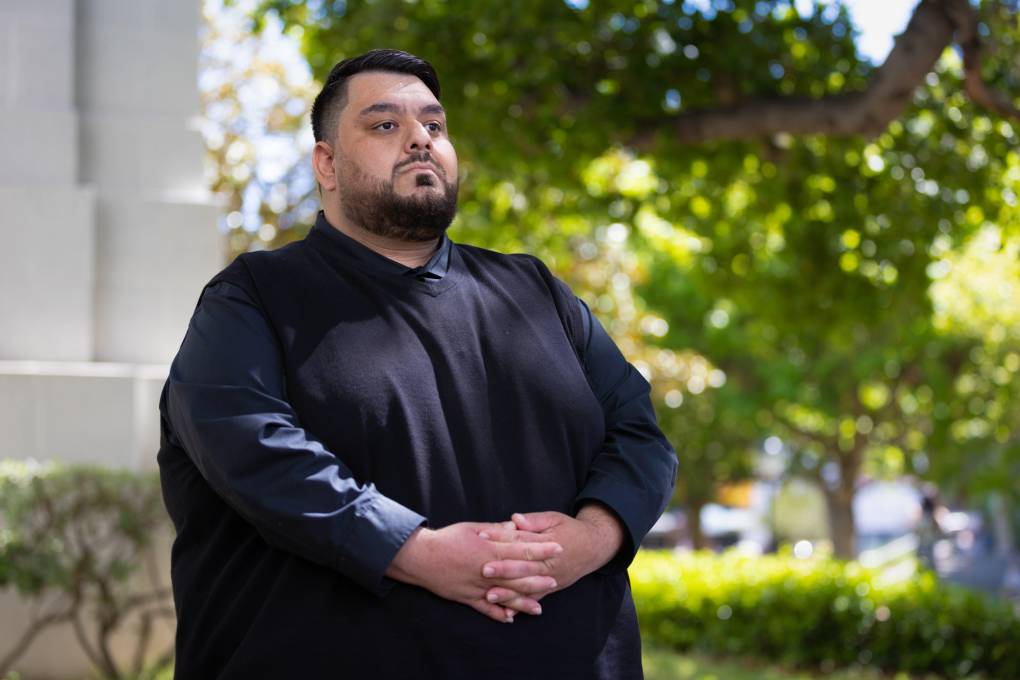
"caption": "Harris Mojadedi, Assistant Dean of Strategic Initiatives, poses for a portrait at UC Berkeley on May 14, 2025.",
"credit": null,
"altTag": null,
"description": null,
"imgSizes": {
"medium": {
"file": "https://cdn.kqed.org/wp-content/uploads/sites/10/2025/05/20250514_AFGHANREFUGEESTPS_GC-11-KQED-800x533.jpg",
"width": 800,
"height": 533,
"mimeType": "image/jpeg"
},
"large": {
"file": "https://cdn.kqed.org/wp-content/uploads/sites/10/2025/05/20250514_AFGHANREFUGEESTPS_GC-11-KQED-1020x680.jpg",
"width": 1020,
"height": 680,
"mimeType": "image/jpeg"
},
"thumbnail": {
"file": "https://cdn.kqed.org/wp-content/uploads/sites/10/2025/05/20250514_AFGHANREFUGEESTPS_GC-11-KQED-160x107.jpg",
"width": 160,
"height": 107,
"mimeType": "image/jpeg"
},
"1536x1536": {
"file": "https://cdn.kqed.org/wp-content/uploads/sites/10/2025/05/20250514_AFGHANREFUGEESTPS_GC-11-KQED-1536x1024.jpg",
"width": 1536,
"height": 1024,
"mimeType": "image/jpeg"
},
"post-thumbnail": {
"file": "https://cdn.kqed.org/wp-content/uploads/sites/10/2025/05/20250514_AFGHANREFUGEESTPS_GC-11-KQED-672x372.jpg",
"width": 672,
"height": 372,
"mimeType": "image/jpeg"
},
"twentyfourteen-full-width": {
"file": "https://cdn.kqed.org/wp-content/uploads/sites/10/2025/05/20250514_AFGHANREFUGEESTPS_GC-11-KQED-1038x576.jpg",
"width": 1038,
"height": 576,
"mimeType": "image/jpeg"
},
"full-width": {
"file": "https://cdn.kqed.org/wp-content/uploads/sites/10/2025/05/20250514_AFGHANREFUGEESTPS_GC-11-KQED-1920x1280.jpg",
"width": 1920,
"height": 1280,
"mimeType": "image/jpeg"
},
"kqedFullSize": {
"file": "https://cdn.kqed.org/wp-content/uploads/sites/10/2025/05/20250514_AFGHANREFUGEESTPS_GC-11-KQED.jpg",
"width": 2000,
"height": 1333
}
},
"isLoading": false,
"fetchFailed": false
},
"news_12041748": {
"type": "attachments",
"id": "news_12041748",
"meta": {
"index": "attachments_1716263798",
"site": "news",
"id": "12041748",
"found": true
},
"title": "CAT — Auditory Illusions",
"publishDate": 1748394692,
"status": "inherit",
"parent": 12041731,
"modified": 1748397892,
"caption": "Illustration of an ear receiving soundwaves, representing auditory perception.",
"credit": "Getty Images",
"altTag": "A collage-like illustration featuring a black and white photo of an ear on an orange, red, and yellow color background. Abstract geometric images dot the background, including a yellow star shape and concentric circles. Squiggly purple and pink lines connect from off screen to the ear, which represent sound waves.",
"description": null,
"imgSizes": {
"medium": {
"file": "https://cdn.kqed.org/wp-content/uploads/sites/10/2025/05/CAT-—-Auditory-Illusions-800x450.png",
"width": 800,
"height": 450,
"mimeType": "image/png"
},
"large": {
"file": "https://cdn.kqed.org/wp-content/uploads/sites/10/2025/05/CAT-—-Auditory-Illusions-1020x574.png",
"width": 1020,
"height": 574,
"mimeType": "image/png"
},
"thumbnail": {
"file": "https://cdn.kqed.org/wp-content/uploads/sites/10/2025/05/CAT-—-Auditory-Illusions-160x90.png",
"width": 160,
"height": 90,
"mimeType": "image/png"
},
"1536x1536": {
"file": "https://cdn.kqed.org/wp-content/uploads/sites/10/2025/05/CAT-—-Auditory-Illusions-1536x864.png",
"width": 1536,
"height": 864,
"mimeType": "image/png"
},
"post-thumbnail": {
"file": "https://cdn.kqed.org/wp-content/uploads/sites/10/2025/05/CAT-—-Auditory-Illusions-672x372.png",
"width": 672,
"height": 372,
"mimeType": "image/png"
},
"twentyfourteen-full-width": {
"file": "https://cdn.kqed.org/wp-content/uploads/sites/10/2025/05/CAT-—-Auditory-Illusions-1038x576.png",
"width": 1038,
"height": 576,
"mimeType": "image/png"
},
"kqedFullSize": {
"file": "https://cdn.kqed.org/wp-content/uploads/sites/10/2025/05/CAT-—-Auditory-Illusions.png",
"width": 1920,
"height": 1080
}
},
"isLoading": false,
"fetchFailed": false
},
"news_12041516": {
"type": "attachments",
"id": "news_12041516",
"meta": {
"index": "attachments_1716263798",
"site": "news",
"id": "12041516",
"found": true
},
"title": "CoreCivic Otay Mesa Detention Center",
"publishDate": 1748032296,
"status": "inherit",
"parent": 12041326,
"modified": 1748032401,
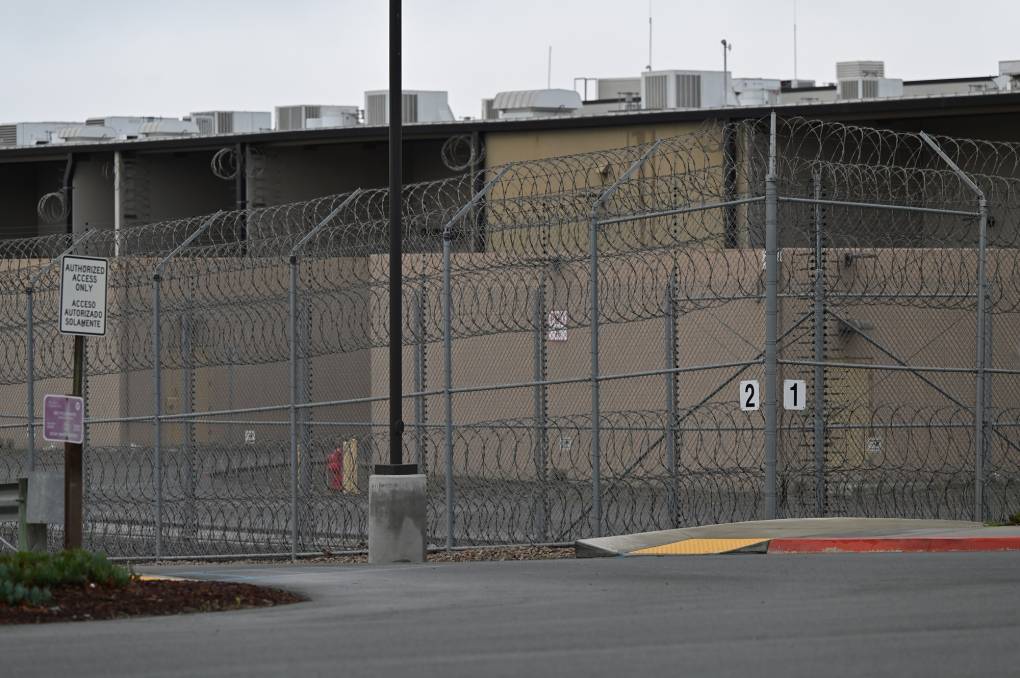
"caption": "A view of the CoreCivic Otay Mesa Detention Center in San Diego, California, on Feb. 7, 2025. The private institution has been plagued by allegations of medical negligence, abusive and retaliatory behavior against immigrants, sexual harassment, poor food and water quality and other dangerous conditions. ",
"credit": "Carlos Moreno/Anadolu via Getty Images",
"altTag": null,
"description": null,
"imgSizes": {
"medium": {
"file": "https://cdn.kqed.org/wp-content/uploads/sites/10/2025/05/CANewsroom1-800x532.jpg",
"width": 800,
"height": 532,
"mimeType": "image/jpeg"
},
"large": {
"file": "https://cdn.kqed.org/wp-content/uploads/sites/10/2025/05/CANewsroom1-1020x678.jpg",
"width": 1020,
"height": 678,
"mimeType": "image/jpeg"
},
"thumbnail": {
"file": "https://cdn.kqed.org/wp-content/uploads/sites/10/2025/05/CANewsroom1-160x106.jpg",
"width": 160,
"height": 106,
"mimeType": "image/jpeg"
},
"1536x1536": {
"file": "https://cdn.kqed.org/wp-content/uploads/sites/10/2025/05/CANewsroom1-1536x1021.jpg",
"width": 1536,
"height": 1021,
"mimeType": "image/jpeg"
},
"post-thumbnail": {
"file": "https://cdn.kqed.org/wp-content/uploads/sites/10/2025/05/CANewsroom1-672x372.jpg",
"width": 672,
"height": 372,
"mimeType": "image/jpeg"
},
"twentyfourteen-full-width": {
"file": "https://cdn.kqed.org/wp-content/uploads/sites/10/2025/05/CANewsroom1-1038x576.jpg",
"width": 1038,
"height": 576,
"mimeType": "image/jpeg"
},
"full-width": {
"file": "https://cdn.kqed.org/wp-content/uploads/sites/10/2025/05/CANewsroom1-1920x1277.jpg",
"width": 1920,
"height": 1277,
"mimeType": "image/jpeg"
},
"kqedFullSize": {
"file": "https://cdn.kqed.org/wp-content/uploads/sites/10/2025/05/CANewsroom1.jpg",
"width": 2000,
"height": 1330
}
},
"isLoading": false,
"fetchFailed": false
},
"news_12029489": {
"type": "attachments",
"id": "news_12029489",
"meta": {
"index": "attachments_1716263798",
"site": "news",
"id": "12029489",
"found": true
},
"title": "US-POLITICS-ENVIRONMENT-NATURE-PARKS-PROTEST",
"publishDate": 1741040569,
"status": "inherit",
"parent": 12029182,
"modified": 1741040606,
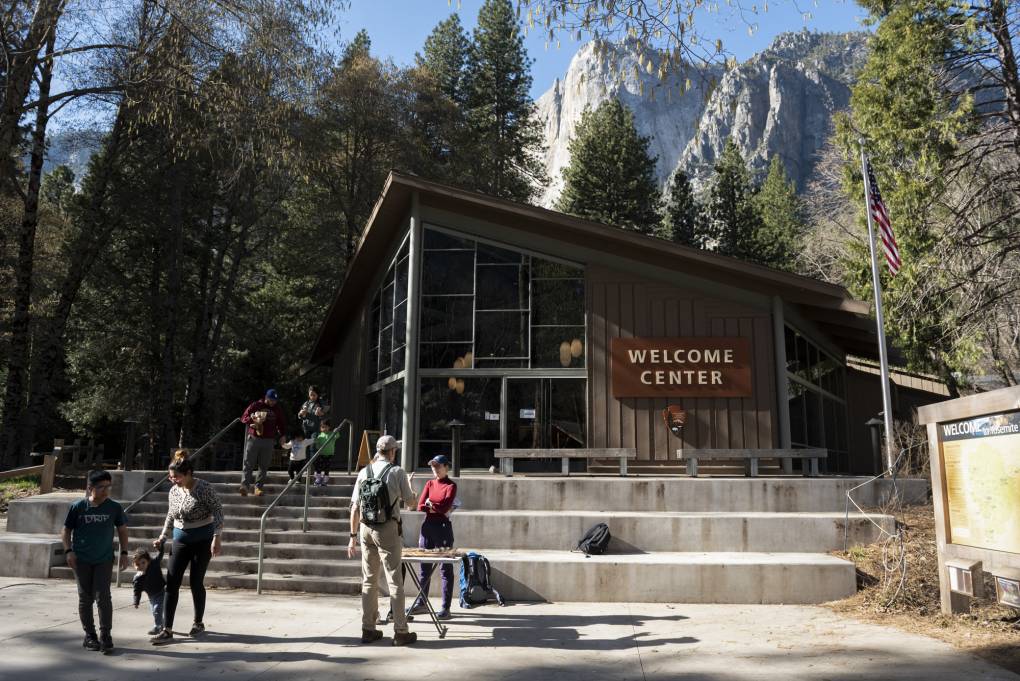
"caption": "A volunteer for the National Park Service welcomes visitors at the Exploration Center in Yosemite Valley, at Yosemite National Park on March 1, 2025.",
"credit": "Laure Andrillon/AFP via Getty",
"altTag": null,
"description": null,
"imgSizes": {
"medium": {
"file": "https://cdn.kqed.org/wp-content/uploads/sites/10/2025/03/CaliforniaPublicLandsGetty1-800x534.jpg",
"width": 800,
"height": 534,
"mimeType": "image/jpeg"
},
"large": {
"file": "https://cdn.kqed.org/wp-content/uploads/sites/10/2025/03/CaliforniaPublicLandsGetty1-1020x681.jpg",
"width": 1020,
"height": 681,
"mimeType": "image/jpeg"
},
"thumbnail": {
"file": "https://cdn.kqed.org/wp-content/uploads/sites/10/2025/03/CaliforniaPublicLandsGetty1-160x107.jpg",
"width": 160,
"height": 107,
"mimeType": "image/jpeg"
},
"1536x1536": {
"file": "https://cdn.kqed.org/wp-content/uploads/sites/10/2025/03/CaliforniaPublicLandsGetty1-1536x1025.jpg",
"width": 1536,
"height": 1025,
"mimeType": "image/jpeg"
},
"post-thumbnail": {
"file": "https://cdn.kqed.org/wp-content/uploads/sites/10/2025/03/CaliforniaPublicLandsGetty1-672x372.jpg",
"width": 672,
"height": 372,
"mimeType": "image/jpeg"
},
"twentyfourteen-full-width": {
"file": "https://cdn.kqed.org/wp-content/uploads/sites/10/2025/03/CaliforniaPublicLandsGetty1-1038x576.jpg",
"width": 1038,
"height": 576,
"mimeType": "image/jpeg"
},
"full-width": {
"file": "https://cdn.kqed.org/wp-content/uploads/sites/10/2025/03/CaliforniaPublicLandsGetty1-1920x1282.jpg",
"width": 1920,
"height": 1282,
"mimeType": "image/jpeg"
},
"kqedFullSize": {
"file": "https://cdn.kqed.org/wp-content/uploads/sites/10/2025/03/CaliforniaPublicLandsGetty1.jpg",
"width": 2000,
"height": 1335
}
},
"isLoading": false,
"fetchFailed": false
},
"news_12041542": {
"type": "attachments",
"id": "news_12041542",
"meta": {
"index": "attachments_1716263798",
"site": "news",
"id": "12041542",
"found": true
},
"title": "npr.brightspotcdn copy",
"publishDate": 1748040058,
"status": "inherit",
"parent": 12041541,
"modified": 1748040133,
"caption": "A Qatari Boeing 747 sits on the tarmac of Palm Beach International airport after President Trump toured the aircraft on Feb. 15. The aircraft is now in San Antonio and needs extensive overhauling to become the next Air Force One.",
"credit": "Roberto Schmidt/AFP via Getty Images",
"altTag": null,
"description": null,
"imgSizes": {
"medium": {
"file": "https://cdn.kqed.org/wp-content/uploads/sites/10/2025/05/npr.brightspotcdn-copy-14-800x533.jpg",
"width": 800,
"height": 533,
"mimeType": "image/jpeg"
},
"large": {
"file": "https://cdn.kqed.org/wp-content/uploads/sites/10/2025/05/npr.brightspotcdn-copy-14-1020x680.jpg",
"width": 1020,
"height": 680,
"mimeType": "image/jpeg"
},
"thumbnail": {
"file": "https://cdn.kqed.org/wp-content/uploads/sites/10/2025/05/npr.brightspotcdn-copy-14-160x107.jpg",
"width": 160,
"height": 107,
"mimeType": "image/jpeg"
},
"1536x1536": {
"file": "https://cdn.kqed.org/wp-content/uploads/sites/10/2025/05/npr.brightspotcdn-copy-14-1536x1024.jpg",
"width": 1536,
"height": 1024,
"mimeType": "image/jpeg"
},
"2048x2048": {
"file": "https://cdn.kqed.org/wp-content/uploads/sites/10/2025/05/npr.brightspotcdn-copy-14-2048x1365.jpg",
"width": 2048,
"height": 1365,
"mimeType": "image/jpeg"
},
"post-thumbnail": {
"file": "https://cdn.kqed.org/wp-content/uploads/sites/10/2025/05/npr.brightspotcdn-copy-14-672x372.jpg",
"width": 672,
"height": 372,
"mimeType": "image/jpeg"
},
"twentyfourteen-full-width": {
"file": "https://cdn.kqed.org/wp-content/uploads/sites/10/2025/05/npr.brightspotcdn-copy-14-1038x576.jpg",
"width": 1038,
"height": 576,
"mimeType": "image/jpeg"
},
"full-width": {
"file": "https://cdn.kqed.org/wp-content/uploads/sites/10/2025/05/npr.brightspotcdn-copy-14-1920x1280.jpg",
"width": 1920,
"height": 1280,
"mimeType": "image/jpeg"
},
"kqedFullSize": {
"file": "https://cdn.kqed.org/wp-content/uploads/sites/10/2025/05/npr.brightspotcdn-copy-14-scaled.jpg",
"width": 2560,
"height": 1706
}
},
"isLoading": false,
"fetchFailed": false
},
"news_12041321": {
"type": "attachments",
"id": "news_12041321",
"meta": {
"index": "attachments_1716263798",
"site": "news",
"id": "12041321",
"found": true
},
"title": "npr.brightspotcdn copy 2",
"publishDate": 1747947959,
"status": "inherit",
"parent": 12041319,
"modified": 1747948012,
"caption": "A Target store is seen in Clifton, New Jersey, on Monday, Nov. 22, 2021. Target will no longer open its stores on Thanksgiving Day, making permanent a shift to the unofficial start of the holiday season that was suspended during the pandemic. ",
"credit": "Ted Shaffrey/AP Photo",
"altTag": null,
"description": null,
"imgSizes": {
"medium": {
"file": "https://cdn.kqed.org/wp-content/uploads/sites/10/2025/05/npr.brightspotcdn-copy-2-1-800x534.jpg",
"width": 800,
"height": 534,
"mimeType": "image/jpeg"
},
"large": {
"file": "https://cdn.kqed.org/wp-content/uploads/sites/10/2025/05/npr.brightspotcdn-copy-2-1-1020x680.jpg",
"width": 1020,
"height": 680,
"mimeType": "image/jpeg"
},
"thumbnail": {
"file": "https://cdn.kqed.org/wp-content/uploads/sites/10/2025/05/npr.brightspotcdn-copy-2-1-160x107.jpg",
"width": 160,
"height": 107,
"mimeType": "image/jpeg"
},
"1536x1536": {
"file": "https://cdn.kqed.org/wp-content/uploads/sites/10/2025/05/npr.brightspotcdn-copy-2-1-1536x1024.jpg",
"width": 1536,
"height": 1024,
"mimeType": "image/jpeg"
},
"post-thumbnail": {
"file": "https://cdn.kqed.org/wp-content/uploads/sites/10/2025/05/npr.brightspotcdn-copy-2-1-672x372.jpg",
"width": 672,
"height": 372,
"mimeType": "image/jpeg"
},
"twentyfourteen-full-width": {
"file": "https://cdn.kqed.org/wp-content/uploads/sites/10/2025/05/npr.brightspotcdn-copy-2-1-1038x576.jpg",
"width": 1038,
"height": 576,
"mimeType": "image/jpeg"
},
"kqedFullSize": {
"file": "https://cdn.kqed.org/wp-content/uploads/sites/10/2025/05/npr.brightspotcdn-copy-2-1.jpg",
"width": 1600,
"height": 1067
}
},
"isLoading": false,
"fetchFailed": false
},
"news_11712245": {
"type": "attachments",
"id": "news_11712245",
"meta": {
"index": "attachments_1716263798",
"site": "news",
"id": "11712245",
"found": true
},
"title": "The Association of Legal Aid Attorneys along with dozens of unions, immigrant rights organizations, and community groups held a rally on December 7, 2017 at Brooklyn Borough Hall to call on the Office of Court Administration and Chief Judge Janet DiFiore to prohibit Immigration & Customs Enforcement agents from entering state courthouses, and to end coordination with ICE.",
"publishDate": 1544730613,
"status": "inherit",
"parent": 11712244,
"modified": 1748046862,
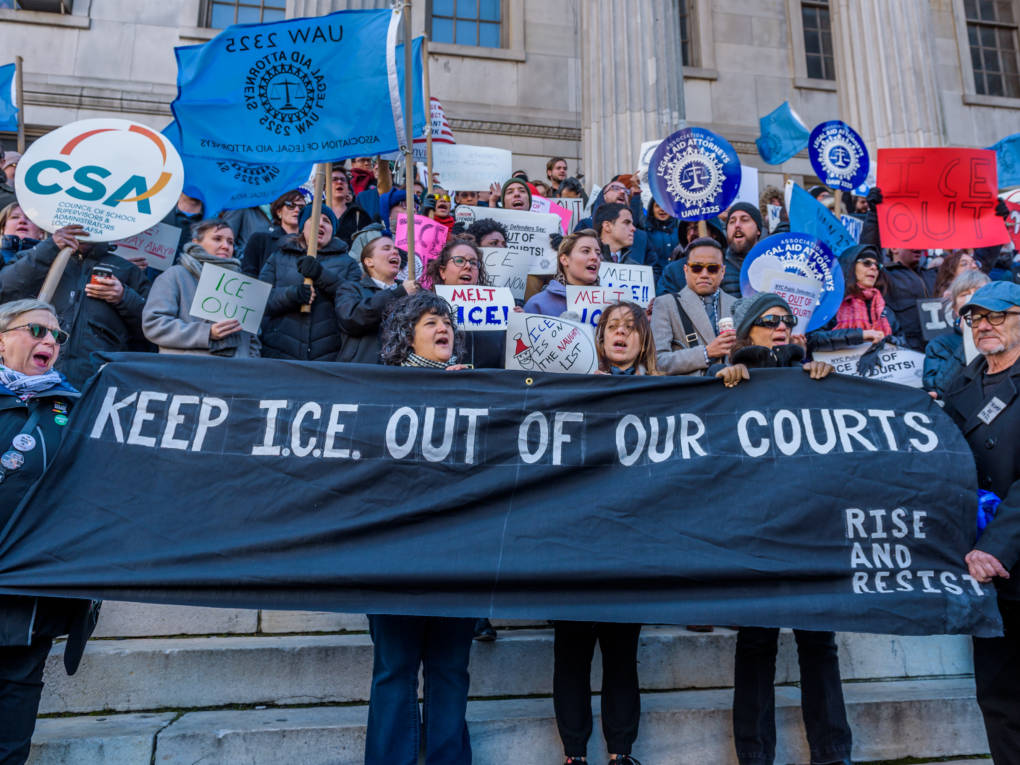
"caption": "The Association of Legal Aid Attorneys, along with dozens of unions, immigrant rights organizations and community groups, held a rally on Dec. 7, 2017, at Brooklyn Borough Hall.",
"credit": "Pacific Press/LightRocket via Getty Images",
"altTag": null,
"description": null,
"imgSizes": {
"thumbnail": {
"file": "https://cdn.kqed.org/wp-content/uploads/sites/10/2018/12/gettyimages-888870656-e9acdd0cdcb80ec5cd16b8a05023e4e5664f30fb-160x120.jpg",
"width": 160,
"height": 120,
"mimeType": "image/jpeg"
},
"medium": {
"file": "https://cdn.kqed.org/wp-content/uploads/sites/10/2018/12/gettyimages-888870656-e9acdd0cdcb80ec5cd16b8a05023e4e5664f30fb-800x600.jpg",
"width": 800,
"height": 600,
"mimeType": "image/jpeg"
},
"large": {
"file": "https://cdn.kqed.org/wp-content/uploads/sites/10/2018/12/gettyimages-888870656-e9acdd0cdcb80ec5cd16b8a05023e4e5664f30fb-1020x765.jpg",
"width": 1020,
"height": 765,
"mimeType": "image/jpeg"
},
"complete_open_graph": {
"file": "https://cdn.kqed.org/wp-content/uploads/sites/10/2018/12/gettyimages-888870656-e9acdd0cdcb80ec5cd16b8a05023e4e5664f30fb-1200x900.jpg",
"width": 1200,
"height": 900,
"mimeType": "image/jpeg"
},
"post-thumbnail": {
"file": "https://cdn.kqed.org/wp-content/uploads/sites/10/2018/12/gettyimages-888870656-e9acdd0cdcb80ec5cd16b8a05023e4e5664f30fb-672x372.jpg",
"width": 672,
"height": 372,
"mimeType": "image/jpeg"
},
"twentyfourteen-full-width": {
"file": "https://cdn.kqed.org/wp-content/uploads/sites/10/2018/12/gettyimages-888870656-e9acdd0cdcb80ec5cd16b8a05023e4e5664f30fb-1038x576.jpg",
"width": 1038,
"height": 576,
"mimeType": "image/jpeg"
},
"full-width": {
"file": "https://cdn.kqed.org/wp-content/uploads/sites/10/2018/12/gettyimages-888870656-e9acdd0cdcb80ec5cd16b8a05023e4e5664f30fb-1920x1440.jpg",
"width": 1920,
"height": 1440,
"mimeType": "image/jpeg"
},
"guest-author-32": {
"file": "https://cdn.kqed.org/wp-content/uploads/sites/10/2018/12/gettyimages-888870656-e9acdd0cdcb80ec5cd16b8a05023e4e5664f30fb-32x32.jpg",
"width": 32,
"height": 32,
"mimeType": "image/jpeg"
},
"guest-author-50": {
"file": "https://cdn.kqed.org/wp-content/uploads/sites/10/2018/12/gettyimages-888870656-e9acdd0cdcb80ec5cd16b8a05023e4e5664f30fb-50x50.jpg",
"width": 50,
"height": 50,
"mimeType": "image/jpeg"
},
"guest-author-64": {
"file": "https://cdn.kqed.org/wp-content/uploads/sites/10/2018/12/gettyimages-888870656-e9acdd0cdcb80ec5cd16b8a05023e4e5664f30fb-64x64.jpg",
"width": 64,
"height": 64,
"mimeType": "image/jpeg"
},
"guest-author-96": {
"file": "https://cdn.kqed.org/wp-content/uploads/sites/10/2018/12/gettyimages-888870656-e9acdd0cdcb80ec5cd16b8a05023e4e5664f30fb-96x96.jpg",
"width": 96,
"height": 96,
"mimeType": "image/jpeg"
},
"guest-author-128": {
"file": "https://cdn.kqed.org/wp-content/uploads/sites/10/2018/12/gettyimages-888870656-e9acdd0cdcb80ec5cd16b8a05023e4e5664f30fb-128x128.jpg",
"width": 128,
"height": 128,
"mimeType": "image/jpeg"
},
"detail": {
"file": "https://cdn.kqed.org/wp-content/uploads/sites/10/2018/12/gettyimages-888870656-e9acdd0cdcb80ec5cd16b8a05023e4e5664f30fb-150x150.jpg",
"width": 150,
"height": 150,
"mimeType": "image/jpeg"
},
"kqedFullSize": {
"file": "https://cdn.kqed.org/wp-content/uploads/sites/10/2018/12/gettyimages-888870656-e9acdd0cdcb80ec5cd16b8a05023e4e5664f30fb-e1748037342663.jpg",
"width": 2000,
"height": 1500
}
},
"isLoading": false,
"fetchFailed": false
},
"news_12031870": {
"type": "attachments",
"id": "news_12031870",
"meta": {
"index": "attachments_1716263798",
"site": "news",
"id": "12031870",
"found": true
},
"title": "US-FRAUD-AUTOMOBILE-INTERNET-MUSK-TWITTER",
"publishDate": 1742324979,
"status": "inherit",
"parent": 12081802,
"modified": 1777579953,
"caption": "The exterior of the Phillip Burton Federal Building and U.S. Courthouse in San Francisco, California, on Jan. 20, 2019. ",
"credit": "Patrick T. Fallon/AFP via Getty Images",
"altTag": null,
"description": null,
"imgSizes": {
"medium": {
"file": "https://cdn.kqed.org/wp-content/uploads/sites/10/2025/03/GettyImages-1246387515-800x533.jpg",
"width": 800,
"height": 533,
"mimeType": "image/jpeg"
},
"large": {
"file": "https://cdn.kqed.org/wp-content/uploads/sites/10/2025/03/GettyImages-1246387515-1020x680.jpg",
"width": 1020,
"height": 680,
"mimeType": "image/jpeg"
},
"thumbnail": {
"file": "https://cdn.kqed.org/wp-content/uploads/sites/10/2025/03/GettyImages-1246387515-160x107.jpg",
"width": 160,
"height": 107,
"mimeType": "image/jpeg"
},
"1536x1536": {
"file": "https://cdn.kqed.org/wp-content/uploads/sites/10/2025/03/GettyImages-1246387515-1536x1024.jpg",
"width": 1536,
"height": 1024,
"mimeType": "image/jpeg"
},
"2048x2048": {
"file": "https://cdn.kqed.org/wp-content/uploads/sites/10/2025/03/GettyImages-1246387515-2048x1365.jpg",
"width": 2048,
"height": 1365,
"mimeType": "image/jpeg"
},
"post-thumbnail": {
"file": "https://cdn.kqed.org/wp-content/uploads/sites/10/2025/03/GettyImages-1246387515-672x372.jpg",
"width": 672,
"height": 372,
"mimeType": "image/jpeg"
},
"twentyfourteen-full-width": {
"file": "https://cdn.kqed.org/wp-content/uploads/sites/10/2025/03/GettyImages-1246387515-1038x576.jpg",
"width": 1038,
"height": 576,
"mimeType": "image/jpeg"
},
"full-width": {
"file": "https://cdn.kqed.org/wp-content/uploads/sites/10/2025/03/GettyImages-1246387515-1920x1280.jpg",
"width": 1920,
"height": 1280,
"mimeType": "image/jpeg"
},
"kqedFullSize": {
"file": "https://cdn.kqed.org/wp-content/uploads/sites/10/2025/03/GettyImages-1246387515-scaled-e1742325160899.jpg",
"width": 2000,
"height": 1334
}
},
"isLoading": false,
"fetchFailed": false
},
"news_12030841": {
"type": "attachments",
"id": "news_12030841",
"meta": {
"index": "attachments_1716263798",
"site": "news",
"id": "12030841",
"found": true
},
"title": "Medicaid",
"publishDate": 1741733766,
"status": "inherit",
"parent": 12030830,
"modified": 1757976663,
"caption": "A \"Save Medicaid\" sign is affixed to the podium for the House Democrats' press event to oppose the Republicans' budget on the House steps of the Capitol on Feb. 25, 2024.",
"credit": "Bill Clark/CRoll Call, Inc., via Getty Images",
"altTag": null,
"description": null,
"imgSizes": {
"medium": {
"file": "https://cdn.kqed.org/wp-content/uploads/sites/10/2025/03/GettyImages-2201320740-800x533.jpg",
"width": 800,
"height": 533,
"mimeType": "image/jpeg"
},
"large": {
"file": "https://cdn.kqed.org/wp-content/uploads/sites/10/2025/03/GettyImages-2201320740-1020x680.jpg",
"width": 1020,
"height": 680,
"mimeType": "image/jpeg"
},
"thumbnail": {
"file": "https://cdn.kqed.org/wp-content/uploads/sites/10/2025/03/GettyImages-2201320740-160x107.jpg",
"width": 160,
"height": 107,
"mimeType": "image/jpeg"
},
"1536x1536": {
"file": "https://cdn.kqed.org/wp-content/uploads/sites/10/2025/03/GettyImages-2201320740-1536x1024.jpg",
"width": 1536,
"height": 1024,
"mimeType": "image/jpeg"
},
"post-thumbnail": {
"file": "https://cdn.kqed.org/wp-content/uploads/sites/10/2025/03/GettyImages-2201320740-672x372.jpg",
"width": 672,
"height": 372,
"mimeType": "image/jpeg"
},
"twentyfourteen-full-width": {
"file": "https://cdn.kqed.org/wp-content/uploads/sites/10/2025/03/GettyImages-2201320740-1038x576.jpg",
"width": 1038,
"height": 576,
"mimeType": "image/jpeg"
},
"full-width": {
"file": "https://cdn.kqed.org/wp-content/uploads/sites/10/2025/03/GettyImages-2201320740-1920x1280.jpg",
"width": 1920,
"height": 1280,
"mimeType": "image/jpeg"
},
"kqedFullSize": {
"file": "https://cdn.kqed.org/wp-content/uploads/sites/10/2025/03/GettyImages-2201320740.jpg",
"width": 2000,
"height": 1333
}
},
"isLoading": false,
"fetchFailed": false
},
"news_12040001": {
"type": "attachments",
"id": "news_12040001",
"meta": {
"index": "attachments_1716263798",
"site": "news",
"id": "12040001",
"found": true
},
"title": "250513-HUD FUNDS-MD-05-KQED",
"publishDate": 1747191099,
"status": "inherit",
"parent": 0,
"modified": 1747785109,
"caption": "The courtyard at the Bishop Swing Community House supportive housing center in San Francisco, on May 13, 2025.",
"credit": "Martin do Nascimento/KQED",
"altTag": null,
"description": null,
"imgSizes": {
"medium": {
"file": "https://cdn.kqed.org/wp-content/uploads/sites/10/2025/05/250513-HUD-FUNDS-MD-05-KQED-800x534.jpg",
"width": 800,
"height": 534,
"mimeType": "image/jpeg"
},
"large": {
"file": "https://cdn.kqed.org/wp-content/uploads/sites/10/2025/05/250513-HUD-FUNDS-MD-05-KQED-1020x680.jpg",
"width": 1020,
"height": 680,
"mimeType": "image/jpeg"
},
"thumbnail": {
"file": "https://cdn.kqed.org/wp-content/uploads/sites/10/2025/05/250513-HUD-FUNDS-MD-05-KQED-160x107.jpg",
"width": 160,
"height": 107,
"mimeType": "image/jpeg"
},
"1536x1536": {
"file": "https://cdn.kqed.org/wp-content/uploads/sites/10/2025/05/250513-HUD-FUNDS-MD-05-KQED-1536x1025.jpg",
"width": 1536,
"height": 1025,
"mimeType": "image/jpeg"
},
"post-thumbnail": {
"file": "https://cdn.kqed.org/wp-content/uploads/sites/10/2025/05/250513-HUD-FUNDS-MD-05-KQED-672x372.jpg",
"width": 672,
"height": 372,
"mimeType": "image/jpeg"
},
"twentyfourteen-full-width": {
"file": "https://cdn.kqed.org/wp-content/uploads/sites/10/2025/05/250513-HUD-FUNDS-MD-05-KQED-1038x576.jpg",
"width": 1038,
"height": 576,
"mimeType": "image/jpeg"
},
"full-width": {
"file": "https://cdn.kqed.org/wp-content/uploads/sites/10/2025/05/250513-HUD-FUNDS-MD-05-KQED-1920x1281.jpg",
"width": 1920,
"height": 1281,
"mimeType": "image/jpeg"
},
"kqedFullSize": {
"file": "https://cdn.kqed.org/wp-content/uploads/sites/10/2025/05/250513-HUD-FUNDS-MD-05-KQED.jpg",
"width": 2000,
"height": 1334
}
},
"isLoading": false,
"fetchFailed": false
}
},
"audioPlayerReducer": {
"postId": "stream_live",
"isPaused": true,
"isPlaying": false,
"pfsActive": false,
"pledgeModalIsOpen": true,
"playerDrawerIsOpen": false,
"liveAudioPlayStartedAt": 0,
"liveAudioPlayContext": ""
},
"authorsReducer": {
"byline_news_12041326": {
"type": "authors",
"id": "byline_news_12041326",
"meta": {
"override": true
},
"slug": "byline_news_12041326",
"name": "Mark Betancourt, The California Newsroom",
"isLoading": false
},
"byline_news_12041541": {
"type": "authors",
"id": "byline_news_12041541",
"meta": {
"override": true
},
"slug": "byline_news_12041541",
"name": "\u003ca href=\"https://www.npr.org/people/630949669/kat-lonsdorf\">Kat Lonsdorf\u003c/a>, NPR",
"isLoading": false
},
"byline_news_12041319": {
"type": "authors",
"id": "byline_news_12041319",
"meta": {
"override": true
},
"slug": "byline_news_12041319",
"name": "\u003ca href=\"https://www.npr.org/people/447244385/alina-selyukh\">Alina Selyukh\u003c/a>, NPR",
"isLoading": false
},
"gmarzorati": {
"type": "authors",
"id": "227",
"meta": {
"index": "authors_1716337520",
"id": "227",
"found": true
},
"name": "Guy Marzorati",
"firstName": "Guy",
"lastName": "Marzorati",
"slug": "gmarzorati",
"email": "gmarzorati@KQED.org",
"display_author_email": true,
"staff_mastheads": [
"news"
],
"title": "Correspondent",
"bio": "Guy Marzorati is a correspondent on KQED's California Politics and Government Desk, based in San Jose. A graduate of Santa Clara University, Guy joined KQED in 2013. He reports on state and local politics and produces KQED's digital voter guide.",
"avatar": "https://secure.gravatar.com/avatar/e7038b8dbfd55b104369b76b1cd0b9de?s=600&d=blank&r=g",
"twitter": "guymarzorati",
"facebook": null,
"instagram": null,
"linkedin": null,
"sites": [
{
"site": "",
"roles": [
"editor"
]
},
{
"site": "news",
"roles": [
"editor"
]
},
{
"site": "science",
"roles": [
"editor"
]
},
{
"site": "forum",
"roles": [
"editor"
]
},
{
"site": "elections",
"roles": [
"editor"
]
},
{
"site": "liveblog",
"roles": [
"editor"
]
}
],
"headData": {
"title": "Guy Marzorati | KQED",
"description": "Correspondent",
"ogImgSrc": "https://secure.gravatar.com/avatar/e7038b8dbfd55b104369b76b1cd0b9de?s=600&d=blank&r=g",
"twImgSrc": "https://secure.gravatar.com/avatar/e7038b8dbfd55b104369b76b1cd0b9de?s=600&d=blank&r=g"
},
"isLoading": false,
"link": "/author/gmarzorati"
},
"rachael-myrow": {
"type": "authors",
"id": "251",
"meta": {
"index": "authors_1716337520",
"id": "251",
"found": true
},
"name": "Rachael Myrow",
"firstName": "Rachael",
"lastName": "Myrow",
"slug": "rachael-myrow",
"email": "rmyrow@kqed.org",
"display_author_email": true,
"staff_mastheads": [
"news"
],
"title": "Senior Editor of KQED's Silicon Valley News Desk",
"bio": "• I write and edit stories about how Silicon Valley power and policies shape everyday life in California. I’m also passionate about making Bay Area history and culture more accessible to a broad public. • I’ve been a journalist for most of my life, starting in high school with The Franklin Press in Los Angeles, where I grew up. While earning my first degree in English at UC Berkeley, I got my start in public radio at KALX-FM. After completing a second degree in journalism at Cal, I landed my first professional job at Marketplace, then moved on to KPCC (now LAist), and then KQED, where I hosted The California Report for more than seven years. • My reporting has appeared on NPR, The World, WBUR’s \u003ci>Here & Now\u003c/i>, and the BBC. I also guest host for KQED’s \u003ci>Forum\u003c/i>, as well as the Commonwealth Club in San Francisco. • I speak periodically on media, democracy and technology issues, and do voiceover work for documentaries and educational video projects. • Outside of the studio, you'll find me hiking Bay Area trails and whipping up Insta-ready meals in my kitchen. • I do not accept gifts, money, or favors from anyone connected to my reporting, I don't pay people for information, and I do not support or donate to political causes. • I strive to treat the people I report on with fairness, honesty, and respect. I also recognize there are often multiple sides to a story and work to verify information through multiple sources and documentation. If I get something wrong, I correct it.",
"avatar": "https://secure.gravatar.com/avatar/87bf8cb5874e045cdff430523a6d48b1?s=600&d=blank&r=g",
"twitter": "rachaelmyrow",
"facebook": null,
"instagram": null,
"linkedin": "https://www.linkedin.com/in/rachaelmyrow/",
"sites": [
{
"site": "arts",
"roles": [
"administrator"
]
},
{
"site": "news",
"roles": [
"edit_others_posts",
"editor"
]
},
{
"site": "futureofyou",
"roles": [
"editor"
]
},
{
"site": "bayareabites",
"roles": [
"editor"
]
},
{
"site": "stateofhealth",
"roles": [
"editor"
]
},
{
"site": "science",
"roles": [
"editor"
]
},
{
"site": "food",
"roles": [
"editor"
]
},
{
"site": "forum",
"roles": [
"editor"
]
},
{
"site": "liveblog",
"roles": [
"author"
]
}
],
"headData": {
"title": "Rachael Myrow | KQED",
"description": "Senior Editor of KQED's Silicon Valley News Desk",
"ogImgSrc": "https://secure.gravatar.com/avatar/87bf8cb5874e045cdff430523a6d48b1?s=600&d=blank&r=g",
"twImgSrc": "https://secure.gravatar.com/avatar/87bf8cb5874e045cdff430523a6d48b1?s=600&d=blank&r=g"
},
"isLoading": false,
"link": "/author/rachael-myrow"
},
"tychehendricks": {
"type": "authors",
"id": "259",
"meta": {
"index": "authors_1716337520",
"id": "259",
"found": true
},
"name": "Tyche Hendricks",
"firstName": "Tyche",
"lastName": "Hendricks",
"slug": "tychehendricks",
"email": "thendricks@kqed.org",
"display_author_email": true,
"staff_mastheads": [
"news"
],
"title": "KQED Senior Editor, Immigration",
"bio": "\u003cspan style=\"font-weight: 400;\">Tyche Hendricks is KQED’s senior editor for immigration, leading coverage of the policy and politics that affect California’s immigrant communities. Her work for KQED’s radio and online audiences is also carried on NPR and other national outlets. She has been recognized with awards from the Radio and Television News Directors Association, the Society for Professional Journalists; the Education Writers Association; the Best of the West and the National Federation of Community Broadcasters. Before joining KQED in 2010, Tyche spent more than a dozen years as a newspaper reporter, notably at the \u003c/span>\u003ci>\u003cspan style=\"font-weight: 400;\">San Francisco Chronicle\u003c/span>\u003c/i>\u003cspan style=\"font-weight: 400;\">. At different times she has covered criminal justice, government and politics and urban planning. Tyche has taught in the MFA Creative Writing program at the University of San Francisco and at UC Berkeley’s Graduate School of Journalism, where she was co-director of a national immigration symposium for professional journalists. She is the author of \u003c/span>\u003ci>\u003cspan style=\"font-weight: 400;\">The Wind Doesn't Need a Passport: Stories from the U.S.-Mexico Borderlands\u003c/span>\u003c/i>\u003cspan style=\"font-weight: 400;\"> (University of California Press). \u003c/span>",
"avatar": "https://secure.gravatar.com/avatar/b8ee458e2731c2d43df86882ce17267e?s=600&d=blank&r=g",
"twitter": "tychehendricks",
"facebook": null,
"instagram": null,
"linkedin": null,
"sites": [
{
"site": "news",
"roles": [
"editor"
]
},
{
"site": "stateofhealth",
"roles": [
"editor"
]
}
],
"headData": {
"title": "Tyche Hendricks | KQED",
"description": "KQED Senior Editor, Immigration",
"ogImgSrc": "https://secure.gravatar.com/avatar/b8ee458e2731c2d43df86882ce17267e?s=600&d=blank&r=g",
"twImgSrc": "https://secure.gravatar.com/avatar/b8ee458e2731c2d43df86882ce17267e?s=600&d=blank&r=g"
},
"isLoading": false,
"link": "/author/tychehendricks"
},
"matthewgreen": {
"type": "authors",
"id": "1263",
"meta": {
"index": "authors_1716337520",
"id": "1263",
"found": true
},
"name": "Matthew Green",
"firstName": "Matthew",
"lastName": "Green",
"slug": "matthewgreen",
"email": "mgreen@kqed.org",
"display_author_email": false,
"staff_mastheads": [],
"title": "KQED Editor/Reporter",
"bio": "Matthew Green is a digital media producer for KQED News. He previously produced \u003ca href=\"http://www.kqed.org/lowdown\">The Lowdown\u003c/a>, KQED’s multimedia news education blog. Matthew's written for numerous Bay Area publications, including the Oakland Tribune and San Francisco Chronicle. He also taught journalism classes at Fremont High School in East Oakland.\r\n\r\nEmail: mgreen@kqed.org; Twitter: @MGreenKQED",
"avatar": "https://secure.gravatar.com/avatar/3bf498d1267ca02c8494f33d8cfc575e?s=600&d=blank&r=g",
"twitter": "MGreenKQED",
"facebook": null,
"instagram": null,
"linkedin": null,
"sites": [
{
"site": "news",
"roles": []
},
{
"site": "lowdown",
"roles": []
},
{
"site": "science",
"roles": []
},
{
"site": "education",
"roles": []
},
{
"site": "quest",
"roles": []
},
{
"site": "liveblog",
"roles": []
}
],
"headData": {
"title": "Matthew Green | KQED",
"description": "KQED Editor/Reporter",
"ogImgSrc": "https://secure.gravatar.com/avatar/3bf498d1267ca02c8494f33d8cfc575e?s=600&d=blank&r=g",
"twImgSrc": "https://secure.gravatar.com/avatar/3bf498d1267ca02c8494f33d8cfc575e?s=600&d=blank&r=g"
},
"isLoading": false,
"link": "/author/matthewgreen"
},
"mlagos": {
"type": "authors",
"id": "3239",
"meta": {
"index": "authors_1716337520",
"id": "3239",
"found": true
},
"name": "Marisa Lagos",
"firstName": "Marisa",
"lastName": "Lagos",
"slug": "mlagos",
"email": "mlagos@kqed.org",
"display_author_email": false,
"staff_mastheads": [
"news"
],
"title": "KQED Contributor",
"bio": "Marisa Lagos is a correspondent for KQED’s California Politics and Government Desk and co-hosts the award-winning show and podcast, Political Breakdown. At KQED, Lagos also conducts reporting, analysis and investigations into state, local and national politics for radio, TV, online and onstage. In 2022, she and co-host, Scott Shafer, moderated the only gubernatorial debate in California. In 2020, the \u003ci>Washington Post\u003c/i> named her one of the top political journalists in California; she was nominated for a Peabody and won several other awards for her work investigating the 2017 California wildfires. She has worked at the \u003ci>San Francisco Chronicle\u003c/i>, \u003ci>San Francisco Examiner\u003c/i> and \u003ci>Los Angeles Times\u003c/i>. A UC Santa Barbara graduate, she lives in San Francisco with her two sons and husband.",
"avatar": "https://secure.gravatar.com/avatar/a261a0d3696fc066871ef96b85b5e7d2?s=600&d=blank&r=g",
"twitter": "@mlagos",
"facebook": null,
"instagram": null,
"linkedin": null,
"sites": [
{
"site": "arts",
"roles": [
"author"
]
},
{
"site": "news",
"roles": [
"editor"
]
},
{
"site": "science",
"roles": [
"editor"
]
},
{
"site": "forum",
"roles": [
"author"
]
},
{
"site": "liveblog",
"roles": [
"author"
]
}
],
"headData": {
"title": "Marisa Lagos | KQED",
"description": "KQED Contributor",
"ogImgSrc": "https://secure.gravatar.com/avatar/a261a0d3696fc066871ef96b85b5e7d2?s=600&d=blank&r=g",
"twImgSrc": "https://secure.gravatar.com/avatar/a261a0d3696fc066871ef96b85b5e7d2?s=600&d=blank&r=g"
},
"isLoading": false,
"link": "/author/mlagos"
},
"jsmall": {
"type": "authors",
"id": "6625",
"meta": {
"index": "authors_1716337520",
"id": "6625",
"found": true
},
"name": "Julie Small",
"firstName": "Julie",
"lastName": "Small",
"slug": "jsmall",
"email": "jsmall@kqed.org",
"display_author_email": true,
"staff_mastheads": [
"news"
],
"title": "KQED Contributor",
"bio": "Julie Small reports on criminal justice and immigration.\r\n\r\nShe was part of a team at KQED awarded a regional 2019 Edward R. Murrow award for continuing coverage of the Trump Administration's family separation policy.\r\n\r\nThe Society for Professional Journalists recognized Julie's 2018 \u003ca href=\"https://www.kqed.org/news/11636262/the-officer-tased-him-31-times-the-sheriff-called-his-death-an-accident\">reporting\u003c/a> on the San Joaquin County Sheriff's \u003ca href=\"https://www.kqed.org/news/11634689/autopsy-doctors-sheriff-overrode-death-findings-to-protect-law-enforcement\">interference\u003c/a> in death investigations with an Excellence in Journalism Award for Ongoing Coverage.\r\n\r\nJulie's\u003ca href=\"https://www.kqed.org/news/11039666/two-mentally-ill-inmates-died-one-month-in-santa-clara\"> reporting\u003c/a> with Lisa Pickoff-White on the treatment of mentally ill offenders in California jails earned a 2017 regional Edward R. Murrow Award for news reporting and an investigative reporting award from the SPJ of Northern California.\r\n\r\nBefore joining KQED, Julie covered government and politics in Sacramento for Southern California Public Radio (SCPR). Her 2010 \u003ca href=\"https://www.scpr.org/specials/prisonmedical/\">series\u003c/a> on lapses in California’s prison medical care also won a regional Edward R. Murrow Award for investigative reporting and a Golden Mic Award from the RTNDA of Southern California.\r\n\r\nJulie began her career in journalism in 2000 as the deputy foreign editor for public radio's \u003cem>Marketplace, \u003c/em>while earning her master's degree in journalism from USC’s Annenberg School of Communication.",
"avatar": "https://secure.gravatar.com/avatar/4baedf201468df97be97c2a9dd7585d0?s=600&d=blank&r=g",
"twitter": "@SmallRadio2",
"facebook": null,
"instagram": null,
"linkedin": null,
"sites": [
{
"site": "news",
"roles": [
"editor"
]
},
{
"site": "stateofhealth",
"roles": [
"author"
]
},
{
"site": "science",
"roles": [
"author"
]
}
],
"headData": {
"title": "Julie Small | KQED",
"description": "KQED Contributor",
"ogImgSrc": "https://secure.gravatar.com/avatar/4baedf201468df97be97c2a9dd7585d0?s=600&d=blank&r=g",
"twImgSrc": "https://secure.gravatar.com/avatar/4baedf201468df97be97c2a9dd7585d0?s=600&d=blank&r=g"
},
"isLoading": false,
"link": "/author/jsmall"
},
"ecruzguevarra": {
"type": "authors",
"id": "8654",
"meta": {
"index": "authors_1716337520",
"id": "8654",
"found": true
},
"name": "Ericka Cruz Guevarra",
"firstName": "Ericka",
"lastName": "Cruz Guevarra",
"slug": "ecruzguevarra",
"email": "ecruzguevarra@kqed.org",
"display_author_email": true,
"staff_mastheads": [
"news"
],
"title": "Producer, The Bay Podcast",
"bio": "Ericka Cruz Guevarra is host of \u003ca href=\"https://www.kqed.org/podcasts/thebay\">\u003cem>The Bay\u003c/em>\u003c/a> podcast at KQED. Before host, she was the show’s producer. Her work in that capacity includes a three-part reported series on policing in Vallejo, which won a 2020 excellence in journalism award from the Society of Professional Journalists. Ericka has worked as a breaking news reporter at Oregon Public Broadcasting, helped produce the Code Switch podcast, and was KQED’s inaugural Raul Ramirez Diversity Fund intern. She’s also an alumna of NPR’s Next Generation Radio program. Send her an email if you have strong feelings about whether Fairfield and Suisun City are the Bay. Ericka is represented by SAG-AFTRA.",
"avatar": "https://secure.gravatar.com/avatar/25e5ab8d3d53fad2dcc7bb2b5c506b1a?s=600&d=blank&r=g",
"twitter": "NotoriousECG",
"facebook": null,
"instagram": null,
"linkedin": null,
"sites": [
{
"site": "arts",
"roles": [
"subscriber"
]
},
{
"site": "news",
"roles": [
"editor",
"manage_categories"
]
},
{
"site": "futureofyou",
"roles": [
"subscriber"
]
},
{
"site": "stateofhealth",
"roles": [
"subscriber"
]
},
{
"site": "science",
"roles": [
"editor"
]
},
{
"site": "forum",
"roles": [
"subscriber"
]
}
],
"headData": {
"title": "Ericka Cruz Guevarra | KQED",
"description": "Producer, The Bay Podcast",
"ogImgSrc": "https://secure.gravatar.com/avatar/25e5ab8d3d53fad2dcc7bb2b5c506b1a?s=600&d=blank&r=g",
"twImgSrc": "https://secure.gravatar.com/avatar/25e5ab8d3d53fad2dcc7bb2b5c506b1a?s=600&d=blank&r=g"
},
"isLoading": false,
"link": "/author/ecruzguevarra"
},
"amontecillo": {
"type": "authors",
"id": "11649",
"meta": {
"index": "authors_1716337520",
"id": "11649",
"found": true
},
"name": "Alan Montecillo",
"firstName": "Alan",
"lastName": "Montecillo",
"slug": "amontecillo",
"email": "amontecillo@kqed.org",
"display_author_email": false,
"staff_mastheads": [
"news"
],
"title": "KQED Contributor",
"bio": "Alan Montecillo is the senior editor of \u003cem>\u003ca href=\"http://kqed.org/thebay\">The Bay\u003c/a>, \u003c/em> KQED's local news podcast. Before moving to the Bay Area, he worked as a senior talk show producer for WILL in Champaign-Urbana, Illinois and at Oregon Public Broadcasting in Portland, Oregon. He has won journalism awards from the Society of Professional Journalists Northern California, the Public Media Journalists Association, The Signal Awards, and has also received a regional Edward R. Murrow award. Alan is a Filipino American from Hong Kong and a graduate of Reed College.",
"avatar": "https://secure.gravatar.com/avatar/d5e4e7a76481969ccba76f4e2b5ccabc?s=600&d=blank&r=g",
"twitter": "alanmontecillo",
"facebook": null,
"instagram": null,
"linkedin": null,
"sites": [
{
"site": "",
"roles": [
"editor"
]
},
{
"site": "news",
"roles": [
"editor",
"manage_categories"
]
}
],
"headData": {
"title": "Alan Montecillo | KQED",
"description": "KQED Contributor",
"ogImgSrc": "https://secure.gravatar.com/avatar/d5e4e7a76481969ccba76f4e2b5ccabc?s=600&d=blank&r=g",
"twImgSrc": "https://secure.gravatar.com/avatar/d5e4e7a76481969ccba76f4e2b5ccabc?s=600&d=blank&r=g"
},
"isLoading": false,
"link": "/author/amontecillo"
},
"jessicakariisa": {
"type": "authors",
"id": "11831",
"meta": {
"index": "authors_1716337520",
"id": "11831",
"found": true
},
"name": "Jessica Kariisa",
"firstName": "Jessica",
"lastName": "Kariisa",
"slug": "jessicakariisa",
"email": "jkariisa@kqed.org",
"display_author_email": false,
"staff_mastheads": [],
"title": "Producer, The Bay",
"bio": "Jessica Kariisa is the producer of The Bay. She first joined KQED as an intern for The California Report Magazine, after which she became an on-call producer. She reported a Bay Curious episode on the use of rap lyrics in criminal trials which won a Society of Professional Journalists award in 2023 for Excellence in Features Journalism and the 2023 Signal Award for Best Conversation Starter. She’s worked on podcasts for Snap Judgment and American Public Media. Before embarking on her audio career, she was a music journalist.\r\n\r\nJessica Kariisa is represented by SAG-AFTRA.",
"avatar": "https://secure.gravatar.com/avatar/522e97b28ac0b3d411621c0fde8f3419c7b71ea2c5c262c57c4bb600963f328c?s=600&d=blank&r=g",
"twitter": null,
"bluesky": null,
"facebook": null,
"instagram": null,
"linkedin": null,
"sites": [
{
"site": "arts",
"roles": [
"author"
]
},
{
"site": "news",
"roles": [
"editor",
"manage_categories"
]
}
],
"headData": {
"title": "Jessica Kariisa | KQED",
"description": "Producer, The Bay",
"ogImgSrc": "https://secure.gravatar.com/avatar/522e97b28ac0b3d411621c0fde8f3419c7b71ea2c5c262c57c4bb600963f328c?s=600&d=blank&r=g",
"twImgSrc": "https://secure.gravatar.com/avatar/522e97b28ac0b3d411621c0fde8f3419c7b71ea2c5c262c57c4bb600963f328c?s=600&d=blank&r=g"
},
"isLoading": false,
"link": "/author/jessicakariisa"
},
"nkhan": {
"type": "authors",
"id": "11867",
"meta": {
"index": "authors_1716337520",
"id": "11867",
"found": true
},
"name": "Nisa Khan",
"firstName": "Nisa",
"lastName": "Khan",
"slug": "nkhan",
"email": "nkhan@kqed.org",
"display_author_email": false,
"staff_mastheads": [],
"title": "KQED Contributor",
"bio": "Nisa Khan is a reporter for KQED's Audience News Desk. She was formerly a data reporter at Michigan Radio. She earned a Bachelor of Science in Information from the University of Michigan and a Master of Arts in Communication from Stanford University.",
"avatar": "https://secure.gravatar.com/avatar/a3bf1efcfbe7658d13a434cc54d0b2e3?s=600&d=blank&r=g",
"twitter": "mnisakhan",
"bluesky": null,
"facebook": null,
"instagram": null,
"linkedin": null,
"sites": [
{
"site": "arts",
"roles": [
"editor"
]
},
{
"site": "news",
"roles": [
"editor"
]
},
{
"site": "science",
"roles": [
"editor",
"author"
]
},
{
"site": "forum",
"roles": [
"editor"
]
},
{
"site": "liveblog",
"roles": [
"contributor"
]
}
],
"headData": {
"title": "Nisa Khan | KQED",
"description": "KQED Contributor",
"ogImgSrc": "https://secure.gravatar.com/avatar/a3bf1efcfbe7658d13a434cc54d0b2e3?s=600&d=blank&r=g",
"twImgSrc": "https://secure.gravatar.com/avatar/a3bf1efcfbe7658d13a434cc54d0b2e3?s=600&d=blank&r=g"
},
"isLoading": false,
"link": "/author/nkhan"
},
"cegusa": {
"type": "authors",
"id": "11869",
"meta": {
"index": "authors_1716337520",
"id": "11869",
"found": true
},
"name": "Chris Egusa",
"firstName": "Chris",
"lastName": "Egusa",
"slug": "cegusa",
"email": "cegusa@kqed.org",
"display_author_email": false,
"staff_mastheads": [],
"title": "KQED Contributor",
"bio": null,
"avatar": "https://secure.gravatar.com/avatar/3562ed52747313a4c94017da88ea89f9e85cd901f63ebc056a7d5e0adf4a03da?s=600&d=blank&r=g",
"twitter": null,
"bluesky": null,
"facebook": null,
"instagram": null,
"linkedin": null,
"sites": [
{
"site": "arts",
"roles": [
"editor"
]
},
{
"site": "news",
"roles": [
"editor"
]
}
],
"headData": {
"title": "Chris Egusa | KQED",
"description": "KQED Contributor",
"ogImgSrc": "https://secure.gravatar.com/avatar/3562ed52747313a4c94017da88ea89f9e85cd901f63ebc056a7d5e0adf4a03da?s=600&d=blank&r=g",
"twImgSrc": "https://secure.gravatar.com/avatar/3562ed52747313a4c94017da88ea89f9e85cd901f63ebc056a7d5e0adf4a03da?s=600&d=blank&r=g"
},
"isLoading": false,
"link": "/author/cegusa"
},
"rcooke": {
"type": "authors",
"id": "11921",
"meta": {
"index": "authors_1716337520",
"id": "11921",
"found": true
},
"name": "Riley Cooke",
"firstName": "Riley",
"lastName": "Cooke",
"slug": "rcooke",
"email": "rcooke@kqed.org",
"display_author_email": true,
"staff_mastheads": [
"news"
],
"title": "KQED Contributor",
"bio": "Riley is a senior at UC Berkeley, where she studies political science and journalism. Her work has appeared in SFGate, NBC Bay Area, Local News Matters and more. She enjoys reporting on politics, housing and homelessness — and using as many em dashes as her editors will allow.",
"avatar": "https://secure.gravatar.com/avatar/792f98c126cc5e270a8a96f77f7224ea?s=600&d=blank&r=g",
"twitter": "rrileycooke",
"facebook": null,
"instagram": null,
"linkedin": null,
"sites": [
{
"site": "arts",
"roles": [
"author"
]
},
{
"site": "news",
"roles": [
"author"
]
}
],
"headData": {
"title": "Riley Cooke | KQED",
"description": "KQED Contributor",
"ogImgSrc": "https://secure.gravatar.com/avatar/792f98c126cc5e270a8a96f77f7224ea?s=600&d=blank&r=g",
"twImgSrc": "https://secure.gravatar.com/avatar/792f98c126cc5e270a8a96f77f7224ea?s=600&d=blank&r=g"
},
"isLoading": false,
"link": "/author/rcooke"
},
"ffenzi": {
"type": "authors",
"id": "11926",
"meta": {
"index": "authors_1716337520",
"id": "11926",
"found": true
},
"name": "Francesca Fenzi",
"firstName": "Francesca",
"lastName": "Fenzi",
"slug": "ffenzi",
"email": "ffenzi@kqed.org",
"display_author_email": false,
"staff_mastheads": [
"news"
],
"title": "Producer, Forum",
"bio": "Francesca Fenzi is a journalist and audio producer focused on making news media as transparent, participatory, and community-driven as possible. Since joining KQED's \u003cem>Forum\u003c/em> team in 2022, she's produced both local and statewide hours of the live public affairs show, and has reported other radio, podcast, and digital content for KQED News. She previously managed \u003ca href=\"https://discord.gg/kqed\">KQED's digital community on Discord\u003c/a> – connecting listeners with journalists, subject matter experts, and each other online.",
"avatar": "https://secure.gravatar.com/avatar/fcda5bbce7779d32c08ad4ff83a25f7a?s=600&d=blank&r=g",
"twitter": null,
"bluesky": null,
"facebook": null,
"instagram": null,
"linkedin": null,
"sites": [
{
"site": "",
"roles": [
"editor"
]
},
{
"site": "news",
"roles": [
"editor"
]
},
{
"site": "about",
"roles": [
"editor"
]
},
{
"site": "forum",
"roles": [
"editor"
]
}
],
"headData": {
"title": "Francesca Fenzi | KQED",
"description": "Producer, Forum",
"ogImgSrc": "https://secure.gravatar.com/avatar/fcda5bbce7779d32c08ad4ff83a25f7a?s=600&d=blank&r=g",
"twImgSrc": "https://secure.gravatar.com/avatar/fcda5bbce7779d32c08ad4ff83a25f7a?s=600&d=blank&r=g"
},
"isLoading": false,
"link": "/author/ffenzi"
},
"mcueva": {
"type": "authors",
"id": "11943",
"meta": {
"index": "authors_1716337520",
"id": "11943",
"found": true
},
"name": "Maya Cueva",
"firstName": "Maya",
"lastName": "Cueva",
"slug": "mcueva",
"email": "mcueva@kqed.org",
"display_author_email": false,
"staff_mastheads": [],
"title": "KQED Contributor",
"bio": null,
"avatar": "https://secure.gravatar.com/avatar/26d0967153608e4720f52779f754087a?s=600&d=blank&r=g",
"twitter": null,
"facebook": null,
"instagram": null,
"linkedin": null,
"sites": [
{
"site": "news",
"roles": [
"editor"
]
}
],
"headData": {
"title": "Maya Cueva | KQED",
"description": "KQED Contributor",
"ogImgSrc": "https://secure.gravatar.com/avatar/26d0967153608e4720f52779f754087a?s=600&d=blank&r=g",
"twImgSrc": "https://secure.gravatar.com/avatar/26d0967153608e4720f52779f754087a?s=600&d=blank&r=g"
},
"isLoading": false,
"link": "/author/mcueva"
},
"msung": {
"type": "authors",
"id": "11944",
"meta": {
"index": "authors_1716337520",
"id": "11944",
"found": true
},
"name": "Morgan Sung",
"firstName": "Morgan",
"lastName": "Sung",
"slug": "msung",
"email": "msung@kqed.org",
"display_author_email": false,
"staff_mastheads": [],
"title": "Close All Tabs Host",
"bio": null,
"avatar": "https://secure.gravatar.com/avatar/34033b8d232ee6c987ca6f0a1a28f0e5?s=600&d=blank&r=g",
"twitter": null,
"facebook": null,
"instagram": null,
"linkedin": null,
"sites": [
{
"site": "news",
"roles": [
"editor"
]
}
],
"headData": {
"title": "Morgan Sung | KQED",
"description": "Close All Tabs Host",
"ogImgSrc": "https://secure.gravatar.com/avatar/34033b8d232ee6c987ca6f0a1a28f0e5?s=600&d=blank&r=g",
"twImgSrc": "https://secure.gravatar.com/avatar/34033b8d232ee6c987ca6f0a1a28f0e5?s=600&d=blank&r=g"
},
"isLoading": false,
"link": "/author/msung"
}
},
"pagesReducer": {
"news_tag_donald-trump": {
"type": "terms",
"id": "news_1323",
"meta": {
"index": "terms_1716263798",
"site": "news",
"id": "1323",
"score": 8.5546055
},
"featImg": null,
"name": "Donald Trump",
"description": null,
"taxonomy": "tag",
"headData": {
"twImgId": null,
"twTitle": null,
"ogTitle": null,
"ogImgId": null,
"twDescription": null,
"description": null,
"title": "Donald Trump Archives | KQED News",
"ogDescription": null
},
"ttid": 1335,
"slug": "donald-trump",
"isLoading": false,
"title": "Donald Trump",
"pageMeta": {
"site": "news",
"WpPageTemplate": "page-topic-editorial",
"currentPage": 36
},
"blocks": [
{
"blockName": "kqed/post-list",
"attrs": {
"layout": "cardArticle2",
"query": "posts/news?tag=donald-trump",
"seeMore": false,
"paginated": true,
"page": 36
}
},
{
"blockName": "kqed/ad"
}
]
}
},
"pfsSessionReducer": {},
"postsReducer": {
"stream_live": {
"type": "live",
"id": "stream_live",
"audioUrl": "https://streams.kqed.org/kqedradio",
"title": "Live Stream",
"excerpt": "Live Stream information currently unavailable.",
"link": "/radio",
"featImg": "",
"label": {
"name": "KQED Live",
"link": "/"
}
},
"stream_kqedNewscast": {
"type": "posts",
"id": "stream_kqedNewscast",
"audioUrl": "https://www.kqed.org/.stream/anon/radio/RDnews/newscast.mp3?_=1",
"title": "KQED Newscast",
"featImg": "",
"label": {
"name": "88.5 FM",
"link": "/"
}
},
"news_12041770": {
"type": "posts",
"id": "news_12041770",
"meta": {
"index": "posts_1716263798",
"site": "news",
"id": "12041770",
"score": null,
"sort": [
1748454857000
]
},
"guestAuthors": [],
"slug": "california-tweaks-trans-athlete-rules-after-trump-threatens-to-halt-federal-funding",
"title": "California Tweaks Trans Athlete Rules After Trump Threatens to Halt Federal Funding",
"publishDate": 1748454857,
"format": "standard",
"headTitle": "California Tweaks Trans Athlete Rules After Trump Threatens to Halt Federal Funding | KQED",
"labelTerm": {
"site": "news"
},
"content": "\u003cp>After social media threats from \u003ca href=\"https://www.kqed.org/news/tag/donald-trump\">President Trump\u003c/a>, California’s high school sports governing body said it will allow cisgender female track athletes who lost their qualifying positions to transgender competitors to still be able to compete in an upcoming state championship.\u003c/p>\n\u003cp>The California Interscholastic Federation announced the change on Tuesday, just hours after Trump posted on social media that he would withhold billions of dollars in federal education funds from the state if officials didn’t block a transgender female athlete from competing at the State Track and Field Championships in Clovis next weekend.\u003c/p>\n\u003cp>“The CIF believes this pilot entry process achieves the participation opportunities we seek to afford our student-athletes,” the group said in a statement.\u003c/p>\n\u003cp>[ad fullwidth]\u003c/p>\n\u003cp>CIF had adopted its new policy before Trump issued his threat, according to Izzy Gardon, a spokesperson for the governor’s office. It’s unclear how many athletes will be affected by the rule change.\u003c/p>\n\u003cp>Trump appeared to be targeting a transgender high school athlete from Riverside County who recently won regional competitions in long jump and triple jump, \u003ca href=\"https://www.politico.com/news/2025/05/27/newsom-transgender-athlete-00371572\">Politico reported\u003c/a>. The president accused the athlete of being a “less than average competitor” as a male, but “practically unbeatable” as a female.\u003c/p>\n\u003cfigure id=\"attachment_12023131\" class=\"wp-caption aligncenter\" style=\"max-width: 2000px\">\u003cimg loading=\"lazy\" decoding=\"async\" class=\"size-full wp-image-12023131\" src=\"https://cdn.kqed.org/wp-content/uploads/sites/10/2025/01/DonaldTrumpInaugurationAP.jpg\" alt=\"\" width=\"2000\" height=\"1333\" srcset=\"https://cdn.kqed.org/wp-content/uploads/sites/10/2025/01/DonaldTrumpInaugurationAP.jpg 2000w, https://cdn.kqed.org/wp-content/uploads/sites/10/2025/01/DonaldTrumpInaugurationAP-800x533.jpg 800w, https://cdn.kqed.org/wp-content/uploads/sites/10/2025/01/DonaldTrumpInaugurationAP-1020x680.jpg 1020w, https://cdn.kqed.org/wp-content/uploads/sites/10/2025/01/DonaldTrumpInaugurationAP-160x107.jpg 160w, https://cdn.kqed.org/wp-content/uploads/sites/10/2025/01/DonaldTrumpInaugurationAP-1536x1024.jpg 1536w, https://cdn.kqed.org/wp-content/uploads/sites/10/2025/01/DonaldTrumpInaugurationAP-1920x1280.jpg 1920w\" sizes=\"auto, (max-width: 2000px) 100vw, 2000px\">\u003cfigcaption class=\"wp-caption-text\">President Donald Trump speaks during the 60th Presidential Inauguration in the Rotunda of the U.S. Capitol in Washington, on Monday, Jan. 20, 2025. \u003ccite>(Chip Somodevilla/Pool Photo via AP)\u003c/cite>\u003c/figcaption>\u003c/figure>\n\u003cp>“THIS IS NOT FAIR, AND TOTALLY DEMEANING TO WOMEN AND GIRLS. Please be hereby advised that large-scale Federal Funding will be held back, maybe permanently, if the Executive Order on this subject matter is not adhered to,” he continued, referring to his \u003ca href=\"https://www.whitehouse.gov/presidential-actions/2025/02/keeping-men-out-of-womens-sports/\">February order\u003c/a> that “rescinds all funds from educational programs that deprive women and girls of fair athletic opportunities.”\u003c/p>\n\u003cp>Democratic state Sen. Scott Wiener of San Francisco lambasted the president’s statement, calling the threat illegal and urging California to challenge it in court if necessary.\u003c/p>\n\u003cp>“Unfortunately, this is just another chapter in Donald Trump’s war on transgender people,” he told KQED. “It’s just outrageous. He needs to let California manage our own sports programs and stop it with these attacks.”\u003c/p>\n\u003cp>The president “could care less about girls and women’s sports,” Wiener said. “What he does care about is attacking trans people and dehumanizing them.”\u003c/p>\n\u003cp>Under a \u003ca href=\"https://calmatters.org/california-divide/2025/04/transgender-athletes-inland-empire/\">2013 California law\u003c/a>, public schools are required to let students participate in all school activities and sports teams that match their gender identity.\u003c/p>\n\u003cp>Gov. Gavin Newsom, who in March \u003ca href=\"https://calmatters.org/politics/2025/03/newsom-transgender-athletes/\">stoked controversy\u003c/a> for saying he \u003ca href=\"https://www.kqed.org/news/12030376/newsom-splits-with-democrats-on-trans-athletes-in-sports\">thinks it’s “deeply unfair”\u003c/a> for transgender athletes to compete in girls’ sports events, appeared to support the federation’s rule change.[aside postID=news_12029289 hero='https://cdn.kqed.org/wp-content/uploads/sites/10/2025/02/StanfordAthleticsGetty-1020x680.jpg']“CIF’s proposed pilot is a reasonable, respectful way to navigate a complex issue without compromising competitive fairness — a model worth pursuing,” Gardon said in a statement. “The governor is encouraged by this thoughtful approach.”\u003c/p>\n\u003cp>Trump’s salvo on Tuesday marked his latest threat against a state or institution over its efforts to be more inclusive of \u003ca href=\"https://www.kqed.org/news/12035999/with-trans-athletes-under-attack-what-does-fairness-look-like\">transgender athletes\u003c/a>.\u003c/p>\n\u003cp>Both \u003ca href=\"https://www.nbcnews.com/nbc-out/out-politics-and-policy/trump-administration-settles-maine-funding-freeze-dispute-trans-athlet-rcna204541\">Maine\u003c/a> and \u003ca href=\"https://www.nytimes.com/2025/04/22/us/minnesota-trump-transgender-athletes.html\">Minnesota\u003c/a>, in recent months, have successfully sued the administration to stop it from suspending federal education funding because of such policies. And in March, the White House \u003ca href=\"https://www.npr.org/2025/03/20/nx-s1-5333675/university-pennsylvania-upenn-trump-suspends-funding-trans-student-athletes\">announced it was freezing \u003c/a>$175 million of federal funding to the University of Pennsylvania — the president’s alma mater — over the school’s policies on transgender athletes.\u003c/p>\n\u003cp>Wiener said states under attack from the administration need to hold the line on this and a host of other issues in what he called a larger fight against “fascism.”\u003c/p>\n\u003cp>“What Trump is doing is illegal,” he said. “Trump is not the king. He doesn’t get to make up the law, and he does not have the authority to revoke this funding.”\u003c/p>\n\u003cp>Since taking office in January, Trump has repeatedly targeted California over its policies aimed at protecting certain groups of marginalized young people, including transgender and undocumented students, whom the administration has disparaged.\u003c/p>\n\u003cp>This is how bullies operate, Wiener said.\u003c/p>\n\u003cp>“They demand things … and they tell you if you don’t do what they demand, they are going to take your lunch money,” he said. “So, at some point, as a state, you have to draw the line and say ‘No.’ That’s the response to bullies.”\u003c/p>\n\u003cp>\u003cem>KQED’s \u003c/em>\u003ca href=\"https://www.kqed.org/author/sgonzalez\">\u003cem>Saul Gonzalez\u003c/em>\u003c/a>\u003cem> contributed to this report.\u003c/em>\u003c/p>\n\u003cp>\u003c/p>\n",
"blocks": [],
"excerpt": "The state’s high school sports federation said it will allow cisgender female track athletes who lost qualifying positions to transgender competitors to compete in a state championship.",
"status": "publish",
"parent": 0,
"modified": 1748455766,
"stats": {
"hasAudio": false,
"hasVideo": false,
"hasChartOrMap": false,
"iframeSrcs": [],
"hasGoogleForm": false,
"hasGallery": false,
"hasHearkenModule": false,
"hasPolis": false,
"paragraphCount": 21,
"wordCount": 791
},
"headData": {
"title": "California Tweaks Trans Athlete Rules After Trump Threatens to Halt Federal Funding | KQED",
"description": "The state’s high school sports federation said it will allow cisgender female track athletes who lost qualifying positions to transgender competitors to compete in a state championship.",
"ogTitle": "",
"ogDescription": "",
"ogImgId": "",
"twTitle": "",
"twDescription": "",
"twImgId": "",
"schema": {
"@context": "https://schema.org",
"@type": "NewsArticle",
"headline": "California Tweaks Trans Athlete Rules After Trump Threatens to Halt Federal Funding",
"datePublished": "2025-05-28T10:54:17-07:00",
"dateModified": "2025-05-28T11:09:26-07:00",
"image": "https://cdn.kqed.org/wp-content/uploads/2020/02/KQED-OG-Image@1x.png",
"isAccessibleForFree": "True",
"publisher": {
"@type": "NewsMediaOrganization",
"@id": "https://www.kqed.org/#organization",
"name": "KQED",
"logo": "https://cdn.kqed.org/wp-content/uploads/2020/02/KQED-OG-Image@1x.png",
"url": "https://www.kqed.org",
"sameAs": [
"https://www.facebook.com/KQED",
"https://twitter.com/KQED",
"https://www.instagram.com/kqed/",
"https://www.tiktok.com/@kqedofficial",
"https://www.linkedin.com/company/kqed",
"https://www.youtube.com/channel/UCeC0IOo7i1P_61zVUWbJ4nw"
]
}
}
},
"sticky": false,
"nprStoryId": "kqed-12041770",
"templateType": "standard",
"featuredImageType": "standard",
"excludeFromSiteSearch": "Include",
"articleAge": "0",
"path": "/news/12041770/california-tweaks-trans-athlete-rules-after-trump-threatens-to-halt-federal-funding",
"audioTrackLength": null,
"parsedContent": [
{
"type": "contentString",
"content": "\u003cdiv class=\"post-body\">\u003cp>\u003cp>After social media threats from \u003ca href=\"https://www.kqed.org/news/tag/donald-trump\">President Trump\u003c/a>, California’s high school sports governing body said it will allow cisgender female track athletes who lost their qualifying positions to transgender competitors to still be able to compete in an upcoming state championship.\u003c/p>\n\u003cp>The California Interscholastic Federation announced the change on Tuesday, just hours after Trump posted on social media that he would withhold billions of dollars in federal education funds from the state if officials didn’t block a transgender female athlete from competing at the State Track and Field Championships in Clovis next weekend.\u003c/p>\n\u003cp>“The CIF believes this pilot entry process achieves the participation opportunities we seek to afford our student-athletes,” the group said in a statement.\u003c/p>\n\u003cp>\u003c/p>\u003c/div>",
"attributes": {
"named": {},
"numeric": []
}
},
{
"type": "component",
"content": "",
"name": "ad",
"attributes": {
"named": {
"label": "fullwidth"
},
"numeric": [
"fullwidth"
]
}
},
{
"type": "contentString",
"content": "\u003cdiv class=\"post-body\">\u003cp>\u003c/p>\n\u003cp>CIF had adopted its new policy before Trump issued his threat, according to Izzy Gardon, a spokesperson for the governor’s office. It’s unclear how many athletes will be affected by the rule change.\u003c/p>\n\u003cp>Trump appeared to be targeting a transgender high school athlete from Riverside County who recently won regional competitions in long jump and triple jump, \u003ca href=\"https://www.politico.com/news/2025/05/27/newsom-transgender-athlete-00371572\">Politico reported\u003c/a>. The president accused the athlete of being a “less than average competitor” as a male, but “practically unbeatable” as a female.\u003c/p>\n\u003cfigure id=\"attachment_12023131\" class=\"wp-caption aligncenter\" style=\"max-width: 2000px\">\u003cimg loading=\"lazy\" decoding=\"async\" class=\"size-full wp-image-12023131\" src=\"https://cdn.kqed.org/wp-content/uploads/sites/10/2025/01/DonaldTrumpInaugurationAP.jpg\" alt=\"\" width=\"2000\" height=\"1333\" srcset=\"https://cdn.kqed.org/wp-content/uploads/sites/10/2025/01/DonaldTrumpInaugurationAP.jpg 2000w, https://cdn.kqed.org/wp-content/uploads/sites/10/2025/01/DonaldTrumpInaugurationAP-800x533.jpg 800w, https://cdn.kqed.org/wp-content/uploads/sites/10/2025/01/DonaldTrumpInaugurationAP-1020x680.jpg 1020w, https://cdn.kqed.org/wp-content/uploads/sites/10/2025/01/DonaldTrumpInaugurationAP-160x107.jpg 160w, https://cdn.kqed.org/wp-content/uploads/sites/10/2025/01/DonaldTrumpInaugurationAP-1536x1024.jpg 1536w, https://cdn.kqed.org/wp-content/uploads/sites/10/2025/01/DonaldTrumpInaugurationAP-1920x1280.jpg 1920w\" sizes=\"auto, (max-width: 2000px) 100vw, 2000px\">\u003cfigcaption class=\"wp-caption-text\">President Donald Trump speaks during the 60th Presidential Inauguration in the Rotunda of the U.S. Capitol in Washington, on Monday, Jan. 20, 2025. \u003ccite>(Chip Somodevilla/Pool Photo via AP)\u003c/cite>\u003c/figcaption>\u003c/figure>\n\u003cp>“THIS IS NOT FAIR, AND TOTALLY DEMEANING TO WOMEN AND GIRLS. Please be hereby advised that large-scale Federal Funding will be held back, maybe permanently, if the Executive Order on this subject matter is not adhered to,” he continued, referring to his \u003ca href=\"https://www.whitehouse.gov/presidential-actions/2025/02/keeping-men-out-of-womens-sports/\">February order\u003c/a> that “rescinds all funds from educational programs that deprive women and girls of fair athletic opportunities.”\u003c/p>\n\u003cp>Democratic state Sen. Scott Wiener of San Francisco lambasted the president’s statement, calling the threat illegal and urging California to challenge it in court if necessary.\u003c/p>\n\u003cp>“Unfortunately, this is just another chapter in Donald Trump’s war on transgender people,” he told KQED. “It’s just outrageous. He needs to let California manage our own sports programs and stop it with these attacks.”\u003c/p>\n\u003cp>The president “could care less about girls and women’s sports,” Wiener said. “What he does care about is attacking trans people and dehumanizing them.”\u003c/p>\n\u003cp>Under a \u003ca href=\"https://calmatters.org/california-divide/2025/04/transgender-athletes-inland-empire/\">2013 California law\u003c/a>, public schools are required to let students participate in all school activities and sports teams that match their gender identity.\u003c/p>\n\u003cp>Gov. Gavin Newsom, who in March \u003ca href=\"https://calmatters.org/politics/2025/03/newsom-transgender-athletes/\">stoked controversy\u003c/a> for saying he \u003ca href=\"https://www.kqed.org/news/12030376/newsom-splits-with-democrats-on-trans-athletes-in-sports\">thinks it’s “deeply unfair”\u003c/a> for transgender athletes to compete in girls’ sports events, appeared to support the federation’s rule change.\u003c/p>\u003c/div>",
"attributes": {
"named": {},
"numeric": []
}
},
{
"type": "component",
"content": "",
"name": "aside",
"attributes": {
"named": {
"postid": "news_12029289",
"hero": "https://cdn.kqed.org/wp-content/uploads/sites/10/2025/02/StanfordAthleticsGetty-1020x680.jpg",
"label": ""
},
"numeric": []
}
},
{
"type": "contentString",
"content": "\u003cdiv class=\"post-body\">\u003cp>“CIF’s proposed pilot is a reasonable, respectful way to navigate a complex issue without compromising competitive fairness — a model worth pursuing,” Gardon said in a statement. “The governor is encouraged by this thoughtful approach.”\u003c/p>\n\u003cp>Trump’s salvo on Tuesday marked his latest threat against a state or institution over its efforts to be more inclusive of \u003ca href=\"https://www.kqed.org/news/12035999/with-trans-athletes-under-attack-what-does-fairness-look-like\">transgender athletes\u003c/a>.\u003c/p>\n\u003cp>Both \u003ca href=\"https://www.nbcnews.com/nbc-out/out-politics-and-policy/trump-administration-settles-maine-funding-freeze-dispute-trans-athlet-rcna204541\">Maine\u003c/a> and \u003ca href=\"https://www.nytimes.com/2025/04/22/us/minnesota-trump-transgender-athletes.html\">Minnesota\u003c/a>, in recent months, have successfully sued the administration to stop it from suspending federal education funding because of such policies. And in March, the White House \u003ca href=\"https://www.npr.org/2025/03/20/nx-s1-5333675/university-pennsylvania-upenn-trump-suspends-funding-trans-student-athletes\">announced it was freezing \u003c/a>$175 million of federal funding to the University of Pennsylvania — the president’s alma mater — over the school’s policies on transgender athletes.\u003c/p>\n\u003cp>Wiener said states under attack from the administration need to hold the line on this and a host of other issues in what he called a larger fight against “fascism.”\u003c/p>\n\u003cp>“What Trump is doing is illegal,” he said. “Trump is not the king. He doesn’t get to make up the law, and he does not have the authority to revoke this funding.”\u003c/p>\n\u003cp>Since taking office in January, Trump has repeatedly targeted California over its policies aimed at protecting certain groups of marginalized young people, including transgender and undocumented students, whom the administration has disparaged.\u003c/p>\n\u003cp>This is how bullies operate, Wiener said.\u003c/p>\n\u003cp>“They demand things … and they tell you if you don’t do what they demand, they are going to take your lunch money,” he said. “So, at some point, as a state, you have to draw the line and say ‘No.’ That’s the response to bullies.”\u003c/p>\n\u003cp>\u003cem>KQED’s \u003c/em>\u003ca href=\"https://www.kqed.org/author/sgonzalez\">\u003cem>Saul Gonzalez\u003c/em>\u003c/a>\u003cem> contributed to this report.\u003c/em>\u003c/p>\n\u003cp>\u003c/p>\n\u003c/div>\u003c/p>",
"attributes": {
"named": {},
"numeric": []
}
}
],
"link": "/news/12041770/california-tweaks-trans-athlete-rules-after-trump-threatens-to-halt-federal-funding",
"authors": [
"1263"
],
"categories": [
"news_8",
"news_13",
"news_10"
],
"tags": [
"news_34950",
"news_1386",
"news_1323",
"news_34377",
"news_16",
"news_34508",
"news_20004",
"news_19345",
"news_17968",
"news_34078",
"news_2486"
],
"featImg": "news_12041807",
"label": "news"
},
"news_12025647": {
"type": "posts",
"id": "news_12025647",
"meta": {
"index": "posts_1716263798",
"site": "news",
"id": "12025647",
"score": null,
"sort": [
1748451603000
]
},
"guestAuthors": [],
"slug": "what-to-do-if-you-encounter-ice",
"title": "What to Do If ICE Shows Up at Your Home or Workplace",
"publishDate": 1748451603,
"format": "standard",
"headTitle": "What to Do If ICE Shows Up at Your Home or Workplace | KQED",
"labelTerm": {
"site": "news"
},
"content": "\u003cp>\u003ca href=\"https://www.kqed.org/news/12026143/que-hacer-si-se-topa-con-ice\">\u003cem>Leer en español\u003c/em>\u003c/a>\u003c/p>\n\u003cp>California has \u003ca href=\"https://www.pewresearch.org/short-reads/2024/07/22/what-we-know-about-unauthorized-immigrants-living-in-the-us/\">close to 2 million undocumented residents\u003c/a> — and 8% of households include a family member without a permanent legal status.\u003c/p>\n\u003cp>This year, President Donald Trump’s return to the White House has brought \u003ca href=\"https://www.kqed.org/news/12023560/bay-area-officials-vow-uphold-sanctuary-immigrants-despite-threats-from-trump\">promises of “mass deportations,”\u003c/a> high-profile raids by U.S. Immigration and Customs Enforcement (ICE) and \u003ca href=\"https://www.nytimes.com/interactive/2025/06/27/us/ice-arrests-trump.html?smid=url-share&rsrc=deeplink#ice_arrests_California\">a sharp rise in immigration arrests in California.\u003c/a>\u003c/p>\n\u003cp>[ad fullwidth]\u003c/p>\n\u003cp>In the Bay Area, \u003ca href=\"https://www.kqed.org/news/12024332/ice-raids-in-california-how-to-sort-fact-from-rumor-online\">rumors of ICE sightings\u003c/a> continue to spread alongside news of \u003ca href=\"https://www.kqed.org/news/12050993/a-day-in-the-life-of-san-joses-rapid-response-network-built-to-resist-ice-fear\">real, verified operations by immigration agents\u003c/a>. And even after \u003ca href=\"https://www.kqed.org/news/12061545/bay-area-spared-from-federal-immigration-enforcement-surge-officials-say\">a “surge” of federal immigration enforcement planned in the region\u003c/a> for the week of Oct. 20 was called off, Bay Area residents remain on high alert.\u003c/p>\n\u003cp>As NPR has noted, \u003ca href=\"https://www.npr.org/2025/09/05/nx-s1-5517998/ice-arrest-rules-explained\">immigration agents are frequently given wide latitude\u003c/a> in the line of duty – meaning a good number of the tactics witnessed by the public since Trump’s inauguration, while shocking to many, are likely legal. And despite \u003ca href=\"https://oag.ca.gov/news/press-releases/attorney-general-bonta-reminds-california-immigrants-their-rights-and\">California’s relatively strong stance on protecting undocumented families\u003c/a>, people without legal status in the United States have always been at risk of deportations.[aside postID='news_12024332,news_12047506,news_12026817,news_11871364' label='Related Explainers']\u003c/p>\n\u003cp>But in stressful, uncertain times like these, advocates have emphasized that one of the best things people can do is to \u003ca href=\"https://laist.com/news/politics/immigration-california-students-know-your-rights\">know their rights\u003c/a>. Keep reading for what activists and legal experts say people should know about when dealing with immigration officers.\u003c/p>\n\u003cp>It may also be helpful to \u003ca href=\"https://www.ilrc.org/red-cards-tarjetas-rojas\">carry a card that details your rights\u003c/a>, like \u003ca href=\"https://www.ilrc.org/red-cards-tarjetas-rojas\">this printable version from the Immigrant Legal Resource Center\u003c/a>.\u003c/p>\n\u003cp>Bear in mind that the information below is not legal advice, and it’s recommended that you consult an immigration attorney for guidance on your specific situation.(\u003ca href=\"#lawyer\">Jump straight to a list of free or low-cost lawyers in the Bay Area\u003c/a>.)\u003c/p>\n\u003ch2>Q. How can I recognize if someone is actually an ICE agent?\u003c/h2>\n\u003cp>ICE agents can sometimes wear uniforms or gear that suggests they are police officers or probation officers, \u003ca href=\"https://www.aclusocal.org/en/icenotwelcome\">according to the American Civil Liberties Union Southern California\u003c/a>.\u003c/p>\n\u003cp>This can sometimes help \u003ca href=\"https://www.npr.org/2017/02/21/516488396/without-warrants-immigration-agents-often-pose-as-police-officers\">agents enter a home without a warrant\u003c/a>. In 2018, several \u003ca href=\"https://www.kqed.org/news/11642905/s-f-police-commissioners-want-ice-agents-to-stop-impersonating-police\">San Francisco police commissioners called on ICE\u003c/a> to stop \u003ca href=\"https://www.immigrantdefenseproject.org/raids-foia/\">these practices\u003c/a>, saying it interfered with local policing. ICE agents can also wear civilian clothes or plain dark clothing with a bulletproof vest.\u003c/p>\n\u003cp>Police officers, however, usually wear a more specific-looking uniform “with identifying insignias,” \u003ca href=\"https://www.aclusocal.org/en/icenotwelcome\">says ACLU SoCal\u003c/a>.\u003c/p>\n\u003ch2>Q. What is the difference between ICE and CBP?\u003c/h2>\n\u003cp>ICE and Customs and Border Protection (CBP) are both immigration enforcement agencies within the Department of Homeland Security.\u003c/p>\n\u003cp>\u003ca href=\"https://crsreports.congress.gov/product/pdf/LSB/LSB10362\">ICE conducts enforcement within the U.S.\u003c/a> and manages detention and deportation operations.\u003c/p>\n\u003cp>CBP conducts inspections at all U.S. “ports of entry” — at land borders, seaports and airports. And the Border Patrol, which is part of CBP, polices the land borders in between the official ports of entry.\u003c/p>\n\u003cp>Similar to ICE, CBP officers may have “police” written prominently on their uniform. “U.S. Customs and Border Protection” may be written on their sleeve or on their back.\u003c/p>\n\u003cp>Federal law grants additional powers to CBP within \u003ca href=\"https://www.aclu.org/know-your-rights/border-zone\">a wide border zone\u003c/a> that the government has defined as 100 air miles from an “external boundary” of the U.S. Within that zone — which \u003ca href=\"https://www.kqed.org/news/11801962/immigration-advocates-call-sending-border-patrol-agents-to-sanctuary-cities-a-scare-tactic\">covers most coastal cities in the country, as well as the entire Bay Area\u003c/a> — \u003ca href=\"https://crsreports.congress.gov/product/pdf/LSB/LSB10559\">CBP officers and Border Patrol agents can stop and question people\u003c/a> and board vessels, buses and trains to search for unauthorized immigrants without a warrant. They would still \u003ca href=\"https://www.acluaz.org/sites/default/files/field_documents/aclu_border_rights.pdf\">need a warrant — or consent — to enter a house\u003c/a>, however.\u003c/p>\n\u003cp>In recent months, Border Patrol agents have been deployed to American cities, including Los Angeles and Chicago, to conduct immigration arrests that would ordinarily be handled by ICE.\u003c/p>\n\u003cp>In spite of this “dissolving” of the distinction between ICE and CBP functions, Bree Bernwanger, a senior attorney at the ACLU of Northern California, says, “both agencies are bound by the same laws and the same rules, especially in the interior of the United States.”\u003c/p>\n\u003cfigure id=\"attachment_11695291\" class=\"wp-caption aligncenter\" style=\"max-width: 1920px\">\u003cimg loading=\"lazy\" decoding=\"async\" class=\"size-full wp-image-11695291\" src=\"https://cdn.kqed.org/wp-content/uploads/sites/10/2018/09/CBPSanYsidro.jpg\" alt=\"A U.S. Customs and Border Protection officer at the San Ysidro port of entry. One of the U.S.-citizen children separated recently is a seven-year-old boy who was taken from his Mexican mother at the San Ysidro port of entry after the two presented themselves legally and asked for asylum.\" width=\"1920\" height=\"1280\" srcset=\"https://cdn.kqed.org/wp-content/uploads/sites/10/2018/09/CBPSanYsidro.jpg 1920w, https://cdn.kqed.org/wp-content/uploads/sites/10/2018/09/CBPSanYsidro-160x107.jpg 160w, https://cdn.kqed.org/wp-content/uploads/sites/10/2018/09/CBPSanYsidro-800x533.jpg 800w, https://cdn.kqed.org/wp-content/uploads/sites/10/2018/09/CBPSanYsidro-1020x680.jpg 1020w, https://cdn.kqed.org/wp-content/uploads/sites/10/2018/09/CBPSanYsidro-1200x800.jpg 1200w, https://cdn.kqed.org/wp-content/uploads/sites/10/2018/09/CBPSanYsidro-1180x787.jpg 1180w, https://cdn.kqed.org/wp-content/uploads/sites/10/2018/09/CBPSanYsidro-960x640.jpg 960w, https://cdn.kqed.org/wp-content/uploads/sites/10/2018/09/CBPSanYsidro-240x160.jpg 240w, https://cdn.kqed.org/wp-content/uploads/sites/10/2018/09/CBPSanYsidro-375x250.jpg 375w, https://cdn.kqed.org/wp-content/uploads/sites/10/2018/09/CBPSanYsidro-520x347.jpg 520w\" sizes=\"auto, (max-width: 1920px) 100vw, 1920px\">\u003cfigcaption class=\"wp-caption-text\">A U.S. Customs and Border Protection (CBP) officer at the San Ysidro port of entry. \u003ccite>(Mario Tama/Getty Images)\u003c/cite>\u003c/figcaption>\u003c/figure>\n\u003cp>“And that’s true in the Bay Area, even though we are close to this maritime border,” said Bernwanger. “That doesn’t matter: If you’re a person walking down the street, if you’re a person driving your private car, Border Patrol and ICE are bound by the same rules.”\u003c/p>\n\u003cp>In these scenarios, “they have to have a reason to stop you,” said Bernwanger. They have to have a reason to suspect that you’re violating an immigration law.”\u003c/p>\n\u003cp>In most cases, both ICE and CBP also require a judicial warrant to enter a private property and an administrative warrant to make an arrest (more on this below.)\u003c/p>\n\u003ch2>Q. Wat should I say to ICE or CBP if they approach me?\u003c/h2>\n\u003cp>CBP and ICE powers at border checkpoints — including airports and land crossings – are strongest. Here, \u003ca href=\"https://www.npr.org/2025/09/05/nx-s1-5517998/ice-arrest-rules-explained\">officers can ask questions, carry out personal searches and detain people\u003c/a> with wide latitude, Ahilan Arulanantham, co-director of the UCLA School of Law’s Center for Immigration Law & Policy, told NPR.\u003c/p>\n\u003cp>But outside of this specific border context, Arulanantham stressed the difference between a “consensual” encounter with immigration agents – where you have the right to leave — and a detention.\u003c/p>\n\u003cp>“T\u003ca href=\"https://www.npr.org/2025/09/05/nx-s1-5517998/ice-arrest-rules-explained\">he first question anyone should ask\u003c/a> if they feel uncomfortable when approached by any officer is ‘Am I free to leave?’ If the officer says they are, then they should exercise their right to leave,” Arulanantham told NPR. “If the officer tries not to answer, the individual should repeat the question until they get a response.”\u003c/p>\n\u003cp>Advocates stress that you also have the right to remain silent, in all cases, when it comes to encountering ICE agents. If — for whatever reason — \u003ca href=\"https://www.aclusocal.org/en/icenotwelcome\">it’s not possible for you to remain silent, ACLU SoCal suggests\u003c/a> taking the following steps — while prioritizing your physical safety:\u003c/p>\n\u003cp>Ask the right questions:\u003c/p>\n\u003cul>\n\u003cli>Ask to see a badge or business card\u003c/li>\n\u003cli>Ask if they have a warrant signed by a judge\u003c/li>\n\u003cli>Ask for their name and title (and write it down)\u003c/li>\n\u003c/ul>\n\u003cp>Make sure the encounter is witnessed somehow:\u003c/p>\n\u003cul>\n\u003cli>Find or enlist another person to witness the encounter, like someone else in your house or someone passing by\u003c/li>\n\u003cli>Record the encounter yourself or have someone else do it — and ask them to identify which agency they’re with in the video.\u003c/li>\n\u003c/ul>\n\u003cp>You can send the video or audio of the encounter to advocacy organizations, for example \u003ca href=\"https://www.aclusocal.org/en/mobilejustice\">the ACLU’s Mobile Justice app\u003c/a>, for them to evaluate whether the footage might show any potential abuses of authority. KQED also has \u003ca href=\"https://www.kqed.org/news/11871364/recording-the-police-what-to-know-and-how-to-stay-safe-doing-it\">a guide on your rights when filming officers\u003c/a> and \u003ca href=\"https://www.kqed.org/news/12024332/ice-raids-in-california-how-to-sort-fact-from-rumor-online\">how to report ICE activity to local advocates\u003c/a>.\u003c/p>\n\u003ch2>Q. What should I do if I’m at home and an ICE agent knocks on my door?\u003c/h2>\n\u003cp>Under the Fourth Amendment, if ICE agents or any law enforcement officer — comes to your door and wants to enter your home, they either need:\u003c/p>\n\u003cul>\n\u003cli>To present a warrant signed by a judge (not just an administrative warrant from their agency) OR\u003c/li>\n\u003cli>Your consent to enter your home\u003c/li>\n\u003c/ul>\n\u003cp>Agents \u003ca href=\"https://www.axios.com/2025/01/27/ice-warrants-undocumented-immigrants-raids-arrests\">could also technically enter without permission if they report hearing an emergency happening\u003c/a> inside the home.\u003c/p>\n\u003cp>If you don’t want the agent to come in, legal advocates say, you don’t have to open the door unless the agent shows you a judicial warrant. (\u003ca href=\"https://www.nilc.org/resources/know-your-rights-what-to-do-if-arrested-detained-immigration/\">Advocates suggest asking the agent to slide the warrant under the door\u003c/a> or hold it up to a window where you can read it so you don’t have to step outside.)\u003c/p>\n\u003cp>“ICE will often trick you into giving consent by saying they are investigating a crime or need to ‘take a quick look around’ or ‘come in to talk,” warns the National Immigrant Law Center (NILC).\u003c/p>\n\u003cp>If a judge does not sign the warrant, NILC says you can tell the agent that you do not want to talk right now.\u003c/p>\n\u003ch2>Q. What do I do if an officer approaches me on the street or public transportation and asks my immigration status?\u003c/h2>\n\u003cp>Your rights are strongest in your home.\u003c/p>\n\u003cp>So, if you encounter ICE agents outside your home and you don’t have any documentation, \u003ca href=\"https://www.nilc.org/resources/know-your-rights-what-to-do-if-arrested-detained-immigration/\">you have the right to remain silent\u003c/a> and refuse to answer any questions. You also have a right to a lawyer, \u003ca href=\"https://sahanjournal.com/immigration/know-your-rights-ice-minnesota-resources/#:~:text=Because%20immigration%20violations%20are%20not,by%20local%20law%20enforcement%20does.\">although one may not be provided for you by the government\u003c/a>.\u003c/p>\n\u003cp>The law \u003ca href=\"https://cilawgroup.com/news/2014/01/23/foreign-national-in-the-u-s-what-documents-should-i-carry-with-me/\">requires noncitizens to carry their papers, such as \u003c/a>a \u003ca href=\"https://www.uscis.gov/save/current-user-agencies/commonly-used-immigration-documents\">green card or Employment Authorization Document\u003c/a>, with them — and if you have such papers, you should show them to the agent. You still, however, have the right to remain silent while you’re doing so.\u003c/p>\n\u003ch2>Q. What is the difference between an administrative warrant and a judicial warrant?\u003c/h2>\n\u003cp>To enter \u003ca href=\"https://www.congress.gov/crs-product/LSB10362\">private property like a home or the non-public areas of a business\u003c/a>, ICE and CBP officers \u003ca href=\"https://www.nilc.org/wp-content/uploads/2025/01/2025-Subpoenas-Warrants_.pdf\">need a judicial warrant\u003c/a>.\u003c/p>\n\u003cp>To arrest a person, ICE and CBP officers generally need an administrative warrant (signed by an ICE or CBP supervisor.) However, they can make an arrest without a warrant if they see a person illegally entering the country or they have “reason to believe” a person is here illegally and likely to escape before they can get a warrant.\u003c/p>\n\u003cp>That said, even if an immigration officer proceeds with arresting you, you still have constitutional protections, including the right to remain silent so you don’t say something that could incriminate you. Immigration officers cannot detain you without “reasonable suspicion” of a crime, and they cannot search you or your belongings without “probable cause” — unless you give your consent.\u003c/p>\n\u003ch2>Q. What if I’m at work and immigration officers approach me and my colleagues?\u003c/h2>\n\u003cp>ICE \u003ca href=\"https://www.nilc.org/wp-content/uploads/2017/07/EmployerGuide-NELP-NILC-2017-07-1.pdf\">tends to go to a workplace for three reasons\u003c/a>:\u003c/p>\n\u003cul>\n\u003cli>To perform a document audit to check if employees have work authorization\u003c/li>\n\u003cli>To conduct a raid — \u003ca href=\"https://www.nilc.org/wp-content/uploads/2017/07/EmployerGuide-NELP-NILC-2017-07-1.pdf\">meaning, in this case\u003c/a>, going to a workplace without informing the employer beforehand\u003c/li>\n\u003cli>To detain a specific person\u003c/li>\n\u003c/ul>\n\u003cp>ICE agents can freely enter public areas of a workplace, such as a dining area in a restaurant, a parking lot or a lobby or waiting area. But it does not give them the right to stop, question or arrest just anyone in those spaces.\u003c/p>\n\u003cfigure id=\"attachment_12013975\" class=\"wp-caption aligncenter\" style=\"max-width: 2000px\">\u003cimg loading=\"lazy\" decoding=\"async\" class=\"size-full wp-image-12013975\" src=\"https://cdn.kqed.org/wp-content/uploads/sites/10/2024/11/02_060622-ICE-Immigration-AP-CM.jpg\" alt=\"A person in jeans and a t-shirt stands while someone with a vest and gun ties something around them.\" width=\"2000\" height=\"1333\" srcset=\"https://cdn.kqed.org/wp-content/uploads/sites/10/2024/11/02_060622-ICE-Immigration-AP-CM.jpg 2000w, https://cdn.kqed.org/wp-content/uploads/sites/10/2024/11/02_060622-ICE-Immigration-AP-CM-800x533.jpg 800w, https://cdn.kqed.org/wp-content/uploads/sites/10/2024/11/02_060622-ICE-Immigration-AP-CM-1020x680.jpg 1020w, https://cdn.kqed.org/wp-content/uploads/sites/10/2024/11/02_060622-ICE-Immigration-AP-CM-160x107.jpg 160w, https://cdn.kqed.org/wp-content/uploads/sites/10/2024/11/02_060622-ICE-Immigration-AP-CM-1536x1024.jpg 1536w, https://cdn.kqed.org/wp-content/uploads/sites/10/2024/11/02_060622-ICE-Immigration-AP-CM-1920x1280.jpg 1920w\" sizes=\"auto, (max-width: 2000px) 100vw, 2000px\">\u003cfigcaption class=\"wp-caption-text\">U.S. Immigration and Customs Enforcement agents transfer an immigrant after an early morning raid on June 6, 2022. \u003ccite>(Damian Dovarganes/AP Photo)\u003c/cite>\u003c/figcaption>\u003c/figure>\n\u003cp>Agents cannot enter \u003ca href=\"https://www.nilc.org/wp-content/uploads/2017/07/EmployerGuide-NELP-NILC-2017-07-1.pdf\">a private area of the business without permission or a judicial warrant\u003c/a>. Ask to see this warrant, and see if it is signed by a judge. A judicial warrant is \u003cem>not the same\u003c/em> as an administrative warrant, which is signed by an ICE supervisor and generally assists the agent in making arrests.\u003c/p>\n\u003cp>If \u003ca href=\"https://www.nilc.org/resources/a-guide-for-employers-what-to-do-if-immigration-comes-to-your-workplace/\">an immigration officer comes to your place of work\u003c/a>, you do not have to answer questions or answer questions about other employees. But \u003ca href=\"https://www.nilc.org/resources/know-your-rights-what-to-do-if-arrested-detained-immigration/\">the National Immigration Law Center stresses not to run away\u003c/a> — instead, they recommend that it’s “safer to continue working, ask if you are being detained, and calmly ask if you may leave.”\u003c/p>\n\u003cp>If you have the ability to record the agents and if they do have a warrant, make sure they are doing what the warrant is allowing them to do.\u003c/p>\n\u003ch2>Q. What do I do if ICE has detained me?\u003c/h2>\n\u003cp>You still have\u003ca href=\"https://www.nilc.org/resources/know-your-rights-what-to-do-if-arrested-detained-immigration/\"> the right to remain silent\u003c/a> and the right to a lawyer. However, you should not lie about your immigration status, according to the National Immigration Law Center.\u003c/p>\n\u003cp>Do \u003cem>not\u003c/em> sign any documents without speaking to a lawyer first.\u003c/p>\n\u003cp>Note the officer who detained you by writing down their name and number.\u003c/p>\n\u003cp>You still have the right to receive calls when detained. The government \u003ca href=\"https://www.nilc.org/resources/know-your-rights-what-to-do-if-arrested-detained-immigration/\">will not provide you with a lawyer\u003c/a>, so you or your family will need to secure one on your own.\u003c/p>\n\u003ch2>Q. How can I find someone who’s been detained by ICE?\u003c/h2>\n\u003cp>\u003cb>Use ICE’s online system\u003c/b>\u003c/p>\n\u003cp>If the person is an adult, you can use\u003ca href=\"https://locator.ice.gov/odls/#/search\"> ICE’s own Online Detainee Locator System\u003c/a> to search for them, or you can call \u003ca href=\"https://www.help.cbp.gov/s/article/Article-1706?language=en_US\">(866) 347-2423\u003c/a>.\u003c/p>\n\u003cp>You will need to have\u003ca href=\"https://www.latimes.com/california/story/2025-06-27/what-to-do-if-relative-detained-immigration-officials\"> the person’s information\u003c/a>, like:\u003c/p>\n\u003cul>\n\u003cli>Their A-number, or the “alien registration number,” which is assigned by the Department of Homeland Security. This number can be found on a green card, work permit or other immigration documents, and is usually \u003ca href=\"https://www.uscis.gov/glossary-term/50684#:~:text=or%20A%23)-,A%2DNumber/Alien%20Registration%20Number/Alien%20Number%20(,A%2DNumber%20or%20A%23)&text=A%20unique%20seven%2D%2C%20eight%2D,Also%20see%20USCIS%20Number.\">7, 8 or 9 digits\u003c/a>.\u003c/li>\n\u003cli>Their full name\u003c/li>\n\u003cli>Their country of birth\u003c/li>\n\u003cli>Their date of birth\u003c/li>\n\u003c/ul>\n\u003cp>According to the\u003ca href=\"https://help.asylumadvocacy.org/faqs-other-topics/#detained-loved-one\"> Asylum Seeker Advocacy Project\u003c/a>, it may take a few days for a person to appear in this ICE database.\u003c/p>\n\u003cp>If the name you’re searching for isn’t showing up in the ICE system, or if you’re worried about their safety and possible deportation, you can seek out assistance from advocacy organizations like\u003ca href=\"https://www.freedomforimmigrants.org/\"> Freedom for Immigrants\u003c/a> through\u003ca href=\"https://www.freedomforimmigrants.org/reunite\"> their form online\u003c/a> or by calling 209-757-3733. (There’s more on resources for free or low-cost legal support below.)\u003c/p>\n\u003cp>\u003cb>Check the Bureau of Prisons’ search tool\u003c/b>\u003c/p>\n\u003cp>According to the NILC, \u003ca href=\"https://www.latimes.com/california/story/2025-02-12/trump-administration-immigrants-dublin-federal-prison\">this year\u003c/a>, \u003ca href=\"https://www.nilc.org/wp-content/uploads/2025/04/How-to-Locate-a-ICE-Disappearance.pdf\">“CE began using prisons run by the Bureau of Prisons (BOP) to hold people for immigration cases.” \u003c/a>\u003c/p>\n\u003cp>You can use \u003ca href=\"https://www.bop.gov/inmateloc/\">the Bureau of Prisons’ search tool\u003c/a> to look up a person. NILC says that people who are being held by the Bureau of Prisons should also show up in \u003ca href=\"https://locator.ice.gov/odls/#/search\">the ICE online locator system\u003c/a>.\u003c/p>\n\u003cp>If you know someone was detained nearby one of these prisons, \u003ca href=\"https://www.bop.gov/locations/map.jsp?region=WXR\">you can try calling that individual facility\u003c/a> too.\u003c/p>\n\u003cp>\u003cb>Looking for a minor?\u003c/b>\u003c/p>\n\u003cp>If you are trying to find a minor you suspect has been detained, you can call ICE at 1-800-203-7001.\u003c/p>\n\u003cp>You can also email the\u003ca href=\"https://www.cbp.gov/sites/default/files/assets/documents/2018-Jun/next-steps-for-families.pdf\"> Office of Refugee Resettlement\u003c/a> at information@ORRNCC.com.\u003c/p>\n\u003cp>\u003cb>Reach out to an ICE field office\u003c/b>\u003c/p>\n\u003cp>The ICE Enforcement and Removal Operations field office is in San Francisco, with an area of responsibility that includes \u003ca href=\"https://www.ice.gov/field-office/san-francisco-field-office\">Northern California, Hawaii, Guam and Saipan\u003c/a>.\u003c/p>\n\u003cp>You can contact theSF field office – which is located at 630 Sansome Street – by phone at (415) 365-8800 or by email at \u003ca href=\"mailto:SanFrancisco.Outreach@ice.dhs.gov\">SanFrancisco.Outreach@ice.dhs.gov\u003c/a>.\u003c/p>\n\u003cp>Please note: NILC warns that if you’re calling or emailing a field office, \u003ca href=\"https://www.nilc.org/wp-content/uploads/2025/04/How-to-Locate-a-ICE-Disappearance.pdf\">“don’t give more information than you need to,”\u003c/a> and “only give the necessary A number or basic information, like name and country of birth, that you would use in the online locator.”\u003c/p>\n\u003cp>If you can’t reach anyone at the field office, San Francisco has an ICE Community Relations Officer, who can be reached at \u003ca href=\"mailto:CommunityRelations.SanFrancisco@ice.dhs.gov\">CommunityRelations.SanFrancisco@ice.dhs.gov\u003c/a>.\u003c/p>\n\u003cp>\u003cb>Call a detention facility\u003c/b>\u003c/p>\n\u003cp>ICE’s website lists \u003ca href=\"https://www.ice.gov/detention-facilities\">five detention facilities\u003c/a> associated with the agency’s San Francisco field office, but not all of them are in the Bay Area or even California.\u003c/p>\n\u003cp>If\u003ca href=\"https://www.usa.gov/detained-by-ice\"> you know someone is being held at a detention facility\u003c/a>, you can call to try to get more information about them. The facilities include:\u003c/p>\n\u003cul>\n\u003cli>\u003ca href=\"https://www.ice.gov/detain/detention-facilities/golden-state-annex\">Golden State Annex\u003c/a>, located in McFarland. The number is (661) 792-2731, and you can call between 8 a.m. and 3:30 p.m.\u003c/li>\n\u003cli>\u003ca href=\"https://www.ice.gov/detain/detention-facilities/mesa-verde-ice-processing-facility\">The Mesa Verde ICE Processing Center\u003c/a>, located in Bakersfield. You can call (661) 859-1028 between 8 a.m. and 3:30 p.m.\u003c/li>\n\u003cli>\u003ca href=\"https://www.ice.gov/detain/detention-facilities/federal-detention-center-honolulu-fdc-honolulu\">Federal Detention Center, Honolulu\u003c/a>, located in Hawaii. You can call (808) 529-1970 between 8 a.m. and 3 p.m. Hawaii is three hours behind San Francisco.\u003c/li>\n\u003cli>The \u003ca href=\"https://www.ice.gov/detain/detention-facilities/guam-department-corrections-hagatna-detention-facility\">Guam Department of Corrections, Hagatna Detention Facility\u003c/a>, is in Guam. You can call (671) 777-2976 between the hours of 7:30 a.m. and 3:30 p.m. Guam is 17 hours ahead of San Francisco.\u003c/li>\n\u003cli>The \u003ca href=\"https://www.ice.gov/detain/detention-facilities/cnmi-department-corrections\">CNMI Department of Corrections\u003c/a> is in Saipan. You can call (670) 237-6000 between the hours of 8 a.m. and 4 p.m. Saipan is 17 hours ahead of San Francisco.\u003c/li>\n\u003c/ul>\n\u003cp>According to ICE’s website, people detained cannot receive incoming calls. You would have to leave a message with the office, along with the detainee’s full name, alien registration number, as well as your name and telephone number where you can be reached.\u003c/p>\n\u003cp>\u003cb>Contact the person’s consulate \u003c/b>\u003c/p>\n\u003cp>According to \u003ca href=\"https://www.nilc.org/wp-content/uploads/2025/04/How-to-Locate-a-ICE-Disappearance.pdf\">the NILC\u003c/a>, “All immigrants in ICE jails \u003ca href=\"https://www.ice.gov/detain/detention-management/national-detainee-handbook\">have the right\u003c/a> to contact their country’s consulate.”\u003c/p>\n\u003cp>You can also try contacting this office yourself in an effort to find a person. However, the \u003ca href=\"https://www.nilc.org/wp-content/uploads/2025/04/How-to-Locate-a-ICE-Disappearance.pdf\">NILC strongly suggests\u003c/a> that you do \u003ci>not\u003c/i> do this if the person is applying for asylum or fears for their life back in said country.\u003c/p>\n\u003cp>KPBS, the NPR and PBS station of San Diego, has a video guide on how to use publicly available data released by ICE:\u003c/p>\n\u003cblockquote class=\"tiktok-embed\" style=\"max-width: 605px; min-width: 325px;\" cite=\"https://www.tiktok.com/@kpbssandiego/video/7521816864264162591\" data-video-id=\"7521816864264162591\">\n\u003csection>\u003ca title=\"@kpbssandiego\" href=\"https://www.tiktok.com/@kpbssandiego?refer=embed\" target=\"_blank\" rel=\"noopener\">@kpbssandiego\u003c/a> Did you know that the federal government has a public spreadsheet that shows you exactly who is being held in immigration detention? It gives you an up-to-date picture of what is going on around the country, and is available for anyone to look up at any time. KPBS San Diego’s border reporter Gustavo Solis is here to show you how to access it. \u003ca title=\"sandiego\" href=\"https://www.tiktok.com/tag/sandiego?refer=embed\" target=\"_blank\" rel=\"noopener\">#sandiego\u003c/a> \u003ca title=\"border\" href=\"https://www.tiktok.com/tag/border?refer=embed\" target=\"_blank\" rel=\"noopener\">#border\u003c/a> \u003ca title=\"usmexicoborder\" href=\"https://www.tiktok.com/tag/usmexicoborder?refer=embed\" target=\"_blank\" rel=\"noopener\">#usmexicoborder\u003c/a> \u003ca title=\"ice\" href=\"https://www.tiktok.com/tag/ice?refer=embed\" target=\"_blank\" rel=\"noopener\">#ice\u003c/a> \u003ca title=\"immigration\" href=\"https://www.tiktok.com/tag/immigration?refer=embed\" target=\"_blank\" rel=\"noopener\">#immigration\u003c/a> \u003ca title=\"♬ original sound - KPBS San Diego\" href=\"https://www.tiktok.com/music/original-sound-KPBS-San-Diego-7521821993948252959?refer=embed\" target=\"_blank\" rel=\"noopener\">♬ original sound – KPBS San Diego\u003c/a>\u003c/section>\n\u003c/blockquote>\n\u003cp>[tiktok]\u003c/p>\n\u003cp>[aside label='Immigration Coverage' tag='immigration']\u003c/p>\n\u003cp>\u003cstrong>Look up their possible court date\u003c/strong>\u003c/p>\n\u003cp>If you are worried someone is being subject to expedited removal, check if they have a court hearing. “If someone has a pending court date, they have not yet been subject to expedited removal,” said Jordan Weiner, the legal director of the Removal Defense Program at La Raza Centro Legal in San Francisco. “But once expedited removal is applied, their court date will go away.”\u003c/p>\n\u003cp>You can search for someone’s next hearing date by using their A number on the \u003ca href=\"https://acis.eoir.justice.gov/en/\">Executive Office for Immigration Review’s website\u003c/a>.\u003c/p>\n\u003cp>People who are especially vulnerable to quick deportation without a hearing are those who are detained and do not have information showing up on the EOIR website – because they were never issued a notice to appear.\u003c/p>\n\u003cp>If someone has their case dismissed or didn’t show up on the system and then later shows up with an upcoming court date, “this likely means they passed \u003ca href=\"https://www.kqed.org/news/12047018/how-legal-experts-advocates-are-responding-to-the-detention-of-asylum-seekers\">their credible fear interview\u003c/a> and are back in proceedings before an immigration judge,” Weiner explained.\u003c/p>\n\u003cp>“Which is good because it means they can fight their case.”\u003c/p>\n\u003ch2>Hotlines for ICE encounters and sightings:\u003c/h2>\n\u003cp>Immigration advocates highly encourage people who think they have seen ICE sightings in their neighborhood to call them instead of posting on social media. With these hotlines, \u003ca href=\"https://www.kqed.org/news/12024332/ice-raids-in-california-how-to-sort-fact-from-rumor-online\">the advocates can fact-check these sightings\u003c/a>. This practice aims to prevent the spread of misinformation online, which can ripple to larger panic in the community.\u003c/p>\n\u003cp>These numbers can change, so be sure to visit \u003ca href=\"https://www.ccijustice.org/carrn\">California Collaborative for Immigrant Justice’s updated hotline list on their website\u003c/a>.\u003c/p>\n\u003cul>\n\u003cli>\u003ca href=\"https://immigrants.sf.gov/help/rapid-response\">San Francisco’s 24-hour hotline\u003c/a> to either report ICE sightings or get legal assistance: \u003cstrong>415-200-1548\u003c/strong>. This is run by the \u003ca href=\"https://sfilen.org/\">San Francisco Immigrant Legal & Education Network\u003c/a>\u003c/li>\n\u003cli>\u003ca href=\"https://www.centrolegal.org/acilep/\">Alameda County\u003c/a>: \u003cstrong>510-437-1554\u003c/strong>\u003c/li>\n\u003cli>\u003ca href=\"https://pactsj.org/\">Santa Clara County\u003c/a>: \u003cstrong>408-290-1144\u003c/strong>\u003c/li>\n\u003cli>\u003ca href=\"https://montereycountyrrn.com/\">Monterey County\u003c/a>: \u003cstrong>831-204-8082\u003c/strong>\u003c/li>\n\u003cli>\u003ca href=\"https://www.facebook.com/YARRsantacruz/\">Santa Cruz County\u003c/a>: \u003cstrong>831-239-4289\u003c/strong>\u003c/li>\n\u003cli>\u003ca href=\"https://www.marinrrn.org/\">Marin County\u003c/a>: \u003cstrong>415-991-4545\u003c/strong>\u003c/li>\n\u003cli>\u003ca href=\"https://podersf.org/wp-content/uploads/2023/11/Northern-California-Rapid-Response-Network.pdf\">San Mateo County\u003c/a>: \u003cstrong>203-666-4472\u003c/strong>\u003c/li>\n\u003cli>\u003ca href=\"https://standtogethercontracosta.org/\">Contra Costa County\u003c/a>: \u003cstrong>925-900-5151\u003c/strong>\u003c/li>\n\u003cli>Sacramento County: \u003cstrong>916-382-0256\u003c/strong>\u003c/li>\n\u003cli>\u003ca href=\"https://www.sirenimmigrantrights.org/\">Services, Immigration Rights and Education Network\u003c/a>: \u003cstrong>201-468-6088\u003c/strong> or \u003cstrong>918-609-4480\u003c/strong>\u003c/li>\n\u003cli>\u003ca href=\"http://northbayop.org/rapidresponse/\">Sonoma, Solano and Napa Counties\u003c/a>: \u003cstrong>707- 800-4544\u003c/strong>\u003c/li>\n\u003cli>\u003ca href=\"https://www.aclusocal.org/en/mobilejustice\">Mobile Justice\u003c/a>, which sends information, incident reporting, and more to the ACLU\u003c/li>\n\u003cli>If someone is inside a detention facility, they can dial \u003cstrong>9233# from a facility phone\u003c/strong> on Tuesdays, Wednesdays and Thursdays to reach the \u003ca href=\"https://www.freedomforimmigrants.org/resources\">National Immigration Detention Hotline\u003c/a>\u003c/li>\n\u003c/ul>\n\u003cp>More contacts can be found on \u003ca href=\"https://www.ccijustice.org/carrn\">California Collaborative for Immigrant Justice’s website\u003c/a>.\u003c/p>\n\u003cp>\u003ca id=\"lawyer\">\u003c/a>Selected resources for free or low-cost legal support:\u003c/p>\n\u003cul>\n\u003cli>\u003ca href=\"https://www.centrolegal.org/\">Centro Legal de la Raza\u003c/a>\u003c/li>\n\u003cli>\u003ca href=\"https://www.larazacrc.org/\">La Raza Community\u003c/a>\u003c/li>\n\u003cli>\u003ca href=\"https://www.missionaction.org/find-services/\">Mission Action\u003c/a>\u003c/li>\n\u003cli>\u003ca href=\"https://mujeresunidas.net/en/programas/\">Mujeres Unidas y Activas\u003c/a>\u003c/li>\n\u003cli>\u003ca href=\"https://www.asianlawcaucus.org/\">Asian Law Center\u003c/a>\u003c/li>\n\u003cli>\u003ca href=\"https://immigrantsrising.org/\">Immigrants Rising\u003c/a>\u003c/li>\n\u003cli>\u003ca href=\"https://unitedwedream.org/our-work/undocuhealth-wellness/\">UndocuHealth\u003c/a>\u003c/li>\n\u003cli>\u003ca href=\"https://iibayarea.org/get-involved/\">Immigration Institute of the Bay Area\u003c/a>\u003c/li>\n\u003cli>\u003ca href=\"https://www.chirla.org/\">Coalition for Humane Immigrant Rights\u003c/a>\u003c/li>\n\u003cli>\u003ca href=\"https://www.sfbar.org/jdc/immigrant-legal-defense/attorney-of-the-day-resources-for-our-immigrant-community/\">Bar Association of San Francisco\u003c/a>\u003c/li>\n\u003cli>\u003ca href=\"https://www.immigrationadvocates.org/nonprofit/legaldirectory/search?state=CA\">National Immigration Legal Services Directory for California\u003c/a>\u003c/li>\n\u003cli>\u003ca href=\"https://www.informedimmigrant.com/help/\">Informed Immigrant\u003c/a>\u003c/li>\n\u003cli>\u003ca href=\"https://help.asylumadvocacy.org/private-attorneys/\">Private immigration lawyer look-up\u003c/a>\u003c/li>\n\u003c/ul>\n\u003cp>\u003cem>This story contains reporting from KQED’s Tyche Hendricks and Carly Severn.\u003c/em>\u003c/p>\n\u003cp>[ad floatright]\u003c/p>\n",
"blocks": [],
"excerpt": "Here's what experts say people should know when dealing with immigration officers, whether on the doorstep or as part of an ICE raid on a workplace.",
"status": "publish",
"parent": 0,
"modified": 1761588111,
"stats": {
"hasAudio": false,
"hasVideo": false,
"hasChartOrMap": false,
"iframeSrcs": [],
"hasGoogleForm": false,
"hasGallery": false,
"hasHearkenModule": false,
"hasPolis": false,
"paragraphCount": 88,
"wordCount": 3449
},
"headData": {
"title": "What to Do If ICE Shows Up at Your Home or Workplace | KQED",
"description": "Here's what experts say people should know when dealing with immigration officers, whether on the doorstep or as part of an ICE raid on a workplace.",
"ogTitle": "",
"ogDescription": "",
"ogImgId": "",
"twTitle": "",
"twDescription": "",
"twImgId": "",
"translatedArticles": [
{
"path": "/news/12025647/what-to-do-if-you-encounter-ice",
"lang": "en"
},
{
"path": "/news/12026143/que-hacer-si-se-topa-con-ice",
"lang": "es"
}
],
"schema": {
"@context": "https://schema.org",
"@type": "NewsArticle",
"headline": "What to Do If ICE Shows Up at Your Home or Workplace",
"datePublished": "2025-05-28T10:00:03-07:00",
"dateModified": "2025-10-27T11:01:51-07:00",
"image": "https://cdn.kqed.org/wp-content/uploads/2020/02/KQED-OG-Image@1x.png",
"isAccessibleForFree": "True",
"publisher": {
"@type": "NewsMediaOrganization",
"@id": "https://www.kqed.org/#organization",
"name": "KQED",
"logo": "https://cdn.kqed.org/wp-content/uploads/2020/02/KQED-OG-Image@1x.png",
"url": "https://www.kqed.org",
"sameAs": [
"https://www.facebook.com/KQED",
"https://twitter.com/KQED",
"https://www.instagram.com/kqed/",
"https://www.tiktok.com/@kqedofficial",
"https://www.linkedin.com/company/kqed",
"https://www.youtube.com/channel/UCeC0IOo7i1P_61zVUWbJ4nw"
]
}
}
},
"primaryCategory": {
"termId": 34168,
"slug": "guides-and-explainers",
"name": "Guides and Explainers"
},
"audioUrl": "https://traffic.omny.fm/d/clips/0af137ef-751e-4b19-a055-aaef00d2d578/ffca7e9f-6831-41c5-bcaf-aaef00f5a073/52fb6941-6d0e-45f5-b4e5-b2f90104922a/audio.mp3",
"sticky": false,
"nprStoryId": "kqed-12025647",
"templateType": "standard",
"featuredImageType": "standard",
"excludeFromSiteSearch": "Include",
"articleAge": "0",
"path": "/news/12025647/what-to-do-if-you-encounter-ice",
"audioTrackLength": null,
"parsedContent": [
{
"type": "contentString",
"content": "\u003cdiv class=\"post-body\">\u003cp>\u003cp>\u003ca href=\"https://www.kqed.org/news/12026143/que-hacer-si-se-topa-con-ice\">\u003cem>Leer en español\u003c/em>\u003c/a>\u003c/p>\n\u003cp>California has \u003ca href=\"https://www.pewresearch.org/short-reads/2024/07/22/what-we-know-about-unauthorized-immigrants-living-in-the-us/\">close to 2 million undocumented residents\u003c/a> — and 8% of households include a family member without a permanent legal status.\u003c/p>\n\u003cp>This year, President Donald Trump’s return to the White House has brought \u003ca href=\"https://www.kqed.org/news/12023560/bay-area-officials-vow-uphold-sanctuary-immigrants-despite-threats-from-trump\">promises of “mass deportations,”\u003c/a> high-profile raids by U.S. Immigration and Customs Enforcement (ICE) and \u003ca href=\"https://www.nytimes.com/interactive/2025/06/27/us/ice-arrests-trump.html?smid=url-share&rsrc=deeplink#ice_arrests_California\">a sharp rise in immigration arrests in California.\u003c/a>\u003c/p>\n\u003cp>\u003c/p>\u003c/div>",
"attributes": {
"named": {},
"numeric": []
}
},
{
"type": "component",
"content": "",
"name": "ad",
"attributes": {
"named": {
"label": "fullwidth"
},
"numeric": [
"fullwidth"
]
}
},
{
"type": "contentString",
"content": "\u003cdiv class=\"post-body\">\u003cp>\u003c/p>\n\u003cp>In the Bay Area, \u003ca href=\"https://www.kqed.org/news/12024332/ice-raids-in-california-how-to-sort-fact-from-rumor-online\">rumors of ICE sightings\u003c/a> continue to spread alongside news of \u003ca href=\"https://www.kqed.org/news/12050993/a-day-in-the-life-of-san-joses-rapid-response-network-built-to-resist-ice-fear\">real, verified operations by immigration agents\u003c/a>. And even after \u003ca href=\"https://www.kqed.org/news/12061545/bay-area-spared-from-federal-immigration-enforcement-surge-officials-say\">a “surge” of federal immigration enforcement planned in the region\u003c/a> for the week of Oct. 20 was called off, Bay Area residents remain on high alert.\u003c/p>\n\u003cp>As NPR has noted, \u003ca href=\"https://www.npr.org/2025/09/05/nx-s1-5517998/ice-arrest-rules-explained\">immigration agents are frequently given wide latitude\u003c/a> in the line of duty – meaning a good number of the tactics witnessed by the public since Trump’s inauguration, while shocking to many, are likely legal. And despite \u003ca href=\"https://oag.ca.gov/news/press-releases/attorney-general-bonta-reminds-california-immigrants-their-rights-and\">California’s relatively strong stance on protecting undocumented families\u003c/a>, people without legal status in the United States have always been at risk of deportations.\u003c/p>\u003c/div>",
"attributes": {
"named": {},
"numeric": []
}
},
{
"type": "component",
"content": "",
"name": "aside",
"attributes": {
"named": {
"postid": "news_12024332,news_12047506,news_12026817,news_11871364",
"label": "Related Explainers "
},
"numeric": []
}
},
{
"type": "contentString",
"content": "\u003cdiv class=\"post-body\">\u003cp>\u003c/p>\n\u003cp>But in stressful, uncertain times like these, advocates have emphasized that one of the best things people can do is to \u003ca href=\"https://laist.com/news/politics/immigration-california-students-know-your-rights\">know their rights\u003c/a>. Keep reading for what activists and legal experts say people should know about when dealing with immigration officers.\u003c/p>\n\u003cp>It may also be helpful to \u003ca href=\"https://www.ilrc.org/red-cards-tarjetas-rojas\">carry a card that details your rights\u003c/a>, like \u003ca href=\"https://www.ilrc.org/red-cards-tarjetas-rojas\">this printable version from the Immigrant Legal Resource Center\u003c/a>.\u003c/p>\n\u003cp>Bear in mind that the information below is not legal advice, and it’s recommended that you consult an immigration attorney for guidance on your specific situation.(\u003ca href=\"#lawyer\">Jump straight to a list of free or low-cost lawyers in the Bay Area\u003c/a>.)\u003c/p>\n\u003ch2>Q. How can I recognize if someone is actually an ICE agent?\u003c/h2>\n\u003cp>ICE agents can sometimes wear uniforms or gear that suggests they are police officers or probation officers, \u003ca href=\"https://www.aclusocal.org/en/icenotwelcome\">according to the American Civil Liberties Union Southern California\u003c/a>.\u003c/p>\n\u003cp>This can sometimes help \u003ca href=\"https://www.npr.org/2017/02/21/516488396/without-warrants-immigration-agents-often-pose-as-police-officers\">agents enter a home without a warrant\u003c/a>. In 2018, several \u003ca href=\"https://www.kqed.org/news/11642905/s-f-police-commissioners-want-ice-agents-to-stop-impersonating-police\">San Francisco police commissioners called on ICE\u003c/a> to stop \u003ca href=\"https://www.immigrantdefenseproject.org/raids-foia/\">these practices\u003c/a>, saying it interfered with local policing. ICE agents can also wear civilian clothes or plain dark clothing with a bulletproof vest.\u003c/p>\n\u003cp>Police officers, however, usually wear a more specific-looking uniform “with identifying insignias,” \u003ca href=\"https://www.aclusocal.org/en/icenotwelcome\">says ACLU SoCal\u003c/a>.\u003c/p>\n\u003ch2>Q. What is the difference between ICE and CBP?\u003c/h2>\n\u003cp>ICE and Customs and Border Protection (CBP) are both immigration enforcement agencies within the Department of Homeland Security.\u003c/p>\n\u003cp>\u003ca href=\"https://crsreports.congress.gov/product/pdf/LSB/LSB10362\">ICE conducts enforcement within the U.S.\u003c/a> and manages detention and deportation operations.\u003c/p>\n\u003cp>CBP conducts inspections at all U.S. “ports of entry” — at land borders, seaports and airports. And the Border Patrol, which is part of CBP, polices the land borders in between the official ports of entry.\u003c/p>\n\u003cp>Similar to ICE, CBP officers may have “police” written prominently on their uniform. “U.S. Customs and Border Protection” may be written on their sleeve or on their back.\u003c/p>\n\u003cp>Federal law grants additional powers to CBP within \u003ca href=\"https://www.aclu.org/know-your-rights/border-zone\">a wide border zone\u003c/a> that the government has defined as 100 air miles from an “external boundary” of the U.S. Within that zone — which \u003ca href=\"https://www.kqed.org/news/11801962/immigration-advocates-call-sending-border-patrol-agents-to-sanctuary-cities-a-scare-tactic\">covers most coastal cities in the country, as well as the entire Bay Area\u003c/a> — \u003ca href=\"https://crsreports.congress.gov/product/pdf/LSB/LSB10559\">CBP officers and Border Patrol agents can stop and question people\u003c/a> and board vessels, buses and trains to search for unauthorized immigrants without a warrant. They would still \u003ca href=\"https://www.acluaz.org/sites/default/files/field_documents/aclu_border_rights.pdf\">need a warrant — or consent — to enter a house\u003c/a>, however.\u003c/p>\n\u003cp>In recent months, Border Patrol agents have been deployed to American cities, including Los Angeles and Chicago, to conduct immigration arrests that would ordinarily be handled by ICE.\u003c/p>\n\u003cp>In spite of this “dissolving” of the distinction between ICE and CBP functions, Bree Bernwanger, a senior attorney at the ACLU of Northern California, says, “both agencies are bound by the same laws and the same rules, especially in the interior of the United States.”\u003c/p>\n\u003cfigure id=\"attachment_11695291\" class=\"wp-caption aligncenter\" style=\"max-width: 1920px\">\u003cimg loading=\"lazy\" decoding=\"async\" class=\"size-full wp-image-11695291\" src=\"https://cdn.kqed.org/wp-content/uploads/sites/10/2018/09/CBPSanYsidro.jpg\" alt=\"A U.S. Customs and Border Protection officer at the San Ysidro port of entry. One of the U.S.-citizen children separated recently is a seven-year-old boy who was taken from his Mexican mother at the San Ysidro port of entry after the two presented themselves legally and asked for asylum.\" width=\"1920\" height=\"1280\" srcset=\"https://cdn.kqed.org/wp-content/uploads/sites/10/2018/09/CBPSanYsidro.jpg 1920w, https://cdn.kqed.org/wp-content/uploads/sites/10/2018/09/CBPSanYsidro-160x107.jpg 160w, https://cdn.kqed.org/wp-content/uploads/sites/10/2018/09/CBPSanYsidro-800x533.jpg 800w, https://cdn.kqed.org/wp-content/uploads/sites/10/2018/09/CBPSanYsidro-1020x680.jpg 1020w, https://cdn.kqed.org/wp-content/uploads/sites/10/2018/09/CBPSanYsidro-1200x800.jpg 1200w, https://cdn.kqed.org/wp-content/uploads/sites/10/2018/09/CBPSanYsidro-1180x787.jpg 1180w, https://cdn.kqed.org/wp-content/uploads/sites/10/2018/09/CBPSanYsidro-960x640.jpg 960w, https://cdn.kqed.org/wp-content/uploads/sites/10/2018/09/CBPSanYsidro-240x160.jpg 240w, https://cdn.kqed.org/wp-content/uploads/sites/10/2018/09/CBPSanYsidro-375x250.jpg 375w, https://cdn.kqed.org/wp-content/uploads/sites/10/2018/09/CBPSanYsidro-520x347.jpg 520w\" sizes=\"auto, (max-width: 1920px) 100vw, 1920px\">\u003cfigcaption class=\"wp-caption-text\">A U.S. Customs and Border Protection (CBP) officer at the San Ysidro port of entry. \u003ccite>(Mario Tama/Getty Images)\u003c/cite>\u003c/figcaption>\u003c/figure>\n\u003cp>“And that’s true in the Bay Area, even though we are close to this maritime border,” said Bernwanger. “That doesn’t matter: If you’re a person walking down the street, if you’re a person driving your private car, Border Patrol and ICE are bound by the same rules.”\u003c/p>\n\u003cp>In these scenarios, “they have to have a reason to stop you,” said Bernwanger. They have to have a reason to suspect that you’re violating an immigration law.”\u003c/p>\n\u003cp>In most cases, both ICE and CBP also require a judicial warrant to enter a private property and an administrative warrant to make an arrest (more on this below.)\u003c/p>\n\u003ch2>Q. Wat should I say to ICE or CBP if they approach me?\u003c/h2>\n\u003cp>CBP and ICE powers at border checkpoints — including airports and land crossings – are strongest. Here, \u003ca href=\"https://www.npr.org/2025/09/05/nx-s1-5517998/ice-arrest-rules-explained\">officers can ask questions, carry out personal searches and detain people\u003c/a> with wide latitude, Ahilan Arulanantham, co-director of the UCLA School of Law’s Center for Immigration Law & Policy, told NPR.\u003c/p>\n\u003cp>But outside of this specific border context, Arulanantham stressed the difference between a “consensual” encounter with immigration agents – where you have the right to leave — and a detention.\u003c/p>\n\u003cp>“T\u003ca href=\"https://www.npr.org/2025/09/05/nx-s1-5517998/ice-arrest-rules-explained\">he first question anyone should ask\u003c/a> if they feel uncomfortable when approached by any officer is ‘Am I free to leave?’ If the officer says they are, then they should exercise their right to leave,” Arulanantham told NPR. “If the officer tries not to answer, the individual should repeat the question until they get a response.”\u003c/p>\n\u003cp>Advocates stress that you also have the right to remain silent, in all cases, when it comes to encountering ICE agents. If — for whatever reason — \u003ca href=\"https://www.aclusocal.org/en/icenotwelcome\">it’s not possible for you to remain silent, ACLU SoCal suggests\u003c/a> taking the following steps — while prioritizing your physical safety:\u003c/p>\n\u003cp>Ask the right questions:\u003c/p>\n\u003cul>\n\u003cli>Ask to see a badge or business card\u003c/li>\n\u003cli>Ask if they have a warrant signed by a judge\u003c/li>\n\u003cli>Ask for their name and title (and write it down)\u003c/li>\n\u003c/ul>\n\u003cp>Make sure the encounter is witnessed somehow:\u003c/p>\n\u003cul>\n\u003cli>Find or enlist another person to witness the encounter, like someone else in your house or someone passing by\u003c/li>\n\u003cli>Record the encounter yourself or have someone else do it — and ask them to identify which agency they’re with in the video.\u003c/li>\n\u003c/ul>\n\u003cp>You can send the video or audio of the encounter to advocacy organizations, for example \u003ca href=\"https://www.aclusocal.org/en/mobilejustice\">the ACLU’s Mobile Justice app\u003c/a>, for them to evaluate whether the footage might show any potential abuses of authority. KQED also has \u003ca href=\"https://www.kqed.org/news/11871364/recording-the-police-what-to-know-and-how-to-stay-safe-doing-it\">a guide on your rights when filming officers\u003c/a> and \u003ca href=\"https://www.kqed.org/news/12024332/ice-raids-in-california-how-to-sort-fact-from-rumor-online\">how to report ICE activity to local advocates\u003c/a>.\u003c/p>\n\u003ch2>Q. What should I do if I’m at home and an ICE agent knocks on my door?\u003c/h2>\n\u003cp>Under the Fourth Amendment, if ICE agents or any law enforcement officer — comes to your door and wants to enter your home, they either need:\u003c/p>\n\u003cul>\n\u003cli>To present a warrant signed by a judge (not just an administrative warrant from their agency) OR\u003c/li>\n\u003cli>Your consent to enter your home\u003c/li>\n\u003c/ul>\n\u003cp>Agents \u003ca href=\"https://www.axios.com/2025/01/27/ice-warrants-undocumented-immigrants-raids-arrests\">could also technically enter without permission if they report hearing an emergency happening\u003c/a> inside the home.\u003c/p>\n\u003cp>If you don’t want the agent to come in, legal advocates say, you don’t have to open the door unless the agent shows you a judicial warrant. (\u003ca href=\"https://www.nilc.org/resources/know-your-rights-what-to-do-if-arrested-detained-immigration/\">Advocates suggest asking the agent to slide the warrant under the door\u003c/a> or hold it up to a window where you can read it so you don’t have to step outside.)\u003c/p>\n\u003cp>“ICE will often trick you into giving consent by saying they are investigating a crime or need to ‘take a quick look around’ or ‘come in to talk,” warns the National Immigrant Law Center (NILC).\u003c/p>\n\u003cp>If a judge does not sign the warrant, NILC says you can tell the agent that you do not want to talk right now.\u003c/p>\n\u003ch2>Q. What do I do if an officer approaches me on the street or public transportation and asks my immigration status?\u003c/h2>\n\u003cp>Your rights are strongest in your home.\u003c/p>\n\u003cp>So, if you encounter ICE agents outside your home and you don’t have any documentation, \u003ca href=\"https://www.nilc.org/resources/know-your-rights-what-to-do-if-arrested-detained-immigration/\">you have the right to remain silent\u003c/a> and refuse to answer any questions. You also have a right to a lawyer, \u003ca href=\"https://sahanjournal.com/immigration/know-your-rights-ice-minnesota-resources/#:~:text=Because%20immigration%20violations%20are%20not,by%20local%20law%20enforcement%20does.\">although one may not be provided for you by the government\u003c/a>.\u003c/p>\n\u003cp>The law \u003ca href=\"https://cilawgroup.com/news/2014/01/23/foreign-national-in-the-u-s-what-documents-should-i-carry-with-me/\">requires noncitizens to carry their papers, such as \u003c/a>a \u003ca href=\"https://www.uscis.gov/save/current-user-agencies/commonly-used-immigration-documents\">green card or Employment Authorization Document\u003c/a>, with them — and if you have such papers, you should show them to the agent. You still, however, have the right to remain silent while you’re doing so.\u003c/p>\n\u003ch2>Q. What is the difference between an administrative warrant and a judicial warrant?\u003c/h2>\n\u003cp>To enter \u003ca href=\"https://www.congress.gov/crs-product/LSB10362\">private property like a home or the non-public areas of a business\u003c/a>, ICE and CBP officers \u003ca href=\"https://www.nilc.org/wp-content/uploads/2025/01/2025-Subpoenas-Warrants_.pdf\">need a judicial warrant\u003c/a>.\u003c/p>\n\u003cp>To arrest a person, ICE and CBP officers generally need an administrative warrant (signed by an ICE or CBP supervisor.) However, they can make an arrest without a warrant if they see a person illegally entering the country or they have “reason to believe” a person is here illegally and likely to escape before they can get a warrant.\u003c/p>\n\u003cp>That said, even if an immigration officer proceeds with arresting you, you still have constitutional protections, including the right to remain silent so you don’t say something that could incriminate you. Immigration officers cannot detain you without “reasonable suspicion” of a crime, and they cannot search you or your belongings without “probable cause” — unless you give your consent.\u003c/p>\n\u003ch2>Q. What if I’m at work and immigration officers approach me and my colleagues?\u003c/h2>\n\u003cp>ICE \u003ca href=\"https://www.nilc.org/wp-content/uploads/2017/07/EmployerGuide-NELP-NILC-2017-07-1.pdf\">tends to go to a workplace for three reasons\u003c/a>:\u003c/p>\n\u003cul>\n\u003cli>To perform a document audit to check if employees have work authorization\u003c/li>\n\u003cli>To conduct a raid — \u003ca href=\"https://www.nilc.org/wp-content/uploads/2017/07/EmployerGuide-NELP-NILC-2017-07-1.pdf\">meaning, in this case\u003c/a>, going to a workplace without informing the employer beforehand\u003c/li>\n\u003cli>To detain a specific person\u003c/li>\n\u003c/ul>\n\u003cp>ICE agents can freely enter public areas of a workplace, such as a dining area in a restaurant, a parking lot or a lobby or waiting area. But it does not give them the right to stop, question or arrest just anyone in those spaces.\u003c/p>\n\u003cfigure id=\"attachment_12013975\" class=\"wp-caption aligncenter\" style=\"max-width: 2000px\">\u003cimg loading=\"lazy\" decoding=\"async\" class=\"size-full wp-image-12013975\" src=\"https://cdn.kqed.org/wp-content/uploads/sites/10/2024/11/02_060622-ICE-Immigration-AP-CM.jpg\" alt=\"A person in jeans and a t-shirt stands while someone with a vest and gun ties something around them.\" width=\"2000\" height=\"1333\" srcset=\"https://cdn.kqed.org/wp-content/uploads/sites/10/2024/11/02_060622-ICE-Immigration-AP-CM.jpg 2000w, https://cdn.kqed.org/wp-content/uploads/sites/10/2024/11/02_060622-ICE-Immigration-AP-CM-800x533.jpg 800w, https://cdn.kqed.org/wp-content/uploads/sites/10/2024/11/02_060622-ICE-Immigration-AP-CM-1020x680.jpg 1020w, https://cdn.kqed.org/wp-content/uploads/sites/10/2024/11/02_060622-ICE-Immigration-AP-CM-160x107.jpg 160w, https://cdn.kqed.org/wp-content/uploads/sites/10/2024/11/02_060622-ICE-Immigration-AP-CM-1536x1024.jpg 1536w, https://cdn.kqed.org/wp-content/uploads/sites/10/2024/11/02_060622-ICE-Immigration-AP-CM-1920x1280.jpg 1920w\" sizes=\"auto, (max-width: 2000px) 100vw, 2000px\">\u003cfigcaption class=\"wp-caption-text\">U.S. Immigration and Customs Enforcement agents transfer an immigrant after an early morning raid on June 6, 2022. \u003ccite>(Damian Dovarganes/AP Photo)\u003c/cite>\u003c/figcaption>\u003c/figure>\n\u003cp>Agents cannot enter \u003ca href=\"https://www.nilc.org/wp-content/uploads/2017/07/EmployerGuide-NELP-NILC-2017-07-1.pdf\">a private area of the business without permission or a judicial warrant\u003c/a>. Ask to see this warrant, and see if it is signed by a judge. A judicial warrant is \u003cem>not the same\u003c/em> as an administrative warrant, which is signed by an ICE supervisor and generally assists the agent in making arrests.\u003c/p>\n\u003cp>If \u003ca href=\"https://www.nilc.org/resources/a-guide-for-employers-what-to-do-if-immigration-comes-to-your-workplace/\">an immigration officer comes to your place of work\u003c/a>, you do not have to answer questions or answer questions about other employees. But \u003ca href=\"https://www.nilc.org/resources/know-your-rights-what-to-do-if-arrested-detained-immigration/\">the National Immigration Law Center stresses not to run away\u003c/a> — instead, they recommend that it’s “safer to continue working, ask if you are being detained, and calmly ask if you may leave.”\u003c/p>\n\u003cp>If you have the ability to record the agents and if they do have a warrant, make sure they are doing what the warrant is allowing them to do.\u003c/p>\n\u003ch2>Q. What do I do if ICE has detained me?\u003c/h2>\n\u003cp>You still have\u003ca href=\"https://www.nilc.org/resources/know-your-rights-what-to-do-if-arrested-detained-immigration/\"> the right to remain silent\u003c/a> and the right to a lawyer. However, you should not lie about your immigration status, according to the National Immigration Law Center.\u003c/p>\n\u003cp>Do \u003cem>not\u003c/em> sign any documents without speaking to a lawyer first.\u003c/p>\n\u003cp>Note the officer who detained you by writing down their name and number.\u003c/p>\n\u003cp>You still have the right to receive calls when detained. The government \u003ca href=\"https://www.nilc.org/resources/know-your-rights-what-to-do-if-arrested-detained-immigration/\">will not provide you with a lawyer\u003c/a>, so you or your family will need to secure one on your own.\u003c/p>\n\u003ch2>Q. How can I find someone who’s been detained by ICE?\u003c/h2>\n\u003cp>\u003cb>Use ICE’s online system\u003c/b>\u003c/p>\n\u003cp>If the person is an adult, you can use\u003ca href=\"https://locator.ice.gov/odls/#/search\"> ICE’s own Online Detainee Locator System\u003c/a> to search for them, or you can call \u003ca href=\"https://www.help.cbp.gov/s/article/Article-1706?language=en_US\">(866) 347-2423\u003c/a>.\u003c/p>\n\u003cp>You will need to have\u003ca href=\"https://www.latimes.com/california/story/2025-06-27/what-to-do-if-relative-detained-immigration-officials\"> the person’s information\u003c/a>, like:\u003c/p>\n\u003cul>\n\u003cli>Their A-number, or the “alien registration number,” which is assigned by the Department of Homeland Security. This number can be found on a green card, work permit or other immigration documents, and is usually \u003ca href=\"https://www.uscis.gov/glossary-term/50684#:~:text=or%20A%23)-,A%2DNumber/Alien%20Registration%20Number/Alien%20Number%20(,A%2DNumber%20or%20A%23)&text=A%20unique%20seven%2D%2C%20eight%2D,Also%20see%20USCIS%20Number.\">7, 8 or 9 digits\u003c/a>.\u003c/li>\n\u003cli>Their full name\u003c/li>\n\u003cli>Their country of birth\u003c/li>\n\u003cli>Their date of birth\u003c/li>\n\u003c/ul>\n\u003cp>According to the\u003ca href=\"https://help.asylumadvocacy.org/faqs-other-topics/#detained-loved-one\"> Asylum Seeker Advocacy Project\u003c/a>, it may take a few days for a person to appear in this ICE database.\u003c/p>\n\u003cp>If the name you’re searching for isn’t showing up in the ICE system, or if you’re worried about their safety and possible deportation, you can seek out assistance from advocacy organizations like\u003ca href=\"https://www.freedomforimmigrants.org/\"> Freedom for Immigrants\u003c/a> through\u003ca href=\"https://www.freedomforimmigrants.org/reunite\"> their form online\u003c/a> or by calling 209-757-3733. (There’s more on resources for free or low-cost legal support below.)\u003c/p>\n\u003cp>\u003cb>Check the Bureau of Prisons’ search tool\u003c/b>\u003c/p>\n\u003cp>According to the NILC, \u003ca href=\"https://www.latimes.com/california/story/2025-02-12/trump-administration-immigrants-dublin-federal-prison\">this year\u003c/a>, \u003ca href=\"https://www.nilc.org/wp-content/uploads/2025/04/How-to-Locate-a-ICE-Disappearance.pdf\">“CE began using prisons run by the Bureau of Prisons (BOP) to hold people for immigration cases.” \u003c/a>\u003c/p>\n\u003cp>You can use \u003ca href=\"https://www.bop.gov/inmateloc/\">the Bureau of Prisons’ search tool\u003c/a> to look up a person. NILC says that people who are being held by the Bureau of Prisons should also show up in \u003ca href=\"https://locator.ice.gov/odls/#/search\">the ICE online locator system\u003c/a>.\u003c/p>\n\u003cp>If you know someone was detained nearby one of these prisons, \u003ca href=\"https://www.bop.gov/locations/map.jsp?region=WXR\">you can try calling that individual facility\u003c/a> too.\u003c/p>\n\u003cp>\u003cb>Looking for a minor?\u003c/b>\u003c/p>\n\u003cp>If you are trying to find a minor you suspect has been detained, you can call ICE at 1-800-203-7001.\u003c/p>\n\u003cp>You can also email the\u003ca href=\"https://www.cbp.gov/sites/default/files/assets/documents/2018-Jun/next-steps-for-families.pdf\"> Office of Refugee Resettlement\u003c/a> at information@ORRNCC.com.\u003c/p>\n\u003cp>\u003cb>Reach out to an ICE field office\u003c/b>\u003c/p>\n\u003cp>The ICE Enforcement and Removal Operations field office is in San Francisco, with an area of responsibility that includes \u003ca href=\"https://www.ice.gov/field-office/san-francisco-field-office\">Northern California, Hawaii, Guam and Saipan\u003c/a>.\u003c/p>\n\u003cp>You can contact theSF field office – which is located at 630 Sansome Street – by phone at (415) 365-8800 or by email at \u003ca href=\"mailto:SanFrancisco.Outreach@ice.dhs.gov\">SanFrancisco.Outreach@ice.dhs.gov\u003c/a>.\u003c/p>\n\u003cp>Please note: NILC warns that if you’re calling or emailing a field office, \u003ca href=\"https://www.nilc.org/wp-content/uploads/2025/04/How-to-Locate-a-ICE-Disappearance.pdf\">“don’t give more information than you need to,”\u003c/a> and “only give the necessary A number or basic information, like name and country of birth, that you would use in the online locator.”\u003c/p>\n\u003cp>If you can’t reach anyone at the field office, San Francisco has an ICE Community Relations Officer, who can be reached at \u003ca href=\"mailto:CommunityRelations.SanFrancisco@ice.dhs.gov\">CommunityRelations.SanFrancisco@ice.dhs.gov\u003c/a>.\u003c/p>\n\u003cp>\u003cb>Call a detention facility\u003c/b>\u003c/p>\n\u003cp>ICE’s website lists \u003ca href=\"https://www.ice.gov/detention-facilities\">five detention facilities\u003c/a> associated with the agency’s San Francisco field office, but not all of them are in the Bay Area or even California.\u003c/p>\n\u003cp>If\u003ca href=\"https://www.usa.gov/detained-by-ice\"> you know someone is being held at a detention facility\u003c/a>, you can call to try to get more information about them. The facilities include:\u003c/p>\n\u003cul>\n\u003cli>\u003ca href=\"https://www.ice.gov/detain/detention-facilities/golden-state-annex\">Golden State Annex\u003c/a>, located in McFarland. The number is (661) 792-2731, and you can call between 8 a.m. and 3:30 p.m.\u003c/li>\n\u003cli>\u003ca href=\"https://www.ice.gov/detain/detention-facilities/mesa-verde-ice-processing-facility\">The Mesa Verde ICE Processing Center\u003c/a>, located in Bakersfield. You can call (661) 859-1028 between 8 a.m. and 3:30 p.m.\u003c/li>\n\u003cli>\u003ca href=\"https://www.ice.gov/detain/detention-facilities/federal-detention-center-honolulu-fdc-honolulu\">Federal Detention Center, Honolulu\u003c/a>, located in Hawaii. You can call (808) 529-1970 between 8 a.m. and 3 p.m. Hawaii is three hours behind San Francisco.\u003c/li>\n\u003cli>The \u003ca href=\"https://www.ice.gov/detain/detention-facilities/guam-department-corrections-hagatna-detention-facility\">Guam Department of Corrections, Hagatna Detention Facility\u003c/a>, is in Guam. You can call (671) 777-2976 between the hours of 7:30 a.m. and 3:30 p.m. Guam is 17 hours ahead of San Francisco.\u003c/li>\n\u003cli>The \u003ca href=\"https://www.ice.gov/detain/detention-facilities/cnmi-department-corrections\">CNMI Department of Corrections\u003c/a> is in Saipan. You can call (670) 237-6000 between the hours of 8 a.m. and 4 p.m. Saipan is 17 hours ahead of San Francisco.\u003c/li>\n\u003c/ul>\n\u003cp>According to ICE’s website, people detained cannot receive incoming calls. You would have to leave a message with the office, along with the detainee’s full name, alien registration number, as well as your name and telephone number where you can be reached.\u003c/p>\n\u003cp>\u003cb>Contact the person’s consulate \u003c/b>\u003c/p>\n\u003cp>According to \u003ca href=\"https://www.nilc.org/wp-content/uploads/2025/04/How-to-Locate-a-ICE-Disappearance.pdf\">the NILC\u003c/a>, “All immigrants in ICE jails \u003ca href=\"https://www.ice.gov/detain/detention-management/national-detainee-handbook\">have the right\u003c/a> to contact their country’s consulate.”\u003c/p>\n\u003cp>You can also try contacting this office yourself in an effort to find a person. However, the \u003ca href=\"https://www.nilc.org/wp-content/uploads/2025/04/How-to-Locate-a-ICE-Disappearance.pdf\">NILC strongly suggests\u003c/a> that you do \u003ci>not\u003c/i> do this if the person is applying for asylum or fears for their life back in said country.\u003c/p>\n\u003cp>KPBS, the NPR and PBS station of San Diego, has a video guide on how to use publicly available data released by ICE:\u003c/p>\n\u003cblockquote class=\"tiktok-embed\" style=\"max-width: 605px; min-width: 325px;\" cite=\"https://www.tiktok.com/@kpbssandiego/video/7521816864264162591\" data-video-id=\"7521816864264162591\">\n\u003csection>\u003ca title=\"@kpbssandiego\" href=\"https://www.tiktok.com/@kpbssandiego?refer=embed\" target=\"_blank\" rel=\"noopener\">@kpbssandiego\u003c/a> Did you know that the federal government has a public spreadsheet that shows you exactly who is being held in immigration detention? It gives you an up-to-date picture of what is going on around the country, and is available for anyone to look up at any time. KPBS San Diego’s border reporter Gustavo Solis is here to show you how to access it. \u003ca title=\"sandiego\" href=\"https://www.tiktok.com/tag/sandiego?refer=embed\" target=\"_blank\" rel=\"noopener\">#sandiego\u003c/a> \u003ca title=\"border\" href=\"https://www.tiktok.com/tag/border?refer=embed\" target=\"_blank\" rel=\"noopener\">#border\u003c/a> \u003ca title=\"usmexicoborder\" href=\"https://www.tiktok.com/tag/usmexicoborder?refer=embed\" target=\"_blank\" rel=\"noopener\">#usmexicoborder\u003c/a> \u003ca title=\"ice\" href=\"https://www.tiktok.com/tag/ice?refer=embed\" target=\"_blank\" rel=\"noopener\">#ice\u003c/a> \u003ca title=\"immigration\" href=\"https://www.tiktok.com/tag/immigration?refer=embed\" target=\"_blank\" rel=\"noopener\">#immigration\u003c/a> \u003ca title=\"♬ original sound - KPBS San Diego\" href=\"https://www.tiktok.com/music/original-sound-KPBS-San-Diego-7521821993948252959?refer=embed\" target=\"_blank\" rel=\"noopener\">♬ original sound – KPBS San Diego\u003c/a>\u003c/section>\n\u003c/blockquote>\n\u003cp>\u003c/p>\u003c/div>",
"attributes": {
"named": {},
"numeric": []
}
},
{
"type": "component",
"content": "",
"name": "tiktok",
"attributes": {
"named": {
"label": ""
},
"numeric": []
}
},
{
"type": "contentString",
"content": "\u003cdiv class=\"post-body\">\u003cp>\u003c/p>\n\u003cp>\u003c/p>\u003c/div>",
"attributes": {
"named": {},
"numeric": []
}
},
{
"type": "component",
"content": "",
"name": "aside",
"attributes": {
"named": {
"label": "Immigration Coverage ",
"tag": "immigration"
},
"numeric": []
}
},
{
"type": "contentString",
"content": "\u003cdiv class=\"post-body\">\u003cp>\u003c/p>\n\u003cp>\u003cstrong>Look up their possible court date\u003c/strong>\u003c/p>\n\u003cp>If you are worried someone is being subject to expedited removal, check if they have a court hearing. “If someone has a pending court date, they have not yet been subject to expedited removal,” said Jordan Weiner, the legal director of the Removal Defense Program at La Raza Centro Legal in San Francisco. “But once expedited removal is applied, their court date will go away.”\u003c/p>\n\u003cp>You can search for someone’s next hearing date by using their A number on the \u003ca href=\"https://acis.eoir.justice.gov/en/\">Executive Office for Immigration Review’s website\u003c/a>.\u003c/p>\n\u003cp>People who are especially vulnerable to quick deportation without a hearing are those who are detained and do not have information showing up on the EOIR website – because they were never issued a notice to appear.\u003c/p>\n\u003cp>If someone has their case dismissed or didn’t show up on the system and then later shows up with an upcoming court date, “this likely means they passed \u003ca href=\"https://www.kqed.org/news/12047018/how-legal-experts-advocates-are-responding-to-the-detention-of-asylum-seekers\">their credible fear interview\u003c/a> and are back in proceedings before an immigration judge,” Weiner explained.\u003c/p>\n\u003cp>“Which is good because it means they can fight their case.”\u003c/p>\n\u003ch2>Hotlines for ICE encounters and sightings:\u003c/h2>\n\u003cp>Immigration advocates highly encourage people who think they have seen ICE sightings in their neighborhood to call them instead of posting on social media. With these hotlines, \u003ca href=\"https://www.kqed.org/news/12024332/ice-raids-in-california-how-to-sort-fact-from-rumor-online\">the advocates can fact-check these sightings\u003c/a>. This practice aims to prevent the spread of misinformation online, which can ripple to larger panic in the community.\u003c/p>\n\u003cp>These numbers can change, so be sure to visit \u003ca href=\"https://www.ccijustice.org/carrn\">California Collaborative for Immigrant Justice’s updated hotline list on their website\u003c/a>.\u003c/p>\n\u003cul>\n\u003cli>\u003ca href=\"https://immigrants.sf.gov/help/rapid-response\">San Francisco’s 24-hour hotline\u003c/a> to either report ICE sightings or get legal assistance: \u003cstrong>415-200-1548\u003c/strong>. This is run by the \u003ca href=\"https://sfilen.org/\">San Francisco Immigrant Legal & Education Network\u003c/a>\u003c/li>\n\u003cli>\u003ca href=\"https://www.centrolegal.org/acilep/\">Alameda County\u003c/a>: \u003cstrong>510-437-1554\u003c/strong>\u003c/li>\n\u003cli>\u003ca href=\"https://pactsj.org/\">Santa Clara County\u003c/a>: \u003cstrong>408-290-1144\u003c/strong>\u003c/li>\n\u003cli>\u003ca href=\"https://montereycountyrrn.com/\">Monterey County\u003c/a>: \u003cstrong>831-204-8082\u003c/strong>\u003c/li>\n\u003cli>\u003ca href=\"https://www.facebook.com/YARRsantacruz/\">Santa Cruz County\u003c/a>: \u003cstrong>831-239-4289\u003c/strong>\u003c/li>\n\u003cli>\u003ca href=\"https://www.marinrrn.org/\">Marin County\u003c/a>: \u003cstrong>415-991-4545\u003c/strong>\u003c/li>\n\u003cli>\u003ca href=\"https://podersf.org/wp-content/uploads/2023/11/Northern-California-Rapid-Response-Network.pdf\">San Mateo County\u003c/a>: \u003cstrong>203-666-4472\u003c/strong>\u003c/li>\n\u003cli>\u003ca href=\"https://standtogethercontracosta.org/\">Contra Costa County\u003c/a>: \u003cstrong>925-900-5151\u003c/strong>\u003c/li>\n\u003cli>Sacramento County: \u003cstrong>916-382-0256\u003c/strong>\u003c/li>\n\u003cli>\u003ca href=\"https://www.sirenimmigrantrights.org/\">Services, Immigration Rights and Education Network\u003c/a>: \u003cstrong>201-468-6088\u003c/strong> or \u003cstrong>918-609-4480\u003c/strong>\u003c/li>\n\u003cli>\u003ca href=\"http://northbayop.org/rapidresponse/\">Sonoma, Solano and Napa Counties\u003c/a>: \u003cstrong>707- 800-4544\u003c/strong>\u003c/li>\n\u003cli>\u003ca href=\"https://www.aclusocal.org/en/mobilejustice\">Mobile Justice\u003c/a>, which sends information, incident reporting, and more to the ACLU\u003c/li>\n\u003cli>If someone is inside a detention facility, they can dial \u003cstrong>9233# from a facility phone\u003c/strong> on Tuesdays, Wednesdays and Thursdays to reach the \u003ca href=\"https://www.freedomforimmigrants.org/resources\">National Immigration Detention Hotline\u003c/a>\u003c/li>\n\u003c/ul>\n\u003cp>More contacts can be found on \u003ca href=\"https://www.ccijustice.org/carrn\">California Collaborative for Immigrant Justice’s website\u003c/a>.\u003c/p>\n\u003cp>\u003ca id=\"lawyer\">\u003c/a>Selected resources for free or low-cost legal support:\u003c/p>\n\u003cul>\n\u003cli>\u003ca href=\"https://www.centrolegal.org/\">Centro Legal de la Raza\u003c/a>\u003c/li>\n\u003cli>\u003ca href=\"https://www.larazacrc.org/\">La Raza Community\u003c/a>\u003c/li>\n\u003cli>\u003ca href=\"https://www.missionaction.org/find-services/\">Mission Action\u003c/a>\u003c/li>\n\u003cli>\u003ca href=\"https://mujeresunidas.net/en/programas/\">Mujeres Unidas y Activas\u003c/a>\u003c/li>\n\u003cli>\u003ca href=\"https://www.asianlawcaucus.org/\">Asian Law Center\u003c/a>\u003c/li>\n\u003cli>\u003ca href=\"https://immigrantsrising.org/\">Immigrants Rising\u003c/a>\u003c/li>\n\u003cli>\u003ca href=\"https://unitedwedream.org/our-work/undocuhealth-wellness/\">UndocuHealth\u003c/a>\u003c/li>\n\u003cli>\u003ca href=\"https://iibayarea.org/get-involved/\">Immigration Institute of the Bay Area\u003c/a>\u003c/li>\n\u003cli>\u003ca href=\"https://www.chirla.org/\">Coalition for Humane Immigrant Rights\u003c/a>\u003c/li>\n\u003cli>\u003ca href=\"https://www.sfbar.org/jdc/immigrant-legal-defense/attorney-of-the-day-resources-for-our-immigrant-community/\">Bar Association of San Francisco\u003c/a>\u003c/li>\n\u003cli>\u003ca href=\"https://www.immigrationadvocates.org/nonprofit/legaldirectory/search?state=CA\">National Immigration Legal Services Directory for California\u003c/a>\u003c/li>\n\u003cli>\u003ca href=\"https://www.informedimmigrant.com/help/\">Informed Immigrant\u003c/a>\u003c/li>\n\u003cli>\u003ca href=\"https://help.asylumadvocacy.org/private-attorneys/\">Private immigration lawyer look-up\u003c/a>\u003c/li>\n\u003c/ul>\n\u003cp>\u003cem>This story contains reporting from KQED’s Tyche Hendricks and Carly Severn.\u003c/em>\u003c/p>\n\u003cp>\u003c/p>\u003c/div>",
"attributes": {
"named": {},
"numeric": []
}
},
{
"type": "component",
"content": "",
"name": "ad",
"attributes": {
"named": {
"label": "floatright"
},
"numeric": [
"floatright"
]
}
},
{
"type": "contentString",
"content": "\u003cdiv class=\"post-body\">\u003cp>\u003c/p>\n\u003c/div>\u003c/p>",
"attributes": {
"named": {},
"numeric": []
}
}
],
"link": "/news/12025647/what-to-do-if-you-encounter-ice",
"authors": [
"11867"
],
"categories": [
"news_34167",
"news_34168",
"news_1169",
"news_6188",
"news_28250",
"news_8",
"news_13"
],
"tags": [
"news_32707",
"news_1323",
"news_20202",
"news_17968",
"news_20529",
"news_244"
],
"featImg": "news_12024249",
"label": "news"
},
"news_12041698": {
"type": "posts",
"id": "news_12041698",
"meta": {
"index": "posts_1716263798",
"site": "news",
"id": "12041698",
"score": null,
"sort": [
1748426450000
]
},
"guestAuthors": [],
"slug": "a-death-sentence-bay-area-afghans-and-allies-react-to-trump-administration-ending-tps",
"title": "'A Death Sentence': Bay Area Afghans and Allies React to Trump Administration Ending TPS",
"publishDate": 1748426450,
"format": "audio",
"headTitle": "‘A Death Sentence’: Bay Area Afghans and Allies React to Trump Administration Ending TPS | KQED",
"labelTerm": {},
"content": "\u003cp>More than four years after the Taliban took control of Kabul, thousands of Afghan families are still waiting for the U.S. to fulfill promises it made to take them in for helping the American war effort.\u003c/p>\n\u003cp>Now, the U.S. is moving to deport thousands of Afghans who have recently arrived here, after the Trump administration announced the termination of Temporary Protected Status for people from Afghanistan.\u003c/p>\n\u003cp>\u003cb>Links:\u003c/b>\u003c/p>\n\u003cul>\n\u003cli>\u003ca href=\"https://www.kqed.org/news/12040425/bay-area-afghans-allies-decry-trumps-end-of-tps-theyre-terrified\">Bay Area Afghans, Allies Decry Trump’s End of TPS: ‘They’re Terrified’\u003c/a>\u003c/li>\n\u003cli>\u003ca href=\"https://jfcs-eastbay.org/\">Jewish Community and Family Services East Bay\u003c/a>\u003c/li>\n\u003c/ul>\n\u003cp>\u003cem>\u003ci>Some members of the KQED podcast team are represented by The Screen Actors Guild, American Federation of Television and Radio Artists. San Francisco Northern California Local.\u003c/i>\u003c/em>\u003c/p>\n\u003cp>\u003c!-- iframe plugin v.4.3 wordpress.org/plugins/iframe/ -->\u003cbr>\n\u003ciframe loading=\"lazy\" frameborder=\"0\" height=\"200\" scrolling=\"no\" src=\"https://playlist.megaphone.fm?e=KQINC9514989949&light=true\" width=\"100%\" class=\"iframe-class\">\u003c/iframe>\u003c/p>\n\u003cp>[ad fullwidth]\u003c/p>\n\u003cp>\u003cem>This is a computer-generated transcript. While our team has reviewed it, there may be errors.\u003c/em>\u003c/p>\n\u003cp>\u003cstrong>Ericka Cruz Guevarra \u003c/strong>[00:00:48] I’m Ericka Cruz Guevarra and welcome to The Bay, local news to keep you rooted. There are huge communities of Afghans and Afghan-Americans across California, including in cities like Fremont and Sacramento. And thousands of those families are still waiting on the U.S. to make good on its promise, to support those who helped the American war effort in Afghanistan. But now, the Trump administration is leaving thousands at risk of deportation back to the home country they escaped by ending temporary protected status for an estimated 8,000 people from Afghanistan by July 12.\u003c/p>\n\u003cp>\u003cstrong>Harris Mojadedi \u003c/strong>[00:01:38] These are folks that fought against the Taliban. These are people who are really, you know, enemy number one for the Taliban, and so to send them back to deport them would really be a death sentence.\u003c/p>\n\u003cp>\u003cstrong>Ericka Cruz Guevarra \u003c/strong>[00:01:51] Today, what ending TPS means for Afghans in the Bay Area.\u003c/p>\n\u003cp>\u003cstrong>Ericka Cruz Guevarra \u003c/strong>[00:02:03] I know when President Trump was running for office, he always promised that he would target what is known as temporary protected status. What is TPS and why was it a target of President Trump’s?\u003c/p>\n\u003cp>\u003cstrong>Rachael Myrow \u003c/strong>[00:02:17] Temporary Protected Status, or TPS, is a humanitarian program established by Congress in 1990.\u003c/p>\n\u003cp>\u003cstrong>Ericka Cruz Guevarra \u003c/strong>[00:02:28] Rachael Myrow is senior editor for KQED’s Silicon Valley Desk.\u003c/p>\n\u003cp>\u003cstrong>Rachael Myrow \u003c/strong>[00:02:34] It allows foreign nationals here in the U.S. To stay here in the U S. for a stretch, if their home country is experiencing a serious crisis. Let’s say war or environmental disasters like a hurricane. Someone with TPS can stay in the US and live and work legally but it’s temporary protected status. There’s no pathway to permanent residency or citizenship and the federal government has to decide, gets to decide, to re-up the status for each country or not on a periodic basis. Just to give you a sense here, countries we have issued TPS for include Venezuela, Ukraine, Haiti, El Salvador, and of course, Afghanistan. Trump administration officials argue conditions in these countries have improved enough to justify ending these TPS programs. But in most of these cases, Ericka, that’s the politically desirable conclusion, and the facts to fit the argument just make no sense.\u003c/p>\n\u003cp>\u003cstrong>Ericka Cruz Guevarra \u003c/strong>[00:03:45] As you mentioned, there are plenty of countries under temporary protected status, but what made Afghanistan unique in this list that you just mentioned?\u003c/p>\n\u003cp>\u003cstrong>Rachael Myrow \u003c/strong>[00:03:57] Not to put too fine a point on it, but the United States, its military, its federal officials were in Afghanistan following September 11th. A couple of decades for several presidential administrations, Democratic and Republican, and as a function of that stay in that country, there were hundreds of thousands of individuals on various levels and various capacities. Supporting the U.S. War effort against the Taliban, which rules in Afghanistan today. They put their lives on the line. And given how violent and repressive the Taliban regime is, they also put their families’ lives on the line.\u003c/p>\n\u003cp>\u003cstrong>Ericka Cruz Guevarra \u003c/strong>[00:04:52] And, I mean, there are, in fact, and has been for a long time, many Afghans already here and building a life here in California and the Bay Area, right?\u003c/p>\n\u003cp>\u003cstrong>Rachael Myrow \u003c/strong>[00:05:04] There have been several waves of Afghan immigration since basically the Soviets invaded right in 1979. So we’re talking about a subset of the population of roughly 200,000 Afghans who came to the U.S. Since the chaotic withdrawal of American troops from Afghanistan in 2021.\u003c/p>\n\u003cp>\u003cstrong>Ericka Cruz Guevarra \u003c/strong>[00:05:32] Right, and I know there was so much anxiety already, even before Trump was inaugurated. There was this huge fear around what would happen to this slice of immigrants who are here under temporary protected status. And Trump announced earlier this month that he would actually end TPS for certain immigrants. What happened, Rachel? Or what exactly was announced?\u003c/p>\n\u003cp>\u003cstrong>Rachael Myrow \u003c/strong>[00:06:00] So what happened earlier this month is that Homeland Security Secretary Kristi Noem issued a notice terminating TPS for Afghans. In order to make this announcement, the way that the law works, she has to argue that things have gotten better in Afghanistan. In this notice, she argues that tourism from China is on the upswing as the number of kidnappings is on the downswing. Also, the number people needing humanitarian aid in Afghanistan has dropped recently from more than 29 million people to under 24 million people. I should add, our own State Department says it’s not safe to visit Afghanistan, the U.S. Embassy in Kabul is closed, and the U-S government cannot provide assistance to U. S. Citizens, let alone returning Afghan nationals. For this particular slice of the population, you know, they have to have a little bit of notice. It’s not much notice. July 12th appears to be the deadline for this group of people.\u003c/p>\n\u003cp>\u003cstrong>Ericka Cruz Guevarra \u003c/strong>[00:07:22] To return to Afghanistan. Yeah. What does this mean for families and Afghans here in the Bay Area under TPS?\u003c/p>\n\u003cp>\u003cstrong>Rachael Myrow \u003c/strong>[00:07:33] It’s just panic, terror, chaos. I imagine a lot of people, hopefully, are talking to their immigration attorney about what this means for family members here in the U.S., as well as family members outside the U.S.\u003c/p>\n\u003cp>\u003cstrong>Fouzia Azizi \u003c/strong>[00:07:54] There is a sense of trauma, there is a sense of anxiety, mental health is to the next level.\u003c/p>\n\u003cp>\u003cstrong>Rachael Myrow \u003c/strong>[00:08:01] Fouzia Azizi is Director of Refugee Services at Jewish Family and Community Services East Bay\u003c/p>\n\u003cp>\u003cstrong>Fouzia Azizi \u003c/strong>[00:08:08] Since 2008, the majority of the client that we have served under the resettlement program being folks from Afghanistan, particularly the ones that are coming under special immigrant visa orders.\u003c/p>\n\u003cp>\u003cstrong>Rachael Myrow \u003c/strong>[00:08:24] Fouzia left Afghanistan in 1994. She spent some time in Pakistan before coming here in the mid-aughts, and she’s now directing these refugee services, which we haven’t gotten into this yet, but the funding has been cut for refugee services not just at Jewish Family and Community Services East Bay, but for all sorts of resettlement agencies all over the country.\u003c/p>\n\u003cp>\u003cstrong>Fouzia Azizi \u003c/strong>[00:08:53] On January 24th we received no work order and by then we had many families in different phases of their resettlement journey. I think the greater impact happened to those families that were scheduled to come and their flight got canceled. So the family members, I had minor children be reuniting with parents. That was a really, really heartbreaking situation because we had to call the parents and say that unfortunately your three minor kids will not come next week. For community created a lot of fear, anxiety and unknown future because there is so much uncertainty I do not know what future holds for us.\u003c/p>\n\u003cp>\u003cstrong>Ericka Cruz Guevarra \u003c/strong>[00:09:51] Coming up, the risks ahead for TPS recipients. Stay with us.\u003c/p>\n\u003cp>\u003cstrong>Ericka Cruz Guevarra \u003c/strong>[00:10:49] What is the fear for people who are now at risk of being sent back to Afghanistan?\u003c/p>\n\u003cp>\u003cstrong>Rachael Myrow \u003c/strong>[00:10:58] All sorts of people would have a hard time living under the Taliban in Afghanistan today. This includes children, women, religious and ethnic minorities, LGBTQ people.\u003c/p>\n\u003cp>\u003cstrong>Harris Mojadedi \u003c/strong>[00:11:12] I have family members that are a part of this wave of refugees who they don’t know what to do. Where do they go? They’re being told to self-deport. What does that mean?\u003c/p>\n\u003cp>\u003cstrong>Rachael Myrow \u003c/strong>[00:11:23] Harris Mojadedi is an Afghan community advocate. He was born in the U.S. to refugee parents.\u003c/p>\n\u003cp>\u003cstrong>Harris Mojadedi \u003c/strong>[00:11:30] I was born in Fremont, which, you know, is sort of known now as Little Kabul and really just a child of Afghan refugees, someone who’s grown up in the system and who has been translating for my family my whole life.\u003c/p>\n\u003cp>\u003cstrong>Rachael Myrow \u003c/strong>[00:11:43] If this was him returning to Afghanistan, you know, like he’d be in for a really tough time. It doesn’t take a news article for the Taliban to be aware of people and their families who had any connection whatsoever with the U.S. Military during the American war in Afghanistan.\u003c/p>\n\u003cp>\u003cstrong>Harris Mojadedi \u003c/strong>[00:12:06] And to turn them back to deport them right now really would be a death sentence because these are folks that fought against the Taliban. These are people who are really enemy number one for the Taliban\u003c/p>\n\u003cp>\u003cstrong>Rachael Myrow \u003c/strong>[00:12:19] Maybe they didn’t go out on missions, but might have been scouts or translators. So people like Harris, he very much has a sense that he has to speak for the wider community the same way he had to speak for his parents when he was a little boy growing up in the Bay Area.\u003c/p>\n\u003cp>\u003cstrong>Harris Mojadedi \u003c/strong>[00:12:43] It is hard for me to get, whether it’s even my own family members that are under TPS or, you know, family friends to speak to anyone because they’re so afraid, Rachael. They’re terrified. The East Bay in particular, you now, we have contributed to this community and to our society and, you no, we still, we need that support.\u003c/p>\n\u003cp>\u003cstrong>Ericka Cruz Guevarra \u003c/strong>[00:13:08] What, though, has been the broader reaction to this news, Rachael?\u003c/p>\n\u003cp>\u003cstrong>Rachael Myrow \u003c/strong>[00:13:16] There are so many military veterans, Ericka, who through one organization or another feel profoundly that this question of whether we stand by our allies after the war is over is a moral question.\u003c/p>\n\u003cp>\u003cstrong>Shawn VanDiver \u003c/strong>[00:13:33] Look, we thought that President Trump was going to be a champion for Afghans. And now it’s become clear that what we thought were unintended consequences back in January was part of our overall strategy to throw our wartime allies under the bus.\u003c/p>\n\u003cp>\u003cstrong>Rachael Myrow \u003c/strong>[00:13:46] Shawn VanDiver, who is the founder of Afghan Evac, this organization based in San Diego, is not unlike Harris Mojadedi, somebody who from his position is in a position to help Afghans.\u003c/p>\n\u003cp>\u003cstrong>Shawn VanDiver \u003c/strong>[00:14:05] I’ve had the privilege to work on this now across two administrations, and I think veterans and frontline civilians and everybody who’s involved in this are shocked at how it seems like these folks are just being thrown away, and we need Congress to step up and do something.\u003c/p>\n\u003cp>\u003cstrong>Rachael Myrow \u003c/strong>[00:14:23] He has been getting so much information out there. He has going to Capitol Hill, at least during the Biden administration, to plead the case for Afghan refugees. He himself is a veteran of the U.S. War in Iraq.\u003c/p>\n\u003cp>\u003cstrong>Shawn VanDiver \u003c/strong>[00:14:42] I got involved in this work because I remember what it was like watching ISIS storm through Iraq, Father’s Day weekend of 2016.\u003c/p>\n\u003cp>\u003cstrong>Rachael Myrow \u003c/strong>[00:14:51] And for Shawn VanDiver, you can hear it when he talks.\u003c/p>\n\u003cp>\u003cstrong>Shawn VanDiver \u003c/strong>[00:14:54] We try to simplify it as much as possible. If you stood with the United States, you deserve this chance.\u003c/p>\n\u003cp>\u003cstrong>Rachael Myrow \u003c/strong>[00:15:02] As far as many veterans see, it is up to Republican lawmakers to find a way to plead with the Trump administration, find a to get the ear of President Trump.\u003c/p>\n\u003cp>\u003cstrong>Ericka Cruz Guevarra \u003c/strong>[00:15:18] After the Trump administration signaled it would terminate temporary protected status for Afghans earlier this year, a Maryland-based immigration rights organization filed a federal lawsuit, alleging the suspension of TPS for Afgans was motivated by racial animus. The group is seeking a court order to declare the TPS termination unlawful. But if they’re unsuccessful, Afghans here under TPS are staring down a July 12 deadline.\u003c/p>\n\u003cp>\u003cstrong>Ericka Cruz Guevarra \u003c/strong>[00:15:54] It sounds like there’s people like Sean and people like Fouzia who are really trying to help these folks out. And I mean, coming back to Fouzia, I mean what is being done to ease that anxiety and bring a sense of normalcy through all of this?\u003c/p>\n\u003cp>\u003cstrong>Rachael Myrow \u003c/strong>[00:16:14] For people like Fouzia, this is personal. This is about, you know, a wider sense of family.\u003c/p>\n\u003cp>\u003cstrong>Fouzia Azizi \u003c/strong>[00:16:23] During month of Ramadan, just as a spiritual support groups, kind of creating a space, just creating a place for people to talk and share their journeys and stress.\u003c/p>\n\u003cp>\u003cstrong>Rachael Myrow \u003c/strong>[00:16:37] The folks at JFCS are still setting up community events. There was a recent one attached to Mother’s Day and the idea was to help Afghan women just have a moment of peace and celebration and good food and chit chat.\u003c/p>\n\u003cp>\u003cstrong>Fouzia Azizi \u003c/strong>[00:16:56] They can socialize and they can learn from each other, make connection and somehow decrease isolation.\u003c/p>\n\u003cp>\u003cstrong>Rachael Myrow \u003c/strong>[00:17:06] That said, I think this is a community. Is looking out for each other, is trying to be as supportive as possible, looking to others to help, but also finding the resources, the emotional resources within themselves to keep going because what choice do you have?\u003c/p>\n\u003cp>\u003cstrong>Ericka Cruz Guevarra \u003c/strong>[00:17:36] Rachael, thank you so much for your reporting on this story and for sharing it with us. I appreciate it.\u003c/p>\n\u003cp>\u003cstrong>Rachael Myrow \u003c/strong>[00:17:43] Oh, of course. Thank you, Ericka.\u003c/p>\n\u003cp>[ad floatright]\u003c/p>\n\u003cp>\u003cstrong>Ericka Cruz Guevarra \u003c/strong>[00:17:51] That was Rachel Myrow, senior editor of the Silicon Valley News Desk for KQED. This 40 minute conversation with Rachael was cut down and edited by senior editor Alan Montecillo. Jessica Kariisa is our producer. She scored this episode and added all the tape, music courtesy of Audio Network and Blue Dot Sessions. Support for The Bay is provided in part by the Osher Production Fund. Some members of the KQED podcast team are represented by the Screen Actors Guild, American Federation of Television and Radio Artists, San Francisco, Northern California Local. And I’m Ericka Cruz Guevarra. Thank you so much for listening. Make sure you’re subscribed to The Bay so you don’t miss a beat. Talk to you next time.\u003c/p>\n\n",
"blocks": [],
"excerpt": "The U.S. is moving to deport thousands of Afghans who have recently arrived here, after the Trump administration announced the termination of Temporary Protected Status for people from Afghanistan.",
"status": "publish",
"parent": 0,
"modified": 1748452055,
"stats": {
"hasAudio": true,
"hasVideo": false,
"hasChartOrMap": false,
"iframeSrcs": [],
"hasGoogleForm": false,
"hasGallery": false,
"hasHearkenModule": false,
"hasPolis": false,
"paragraphCount": 58,
"wordCount": 2586
},
"headData": {
"title": "'A Death Sentence': Bay Area Afghans and Allies React to Trump Administration Ending TPS | KQED",
"description": "The U.S. is moving to deport thousands of Afghans who have recently arrived here, after the Trump administration announced the termination of Temporary Protected Status for people from Afghanistan.",
"ogTitle": "",
"ogDescription": "",
"ogImgId": "",
"twTitle": "",
"twDescription": "",
"twImgId": "",
"schema": {
"@context": "https://schema.org",
"@type": "NewsArticle",
"headline": "'A Death Sentence': Bay Area Afghans and Allies React to Trump Administration Ending TPS",
"datePublished": "2025-05-28T03:00:50-07:00",
"dateModified": "2025-05-28T10:07:35-07:00",
"image": "https://cdn.kqed.org/wp-content/uploads/2020/02/KQED-OG-Image@1x.png",
"isAccessibleForFree": "True",
"publisher": {
"@type": "NewsMediaOrganization",
"@id": "https://www.kqed.org/#organization",
"name": "KQED",
"logo": "https://cdn.kqed.org/wp-content/uploads/2020/02/KQED-OG-Image@1x.png",
"url": "https://www.kqed.org",
"sameAs": [
"https://www.facebook.com/KQED",
"https://twitter.com/KQED",
"https://www.instagram.com/kqed/",
"https://www.tiktok.com/@kqedofficial",
"https://www.linkedin.com/company/kqed",
"https://www.youtube.com/channel/UCeC0IOo7i1P_61zVUWbJ4nw"
]
}
}
},
"source": "The Bay",
"sourceUrl": "https://www.kqed.org/podcasts/thebay",
"audioUrl": "https://www.podtrac.com/pts/redirect.mp3/chrt.fm/track/G6C7C3/traffic.megaphone.fm/KQINC9514989949.mp3?updated=1748387901",
"sticky": false,
"nprStoryId": "kqed-12041698",
"templateType": "standard",
"featuredImageType": "standard",
"excludeFromSiteSearch": "Include",
"articleAge": "0",
"path": "/news/12041698/a-death-sentence-bay-area-afghans-and-allies-react-to-trump-administration-ending-tps",
"audioTrackLength": null,
"parsedContent": [
{
"type": "contentString",
"content": "\u003cdiv class=\"post-body\">\u003cp>\u003cp>More than four years after the Taliban took control of Kabul, thousands of Afghan families are still waiting for the U.S. to fulfill promises it made to take them in for helping the American war effort.\u003c/p>\n\u003cp>Now, the U.S. is moving to deport thousands of Afghans who have recently arrived here, after the Trump administration announced the termination of Temporary Protected Status for people from Afghanistan.\u003c/p>\n\u003cp>\u003cb>Links:\u003c/b>\u003c/p>\n\u003cul>\n\u003cli>\u003ca href=\"https://www.kqed.org/news/12040425/bay-area-afghans-allies-decry-trumps-end-of-tps-theyre-terrified\">Bay Area Afghans, Allies Decry Trump’s End of TPS: ‘They’re Terrified’\u003c/a>\u003c/li>\n\u003cli>\u003ca href=\"https://jfcs-eastbay.org/\">Jewish Community and Family Services East Bay\u003c/a>\u003c/li>\n\u003c/ul>\n\u003cp>\u003cem>\u003ci>Some members of the KQED podcast team are represented by The Screen Actors Guild, American Federation of Television and Radio Artists. San Francisco Northern California Local.\u003c/i>\u003c/em>\u003c/p>\n\u003cp>\u003c!-- iframe plugin v.4.3 wordpress.org/plugins/iframe/ -->\u003cbr>\n\u003ciframe loading=\"lazy\" frameborder=\"0\" height=\"200\" scrolling=\"no\" src=\"https://playlist.megaphone.fm?e=KQINC9514989949&light=true\" width=\"100%\" class=\"iframe-class\">\u003c/iframe>\u003c/p>\n\u003cp>\u003c/p>\u003c/div>",
"attributes": {
"named": {},
"numeric": []
}
},
{
"type": "component",
"content": "",
"name": "ad",
"attributes": {
"named": {
"label": "fullwidth"
},
"numeric": [
"fullwidth"
]
}
},
{
"type": "contentString",
"content": "\u003cdiv class=\"post-body\">\u003cp>\u003c/p>\n\u003cp>\u003cem>This is a computer-generated transcript. While our team has reviewed it, there may be errors.\u003c/em>\u003c/p>\n\u003cp>\u003cstrong>Ericka Cruz Guevarra \u003c/strong>[00:00:48] I’m Ericka Cruz Guevarra and welcome to The Bay, local news to keep you rooted. There are huge communities of Afghans and Afghan-Americans across California, including in cities like Fremont and Sacramento. And thousands of those families are still waiting on the U.S. to make good on its promise, to support those who helped the American war effort in Afghanistan. But now, the Trump administration is leaving thousands at risk of deportation back to the home country they escaped by ending temporary protected status for an estimated 8,000 people from Afghanistan by July 12.\u003c/p>\n\u003cp>\u003cstrong>Harris Mojadedi \u003c/strong>[00:01:38] These are folks that fought against the Taliban. These are people who are really, you know, enemy number one for the Taliban, and so to send them back to deport them would really be a death sentence.\u003c/p>\n\u003cp>\u003cstrong>Ericka Cruz Guevarra \u003c/strong>[00:01:51] Today, what ending TPS means for Afghans in the Bay Area.\u003c/p>\n\u003cp>\u003cstrong>Ericka Cruz Guevarra \u003c/strong>[00:02:03] I know when President Trump was running for office, he always promised that he would target what is known as temporary protected status. What is TPS and why was it a target of President Trump’s?\u003c/p>\n\u003cp>\u003cstrong>Rachael Myrow \u003c/strong>[00:02:17] Temporary Protected Status, or TPS, is a humanitarian program established by Congress in 1990.\u003c/p>\n\u003cp>\u003cstrong>Ericka Cruz Guevarra \u003c/strong>[00:02:28] Rachael Myrow is senior editor for KQED’s Silicon Valley Desk.\u003c/p>\n\u003cp>\u003cstrong>Rachael Myrow \u003c/strong>[00:02:34] It allows foreign nationals here in the U.S. To stay here in the U S. for a stretch, if their home country is experiencing a serious crisis. Let’s say war or environmental disasters like a hurricane. Someone with TPS can stay in the US and live and work legally but it’s temporary protected status. There’s no pathway to permanent residency or citizenship and the federal government has to decide, gets to decide, to re-up the status for each country or not on a periodic basis. Just to give you a sense here, countries we have issued TPS for include Venezuela, Ukraine, Haiti, El Salvador, and of course, Afghanistan. Trump administration officials argue conditions in these countries have improved enough to justify ending these TPS programs. But in most of these cases, Ericka, that’s the politically desirable conclusion, and the facts to fit the argument just make no sense.\u003c/p>\n\u003cp>\u003cstrong>Ericka Cruz Guevarra \u003c/strong>[00:03:45] As you mentioned, there are plenty of countries under temporary protected status, but what made Afghanistan unique in this list that you just mentioned?\u003c/p>\n\u003cp>\u003cstrong>Rachael Myrow \u003c/strong>[00:03:57] Not to put too fine a point on it, but the United States, its military, its federal officials were in Afghanistan following September 11th. A couple of decades for several presidential administrations, Democratic and Republican, and as a function of that stay in that country, there were hundreds of thousands of individuals on various levels and various capacities. Supporting the U.S. War effort against the Taliban, which rules in Afghanistan today. They put their lives on the line. And given how violent and repressive the Taliban regime is, they also put their families’ lives on the line.\u003c/p>\n\u003cp>\u003cstrong>Ericka Cruz Guevarra \u003c/strong>[00:04:52] And, I mean, there are, in fact, and has been for a long time, many Afghans already here and building a life here in California and the Bay Area, right?\u003c/p>\n\u003cp>\u003cstrong>Rachael Myrow \u003c/strong>[00:05:04] There have been several waves of Afghan immigration since basically the Soviets invaded right in 1979. So we’re talking about a subset of the population of roughly 200,000 Afghans who came to the U.S. Since the chaotic withdrawal of American troops from Afghanistan in 2021.\u003c/p>\n\u003cp>\u003cstrong>Ericka Cruz Guevarra \u003c/strong>[00:05:32] Right, and I know there was so much anxiety already, even before Trump was inaugurated. There was this huge fear around what would happen to this slice of immigrants who are here under temporary protected status. And Trump announced earlier this month that he would actually end TPS for certain immigrants. What happened, Rachel? Or what exactly was announced?\u003c/p>\n\u003cp>\u003cstrong>Rachael Myrow \u003c/strong>[00:06:00] So what happened earlier this month is that Homeland Security Secretary Kristi Noem issued a notice terminating TPS for Afghans. In order to make this announcement, the way that the law works, she has to argue that things have gotten better in Afghanistan. In this notice, she argues that tourism from China is on the upswing as the number of kidnappings is on the downswing. Also, the number people needing humanitarian aid in Afghanistan has dropped recently from more than 29 million people to under 24 million people. I should add, our own State Department says it’s not safe to visit Afghanistan, the U.S. Embassy in Kabul is closed, and the U-S government cannot provide assistance to U. S. Citizens, let alone returning Afghan nationals. For this particular slice of the population, you know, they have to have a little bit of notice. It’s not much notice. July 12th appears to be the deadline for this group of people.\u003c/p>\n\u003cp>\u003cstrong>Ericka Cruz Guevarra \u003c/strong>[00:07:22] To return to Afghanistan. Yeah. What does this mean for families and Afghans here in the Bay Area under TPS?\u003c/p>\n\u003cp>\u003cstrong>Rachael Myrow \u003c/strong>[00:07:33] It’s just panic, terror, chaos. I imagine a lot of people, hopefully, are talking to their immigration attorney about what this means for family members here in the U.S., as well as family members outside the U.S.\u003c/p>\n\u003cp>\u003cstrong>Fouzia Azizi \u003c/strong>[00:07:54] There is a sense of trauma, there is a sense of anxiety, mental health is to the next level.\u003c/p>\n\u003cp>\u003cstrong>Rachael Myrow \u003c/strong>[00:08:01] Fouzia Azizi is Director of Refugee Services at Jewish Family and Community Services East Bay\u003c/p>\n\u003cp>\u003cstrong>Fouzia Azizi \u003c/strong>[00:08:08] Since 2008, the majority of the client that we have served under the resettlement program being folks from Afghanistan, particularly the ones that are coming under special immigrant visa orders.\u003c/p>\n\u003cp>\u003cstrong>Rachael Myrow \u003c/strong>[00:08:24] Fouzia left Afghanistan in 1994. She spent some time in Pakistan before coming here in the mid-aughts, and she’s now directing these refugee services, which we haven’t gotten into this yet, but the funding has been cut for refugee services not just at Jewish Family and Community Services East Bay, but for all sorts of resettlement agencies all over the country.\u003c/p>\n\u003cp>\u003cstrong>Fouzia Azizi \u003c/strong>[00:08:53] On January 24th we received no work order and by then we had many families in different phases of their resettlement journey. I think the greater impact happened to those families that were scheduled to come and their flight got canceled. So the family members, I had minor children be reuniting with parents. That was a really, really heartbreaking situation because we had to call the parents and say that unfortunately your three minor kids will not come next week. For community created a lot of fear, anxiety and unknown future because there is so much uncertainty I do not know what future holds for us.\u003c/p>\n\u003cp>\u003cstrong>Ericka Cruz Guevarra \u003c/strong>[00:09:51] Coming up, the risks ahead for TPS recipients. Stay with us.\u003c/p>\n\u003cp>\u003cstrong>Ericka Cruz Guevarra \u003c/strong>[00:10:49] What is the fear for people who are now at risk of being sent back to Afghanistan?\u003c/p>\n\u003cp>\u003cstrong>Rachael Myrow \u003c/strong>[00:10:58] All sorts of people would have a hard time living under the Taliban in Afghanistan today. This includes children, women, religious and ethnic minorities, LGBTQ people.\u003c/p>\n\u003cp>\u003cstrong>Harris Mojadedi \u003c/strong>[00:11:12] I have family members that are a part of this wave of refugees who they don’t know what to do. Where do they go? They’re being told to self-deport. What does that mean?\u003c/p>\n\u003cp>\u003cstrong>Rachael Myrow \u003c/strong>[00:11:23] Harris Mojadedi is an Afghan community advocate. He was born in the U.S. to refugee parents.\u003c/p>\n\u003cp>\u003cstrong>Harris Mojadedi \u003c/strong>[00:11:30] I was born in Fremont, which, you know, is sort of known now as Little Kabul and really just a child of Afghan refugees, someone who’s grown up in the system and who has been translating for my family my whole life.\u003c/p>\n\u003cp>\u003cstrong>Rachael Myrow \u003c/strong>[00:11:43] If this was him returning to Afghanistan, you know, like he’d be in for a really tough time. It doesn’t take a news article for the Taliban to be aware of people and their families who had any connection whatsoever with the U.S. Military during the American war in Afghanistan.\u003c/p>\n\u003cp>\u003cstrong>Harris Mojadedi \u003c/strong>[00:12:06] And to turn them back to deport them right now really would be a death sentence because these are folks that fought against the Taliban. These are people who are really enemy number one for the Taliban\u003c/p>\n\u003cp>\u003cstrong>Rachael Myrow \u003c/strong>[00:12:19] Maybe they didn’t go out on missions, but might have been scouts or translators. So people like Harris, he very much has a sense that he has to speak for the wider community the same way he had to speak for his parents when he was a little boy growing up in the Bay Area.\u003c/p>\n\u003cp>\u003cstrong>Harris Mojadedi \u003c/strong>[00:12:43] It is hard for me to get, whether it’s even my own family members that are under TPS or, you know, family friends to speak to anyone because they’re so afraid, Rachael. They’re terrified. The East Bay in particular, you now, we have contributed to this community and to our society and, you no, we still, we need that support.\u003c/p>\n\u003cp>\u003cstrong>Ericka Cruz Guevarra \u003c/strong>[00:13:08] What, though, has been the broader reaction to this news, Rachael?\u003c/p>\n\u003cp>\u003cstrong>Rachael Myrow \u003c/strong>[00:13:16] There are so many military veterans, Ericka, who through one organization or another feel profoundly that this question of whether we stand by our allies after the war is over is a moral question.\u003c/p>\n\u003cp>\u003cstrong>Shawn VanDiver \u003c/strong>[00:13:33] Look, we thought that President Trump was going to be a champion for Afghans. And now it’s become clear that what we thought were unintended consequences back in January was part of our overall strategy to throw our wartime allies under the bus.\u003c/p>\n\u003cp>\u003cstrong>Rachael Myrow \u003c/strong>[00:13:46] Shawn VanDiver, who is the founder of Afghan Evac, this organization based in San Diego, is not unlike Harris Mojadedi, somebody who from his position is in a position to help Afghans.\u003c/p>\n\u003cp>\u003cstrong>Shawn VanDiver \u003c/strong>[00:14:05] I’ve had the privilege to work on this now across two administrations, and I think veterans and frontline civilians and everybody who’s involved in this are shocked at how it seems like these folks are just being thrown away, and we need Congress to step up and do something.\u003c/p>\n\u003cp>\u003cstrong>Rachael Myrow \u003c/strong>[00:14:23] He has been getting so much information out there. He has going to Capitol Hill, at least during the Biden administration, to plead the case for Afghan refugees. He himself is a veteran of the U.S. War in Iraq.\u003c/p>\n\u003cp>\u003cstrong>Shawn VanDiver \u003c/strong>[00:14:42] I got involved in this work because I remember what it was like watching ISIS storm through Iraq, Father’s Day weekend of 2016.\u003c/p>\n\u003cp>\u003cstrong>Rachael Myrow \u003c/strong>[00:14:51] And for Shawn VanDiver, you can hear it when he talks.\u003c/p>\n\u003cp>\u003cstrong>Shawn VanDiver \u003c/strong>[00:14:54] We try to simplify it as much as possible. If you stood with the United States, you deserve this chance.\u003c/p>\n\u003cp>\u003cstrong>Rachael Myrow \u003c/strong>[00:15:02] As far as many veterans see, it is up to Republican lawmakers to find a way to plead with the Trump administration, find a to get the ear of President Trump.\u003c/p>\n\u003cp>\u003cstrong>Ericka Cruz Guevarra \u003c/strong>[00:15:18] After the Trump administration signaled it would terminate temporary protected status for Afghans earlier this year, a Maryland-based immigration rights organization filed a federal lawsuit, alleging the suspension of TPS for Afgans was motivated by racial animus. The group is seeking a court order to declare the TPS termination unlawful. But if they’re unsuccessful, Afghans here under TPS are staring down a July 12 deadline.\u003c/p>\n\u003cp>\u003cstrong>Ericka Cruz Guevarra \u003c/strong>[00:15:54] It sounds like there’s people like Sean and people like Fouzia who are really trying to help these folks out. And I mean, coming back to Fouzia, I mean what is being done to ease that anxiety and bring a sense of normalcy through all of this?\u003c/p>\n\u003cp>\u003cstrong>Rachael Myrow \u003c/strong>[00:16:14] For people like Fouzia, this is personal. This is about, you know, a wider sense of family.\u003c/p>\n\u003cp>\u003cstrong>Fouzia Azizi \u003c/strong>[00:16:23] During month of Ramadan, just as a spiritual support groups, kind of creating a space, just creating a place for people to talk and share their journeys and stress.\u003c/p>\n\u003cp>\u003cstrong>Rachael Myrow \u003c/strong>[00:16:37] The folks at JFCS are still setting up community events. There was a recent one attached to Mother’s Day and the idea was to help Afghan women just have a moment of peace and celebration and good food and chit chat.\u003c/p>\n\u003cp>\u003cstrong>Fouzia Azizi \u003c/strong>[00:16:56] They can socialize and they can learn from each other, make connection and somehow decrease isolation.\u003c/p>\n\u003cp>\u003cstrong>Rachael Myrow \u003c/strong>[00:17:06] That said, I think this is a community. Is looking out for each other, is trying to be as supportive as possible, looking to others to help, but also finding the resources, the emotional resources within themselves to keep going because what choice do you have?\u003c/p>\n\u003cp>\u003cstrong>Ericka Cruz Guevarra \u003c/strong>[00:17:36] Rachael, thank you so much for your reporting on this story and for sharing it with us. I appreciate it.\u003c/p>\n\u003cp>\u003cstrong>Rachael Myrow \u003c/strong>[00:17:43] Oh, of course. Thank you, Ericka.\u003c/p>\n\u003cp>\u003c/p>\u003c/div>",
"attributes": {
"named": {},
"numeric": []
}
},
{
"type": "component",
"content": "",
"name": "ad",
"attributes": {
"named": {
"label": "floatright"
},
"numeric": [
"floatright"
]
}
},
{
"type": "contentString",
"content": "\u003cdiv class=\"post-body\">\u003cp>\u003c/p>\n\u003cp>\u003cstrong>Ericka Cruz Guevarra \u003c/strong>[00:17:51] That was Rachel Myrow, senior editor of the Silicon Valley News Desk for KQED. This 40 minute conversation with Rachael was cut down and edited by senior editor Alan Montecillo. Jessica Kariisa is our producer. She scored this episode and added all the tape, music courtesy of Audio Network and Blue Dot Sessions. Support for The Bay is provided in part by the Osher Production Fund. Some members of the KQED podcast team are represented by the Screen Actors Guild, American Federation of Television and Radio Artists, San Francisco, Northern California Local. And I’m Ericka Cruz Guevarra. Thank you so much for listening. Make sure you’re subscribed to The Bay so you don’t miss a beat. Talk to you next time.\u003c/p>\n\n\u003c/div>\u003c/p>",
"attributes": {
"named": {},
"numeric": []
}
}
],
"link": "/news/12041698/a-death-sentence-bay-area-afghans-and-allies-react-to-trump-administration-ending-tps",
"authors": [
"8654",
"251",
"11649",
"11831"
],
"categories": [
"news_8"
],
"tags": [
"news_29800",
"news_29803",
"news_19537",
"news_1323",
"news_20611",
"news_33812",
"news_22335",
"news_22598"
],
"featImg": "news_12040223",
"label": "source_news_12041698"
},
"news_12041731": {
"type": "posts",
"id": "news_12041731",
"meta": {
"index": "posts_1716263798",
"site": "news",
"id": "12041731",
"score": null,
"sort": [
1748426445000
]
},
"guestAuthors": [],
"slug": "do-you-hear-what-i-hear-audio-illusions-and-misinformation",
"title": "Do You Hear What I Hear? Audio Illusions and Misinformation",
"publishDate": 1748426445,
"format": "audio",
"headTitle": "Do You Hear What I Hear? Audio Illusions and Misinformation | KQED",
"labelTerm": {},
"content": "\u003cp>\u003cspan style=\"font-weight: 400\">Are you old enough to remember the \u003c/span>\u003ca href=\"https://eyeondesign.aiga.org/the-hidden-history-of-magic-eye-the-optical-illusion-that-briefly-took-over-the-world/\">\u003cspan style=\"font-weight: 400\">“Magic Eye” optical illusion mania\u003c/span>\u003c/a>\u003cspan style=\"font-weight: 400\"> that gripped the nation in the 90’s—random patterns that you had to squint at just right for the 3D image to pop out? It turns out it’s not just our eyes that can be fooled. Our \u003c/span>\u003ci>\u003cspan style=\"font-weight: 400\">ears\u003c/span>\u003c/i>\u003cspan style=\"font-weight: 400\"> can play tricks on us too. There’s a whole world of auditory illusions that seem to say one thing when they’re really saying something else, and that matters, especially in our age of digital misinformation.\u003c/span>\u003c/p>\n\u003cp>\u003cspan style=\"font-weight: 400\">In today’s episode, Morgan talks to KQED Digital Community Producer Francesca Fenzi about why we hear what we \u003c/span>\u003ci>\u003cspan style=\"font-weight: 400\">think \u003c/span>\u003c/i>\u003cspan style=\"font-weight: 400\">we hear, and how understanding the limits of our perception might actually make us better at spotting dis- and misinformation online.\u003c/span>\u003c/p>\n\u003cp>\u003c!-- iframe plugin v.4.3 wordpress.org/plugins/iframe/ -->\u003cbr>\n\u003ciframe loading=\"lazy\" frameborder=\"0\" height=\"200\" scrolling=\"no\" src=\"https://playlist.megaphone.fm/?e=KQINC7508034216\" width=\"100%\" class=\"iframe-class\">\u003c/iframe>\u003c/p>\n\u003cp>\u003cspan style=\"font-weight: 400\">Guest:\u003c/span>\u003c/p>\n\u003cul>\n\u003cli>\u003cspan style=\"font-weight: 400\">Francesa Fenzi, KQED Digital Community Producer \u003c/span>\u003c/li>\n\u003c/ul>\n\u003cp>Want to give us feedback on the show? Shoot us an email at \u003ca href=\"mailto:CloseAllTabs@KQED.org\">CloseAllTabs@KQED.org\u003c/a>\u003c/p>\n\u003cp>\u003ca href=\"https://www.instagram.com/closealltabspod/\">Follow us on Instagram\u003c/a>\u003c/p>\n\u003cp>[ad fullwidth]\u003c/p>\n\u003cp> \u003c/p>\n\u003ch2 id=\"episode-transcript\">Episode Transcript\u003c/h2>\n\u003cp>\u003ci data-stringify-type=\"italic\">This is a computer-generated transcript. While our team has reviewed it, there may be errors.\u003c/i>\u003c/p>\n\u003cp>\u003cb>Morgan Sung: \u003c/b>\u003cspan style=\"font-weight: 400\">My colleague \u003c/span>\u003cspan style=\"font-weight: 400\">Francesca Fenzi\u003c/span>\u003cspan style=\"font-weight: 400\">, digital community producer at KQED, spends a lot of time online. \u003c/span>\u003c/p>\n\u003cp>\u003cb>Francesca Fenzi:\u003c/b> \u003cspan style=\"font-weight: 400\">I’m on KQED’s Discord server, on Reddit, all the various chat threads and usual places. \u003c/span>\u003c/p>\n\u003cp>\u003cb>Morgan Sung: \u003c/b>\u003cspan style=\"font-weight: 400\">After President Trump was sworn into office earlier this year, she noticed a new wave of viral content about him and his administration. There were clips claiming all kinds of things. One of these viral clips shows Musk and his son, X, during a visit to the White House. X was four at the time. While Musk speaks to the press, X runs around the Oval Office and makes his way the president’s desk. \u003c/span>\u003c/p>\n\u003cp>\u003cb>Francesca Fenzi:\u003c/b> \u003cspan style=\"font-weight: 400\">At one point, he peels off and he makes a side comment to President Trump. This is all happening while Elon Musk is speaking, so it’s very hard to hear what he’s saying. But a lot of people started interpreting what the boy was saying as saying, “You’re not the president and you need to go away,” to Donald Trump. \u003c/span>\u003c/p>\n\u003cp>\u003cb>Elon Musk: \u003c/b>\u003cspan style=\"font-weight: 400\">Part of the presidency is to restore, is to restore democracy. \u003c/span>\u003c/p>\n\u003cp>\u003cb>Morgan Sung: \u003c/b>\u003cspan style=\"font-weight: 400\">Again, X is very young. This was a four-year-old babbling at the president. Another moment from the same meeting seems to show X telling the president to, “shush his mouth.” \u003c/span>\u003c/p>\n\u003cp>\u003cb>Elon Musk: \u003c/b>\u003cspan style=\"font-weight: 400\">Taxes from one year to the next are the same. \u003c/span>\u003c/p>\n\u003cp>\u003cb>Francesca Fenzi:\u003c/b> \u003cspan style=\"font-weight: 400\">I did watch this clip. It does seem like he might have said something like this, but my audio producer brain also lit up right away because I can tell you that that clip was not clear. It was not the kind of thing that you can clean up in post. So when people started quoting this as fact, as something that was happening, my interest was piqued. \u003c/span>\u003c/p>\n\u003cp>\u003cb>Morgan Sung: \u003c/b>\u003cspan style=\"font-weight: 400\">The whole thing set Francesca down a research rabbit hole, which — relatable. This clip felt different from other pieces of viral misinformation she’d seen online. \u003c/span>\u003c/p>\n\u003cp>\u003cb>Francesca Fenzi:\u003c/b> \u003cspan style=\"font-weight: 400\">We’ve been really focused on AI’s potential to spread false information and how it can trick people into believing things that never actually happened. But even without AI, our senses can be fooled the old fashioned way. And what I was interested in in this situation was just trying to understand how our brains process what we see and hear and how those senses can be manipulated, not by AI, but just by old fashioned audio and video tricks. And so my research spiral, led me to this whole world of auditory illusions. \u003c/span>\u003c/p>\n\u003cp>\u003cb>Morgan Sung: \u003c/b>\u003cspan style=\"font-weight: 400\">Remember those Magic Eye posters? They were those optical illusions that looked like random patterns until you unfocused your eyes just right and a hidden image popped out. Well, it turns out it’s not just our eyes that can be fooled. Our ears can play tricks on us too. There’s a whole world of auditory illusions that seem to say one thing when they’re really saying something else. And that matters, especially in an age of misinformation. \u003c/span>\u003c/p>\n\u003cp>\u003cspan style=\"font-weight: 400\">In today’s episode, we’re looking at some phenomena that can completely change what we think we hear. And we explore how understanding the limits of our perception might actually make us better at spotting disinformation online. \u003c/span>\u003c/p>\n\u003cp>\u003cspan style=\"font-weight: 400\">This is Close All Tabs. I’m Morgan Sung, tech journalist, and your chronically online friend, here to open as many browser tabs as it takes to help you understand how the digital world affects our real lives. Let’s get into it. \u003c/span>\u003c/p>\n\u003cp>\u003cspan style=\"font-weight: 400\">Okay, so we’re gonna start with something that feels super commonplace, but might not be as reliable as we think. \u003c/span>\u003c/p>\n\u003cp>\u003cspan style=\"font-weight: 400\">New tab. Can we trust lip reading? \u003c/span>\u003c/p>\n\u003cp>\u003cspan style=\"font-weight: 400\">Okay, so in this video with Elon Musk’s son and President Trump, a lot of people were really relying on a combination of very poor audio and lip reading to decipher what he was saying. So let’s start with lip reading. Francesca, how reliable is it? \u003c/span>\u003c/p>\n\u003cp>\u003cb>Francesca Fenzi:\u003c/b> \u003cspan style=\"font-weight: 400\">Well, it’s estimated that only 30 to 40% of speech can actually be lip read, and that’s even under the best conditions. Lip reading is a really useful tool for people who are hard of hearing because it helps to piece together context around other pieces of information, right? Like partial audio or even like hand movements in sign language. So some lip readings seem really good when we think that we have the context associated with them. One example of that is there’s a TikTok creator who I really like, her handle is “It’s Jackie G”, and she interprets celebrity red carpet moments. So she’ll take moments of celebrities being recorded and will lip read the conversation that’s too far away from the camera for us to be able to hear accurately. \u003c/span>\u003c/p>\n\u003cp>\u003cb>Morgan Sung: \u003c/b>\u003cspan style=\"font-weight: 400\">Here’s Jackie G, lip reading Zendaya at this year’s Met Gala. \u003c/span>\u003c/p>\n\u003cp>\u003cb>Jackie G: \u003c/b>\u003cspan style=\"font-weight: 400\">She’s so fab. So fabulous. I love it. It’s so funny because she’s, I would say when we, when it cuts off. \u003c/span>\u003c/p>\n\u003cp>\u003cb>Francesca Fenzi:\u003c/b> \u003cspan style=\"font-weight: 400\">The reason that those work is because as a fan of a certain kind of celebrity, you are probably a little bit aware of how they feel about the movie that they’re promoting or their relationship to other stars who they might be interacting with, and they seem really plausible because of that. But the more removed lip reading is from its context, the less you understand about the true nature of the relationship of the speakers, the more likely you are to be misled. That’s part of what makes the YouTube series Bad Lip Reading so possible and successful. \u003c/span>\u003c/p>\n\u003cp>\u003cb>Morgan Sung: \u003c/b>\u003cspan style=\"font-weight: 400\">Bad Lip Reading is a YouTube channel that intentionally misinterprets what people are saying in movies or TV shows and then voices them over. Like this scene from Star Wars, a conversation between Obi-Wan Kenobi and some stormtroopers. \u003c/span>\u003c/p>\n\u003cp>\u003cb>Stormtrooper: \u003c/b>\u003cspan style=\"font-weight: 400\">Hey guys, we’re collecting donations for the Jawa Orphanage. Do you have any spare change? \u003c/span>\u003c/p>\n\u003cp>\u003cb>Obi-Wan Kenobi: \u003c/b>\u003cspan style=\"font-weight: 400\">Hey, you should know that you stink kinda like fish. \u003c/span>\u003c/p>\n\u003cp>\u003cb>Stormtrooper: \u003c/b>\u003cspan style=\"font-weight: 400\">Wait, what? \u003c/span>\u003c/p>\n\u003cp>\u003cb>Obi-Wan Kenobi: \u003c/b>\u003cspan style=\"font-weight: 400\">Everyone knows it except for you. \u003c/span>\u003c/p>\n\u003cp>\u003cb>Francesca Fenzi:\u003c/b> \u003cspan style=\"font-weight: 400\">You’re removing context from the audio that you’re hearing and you’re replacing the story with sound that maybe mirrors some lip movements but is totally nonsensical to the scenario. And that’s the source of the humor in those videos. I spoke to Nicholas Davidenko, who’s a researcher at the High Level Perceptions Lab at UC Santa Cruz. He studies auditory illusions and I asked him why bad lip reading videos look so convincing. \u003c/span>\u003c/p>\n\u003cp>\u003cb>Nicolas Davidenko: \u003c/b>\u003cspan style=\"font-weight: 400\">The reason they work so well is because lip reading is a much more ambiguous cue. So there’s actually a lot of words that could fit the shapes of my lips as I talk. \u003c/span>\u003c/p>\n\u003cp>\u003cb>Francesca Fenzi:\u003c/b> \u003cspan style=\"font-weight: 400\">Davidenko studies this type of phenomena in his lab. He’s been researching how to help people with something called misophonia. That is when you have an extreme negative reaction to certain sounds. There’s some sounds that all of us find a little bit unpleasant, but these are folks who have a really extreme triggered reaction to sounds like chewing or teeth mashing. Those are some common ones. \u003c/span>\u003c/p>\n\u003cp>\u003cspan style=\"font-weight: 400\">And Davidenko found that you can actually pair a different kind of video with the audio that would normally trigger misophonia for somebody. So for example, if the sound that triggers you is that sound of chewing, you can replace an image of somebody chewing with another plausible sound source. In his lab, they use an example of somebody stepping on leaves to kind of mimic that crunching sound that might originate with chewing on food. And by swapping that image out, people start to interpret that sound differently. \u003c/span>\u003c/p>\n\u003cp>\u003cb>Nicolas Davidenko: \u003c/b>\u003cspan style=\"font-weight: 400\">If the visual signal is telling you something, you trust it more than the auditory signal and when there’s a conflict, you tend to go with whatever visual system is telling you.\u003c/span>\u003c/p>\n\u003cp>\u003cb>Morgan Sung: \u003c/b>\u003cspan style=\"font-weight: 400\">Got it. So the thing we’re seeing with our eyes is overruling what we’re hearing. \u003c/span>\u003c/p>\n\u003cp>\u003cb>Francesca Fenzi:\u003c/b> \u003cspan style=\"font-weight: 400\">And that’s because of something called the McGurk Effect. There was this famous study in 1976, McGurk and McDonald, and what they found was that what we see can actually change what we can hear. In fact, I’m gonna demonstrate. Can I play you a video, Morgan? \u003c/span>\u003c/p>\n\u003cp>\u003cb>Morgan Sung: \u003c/b>\u003cspan style=\"font-weight: 400\">Please do. \u003c/span>\u003c/p>\n\u003cp>\u003cb>Francesca Fenzi:\u003c/b> \u003cspan style=\"font-weight: 400\">I’m going to play you clip, and in this first one, I just want to hear what sound you hear. \u003c/span>\u003c/p>\n\u003cp>\u003cb>McGurk Video: \u003c/b>\u003cspan style=\"font-weight: 400\">Bah bah bah \u003c/span>\u003c/p>\n\u003cp>\u003cb>Morgan Sung: \u003c/b>\u003cspan style=\"font-weight: 400\">It’s a close-up of a person’s mouth. \u003c/span>\u003c/p>\n\u003cp>\u003cb>McGurk Video: \u003c/b>\u003cspan style=\"font-weight: 400\">Bah bah bah \u003c/span>\u003c/p>\n\u003cp>\u003cb>Morgan Sung: \u003c/b>\u003cspan style=\"font-weight: 400\">Okay, so I’m hearing bah with a B, like baby. \u003c/span>\u003c/p>\n\u003cp>\u003cb>Francesca Fenzi:\u003c/b> \u003cspan style=\"font-weight: 400\">Yeah, yeah, that’s right. Okay, so now I’m gonna play you a different clip and tell me this time what you hear. \u003c/span>\u003c/p>\n\u003cp>\u003cb>McGurk Video: \u003c/b>\u003cspan style=\"font-weight: 400\">Bah, bah, bah. \u003c/span>\u003c/p>\n\u003cp>\u003cb>Morgan Sung: \u003c/b>\u003cspan style=\"font-weight: 400\">Okay, now I’m hearing fa, like with an F, like fabulous. \u003c/span>\u003c/p>\n\u003cp>\u003cb>Francesca Fenzi:\u003c/b> \u003cspan style=\"font-weight: 400\">Right. So it’s actually the exact same audio. So if you were listening and you heard exactly the same thing both times, you’re not crazy. Morgan’s being tricked. The audio… \u003c/span>\u003c/p>\n\u003cp>\u003cb>Morgan Sung: \u003c/b>\u003cspan style=\"font-weight: 400\">That is wild. \u003c/span>\u003c/p>\n\u003cp>\u003cb>Francesca Fenzi:\u003c/b> \u003cspan style=\"font-weight: 400\">Yeah, it’s crazy, right? It happened to me too the first time I watched this. The audio is actually exactly the same, but what listeners aren’t getting in this case that you are is the lip motion is different from one to the next, and that’s actually changing the that you’re hearing the audio. So when you see that B shape being made with the mouth, you hear “ba,” and when you see that F shape being with the mouth, you’re actually hearing it like “fa.” \u003c/span>\u003c/p>\n\u003cp>\u003cb>Morgan Sung: \u003c/b>\u003cspan style=\"font-weight: 400\">Right, like I saw the person’s bottom lip hit their teeth. It’s like, yeah, that’s an F shape. \u003c/span>\u003c/p>\n\u003cp>\u003cb>Francesca Fenzi:\u003c/b> \u003cspan style=\"font-weight: 400\">That’s the effect that bad lip readings take advantage of, is they’re taking those lip shapes with plausible sounds and they’re kind of swapping them for things that are similar phonetically. \u003c/span>\u003c/p>\n\u003cp>\u003cb>Morgan Sung: \u003c/b>\u003cspan style=\"font-weight: 400\">So experiencing the McGurk effect in a bad lip reading video is pretty funny, but I can imagine that if this falls into the wrong hands it can go very poorly? \u003c/span>\u003c/p>\n\u003cp>\u003cb>Francesca Fenzi:\u003c/b> \u003cspan style=\"font-weight: 400\">For sure. Something else that Davidenko explained is that we can be misled by someone telling us what to hear or see ahead of time. That’s kind of playing into this idea that contextualizing those clips changed the way we hear it too. So it’s not just the McGurk effect, it’s also the expectation we have coming into a video. In this case, Davidenko also worked on an experiment in his lab called Mind Controlled Motion. That is how he named it, Mind Controlled Motion. \u003c/span>\u003c/p>\n\u003cp>\u003cspan style=\"font-weight: 400\">In that experiment, what researchers did is they showed people a set of randomly refreshing images that were just pixels on a screen. So they’re just truly randomly refreshing pixels popping up and disappearing. There’s no logical motion behind them. But when researchers said something like, “left, right, left, right,” or “up, down, up, down,” over and over, when people viewed these images, then people were actually seeing the motion that they were told to see. And he said that there was a 90% compliance rate, meaning like 90% of the people who watched these and got those prompts saw the motion that they are being told to. \u003c/span>\u003c/p>\n\u003cp>\u003cb>Morgan Sung: \u003c/b>\u003cspan style=\"font-weight: 400\">Yeah, this really makes me think of those like kind of rage bait body language reading videos that we always see online. Like an infamous example is Couch Guy, where a girl walked into her long distance boyfriend’s apartment and he just didn’t seem as excited to see her as people thought he should have been. \u003c/span>\u003c/p>\n\u003cp>\u003cb>Couch Guy Commenter: \u003c/b>\u003cspan style=\"font-weight: 400\">All right, there his arm goes to the side of his pants, grabs his phone from old girl, acts like he’s laughing to pull it up through the middle and then boop, there went her hand. \u003c/span>\u003c/p>\n\u003cp>\u003cb>Morgan Sung: \u003c/b>\u003cspan style=\"font-weight: 400\">And some people were like, no, that’s a totally normal reaction. Like, look at his body language. He’s just surprised. Well, as other people were, like, this is, like he hates her. Look at his, body language. Does this explain, like why people see completely different things in the same viral videos? \u003c/span>\u003c/p>\n\u003cp>\u003cb>Francesca Fenzi:\u003c/b> \u003cspan style=\"font-weight: 400\">Yeah. Yeah, yeah. It doesn’t have to be a deep fake to be misleading. It can be a real situation that really happened. But how something is presented has a lot to do with influencing our perception of the relationship of the before and after that surround that moment. \u003c/span>\u003c/p>\n\u003cp>\u003cb>Morgan Sung: \u003c/b>\u003cspan style=\"font-weight: 400\">Okay, so when I’m watching something and also listening to it at the same time, it’s like, “yeah, my eyes can deceive me,” but at least audio on its own is safe, right? \u003c/span>\u003c/p>\n\u003cp>\u003cb>Francesca Fenzi:\u003c/b> \u003cspan style=\"font-weight: 400\">Uh, unfortunately, not exactly. Morgan, do you remember the whole Laurel, Yanny thing that broke the internet a few years ago? \u003c/span>\u003c/p>\n\u003cp>\u003cb>Morgan Sung: \u003c/b>\u003cspan style=\"font-weight: 400\">It feels like a lifetime ago. \u003c/span>\u003c/p>\n\u003cp>\u003cb>Francesca Fenzi:\u003c/b> \u003cspan style=\"font-weight: 400\">Yeah, it was like the dress, but for your ears. \u003c/span>\u003c/p>\n\u003cp>\u003cb>Morgan Sung: \u003c/b>\u003cspan style=\"font-weight: 400\">And we’re going to hear about that after this break. Okay, welcome back. Time to open a new tab. Can people hear different things in the same audio? So I remember this whole Laurel versus Yanny thing back in 2018, feels like forever ago in internet time. So can you remind us what it was all about? \u003c/span>\u003c/p>\n\u003cp>\u003cb>Francesca Fenzi:\u003c/b> \u003cspan style=\"font-weight: 400\">Yeah, so this actually started with a group of high school students who were studying vocabulary words for their English class. They were on vocabulary.com and they were sending recordings of different words to each other on Instagram and they discovered that when they recorded one word, they were hearing totally different things one person to the next. \u003c/span>\u003c/p>\n\u003cp>\u003cspan style=\"font-weight: 400\">So some people were hearing the word Laurel and others were hearing the word Yanny, which are so different that it kind of kicked off this debate in their friend group. And then eventually someone posted to Reddit and Stranger started weighing in as well. And it became this divisive litmus test of sorts where people were hearing either Laurel or Yanny and then being fiercely adamant that it was not the other. Actually, I’m gonna play the clip for you now. I wanna hear what you hear in this. \u003c/span>\u003c/p>\n\u003cp>\u003cb>Laurel vs Yanny: \u003c/b>\u003cspan style=\"font-weight: 400\">Laurel, laurel laurel, laurel, laurel. \u003c/span>\u003c/p>\n\u003cp>\u003cb>Morgan Sung: \u003c/b>\u003cspan style=\"font-weight: 400\">You know what’s crazy? When I first heard this, um, what was this, like seven years ago in 2018, I swore it was saying Yanny. And now… I’m hearing Laurel.\u003c/span>\u003c/p>\n\u003cp>\u003cb>Francesca Fenzi:\u003c/b> \u003cspan style=\"font-weight: 400\">Okay, I think I may have an explanation for that. I hear Laurel too, and the unflattering reason behind that, or one of the theories, is that it may be related to our age. So I hate to tell you, but I think you’ve arrived in Millennialville. \u003c/span>\u003c/p>\n\u003cp>\u003cb>Morgan Sung: \u003c/b>\u003cspan style=\"font-weight: 400\">It’s time. It’s coming for us all. \u003c/span>\u003c/p>\n\u003cp>\u003cb>Francesca Fenzi:\u003c/b> \u003cspan style=\"font-weight: 400\">So when this was first circulating, the New York Times and Wired and a bunch of other news outlets took it super seriously getting to the bottom of what was happening. And the New York Times actually created this tool to help people hear both sides. So if you only heard one or the other in this clip, I can play a clip of audio that shows you what it should sound like moving from the Laurel to Yanny spectrum. \u003c/span>\u003c/p>\n\u003cp>\u003cb>Laurel vs Yanny: \u003c/b>\u003cspan style=\"font-weight: 400\">Laurel, laurel, laurel, laurel, yanny, yanny, yanny, yanny, yanny. \u003c/span>\u003c/p>\n\u003cp>\u003cb>Morgan Sung: \u003c/b>\u003cspan style=\"font-weight: 400\">Okay, I was hearing like hints of Yanny. It was so weird. It was like my brain was fighting the Yanny. \u003c/span>\u003c/p>\n\u003cp>\u003cb>Francesca Fenzi:\u003c/b> \u003cspan style=\"font-weight: 400\">Yeah, it feels like it’s like fighting to come to the surface. \u003c/span>\u003c/p>\n\u003cp>\u003cb>Morgan Sung: \u003c/b>\u003cspan style=\"font-weight: 400\">Yeah. \u003c/span>\u003c/p>\n\u003cp>\u003cb>Francesca Fenzi:\u003c/b> \u003cspan style=\"font-weight: 400\">But eventually like it kicks over. \u003c/span>\u003c/p>\n\u003cp>\u003cb>Morgan Sung: \u003c/b>\u003cspan style=\"font-weight: 400\">Exactly! So there’s some actual science behind why some people hear Laurel and others hear Yanny, right? \u003c/span>\u003c/p>\n\u003cp>\u003cb>Francesca Fenzi:\u003c/b> \u003cspan style=\"font-weight: 400\">Yes, so it’s still hard to know for sure what caused it, but there’s a prevailing theory and essentially two things are what people think is happening in this clip. One is that the recording of the recording has added and introduced new frequencies to the audio. So remember, these were high school kids who were recording a clip played from online of a vocab word. \u003c/span>\u003c/p>\n\u003cp>\u003cspan style=\"font-weight: 400\">The original word is Laurel. So if that’s what you heard, you were correct. But when Laurel was recorded through computer speakers into a phone and then sent across the internet, it introduced some additional frequencies to the audio. And our brains are choosing which of those frequencies to prioritize. \u003c/span>\u003c/p>\n\u003cp>\u003cspan style=\"font-weight: 400\">And this is where the age part comes in. Older people tend to hear lower frequencies and less of the high frequencies. And then younger listeners, they have a broader range of those high frequencies available to them. So the theory is that if you hear Laurel, you’re probably prioritizing those lower frequencies, and if you hear Yanny, your brain is prioritizing those higher frequencies. And younger people may be more inclined to prioritize those because they can actually hear more of them. \u003c/span>\u003c/p>\n\u003cp>\u003cb>Morgan Sung: \u003c/b>\u003cspan style=\"font-weight: 400\">My God. Sorry, I’m still coming to terms with my ancient, decrepit ears. \u003c/span>\u003c/p>\n\u003cp>\u003cb>Francesca Fenzi:\u003c/b> \u003cspan style=\"font-weight: 400\">I know. It’s the worst. \u003c/span>\u003c/p>\n\u003cp>\u003cb>Morgan Sung: \u003c/b>\u003cspan style=\"font-weight: 400\">So are there any bigger implications for this phenomenon or is it just like an oddity of the digital age? \u003c/span>\u003c/p>\n\u003cp>\u003cb>Francesca Fenzi:\u003c/b> \u003cspan style=\"font-weight: 400\">So it means that there’s just more opportunity for ambiguity and misinterpretation. We’re listening to audio, if you think about it, in all these different forms all the time now, we’re playing them through computer speakers, from our phone speakers on crowded busses, in our car stereos, which means that there’s a lot of opportunity for us to hear things differently. \u003c/span>\u003c/p>\n\u003cp>\u003cb>Francesca Fenzi:\u003c/b> \u003cspan style=\"font-weight: 400\">So is this why I sometimes miss your song lyrics? Like I swore, god, back in the day, Taylor Swift’s Blank Space. I swore she was saying “Starbucks lovers.” \u003c/span>\u003c/p>\n\u003cp>\u003cb>Taylor Swift: \u003c/b>\u003cspan style=\"font-weight: 400\">Got a long list of ex-lovers. They’ll tell… \u003c/span>\u003c/p>\n\u003cp>\u003cb>Francesca Fenzi:\u003c/b> \u003cspan style=\"font-weight: 400\">Yes, that is a common one. The actual lyric is “long list of ex-lovers,” but I get why people hear that. \u003c/span>\u003c/p>\n\u003cp>\u003cb>Morgan Sung: \u003c/b>\u003cspan style=\"font-weight: 400\">And here I am, like, I knew it was the wrong lyric, and for the last, I don’t know, 10 years, I’ve just been like, “I don’t need to learn it, it’s Starbucks lovers.” \u003c/span>\u003c/p>\n\u003cp>\u003cb>Francesca Fenzi:\u003c/b> \u003cspan style=\"font-weight: 400\">Well, that’s actually a different phenomena, but just as fascinating. It turns out our brains do make up words that aren’t there. And that’s what’s happening when you’re listening to song lyrics sometimes. \u003c/span>\u003c/p>\n\u003cp>\u003cb>Morgan Sung: \u003c/b>\u003cspan style=\"font-weight: 400\">Let’s hear about that, in a new tab. Can my brain make up words that aren’t there?\u003c/span>\u003c/p>\n\u003cp>\u003cb>Francesca Fenzi:\u003c/b> \u003cspan style=\"font-weight: 400\">You’re definitely not the only person this happens to. I actually went around and I asked our colleagues about some of the songs that they’ve misheard.\u003c/span>\u003c/p>\n\u003cp>\u003cb>Susie Britton: \u003c/b>\u003cspan style=\"font-weight: 400\">My brother and I, when we were little, used to play what we called the wrong song game. One that I remember was Bonnie Tyler’s It’s a Heartache.\u003c/span>\u003c/p>\n\u003cp>\u003cb>Bonnie Tyler: \u003c/b>\u003cspan style=\"font-weight: 400\">It’s a heartache\u003c/span>\u003c/p>\n\u003cp>\u003cb>Susie Britton: \u003c/b>\u003cspan style=\"font-weight: 400\">And we heard that as, it’s a hard egg.\u003c/span>\u003c/p>\n\u003cp>\u003cb>Mark Nieto: \u003c/b>\u003cspan style=\"font-weight: 400\">I learned this very, very late in life, which I’m embarrassed to admit, but yeah, the song lyric is “revved up like a deuce” from Blinded by the Light by Manfred Mann.\u003c/span>\u003c/p>\n\u003cp>\u003cb>Manfred Mann: \u003c/b>\u003cspan style=\"font-weight: 400\">Blinded by the light. Revved up like a deuce another runner in the night.\u003c/span>\u003c/p>\n\u003cp>\u003cb>Mark Nieto: \u003c/b>\u003cspan style=\"font-weight: 400\">For the vast majority of my life, I thought it was “wrapped up like a douche.” And I know I’m not the only one because if you Google that lyric, you get a ton of hits for it.\u003c/span>\u003c/p>\n\u003cp>\u003cb>Marlena Jackson-Retondo: \u003c/b>\u003cspan style=\"font-weight: 400\">Beat It by Michael Jackson, I always thought was, “beat it, just beat it. You don’t wanna beat it beat it”\u003c/span>\u003c/p>\n\u003cp>\u003cb>Michael Jackson: \u003c/b>\u003cspan style=\"font-weight: 400\">Beat it, beat it, no one wants to be defeated.\u003c/span>\u003c/p>\n\u003cp>\u003cb>Marlena Jackson-Retondo: \u003c/b>\u003cspan style=\"font-weight: 400\">But it’s actually, “no one wants to be defeated.”\u003c/span>\u003c/p>\n\u003cp>\u003cb>Blanca Torres: \u003c/b>\u003cspan style=\"font-weight: 400\">When Chappell Roan’s song, Hot to Go, was really popular.\u003c/span>\u003c/p>\n\u003cp>\u003cb>Chappell Roan: \u003c/b>\u003cspan style=\"font-weight: 400\">H-O-T-T-O-G-O You can take me hot to go.\u003c/span>\u003c/p>\n\u003cp>\u003cb>Blanca Torres: \u003c/b>\u003cspan style=\"font-weight: 400\">My then five-year-old loved that song, would always sing along to it, and then one time I was singing along to, and I said, “hot to go,” and she was like, Mom, that’s wrong, it’s “out to go.” She wasn’t catching on to the spelling, so she was just like, “you’re wrong, it’s out to, do it right.”\u003c/span>\u003c/p>\n\u003cp>\u003cb>Bryan Vo: \u003c/b>\u003cspan style=\"font-weight: 400\">Growing up, one of the childhood bangers was T-Pain Buy You a Drink. I saw a T-pain tweet about it in like 2017. And then I found out that instead of just harmonizing random lyrics, “ooh wee.” It was actually “and then.”\u003c/span>\u003c/p>\n\u003cp>\u003cb>Francesca Fenzi:\u003c/b> \u003cspan style=\"font-weight: 400\">Wait, what?\u003c/span>\u003c/p>\n\u003cp>\u003cb>Bryan Vo: \u003c/b>\u003cspan style=\"font-weight: 400\">Exactly what?\u003c/span>\u003c/p>\n\u003cp>\u003cb>Morgan Sung: \u003c/b>\u003cspan style=\"font-weight: 400\">I’m glad I’m not the only one. So is there a name for this phenomenon, too?\u003c/span>\u003c/p>\n\u003cp>\u003cb>Francesca Fenzi:\u003c/b> \u003cspan style=\"font-weight: 400\">Very perceptive. I feel like you’re getting the hang of this. It’s called the Mondegreen effect. And that’s when you mishear phrases or words and so assign them a new meaning. Sometimes it’s hearing words that you do know, but in an order that’s not what was actually being said, like Starbucks lovers, like those are real words. And then sometimes it’s just inventing a totally new word, which is what happens to me the most. I just make up a new thing. \u003c/span>\u003c/p>\n\u003cp>\u003cspan style=\"font-weight: 400\">So, this is most common with song lyrics, and it comes from the mid-century American writer, Sylvia Wright. She coined this term based on her childhood. She remembered mis-hearing the line in a Scottish ballad called The Bonnie Earl O’ Moray. And there’s a line in the song that goes, “laid him on the green,” which she interpreted as Lady Mondegreen.\u003c/span>\u003c/p>\n\u003cp>\u003cb>The Bonnie Earl O’ Moray: \u003c/b>\u003cspan style=\"font-weight: 400\">Oh where have ye been, they slain The Earl O’ Moray, and laid him on the green.\u003c/span>\u003c/p>\n\u003cp>\u003cb>Francesca Fenzi:\u003c/b> \u003cspan style=\"font-weight: 400\">Which is another really common way that we do this is we just make up formal nouns or things that feel like names when we don’t really know what’s being said. So Morgan, researching the Mondegreen effect actually led me to researcher Diana Deutsch. She is at Stanford and UC San Diego, and she is like the audio illusion researcher. Been doing this for decades. She discovered that when you take two audio sources, and you play the same word or syllable slightly out of sync, after about 10 seconds of listening, people start to invent phantom words in that overlap. They start to hear different things.\u003c/span>\u003c/p>\n\u003cp>\u003cb>Morgan Sung: \u003c/b>\u003cspan style=\"font-weight: 400\">Okay, here’s a clip from one of these audio experiments.\u003c/span>\u003c/p>\n\u003cp>\u003cb>Auditory Illusion: \u003c/b>\u003cspan style=\"font-weight: 400\">WELWELWELLWEL WEL WELL WELLWELL WEL\u003c/span>\u003c/p>\n\u003cp>\u003cb>Francesca Fenzi:\u003c/b> \u003cspan style=\"font-weight: 400\">And even with the same audio, the phantom words that they’re hearing are often unique to the listener. So here’s Diana listing some of the words that people have reported hearing in the same piece of audio.\u003c/span>\u003c/p>\n\u003cp>\u003cb>Diana Deustch: \u003c/b>\u003cspan style=\"font-weight: 400\">Window, welcome, love me, run away, no brain, rainbow, raincoat, bueno, nombre, when oh when, mango, window pane, broadway, even rogain.\u003c/span>\u003c/p>\n\u003cp>\u003cb>Morgan Sung: \u003c/b>\u003cspan style=\"font-weight: 400\">That is fascinating. So why would people hear totally different phantom words in the same audio?\u003c/span>\u003c/p>\n\u003cp>\u003cb>Francesca Fenzi:\u003c/b> \u003cspan style=\"font-weight: 400\">This is similar to something called periodolia, where people perceive familiar patterns in random or ambiguous stimuli. This happens a lot with visual things. So like seeing a face on the moon or Jesus in a flower tortilla. It turns out that that can happen with audio too.\u003c/span>\u003c/p>\n\u003cp>\u003cb>Diana Deustch: \u003c/b>\u003cspan style=\"font-weight: 400\">Generally people hear words or phrases that refer to things that are on their mind. So for example, if someone’s on a diet, they might hear the phrase, “feel fat.” And it often happens when I present these to a group of students close to exam time, they’ll hear things like “no brain.” So these illusions show that when people believe that they’re hearing meaningful messages from the outside world, their brains are actively reconstructing sounds that make sense to them.\u003c/span>\u003c/p>\n\u003cp>\u003cb>Francesca Fenzi:\u003c/b> \u003cspan style=\"font-weight: 400\">Diana says that the patterns we hear are influenced by things like our mood, what we’ve thought about or discussed that day, whether we’re tired or sad or scared. We assign meaning to sounds based on our internal narratives. For example, that’s part of what might be going on when people report hearing electronic voice phenomena in ghost hunting. Being scared or heightened or thinking about ghosts may lead you to hear certain phrases in ambiguous audio.\u003c/span>\u003c/p>\n\u003cp>\u003cb>Ghost Hunters: \u003c/b>\u003cspan style=\"font-weight: 400\">That’s amazing. Strange, right? How it says- Goose bumps up my spine. Clearly a voice. I hear something negative, like no or don’t.\u003c/span>\u003c/p>\n\u003cp>\u003cb>Francesca Fenzi:\u003c/b> \u003cspan style=\"font-weight: 400\">And Diana actually told me that one thing that’s quite common is for people who have recently experienced a loss, they’re more likely in their day-to-day lives to hear what sounds like words or phrases or even voices associated with their lost loved one.\u003c/span>\u003c/p>\n\u003cp>\u003cb>Morgan Sung: \u003c/b>\u003cspan style=\"font-weight: 400\">Earlier, you mentioned that having less information, like audio without visual cues, makes us more likely to assign new meaning to what we hear. So let’s bring this full circle. So after all of this research, what would you tell someone who’s absolutely convinced that they know what Elon Musk’s son said in that clip?\u003c/span>\u003c/p>\n\u003cp>\u003cb>Francesca Fenzi:\u003c/b> \u003cspan style=\"font-weight: 400\">I guess I would say that that probably says more about you and how you feel about Elon Musk or President Trump than necessarily what the three people in that audio clip were saying. It doesn’t mean that you’re wrong. It’s just that we don’t know. There’s no way to really hear truth in an audio clip that convoluted.\u003c/span>\u003c/p>\n\u003cp>\u003cb>Morgan Sung: \u003c/b>\u003cspan style=\"font-weight: 400\">And what are some of the ways bad actors can purposely take advantage of how suggestible our senses and our brains are?\u003c/span>\u003c/p>\n\u003cp>\u003cb>Francesca Fenzi:\u003c/b> \u003cspan style=\"font-weight: 400\">I think that the easiest way to be manipulated is when somebody is taking a clip or a small snippet of something and then abbreviating the context and telling you what goes before and after. And social media is designed in this way to give us bite-sized samples of the world. But when you’re taking just a bite, it means that you might be missing the whole meal around it, and you might get the flavors wrong. And you might kinda misunderstand what’s being served to you.\u003c/span>\u003c/p>\n\u003cp>\u003cb>Morgan Sung: \u003c/b>\u003cspan style=\"font-weight: 400\">How can understanding all of this brain trickery help us spot actual misinformation?\u003c/span>\u003c/p>\n\u003cp>\u003cb>Francesca Fenzi:\u003c/b> \u003cspan style=\"font-weight: 400\">Yeah, that’s the ultimate question, right? We can’t trust our eyes, we can’t trust our ears, we can’t trust AI. I think that the real takeaway, I guess, that I have after this research spiral is trust but verify. Double check your own thinking when you’re encountering one of these clips online. Is it too good to be true? Maybe it takes a little extra Googling to see if you can get to the bottom of it. And maybe, I guess another takeaway I would have is being okay with a little bit of ambiguity. Sometimes there are mysteries that Google can’t answer for us. Just like the answer of what was really said in the White House in that moment.\u003c/span>\u003c/p>\n\u003cp>\u003cb>Morgan Sung: \u003c/b>\u003cspan style=\"font-weight: 400\">No amount of Reddit threads can do it.\u003c/span>\u003c/p>\n\u003cp>\u003cb>Francesca Fenzi:\u003c/b> \u003cspan style=\"font-weight: 400\">But knowing that there are unknowns, I feel like being aware that people claiming to have a definitive answer might not be telling the truth.\u003c/span>\u003c/p>\n\u003cp>\u003cb>Morgan Sung: \u003c/b>\u003cspan style=\"font-weight: 400\">Well Francesca, thank you so much for joining us. Thanks so much for telling us all about, I don’t know, these crazy auditory illusions.\u003c/span>\u003c/p>\n\u003cp>\u003cb>Francesca Fenzi:\u003c/b> \u003cspan style=\"font-weight: 400\">Thank you for having me, Morgan. This was super fun.\u003c/span>\u003c/p>\n\u003cp>\u003cspan style=\"font-weight: 400\">\u003cb>Morgan Sung: \u003c/b>Voices from KQED staff in this episode included Susie Britton, Mark Nieto, Marlena Jackson-Retondo, Brian Vo, and Blanca Torres. Francesca runs KQED’s Discord server and Close All Tabs has its own channel. Come say hi, share your thoughts, and chat with other listeners about the show. Join us at discord.gg/KQED.\u003c/span>\u003c/p>\n\u003cp>\u003cspan style=\"font-weight: 400\">Now, let’s close all these tabs.\u003c/span>\u003c/p>\n\u003cp>\u003cspan style=\"font-weight: 400\">Close All Tabs is a production of KQED Studios and is reported and hosted by me, Morgan Sung. Our Producer is Maya Cueva. Chris Egusa is our Senior Editor. Jen Chien is KQED’s Director of Podcasts and helps edit the show. Sound design by Maya Cueva. Original music by Chris Egusa. Additional music by APM. Mixing and mastering by Brendan Willard and Katherine Monahan. \u003c/span>\u003c/p>\n\u003cp>\u003cspan style=\"font-weight: 400\">Audience engagement support from Maha Sanad and Alana Walker. Katie Sprenger is our Podcast Operations Manager, and Holly Kernan is our Chief Content Officer. Support for this program comes from Birong Hu and supporters of the KQED Studios Fund. Some members of the kqed podcast team are represented by the Screen Actors Guild, American Federation of Television and Radio Artists, San Francisco, Northern California Local. \u003c/span>\u003c/p>\n\u003cp>\u003cspan style=\"font-weight: 400\">Keyboard sounds were recorded on my purple and pink dust silver K-84 wired mechanical keyboard with Gateron Red switches. \u003c/span>\u003c/p>\n\u003cp>\u003cspan style=\"font-weight: 400\">If you have feedback, or a topic you think we should cover, hit us up at CloseAllTabs@KQED.org, follow us on Instagram at CloseAllTabsPod, and if you’re enjoying the show, give us a rating on Apple Podcasts or whatever platform you use. \u003c/span>\u003c/p>\n\u003cp>\u003cspan style=\"font-weight: 400\">Thanks for listening! \u003c/span>\u003c/p>\n\u003cp>[ad floatright]\u003c/p>\n",
"blocks": [],
"excerpt": "Morgan explores the world of auditory illusions and learns why they matter for mis- and disinformation. ",
"status": "publish",
"parent": 0,
"modified": 1748457526,
"stats": {
"hasAudio": true,
"hasVideo": false,
"hasChartOrMap": false,
"iframeSrcs": [],
"hasGoogleForm": false,
"hasGallery": false,
"hasHearkenModule": false,
"hasPolis": false,
"paragraphCount": 141,
"wordCount": 5496
},
"headData": {
"title": "Do You Hear What I Hear? Audio Illusions and Misinformation | KQED",
"description": "Are you old enough to remember the “Magic Eye” optical illusion mania that gripped the nation in the 90’s—random patterns that you had to squint at just right for the 3D image to pop out? It turns out it's not just our eyes that can be fooled. Our ears can play tricks on us too. There's a whole world of auditory illusions that seem to say one thing when they're really saying something else, and that matters, especially in our age of digital misinformation. In today’s episode, Morgan talks to KQED Digital Community Producer Francesca Fenzi about why we hear what we think we hear, and how understanding the limits of our perception might actually make us better at spotting dis- and misinformation online.",
"ogTitle": "",
"ogDescription": "",
"ogImgId": "",
"twTitle": "",
"twDescription": "",
"twImgId": "",
"socialDescription": "Are you old enough to remember the “Magic Eye” optical illusion mania that gripped the nation in the 90’s—random patterns that you had to squint at just right for the 3D image to pop out? It turns out it's not just our eyes that can be fooled. Our ears can play tricks on us too. There's a whole world of auditory illusions that seem to say one thing when they're really saying something else, and that matters, especially in our age of digital misinformation. In today’s episode, Morgan talks to KQED Digital Community Producer Francesca Fenzi about why we hear what we think we hear, and how understanding the limits of our perception might actually make us better at spotting dis- and misinformation online.",
"schema": {
"@context": "https://schema.org",
"@type": "NewsArticle",
"headline": "Do You Hear What I Hear? Audio Illusions and Misinformation",
"datePublished": "2025-05-28T03:00:45-07:00",
"dateModified": "2025-05-28T11:38:46-07:00",
"image": "https://cdn.kqed.org/wp-content/uploads/2020/02/KQED-OG-Image@1x.png",
"isAccessibleForFree": "True",
"publisher": {
"@type": "NewsMediaOrganization",
"@id": "https://www.kqed.org/#organization",
"name": "KQED",
"logo": "https://cdn.kqed.org/wp-content/uploads/2020/02/KQED-OG-Image@1x.png",
"url": "https://www.kqed.org",
"sameAs": [
"https://www.facebook.com/KQED",
"https://twitter.com/KQED",
"https://www.instagram.com/kqed/",
"https://www.tiktok.com/@kqedofficial",
"https://www.linkedin.com/company/kqed",
"https://www.youtube.com/channel/UCeC0IOo7i1P_61zVUWbJ4nw"
]
}
}
},
"source": "Close All Tabs",
"sourceUrl": "https://www.kqed.org/podcasts/closealltabs",
"audioUrl": "https://chrt.fm/track/G6C7C3/traffic.megaphone.fm/KQINC7508034216.mp3?updated=1748395604",
"sticky": false,
"nprStoryId": "kqed-12041731",
"templateType": "standard",
"featuredImageType": "standard",
"excludeFromSiteSearch": "Include",
"articleAge": "0",
"path": "/news/12041731/do-you-hear-what-i-hear-audio-illusions-and-misinformation",
"audioTrackLength": null,
"parsedContent": [
{
"type": "contentString",
"content": "\u003cdiv class=\"post-body\">\u003cp>\u003cp>\u003cspan style=\"font-weight: 400\">Are you old enough to remember the \u003c/span>\u003ca href=\"https://eyeondesign.aiga.org/the-hidden-history-of-magic-eye-the-optical-illusion-that-briefly-took-over-the-world/\">\u003cspan style=\"font-weight: 400\">“Magic Eye” optical illusion mania\u003c/span>\u003c/a>\u003cspan style=\"font-weight: 400\"> that gripped the nation in the 90’s—random patterns that you had to squint at just right for the 3D image to pop out? It turns out it’s not just our eyes that can be fooled. Our \u003c/span>\u003ci>\u003cspan style=\"font-weight: 400\">ears\u003c/span>\u003c/i>\u003cspan style=\"font-weight: 400\"> can play tricks on us too. There’s a whole world of auditory illusions that seem to say one thing when they’re really saying something else, and that matters, especially in our age of digital misinformation.\u003c/span>\u003c/p>\n\u003cp>\u003cspan style=\"font-weight: 400\">In today’s episode, Morgan talks to KQED Digital Community Producer Francesca Fenzi about why we hear what we \u003c/span>\u003ci>\u003cspan style=\"font-weight: 400\">think \u003c/span>\u003c/i>\u003cspan style=\"font-weight: 400\">we hear, and how understanding the limits of our perception might actually make us better at spotting dis- and misinformation online.\u003c/span>\u003c/p>\n\u003cp>\u003c!-- iframe plugin v.4.3 wordpress.org/plugins/iframe/ -->\u003cbr>\n\u003ciframe loading=\"lazy\" frameborder=\"0\" height=\"200\" scrolling=\"no\" src=\"https://playlist.megaphone.fm/?e=KQINC7508034216\" width=\"100%\" class=\"iframe-class\">\u003c/iframe>\u003c/p>\n\u003cp>\u003cspan style=\"font-weight: 400\">Guest:\u003c/span>\u003c/p>\n\u003cul>\n\u003cli>\u003cspan style=\"font-weight: 400\">Francesa Fenzi, KQED Digital Community Producer \u003c/span>\u003c/li>\n\u003c/ul>\n\u003cp>Want to give us feedback on the show? Shoot us an email at \u003ca href=\"mailto:CloseAllTabs@KQED.org\">CloseAllTabs@KQED.org\u003c/a>\u003c/p>\n\u003cp>\u003ca href=\"https://www.instagram.com/closealltabspod/\">Follow us on Instagram\u003c/a>\u003c/p>\n\u003cp>\u003c/p>\u003c/div>",
"attributes": {
"named": {},
"numeric": []
}
},
{
"type": "component",
"content": "",
"name": "ad",
"attributes": {
"named": {
"label": "fullwidth"
},
"numeric": [
"fullwidth"
]
}
},
{
"type": "contentString",
"content": "\u003cdiv class=\"post-body\">\u003c/div>",
"attributes": {
"named": {},
"numeric": []
}
},
{
"type": "contentString",
"content": "\u003cdiv class=\"post-content post-body\">\u003ch2 id=\"episode-transcript\">Episode Transcript\u003c/h2>\n\u003cp>\u003ci data-stringify-type=\"italic\">This is a computer-generated transcript. While our team has reviewed it, there may be errors.\u003c/i>\u003c/p>\n\u003cp>\u003cb>Morgan Sung: \u003c/b>\u003cspan style=\"font-weight: 400\">My colleague \u003c/span>\u003cspan style=\"font-weight: 400\">Francesca Fenzi\u003c/span>\u003cspan style=\"font-weight: 400\">, digital community producer at KQED, spends a lot of time online. \u003c/span>\u003c/p>\n\u003cp>\u003cb>Francesca Fenzi:\u003c/b> \u003cspan style=\"font-weight: 400\">I’m on KQED’s Discord server, on Reddit, all the various chat threads and usual places. \u003c/span>\u003c/p>\n\u003cp>\u003cb>Morgan Sung: \u003c/b>\u003cspan style=\"font-weight: 400\">After President Trump was sworn into office earlier this year, she noticed a new wave of viral content about him and his administration. There were clips claiming all kinds of things. One of these viral clips shows Musk and his son, X, during a visit to the White House. X was four at the time. While Musk speaks to the press, X runs around the Oval Office and makes his way the president’s desk. \u003c/span>\u003c/p>\n\u003cp>\u003cb>Francesca Fenzi:\u003c/b> \u003cspan style=\"font-weight: 400\">At one point, he peels off and he makes a side comment to President Trump. This is all happening while Elon Musk is speaking, so it’s very hard to hear what he’s saying. But a lot of people started interpreting what the boy was saying as saying, “You’re not the president and you need to go away,” to Donald Trump. \u003c/span>\u003c/p>\n\u003cp>\u003cb>Elon Musk: \u003c/b>\u003cspan style=\"font-weight: 400\">Part of the presidency is to restore, is to restore democracy. \u003c/span>\u003c/p>\n\u003cp>\u003cb>Morgan Sung: \u003c/b>\u003cspan style=\"font-weight: 400\">Again, X is very young. This was a four-year-old babbling at the president. Another moment from the same meeting seems to show X telling the president to, “shush his mouth.” \u003c/span>\u003c/p>\n\u003cp>\u003cb>Elon Musk: \u003c/b>\u003cspan style=\"font-weight: 400\">Taxes from one year to the next are the same. \u003c/span>\u003c/p>\n\u003cp>\u003cb>Francesca Fenzi:\u003c/b> \u003cspan style=\"font-weight: 400\">I did watch this clip. It does seem like he might have said something like this, but my audio producer brain also lit up right away because I can tell you that that clip was not clear. It was not the kind of thing that you can clean up in post. So when people started quoting this as fact, as something that was happening, my interest was piqued. \u003c/span>\u003c/p>\n\u003cp>\u003cb>Morgan Sung: \u003c/b>\u003cspan style=\"font-weight: 400\">The whole thing set Francesca down a research rabbit hole, which — relatable. This clip felt different from other pieces of viral misinformation she’d seen online. \u003c/span>\u003c/p>\n\u003cp>\u003cb>Francesca Fenzi:\u003c/b> \u003cspan style=\"font-weight: 400\">We’ve been really focused on AI’s potential to spread false information and how it can trick people into believing things that never actually happened. But even without AI, our senses can be fooled the old fashioned way. And what I was interested in in this situation was just trying to understand how our brains process what we see and hear and how those senses can be manipulated, not by AI, but just by old fashioned audio and video tricks. And so my research spiral, led me to this whole world of auditory illusions. \u003c/span>\u003c/p>\n\u003cp>\u003cb>Morgan Sung: \u003c/b>\u003cspan style=\"font-weight: 400\">Remember those Magic Eye posters? They were those optical illusions that looked like random patterns until you unfocused your eyes just right and a hidden image popped out. Well, it turns out it’s not just our eyes that can be fooled. Our ears can play tricks on us too. There’s a whole world of auditory illusions that seem to say one thing when they’re really saying something else. And that matters, especially in an age of misinformation. \u003c/span>\u003c/p>\n\u003cp>\u003cspan style=\"font-weight: 400\">In today’s episode, we’re looking at some phenomena that can completely change what we think we hear. And we explore how understanding the limits of our perception might actually make us better at spotting disinformation online. \u003c/span>\u003c/p>\n\u003cp>\u003cspan style=\"font-weight: 400\">This is Close All Tabs. I’m Morgan Sung, tech journalist, and your chronically online friend, here to open as many browser tabs as it takes to help you understand how the digital world affects our real lives. Let’s get into it. \u003c/span>\u003c/p>\n\u003cp>\u003cspan style=\"font-weight: 400\">Okay, so we’re gonna start with something that feels super commonplace, but might not be as reliable as we think. \u003c/span>\u003c/p>\n\u003cp>\u003cspan style=\"font-weight: 400\">New tab. Can we trust lip reading? \u003c/span>\u003c/p>\n\u003cp>\u003cspan style=\"font-weight: 400\">Okay, so in this video with Elon Musk’s son and President Trump, a lot of people were really relying on a combination of very poor audio and lip reading to decipher what he was saying. So let’s start with lip reading. Francesca, how reliable is it? \u003c/span>\u003c/p>\n\u003cp>\u003cb>Francesca Fenzi:\u003c/b> \u003cspan style=\"font-weight: 400\">Well, it’s estimated that only 30 to 40% of speech can actually be lip read, and that’s even under the best conditions. Lip reading is a really useful tool for people who are hard of hearing because it helps to piece together context around other pieces of information, right? Like partial audio or even like hand movements in sign language. So some lip readings seem really good when we think that we have the context associated with them. One example of that is there’s a TikTok creator who I really like, her handle is “It’s Jackie G”, and she interprets celebrity red carpet moments. So she’ll take moments of celebrities being recorded and will lip read the conversation that’s too far away from the camera for us to be able to hear accurately. \u003c/span>\u003c/p>\n\u003cp>\u003cb>Morgan Sung: \u003c/b>\u003cspan style=\"font-weight: 400\">Here’s Jackie G, lip reading Zendaya at this year’s Met Gala. \u003c/span>\u003c/p>\n\u003cp>\u003cb>Jackie G: \u003c/b>\u003cspan style=\"font-weight: 400\">She’s so fab. So fabulous. I love it. It’s so funny because she’s, I would say when we, when it cuts off. \u003c/span>\u003c/p>\n\u003cp>\u003cb>Francesca Fenzi:\u003c/b> \u003cspan style=\"font-weight: 400\">The reason that those work is because as a fan of a certain kind of celebrity, you are probably a little bit aware of how they feel about the movie that they’re promoting or their relationship to other stars who they might be interacting with, and they seem really plausible because of that. But the more removed lip reading is from its context, the less you understand about the true nature of the relationship of the speakers, the more likely you are to be misled. That’s part of what makes the YouTube series Bad Lip Reading so possible and successful. \u003c/span>\u003c/p>\n\u003cp>\u003cb>Morgan Sung: \u003c/b>\u003cspan style=\"font-weight: 400\">Bad Lip Reading is a YouTube channel that intentionally misinterprets what people are saying in movies or TV shows and then voices them over. Like this scene from Star Wars, a conversation between Obi-Wan Kenobi and some stormtroopers. \u003c/span>\u003c/p>\n\u003cp>\u003cb>Stormtrooper: \u003c/b>\u003cspan style=\"font-weight: 400\">Hey guys, we’re collecting donations for the Jawa Orphanage. Do you have any spare change? \u003c/span>\u003c/p>\n\u003cp>\u003cb>Obi-Wan Kenobi: \u003c/b>\u003cspan style=\"font-weight: 400\">Hey, you should know that you stink kinda like fish. \u003c/span>\u003c/p>\n\u003cp>\u003cb>Stormtrooper: \u003c/b>\u003cspan style=\"font-weight: 400\">Wait, what? \u003c/span>\u003c/p>\n\u003cp>\u003cb>Obi-Wan Kenobi: \u003c/b>\u003cspan style=\"font-weight: 400\">Everyone knows it except for you. \u003c/span>\u003c/p>\n\u003cp>\u003cb>Francesca Fenzi:\u003c/b> \u003cspan style=\"font-weight: 400\">You’re removing context from the audio that you’re hearing and you’re replacing the story with sound that maybe mirrors some lip movements but is totally nonsensical to the scenario. And that’s the source of the humor in those videos. I spoke to Nicholas Davidenko, who’s a researcher at the High Level Perceptions Lab at UC Santa Cruz. He studies auditory illusions and I asked him why bad lip reading videos look so convincing. \u003c/span>\u003c/p>\n\u003cp>\u003cb>Nicolas Davidenko: \u003c/b>\u003cspan style=\"font-weight: 400\">The reason they work so well is because lip reading is a much more ambiguous cue. So there’s actually a lot of words that could fit the shapes of my lips as I talk. \u003c/span>\u003c/p>\n\u003cp>\u003cb>Francesca Fenzi:\u003c/b> \u003cspan style=\"font-weight: 400\">Davidenko studies this type of phenomena in his lab. He’s been researching how to help people with something called misophonia. That is when you have an extreme negative reaction to certain sounds. There’s some sounds that all of us find a little bit unpleasant, but these are folks who have a really extreme triggered reaction to sounds like chewing or teeth mashing. Those are some common ones. \u003c/span>\u003c/p>\n\u003cp>\u003cspan style=\"font-weight: 400\">And Davidenko found that you can actually pair a different kind of video with the audio that would normally trigger misophonia for somebody. So for example, if the sound that triggers you is that sound of chewing, you can replace an image of somebody chewing with another plausible sound source. In his lab, they use an example of somebody stepping on leaves to kind of mimic that crunching sound that might originate with chewing on food. And by swapping that image out, people start to interpret that sound differently. \u003c/span>\u003c/p>\n\u003cp>\u003cb>Nicolas Davidenko: \u003c/b>\u003cspan style=\"font-weight: 400\">If the visual signal is telling you something, you trust it more than the auditory signal and when there’s a conflict, you tend to go with whatever visual system is telling you.\u003c/span>\u003c/p>\n\u003cp>\u003cb>Morgan Sung: \u003c/b>\u003cspan style=\"font-weight: 400\">Got it. So the thing we’re seeing with our eyes is overruling what we’re hearing. \u003c/span>\u003c/p>\n\u003cp>\u003cb>Francesca Fenzi:\u003c/b> \u003cspan style=\"font-weight: 400\">And that’s because of something called the McGurk Effect. There was this famous study in 1976, McGurk and McDonald, and what they found was that what we see can actually change what we can hear. In fact, I’m gonna demonstrate. Can I play you a video, Morgan? \u003c/span>\u003c/p>\n\u003cp>\u003cb>Morgan Sung: \u003c/b>\u003cspan style=\"font-weight: 400\">Please do. \u003c/span>\u003c/p>\n\u003cp>\u003cb>Francesca Fenzi:\u003c/b> \u003cspan style=\"font-weight: 400\">I’m going to play you clip, and in this first one, I just want to hear what sound you hear. \u003c/span>\u003c/p>\n\u003cp>\u003cb>McGurk Video: \u003c/b>\u003cspan style=\"font-weight: 400\">Bah bah bah \u003c/span>\u003c/p>\n\u003cp>\u003cb>Morgan Sung: \u003c/b>\u003cspan style=\"font-weight: 400\">It’s a close-up of a person’s mouth. \u003c/span>\u003c/p>\n\u003cp>\u003cb>McGurk Video: \u003c/b>\u003cspan style=\"font-weight: 400\">Bah bah bah \u003c/span>\u003c/p>\n\u003cp>\u003cb>Morgan Sung: \u003c/b>\u003cspan style=\"font-weight: 400\">Okay, so I’m hearing bah with a B, like baby. \u003c/span>\u003c/p>\n\u003cp>\u003cb>Francesca Fenzi:\u003c/b> \u003cspan style=\"font-weight: 400\">Yeah, yeah, that’s right. Okay, so now I’m gonna play you a different clip and tell me this time what you hear. \u003c/span>\u003c/p>\n\u003cp>\u003cb>McGurk Video: \u003c/b>\u003cspan style=\"font-weight: 400\">Bah, bah, bah. \u003c/span>\u003c/p>\n\u003cp>\u003cb>Morgan Sung: \u003c/b>\u003cspan style=\"font-weight: 400\">Okay, now I’m hearing fa, like with an F, like fabulous. \u003c/span>\u003c/p>\n\u003cp>\u003cb>Francesca Fenzi:\u003c/b> \u003cspan style=\"font-weight: 400\">Right. So it’s actually the exact same audio. So if you were listening and you heard exactly the same thing both times, you’re not crazy. Morgan’s being tricked. The audio… \u003c/span>\u003c/p>\n\u003cp>\u003cb>Morgan Sung: \u003c/b>\u003cspan style=\"font-weight: 400\">That is wild. \u003c/span>\u003c/p>\n\u003cp>\u003cb>Francesca Fenzi:\u003c/b> \u003cspan style=\"font-weight: 400\">Yeah, it’s crazy, right? It happened to me too the first time I watched this. The audio is actually exactly the same, but what listeners aren’t getting in this case that you are is the lip motion is different from one to the next, and that’s actually changing the that you’re hearing the audio. So when you see that B shape being made with the mouth, you hear “ba,” and when you see that F shape being with the mouth, you’re actually hearing it like “fa.” \u003c/span>\u003c/p>\n\u003cp>\u003cb>Morgan Sung: \u003c/b>\u003cspan style=\"font-weight: 400\">Right, like I saw the person’s bottom lip hit their teeth. It’s like, yeah, that’s an F shape. \u003c/span>\u003c/p>\n\u003cp>\u003cb>Francesca Fenzi:\u003c/b> \u003cspan style=\"font-weight: 400\">That’s the effect that bad lip readings take advantage of, is they’re taking those lip shapes with plausible sounds and they’re kind of swapping them for things that are similar phonetically. \u003c/span>\u003c/p>\n\u003cp>\u003cb>Morgan Sung: \u003c/b>\u003cspan style=\"font-weight: 400\">So experiencing the McGurk effect in a bad lip reading video is pretty funny, but I can imagine that if this falls into the wrong hands it can go very poorly? \u003c/span>\u003c/p>\n\u003cp>\u003cb>Francesca Fenzi:\u003c/b> \u003cspan style=\"font-weight: 400\">For sure. Something else that Davidenko explained is that we can be misled by someone telling us what to hear or see ahead of time. That’s kind of playing into this idea that contextualizing those clips changed the way we hear it too. So it’s not just the McGurk effect, it’s also the expectation we have coming into a video. In this case, Davidenko also worked on an experiment in his lab called Mind Controlled Motion. That is how he named it, Mind Controlled Motion. \u003c/span>\u003c/p>\n\u003cp>\u003cspan style=\"font-weight: 400\">In that experiment, what researchers did is they showed people a set of randomly refreshing images that were just pixels on a screen. So they’re just truly randomly refreshing pixels popping up and disappearing. There’s no logical motion behind them. But when researchers said something like, “left, right, left, right,” or “up, down, up, down,” over and over, when people viewed these images, then people were actually seeing the motion that they were told to see. And he said that there was a 90% compliance rate, meaning like 90% of the people who watched these and got those prompts saw the motion that they are being told to. \u003c/span>\u003c/p>\n\u003cp>\u003cb>Morgan Sung: \u003c/b>\u003cspan style=\"font-weight: 400\">Yeah, this really makes me think of those like kind of rage bait body language reading videos that we always see online. Like an infamous example is Couch Guy, where a girl walked into her long distance boyfriend’s apartment and he just didn’t seem as excited to see her as people thought he should have been. \u003c/span>\u003c/p>\n\u003cp>\u003cb>Couch Guy Commenter: \u003c/b>\u003cspan style=\"font-weight: 400\">All right, there his arm goes to the side of his pants, grabs his phone from old girl, acts like he’s laughing to pull it up through the middle and then boop, there went her hand. \u003c/span>\u003c/p>\n\u003cp>\u003cb>Morgan Sung: \u003c/b>\u003cspan style=\"font-weight: 400\">And some people were like, no, that’s a totally normal reaction. Like, look at his body language. He’s just surprised. Well, as other people were, like, this is, like he hates her. Look at his, body language. Does this explain, like why people see completely different things in the same viral videos? \u003c/span>\u003c/p>\n\u003cp>\u003cb>Francesca Fenzi:\u003c/b> \u003cspan style=\"font-weight: 400\">Yeah. Yeah, yeah. It doesn’t have to be a deep fake to be misleading. It can be a real situation that really happened. But how something is presented has a lot to do with influencing our perception of the relationship of the before and after that surround that moment. \u003c/span>\u003c/p>\n\u003cp>\u003cb>Morgan Sung: \u003c/b>\u003cspan style=\"font-weight: 400\">Okay, so when I’m watching something and also listening to it at the same time, it’s like, “yeah, my eyes can deceive me,” but at least audio on its own is safe, right? \u003c/span>\u003c/p>\n\u003cp>\u003cb>Francesca Fenzi:\u003c/b> \u003cspan style=\"font-weight: 400\">Uh, unfortunately, not exactly. Morgan, do you remember the whole Laurel, Yanny thing that broke the internet a few years ago? \u003c/span>\u003c/p>\n\u003cp>\u003cb>Morgan Sung: \u003c/b>\u003cspan style=\"font-weight: 400\">It feels like a lifetime ago. \u003c/span>\u003c/p>\n\u003cp>\u003cb>Francesca Fenzi:\u003c/b> \u003cspan style=\"font-weight: 400\">Yeah, it was like the dress, but for your ears. \u003c/span>\u003c/p>\n\u003cp>\u003cb>Morgan Sung: \u003c/b>\u003cspan style=\"font-weight: 400\">And we’re going to hear about that after this break. Okay, welcome back. Time to open a new tab. Can people hear different things in the same audio? So I remember this whole Laurel versus Yanny thing back in 2018, feels like forever ago in internet time. So can you remind us what it was all about? \u003c/span>\u003c/p>\n\u003cp>\u003cb>Francesca Fenzi:\u003c/b> \u003cspan style=\"font-weight: 400\">Yeah, so this actually started with a group of high school students who were studying vocabulary words for their English class. They were on vocabulary.com and they were sending recordings of different words to each other on Instagram and they discovered that when they recorded one word, they were hearing totally different things one person to the next. \u003c/span>\u003c/p>\n\u003cp>\u003cspan style=\"font-weight: 400\">So some people were hearing the word Laurel and others were hearing the word Yanny, which are so different that it kind of kicked off this debate in their friend group. And then eventually someone posted to Reddit and Stranger started weighing in as well. And it became this divisive litmus test of sorts where people were hearing either Laurel or Yanny and then being fiercely adamant that it was not the other. Actually, I’m gonna play the clip for you now. I wanna hear what you hear in this. \u003c/span>\u003c/p>\n\u003cp>\u003cb>Laurel vs Yanny: \u003c/b>\u003cspan style=\"font-weight: 400\">Laurel, laurel laurel, laurel, laurel. \u003c/span>\u003c/p>\n\u003cp>\u003cb>Morgan Sung: \u003c/b>\u003cspan style=\"font-weight: 400\">You know what’s crazy? When I first heard this, um, what was this, like seven years ago in 2018, I swore it was saying Yanny. And now… I’m hearing Laurel.\u003c/span>\u003c/p>\n\u003cp>\u003cb>Francesca Fenzi:\u003c/b> \u003cspan style=\"font-weight: 400\">Okay, I think I may have an explanation for that. I hear Laurel too, and the unflattering reason behind that, or one of the theories, is that it may be related to our age. So I hate to tell you, but I think you’ve arrived in Millennialville. \u003c/span>\u003c/p>\n\u003cp>\u003cb>Morgan Sung: \u003c/b>\u003cspan style=\"font-weight: 400\">It’s time. It’s coming for us all. \u003c/span>\u003c/p>\n\u003cp>\u003cb>Francesca Fenzi:\u003c/b> \u003cspan style=\"font-weight: 400\">So when this was first circulating, the New York Times and Wired and a bunch of other news outlets took it super seriously getting to the bottom of what was happening. And the New York Times actually created this tool to help people hear both sides. So if you only heard one or the other in this clip, I can play a clip of audio that shows you what it should sound like moving from the Laurel to Yanny spectrum. \u003c/span>\u003c/p>\n\u003cp>\u003cb>Laurel vs Yanny: \u003c/b>\u003cspan style=\"font-weight: 400\">Laurel, laurel, laurel, laurel, yanny, yanny, yanny, yanny, yanny. \u003c/span>\u003c/p>\n\u003cp>\u003cb>Morgan Sung: \u003c/b>\u003cspan style=\"font-weight: 400\">Okay, I was hearing like hints of Yanny. It was so weird. It was like my brain was fighting the Yanny. \u003c/span>\u003c/p>\n\u003cp>\u003cb>Francesca Fenzi:\u003c/b> \u003cspan style=\"font-weight: 400\">Yeah, it feels like it’s like fighting to come to the surface. \u003c/span>\u003c/p>\n\u003cp>\u003cb>Morgan Sung: \u003c/b>\u003cspan style=\"font-weight: 400\">Yeah. \u003c/span>\u003c/p>\n\u003cp>\u003cb>Francesca Fenzi:\u003c/b> \u003cspan style=\"font-weight: 400\">But eventually like it kicks over. \u003c/span>\u003c/p>\n\u003cp>\u003cb>Morgan Sung: \u003c/b>\u003cspan style=\"font-weight: 400\">Exactly! So there’s some actual science behind why some people hear Laurel and others hear Yanny, right? \u003c/span>\u003c/p>\n\u003cp>\u003cb>Francesca Fenzi:\u003c/b> \u003cspan style=\"font-weight: 400\">Yes, so it’s still hard to know for sure what caused it, but there’s a prevailing theory and essentially two things are what people think is happening in this clip. One is that the recording of the recording has added and introduced new frequencies to the audio. So remember, these were high school kids who were recording a clip played from online of a vocab word. \u003c/span>\u003c/p>\n\u003cp>\u003cspan style=\"font-weight: 400\">The original word is Laurel. So if that’s what you heard, you were correct. But when Laurel was recorded through computer speakers into a phone and then sent across the internet, it introduced some additional frequencies to the audio. And our brains are choosing which of those frequencies to prioritize. \u003c/span>\u003c/p>\n\u003cp>\u003cspan style=\"font-weight: 400\">And this is where the age part comes in. Older people tend to hear lower frequencies and less of the high frequencies. And then younger listeners, they have a broader range of those high frequencies available to them. So the theory is that if you hear Laurel, you’re probably prioritizing those lower frequencies, and if you hear Yanny, your brain is prioritizing those higher frequencies. And younger people may be more inclined to prioritize those because they can actually hear more of them. \u003c/span>\u003c/p>\n\u003cp>\u003cb>Morgan Sung: \u003c/b>\u003cspan style=\"font-weight: 400\">My God. Sorry, I’m still coming to terms with my ancient, decrepit ears. \u003c/span>\u003c/p>\n\u003cp>\u003cb>Francesca Fenzi:\u003c/b> \u003cspan style=\"font-weight: 400\">I know. It’s the worst. \u003c/span>\u003c/p>\n\u003cp>\u003cb>Morgan Sung: \u003c/b>\u003cspan style=\"font-weight: 400\">So are there any bigger implications for this phenomenon or is it just like an oddity of the digital age? \u003c/span>\u003c/p>\n\u003cp>\u003cb>Francesca Fenzi:\u003c/b> \u003cspan style=\"font-weight: 400\">So it means that there’s just more opportunity for ambiguity and misinterpretation. We’re listening to audio, if you think about it, in all these different forms all the time now, we’re playing them through computer speakers, from our phone speakers on crowded busses, in our car stereos, which means that there’s a lot of opportunity for us to hear things differently. \u003c/span>\u003c/p>\n\u003cp>\u003cb>Francesca Fenzi:\u003c/b> \u003cspan style=\"font-weight: 400\">So is this why I sometimes miss your song lyrics? Like I swore, god, back in the day, Taylor Swift’s Blank Space. I swore she was saying “Starbucks lovers.” \u003c/span>\u003c/p>\n\u003cp>\u003cb>Taylor Swift: \u003c/b>\u003cspan style=\"font-weight: 400\">Got a long list of ex-lovers. They’ll tell… \u003c/span>\u003c/p>\n\u003cp>\u003cb>Francesca Fenzi:\u003c/b> \u003cspan style=\"font-weight: 400\">Yes, that is a common one. The actual lyric is “long list of ex-lovers,” but I get why people hear that. \u003c/span>\u003c/p>\n\u003cp>\u003cb>Morgan Sung: \u003c/b>\u003cspan style=\"font-weight: 400\">And here I am, like, I knew it was the wrong lyric, and for the last, I don’t know, 10 years, I’ve just been like, “I don’t need to learn it, it’s Starbucks lovers.” \u003c/span>\u003c/p>\n\u003cp>\u003cb>Francesca Fenzi:\u003c/b> \u003cspan style=\"font-weight: 400\">Well, that’s actually a different phenomena, but just as fascinating. It turns out our brains do make up words that aren’t there. And that’s what’s happening when you’re listening to song lyrics sometimes. \u003c/span>\u003c/p>\n\u003cp>\u003cb>Morgan Sung: \u003c/b>\u003cspan style=\"font-weight: 400\">Let’s hear about that, in a new tab. Can my brain make up words that aren’t there?\u003c/span>\u003c/p>\n\u003cp>\u003cb>Francesca Fenzi:\u003c/b> \u003cspan style=\"font-weight: 400\">You’re definitely not the only person this happens to. I actually went around and I asked our colleagues about some of the songs that they’ve misheard.\u003c/span>\u003c/p>\n\u003cp>\u003cb>Susie Britton: \u003c/b>\u003cspan style=\"font-weight: 400\">My brother and I, when we were little, used to play what we called the wrong song game. One that I remember was Bonnie Tyler’s It’s a Heartache.\u003c/span>\u003c/p>\n\u003cp>\u003cb>Bonnie Tyler: \u003c/b>\u003cspan style=\"font-weight: 400\">It’s a heartache\u003c/span>\u003c/p>\n\u003cp>\u003cb>Susie Britton: \u003c/b>\u003cspan style=\"font-weight: 400\">And we heard that as, it’s a hard egg.\u003c/span>\u003c/p>\n\u003cp>\u003cb>Mark Nieto: \u003c/b>\u003cspan style=\"font-weight: 400\">I learned this very, very late in life, which I’m embarrassed to admit, but yeah, the song lyric is “revved up like a deuce” from Blinded by the Light by Manfred Mann.\u003c/span>\u003c/p>\n\u003cp>\u003cb>Manfred Mann: \u003c/b>\u003cspan style=\"font-weight: 400\">Blinded by the light. Revved up like a deuce another runner in the night.\u003c/span>\u003c/p>\n\u003cp>\u003cb>Mark Nieto: \u003c/b>\u003cspan style=\"font-weight: 400\">For the vast majority of my life, I thought it was “wrapped up like a douche.” And I know I’m not the only one because if you Google that lyric, you get a ton of hits for it.\u003c/span>\u003c/p>\n\u003cp>\u003cb>Marlena Jackson-Retondo: \u003c/b>\u003cspan style=\"font-weight: 400\">Beat It by Michael Jackson, I always thought was, “beat it, just beat it. You don’t wanna beat it beat it”\u003c/span>\u003c/p>\n\u003cp>\u003cb>Michael Jackson: \u003c/b>\u003cspan style=\"font-weight: 400\">Beat it, beat it, no one wants to be defeated.\u003c/span>\u003c/p>\n\u003cp>\u003cb>Marlena Jackson-Retondo: \u003c/b>\u003cspan style=\"font-weight: 400\">But it’s actually, “no one wants to be defeated.”\u003c/span>\u003c/p>\n\u003cp>\u003cb>Blanca Torres: \u003c/b>\u003cspan style=\"font-weight: 400\">When Chappell Roan’s song, Hot to Go, was really popular.\u003c/span>\u003c/p>\n\u003cp>\u003cb>Chappell Roan: \u003c/b>\u003cspan style=\"font-weight: 400\">H-O-T-T-O-G-O You can take me hot to go.\u003c/span>\u003c/p>\n\u003cp>\u003cb>Blanca Torres: \u003c/b>\u003cspan style=\"font-weight: 400\">My then five-year-old loved that song, would always sing along to it, and then one time I was singing along to, and I said, “hot to go,” and she was like, Mom, that’s wrong, it’s “out to go.” She wasn’t catching on to the spelling, so she was just like, “you’re wrong, it’s out to, do it right.”\u003c/span>\u003c/p>\n\u003cp>\u003cb>Bryan Vo: \u003c/b>\u003cspan style=\"font-weight: 400\">Growing up, one of the childhood bangers was T-Pain Buy You a Drink. I saw a T-pain tweet about it in like 2017. And then I found out that instead of just harmonizing random lyrics, “ooh wee.” It was actually “and then.”\u003c/span>\u003c/p>\n\u003cp>\u003cb>Francesca Fenzi:\u003c/b> \u003cspan style=\"font-weight: 400\">Wait, what?\u003c/span>\u003c/p>\n\u003cp>\u003cb>Bryan Vo: \u003c/b>\u003cspan style=\"font-weight: 400\">Exactly what?\u003c/span>\u003c/p>\n\u003cp>\u003cb>Morgan Sung: \u003c/b>\u003cspan style=\"font-weight: 400\">I’m glad I’m not the only one. So is there a name for this phenomenon, too?\u003c/span>\u003c/p>\n\u003cp>\u003cb>Francesca Fenzi:\u003c/b> \u003cspan style=\"font-weight: 400\">Very perceptive. I feel like you’re getting the hang of this. It’s called the Mondegreen effect. And that’s when you mishear phrases or words and so assign them a new meaning. Sometimes it’s hearing words that you do know, but in an order that’s not what was actually being said, like Starbucks lovers, like those are real words. And then sometimes it’s just inventing a totally new word, which is what happens to me the most. I just make up a new thing. \u003c/span>\u003c/p>\n\u003cp>\u003cspan style=\"font-weight: 400\">So, this is most common with song lyrics, and it comes from the mid-century American writer, Sylvia Wright. She coined this term based on her childhood. She remembered mis-hearing the line in a Scottish ballad called The Bonnie Earl O’ Moray. And there’s a line in the song that goes, “laid him on the green,” which she interpreted as Lady Mondegreen.\u003c/span>\u003c/p>\n\u003cp>\u003cb>The Bonnie Earl O’ Moray: \u003c/b>\u003cspan style=\"font-weight: 400\">Oh where have ye been, they slain The Earl O’ Moray, and laid him on the green.\u003c/span>\u003c/p>\n\u003cp>\u003cb>Francesca Fenzi:\u003c/b> \u003cspan style=\"font-weight: 400\">Which is another really common way that we do this is we just make up formal nouns or things that feel like names when we don’t really know what’s being said. So Morgan, researching the Mondegreen effect actually led me to researcher Diana Deutsch. She is at Stanford and UC San Diego, and she is like the audio illusion researcher. Been doing this for decades. She discovered that when you take two audio sources, and you play the same word or syllable slightly out of sync, after about 10 seconds of listening, people start to invent phantom words in that overlap. They start to hear different things.\u003c/span>\u003c/p>\n\u003cp>\u003cb>Morgan Sung: \u003c/b>\u003cspan style=\"font-weight: 400\">Okay, here’s a clip from one of these audio experiments.\u003c/span>\u003c/p>\n\u003cp>\u003cb>Auditory Illusion: \u003c/b>\u003cspan style=\"font-weight: 400\">WELWELWELLWEL WEL WELL WELLWELL WEL\u003c/span>\u003c/p>\n\u003cp>\u003cb>Francesca Fenzi:\u003c/b> \u003cspan style=\"font-weight: 400\">And even with the same audio, the phantom words that they’re hearing are often unique to the listener. So here’s Diana listing some of the words that people have reported hearing in the same piece of audio.\u003c/span>\u003c/p>\n\u003cp>\u003cb>Diana Deustch: \u003c/b>\u003cspan style=\"font-weight: 400\">Window, welcome, love me, run away, no brain, rainbow, raincoat, bueno, nombre, when oh when, mango, window pane, broadway, even rogain.\u003c/span>\u003c/p>\n\u003cp>\u003cb>Morgan Sung: \u003c/b>\u003cspan style=\"font-weight: 400\">That is fascinating. So why would people hear totally different phantom words in the same audio?\u003c/span>\u003c/p>\n\u003cp>\u003cb>Francesca Fenzi:\u003c/b> \u003cspan style=\"font-weight: 400\">This is similar to something called periodolia, where people perceive familiar patterns in random or ambiguous stimuli. This happens a lot with visual things. So like seeing a face on the moon or Jesus in a flower tortilla. It turns out that that can happen with audio too.\u003c/span>\u003c/p>\n\u003cp>\u003cb>Diana Deustch: \u003c/b>\u003cspan style=\"font-weight: 400\">Generally people hear words or phrases that refer to things that are on their mind. So for example, if someone’s on a diet, they might hear the phrase, “feel fat.” And it often happens when I present these to a group of students close to exam time, they’ll hear things like “no brain.” So these illusions show that when people believe that they’re hearing meaningful messages from the outside world, their brains are actively reconstructing sounds that make sense to them.\u003c/span>\u003c/p>\n\u003cp>\u003cb>Francesca Fenzi:\u003c/b> \u003cspan style=\"font-weight: 400\">Diana says that the patterns we hear are influenced by things like our mood, what we’ve thought about or discussed that day, whether we’re tired or sad or scared. We assign meaning to sounds based on our internal narratives. For example, that’s part of what might be going on when people report hearing electronic voice phenomena in ghost hunting. Being scared or heightened or thinking about ghosts may lead you to hear certain phrases in ambiguous audio.\u003c/span>\u003c/p>\n\u003cp>\u003cb>Ghost Hunters: \u003c/b>\u003cspan style=\"font-weight: 400\">That’s amazing. Strange, right? How it says- Goose bumps up my spine. Clearly a voice. I hear something negative, like no or don’t.\u003c/span>\u003c/p>\n\u003cp>\u003cb>Francesca Fenzi:\u003c/b> \u003cspan style=\"font-weight: 400\">And Diana actually told me that one thing that’s quite common is for people who have recently experienced a loss, they’re more likely in their day-to-day lives to hear what sounds like words or phrases or even voices associated with their lost loved one.\u003c/span>\u003c/p>\n\u003cp>\u003cb>Morgan Sung: \u003c/b>\u003cspan style=\"font-weight: 400\">Earlier, you mentioned that having less information, like audio without visual cues, makes us more likely to assign new meaning to what we hear. So let’s bring this full circle. So after all of this research, what would you tell someone who’s absolutely convinced that they know what Elon Musk’s son said in that clip?\u003c/span>\u003c/p>\n\u003cp>\u003cb>Francesca Fenzi:\u003c/b> \u003cspan style=\"font-weight: 400\">I guess I would say that that probably says more about you and how you feel about Elon Musk or President Trump than necessarily what the three people in that audio clip were saying. It doesn’t mean that you’re wrong. It’s just that we don’t know. There’s no way to really hear truth in an audio clip that convoluted.\u003c/span>\u003c/p>\n\u003cp>\u003cb>Morgan Sung: \u003c/b>\u003cspan style=\"font-weight: 400\">And what are some of the ways bad actors can purposely take advantage of how suggestible our senses and our brains are?\u003c/span>\u003c/p>\n\u003cp>\u003cb>Francesca Fenzi:\u003c/b> \u003cspan style=\"font-weight: 400\">I think that the easiest way to be manipulated is when somebody is taking a clip or a small snippet of something and then abbreviating the context and telling you what goes before and after. And social media is designed in this way to give us bite-sized samples of the world. But when you’re taking just a bite, it means that you might be missing the whole meal around it, and you might get the flavors wrong. And you might kinda misunderstand what’s being served to you.\u003c/span>\u003c/p>\n\u003cp>\u003cb>Morgan Sung: \u003c/b>\u003cspan style=\"font-weight: 400\">How can understanding all of this brain trickery help us spot actual misinformation?\u003c/span>\u003c/p>\n\u003cp>\u003cb>Francesca Fenzi:\u003c/b> \u003cspan style=\"font-weight: 400\">Yeah, that’s the ultimate question, right? We can’t trust our eyes, we can’t trust our ears, we can’t trust AI. I think that the real takeaway, I guess, that I have after this research spiral is trust but verify. Double check your own thinking when you’re encountering one of these clips online. Is it too good to be true? Maybe it takes a little extra Googling to see if you can get to the bottom of it. And maybe, I guess another takeaway I would have is being okay with a little bit of ambiguity. Sometimes there are mysteries that Google can’t answer for us. Just like the answer of what was really said in the White House in that moment.\u003c/span>\u003c/p>\n\u003cp>\u003cb>Morgan Sung: \u003c/b>\u003cspan style=\"font-weight: 400\">No amount of Reddit threads can do it.\u003c/span>\u003c/p>\n\u003cp>\u003cb>Francesca Fenzi:\u003c/b> \u003cspan style=\"font-weight: 400\">But knowing that there are unknowns, I feel like being aware that people claiming to have a definitive answer might not be telling the truth.\u003c/span>\u003c/p>\n\u003cp>\u003cb>Morgan Sung: \u003c/b>\u003cspan style=\"font-weight: 400\">Well Francesca, thank you so much for joining us. Thanks so much for telling us all about, I don’t know, these crazy auditory illusions.\u003c/span>\u003c/p>\n\u003cp>\u003cb>Francesca Fenzi:\u003c/b> \u003cspan style=\"font-weight: 400\">Thank you for having me, Morgan. This was super fun.\u003c/span>\u003c/p>\n\u003cp>\u003cspan style=\"font-weight: 400\">\u003cb>Morgan Sung: \u003c/b>Voices from KQED staff in this episode included Susie Britton, Mark Nieto, Marlena Jackson-Retondo, Brian Vo, and Blanca Torres. Francesca runs KQED’s Discord server and Close All Tabs has its own channel. Come say hi, share your thoughts, and chat with other listeners about the show. Join us at discord.gg/KQED.\u003c/span>\u003c/p>\n\u003cp>\u003cspan style=\"font-weight: 400\">Now, let’s close all these tabs.\u003c/span>\u003c/p>\n\u003cp>\u003cspan style=\"font-weight: 400\">Close All Tabs is a production of KQED Studios and is reported and hosted by me, Morgan Sung. Our Producer is Maya Cueva. Chris Egusa is our Senior Editor. Jen Chien is KQED’s Director of Podcasts and helps edit the show. Sound design by Maya Cueva. Original music by Chris Egusa. Additional music by APM. Mixing and mastering by Brendan Willard and Katherine Monahan. \u003c/span>\u003c/p>\n\u003cp>\u003cspan style=\"font-weight: 400\">Audience engagement support from Maha Sanad and Alana Walker. Katie Sprenger is our Podcast Operations Manager, and Holly Kernan is our Chief Content Officer. Support for this program comes from Birong Hu and supporters of the KQED Studios Fund. Some members of the kqed podcast team are represented by the Screen Actors Guild, American Federation of Television and Radio Artists, San Francisco, Northern California Local. \u003c/span>\u003c/p>\n\u003cp>\u003cspan style=\"font-weight: 400\">Keyboard sounds were recorded on my purple and pink dust silver K-84 wired mechanical keyboard with Gateron Red switches. \u003c/span>\u003c/p>\n\u003cp>\u003cspan style=\"font-weight: 400\">If you have feedback, or a topic you think we should cover, hit us up at CloseAllTabs@KQED.org, follow us on Instagram at CloseAllTabsPod, and if you’re enjoying the show, give us a rating on Apple Podcasts or whatever platform you use. \u003c/span>\u003c/p>\n\u003cp>\u003cspan style=\"font-weight: 400\">Thanks for listening! \u003c/span>\u003c/p>\n\u003cp>\u003c/p>\n\u003c/div>"
}
],
"link": "/news/12041731/do-you-hear-what-i-hear-audio-illusions-and-misinformation",
"authors": [
"11944",
"11926",
"11943",
"11869"
],
"programs": [
"news_35082"
],
"categories": [
"news_33520"
],
"tags": [
"news_35495",
"news_26706",
"news_1323",
"news_3897",
"news_3137",
"news_34646",
"news_35494",
"news_26264",
"news_1631"
],
"featImg": "news_12041748",
"label": "source_news_12041731"
},
"news_12041326": {
"type": "posts",
"id": "news_12041326",
"meta": {
"index": "posts_1716263798",
"site": "news",
"id": "12041326",
"score": null,
"sort": [
1748347218000
]
},
"guestAuthors": [],
"slug": "this-ethiopian-woman-was-tortured-by-her-government-the-us-is-sending-her-home-anyway",
"title": "This Ethiopian Woman Was Tortured by Her Government. The US is Sending Her Home Anyway",
"publishDate": 1748347218,
"format": "standard",
"headTitle": "This Ethiopian Woman Was Tortured by Her Government. The US is Sending Her Home Anyway | KQED",
"labelTerm": {
"site": "news"
},
"content": "\u003cp>The woman’s story is summarized only briefly in the document that seals her impending deportation: After she inadvertently witnessed an extrajudicial killing by members of the Ethiopian military, she was imprisoned and beaten for more than a week.\u003c/p>\n\u003cp>But that was only the beginning. The witness — as the \u003cem>California Newsroom\u003c/em> has chosen to call her after she asked not to be named due to safety concerns for herself and her family — fled Ethiopia and made her way to Mexico. She was planning to ask for protection in the United States. But by the time she made it to the banks of the Rio Grande, her options had narrowed.\u003c/p>\n\u003cp>President \u003ca href=\"https://www.kqed.org/news/tag/donald-trump\">Donald Trump\u003c/a>, on the day he was inaugurated for the second time, had declared that anyone trying to cross the southern border without prior authorization was part of an “invasion.” The order suspended their right to apply for asylum at the border. So the witness swam across the river to Texas, where she sought out Border Patrol agents to ask for help.\u003c/p>\n\u003cp>She didn’t know it, but there was still a way to avoid being sent home — a narrow form of protection, called the United Nations Convention Against Torture, that applies to people whose governments could torture them or allow them to be tortured. CAT is harder to qualify for than asylum and doesn’t come with the same benefits, like a path to citizenship and the possibility of bringing her family to the U.S. as well. It would, however, stop her from being deported to Ethiopia.\u003c/p>\n\u003cp>[ad fullwidth]\u003c/p>\n\u003cp>But under the president’s order, nearly all of her rights as a CAT applicant — such as the right to bring a lawyer to interviews with asylum officers and to appeal denials — had been quietly and deliberately erased, and what remains of the process now takes place under a veil of secrecy.\u003c/p>\n\u003cp>That’s according to federal guidance produced in a \u003ca href=\"https://www.npr.org/2025/02/03/nx-s1-5285543/aclu-trump-lawsuit-asylum-ban-southern-border-january\">class-action lawsuit\u003c/a> filed by the American Civil Liberties Union, a new report by two prominent human rights organizations, and independent reporting by the \u003cem>California Newsroom\u003c/em>, including nearly a dozen interviews with immigration attorneys and immigrants’ rights advocates around the country, as well as a former asylum officer.\u003c/p>\n\u003cp>The Department of Homeland Security has declined to answer the\u003cem> California Newsroom’s\u003c/em> questions about the witness’s case or how the asylum system — in particular the process of applying for protection under the Convention Against Torture — is currently working.\u003c/p>\n\u003cp>But the changes in practice appear to mean that, for thousands of people fleeing or trying to avoid torture by their own governments, the process of applying for humanitarian protection in the U.S. provides little more than false hope. And its dismantling has been so well hidden that immigration attorneys are only just now starting to catch on.\u003c/p>\n\u003cp>Ginger Jacobs, a senior partner at the San Diego firm that represents the witness, worries that many people who have legitimate claims to humanitarian protection could end up casualties of the Trump administration’s zeal to effect mass deportations.\u003c/p>\n\u003cp>“The danger is that it’s another way to disappear people,” she said.\u003c/p>\n\u003ch2>‘There’s nothing you can do’\u003c/h2>\n\u003cp>Before they can go before an immigration judge to formally plead their cases, applicants for CAT protection must first convince an asylum officer with the U.S. Citizenship and Immigration Services (USCIS) that their fear of torture is credible. For her interview on April 27, the witness spoke with the officer by phone. She sat alone in a tiny booth in the Otay Mesa Detention Center, a massive U.S. Immigration and Customs Enforcement (ICE) facility outside San Diego, where she has been detained since early April.\u003c/p>\n\u003cp>Afterward, the witness was handed the two-page document containing the short summary of what she’d told the asylum officer. A box on the document had been checked to indicate that her story was credible. But further down, another checked box indicated that the witness “did not establish it is more likely than not that she will be tortured in Ethiopia.” There was no explanation of the decision.\u003c/p>\n\u003cp>\u003cimg loading=\"lazy\" decoding=\"async\" class=\"aligncenter size-full wp-image-12041513\" src=\"https://cdn.kqed.org/wp-content/uploads/sites/10/2025/05/CANewsroom3.png\" alt=\"\" width=\"1321\" height=\"171\" srcset=\"https://cdn.kqed.org/wp-content/uploads/sites/10/2025/05/CANewsroom3.png 1321w, https://cdn.kqed.org/wp-content/uploads/sites/10/2025/05/CANewsroom3-800x104.png 800w, https://cdn.kqed.org/wp-content/uploads/sites/10/2025/05/CANewsroom3-1020x132.png 1020w, https://cdn.kqed.org/wp-content/uploads/sites/10/2025/05/CANewsroom3-160x21.png 160w\" sizes=\"auto, (max-width: 1321px) 100vw, 1321px\">\u003c/p>\n\u003cfigure id=\"attachment_12041512\" class=\"wp-caption aligncenter\" style=\"max-width: 1355px\">\u003cimg loading=\"lazy\" decoding=\"async\" class=\"size-full wp-image-12041512\" src=\"https://cdn.kqed.org/wp-content/uploads/sites/10/2025/05/CANewsroom2.jpg\" alt=\"\" width=\"1355\" height=\"181\" srcset=\"https://cdn.kqed.org/wp-content/uploads/sites/10/2025/05/CANewsroom2.jpg 1355w, https://cdn.kqed.org/wp-content/uploads/sites/10/2025/05/CANewsroom2-800x107.jpg 800w, https://cdn.kqed.org/wp-content/uploads/sites/10/2025/05/CANewsroom2-1020x136.jpg 1020w, https://cdn.kqed.org/wp-content/uploads/sites/10/2025/05/CANewsroom2-160x21.jpg 160w\" sizes=\"auto, (max-width: 1355px) 100vw, 1355px\">\u003cfigcaption class=\"wp-caption-text\">U.S. Citizenship and Immigration Services said the witness’s account of torture by the Ethiopian government was credible, but still determined she could be deported back to her country. \u003ccite>(Sydney Johnson, Jacobs & Schlesinger LLP)\u003c/cite>\u003c/figcaption>\u003c/figure>\n\u003cp>Before Jan. 20, that determination could only have been made in court by an immigration judge. Now, that single checkmark, made by an official whom the witness never saw, is the final and uncontestable decision that will send her back to the government that she believes will imprison and torture her, or worse.\u003c/p>\n\u003cp>“Her deportation officer just said, there’s nothing you can do,” said Sydney Johnson, who became the witness’s attorney after the decision was made, referring to the ICE official in charge of arranging the witness’s return to Ethiopia. (Johnson requested that her client not be interviewed directly because ICE records detainee phone calls.)\u003c/p>\n\u003cp>Had the witness arrived in the U.S. before Trump signed his executive order, “\u003ca href=\"https://www.whitehouse.gov/presidential-actions/2025/01/guaranteeing-the-states-protection-against-invasion/\">Guaranteeing the States Protection Against Invasion,”\u003c/a> she would have been given time to find a lawyer before the interview, and been allowed to have the lawyer present on the call. She would have received detailed documentation of how the asylum officer made the decision, and had the right to ask an immigration judge to review and possibly overturn it.\u003c/p>\n\u003cp>However, new \u003ca href=\"https://cdn.kqed.org/wp-content/uploads/sites/10/2025/05/gov.uscourts.dcd_.277039.52.1.pdf\" target=\"_blank\" rel=\"noopener\">federal guidance\u003c/a> for asylum officers, submitted by the U.S. Department of Justice in the ACLU lawsuit, clarifies that those rights no longer exist. In addition to claiming that the president’s suspension of asylum is illegal, the ACLU complaint specifies that his order is “depriving noncitizens of a meaningful opportunity to present CAT claims.”\u003cbr>\n[aside postID=news_12038128 hero='https://cdn.kqed.org/wp-content/uploads/sites/10/2025/04/npr.brightspotcdn-copy-21-1020x680.jpg']A \u003ca href=\"https://humanrightsfirst.org/wp-content/uploads/2025/05/ThisIsAnOrderFromTrumpReport_final1.pdf\">report published in early May\u003c/a> by researchers with Human Rights First and Refugees International calls screenings for CAT applicants a “sham” that is now being used to fast-track deportations. Some who have asked for humanitarian protection at the U.S.-Mexico border are not even granted interviews like the one the witness had, according to the report.\u003c/p>\n\u003cp>Immigration attorneys say that also includes screenings for a form of protection, similar to CAT, called “withholding of removal,” which applies to people who have been threatened or persecuted but are not facing torture. (It’s why the U.S. government was not supposed to send \u003ca href=\"https://www.npr.org/2025/04/01/nx-s1-5347427/maryland-el-salvador-error\">Kilmar Abrego Garcia\u003c/a> back to El Salvador.)\u003c/p>\n\u003cp>Both withholding of removal and CAT are enshrined in international law, and are not up for interpretation by U.S. officials, said Jennifer Scarborough, an immigration attorney who focuses on detained clients at the border and around the country. “Withholding is not discretionary,” she said. “The law says that if you meet those requirements, then the government may not deport you.”\u003c/p>\n\u003cp>If the government isn’t screening people for withholding of removal, Scarborough said, it has no way of knowing whether they meet the requirements.\u003c/p>\n\u003cp>DHS has \u003ca href=\"https://www.uscis.gov/tools/reports-and-studies/semi-monthly-credible-fear-and-reasonable-fear-receipts-and-decisions\">stopped publishing semi-monthly data\u003c/a> about screenings, making it difficult to determine how many people have been denied access to protection since the new rules went into effect.\u003c/p>\n\u003cp>“It’s such a terrifying situation,” said Jennifer Babaie, director of legal services at Las Americas Immigrant Advocacy Center in El Paso, Texas. The organization is a plaintiff in the ACLU lawsuit.\u003c/p>\n\u003cp>A former USCIS asylum officer who routinely conducted screening interviews called the new system “an erosion of due process and these people’s rights.” The person asked not to be named due to fear of reprisal from the current administration.\u003c/p>\n\u003cp>By removing these checks and balances that protect the rights of immigrants, the former asylum officer said, “the Trump administration is behaving in the same way as those governments we offer protection from.”\u003c/p>\n\u003ch2>‘A farce by design’\u003c/h2>\n\u003cp>The night before her phone screening with the asylum officer, the witness had been ill. A chronic medical condition had flared up, and that morning, she was groggy and lethargic after ICE doctors increased the dosage of her medication. She had a splitting headache. According to Johnson, her attorney, the witness said the asylum officer did not ask if she felt up to the screening interview, and the witness didn’t think she had the option to reschedule.\u003c/p>\n\u003cp>The witness told Johnson the interview lasted two hours. Twice, as she told the asylum officer her story — how prison guards had touched her breasts and taunted her as they beat her, how they poured water on her when she urinated on herself — the Amharic interpreter, who had been patched into the call, suddenly dropped off.\u003c/p>\n\u003cp>After the second time, toward the end of the call, the interpreter didn’t come back. The witness said she could continue in English as long as the asylum officer spoke slowly. She told Johnson that throughout the entire screening, the officer asked only “yes” or “no” questions. When the officer finally read back a summary, details were missing, but the witness said she was not allowed to add anything.\u003c/p>\n\u003cp>According to the current guidance under Trump’s order, “at the end of the interview, the AO [Asylum Officer] must review the summary with the individual and give him or her an opportunity to correct errors.” Officers also have the option to reschedule the interview if needed, including if the applicant doesn’t feel well or is having trouble communicating. In fact, officers were previously required to ask whether an applicant felt well enough to be interviewed, and “should avoid communicating” without an interpreter, according to internal USCIS documents reviewed by the \u003cem>California Newsroom\u003c/em>.\u003c/p>\n\u003cfigure id=\"attachment_12041501\" class=\"wp-caption aligncenter\" style=\"max-width: 2000px\">\u003cimg loading=\"lazy\" decoding=\"async\" class=\"size-full wp-image-12041501\" src=\"https://cdn.kqed.org/wp-content/uploads/sites/10/2025/05/InterviewProcedures.jpg\" alt=\"\" width=\"2000\" height=\"1188\" srcset=\"https://cdn.kqed.org/wp-content/uploads/sites/10/2025/05/InterviewProcedures.jpg 2000w, https://cdn.kqed.org/wp-content/uploads/sites/10/2025/05/InterviewProcedures-800x475.jpg 800w, https://cdn.kqed.org/wp-content/uploads/sites/10/2025/05/InterviewProcedures-1020x606.jpg 1020w, https://cdn.kqed.org/wp-content/uploads/sites/10/2025/05/InterviewProcedures-160x95.jpg 160w, https://cdn.kqed.org/wp-content/uploads/sites/10/2025/05/InterviewProcedures-1536x912.jpg 1536w, https://cdn.kqed.org/wp-content/uploads/sites/10/2025/05/InterviewProcedures-1920x1140.jpg 1920w\" sizes=\"auto, (max-width: 2000px) 100vw, 2000px\">\u003cfigcaption class=\"wp-caption-text\">Guidance for asylum officers issued by the U.S. Citizenship and Immigration Services in late January, after President Donald Trump’s executive order. \u003ccite>(Public filing in RAICES v. Noem)\u003c/cite>\u003c/figcaption>\u003c/figure>\n\u003cp>Training documents also recommend that asylum officers cross-check applicants’ fear claims with contextual information about the conditions in their countries.\u003c/p>\n\u003cp>While USCIS has declined to provide documentation of the information used to make the decision in the witness’s case, local reporting shows that since 2018, Ethiopia has been embroiled in \u003ca href=\"https://apnews.com/article/ethiopia-amhara-fano-insurgency-rebels-6108686ebbffee1458f71269380346fc\">ethnically charged fighting\u003c/a> between the government and armed militias. An April 2024 \u003ca href=\"https://upr-info.org/sites/default/files/country-document/2025-04/JS23_UPR47_Ethiopia.pdf\">joint report\u003c/a> from the World Organisation Against Torture and the Ethiopian Human Rights Council says that “enforced disappearance and torture” by government forces and other militant groups are “rampant in most parts of the country.”\u003c/p>\n\u003cp>The most recent \u003ca href=\"https://www.state.gov/reports/2023-country-reports-on-human-rights-practices/ethiopia/\">U.S. State Department report\u003c/a> on humans rights practices in Ethiopia, published in 2023, cites “credible reports of: arbitrary or unlawful killings, including extrajudicial killings; enforced disappearance; torture or cruel, inhuman or degrading treatment or punishment by the government.”\u003c/p>\n\u003cp>The \u003cem>California Newsroom\u003c/em> has omitted some details of the witness’s experience and background to protect her and her family.[aside postID=news_12038327 hero='https://cdn.kqed.org/wp-content/uploads/sites/10/2021/09/GettyImages-1031228044-1020x680.jpg']Johnson said she thinks her client’s illness, along with the incomplete translation, likely muddied what should have been an open-and-shut CAT case. She asked ICE to refer the witness back to USCIS for another interview when the witness felt well enough and proper translation was available. In an email reviewed by the \u003cem>California Newsroom\u003c/em>, an ICE officer wrote that the witness is “not eligible” for a second interview, because she’d already had one.\u003c/p>\n\u003cp>In other words, the asylum officer’s decision was final, and under the new rules, there was no way to appeal it.\u003c/p>\n\u003cp>Advocates for immigrants say there are further signs that the screening process is deteriorating as applicants’ attorneys and judges have been sidelined. Natalie Cadwalader-Schultheis, a San Diego-based attorney with Human Rights First, said screenings used to take anywhere from half an hour to four hours. She now has clients who say their interviews lasted as little as five minutes.\u003c/p>\n\u003cp>According to her organization’s new report, “these torture screenings are a farce by design.”\u003c/p>\n\u003cp>The report also highlights a trend that alarms human rights watchdogs. Some asylum seekers at the border told the researchers that their requests for humanitarian protection were ignored. “In some instances, officers told [asylum seekers] they were being transported to other facilities where they would have asylum interviews, only to be taken to staging areas for their removal,” the report says.\u003c/p>\n\u003cp>The California Newsroom asked DHS about the report’s findings, including the specific anecdotes it cites, and received no response.\u003c/p>\n\u003cp>In one testimonial from the report, a Russian woman refused to board a government flight to Costa Rica, demanding to know why she was being deported. According to the report, officers “falsely stated that there had been a court decision and told her she should just go quietly so as not to traumatize her children, who were crying.”\u003c/p>\n\u003ch2>‘It’s too quiet’\u003c/h2>\n\u003cp>Both ICE and USCIS have refused to give the witness any further documents related to her interview, according to Johnson. In one email to Johnson, reviewed by the \u003cem>California Newsroom\u003c/em>, USCIS implied that either the interview did not happen or that the agency doesn’t have to share the records with detainees’ lawyers. “The whole thing is just this incredibly frustrating cycle where nobody can tell me anything,” Johnson said.\u003c/p>\n\u003cp>When the witness asked to see the detailed notes from her interview, which asylum officers are required to take, an ICE officer suggested she file a Freedom of Information Act request, or FOIA.\u003c/p>\n\u003cp>When told about this suggestion, Scarborough, a veteran immigration attorney, called it “stupid.”\u003c/p>\n\u003cp>“You know how long it takes to get a FOIA response? Two to three months,” she said. “You know what’s going to happen in two to three months? Your client’s going to be deported.”\u003c/p>\n\u003cfigure id=\"attachment_12025344\" class=\"wp-caption aligncenter\" style=\"max-width: 1020px\">\u003cimg loading=\"lazy\" decoding=\"async\" class=\"size-full wp-image-12025344\" src=\"https://cdn.kqed.org/wp-content/uploads/sites/10/2025/02/trump-with-executive-order.jpg\" alt=\"\" width=\"1020\" height=\"680\" srcset=\"https://cdn.kqed.org/wp-content/uploads/sites/10/2025/02/trump-with-executive-order.jpg 1020w, https://cdn.kqed.org/wp-content/uploads/sites/10/2025/02/trump-with-executive-order-800x533.jpg 800w, https://cdn.kqed.org/wp-content/uploads/sites/10/2025/02/trump-with-executive-order-160x107.jpg 160w\" sizes=\"auto, (max-width: 1020px) 100vw, 1020px\">\u003cfigcaption class=\"wp-caption-text\">President Donald Trump signs executive orders in the Oval Office on Jan. 20, 2025, in Washington, DC. \u003ccite>(Anna Moneymaker/Getty Images)\u003c/cite>\u003c/figcaption>\u003c/figure>\n\u003cp>The \u003cem>California Newsroom\u003c/em> spoke with several immigration attorneys around the country who say they’re being stonewalled in similar ways.\u003c/p>\n\u003cp>“The CAT application process has been disappeared from us,” Cadwalader-Schultheis said. “It’s happening absolutely in secret, and they don’t want us understanding how it works. If we did, I think it would be very apparent just how illegal and how much of a sham this whole thing is.”\u003c/p>\n\u003cp>Several of the asylum-focused attorneys the \u003cem>California Newsroom\u003c/em> spoke with convene a weekly phone call to compare cases and try to piece together the administration’s new rules amidst a gaping lack of transparency. “We’re all just trying to figure it out in real time,” said Babaie, the Texas legal services director, who participates in the call.\u003c/p>\n\u003cp>The group seems to be at the bleeding edge of an unfolding situation that even most immigration lawyers have not yet realized, just as even the savviest experts took months to catch on to \u003ca href=\"https://www.theatlantic.com/magazine/archive/2022/09/trump-administration-family-separation-policy-immigration/670604/\">Trump’s family separation policy in 2018\u003c/a>.\u003c/p>\n\u003cp>Tess Feldman, an immigration attorney who directs Southwestern Law School’s Asylum Law Clinic, said she suspects CAT applicants are being rushed through the screening process, if they get one, then being deported quickly. Because the Trump administration has done away with a “consultation period” that previously allowed applicants to contact an attorney before their screening, she thinks many applicants may not be reaching out to lawyers at all. “It’s just silent,” she said. “That doesn’t mean there’s not a problem. In fact, it’s too quiet.”\u003c/p>\n\u003cp>“In 90 days,” she said, “I think we’ll look back and say, how did we not know this was happening in May?”\u003c/p>\n\u003ch2>‘They’re going to know she’s there’\u003c/h2>\n\u003cp>It’s unclear what high-level immigration officials actually know about recent changes to humanitarian protection. In response to questions from the \u003cem>California Newsroom\u003c/em> about what is currently happening when detained migrants express fear of returning to their countries, Matthew Tragesser, the public affairs chief at USCIS, provided links to several websites that don’t reflect the new rules, including that judges no longer review screening decisions.\u003c/p>\n\u003cp>The USCIS did not answer specific questions about the discrepancy, and why public websites that contain outdated information are still online.\u003c/p>\n\u003cp>In its class-action lawsuit, filed in U.S. District Court for the District of Columbia, the ACLU argues that the president does not have the power to broadly suspend protections laid out in law by Congress.\u003c/p>\n\u003cp>If the judge hearing the case rules to suspend the president’s executive order, thousands of asylum seekers could be allowed to stay in the country until they can apply for protection in immigration court. Those like the witness, who have already failed screenings under the order, would be allowed a do-over. But this time, they could have their lawyers present, and they’d have the right to appeal negative decisions.[aside postID=news_12037889 hero='https://cdn.kqed.org/wp-content/uploads/sites/10/2025/04/TravisAirForceBaseGetty-1020x602.jpg']In the meantime, the witness has told Johnson that other detainees at Otay Mesa have also failed their CAT screenings — and that some have disappeared in the middle of the night. The witness said she doesn’t know whether they have been moved to other facilities or deported.\u003c/p>\n\u003cp>ICE officials did not respond to questions from the \u003cem>California Newsroom\u003c/em> about when the witness will be deported. Johnson said ICE told her that the witness will be sent home as soon as the Ethiopian government provides her passport and a flight can be arranged.\u003c/p>\n\u003cp>Jacobs, who has been advising Johnson on the case, said that even by requesting the witness’s travel documents, ICE is putting her in danger. Once she arrives in Ethiopia, Jacobs said, “They’re going to know she’s there. I don’t see how she escapes from just being sent straight back to detention or prison, where she will be tortured again.”\u003c/p>\n\u003cp>This week, Johnson filed a request for an administrative stay, essentially asking ICE not to deport the witness until the ACLU lawsuit is resolved, and also requested that she be released from detention so that she can get proper medical care.\u003c/p>\n\u003cp>According to Johnson, the witness believes that if she is sent back to her country, Ethiopian officials will kill her. “She told me she would rather die here than return to die in Ethiopia,” Johnson said.\u003c/p>\n\u003cp>The witness’s cousin, a U.S. citizen who lives in California, said he knows her as a smart, kind woman who is always easy to talk to. Now, when she calls him from detention, she sounds subdued, nervous and scared. The cousin asked to be referred to only as Negash, his middle name, out of fear that the Ethiopian government would harm him if he were to return.\u003c/p>\n\u003cp>Negash said he was shocked to learn that the witness was denied the opportunity to make her case before a judge.\u003c/p>\n\u003cp>“This is my country,” he said, referring to the United States. “It’s the best country in the world. How are we going to send her to die over there?”\u003c/p>\n\u003cp>\u003ca href=\"https://www.kqed.org/californianewsroom\">\u003cem>The California Newsroom\u003c/em>\u003c/a>\u003cem> is a collaboration of public media outlets throughout the state, with NPR as its national partner.\u003c/em>\u003c/p>\n\u003cp>\u003cem>Anna Sussman contributed to this story\u003c/em>.\u003c/p>\n\u003cp>[ad floatright]\u003c/p>\n",
"blocks": [],
"excerpt": "The Trump Administration has turned the remaining sliver of hope for people fleeing torture into what experts fear is a fast track to deportation. And it’s trying to keep it a secret.",
"status": "publish",
"parent": 0,
"modified": 1748552290,
"stats": {
"hasAudio": false,
"hasVideo": false,
"hasChartOrMap": false,
"iframeSrcs": [],
"hasGoogleForm": false,
"hasGallery": false,
"hasHearkenModule": false,
"hasPolis": false,
"paragraphCount": 63,
"wordCount": 3365
},
"headData": {
"title": "This Ethiopian Woman Was Tortured by Her Government. The US is Sending Her Home Anyway | KQED",
"description": "The Trump Administration has turned the remaining sliver of hope for people fleeing torture into what experts fear is a fast track to deportation. And it’s trying to keep it a secret.",
"ogTitle": "",
"ogDescription": "",
"ogImgId": "",
"twTitle": "",
"twDescription": "",
"twImgId": "",
"schema": {
"@context": "https://schema.org",
"@type": "NewsArticle",
"headline": "This Ethiopian Woman Was Tortured by Her Government. The US is Sending Her Home Anyway",
"datePublished": "2025-05-27T05:00:18-07:00",
"dateModified": "2025-05-29T13:58:10-07:00",
"image": "https://cdn.kqed.org/wp-content/uploads/2020/02/KQED-OG-Image@1x.png",
"isAccessibleForFree": "True",
"publisher": {
"@type": "NewsMediaOrganization",
"@id": "https://www.kqed.org/#organization",
"name": "KQED",
"logo": "https://cdn.kqed.org/wp-content/uploads/2020/02/KQED-OG-Image@1x.png",
"url": "https://www.kqed.org",
"sameAs": [
"https://www.facebook.com/KQED",
"https://twitter.com/KQED",
"https://www.instagram.com/kqed/",
"https://www.tiktok.com/@kqedofficial",
"https://www.linkedin.com/company/kqed",
"https://www.youtube.com/channel/UCeC0IOo7i1P_61zVUWbJ4nw"
]
}
}
},
"sticky": false,
"nprByline": "Mark Betancourt, The California Newsroom",
"nprStoryId": "kqed-12041326",
"templateType": "standard",
"featuredImageType": "standard",
"excludeFromSiteSearch": "Include",
"showOnAuthorArchivePages": "No",
"articleAge": "0",
"path": "/news/12041326/this-ethiopian-woman-was-tortured-by-her-government-the-us-is-sending-her-home-anyway",
"audioTrackLength": null,
"parsedContent": [
{
"type": "contentString",
"content": "\u003cdiv class=\"post-body\">\u003cp>\u003cp>The woman’s story is summarized only briefly in the document that seals her impending deportation: After she inadvertently witnessed an extrajudicial killing by members of the Ethiopian military, she was imprisoned and beaten for more than a week.\u003c/p>\n\u003cp>But that was only the beginning. The witness — as the \u003cem>California Newsroom\u003c/em> has chosen to call her after she asked not to be named due to safety concerns for herself and her family — fled Ethiopia and made her way to Mexico. She was planning to ask for protection in the United States. But by the time she made it to the banks of the Rio Grande, her options had narrowed.\u003c/p>\n\u003cp>President \u003ca href=\"https://www.kqed.org/news/tag/donald-trump\">Donald Trump\u003c/a>, on the day he was inaugurated for the second time, had declared that anyone trying to cross the southern border without prior authorization was part of an “invasion.” The order suspended their right to apply for asylum at the border. So the witness swam across the river to Texas, where she sought out Border Patrol agents to ask for help.\u003c/p>\n\u003cp>She didn’t know it, but there was still a way to avoid being sent home — a narrow form of protection, called the United Nations Convention Against Torture, that applies to people whose governments could torture them or allow them to be tortured. CAT is harder to qualify for than asylum and doesn’t come with the same benefits, like a path to citizenship and the possibility of bringing her family to the U.S. as well. It would, however, stop her from being deported to Ethiopia.\u003c/p>\n\u003cp>\u003c/p>\u003c/div>",
"attributes": {
"named": {},
"numeric": []
}
},
{
"type": "component",
"content": "",
"name": "ad",
"attributes": {
"named": {
"label": "fullwidth"
},
"numeric": [
"fullwidth"
]
}
},
{
"type": "contentString",
"content": "\u003cdiv class=\"post-body\">\u003cp>\u003c/p>\n\u003cp>But under the president’s order, nearly all of her rights as a CAT applicant — such as the right to bring a lawyer to interviews with asylum officers and to appeal denials — had been quietly and deliberately erased, and what remains of the process now takes place under a veil of secrecy.\u003c/p>\n\u003cp>That’s according to federal guidance produced in a \u003ca href=\"https://www.npr.org/2025/02/03/nx-s1-5285543/aclu-trump-lawsuit-asylum-ban-southern-border-january\">class-action lawsuit\u003c/a> filed by the American Civil Liberties Union, a new report by two prominent human rights organizations, and independent reporting by the \u003cem>California Newsroom\u003c/em>, including nearly a dozen interviews with immigration attorneys and immigrants’ rights advocates around the country, as well as a former asylum officer.\u003c/p>\n\u003cp>The Department of Homeland Security has declined to answer the\u003cem> California Newsroom’s\u003c/em> questions about the witness’s case or how the asylum system — in particular the process of applying for protection under the Convention Against Torture — is currently working.\u003c/p>\n\u003cp>But the changes in practice appear to mean that, for thousands of people fleeing or trying to avoid torture by their own governments, the process of applying for humanitarian protection in the U.S. provides little more than false hope. And its dismantling has been so well hidden that immigration attorneys are only just now starting to catch on.\u003c/p>\n\u003cp>Ginger Jacobs, a senior partner at the San Diego firm that represents the witness, worries that many people who have legitimate claims to humanitarian protection could end up casualties of the Trump administration’s zeal to effect mass deportations.\u003c/p>\n\u003cp>“The danger is that it’s another way to disappear people,” she said.\u003c/p>\n\u003ch2>‘There’s nothing you can do’\u003c/h2>\n\u003cp>Before they can go before an immigration judge to formally plead their cases, applicants for CAT protection must first convince an asylum officer with the U.S. Citizenship and Immigration Services (USCIS) that their fear of torture is credible. For her interview on April 27, the witness spoke with the officer by phone. She sat alone in a tiny booth in the Otay Mesa Detention Center, a massive U.S. Immigration and Customs Enforcement (ICE) facility outside San Diego, where she has been detained since early April.\u003c/p>\n\u003cp>Afterward, the witness was handed the two-page document containing the short summary of what she’d told the asylum officer. A box on the document had been checked to indicate that her story was credible. But further down, another checked box indicated that the witness “did not establish it is more likely than not that she will be tortured in Ethiopia.” There was no explanation of the decision.\u003c/p>\n\u003cp>\u003cimg loading=\"lazy\" decoding=\"async\" class=\"aligncenter size-full wp-image-12041513\" src=\"https://cdn.kqed.org/wp-content/uploads/sites/10/2025/05/CANewsroom3.png\" alt=\"\" width=\"1321\" height=\"171\" srcset=\"https://cdn.kqed.org/wp-content/uploads/sites/10/2025/05/CANewsroom3.png 1321w, https://cdn.kqed.org/wp-content/uploads/sites/10/2025/05/CANewsroom3-800x104.png 800w, https://cdn.kqed.org/wp-content/uploads/sites/10/2025/05/CANewsroom3-1020x132.png 1020w, https://cdn.kqed.org/wp-content/uploads/sites/10/2025/05/CANewsroom3-160x21.png 160w\" sizes=\"auto, (max-width: 1321px) 100vw, 1321px\">\u003c/p>\n\u003cfigure id=\"attachment_12041512\" class=\"wp-caption aligncenter\" style=\"max-width: 1355px\">\u003cimg loading=\"lazy\" decoding=\"async\" class=\"size-full wp-image-12041512\" src=\"https://cdn.kqed.org/wp-content/uploads/sites/10/2025/05/CANewsroom2.jpg\" alt=\"\" width=\"1355\" height=\"181\" srcset=\"https://cdn.kqed.org/wp-content/uploads/sites/10/2025/05/CANewsroom2.jpg 1355w, https://cdn.kqed.org/wp-content/uploads/sites/10/2025/05/CANewsroom2-800x107.jpg 800w, https://cdn.kqed.org/wp-content/uploads/sites/10/2025/05/CANewsroom2-1020x136.jpg 1020w, https://cdn.kqed.org/wp-content/uploads/sites/10/2025/05/CANewsroom2-160x21.jpg 160w\" sizes=\"auto, (max-width: 1355px) 100vw, 1355px\">\u003cfigcaption class=\"wp-caption-text\">U.S. Citizenship and Immigration Services said the witness’s account of torture by the Ethiopian government was credible, but still determined she could be deported back to her country. \u003ccite>(Sydney Johnson, Jacobs & Schlesinger LLP)\u003c/cite>\u003c/figcaption>\u003c/figure>\n\u003cp>Before Jan. 20, that determination could only have been made in court by an immigration judge. Now, that single checkmark, made by an official whom the witness never saw, is the final and uncontestable decision that will send her back to the government that she believes will imprison and torture her, or worse.\u003c/p>\n\u003cp>“Her deportation officer just said, there’s nothing you can do,” said Sydney Johnson, who became the witness’s attorney after the decision was made, referring to the ICE official in charge of arranging the witness’s return to Ethiopia. (Johnson requested that her client not be interviewed directly because ICE records detainee phone calls.)\u003c/p>\n\u003cp>Had the witness arrived in the U.S. before Trump signed his executive order, “\u003ca href=\"https://www.whitehouse.gov/presidential-actions/2025/01/guaranteeing-the-states-protection-against-invasion/\">Guaranteeing the States Protection Against Invasion,”\u003c/a> she would have been given time to find a lawyer before the interview, and been allowed to have the lawyer present on the call. She would have received detailed documentation of how the asylum officer made the decision, and had the right to ask an immigration judge to review and possibly overturn it.\u003c/p>\n\u003cp>However, new \u003ca href=\"https://cdn.kqed.org/wp-content/uploads/sites/10/2025/05/gov.uscourts.dcd_.277039.52.1.pdf\" target=\"_blank\" rel=\"noopener\">federal guidance\u003c/a> for asylum officers, submitted by the U.S. Department of Justice in the ACLU lawsuit, clarifies that those rights no longer exist. In addition to claiming that the president’s suspension of asylum is illegal, the ACLU complaint specifies that his order is “depriving noncitizens of a meaningful opportunity to present CAT claims.”\u003cbr>\n\u003c/p>\u003c/div>",
"attributes": {
"named": {},
"numeric": []
}
},
{
"type": "component",
"content": "",
"name": "aside",
"attributes": {
"named": {
"postid": "news_12038128",
"hero": "https://cdn.kqed.org/wp-content/uploads/sites/10/2025/04/npr.brightspotcdn-copy-21-1020x680.jpg",
"label": ""
},
"numeric": []
}
},
{
"type": "contentString",
"content": "\u003cdiv class=\"post-body\">\u003cp>A \u003ca href=\"https://humanrightsfirst.org/wp-content/uploads/2025/05/ThisIsAnOrderFromTrumpReport_final1.pdf\">report published in early May\u003c/a> by researchers with Human Rights First and Refugees International calls screenings for CAT applicants a “sham” that is now being used to fast-track deportations. Some who have asked for humanitarian protection at the U.S.-Mexico border are not even granted interviews like the one the witness had, according to the report.\u003c/p>\n\u003cp>Immigration attorneys say that also includes screenings for a form of protection, similar to CAT, called “withholding of removal,” which applies to people who have been threatened or persecuted but are not facing torture. (It’s why the U.S. government was not supposed to send \u003ca href=\"https://www.npr.org/2025/04/01/nx-s1-5347427/maryland-el-salvador-error\">Kilmar Abrego Garcia\u003c/a> back to El Salvador.)\u003c/p>\n\u003cp>Both withholding of removal and CAT are enshrined in international law, and are not up for interpretation by U.S. officials, said Jennifer Scarborough, an immigration attorney who focuses on detained clients at the border and around the country. “Withholding is not discretionary,” she said. “The law says that if you meet those requirements, then the government may not deport you.”\u003c/p>\n\u003cp>If the government isn’t screening people for withholding of removal, Scarborough said, it has no way of knowing whether they meet the requirements.\u003c/p>\n\u003cp>DHS has \u003ca href=\"https://www.uscis.gov/tools/reports-and-studies/semi-monthly-credible-fear-and-reasonable-fear-receipts-and-decisions\">stopped publishing semi-monthly data\u003c/a> about screenings, making it difficult to determine how many people have been denied access to protection since the new rules went into effect.\u003c/p>\n\u003cp>“It’s such a terrifying situation,” said Jennifer Babaie, director of legal services at Las Americas Immigrant Advocacy Center in El Paso, Texas. The organization is a plaintiff in the ACLU lawsuit.\u003c/p>\n\u003cp>A former USCIS asylum officer who routinely conducted screening interviews called the new system “an erosion of due process and these people’s rights.” The person asked not to be named due to fear of reprisal from the current administration.\u003c/p>\n\u003cp>By removing these checks and balances that protect the rights of immigrants, the former asylum officer said, “the Trump administration is behaving in the same way as those governments we offer protection from.”\u003c/p>\n\u003ch2>‘A farce by design’\u003c/h2>\n\u003cp>The night before her phone screening with the asylum officer, the witness had been ill. A chronic medical condition had flared up, and that morning, she was groggy and lethargic after ICE doctors increased the dosage of her medication. She had a splitting headache. According to Johnson, her attorney, the witness said the asylum officer did not ask if she felt up to the screening interview, and the witness didn’t think she had the option to reschedule.\u003c/p>\n\u003cp>The witness told Johnson the interview lasted two hours. Twice, as she told the asylum officer her story — how prison guards had touched her breasts and taunted her as they beat her, how they poured water on her when she urinated on herself — the Amharic interpreter, who had been patched into the call, suddenly dropped off.\u003c/p>\n\u003cp>After the second time, toward the end of the call, the interpreter didn’t come back. The witness said she could continue in English as long as the asylum officer spoke slowly. She told Johnson that throughout the entire screening, the officer asked only “yes” or “no” questions. When the officer finally read back a summary, details were missing, but the witness said she was not allowed to add anything.\u003c/p>\n\u003cp>According to the current guidance under Trump’s order, “at the end of the interview, the AO [Asylum Officer] must review the summary with the individual and give him or her an opportunity to correct errors.” Officers also have the option to reschedule the interview if needed, including if the applicant doesn’t feel well or is having trouble communicating. In fact, officers were previously required to ask whether an applicant felt well enough to be interviewed, and “should avoid communicating” without an interpreter, according to internal USCIS documents reviewed by the \u003cem>California Newsroom\u003c/em>.\u003c/p>\n\u003cfigure id=\"attachment_12041501\" class=\"wp-caption aligncenter\" style=\"max-width: 2000px\">\u003cimg loading=\"lazy\" decoding=\"async\" class=\"size-full wp-image-12041501\" src=\"https://cdn.kqed.org/wp-content/uploads/sites/10/2025/05/InterviewProcedures.jpg\" alt=\"\" width=\"2000\" height=\"1188\" srcset=\"https://cdn.kqed.org/wp-content/uploads/sites/10/2025/05/InterviewProcedures.jpg 2000w, https://cdn.kqed.org/wp-content/uploads/sites/10/2025/05/InterviewProcedures-800x475.jpg 800w, https://cdn.kqed.org/wp-content/uploads/sites/10/2025/05/InterviewProcedures-1020x606.jpg 1020w, https://cdn.kqed.org/wp-content/uploads/sites/10/2025/05/InterviewProcedures-160x95.jpg 160w, https://cdn.kqed.org/wp-content/uploads/sites/10/2025/05/InterviewProcedures-1536x912.jpg 1536w, https://cdn.kqed.org/wp-content/uploads/sites/10/2025/05/InterviewProcedures-1920x1140.jpg 1920w\" sizes=\"auto, (max-width: 2000px) 100vw, 2000px\">\u003cfigcaption class=\"wp-caption-text\">Guidance for asylum officers issued by the U.S. Citizenship and Immigration Services in late January, after President Donald Trump’s executive order. \u003ccite>(Public filing in RAICES v. Noem)\u003c/cite>\u003c/figcaption>\u003c/figure>\n\u003cp>Training documents also recommend that asylum officers cross-check applicants’ fear claims with contextual information about the conditions in their countries.\u003c/p>\n\u003cp>While USCIS has declined to provide documentation of the information used to make the decision in the witness’s case, local reporting shows that since 2018, Ethiopia has been embroiled in \u003ca href=\"https://apnews.com/article/ethiopia-amhara-fano-insurgency-rebels-6108686ebbffee1458f71269380346fc\">ethnically charged fighting\u003c/a> between the government and armed militias. An April 2024 \u003ca href=\"https://upr-info.org/sites/default/files/country-document/2025-04/JS23_UPR47_Ethiopia.pdf\">joint report\u003c/a> from the World Organisation Against Torture and the Ethiopian Human Rights Council says that “enforced disappearance and torture” by government forces and other militant groups are “rampant in most parts of the country.”\u003c/p>\n\u003cp>The most recent \u003ca href=\"https://www.state.gov/reports/2023-country-reports-on-human-rights-practices/ethiopia/\">U.S. State Department report\u003c/a> on humans rights practices in Ethiopia, published in 2023, cites “credible reports of: arbitrary or unlawful killings, including extrajudicial killings; enforced disappearance; torture or cruel, inhuman or degrading treatment or punishment by the government.”\u003c/p>\n\u003cp>The \u003cem>California Newsroom\u003c/em> has omitted some details of the witness’s experience and background to protect her and her family.\u003c/p>\u003c/div>",
"attributes": {
"named": {},
"numeric": []
}
},
{
"type": "component",
"content": "",
"name": "aside",
"attributes": {
"named": {
"postid": "news_12038327",
"hero": "https://cdn.kqed.org/wp-content/uploads/sites/10/2021/09/GettyImages-1031228044-1020x680.jpg",
"label": ""
},
"numeric": []
}
},
{
"type": "contentString",
"content": "\u003cdiv class=\"post-body\">\u003cp>Johnson said she thinks her client’s illness, along with the incomplete translation, likely muddied what should have been an open-and-shut CAT case. She asked ICE to refer the witness back to USCIS for another interview when the witness felt well enough and proper translation was available. In an email reviewed by the \u003cem>California Newsroom\u003c/em>, an ICE officer wrote that the witness is “not eligible” for a second interview, because she’d already had one.\u003c/p>\n\u003cp>In other words, the asylum officer’s decision was final, and under the new rules, there was no way to appeal it.\u003c/p>\n\u003cp>Advocates for immigrants say there are further signs that the screening process is deteriorating as applicants’ attorneys and judges have been sidelined. Natalie Cadwalader-Schultheis, a San Diego-based attorney with Human Rights First, said screenings used to take anywhere from half an hour to four hours. She now has clients who say their interviews lasted as little as five minutes.\u003c/p>\n\u003cp>According to her organization’s new report, “these torture screenings are a farce by design.”\u003c/p>\n\u003cp>The report also highlights a trend that alarms human rights watchdogs. Some asylum seekers at the border told the researchers that their requests for humanitarian protection were ignored. “In some instances, officers told [asylum seekers] they were being transported to other facilities where they would have asylum interviews, only to be taken to staging areas for their removal,” the report says.\u003c/p>\n\u003cp>The California Newsroom asked DHS about the report’s findings, including the specific anecdotes it cites, and received no response.\u003c/p>\n\u003cp>In one testimonial from the report, a Russian woman refused to board a government flight to Costa Rica, demanding to know why she was being deported. According to the report, officers “falsely stated that there had been a court decision and told her she should just go quietly so as not to traumatize her children, who were crying.”\u003c/p>\n\u003ch2>‘It’s too quiet’\u003c/h2>\n\u003cp>Both ICE and USCIS have refused to give the witness any further documents related to her interview, according to Johnson. In one email to Johnson, reviewed by the \u003cem>California Newsroom\u003c/em>, USCIS implied that either the interview did not happen or that the agency doesn’t have to share the records with detainees’ lawyers. “The whole thing is just this incredibly frustrating cycle where nobody can tell me anything,” Johnson said.\u003c/p>\n\u003cp>When the witness asked to see the detailed notes from her interview, which asylum officers are required to take, an ICE officer suggested she file a Freedom of Information Act request, or FOIA.\u003c/p>\n\u003cp>When told about this suggestion, Scarborough, a veteran immigration attorney, called it “stupid.”\u003c/p>\n\u003cp>“You know how long it takes to get a FOIA response? Two to three months,” she said. “You know what’s going to happen in two to three months? Your client’s going to be deported.”\u003c/p>\n\u003cfigure id=\"attachment_12025344\" class=\"wp-caption aligncenter\" style=\"max-width: 1020px\">\u003cimg loading=\"lazy\" decoding=\"async\" class=\"size-full wp-image-12025344\" src=\"https://cdn.kqed.org/wp-content/uploads/sites/10/2025/02/trump-with-executive-order.jpg\" alt=\"\" width=\"1020\" height=\"680\" srcset=\"https://cdn.kqed.org/wp-content/uploads/sites/10/2025/02/trump-with-executive-order.jpg 1020w, https://cdn.kqed.org/wp-content/uploads/sites/10/2025/02/trump-with-executive-order-800x533.jpg 800w, https://cdn.kqed.org/wp-content/uploads/sites/10/2025/02/trump-with-executive-order-160x107.jpg 160w\" sizes=\"auto, (max-width: 1020px) 100vw, 1020px\">\u003cfigcaption class=\"wp-caption-text\">President Donald Trump signs executive orders in the Oval Office on Jan. 20, 2025, in Washington, DC. \u003ccite>(Anna Moneymaker/Getty Images)\u003c/cite>\u003c/figcaption>\u003c/figure>\n\u003cp>The \u003cem>California Newsroom\u003c/em> spoke with several immigration attorneys around the country who say they’re being stonewalled in similar ways.\u003c/p>\n\u003cp>“The CAT application process has been disappeared from us,” Cadwalader-Schultheis said. “It’s happening absolutely in secret, and they don’t want us understanding how it works. If we did, I think it would be very apparent just how illegal and how much of a sham this whole thing is.”\u003c/p>\n\u003cp>Several of the asylum-focused attorneys the \u003cem>California Newsroom\u003c/em> spoke with convene a weekly phone call to compare cases and try to piece together the administration’s new rules amidst a gaping lack of transparency. “We’re all just trying to figure it out in real time,” said Babaie, the Texas legal services director, who participates in the call.\u003c/p>\n\u003cp>The group seems to be at the bleeding edge of an unfolding situation that even most immigration lawyers have not yet realized, just as even the savviest experts took months to catch on to \u003ca href=\"https://www.theatlantic.com/magazine/archive/2022/09/trump-administration-family-separation-policy-immigration/670604/\">Trump’s family separation policy in 2018\u003c/a>.\u003c/p>\n\u003cp>Tess Feldman, an immigration attorney who directs Southwestern Law School’s Asylum Law Clinic, said she suspects CAT applicants are being rushed through the screening process, if they get one, then being deported quickly. Because the Trump administration has done away with a “consultation period” that previously allowed applicants to contact an attorney before their screening, she thinks many applicants may not be reaching out to lawyers at all. “It’s just silent,” she said. “That doesn’t mean there’s not a problem. In fact, it’s too quiet.”\u003c/p>\n\u003cp>“In 90 days,” she said, “I think we’ll look back and say, how did we not know this was happening in May?”\u003c/p>\n\u003ch2>‘They’re going to know she’s there’\u003c/h2>\n\u003cp>It’s unclear what high-level immigration officials actually know about recent changes to humanitarian protection. In response to questions from the \u003cem>California Newsroom\u003c/em> about what is currently happening when detained migrants express fear of returning to their countries, Matthew Tragesser, the public affairs chief at USCIS, provided links to several websites that don’t reflect the new rules, including that judges no longer review screening decisions.\u003c/p>\n\u003cp>The USCIS did not answer specific questions about the discrepancy, and why public websites that contain outdated information are still online.\u003c/p>\n\u003cp>In its class-action lawsuit, filed in U.S. District Court for the District of Columbia, the ACLU argues that the president does not have the power to broadly suspend protections laid out in law by Congress.\u003c/p>\n\u003cp>If the judge hearing the case rules to suspend the president’s executive order, thousands of asylum seekers could be allowed to stay in the country until they can apply for protection in immigration court. Those like the witness, who have already failed screenings under the order, would be allowed a do-over. But this time, they could have their lawyers present, and they’d have the right to appeal negative decisions.\u003c/p>\u003c/div>",
"attributes": {
"named": {},
"numeric": []
}
},
{
"type": "component",
"content": "",
"name": "aside",
"attributes": {
"named": {
"postid": "news_12037889",
"hero": "https://cdn.kqed.org/wp-content/uploads/sites/10/2025/04/TravisAirForceBaseGetty-1020x602.jpg",
"label": ""
},
"numeric": []
}
},
{
"type": "contentString",
"content": "\u003cdiv class=\"post-body\">\u003cp>In the meantime, the witness has told Johnson that other detainees at Otay Mesa have also failed their CAT screenings — and that some have disappeared in the middle of the night. The witness said she doesn’t know whether they have been moved to other facilities or deported.\u003c/p>\n\u003cp>ICE officials did not respond to questions from the \u003cem>California Newsroom\u003c/em> about when the witness will be deported. Johnson said ICE told her that the witness will be sent home as soon as the Ethiopian government provides her passport and a flight can be arranged.\u003c/p>\n\u003cp>Jacobs, who has been advising Johnson on the case, said that even by requesting the witness’s travel documents, ICE is putting her in danger. Once she arrives in Ethiopia, Jacobs said, “They’re going to know she’s there. I don’t see how she escapes from just being sent straight back to detention or prison, where she will be tortured again.”\u003c/p>\n\u003cp>This week, Johnson filed a request for an administrative stay, essentially asking ICE not to deport the witness until the ACLU lawsuit is resolved, and also requested that she be released from detention so that she can get proper medical care.\u003c/p>\n\u003cp>According to Johnson, the witness believes that if she is sent back to her country, Ethiopian officials will kill her. “She told me she would rather die here than return to die in Ethiopia,” Johnson said.\u003c/p>\n\u003cp>The witness’s cousin, a U.S. citizen who lives in California, said he knows her as a smart, kind woman who is always easy to talk to. Now, when she calls him from detention, she sounds subdued, nervous and scared. The cousin asked to be referred to only as Negash, his middle name, out of fear that the Ethiopian government would harm him if he were to return.\u003c/p>\n\u003cp>Negash said he was shocked to learn that the witness was denied the opportunity to make her case before a judge.\u003c/p>\n\u003cp>“This is my country,” he said, referring to the United States. “It’s the best country in the world. How are we going to send her to die over there?”\u003c/p>\n\u003cp>\u003ca href=\"https://www.kqed.org/californianewsroom\">\u003cem>The California Newsroom\u003c/em>\u003c/a>\u003cem> is a collaboration of public media outlets throughout the state, with NPR as its national partner.\u003c/em>\u003c/p>\n\u003cp>\u003cem>Anna Sussman contributed to this story\u003c/em>.\u003c/p>\n\u003cp>\u003c/p>\u003c/div>",
"attributes": {
"named": {},
"numeric": []
}
},
{
"type": "component",
"content": "",
"name": "ad",
"attributes": {
"named": {
"label": "floatright"
},
"numeric": [
"floatright"
]
}
},
{
"type": "contentString",
"content": "\u003cdiv class=\"post-body\">\u003cp>\u003c/p>\n\u003c/div>\u003c/p>",
"attributes": {
"named": {},
"numeric": []
}
}
],
"link": "/news/12041326/this-ethiopian-woman-was-tortured-by-her-government-the-us-is-sending-her-home-anyway",
"authors": [
"byline_news_12041326"
],
"categories": [
"news_31795",
"news_1169",
"news_8",
"news_13"
],
"tags": [
"news_18538",
"news_1323",
"news_20466",
"news_27626",
"news_34377",
"news_6884",
"news_22215",
"news_20202",
"news_20857",
"news_17968",
"news_20529"
],
"featImg": "news_12041516",
"label": "news"
},
"news_12041320": {
"type": "posts",
"id": "news_12041320",
"meta": {
"index": "posts_1716263798",
"site": "news",
"id": "12041320",
"score": null,
"sort": [
1748269842000
]
},
"guestAuthors": [],
"slug": "in-crisis-mode-former-national-park-leaders-say-cuts-will-hit-public-lands-hard",
"title": "‘In Crisis Mode’: Former National Park Leaders Say Cuts Will Hit Public Lands Hard",
"publishDate": 1748269842,
"format": "standard",
"headTitle": "‘In Crisis Mode’: Former National Park Leaders Say Cuts Will Hit Public Lands Hard | KQED",
"labelTerm": {
"site": "news"
},
"content": "\u003cp>Former \u003ca href=\"https://www.kqed.org/news/tag/national-park-service\">National Park Service\u003c/a> leaders are warning Californians about degrading conditions and safety risks on public lands this summer following the Trump administration’s \u003ca href=\"https://www.kqed.org/news/12030343/layoffs-have-hit-the-beloved-national-park-service-how-will-it-affect-your-visit\">cuts to staffing\u003c/a>.\u003c/p>\n\u003cp>Despite firing 1,000 probationary employees this year and implementing a hiring freeze, the secretary of the interior \u003ca href=\"https://www.doi.gov/document-library/secretary-order/so-3426-ensuring-national-parks-are-open-and-accessible\">ordered all national parks to remain “open and accessible”\u003c/a> — something that Don Neubacher, former superintendent of Yosemite National Park, said is untenable.\u003c/p>\n\u003cp>“You just can’t have more visitors, less staff, less money and do an adequate job,” he said. “This is not possible. So I think you’re going to find long lines, less law enforcement presence, less search and rescue capability, and less visitor centers.”\u003c/p>\n\u003cp>[ad fullwidth]\u003c/p>\n\u003cp>At \u003ca href=\"https://www.kqed.org/science/1996682/yosemite-reservation-system-2025-vehicles-camping\">Yosemite\u003c/a>, he said the quality of service is already declining: the popular High Sierra Camps are closed, and other campgrounds have had to delay their opening ahead of the busy season.\u003c/p>\n\u003cp>Russell Galipeau, who retired as superintendent of Channel Islands National Park in 2018, said he noticed cuts already beginning to affect service in his last few years on the job. However, he added that the recent hiring freeze and additional cuts in the proposed White House budget are unlike anything he has ever seen.\u003c/p>\n\u003cfigure id=\"attachment_11997996\" class=\"wp-caption aligncenter\" style=\"max-width: 2000px\">\u003cimg loading=\"lazy\" decoding=\"async\" class=\"size-full wp-image-11997996\" src=\"https://cdn.kqed.org/wp-content/uploads/sites/10/2024/07/GETTYIMAGES-2021284785-KQED.jpg\" alt=\"\" width=\"2000\" height=\"1333\" srcset=\"https://cdn.kqed.org/wp-content/uploads/sites/10/2024/07/GETTYIMAGES-2021284785-KQED.jpg 2000w, https://cdn.kqed.org/wp-content/uploads/sites/10/2024/07/GETTYIMAGES-2021284785-KQED-800x533.jpg 800w, https://cdn.kqed.org/wp-content/uploads/sites/10/2024/07/GETTYIMAGES-2021284785-KQED-1020x680.jpg 1020w, https://cdn.kqed.org/wp-content/uploads/sites/10/2024/07/GETTYIMAGES-2021284785-KQED-160x107.jpg 160w, https://cdn.kqed.org/wp-content/uploads/sites/10/2024/07/GETTYIMAGES-2021284785-KQED-1536x1024.jpg 1536w, https://cdn.kqed.org/wp-content/uploads/sites/10/2024/07/GETTYIMAGES-2021284785-KQED-1920x1280.jpg 1920w\" sizes=\"auto, (max-width: 2000px) 100vw, 2000px\">\u003cfigcaption class=\"wp-caption-text\">Upper Yosemite Fall is reflected in the Merced River at Swinging Bridge in Yosemite National Park on June 13, 2023. \u003ccite>(Tracy Barbutes for The Washington Post via Getty Images)\u003c/cite>\u003c/figcaption>\u003c/figure>\n\u003cp>“The poor park service is left in a catch-22,” he said. “They want to keep the parks, but they don’t have the human resources or the funding to do it.”\u003c/p>\n\u003cp>Both Neubacher and Galipeau are also members of the executive council of the Coalition to Protect America’s National Parks, a nonprofit organization made up of current and former parks employees.\u003c/p>\n\u003cp>In a statement, the National Park Service said, “It’s not unusual or unique to this year for questions to come up about staffing or for the staffing needs to fluctuate.”\u003c/p>\n\u003cp>But according to Neubacher, the \u003ca href=\"https://www.kqed.org/science/1996198/what-you-should-know-about-visiting-national-parks-right-now\">situation on the ground\u003c/a> is much more severe.\u003c/p>\n\u003cp>“They’re saying everything’s fine, but I don’t think one person in the park service believes that. And all the people I talk to say it’s really traumatic and it’s in crisis mode,” Neubacher said.\u003c/p>\n\u003cp>He added that many park staffers are so demoralized on the job that they are “jumping ship” at the first opportunity.[aside postID=news_12029839 hero='https://cdn.kqed.org/wp-content/uploads/sites/10/2025/03/250224-Presidio-20-BL_qed-1020x680.jpg']Besides longer lines and dirtier facilities, Galipeau said reduced staffing could also endanger park visitors. Fewer staffers will mean longer emergency service response times and less preventive maintenance for roads and trails.\u003c/p>\n\u003cp>“You have a bad experience or you get lost or you get hurt or maybe there’s a crime that occurs in the park, and there’s no one for you to turn to,” Galipeau said. “All this equates to a bad visitor experience, and a bad visitor experience means you won’t go back.”\u003c/p>\n\u003cp>The lack of maintenance also spells trouble for the beginning of the peak wildfire season in California, and Neubacher said the parks are less prepared now than ever.\u003c/p>\n\u003cp>Not only will there be fewer people to maintain vegetation and remove invasive species, but park rangers are also trained medics and firefighters. Galipeau said rangers are often sent to other regions or states to offer disaster aid; as a ranger at Everglades National Park in Florida, he was once sent to help fight fires in Oregon.\u003c/p>\n\u003cp>“If we don’t have those people around, how are we going to help when there’s a catastrophe? We won’t be able to,” Galipeau said.\u003c/p>\n\u003cp>Despite the issues they anticipate, the former park service leaders said that people should still visit the parks this summer — if anything, to see for themselves how bad it is and offer their sympathies to staff.\u003c/p>\n\u003cp>“Go there, enjoy your heritage. That’s why we set these places aside as a country,” Galipeau said. “But then if you see things that are broken, you need to go back home, you need to dial up your member of Congress or your senator and say, ‘You need to stop this.’”\u003c/p>\n\u003cp>\u003c/p>\n",
"blocks": [],
"excerpt": "After the Trump administration’s cuts to National Park Service staffing, former agency leaders warn Californians about degrading conditions and safety risks this summer.",
"status": "publish",
"parent": 0,
"modified": 1748042644,
"stats": {
"hasAudio": false,
"hasVideo": false,
"hasChartOrMap": false,
"iframeSrcs": [],
"hasGoogleForm": false,
"hasGallery": false,
"hasHearkenModule": false,
"hasPolis": false,
"paragraphCount": 19,
"wordCount": 752
},
"headData": {
"title": "‘In Crisis Mode’: Former National Park Leaders Say Cuts Will Hit Public Lands Hard | KQED",
"description": "After the Trump administration’s cuts to National Park Service staffing, former agency leaders warn Californians about degrading conditions and safety risks this summer.",
"ogTitle": "",
"ogDescription": "",
"ogImgId": "",
"twTitle": "",
"twDescription": "",
"twImgId": "",
"schema": {
"@context": "https://schema.org",
"@type": "NewsArticle",
"headline": "‘In Crisis Mode’: Former National Park Leaders Say Cuts Will Hit Public Lands Hard",
"datePublished": "2025-05-26T07:30:42-07:00",
"dateModified": "2025-05-23T16:24:04-07:00",
"image": "https://cdn.kqed.org/wp-content/uploads/2020/02/KQED-OG-Image@1x.png",
"isAccessibleForFree": "True",
"publisher": {
"@type": "NewsMediaOrganization",
"@id": "https://www.kqed.org/#organization",
"name": "KQED",
"logo": "https://cdn.kqed.org/wp-content/uploads/2020/02/KQED-OG-Image@1x.png",
"url": "https://www.kqed.org",
"sameAs": [
"https://www.facebook.com/KQED",
"https://twitter.com/KQED",
"https://www.instagram.com/kqed/",
"https://www.tiktok.com/@kqedofficial",
"https://www.linkedin.com/company/kqed",
"https://www.youtube.com/channel/UCeC0IOo7i1P_61zVUWbJ4nw"
]
}
}
},
"sticky": false,
"templateType": "standard",
"featuredImageType": "standard",
"excludeFromSiteSearch": "Include",
"articleAge": "0",
"path": "/news/12041320/in-crisis-mode-former-national-park-leaders-say-cuts-will-hit-public-lands-hard",
"audioTrackLength": null,
"parsedContent": [
{
"type": "contentString",
"content": "\u003cdiv class=\"post-body\">\u003cp>\u003cp>Former \u003ca href=\"https://www.kqed.org/news/tag/national-park-service\">National Park Service\u003c/a> leaders are warning Californians about degrading conditions and safety risks on public lands this summer following the Trump administration’s \u003ca href=\"https://www.kqed.org/news/12030343/layoffs-have-hit-the-beloved-national-park-service-how-will-it-affect-your-visit\">cuts to staffing\u003c/a>.\u003c/p>\n\u003cp>Despite firing 1,000 probationary employees this year and implementing a hiring freeze, the secretary of the interior \u003ca href=\"https://www.doi.gov/document-library/secretary-order/so-3426-ensuring-national-parks-are-open-and-accessible\">ordered all national parks to remain “open and accessible”\u003c/a> — something that Don Neubacher, former superintendent of Yosemite National Park, said is untenable.\u003c/p>\n\u003cp>“You just can’t have more visitors, less staff, less money and do an adequate job,” he said. “This is not possible. So I think you’re going to find long lines, less law enforcement presence, less search and rescue capability, and less visitor centers.”\u003c/p>\n\u003cp>\u003c/p>\u003c/div>",
"attributes": {
"named": {},
"numeric": []
}
},
{
"type": "component",
"content": "",
"name": "ad",
"attributes": {
"named": {
"label": "fullwidth"
},
"numeric": [
"fullwidth"
]
}
},
{
"type": "contentString",
"content": "\u003cdiv class=\"post-body\">\u003cp>\u003c/p>\n\u003cp>At \u003ca href=\"https://www.kqed.org/science/1996682/yosemite-reservation-system-2025-vehicles-camping\">Yosemite\u003c/a>, he said the quality of service is already declining: the popular High Sierra Camps are closed, and other campgrounds have had to delay their opening ahead of the busy season.\u003c/p>\n\u003cp>Russell Galipeau, who retired as superintendent of Channel Islands National Park in 2018, said he noticed cuts already beginning to affect service in his last few years on the job. However, he added that the recent hiring freeze and additional cuts in the proposed White House budget are unlike anything he has ever seen.\u003c/p>\n\u003cfigure id=\"attachment_11997996\" class=\"wp-caption aligncenter\" style=\"max-width: 2000px\">\u003cimg loading=\"lazy\" decoding=\"async\" class=\"size-full wp-image-11997996\" src=\"https://cdn.kqed.org/wp-content/uploads/sites/10/2024/07/GETTYIMAGES-2021284785-KQED.jpg\" alt=\"\" width=\"2000\" height=\"1333\" srcset=\"https://cdn.kqed.org/wp-content/uploads/sites/10/2024/07/GETTYIMAGES-2021284785-KQED.jpg 2000w, https://cdn.kqed.org/wp-content/uploads/sites/10/2024/07/GETTYIMAGES-2021284785-KQED-800x533.jpg 800w, https://cdn.kqed.org/wp-content/uploads/sites/10/2024/07/GETTYIMAGES-2021284785-KQED-1020x680.jpg 1020w, https://cdn.kqed.org/wp-content/uploads/sites/10/2024/07/GETTYIMAGES-2021284785-KQED-160x107.jpg 160w, https://cdn.kqed.org/wp-content/uploads/sites/10/2024/07/GETTYIMAGES-2021284785-KQED-1536x1024.jpg 1536w, https://cdn.kqed.org/wp-content/uploads/sites/10/2024/07/GETTYIMAGES-2021284785-KQED-1920x1280.jpg 1920w\" sizes=\"auto, (max-width: 2000px) 100vw, 2000px\">\u003cfigcaption class=\"wp-caption-text\">Upper Yosemite Fall is reflected in the Merced River at Swinging Bridge in Yosemite National Park on June 13, 2023. \u003ccite>(Tracy Barbutes for The Washington Post via Getty Images)\u003c/cite>\u003c/figcaption>\u003c/figure>\n\u003cp>“The poor park service is left in a catch-22,” he said. “They want to keep the parks, but they don’t have the human resources or the funding to do it.”\u003c/p>\n\u003cp>Both Neubacher and Galipeau are also members of the executive council of the Coalition to Protect America’s National Parks, a nonprofit organization made up of current and former parks employees.\u003c/p>\n\u003cp>In a statement, the National Park Service said, “It’s not unusual or unique to this year for questions to come up about staffing or for the staffing needs to fluctuate.”\u003c/p>\n\u003cp>But according to Neubacher, the \u003ca href=\"https://www.kqed.org/science/1996198/what-you-should-know-about-visiting-national-parks-right-now\">situation on the ground\u003c/a> is much more severe.\u003c/p>\n\u003cp>“They’re saying everything’s fine, but I don’t think one person in the park service believes that. And all the people I talk to say it’s really traumatic and it’s in crisis mode,” Neubacher said.\u003c/p>\n\u003cp>He added that many park staffers are so demoralized on the job that they are “jumping ship” at the first opportunity.\u003c/p>\u003c/div>",
"attributes": {
"named": {},
"numeric": []
}
},
{
"type": "component",
"content": "",
"name": "aside",
"attributes": {
"named": {
"postid": "news_12029839",
"hero": "https://cdn.kqed.org/wp-content/uploads/sites/10/2025/03/250224-Presidio-20-BL_qed-1020x680.jpg",
"label": ""
},
"numeric": []
}
},
{
"type": "contentString",
"content": "\u003cdiv class=\"post-body\">\u003cp>Besides longer lines and dirtier facilities, Galipeau said reduced staffing could also endanger park visitors. Fewer staffers will mean longer emergency service response times and less preventive maintenance for roads and trails.\u003c/p>\n\u003cp>“You have a bad experience or you get lost or you get hurt or maybe there’s a crime that occurs in the park, and there’s no one for you to turn to,” Galipeau said. “All this equates to a bad visitor experience, and a bad visitor experience means you won’t go back.”\u003c/p>\n\u003cp>The lack of maintenance also spells trouble for the beginning of the peak wildfire season in California, and Neubacher said the parks are less prepared now than ever.\u003c/p>\n\u003cp>Not only will there be fewer people to maintain vegetation and remove invasive species, but park rangers are also trained medics and firefighters. Galipeau said rangers are often sent to other regions or states to offer disaster aid; as a ranger at Everglades National Park in Florida, he was once sent to help fight fires in Oregon.\u003c/p>\n\u003cp>“If we don’t have those people around, how are we going to help when there’s a catastrophe? We won’t be able to,” Galipeau said.\u003c/p>\n\u003cp>Despite the issues they anticipate, the former park service leaders said that people should still visit the parks this summer — if anything, to see for themselves how bad it is and offer their sympathies to staff.\u003c/p>\n\u003cp>“Go there, enjoy your heritage. That’s why we set these places aside as a country,” Galipeau said. “But then if you see things that are broken, you need to go back home, you need to dial up your member of Congress or your senator and say, ‘You need to stop this.’”\u003c/p>\n\u003cp>\u003c/p>\n\u003c/div>\u003c/p>",
"attributes": {
"named": {},
"numeric": []
}
}
],
"link": "/news/12041320/in-crisis-mode-former-national-park-leaders-say-cuts-will-hit-public-lands-hard",
"authors": [
"11921"
],
"categories": [
"news_31795",
"news_8",
"news_13"
],
"tags": [
"news_3854",
"news_18538",
"news_1323",
"news_20466",
"news_27626",
"news_35063",
"news_21370",
"news_2715",
"news_5663",
"news_22456",
"news_4170",
"news_4463",
"news_4746"
],
"featImg": "news_12029489",
"label": "news"
},
"news_12041541": {
"type": "posts",
"id": "news_12041541",
"meta": {
"index": "posts_1716263798",
"site": "news",
"id": "12041541",
"score": null,
"sort": [
1748116858000
]
},
"guestAuthors": [],
"slug": "waste-of-taxpayer-dollars-what-it-will-take-to-transform-the-qatari-jet-into-air-force-one",
"title": "'Waste of Taxpayer Dollars': What It Will Take to Transform the Qatari Jet Into Air Force One",
"publishDate": 1748116858,
"format": "standard",
"headTitle": "‘Waste of Taxpayer Dollars’: What It Will Take to Transform the Qatari Jet Into Air Force One | KQED",
"labelTerm": {
"term": 253,
"site": "news"
},
"content": "\u003cp>A luxury jetliner gifted by Qatar is currently \u003ca href=\"https://www.npr.org/2025/05/19/nx-s1-5398103/trump-qatar-gift-plane\">sitting on a tarmac\u003c/a> at an airport in San Antonio waiting for a specialized overhaul to become the next Air Force One.\u003c/p>\n\u003cp>The United States \u003ca href=\"https://www.npr.org/2025/05/21/nx-s1-5406420/trump-accepts-qatar-plane-air-force-one\">officially accepted\u003c/a> the Boeing 747-8 on Wednesday, and the Air Force has been tasked to upgrade it to be used as a new plane for President Trump, according to the Defense Department.\u003c/p>\n\u003cp>Democratic lawmakers and independent watchdogs say \u003ca href=\"https://www.npr.org/2025/05/12/nx-s1-5395696/qatar-trump-plane-gift-ethics\">the gift violates\u003c/a> the Constitution’s Foreign Emoluments Clause, which bans government officials from taking gifts from foreign countries. Trump says it would be a gift to the DOD and that he would not use it after leaving office, when it would be kept at his presidential library.\u003c/p>\n\u003cp>[ad fullwidth]\u003c/p>\n\u003cp>The plane is worth hundreds of millions of dollars. Trump said he would be \u003ca href=\"https://www.npr.org/2025/05/11/g-s1-65838/qatar-plane-trump\">“stupid” to turn it down\u003c/a>, suggesting that it could be converted quickly to be ready for use as a presidential aircraft. But experts warn that no matter how luxurious the plane is, it would take years to rework it to meet the current standards set for Air Force One.\u003c/p>\n\u003cp>“It just seems to me an interesting dream that President Trump has to bring this plane online very quickly,” says Ken Walsh, a journalist who has \u003ca href=\"https://www.hachettebookgroup.com/titles/kenneth-t-walsh/air-force-one/9781401397913/?lens=grand-central-publishing\">written a book on Air Force One\u003c/a>, after covering the White House for decades and riding on the famed aircraft more than 200 times.\u003c/p>\n\u003cp>“Anybody who knows anything about these planes and the history of Air Force One knows that these are difficult to construct, and the technology is always improving. They don’t just show up at your airport. They have to be built,” he says.\u003c/p>\n\u003cp>Two new Boeing 747-8 planes are currently being specially customized to become the next generation of Air Force One — a project that has \u003ca href=\"https://www.npr.org/2018/02/27/589207048/new-air-force-one-deal-cleared-for-takeoff\">been in the works for years\u003c/a> and subject to delays. The new Boeing planes were supposed to be ready by last year but now aren’t expected for several more years.\u003c/p>\n\u003cp>Richard Aboulafia, managing director of AeroDynamic Advisory and an aviation analyst, \u003ca href=\"https://www.npr.org/2025/05/14/nx-s1-5395734/trump-qatar-plane-national-security-risk\">told NPR’s \u003cem>Morning Edition\u003c/em>\u003c/a> that some of the responsibility for the delays lies with “poor execution” by Boeing. “But some of that is just due to the huge amount of requirements and work needed to take a commercial jet and wire it up for war.”\u003c/p>\n\u003cp>He said Trump’s plan that the gifted plane could be ready soon was a “fantasy.”\u003c/p>\n\u003ch2>What makes Air Force One, Air Force One?\u003c/h2>\n\u003cp>The term “Air Force One” technically applies to any Air Force plane carrying the president. But in more common usage, it refers to special Boeing 747-200B planes equipped with high-tech communications and defense systems.\u003c/p>\n\u003cp>“It’s a mobile White House,” says Doug Birkey, executive director of the Mitchell Institute for Aerospace Studies. “All the functions of the president have to be executed in it, no matter what circumstances, including warfare.”\u003c/p>\n\u003cp>Air Force One planes feature an “incredibly robust command and control suite,” he says, and have defenses against a range of threats, from surface-to-air missiles to a nuclear blast.\u003c/p>\n\u003cp>“It’s meant to withstand the very worst days,” he says.\u003c/p>\n\u003cp>Beyond that, Birkey says, is the unique layout of the plane itself, with a very specific seating and office configuration to keep the president as safe as possible and able to continue the job in the air.\u003c/p>\n\u003cp>\u003cimg loading=\"lazy\" decoding=\"async\" class=\"aligncenter size-full wp-image-12041546\" src=\"https://cdn.kqed.org/wp-content/uploads/sites/10/2025/05/Graphic1.png\" alt=\"\" width=\"1024\" height=\"697\" srcset=\"https://cdn.kqed.org/wp-content/uploads/sites/10/2025/05/Graphic1.png 1024w, https://cdn.kqed.org/wp-content/uploads/sites/10/2025/05/Graphic1-800x545.png 800w, https://cdn.kqed.org/wp-content/uploads/sites/10/2025/05/Graphic1-1020x694.png 1020w, https://cdn.kqed.org/wp-content/uploads/sites/10/2025/05/Graphic1-160x109.png 160w\" sizes=\"auto, (max-width: 1024px) 100vw, 1024px\">\u003c/p>\n\u003cp>Much of the specifics of Air Force One aren’t publicized, but a \u003ca href=\"https://www.sfgate.com/news/article/Web-site-exposes-Air-Force-One-defenses-2499964.php\">technical order accidentally published online\u003c/a> by the Air Force in 2006 gave a look at the basic floor plan of the three-level plane as it was then — the bottom level for cargo, the middle level for essentially all the presidential functions, and the top, smaller level for the crew and communications.\u003c/p>\n\u003cp>“In that middle level is everything, as I say, for the president’s convenience, to help him do his job,” says Walsh, including a large presidential suite with office space able to do live video and audio broadcast, a medical area equipped for basic surgery, a conference room, two galleys able to prepare up to 100 meals at once, several areas for Secret Service agents, and seating in the very back for the media.\u003c/p>\n\u003ch2>What’s planned for the next generation of Boeing Air Force One planes?\u003c/h2>\n\u003cfigure id=\"attachment_12041543\" class=\"wp-caption aligncenter\" style=\"max-width: 2560px\">\u003cimg loading=\"lazy\" decoding=\"async\" class=\"size-full wp-image-12041543\" src=\"https://cdn.kqed.org/wp-content/uploads/sites/10/2025/05/npr.brightspotcdn-1-copy-2-scaled.jpg\" alt=\"\" width=\"2560\" height=\"1706\" srcset=\"https://cdn.kqed.org/wp-content/uploads/sites/10/2025/05/npr.brightspotcdn-1-copy-2-scaled.jpg 2560w, https://cdn.kqed.org/wp-content/uploads/sites/10/2025/05/npr.brightspotcdn-1-copy-2-800x533.jpg 800w, https://cdn.kqed.org/wp-content/uploads/sites/10/2025/05/npr.brightspotcdn-1-copy-2-1020x680.jpg 1020w, https://cdn.kqed.org/wp-content/uploads/sites/10/2025/05/npr.brightspotcdn-1-copy-2-160x107.jpg 160w, https://cdn.kqed.org/wp-content/uploads/sites/10/2025/05/npr.brightspotcdn-1-copy-2-1536x1024.jpg 1536w, https://cdn.kqed.org/wp-content/uploads/sites/10/2025/05/npr.brightspotcdn-1-copy-2-2048x1365.jpg 2048w, https://cdn.kqed.org/wp-content/uploads/sites/10/2025/05/npr.brightspotcdn-1-copy-2-1920x1280.jpg 1920w\" sizes=\"auto, (max-width: 2560px) 100vw, 2560px\">\u003cfigcaption class=\"wp-caption-text\">Qatari F-15 jets fly over Air Force One as President Trump departs the Al Udeid Air Base on May 15 in Doha, Qatar. The current Air Force One planes are over 30 years old. \u003ccite>(Win McNamee/Getty Images)\u003c/cite>\u003c/figcaption>\u003c/figure>\n\u003cp>The plan to replace the current Air Force One fleet has been long in the works, with \u003ca href=\"https://www.reuters.com/article/world/americas/boeing-wins-contract-to-build-new-air-force-one-presidential-jets-idUSKCN0V72P8/#:~:text=By%20Andrea%20Shalal,to%20transport%20the%20U.S.%20president.\">Boeing winning the contract back in 2016\u003c/a> under then-President Obama. \u003ca href=\"https://www.npr.org/2018/02/27/589207048/new-air-force-one-deal-cleared-for-takeoff\">Trump finalized a deal\u003c/a> in his first term in 2018.\u003c/p>\n\u003cp>The two current planes have been in use since 1990, and their age is starting to show — one of the reasons Trump has been eager to put pressure on Boeing to finish the new generation of planes. But experts like Birkey say it’s not just about aesthetics.\u003c/p>\n\u003cp>“There are serious issues about parts availability and all of that,” he says, adding that there are very specific security requirements about what can actually go in the plane that make it even harder to replace failing pieces. “You’re not going to an aircraft junkyard and just grabbing a spare generator or something like that.”\u003c/p>\n\u003cp>The new generation will be a newer Boeing model, the 747-8, which is also the same model of the gift plane from Qatar. Compared to the 747-200, the 747-8 emits around 16 less tons of carbon per trip, can travel about 1,000 nautical miles further in range, and is the fastest commercial jet in the world, \u003ca href=\"https://www.boeing.com/defense/air-force-one#comparison\">according to Boeing\u003c/a>. It’s also wider and longer than the current model in use.\u003c/p>\n\u003cp>Much of the details of the planes haven’t been made public, but there are planned upgrades to the electrical and communications systems, military and combat-ready electronics, more self-defense systems, and autonomous systems for baggage loading and entering and exiting the plane, according to \u003ca href=\"https://www.esd.whs.mil/Portals/54/Documents/FOID/Reading%20Room/Selected_Acquisition_Reports/FY_2021_SARS/22-F-0762_VC-25B_SAR_2021.pdf\" target=\"_blank\" rel=\"noopener\">documents from the Department of Defense\u003c/a>.\u003c/p>\n\u003ch2>What would the gifted plane from Qatar need?\u003c/h2>\n\u003cp>The gifted 747-8 plane from Qatar is certainly opulent, with big leather seats and wood inlay, multiple lounges, a bedroom suite and private office, according to marketing materials saved on the Internet Archive. The Qatari government purchased the plane in 2012, and had been trying to sell it for several years without success.\u003c/p>\n\u003cp>But the specs say nothing about security or defense systems on board — beyond an anti-intrusion system for when the aircraft is left unattended — and the communications system that’s listed is for basic entertainment.\u003c/p>\n\u003cp>Birkey says, in terms of luxury, the plane from Qatar probably looks and feels better than the current or planned Air Force One planes.\u003c/p>\n\u003cp>“But past that, things like a comms suite, self protection, all that — I doubt it has any of that in it right now,” he says. “And installing those is not an easy thing. I mean, you have to deconstruct the aircraft a fair amount to do that.”\u003c/p>\n\u003cp>\u003cimg loading=\"lazy\" decoding=\"async\" class=\"aligncenter size-full wp-image-12041547\" src=\"https://cdn.kqed.org/wp-content/uploads/sites/10/2025/05/Graphic2.png\" alt=\"\" width=\"1024\" height=\"684\" srcset=\"https://cdn.kqed.org/wp-content/uploads/sites/10/2025/05/Graphic2.png 1024w, https://cdn.kqed.org/wp-content/uploads/sites/10/2025/05/Graphic2-800x534.png 800w, https://cdn.kqed.org/wp-content/uploads/sites/10/2025/05/Graphic2-1020x681.png 1020w, https://cdn.kqed.org/wp-content/uploads/sites/10/2025/05/Graphic2-160x107.png 160w\" sizes=\"auto, (max-width: 1024px) 100vw, 1024px\">\u003c/p>\n\u003cp>In a Senate Armed Services Committee hearing Tuesday, Air Force Secretary Troy Meink told lawmakers the plane would need “significant modifications.”\u003c/p>\n\u003cp>Both experts and members of Congress have expressed concern that Trump might decide to roll back current security requirements for Air Force One in order to get the plane ready faster.\u003c/p>\n\u003cp>There could also possibly be listening devices or malware on the plane, as it’s been sitting in a foreign country for more than a decade.\u003c/p>\n\u003cp>“You can’t rule out the presence of bad actors in this whole process,” says Aboulafia, pointing out that this would make the conversion process even more complicated.\u003c/p>\n\u003cp>“Basically, to be absolutely certain that there were no listening devices on board, you’d have to rip this plane down to its constituent elements.”\u003c/p>\n\u003ch2>What could it cost?\u003c/h2>\n\u003cp>Trump has repeatedly stressed that the plane from Qatar was free, but several experts NPR talked to agreed that it will likely end up costing a significant amount of money to outfit it properly to current Air Force One standards.\u003c/p>\n\u003cp>A U.S. official who requested anonymity because they weren’t authorized to speak publicly about the matter told NPR the conversion would likely cost hundreds of millions of dollars.\u003c/p>\n\u003cp>Aboulafia says that should concern taxpayers, since the current program to upgrade Air Force One was a fixed contract signed with Boeing — meaning that all the costs of extending the project are being borne by Boeing and its investors.\u003c/p>\n\u003cp>“Most likely there will be money spent on this jet, probably a lot more than what the jet is worth,” he says. “All of this amounts to, you know, frankly, a waste of taxpayer dollars in terms of this additional vanity project.”\u003c/p>\n\u003cp>\u003cem>NPR’s Tom Bowman and Deepa Shivaram contributed to this report. \u003c/em>\u003c/p>\n\u003cp>[ad floatright]\u003c/p>\n",
"blocks": [],
"excerpt": "The US officially accepted the Boeing 747-8 from Qatar on Wednesday. Experts say upgrading the plane to Air Force One specifications could take years and cost hundreds of millions of dollars.",
"status": "publish",
"parent": 0,
"modified": 1748042113,
"stats": {
"hasAudio": false,
"hasVideo": false,
"hasChartOrMap": false,
"iframeSrcs": [],
"hasGoogleForm": false,
"hasGallery": false,
"hasHearkenModule": false,
"hasPolis": false,
"paragraphCount": 39,
"wordCount": 1583
},
"headData": {
"title": "'Waste of Taxpayer Dollars': What It Will Take to Transform the Qatari Jet Into Air Force One | KQED",
"description": "The US officially accepted the Boeing 747-8 from Qatar on Wednesday. Experts say upgrading the plane to Air Force One specifications could take years and cost hundreds of millions of dollars.",
"ogTitle": "",
"ogDescription": "",
"ogImgId": "",
"twTitle": "",
"twDescription": "",
"twImgId": "",
"schema": {
"@context": "https://schema.org",
"@type": "NewsArticle",
"headline": "'Waste of Taxpayer Dollars': What It Will Take to Transform the Qatari Jet Into Air Force One",
"datePublished": "2025-05-24T13:00:58-07:00",
"dateModified": "2025-05-23T16:15:13-07:00",
"image": "https://cdn.kqed.org/wp-content/uploads/2020/02/KQED-OG-Image@1x.png",
"isAccessibleForFree": "True",
"publisher": {
"@type": "NewsMediaOrganization",
"@id": "https://www.kqed.org/#organization",
"name": "KQED",
"logo": "https://cdn.kqed.org/wp-content/uploads/2020/02/KQED-OG-Image@1x.png",
"url": "https://www.kqed.org",
"sameAs": [
"https://www.facebook.com/KQED",
"https://twitter.com/KQED",
"https://www.instagram.com/kqed/",
"https://www.tiktok.com/@kqedofficial",
"https://www.linkedin.com/company/kqed",
"https://www.youtube.com/channel/UCeC0IOo7i1P_61zVUWbJ4nw"
]
}
}
},
"sticky": false,
"nprByline": "\u003ca href=\"https://www.npr.org/people/630949669/kat-lonsdorf\">Kat Lonsdorf\u003c/a>, NPR",
"templateType": "standard",
"featuredImageType": "standard",
"excludeFromSiteSearch": "Include",
"showOnAuthorArchivePages": "No",
"articleAge": "0",
"path": "/news/12041541/waste-of-taxpayer-dollars-what-it-will-take-to-transform-the-qatari-jet-into-air-force-one",
"audioTrackLength": null,
"parsedContent": [
{
"type": "contentString",
"content": "\u003cdiv class=\"post-body\">\u003cp>\u003cp>A luxury jetliner gifted by Qatar is currently \u003ca href=\"https://www.npr.org/2025/05/19/nx-s1-5398103/trump-qatar-gift-plane\">sitting on a tarmac\u003c/a> at an airport in San Antonio waiting for a specialized overhaul to become the next Air Force One.\u003c/p>\n\u003cp>The United States \u003ca href=\"https://www.npr.org/2025/05/21/nx-s1-5406420/trump-accepts-qatar-plane-air-force-one\">officially accepted\u003c/a> the Boeing 747-8 on Wednesday, and the Air Force has been tasked to upgrade it to be used as a new plane for President Trump, according to the Defense Department.\u003c/p>\n\u003cp>Democratic lawmakers and independent watchdogs say \u003ca href=\"https://www.npr.org/2025/05/12/nx-s1-5395696/qatar-trump-plane-gift-ethics\">the gift violates\u003c/a> the Constitution’s Foreign Emoluments Clause, which bans government officials from taking gifts from foreign countries. Trump says it would be a gift to the DOD and that he would not use it after leaving office, when it would be kept at his presidential library.\u003c/p>\n\u003cp>\u003c/p>\u003c/div>",
"attributes": {
"named": {},
"numeric": []
}
},
{
"type": "component",
"content": "",
"name": "ad",
"attributes": {
"named": {
"label": "fullwidth"
},
"numeric": [
"fullwidth"
]
}
},
{
"type": "contentString",
"content": "\u003cdiv class=\"post-body\">\u003cp>\u003c/p>\n\u003cp>The plane is worth hundreds of millions of dollars. Trump said he would be \u003ca href=\"https://www.npr.org/2025/05/11/g-s1-65838/qatar-plane-trump\">“stupid” to turn it down\u003c/a>, suggesting that it could be converted quickly to be ready for use as a presidential aircraft. But experts warn that no matter how luxurious the plane is, it would take years to rework it to meet the current standards set for Air Force One.\u003c/p>\n\u003cp>“It just seems to me an interesting dream that President Trump has to bring this plane online very quickly,” says Ken Walsh, a journalist who has \u003ca href=\"https://www.hachettebookgroup.com/titles/kenneth-t-walsh/air-force-one/9781401397913/?lens=grand-central-publishing\">written a book on Air Force One\u003c/a>, after covering the White House for decades and riding on the famed aircraft more than 200 times.\u003c/p>\n\u003cp>“Anybody who knows anything about these planes and the history of Air Force One knows that these are difficult to construct, and the technology is always improving. They don’t just show up at your airport. They have to be built,” he says.\u003c/p>\n\u003cp>Two new Boeing 747-8 planes are currently being specially customized to become the next generation of Air Force One — a project that has \u003ca href=\"https://www.npr.org/2018/02/27/589207048/new-air-force-one-deal-cleared-for-takeoff\">been in the works for years\u003c/a> and subject to delays. The new Boeing planes were supposed to be ready by last year but now aren’t expected for several more years.\u003c/p>\n\u003cp>Richard Aboulafia, managing director of AeroDynamic Advisory and an aviation analyst, \u003ca href=\"https://www.npr.org/2025/05/14/nx-s1-5395734/trump-qatar-plane-national-security-risk\">told NPR’s \u003cem>Morning Edition\u003c/em>\u003c/a> that some of the responsibility for the delays lies with “poor execution” by Boeing. “But some of that is just due to the huge amount of requirements and work needed to take a commercial jet and wire it up for war.”\u003c/p>\n\u003cp>He said Trump’s plan that the gifted plane could be ready soon was a “fantasy.”\u003c/p>\n\u003ch2>What makes Air Force One, Air Force One?\u003c/h2>\n\u003cp>The term “Air Force One” technically applies to any Air Force plane carrying the president. But in more common usage, it refers to special Boeing 747-200B planes equipped with high-tech communications and defense systems.\u003c/p>\n\u003cp>“It’s a mobile White House,” says Doug Birkey, executive director of the Mitchell Institute for Aerospace Studies. “All the functions of the president have to be executed in it, no matter what circumstances, including warfare.”\u003c/p>\n\u003cp>Air Force One planes feature an “incredibly robust command and control suite,” he says, and have defenses against a range of threats, from surface-to-air missiles to a nuclear blast.\u003c/p>\n\u003cp>“It’s meant to withstand the very worst days,” he says.\u003c/p>\n\u003cp>Beyond that, Birkey says, is the unique layout of the plane itself, with a very specific seating and office configuration to keep the president as safe as possible and able to continue the job in the air.\u003c/p>\n\u003cp>\u003cimg loading=\"lazy\" decoding=\"async\" class=\"aligncenter size-full wp-image-12041546\" src=\"https://cdn.kqed.org/wp-content/uploads/sites/10/2025/05/Graphic1.png\" alt=\"\" width=\"1024\" height=\"697\" srcset=\"https://cdn.kqed.org/wp-content/uploads/sites/10/2025/05/Graphic1.png 1024w, https://cdn.kqed.org/wp-content/uploads/sites/10/2025/05/Graphic1-800x545.png 800w, https://cdn.kqed.org/wp-content/uploads/sites/10/2025/05/Graphic1-1020x694.png 1020w, https://cdn.kqed.org/wp-content/uploads/sites/10/2025/05/Graphic1-160x109.png 160w\" sizes=\"auto, (max-width: 1024px) 100vw, 1024px\">\u003c/p>\n\u003cp>Much of the specifics of Air Force One aren’t publicized, but a \u003ca href=\"https://www.sfgate.com/news/article/Web-site-exposes-Air-Force-One-defenses-2499964.php\">technical order accidentally published online\u003c/a> by the Air Force in 2006 gave a look at the basic floor plan of the three-level plane as it was then — the bottom level for cargo, the middle level for essentially all the presidential functions, and the top, smaller level for the crew and communications.\u003c/p>\n\u003cp>“In that middle level is everything, as I say, for the president’s convenience, to help him do his job,” says Walsh, including a large presidential suite with office space able to do live video and audio broadcast, a medical area equipped for basic surgery, a conference room, two galleys able to prepare up to 100 meals at once, several areas for Secret Service agents, and seating in the very back for the media.\u003c/p>\n\u003ch2>What’s planned for the next generation of Boeing Air Force One planes?\u003c/h2>\n\u003cfigure id=\"attachment_12041543\" class=\"wp-caption aligncenter\" style=\"max-width: 2560px\">\u003cimg loading=\"lazy\" decoding=\"async\" class=\"size-full wp-image-12041543\" src=\"https://cdn.kqed.org/wp-content/uploads/sites/10/2025/05/npr.brightspotcdn-1-copy-2-scaled.jpg\" alt=\"\" width=\"2560\" height=\"1706\" srcset=\"https://cdn.kqed.org/wp-content/uploads/sites/10/2025/05/npr.brightspotcdn-1-copy-2-scaled.jpg 2560w, https://cdn.kqed.org/wp-content/uploads/sites/10/2025/05/npr.brightspotcdn-1-copy-2-800x533.jpg 800w, https://cdn.kqed.org/wp-content/uploads/sites/10/2025/05/npr.brightspotcdn-1-copy-2-1020x680.jpg 1020w, https://cdn.kqed.org/wp-content/uploads/sites/10/2025/05/npr.brightspotcdn-1-copy-2-160x107.jpg 160w, https://cdn.kqed.org/wp-content/uploads/sites/10/2025/05/npr.brightspotcdn-1-copy-2-1536x1024.jpg 1536w, https://cdn.kqed.org/wp-content/uploads/sites/10/2025/05/npr.brightspotcdn-1-copy-2-2048x1365.jpg 2048w, https://cdn.kqed.org/wp-content/uploads/sites/10/2025/05/npr.brightspotcdn-1-copy-2-1920x1280.jpg 1920w\" sizes=\"auto, (max-width: 2560px) 100vw, 2560px\">\u003cfigcaption class=\"wp-caption-text\">Qatari F-15 jets fly over Air Force One as President Trump departs the Al Udeid Air Base on May 15 in Doha, Qatar. The current Air Force One planes are over 30 years old. \u003ccite>(Win McNamee/Getty Images)\u003c/cite>\u003c/figcaption>\u003c/figure>\n\u003cp>The plan to replace the current Air Force One fleet has been long in the works, with \u003ca href=\"https://www.reuters.com/article/world/americas/boeing-wins-contract-to-build-new-air-force-one-presidential-jets-idUSKCN0V72P8/#:~:text=By%20Andrea%20Shalal,to%20transport%20the%20U.S.%20president.\">Boeing winning the contract back in 2016\u003c/a> under then-President Obama. \u003ca href=\"https://www.npr.org/2018/02/27/589207048/new-air-force-one-deal-cleared-for-takeoff\">Trump finalized a deal\u003c/a> in his first term in 2018.\u003c/p>\n\u003cp>The two current planes have been in use since 1990, and their age is starting to show — one of the reasons Trump has been eager to put pressure on Boeing to finish the new generation of planes. But experts like Birkey say it’s not just about aesthetics.\u003c/p>\n\u003cp>“There are serious issues about parts availability and all of that,” he says, adding that there are very specific security requirements about what can actually go in the plane that make it even harder to replace failing pieces. “You’re not going to an aircraft junkyard and just grabbing a spare generator or something like that.”\u003c/p>\n\u003cp>The new generation will be a newer Boeing model, the 747-8, which is also the same model of the gift plane from Qatar. Compared to the 747-200, the 747-8 emits around 16 less tons of carbon per trip, can travel about 1,000 nautical miles further in range, and is the fastest commercial jet in the world, \u003ca href=\"https://www.boeing.com/defense/air-force-one#comparison\">according to Boeing\u003c/a>. It’s also wider and longer than the current model in use.\u003c/p>\n\u003cp>Much of the details of the planes haven’t been made public, but there are planned upgrades to the electrical and communications systems, military and combat-ready electronics, more self-defense systems, and autonomous systems for baggage loading and entering and exiting the plane, according to \u003ca href=\"https://www.esd.whs.mil/Portals/54/Documents/FOID/Reading%20Room/Selected_Acquisition_Reports/FY_2021_SARS/22-F-0762_VC-25B_SAR_2021.pdf\" target=\"_blank\" rel=\"noopener\">documents from the Department of Defense\u003c/a>.\u003c/p>\n\u003ch2>What would the gifted plane from Qatar need?\u003c/h2>\n\u003cp>The gifted 747-8 plane from Qatar is certainly opulent, with big leather seats and wood inlay, multiple lounges, a bedroom suite and private office, according to marketing materials saved on the Internet Archive. The Qatari government purchased the plane in 2012, and had been trying to sell it for several years without success.\u003c/p>\n\u003cp>But the specs say nothing about security or defense systems on board — beyond an anti-intrusion system for when the aircraft is left unattended — and the communications system that’s listed is for basic entertainment.\u003c/p>\n\u003cp>Birkey says, in terms of luxury, the plane from Qatar probably looks and feels better than the current or planned Air Force One planes.\u003c/p>\n\u003cp>“But past that, things like a comms suite, self protection, all that — I doubt it has any of that in it right now,” he says. “And installing those is not an easy thing. I mean, you have to deconstruct the aircraft a fair amount to do that.”\u003c/p>\n\u003cp>\u003cimg loading=\"lazy\" decoding=\"async\" class=\"aligncenter size-full wp-image-12041547\" src=\"https://cdn.kqed.org/wp-content/uploads/sites/10/2025/05/Graphic2.png\" alt=\"\" width=\"1024\" height=\"684\" srcset=\"https://cdn.kqed.org/wp-content/uploads/sites/10/2025/05/Graphic2.png 1024w, https://cdn.kqed.org/wp-content/uploads/sites/10/2025/05/Graphic2-800x534.png 800w, https://cdn.kqed.org/wp-content/uploads/sites/10/2025/05/Graphic2-1020x681.png 1020w, https://cdn.kqed.org/wp-content/uploads/sites/10/2025/05/Graphic2-160x107.png 160w\" sizes=\"auto, (max-width: 1024px) 100vw, 1024px\">\u003c/p>\n\u003cp>In a Senate Armed Services Committee hearing Tuesday, Air Force Secretary Troy Meink told lawmakers the plane would need “significant modifications.”\u003c/p>\n\u003cp>Both experts and members of Congress have expressed concern that Trump might decide to roll back current security requirements for Air Force One in order to get the plane ready faster.\u003c/p>\n\u003cp>There could also possibly be listening devices or malware on the plane, as it’s been sitting in a foreign country for more than a decade.\u003c/p>\n\u003cp>“You can’t rule out the presence of bad actors in this whole process,” says Aboulafia, pointing out that this would make the conversion process even more complicated.\u003c/p>\n\u003cp>“Basically, to be absolutely certain that there were no listening devices on board, you’d have to rip this plane down to its constituent elements.”\u003c/p>\n\u003ch2>What could it cost?\u003c/h2>\n\u003cp>Trump has repeatedly stressed that the plane from Qatar was free, but several experts NPR talked to agreed that it will likely end up costing a significant amount of money to outfit it properly to current Air Force One standards.\u003c/p>\n\u003cp>A U.S. official who requested anonymity because they weren’t authorized to speak publicly about the matter told NPR the conversion would likely cost hundreds of millions of dollars.\u003c/p>\n\u003cp>Aboulafia says that should concern taxpayers, since the current program to upgrade Air Force One was a fixed contract signed with Boeing — meaning that all the costs of extending the project are being borne by Boeing and its investors.\u003c/p>\n\u003cp>“Most likely there will be money spent on this jet, probably a lot more than what the jet is worth,” he says. “All of this amounts to, you know, frankly, a waste of taxpayer dollars in terms of this additional vanity project.”\u003c/p>\n\u003cp>\u003cem>NPR’s Tom Bowman and Deepa Shivaram contributed to this report. \u003c/em>\u003c/p>\n\u003cp>\u003c/p>\u003c/div>",
"attributes": {
"named": {},
"numeric": []
}
},
{
"type": "component",
"content": "",
"name": "ad",
"attributes": {
"named": {
"label": "floatright"
},
"numeric": [
"floatright"
]
}
},
{
"type": "contentString",
"content": "\u003cdiv class=\"post-body\">\u003cp>\u003c/p>\n\u003c/div>\u003c/p>",
"attributes": {
"named": {},
"numeric": []
}
}
],
"link": "/news/12041541/waste-of-taxpayer-dollars-what-it-will-take-to-transform-the-qatari-jet-into-air-force-one",
"authors": [
"byline_news_12041541"
],
"categories": [
"news_8",
"news_13",
"news_248"
],
"tags": [
"news_21653",
"news_1323",
"news_35255"
],
"affiliates": [
"news_253"
],
"featImg": "news_12041542",
"label": "news_253"
},
"news_12041319": {
"type": "posts",
"id": "news_12041319",
"meta": {
"index": "posts_1716263798",
"site": "news",
"id": "12041319",
"score": null,
"sort": [
1748102447000
]
},
"guestAuthors": [],
"slug": "can-retailers-eat-tariffs-without-price-hikes-walmart-target-lowes-face-pressure",
"title": "Can Retailers Eat Tariffs Without Price Hikes? Walmart, Target, Lowe's Face Pressure",
"publishDate": 1748102447,
"format": "standard",
"headTitle": "Can Retailers Eat Tariffs Without Price Hikes? Walmart, Target, Lowe’s Face Pressure | KQED",
"labelTerm": {
"term": 253,
"site": "news"
},
"content": "\u003cp>Major American retailers are fighting two battles at once: As they grapple with the costly price impact from President Trump’s sweeping tariffs, companies are struggling to talk about that impact publicly without enraging the White House or alienating their customers.\u003c/p>\n\u003cp>Target on Wednesday became the latest retailer to \u003ca href=\"https://corporate.target.com/press/release/2025/05/target-corporation-reports-first-quarter-earnings\">lower its financial forecast\u003c/a> for the year. It downplayed its plans for tariff-related price hikes. Lowe’s executives, asked about tariffs and prices, also focused on plans to stay price-competitive and minimize the impact on shoppers.\u003c/p>\n\u003cp>This follows Home Depot’s update on Tuesday that \u003ca href=\"https://www.npr.org/2025/05/20/nx-s1-5404662/home-depot-tariffs-prices-product-lines\">it doesn’t plan to raise prices\u003c/a> broadly because of tariffs — though it acknowledged that \u003cem>some \u003c/em>prices might go up and some items might disappear from store shelves altogether.\u003c/p>\n\u003cp>[ad fullwidth]\u003c/p>\n\u003cp>So far, all three have avoided the anger that the president and his administration have bestowed on Walmart, Mattel and, briefly, Amazon.\u003c/p>\n\u003cp>Although Trump says foreign countries should pay for his tariffs, it’s U.S. businesses that get the tariff bill when they claim their imported goods at the border. Under \u003ca href=\"https://www.npr.org/2025/05/12/nx-s1-5395027/us-china-tariffs-deal-trade-war-beijing-washington\">a current temporary deal\u003c/a>, U.S. levies on Chinese imports are 30% instead of the previous 145%. All global imports face a new 10% tariff.\u003c/p>\n\u003cp>Walmart, the world’s largest retailer, last week \u003ca href=\"https://www.npr.org/2025/05/15/nx-s1-5399154/walmart-higher-prices-tariffs\">warned it will have to raise prices as a result of tariffs\u003c/a>, beginning as early as this month. Trump, in a \u003ca href=\"https://truthsocial.com/@realDonaldTrump/posts/114523638623110397\">social-media post\u003c/a>, wrote that Walmart instead should “EAT THE TARIFFS.”\u003c/p>\n\u003cp>Walmart and its suppliers are already absorbing some of the costs of tariffs, CEO Doug McMillon has said. But Walmart cannot do that with the full amount “given the magnitude of the tariffs,” he said.\u003c/p>\n\u003cp>Amazon, too, \u003ca href=\"https://www.npr.org/2025/04/29/nx-s1-5380935/amazon-tariffs\">had faced criticism\u003c/a> from the Trump administration after news reports that the retailer might display the costs of new tariffs on its low-cost marketplace called Amazon Haul. The White House called it “hostile and political” before Trump spoke with founder Jeff Bezos on the phone, and Amazon said displaying tariffs was never its plan to begin with.\u003c/p>\n\u003cp>[aside postID=forum_2010101909473 hero='https://cdn.kqed.org/wp-content/uploads/sites/43/2025/04/GettyImages-2207863842-stock-market-tariffs-1020x574.jpg']\u003c/p>\n\u003cp>Shortly after that, Trump threatened to \u003ca href=\"https://www.youtube.com/watch?v=j2dTaFl9nM0\">put a 100% tariff\u003c/a> on Barbie-maker Mattel after the company said it would raise prices on some toys due to tariffs. “He won’t sell one toy in the United States,” Trump said.\u003c/p>\n\u003cp>Following all that, Target executives reiterated that the chain was working hard to offset “the vast majority” of the tariffs.\u003c/p>\n\u003cp>“We have many levers to use in mitigating the impact of tariffs, and price is the very last resort,” Target CEO Brian Cornell told investors on an earnings call on Wednesday. The other levers include negotiating with suppliers, changing up product selection, shifting where items come from and reshuffling the timing of orders.\u003c/p>\n\u003cp>Home Depot executives on Tuesday asserted that the chain wasn’t looking at broad price hikes, but it might raise prices for individual items or switch up some product options if tariff costs prove too high.\u003c/p>\n\u003cp>Similarly, its rival Lowe’s said it would continue competing on price, keen to avoid losing shoppers to others with cheaper prices.\u003c/p>\n\u003cp>“We have tools that will allow us to manage this — and manage this in a way that we’re going to minimize any impacts to our customers,” Lowe’s CEO Marvin Ellison told investors on Wednesday’s earnings call. “In this environment, we’re going to be as keenly focused on competing on price as we are every single day.”\u003c/p>\n\u003cp>Lowe’s, Home Depot and all other retailers face growing pressure from suppliers, also, as they too are wrestling with tariffs. For example, the tool maker Stanley Black & Decker last month \u003ca href=\"https://seekingalpha.com/article/4779785-stanley-black-and-decker-inc-swk-q1-2025-earnings-call-transcript\">already said\u003c/a> it had raised its prices to account for new tariffs and planned another price increase later this year.\u003c/p>\n\u003cp>\u003c/p>\n",
"blocks": [],
"excerpt": "So far, Walmart, Target and Lowe's have avoided the anger that the president and his administration have bestowed on Walmart, Mattel and, briefly, Amazon as the Trump administration's tariffs kick in.",
"status": "publish",
"parent": 0,
"modified": 1747950025,
"stats": {
"hasAudio": false,
"hasVideo": false,
"hasChartOrMap": false,
"iframeSrcs": [],
"hasGoogleForm": false,
"hasGallery": false,
"hasHearkenModule": false,
"hasPolis": false,
"paragraphCount": 18,
"wordCount": 693
},
"headData": {
"title": "Can Retailers Eat Tariffs Without Price Hikes? Walmart, Target, Lowe's Face Pressure | KQED",
"description": "So far, Walmart, Target and Lowe's have avoided the anger that the president and his administration have bestowed on Walmart, Mattel and, briefly, Amazon as the Trump administration's tariffs kick in.",
"ogTitle": "",
"ogDescription": "",
"ogImgId": "",
"twTitle": "",
"twDescription": "",
"twImgId": "",
"schema": {
"@context": "https://schema.org",
"@type": "NewsArticle",
"headline": "Can Retailers Eat Tariffs Without Price Hikes? Walmart, Target, Lowe's Face Pressure",
"datePublished": "2025-05-24T09:00:47-07:00",
"dateModified": "2025-05-22T14:40:25-07:00",
"image": "https://cdn.kqed.org/wp-content/uploads/2020/02/KQED-OG-Image@1x.png",
"isAccessibleForFree": "True",
"publisher": {
"@type": "NewsMediaOrganization",
"@id": "https://www.kqed.org/#organization",
"name": "KQED",
"logo": "https://cdn.kqed.org/wp-content/uploads/2020/02/KQED-OG-Image@1x.png",
"url": "https://www.kqed.org",
"sameAs": [
"https://www.facebook.com/KQED",
"https://twitter.com/KQED",
"https://www.instagram.com/kqed/",
"https://www.tiktok.com/@kqedofficial",
"https://www.linkedin.com/company/kqed",
"https://www.youtube.com/channel/UCeC0IOo7i1P_61zVUWbJ4nw"
]
}
}
},
"sticky": false,
"nprByline": "\u003ca href=\"https://www.npr.org/people/447244385/alina-selyukh\">Alina Selyukh\u003c/a>, NPR",
"templateType": "standard",
"featuredImageType": "standard",
"excludeFromSiteSearch": "Include",
"showOnAuthorArchivePages": "No",
"articleAge": "0",
"path": "/news/12041319/can-retailers-eat-tariffs-without-price-hikes-walmart-target-lowes-face-pressure",
"audioTrackLength": null,
"parsedContent": [
{
"type": "contentString",
"content": "\u003cdiv class=\"post-body\">\u003cp>\u003cp>Major American retailers are fighting two battles at once: As they grapple with the costly price impact from President Trump’s sweeping tariffs, companies are struggling to talk about that impact publicly without enraging the White House or alienating their customers.\u003c/p>\n\u003cp>Target on Wednesday became the latest retailer to \u003ca href=\"https://corporate.target.com/press/release/2025/05/target-corporation-reports-first-quarter-earnings\">lower its financial forecast\u003c/a> for the year. It downplayed its plans for tariff-related price hikes. Lowe’s executives, asked about tariffs and prices, also focused on plans to stay price-competitive and minimize the impact on shoppers.\u003c/p>\n\u003cp>This follows Home Depot’s update on Tuesday that \u003ca href=\"https://www.npr.org/2025/05/20/nx-s1-5404662/home-depot-tariffs-prices-product-lines\">it doesn’t plan to raise prices\u003c/a> broadly because of tariffs — though it acknowledged that \u003cem>some \u003c/em>prices might go up and some items might disappear from store shelves altogether.\u003c/p>\n\u003cp>\u003c/p>\u003c/div>",
"attributes": {
"named": {},
"numeric": []
}
},
{
"type": "component",
"content": "",
"name": "ad",
"attributes": {
"named": {
"label": "fullwidth"
},
"numeric": [
"fullwidth"
]
}
},
{
"type": "contentString",
"content": "\u003cdiv class=\"post-body\">\u003cp>\u003c/p>\n\u003cp>So far, all three have avoided the anger that the president and his administration have bestowed on Walmart, Mattel and, briefly, Amazon.\u003c/p>\n\u003cp>Although Trump says foreign countries should pay for his tariffs, it’s U.S. businesses that get the tariff bill when they claim their imported goods at the border. Under \u003ca href=\"https://www.npr.org/2025/05/12/nx-s1-5395027/us-china-tariffs-deal-trade-war-beijing-washington\">a current temporary deal\u003c/a>, U.S. levies on Chinese imports are 30% instead of the previous 145%. All global imports face a new 10% tariff.\u003c/p>\n\u003cp>Walmart, the world’s largest retailer, last week \u003ca href=\"https://www.npr.org/2025/05/15/nx-s1-5399154/walmart-higher-prices-tariffs\">warned it will have to raise prices as a result of tariffs\u003c/a>, beginning as early as this month. Trump, in a \u003ca href=\"https://truthsocial.com/@realDonaldTrump/posts/114523638623110397\">social-media post\u003c/a>, wrote that Walmart instead should “EAT THE TARIFFS.”\u003c/p>\n\u003cp>Walmart and its suppliers are already absorbing some of the costs of tariffs, CEO Doug McMillon has said. But Walmart cannot do that with the full amount “given the magnitude of the tariffs,” he said.\u003c/p>\n\u003cp>Amazon, too, \u003ca href=\"https://www.npr.org/2025/04/29/nx-s1-5380935/amazon-tariffs\">had faced criticism\u003c/a> from the Trump administration after news reports that the retailer might display the costs of new tariffs on its low-cost marketplace called Amazon Haul. The White House called it “hostile and political” before Trump spoke with founder Jeff Bezos on the phone, and Amazon said displaying tariffs was never its plan to begin with.\u003c/p>\n\u003cp>\u003c/p>\u003c/div>",
"attributes": {
"named": {},
"numeric": []
}
},
{
"type": "component",
"content": "",
"name": "aside",
"attributes": {
"named": {
"postid": "forum_2010101909473",
"hero": "https://cdn.kqed.org/wp-content/uploads/sites/43/2025/04/GettyImages-2207863842-stock-market-tariffs-1020x574.jpg",
"label": ""
},
"numeric": []
}
},
{
"type": "contentString",
"content": "\u003cdiv class=\"post-body\">\u003cp>\u003c/p>\n\u003cp>Shortly after that, Trump threatened to \u003ca href=\"https://www.youtube.com/watch?v=j2dTaFl9nM0\">put a 100% tariff\u003c/a> on Barbie-maker Mattel after the company said it would raise prices on some toys due to tariffs. “He won’t sell one toy in the United States,” Trump said.\u003c/p>\n\u003cp>Following all that, Target executives reiterated that the chain was working hard to offset “the vast majority” of the tariffs.\u003c/p>\n\u003cp>“We have many levers to use in mitigating the impact of tariffs, and price is the very last resort,” Target CEO Brian Cornell told investors on an earnings call on Wednesday. The other levers include negotiating with suppliers, changing up product selection, shifting where items come from and reshuffling the timing of orders.\u003c/p>\n\u003cp>Home Depot executives on Tuesday asserted that the chain wasn’t looking at broad price hikes, but it might raise prices for individual items or switch up some product options if tariff costs prove too high.\u003c/p>\n\u003cp>Similarly, its rival Lowe’s said it would continue competing on price, keen to avoid losing shoppers to others with cheaper prices.\u003c/p>\n\u003cp>“We have tools that will allow us to manage this — and manage this in a way that we’re going to minimize any impacts to our customers,” Lowe’s CEO Marvin Ellison told investors on Wednesday’s earnings call. “In this environment, we’re going to be as keenly focused on competing on price as we are every single day.”\u003c/p>\n\u003cp>Lowe’s, Home Depot and all other retailers face growing pressure from suppliers, also, as they too are wrestling with tariffs. For example, the tool maker Stanley Black & Decker last month \u003ca href=\"https://seekingalpha.com/article/4779785-stanley-black-and-decker-inc-swk-q1-2025-earnings-call-transcript\">already said\u003c/a> it had raised its prices to account for new tariffs and planned another price increase later this year.\u003c/p>\n\u003cp>\u003c/p>\n\u003c/div>\u003c/p>",
"attributes": {
"named": {},
"numeric": []
}
}
],
"link": "/news/12041319/can-retailers-eat-tariffs-without-price-hikes-walmart-target-lowes-face-pressure",
"authors": [
"byline_news_12041319"
],
"categories": [
"news_1758",
"news_8",
"news_13"
],
"tags": [
"news_17611",
"news_1323",
"news_18545",
"news_23908"
],
"affiliates": [
"news_253"
],
"featImg": "news_12041321",
"label": "news_253"
},
"news_12041473": {
"type": "posts",
"id": "news_12041473",
"meta": {
"index": "posts_1716263798",
"site": "news",
"id": "12041473",
"score": null,
"sort": [
1748091621000
]
},
"guestAuthors": [],
"slug": "unprecedented-ice-officers-operating-inside-bay-area-immigration-courts-lawyers-say",
"title": "‘Unprecedented’: ICE Officers Operating Inside Bay Area Immigration Courts, Lawyers Say",
"publishDate": 1748091621,
"format": "standard",
"headTitle": "‘Unprecedented’: ICE Officers Operating Inside Bay Area Immigration Courts, Lawyers Say | KQED",
"labelTerm": {
"site": "news"
},
"content": "\u003cp>In a move Bay Area immigrant advocates say is a first, federal immigration agents are conducting enforcement operations inside \u003ca href=\"https://www.kqed.org/news/11975904/new-bay-area-immigration-court-opens-aims-to-tackle-deportation-backlog\">immigration courthouses\u003c/a>.\u003c/p>\n\u003cp>U.S. Immigration and Customs Enforcement officers showed up in the halls and waiting rooms of immigration courts in San Francisco, Concord and Sacramento this week, according to attorneys and others at the courts.\u003c/p>\n\u003cp>Advocates reported just one local arrest — of a man at the Concord court. But multiple \u003ca href=\"https://www.kpbs.org/news/border-immigration/2025/05/22/ice-agents-swarm-san-diego-immigration-court-arresting-people-after-their-hearings\">arrests have occurred in San Diego\u003c/a>, Phoenix and elsewhere.\u003c/p>\n\u003cp>“It’s outrageous and unprecedented,” said Sean McMahon, a senior attorney with the California Collaborative for Immigrant Justice. “People have the right to apply for asylum. They have the right to be heard if the government’s asserting that they’re deportable. And ICE is scaring people away from doing that.”\u003c/p>\n\u003cp>[ad fullwidth]\u003c/p>\n\u003cp>If an immigrant fails to appear for a hearing, they automatically lose their case and are ordered deported in absentia.\u003c/p>\n\u003cp>McMahon said ICE officers were at the San Francisco courthouse every day this week, questioning people entering or leaving courtrooms, and appeared at the Sacramento and Concord courts on at least one day.\u003c/p>\n\u003cp>Attorneys say they’ve observed ICE prosecutors moving to dismiss charges against immigrants who could be subject to a fast-track removal process. McMahon said they believe the prosecutors are coordinating with ICE officers in the corridors to conduct arrests as people leave the courtrooms.\u003c/p>\n\u003cp>ICE officials acknowledged the courthouse operations in a statement that read, in part: “Secretary Noem is reversing Biden’s catch and release policy that allowed millions of unvetted illegal aliens to be let loose on American streets. This Administration is once again implementing the rule of law.”\u003c/p>\n\u003cp>ICE went on to say that it considers immigrants who entered the U.S. illegally within the past two years to be subject to the fast-track deportation process — called \u003ca href=\"https://www.congress.gov/crs-product/IF11357\">expedited removal\u003c/a> — that does not require an immigration court hearing. Since expedited removal was enacted by Congress in 1996, it has been primarily applied to people at the border or who recently entered the country and are encountered within 100 miles of the border. The Trump administration has \u003ca href=\"https://www.federalregister.gov/documents/2025/01/24/2025-01720/designating-aliens-for-expedited-removal\">expanded its interpretation of the law\u003c/a> to cover people anywhere in the U.S. who can’t prove they’ve been here for at least two years.[aside postID=news_12039137 hero='https://cdn.kqed.org/wp-content/uploads/sites/10/2025/04/TravisAirForceBaseGetty2-1020x680.jpg']ICE said it will screen people it arrests under the statute for a “credible fear” of persecution in their home country, which would allow them to apply for asylum here.\u003c/p>\n\u003cp>“If no valid claim is found, aliens will be subject to a swift deportation,” the statement said.\u003c/p>\n\u003cp>President Donald Trump pledged “mass deportations” of at least a million people in the first year of his term. In an effort to carry that out, the administration has stripped away a variety of due process protections, and the Republican-controlled House of\u003c/p>\n\u003cp>Representatives just approved a \u003ca href=\"https://www.wola.org/analysis/160-billion-to-detain-and-deport-congresss-reconciliation-bill-is-a-betrayal-of-priorities-and-will-harm-the-most-vulnerable/\">massive budget increase\u003c/a> for immigration enforcement.\u003c/p>\n\u003cp>In January, the Department of Homeland Security \u003ca href=\"https://www.ice.gov/about-ice/ero/protected-areas\">revoked\u003c/a> a \u003ca href=\"https://www.dhs.gov/archive/news/2021/04/27/dhs-announces-new-guidance-limit-ice-and-cbp-civil-enforcement-actions-or-near\">Biden-era policy\u003c/a> limiting ICE enforcement in or near courthouses, as well as other “sensitive areas,” such as schools, hospitals and places of worship.\u003c/p>\n\u003cp>For ICE officers to be in the courthouses, advocates say they must receive permission from the Executive Office of Immigration Review, as the immigration court system is formally known.\u003c/p>\n\u003cp>“They’re certainly allowing it,” McMahon said. “There’s not just an awareness, but basically a tolerance of ICE’s presence at the court currently.”\u003c/p>\n\u003cp>He said that when volunteers who witnessed the arrest at the Concord immigration court on Wednesday began informing people of their legal rights, the court’s private security guards asked them to leave the facility.\u003c/p>\n\u003cp>When asked about ICE enforcement inside courthouses, EOIR spokeswoman Kathryn Mattingly declined to comment.\u003c/p>\n\u003cp>Sergio Lopez, a volunteer coordinator with the Contra Costa Immigrant Rights Alliance, was at the Concord court on Wednesday and observed the arrest. He said ICE agents in plain clothes approached him and asked for identification.\u003c/p>\n\u003cp>“They were kind of aggressive,” he said. “It is a tactic to terrify people. I’ve been receiving texts and calls from a lot of people asking questions about if it’s safe to go to the court. ‘Is it OK, or I could be arrested?’”\u003c/p>\n\u003cp>Lopez said his organization plans to deploy legal observers to monitor ICE’s actions at the Concord courthouse.\u003c/p>\n\u003cp>Advocates also called on elected officials to speak up for immigrants’ due process rights and to increase funding for legal services.\u003c/p>\n\u003cp>\u003c/p>\n",
"blocks": [],
"excerpt": "Attorneys have seen US Immigration and Customs Enforcement officers in the halls and waiting rooms of several California courthouses. Advocates reported the arrest of one man at a Concord court. ",
"status": "publish",
"parent": 0,
"modified": 1748370648,
"stats": {
"hasAudio": false,
"hasVideo": false,
"hasChartOrMap": false,
"iframeSrcs": [],
"hasGoogleForm": false,
"hasGallery": false,
"hasHearkenModule": false,
"hasPolis": false,
"paragraphCount": 23,
"wordCount": 799
},
"headData": {
"title": "‘Unprecedented’: ICE Officers Operating Inside Bay Area Immigration Courts, Lawyers Say | KQED",
"description": "Attorneys have seen US Immigration and Customs Enforcement officers in the halls and waiting rooms of several California courthouses. Advocates reported the arrest of one man at a Concord court. ",
"ogTitle": "",
"ogDescription": "",
"ogImgId": "",
"twTitle": "",
"twDescription": "",
"twImgId": "",
"schema": {
"@context": "https://schema.org",
"@type": "NewsArticle",
"headline": "‘Unprecedented’: ICE Officers Operating Inside Bay Area Immigration Courts, Lawyers Say",
"datePublished": "2025-05-24T06:00:21-07:00",
"dateModified": "2025-05-27T11:30:48-07:00",
"image": "https://cdn.kqed.org/wp-content/uploads/2020/02/KQED-OG-Image@1x.png",
"isAccessibleForFree": "True",
"publisher": {
"@type": "NewsMediaOrganization",
"@id": "https://www.kqed.org/#organization",
"name": "KQED",
"logo": "https://cdn.kqed.org/wp-content/uploads/2020/02/KQED-OG-Image@1x.png",
"url": "https://www.kqed.org",
"sameAs": [
"https://www.facebook.com/KQED",
"https://twitter.com/KQED",
"https://www.instagram.com/kqed/",
"https://www.tiktok.com/@kqedofficial",
"https://www.linkedin.com/company/kqed",
"https://www.youtube.com/channel/UCeC0IOo7i1P_61zVUWbJ4nw"
]
}
}
},
"audioUrl": "https://traffic.omny.fm/d/clips/0af137ef-751e-4b19-a055-aaef00d2d578/ffca7e9f-6831-4[…]f-aaef00f5a073/9f0e7b97-3462-4af8-ab09-b2ea0127bc5a/audio.mp3",
"sticky": false,
"nprStoryId": "kqed-12041473",
"templateType": "standard",
"featuredImageType": "standard",
"excludeFromSiteSearch": "Include",
"articleAge": "0",
"path": "/news/12041473/unprecedented-ice-officers-operating-inside-bay-area-immigration-courts-lawyers-say",
"audioTrackLength": null,
"parsedContent": [
{
"type": "contentString",
"content": "\u003cdiv class=\"post-body\">\u003cp>\u003cp>In a move Bay Area immigrant advocates say is a first, federal immigration agents are conducting enforcement operations inside \u003ca href=\"https://www.kqed.org/news/11975904/new-bay-area-immigration-court-opens-aims-to-tackle-deportation-backlog\">immigration courthouses\u003c/a>.\u003c/p>\n\u003cp>U.S. Immigration and Customs Enforcement officers showed up in the halls and waiting rooms of immigration courts in San Francisco, Concord and Sacramento this week, according to attorneys and others at the courts.\u003c/p>\n\u003cp>Advocates reported just one local arrest — of a man at the Concord court. But multiple \u003ca href=\"https://www.kpbs.org/news/border-immigration/2025/05/22/ice-agents-swarm-san-diego-immigration-court-arresting-people-after-their-hearings\">arrests have occurred in San Diego\u003c/a>, Phoenix and elsewhere.\u003c/p>\n\u003cp>“It’s outrageous and unprecedented,” said Sean McMahon, a senior attorney with the California Collaborative for Immigrant Justice. “People have the right to apply for asylum. They have the right to be heard if the government’s asserting that they’re deportable. And ICE is scaring people away from doing that.”\u003c/p>\n\u003cp>\u003c/p>\u003c/div>",
"attributes": {
"named": {},
"numeric": []
}
},
{
"type": "component",
"content": "",
"name": "ad",
"attributes": {
"named": {
"label": "fullwidth"
},
"numeric": [
"fullwidth"
]
}
},
{
"type": "contentString",
"content": "\u003cdiv class=\"post-body\">\u003cp>\u003c/p>\n\u003cp>If an immigrant fails to appear for a hearing, they automatically lose their case and are ordered deported in absentia.\u003c/p>\n\u003cp>McMahon said ICE officers were at the San Francisco courthouse every day this week, questioning people entering or leaving courtrooms, and appeared at the Sacramento and Concord courts on at least one day.\u003c/p>\n\u003cp>Attorneys say they’ve observed ICE prosecutors moving to dismiss charges against immigrants who could be subject to a fast-track removal process. McMahon said they believe the prosecutors are coordinating with ICE officers in the corridors to conduct arrests as people leave the courtrooms.\u003c/p>\n\u003cp>ICE officials acknowledged the courthouse operations in a statement that read, in part: “Secretary Noem is reversing Biden’s catch and release policy that allowed millions of unvetted illegal aliens to be let loose on American streets. This Administration is once again implementing the rule of law.”\u003c/p>\n\u003cp>ICE went on to say that it considers immigrants who entered the U.S. illegally within the past two years to be subject to the fast-track deportation process — called \u003ca href=\"https://www.congress.gov/crs-product/IF11357\">expedited removal\u003c/a> — that does not require an immigration court hearing. Since expedited removal was enacted by Congress in 1996, it has been primarily applied to people at the border or who recently entered the country and are encountered within 100 miles of the border. The Trump administration has \u003ca href=\"https://www.federalregister.gov/documents/2025/01/24/2025-01720/designating-aliens-for-expedited-removal\">expanded its interpretation of the law\u003c/a> to cover people anywhere in the U.S. who can’t prove they’ve been here for at least two years.\u003c/p>\u003c/div>",
"attributes": {
"named": {},
"numeric": []
}
},
{
"type": "component",
"content": "",
"name": "aside",
"attributes": {
"named": {
"postid": "news_12039137",
"hero": "https://cdn.kqed.org/wp-content/uploads/sites/10/2025/04/TravisAirForceBaseGetty2-1020x680.jpg",
"label": ""
},
"numeric": []
}
},
{
"type": "contentString",
"content": "\u003cdiv class=\"post-body\">\u003cp>ICE said it will screen people it arrests under the statute for a “credible fear” of persecution in their home country, which would allow them to apply for asylum here.\u003c/p>\n\u003cp>“If no valid claim is found, aliens will be subject to a swift deportation,” the statement said.\u003c/p>\n\u003cp>President Donald Trump pledged “mass deportations” of at least a million people in the first year of his term. In an effort to carry that out, the administration has stripped away a variety of due process protections, and the Republican-controlled House of\u003c/p>\n\u003cp>Representatives just approved a \u003ca href=\"https://www.wola.org/analysis/160-billion-to-detain-and-deport-congresss-reconciliation-bill-is-a-betrayal-of-priorities-and-will-harm-the-most-vulnerable/\">massive budget increase\u003c/a> for immigration enforcement.\u003c/p>\n\u003cp>In January, the Department of Homeland Security \u003ca href=\"https://www.ice.gov/about-ice/ero/protected-areas\">revoked\u003c/a> a \u003ca href=\"https://www.dhs.gov/archive/news/2021/04/27/dhs-announces-new-guidance-limit-ice-and-cbp-civil-enforcement-actions-or-near\">Biden-era policy\u003c/a> limiting ICE enforcement in or near courthouses, as well as other “sensitive areas,” such as schools, hospitals and places of worship.\u003c/p>\n\u003cp>For ICE officers to be in the courthouses, advocates say they must receive permission from the Executive Office of Immigration Review, as the immigration court system is formally known.\u003c/p>\n\u003cp>“They’re certainly allowing it,” McMahon said. “There’s not just an awareness, but basically a tolerance of ICE’s presence at the court currently.”\u003c/p>\n\u003cp>He said that when volunteers who witnessed the arrest at the Concord immigration court on Wednesday began informing people of their legal rights, the court’s private security guards asked them to leave the facility.\u003c/p>\n\u003cp>When asked about ICE enforcement inside courthouses, EOIR spokeswoman Kathryn Mattingly declined to comment.\u003c/p>\n\u003cp>Sergio Lopez, a volunteer coordinator with the Contra Costa Immigrant Rights Alliance, was at the Concord court on Wednesday and observed the arrest. He said ICE agents in plain clothes approached him and asked for identification.\u003c/p>\n\u003cp>“They were kind of aggressive,” he said. “It is a tactic to terrify people. I’ve been receiving texts and calls from a lot of people asking questions about if it’s safe to go to the court. ‘Is it OK, or I could be arrested?’”\u003c/p>\n\u003cp>Lopez said his organization plans to deploy legal observers to monitor ICE’s actions at the Concord courthouse.\u003c/p>\n\u003cp>Advocates also called on elected officials to speak up for immigrants’ due process rights and to increase funding for legal services.\u003c/p>\n\u003cp>\u003c/p>\n\u003c/div>\u003c/p>",
"attributes": {
"named": {},
"numeric": []
}
}
],
"link": "/news/12041473/unprecedented-ice-officers-operating-inside-bay-area-immigration-courts-lawyers-say",
"authors": [
"259"
],
"categories": [
"news_1169",
"news_8",
"news_13"
],
"tags": [
"news_34903",
"news_1323",
"news_20466",
"news_34377",
"news_22215",
"news_20579",
"news_17708",
"news_20202",
"news_6883",
"news_17968",
"news_20529"
],
"featImg": "news_11712245",
"label": "news"
},
"news_12041294": {
"type": "posts",
"id": "news_12041294",
"meta": {
"index": "posts_1716263798",
"site": "news",
"id": "12041294",
"score": null,
"sort": [
1748027254000
]
},
"guestAuthors": [],
"slug": "us-judge-said-trump-administration-exceeded-its-authority-with-federal-layoffs",
"title": "Judge in SF Extends Order Halting Mass Federal Layoffs, Saying Trump Exceeded Authority",
"publishDate": 1748027254,
"format": "standard",
"headTitle": "Judge in SF Extends Order Halting Mass Federal Layoffs, Saying Trump Exceeded Authority | KQED",
"labelTerm": {
"site": "news"
},
"content": "\u003cp>\u003cem>Updated 12:07 p.m. Friday\u003c/em>\u003c/p>\n\u003cp>A federal judge in \u003ca href=\"https://www.kqed.org/news/tag/san-francisco\">San Francisco\u003c/a> extended a court-ordered halt to the \u003ca href=\"https://www.kqed.org/news/tag/donald-trump\">Trump\u003c/a> administration’s mass layoff of federal workers on Thursday evening.\u003c/p>\n\u003cp>U.S. District Judge Susan Illston granted a preliminary injunction that was sought by labor unions and cities — one of multiple legal challenges to Republican President Donald Trump’s efforts to shrink the size of a federal government he calls bloated and expensive.\u003c/p>\n\u003cp>“The evidence before the court suggests that plaintiffs will likely succeed on the merits of their claims that the President, the Office of Management and Budget, the Office of Personnel Management and DOGE, have exceeded their authority by directing large scale reductions in force and reorganizations,” Illston said at the start of a Thursday hearing.\u003c/p>\n\u003cp>[ad fullwidth]\u003c/p>\n\u003cp>An earlier \u003ca href=\"https://www.kqed.org/news/12039690/sf-judge-pauses-much-of-trump-administrations-massive-downsizing-of-federal-agencies\">temporary restraining order\u003c/a> in the case was set to expire on Friday.\u003c/p>\n\u003cp>Illston said a decision to extend the order “remains necessary to preserve the status quo and protect the power of the legislative branch.”\u003c/p>\n\u003cp>Trump has repeatedly said voters gave him a mandate to remake the federal government, and he tapped billionaire Elon Musk to lead the charge through DOGE.\u003c/p>\n\u003cp>Tens of thousands of federal workers have been fired, left their jobs via deferred resignation programs or have been placed on leave as a result of Trump’s government-shrinking efforts.[aside postID=news_12041305 hero='https://cdn.kqed.org/wp-content/uploads/sites/10/2025/03/GettyImages-2201320740-1020x680.jpg']There is \u003ca href=\"https://apnews.com/article/doge-firings-layoffs-federal-government-workers-musk-d33cdd7872d64d2bdd8fe70c28652654\">no official figure for the job cuts\u003c/a>, but at least 75,000 federal employees took deferred resignation, according to the White House, and thousands of probationary workers have already been let go.\u003c/p>\n\u003cp>The judge also moved to apply the injunction retrospectively to workers who’ve already been placed on administrative leave, but she paused that from taking effect pending a decision in the case, to prevent workers from being “ping-ponged” on and off the job.\u003c/p>\n\u003cp>Attorneys for The American Federation of Government Employees and the AFL-CIO have also asked the court to require the Trump administration to provide detailed reports on how they are complying with the temporary injunction.\u003c/p>\n\u003cp>In making her decision, Illston said she considered 1,500 pages of evidence from attorneys of federal employees. The government chose not to present evidence to support its position that the mass firings and reorganizations were legal.\u003c/p>\n\u003cp>“ Upon receiving a fuller evidentiary record, my conclusions may change,” Illston said, “but the evidence before the court today strongly suggests that the recent actions of the executive branch usurp the constitutional powers of Congress.”\u003c/p>\n\u003cp>On Friday, the Trump administration appealed to the U.S. Supreme Court to lift Illston’s previous order.\u003c/p>\n\u003cp>\u003c/p>\n",
"blocks": [],
"excerpt": "The federal judge in San Francisco granted a preliminary injunction to block mass layoffs, as the Trump administration seeks Supreme Court intervention on her earlier ruling. ",
"status": "publish",
"parent": 0,
"modified": 1748027247,
"stats": {
"hasAudio": false,
"hasVideo": false,
"hasChartOrMap": false,
"iframeSrcs": [],
"hasGoogleForm": false,
"hasGallery": false,
"hasHearkenModule": false,
"hasPolis": false,
"paragraphCount": 15,
"wordCount": 463
},
"headData": {
"title": "Judge in SF Extends Order Halting Mass Federal Layoffs, Saying Trump Exceeded Authority | KQED",
"description": "The federal judge in San Francisco granted a preliminary injunction to block mass layoffs, as the Trump administration seeks Supreme Court intervention on her earlier ruling. ",
"ogTitle": "",
"ogDescription": "",
"ogImgId": "",
"twTitle": "",
"twDescription": "",
"twImgId": "",
"schema": {
"@context": "https://schema.org",
"@type": "NewsArticle",
"headline": "Judge in SF Extends Order Halting Mass Federal Layoffs, Saying Trump Exceeded Authority",
"datePublished": "2025-05-23T12:07:34-07:00",
"dateModified": "2025-05-23T12:07:27-07:00",
"image": "https://cdn.kqed.org/wp-content/uploads/2020/02/KQED-OG-Image@1x.png",
"isAccessibleForFree": "True",
"publisher": {
"@type": "NewsMediaOrganization",
"@id": "https://www.kqed.org/#organization",
"name": "KQED",
"logo": "https://cdn.kqed.org/wp-content/uploads/2020/02/KQED-OG-Image@1x.png",
"url": "https://www.kqed.org",
"sameAs": [
"https://www.facebook.com/KQED",
"https://twitter.com/KQED",
"https://www.instagram.com/kqed/",
"https://www.tiktok.com/@kqedofficial",
"https://www.linkedin.com/company/kqed",
"https://www.youtube.com/channel/UCeC0IOo7i1P_61zVUWbJ4nw"
]
}
}
},
"sticky": false,
"nprStoryId": "kqed-12041294",
"templateType": "standard",
"featuredImageType": "standard",
"excludeFromSiteSearch": "Include",
"articleAge": "0",
"path": "/news/12041294/us-judge-said-trump-administration-exceeded-its-authority-with-federal-layoffs",
"audioTrackLength": null,
"parsedContent": [
{
"type": "contentString",
"content": "\u003cdiv class=\"post-body\">\u003cp>\u003cp>\u003cem>Updated 12:07 p.m. Friday\u003c/em>\u003c/p>\n\u003cp>A federal judge in \u003ca href=\"https://www.kqed.org/news/tag/san-francisco\">San Francisco\u003c/a> extended a court-ordered halt to the \u003ca href=\"https://www.kqed.org/news/tag/donald-trump\">Trump\u003c/a> administration’s mass layoff of federal workers on Thursday evening.\u003c/p>\n\u003cp>U.S. District Judge Susan Illston granted a preliminary injunction that was sought by labor unions and cities — one of multiple legal challenges to Republican President Donald Trump’s efforts to shrink the size of a federal government he calls bloated and expensive.\u003c/p>\n\u003cp>“The evidence before the court suggests that plaintiffs will likely succeed on the merits of their claims that the President, the Office of Management and Budget, the Office of Personnel Management and DOGE, have exceeded their authority by directing large scale reductions in force and reorganizations,” Illston said at the start of a Thursday hearing.\u003c/p>\n\u003cp>\u003c/p>\u003c/div>",
"attributes": {
"named": {},
"numeric": []
}
},
{
"type": "component",
"content": "",
"name": "ad",
"attributes": {
"named": {
"label": "fullwidth"
},
"numeric": [
"fullwidth"
]
}
},
{
"type": "contentString",
"content": "\u003cdiv class=\"post-body\">\u003cp>\u003c/p>\n\u003cp>An earlier \u003ca href=\"https://www.kqed.org/news/12039690/sf-judge-pauses-much-of-trump-administrations-massive-downsizing-of-federal-agencies\">temporary restraining order\u003c/a> in the case was set to expire on Friday.\u003c/p>\n\u003cp>Illston said a decision to extend the order “remains necessary to preserve the status quo and protect the power of the legislative branch.”\u003c/p>\n\u003cp>Trump has repeatedly said voters gave him a mandate to remake the federal government, and he tapped billionaire Elon Musk to lead the charge through DOGE.\u003c/p>\n\u003cp>Tens of thousands of federal workers have been fired, left their jobs via deferred resignation programs or have been placed on leave as a result of Trump’s government-shrinking efforts.\u003c/p>\u003c/div>",
"attributes": {
"named": {},
"numeric": []
}
},
{
"type": "component",
"content": "",
"name": "aside",
"attributes": {
"named": {
"postid": "news_12041305",
"hero": "https://cdn.kqed.org/wp-content/uploads/sites/10/2025/03/GettyImages-2201320740-1020x680.jpg",
"label": ""
},
"numeric": []
}
},
{
"type": "contentString",
"content": "\u003cdiv class=\"post-body\">\u003cp>There is \u003ca href=\"https://apnews.com/article/doge-firings-layoffs-federal-government-workers-musk-d33cdd7872d64d2bdd8fe70c28652654\">no official figure for the job cuts\u003c/a>, but at least 75,000 federal employees took deferred resignation, according to the White House, and thousands of probationary workers have already been let go.\u003c/p>\n\u003cp>The judge also moved to apply the injunction retrospectively to workers who’ve already been placed on administrative leave, but she paused that from taking effect pending a decision in the case, to prevent workers from being “ping-ponged” on and off the job.\u003c/p>\n\u003cp>Attorneys for The American Federation of Government Employees and the AFL-CIO have also asked the court to require the Trump administration to provide detailed reports on how they are complying with the temporary injunction.\u003c/p>\n\u003cp>In making her decision, Illston said she considered 1,500 pages of evidence from attorneys of federal employees. The government chose not to present evidence to support its position that the mass firings and reorganizations were legal.\u003c/p>\n\u003cp>“ Upon receiving a fuller evidentiary record, my conclusions may change,” Illston said, “but the evidence before the court today strongly suggests that the recent actions of the executive branch usurp the constitutional powers of Congress.”\u003c/p>\n\u003cp>On Friday, the Trump administration appealed to the U.S. Supreme Court to lift Illston’s previous order.\u003c/p>\n\u003cp>\u003c/p>\n\u003c/div>\u003c/p>",
"attributes": {
"named": {},
"numeric": []
}
}
],
"link": "/news/12041294/us-judge-said-trump-administration-exceeded-its-authority-with-federal-layoffs",
"authors": [
"6625"
],
"categories": [
"news_34551",
"news_8",
"news_13"
],
"tags": [
"news_18538",
"news_1323",
"news_20466",
"news_34377",
"news_34974",
"news_19904",
"news_352",
"news_17968",
"news_38"
],
"featImg": "news_12031870",
"label": "news"
},
"news_12041305": {
"type": "posts",
"id": "news_12041305",
"meta": {
"index": "posts_1716263798",
"site": "news",
"id": "12041305",
"score": null,
"sort": [
1747947602000
]
},
"guestAuthors": [],
"slug": "californias-members-congress-vote-along-party-lines-house-budget-bill",
"title": "California’s Members of Congress Vote Along Party Lines on House Budget Bill",
"publishDate": 1747947602,
"format": "standard",
"headTitle": "California’s Members of Congress Vote Along Party Lines on House Budget Bill | KQED",
"labelTerm": {
"site": "news"
},
"content": "\u003cp>California’s congressional delegation split along party lines early Thursday morning, as the U.S. House of Representatives passed a sweeping budget plan on a \u003ca href=\"https://clerk.house.gov/Votes/2025145\">narrow\u003c/a> 215–214 vote.\u003c/p>\n\u003cp>The One Big Beautiful Act contains much of President Donald Trump’s legislative agenda, including an extension of the 2017 tax cuts, which are partially offset by cuts to health care, food assistance and clean energy programs. Key pieces of the bill will have an outsized impact on California — such as \u003ca href=\"https://www.kqed.org/news/12039102/californians-worried-about-medi-cal-congressional-republicans-consider-cuts\">cuts to Medicaid\u003c/a> and the expansion of the state and local tax deduction — and will likely feature prominently in next year’s midterm congressional campaigns.\u003c/p>\n\u003cp>California is home to a dozen congressional districts deemed “competitive” by the Cook Political Report — more than any other state — putting a microscope on the vote of many swing-district members. In the end, all 43 California Democrats in the House voted against the bill, while the state’s nine Republican representatives voted in support. The legislation now heads to the U.S. Senate, where it can pass with a simple majority vote under budget reconciliation rules.\u003c/p>\n\u003cp>[ad fullwidth]\u003c/p>\n\u003cp>Republicans in California touted the bill’s extension of income tax cuts that are set to expire at the end of the year, in addition to new tax breaks on tips and overtime, and increased funding for border security.\u003c/p>\n\u003cp>“By this time next year, Americans could be experiencing one of the most explosive periods of growth in our history,” Rep. Tom McClintock, a Republican from the Sierra foothills, said early Thursday on the House floor. “All of that means secure borders, safer communities, lower taxes, abundant energy, more and better jobs, a higher standard of living and a better quality of life.”\u003c/p>\n\u003cp>Democrats focused much of their criticism on the bill’s cuts to Medicaid, which provides healthcare coverage for Americans with low incomes and disabilities, as well as covering nursing home costs. Los Angeles Democratic Rep. Sydney Kamlager-Dove called the legislation a “backstabbing billionaire bill” during the House debate.\u003c/p>\n\u003cfigure id=\"attachment_12041312\" class=\"wp-caption aligncenter\" style=\"max-width: 2000px\">\u003cimg loading=\"lazy\" decoding=\"async\" class=\"size-full wp-image-12041312\" src=\"https://cdn.kqed.org/wp-content/uploads/sites/10/2025/05/Sydney-Kamlager-Dove-Getty.jpg\" alt=\"\" width=\"2000\" height=\"1600\" srcset=\"https://cdn.kqed.org/wp-content/uploads/sites/10/2025/05/Sydney-Kamlager-Dove-Getty.jpg 2000w, https://cdn.kqed.org/wp-content/uploads/sites/10/2025/05/Sydney-Kamlager-Dove-Getty-800x640.jpg 800w, https://cdn.kqed.org/wp-content/uploads/sites/10/2025/05/Sydney-Kamlager-Dove-Getty-1020x816.jpg 1020w, https://cdn.kqed.org/wp-content/uploads/sites/10/2025/05/Sydney-Kamlager-Dove-Getty-160x128.jpg 160w, https://cdn.kqed.org/wp-content/uploads/sites/10/2025/05/Sydney-Kamlager-Dove-Getty-1536x1229.jpg 1536w, https://cdn.kqed.org/wp-content/uploads/sites/10/2025/05/Sydney-Kamlager-Dove-Getty-1920x1536.jpg 1920w\" sizes=\"auto, (max-width: 2000px) 100vw, 2000px\">\u003cfigcaption class=\"wp-caption-text\">U.S. Representative Sydney Kamlager-Dove, D-CA, speaks as bipartisan lawmakers mark the end of Second Chance Month with Federal Clean Slate Legislation on April 30, 2025, in Washington, D.C. \u003ccite>(Shannon Finney/Getty Images for The Clean Slate Initiative)\u003c/cite>\u003c/figcaption>\u003c/figure>\n\u003cp>“My constituents call my office asking me to protect their Medicaid,” she said. “They don’t ask that their life-saving benefits be taken away and given to the 1%.”\u003c/p>\n\u003cp>The largest cuts to Medicaid spending, known as Medi-Cal in California, will come through the implementation of new requirements that adults ages 19–64 document 80 hours of monthly work, volunteering or education in order to receive health care coverage. People with disabilities, pregnant women and caregivers will be exempted from the requirements.\u003c/p>\n\u003cp>The Center on Budget on Policy Priorities \u003ca href=\"https://www.cbpp.org/research/health/harsh-work-requirements-in-house-republican-bill-would-take-away-medicaid-coverage\">estimated\u003c/a> that the new documentation requirements could lead to health care coverage loss for between 2.2 million and 3.4 million Californians, depending on how strictly the state implements the law.[aside postID=news_12040842 hero='https://cdn.kqed.org/wp-content/uploads/sites/10/2025/05/npr.brightspotcdn-1020x680.jpg']Their study found that “much of the coverage loss due to work requirements would occur among people who work or should qualify for an exemption but nevertheless would lose coverage due to red tape.”\u003c/p>\n\u003cp>Another provision of the bill would punish California more directly by reducing federal payments to states that allow undocumented residents to enroll in Medicaid or have expanded health coverage to children and pregnant women who have green cards. California has expanded Medi-Cal coverage eligibility to all residents, regardless of immigration status, and does so with state funds. The Center on Budget on Policy Priorities found the penalty could \u003ca href=\"https://www.cbpp.org/research/health/house-republican-bill-grows-even-harsher-cutting-medicaid-funding-to-states-that\">cost California\u003c/a> $27 billion between 2028 and 2034.\u003c/p>\n\u003cp>“Our constituents lose, our hospitals and our clinics close, our veterans’ communities lose — this is a bad bill,” said Rep. Mike Thompson, a Democrat from Napa.\u003c/p>\n\u003cp>The cuts to Medi-Cal could be a particularly vulnerable issue for Republicans in California. A \u003ca href=\"https://www.kqed.org/news/12033802/how-cuts-medicaid-republican-gains-california\">KQED analysis\u003c/a> found that the congressional districts that moved the most toward President Trump in last year’s election also rely disproportionately on Medi-Cal.\u003c/p>\n\u003cp>While the health care cuts will have an outsized impact in working-class political battlegrounds, including many communities in the Central Valley, the GOP will likely tout a provision of the budget bill that expands the state and local tax (SALT) deduction limit — a boon to residents in competitive suburban districts.\u003c/p>\n\u003cp>The SALT deduction allows taxpayers to subtract what they owe in state and local taxes, such as property taxes, from their federal tax bill. The legislation passed by the House raises the limit on that deduction from $10,000 to $40,000. In 2022, 15% of California taxpayers \u003ca href=\"https://bipartisanpolicy.org/explainer/which-states-benefit-most-from-the-salt-deduction/\">utilized\u003c/a> the SALT deduction, the second-highest share of any state, according to the Bipartisan Policy Center.\u003c/p>\n\u003cp>“Increasing the SALT cap means bringing vital tax relief for hardworking, middle-class families I represent who face double taxation,” Orange County Republican Rep. Young Kim wrote on the social media platform X on Wednesday.\u003c/p>\n\u003cp>\u003c/p>\n",
"blocks": [],
"excerpt": "The Medi-Cal cuts and SALT deduction changes in the One Big Beautiful Act have far-reaching consequences for California. ",
"status": "publish",
"parent": 0,
"modified": 1747951028,
"stats": {
"hasAudio": false,
"hasVideo": false,
"hasChartOrMap": false,
"iframeSrcs": [],
"hasGoogleForm": false,
"hasGallery": false,
"hasHearkenModule": false,
"hasPolis": false,
"paragraphCount": 17,
"wordCount": 882
},
"headData": {
"title": "California’s Members of Congress Vote Along Party Lines on House Budget Bill | KQED",
"description": "The Medi-Cal cuts and SALT deduction changes in the One Big Beautiful Act have far-reaching consequences for California. ",
"ogTitle": "",
"ogDescription": "",
"ogImgId": "",
"twTitle": "",
"twDescription": "",
"twImgId": "",
"schema": {
"@context": "https://schema.org",
"@type": "NewsArticle",
"headline": "California’s Members of Congress Vote Along Party Lines on House Budget Bill",
"datePublished": "2025-05-22T14:00:02-07:00",
"dateModified": "2025-05-22T14:57:08-07:00",
"image": "https://cdn.kqed.org/wp-content/uploads/2020/02/KQED-OG-Image@1x.png",
"isAccessibleForFree": "True",
"publisher": {
"@type": "NewsMediaOrganization",
"@id": "https://www.kqed.org/#organization",
"name": "KQED",
"logo": "https://cdn.kqed.org/wp-content/uploads/2020/02/KQED-OG-Image@1x.png",
"url": "https://www.kqed.org",
"sameAs": [
"https://www.facebook.com/KQED",
"https://twitter.com/KQED",
"https://www.instagram.com/kqed/",
"https://www.tiktok.com/@kqedofficial",
"https://www.linkedin.com/company/kqed",
"https://www.youtube.com/channel/UCeC0IOo7i1P_61zVUWbJ4nw"
]
}
}
},
"sticky": false,
"nprStoryId": "kqed-12041305",
"templateType": "standard",
"featuredImageType": "standard",
"excludeFromSiteSearch": "Include",
"articleAge": "0",
"path": "/news/12041305/californias-members-congress-vote-along-party-lines-house-budget-bill",
"audioTrackLength": null,
"parsedContent": [
{
"type": "contentString",
"content": "\u003cdiv class=\"post-body\">\u003cp>\u003cp>California’s congressional delegation split along party lines early Thursday morning, as the U.S. House of Representatives passed a sweeping budget plan on a \u003ca href=\"https://clerk.house.gov/Votes/2025145\">narrow\u003c/a> 215–214 vote.\u003c/p>\n\u003cp>The One Big Beautiful Act contains much of President Donald Trump’s legislative agenda, including an extension of the 2017 tax cuts, which are partially offset by cuts to health care, food assistance and clean energy programs. Key pieces of the bill will have an outsized impact on California — such as \u003ca href=\"https://www.kqed.org/news/12039102/californians-worried-about-medi-cal-congressional-republicans-consider-cuts\">cuts to Medicaid\u003c/a> and the expansion of the state and local tax deduction — and will likely feature prominently in next year’s midterm congressional campaigns.\u003c/p>\n\u003cp>California is home to a dozen congressional districts deemed “competitive” by the Cook Political Report — more than any other state — putting a microscope on the vote of many swing-district members. In the end, all 43 California Democrats in the House voted against the bill, while the state’s nine Republican representatives voted in support. The legislation now heads to the U.S. Senate, where it can pass with a simple majority vote under budget reconciliation rules.\u003c/p>\n\u003cp>\u003c/p>\u003c/div>",
"attributes": {
"named": {},
"numeric": []
}
},
{
"type": "component",
"content": "",
"name": "ad",
"attributes": {
"named": {
"label": "fullwidth"
},
"numeric": [
"fullwidth"
]
}
},
{
"type": "contentString",
"content": "\u003cdiv class=\"post-body\">\u003cp>\u003c/p>\n\u003cp>Republicans in California touted the bill’s extension of income tax cuts that are set to expire at the end of the year, in addition to new tax breaks on tips and overtime, and increased funding for border security.\u003c/p>\n\u003cp>“By this time next year, Americans could be experiencing one of the most explosive periods of growth in our history,” Rep. Tom McClintock, a Republican from the Sierra foothills, said early Thursday on the House floor. “All of that means secure borders, safer communities, lower taxes, abundant energy, more and better jobs, a higher standard of living and a better quality of life.”\u003c/p>\n\u003cp>Democrats focused much of their criticism on the bill’s cuts to Medicaid, which provides healthcare coverage for Americans with low incomes and disabilities, as well as covering nursing home costs. Los Angeles Democratic Rep. Sydney Kamlager-Dove called the legislation a “backstabbing billionaire bill” during the House debate.\u003c/p>\n\u003cfigure id=\"attachment_12041312\" class=\"wp-caption aligncenter\" style=\"max-width: 2000px\">\u003cimg loading=\"lazy\" decoding=\"async\" class=\"size-full wp-image-12041312\" src=\"https://cdn.kqed.org/wp-content/uploads/sites/10/2025/05/Sydney-Kamlager-Dove-Getty.jpg\" alt=\"\" width=\"2000\" height=\"1600\" srcset=\"https://cdn.kqed.org/wp-content/uploads/sites/10/2025/05/Sydney-Kamlager-Dove-Getty.jpg 2000w, https://cdn.kqed.org/wp-content/uploads/sites/10/2025/05/Sydney-Kamlager-Dove-Getty-800x640.jpg 800w, https://cdn.kqed.org/wp-content/uploads/sites/10/2025/05/Sydney-Kamlager-Dove-Getty-1020x816.jpg 1020w, https://cdn.kqed.org/wp-content/uploads/sites/10/2025/05/Sydney-Kamlager-Dove-Getty-160x128.jpg 160w, https://cdn.kqed.org/wp-content/uploads/sites/10/2025/05/Sydney-Kamlager-Dove-Getty-1536x1229.jpg 1536w, https://cdn.kqed.org/wp-content/uploads/sites/10/2025/05/Sydney-Kamlager-Dove-Getty-1920x1536.jpg 1920w\" sizes=\"auto, (max-width: 2000px) 100vw, 2000px\">\u003cfigcaption class=\"wp-caption-text\">U.S. Representative Sydney Kamlager-Dove, D-CA, speaks as bipartisan lawmakers mark the end of Second Chance Month with Federal Clean Slate Legislation on April 30, 2025, in Washington, D.C. \u003ccite>(Shannon Finney/Getty Images for The Clean Slate Initiative)\u003c/cite>\u003c/figcaption>\u003c/figure>\n\u003cp>“My constituents call my office asking me to protect their Medicaid,” she said. “They don’t ask that their life-saving benefits be taken away and given to the 1%.”\u003c/p>\n\u003cp>The largest cuts to Medicaid spending, known as Medi-Cal in California, will come through the implementation of new requirements that adults ages 19–64 document 80 hours of monthly work, volunteering or education in order to receive health care coverage. People with disabilities, pregnant women and caregivers will be exempted from the requirements.\u003c/p>\n\u003cp>The Center on Budget on Policy Priorities \u003ca href=\"https://www.cbpp.org/research/health/harsh-work-requirements-in-house-republican-bill-would-take-away-medicaid-coverage\">estimated\u003c/a> that the new documentation requirements could lead to health care coverage loss for between 2.2 million and 3.4 million Californians, depending on how strictly the state implements the law.\u003c/p>\u003c/div>",
"attributes": {
"named": {},
"numeric": []
}
},
{
"type": "component",
"content": "",
"name": "aside",
"attributes": {
"named": {
"postid": "news_12040842",
"hero": "https://cdn.kqed.org/wp-content/uploads/sites/10/2025/05/npr.brightspotcdn-1020x680.jpg",
"label": ""
},
"numeric": []
}
},
{
"type": "contentString",
"content": "\u003cdiv class=\"post-body\">\u003cp>Their study found that “much of the coverage loss due to work requirements would occur among people who work or should qualify for an exemption but nevertheless would lose coverage due to red tape.”\u003c/p>\n\u003cp>Another provision of the bill would punish California more directly by reducing federal payments to states that allow undocumented residents to enroll in Medicaid or have expanded health coverage to children and pregnant women who have green cards. California has expanded Medi-Cal coverage eligibility to all residents, regardless of immigration status, and does so with state funds. The Center on Budget on Policy Priorities found the penalty could \u003ca href=\"https://www.cbpp.org/research/health/house-republican-bill-grows-even-harsher-cutting-medicaid-funding-to-states-that\">cost California\u003c/a> $27 billion between 2028 and 2034.\u003c/p>\n\u003cp>“Our constituents lose, our hospitals and our clinics close, our veterans’ communities lose — this is a bad bill,” said Rep. Mike Thompson, a Democrat from Napa.\u003c/p>\n\u003cp>The cuts to Medi-Cal could be a particularly vulnerable issue for Republicans in California. A \u003ca href=\"https://www.kqed.org/news/12033802/how-cuts-medicaid-republican-gains-california\">KQED analysis\u003c/a> found that the congressional districts that moved the most toward President Trump in last year’s election also rely disproportionately on Medi-Cal.\u003c/p>\n\u003cp>While the health care cuts will have an outsized impact in working-class political battlegrounds, including many communities in the Central Valley, the GOP will likely tout a provision of the budget bill that expands the state and local tax (SALT) deduction limit — a boon to residents in competitive suburban districts.\u003c/p>\n\u003cp>The SALT deduction allows taxpayers to subtract what they owe in state and local taxes, such as property taxes, from their federal tax bill. The legislation passed by the House raises the limit on that deduction from $10,000 to $40,000. In 2022, 15% of California taxpayers \u003ca href=\"https://bipartisanpolicy.org/explainer/which-states-benefit-most-from-the-salt-deduction/\">utilized\u003c/a> the SALT deduction, the second-highest share of any state, according to the Bipartisan Policy Center.\u003c/p>\n\u003cp>“Increasing the SALT cap means bringing vital tax relief for hardworking, middle-class families I represent who face double taxation,” Orange County Republican Rep. Young Kim wrote on the social media platform X on Wednesday.\u003c/p>\n\u003cp>\u003c/p>\n\u003c/div>\u003c/p>",
"attributes": {
"named": {},
"numeric": []
}
}
],
"link": "/news/12041305/californias-members-congress-vote-along-party-lines-house-budget-bill",
"authors": [
"227"
],
"categories": [
"news_31795",
"news_457",
"news_8",
"news_13"
],
"tags": [
"news_18538",
"news_20251",
"news_3976",
"news_1323",
"news_34377",
"news_18543",
"news_35118",
"news_2605",
"news_30761",
"news_20666",
"news_17968",
"news_237"
],
"featImg": "news_12030841",
"label": "news"
},
"news_12041026": {
"type": "posts",
"id": "news_12041026",
"meta": {
"index": "posts_1716263798",
"site": "news",
"id": "12041026",
"score": null,
"sort": [
1747836035000
]
},
"guestAuthors": [],
"slug": "new-trump-administration-rules-could-cut-off-crucial-federal-homelessness-funding",
"title": "New Trump Administration Rules Could Cut Off Crucial Federal Homelessness Funding",
"publishDate": 1747836035,
"format": "standard",
"headTitle": "New Trump Administration Rules Could Cut Off Crucial Federal Homelessness Funding | KQED",
"labelTerm": {
"site": "news"
},
"content": "\u003cp>Since taking office in January, \u003ca href=\"https://www.kqed.org/news/tag/donald-trump\">President Donald Trump\u003c/a> and his administration \u003ca href=\"https://www.kqed.org/news/12024387/california-22-other-states-sue-to-block-trumps-federal-funding-freeze\">have repeatedly\u003c/a> moved \u003ca href=\"https://www.kqed.org/news/12037376/sf-santa-clara-counties-ask-us-court-halt-trumps-sanctuary-city-funding-freeze\">to cut off funding\u003c/a> to \u003ca href=\"https://www.kqed.org/arts/13975661/national-endowment-for-the-arts-grants-canceled-nonprofits\">cities and counties\u003c/a> that have \u003ca href=\"https://www.kqed.org/news/12027607/sfs-long-history-as-sanctuary-city-faces-renewed-challenges-under-trump\">policies counter\u003c/a> to the president’s agenda — leaving people like R.J. Sloan caught in the middle.\u003c/p>\n\u003cp>Twenty years ago, Sloan didn’t think he would need government help to keep his life on track. He was living the American Dream: working for a giant pharmaceutical company and owning two homes. Then a health issue triggered a bout of depression that led to more serious mental health challenges — and eventually, a psychotic break.\u003c/p>\n\u003cp>“I started running away from helicopters, trying to read my thoughts, I was certain they were the CIA,” he recalled. “I left my apartment, lost everything, including my two dogs. … And I started running around San Francisco, living in Golden Gate Park, eating out of trash cans.”\u003c/p>\n\u003cp>[ad fullwidth]\u003c/p>\n\u003cp>After several years living on the streets, Sloan, now age 60, connected with Episcopal Community Services, a nonprofit that operates 23 permanent supportive housing sites around the Bay Area, serving more than 2,300 people.\u003c/p>\n\u003cp>He secured an apartment at Bishop Swing Community House, a 134-unit supportive housing development in San Francisco’s South of Market District.\u003c/p>\n\u003cp>Initially, just surviving was a struggle.\u003c/p>\n\u003cp>“My first five years here, I wore the same clothes every single day. I never changed my clothes. I rarely showered or brushed my teeth. I was in such a bottomed-out phase of life,” he said.\u003c/p>\n\u003cfigure id=\"attachment_12040771\" class=\"wp-caption aligncenter\" style=\"max-width: 2000px\">\u003cimg loading=\"lazy\" decoding=\"async\" class=\"size-full wp-image-12040771\" src=\"https://cdn.kqed.org/wp-content/uploads/sites/10/2025/05/250513-HUD-FUNDS-MD-11-KQED-1.jpg\" alt=\"\" width=\"2000\" height=\"1334\" srcset=\"https://cdn.kqed.org/wp-content/uploads/sites/10/2025/05/250513-HUD-FUNDS-MD-11-KQED-1.jpg 2000w, https://cdn.kqed.org/wp-content/uploads/sites/10/2025/05/250513-HUD-FUNDS-MD-11-KQED-1-800x534.jpg 800w, https://cdn.kqed.org/wp-content/uploads/sites/10/2025/05/250513-HUD-FUNDS-MD-11-KQED-1-1020x680.jpg 1020w, https://cdn.kqed.org/wp-content/uploads/sites/10/2025/05/250513-HUD-FUNDS-MD-11-KQED-1-160x107.jpg 160w, https://cdn.kqed.org/wp-content/uploads/sites/10/2025/05/250513-HUD-FUNDS-MD-11-KQED-1-1536x1025.jpg 1536w, https://cdn.kqed.org/wp-content/uploads/sites/10/2025/05/250513-HUD-FUNDS-MD-11-KQED-1-1920x1281.jpg 1920w\" sizes=\"auto, (max-width: 2000px) 100vw, 2000px\">\u003cfigcaption class=\"wp-caption-text\">R. J. Sloan, who requested that his face not be shown, stands in the patio of the Bishop Swing Community House supportive housing center in San Francisco on May 13, 2025. \u003ccite>(Martin do Nascimento/KQED)\u003c/cite>\u003c/figcaption>\u003c/figure>\n\u003cp>But over time — and with a lot of help — Sloan said he’s been able to rebuild his life. He credits the resources available at Bishop Swing Community House.\u003c/p>\n\u003cp>These kinds of supportive housing developments don’t just provide a safe place to live: they offer mental health services, medical care, and, crucially for Sloan, case managers who encouraged him to move forward — when he was ready.\u003c/p>\n\u003cp>“The supportive part of supportive housing is crucial,” he said. ”You’re encouraged to make your appointments and you’re encouraged to keep up with the goals that you set. Every six months, we set new goals. You know, what are you capable of now, R.J.? Of course, you couldn’t do this 10 years ago, but you know what, I have a feeling you could do this now.”[aside postID=news_12039730 hero='https://cdn.kqed.org/wp-content/uploads/sites/10/2024/08/080924-ENCAMPMENT-SWEEP-MD-01-KQED-1020x680.jpg']Eventually, Sloan started working part-time as a front desk clerk at a nearby homeless shelter — work that now helps pay for his apartment. However, the bulk of his rent is covered by the federal government through a U.S. Department of Housing and Urban Development program known as \u003ca href=\"https://www.hudexchange.info/programs/coc/\">Continuum of Care\u003c/a> — a key source of funding for local governments and nonprofits trying to tackle homelessness.\u003c/p>\n\u003cp>The program helps cover housing costs and support services for thousands of homeless individuals like Sloan.\u003c/p>\n\u003cp>Santa Clara County receives around $34 million a year. San Francisco gets about $50 million annually.\u003c/p>\n\u003cp>However, that funding is now at risk as the Trump administration moves to impose new conditions on the federal money. It’s part of a \u003ca href=\"https://www.kqed.org/news/12026179/san-francisco-leads-lawsuit-against-trumps-threats-to-punish-sanctuary-cities\">broader pattern of the Trump administration seeking to withhold money\u003c/a> to pressure democratically led cities and counties to change policies the administration doesn’t like.\u003c/p>\n\u003cp>Earlier this year, when HUD sent out grant applications, local officials balked. Under the new rules, local governments must certify that they do not have diversity, equity and inclusion (DEI) programs, don’t promote “gender ideology,” and don’t have sanctuary immigration policies.\u003c/p>\n\u003cfigure id=\"attachment_12039999\" class=\"wp-caption aligncenter\" style=\"max-width: 2000px\">\u003cimg loading=\"lazy\" decoding=\"async\" class=\"size-full wp-image-12039999\" src=\"https://cdn.kqed.org/wp-content/uploads/sites/10/2025/05/250513-HUD-FUNDS-MD-02-KQED.jpg\" alt=\"\" width=\"2000\" height=\"1334\" srcset=\"https://cdn.kqed.org/wp-content/uploads/sites/10/2025/05/250513-HUD-FUNDS-MD-02-KQED.jpg 2000w, https://cdn.kqed.org/wp-content/uploads/sites/10/2025/05/250513-HUD-FUNDS-MD-02-KQED-800x534.jpg 800w, https://cdn.kqed.org/wp-content/uploads/sites/10/2025/05/250513-HUD-FUNDS-MD-02-KQED-1020x680.jpg 1020w, https://cdn.kqed.org/wp-content/uploads/sites/10/2025/05/250513-HUD-FUNDS-MD-02-KQED-160x107.jpg 160w, https://cdn.kqed.org/wp-content/uploads/sites/10/2025/05/250513-HUD-FUNDS-MD-02-KQED-1536x1025.jpg 1536w, https://cdn.kqed.org/wp-content/uploads/sites/10/2025/05/250513-HUD-FUNDS-MD-02-KQED-1920x1281.jpg 1920w\" sizes=\"auto, (max-width: 2000px) 100vw, 2000px\">\u003cfigcaption class=\"wp-caption-text\">A studio unit in the Bishop Swing Community House supportive housing center in San Francisco on May 13, 2025. \u003ccite>(Martin do Nascimento/KQED)\u003c/cite>\u003c/figcaption>\u003c/figure>\n\u003cp>San Francisco and Santa Clara joined six other counties in suing the Trump administration over these new conditions. Earlier this month, they won a temporary restraining order halting the new grant conditions. Today, the counties return to court where the same judge will consider a permanent injunction as the case moves forward.\u003c/p>\n\u003cp>“We’ve seen this kind of dynamic with the Trump administration again and again, where they’re placing unlawful and unconstitutional conditions on federal funding,” Santa Clara County Counsel Tony LoPresti said. “They’re essentially weaponizing federal funding to force locals to take action that they cannot force local governments to take.”\u003c/p>\n\u003cp>HUD did not respond to a request for comment, but in March, HUD Secretary Scott Turner \u003ca href=\"https://x.com/SecretaryTurner/status/1900257331184570703\">defended the change on the social media site X\u003c/a>.\u003c/p>\n\u003cp>“HUD’s Continuum of Care Program was meant to provide funds to end homelessness, unfortunately, it was used as a tool by the left to push a woke agenda at the expense of people in need,” Turner wrote.\u003c/p>\n\u003cp>LoPresti, however, insists that the new conditions are illegal, partly because they exceed what Congress outlined when authorizing the program. He also notes that many of the requirements are so vague that they’re impossible to comply with.\u003c/p>\n\u003cfigure id=\"attachment_12039998\" class=\"wp-caption aligncenter\" style=\"max-width: 2000px\">\u003cimg loading=\"lazy\" decoding=\"async\" class=\"size-full wp-image-12039998\" src=\"https://cdn.kqed.org/wp-content/uploads/sites/10/2025/05/250513-HUD-FUNDS-MD-01-KQED.jpg\" alt=\"\" width=\"2000\" height=\"1334\" srcset=\"https://cdn.kqed.org/wp-content/uploads/sites/10/2025/05/250513-HUD-FUNDS-MD-01-KQED.jpg 2000w, https://cdn.kqed.org/wp-content/uploads/sites/10/2025/05/250513-HUD-FUNDS-MD-01-KQED-800x534.jpg 800w, https://cdn.kqed.org/wp-content/uploads/sites/10/2025/05/250513-HUD-FUNDS-MD-01-KQED-1020x680.jpg 1020w, https://cdn.kqed.org/wp-content/uploads/sites/10/2025/05/250513-HUD-FUNDS-MD-01-KQED-160x107.jpg 160w, https://cdn.kqed.org/wp-content/uploads/sites/10/2025/05/250513-HUD-FUNDS-MD-01-KQED-1536x1025.jpg 1536w, https://cdn.kqed.org/wp-content/uploads/sites/10/2025/05/250513-HUD-FUNDS-MD-01-KQED-1920x1281.jpg 1920w\" sizes=\"auto, (max-width: 2000px) 100vw, 2000px\">\u003cfigcaption class=\"wp-caption-text\">The Bishop Swing Community House supportive housing center in San Francisco on May 13, 2025. \u003ccite>(Martin do Nascimento/KQED)\u003c/cite>\u003c/figcaption>\u003c/figure>\n\u003cp>“The ongoing focus around diversity, equity, and inclusion is a great example of that,” he said, noting that there’s no clear definition of what qualifies as DEI.\u003c/p>\n\u003cp>The lawsuit also highlights that while the new grants prohibit recipients from recognizing transgender people, “HUD’s own regulations mandate ‘equal access’ to CoC ‘programs, shelters, other buildings and facilities, benefits, services, and accommodations is provided to an individual in accordance with the individual’s gender identity.’”\u003c/p>\n\u003cp>LoPresti said the stakes are incredibly high.\u003c/p>\n\u003cp>“Our ability to really make progress in combating homelessness and making sure that those families have not only shelter, but the services that they need, really hinges in large part on our ability to access these federal funds,” he said.\u003c/p>\n\u003cp>Homelessness in the expensive Bay Area is a problem that leaders have struggled to address for decades. \u003ca href=\"https://www.kqed.org/news/11986620/san-francisco-homelessness-up-7-despite-decline-in-street-camping#:~:text=The%20overall%20number%20of%20people,the%20Point%20in%20Time%20Count.\">More than 8,000 people are unhoused in San Francisco\u003c/a>, a number that’s ticked up slightly in recent years. Santa Clara County \u003ca href=\"https://www.kqed.org/news/11977258/despite-progress-santa-clara-county-sees-sharp-rise-in-first-time-homelessness\">has also struggled to curb homelessness\u003c/a> and saw a sizable increase in the number of unhoused people in its last count in 2024.\u003c/p>\n\u003cp>Beth Stokes, executive director of Episcopal Community Services, warned that cutting off funding to developments like Bishop Swing Community House would be incredibly shortsighted.\u003c/p>\n\u003cfigure id=\"attachment_12040747\" class=\"wp-caption aligncenter\" style=\"max-width: 2000px\">\u003cimg loading=\"lazy\" decoding=\"async\" class=\"size-full wp-image-12040747\" src=\"https://cdn.kqed.org/wp-content/uploads/sites/10/2025/05/250513-HUD-FUNDS-MD-08-KQED-1.jpg\" alt=\"\" width=\"2000\" height=\"1334\" srcset=\"https://cdn.kqed.org/wp-content/uploads/sites/10/2025/05/250513-HUD-FUNDS-MD-08-KQED-1.jpg 2000w, https://cdn.kqed.org/wp-content/uploads/sites/10/2025/05/250513-HUD-FUNDS-MD-08-KQED-1-800x534.jpg 800w, https://cdn.kqed.org/wp-content/uploads/sites/10/2025/05/250513-HUD-FUNDS-MD-08-KQED-1-1020x680.jpg 1020w, https://cdn.kqed.org/wp-content/uploads/sites/10/2025/05/250513-HUD-FUNDS-MD-08-KQED-1-160x107.jpg 160w, https://cdn.kqed.org/wp-content/uploads/sites/10/2025/05/250513-HUD-FUNDS-MD-08-KQED-1-1536x1025.jpg 1536w, https://cdn.kqed.org/wp-content/uploads/sites/10/2025/05/250513-HUD-FUNDS-MD-08-KQED-1-1920x1281.jpg 1920w\" sizes=\"auto, (max-width: 2000px) 100vw, 2000px\">\u003cfigcaption class=\"wp-caption-text\">Beth Stokes, Executive Director at Episcopal Community Services, at the Bishop Swing Community House supportive housing center run in San Francisco on May 13, 2025. \u003ccite>(Martin do Nascimento/KQED)\u003c/cite>\u003c/figcaption>\u003c/figure>\n\u003cp>“Would you rather have people on the street, suffering, their health completely deteriorating, with no quality of life?” she asked, “Versus being here — this is stable. This is peaceful. People get well here. And it’s actually a better bargain for the taxpayers.”\u003c/p>\n\u003cp>Stokes said if the new grant conditions go through, she is hopeful that her organization will be able to find other funding sources to help cover Sloan and other residents’ rent. However, she acknowledged that they might have to delay other projects aimed at getting even more homeless people off the streets.\u003c/p>\n\u003cp>Sloan, the Bishop Swing Community House resident, said he cannot imagine a world without the supportive housing he’s relied on for 15 years.\u003c/p>\n\u003cp>Without it, he said, “I would have entered homelessness, exited and entered and exited, and entered homelessness many, many times.”\u003c/p>\n\u003cp>“I can’t imagine not living here, to be honest with you. I’m scared to death of that third psychotic break. I don’t know what caused the first two. So I think I’d like to age in place right here,” he said.\u003c/p>\n\u003cp>[ad floatright]\u003c/p>\n",
"blocks": [],
"excerpt": "The Trump administration wants blue cities and counties to renounce DEI and immigration policies or lose crucial homelessness funding. Formerly unhoused people like R.J. Sloan are the ones who would suffer.",
"status": "publish",
"parent": 0,
"modified": 1747848759,
"stats": {
"hasAudio": false,
"hasVideo": false,
"hasChartOrMap": false,
"iframeSrcs": [],
"hasGoogleForm": false,
"hasGallery": false,
"hasHearkenModule": false,
"hasPolis": false,
"paragraphCount": 32,
"wordCount": 1377
},
"headData": {
"title": "New Trump Administration Rules Could Cut Off Crucial Federal Homelessness Funding | KQED",
"description": "The Trump administration wants blue cities and counties to renounce DEI and immigration policies or lose crucial homelessness funding. Formerly unhoused people like R.J. Sloan are the ones who would suffer.",
"ogTitle": "",
"ogDescription": "",
"ogImgId": "",
"twTitle": "",
"twDescription": "",
"twImgId": "",
"schema": {
"@context": "https://schema.org",
"@type": "NewsArticle",
"headline": "New Trump Administration Rules Could Cut Off Crucial Federal Homelessness Funding",
"datePublished": "2025-05-21T07:00:35-07:00",
"dateModified": "2025-05-21T10:32:39-07:00",
"image": "https://cdn.kqed.org/wp-content/uploads/2020/02/KQED-OG-Image@1x.png",
"isAccessibleForFree": "True",
"publisher": {
"@type": "NewsMediaOrganization",
"@id": "https://www.kqed.org/#organization",
"name": "KQED",
"logo": "https://cdn.kqed.org/wp-content/uploads/2020/02/KQED-OG-Image@1x.png",
"url": "https://www.kqed.org",
"sameAs": [
"https://www.facebook.com/KQED",
"https://twitter.com/KQED",
"https://www.instagram.com/kqed/",
"https://www.tiktok.com/@kqedofficial",
"https://www.linkedin.com/company/kqed",
"https://www.youtube.com/channel/UCeC0IOo7i1P_61zVUWbJ4nw"
]
}
}
},
"audioUrl": "https://traffic.omny.fm/d/clips/0af137ef-751e-4b19-a055-aaef00d2d578/ffca7e9f-6831-4[…]f-aaef00f5a073/dbd629e8-0a3b-4b03-8199-b2e40104a3d6/audio.mp3",
"sticky": false,
"nprStoryId": "kqed-12041026",
"templateType": "standard",
"featuredImageType": "standard",
"excludeFromSiteSearch": "Include",
"articleAge": "0",
"path": "/news/12041026/new-trump-administration-rules-could-cut-off-crucial-federal-homelessness-funding",
"audioTrackLength": null,
"parsedContent": [
{
"type": "contentString",
"content": "\u003cdiv class=\"post-body\">\u003cp>\u003cp>Since taking office in January, \u003ca href=\"https://www.kqed.org/news/tag/donald-trump\">President Donald Trump\u003c/a> and his administration \u003ca href=\"https://www.kqed.org/news/12024387/california-22-other-states-sue-to-block-trumps-federal-funding-freeze\">have repeatedly\u003c/a> moved \u003ca href=\"https://www.kqed.org/news/12037376/sf-santa-clara-counties-ask-us-court-halt-trumps-sanctuary-city-funding-freeze\">to cut off funding\u003c/a> to \u003ca href=\"https://www.kqed.org/arts/13975661/national-endowment-for-the-arts-grants-canceled-nonprofits\">cities and counties\u003c/a> that have \u003ca href=\"https://www.kqed.org/news/12027607/sfs-long-history-as-sanctuary-city-faces-renewed-challenges-under-trump\">policies counter\u003c/a> to the president’s agenda — leaving people like R.J. Sloan caught in the middle.\u003c/p>\n\u003cp>Twenty years ago, Sloan didn’t think he would need government help to keep his life on track. He was living the American Dream: working for a giant pharmaceutical company and owning two homes. Then a health issue triggered a bout of depression that led to more serious mental health challenges — and eventually, a psychotic break.\u003c/p>\n\u003cp>“I started running away from helicopters, trying to read my thoughts, I was certain they were the CIA,” he recalled. “I left my apartment, lost everything, including my two dogs. … And I started running around San Francisco, living in Golden Gate Park, eating out of trash cans.”\u003c/p>\n\u003cp>\u003c/p>\u003c/div>",
"attributes": {
"named": {},
"numeric": []
}
},
{
"type": "component",
"content": "",
"name": "ad",
"attributes": {
"named": {
"label": "fullwidth"
},
"numeric": [
"fullwidth"
]
}
},
{
"type": "contentString",
"content": "\u003cdiv class=\"post-body\">\u003cp>\u003c/p>\n\u003cp>After several years living on the streets, Sloan, now age 60, connected with Episcopal Community Services, a nonprofit that operates 23 permanent supportive housing sites around the Bay Area, serving more than 2,300 people.\u003c/p>\n\u003cp>He secured an apartment at Bishop Swing Community House, a 134-unit supportive housing development in San Francisco’s South of Market District.\u003c/p>\n\u003cp>Initially, just surviving was a struggle.\u003c/p>\n\u003cp>“My first five years here, I wore the same clothes every single day. I never changed my clothes. I rarely showered or brushed my teeth. I was in such a bottomed-out phase of life,” he said.\u003c/p>\n\u003cfigure id=\"attachment_12040771\" class=\"wp-caption aligncenter\" style=\"max-width: 2000px\">\u003cimg loading=\"lazy\" decoding=\"async\" class=\"size-full wp-image-12040771\" src=\"https://cdn.kqed.org/wp-content/uploads/sites/10/2025/05/250513-HUD-FUNDS-MD-11-KQED-1.jpg\" alt=\"\" width=\"2000\" height=\"1334\" srcset=\"https://cdn.kqed.org/wp-content/uploads/sites/10/2025/05/250513-HUD-FUNDS-MD-11-KQED-1.jpg 2000w, https://cdn.kqed.org/wp-content/uploads/sites/10/2025/05/250513-HUD-FUNDS-MD-11-KQED-1-800x534.jpg 800w, https://cdn.kqed.org/wp-content/uploads/sites/10/2025/05/250513-HUD-FUNDS-MD-11-KQED-1-1020x680.jpg 1020w, https://cdn.kqed.org/wp-content/uploads/sites/10/2025/05/250513-HUD-FUNDS-MD-11-KQED-1-160x107.jpg 160w, https://cdn.kqed.org/wp-content/uploads/sites/10/2025/05/250513-HUD-FUNDS-MD-11-KQED-1-1536x1025.jpg 1536w, https://cdn.kqed.org/wp-content/uploads/sites/10/2025/05/250513-HUD-FUNDS-MD-11-KQED-1-1920x1281.jpg 1920w\" sizes=\"auto, (max-width: 2000px) 100vw, 2000px\">\u003cfigcaption class=\"wp-caption-text\">R. J. Sloan, who requested that his face not be shown, stands in the patio of the Bishop Swing Community House supportive housing center in San Francisco on May 13, 2025. \u003ccite>(Martin do Nascimento/KQED)\u003c/cite>\u003c/figcaption>\u003c/figure>\n\u003cp>But over time — and with a lot of help — Sloan said he’s been able to rebuild his life. He credits the resources available at Bishop Swing Community House.\u003c/p>\n\u003cp>These kinds of supportive housing developments don’t just provide a safe place to live: they offer mental health services, medical care, and, crucially for Sloan, case managers who encouraged him to move forward — when he was ready.\u003c/p>\n\u003cp>“The supportive part of supportive housing is crucial,” he said. ”You’re encouraged to make your appointments and you’re encouraged to keep up with the goals that you set. Every six months, we set new goals. You know, what are you capable of now, R.J.? Of course, you couldn’t do this 10 years ago, but you know what, I have a feeling you could do this now.”\u003c/p>\u003c/div>",
"attributes": {
"named": {},
"numeric": []
}
},
{
"type": "component",
"content": "",
"name": "aside",
"attributes": {
"named": {
"postid": "news_12039730",
"hero": "https://cdn.kqed.org/wp-content/uploads/sites/10/2024/08/080924-ENCAMPMENT-SWEEP-MD-01-KQED-1020x680.jpg",
"label": ""
},
"numeric": []
}
},
{
"type": "contentString",
"content": "\u003cdiv class=\"post-body\">\u003cp>Eventually, Sloan started working part-time as a front desk clerk at a nearby homeless shelter — work that now helps pay for his apartment. However, the bulk of his rent is covered by the federal government through a U.S. Department of Housing and Urban Development program known as \u003ca href=\"https://www.hudexchange.info/programs/coc/\">Continuum of Care\u003c/a> — a key source of funding for local governments and nonprofits trying to tackle homelessness.\u003c/p>\n\u003cp>The program helps cover housing costs and support services for thousands of homeless individuals like Sloan.\u003c/p>\n\u003cp>Santa Clara County receives around $34 million a year. San Francisco gets about $50 million annually.\u003c/p>\n\u003cp>However, that funding is now at risk as the Trump administration moves to impose new conditions on the federal money. It’s part of a \u003ca href=\"https://www.kqed.org/news/12026179/san-francisco-leads-lawsuit-against-trumps-threats-to-punish-sanctuary-cities\">broader pattern of the Trump administration seeking to withhold money\u003c/a> to pressure democratically led cities and counties to change policies the administration doesn’t like.\u003c/p>\n\u003cp>Earlier this year, when HUD sent out grant applications, local officials balked. Under the new rules, local governments must certify that they do not have diversity, equity and inclusion (DEI) programs, don’t promote “gender ideology,” and don’t have sanctuary immigration policies.\u003c/p>\n\u003cfigure id=\"attachment_12039999\" class=\"wp-caption aligncenter\" style=\"max-width: 2000px\">\u003cimg loading=\"lazy\" decoding=\"async\" class=\"size-full wp-image-12039999\" src=\"https://cdn.kqed.org/wp-content/uploads/sites/10/2025/05/250513-HUD-FUNDS-MD-02-KQED.jpg\" alt=\"\" width=\"2000\" height=\"1334\" srcset=\"https://cdn.kqed.org/wp-content/uploads/sites/10/2025/05/250513-HUD-FUNDS-MD-02-KQED.jpg 2000w, https://cdn.kqed.org/wp-content/uploads/sites/10/2025/05/250513-HUD-FUNDS-MD-02-KQED-800x534.jpg 800w, https://cdn.kqed.org/wp-content/uploads/sites/10/2025/05/250513-HUD-FUNDS-MD-02-KQED-1020x680.jpg 1020w, https://cdn.kqed.org/wp-content/uploads/sites/10/2025/05/250513-HUD-FUNDS-MD-02-KQED-160x107.jpg 160w, https://cdn.kqed.org/wp-content/uploads/sites/10/2025/05/250513-HUD-FUNDS-MD-02-KQED-1536x1025.jpg 1536w, https://cdn.kqed.org/wp-content/uploads/sites/10/2025/05/250513-HUD-FUNDS-MD-02-KQED-1920x1281.jpg 1920w\" sizes=\"auto, (max-width: 2000px) 100vw, 2000px\">\u003cfigcaption class=\"wp-caption-text\">A studio unit in the Bishop Swing Community House supportive housing center in San Francisco on May 13, 2025. \u003ccite>(Martin do Nascimento/KQED)\u003c/cite>\u003c/figcaption>\u003c/figure>\n\u003cp>San Francisco and Santa Clara joined six other counties in suing the Trump administration over these new conditions. Earlier this month, they won a temporary restraining order halting the new grant conditions. Today, the counties return to court where the same judge will consider a permanent injunction as the case moves forward.\u003c/p>\n\u003cp>“We’ve seen this kind of dynamic with the Trump administration again and again, where they’re placing unlawful and unconstitutional conditions on federal funding,” Santa Clara County Counsel Tony LoPresti said. “They’re essentially weaponizing federal funding to force locals to take action that they cannot force local governments to take.”\u003c/p>\n\u003cp>HUD did not respond to a request for comment, but in March, HUD Secretary Scott Turner \u003ca href=\"https://x.com/SecretaryTurner/status/1900257331184570703\">defended the change on the social media site X\u003c/a>.\u003c/p>\n\u003cp>“HUD’s Continuum of Care Program was meant to provide funds to end homelessness, unfortunately, it was used as a tool by the left to push a woke agenda at the expense of people in need,” Turner wrote.\u003c/p>\n\u003cp>LoPresti, however, insists that the new conditions are illegal, partly because they exceed what Congress outlined when authorizing the program. He also notes that many of the requirements are so vague that they’re impossible to comply with.\u003c/p>\n\u003cfigure id=\"attachment_12039998\" class=\"wp-caption aligncenter\" style=\"max-width: 2000px\">\u003cimg loading=\"lazy\" decoding=\"async\" class=\"size-full wp-image-12039998\" src=\"https://cdn.kqed.org/wp-content/uploads/sites/10/2025/05/250513-HUD-FUNDS-MD-01-KQED.jpg\" alt=\"\" width=\"2000\" height=\"1334\" srcset=\"https://cdn.kqed.org/wp-content/uploads/sites/10/2025/05/250513-HUD-FUNDS-MD-01-KQED.jpg 2000w, https://cdn.kqed.org/wp-content/uploads/sites/10/2025/05/250513-HUD-FUNDS-MD-01-KQED-800x534.jpg 800w, https://cdn.kqed.org/wp-content/uploads/sites/10/2025/05/250513-HUD-FUNDS-MD-01-KQED-1020x680.jpg 1020w, https://cdn.kqed.org/wp-content/uploads/sites/10/2025/05/250513-HUD-FUNDS-MD-01-KQED-160x107.jpg 160w, https://cdn.kqed.org/wp-content/uploads/sites/10/2025/05/250513-HUD-FUNDS-MD-01-KQED-1536x1025.jpg 1536w, https://cdn.kqed.org/wp-content/uploads/sites/10/2025/05/250513-HUD-FUNDS-MD-01-KQED-1920x1281.jpg 1920w\" sizes=\"auto, (max-width: 2000px) 100vw, 2000px\">\u003cfigcaption class=\"wp-caption-text\">The Bishop Swing Community House supportive housing center in San Francisco on May 13, 2025. \u003ccite>(Martin do Nascimento/KQED)\u003c/cite>\u003c/figcaption>\u003c/figure>\n\u003cp>“The ongoing focus around diversity, equity, and inclusion is a great example of that,” he said, noting that there’s no clear definition of what qualifies as DEI.\u003c/p>\n\u003cp>The lawsuit also highlights that while the new grants prohibit recipients from recognizing transgender people, “HUD’s own regulations mandate ‘equal access’ to CoC ‘programs, shelters, other buildings and facilities, benefits, services, and accommodations is provided to an individual in accordance with the individual’s gender identity.’”\u003c/p>\n\u003cp>LoPresti said the stakes are incredibly high.\u003c/p>\n\u003cp>“Our ability to really make progress in combating homelessness and making sure that those families have not only shelter, but the services that they need, really hinges in large part on our ability to access these federal funds,” he said.\u003c/p>\n\u003cp>Homelessness in the expensive Bay Area is a problem that leaders have struggled to address for decades. \u003ca href=\"https://www.kqed.org/news/11986620/san-francisco-homelessness-up-7-despite-decline-in-street-camping#:~:text=The%20overall%20number%20of%20people,the%20Point%20in%20Time%20Count.\">More than 8,000 people are unhoused in San Francisco\u003c/a>, a number that’s ticked up slightly in recent years. Santa Clara County \u003ca href=\"https://www.kqed.org/news/11977258/despite-progress-santa-clara-county-sees-sharp-rise-in-first-time-homelessness\">has also struggled to curb homelessness\u003c/a> and saw a sizable increase in the number of unhoused people in its last count in 2024.\u003c/p>\n\u003cp>Beth Stokes, executive director of Episcopal Community Services, warned that cutting off funding to developments like Bishop Swing Community House would be incredibly shortsighted.\u003c/p>\n\u003cfigure id=\"attachment_12040747\" class=\"wp-caption aligncenter\" style=\"max-width: 2000px\">\u003cimg loading=\"lazy\" decoding=\"async\" class=\"size-full wp-image-12040747\" src=\"https://cdn.kqed.org/wp-content/uploads/sites/10/2025/05/250513-HUD-FUNDS-MD-08-KQED-1.jpg\" alt=\"\" width=\"2000\" height=\"1334\" srcset=\"https://cdn.kqed.org/wp-content/uploads/sites/10/2025/05/250513-HUD-FUNDS-MD-08-KQED-1.jpg 2000w, https://cdn.kqed.org/wp-content/uploads/sites/10/2025/05/250513-HUD-FUNDS-MD-08-KQED-1-800x534.jpg 800w, https://cdn.kqed.org/wp-content/uploads/sites/10/2025/05/250513-HUD-FUNDS-MD-08-KQED-1-1020x680.jpg 1020w, https://cdn.kqed.org/wp-content/uploads/sites/10/2025/05/250513-HUD-FUNDS-MD-08-KQED-1-160x107.jpg 160w, https://cdn.kqed.org/wp-content/uploads/sites/10/2025/05/250513-HUD-FUNDS-MD-08-KQED-1-1536x1025.jpg 1536w, https://cdn.kqed.org/wp-content/uploads/sites/10/2025/05/250513-HUD-FUNDS-MD-08-KQED-1-1920x1281.jpg 1920w\" sizes=\"auto, (max-width: 2000px) 100vw, 2000px\">\u003cfigcaption class=\"wp-caption-text\">Beth Stokes, Executive Director at Episcopal Community Services, at the Bishop Swing Community House supportive housing center run in San Francisco on May 13, 2025. \u003ccite>(Martin do Nascimento/KQED)\u003c/cite>\u003c/figcaption>\u003c/figure>\n\u003cp>“Would you rather have people on the street, suffering, their health completely deteriorating, with no quality of life?” she asked, “Versus being here — this is stable. This is peaceful. People get well here. And it’s actually a better bargain for the taxpayers.”\u003c/p>\n\u003cp>Stokes said if the new grant conditions go through, she is hopeful that her organization will be able to find other funding sources to help cover Sloan and other residents’ rent. However, she acknowledged that they might have to delay other projects aimed at getting even more homeless people off the streets.\u003c/p>\n\u003cp>Sloan, the Bishop Swing Community House resident, said he cannot imagine a world without the supportive housing he’s relied on for 15 years.\u003c/p>\n\u003cp>Without it, he said, “I would have entered homelessness, exited and entered and exited, and entered homelessness many, many times.”\u003c/p>\n\u003cp>“I can’t imagine not living here, to be honest with you. I’m scared to death of that third psychotic break. I don’t know what caused the first two. So I think I’d like to age in place right here,” he said.\u003c/p>\n\u003cp>\u003c/p>\u003c/div>",
"attributes": {
"named": {},
"numeric": []
}
},
{
"type": "component",
"content": "",
"name": "ad",
"attributes": {
"named": {
"label": "floatright"
},
"numeric": [
"floatright"
]
}
},
{
"type": "contentString",
"content": "\u003cdiv class=\"post-body\">\u003cp>\u003c/p>\n\u003c/div>\u003c/p>",
"attributes": {
"named": {},
"numeric": []
}
}
],
"link": "/news/12041026/new-trump-administration-rules-could-cut-off-crucial-federal-homelessness-funding",
"authors": [
"3239"
],
"categories": [
"news_31795",
"news_6266",
"news_8",
"news_13"
],
"tags": [
"news_3921",
"news_18538",
"news_1323",
"news_35095",
"news_20466",
"news_34377",
"news_35063",
"news_35129",
"news_4020",
"news_1775",
"news_17968"
],
"featImg": "news_12040001",
"label": "news"
}
},
"podcastsReducer": {
"isFetching": false,
"fetchFailed": false,
"hasFetched": false,
"podcasts": {}
},
"radioProgramsReducer": {
"isFetching": false,
"fetchFailed": false,
"hasFetched": false,
"radioPrograms": {}
},
"programsReducer": {
"all-things-considered": {
"id": "all-things-considered",
"title": "All Things Considered",
"info": "Every weekday, \u003cem>All Things Considered\u003c/em> hosts Robert Siegel, Audie Cornish, Ari Shapiro, and Kelly McEvers present the program's trademark mix of news, interviews, commentaries, reviews, and offbeat features. Michel Martin hosts on the weekends.",
"airtime": "MON-FRI 1pm-2pm, 4:30pm-6:30pm\u003cbr />SAT-SUN 5pm-6pm",
"imageSrc": "https://cdn.kqed.org/wp-content/uploads/2024/04/All-Things-Considered-Podcast-Tile-360x360-1.jpg",
"officialWebsiteLink": "https://www.npr.org/programs/all-things-considered/",
"meta": {
"site": "news",
"source": "npr"
},
"link": "/radio/program/all-things-considered"
},
"american-suburb-podcast": {
"id": "american-suburb-podcast",
"title": "American Suburb: The Podcast",
"tagline": "The flip side of gentrification, told through one town",
"info": "Gentrification is changing cities across America, forcing people from neighborhoods they have long called home. Call them the displaced. Now those priced out of the Bay Area are looking for a better life in an unlikely place. American Suburb follows this migration to one California town along the Delta, 45 miles from San Francisco. But is this once sleepy suburb ready for them?",
"imageSrc": "https://cdn.kqed.org/wp-content/uploads/2024/04/American-Suburb-Podcast-Tile-703x703-1.jpg",
"officialWebsiteLink": "/news/series/american-suburb-podcast",
"meta": {
"site": "news",
"source": "kqed",
"order": 19
},
"link": "/news/series/american-suburb-podcast/",
"subscribe": {
"npr": "https://rpb3r.app.goo.gl/RBrW",
"apple": "https://itunes.apple.com/WebObjects/MZStore.woa/wa/viewPodcast?mt=2&id=1287748328",
"tuneIn": "https://tunein.com/radio/American-Suburb-p1086805/",
"rss": "https://ww2.kqed.org/news/series/american-suburb-podcast/feed/podcast",
"google": "https://podcasts.google.com/feed/aHR0cHM6Ly9mZWVkcy5tZWdhcGhvbmUuZm0vS1FJTkMzMDExODgxNjA5"
}
},
"baycurious": {
"id": "baycurious",
"title": "Bay Curious",
"tagline": "Exploring the Bay Area, one question at a time",
"info": "KQED’s new podcast, Bay Curious, gets to the bottom of the mysteries — both profound and peculiar — that give the Bay Area its unique identity. And we’ll do it with your help! You ask the questions. You decide what Bay Curious investigates. And you join us on the journey to find the answers.",
"imageSrc": "https://cdn.kqed.org/wp-content/uploads/2024/04/Bay-Curious-Podcast-Tile-703x703-1.jpg",
"imageAlt": "KQED Bay Curious",
"officialWebsiteLink": "/news/series/baycurious",
"meta": {
"site": "news",
"source": "kqed",
"order": 3
},
"link": "/podcasts/baycurious",
"subscribe": {
"apple": "https://podcasts.apple.com/us/podcast/bay-curious/id1172473406",
"npr": "https://www.npr.org/podcasts/500557090/bay-curious",
"rss": "https://ww2.kqed.org/news/category/bay-curious-podcast/feed/podcast",
"amazon": "https://music.amazon.com/podcasts/9a90d476-aa04-455d-9a4c-0871ed6216d4/bay-curious",
"stitcher": "https://www.stitcher.com/podcast/kqed/bay-curious",
"spotify": "https://open.spotify.com/show/6O76IdmhixfijmhTZLIJ8k"
}
},
"bbc-world-service": {
"id": "bbc-world-service",
"title": "BBC World Service",
"info": "The day's top stories from BBC News compiled twice daily in the week, once at weekends.",
"airtime": "MON-FRI 9pm-10pm, TUE-FRI 1am-2am",
"imageSrc": "https://cdn.kqed.org/wp-content/uploads/2024/04/BBC-World-Service-Podcast-Tile-360x360-1.jpg",
"officialWebsiteLink": "https://www.bbc.co.uk/sounds/play/live:bbc_world_service",
"meta": {
"site": "news",
"source": "BBC World Service"
},
"link": "/radio/program/bbc-world-service",
"subscribe": {
"apple": "https://itunes.apple.com/us/podcast/global-news-podcast/id135067274?mt=2",
"tuneIn": "https://tunein.com/radio/BBC-World-Service-p455581/",
"rss": "https://podcasts.files.bbci.co.uk/p02nq0gn.rss"
}
},
"californiareport": {
"id": "californiareport",
"title": "The California Report",
"tagline": "California, day by day",
"info": "KQED’s statewide radio news program providing daily coverage of issues, trends and public policy decisions.",
"imageSrc": "https://cdn.kqed.org/wp-content/uploads/2024/04/The-California-Report-Podcast-Tile-703x703-1.jpg",
"imageAlt": "KQED The California Report",
"officialWebsiteLink": "/californiareport",
"meta": {
"site": "news",
"source": "kqed",
"order": 8
},
"link": "/californiareport",
"subscribe": {
"apple": "https://podcasts.apple.com/us/podcast/kqeds-the-california-report/id79681292",
"amazon": "https://music.amazon.com/podcasts/26099305-72af-4542-9dde-ac1807fe36d5/kqed-s-the-california-report",
"npr": "https://www.npr.org/podcasts/432285393/the-california-report",
"stitcher": "https://www.stitcher.com/podcast/kqedfm-kqeds-the-california-report-podcast-8838",
"rss": "https://ww2.kqed.org/news/tag/tcram/feed/podcast"
}
},
"californiareportmagazine": {
"id": "californiareportmagazine",
"title": "The California Report Magazine",
"tagline": "Your state, your stories",
"info": "Every week, The California Report Magazine takes you on a road trip for the ears: to visit the places and meet the people who make California unique. The in-depth storytelling podcast from the California Report.",
"airtime": "FRI 4:30pm-5pm, 6:30pm-7pm, 11pm-11:30pm",
"imageSrc": "https://cdn.kqed.org/wp-content/uploads/2024/04/The-California-Report-Magazine-Podcast-Tile-703x703-1.jpg",
"imageAlt": "KQED The California Report Magazine",
"officialWebsiteLink": "/californiareportmagazine",
"meta": {
"site": "news",
"source": "kqed",
"order": 10
},
"link": "/californiareportmagazine",
"subscribe": {
"apple": "https://podcasts.apple.com/us/podcast/the-california-report-magazine/id1314750545",
"google": "https://podcasts.google.com/feed/aHR0cHM6Ly9mZWVkcy5tZWdhcGhvbmUuZm0vS1FJTkM3NjkwNjk1OTAz",
"npr": "https://www.npr.org/podcasts/564733126/the-california-report-magazine",
"stitcher": "https://www.stitcher.com/podcast/kqed/the-california-report-magazine",
"rss": "https://ww2.kqed.org/news/tag/tcrmag/feed/podcast"
}
},
"city-arts": {
"id": "city-arts",
"title": "City Arts & Lectures",
"info": "A one-hour radio program to hear celebrated writers, artists and thinkers address contemporary ideas and values, often discussing the creative process. Please note: tapes or transcripts are not available",
"imageSrc": "https://ww2.kqed.org/radio/wp-content/uploads/sites/50/2018/05/cityartsandlecture-300x300.jpg",
"officialWebsiteLink": "https://www.cityarts.net/",
"airtime": "SUN 1pm-2pm, TUE 10pm, WED 1am",
"meta": {
"site": "news",
"source": "City Arts & Lectures"
},
"link": "https://www.cityarts.net",
"subscribe": {
"tuneIn": "https://tunein.com/radio/City-Arts-and-Lectures-p692/",
"rss": "https://www.cityarts.net/feed/"
}
},
"closealltabs": {
"id": "closealltabs",
"title": "Close All Tabs",
"tagline": "Your irreverent guide to the trends redefining our world",
"info": "Close All Tabs breaks down how digital culture shapes our world through thoughtful insights and irreverent humor.",
"imageSrc": "https://cdn.kqed.org/wp-content/uploads/2025/02/CAT_2_Tile-scaled.jpg",
"imageAlt": "KQED Close All Tabs",
"officialWebsiteLink": "/podcasts/closealltabs",
"meta": {
"site": "news",
"source": "kqed",
"order": 1
},
"link": "/podcasts/closealltabs",
"subscribe": {
"apple": "https://podcasts.apple.com/us/podcast/close-all-tabs/id214663465",
"rss": "https://feeds.megaphone.fm/KQINC6993880386",
"amazon": "https://music.amazon.com/podcasts/92d9d4ac-67a3-4eed-b10a-fb45d45b1ef2/close-all-tabs",
"spotify": "https://open.spotify.com/show/6LAJFHnGK1pYXYzv6SIol6?si=deb0cae19813417c"
}
},
"code-switch-life-kit": {
"id": "code-switch-life-kit",
"title": "Code Switch / Life Kit",
"info": "\u003cem>Code Switch\u003c/em>, which listeners will hear in the first part of the hour, has fearless and much-needed conversations about race. Hosted by journalists of color, the show tackles the subject of race head-on, exploring how it impacts every part of society — from politics and pop culture to history, sports and more.\u003cbr />\u003cbr />\u003cem>Life Kit\u003c/em>, which will be in the second part of the hour, guides you through spaces and feelings no one prepares you for — from finances to mental health, from workplace microaggressions to imposter syndrome, from relationships to parenting. The show features experts with real world experience and shares their knowledge. Because everyone needs a little help being human.\u003cbr />\u003cbr />\u003ca href=\"https://www.npr.org/podcasts/510312/codeswitch\">\u003cem>Code Switch\u003c/em> offical site and podcast\u003c/a>\u003cbr />\u003ca href=\"https://www.npr.org/lifekit\">\u003cem>Life Kit\u003c/em> offical site and podcast\u003c/a>\u003cbr />",
"airtime": "SUN 9pm-10pm",
"imageSrc": "https://cdn.kqed.org/wp-content/uploads/2024/04/Code-Switch-Life-Kit-Podcast-Tile-360x360-1.jpg",
"meta": {
"site": "radio",
"source": "npr"
},
"link": "/radio/program/code-switch-life-kit",
"subscribe": {
"apple": "https://podcasts.apple.com/podcast/1112190608?mt=2&at=11l79Y&ct=nprdirectory",
"google": "https://podcasts.google.com/feed/aHR0cHM6Ly93d3cubnByLm9yZy9yc3MvcG9kY2FzdC5waHA_aWQ9NTEwMzEy",
"spotify": "https://open.spotify.com/show/3bExJ9JQpkwNhoHvaIIuyV",
"rss": "https://feeds.npr.org/510312/podcast.xml"
}
},
"commonwealth-club": {
"id": "commonwealth-club",
"title": "Commonwealth Club of California Podcast",
"info": "The Commonwealth Club of California is the nation's oldest and largest public affairs forum. As a non-partisan forum, The Club brings to the public airwaves diverse viewpoints on important topics. The Club's weekly radio broadcast - the oldest in the U.S., dating back to 1924 - is carried across the nation on public radio stations and is now podcasting. Our website archive features audio of our recent programs, as well as selected speeches from our long and distinguished history. This podcast feed is usually updated twice a week and is always un-edited.",
"airtime": "THU 10pm, FRI 1am",
"imageSrc": "https://cdn.kqed.org/wp-content/uploads/2024/04/Commonwealth-Club-Podcast-Tile-360x360-1.jpg",
"officialWebsiteLink": "https://www.commonwealthclub.org/podcasts",
"meta": {
"site": "news",
"source": "Commonwealth Club of California"
},
"link": "/radio/program/commonwealth-club",
"subscribe": {
"apple": "https://itunes.apple.com/us/podcast/commonwealth-club-of-california-podcast/id976334034?mt=2",
"google": "https://podcasts.google.com/feed/aHR0cDovL3d3dy5jb21tb253ZWFsdGhjbHViLm9yZy9hdWRpby9wb2RjYXN0L3dlZWtseS54bWw",
"tuneIn": "https://tunein.com/radio/Commonwealth-Club-of-California-p1060/"
}
},
"forum": {
"id": "forum",
"title": "Forum",
"tagline": "The conversation starts here",
"info": "KQED’s live call-in program discussing local, state, national and international issues, as well as in-depth interviews.",
"airtime": "MON-FRI 9am-11am, 10pm-11pm",
"imageSrc": "https://cdn.kqed.org/wp-content/uploads/2024/04/Forum-Podcast-Tile-703x703-1.jpg",
"imageAlt": "KQED Forum with Mina Kim and Alexis Madrigal",
"officialWebsiteLink": "/forum",
"meta": {
"site": "news",
"source": "kqed",
"order": 9
},
"link": "/forum",
"subscribe": {
"apple": "https://podcasts.apple.com/us/podcast/kqeds-forum/id73329719",
"google": "https://podcasts.google.com/feed/aHR0cHM6Ly9mZWVkcy5tZWdhcGhvbmUuZm0vS1FJTkM5NTU3MzgxNjMz",
"npr": "https://www.npr.org/podcasts/432307980/forum",
"stitcher": "https://www.stitcher.com/podcast/kqedfm-kqeds-forum-podcast",
"rss": "https://feeds.megaphone.fm/KQINC9557381633"
}
},
"freakonomics-radio": {
"id": "freakonomics-radio",
"title": "Freakonomics Radio",
"info": "Freakonomics Radio is a one-hour award-winning podcast and public-radio project hosted by Stephen Dubner, with co-author Steve Levitt as a regular guest. It is produced in partnership with WNYC.",
"imageSrc": "https://ww2.kqed.org/news/wp-content/uploads/sites/10/2018/05/freakonomicsRadio.png",
"officialWebsiteLink": "http://freakonomics.com/",
"airtime": "SUN 1am-2am, SAT 3pm-4pm",
"meta": {
"site": "radio",
"source": "WNYC"
},
"link": "/radio/program/freakonomics-radio",
"subscribe": {
"npr": "https://rpb3r.app.goo.gl/4s8b",
"apple": "https://itunes.apple.com/us/podcast/freakonomics-radio/id354668519",
"tuneIn": "https://tunein.com/podcasts/WNYC-Podcasts/Freakonomics-Radio-p272293/",
"rss": "https://feeds.feedburner.com/freakonomicsradio"
}
},
"fresh-air": {
"id": "fresh-air",
"title": "Fresh Air",
"info": "Hosted by Terry Gross, \u003cem>Fresh Air from WHYY\u003c/em> is the Peabody Award-winning weekday magazine of contemporary arts and issues. One of public radio's most popular programs, Fresh Air features intimate conversations with today's biggest luminaries.",
"airtime": "MON-FRI 7pm-8pm",
"imageSrc": "https://cdn.kqed.org/wp-content/uploads/2024/04/Fresh-Air-Podcast-Tile-360x360-1.jpg",
"officialWebsiteLink": "https://www.npr.org/programs/fresh-air/",
"meta": {
"site": "radio",
"source": "npr"
},
"link": "/radio/program/fresh-air",
"subscribe": {
"npr": "https://rpb3r.app.goo.gl/4s8b",
"apple": "https://itunes.apple.com/WebObjects/MZStore.woa/wa/viewPodcast?s=143441&mt=2&id=214089682&at=11l79Y&ct=nprdirectory",
"tuneIn": "https://tunein.com/radio/Fresh-Air-p17/",
"rss": "https://feeds.npr.org/381444908/podcast.xml"
}
},
"here-and-now": {
"id": "here-and-now",
"title": "Here & Now",
"info": "A live production of NPR and WBUR Boston, in collaboration with stations across the country, Here & Now reflects the fluid world of news as it's happening in the middle of the day, with timely, in-depth news, interviews and conversation. Hosted by Robin Young, Jeremy Hobson and Tonya Mosley.",
"airtime": "MON-THU 11am-12pm",
"imageSrc": "https://cdn.kqed.org/wp-content/uploads/2024/04/Here-And-Now-Podcast-Tile-360x360-1.jpg",
"officialWebsiteLink": "http://www.wbur.org/hereandnow",
"meta": {
"site": "news",
"source": "npr"
},
"link": "/radio/program/here-and-now",
"subsdcribe": {
"apple": "https://itunes.apple.com/WebObjects/MZStore.woa/wa/viewPodcast?mt=2&id=426698661",
"tuneIn": "https://tunein.com/radio/Here--Now-p211/",
"rss": "https://feeds.npr.org/510051/podcast.xml"
}
},
"hidden-brain": {
"id": "hidden-brain",
"title": "Hidden Brain",
"info": "Shankar Vedantam uses science and storytelling to reveal the unconscious patterns that drive human behavior, shape our choices and direct our relationships.",
"imageSrc": "https://ww2.kqed.org/radio/wp-content/uploads/sites/50/2018/05/hiddenbrain.jpg",
"officialWebsiteLink": "https://www.npr.org/series/423302056/hidden-brain",
"airtime": "SUN 7pm-8pm",
"meta": {
"site": "news",
"source": "NPR"
},
"link": "/radio/program/hidden-brain",
"subscribe": {
"apple": "https://itunes.apple.com/us/podcast/hidden-brain/id1028908750?mt=2",
"tuneIn": "https://tunein.com/podcasts/Science-Podcasts/Hidden-Brain-p787503/",
"rss": "https://feeds.npr.org/510308/podcast.xml"
}
},
"how-i-built-this": {
"id": "how-i-built-this",
"title": "How I Built This with Guy Raz",
"info": "Guy Raz dives into the stories behind some of the world's best known companies. How I Built This weaves a narrative journey about innovators, entrepreneurs and idealists—and the movements they built.",
"imageSrc": "https://ww2.kqed.org/news/wp-content/uploads/sites/10/2018/05/howIBuiltThis.png",
"officialWebsiteLink": "https://www.npr.org/podcasts/510313/how-i-built-this",
"airtime": "SUN 7:30pm-8pm",
"meta": {
"site": "news",
"source": "npr"
},
"link": "/radio/program/how-i-built-this",
"subscribe": {
"npr": "https://rpb3r.app.goo.gl/3zxy",
"apple": "https://itunes.apple.com/us/podcast/how-i-built-this-with-guy-raz/id1150510297?mt=2",
"tuneIn": "https://tunein.com/podcasts/Arts--Culture-Podcasts/How-I-Built-This-p910896/",
"rss": "https://feeds.npr.org/510313/podcast.xml"
}
},
"hyphenacion": {
"id": "hyphenacion",
"title": "Hyphenación",
"tagline": "Where conversation and cultura meet",
"info": "What kind of no sabo word is Hyphenación? For us, it’s about living within a hyphenation. Like being a third-gen Mexican-American from the Texas border now living that Bay Area Chicano life. Like Xorje! Each week we bring together a couple of hyphenated Latinos to talk all about personal life choices: family, careers, relationships, belonging … everything is on the table. ",
"imageSrc": "https://cdn.kqed.org/wp-content/uploads/2025/03/Hyphenacion_FinalAssets_PodcastTile.png",
"imageAlt": "KQED Hyphenación",
"officialWebsiteLink": "/podcasts/hyphenacion",
"meta": {
"site": "news",
"source": "kqed",
"order": 15
},
"link": "/podcasts/hyphenacion",
"subscribe": {
"apple": "https://podcasts.apple.com/us/podcast/hyphenaci%C3%B3n/id1191591838",
"spotify": "https://open.spotify.com/show/2p3Fifq96nw9BPcmFdIq0o?si=39209f7b25774f38",
"youtube": "https://www.youtube.com/c/kqedarts",
"amazon": "https://music.amazon.com/podcasts/6c3dd23c-93fb-4aab-97ba-1725fa6315f1/hyphenaci%C3%B3n",
"rss": "https://feeds.megaphone.fm/KQINC2275451163"
}
},
"jerrybrown": {
"id": "jerrybrown",
"title": "The Political Mind of Jerry Brown",
"tagline": "Lessons from a lifetime in politics",
"info": "The Political Mind of Jerry Brown brings listeners the wisdom of the former Governor, Mayor, and presidential candidate. Scott Shafer interviewed Brown for more than 40 hours, covering the former governor's life and half-century in the political game – and Brown has some lessons he'd like to share. ",
"imageSrc": "https://cdn.kqed.org/wp-content/uploads/2024/04/The-Political-Mind-of-Jerry-Brown-Podcast-Tile-703x703-1.jpg",
"imageAlt": "KQED The Political Mind of Jerry Brown",
"officialWebsiteLink": "/podcasts/jerrybrown",
"meta": {
"site": "news",
"source": "kqed",
"order": 18
},
"link": "/podcasts/jerrybrown",
"subscribe": {
"npr": "https://www.npr.org/podcasts/790253322/the-political-mind-of-jerry-brown",
"apple": "https://itunes.apple.com/us/podcast/id1492194549",
"rss": "https://ww2.kqed.org/news/series/jerrybrown/feed/podcast/",
"tuneIn": "http://tun.in/pjGcK",
"stitcher": "https://www.stitcher.com/podcast/kqed/the-political-mind-of-jerry-brown",
"spotify": "https://open.spotify.com/show/54C1dmuyFyKMFttY6X2j6r?si=K8SgRCoISNK6ZbjpXrX5-w",
"amazon": "https://music.amazon.com/podcasts/44420f75-3b0e-4301-ab3b-16da6b09e543/the-political-mind-of-jerry-brown"
}
},
"latino-usa": {
"id": "latino-usa",
"title": "Latino USA",
"airtime": "MON 1am-2am, SUN 6pm-7pm",
"info": "Latino USA, the radio journal of news and culture, is the only national, English-language radio program produced from a Latino perspective.",
"imageSrc": "https://ww2.kqed.org/radio/wp-content/uploads/sites/50/2018/04/latinoUsa.jpg",
"officialWebsiteLink": "http://latinousa.org/",
"meta": {
"site": "news",
"source": "npr"
},
"link": "/radio/program/latino-usa",
"subscribe": {
"npr": "https://rpb3r.app.goo.gl/xtTd",
"apple": "https://itunes.apple.com/WebObjects/MZStore.woa/wa/viewPodcast?s=143441&mt=2&id=79681317&at=11l79Y&ct=nprdirectory",
"tuneIn": "https://tunein.com/radio/Latino-USA-p621/",
"rss": "https://feeds.npr.org/510016/podcast.xml"
}
},
"marketplace": {
"id": "marketplace",
"title": "Marketplace",
"info": "Our flagship program, helmed by Kai Ryssdal, examines what the day in money delivered, through stories, conversations, newsworthy numbers and more. Updated Monday through Friday at about 3:30 p.m. PT.",
"airtime": "MON-FRI 4pm-4:30pm, MON-WED 6:30pm-7pm",
"imageSrc": "https://cdn.kqed.org/wp-content/uploads/2024/04/Marketplace-Podcast-Tile-360x360-1.jpg",
"officialWebsiteLink": "https://www.marketplace.org/",
"meta": {
"site": "news",
"source": "American Public Media"
},
"link": "/radio/program/marketplace",
"subscribe": {
"apple": "https://itunes.apple.com/WebObjects/MZStore.woa/wa/viewPodcast?s=143441&mt=2&id=201853034&at=11l79Y&ct=nprdirectory",
"tuneIn": "https://tunein.com/radio/APM-Marketplace-p88/",
"rss": "https://feeds.publicradio.org/public_feeds/marketplace-pm/rss/rss"
}
},
"masters-of-scale": {
"id": "masters-of-scale",
"title": "Masters of Scale",
"info": "Masters of Scale is an original podcast in which LinkedIn co-founder and Greylock Partner Reid Hoffman sets out to describe and prove theories that explain how great entrepreneurs take their companies from zero to a gazillion in ingenious fashion.",
"airtime": "Every other Wednesday June 12 through October 16 at 8pm (repeats Thursdays at 2am)",
"imageSrc": "https://cdn.kqed.org/wp-content/uploads/2024/04/Masters-of-Scale-Podcast-Tile-360x360-1.jpg",
"officialWebsiteLink": "https://mastersofscale.com/",
"meta": {
"site": "radio",
"source": "WaitWhat"
},
"link": "/radio/program/masters-of-scale",
"subscribe": {
"apple": "http://mastersofscale.app.link/",
"rss": "https://rss.art19.com/masters-of-scale"
}
},
"mindshift": {
"id": "mindshift",
"title": "MindShift",
"tagline": "A podcast about the future of learning and how we raise our kids",
"info": "The MindShift podcast explores the innovations in education that are shaping how kids learn. Hosts Ki Sung and Katrina Schwartz introduce listeners to educators, researchers, parents and students who are developing effective ways to improve how kids learn. We cover topics like how fed-up administrators are developing surprising tactics to deal with classroom disruptions; how listening to podcasts are helping kids develop reading skills; the consequences of overparenting; and why interdisciplinary learning can engage students on all ends of the traditional achievement spectrum. This podcast is part of the MindShift education site, a division of KQED News. KQED is an NPR/PBS member station based in San Francisco. You can also visit the MindShift website for episodes and supplemental blog posts or tweet us \u003ca href=\"https://twitter.com/MindShiftKQED\">@MindShiftKQED\u003c/a> or visit us at \u003ca href=\"/mindshift\">MindShift.KQED.org\u003c/a>",
"imageSrc": "https://cdn.kqed.org/wp-content/uploads/2024/04/Mindshift-Podcast-Tile-703x703-1.jpg",
"imageAlt": "KQED MindShift: How We Will Learn",
"officialWebsiteLink": "/mindshift/",
"meta": {
"site": "news",
"source": "kqed",
"order": 12
},
"link": "/podcasts/mindshift",
"subscribe": {
"apple": "https://podcasts.apple.com/us/podcast/mindshift-podcast/id1078765985",
"google": "https://podcasts.google.com/feed/aHR0cHM6Ly9mZWVkcy5tZWdhcGhvbmUuZm0vS1FJTkM1NzY0NjAwNDI5",
"npr": "https://www.npr.org/podcasts/464615685/mind-shift-podcast",
"stitcher": "https://www.stitcher.com/podcast/kqed/stories-teachers-share",
"spotify": "https://open.spotify.com/show/0MxSpNYZKNprFLCl7eEtyx"
}
},
"morning-edition": {
"id": "morning-edition",
"title": "Morning Edition",
"info": "\u003cem>Morning Edition\u003c/em> takes listeners around the country and the world with multi-faceted stories and commentaries every weekday. Hosts Steve Inskeep, David Greene and Rachel Martin bring you the latest breaking news and features to prepare you for the day.",
"airtime": "MON-FRI 3am-9am",
"imageSrc": "https://cdn.kqed.org/wp-content/uploads/2024/04/Morning-Edition-Podcast-Tile-360x360-1.jpg",
"officialWebsiteLink": "https://www.npr.org/programs/morning-edition/",
"meta": {
"site": "news",
"source": "npr"
},
"link": "/radio/program/morning-edition"
},
"onourwatch": {
"id": "onourwatch",
"title": "On Our Watch",
"tagline": "Deeply-reported investigative journalism",
"info": "For decades, the process for how police police themselves has been inconsistent – if not opaque. In some states, like California, these proceedings were completely hidden. After a new police transparency law unsealed scores of internal affairs files, our reporters set out to examine these cases and the shadow world of police discipline. On Our Watch brings listeners into the rooms where officers are questioned and witnesses are interrogated to find out who this system is really protecting. Is it the officers, or the public they've sworn to serve?",
"imageSrc": "https://cdn.kqed.org/wp-content/uploads/2024/04/On-Our-Watch-Podcast-Tile-703x703-1.jpg",
"imageAlt": "On Our Watch from NPR and KQED",
"officialWebsiteLink": "/podcasts/onourwatch",
"meta": {
"site": "news",
"source": "kqed",
"order": 11
},
"link": "/podcasts/onourwatch",
"subscribe": {
"apple": "https://podcasts.apple.com/podcast/id1567098962",
"google": "https://podcasts.google.com/feed/aHR0cHM6Ly9mZWVkcy5ucHIub3JnLzUxMDM2MC9wb2RjYXN0LnhtbD9zYz1nb29nbGVwb2RjYXN0cw",
"npr": "https://rpb3r.app.goo.gl/onourwatch",
"spotify": "https://open.spotify.com/show/0OLWoyizopu6tY1XiuX70x",
"tuneIn": "https://tunein.com/radio/On-Our-Watch-p1436229/",
"stitcher": "https://www.stitcher.com/show/on-our-watch",
"rss": "https://feeds.npr.org/510360/podcast.xml"
}
},
"on-the-media": {
"id": "on-the-media",
"title": "On The Media",
"info": "Our weekly podcast explores how the media 'sausage' is made, casts an incisive eye on fluctuations in the marketplace of ideas, and examines threats to the freedom of information and expression in America and abroad. For one hour a week, the show tries to lift the veil from the process of \"making media,\" especially news media, because it's through that lens that we see the world and the world sees us",
"airtime": "SUN 2pm-3pm, MON 12am-1am",
"imageSrc": "https://ww2.kqed.org/radio/wp-content/uploads/sites/50/2018/04/onTheMedia.png",
"officialWebsiteLink": "https://www.wnycstudios.org/shows/otm",
"meta": {
"site": "news",
"source": "wnyc"
},
"link": "/radio/program/on-the-media",
"subscribe": {
"apple": "https://itunes.apple.com/us/podcast/on-the-media/id73330715?mt=2",
"tuneIn": "https://tunein.com/radio/On-the-Media-p69/",
"rss": "http://feeds.wnyc.org/onthemedia"
}
},
"pbs-newshour": {
"id": "pbs-newshour",
"title": "PBS NewsHour",
"info": "Analysis, background reports and updates from the PBS NewsHour putting today's news in context.",
"airtime": "MON-FRI 3pm-4pm",
"imageSrc": "https://cdn.kqed.org/wp-content/uploads/2024/04/PBS-News-Hour-Podcast-Tile-360x360-1.jpg",
"officialWebsiteLink": "https://www.pbs.org/newshour/",
"meta": {
"site": "news",
"source": "pbs"
},
"link": "/radio/program/pbs-newshour",
"subscribe": {
"apple": "https://itunes.apple.com/us/podcast/pbs-newshour-full-show/id394432287?mt=2",
"tuneIn": "https://tunein.com/radio/PBS-NewsHour---Full-Show-p425698/",
"rss": "https://www.pbs.org/newshour/feeds/rss/podcasts/show"
}
},
"perspectives": {
"id": "perspectives",
"title": "Perspectives",
"tagline": "KQED's series of daily listener commentaries since 1991",
"info": "KQED's series of daily listener commentaries since 1991.",
"imageSrc": "https://cdn.kqed.org/wp-content/uploads/2025/01/Perspectives_Tile_Final.jpg",
"imageAlt": "KQED Perspectives",
"officialWebsiteLink": "/perspectives/",
"meta": {
"site": "radio",
"source": "kqed",
"order": 14
},
"link": "/perspectives",
"subscribe": {
"apple": "https://podcasts.apple.com/us/podcast/id73801135",
"npr": "https://www.npr.org/podcasts/432309616/perspectives",
"rss": "https://ww2.kqed.org/perspectives/category/perspectives/feed/",
"google": "https://podcasts.google.com/feed/aHR0cHM6Ly93dzIua3FlZC5vcmcvcGVyc3BlY3RpdmVzL2NhdGVnb3J5L3BlcnNwZWN0aXZlcy9mZWVkLw"
}
},
"planet-money": {
"id": "planet-money",
"title": "Planet Money",
"info": "The economy explained. Imagine you could call up a friend and say, Meet me at the bar and tell me what's going on with the economy. Now imagine that's actually a fun evening.",
"airtime": "SUN 3pm-4pm",
"imageSrc": "https://ww2.kqed.org/radio/wp-content/uploads/sites/50/2018/04/planetmoney.jpg",
"officialWebsiteLink": "https://www.npr.org/sections/money/",
"meta": {
"site": "news",
"source": "npr"
},
"link": "/radio/program/planet-money",
"subscribe": {
"npr": "https://rpb3r.app.goo.gl/M4f5",
"apple": "https://itunes.apple.com/us/podcast/planet-money/id290783428?mt=2",
"tuneIn": "https://tunein.com/podcasts/Business--Economics-Podcasts/Planet-Money-p164680/",
"rss": "https://feeds.npr.org/510289/podcast.xml"
}
},
"politicalbreakdown": {
"id": "politicalbreakdown",
"title": "Political Breakdown",
"tagline": "Politics from a personal perspective",
"info": "Political Breakdown is a new series that explores the political intersection of California and the nation. Each week hosts Scott Shafer and Marisa Lagos are joined with a new special guest to unpack politics -- with personality — and offer an insider’s glimpse at how politics happens.",
"airtime": "THU 6:30pm-7pm",
"imageSrc": "https://cdn.kqed.org/wp-content/uploads/2024/04/Political-Breakdown-2024-Podcast-Tile-703x703-1.jpg",
"imageAlt": "KQED Political Breakdown",
"officialWebsiteLink": "/podcasts/politicalbreakdown",
"meta": {
"site": "radio",
"source": "kqed",
"order": 5
},
"link": "/podcasts/politicalbreakdown",
"subscribe": {
"apple": "https://podcasts.apple.com/us/podcast/political-breakdown/id1327641087",
"amazon": "https://music.amazon.com/podcasts/e0c2d153-ad36-4c8d-901d-f1da6a724824/political-breakdown",
"npr": "https://www.npr.org/podcasts/572155894/political-breakdown",
"stitcher": "https://www.stitcher.com/podcast/kqed/political-breakdown",
"spotify": "https://open.spotify.com/show/07RVyIjIdk2WDuVehvBMoN",
"rss": "https://ww2.kqed.org/news/tag/political-breakdown/feed/podcast"
}
},
"possible": {
"id": "possible",
"title": "Possible",
"info": "Possible is hosted by entrepreneur Reid Hoffman and writer Aria Finger. Together in Possible, Hoffman and Finger lead enlightening discussions about building a brighter collective future. The show features interviews with visionary guests like Trevor Noah, Sam Altman and Janette Sadik-Khan. Possible paints an optimistic portrait of the world we can create through science, policy, business, art and our shared humanity. It asks: What if everything goes right for once? How can we get there? Each episode also includes a short fiction story generated by advanced AI GPT-4, serving as a thought-provoking springboard to speculate how humanity could leverage technology for good.",
"airtime": "SUN 2pm",
"imageSrc": "https://cdn.kqed.org/wp-content/uploads/2024/04/Possible-Podcast-Tile-360x360-1.jpg",
"officialWebsiteLink": "https://www.possible.fm/",
"meta": {
"site": "news",
"source": "Possible"
},
"link": "/radio/program/possible",
"subscribe": {
"apple": "https://podcasts.apple.com/us/podcast/possible/id1677184070",
"spotify": "https://open.spotify.com/show/730YpdUSNlMyPQwNnyjp4k"
}
},
"pri-the-world": {
"id": "pri-the-world",
"title": "PRI's The World: Latest Edition",
"info": "Each weekday, host Marco Werman and his team of producers bring you the world's most interesting stories in an hour of radio that reminds us just how small our planet really is.",
"airtime": "MON-FRI 2pm-3pm",
"imageSrc": "https://cdn.kqed.org/wp-content/uploads/2024/04/The-World-Podcast-Tile-360x360-1.jpg",
"officialWebsiteLink": "https://www.pri.org/programs/the-world",
"meta": {
"site": "news",
"source": "PRI"
},
"link": "/radio/program/pri-the-world",
"subscribe": {
"apple": "https://itunes.apple.com/us/podcast/pris-the-world-latest-edition/id278196007?mt=2",
"tuneIn": "https://tunein.com/podcasts/News--Politics-Podcasts/PRIs-The-World-p24/",
"rss": "http://feeds.feedburner.com/pri/theworld"
}
},
"radiolab": {
"id": "radiolab",
"title": "Radiolab",
"info": "A two-time Peabody Award-winner, Radiolab is an investigation told through sounds and stories, and centered around one big idea. In the Radiolab world, information sounds like music and science and culture collide. Hosted by Jad Abumrad and Robert Krulwich, the show is designed for listeners who demand skepticism, but appreciate wonder. WNYC Studios is the producer of other leading podcasts including Freakonomics Radio, Death, Sex & Money, On the Media and many more.",
"airtime": "SUN 12am-1am, SAT 2pm-3pm",
"imageSrc": "https://ww2.kqed.org/radio/wp-content/uploads/sites/50/2018/04/radiolab1400.png",
"officialWebsiteLink": "https://www.wnycstudios.org/shows/radiolab/",
"meta": {
"site": "science",
"source": "WNYC"
},
"link": "/radio/program/radiolab",
"subscribe": {
"apple": "https://itunes.apple.com/us/podcast/radiolab/id152249110?mt=2",
"tuneIn": "https://tunein.com/radio/RadioLab-p68032/",
"rss": "https://feeds.wnyc.org/radiolab"
}
},
"reveal": {
"id": "reveal",
"title": "Reveal",
"info": "Created by The Center for Investigative Reporting and PRX, Reveal is public radios first one-hour weekly radio show and podcast dedicated to investigative reporting. Credible, fact based and without a partisan agenda, Reveal combines the power and artistry of driveway moment storytelling with data-rich reporting on critically important issues. The result is stories that inform and inspire, arming our listeners with information to right injustices, hold the powerful accountable and improve lives.Reveal is hosted by Al Letson and showcases the award-winning work of CIR and newsrooms large and small across the nation. In a radio and podcast market crowded with choices, Reveal focuses on important and often surprising stories that illuminate the world for our listeners.",
"airtime": "SAT 4pm-5pm",
"imageSrc": "https://ww2.kqed.org/radio/wp-content/uploads/sites/50/2018/04/reveal300px.png",
"officialWebsiteLink": "https://www.revealnews.org/episodes/",
"meta": {
"site": "news",
"source": "npr"
},
"link": "/radio/program/reveal",
"subscribe": {
"apple": "https://itunes.apple.com/us/podcast/reveal/id886009669",
"tuneIn": "https://tunein.com/radio/Reveal-p679597/",
"rss": "http://feeds.revealradio.org/revealpodcast"
}
},
"rightnowish": {
"id": "rightnowish",
"title": "Rightnowish",
"tagline": "Art is where you find it",
"info": "Rightnowish digs into life in the Bay Area right now… ish. Journalist Pendarvis Harshaw takes us to galleries painted on the sides of liquor stores in West Oakland. We'll dance in warehouses in the Bayview, make smoothies with kids in South Berkeley, and listen to classical music in a 1984 Cutlass Supreme in Richmond. Every week, Pen talks to movers and shakers about how the Bay Area shapes what they create, and how they shape the place we call home.",
"imageSrc": "https://cdn.kqed.org/wp-content/uploads/2024/04/Rightnowish-Podcast-Tile-500x500-1.jpg",
"imageAlt": "KQED Rightnowish with Pendarvis Harshaw",
"officialWebsiteLink": "/podcasts/rightnowish",
"meta": {
"site": "arts",
"source": "kqed",
"order": 16
},
"link": "/podcasts/rightnowish",
"subscribe": {
"npr": "https://www.npr.org/podcasts/721590300/rightnowish",
"rss": "https://ww2.kqed.org/arts/programs/rightnowish/feed/podcast",
"apple": "https://podcasts.apple.com/us/podcast/rightnowish/id1482187648",
"stitcher": "https://www.stitcher.com/podcast/kqed/rightnowish",
"google": "https://podcasts.google.com/feed/aHR0cHM6Ly9mZWVkcy5tZWdhcGhvbmUuZm0vS1FJTkMxMjU5MTY3NDc4",
"spotify": "https://open.spotify.com/show/7kEJuafTzTVan7B78ttz1I"
}
},
"science-friday": {
"id": "science-friday",
"title": "Science Friday",
"info": "Science Friday is a weekly science talk show, broadcast live over public radio stations nationwide. Each week, the show focuses on science topics that are in the news and tries to bring an educated, balanced discussion to bear on the scientific issues at hand. Panels of expert guests join host Ira Flatow, a veteran science journalist, to discuss science and to take questions from listeners during the call-in portion of the program.",
"airtime": "FRI 11am-1pm",
"imageSrc": "https://cdn.kqed.org/wp-content/uploads/2024/04/Science-Friday-Podcast-Tile-360x360-1.jpg",
"officialWebsiteLink": "https://www.wnycstudios.org/shows/science-friday",
"meta": {
"site": "news",
"source": "npr"
},
"link": "/radio/program/science-friday",
"subscribe": {
"apple": "https://itunes.apple.com/WebObjects/MZStore.woa/wa/viewPodcast?s=143441&mt=2&id=73329284&at=11l79Y&ct=nprdirectory",
"tuneIn": "https://tunein.com/radio/Science-Friday-p394/",
"rss": "http://feeds.wnyc.org/science-friday"
}
},
"snap-judgment": {
"id": "snap-judgment",
"title": "Snap Judgment",
"tagline": "Real stories with killer beats",
"info": "The Snap Judgment radio show and podcast mixes real stories with killer beats to produce cinematic, dramatic radio. Snap's musical brand of storytelling dares listeners to see the world through the eyes of another. This is storytelling... with a BEAT!! Snap first aired on public radio stations nationwide in July 2010. Today, Snap Judgment airs on over 450 public radio stations and is brought to the airwaves by KQED & PRX.",
"airtime": "SAT 1pm-2pm, 9pm-10pm",
"imageSrc": "https://cdn.kqed.org/wp-content/uploads/2024/05/Snap-Judgment-Podcast-Tile-703x703-1.jpg",
"imageAlt": "KQED Snap Judgment",
"officialWebsiteLink": "https://snapjudgment.org",
"meta": {
"site": "arts",
"source": "kqed",
"order": 4
},
"link": "https://snapjudgment.org",
"subscribe": {
"apple": "https://podcasts.apple.com/us/podcast/snap-judgment/id283657561",
"npr": "https://www.npr.org/podcasts/449018144/snap-judgment",
"stitcher": "https://www.pandora.com/podcast/snap-judgment/PC:241?source=stitcher-sunset",
"spotify": "https://open.spotify.com/show/3Cct7ZWmxHNAtLgBTqjC5v",
"rss": "https://snap.feed.snapjudgment.org/"
}
},
"soldout": {
"id": "soldout",
"title": "SOLD OUT: Rethinking Housing in America",
"tagline": "A new future for housing",
"info": "Sold Out: Rethinking Housing in America",
"imageSrc": "https://cdn.kqed.org/wp-content/uploads/2024/04/Sold-Out-Podcast-Tile-703x703-1.jpg",
"imageAlt": "KQED Sold Out: Rethinking Housing in America",
"officialWebsiteLink": "/podcasts/soldout",
"meta": {
"site": "news",
"source": "kqed",
"order": 13
},
"link": "/podcasts/soldout",
"subscribe": {
"npr": "https://www.npr.org/podcasts/911586047/s-o-l-d-o-u-t-a-new-future-for-housing",
"apple": "https://podcasts.apple.com/us/podcast/introducing-sold-out-rethinking-housing-in-america/id1531354937",
"rss": "https://feeds.megaphone.fm/soldout",
"spotify": "https://open.spotify.com/show/38dTBSk2ISFoPiyYNoKn1X",
"stitcher": "https://www.stitcher.com/podcast/kqed/sold-out-rethinking-housing-in-america",
"tunein": "https://tunein.com/radio/SOLD-OUT-Rethinking-Housing-in-America-p1365871/"
}
},
"spooked": {
"id": "spooked",
"title": "Spooked",
"tagline": "True-life supernatural stories",
"info": "",
"imageSrc": "https://cdn.kqed.org/wp-content/uploads/2024/10/Spooked-Podcast-Tile-703x703-1.jpg",
"imageAlt": "KQED Spooked",
"officialWebsiteLink": "https://spookedpodcast.org/",
"meta": {
"site": "news",
"source": "kqed",
"order": 7
},
"link": "https://spookedpodcast.org/",
"subscribe": {
"apple": "https://podcasts.apple.com/us/podcast/spooked/id1279361017",
"npr": "https://www.npr.org/podcasts/549547848/snap-judgment-presents-spooked",
"spotify": "https://open.spotify.com/show/76571Rfl3m7PLJQZKQIGCT",
"rss": "https://feeds.simplecast.com/TBotaapn"
}
},
"tech-nation": {
"id": "tech-nation",
"title": "Tech Nation Radio Podcast",
"info": "Tech Nation is a weekly public radio program, hosted by Dr. Moira Gunn. Founded in 1993, it has grown from a simple interview show to a multi-faceted production, featuring conversations with noted technology and science leaders, and a weekly science and technology-related commentary.",
"airtime": "FRI 10pm",
"imageSrc": "https://cdn.kqed.org/wp-content/uploads/2024/04/Tech-Nation-Radio-Podcast-Tile-360x360-1.jpg",
"officialWebsiteLink": "http://technation.podomatic.com/",
"meta": {
"site": "science",
"source": "Tech Nation Media"
},
"link": "/radio/program/tech-nation",
"subscribe": {
"rss": "https://technation.podomatic.com/rss2.xml"
}
},
"ted-radio-hour": {
"id": "ted-radio-hour",
"title": "TED Radio Hour",
"info": "The TED Radio Hour is a journey through fascinating ideas, astonishing inventions, fresh approaches to old problems, and new ways to think and create.",
"airtime": "SUN 3pm-4pm, SAT 10pm-11pm",
"imageSrc": "https://ww2.kqed.org/radio/wp-content/uploads/sites/50/2018/04/tedRadioHour.jpg",
"officialWebsiteLink": "https://www.npr.org/programs/ted-radio-hour/?showDate=2018-06-22",
"meta": {
"site": "news",
"source": "npr"
},
"link": "/radio/program/ted-radio-hour",
"subscribe": {
"npr": "https://rpb3r.app.goo.gl/8vsS",
"apple": "https://itunes.apple.com/WebObjects/MZStore.woa/wa/viewPodcast?s=143441&mt=2&id=523121474&at=11l79Y&ct=nprdirectory",
"tuneIn": "https://tunein.com/radio/TED-Radio-Hour-p418021/",
"rss": "https://feeds.npr.org/510298/podcast.xml"
}
},
"thebay": {
"id": "thebay",
"title": "The Bay",
"tagline": "Local news to keep you rooted",
"info": "Host Devin Katayama walks you through the biggest story of the day with reporters and newsmakers.",
"imageSrc": "https://cdn.kqed.org/wp-content/uploads/2024/04/The-Bay-Podcast-Tile-703x703-1.jpg",
"imageAlt": "KQED The Bay",
"officialWebsiteLink": "/podcasts/thebay",
"meta": {
"site": "radio",
"source": "kqed",
"order": 2
},
"link": "/podcasts/thebay",
"subscribe": {
"apple": "https://podcasts.apple.com/us/podcast/the-bay/id1350043452",
"amazon": "https://music.amazon.com/podcasts/d800ea4c-7a2c-42f2-b861-edaf78a5db0b/the-bay",
"npr": "https://www.npr.org/podcasts/586725995/the-bay",
"stitcher": "https://www.stitcher.com/podcast/kqed/the-bay",
"spotify": "https://open.spotify.com/show/4BIKBKIujizLHlIlBNaAqQ",
"rss": "https://feeds.megaphone.fm/KQINC8259786327"
}
},
"thelatest": {
"id": "thelatest",
"title": "The Latest",
"tagline": "Trusted local news in real time",
"info": "",
"imageSrc": "https://cdn.kqed.org/wp-content/uploads/2025/05/The-Latest-2025-Podcast-Tile-703x703-1.jpg",
"imageAlt": "KQED The Latest",
"officialWebsiteLink": "/thelatest",
"meta": {
"site": "news",
"source": "kqed",
"order": 6
},
"link": "/thelatest",
"subscribe": {
"apple": "https://podcasts.apple.com/us/podcast/the-latest-from-kqed/id1197721799",
"npr": "https://www.npr.org/podcasts/1257949365/the-latest-from-k-q-e-d",
"spotify": "https://open.spotify.com/show/5KIIXMgM9GTi5AepwOYvIZ?si=bd3053fec7244dba",
"rss": "https://feeds.megaphone.fm/KQINC9137121918"
}
},
"theleap": {
"id": "theleap",
"title": "The Leap",
"tagline": "What if you closed your eyes, and jumped?",
"info": "Stories about people making dramatic, risky changes, told by award-winning public radio reporter Judy Campbell.",
"imageSrc": "https://cdn.kqed.org/wp-content/uploads/2024/04/The-Leap-Podcast-Tile-703x703-1.jpg",
"imageAlt": "KQED The Leap",
"officialWebsiteLink": "/podcasts/theleap",
"meta": {
"site": "news",
"source": "kqed",
"order": 17
},
"link": "/podcasts/theleap",
"subscribe": {
"apple": "https://podcasts.apple.com/us/podcast/the-leap/id1046668171",
"npr": "https://www.npr.org/podcasts/447248267/the-leap",
"stitcher": "https://www.stitcher.com/podcast/kqed/the-leap",
"spotify": "https://open.spotify.com/show/3sSlVHHzU0ytLwuGs1SD1U",
"rss": "https://ww2.kqed.org/news/programs/the-leap/feed/podcast"
}
},
"the-moth-radio-hour": {
"id": "the-moth-radio-hour",
"title": "The Moth Radio Hour",
"info": "Since its launch in 1997, The Moth has presented thousands of true stories, told live and without notes, to standing-room-only crowds worldwide. Moth storytellers stand alone, under a spotlight, with only a microphone and a roomful of strangers. The storyteller and the audience embark on a high-wire act of shared experience which is both terrifying and exhilarating. Since 2008, The Moth podcast has featured many of our favorite stories told live on Moth stages around the country. For information on all of our programs and live events, visit themoth.org.",
"airtime": "SAT 8pm-9pm and SUN 11am-12pm",
"imageSrc": "https://ww2.kqed.org/radio/wp-content/uploads/sites/50/2018/04/theMoth.jpg",
"officialWebsiteLink": "https://themoth.org/",
"meta": {
"site": "arts",
"source": "prx"
},
"link": "/radio/program/the-moth-radio-hour",
"subscribe": {
"apple": "https://itunes.apple.com/us/podcast/the-moth-podcast/id275699983?mt=2",
"tuneIn": "https://tunein.com/radio/The-Moth-p273888/",
"rss": "http://feeds.themoth.org/themothpodcast"
}
},
"the-new-yorker-radio-hour": {
"id": "the-new-yorker-radio-hour",
"title": "The New Yorker Radio Hour",
"info": "The New Yorker Radio Hour is a weekly program presented by the magazine's editor, David Remnick, and produced by WNYC Studios and The New Yorker. Each episode features a diverse mix of interviews, profiles, storytelling, and an occasional burst of humor inspired by the magazine, and shaped by its writers, artists, and editors. This isn't a radio version of a magazine, but something all its own, reflecting the rich possibilities of audio storytelling and conversation. Theme music for the show was composed and performed by Merrill Garbus of tUnE-YArDs.",
"airtime": "SAT 10am-11am",
"imageSrc": "https://cdn.kqed.org/wp-content/uploads/2024/04/The-New-Yorker-Podcast-Tile-360x360-1.jpg",
"officialWebsiteLink": "https://www.wnycstudios.org/shows/tnyradiohour",
"meta": {
"site": "arts",
"source": "WNYC"
},
"link": "/radio/program/the-new-yorker-radio-hour",
"subscribe": {
"apple": "https://itunes.apple.com/us/podcast/id1050430296",
"tuneIn": "https://tunein.com/podcasts/WNYC-Podcasts/New-Yorker-Radio-Hour-p803804/",
"rss": "https://feeds.feedburner.com/newyorkerradiohour"
}
},
"the-sam-sanders-show": {
"id": "the-sam-sanders-show",
"title": "The Sam Sanders Show",
"info": "One of public radio's most dynamic voices, Sam Sanders helped launch The NPR Politics Podcast and hosted NPR's hit show It's Been A Minute. Now, the award-winning host returns with something brand new, The Sam Sanders Show. Every week, Sam Sanders and friends dig into the culture that shapes our lives: what's driving the biggest trends, how artists really think, and even the memes you can't stop scrolling past. Sam is beloved for his way of unpacking the world and bringing you up close to fresh currents and engaging conversations. The Sam Sanders Show is smart, funny and always a good time.",
"airtime": "FRI 12-1pm AND SAT 11am-12pm",
"imageSrc": "https://cdn.kqed.org/wp-content/uploads/2025/11/The-Sam-Sanders-Show-Podcast-Tile-400x400-1.jpg",
"officialWebsiteLink": "https://www.kcrw.com/shows/the-sam-sanders-show/latest",
"meta": {
"site": "arts",
"source": "KCRW"
},
"link": "https://www.kcrw.com/shows/the-sam-sanders-show/latest",
"subscribe": {
"rss": "https://feed.cdnstream1.com/zjb/feed/download/ac/28/59/ac28594c-e1d0-4231-8728-61865cdc80e8.xml"
}
},
"the-splendid-table": {
"id": "the-splendid-table",
"title": "The Splendid Table",
"info": "\u003cem>The Splendid Table\u003c/em> hosts our nation's conversations about cooking, sustainability and food culture.",
"imageSrc": "https://cdn.kqed.org/wp-content/uploads/2024/04/The-Splendid-Table-Podcast-Tile-360x360-1.jpg",
"officialWebsiteLink": "https://www.splendidtable.org/",
"airtime": "SUN 10-11 pm",
"meta": {
"site": "radio",
"source": "npr"
},
"link": "/radio/program/the-splendid-table"
},
"this-american-life": {
"id": "this-american-life",
"title": "This American Life",
"info": "This American Life is a weekly public radio show, heard by 2.2 million people on more than 500 stations. Another 2.5 million people download the weekly podcast. It is hosted by Ira Glass, produced in collaboration with Chicago Public Media, delivered to stations by PRX The Public Radio Exchange, and has won all of the major broadcasting awards.",
"airtime": "SAT 12pm-1pm, 7pm-8pm",
"imageSrc": "https://ww2.kqed.org/radio/wp-content/uploads/sites/50/2018/04/thisAmericanLife.png",
"officialWebsiteLink": "https://www.thisamericanlife.org/",
"meta": {
"site": "news",
"source": "wbez"
},
"link": "/radio/program/this-american-life",
"subscribe": {
"apple": "https://itunes.apple.com/WebObjects/MZStore.woa/wa/viewPodcast?s=143441&mt=2&id=201671138&at=11l79Y&ct=nprdirectory",
"rss": "https://www.thisamericanlife.org/podcast/rss.xml"
}
},
"tinydeskradio": {
"id": "tinydeskradio",
"title": "Tiny Desk Radio",
"info": "We're bringing the best of Tiny Desk to the airwaves, only on public radio.",
"airtime": "SUN 8pm and SAT 9pm",
"imageSrc": "https://cdn.kqed.org/wp-content/uploads/2025/04/300x300-For-Member-Station-Logo-Tiny-Desk-Radio-@2x.png",
"officialWebsiteLink": "https://www.npr.org/series/g-s1-52030/tiny-desk-radio",
"meta": {
"site": "news",
"source": "npr"
},
"link": "/radio/program/tinydeskradio",
"subscribe": {
"rss": "https://feeds.npr.org/g-s1-52030/rss.xml"
}
},
"wait-wait-dont-tell-me": {
"id": "wait-wait-dont-tell-me",
"title": "Wait Wait... Don't Tell Me!",
"info": "Peter Sagal and Bill Kurtis host the weekly NPR News quiz show alongside some of the best and brightest news and entertainment personalities.",
"airtime": "SUN 10am-11am, SAT 11am-12pm, SAT 6pm-7pm",
"imageSrc": "https://cdn.kqed.org/wp-content/uploads/2024/04/Wait-Wait-Podcast-Tile-300x300-1.jpg",
"officialWebsiteLink": "https://www.npr.org/programs/wait-wait-dont-tell-me/",
"meta": {
"site": "news",
"source": "npr"
},
"link": "/radio/program/wait-wait-dont-tell-me",
"subscribe": {
"npr": "https://rpb3r.app.goo.gl/Xogv",
"apple": "https://itunes.apple.com/WebObjects/MZStore.woa/wa/viewPodcast?s=143441&mt=2&id=121493804&at=11l79Y&ct=nprdirectory",
"tuneIn": "https://tunein.com/radio/Wait-Wait-Dont-Tell-Me-p46/",
"rss": "https://feeds.npr.org/344098539/podcast.xml"
}
},
"weekend-edition-saturday": {
"id": "weekend-edition-saturday",
"title": "Weekend Edition Saturday",
"info": "Weekend Edition Saturday wraps up the week's news and offers a mix of analysis and features on a wide range of topics, including arts, sports, entertainment, and human interest stories. The two-hour program is hosted by NPR's Peabody Award-winning Scott Simon.",
"airtime": "SAT 5am-10am",
"imageSrc": "https://cdn.kqed.org/wp-content/uploads/2024/04/Weekend-Edition-Podcast-Tile-360x360-1.jpg",
"officialWebsiteLink": "https://www.npr.org/programs/weekend-edition-saturday/",
"meta": {
"site": "news",
"source": "npr"
},
"link": "/radio/program/weekend-edition-saturday"
},
"weekend-edition-sunday": {
"id": "weekend-edition-sunday",
"title": "Weekend Edition Sunday",
"info": "Weekend Edition Sunday features interviews with newsmakers, artists, scientists, politicians, musicians, writers, theologians and historians. The program has covered news events from Nelson Mandela's 1990 release from a South African prison to the capture of Saddam Hussein.",
"airtime": "SUN 5am-10am",
"imageSrc": "https://cdn.kqed.org/wp-content/uploads/2024/04/Weekend-Edition-Podcast-Tile-360x360-1.jpg",
"officialWebsiteLink": "https://www.npr.org/programs/weekend-edition-sunday/",
"meta": {
"site": "news",
"source": "npr"
},
"link": "/radio/program/weekend-edition-sunday"
}
},
"racesReducer": {},
"racesGenElectionReducer": {},
"racesGenElection2026Reducer": {},
"radioSchedulesReducer": {},
"listsReducer": {
"posts/news?tag=donald-trump": {
"isFetching": false,
"latestQuery": {
"from": 420,
"size": 12
},
"vitalsOnly": false,
"totalRequested": 12,
"isLoading": false,
"isLoadingMore": true,
"total": {
"value": 2272,
"relation": "eq"
},
"items": [
"news_12041770",
"news_12025647",
"news_12041698",
"news_12041731",
"news_12041326",
"news_12041320",
"news_12041541",
"news_12041319",
"news_12041473",
"news_12041294",
"news_12041305",
"news_12041026"
],
"complete": true
}
},
"recallGuideReducer": {
"intros": {},
"policy": {},
"candidates": {}
},
"savedArticleReducer": {
"articles": [],
"status": {}
},
"newslettersReducer": {
"isFetching": false,
"fetchFailed": false,
"hasFetched": false,
"newsletters": {},
"isSubscribing": false,
"isUnsubscribing": false,
"subscribedNewsletters": {}
},
"termsReducer": {
"about": {
"name": "About",
"type": "terms",
"id": "about",
"slug": "about",
"link": "/about",
"taxonomy": "site"
},
"arts": {
"name": "Arts & Culture",
"grouping": [
"arts",
"pop",
"trulyca"
],
"description": "KQED Arts provides daily in-depth coverage of the Bay Area's music, art, film, performing arts, literature and arts news, as well as cultural commentary and criticism.",
"type": "terms",
"id": "arts",
"slug": "arts",
"link": "/arts",
"taxonomy": "site"
},
"artschool": {
"name": "Art School",
"parent": "arts",
"type": "terms",
"id": "artschool",
"slug": "artschool",
"link": "/artschool",
"taxonomy": "site"
},
"bayareabites": {
"name": "KQED food",
"grouping": [
"food",
"bayareabites",
"checkplease"
],
"parent": "food",
"type": "terms",
"id": "bayareabites",
"slug": "bayareabites",
"link": "/food",
"taxonomy": "site"
},
"bayareahiphop": {
"name": "Bay Area Hiphop",
"type": "terms",
"id": "bayareahiphop",
"slug": "bayareahiphop",
"link": "/bayareahiphop",
"taxonomy": "site"
},
"campaign21": {
"name": "Campaign 21",
"type": "terms",
"id": "campaign21",
"slug": "campaign21",
"link": "/campaign21",
"taxonomy": "site"
},
"careers": {
"name": "Careers",
"type": "terms",
"id": "careers",
"slug": "careers",
"link": "/careers",
"taxonomy": "site"
},
"checkplease": {
"name": "KQED food",
"grouping": [
"food",
"bayareabites",
"checkplease"
],
"parent": "food",
"type": "terms",
"id": "checkplease",
"slug": "checkplease",
"link": "/food",
"taxonomy": "site"
},
"education": {
"name": "Education",
"grouping": [
"education"
],
"type": "terms",
"id": "education",
"slug": "education",
"link": "/education",
"taxonomy": "site"
},
"elections": {
"name": "Elections",
"type": "terms",
"id": "elections",
"slug": "elections",
"link": "/elections",
"taxonomy": "site"
},
"events": {
"name": "Events",
"type": "terms",
"id": "events",
"slug": "events",
"link": "/events",
"taxonomy": "site"
},
"event": {
"name": "Event",
"alias": "events",
"type": "terms",
"id": "event",
"slug": "event",
"link": "/event",
"taxonomy": "site"
},
"filmschoolshorts": {
"name": "Film School Shorts",
"type": "terms",
"id": "filmschoolshorts",
"slug": "filmschoolshorts",
"link": "/filmschoolshorts",
"taxonomy": "site"
},
"food": {
"name": "KQED food",
"grouping": [
"food",
"bayareabites",
"checkplease"
],
"type": "terms",
"id": "food",
"slug": "food",
"link": "/food",
"taxonomy": "site"
},
"forum": {
"name": "Forum",
"relatedContentQuery": "posts/forum?",
"parent": "news",
"type": "terms",
"id": "forum",
"slug": "forum",
"link": "/forum",
"taxonomy": "site"
},
"futureofyou": {
"name": "Future of You",
"grouping": [
"science",
"futureofyou"
],
"parent": "science",
"type": "terms",
"id": "futureofyou",
"slug": "futureofyou",
"link": "/futureofyou",
"taxonomy": "site"
},
"jpepinheart": {
"name": "KQED food",
"relatedContentQuery": "posts/food,bayareabites,checkplease",
"parent": "food",
"type": "terms",
"id": "jpepinheart",
"slug": "jpepinheart",
"link": "/food",
"taxonomy": "site"
},
"liveblog": {
"name": "Live Blog",
"type": "terms",
"id": "liveblog",
"slug": "liveblog",
"link": "/liveblog",
"taxonomy": "site"
},
"livetv": {
"name": "Live TV",
"parent": "tv",
"type": "terms",
"id": "livetv",
"slug": "livetv",
"link": "/livetv",
"taxonomy": "site"
},
"lowdown": {
"name": "The Lowdown",
"relatedContentQuery": "posts/lowdown?",
"parent": "news",
"type": "terms",
"id": "lowdown",
"slug": "lowdown",
"link": "/lowdown",
"taxonomy": "site"
},
"mindshift": {
"name": "Mindshift",
"parent": "news",
"description": "MindShift explores the future of education by highlighting the innovative – and sometimes counterintuitive – ways educators and parents are helping all children succeed.",
"type": "terms",
"id": "mindshift",
"slug": "mindshift",
"link": "/mindshift",
"taxonomy": "site"
},
"news": {
"name": "News",
"grouping": [
"news",
"forum"
],
"type": "terms",
"id": "news",
"slug": "news",
"link": "/news",
"taxonomy": "site"
},
"newsletters": {
"name": "newsletters",
"type": "terms",
"id": "newsletters",
"slug": "newsletters",
"link": "/newsletters",
"taxonomy": "site"
},
"perspectives": {
"name": "Perspectives",
"parent": "radio",
"type": "terms",
"id": "perspectives",
"slug": "perspectives",
"link": "/perspectives",
"taxonomy": "site"
},
"podcasts": {
"name": "Podcasts",
"type": "terms",
"id": "podcasts",
"slug": "podcasts",
"link": "/podcasts",
"taxonomy": "site"
},
"pop": {
"name": "Pop",
"parent": "arts",
"type": "terms",
"id": "pop",
"slug": "pop",
"link": "/pop",
"taxonomy": "site"
},
"pressroom": {
"name": "Pressroom",
"type": "terms",
"id": "pressroom",
"slug": "pressroom",
"link": "/pressroom",
"taxonomy": "site"
},
"quest": {
"name": "Quest",
"parent": "science",
"type": "terms",
"id": "quest",
"slug": "quest",
"link": "/quest",
"taxonomy": "site"
},
"radio": {
"name": "Radio",
"grouping": [
"forum",
"perspectives"
],
"description": "Listen to KQED Public Radio – home of Forum and The California Report – on 88.5 FM in San Francisco, 89.3 FM in Sacramento, 88.3 FM in Santa Rosa and 88.1 FM in Martinez.",
"type": "terms",
"id": "radio",
"slug": "radio",
"link": "/radio",
"taxonomy": "site"
},
"root": {
"name": "KQED",
"image": "https://ww2.kqed.org/app/uploads/2020/02/KQED-OG-Image@1x.png",
"imageWidth": 1200,
"imageHeight": 630,
"headData": {
"title": "KQED | News, Radio, Podcasts, TV | Public Media for Northern California",
"description": "KQED provides public radio, television, and independent reporting on issues that matter to the Bay Area. We’re the NPR and PBS member station for Northern California."
},
"type": "terms",
"id": "root",
"slug": "root",
"link": "/root",
"taxonomy": "site"
},
"science": {
"name": "Science",
"grouping": [
"science",
"futureofyou"
],
"description": "KQED Science brings you award-winning science and environment coverage from the Bay Area and beyond.",
"type": "terms",
"id": "science",
"slug": "science",
"link": "/science",
"taxonomy": "site"
},
"stateofhealth": {
"name": "State of Health",
"parent": "science",
"type": "terms",
"id": "stateofhealth",
"slug": "stateofhealth",
"link": "/stateofhealth",
"taxonomy": "site"
},
"support": {
"name": "Support",
"type": "terms",
"id": "support",
"slug": "support",
"link": "/support",
"taxonomy": "site"
},
"thedolist": {
"name": "The Do List",
"parent": "arts",
"type": "terms",
"id": "thedolist",
"slug": "thedolist",
"link": "/thedolist",
"taxonomy": "site"
},
"trulyca": {
"name": "Truly CA",
"grouping": [
"arts",
"pop",
"trulyca"
],
"parent": "arts",
"type": "terms",
"id": "trulyca",
"slug": "trulyca",
"link": "/trulyca",
"taxonomy": "site"
},
"tv": {
"name": "TV",
"type": "terms",
"id": "tv",
"slug": "tv",
"link": "/tv",
"taxonomy": "site"
},
"voterguide": {
"name": "Voter Guide",
"parent": "elections",
"alias": "elections",
"type": "terms",
"id": "voterguide",
"slug": "voterguide",
"link": "/voterguide",
"taxonomy": "site"
},
"guiaelectoral": {
"name": "Guia Electoral",
"parent": "elections",
"alias": "elections",
"type": "terms",
"id": "guiaelectoral",
"slug": "guiaelectoral",
"link": "/guiaelectoral",
"taxonomy": "site"
},
"news_tag_donald-trump": {
"isLoading": true
},
"news_1323": {
"type": "terms",
"id": "news_1323",
"meta": {
"index": "terms_1716263798",
"site": "news",
"id": "1323",
"found": true
},
"relationships": {},
"featImg": null,
"name": "Donald Trump",
"description": null,
"taxonomy": "tag",
"headData": {
"twImgId": null,
"twTitle": null,
"ogTitle": null,
"ogImgId": null,
"twDescription": null,
"description": null,
"title": "Donald Trump Archives | KQED News",
"ogDescription": null
},
"ttid": 1335,
"slug": "donald-trump",
"isLoading": false,
"link": "/news/tag/donald-trump"
},
"source_news_12041698": {
"type": "terms",
"id": "source_news_12041698",
"meta": {
"override": true
},
"name": "The Bay",
"link": "https://www.kqed.org/podcasts/thebay",
"isLoading": false
},
"source_news_12041731": {
"type": "terms",
"id": "source_news_12041731",
"meta": {
"override": true
},
"name": "Close All Tabs",
"link": "https://www.kqed.org/podcasts/closealltabs",
"isLoading": false
},
"news_8": {
"type": "terms",
"id": "news_8",
"meta": {
"index": "terms_1716263798",
"site": "news",
"id": "8",
"found": true
},
"relationships": {},
"featImg": null,
"name": "News",
"description": null,
"taxonomy": "category",
"headData": {
"twImgId": null,
"twTitle": null,
"ogTitle": null,
"ogImgId": null,
"twDescription": null,
"description": null,
"title": "News Archives | KQED News",
"ogDescription": null
},
"ttid": 8,
"slug": "news",
"isLoading": false,
"link": "/news/category/news"
},
"news_13": {
"type": "terms",
"id": "news_13",
"meta": {
"index": "terms_1716263798",
"site": "news",
"id": "13",
"found": true
},
"relationships": {},
"name": "Politics",
"slug": "politics",
"taxonomy": "category",
"description": null,
"featImg": null,
"headData": {
"title": "Politics | KQED News",
"description": null,
"ogTitle": null,
"ogDescription": null,
"ogImgId": null,
"twTitle": null,
"twDescription": null,
"twImgId": null
},
"ttid": 13,
"isLoading": false,
"link": "/news/category/politics"
},
"news_10": {
"type": "terms",
"id": "news_10",
"meta": {
"index": "terms_1716263798",
"site": "news",
"id": "10",
"found": true
},
"relationships": {},
"featImg": null,
"name": "Sports",
"description": null,
"taxonomy": "category",
"headData": {
"twImgId": null,
"twTitle": null,
"ogTitle": null,
"ogImgId": null,
"twDescription": null,
"description": null,
"title": "Sports Archives | KQED News",
"ogDescription": null
},
"ttid": 10,
"slug": "sports",
"isLoading": false,
"link": "/news/category/sports"
},
"news_34950": {
"type": "terms",
"id": "news_34950",
"meta": {
"index": "terms_1716263798",
"site": "news",
"id": "34950",
"found": true
},
"relationships": {},
"name": "athletes",
"slug": "athletes",
"taxonomy": "tag",
"description": null,
"featImg": null,
"headData": {
"title": "athletes | KQED News",
"description": null,
"ogTitle": null,
"ogDescription": null,
"ogImgId": null,
"twTitle": null,
"twDescription": null,
"twImgId": null
},
"ttid": 34967,
"isLoading": false,
"link": "/news/tag/athletes"
},
"news_1386": {
"type": "terms",
"id": "news_1386",
"meta": {
"index": "terms_1716263798",
"site": "news",
"id": "1386",
"found": true
},
"relationships": {},
"featImg": null,
"name": "Bay Area",
"description": null,
"taxonomy": "tag",
"headData": {
"twImgId": null,
"twTitle": null,
"ogTitle": null,
"ogImgId": null,
"twDescription": null,
"description": null,
"title": "Bay Area Archives | KQED News",
"ogDescription": null
},
"ttid": 1398,
"slug": "bay-area",
"isLoading": false,
"link": "/news/tag/bay-area"
},
"news_34377": {
"type": "terms",
"id": "news_34377",
"meta": {
"index": "terms_1716263798",
"site": "news",
"id": "34377",
"found": true
},
"relationships": {},
"name": "featured-politics",
"slug": "featured-politics",
"taxonomy": "tag",
"description": null,
"featImg": null,
"headData": {
"title": "featured-politics Archives | KQED News",
"description": null,
"ogTitle": null,
"ogDescription": null,
"ogImgId": null,
"twTitle": null,
"twDescription": null,
"twImgId": null
},
"ttid": 34394,
"isLoading": false,
"link": "/news/tag/featured-politics"
},
"news_16": {
"type": "terms",
"id": "news_16",
"meta": {
"index": "terms_1716263798",
"site": "news",
"id": "16",
"found": true
},
"relationships": {},
"featImg": null,
"name": "Gavin Newsom",
"description": null,
"taxonomy": "tag",
"headData": {
"twImgId": null,
"twTitle": null,
"ogTitle": null,
"ogImgId": null,
"twDescription": null,
"description": null,
"title": "Gavin Newsom Archives | KQED News",
"ogDescription": null
},
"ttid": 16,
"slug": "gavin-newsom",
"isLoading": false,
"link": "/news/tag/gavin-newsom"
},
"news_34508": {
"type": "terms",
"id": "news_34508",
"meta": {
"index": "terms_1716263798",
"site": "news",
"id": "34508",
"found": true
},
"relationships": {},
"name": "high school sports",
"slug": "high-school-sports",
"taxonomy": "tag",
"description": null,
"featImg": null,
"headData": {
"title": "high school sports | KQED News",
"description": null,
"ogTitle": null,
"ogDescription": null,
"ogImgId": null,
"twTitle": null,
"twDescription": null,
"twImgId": null
},
"ttid": 34525,
"isLoading": false,
"link": "/news/tag/high-school-sports"
},
"news_20004": {
"type": "terms",
"id": "news_20004",
"meta": {
"index": "terms_1716263798",
"site": "news",
"id": "20004",
"found": true
},
"relationships": {},
"featImg": null,
"name": "LGBTQ",
"description": null,
"taxonomy": "tag",
"headData": {
"twImgId": null,
"twTitle": null,
"ogTitle": null,
"ogImgId": null,
"twDescription": null,
"description": null,
"title": "LGBTQ Archives | KQED News",
"ogDescription": null
},
"ttid": 20021,
"slug": "lgbtq",
"isLoading": false,
"link": "/news/tag/lgbtq"
},
"news_19345": {
"type": "terms",
"id": "news_19345",
"meta": {
"index": "terms_1716263798",
"site": "news",
"id": "19345",
"found": true
},
"relationships": {},
"featImg": null,
"name": "LGBTQ rights",
"description": null,
"taxonomy": "tag",
"headData": {
"twImgId": null,
"twTitle": null,
"ogTitle": null,
"ogImgId": null,
"twDescription": null,
"description": null,
"title": "LGBTQ rights Archives | KQED News",
"ogDescription": null
},
"ttid": 19362,
"slug": "lgbtq-rights",
"isLoading": false,
"link": "/news/tag/lgbtq-rights"
},
"news_17968": {
"type": "terms",
"id": "news_17968",
"meta": {
"index": "terms_1716263798",
"site": "news",
"id": "17968",
"found": true
},
"relationships": {},
"name": "Politics",
"slug": "politics",
"taxonomy": "tag",
"description": null,
"featImg": null,
"headData": {
"title": "Politics | KQED News",
"description": null,
"ogTitle": null,
"ogDescription": null,
"ogImgId": null,
"twTitle": null,
"twDescription": null,
"twImgId": null
},
"ttid": 18002,
"isLoading": false,
"link": "/news/tag/politics"
},
"news_34078": {
"type": "terms",
"id": "news_34078",
"meta": {
"index": "terms_1716263798",
"site": "news",
"id": "34078",
"found": true
},
"relationships": {},
"featImg": null,
"name": "sports",
"description": null,
"taxonomy": "tag",
"headData": {
"twImgId": null,
"twTitle": null,
"ogTitle": null,
"ogImgId": null,
"twDescription": null,
"description": null,
"title": "sports Archives | KQED News",
"ogDescription": null
},
"ttid": 34095,
"slug": "sports",
"isLoading": false,
"link": "/news/tag/sports"
},
"news_2486": {
"type": "terms",
"id": "news_2486",
"meta": {
"index": "terms_1716263798",
"site": "news",
"id": "2486",
"found": true
},
"relationships": {},
"featImg": null,
"name": "transgender",
"description": null,
"taxonomy": "tag",
"headData": {
"twImgId": null,
"twTitle": null,
"ogTitle": null,
"ogImgId": null,
"twDescription": null,
"description": null,
"title": "transgender Archives | KQED News",
"ogDescription": null
},
"ttid": 2501,
"slug": "transgender",
"isLoading": false,
"link": "/news/tag/transgender"
},
"news_33738": {
"type": "terms",
"id": "news_33738",
"meta": {
"index": "terms_1716263798",
"site": "news",
"id": "33738",
"found": true
},
"relationships": {},
"featImg": null,
"name": "California",
"description": null,
"taxonomy": "interest",
"headData": {
"twImgId": null,
"twTitle": null,
"ogTitle": null,
"ogImgId": null,
"twDescription": null,
"description": null,
"title": "California Archives | KQED News",
"ogDescription": null
},
"ttid": 33755,
"slug": "california",
"isLoading": false,
"link": "/news/interest/california"
},
"news_33734": {
"type": "terms",
"id": "news_33734",
"meta": {
"index": "terms_1716263798",
"site": "news",
"id": "33734",
"found": true
},
"relationships": {},
"featImg": null,
"name": "Local Politics",
"description": null,
"taxonomy": "interest",
"headData": {
"twImgId": null,
"twTitle": null,
"ogTitle": null,
"ogImgId": null,
"twDescription": null,
"description": null,
"title": "Local Politics Archives | KQED News",
"ogDescription": null
},
"ttid": 33751,
"slug": "local-politics",
"isLoading": false,
"link": "/news/interest/local-politics"
},
"news_33733": {
"type": "terms",
"id": "news_33733",
"meta": {
"index": "terms_1716263798",
"site": "news",
"id": "33733",
"found": true
},
"relationships": {},
"featImg": null,
"name": "News",
"description": null,
"taxonomy": "interest",
"headData": {
"twImgId": null,
"twTitle": null,
"ogTitle": null,
"ogImgId": null,
"twDescription": null,
"description": null,
"title": "News Archives | KQED News",
"ogDescription": null
},
"ttid": 33750,
"slug": "news",
"isLoading": false,
"link": "/news/interest/news"
},
"news_34167": {
"type": "terms",
"id": "news_34167",
"meta": {
"index": "terms_1716263798",
"site": "news",
"id": "34167",
"found": true
},
"relationships": {},
"name": "Criminal Justice",
"slug": "criminal-justice",
"taxonomy": "category",
"description": null,
"featImg": null,
"headData": {
"title": "Criminal Justice Archives | KQED News",
"description": null,
"ogTitle": null,
"ogDescription": null,
"ogImgId": null,
"twTitle": null,
"twDescription": null,
"twImgId": null
},
"ttid": 34184,
"isLoading": false,
"link": "/news/category/criminal-justice"
},
"news_34168": {
"type": "terms",
"id": "news_34168",
"meta": {
"index": "terms_1716263798",
"site": "news",
"id": "34168",
"found": true
},
"relationships": {},
"name": "Guides and Explainers",
"slug": "guides-and-explainers",
"taxonomy": "category",
"description": null,
"featImg": null,
"headData": {
"title": "Guides and Explainers Archives | KQED News",
"description": null,
"ogTitle": null,
"ogDescription": null,
"ogImgId": null,
"twTitle": null,
"twDescription": null,
"twImgId": null
},
"ttid": 34185,
"isLoading": false,
"link": "/news/category/guides-and-explainers"
},
"news_1169": {
"type": "terms",
"id": "news_1169",
"meta": {
"index": "terms_1716263798",
"site": "news",
"id": "1169",
"found": true
},
"relationships": {},
"featImg": null,
"name": "Immigration",
"description": null,
"taxonomy": "category",
"headData": {
"twImgId": null,
"twTitle": null,
"ogTitle": null,
"ogImgId": null,
"twDescription": null,
"description": null,
"title": "Immigration Archives | KQED News",
"ogDescription": null
},
"ttid": 1180,
"slug": "immigration",
"isLoading": false,
"link": "/news/category/immigration"
},
"news_6188": {
"type": "terms",
"id": "news_6188",
"meta": {
"index": "terms_1716263798",
"site": "news",
"id": "6188",
"found": true
},
"relationships": {},
"featImg": null,
"name": "Law and Justice",
"description": null,
"taxonomy": "category",
"headData": {
"twImgId": null,
"twTitle": null,
"ogTitle": null,
"ogImgId": null,
"twDescription": null,
"description": null,
"title": "Law and Justice Archives | KQED News",
"ogDescription": null
},
"ttid": 6212,
"slug": "law-and-justice",
"isLoading": false,
"link": "/news/category/law-and-justice"
},
"news_28250": {
"type": "terms",
"id": "news_28250",
"meta": {
"index": "terms_1716263798",
"site": "news",
"id": "28250",
"found": true
},
"relationships": {},
"featImg": null,
"name": "Local",
"description": null,
"taxonomy": "category",
"headData": {
"twImgId": null,
"twTitle": null,
"ogTitle": null,
"ogImgId": null,
"twDescription": null,
"description": null,
"title": "Local Archives | KQED News",
"ogDescription": null
},
"ttid": 28267,
"slug": "local",
"isLoading": false,
"link": "/news/category/local"
},
"news_32707": {
"type": "terms",
"id": "news_32707",
"meta": {
"index": "terms_1716263798",
"site": "news",
"id": "32707",
"found": true
},
"relationships": {},
"featImg": null,
"name": "audience-news",
"description": null,
"taxonomy": "tag",
"headData": {
"twImgId": null,
"twTitle": null,
"ogTitle": null,
"ogImgId": null,
"twDescription": null,
"description": null,
"title": "audience-news Archives | KQED News",
"ogDescription": null
},
"ttid": 32724,
"slug": "audience-news",
"isLoading": false,
"link": "/news/tag/audience-news"
},
"news_20202": {
"type": "terms",
"id": "news_20202",
"meta": {
"index": "terms_1716263798",
"site": "news",
"id": "20202",
"found": true
},
"relationships": {},
"featImg": null,
"name": "immigration",
"description": null,
"taxonomy": "tag",
"headData": {
"twImgId": null,
"twTitle": null,
"ogTitle": null,
"ogImgId": null,
"twDescription": null,
"description": null,
"title": "immigration Archives | KQED News",
"ogDescription": null
},
"ttid": 20219,
"slug": "immigration",
"isLoading": false,
"link": "/news/tag/immigration"
},
"news_20529": {
"type": "terms",
"id": "news_20529",
"meta": {
"index": "terms_1716263798",
"site": "news",
"id": "20529",
"found": true
},
"relationships": {},
"featImg": null,
"name": "U.S. Immigration and Customs Enforcement",
"description": null,
"taxonomy": "tag",
"headData": {
"twImgId": null,
"twTitle": null,
"ogTitle": null,
"ogImgId": null,
"twDescription": null,
"description": null,
"title": "U.S. Immigration and Customs Enforcement Archives | KQED News",
"ogDescription": null
},
"ttid": 20546,
"slug": "u-s-immigration-and-customs-enforcement",
"isLoading": false,
"link": "/news/tag/u-s-immigration-and-customs-enforcement"
},
"news_244": {
"type": "terms",
"id": "news_244",
"meta": {
"index": "terms_1716263798",
"site": "news",
"id": "244",
"found": true
},
"relationships": {},
"featImg": null,
"name": "undocumented immigrants",
"description": null,
"taxonomy": "tag",
"headData": {
"twImgId": null,
"twTitle": null,
"ogTitle": null,
"ogImgId": null,
"twDescription": null,
"description": null,
"title": "undocumented immigrants Archives | KQED News",
"ogDescription": null
},
"ttid": 252,
"slug": "undocumented-immigrants",
"isLoading": false,
"link": "/news/tag/undocumented-immigrants"
},
"news_33745": {
"type": "terms",
"id": "news_33745",
"meta": {
"index": "terms_1716263798",
"site": "news",
"id": "33745",
"found": true
},
"relationships": {},
"featImg": null,
"name": "Criminal Justice",
"description": null,
"taxonomy": "interest",
"headData": {
"twImgId": null,
"twTitle": null,
"ogTitle": null,
"ogImgId": null,
"twDescription": null,
"description": null,
"title": "Criminal Justice Archives | KQED News",
"ogDescription": null
},
"ttid": 33762,
"slug": "criminal-justice",
"isLoading": false,
"link": "/news/interest/criminal-justice"
},
"news_33748": {
"type": "terms",
"id": "news_33748",
"meta": {
"index": "terms_1716263798",
"site": "news",
"id": "33748",
"found": true
},
"relationships": {},
"featImg": null,
"name": "Immigration",
"description": null,
"taxonomy": "interest",
"headData": {
"twImgId": null,
"twTitle": null,
"ogTitle": null,
"ogImgId": null,
"twDescription": null,
"description": null,
"title": "Immigration Archives | KQED News",
"ogDescription": null
},
"ttid": 33765,
"slug": "immigration",
"isLoading": false,
"link": "/news/interest/immigration"
},
"news_29800": {
"type": "terms",
"id": "news_29800",
"meta": {
"index": "terms_1716263798",
"site": "news",
"id": "29800",
"found": true
},
"relationships": {},
"name": "afghan american",
"slug": "afghan-american",
"taxonomy": "tag",
"description": null,
"featImg": null,
"headData": {
"title": "afghan american | KQED News",
"description": null,
"ogTitle": null,
"ogDescription": null,
"ogImgId": null,
"twTitle": null,
"twDescription": null,
"twImgId": null,
"metaRobotsNoIndex": "noindex"
},
"ttid": 29817,
"isLoading": false,
"link": "/news/tag/afghan-american"
},
"news_29803": {
"type": "terms",
"id": "news_29803",
"meta": {
"index": "terms_1716263798",
"site": "news",
"id": "29803",
"found": true
},
"relationships": {},
"featImg": null,
"name": "Afghan refugees",
"description": null,
"taxonomy": "tag",
"headData": {
"twImgId": null,
"twTitle": null,
"ogTitle": null,
"ogImgId": null,
"twDescription": null,
"description": null,
"title": "Afghan refugees Archives | KQED News",
"ogDescription": null
},
"ttid": 29820,
"slug": "afghan-refugees",
"isLoading": false,
"link": "/news/tag/afghan-refugees"
},
"news_19537": {
"type": "terms",
"id": "news_19537",
"meta": {
"index": "terms_1716263798",
"site": "news",
"id": "19537",
"found": true
},
"relationships": {},
"featImg": null,
"name": "Afghanistan",
"description": null,
"taxonomy": "tag",
"headData": {
"twImgId": null,
"twTitle": null,
"ogTitle": null,
"ogImgId": null,
"twDescription": null,
"description": null,
"title": "Afghanistan Archives | KQED News",
"ogDescription": null
},
"ttid": 19554,
"slug": "afghanistan",
"isLoading": false,
"link": "/news/tag/afghanistan"
},
"news_20611": {
"type": "terms",
"id": "news_20611",
"meta": {
"index": "terms_1716263798",
"site": "news",
"id": "20611",
"found": true
},
"relationships": {},
"featImg": null,
"name": "immigrant",
"description": null,
"taxonomy": "tag",
"headData": {
"twImgId": null,
"twTitle": null,
"ogTitle": null,
"ogImgId": null,
"twDescription": null,
"description": null,
"title": "immigrant Archives | KQED News",
"ogDescription": null
},
"ttid": 20628,
"slug": "immigrant",
"isLoading": false,
"link": "/news/tag/immigrant"
},
"news_33812": {
"type": "terms",
"id": "news_33812",
"meta": {
"index": "terms_1716263798",
"site": "news",
"id": "33812",
"found": true
},
"relationships": {},
"featImg": null,
"name": "Interests",
"description": null,
"taxonomy": "tag",
"headData": {
"twImgId": null,
"twTitle": null,
"ogTitle": null,
"ogImgId": null,
"twDescription": null,
"description": null,
"title": "Interests Archives | KQED News",
"ogDescription": null
},
"ttid": 33829,
"slug": "interests",
"isLoading": false,
"link": "/news/tag/interests"
},
"news_22335": {
"type": "terms",
"id": "news_22335",
"meta": {
"index": "terms_1716263798",
"site": "news",
"id": "22335",
"found": true
},
"relationships": {},
"featImg": null,
"name": "Temporary Protected Status",
"description": null,
"taxonomy": "tag",
"headData": {
"twImgId": null,
"twTitle": null,
"ogTitle": null,
"ogImgId": null,
"twDescription": null,
"description": null,
"title": "Temporary Protected Status Archives | KQED News",
"ogDescription": null
},
"ttid": 22352,
"slug": "temporary-protected-status",
"isLoading": false,
"link": "/news/tag/temporary-protected-status"
},
"news_22598": {
"type": "terms",
"id": "news_22598",
"meta": {
"index": "terms_1716263798",
"site": "news",
"id": "22598",
"found": true
},
"relationships": {},
"featImg": null,
"name": "The Bay",
"description": "\u003cimg class=\"alignnone size-medium wp-image-11638190\" src=\"https://ww2.kqed.org/news/wp-content/uploads/sites/10/2018/02/TheBay_1200x6301.png\" alt=\"\" />\r\n\u003cbr/>\r\n\r\nEvery good story starts local. So that’s where we start. \u003ci>The Bay\u003c/i> is storytelling for daily news. KQED host Devin Katayama talks with reporters to help us make sense of what’s happening in the Bay Area. One story. One conversation. One idea.\r\n\r\n\u003cstrong>Subscribe to The Bay:\u003c/strong>\r\n\r\n\u003ca href=\"https://itunes.apple.com/us/podcast/the-bay/id1350043452?mt=2\">\u003cimg src=\"https://ww2.kqed.org/news/wp-content/uploads/sites/10/2018/01/Listen_on_Apple_Podcasts_sRGB_US-e1515635079510.png\" />\u003c/a>",
"taxonomy": "tag",
"headData": {
"twImgId": null,
"twTitle": null,
"ogTitle": null,
"ogImgId": null,
"twDescription": null,
"description": "Every good story starts local. So that’s where we start. The Bay is storytelling for daily news. KQED host Devin Katayama talks with reporters to help us make sense of what’s happening in the Bay Area. One story. One conversation. One idea. Subscribe to The Bay:",
"title": "The Bay Archives | KQED News",
"ogDescription": null
},
"ttid": 22615,
"slug": "the-bay",
"isLoading": false,
"link": "/news/tag/the-bay"
},
"news_35082": {
"type": "terms",
"id": "news_35082",
"meta": {
"index": "terms_1716263798",
"site": "news",
"id": "35082",
"found": true
},
"relationships": {},
"name": "Close All Tabs",
"slug": "close-all-tabs",
"taxonomy": "program",
"description": null,
"featImg": null,
"headData": {
"title": "Close All Tabs | KQED News",
"description": null,
"ogTitle": null,
"ogDescription": null,
"ogImgId": null,
"twTitle": null,
"twDescription": null,
"twImgId": null
},
"ttid": 35099,
"isLoading": false,
"link": "/news/program/close-all-tabs"
},
"news_33520": {
"type": "terms",
"id": "news_33520",
"meta": {
"index": "terms_1716263798",
"site": "news",
"id": "33520",
"found": true
},
"relationships": {},
"featImg": null,
"name": "Podcast",
"description": null,
"taxonomy": "category",
"headData": {
"twImgId": null,
"twTitle": null,
"ogTitle": null,
"ogImgId": null,
"twDescription": null,
"description": null,
"title": "Podcast Archives | KQED News",
"ogDescription": null
},
"ttid": 33537,
"slug": "podcast",
"isLoading": false,
"link": "/news/category/podcast"
},
"news_35495": {
"type": "terms",
"id": "news_35495",
"meta": {
"index": "terms_1716263798",
"site": "news",
"id": "35495",
"found": true
},
"relationships": {},
"name": "audio",
"slug": "audio",
"taxonomy": "tag",
"description": null,
"featImg": null,
"headData": {
"title": "audio | KQED News",
"description": null,
"ogTitle": null,
"ogDescription": null,
"ogImgId": null,
"twTitle": null,
"twDescription": null,
"twImgId": null
},
"ttid": 35512,
"isLoading": false,
"link": "/news/tag/audio"
},
"news_26706": {
"type": "terms",
"id": "news_26706",
"meta": {
"index": "terms_1716263798",
"site": "news",
"id": "26706",
"found": true
},
"relationships": {},
"featImg": null,
"name": "disinformation",
"description": null,
"taxonomy": "tag",
"headData": {
"twImgId": null,
"twTitle": null,
"ogTitle": null,
"ogImgId": null,
"twDescription": null,
"description": null,
"title": "disinformation Archives | KQED News",
"ogDescription": null
},
"ttid": 26723,
"slug": "disinformation",
"isLoading": false,
"link": "/news/tag/disinformation"
},
"news_3897": {
"type": "terms",
"id": "news_3897",
"meta": {
"index": "terms_1716263798",
"site": "news",
"id": "3897",
"found": true
},
"relationships": {},
"featImg": null,
"name": "Elon Musk",
"description": null,
"taxonomy": "tag",
"headData": {
"twImgId": null,
"twTitle": null,
"ogTitle": null,
"ogImgId": null,
"twDescription": null,
"description": null,
"title": "Elon Musk Archives | KQED News",
"ogDescription": null
},
"ttid": 3916,
"slug": "elon-musk",
"isLoading": false,
"link": "/news/tag/elon-musk"
},
"news_3137": {
"type": "terms",
"id": "news_3137",
"meta": {
"index": "terms_1716263798",
"site": "news",
"id": "3137",
"found": true
},
"relationships": {},
"featImg": null,
"name": "internet",
"description": null,
"taxonomy": "tag",
"headData": {
"twImgId": null,
"twTitle": null,
"ogTitle": null,
"ogImgId": null,
"twDescription": null,
"description": null,
"title": "internet Archives | KQED News",
"ogDescription": null
},
"ttid": 3155,
"slug": "internet",
"isLoading": false,
"link": "/news/tag/internet"
},
"news_34646": {
"type": "terms",
"id": "news_34646",
"meta": {
"index": "terms_1716263798",
"site": "news",
"id": "34646",
"found": true
},
"relationships": {},
"name": "internet culture",
"slug": "internet-culture",
"taxonomy": "tag",
"description": null,
"featImg": null,
"headData": {
"title": "internet culture | KQED News",
"description": null,
"ogTitle": null,
"ogDescription": null,
"ogImgId": null,
"twTitle": null,
"twDescription": null,
"twImgId": null
},
"ttid": 34663,
"isLoading": false,
"link": "/news/tag/internet-culture"
},
"news_35494": {
"type": "terms",
"id": "news_35494",
"meta": {
"index": "terms_1716263798",
"site": "news",
"id": "35494",
"found": true
},
"relationships": {},
"name": "media literacy",
"slug": "media-literacy",
"taxonomy": "tag",
"description": null,
"featImg": null,
"headData": {
"title": "media literacy | KQED News",
"description": null,
"ogTitle": null,
"ogDescription": null,
"ogImgId": null,
"twTitle": null,
"twDescription": null,
"twImgId": null
},
"ttid": 35511,
"isLoading": false,
"link": "/news/tag/media-literacy"
},
"news_26264": {
"type": "terms",
"id": "news_26264",
"meta": {
"index": "terms_1716263798",
"site": "news",
"id": "26264",
"found": true
},
"relationships": {},
"featImg": null,
"name": "misinformation",
"description": null,
"taxonomy": "tag",
"headData": {
"twImgId": null,
"twTitle": null,
"ogTitle": null,
"ogImgId": null,
"twDescription": null,
"description": null,
"title": "misinformation Archives | KQED News",
"ogDescription": null
},
"ttid": 26281,
"slug": "misinformation",
"isLoading": false,
"link": "/news/tag/misinformation"
},
"news_1631": {
"type": "terms",
"id": "news_1631",
"meta": {
"index": "terms_1716263798",
"site": "news",
"id": "1631",
"found": true
},
"relationships": {},
"name": "Technology",
"slug": "technology",
"taxonomy": "tag",
"description": null,
"featImg": null,
"headData": {
"title": "Technology | KQED News",
"description": null,
"ogTitle": null,
"ogDescription": null,
"ogImgId": null,
"twTitle": null,
"twDescription": null,
"twImgId": null
},
"ttid": 1643,
"isLoading": false,
"link": "/news/tag/technology"
},
"news_33732": {
"type": "terms",
"id": "news_33732",
"meta": {
"index": "terms_1716263798",
"site": "news",
"id": "33732",
"found": true
},
"relationships": {},
"featImg": null,
"name": "Technology",
"description": null,
"taxonomy": "interest",
"headData": {
"twImgId": null,
"twTitle": null,
"ogTitle": null,
"ogImgId": null,
"twDescription": null,
"description": null,
"title": "Technology Archives | KQED News",
"ogDescription": null
},
"ttid": 33749,
"slug": "technology",
"isLoading": false,
"link": "/news/interest/technology"
},
"news_31795": {
"type": "terms",
"id": "news_31795",
"meta": {
"index": "terms_1716263798",
"site": "news",
"id": "31795",
"found": true
},
"relationships": {},
"featImg": null,
"name": "California",
"description": null,
"taxonomy": "category",
"headData": {
"twImgId": null,
"twTitle": null,
"ogTitle": null,
"ogImgId": null,
"twDescription": null,
"description": null,
"title": "California Archives | KQED News",
"ogDescription": null
},
"ttid": 31812,
"slug": "california",
"isLoading": false,
"link": "/news/category/california"
},
"news_18538": {
"type": "terms",
"id": "news_18538",
"meta": {
"index": "terms_1716263798",
"site": "news",
"id": "18538",
"found": true
},
"relationships": {},
"featImg": null,
"name": "California",
"description": null,
"taxonomy": "tag",
"headData": {
"twImgId": null,
"twTitle": null,
"ogTitle": null,
"ogImgId": null,
"twDescription": null,
"description": null,
"title": "California Archives | KQED News",
"ogDescription": null
},
"ttid": 31,
"slug": "california",
"isLoading": false,
"link": "/news/tag/california"
},
"news_20466": {
"type": "terms",
"id": "news_20466",
"meta": {
"index": "terms_1716263798",
"site": "news",
"id": "20466",
"found": true
},
"relationships": {},
"featImg": null,
"name": "Executive Order",
"description": null,
"taxonomy": "tag",
"headData": {
"twImgId": null,
"twTitle": null,
"ogTitle": null,
"ogImgId": null,
"twDescription": null,
"description": null,
"title": "Executive Order Archives | KQED News",
"ogDescription": null
},
"ttid": 20483,
"slug": "executive-order",
"isLoading": false,
"link": "/news/tag/executive-order"
},
"news_27626": {
"type": "terms",
"id": "news_27626",
"meta": {
"index": "terms_1716263798",
"site": "news",
"id": "27626",
"found": true
},
"relationships": {},
"featImg": null,
"name": "featured-news",
"description": null,
"taxonomy": "tag",
"headData": {
"twImgId": null,
"twTitle": null,
"ogTitle": null,
"ogImgId": null,
"twDescription": null,
"description": null,
"title": "featured-news Archives | KQED News",
"ogDescription": null
},
"ttid": 27643,
"slug": "featured-news",
"isLoading": false,
"link": "/news/tag/featured-news"
},
"news_6884": {
"type": "terms",
"id": "news_6884",
"meta": {
"index": "terms_1716263798",
"site": "news",
"id": "6884",
"found": true
},
"relationships": {},
"featImg": null,
"name": "ICE detention",
"description": null,
"taxonomy": "tag",
"headData": {
"twImgId": null,
"twTitle": null,
"ogTitle": null,
"ogImgId": null,
"twDescription": null,
"description": null,
"title": "ICE detention Archives | KQED News",
"ogDescription": null
},
"ttid": 6908,
"slug": "ice-detention",
"isLoading": false,
"link": "/news/tag/ice-detention"
},
"news_22215": {
"type": "terms",
"id": "news_22215",
"meta": {
"index": "terms_1716263798",
"site": "news",
"id": "22215",
"found": true
},
"relationships": {},
"featImg": null,
"name": "immigrant detention centers",
"description": null,
"taxonomy": "tag",
"headData": {
"twImgId": null,
"twTitle": null,
"ogTitle": null,
"ogImgId": null,
"twDescription": null,
"description": null,
"title": "immigrant detention centers Archives | KQED News",
"ogDescription": null
},
"ttid": 22232,
"slug": "immigrant-detention-centers",
"isLoading": false,
"link": "/news/tag/immigrant-detention-centers"
},
"news_20857": {
"type": "terms",
"id": "news_20857",
"meta": {
"index": "terms_1716263798",
"site": "news",
"id": "20857",
"found": true
},
"relationships": {},
"featImg": null,
"name": "Immigration Customs and Enforcement",
"description": null,
"taxonomy": "tag",
"headData": {
"twImgId": null,
"twTitle": null,
"ogTitle": null,
"ogImgId": null,
"twDescription": null,
"description": null,
"title": "Immigration Customs and Enforcement Archives | KQED News",
"ogDescription": null
},
"ttid": 20874,
"slug": "immigration-customs-and-enforcement",
"isLoading": false,
"link": "/news/tag/immigration-customs-and-enforcement"
},
"news_3854": {
"type": "terms",
"id": "news_3854",
"meta": {
"index": "terms_1716263798",
"site": "news",
"id": "3854",
"found": true
},
"relationships": {},
"featImg": null,
"name": "budget cuts",
"description": null,
"taxonomy": "tag",
"headData": {
"twImgId": null,
"twTitle": null,
"ogTitle": null,
"ogImgId": null,
"twDescription": null,
"description": null,
"title": "budget cuts Archives | KQED News",
"ogDescription": null
},
"ttid": 3873,
"slug": "budget-cuts",
"isLoading": false,
"link": "/news/tag/budget-cuts"
},
"news_35063": {
"type": "terms",
"id": "news_35063",
"meta": {
"index": "terms_1716263798",
"site": "news",
"id": "35063",
"found": true
},
"relationships": {},
"name": "federal funding",
"slug": "federal-funding",
"taxonomy": "tag",
"description": null,
"featImg": null,
"headData": {
"title": "federal funding | KQED News",
"description": null,
"ogTitle": null,
"ogDescription": null,
"ogImgId": null,
"twTitle": null,
"twDescription": null,
"twImgId": null
},
"ttid": 35080,
"isLoading": false,
"link": "/news/tag/federal-funding"
},
"news_21370": {
"type": "terms",
"id": "news_21370",
"meta": {
"index": "terms_1716263798",
"site": "news",
"id": "21370",
"found": true
},
"relationships": {},
"featImg": null,
"name": "Joshua Tree National Park",
"description": null,
"taxonomy": "tag",
"headData": {
"twImgId": null,
"twTitle": null,
"ogTitle": null,
"ogImgId": null,
"twDescription": null,
"description": null,
"title": "Joshua Tree National Park Archives | KQED News",
"ogDescription": null
},
"ttid": 21387,
"slug": "joshua-tree-national-park",
"isLoading": false,
"link": "/news/tag/joshua-tree-national-park"
},
"news_2715": {
"type": "terms",
"id": "news_2715",
"meta": {
"index": "terms_1716263798",
"site": "news",
"id": "2715",
"found": true
},
"relationships": {},
"featImg": null,
"name": "national parks",
"description": null,
"taxonomy": "tag",
"headData": {
"twImgId": null,
"twTitle": null,
"ogTitle": null,
"ogImgId": null,
"twDescription": null,
"description": null,
"title": "national parks Archives | KQED News",
"ogDescription": null
},
"ttid": 2733,
"slug": "national-parks",
"isLoading": false,
"link": "/news/tag/national-parks"
},
"news_5663": {
"type": "terms",
"id": "news_5663",
"meta": {
"index": "terms_1716263798",
"site": "news",
"id": "5663",
"found": true
},
"relationships": {},
"featImg": null,
"name": "Presidio",
"description": null,
"taxonomy": "tag",
"headData": {
"twImgId": null,
"twTitle": null,
"ogTitle": null,
"ogImgId": null,
"twDescription": null,
"description": null,
"title": "Presidio Archives | KQED News",
"ogDescription": null
},
"ttid": 5687,
"slug": "presidio",
"isLoading": false,
"link": "/news/tag/presidio"
},
"news_22456": {
"type": "terms",
"id": "news_22456",
"meta": {
"index": "terms_1716263798",
"site": "news",
"id": "22456",
"found": true
},
"relationships": {},
"featImg": null,
"name": "public safety",
"description": null,
"taxonomy": "tag",
"headData": {
"twImgId": null,
"twTitle": null,
"ogTitle": null,
"ogImgId": null,
"twDescription": null,
"description": null,
"title": "public safety Archives | KQED News",
"ogDescription": null
},
"ttid": 22473,
"slug": "public-safety",
"isLoading": false,
"link": "/news/tag/public-safety"
},
"news_4170": {
"type": "terms",
"id": "news_4170",
"meta": {
"index": "terms_1716263798",
"site": "news",
"id": "4170",
"found": true
},
"relationships": {},
"featImg": null,
"name": "the Presidio",
"description": null,
"taxonomy": "tag",
"headData": {
"twImgId": null,
"twTitle": null,
"ogTitle": null,
"ogImgId": null,
"twDescription": null,
"description": null,
"title": "the Presidio Archives | KQED News",
"ogDescription": null
},
"ttid": 4189,
"slug": "the-presidio",
"isLoading": false,
"link": "/news/tag/the-presidio"
},
"news_4463": {
"type": "terms",
"id": "news_4463",
"meta": {
"index": "terms_1716263798",
"site": "news",
"id": "4463",
"found": true
},
"relationships": {},
"featImg": null,
"name": "wildfires",
"description": null,
"taxonomy": "tag",
"headData": {
"twImgId": null,
"twTitle": null,
"ogTitle": null,
"ogImgId": null,
"twDescription": null,
"description": null,
"title": "wildfires Archives | KQED News",
"ogDescription": null
},
"ttid": 4482,
"slug": "wildfires",
"isLoading": false,
"link": "/news/tag/wildfires"
},
"news_4746": {
"type": "terms",
"id": "news_4746",
"meta": {
"index": "terms_1716263798",
"site": "news",
"id": "4746",
"found": true
},
"relationships": {},
"featImg": null,
"name": "Yosemite National Park",
"description": null,
"taxonomy": "tag",
"headData": {
"twImgId": null,
"twTitle": null,
"ogTitle": null,
"ogImgId": null,
"twDescription": null,
"description": null,
"title": "Yosemite National Park Archives | KQED News",
"ogDescription": null
},
"ttid": 4765,
"slug": "yosemite-national-park",
"isLoading": false,
"link": "/news/tag/yosemite-national-park"
},
"news_248": {
"type": "terms",
"id": "news_248",
"meta": {
"index": "terms_1716263798",
"site": "news",
"id": "248",
"found": true
},
"relationships": {},
"featImg": null,
"name": "Technology",
"description": null,
"taxonomy": "category",
"headData": {
"twImgId": null,
"twTitle": null,
"ogTitle": null,
"ogImgId": null,
"twDescription": null,
"description": null,
"title": "Technology Archives | KQED News",
"ogDescription": null
},
"ttid": 256,
"slug": "technology",
"isLoading": false,
"link": "/news/category/technology"
},
"news_21653": {
"type": "terms",
"id": "news_21653",
"meta": {
"index": "terms_1716263798",
"site": "news",
"id": "21653",
"found": true
},
"relationships": {},
"featImg": null,
"name": "Air Force",
"description": null,
"taxonomy": "tag",
"headData": {
"twImgId": null,
"twTitle": null,
"ogTitle": null,
"ogImgId": null,
"twDescription": null,
"description": null,
"title": "Air Force Archives | KQED News",
"ogDescription": null
},
"ttid": 21670,
"slug": "air-force",
"isLoading": false,
"link": "/news/tag/air-force"
},
"news_35255": {
"type": "terms",
"id": "news_35255",
"meta": {
"index": "terms_1716263798",
"site": "news",
"id": "35255",
"found": true
},
"relationships": {},
"name": "President Trump",
"slug": "president-trump",
"taxonomy": "tag",
"description": null,
"featImg": null,
"headData": {
"title": "President Trump | KQED News",
"description": null,
"ogTitle": null,
"ogDescription": null,
"ogImgId": null,
"twTitle": null,
"twDescription": null,
"twImgId": null
},
"ttid": 35272,
"isLoading": false,
"link": "/news/tag/president-trump"
},
"news_253": {
"type": "terms",
"id": "news_253",
"meta": {
"index": "terms_1716263798",
"site": "news",
"id": "253",
"found": true
},
"relationships": {},
"featImg": null,
"name": "NPR",
"description": null,
"taxonomy": "affiliate",
"headData": {
"twImgId": null,
"twTitle": null,
"ogTitle": null,
"ogImgId": null,
"twDescription": null,
"description": "KQED is the NPR station for the Bay Area, providing award-winning news, programming, and community engagement.",
"title": "NPR Archives - Get the Latest News and Reports from California | KQED",
"ogDescription": null
},
"ttid": 7083,
"slug": "npr",
"isLoading": false,
"link": "/news/affiliate/npr"
},
"news_1758": {
"type": "terms",
"id": "news_1758",
"meta": {
"index": "terms_1716263798",
"site": "news",
"id": "1758",
"found": true
},
"relationships": {},
"featImg": null,
"name": "Economy",
"description": null,
"taxonomy": "category",
"headData": {
"twImgId": null,
"twTitle": null,
"ogTitle": null,
"ogImgId": null,
"twDescription": null,
"description": "Full coverage of the economy",
"title": "Economy Archives | KQED News",
"ogDescription": null
},
"ttid": 2648,
"slug": "economy",
"isLoading": false,
"link": "/news/category/economy"
},
"news_17611": {
"type": "terms",
"id": "news_17611",
"meta": {
"index": "terms_1716263798",
"site": "news",
"id": "17611",
"found": true
},
"relationships": {},
"featImg": null,
"name": "business",
"description": null,
"taxonomy": "tag",
"headData": {
"twImgId": null,
"twTitle": null,
"ogTitle": null,
"ogImgId": null,
"twDescription": null,
"description": null,
"title": "business Archives | KQED News",
"ogDescription": null
},
"ttid": 17645,
"slug": "business",
"isLoading": false,
"link": "/news/tag/business"
},
"news_18545": {
"type": "terms",
"id": "news_18545",
"meta": {
"index": "terms_1716263798",
"site": "news",
"id": "18545",
"found": true
},
"relationships": {},
"featImg": null,
"name": "Economy",
"description": null,
"taxonomy": "tag",
"headData": {
"twImgId": null,
"twTitle": null,
"ogTitle": null,
"ogImgId": null,
"twDescription": null,
"description": null,
"title": "Economy Archives | KQED News",
"ogDescription": null
},
"ttid": 1771,
"slug": "economy",
"isLoading": false,
"link": "/news/tag/economy"
},
"news_23908": {
"type": "terms",
"id": "news_23908",
"meta": {
"index": "terms_1716263798",
"site": "news",
"id": "23908",
"found": true
},
"relationships": {},
"featImg": null,
"name": "tariffs",
"description": null,
"taxonomy": "tag",
"headData": {
"twImgId": null,
"twTitle": null,
"ogTitle": null,
"ogImgId": null,
"twDescription": null,
"description": null,
"title": "tariffs Archives | KQED News",
"ogDescription": null
},
"ttid": 23925,
"slug": "tariffs",
"isLoading": false,
"link": "/news/tag/tariffs"
},
"news_34903": {
"type": "terms",
"id": "news_34903",
"meta": {
"index": "terms_1716263798",
"site": "news",
"id": "34903",
"found": true
},
"relationships": {},
"name": "birthright citizenship",
"slug": "birthright-citizenship",
"taxonomy": "tag",
"description": null,
"featImg": null,
"headData": {
"title": "birthright citizenship | KQED News",
"description": null,
"ogTitle": null,
"ogDescription": null,
"ogImgId": null,
"twTitle": null,
"twDescription": null,
"twImgId": null
},
"ttid": 34920,
"isLoading": false,
"link": "/news/tag/birthright-citizenship"
},
"news_20579": {
"type": "terms",
"id": "news_20579",
"meta": {
"index": "terms_1716263798",
"site": "news",
"id": "20579",
"found": true
},
"relationships": {},
"featImg": null,
"name": "immigrant rights",
"description": null,
"taxonomy": "tag",
"headData": {
"twImgId": null,
"twTitle": null,
"ogTitle": null,
"ogImgId": null,
"twDescription": null,
"description": null,
"title": "immigrant rights Archives | KQED News",
"ogDescription": null
},
"ttid": 20596,
"slug": "immigrant-rights",
"isLoading": false,
"link": "/news/tag/immigrant-rights"
},
"news_17708": {
"type": "terms",
"id": "news_17708",
"meta": {
"index": "terms_1716263798",
"site": "news",
"id": "17708",
"found": true
},
"relationships": {},
"featImg": null,
"name": "immigrants",
"description": null,
"taxonomy": "tag",
"headData": {
"twImgId": null,
"twTitle": null,
"ogTitle": null,
"ogImgId": null,
"twDescription": null,
"description": null,
"title": "immigrants Archives | KQED News",
"ogDescription": null
},
"ttid": 17742,
"slug": "immigrants",
"isLoading": false,
"link": "/news/tag/immigrants"
},
"news_6883": {
"type": "terms",
"id": "news_6883",
"meta": {
"index": "terms_1716263798",
"site": "news",
"id": "6883",
"found": true
},
"relationships": {},
"featImg": null,
"name": "immigration courts",
"description": null,
"taxonomy": "tag",
"headData": {
"twImgId": null,
"twTitle": null,
"ogTitle": null,
"ogImgId": null,
"twDescription": null,
"description": null,
"title": "immigration courts Archives | KQED News",
"ogDescription": null
},
"ttid": 6907,
"slug": "immigration-courts",
"isLoading": false,
"link": "/news/tag/immigration-courts"
},
"news_34551": {
"type": "terms",
"id": "news_34551",
"meta": {
"index": "terms_1716263798",
"site": "news",
"id": "34551",
"found": true
},
"relationships": {},
"name": "Labor",
"slug": "labor",
"taxonomy": "category",
"description": "We examine worker safety, workplace regulation, employment trends and union organizing.",
"featImg": null,
"headData": {
"title": "Labor | KQED News",
"description": "We examine worker safety, workplace regulation, employment trends and union organizing.",
"ogTitle": null,
"ogDescription": null,
"ogImgId": null,
"twTitle": null,
"twDescription": null,
"twImgId": null
},
"ttid": 34568,
"isLoading": false,
"link": "/news/category/labor"
},
"news_34974": {
"type": "terms",
"id": "news_34974",
"meta": {
"index": "terms_1716263798",
"site": "news",
"id": "34974",
"found": true
},
"relationships": {},
"name": "federal workers",
"slug": "federal-workers",
"taxonomy": "tag",
"description": null,
"featImg": null,
"headData": {
"title": "federal workers | KQED News",
"description": null,
"ogTitle": null,
"ogDescription": null,
"ogImgId": null,
"twTitle": null,
"twDescription": null,
"twImgId": null
},
"ttid": 34991,
"isLoading": false,
"link": "/news/tag/federal-workers"
},
"news_19904": {
"type": "terms",
"id": "news_19904",
"meta": {
"index": "terms_1716263798",
"site": "news",
"id": "19904",
"found": true
},
"relationships": {},
"name": "Labor",
"slug": "labor",
"taxonomy": "tag",
"description": null,
"featImg": null,
"headData": {
"title": "Labor | KQED News",
"description": null,
"ogTitle": null,
"ogDescription": null,
"ogImgId": null,
"twTitle": null,
"twDescription": null,
"twImgId": null
},
"ttid": 19921,
"isLoading": false,
"link": "/news/tag/labor"
},
"news_352": {
"type": "terms",
"id": "news_352",
"meta": {
"index": "terms_1716263798",
"site": "news",
"id": "352",
"found": true
},
"relationships": {},
"featImg": null,
"name": "layoffs",
"description": null,
"taxonomy": "tag",
"headData": {
"twImgId": null,
"twTitle": null,
"ogTitle": null,
"ogImgId": null,
"twDescription": null,
"description": null,
"title": "layoffs Archives | KQED News",
"ogDescription": null
},
"ttid": 360,
"slug": "layoffs",
"isLoading": false,
"link": "/news/tag/layoffs"
},
"news_38": {
"type": "terms",
"id": "news_38",
"meta": {
"index": "terms_1716263798",
"site": "news",
"id": "38",
"found": true
},
"relationships": {},
"featImg": null,
"name": "San Francisco",
"description": null,
"taxonomy": "tag",
"headData": {
"twImgId": null,
"twTitle": null,
"ogTitle": null,
"ogImgId": null,
"twDescription": null,
"description": null,
"title": "San Francisco Archives | KQED News",
"ogDescription": null
},
"ttid": 58,
"slug": "san-francisco",
"isLoading": false,
"link": "/news/tag/san-francisco"
},
"news_33729": {
"type": "terms",
"id": "news_33729",
"meta": {
"index": "terms_1716263798",
"site": "news",
"id": "33729",
"found": true
},
"relationships": {},
"featImg": null,
"name": "San Francisco",
"description": null,
"taxonomy": "interest",
"headData": {
"twImgId": null,
"twTitle": null,
"ogTitle": null,
"ogImgId": null,
"twDescription": null,
"description": null,
"title": "San Francisco Archives | KQED News",
"ogDescription": null
},
"ttid": 33746,
"slug": "san-francisco",
"isLoading": false,
"link": "/news/interest/san-francisco"
},
"news_457": {
"type": "terms",
"id": "news_457",
"meta": {
"index": "terms_1716263798",
"site": "news",
"id": "457",
"found": true
},
"relationships": {},
"featImg": null,
"name": "Health",
"description": null,
"taxonomy": "category",
"headData": {
"twImgId": null,
"twTitle": null,
"ogTitle": null,
"ogImgId": null,
"twDescription": null,
"description": null,
"title": "Health Archives | KQED News",
"ogDescription": null
},
"ttid": 16998,
"slug": "health",
"isLoading": false,
"link": "/news/category/health"
},
"news_20251": {
"type": "terms",
"id": "news_20251",
"meta": {
"index": "terms_1716263798",
"site": "news",
"id": "20251",
"found": true
},
"relationships": {},
"featImg": null,
"name": "California Democrats",
"description": null,
"taxonomy": "tag",
"headData": {
"twImgId": null,
"twTitle": null,
"ogTitle": null,
"ogImgId": null,
"twDescription": null,
"description": null,
"title": "California Democrats Archives | KQED News",
"ogDescription": null
},
"ttid": 20268,
"slug": "california-democrats",
"isLoading": false,
"link": "/news/tag/california-democrats"
},
"news_3976": {
"type": "terms",
"id": "news_3976",
"meta": {
"index": "terms_1716263798",
"site": "news",
"id": "3976",
"found": true
},
"relationships": {},
"featImg": null,
"name": "California Republicans",
"description": null,
"taxonomy": "tag",
"headData": {
"twImgId": null,
"twTitle": null,
"ogTitle": null,
"ogImgId": null,
"twDescription": null,
"description": null,
"title": "California Republicans Archives | KQED News",
"ogDescription": null
},
"ttid": 3995,
"slug": "california-republicans",
"isLoading": false,
"link": "/news/tag/california-republicans"
},
"news_18543": {
"type": "terms",
"id": "news_18543",
"meta": {
"index": "terms_1716263798",
"site": "news",
"id": "18543",
"found": true
},
"relationships": {},
"featImg": null,
"name": "Health",
"description": null,
"taxonomy": "tag",
"headData": {
"twImgId": null,
"twTitle": null,
"ogTitle": null,
"ogImgId": null,
"twDescription": null,
"description": null,
"title": "Health Archives | KQED News",
"ogDescription": null
},
"ttid": 466,
"slug": "health",
"isLoading": false,
"link": "/news/tag/health"
},
"news_35118": {
"type": "terms",
"id": "news_35118",
"meta": {
"index": "terms_1716263798",
"site": "news",
"id": "35118",
"found": true
},
"relationships": {},
"name": "health care",
"slug": "health-care",
"taxonomy": "tag",
"description": null,
"featImg": null,
"headData": {
"title": "health care | KQED News",
"description": null,
"ogTitle": null,
"ogDescription": null,
"ogImgId": null,
"twTitle": null,
"twDescription": null,
"twImgId": null
},
"ttid": 35135,
"isLoading": false,
"link": "/news/tag/health-care"
},
"news_2605": {
"type": "terms",
"id": "news_2605",
"meta": {
"index": "terms_1716263798",
"site": "news",
"id": "2605",
"found": true
},
"relationships": {},
"featImg": null,
"name": "Medi-Cal",
"description": null,
"taxonomy": "tag",
"headData": {
"twImgId": null,
"twTitle": null,
"ogTitle": null,
"ogImgId": null,
"twDescription": null,
"description": null,
"title": "Medi-Cal Archives | KQED News",
"ogDescription": null
},
"ttid": 2621,
"slug": "medi-cal",
"isLoading": false,
"link": "/news/tag/medi-cal"
},
"news_30761": {
"type": "terms",
"id": "news_30761",
"meta": {
"index": "terms_1716263798",
"site": "news",
"id": "30761",
"found": true
},
"relationships": {},
"featImg": null,
"name": "Medi-Cal coverage",
"description": null,
"taxonomy": "tag",
"headData": {
"twImgId": null,
"twTitle": null,
"ogTitle": null,
"ogImgId": null,
"twDescription": null,
"description": null,
"title": "Medi-Cal coverage Archives | KQED News",
"ogDescription": null
},
"ttid": 30778,
"slug": "medi-cal-coverage",
"isLoading": false,
"link": "/news/tag/medi-cal-coverage"
},
"news_20666": {
"type": "terms",
"id": "news_20666",
"meta": {
"index": "terms_1716263798",
"site": "news",
"id": "20666",
"found": true
},
"relationships": {},
"featImg": null,
"name": "Medicaid",
"description": null,
"taxonomy": "tag",
"headData": {
"twImgId": null,
"twTitle": null,
"ogTitle": null,
"ogImgId": null,
"twDescription": null,
"description": null,
"title": "Medicaid Archives | KQED News",
"ogDescription": null
},
"ttid": 20683,
"slug": "medicaid",
"isLoading": false,
"link": "/news/tag/medicaid"
},
"news_237": {
"type": "terms",
"id": "news_237",
"meta": {
"index": "terms_1716263798",
"site": "news",
"id": "237",
"found": true
},
"relationships": {},
"featImg": null,
"name": "veterans",
"description": null,
"taxonomy": "tag",
"headData": {
"twImgId": null,
"twTitle": null,
"ogTitle": null,
"ogImgId": null,
"twDescription": null,
"description": null,
"title": "veterans Archives | KQED News",
"ogDescription": null
},
"ttid": 245,
"slug": "veterans",
"isLoading": false,
"link": "/news/tag/veterans"
},
"news_33747": {
"type": "terms",
"id": "news_33747",
"meta": {
"index": "terms_1716263798",
"site": "news",
"id": "33747",
"found": true
},
"relationships": {},
"featImg": null,
"name": "Health",
"description": null,
"taxonomy": "interest",
"headData": {
"twImgId": null,
"twTitle": null,
"ogTitle": null,
"ogImgId": null,
"twDescription": null,
"description": null,
"title": "Health Archives | KQED News",
"ogDescription": null
},
"ttid": 33764,
"slug": "health",
"isLoading": false,
"link": "/news/interest/health"
},
"news_6266": {
"type": "terms",
"id": "news_6266",
"meta": {
"index": "terms_1716263798",
"site": "news",
"id": "6266",
"found": true
},
"relationships": {},
"featImg": null,
"name": "Housing",
"description": null,
"taxonomy": "category",
"headData": {
"twImgId": null,
"twTitle": null,
"ogTitle": null,
"ogImgId": null,
"twDescription": null,
"description": null,
"title": "Housing Archives | KQED News",
"ogDescription": null
},
"ttid": 6290,
"slug": "housing",
"isLoading": false,
"link": "/news/category/housing"
},
"news_3921": {
"type": "terms",
"id": "news_3921",
"meta": {
"index": "terms_1716263798",
"site": "news",
"id": "3921",
"found": true
},
"relationships": {},
"featImg": null,
"name": "affordable housing",
"description": null,
"taxonomy": "tag",
"headData": {
"twImgId": null,
"twTitle": null,
"ogTitle": null,
"ogImgId": null,
"twDescription": null,
"description": null,
"title": "affordable housing Archives | KQED News",
"ogDescription": null
},
"ttid": 3940,
"slug": "affordable-housing",
"isLoading": false,
"link": "/news/tag/affordable-housing"
},
"news_35095": {
"type": "terms",
"id": "news_35095",
"meta": {
"index": "terms_1716263798",
"site": "news",
"id": "35095",
"found": true
},
"relationships": {},
"name": "encampments",
"slug": "encampments",
"taxonomy": "tag",
"description": null,
"featImg": null,
"headData": {
"title": "encampments | KQED News",
"description": null,
"ogTitle": null,
"ogDescription": null,
"ogImgId": null,
"twTitle": null,
"twDescription": null,
"twImgId": null
},
"ttid": 35112,
"isLoading": false,
"link": "/news/tag/encampments"
},
"news_35129": {
"type": "terms",
"id": "news_35129",
"meta": {
"index": "terms_1716263798",
"site": "news",
"id": "35129",
"found": true
},
"relationships": {},
"name": "homeless",
"slug": "homeless",
"taxonomy": "tag",
"description": null,
"featImg": null,
"headData": {
"title": "homeless | KQED News",
"description": null,
"ogTitle": null,
"ogDescription": null,
"ogImgId": null,
"twTitle": null,
"twDescription": null,
"twImgId": null
},
"ttid": 35146,
"isLoading": false,
"link": "/news/tag/homeless"
},
"news_4020": {
"type": "terms",
"id": "news_4020",
"meta": {
"index": "terms_1716263798",
"site": "news",
"id": "4020",
"found": true
},
"relationships": {},
"name": "Homelessness",
"slug": "homelessness",
"taxonomy": "tag",
"description": null,
"featImg": null,
"headData": {
"title": "Homelessness | KQED News",
"description": null,
"ogTitle": null,
"ogDescription": null,
"ogImgId": null,
"twTitle": null,
"twDescription": null,
"twImgId": null,
"metaRobotsNoIndex": "index"
},
"ttid": 4039,
"isLoading": false,
"link": "/news/tag/homelessness"
},
"news_1775": {
"type": "terms",
"id": "news_1775",
"meta": {
"index": "terms_1716263798",
"site": "news",
"id": "1775",
"found": true
},
"relationships": {},
"featImg": null,
"name": "housing",
"description": null,
"taxonomy": "tag",
"headData": {
"twImgId": null,
"twTitle": null,
"ogTitle": null,
"ogImgId": null,
"twDescription": null,
"description": null,
"title": "housing Archives | KQED News",
"ogDescription": null
},
"ttid": 1790,
"slug": "housing",
"isLoading": false,
"link": "/news/tag/housing"
}
},
"userPermissionsReducer": {
"wpLoggedIn": false
},
"eventsReducer": {},
"fssReducer": {},
"tvDailyScheduleReducer": {},
"tvWeeklyScheduleReducer": {},
"tvPrimetimeScheduleReducer": {},
"tvMonthlyScheduleReducer": {},
"userAccountReducer": {
"user": {
"email": null,
"emailStatus": "EMAIL_UNVALIDATED",
"loggedStatus": "LOGGED_OUT",
"loggingChecked": false,
"articles": [],
"firstName": null,
"lastName": null,
"phoneNumber": null,
"fetchingMembership": false,
"membershipError": false,
"memberships": [
{
"id": null,
"startDate": null,
"firstName": null,
"lastName": null,
"familyNumber": null,
"memberNumber": null,
"memberSince": null,
"expirationDate": null,
"pfsEligible": false,
"isSustaining": false,
"membershipLevel": "Prospect",
"membershipStatus": "Non Member",
"lastGiftDate": null,
"renewalDate": null,
"lastDonationAmount": null
}
]
},
"authModal": {
"isOpen": false,
"view": "LANDING_VIEW"
},
"error": null
},
"youthMediaReducer": {},
"checkPleaseReducer": {
"filterData": {
"region": {
"key": "Restaurant Region",
"filters": [
"Any Region"
]
},
"cuisine": {
"key": "Restaurant Cuisine",
"filters": [
"Any Cuisine"
]
}
},
"restaurantDataById": {},
"restaurantIdsSorted": [],
"error": null
},
"userAgentReducer": {
"userAgent": "Mozilla/5.0 AppleWebKit/537.36 (KHTML, like Gecko; compatible; ClaudeBot/1.0; +claudebot@anthropic.com)",
"isBot": true
}
}