window.__IS_SSR__=true
window.__INITIAL_STATE__={
"attachmentsReducer": {
"audio_0": {
"type": "attachments",
"id": "audio_0",
"imgSizes": {
"kqedFullSize": {
"file": "https://ww2.kqed.org/news/wp-content/themes/KQED-unified/img/audio_bgs/background0.jpg"
}
}
},
"audio_1": {
"type": "attachments",
"id": "audio_1",
"imgSizes": {
"kqedFullSize": {
"file": "https://ww2.kqed.org/news/wp-content/themes/KQED-unified/img/audio_bgs/background1.jpg"
}
}
},
"audio_2": {
"type": "attachments",
"id": "audio_2",
"imgSizes": {
"kqedFullSize": {
"file": "https://ww2.kqed.org/news/wp-content/themes/KQED-unified/img/audio_bgs/background2.jpg"
}
}
},
"audio_3": {
"type": "attachments",
"id": "audio_3",
"imgSizes": {
"kqedFullSize": {
"file": "https://ww2.kqed.org/news/wp-content/themes/KQED-unified/img/audio_bgs/background3.jpg"
}
}
},
"audio_4": {
"type": "attachments",
"id": "audio_4",
"imgSizes": {
"kqedFullSize": {
"file": "https://ww2.kqed.org/news/wp-content/themes/KQED-unified/img/audio_bgs/background4.jpg"
}
}
},
"placeholder": {
"type": "attachments",
"id": "placeholder",
"imgSizes": {
"thumbnail": {
"file": "https://cdn.kqed.org/wp-content/uploads/2024/12/KQED-Default-Image-816638274-2000x1333-1-160x107.jpg",
"width": 160,
"height": 107,
"mimeType": "image/jpeg"
},
"medium": {
"file": "https://cdn.kqed.org/wp-content/uploads/2024/12/KQED-Default-Image-816638274-2000x1333-1-800x533.jpg",
"width": 800,
"height": 533,
"mimeType": "image/jpeg"
},
"medium_large": {
"file": "https://cdn.kqed.org/wp-content/uploads/2024/12/KQED-Default-Image-816638274-2000x1333-1-768x512.jpg",
"width": 768,
"height": 512,
"mimeType": "image/jpeg"
},
"large": {
"file": "https://cdn.kqed.org/wp-content/uploads/2024/12/KQED-Default-Image-816638274-2000x1333-1-1020x680.jpg",
"width": 1020,
"height": 680,
"mimeType": "image/jpeg"
},
"1536x1536": {
"file": "https://cdn.kqed.org/wp-content/uploads/2024/12/KQED-Default-Image-816638274-2000x1333-1-1536x1024.jpg",
"width": 1536,
"height": 1024,
"mimeType": "image/jpeg"
},
"fd-lrg": {
"file": "https://cdn.kqed.org/wp-content/uploads/2024/12/KQED-Default-Image-816638274-2000x1333-1-1536x1024.jpg",
"width": 1536,
"height": 1024,
"mimeType": "image/jpeg"
},
"fd-med": {
"file": "https://cdn.kqed.org/wp-content/uploads/2024/12/KQED-Default-Image-816638274-2000x1333-1-1020x680.jpg",
"width": 1020,
"height": 680,
"mimeType": "image/jpeg"
},
"fd-sm": {
"file": "https://cdn.kqed.org/wp-content/uploads/2024/12/KQED-Default-Image-816638274-2000x1333-1-800x533.jpg",
"width": 800,
"height": 533,
"mimeType": "image/jpeg"
},
"post-thumbnail": {
"file": "https://cdn.kqed.org/wp-content/uploads/2024/12/KQED-Default-Image-816638274-2000x1333-1-672x372.jpg",
"width": 672,
"height": 372,
"mimeType": "image/jpeg"
},
"twentyfourteen-full-width": {
"file": "https://cdn.kqed.org/wp-content/uploads/2024/12/KQED-Default-Image-816638274-2000x1333-1-1038x576.jpg",
"width": 1038,
"height": 576,
"mimeType": "image/jpeg"
},
"xxsmall": {
"file": "https://cdn.kqed.org/wp-content/uploads/2024/12/KQED-Default-Image-816638274-2000x1333-1-160x107.jpg",
"width": 160,
"height": 107,
"mimeType": "image/jpeg"
},
"xsmall": {
"file": "https://cdn.kqed.org/wp-content/uploads/2024/12/KQED-Default-Image-816638274-2000x1333-1-672x372.jpg",
"width": 672,
"height": 372,
"mimeType": "image/jpeg"
},
"small": {
"file": "https://cdn.kqed.org/wp-content/uploads/2024/12/KQED-Default-Image-816638274-2000x1333-1-672x372.jpg",
"width": 672,
"height": 372,
"mimeType": "image/jpeg"
},
"xlarge": {
"file": "https://cdn.kqed.org/wp-content/uploads/2024/12/KQED-Default-Image-816638274-2000x1333-1-1020x680.jpg",
"width": 1020,
"height": 680,
"mimeType": "image/jpeg"
},
"full-width": {
"file": "https://cdn.kqed.org/wp-content/uploads/2024/12/KQED-Default-Image-816638274-2000x1333-1-1920x1280.jpg",
"width": 1920,
"height": 1280,
"mimeType": "image/jpeg"
},
"guest-author-32": {
"file": "https://cdn.kqed.org/wp-content/uploads/2025/01/KQED-Default-Image-816638274-1333x1333-1-160x160.jpg",
"width": 32,
"height": 32,
"mimeType": "image/jpeg"
},
"guest-author-50": {
"file": "https://cdn.kqed.org/wp-content/uploads/2025/01/KQED-Default-Image-816638274-1333x1333-1-160x160.jpg",
"width": 50,
"height": 50,
"mimeType": "image/jpeg"
},
"guest-author-64": {
"file": "https://cdn.kqed.org/wp-content/uploads/2025/01/KQED-Default-Image-816638274-1333x1333-1-160x160.jpg",
"width": 64,
"height": 64,
"mimeType": "image/jpeg"
},
"guest-author-96": {
"file": "https://cdn.kqed.org/wp-content/uploads/2025/01/KQED-Default-Image-816638274-1333x1333-1-160x160.jpg",
"width": 96,
"height": 96,
"mimeType": "image/jpeg"
},
"guest-author-128": {
"file": "https://cdn.kqed.org/wp-content/uploads/2025/01/KQED-Default-Image-816638274-1333x1333-1-160x160.jpg",
"width": 128,
"height": 128,
"mimeType": "image/jpeg"
},
"detail": {
"file": "https://cdn.kqed.org/wp-content/uploads/2025/01/KQED-Default-Image-816638274-1333x1333-1-160x160.jpg",
"width": 160,
"height": 160,
"mimeType": "image/jpeg"
},
"kqedFullSize": {
"file": "https://cdn.kqed.org/wp-content/uploads/2024/12/KQED-Default-Image-816638274-2000x1333-1.jpg",
"width": 2000,
"height": 1333
}
}
},
"news_12042200": {
"type": "attachments",
"id": "news_12042200",
"meta": {
"index": "attachments_1716263798",
"site": "news",
"id": "12042200",
"found": true
},
"title": "008_KQED_630Sansome_02052020_1470_qed",
"publishDate": 1748630169,
"status": "inherit",
"parent": 12042197,
"modified": 1748649209,
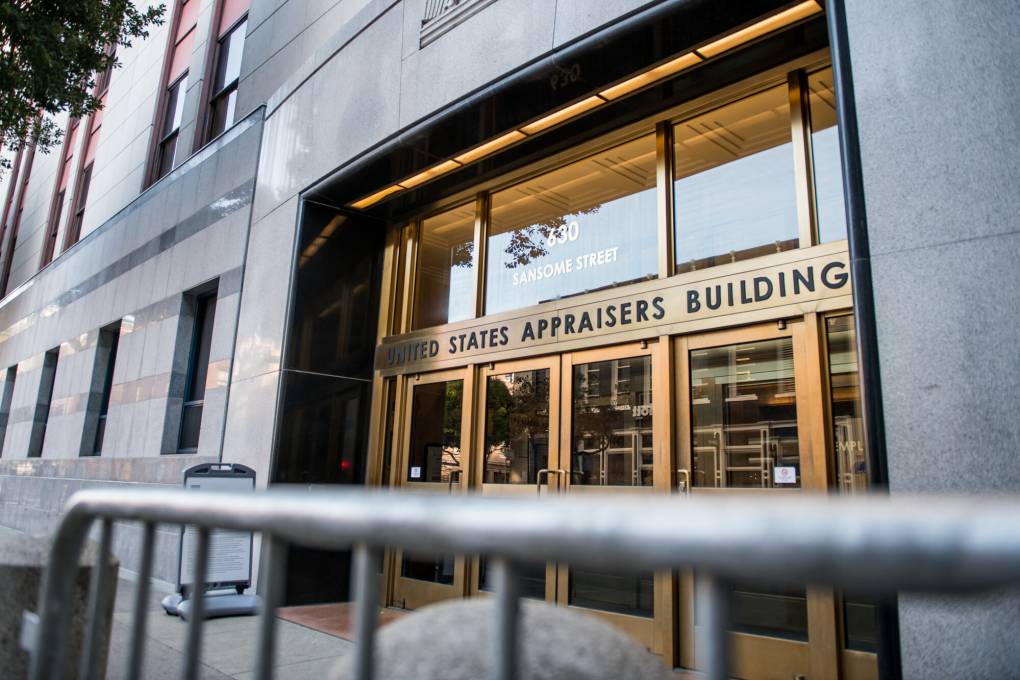
"caption": "The U.S. Immigration & Customs Enforcement building at 630 Sansome Street in San Francisco, California, on Feb. 5, 2020. After a San Francisco Standard story about ICE arrests was published, a spokesperson for the agency asked to alter the images “out of a concern for the safety of our personnel.”",
"credit": "Beth LaBerge/KQED",
"altTag": null,
"description": null,
"imgSizes": {
"medium": {
"file": "https://cdn.kqed.org/wp-content/uploads/sites/10/2025/05/008_KQED_630Sansome_02052020_1470_qed-800x533.jpg",
"width": 800,
"height": 533,
"mimeType": "image/jpeg"
},
"large": {
"file": "https://cdn.kqed.org/wp-content/uploads/sites/10/2025/05/008_KQED_630Sansome_02052020_1470_qed-1020x680.jpg",
"width": 1020,
"height": 680,
"mimeType": "image/jpeg"
},
"thumbnail": {
"file": "https://cdn.kqed.org/wp-content/uploads/sites/10/2025/05/008_KQED_630Sansome_02052020_1470_qed-160x107.jpg",
"width": 160,
"height": 107,
"mimeType": "image/jpeg"
},
"1536x1536": {
"file": "https://cdn.kqed.org/wp-content/uploads/sites/10/2025/05/008_KQED_630Sansome_02052020_1470_qed-1536x1024.jpg",
"width": 1536,
"height": 1024,
"mimeType": "image/jpeg"
},
"post-thumbnail": {
"file": "https://cdn.kqed.org/wp-content/uploads/sites/10/2025/05/008_KQED_630Sansome_02052020_1470_qed-672x372.jpg",
"width": 672,
"height": 372,
"mimeType": "image/jpeg"
},
"twentyfourteen-full-width": {
"file": "https://cdn.kqed.org/wp-content/uploads/sites/10/2025/05/008_KQED_630Sansome_02052020_1470_qed-1038x576.jpg",
"width": 1038,
"height": 576,
"mimeType": "image/jpeg"
},
"full-width": {
"file": "https://cdn.kqed.org/wp-content/uploads/sites/10/2025/05/008_KQED_630Sansome_02052020_1470_qed-1920x1280.jpg",
"width": 1920,
"height": 1280,
"mimeType": "image/jpeg"
},
"kqedFullSize": {
"file": "https://cdn.kqed.org/wp-content/uploads/sites/10/2025/05/008_KQED_630Sansome_02052020_1470_qed.jpg",
"width": 1999,
"height": 1333
}
},
"isLoading": false,
"fetchFailed": false
},
"news_73755": {
"type": "attachments",
"id": "news_73755",
"meta": {
"index": "attachments_1716263798",
"site": "news",
"id": "73755",
"found": true
},
"title": "BurnedOut4",
"publishDate": 1345568113,
"status": "inherit",
"parent": 73746,
"modified": 1749071404,
"caption": "The U.S. Chemical Safety Board released this photo of the aftermath of the Chevron refinery fire in Richmond.",
"credit": "Courtesy of Fototaker.net",
"altTag": "The U.S. Chemical Safety Board released this photo of the aftermath of the Chevron refinery fire in Richmond. Photo by Fototaker.net.",
"description": null,
"imgSizes": {
"kqedFullSize": {
"file": "https://cdn.kqed.org/wp-content/uploads/sites/10/2012/08/BurnedOut4-e1749071369737.jpeg",
"width": 2000,
"height": 1500
}
},
"isLoading": false,
"fetchFailed": false
},
"news_11913625": {
"type": "attachments",
"id": "news_11913625",
"meta": {
"index": "attachments_1716263798",
"site": "news",
"id": "11913625",
"found": true
},
"parent": 11913317,
"imgSizes": {
"twentyfourteen-full-width": {
"file": "https://ww2.kqed.org/app/uploads/sites/10/2022/05/IMG_7164-1038x576.jpeg",
"width": 1038,
"mimeType": "image/jpeg",
"height": 576
},
"thumbnail": {
"file": "https://ww2.kqed.org/app/uploads/sites/10/2022/05/IMG_7164-160x120.jpeg",
"width": 160,
"mimeType": "image/jpeg",
"height": 120
},
"post-thumbnail": {
"file": "https://ww2.kqed.org/app/uploads/sites/10/2022/05/IMG_7164-672x372.jpeg",
"width": 672,
"mimeType": "image/jpeg",
"height": 372
},
"kqedFullSize": {
"file": "https://ww2.kqed.org/app/uploads/sites/10/2022/05/IMG_7164-scaled-e1652127989772.jpeg",
"width": 1920,
"height": 1440
},
"2048x2048": {
"file": "https://ww2.kqed.org/app/uploads/sites/10/2022/05/IMG_7164-2048x1536.jpeg",
"width": 2048,
"mimeType": "image/jpeg",
"height": 1536
},
"large": {
"file": "https://ww2.kqed.org/app/uploads/sites/10/2022/05/IMG_7164-1020x765.jpeg",
"width": 1020,
"mimeType": "image/jpeg",
"height": 765
},
"1536x1536": {
"file": "https://ww2.kqed.org/app/uploads/sites/10/2022/05/IMG_7164-1536x1152.jpeg",
"width": 1536,
"mimeType": "image/jpeg",
"height": 1152
},
"full-width": {
"file": "https://ww2.kqed.org/app/uploads/sites/10/2022/05/IMG_7164-1920x1440.jpeg",
"width": 1920,
"mimeType": "image/jpeg",
"height": 1440
},
"medium": {
"file": "https://ww2.kqed.org/app/uploads/sites/10/2022/05/IMG_7164-800x600.jpeg",
"width": 800,
"mimeType": "image/jpeg",
"height": 600
}
},
"publishDate": 1652127841,
"modified": 1652133540,
"caption": "A worker on the partially constructed Cedar Viaduct in Fresno in March. The 3,700-foot-long structure, with four massive arches, is part of California's high-speed rail project.",
"description": null,
"title": "IMG_7164",
"credit": "Saul Gonzalez/KQED",
"status": "inherit",
"altTag": "A construction worker walks down a steep bridge arch.",
"isLoading": false,
"fetchFailed": false
},
"news_12042519": {
"type": "attachments",
"id": "news_12042519",
"meta": {
"index": "attachments_1716263798",
"site": "news",
"id": "12042519",
"found": true
},
"title": "20250501_MayDayRally_GC-11_qed",
"publishDate": 1748973260,
"status": "inherit",
"parent": 12042492,
"modified": 1748973272,
"caption": "Hundreds march during a May Day rally, calling for immigrant rights, on International Workers’ Day, in Santa Rosa on May 1, 2025.",
"credit": "Gina Castro/KQED",
"altTag": null,
"description": null,
"imgSizes": {
"medium": {
"file": "https://cdn.kqed.org/wp-content/uploads/sites/10/2025/06/20250501_MayDayRally_GC-11_qed-800x533.jpg",
"width": 800,
"height": 533,
"mimeType": "image/jpeg"
},
"large": {
"file": "https://cdn.kqed.org/wp-content/uploads/sites/10/2025/06/20250501_MayDayRally_GC-11_qed-1020x680.jpg",
"width": 1020,
"height": 680,
"mimeType": "image/jpeg"
},
"thumbnail": {
"file": "https://cdn.kqed.org/wp-content/uploads/sites/10/2025/06/20250501_MayDayRally_GC-11_qed-160x107.jpg",
"width": 160,
"height": 107,
"mimeType": "image/jpeg"
},
"1536x1536": {
"file": "https://cdn.kqed.org/wp-content/uploads/sites/10/2025/06/20250501_MayDayRally_GC-11_qed-1536x1024.jpg",
"width": 1536,
"height": 1024,
"mimeType": "image/jpeg"
},
"post-thumbnail": {
"file": "https://cdn.kqed.org/wp-content/uploads/sites/10/2025/06/20250501_MayDayRally_GC-11_qed-672x372.jpg",
"width": 672,
"height": 372,
"mimeType": "image/jpeg"
},
"twentyfourteen-full-width": {
"file": "https://cdn.kqed.org/wp-content/uploads/sites/10/2025/06/20250501_MayDayRally_GC-11_qed-1038x576.jpg",
"width": 1038,
"height": 576,
"mimeType": "image/jpeg"
},
"full-width": {
"file": "https://cdn.kqed.org/wp-content/uploads/sites/10/2025/06/20250501_MayDayRally_GC-11_qed-1920x1280.jpg",
"width": 1920,
"height": 1280,
"mimeType": "image/jpeg"
},
"kqedFullSize": {
"file": "https://cdn.kqed.org/wp-content/uploads/sites/10/2025/06/20250501_MayDayRally_GC-11_qed.jpg",
"width": 2000,
"height": 1333
}
},
"isLoading": false,
"fetchFailed": false
},
"news_12042569": {
"type": "attachments",
"id": "news_12042569",
"meta": {
"index": "attachments_1716263798",
"site": "news",
"id": "12042569",
"found": true
},
"title": "US-MILITARY-NAVY-HARVEY MILK",
"publishDate": 1748986634,
"status": "inherit",
"parent": 12042566,
"modified": 1748995401,
"caption": "USNS Harvey Milk departs the General Dynamics NASSCO shipyard after a ceremonial address in San Diego, California, on Nov. 6, 2021. ",
"credit": "Ariana Drehsler/AFP via Getty Images",
"altTag": null,
"description": null,
"imgSizes": {
"medium": {
"file": "https://cdn.kqed.org/wp-content/uploads/sites/10/2025/06/USNS-Harvey-Milk-Getty-800x533.jpg",
"width": 800,
"height": 533,
"mimeType": "image/jpeg"
},
"large": {
"file": "https://cdn.kqed.org/wp-content/uploads/sites/10/2025/06/USNS-Harvey-Milk-Getty-1020x680.jpg",
"width": 1020,
"height": 680,
"mimeType": "image/jpeg"
},
"thumbnail": {
"file": "https://cdn.kqed.org/wp-content/uploads/sites/10/2025/06/USNS-Harvey-Milk-Getty-160x107.jpg",
"width": 160,
"height": 107,
"mimeType": "image/jpeg"
},
"1536x1536": {
"file": "https://cdn.kqed.org/wp-content/uploads/sites/10/2025/06/USNS-Harvey-Milk-Getty-1536x1024.jpg",
"width": 1536,
"height": 1024,
"mimeType": "image/jpeg"
},
"post-thumbnail": {
"file": "https://cdn.kqed.org/wp-content/uploads/sites/10/2025/06/USNS-Harvey-Milk-Getty-672x372.jpg",
"width": 672,
"height": 372,
"mimeType": "image/jpeg"
},
"twentyfourteen-full-width": {
"file": "https://cdn.kqed.org/wp-content/uploads/sites/10/2025/06/USNS-Harvey-Milk-Getty-1038x576.jpg",
"width": 1038,
"height": 576,
"mimeType": "image/jpeg"
},
"full-width": {
"file": "https://cdn.kqed.org/wp-content/uploads/sites/10/2025/06/USNS-Harvey-Milk-Getty-1920x1280.jpg",
"width": 1920,
"height": 1280,
"mimeType": "image/jpeg"
},
"kqedFullSize": {
"file": "https://cdn.kqed.org/wp-content/uploads/sites/10/2025/06/USNS-Harvey-Milk-Getty.jpg",
"width": 2000,
"height": 1333
}
},
"isLoading": false,
"fetchFailed": false
},
"news_12041236": {
"type": "attachments",
"id": "news_12041236",
"meta": {
"index": "attachments_1716263798",
"site": "news",
"id": "12041236",
"found": true
},
"title": "250522-IMMIGRATION COURT FOLO-MD-04-KQED",
"publishDate": 1747932150,
"status": "inherit",
"parent": 0,
"modified": 1748461717,
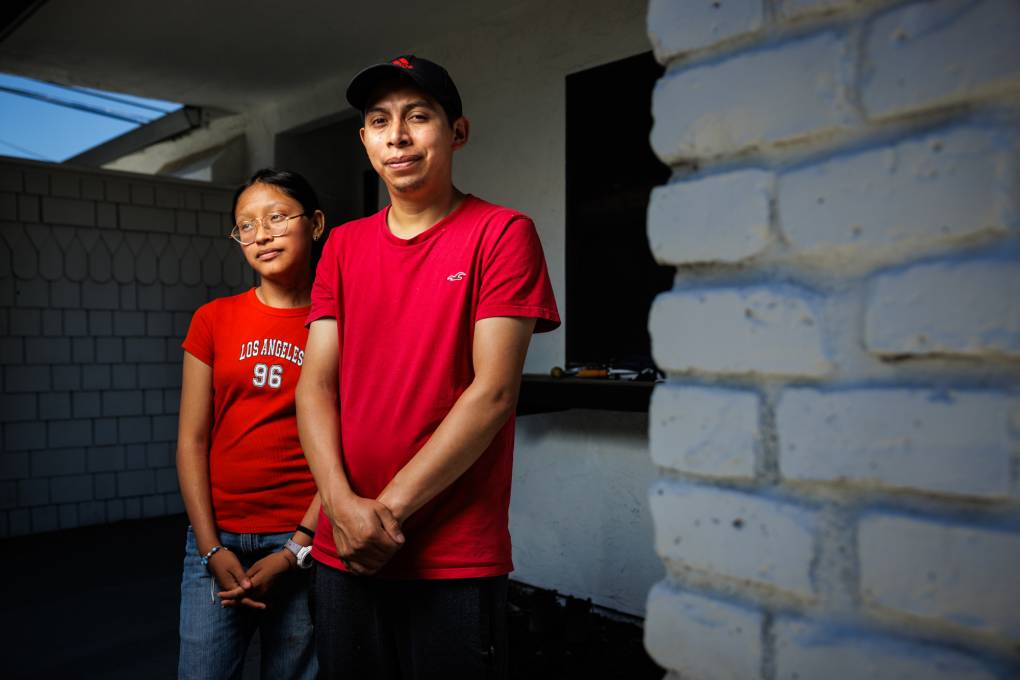
"caption": "Andres Mendoza Pablo and his daughter Catalina stand outside of the house where they live in Stockton on May 22, 2025.",
"credit": "Martin do Nascimento/KQED",
"altTag": null,
"description": null,
"imgSizes": {
"medium": {
"file": "https://cdn.kqed.org/wp-content/uploads/sites/10/2025/05/250522-IMMIGRATION-COURT-FOLO-MD-04-KQED-800x534.jpg",
"width": 800,
"height": 534,
"mimeType": "image/jpeg"
},
"large": {
"file": "https://cdn.kqed.org/wp-content/uploads/sites/10/2025/05/250522-IMMIGRATION-COURT-FOLO-MD-04-KQED-1020x680.jpg",
"width": 1020,
"height": 680,
"mimeType": "image/jpeg"
},
"thumbnail": {
"file": "https://cdn.kqed.org/wp-content/uploads/sites/10/2025/05/250522-IMMIGRATION-COURT-FOLO-MD-04-KQED-160x107.jpg",
"width": 160,
"height": 107,
"mimeType": "image/jpeg"
},
"1536x1536": {
"file": "https://cdn.kqed.org/wp-content/uploads/sites/10/2025/05/250522-IMMIGRATION-COURT-FOLO-MD-04-KQED-1536x1025.jpg",
"width": 1536,
"height": 1025,
"mimeType": "image/jpeg"
},
"post-thumbnail": {
"file": "https://cdn.kqed.org/wp-content/uploads/sites/10/2025/05/250522-IMMIGRATION-COURT-FOLO-MD-04-KQED-672x372.jpg",
"width": 672,
"height": 372,
"mimeType": "image/jpeg"
},
"twentyfourteen-full-width": {
"file": "https://cdn.kqed.org/wp-content/uploads/sites/10/2025/05/250522-IMMIGRATION-COURT-FOLO-MD-04-KQED-1038x576.jpg",
"width": 1038,
"height": 576,
"mimeType": "image/jpeg"
},
"full-width": {
"file": "https://cdn.kqed.org/wp-content/uploads/sites/10/2025/05/250522-IMMIGRATION-COURT-FOLO-MD-04-KQED-1920x1281.jpg",
"width": 1920,
"height": 1281,
"mimeType": "image/jpeg"
},
"kqedFullSize": {
"file": "https://cdn.kqed.org/wp-content/uploads/sites/10/2025/05/250522-IMMIGRATION-COURT-FOLO-MD-04-KQED.jpg?ver=1747933065",
"width": 2000,
"height": 1334
}
},
"isLoading": false,
"fetchFailed": false
},
"news_12042333": {
"type": "attachments",
"id": "news_12042333",
"meta": {
"index": "attachments_1716263798",
"site": "news",
"id": "12042333",
"found": true
},
"title": "CIF State Track and Field Championships",
"publishDate": 1748730194,
"status": "inherit",
"parent": 12042317,
"modified": 1748730249,
"caption": "The girls 800m heat in the CIF State Track and Field Championships at Veterans Memorial Stadium on May 30, 2025 in Clovis, Fresno County. ",
"credit": "Kirby Lee/Getty Images",
"altTag": null,
"description": null,
"imgSizes": {
"medium": {
"file": "https://cdn.kqed.org/wp-content/uploads/sites/10/2025/05/GettyImages-2217942893-800x534.jpg",
"width": 800,
"height": 534,
"mimeType": "image/jpeg"
},
"large": {
"file": "https://cdn.kqed.org/wp-content/uploads/sites/10/2025/05/GettyImages-2217942893-1020x680.jpg",
"width": 1020,
"height": 680,
"mimeType": "image/jpeg"
},
"thumbnail": {
"file": "https://cdn.kqed.org/wp-content/uploads/sites/10/2025/05/GettyImages-2217942893-160x107.jpg",
"width": 160,
"height": 107,
"mimeType": "image/jpeg"
},
"post-thumbnail": {
"file": "https://cdn.kqed.org/wp-content/uploads/sites/10/2025/05/GettyImages-2217942893-672x372.jpg",
"width": 672,
"height": 372,
"mimeType": "image/jpeg"
},
"twentyfourteen-full-width": {
"file": "https://cdn.kqed.org/wp-content/uploads/sites/10/2025/05/GettyImages-2217942893-1024x576.jpg",
"width": 1024,
"height": 576,
"mimeType": "image/jpeg"
},
"kqedFullSize": {
"file": "https://cdn.kqed.org/wp-content/uploads/sites/10/2025/05/GettyImages-2217942893.jpg",
"width": 1024,
"height": 683
}
},
"isLoading": false,
"fetchFailed": false
},
"news_12042131": {
"type": "attachments",
"id": "news_12042131",
"meta": {
"index": "attachments_1716263798",
"site": "news",
"id": "12042131",
"found": true
},
"title": "The Job Corps Center in San Jose on May 29, 2025.",
"publishDate": 1748624058,
"status": "inherit",
"parent": 0,
"modified": 1748624148,
"caption": "The Job Corps Center in San Jose on May 29, 2025.",
"credit": "Beth LaBerge/KQED",
"altTag": null,
"description": null,
"imgSizes": {
"medium": {
"file": "https://cdn.kqed.org/wp-content/uploads/sites/10/2025/05/250529-JOBCORPSCENTER-07-BL-KQED-800x533.jpg",
"width": 800,
"height": 533,
"mimeType": "image/jpeg"
},
"large": {
"file": "https://cdn.kqed.org/wp-content/uploads/sites/10/2025/05/250529-JOBCORPSCENTER-07-BL-KQED-1020x680.jpg",
"width": 1020,
"height": 680,
"mimeType": "image/jpeg"
},
"thumbnail": {
"file": "https://cdn.kqed.org/wp-content/uploads/sites/10/2025/05/250529-JOBCORPSCENTER-07-BL-KQED-160x107.jpg",
"width": 160,
"height": 107,
"mimeType": "image/jpeg"
},
"1536x1536": {
"file": "https://cdn.kqed.org/wp-content/uploads/sites/10/2025/05/250529-JOBCORPSCENTER-07-BL-KQED-1536x1024.jpg",
"width": 1536,
"height": 1024,
"mimeType": "image/jpeg"
},
"post-thumbnail": {
"file": "https://cdn.kqed.org/wp-content/uploads/sites/10/2025/05/250529-JOBCORPSCENTER-07-BL-KQED-672x372.jpg",
"width": 672,
"height": 372,
"mimeType": "image/jpeg"
},
"twentyfourteen-full-width": {
"file": "https://cdn.kqed.org/wp-content/uploads/sites/10/2025/05/250529-JOBCORPSCENTER-07-BL-KQED-1038x576.jpg",
"width": 1038,
"height": 576,
"mimeType": "image/jpeg"
},
"full-width": {
"file": "https://cdn.kqed.org/wp-content/uploads/sites/10/2025/05/250529-JOBCORPSCENTER-07-BL-KQED-1920x1280.jpg",
"width": 1920,
"height": 1280,
"mimeType": "image/jpeg"
},
"kqedFullSize": {
"file": "https://cdn.kqed.org/wp-content/uploads/sites/10/2025/05/250529-JOBCORPSCENTER-07-BL-KQED.jpg",
"width": 2000,
"height": 1333
}
},
"isLoading": false,
"fetchFailed": false
},
"news_12015403": {
"type": "attachments",
"id": "news_12015403",
"meta": {
"index": "attachments_1716263798",
"site": "news",
"id": "12015403",
"found": true
},
"title": "U.S. Capitol",
"publishDate": 1732229773,
"status": "inherit",
"parent": 12015395,
"modified": 1776125035,
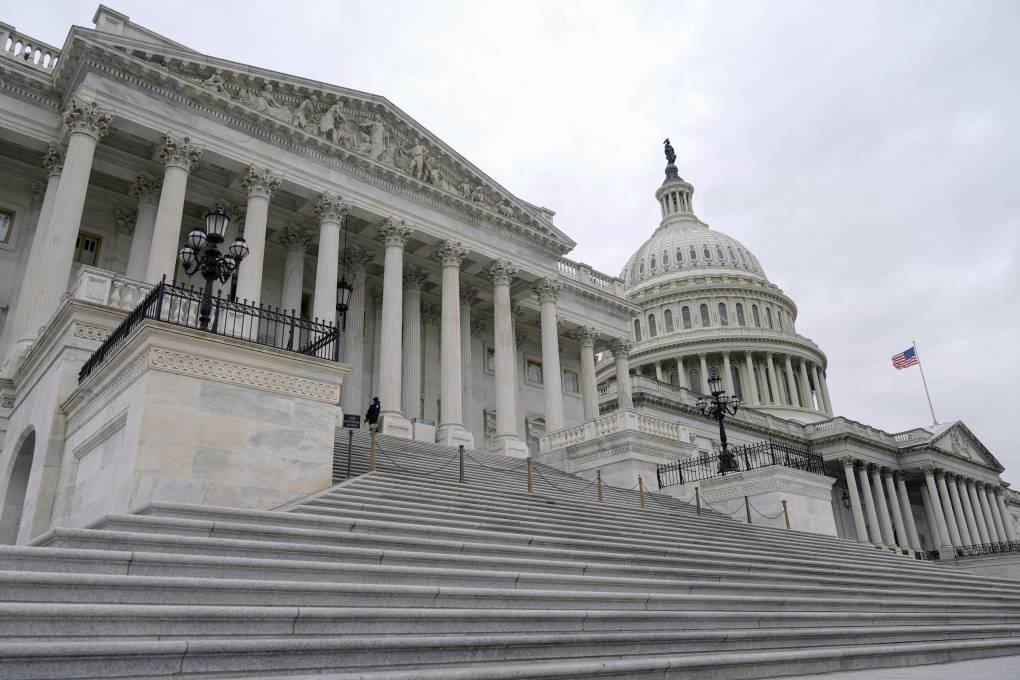
"caption": "The U.S. Capitol, including the House of Representatives, left, are seen on Nov. 14, 2024, in Washington. ",
"credit": "AP Photo/Mariam Zuhaib",
"altTag": null,
"description": null,
"imgSizes": {
"medium": {
"file": "https://cdn.kqed.org/wp-content/uploads/sites/10/2024/11/AP24319624163000-800x533.jpg",
"width": 800,
"height": 533,
"mimeType": "image/jpeg"
},
"large": {
"file": "https://cdn.kqed.org/wp-content/uploads/sites/10/2024/11/AP24319624163000-1020x680.jpg",
"width": 1020,
"height": 680,
"mimeType": "image/jpeg"
},
"thumbnail": {
"file": "https://cdn.kqed.org/wp-content/uploads/sites/10/2024/11/AP24319624163000-160x107.jpg",
"width": 160,
"height": 107,
"mimeType": "image/jpeg"
},
"1536x1536": {
"file": "https://cdn.kqed.org/wp-content/uploads/sites/10/2024/11/AP24319624163000-1536x1024.jpg",
"width": 1536,
"height": 1024,
"mimeType": "image/jpeg"
},
"2048x2048": {
"file": "https://cdn.kqed.org/wp-content/uploads/sites/10/2024/11/AP24319624163000-2048x1365.jpg",
"width": 2048,
"height": 1365,
"mimeType": "image/jpeg"
},
"post-thumbnail": {
"file": "https://cdn.kqed.org/wp-content/uploads/sites/10/2024/11/AP24319624163000-672x372.jpg",
"width": 672,
"height": 372,
"mimeType": "image/jpeg"
},
"twentyfourteen-full-width": {
"file": "https://cdn.kqed.org/wp-content/uploads/sites/10/2024/11/AP24319624163000-1038x576.jpg",
"width": 1038,
"height": 576,
"mimeType": "image/jpeg"
},
"full-width": {
"file": "https://cdn.kqed.org/wp-content/uploads/sites/10/2024/11/AP24319624163000-1920x1280.jpg",
"width": 1920,
"height": 1280,
"mimeType": "image/jpeg"
},
"kqedFullSize": {
"file": "https://cdn.kqed.org/wp-content/uploads/sites/10/2024/11/AP24319624163000-scaled-e1738263690738.jpg",
"width": 2000,
"height": 1333
}
},
"isLoading": false,
"fetchFailed": false
},
"news_12041894": {
"type": "attachments",
"id": "news_12041894",
"meta": {
"index": "attachments_1716263798",
"site": "news",
"id": "12041894",
"found": true
},
"title": "250120-InaugurationWatchParty-19_qed",
"publishDate": 1748471822,
"status": "inherit",
"parent": 12041884,
"modified": 1748471909,
"caption": "A young man cheers while watching the inauguration ceremony for President Donald Trump on TV at Harry’s Bar in San Francisco on Monday, Jan. 20, 2025, surrounded by fellow supporters.",
"credit": "Beth LaBerge/KQED",
"altTag": null,
"description": null,
"imgSizes": {
"medium": {
"file": "https://cdn.kqed.org/wp-content/uploads/sites/10/2025/05/250120-InaugurationWatchParty-19_qed-800x533.jpg",
"width": 800,
"height": 533,
"mimeType": "image/jpeg"
},
"large": {
"file": "https://cdn.kqed.org/wp-content/uploads/sites/10/2025/05/250120-InaugurationWatchParty-19_qed-1020x680.jpg",
"width": 1020,
"height": 680,
"mimeType": "image/jpeg"
},
"thumbnail": {
"file": "https://cdn.kqed.org/wp-content/uploads/sites/10/2025/05/250120-InaugurationWatchParty-19_qed-160x107.jpg",
"width": 160,
"height": 107,
"mimeType": "image/jpeg"
},
"1536x1536": {
"file": "https://cdn.kqed.org/wp-content/uploads/sites/10/2025/05/250120-InaugurationWatchParty-19_qed-1536x1024.jpg",
"width": 1536,
"height": 1024,
"mimeType": "image/jpeg"
},
"post-thumbnail": {
"file": "https://cdn.kqed.org/wp-content/uploads/sites/10/2025/05/250120-InaugurationWatchParty-19_qed-672x372.jpg",
"width": 672,
"height": 372,
"mimeType": "image/jpeg"
},
"twentyfourteen-full-width": {
"file": "https://cdn.kqed.org/wp-content/uploads/sites/10/2025/05/250120-InaugurationWatchParty-19_qed-1038x576.jpg",
"width": 1038,
"height": 576,
"mimeType": "image/jpeg"
},
"full-width": {
"file": "https://cdn.kqed.org/wp-content/uploads/sites/10/2025/05/250120-InaugurationWatchParty-19_qed-1920x1280.jpg",
"width": 1920,
"height": 1280,
"mimeType": "image/jpeg"
},
"kqedFullSize": {
"file": "https://cdn.kqed.org/wp-content/uploads/sites/10/2025/05/250120-InaugurationWatchParty-19_qed.jpg",
"width": 1999,
"height": 1333
}
},
"isLoading": false,
"fetchFailed": false
}
},
"audioPlayerReducer": {
"postId": "stream_live",
"isPaused": true,
"isPlaying": false,
"pfsActive": false,
"pledgeModalIsOpen": true,
"playerDrawerIsOpen": false,
"liveAudioPlayStartedAt": 0,
"liveAudioPlayContext": ""
},
"authorsReducer": {
"byline_news_12042317": {
"type": "authors",
"id": "byline_news_12042317",
"meta": {
"override": true
},
"slug": "byline_news_12042317",
"name": "Sophie Austin and Jae Hong, Associated Press/Report for America",
"isLoading": false
},
"ninathorsen": {
"type": "authors",
"id": "246",
"meta": {
"index": "authors_1716337520",
"id": "246",
"found": true
},
"name": "Nina Thorsen",
"firstName": "Nina",
"lastName": "Thorsen",
"slug": "ninathorsen",
"email": "nthorsen@kqed.org",
"display_author_email": false,
"staff_mastheads": [
"news"
],
"title": "Producer, Radio",
"bio": "\u003cspan style=\"color: #000000;\">Nina Thorsen is a KQED radio producer, and frequently reports on sports and culture. \u003c/span>\u003cspan style=\"color: #000000;\">She co-created and produced KQED's \u003cem>Pacific Time, \u003c/em> a weekly radio program on Asian and Asian American issues that aired from 2000 to 2007. Before coming to KQED, Thorsen was the deputy foreign editor for \u003cem>Marketplace, \u003c/em>and in her home state of Minnesota, worked for \u003cem>A Prairie Home Companion\u003c/em> and for Public Radio International. \u003c/span>",
"avatar": "https://secure.gravatar.com/avatar/e13dc7282cec33c15d973ebb56d57ead?s=600&d=blank&r=g",
"twitter": "NinaKQED",
"facebook": null,
"instagram": null,
"linkedin": null,
"sites": [
{
"site": "news",
"roles": [
"editor"
]
},
{
"site": "podcasts",
"roles": [
"editor"
]
}
],
"headData": {
"title": "Nina Thorsen | KQED",
"description": "Producer, Radio",
"ogImgSrc": "https://secure.gravatar.com/avatar/e13dc7282cec33c15d973ebb56d57ead?s=600&d=blank&r=g",
"twImgSrc": "https://secure.gravatar.com/avatar/e13dc7282cec33c15d973ebb56d57ead?s=600&d=blank&r=g"
},
"isLoading": false,
"link": "/author/ninathorsen"
},
"matthewgreen": {
"type": "authors",
"id": "1263",
"meta": {
"index": "authors_1716337520",
"id": "1263",
"found": true
},
"name": "Matthew Green",
"firstName": "Matthew",
"lastName": "Green",
"slug": "matthewgreen",
"email": "mgreen@kqed.org",
"display_author_email": false,
"staff_mastheads": [],
"title": "KQED Editor/Reporter",
"bio": "Matthew Green is a digital media producer for KQED News. He previously produced \u003ca href=\"http://www.kqed.org/lowdown\">The Lowdown\u003c/a>, KQED’s multimedia news education blog. Matthew's written for numerous Bay Area publications, including the Oakland Tribune and San Francisco Chronicle. He also taught journalism classes at Fremont High School in East Oakland.\r\n\r\nEmail: mgreen@kqed.org; Twitter: @MGreenKQED",
"avatar": "https://secure.gravatar.com/avatar/3bf498d1267ca02c8494f33d8cfc575e?s=600&d=blank&r=g",
"twitter": "MGreenKQED",
"facebook": null,
"instagram": null,
"linkedin": null,
"sites": [
{
"site": "news",
"roles": []
},
{
"site": "lowdown",
"roles": []
},
{
"site": "science",
"roles": []
},
{
"site": "education",
"roles": []
},
{
"site": "quest",
"roles": []
},
{
"site": "liveblog",
"roles": []
}
],
"headData": {
"title": "Matthew Green | KQED",
"description": "KQED Editor/Reporter",
"ogImgSrc": "https://secure.gravatar.com/avatar/3bf498d1267ca02c8494f33d8cfc575e?s=600&d=blank&r=g",
"twImgSrc": "https://secure.gravatar.com/avatar/3bf498d1267ca02c8494f33d8cfc575e?s=600&d=blank&r=g"
},
"isLoading": false,
"link": "/author/matthewgreen"
},
"ecruzguevarra": {
"type": "authors",
"id": "8654",
"meta": {
"index": "authors_1716337520",
"id": "8654",
"found": true
},
"name": "Ericka Cruz Guevarra",
"firstName": "Ericka",
"lastName": "Cruz Guevarra",
"slug": "ecruzguevarra",
"email": "ecruzguevarra@kqed.org",
"display_author_email": true,
"staff_mastheads": [
"news"
],
"title": "Producer, The Bay Podcast",
"bio": "Ericka Cruz Guevarra is host of \u003ca href=\"https://www.kqed.org/podcasts/thebay\">\u003cem>The Bay\u003c/em>\u003c/a> podcast at KQED. Before host, she was the show’s producer. Her work in that capacity includes a three-part reported series on policing in Vallejo, which won a 2020 excellence in journalism award from the Society of Professional Journalists. Ericka has worked as a breaking news reporter at Oregon Public Broadcasting, helped produce the Code Switch podcast, and was KQED’s inaugural Raul Ramirez Diversity Fund intern. She’s also an alumna of NPR’s Next Generation Radio program. Send her an email if you have strong feelings about whether Fairfield and Suisun City are the Bay. Ericka is represented by SAG-AFTRA.",
"avatar": "https://secure.gravatar.com/avatar/25e5ab8d3d53fad2dcc7bb2b5c506b1a?s=600&d=blank&r=g",
"twitter": "NotoriousECG",
"facebook": null,
"instagram": null,
"linkedin": null,
"sites": [
{
"site": "arts",
"roles": [
"subscriber"
]
},
{
"site": "news",
"roles": [
"editor",
"manage_categories"
]
},
{
"site": "futureofyou",
"roles": [
"subscriber"
]
},
{
"site": "stateofhealth",
"roles": [
"subscriber"
]
},
{
"site": "science",
"roles": [
"editor"
]
},
{
"site": "forum",
"roles": [
"subscriber"
]
}
],
"headData": {
"title": "Ericka Cruz Guevarra | KQED",
"description": "Producer, The Bay Podcast",
"ogImgSrc": "https://secure.gravatar.com/avatar/25e5ab8d3d53fad2dcc7bb2b5c506b1a?s=600&d=blank&r=g",
"twImgSrc": "https://secure.gravatar.com/avatar/25e5ab8d3d53fad2dcc7bb2b5c506b1a?s=600&d=blank&r=g"
},
"isLoading": false,
"link": "/author/ecruzguevarra"
},
"amontecillo": {
"type": "authors",
"id": "11649",
"meta": {
"index": "authors_1716337520",
"id": "11649",
"found": true
},
"name": "Alan Montecillo",
"firstName": "Alan",
"lastName": "Montecillo",
"slug": "amontecillo",
"email": "amontecillo@kqed.org",
"display_author_email": false,
"staff_mastheads": [
"news"
],
"title": "KQED Contributor",
"bio": "Alan Montecillo is the senior editor of \u003cem>\u003ca href=\"http://kqed.org/thebay\">The Bay\u003c/a>, \u003c/em> KQED's local news podcast. Before moving to the Bay Area, he worked as a senior talk show producer for WILL in Champaign-Urbana, Illinois and at Oregon Public Broadcasting in Portland, Oregon. He has won journalism awards from the Society of Professional Journalists Northern California, the Public Media Journalists Association, The Signal Awards, and has also received a regional Edward R. Murrow award. Alan is a Filipino American from Hong Kong and a graduate of Reed College.",
"avatar": "https://secure.gravatar.com/avatar/d5e4e7a76481969ccba76f4e2b5ccabc?s=600&d=blank&r=g",
"twitter": "alanmontecillo",
"facebook": null,
"instagram": null,
"linkedin": null,
"sites": [
{
"site": "",
"roles": [
"editor"
]
},
{
"site": "news",
"roles": [
"editor",
"manage_categories"
]
}
],
"headData": {
"title": "Alan Montecillo | KQED",
"description": "KQED Contributor",
"ogImgSrc": "https://secure.gravatar.com/avatar/d5e4e7a76481969ccba76f4e2b5ccabc?s=600&d=blank&r=g",
"twImgSrc": "https://secure.gravatar.com/avatar/d5e4e7a76481969ccba76f4e2b5ccabc?s=600&d=blank&r=g"
},
"isLoading": false,
"link": "/author/amontecillo"
},
"ccabreralomeli": {
"type": "authors",
"id": "11708",
"meta": {
"index": "authors_1716337520",
"id": "11708",
"found": true
},
"name": "Carlos Cabrera-Lomelí",
"firstName": "Carlos",
"lastName": "Cabrera-Lomelí",
"slug": "ccabreralomeli",
"email": "ccabreralomeli@KQED.org",
"display_author_email": true,
"staff_mastheads": [
"news"
],
"title": "Community Reporter",
"bio": "Carlos Cabrera-Lomelí is a community reporter with KQED's digital engagement team. He also reports and co-produces for KQED's bilingual news hub KQED en Español. He grew up in San Francisco's Mission District and has previously worked with Univision, 48 Hills and REFORMA in Mexico City.",
"avatar": "https://secure.gravatar.com/avatar/c309be9665e484f887b818c89e273ecc673004f426f36b24d00a4d813a2e0518?s=600&d=blank&r=g",
"twitter": "@LomeliCabrera",
"bluesky": null,
"facebook": null,
"instagram": null,
"linkedin": null,
"sites": [
{
"site": "arts",
"roles": [
"editor"
]
},
{
"site": "news",
"roles": [
"editor"
]
},
{
"site": "about",
"roles": [
"editor"
]
},
{
"site": "science",
"roles": [
"editor"
]
},
{
"site": "perspectives",
"roles": [
"editor"
]
},
{
"site": "elections",
"roles": [
"editor"
]
},
{
"site": "liveblog",
"roles": [
"contributor"
]
}
],
"headData": {
"title": "Carlos Cabrera-Lomelí | KQED",
"description": "Community Reporter",
"ogImgSrc": "https://secure.gravatar.com/avatar/c309be9665e484f887b818c89e273ecc673004f426f36b24d00a4d813a2e0518?s=600&d=blank&r=g",
"twImgSrc": "https://secure.gravatar.com/avatar/c309be9665e484f887b818c89e273ecc673004f426f36b24d00a4d813a2e0518?s=600&d=blank&r=g"
},
"isLoading": false,
"link": "/author/ccabreralomeli"
},
"jlara": {
"type": "authors",
"id": "11761",
"meta": {
"index": "authors_1716337520",
"id": "11761",
"found": true
},
"name": "Juan Carlos Lara",
"firstName": "Juan Carlos",
"lastName": "Lara",
"slug": "jlara",
"email": "jlara@kqed.org",
"display_author_email": false,
"staff_mastheads": [],
"title": "KQED Contributor",
"bio": null,
"avatar": "https://secure.gravatar.com/avatar/19e2052b9b05657c5ff2af2121846e9c?s=600&d=blank&r=g",
"twitter": null,
"facebook": null,
"instagram": null,
"linkedin": null,
"sites": [
{
"site": "arts",
"roles": [
"editor"
]
},
{
"site": "news",
"roles": [
"editor"
]
},
{
"site": "forum",
"roles": [
"editor"
]
},
{
"site": "liveblog",
"roles": [
"contributor"
]
}
],
"headData": {
"title": "Juan Carlos Lara | KQED",
"description": "KQED Contributor",
"ogImgSrc": "https://secure.gravatar.com/avatar/19e2052b9b05657c5ff2af2121846e9c?s=600&d=blank&r=g",
"twImgSrc": "https://secure.gravatar.com/avatar/19e2052b9b05657c5ff2af2121846e9c?s=600&d=blank&r=g"
},
"isLoading": false,
"link": "/author/jlara"
},
"jessicakariisa": {
"type": "authors",
"id": "11831",
"meta": {
"index": "authors_1716337520",
"id": "11831",
"found": true
},
"name": "Jessica Kariisa",
"firstName": "Jessica",
"lastName": "Kariisa",
"slug": "jessicakariisa",
"email": "jkariisa@kqed.org",
"display_author_email": false,
"staff_mastheads": [],
"title": "Producer, The Bay",
"bio": "Jessica Kariisa is the producer of The Bay. She first joined KQED as an intern for The California Report Magazine, after which she became an on-call producer. She reported a Bay Curious episode on the use of rap lyrics in criminal trials which won a Society of Professional Journalists award in 2023 for Excellence in Features Journalism and the 2023 Signal Award for Best Conversation Starter. She’s worked on podcasts for Snap Judgment and American Public Media. Before embarking on her audio career, she was a music journalist.\r\n\r\nJessica Kariisa is represented by SAG-AFTRA.",
"avatar": "https://secure.gravatar.com/avatar/522e97b28ac0b3d411621c0fde8f3419c7b71ea2c5c262c57c4bb600963f328c?s=600&d=blank&r=g",
"twitter": null,
"bluesky": null,
"facebook": null,
"instagram": null,
"linkedin": null,
"sites": [
{
"site": "arts",
"roles": [
"author"
]
},
{
"site": "news",
"roles": [
"editor",
"manage_categories"
]
}
],
"headData": {
"title": "Jessica Kariisa | KQED",
"description": "Producer, The Bay",
"ogImgSrc": "https://secure.gravatar.com/avatar/522e97b28ac0b3d411621c0fde8f3419c7b71ea2c5c262c57c4bb600963f328c?s=600&d=blank&r=g",
"twImgSrc": "https://secure.gravatar.com/avatar/522e97b28ac0b3d411621c0fde8f3419c7b71ea2c5c262c57c4bb600963f328c?s=600&d=blank&r=g"
},
"isLoading": false,
"link": "/author/jessicakariisa"
},
"sjohnson": {
"type": "authors",
"id": "11840",
"meta": {
"index": "authors_1716337520",
"id": "11840",
"found": true
},
"name": "Sydney Johnson",
"firstName": "Sydney",
"lastName": "Johnson",
"slug": "sjohnson",
"email": "sjohnson@kqed.org",
"display_author_email": false,
"staff_mastheads": [
"news"
],
"title": "KQED Reporter",
"bio": "Sydney Johnson is a general assignment reporter at KQED. She previously reported on public health and city government at the San Francisco Examiner, and before that, she covered statewide education policy for EdSource. Her reporting has won multiple local, state and national awards. Sydney is a graduate of the University of California, Berkeley and lives in San Francisco.",
"avatar": "https://secure.gravatar.com/avatar/97855f2719b72ad6190b7c535fe642c8?s=600&d=blank&r=g",
"twitter": "sydneyfjohnson",
"facebook": null,
"instagram": null,
"linkedin": null,
"sites": [
{
"site": "news",
"roles": [
"editor"
]
}
],
"headData": {
"title": "Sydney Johnson | KQED",
"description": "KQED Reporter",
"ogImgSrc": "https://secure.gravatar.com/avatar/97855f2719b72ad6190b7c535fe642c8?s=600&d=blank&r=g",
"twImgSrc": "https://secure.gravatar.com/avatar/97855f2719b72ad6190b7c535fe642c8?s=600&d=blank&r=g"
},
"isLoading": false,
"link": "/author/sjohnson"
},
"kdebenedetti": {
"type": "authors",
"id": "11913",
"meta": {
"index": "authors_1716337520",
"id": "11913",
"found": true
},
"name": "Katie DeBenedetti",
"firstName": "Katie",
"lastName": "DeBenedetti",
"slug": "kdebenedetti",
"email": "kdebenedetti@kqed.org",
"display_author_email": false,
"staff_mastheads": [
"news",
"science"
],
"title": "KQED Contributor",
"bio": "Katie DeBenedetti is a digital reporter covering daily news for the Express Desk. Prior to joining KQED as a culture reporting intern in January 2024, she covered education and city government for the Napa Valley Register.",
"avatar": "https://secure.gravatar.com/avatar/6e31073cb8f7e4214ab03f42771d0f45?s=600&d=blank&r=g",
"twitter": null,
"facebook": null,
"instagram": null,
"linkedin": null,
"sites": [
{
"site": "news",
"roles": [
"author"
]
},
{
"site": "science",
"roles": [
"author"
]
},
{
"site": "liveblog",
"roles": [
"author"
]
}
],
"headData": {
"title": "Katie DeBenedetti | KQED",
"description": "KQED Contributor",
"ogImgSrc": "https://secure.gravatar.com/avatar/6e31073cb8f7e4214ab03f42771d0f45?s=600&d=blank&r=g",
"twImgSrc": "https://secure.gravatar.com/avatar/6e31073cb8f7e4214ab03f42771d0f45?s=600&d=blank&r=g"
},
"isLoading": false,
"link": "/author/kdebenedetti"
},
"slim": {
"type": "authors",
"id": "11920",
"meta": {
"index": "authors_1716337520",
"id": "11920",
"found": true
},
"name": "Samantha Lim",
"firstName": "Samantha",
"lastName": "Lim",
"slug": "slim",
"email": "slim@KQED.org",
"display_author_email": false,
"staff_mastheads": [],
"title": "KQED Contributor",
"bio": null,
"avatar": "https://secure.gravatar.com/avatar/82e592e6c15fe1a04d385e8ad0fb0b4e?s=600&d=blank&r=g",
"twitter": null,
"facebook": null,
"instagram": null,
"linkedin": null,
"sites": [
{
"site": "news",
"roles": []
}
],
"headData": {
"title": "Samantha Lim | KQED",
"description": "KQED Contributor",
"ogImgSrc": "https://secure.gravatar.com/avatar/82e592e6c15fe1a04d385e8ad0fb0b4e?s=600&d=blank&r=g",
"twImgSrc": "https://secure.gravatar.com/avatar/82e592e6c15fe1a04d385e8ad0fb0b4e?s=600&d=blank&r=g"
},
"isLoading": false,
"link": "/author/slim"
},
"rcooke": {
"type": "authors",
"id": "11921",
"meta": {
"index": "authors_1716337520",
"id": "11921",
"found": true
},
"name": "Riley Cooke",
"firstName": "Riley",
"lastName": "Cooke",
"slug": "rcooke",
"email": "rcooke@kqed.org",
"display_author_email": true,
"staff_mastheads": [
"news"
],
"title": "KQED Contributor",
"bio": "Riley is a senior at UC Berkeley, where she studies political science and journalism. Her work has appeared in SFGate, NBC Bay Area, Local News Matters and more. She enjoys reporting on politics, housing and homelessness — and using as many em dashes as her editors will allow.",
"avatar": "https://secure.gravatar.com/avatar/792f98c126cc5e270a8a96f77f7224ea?s=600&d=blank&r=g",
"twitter": "rrileycooke",
"facebook": null,
"instagram": null,
"linkedin": null,
"sites": [
{
"site": "arts",
"roles": [
"author"
]
},
{
"site": "news",
"roles": [
"author"
]
}
],
"headData": {
"title": "Riley Cooke | KQED",
"description": "KQED Contributor",
"ogImgSrc": "https://secure.gravatar.com/avatar/792f98c126cc5e270a8a96f77f7224ea?s=600&d=blank&r=g",
"twImgSrc": "https://secure.gravatar.com/avatar/792f98c126cc5e270a8a96f77f7224ea?s=600&d=blank&r=g"
},
"isLoading": false,
"link": "/author/rcooke"
},
"emanoukian": {
"type": "authors",
"id": "11925",
"meta": {
"index": "authors_1716337520",
"id": "11925",
"found": true
},
"name": "Elize Manoukian",
"firstName": "Elize",
"lastName": "Manoukian",
"slug": "emanoukian",
"email": "emanoukian@KQED.org",
"display_author_email": false,
"staff_mastheads": [
"news"
],
"title": "Digital Producer",
"bio": null,
"avatar": "https://secure.gravatar.com/avatar/4525f1a8e46ccb30933b32653d9772064cfefe3fa655eb45b3b3a80341f6bdad?s=600&d=blank&r=g",
"twitter": null,
"bluesky": null,
"facebook": null,
"instagram": null,
"linkedin": null,
"sites": [
{
"site": "arts",
"roles": [
"editor"
]
},
{
"site": "news",
"roles": [
"editor"
]
},
{
"site": "science",
"roles": [
"editor"
]
}
],
"headData": {
"title": "Elize Manoukian | KQED",
"description": "Digital Producer",
"ogImgSrc": "https://secure.gravatar.com/avatar/4525f1a8e46ccb30933b32653d9772064cfefe3fa655eb45b3b3a80341f6bdad?s=600&d=blank&r=g",
"twImgSrc": "https://secure.gravatar.com/avatar/4525f1a8e46ccb30933b32653d9772064cfefe3fa655eb45b3b3a80341f6bdad?s=600&d=blank&r=g"
},
"isLoading": false,
"link": "/author/emanoukian"
},
"mvelasquez": {
"type": "authors",
"id": "11939",
"meta": {
"index": "authors_1716337520",
"id": "11939",
"found": true
},
"name": "Mel Velasquez",
"firstName": "Mel",
"lastName": "Velasquez",
"slug": "mvelasquez",
"email": "mvelasquez@kqed.org",
"display_author_email": false,
"staff_mastheads": [],
"title": "KQED Contributor",
"bio": null,
"avatar": "https://secure.gravatar.com/avatar/409094312d56fab09fef4251e949ffa6?s=600&d=blank&r=g",
"twitter": null,
"facebook": null,
"instagram": null,
"linkedin": "www.linkedin.com/in/melanievelasquezz",
"sites": [
{
"site": "news",
"roles": [
"editor"
]
}
],
"headData": {
"title": "Mel Velasquez | KQED",
"description": "KQED Contributor",
"ogImgSrc": "https://secure.gravatar.com/avatar/409094312d56fab09fef4251e949ffa6?s=600&d=blank&r=g",
"twImgSrc": "https://secure.gravatar.com/avatar/409094312d56fab09fef4251e949ffa6?s=600&d=blank&r=g"
},
"isLoading": false,
"link": "/author/mvelasquez"
}
},
"pagesReducer": {
"news_tag_donald-trump": {
"type": "terms",
"id": "news_1323",
"meta": {
"index": "terms_1716263798",
"site": "news",
"id": "1323",
"score": 8.5546055
},
"featImg": null,
"name": "Donald Trump",
"description": null,
"taxonomy": "tag",
"headData": {
"twImgId": null,
"twTitle": null,
"ogTitle": null,
"ogImgId": null,
"twDescription": null,
"description": null,
"title": "Donald Trump Archives | KQED News",
"ogDescription": null
},
"ttid": 1335,
"slug": "donald-trump",
"isLoading": false,
"title": "Donald Trump",
"pageMeta": {
"site": "news",
"WpPageTemplate": "page-topic-editorial",
"currentPage": 35
},
"blocks": [
{
"blockName": "kqed/post-list",
"attrs": {
"layout": "cardArticle2",
"query": "posts/news?tag=donald-trump",
"seeMore": false,
"paginated": true,
"page": 35
}
},
{
"blockName": "kqed/ad"
}
]
}
},
"pfsSessionReducer": {},
"postsReducer": {
"stream_live": {
"type": "live",
"id": "stream_live",
"audioUrl": "https://streams.kqed.org/kqedradio",
"title": "Live Stream",
"excerpt": "Live Stream information currently unavailable.",
"link": "/radio",
"featImg": "",
"label": {
"name": "KQED Live",
"link": "/"
}
},
"stream_kqedNewscast": {
"type": "posts",
"id": "stream_kqedNewscast",
"audioUrl": "https://www.kqed.org/.stream/anon/radio/RDnews/newscast.mp3?_=1",
"title": "KQED Newscast",
"featImg": "",
"label": {
"name": "88.5 FM",
"link": "/"
}
},
"news_12042887": {
"type": "posts",
"id": "news_12042887",
"meta": {
"index": "posts_1716263798",
"site": "news",
"id": "12042887",
"score": null,
"sort": [
1749153006000
]
},
"guestAuthors": [],
"slug": "ice-arrests-15-people-in-san-francisco-including-a-child",
"title": "ICE Arrests 15 People in San Francisco, Including Children, Pelosi Says",
"publishDate": 1749153006,
"format": "standard",
"headTitle": "ICE Arrests 15 People in San Francisco, Including Children, Pelosi Says | KQED",
"labelTerm": {
"site": "news"
},
"content": "\u003cp>\u003cem>Updated 5:06 p.m. Thursday\u003c/em>\u003c/p>\n\u003cp>More than a dozen people, including a 3-year-old child, were arrested at the Immigration and Customs Enforcement office in \u003ca href=\"https://www.kqed.org/news/tag/san-francisco\">San Francisco\u003c/a> on Wednesday, according to advocates and local political leaders.\u003c/p>\n\u003cp>At least 15 people were taken into custody after appearing for ICE check-in appointments, according to the \u003ca href=\"https://sfilen.org/resources/sf-rapid-response-network/\">SF Rapid Response Network\u003c/a>, a coalition of legal and immigration groups.\u003c/p>\n\u003cp>An ICE spokesperson did not confirm the number of people detained, but said those arrested “had executable final orders of removal by an immigration judge and had not complied with that order.”\u003c/p>\n\u003cp>[ad fullwidth]\u003c/p>\n\u003cp>Priya Patel, a supervising attorney with the California Collaborative for Immigrant Justice, said multiple families were detained, including three sets of mothers and children. All of these families were held overnight at 630 Sansome, ICE’s offices in San Francisco, Patel said.\u003c/p>\n\u003cp>By Thursday afternoon, one of those families was routed to ICE’s South Texas Family Residential Center in Dilley, Texas, Patel said. That facility was shuttered under the Biden administration due to operational costs, but has been reopened by Trump for the practice of detaining families.\u003c/p>\n\u003cp>ICE check-ins can occur for various reasons, but generally are ordered by the Department of Homeland Security to ensure immigrants are following the legal process.[aside postID=news_12042492 hero='https://cdn.kqed.org/wp-content/uploads/sites/10/2025/06/20250501_MayDayRally_GC-11_qed-1020x680.jpg']The arrests come after ICE officers ramped up \u003ca href=\"https://www.kqed.org/news/12041473/unprecedented-ice-officers-operating-inside-bay-area-immigration-courts-lawyers-say\">enforcement actions at immigration courts\u003c/a> around the Bay Area and across the country in recent weeks. ICE reportedly made more arrests on June 4 than any other day in the \u003ca href=\"https://www.nbcnews.com/politics/national-security/ice-arrests-record-number-immigrants-single-day-rcna210817\">agency’s history\u003c/a>, NBC reported.\u003c/p>\n\u003cp>Arrests made during routine check-in appointments represent an escalation of ICE’s tactics, said Sanika Mahajan, an organizer with the community organization Mission Action.\u003c/p>\n\u003cp>“These operations, along with misleading messaging, are an attempt to intimidate our communities, undermine due process, prevent them from attending their mandated hearings and check-ins and carry out racist schemes for mass deportation,” Mahajan said.\u003c/p>\n\u003cp>One of the people detained Wednesday was described by her sister at a press conference Thursday as a 25-year-old woman who was previously assigned an ankle monitor by ICE as an alternative to detention. The woman and her two children slept on the floor of the ICE offices, where they were hungry and cold, the sister said.\u003c/p>\n\u003cp>Democratic Rep. Nancy Pelosi lambasted ICE’s arrests as “stupid,” in a statement Thursday.\u003c/p>\n\u003cp>“The traumatic impact these detainments will have on these families — including a 3-year-old child — who are being detained for obeying the law is outrageous and unforgivable,” Pelosi said. “This menacing conduct will instill fear in immigrants who have scheduled future check-ins with ICE officials and their trepidation may deter them from pursuing lawful pathways.”\u003c/p>\n\u003cp>Legal aid groups are encouraging immigrants to speak to attorneys, and to continue to attend court dates and ICE check-ins, ideally with a U.S. citizen advocate accompanying them.\u003c/p>\n\u003cp>\u003cem>KQED’s \u003c/em>\u003ca href=\"https://www.kqed.org/author/jlara\">\u003cem>Juan Carlos Lara\u003c/em>\u003c/a>\u003cem> contributed to this report.\u003c/em>\u003c/p>\n\u003cp>\u003c/p>\n",
"blocks": [],
"excerpt": "Speaker Emerita Nancy Pelosi called the detainments by immigration enforcement “outrageous and unforgivable.”",
"status": "publish",
"parent": 0,
"modified": 1749226423,
"stats": {
"hasAudio": false,
"hasVideo": false,
"hasChartOrMap": false,
"iframeSrcs": [],
"hasGoogleForm": false,
"hasGallery": false,
"hasHearkenModule": false,
"hasPolis": false,
"paragraphCount": 16,
"wordCount": 525
},
"headData": {
"title": "ICE Arrests 15 People in San Francisco, Including Children, Pelosi Says | KQED",
"description": "Speaker Emerita Nancy Pelosi called the detainments by immigration enforcement “outrageous and unforgivable.”",
"ogTitle": "",
"ogDescription": "",
"ogImgId": "",
"twTitle": "",
"twDescription": "",
"twImgId": "",
"schema": {
"@context": "https://schema.org",
"@type": "NewsArticle",
"headline": "ICE Arrests 15 People in San Francisco, Including Children, Pelosi Says",
"datePublished": "2025-06-05T12:50:06-07:00",
"dateModified": "2025-06-06T09:13:43-07:00",
"image": "https://cdn.kqed.org/wp-content/uploads/2020/02/KQED-OG-Image@1x.png",
"isAccessibleForFree": "True",
"publisher": {
"@type": "NewsMediaOrganization",
"@id": "https://www.kqed.org/#organization",
"name": "KQED",
"logo": "https://cdn.kqed.org/wp-content/uploads/2020/02/KQED-OG-Image@1x.png",
"url": "https://www.kqed.org",
"sameAs": [
"https://www.facebook.com/KQED",
"https://twitter.com/KQED",
"https://www.instagram.com/kqed/",
"https://www.tiktok.com/@kqedofficial",
"https://www.linkedin.com/company/kqed",
"https://www.youtube.com/channel/UCeC0IOo7i1P_61zVUWbJ4nw"
]
}
}
},
"sticky": false,
"nprStoryId": "kqed-12042887",
"templateType": "standard",
"featuredImageType": "standard",
"excludeFromSiteSearch": "Include",
"articleAge": "0",
"path": "/news/12042887/ice-arrests-15-people-in-san-francisco-including-a-child",
"audioTrackLength": null,
"parsedContent": [
{
"type": "contentString",
"content": "\u003cdiv class=\"post-body\">\u003cp>\u003cp>\u003cem>Updated 5:06 p.m. Thursday\u003c/em>\u003c/p>\n\u003cp>More than a dozen people, including a 3-year-old child, were arrested at the Immigration and Customs Enforcement office in \u003ca href=\"https://www.kqed.org/news/tag/san-francisco\">San Francisco\u003c/a> on Wednesday, according to advocates and local political leaders.\u003c/p>\n\u003cp>At least 15 people were taken into custody after appearing for ICE check-in appointments, according to the \u003ca href=\"https://sfilen.org/resources/sf-rapid-response-network/\">SF Rapid Response Network\u003c/a>, a coalition of legal and immigration groups.\u003c/p>\n\u003cp>An ICE spokesperson did not confirm the number of people detained, but said those arrested “had executable final orders of removal by an immigration judge and had not complied with that order.”\u003c/p>\n\u003cp>\u003c/p>\u003c/div>",
"attributes": {
"named": {},
"numeric": []
}
},
{
"type": "component",
"content": "",
"name": "ad",
"attributes": {
"named": {
"label": "fullwidth"
},
"numeric": [
"fullwidth"
]
}
},
{
"type": "contentString",
"content": "\u003cdiv class=\"post-body\">\u003cp>\u003c/p>\n\u003cp>Priya Patel, a supervising attorney with the California Collaborative for Immigrant Justice, said multiple families were detained, including three sets of mothers and children. All of these families were held overnight at 630 Sansome, ICE’s offices in San Francisco, Patel said.\u003c/p>\n\u003cp>By Thursday afternoon, one of those families was routed to ICE’s South Texas Family Residential Center in Dilley, Texas, Patel said. That facility was shuttered under the Biden administration due to operational costs, but has been reopened by Trump for the practice of detaining families.\u003c/p>\n\u003cp>ICE check-ins can occur for various reasons, but generally are ordered by the Department of Homeland Security to ensure immigrants are following the legal process.\u003c/p>\u003c/div>",
"attributes": {
"named": {},
"numeric": []
}
},
{
"type": "component",
"content": "",
"name": "aside",
"attributes": {
"named": {
"postid": "news_12042492",
"hero": "https://cdn.kqed.org/wp-content/uploads/sites/10/2025/06/20250501_MayDayRally_GC-11_qed-1020x680.jpg",
"label": ""
},
"numeric": []
}
},
{
"type": "contentString",
"content": "\u003cdiv class=\"post-body\">\u003cp>The arrests come after ICE officers ramped up \u003ca href=\"https://www.kqed.org/news/12041473/unprecedented-ice-officers-operating-inside-bay-area-immigration-courts-lawyers-say\">enforcement actions at immigration courts\u003c/a> around the Bay Area and across the country in recent weeks. ICE reportedly made more arrests on June 4 than any other day in the \u003ca href=\"https://www.nbcnews.com/politics/national-security/ice-arrests-record-number-immigrants-single-day-rcna210817\">agency’s history\u003c/a>, NBC reported.\u003c/p>\n\u003cp>Arrests made during routine check-in appointments represent an escalation of ICE’s tactics, said Sanika Mahajan, an organizer with the community organization Mission Action.\u003c/p>\n\u003cp>“These operations, along with misleading messaging, are an attempt to intimidate our communities, undermine due process, prevent them from attending their mandated hearings and check-ins and carry out racist schemes for mass deportation,” Mahajan said.\u003c/p>\n\u003cp>One of the people detained Wednesday was described by her sister at a press conference Thursday as a 25-year-old woman who was previously assigned an ankle monitor by ICE as an alternative to detention. The woman and her two children slept on the floor of the ICE offices, where they were hungry and cold, the sister said.\u003c/p>\n\u003cp>Democratic Rep. Nancy Pelosi lambasted ICE’s arrests as “stupid,” in a statement Thursday.\u003c/p>\n\u003cp>“The traumatic impact these detainments will have on these families — including a 3-year-old child — who are being detained for obeying the law is outrageous and unforgivable,” Pelosi said. “This menacing conduct will instill fear in immigrants who have scheduled future check-ins with ICE officials and their trepidation may deter them from pursuing lawful pathways.”\u003c/p>\n\u003cp>Legal aid groups are encouraging immigrants to speak to attorneys, and to continue to attend court dates and ICE check-ins, ideally with a U.S. citizen advocate accompanying them.\u003c/p>\n\u003cp>\u003cem>KQED’s \u003c/em>\u003ca href=\"https://www.kqed.org/author/jlara\">\u003cem>Juan Carlos Lara\u003c/em>\u003c/a>\u003cem> contributed to this report.\u003c/em>\u003c/p>\n\u003cp>\u003c/p>\n\u003c/div>\u003c/p>",
"attributes": {
"named": {},
"numeric": []
}
}
],
"link": "/news/12042887/ice-arrests-15-people-in-san-francisco-including-a-child",
"authors": [
"11925",
"11913"
],
"categories": [
"news_1169",
"news_8",
"news_13"
],
"tags": [
"news_1386",
"news_18538",
"news_4750",
"news_1323",
"news_34377",
"news_20202",
"news_35293",
"news_32906",
"news_17968",
"news_20529",
"news_244"
],
"featImg": "news_12042200",
"label": "news"
},
"news_12042758": {
"type": "posts",
"id": "news_12042758",
"meta": {
"index": "posts_1716263798",
"site": "news",
"id": "12042758",
"score": null,
"sort": [
1749143270000
]
},
"guestAuthors": [],
"slug": "bay-area-lawmaker-takes-on-trump-over-federal-chemical-safety-agency-again",
"title": "Bay Area Lawmaker Takes on Trump Over Federal Chemical Safety Agency, Again",
"publishDate": 1749143270,
"format": "standard",
"headTitle": "Bay Area Lawmaker Takes on Trump Over Federal Chemical Safety Agency, Again | KQED",
"labelTerm": {
"site": "news"
},
"content": "\u003cp>One of the Bay Area’s leading proponents of oil refinery oversight is pushing back against the Trump administration’s\u003ca href=\"https://www.kqed.org/news/12014622/trump-tried-cut-agency-investigates-oil-gas-accidents-will-he-do-it-again\"> latest effort to scrap the federal agency\u003c/a> that investigates chemical disasters, including fires and explosions.\u003c/p>\n\u003cp>\u003ca href=\"https://www.kqed.org/news/tag/mark-desaulnier\">Democratic Rep. Mark DeSaulnier\u003c/a>, whose Contra Costa County district includes three major refineries, said the U.S. Chemical Safety and Hazard Investigation Board — known as CSB — serves a critical role in protecting the public health and safety of communities that live and work near refineries and chemical plants.\u003c/p>\n\u003cp>The independent oversight board “has people who are dedicated to understanding these very complex facilities, and go in and provide the best information to make sure that they’re safe,” DeSaulnier told KQED. “This is a small but mighty agency that we have helped create in the Bay Area.”\u003c/p>\n\u003cp>[ad fullwidth]\u003c/p>\n\u003cp>But under easily overlooked language in the partial budget proposal the Trump administration \u003ca href=\"https://www.washingtonpost.com/business/2025/05/30/trump-administration-budget-proposal/\">released Friday\u003c/a>, the agency would be shuttered by October 2026, as “part of the Administration’s plans to move the Nation towards fiscal responsibility and to redefine the proper role of the Federal Government.”\u003c/p>\n\u003cp>The administration, which has staunchly advocated for unfettered oil and gas production, has consistently sought to reduce or outright eliminate oversight of fossil fuel and chemical industries, arguing they can adequately police themselves.\u003c/p>\n\u003cp>DeSaulnier, a former member of California’s Air Resources Board, said that notion flies in the face of basic human nature.\u003c/p>\n\u003cfigure id=\"attachment_12014671\" class=\"wp-caption aligncenter\" style=\"max-width: 2000px\">\u003cimg loading=\"lazy\" decoding=\"async\" class=\"size-full wp-image-12014671\" src=\"https://cdn.kqed.org/wp-content/uploads/sites/10/2024/11/MarkDeSaulnierGetty.jpg\" alt=\"\" width=\"2000\" height=\"1333\" srcset=\"https://cdn.kqed.org/wp-content/uploads/sites/10/2024/11/MarkDeSaulnierGetty.jpg 2000w, https://cdn.kqed.org/wp-content/uploads/sites/10/2024/11/MarkDeSaulnierGetty-800x533.jpg 800w, https://cdn.kqed.org/wp-content/uploads/sites/10/2024/11/MarkDeSaulnierGetty-1020x680.jpg 1020w, https://cdn.kqed.org/wp-content/uploads/sites/10/2024/11/MarkDeSaulnierGetty-160x107.jpg 160w, https://cdn.kqed.org/wp-content/uploads/sites/10/2024/11/MarkDeSaulnierGetty-1536x1024.jpg 1536w, https://cdn.kqed.org/wp-content/uploads/sites/10/2024/11/MarkDeSaulnierGetty-1920x1280.jpg 1920w\" sizes=\"auto, (max-width: 2000px) 100vw, 2000px\">\u003cfigcaption class=\"wp-caption-text\">Rep. Mark DeSaulnier, D-CA, speaks during a House Rules Committee hearing on the impeachment against President Donald Trump on Dec. 17, 2019, in Washington, D.C. \u003ccite>(Patrick Semansky-Pool/Getty Images)\u003c/cite>\u003c/figcaption>\u003c/figure>\n\u003cp>“If you have a vested interest in [something], there’s a conflict of interest when it comes to the greater good,” he said. “We’ve had instances in the Bay Area where refineries were self-regulating, and we had explosions and people died, and the economy and the price of gasoline changed.\u003c/p>\n\u003cp>Desaulnier noted that the board was targeted for elimination during the first Trump administration as well, but was saved after lawmakers on both sides of the aisle supported an amendment he authored to preserve its funding.\u003c/p>\n\u003cp>“I went to Republican colleagues and to the industry, and we actually not only saved it, but we put more money back into it,” he said. “So I’m hopeful that will happen again.”[aside postID=news_12014622 hero='https://cdn.kqed.org/wp-content/uploads/sites/10/2024/11/TrumpOilGasRegulationsAP-1020x680.jpg']But in contrast with his first term, Trump is now attempting to establish greater control over independent agencies, a move the Supreme Court appears to at least partially accept. Last month, a divided Court \u003ca href=\"https://www.washingtonpost.com/politics/2025/05/22/supreme-court-commissioners-independent-officials/\">declined to\u003c/a> immediately reinstate two independent regulators who were fired by the administration, arguing that doing so may be within the president’s authority.\u003c/p>\n\u003cp>DeSaulnier said he’s confident the agency can once again be rescued from Trump’s hatchet, and expects some of his Republican colleagues to again stand up for it. But he also acknowledged that it’s “a very, very strange time here in D.C. with this administration.”\u003c/p>\n\u003cp>“They are doing damage to lots of institutions,” he said. “Everybody can always be looked at for greater efficiencies, and Republicans and Democrats should do this together, and I endeavor to do that. But just eliminating organizations without analyzing them is a horrible, horrible practice. And unfortunately, that’s the atmosphere right now.”\u003c/p>\n\u003cp>Established by Congress in 1990, the board has no regulatory authority, and last year operated on only a modest budget of just over \u003ca href=\"https://www.csb.gov/assets/1/6/final_-_fy25_csb_congressional_budget_justification.pdf\">$14 million\u003c/a>.\u003c/p>\n\u003cfigure id=\"attachment_11988027\" class=\"wp-caption aligncenter\" style=\"max-width: 1920px\">\u003cimg loading=\"lazy\" decoding=\"async\" class=\"size-full wp-image-11988027\" src=\"https://cdn.kqed.org/wp-content/uploads/sites/10/2024/05/231228-MARATHON-REFINERY-MD-04_qut.jpg\" alt=\"\" width=\"1920\" height=\"1280\" srcset=\"https://cdn.kqed.org/wp-content/uploads/sites/10/2024/05/231228-MARATHON-REFINERY-MD-04_qut.jpg 1920w, https://cdn.kqed.org/wp-content/uploads/sites/10/2024/05/231228-MARATHON-REFINERY-MD-04_qut-800x533.jpg 800w, https://cdn.kqed.org/wp-content/uploads/sites/10/2024/05/231228-MARATHON-REFINERY-MD-04_qut-1020x680.jpg 1020w, https://cdn.kqed.org/wp-content/uploads/sites/10/2024/05/231228-MARATHON-REFINERY-MD-04_qut-160x107.jpg 160w, https://cdn.kqed.org/wp-content/uploads/sites/10/2024/05/231228-MARATHON-REFINERY-MD-04_qut-1536x1024.jpg 1536w\" sizes=\"auto, (max-width: 1920px) 100vw, 1920px\">\u003cfigcaption class=\"wp-caption-text\">Marathon Petroleum Corporation’s refinery in Martinez. \u003ccite>(Martin do Nascimento/KQED)\u003c/cite>\u003c/figcaption>\u003c/figure>\n\u003cp>But it has nonetheless played a key role in investigating the root causes of some of the nation’s most catastrophic chemical accidents, including \u003ca href=\"https://www.nytimes.com/2020/04/19/climate/deepwater-horizon-anniversary.html\">the Deepwater Horizon\u003c/a> offshore drilling explosion in 2010 and the \u003ca href=\"https://www.csb.gov/bio-lab-inc-conyers-fire-and-chemical-release-/\">Bio-Lab explosion\u003c/a> in Georgia last year that forced thousands of residents to shelter in place for weeks.\u003c/p>\n\u003cp>In the Bay Area, the CSB investigated the explosion and fire at\u003ca href=\"https://www.kqed.org/news/11665999/chevron-richmond-move-to-settle-lawsuit-over-2012-refinery-fire-that-sickened-thousands\"> Chevron’s Richmond refinery in 2012\u003c/a> that sent 15,000 people to hospitals, most of them with respiratory problems. More recently, it investigated safety violations that resulted in a fire that \u003ca href=\"https://www.kqed.org/news/11988025/marathons-martinez-refinery-hit-with-state-fines-over-fire-that-burned-worker\">injured a worker last year at Marathon Petroleum’s\u003c/a> Martinez Renewable Fuels refinery.\u003c/p>\n\u003cp>The board’s safety recommendations have also prompted new federal environmental and workforce safety regulations that have prevented countless disasters, DeSaulnier said.\u003c/p>\n\u003cp>“A lot of the actual operators [of the facilities] understand that there’s value to having these people come in and make sure that they are not missing anything,” he said. “So just eliminating [the agency] will be detrimental to everyone, including the people who are in the industry.”\u003c/p>\n\u003cp>\u003cem>KQED’s \u003c/em>\u003ca href=\"https://www.kqed.org/author/bkrans\">\u003cem>Brian Krans\u003c/em>\u003c/a>\u003cem> contributed to this report.\u003c/em>\u003c/p>\n\u003cp>\u003c/p>\n",
"blocks": [],
"excerpt": "The Chemical Safety Board, which investigates the causes of major chemical and refinery accidents, is slated to be unlimited under the Trump administration's budget plan.",
"status": "publish",
"parent": 0,
"modified": 1749145534,
"stats": {
"hasAudio": false,
"hasVideo": false,
"hasChartOrMap": false,
"iframeSrcs": [],
"hasGoogleForm": false,
"hasGallery": false,
"hasHearkenModule": false,
"hasPolis": false,
"paragraphCount": 19,
"wordCount": 834
},
"headData": {
"title": "Bay Area Lawmaker Takes on Trump Over Federal Chemical Safety Agency, Again | KQED",
"description": "The Chemical Safety Board, which investigates the causes of major chemical and refinery accidents, is slated to be unlimited under the Trump administration's budget plan.",
"ogTitle": "",
"ogDescription": "",
"ogImgId": "",
"twTitle": "",
"twDescription": "",
"twImgId": "",
"schema": {
"@context": "https://schema.org",
"@type": "NewsArticle",
"headline": "Bay Area Lawmaker Takes on Trump Over Federal Chemical Safety Agency, Again",
"datePublished": "2025-06-05T10:07:50-07:00",
"dateModified": "2025-06-05T10:45:34-07:00",
"image": "https://cdn.kqed.org/wp-content/uploads/2020/02/KQED-OG-Image@1x.png",
"isAccessibleForFree": "True",
"publisher": {
"@type": "NewsMediaOrganization",
"@id": "https://www.kqed.org/#organization",
"name": "KQED",
"logo": "https://cdn.kqed.org/wp-content/uploads/2020/02/KQED-OG-Image@1x.png",
"url": "https://www.kqed.org",
"sameAs": [
"https://www.facebook.com/KQED",
"https://twitter.com/KQED",
"https://www.instagram.com/kqed/",
"https://www.tiktok.com/@kqedofficial",
"https://www.linkedin.com/company/kqed",
"https://www.youtube.com/channel/UCeC0IOo7i1P_61zVUWbJ4nw"
]
}
}
},
"sticky": false,
"nprStoryId": "kqed-12042758",
"templateType": "standard",
"featuredImageType": "standard",
"excludeFromSiteSearch": "Include",
"articleAge": "0",
"path": "/news/12042758/bay-area-lawmaker-takes-on-trump-over-federal-chemical-safety-agency-again",
"audioTrackLength": null,
"parsedContent": [
{
"type": "contentString",
"content": "\u003cdiv class=\"post-body\">\u003cp>\u003cp>One of the Bay Area’s leading proponents of oil refinery oversight is pushing back against the Trump administration’s\u003ca href=\"https://www.kqed.org/news/12014622/trump-tried-cut-agency-investigates-oil-gas-accidents-will-he-do-it-again\"> latest effort to scrap the federal agency\u003c/a> that investigates chemical disasters, including fires and explosions.\u003c/p>\n\u003cp>\u003ca href=\"https://www.kqed.org/news/tag/mark-desaulnier\">Democratic Rep. Mark DeSaulnier\u003c/a>, whose Contra Costa County district includes three major refineries, said the U.S. Chemical Safety and Hazard Investigation Board — known as CSB — serves a critical role in protecting the public health and safety of communities that live and work near refineries and chemical plants.\u003c/p>\n\u003cp>The independent oversight board “has people who are dedicated to understanding these very complex facilities, and go in and provide the best information to make sure that they’re safe,” DeSaulnier told KQED. “This is a small but mighty agency that we have helped create in the Bay Area.”\u003c/p>\n\u003cp>\u003c/p>\u003c/div>",
"attributes": {
"named": {},
"numeric": []
}
},
{
"type": "component",
"content": "",
"name": "ad",
"attributes": {
"named": {
"label": "fullwidth"
},
"numeric": [
"fullwidth"
]
}
},
{
"type": "contentString",
"content": "\u003cdiv class=\"post-body\">\u003cp>\u003c/p>\n\u003cp>But under easily overlooked language in the partial budget proposal the Trump administration \u003ca href=\"https://www.washingtonpost.com/business/2025/05/30/trump-administration-budget-proposal/\">released Friday\u003c/a>, the agency would be shuttered by October 2026, as “part of the Administration’s plans to move the Nation towards fiscal responsibility and to redefine the proper role of the Federal Government.”\u003c/p>\n\u003cp>The administration, which has staunchly advocated for unfettered oil and gas production, has consistently sought to reduce or outright eliminate oversight of fossil fuel and chemical industries, arguing they can adequately police themselves.\u003c/p>\n\u003cp>DeSaulnier, a former member of California’s Air Resources Board, said that notion flies in the face of basic human nature.\u003c/p>\n\u003cfigure id=\"attachment_12014671\" class=\"wp-caption aligncenter\" style=\"max-width: 2000px\">\u003cimg loading=\"lazy\" decoding=\"async\" class=\"size-full wp-image-12014671\" src=\"https://cdn.kqed.org/wp-content/uploads/sites/10/2024/11/MarkDeSaulnierGetty.jpg\" alt=\"\" width=\"2000\" height=\"1333\" srcset=\"https://cdn.kqed.org/wp-content/uploads/sites/10/2024/11/MarkDeSaulnierGetty.jpg 2000w, https://cdn.kqed.org/wp-content/uploads/sites/10/2024/11/MarkDeSaulnierGetty-800x533.jpg 800w, https://cdn.kqed.org/wp-content/uploads/sites/10/2024/11/MarkDeSaulnierGetty-1020x680.jpg 1020w, https://cdn.kqed.org/wp-content/uploads/sites/10/2024/11/MarkDeSaulnierGetty-160x107.jpg 160w, https://cdn.kqed.org/wp-content/uploads/sites/10/2024/11/MarkDeSaulnierGetty-1536x1024.jpg 1536w, https://cdn.kqed.org/wp-content/uploads/sites/10/2024/11/MarkDeSaulnierGetty-1920x1280.jpg 1920w\" sizes=\"auto, (max-width: 2000px) 100vw, 2000px\">\u003cfigcaption class=\"wp-caption-text\">Rep. Mark DeSaulnier, D-CA, speaks during a House Rules Committee hearing on the impeachment against President Donald Trump on Dec. 17, 2019, in Washington, D.C. \u003ccite>(Patrick Semansky-Pool/Getty Images)\u003c/cite>\u003c/figcaption>\u003c/figure>\n\u003cp>“If you have a vested interest in [something], there’s a conflict of interest when it comes to the greater good,” he said. “We’ve had instances in the Bay Area where refineries were self-regulating, and we had explosions and people died, and the economy and the price of gasoline changed.\u003c/p>\n\u003cp>Desaulnier noted that the board was targeted for elimination during the first Trump administration as well, but was saved after lawmakers on both sides of the aisle supported an amendment he authored to preserve its funding.\u003c/p>\n\u003cp>“I went to Republican colleagues and to the industry, and we actually not only saved it, but we put more money back into it,” he said. “So I’m hopeful that will happen again.”\u003c/p>\u003c/div>",
"attributes": {
"named": {},
"numeric": []
}
},
{
"type": "component",
"content": "",
"name": "aside",
"attributes": {
"named": {
"postid": "news_12014622",
"hero": "https://cdn.kqed.org/wp-content/uploads/sites/10/2024/11/TrumpOilGasRegulationsAP-1020x680.jpg",
"label": ""
},
"numeric": []
}
},
{
"type": "contentString",
"content": "\u003cdiv class=\"post-body\">\u003cp>But in contrast with his first term, Trump is now attempting to establish greater control over independent agencies, a move the Supreme Court appears to at least partially accept. Last month, a divided Court \u003ca href=\"https://www.washingtonpost.com/politics/2025/05/22/supreme-court-commissioners-independent-officials/\">declined to\u003c/a> immediately reinstate two independent regulators who were fired by the administration, arguing that doing so may be within the president’s authority.\u003c/p>\n\u003cp>DeSaulnier said he’s confident the agency can once again be rescued from Trump’s hatchet, and expects some of his Republican colleagues to again stand up for it. But he also acknowledged that it’s “a very, very strange time here in D.C. with this administration.”\u003c/p>\n\u003cp>“They are doing damage to lots of institutions,” he said. “Everybody can always be looked at for greater efficiencies, and Republicans and Democrats should do this together, and I endeavor to do that. But just eliminating organizations without analyzing them is a horrible, horrible practice. And unfortunately, that’s the atmosphere right now.”\u003c/p>\n\u003cp>Established by Congress in 1990, the board has no regulatory authority, and last year operated on only a modest budget of just over \u003ca href=\"https://www.csb.gov/assets/1/6/final_-_fy25_csb_congressional_budget_justification.pdf\">$14 million\u003c/a>.\u003c/p>\n\u003cfigure id=\"attachment_11988027\" class=\"wp-caption aligncenter\" style=\"max-width: 1920px\">\u003cimg loading=\"lazy\" decoding=\"async\" class=\"size-full wp-image-11988027\" src=\"https://cdn.kqed.org/wp-content/uploads/sites/10/2024/05/231228-MARATHON-REFINERY-MD-04_qut.jpg\" alt=\"\" width=\"1920\" height=\"1280\" srcset=\"https://cdn.kqed.org/wp-content/uploads/sites/10/2024/05/231228-MARATHON-REFINERY-MD-04_qut.jpg 1920w, https://cdn.kqed.org/wp-content/uploads/sites/10/2024/05/231228-MARATHON-REFINERY-MD-04_qut-800x533.jpg 800w, https://cdn.kqed.org/wp-content/uploads/sites/10/2024/05/231228-MARATHON-REFINERY-MD-04_qut-1020x680.jpg 1020w, https://cdn.kqed.org/wp-content/uploads/sites/10/2024/05/231228-MARATHON-REFINERY-MD-04_qut-160x107.jpg 160w, https://cdn.kqed.org/wp-content/uploads/sites/10/2024/05/231228-MARATHON-REFINERY-MD-04_qut-1536x1024.jpg 1536w\" sizes=\"auto, (max-width: 1920px) 100vw, 1920px\">\u003cfigcaption class=\"wp-caption-text\">Marathon Petroleum Corporation’s refinery in Martinez. \u003ccite>(Martin do Nascimento/KQED)\u003c/cite>\u003c/figcaption>\u003c/figure>\n\u003cp>But it has nonetheless played a key role in investigating the root causes of some of the nation’s most catastrophic chemical accidents, including \u003ca href=\"https://www.nytimes.com/2020/04/19/climate/deepwater-horizon-anniversary.html\">the Deepwater Horizon\u003c/a> offshore drilling explosion in 2010 and the \u003ca href=\"https://www.csb.gov/bio-lab-inc-conyers-fire-and-chemical-release-/\">Bio-Lab explosion\u003c/a> in Georgia last year that forced thousands of residents to shelter in place for weeks.\u003c/p>\n\u003cp>In the Bay Area, the CSB investigated the explosion and fire at\u003ca href=\"https://www.kqed.org/news/11665999/chevron-richmond-move-to-settle-lawsuit-over-2012-refinery-fire-that-sickened-thousands\"> Chevron’s Richmond refinery in 2012\u003c/a> that sent 15,000 people to hospitals, most of them with respiratory problems. More recently, it investigated safety violations that resulted in a fire that \u003ca href=\"https://www.kqed.org/news/11988025/marathons-martinez-refinery-hit-with-state-fines-over-fire-that-burned-worker\">injured a worker last year at Marathon Petroleum’s\u003c/a> Martinez Renewable Fuels refinery.\u003c/p>\n\u003cp>The board’s safety recommendations have also prompted new federal environmental and workforce safety regulations that have prevented countless disasters, DeSaulnier said.\u003c/p>\n\u003cp>“A lot of the actual operators [of the facilities] understand that there’s value to having these people come in and make sure that they are not missing anything,” he said. “So just eliminating [the agency] will be detrimental to everyone, including the people who are in the industry.”\u003c/p>\n\u003cp>\u003cem>KQED’s \u003c/em>\u003ca href=\"https://www.kqed.org/author/bkrans\">\u003cem>Brian Krans\u003c/em>\u003c/a>\u003cem> contributed to this report.\u003c/em>\u003c/p>\n\u003cp>\u003c/p>\n\u003c/div>\u003c/p>",
"attributes": {
"named": {},
"numeric": []
}
}
],
"link": "/news/12042758/bay-area-lawmaker-takes-on-trump-over-federal-chemical-safety-agency-again",
"authors": [
"1263",
"246"
],
"categories": [
"news_28250",
"news_8",
"news_13"
],
"tags": [
"news_1386",
"news_20389",
"news_18538",
"news_1323",
"news_18543",
"news_21729",
"news_17968",
"news_19960",
"news_22456"
],
"featImg": "news_73755",
"label": "news"
},
"news_12042706": {
"type": "posts",
"id": "news_12042706",
"meta": {
"index": "posts_1716263798",
"site": "news",
"id": "12042706",
"score": null,
"sort": [
1749074390000
]
},
"guestAuthors": [],
"slug": "california-high-speed-rail-is-a-track-to-nowhere-us-says-in-move-to-pull-funding",
"title": "California High-Speed Rail Is a ‘Track to Nowhere,’ US Says in Move to Pull Funding",
"publishDate": 1749074390,
"format": "standard",
"headTitle": "California High-Speed Rail Is a ‘Track to Nowhere,’ US Says in Move to Pull Funding | KQED",
"labelTerm": {
"site": "news"
},
"content": "\u003cp>California’s \u003ca href=\"https://www.kqed.org/news/tag/california-high-speed-rail\">high-speed rail project\u003c/a> is a “story of broken promises,” a “waste of Federal taxpayer dollars” and a “Sisyphean endeavor.”\u003c/p>\n\u003cp>Or so the Trump administration’s Transportation Department said, which on Wednesday announced it was pulling $4 billion in federal funding from the woefully protracted, over-budget project that the state \u003ca href=\"https://www.kqed.org/news/10400360/brown-history-will-affirm-wisdom-of-building-bullet-train\">first broke ground on\u003c/a> more than a decade ago.\u003c/p>\n\u003cp>“What started as a proposed 800-mile system was first reduced to 500 miles, then became a 171-mile segment, and is now very likely ended as a 119-mile track to nowhere,” Drew Feeley, acting administrator of the Federal Railroad Administration, wrote in his scathing \u003ca href=\"https://www.transportation.gov/sites/dot.gov/files/2025-06/FRA%20Letter%20%20Enclosure%20to%20Mr.%20Ian%20Choudri%206.4.25.pdf\">report\u003c/a> to the state’s high-speed rail authority. “In essence, [the project] has conned the taxpayer out of its $4 billion investment, with no viable plan to deliver even that partial segment on time.”\u003c/p>\n\u003cp>[ad fullwidth]\u003c/p>\n\u003cp>The clawback of high-speed rail funding, originally granted by the Biden administration, should come as little surprise to state officials. Republicans have excoriated the massive infrastructure project almost since its inception in 1996, casting it as the epitome of government waste and inefficiency.\u003c/p>\n\u003cp>After unsuccessfully attempting to cut its funding during his first term, President Trump in February vowed to \u003ca href=\"https://www.sfchronicle.com/california/article/high-speed-rail-trump-20148959.php\">personally investigate the project\u003c/a>, directing transportation officials to \u003ca href=\"https://www.kqed.org/news/12028135/the-future-for-california-high-speed-rail-just-got-even-more-uncertain\">conduct a compliance review\u003c/a>.\u003c/p>\n\u003cp>As expected, the subsequent report didn’t pull any punches, concluding that the California High-Speed Rail Authority has failed to comply with the terms of the federal grant.\u003c/p>\n\u003cfigure id=\"attachment_12034292\" class=\"wp-caption aligncenter\" style=\"max-width: 2000px\">\u003cimg loading=\"lazy\" decoding=\"async\" class=\"size-full wp-image-12034292\" src=\"https://cdn.kqed.org/wp-content/uploads/sites/10/2025/04/AP25092726973833-scaled-e1745005220186.jpg\" alt=\"\" width=\"2000\" height=\"1334\">\u003cfigcaption class=\"wp-caption-text\">President Donald Trump speaks during an event to announce new tariffs in the Rose Garden at the White House, Wednesday, April 2, 2025, in Washington. \u003ccite>(Mark Schiefelbein/AP Photo)\u003c/cite>\u003c/figcaption>\u003c/figure>\n\u003cp>“There is no viable path,” it asserted, for the state to complete the first 171-mile segment of the project, between Merced and Bakersfield, by the 2033 deadline — let alone to ever realize its original goal of an 800-mile system transporting riders from San Francisco to Los Angeles and San Diego at speeds of up to 220 mph.\u003c/p>\n\u003cp>“This 2025 compliance review demonstrates that CHSRA has not learned from its mistakes and mismanagement and has therefore failed to create an organization capable of effectively and efficiently managing project delivery,” the report stated.\u003c/p>\n\u003cp>Transportation Secretary Sean Duffy on Wednesday said he supports the concept of high-speed rail, but stressed that the administration doesn’t want to “invest in boondoggles.”[aside postID=news_12028135 hero='https://cdn.kqed.org/wp-content/uploads/sites/10/2024/04/2024_01-Fresno-1020x680.jpg']“I want to see high-speed rail in America,” \u003ca href=\"https://x.com/atrupar/status/1930270198675689949\">he told Fox News\u003c/a>. “Why it can’t be built in America and why it can’t be built within time frames that work for the people that invest in these projects makes no sense to me.”\u003c/p>\n\u003cp>Before the administration can terminate the funding, California has 30 days to take any corrective action and make the case that it has complied with the terms of the grant.\u003c/p>\n\u003cp>CHSRA on Wednesday said the report’s conclusions were “misguided and do not reflect the substantial progress made to deliver high-speed rail in California.”\u003c/p>\n\u003cp>“We remain firmly committed to completing the nation’s first true high-speed rail system connecting the major population centers in the state,” CHSRA spokesperson Daniela Contreras said in a statement to KQED. She noted that while ongoing federal support is important, the majority of the project’s funding has come from the state.\u003c/p>\n\u003cp>“To that end, the Governor’s budget proposal, which is currently before the Legislature, extends at least $1 billion per year in funding for the next 20 years, providing the necessary resources to complete the project’s initial operating segment,” Contreras said.\u003c/p>\n\u003cp>When California voters \u003ca href=\"https://eastbayexpress.com/who-said-building-a-railroad-was-easy-1/\">approved a $10 billion high-speed rail bond measure\u003c/a> in 2008, the project’s promoters suggested the entire system could be completed in just over a decade, for under $40 billion. But those timelines have been repeatedly extended, and costs have skyrocketed — with CHSRA’s \u003ca href=\"https://hsr.ca.gov/about/high-speed-rail-business-plans/2024-business-plan/chapter-3/\">estimates\u003c/a> now ranging from $89 billion to $128 billion.\u003c/p>\n\u003cfigure id=\"attachment_12040027\" class=\"wp-caption aligncenter\" style=\"max-width: 2000px\">\u003cimg loading=\"lazy\" decoding=\"async\" class=\"size-full wp-image-12040027\" src=\"https://cdn.kqed.org/wp-content/uploads/sites/10/2025/05/GavinNewsom2025AP2.jpg\" alt=\"\" width=\"2000\" height=\"1333\" srcset=\"https://cdn.kqed.org/wp-content/uploads/sites/10/2025/05/GavinNewsom2025AP2.jpg 2000w, https://cdn.kqed.org/wp-content/uploads/sites/10/2025/05/GavinNewsom2025AP2-800x533.jpg 800w, https://cdn.kqed.org/wp-content/uploads/sites/10/2025/05/GavinNewsom2025AP2-1020x680.jpg 1020w, https://cdn.kqed.org/wp-content/uploads/sites/10/2025/05/GavinNewsom2025AP2-160x107.jpg 160w, https://cdn.kqed.org/wp-content/uploads/sites/10/2025/05/GavinNewsom2025AP2-1536x1024.jpg 1536w, https://cdn.kqed.org/wp-content/uploads/sites/10/2025/05/GavinNewsom2025AP2-1920x1280.jpg 1920w\" sizes=\"auto, (max-width: 2000px) 100vw, 2000px\">\u003cfigcaption class=\"wp-caption-text\">Gov. Gavin Newsom stands in front of a state flag during a press conference about President Donald Trump’s tariffs on Wednesday, April 16, 2025, at an almond farm in Ceres, California. \u003ccite>(Noah Berger/AP Photo)\u003c/cite>\u003c/figcaption>\u003c/figure>\n\u003cp>Nevertheless, Gov. Gavin Newsom and state Democrats have continued to fund the project in previous budgets, and are expected to do so again this year, even as the state now faces a \u003ca href=\"https://www.kqed.org/news/12040637/newsoms-plan-to-balance-budget-could-face-tough-going-in-sacramento\">$12 billion shortfall\u003c/a>.\u003c/p>\n\u003cp>The governor, who is already challenging multiple other threats by the administration to withhold health care and education funding from the state, has also vowed to fight any effort to revoke rail funding.\u003c/p>\n\u003cp>But even if the $4 billion in federal funding is preserved, the state would still need to come up with as much as $6.5 billion more to finish the Central Valley segment, prompting the inspector general for CHSRA to \u003ca href=\"https://hsr.ca.gov/wp-content/uploads/2024/10/Funding-Review-24-R-01-A11Y.pdf\">recently cast doubt\u003c/a> on whether the agency can line up all the necessary funding to meet its 2033 service launch date.[aside postID=news_12041824 hero='https://cdn.kqed.org/wp-content/uploads/sites/10/2025/05/006_KQED_SanFrancisco_Muni_04062020_qed-1020x680.jpg']State Sen. Scott Wiener, D-San Francisco, a staunch advocate for the bullet train, conceded that the state “struggles with project delivery.”\u003c/p>\n\u003cp>“We need to be very clear that we have work to do in California to turn this project around, and we do have self-inflicted wounds,” he said, noting that sluggish, prohibitively costly transit development is a national problem, not just one in California. “It takes too long. It’s too expensive. The permitting is too difficult.”\u003c/p>\n\u003cp>But he said the state is working to streamline those permitting and development processes, and has recently hired new leaders to steer the project.\u003c/p>\n\u003cp>“We absolutely need to do better,” he said. “But that doesn’t mean we should give up on projects that will make people’s lives better and more affordable. And that’s what the high-speed rail will do.”\u003c/p>\n\u003cp>A statewide rail network would transform California’s economy, connect its many disparate regions, and dramatically reduce traffic congestion and carbon emissions, Wiener said.\u003c/p>\n\u003cp>“Trump and his minions are hostile to rail, and to public transportation,” he said. “They want to get everyone in a car and maximize traffic congestion. And it’s really tragic that he’s politicizing this.”\u003c/p>\n\u003cp>\u003cem>KQED’s \u003c/em>\u003ca href=\"https://www.kqed.org/author/danbrekke\">\u003cem>Dan Brekke\u003c/em>\u003c/a>\u003cem> contributed to this report.\u003c/em>\u003c/p>\n\u003cp>[ad floatright]\u003c/p>\n",
"blocks": [],
"excerpt": "The Trump administration said it was pulling $4 billion in funding from the woefully protracted, over-budget project that the state first broke ground on more than a decade ago. ",
"status": "publish",
"parent": 0,
"modified": 1749075747,
"stats": {
"hasAudio": false,
"hasVideo": false,
"hasChartOrMap": false,
"iframeSrcs": [],
"hasGoogleForm": false,
"hasGallery": false,
"hasHearkenModule": false,
"hasPolis": false,
"paragraphCount": 25,
"wordCount": 1129
},
"headData": {
"title": "California High-Speed Rail Is a ‘Track to Nowhere,’ US Says in Move to Pull Funding | KQED",
"description": "The Trump administration said it was pulling $4 billion in funding from the woefully protracted, over-budget project that the state first broke ground on more than a decade ago. ",
"ogTitle": "",
"ogDescription": "",
"ogImgId": "",
"twTitle": "",
"twDescription": "",
"twImgId": "",
"schema": {
"@context": "https://schema.org",
"@type": "NewsArticle",
"headline": "California High-Speed Rail Is a ‘Track to Nowhere,’ US Says in Move to Pull Funding",
"datePublished": "2025-06-04T14:59:50-07:00",
"dateModified": "2025-06-04T15:22:27-07:00",
"image": "https://cdn.kqed.org/wp-content/uploads/2020/02/KQED-OG-Image@1x.png",
"isAccessibleForFree": "True",
"publisher": {
"@type": "NewsMediaOrganization",
"@id": "https://www.kqed.org/#organization",
"name": "KQED",
"logo": "https://cdn.kqed.org/wp-content/uploads/2020/02/KQED-OG-Image@1x.png",
"url": "https://www.kqed.org",
"sameAs": [
"https://www.facebook.com/KQED",
"https://twitter.com/KQED",
"https://www.instagram.com/kqed/",
"https://www.tiktok.com/@kqedofficial",
"https://www.linkedin.com/company/kqed",
"https://www.youtube.com/channel/UCeC0IOo7i1P_61zVUWbJ4nw"
]
}
}
},
"sticky": false,
"nprStoryId": "kqed-12042706",
"templateType": "standard",
"featuredImageType": "standard",
"excludeFromSiteSearch": "Include",
"articleAge": "0",
"path": "/news/12042706/california-high-speed-rail-is-a-track-to-nowhere-us-says-in-move-to-pull-funding",
"audioTrackLength": null,
"parsedContent": [
{
"type": "contentString",
"content": "\u003cdiv class=\"post-body\">\u003cp>\u003cp>California’s \u003ca href=\"https://www.kqed.org/news/tag/california-high-speed-rail\">high-speed rail project\u003c/a> is a “story of broken promises,” a “waste of Federal taxpayer dollars” and a “Sisyphean endeavor.”\u003c/p>\n\u003cp>Or so the Trump administration’s Transportation Department said, which on Wednesday announced it was pulling $4 billion in federal funding from the woefully protracted, over-budget project that the state \u003ca href=\"https://www.kqed.org/news/10400360/brown-history-will-affirm-wisdom-of-building-bullet-train\">first broke ground on\u003c/a> more than a decade ago.\u003c/p>\n\u003cp>“What started as a proposed 800-mile system was first reduced to 500 miles, then became a 171-mile segment, and is now very likely ended as a 119-mile track to nowhere,” Drew Feeley, acting administrator of the Federal Railroad Administration, wrote in his scathing \u003ca href=\"https://www.transportation.gov/sites/dot.gov/files/2025-06/FRA%20Letter%20%20Enclosure%20to%20Mr.%20Ian%20Choudri%206.4.25.pdf\">report\u003c/a> to the state’s high-speed rail authority. “In essence, [the project] has conned the taxpayer out of its $4 billion investment, with no viable plan to deliver even that partial segment on time.”\u003c/p>\n\u003cp>\u003c/p>\u003c/div>",
"attributes": {
"named": {},
"numeric": []
}
},
{
"type": "component",
"content": "",
"name": "ad",
"attributes": {
"named": {
"label": "fullwidth"
},
"numeric": [
"fullwidth"
]
}
},
{
"type": "contentString",
"content": "\u003cdiv class=\"post-body\">\u003cp>\u003c/p>\n\u003cp>The clawback of high-speed rail funding, originally granted by the Biden administration, should come as little surprise to state officials. Republicans have excoriated the massive infrastructure project almost since its inception in 1996, casting it as the epitome of government waste and inefficiency.\u003c/p>\n\u003cp>After unsuccessfully attempting to cut its funding during his first term, President Trump in February vowed to \u003ca href=\"https://www.sfchronicle.com/california/article/high-speed-rail-trump-20148959.php\">personally investigate the project\u003c/a>, directing transportation officials to \u003ca href=\"https://www.kqed.org/news/12028135/the-future-for-california-high-speed-rail-just-got-even-more-uncertain\">conduct a compliance review\u003c/a>.\u003c/p>\n\u003cp>As expected, the subsequent report didn’t pull any punches, concluding that the California High-Speed Rail Authority has failed to comply with the terms of the federal grant.\u003c/p>\n\u003cfigure id=\"attachment_12034292\" class=\"wp-caption aligncenter\" style=\"max-width: 2000px\">\u003cimg loading=\"lazy\" decoding=\"async\" class=\"size-full wp-image-12034292\" src=\"https://cdn.kqed.org/wp-content/uploads/sites/10/2025/04/AP25092726973833-scaled-e1745005220186.jpg\" alt=\"\" width=\"2000\" height=\"1334\">\u003cfigcaption class=\"wp-caption-text\">President Donald Trump speaks during an event to announce new tariffs in the Rose Garden at the White House, Wednesday, April 2, 2025, in Washington. \u003ccite>(Mark Schiefelbein/AP Photo)\u003c/cite>\u003c/figcaption>\u003c/figure>\n\u003cp>“There is no viable path,” it asserted, for the state to complete the first 171-mile segment of the project, between Merced and Bakersfield, by the 2033 deadline — let alone to ever realize its original goal of an 800-mile system transporting riders from San Francisco to Los Angeles and San Diego at speeds of up to 220 mph.\u003c/p>\n\u003cp>“This 2025 compliance review demonstrates that CHSRA has not learned from its mistakes and mismanagement and has therefore failed to create an organization capable of effectively and efficiently managing project delivery,” the report stated.\u003c/p>\n\u003cp>Transportation Secretary Sean Duffy on Wednesday said he supports the concept of high-speed rail, but stressed that the administration doesn’t want to “invest in boondoggles.”\u003c/p>\u003c/div>",
"attributes": {
"named": {},
"numeric": []
}
},
{
"type": "component",
"content": "",
"name": "aside",
"attributes": {
"named": {
"postid": "news_12028135",
"hero": "https://cdn.kqed.org/wp-content/uploads/sites/10/2024/04/2024_01-Fresno-1020x680.jpg",
"label": ""
},
"numeric": []
}
},
{
"type": "contentString",
"content": "\u003cdiv class=\"post-body\">\u003cp>“I want to see high-speed rail in America,” \u003ca href=\"https://x.com/atrupar/status/1930270198675689949\">he told Fox News\u003c/a>. “Why it can’t be built in America and why it can’t be built within time frames that work for the people that invest in these projects makes no sense to me.”\u003c/p>\n\u003cp>Before the administration can terminate the funding, California has 30 days to take any corrective action and make the case that it has complied with the terms of the grant.\u003c/p>\n\u003cp>CHSRA on Wednesday said the report’s conclusions were “misguided and do not reflect the substantial progress made to deliver high-speed rail in California.”\u003c/p>\n\u003cp>“We remain firmly committed to completing the nation’s first true high-speed rail system connecting the major population centers in the state,” CHSRA spokesperson Daniela Contreras said in a statement to KQED. She noted that while ongoing federal support is important, the majority of the project’s funding has come from the state.\u003c/p>\n\u003cp>“To that end, the Governor’s budget proposal, which is currently before the Legislature, extends at least $1 billion per year in funding for the next 20 years, providing the necessary resources to complete the project’s initial operating segment,” Contreras said.\u003c/p>\n\u003cp>When California voters \u003ca href=\"https://eastbayexpress.com/who-said-building-a-railroad-was-easy-1/\">approved a $10 billion high-speed rail bond measure\u003c/a> in 2008, the project’s promoters suggested the entire system could be completed in just over a decade, for under $40 billion. But those timelines have been repeatedly extended, and costs have skyrocketed — with CHSRA’s \u003ca href=\"https://hsr.ca.gov/about/high-speed-rail-business-plans/2024-business-plan/chapter-3/\">estimates\u003c/a> now ranging from $89 billion to $128 billion.\u003c/p>\n\u003cfigure id=\"attachment_12040027\" class=\"wp-caption aligncenter\" style=\"max-width: 2000px\">\u003cimg loading=\"lazy\" decoding=\"async\" class=\"size-full wp-image-12040027\" src=\"https://cdn.kqed.org/wp-content/uploads/sites/10/2025/05/GavinNewsom2025AP2.jpg\" alt=\"\" width=\"2000\" height=\"1333\" srcset=\"https://cdn.kqed.org/wp-content/uploads/sites/10/2025/05/GavinNewsom2025AP2.jpg 2000w, https://cdn.kqed.org/wp-content/uploads/sites/10/2025/05/GavinNewsom2025AP2-800x533.jpg 800w, https://cdn.kqed.org/wp-content/uploads/sites/10/2025/05/GavinNewsom2025AP2-1020x680.jpg 1020w, https://cdn.kqed.org/wp-content/uploads/sites/10/2025/05/GavinNewsom2025AP2-160x107.jpg 160w, https://cdn.kqed.org/wp-content/uploads/sites/10/2025/05/GavinNewsom2025AP2-1536x1024.jpg 1536w, https://cdn.kqed.org/wp-content/uploads/sites/10/2025/05/GavinNewsom2025AP2-1920x1280.jpg 1920w\" sizes=\"auto, (max-width: 2000px) 100vw, 2000px\">\u003cfigcaption class=\"wp-caption-text\">Gov. Gavin Newsom stands in front of a state flag during a press conference about President Donald Trump’s tariffs on Wednesday, April 16, 2025, at an almond farm in Ceres, California. \u003ccite>(Noah Berger/AP Photo)\u003c/cite>\u003c/figcaption>\u003c/figure>\n\u003cp>Nevertheless, Gov. Gavin Newsom and state Democrats have continued to fund the project in previous budgets, and are expected to do so again this year, even as the state now faces a \u003ca href=\"https://www.kqed.org/news/12040637/newsoms-plan-to-balance-budget-could-face-tough-going-in-sacramento\">$12 billion shortfall\u003c/a>.\u003c/p>\n\u003cp>The governor, who is already challenging multiple other threats by the administration to withhold health care and education funding from the state, has also vowed to fight any effort to revoke rail funding.\u003c/p>\n\u003cp>But even if the $4 billion in federal funding is preserved, the state would still need to come up with as much as $6.5 billion more to finish the Central Valley segment, prompting the inspector general for CHSRA to \u003ca href=\"https://hsr.ca.gov/wp-content/uploads/2024/10/Funding-Review-24-R-01-A11Y.pdf\">recently cast doubt\u003c/a> on whether the agency can line up all the necessary funding to meet its 2033 service launch date.\u003c/p>\u003c/div>",
"attributes": {
"named": {},
"numeric": []
}
},
{
"type": "component",
"content": "",
"name": "aside",
"attributes": {
"named": {
"postid": "news_12041824",
"hero": "https://cdn.kqed.org/wp-content/uploads/sites/10/2025/05/006_KQED_SanFrancisco_Muni_04062020_qed-1020x680.jpg",
"label": ""
},
"numeric": []
}
},
{
"type": "contentString",
"content": "\u003cdiv class=\"post-body\">\u003cp>State Sen. Scott Wiener, D-San Francisco, a staunch advocate for the bullet train, conceded that the state “struggles with project delivery.”\u003c/p>\n\u003cp>“We need to be very clear that we have work to do in California to turn this project around, and we do have self-inflicted wounds,” he said, noting that sluggish, prohibitively costly transit development is a national problem, not just one in California. “It takes too long. It’s too expensive. The permitting is too difficult.”\u003c/p>\n\u003cp>But he said the state is working to streamline those permitting and development processes, and has recently hired new leaders to steer the project.\u003c/p>\n\u003cp>“We absolutely need to do better,” he said. “But that doesn’t mean we should give up on projects that will make people’s lives better and more affordable. And that’s what the high-speed rail will do.”\u003c/p>\n\u003cp>A statewide rail network would transform California’s economy, connect its many disparate regions, and dramatically reduce traffic congestion and carbon emissions, Wiener said.\u003c/p>\n\u003cp>“Trump and his minions are hostile to rail, and to public transportation,” he said. “They want to get everyone in a car and maximize traffic congestion. And it’s really tragic that he’s politicizing this.”\u003c/p>\n\u003cp>\u003cem>KQED’s \u003c/em>\u003ca href=\"https://www.kqed.org/author/danbrekke\">\u003cem>Dan Brekke\u003c/em>\u003c/a>\u003cem> contributed to this report.\u003c/em>\u003c/p>\n\u003cp>\u003c/p>\u003c/div>",
"attributes": {
"named": {},
"numeric": []
}
},
{
"type": "component",
"content": "",
"name": "ad",
"attributes": {
"named": {
"label": "floatright"
},
"numeric": [
"floatright"
]
}
},
{
"type": "contentString",
"content": "\u003cdiv class=\"post-body\">\u003cp>\u003c/p>\n\u003c/div>\u003c/p>",
"attributes": {
"named": {},
"numeric": []
}
}
],
"link": "/news/12042706/california-high-speed-rail-is-a-track-to-nowhere-us-says-in-move-to-pull-funding",
"authors": [
"1263"
],
"categories": [
"news_31795",
"news_8",
"news_1397"
],
"tags": [
"news_308",
"news_18538",
"news_1323",
"news_16",
"news_17968",
"news_20517"
],
"featImg": "news_11913625",
"label": "news"
},
"news_12042492": {
"type": "posts",
"id": "news_12042492",
"meta": {
"index": "posts_1716263798",
"site": "news",
"id": "12042492",
"score": null,
"sort": [
1749045637000
]
},
"guestAuthors": [],
"slug": "what-is-due-process-habeas-corpus-definition-courts-push-back-trump-moves-limit-this-right",
"title": "What Is Due Process? Courts Push Back as Trump Moves to Limit This Right",
"publishDate": 1749045637,
"format": "standard",
"headTitle": "What Is Due Process? Courts Push Back as Trump Moves to Limit This Right | KQED",
"labelTerm": {
"site": "news"
},
"content": "\u003cp>In President Donald Trump’s second term, one phrase \u003ca href=\"https://www.kqed.org/news/12038481/may-day-thousands-bay-area-take-streets-immigrant-worker-rights\">keeps showing up\u003c/a>: “due process.”\u003c/p>\n\u003cp>Many of Trump’s critics claim that many actions taken by his administration violate due process, including \u003ca href=\"https://www.govexec.com/workforce/2025/02/oversight-agency-finds-trumps-federal-worker-firings-unlawful-asks-some-employees-be-reinstated/403218/\">terminating federal workers\u003c/a>, \u003ca href=\"https://www.npr.org/2025/04/22/nx-s1-5372214/harvard-sues-trump-administration-research\">freezing federal grants for universities\u003c/a> and \u003ca href=\"https://www.npr.org/2025/05/02/nx-s1-5385355/perkins-coie-trump-executive-order-law-firms\">targeting law firms the White House sees as its enemies\u003c/a>.\u003c/p>\n\u003cp>But the president is testing his ability to challenge due process most frequently \u003ca href=\"https://www.npr.org/2025/04/29/g-s1-63187/trump-courts-immigration-judges-due-process\">in the area of immigration\u003c/a>. The administration has \u003ca href=\"https://www.bbc.com/news/articles/cy871w21d3vo\">invoked a wartime power\u003c/a> to rush deportations of alleged gang members, \u003ca href=\"https://www.kqed.org/news/12034742/california-students-visa-cancellations-sue-trump-administration\">stripped thousands of foreign students of their visas\u003c/a> and is quietly \u003ca href=\"https://www.kqed.org/news/12041326/this-ethiopian-woman-was-tortured-by-her-government-the-us-is-sending-her-home-anyway\">whittling away legal protections for torture survivors\u003c/a>.\u003c/p>\n\u003cp>Both legal scholars and immigration advocates say that disregarding due process for immigrants could have serious consequences for the civil liberties of everyone else, and potentially, \u003ca href=\"https://www.theatlantic.com/politics/archive/2025/04/trump-constitution-abrego-garcia/682487/\">the country’s democracy\u003c/a>.\u003c/p>\n\u003cp>[ad fullwidth]\u003c/p>\n\u003ch2>So what exactly is due process?\u003c/h2>\n\u003cp>The U.S. Constitution — the document that establishes \u003ca href=\"https://www.kqed.org/news/12028351/what-happens-if-the-president-disobeys-the-courts-a-constitutional-crisis-experts-say\">the powers and limitations of government\u003c/a> — first mentions \u003ca href=\"https://constitutioncenter.org/the-constitution/amendments/amendment-v\">due process in the Fifth Amendment\u003c/a>: “No person shall … be deprived of life, liberty, or property, without due process of law.”\u003c/p>\n\u003cp>“What this simply means is that the government can’t impose harm on somebody unless there are fair procedures,” said Erwin Chemerinsky, dean of the School of Law at UC Berkeley.\u003c/p>\n\u003cfigure id=\"attachment_12042500\" class=\"wp-caption aligncenter\" style=\"max-width: 2000px\">\u003cimg loading=\"lazy\" decoding=\"async\" class=\"size-full wp-image-12042500\" src=\"https://cdn.kqed.org/wp-content/uploads/sites/10/2025/06/ErwinChemerinskyGetty.jpg\" alt=\"\" width=\"2000\" height=\"1373\" srcset=\"https://cdn.kqed.org/wp-content/uploads/sites/10/2025/06/ErwinChemerinskyGetty.jpg 2000w, https://cdn.kqed.org/wp-content/uploads/sites/10/2025/06/ErwinChemerinskyGetty-800x549.jpg 800w, https://cdn.kqed.org/wp-content/uploads/sites/10/2025/06/ErwinChemerinskyGetty-1020x700.jpg 1020w, https://cdn.kqed.org/wp-content/uploads/sites/10/2025/06/ErwinChemerinskyGetty-160x110.jpg 160w, https://cdn.kqed.org/wp-content/uploads/sites/10/2025/06/ErwinChemerinskyGetty-1536x1054.jpg 1536w, https://cdn.kqed.org/wp-content/uploads/sites/10/2025/06/ErwinChemerinskyGetty-1920x1318.jpg 1920w\" sizes=\"auto, (max-width: 2000px) 100vw, 2000px\">\u003cfigcaption class=\"wp-caption-text\">UC Berkeley law school dean Erwin Chemerinsky at his home in Oakland, California, on Jan. 19, 2021. \u003ccite>(Carlos Avila Gonzalez/The San Francisco Chronicle via Getty Images)\u003c/cite>\u003c/figcaption>\u003c/figure>\n\u003cp>“The government has tremendous power: the power to take away somebody’s property, their freedom, even their life,” he said — but due process of law dictates that “the government shouldn’t be able to do that without notice, hearings, a fair decision maker, appeals.”\u003c/p>\n\u003cp>Yet recent declarations by \u003ca href=\"https://www.npr.org/2025/05/01/nx-s1-5382400/dhs-spokesperson-tricia-mclaughlin-deporations\">several White House officials\u003c/a> and \u003ca href=\"https://www.nbcnews.com/politics/trump-administration/read-full-transcript-president-donald-trump-interviewed-meet-press-mod-rcna203514\">even Trump himself\u003c/a> suggest that this administration believes some immigrants are not actually entitled to due process. If the government believes an individual is undocumented or part of a gang or terrorist organization, due process “is going to look different,” a top spokesperson for the Department of Homeland Security \u003ca href=\"https://www.npr.org/2025/05/01/nx-s1-5382400/dhs-spokesperson-tricia-mclaughlin-deporations\">told NPR\u003c/a>.\u003c/p>\n\u003ch2>Who does due process actually protect?\u003c/h2>\n\u003cp>In the federal government, it’s the Supreme Court that is tasked with \u003ca href=\"https://www.supremecourt.gov/about/constitutional.aspx\">interpreting the Constitution\u003c/a> — not the White House.\u003c/p>\n\u003cp>And the Supreme Court has established multiple times that every person \u003ca href=\"https://www.britannica.com/event/Boumediene-v-Bush\">on U.S. soil\u003c/a> — regardless of their immigration status — is entitled to due process. In the 1976 case, \u003ca href=\"https://supreme.justia.com/cases/federal/us/426/67/\">\u003cem>Mathews v. Diaz\u003c/em>\u003c/a>, the court declared that the Constitution’s Fifth Amendment protects the millions of non-citizens living in the U.S. “from deprivation of life, liberty, or property without due process of law.”\u003c/p>\n\u003ch2>The Trump administration and due process\u003c/h2>\n\u003cp>Despite these rulings from the Supreme Court, the White House insists on its own definition of due process. The case of Kilmar Abrego García — a Salvadoran citizen who lived in Maryland and \u003ca href=\"https://www.npr.org/2025/04/20/g-s1-61475/trump-faces-bipartisan-criticism-over-abrego-garcia-deportation\">was deported to a prison in El Salvador last April\u003c/a> — shows what can happen when the administration’s interpretation is put into practice.\u003c/p>\n\u003cp>On March 15, Immigration and Customs Enforcement (ICE) agents \u003ca href=\"https://www.npr.org/2025/04/10/nx-s1-5358421/supreme-court-abrego-garcia-deportation-decision\">pulled over Abrego García\u003c/a> on his way home from work in Baltimore. At the time, Abrego García was living in the U.S. with a legal status protecting him from deportation, but when ICE officials detained him, they told his family \u003ca href=\"https://www.nbcnews.com/news/us-news/kilmar-abrego-garcia-deported-el-salvador-trump-immigration-what-know-rcna201708\">that his “status had changed.”\u003c/a>\u003c/p>\n\u003cfigure id=\"attachment_12035874\" class=\"wp-caption aligncenter\" style=\"max-width: 2000px\">\u003cimg loading=\"lazy\" decoding=\"async\" class=\"size-full wp-image-12035874\" src=\"https://cdn.kqed.org/wp-content/uploads/sites/10/2025/04/gettyimages-2210243092-scaled-e1745537471811.jpeg\" alt=\"Two men wearing suits shake hands while seated in chairs.\" width=\"2000\" height=\"1333\">\u003cfigcaption class=\"wp-caption-text\">President Trump meets with President Nayib Bukele of El Salvador in the Oval Office on April 14, 2025. Trump and Bukele were expected to discuss a range of bilateral issues, including the detention of Kilmar Armando Abrego Garcia, who has been held in a prison in El Salvador since March 15. \u003ccite>(Win McNamee/Getty Images)\u003c/cite>\u003c/figcaption>\u003c/figure>\n\u003cp>Three days later, the administration placed Abrego García on a deportation flight to El Salvador — before a judge could actually hold a new hearing to review his immigration status. The Salvadoran government now \u003ca href=\"https://www.nbcnews.com/news/us-news/kilmar-abrego-garcia-el-salvador-prison-rcna203429\">has custody over Abrego García\u003c/a> and has refused to return him to the U.S.\u003c/p>\n\u003cp>The White House, for its part, acknowledged that Abrego García’s deportation \u003ca href=\"https://apnews.com/article/kilmar-abrego-garcia-deportation-mistake-el-salvador-ed94130580412b81d5ff5c86aea5c0c7\">was an “administrative error,”\u003c/a> but has since then insisted he was \u003ca href=\"https://www.npr.org/2025/04/07/g-s1-58709/trump-immigration-dhs-maryland-el-salvador\">involved with the gang MS-13\u003c/a> — something his lawyers \u003ca href=\"https://www.cbsnews.com/news/kilmar-abrego-garcia-case-trump-state-secrets-privilege/\">have repeatedly denied\u003c/a>. Trump and Bukele were expected to discuss a range of bilateral issues, including the detention of Kilmar Armando Abrego Garcia, who has been held in a prison in El Salvador since March 15.[aside postID=news_12034742 hero='https://cdn.kqed.org/wp-content/uploads/sites/10/2025/04/20250129_UCBerkeleyRally_GC-72_qed-1020x680.jpg']On social media, Deputy Chief of Staff Stephen Miller \u003ca href=\"https://x.com/StephenM/status/1919377123266937140\">wrote that\u003c/a> due process “guarantees the rights of a criminal defendant facing prosecution, not an illegal alien facing deportation.” But the Supreme Court \u003ca href=\"https://www.supremecourt.gov/opinions/24pdf/24a949_lkhn.pdf\">has criticized the administration’s actions\u003c/a> and stated that the government “must comply with its obligation to provide Abrego Garcia with ‘due process of law,’ including notice and an opportunity to be heard, in any future proceedings.”\u003c/p>\n\u003cp>When asked \u003ca href=\"https://www.nbcnews.com/politics/trump-administration/read-full-transcript-president-donald-trump-interviewed-meet-press-mod-rcna203514\">by NBC journalist Kristen Welker\u003c/a> if he thought citizens and non-citizens alike deserve due process, Trump said, “I’m not a lawyer. I don’t know.” Welker then reminded the president that due process was enshrined by the Fifth Amendment, to which Trump replied, “It might say that, but if you’re talking about that, then we’d have to have a million or two million or three million trials.”\u003c/p>\n\u003cp>But having too many legal cases is not a good enough reason to ignore due process, said Matt Coles, professor of practice at UC Law San Francisco.\u003c/p>\n\u003cp>“The due process clause results in a lot of cases all the time,” he said. “Every single criminal case we have in the United States in a sense exists because we require due process.”\u003c/p>\n\u003ch2>Habeas corpus: The White House’s latest focus\u003c/h2>\n\u003cp>In the past few weeks, judges around the country \u003ca href=\"https://www.nytimes.com/2025/05/17/us/politics/courts-immigrants-venezuelans-garcia-trump.html\">have frozen many of the White House’s immigration plans\u003c/a>, slowing down what \u003ca href=\"https://www.theguardian.com/us-news/article/2024/may/03/trump-mass-deportations-detention-camps-military-migrants\">Trump promised to be\u003c/a> “the largest domestic deportation operation in American history.”\u003c/p>\n\u003cp>In response, the White House has become even more defiant.\u003c/p>\n\u003cp>In May, Miller \u003ca href=\"https://www.bbc.com/news/articles/c0qgz18glljo\">told reporters\u003c/a> that the administration is considering suspending habeas corpus: a legal right that allows individuals held by the government to \u003ca href=\"https://apnews.com/article/habeas-corpus-trump-migrants-deportations-constitution-28a598363d03bfc9448b5132c72f2b3d\">challenge their detention\u003c/a> in court. This term originally comes from the Latin phrase “you should have the body” because the detained person has to be brought to court so a court can review their situation — \u003ca href=\"https://www.npr.org/2025/05/23/1253043762/can-trump-suspend-habeas-corpus\">a form of due process\u003c/a>.\u003c/p>\n\u003cfigure id=\"attachment_12019937\" class=\"wp-caption aligncenter\" style=\"max-width: 2000px\">\u003cimg loading=\"lazy\" decoding=\"async\" class=\"size-full wp-image-12019937\" src=\"https://cdn.kqed.org/wp-content/uploads/sites/10/2024/12/122724-Stephen-Miller-MB-REUTERS-01-copy.jpg\" alt=\"\" width=\"2000\" height=\"1333\" srcset=\"https://cdn.kqed.org/wp-content/uploads/sites/10/2024/12/122724-Stephen-Miller-MB-REUTERS-01-copy.jpg 2000w, https://cdn.kqed.org/wp-content/uploads/sites/10/2024/12/122724-Stephen-Miller-MB-REUTERS-01-copy-800x533.jpg 800w, https://cdn.kqed.org/wp-content/uploads/sites/10/2024/12/122724-Stephen-Miller-MB-REUTERS-01-copy-1020x680.jpg 1020w, https://cdn.kqed.org/wp-content/uploads/sites/10/2024/12/122724-Stephen-Miller-MB-REUTERS-01-copy-160x107.jpg 160w, https://cdn.kqed.org/wp-content/uploads/sites/10/2024/12/122724-Stephen-Miller-MB-REUTERS-01-copy-1536x1024.jpg 1536w, https://cdn.kqed.org/wp-content/uploads/sites/10/2024/12/122724-Stephen-Miller-MB-REUTERS-01-copy-1920x1280.jpg 1920w\" sizes=\"auto, (max-width: 2000px) 100vw, 2000px\">\u003cfigcaption class=\"wp-caption-text\">Stephen Miller, an adviser to President-elect Donald Trump who is expected to join the incoming administration, speaks during a rally for the president-elect in Coachella on Oct. 12, 2024. \u003ccite>(Mike Blake/Reuters)\u003c/cite>\u003c/figcaption>\u003c/figure>\n\u003cp>Through habeas corpus, multiple individuals detained by ICE \u003ca href=\"https://www.bbc.com/news/articles/cp3nd0dwlpgo\">have been able to regain their freedom\u003c/a> and avoid deportation after a court decided the federal government broke the law when arresting them. Without habeas corpus, the administration could move even faster with certain deportations.\u003c/p>\n\u003cp>But even as the administration eyes this new target, some officials have shown a lack of knowledge about what habeas corpus actually entails.\u003c/p>\n\u003cp>At \u003ca href=\"https://apnews.com/article/noem-homeland-security-habeas-corpus-trump-338604206f40fed32c2790608d3e5da6\">a congressional hearing last month\u003c/a>, Secretary of Homeland Security Kristi Noem stated that habeas corpus allows “the president has to be able to remove people from this country and suspend their rights.”[aside postID=news_12025647 hero='https://cdn.kqed.org/wp-content/uploads/sites/10/2025/01/GettyImages-1243312873-1020x680.jpg']Democratic Senator Maggie Hassan of New Hampshire quickly pushed back and described habeas corpus as “the foundational right that separates free societies like America from police states like North Korea.”\u003c/p>\n\u003cp>“The writ of habeas corpus is available to anyone who’s been held by the government and who says that they’re being held illegally,” said UC Berkeley’s Chemerinsky, who added that the Constitution \u003ca href=\"https://constitution.congress.gov/constitution/article-1/\">only allows one part of government to suspend habeas corpus\u003c/a>: Congress — not the president — and only when “cases of rebellion or invasion the public safety may require it.”\u003c/p>\n\u003cp>The Trump administration, however, insists that \u003ca href=\"https://www.cnbc.com/2025/05/20/kristi-noem-habeas-corpus-immigration.html\">there is a historical precedent\u003c/a> for the president to freeze habeas corpus: In 1861, Abraham Lincoln suspended habeas corpus without permission from Congress during the Civil War. And although Lincoln argued that this only impacted suspected Confederate spies and sympathizers, the courts soon decided that the president’s actions were unconstitutional.\u003c/p>\n\u003cp>“Lincoln had no authority to suspend the writ of habeas corpus,” Chemerinsky said. “The fact that this was a constitutional violation back in the mid-19th century certainly doesn’t justify one now in the early 21st century.”\u003c/p>\n\u003ch2>Due process: A final failsafe\u003c/h2>\n\u003cp>In March, Trump \u003ca href=\"https://www.whitehouse.gov/presidential-actions/2025/03/invocation-of-the-alien-enemies-act-regarding-the-invasion-of-the-united-states-by-tren-de-aragua/\">signed a proclamation\u003c/a> claiming that the gang Tren de Aragua — founded in a Venezuelan prison in 2011 — is cooperating with the regime of Nicolás Maduro to perpetrate “an invasion of and predatory incursion” into the U.S. Any Venezuelan immigrant the administration believes to be a TDA member, according to the proclamation, is “liable to be apprehended, restrained, secured, and removed” from the country.\u003c/p>\n\u003cp>Behind this aggressive deportation policy is the \u003ca href=\"https://www.archives.gov/milestone-documents/alien-and-sedition-acts#:~:text=Be%20it%20enacted%20by%20the%20Senate%20and%20House%20of%20Representatives,attempted%2C%20or%20threatened%20against%20the\">Alien Enemies Act of 1798\u003c/a> — a law that’s only been invoked before when the U.S. was at war with a foreign nation. On April 7, the Supreme Court \u003ca href=\"https://www.supremecourt.gov/opinions/24pdf/24a931_2c83.pdf\">ruled that the administration could move forward\u003c/a> with its plan as long as suspected gang members were given “reasonable time” to challenge their deportations in court — due process.\u003c/p>\n\u003cfigure id=\"attachment_11958277\" class=\"wp-caption aligncenter\" style=\"max-width: 2000px\">\u003cimg loading=\"lazy\" decoding=\"async\" class=\"size-full wp-image-11958277\" src=\"https://cdn.kqed.org/wp-content/uploads/sites/10/2023/08/230815-IMMIGRATION-RALLY-AP-JC-KQED.jpg\" alt=\"People fill a plaza holding signs in front of a large ornate building.\" width=\"2000\" height=\"1397\" srcset=\"https://cdn.kqed.org/wp-content/uploads/sites/10/2023/08/230815-IMMIGRATION-RALLY-AP-JC-KQED.jpg 2000w, https://cdn.kqed.org/wp-content/uploads/sites/10/2023/08/230815-IMMIGRATION-RALLY-AP-JC-KQED-800x559.jpg 800w, https://cdn.kqed.org/wp-content/uploads/sites/10/2023/08/230815-IMMIGRATION-RALLY-AP-JC-KQED-1020x712.jpg 1020w, https://cdn.kqed.org/wp-content/uploads/sites/10/2023/08/230815-IMMIGRATION-RALLY-AP-JC-KQED-160x112.jpg 160w, https://cdn.kqed.org/wp-content/uploads/sites/10/2023/08/230815-IMMIGRATION-RALLY-AP-JC-KQED-1536x1073.jpg 1536w, https://cdn.kqed.org/wp-content/uploads/sites/10/2023/08/230815-IMMIGRATION-RALLY-AP-JC-KQED-1920x1341.jpg 1920w\" sizes=\"auto, (max-width: 2000px) 100vw, 2000px\">\u003cfigcaption class=\"wp-caption-text\">Demonstrators hold signs at a rally held by immigrant and union groups as they march to mark May Day and protest against President Donald Trump’s efforts to boost deportations at the San Francisco City Hall on May 1, 2017. \u003ccite>(Jeff Chiu/AP Photo)\u003c/cite>\u003c/figcaption>\u003c/figure>\n\u003cp>But by the time the court announced its ruling, the administration \u003ca href=\"https://apnews.com/article/supreme-court-trump-deportations-el-salvador-9988b667199e1b02fc0a6a83570225c1\">had already deported hundreds of Venezuelan citizens\u003c/a> without a hearing. Many of these individuals are now held in prisons in El Salvador, per an agreement \u003ca href=\"https://www.kqed.org/news/12038872/what-us-taxpayers-getting-6-million-deal-salvadoran-mega-prison\">between the U.S. and the government of Nayib Bukele\u003c/a>.\u003c/p>\n\u003cp>A recent study from the Cato Institute, a libertarian think tank, found that 50 Venezuelan men deported to El Salvador’s maximum security CECOT prison \u003ca href=\"https://www.cato.org/blog/50-venezuelans-imprisoned-el-salvador-came-us-legally-never-violated-immigration-law\">came to the U.S. legally, with advanced government permission\u003c/a>. “Because these men were denied due process, the public had no opportunity to obtain a real accounting of any evidence against them,” the Cato Institute report said.\u003c/p>\n\u003cp>New evidence also puts into question Trump’s claim that the Venezuelan government is collaborating with TDA. The Freedom of the Press Foundation \u003ca href=\"https://media.freedom.press/media/documents/SOCM_2025-11374_Redacted.pdf\">obtained last month an internal memo\u003c/a> from the administration’s own intelligence agencies that states the Maduro regime “probably does not have a policy of cooperating with TDA and is not directing TDA movement” into the U.S.\u003c/p>\n\u003cp>Government can still make mistakes, Chemerinsky said. “The only way we can check the government is to have a fair process.”\u003c/p>\n\u003cp>Rewriting — or eliminating completely due process — for one group could make everyone else vulnerable in the future, added Coles. “The guarantees of individual rights are only meaningful if the government doesn’t get to pick and choose who’s got the rights,” he said.\u003c/p>\n\u003cp>[ad floatright]\u003c/p>\n",
"blocks": [],
"excerpt": "The courts are pushing back against the White House and affirming that everyone is entitled to due process and habeas corpus — regardless of immigration status.",
"status": "publish",
"parent": 0,
"modified": 1749247702,
"stats": {
"hasAudio": false,
"hasVideo": false,
"hasChartOrMap": false,
"iframeSrcs": [],
"hasGoogleForm": false,
"hasGallery": false,
"hasHearkenModule": false,
"hasPolis": false,
"paragraphCount": 35,
"wordCount": 1935
},
"headData": {
"title": "What Is Due Process? Courts Push Back as Trump Moves to Limit This Right | KQED",
"description": "The courts are pushing back against the White House and affirming that everyone is entitled to due process and habeas corpus — regardless of immigration status.",
"ogTitle": "",
"ogDescription": "",
"ogImgId": "",
"twTitle": "",
"twDescription": "",
"twImgId": "",
"schema": {
"@context": "https://schema.org",
"@type": "NewsArticle",
"headline": "What Is Due Process? Courts Push Back as Trump Moves to Limit This Right",
"datePublished": "2025-06-04T07:00:37-07:00",
"dateModified": "2025-06-06T15:08:22-07:00",
"image": "https://cdn.kqed.org/wp-content/uploads/2020/02/KQED-OG-Image@1x.png",
"isAccessibleForFree": "True",
"publisher": {
"@type": "NewsMediaOrganization",
"@id": "https://www.kqed.org/#organization",
"name": "KQED",
"logo": "https://cdn.kqed.org/wp-content/uploads/2020/02/KQED-OG-Image@1x.png",
"url": "https://www.kqed.org",
"sameAs": [
"https://www.facebook.com/KQED",
"https://twitter.com/KQED",
"https://www.instagram.com/kqed/",
"https://www.tiktok.com/@kqedofficial",
"https://www.linkedin.com/company/kqed",
"https://www.youtube.com/channel/UCeC0IOo7i1P_61zVUWbJ4nw"
]
}
}
},
"sticky": false,
"nprStoryId": "kqed-12042492",
"templateType": "standard",
"featuredImageType": "standard",
"excludeFromSiteSearch": "Include",
"articleAge": "0",
"path": "/news/12042492/what-is-due-process-habeas-corpus-definition-courts-push-back-trump-moves-limit-this-right",
"audioTrackLength": null,
"parsedContent": [
{
"type": "contentString",
"content": "\u003cdiv class=\"post-body\">\u003cp>\u003cp>In President Donald Trump’s second term, one phrase \u003ca href=\"https://www.kqed.org/news/12038481/may-day-thousands-bay-area-take-streets-immigrant-worker-rights\">keeps showing up\u003c/a>: “due process.”\u003c/p>\n\u003cp>Many of Trump’s critics claim that many actions taken by his administration violate due process, including \u003ca href=\"https://www.govexec.com/workforce/2025/02/oversight-agency-finds-trumps-federal-worker-firings-unlawful-asks-some-employees-be-reinstated/403218/\">terminating federal workers\u003c/a>, \u003ca href=\"https://www.npr.org/2025/04/22/nx-s1-5372214/harvard-sues-trump-administration-research\">freezing federal grants for universities\u003c/a> and \u003ca href=\"https://www.npr.org/2025/05/02/nx-s1-5385355/perkins-coie-trump-executive-order-law-firms\">targeting law firms the White House sees as its enemies\u003c/a>.\u003c/p>\n\u003cp>But the president is testing his ability to challenge due process most frequently \u003ca href=\"https://www.npr.org/2025/04/29/g-s1-63187/trump-courts-immigration-judges-due-process\">in the area of immigration\u003c/a>. The administration has \u003ca href=\"https://www.bbc.com/news/articles/cy871w21d3vo\">invoked a wartime power\u003c/a> to rush deportations of alleged gang members, \u003ca href=\"https://www.kqed.org/news/12034742/california-students-visa-cancellations-sue-trump-administration\">stripped thousands of foreign students of their visas\u003c/a> and is quietly \u003ca href=\"https://www.kqed.org/news/12041326/this-ethiopian-woman-was-tortured-by-her-government-the-us-is-sending-her-home-anyway\">whittling away legal protections for torture survivors\u003c/a>.\u003c/p>\n\u003cp>Both legal scholars and immigration advocates say that disregarding due process for immigrants could have serious consequences for the civil liberties of everyone else, and potentially, \u003ca href=\"https://www.theatlantic.com/politics/archive/2025/04/trump-constitution-abrego-garcia/682487/\">the country’s democracy\u003c/a>.\u003c/p>\n\u003cp>\u003c/p>\u003c/div>",
"attributes": {
"named": {},
"numeric": []
}
},
{
"type": "component",
"content": "",
"name": "ad",
"attributes": {
"named": {
"label": "fullwidth"
},
"numeric": [
"fullwidth"
]
}
},
{
"type": "contentString",
"content": "\u003cdiv class=\"post-body\">\u003cp>\u003c/p>\n\u003ch2>So what exactly is due process?\u003c/h2>\n\u003cp>The U.S. Constitution — the document that establishes \u003ca href=\"https://www.kqed.org/news/12028351/what-happens-if-the-president-disobeys-the-courts-a-constitutional-crisis-experts-say\">the powers and limitations of government\u003c/a> — first mentions \u003ca href=\"https://constitutioncenter.org/the-constitution/amendments/amendment-v\">due process in the Fifth Amendment\u003c/a>: “No person shall … be deprived of life, liberty, or property, without due process of law.”\u003c/p>\n\u003cp>“What this simply means is that the government can’t impose harm on somebody unless there are fair procedures,” said Erwin Chemerinsky, dean of the School of Law at UC Berkeley.\u003c/p>\n\u003cfigure id=\"attachment_12042500\" class=\"wp-caption aligncenter\" style=\"max-width: 2000px\">\u003cimg loading=\"lazy\" decoding=\"async\" class=\"size-full wp-image-12042500\" src=\"https://cdn.kqed.org/wp-content/uploads/sites/10/2025/06/ErwinChemerinskyGetty.jpg\" alt=\"\" width=\"2000\" height=\"1373\" srcset=\"https://cdn.kqed.org/wp-content/uploads/sites/10/2025/06/ErwinChemerinskyGetty.jpg 2000w, https://cdn.kqed.org/wp-content/uploads/sites/10/2025/06/ErwinChemerinskyGetty-800x549.jpg 800w, https://cdn.kqed.org/wp-content/uploads/sites/10/2025/06/ErwinChemerinskyGetty-1020x700.jpg 1020w, https://cdn.kqed.org/wp-content/uploads/sites/10/2025/06/ErwinChemerinskyGetty-160x110.jpg 160w, https://cdn.kqed.org/wp-content/uploads/sites/10/2025/06/ErwinChemerinskyGetty-1536x1054.jpg 1536w, https://cdn.kqed.org/wp-content/uploads/sites/10/2025/06/ErwinChemerinskyGetty-1920x1318.jpg 1920w\" sizes=\"auto, (max-width: 2000px) 100vw, 2000px\">\u003cfigcaption class=\"wp-caption-text\">UC Berkeley law school dean Erwin Chemerinsky at his home in Oakland, California, on Jan. 19, 2021. \u003ccite>(Carlos Avila Gonzalez/The San Francisco Chronicle via Getty Images)\u003c/cite>\u003c/figcaption>\u003c/figure>\n\u003cp>“The government has tremendous power: the power to take away somebody’s property, their freedom, even their life,” he said — but due process of law dictates that “the government shouldn’t be able to do that without notice, hearings, a fair decision maker, appeals.”\u003c/p>\n\u003cp>Yet recent declarations by \u003ca href=\"https://www.npr.org/2025/05/01/nx-s1-5382400/dhs-spokesperson-tricia-mclaughlin-deporations\">several White House officials\u003c/a> and \u003ca href=\"https://www.nbcnews.com/politics/trump-administration/read-full-transcript-president-donald-trump-interviewed-meet-press-mod-rcna203514\">even Trump himself\u003c/a> suggest that this administration believes some immigrants are not actually entitled to due process. If the government believes an individual is undocumented or part of a gang or terrorist organization, due process “is going to look different,” a top spokesperson for the Department of Homeland Security \u003ca href=\"https://www.npr.org/2025/05/01/nx-s1-5382400/dhs-spokesperson-tricia-mclaughlin-deporations\">told NPR\u003c/a>.\u003c/p>\n\u003ch2>Who does due process actually protect?\u003c/h2>\n\u003cp>In the federal government, it’s the Supreme Court that is tasked with \u003ca href=\"https://www.supremecourt.gov/about/constitutional.aspx\">interpreting the Constitution\u003c/a> — not the White House.\u003c/p>\n\u003cp>And the Supreme Court has established multiple times that every person \u003ca href=\"https://www.britannica.com/event/Boumediene-v-Bush\">on U.S. soil\u003c/a> — regardless of their immigration status — is entitled to due process. In the 1976 case, \u003ca href=\"https://supreme.justia.com/cases/federal/us/426/67/\">\u003cem>Mathews v. Diaz\u003c/em>\u003c/a>, the court declared that the Constitution’s Fifth Amendment protects the millions of non-citizens living in the U.S. “from deprivation of life, liberty, or property without due process of law.”\u003c/p>\n\u003ch2>The Trump administration and due process\u003c/h2>\n\u003cp>Despite these rulings from the Supreme Court, the White House insists on its own definition of due process. The case of Kilmar Abrego García — a Salvadoran citizen who lived in Maryland and \u003ca href=\"https://www.npr.org/2025/04/20/g-s1-61475/trump-faces-bipartisan-criticism-over-abrego-garcia-deportation\">was deported to a prison in El Salvador last April\u003c/a> — shows what can happen when the administration’s interpretation is put into practice.\u003c/p>\n\u003cp>On March 15, Immigration and Customs Enforcement (ICE) agents \u003ca href=\"https://www.npr.org/2025/04/10/nx-s1-5358421/supreme-court-abrego-garcia-deportation-decision\">pulled over Abrego García\u003c/a> on his way home from work in Baltimore. At the time, Abrego García was living in the U.S. with a legal status protecting him from deportation, but when ICE officials detained him, they told his family \u003ca href=\"https://www.nbcnews.com/news/us-news/kilmar-abrego-garcia-deported-el-salvador-trump-immigration-what-know-rcna201708\">that his “status had changed.”\u003c/a>\u003c/p>\n\u003cfigure id=\"attachment_12035874\" class=\"wp-caption aligncenter\" style=\"max-width: 2000px\">\u003cimg loading=\"lazy\" decoding=\"async\" class=\"size-full wp-image-12035874\" src=\"https://cdn.kqed.org/wp-content/uploads/sites/10/2025/04/gettyimages-2210243092-scaled-e1745537471811.jpeg\" alt=\"Two men wearing suits shake hands while seated in chairs.\" width=\"2000\" height=\"1333\">\u003cfigcaption class=\"wp-caption-text\">President Trump meets with President Nayib Bukele of El Salvador in the Oval Office on April 14, 2025. Trump and Bukele were expected to discuss a range of bilateral issues, including the detention of Kilmar Armando Abrego Garcia, who has been held in a prison in El Salvador since March 15. \u003ccite>(Win McNamee/Getty Images)\u003c/cite>\u003c/figcaption>\u003c/figure>\n\u003cp>Three days later, the administration placed Abrego García on a deportation flight to El Salvador — before a judge could actually hold a new hearing to review his immigration status. The Salvadoran government now \u003ca href=\"https://www.nbcnews.com/news/us-news/kilmar-abrego-garcia-el-salvador-prison-rcna203429\">has custody over Abrego García\u003c/a> and has refused to return him to the U.S.\u003c/p>\n\u003cp>The White House, for its part, acknowledged that Abrego García’s deportation \u003ca href=\"https://apnews.com/article/kilmar-abrego-garcia-deportation-mistake-el-salvador-ed94130580412b81d5ff5c86aea5c0c7\">was an “administrative error,”\u003c/a> but has since then insisted he was \u003ca href=\"https://www.npr.org/2025/04/07/g-s1-58709/trump-immigration-dhs-maryland-el-salvador\">involved with the gang MS-13\u003c/a> — something his lawyers \u003ca href=\"https://www.cbsnews.com/news/kilmar-abrego-garcia-case-trump-state-secrets-privilege/\">have repeatedly denied\u003c/a>. Trump and Bukele were expected to discuss a range of bilateral issues, including the detention of Kilmar Armando Abrego Garcia, who has been held in a prison in El Salvador since March 15.\u003c/p>\u003c/div>",
"attributes": {
"named": {},
"numeric": []
}
},
{
"type": "component",
"content": "",
"name": "aside",
"attributes": {
"named": {
"postid": "news_12034742",
"hero": "https://cdn.kqed.org/wp-content/uploads/sites/10/2025/04/20250129_UCBerkeleyRally_GC-72_qed-1020x680.jpg",
"label": ""
},
"numeric": []
}
},
{
"type": "contentString",
"content": "\u003cdiv class=\"post-body\">\u003cp>On social media, Deputy Chief of Staff Stephen Miller \u003ca href=\"https://x.com/StephenM/status/1919377123266937140\">wrote that\u003c/a> due process “guarantees the rights of a criminal defendant facing prosecution, not an illegal alien facing deportation.” But the Supreme Court \u003ca href=\"https://www.supremecourt.gov/opinions/24pdf/24a949_lkhn.pdf\">has criticized the administration’s actions\u003c/a> and stated that the government “must comply with its obligation to provide Abrego Garcia with ‘due process of law,’ including notice and an opportunity to be heard, in any future proceedings.”\u003c/p>\n\u003cp>When asked \u003ca href=\"https://www.nbcnews.com/politics/trump-administration/read-full-transcript-president-donald-trump-interviewed-meet-press-mod-rcna203514\">by NBC journalist Kristen Welker\u003c/a> if he thought citizens and non-citizens alike deserve due process, Trump said, “I’m not a lawyer. I don’t know.” Welker then reminded the president that due process was enshrined by the Fifth Amendment, to which Trump replied, “It might say that, but if you’re talking about that, then we’d have to have a million or two million or three million trials.”\u003c/p>\n\u003cp>But having too many legal cases is not a good enough reason to ignore due process, said Matt Coles, professor of practice at UC Law San Francisco.\u003c/p>\n\u003cp>“The due process clause results in a lot of cases all the time,” he said. “Every single criminal case we have in the United States in a sense exists because we require due process.”\u003c/p>\n\u003ch2>Habeas corpus: The White House’s latest focus\u003c/h2>\n\u003cp>In the past few weeks, judges around the country \u003ca href=\"https://www.nytimes.com/2025/05/17/us/politics/courts-immigrants-venezuelans-garcia-trump.html\">have frozen many of the White House’s immigration plans\u003c/a>, slowing down what \u003ca href=\"https://www.theguardian.com/us-news/article/2024/may/03/trump-mass-deportations-detention-camps-military-migrants\">Trump promised to be\u003c/a> “the largest domestic deportation operation in American history.”\u003c/p>\n\u003cp>In response, the White House has become even more defiant.\u003c/p>\n\u003cp>In May, Miller \u003ca href=\"https://www.bbc.com/news/articles/c0qgz18glljo\">told reporters\u003c/a> that the administration is considering suspending habeas corpus: a legal right that allows individuals held by the government to \u003ca href=\"https://apnews.com/article/habeas-corpus-trump-migrants-deportations-constitution-28a598363d03bfc9448b5132c72f2b3d\">challenge their detention\u003c/a> in court. This term originally comes from the Latin phrase “you should have the body” because the detained person has to be brought to court so a court can review their situation — \u003ca href=\"https://www.npr.org/2025/05/23/1253043762/can-trump-suspend-habeas-corpus\">a form of due process\u003c/a>.\u003c/p>\n\u003cfigure id=\"attachment_12019937\" class=\"wp-caption aligncenter\" style=\"max-width: 2000px\">\u003cimg loading=\"lazy\" decoding=\"async\" class=\"size-full wp-image-12019937\" src=\"https://cdn.kqed.org/wp-content/uploads/sites/10/2024/12/122724-Stephen-Miller-MB-REUTERS-01-copy.jpg\" alt=\"\" width=\"2000\" height=\"1333\" srcset=\"https://cdn.kqed.org/wp-content/uploads/sites/10/2024/12/122724-Stephen-Miller-MB-REUTERS-01-copy.jpg 2000w, https://cdn.kqed.org/wp-content/uploads/sites/10/2024/12/122724-Stephen-Miller-MB-REUTERS-01-copy-800x533.jpg 800w, https://cdn.kqed.org/wp-content/uploads/sites/10/2024/12/122724-Stephen-Miller-MB-REUTERS-01-copy-1020x680.jpg 1020w, https://cdn.kqed.org/wp-content/uploads/sites/10/2024/12/122724-Stephen-Miller-MB-REUTERS-01-copy-160x107.jpg 160w, https://cdn.kqed.org/wp-content/uploads/sites/10/2024/12/122724-Stephen-Miller-MB-REUTERS-01-copy-1536x1024.jpg 1536w, https://cdn.kqed.org/wp-content/uploads/sites/10/2024/12/122724-Stephen-Miller-MB-REUTERS-01-copy-1920x1280.jpg 1920w\" sizes=\"auto, (max-width: 2000px) 100vw, 2000px\">\u003cfigcaption class=\"wp-caption-text\">Stephen Miller, an adviser to President-elect Donald Trump who is expected to join the incoming administration, speaks during a rally for the president-elect in Coachella on Oct. 12, 2024. \u003ccite>(Mike Blake/Reuters)\u003c/cite>\u003c/figcaption>\u003c/figure>\n\u003cp>Through habeas corpus, multiple individuals detained by ICE \u003ca href=\"https://www.bbc.com/news/articles/cp3nd0dwlpgo\">have been able to regain their freedom\u003c/a> and avoid deportation after a court decided the federal government broke the law when arresting them. Without habeas corpus, the administration could move even faster with certain deportations.\u003c/p>\n\u003cp>But even as the administration eyes this new target, some officials have shown a lack of knowledge about what habeas corpus actually entails.\u003c/p>\n\u003cp>At \u003ca href=\"https://apnews.com/article/noem-homeland-security-habeas-corpus-trump-338604206f40fed32c2790608d3e5da6\">a congressional hearing last month\u003c/a>, Secretary of Homeland Security Kristi Noem stated that habeas corpus allows “the president has to be able to remove people from this country and suspend their rights.”\u003c/p>\u003c/div>",
"attributes": {
"named": {},
"numeric": []
}
},
{
"type": "component",
"content": "",
"name": "aside",
"attributes": {
"named": {
"postid": "news_12025647",
"hero": "https://cdn.kqed.org/wp-content/uploads/sites/10/2025/01/GettyImages-1243312873-1020x680.jpg",
"label": ""
},
"numeric": []
}
},
{
"type": "contentString",
"content": "\u003cdiv class=\"post-body\">\u003cp>Democratic Senator Maggie Hassan of New Hampshire quickly pushed back and described habeas corpus as “the foundational right that separates free societies like America from police states like North Korea.”\u003c/p>\n\u003cp>“The writ of habeas corpus is available to anyone who’s been held by the government and who says that they’re being held illegally,” said UC Berkeley’s Chemerinsky, who added that the Constitution \u003ca href=\"https://constitution.congress.gov/constitution/article-1/\">only allows one part of government to suspend habeas corpus\u003c/a>: Congress — not the president — and only when “cases of rebellion or invasion the public safety may require it.”\u003c/p>\n\u003cp>The Trump administration, however, insists that \u003ca href=\"https://www.cnbc.com/2025/05/20/kristi-noem-habeas-corpus-immigration.html\">there is a historical precedent\u003c/a> for the president to freeze habeas corpus: In 1861, Abraham Lincoln suspended habeas corpus without permission from Congress during the Civil War. And although Lincoln argued that this only impacted suspected Confederate spies and sympathizers, the courts soon decided that the president’s actions were unconstitutional.\u003c/p>\n\u003cp>“Lincoln had no authority to suspend the writ of habeas corpus,” Chemerinsky said. “The fact that this was a constitutional violation back in the mid-19th century certainly doesn’t justify one now in the early 21st century.”\u003c/p>\n\u003ch2>Due process: A final failsafe\u003c/h2>\n\u003cp>In March, Trump \u003ca href=\"https://www.whitehouse.gov/presidential-actions/2025/03/invocation-of-the-alien-enemies-act-regarding-the-invasion-of-the-united-states-by-tren-de-aragua/\">signed a proclamation\u003c/a> claiming that the gang Tren de Aragua — founded in a Venezuelan prison in 2011 — is cooperating with the regime of Nicolás Maduro to perpetrate “an invasion of and predatory incursion” into the U.S. Any Venezuelan immigrant the administration believes to be a TDA member, according to the proclamation, is “liable to be apprehended, restrained, secured, and removed” from the country.\u003c/p>\n\u003cp>Behind this aggressive deportation policy is the \u003ca href=\"https://www.archives.gov/milestone-documents/alien-and-sedition-acts#:~:text=Be%20it%20enacted%20by%20the%20Senate%20and%20House%20of%20Representatives,attempted%2C%20or%20threatened%20against%20the\">Alien Enemies Act of 1798\u003c/a> — a law that’s only been invoked before when the U.S. was at war with a foreign nation. On April 7, the Supreme Court \u003ca href=\"https://www.supremecourt.gov/opinions/24pdf/24a931_2c83.pdf\">ruled that the administration could move forward\u003c/a> with its plan as long as suspected gang members were given “reasonable time” to challenge their deportations in court — due process.\u003c/p>\n\u003cfigure id=\"attachment_11958277\" class=\"wp-caption aligncenter\" style=\"max-width: 2000px\">\u003cimg loading=\"lazy\" decoding=\"async\" class=\"size-full wp-image-11958277\" src=\"https://cdn.kqed.org/wp-content/uploads/sites/10/2023/08/230815-IMMIGRATION-RALLY-AP-JC-KQED.jpg\" alt=\"People fill a plaza holding signs in front of a large ornate building.\" width=\"2000\" height=\"1397\" srcset=\"https://cdn.kqed.org/wp-content/uploads/sites/10/2023/08/230815-IMMIGRATION-RALLY-AP-JC-KQED.jpg 2000w, https://cdn.kqed.org/wp-content/uploads/sites/10/2023/08/230815-IMMIGRATION-RALLY-AP-JC-KQED-800x559.jpg 800w, https://cdn.kqed.org/wp-content/uploads/sites/10/2023/08/230815-IMMIGRATION-RALLY-AP-JC-KQED-1020x712.jpg 1020w, https://cdn.kqed.org/wp-content/uploads/sites/10/2023/08/230815-IMMIGRATION-RALLY-AP-JC-KQED-160x112.jpg 160w, https://cdn.kqed.org/wp-content/uploads/sites/10/2023/08/230815-IMMIGRATION-RALLY-AP-JC-KQED-1536x1073.jpg 1536w, https://cdn.kqed.org/wp-content/uploads/sites/10/2023/08/230815-IMMIGRATION-RALLY-AP-JC-KQED-1920x1341.jpg 1920w\" sizes=\"auto, (max-width: 2000px) 100vw, 2000px\">\u003cfigcaption class=\"wp-caption-text\">Demonstrators hold signs at a rally held by immigrant and union groups as they march to mark May Day and protest against President Donald Trump’s efforts to boost deportations at the San Francisco City Hall on May 1, 2017. \u003ccite>(Jeff Chiu/AP Photo)\u003c/cite>\u003c/figcaption>\u003c/figure>\n\u003cp>But by the time the court announced its ruling, the administration \u003ca href=\"https://apnews.com/article/supreme-court-trump-deportations-el-salvador-9988b667199e1b02fc0a6a83570225c1\">had already deported hundreds of Venezuelan citizens\u003c/a> without a hearing. Many of these individuals are now held in prisons in El Salvador, per an agreement \u003ca href=\"https://www.kqed.org/news/12038872/what-us-taxpayers-getting-6-million-deal-salvadoran-mega-prison\">between the U.S. and the government of Nayib Bukele\u003c/a>.\u003c/p>\n\u003cp>A recent study from the Cato Institute, a libertarian think tank, found that 50 Venezuelan men deported to El Salvador’s maximum security CECOT prison \u003ca href=\"https://www.cato.org/blog/50-venezuelans-imprisoned-el-salvador-came-us-legally-never-violated-immigration-law\">came to the U.S. legally, with advanced government permission\u003c/a>. “Because these men were denied due process, the public had no opportunity to obtain a real accounting of any evidence against them,” the Cato Institute report said.\u003c/p>\n\u003cp>New evidence also puts into question Trump’s claim that the Venezuelan government is collaborating with TDA. The Freedom of the Press Foundation \u003ca href=\"https://media.freedom.press/media/documents/SOCM_2025-11374_Redacted.pdf\">obtained last month an internal memo\u003c/a> from the administration’s own intelligence agencies that states the Maduro regime “probably does not have a policy of cooperating with TDA and is not directing TDA movement” into the U.S.\u003c/p>\n\u003cp>Government can still make mistakes, Chemerinsky said. “The only way we can check the government is to have a fair process.”\u003c/p>\n\u003cp>Rewriting — or eliminating completely due process — for one group could make everyone else vulnerable in the future, added Coles. “The guarantees of individual rights are only meaningful if the government doesn’t get to pick and choose who’s got the rights,” he said.\u003c/p>\n\u003cp>\u003c/p>\u003c/div>",
"attributes": {
"named": {},
"numeric": []
}
},
{
"type": "component",
"content": "",
"name": "ad",
"attributes": {
"named": {
"label": "floatright"
},
"numeric": [
"floatright"
]
}
},
{
"type": "contentString",
"content": "\u003cdiv class=\"post-body\">\u003cp>\u003c/p>\n\u003c/div>\u003c/p>",
"attributes": {
"named": {},
"numeric": []
}
}
],
"link": "/news/12042492/what-is-due-process-habeas-corpus-definition-courts-push-back-trump-moves-limit-this-right",
"authors": [
"11708"
],
"categories": [
"news_34168",
"news_1169",
"news_8",
"news_13"
],
"tags": [
"news_32707",
"news_1386",
"news_18538",
"news_4750",
"news_1323",
"news_20579",
"news_20202",
"news_6883",
"news_20529",
"news_244"
],
"featImg": "news_12042519",
"label": "news"
},
"news_12042566": {
"type": "posts",
"id": "news_12042566",
"meta": {
"index": "posts_1716263798",
"site": "news",
"id": "12042566",
"score": null,
"sort": [
1748995285000
]
},
"guestAuthors": [],
"slug": "shameful-bay-area-leaders-condemn-trumps-threat-to-rename-usns-harvey-milk",
"title": "‘Shameful’: Bay Area Leaders Condemn Trump’s Threat to Rename USNS Harvey Milk",
"publishDate": 1748995285,
"format": "standard",
"headTitle": "‘Shameful’: Bay Area Leaders Condemn Trump’s Threat to Rename USNS Harvey Milk | KQED",
"labelTerm": {
"site": "news"
},
"content": "\u003cp>Amid reports that U.S. Secretary of Defense Pete Hegseth is ordering the Navy to rename the \u003ca href=\"https://www.kqed.org/news/11895494/the-u-s-navy-has-christened-a-ship-named-after-slain-gay-rights-leader-harvey-milk\">USNS Harvey Milk\u003c/a> during Pride month, several Bay Area leaders are condemning the directive as an \u003ca href=\"https://www.kqed.org/news/tag/lgbtq\">attack on the LGBTQ+ community\u003c/a>.\u003c/p>\n\u003cp>The naval oiler is one of several ships named after iconic civil rights leaders, including watercraft named for Supreme Court Justice Ruth Bader Ginsburg and Harriet Tubman. These ships are among several that could be renamed, keeping with the Trump administration’s hostility towards diversity, equity and inclusion efforts, according to reports by CBS News and other outlets.\u003c/p>\n\u003cp>The renaming of the USNS could happen in as little as a month. A spokesperson for the Pentagon said more information will be available upon the completion of an internal review.\u003c/p>\n\u003cp>[ad fullwidth]\u003c/p>\n\u003cp>“Secretary Hegseth is committed to ensuring that the names attached to all [Department of Defense] installations and assets are reflective of the Commander-in-Chief’s priorities, our nation’s history, and the warrior ethos,” spokesperson Sean Parnell said in a statement.\u003c/p>\n\u003cp>Harvey Milk, a gay rights trailblazer and former San Francisco city supervisor, was one of the first openly gay elected officials in the country. He also served as an officer in the U.S. Navy for several years before he was \u003ca href=\"https://www.ebar.com/story/288094/redirect/News/News/\">forced to retire\u003c/a> after the discovery of his sexuality.\u003c/p>\n\u003cfigure id=\"attachment_11706596\" class=\"wp-caption aligncenter\" style=\"max-width: 2000px\">\u003cimg loading=\"lazy\" decoding=\"async\" class=\"size-full wp-image-11706596\" src=\"https://cdn.kqed.org/wp-content/uploads/sites/10/2018/11/IMG_8675-e1748995062500.jpg\" alt=\"\" width=\"2000\" height=\"1500\">\u003cfigcaption class=\"wp-caption-text\">Mayor George Moscone, left, and Harvey Milk were political allies who represented a changing political landscape in San Francisco.\u003c/figcaption>\u003c/figure>\n\u003cp>In 1978, Milk was assassinated at City Hall alongside Mayor George Moscone by former San Francisco Supervisor Dan White. His untimely death, as well as his years of activism on behalf of the gay community, turned him into a civil rights icon.\u003c/p>\n\u003cp>“The reported decision by the Trump Administration to change the names of the USNS Harvey Milk and other ships in the John Lewis-class is a shameful, vindictive erasure of those who fought to break down barriers for all to chase the American Dream,” Speaker Emerita Nancy Pelosi said in a statement to KQED.\u003c/p>\n\u003cp>Pelosi said San Francisco is proud to have Milk’s name on a naval vessel alongside others that honor civil rights giants. He fought not only for the LGBTQ+ community but for “the dignity and worth of every person,” she added.[aside postID=news_12042393 hero='https://cdn.kqed.org/wp-content/uploads/sites/10/2025/06/BoulderColoradoAttackGetty-1020x680.jpg']State Sen. Scott Wiener called the decision to rename the USNS Harvey Milk a reversal of all the work that’s been done to persuade the Navy to recognize Milk and his service. He rebuked the order as an act of bigotry.\u003c/p>\n\u003cp>“The removal of Harvey Milk’s name from a naval vessel — during Pride Month, no less — is absolutely shameful. Harvey Milk was a hero. He was a veteran who served our country. He died for our community,” Wiener told KQED in a statement.\u003c/p>\n\u003cp>Trump and Hegseth are “determined to erase LGBTQ people from all aspects of public life,” he continued.\u003c/p>\n\u003cp>Cleve Jones, a human rights activist who was a student intern in the office of Supervisor Milk, said the news of the possible name change is unsurprising in light of everything that has transpired since Trump’s election.\u003c/p>\n\u003cp>He said it is interesting, however, that the defense secretary has chosen to focus so much attention on the name of a ship in the backdrop of major global conflicts such as the war against Ukraine and China’s threats against Taiwan.\u003c/p>\n\u003cp>“This administration … has turned the entire world order upside down and inside out,” Jones said. “It’s really shameful and does not bode well for the security of our nation.”\u003c/p>\n\u003cp>As for how Milk would react to this week’s news, Jones said he thinks the man would be unbothered.\u003c/p>\n\u003cp>Milk “would shrug it off and laugh and double down,” Jones said. “It’s time for us all to focus on the real issues: the real issue of security, the real issues of housing costs, of groceries, of the press — the real issues facing Americans, the ones they talk about at their dinner table.”\u003c/p>\n\u003cp>“I don’t think they’re talking about the names of these ships at their kitchen table.”\u003c/p>\n\u003cp>\u003cem>KQED’s \u003c/em>\u003ca href=\"https://www.kqed.org/author/adahlstromeckman\">\u003cem>Azul Dahlstrom-Eckman\u003c/em>\u003c/a>\u003cem> contributed to this report.\u003c/em>\u003c/p>\n\u003cp>\u003c/p>\n",
"blocks": [],
"excerpt": "Ships named for other civil rights leaders could also be renamed, after Trump’s latest order targeting DEI and the LGBTQ+ community. ",
"status": "publish",
"parent": 0,
"modified": 1749063926,
"stats": {
"hasAudio": false,
"hasVideo": false,
"hasChartOrMap": false,
"iframeSrcs": [],
"hasGoogleForm": false,
"hasGallery": false,
"hasHearkenModule": false,
"hasPolis": false,
"paragraphCount": 19,
"wordCount": 745
},
"headData": {
"title": "‘Shameful’: Bay Area Leaders Condemn Trump’s Threat to Rename USNS Harvey Milk | KQED",
"description": "Ships named for other civil rights leaders could also be renamed, after Trump’s latest order targeting DEI and the LGBTQ+ community. ",
"ogTitle": "",
"ogDescription": "",
"ogImgId": "",
"twTitle": "",
"twDescription": "",
"twImgId": "",
"schema": {
"@context": "https://schema.org",
"@type": "NewsArticle",
"headline": "‘Shameful’: Bay Area Leaders Condemn Trump’s Threat to Rename USNS Harvey Milk",
"datePublished": "2025-06-03T17:01:25-07:00",
"dateModified": "2025-06-04T12:05:26-07:00",
"image": "https://cdn.kqed.org/wp-content/uploads/2020/02/KQED-OG-Image@1x.png",
"isAccessibleForFree": "True",
"publisher": {
"@type": "NewsMediaOrganization",
"@id": "https://www.kqed.org/#organization",
"name": "KQED",
"logo": "https://cdn.kqed.org/wp-content/uploads/2020/02/KQED-OG-Image@1x.png",
"url": "https://www.kqed.org",
"sameAs": [
"https://www.facebook.com/KQED",
"https://twitter.com/KQED",
"https://www.instagram.com/kqed/",
"https://www.tiktok.com/@kqedofficial",
"https://www.linkedin.com/company/kqed",
"https://www.youtube.com/channel/UCeC0IOo7i1P_61zVUWbJ4nw"
]
}
}
},
"audioUrl": "https://traffic.omny.fm/d/clips/0af137ef-751e-4b19-a055-aaef00d2d578/ffca7e9f-6831-41c5-bcaf-aaef00f5a073/38a38375-f1b4-4d74-b4e1-b2f201019dcf/audio.mp3",
"sticky": false,
"nprStoryId": "kqed-12042566",
"templateType": "standard",
"featuredImageType": "standard",
"excludeFromSiteSearch": "Include",
"articleAge": "0",
"path": "/news/12042566/shameful-bay-area-leaders-condemn-trumps-threat-to-rename-usns-harvey-milk",
"audioTrackLength": null,
"parsedContent": [
{
"type": "contentString",
"content": "\u003cdiv class=\"post-body\">\u003cp>\u003cp>Amid reports that U.S. Secretary of Defense Pete Hegseth is ordering the Navy to rename the \u003ca href=\"https://www.kqed.org/news/11895494/the-u-s-navy-has-christened-a-ship-named-after-slain-gay-rights-leader-harvey-milk\">USNS Harvey Milk\u003c/a> during Pride month, several Bay Area leaders are condemning the directive as an \u003ca href=\"https://www.kqed.org/news/tag/lgbtq\">attack on the LGBTQ+ community\u003c/a>.\u003c/p>\n\u003cp>The naval oiler is one of several ships named after iconic civil rights leaders, including watercraft named for Supreme Court Justice Ruth Bader Ginsburg and Harriet Tubman. These ships are among several that could be renamed, keeping with the Trump administration’s hostility towards diversity, equity and inclusion efforts, according to reports by CBS News and other outlets.\u003c/p>\n\u003cp>The renaming of the USNS could happen in as little as a month. A spokesperson for the Pentagon said more information will be available upon the completion of an internal review.\u003c/p>\n\u003cp>\u003c/p>\u003c/div>",
"attributes": {
"named": {},
"numeric": []
}
},
{
"type": "component",
"content": "",
"name": "ad",
"attributes": {
"named": {
"label": "fullwidth"
},
"numeric": [
"fullwidth"
]
}
},
{
"type": "contentString",
"content": "\u003cdiv class=\"post-body\">\u003cp>\u003c/p>\n\u003cp>“Secretary Hegseth is committed to ensuring that the names attached to all [Department of Defense] installations and assets are reflective of the Commander-in-Chief’s priorities, our nation’s history, and the warrior ethos,” spokesperson Sean Parnell said in a statement.\u003c/p>\n\u003cp>Harvey Milk, a gay rights trailblazer and former San Francisco city supervisor, was one of the first openly gay elected officials in the country. He also served as an officer in the U.S. Navy for several years before he was \u003ca href=\"https://www.ebar.com/story/288094/redirect/News/News/\">forced to retire\u003c/a> after the discovery of his sexuality.\u003c/p>\n\u003cfigure id=\"attachment_11706596\" class=\"wp-caption aligncenter\" style=\"max-width: 2000px\">\u003cimg loading=\"lazy\" decoding=\"async\" class=\"size-full wp-image-11706596\" src=\"https://cdn.kqed.org/wp-content/uploads/sites/10/2018/11/IMG_8675-e1748995062500.jpg\" alt=\"\" width=\"2000\" height=\"1500\">\u003cfigcaption class=\"wp-caption-text\">Mayor George Moscone, left, and Harvey Milk were political allies who represented a changing political landscape in San Francisco.\u003c/figcaption>\u003c/figure>\n\u003cp>In 1978, Milk was assassinated at City Hall alongside Mayor George Moscone by former San Francisco Supervisor Dan White. His untimely death, as well as his years of activism on behalf of the gay community, turned him into a civil rights icon.\u003c/p>\n\u003cp>“The reported decision by the Trump Administration to change the names of the USNS Harvey Milk and other ships in the John Lewis-class is a shameful, vindictive erasure of those who fought to break down barriers for all to chase the American Dream,” Speaker Emerita Nancy Pelosi said in a statement to KQED.\u003c/p>\n\u003cp>Pelosi said San Francisco is proud to have Milk’s name on a naval vessel alongside others that honor civil rights giants. He fought not only for the LGBTQ+ community but for “the dignity and worth of every person,” she added.\u003c/p>\u003c/div>",
"attributes": {
"named": {},
"numeric": []
}
},
{
"type": "component",
"content": "",
"name": "aside",
"attributes": {
"named": {
"postid": "news_12042393",
"hero": "https://cdn.kqed.org/wp-content/uploads/sites/10/2025/06/BoulderColoradoAttackGetty-1020x680.jpg",
"label": ""
},
"numeric": []
}
},
{
"type": "contentString",
"content": "\u003cdiv class=\"post-body\">\u003cp>State Sen. Scott Wiener called the decision to rename the USNS Harvey Milk a reversal of all the work that’s been done to persuade the Navy to recognize Milk and his service. He rebuked the order as an act of bigotry.\u003c/p>\n\u003cp>“The removal of Harvey Milk’s name from a naval vessel — during Pride Month, no less — is absolutely shameful. Harvey Milk was a hero. He was a veteran who served our country. He died for our community,” Wiener told KQED in a statement.\u003c/p>\n\u003cp>Trump and Hegseth are “determined to erase LGBTQ people from all aspects of public life,” he continued.\u003c/p>\n\u003cp>Cleve Jones, a human rights activist who was a student intern in the office of Supervisor Milk, said the news of the possible name change is unsurprising in light of everything that has transpired since Trump’s election.\u003c/p>\n\u003cp>He said it is interesting, however, that the defense secretary has chosen to focus so much attention on the name of a ship in the backdrop of major global conflicts such as the war against Ukraine and China’s threats against Taiwan.\u003c/p>\n\u003cp>“This administration … has turned the entire world order upside down and inside out,” Jones said. “It’s really shameful and does not bode well for the security of our nation.”\u003c/p>\n\u003cp>As for how Milk would react to this week’s news, Jones said he thinks the man would be unbothered.\u003c/p>\n\u003cp>Milk “would shrug it off and laugh and double down,” Jones said. “It’s time for us all to focus on the real issues: the real issue of security, the real issues of housing costs, of groceries, of the press — the real issues facing Americans, the ones they talk about at their dinner table.”\u003c/p>\n\u003cp>“I don’t think they’re talking about the names of these ships at their kitchen table.”\u003c/p>\n\u003cp>\u003cem>KQED’s \u003c/em>\u003ca href=\"https://www.kqed.org/author/adahlstromeckman\">\u003cem>Azul Dahlstrom-Eckman\u003c/em>\u003c/a>\u003cem> contributed to this report.\u003c/em>\u003c/p>\n\u003cp>\u003c/p>\n\u003c/div>\u003c/p>",
"attributes": {
"named": {},
"numeric": []
}
}
],
"link": "/news/12042566/shameful-bay-area-leaders-condemn-trumps-threat-to-rename-usns-harvey-milk",
"authors": [
"11920"
],
"categories": [
"news_28250",
"news_8",
"news_13"
],
"tags": [
"news_4750",
"news_32395",
"news_1323",
"news_35457",
"news_1682",
"news_20004",
"news_17968",
"news_38"
],
"featImg": "news_12042569",
"label": "news"
},
"news_12040537": {
"type": "posts",
"id": "news_12040537",
"meta": {
"index": "posts_1716263798",
"site": "news",
"id": "12040537",
"score": null,
"sort": [
1748959234000
]
},
"guestAuthors": [],
"slug": "some-families-separated-at-the-border-got-free-legal-aid-the-us-just-cut-that-contract",
"title": "Some Families Separated at the Border Got Free Legal Aid. The US Just Cut That Contract",
"publishDate": 1748959234,
"format": "standard",
"headTitle": "Some Families Separated at the Border Got Free Legal Aid. The US Just Cut That Contract | KQED",
"labelTerm": {
"site": "news"
},
"content": "\u003cp>\u003ca href=\"https://www.kqed.org/news/12042452/algunas-familias-separadas-en-la-frontera-recibieron-asistencia-juridica-gratuita-ee-uu-acaba-de-rescindir-ese-contrato\">\u003cem>Leer en español \u003c/em>\u003c/a>\u003c/p>\n\u003cp>Andres Mendoza Pablo said he still remembers the day in early 2018, while being held in an \u003ca href=\"https://www.kqed.org/news/tag/immigration-detention\">immigration detention\u003c/a> facility near the U.S.-Mexico border, when the officials came to take his daughter away.\u003c/p>\n\u003cp>“She was only 4 years old, I couldn’t give her to them. She was just starting to talk, but in our dialect. She didn’t know Spanish or English,” Mendoza, who is Mayan from Guatemala and speaks an indigenous dialect called Mam at home, said in Spanish.\u003c/p>\n\u003cp>After he refused to give them his daughter, Mendoza said eight officials grabbed the pair and pushed them up against a wall. Some pried his arms open while others spread his legs, and finally, his daughter was pulled from his chest and taken away screaming.\u003c/p>\n\u003cp>[ad fullwidth]\u003c/p>\n\u003cp>For weeks, Mendoza did not know where his daughter Catalina was or when he would see her again. When he asked the detention center officials about her, he said they’d insist that he had been detained alone and that they did not have his daughter in custody.\u003c/p>\n\u003cp>Through the Guatemalan Consulate, Mendoza learned that his daughter had been taken to El Paso, Texas, hundreds of miles away. It would take a total of four months for the pair to be reunited in Guatemala.\u003c/p>\n\u003cfigure id=\"attachment_12041239\" class=\"wp-caption aligncenter\" style=\"max-width: 2000px\">\u003cimg loading=\"lazy\" decoding=\"async\" class=\"size-full wp-image-12041239\" src=\"https://cdn.kqed.org/wp-content/uploads/sites/10/2025/05/250522-IMMIGRATION-COURT-FOLO-MD-07-KQED.jpg\" alt=\"\" width=\"2000\" height=\"1334\" srcset=\"https://cdn.kqed.org/wp-content/uploads/sites/10/2025/05/250522-IMMIGRATION-COURT-FOLO-MD-07-KQED.jpg 2000w, https://cdn.kqed.org/wp-content/uploads/sites/10/2025/05/250522-IMMIGRATION-COURT-FOLO-MD-07-KQED-800x534.jpg 800w, https://cdn.kqed.org/wp-content/uploads/sites/10/2025/05/250522-IMMIGRATION-COURT-FOLO-MD-07-KQED-1020x680.jpg 1020w, https://cdn.kqed.org/wp-content/uploads/sites/10/2025/05/250522-IMMIGRATION-COURT-FOLO-MD-07-KQED-160x107.jpg 160w, https://cdn.kqed.org/wp-content/uploads/sites/10/2025/05/250522-IMMIGRATION-COURT-FOLO-MD-07-KQED-1536x1025.jpg 1536w, https://cdn.kqed.org/wp-content/uploads/sites/10/2025/05/250522-IMMIGRATION-COURT-FOLO-MD-07-KQED-1920x1281.jpg 1920w\" sizes=\"auto, (max-width: 2000px) 100vw, 2000px\">\u003cfigcaption class=\"wp-caption-text\">Alicia Chales Gomez shows a photo of her daughter Catalina at age 4, on May 22, 2025. \u003ccite>(Martin do Nascimento/KQED)\u003c/cite>\u003c/figcaption>\u003c/figure>\n\u003cp>Mendoza, who now lives in Stockton, is one of the thousands of parents who were forcibly separated from their children in immigration detention during President Trump’s first term.\u003c/p>\n\u003cp>As part of a court settlement in an ACLU class-action lawsuit over the separations, the federal government agreed to \u003ca href=\"https://www.kqed.org/news/12026959/families-separated-at-the-border-are-protected-by-a-2023-settlement-will-trump-honor-it\">fund legal services for those families\u003c/a>, including help applying for asylum or temporary permission to live and work in the U.S. But legal service providers say that program, known as Legal Access Services for Reunified Families, is now in jeopardy.\u003c/p>\n\u003ch2>Criticisms of the government’s plan\u003c/h2>\n\u003cp>Last month, the government said it would \u003ca href=\"https://www.kqed.org/news/12038327/doj-proposes-giving-legal-advice-to-immigrants-in-cases-it-oversees\">not renew its legal services contract\u003c/a> with \u003ca href=\"https://acaciajustice.org/\">Acacia Center for Justice\u003c/a>, which expired less than 20 days later on April 30.\u003c/p>\n\u003cp>ACLU lawyers have argued that this constitutes a breach of the settlement agreement, and they want the courts to step in. The two sides are set to meet again in court on Wednesday.\u003c/p>\n\u003cp>Officials with U.S. Immigration and Customs Enforcement and the \u003ca href=\"https://www.justice.gov/eoir\">Executive Office for Immigration Review\u003c/a>, which is now running the program, declined to comment for this story.\u003c/p>\n\u003cfigure id=\"attachment_12041240\" class=\"wp-caption aligncenter\" style=\"max-width: 2000px\">\u003cimg loading=\"lazy\" decoding=\"async\" class=\"wp-image-12041240 size-full\" src=\"https://cdn.kqed.org/wp-content/uploads/sites/10/2025/05/250522-IMMIGRATION-COURT-FOLO-MD-08-KQED.jpg\" alt=\"\" width=\"2000\" height=\"1334\" srcset=\"https://cdn.kqed.org/wp-content/uploads/sites/10/2025/05/250522-IMMIGRATION-COURT-FOLO-MD-08-KQED.jpg 2000w, https://cdn.kqed.org/wp-content/uploads/sites/10/2025/05/250522-IMMIGRATION-COURT-FOLO-MD-08-KQED-800x534.jpg 800w, https://cdn.kqed.org/wp-content/uploads/sites/10/2025/05/250522-IMMIGRATION-COURT-FOLO-MD-08-KQED-1020x680.jpg 1020w, https://cdn.kqed.org/wp-content/uploads/sites/10/2025/05/250522-IMMIGRATION-COURT-FOLO-MD-08-KQED-160x107.jpg 160w, https://cdn.kqed.org/wp-content/uploads/sites/10/2025/05/250522-IMMIGRATION-COURT-FOLO-MD-08-KQED-1536x1025.jpg 1536w, https://cdn.kqed.org/wp-content/uploads/sites/10/2025/05/250522-IMMIGRATION-COURT-FOLO-MD-08-KQED-1920x1281.jpg 1920w\" sizes=\"auto, (max-width: 2000px) 100vw, 2000px\">\u003cfigcaption class=\"wp-caption-text\">Catalina Mendoza at her home in Stockton on May 22, 2025. \u003ccite>(Martin do Nascimento/KQED)\u003c/cite>\u003c/figcaption>\u003c/figure>\n\u003cp>In court filings, lawyers for ICE have laid out some of their plans. They said EOIR will use pro bono attorneys to “maximize efficiency in the delivery of the program services.”\u003c/p>\n\u003cp>During a federal court hearing in Southern California on May 15, ICE lawyers said they had already received 71 responses from individuals or organizations expressing interest in doing this pro bono work and are working to find more.\u003c/p>\n\u003cp>“EOIR is going about this differently. There will be more group training, more web-based programs, they are doing a lot of outreach,” said Christina Parascandola, one of the attorneys for ICE.[aside postID=news_12025647 hero='https://cdn.kqed.org/wp-content/uploads/sites/10/2025/01/GettyImages-1243312873-1020x680.jpg']However, legal service providers like Sara Van Hofwegen, managing director for legal access programs at Acacia, have expressed skepticism that the government will find enough pro bono attorneys to meet the needs of the nearly 1,200 class members that Acacia and its subcontractors had helped.\u003c/p>\n\u003cp>“Basically, what the government is doing is they’re cutting funding from legal service providers, and then they’re turning around to the same legal service providers and saying, ‘Please take these cases for free,’” Van Hofwegen said.\u003c/p>\n\u003cp>Van Hofwegen also emphasized that providing quality help to immigrant families that were forcibly separated requires a level of trust with legal service providers that the federal government is unlikely to provide.\u003c/p>\n\u003cp>“In our consultations with folks, we ask them all about their histories. They disclose really personal things that have happened to them,” Van Hofwegen said. “It’s not realistic to expect that they would have that kind of relationship with the government that harms them, and we think far fewer people will come forward to receive services.”\u003c/p>\n\u003cp>Mendoza echoed that sentiment.\u003c/p>\n\u003cp>“I remember what the government did to me. It separated me from my daughter. The first thing they’re going to do is — this scares me — I think they’re going to deport me and my family,” Mendoza said.\u003c/p>\n\u003ch2>Providers and clients in limbo\u003c/h2>\n\u003cp>The legal service providers working with the reunited families said the cancellation of the contract came as a surprise to them.\u003c/p>\n\u003cp>“They even sent us over a statement of work, asked us for a bunch of different budgets, and then suddenly we got a notice that they did not intend to renew the program. We got that notice April 11,” Van Hofwegen said.\u003c/p>\n\u003cp>Despite the contract’s expiration at the end of April, some of the regional offices that were subcontracted to provide legal aid decided to continue offering their services.\u003c/p>\n\u003cfigure id=\"attachment_12041237\" class=\"wp-caption aligncenter\" style=\"max-width: 2000px\">\u003cimg loading=\"lazy\" decoding=\"async\" class=\"wp-image-12041237 size-full\" src=\"https://cdn.kqed.org/wp-content/uploads/sites/10/2025/05/250522-IMMIGRATION-COURT-FOLO-MD-05-KQED.jpg\" alt=\"\" width=\"2000\" height=\"1334\" srcset=\"https://cdn.kqed.org/wp-content/uploads/sites/10/2025/05/250522-IMMIGRATION-COURT-FOLO-MD-05-KQED.jpg 2000w, https://cdn.kqed.org/wp-content/uploads/sites/10/2025/05/250522-IMMIGRATION-COURT-FOLO-MD-05-KQED-800x534.jpg 800w, https://cdn.kqed.org/wp-content/uploads/sites/10/2025/05/250522-IMMIGRATION-COURT-FOLO-MD-05-KQED-1020x680.jpg 1020w, https://cdn.kqed.org/wp-content/uploads/sites/10/2025/05/250522-IMMIGRATION-COURT-FOLO-MD-05-KQED-160x107.jpg 160w, https://cdn.kqed.org/wp-content/uploads/sites/10/2025/05/250522-IMMIGRATION-COURT-FOLO-MD-05-KQED-1536x1025.jpg 1536w, https://cdn.kqed.org/wp-content/uploads/sites/10/2025/05/250522-IMMIGRATION-COURT-FOLO-MD-05-KQED-1920x1281.jpg 1920w\" sizes=\"auto, (max-width: 2000px) 100vw, 2000px\">\u003cfigcaption class=\"wp-caption-text\">Elizandro and Catalina Mendoza play soccer behind the house where they live in Stockton on May 22, 2025. \u003ccite>(Martin do Nascimento/KQED)\u003c/cite>\u003c/figcaption>\u003c/figure>\n\u003cp>One of those is the Immigration Center for Women and Children, a San Francisco-based nonprofit. Danielle Fritz, the center’s directing attorney, said her office is prioritizing cases where families have impending deadlines.\u003c/p>\n\u003cp>“I’d say probably about half of the people we’ve served need support with various things, whether that’s parole reauthorization applications, filing motions to the immigration court, meeting deadlines for filing for asylum,” Fritz said.\u003c/p>\n\u003cp>Without funding, however, Fritz said the program is unsustainable. She hopes the issue is resolved in court soon and the contract is reinstated, but in the meantime, families could miss those crucial deadlines.\u003c/p>\n\u003cp>As part of the settlement agreement, legal service providers helped class members with immigration applications such as those for parole, which grants them permission to live in the country for three years.\u003c/p>\n\u003cp>Mendoza and his family’s parole was set to expire on May 3, but he said ICWC helped them renew it.\u003c/p>\n\u003cfigure id=\"attachment_12041238\" class=\"wp-caption aligncenter\" style=\"max-width: 2000px\">\u003cimg loading=\"lazy\" decoding=\"async\" class=\"wp-image-12041238 size-full\" src=\"https://cdn.kqed.org/wp-content/uploads/sites/10/2025/05/250522-IMMIGRATION-COURT-FOLO-MD-06-KQED.jpg\" alt=\"\" width=\"2000\" height=\"1334\" srcset=\"https://cdn.kqed.org/wp-content/uploads/sites/10/2025/05/250522-IMMIGRATION-COURT-FOLO-MD-06-KQED.jpg 2000w, https://cdn.kqed.org/wp-content/uploads/sites/10/2025/05/250522-IMMIGRATION-COURT-FOLO-MD-06-KQED-800x534.jpg 800w, https://cdn.kqed.org/wp-content/uploads/sites/10/2025/05/250522-IMMIGRATION-COURT-FOLO-MD-06-KQED-1020x680.jpg 1020w, https://cdn.kqed.org/wp-content/uploads/sites/10/2025/05/250522-IMMIGRATION-COURT-FOLO-MD-06-KQED-160x107.jpg 160w, https://cdn.kqed.org/wp-content/uploads/sites/10/2025/05/250522-IMMIGRATION-COURT-FOLO-MD-06-KQED-1536x1025.jpg 1536w, https://cdn.kqed.org/wp-content/uploads/sites/10/2025/05/250522-IMMIGRATION-COURT-FOLO-MD-06-KQED-1920x1281.jpg 1920w\" sizes=\"auto, (max-width: 2000px) 100vw, 2000px\">\u003cfigcaption class=\"wp-caption-text\">Catalina Mendoza reaches for a soccer ball that rolled into the family’s garden behind the house where they live in Stockton on May 22, 2025. \u003ccite>(Martin do Nascimento/KQED)\u003c/cite>\u003c/figcaption>\u003c/figure>\n\u003cp>He also hopes to use those legal services to apply for asylum on the basis of political and racial persecution.\u003c/p>\n\u003cp>Mendoza said he previously worked as a driver for a member of a controversial, now-disbanded conservative political party and had become a target for opponents. One day, he said, somebody poured boiling water over his small shack, scarring his daughter on her neck and chest. He also faced discrimination as an indigenous person in Guatemala, he said.\u003c/p>\n\u003cp>At the May 15 court hearing, Lee Gelernt, deputy director of the ACLU’s Immigrants’ Rights Project, said that while 414 people had parole or work authorizations that were set to lapse in May alone, EOIR had so far only connected 74 people to pro bono attorneys.\u003c/p>\n\u003cp>Lawyers for ICE countered that the ACLU could not point to a single case so far where the government had denied a class member services. They also argued in court filings that the settlement agreement does not obligate them to hire a contractor to help with renewing parole or work authorizations, only with the initial applications.\u003c/p>\n\u003cp>United States District Judge Dana M. Sabraw ultimately ordered the government to notify the ACLU within 24 hours if it detains any member of the class action or their immediate family, but ICE lawyers have requested that Sabraw rescind that order or at least give them up to 72 hours.\u003c/p>\n\u003cp>Sabraw has indicated that he will rule on whether the government is violating the settlement agreement during or soon after the upcoming hearing on Wednesday, and in the meantime, families that rely on these services await anxiously.\u003c/p>\n\u003cfigure id=\"attachment_12041235\" class=\"wp-caption aligncenter\" style=\"max-width: 2000px\">\u003cimg loading=\"lazy\" decoding=\"async\" class=\"size-full wp-image-12041235\" src=\"https://cdn.kqed.org/wp-content/uploads/sites/10/2025/05/250522-IMMIGRATION-COURT-FOLO-MD-01-KQED.jpg\" alt=\"\" width=\"2000\" height=\"1334\" srcset=\"https://cdn.kqed.org/wp-content/uploads/sites/10/2025/05/250522-IMMIGRATION-COURT-FOLO-MD-01-KQED.jpg 2000w, https://cdn.kqed.org/wp-content/uploads/sites/10/2025/05/250522-IMMIGRATION-COURT-FOLO-MD-01-KQED-800x534.jpg 800w, https://cdn.kqed.org/wp-content/uploads/sites/10/2025/05/250522-IMMIGRATION-COURT-FOLO-MD-01-KQED-1020x680.jpg 1020w, https://cdn.kqed.org/wp-content/uploads/sites/10/2025/05/250522-IMMIGRATION-COURT-FOLO-MD-01-KQED-160x107.jpg 160w, https://cdn.kqed.org/wp-content/uploads/sites/10/2025/05/250522-IMMIGRATION-COURT-FOLO-MD-01-KQED-1536x1025.jpg 1536w, https://cdn.kqed.org/wp-content/uploads/sites/10/2025/05/250522-IMMIGRATION-COURT-FOLO-MD-01-KQED-1920x1281.jpg 1920w\" sizes=\"auto, (max-width: 2000px) 100vw, 2000px\">\u003cfigcaption class=\"wp-caption-text\">Maximo Hernandez Perez stands in front of the home where he and his family live in Stockton on May 22, 2025. \u003ccite>(Martin do Nascimento/KQED)\u003c/cite>\u003c/figcaption>\u003c/figure>\n\u003cp>“My children were very worried because they are very attached to their school, they already have a lot of friends, they’re close with their teachers, they like school a lot,” said Maximo Hernandez Perez, another class member whose parole was set to expire in May.\u003c/p>\n\u003cp>Hernandez said he’s been trying to establish a life in the U.S. for decades, originally fleeing Guatemala in 1989 due to fears of being conscripted into the military.\u003c/p>\n\u003cp>He and his daughter, Celina, then 14 years old, were detained after crossing the border in 2017.[aside postID=news_12042197 hero='https://cdn.kqed.org/wp-content/uploads/sites/10/2025/05/008_KQED_630Sansome_02052020_1470_qed-1020x680.jpg']Border Patrol rounded them up with others that were caught, Hernandez said, and they were loaded into separate vehicles: adults in one, children in another.\u003c/p>\n\u003cp>Hernandez was deported, and Celina was sent to live with a family member in Florida. The pair would talk over the phone, but they would not see each other in person for almost five years.\u003c/p>\n\u003cp>“I told her, ‘It’s OK, daughter, it is OK. You see how we suffered [in detention], and we were there for a long time. Only God knows if one day we’ll see each other. And if not, you’re there so give it your all,’” Hernandez said. “‘Value what happened to us, I want you to behave.’”\u003c/p>\n\u003cp>Although the time apart was difficult and even traumatizing, Hernandez said he thanks God and the legal aid program for how far his family has come.\u003c/p>\n\u003cp>One of his sons graduated from high school last week, and another daughter will be heading for college soon, but by then, they will need help renewing their parole again.\u003c/p>\n\u003cp>Hernandez said he hopes the program is still around to offer that help.\u003c/p>\n\u003cp>[ad floatright]\u003c/p>\n",
"blocks": [],
"excerpt": "As part of a settlement in a lawsuit over the separations under the first Trump administration, the government agreed to fund legal services. But providers say the program is in jeopardy. ",
"status": "publish",
"parent": 0,
"modified": 1749069149,
"stats": {
"hasAudio": false,
"hasVideo": false,
"hasChartOrMap": false,
"iframeSrcs": [],
"hasGoogleForm": false,
"hasGallery": false,
"hasHearkenModule": false,
"hasPolis": false,
"paragraphCount": 43,
"wordCount": 1730
},
"headData": {
"title": "Some Families Separated at the Border Got Free Legal Aid. The US Just Cut That Contract | KQED",
"description": "As part of a settlement in a lawsuit over the separations under the first Trump administration, the government agreed to fund legal services. But providers say the program is in jeopardy. ",
"ogTitle": "",
"ogDescription": "",
"ogImgId": "",
"twTitle": "",
"twDescription": "",
"twImgId": "",
"schema": {
"@context": "https://schema.org",
"@type": "NewsArticle",
"headline": "Some Families Separated at the Border Got Free Legal Aid. The US Just Cut That Contract",
"datePublished": "2025-06-03T07:00:34-07:00",
"dateModified": "2025-06-04T13:32:29-07:00",
"image": "https://cdn.kqed.org/wp-content/uploads/2020/02/KQED-OG-Image@1x.png",
"isAccessibleForFree": "True",
"publisher": {
"@type": "NewsMediaOrganization",
"@id": "https://www.kqed.org/#organization",
"name": "KQED",
"logo": "https://cdn.kqed.org/wp-content/uploads/2020/02/KQED-OG-Image@1x.png",
"url": "https://www.kqed.org",
"sameAs": [
"https://www.facebook.com/KQED",
"https://twitter.com/KQED",
"https://www.instagram.com/kqed/",
"https://www.tiktok.com/@kqedofficial",
"https://www.linkedin.com/company/kqed",
"https://www.youtube.com/channel/UCeC0IOo7i1P_61zVUWbJ4nw"
]
}
}
},
"audioUrl": "https://traffic.omny.fm/d/clips/0af137ef-751e-4b19-a055-aaef00d2d578/ffca7e9f-6831-41c5-bcaf-aaef00f5a073/37f633d1-55d9-4916-bd0b-b2f1010417ec/audio.mp3",
"sticky": false,
"nprStoryId": "kqed-12040537",
"templateType": "standard",
"featuredImageType": "standard",
"excludeFromSiteSearch": "Include",
"articleAge": "0",
"path": "/news/12040537/some-families-separated-at-the-border-got-free-legal-aid-the-us-just-cut-that-contract",
"audioTrackLength": null,
"parsedContent": [
{
"type": "contentString",
"content": "\u003cdiv class=\"post-body\">\u003cp>\u003cp>\u003ca href=\"https://www.kqed.org/news/12042452/algunas-familias-separadas-en-la-frontera-recibieron-asistencia-juridica-gratuita-ee-uu-acaba-de-rescindir-ese-contrato\">\u003cem>Leer en español \u003c/em>\u003c/a>\u003c/p>\n\u003cp>Andres Mendoza Pablo said he still remembers the day in early 2018, while being held in an \u003ca href=\"https://www.kqed.org/news/tag/immigration-detention\">immigration detention\u003c/a> facility near the U.S.-Mexico border, when the officials came to take his daughter away.\u003c/p>\n\u003cp>“She was only 4 years old, I couldn’t give her to them. She was just starting to talk, but in our dialect. She didn’t know Spanish or English,” Mendoza, who is Mayan from Guatemala and speaks an indigenous dialect called Mam at home, said in Spanish.\u003c/p>\n\u003cp>After he refused to give them his daughter, Mendoza said eight officials grabbed the pair and pushed them up against a wall. Some pried his arms open while others spread his legs, and finally, his daughter was pulled from his chest and taken away screaming.\u003c/p>\n\u003cp>\u003c/p>\u003c/div>",
"attributes": {
"named": {},
"numeric": []
}
},
{
"type": "component",
"content": "",
"name": "ad",
"attributes": {
"named": {
"label": "fullwidth"
},
"numeric": [
"fullwidth"
]
}
},
{
"type": "contentString",
"content": "\u003cdiv class=\"post-body\">\u003cp>\u003c/p>\n\u003cp>For weeks, Mendoza did not know where his daughter Catalina was or when he would see her again. When he asked the detention center officials about her, he said they’d insist that he had been detained alone and that they did not have his daughter in custody.\u003c/p>\n\u003cp>Through the Guatemalan Consulate, Mendoza learned that his daughter had been taken to El Paso, Texas, hundreds of miles away. It would take a total of four months for the pair to be reunited in Guatemala.\u003c/p>\n\u003cfigure id=\"attachment_12041239\" class=\"wp-caption aligncenter\" style=\"max-width: 2000px\">\u003cimg loading=\"lazy\" decoding=\"async\" class=\"size-full wp-image-12041239\" src=\"https://cdn.kqed.org/wp-content/uploads/sites/10/2025/05/250522-IMMIGRATION-COURT-FOLO-MD-07-KQED.jpg\" alt=\"\" width=\"2000\" height=\"1334\" srcset=\"https://cdn.kqed.org/wp-content/uploads/sites/10/2025/05/250522-IMMIGRATION-COURT-FOLO-MD-07-KQED.jpg 2000w, https://cdn.kqed.org/wp-content/uploads/sites/10/2025/05/250522-IMMIGRATION-COURT-FOLO-MD-07-KQED-800x534.jpg 800w, https://cdn.kqed.org/wp-content/uploads/sites/10/2025/05/250522-IMMIGRATION-COURT-FOLO-MD-07-KQED-1020x680.jpg 1020w, https://cdn.kqed.org/wp-content/uploads/sites/10/2025/05/250522-IMMIGRATION-COURT-FOLO-MD-07-KQED-160x107.jpg 160w, https://cdn.kqed.org/wp-content/uploads/sites/10/2025/05/250522-IMMIGRATION-COURT-FOLO-MD-07-KQED-1536x1025.jpg 1536w, https://cdn.kqed.org/wp-content/uploads/sites/10/2025/05/250522-IMMIGRATION-COURT-FOLO-MD-07-KQED-1920x1281.jpg 1920w\" sizes=\"auto, (max-width: 2000px) 100vw, 2000px\">\u003cfigcaption class=\"wp-caption-text\">Alicia Chales Gomez shows a photo of her daughter Catalina at age 4, on May 22, 2025. \u003ccite>(Martin do Nascimento/KQED)\u003c/cite>\u003c/figcaption>\u003c/figure>\n\u003cp>Mendoza, who now lives in Stockton, is one of the thousands of parents who were forcibly separated from their children in immigration detention during President Trump’s first term.\u003c/p>\n\u003cp>As part of a court settlement in an ACLU class-action lawsuit over the separations, the federal government agreed to \u003ca href=\"https://www.kqed.org/news/12026959/families-separated-at-the-border-are-protected-by-a-2023-settlement-will-trump-honor-it\">fund legal services for those families\u003c/a>, including help applying for asylum or temporary permission to live and work in the U.S. But legal service providers say that program, known as Legal Access Services for Reunified Families, is now in jeopardy.\u003c/p>\n\u003ch2>Criticisms of the government’s plan\u003c/h2>\n\u003cp>Last month, the government said it would \u003ca href=\"https://www.kqed.org/news/12038327/doj-proposes-giving-legal-advice-to-immigrants-in-cases-it-oversees\">not renew its legal services contract\u003c/a> with \u003ca href=\"https://acaciajustice.org/\">Acacia Center for Justice\u003c/a>, which expired less than 20 days later on April 30.\u003c/p>\n\u003cp>ACLU lawyers have argued that this constitutes a breach of the settlement agreement, and they want the courts to step in. The two sides are set to meet again in court on Wednesday.\u003c/p>\n\u003cp>Officials with U.S. Immigration and Customs Enforcement and the \u003ca href=\"https://www.justice.gov/eoir\">Executive Office for Immigration Review\u003c/a>, which is now running the program, declined to comment for this story.\u003c/p>\n\u003cfigure id=\"attachment_12041240\" class=\"wp-caption aligncenter\" style=\"max-width: 2000px\">\u003cimg loading=\"lazy\" decoding=\"async\" class=\"wp-image-12041240 size-full\" src=\"https://cdn.kqed.org/wp-content/uploads/sites/10/2025/05/250522-IMMIGRATION-COURT-FOLO-MD-08-KQED.jpg\" alt=\"\" width=\"2000\" height=\"1334\" srcset=\"https://cdn.kqed.org/wp-content/uploads/sites/10/2025/05/250522-IMMIGRATION-COURT-FOLO-MD-08-KQED.jpg 2000w, https://cdn.kqed.org/wp-content/uploads/sites/10/2025/05/250522-IMMIGRATION-COURT-FOLO-MD-08-KQED-800x534.jpg 800w, https://cdn.kqed.org/wp-content/uploads/sites/10/2025/05/250522-IMMIGRATION-COURT-FOLO-MD-08-KQED-1020x680.jpg 1020w, https://cdn.kqed.org/wp-content/uploads/sites/10/2025/05/250522-IMMIGRATION-COURT-FOLO-MD-08-KQED-160x107.jpg 160w, https://cdn.kqed.org/wp-content/uploads/sites/10/2025/05/250522-IMMIGRATION-COURT-FOLO-MD-08-KQED-1536x1025.jpg 1536w, https://cdn.kqed.org/wp-content/uploads/sites/10/2025/05/250522-IMMIGRATION-COURT-FOLO-MD-08-KQED-1920x1281.jpg 1920w\" sizes=\"auto, (max-width: 2000px) 100vw, 2000px\">\u003cfigcaption class=\"wp-caption-text\">Catalina Mendoza at her home in Stockton on May 22, 2025. \u003ccite>(Martin do Nascimento/KQED)\u003c/cite>\u003c/figcaption>\u003c/figure>\n\u003cp>In court filings, lawyers for ICE have laid out some of their plans. They said EOIR will use pro bono attorneys to “maximize efficiency in the delivery of the program services.”\u003c/p>\n\u003cp>During a federal court hearing in Southern California on May 15, ICE lawyers said they had already received 71 responses from individuals or organizations expressing interest in doing this pro bono work and are working to find more.\u003c/p>\n\u003cp>“EOIR is going about this differently. There will be more group training, more web-based programs, they are doing a lot of outreach,” said Christina Parascandola, one of the attorneys for ICE.\u003c/p>\u003c/div>",
"attributes": {
"named": {},
"numeric": []
}
},
{
"type": "component",
"content": "",
"name": "aside",
"attributes": {
"named": {
"postid": "news_12025647",
"hero": "https://cdn.kqed.org/wp-content/uploads/sites/10/2025/01/GettyImages-1243312873-1020x680.jpg",
"label": ""
},
"numeric": []
}
},
{
"type": "contentString",
"content": "\u003cdiv class=\"post-body\">\u003cp>However, legal service providers like Sara Van Hofwegen, managing director for legal access programs at Acacia, have expressed skepticism that the government will find enough pro bono attorneys to meet the needs of the nearly 1,200 class members that Acacia and its subcontractors had helped.\u003c/p>\n\u003cp>“Basically, what the government is doing is they’re cutting funding from legal service providers, and then they’re turning around to the same legal service providers and saying, ‘Please take these cases for free,’” Van Hofwegen said.\u003c/p>\n\u003cp>Van Hofwegen also emphasized that providing quality help to immigrant families that were forcibly separated requires a level of trust with legal service providers that the federal government is unlikely to provide.\u003c/p>\n\u003cp>“In our consultations with folks, we ask them all about their histories. They disclose really personal things that have happened to them,” Van Hofwegen said. “It’s not realistic to expect that they would have that kind of relationship with the government that harms them, and we think far fewer people will come forward to receive services.”\u003c/p>\n\u003cp>Mendoza echoed that sentiment.\u003c/p>\n\u003cp>“I remember what the government did to me. It separated me from my daughter. The first thing they’re going to do is — this scares me — I think they’re going to deport me and my family,” Mendoza said.\u003c/p>\n\u003ch2>Providers and clients in limbo\u003c/h2>\n\u003cp>The legal service providers working with the reunited families said the cancellation of the contract came as a surprise to them.\u003c/p>\n\u003cp>“They even sent us over a statement of work, asked us for a bunch of different budgets, and then suddenly we got a notice that they did not intend to renew the program. We got that notice April 11,” Van Hofwegen said.\u003c/p>\n\u003cp>Despite the contract’s expiration at the end of April, some of the regional offices that were subcontracted to provide legal aid decided to continue offering their services.\u003c/p>\n\u003cfigure id=\"attachment_12041237\" class=\"wp-caption aligncenter\" style=\"max-width: 2000px\">\u003cimg loading=\"lazy\" decoding=\"async\" class=\"wp-image-12041237 size-full\" src=\"https://cdn.kqed.org/wp-content/uploads/sites/10/2025/05/250522-IMMIGRATION-COURT-FOLO-MD-05-KQED.jpg\" alt=\"\" width=\"2000\" height=\"1334\" srcset=\"https://cdn.kqed.org/wp-content/uploads/sites/10/2025/05/250522-IMMIGRATION-COURT-FOLO-MD-05-KQED.jpg 2000w, https://cdn.kqed.org/wp-content/uploads/sites/10/2025/05/250522-IMMIGRATION-COURT-FOLO-MD-05-KQED-800x534.jpg 800w, https://cdn.kqed.org/wp-content/uploads/sites/10/2025/05/250522-IMMIGRATION-COURT-FOLO-MD-05-KQED-1020x680.jpg 1020w, https://cdn.kqed.org/wp-content/uploads/sites/10/2025/05/250522-IMMIGRATION-COURT-FOLO-MD-05-KQED-160x107.jpg 160w, https://cdn.kqed.org/wp-content/uploads/sites/10/2025/05/250522-IMMIGRATION-COURT-FOLO-MD-05-KQED-1536x1025.jpg 1536w, https://cdn.kqed.org/wp-content/uploads/sites/10/2025/05/250522-IMMIGRATION-COURT-FOLO-MD-05-KQED-1920x1281.jpg 1920w\" sizes=\"auto, (max-width: 2000px) 100vw, 2000px\">\u003cfigcaption class=\"wp-caption-text\">Elizandro and Catalina Mendoza play soccer behind the house where they live in Stockton on May 22, 2025. \u003ccite>(Martin do Nascimento/KQED)\u003c/cite>\u003c/figcaption>\u003c/figure>\n\u003cp>One of those is the Immigration Center for Women and Children, a San Francisco-based nonprofit. Danielle Fritz, the center’s directing attorney, said her office is prioritizing cases where families have impending deadlines.\u003c/p>\n\u003cp>“I’d say probably about half of the people we’ve served need support with various things, whether that’s parole reauthorization applications, filing motions to the immigration court, meeting deadlines for filing for asylum,” Fritz said.\u003c/p>\n\u003cp>Without funding, however, Fritz said the program is unsustainable. She hopes the issue is resolved in court soon and the contract is reinstated, but in the meantime, families could miss those crucial deadlines.\u003c/p>\n\u003cp>As part of the settlement agreement, legal service providers helped class members with immigration applications such as those for parole, which grants them permission to live in the country for three years.\u003c/p>\n\u003cp>Mendoza and his family’s parole was set to expire on May 3, but he said ICWC helped them renew it.\u003c/p>\n\u003cfigure id=\"attachment_12041238\" class=\"wp-caption aligncenter\" style=\"max-width: 2000px\">\u003cimg loading=\"lazy\" decoding=\"async\" class=\"wp-image-12041238 size-full\" src=\"https://cdn.kqed.org/wp-content/uploads/sites/10/2025/05/250522-IMMIGRATION-COURT-FOLO-MD-06-KQED.jpg\" alt=\"\" width=\"2000\" height=\"1334\" srcset=\"https://cdn.kqed.org/wp-content/uploads/sites/10/2025/05/250522-IMMIGRATION-COURT-FOLO-MD-06-KQED.jpg 2000w, https://cdn.kqed.org/wp-content/uploads/sites/10/2025/05/250522-IMMIGRATION-COURT-FOLO-MD-06-KQED-800x534.jpg 800w, https://cdn.kqed.org/wp-content/uploads/sites/10/2025/05/250522-IMMIGRATION-COURT-FOLO-MD-06-KQED-1020x680.jpg 1020w, https://cdn.kqed.org/wp-content/uploads/sites/10/2025/05/250522-IMMIGRATION-COURT-FOLO-MD-06-KQED-160x107.jpg 160w, https://cdn.kqed.org/wp-content/uploads/sites/10/2025/05/250522-IMMIGRATION-COURT-FOLO-MD-06-KQED-1536x1025.jpg 1536w, https://cdn.kqed.org/wp-content/uploads/sites/10/2025/05/250522-IMMIGRATION-COURT-FOLO-MD-06-KQED-1920x1281.jpg 1920w\" sizes=\"auto, (max-width: 2000px) 100vw, 2000px\">\u003cfigcaption class=\"wp-caption-text\">Catalina Mendoza reaches for a soccer ball that rolled into the family’s garden behind the house where they live in Stockton on May 22, 2025. \u003ccite>(Martin do Nascimento/KQED)\u003c/cite>\u003c/figcaption>\u003c/figure>\n\u003cp>He also hopes to use those legal services to apply for asylum on the basis of political and racial persecution.\u003c/p>\n\u003cp>Mendoza said he previously worked as a driver for a member of a controversial, now-disbanded conservative political party and had become a target for opponents. One day, he said, somebody poured boiling water over his small shack, scarring his daughter on her neck and chest. He also faced discrimination as an indigenous person in Guatemala, he said.\u003c/p>\n\u003cp>At the May 15 court hearing, Lee Gelernt, deputy director of the ACLU’s Immigrants’ Rights Project, said that while 414 people had parole or work authorizations that were set to lapse in May alone, EOIR had so far only connected 74 people to pro bono attorneys.\u003c/p>\n\u003cp>Lawyers for ICE countered that the ACLU could not point to a single case so far where the government had denied a class member services. They also argued in court filings that the settlement agreement does not obligate them to hire a contractor to help with renewing parole or work authorizations, only with the initial applications.\u003c/p>\n\u003cp>United States District Judge Dana M. Sabraw ultimately ordered the government to notify the ACLU within 24 hours if it detains any member of the class action or their immediate family, but ICE lawyers have requested that Sabraw rescind that order or at least give them up to 72 hours.\u003c/p>\n\u003cp>Sabraw has indicated that he will rule on whether the government is violating the settlement agreement during or soon after the upcoming hearing on Wednesday, and in the meantime, families that rely on these services await anxiously.\u003c/p>\n\u003cfigure id=\"attachment_12041235\" class=\"wp-caption aligncenter\" style=\"max-width: 2000px\">\u003cimg loading=\"lazy\" decoding=\"async\" class=\"size-full wp-image-12041235\" src=\"https://cdn.kqed.org/wp-content/uploads/sites/10/2025/05/250522-IMMIGRATION-COURT-FOLO-MD-01-KQED.jpg\" alt=\"\" width=\"2000\" height=\"1334\" srcset=\"https://cdn.kqed.org/wp-content/uploads/sites/10/2025/05/250522-IMMIGRATION-COURT-FOLO-MD-01-KQED.jpg 2000w, https://cdn.kqed.org/wp-content/uploads/sites/10/2025/05/250522-IMMIGRATION-COURT-FOLO-MD-01-KQED-800x534.jpg 800w, https://cdn.kqed.org/wp-content/uploads/sites/10/2025/05/250522-IMMIGRATION-COURT-FOLO-MD-01-KQED-1020x680.jpg 1020w, https://cdn.kqed.org/wp-content/uploads/sites/10/2025/05/250522-IMMIGRATION-COURT-FOLO-MD-01-KQED-160x107.jpg 160w, https://cdn.kqed.org/wp-content/uploads/sites/10/2025/05/250522-IMMIGRATION-COURT-FOLO-MD-01-KQED-1536x1025.jpg 1536w, https://cdn.kqed.org/wp-content/uploads/sites/10/2025/05/250522-IMMIGRATION-COURT-FOLO-MD-01-KQED-1920x1281.jpg 1920w\" sizes=\"auto, (max-width: 2000px) 100vw, 2000px\">\u003cfigcaption class=\"wp-caption-text\">Maximo Hernandez Perez stands in front of the home where he and his family live in Stockton on May 22, 2025. \u003ccite>(Martin do Nascimento/KQED)\u003c/cite>\u003c/figcaption>\u003c/figure>\n\u003cp>“My children were very worried because they are very attached to their school, they already have a lot of friends, they’re close with their teachers, they like school a lot,” said Maximo Hernandez Perez, another class member whose parole was set to expire in May.\u003c/p>\n\u003cp>Hernandez said he’s been trying to establish a life in the U.S. for decades, originally fleeing Guatemala in 1989 due to fears of being conscripted into the military.\u003c/p>\n\u003cp>He and his daughter, Celina, then 14 years old, were detained after crossing the border in 2017.\u003c/p>\u003c/div>",
"attributes": {
"named": {},
"numeric": []
}
},
{
"type": "component",
"content": "",
"name": "aside",
"attributes": {
"named": {
"postid": "news_12042197",
"hero": "https://cdn.kqed.org/wp-content/uploads/sites/10/2025/05/008_KQED_630Sansome_02052020_1470_qed-1020x680.jpg",
"label": ""
},
"numeric": []
}
},
{
"type": "contentString",
"content": "\u003cdiv class=\"post-body\">\u003cp>Border Patrol rounded them up with others that were caught, Hernandez said, and they were loaded into separate vehicles: adults in one, children in another.\u003c/p>\n\u003cp>Hernandez was deported, and Celina was sent to live with a family member in Florida. The pair would talk over the phone, but they would not see each other in person for almost five years.\u003c/p>\n\u003cp>“I told her, ‘It’s OK, daughter, it is OK. You see how we suffered [in detention], and we were there for a long time. Only God knows if one day we’ll see each other. And if not, you’re there so give it your all,’” Hernandez said. “‘Value what happened to us, I want you to behave.’”\u003c/p>\n\u003cp>Although the time apart was difficult and even traumatizing, Hernandez said he thanks God and the legal aid program for how far his family has come.\u003c/p>\n\u003cp>One of his sons graduated from high school last week, and another daughter will be heading for college soon, but by then, they will need help renewing their parole again.\u003c/p>\n\u003cp>Hernandez said he hopes the program is still around to offer that help.\u003c/p>\n\u003cp>\u003c/p>\u003c/div>",
"attributes": {
"named": {},
"numeric": []
}
},
{
"type": "component",
"content": "",
"name": "ad",
"attributes": {
"named": {
"label": "floatright"
},
"numeric": [
"floatright"
]
}
},
{
"type": "contentString",
"content": "\u003cdiv class=\"post-body\">\u003cp>\u003c/p>\n\u003c/div>\u003c/p>",
"attributes": {
"named": {},
"numeric": []
}
}
],
"link": "/news/12040537/some-families-separated-at-the-border-got-free-legal-aid-the-us-just-cut-that-contract",
"authors": [
"11761"
],
"categories": [
"news_31795",
"news_1169",
"news_8",
"news_13"
],
"tags": [
"news_350",
"news_18538",
"news_1323",
"news_20466",
"news_23456",
"news_20202",
"news_2672",
"news_17968",
"news_18355",
"news_244"
],
"featImg": "news_12041236",
"label": "news"
},
"news_12042452": {
"type": "posts",
"id": "news_12042452",
"meta": {
"index": "posts_1716263798",
"site": "news",
"id": "12042452",
"score": null,
"sort": [
1748959218000
]
},
"guestAuthors": [],
"slug": "algunas-familias-separadas-en-la-frontera-recibieron-asistencia-juridica-gratuita-ee-uu-acaba-de-rescindir-ese-contrato",
"title": "Algunas Familias Separadas en la Frontera Recibieron Asistencia Jurídica Gratuita. EE. UU. Acaba de Rescindir ese Contrato",
"publishDate": 1748959218,
"format": "standard",
"headTitle": "Algunas Familias Separadas en la Frontera Recibieron Asistencia Jurídica Gratuita. EE. UU. Acaba de Rescindir ese Contrato | KQED",
"labelTerm": {
"site": "news"
},
"content": "\u003cp>\u003ca href=\"https://www.kqed.org/news/12040537/some-families-separated-at-the-border-got-free-legal-aid-the-us-just-cut-that-contract\">\u003cem>Read in English\u003c/em>\u003c/a>\u003c/p>\n\u003cp>Andrés Mendoza Pablo dice que aún recuerda el día, a principios de 2018, cuando estaba detenido en un centro de detención de inmigrantes cerca de la frontera entre Estados Unidos y México, y los funcionarios vinieron a llevarse a su hija.\u003c/p>\n\u003cp>“Ella tenía cuatro añitos, no la podía entregar a ellos. Y ella no podía hablar bien, apenas estaba empezando a hablar. Pero era el dialecto de nosotros, ella no sabía el español o inglés,” dijo Mendoza, que es maya de Guatemala y habla en casa un dialecto indígena llamado Mam, en español.\u003c/p>\n\u003cp>Después de negarse a entregarles a su hija, Mendoza dijo que ocho funcionarios agarraron a los dos y los empujaron contra una pared. Unos le abrieron los brazos, otros le separaron las piernas y, finalmente, le arrancaron a su hija del pecho y se la llevaron gritando.\u003c/p>\n\u003cp>[ad fullwidth]\u003c/p>\n\u003cp>Durante semanas, Mendoza no supo dónde estaba su hija Catalina ni cuándo volvería a verla. Cuando preguntó por ella a los funcionarios del centro de detención, le dijeron que él había sido detenido solo y que no tenían a su hija bajo custodia.\u003c/p>\n\u003cp>A través del Consulado de Guatemala, Mendoza se enteró de que su hija había sido llevada a El Paso, Texas, a cientos de kilómetros de distancia. El reencuentro de ambos se produciría cuatro meses después, en Guatemala.\u003c/p>\n\u003cfigure id=\"attachment_12041239\" class=\"wp-caption aligncenter\" style=\"max-width: 2000px\">\u003cimg loading=\"lazy\" decoding=\"async\" class=\"wp-image-12041239 size-full\" src=\"https://cdn.kqed.org/wp-content/uploads/sites/10/2025/05/250522-IMMIGRATION-COURT-FOLO-MD-07-KQED.jpg\" alt=\"\" width=\"2000\" height=\"1334\" srcset=\"https://cdn.kqed.org/wp-content/uploads/sites/10/2025/05/250522-IMMIGRATION-COURT-FOLO-MD-07-KQED.jpg 2000w, https://cdn.kqed.org/wp-content/uploads/sites/10/2025/05/250522-IMMIGRATION-COURT-FOLO-MD-07-KQED-800x534.jpg 800w, https://cdn.kqed.org/wp-content/uploads/sites/10/2025/05/250522-IMMIGRATION-COURT-FOLO-MD-07-KQED-1020x680.jpg 1020w, https://cdn.kqed.org/wp-content/uploads/sites/10/2025/05/250522-IMMIGRATION-COURT-FOLO-MD-07-KQED-160x107.jpg 160w, https://cdn.kqed.org/wp-content/uploads/sites/10/2025/05/250522-IMMIGRATION-COURT-FOLO-MD-07-KQED-1536x1025.jpg 1536w, https://cdn.kqed.org/wp-content/uploads/sites/10/2025/05/250522-IMMIGRATION-COURT-FOLO-MD-07-KQED-1920x1281.jpg 1920w\" sizes=\"auto, (max-width: 2000px) 100vw, 2000px\">\u003cfigcaption class=\"wp-caption-text\">Alicia Chales Gómez muestra una foto de su hija Catalina a los 4 años, el 22 de mayo de 2025. \u003ccite>(Martin do Nascimento/KQED)\u003c/cite>\u003c/figcaption>\u003c/figure>\n\u003cp>Mendoza, que ahora vive en Stockton, es uno de los miles de padres que fueron separados por la fuerza de sus hijos en centros de detención de inmigrantes durante el primer mandato del presidente Trump.\u003c/p>\n\u003cp>Como parte de un acuerdo judicial en una demanda colectiva presentada por la Unión Americana por las Libertades Civiles (o ACLU por sus siglas en inglés) sobre las separaciones, el gobierno federal aceptó financiar los servicios legales para esas familias, incluida la ayuda para solicitar asilo o permiso temporal para vivir y trabajar en los EE. UU. Sin embargo, los proveedores de servicios legales afirman que ese programa, conocido como Servicios de Acceso Legal para Familias Reunificadas, ahora está en peligro.\u003c/p>\n\u003ch2>Críticas al plan del gobierno\u003c/h2>\n\u003cp>El mes pasado, el gobierno anunció que no renovará su contrato de servicios jurídicos con \u003ca href=\"https://acaciajustice.org/\">Acacia Center for Justice\u003c/a> (enlace sólo en inglés), que expiraba menos de 20 días después, el 30 de abril.\u003c/p>\n\u003cp>Los abogados de la ACLU han argumentado que esto constituye un incumplimiento del acuerdo extrajudicial y quieren que los tribunales intervengan. Ambas partes se volverán a ver en los tribunales el miércoles 4 de junio.\u003c/p>\n\u003cp>Los funcionarios del \u003ca href=\"https://www.ice.gov/es\">Servicio de Inmigración y Control de Aduanas de Estados Unidos\u003c/a> (o ICE por sus siglas en inglés) y de la \u003ca href=\"https://www.justice.gov/eoir\">Oficina Ejecutiva de Revisión de Inmigración\u003c/a> (o EOIR por sus siglas en inglés) (enlace sólo en inglés), que ahora dirige el programa, se negaron a hacer comentarios para este artículo.\u003c/p>\n\u003cfigure id=\"attachment_12041238\" class=\"wp-caption aligncenter\" style=\"max-width: 2000px\">\u003cimg loading=\"lazy\" decoding=\"async\" class=\"wp-image-12041238 size-full\" src=\"https://cdn.kqed.org/wp-content/uploads/sites/10/2025/05/250522-IMMIGRATION-COURT-FOLO-MD-06-KQED.jpg\" alt=\"\" width=\"2000\" height=\"1334\" srcset=\"https://cdn.kqed.org/wp-content/uploads/sites/10/2025/05/250522-IMMIGRATION-COURT-FOLO-MD-06-KQED.jpg 2000w, https://cdn.kqed.org/wp-content/uploads/sites/10/2025/05/250522-IMMIGRATION-COURT-FOLO-MD-06-KQED-800x534.jpg 800w, https://cdn.kqed.org/wp-content/uploads/sites/10/2025/05/250522-IMMIGRATION-COURT-FOLO-MD-06-KQED-1020x680.jpg 1020w, https://cdn.kqed.org/wp-content/uploads/sites/10/2025/05/250522-IMMIGRATION-COURT-FOLO-MD-06-KQED-160x107.jpg 160w, https://cdn.kqed.org/wp-content/uploads/sites/10/2025/05/250522-IMMIGRATION-COURT-FOLO-MD-06-KQED-1536x1025.jpg 1536w, https://cdn.kqed.org/wp-content/uploads/sites/10/2025/05/250522-IMMIGRATION-COURT-FOLO-MD-06-KQED-1920x1281.jpg 1920w\" sizes=\"auto, (max-width: 2000px) 100vw, 2000px\">\u003cfigcaption class=\"wp-caption-text\">Catalina alcanza un balón de fútbol que ha rodado hasta el jardín de la casa donde vive su familia, en Stockton, el 22 de mayo de 2025. \u003ccite>(Martin do Nascimento/KQED)\u003c/cite>\u003c/figcaption>\u003c/figure>\n\u003cp>En los documentos presentados ante el tribunal, los abogados de ICE han expuesto algunos de sus planes. Afirman que la EOIR recurrirá a abogados pro bono para “maximizar la eficiencia en la prestación de los servicios del programa.”\u003c/p>\n\u003cp>Durante una audiencia judicial federal celebrada en el sur de California el 15 de mayo, los abogados del ICE afirmaron que ya habían recibido 71 respuestas de entidades o personas que habían expresado su interés en realizar este trabajo de forma gratuita y que estaban trabajando para encontrar más.\u003c/p>\n\u003cp>“La EOIR está abordando esto de manera diferente. Habrá más capacitación colectiva, más programas en línea, están realizando muchas actividades de promoción,” afirmó Christina Parascandola, una de las abogadas de ICE.[aside postID=news_12026143 hero='https://cdn.kqed.org/wp-content/uploads/sites/10/2025/02/image-of-ICE-agents.jpg']Sin embargo, proveedores de servicios jurídicos como Sara Van Hofwegen, directora general de programas de accesibilidad jurídica de Acacia, han expresado su escepticismo sobre la posibilidad de que el gobierno encuentre suficientes abogados pro bono para satisfacer las necesidades de los casi mil 200 miembros del colectivo a los que Acacia y sus subcontratistas han prestado asistencia.\u003c/p>\n\u003cp>“Básicamente, lo que está haciendo el Gobierno es recortar los fondos destinados a los proveedores de servicios jurídicos y luego dirigirse a ellos y decirles “por favor, acepten estos casos de forma gratuita””, afirmó Van Hofwegen.\u003c/p>\n\u003cp>Van Hofwegen también hizo hincapié en que proporcionar ayuda de calidad a las familias inmigrantes que han sido separadas por la fuerza requiere un nivel de confianza con los proveedores de servicios legales que es poco probable que el gobierno federal pueda ofrecer.\u003c/p>\n\u003cp>“En nuestras consultas con la gente, les preguntamos todo sobre su historia. Nos cuentan cosas muy personales que les han sucedido, dijo Van Hofwegen. No es realista esperar que tengan ese tipo de relación con el gobierno que les ha hecho daño, y creemos que serán muy pocas las personas que se atrevan a solicitar los servicios.”\u003c/p>\n\u003cp>Mendoza se sumó a esta opinión.\u003c/p>\n\u003cp>“Recuerdo lo que me hizo, me separó con mi hija. Lo primero que va a ser es … me da miedo … Yo digo que me va a deportar a mí, a mi familia,” dijo Mendoza.\u003c/p>\n\u003ch2>Proveedores y clientes en el limbo\u003c/h2>\n\u003cp>Los proveedores de servicios jurídicos que trabajan con las familias reunificadas afirmaron que la cancelación del contrato les tomó por sorpresa.\u003c/p>\n\u003cp>“Incluso nos enviaron un informe del trabajo realizado, nos pidieron varios presupuestos diferentes y, de repente, recibimos una notificación en la que nos comunicaban que no tenían intención de renovar el programa. Recibimos esa notificación el 11 de abril,” afirmó Van Hofwegen.\u003c/p>\n\u003cp>A pesar de que el contrato expiró a finales de abril, algunas de las oficinas regionales subcontratadas para prestar asistencia jurídica decidieron seguir ofreciendo sus servicios.\u003c/p>\n\u003cfigure id=\"attachment_12041237\" class=\"wp-caption aligncenter\" style=\"max-width: 2000px\">\u003cimg loading=\"lazy\" decoding=\"async\" class=\"wp-image-12041237 size-full\" src=\"https://cdn.kqed.org/wp-content/uploads/sites/10/2025/05/250522-IMMIGRATION-COURT-FOLO-MD-05-KQED.jpg\" alt=\"\" width=\"2000\" height=\"1334\" srcset=\"https://cdn.kqed.org/wp-content/uploads/sites/10/2025/05/250522-IMMIGRATION-COURT-FOLO-MD-05-KQED.jpg 2000w, https://cdn.kqed.org/wp-content/uploads/sites/10/2025/05/250522-IMMIGRATION-COURT-FOLO-MD-05-KQED-800x534.jpg 800w, https://cdn.kqed.org/wp-content/uploads/sites/10/2025/05/250522-IMMIGRATION-COURT-FOLO-MD-05-KQED-1020x680.jpg 1020w, https://cdn.kqed.org/wp-content/uploads/sites/10/2025/05/250522-IMMIGRATION-COURT-FOLO-MD-05-KQED-160x107.jpg 160w, https://cdn.kqed.org/wp-content/uploads/sites/10/2025/05/250522-IMMIGRATION-COURT-FOLO-MD-05-KQED-1536x1025.jpg 1536w, https://cdn.kqed.org/wp-content/uploads/sites/10/2025/05/250522-IMMIGRATION-COURT-FOLO-MD-05-KQED-1920x1281.jpg 1920w\" sizes=\"auto, (max-width: 2000px) 100vw, 2000px\">\u003cfigcaption class=\"wp-caption-text\">Elizandro y Catalina juegan al fútbol detrás de la casa donde viven en Stockton el 22 de mayo de 2025. \u003ccite>(Martin do Nascimento/KQED)\u003c/cite>\u003c/figcaption>\u003c/figure>\n\u003cp>Una de ellas es \u003ca href=\"https://www.es.icwclaw.org/\">el Centro de Inmigración para Mujeres y Niños\u003c/a> (o ICWC por sus siglas en inglés), una organización sin ánimo de lucro con sede en San Francisco. Danielle Fritz, directora jurídica del centro, afirmó que su oficina está priorizando los casos en los que las familias tienen plazos inminentes.\u003c/p>\n\u003cp>“Diría que probablemente la mitad de las personas a las que hemos atendido necesitan ayuda con diversos asuntos, ya sea para solicitar la renovación de la libertad condicional, presentar mociones ante el tribunal de inmigración o cumplir los plazos para solicitar asilo,” afirmó Fritz.\u003c/p>\n\u003cp>Sin embargo, sin financiación, Fritz afirma que el programa es insostenible. Espera que el asunto se resuelva pronto en los tribunales y se restablezca el contrato, pero mientras tanto las familias podrían no cumplir con plazos que son cruciales.\u003c/p>\n\u003cp>Como parte del acuerdo extrajudicial, los proveedores de servicios legales ayudaron a los miembros del grupo a tramitar solicitudes de inmigración, como las de libertad condicional, que les permiten vivir en el país durante tres años.\u003c/p>\n\u003cfigure id=\"attachment_12041240\" class=\"wp-caption aligncenter\" style=\"max-width: 2000px\">\u003cimg loading=\"lazy\" decoding=\"async\" class=\"wp-image-12041240 size-full\" src=\"https://cdn.kqed.org/wp-content/uploads/sites/10/2025/05/250522-IMMIGRATION-COURT-FOLO-MD-08-KQED.jpg\" alt=\"\" width=\"2000\" height=\"1334\" srcset=\"https://cdn.kqed.org/wp-content/uploads/sites/10/2025/05/250522-IMMIGRATION-COURT-FOLO-MD-08-KQED.jpg 2000w, https://cdn.kqed.org/wp-content/uploads/sites/10/2025/05/250522-IMMIGRATION-COURT-FOLO-MD-08-KQED-800x534.jpg 800w, https://cdn.kqed.org/wp-content/uploads/sites/10/2025/05/250522-IMMIGRATION-COURT-FOLO-MD-08-KQED-1020x680.jpg 1020w, https://cdn.kqed.org/wp-content/uploads/sites/10/2025/05/250522-IMMIGRATION-COURT-FOLO-MD-08-KQED-160x107.jpg 160w, https://cdn.kqed.org/wp-content/uploads/sites/10/2025/05/250522-IMMIGRATION-COURT-FOLO-MD-08-KQED-1536x1025.jpg 1536w, https://cdn.kqed.org/wp-content/uploads/sites/10/2025/05/250522-IMMIGRATION-COURT-FOLO-MD-08-KQED-1920x1281.jpg 1920w\" sizes=\"auto, (max-width: 2000px) 100vw, 2000px\">\u003cfigcaption class=\"wp-caption-text\">Catalina Mendoza en Stockton, el 22 de mayo de 2025. \u003ccite>(Martin do Nascimento/KQED)\u003c/cite>\u003c/figcaption>\u003c/figure>\n\u003cp>La libertad condicional de Mendoza y su familia expiraba el 3 de mayo, pero él dijo que el ICWC les ayudó a renovarla.\u003c/p>\n\u003cp>También espera utilizar esos servicios legales para solicitar asilo por motivos de persecución política y racial.\u003c/p>\n\u003cp>Mendoza dijo que anteriormente había trabajado como conductor para un miembro de un controvertido partido político conservador, ahora disuelto, y que se había convertido en blanco de sus oponentes. Según contó, un día alguien echó agua hirviendo sobre su pequeña choza, causando quemaduras a su hija en el cuello y el pecho. También dijo que había sufrido discriminación por ser indígena en Guatemala.\u003c/p>\n\u003cp>En la audiencia judicial celebrada el 15 de mayo, Lee Gelernt, subdirector del Proyecto de Derechos de los Inmigrantes de la ACLU, afirmó que, aunque 414 personas tenían permisos de libertad condicional o autorizaciones de trabajo que expiraban solo en mayo, la EOIR apenas había puesto en contacto a 74 personas con abogados pro bono.\u003c/p>\n\u003cp>Los abogados de ICE respondieron que la ACLU no podía citar ni un solo caso hasta la fecha en el que un miembro del colectivo hubiera sido denegado servicios por parte del gobierno. También argumentaron en los documentos presentados ante el tribunal que el acuerdo extrajudicial no les obliga a contratar a un contratista para renovar la libertad condicional o los permisos de trabajo solo con las solicitudes iniciales.\u003c/p>\n\u003cp>El juez federal de distrito Dana M. Sabraw ordenó finalmente al Gobierno que notificara a la ACLU en un plazo de 24 horas si detenía a cualquier miembro de la demanda colectiva o a sus familiares directos, pero los abogados del ICE han solicitado a Sabraw que revoque dicha orden o al menos darles hasta 72 horas..\u003c/p>\n\u003cp>Sabraw ha indicado que se pronunciará sobre si el Gobierno está incumpliendo el acuerdo durante la audiencia del miércoles o poco después, y mientras tanto las familias que dependen de estos servicios esperan con ansiedad.\u003c/p>\n\u003cfigure id=\"attachment_12041235\" class=\"wp-caption aligncenter\" style=\"max-width: 2000px\">\u003cimg loading=\"lazy\" decoding=\"async\" class=\"wp-image-12041235 size-full\" src=\"https://cdn.kqed.org/wp-content/uploads/sites/10/2025/05/250522-IMMIGRATION-COURT-FOLO-MD-01-KQED.jpg\" alt=\"\" width=\"2000\" height=\"1334\" srcset=\"https://cdn.kqed.org/wp-content/uploads/sites/10/2025/05/250522-IMMIGRATION-COURT-FOLO-MD-01-KQED.jpg 2000w, https://cdn.kqed.org/wp-content/uploads/sites/10/2025/05/250522-IMMIGRATION-COURT-FOLO-MD-01-KQED-800x534.jpg 800w, https://cdn.kqed.org/wp-content/uploads/sites/10/2025/05/250522-IMMIGRATION-COURT-FOLO-MD-01-KQED-1020x680.jpg 1020w, https://cdn.kqed.org/wp-content/uploads/sites/10/2025/05/250522-IMMIGRATION-COURT-FOLO-MD-01-KQED-160x107.jpg 160w, https://cdn.kqed.org/wp-content/uploads/sites/10/2025/05/250522-IMMIGRATION-COURT-FOLO-MD-01-KQED-1536x1025.jpg 1536w, https://cdn.kqed.org/wp-content/uploads/sites/10/2025/05/250522-IMMIGRATION-COURT-FOLO-MD-01-KQED-1920x1281.jpg 1920w\" sizes=\"auto, (max-width: 2000px) 100vw, 2000px\">\u003cfigcaption class=\"wp-caption-text\">Maximo Hernández Pérez posa delante de la casa donde vive con su familia en Stockton, el 22 de mayo de 2025. \u003ccite>(Martin do Nascimento/KQED)\u003c/cite>\u003c/figcaption>\u003c/figure>\n\u003cp>“Mis hijos estaban muy preocupados porque están muy pegados a la escuela. Ya están muy hallados. Ya conocen a muchos ahí, tienen mucha amistad con los maestros. A ellos les gusta mucho la escuela,” dijo Máximo Hernández Perez, otro integrante del grupo cuya libertad condicional expiraba en mayo.\u003c/p>\n\u003cp>Hernández dijo que lleva décadas intentando establecerse en los Estados Unidos, tras huir de Guatemala en 1989 por temor a ser reclutado por el ejército.\u003c/p>\n\u003cp>Él y su hija Celina, que entonces tenía 14 años, fueron detenidos tras cruzar la frontera en 2017.\u003c/p>\n\u003cp>La patrulla fronteriza los agrupó con otras personas que habían sido detenidas, según Hernández, y los subieron a vehículos separados: los adultos en uno y los niños en otro.\u003c/p>\n\u003cp>Hernández fue deportado y Celina fue enviada a vivir con un familiar en Florida. Los dos hablaban por teléfono, pero no se habían visto en persona durante casi cinco años.\u003c/p>\n\u003cp>“Le dije ‘está bien, hija, está bien. Ya ves que sufrimos, estuvimos mucho tiempo. Y pues, solo Dios sabe si un día nos podemos ver. Y si no, pues tú échale ganas, estás allá, … Valora lo que nos pasó, lo que nos sucedió. Quiero que te portes bien,'” le dijo Hernández.'”Valora lo que nos pasó, lo que nos sucedió. Quiero que te portes bien.'”\u003c/p>\n\u003cp>Aunque el tiempo que pasaron separados fue difícil e incluso traumatizante, Hernández dijo que agradece a Dios y al programa de asistencia jurídica por lo que ha logrado su familia.\u003c/p>\n\u003cp>Uno de sus hijos se graduó de la escuela secundaria la semana pasada y otra hija pronto irá a la universidad, pero para entonces necesitarán ayuda para renovar su libertad condicional nuevamente.\u003c/p>\n\u003cp>Hernández dijo que espera que el programa siga existiendo para ofrecer esa ayuda.\u003c/p>\n\u003chr>\n\u003cp>\u003cem>Este artículo fue traducido por la periodista, \u003ca href=\"https://twitter.com/soytapatia\">María Peña.\u003c/a>\u003c/em>\u003c/p>\n\u003cp>[ad floatright]\u003c/p>\n",
"blocks": [],
"excerpt": "Como parte de un acuerdo judicial sobre las separaciones bajo la primera administración del presidente Trump, el gobierno aceptó financiar los servicios legales. Pero los proveedores afirman que el programa corre peligro.",
"status": "publish",
"parent": 0,
"modified": 1749165138,
"stats": {
"hasAudio": false,
"hasVideo": false,
"hasChartOrMap": false,
"iframeSrcs": [],
"hasGoogleForm": false,
"hasGallery": false,
"hasHearkenModule": false,
"hasPolis": false,
"paragraphCount": 45,
"wordCount": 2202
},
"headData": {
"title": "Algunas Familias Separadas en la Frontera Recibieron Asistencia Jurídica Gratuita. EE. UU. Acaba de Rescindir ese Contrato | KQED",
"description": "Como parte de un acuerdo judicial sobre las separaciones bajo la primera administración del presidente Trump, el gobierno aceptó financiar los servicios legales. Pero los proveedores afirman que el programa corre peligro.",
"ogTitle": "",
"ogDescription": "",
"ogImgId": "",
"twTitle": "",
"twDescription": "",
"twImgId": "",
"schema": {
"@context": "https://schema.org",
"@type": "NewsArticle",
"headline": "Algunas Familias Separadas en la Frontera Recibieron Asistencia Jurídica Gratuita. EE. UU. Acaba de Rescindir ese Contrato",
"datePublished": "2025-06-03T07:00:18-07:00",
"dateModified": "2025-06-05T16:12:18-07:00",
"image": "https://cdn.kqed.org/wp-content/uploads/2020/02/KQED-OG-Image@1x.png",
"isAccessibleForFree": "True",
"publisher": {
"@type": "NewsMediaOrganization",
"@id": "https://www.kqed.org/#organization",
"name": "KQED",
"logo": "https://cdn.kqed.org/wp-content/uploads/2020/02/KQED-OG-Image@1x.png",
"url": "https://www.kqed.org",
"sameAs": [
"https://www.facebook.com/KQED",
"https://twitter.com/KQED",
"https://www.instagram.com/kqed/",
"https://www.tiktok.com/@kqedofficial",
"https://www.linkedin.com/company/kqed",
"https://www.youtube.com/channel/UCeC0IOo7i1P_61zVUWbJ4nw"
]
}
}
},
"audioUrl": "https://traffic.omny.fm/d/clips/0af137ef-751e-4b19-a055-aaef00d2d578/ffca7e9f-6831-41c5-bcaf-aaef00f5a073/37f633d1-55d9-4916-bd0b-b2f1010417ec/audio.mp3",
"sticky": false,
"nprStoryId": "kqed-12042452",
"templateType": "standard",
"featuredImageType": "standard",
"excludeFromSiteSearch": "Include",
"articleAge": "0",
"path": "/news/12042452/algunas-familias-separadas-en-la-frontera-recibieron-asistencia-juridica-gratuita-ee-uu-acaba-de-rescindir-ese-contrato",
"audioTrackLength": null,
"parsedContent": [
{
"type": "contentString",
"content": "\u003cdiv class=\"post-body\">\u003cp>\u003cp>\u003ca href=\"https://www.kqed.org/news/12040537/some-families-separated-at-the-border-got-free-legal-aid-the-us-just-cut-that-contract\">\u003cem>Read in English\u003c/em>\u003c/a>\u003c/p>\n\u003cp>Andrés Mendoza Pablo dice que aún recuerda el día, a principios de 2018, cuando estaba detenido en un centro de detención de inmigrantes cerca de la frontera entre Estados Unidos y México, y los funcionarios vinieron a llevarse a su hija.\u003c/p>\n\u003cp>“Ella tenía cuatro añitos, no la podía entregar a ellos. Y ella no podía hablar bien, apenas estaba empezando a hablar. Pero era el dialecto de nosotros, ella no sabía el español o inglés,” dijo Mendoza, que es maya de Guatemala y habla en casa un dialecto indígena llamado Mam, en español.\u003c/p>\n\u003cp>Después de negarse a entregarles a su hija, Mendoza dijo que ocho funcionarios agarraron a los dos y los empujaron contra una pared. Unos le abrieron los brazos, otros le separaron las piernas y, finalmente, le arrancaron a su hija del pecho y se la llevaron gritando.\u003c/p>\n\u003cp>\u003c/p>\u003c/div>",
"attributes": {
"named": {},
"numeric": []
}
},
{
"type": "component",
"content": "",
"name": "ad",
"attributes": {
"named": {
"label": "fullwidth"
},
"numeric": [
"fullwidth"
]
}
},
{
"type": "contentString",
"content": "\u003cdiv class=\"post-body\">\u003cp>\u003c/p>\n\u003cp>Durante semanas, Mendoza no supo dónde estaba su hija Catalina ni cuándo volvería a verla. Cuando preguntó por ella a los funcionarios del centro de detención, le dijeron que él había sido detenido solo y que no tenían a su hija bajo custodia.\u003c/p>\n\u003cp>A través del Consulado de Guatemala, Mendoza se enteró de que su hija había sido llevada a El Paso, Texas, a cientos de kilómetros de distancia. El reencuentro de ambos se produciría cuatro meses después, en Guatemala.\u003c/p>\n\u003cfigure id=\"attachment_12041239\" class=\"wp-caption aligncenter\" style=\"max-width: 2000px\">\u003cimg loading=\"lazy\" decoding=\"async\" class=\"wp-image-12041239 size-full\" src=\"https://cdn.kqed.org/wp-content/uploads/sites/10/2025/05/250522-IMMIGRATION-COURT-FOLO-MD-07-KQED.jpg\" alt=\"\" width=\"2000\" height=\"1334\" srcset=\"https://cdn.kqed.org/wp-content/uploads/sites/10/2025/05/250522-IMMIGRATION-COURT-FOLO-MD-07-KQED.jpg 2000w, https://cdn.kqed.org/wp-content/uploads/sites/10/2025/05/250522-IMMIGRATION-COURT-FOLO-MD-07-KQED-800x534.jpg 800w, https://cdn.kqed.org/wp-content/uploads/sites/10/2025/05/250522-IMMIGRATION-COURT-FOLO-MD-07-KQED-1020x680.jpg 1020w, https://cdn.kqed.org/wp-content/uploads/sites/10/2025/05/250522-IMMIGRATION-COURT-FOLO-MD-07-KQED-160x107.jpg 160w, https://cdn.kqed.org/wp-content/uploads/sites/10/2025/05/250522-IMMIGRATION-COURT-FOLO-MD-07-KQED-1536x1025.jpg 1536w, https://cdn.kqed.org/wp-content/uploads/sites/10/2025/05/250522-IMMIGRATION-COURT-FOLO-MD-07-KQED-1920x1281.jpg 1920w\" sizes=\"auto, (max-width: 2000px) 100vw, 2000px\">\u003cfigcaption class=\"wp-caption-text\">Alicia Chales Gómez muestra una foto de su hija Catalina a los 4 años, el 22 de mayo de 2025. \u003ccite>(Martin do Nascimento/KQED)\u003c/cite>\u003c/figcaption>\u003c/figure>\n\u003cp>Mendoza, que ahora vive en Stockton, es uno de los miles de padres que fueron separados por la fuerza de sus hijos en centros de detención de inmigrantes durante el primer mandato del presidente Trump.\u003c/p>\n\u003cp>Como parte de un acuerdo judicial en una demanda colectiva presentada por la Unión Americana por las Libertades Civiles (o ACLU por sus siglas en inglés) sobre las separaciones, el gobierno federal aceptó financiar los servicios legales para esas familias, incluida la ayuda para solicitar asilo o permiso temporal para vivir y trabajar en los EE. UU. Sin embargo, los proveedores de servicios legales afirman que ese programa, conocido como Servicios de Acceso Legal para Familias Reunificadas, ahora está en peligro.\u003c/p>\n\u003ch2>Críticas al plan del gobierno\u003c/h2>\n\u003cp>El mes pasado, el gobierno anunció que no renovará su contrato de servicios jurídicos con \u003ca href=\"https://acaciajustice.org/\">Acacia Center for Justice\u003c/a> (enlace sólo en inglés), que expiraba menos de 20 días después, el 30 de abril.\u003c/p>\n\u003cp>Los abogados de la ACLU han argumentado que esto constituye un incumplimiento del acuerdo extrajudicial y quieren que los tribunales intervengan. Ambas partes se volverán a ver en los tribunales el miércoles 4 de junio.\u003c/p>\n\u003cp>Los funcionarios del \u003ca href=\"https://www.ice.gov/es\">Servicio de Inmigración y Control de Aduanas de Estados Unidos\u003c/a> (o ICE por sus siglas en inglés) y de la \u003ca href=\"https://www.justice.gov/eoir\">Oficina Ejecutiva de Revisión de Inmigración\u003c/a> (o EOIR por sus siglas en inglés) (enlace sólo en inglés), que ahora dirige el programa, se negaron a hacer comentarios para este artículo.\u003c/p>\n\u003cfigure id=\"attachment_12041238\" class=\"wp-caption aligncenter\" style=\"max-width: 2000px\">\u003cimg loading=\"lazy\" decoding=\"async\" class=\"wp-image-12041238 size-full\" src=\"https://cdn.kqed.org/wp-content/uploads/sites/10/2025/05/250522-IMMIGRATION-COURT-FOLO-MD-06-KQED.jpg\" alt=\"\" width=\"2000\" height=\"1334\" srcset=\"https://cdn.kqed.org/wp-content/uploads/sites/10/2025/05/250522-IMMIGRATION-COURT-FOLO-MD-06-KQED.jpg 2000w, https://cdn.kqed.org/wp-content/uploads/sites/10/2025/05/250522-IMMIGRATION-COURT-FOLO-MD-06-KQED-800x534.jpg 800w, https://cdn.kqed.org/wp-content/uploads/sites/10/2025/05/250522-IMMIGRATION-COURT-FOLO-MD-06-KQED-1020x680.jpg 1020w, https://cdn.kqed.org/wp-content/uploads/sites/10/2025/05/250522-IMMIGRATION-COURT-FOLO-MD-06-KQED-160x107.jpg 160w, https://cdn.kqed.org/wp-content/uploads/sites/10/2025/05/250522-IMMIGRATION-COURT-FOLO-MD-06-KQED-1536x1025.jpg 1536w, https://cdn.kqed.org/wp-content/uploads/sites/10/2025/05/250522-IMMIGRATION-COURT-FOLO-MD-06-KQED-1920x1281.jpg 1920w\" sizes=\"auto, (max-width: 2000px) 100vw, 2000px\">\u003cfigcaption class=\"wp-caption-text\">Catalina alcanza un balón de fútbol que ha rodado hasta el jardín de la casa donde vive su familia, en Stockton, el 22 de mayo de 2025. \u003ccite>(Martin do Nascimento/KQED)\u003c/cite>\u003c/figcaption>\u003c/figure>\n\u003cp>En los documentos presentados ante el tribunal, los abogados de ICE han expuesto algunos de sus planes. Afirman que la EOIR recurrirá a abogados pro bono para “maximizar la eficiencia en la prestación de los servicios del programa.”\u003c/p>\n\u003cp>Durante una audiencia judicial federal celebrada en el sur de California el 15 de mayo, los abogados del ICE afirmaron que ya habían recibido 71 respuestas de entidades o personas que habían expresado su interés en realizar este trabajo de forma gratuita y que estaban trabajando para encontrar más.\u003c/p>\n\u003cp>“La EOIR está abordando esto de manera diferente. Habrá más capacitación colectiva, más programas en línea, están realizando muchas actividades de promoción,” afirmó Christina Parascandola, una de las abogadas de ICE.\u003c/p>\u003c/div>",
"attributes": {
"named": {},
"numeric": []
}
},
{
"type": "component",
"content": "",
"name": "aside",
"attributes": {
"named": {
"postid": "news_12026143",
"hero": "https://cdn.kqed.org/wp-content/uploads/sites/10/2025/02/image-of-ICE-agents.jpg",
"label": ""
},
"numeric": []
}
},
{
"type": "contentString",
"content": "\u003cdiv class=\"post-body\">\u003cp>Sin embargo, proveedores de servicios jurídicos como Sara Van Hofwegen, directora general de programas de accesibilidad jurídica de Acacia, han expresado su escepticismo sobre la posibilidad de que el gobierno encuentre suficientes abogados pro bono para satisfacer las necesidades de los casi mil 200 miembros del colectivo a los que Acacia y sus subcontratistas han prestado asistencia.\u003c/p>\n\u003cp>“Básicamente, lo que está haciendo el Gobierno es recortar los fondos destinados a los proveedores de servicios jurídicos y luego dirigirse a ellos y decirles “por favor, acepten estos casos de forma gratuita””, afirmó Van Hofwegen.\u003c/p>\n\u003cp>Van Hofwegen también hizo hincapié en que proporcionar ayuda de calidad a las familias inmigrantes que han sido separadas por la fuerza requiere un nivel de confianza con los proveedores de servicios legales que es poco probable que el gobierno federal pueda ofrecer.\u003c/p>\n\u003cp>“En nuestras consultas con la gente, les preguntamos todo sobre su historia. Nos cuentan cosas muy personales que les han sucedido, dijo Van Hofwegen. No es realista esperar que tengan ese tipo de relación con el gobierno que les ha hecho daño, y creemos que serán muy pocas las personas que se atrevan a solicitar los servicios.”\u003c/p>\n\u003cp>Mendoza se sumó a esta opinión.\u003c/p>\n\u003cp>“Recuerdo lo que me hizo, me separó con mi hija. Lo primero que va a ser es … me da miedo … Yo digo que me va a deportar a mí, a mi familia,” dijo Mendoza.\u003c/p>\n\u003ch2>Proveedores y clientes en el limbo\u003c/h2>\n\u003cp>Los proveedores de servicios jurídicos que trabajan con las familias reunificadas afirmaron que la cancelación del contrato les tomó por sorpresa.\u003c/p>\n\u003cp>“Incluso nos enviaron un informe del trabajo realizado, nos pidieron varios presupuestos diferentes y, de repente, recibimos una notificación en la que nos comunicaban que no tenían intención de renovar el programa. Recibimos esa notificación el 11 de abril,” afirmó Van Hofwegen.\u003c/p>\n\u003cp>A pesar de que el contrato expiró a finales de abril, algunas de las oficinas regionales subcontratadas para prestar asistencia jurídica decidieron seguir ofreciendo sus servicios.\u003c/p>\n\u003cfigure id=\"attachment_12041237\" class=\"wp-caption aligncenter\" style=\"max-width: 2000px\">\u003cimg loading=\"lazy\" decoding=\"async\" class=\"wp-image-12041237 size-full\" src=\"https://cdn.kqed.org/wp-content/uploads/sites/10/2025/05/250522-IMMIGRATION-COURT-FOLO-MD-05-KQED.jpg\" alt=\"\" width=\"2000\" height=\"1334\" srcset=\"https://cdn.kqed.org/wp-content/uploads/sites/10/2025/05/250522-IMMIGRATION-COURT-FOLO-MD-05-KQED.jpg 2000w, https://cdn.kqed.org/wp-content/uploads/sites/10/2025/05/250522-IMMIGRATION-COURT-FOLO-MD-05-KQED-800x534.jpg 800w, https://cdn.kqed.org/wp-content/uploads/sites/10/2025/05/250522-IMMIGRATION-COURT-FOLO-MD-05-KQED-1020x680.jpg 1020w, https://cdn.kqed.org/wp-content/uploads/sites/10/2025/05/250522-IMMIGRATION-COURT-FOLO-MD-05-KQED-160x107.jpg 160w, https://cdn.kqed.org/wp-content/uploads/sites/10/2025/05/250522-IMMIGRATION-COURT-FOLO-MD-05-KQED-1536x1025.jpg 1536w, https://cdn.kqed.org/wp-content/uploads/sites/10/2025/05/250522-IMMIGRATION-COURT-FOLO-MD-05-KQED-1920x1281.jpg 1920w\" sizes=\"auto, (max-width: 2000px) 100vw, 2000px\">\u003cfigcaption class=\"wp-caption-text\">Elizandro y Catalina juegan al fútbol detrás de la casa donde viven en Stockton el 22 de mayo de 2025. \u003ccite>(Martin do Nascimento/KQED)\u003c/cite>\u003c/figcaption>\u003c/figure>\n\u003cp>Una de ellas es \u003ca href=\"https://www.es.icwclaw.org/\">el Centro de Inmigración para Mujeres y Niños\u003c/a> (o ICWC por sus siglas en inglés), una organización sin ánimo de lucro con sede en San Francisco. Danielle Fritz, directora jurídica del centro, afirmó que su oficina está priorizando los casos en los que las familias tienen plazos inminentes.\u003c/p>\n\u003cp>“Diría que probablemente la mitad de las personas a las que hemos atendido necesitan ayuda con diversos asuntos, ya sea para solicitar la renovación de la libertad condicional, presentar mociones ante el tribunal de inmigración o cumplir los plazos para solicitar asilo,” afirmó Fritz.\u003c/p>\n\u003cp>Sin embargo, sin financiación, Fritz afirma que el programa es insostenible. Espera que el asunto se resuelva pronto en los tribunales y se restablezca el contrato, pero mientras tanto las familias podrían no cumplir con plazos que son cruciales.\u003c/p>\n\u003cp>Como parte del acuerdo extrajudicial, los proveedores de servicios legales ayudaron a los miembros del grupo a tramitar solicitudes de inmigración, como las de libertad condicional, que les permiten vivir en el país durante tres años.\u003c/p>\n\u003cfigure id=\"attachment_12041240\" class=\"wp-caption aligncenter\" style=\"max-width: 2000px\">\u003cimg loading=\"lazy\" decoding=\"async\" class=\"wp-image-12041240 size-full\" src=\"https://cdn.kqed.org/wp-content/uploads/sites/10/2025/05/250522-IMMIGRATION-COURT-FOLO-MD-08-KQED.jpg\" alt=\"\" width=\"2000\" height=\"1334\" srcset=\"https://cdn.kqed.org/wp-content/uploads/sites/10/2025/05/250522-IMMIGRATION-COURT-FOLO-MD-08-KQED.jpg 2000w, https://cdn.kqed.org/wp-content/uploads/sites/10/2025/05/250522-IMMIGRATION-COURT-FOLO-MD-08-KQED-800x534.jpg 800w, https://cdn.kqed.org/wp-content/uploads/sites/10/2025/05/250522-IMMIGRATION-COURT-FOLO-MD-08-KQED-1020x680.jpg 1020w, https://cdn.kqed.org/wp-content/uploads/sites/10/2025/05/250522-IMMIGRATION-COURT-FOLO-MD-08-KQED-160x107.jpg 160w, https://cdn.kqed.org/wp-content/uploads/sites/10/2025/05/250522-IMMIGRATION-COURT-FOLO-MD-08-KQED-1536x1025.jpg 1536w, https://cdn.kqed.org/wp-content/uploads/sites/10/2025/05/250522-IMMIGRATION-COURT-FOLO-MD-08-KQED-1920x1281.jpg 1920w\" sizes=\"auto, (max-width: 2000px) 100vw, 2000px\">\u003cfigcaption class=\"wp-caption-text\">Catalina Mendoza en Stockton, el 22 de mayo de 2025. \u003ccite>(Martin do Nascimento/KQED)\u003c/cite>\u003c/figcaption>\u003c/figure>\n\u003cp>La libertad condicional de Mendoza y su familia expiraba el 3 de mayo, pero él dijo que el ICWC les ayudó a renovarla.\u003c/p>\n\u003cp>También espera utilizar esos servicios legales para solicitar asilo por motivos de persecución política y racial.\u003c/p>\n\u003cp>Mendoza dijo que anteriormente había trabajado como conductor para un miembro de un controvertido partido político conservador, ahora disuelto, y que se había convertido en blanco de sus oponentes. Según contó, un día alguien echó agua hirviendo sobre su pequeña choza, causando quemaduras a su hija en el cuello y el pecho. También dijo que había sufrido discriminación por ser indígena en Guatemala.\u003c/p>\n\u003cp>En la audiencia judicial celebrada el 15 de mayo, Lee Gelernt, subdirector del Proyecto de Derechos de los Inmigrantes de la ACLU, afirmó que, aunque 414 personas tenían permisos de libertad condicional o autorizaciones de trabajo que expiraban solo en mayo, la EOIR apenas había puesto en contacto a 74 personas con abogados pro bono.\u003c/p>\n\u003cp>Los abogados de ICE respondieron que la ACLU no podía citar ni un solo caso hasta la fecha en el que un miembro del colectivo hubiera sido denegado servicios por parte del gobierno. También argumentaron en los documentos presentados ante el tribunal que el acuerdo extrajudicial no les obliga a contratar a un contratista para renovar la libertad condicional o los permisos de trabajo solo con las solicitudes iniciales.\u003c/p>\n\u003cp>El juez federal de distrito Dana M. Sabraw ordenó finalmente al Gobierno que notificara a la ACLU en un plazo de 24 horas si detenía a cualquier miembro de la demanda colectiva o a sus familiares directos, pero los abogados del ICE han solicitado a Sabraw que revoque dicha orden o al menos darles hasta 72 horas..\u003c/p>\n\u003cp>Sabraw ha indicado que se pronunciará sobre si el Gobierno está incumpliendo el acuerdo durante la audiencia del miércoles o poco después, y mientras tanto las familias que dependen de estos servicios esperan con ansiedad.\u003c/p>\n\u003cfigure id=\"attachment_12041235\" class=\"wp-caption aligncenter\" style=\"max-width: 2000px\">\u003cimg loading=\"lazy\" decoding=\"async\" class=\"wp-image-12041235 size-full\" src=\"https://cdn.kqed.org/wp-content/uploads/sites/10/2025/05/250522-IMMIGRATION-COURT-FOLO-MD-01-KQED.jpg\" alt=\"\" width=\"2000\" height=\"1334\" srcset=\"https://cdn.kqed.org/wp-content/uploads/sites/10/2025/05/250522-IMMIGRATION-COURT-FOLO-MD-01-KQED.jpg 2000w, https://cdn.kqed.org/wp-content/uploads/sites/10/2025/05/250522-IMMIGRATION-COURT-FOLO-MD-01-KQED-800x534.jpg 800w, https://cdn.kqed.org/wp-content/uploads/sites/10/2025/05/250522-IMMIGRATION-COURT-FOLO-MD-01-KQED-1020x680.jpg 1020w, https://cdn.kqed.org/wp-content/uploads/sites/10/2025/05/250522-IMMIGRATION-COURT-FOLO-MD-01-KQED-160x107.jpg 160w, https://cdn.kqed.org/wp-content/uploads/sites/10/2025/05/250522-IMMIGRATION-COURT-FOLO-MD-01-KQED-1536x1025.jpg 1536w, https://cdn.kqed.org/wp-content/uploads/sites/10/2025/05/250522-IMMIGRATION-COURT-FOLO-MD-01-KQED-1920x1281.jpg 1920w\" sizes=\"auto, (max-width: 2000px) 100vw, 2000px\">\u003cfigcaption class=\"wp-caption-text\">Maximo Hernández Pérez posa delante de la casa donde vive con su familia en Stockton, el 22 de mayo de 2025. \u003ccite>(Martin do Nascimento/KQED)\u003c/cite>\u003c/figcaption>\u003c/figure>\n\u003cp>“Mis hijos estaban muy preocupados porque están muy pegados a la escuela. Ya están muy hallados. Ya conocen a muchos ahí, tienen mucha amistad con los maestros. A ellos les gusta mucho la escuela,” dijo Máximo Hernández Perez, otro integrante del grupo cuya libertad condicional expiraba en mayo.\u003c/p>\n\u003cp>Hernández dijo que lleva décadas intentando establecerse en los Estados Unidos, tras huir de Guatemala en 1989 por temor a ser reclutado por el ejército.\u003c/p>\n\u003cp>Él y su hija Celina, que entonces tenía 14 años, fueron detenidos tras cruzar la frontera en 2017.\u003c/p>\n\u003cp>La patrulla fronteriza los agrupó con otras personas que habían sido detenidas, según Hernández, y los subieron a vehículos separados: los adultos en uno y los niños en otro.\u003c/p>\n\u003cp>Hernández fue deportado y Celina fue enviada a vivir con un familiar en Florida. Los dos hablaban por teléfono, pero no se habían visto en persona durante casi cinco años.\u003c/p>\n\u003cp>“Le dije ‘está bien, hija, está bien. Ya ves que sufrimos, estuvimos mucho tiempo. Y pues, solo Dios sabe si un día nos podemos ver. Y si no, pues tú échale ganas, estás allá, … Valora lo que nos pasó, lo que nos sucedió. Quiero que te portes bien,'” le dijo Hernández.'”Valora lo que nos pasó, lo que nos sucedió. Quiero que te portes bien.'”\u003c/p>\n\u003cp>Aunque el tiempo que pasaron separados fue difícil e incluso traumatizante, Hernández dijo que agradece a Dios y al programa de asistencia jurídica por lo que ha logrado su familia.\u003c/p>\n\u003cp>Uno de sus hijos se graduó de la escuela secundaria la semana pasada y otra hija pronto irá a la universidad, pero para entonces necesitarán ayuda para renovar su libertad condicional nuevamente.\u003c/p>\n\u003cp>Hernández dijo que espera que el programa siga existiendo para ofrecer esa ayuda.\u003c/p>\n\u003chr>\n\u003cp>\u003cem>Este artículo fue traducido por la periodista, \u003ca href=\"https://twitter.com/soytapatia\">María Peña.\u003c/a>\u003c/em>\u003c/p>\n\u003cp>\u003c/p>\u003c/div>",
"attributes": {
"named": {},
"numeric": []
}
},
{
"type": "component",
"content": "",
"name": "ad",
"attributes": {
"named": {
"label": "floatright"
},
"numeric": [
"floatright"
]
}
},
{
"type": "contentString",
"content": "\u003cdiv class=\"post-body\">\u003cp>\u003c/p>\n\u003c/div>\u003c/p>",
"attributes": {
"named": {},
"numeric": []
}
}
],
"link": "/news/12042452/algunas-familias-separadas-en-la-frontera-recibieron-asistencia-juridica-gratuita-ee-uu-acaba-de-rescindir-ese-contrato",
"authors": [
"11761"
],
"categories": [
"news_1169",
"news_28523",
"news_8"
],
"tags": [
"news_18538",
"news_1323",
"news_20202",
"news_27775"
],
"featImg": "news_12041236",
"label": "news"
},
"news_12042317": {
"type": "posts",
"id": "news_12042317",
"meta": {
"index": "posts_1716263798",
"site": "news",
"id": "12042317",
"score": null,
"sort": [
1748728801000
]
},
"guestAuthors": [],
"slug": "california-track-and-field-championships-draw-limited-protest-over-trans-students-participation",
"title": "California Track-and-Field Championships Draw Limited Protest Over Trans Student's Participation",
"publishDate": 1748728801,
"format": "standard",
"headTitle": "California Track-and-Field Championships Draw Limited Protest Over Trans Student’s Participation | KQED",
"labelTerm": {
"site": "news"
},
"content": "\u003cp>CLOVIS, Calif. — A transgender teen will compete in the California high school track-and-field finals on Saturday, one day after advancing in the competition as a protest plane circled about the meet that has drawn national attention, including criticism from President Donald Trump.\u003c/p>\n\u003cp>The trans student who on Friday advanced in the girls high jump, long jump and triple jump will be in the finals Saturday, competing under a new rule change that may be the first of its kind nationally by a high school sports governing body.\u003c/p>\n\u003cp>The California Interscholastic Federation announced the new policy earlier this week in response to the trans athlete’s success. According to the policy, the federation will \u003ca href=\"https://apnews.com/article/california-transgender-athletes-state-championship-girls-f91965a7fa6d2f9dff19896af29f6b89\">let an additional student compete\u003c/a> and medal in the events where a trans athlete qualified.\u003c/p>\n\u003cp>[ad fullwidth]\u003c/p>\n\u003cp>The two-day championship kicked off in the sweltering heat at high school near Fresno. The atmosphere was relatively quiet Friday despite critics — including parents, conservative activists and Trump — calling for the athlete to be barred from girls competition leading up to the meet.\u003c/p>\n\u003cp>There was some pushback Friday. A group of fewer than 10 people gathered outside the stadium ahead of the meet to protest. Some of them wore “Save Girls’ Sports” T-shirts. At one point as the athlete was attempting a high jump, someone in the stands yelled an insult.\u003c/p>\n\u003cp>[aside postID=news_12041770 hero='https://cdn.kqed.org/wp-content/uploads/sites/10/2025/05/TrumpTransAthletesGetty-1020x638.jpg']\u003c/p>\n\u003cp>An aircraft circled above the stadium for more than an hour during the events, carrying a banner that read, “No Boys in Girls’ Sports!” Two groups, the Independent Council on Women’s Sports and Women Are Real, that oppose transgender athletes participating in women’s sports took credit for flying the banner.\u003c/p>\n\u003cp>Separately, one person was arrested outside the competition on Friday after getting in a confrontation with another protester that turned physical, according to the Clovis Police Department.\u003c/p>\n\u003ch2>California at center of national debate\u003c/h2>\n\u003cp>The federation’s rule change reflects efforts to find a middle ground in the debate over trans girls’ participation in youth sports.\u003c/p>\n\u003cp>“The CIF values all of our student-athletes and we will continue to uphold our mission of providing students with the opportunity to belong, connect, and compete while complying with California law,” the group said in a statement after announcing its rule change.\u003c/p>\n\u003cp>A \u003ca href=\"https://apnorc.org/wp-content/uploads/2025/05/may-W2-2025-topline-.pdf\" target=\"_blank\" rel=\"noopener\">recent AP-NORC poll\u003c/a> found that about 7 in 10 U.S. adults think transgender female athletes should not be allowed to participate in girls and women’s sports at the high school, college or professional level. That view was shared by about 9 in 10 Republicans and roughly half of Democrats.\u003c/p>\n\u003cfigure id=\"attachment_12042332\" class=\"wp-caption aligncenter\" style=\"max-width: 1024px\">\u003cimg loading=\"lazy\" decoding=\"async\" class=\"size-full wp-image-12042332\" src=\"https://cdn.kqed.org/wp-content/uploads/sites/10/2025/05/GettyImages-2217942917.jpg\" alt=\"\" width=\"1024\" height=\"683\" srcset=\"https://cdn.kqed.org/wp-content/uploads/sites/10/2025/05/GettyImages-2217942917.jpg 1024w, https://cdn.kqed.org/wp-content/uploads/sites/10/2025/05/GettyImages-2217942917-800x534.jpg 800w, https://cdn.kqed.org/wp-content/uploads/sites/10/2025/05/GettyImages-2217942917-1020x680.jpg 1020w, https://cdn.kqed.org/wp-content/uploads/sites/10/2025/05/GettyImages-2217942917-160x107.jpg 160w\" sizes=\"auto, (max-width: 1024px) 100vw, 1024px\">\u003cfigcaption class=\"wp-caption-text\">People hold Save Girls Sports signs in protest of a transgender athlete of Jurupa Valley (not pictured) during the CIF State Track and Field Championships at Veterans Memorial Stadium on May 30, 2025 in Clovis, Fresno County. \u003ccite>(Kirby Lee/Getty Images)\u003c/cite>\u003c/figcaption>\u003c/figure>\n\u003cp>The federation announced the rule change after Trump threatened this week to pull federal funding from California unless it \u003ca href=\"https://apnews.com/article/donald-trump-transgender-athletes-3606411fc12efffec95a893351624e1b\">bars trans female athletes\u003c/a> from competing on girls teams. The federation said it decided on the change before then.\u003c/p>\n\u003cp>The U.S. Department of Justice also said it would investigate the state federation and the district that includes the trans athlete’s high school to determine whether they violated federal sex discrimination law by allowing trans girls to compete in girls sports.\u003c/p>\n\u003cp>Some California Republicans also weighed in, with several state lawmakers attending a news conference to criticize the federation for keeping the athlete in the competition and a Republican gubernatorial candidate planning to attend Saturday’s finals.\u003c/p>\n\u003cp>California law allows trans students to compete on sex-segregated sports teams consistent with their gender identity.\u003c/p>\n\u003cp>The federation said the rule would open the field to more “biological female” athletes. One expert said the change may itself be discriminatory because it creates an extra spot for “biological female” athletes but not for other trans athletes.\u003c/p>\n\u003cp>The federation did not specify how they define “biological female” or how they would verify whether a competitor meets that definition.\u003c/p>\n\u003ch2>Another student breaks a record\u003c/h2>\n\u003cp>California’s state championship stands out from that of other states because of the number of competitors athletes are up against to qualify. The state had the second-largest number of students participating in outdoor track and field in the nation during the 2023–2024 school year, behind Texas, according to a survey by the National Federation of State High School Associations.\u003c/p>\n\u003cp>Olympians Marion Jones and Tara Davis-Woodhall previously set state championship records in the long jump in 1993 and 2017, respectively, both surpassing 22 feet.\u003c/p>\n\u003cp>The boys 100-meter dash heats were also a highlight Friday. Junior Jaden Jefferson of De La Salle High School in Concord finished in 10.01 seconds, about 0.2 seconds faster than a meet record set in 2023. Jefferson’s time won’t count as a record unless he can replicate his results in the final.\u003c/p>\n\u003cp>\u003cem>This story has been edited to remove the name of the transgender athlete, who is a minor.\u003c/em>\u003c/p>\n\u003cp>\u003c/p>\n",
"blocks": [],
"excerpt": "The California high school track-and-field championship kicked off to a relatively quiet atmosphere despite controversy leading up to the meet over a transgender athlete’s participation, which President Trump has criticized. ",
"status": "publish",
"parent": 0,
"modified": 1748733234,
"stats": {
"hasAudio": false,
"hasVideo": false,
"hasChartOrMap": false,
"iframeSrcs": [],
"hasGoogleForm": false,
"hasGallery": false,
"hasHearkenModule": false,
"hasPolis": false,
"paragraphCount": 23,
"wordCount": 878
},
"headData": {
"title": "California Track-and-Field Championships Draw Limited Protest Over Trans Student's Participation | KQED",
"description": "The California high school track-and-field championship kicked off to a relatively quiet atmosphere despite controversy leading up to the meet over a transgender athlete’s participation, which President Trump has criticized. ",
"ogTitle": "",
"ogDescription": "",
"ogImgId": "",
"twTitle": "",
"twDescription": "",
"twImgId": "",
"schema": {
"@context": "https://schema.org",
"@type": "NewsArticle",
"headline": "California Track-and-Field Championships Draw Limited Protest Over Trans Student's Participation",
"datePublished": "2025-05-31T15:00:01-07:00",
"dateModified": "2025-05-31T16:13:54-07:00",
"image": "https://cdn.kqed.org/wp-content/uploads/2020/02/KQED-OG-Image@1x.png",
"isAccessibleForFree": "True",
"publisher": {
"@type": "NewsMediaOrganization",
"@id": "https://www.kqed.org/#organization",
"name": "KQED",
"logo": "https://cdn.kqed.org/wp-content/uploads/2020/02/KQED-OG-Image@1x.png",
"url": "https://www.kqed.org",
"sameAs": [
"https://www.facebook.com/KQED",
"https://twitter.com/KQED",
"https://www.instagram.com/kqed/",
"https://www.tiktok.com/@kqedofficial",
"https://www.linkedin.com/company/kqed",
"https://www.youtube.com/channel/UCeC0IOo7i1P_61zVUWbJ4nw"
]
}
}
},
"sticky": false,
"nprByline": "Sophie Austin and Jae Hong, Associated Press/Report for America",
"nprStoryId": "kqed-12042317",
"templateType": "standard",
"featuredImageType": "standard",
"excludeFromSiteSearch": "Include",
"showOnAuthorArchivePages": "No",
"articleAge": "0",
"path": "/news/12042317/california-track-and-field-championships-draw-limited-protest-over-trans-students-participation",
"audioTrackLength": null,
"parsedContent": [
{
"type": "contentString",
"content": "\u003cdiv class=\"post-body\">\u003cp>\u003cp>CLOVIS, Calif. — A transgender teen will compete in the California high school track-and-field finals on Saturday, one day after advancing in the competition as a protest plane circled about the meet that has drawn national attention, including criticism from President Donald Trump.\u003c/p>\n\u003cp>The trans student who on Friday advanced in the girls high jump, long jump and triple jump will be in the finals Saturday, competing under a new rule change that may be the first of its kind nationally by a high school sports governing body.\u003c/p>\n\u003cp>The California Interscholastic Federation announced the new policy earlier this week in response to the trans athlete’s success. According to the policy, the federation will \u003ca href=\"https://apnews.com/article/california-transgender-athletes-state-championship-girls-f91965a7fa6d2f9dff19896af29f6b89\">let an additional student compete\u003c/a> and medal in the events where a trans athlete qualified.\u003c/p>\n\u003cp>\u003c/p>\u003c/div>",
"attributes": {
"named": {},
"numeric": []
}
},
{
"type": "component",
"content": "",
"name": "ad",
"attributes": {
"named": {
"label": "fullwidth"
},
"numeric": [
"fullwidth"
]
}
},
{
"type": "contentString",
"content": "\u003cdiv class=\"post-body\">\u003cp>\u003c/p>\n\u003cp>The two-day championship kicked off in the sweltering heat at high school near Fresno. The atmosphere was relatively quiet Friday despite critics — including parents, conservative activists and Trump — calling for the athlete to be barred from girls competition leading up to the meet.\u003c/p>\n\u003cp>There was some pushback Friday. A group of fewer than 10 people gathered outside the stadium ahead of the meet to protest. Some of them wore “Save Girls’ Sports” T-shirts. At one point as the athlete was attempting a high jump, someone in the stands yelled an insult.\u003c/p>\n\u003cp>\u003c/p>\u003c/div>",
"attributes": {
"named": {},
"numeric": []
}
},
{
"type": "component",
"content": "",
"name": "aside",
"attributes": {
"named": {
"postid": "news_12041770",
"hero": "https://cdn.kqed.org/wp-content/uploads/sites/10/2025/05/TrumpTransAthletesGetty-1020x638.jpg",
"label": ""
},
"numeric": []
}
},
{
"type": "contentString",
"content": "\u003cdiv class=\"post-body\">\u003cp>\u003c/p>\n\u003cp>An aircraft circled above the stadium for more than an hour during the events, carrying a banner that read, “No Boys in Girls’ Sports!” Two groups, the Independent Council on Women’s Sports and Women Are Real, that oppose transgender athletes participating in women’s sports took credit for flying the banner.\u003c/p>\n\u003cp>Separately, one person was arrested outside the competition on Friday after getting in a confrontation with another protester that turned physical, according to the Clovis Police Department.\u003c/p>\n\u003ch2>California at center of national debate\u003c/h2>\n\u003cp>The federation’s rule change reflects efforts to find a middle ground in the debate over trans girls’ participation in youth sports.\u003c/p>\n\u003cp>“The CIF values all of our student-athletes and we will continue to uphold our mission of providing students with the opportunity to belong, connect, and compete while complying with California law,” the group said in a statement after announcing its rule change.\u003c/p>\n\u003cp>A \u003ca href=\"https://apnorc.org/wp-content/uploads/2025/05/may-W2-2025-topline-.pdf\" target=\"_blank\" rel=\"noopener\">recent AP-NORC poll\u003c/a> found that about 7 in 10 U.S. adults think transgender female athletes should not be allowed to participate in girls and women’s sports at the high school, college or professional level. That view was shared by about 9 in 10 Republicans and roughly half of Democrats.\u003c/p>\n\u003cfigure id=\"attachment_12042332\" class=\"wp-caption aligncenter\" style=\"max-width: 1024px\">\u003cimg loading=\"lazy\" decoding=\"async\" class=\"size-full wp-image-12042332\" src=\"https://cdn.kqed.org/wp-content/uploads/sites/10/2025/05/GettyImages-2217942917.jpg\" alt=\"\" width=\"1024\" height=\"683\" srcset=\"https://cdn.kqed.org/wp-content/uploads/sites/10/2025/05/GettyImages-2217942917.jpg 1024w, https://cdn.kqed.org/wp-content/uploads/sites/10/2025/05/GettyImages-2217942917-800x534.jpg 800w, https://cdn.kqed.org/wp-content/uploads/sites/10/2025/05/GettyImages-2217942917-1020x680.jpg 1020w, https://cdn.kqed.org/wp-content/uploads/sites/10/2025/05/GettyImages-2217942917-160x107.jpg 160w\" sizes=\"auto, (max-width: 1024px) 100vw, 1024px\">\u003cfigcaption class=\"wp-caption-text\">People hold Save Girls Sports signs in protest of a transgender athlete of Jurupa Valley (not pictured) during the CIF State Track and Field Championships at Veterans Memorial Stadium on May 30, 2025 in Clovis, Fresno County. \u003ccite>(Kirby Lee/Getty Images)\u003c/cite>\u003c/figcaption>\u003c/figure>\n\u003cp>The federation announced the rule change after Trump threatened this week to pull federal funding from California unless it \u003ca href=\"https://apnews.com/article/donald-trump-transgender-athletes-3606411fc12efffec95a893351624e1b\">bars trans female athletes\u003c/a> from competing on girls teams. The federation said it decided on the change before then.\u003c/p>\n\u003cp>The U.S. Department of Justice also said it would investigate the state federation and the district that includes the trans athlete’s high school to determine whether they violated federal sex discrimination law by allowing trans girls to compete in girls sports.\u003c/p>\n\u003cp>Some California Republicans also weighed in, with several state lawmakers attending a news conference to criticize the federation for keeping the athlete in the competition and a Republican gubernatorial candidate planning to attend Saturday’s finals.\u003c/p>\n\u003cp>California law allows trans students to compete on sex-segregated sports teams consistent with their gender identity.\u003c/p>\n\u003cp>The federation said the rule would open the field to more “biological female” athletes. One expert said the change may itself be discriminatory because it creates an extra spot for “biological female” athletes but not for other trans athletes.\u003c/p>\n\u003cp>The federation did not specify how they define “biological female” or how they would verify whether a competitor meets that definition.\u003c/p>\n\u003ch2>Another student breaks a record\u003c/h2>\n\u003cp>California’s state championship stands out from that of other states because of the number of competitors athletes are up against to qualify. The state had the second-largest number of students participating in outdoor track and field in the nation during the 2023–2024 school year, behind Texas, according to a survey by the National Federation of State High School Associations.\u003c/p>\n\u003cp>Olympians Marion Jones and Tara Davis-Woodhall previously set state championship records in the long jump in 1993 and 2017, respectively, both surpassing 22 feet.\u003c/p>\n\u003cp>The boys 100-meter dash heats were also a highlight Friday. Junior Jaden Jefferson of De La Salle High School in Concord finished in 10.01 seconds, about 0.2 seconds faster than a meet record set in 2023. Jefferson’s time won’t count as a record unless he can replicate his results in the final.\u003c/p>\n\u003cp>\u003cem>This story has been edited to remove the name of the transgender athlete, who is a minor.\u003c/em>\u003c/p>\n\u003cp>\u003c/p>\n\u003c/div>\u003c/p>",
"attributes": {
"named": {},
"numeric": []
}
}
],
"link": "/news/12042317/california-track-and-field-championships-draw-limited-protest-over-trans-students-participation",
"authors": [
"byline_news_12042317"
],
"categories": [
"news_8",
"news_13",
"news_10"
],
"tags": [
"news_1323",
"news_34508",
"news_17896",
"news_20004",
"news_32549",
"news_2811",
"news_34934",
"news_2486"
],
"featImg": "news_12042333",
"label": "news"
},
"news_12042197": {
"type": "posts",
"id": "news_12042197",
"meta": {
"index": "posts_1716263798",
"site": "news",
"id": "12042197",
"score": null,
"sort": [
1748646649000
]
},
"guestAuthors": [],
"slug": "an-sf-journalist-took-photos-of-ice-officers-then-he-was-asked-to-blur-their-faces",
"title": "An SF Journalist Took Photos of ICE Officers. Then He Was Asked to Blur Their Faces",
"publishDate": 1748646649,
"format": "standard",
"headTitle": "An SF Journalist Took Photos of ICE Officers. Then He Was Asked to Blur Their Faces | KQED",
"labelTerm": {
"site": "news"
},
"content": "\u003cp>When Immigration and Customs Enforcement officers \u003ca href=\"https://www.kqed.org/news/12041810/ice-arrests-at-bay-area-immigration-courts-are-meant-to-stoke-fear-advocates-say\">arrested four people outside the immigration court\u003c/a> in downtown San Francisco this week, reporter Tomoki Chien was there to take cellphone photos and videos of the officers, some of whom wore sunglasses and masks that concealed their faces.\u003c/p>\n\u003cp>Chien, whose \u003ca href=\"https://sfstandard.com/2025/05/27/undercover-ice-agents-make-arrests-san-francisco-court/\">story for the \u003cem>San Francisco Standard\u003c/em>\u003c/a> published with those images, said he was surprised when he received a request from ICE to blur the officers’ faces after the fact.\u003c/p>\n\u003cp>“The interaction was not confrontational,” he said. “There was no confrontation or sense of hostility between us during that exchange.”\u003c/p>\n\u003cp>[ad fullwidth]\u003c/p>\n\u003cp>After the story was published, ICE spokesperson Richard Beam reached out to ask about blurring the faces.\u003c/p>\n\u003cp>“I fully respect the media’s right to take and use photos taken in a public space and would normally not make such a request,” Beam wrote in the email to Chien. “However, out of a concern for the safety of our personnel I wanted to simply ask.”\u003c/p>\n\u003cp>The \u003cem>Standard’s\u003c/em> managing editor, Jeff Bercovici, said he quickly realized that ICE would need a much stronger case for him and his colleagues to grant the request to alter the images — and that doing so would set a dangerous precedent.\u003c/p>\n\u003cfigure id=\"attachment_12024430\" class=\"wp-caption aligncenter\" style=\"max-width: 2000px\">\u003cimg loading=\"lazy\" decoding=\"async\" class=\"size-full wp-image-12024430\" src=\"https://cdn.kqed.org/wp-content/uploads/sites/10/2025/01/250128-SFImmigration-08-BL.jpg\" alt=\"\" width=\"2000\" height=\"1333\" srcset=\"https://cdn.kqed.org/wp-content/uploads/sites/10/2025/01/250128-SFImmigration-08-BL.jpg 2000w, https://cdn.kqed.org/wp-content/uploads/sites/10/2025/01/250128-SFImmigration-08-BL-800x533.jpg 800w, https://cdn.kqed.org/wp-content/uploads/sites/10/2025/01/250128-SFImmigration-08-BL-1020x680.jpg 1020w, https://cdn.kqed.org/wp-content/uploads/sites/10/2025/01/250128-SFImmigration-08-BL-160x107.jpg 160w, https://cdn.kqed.org/wp-content/uploads/sites/10/2025/01/250128-SFImmigration-08-BL-1536x1024.jpg 1536w, https://cdn.kqed.org/wp-content/uploads/sites/10/2025/01/250128-SFImmigration-08-BL-1920x1280.jpg 1920w\" sizes=\"auto, (max-width: 2000px) 100vw, 2000px\">\u003cfigcaption class=\"wp-caption-text\">A group of elected and public safety officials, labor leaders, and community members fills the steps in front of City Hall in San Francisco on Jan. 28, 2025, during a press conference to reaffirm San Francisco’s commitment to being a Sanctuary City. \u003ccite>(Beth LaBerge/KQED)\u003c/cite>\u003c/figcaption>\u003c/figure>\n\u003cp>“That’s the kind of thing that anybody who works in law enforcement, anybody who works in government, any powerful person in the tech industry could say,” Bercovici said. “If we were to consider every time someone makes a plea like that, we would basically not run pictures of people with power or people who are involved with controversial government policy.”\u003c/p>\n\u003cp>To his knowledge, ICE is the only law enforcement agency that has made such a request of the \u003cem>Standard\u003c/em>. It’s unclear how often ICE makes these requests to media outlets, but Beam told KQED that the agency “routinely” does so.\u003c/p>\n\u003cp>David Loy, the legal director of the First Amendment Coalition, said that while government officials can always ask, there is no law barring media outlets from publishing photos or other identifying information of officers conducting operations in public — such as on the street in front of immigration court.\u003c/p>\n\u003cp>“If it’s just a polite request, the government has the right to ask,” Loy said. “What the government should never do is make it the least bit coercive or threatening, in substance if not in form.”[aside postID=news_12041810 hero='https://cdn.kqed.org/wp-content/uploads/sites/10/2024/03/240212-ImmigrationCourt-31-BL_qut-1020x680.jpg']According to emails between ICE and the \u003cem>Standard \u003c/em>reviewed by KQED, there was no evidence of coercion or threats.\u003c/p>\n\u003cp>The same cannot be said for the \u003ca href=\"https://www.kqed.org/news/12025977/fcc-investigates-sf-radio-station-for-ice-reporting-sparking-press-freedom-fears\">Federal Communications Commission’s announcement that it would investigate KCBS\u003c/a> after the San Francisco radio station published details about an ICE operation in February — something Loy described as having a chilling effect on coverage of immigration enforcement.\u003c/p>\n\u003cp>“They claim they’re ‘investigating’ to leave this threat dangling over the station’s head, and that’s very pernicious,” Loy said. “It’s a direct attack on freedom of speech.”\u003c/p>\n\u003cp>Uniformed law enforcement officers in California are required to wear some form of identification, such as a badge or name plate. But that does not extend to federal agents, and ICE officers frequently conduct operations in plainclothes without any identification. During the arrests covered by Chien in the \u003cem>Standard\u003c/em>, all the officers were in plainclothes and only one wore an ICE badge.\u003c/p>\n\u003cp>Journalistic ethics codes also generally oppose any alterations to photos or videos. But as the \u003cem>Standard \u003c/em>reported in its \u003ca href=\"https://sfstandard.com/2025/05/29/ice-arrests-blur-photos-agents-san-francisco-court/\">follow-up story\u003c/a>, other outlets such as \u003ca href=\"https://www.nbcbayarea.com/news/local/2-detained-in-ice-action-at-san-francisco-courthouse/3878292/\">NBC Bay Area\u003c/a> and \u003ca href=\"https://www.ktvu.com/news/immigrant-advocates-california-decry-trump-tactics-detain-asylum-seekers\">KTVU \u003c/a>intermittently blurred the faces of ICE agents in television segments this week.\u003c/p>\n\u003cp>“We as journalists should not slide into a new norm of helping these agencies create a zone of unaccountability around their actions,” Bercovici said.\u003c/p>\n\u003cp>Bercovici also said that ICE, as a public agency, should make its case publicly if it plans to regularly ask news outlets to keep officers anonymous.\u003c/p>\n\u003cp>“If we can be convinced that there is a very specific threat, then we will consider that and might make a different decision,” Bercovici said. “But we think this is the right one for now.”\u003c/p>\n\u003cp>\u003c/p>\n",
"blocks": [],
"excerpt": "After a San Francisco Standard story about ICE arrests was published, a spokesperson for the agency asked to alter the images “out of a concern for the safety of our personnel.”",
"status": "publish",
"parent": 0,
"modified": 1748651450,
"stats": {
"hasAudio": false,
"hasVideo": false,
"hasChartOrMap": false,
"iframeSrcs": [],
"hasGoogleForm": false,
"hasGallery": false,
"hasHearkenModule": false,
"hasPolis": false,
"paragraphCount": 19,
"wordCount": 786
},
"headData": {
"title": "An SF Journalist Took Photos of ICE Officers. Then He Was Asked to Blur Their Faces | KQED",
"description": "After a San Francisco Standard story about ICE arrests was published, a spokesperson for the agency asked to alter the images “out of a concern for the safety of our personnel.”",
"ogTitle": "",
"ogDescription": "",
"ogImgId": "",
"twTitle": "",
"twDescription": "",
"twImgId": "",
"schema": {
"@context": "https://schema.org",
"@type": "NewsArticle",
"headline": "An SF Journalist Took Photos of ICE Officers. Then He Was Asked to Blur Their Faces",
"datePublished": "2025-05-30T16:10:49-07:00",
"dateModified": "2025-05-30T17:30:50-07:00",
"image": "https://cdn.kqed.org/wp-content/uploads/2020/02/KQED-OG-Image@1x.png",
"isAccessibleForFree": "True",
"publisher": {
"@type": "NewsMediaOrganization",
"@id": "https://www.kqed.org/#organization",
"name": "KQED",
"logo": "https://cdn.kqed.org/wp-content/uploads/2020/02/KQED-OG-Image@1x.png",
"url": "https://www.kqed.org",
"sameAs": [
"https://www.facebook.com/KQED",
"https://twitter.com/KQED",
"https://www.instagram.com/kqed/",
"https://www.tiktok.com/@kqedofficial",
"https://www.linkedin.com/company/kqed",
"https://www.youtube.com/channel/UCeC0IOo7i1P_61zVUWbJ4nw"
]
}
}
},
"sticky": false,
"nprStoryId": "kqed-12042197",
"templateType": "standard",
"featuredImageType": "standard",
"excludeFromSiteSearch": "Include",
"articleAge": "0",
"path": "/news/12042197/an-sf-journalist-took-photos-of-ice-officers-then-he-was-asked-to-blur-their-faces",
"audioTrackLength": null,
"parsedContent": [
{
"type": "contentString",
"content": "\u003cdiv class=\"post-body\">\u003cp>\u003cp>When Immigration and Customs Enforcement officers \u003ca href=\"https://www.kqed.org/news/12041810/ice-arrests-at-bay-area-immigration-courts-are-meant-to-stoke-fear-advocates-say\">arrested four people outside the immigration court\u003c/a> in downtown San Francisco this week, reporter Tomoki Chien was there to take cellphone photos and videos of the officers, some of whom wore sunglasses and masks that concealed their faces.\u003c/p>\n\u003cp>Chien, whose \u003ca href=\"https://sfstandard.com/2025/05/27/undercover-ice-agents-make-arrests-san-francisco-court/\">story for the \u003cem>San Francisco Standard\u003c/em>\u003c/a> published with those images, said he was surprised when he received a request from ICE to blur the officers’ faces after the fact.\u003c/p>\n\u003cp>“The interaction was not confrontational,” he said. “There was no confrontation or sense of hostility between us during that exchange.”\u003c/p>\n\u003cp>\u003c/p>\u003c/div>",
"attributes": {
"named": {},
"numeric": []
}
},
{
"type": "component",
"content": "",
"name": "ad",
"attributes": {
"named": {
"label": "fullwidth"
},
"numeric": [
"fullwidth"
]
}
},
{
"type": "contentString",
"content": "\u003cdiv class=\"post-body\">\u003cp>\u003c/p>\n\u003cp>After the story was published, ICE spokesperson Richard Beam reached out to ask about blurring the faces.\u003c/p>\n\u003cp>“I fully respect the media’s right to take and use photos taken in a public space and would normally not make such a request,” Beam wrote in the email to Chien. “However, out of a concern for the safety of our personnel I wanted to simply ask.”\u003c/p>\n\u003cp>The \u003cem>Standard’s\u003c/em> managing editor, Jeff Bercovici, said he quickly realized that ICE would need a much stronger case for him and his colleagues to grant the request to alter the images — and that doing so would set a dangerous precedent.\u003c/p>\n\u003cfigure id=\"attachment_12024430\" class=\"wp-caption aligncenter\" style=\"max-width: 2000px\">\u003cimg loading=\"lazy\" decoding=\"async\" class=\"size-full wp-image-12024430\" src=\"https://cdn.kqed.org/wp-content/uploads/sites/10/2025/01/250128-SFImmigration-08-BL.jpg\" alt=\"\" width=\"2000\" height=\"1333\" srcset=\"https://cdn.kqed.org/wp-content/uploads/sites/10/2025/01/250128-SFImmigration-08-BL.jpg 2000w, https://cdn.kqed.org/wp-content/uploads/sites/10/2025/01/250128-SFImmigration-08-BL-800x533.jpg 800w, https://cdn.kqed.org/wp-content/uploads/sites/10/2025/01/250128-SFImmigration-08-BL-1020x680.jpg 1020w, https://cdn.kqed.org/wp-content/uploads/sites/10/2025/01/250128-SFImmigration-08-BL-160x107.jpg 160w, https://cdn.kqed.org/wp-content/uploads/sites/10/2025/01/250128-SFImmigration-08-BL-1536x1024.jpg 1536w, https://cdn.kqed.org/wp-content/uploads/sites/10/2025/01/250128-SFImmigration-08-BL-1920x1280.jpg 1920w\" sizes=\"auto, (max-width: 2000px) 100vw, 2000px\">\u003cfigcaption class=\"wp-caption-text\">A group of elected and public safety officials, labor leaders, and community members fills the steps in front of City Hall in San Francisco on Jan. 28, 2025, during a press conference to reaffirm San Francisco’s commitment to being a Sanctuary City. \u003ccite>(Beth LaBerge/KQED)\u003c/cite>\u003c/figcaption>\u003c/figure>\n\u003cp>“That’s the kind of thing that anybody who works in law enforcement, anybody who works in government, any powerful person in the tech industry could say,” Bercovici said. “If we were to consider every time someone makes a plea like that, we would basically not run pictures of people with power or people who are involved with controversial government policy.”\u003c/p>\n\u003cp>To his knowledge, ICE is the only law enforcement agency that has made such a request of the \u003cem>Standard\u003c/em>. It’s unclear how often ICE makes these requests to media outlets, but Beam told KQED that the agency “routinely” does so.\u003c/p>\n\u003cp>David Loy, the legal director of the First Amendment Coalition, said that while government officials can always ask, there is no law barring media outlets from publishing photos or other identifying information of officers conducting operations in public — such as on the street in front of immigration court.\u003c/p>\n\u003cp>“If it’s just a polite request, the government has the right to ask,” Loy said. “What the government should never do is make it the least bit coercive or threatening, in substance if not in form.”\u003c/p>\u003c/div>",
"attributes": {
"named": {},
"numeric": []
}
},
{
"type": "component",
"content": "",
"name": "aside",
"attributes": {
"named": {
"postid": "news_12041810",
"hero": "https://cdn.kqed.org/wp-content/uploads/sites/10/2024/03/240212-ImmigrationCourt-31-BL_qut-1020x680.jpg",
"label": ""
},
"numeric": []
}
},
{
"type": "contentString",
"content": "\u003cdiv class=\"post-body\">\u003cp>According to emails between ICE and the \u003cem>Standard \u003c/em>reviewed by KQED, there was no evidence of coercion or threats.\u003c/p>\n\u003cp>The same cannot be said for the \u003ca href=\"https://www.kqed.org/news/12025977/fcc-investigates-sf-radio-station-for-ice-reporting-sparking-press-freedom-fears\">Federal Communications Commission’s announcement that it would investigate KCBS\u003c/a> after the San Francisco radio station published details about an ICE operation in February — something Loy described as having a chilling effect on coverage of immigration enforcement.\u003c/p>\n\u003cp>“They claim they’re ‘investigating’ to leave this threat dangling over the station’s head, and that’s very pernicious,” Loy said. “It’s a direct attack on freedom of speech.”\u003c/p>\n\u003cp>Uniformed law enforcement officers in California are required to wear some form of identification, such as a badge or name plate. But that does not extend to federal agents, and ICE officers frequently conduct operations in plainclothes without any identification. During the arrests covered by Chien in the \u003cem>Standard\u003c/em>, all the officers were in plainclothes and only one wore an ICE badge.\u003c/p>\n\u003cp>Journalistic ethics codes also generally oppose any alterations to photos or videos. But as the \u003cem>Standard \u003c/em>reported in its \u003ca href=\"https://sfstandard.com/2025/05/29/ice-arrests-blur-photos-agents-san-francisco-court/\">follow-up story\u003c/a>, other outlets such as \u003ca href=\"https://www.nbcbayarea.com/news/local/2-detained-in-ice-action-at-san-francisco-courthouse/3878292/\">NBC Bay Area\u003c/a> and \u003ca href=\"https://www.ktvu.com/news/immigrant-advocates-california-decry-trump-tactics-detain-asylum-seekers\">KTVU \u003c/a>intermittently blurred the faces of ICE agents in television segments this week.\u003c/p>\n\u003cp>“We as journalists should not slide into a new norm of helping these agencies create a zone of unaccountability around their actions,” Bercovici said.\u003c/p>\n\u003cp>Bercovici also said that ICE, as a public agency, should make its case publicly if it plans to regularly ask news outlets to keep officers anonymous.\u003c/p>\n\u003cp>“If we can be convinced that there is a very specific threat, then we will consider that and might make a different decision,” Bercovici said. “But we think this is the right one for now.”\u003c/p>\n\u003cp>\u003c/p>\n\u003c/div>\u003c/p>",
"attributes": {
"named": {},
"numeric": []
}
}
],
"link": "/news/12042197/an-sf-journalist-took-photos-of-ice-officers-then-he-was-asked-to-blur-their-faces",
"authors": [
"11921"
],
"categories": [
"news_31795",
"news_1169",
"news_28250",
"news_8",
"news_13"
],
"tags": [
"news_1386",
"news_18538",
"news_1323",
"news_20466",
"news_20579",
"news_20202",
"news_17968",
"news_38",
"news_20529",
"news_244"
],
"featImg": "news_12042200",
"label": "news"
},
"news_12042125": {
"type": "posts",
"id": "news_12042125",
"meta": {
"index": "posts_1716263798",
"site": "news",
"id": "12042125",
"score": null,
"sort": [
1748626269000
]
},
"guestAuthors": [],
"slug": "trump-pauses-job-corps-leaving-san-jose-trade-students-in-turmoil",
"title": "Trump Pauses Job Corps, Leaving San José Trade Students in Turmoil",
"publishDate": 1748626269,
"format": "standard",
"headTitle": "Trump Pauses Job Corps, Leaving San José Trade Students in Turmoil | KQED",
"labelTerm": {
"site": "news"
},
"content": "\u003cp>\u003cem>Updated 12:42 p.m. Friday\u003c/em>\u003c/p>\n\u003cp>Last Thursday, the director of \u003ca href=\"https://www.kqed.org/news/tag/san-jose\">San José’\u003c/a>s Job Corps center, Davina Wong, gathered students at the federally funded trade school for an emergency town hall.\u003c/p>\n\u003cp>The site, Wong said, was at serious risk of being shut down by the Trump administration, leaving \u003ca href=\"https://www.careersystems.com/centers/san-jose/#:~:text=Covering%2010%20acres%20near%20Silicon,%2C%20workshops%2C%20and%20recreation%20facilities.\">about 350 students\u003c/a> who study and live there without anywhere to go, according to Brandon Marroquin, who studies mechatronics there. An additional 110 students commute to the center’s technical training programs.\u003c/p>\n\u003cp>The announcement came after months of uncertainty following DOGE-led federal workforce and program cuts. A week later, the Department of Labor announced in a blanket release on May 29 that it would pause operations at 99 out of 131 Job Corps centers, including San José’s, on June 30.\u003c/p>\n\u003cp>[ad fullwidth]\u003c/p>\n\u003cp>“A startling number of serious incident reports and our in-depth fiscal analysis reveal the program is no longer achieving the intended outcomes that students deserve,” DOL Secretary Lori Chavez-DeRemer said in a statement.\u003c/p>\n\u003cp>Marroquin said he was told by staffers at the San José center that they want all students who board at the center to leave by June 6, and for any student who has a home to which they can return to leave “today or in a few days.”\u003c/p>\n\u003cp>“A lot of people on campus don’t have anywhere to go, or they escaped from abusive homes. I am in that category,” Marroquin, 23, told KQED. “If they shut down Job Corps, a good chunk of these students are going to be homeless, are going to go back to their abusive homes. This is going to affect a lot of communities.”\u003c/p>\n\u003cp>He enrolled in a mechatronics program at Silicon Valley Career Technical Education through San José’s Job Corps, which is operated by Career Systems Development Corporation, last summer. Marroquin grew up in Fresno County, where he had been attending community college, but left to escape an abusive home environment.\u003c/p>\n\u003cfigure id=\"attachment_12042130\" class=\"wp-caption aligncenter\" style=\"max-width: 2000px\">\u003cimg loading=\"lazy\" decoding=\"async\" class=\"size-full wp-image-12042130\" src=\"https://cdn.kqed.org/wp-content/uploads/sites/10/2025/05/250529-JOBCORPSCENTER-02-BL-KQED.jpg\" alt=\"\" width=\"2000\" height=\"1333\" srcset=\"https://cdn.kqed.org/wp-content/uploads/sites/10/2025/05/250529-JOBCORPSCENTER-02-BL-KQED.jpg 2000w, https://cdn.kqed.org/wp-content/uploads/sites/10/2025/05/250529-JOBCORPSCENTER-02-BL-KQED-800x533.jpg 800w, https://cdn.kqed.org/wp-content/uploads/sites/10/2025/05/250529-JOBCORPSCENTER-02-BL-KQED-1020x680.jpg 1020w, https://cdn.kqed.org/wp-content/uploads/sites/10/2025/05/250529-JOBCORPSCENTER-02-BL-KQED-160x107.jpg 160w, https://cdn.kqed.org/wp-content/uploads/sites/10/2025/05/250529-JOBCORPSCENTER-02-BL-KQED-1536x1024.jpg 1536w, https://cdn.kqed.org/wp-content/uploads/sites/10/2025/05/250529-JOBCORPSCENTER-02-BL-KQED-1920x1280.jpg 1920w\" sizes=\"auto, (max-width: 2000px) 100vw, 2000px\">\u003cfigcaption class=\"wp-caption-text\">The Job Corps Center in San José on May 29, 2025. \u003ccite>(Beth LaBerge/KQED)\u003c/cite>\u003c/figcaption>\u003c/figure>\n\u003cp>He told KQED that Job Corps was his opportunity to turn over a “new leaf.”\u003c/p>\n\u003cp>“It’s my second chance, my second lease on life,” he said.\u003c/p>\n\u003cp>Job Corps became the central program of President Lyndon B. Johnson’s “War on Poverty” in 1964, offering education and housing to youth who were unemployed through the Department of Labor.\u003c/p>\n\u003cp>Centers offer free enrollment, furnished dormitories, three meals a day and basic medical care for low-income 16- to 24-year-olds who take part in one of its more than 10 technical training programs.\u003c/p>\n\u003cp>It also provides access to recreational activities, books and supplies and bimonthly living allowances, according to its website.[aside postID=news_12041847 hero='https://cdn.kqed.org/wp-content/uploads/sites/10/2025/05/250528-SJSMOKESHOPS-JG-5-KQED-1020x680.jpg']Marroquin plans to complete his basic trade training in an engineering specialty next week. After that, he had hoped to pursue an advanced training program through Job Corps, which provides housing and access to college-level courses in specific fields, including in his engineering field at its New Hampshire site in Manchester.\u003c/p>\n\u003cp>Now, he’s worried he might not even have a place to stay come June.\u003c/p>\n\u003cp>“It’s really unfortunate how I can’t even do my education correctly. I can’t even work [up] the career ladder,” Marroquin said. “I can’t even focus on my future because I’m worried about if I’m not going to have a place to even live or to eat.”\u003c/p>\n\u003cp>San José’s Job Corps personnel were not available for comment in time for this story’s publication.\u003c/p>\n\u003cp>The Job Corps operated with a $140 million deficit in 2024, and that shortfall is expected to balloon to $213 million in 2025, according to the department. It is the most expensive of the Department of Labor’s programs, costing about $1.7 billion in 2024.\u003c/p>\n\u003cp>A 2008 study from Mathematica showed that the program had beneficial impacts on disadvantaged youth and reduced their involvement in criminal activity or need for public assistance programs. But it also showed a lack of long-term earnings impacts for participants.\u003c/p>\n\u003cp>Recent data from the DOL found that participants earn $16,695 per year on average when they leave Job Corps programs.\u003c/p>\n\u003cfigure id=\"attachment_12023747\" class=\"wp-caption aligncenter\" style=\"max-width: 2000px\">\u003cimg loading=\"lazy\" decoding=\"async\" class=\"size-full wp-image-12023747\" src=\"https://cdn.kqed.org/wp-content/uploads/sites/10/2025/01/DonaldTrumpEOGetty.jpg\" alt=\"\" width=\"2000\" height=\"1302\" srcset=\"https://cdn.kqed.org/wp-content/uploads/sites/10/2025/01/DonaldTrumpEOGetty.jpg 2000w, https://cdn.kqed.org/wp-content/uploads/sites/10/2025/01/DonaldTrumpEOGetty-800x521.jpg 800w, https://cdn.kqed.org/wp-content/uploads/sites/10/2025/01/DonaldTrumpEOGetty-1020x664.jpg 1020w, https://cdn.kqed.org/wp-content/uploads/sites/10/2025/01/DonaldTrumpEOGetty-160x104.jpg 160w, https://cdn.kqed.org/wp-content/uploads/sites/10/2025/01/DonaldTrumpEOGetty-1536x1000.jpg 1536w, https://cdn.kqed.org/wp-content/uploads/sites/10/2025/01/DonaldTrumpEOGetty-1920x1250.jpg 1920w\" sizes=\"auto, (max-width: 2000px) 100vw, 2000px\">\u003cfigcaption class=\"wp-caption-text\">U.S. President Donald Trump signs an executive order in the Oval Office of the White House in Washington, D.C., on Jan. 20, 2025. \u003ccite>(Jim Watson/Pool/AFP via Getty Images)\u003c/cite>\u003c/figcaption>\u003c/figure>\n\u003cp>It also shows that in 2023, serious incident reports were written for more than 1,700 acts of violence, about 2,700 instances of drug use and more than 1,160 breaches of security across Job Corps’ roughly 100 sites.\u003c/p>\n\u003cp>“The department’s decision aligns with President [Trump]’s FY 2026 budget proposal and reflects the Administration’s commitment to ensure federal workforce investments deliver meaningful results for both students and taxpayers,” the DOL statement said.\u003c/p>\n\u003cp>Despite apparent issues, Marroquin said his experience over the past 10 months has been positive — barring some issues with declining services, staff and resources since the Trump administration took office in January, during which he enacted a temporary funding freeze and offered a voluntary buy-out to federal employees.[aside postID=news_12041294 hero='https://cdn.kqed.org/wp-content/uploads/sites/10/2025/03/GettyImages-1246387515-1020x680.jpg']“I had a safe place of shelter,” he told KQED. “I’ve learned so much here, not only for my trade but also social skills and going to counselors, going to staff members … Basically, the structure and order has taught me a lot.”\u003c/p>\n\u003cp>He said he’s worried about other students who began their studies early in 2025, before a pause on background checks halted new enrollments around March.\u003c/p>\n\u003cp>“Now, they’re in the middle of doing their trade,” he said. “I feel bad for them now because we don’t know what’s going to happen.”\u003c/p>\n\u003cp>The DOL said it plans to work with state and workforce partners “to assist current students in advancing their training and connecting them with education and employment opportunities.”\u003c/p>\n\u003cp>But Marroquin isn’t counting on the federal government’s help.\u003c/p>\n\u003cp>“If Job Corps shuts down, I will be homeless,” he said.\u003c/p>\n\u003cp>Marroquin added that he’s been asking around campus for places to stay, but is also considering taking out loans to afford to go back to a community college, and holding out some hope that he’ll get to enroll in Job Corps’ advanced program.\u003c/p>\n\u003cp>“I’m at this weird place where not only am I going forward with New Hampshire — if it’s going to go on or not — and I’m also applying for homeless shelters,” he told KQED.\u003c/p>\n\u003cp>[ad floatright]\u003c/p>\n",
"blocks": [],
"excerpt": "The Department of Labor is suspending operations of nearly 100 Job Corps centers, including one in San José. The program provides technical training for disadvantaged youth.",
"status": "publish",
"parent": 0,
"modified": 1748975171,
"stats": {
"hasAudio": false,
"hasVideo": false,
"hasChartOrMap": false,
"iframeSrcs": [],
"hasGoogleForm": false,
"hasGallery": false,
"hasHearkenModule": false,
"hasPolis": false,
"paragraphCount": 31,
"wordCount": 1203
},
"headData": {
"title": "Trump Pauses Job Corps, Leaving San José Trade Students in Turmoil | KQED",
"description": "The Department of Labor is suspending operations of nearly 100 Job Corps centers, including one in San José. The program provides technical training for disadvantaged youth.",
"ogTitle": "",
"ogDescription": "",
"ogImgId": "",
"twTitle": "",
"twDescription": "",
"twImgId": "",
"schema": {
"@context": "https://schema.org",
"@type": "NewsArticle",
"headline": "Trump Pauses Job Corps, Leaving San José Trade Students in Turmoil",
"datePublished": "2025-05-30T10:31:09-07:00",
"dateModified": "2025-06-03T11:26:11-07:00",
"image": "https://cdn.kqed.org/wp-content/uploads/2020/02/KQED-OG-Image@1x.png",
"isAccessibleForFree": "True",
"publisher": {
"@type": "NewsMediaOrganization",
"@id": "https://www.kqed.org/#organization",
"name": "KQED",
"logo": "https://cdn.kqed.org/wp-content/uploads/2020/02/KQED-OG-Image@1x.png",
"url": "https://www.kqed.org",
"sameAs": [
"https://www.facebook.com/KQED",
"https://twitter.com/KQED",
"https://www.instagram.com/kqed/",
"https://www.tiktok.com/@kqedofficial",
"https://www.linkedin.com/company/kqed",
"https://www.youtube.com/channel/UCeC0IOo7i1P_61zVUWbJ4nw"
]
}
}
},
"audioUrl": "https://traffic.omny.fm/d/clips/0af137ef-751e-4b19-a055-aaef00d2d578/ffca7e9f-6831-41c5-bcaf-aaef00f5a073/3e156068-a3bc-4ed7-af45-b2f1010417fc/audio.mp3",
"sticky": false,
"nprStoryId": "kqed-12042125",
"templateType": "standard",
"featuredImageType": "standard",
"excludeFromSiteSearch": "Include",
"articleAge": "0",
"path": "/news/12042125/trump-pauses-job-corps-leaving-san-jose-trade-students-in-turmoil",
"audioTrackLength": null,
"parsedContent": [
{
"type": "contentString",
"content": "\u003cdiv class=\"post-body\">\u003cp>\u003cp>\u003cem>Updated 12:42 p.m. Friday\u003c/em>\u003c/p>\n\u003cp>Last Thursday, the director of \u003ca href=\"https://www.kqed.org/news/tag/san-jose\">San José’\u003c/a>s Job Corps center, Davina Wong, gathered students at the federally funded trade school for an emergency town hall.\u003c/p>\n\u003cp>The site, Wong said, was at serious risk of being shut down by the Trump administration, leaving \u003ca href=\"https://www.careersystems.com/centers/san-jose/#:~:text=Covering%2010%20acres%20near%20Silicon,%2C%20workshops%2C%20and%20recreation%20facilities.\">about 350 students\u003c/a> who study and live there without anywhere to go, according to Brandon Marroquin, who studies mechatronics there. An additional 110 students commute to the center’s technical training programs.\u003c/p>\n\u003cp>The announcement came after months of uncertainty following DOGE-led federal workforce and program cuts. A week later, the Department of Labor announced in a blanket release on May 29 that it would pause operations at 99 out of 131 Job Corps centers, including San José’s, on June 30.\u003c/p>\n\u003cp>\u003c/p>\u003c/div>",
"attributes": {
"named": {},
"numeric": []
}
},
{
"type": "component",
"content": "",
"name": "ad",
"attributes": {
"named": {
"label": "fullwidth"
},
"numeric": [
"fullwidth"
]
}
},
{
"type": "contentString",
"content": "\u003cdiv class=\"post-body\">\u003cp>\u003c/p>\n\u003cp>“A startling number of serious incident reports and our in-depth fiscal analysis reveal the program is no longer achieving the intended outcomes that students deserve,” DOL Secretary Lori Chavez-DeRemer said in a statement.\u003c/p>\n\u003cp>Marroquin said he was told by staffers at the San José center that they want all students who board at the center to leave by June 6, and for any student who has a home to which they can return to leave “today or in a few days.”\u003c/p>\n\u003cp>“A lot of people on campus don’t have anywhere to go, or they escaped from abusive homes. I am in that category,” Marroquin, 23, told KQED. “If they shut down Job Corps, a good chunk of these students are going to be homeless, are going to go back to their abusive homes. This is going to affect a lot of communities.”\u003c/p>\n\u003cp>He enrolled in a mechatronics program at Silicon Valley Career Technical Education through San José’s Job Corps, which is operated by Career Systems Development Corporation, last summer. Marroquin grew up in Fresno County, where he had been attending community college, but left to escape an abusive home environment.\u003c/p>\n\u003cfigure id=\"attachment_12042130\" class=\"wp-caption aligncenter\" style=\"max-width: 2000px\">\u003cimg loading=\"lazy\" decoding=\"async\" class=\"size-full wp-image-12042130\" src=\"https://cdn.kqed.org/wp-content/uploads/sites/10/2025/05/250529-JOBCORPSCENTER-02-BL-KQED.jpg\" alt=\"\" width=\"2000\" height=\"1333\" srcset=\"https://cdn.kqed.org/wp-content/uploads/sites/10/2025/05/250529-JOBCORPSCENTER-02-BL-KQED.jpg 2000w, https://cdn.kqed.org/wp-content/uploads/sites/10/2025/05/250529-JOBCORPSCENTER-02-BL-KQED-800x533.jpg 800w, https://cdn.kqed.org/wp-content/uploads/sites/10/2025/05/250529-JOBCORPSCENTER-02-BL-KQED-1020x680.jpg 1020w, https://cdn.kqed.org/wp-content/uploads/sites/10/2025/05/250529-JOBCORPSCENTER-02-BL-KQED-160x107.jpg 160w, https://cdn.kqed.org/wp-content/uploads/sites/10/2025/05/250529-JOBCORPSCENTER-02-BL-KQED-1536x1024.jpg 1536w, https://cdn.kqed.org/wp-content/uploads/sites/10/2025/05/250529-JOBCORPSCENTER-02-BL-KQED-1920x1280.jpg 1920w\" sizes=\"auto, (max-width: 2000px) 100vw, 2000px\">\u003cfigcaption class=\"wp-caption-text\">The Job Corps Center in San José on May 29, 2025. \u003ccite>(Beth LaBerge/KQED)\u003c/cite>\u003c/figcaption>\u003c/figure>\n\u003cp>He told KQED that Job Corps was his opportunity to turn over a “new leaf.”\u003c/p>\n\u003cp>“It’s my second chance, my second lease on life,” he said.\u003c/p>\n\u003cp>Job Corps became the central program of President Lyndon B. Johnson’s “War on Poverty” in 1964, offering education and housing to youth who were unemployed through the Department of Labor.\u003c/p>\n\u003cp>Centers offer free enrollment, furnished dormitories, three meals a day and basic medical care for low-income 16- to 24-year-olds who take part in one of its more than 10 technical training programs.\u003c/p>\n\u003cp>It also provides access to recreational activities, books and supplies and bimonthly living allowances, according to its website.\u003c/p>\u003c/div>",
"attributes": {
"named": {},
"numeric": []
}
},
{
"type": "component",
"content": "",
"name": "aside",
"attributes": {
"named": {
"postid": "news_12041847",
"hero": "https://cdn.kqed.org/wp-content/uploads/sites/10/2025/05/250528-SJSMOKESHOPS-JG-5-KQED-1020x680.jpg",
"label": ""
},
"numeric": []
}
},
{
"type": "contentString",
"content": "\u003cdiv class=\"post-body\">\u003cp>Marroquin plans to complete his basic trade training in an engineering specialty next week. After that, he had hoped to pursue an advanced training program through Job Corps, which provides housing and access to college-level courses in specific fields, including in his engineering field at its New Hampshire site in Manchester.\u003c/p>\n\u003cp>Now, he’s worried he might not even have a place to stay come June.\u003c/p>\n\u003cp>“It’s really unfortunate how I can’t even do my education correctly. I can’t even work [up] the career ladder,” Marroquin said. “I can’t even focus on my future because I’m worried about if I’m not going to have a place to even live or to eat.”\u003c/p>\n\u003cp>San José’s Job Corps personnel were not available for comment in time for this story’s publication.\u003c/p>\n\u003cp>The Job Corps operated with a $140 million deficit in 2024, and that shortfall is expected to balloon to $213 million in 2025, according to the department. It is the most expensive of the Department of Labor’s programs, costing about $1.7 billion in 2024.\u003c/p>\n\u003cp>A 2008 study from Mathematica showed that the program had beneficial impacts on disadvantaged youth and reduced their involvement in criminal activity or need for public assistance programs. But it also showed a lack of long-term earnings impacts for participants.\u003c/p>\n\u003cp>Recent data from the DOL found that participants earn $16,695 per year on average when they leave Job Corps programs.\u003c/p>\n\u003cfigure id=\"attachment_12023747\" class=\"wp-caption aligncenter\" style=\"max-width: 2000px\">\u003cimg loading=\"lazy\" decoding=\"async\" class=\"size-full wp-image-12023747\" src=\"https://cdn.kqed.org/wp-content/uploads/sites/10/2025/01/DonaldTrumpEOGetty.jpg\" alt=\"\" width=\"2000\" height=\"1302\" srcset=\"https://cdn.kqed.org/wp-content/uploads/sites/10/2025/01/DonaldTrumpEOGetty.jpg 2000w, https://cdn.kqed.org/wp-content/uploads/sites/10/2025/01/DonaldTrumpEOGetty-800x521.jpg 800w, https://cdn.kqed.org/wp-content/uploads/sites/10/2025/01/DonaldTrumpEOGetty-1020x664.jpg 1020w, https://cdn.kqed.org/wp-content/uploads/sites/10/2025/01/DonaldTrumpEOGetty-160x104.jpg 160w, https://cdn.kqed.org/wp-content/uploads/sites/10/2025/01/DonaldTrumpEOGetty-1536x1000.jpg 1536w, https://cdn.kqed.org/wp-content/uploads/sites/10/2025/01/DonaldTrumpEOGetty-1920x1250.jpg 1920w\" sizes=\"auto, (max-width: 2000px) 100vw, 2000px\">\u003cfigcaption class=\"wp-caption-text\">U.S. President Donald Trump signs an executive order in the Oval Office of the White House in Washington, D.C., on Jan. 20, 2025. \u003ccite>(Jim Watson/Pool/AFP via Getty Images)\u003c/cite>\u003c/figcaption>\u003c/figure>\n\u003cp>It also shows that in 2023, serious incident reports were written for more than 1,700 acts of violence, about 2,700 instances of drug use and more than 1,160 breaches of security across Job Corps’ roughly 100 sites.\u003c/p>\n\u003cp>“The department’s decision aligns with President [Trump]’s FY 2026 budget proposal and reflects the Administration’s commitment to ensure federal workforce investments deliver meaningful results for both students and taxpayers,” the DOL statement said.\u003c/p>\n\u003cp>Despite apparent issues, Marroquin said his experience over the past 10 months has been positive — barring some issues with declining services, staff and resources since the Trump administration took office in January, during which he enacted a temporary funding freeze and offered a voluntary buy-out to federal employees.\u003c/p>\u003c/div>",
"attributes": {
"named": {},
"numeric": []
}
},
{
"type": "component",
"content": "",
"name": "aside",
"attributes": {
"named": {
"postid": "news_12041294",
"hero": "https://cdn.kqed.org/wp-content/uploads/sites/10/2025/03/GettyImages-1246387515-1020x680.jpg",
"label": ""
},
"numeric": []
}
},
{
"type": "contentString",
"content": "\u003cdiv class=\"post-body\">\u003cp>“I had a safe place of shelter,” he told KQED. “I’ve learned so much here, not only for my trade but also social skills and going to counselors, going to staff members … Basically, the structure and order has taught me a lot.”\u003c/p>\n\u003cp>He said he’s worried about other students who began their studies early in 2025, before a pause on background checks halted new enrollments around March.\u003c/p>\n\u003cp>“Now, they’re in the middle of doing their trade,” he said. “I feel bad for them now because we don’t know what’s going to happen.”\u003c/p>\n\u003cp>The DOL said it plans to work with state and workforce partners “to assist current students in advancing their training and connecting them with education and employment opportunities.”\u003c/p>\n\u003cp>But Marroquin isn’t counting on the federal government’s help.\u003c/p>\n\u003cp>“If Job Corps shuts down, I will be homeless,” he said.\u003c/p>\n\u003cp>Marroquin added that he’s been asking around campus for places to stay, but is also considering taking out loans to afford to go back to a community college, and holding out some hope that he’ll get to enroll in Job Corps’ advanced program.\u003c/p>\n\u003cp>“I’m at this weird place where not only am I going forward with New Hampshire — if it’s going to go on or not — and I’m also applying for homeless shelters,” he told KQED.\u003c/p>\n\u003cp>\u003c/p>\u003c/div>",
"attributes": {
"named": {},
"numeric": []
}
},
{
"type": "component",
"content": "",
"name": "ad",
"attributes": {
"named": {
"label": "floatright"
},
"numeric": [
"floatright"
]
}
},
{
"type": "contentString",
"content": "\u003cdiv class=\"post-body\">\u003cp>\u003c/p>\n\u003c/div>\u003c/p>",
"attributes": {
"named": {},
"numeric": []
}
}
],
"link": "/news/12042125/trump-pauses-job-corps-leaving-san-jose-trade-students-in-turmoil",
"authors": [
"11913"
],
"categories": [
"news_31795",
"news_34551",
"news_8"
],
"tags": [
"news_18538",
"news_1323",
"news_35063",
"news_1760",
"news_19904",
"news_17968",
"news_18541",
"news_31850",
"news_98"
],
"featImg": "news_12042131",
"label": "news"
},
"news_12041993": {
"type": "posts",
"id": "news_12041993",
"meta": {
"index": "posts_1716263798",
"site": "news",
"id": "12041993",
"score": null,
"sort": [
1748599238000
]
},
"guestAuthors": [],
"slug": "are-californias-ai-rules-in-jeopardy-plus-new-data-on-oaklands-non-police-response-and-the-bay-areas-ruby-ibarra-wins-nprs-tiny-desk-contest",
"title": "Are California’s AI Rules in Jeopardy? Plus, New Data on Oakland’s Non-Police Response, and the Bay Area’s Ruby Ibarra Wins NPR’s Tiny Desk Contest",
"publishDate": 1748599238,
"format": "audio",
"headTitle": "Are California’s AI Rules in Jeopardy? Plus, New Data on Oakland’s Non-Police Response, and the Bay Area’s Ruby Ibarra Wins NPR’s Tiny Desk Contest | KQED",
"labelTerm": {},
"content": "\u003cp>On this month’s edition of The Bay’s news roundup, we talk about a proposed 10-year ban on state AI regulations that the House of Representatives passed as part of President Trump’s budget bill. Plus, Oakland’s MACRO program – a non-emergency alternative to police – releases new data, and the Bay Area’s very own Ruby Ibarra wins NPR’s Tiny Desk Contest.\u003c/p>\n\u003cp>\u003cstrong>Links:\u003c/strong>\u003c/p>\n\u003cul>\n\u003cli class=\"entry-title \">\u003ca href=\"https://calmatters.org/economy/technology/2025/05/state-ai-regulation-ban/\">Californians would lose AI protections under bill advancing in Congress\u003c/a>\u003c/li>\n\u003cli>\u003ca href=\"https://www.ktvu.com/news/oaklands-macro-touts-improvements-despite-criticism-needs-4m-year-survive\">Oakland’s MACRO touts improvements despite criticism; needs $4M a year to survive\u003c/a>\u003c/li>\n\u003cli>\u003ca href=\"https://www.npr.org/2025/05/29/g-s1-69049/ruby-ibarra-tiny-desk-concert\">Ruby Ibarra: NPR Tiny Desk Concert\u003c/a>\u003c/li>\n\u003c/ul>\n\u003cp>\u003c!-- iframe plugin v.4.3 wordpress.org/plugins/iframe/ -->\u003cbr>\n\u003ciframe loading=\"lazy\" frameborder=\"0\" height=\"200\" scrolling=\"no\" src=\"https://playlist.megaphone.fm?e=KQINC5175160153&light=true\" width=\"100%\" class=\"iframe-class\">\u003c/iframe>\u003c/p>\n\u003cp>\u003cem>This is a computer-generated transcript. While our team has reviewed it, there may be errors.\u003c/em>\u003c/p>\n\u003cp>\u003cb>Ericka Cruz Guevarra: \u003c/b>\u003cem>[00:00:54] \u003c/em>I’m Ericka Cruz Guevara and welcome to The Bay, local news to keep you rooted. And welcome to the Bay’s May news roundup where I sit down with the rest of the Bay team to talk about some of the other Bay Area stories that we’ve been following this month. I’m joined by our producer, Jessica Carissa. Hey Jessica.\u003c/p>\n\u003cp>[ad fullwidth]\u003c/p>\n\u003cp>\u003cb>Jessica Kariisa: \u003c/b>\u003cem>[00:01:12] \u003c/em>Hey.\u003c/p>\n\u003cp>\u003cb>Ericka Cruz Guevarra: \u003c/b>\u003cem>[00:01:14] \u003c/em>And senior editor, Alan Montesilio. What’s up, Alan?\u003c/p>\n\u003cp>\u003cb>Alan Montecillo: \u003c/b>\u003cem>[00:01:17] \u003c/em>Hello.\u003c/p>\n\u003cp>\u003cb>Ericka Cruz Guevarra: \u003c/b>\u003cem>[00:01:18] \u003c/em>And also our intern, Mel Velasquez.\u003c/p>\n\u003cp>\u003cb>Mel Velasquez: \u003c/b>\u003cem>[00:01:21] \u003c/em>\u003c/p>\n\u003cp>\u003cb>Ericka Cruz Guevarra: \u003c/b>\u003cem>[00:01:22] \u003c/em>Well, first I wanna take a quick look back at some of the stories that we did cover on this show this month. This May we marked 50 years since the fall of Saigon and talked about how that moment in history really shaped Santa Clara County and San Jose as we know it today. We discussed the Trump administration’s cancelation of federal arts funds and what that is going to mean for the local art scene here in the Bay Area. And we talked about the Golden State Valkyries who began their first season here in the Bay area and also they recently had their first win. And Mel, I wanna turn to you for a second because you actually went out to a pre-season game party in the Mission to get a sense of the vibes, the excitement around the Valkyrys for our show. And you also went to the home opener. How was that?\u003c/p>\n\u003cp>\u003cb>Mel Velasquez: \u003c/b>\u003cem>[00:02:22] \u003c/em>It was really fun, it was really packed. I went to Standard Deviant, which is in the mission, and it was hosted by Ricky’s, which will be the new women’s sports bar that’s coming to the Castro soon. There were a lot of people who were excited for the Valkyries, and it just a pre-season game. Um, but then when I went to the home opener, it was completely sold out. I mean, the energy was insane. They had pyrotechnics inside the Chase Center. It was a sea of purple. People were screaming and then they had like the segment where they were showing like the first Valkyries fan that entered the Chase Center at their first game. There was just like a lot of celebration, yeah it was just a really good time.\u003c/p>\n\u003cp>\u003cb>Ericka Cruz Guevarra: \u003c/b>\u003cem>[00:03:17] \u003c/em>And if you listen to the show, you probably know that our senior editor, Alan Montecilio, is a basketball head. Alan, how have you been feeling about the Valkyries starting their season here in the Bay? I mean, you already have a Valkry’s sweater.\u003c/p>\n\u003cp>\u003cb>Alan Montecillo: \u003c/b>\u003cem>[00:03:35] \u003c/em>Oh yeah, I have a Valkyries hoodie. Got a lot of compliments on it. Thank you for asking. As Mel was saying, they really leaned into the first theme. The t-shirts around the stands had the words first of a lifetime on them. And actually we have two wins as of this taping. The Valkyrys are two and two. You know, expectations for a lot of wins are not super high, but it’s more about getting excited for the team, getting to know the players. So yeah, it’s cool to just walk around and see people wearing the gear and watching Chase Center. Get really loud. I mean the Warriors season is over too so you know for the next four to five months the Valkyries will be the only pro basketball team in the Bay Area playing at Chase Center.\u003c/p>\n\u003cp>\u003cb>Ericka Cruz Guevarra: \u003c/b>\u003cem>[00:04:16] \u003c/em>That’s true, I didn’t even think about that. And yeah, I really have been seeing more and more gear out there. Last weekend we went and visited Jessica in San Jose, where she lives, and I feel like I was even seeing Valkyrie’s gear out in the wild over there. Are you excited about the Valkyrys, Jessica? Are you planning to watch?\u003c/p>\n\u003cp>\u003cb>Jessica Kariisa: \u003c/b>\u003cem>[00:04:41] \u003c/em>Oh yeah, definitely. I think, you know, I’m just really excited for women’s sports period in the Bay Area. I think being down in San Jose, I’m pretty close to where Bay FC plays. And so that’s also a top of my list as a summer activity. And when we covered the Valkyries, I was looking up a lot of sports content. And so now my YouTube algorithm is just purely basketball. So that’s, also dragged me into the NBA playoffs too. I’m generally just really excited about sports this summer.\u003c/p>\n\u003cp>\u003cb>Alan Montecillo: \u003c/b>\u003cem>[00:05:13] \u003c/em>Yes, join us. The algorithm is roping you in.\u003c/p>\n\u003cp>\u003cb>Ericka Cruz Guevarra: \u003c/b>\u003cem>[00:05:20] \u003c/em>Well, Mel, thank you so much for joining us for this first part of our news roundup.\u003c/p>\n\u003cp>\u003cb>Mel Velasquez: \u003c/b>\u003cem>[00:05:27] \u003c/em>It’s always a pleasure, Ericka. And when we come back, we’ll dig into some of the other stories that we’ve been following this month. Stay with us.\u003c/p>\n\u003cp>\u003cb>Ericka Cruz Guevarra: \u003c/b>\u003cem>[00:06:44] \u003c/em>And welcome back to the Bays Monthly News Roundup where we talk about some of the other stories that we’ve been following this month and Alan will dive right in with your story. What have you been following?\u003c/p>\n\u003cp>\u003cb>Alan Montecillo: \u003c/b>\u003cem>[00:06:55] \u003c/em>Well, obviously, at the federal level, one of the biggest pieces of news is President Trump’s so-called big, beautiful bill, a.k.a. The big budget reconciliation bill that is making its way through Congress recently past the House. There are many different aspects to it that are getting attention, including potential cuts to the safety net, things like Medicaid, Medicare, potential tax breaks for the rich. But one. Element of this bill that has also gotten attention here in California has to do with artificial intelligence. Most of the reporting I read to prep for this segment, uh, comes from Kari Johnson from CalMatters. So the bill that passed the house recently that’s being considered in the Senate includes a moratorium, essentially a ban on state regulations of AI for 10 years, you know, that has obviously caused considerable alarm here in California. Which is not only home to many, many AI companies, including OpenAI, but also home to many state-level regulations of\u003c/p>\n\u003cp>\u003cb>Jessica Kariisa: \u003c/b>\u003cem>[00:07:55] \u003c/em>Wow, I mean, living in Silicon Valley and being a journalist, I can definitely understand the concerns, you know, articles have been used to train AI, and that’s been a big issue. But I guess what’s the argument behind this ban?\u003c/p>\n\u003cp>\u003cb>Alan Montecillo: \u003c/b>\u003cem>[00:08:12] \u003c/em>One argument that House Republicans have made is that we essentially have a patchwork of regulations right now when it comes to AI.\u003c/p>\n\u003cp>\u003cb>Rep. Jay Obernolte: \u003c/b>\u003cem>[00:08:19] \u003c/em>What we absolutely cannot have is a situation where the rules on the governance of AI change every time the winds of political fortune shift one way or another.\u003c/p>\n\u003cp>\u003cb>Alan Montecillo: \u003c/b>\u003cem>[00:08:29] \u003c/em>Representative Jay Obernolte, who is a Republican and represents parts of LA, Kern County, San Bernardino counties, at a committee hearing earlier this month, basically argued that this patchwork of regulations that we have across states, so it’s different in each state, is bad for U.S. Competitiveness. It’s bad for entrepreneurs who will sort of have to navigate different sets of rules across states.\u003c/p>\n\u003cp>\u003cb>Rep. Jay Obernolte: \u003c/b>\u003cem>[00:08:54] \u003c/em>Innovators and investors that are making billion-dollar decisions on R&D and procurement, and they need regulatory certainty to do that, and the only way that that happens is if we provide that leadership.\u003c/p>\n\u003cp>\u003cb>Alan Montecillo: \u003c/b>\u003cem>[00:09:04] \u003c/em>Some Republicans have argued that this moratorium would pave the way for a more comprehensive federal approach to AI. But I think big picture, President Trump and his administration have signaled an interest in deregulation more broadly, whether it’s AI, whether its the environment, whether it’s financial institutions. So there’s sort of different arguments in that vein, but those are some of the reasons why there’s this 10-year ban on regulations of AI in this bill.\u003c/p>\n\u003cp>\u003cb>Ericka Cruz Guevarra: \u003c/b>\u003cem>[00:09:35] \u003c/em>So I mean, how would this even work exactly, Alan? I mean aren’t we talking about laws that have already been passed by the California State Legislature and signed into law? And then isn’t California also currently considering a bunch of AI regulations now? I mean what would this ban do exactly? How would it work?\u003c/p>\n\u003cp>\u003cb>Alan Montecillo: \u003c/b>\u003cem>[00:10:01] \u003c/em>Well, I mean, it would make it unlawful to enforce many of our laws regarding AI here in California, and it would potentially preempt the nearly 30 bills that are currently being considered in the California state legislature. Now last year, the legislature passed around 20 laws related to AI. Some advocates wanted the state to get going even stronger on regulations, but there For many that did pass, including things like… Um, requiring political campaigns to disclose when AI is being used in advertising measures that protect children, you know, requiring companies to provide free AI detection tools to the public. This 10 year ban would render many of these measures unlawful to enforce.\u003c/p>\n\u003cp>\u003cb>Jessica Kariisa: \u003c/b>\u003cem>[00:10:43] \u003c/em>What have the reactions been?\u003c/p>\n\u003cp>\u003cb>Alan Montecillo: \u003c/b>\u003cem>[00:10:45] \u003c/em>You know, some Democrats in Congress have expressed concern, although they don’t really have any power to stop it since they’re in the minority.\u003c/p>\n\u003cp>\u003cb>Rep Kevin Mullen: \u003c/b>\u003cem>[00:10:51] \u003c/em>The idea that we have to pick between innovation and safeguards just doesn’t hold up.\u003c/p>\n\u003cp>\u003cb>Alan Montecillo: \u003c/b>\u003cem>[00:10:55] \u003c/em>Representative Kevin Mullen, who represents the peninsula, sat in an energy committee hearing that he thinks this sort of blanket deregulation, as he called it, isn’t the right approach.\u003c/p>\n\u003cp>\u003cb>Rep Kevin Mullen: \u003c/b>\u003cem>[00:11:05] \u003c/em>The real threat to U.S. Leadership in AI isn’t regulation, it’s inaction. If we allow AI systems operate without guardrails, we risk eroding public trust. So when we talk about AI regulation and American leadership, the real question isn’t whether to regulate. It’s where and how.\u003c/p>\n\u003cp>\u003cb>Alan Montecillo: \u003c/b>\u003cem>[00:11:23] \u003c/em>The California Privacy Protection Agency sent a letter to Congress saying that this moratorium could, quote, rob millions of Americans of rights they already enjoy. So certainly from, you know, many Democrats here in California and privacy advocates, This is pretty alarming.\u003c/p>\n\u003cp>\u003cb>Ericka Cruz Guevarra: \u003c/b>\u003cem>[00:11:39] \u003c/em>I mean, will this ban on AI regulations actually happen or not? Like how likely is it that this will in fact move forward?\u003c/p>\n\u003cp>\u003cb>Alan Montecillo: \u003c/b>\u003cem>[00:11:52] \u003c/em>It’s unclear, and it’s a little wheezy, but the reason it’s unclear is because the so-called big, beautiful bill of President Trump’s is what’s called a budget reconciliation bill, which is to say that this sweeping bill needs to include measures that are related to fiscal matters in order for it to pass, and in order to only need 51 senators for it pass. One privacy advocate who spoke to Kari Johnson from CalMatters… Pointed out that a 10 year moratorium on AI regulations, is that a fiscal matter? I mean, probably not. But these advocates are still concerned because it sort of puts a marker down for how House Republicans are thinking about this issue. And maybe even if it doesn’t make it into this giant budget bill, it may get attached to a different bill related to AI later down the line.\u003c/p>\n\u003cp>\u003cb>Ericka Cruz Guevarra: \u003c/b>\u003cem>[00:12:38] \u003c/em>Well, definitely something to watch in the coming months. Alan, thank you so much. And next we have my story that I’ve been following this month, which is an update on an alternative to police that was established in Oakland after the murder of George Floyd in 2020. If you all remember, Oakland really became the epicenter nationally of efforts to find an alternative to policing. They really went ahead with a program really try to do that and now there’s new data on how that alternative has been working in the last few years. Oakland’s civilian response team also known as the mobile assistance community responders of Oakland you probably know it more or hear it more so referred to as MACRO has responded to more than 6 000 incidents last year according to a report released to the city council this week. And it was able to divert hundreds of calls away from law enforcement and emergency services according to this data, which the folks behind MACRO really see as a success.\u003c/p>\n\u003cp>\u003cb>Jessica Kariisa: \u003c/b>\u003cem>[00:14:02] \u003c/em>You mentioned that they responded to over 6,000 incidents, and those were instances that people avoided calling the police. So what kinds of non-emergency incidents were they responding to?\u003c/p>\n\u003cp>\u003cb>Ericka Cruz Guevarra: \u003c/b>\u003cem>[00:14:15] \u003c/em>Yeah, so MACRO was really looking at the kind of situations that have too often led to violence only after police show up. You know, a mental health crisis that escalates, a man sleeping in a car, for example, and they really stress that their focus is these non-violent incidents. Anything that involves violence is really, in their minds, a police matter.\u003c/p>\n\u003cp>\u003cb>Alan Montecillo: \u003c/b>\u003cem>[00:14:42] \u003c/em>So what else can you tell us about this data? And I’m curious, are there any areas of improvements, places where macro could do better?\u003c/p>\n\u003cp>\u003cb>Ericka Cruz Guevarra: \u003c/b>\u003cem>[00:14:50] \u003c/em>Yeah, so the data shows that most of the incidents that they responded to occurred downtown and on city streets. So really, this shows that they’re dealing mostly with the city’s unhoused population. And the most common incident was actually a wellness check that made up 54% of the calls that they received. That was followed by sleeping checks and also behavioral concerns. Most notably, Macro says that its dispatched responses diverted 34% of calls away from law enforcement and away from emergency services. Almost 100% of these incidents were resolved on site without requiring police or EMS intervention. Elliot Jones, who’s the program manager for Macro, delivered some of this data to Oakland City Council earlier this week in. He shared this example of the kind of stuff that they’re responding to.\u003c/p>\n\u003cp>\u003cb>Elliot Jones: \u003c/b>\u003cem>[00:15:52] \u003c/em>Couple days ago, we get a call about an elderly individual on a porch on the North Oakland Berkeley border. We get there, this man had wandered out of his home. He was having memory issues, but MACRO was able to respond and make the connection. And while it doesn’t always show up on the stat sheet, and the news report didn’t include us, it did say, update, he’s been found.\u003c/p>\n\u003cp>\u003cb>Ericka Cruz Guevarra: \u003c/b>\u003cem>[00:16:13] \u003c/em>That said, there was criticism at the city council meeting around macro. Some say that the team is just too limited in the things that it could actually do to help the problems going on in Oakland. Some say that too few 911 calls are being even routed to macro. Others said that, you know, this money could be used for the Oakland fire department, which has had to close fire stations around the city. And others say that not enough people know that macro is even a service that’s available to people in the community. There’s also this question around independent auditing of macro. These numbers that were shared at the city council meeting were mostly just numbers that macro itself was keeping track of. And Jones agrees with critics that there should be some sort of independent oversight. And monitoring of how exactly Macro is doing to help him make the case that this is a program actually worth keeping around if it could get the resources it needs to do what I think many Oaklanders have really demanded after the death of George Floyd.\u003c/p>\n\u003cp>\u003cb>Jessica Kariisa: \u003c/b>\u003cem>[00:17:33] \u003c/em>So, I mean, what happens next? I mean I know Oakland’s in the middle of a major budget crisis. So, you know, is macro gonna be able to stick around? Do we know anything?\u003c/p>\n\u003cp>\u003cb>Ericka Cruz Guevarra: \u003c/b>\u003cem>[00:17:45] \u003c/em>Yeah, I think Elliot Jones, Macros program manager, is very aware of Oakland’s budget issues. He told KTVU that a state grant of $10 million that they’ve been using to really run this program ends next year, at the end of 2026, and that it’s gonna take about $4 million annually to keep this program running. And Joan says that he is working with the city and also really looking for grants to make sure that this kind of program can stay afloat in Oakland. All right, and that is it for the story I’ve been following this month. Jessica Kariisa, we will end it off with you and a fun story\u003c/p>\n\u003cp>\u003cb>Jessica Kariisa: \u003c/b>\u003cem>[00:18:40] \u003c/em>Yeah, this is more maybe an announcement than story per se, but the Bay Area’s very own Ruby Ibarra won NPR’s 2025 Tiny Desk Contest.\u003c/p>\n\u003cp>\u003cb>Ruby Ibarra (rapping): \u003c/b>\u003cem>[00:18:52] \u003c/em>Hello America, break your backs for dollars they don’t carry ya Seven thousand miles away from home with language barriers Land of opportunity, tell me is it good to ya But six feet deep on stolen land is where they bury ya November 1991\u003c/p>\n\u003cp>\u003cb>Jessica Kariisa: \u003c/b>\u003cem>[00:19:04] \u003c/em>She was chosen as the winner from over 7,000 submissions of independent artists from across the country. It’s a really huge deal. It’s really huge platform. Most people have heard of Tiny Desk. She’s joining the ranks of lots of great artists, including Fantastic Negrito, who also was based in the Bay Area, and Tank and the Bangas, and so many other great artists.\u003c/p>\n\u003cp>\u003cb>Ruby Ibarra (rapping): \u003c/b>\u003cem>[00:19:29] \u003c/em>They always feed in a slice Made to believe I don’t exist unless I wear a disguise Cause I’ve been constantly lying Too broken to die till I cry Till I no longer recognize the person that was inside Until we fail like the sun\u003c/p>\n\u003cp>\u003cb>Alan Montecillo: \u003c/b>\u003cem>[00:19:40] \u003c/em>This is super exciting for the Bay Area. Ruby Ibarra is someone who, you know, I’ve been aware of for a while because she’s Filipina. ECG as well. But Jessica, can you tell us a bit more about her background in the Bay area and the kind of music she performs?\u003c/p>\n\u003cp>\u003cb>Jessica Kariisa: \u003c/b>\u003cem>[00:19:56] \u003c/em>For sure, yeah. So Ruby, she was born in the Philippines. She immigrated to the U.S. As a young child. She grew up in San Lorenzo, shout out to the East Bay. And, you know, she’s been making music for a while. I mean, her debut mixtape came out in 2012. Her immigrant experience has been a huge part of her music, dating back to her debut album, Circa 91. You know, her raps in multiple languages. She raps English and also multiple Filipino languages, including Tagalog and her native Waray. You know, she’s someone I heard about when I first moved to the Bay Area and was looking into the music scene. She’s really just been a staple in the Bay area as an independent artist for so long. So this really feels like a victory lap and a culmination of all her really hard work.\u003c/p>\n\u003cp>\u003cb>Ericka Cruz Guevarra: \u003c/b>\u003cem>[00:20:43] \u003c/em>One thing I really love about Ruby Ibara, I feel like she’s one of those artists who shares in her success. Like she lifts up others as she’s also coming up. I got a chance to interview her at a Filipino arts event that we did at KQED in 2023. And one of the things that she did during her performance was like, have a young up and coming Filipino American artists perform with her. And I feel like. She also really highlights other people in the community in the winning song that she performed. Can you talk a little bit more about the tiny desk that she preformed and that actually ended up winning?\u003c/p>\n\u003cp>\u003cb>Jessica Kariisa: \u003c/b>\u003cem>[00:21:25] \u003c/em>Yeah, so the song is called Bakunawa.\u003c/p>\n\u003cp>\u003cb>Ruby Ibarra (rapping): \u003c/b>\u003cem>[00:21:28] \u003c/em>I need a Samaria combined into one I’ve been blue like the ocean, we all grew When we moved one of you like our red Till I’m white, that’s the bluest Blue like the moon, like the eyes in the brew\u003c/p>\n\u003cp>\u003cb>Jessica Kariisa: \u003c/b>\u003cem>[00:21:38] \u003c/em>and it’s a reference to a dragon-like serpent in Philippine mythology who swallows the moon and is believed to cause eclipses, earthquakes, and you know other weather-related events. Basically like a disruptive force that typically people want to banish but she told KQED that she wanted to flip the story and embody the Bakunawa.\u003c/p>\n\u003cp>\u003cb>Singing: \u003c/b>\u003cem>[00:22:00] \u003c/em>Hoi hoi hoiii\u003cem> \u003c/em>\u003c/p>\n\u003cp>\u003cb>Jessica Kariisa: \u003c/b>\u003cem>[00:22:08] \u003c/em>and that she interpreted the story as a metaphor for resistance and a battle cry against erasure. And the performance video is really cool. She had an all-Filipina band. She was pregnant with her first child while she made the song and while she recorded the video. And so she’s talked about how her daughter and being pregnant has also played a big part in it. And also the song is just great. It’s really funky. There’s a spoken word portion. There’s the rap portion. Like I said before, it’s in multiple languages. And it’s just a really, really beautiful, powerful video.\u003c/p>\n\u003cp>\u003cb>Singing: \u003c/b>\u003cem>[00:22:45] \u003c/em>If I don’t know me, what is my past? If I dont know me what is…\u003c/p>\n\u003cp>\u003cb>Alan Montecillo: \u003c/b>\u003cem>[00:22:58] \u003c/em>So winning Tiny Desk. Huge deal. So what happens now that she’s won the contest?\u003c/p>\n\u003cp>\u003cb>Jessica Kariisa: \u003c/b>\u003cem>[00:23:03] \u003c/em>She submitted her video, she won, and the next step was to record an actual Tiny Desk at the Tiny Desks in D.C. And that just dropped on YouTube, so you can go watch that. And that performance is expanded. It’s three songs, so, you get to listen to a bit more of her catalog. And she’s also going to headline a 10-city Tiny Desktour this summer. You can buy tickets to that already at tinydeskcontest.npr.org. There’ll be a stop in the Bay Area and Petaluma. And yeah, I mean, like you were saying, it’s a huge, huge platform. So, you know, she’s already collected new fans. She’ll keep collecting more new fans and it’s really gonna be just a huge leveling up of her career.\u003c/p>\n\u003cp>\u003cb>Ruby Ibarra (rapping): \u003c/b>\u003cem>[00:23:47] \u003c/em>The sun touched my skin in hopes that I’d win Hands etched with sorrows deeper than the ocean’s depths History rooted in my people’s death This breath been enveloped, consumed, swallowed whole On nights where one moon seems fleeting so Even seven moons don’t illuminate like my soul My rage spoon-feeder, moon eater, truth keeper Naabay kahadlukan wala diri Bisaya ni ang dilahait kaayotan awa ni Gigaun ang bulan revolution in me Naan na ang bakunawa Rebirth the new moon\u003c/p>\n\u003cp>\u003cb>Ericka Cruz Guevarra: \u003c/b>\u003cem>[00:24:26] \u003c/em>It’s so exciting to see Ruby Ibarra up there on that tiny desk and representing the Bay Area and Bay Area Pin Eyes. Thanks for sharing this one, Jessica.\u003c/p>\n\u003cp>\u003cb>Jessica Kariisa: \u003c/b>\u003cem>[00:24:37] \u003c/em>Yeah, absolutely.\u003c/p>\n\u003cp>\u003cb>Ericka Cruz Guevarra: \u003c/b>\u003cem>[00:24:45] \u003c/em>Well, that’s it for the Bays monthly news roundup. Jessica Kariisa, producer, and Alan Montecillo, thank you both so much for joining me.\u003c/p>\n\u003cp>[ad floatright]\u003c/p>\n\u003cp>\u003cem>\u003ci>Some members of the KQED podcast team are represented by The Screen Actors Guild, American Federation of Television and Radio Artists. San Francisco Northern California Local.\u003c/i>\u003c/em>\u003c/p>\n\n",
"blocks": [],
"excerpt": "On this month’s edition of The Bay’s news roundup, we talk about a proposed 10-year ban on state AI regulations that the House of Representatives passed as part of President Trump’s budget bill. Plus, Oakland’s MACRO program – a non-emergency alternative to police – releases new data, and the Bay Area’s very own Ruby Ibarra wins NPR’s Tiny Desk Contest.",
"status": "publish",
"parent": 0,
"modified": 1748883892,
"stats": {
"hasAudio": true,
"hasVideo": false,
"hasChartOrMap": false,
"iframeSrcs": [],
"hasGoogleForm": false,
"hasGallery": false,
"hasHearkenModule": false,
"hasPolis": false,
"paragraphCount": 68,
"wordCount": 4269
},
"headData": {
"title": "Are California’s AI Rules in Jeopardy? Plus, New Data on Oakland’s Non-Police Response, and the Bay Area’s Ruby Ibarra Wins NPR’s Tiny Desk Contest | KQED",
"description": "On this month’s edition of The Bay’s news roundup, we talk about a proposed 10-year ban on state AI regulations that the House of Representatives passed as part of President Trump’s budget bill. Plus, Oakland’s MACRO program – a non-emergency alternative to police – releases new data, and the Bay Area’s very own Ruby Ibarra wins NPR’s Tiny Desk Contest.",
"ogTitle": "",
"ogDescription": "",
"ogImgId": "",
"twTitle": "",
"twDescription": "",
"twImgId": "",
"schema": {
"@context": "https://schema.org",
"@type": "NewsArticle",
"headline": "Are California’s AI Rules in Jeopardy? Plus, New Data on Oakland’s Non-Police Response, and the Bay Area’s Ruby Ibarra Wins NPR’s Tiny Desk Contest",
"datePublished": "2025-05-30T03:00:38-07:00",
"dateModified": "2025-06-02T10:04:52-07:00",
"image": "https://cdn.kqed.org/wp-content/uploads/2020/02/KQED-OG-Image@1x.png",
"isAccessibleForFree": "True",
"publisher": {
"@type": "NewsMediaOrganization",
"@id": "https://www.kqed.org/#organization",
"name": "KQED",
"logo": "https://cdn.kqed.org/wp-content/uploads/2020/02/KQED-OG-Image@1x.png",
"url": "https://www.kqed.org",
"sameAs": [
"https://www.facebook.com/KQED",
"https://twitter.com/KQED",
"https://www.instagram.com/kqed/",
"https://www.tiktok.com/@kqedofficial",
"https://www.linkedin.com/company/kqed",
"https://www.youtube.com/channel/UCeC0IOo7i1P_61zVUWbJ4nw"
]
}
}
},
"source": "The Bay",
"sourceUrl": "https://www.kqed.org/podcasts/thebay",
"audioUrl": "https://www.podtrac.com/pts/redirect.mp3/chrt.fm/track/G6C7C3/traffic.megaphone.fm/KQINC5175160153.mp3?updated=1748545892",
"sticky": false,
"nprStoryId": "kqed-12041993",
"templateType": "standard",
"featuredImageType": "standard",
"excludeFromSiteSearch": "Include",
"articleAge": "0",
"path": "/news/12041993/are-californias-ai-rules-in-jeopardy-plus-new-data-on-oaklands-non-police-response-and-the-bay-areas-ruby-ibarra-wins-nprs-tiny-desk-contest",
"audioTrackLength": null,
"parsedContent": [
{
"type": "contentString",
"content": "\u003cdiv class=\"post-body\">\u003cp>\u003cp>On this month’s edition of The Bay’s news roundup, we talk about a proposed 10-year ban on state AI regulations that the House of Representatives passed as part of President Trump’s budget bill. Plus, Oakland’s MACRO program – a non-emergency alternative to police – releases new data, and the Bay Area’s very own Ruby Ibarra wins NPR’s Tiny Desk Contest.\u003c/p>\n\u003cp>\u003cstrong>Links:\u003c/strong>\u003c/p>\n\u003cul>\n\u003cli class=\"entry-title \">\u003ca href=\"https://calmatters.org/economy/technology/2025/05/state-ai-regulation-ban/\">Californians would lose AI protections under bill advancing in Congress\u003c/a>\u003c/li>\n\u003cli>\u003ca href=\"https://www.ktvu.com/news/oaklands-macro-touts-improvements-despite-criticism-needs-4m-year-survive\">Oakland’s MACRO touts improvements despite criticism; needs $4M a year to survive\u003c/a>\u003c/li>\n\u003cli>\u003ca href=\"https://www.npr.org/2025/05/29/g-s1-69049/ruby-ibarra-tiny-desk-concert\">Ruby Ibarra: NPR Tiny Desk Concert\u003c/a>\u003c/li>\n\u003c/ul>\n\u003cp>\u003c!-- iframe plugin v.4.3 wordpress.org/plugins/iframe/ -->\u003cbr>\n\u003ciframe loading=\"lazy\" frameborder=\"0\" height=\"200\" scrolling=\"no\" src=\"https://playlist.megaphone.fm?e=KQINC5175160153&light=true\" width=\"100%\" class=\"iframe-class\">\u003c/iframe>\u003c/p>\n\u003cp>\u003cem>This is a computer-generated transcript. While our team has reviewed it, there may be errors.\u003c/em>\u003c/p>\n\u003cp>\u003cb>Ericka Cruz Guevarra: \u003c/b>\u003cem>[00:00:54] \u003c/em>I’m Ericka Cruz Guevara and welcome to The Bay, local news to keep you rooted. And welcome to the Bay’s May news roundup where I sit down with the rest of the Bay team to talk about some of the other Bay Area stories that we’ve been following this month. I’m joined by our producer, Jessica Carissa. Hey Jessica.\u003c/p>\n\u003cp>\u003c/p>\u003c/div>",
"attributes": {
"named": {},
"numeric": []
}
},
{
"type": "component",
"content": "",
"name": "ad",
"attributes": {
"named": {
"label": "fullwidth"
},
"numeric": [
"fullwidth"
]
}
},
{
"type": "contentString",
"content": "\u003cdiv class=\"post-body\">\u003cp>\u003c/p>\n\u003cp>\u003cb>Jessica Kariisa: \u003c/b>\u003cem>[00:01:12] \u003c/em>Hey.\u003c/p>\n\u003cp>\u003cb>Ericka Cruz Guevarra: \u003c/b>\u003cem>[00:01:14] \u003c/em>And senior editor, Alan Montesilio. What’s up, Alan?\u003c/p>\n\u003cp>\u003cb>Alan Montecillo: \u003c/b>\u003cem>[00:01:17] \u003c/em>Hello.\u003c/p>\n\u003cp>\u003cb>Ericka Cruz Guevarra: \u003c/b>\u003cem>[00:01:18] \u003c/em>And also our intern, Mel Velasquez.\u003c/p>\n\u003cp>\u003cb>Mel Velasquez: \u003c/b>\u003cem>[00:01:21] \u003c/em>\u003c/p>\n\u003cp>\u003cb>Ericka Cruz Guevarra: \u003c/b>\u003cem>[00:01:22] \u003c/em>Well, first I wanna take a quick look back at some of the stories that we did cover on this show this month. This May we marked 50 years since the fall of Saigon and talked about how that moment in history really shaped Santa Clara County and San Jose as we know it today. We discussed the Trump administration’s cancelation of federal arts funds and what that is going to mean for the local art scene here in the Bay Area. And we talked about the Golden State Valkyries who began their first season here in the Bay area and also they recently had their first win. And Mel, I wanna turn to you for a second because you actually went out to a pre-season game party in the Mission to get a sense of the vibes, the excitement around the Valkyrys for our show. And you also went to the home opener. How was that?\u003c/p>\n\u003cp>\u003cb>Mel Velasquez: \u003c/b>\u003cem>[00:02:22] \u003c/em>It was really fun, it was really packed. I went to Standard Deviant, which is in the mission, and it was hosted by Ricky’s, which will be the new women’s sports bar that’s coming to the Castro soon. There were a lot of people who were excited for the Valkyries, and it just a pre-season game. Um, but then when I went to the home opener, it was completely sold out. I mean, the energy was insane. They had pyrotechnics inside the Chase Center. It was a sea of purple. People were screaming and then they had like the segment where they were showing like the first Valkyries fan that entered the Chase Center at their first game. There was just like a lot of celebration, yeah it was just a really good time.\u003c/p>\n\u003cp>\u003cb>Ericka Cruz Guevarra: \u003c/b>\u003cem>[00:03:17] \u003c/em>And if you listen to the show, you probably know that our senior editor, Alan Montecilio, is a basketball head. Alan, how have you been feeling about the Valkyries starting their season here in the Bay? I mean, you already have a Valkry’s sweater.\u003c/p>\n\u003cp>\u003cb>Alan Montecillo: \u003c/b>\u003cem>[00:03:35] \u003c/em>Oh yeah, I have a Valkyries hoodie. Got a lot of compliments on it. Thank you for asking. As Mel was saying, they really leaned into the first theme. The t-shirts around the stands had the words first of a lifetime on them. And actually we have two wins as of this taping. The Valkyrys are two and two. You know, expectations for a lot of wins are not super high, but it’s more about getting excited for the team, getting to know the players. So yeah, it’s cool to just walk around and see people wearing the gear and watching Chase Center. Get really loud. I mean the Warriors season is over too so you know for the next four to five months the Valkyries will be the only pro basketball team in the Bay Area playing at Chase Center.\u003c/p>\n\u003cp>\u003cb>Ericka Cruz Guevarra: \u003c/b>\u003cem>[00:04:16] \u003c/em>That’s true, I didn’t even think about that. And yeah, I really have been seeing more and more gear out there. Last weekend we went and visited Jessica in San Jose, where she lives, and I feel like I was even seeing Valkyrie’s gear out in the wild over there. Are you excited about the Valkyrys, Jessica? Are you planning to watch?\u003c/p>\n\u003cp>\u003cb>Jessica Kariisa: \u003c/b>\u003cem>[00:04:41] \u003c/em>Oh yeah, definitely. I think, you know, I’m just really excited for women’s sports period in the Bay Area. I think being down in San Jose, I’m pretty close to where Bay FC plays. And so that’s also a top of my list as a summer activity. And when we covered the Valkyries, I was looking up a lot of sports content. And so now my YouTube algorithm is just purely basketball. So that’s, also dragged me into the NBA playoffs too. I’m generally just really excited about sports this summer.\u003c/p>\n\u003cp>\u003cb>Alan Montecillo: \u003c/b>\u003cem>[00:05:13] \u003c/em>Yes, join us. The algorithm is roping you in.\u003c/p>\n\u003cp>\u003cb>Ericka Cruz Guevarra: \u003c/b>\u003cem>[00:05:20] \u003c/em>Well, Mel, thank you so much for joining us for this first part of our news roundup.\u003c/p>\n\u003cp>\u003cb>Mel Velasquez: \u003c/b>\u003cem>[00:05:27] \u003c/em>It’s always a pleasure, Ericka. And when we come back, we’ll dig into some of the other stories that we’ve been following this month. Stay with us.\u003c/p>\n\u003cp>\u003cb>Ericka Cruz Guevarra: \u003c/b>\u003cem>[00:06:44] \u003c/em>And welcome back to the Bays Monthly News Roundup where we talk about some of the other stories that we’ve been following this month and Alan will dive right in with your story. What have you been following?\u003c/p>\n\u003cp>\u003cb>Alan Montecillo: \u003c/b>\u003cem>[00:06:55] \u003c/em>Well, obviously, at the federal level, one of the biggest pieces of news is President Trump’s so-called big, beautiful bill, a.k.a. The big budget reconciliation bill that is making its way through Congress recently past the House. There are many different aspects to it that are getting attention, including potential cuts to the safety net, things like Medicaid, Medicare, potential tax breaks for the rich. But one. Element of this bill that has also gotten attention here in California has to do with artificial intelligence. Most of the reporting I read to prep for this segment, uh, comes from Kari Johnson from CalMatters. So the bill that passed the house recently that’s being considered in the Senate includes a moratorium, essentially a ban on state regulations of AI for 10 years, you know, that has obviously caused considerable alarm here in California. Which is not only home to many, many AI companies, including OpenAI, but also home to many state-level regulations of\u003c/p>\n\u003cp>\u003cb>Jessica Kariisa: \u003c/b>\u003cem>[00:07:55] \u003c/em>Wow, I mean, living in Silicon Valley and being a journalist, I can definitely understand the concerns, you know, articles have been used to train AI, and that’s been a big issue. But I guess what’s the argument behind this ban?\u003c/p>\n\u003cp>\u003cb>Alan Montecillo: \u003c/b>\u003cem>[00:08:12] \u003c/em>One argument that House Republicans have made is that we essentially have a patchwork of regulations right now when it comes to AI.\u003c/p>\n\u003cp>\u003cb>Rep. Jay Obernolte: \u003c/b>\u003cem>[00:08:19] \u003c/em>What we absolutely cannot have is a situation where the rules on the governance of AI change every time the winds of political fortune shift one way or another.\u003c/p>\n\u003cp>\u003cb>Alan Montecillo: \u003c/b>\u003cem>[00:08:29] \u003c/em>Representative Jay Obernolte, who is a Republican and represents parts of LA, Kern County, San Bernardino counties, at a committee hearing earlier this month, basically argued that this patchwork of regulations that we have across states, so it’s different in each state, is bad for U.S. Competitiveness. It’s bad for entrepreneurs who will sort of have to navigate different sets of rules across states.\u003c/p>\n\u003cp>\u003cb>Rep. Jay Obernolte: \u003c/b>\u003cem>[00:08:54] \u003c/em>Innovators and investors that are making billion-dollar decisions on R&D and procurement, and they need regulatory certainty to do that, and the only way that that happens is if we provide that leadership.\u003c/p>\n\u003cp>\u003cb>Alan Montecillo: \u003c/b>\u003cem>[00:09:04] \u003c/em>Some Republicans have argued that this moratorium would pave the way for a more comprehensive federal approach to AI. But I think big picture, President Trump and his administration have signaled an interest in deregulation more broadly, whether it’s AI, whether its the environment, whether it’s financial institutions. So there’s sort of different arguments in that vein, but those are some of the reasons why there’s this 10-year ban on regulations of AI in this bill.\u003c/p>\n\u003cp>\u003cb>Ericka Cruz Guevarra: \u003c/b>\u003cem>[00:09:35] \u003c/em>So I mean, how would this even work exactly, Alan? I mean aren’t we talking about laws that have already been passed by the California State Legislature and signed into law? And then isn’t California also currently considering a bunch of AI regulations now? I mean what would this ban do exactly? How would it work?\u003c/p>\n\u003cp>\u003cb>Alan Montecillo: \u003c/b>\u003cem>[00:10:01] \u003c/em>Well, I mean, it would make it unlawful to enforce many of our laws regarding AI here in California, and it would potentially preempt the nearly 30 bills that are currently being considered in the California state legislature. Now last year, the legislature passed around 20 laws related to AI. Some advocates wanted the state to get going even stronger on regulations, but there For many that did pass, including things like… Um, requiring political campaigns to disclose when AI is being used in advertising measures that protect children, you know, requiring companies to provide free AI detection tools to the public. This 10 year ban would render many of these measures unlawful to enforce.\u003c/p>\n\u003cp>\u003cb>Jessica Kariisa: \u003c/b>\u003cem>[00:10:43] \u003c/em>What have the reactions been?\u003c/p>\n\u003cp>\u003cb>Alan Montecillo: \u003c/b>\u003cem>[00:10:45] \u003c/em>You know, some Democrats in Congress have expressed concern, although they don’t really have any power to stop it since they’re in the minority.\u003c/p>\n\u003cp>\u003cb>Rep Kevin Mullen: \u003c/b>\u003cem>[00:10:51] \u003c/em>The idea that we have to pick between innovation and safeguards just doesn’t hold up.\u003c/p>\n\u003cp>\u003cb>Alan Montecillo: \u003c/b>\u003cem>[00:10:55] \u003c/em>Representative Kevin Mullen, who represents the peninsula, sat in an energy committee hearing that he thinks this sort of blanket deregulation, as he called it, isn’t the right approach.\u003c/p>\n\u003cp>\u003cb>Rep Kevin Mullen: \u003c/b>\u003cem>[00:11:05] \u003c/em>The real threat to U.S. Leadership in AI isn’t regulation, it’s inaction. If we allow AI systems operate without guardrails, we risk eroding public trust. So when we talk about AI regulation and American leadership, the real question isn’t whether to regulate. It’s where and how.\u003c/p>\n\u003cp>\u003cb>Alan Montecillo: \u003c/b>\u003cem>[00:11:23] \u003c/em>The California Privacy Protection Agency sent a letter to Congress saying that this moratorium could, quote, rob millions of Americans of rights they already enjoy. So certainly from, you know, many Democrats here in California and privacy advocates, This is pretty alarming.\u003c/p>\n\u003cp>\u003cb>Ericka Cruz Guevarra: \u003c/b>\u003cem>[00:11:39] \u003c/em>I mean, will this ban on AI regulations actually happen or not? Like how likely is it that this will in fact move forward?\u003c/p>\n\u003cp>\u003cb>Alan Montecillo: \u003c/b>\u003cem>[00:11:52] \u003c/em>It’s unclear, and it’s a little wheezy, but the reason it’s unclear is because the so-called big, beautiful bill of President Trump’s is what’s called a budget reconciliation bill, which is to say that this sweeping bill needs to include measures that are related to fiscal matters in order for it to pass, and in order to only need 51 senators for it pass. One privacy advocate who spoke to Kari Johnson from CalMatters… Pointed out that a 10 year moratorium on AI regulations, is that a fiscal matter? I mean, probably not. But these advocates are still concerned because it sort of puts a marker down for how House Republicans are thinking about this issue. And maybe even if it doesn’t make it into this giant budget bill, it may get attached to a different bill related to AI later down the line.\u003c/p>\n\u003cp>\u003cb>Ericka Cruz Guevarra: \u003c/b>\u003cem>[00:12:38] \u003c/em>Well, definitely something to watch in the coming months. Alan, thank you so much. And next we have my story that I’ve been following this month, which is an update on an alternative to police that was established in Oakland after the murder of George Floyd in 2020. If you all remember, Oakland really became the epicenter nationally of efforts to find an alternative to policing. They really went ahead with a program really try to do that and now there’s new data on how that alternative has been working in the last few years. Oakland’s civilian response team also known as the mobile assistance community responders of Oakland you probably know it more or hear it more so referred to as MACRO has responded to more than 6 000 incidents last year according to a report released to the city council this week. And it was able to divert hundreds of calls away from law enforcement and emergency services according to this data, which the folks behind MACRO really see as a success.\u003c/p>\n\u003cp>\u003cb>Jessica Kariisa: \u003c/b>\u003cem>[00:14:02] \u003c/em>You mentioned that they responded to over 6,000 incidents, and those were instances that people avoided calling the police. So what kinds of non-emergency incidents were they responding to?\u003c/p>\n\u003cp>\u003cb>Ericka Cruz Guevarra: \u003c/b>\u003cem>[00:14:15] \u003c/em>Yeah, so MACRO was really looking at the kind of situations that have too often led to violence only after police show up. You know, a mental health crisis that escalates, a man sleeping in a car, for example, and they really stress that their focus is these non-violent incidents. Anything that involves violence is really, in their minds, a police matter.\u003c/p>\n\u003cp>\u003cb>Alan Montecillo: \u003c/b>\u003cem>[00:14:42] \u003c/em>So what else can you tell us about this data? And I’m curious, are there any areas of improvements, places where macro could do better?\u003c/p>\n\u003cp>\u003cb>Ericka Cruz Guevarra: \u003c/b>\u003cem>[00:14:50] \u003c/em>Yeah, so the data shows that most of the incidents that they responded to occurred downtown and on city streets. So really, this shows that they’re dealing mostly with the city’s unhoused population. And the most common incident was actually a wellness check that made up 54% of the calls that they received. That was followed by sleeping checks and also behavioral concerns. Most notably, Macro says that its dispatched responses diverted 34% of calls away from law enforcement and away from emergency services. Almost 100% of these incidents were resolved on site without requiring police or EMS intervention. Elliot Jones, who’s the program manager for Macro, delivered some of this data to Oakland City Council earlier this week in. He shared this example of the kind of stuff that they’re responding to.\u003c/p>\n\u003cp>\u003cb>Elliot Jones: \u003c/b>\u003cem>[00:15:52] \u003c/em>Couple days ago, we get a call about an elderly individual on a porch on the North Oakland Berkeley border. We get there, this man had wandered out of his home. He was having memory issues, but MACRO was able to respond and make the connection. And while it doesn’t always show up on the stat sheet, and the news report didn’t include us, it did say, update, he’s been found.\u003c/p>\n\u003cp>\u003cb>Ericka Cruz Guevarra: \u003c/b>\u003cem>[00:16:13] \u003c/em>That said, there was criticism at the city council meeting around macro. Some say that the team is just too limited in the things that it could actually do to help the problems going on in Oakland. Some say that too few 911 calls are being even routed to macro. Others said that, you know, this money could be used for the Oakland fire department, which has had to close fire stations around the city. And others say that not enough people know that macro is even a service that’s available to people in the community. There’s also this question around independent auditing of macro. These numbers that were shared at the city council meeting were mostly just numbers that macro itself was keeping track of. And Jones agrees with critics that there should be some sort of independent oversight. And monitoring of how exactly Macro is doing to help him make the case that this is a program actually worth keeping around if it could get the resources it needs to do what I think many Oaklanders have really demanded after the death of George Floyd.\u003c/p>\n\u003cp>\u003cb>Jessica Kariisa: \u003c/b>\u003cem>[00:17:33] \u003c/em>So, I mean, what happens next? I mean I know Oakland’s in the middle of a major budget crisis. So, you know, is macro gonna be able to stick around? Do we know anything?\u003c/p>\n\u003cp>\u003cb>Ericka Cruz Guevarra: \u003c/b>\u003cem>[00:17:45] \u003c/em>Yeah, I think Elliot Jones, Macros program manager, is very aware of Oakland’s budget issues. He told KTVU that a state grant of $10 million that they’ve been using to really run this program ends next year, at the end of 2026, and that it’s gonna take about $4 million annually to keep this program running. And Joan says that he is working with the city and also really looking for grants to make sure that this kind of program can stay afloat in Oakland. All right, and that is it for the story I’ve been following this month. Jessica Kariisa, we will end it off with you and a fun story\u003c/p>\n\u003cp>\u003cb>Jessica Kariisa: \u003c/b>\u003cem>[00:18:40] \u003c/em>Yeah, this is more maybe an announcement than story per se, but the Bay Area’s very own Ruby Ibarra won NPR’s 2025 Tiny Desk Contest.\u003c/p>\n\u003cp>\u003cb>Ruby Ibarra (rapping): \u003c/b>\u003cem>[00:18:52] \u003c/em>Hello America, break your backs for dollars they don’t carry ya Seven thousand miles away from home with language barriers Land of opportunity, tell me is it good to ya But six feet deep on stolen land is where they bury ya November 1991\u003c/p>\n\u003cp>\u003cb>Jessica Kariisa: \u003c/b>\u003cem>[00:19:04] \u003c/em>She was chosen as the winner from over 7,000 submissions of independent artists from across the country. It’s a really huge deal. It’s really huge platform. Most people have heard of Tiny Desk. She’s joining the ranks of lots of great artists, including Fantastic Negrito, who also was based in the Bay Area, and Tank and the Bangas, and so many other great artists.\u003c/p>\n\u003cp>\u003cb>Ruby Ibarra (rapping): \u003c/b>\u003cem>[00:19:29] \u003c/em>They always feed in a slice Made to believe I don’t exist unless I wear a disguise Cause I’ve been constantly lying Too broken to die till I cry Till I no longer recognize the person that was inside Until we fail like the sun\u003c/p>\n\u003cp>\u003cb>Alan Montecillo: \u003c/b>\u003cem>[00:19:40] \u003c/em>This is super exciting for the Bay Area. Ruby Ibarra is someone who, you know, I’ve been aware of for a while because she’s Filipina. ECG as well. But Jessica, can you tell us a bit more about her background in the Bay area and the kind of music she performs?\u003c/p>\n\u003cp>\u003cb>Jessica Kariisa: \u003c/b>\u003cem>[00:19:56] \u003c/em>For sure, yeah. So Ruby, she was born in the Philippines. She immigrated to the U.S. As a young child. She grew up in San Lorenzo, shout out to the East Bay. And, you know, she’s been making music for a while. I mean, her debut mixtape came out in 2012. Her immigrant experience has been a huge part of her music, dating back to her debut album, Circa 91. You know, her raps in multiple languages. She raps English and also multiple Filipino languages, including Tagalog and her native Waray. You know, she’s someone I heard about when I first moved to the Bay Area and was looking into the music scene. She’s really just been a staple in the Bay area as an independent artist for so long. So this really feels like a victory lap and a culmination of all her really hard work.\u003c/p>\n\u003cp>\u003cb>Ericka Cruz Guevarra: \u003c/b>\u003cem>[00:20:43] \u003c/em>One thing I really love about Ruby Ibara, I feel like she’s one of those artists who shares in her success. Like she lifts up others as she’s also coming up. I got a chance to interview her at a Filipino arts event that we did at KQED in 2023. And one of the things that she did during her performance was like, have a young up and coming Filipino American artists perform with her. And I feel like. She also really highlights other people in the community in the winning song that she performed. Can you talk a little bit more about the tiny desk that she preformed and that actually ended up winning?\u003c/p>\n\u003cp>\u003cb>Jessica Kariisa: \u003c/b>\u003cem>[00:21:25] \u003c/em>Yeah, so the song is called Bakunawa.\u003c/p>\n\u003cp>\u003cb>Ruby Ibarra (rapping): \u003c/b>\u003cem>[00:21:28] \u003c/em>I need a Samaria combined into one I’ve been blue like the ocean, we all grew When we moved one of you like our red Till I’m white, that’s the bluest Blue like the moon, like the eyes in the brew\u003c/p>\n\u003cp>\u003cb>Jessica Kariisa: \u003c/b>\u003cem>[00:21:38] \u003c/em>and it’s a reference to a dragon-like serpent in Philippine mythology who swallows the moon and is believed to cause eclipses, earthquakes, and you know other weather-related events. Basically like a disruptive force that typically people want to banish but she told KQED that she wanted to flip the story and embody the Bakunawa.\u003c/p>\n\u003cp>\u003cb>Singing: \u003c/b>\u003cem>[00:22:00] \u003c/em>Hoi hoi hoiii\u003cem> \u003c/em>\u003c/p>\n\u003cp>\u003cb>Jessica Kariisa: \u003c/b>\u003cem>[00:22:08] \u003c/em>and that she interpreted the story as a metaphor for resistance and a battle cry against erasure. And the performance video is really cool. She had an all-Filipina band. She was pregnant with her first child while she made the song and while she recorded the video. And so she’s talked about how her daughter and being pregnant has also played a big part in it. And also the song is just great. It’s really funky. There’s a spoken word portion. There’s the rap portion. Like I said before, it’s in multiple languages. And it’s just a really, really beautiful, powerful video.\u003c/p>\n\u003cp>\u003cb>Singing: \u003c/b>\u003cem>[00:22:45] \u003c/em>If I don’t know me, what is my past? If I dont know me what is…\u003c/p>\n\u003cp>\u003cb>Alan Montecillo: \u003c/b>\u003cem>[00:22:58] \u003c/em>So winning Tiny Desk. Huge deal. So what happens now that she’s won the contest?\u003c/p>\n\u003cp>\u003cb>Jessica Kariisa: \u003c/b>\u003cem>[00:23:03] \u003c/em>She submitted her video, she won, and the next step was to record an actual Tiny Desk at the Tiny Desks in D.C. And that just dropped on YouTube, so you can go watch that. And that performance is expanded. It’s three songs, so, you get to listen to a bit more of her catalog. And she’s also going to headline a 10-city Tiny Desktour this summer. You can buy tickets to that already at tinydeskcontest.npr.org. There’ll be a stop in the Bay Area and Petaluma. And yeah, I mean, like you were saying, it’s a huge, huge platform. So, you know, she’s already collected new fans. She’ll keep collecting more new fans and it’s really gonna be just a huge leveling up of her career.\u003c/p>\n\u003cp>\u003cb>Ruby Ibarra (rapping): \u003c/b>\u003cem>[00:23:47] \u003c/em>The sun touched my skin in hopes that I’d win Hands etched with sorrows deeper than the ocean’s depths History rooted in my people’s death This breath been enveloped, consumed, swallowed whole On nights where one moon seems fleeting so Even seven moons don’t illuminate like my soul My rage spoon-feeder, moon eater, truth keeper Naabay kahadlukan wala diri Bisaya ni ang dilahait kaayotan awa ni Gigaun ang bulan revolution in me Naan na ang bakunawa Rebirth the new moon\u003c/p>\n\u003cp>\u003cb>Ericka Cruz Guevarra: \u003c/b>\u003cem>[00:24:26] \u003c/em>It’s so exciting to see Ruby Ibarra up there on that tiny desk and representing the Bay Area and Bay Area Pin Eyes. Thanks for sharing this one, Jessica.\u003c/p>\n\u003cp>\u003cb>Jessica Kariisa: \u003c/b>\u003cem>[00:24:37] \u003c/em>Yeah, absolutely.\u003c/p>\n\u003cp>\u003cb>Ericka Cruz Guevarra: \u003c/b>\u003cem>[00:24:45] \u003c/em>Well, that’s it for the Bays monthly news roundup. Jessica Kariisa, producer, and Alan Montecillo, thank you both so much for joining me.\u003c/p>\n\u003cp>\u003c/p>\u003c/div>",
"attributes": {
"named": {},
"numeric": []
}
},
{
"type": "component",
"content": "",
"name": "ad",
"attributes": {
"named": {
"label": "floatright"
},
"numeric": [
"floatright"
]
}
},
{
"type": "contentString",
"content": "\u003cdiv class=\"post-body\">\u003cp>\u003c/p>\n\u003cp>\u003cem>\u003ci>Some members of the KQED podcast team are represented by The Screen Actors Guild, American Federation of Television and Radio Artists. San Francisco Northern California Local.\u003c/i>\u003c/em>\u003c/p>\n\n\u003c/div>\u003c/p>",
"attributes": {
"named": {},
"numeric": []
}
}
],
"link": "/news/12041993/are-californias-ai-rules-in-jeopardy-plus-new-data-on-oaklands-non-police-response-and-the-bay-areas-ruby-ibarra-wins-nprs-tiny-desk-contest",
"authors": [
"8654",
"11831",
"11649",
"11939"
],
"categories": [
"news_8"
],
"tags": [
"news_25184",
"news_34755",
"news_18538",
"news_20149",
"news_1323",
"news_5056",
"news_33812",
"news_1425",
"news_18542",
"news_34054",
"news_116",
"news_1631",
"news_22598"
],
"featImg": "news_12015403",
"label": "source_news_12041993"
},
"news_12041884": {
"type": "posts",
"id": "news_12041884",
"meta": {
"index": "posts_1716263798",
"site": "news",
"id": "12041884",
"score": null,
"sort": [
1748540413000
]
},
"guestAuthors": [],
"slug": "after-2024-losses-san-francisco-democrats-want-to-focus-more-on-men-will-it-land",
"title": "After 2024 Losses, San Francisco Democrats Want to Focus More on Men. Will It Land?",
"publishDate": 1748540413,
"format": "standard",
"headTitle": "After 2024 Losses, San Francisco Democrats Want to Focus More on Men. Will It Land? | KQED",
"labelTerm": {
"site": "news"
},
"content": "\u003cp>\u003ca href=\"https://www.kqed.org/news/12037340/sf-democrats-push-for-change-debate-age-limits-for-elected-officials\">San Francisco Democrats \u003c/a>scrambling to coalesce their base ahead of the 2026 midterm elections have a target group in mind: young men.\u003c/p>\n\u003cp>The San Francisco Democratic Central Committee on Wednesday night overwhelmingly passed a resolution calling on their fellow Democrats to do more to address “societal challenges facing boys and men,” emphasizing the need for more job training opportunities, paternal leave and mental health care.\u003c/p>\n\u003cp>“We lost boys and men to the Republican Party. And if we want to win, we need to make our tent bigger and not smaller,” said DCCC member Emma Hare, who authored the resolution. “A lot of boys and men don’t feel heard by the Democratic Party right now.”\u003c/p>\n\u003cp>More than half of young men between the ages of 18–29 voted for Donald Trump in the 2024 presidential election — making a nearly 32% leap from 2020, according to an \u003ca href=\"https://www.americansurveycenter.org/newsletter/2024-election-edition-young-men-swing-toward-trump/\">Associated Press poll\u003c/a>.\u003c/p>\n\u003cp>[ad fullwidth]\u003c/p>\n\u003cp>Even in deep-blue San Francisco, Trump gained ground between his first and second terms across the board.\u003c/p>\n\u003cp>The resolution calls on Democrats to draw men back to the party by expanding access to services such as universal paid parental leave and behavioral health resources for men, and recruiting more male teachers and child care providers.\u003c/p>\n\u003cp>It also notes that men experience higher rates of addiction and suicide, incarceration and barriers to paid paternal leave.\u003c/p>\n\u003cp>“There’s been a lot of conversation about what are the issues you need for young men. And one, I think, is opportunity,” said Jim Ross, a political consultant. “Opportunity in terms of economics, opportunity in terms of access to education, opportunity for employment. All of those things are really important and really, I think crucial to the success, in particular, of young men.”\u003c/p>\n\u003cp>Jason Fong, a freshman at UC Berkeley who grew up in San Francisco, said he doesn’t hear Democrats talking about the issues his male friends are experiencing in their everyday lives.\u003c/p>\n\u003cp>“Many of my floormates and guys that I’ve talked to at Berkeley have been struggling with social isolation. They face heavy stress with school and work, and I think they all lack clear guidance,” said Fong, 19, who gave input on the resolution. “A core value of the Democratic Party, to me, means making sure that no one is left behind, and that includes young men who are struggling and often in silence.”\u003c/p>\n\u003cp>[aside postID=news_12039390 hero='https://cdn.kqed.org/wp-content/uploads/sites/10/2025/05/IMG_1018-1020x765.jpg']\u003c/p>\n\u003cp>But the idea has also drawn skepticism.\u003c/p>\n\u003cp>“Rather than addressing these policies in a substantive way, they’re fighting what they perceive to be the problem of performative politics with more performative policies,” said Eric Jaye, a political consultant. “And if it wasn’t so sad, it would be laughable.”\u003c/p>\n\u003cp>Men still make up the majority of the highest elected positions in the country. Women, particularly women of color, earn less than men on average. Across the country, abortion rights have been rolled back, diversity efforts slashed in both public and private sectors and rights for transgender people and LGBTQ groups face constant threat from President Trump’s agenda.\u003c/p>\n\u003cp>The resolution does not acknowledge how Black and Latino men disproportionately experience the struggles all men face around mental health, college readiness and income disparity.\u003c/p>\n\u003cp>For example, Black men earn about 30% less in a given year compared with white men, according to the American Institute for Boys and Men.\u003c/p>\n\u003cp>“I don’t have that big of an issue with [the resolution], but from the Party perspective, I believe there’s a better way to support young men than describing symptoms of disaffection. It feels like [it’s] pathologizing young men,” progressive DCCC member John Avalos, who abstained from the vote, shared in a text message. “For me, it’s better to address the root causes of disaffection and disenchantment — that our society fails to empower young men and provide emotional and vocational sustenance that can lead to self-actualization.\u003c/p>\n\u003cp>Democrats at the national level are also exploring ways to \u003ca href=\"https://www.nytimes.com/2025/05/25/us/politics/democratic-party-voters.html\">reach more young male voters\u003c/a>. Some strategists are seeking to raise $20 million towards one effort that aims to boost online popularity for the party through advertisements in video games, from influencers and other digital channels.\u003c/p>\n\u003cp>“It’s completely off base. It hasn’t worked and it won’t work,” Jaye said. “It boils down to this trope, that Kamala Harris should have gone on ‘Joe Rogan.’ It doesn’t matter if you’re on ‘Joe Rogan’ or not. It matters what you say on ‘Joe Rogan.’ So, what would she have said?”\u003c/p>\n\u003cp>Such an approach could also be difficult in a social media environment run largely by \u003ca href=\"https://www.kqed.org/news/12023367/what-big-tech-sees-in-donald-trump\">Trump-aligned tech billionaires\u003c/a> like Elon Musk, who owns X (formerly Twitter), and Mark Zuckerberg, who owns Instagram and Facebook.\u003c/p>\n\u003cp>“I don’t know if it’s just advertising that’s going to get it done. I think that you really need to put out some strong proposals and strong ideas that are going to really attract folks and get them excited about the party again,” Ross said. “Just saying that we need to do more for young men is not going to attract men to the party.”\u003c/p>\n\u003cp>In his own effort to hold more open conversations between Republicans and Democrats, Gov. Gavin Newsom, once the mayor of San Francisco, recently started bringing on\u003ca href=\"https://www.kqed.org/news/12030376/newsom-splits-with-democrats-on-trans-athletes-in-sports\"> guests to his podcast like Charlie Kirk\u003c/a>, a right-wing political activist popular among conservative young men.\u003c/p>\n\u003cp>Newsom received blowback from some saying he’s \u003ca href=\"https://www.kqed.org/news/12033818/lgbtq-activists-rally-at-newsoms-home-demand-stronger-trans-rights-commitment\">straying from party values\u003c/a> by finding common ground with conservatives opposing transgender rights like playing sports, and others calling the move plain cringy.\u003c/p>\n\u003cp>Still, supporters of the resolution said that singling out certain identity groups has left some male voters wondering where they fit within the Democratic Party, sending them toward Trump or away from the polls entirely.\u003c/p>\n\u003cp>Ernesto Cuellar, 26, gave input alongside Fong and others.\u003c/p>\n\u003cp>“It’s the lack of alternatives that we are giving men, right? We are really trying to show that there is masculinity in kindness, there is masculinity in caring for others,” said Cuellar, president of San Francisco Young Democrats. “It doesn’t necessarily have to be aggressive.”\u003c/p>\n\u003cp>Supporters, which include progressive DCCC member and Working Families Party leader Jane Kim, also said Democrats shifting away from alienating discourse should not come at the expense of efforts to support traditionally marginalized groups.\u003c/p>\n\u003cp>“The policy recommendations in the resolution are in line with the values of our Democratic Party and the values in San Francisco,” Hare said. “The Democratic Party needs to wake up and look in the mirror about what really, really went wrong in November.”\u003c/p>\n\u003cp>[ad floatright]\u003c/p>\n",
"blocks": [],
"excerpt": "San Francisco’s Democratic Party passed a resolution on Wednesday night urging Democrats to acknowledge and address issues facing boys and young men, the majority of whom voted for Donald Trump in 2024.",
"status": "publish",
"parent": 0,
"modified": 1748549442,
"stats": {
"hasAudio": false,
"hasVideo": false,
"hasChartOrMap": false,
"iframeSrcs": [],
"hasGoogleForm": false,
"hasGallery": false,
"hasHearkenModule": false,
"hasPolis": false,
"paragraphCount": 30,
"wordCount": 1182
},
"headData": {
"title": "After 2024 Losses, San Francisco Democrats Want to Focus More on Men. Will It Land? | KQED",
"description": "San Francisco’s Democratic Party passed a resolution on Wednesday night urging Democrats to acknowledge and address issues facing boys and young men, the majority of whom voted for Donald Trump in 2024.",
"ogTitle": "",
"ogDescription": "",
"ogImgId": "",
"twTitle": "",
"twDescription": "",
"twImgId": "",
"schema": {
"@context": "https://schema.org",
"@type": "NewsArticle",
"headline": "After 2024 Losses, San Francisco Democrats Want to Focus More on Men. Will It Land?",
"datePublished": "2025-05-29T10:40:13-07:00",
"dateModified": "2025-05-29T13:10:42-07:00",
"image": "https://cdn.kqed.org/wp-content/uploads/2020/02/KQED-OG-Image@1x.png",
"isAccessibleForFree": "True",
"publisher": {
"@type": "NewsMediaOrganization",
"@id": "https://www.kqed.org/#organization",
"name": "KQED",
"logo": "https://cdn.kqed.org/wp-content/uploads/2020/02/KQED-OG-Image@1x.png",
"url": "https://www.kqed.org",
"sameAs": [
"https://www.facebook.com/KQED",
"https://twitter.com/KQED",
"https://www.instagram.com/kqed/",
"https://www.tiktok.com/@kqedofficial",
"https://www.linkedin.com/company/kqed",
"https://www.youtube.com/channel/UCeC0IOo7i1P_61zVUWbJ4nw"
]
}
}
},
"sticky": false,
"nprStoryId": "kqed-12041884",
"templateType": "standard",
"featuredImageType": "standard",
"excludeFromSiteSearch": "Include",
"articleAge": "0",
"path": "/news/12041884/after-2024-losses-san-francisco-democrats-want-to-focus-more-on-men-will-it-land",
"audioTrackLength": null,
"parsedContent": [
{
"type": "contentString",
"content": "\u003cdiv class=\"post-body\">\u003cp>\u003cp>\u003ca href=\"https://www.kqed.org/news/12037340/sf-democrats-push-for-change-debate-age-limits-for-elected-officials\">San Francisco Democrats \u003c/a>scrambling to coalesce their base ahead of the 2026 midterm elections have a target group in mind: young men.\u003c/p>\n\u003cp>The San Francisco Democratic Central Committee on Wednesday night overwhelmingly passed a resolution calling on their fellow Democrats to do more to address “societal challenges facing boys and men,” emphasizing the need for more job training opportunities, paternal leave and mental health care.\u003c/p>\n\u003cp>“We lost boys and men to the Republican Party. And if we want to win, we need to make our tent bigger and not smaller,” said DCCC member Emma Hare, who authored the resolution. “A lot of boys and men don’t feel heard by the Democratic Party right now.”\u003c/p>\n\u003cp>More than half of young men between the ages of 18–29 voted for Donald Trump in the 2024 presidential election — making a nearly 32% leap from 2020, according to an \u003ca href=\"https://www.americansurveycenter.org/newsletter/2024-election-edition-young-men-swing-toward-trump/\">Associated Press poll\u003c/a>.\u003c/p>\n\u003cp>\u003c/p>\u003c/div>",
"attributes": {
"named": {},
"numeric": []
}
},
{
"type": "component",
"content": "",
"name": "ad",
"attributes": {
"named": {
"label": "fullwidth"
},
"numeric": [
"fullwidth"
]
}
},
{
"type": "contentString",
"content": "\u003cdiv class=\"post-body\">\u003cp>\u003c/p>\n\u003cp>Even in deep-blue San Francisco, Trump gained ground between his first and second terms across the board.\u003c/p>\n\u003cp>The resolution calls on Democrats to draw men back to the party by expanding access to services such as universal paid parental leave and behavioral health resources for men, and recruiting more male teachers and child care providers.\u003c/p>\n\u003cp>It also notes that men experience higher rates of addiction and suicide, incarceration and barriers to paid paternal leave.\u003c/p>\n\u003cp>“There’s been a lot of conversation about what are the issues you need for young men. And one, I think, is opportunity,” said Jim Ross, a political consultant. “Opportunity in terms of economics, opportunity in terms of access to education, opportunity for employment. All of those things are really important and really, I think crucial to the success, in particular, of young men.”\u003c/p>\n\u003cp>Jason Fong, a freshman at UC Berkeley who grew up in San Francisco, said he doesn’t hear Democrats talking about the issues his male friends are experiencing in their everyday lives.\u003c/p>\n\u003cp>“Many of my floormates and guys that I’ve talked to at Berkeley have been struggling with social isolation. They face heavy stress with school and work, and I think they all lack clear guidance,” said Fong, 19, who gave input on the resolution. “A core value of the Democratic Party, to me, means making sure that no one is left behind, and that includes young men who are struggling and often in silence.”\u003c/p>\n\u003cp>\u003c/p>\u003c/div>",
"attributes": {
"named": {},
"numeric": []
}
},
{
"type": "component",
"content": "",
"name": "aside",
"attributes": {
"named": {
"postid": "news_12039390",
"hero": "https://cdn.kqed.org/wp-content/uploads/sites/10/2025/05/IMG_1018-1020x765.jpg",
"label": ""
},
"numeric": []
}
},
{
"type": "contentString",
"content": "\u003cdiv class=\"post-body\">\u003cp>\u003c/p>\n\u003cp>But the idea has also drawn skepticism.\u003c/p>\n\u003cp>“Rather than addressing these policies in a substantive way, they’re fighting what they perceive to be the problem of performative politics with more performative policies,” said Eric Jaye, a political consultant. “And if it wasn’t so sad, it would be laughable.”\u003c/p>\n\u003cp>Men still make up the majority of the highest elected positions in the country. Women, particularly women of color, earn less than men on average. Across the country, abortion rights have been rolled back, diversity efforts slashed in both public and private sectors and rights for transgender people and LGBTQ groups face constant threat from President Trump’s agenda.\u003c/p>\n\u003cp>The resolution does not acknowledge how Black and Latino men disproportionately experience the struggles all men face around mental health, college readiness and income disparity.\u003c/p>\n\u003cp>For example, Black men earn about 30% less in a given year compared with white men, according to the American Institute for Boys and Men.\u003c/p>\n\u003cp>“I don’t have that big of an issue with [the resolution], but from the Party perspective, I believe there’s a better way to support young men than describing symptoms of disaffection. It feels like [it’s] pathologizing young men,” progressive DCCC member John Avalos, who abstained from the vote, shared in a text message. “For me, it’s better to address the root causes of disaffection and disenchantment — that our society fails to empower young men and provide emotional and vocational sustenance that can lead to self-actualization.\u003c/p>\n\u003cp>Democrats at the national level are also exploring ways to \u003ca href=\"https://www.nytimes.com/2025/05/25/us/politics/democratic-party-voters.html\">reach more young male voters\u003c/a>. Some strategists are seeking to raise $20 million towards one effort that aims to boost online popularity for the party through advertisements in video games, from influencers and other digital channels.\u003c/p>\n\u003cp>“It’s completely off base. It hasn’t worked and it won’t work,” Jaye said. “It boils down to this trope, that Kamala Harris should have gone on ‘Joe Rogan.’ It doesn’t matter if you’re on ‘Joe Rogan’ or not. It matters what you say on ‘Joe Rogan.’ So, what would she have said?”\u003c/p>\n\u003cp>Such an approach could also be difficult in a social media environment run largely by \u003ca href=\"https://www.kqed.org/news/12023367/what-big-tech-sees-in-donald-trump\">Trump-aligned tech billionaires\u003c/a> like Elon Musk, who owns X (formerly Twitter), and Mark Zuckerberg, who owns Instagram and Facebook.\u003c/p>\n\u003cp>“I don’t know if it’s just advertising that’s going to get it done. I think that you really need to put out some strong proposals and strong ideas that are going to really attract folks and get them excited about the party again,” Ross said. “Just saying that we need to do more for young men is not going to attract men to the party.”\u003c/p>\n\u003cp>In his own effort to hold more open conversations between Republicans and Democrats, Gov. Gavin Newsom, once the mayor of San Francisco, recently started bringing on\u003ca href=\"https://www.kqed.org/news/12030376/newsom-splits-with-democrats-on-trans-athletes-in-sports\"> guests to his podcast like Charlie Kirk\u003c/a>, a right-wing political activist popular among conservative young men.\u003c/p>\n\u003cp>Newsom received blowback from some saying he’s \u003ca href=\"https://www.kqed.org/news/12033818/lgbtq-activists-rally-at-newsoms-home-demand-stronger-trans-rights-commitment\">straying from party values\u003c/a> by finding common ground with conservatives opposing transgender rights like playing sports, and others calling the move plain cringy.\u003c/p>\n\u003cp>Still, supporters of the resolution said that singling out certain identity groups has left some male voters wondering where they fit within the Democratic Party, sending them toward Trump or away from the polls entirely.\u003c/p>\n\u003cp>Ernesto Cuellar, 26, gave input alongside Fong and others.\u003c/p>\n\u003cp>“It’s the lack of alternatives that we are giving men, right? We are really trying to show that there is masculinity in kindness, there is masculinity in caring for others,” said Cuellar, president of San Francisco Young Democrats. “It doesn’t necessarily have to be aggressive.”\u003c/p>\n\u003cp>Supporters, which include progressive DCCC member and Working Families Party leader Jane Kim, also said Democrats shifting away from alienating discourse should not come at the expense of efforts to support traditionally marginalized groups.\u003c/p>\n\u003cp>“The policy recommendations in the resolution are in line with the values of our Democratic Party and the values in San Francisco,” Hare said. “The Democratic Party needs to wake up and look in the mirror about what really, really went wrong in November.”\u003c/p>\n\u003cp>\u003c/p>\u003c/div>",
"attributes": {
"named": {},
"numeric": []
}
},
{
"type": "component",
"content": "",
"name": "ad",
"attributes": {
"named": {
"label": "floatright"
},
"numeric": [
"floatright"
]
}
},
{
"type": "contentString",
"content": "\u003cdiv class=\"post-body\">\u003cp>\u003c/p>\n\u003c/div>\u003c/p>",
"attributes": {
"named": {},
"numeric": []
}
}
],
"link": "/news/12041884/after-2024-losses-san-francisco-democrats-want-to-focus-more-on-men-will-it-land",
"authors": [
"11840"
],
"categories": [
"news_31795",
"news_8",
"news_13"
],
"tags": [
"news_20156",
"news_20251",
"news_3976",
"news_176",
"news_1323",
"news_34377",
"news_17968",
"news_38"
],
"featImg": "news_12041894",
"label": "news"
}
},
"podcastsReducer": {
"isFetching": false,
"fetchFailed": false,
"hasFetched": false,
"podcasts": {}
},
"radioProgramsReducer": {
"isFetching": false,
"fetchFailed": false,
"hasFetched": false,
"radioPrograms": {}
},
"programsReducer": {
"all-things-considered": {
"id": "all-things-considered",
"title": "All Things Considered",
"info": "Every weekday, \u003cem>All Things Considered\u003c/em> hosts Robert Siegel, Audie Cornish, Ari Shapiro, and Kelly McEvers present the program's trademark mix of news, interviews, commentaries, reviews, and offbeat features. Michel Martin hosts on the weekends.",
"airtime": "MON-FRI 1pm-2pm, 4:30pm-6:30pm\u003cbr />SAT-SUN 5pm-6pm",
"imageSrc": "https://cdn.kqed.org/wp-content/uploads/2024/04/All-Things-Considered-Podcast-Tile-360x360-1.jpg",
"officialWebsiteLink": "https://www.npr.org/programs/all-things-considered/",
"meta": {
"site": "news",
"source": "npr"
},
"link": "/radio/program/all-things-considered"
},
"american-suburb-podcast": {
"id": "american-suburb-podcast",
"title": "American Suburb: The Podcast",
"tagline": "The flip side of gentrification, told through one town",
"info": "Gentrification is changing cities across America, forcing people from neighborhoods they have long called home. Call them the displaced. Now those priced out of the Bay Area are looking for a better life in an unlikely place. American Suburb follows this migration to one California town along the Delta, 45 miles from San Francisco. But is this once sleepy suburb ready for them?",
"imageSrc": "https://cdn.kqed.org/wp-content/uploads/2024/04/American-Suburb-Podcast-Tile-703x703-1.jpg",
"officialWebsiteLink": "/news/series/american-suburb-podcast",
"meta": {
"site": "news",
"source": "kqed",
"order": 19
},
"link": "/news/series/american-suburb-podcast/",
"subscribe": {
"npr": "https://rpb3r.app.goo.gl/RBrW",
"apple": "https://itunes.apple.com/WebObjects/MZStore.woa/wa/viewPodcast?mt=2&id=1287748328",
"tuneIn": "https://tunein.com/radio/American-Suburb-p1086805/",
"rss": "https://ww2.kqed.org/news/series/american-suburb-podcast/feed/podcast",
"google": "https://podcasts.google.com/feed/aHR0cHM6Ly9mZWVkcy5tZWdhcGhvbmUuZm0vS1FJTkMzMDExODgxNjA5"
}
},
"baycurious": {
"id": "baycurious",
"title": "Bay Curious",
"tagline": "Exploring the Bay Area, one question at a time",
"info": "KQED’s new podcast, Bay Curious, gets to the bottom of the mysteries — both profound and peculiar — that give the Bay Area its unique identity. And we’ll do it with your help! You ask the questions. You decide what Bay Curious investigates. And you join us on the journey to find the answers.",
"imageSrc": "https://cdn.kqed.org/wp-content/uploads/2024/04/Bay-Curious-Podcast-Tile-703x703-1.jpg",
"imageAlt": "KQED Bay Curious",
"officialWebsiteLink": "/news/series/baycurious",
"meta": {
"site": "news",
"source": "kqed",
"order": 3
},
"link": "/podcasts/baycurious",
"subscribe": {
"apple": "https://podcasts.apple.com/us/podcast/bay-curious/id1172473406",
"npr": "https://www.npr.org/podcasts/500557090/bay-curious",
"rss": "https://ww2.kqed.org/news/category/bay-curious-podcast/feed/podcast",
"amazon": "https://music.amazon.com/podcasts/9a90d476-aa04-455d-9a4c-0871ed6216d4/bay-curious",
"stitcher": "https://www.stitcher.com/podcast/kqed/bay-curious",
"spotify": "https://open.spotify.com/show/6O76IdmhixfijmhTZLIJ8k"
}
},
"bbc-world-service": {
"id": "bbc-world-service",
"title": "BBC World Service",
"info": "The day's top stories from BBC News compiled twice daily in the week, once at weekends.",
"airtime": "MON-FRI 9pm-10pm, TUE-FRI 1am-2am",
"imageSrc": "https://cdn.kqed.org/wp-content/uploads/2024/04/BBC-World-Service-Podcast-Tile-360x360-1.jpg",
"officialWebsiteLink": "https://www.bbc.co.uk/sounds/play/live:bbc_world_service",
"meta": {
"site": "news",
"source": "BBC World Service"
},
"link": "/radio/program/bbc-world-service",
"subscribe": {
"apple": "https://itunes.apple.com/us/podcast/global-news-podcast/id135067274?mt=2",
"tuneIn": "https://tunein.com/radio/BBC-World-Service-p455581/",
"rss": "https://podcasts.files.bbci.co.uk/p02nq0gn.rss"
}
},
"californiareport": {
"id": "californiareport",
"title": "The California Report",
"tagline": "California, day by day",
"info": "KQED’s statewide radio news program providing daily coverage of issues, trends and public policy decisions.",
"imageSrc": "https://cdn.kqed.org/wp-content/uploads/2024/04/The-California-Report-Podcast-Tile-703x703-1.jpg",
"imageAlt": "KQED The California Report",
"officialWebsiteLink": "/californiareport",
"meta": {
"site": "news",
"source": "kqed",
"order": 8
},
"link": "/californiareport",
"subscribe": {
"apple": "https://podcasts.apple.com/us/podcast/kqeds-the-california-report/id79681292",
"amazon": "https://music.amazon.com/podcasts/26099305-72af-4542-9dde-ac1807fe36d5/kqed-s-the-california-report",
"npr": "https://www.npr.org/podcasts/432285393/the-california-report",
"stitcher": "https://www.stitcher.com/podcast/kqedfm-kqeds-the-california-report-podcast-8838",
"rss": "https://ww2.kqed.org/news/tag/tcram/feed/podcast"
}
},
"californiareportmagazine": {
"id": "californiareportmagazine",
"title": "The California Report Magazine",
"tagline": "Your state, your stories",
"info": "Every week, The California Report Magazine takes you on a road trip for the ears: to visit the places and meet the people who make California unique. The in-depth storytelling podcast from the California Report.",
"airtime": "FRI 4:30pm-5pm, 6:30pm-7pm, 11pm-11:30pm",
"imageSrc": "https://cdn.kqed.org/wp-content/uploads/2024/04/The-California-Report-Magazine-Podcast-Tile-703x703-1.jpg",
"imageAlt": "KQED The California Report Magazine",
"officialWebsiteLink": "/californiareportmagazine",
"meta": {
"site": "news",
"source": "kqed",
"order": 10
},
"link": "/californiareportmagazine",
"subscribe": {
"apple": "https://podcasts.apple.com/us/podcast/the-california-report-magazine/id1314750545",
"google": "https://podcasts.google.com/feed/aHR0cHM6Ly9mZWVkcy5tZWdhcGhvbmUuZm0vS1FJTkM3NjkwNjk1OTAz",
"npr": "https://www.npr.org/podcasts/564733126/the-california-report-magazine",
"stitcher": "https://www.stitcher.com/podcast/kqed/the-california-report-magazine",
"rss": "https://ww2.kqed.org/news/tag/tcrmag/feed/podcast"
}
},
"city-arts": {
"id": "city-arts",
"title": "City Arts & Lectures",
"info": "A one-hour radio program to hear celebrated writers, artists and thinkers address contemporary ideas and values, often discussing the creative process. Please note: tapes or transcripts are not available",
"imageSrc": "https://ww2.kqed.org/radio/wp-content/uploads/sites/50/2018/05/cityartsandlecture-300x300.jpg",
"officialWebsiteLink": "https://www.cityarts.net/",
"airtime": "SUN 1pm-2pm, TUE 10pm, WED 1am",
"meta": {
"site": "news",
"source": "City Arts & Lectures"
},
"link": "https://www.cityarts.net",
"subscribe": {
"tuneIn": "https://tunein.com/radio/City-Arts-and-Lectures-p692/",
"rss": "https://www.cityarts.net/feed/"
}
},
"closealltabs": {
"id": "closealltabs",
"title": "Close All Tabs",
"tagline": "Your irreverent guide to the trends redefining our world",
"info": "Close All Tabs breaks down how digital culture shapes our world through thoughtful insights and irreverent humor.",
"imageSrc": "https://cdn.kqed.org/wp-content/uploads/2025/02/CAT_2_Tile-scaled.jpg",
"imageAlt": "KQED Close All Tabs",
"officialWebsiteLink": "/podcasts/closealltabs",
"meta": {
"site": "news",
"source": "kqed",
"order": 1
},
"link": "/podcasts/closealltabs",
"subscribe": {
"apple": "https://podcasts.apple.com/us/podcast/close-all-tabs/id214663465",
"rss": "https://feeds.megaphone.fm/KQINC6993880386",
"amazon": "https://music.amazon.com/podcasts/92d9d4ac-67a3-4eed-b10a-fb45d45b1ef2/close-all-tabs",
"spotify": "https://open.spotify.com/show/6LAJFHnGK1pYXYzv6SIol6?si=deb0cae19813417c"
}
},
"code-switch-life-kit": {
"id": "code-switch-life-kit",
"title": "Code Switch / Life Kit",
"info": "\u003cem>Code Switch\u003c/em>, which listeners will hear in the first part of the hour, has fearless and much-needed conversations about race. Hosted by journalists of color, the show tackles the subject of race head-on, exploring how it impacts every part of society — from politics and pop culture to history, sports and more.\u003cbr />\u003cbr />\u003cem>Life Kit\u003c/em>, which will be in the second part of the hour, guides you through spaces and feelings no one prepares you for — from finances to mental health, from workplace microaggressions to imposter syndrome, from relationships to parenting. The show features experts with real world experience and shares their knowledge. Because everyone needs a little help being human.\u003cbr />\u003cbr />\u003ca href=\"https://www.npr.org/podcasts/510312/codeswitch\">\u003cem>Code Switch\u003c/em> offical site and podcast\u003c/a>\u003cbr />\u003ca href=\"https://www.npr.org/lifekit\">\u003cem>Life Kit\u003c/em> offical site and podcast\u003c/a>\u003cbr />",
"airtime": "SUN 9pm-10pm",
"imageSrc": "https://cdn.kqed.org/wp-content/uploads/2024/04/Code-Switch-Life-Kit-Podcast-Tile-360x360-1.jpg",
"meta": {
"site": "radio",
"source": "npr"
},
"link": "/radio/program/code-switch-life-kit",
"subscribe": {
"apple": "https://podcasts.apple.com/podcast/1112190608?mt=2&at=11l79Y&ct=nprdirectory",
"google": "https://podcasts.google.com/feed/aHR0cHM6Ly93d3cubnByLm9yZy9yc3MvcG9kY2FzdC5waHA_aWQ9NTEwMzEy",
"spotify": "https://open.spotify.com/show/3bExJ9JQpkwNhoHvaIIuyV",
"rss": "https://feeds.npr.org/510312/podcast.xml"
}
},
"commonwealth-club": {
"id": "commonwealth-club",
"title": "Commonwealth Club of California Podcast",
"info": "The Commonwealth Club of California is the nation's oldest and largest public affairs forum. As a non-partisan forum, The Club brings to the public airwaves diverse viewpoints on important topics. The Club's weekly radio broadcast - the oldest in the U.S., dating back to 1924 - is carried across the nation on public radio stations and is now podcasting. Our website archive features audio of our recent programs, as well as selected speeches from our long and distinguished history. This podcast feed is usually updated twice a week and is always un-edited.",
"airtime": "THU 10pm, FRI 1am",
"imageSrc": "https://cdn.kqed.org/wp-content/uploads/2024/04/Commonwealth-Club-Podcast-Tile-360x360-1.jpg",
"officialWebsiteLink": "https://www.commonwealthclub.org/podcasts",
"meta": {
"site": "news",
"source": "Commonwealth Club of California"
},
"link": "/radio/program/commonwealth-club",
"subscribe": {
"apple": "https://itunes.apple.com/us/podcast/commonwealth-club-of-california-podcast/id976334034?mt=2",
"google": "https://podcasts.google.com/feed/aHR0cDovL3d3dy5jb21tb253ZWFsdGhjbHViLm9yZy9hdWRpby9wb2RjYXN0L3dlZWtseS54bWw",
"tuneIn": "https://tunein.com/radio/Commonwealth-Club-of-California-p1060/"
}
},
"forum": {
"id": "forum",
"title": "Forum",
"tagline": "The conversation starts here",
"info": "KQED’s live call-in program discussing local, state, national and international issues, as well as in-depth interviews.",
"airtime": "MON-FRI 9am-11am, 10pm-11pm",
"imageSrc": "https://cdn.kqed.org/wp-content/uploads/2024/04/Forum-Podcast-Tile-703x703-1.jpg",
"imageAlt": "KQED Forum with Mina Kim and Alexis Madrigal",
"officialWebsiteLink": "/forum",
"meta": {
"site": "news",
"source": "kqed",
"order": 9
},
"link": "/forum",
"subscribe": {
"apple": "https://podcasts.apple.com/us/podcast/kqeds-forum/id73329719",
"google": "https://podcasts.google.com/feed/aHR0cHM6Ly9mZWVkcy5tZWdhcGhvbmUuZm0vS1FJTkM5NTU3MzgxNjMz",
"npr": "https://www.npr.org/podcasts/432307980/forum",
"stitcher": "https://www.stitcher.com/podcast/kqedfm-kqeds-forum-podcast",
"rss": "https://feeds.megaphone.fm/KQINC9557381633"
}
},
"freakonomics-radio": {
"id": "freakonomics-radio",
"title": "Freakonomics Radio",
"info": "Freakonomics Radio is a one-hour award-winning podcast and public-radio project hosted by Stephen Dubner, with co-author Steve Levitt as a regular guest. It is produced in partnership with WNYC.",
"imageSrc": "https://ww2.kqed.org/news/wp-content/uploads/sites/10/2018/05/freakonomicsRadio.png",
"officialWebsiteLink": "http://freakonomics.com/",
"airtime": "SUN 1am-2am, SAT 3pm-4pm",
"meta": {
"site": "radio",
"source": "WNYC"
},
"link": "/radio/program/freakonomics-radio",
"subscribe": {
"npr": "https://rpb3r.app.goo.gl/4s8b",
"apple": "https://itunes.apple.com/us/podcast/freakonomics-radio/id354668519",
"tuneIn": "https://tunein.com/podcasts/WNYC-Podcasts/Freakonomics-Radio-p272293/",
"rss": "https://feeds.feedburner.com/freakonomicsradio"
}
},
"fresh-air": {
"id": "fresh-air",
"title": "Fresh Air",
"info": "Hosted by Terry Gross, \u003cem>Fresh Air from WHYY\u003c/em> is the Peabody Award-winning weekday magazine of contemporary arts and issues. One of public radio's most popular programs, Fresh Air features intimate conversations with today's biggest luminaries.",
"airtime": "MON-FRI 7pm-8pm",
"imageSrc": "https://cdn.kqed.org/wp-content/uploads/2024/04/Fresh-Air-Podcast-Tile-360x360-1.jpg",
"officialWebsiteLink": "https://www.npr.org/programs/fresh-air/",
"meta": {
"site": "radio",
"source": "npr"
},
"link": "/radio/program/fresh-air",
"subscribe": {
"npr": "https://rpb3r.app.goo.gl/4s8b",
"apple": "https://itunes.apple.com/WebObjects/MZStore.woa/wa/viewPodcast?s=143441&mt=2&id=214089682&at=11l79Y&ct=nprdirectory",
"tuneIn": "https://tunein.com/radio/Fresh-Air-p17/",
"rss": "https://feeds.npr.org/381444908/podcast.xml"
}
},
"here-and-now": {
"id": "here-and-now",
"title": "Here & Now",
"info": "A live production of NPR and WBUR Boston, in collaboration with stations across the country, Here & Now reflects the fluid world of news as it's happening in the middle of the day, with timely, in-depth news, interviews and conversation. Hosted by Robin Young, Jeremy Hobson and Tonya Mosley.",
"airtime": "MON-THU 11am-12pm",
"imageSrc": "https://cdn.kqed.org/wp-content/uploads/2024/04/Here-And-Now-Podcast-Tile-360x360-1.jpg",
"officialWebsiteLink": "http://www.wbur.org/hereandnow",
"meta": {
"site": "news",
"source": "npr"
},
"link": "/radio/program/here-and-now",
"subsdcribe": {
"apple": "https://itunes.apple.com/WebObjects/MZStore.woa/wa/viewPodcast?mt=2&id=426698661",
"tuneIn": "https://tunein.com/radio/Here--Now-p211/",
"rss": "https://feeds.npr.org/510051/podcast.xml"
}
},
"hidden-brain": {
"id": "hidden-brain",
"title": "Hidden Brain",
"info": "Shankar Vedantam uses science and storytelling to reveal the unconscious patterns that drive human behavior, shape our choices and direct our relationships.",
"imageSrc": "https://ww2.kqed.org/radio/wp-content/uploads/sites/50/2018/05/hiddenbrain.jpg",
"officialWebsiteLink": "https://www.npr.org/series/423302056/hidden-brain",
"airtime": "SUN 7pm-8pm",
"meta": {
"site": "news",
"source": "NPR"
},
"link": "/radio/program/hidden-brain",
"subscribe": {
"apple": "https://itunes.apple.com/us/podcast/hidden-brain/id1028908750?mt=2",
"tuneIn": "https://tunein.com/podcasts/Science-Podcasts/Hidden-Brain-p787503/",
"rss": "https://feeds.npr.org/510308/podcast.xml"
}
},
"how-i-built-this": {
"id": "how-i-built-this",
"title": "How I Built This with Guy Raz",
"info": "Guy Raz dives into the stories behind some of the world's best known companies. How I Built This weaves a narrative journey about innovators, entrepreneurs and idealists—and the movements they built.",
"imageSrc": "https://ww2.kqed.org/news/wp-content/uploads/sites/10/2018/05/howIBuiltThis.png",
"officialWebsiteLink": "https://www.npr.org/podcasts/510313/how-i-built-this",
"airtime": "SUN 7:30pm-8pm",
"meta": {
"site": "news",
"source": "npr"
},
"link": "/radio/program/how-i-built-this",
"subscribe": {
"npr": "https://rpb3r.app.goo.gl/3zxy",
"apple": "https://itunes.apple.com/us/podcast/how-i-built-this-with-guy-raz/id1150510297?mt=2",
"tuneIn": "https://tunein.com/podcasts/Arts--Culture-Podcasts/How-I-Built-This-p910896/",
"rss": "https://feeds.npr.org/510313/podcast.xml"
}
},
"hyphenacion": {
"id": "hyphenacion",
"title": "Hyphenación",
"tagline": "Where conversation and cultura meet",
"info": "What kind of no sabo word is Hyphenación? For us, it’s about living within a hyphenation. Like being a third-gen Mexican-American from the Texas border now living that Bay Area Chicano life. Like Xorje! Each week we bring together a couple of hyphenated Latinos to talk all about personal life choices: family, careers, relationships, belonging … everything is on the table. ",
"imageSrc": "https://cdn.kqed.org/wp-content/uploads/2025/03/Hyphenacion_FinalAssets_PodcastTile.png",
"imageAlt": "KQED Hyphenación",
"officialWebsiteLink": "/podcasts/hyphenacion",
"meta": {
"site": "news",
"source": "kqed",
"order": 15
},
"link": "/podcasts/hyphenacion",
"subscribe": {
"apple": "https://podcasts.apple.com/us/podcast/hyphenaci%C3%B3n/id1191591838",
"spotify": "https://open.spotify.com/show/2p3Fifq96nw9BPcmFdIq0o?si=39209f7b25774f38",
"youtube": "https://www.youtube.com/c/kqedarts",
"amazon": "https://music.amazon.com/podcasts/6c3dd23c-93fb-4aab-97ba-1725fa6315f1/hyphenaci%C3%B3n",
"rss": "https://feeds.megaphone.fm/KQINC2275451163"
}
},
"jerrybrown": {
"id": "jerrybrown",
"title": "The Political Mind of Jerry Brown",
"tagline": "Lessons from a lifetime in politics",
"info": "The Political Mind of Jerry Brown brings listeners the wisdom of the former Governor, Mayor, and presidential candidate. Scott Shafer interviewed Brown for more than 40 hours, covering the former governor's life and half-century in the political game – and Brown has some lessons he'd like to share. ",
"imageSrc": "https://cdn.kqed.org/wp-content/uploads/2024/04/The-Political-Mind-of-Jerry-Brown-Podcast-Tile-703x703-1.jpg",
"imageAlt": "KQED The Political Mind of Jerry Brown",
"officialWebsiteLink": "/podcasts/jerrybrown",
"meta": {
"site": "news",
"source": "kqed",
"order": 18
},
"link": "/podcasts/jerrybrown",
"subscribe": {
"npr": "https://www.npr.org/podcasts/790253322/the-political-mind-of-jerry-brown",
"apple": "https://itunes.apple.com/us/podcast/id1492194549",
"rss": "https://ww2.kqed.org/news/series/jerrybrown/feed/podcast/",
"tuneIn": "http://tun.in/pjGcK",
"stitcher": "https://www.stitcher.com/podcast/kqed/the-political-mind-of-jerry-brown",
"spotify": "https://open.spotify.com/show/54C1dmuyFyKMFttY6X2j6r?si=K8SgRCoISNK6ZbjpXrX5-w",
"amazon": "https://music.amazon.com/podcasts/44420f75-3b0e-4301-ab3b-16da6b09e543/the-political-mind-of-jerry-brown"
}
},
"latino-usa": {
"id": "latino-usa",
"title": "Latino USA",
"airtime": "MON 1am-2am, SUN 6pm-7pm",
"info": "Latino USA, the radio journal of news and culture, is the only national, English-language radio program produced from a Latino perspective.",
"imageSrc": "https://ww2.kqed.org/radio/wp-content/uploads/sites/50/2018/04/latinoUsa.jpg",
"officialWebsiteLink": "http://latinousa.org/",
"meta": {
"site": "news",
"source": "npr"
},
"link": "/radio/program/latino-usa",
"subscribe": {
"npr": "https://rpb3r.app.goo.gl/xtTd",
"apple": "https://itunes.apple.com/WebObjects/MZStore.woa/wa/viewPodcast?s=143441&mt=2&id=79681317&at=11l79Y&ct=nprdirectory",
"tuneIn": "https://tunein.com/radio/Latino-USA-p621/",
"rss": "https://feeds.npr.org/510016/podcast.xml"
}
},
"marketplace": {
"id": "marketplace",
"title": "Marketplace",
"info": "Our flagship program, helmed by Kai Ryssdal, examines what the day in money delivered, through stories, conversations, newsworthy numbers and more. Updated Monday through Friday at about 3:30 p.m. PT.",
"airtime": "MON-FRI 4pm-4:30pm, MON-WED 6:30pm-7pm",
"imageSrc": "https://cdn.kqed.org/wp-content/uploads/2024/04/Marketplace-Podcast-Tile-360x360-1.jpg",
"officialWebsiteLink": "https://www.marketplace.org/",
"meta": {
"site": "news",
"source": "American Public Media"
},
"link": "/radio/program/marketplace",
"subscribe": {
"apple": "https://itunes.apple.com/WebObjects/MZStore.woa/wa/viewPodcast?s=143441&mt=2&id=201853034&at=11l79Y&ct=nprdirectory",
"tuneIn": "https://tunein.com/radio/APM-Marketplace-p88/",
"rss": "https://feeds.publicradio.org/public_feeds/marketplace-pm/rss/rss"
}
},
"masters-of-scale": {
"id": "masters-of-scale",
"title": "Masters of Scale",
"info": "Masters of Scale is an original podcast in which LinkedIn co-founder and Greylock Partner Reid Hoffman sets out to describe and prove theories that explain how great entrepreneurs take their companies from zero to a gazillion in ingenious fashion.",
"airtime": "Every other Wednesday June 12 through October 16 at 8pm (repeats Thursdays at 2am)",
"imageSrc": "https://cdn.kqed.org/wp-content/uploads/2024/04/Masters-of-Scale-Podcast-Tile-360x360-1.jpg",
"officialWebsiteLink": "https://mastersofscale.com/",
"meta": {
"site": "radio",
"source": "WaitWhat"
},
"link": "/radio/program/masters-of-scale",
"subscribe": {
"apple": "http://mastersofscale.app.link/",
"rss": "https://rss.art19.com/masters-of-scale"
}
},
"mindshift": {
"id": "mindshift",
"title": "MindShift",
"tagline": "A podcast about the future of learning and how we raise our kids",
"info": "The MindShift podcast explores the innovations in education that are shaping how kids learn. Hosts Ki Sung and Katrina Schwartz introduce listeners to educators, researchers, parents and students who are developing effective ways to improve how kids learn. We cover topics like how fed-up administrators are developing surprising tactics to deal with classroom disruptions; how listening to podcasts are helping kids develop reading skills; the consequences of overparenting; and why interdisciplinary learning can engage students on all ends of the traditional achievement spectrum. This podcast is part of the MindShift education site, a division of KQED News. KQED is an NPR/PBS member station based in San Francisco. You can also visit the MindShift website for episodes and supplemental blog posts or tweet us \u003ca href=\"https://twitter.com/MindShiftKQED\">@MindShiftKQED\u003c/a> or visit us at \u003ca href=\"/mindshift\">MindShift.KQED.org\u003c/a>",
"imageSrc": "https://cdn.kqed.org/wp-content/uploads/2024/04/Mindshift-Podcast-Tile-703x703-1.jpg",
"imageAlt": "KQED MindShift: How We Will Learn",
"officialWebsiteLink": "/mindshift/",
"meta": {
"site": "news",
"source": "kqed",
"order": 12
},
"link": "/podcasts/mindshift",
"subscribe": {
"apple": "https://podcasts.apple.com/us/podcast/mindshift-podcast/id1078765985",
"google": "https://podcasts.google.com/feed/aHR0cHM6Ly9mZWVkcy5tZWdhcGhvbmUuZm0vS1FJTkM1NzY0NjAwNDI5",
"npr": "https://www.npr.org/podcasts/464615685/mind-shift-podcast",
"stitcher": "https://www.stitcher.com/podcast/kqed/stories-teachers-share",
"spotify": "https://open.spotify.com/show/0MxSpNYZKNprFLCl7eEtyx"
}
},
"morning-edition": {
"id": "morning-edition",
"title": "Morning Edition",
"info": "\u003cem>Morning Edition\u003c/em> takes listeners around the country and the world with multi-faceted stories and commentaries every weekday. Hosts Steve Inskeep, David Greene and Rachel Martin bring you the latest breaking news and features to prepare you for the day.",
"airtime": "MON-FRI 3am-9am",
"imageSrc": "https://cdn.kqed.org/wp-content/uploads/2024/04/Morning-Edition-Podcast-Tile-360x360-1.jpg",
"officialWebsiteLink": "https://www.npr.org/programs/morning-edition/",
"meta": {
"site": "news",
"source": "npr"
},
"link": "/radio/program/morning-edition"
},
"onourwatch": {
"id": "onourwatch",
"title": "On Our Watch",
"tagline": "Deeply-reported investigative journalism",
"info": "For decades, the process for how police police themselves has been inconsistent – if not opaque. In some states, like California, these proceedings were completely hidden. After a new police transparency law unsealed scores of internal affairs files, our reporters set out to examine these cases and the shadow world of police discipline. On Our Watch brings listeners into the rooms where officers are questioned and witnesses are interrogated to find out who this system is really protecting. Is it the officers, or the public they've sworn to serve?",
"imageSrc": "https://cdn.kqed.org/wp-content/uploads/2024/04/On-Our-Watch-Podcast-Tile-703x703-1.jpg",
"imageAlt": "On Our Watch from NPR and KQED",
"officialWebsiteLink": "/podcasts/onourwatch",
"meta": {
"site": "news",
"source": "kqed",
"order": 11
},
"link": "/podcasts/onourwatch",
"subscribe": {
"apple": "https://podcasts.apple.com/podcast/id1567098962",
"google": "https://podcasts.google.com/feed/aHR0cHM6Ly9mZWVkcy5ucHIub3JnLzUxMDM2MC9wb2RjYXN0LnhtbD9zYz1nb29nbGVwb2RjYXN0cw",
"npr": "https://rpb3r.app.goo.gl/onourwatch",
"spotify": "https://open.spotify.com/show/0OLWoyizopu6tY1XiuX70x",
"tuneIn": "https://tunein.com/radio/On-Our-Watch-p1436229/",
"stitcher": "https://www.stitcher.com/show/on-our-watch",
"rss": "https://feeds.npr.org/510360/podcast.xml"
}
},
"on-the-media": {
"id": "on-the-media",
"title": "On The Media",
"info": "Our weekly podcast explores how the media 'sausage' is made, casts an incisive eye on fluctuations in the marketplace of ideas, and examines threats to the freedom of information and expression in America and abroad. For one hour a week, the show tries to lift the veil from the process of \"making media,\" especially news media, because it's through that lens that we see the world and the world sees us",
"airtime": "SUN 2pm-3pm, MON 12am-1am",
"imageSrc": "https://ww2.kqed.org/radio/wp-content/uploads/sites/50/2018/04/onTheMedia.png",
"officialWebsiteLink": "https://www.wnycstudios.org/shows/otm",
"meta": {
"site": "news",
"source": "wnyc"
},
"link": "/radio/program/on-the-media",
"subscribe": {
"apple": "https://itunes.apple.com/us/podcast/on-the-media/id73330715?mt=2",
"tuneIn": "https://tunein.com/radio/On-the-Media-p69/",
"rss": "http://feeds.wnyc.org/onthemedia"
}
},
"pbs-newshour": {
"id": "pbs-newshour",
"title": "PBS NewsHour",
"info": "Analysis, background reports and updates from the PBS NewsHour putting today's news in context.",
"airtime": "MON-FRI 3pm-4pm",
"imageSrc": "https://cdn.kqed.org/wp-content/uploads/2024/04/PBS-News-Hour-Podcast-Tile-360x360-1.jpg",
"officialWebsiteLink": "https://www.pbs.org/newshour/",
"meta": {
"site": "news",
"source": "pbs"
},
"link": "/radio/program/pbs-newshour",
"subscribe": {
"apple": "https://itunes.apple.com/us/podcast/pbs-newshour-full-show/id394432287?mt=2",
"tuneIn": "https://tunein.com/radio/PBS-NewsHour---Full-Show-p425698/",
"rss": "https://www.pbs.org/newshour/feeds/rss/podcasts/show"
}
},
"perspectives": {
"id": "perspectives",
"title": "Perspectives",
"tagline": "KQED's series of daily listener commentaries since 1991",
"info": "KQED's series of daily listener commentaries since 1991.",
"imageSrc": "https://cdn.kqed.org/wp-content/uploads/2025/01/Perspectives_Tile_Final.jpg",
"imageAlt": "KQED Perspectives",
"officialWebsiteLink": "/perspectives/",
"meta": {
"site": "radio",
"source": "kqed",
"order": 14
},
"link": "/perspectives",
"subscribe": {
"apple": "https://podcasts.apple.com/us/podcast/id73801135",
"npr": "https://www.npr.org/podcasts/432309616/perspectives",
"rss": "https://ww2.kqed.org/perspectives/category/perspectives/feed/",
"google": "https://podcasts.google.com/feed/aHR0cHM6Ly93dzIua3FlZC5vcmcvcGVyc3BlY3RpdmVzL2NhdGVnb3J5L3BlcnNwZWN0aXZlcy9mZWVkLw"
}
},
"planet-money": {
"id": "planet-money",
"title": "Planet Money",
"info": "The economy explained. Imagine you could call up a friend and say, Meet me at the bar and tell me what's going on with the economy. Now imagine that's actually a fun evening.",
"airtime": "SUN 3pm-4pm",
"imageSrc": "https://ww2.kqed.org/radio/wp-content/uploads/sites/50/2018/04/planetmoney.jpg",
"officialWebsiteLink": "https://www.npr.org/sections/money/",
"meta": {
"site": "news",
"source": "npr"
},
"link": "/radio/program/planet-money",
"subscribe": {
"npr": "https://rpb3r.app.goo.gl/M4f5",
"apple": "https://itunes.apple.com/us/podcast/planet-money/id290783428?mt=2",
"tuneIn": "https://tunein.com/podcasts/Business--Economics-Podcasts/Planet-Money-p164680/",
"rss": "https://feeds.npr.org/510289/podcast.xml"
}
},
"politicalbreakdown": {
"id": "politicalbreakdown",
"title": "Political Breakdown",
"tagline": "Politics from a personal perspective",
"info": "Political Breakdown is a new series that explores the political intersection of California and the nation. Each week hosts Scott Shafer and Marisa Lagos are joined with a new special guest to unpack politics -- with personality — and offer an insider’s glimpse at how politics happens.",
"airtime": "THU 6:30pm-7pm",
"imageSrc": "https://cdn.kqed.org/wp-content/uploads/2024/04/Political-Breakdown-2024-Podcast-Tile-703x703-1.jpg",
"imageAlt": "KQED Political Breakdown",
"officialWebsiteLink": "/podcasts/politicalbreakdown",
"meta": {
"site": "radio",
"source": "kqed",
"order": 5
},
"link": "/podcasts/politicalbreakdown",
"subscribe": {
"apple": "https://podcasts.apple.com/us/podcast/political-breakdown/id1327641087",
"amazon": "https://music.amazon.com/podcasts/e0c2d153-ad36-4c8d-901d-f1da6a724824/political-breakdown",
"npr": "https://www.npr.org/podcasts/572155894/political-breakdown",
"stitcher": "https://www.stitcher.com/podcast/kqed/political-breakdown",
"spotify": "https://open.spotify.com/show/07RVyIjIdk2WDuVehvBMoN",
"rss": "https://ww2.kqed.org/news/tag/political-breakdown/feed/podcast"
}
},
"possible": {
"id": "possible",
"title": "Possible",
"info": "Possible is hosted by entrepreneur Reid Hoffman and writer Aria Finger. Together in Possible, Hoffman and Finger lead enlightening discussions about building a brighter collective future. The show features interviews with visionary guests like Trevor Noah, Sam Altman and Janette Sadik-Khan. Possible paints an optimistic portrait of the world we can create through science, policy, business, art and our shared humanity. It asks: What if everything goes right for once? How can we get there? Each episode also includes a short fiction story generated by advanced AI GPT-4, serving as a thought-provoking springboard to speculate how humanity could leverage technology for good.",
"airtime": "SUN 2pm",
"imageSrc": "https://cdn.kqed.org/wp-content/uploads/2024/04/Possible-Podcast-Tile-360x360-1.jpg",
"officialWebsiteLink": "https://www.possible.fm/",
"meta": {
"site": "news",
"source": "Possible"
},
"link": "/radio/program/possible",
"subscribe": {
"apple": "https://podcasts.apple.com/us/podcast/possible/id1677184070",
"spotify": "https://open.spotify.com/show/730YpdUSNlMyPQwNnyjp4k"
}
},
"pri-the-world": {
"id": "pri-the-world",
"title": "PRI's The World: Latest Edition",
"info": "Each weekday, host Marco Werman and his team of producers bring you the world's most interesting stories in an hour of radio that reminds us just how small our planet really is.",
"airtime": "MON-FRI 2pm-3pm",
"imageSrc": "https://cdn.kqed.org/wp-content/uploads/2024/04/The-World-Podcast-Tile-360x360-1.jpg",
"officialWebsiteLink": "https://www.pri.org/programs/the-world",
"meta": {
"site": "news",
"source": "PRI"
},
"link": "/radio/program/pri-the-world",
"subscribe": {
"apple": "https://itunes.apple.com/us/podcast/pris-the-world-latest-edition/id278196007?mt=2",
"tuneIn": "https://tunein.com/podcasts/News--Politics-Podcasts/PRIs-The-World-p24/",
"rss": "http://feeds.feedburner.com/pri/theworld"
}
},
"radiolab": {
"id": "radiolab",
"title": "Radiolab",
"info": "A two-time Peabody Award-winner, Radiolab is an investigation told through sounds and stories, and centered around one big idea. In the Radiolab world, information sounds like music and science and culture collide. Hosted by Jad Abumrad and Robert Krulwich, the show is designed for listeners who demand skepticism, but appreciate wonder. WNYC Studios is the producer of other leading podcasts including Freakonomics Radio, Death, Sex & Money, On the Media and many more.",
"airtime": "SUN 12am-1am, SAT 2pm-3pm",
"imageSrc": "https://ww2.kqed.org/radio/wp-content/uploads/sites/50/2018/04/radiolab1400.png",
"officialWebsiteLink": "https://www.wnycstudios.org/shows/radiolab/",
"meta": {
"site": "science",
"source": "WNYC"
},
"link": "/radio/program/radiolab",
"subscribe": {
"apple": "https://itunes.apple.com/us/podcast/radiolab/id152249110?mt=2",
"tuneIn": "https://tunein.com/radio/RadioLab-p68032/",
"rss": "https://feeds.wnyc.org/radiolab"
}
},
"reveal": {
"id": "reveal",
"title": "Reveal",
"info": "Created by The Center for Investigative Reporting and PRX, Reveal is public radios first one-hour weekly radio show and podcast dedicated to investigative reporting. Credible, fact based and without a partisan agenda, Reveal combines the power and artistry of driveway moment storytelling with data-rich reporting on critically important issues. The result is stories that inform and inspire, arming our listeners with information to right injustices, hold the powerful accountable and improve lives.Reveal is hosted by Al Letson and showcases the award-winning work of CIR and newsrooms large and small across the nation. In a radio and podcast market crowded with choices, Reveal focuses on important and often surprising stories that illuminate the world for our listeners.",
"airtime": "SAT 4pm-5pm",
"imageSrc": "https://ww2.kqed.org/radio/wp-content/uploads/sites/50/2018/04/reveal300px.png",
"officialWebsiteLink": "https://www.revealnews.org/episodes/",
"meta": {
"site": "news",
"source": "npr"
},
"link": "/radio/program/reveal",
"subscribe": {
"apple": "https://itunes.apple.com/us/podcast/reveal/id886009669",
"tuneIn": "https://tunein.com/radio/Reveal-p679597/",
"rss": "http://feeds.revealradio.org/revealpodcast"
}
},
"rightnowish": {
"id": "rightnowish",
"title": "Rightnowish",
"tagline": "Art is where you find it",
"info": "Rightnowish digs into life in the Bay Area right now… ish. Journalist Pendarvis Harshaw takes us to galleries painted on the sides of liquor stores in West Oakland. We'll dance in warehouses in the Bayview, make smoothies with kids in South Berkeley, and listen to classical music in a 1984 Cutlass Supreme in Richmond. Every week, Pen talks to movers and shakers about how the Bay Area shapes what they create, and how they shape the place we call home.",
"imageSrc": "https://cdn.kqed.org/wp-content/uploads/2024/04/Rightnowish-Podcast-Tile-500x500-1.jpg",
"imageAlt": "KQED Rightnowish with Pendarvis Harshaw",
"officialWebsiteLink": "/podcasts/rightnowish",
"meta": {
"site": "arts",
"source": "kqed",
"order": 16
},
"link": "/podcasts/rightnowish",
"subscribe": {
"npr": "https://www.npr.org/podcasts/721590300/rightnowish",
"rss": "https://ww2.kqed.org/arts/programs/rightnowish/feed/podcast",
"apple": "https://podcasts.apple.com/us/podcast/rightnowish/id1482187648",
"stitcher": "https://www.stitcher.com/podcast/kqed/rightnowish",
"google": "https://podcasts.google.com/feed/aHR0cHM6Ly9mZWVkcy5tZWdhcGhvbmUuZm0vS1FJTkMxMjU5MTY3NDc4",
"spotify": "https://open.spotify.com/show/7kEJuafTzTVan7B78ttz1I"
}
},
"science-friday": {
"id": "science-friday",
"title": "Science Friday",
"info": "Science Friday is a weekly science talk show, broadcast live over public radio stations nationwide. Each week, the show focuses on science topics that are in the news and tries to bring an educated, balanced discussion to bear on the scientific issues at hand. Panels of expert guests join host Ira Flatow, a veteran science journalist, to discuss science and to take questions from listeners during the call-in portion of the program.",
"airtime": "FRI 11am-1pm",
"imageSrc": "https://cdn.kqed.org/wp-content/uploads/2024/04/Science-Friday-Podcast-Tile-360x360-1.jpg",
"officialWebsiteLink": "https://www.wnycstudios.org/shows/science-friday",
"meta": {
"site": "news",
"source": "npr"
},
"link": "/radio/program/science-friday",
"subscribe": {
"apple": "https://itunes.apple.com/WebObjects/MZStore.woa/wa/viewPodcast?s=143441&mt=2&id=73329284&at=11l79Y&ct=nprdirectory",
"tuneIn": "https://tunein.com/radio/Science-Friday-p394/",
"rss": "http://feeds.wnyc.org/science-friday"
}
},
"snap-judgment": {
"id": "snap-judgment",
"title": "Snap Judgment",
"tagline": "Real stories with killer beats",
"info": "The Snap Judgment radio show and podcast mixes real stories with killer beats to produce cinematic, dramatic radio. Snap's musical brand of storytelling dares listeners to see the world through the eyes of another. This is storytelling... with a BEAT!! Snap first aired on public radio stations nationwide in July 2010. Today, Snap Judgment airs on over 450 public radio stations and is brought to the airwaves by KQED & PRX.",
"airtime": "SAT 1pm-2pm, 9pm-10pm",
"imageSrc": "https://cdn.kqed.org/wp-content/uploads/2024/05/Snap-Judgment-Podcast-Tile-703x703-1.jpg",
"imageAlt": "KQED Snap Judgment",
"officialWebsiteLink": "https://snapjudgment.org",
"meta": {
"site": "arts",
"source": "kqed",
"order": 4
},
"link": "https://snapjudgment.org",
"subscribe": {
"apple": "https://podcasts.apple.com/us/podcast/snap-judgment/id283657561",
"npr": "https://www.npr.org/podcasts/449018144/snap-judgment",
"stitcher": "https://www.pandora.com/podcast/snap-judgment/PC:241?source=stitcher-sunset",
"spotify": "https://open.spotify.com/show/3Cct7ZWmxHNAtLgBTqjC5v",
"rss": "https://snap.feed.snapjudgment.org/"
}
},
"soldout": {
"id": "soldout",
"title": "SOLD OUT: Rethinking Housing in America",
"tagline": "A new future for housing",
"info": "Sold Out: Rethinking Housing in America",
"imageSrc": "https://cdn.kqed.org/wp-content/uploads/2024/04/Sold-Out-Podcast-Tile-703x703-1.jpg",
"imageAlt": "KQED Sold Out: Rethinking Housing in America",
"officialWebsiteLink": "/podcasts/soldout",
"meta": {
"site": "news",
"source": "kqed",
"order": 13
},
"link": "/podcasts/soldout",
"subscribe": {
"npr": "https://www.npr.org/podcasts/911586047/s-o-l-d-o-u-t-a-new-future-for-housing",
"apple": "https://podcasts.apple.com/us/podcast/introducing-sold-out-rethinking-housing-in-america/id1531354937",
"rss": "https://feeds.megaphone.fm/soldout",
"spotify": "https://open.spotify.com/show/38dTBSk2ISFoPiyYNoKn1X",
"stitcher": "https://www.stitcher.com/podcast/kqed/sold-out-rethinking-housing-in-america",
"tunein": "https://tunein.com/radio/SOLD-OUT-Rethinking-Housing-in-America-p1365871/"
}
},
"spooked": {
"id": "spooked",
"title": "Spooked",
"tagline": "True-life supernatural stories",
"info": "",
"imageSrc": "https://cdn.kqed.org/wp-content/uploads/2024/10/Spooked-Podcast-Tile-703x703-1.jpg",
"imageAlt": "KQED Spooked",
"officialWebsiteLink": "https://spookedpodcast.org/",
"meta": {
"site": "news",
"source": "kqed",
"order": 7
},
"link": "https://spookedpodcast.org/",
"subscribe": {
"apple": "https://podcasts.apple.com/us/podcast/spooked/id1279361017",
"npr": "https://www.npr.org/podcasts/549547848/snap-judgment-presents-spooked",
"spotify": "https://open.spotify.com/show/76571Rfl3m7PLJQZKQIGCT",
"rss": "https://feeds.simplecast.com/TBotaapn"
}
},
"tech-nation": {
"id": "tech-nation",
"title": "Tech Nation Radio Podcast",
"info": "Tech Nation is a weekly public radio program, hosted by Dr. Moira Gunn. Founded in 1993, it has grown from a simple interview show to a multi-faceted production, featuring conversations with noted technology and science leaders, and a weekly science and technology-related commentary.",
"airtime": "FRI 10pm",
"imageSrc": "https://cdn.kqed.org/wp-content/uploads/2024/04/Tech-Nation-Radio-Podcast-Tile-360x360-1.jpg",
"officialWebsiteLink": "http://technation.podomatic.com/",
"meta": {
"site": "science",
"source": "Tech Nation Media"
},
"link": "/radio/program/tech-nation",
"subscribe": {
"rss": "https://technation.podomatic.com/rss2.xml"
}
},
"ted-radio-hour": {
"id": "ted-radio-hour",
"title": "TED Radio Hour",
"info": "The TED Radio Hour is a journey through fascinating ideas, astonishing inventions, fresh approaches to old problems, and new ways to think and create.",
"airtime": "SUN 3pm-4pm, SAT 10pm-11pm",
"imageSrc": "https://ww2.kqed.org/radio/wp-content/uploads/sites/50/2018/04/tedRadioHour.jpg",
"officialWebsiteLink": "https://www.npr.org/programs/ted-radio-hour/?showDate=2018-06-22",
"meta": {
"site": "news",
"source": "npr"
},
"link": "/radio/program/ted-radio-hour",
"subscribe": {
"npr": "https://rpb3r.app.goo.gl/8vsS",
"apple": "https://itunes.apple.com/WebObjects/MZStore.woa/wa/viewPodcast?s=143441&mt=2&id=523121474&at=11l79Y&ct=nprdirectory",
"tuneIn": "https://tunein.com/radio/TED-Radio-Hour-p418021/",
"rss": "https://feeds.npr.org/510298/podcast.xml"
}
},
"thebay": {
"id": "thebay",
"title": "The Bay",
"tagline": "Local news to keep you rooted",
"info": "Host Devin Katayama walks you through the biggest story of the day with reporters and newsmakers.",
"imageSrc": "https://cdn.kqed.org/wp-content/uploads/2024/04/The-Bay-Podcast-Tile-703x703-1.jpg",
"imageAlt": "KQED The Bay",
"officialWebsiteLink": "/podcasts/thebay",
"meta": {
"site": "radio",
"source": "kqed",
"order": 2
},
"link": "/podcasts/thebay",
"subscribe": {
"apple": "https://podcasts.apple.com/us/podcast/the-bay/id1350043452",
"amazon": "https://music.amazon.com/podcasts/d800ea4c-7a2c-42f2-b861-edaf78a5db0b/the-bay",
"npr": "https://www.npr.org/podcasts/586725995/the-bay",
"stitcher": "https://www.stitcher.com/podcast/kqed/the-bay",
"spotify": "https://open.spotify.com/show/4BIKBKIujizLHlIlBNaAqQ",
"rss": "https://feeds.megaphone.fm/KQINC8259786327"
}
},
"thelatest": {
"id": "thelatest",
"title": "The Latest",
"tagline": "Trusted local news in real time",
"info": "",
"imageSrc": "https://cdn.kqed.org/wp-content/uploads/2025/05/The-Latest-2025-Podcast-Tile-703x703-1.jpg",
"imageAlt": "KQED The Latest",
"officialWebsiteLink": "/thelatest",
"meta": {
"site": "news",
"source": "kqed",
"order": 6
},
"link": "/thelatest",
"subscribe": {
"apple": "https://podcasts.apple.com/us/podcast/the-latest-from-kqed/id1197721799",
"npr": "https://www.npr.org/podcasts/1257949365/the-latest-from-k-q-e-d",
"spotify": "https://open.spotify.com/show/5KIIXMgM9GTi5AepwOYvIZ?si=bd3053fec7244dba",
"rss": "https://feeds.megaphone.fm/KQINC9137121918"
}
},
"theleap": {
"id": "theleap",
"title": "The Leap",
"tagline": "What if you closed your eyes, and jumped?",
"info": "Stories about people making dramatic, risky changes, told by award-winning public radio reporter Judy Campbell.",
"imageSrc": "https://cdn.kqed.org/wp-content/uploads/2024/04/The-Leap-Podcast-Tile-703x703-1.jpg",
"imageAlt": "KQED The Leap",
"officialWebsiteLink": "/podcasts/theleap",
"meta": {
"site": "news",
"source": "kqed",
"order": 17
},
"link": "/podcasts/theleap",
"subscribe": {
"apple": "https://podcasts.apple.com/us/podcast/the-leap/id1046668171",
"npr": "https://www.npr.org/podcasts/447248267/the-leap",
"stitcher": "https://www.stitcher.com/podcast/kqed/the-leap",
"spotify": "https://open.spotify.com/show/3sSlVHHzU0ytLwuGs1SD1U",
"rss": "https://ww2.kqed.org/news/programs/the-leap/feed/podcast"
}
},
"the-moth-radio-hour": {
"id": "the-moth-radio-hour",
"title": "The Moth Radio Hour",
"info": "Since its launch in 1997, The Moth has presented thousands of true stories, told live and without notes, to standing-room-only crowds worldwide. Moth storytellers stand alone, under a spotlight, with only a microphone and a roomful of strangers. The storyteller and the audience embark on a high-wire act of shared experience which is both terrifying and exhilarating. Since 2008, The Moth podcast has featured many of our favorite stories told live on Moth stages around the country. For information on all of our programs and live events, visit themoth.org.",
"airtime": "SAT 8pm-9pm and SUN 11am-12pm",
"imageSrc": "https://ww2.kqed.org/radio/wp-content/uploads/sites/50/2018/04/theMoth.jpg",
"officialWebsiteLink": "https://themoth.org/",
"meta": {
"site": "arts",
"source": "prx"
},
"link": "/radio/program/the-moth-radio-hour",
"subscribe": {
"apple": "https://itunes.apple.com/us/podcast/the-moth-podcast/id275699983?mt=2",
"tuneIn": "https://tunein.com/radio/The-Moth-p273888/",
"rss": "http://feeds.themoth.org/themothpodcast"
}
},
"the-new-yorker-radio-hour": {
"id": "the-new-yorker-radio-hour",
"title": "The New Yorker Radio Hour",
"info": "The New Yorker Radio Hour is a weekly program presented by the magazine's editor, David Remnick, and produced by WNYC Studios and The New Yorker. Each episode features a diverse mix of interviews, profiles, storytelling, and an occasional burst of humor inspired by the magazine, and shaped by its writers, artists, and editors. This isn't a radio version of a magazine, but something all its own, reflecting the rich possibilities of audio storytelling and conversation. Theme music for the show was composed and performed by Merrill Garbus of tUnE-YArDs.",
"airtime": "SAT 10am-11am",
"imageSrc": "https://cdn.kqed.org/wp-content/uploads/2024/04/The-New-Yorker-Podcast-Tile-360x360-1.jpg",
"officialWebsiteLink": "https://www.wnycstudios.org/shows/tnyradiohour",
"meta": {
"site": "arts",
"source": "WNYC"
},
"link": "/radio/program/the-new-yorker-radio-hour",
"subscribe": {
"apple": "https://itunes.apple.com/us/podcast/id1050430296",
"tuneIn": "https://tunein.com/podcasts/WNYC-Podcasts/New-Yorker-Radio-Hour-p803804/",
"rss": "https://feeds.feedburner.com/newyorkerradiohour"
}
},
"the-sam-sanders-show": {
"id": "the-sam-sanders-show",
"title": "The Sam Sanders Show",
"info": "One of public radio's most dynamic voices, Sam Sanders helped launch The NPR Politics Podcast and hosted NPR's hit show It's Been A Minute. Now, the award-winning host returns with something brand new, The Sam Sanders Show. Every week, Sam Sanders and friends dig into the culture that shapes our lives: what's driving the biggest trends, how artists really think, and even the memes you can't stop scrolling past. Sam is beloved for his way of unpacking the world and bringing you up close to fresh currents and engaging conversations. The Sam Sanders Show is smart, funny and always a good time.",
"airtime": "FRI 12-1pm AND SAT 11am-12pm",
"imageSrc": "https://cdn.kqed.org/wp-content/uploads/2025/11/The-Sam-Sanders-Show-Podcast-Tile-400x400-1.jpg",
"officialWebsiteLink": "https://www.kcrw.com/shows/the-sam-sanders-show/latest",
"meta": {
"site": "arts",
"source": "KCRW"
},
"link": "https://www.kcrw.com/shows/the-sam-sanders-show/latest",
"subscribe": {
"rss": "https://feed.cdnstream1.com/zjb/feed/download/ac/28/59/ac28594c-e1d0-4231-8728-61865cdc80e8.xml"
}
},
"the-splendid-table": {
"id": "the-splendid-table",
"title": "The Splendid Table",
"info": "\u003cem>The Splendid Table\u003c/em> hosts our nation's conversations about cooking, sustainability and food culture.",
"imageSrc": "https://cdn.kqed.org/wp-content/uploads/2024/04/The-Splendid-Table-Podcast-Tile-360x360-1.jpg",
"officialWebsiteLink": "https://www.splendidtable.org/",
"airtime": "SUN 10-11 pm",
"meta": {
"site": "radio",
"source": "npr"
},
"link": "/radio/program/the-splendid-table"
},
"this-american-life": {
"id": "this-american-life",
"title": "This American Life",
"info": "This American Life is a weekly public radio show, heard by 2.2 million people on more than 500 stations. Another 2.5 million people download the weekly podcast. It is hosted by Ira Glass, produced in collaboration with Chicago Public Media, delivered to stations by PRX The Public Radio Exchange, and has won all of the major broadcasting awards.",
"airtime": "SAT 12pm-1pm, 7pm-8pm",
"imageSrc": "https://ww2.kqed.org/radio/wp-content/uploads/sites/50/2018/04/thisAmericanLife.png",
"officialWebsiteLink": "https://www.thisamericanlife.org/",
"meta": {
"site": "news",
"source": "wbez"
},
"link": "/radio/program/this-american-life",
"subscribe": {
"apple": "https://itunes.apple.com/WebObjects/MZStore.woa/wa/viewPodcast?s=143441&mt=2&id=201671138&at=11l79Y&ct=nprdirectory",
"rss": "https://www.thisamericanlife.org/podcast/rss.xml"
}
},
"tinydeskradio": {
"id": "tinydeskradio",
"title": "Tiny Desk Radio",
"info": "We're bringing the best of Tiny Desk to the airwaves, only on public radio.",
"airtime": "SUN 8pm and SAT 9pm",
"imageSrc": "https://cdn.kqed.org/wp-content/uploads/2025/04/300x300-For-Member-Station-Logo-Tiny-Desk-Radio-@2x.png",
"officialWebsiteLink": "https://www.npr.org/series/g-s1-52030/tiny-desk-radio",
"meta": {
"site": "news",
"source": "npr"
},
"link": "/radio/program/tinydeskradio",
"subscribe": {
"rss": "https://feeds.npr.org/g-s1-52030/rss.xml"
}
},
"wait-wait-dont-tell-me": {
"id": "wait-wait-dont-tell-me",
"title": "Wait Wait... Don't Tell Me!",
"info": "Peter Sagal and Bill Kurtis host the weekly NPR News quiz show alongside some of the best and brightest news and entertainment personalities.",
"airtime": "SUN 10am-11am, SAT 11am-12pm, SAT 6pm-7pm",
"imageSrc": "https://cdn.kqed.org/wp-content/uploads/2024/04/Wait-Wait-Podcast-Tile-300x300-1.jpg",
"officialWebsiteLink": "https://www.npr.org/programs/wait-wait-dont-tell-me/",
"meta": {
"site": "news",
"source": "npr"
},
"link": "/radio/program/wait-wait-dont-tell-me",
"subscribe": {
"npr": "https://rpb3r.app.goo.gl/Xogv",
"apple": "https://itunes.apple.com/WebObjects/MZStore.woa/wa/viewPodcast?s=143441&mt=2&id=121493804&at=11l79Y&ct=nprdirectory",
"tuneIn": "https://tunein.com/radio/Wait-Wait-Dont-Tell-Me-p46/",
"rss": "https://feeds.npr.org/344098539/podcast.xml"
}
},
"weekend-edition-saturday": {
"id": "weekend-edition-saturday",
"title": "Weekend Edition Saturday",
"info": "Weekend Edition Saturday wraps up the week's news and offers a mix of analysis and features on a wide range of topics, including arts, sports, entertainment, and human interest stories. The two-hour program is hosted by NPR's Peabody Award-winning Scott Simon.",
"airtime": "SAT 5am-10am",
"imageSrc": "https://cdn.kqed.org/wp-content/uploads/2024/04/Weekend-Edition-Podcast-Tile-360x360-1.jpg",
"officialWebsiteLink": "https://www.npr.org/programs/weekend-edition-saturday/",
"meta": {
"site": "news",
"source": "npr"
},
"link": "/radio/program/weekend-edition-saturday"
},
"weekend-edition-sunday": {
"id": "weekend-edition-sunday",
"title": "Weekend Edition Sunday",
"info": "Weekend Edition Sunday features interviews with newsmakers, artists, scientists, politicians, musicians, writers, theologians and historians. The program has covered news events from Nelson Mandela's 1990 release from a South African prison to the capture of Saddam Hussein.",
"airtime": "SUN 5am-10am",
"imageSrc": "https://cdn.kqed.org/wp-content/uploads/2024/04/Weekend-Edition-Podcast-Tile-360x360-1.jpg",
"officialWebsiteLink": "https://www.npr.org/programs/weekend-edition-sunday/",
"meta": {
"site": "news",
"source": "npr"
},
"link": "/radio/program/weekend-edition-sunday"
}
},
"racesReducer": {},
"racesGenElectionReducer": {},
"racesGenElection2026Reducer": {},
"radioSchedulesReducer": {},
"listsReducer": {
"posts/news?tag=donald-trump": {
"isFetching": false,
"latestQuery": {
"from": 408,
"size": 12
},
"vitalsOnly": false,
"totalRequested": 12,
"isLoading": false,
"isLoadingMore": true,
"total": {
"value": 2272,
"relation": "eq"
},
"items": [
"news_12042887",
"news_12042758",
"news_12042706",
"news_12042492",
"news_12042566",
"news_12040537",
"news_12042452",
"news_12042317",
"news_12042197",
"news_12042125",
"news_12041993",
"news_12041884"
],
"complete": true
}
},
"recallGuideReducer": {
"intros": {},
"policy": {},
"candidates": {}
},
"savedArticleReducer": {
"articles": [],
"status": {}
},
"newslettersReducer": {
"isFetching": false,
"fetchFailed": false,
"hasFetched": false,
"newsletters": {},
"isSubscribing": false,
"isUnsubscribing": false,
"subscribedNewsletters": {}
},
"termsReducer": {
"about": {
"name": "About",
"type": "terms",
"id": "about",
"slug": "about",
"link": "/about",
"taxonomy": "site"
},
"arts": {
"name": "Arts & Culture",
"grouping": [
"arts",
"pop",
"trulyca"
],
"description": "KQED Arts provides daily in-depth coverage of the Bay Area's music, art, film, performing arts, literature and arts news, as well as cultural commentary and criticism.",
"type": "terms",
"id": "arts",
"slug": "arts",
"link": "/arts",
"taxonomy": "site"
},
"artschool": {
"name": "Art School",
"parent": "arts",
"type": "terms",
"id": "artschool",
"slug": "artschool",
"link": "/artschool",
"taxonomy": "site"
},
"bayareabites": {
"name": "KQED food",
"grouping": [
"food",
"bayareabites",
"checkplease"
],
"parent": "food",
"type": "terms",
"id": "bayareabites",
"slug": "bayareabites",
"link": "/food",
"taxonomy": "site"
},
"bayareahiphop": {
"name": "Bay Area Hiphop",
"type": "terms",
"id": "bayareahiphop",
"slug": "bayareahiphop",
"link": "/bayareahiphop",
"taxonomy": "site"
},
"campaign21": {
"name": "Campaign 21",
"type": "terms",
"id": "campaign21",
"slug": "campaign21",
"link": "/campaign21",
"taxonomy": "site"
},
"careers": {
"name": "Careers",
"type": "terms",
"id": "careers",
"slug": "careers",
"link": "/careers",
"taxonomy": "site"
},
"checkplease": {
"name": "KQED food",
"grouping": [
"food",
"bayareabites",
"checkplease"
],
"parent": "food",
"type": "terms",
"id": "checkplease",
"slug": "checkplease",
"link": "/food",
"taxonomy": "site"
},
"education": {
"name": "Education",
"grouping": [
"education"
],
"type": "terms",
"id": "education",
"slug": "education",
"link": "/education",
"taxonomy": "site"
},
"elections": {
"name": "Elections",
"type": "terms",
"id": "elections",
"slug": "elections",
"link": "/elections",
"taxonomy": "site"
},
"events": {
"name": "Events",
"type": "terms",
"id": "events",
"slug": "events",
"link": "/events",
"taxonomy": "site"
},
"event": {
"name": "Event",
"alias": "events",
"type": "terms",
"id": "event",
"slug": "event",
"link": "/event",
"taxonomy": "site"
},
"filmschoolshorts": {
"name": "Film School Shorts",
"type": "terms",
"id": "filmschoolshorts",
"slug": "filmschoolshorts",
"link": "/filmschoolshorts",
"taxonomy": "site"
},
"food": {
"name": "KQED food",
"grouping": [
"food",
"bayareabites",
"checkplease"
],
"type": "terms",
"id": "food",
"slug": "food",
"link": "/food",
"taxonomy": "site"
},
"forum": {
"name": "Forum",
"relatedContentQuery": "posts/forum?",
"parent": "news",
"type": "terms",
"id": "forum",
"slug": "forum",
"link": "/forum",
"taxonomy": "site"
},
"futureofyou": {
"name": "Future of You",
"grouping": [
"science",
"futureofyou"
],
"parent": "science",
"type": "terms",
"id": "futureofyou",
"slug": "futureofyou",
"link": "/futureofyou",
"taxonomy": "site"
},
"jpepinheart": {
"name": "KQED food",
"relatedContentQuery": "posts/food,bayareabites,checkplease",
"parent": "food",
"type": "terms",
"id": "jpepinheart",
"slug": "jpepinheart",
"link": "/food",
"taxonomy": "site"
},
"liveblog": {
"name": "Live Blog",
"type": "terms",
"id": "liveblog",
"slug": "liveblog",
"link": "/liveblog",
"taxonomy": "site"
},
"livetv": {
"name": "Live TV",
"parent": "tv",
"type": "terms",
"id": "livetv",
"slug": "livetv",
"link": "/livetv",
"taxonomy": "site"
},
"lowdown": {
"name": "The Lowdown",
"relatedContentQuery": "posts/lowdown?",
"parent": "news",
"type": "terms",
"id": "lowdown",
"slug": "lowdown",
"link": "/lowdown",
"taxonomy": "site"
},
"mindshift": {
"name": "Mindshift",
"parent": "news",
"description": "MindShift explores the future of education by highlighting the innovative – and sometimes counterintuitive – ways educators and parents are helping all children succeed.",
"type": "terms",
"id": "mindshift",
"slug": "mindshift",
"link": "/mindshift",
"taxonomy": "site"
},
"news": {
"name": "News",
"grouping": [
"news",
"forum"
],
"type": "terms",
"id": "news",
"slug": "news",
"link": "/news",
"taxonomy": "site"
},
"newsletters": {
"name": "newsletters",
"type": "terms",
"id": "newsletters",
"slug": "newsletters",
"link": "/newsletters",
"taxonomy": "site"
},
"perspectives": {
"name": "Perspectives",
"parent": "radio",
"type": "terms",
"id": "perspectives",
"slug": "perspectives",
"link": "/perspectives",
"taxonomy": "site"
},
"podcasts": {
"name": "Podcasts",
"type": "terms",
"id": "podcasts",
"slug": "podcasts",
"link": "/podcasts",
"taxonomy": "site"
},
"pop": {
"name": "Pop",
"parent": "arts",
"type": "terms",
"id": "pop",
"slug": "pop",
"link": "/pop",
"taxonomy": "site"
},
"pressroom": {
"name": "Pressroom",
"type": "terms",
"id": "pressroom",
"slug": "pressroom",
"link": "/pressroom",
"taxonomy": "site"
},
"quest": {
"name": "Quest",
"parent": "science",
"type": "terms",
"id": "quest",
"slug": "quest",
"link": "/quest",
"taxonomy": "site"
},
"radio": {
"name": "Radio",
"grouping": [
"forum",
"perspectives"
],
"description": "Listen to KQED Public Radio – home of Forum and The California Report – on 88.5 FM in San Francisco, 89.3 FM in Sacramento, 88.3 FM in Santa Rosa and 88.1 FM in Martinez.",
"type": "terms",
"id": "radio",
"slug": "radio",
"link": "/radio",
"taxonomy": "site"
},
"root": {
"name": "KQED",
"image": "https://ww2.kqed.org/app/uploads/2020/02/KQED-OG-Image@1x.png",
"imageWidth": 1200,
"imageHeight": 630,
"headData": {
"title": "KQED | News, Radio, Podcasts, TV | Public Media for Northern California",
"description": "KQED provides public radio, television, and independent reporting on issues that matter to the Bay Area. We’re the NPR and PBS member station for Northern California."
},
"type": "terms",
"id": "root",
"slug": "root",
"link": "/root",
"taxonomy": "site"
},
"science": {
"name": "Science",
"grouping": [
"science",
"futureofyou"
],
"description": "KQED Science brings you award-winning science and environment coverage from the Bay Area and beyond.",
"type": "terms",
"id": "science",
"slug": "science",
"link": "/science",
"taxonomy": "site"
},
"stateofhealth": {
"name": "State of Health",
"parent": "science",
"type": "terms",
"id": "stateofhealth",
"slug": "stateofhealth",
"link": "/stateofhealth",
"taxonomy": "site"
},
"support": {
"name": "Support",
"type": "terms",
"id": "support",
"slug": "support",
"link": "/support",
"taxonomy": "site"
},
"thedolist": {
"name": "The Do List",
"parent": "arts",
"type": "terms",
"id": "thedolist",
"slug": "thedolist",
"link": "/thedolist",
"taxonomy": "site"
},
"trulyca": {
"name": "Truly CA",
"grouping": [
"arts",
"pop",
"trulyca"
],
"parent": "arts",
"type": "terms",
"id": "trulyca",
"slug": "trulyca",
"link": "/trulyca",
"taxonomy": "site"
},
"tv": {
"name": "TV",
"type": "terms",
"id": "tv",
"slug": "tv",
"link": "/tv",
"taxonomy": "site"
},
"voterguide": {
"name": "Voter Guide",
"parent": "elections",
"alias": "elections",
"type": "terms",
"id": "voterguide",
"slug": "voterguide",
"link": "/voterguide",
"taxonomy": "site"
},
"guiaelectoral": {
"name": "Guia Electoral",
"parent": "elections",
"alias": "elections",
"type": "terms",
"id": "guiaelectoral",
"slug": "guiaelectoral",
"link": "/guiaelectoral",
"taxonomy": "site"
},
"news_tag_donald-trump": {
"isLoading": true
},
"news_1323": {
"type": "terms",
"id": "news_1323",
"meta": {
"index": "terms_1716263798",
"site": "news",
"id": "1323",
"found": true
},
"relationships": {},
"featImg": null,
"name": "Donald Trump",
"description": null,
"taxonomy": "tag",
"headData": {
"twImgId": null,
"twTitle": null,
"ogTitle": null,
"ogImgId": null,
"twDescription": null,
"description": null,
"title": "Donald Trump Archives | KQED News",
"ogDescription": null
},
"ttid": 1335,
"slug": "donald-trump",
"isLoading": false,
"link": "/news/tag/donald-trump"
},
"source_news_12041993": {
"type": "terms",
"id": "source_news_12041993",
"meta": {
"override": true
},
"name": "The Bay",
"link": "https://www.kqed.org/podcasts/thebay",
"isLoading": false
},
"news_1169": {
"type": "terms",
"id": "news_1169",
"meta": {
"index": "terms_1716263798",
"site": "news",
"id": "1169",
"found": true
},
"relationships": {},
"featImg": null,
"name": "Immigration",
"description": null,
"taxonomy": "category",
"headData": {
"twImgId": null,
"twTitle": null,
"ogTitle": null,
"ogImgId": null,
"twDescription": null,
"description": null,
"title": "Immigration Archives | KQED News",
"ogDescription": null
},
"ttid": 1180,
"slug": "immigration",
"isLoading": false,
"link": "/news/category/immigration"
},
"news_8": {
"type": "terms",
"id": "news_8",
"meta": {
"index": "terms_1716263798",
"site": "news",
"id": "8",
"found": true
},
"relationships": {},
"featImg": null,
"name": "News",
"description": null,
"taxonomy": "category",
"headData": {
"twImgId": null,
"twTitle": null,
"ogTitle": null,
"ogImgId": null,
"twDescription": null,
"description": null,
"title": "News Archives | KQED News",
"ogDescription": null
},
"ttid": 8,
"slug": "news",
"isLoading": false,
"link": "/news/category/news"
},
"news_13": {
"type": "terms",
"id": "news_13",
"meta": {
"index": "terms_1716263798",
"site": "news",
"id": "13",
"found": true
},
"relationships": {},
"name": "Politics",
"slug": "politics",
"taxonomy": "category",
"description": null,
"featImg": null,
"headData": {
"title": "Politics | KQED News",
"description": null,
"ogTitle": null,
"ogDescription": null,
"ogImgId": null,
"twTitle": null,
"twDescription": null,
"twImgId": null
},
"ttid": 13,
"isLoading": false,
"link": "/news/category/politics"
},
"news_1386": {
"type": "terms",
"id": "news_1386",
"meta": {
"index": "terms_1716263798",
"site": "news",
"id": "1386",
"found": true
},
"relationships": {},
"featImg": null,
"name": "Bay Area",
"description": null,
"taxonomy": "tag",
"headData": {
"twImgId": null,
"twTitle": null,
"ogTitle": null,
"ogImgId": null,
"twDescription": null,
"description": null,
"title": "Bay Area Archives | KQED News",
"ogDescription": null
},
"ttid": 1398,
"slug": "bay-area",
"isLoading": false,
"link": "/news/tag/bay-area"
},
"news_18538": {
"type": "terms",
"id": "news_18538",
"meta": {
"index": "terms_1716263798",
"site": "news",
"id": "18538",
"found": true
},
"relationships": {},
"featImg": null,
"name": "California",
"description": null,
"taxonomy": "tag",
"headData": {
"twImgId": null,
"twTitle": null,
"ogTitle": null,
"ogImgId": null,
"twDescription": null,
"description": null,
"title": "California Archives | KQED News",
"ogDescription": null
},
"ttid": 31,
"slug": "california",
"isLoading": false,
"link": "/news/tag/california"
},
"news_4750": {
"type": "terms",
"id": "news_4750",
"meta": {
"index": "terms_1716263798",
"site": "news",
"id": "4750",
"found": true
},
"relationships": {},
"featImg": null,
"name": "civil rights",
"description": null,
"taxonomy": "tag",
"headData": {
"twImgId": null,
"twTitle": null,
"ogTitle": null,
"ogImgId": null,
"twDescription": null,
"description": null,
"title": "civil rights Archives | KQED News",
"ogDescription": null
},
"ttid": 4769,
"slug": "civil-rights",
"isLoading": false,
"link": "/news/tag/civil-rights"
},
"news_34377": {
"type": "terms",
"id": "news_34377",
"meta": {
"index": "terms_1716263798",
"site": "news",
"id": "34377",
"found": true
},
"relationships": {},
"name": "featured-politics",
"slug": "featured-politics",
"taxonomy": "tag",
"description": null,
"featImg": null,
"headData": {
"title": "featured-politics Archives | KQED News",
"description": null,
"ogTitle": null,
"ogDescription": null,
"ogImgId": null,
"twTitle": null,
"twDescription": null,
"twImgId": null
},
"ttid": 34394,
"isLoading": false,
"link": "/news/tag/featured-politics"
},
"news_20202": {
"type": "terms",
"id": "news_20202",
"meta": {
"index": "terms_1716263798",
"site": "news",
"id": "20202",
"found": true
},
"relationships": {},
"featImg": null,
"name": "immigration",
"description": null,
"taxonomy": "tag",
"headData": {
"twImgId": null,
"twTitle": null,
"ogTitle": null,
"ogImgId": null,
"twDescription": null,
"description": null,
"title": "immigration Archives | KQED News",
"ogDescription": null
},
"ttid": 20219,
"slug": "immigration",
"isLoading": false,
"link": "/news/tag/immigration"
},
"news_35293": {
"type": "terms",
"id": "news_35293",
"meta": {
"index": "terms_1716263798",
"site": "news",
"id": "35293",
"found": true
},
"relationships": {},
"name": "immigrations raids",
"slug": "immigrations-raids",
"taxonomy": "tag",
"description": null,
"featImg": null,
"headData": {
"title": "immigrations raids | KQED News",
"description": null,
"ogTitle": null,
"ogDescription": null,
"ogImgId": null,
"twTitle": null,
"twDescription": null,
"twImgId": null
},
"ttid": 35310,
"isLoading": false,
"link": "/news/tag/immigrations-raids"
},
"news_32906": {
"type": "terms",
"id": "news_32906",
"meta": {
"index": "terms_1716263798",
"site": "news",
"id": "32906",
"found": true
},
"relationships": {},
"featImg": null,
"name": "mass arrests",
"description": null,
"taxonomy": "tag",
"headData": {
"twImgId": null,
"twTitle": null,
"ogTitle": null,
"ogImgId": null,
"twDescription": null,
"description": null,
"title": "mass arrests Archives | KQED News",
"ogDescription": null
},
"ttid": 32923,
"slug": "mass-arrests",
"isLoading": false,
"link": "/news/tag/mass-arrests"
},
"news_17968": {
"type": "terms",
"id": "news_17968",
"meta": {
"index": "terms_1716263798",
"site": "news",
"id": "17968",
"found": true
},
"relationships": {},
"name": "Politics",
"slug": "politics",
"taxonomy": "tag",
"description": null,
"featImg": null,
"headData": {
"title": "Politics | KQED News",
"description": null,
"ogTitle": null,
"ogDescription": null,
"ogImgId": null,
"twTitle": null,
"twDescription": null,
"twImgId": null
},
"ttid": 18002,
"isLoading": false,
"link": "/news/tag/politics"
},
"news_20529": {
"type": "terms",
"id": "news_20529",
"meta": {
"index": "terms_1716263798",
"site": "news",
"id": "20529",
"found": true
},
"relationships": {},
"featImg": null,
"name": "U.S. Immigration and Customs Enforcement",
"description": null,
"taxonomy": "tag",
"headData": {
"twImgId": null,
"twTitle": null,
"ogTitle": null,
"ogImgId": null,
"twDescription": null,
"description": null,
"title": "U.S. Immigration and Customs Enforcement Archives | KQED News",
"ogDescription": null
},
"ttid": 20546,
"slug": "u-s-immigration-and-customs-enforcement",
"isLoading": false,
"link": "/news/tag/u-s-immigration-and-customs-enforcement"
},
"news_244": {
"type": "terms",
"id": "news_244",
"meta": {
"index": "terms_1716263798",
"site": "news",
"id": "244",
"found": true
},
"relationships": {},
"featImg": null,
"name": "undocumented immigrants",
"description": null,
"taxonomy": "tag",
"headData": {
"twImgId": null,
"twTitle": null,
"ogTitle": null,
"ogImgId": null,
"twDescription": null,
"description": null,
"title": "undocumented immigrants Archives | KQED News",
"ogDescription": null
},
"ttid": 252,
"slug": "undocumented-immigrants",
"isLoading": false,
"link": "/news/tag/undocumented-immigrants"
},
"news_33748": {
"type": "terms",
"id": "news_33748",
"meta": {
"index": "terms_1716263798",
"site": "news",
"id": "33748",
"found": true
},
"relationships": {},
"featImg": null,
"name": "Immigration",
"description": null,
"taxonomy": "interest",
"headData": {
"twImgId": null,
"twTitle": null,
"ogTitle": null,
"ogImgId": null,
"twDescription": null,
"description": null,
"title": "Immigration Archives | KQED News",
"ogDescription": null
},
"ttid": 33765,
"slug": "immigration",
"isLoading": false,
"link": "/news/interest/immigration"
},
"news_33734": {
"type": "terms",
"id": "news_33734",
"meta": {
"index": "terms_1716263798",
"site": "news",
"id": "33734",
"found": true
},
"relationships": {},
"featImg": null,
"name": "Local Politics",
"description": null,
"taxonomy": "interest",
"headData": {
"twImgId": null,
"twTitle": null,
"ogTitle": null,
"ogImgId": null,
"twDescription": null,
"description": null,
"title": "Local Politics Archives | KQED News",
"ogDescription": null
},
"ttid": 33751,
"slug": "local-politics",
"isLoading": false,
"link": "/news/interest/local-politics"
},
"news_33733": {
"type": "terms",
"id": "news_33733",
"meta": {
"index": "terms_1716263798",
"site": "news",
"id": "33733",
"found": true
},
"relationships": {},
"featImg": null,
"name": "News",
"description": null,
"taxonomy": "interest",
"headData": {
"twImgId": null,
"twTitle": null,
"ogTitle": null,
"ogImgId": null,
"twDescription": null,
"description": null,
"title": "News Archives | KQED News",
"ogDescription": null
},
"ttid": 33750,
"slug": "news",
"isLoading": false,
"link": "/news/interest/news"
},
"news_28250": {
"type": "terms",
"id": "news_28250",
"meta": {
"index": "terms_1716263798",
"site": "news",
"id": "28250",
"found": true
},
"relationships": {},
"featImg": null,
"name": "Local",
"description": null,
"taxonomy": "category",
"headData": {
"twImgId": null,
"twTitle": null,
"ogTitle": null,
"ogImgId": null,
"twDescription": null,
"description": null,
"title": "Local Archives | KQED News",
"ogDescription": null
},
"ttid": 28267,
"slug": "local",
"isLoading": false,
"link": "/news/category/local"
},
"news_20389": {
"type": "terms",
"id": "news_20389",
"meta": {
"index": "terms_1716263798",
"site": "news",
"id": "20389",
"found": true
},
"relationships": {},
"featImg": null,
"name": "Bay Area refineries",
"description": null,
"taxonomy": "tag",
"headData": {
"twImgId": null,
"twTitle": null,
"ogTitle": null,
"ogImgId": null,
"twDescription": null,
"description": null,
"title": "Bay Area refineries Archives | KQED News",
"ogDescription": null
},
"ttid": 20406,
"slug": "bay-area-refineries",
"isLoading": false,
"link": "/news/tag/bay-area-refineries"
},
"news_18543": {
"type": "terms",
"id": "news_18543",
"meta": {
"index": "terms_1716263798",
"site": "news",
"id": "18543",
"found": true
},
"relationships": {},
"featImg": null,
"name": "Health",
"description": null,
"taxonomy": "tag",
"headData": {
"twImgId": null,
"twTitle": null,
"ogTitle": null,
"ogImgId": null,
"twDescription": null,
"description": null,
"title": "Health Archives | KQED News",
"ogDescription": null
},
"ttid": 466,
"slug": "health",
"isLoading": false,
"link": "/news/tag/health"
},
"news_21729": {
"type": "terms",
"id": "news_21729",
"meta": {
"index": "terms_1716263798",
"site": "news",
"id": "21729",
"found": true
},
"relationships": {},
"featImg": null,
"name": "Mark DeSaulnier",
"description": null,
"taxonomy": "tag",
"headData": {
"twImgId": null,
"twTitle": null,
"ogTitle": null,
"ogImgId": null,
"twDescription": null,
"description": null,
"title": "Mark DeSaulnier Archives | KQED News",
"ogDescription": null
},
"ttid": 21746,
"slug": "mark-desaulnier",
"isLoading": false,
"link": "/news/tag/mark-desaulnier"
},
"news_19960": {
"type": "terms",
"id": "news_19960",
"meta": {
"index": "terms_1716263798",
"site": "news",
"id": "19960",
"found": true
},
"relationships": {},
"featImg": null,
"name": "public health",
"description": null,
"taxonomy": "tag",
"headData": {
"twImgId": null,
"twTitle": null,
"ogTitle": null,
"ogImgId": null,
"twDescription": null,
"description": null,
"title": "public health Archives | KQED News",
"ogDescription": null
},
"ttid": 19977,
"slug": "public-health",
"isLoading": false,
"link": "/news/tag/public-health"
},
"news_22456": {
"type": "terms",
"id": "news_22456",
"meta": {
"index": "terms_1716263798",
"site": "news",
"id": "22456",
"found": true
},
"relationships": {},
"featImg": null,
"name": "public safety",
"description": null,
"taxonomy": "tag",
"headData": {
"twImgId": null,
"twTitle": null,
"ogTitle": null,
"ogImgId": null,
"twDescription": null,
"description": null,
"title": "public safety Archives | KQED News",
"ogDescription": null
},
"ttid": 22473,
"slug": "public-safety",
"isLoading": false,
"link": "/news/tag/public-safety"
},
"news_33738": {
"type": "terms",
"id": "news_33738",
"meta": {
"index": "terms_1716263798",
"site": "news",
"id": "33738",
"found": true
},
"relationships": {},
"featImg": null,
"name": "California",
"description": null,
"taxonomy": "interest",
"headData": {
"twImgId": null,
"twTitle": null,
"ogTitle": null,
"ogImgId": null,
"twDescription": null,
"description": null,
"title": "California Archives | KQED News",
"ogDescription": null
},
"ttid": 33755,
"slug": "california",
"isLoading": false,
"link": "/news/interest/california"
},
"news_31795": {
"type": "terms",
"id": "news_31795",
"meta": {
"index": "terms_1716263798",
"site": "news",
"id": "31795",
"found": true
},
"relationships": {},
"featImg": null,
"name": "California",
"description": null,
"taxonomy": "category",
"headData": {
"twImgId": null,
"twTitle": null,
"ogTitle": null,
"ogImgId": null,
"twDescription": null,
"description": null,
"title": "California Archives | KQED News",
"ogDescription": null
},
"ttid": 31812,
"slug": "california",
"isLoading": false,
"link": "/news/category/california"
},
"news_1397": {
"type": "terms",
"id": "news_1397",
"meta": {
"index": "terms_1716263798",
"site": "news",
"id": "1397",
"found": true
},
"relationships": {},
"featImg": null,
"name": "Transportation",
"description": null,
"taxonomy": "category",
"headData": {
"twImgId": null,
"twTitle": null,
"ogTitle": null,
"ogImgId": null,
"twDescription": null,
"description": null,
"title": "Transportation Archives | KQED News",
"ogDescription": null
},
"ttid": 1409,
"slug": "transportation",
"isLoading": false,
"link": "/news/category/transportation"
},
"news_308": {
"type": "terms",
"id": "news_308",
"meta": {
"index": "terms_1716263798",
"site": "news",
"id": "308",
"found": true
},
"relationships": {},
"featImg": null,
"name": "bullet train",
"description": null,
"taxonomy": "tag",
"headData": {
"twImgId": null,
"twTitle": null,
"ogTitle": null,
"ogImgId": null,
"twDescription": null,
"description": null,
"title": "bullet train Archives | KQED News",
"ogDescription": null
},
"ttid": 316,
"slug": "bullet-train",
"isLoading": false,
"link": "/news/tag/bullet-train"
},
"news_16": {
"type": "terms",
"id": "news_16",
"meta": {
"index": "terms_1716263798",
"site": "news",
"id": "16",
"found": true
},
"relationships": {},
"featImg": null,
"name": "Gavin Newsom",
"description": null,
"taxonomy": "tag",
"headData": {
"twImgId": null,
"twTitle": null,
"ogTitle": null,
"ogImgId": null,
"twDescription": null,
"description": null,
"title": "Gavin Newsom Archives | KQED News",
"ogDescription": null
},
"ttid": 16,
"slug": "gavin-newsom",
"isLoading": false,
"link": "/news/tag/gavin-newsom"
},
"news_20517": {
"type": "terms",
"id": "news_20517",
"meta": {
"index": "terms_1716263798",
"site": "news",
"id": "20517",
"found": true
},
"relationships": {},
"featImg": null,
"name": "transportation",
"description": null,
"taxonomy": "tag",
"headData": {
"twImgId": null,
"twTitle": null,
"ogTitle": null,
"ogImgId": null,
"twDescription": null,
"description": null,
"title": "transportation Archives | KQED News",
"ogDescription": null
},
"ttid": 20534,
"slug": "transportation",
"isLoading": false,
"link": "/news/tag/transportation"
},
"news_34168": {
"type": "terms",
"id": "news_34168",
"meta": {
"index": "terms_1716263798",
"site": "news",
"id": "34168",
"found": true
},
"relationships": {},
"name": "Guides and Explainers",
"slug": "guides-and-explainers",
"taxonomy": "category",
"description": null,
"featImg": null,
"headData": {
"title": "Guides and Explainers Archives | KQED News",
"description": null,
"ogTitle": null,
"ogDescription": null,
"ogImgId": null,
"twTitle": null,
"twDescription": null,
"twImgId": null
},
"ttid": 34185,
"isLoading": false,
"link": "/news/category/guides-and-explainers"
},
"news_32707": {
"type": "terms",
"id": "news_32707",
"meta": {
"index": "terms_1716263798",
"site": "news",
"id": "32707",
"found": true
},
"relationships": {},
"featImg": null,
"name": "audience-news",
"description": null,
"taxonomy": "tag",
"headData": {
"twImgId": null,
"twTitle": null,
"ogTitle": null,
"ogImgId": null,
"twDescription": null,
"description": null,
"title": "audience-news Archives | KQED News",
"ogDescription": null
},
"ttid": 32724,
"slug": "audience-news",
"isLoading": false,
"link": "/news/tag/audience-news"
},
"news_20579": {
"type": "terms",
"id": "news_20579",
"meta": {
"index": "terms_1716263798",
"site": "news",
"id": "20579",
"found": true
},
"relationships": {},
"featImg": null,
"name": "immigrant rights",
"description": null,
"taxonomy": "tag",
"headData": {
"twImgId": null,
"twTitle": null,
"ogTitle": null,
"ogImgId": null,
"twDescription": null,
"description": null,
"title": "immigrant rights Archives | KQED News",
"ogDescription": null
},
"ttid": 20596,
"slug": "immigrant-rights",
"isLoading": false,
"link": "/news/tag/immigrant-rights"
},
"news_6883": {
"type": "terms",
"id": "news_6883",
"meta": {
"index": "terms_1716263798",
"site": "news",
"id": "6883",
"found": true
},
"relationships": {},
"featImg": null,
"name": "immigration courts",
"description": null,
"taxonomy": "tag",
"headData": {
"twImgId": null,
"twTitle": null,
"ogTitle": null,
"ogImgId": null,
"twDescription": null,
"description": null,
"title": "immigration courts Archives | KQED News",
"ogDescription": null
},
"ttid": 6907,
"slug": "immigration-courts",
"isLoading": false,
"link": "/news/tag/immigration-courts"
},
"news_32395": {
"type": "terms",
"id": "news_32395",
"meta": {
"index": "terms_1716263798",
"site": "news",
"id": "32395",
"found": true
},
"relationships": {},
"featImg": null,
"name": "DEI",
"description": null,
"taxonomy": "tag",
"headData": {
"twImgId": null,
"twTitle": null,
"ogTitle": null,
"ogImgId": null,
"twDescription": null,
"description": null,
"title": "DEI Archives | KQED News",
"ogDescription": null
},
"ttid": 32412,
"slug": "dei",
"isLoading": false,
"link": "/news/tag/dei"
},
"news_35457": {
"type": "terms",
"id": "news_35457",
"meta": {
"index": "terms_1716263798",
"site": "news",
"id": "35457",
"found": true
},
"relationships": {},
"name": "features-politics",
"slug": "features-politics",
"taxonomy": "tag",
"description": null,
"featImg": null,
"headData": {
"title": "features-politics | KQED News",
"description": null,
"ogTitle": null,
"ogDescription": null,
"ogImgId": null,
"twTitle": null,
"twDescription": null,
"twImgId": null
},
"ttid": 35474,
"isLoading": false,
"link": "/news/tag/features-politics"
},
"news_1682": {
"type": "terms",
"id": "news_1682",
"meta": {
"index": "terms_1716263798",
"site": "news",
"id": "1682",
"found": true
},
"relationships": {},
"featImg": null,
"name": "Harvey Milk",
"description": null,
"taxonomy": "tag",
"headData": {
"twImgId": null,
"twTitle": null,
"ogTitle": null,
"ogImgId": null,
"twDescription": null,
"description": null,
"title": "Harvey Milk Archives | KQED News",
"ogDescription": null
},
"ttid": 1694,
"slug": "harvey-milk",
"isLoading": false,
"link": "/news/tag/harvey-milk"
},
"news_20004": {
"type": "terms",
"id": "news_20004",
"meta": {
"index": "terms_1716263798",
"site": "news",
"id": "20004",
"found": true
},
"relationships": {},
"featImg": null,
"name": "LGBTQ",
"description": null,
"taxonomy": "tag",
"headData": {
"twImgId": null,
"twTitle": null,
"ogTitle": null,
"ogImgId": null,
"twDescription": null,
"description": null,
"title": "LGBTQ Archives | KQED News",
"ogDescription": null
},
"ttid": 20021,
"slug": "lgbtq",
"isLoading": false,
"link": "/news/tag/lgbtq"
},
"news_38": {
"type": "terms",
"id": "news_38",
"meta": {
"index": "terms_1716263798",
"site": "news",
"id": "38",
"found": true
},
"relationships": {},
"featImg": null,
"name": "San Francisco",
"description": null,
"taxonomy": "tag",
"headData": {
"twImgId": null,
"twTitle": null,
"ogTitle": null,
"ogImgId": null,
"twDescription": null,
"description": null,
"title": "San Francisco Archives | KQED News",
"ogDescription": null
},
"ttid": 58,
"slug": "san-francisco",
"isLoading": false,
"link": "/news/tag/san-francisco"
},
"news_33729": {
"type": "terms",
"id": "news_33729",
"meta": {
"index": "terms_1716263798",
"site": "news",
"id": "33729",
"found": true
},
"relationships": {},
"featImg": null,
"name": "San Francisco",
"description": null,
"taxonomy": "interest",
"headData": {
"twImgId": null,
"twTitle": null,
"ogTitle": null,
"ogImgId": null,
"twDescription": null,
"description": null,
"title": "San Francisco Archives | KQED News",
"ogDescription": null
},
"ttid": 33746,
"slug": "san-francisco",
"isLoading": false,
"link": "/news/interest/san-francisco"
},
"news_350": {
"type": "terms",
"id": "news_350",
"meta": {
"index": "terms_1716263798",
"site": "news",
"id": "350",
"found": true
},
"relationships": {},
"featImg": null,
"name": "ACLU",
"description": null,
"taxonomy": "tag",
"headData": {
"twImgId": null,
"twTitle": null,
"ogTitle": null,
"ogImgId": null,
"twDescription": null,
"description": null,
"title": "ACLU Archives | KQED News",
"ogDescription": null
},
"ttid": 358,
"slug": "aclu",
"isLoading": false,
"link": "/news/tag/aclu"
},
"news_20466": {
"type": "terms",
"id": "news_20466",
"meta": {
"index": "terms_1716263798",
"site": "news",
"id": "20466",
"found": true
},
"relationships": {},
"featImg": null,
"name": "Executive Order",
"description": null,
"taxonomy": "tag",
"headData": {
"twImgId": null,
"twTitle": null,
"ogTitle": null,
"ogImgId": null,
"twDescription": null,
"description": null,
"title": "Executive Order Archives | KQED News",
"ogDescription": null
},
"ttid": 20483,
"slug": "executive-order",
"isLoading": false,
"link": "/news/tag/executive-order"
},
"news_23456": {
"type": "terms",
"id": "news_23456",
"meta": {
"index": "terms_1716263798",
"site": "news",
"id": "23456",
"found": true
},
"relationships": {},
"featImg": null,
"name": "family separation",
"description": null,
"taxonomy": "tag",
"headData": {
"twImgId": null,
"twTitle": null,
"ogTitle": null,
"ogImgId": null,
"twDescription": null,
"description": null,
"title": "family separation Archives | KQED News",
"ogDescription": null
},
"ttid": 23473,
"slug": "family-separation",
"isLoading": false,
"link": "/news/tag/family-separation"
},
"news_2672": {
"type": "terms",
"id": "news_2672",
"meta": {
"index": "terms_1716263798",
"site": "news",
"id": "2672",
"found": true
},
"relationships": {},
"featImg": null,
"name": "Photography",
"description": "Witness the Bay Area through captivating images and compelling narratives. Explore the latest visually-driven storytelling by KQED and immerse yourself in the heart of our community.",
"taxonomy": "tag",
"headData": {
"twImgId": null,
"twTitle": null,
"ogTitle": null,
"ogImgId": null,
"twDescription": null,
"description": "Witness the Bay Area through captivating images and compelling narratives. Explore the latest visually-driven storytelling by KQED and immerse yourself in the heart of our community.",
"title": "Photography Archives | KQED News",
"ogDescription": null
},
"ttid": 2689,
"slug": "photography",
"isLoading": false,
"link": "/news/tag/photography"
},
"news_18355": {
"type": "terms",
"id": "news_18355",
"meta": {
"index": "terms_1716263798",
"site": "news",
"id": "18355",
"found": true
},
"relationships": {},
"featImg": null,
"name": "Southern California",
"description": null,
"taxonomy": "tag",
"headData": {
"twImgId": null,
"twTitle": null,
"ogTitle": null,
"ogImgId": null,
"twDescription": null,
"description": null,
"title": "Southern California Archives | KQED News",
"ogDescription": null
},
"ttid": 18389,
"slug": "southern-california",
"isLoading": false,
"link": "/news/tag/southern-california"
},
"news_28523": {
"type": "terms",
"id": "news_28523",
"meta": {
"index": "terms_1716263798",
"site": "news",
"id": "28523",
"found": true
},
"relationships": {},
"featImg": null,
"name": "KQED en Español",
"description": null,
"taxonomy": "category",
"headData": {
"twImgId": null,
"twTitle": null,
"ogTitle": null,
"ogImgId": null,
"twDescription": null,
"description": null,
"title": "KQED en Español Archives | KQED News",
"ogDescription": null
},
"ttid": 28540,
"slug": "kqed-en-espanol",
"isLoading": false,
"link": "/news/category/kqed-en-espanol"
},
"news_27775": {
"type": "terms",
"id": "news_27775",
"meta": {
"index": "terms_1716263798",
"site": "news",
"id": "27775",
"found": true
},
"relationships": {},
"featImg": null,
"name": "kqed en español",
"description": null,
"taxonomy": "tag",
"headData": {
"twImgId": null,
"twTitle": null,
"ogTitle": null,
"ogImgId": null,
"twDescription": null,
"description": null,
"title": "kqed en español Archives | KQED News",
"ogDescription": null
},
"ttid": 27792,
"slug": "kqed-en-espanol",
"isLoading": false,
"link": "/news/tag/kqed-en-espanol"
},
"news_10": {
"type": "terms",
"id": "news_10",
"meta": {
"index": "terms_1716263798",
"site": "news",
"id": "10",
"found": true
},
"relationships": {},
"featImg": null,
"name": "Sports",
"description": null,
"taxonomy": "category",
"headData": {
"twImgId": null,
"twTitle": null,
"ogTitle": null,
"ogImgId": null,
"twDescription": null,
"description": null,
"title": "Sports Archives | KQED News",
"ogDescription": null
},
"ttid": 10,
"slug": "sports",
"isLoading": false,
"link": "/news/category/sports"
},
"news_34508": {
"type": "terms",
"id": "news_34508",
"meta": {
"index": "terms_1716263798",
"site": "news",
"id": "34508",
"found": true
},
"relationships": {},
"name": "high school sports",
"slug": "high-school-sports",
"taxonomy": "tag",
"description": null,
"featImg": null,
"headData": {
"title": "high school sports | KQED News",
"description": null,
"ogTitle": null,
"ogDescription": null,
"ogImgId": null,
"twTitle": null,
"twDescription": null,
"twImgId": null
},
"ttid": 34525,
"isLoading": false,
"link": "/news/tag/high-school-sports"
},
"news_17896": {
"type": "terms",
"id": "news_17896",
"meta": {
"index": "terms_1716263798",
"site": "news",
"id": "17896",
"found": true
},
"relationships": {},
"featImg": null,
"name": "LGBT rights",
"description": null,
"taxonomy": "tag",
"headData": {
"twImgId": null,
"twTitle": null,
"ogTitle": null,
"ogImgId": null,
"twDescription": null,
"description": null,
"title": "LGBT rights Archives | KQED News",
"ogDescription": null
},
"ttid": 17930,
"slug": "lgbt-rights",
"isLoading": false,
"link": "/news/tag/lgbt-rights"
},
"news_32549": {
"type": "terms",
"id": "news_32549",
"meta": {
"index": "terms_1716263798",
"site": "news",
"id": "32549",
"found": true
},
"relationships": {},
"featImg": null,
"name": "LGBTQ youth",
"description": null,
"taxonomy": "tag",
"headData": {
"twImgId": null,
"twTitle": null,
"ogTitle": null,
"ogImgId": null,
"twDescription": null,
"description": null,
"title": "LGBTQ youth Archives | KQED News",
"ogDescription": null
},
"ttid": 32566,
"slug": "lgbtq-youth",
"isLoading": false,
"link": "/news/tag/lgbtq-youth"
},
"news_2811": {
"type": "terms",
"id": "news_2811",
"meta": {
"index": "terms_1716263798",
"site": "news",
"id": "2811",
"found": true
},
"relationships": {},
"featImg": null,
"name": "track and field",
"description": null,
"taxonomy": "tag",
"headData": {
"twImgId": null,
"twTitle": null,
"ogTitle": null,
"ogImgId": null,
"twDescription": null,
"description": null,
"title": "track and field Archives | KQED News",
"ogDescription": null
},
"ttid": 2829,
"slug": "track-and-field",
"isLoading": false,
"link": "/news/tag/track-and-field"
},
"news_34934": {
"type": "terms",
"id": "news_34934",
"meta": {
"index": "terms_1716263798",
"site": "news",
"id": "34934",
"found": true
},
"relationships": {},
"name": "trans rights",
"slug": "trans-rights",
"taxonomy": "tag",
"description": null,
"featImg": null,
"headData": {
"title": "trans rights | KQED News",
"description": null,
"ogTitle": null,
"ogDescription": null,
"ogImgId": null,
"twTitle": null,
"twDescription": null,
"twImgId": null
},
"ttid": 34951,
"isLoading": false,
"link": "/news/tag/trans-rights"
},
"news_2486": {
"type": "terms",
"id": "news_2486",
"meta": {
"index": "terms_1716263798",
"site": "news",
"id": "2486",
"found": true
},
"relationships": {},
"featImg": null,
"name": "transgender",
"description": null,
"taxonomy": "tag",
"headData": {
"twImgId": null,
"twTitle": null,
"ogTitle": null,
"ogImgId": null,
"twDescription": null,
"description": null,
"title": "transgender Archives | KQED News",
"ogDescription": null
},
"ttid": 2501,
"slug": "transgender",
"isLoading": false,
"link": "/news/tag/transgender"
},
"news_34551": {
"type": "terms",
"id": "news_34551",
"meta": {
"index": "terms_1716263798",
"site": "news",
"id": "34551",
"found": true
},
"relationships": {},
"name": "Labor",
"slug": "labor",
"taxonomy": "category",
"description": "We examine worker safety, workplace regulation, employment trends and union organizing.",
"featImg": null,
"headData": {
"title": "Labor | KQED News",
"description": "We examine worker safety, workplace regulation, employment trends and union organizing.",
"ogTitle": null,
"ogDescription": null,
"ogImgId": null,
"twTitle": null,
"twDescription": null,
"twImgId": null
},
"ttid": 34568,
"isLoading": false,
"link": "/news/category/labor"
},
"news_35063": {
"type": "terms",
"id": "news_35063",
"meta": {
"index": "terms_1716263798",
"site": "news",
"id": "35063",
"found": true
},
"relationships": {},
"name": "federal funding",
"slug": "federal-funding",
"taxonomy": "tag",
"description": null,
"featImg": null,
"headData": {
"title": "federal funding | KQED News",
"description": null,
"ogTitle": null,
"ogDescription": null,
"ogImgId": null,
"twTitle": null,
"twDescription": null,
"twImgId": null
},
"ttid": 35080,
"isLoading": false,
"link": "/news/tag/federal-funding"
},
"news_1760": {
"type": "terms",
"id": "news_1760",
"meta": {
"index": "terms_1716263798",
"site": "news",
"id": "1760",
"found": true
},
"relationships": {},
"featImg": null,
"name": "Jobs",
"description": null,
"taxonomy": "tag",
"headData": {
"twImgId": null,
"twTitle": null,
"ogTitle": null,
"ogImgId": null,
"twDescription": null,
"description": null,
"title": "Jobs Archives | KQED News",
"ogDescription": null
},
"ttid": 1773,
"slug": "jobs",
"isLoading": false,
"link": "/news/tag/jobs"
},
"news_19904": {
"type": "terms",
"id": "news_19904",
"meta": {
"index": "terms_1716263798",
"site": "news",
"id": "19904",
"found": true
},
"relationships": {},
"name": "Labor",
"slug": "labor",
"taxonomy": "tag",
"description": null,
"featImg": null,
"headData": {
"title": "Labor | KQED News",
"description": null,
"ogTitle": null,
"ogDescription": null,
"ogImgId": null,
"twTitle": null,
"twDescription": null,
"twImgId": null
},
"ttid": 19921,
"isLoading": false,
"link": "/news/tag/labor"
},
"news_18541": {
"type": "terms",
"id": "news_18541",
"meta": {
"index": "terms_1716263798",
"site": "news",
"id": "18541",
"found": true
},
"relationships": {},
"featImg": null,
"name": "San Jose",
"description": null,
"taxonomy": "tag",
"headData": {
"twImgId": null,
"twTitle": null,
"ogTitle": null,
"ogImgId": null,
"twDescription": null,
"description": null,
"title": "San Jose Archives | KQED News",
"ogDescription": null
},
"ttid": 91,
"slug": "san-jose",
"isLoading": false,
"link": "/news/tag/san-jose"
},
"news_31850": {
"type": "terms",
"id": "news_31850",
"meta": {
"index": "terms_1716263798",
"site": "news",
"id": "31850",
"found": true
},
"relationships": {},
"featImg": null,
"name": "U.S. Department of Labor",
"description": null,
"taxonomy": "tag",
"headData": {
"twImgId": null,
"twTitle": null,
"ogTitle": null,
"ogImgId": null,
"twDescription": null,
"description": null,
"title": "U.S. Department of Labor Archives | KQED News",
"ogDescription": null
},
"ttid": 31867,
"slug": "u-s-department-of-labor",
"isLoading": false,
"link": "/news/tag/u-s-department-of-labor"
},
"news_98": {
"type": "terms",
"id": "news_98",
"meta": {
"index": "terms_1716263798",
"site": "news",
"id": "98",
"found": true
},
"relationships": {},
"featImg": null,
"name": "Youth",
"description": null,
"taxonomy": "tag",
"headData": {
"twImgId": null,
"twTitle": null,
"ogTitle": null,
"ogImgId": null,
"twDescription": null,
"description": null,
"title": "Youth Archives | KQED News",
"ogDescription": null
},
"ttid": 101,
"slug": "youth",
"isLoading": false,
"link": "/news/tag/youth"
},
"news_33731": {
"type": "terms",
"id": "news_33731",
"meta": {
"index": "terms_1716263798",
"site": "news",
"id": "33731",
"found": true
},
"relationships": {},
"featImg": null,
"name": "South Bay",
"description": null,
"taxonomy": "interest",
"headData": {
"twImgId": null,
"twTitle": null,
"ogTitle": null,
"ogImgId": null,
"twDescription": null,
"description": null,
"title": "South Bay Archives | KQED News",
"ogDescription": null
},
"ttid": 33748,
"slug": "south-bay",
"isLoading": false,
"link": "/news/interest/south-bay"
},
"news_25184": {
"type": "terms",
"id": "news_25184",
"meta": {
"index": "terms_1716263798",
"site": "news",
"id": "25184",
"found": true
},
"relationships": {},
"featImg": null,
"name": "AI",
"description": null,
"taxonomy": "tag",
"headData": {
"twImgId": null,
"twTitle": null,
"ogTitle": null,
"ogImgId": null,
"twDescription": null,
"description": null,
"title": "AI Archives | KQED News",
"ogDescription": null
},
"ttid": 25201,
"slug": "ai",
"isLoading": false,
"link": "/news/tag/ai"
},
"news_34755": {
"type": "terms",
"id": "news_34755",
"meta": {
"index": "terms_1716263798",
"site": "news",
"id": "34755",
"found": true
},
"relationships": {},
"name": "artificial intelligence",
"slug": "artificial-intelligence",
"taxonomy": "tag",
"description": null,
"featImg": null,
"headData": {
"title": "artificial intelligence | KQED News",
"description": null,
"ogTitle": null,
"ogDescription": null,
"ogImgId": null,
"twTitle": null,
"twDescription": null,
"twImgId": null
},
"ttid": 34772,
"isLoading": false,
"link": "/news/tag/artificial-intelligence"
},
"news_20149": {
"type": "terms",
"id": "news_20149",
"meta": {
"index": "terms_1716263798",
"site": "news",
"id": "20149",
"found": true
},
"relationships": {},
"featImg": null,
"name": "Congress",
"description": null,
"taxonomy": "tag",
"headData": {
"twImgId": null,
"twTitle": null,
"ogTitle": null,
"ogImgId": null,
"twDescription": null,
"description": null,
"title": "Congress Archives | KQED News",
"ogDescription": null
},
"ttid": 20166,
"slug": "congress",
"isLoading": false,
"link": "/news/tag/congress"
},
"news_5056": {
"type": "terms",
"id": "news_5056",
"meta": {
"index": "terms_1716263798",
"site": "news",
"id": "5056",
"found": true
},
"relationships": {},
"featImg": null,
"name": "Filipino Americans",
"description": null,
"taxonomy": "tag",
"headData": {
"twImgId": null,
"twTitle": null,
"ogTitle": null,
"ogImgId": null,
"twDescription": null,
"description": null,
"title": "Filipino Americans Archives | KQED News",
"ogDescription": null
},
"ttid": 5077,
"slug": "filipino-americans",
"isLoading": false,
"link": "/news/tag/filipino-americans"
},
"news_33812": {
"type": "terms",
"id": "news_33812",
"meta": {
"index": "terms_1716263798",
"site": "news",
"id": "33812",
"found": true
},
"relationships": {},
"featImg": null,
"name": "Interests",
"description": null,
"taxonomy": "tag",
"headData": {
"twImgId": null,
"twTitle": null,
"ogTitle": null,
"ogImgId": null,
"twDescription": null,
"description": null,
"title": "Interests Archives | KQED News",
"ogDescription": null
},
"ttid": 33829,
"slug": "interests",
"isLoading": false,
"link": "/news/tag/interests"
},
"news_1425": {
"type": "terms",
"id": "news_1425",
"meta": {
"index": "terms_1716263798",
"site": "news",
"id": "1425",
"found": true
},
"relationships": {},
"featImg": null,
"name": "music",
"description": null,
"taxonomy": "tag",
"headData": {
"twImgId": null,
"twTitle": null,
"ogTitle": null,
"ogImgId": null,
"twDescription": null,
"description": null,
"title": "music Archives | KQED News",
"ogDescription": null
},
"ttid": 1437,
"slug": "music",
"isLoading": false,
"link": "/news/tag/music"
},
"news_18542": {
"type": "terms",
"id": "news_18542",
"meta": {
"index": "terms_1716263798",
"site": "news",
"id": "18542",
"found": true
},
"relationships": {},
"featImg": null,
"name": "NPR",
"description": null,
"taxonomy": "tag",
"headData": {
"twImgId": null,
"twTitle": null,
"ogTitle": null,
"ogImgId": null,
"twDescription": null,
"description": null,
"title": "NPR Archives | KQED News",
"ogDescription": null
},
"ttid": 261,
"slug": "npr",
"isLoading": false,
"link": "/news/tag/npr"
},
"news_34054": {
"type": "terms",
"id": "news_34054",
"meta": {
"index": "terms_1716263798",
"site": "news",
"id": "34054",
"found": true
},
"relationships": {},
"featImg": null,
"name": "oakland",
"description": null,
"taxonomy": "tag",
"headData": {
"twImgId": null,
"twTitle": null,
"ogTitle": null,
"ogImgId": null,
"twDescription": null,
"description": null,
"title": "oakland Archives | KQED News",
"ogDescription": null
},
"ttid": 34071,
"slug": "oakland",
"isLoading": false,
"link": "/news/tag/oakland"
},
"news_116": {
"type": "terms",
"id": "news_116",
"meta": {
"index": "terms_1716263798",
"site": "news",
"id": "116",
"found": true
},
"relationships": {},
"featImg": null,
"name": "police",
"description": null,
"taxonomy": "tag",
"headData": {
"twImgId": null,
"twTitle": null,
"ogTitle": null,
"ogImgId": null,
"twDescription": null,
"description": null,
"title": "police Archives | KQED News",
"ogDescription": null
},
"ttid": 120,
"slug": "police",
"isLoading": false,
"link": "/news/tag/police"
},
"news_1631": {
"type": "terms",
"id": "news_1631",
"meta": {
"index": "terms_1716263798",
"site": "news",
"id": "1631",
"found": true
},
"relationships": {},
"name": "Technology",
"slug": "technology",
"taxonomy": "tag",
"description": null,
"featImg": null,
"headData": {
"title": "Technology | KQED News",
"description": null,
"ogTitle": null,
"ogDescription": null,
"ogImgId": null,
"twTitle": null,
"twDescription": null,
"twImgId": null
},
"ttid": 1643,
"isLoading": false,
"link": "/news/tag/technology"
},
"news_22598": {
"type": "terms",
"id": "news_22598",
"meta": {
"index": "terms_1716263798",
"site": "news",
"id": "22598",
"found": true
},
"relationships": {},
"featImg": null,
"name": "The Bay",
"description": "\u003cimg class=\"alignnone size-medium wp-image-11638190\" src=\"https://ww2.kqed.org/news/wp-content/uploads/sites/10/2018/02/TheBay_1200x6301.png\" alt=\"\" />\r\n\u003cbr/>\r\n\r\nEvery good story starts local. So that’s where we start. \u003ci>The Bay\u003c/i> is storytelling for daily news. KQED host Devin Katayama talks with reporters to help us make sense of what’s happening in the Bay Area. One story. One conversation. One idea.\r\n\r\n\u003cstrong>Subscribe to The Bay:\u003c/strong>\r\n\r\n\u003ca href=\"https://itunes.apple.com/us/podcast/the-bay/id1350043452?mt=2\">\u003cimg src=\"https://ww2.kqed.org/news/wp-content/uploads/sites/10/2018/01/Listen_on_Apple_Podcasts_sRGB_US-e1515635079510.png\" />\u003c/a>",
"taxonomy": "tag",
"headData": {
"twImgId": null,
"twTitle": null,
"ogTitle": null,
"ogImgId": null,
"twDescription": null,
"description": "Every good story starts local. So that’s where we start. The Bay is storytelling for daily news. KQED host Devin Katayama talks with reporters to help us make sense of what’s happening in the Bay Area. One story. One conversation. One idea. Subscribe to The Bay:",
"title": "The Bay Archives | KQED News",
"ogDescription": null
},
"ttid": 22615,
"slug": "the-bay",
"isLoading": false,
"link": "/news/tag/the-bay"
},
"news_20156": {
"type": "terms",
"id": "news_20156",
"meta": {
"index": "terms_1716263798",
"site": "news",
"id": "20156",
"found": true
},
"relationships": {},
"featImg": null,
"name": "California Democratic Party",
"description": null,
"taxonomy": "tag",
"headData": {
"twImgId": null,
"twTitle": null,
"ogTitle": null,
"ogImgId": null,
"twDescription": null,
"description": null,
"title": "California Democratic Party Archives | KQED News",
"ogDescription": null
},
"ttid": 20173,
"slug": "california-democratic-party",
"isLoading": false,
"link": "/news/tag/california-democratic-party"
},
"news_20251": {
"type": "terms",
"id": "news_20251",
"meta": {
"index": "terms_1716263798",
"site": "news",
"id": "20251",
"found": true
},
"relationships": {},
"featImg": null,
"name": "California Democrats",
"description": null,
"taxonomy": "tag",
"headData": {
"twImgId": null,
"twTitle": null,
"ogTitle": null,
"ogImgId": null,
"twDescription": null,
"description": null,
"title": "California Democrats Archives | KQED News",
"ogDescription": null
},
"ttid": 20268,
"slug": "california-democrats",
"isLoading": false,
"link": "/news/tag/california-democrats"
},
"news_3976": {
"type": "terms",
"id": "news_3976",
"meta": {
"index": "terms_1716263798",
"site": "news",
"id": "3976",
"found": true
},
"relationships": {},
"featImg": null,
"name": "California Republicans",
"description": null,
"taxonomy": "tag",
"headData": {
"twImgId": null,
"twTitle": null,
"ogTitle": null,
"ogImgId": null,
"twDescription": null,
"description": null,
"title": "California Republicans Archives | KQED News",
"ogDescription": null
},
"ttid": 3995,
"slug": "california-republicans",
"isLoading": false,
"link": "/news/tag/california-republicans"
},
"news_176": {
"type": "terms",
"id": "news_176",
"meta": {
"index": "terms_1716263798",
"site": "news",
"id": "176",
"found": true
},
"relationships": {},
"featImg": null,
"name": "Democrats",
"description": null,
"taxonomy": "tag",
"headData": {
"twImgId": null,
"twTitle": null,
"ogTitle": null,
"ogImgId": null,
"twDescription": null,
"description": null,
"title": "Democrats Archives | KQED News",
"ogDescription": null
},
"ttid": 183,
"slug": "democrats",
"isLoading": false,
"link": "/news/tag/democrats"
}
},
"userPermissionsReducer": {
"wpLoggedIn": false
},
"eventsReducer": {},
"fssReducer": {},
"tvDailyScheduleReducer": {},
"tvWeeklyScheduleReducer": {},
"tvPrimetimeScheduleReducer": {},
"tvMonthlyScheduleReducer": {},
"userAccountReducer": {
"user": {
"email": null,
"emailStatus": "EMAIL_UNVALIDATED",
"loggedStatus": "LOGGED_OUT",
"loggingChecked": false,
"articles": [],
"firstName": null,
"lastName": null,
"phoneNumber": null,
"fetchingMembership": false,
"membershipError": false,
"memberships": [
{
"id": null,
"startDate": null,
"firstName": null,
"lastName": null,
"familyNumber": null,
"memberNumber": null,
"memberSince": null,
"expirationDate": null,
"pfsEligible": false,
"isSustaining": false,
"membershipLevel": "Prospect",
"membershipStatus": "Non Member",
"lastGiftDate": null,
"renewalDate": null,
"lastDonationAmount": null
}
]
},
"authModal": {
"isOpen": false,
"view": "LANDING_VIEW"
},
"error": null
},
"youthMediaReducer": {},
"checkPleaseReducer": {
"filterData": {
"region": {
"key": "Restaurant Region",
"filters": [
"Any Region"
]
},
"cuisine": {
"key": "Restaurant Cuisine",
"filters": [
"Any Cuisine"
]
}
},
"restaurantDataById": {},
"restaurantIdsSorted": [],
"error": null
},
"userAgentReducer": {
"userAgent": "Mozilla/5.0 AppleWebKit/537.36 (KHTML, like Gecko; compatible; ClaudeBot/1.0; +claudebot@anthropic.com)",
"isBot": true
}
}