window.__IS_SSR__=true
window.__INITIAL_STATE__={
"attachmentsReducer": {
"audio_0": {
"type": "attachments",
"id": "audio_0",
"imgSizes": {
"kqedFullSize": {
"file": "https://ww2.kqed.org/news/wp-content/themes/KQED-unified/img/audio_bgs/background0.jpg"
}
}
},
"audio_1": {
"type": "attachments",
"id": "audio_1",
"imgSizes": {
"kqedFullSize": {
"file": "https://ww2.kqed.org/news/wp-content/themes/KQED-unified/img/audio_bgs/background1.jpg"
}
}
},
"audio_2": {
"type": "attachments",
"id": "audio_2",
"imgSizes": {
"kqedFullSize": {
"file": "https://ww2.kqed.org/news/wp-content/themes/KQED-unified/img/audio_bgs/background2.jpg"
}
}
},
"audio_3": {
"type": "attachments",
"id": "audio_3",
"imgSizes": {
"kqedFullSize": {
"file": "https://ww2.kqed.org/news/wp-content/themes/KQED-unified/img/audio_bgs/background3.jpg"
}
}
},
"audio_4": {
"type": "attachments",
"id": "audio_4",
"imgSizes": {
"kqedFullSize": {
"file": "https://ww2.kqed.org/news/wp-content/themes/KQED-unified/img/audio_bgs/background4.jpg"
}
}
},
"placeholder": {
"type": "attachments",
"id": "placeholder",
"imgSizes": {
"thumbnail": {
"file": "https://cdn.kqed.org/wp-content/uploads/2024/12/KQED-Default-Image-816638274-2000x1333-1-160x107.jpg",
"width": 160,
"height": 107,
"mimeType": "image/jpeg"
},
"medium": {
"file": "https://cdn.kqed.org/wp-content/uploads/2024/12/KQED-Default-Image-816638274-2000x1333-1-800x533.jpg",
"width": 800,
"height": 533,
"mimeType": "image/jpeg"
},
"medium_large": {
"file": "https://cdn.kqed.org/wp-content/uploads/2024/12/KQED-Default-Image-816638274-2000x1333-1-768x512.jpg",
"width": 768,
"height": 512,
"mimeType": "image/jpeg"
},
"large": {
"file": "https://cdn.kqed.org/wp-content/uploads/2024/12/KQED-Default-Image-816638274-2000x1333-1-1020x680.jpg",
"width": 1020,
"height": 680,
"mimeType": "image/jpeg"
},
"1536x1536": {
"file": "https://cdn.kqed.org/wp-content/uploads/2024/12/KQED-Default-Image-816638274-2000x1333-1-1536x1024.jpg",
"width": 1536,
"height": 1024,
"mimeType": "image/jpeg"
},
"fd-lrg": {
"file": "https://cdn.kqed.org/wp-content/uploads/2024/12/KQED-Default-Image-816638274-2000x1333-1-1536x1024.jpg",
"width": 1536,
"height": 1024,
"mimeType": "image/jpeg"
},
"fd-med": {
"file": "https://cdn.kqed.org/wp-content/uploads/2024/12/KQED-Default-Image-816638274-2000x1333-1-1020x680.jpg",
"width": 1020,
"height": 680,
"mimeType": "image/jpeg"
},
"fd-sm": {
"file": "https://cdn.kqed.org/wp-content/uploads/2024/12/KQED-Default-Image-816638274-2000x1333-1-800x533.jpg",
"width": 800,
"height": 533,
"mimeType": "image/jpeg"
},
"post-thumbnail": {
"file": "https://cdn.kqed.org/wp-content/uploads/2024/12/KQED-Default-Image-816638274-2000x1333-1-672x372.jpg",
"width": 672,
"height": 372,
"mimeType": "image/jpeg"
},
"twentyfourteen-full-width": {
"file": "https://cdn.kqed.org/wp-content/uploads/2024/12/KQED-Default-Image-816638274-2000x1333-1-1038x576.jpg",
"width": 1038,
"height": 576,
"mimeType": "image/jpeg"
},
"xxsmall": {
"file": "https://cdn.kqed.org/wp-content/uploads/2024/12/KQED-Default-Image-816638274-2000x1333-1-160x107.jpg",
"width": 160,
"height": 107,
"mimeType": "image/jpeg"
},
"xsmall": {
"file": "https://cdn.kqed.org/wp-content/uploads/2024/12/KQED-Default-Image-816638274-2000x1333-1-672x372.jpg",
"width": 672,
"height": 372,
"mimeType": "image/jpeg"
},
"small": {
"file": "https://cdn.kqed.org/wp-content/uploads/2024/12/KQED-Default-Image-816638274-2000x1333-1-672x372.jpg",
"width": 672,
"height": 372,
"mimeType": "image/jpeg"
},
"xlarge": {
"file": "https://cdn.kqed.org/wp-content/uploads/2024/12/KQED-Default-Image-816638274-2000x1333-1-1020x680.jpg",
"width": 1020,
"height": 680,
"mimeType": "image/jpeg"
},
"full-width": {
"file": "https://cdn.kqed.org/wp-content/uploads/2024/12/KQED-Default-Image-816638274-2000x1333-1-1920x1280.jpg",
"width": 1920,
"height": 1280,
"mimeType": "image/jpeg"
},
"guest-author-32": {
"file": "https://cdn.kqed.org/wp-content/uploads/2025/01/KQED-Default-Image-816638274-1333x1333-1-160x160.jpg",
"width": 32,
"height": 32,
"mimeType": "image/jpeg"
},
"guest-author-50": {
"file": "https://cdn.kqed.org/wp-content/uploads/2025/01/KQED-Default-Image-816638274-1333x1333-1-160x160.jpg",
"width": 50,
"height": 50,
"mimeType": "image/jpeg"
},
"guest-author-64": {
"file": "https://cdn.kqed.org/wp-content/uploads/2025/01/KQED-Default-Image-816638274-1333x1333-1-160x160.jpg",
"width": 64,
"height": 64,
"mimeType": "image/jpeg"
},
"guest-author-96": {
"file": "https://cdn.kqed.org/wp-content/uploads/2025/01/KQED-Default-Image-816638274-1333x1333-1-160x160.jpg",
"width": 96,
"height": 96,
"mimeType": "image/jpeg"
},
"guest-author-128": {
"file": "https://cdn.kqed.org/wp-content/uploads/2025/01/KQED-Default-Image-816638274-1333x1333-1-160x160.jpg",
"width": 128,
"height": 128,
"mimeType": "image/jpeg"
},
"detail": {
"file": "https://cdn.kqed.org/wp-content/uploads/2025/01/KQED-Default-Image-816638274-1333x1333-1-160x160.jpg",
"width": 160,
"height": 160,
"mimeType": "image/jpeg"
},
"kqedFullSize": {
"file": "https://cdn.kqed.org/wp-content/uploads/2024/12/KQED-Default-Image-816638274-2000x1333-1.jpg",
"width": 2000,
"height": 1333
}
}
},
"news_11291022": {
"type": "attachments",
"id": "news_11291022",
"meta": {
"index": "attachments_1716263798",
"site": "news",
"id": "11291022",
"found": true
},
"parent": 11291021,
"imgSizes": {
"small": {
"file": "https://ww2.kqed.org/app/uploads/sites/10/2017/01/RS23904_GettyImages-632945672-qut-520x347.jpg",
"width": 520,
"mimeType": "image/jpeg",
"height": 347
},
"twentyfourteen-full-width": {
"file": "https://ww2.kqed.org/app/uploads/sites/10/2017/01/RS23904_GettyImages-632945672-qut-1038x576.jpg",
"width": 1038,
"mimeType": "image/jpeg",
"height": 576
},
"thumbnail": {
"file": "https://ww2.kqed.org/app/uploads/sites/10/2017/01/RS23904_GettyImages-632945672-qut-160x107.jpg",
"width": 160,
"mimeType": "image/jpeg",
"height": 107
},
"fd-sm": {
"file": "https://ww2.kqed.org/app/uploads/sites/10/2017/01/RS23904_GettyImages-632945672-qut-960x641.jpg",
"width": 960,
"mimeType": "image/jpeg",
"height": 641
},
"post-thumbnail": {
"file": "https://ww2.kqed.org/app/uploads/sites/10/2017/01/RS23904_GettyImages-632945672-qut-672x372.jpg",
"width": 672,
"mimeType": "image/jpeg",
"height": 372
},
"xsmall": {
"file": "https://ww2.kqed.org/app/uploads/sites/10/2017/01/RS23904_GettyImages-632945672-qut-375x250.jpg",
"width": 375,
"mimeType": "image/jpeg",
"height": 250
},
"kqedFullSize": {
"file": "https://ww2.kqed.org/app/uploads/sites/10/2017/01/RS23904_GettyImages-632945672-qut.jpg",
"width": 1920,
"height": 1281
},
"large": {
"file": "https://ww2.kqed.org/app/uploads/sites/10/2017/01/RS23904_GettyImages-632945672-qut-1020x681.jpg",
"width": 1020,
"mimeType": "image/jpeg",
"height": 681
},
"xlarge": {
"file": "https://ww2.kqed.org/app/uploads/sites/10/2017/01/RS23904_GettyImages-632945672-qut-1180x787.jpg",
"width": 1180,
"mimeType": "image/jpeg",
"height": 787
},
"guest-author-50": {
"file": "https://ww2.kqed.org/app/uploads/sites/10/2017/01/RS23904_GettyImages-632945672-qut-50x50.jpg",
"width": 50,
"mimeType": "image/jpeg",
"height": 50
},
"guest-author-96": {
"file": "https://ww2.kqed.org/app/uploads/sites/10/2017/01/RS23904_GettyImages-632945672-qut-96x96.jpg",
"width": 96,
"mimeType": "image/jpeg",
"height": 96
},
"medium": {
"file": "https://ww2.kqed.org/app/uploads/sites/10/2017/01/RS23904_GettyImages-632945672-qut-800x534.jpg",
"width": 800,
"mimeType": "image/jpeg",
"height": 534
},
"guest-author-64": {
"file": "https://ww2.kqed.org/app/uploads/sites/10/2017/01/RS23904_GettyImages-632945672-qut-64x64.jpg",
"width": 64,
"mimeType": "image/jpeg",
"height": 64
},
"guest-author-32": {
"file": "https://ww2.kqed.org/app/uploads/sites/10/2017/01/RS23904_GettyImages-632945672-qut-32x32.jpg",
"width": 32,
"mimeType": "image/jpeg",
"height": 32
},
"jmtc-small-thumb": {
"file": "https://ww2.kqed.org/app/uploads/sites/10/2017/01/RS23904_GettyImages-632945672-qut-280x150.jpg",
"width": 280,
"mimeType": "image/jpeg",
"height": 150
},
"fd-lrg": {
"file": "https://ww2.kqed.org/app/uploads/sites/10/2017/01/RS23904_GettyImages-632945672-qut-1920x1281.jpg",
"width": 1920,
"mimeType": "image/jpeg",
"height": 1281
},
"fd-med": {
"file": "https://ww2.kqed.org/app/uploads/sites/10/2017/01/RS23904_GettyImages-632945672-qut-1180x787.jpg",
"width": 1180,
"mimeType": "image/jpeg",
"height": 787
},
"full-width": {
"file": "https://ww2.kqed.org/app/uploads/sites/10/2017/01/RS23904_GettyImages-632945672-qut-1920x1281.jpg",
"width": 1920,
"mimeType": "image/jpeg",
"height": 1281
},
"detail": {
"file": "https://ww2.kqed.org/app/uploads/sites/10/2017/01/RS23904_GettyImages-632945672-qut-150x150.jpg",
"width": 150,
"mimeType": "image/jpeg",
"height": 150
},
"guest-author-128": {
"file": "https://ww2.kqed.org/app/uploads/sites/10/2017/01/RS23904_GettyImages-632945672-qut-128x128.jpg",
"width": 128,
"mimeType": "image/jpeg",
"height": 128
},
"xxsmall": {
"file": "https://ww2.kqed.org/app/uploads/sites/10/2017/01/RS23904_GettyImages-632945672-qut-240x160.jpg",
"width": 240,
"mimeType": "image/jpeg",
"height": 160
}
},
"publishDate": 1485657936,
"modified": 1485657958,
"caption": "Protesters rally during a demonstration against the Muslim immigration ban at John F. Kennedy International Airport on January 28, 2017 in New York City. President Trump signed the controversial executive order that halted refugees and residents from predominantly Muslim countries from entering the United States.",
"description": null,
"title": "RS23904_GettyImages-632945672-qut",
"credit": "Photo by Stephanie Keith/Getty Images",
"status": "inherit",
"isLoading": false,
"fetchFailed": false
},
"news_11290777": {
"type": "attachments",
"id": "news_11290777",
"meta": {
"index": "attachments_1716263798",
"site": "news",
"id": "11290777",
"found": true
},
"parent": 11290776,
"imgSizes": {
"small": {
"file": "https://ww2.kqed.org/app/uploads/sites/10/2017/01/gettyimages-632867424-2095f1e0cca8a4f38e539da5f18d02c24f67eba5-520x390.jpg",
"width": 520,
"mimeType": "image/jpeg",
"height": 390
},
"twentyfourteen-full-width": {
"file": "https://ww2.kqed.org/app/uploads/sites/10/2017/01/gettyimages-632867424-2095f1e0cca8a4f38e539da5f18d02c24f67eba5-1038x576.jpg",
"width": 1038,
"mimeType": "image/jpeg",
"height": 576
},
"thumbnail": {
"file": "https://ww2.kqed.org/app/uploads/sites/10/2017/01/gettyimages-632867424-2095f1e0cca8a4f38e539da5f18d02c24f67eba5-160x120.jpg",
"width": 160,
"mimeType": "image/jpeg",
"height": 120
},
"fd-sm": {
"file": "https://ww2.kqed.org/app/uploads/sites/10/2017/01/gettyimages-632867424-2095f1e0cca8a4f38e539da5f18d02c24f67eba5-960x720.jpg",
"width": 960,
"mimeType": "image/jpeg",
"height": 720
},
"post-thumbnail": {
"file": "https://ww2.kqed.org/app/uploads/sites/10/2017/01/gettyimages-632867424-2095f1e0cca8a4f38e539da5f18d02c24f67eba5-672x372.jpg",
"width": 672,
"mimeType": "image/jpeg",
"height": 372
},
"xsmall": {
"file": "https://ww2.kqed.org/app/uploads/sites/10/2017/01/gettyimages-632867424-2095f1e0cca8a4f38e539da5f18d02c24f67eba5-375x281.jpg",
"width": 375,
"mimeType": "image/jpeg",
"height": 281
},
"kqedFullSize": {
"file": "https://ww2.kqed.org/app/uploads/sites/10/2017/01/gettyimages-632867424-2095f1e0cca8a4f38e539da5f18d02c24f67eba5-e1485641147444.jpg",
"width": 1920,
"height": 1439
},
"large": {
"file": "https://ww2.kqed.org/app/uploads/sites/10/2017/01/gettyimages-632867424-2095f1e0cca8a4f38e539da5f18d02c24f67eba5-1020x765.jpg",
"width": 1020,
"mimeType": "image/jpeg",
"height": 765
},
"xlarge": {
"file": "https://ww2.kqed.org/app/uploads/sites/10/2017/01/gettyimages-632867424-2095f1e0cca8a4f38e539da5f18d02c24f67eba5-1180x885.jpg",
"width": 1180,
"mimeType": "image/jpeg",
"height": 885
},
"guest-author-50": {
"file": "https://ww2.kqed.org/app/uploads/sites/10/2017/01/gettyimages-632867424-2095f1e0cca8a4f38e539da5f18d02c24f67eba5-50x50.jpg",
"width": 50,
"mimeType": "image/jpeg",
"height": 50
},
"guest-author-96": {
"file": "https://ww2.kqed.org/app/uploads/sites/10/2017/01/gettyimages-632867424-2095f1e0cca8a4f38e539da5f18d02c24f67eba5-96x96.jpg",
"width": 96,
"mimeType": "image/jpeg",
"height": 96
},
"medium": {
"file": "https://ww2.kqed.org/app/uploads/sites/10/2017/01/gettyimages-632867424-2095f1e0cca8a4f38e539da5f18d02c24f67eba5-800x600.jpg",
"width": 800,
"mimeType": "image/jpeg",
"height": 600
},
"guest-author-64": {
"file": "https://ww2.kqed.org/app/uploads/sites/10/2017/01/gettyimages-632867424-2095f1e0cca8a4f38e539da5f18d02c24f67eba5-64x64.jpg",
"width": 64,
"mimeType": "image/jpeg",
"height": 64
},
"guest-author-32": {
"file": "https://ww2.kqed.org/app/uploads/sites/10/2017/01/gettyimages-632867424-2095f1e0cca8a4f38e539da5f18d02c24f67eba5-32x32.jpg",
"width": 32,
"mimeType": "image/jpeg",
"height": 32
},
"jmtc-small-thumb": {
"file": "https://ww2.kqed.org/app/uploads/sites/10/2017/01/gettyimages-632867424-2095f1e0cca8a4f38e539da5f18d02c24f67eba5-280x150.jpg",
"width": 280,
"mimeType": "image/jpeg",
"height": 150
},
"fd-lrg": {
"file": "https://ww2.kqed.org/app/uploads/sites/10/2017/01/gettyimages-632867424-2095f1e0cca8a4f38e539da5f18d02c24f67eba5-1920x1439.jpg",
"width": 1920,
"mimeType": "image/jpeg",
"height": 1439
},
"fd-med": {
"file": "https://ww2.kqed.org/app/uploads/sites/10/2017/01/gettyimages-632867424-2095f1e0cca8a4f38e539da5f18d02c24f67eba5-1180x885.jpg",
"width": 1180,
"mimeType": "image/jpeg",
"height": 885
},
"full-width": {
"file": "https://ww2.kqed.org/app/uploads/sites/10/2017/01/gettyimages-632867424-2095f1e0cca8a4f38e539da5f18d02c24f67eba5-1920x1439.jpg",
"width": 1920,
"mimeType": "image/jpeg",
"height": 1439
},
"detail": {
"file": "https://ww2.kqed.org/app/uploads/sites/10/2017/01/gettyimages-632867424-2095f1e0cca8a4f38e539da5f18d02c24f67eba5-150x150.jpg",
"width": 150,
"mimeType": "image/jpeg",
"height": 150
},
"guest-author-128": {
"file": "https://ww2.kqed.org/app/uploads/sites/10/2017/01/gettyimages-632867424-2095f1e0cca8a4f38e539da5f18d02c24f67eba5-128x128.jpg",
"width": 128,
"mimeType": "image/jpeg",
"height": 128
},
"xxsmall": {
"file": "https://ww2.kqed.org/app/uploads/sites/10/2017/01/gettyimages-632867424-2095f1e0cca8a4f38e539da5f18d02c24f67eba5-240x180.jpg",
"width": 240,
"mimeType": "image/jpeg",
"height": 180
}
},
"publishDate": 1485641006,
"modified": 1488839071,
"caption": "President Donald Trump signed an executive order on Jan. 27 that unleased protests and chaos. Its successor was issued on March 6.",
"description": "President Donald Trump signed an executive order on Friday that puts a freeze on immigration from seven countries: Syria, Iran, Libya, Somalia, Yemen, Iraq and Sudan.",
"title": "Donald Trump-Immigration",
"credit": "Olivier Douliery/Pool-Getty Images",
"status": "inherit",
"isLoading": false,
"fetchFailed": false
},
"news_11290719": {
"type": "attachments",
"id": "news_11290719",
"meta": {
"index": "attachments_1716263798",
"site": "news",
"id": "11290719",
"found": true
},
"parent": 11290708,
"imgSizes": {
"small": {
"file": "https://ww2.kqed.org/app/uploads/sites/10/2017/01/RS23903_GettyImages-632928996-qut-520x347.jpg",
"width": 520,
"mimeType": "image/jpeg",
"height": 347
},
"twentyfourteen-full-width": {
"file": "https://ww2.kqed.org/app/uploads/sites/10/2017/01/RS23903_GettyImages-632928996-qut-1038x576.jpg",
"width": 1038,
"mimeType": "image/jpeg",
"height": 576
},
"thumbnail": {
"file": "https://ww2.kqed.org/app/uploads/sites/10/2017/01/RS23903_GettyImages-632928996-qut-160x107.jpg",
"width": 160,
"mimeType": "image/jpeg",
"height": 107
},
"fd-sm": {
"file": "https://ww2.kqed.org/app/uploads/sites/10/2017/01/RS23903_GettyImages-632928996-qut-960x641.jpg",
"width": 960,
"mimeType": "image/jpeg",
"height": 641
},
"post-thumbnail": {
"file": "https://ww2.kqed.org/app/uploads/sites/10/2017/01/RS23903_GettyImages-632928996-qut-672x372.jpg",
"width": 672,
"mimeType": "image/jpeg",
"height": 372
},
"xsmall": {
"file": "https://ww2.kqed.org/app/uploads/sites/10/2017/01/RS23903_GettyImages-632928996-qut-375x250.jpg",
"width": 375,
"mimeType": "image/jpeg",
"height": 250
},
"kqedFullSize": {
"file": "https://ww2.kqed.org/app/uploads/sites/10/2017/01/RS23903_GettyImages-632928996-qut.jpg",
"width": 1920,
"height": 1281
},
"large": {
"file": "https://ww2.kqed.org/app/uploads/sites/10/2017/01/RS23903_GettyImages-632928996-qut-1020x681.jpg",
"width": 1020,
"mimeType": "image/jpeg",
"height": 681
},
"xlarge": {
"file": "https://ww2.kqed.org/app/uploads/sites/10/2017/01/RS23903_GettyImages-632928996-qut-1180x787.jpg",
"width": 1180,
"mimeType": "image/jpeg",
"height": 787
},
"guest-author-50": {
"file": "https://ww2.kqed.org/app/uploads/sites/10/2017/01/RS23903_GettyImages-632928996-qut-50x50.jpg",
"width": 50,
"mimeType": "image/jpeg",
"height": 50
},
"guest-author-96": {
"file": "https://ww2.kqed.org/app/uploads/sites/10/2017/01/RS23903_GettyImages-632928996-qut-96x96.jpg",
"width": 96,
"mimeType": "image/jpeg",
"height": 96
},
"medium": {
"file": "https://ww2.kqed.org/app/uploads/sites/10/2017/01/RS23903_GettyImages-632928996-qut-800x534.jpg",
"width": 800,
"mimeType": "image/jpeg",
"height": 534
},
"guest-author-64": {
"file": "https://ww2.kqed.org/app/uploads/sites/10/2017/01/RS23903_GettyImages-632928996-qut-64x64.jpg",
"width": 64,
"mimeType": "image/jpeg",
"height": 64
},
"guest-author-32": {
"file": "https://ww2.kqed.org/app/uploads/sites/10/2017/01/RS23903_GettyImages-632928996-qut-32x32.jpg",
"width": 32,
"mimeType": "image/jpeg",
"height": 32
},
"jmtc-small-thumb": {
"file": "https://ww2.kqed.org/app/uploads/sites/10/2017/01/RS23903_GettyImages-632928996-qut-280x150.jpg",
"width": 280,
"mimeType": "image/jpeg",
"height": 150
},
"fd-lrg": {
"file": "https://ww2.kqed.org/app/uploads/sites/10/2017/01/RS23903_GettyImages-632928996-qut-1920x1281.jpg",
"width": 1920,
"mimeType": "image/jpeg",
"height": 1281
},
"fd-med": {
"file": "https://ww2.kqed.org/app/uploads/sites/10/2017/01/RS23903_GettyImages-632928996-qut-1180x787.jpg",
"width": 1180,
"mimeType": "image/jpeg",
"height": 787
},
"full-width": {
"file": "https://ww2.kqed.org/app/uploads/sites/10/2017/01/RS23903_GettyImages-632928996-qut-1920x1281.jpg",
"width": 1920,
"mimeType": "image/jpeg",
"height": 1281
},
"detail": {
"file": "https://ww2.kqed.org/app/uploads/sites/10/2017/01/RS23903_GettyImages-632928996-qut-150x150.jpg",
"width": 150,
"mimeType": "image/jpeg",
"height": 150
},
"guest-author-128": {
"file": "https://ww2.kqed.org/app/uploads/sites/10/2017/01/RS23903_GettyImages-632928996-qut-128x128.jpg",
"width": 128,
"mimeType": "image/jpeg",
"height": 128
},
"xxsmall": {
"file": "https://ww2.kqed.org/app/uploads/sites/10/2017/01/RS23903_GettyImages-632928996-qut-240x160.jpg",
"width": 240,
"mimeType": "image/jpeg",
"height": 160
}
},
"publishDate": 1485640411,
"modified": 1485640456,
"caption": "Protesters rally during a demonstration against the Muslim immigration ban at John F. Kennedy International Airport on January 28, 2017 in New York City. President Trump signed the controversial executive order that halted refugees and residents from predominantly Muslim countries from entering the United States.",
"description": null,
"title": "RS23903_GettyImages-632928996-qut",
"credit": "Photo by Stephanie Keith/Getty Images",
"status": "inherit",
"isLoading": false,
"fetchFailed": false
},
"news_11287755": {
"type": "attachments",
"id": "news_11287755",
"meta": {
"index": "attachments_1716263798",
"site": "news",
"id": "11287755",
"found": true
},
"parent": 11287753,
"imgSizes": {
"small": {
"file": "https://ww2.kqed.org/app/uploads/sites/10/2017/01/white-house-resist-1920-520x356.jpg",
"width": 520,
"mimeType": "image/jpeg",
"height": 356
},
"twentyfourteen-full-width": {
"file": "https://ww2.kqed.org/app/uploads/sites/10/2017/01/white-house-resist-1920-1038x576.jpg",
"width": 1038,
"mimeType": "image/jpeg",
"height": 576
},
"thumbnail": {
"file": "https://ww2.kqed.org/app/uploads/sites/10/2017/01/white-house-resist-1920-160x110.jpg",
"width": 160,
"mimeType": "image/jpeg",
"height": 110
},
"fd-sm": {
"file": "https://ww2.kqed.org/app/uploads/sites/10/2017/01/white-house-resist-1920-960x658.jpg",
"width": 960,
"mimeType": "image/jpeg",
"height": 658
},
"post-thumbnail": {
"file": "https://ww2.kqed.org/app/uploads/sites/10/2017/01/white-house-resist-1920-672x372.jpg",
"width": 672,
"mimeType": "image/jpeg",
"height": 372
},
"xsmall": {
"file": "https://ww2.kqed.org/app/uploads/sites/10/2017/01/white-house-resist-1920-375x257.jpg",
"width": 375,
"mimeType": "image/jpeg",
"height": 257
},
"kqedFullSize": {
"file": "https://ww2.kqed.org/app/uploads/sites/10/2017/01/white-house-resist-1920.jpg",
"width": 1920,
"height": 1315
},
"large": {
"file": "https://ww2.kqed.org/app/uploads/sites/10/2017/01/white-house-resist-1920-1020x699.jpg",
"width": 1020,
"mimeType": "image/jpeg",
"height": 699
},
"xlarge": {
"file": "https://ww2.kqed.org/app/uploads/sites/10/2017/01/white-house-resist-1920-1180x808.jpg",
"width": 1180,
"mimeType": "image/jpeg",
"height": 808
},
"guest-author-50": {
"file": "https://ww2.kqed.org/app/uploads/sites/10/2017/01/white-house-resist-1920-50x50.jpg",
"width": 50,
"mimeType": "image/jpeg",
"height": 50
},
"guest-author-96": {
"file": "https://ww2.kqed.org/app/uploads/sites/10/2017/01/white-house-resist-1920-96x96.jpg",
"width": 96,
"mimeType": "image/jpeg",
"height": 96
},
"medium": {
"file": "https://ww2.kqed.org/app/uploads/sites/10/2017/01/white-house-resist-1920-800x548.jpg",
"width": 800,
"mimeType": "image/jpeg",
"height": 548
},
"guest-author-64": {
"file": "https://ww2.kqed.org/app/uploads/sites/10/2017/01/white-house-resist-1920-64x64.jpg",
"width": 64,
"mimeType": "image/jpeg",
"height": 64
},
"guest-author-32": {
"file": "https://ww2.kqed.org/app/uploads/sites/10/2017/01/white-house-resist-1920-32x32.jpg",
"width": 32,
"mimeType": "image/jpeg",
"height": 32
},
"jmtc-small-thumb": {
"file": "https://ww2.kqed.org/app/uploads/sites/10/2017/01/white-house-resist-1920-280x150.jpg",
"width": 280,
"mimeType": "image/jpeg",
"height": 150
},
"fd-lrg": {
"file": "https://ww2.kqed.org/app/uploads/sites/10/2017/01/white-house-resist-1920-1920x1315.jpg",
"width": 1920,
"mimeType": "image/jpeg",
"height": 1315
},
"fd-med": {
"file": "https://ww2.kqed.org/app/uploads/sites/10/2017/01/white-house-resist-1920-1180x808.jpg",
"width": 1180,
"mimeType": "image/jpeg",
"height": 808
},
"full-width": {
"file": "https://ww2.kqed.org/app/uploads/sites/10/2017/01/white-house-resist-1920-1920x1315.jpg",
"width": 1920,
"mimeType": "image/jpeg",
"height": 1315
},
"detail": {
"file": "https://ww2.kqed.org/app/uploads/sites/10/2017/01/white-house-resist-1920-150x150.jpg",
"width": 150,
"mimeType": "image/jpeg",
"height": 150
},
"guest-author-128": {
"file": "https://ww2.kqed.org/app/uploads/sites/10/2017/01/white-house-resist-1920-128x128.jpg",
"width": 128,
"mimeType": "image/jpeg",
"height": 128
},
"xxsmall": {
"file": "https://ww2.kqed.org/app/uploads/sites/10/2017/01/white-house-resist-1920-240x164.jpg",
"width": 240,
"mimeType": "image/jpeg",
"height": 164
}
},
"publishDate": 1485464931,
"modified": 1485470296,
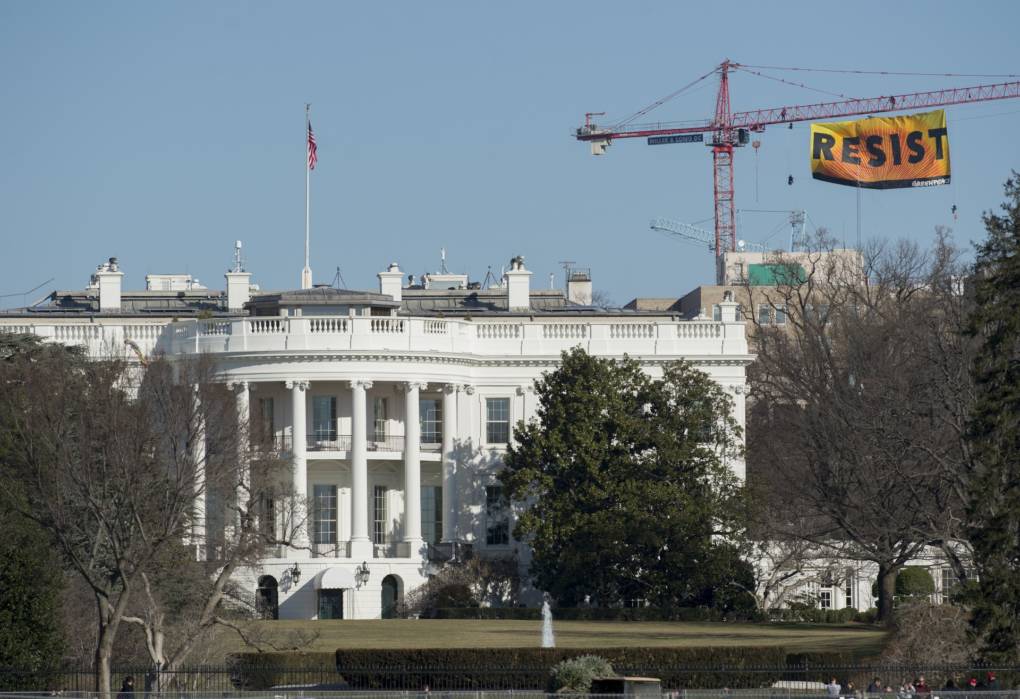
"caption": "Greenpeace protesters unfold a banner reading 'Resist' from atop a construction crane behind the White House Jan. 25, 2017, in Washington, D.C. The banner, flying high enough to be seen from the White House, is in opposition to the policies of President Donald Trump.",
"description": null,
"title": "white-house-resist-1920",
"credit": "Saul Loeb/AFP/Getty Images",
"status": "inherit",
"isLoading": false,
"fetchFailed": false
},
"news_11289626": {
"type": "attachments",
"id": "news_11289626",
"meta": {
"index": "attachments_1716263798",
"site": "news",
"id": "11289626",
"found": true
},
"parent": 11289623,
"imgSizes": {
"small": {
"file": "https://ww2.kqed.org/app/uploads/sites/10/2017/01/WALL-640x360-520x293.jpg",
"width": 520,
"mimeType": "image/jpeg",
"height": 293
},
"jmtc-small-thumb": {
"file": "https://ww2.kqed.org/app/uploads/sites/10/2017/01/WALL-640x360-280x150.jpg",
"width": 280,
"mimeType": "image/jpeg",
"height": 150
},
"thumbnail": {
"file": "https://ww2.kqed.org/app/uploads/sites/10/2017/01/WALL-640x360-160x90.jpg",
"width": 160,
"mimeType": "image/jpeg",
"height": 90
},
"xsmall": {
"file": "https://ww2.kqed.org/app/uploads/sites/10/2017/01/WALL-640x360-375x211.jpg",
"width": 375,
"mimeType": "image/jpeg",
"height": 211
},
"kqedFullSize": {
"file": "https://ww2.kqed.org/app/uploads/sites/10/2017/01/WALL-640x360.jpg",
"width": 640,
"height": 360
},
"guest-author-50": {
"file": "https://ww2.kqed.org/app/uploads/sites/10/2017/01/WALL-640x360-50x50.jpg",
"width": 50,
"mimeType": "image/jpeg",
"height": 50
},
"guest-author-96": {
"file": "https://ww2.kqed.org/app/uploads/sites/10/2017/01/WALL-640x360-96x96.jpg",
"width": 96,
"mimeType": "image/jpeg",
"height": 96
},
"guest-author-64": {
"file": "https://ww2.kqed.org/app/uploads/sites/10/2017/01/WALL-640x360-64x64.jpg",
"width": 64,
"mimeType": "image/jpeg",
"height": 64
},
"detail": {
"file": "https://ww2.kqed.org/app/uploads/sites/10/2017/01/WALL-640x360-150x150.jpg",
"width": 150,
"mimeType": "image/jpeg",
"height": 150
},
"guest-author-32": {
"file": "https://ww2.kqed.org/app/uploads/sites/10/2017/01/WALL-640x360-32x32.jpg",
"width": 32,
"mimeType": "image/jpeg",
"height": 32
},
"guest-author-128": {
"file": "https://ww2.kqed.org/app/uploads/sites/10/2017/01/WALL-640x360-128x128.jpg",
"width": 128,
"mimeType": "image/jpeg",
"height": 128
},
"xxsmall": {
"file": "https://ww2.kqed.org/app/uploads/sites/10/2017/01/WALL-640x360-240x135.jpg",
"width": 240,
"mimeType": "image/jpeg",
"height": 135
}
},
"publishDate": 1485570901,
"modified": 1485570901,
"caption": null,
"description": null,
"title": "WALL 640x360",
"credit": null,
"status": "inherit",
"isLoading": false,
"fetchFailed": false
},
"news_11289378": {
"type": "attachments",
"id": "news_11289378",
"meta": {
"index": "attachments_1716263798",
"site": "news",
"id": "11289378",
"found": true
},
"parent": 11289365,
"imgSizes": {
"small": {
"file": "https://ww2.kqed.org/app/uploads/sites/10/2017/01/TrumpUKConf-520x347.jpg",
"width": 520,
"mimeType": "image/jpeg",
"height": 347
},
"twentyfourteen-full-width": {
"file": "https://ww2.kqed.org/app/uploads/sites/10/2017/01/TrumpUKConf-1038x576.jpg",
"width": 1038,
"mimeType": "image/jpeg",
"height": 576
},
"thumbnail": {
"file": "https://ww2.kqed.org/app/uploads/sites/10/2017/01/TrumpUKConf-160x107.jpg",
"width": 160,
"mimeType": "image/jpeg",
"height": 107
},
"fd-sm": {
"file": "https://ww2.kqed.org/app/uploads/sites/10/2017/01/TrumpUKConf-960x642.jpg",
"width": 960,
"mimeType": "image/jpeg",
"height": 642
},
"post-thumbnail": {
"file": "https://ww2.kqed.org/app/uploads/sites/10/2017/01/TrumpUKConf-672x372.jpg",
"width": 672,
"mimeType": "image/jpeg",
"height": 372
},
"xsmall": {
"file": "https://ww2.kqed.org/app/uploads/sites/10/2017/01/TrumpUKConf-375x251.jpg",
"width": 375,
"mimeType": "image/jpeg",
"height": 251
},
"kqedFullSize": {
"file": "https://ww2.kqed.org/app/uploads/sites/10/2017/01/TrumpUKConf.jpg",
"width": 1920,
"height": 1283
},
"large": {
"file": "https://ww2.kqed.org/app/uploads/sites/10/2017/01/TrumpUKConf-1020x682.jpg",
"width": 1020,
"mimeType": "image/jpeg",
"height": 682
},
"xlarge": {
"file": "https://ww2.kqed.org/app/uploads/sites/10/2017/01/TrumpUKConf-1180x789.jpg",
"width": 1180,
"mimeType": "image/jpeg",
"height": 789
},
"guest-author-50": {
"file": "https://ww2.kqed.org/app/uploads/sites/10/2017/01/TrumpUKConf-50x50.jpg",
"width": 50,
"mimeType": "image/jpeg",
"height": 50
},
"guest-author-96": {
"file": "https://ww2.kqed.org/app/uploads/sites/10/2017/01/TrumpUKConf-96x96.jpg",
"width": 96,
"mimeType": "image/jpeg",
"height": 96
},
"medium": {
"file": "https://ww2.kqed.org/app/uploads/sites/10/2017/01/TrumpUKConf-800x535.jpg",
"width": 800,
"mimeType": "image/jpeg",
"height": 535
},
"guest-author-64": {
"file": "https://ww2.kqed.org/app/uploads/sites/10/2017/01/TrumpUKConf-64x64.jpg",
"width": 64,
"mimeType": "image/jpeg",
"height": 64
},
"guest-author-32": {
"file": "https://ww2.kqed.org/app/uploads/sites/10/2017/01/TrumpUKConf-32x32.jpg",
"width": 32,
"mimeType": "image/jpeg",
"height": 32
},
"jmtc-small-thumb": {
"file": "https://ww2.kqed.org/app/uploads/sites/10/2017/01/TrumpUKConf-280x150.jpg",
"width": 280,
"mimeType": "image/jpeg",
"height": 150
},
"fd-lrg": {
"file": "https://ww2.kqed.org/app/uploads/sites/10/2017/01/TrumpUKConf-1920x1283.jpg",
"width": 1920,
"mimeType": "image/jpeg",
"height": 1283
},
"fd-med": {
"file": "https://ww2.kqed.org/app/uploads/sites/10/2017/01/TrumpUKConf-1180x789.jpg",
"width": 1180,
"mimeType": "image/jpeg",
"height": 789
},
"full-width": {
"file": "https://ww2.kqed.org/app/uploads/sites/10/2017/01/TrumpUKConf-1920x1283.jpg",
"width": 1920,
"mimeType": "image/jpeg",
"height": 1283
},
"detail": {
"file": "https://ww2.kqed.org/app/uploads/sites/10/2017/01/TrumpUKConf-150x150.jpg",
"width": 150,
"mimeType": "image/jpeg",
"height": 150
},
"guest-author-128": {
"file": "https://ww2.kqed.org/app/uploads/sites/10/2017/01/TrumpUKConf-128x128.jpg",
"width": 128,
"mimeType": "image/jpeg",
"height": 128
},
"xxsmall": {
"file": "https://ww2.kqed.org/app/uploads/sites/10/2017/01/TrumpUKConf-240x160.jpg",
"width": 240,
"mimeType": "image/jpeg",
"height": 160
}
},
"publishDate": 1485561224,
"modified": 1485561260,
"caption": "President Donald Trump speaks during a joint press conference with Britain's Prime Minister Theresa May on Jan. 27, 2017.",
"description": "President Donald Trump speaks during a joint press conference with Britain's Prime Minister Theresa May on Jan. 27, 2017.",
"title": "TrumpUKConf",
"credit": "MANDEL NGAN/AFP/Getty Images",
"status": "inherit",
"isLoading": false,
"fetchFailed": false
},
"news_11289055": {
"type": "attachments",
"id": "news_11289055",
"meta": {
"index": "attachments_1716263798",
"site": "news",
"id": "11289055",
"found": true
},
"parent": 11289051,
"imgSizes": {
"small": {
"file": "https://ww2.kqed.org/app/uploads/sites/10/2017/01/DOJ-520x365.jpg",
"width": 520,
"mimeType": "image/jpeg",
"height": 365
},
"twentyfourteen-full-width": {
"file": "https://ww2.kqed.org/app/uploads/sites/10/2017/01/DOJ-1038x576.jpg",
"width": 1038,
"mimeType": "image/jpeg",
"height": 576
},
"thumbnail": {
"file": "https://ww2.kqed.org/app/uploads/sites/10/2017/01/DOJ-160x112.jpg",
"width": 160,
"mimeType": "image/jpeg",
"height": 112
},
"fd-sm": {
"file": "https://ww2.kqed.org/app/uploads/sites/10/2017/01/DOJ-960x674.jpg",
"width": 960,
"mimeType": "image/jpeg",
"height": 674
},
"post-thumbnail": {
"file": "https://ww2.kqed.org/app/uploads/sites/10/2017/01/DOJ-672x372.jpg",
"width": 672,
"mimeType": "image/jpeg",
"height": 372
},
"xsmall": {
"file": "https://ww2.kqed.org/app/uploads/sites/10/2017/01/DOJ-375x263.jpg",
"width": 375,
"mimeType": "image/jpeg",
"height": 263
},
"kqedFullSize": {
"file": "https://ww2.kqed.org/app/uploads/sites/10/2017/01/DOJ.jpg",
"width": 1920,
"height": 1348
},
"large": {
"file": "https://ww2.kqed.org/app/uploads/sites/10/2017/01/DOJ-1020x716.jpg",
"width": 1020,
"mimeType": "image/jpeg",
"height": 716
},
"xlarge": {
"file": "https://ww2.kqed.org/app/uploads/sites/10/2017/01/DOJ-1180x828.jpg",
"width": 1180,
"mimeType": "image/jpeg",
"height": 828
},
"guest-author-50": {
"file": "https://ww2.kqed.org/app/uploads/sites/10/2017/01/DOJ-50x50.jpg",
"width": 50,
"mimeType": "image/jpeg",
"height": 50
},
"guest-author-96": {
"file": "https://ww2.kqed.org/app/uploads/sites/10/2017/01/DOJ-96x96.jpg",
"width": 96,
"mimeType": "image/jpeg",
"height": 96
},
"medium": {
"file": "https://ww2.kqed.org/app/uploads/sites/10/2017/01/DOJ-800x562.jpg",
"width": 800,
"mimeType": "image/jpeg",
"height": 562
},
"guest-author-64": {
"file": "https://ww2.kqed.org/app/uploads/sites/10/2017/01/DOJ-64x64.jpg",
"width": 64,
"mimeType": "image/jpeg",
"height": 64
},
"guest-author-32": {
"file": "https://ww2.kqed.org/app/uploads/sites/10/2017/01/DOJ-32x32.jpg",
"width": 32,
"mimeType": "image/jpeg",
"height": 32
},
"jmtc-small-thumb": {
"file": "https://ww2.kqed.org/app/uploads/sites/10/2017/01/DOJ-280x150.jpg",
"width": 280,
"mimeType": "image/jpeg",
"height": 150
},
"fd-lrg": {
"file": "https://ww2.kqed.org/app/uploads/sites/10/2017/01/DOJ-1920x1348.jpg",
"width": 1920,
"mimeType": "image/jpeg",
"height": 1348
},
"fd-med": {
"file": "https://ww2.kqed.org/app/uploads/sites/10/2017/01/DOJ-1180x828.jpg",
"width": 1180,
"mimeType": "image/jpeg",
"height": 828
},
"full-width": {
"file": "https://ww2.kqed.org/app/uploads/sites/10/2017/01/DOJ-1920x1348.jpg",
"width": 1920,
"mimeType": "image/jpeg",
"height": 1348
},
"detail": {
"file": "https://ww2.kqed.org/app/uploads/sites/10/2017/01/DOJ-150x150.jpg",
"width": 150,
"mimeType": "image/jpeg",
"height": 150
},
"guest-author-128": {
"file": "https://ww2.kqed.org/app/uploads/sites/10/2017/01/DOJ-128x128.jpg",
"width": 128,
"mimeType": "image/jpeg",
"height": 128
},
"xxsmall": {
"file": "https://ww2.kqed.org/app/uploads/sites/10/2017/01/DOJ-240x169.jpg",
"width": 240,
"mimeType": "image/jpeg",
"height": 169
}
},
"publishDate": 1485545074,
"modified": 1485545110,
"caption": "The White House is required to run executive orders by an office in the Justice Department. It's not clear it has done so.",
"description": "The White House is required to run executive orders by an office in the Justice Department. It's not clear it has done so.",
"title": "DOJ",
"credit": "Mark Wilson/Getty Images",
"status": "inherit",
"isLoading": false,
"fetchFailed": false
},
"news_11288925": {
"type": "attachments",
"id": "news_11288925",
"meta": {
"index": "attachments_1716263798",
"site": "news",
"id": "11288925",
"found": true
},
"parent": 11288861,
"imgSizes": {
"small": {
"file": "https://ww2.kqed.org/app/uploads/sites/10/2017/01/RS9671_2631101-520x488.jpg",
"width": 520,
"mimeType": "image/jpeg",
"height": 488
},
"twentyfourteen-full-width": {
"file": "https://ww2.kqed.org/app/uploads/sites/10/2017/01/RS9671_2631101-1038x576.jpg",
"width": 1038,
"mimeType": "image/jpeg",
"height": 576
},
"thumbnail": {
"file": "https://ww2.kqed.org/app/uploads/sites/10/2017/01/RS9671_2631101-160x150.jpg",
"width": 160,
"mimeType": "image/jpeg",
"height": 150
},
"fd-sm": {
"file": "https://ww2.kqed.org/app/uploads/sites/10/2017/01/RS9671_2631101-960x901.jpg",
"width": 960,
"mimeType": "image/jpeg",
"height": 901
},
"post-thumbnail": {
"file": "https://ww2.kqed.org/app/uploads/sites/10/2017/01/RS9671_2631101-672x372.jpg",
"width": 672,
"mimeType": "image/jpeg",
"height": 372
},
"xsmall": {
"file": "https://ww2.kqed.org/app/uploads/sites/10/2017/01/RS9671_2631101-375x352.jpg",
"width": 375,
"mimeType": "image/jpeg",
"height": 352
},
"kqedFullSize": {
"file": "https://ww2.kqed.org/app/uploads/sites/10/2017/01/RS9671_2631101.jpg",
"width": 1756,
"height": 1648
},
"large": {
"file": "https://ww2.kqed.org/app/uploads/sites/10/2017/01/RS9671_2631101-1020x957.jpg",
"width": 1020,
"mimeType": "image/jpeg",
"height": 957
},
"xlarge": {
"file": "https://ww2.kqed.org/app/uploads/sites/10/2017/01/RS9671_2631101-1180x1107.jpg",
"width": 1180,
"mimeType": "image/jpeg",
"height": 1107
},
"guest-author-50": {
"file": "https://ww2.kqed.org/app/uploads/sites/10/2017/01/RS9671_2631101-50x50.jpg",
"width": 50,
"mimeType": "image/jpeg",
"height": 50
},
"guest-author-96": {
"file": "https://ww2.kqed.org/app/uploads/sites/10/2017/01/RS9671_2631101-96x96.jpg",
"width": 96,
"mimeType": "image/jpeg",
"height": 96
},
"medium": {
"file": "https://ww2.kqed.org/app/uploads/sites/10/2017/01/RS9671_2631101-800x751.jpg",
"width": 800,
"mimeType": "image/jpeg",
"height": 751
},
"guest-author-64": {
"file": "https://ww2.kqed.org/app/uploads/sites/10/2017/01/RS9671_2631101-64x64.jpg",
"width": 64,
"mimeType": "image/jpeg",
"height": 64
},
"guest-author-32": {
"file": "https://ww2.kqed.org/app/uploads/sites/10/2017/01/RS9671_2631101-32x32.jpg",
"width": 32,
"mimeType": "image/jpeg",
"height": 32
},
"jmtc-small-thumb": {
"file": "https://ww2.kqed.org/app/uploads/sites/10/2017/01/RS9671_2631101-280x150.jpg",
"width": 280,
"mimeType": "image/jpeg",
"height": 150
},
"fd-med": {
"file": "https://ww2.kqed.org/app/uploads/sites/10/2017/01/RS9671_2631101-1180x1107.jpg",
"width": 1180,
"mimeType": "image/jpeg",
"height": 1107
},
"detail": {
"file": "https://ww2.kqed.org/app/uploads/sites/10/2017/01/RS9671_2631101-150x150.jpg",
"width": 150,
"mimeType": "image/jpeg",
"height": 150
},
"guest-author-128": {
"file": "https://ww2.kqed.org/app/uploads/sites/10/2017/01/RS9671_2631101-128x128.jpg",
"width": 128,
"mimeType": "image/jpeg",
"height": 128
},
"xxsmall": {
"file": "https://ww2.kqed.org/app/uploads/sites/10/2017/01/RS9671_2631101-240x225.jpg",
"width": 240,
"mimeType": "image/jpeg",
"height": 225
}
},
"publishDate": 1485537706,
"modified": 1513901139,
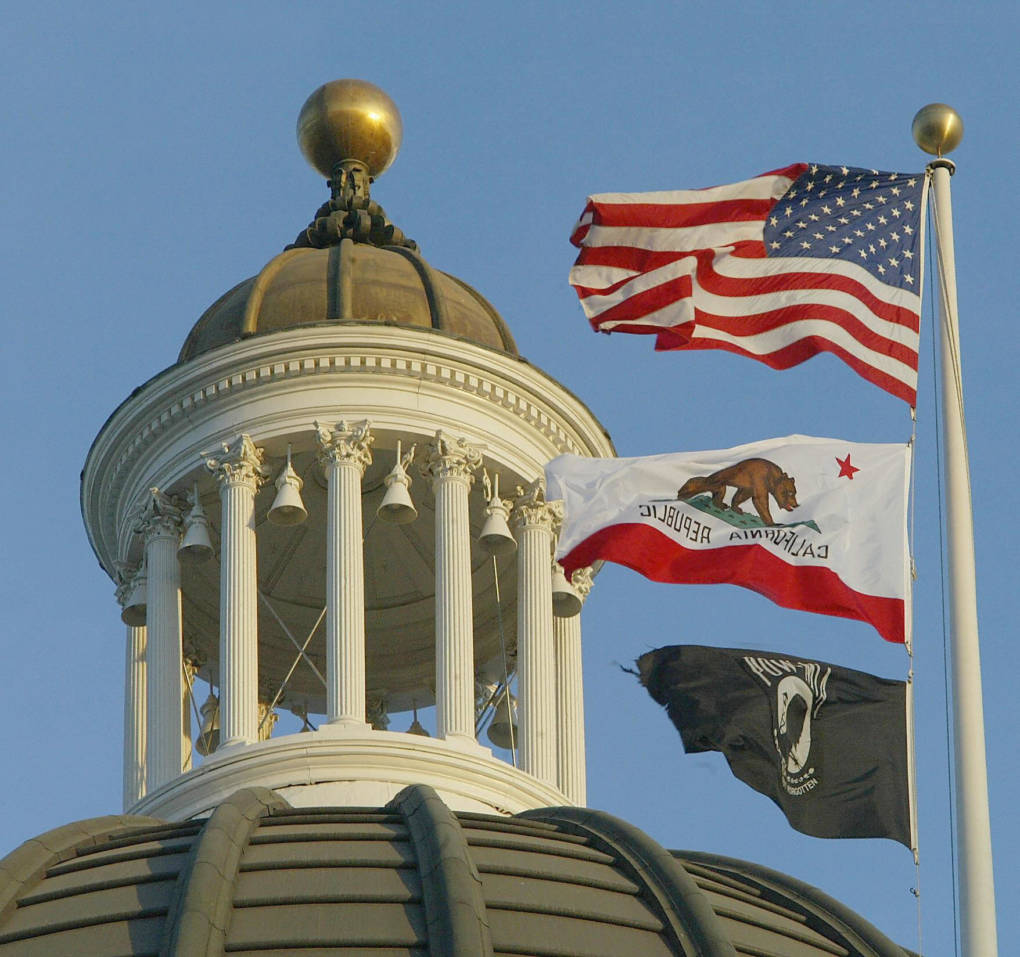
"caption": "A detail of the top of the dome of the California Capitol building in Sacramento.",
"description": "A detail of the top of the dome of the California Capitol building in Sacramento.",
"title": "A detail of the top of the dome of the C",
"credit": "Robyn Beck/AFP/Getty Images",
"status": "inherit",
"isLoading": false,
"fetchFailed": false
},
"stateofhealth_287950": {
"type": "attachments",
"id": "stateofhealth_287950",
"meta": {
"index": "attachments_1716263798",
"site": "stateofhealth",
"id": "287950",
"found": true
},
"parent": 287935,
"imgSizes": {
"small": {
"file": "https://ww2.kqed.org/app/uploads/sites/27/2017/01/UNDOCUMENTED-KIDS-Photo-1-520x347.jpg",
"width": 520,
"mimeType": "image/jpeg",
"height": 347
},
"twentyfourteen-full-width": {
"file": "https://ww2.kqed.org/app/uploads/sites/27/2017/01/UNDOCUMENTED-KIDS-Photo-1-1038x576.jpg",
"width": 1038,
"mimeType": "image/jpeg",
"height": 576
},
"thumbnail": {
"file": "https://ww2.kqed.org/app/uploads/sites/27/2017/01/UNDOCUMENTED-KIDS-Photo-1-160x107.jpg",
"width": 160,
"mimeType": "image/jpeg",
"height": 107
},
"fd-sm": {
"file": "https://ww2.kqed.org/app/uploads/sites/27/2017/01/UNDOCUMENTED-KIDS-Photo-1-960x640.jpg",
"width": 960,
"mimeType": "image/jpeg",
"height": 640
},
"post-thumbnail": {
"file": "https://ww2.kqed.org/app/uploads/sites/27/2017/01/UNDOCUMENTED-KIDS-Photo-1-672x372.jpg",
"width": 672,
"mimeType": "image/jpeg",
"height": 372
},
"xsmall": {
"file": "https://ww2.kqed.org/app/uploads/sites/27/2017/01/UNDOCUMENTED-KIDS-Photo-1-375x250.jpg",
"width": 375,
"mimeType": "image/jpeg",
"height": 250
},
"kqedFullSize": {
"file": "https://ww2.kqed.org/app/uploads/sites/27/2017/01/UNDOCUMENTED-KIDS-Photo-1-e1485475922531.jpg",
"width": 1920,
"height": 1280
},
"large": {
"file": "https://ww2.kqed.org/app/uploads/sites/27/2017/01/UNDOCUMENTED-KIDS-Photo-1-1020x680.jpg",
"width": 1020,
"mimeType": "image/jpeg",
"height": 680
},
"xlarge": {
"file": "https://ww2.kqed.org/app/uploads/sites/27/2017/01/UNDOCUMENTED-KIDS-Photo-1-1180x787.jpg",
"width": 1180,
"mimeType": "image/jpeg",
"height": 787
},
"guest-author-50": {
"file": "https://ww2.kqed.org/app/uploads/sites/27/2017/01/UNDOCUMENTED-KIDS-Photo-1-50x50.jpg",
"width": 50,
"mimeType": "image/jpeg",
"height": 50
},
"guest-author-96": {
"file": "https://ww2.kqed.org/app/uploads/sites/27/2017/01/UNDOCUMENTED-KIDS-Photo-1-96x96.jpg",
"width": 96,
"mimeType": "image/jpeg",
"height": 96
},
"medium": {
"file": "https://ww2.kqed.org/app/uploads/sites/27/2017/01/UNDOCUMENTED-KIDS-Photo-1-800x533.jpg",
"width": 800,
"mimeType": "image/jpeg",
"height": 533
},
"guest-author-64": {
"file": "https://ww2.kqed.org/app/uploads/sites/27/2017/01/UNDOCUMENTED-KIDS-Photo-1-64x64.jpg",
"width": 64,
"mimeType": "image/jpeg",
"height": 64
},
"guest-author-32": {
"file": "https://ww2.kqed.org/app/uploads/sites/27/2017/01/UNDOCUMENTED-KIDS-Photo-1-32x32.jpg",
"width": 32,
"mimeType": "image/jpeg",
"height": 32
},
"jmtc-small-thumb": {
"file": "https://ww2.kqed.org/app/uploads/sites/27/2017/01/UNDOCUMENTED-KIDS-Photo-1-280x150.jpg",
"width": 280,
"mimeType": "image/jpeg",
"height": 150
},
"fd-lrg": {
"file": "https://ww2.kqed.org/app/uploads/sites/27/2017/01/UNDOCUMENTED-KIDS-Photo-1-1920x1280.jpg",
"width": 1920,
"mimeType": "image/jpeg",
"height": 1280
},
"fd-med": {
"file": "https://ww2.kqed.org/app/uploads/sites/27/2017/01/UNDOCUMENTED-KIDS-Photo-1-1180x787.jpg",
"width": 1180,
"mimeType": "image/jpeg",
"height": 787
},
"full-width": {
"file": "https://ww2.kqed.org/app/uploads/sites/27/2017/01/UNDOCUMENTED-KIDS-Photo-1-1920x1280.jpg",
"width": 1920,
"mimeType": "image/jpeg",
"height": 1280
},
"detail": {
"file": "https://ww2.kqed.org/app/uploads/sites/27/2017/01/UNDOCUMENTED-KIDS-Photo-1-150x150.jpg",
"width": 150,
"mimeType": "image/jpeg",
"height": 150
},
"medium_large": {
"file": "https://ww2.kqed.org/app/uploads/sites/27/2017/01/UNDOCUMENTED-KIDS-Photo-1-768x512.jpg",
"width": 768,
"mimeType": "image/jpeg",
"height": 512
},
"guest-author-128": {
"file": "https://ww2.kqed.org/app/uploads/sites/27/2017/01/UNDOCUMENTED-KIDS-Photo-1-128x128.jpg",
"width": 128,
"mimeType": "image/jpeg",
"height": 128
},
"xxsmall": {
"file": "https://ww2.kqed.org/app/uploads/sites/27/2017/01/UNDOCUMENTED-KIDS-Photo-1-240x160.jpg",
"width": 240,
"mimeType": "image/jpeg",
"height": 160
}
},
"publishDate": 1485458162,
"modified": 1485460464,
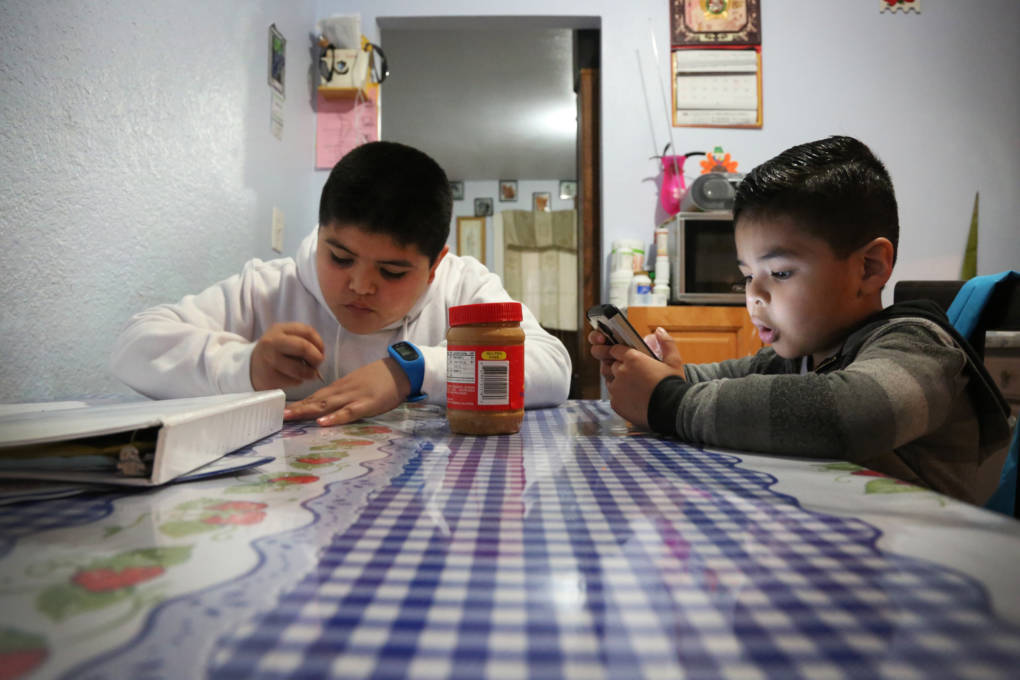
"caption": "Edwin Bernal, 9, finished homework, while his brother Angel Lozano, 5, watches videos before school at their home in Los Angeles, on Jan. 20. Last year Edwin was among a group of undocumented children who qualified for Medi-Cal coverage through a state-funded program. His brother is already covered because he was born in the U.S. ",
"description": null,
"title": "Medi-Cal Kids",
"credit": "Maria J. Avila/CalMatters",
"status": "inherit",
"isLoading": false,
"fetchFailed": false
},
"news_11287999": {
"type": "attachments",
"id": "news_11287999",
"meta": {
"index": "attachments_1716263798",
"site": "news",
"id": "11287999",
"found": true
},
"parent": 11287995,
"imgSizes": {
"small": {
"file": "https://ww2.kqed.org/app/uploads/sites/10/2017/01/BorderFence-520x311.jpg",
"width": 520,
"mimeType": "image/jpeg",
"height": 311
},
"twentyfourteen-full-width": {
"file": "https://ww2.kqed.org/app/uploads/sites/10/2017/01/BorderFence-1038x576.jpg",
"width": 1038,
"mimeType": "image/jpeg",
"height": 576
},
"thumbnail": {
"file": "https://ww2.kqed.org/app/uploads/sites/10/2017/01/BorderFence-160x96.jpg",
"width": 160,
"mimeType": "image/jpeg",
"height": 96
},
"fd-sm": {
"file": "https://ww2.kqed.org/app/uploads/sites/10/2017/01/BorderFence-960x575.jpg",
"width": 960,
"mimeType": "image/jpeg",
"height": 575
},
"post-thumbnail": {
"file": "https://ww2.kqed.org/app/uploads/sites/10/2017/01/BorderFence-672x372.jpg",
"width": 672,
"mimeType": "image/jpeg",
"height": 372
},
"xsmall": {
"file": "https://ww2.kqed.org/app/uploads/sites/10/2017/01/BorderFence-375x224.jpg",
"width": 375,
"mimeType": "image/jpeg",
"height": 224
},
"kqedFullSize": {
"file": "https://ww2.kqed.org/app/uploads/sites/10/2017/01/BorderFence.jpg",
"width": 1920,
"height": 1149
},
"large": {
"file": "https://ww2.kqed.org/app/uploads/sites/10/2017/01/BorderFence-1020x610.jpg",
"width": 1020,
"mimeType": "image/jpeg",
"height": 610
},
"xlarge": {
"file": "https://ww2.kqed.org/app/uploads/sites/10/2017/01/BorderFence-1180x706.jpg",
"width": 1180,
"mimeType": "image/jpeg",
"height": 706
},
"guest-author-50": {
"file": "https://ww2.kqed.org/app/uploads/sites/10/2017/01/BorderFence-50x50.jpg",
"width": 50,
"mimeType": "image/jpeg",
"height": 50
},
"guest-author-96": {
"file": "https://ww2.kqed.org/app/uploads/sites/10/2017/01/BorderFence-96x96.jpg",
"width": 96,
"mimeType": "image/jpeg",
"height": 96
},
"medium": {
"file": "https://ww2.kqed.org/app/uploads/sites/10/2017/01/BorderFence-800x479.jpg",
"width": 800,
"mimeType": "image/jpeg",
"height": 479
},
"guest-author-64": {
"file": "https://ww2.kqed.org/app/uploads/sites/10/2017/01/BorderFence-64x64.jpg",
"width": 64,
"mimeType": "image/jpeg",
"height": 64
},
"guest-author-32": {
"file": "https://ww2.kqed.org/app/uploads/sites/10/2017/01/BorderFence-32x32.jpg",
"width": 32,
"mimeType": "image/jpeg",
"height": 32
},
"jmtc-small-thumb": {
"file": "https://ww2.kqed.org/app/uploads/sites/10/2017/01/BorderFence-280x150.jpg",
"width": 280,
"mimeType": "image/jpeg",
"height": 150
},
"fd-lrg": {
"file": "https://ww2.kqed.org/app/uploads/sites/10/2017/01/BorderFence-1920x1149.jpg",
"width": 1920,
"mimeType": "image/jpeg",
"height": 1149
},
"fd-med": {
"file": "https://ww2.kqed.org/app/uploads/sites/10/2017/01/BorderFence-1180x706.jpg",
"width": 1180,
"mimeType": "image/jpeg",
"height": 706
},
"full-width": {
"file": "https://ww2.kqed.org/app/uploads/sites/10/2017/01/BorderFence-1920x1149.jpg",
"width": 1920,
"mimeType": "image/jpeg",
"height": 1149
},
"detail": {
"file": "https://ww2.kqed.org/app/uploads/sites/10/2017/01/BorderFence-150x150.jpg",
"width": 150,
"mimeType": "image/jpeg",
"height": 150
},
"guest-author-128": {
"file": "https://ww2.kqed.org/app/uploads/sites/10/2017/01/BorderFence-128x128.jpg",
"width": 128,
"mimeType": "image/jpeg",
"height": 128
},
"xxsmall": {
"file": "https://ww2.kqed.org/app/uploads/sites/10/2017/01/BorderFence-240x144.jpg",
"width": 240,
"mimeType": "image/jpeg",
"height": 144
}
},
"publishDate": 1485476479,
"modified": 1485478749,
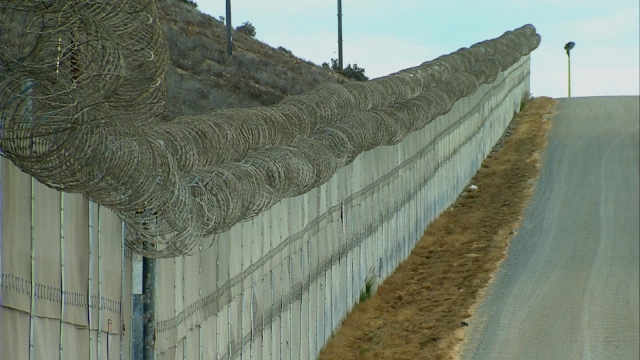
"caption": "A Border Patrol vehicle sits along the U.S.-Mexico border wall on Jan. 25, 2017, in San Ysidro.",
"description": "A Border Patrol vehicle sits along the U.S.-Mexico border wall on January 25, 2017 in San Ysidro.",
"title": "BorderFence",
"credit": "Sandy Huffaker/Getty Images",
"status": "inherit",
"isLoading": false,
"fetchFailed": false
},
"news_11287766": {
"type": "attachments",
"id": "news_11287766",
"meta": {
"index": "attachments_1716263798",
"site": "news",
"id": "11287766",
"found": true
},
"parent": 11287765,
"imgSizes": {
"small": {
"file": "https://ww2.kqed.org/app/uploads/sites/10/2017/01/gettyimages-490536652-edit_custom-b231536d3cefa60e88e317efe137dd4c18cf3ee1-520x346.jpg",
"width": 520,
"mimeType": "image/jpeg",
"height": 346
},
"twentyfourteen-full-width": {
"file": "https://ww2.kqed.org/app/uploads/sites/10/2017/01/gettyimages-490536652-edit_custom-b231536d3cefa60e88e317efe137dd4c18cf3ee1-1038x576.jpg",
"width": 1038,
"mimeType": "image/jpeg",
"height": 576
},
"thumbnail": {
"file": "https://ww2.kqed.org/app/uploads/sites/10/2017/01/gettyimages-490536652-edit_custom-b231536d3cefa60e88e317efe137dd4c18cf3ee1-160x107.jpg",
"width": 160,
"mimeType": "image/jpeg",
"height": 107
},
"fd-sm": {
"file": "https://ww2.kqed.org/app/uploads/sites/10/2017/01/gettyimages-490536652-edit_custom-b231536d3cefa60e88e317efe137dd4c18cf3ee1-960x639.jpg",
"width": 960,
"mimeType": "image/jpeg",
"height": 639
},
"post-thumbnail": {
"file": "https://ww2.kqed.org/app/uploads/sites/10/2017/01/gettyimages-490536652-edit_custom-b231536d3cefa60e88e317efe137dd4c18cf3ee1-672x372.jpg",
"width": 672,
"mimeType": "image/jpeg",
"height": 372
},
"xsmall": {
"file": "https://ww2.kqed.org/app/uploads/sites/10/2017/01/gettyimages-490536652-edit_custom-b231536d3cefa60e88e317efe137dd4c18cf3ee1-375x250.jpg",
"width": 375,
"mimeType": "image/jpeg",
"height": 250
},
"kqedFullSize": {
"file": "https://ww2.kqed.org/app/uploads/sites/10/2017/01/gettyimages-490536652-edit_custom-b231536d3cefa60e88e317efe137dd4c18cf3ee1.jpg",
"width": 3000,
"height": 1998
},
"large": {
"file": "https://ww2.kqed.org/app/uploads/sites/10/2017/01/gettyimages-490536652-edit_custom-b231536d3cefa60e88e317efe137dd4c18cf3ee1-1020x679.jpg",
"width": 1020,
"mimeType": "image/jpeg",
"height": 679
},
"xlarge": {
"file": "https://ww2.kqed.org/app/uploads/sites/10/2017/01/gettyimages-490536652-edit_custom-b231536d3cefa60e88e317efe137dd4c18cf3ee1-1180x786.jpg",
"width": 1180,
"mimeType": "image/jpeg",
"height": 786
},
"guest-author-50": {
"file": "https://ww2.kqed.org/app/uploads/sites/10/2017/01/gettyimages-490536652-edit_custom-b231536d3cefa60e88e317efe137dd4c18cf3ee1-50x50.jpg",
"width": 50,
"mimeType": "image/jpeg",
"height": 50
},
"guest-author-96": {
"file": "https://ww2.kqed.org/app/uploads/sites/10/2017/01/gettyimages-490536652-edit_custom-b231536d3cefa60e88e317efe137dd4c18cf3ee1-96x96.jpg",
"width": 96,
"mimeType": "image/jpeg",
"height": 96
},
"medium": {
"file": "https://ww2.kqed.org/app/uploads/sites/10/2017/01/gettyimages-490536652-edit_custom-b231536d3cefa60e88e317efe137dd4c18cf3ee1-800x533.jpg",
"width": 800,
"mimeType": "image/jpeg",
"height": 533
},
"guest-author-64": {
"file": "https://ww2.kqed.org/app/uploads/sites/10/2017/01/gettyimages-490536652-edit_custom-b231536d3cefa60e88e317efe137dd4c18cf3ee1-64x64.jpg",
"width": 64,
"mimeType": "image/jpeg",
"height": 64
},
"guest-author-32": {
"file": "https://ww2.kqed.org/app/uploads/sites/10/2017/01/gettyimages-490536652-edit_custom-b231536d3cefa60e88e317efe137dd4c18cf3ee1-32x32.jpg",
"width": 32,
"mimeType": "image/jpeg",
"height": 32
},
"jmtc-small-thumb": {
"file": "https://ww2.kqed.org/app/uploads/sites/10/2017/01/gettyimages-490536652-edit_custom-b231536d3cefa60e88e317efe137dd4c18cf3ee1-280x150.jpg",
"width": 280,
"mimeType": "image/jpeg",
"height": 150
},
"fd-lrg": {
"file": "https://ww2.kqed.org/app/uploads/sites/10/2017/01/gettyimages-490536652-edit_custom-b231536d3cefa60e88e317efe137dd4c18cf3ee1-1920x1279.jpg",
"width": 1920,
"mimeType": "image/jpeg",
"height": 1279
},
"fd-med": {
"file": "https://ww2.kqed.org/app/uploads/sites/10/2017/01/gettyimages-490536652-edit_custom-b231536d3cefa60e88e317efe137dd4c18cf3ee1-1180x786.jpg",
"width": 1180,
"mimeType": "image/jpeg",
"height": 786
},
"full-width": {
"file": "https://ww2.kqed.org/app/uploads/sites/10/2017/01/gettyimages-490536652-edit_custom-b231536d3cefa60e88e317efe137dd4c18cf3ee1-1920x1279.jpg",
"width": 1920,
"mimeType": "image/jpeg",
"height": 1279
},
"detail": {
"file": "https://ww2.kqed.org/app/uploads/sites/10/2017/01/gettyimages-490536652-edit_custom-b231536d3cefa60e88e317efe137dd4c18cf3ee1-150x150.jpg",
"width": 150,
"mimeType": "image/jpeg",
"height": 150
},
"guest-author-128": {
"file": "https://ww2.kqed.org/app/uploads/sites/10/2017/01/gettyimages-490536652-edit_custom-b231536d3cefa60e88e317efe137dd4c18cf3ee1-128x128.jpg",
"width": 128,
"mimeType": "image/jpeg",
"height": 128
},
"xxsmall": {
"file": "https://ww2.kqed.org/app/uploads/sites/10/2017/01/gettyimages-490536652-edit_custom-b231536d3cefa60e88e317efe137dd4c18cf3ee1-240x160.jpg",
"width": 240,
"mimeType": "image/jpeg",
"height": 160
}
},
"publishDate": 1485467625,
"modified": 1485471366,
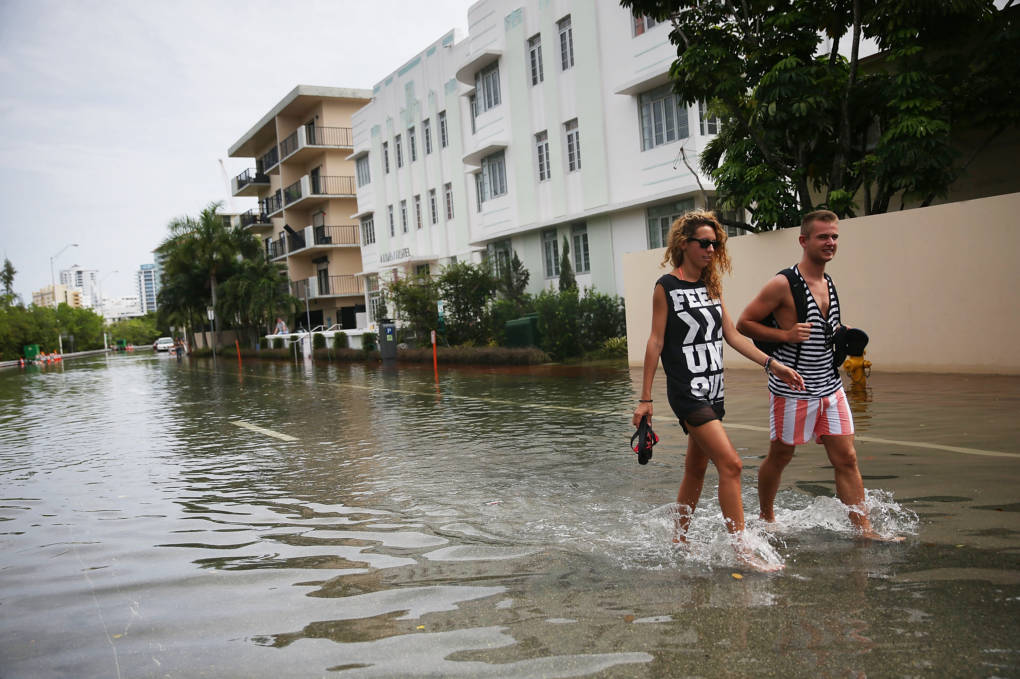
"caption": "Government scientists are working on a climate assessment that among other things will help predict \"sunny day\" floods like this one in Miami Beach, Florida, in 2015.",
"description": "Government scientists are working on a climate assessment that among other things will help predict \"sunny day\" floods like this one in Miami Beach, Fla., in 2015.",
"title": "Government scientists are working on a climate assessment that among other things will help predict \"sunny day\" floods like this one in Miami Beach, Fla., in 2015.",
"credit": "Joe Raedle/Getty Images",
"status": "inherit",
"isLoading": false,
"fetchFailed": false
}
},
"audioPlayerReducer": {
"postId": "stream_live",
"isPaused": true,
"isPlaying": false,
"pfsActive": false,
"pledgeModalIsOpen": true,
"playerDrawerIsOpen": false,
"liveAudioPlayStartedAt": 0,
"liveAudioPlayContext": ""
},
"authorsReducer": {
"byline_news_11291021": {
"type": "authors",
"id": "byline_news_11291021",
"meta": {
"override": true
},
"slug": "byline_news_11291021",
"name": "\u003cstrong>Alicia A. Caldwell\u003cbr />Associated Press\u003c/strong>",
"isLoading": false
},
"byline_news_11290776": {
"type": "authors",
"id": "byline_news_11290776",
"meta": {
"override": true
},
"slug": "byline_news_11290776",
"name": "\u003cstrong>\u003ca href=\"http://www.npr.org/people/2778302/peter-overby\" target=\"_blank\">Peter Overby\u003c/a> and \u003ca href=\"http://www.npr.org/people/4581822/jim-zarroli\" target=\"_blank\">Jim Zarroli\u003c/a>\u003cbr />NPR\u003c/strong>",
"isLoading": false
},
"byline_news_11290708": {
"type": "authors",
"id": "byline_news_11290708",
"meta": {
"override": true
},
"slug": "byline_news_11290708",
"name": "Colin Dwyer",
"isLoading": false
},
"byline_news_11289546": {
"type": "authors",
"id": "byline_news_11289546",
"meta": {
"override": true
},
"slug": "byline_news_11289546",
"name": "\u003cstrong>Cesar Saldana\u003c/strong>",
"isLoading": false
},
"byline_news_11289623": {
"type": "authors",
"id": "byline_news_11289623",
"meta": {
"override": true
},
"slug": "byline_news_11289623",
"name": "KQED Newsroom Staff",
"isLoading": false
},
"byline_news_11289365": {
"type": "authors",
"id": "byline_news_11289365",
"meta": {
"override": true
},
"slug": "byline_news_11289365",
"name": "Laurel Wamsley",
"isLoading": false
},
"byline_news_11289051": {
"type": "authors",
"id": "byline_news_11289051",
"meta": {
"override": true
},
"slug": "byline_news_11289051",
"name": "Carrie Johnson",
"isLoading": false
},
"byline_stateofhealth_287935": {
"type": "authors",
"id": "byline_stateofhealth_287935",
"meta": {
"override": true
},
"slug": "byline_stateofhealth_287935",
"name": "\u003ca href=\"https://calmatters.org/about/staff/elizabeth-aguilera/\">\u003cstrong>Elizabeth Aguilera\u003c/a>\u003c/strong>\u003cbr/>\u003ca href=\"https://calmatters.org/\">CALmatters\u003c/a>",
"isLoading": false
},
"byline_news_11287995": {
"type": "authors",
"id": "byline_news_11287995",
"meta": {
"override": true
},
"slug": "byline_news_11287995",
"name": "Scott Horsley",
"isLoading": false
},
"byline_news_11287765": {
"type": "authors",
"id": "byline_news_11287765",
"meta": {
"override": true
},
"slug": "byline_news_11287765",
"name": "Christopher Joyce",
"isLoading": false
},
"byline_news_11287753": {
"type": "authors",
"id": "byline_news_11287753",
"meta": {
"override": true
},
"slug": "byline_news_11287753",
"name": "\u003cstrong>\u003ca href=\"http://missionlocal.org/author/laurawaxmann/\">Laura Waxmann\u003c/a>\u003cbr />Mission Local\u003c/strong>",
"isLoading": false
},
"scottshafer": {
"type": "authors",
"id": "255",
"meta": {
"index": "authors_1716337520",
"id": "255",
"found": true
},
"name": "Scott Shafer",
"firstName": "Scott",
"lastName": "Shafer",
"slug": "scottshafer",
"email": "sshafer@kqed.org",
"display_author_email": false,
"staff_mastheads": [
"news"
],
"title": "KQED Contributor",
"bio": "Scott Shafer is a senior editor with the KQED Politics and Government desk. He is co-host of Political Breakdown, the award-winning radio show and podcast with a personal take on the world of politics. Scott came to KQED in 1998 to host the statewide\u003cem> California Report\u003c/em>. Prior to that he had extended stints in politics and government\u003cem>.\u003c/em> He uses that inside experience at KQED in his, reporting, hosting and analysis for the politics desk. Scott collaborated \u003cem>Political Breakdown a\u003c/em>nd on \u003cem>The Political Mind of Jerry Brown, \u003c/em>an eight-part series about the life and extraordinary political career of the former governor. For fun, he plays water polo with the San Francisco Tsunami.",
"avatar": "https://secure.gravatar.com/avatar/a62ebae45b79d7aed1a39a0e3bf68104?s=600&d=blank&r=g",
"twitter": "scottshafer",
"bluesky": null,
"facebook": null,
"instagram": null,
"linkedin": null,
"sites": [
{
"site": "news",
"roles": [
"editor"
]
},
{
"site": "stateofhealth",
"roles": [
"author"
]
},
{
"site": "science",
"roles": [
"author"
]
},
{
"site": "forum",
"roles": [
"subscriber"
]
},
{
"site": "liveblog",
"roles": [
"author"
]
}
],
"headData": {
"title": "Scott Shafer | KQED",
"description": "KQED Contributor",
"ogImgSrc": "https://secure.gravatar.com/avatar/a62ebae45b79d7aed1a39a0e3bf68104?s=600&d=blank&r=g",
"twImgSrc": "https://secure.gravatar.com/avatar/a62ebae45b79d7aed1a39a0e3bf68104?s=600&d=blank&r=g"
},
"isLoading": false,
"link": "/author/scottshafer"
}
},
"pagesReducer": {
"news_tag_donald-trump": {
"type": "terms",
"id": "news_1323",
"meta": {
"index": "terms_1716263798",
"site": "news",
"id": "1323",
"score": 8.557382
},
"featImg": null,
"name": "Donald Trump",
"description": null,
"taxonomy": "tag",
"headData": {
"twImgId": null,
"twTitle": null,
"ogTitle": null,
"ogImgId": null,
"twDescription": null,
"description": null,
"title": "Donald Trump Archives | KQED News",
"ogDescription": null
},
"ttid": 1335,
"slug": "donald-trump",
"isLoading": false,
"title": "Donald Trump",
"pageMeta": {
"site": "news",
"WpPageTemplate": "page-topic-editorial",
"currentPage": 175
},
"blocks": [
{
"blockName": "kqed/post-list",
"attrs": {
"layout": "cardArticle2",
"query": "posts/news?tag=donald-trump",
"seeMore": false,
"paginated": true,
"page": 175
}
},
{
"blockName": "kqed/ad"
}
]
}
},
"pfsSessionReducer": {},
"postsReducer": {
"stream_live": {
"type": "live",
"id": "stream_live",
"audioUrl": "https://streams.kqed.org/kqedradio",
"title": "Live Stream",
"excerpt": "Live Stream information currently unavailable.",
"link": "/radio",
"featImg": "",
"label": {
"name": "KQED Live",
"link": "/"
}
},
"stream_kqedNewscast": {
"type": "posts",
"id": "stream_kqedNewscast",
"audioUrl": "https://www.kqed.org/.stream/anon/radio/RDnews/newscast.mp3?_=1",
"title": "KQED Newscast",
"featImg": "",
"label": {
"name": "88.5 FM",
"link": "/"
}
},
"news_11291021": {
"type": "posts",
"id": "news_11291021",
"meta": {
"index": "posts_1716263798",
"site": "news",
"id": "11291021",
"score": null,
"sort": [
1485658595000
]
},
"guestAuthors": [],
"slug": "federal-judge-bars-u-s-from-deporting-travelers-with-valid-visas",
"title": "Federal Judge Bars U.S. from Deporting Travelers Targeted by Trump Order",
"publishDate": 1485658595,
"format": "standard",
"headTitle": "Federal Judge Bars U.S. from Deporting Travelers Targeted by Trump Order | KQED",
"labelTerm": {
"term": 72,
"site": "news"
},
"content": "\u003cp>A federal judge issued an emergency order Saturday night barring the government from deporting people from nations subject to President Donald Trump’s travel ban, saying travelers who had been detained had a strong argument that their rights had been violated.\u003c/p>\n\u003cp>U.S. District Judge Ann Donnelly in New York issued \u003ca href=\"#emergencyorder\">the emergency order (embedded below)\u003c/a> after lawyers for the American Civil Liberties Union filed a court petition on behalf of people from seven predominantly Muslim nations who were detained at airports across the country as the ban took effect.\u003c/p>\n\u003cp>The judge’s order affected only a portion of Trump’s executive action. As the decision was announced, cheers broke out in crowds of demonstrators who had gathered at American airports and outside the Brooklyn courthouse where the ruling was issued.\u003c/p>\n\u003caside class=\"pullquote alignright\">‘It is appropriate and just … that the respondents be enjoined and restrained from the commission of further acts and misconduct in violation of the Constitution. …”\u003ccite>U.S. District Court Judge Ann M. Donnelly\u003c/cite>\u003c/aside>\n\u003cp>The order barred U.S. border agents from removing anyone who arrived in the U.S. with a valid visa from Iraq, Syria, Iran, Sudan, Libya, Somalia and Yemen. It also covered anyone with an approved refugee application.\u003c/p>\n\u003cp>It was unclear how quickly the judge’s order might affect people in detention, or whether it would allow others to resume flying.\u003c/p>\n\u003cp>[ad fullwidth]\u003c/p>\n\u003cp>“Realistically, we don’t even know if people are going to be allowed onto the planes,” said ACLU lawyer Lee Gelernt. “This order would protect people who they allow to come here and reach U.S. soil.”\u003c/p>\n\u003cp>Under Trump’s order, it had appeared that an untold number of foreign-born U.S. residents now traveling outside the U.S. could be stuck overseas for at least 90 days even though they held permanent residency “green cards” or other visas. However, an official with the Department of Homeland Security said Saturday night that no green-card holders from the seven countries cited in Trump’s order had been prevented from entering the U.S.\u003c/p>\n\u003cp>Some foreign nationals who were allowed to board flights before the order was signed Friday had been detained at U.S. airports, told they were no longer welcome. The DHS official who briefed reporters by phone said 109 people who were in transit on airplanes had been denied entry and 173 had not been allowed to get on their planes overseas.\u003c/p>\n\u003caside class=\"pullquote alignleft\">‘It’s working out very nicely. You see it in the airports, you see it all over. It’s working out very nicely and we are going to have a very, very strict ban and we are going to have extreme vetting, which we should have had in this country for many years.’\u003ccite>President Trump\u003c/cite>\u003c/aside>\n\u003cp>In her three-page order, Donnelly wrote that without the stay “there will be substantial and irreparable injury to refugees, visa-holders and other individuals from nations subject to the Jan. 27, 2017, executive order.”\u003c/p>\n\u003cp>Trump billed his sweeping executive order as a necessary step to stop “radical Islamic terrorists” from coming to the U.S. It included a 90-day ban on travel to the U.S. by citizens of Iraq, Syria, Iran, Sudan, Libya, Somalia or Yemen and a 120-day suspension of the U.S. refugee program.\u003c/p>\n\u003cp>Trump’s order singled out Syrians for the most aggressive ban, indefinitely blocking entry for anyone from that country, including those fleeing civil war.\u003c/p>\n\u003cp>The directive did not do anything to prevent attacks from homegrown extremists who were already in America, a primary concern of federal law enforcement officials. It also omitted Saudi Arabia, home to most of the Sept. 11 hijackers.\u003c/p>\n\u003cp>As a candidate Trump pledged to temporarily ban Muslims from coming to the U.S., then said he would implement “extreme vetting” for people from countries with significant terror concerns. He told reporters Saturday the order is “not a Muslim ban.”\u003c/p>\n\u003cp>“It’s working out very nicely,” Trump said of the implementation of his order. “We’re going to have a very, very strict ban and we’re going to have extreme vetting, which we should have had in this country for many years.”\u003c/p>\n\u003cp>The order sparked protests at several of the nation’s international airports, including New York’s Kennedy and Chicago’s O’Hare and facilities in Minneapolis and Dallas-Forth Worth. In San Francisco, hundreds blocked the street outside the arrival area of the international terminal. Several dozen demonstrated at the airport in Portland, Oregon, briefly disrupting light rail service while hoisting signs that read “Portland Coffee Is From Yemen” and chanting anti-Trump slogans.\u003c/p>\n\u003cp>U.S. lawmakers and officials around the globe also criticized the move. Sen. Ben Sasse, a Nebraska Republican on the Senate Armed Services Committee, said while Trump is right to focus on border security, the order is “too broad.”\u003c/p>\n\u003cp>“If we send a signal to the Middle East that the U.S. sees all Muslims as jihadis, the terrorist recruiters win by telling kids that America is banning Muslims and that this is America versus one religion,” Sasse said. “Our generational fight against jihadism requires wisdom.”\u003c/p>\n\u003cp>In Tehran, Foreign Minister Mohammad Javad Zarif said Iran would stop issuing new visas to U.S. citizens in response to Trump’s ban, but that anyone already with a visa to Iran wouldn’t be turned away.\u003c/p>\n\u003cp>Canadian Prime Minister Justin Trudeau took to Twitter Saturday afternoon to say that refugees were welcome in Canada, “regardless of your faith.”\u003c/p>\n\u003cp>https://twitter.com/JustinTrudeau/status/825438460265762816\u003c/p>\n\u003cp>Two of the first people blocked from entering the United States were Iraqis with links to the U.S. military. Hameed Khalid Darweesh and Haider Sameer Abdulkhaleq Alshawi were detained by immigration officials after landing at New York’s Kennedy airport Friday night. \u003c/p>\n\u003cp>The ACLU’s habeas corpus petition, upon which Donnelly acted, was filed on their behalf, and both had been released by Saturday night.\u003c/p>\n\u003cp>The government can exempt foreign nationals from the ban if their entry is deemed in the national interest. But it was not immediately clear how that exemption might be applied.\u003c/p>\n\u003cp>Diplomats from the seven countries singled out by Trump’s order would still be allowed into the U.S.\u003c/p>\n\u003cp>Those already in the U.S. with a visa or green card would be allowed to stay, according to the official, who wasn’t authorized to publicly discuss the details of how Trump’s order was being put in place and spoke only on condition of anonymity.\u003c/p>\n\u003cp>Trump’s order also directed U.S. officials to review information as needed to fully vet foreigners asking to come to the U.S. and draft a list of countries that don’t provide that information. That left open the possibility that citizens of other countries could also face a travel ban.\u003c/p>\n\u003cp>The U.S. may still admit refugees on a case-by-case basis during the freeze, and the government would continue to process requests from people claiming religious persecution, “provided that the religion of the individual is a minority religion in the individual’s country.”\u003c/p>\n\u003cp>The Council on American-Islamic Relations said it would challenge the constitutionality of Trump’s order.\u003c/p>\n\u003cp>“There is no evidence that refugees — the most thoroughly vetted of all people entering our nation — are a threat to national security,” said Lena F. Masri, the group’s national litigation director. “This is an order that is based on bigotry, not reality.”\u003c/p>\n\u003cp>John Cohen, a former Department of Homeland Security counterterrorism official who worked under Democratic and Republican administrations, said the order didn’t address America’s “primary terrorism-related threat” — people already in the U.S. who become inspired by what they see on the internet.\u003c/p>\n\u003cp>Trump’s order drew support from some Republican lawmakers who have urged more security measures for the refugee vetting program, particularly for those from Syria.\u003c/p>\n\u003cp>“We are a compassionate nation and a country of immigrants. But as we know, terrorists are dead set on using our immigration and refugee programs as a Trojan Horse to attack us,” House Homeland Security Committee Chairman Michael McCaul said in a statement Friday. “With the stroke of a pen, he is doing more to shut down terrorist pathways into this country than the last administration did in eight years.”\u003c/p>\n\u003cp>It is unclear how many people would be immediately impacted by the non-refugee travel ban. According to the statistics maintained by the Homeland Security Department, about 17,000 students from the seven designated countries were allowed into the U.S. for the 2015-2016 school year. In 2015 more than 86,000 people from those countries arrived in the U.S. on other, non-immigrant visas and more than 52,000 others became legal permanent residents.\u003c/p>\n\u003cp>Last year the U.S. resettled 85,000 people displaced by war, political oppression, hunger and religious prejudice, including more than 12,000 Syrians. Before leaving office President Barack Obama announced that the U.S. would accept 110,000 refugees in the coming year, but Trump’s order cut that by more than half to 50,000.\u003c/p>\n\u003cp>\u003ca id=\"emergencyorder\">\u003c/a>\u003c/p>\n\u003cp>\u003cem>Associated Press writers Darlene Superville and Eric Tucker in Washington, Ellen Knickmeyer in San Francisco, Jeff Karoub in Detroit, and Karen Matthews, Rachel Zoll, Verena Dobnik and William Mathis in New York contributed to this report.\u003c/em>\u003c/p>\n\u003cp>[ad floatright]\u003c/p>\n\u003cp>\u003c!-- iframe plugin v.4.3 wordpress.org/plugins/iframe/ -->\u003cbr>\n\u003ciframe loading=\"lazy\" class=\"scribd_iframe_embed\" src=\"https://www.scribd.com/embeds/337811875/content?start_page=1&view_mode=scroll&access_key=key-nOjbShLXvatf1KpPYNDq&show_recommendations=true\" data-auto-height=\"false\" data-aspect-ratio=\"0.7787381158167676\" scrolling=\"no\" id=\"doc_15392\" width=\"100%\" height=\"600\" frameborder=\"0\">\u003c/iframe>\u003c/p>\n\n",
"blocks": [],
"excerpt": "A federal judge in Brooklyn issues order barring government from deporting those covered in President Trump's travel order. ",
"status": "publish",
"parent": 0,
"modified": 1738096155,
"stats": {
"hasAudio": false,
"hasVideo": false,
"hasChartOrMap": true,
"iframeSrcs": [
"https://www.scribd.com/embeds/337811875/content"
],
"hasGoogleForm": false,
"hasGallery": false,
"hasHearkenModule": false,
"hasPolis": false,
"paragraphCount": 38,
"wordCount": 1631
},
"headData": {
"title": "Federal Judge Bars U.S. from Deporting Travelers Targeted by Trump Order | KQED",
"description": "A federal judge in Brooklyn issues order barring government from deporting those covered in President Trump's travel order. ",
"ogTitle": "",
"ogDescription": "",
"ogImgId": "",
"twTitle": "",
"twDescription": "",
"twImgId": "",
"schema": {
"@context": "https://schema.org",
"@type": "NewsArticle",
"headline": "Federal Judge Bars U.S. from Deporting Travelers Targeted by Trump Order",
"datePublished": "2017-01-28T18:56:35-08:00",
"dateModified": "2025-01-28T12:29:15-08:00",
"image": "https://cdn.kqed.org/wp-content/uploads/2020/02/KQED-OG-Image@1x.png",
"isAccessibleForFree": "True",
"publisher": {
"@type": "NewsMediaOrganization",
"@id": "https://www.kqed.org/#organization",
"name": "KQED",
"logo": "https://cdn.kqed.org/wp-content/uploads/2020/02/KQED-OG-Image@1x.png",
"url": "https://www.kqed.org",
"sameAs": [
"https://www.facebook.com/KQED",
"https://twitter.com/KQED",
"https://www.instagram.com/kqed/",
"https://www.tiktok.com/@kqedofficial",
"https://www.linkedin.com/company/kqed",
"https://www.youtube.com/channel/UCeC0IOo7i1P_61zVUWbJ4nw"
]
}
}
},
"sticky": false,
"nprByline": "\u003cstrong>Alicia A. Caldwell\u003cbr />Associated Press\u003c/strong>",
"path": "/news/11291021/federal-judge-bars-u-s-from-deporting-travelers-with-valid-visas",
"audioTrackLength": null,
"parsedContent": [
{
"type": "contentString",
"content": "\u003cdiv class=\"post-body\">\u003cp>\u003cp>A federal judge issued an emergency order Saturday night barring the government from deporting people from nations subject to President Donald Trump’s travel ban, saying travelers who had been detained had a strong argument that their rights had been violated.\u003c/p>\n\u003cp>U.S. District Judge Ann Donnelly in New York issued \u003ca href=\"#emergencyorder\">the emergency order (embedded below)\u003c/a> after lawyers for the American Civil Liberties Union filed a court petition on behalf of people from seven predominantly Muslim nations who were detained at airports across the country as the ban took effect.\u003c/p>\n\u003cp>The judge’s order affected only a portion of Trump’s executive action. As the decision was announced, cheers broke out in crowds of demonstrators who had gathered at American airports and outside the Brooklyn courthouse where the ruling was issued.\u003c/p>\n\u003caside class=\"pullquote alignright\">‘It is appropriate and just … that the respondents be enjoined and restrained from the commission of further acts and misconduct in violation of the Constitution. …”\u003ccite>U.S. District Court Judge Ann M. Donnelly\u003c/cite>\u003c/aside>\n\u003cp>The order barred U.S. border agents from removing anyone who arrived in the U.S. with a valid visa from Iraq, Syria, Iran, Sudan, Libya, Somalia and Yemen. It also covered anyone with an approved refugee application.\u003c/p>\n\u003cp>It was unclear how quickly the judge’s order might affect people in detention, or whether it would allow others to resume flying.\u003c/p>\n\u003cp>\u003c/p>\u003c/div>",
"attributes": {
"named": {},
"numeric": []
}
},
{
"type": "component",
"content": "",
"name": "ad",
"attributes": {
"named": {
"label": "fullwidth"
},
"numeric": [
"fullwidth"
]
}
},
{
"type": "contentString",
"content": "\u003cdiv class=\"post-body\">\u003cp>\u003c/p>\n\u003cp>“Realistically, we don’t even know if people are going to be allowed onto the planes,” said ACLU lawyer Lee Gelernt. “This order would protect people who they allow to come here and reach U.S. soil.”\u003c/p>\n\u003cp>Under Trump’s order, it had appeared that an untold number of foreign-born U.S. residents now traveling outside the U.S. could be stuck overseas for at least 90 days even though they held permanent residency “green cards” or other visas. However, an official with the Department of Homeland Security said Saturday night that no green-card holders from the seven countries cited in Trump’s order had been prevented from entering the U.S.\u003c/p>\n\u003cp>Some foreign nationals who were allowed to board flights before the order was signed Friday had been detained at U.S. airports, told they were no longer welcome. The DHS official who briefed reporters by phone said 109 people who were in transit on airplanes had been denied entry and 173 had not been allowed to get on their planes overseas.\u003c/p>\n\u003caside class=\"pullquote alignleft\">‘It’s working out very nicely. You see it in the airports, you see it all over. It’s working out very nicely and we are going to have a very, very strict ban and we are going to have extreme vetting, which we should have had in this country for many years.’\u003ccite>President Trump\u003c/cite>\u003c/aside>\n\u003cp>In her three-page order, Donnelly wrote that without the stay “there will be substantial and irreparable injury to refugees, visa-holders and other individuals from nations subject to the Jan. 27, 2017, executive order.”\u003c/p>\n\u003cp>Trump billed his sweeping executive order as a necessary step to stop “radical Islamic terrorists” from coming to the U.S. It included a 90-day ban on travel to the U.S. by citizens of Iraq, Syria, Iran, Sudan, Libya, Somalia or Yemen and a 120-day suspension of the U.S. refugee program.\u003c/p>\n\u003cp>Trump’s order singled out Syrians for the most aggressive ban, indefinitely blocking entry for anyone from that country, including those fleeing civil war.\u003c/p>\n\u003cp>The directive did not do anything to prevent attacks from homegrown extremists who were already in America, a primary concern of federal law enforcement officials. It also omitted Saudi Arabia, home to most of the Sept. 11 hijackers.\u003c/p>\n\u003cp>As a candidate Trump pledged to temporarily ban Muslims from coming to the U.S., then said he would implement “extreme vetting” for people from countries with significant terror concerns. He told reporters Saturday the order is “not a Muslim ban.”\u003c/p>\n\u003cp>“It’s working out very nicely,” Trump said of the implementation of his order. “We’re going to have a very, very strict ban and we’re going to have extreme vetting, which we should have had in this country for many years.”\u003c/p>\n\u003cp>The order sparked protests at several of the nation’s international airports, including New York’s Kennedy and Chicago’s O’Hare and facilities in Minneapolis and Dallas-Forth Worth. In San Francisco, hundreds blocked the street outside the arrival area of the international terminal. Several dozen demonstrated at the airport in Portland, Oregon, briefly disrupting light rail service while hoisting signs that read “Portland Coffee Is From Yemen” and chanting anti-Trump slogans.\u003c/p>\n\u003cp>U.S. lawmakers and officials around the globe also criticized the move. Sen. Ben Sasse, a Nebraska Republican on the Senate Armed Services Committee, said while Trump is right to focus on border security, the order is “too broad.”\u003c/p>\n\u003cp>“If we send a signal to the Middle East that the U.S. sees all Muslims as jihadis, the terrorist recruiters win by telling kids that America is banning Muslims and that this is America versus one religion,” Sasse said. “Our generational fight against jihadism requires wisdom.”\u003c/p>\n\u003cp>In Tehran, Foreign Minister Mohammad Javad Zarif said Iran would stop issuing new visas to U.S. citizens in response to Trump’s ban, but that anyone already with a visa to Iran wouldn’t be turned away.\u003c/p>\n\u003cp>Canadian Prime Minister Justin Trudeau took to Twitter Saturday afternoon to say that refugees were welcome in Canada, “regardless of your faith.”\u003c/p>\u003c/p>\u003c/div>",
"attributes": {
"named": {},
"numeric": []
}
},
{
"type": "component",
"content": "",
"name": "singleTwitterStatus",
"attributes": {
"named": {
"id": "825438460265762816"
},
"numeric": []
}
},
{
"type": "contentString",
"content": "\u003cdiv class=\"post-body\">\u003cp>\n\u003cp>Two of the first people blocked from entering the United States were Iraqis with links to the U.S. military. Hameed Khalid Darweesh and Haider Sameer Abdulkhaleq Alshawi were detained by immigration officials after landing at New York’s Kennedy airport Friday night. \u003c/p>\n\u003cp>The ACLU’s habeas corpus petition, upon which Donnelly acted, was filed on their behalf, and both had been released by Saturday night.\u003c/p>\n\u003cp>The government can exempt foreign nationals from the ban if their entry is deemed in the national interest. But it was not immediately clear how that exemption might be applied.\u003c/p>\n\u003cp>Diplomats from the seven countries singled out by Trump’s order would still be allowed into the U.S.\u003c/p>\n\u003cp>Those already in the U.S. with a visa or green card would be allowed to stay, according to the official, who wasn’t authorized to publicly discuss the details of how Trump’s order was being put in place and spoke only on condition of anonymity.\u003c/p>\n\u003cp>Trump’s order also directed U.S. officials to review information as needed to fully vet foreigners asking to come to the U.S. and draft a list of countries that don’t provide that information. That left open the possibility that citizens of other countries could also face a travel ban.\u003c/p>\n\u003cp>The U.S. may still admit refugees on a case-by-case basis during the freeze, and the government would continue to process requests from people claiming religious persecution, “provided that the religion of the individual is a minority religion in the individual’s country.”\u003c/p>\n\u003cp>The Council on American-Islamic Relations said it would challenge the constitutionality of Trump’s order.\u003c/p>\n\u003cp>“There is no evidence that refugees — the most thoroughly vetted of all people entering our nation — are a threat to national security,” said Lena F. Masri, the group’s national litigation director. “This is an order that is based on bigotry, not reality.”\u003c/p>\n\u003cp>John Cohen, a former Department of Homeland Security counterterrorism official who worked under Democratic and Republican administrations, said the order didn’t address America’s “primary terrorism-related threat” — people already in the U.S. who become inspired by what they see on the internet.\u003c/p>\n\u003cp>Trump’s order drew support from some Republican lawmakers who have urged more security measures for the refugee vetting program, particularly for those from Syria.\u003c/p>\n\u003cp>“We are a compassionate nation and a country of immigrants. But as we know, terrorists are dead set on using our immigration and refugee programs as a Trojan Horse to attack us,” House Homeland Security Committee Chairman Michael McCaul said in a statement Friday. “With the stroke of a pen, he is doing more to shut down terrorist pathways into this country than the last administration did in eight years.”\u003c/p>\n\u003cp>It is unclear how many people would be immediately impacted by the non-refugee travel ban. According to the statistics maintained by the Homeland Security Department, about 17,000 students from the seven designated countries were allowed into the U.S. for the 2015-2016 school year. In 2015 more than 86,000 people from those countries arrived in the U.S. on other, non-immigrant visas and more than 52,000 others became legal permanent residents.\u003c/p>\n\u003cp>Last year the U.S. resettled 85,000 people displaced by war, political oppression, hunger and religious prejudice, including more than 12,000 Syrians. Before leaving office President Barack Obama announced that the U.S. would accept 110,000 refugees in the coming year, but Trump’s order cut that by more than half to 50,000.\u003c/p>\n\u003cp>\u003ca id=\"emergencyorder\">\u003c/a>\u003c/p>\n\u003cp>\u003cem>Associated Press writers Darlene Superville and Eric Tucker in Washington, Ellen Knickmeyer in San Francisco, Jeff Karoub in Detroit, and Karen Matthews, Rachel Zoll, Verena Dobnik and William Mathis in New York contributed to this report.\u003c/em>\u003c/p>\n\u003cp>\u003c/p>\u003c/div>",
"attributes": {
"named": {},
"numeric": []
}
},
{
"type": "component",
"content": "",
"name": "ad",
"attributes": {
"named": {
"label": "floatright"
},
"numeric": [
"floatright"
]
}
},
{
"type": "contentString",
"content": "\u003cdiv class=\"post-body\">\u003cp>\u003c/p>\n\u003cp>\u003c!-- iframe plugin v.4.3 wordpress.org/plugins/iframe/ -->\u003cbr>\n\u003ciframe loading=\"lazy\" class=\"scribd_iframe_embed\" src=\"https://www.scribd.com/embeds/337811875/content?start_page=1&view_mode=scroll&access_key=key-nOjbShLXvatf1KpPYNDq&show_recommendations=true\" data-auto-height=\"false\" data-aspect-ratio=\"0.7787381158167676\" scrolling=\"no\" id=\"doc_15392\" width=\"100%\" height=\"600\" frameborder=\"0\">\u003c/iframe>\u003c/p>\n\n\u003c/div>\u003c/p>",
"attributes": {
"named": {},
"numeric": []
}
}
],
"link": "/news/11291021/federal-judge-bars-u-s-from-deporting-travelers-with-valid-visas",
"authors": [
"byline_news_11291021"
],
"programs": [
"news_6944",
"news_72"
],
"categories": [
"news_1169",
"news_8",
"news_33520",
"news_13"
],
"tags": [
"news_1323",
"news_20202"
],
"featImg": "news_11291022",
"label": "news_72"
},
"news_11290776": {
"type": "posts",
"id": "news_11290776",
"meta": {
"index": "posts_1716263798",
"site": "news",
"id": "11290776",
"score": null,
"sort": [
1485641279000
]
},
"parent": 0,
"labelTerm": {},
"blocks": [],
"publishDate": 1485641279,
"format": "standard",
"disqusTitle": "How Does Trump's Immigration Freeze Square With His Business Interests?",
"title": "How Does Trump's Immigration Freeze Square With His Business Interests?",
"headTitle": "The California Report | KQED News",
"content": "\u003cp>Even as President Trump takes steps to restrict visitors from some majority-Muslim countries, he and his family continue to do business in some of the others.\u003c/p>\n\u003cp>Ethics experts question whether that might indicate conflicts between Trump's business interests and his role as U.S. president.\u003c/p>\n\u003cp>The executive action, \"Protecting The Nation From Foreign Terrorist Entry Into The United States,\" targets seven nations: Iran, Iraq, Libya, Somalia, Sudan, Syria and Yemen. Trump has no business interests in those countries.\u003c/p>\n\u003cp>One other thing they have in common, \u003ca href=\"need%20link\">as NPR's Greg Myre writes:\u003c/a> \"No Muslim extremist from any of these places has carried out a fatal attack in the U.S. in more than two decades.\"\u003c/p>\n\u003cp>The 19 terrorists in the Sept. 11 attacks were from Saudi Arabia, Egypt, Lebanon and the United Arab Emirates, Myre points out. They are among the Muslim-majority countries not affected by Trump's immigration freeze, but where Trump does business.\u003c/p>\n\u003cp>[ad fullwidth]\u003c/p>\n\u003cp>[contextly_sidebar id=\"jqTEhp2zG4qBgMyv7aX2O72cePQ6P3sY\"]\u003c/p>\n\u003cp>He has significant commercial interests in Turkey and Azerbaijan, is developing properties in Indonesia and Dubai, and has formed companies in Egypt and Saudi Arabia. His daughter Ivanka said in 2015 that the company was looking at \"multiple opportunities in Dubai, Abu Dhabi, Qatar, Saudi Arabia — the four areas where we are seeing the most interest.\"\u003c/p>\n\u003cp>Critics said it appears that Trump is picking favorites, overlooking terrorist links in countries such as Saudi Arabia and Turkey that have their own history of terrorism.\u003c/p>\n\u003cp>And there appear to be conflict-of-interest questions, which could raise legal and constitutional concerns for the Trump White House.\u003c/p>\n\u003cp>Norman Eisen, a former ethics adviser to President Obama and a current fellow in governance studies at the Brookings Institution, told NPR in an interview:\u003c/p>\n\u003cblockquote>\n\u003cp>\"I don't believe that our Constitution allows the president to order State Department and other U.S. government employees to discriminate between otherwise identical people, favoring those from countries he likes because they give him unconstitutional foreign emoluments, and punishing those from other countries that do not pay such personal and illegal tribute to him.\"\u003c/p>\n\u003c/blockquote>\n\u003cp>Emoluments are gifts. A provision of the U.S. Constitution, called the emoluments clause, prohibits U.S. officials from taking gifts of value from foreign officials or governments.\u003c/p>\n\u003cp>Eisen said of Trump: \"Normally he would, of course, have freer rein legally in these foreign policy, immigration and refugee matters, but his open and notorious violation of the Constitution changes that. This is the corrupt misconduct of a medieval potentate, not an American president.\"\u003c/p>\n\u003cp>Speaking with NPR Friday, Eisen said the executive action may lead to lawsuits, for example by American citizens whose family members are now barred from joining them in this country. \"These decisions about who to let in and not to let into the United States can now be challenged, because there's an unconstitutional basis for the president's decision,\" he said.\u003c/p>\n\u003cp>\u003c/p>\n\u003cp>The Institute for Policy Studies, a progressive think tank, \u003ca href=\"http://www.ips-dc.org/trump-carpet-bombing-u-s-foreign-policy/\">hit the same point harder\u003c/a>, saying Trump was \"carpet-bombing U.S. foreign policy\":\u003c/p>\n\u003cblockquote>\n\u003cp>One might think that Egypt and Saudi Arabia, the two countries that nearly all the 9/11 hijackers came from — and which are currently known to be backing ISIS and other terrorists, in Saudi Arabia's case, and facing serious terror attacks on their own soil largely in response to government repression, in Egypt's — would be included in Trump's twisted analysis as potential sources of terrorism.\u003c/p>\n\u003cp>But no, those countries were ignored. Conflicts of interest? Nah, just a coincidence.\u003c/p>\n\u003c/blockquote>\n\u003cblockquote>\n\u003c/blockquote>\n\u003cdiv class=\"fullattribution\">Copyright 2017 NPR. To see more, visit http://www.npr.org/.\u003cimg src=\"http://www.google-analytics.com/__utm.gif?utmac=UA-5828686-4&utmdt=How+Does+Trump%27s+Immigration+Freeze+Square+With+His+Business+Interests%3F+&utme=8(APIKey)9(MDAxOTAwOTE4MDEyMTkxMDAzNjczZDljZA004)\">\u003c/div>\n\n",
"disqusIdentifier": "11290776 https://ww2.kqed.org/news/?p=11290776",
"disqusUrl": "https://ww2.kqed.org/news/2017/01/28/how-does-trumps-immigration-freeze-square-with-his-business-interests/",
"stats": {
"hasVideo": false,
"hasChartOrMap": false,
"hasAudio": false,
"hasPolis": false,
"wordCount": 600,
"hasGoogleForm": false,
"hasGallery": false,
"hasHearkenModule": false,
"iframeSrcs": [],
"paragraphCount": 19
},
"modified": 1485642089,
"excerpt": "The executive action targets seven majority-Muslim countries, but not six others where the president's private businesses are engaged.",
"headData": {
"twImgId": "",
"twTitle": "",
"ogTitle": "",
"ogImgId": "",
"twDescription": "",
"description": "The executive action targets seven majority-Muslim countries, but not six others where the president's private businesses are engaged.",
"title": "How Does Trump's Immigration Freeze Square With His Business Interests? | KQED",
"ogDescription": "",
"schema": {
"@context": "https://schema.org",
"@type": "NewsArticle",
"headline": "How Does Trump's Immigration Freeze Square With His Business Interests?",
"datePublished": "2017-01-28T14:07:59-08:00",
"dateModified": "2017-01-28T14:21:29-08:00",
"image": "https://cdn.kqed.org/wp-content/uploads/2020/02/KQED-OG-Image@1x.png",
"isAccessibleForFree": "True",
"publisher": {
"@type": "NewsMediaOrganization",
"@id": "https://www.kqed.org/#organization",
"name": "KQED",
"logo": "https://cdn.kqed.org/wp-content/uploads/2020/02/KQED-OG-Image@1x.png",
"url": "https://www.kqed.org",
"sameAs": [
"https://www.facebook.com/KQED",
"https://twitter.com/KQED",
"https://www.instagram.com/kqed/",
"https://www.tiktok.com/@kqedofficial",
"https://www.linkedin.com/company/kqed",
"https://www.youtube.com/channel/UCeC0IOo7i1P_61zVUWbJ4nw"
]
}
}
},
"guestAuthors": [],
"slug": "how-does-trumps-immigration-freeze-square-with-his-business-interests",
"status": "publish",
"sourceUrl": "http://www.npr.org/",
"nprApiLink": "http://api.npr.org/query?id=511996783&apiKey=MDAxOTAwOTE4MDEyMTkxMDAzNjczZDljZA004",
"nprByline": "\u003cstrong>\u003ca href=\"http://www.npr.org/people/2778302/peter-overby\" target=\"_blank\">Peter Overby\u003c/a> and \u003ca href=\"http://www.npr.org/people/4581822/jim-zarroli\" target=\"_blank\">Jim Zarroli\u003c/a>\u003cbr />NPR\u003c/strong>",
"nprStoryDate": "Sat, 28 Jan 2017 09:00:00 -0500",
"nprLastModifiedDate": "Sat, 28 Jan 2017 10:43:18 -0500",
"nprHtmlLink": "http://www.npr.org/2017/01/28/511996783/how-does-trumps-immigration-freeze-square-with-his-business-interests?ft=nprml&f=511996783",
"nprImageAgency": "Getty Images",
"nprImageCredit": "Olivier Douliery-Pool",
"source": "NPR",
"nprStoryId": "511996783",
"nprRetrievedStory": "1",
"nprPubDate": "Sat, 28 Jan 2017 10:43:00 -0500",
"path": "/news/11290776/how-does-trumps-immigration-freeze-square-with-his-business-interests",
"audioTrackLength": null,
"parsedContent": [
{
"type": "contentString",
"content": "\u003cdiv class=\"post-body\">\u003cp>\u003cp>Even as President Trump takes steps to restrict visitors from some majority-Muslim countries, he and his family continue to do business in some of the others.\u003c/p>\n\u003cp>Ethics experts question whether that might indicate conflicts between Trump's business interests and his role as U.S. president.\u003c/p>\n\u003cp>The executive action, \"Protecting The Nation From Foreign Terrorist Entry Into The United States,\" targets seven nations: Iran, Iraq, Libya, Somalia, Sudan, Syria and Yemen. Trump has no business interests in those countries.\u003c/p>\n\u003cp>One other thing they have in common, \u003ca href=\"need%20link\">as NPR's Greg Myre writes:\u003c/a> \"No Muslim extremist from any of these places has carried out a fatal attack in the U.S. in more than two decades.\"\u003c/p>\n\u003cp>The 19 terrorists in the Sept. 11 attacks were from Saudi Arabia, Egypt, Lebanon and the United Arab Emirates, Myre points out. They are among the Muslim-majority countries not affected by Trump's immigration freeze, but where Trump does business.\u003c/p>\n\u003cp>\u003c/p>\u003c/div>",
"attributes": {
"named": {},
"numeric": []
}
},
{
"type": "component",
"content": "",
"name": "ad",
"attributes": {
"named": {
"label": "fullwidth"
},
"numeric": [
"fullwidth"
]
}
},
{
"type": "contentString",
"content": "\u003cdiv class=\"post-body\">\u003cp>\u003c/p>\n\u003cp>\u003c/p>\u003cp>\u003c/p>\u003cp>\u003c/p>\n\u003cp>He has significant commercial interests in Turkey and Azerbaijan, is developing properties in Indonesia and Dubai, and has formed companies in Egypt and Saudi Arabia. His daughter Ivanka said in 2015 that the company was looking at \"multiple opportunities in Dubai, Abu Dhabi, Qatar, Saudi Arabia — the four areas where we are seeing the most interest.\"\u003c/p>\n\u003cp>Critics said it appears that Trump is picking favorites, overlooking terrorist links in countries such as Saudi Arabia and Turkey that have their own history of terrorism.\u003c/p>\n\u003cp>And there appear to be conflict-of-interest questions, which could raise legal and constitutional concerns for the Trump White House.\u003c/p>\n\u003cp>Norman Eisen, a former ethics adviser to President Obama and a current fellow in governance studies at the Brookings Institution, told NPR in an interview:\u003c/p>\n\u003cblockquote>\n\u003cp>\"I don't believe that our Constitution allows the president to order State Department and other U.S. government employees to discriminate between otherwise identical people, favoring those from countries he likes because they give him unconstitutional foreign emoluments, and punishing those from other countries that do not pay such personal and illegal tribute to him.\"\u003c/p>\n\u003c/blockquote>\n\u003cp>Emoluments are gifts. A provision of the U.S. Constitution, called the emoluments clause, prohibits U.S. officials from taking gifts of value from foreign officials or governments.\u003c/p>\n\u003cp>Eisen said of Trump: \"Normally he would, of course, have freer rein legally in these foreign policy, immigration and refugee matters, but his open and notorious violation of the Constitution changes that. This is the corrupt misconduct of a medieval potentate, not an American president.\"\u003c/p>\n\u003cp>Speaking with NPR Friday, Eisen said the executive action may lead to lawsuits, for example by American citizens whose family members are now barred from joining them in this country. \"These decisions about who to let in and not to let into the United States can now be challenged, because there's an unconstitutional basis for the president's decision,\" he said.\u003c/p>\n\u003cp>\u003c/p>\n\u003cp>The Institute for Policy Studies, a progressive think tank, \u003ca href=\"http://www.ips-dc.org/trump-carpet-bombing-u-s-foreign-policy/\">hit the same point harder\u003c/a>, saying Trump was \"carpet-bombing U.S. foreign policy\":\u003c/p>\n\u003cblockquote>\n\u003cp>One might think that Egypt and Saudi Arabia, the two countries that nearly all the 9/11 hijackers came from — and which are currently known to be backing ISIS and other terrorists, in Saudi Arabia's case, and facing serious terror attacks on their own soil largely in response to government repression, in Egypt's — would be included in Trump's twisted analysis as potential sources of terrorism.\u003c/p>\n\u003cp>But no, those countries were ignored. Conflicts of interest? Nah, just a coincidence.\u003c/p>\n\u003c/blockquote>\n\u003cblockquote>\n\u003c/blockquote>\n\u003cdiv class=\"fullattribution\">Copyright 2017 NPR. To see more, visit http://www.npr.org/.\u003cimg src=\"http://www.google-analytics.com/__utm.gif?utmac=UA-5828686-4&utmdt=How+Does+Trump%27s+Immigration+Freeze+Square+With+His+Business+Interests%3F+&utme=8(APIKey)9(MDAxOTAwOTE4MDEyMTkxMDAzNjczZDljZA004)\">\u003c/div>\n\n\u003c/div>\u003c/p>",
"attributes": {
"named": {},
"numeric": []
}
}
],
"link": "/news/11290776/how-does-trumps-immigration-freeze-square-with-his-business-interests",
"authors": [
"byline_news_11290776"
],
"programs": [
"news_6944",
"news_72"
],
"categories": [
"news_1169",
"news_6188",
"news_8",
"news_13"
],
"tags": [
"news_1323"
],
"featImg": "news_11290777",
"label": "source_news_11290776"
},
"news_11290708": {
"type": "posts",
"id": "news_11290708",
"meta": {
"index": "posts_1716263798",
"site": "news",
"id": "11290708",
"score": null,
"sort": [
1485630900000
]
},
"parent": 0,
"labelTerm": {},
"blocks": [],
"publishDate": 1485630900,
"format": "image",
"disqusTitle": "Trump's Immigration Ban Takes Effect, Triggering Chaos and Protests",
"title": "Trump's Immigration Ban Takes Effect, Triggering Chaos and Protests",
"headTitle": "The California Report | KQED News",
"content": "\u003cp>\u003cstrong>Updated at 6:47 p.m. ET\u003c/strong>\u003c/p>\n\u003cp>President Trump's executive order on immigration is sending shockwaves across the U.S. and the globe.\u003c/p>\n\u003cp>Just one day after he enacted a ban on the admittance of all refugees to the United States, temporarily freezing immigration from seven mostly Muslim countries, confusion, chaos fear are roiling international airports. Refugees are being barred from boarding U.S.-bound flights. Immigrants are being detained at U.S. airports.\u003c/p>\n\u003cp>Protests are rising up at JFK and Los Angeles airports. Thousands of leading academics have \u003ca href=\"https://www.washingtonpost.com/news/grade-point/wp/2017/01/27/eleven-nobel-laureates-thousands-of-academics-sign-protest-of-trump-immigration-order/?utm_term=.996de0f0dfcc\">signed a petition denouncing Trump's actions\u003c/a>. And top technology companies whose staff have been affected, are criticizing the move by the president.\u003c/p>\n\u003cfigure id=\"attachment_11290710\" class=\"wp-caption aligncenter\" style=\"max-width: 800px\">\u003cimg src=\"https://ww2.kqed.org/news/wp-content/uploads/sites/10/2017/01/gettyimages-632921536-7aa56eaa9f8bd911ace7b7dd73dd542b7a06f428-800x600.jpg\" alt=\"Protesters rally outside Kennedy International Airport to protest Trump's executive order on Saturday. New York City officials and immigrant advocates are holding are also holding a vigil at the airport Saturday evening.\" width=\"800\" height=\"600\" class=\"size-medium wp-image-11290710\" srcset=\"https://ww2.kqed.org/app/uploads/sites/10/2017/01/gettyimages-632921536-7aa56eaa9f8bd911ace7b7dd73dd542b7a06f428-800x600.jpg 800w, https://ww2.kqed.org/app/uploads/sites/10/2017/01/gettyimages-632921536-7aa56eaa9f8bd911ace7b7dd73dd542b7a06f428-160x120.jpg 160w, https://ww2.kqed.org/app/uploads/sites/10/2017/01/gettyimages-632921536-7aa56eaa9f8bd911ace7b7dd73dd542b7a06f428-1020x765.jpg 1020w, https://ww2.kqed.org/app/uploads/sites/10/2017/01/gettyimages-632921536-7aa56eaa9f8bd911ace7b7dd73dd542b7a06f428-1920x1439.jpg 1920w, https://ww2.kqed.org/app/uploads/sites/10/2017/01/gettyimages-632921536-7aa56eaa9f8bd911ace7b7dd73dd542b7a06f428-1180x884.jpg 1180w, https://ww2.kqed.org/app/uploads/sites/10/2017/01/gettyimages-632921536-7aa56eaa9f8bd911ace7b7dd73dd542b7a06f428-960x720.jpg 960w, https://ww2.kqed.org/app/uploads/sites/10/2017/01/gettyimages-632921536-7aa56eaa9f8bd911ace7b7dd73dd542b7a06f428-240x180.jpg 240w, https://ww2.kqed.org/app/uploads/sites/10/2017/01/gettyimages-632921536-7aa56eaa9f8bd911ace7b7dd73dd542b7a06f428-375x281.jpg 375w, https://ww2.kqed.org/app/uploads/sites/10/2017/01/gettyimages-632921536-7aa56eaa9f8bd911ace7b7dd73dd542b7a06f428-520x390.jpg 520w\" sizes=\"(max-width: 800px) 100vw, 800px\">\u003cfigcaption class=\"wp-caption-text\">Protesters rally outside Kennedy International Airport to protest Trump's executive order on Saturday. New York City officials and immigrant advocates are holding are also holding a vigil at the airport Saturday evening. \u003ccite>(Stephanie Keith/Getty Images)\u003c/cite>\u003c/figcaption>\u003c/figure>\n\u003cp>To cement the exigency of this move, on Saturday afternoon the State Department issued the following statement.\u003c/p>\n\u003cblockquote>\n\u003cp>\"Urgent Notice: Executive Order on Protecting the Nation from Terrorist Attacks by Foreign Nationals\u003c/p>\n\u003cp>JANUARY 27, 2017\u003c/p>\n\u003cp>\u003cstrong>Urgent Notice\u003c/strong>\u003cbr> Per the Executive Order on Protecting the Nation from Terrorist Attacks by Foreign Nationals signed on January 27, 2017, visa issuance to nationals of the countries of Iraq, Iran, Libya, Somalia, Sudan, Syria and Yemen has been suspended effective immediately until further notification. If you are a citizen of one of these countries, please do not schedule a visa appointment or pay any visa fees at this time. If you already have an appointment scheduled, please \u003cstrong>DO NOT ATTEND\u003c/strong>. You will not be permitted entry to the Embassy/Consulate. We will announce any other changes affecting travelers to the United States as soon as that information is available.\"\u003c/p>\n\u003c/blockquote>\n\u003cp>https://twitter.com/WangCecillia/status/825350399867514880\u003c/p>\n\u003cp>[ad fullwidth]\u003c/p>\n\u003cp>Earlier in the day, several Iraqi refugees in Cairo, who had been cleared for resettlement in the U.S., were blocked from boarding their flight to New York City. And in Iraq, NPR's Jane Arraf reported that \"members of Yazidi minority, one of the biggest victims of ISIS, were prevented from boarding despite having visas.\"\u003c/p>\n\u003cp>Green card holders — legal permanent residents of the U.S. — are also included in the ban, according to a senior Trump administration official. The official says they will need a case-by-case waiver in order to return to the U.S. if they are currently outside the country.\u003c/p>\n\u003cp>\u003cstrong>Almost 200 Google employees affected\u003c/strong>\u003c/p>\n\u003cp>NPR's Aarti Shahani told our Newscast that the CEOs of leading technology companies are taking a stand.\u003c/p>\n\u003cblockquote>\n\u003cp>\"Google CEO Sundar Pichai said in an email to staff on Friday that the executive order affects at least 187 of his employees and that it's, quote, \"painful to see the personal cost\" of this move by the president. He said the company is \"upset\" about any immigration restrictions that prevent \"great talent\" from coming to the U.S.\u003c/p>\n\u003cp>\"Facebook CEO Mark Zuckerberg wrote in a post on his facebook page that \"We need to keep this country safe, but we should do that by focusing on people who actually pose a threat.\"\u003c/p>\n\u003cp>\"Travis Kalanick, chief of Uber, wrote in an email to his staff (and posted on Facebook) that about a dozen employees were affected, and that this ban will impact many innocent people. He said it's an issue he plans to raise this Friday — when he goes to Washington. He is part of President Trump's business advisory group.\"\u003c/p>\n\u003c/blockquote>\n\u003cp>[contextly_sidebar id=\"HEznenFmdOEPjPb6hYyACLNdYYHd9dOr\"]\u003c/p>\n\u003cp>\u003cstrong>Detained at airports\u003c/strong>\u003c/p>\n\u003cp>At major U.S. airports, NPR's Kirk Siegler reports international refugee assistance groups are sending attorneys and translators to support new arrivals who are being detained.\u003c/p>\n\u003cp>Two Iraqi men were held at Kennedy Airport in New York on Saturday. The ACLU and other legal organizations filed a writ of habeas corpus for the two men Saturday in an attempt to obtain their clients' release.\u003c/p>\n\u003cp>One of those men, Hameed Khalid Darweesh, was later released from detention on Saturday, \u003ca href=\"https://twitter.com/RepJerryNadler/status/825397655048171521\">U.S. Rep. Jerry Nadler tweeted\u003c/a>.\u003c/p>\n\u003cp>https://twitter.com/RepJerryNadler/status/825397655048171521\u003c/p>\n\u003cp>Both Darweesh and Haider Sameer Abdulkhaleq Alshawi had been granted U.S. visas after the federal government \"deemed both Petitioners not to pose threats to the United States,\" \u003ca href=\"https://www.aclu.org/legal-document/petition-writ-habeas-corpus-and-complaint-declaratory-and-injunctive-relief?redirect=legal-document/petition-writ-habeas-corpus-and-complaint-declaratory-and-injunctive-reliefpetition\">the court filing reads.\u003c/a> The filing says both men are being held at the airport by Customs and Border Protection \"solely pursuant to an executive order issued\" Friday.\u003c/p>\n\u003cp>ACLU attorney Cecilia Wang tells NPR that Darweesh had arrived with his wife and child, but that he was held behind as his family was permitted to proceed. For his part, Alshawi's wife and child live in Houston with green cards, Wang says.\u003c/p>\n\u003cp>Brandon Friedman, a U.S. Army veteran and former Obama administration official, explains to NPR's Scott Simon that Darweesh worked with him as a translator during his service in Iraq. Darweesh was \"approved for a special immigrant visa, given for his time and service to the U.S. government,\" Friedman says.\u003c/p>\n\u003cp>Late Friday, Friedman began tweeting about his opposition to Trump's order, as well as a photo \u003ca href=\"https://twitter.com/BFriedmanDC/status/825183272690974720\" target=\"_blank\">showing a pair of men he said helped his team\u003c/a> and were \"no longer welcome in the U.S.\"\u003c/p>\n\u003cp>\"Hameed was one of the first people to sign up to work with us. He helped interpret, he hooked us up with things that we needed and helped us generally get through the communities that we were operating in in Iraq,\" Friedman tells Simon. \"And he put his life on the line. He risked his family's life to do that.\"\u003c/p>\n\u003cp>https://twitter.com/AliAbdi88/status/825190426806276096\u003c/p>\n\u003cp>In a \u003ca href=\"http://nadler.house.gov/press-release/reps-nadler-and-velazquez-demand-release-refugees-held-jfk-under-trumps-new-executive\">joint statement\u003c/a>, Reps. Nadler and Nydia Velazquez say they are continuing to work for the release of 11 other people still held at the airport in New York.\u003c/p>\n\u003cp>News of both sets of detainments follows on the heels of Trump's Friday order, which also halted all refugee admission to the U.S. Trump's freeze on immigration applies not only to people from Iraq and Yemen, but also Syria, Iran, Libya, Somalia and Sudan.\u003c/p>\n\u003cp>\"Deteriorating conditions in certain countries due to war, strife, disaster, and civil unrest increase the likelihood that terrorists will use any means possible to enter our country,\" the executive order reads.\u003c/p>\n\u003cp>\u003cstrong>Order shuts door to all refugees\u003c/strong>\u003c/p>\n\u003cp>NPR's Scott Horsley explains further:\u003c/p>\n\u003cblockquote>\n\u003cp>\"The order shuts the door to all refugees for four months and suspends entry of Syrian refugees indefinitely. It shrinks the overall refugee program by more than half. Trump told a Christian broadcaster that preference will be given to Christian refugees from the Middle East.\"\u003c/p>\n\u003c/blockquote>\n\u003cp>Colleges and universities around the U.S. have been advising students from the seven listed countries — including lawful permanent residents — not to leave the U.S. until there is further clarity on the new rules. Students at \u003ca href=\"https://twitter.com/kylegriffin1/status/825202805820497922\">Princeton\u003c/a>, \u003ca href=\"https://twitter.com/agranato42/status/825184898696650752\">Stanford\u003c/a> and \u003ca href=\"https://twitter.com/okmikaela/status/825165447960072192\">Chapman University\u003c/a>, among others. reported letters from their respective schools recommending caution.\u003c/p>\n\u003cp>\u003ca href=\"http://www.chronicle.com/blogs/ticker/colleges-scramble-after-trumps-executive-order-bans-citizens-of-7-muslim-countries/116624\">The Chronicle of Higher Education noted\u003c/a> one Iranian student in Yale's Ph.D. program who says he may be stranded after leaving the U.S. for a research trip.\u003c/p>\n\u003cp>As \u003ca href=\"http://www.npr.org/sections/parallels/2017/01/27/511861645/trumps-immigration-freeze-omits-those-linked-to-deadly-attacks-in-u-s\">NPR's Greg Myre reports\u003c/a>, Trump's executive order \"doesn't include any countries from which radicalized Muslims have actually killed Americans in the U.S. since Sept. 11, 2001.\"\u003c/p>\n\u003cp>Greg notes that the countries of origin of radicalized Muslims who have killed Americans on U.S. soil, beginning on Sept. 11, are instead Egypt, Saudi Arabia, Lebanon, Russia, United Arab Emirates and Pakistan. \u003c/p>\n\u003cp>[ad floatright]\u003c/p>\n\u003cp>Copyright 2017 NPR. To see more, visit \u003ca href=\"http://www.npr.org/\" target=\"_blank\">NPR.org\u003c/a>.\u003c/p>\n\n",
"disqusIdentifier": "11290708 https://ww2.kqed.org/news/?p=11290708",
"disqusUrl": "https://ww2.kqed.org/news/2017/01/28/arrivals-to-u-s-blocked-and-detained-as-trumps-immigration-freeze-sets-in/",
"stats": {
"hasVideo": false,
"hasChartOrMap": false,
"hasAudio": false,
"hasPolis": false,
"wordCount": 1264,
"hasGoogleForm": false,
"hasGallery": false,
"hasHearkenModule": false,
"iframeSrcs": [],
"paragraphCount": 38
},
"modified": 1485665533,
"excerpt": "Less than a day after President Trump suspended immigration from seven countries, airports in the U.S. and abroad are seeing the effects. Several passengers have been held or blocked from entry.",
"headData": {
"twImgId": "",
"twTitle": "",
"ogTitle": "",
"ogImgId": "",
"twDescription": "",
"description": "Less than a day after President Trump suspended immigration from seven countries, airports in the U.S. and abroad are seeing the effects. Several passengers have been held or blocked from entry.",
"title": "Trump's Immigration Ban Takes Effect, Triggering Chaos and Protests | KQED",
"ogDescription": "",
"schema": {
"@context": "https://schema.org",
"@type": "NewsArticle",
"headline": "Trump's Immigration Ban Takes Effect, Triggering Chaos and Protests",
"datePublished": "2017-01-28T11:15:00-08:00",
"dateModified": "2017-01-28T20:52:13-08:00",
"image": "https://cdn.kqed.org/wp-content/uploads/2020/02/KQED-OG-Image@1x.png",
"isAccessibleForFree": "True",
"publisher": {
"@type": "NewsMediaOrganization",
"@id": "https://www.kqed.org/#organization",
"name": "KQED",
"logo": "https://cdn.kqed.org/wp-content/uploads/2020/02/KQED-OG-Image@1x.png",
"url": "https://www.kqed.org",
"sameAs": [
"https://www.facebook.com/KQED",
"https://twitter.com/KQED",
"https://www.instagram.com/kqed/",
"https://www.tiktok.com/@kqedofficial",
"https://www.linkedin.com/company/kqed",
"https://www.youtube.com/channel/UCeC0IOo7i1P_61zVUWbJ4nw"
]
}
}
},
"guestAuthors": [],
"slug": "arrivals-to-u-s-blocked-and-detained-as-trumps-immigration-freeze-sets-in",
"status": "publish",
"sourceUrl": "http://www.npr.org/",
"nprApiLink": "http://api.npr.org/query?id=512158238&apiKey=MDAxOTAwOTE4MDEyMTkxMDAzNjczZDljZA004",
"nprByline": "Colin Dwyer",
"nprStoryDate": "Sat, 28 Jan 2017 11:15:00 -0500",
"nprLastModifiedDate": "Sat, 28 Jan 2017 19:33:15 -0500",
"nprHtmlLink": "http://www.npr.org/sections/thetwo-way/2017/01/28/512158238/arrivals-to-u-s-blocked-and-detained-as-trumps-immigration-freeze-sets-in?ft=nprml&f=512158238",
"nprImageAgency": "Getty Images",
"nprImageCredit": "Olivier Douliery-Pool",
"source": "NPR",
"nprStoryId": "512158238",
"nprRetrievedStory": "1",
"nprPubDate": "Sat, 28 Jan 2017 19:33:00 -0500",
"path": "/news/11290708/arrivals-to-u-s-blocked-and-detained-as-trumps-immigration-freeze-sets-in",
"audioTrackLength": null,
"parsedContent": [
{
"type": "contentString",
"content": "\u003cdiv class=\"post-body\">\u003cp>\u003cp>\u003cstrong>Updated at 6:47 p.m. ET\u003c/strong>\u003c/p>\n\u003cp>President Trump's executive order on immigration is sending shockwaves across the U.S. and the globe.\u003c/p>\n\u003cp>Just one day after he enacted a ban on the admittance of all refugees to the United States, temporarily freezing immigration from seven mostly Muslim countries, confusion, chaos fear are roiling international airports. Refugees are being barred from boarding U.S.-bound flights. Immigrants are being detained at U.S. airports.\u003c/p>\n\u003cp>Protests are rising up at JFK and Los Angeles airports. Thousands of leading academics have \u003ca href=\"https://www.washingtonpost.com/news/grade-point/wp/2017/01/27/eleven-nobel-laureates-thousands-of-academics-sign-protest-of-trump-immigration-order/?utm_term=.996de0f0dfcc\">signed a petition denouncing Trump's actions\u003c/a>. And top technology companies whose staff have been affected, are criticizing the move by the president.\u003c/p>\n\u003cfigure id=\"attachment_11290710\" class=\"wp-caption aligncenter\" style=\"max-width: 800px\">\u003cimg src=\"https://ww2.kqed.org/news/wp-content/uploads/sites/10/2017/01/gettyimages-632921536-7aa56eaa9f8bd911ace7b7dd73dd542b7a06f428-800x600.jpg\" alt=\"Protesters rally outside Kennedy International Airport to protest Trump's executive order on Saturday. New York City officials and immigrant advocates are holding are also holding a vigil at the airport Saturday evening.\" width=\"800\" height=\"600\" class=\"size-medium wp-image-11290710\" srcset=\"https://ww2.kqed.org/app/uploads/sites/10/2017/01/gettyimages-632921536-7aa56eaa9f8bd911ace7b7dd73dd542b7a06f428-800x600.jpg 800w, https://ww2.kqed.org/app/uploads/sites/10/2017/01/gettyimages-632921536-7aa56eaa9f8bd911ace7b7dd73dd542b7a06f428-160x120.jpg 160w, https://ww2.kqed.org/app/uploads/sites/10/2017/01/gettyimages-632921536-7aa56eaa9f8bd911ace7b7dd73dd542b7a06f428-1020x765.jpg 1020w, https://ww2.kqed.org/app/uploads/sites/10/2017/01/gettyimages-632921536-7aa56eaa9f8bd911ace7b7dd73dd542b7a06f428-1920x1439.jpg 1920w, https://ww2.kqed.org/app/uploads/sites/10/2017/01/gettyimages-632921536-7aa56eaa9f8bd911ace7b7dd73dd542b7a06f428-1180x884.jpg 1180w, https://ww2.kqed.org/app/uploads/sites/10/2017/01/gettyimages-632921536-7aa56eaa9f8bd911ace7b7dd73dd542b7a06f428-960x720.jpg 960w, https://ww2.kqed.org/app/uploads/sites/10/2017/01/gettyimages-632921536-7aa56eaa9f8bd911ace7b7dd73dd542b7a06f428-240x180.jpg 240w, https://ww2.kqed.org/app/uploads/sites/10/2017/01/gettyimages-632921536-7aa56eaa9f8bd911ace7b7dd73dd542b7a06f428-375x281.jpg 375w, https://ww2.kqed.org/app/uploads/sites/10/2017/01/gettyimages-632921536-7aa56eaa9f8bd911ace7b7dd73dd542b7a06f428-520x390.jpg 520w\" sizes=\"(max-width: 800px) 100vw, 800px\">\u003cfigcaption class=\"wp-caption-text\">Protesters rally outside Kennedy International Airport to protest Trump's executive order on Saturday. New York City officials and immigrant advocates are holding are also holding a vigil at the airport Saturday evening. \u003ccite>(Stephanie Keith/Getty Images)\u003c/cite>\u003c/figcaption>\u003c/figure>\n\u003cp>To cement the exigency of this move, on Saturday afternoon the State Department issued the following statement.\u003c/p>\n\u003cblockquote>\n\u003cp>\"Urgent Notice: Executive Order on Protecting the Nation from Terrorist Attacks by Foreign Nationals\u003c/p>\n\u003cp>JANUARY 27, 2017\u003c/p>\n\u003cp>\u003cstrong>Urgent Notice\u003c/strong>\u003cbr> Per the Executive Order on Protecting the Nation from Terrorist Attacks by Foreign Nationals signed on January 27, 2017, visa issuance to nationals of the countries of Iraq, Iran, Libya, Somalia, Sudan, Syria and Yemen has been suspended effective immediately until further notification. If you are a citizen of one of these countries, please do not schedule a visa appointment or pay any visa fees at this time. If you already have an appointment scheduled, please \u003cstrong>DO NOT ATTEND\u003c/strong>. You will not be permitted entry to the Embassy/Consulate. We will announce any other changes affecting travelers to the United States as soon as that information is available.\"\u003c/p>\n\u003c/blockquote>\u003c/p>\u003c/div>",
"attributes": {
"named": {},
"numeric": []
}
},
{
"type": "component",
"content": "",
"name": "singleTwitterStatus",
"attributes": {
"named": {
"id": "825350399867514880"
},
"numeric": []
}
},
{
"type": "contentString",
"content": "\u003cdiv class=\"post-body\">\u003cp>\n\u003cp>\u003c/p>\u003c/div>",
"attributes": {
"named": {},
"numeric": []
}
},
{
"type": "component",
"content": "",
"name": "ad",
"attributes": {
"named": {
"label": "fullwidth"
},
"numeric": [
"fullwidth"
]
}
},
{
"type": "contentString",
"content": "\u003cdiv class=\"post-body\">\u003cp>\u003c/p>\n\u003cp>Earlier in the day, several Iraqi refugees in Cairo, who had been cleared for resettlement in the U.S., were blocked from boarding their flight to New York City. And in Iraq, NPR's Jane Arraf reported that \"members of Yazidi minority, one of the biggest victims of ISIS, were prevented from boarding despite having visas.\"\u003c/p>\n\u003cp>Green card holders — legal permanent residents of the U.S. — are also included in the ban, according to a senior Trump administration official. The official says they will need a case-by-case waiver in order to return to the U.S. if they are currently outside the country.\u003c/p>\n\u003cp>\u003cstrong>Almost 200 Google employees affected\u003c/strong>\u003c/p>\n\u003cp>NPR's Aarti Shahani told our Newscast that the CEOs of leading technology companies are taking a stand.\u003c/p>\n\u003cblockquote>\n\u003cp>\"Google CEO Sundar Pichai said in an email to staff on Friday that the executive order affects at least 187 of his employees and that it's, quote, \"painful to see the personal cost\" of this move by the president. He said the company is \"upset\" about any immigration restrictions that prevent \"great talent\" from coming to the U.S.\u003c/p>\n\u003cp>\"Facebook CEO Mark Zuckerberg wrote in a post on his facebook page that \"We need to keep this country safe, but we should do that by focusing on people who actually pose a threat.\"\u003c/p>\n\u003cp>\"Travis Kalanick, chief of Uber, wrote in an email to his staff (and posted on Facebook) that about a dozen employees were affected, and that this ban will impact many innocent people. He said it's an issue he plans to raise this Friday — when he goes to Washington. He is part of President Trump's business advisory group.\"\u003c/p>\n\u003c/blockquote>\n\u003cp>\u003c/p>\u003cp>\u003c/p>\u003cp>\u003c/p>\n\u003cp>\u003cstrong>Detained at airports\u003c/strong>\u003c/p>\n\u003cp>At major U.S. airports, NPR's Kirk Siegler reports international refugee assistance groups are sending attorneys and translators to support new arrivals who are being detained.\u003c/p>\n\u003cp>Two Iraqi men were held at Kennedy Airport in New York on Saturday. The ACLU and other legal organizations filed a writ of habeas corpus for the two men Saturday in an attempt to obtain their clients' release.\u003c/p>\n\u003cp>One of those men, Hameed Khalid Darweesh, was later released from detention on Saturday, \u003ca href=\"https://twitter.com/RepJerryNadler/status/825397655048171521\">U.S. Rep. Jerry Nadler tweeted\u003c/a>.\u003c/p>\u003c/p>\u003c/div>",
"attributes": {
"named": {},
"numeric": []
}
},
{
"type": "component",
"content": "",
"name": "singleTwitterStatus",
"attributes": {
"named": {
"id": "825397655048171521"
},
"numeric": []
}
},
{
"type": "contentString",
"content": "\u003cdiv class=\"post-body\">\u003cp>\n\u003cp>Both Darweesh and Haider Sameer Abdulkhaleq Alshawi had been granted U.S. visas after the federal government \"deemed both Petitioners not to pose threats to the United States,\" \u003ca href=\"https://www.aclu.org/legal-document/petition-writ-habeas-corpus-and-complaint-declaratory-and-injunctive-relief?redirect=legal-document/petition-writ-habeas-corpus-and-complaint-declaratory-and-injunctive-reliefpetition\">the court filing reads.\u003c/a> The filing says both men are being held at the airport by Customs and Border Protection \"solely pursuant to an executive order issued\" Friday.\u003c/p>\n\u003cp>ACLU attorney Cecilia Wang tells NPR that Darweesh had arrived with his wife and child, but that he was held behind as his family was permitted to proceed. For his part, Alshawi's wife and child live in Houston with green cards, Wang says.\u003c/p>\n\u003cp>Brandon Friedman, a U.S. Army veteran and former Obama administration official, explains to NPR's Scott Simon that Darweesh worked with him as a translator during his service in Iraq. Darweesh was \"approved for a special immigrant visa, given for his time and service to the U.S. government,\" Friedman says.\u003c/p>\n\u003cp>Late Friday, Friedman began tweeting about his opposition to Trump's order, as well as a photo \u003ca href=\"https://twitter.com/BFriedmanDC/status/825183272690974720\" target=\"_blank\">showing a pair of men he said helped his team\u003c/a> and were \"no longer welcome in the U.S.\"\u003c/p>\n\u003cp>\"Hameed was one of the first people to sign up to work with us. He helped interpret, he hooked us up with things that we needed and helped us generally get through the communities that we were operating in in Iraq,\" Friedman tells Simon. \"And he put his life on the line. He risked his family's life to do that.\"\u003c/p>\u003c/p>\u003c/div>",
"attributes": {
"named": {},
"numeric": []
}
},
{
"type": "component",
"content": "",
"name": "singleTwitterStatus",
"attributes": {
"named": {
"id": "825190426806276096"
},
"numeric": []
}
},
{
"type": "contentString",
"content": "\u003cdiv class=\"post-body\">\u003cp>\n\u003cp>In a \u003ca href=\"http://nadler.house.gov/press-release/reps-nadler-and-velazquez-demand-release-refugees-held-jfk-under-trumps-new-executive\">joint statement\u003c/a>, Reps. Nadler and Nydia Velazquez say they are continuing to work for the release of 11 other people still held at the airport in New York.\u003c/p>\n\u003cp>News of both sets of detainments follows on the heels of Trump's Friday order, which also halted all refugee admission to the U.S. Trump's freeze on immigration applies not only to people from Iraq and Yemen, but also Syria, Iran, Libya, Somalia and Sudan.\u003c/p>\n\u003cp>\"Deteriorating conditions in certain countries due to war, strife, disaster, and civil unrest increase the likelihood that terrorists will use any means possible to enter our country,\" the executive order reads.\u003c/p>\n\u003cp>\u003cstrong>Order shuts door to all refugees\u003c/strong>\u003c/p>\n\u003cp>NPR's Scott Horsley explains further:\u003c/p>\n\u003cblockquote>\n\u003cp>\"The order shuts the door to all refugees for four months and suspends entry of Syrian refugees indefinitely. It shrinks the overall refugee program by more than half. Trump told a Christian broadcaster that preference will be given to Christian refugees from the Middle East.\"\u003c/p>\n\u003c/blockquote>\n\u003cp>Colleges and universities around the U.S. have been advising students from the seven listed countries — including lawful permanent residents — not to leave the U.S. until there is further clarity on the new rules. Students at \u003ca href=\"https://twitter.com/kylegriffin1/status/825202805820497922\">Princeton\u003c/a>, \u003ca href=\"https://twitter.com/agranato42/status/825184898696650752\">Stanford\u003c/a> and \u003ca href=\"https://twitter.com/okmikaela/status/825165447960072192\">Chapman University\u003c/a>, among others. reported letters from their respective schools recommending caution.\u003c/p>\n\u003cp>\u003ca href=\"http://www.chronicle.com/blogs/ticker/colleges-scramble-after-trumps-executive-order-bans-citizens-of-7-muslim-countries/116624\">The Chronicle of Higher Education noted\u003c/a> one Iranian student in Yale's Ph.D. program who says he may be stranded after leaving the U.S. for a research trip.\u003c/p>\n\u003cp>As \u003ca href=\"http://www.npr.org/sections/parallels/2017/01/27/511861645/trumps-immigration-freeze-omits-those-linked-to-deadly-attacks-in-u-s\">NPR's Greg Myre reports\u003c/a>, Trump's executive order \"doesn't include any countries from which radicalized Muslims have actually killed Americans in the U.S. since Sept. 11, 2001.\"\u003c/p>\n\u003cp>Greg notes that the countries of origin of radicalized Muslims who have killed Americans on U.S. soil, beginning on Sept. 11, are instead Egypt, Saudi Arabia, Lebanon, Russia, United Arab Emirates and Pakistan. \u003c/p>\n\u003cp>\u003c/p>\u003c/div>",
"attributes": {
"named": {},
"numeric": []
}
},
{
"type": "component",
"content": "",
"name": "ad",
"attributes": {
"named": {
"label": "floatright"
},
"numeric": [
"floatright"
]
}
},
{
"type": "contentString",
"content": "\u003cdiv class=\"post-body\">\u003cp>\u003c/p>\n\u003cp>Copyright 2017 NPR. To see more, visit \u003ca href=\"http://www.npr.org/\" target=\"_blank\">NPR.org\u003c/a>.\u003c/p>\n\n\u003c/div>\u003c/p>",
"attributes": {
"named": {},
"numeric": []
}
}
],
"link": "/news/11290708/arrivals-to-u-s-blocked-and-detained-as-trumps-immigration-freeze-sets-in",
"authors": [
"byline_news_11290708"
],
"programs": [
"news_6944",
"news_72"
],
"categories": [
"news_1169",
"news_6188",
"news_8",
"news_13"
],
"tags": [
"news_1323",
"news_19542",
"news_17286",
"news_17041"
],
"affiliates": [
"news_253"
],
"featImg": "news_11290719",
"label": "source_news_11290708"
},
"news_11289546": {
"type": "posts",
"id": "news_11289546",
"meta": {
"index": "posts_1716263798",
"site": "news",
"id": "11289546",
"score": null,
"sort": [
1485571390000
]
},
"parent": 0,
"labelTerm": {
"site": "news",
"term": 6944
},
"blocks": [],
"publishDate": 1485571390,
"format": "standard",
"disqusTitle": "'Resist' Banner Activists Returning to Bay Area",
"title": "'Resist' Banner Activists Returning to Bay Area",
"headTitle": "News Fix | KQED News",
"content": "\u003cp>Four of seven Greenpeace activists will return to the Bay Area next week after they were arrested for scaling a 270-foot crane to hang a massive banner reading “Resist” just blocks from the White House on Wednesday.\u003c/p>\n\u003cp>The activists unfurled the banner a day after President Donald Trump issued executive orders to restart the controversial Keystone XL and Dakota Access pipeline projects. The protest also comes after the Trump administration placed new restrictions on the U.S. Environmental Protection Agency, including a media blackout and a halt on the awarding of new grants and contracts.\u003c/p>\n\u003cp>The seven environmentalists were arrested on their descent Wednesday night and charged with misdemeanor offenses in Washington, D.C. on Thursday.\u003c/p>\n\u003cp>San Francisco Mission district muralist Nancy Pili Hernandez was among those arrested.\u003c/p>\n\u003cp>“It was us sending a visual message to not only the new administration that we will not just roll over and accept the injustices we see in front of us, but also to the people who are feeling fear and feeling divided because of this current administration,” Pili Hernandez said on Friday.\u003c/p>\n\u003cp>[ad fullwidth]\u003c/p>\n\u003cp>In a \u003ca href=\"https://www.facebook.com/greenpeaceusa/videos/vb.5435784683/10155101622694684/\" target=\"_blank\">Facebook Live video she posted on Wednesday\u003c/a>, Hernandez showed viewers her perspective of Washington, D.C. from atop the crane.\u003c/p>\n\u003cp>Despite the arrest -- and her fear of heights -- she says she sticks by her decision to volunteer to hang the banner.\u003c/p>\n\u003cp>“We felt like it was important to inspire others, to hold our heads up high and not give up, and to figure out how we can resist racism, resist social injustice, and resist anybody who chooses to attempt to destroy the planet,” she said.\u003c/p>\n\u003cp>Pili Hernandez will return to San Francisco on Monday where she will resume her job as a Latino youth educator of in the Mission district.\u003c/p>\n\u003cp>\u003c/p>\n\u003cp>Pili Hernandez is a also social justice muralist, according to KQED Arts, and she's one of the subjects in a series of short documentaries called \"\u003ca href=\"https://www.youtube.com/watch?v=qyJo22hTsK8\" target=\"_blank\">Real Hood Heroes\u003c/a>.\" She’s also a member of the artist collective Trust Your Struggle.\u003c/p>\n\n",
"disqusIdentifier": "11289546 https://ww2.kqed.org/news/?p=11289546",
"disqusUrl": "https://ww2.kqed.org/news/2017/01/27/bay-area-resist-banner-activists-returning-to-bay-area/",
"stats": {
"hasVideo": false,
"hasChartOrMap": false,
"hasAudio": false,
"hasPolis": false,
"wordCount": 343,
"hasGoogleForm": false,
"hasGallery": false,
"hasHearkenModule": false,
"iframeSrcs": [],
"paragraphCount": 12
},
"modified": 1485735821,
"excerpt": "The group was arrested on their descent on Wednesday night and were charged with misdemeanor offenses in Washington, D.C. on Thursday.",
"headData": {
"twImgId": "",
"twTitle": "",
"ogTitle": "",
"ogImgId": "",
"twDescription": "",
"description": "The group was arrested on their descent on Wednesday night and were charged with misdemeanor offenses in Washington, D.C. on Thursday.",
"title": "'Resist' Banner Activists Returning to Bay Area | KQED",
"ogDescription": "",
"schema": {
"@context": "https://schema.org",
"@type": "NewsArticle",
"headline": "'Resist' Banner Activists Returning to Bay Area",
"datePublished": "2017-01-27T18:43:10-08:00",
"dateModified": "2017-01-29T16:23:41-08:00",
"image": "https://cdn.kqed.org/wp-content/uploads/2020/02/KQED-OG-Image@1x.png",
"isAccessibleForFree": "True",
"publisher": {
"@type": "NewsMediaOrganization",
"@id": "https://www.kqed.org/#organization",
"name": "KQED",
"logo": "https://cdn.kqed.org/wp-content/uploads/2020/02/KQED-OG-Image@1x.png",
"url": "https://www.kqed.org",
"sameAs": [
"https://www.facebook.com/KQED",
"https://twitter.com/KQED",
"https://www.instagram.com/kqed/",
"https://www.tiktok.com/@kqedofficial",
"https://www.linkedin.com/company/kqed",
"https://www.youtube.com/channel/UCeC0IOo7i1P_61zVUWbJ4nw"
]
}
}
},
"guestAuthors": [],
"slug": "bay-area-resist-banner-activists-returning-to-bay-area",
"status": "publish",
"nprByline": "\u003cstrong>Cesar Saldana\u003c/strong>",
"path": "/news/11289546/bay-area-resist-banner-activists-returning-to-bay-area",
"audioTrackLength": null,
"parsedContent": [
{
"type": "contentString",
"content": "\u003cdiv class=\"post-body\">\u003cp>\u003cp>Four of seven Greenpeace activists will return to the Bay Area next week after they were arrested for scaling a 270-foot crane to hang a massive banner reading “Resist” just blocks from the White House on Wednesday.\u003c/p>\n\u003cp>The activists unfurled the banner a day after President Donald Trump issued executive orders to restart the controversial Keystone XL and Dakota Access pipeline projects. The protest also comes after the Trump administration placed new restrictions on the U.S. Environmental Protection Agency, including a media blackout and a halt on the awarding of new grants and contracts.\u003c/p>\n\u003cp>The seven environmentalists were arrested on their descent Wednesday night and charged with misdemeanor offenses in Washington, D.C. on Thursday.\u003c/p>\n\u003cp>San Francisco Mission district muralist Nancy Pili Hernandez was among those arrested.\u003c/p>\n\u003cp>“It was us sending a visual message to not only the new administration that we will not just roll over and accept the injustices we see in front of us, but also to the people who are feeling fear and feeling divided because of this current administration,” Pili Hernandez said on Friday.\u003c/p>\n\u003cp>\u003c/p>\u003c/div>",
"attributes": {
"named": {},
"numeric": []
}
},
{
"type": "component",
"content": "",
"name": "ad",
"attributes": {
"named": {
"label": "fullwidth"
},
"numeric": [
"fullwidth"
]
}
},
{
"type": "contentString",
"content": "\u003cdiv class=\"post-body\">\u003cp>\u003c/p>\n\u003cp>In a \u003ca href=\"https://www.facebook.com/greenpeaceusa/videos/vb.5435784683/10155101622694684/\" target=\"_blank\">Facebook Live video she posted on Wednesday\u003c/a>, Hernandez showed viewers her perspective of Washington, D.C. from atop the crane.\u003c/p>\n\u003cp>Despite the arrest -- and her fear of heights -- she says she sticks by her decision to volunteer to hang the banner.\u003c/p>\n\u003cp>“We felt like it was important to inspire others, to hold our heads up high and not give up, and to figure out how we can resist racism, resist social injustice, and resist anybody who chooses to attempt to destroy the planet,” she said.\u003c/p>\n\u003cp>Pili Hernandez will return to San Francisco on Monday where she will resume her job as a Latino youth educator of in the Mission district.\u003c/p>\n\u003cp>\u003c/p>\n\u003cp>Pili Hernandez is a also social justice muralist, according to KQED Arts, and she's one of the subjects in a series of short documentaries called \"\u003ca href=\"https://www.youtube.com/watch?v=qyJo22hTsK8\" target=\"_blank\">Real Hood Heroes\u003c/a>.\" She’s also a member of the artist collective Trust Your Struggle.\u003c/p>\n\n\u003c/div>\u003c/p>",
"attributes": {
"named": {},
"numeric": []
}
}
],
"link": "/news/11289546/bay-area-resist-banner-activists-returning-to-bay-area",
"authors": [
"byline_news_11289546"
],
"programs": [
"news_6944"
],
"categories": [
"news_223",
"news_19906",
"news_8"
],
"tags": [
"news_1323"
],
"featImg": "news_11287755",
"label": "news_6944"
},
"news_11289623": {
"type": "posts",
"id": "news_11289623",
"meta": {
"index": "posts_1716263798",
"site": "news",
"id": "11289623",
"score": null,
"sort": [
1485571132000
]
},
"guestAuthors": [],
"slug": "trumps-first-100-days-leon-panetta-california-in-the-trump-era-border-deaths",
"title": "Trump's First 100 Days, Leon Panetta, California in the Trump Era, Border Deaths",
"publishDate": 1485571132,
"format": "video",
"headTitle": "Trump’s First 100 Days, Leon Panetta, California in the Trump Era, Border Deaths | KQED",
"labelTerm": {
"term": 7052,
"site": "news"
},
"content": "\u003cp>\u003cstrong>Trump’s First 100 Days \u003c/strong>\u003c/p>\n\u003cp>On Friday, President Trump made drastic changes to the country’s refugee program, ordering strict new screening rules. This week, he also signed executive orders to roll back the Affordable Care Act, expedite environmental reviews for infrastructure projects and authorize construction for a new wall along the U.S.-Mexico border. Thuy Vu reviews the first week of the Trump presidency with Republican strategist Sean Walsh and KQED Senior Editor of California Politics and Government Scott Shafer.\u003c/p>\n\u003cp>\u003cstrong>California in the Trump Era\u003c/strong>\u003c/p>\n\u003cp>The head of California’s Republican Party, Jim Brulte, sits down with Scott Shafer and discusses the risks for California as it becomes a resistance stronghold against President Trump.\u003c/p>\n\u003cp>\u003cstrong>Leon Panetta Interview \u003c/strong>\u003c/p>\n\u003cp>[ad fullwidth]\u003c/p>\n\u003cp>Former CIA Director Leon Panetta has been an outspoken critic of President Trump. Earlier this week, Panetta told \u003cem>Politico\u003c/em> that Trump’s support for torture is undermining the credibility of the U.S. The former statesman talked with Thuy Vu about key security issues facing our nation.\u003c/p>\n\u003cp>\u003cstrong>Border Deaths\u003c/strong>\u003c/p>\n\u003cp>\u003c/p>\n\u003cp>A group of volunteers who call themselves “Eagles of the Desert” make regular trips to search for missing migrants along the U.S.-Mexico border, often only to find human remains. KPBS Fronteras reporter Jean Guerrero joins one of these search parties.\u003c/p>\n\n",
"blocks": [],
"excerpt": "A look at Trump's busy first week in office and volunteers search for missing migrants along the border. ",
"status": "publish",
"parent": 0,
"modified": 1738179200,
"stats": {
"hasAudio": false,
"hasVideo": false,
"hasChartOrMap": false,
"iframeSrcs": [],
"hasGoogleForm": false,
"hasGallery": false,
"hasHearkenModule": false,
"hasPolis": false,
"paragraphCount": 10,
"wordCount": 220
},
"headData": {
"title": "Trump's First 100 Days, Leon Panetta, California in the Trump Era, Border Deaths | KQED",
"description": "A look at Trump's busy first week in office and volunteers search for missing migrants along the border. ",
"ogTitle": "",
"ogDescription": "",
"ogImgId": "",
"twTitle": "",
"twDescription": "",
"twImgId": "",
"schema": {
"@context": "https://schema.org",
"@type": "NewsArticle",
"headline": "Trump's First 100 Days, Leon Panetta, California in the Trump Era, Border Deaths",
"datePublished": "2017-01-27T18:38:52-08:00",
"dateModified": "2025-01-29T11:33:20-08:00",
"image": "https://cdn.kqed.org/wp-content/uploads/2020/02/KQED-OG-Image@1x.png",
"isAccessibleForFree": "True",
"publisher": {
"@type": "NewsMediaOrganization",
"@id": "https://www.kqed.org/#organization",
"name": "KQED",
"logo": "https://cdn.kqed.org/wp-content/uploads/2020/02/KQED-OG-Image@1x.png",
"url": "https://www.kqed.org",
"sameAs": [
"https://www.facebook.com/KQED",
"https://twitter.com/KQED",
"https://www.instagram.com/kqed/",
"https://www.tiktok.com/@kqedofficial",
"https://www.linkedin.com/company/kqed",
"https://www.youtube.com/channel/UCeC0IOo7i1P_61zVUWbJ4nw"
]
}
}
},
"videoEmbed": "https://youtu.be/XRHiFFKKqAc",
"sticky": false,
"nprByline": "KQED Newsroom Staff",
"path": "/news/11289623/trumps-first-100-days-leon-panetta-california-in-the-trump-era-border-deaths",
"audioTrackLength": null,
"parsedContent": [
{
"type": "contentString",
"content": "\u003cdiv class=\"post-body\">\u003cp>\u003cp>\u003cstrong>Trump’s First 100 Days \u003c/strong>\u003c/p>\n\u003cp>On Friday, President Trump made drastic changes to the country’s refugee program, ordering strict new screening rules. This week, he also signed executive orders to roll back the Affordable Care Act, expedite environmental reviews for infrastructure projects and authorize construction for a new wall along the U.S.-Mexico border. Thuy Vu reviews the first week of the Trump presidency with Republican strategist Sean Walsh and KQED Senior Editor of California Politics and Government Scott Shafer.\u003c/p>\n\u003cp>\u003cstrong>California in the Trump Era\u003c/strong>\u003c/p>\n\u003cp>The head of California’s Republican Party, Jim Brulte, sits down with Scott Shafer and discusses the risks for California as it becomes a resistance stronghold against President Trump.\u003c/p>\n\u003cp>\u003cstrong>Leon Panetta Interview \u003c/strong>\u003c/p>\n\u003cp>\u003c/p>\u003c/div>",
"attributes": {
"named": {},
"numeric": []
}
},
{
"type": "component",
"content": "",
"name": "ad",
"attributes": {
"named": {
"label": "fullwidth"
},
"numeric": [
"fullwidth"
]
}
},
{
"type": "contentString",
"content": "\u003cdiv class=\"post-body\">\u003cp>\u003c/p>\n\u003cp>Former CIA Director Leon Panetta has been an outspoken critic of President Trump. Earlier this week, Panetta told \u003cem>Politico\u003c/em> that Trump’s support for torture is undermining the credibility of the U.S. The former statesman talked with Thuy Vu about key security issues facing our nation.\u003c/p>\n\u003cp>\u003cstrong>Border Deaths\u003c/strong>\u003c/p>\n\u003cp>\u003c/p>\n\u003cp>A group of volunteers who call themselves “Eagles of the Desert” make regular trips to search for missing migrants along the U.S.-Mexico border, often only to find human remains. KPBS Fronteras reporter Jean Guerrero joins one of these search parties.\u003c/p>\n\n\u003c/div>\u003c/p>",
"attributes": {
"named": {},
"numeric": []
}
}
],
"link": "/news/11289623/trumps-first-100-days-leon-panetta-california-in-the-trump-era-border-deaths",
"authors": [
"byline_news_11289623"
],
"programs": [
"news_7052"
],
"categories": [
"news_8"
],
"tags": [
"news_20458",
"news_1323",
"news_3974",
"news_20297",
"news_19177",
"news_17968"
],
"featImg": "news_11289626",
"label": "news_7052"
},
"news_11289365": {
"type": "posts",
"id": "news_11289365",
"meta": {
"index": "posts_1716263798",
"site": "news",
"id": "11289365",
"score": null,
"sort": [
1485562075000
]
},
"parent": 0,
"labelTerm": {},
"blocks": [],
"publishDate": 1485562075,
"format": "standard",
"disqusTitle": "Donald Trump's First Week as President: What's Reality in the Show",
"title": "Donald Trump's First Week as President: What's Reality in the Show",
"headTitle": "The California Report | KQED News",
"content": "\u003cp>The first week of the Trump administration has been marked by a flurry of executive actions — and lots of bombast and argument with the press.\u003c/p>\n\u003cp>President Trump's executive actions — in the form of orders and memorandums, \u003ca href=\"http://www.usatoday.com/story/news/politics/onpolitics/2017/01/24/executive-order-vs-presidential-memorandum-whats-difference/96979014/\">which differ slightly\u003c/a> — aim to show that President Trump will deliver on the promises made by Candidate Trump. And the actions hit on many of the most contentious issues in American politics: Trump moved to repeal the Affordable Care Act, remove roadblocks from the Keystone XL and Dakota Access pipelines, impose a hiring freeze on federal employees, withdraw the United States from the Trans-Pacific Partnership, build a wall along the U.S.-Mexico border and withhold federal funds from so-called\u003ca href=\"http://www.npr.org/2016/11/19/502684089/trump-vows-to-end-sanctuary-cities-but-no-one-can-agree-what-that-label-means\"> sanctuary cities\u003c/a>.\u003c/p>\n\u003cp>Along the way, Trump and his surrogates claimed to have drawn the largest-ever inauguration crowd (\u003ca href=\"http://www.npr.org/2017/01/21/510994742/trump-administration-goes-to-war-with-the-media-over-inauguration-crowd-size\">he didn't\u003c/a>), said that 3 million to 5 million votes were illegally cast (no evidence of that), softened his stance toward the CIA and said that he would announce his pick for the Supreme Court next week. The Senate approved four of his nominees for high-level positions, and 10 others have finished their confirmation hearings and await votes. And it comes as congressional Republicans huddle to \u003ca href=\"http://www.npr.org/2017/01/26/511800216/gop-200-day-agenda-calls-for-spending-tax-cuts-but-what-about-the-deficit\">figure out a legislative way forward \u003c/a>with the new president.\u003c/p>\n\u003cp>Here, we take a look at the biggest issues and where they stand, one week into the Trump presidency:\u003c/p>\n\u003chr>\n\u003ch2>Affordable Care Act\u003c/h2>\n\u003cp>Within hours of being inaugurated as the 45th president of the United States, Trump \u003ca href=\"https://www.whitehouse.gov/the-press-office/2017/01/2/executive-order-minimizing-economic-burden-patient-protection-and\">signed an executive order\u003c/a> that seeks to \"ease the burdens\" of the Affordable Care Act, otherwise known as Obamacare. The order allows the head of the Department of Health and Human Services, or any other agency with authority under the law, to not enforce regulations that impose a financial burden on a state, company or individual.\u003c/p>\n\u003cp>[ad fullwidth]\u003c/p>\n\u003cp>[contextly_sidebar id=\"pgKMryTgISmJDjMtS22xMvS2thYG1Lg7\"]\u003c/p>\n\u003cp>\u003cstrong>What are the consequences?\u003c/strong> It's not totally clear yet. The order is so broad that it's possible it \u003ca href=\"http://www.npr.org/sections/health-shots/2017/01/21/510901402/trumps-executive-order-could-dismantle-parts-of-aca-before-replacement-is-ready\">could dismantle key parts of the ACA before a replacement plan is ready\u003c/a>, owing to a potential lack of enforcement of some of the tax provisions like the mandate, the requirement that if you don't have health insurance, you have to buy it. That's despite previous statements from Republican lawmakers that a replacement plan would immediately follow repeal.\u003c/p>\n\u003cp>\u003cstrong>What happens next?\u003c/strong>\u003c/p>\n\u003cp>The action adds a lot of confusion to an already complicated system. Trump's pick to lead the Department of Health and Human Services, Rep. Tom Price, hasn't yet had his confirmation hearing or vote. He will be responsible for administering the program and exchanges run by the federal government for states that opted not to create their own systems. Price is an opponent of the ACA, and congressional Republicans are vowing to repeal the law. But they haven't yet settled on an alternative. Trump has also confused matters with a pledge to offer \"insurance for everybody,\" though congressional Republicans say they assume he means \"access\" for everyone.\u003c/p>\n\u003chr>\n\u003ch2>Immigration and a border wall\u003c/h2>\n\u003cp>On Wednesday, Trump signed two executive orders related to \u003ca href=\"https://www.whitehouse.gov/the-press-office/2017/01/25/presidential-executive-order-enhancing-public-safety-interior-united\">immigration\u003c/a> and \u003ca href=\"https://www.whitehouse.gov/the-press-office/2017/01/25/executive-order-border-security-and-immigration-enforcement-improvementshttps://www.whitehouse.gov/the-press-office/2017/01/25/executive-order-border-security-and-immigration-enforcement-improvements\">border security\u003c/a>, shortly after the new head of the Department of Homeland Security, Marine Gen. John Kelly, was sworn in. \"Beginning today, the United States of America gets back control of its borders,\" Trump said.\u003c/p>\n\u003cp>\u003cstrong>What are the consequences?\u003c/strong>\u003c/p>\n\u003cp>[contextly_sidebar id=\"2TsJ7oOUBNeZ3eLXE1acR8rESwevk256\"]\u003c/p>\n\u003cp>The move communicated that Trump planned to follow through with his oft-spoken-of plan to build a border wall, estimated to cost $15 billion or more. The fallout was immediate: Mexican President Enrique Peña Nieto canceled a planned visit to Trump in Washington next week.\u003c/p>\n\u003cp>\u003cstrong>What happens next?\u003c/strong>\u003c/p>\n\u003cp>Trump and Congress need to \u003ca href=\"http://www.npr.org/2017/01/25/511619026/donald-trumps-moving-forward-with-his-wall-is-it-really-going-to-happen\">figure out how to pay for it, for starters\u003c/a>. Though Trump has repeatedly said he would make Mexico pay for the wall, on Wednesday he told ABC News that the U.S. will be \"reimbursed at a later date\" by Mexico for the costs of building the wall. Congressional Republicans vowed to come up with the funding during a policy retreat Thursday in Philadelphia, though they did not specify how.\u003c/p>\n\u003cp>On Thursday, White House press secretary Sean Spicer told reporters that one way the administration is \u003ca href=\"http://www.npr.org/2017/01/26/511861462/trumps-suggested-import-tax-would-mean-americans-pay-for-that-wall\">considering paying for the wall is via a 20 percent tax on imports \u003c/a>from Mexico — a cost that would mean that U.S. consumers would, in fact, pay for the wall. Ironically, that was part of a congressional plan that Trump, less than two weeks ago, derided as \"too complicated.\" Hours later, the White House walked it back, saying there are many funding options being considered.\u003c/p>\n\u003chr>\n\u003ch2>Voter fraud\u003c/h2>\n\u003cp>On Monday, Trump told congressional leaders in a bipartisan, bicameral meeting at the White House that he would have won the popular vote, were it not for 3 million to 5 million votes cast against him by \"illegals.\" When asked about it at the Tuesday press briefing, Spicer affirmed that \"the president does believe that.\"\u003c/p>\n\u003cp>[contextly_sidebar id=\"xWChhHh17HtsA6vCkHkj3le4BQC0D1Z7\"]\u003c/p>\n\u003cp>It was revealed by the \u003ca href=\"https://www.nytimes.com/2017/01/25/us/politics/trump-bernhard-langer-voting-fraud.html?_r=0\">New York Times\u003c/a> that Trump is partially basing his belief on a story he heard thirdhand from a professional golfer, born in Germany, who wasn't allowed to vote in Florida and claimed there were people in line behind him who looked like they shouldn't be allowed to vote. After NPR's Mara Liasson pressed Spicer at a White House briefing on why the president wouldn't call for an investigation into something that could be the biggest scandal in U.S. history, Trump tweeted, in fact, that he would. On Thursday, Spicer told reporters Trump will issue an executive action calling for a probe of voter fraud in the coming days.\u003c/p>\n\u003cp>\u003cstrong>What are the consequences?\u003c/strong>\u003c/p>\n\u003cp>Trump's insistence that massive voter fraud occurred would seem to set up a showdown between the White House and ... the evidence. So far, \u003ca href=\"http://www.npr.org/2017/01/24/511420960/trump-still-insists-millions-voted-illegally-theres-no-evidence-of-that\">no evidence of significant voter fraud has come to light\u003c/a>.\u003c/p>\n\u003cp>\u003cstrong>What happens next?\u003c/strong>\u003c/p>\n\u003cp>At this point, it's unclear. The White House insists it will issue an executive action to launch an investigation, but it's uncertain what form a probe would take. Would it be run by the White House? Would the Justice Department take it up (even though the Justice Department is supposed to operate independently of the White House)? The U.S. has already conducted a voter fraud investigation, by the way, during the Bush administration — and found no evidence of widespread voter fraud, turning up only \u003ca href=\"http://www.nytimes.com/2007/04/12/washington/12fraud.html\">120 people charged and 86 convicted\u003c/a>.\u003c/p>\n\u003chr>\n\u003ch2>The environment and infrastructure\u003c/h2>\n\u003cp>On Tuesday, Trump signed \u003ca href=\"http://www.npr.org/2017/01/24/511402501/trump-to-give-green-light-to-keystone-dakota-access-pipelines\">five executive actions \u003c/a>relating to the Keystone XL pipeline, the Dakota Access Pipeline, using American materials when building pipelines, reducing regulations for domestic manufacturing, and \"expediting environmental reviews and approval for high-priority infrastructure projects.\"\u003c/p>\n\u003cp>\u003cstrong>What are the consequences?\u003c/strong>\u003c/p>\n\u003cp>[contextly_sidebar id=\"1iJ9trT1sQFLGlk9BQ2F99r2YDXq9d7f\"]\u003c/p>\n\u003cp>The pipelines had been stopped during the Obama administration. Trump's actions mean that the owner of the Keystone XL pipeline could apply again for a construction permit, and it \u003ca href=\"http://www.npr.org/sections/thetwo-way/2017/01/26/511892321/transcanada-submits-new-application-to-build-keystone-xl-pipeline\">did exactly that Thursday night\u003c/a>. Trump also encouraged the Army Corps of Engineers to\u003ca href=\"http://www.npr.org/assets/news/2017/01/DakotaAccessConstruction.pdf\"> expedite the review and approval process\u003c/a> for the section of the Dakota Access Pipeline that hasn't been built.\u003c/p>\n\u003cp>\u003cstrong>What happens next? \u003c/strong>\u003c/p>\n\u003cp>The Dakota Access issue will probably head back to federal court: The Standing Rock Sioux Tribe said it \u003ca href=\"http://www.npr.org/sections/thetwo-way/2017/01/24/511411653/trumps-move-on-keystone-xl-dakota-access-outrages-activists\">will take legal action \u003c/a>to fight Trump's decision, saying the pipeline \"risks contaminating tribal and American water supplies while disregarding treaty rights.\" Demonstrators remain camped near the site where the Dakota Access Pipeline is slated to cross under the Missouri River.\u003c/p>\n\u003chr>\n\u003ch2>Hiring freeze for federal workers\u003c/h2>\n\u003cp>On Monday, Trump signed a presidential memorandum imposing a hiring freeze on federal workers, with exceptions for military positions and national security.\u003c/p>\n\u003cp>\u003cstrong>What are the consequences?\u003c/strong>\u003c/p>\n\u003cp>The ramifications are immediate: The freeze is now in effect and \u003ca href=\"https://www.washingtonpost.com/powerpost/pentagon-sill-scrambling-to-understand-trump-hiring-freeze/2017/01/24/390a8c2a-e24f-11e6-ba11-63c4b4fb5a63_story.html\">is scheduled to last 90 days\u003c/a>. It's expected that by then the Office of Management and Budget will have a longer-term plan for shrinking the federal government. The impact, though, is far-reaching. The federal government employs some 2.8 million people, \u003ca href=\"http://www.governing.com/gov-data/federal-employees-workforce-numbers-by-state.html\">more than 80 percent of whom live outside \u003c/a>Washington, D.C., Maryland or Virginia.\u003c/p>\n\u003cp>[contextly_sidebar id=\"vjg58R7BVdorsMHxjIlonufU1rnuJz1B\"]\u003c/p>\n\u003cp>\u003cstrong>What happens next?\u003c/strong>\u003c/p>\n\u003cp>The next steps are for the exceptions to be hammered out; the memorandum states that \"the head of any executive department or agency may exempt from the hiring freeze any positions that it deems necessary to meet national security or public safety responsibilities.\" That could give agency heads at least some flexibility to hire as needed. Other exceptions could also emerge. The Department of Veterans Affairs, for example, has 45,000 job openings, and Trump's nominee to lead the VA had \u003ca href=\"http://www.npr.org/2017/01/25/511469982/hiring-freeze-and-obamacare-repeal-could-clobber-veterans-affairs\">said he needs to fill those openings \u003c/a> to serve veterans.\u003c/p>\n\u003cp>[ad floatright]\u003c/p>\n\u003cp>Copyright 2017 NPR. To see more, visit \u003ca href=\"http://www.npr.org/\" target=\"_blank\">NPR.org\u003c/a>.\u003c/p>\n\n",
"disqusIdentifier": "11289365 https://ww2.kqed.org/news/?p=11289365",
"disqusUrl": "https://ww2.kqed.org/news/2017/01/27/donald-trumps-first-week-as-president-whats-reality-in-the-show/",
"stats": {
"hasVideo": false,
"hasChartOrMap": false,
"hasAudio": false,
"hasPolis": false,
"wordCount": 1473,
"hasGoogleForm": false,
"hasGallery": false,
"hasHearkenModule": false,
"iframeSrcs": [],
"paragraphCount": 38
},
"modified": 1485567427,
"excerpt": "He proposed actions on building a wall along the U.S.-Mexico border, moving toward dismantling Obamacare and even promising a voter fraud investigation. So what can he get done — and not?",
"headData": {
"twImgId": "",
"twTitle": "",
"ogTitle": "",
"ogImgId": "",
"twDescription": "",
"description": "He proposed actions on building a wall along the U.S.-Mexico border, moving toward dismantling Obamacare and even promising a voter fraud investigation. So what can he get done — and not?",
"title": "Donald Trump's First Week as President: What's Reality in the Show | KQED",
"ogDescription": "",
"schema": {
"@context": "https://schema.org",
"@type": "NewsArticle",
"headline": "Donald Trump's First Week as President: What's Reality in the Show",
"datePublished": "2017-01-27T16:07:55-08:00",
"dateModified": "2017-01-27T17:37:07-08:00",
"image": "https://cdn.kqed.org/wp-content/uploads/2020/02/KQED-OG-Image@1x.png",
"isAccessibleForFree": "True",
"publisher": {
"@type": "NewsMediaOrganization",
"@id": "https://www.kqed.org/#organization",
"name": "KQED",
"logo": "https://cdn.kqed.org/wp-content/uploads/2020/02/KQED-OG-Image@1x.png",
"url": "https://www.kqed.org",
"sameAs": [
"https://www.facebook.com/KQED",
"https://twitter.com/KQED",
"https://www.instagram.com/kqed/",
"https://www.tiktok.com/@kqedofficial",
"https://www.linkedin.com/company/kqed",
"https://www.youtube.com/channel/UCeC0IOo7i1P_61zVUWbJ4nw"
]
}
}
},
"guestAuthors": [],
"slug": "donald-trumps-first-week-as-president-whats-reality-in-the-show",
"status": "publish",
"sourceUrl": "http://www.npr.org/",
"nprApiLink": "http://api.npr.org/query?id=511914402&apiKey=MDAxOTAwOTE4MDEyMTkxMDAzNjczZDljZA004",
"nprByline": "Laurel Wamsley",
"nprStoryDate": "Fri, 27 Jan 2017 06:00:00 -0500",
"nprLastModifiedDate": "Fri, 27 Jan 2017 13:25:02 -0500",
"nprHtmlLink": "http://www.npr.org/2017/01/27/511914402/donald-trumps-first-week-as-president-whats-reality-in-the-show?ft=nprml&f=511914402",
"nprImageAgency": "AP",
"nprImageCredit": "Pablo Martinez Monsivais",
"source": "NPR",
"nprStoryId": "511914402",
"nprRetrievedStory": "1",
"nprPubDate": "Fri, 27 Jan 2017 13:24:00 -0500",
"path": "/news/11289365/donald-trumps-first-week-as-president-whats-reality-in-the-show",
"audioTrackLength": null,
"parsedContent": [
{
"type": "contentString",
"content": "\u003cdiv class=\"post-body\">\u003cp>\u003cp>The first week of the Trump administration has been marked by a flurry of executive actions — and lots of bombast and argument with the press.\u003c/p>\n\u003cp>President Trump's executive actions — in the form of orders and memorandums, \u003ca href=\"http://www.usatoday.com/story/news/politics/onpolitics/2017/01/24/executive-order-vs-presidential-memorandum-whats-difference/96979014/\">which differ slightly\u003c/a> — aim to show that President Trump will deliver on the promises made by Candidate Trump. And the actions hit on many of the most contentious issues in American politics: Trump moved to repeal the Affordable Care Act, remove roadblocks from the Keystone XL and Dakota Access pipelines, impose a hiring freeze on federal employees, withdraw the United States from the Trans-Pacific Partnership, build a wall along the U.S.-Mexico border and withhold federal funds from so-called\u003ca href=\"http://www.npr.org/2016/11/19/502684089/trump-vows-to-end-sanctuary-cities-but-no-one-can-agree-what-that-label-means\"> sanctuary cities\u003c/a>.\u003c/p>\n\u003cp>Along the way, Trump and his surrogates claimed to have drawn the largest-ever inauguration crowd (\u003ca href=\"http://www.npr.org/2017/01/21/510994742/trump-administration-goes-to-war-with-the-media-over-inauguration-crowd-size\">he didn't\u003c/a>), said that 3 million to 5 million votes were illegally cast (no evidence of that), softened his stance toward the CIA and said that he would announce his pick for the Supreme Court next week. The Senate approved four of his nominees for high-level positions, and 10 others have finished their confirmation hearings and await votes. And it comes as congressional Republicans huddle to \u003ca href=\"http://www.npr.org/2017/01/26/511800216/gop-200-day-agenda-calls-for-spending-tax-cuts-but-what-about-the-deficit\">figure out a legislative way forward \u003c/a>with the new president.\u003c/p>\n\u003cp>Here, we take a look at the biggest issues and where they stand, one week into the Trump presidency:\u003c/p>\n\u003chr>\n\u003ch2>Affordable Care Act\u003c/h2>\n\u003cp>Within hours of being inaugurated as the 45th president of the United States, Trump \u003ca href=\"https://www.whitehouse.gov/the-press-office/2017/01/2/executive-order-minimizing-economic-burden-patient-protection-and\">signed an executive order\u003c/a> that seeks to \"ease the burdens\" of the Affordable Care Act, otherwise known as Obamacare. The order allows the head of the Department of Health and Human Services, or any other agency with authority under the law, to not enforce regulations that impose a financial burden on a state, company or individual.\u003c/p>\n\u003cp>\u003c/p>\u003c/div>",
"attributes": {
"named": {},
"numeric": []
}
},
{
"type": "component",
"content": "",
"name": "ad",
"attributes": {
"named": {
"label": "fullwidth"
},
"numeric": [
"fullwidth"
]
}
},
{
"type": "contentString",
"content": "\u003cdiv class=\"post-body\">\u003cp>\u003c/p>\n\u003cp>\u003c/p>\u003cp>\u003c/p>\u003cp>\u003c/p>\n\u003cp>\u003cstrong>What are the consequences?\u003c/strong> It's not totally clear yet. The order is so broad that it's possible it \u003ca href=\"http://www.npr.org/sections/health-shots/2017/01/21/510901402/trumps-executive-order-could-dismantle-parts-of-aca-before-replacement-is-ready\">could dismantle key parts of the ACA before a replacement plan is ready\u003c/a>, owing to a potential lack of enforcement of some of the tax provisions like the mandate, the requirement that if you don't have health insurance, you have to buy it. That's despite previous statements from Republican lawmakers that a replacement plan would immediately follow repeal.\u003c/p>\n\u003cp>\u003cstrong>What happens next?\u003c/strong>\u003c/p>\n\u003cp>The action adds a lot of confusion to an already complicated system. Trump's pick to lead the Department of Health and Human Services, Rep. Tom Price, hasn't yet had his confirmation hearing or vote. He will be responsible for administering the program and exchanges run by the federal government for states that opted not to create their own systems. Price is an opponent of the ACA, and congressional Republicans are vowing to repeal the law. But they haven't yet settled on an alternative. Trump has also confused matters with a pledge to offer \"insurance for everybody,\" though congressional Republicans say they assume he means \"access\" for everyone.\u003c/p>\n\u003chr>\n\u003ch2>Immigration and a border wall\u003c/h2>\n\u003cp>On Wednesday, Trump signed two executive orders related to \u003ca href=\"https://www.whitehouse.gov/the-press-office/2017/01/25/presidential-executive-order-enhancing-public-safety-interior-united\">immigration\u003c/a> and \u003ca href=\"https://www.whitehouse.gov/the-press-office/2017/01/25/executive-order-border-security-and-immigration-enforcement-improvementshttps://www.whitehouse.gov/the-press-office/2017/01/25/executive-order-border-security-and-immigration-enforcement-improvements\">border security\u003c/a>, shortly after the new head of the Department of Homeland Security, Marine Gen. John Kelly, was sworn in. \"Beginning today, the United States of America gets back control of its borders,\" Trump said.\u003c/p>\n\u003cp>\u003cstrong>What are the consequences?\u003c/strong>\u003c/p>\n\u003cp>\u003c/p>\u003cp>\u003c/p>\u003cp>\u003c/p>\n\u003cp>The move communicated that Trump planned to follow through with his oft-spoken-of plan to build a border wall, estimated to cost $15 billion or more. The fallout was immediate: Mexican President Enrique Peña Nieto canceled a planned visit to Trump in Washington next week.\u003c/p>\n\u003cp>\u003cstrong>What happens next?\u003c/strong>\u003c/p>\n\u003cp>Trump and Congress need to \u003ca href=\"http://www.npr.org/2017/01/25/511619026/donald-trumps-moving-forward-with-his-wall-is-it-really-going-to-happen\">figure out how to pay for it, for starters\u003c/a>. Though Trump has repeatedly said he would make Mexico pay for the wall, on Wednesday he told ABC News that the U.S. will be \"reimbursed at a later date\" by Mexico for the costs of building the wall. Congressional Republicans vowed to come up with the funding during a policy retreat Thursday in Philadelphia, though they did not specify how.\u003c/p>\n\u003cp>On Thursday, White House press secretary Sean Spicer told reporters that one way the administration is \u003ca href=\"http://www.npr.org/2017/01/26/511861462/trumps-suggested-import-tax-would-mean-americans-pay-for-that-wall\">considering paying for the wall is via a 20 percent tax on imports \u003c/a>from Mexico — a cost that would mean that U.S. consumers would, in fact, pay for the wall. Ironically, that was part of a congressional plan that Trump, less than two weeks ago, derided as \"too complicated.\" Hours later, the White House walked it back, saying there are many funding options being considered.\u003c/p>\n\u003chr>\n\u003ch2>Voter fraud\u003c/h2>\n\u003cp>On Monday, Trump told congressional leaders in a bipartisan, bicameral meeting at the White House that he would have won the popular vote, were it not for 3 million to 5 million votes cast against him by \"illegals.\" When asked about it at the Tuesday press briefing, Spicer affirmed that \"the president does believe that.\"\u003c/p>\n\u003cp>\u003c/p>\u003cp>\u003c/p>\u003cp>\u003c/p>\n\u003cp>It was revealed by the \u003ca href=\"https://www.nytimes.com/2017/01/25/us/politics/trump-bernhard-langer-voting-fraud.html?_r=0\">New York Times\u003c/a> that Trump is partially basing his belief on a story he heard thirdhand from a professional golfer, born in Germany, who wasn't allowed to vote in Florida and claimed there were people in line behind him who looked like they shouldn't be allowed to vote. After NPR's Mara Liasson pressed Spicer at a White House briefing on why the president wouldn't call for an investigation into something that could be the biggest scandal in U.S. history, Trump tweeted, in fact, that he would. On Thursday, Spicer told reporters Trump will issue an executive action calling for a probe of voter fraud in the coming days.\u003c/p>\n\u003cp>\u003cstrong>What are the consequences?\u003c/strong>\u003c/p>\n\u003cp>Trump's insistence that massive voter fraud occurred would seem to set up a showdown between the White House and ... the evidence. So far, \u003ca href=\"http://www.npr.org/2017/01/24/511420960/trump-still-insists-millions-voted-illegally-theres-no-evidence-of-that\">no evidence of significant voter fraud has come to light\u003c/a>.\u003c/p>\n\u003cp>\u003cstrong>What happens next?\u003c/strong>\u003c/p>\n\u003cp>At this point, it's unclear. The White House insists it will issue an executive action to launch an investigation, but it's uncertain what form a probe would take. Would it be run by the White House? Would the Justice Department take it up (even though the Justice Department is supposed to operate independently of the White House)? The U.S. has already conducted a voter fraud investigation, by the way, during the Bush administration — and found no evidence of widespread voter fraud, turning up only \u003ca href=\"http://www.nytimes.com/2007/04/12/washington/12fraud.html\">120 people charged and 86 convicted\u003c/a>.\u003c/p>\n\u003chr>\n\u003ch2>The environment and infrastructure\u003c/h2>\n\u003cp>On Tuesday, Trump signed \u003ca href=\"http://www.npr.org/2017/01/24/511402501/trump-to-give-green-light-to-keystone-dakota-access-pipelines\">five executive actions \u003c/a>relating to the Keystone XL pipeline, the Dakota Access Pipeline, using American materials when building pipelines, reducing regulations for domestic manufacturing, and \"expediting environmental reviews and approval for high-priority infrastructure projects.\"\u003c/p>\n\u003cp>\u003cstrong>What are the consequences?\u003c/strong>\u003c/p>\n\u003cp>\u003c/p>\u003cp>\u003c/p>\u003cp>\u003c/p>\n\u003cp>The pipelines had been stopped during the Obama administration. Trump's actions mean that the owner of the Keystone XL pipeline could apply again for a construction permit, and it \u003ca href=\"http://www.npr.org/sections/thetwo-way/2017/01/26/511892321/transcanada-submits-new-application-to-build-keystone-xl-pipeline\">did exactly that Thursday night\u003c/a>. Trump also encouraged the Army Corps of Engineers to\u003ca href=\"http://www.npr.org/assets/news/2017/01/DakotaAccessConstruction.pdf\"> expedite the review and approval process\u003c/a> for the section of the Dakota Access Pipeline that hasn't been built.\u003c/p>\n\u003cp>\u003cstrong>What happens next? \u003c/strong>\u003c/p>\n\u003cp>The Dakota Access issue will probably head back to federal court: The Standing Rock Sioux Tribe said it \u003ca href=\"http://www.npr.org/sections/thetwo-way/2017/01/24/511411653/trumps-move-on-keystone-xl-dakota-access-outrages-activists\">will take legal action \u003c/a>to fight Trump's decision, saying the pipeline \"risks contaminating tribal and American water supplies while disregarding treaty rights.\" Demonstrators remain camped near the site where the Dakota Access Pipeline is slated to cross under the Missouri River.\u003c/p>\n\u003chr>\n\u003ch2>Hiring freeze for federal workers\u003c/h2>\n\u003cp>On Monday, Trump signed a presidential memorandum imposing a hiring freeze on federal workers, with exceptions for military positions and national security.\u003c/p>\n\u003cp>\u003cstrong>What are the consequences?\u003c/strong>\u003c/p>\n\u003cp>The ramifications are immediate: The freeze is now in effect and \u003ca href=\"https://www.washingtonpost.com/powerpost/pentagon-sill-scrambling-to-understand-trump-hiring-freeze/2017/01/24/390a8c2a-e24f-11e6-ba11-63c4b4fb5a63_story.html\">is scheduled to last 90 days\u003c/a>. It's expected that by then the Office of Management and Budget will have a longer-term plan for shrinking the federal government. The impact, though, is far-reaching. The federal government employs some 2.8 million people, \u003ca href=\"http://www.governing.com/gov-data/federal-employees-workforce-numbers-by-state.html\">more than 80 percent of whom live outside \u003c/a>Washington, D.C., Maryland or Virginia.\u003c/p>\n\u003cp>\u003c/p>\u003cp>\u003c/p>\u003cp>\u003c/p>\n\u003cp>\u003cstrong>What happens next?\u003c/strong>\u003c/p>\n\u003cp>The next steps are for the exceptions to be hammered out; the memorandum states that \"the head of any executive department or agency may exempt from the hiring freeze any positions that it deems necessary to meet national security or public safety responsibilities.\" That could give agency heads at least some flexibility to hire as needed. Other exceptions could also emerge. The Department of Veterans Affairs, for example, has 45,000 job openings, and Trump's nominee to lead the VA had \u003ca href=\"http://www.npr.org/2017/01/25/511469982/hiring-freeze-and-obamacare-repeal-could-clobber-veterans-affairs\">said he needs to fill those openings \u003c/a> to serve veterans.\u003c/p>\n\u003cp>\u003c/p>\u003c/div>",
"attributes": {
"named": {},
"numeric": []
}
},
{
"type": "component",
"content": "",
"name": "ad",
"attributes": {
"named": {
"label": "floatright"
},
"numeric": [
"floatright"
]
}
},
{
"type": "contentString",
"content": "\u003cdiv class=\"post-body\">\u003cp>\u003c/p>\n\u003cp>Copyright 2017 NPR. To see more, visit \u003ca href=\"http://www.npr.org/\" target=\"_blank\">NPR.org\u003c/a>.\u003c/p>\n\n\u003c/div>\u003c/p>",
"attributes": {
"named": {},
"numeric": []
}
}
],
"link": "/news/11289365/donald-trumps-first-week-as-president-whats-reality-in-the-show",
"authors": [
"byline_news_11289365"
],
"programs": [
"news_6944",
"news_72"
],
"categories": [
"news_19906",
"news_457",
"news_1169",
"news_8",
"news_13",
"news_356"
],
"tags": [
"news_1323",
"news_17286"
],
"affiliates": [
"news_253"
],
"featImg": "news_11289378",
"label": "source_news_11289365"
},
"news_11289051": {
"type": "posts",
"id": "news_11289051",
"meta": {
"index": "posts_1716263798",
"site": "news",
"id": "11289051",
"score": null,
"sort": [
1485545419000
]
},
"parent": 0,
"labelTerm": {},
"blocks": [],
"publishDate": 1485545419,
"format": "image",
"disqusTitle": "Key Justice Dept. Office Won't Say If It Approved White House Executive Orders",
"title": "Key Justice Dept. Office Won't Say If It Approved White House Executive Orders",
"headTitle": "The California Report | KQED News",
"content": "\u003cp>The U.S. Justice Department said it has \"no comment\" on whether its Office of Legal Counsel has reviewed any of President Trump's executive orders, which have met with criticism this week because of vague language and possible conflicts with legal precedents.\u003c/p>\n\u003cp>The department's own website says:\u003c/p>\n\u003cblockquote>\u003cp>\"All executive orders and proclamations proposed to be issued by the President are reviewed by the Office of Legal Counsel for form and legality, as are various other matters that require the President's formal approval.\"\u003c/p>\u003c/blockquote>\n\u003cp>The OLC, a small but powerful unit within Justice, advises the executive branch on constitutional questions and the limits of executive power. It is frequently called upon to decide complex problems, especially when two different agencies are in conflict.\u003c/p>\n\u003cp>During the George W. Bush years, it drew criticism for opinions that paved the way for harsh detainee interrogation tactics. During the Obama administration, the office blessed the legality of weaponized drone strikes against an American citizen overseas. Earlier this month, a career lawyer in the office \u003ca href=\"https://www.justice.gov/sites/default/files/olc/opinions/attachments/2017/01/21/2017-01-20-anti-nepo-stat-who.pdf\">concluded\u003c/a> that Trump's hiring of son-in-law Jared Kushner for a top post in the White House did not violate federal anti-nepotism law.\u003c/p>\n\u003cp>The prospect that administration lawyers are not reviewing a series of executive orders flowing out of the White House in its first week is raising eyebrows in legal circles.\u003c/p>\n\u003cp>[ad fullwidth]\u003c/p>\n\u003cp>\"OLC is supposed to review all executive orders for legality before they are issued,\" Matthew Miller, a former spokesman for the Obama Justice Department, pointed out on Twitter in response to this reporter. \"Longstanding practice under admins of both parties.\"\u003c/p>\n\u003cp>https://twitter.com/matthewamiller/status/825019054746275840\u003c/p>\n\u003cp>In fact, Miller said, under a decades-old \u003ca href=\"https://www.archives.gov/federal-register/codification/executive-order/11030.html\">federal rule\u003c/a>, the president is supposed to submit proposed executive orders and proclamations to both the Office of Management and Budget and the attorney general, who reviews the materials for both \"form and legality.\"\u003c/p>\n\u003cp>The White House in years past has at times bypassed the OLC altogether on sensitive matters of national security or has overruled informal oral advice from lawyers there. For instance, in 2011, the Obama White House rejected the judgment of Justice Department and Pentagon officials and decided it had the authority to continue military operations in Libya without seeking approval from Congress.\u003c/p>\n\u003cp>[contextly_sidebar id=\"AABma2Fc9WHS9e2RLZYDN8ZO7ZTU8MWc\"]\u003c/p>\n\u003cp>Legal scholars and veterans of the OLC said the ultimate legal power resides with the president himself. And, they said, at times during a transition to a new administration, the coordination between the Justice Department and the White House on issues of law and policy can take time to mature.\u003c/p>\n\u003cp>Still, Walter Dellinger, who headed the OLC during the Clinton administration, said it's \"essential that any order issued by the president be reviewed for lawfulness by the career lawyers at the Office of Legal Counsel. That is not a task that can be left to White House staff if we are going to be a nation of laws.\"\u003c/p>\n\u003cp>Officials at the Constitutional Accountability Center, a left-leaning public interest law firm and think tank, said Trump's nominee to lead the Justice Department, Alabama Republican Sen. Jeff Sessions, should answer questions about whether he'll \"commit to requiring OLC to perform its long-established role of reviewing such orders in the future.\"\u003c/p>\n\u003cp>\u003c/p>\n\u003cp>Copyright 2017 NPR. To see more, visit \u003ca href=\"http://www.npr.org/\" target=\"_blank\">NPR.org\u003c/a>.\u003c/p>\n\n",
"disqusIdentifier": "11289051 https://ww2.kqed.org/news/?p=11289051",
"disqusUrl": "https://ww2.kqed.org/news/2017/01/27/key-justice-dept-office-wont-say-if-it-approved-white-house-executive-orders/",
"stats": {
"hasVideo": false,
"hasChartOrMap": false,
"hasAudio": false,
"hasPolis": false,
"wordCount": 553,
"hasGoogleForm": false,
"hasGallery": false,
"hasHearkenModule": false,
"iframeSrcs": [],
"paragraphCount": 16
},
"modified": 1485558075,
"excerpt": "A key Justice Department unit has declined to comment on whether it's reviewing a stream of executive orders coming during Donald Trump's first week as president.",
"headData": {
"twImgId": "",
"twTitle": "",
"ogTitle": "",
"ogImgId": "",
"twDescription": "",
"description": "A key Justice Department unit has declined to comment on whether it's reviewing a stream of executive orders coming during Donald Trump's first week as president.",
"title": "Key Justice Dept. Office Won't Say If It Approved White House Executive Orders | KQED",
"ogDescription": "",
"schema": {
"@context": "https://schema.org",
"@type": "NewsArticle",
"headline": "Key Justice Dept. Office Won't Say If It Approved White House Executive Orders",
"datePublished": "2017-01-27T11:30:19-08:00",
"dateModified": "2017-01-27T15:01:15-08:00",
"image": "https://cdn.kqed.org/wp-content/uploads/2020/02/KQED-OG-Image@1x.png",
"isAccessibleForFree": "True",
"publisher": {
"@type": "NewsMediaOrganization",
"@id": "https://www.kqed.org/#organization",
"name": "KQED",
"logo": "https://cdn.kqed.org/wp-content/uploads/2020/02/KQED-OG-Image@1x.png",
"url": "https://www.kqed.org",
"sameAs": [
"https://www.facebook.com/KQED",
"https://twitter.com/KQED",
"https://www.instagram.com/kqed/",
"https://www.tiktok.com/@kqedofficial",
"https://www.linkedin.com/company/kqed",
"https://www.youtube.com/channel/UCeC0IOo7i1P_61zVUWbJ4nw"
]
}
}
},
"guestAuthors": [],
"slug": "key-justice-dept-office-wont-say-if-it-approved-white-house-executive-orders",
"status": "publish",
"sourceUrl": "http://www.npr.org/",
"nprApiLink": "http://api.npr.org/query?id=511998206&apiKey=MDAxOTAwOTE4MDEyMTkxMDAzNjczZDljZA004",
"nprByline": "Carrie Johnson",
"nprStoryDate": "Fri, 27 Jan 2017 12:03:00 -0500",
"nprLastModifiedDate": "Fri, 27 Jan 2017 13:38:49 -0500",
"nprHtmlLink": "http://www.npr.org/2017/01/27/511998206/key-justice-dept-office-won-t-say-if-it-approved-white-house-executive-orders?ft=nprml&f=511998206",
"nprImageAgency": "AP",
"nprImageCredit": "J. David Ake",
"source": "NPR",
"nprStoryId": "511998206",
"nprRetrievedStory": "1",
"nprPubDate": "Fri, 27 Jan 2017 13:38:00 -0500",
"path": "/news/11289051/key-justice-dept-office-wont-say-if-it-approved-white-house-executive-orders",
"audioTrackLength": null,
"parsedContent": [
{
"type": "contentString",
"content": "\u003cdiv class=\"post-body\">\u003cp>\u003cp>The U.S. Justice Department said it has \"no comment\" on whether its Office of Legal Counsel has reviewed any of President Trump's executive orders, which have met with criticism this week because of vague language and possible conflicts with legal precedents.\u003c/p>\n\u003cp>The department's own website says:\u003c/p>\n\u003cblockquote>\u003cp>\"All executive orders and proclamations proposed to be issued by the President are reviewed by the Office of Legal Counsel for form and legality, as are various other matters that require the President's formal approval.\"\u003c/p>\u003c/blockquote>\n\u003cp>The OLC, a small but powerful unit within Justice, advises the executive branch on constitutional questions and the limits of executive power. It is frequently called upon to decide complex problems, especially when two different agencies are in conflict.\u003c/p>\n\u003cp>During the George W. Bush years, it drew criticism for opinions that paved the way for harsh detainee interrogation tactics. During the Obama administration, the office blessed the legality of weaponized drone strikes against an American citizen overseas. Earlier this month, a career lawyer in the office \u003ca href=\"https://www.justice.gov/sites/default/files/olc/opinions/attachments/2017/01/21/2017-01-20-anti-nepo-stat-who.pdf\">concluded\u003c/a> that Trump's hiring of son-in-law Jared Kushner for a top post in the White House did not violate federal anti-nepotism law.\u003c/p>\n\u003cp>The prospect that administration lawyers are not reviewing a series of executive orders flowing out of the White House in its first week is raising eyebrows in legal circles.\u003c/p>\n\u003cp>\u003c/p>\u003c/div>",
"attributes": {
"named": {},
"numeric": []
}
},
{
"type": "component",
"content": "",
"name": "ad",
"attributes": {
"named": {
"label": "fullwidth"
},
"numeric": [
"fullwidth"
]
}
},
{
"type": "contentString",
"content": "\u003cdiv class=\"post-body\">\u003cp>\u003c/p>\n\u003cp>\"OLC is supposed to review all executive orders for legality before they are issued,\" Matthew Miller, a former spokesman for the Obama Justice Department, pointed out on Twitter in response to this reporter. \"Longstanding practice under admins of both parties.\"\u003c/p>\u003c/p>\u003c/div>",
"attributes": {
"named": {},
"numeric": []
}
},
{
"type": "component",
"content": "",
"name": "singleTwitterStatus",
"attributes": {
"named": {
"id": "825019054746275840"
},
"numeric": []
}
},
{
"type": "contentString",
"content": "\u003cdiv class=\"post-body\">\u003cp>\n\u003cp>In fact, Miller said, under a decades-old \u003ca href=\"https://www.archives.gov/federal-register/codification/executive-order/11030.html\">federal rule\u003c/a>, the president is supposed to submit proposed executive orders and proclamations to both the Office of Management and Budget and the attorney general, who reviews the materials for both \"form and legality.\"\u003c/p>\n\u003cp>The White House in years past has at times bypassed the OLC altogether on sensitive matters of national security or has overruled informal oral advice from lawyers there. For instance, in 2011, the Obama White House rejected the judgment of Justice Department and Pentagon officials and decided it had the authority to continue military operations in Libya without seeking approval from Congress.\u003c/p>\n\u003cp>\u003c/p>\u003cp>\u003c/p>\u003cp>\u003c/p>\n\u003cp>Legal scholars and veterans of the OLC said the ultimate legal power resides with the president himself. And, they said, at times during a transition to a new administration, the coordination between the Justice Department and the White House on issues of law and policy can take time to mature.\u003c/p>\n\u003cp>Still, Walter Dellinger, who headed the OLC during the Clinton administration, said it's \"essential that any order issued by the president be reviewed for lawfulness by the career lawyers at the Office of Legal Counsel. That is not a task that can be left to White House staff if we are going to be a nation of laws.\"\u003c/p>\n\u003cp>Officials at the Constitutional Accountability Center, a left-leaning public interest law firm and think tank, said Trump's nominee to lead the Justice Department, Alabama Republican Sen. Jeff Sessions, should answer questions about whether he'll \"commit to requiring OLC to perform its long-established role of reviewing such orders in the future.\"\u003c/p>\n\u003cp>\u003c/p>\n\u003cp>Copyright 2017 NPR. To see more, visit \u003ca href=\"http://www.npr.org/\" target=\"_blank\">NPR.org\u003c/a>.\u003c/p>\n\n\u003c/div>\u003c/p>",
"attributes": {
"named": {},
"numeric": []
}
}
],
"link": "/news/11289051/key-justice-dept-office-wont-say-if-it-approved-white-house-executive-orders",
"authors": [
"byline_news_11289051"
],
"programs": [
"news_6944",
"news_72"
],
"categories": [
"news_6188",
"news_8",
"news_13"
],
"tags": [
"news_1323",
"news_17286"
],
"affiliates": [
"news_253"
],
"featImg": "news_11289055",
"label": "source_news_11289051"
},
"news_11288861": {
"type": "posts",
"id": "news_11288861",
"meta": {
"index": "posts_1716263798",
"site": "news",
"id": "11288861",
"score": null,
"sort": [
1485540236000
]
},
"guestAuthors": [],
"slug": "calexit-measure-gets-ok-to-collect-state-ballot-signatures",
"title": "CalExit Measure Gets OK to Collect State Ballot Signatures",
"publishDate": 1485540236,
"format": "standard",
"headTitle": "CalExit Measure Gets OK to Collect State Ballot Signatures | KQED",
"labelTerm": {
"term": 72,
"site": "news"
},
"content": "\u003cp>Acknowledging that the legal and political obstacles are formidable, the proponent of a state ballot measure to sever California’s ties with the United States and form its own nation has been cleared to start collecting signatures.\u003c/p>\n\u003cp>If passed by voters, the measure, “\u003ca href=\"https://www.oag.ca.gov/system/files/initiatives/pdfs/16-0011%20%28Separate%20CA%20from%20US%29_0.pdf\" target=\"_blank\" rel=\"noopener\">California Nationhood. Initiative Constitutional Amendment and Statue\u003c/a>,” would remove language from the state constitution describing California as “an inseparable part of the United States of America” and require the governor to request admission for California to the United Nations.\u003c/p>\n\u003cp>That would be just the start of a long and arduous path to nationhood.\u003c/p>\n\u003cp>In order to be eligible for the 2018 ballot, the proponent, Marcus Ruiz Evans, will have to collect 585,407 valid signatures from California voters by July 25.\u003c/p>\n\u003cp>[contextly_sidebar id=”JIttqa62jAShXtktN0IoPVCEzDTviK8l”]According to an opinion \u003ca href=\"http://www.mercurynews.com/2017/01/21/opinion-california-independence-yes-we-can/\" target=\"_blank\" rel=\"noopener\">article \u003c/a>he recently wrote for the San Jose Mercury News, Evans said “almost 7,000 volunteers” will collect the signatures — an extremely difficult task without professional signature-gatherers. It’s generally believed to cost at least $1.5 million to finance a successful signature-gathering drive of that magnitude. So far, campaign records on file show the Yes California committee has raised no money.\u003c/p>\n\u003cp>[ad fullwidth]\u003c/p>\n\u003cp>In his op-ed, Evans, who appears to be based in Fresno, acknowledged that separation from the U.S. won’t be easy.\u003c/p>\n\u003cp>“Taxes, military bases, establishing an army are just a few of the issues,” Evans wrote, adding that “California has the benefit of the Federal Supreme Court decision of Texas v. White (decided after the Civil War), which said states cannot violently unilaterally secede, but they could secede ‘through consent of the states.’ ”\u003c/p>\n\u003cp>Ultimately, secession would require a federal constitutional amendment and require two-thirds of the states to approve it. A very tall order indeed.\u003c/p>\n\u003cp>But given the 4.3 million-vote margin California gave to Hillary Clinton over Donald Trump in the 2016 presidential election, the notion of secession — no matter how fanciful — might well appeal to angry, frustrated and worried Californians. A recent Reuters/Ipsos \u003ca href=\"http://www.reuters.com/article/us-usa-trump-california-secession-idUSKBN1572KB\" target=\"_blank\" rel=\"noopener\">poll \u003c/a>found that 32 percent of Californians support forming a separate nation.\u003c/p>\n\u003cp>And how would President, I mean \u003cem>Governor\u003c/em> Jerry Brown feel about it? While I doubt he’d give it much credence, there is reason to think the idea might capture his imagination. Years ago, a former top aide to Brown when he was governor the first time around in the 1970s told me he loved to contemplate all kinds of scenarios.\u003c/p>\n\u003cp>\u003c/p>\n\u003cp>“We once discussed the pros and cons of having the California National Guard invade Nevada,” he told me. That could be music to the ears of the CalExit campaign.\u003c/p>\n\n",
"blocks": [],
"excerpt": "The odds of California forming its own nation are steep: To be eligible for the 2018 ballot, the proponent will have to collect 585,407 valid signatures from voters by July 25.",
"status": "publish",
"parent": 0,
"modified": 1721151620,
"stats": {
"hasAudio": false,
"hasVideo": false,
"hasChartOrMap": false,
"iframeSrcs": [],
"hasGoogleForm": false,
"hasGallery": false,
"hasHearkenModule": false,
"hasPolis": false,
"paragraphCount": 13,
"wordCount": 466
},
"headData": {
"title": "CalExit Measure Gets OK to Collect State Ballot Signatures | KQED",
"description": "The odds of California forming its own nation are steep: To be eligible for the 2018 ballot, the proponent will have to collect 585,407 valid signatures from voters by July 25.",
"ogTitle": "",
"ogDescription": "",
"ogImgId": "",
"twTitle": "",
"twDescription": "",
"twImgId": "",
"schema": {
"@context": "https://schema.org",
"@type": "NewsArticle",
"headline": "CalExit Measure Gets OK to Collect State Ballot Signatures",
"datePublished": "2017-01-27T10:03:56-08:00",
"dateModified": "2024-07-16T10:40:20-07:00",
"image": "https://cdn.kqed.org/wp-content/uploads/2020/02/KQED-OG-Image@1x.png",
"isAccessibleForFree": "True",
"publisher": {
"@type": "NewsMediaOrganization",
"@id": "https://www.kqed.org/#organization",
"name": "KQED",
"logo": "https://cdn.kqed.org/wp-content/uploads/2020/02/KQED-OG-Image@1x.png",
"url": "https://www.kqed.org",
"sameAs": [
"https://www.facebook.com/KQED",
"https://twitter.com/KQED",
"https://www.instagram.com/kqed/",
"https://www.tiktok.com/@kqedofficial",
"https://www.linkedin.com/company/kqed",
"https://www.youtube.com/channel/UCeC0IOo7i1P_61zVUWbJ4nw"
]
}
}
},
"sticky": false,
"path": "/news/11288861/calexit-measure-gets-ok-to-collect-state-ballot-signatures",
"audioTrackLength": null,
"parsedContent": [
{
"type": "contentString",
"content": "\u003cdiv class=\"post-body\">\u003cp>\u003cp>Acknowledging that the legal and political obstacles are formidable, the proponent of a state ballot measure to sever California’s ties with the United States and form its own nation has been cleared to start collecting signatures.\u003c/p>\n\u003cp>If passed by voters, the measure, “\u003ca href=\"https://www.oag.ca.gov/system/files/initiatives/pdfs/16-0011%20%28Separate%20CA%20from%20US%29_0.pdf\" target=\"_blank\" rel=\"noopener\">California Nationhood. Initiative Constitutional Amendment and Statue\u003c/a>,” would remove language from the state constitution describing California as “an inseparable part of the United States of America” and require the governor to request admission for California to the United Nations.\u003c/p>\n\u003cp>That would be just the start of a long and arduous path to nationhood.\u003c/p>\n\u003cp>In order to be eligible for the 2018 ballot, the proponent, Marcus Ruiz Evans, will have to collect 585,407 valid signatures from California voters by July 25.\u003c/p>\n\u003cp>\u003c/p>\u003cp>\u003c/p>\u003cp>According to an opinion \u003ca href=\"http://www.mercurynews.com/2017/01/21/opinion-california-independence-yes-we-can/\" target=\"_blank\" rel=\"noopener\">article \u003c/a>he recently wrote for the San Jose Mercury News, Evans said “almost 7,000 volunteers” will collect the signatures — an extremely difficult task without professional signature-gatherers. It’s generally believed to cost at least $1.5 million to finance a successful signature-gathering drive of that magnitude. So far, campaign records on file show the Yes California committee has raised no money.\u003c/p>\n\u003cp>\u003c/p>\u003c/div>",
"attributes": {
"named": {},
"numeric": []
}
},
{
"type": "component",
"content": "",
"name": "ad",
"attributes": {
"named": {
"label": "fullwidth"
},
"numeric": [
"fullwidth"
]
}
},
{
"type": "contentString",
"content": "\u003cdiv class=\"post-body\">\u003cp>\u003c/p>\n\u003cp>In his op-ed, Evans, who appears to be based in Fresno, acknowledged that separation from the U.S. won’t be easy.\u003c/p>\n\u003cp>“Taxes, military bases, establishing an army are just a few of the issues,” Evans wrote, adding that “California has the benefit of the Federal Supreme Court decision of Texas v. White (decided after the Civil War), which said states cannot violently unilaterally secede, but they could secede ‘through consent of the states.’ ”\u003c/p>\n\u003cp>Ultimately, secession would require a federal constitutional amendment and require two-thirds of the states to approve it. A very tall order indeed.\u003c/p>\n\u003cp>But given the 4.3 million-vote margin California gave to Hillary Clinton over Donald Trump in the 2016 presidential election, the notion of secession — no matter how fanciful — might well appeal to angry, frustrated and worried Californians. A recent Reuters/Ipsos \u003ca href=\"http://www.reuters.com/article/us-usa-trump-california-secession-idUSKBN1572KB\" target=\"_blank\" rel=\"noopener\">poll \u003c/a>found that 32 percent of Californians support forming a separate nation.\u003c/p>\n\u003cp>And how would President, I mean \u003cem>Governor\u003c/em> Jerry Brown feel about it? While I doubt he’d give it much credence, there is reason to think the idea might capture his imagination. Years ago, a former top aide to Brown when he was governor the first time around in the 1970s told me he loved to contemplate all kinds of scenarios.\u003c/p>\n\u003cp>\u003c/p>\n\u003cp>“We once discussed the pros and cons of having the California National Guard invade Nevada,” he told me. That could be music to the ears of the CalExit campaign.\u003c/p>\n\n\u003c/div>\u003c/p>",
"attributes": {
"named": {},
"numeric": []
}
}
],
"link": "/news/11288861/calexit-measure-gets-ok-to-collect-state-ballot-signatures",
"authors": [
"255"
],
"programs": [
"news_6944",
"news_72"
],
"categories": [
"news_8",
"news_13"
],
"tags": [
"news_18538",
"news_1323",
"news_19542",
"news_30"
],
"featImg": "news_11288925",
"label": "news_72"
},
"stateofhealth_287935": {
"type": "posts",
"id": "stateofhealth_287935",
"meta": {
"index": "posts_1716263798",
"site": "stateofhealth",
"id": "287935",
"score": null,
"sort": [
1485468243000
]
},
"parent": 0,
"labelTerm": {
"site": "stateofhealth",
"term": 3041
},
"blocks": [],
"publishDate": 1485468243,
"format": "standard",
"disqusTitle": "California’s Undocumented Kids—Why They Could be First to Lose Medical Care Under Trump",
"title": "California’s Undocumented Kids—Why They Could be First to Lose Medical Care Under Trump",
"headTitle": "CALmatters | State of Health | KQED News",
"content": "\u003cp>On a recent rainy morning in Los Angeles, Maria Bernal’s stove clicks to life with a bright blue flame to toast bread on a griddle for her 9-year-old son Edwin to smear with peanut butter. As she scoops papaya chunks into the blender for a smoothie, she recalls her worry during all the years when she couldn’t afford health care and he suffered painful ear infections.\u003c/p>\n\u003cp>The waiting six months to get an appointment for Edwin at a county facility. The nights trying to calm him as he cried in constant pain. The months-long wait for each of three surgeries to insert tubes into his ears. The fear when the medical bills arrived.\u003c/p>\n\u003cp>At the time, she couldn’t afford health care, and he wasn't eligible for regular government-funded Medi-Cal coverage because she had brought Edwin to the United States illegally from Mexico when he was 1. He qualified for a local program and emergency Medi-Cal, but that didn’t provide all the care he needed. Then last year, she heard on TV that California was \u003ca href=\"http://www.dhcs.ca.gov/services/medi-cal/eligibility/Documents/SB75/SB75_EE_Plan_032116_Final.PDF\" target=\"_blank\">creating a new program\u003c/a> under Medi-Cal to fully cover poor undocumented children. Relieved, she rushed to sign Edwin up. As a result, she says, “I can take him in whenever he needs to go.”\u003c/p>\n\u003cp>Now, however, the ability of Edwin and some 164,000 poor undocumented California children to see a doctor for regular medical care hangs in the balance—with several experts predicting they could be among the first to lose health coverage if the Trump administration carries out its promise to end much of Obamacare, leaving California to try to make up the difference.\u003c/p>\n\u003cp>To be clear, the federal government does pay \u003ca href=\"http://www.dhcs.ca.gov/services/medi-cal/eligibility/Pages/Medi-CalFAQs2014b.aspx\" target=\"_blank\">limited medical costs\u003c/a> for kids in the country illegally under the restricted-scope Medi-Cal program, which is available to anyone regardless of immigration status for emergency and prenatal services only. Last May, however, California became one of a handful of states to provide \u003ca href=\"http://www.scpr.org/programs/take-two/2016/04/21/48148/medi-cal-for-immigrant-kids-in-us-illegally-starts/\" target=\"_blank\">state-funded full-scope Medi-Cal\u003c/a>, California’s Medicaid program. About 71 percent of the program is funded by the state, according to the state \u003ca href=\"http://www.dhcs.ca.gov/services/medi-cal/eligibility/Pages/SB-75.aspx\" target=\"_blank\">Department of Health Care Services\u003c/a>, with 29 percent paid for out of \u003ca href=\"https://www.medicaid.gov/medicaid/outreach-and-enrollment/downloads/overview-of-eligibility-for-non-citizens-in-medicaid-and-chip.pdf\" target=\"_blank\">federal funds\u003c/a> for emergency coverage. Also of note: Because the federal government funds emergency services, the state shares enrollee information with federal health officials.\u003c/p>\n\u003cp>[ad fullwidth]\u003c/p>\n\u003cp>In his most recent \u003ca href=\"http://www.ebudget.ca.gov/2017-18/pdf/BudgetSummary/FullBudgetSummary.pdf\" target=\"_blank\">budget proposal\u003c/a>, Gov. Jerry Brown allocated $279.5 million to cover approximately 185,000 kids in the coming year in what the state has dubbed its Health for All Kids program—double what the program was estimated to cost when it was approved.\u003c/p>\n\u003cp>With the election of Donald Trump, who took office last week, some health policy experts and advocates say the fledgling program is in danger. Assuming the new administration carries out plans to change how Medicaid is funded, California could stand to lose $17 billion the federal government currently provides for the Medi-Cal expansion that California adopted under the Affordable Care Act.\u003c/p>\n\u003cp>Such a cut would leave state leaders unable to fully make up the funding difference—and could force them to revisit a decades-old debate over whether the state has an obligation to care for sick children regardless of their immigration status, or should focus limited resources on citizens and legal residents.\u003c/p>\n\u003cp>It’s impossible to precisely predict the ripple effects. But, said Nancy Gomez, organizing director of the health advocacy organization \u003ca href=\"http://Health%20Access%20California\" target=\"_blank\">Health Access California\u003c/a>: “The first things that are going to go are these optional programs. They are not optional to us. But Health for All Kids are discretionary funds and they may be the first to go.”\u003c/p>\n\u003cp>Trying to make up the gap will be nearly impossible, experts say.\u003c/p>\n\u003cp>“These federal cuts to the broader Medi-Cal program would force California policymakers to make some difficult decisions—raise revenue by unprecedented amounts to maintain the current program, cut benefits, reduce eligibility, or make other cuts to the program,” said Laurel Lucia, manager of the Health Care Program at the UC Berkeley \u003ca href=\"http://laborcenter.berkeley.edu/\" target=\"_blank\">Center for Labor Research and Education\u003c/a>. But, she acknowledged, “if the Legislature decides to take a 'last in, first out' approach to making eligibility cuts in response to federal cuts, state-funded Medi-Cal for undocumented kids would especially be at risk because the expansion started less than one year ago.”\u003c/p>\n\u003cp>That’s as is should be, according to those who insist that anyone in the country illegally should not receive state resources—especially if funding is cut short.\u003c/p>\n\u003cp>“Sacramento should be focused on helping American citizens,” said Robin Hvidston, executive director of \u003ca href=\"https://wethepeoplerising.wordpress.com/\" target=\"_blank\">We The People Rising\u003c/a>, a Claremont-based organization that fights against legislation that it says promotes illegal immigration. The group opposed the expansion, which she contends is merely an open invitation for illegal immigration.\u003c/p>\n\u003cp>“It’s a program our state cannot afford,” she said. “We have a burgeoning homeless crisis in this state, we have disabled people in this state that need help. This energy and our tax dollars should be going to help our suffering American citizens in this state and not those here illegally.”\u003c/p>\n\u003cp>Nonetheless, the lawmaker who \u003ca href=\"https://calmatters.org/articles/californias-undocumented-kidswhy-they-could-be-first-to-lose-medical-care-under-trump/\" target=\"_blank\">authored\u003c/a> the expansion to cover undocumented children, Democratic Sen. Ricardo Lara of Los Angeles, has vowed to protect them.\u003c/p>\n\u003cp>“I will fight to ensure that they remain a priority population in terms of receiving adequate healthcare and meeting their health needs,” Lara said. “It makes economic sense, it’s the moral thing to do.”\u003c/p>\n\u003cp>But in an unmistakable sign that the Democratic-controlled state is changing tactics in response to a less receptive White House, California recently \u003ca href=\"http://khn.org/news/california-withdraws-bid-to-allow-undocumented-immigrants-to-buy-unsubsidized-obamacare-plans/\" target=\"_blank\">retracted\u003c/a> its request for a federal waiver that it had hoped would allow undocumented immigrants of all ages to buy unsubsidized health care via California’s Affordable Care Act exchange. Lara labeled it the “first California casualty of the Trump presidency.”\u003c/p>\n\u003cp>He said the state could always renew its quest for such a waiver, but won’t until it first ensures that the state can protect the data immigrants would be sharing with the federal government by using the health exchange.\u003c/p>\n\u003cp>“It’s very clear and apparent that we are dealing with a hostile administration toward our immigration community,” Lara said. “Given the fact that we are working currently on legislation to protect the privacy of the immigrant communities, we felt that it was appropriate to pull the waiver and focus on the fights ahead with the incoming administration.”\u003c/p>\n\u003cp>President Trump and the Republican-controlled Congress favor establishing caps on Medicaid and changing funding to a block grant formula that sets limits on total spending per state regardless of how many people are in the program. Currently it is funded as an entitlement for all enrollees who qualify.\u003c/p>\n\u003cp>Medicaid is the largest insurer in the country, with 73 million people enrolled, mostly low-income or disabled. In California, 13.5 million people are on Medi-Cal, or roughly one in three Californians. The program grew by 3.6 million people when it was expanded under the Affordable Care Act.\u003c/p>\n\u003cp>A study by the Center on Budget and Policy Priorities found that the proposals to reorganize Medicaid funding would decrease funding by one-third to one-half within a decade.\u003c/p>\n\u003cp>Such federal cuts would trigger a cascade of effects, said Senate President Pro Tem Kevin de Leon (D-Los Angeles).\u003c/p>\n\u003cp>“If the Trump administration decides to remove and take away access to quality healthcare that could possibly drive a budget deficit—and if you drive a budget deficit that means cuts would have to be made,” he said at a health care rally in Los Angeles after the November election. “If cuts have to be made that means other people could be hurt.”\u003c/p>\n\u003cp>But others aren’t ready to concede that outcome, and say there are likely alternatives the state can employ to keep as many people covered as possible.\u003c/p>\n\u003cp>“The reality is if Congress has enough votes to change the Medicaid program into a block grant program, California will struggle to maintain its commitment to the 13.5 million people currently covered,” said Gerald Kominski, director of the UCLA Center for Health Policy Research. “I suspect the governor and Legislature will give higher priority to cutting covered services rather than cutting the number of beneficiaries.”\u003c/p>\n\u003cp>Sen. Lara said he hopes the state resists choosing one group over another—adding that he plans to suggest cutting coverage, as the state has done during lean times, or increasing eligibility thresholds in his fight to keep health care for the neediest across all groups, including undocumented children.\u003c/p>\n\u003cp>As for 9-year-old Edwin Bernal, he says going to the doctor more often is good for him because of his hearing challenges and ear tubes.\u003c/p>\n\u003cfigure id=\"attachment_287952\" class=\"wp-caption alignnone\" style=\"max-width: 800px\">\u003cimg src=\"https://ww2.kqed.org/stateofhealth/wp-content/uploads/sites/27/2017/01/UNDOCUMENTED-KIDS-Photo-2-800x533.jpg\" alt=\"Maria Bernal, 30, cooks breakfast for her son Edwin Bernal, 9, before school at their home in Los Angeles. His mother fears that under the Trump administration the program will be in danger.\" width=\"800\" height=\"533\" class=\"size-medium wp-image-287952\" srcset=\"https://ww2.kqed.org/app/uploads/sites/27/2017/01/UNDOCUMENTED-KIDS-Photo-2-800x533.jpg 800w, https://ww2.kqed.org/app/uploads/sites/27/2017/01/UNDOCUMENTED-KIDS-Photo-2-160x107.jpg 160w, https://ww2.kqed.org/app/uploads/sites/27/2017/01/UNDOCUMENTED-KIDS-Photo-2-768x512.jpg 768w, https://ww2.kqed.org/app/uploads/sites/27/2017/01/UNDOCUMENTED-KIDS-Photo-2-1020x680.jpg 1020w, https://ww2.kqed.org/app/uploads/sites/27/2017/01/UNDOCUMENTED-KIDS-Photo-2-1180x787.jpg 1180w, https://ww2.kqed.org/app/uploads/sites/27/2017/01/UNDOCUMENTED-KIDS-Photo-2-960x640.jpg 960w, https://ww2.kqed.org/app/uploads/sites/27/2017/01/UNDOCUMENTED-KIDS-Photo-2-240x160.jpg 240w, https://ww2.kqed.org/app/uploads/sites/27/2017/01/UNDOCUMENTED-KIDS-Photo-2-375x250.jpg 375w, https://ww2.kqed.org/app/uploads/sites/27/2017/01/UNDOCUMENTED-KIDS-Photo-2-520x347.jpg 520w\" sizes=\"(max-width: 800px) 100vw, 800px\">\u003cfigcaption class=\"wp-caption-text\">Maria Bernal, 30, cooks breakfast for her son Edwin Bernal, 9, before school at their home in Los Angeles. His mother fears that under the Trump administration the program will be in danger. \u003ccite>(Maria J. Avila/CalMatters)\u003c/cite>\u003c/figcaption>\u003c/figure>\n\u003cp>“My friends talk to me and I’m like ‘what, what,’ because I can’t hear them that good,” he said. “Same with my mom, she tells me something and I don’t really hear her and I don’t do the stuff she tells me because I can’t hear. So it’s better, I can hear her and I’m not getting in more trouble.”\u003c/p>\n\u003cp>If kids like Edwin lose Medi-Cal overage, their health care will depend largely on where they live. \u003c/p>\n\u003cp>In Los Angeles, the county offers a basic low-cost program to everyone regardless of immigration status and emergency Medi-Cal is expected to still be available. Private insurer Kaiser Permanente also offers a community benefit program for kids without legal status who live near their facilities.\u003c/p>\n\u003cp>“It’s going to be a challenge for us and the patients,” said Chona de Leon, senior vice president and chief operating officer at Eisner Pediatric & Family Center, in downtown Los Angeles, where Edwin has received care since he was a baby. \u003c/p>\n\u003cp>Clinics like Eisner would lose the increased funding that has come from previously uninsured patients getting access through the Affordable Care Act. de Leon says they would continue to serve uninsured patients as they always have, although they would have to work hard to find outside funding and donations.\u003c/p>\n\u003cp>But in 11 California counties, including Orange and San Diego, there are no programs for undocumented families to find care for their children outside of charitable clinics and hospital emergency rooms.\u003c/p>\n\u003cp>[ad floatright]\u003c/p>\n\u003cp>\u003cem>\u003ca href=\"http://CALmatters.org\" target=\"_blank\">CALmatters.org\u003c/a> is a nonprofit, nonpartisan media venture explaining California’s policies and politics.\u003cbr>\n\u003c/em>\u003c/p>\n\n",
"disqusIdentifier": "287935 https://ww2.kqed.org/stateofhealth/?p=287935",
"disqusUrl": "https://ww2.kqed.org/stateofhealth/2017/01/26/californias-undocumented-kids-why-they-could-be-first-to-lose-medical-care-under-trump/",
"stats": {
"hasVideo": false,
"hasChartOrMap": false,
"hasAudio": false,
"hasPolis": false,
"wordCount": 1837,
"hasGoogleForm": false,
"hasGallery": false,
"hasHearkenModule": false,
"iframeSrcs": [],
"paragraphCount": 37
},
"modified": 1485468585,
"excerpt": "A medical plan covering some 164,000 poor undocumented California children hangs in the balance. Both experts and families fear a cut-off if the Trump administration carries out its promise to end much of Obamacare. ",
"headData": {
"twImgId": "",
"twTitle": "",
"ogTitle": "",
"ogImgId": "",
"twDescription": "",
"description": "A medical plan covering some 164,000 poor undocumented California children hangs in the balance. Both experts and families fear a cut-off if the Trump administration carries out its promise to end much of Obamacare. ",
"title": "California’s Undocumented Kids—Why They Could be First to Lose Medical Care Under Trump | KQED",
"ogDescription": "",
"schema": {
"@context": "https://schema.org",
"@type": "Article",
"headline": "California’s Undocumented Kids—Why They Could be First to Lose Medical Care Under Trump",
"datePublished": "2017-01-26T14:04:03-08:00",
"dateModified": "2017-01-26T14:09:45-08:00",
"image": "https://cdn.kqed.org/wp-content/uploads/2020/02/KQED-OG-Image@1x.png"
}
},
"guestAuthors": [],
"slug": "californias-undocumented-kids-why-they-could-be-first-to-lose-medical-care-under-trump",
"status": "publish",
"nprByline": "\u003ca href=\"https://calmatters.org/about/staff/elizabeth-aguilera/\">\u003cstrong>Elizabeth Aguilera\u003c/a>\u003c/strong>\u003cbr/>\u003ca href=\"https://calmatters.org/\">CALmatters\u003c/a>",
"path": "/stateofhealth/287935/californias-undocumented-kids-why-they-could-be-first-to-lose-medical-care-under-trump",
"audioTrackLength": null,
"parsedContent": [
{
"type": "contentString",
"content": "\u003cdiv class=\"post-body\">\u003cp>\u003cp>On a recent rainy morning in Los Angeles, Maria Bernal’s stove clicks to life with a bright blue flame to toast bread on a griddle for her 9-year-old son Edwin to smear with peanut butter. As she scoops papaya chunks into the blender for a smoothie, she recalls her worry during all the years when she couldn’t afford health care and he suffered painful ear infections.\u003c/p>\n\u003cp>The waiting six months to get an appointment for Edwin at a county facility. The nights trying to calm him as he cried in constant pain. The months-long wait for each of three surgeries to insert tubes into his ears. The fear when the medical bills arrived.\u003c/p>\n\u003cp>At the time, she couldn’t afford health care, and he wasn't eligible for regular government-funded Medi-Cal coverage because she had brought Edwin to the United States illegally from Mexico when he was 1. He qualified for a local program and emergency Medi-Cal, but that didn’t provide all the care he needed. Then last year, she heard on TV that California was \u003ca href=\"http://www.dhcs.ca.gov/services/medi-cal/eligibility/Documents/SB75/SB75_EE_Plan_032116_Final.PDF\" target=\"_blank\">creating a new program\u003c/a> under Medi-Cal to fully cover poor undocumented children. Relieved, she rushed to sign Edwin up. As a result, she says, “I can take him in whenever he needs to go.”\u003c/p>\n\u003cp>Now, however, the ability of Edwin and some 164,000 poor undocumented California children to see a doctor for regular medical care hangs in the balance—with several experts predicting they could be among the first to lose health coverage if the Trump administration carries out its promise to end much of Obamacare, leaving California to try to make up the difference.\u003c/p>\n\u003cp>To be clear, the federal government does pay \u003ca href=\"http://www.dhcs.ca.gov/services/medi-cal/eligibility/Pages/Medi-CalFAQs2014b.aspx\" target=\"_blank\">limited medical costs\u003c/a> for kids in the country illegally under the restricted-scope Medi-Cal program, which is available to anyone regardless of immigration status for emergency and prenatal services only. Last May, however, California became one of a handful of states to provide \u003ca href=\"http://www.scpr.org/programs/take-two/2016/04/21/48148/medi-cal-for-immigrant-kids-in-us-illegally-starts/\" target=\"_blank\">state-funded full-scope Medi-Cal\u003c/a>, California’s Medicaid program. About 71 percent of the program is funded by the state, according to the state \u003ca href=\"http://www.dhcs.ca.gov/services/medi-cal/eligibility/Pages/SB-75.aspx\" target=\"_blank\">Department of Health Care Services\u003c/a>, with 29 percent paid for out of \u003ca href=\"https://www.medicaid.gov/medicaid/outreach-and-enrollment/downloads/overview-of-eligibility-for-non-citizens-in-medicaid-and-chip.pdf\" target=\"_blank\">federal funds\u003c/a> for emergency coverage. Also of note: Because the federal government funds emergency services, the state shares enrollee information with federal health officials.\u003c/p>\n\u003cp>\u003c/p>\u003c/div>",
"attributes": {
"named": {},
"numeric": []
}
},
{
"type": "component",
"content": "",
"name": "ad",
"attributes": {
"named": {
"label": "fullwidth"
},
"numeric": [
"fullwidth"
]
}
},
{
"type": "contentString",
"content": "\u003cdiv class=\"post-body\">\u003cp>\u003c/p>\n\u003cp>In his most recent \u003ca href=\"http://www.ebudget.ca.gov/2017-18/pdf/BudgetSummary/FullBudgetSummary.pdf\" target=\"_blank\">budget proposal\u003c/a>, Gov. Jerry Brown allocated $279.5 million to cover approximately 185,000 kids in the coming year in what the state has dubbed its Health for All Kids program—double what the program was estimated to cost when it was approved.\u003c/p>\n\u003cp>With the election of Donald Trump, who took office last week, some health policy experts and advocates say the fledgling program is in danger. Assuming the new administration carries out plans to change how Medicaid is funded, California could stand to lose $17 billion the federal government currently provides for the Medi-Cal expansion that California adopted under the Affordable Care Act.\u003c/p>\n\u003cp>Such a cut would leave state leaders unable to fully make up the funding difference—and could force them to revisit a decades-old debate over whether the state has an obligation to care for sick children regardless of their immigration status, or should focus limited resources on citizens and legal residents.\u003c/p>\n\u003cp>It’s impossible to precisely predict the ripple effects. But, said Nancy Gomez, organizing director of the health advocacy organization \u003ca href=\"http://Health%20Access%20California\" target=\"_blank\">Health Access California\u003c/a>: “The first things that are going to go are these optional programs. They are not optional to us. But Health for All Kids are discretionary funds and they may be the first to go.”\u003c/p>\n\u003cp>Trying to make up the gap will be nearly impossible, experts say.\u003c/p>\n\u003cp>“These federal cuts to the broader Medi-Cal program would force California policymakers to make some difficult decisions—raise revenue by unprecedented amounts to maintain the current program, cut benefits, reduce eligibility, or make other cuts to the program,” said Laurel Lucia, manager of the Health Care Program at the UC Berkeley \u003ca href=\"http://laborcenter.berkeley.edu/\" target=\"_blank\">Center for Labor Research and Education\u003c/a>. But, she acknowledged, “if the Legislature decides to take a 'last in, first out' approach to making eligibility cuts in response to federal cuts, state-funded Medi-Cal for undocumented kids would especially be at risk because the expansion started less than one year ago.”\u003c/p>\n\u003cp>That’s as is should be, according to those who insist that anyone in the country illegally should not receive state resources—especially if funding is cut short.\u003c/p>\n\u003cp>“Sacramento should be focused on helping American citizens,” said Robin Hvidston, executive director of \u003ca href=\"https://wethepeoplerising.wordpress.com/\" target=\"_blank\">We The People Rising\u003c/a>, a Claremont-based organization that fights against legislation that it says promotes illegal immigration. The group opposed the expansion, which she contends is merely an open invitation for illegal immigration.\u003c/p>\n\u003cp>“It’s a program our state cannot afford,” she said. “We have a burgeoning homeless crisis in this state, we have disabled people in this state that need help. This energy and our tax dollars should be going to help our suffering American citizens in this state and not those here illegally.”\u003c/p>\n\u003cp>Nonetheless, the lawmaker who \u003ca href=\"https://calmatters.org/articles/californias-undocumented-kidswhy-they-could-be-first-to-lose-medical-care-under-trump/\" target=\"_blank\">authored\u003c/a> the expansion to cover undocumented children, Democratic Sen. Ricardo Lara of Los Angeles, has vowed to protect them.\u003c/p>\n\u003cp>“I will fight to ensure that they remain a priority population in terms of receiving adequate healthcare and meeting their health needs,” Lara said. “It makes economic sense, it’s the moral thing to do.”\u003c/p>\n\u003cp>But in an unmistakable sign that the Democratic-controlled state is changing tactics in response to a less receptive White House, California recently \u003ca href=\"http://khn.org/news/california-withdraws-bid-to-allow-undocumented-immigrants-to-buy-unsubsidized-obamacare-plans/\" target=\"_blank\">retracted\u003c/a> its request for a federal waiver that it had hoped would allow undocumented immigrants of all ages to buy unsubsidized health care via California’s Affordable Care Act exchange. Lara labeled it the “first California casualty of the Trump presidency.”\u003c/p>\n\u003cp>He said the state could always renew its quest for such a waiver, but won’t until it first ensures that the state can protect the data immigrants would be sharing with the federal government by using the health exchange.\u003c/p>\n\u003cp>“It’s very clear and apparent that we are dealing with a hostile administration toward our immigration community,” Lara said. “Given the fact that we are working currently on legislation to protect the privacy of the immigrant communities, we felt that it was appropriate to pull the waiver and focus on the fights ahead with the incoming administration.”\u003c/p>\n\u003cp>President Trump and the Republican-controlled Congress favor establishing caps on Medicaid and changing funding to a block grant formula that sets limits on total spending per state regardless of how many people are in the program. Currently it is funded as an entitlement for all enrollees who qualify.\u003c/p>\n\u003cp>Medicaid is the largest insurer in the country, with 73 million people enrolled, mostly low-income or disabled. In California, 13.5 million people are on Medi-Cal, or roughly one in three Californians. The program grew by 3.6 million people when it was expanded under the Affordable Care Act.\u003c/p>\n\u003cp>A study by the Center on Budget and Policy Priorities found that the proposals to reorganize Medicaid funding would decrease funding by one-third to one-half within a decade.\u003c/p>\n\u003cp>Such federal cuts would trigger a cascade of effects, said Senate President Pro Tem Kevin de Leon (D-Los Angeles).\u003c/p>\n\u003cp>“If the Trump administration decides to remove and take away access to quality healthcare that could possibly drive a budget deficit—and if you drive a budget deficit that means cuts would have to be made,” he said at a health care rally in Los Angeles after the November election. “If cuts have to be made that means other people could be hurt.”\u003c/p>\n\u003cp>But others aren’t ready to concede that outcome, and say there are likely alternatives the state can employ to keep as many people covered as possible.\u003c/p>\n\u003cp>“The reality is if Congress has enough votes to change the Medicaid program into a block grant program, California will struggle to maintain its commitment to the 13.5 million people currently covered,” said Gerald Kominski, director of the UCLA Center for Health Policy Research. “I suspect the governor and Legislature will give higher priority to cutting covered services rather than cutting the number of beneficiaries.”\u003c/p>\n\u003cp>Sen. Lara said he hopes the state resists choosing one group over another—adding that he plans to suggest cutting coverage, as the state has done during lean times, or increasing eligibility thresholds in his fight to keep health care for the neediest across all groups, including undocumented children.\u003c/p>\n\u003cp>As for 9-year-old Edwin Bernal, he says going to the doctor more often is good for him because of his hearing challenges and ear tubes.\u003c/p>\n\u003cfigure id=\"attachment_287952\" class=\"wp-caption alignnone\" style=\"max-width: 800px\">\u003cimg src=\"https://ww2.kqed.org/stateofhealth/wp-content/uploads/sites/27/2017/01/UNDOCUMENTED-KIDS-Photo-2-800x533.jpg\" alt=\"Maria Bernal, 30, cooks breakfast for her son Edwin Bernal, 9, before school at their home in Los Angeles. His mother fears that under the Trump administration the program will be in danger.\" width=\"800\" height=\"533\" class=\"size-medium wp-image-287952\" srcset=\"https://ww2.kqed.org/app/uploads/sites/27/2017/01/UNDOCUMENTED-KIDS-Photo-2-800x533.jpg 800w, https://ww2.kqed.org/app/uploads/sites/27/2017/01/UNDOCUMENTED-KIDS-Photo-2-160x107.jpg 160w, https://ww2.kqed.org/app/uploads/sites/27/2017/01/UNDOCUMENTED-KIDS-Photo-2-768x512.jpg 768w, https://ww2.kqed.org/app/uploads/sites/27/2017/01/UNDOCUMENTED-KIDS-Photo-2-1020x680.jpg 1020w, https://ww2.kqed.org/app/uploads/sites/27/2017/01/UNDOCUMENTED-KIDS-Photo-2-1180x787.jpg 1180w, https://ww2.kqed.org/app/uploads/sites/27/2017/01/UNDOCUMENTED-KIDS-Photo-2-960x640.jpg 960w, https://ww2.kqed.org/app/uploads/sites/27/2017/01/UNDOCUMENTED-KIDS-Photo-2-240x160.jpg 240w, https://ww2.kqed.org/app/uploads/sites/27/2017/01/UNDOCUMENTED-KIDS-Photo-2-375x250.jpg 375w, https://ww2.kqed.org/app/uploads/sites/27/2017/01/UNDOCUMENTED-KIDS-Photo-2-520x347.jpg 520w\" sizes=\"(max-width: 800px) 100vw, 800px\">\u003cfigcaption class=\"wp-caption-text\">Maria Bernal, 30, cooks breakfast for her son Edwin Bernal, 9, before school at their home in Los Angeles. His mother fears that under the Trump administration the program will be in danger. \u003ccite>(Maria J. Avila/CalMatters)\u003c/cite>\u003c/figcaption>\u003c/figure>\n\u003cp>“My friends talk to me and I’m like ‘what, what,’ because I can’t hear them that good,” he said. “Same with my mom, she tells me something and I don’t really hear her and I don’t do the stuff she tells me because I can’t hear. So it’s better, I can hear her and I’m not getting in more trouble.”\u003c/p>\n\u003cp>If kids like Edwin lose Medi-Cal overage, their health care will depend largely on where they live. \u003c/p>\n\u003cp>In Los Angeles, the county offers a basic low-cost program to everyone regardless of immigration status and emergency Medi-Cal is expected to still be available. Private insurer Kaiser Permanente also offers a community benefit program for kids without legal status who live near their facilities.\u003c/p>\n\u003cp>“It’s going to be a challenge for us and the patients,” said Chona de Leon, senior vice president and chief operating officer at Eisner Pediatric & Family Center, in downtown Los Angeles, where Edwin has received care since he was a baby. \u003c/p>\n\u003cp>Clinics like Eisner would lose the increased funding that has come from previously uninsured patients getting access through the Affordable Care Act. de Leon says they would continue to serve uninsured patients as they always have, although they would have to work hard to find outside funding and donations.\u003c/p>\n\u003cp>But in 11 California counties, including Orange and San Diego, there are no programs for undocumented families to find care for their children outside of charitable clinics and hospital emergency rooms.\u003c/p>\n\u003cp>\u003c/p>\u003c/div>",
"attributes": {
"named": {},
"numeric": []
}
},
{
"type": "component",
"content": "",
"name": "ad",
"attributes": {
"named": {
"label": "floatright"
},
"numeric": [
"floatright"
]
}
},
{
"type": "contentString",
"content": "\u003cdiv class=\"post-body\">\u003cp>\u003c/p>\n\u003cp>\u003cem>\u003ca href=\"http://CALmatters.org\" target=\"_blank\">CALmatters.org\u003c/a> is a nonprofit, nonpartisan media venture explaining California’s policies and politics.\u003cbr>\n\u003c/em>\u003c/p>\n\n\u003c/div>\u003c/p>",
"attributes": {
"named": {},
"numeric": []
}
}
],
"link": "/stateofhealth/287935/californias-undocumented-kids-why-they-could-be-first-to-lose-medical-care-under-trump",
"authors": [
"byline_stateofhealth_287935"
],
"categories": [
"stateofhealth_166",
"stateofhealth_15",
"stateofhealth_14"
],
"tags": [
"stateofhealth_294",
"stateofhealth_2808",
"stateofhealth_2519",
"stateofhealth_3040"
],
"affiliates": [
"stateofhealth_3041"
],
"featImg": "stateofhealth_287950",
"label": "stateofhealth_3041"
},
"news_11287995": {
"type": "posts",
"id": "news_11287995",
"meta": {
"index": "posts_1716263798",
"site": "news",
"id": "11287995",
"score": null,
"sort": [
1485477119000
]
},
"parent": 0,
"labelTerm": {},
"blocks": [],
"publishDate": 1485477119,
"format": "image",
"disqusTitle": "Trump's Suggested Import Tax Would Mean U.S. Consumers Pay for That Wall",
"title": "Trump's Suggested Import Tax Would Mean U.S. Consumers Pay for That Wall",
"headTitle": "The California Report | KQED News",
"content": "\u003cp>The Trump administration is considering alternative ways to pay for the border wall, backtracking on the president's oft-repeated promise that Mexico would foot the bill.\u003c/p>\n\u003cp>A White House spokesman said one idea taking shape is to apply a 20 percent tax on imports from Mexico, as well as other countries with which the U.S. has a trade deficit. That would effectively saddle U.S. consumers with a significant portion of the wall's cost, estimated at $15 billion or more.\u003c/p>\n\u003cp>Trump's spokesman, Sean Spicer, did not offer details about how the import tax would work, but he said it could be adopted as part of comprehensive tax reform. After the idea sparked controversy, Spicer later walked back the idea, saying that \"it could be a multitude of things.\" The tax could be 20 percent or 18 or 5, he said, adding that he wasn't trying to be \"prescriptive.\"\u003c/p>\n\u003cp>Trump discussed the plan during a meeting in Philadelphia with congressional Republicans.\u003c/p>\n\u003cp>Even floating this idea amounts to a remarkable capitulation by the new president, who was insisting as late as Wednesday that Mexico would bear the cost of the border barrier.\u003c/p>\n\u003cp>[ad fullwidth]\u003c/p>\n\u003cp>Mexico's refusal has already created friction between the countries. Mexican President Enrique Peña Nieto \u003ca href=\"https://ww2.kqed.org/news/2017/01/26/mexicos-president-cancels-planned-d-c-trip-to-meet-with-trump/\" target=\"_blank\">abruptly canceled a planned meeting\u003c/a> with Trump next week, a decision that the U.S. president tried to explain as mutual.\u003c/p>\n\u003cp>Mexico is one of America's top trading partners, with more than $500 billion worth of goods flowing across the Southern border each year. Spicer argued that adding a 20 percent surcharge to imports from Mexico would quickly cover the cost of the wall.\u003c/p>\n\u003cp>\"This is the beginning of this plan to make sure it's done right,\" Spicer told reporters traveling aboard Air Force One. \"It clearly provides the funding and it does so in a way that ensures that the American taxpayer is wholly respected.\"\u003c/p>\n\u003cp>The suggestion drew a swift rebuke from at least one Republican senator, South Carolina's Lindsey Graham, who said it would be a bad idea to do anything that raises the price of Corona, tequila or margaritas. (Graham's family used to own a bar.)\u003c/p>\n\u003cp>https://twitter.com/LindseyGrahamSC/status/824733324769951744\u003c/p>\n\u003cp>https://twitter.com/LindseyGrahamSC/status/824734113412345856\u003c/p>\n\u003cp>House Speaker Paul Ryan's office contended the White House and Congress were on the \"same page.\"\u003c/p>\n\u003cp>\"We have been and continue to be on the same page about tax reform that supports American jobs and American goods,\" Ryan aide AshLee Strong told NPR's Susan Davis.\u003c/p>\n\u003cp>That's because Ryan has proposed a \"border adjustment\" tax that would affect the \"corporate tax rates applied to goods and services consumed in the U.S. but not applied to goods and services exported,\" a Republican Capitol Hill source added.\u003c/p>\n\u003cp>The plan would allow corporations to subtract export sales when calculating their tax bill, but companies would not be allowed to deduct the cost of imports. Under the current tax code, export sales are taxed, and import costs are deductible.\u003c/p>\n\u003cp>If Trump is embracing Ryan's plan, it would be a reversal. Just 10 days ago, he told the \u003ca href=\"http://www.wsj.com/articles/trump-warns-on-house-republican-tax-plan-1484613766\">Wall Street Journal\u003c/a> that a \"border adjustment tax\" was \"too complicated.\"\u003c/p>\n\u003cp>\"Anytime I hear border adjustment, I don't love it,\" Trump said. \"Because usually it means we're going to get adjusted into a bad deal. That's what happens.\"\u003c/p>\n\u003cp>[contextly_sidebar id=\"gqgsZO86pEyrSFRFfvnhwJkE6cIDgaTA\"]\u003c/p>\n\u003cp>Texas Republican Sen. John Cornyn said the plan raises questions.\u003c/p>\n\u003cp>Spicer brushed aside suggestions that much of the cost would be passed on to American consumers who purchase Mexican-made goods. He argued that cost would be outweighed by the reduction in illicit border crossings.\u003c/p>\n\u003cp>\"What it's going to do is lift up the wages of American workers,\" Spicer said. \"Right now we've got an influx of cheap labor. It's going to put the American consumer back, net-net, to make sure that American workers get lifted up as well.\"\u003c/p>\n\u003cp>Back in Washington, after the original comments, Spicer said, \"I don't think our job right now is to roll something out and/or be prescriptive. It's to show that there are ways the wall can be paid for. Full stop.\"\u003c/p>\n\u003cp>He added that he was trying to address \"questions about how the president could pay for the wall.\"\u003c/p>\n\u003cp>He said, \"The idea is to show that generating revenue for the wall is not as difficult as some might have suggested.\" But \"there's nothing to roll out, so the idea of asking for details on something, we're not there yet.\"\u003c/p>\n\u003cp>Spicer also suggested that building the border wall would produce savings elsewhere in the federal budget.\u003c/p>\n\u003cp>\"I think we're going to save additional money that we would have had to spend on tracking down illegal immigrants and on immigration,\" Spicer said. \"So it's actually a huge win for the American taxpayer and for American security when you look at the kind of plan that's coming to fruition right now.\"\u003c/p>\n\u003cp>Trump actually wants to increase spending on immigration enforcement. In addition to the wall, he has ordered the hiring of 15,000 new Border Patrol and immigration officers and the construction of new detention facilities.\u003c/p>\n\u003cp>\u003c/p>\n\u003cp>Copyright 2017 NPR. To see more, visit \u003ca href=\"http://www.npr.org/\" target=\"_blank\">NPR.org\u003c/a>.\u003c/p>\n\n",
"disqusIdentifier": "11287995 https://ww2.kqed.org/news/?p=11287995",
"disqusUrl": "https://ww2.kqed.org/news/2017/01/26/trumps-suggested-import-tax-would-mean-u-s-consumers-pay-for-that-wall/",
"stats": {
"hasVideo": false,
"hasChartOrMap": false,
"hasAudio": false,
"hasPolis": false,
"wordCount": 882,
"hasGoogleForm": false,
"hasGallery": false,
"hasHearkenModule": false,
"iframeSrcs": [],
"paragraphCount": 28
},
"modified": 1485478954,
"excerpt": "The president's press secretary said a plan the White House is pushing would mean taxing goods from Mexico 20 percent to pay for the wall. That would mean American consumers would foot the bill.",
"headData": {
"twImgId": "",
"twTitle": "",
"ogTitle": "",
"ogImgId": "",
"twDescription": "",
"description": "The president's press secretary said a plan the White House is pushing would mean taxing goods from Mexico 20 percent to pay for the wall. That would mean American consumers would foot the bill.",
"title": "Trump's Suggested Import Tax Would Mean U.S. Consumers Pay for That Wall | KQED",
"ogDescription": "",
"schema": {
"@context": "https://schema.org",
"@type": "NewsArticle",
"headline": "Trump's Suggested Import Tax Would Mean U.S. Consumers Pay for That Wall",
"datePublished": "2017-01-26T16:31:59-08:00",
"dateModified": "2017-01-26T17:02:34-08:00",
"image": "https://cdn.kqed.org/wp-content/uploads/2020/02/KQED-OG-Image@1x.png",
"isAccessibleForFree": "True",
"publisher": {
"@type": "NewsMediaOrganization",
"@id": "https://www.kqed.org/#organization",
"name": "KQED",
"logo": "https://cdn.kqed.org/wp-content/uploads/2020/02/KQED-OG-Image@1x.png",
"url": "https://www.kqed.org",
"sameAs": [
"https://www.facebook.com/KQED",
"https://twitter.com/KQED",
"https://www.instagram.com/kqed/",
"https://www.tiktok.com/@kqedofficial",
"https://www.linkedin.com/company/kqed",
"https://www.youtube.com/channel/UCeC0IOo7i1P_61zVUWbJ4nw"
]
}
}
},
"guestAuthors": [],
"slug": "trumps-suggested-import-tax-would-mean-u-s-consumers-pay-for-that-wall",
"status": "publish",
"sourceUrl": "http://www.npr.org/",
"nprApiLink": "http://api.npr.org/query?id=511861462&apiKey=MDAxOTAwOTE4MDEyMTkxMDAzNjczZDljZA004",
"nprByline": "Scott Horsley",
"nprStoryDate": "Thu, 26 Jan 2017 16:56:00 -0500",
"nprLastModifiedDate": "Thu, 26 Jan 2017 18:45:13 -0500",
"nprHtmlLink": "http://www.npr.org/2017/01/26/511861462/trumps-suggested-import-tax-would-mean-americans-pay-for-that-wall?ft=nprml&f=511861462",
"nprImageAgency": "AP",
"nprImageCredit": "Christian Torres",
"source": "NPR",
"nprStoryId": "511861462",
"nprRetrievedStory": "1",
"nprPubDate": "Thu, 26 Jan 2017 18:45:00 -0500",
"path": "/news/11287995/trumps-suggested-import-tax-would-mean-u-s-consumers-pay-for-that-wall",
"audioTrackLength": null,
"parsedContent": [
{
"type": "contentString",
"content": "\u003cdiv class=\"post-body\">\u003cp>\u003cp>The Trump administration is considering alternative ways to pay for the border wall, backtracking on the president's oft-repeated promise that Mexico would foot the bill.\u003c/p>\n\u003cp>A White House spokesman said one idea taking shape is to apply a 20 percent tax on imports from Mexico, as well as other countries with which the U.S. has a trade deficit. That would effectively saddle U.S. consumers with a significant portion of the wall's cost, estimated at $15 billion or more.\u003c/p>\n\u003cp>Trump's spokesman, Sean Spicer, did not offer details about how the import tax would work, but he said it could be adopted as part of comprehensive tax reform. After the idea sparked controversy, Spicer later walked back the idea, saying that \"it could be a multitude of things.\" The tax could be 20 percent or 18 or 5, he said, adding that he wasn't trying to be \"prescriptive.\"\u003c/p>\n\u003cp>Trump discussed the plan during a meeting in Philadelphia with congressional Republicans.\u003c/p>\n\u003cp>Even floating this idea amounts to a remarkable capitulation by the new president, who was insisting as late as Wednesday that Mexico would bear the cost of the border barrier.\u003c/p>\n\u003cp>\u003c/p>\u003c/div>",
"attributes": {
"named": {},
"numeric": []
}
},
{
"type": "component",
"content": "",
"name": "ad",
"attributes": {
"named": {
"label": "fullwidth"
},
"numeric": [
"fullwidth"
]
}
},
{
"type": "contentString",
"content": "\u003cdiv class=\"post-body\">\u003cp>\u003c/p>\n\u003cp>Mexico's refusal has already created friction between the countries. Mexican President Enrique Peña Nieto \u003ca href=\"https://ww2.kqed.org/news/2017/01/26/mexicos-president-cancels-planned-d-c-trip-to-meet-with-trump/\" target=\"_blank\">abruptly canceled a planned meeting\u003c/a> with Trump next week, a decision that the U.S. president tried to explain as mutual.\u003c/p>\n\u003cp>Mexico is one of America's top trading partners, with more than $500 billion worth of goods flowing across the Southern border each year. Spicer argued that adding a 20 percent surcharge to imports from Mexico would quickly cover the cost of the wall.\u003c/p>\n\u003cp>\"This is the beginning of this plan to make sure it's done right,\" Spicer told reporters traveling aboard Air Force One. \"It clearly provides the funding and it does so in a way that ensures that the American taxpayer is wholly respected.\"\u003c/p>\n\u003cp>The suggestion drew a swift rebuke from at least one Republican senator, South Carolina's Lindsey Graham, who said it would be a bad idea to do anything that raises the price of Corona, tequila or margaritas. (Graham's family used to own a bar.)\u003c/p>\u003c/p>\u003c/div>",
"attributes": {
"named": {},
"numeric": []
}
},
{
"type": "component",
"content": "",
"name": "singleTwitterStatus",
"attributes": {
"named": {
"id": "824733324769951744"
},
"numeric": []
}
},
{
"type": "contentString",
"content": "\u003cdiv class=\"post-body\">\u003cp>\u003c/p>\u003c/div>",
"attributes": {
"named": {},
"numeric": []
}
},
{
"type": "component",
"content": "",
"name": "singleTwitterStatus",
"attributes": {
"named": {
"id": "824734113412345856"
},
"numeric": []
}
},
{
"type": "contentString",
"content": "\u003cdiv class=\"post-body\">\u003cp>\n\u003cp>House Speaker Paul Ryan's office contended the White House and Congress were on the \"same page.\"\u003c/p>\n\u003cp>\"We have been and continue to be on the same page about tax reform that supports American jobs and American goods,\" Ryan aide AshLee Strong told NPR's Susan Davis.\u003c/p>\n\u003cp>That's because Ryan has proposed a \"border adjustment\" tax that would affect the \"corporate tax rates applied to goods and services consumed in the U.S. but not applied to goods and services exported,\" a Republican Capitol Hill source added.\u003c/p>\n\u003cp>The plan would allow corporations to subtract export sales when calculating their tax bill, but companies would not be allowed to deduct the cost of imports. Under the current tax code, export sales are taxed, and import costs are deductible.\u003c/p>\n\u003cp>If Trump is embracing Ryan's plan, it would be a reversal. Just 10 days ago, he told the \u003ca href=\"http://www.wsj.com/articles/trump-warns-on-house-republican-tax-plan-1484613766\">Wall Street Journal\u003c/a> that a \"border adjustment tax\" was \"too complicated.\"\u003c/p>\n\u003cp>\"Anytime I hear border adjustment, I don't love it,\" Trump said. \"Because usually it means we're going to get adjusted into a bad deal. That's what happens.\"\u003c/p>\n\u003cp>\u003c/p>\u003cp>\u003c/p>\u003cp>\u003c/p>\n\u003cp>Texas Republican Sen. John Cornyn said the plan raises questions.\u003c/p>\n\u003cp>Spicer brushed aside suggestions that much of the cost would be passed on to American consumers who purchase Mexican-made goods. He argued that cost would be outweighed by the reduction in illicit border crossings.\u003c/p>\n\u003cp>\"What it's going to do is lift up the wages of American workers,\" Spicer said. \"Right now we've got an influx of cheap labor. It's going to put the American consumer back, net-net, to make sure that American workers get lifted up as well.\"\u003c/p>\n\u003cp>Back in Washington, after the original comments, Spicer said, \"I don't think our job right now is to roll something out and/or be prescriptive. It's to show that there are ways the wall can be paid for. Full stop.\"\u003c/p>\n\u003cp>He added that he was trying to address \"questions about how the president could pay for the wall.\"\u003c/p>\n\u003cp>He said, \"The idea is to show that generating revenue for the wall is not as difficult as some might have suggested.\" But \"there's nothing to roll out, so the idea of asking for details on something, we're not there yet.\"\u003c/p>\n\u003cp>Spicer also suggested that building the border wall would produce savings elsewhere in the federal budget.\u003c/p>\n\u003cp>\"I think we're going to save additional money that we would have had to spend on tracking down illegal immigrants and on immigration,\" Spicer said. \"So it's actually a huge win for the American taxpayer and for American security when you look at the kind of plan that's coming to fruition right now.\"\u003c/p>\n\u003cp>Trump actually wants to increase spending on immigration enforcement. In addition to the wall, he has ordered the hiring of 15,000 new Border Patrol and immigration officers and the construction of new detention facilities.\u003c/p>\n\u003cp>\u003c/p>\n\u003cp>Copyright 2017 NPR. To see more, visit \u003ca href=\"http://www.npr.org/\" target=\"_blank\">NPR.org\u003c/a>.\u003c/p>\n\n\u003c/div>\u003c/p>",
"attributes": {
"named": {},
"numeric": []
}
}
],
"link": "/news/11287995/trumps-suggested-import-tax-would-mean-u-s-consumers-pay-for-that-wall",
"authors": [
"byline_news_11287995"
],
"programs": [
"news_6944",
"news_72"
],
"categories": [
"news_1758",
"news_1169",
"news_8",
"news_13"
],
"tags": [
"news_20446",
"news_1323",
"news_2403",
"news_17286",
"news_244"
],
"affiliates": [
"news_253"
],
"featImg": "news_11287999",
"label": "source_news_11287995"
},
"news_11287765": {
"type": "posts",
"id": "news_11287765",
"meta": {
"index": "posts_1716263798",
"site": "news",
"id": "11287765",
"score": null,
"sort": [
1485468083000
]
},
"guestAuthors": [],
"slug": "huge-federal-climate-enterprise-at-stake-as-trump-team-moves-in",
"title": "Huge Federal Climate Enterprise at Stake as Trump Team Moves In",
"publishDate": 1485468083,
"format": "image",
"headTitle": "Huge Federal Climate Enterprise at Stake as Trump Team Moves In | KQED",
"labelTerm": {},
"content": "\u003cp>This week, President Trump’s transition team put \u003ca href=\"http://www.npr.org/sections/thetwo-way/2017/01/25/511572169/epa-scientists-work-may-face-case-by-case-review-by-trump-team-official-says\">new restrictions\u003c/a> on government scientists’ freedom to communicate. The restrictions are being characterized as temporary, and some have already been lifted.\u003c/p>\n\u003cp>But climate scientists, in particular, are on edge because the federal government generates a huge amount of data on climate. That information is used in everything from farming to weather forecasting and insurance.\u003c/p>\n\u003cp>Take the example of a single agency: the \u003ca href=\"http://www.noaa.gov/\">National Oceanic and Atmospheric Administration\u003c/a>. NOAA operates 17 environmental satellites, along with myriad instruments that collect data on land and in the oceans.\u003c/p>\n\u003cp>When you add \u003ca href=\"https://science.nasa.gov/earth-science\">NASA\u003c/a>‘s satellites and instruments and scientists, as well as those at other agencies, you get the country’s biggest source of climate data — by far.\u003c/p>\n\u003cp>Those data are the main way we know what’s going on with the climate, says \u003ca href=\"https://dge.carnegiescience.edu/labs/asnerlab/\">Greg Asner\u003c/a>, who studies forests at Stanford University. “Nobody has databases like NOAA; nobody has instrumentation networks like NASA,” Asner says. “Without it, we will go blind. It’s like turning off the lights — we’re not going to know what’s happening at the Earth scale.”\u003c/p>\n\u003cp>[ad fullwidth]\u003c/p>\n\u003cp>\u003c!-- iframe plugin v.4.3 wordpress.org/plugins/iframe/ -->\u003cbr>\n\u003ciframe loading=\"lazy\" src=\"https://www.npr.org/player/embed/511681532/511851773\" width=\"100%\" height=\"290\" frameborder=\"0\" scrolling=\"no\" title=\"NPR embedded audio player\" class=\"iframe-class\">\u003c/iframe>\u003c/p>\n\u003cp>The government’s role doesn’t stop with just collecting data. Federal scientists analyze the information and eventually release it to the public in reports such as the \u003ca href=\"http://nca2014.globalchange.gov/\">National Climate Assessment\u003c/a>. There have been three so far, and a fourth is due out next year. The assessments are required by law. Scientists from several federal agencies, including NOAA, write them.\u003c/p>\n\u003cp>Ocean scientist \u003ca href=\"http://oceanservice.noaa.gov/profiles/aug09/sweet.html\">William Sweet\u003c/a> at NOAA is currently working on the section about sea level rise. “Sea level rise is already happening and the impacts can be felt,” Sweet says. But those impacts, he notes, are not the same everywhere.\u003c/p>\n\u003cp>“The ocean is not a bathtub. It may rise in one place; it may drop in the other,” he says. Ocean currents and wind patterns distribute ocean water unevenly. And coastlines actually move up and down — sometimes it’s a long-term response to the retreat of glaciers during the latest ice age, and sometimes it’s from people draining groundwater. That “vertical land movement” influences how far inland water will encroach.\u003c/p>\n\u003cp>[contextly_sidebar id=”RXYwmM1OoblKGusqPnJZZXG0iXzR9pwx”]\u003c/p>\n\u003cp>Sweet says research prepared for the new assessment shows that the East Coast and parts of the Gulf Coast, for example, will experience even higher sea levels than the world average. And that world average? It could be 8 feet higher than it is now by the end of the century — about a foot and a half higher than predicted in the latest assessment, in 2014.\u003c/p>\n\u003cp>That’s the worst-case scenario. Sweet says it probably will be less — a lot depends on how much more carbon dioxide humans put into the atmosphere and how much of the Greenland and Antarctic ice sheets melt.\u003c/p>\n\u003cp>In the short term, he says, the assessment will provide news you can use. For example, there’s been an uptick in abnormally high tides — these cause “sunny day” flooding that occurs even when there’s no storm.\u003c/p>\n\u003cp>“At what point do these damaging, disruptive tidal flood events become the new norm?” Sweet says. He adds that the latest climate assessment will help answer that question by pinpointing where and how often these extra-high tides will hit.\u003c/p>\n\u003cp>Local municipalities can use this information to prepare by deploying pumps, cordoning off streets or even building sea walls.\u003c/p>\n\u003cp>That’s just a small part of what’s in the assessments. They also cover everything from drought to extreme rain and snowfall.\u003c/p>\n\u003cp>So what happens if the Trump administration tries to censor this huge scientific enterprise? \u003ca href=\"http://www.ldeo.columbia.edu/~peter/site/Home.html\">Peter de Menocal\u003c/a>, the dean of science at Columbia University, says there just isn’t any substitute for what federal climate scientists produce.\u003c/p>\n\u003cp>“The United States, I think, has the best organized and some of the top talent in climate science and engineering in the world,” he says. “The concern is that brain trust, that amazing compendium of knowledge, is going to disappear.”\u003c/p>\n\u003cp>\u003c/p>\n\u003cp>Copyright 2017 NPR. To see more, visit \u003ca href=\"http://www.npr.org/\" target=\"_blank\" rel=\"noopener\">NPR.org\u003c/a>.\u003c/p>\n\n",
"blocks": [],
"excerpt": "The country's single biggest source of climate information is the federal government. What happens if a Trump administration tries to censor it?",
"status": "publish",
"parent": 0,
"modified": 1726001794,
"stats": {
"hasAudio": false,
"hasVideo": false,
"hasChartOrMap": false,
"iframeSrcs": [],
"hasGoogleForm": false,
"hasGallery": false,
"hasHearkenModule": false,
"hasPolis": false,
"paragraphCount": 21,
"wordCount": 716
},
"headData": {
"title": "Huge Federal Climate Enterprise at Stake as Trump Team Moves In | KQED",
"description": "The country's single biggest source of climate information is the federal government. What happens if a Trump administration tries to censor it?",
"ogTitle": "",
"ogDescription": "",
"ogImgId": "",
"twTitle": "",
"twDescription": "",
"twImgId": "",
"schema": {
"@context": "https://schema.org",
"@type": "NewsArticle",
"headline": "Huge Federal Climate Enterprise at Stake as Trump Team Moves In",
"datePublished": "2017-01-26T14:01:23-08:00",
"dateModified": "2024-09-10T13:56:34-07:00",
"image": "https://cdn.kqed.org/wp-content/uploads/2020/02/KQED-OG-Image@1x.png",
"isAccessibleForFree": "True",
"publisher": {
"@type": "NewsMediaOrganization",
"@id": "https://www.kqed.org/#organization",
"name": "KQED",
"logo": "https://cdn.kqed.org/wp-content/uploads/2020/02/KQED-OG-Image@1x.png",
"url": "https://www.kqed.org",
"sameAs": [
"https://www.facebook.com/KQED",
"https://twitter.com/KQED",
"https://www.instagram.com/kqed/",
"https://www.tiktok.com/@kqedofficial",
"https://www.linkedin.com/company/kqed",
"https://www.youtube.com/channel/UCeC0IOo7i1P_61zVUWbJ4nw"
]
}
}
},
"source": "NPR",
"sourceUrl": "http://www.npr.org/",
"sticky": false,
"nprImageCredit": "Joe Raedle",
"nprByline": "Christopher Joyce",
"nprImageAgency": "Getty Images",
"nprStoryId": "511681532",
"nprApiLink": "http://api.npr.org/query?id=511681532&apiKey=MDAxOTAwOTE4MDEyMTkxMDAzNjczZDljZA004",
"nprHtmlLink": "http://www.npr.org/sections/thetwo-way/2017/01/26/511681532/as-trump-team-moves-in-climate-scientists-watch-and-worry?ft=nprml&f=511681532",
"nprRetrievedStory": "1",
"nprPubDate": "Thu, 26 Jan 2017 16:41:00 -0500",
"nprStoryDate": "Thu, 26 Jan 2017 15:38:00 -0500",
"nprLastModifiedDate": "Thu, 26 Jan 2017 16:41:49 -0500",
"path": "/news/11287765/huge-federal-climate-enterprise-at-stake-as-trump-team-moves-in",
"audioTrackLength": null,
"parsedContent": [
{
"type": "contentString",
"content": "\u003cdiv class=\"post-body\">\u003cp>\u003cp>This week, President Trump’s transition team put \u003ca href=\"http://www.npr.org/sections/thetwo-way/2017/01/25/511572169/epa-scientists-work-may-face-case-by-case-review-by-trump-team-official-says\">new restrictions\u003c/a> on government scientists’ freedom to communicate. The restrictions are being characterized as temporary, and some have already been lifted.\u003c/p>\n\u003cp>But climate scientists, in particular, are on edge because the federal government generates a huge amount of data on climate. That information is used in everything from farming to weather forecasting and insurance.\u003c/p>\n\u003cp>Take the example of a single agency: the \u003ca href=\"http://www.noaa.gov/\">National Oceanic and Atmospheric Administration\u003c/a>. NOAA operates 17 environmental satellites, along with myriad instruments that collect data on land and in the oceans.\u003c/p>\n\u003cp>When you add \u003ca href=\"https://science.nasa.gov/earth-science\">NASA\u003c/a>‘s satellites and instruments and scientists, as well as those at other agencies, you get the country’s biggest source of climate data — by far.\u003c/p>\n\u003cp>Those data are the main way we know what’s going on with the climate, says \u003ca href=\"https://dge.carnegiescience.edu/labs/asnerlab/\">Greg Asner\u003c/a>, who studies forests at Stanford University. “Nobody has databases like NOAA; nobody has instrumentation networks like NASA,” Asner says. “Without it, we will go blind. It’s like turning off the lights — we’re not going to know what’s happening at the Earth scale.”\u003c/p>\n\u003cp>\u003c/p>\u003c/div>",
"attributes": {
"named": {},
"numeric": []
}
},
{
"type": "component",
"content": "",
"name": "ad",
"attributes": {
"named": {
"label": "fullwidth"
},
"numeric": [
"fullwidth"
]
}
},
{
"type": "contentString",
"content": "\u003cdiv class=\"post-body\">\u003cp>\u003c/p>\n\u003cp>\u003c!-- iframe plugin v.4.3 wordpress.org/plugins/iframe/ -->\u003cbr>\n\u003ciframe loading=\"lazy\" src=\"https://www.npr.org/player/embed/511681532/511851773\" width=\"100%\" height=\"290\" frameborder=\"0\" scrolling=\"no\" title=\"NPR embedded audio player\" class=\"iframe-class\">\u003c/iframe>\u003c/p>\n\u003cp>The government’s role doesn’t stop with just collecting data. Federal scientists analyze the information and eventually release it to the public in reports such as the \u003ca href=\"http://nca2014.globalchange.gov/\">National Climate Assessment\u003c/a>. There have been three so far, and a fourth is due out next year. The assessments are required by law. Scientists from several federal agencies, including NOAA, write them.\u003c/p>\n\u003cp>Ocean scientist \u003ca href=\"http://oceanservice.noaa.gov/profiles/aug09/sweet.html\">William Sweet\u003c/a> at NOAA is currently working on the section about sea level rise. “Sea level rise is already happening and the impacts can be felt,” Sweet says. But those impacts, he notes, are not the same everywhere.\u003c/p>\n\u003cp>“The ocean is not a bathtub. It may rise in one place; it may drop in the other,” he says. Ocean currents and wind patterns distribute ocean water unevenly. And coastlines actually move up and down — sometimes it’s a long-term response to the retreat of glaciers during the latest ice age, and sometimes it’s from people draining groundwater. That “vertical land movement” influences how far inland water will encroach.\u003c/p>\n\u003cp>\u003c/p>\u003cp>\u003c/p>\u003cp>\u003c/p>\n\u003cp>Sweet says research prepared for the new assessment shows that the East Coast and parts of the Gulf Coast, for example, will experience even higher sea levels than the world average. And that world average? It could be 8 feet higher than it is now by the end of the century — about a foot and a half higher than predicted in the latest assessment, in 2014.\u003c/p>\n\u003cp>That’s the worst-case scenario. Sweet says it probably will be less — a lot depends on how much more carbon dioxide humans put into the atmosphere and how much of the Greenland and Antarctic ice sheets melt.\u003c/p>\n\u003cp>In the short term, he says, the assessment will provide news you can use. For example, there’s been an uptick in abnormally high tides — these cause “sunny day” flooding that occurs even when there’s no storm.\u003c/p>\n\u003cp>“At what point do these damaging, disruptive tidal flood events become the new norm?” Sweet says. He adds that the latest climate assessment will help answer that question by pinpointing where and how often these extra-high tides will hit.\u003c/p>\n\u003cp>Local municipalities can use this information to prepare by deploying pumps, cordoning off streets or even building sea walls.\u003c/p>\n\u003cp>That’s just a small part of what’s in the assessments. They also cover everything from drought to extreme rain and snowfall.\u003c/p>\n\u003cp>So what happens if the Trump administration tries to censor this huge scientific enterprise? \u003ca href=\"http://www.ldeo.columbia.edu/~peter/site/Home.html\">Peter de Menocal\u003c/a>, the dean of science at Columbia University, says there just isn’t any substitute for what federal climate scientists produce.\u003c/p>\n\u003cp>“The United States, I think, has the best organized and some of the top talent in climate science and engineering in the world,” he says. “The concern is that brain trust, that amazing compendium of knowledge, is going to disappear.”\u003c/p>\n\u003cp>\u003c/p>\n\u003cp>Copyright 2017 NPR. To see more, visit \u003ca href=\"http://www.npr.org/\" target=\"_blank\" rel=\"noopener\">NPR.org\u003c/a>.\u003c/p>\n\n\u003c/div>\u003c/p>",
"attributes": {
"named": {},
"numeric": []
}
}
],
"link": "/news/11287765/huge-federal-climate-enterprise-at-stake-as-trump-team-moves-in",
"authors": [
"byline_news_11287765"
],
"programs": [
"news_6944",
"news_72"
],
"categories": [
"news_34165",
"news_19906",
"news_8",
"news_356"
],
"tags": [
"news_255",
"news_1323",
"news_1116",
"news_355",
"news_19092",
"news_17286"
],
"affiliates": [
"news_253"
],
"featImg": "news_11287766",
"label": "source_news_11287765"
},
"news_11287753": {
"type": "posts",
"id": "news_11287753",
"meta": {
"index": "posts_1716263798",
"site": "news",
"id": "11287753",
"score": null,
"sort": [
1485465589000
]
},
"guestAuthors": [],
"slug": "mission-district-resident-helps-hoist-75-foot-resist-banner-in-d-c",
"title": "Mission District Resident Helps Hoist 75-Foot 'Resist' Banner in D.C.",
"publishDate": 1485465589,
"format": "standard",
"headTitle": "Mission District Resident Helps Hoist 75-Foot ‘Resist’ Banner in D.C. | KQED",
"labelTerm": {},
"content": "\u003cp>San Francisco Mission District activist, youth worker and muralist Nancy Pili Hernandez is one of seven protesters who were arrested on Wednesday after climbing a 270-foot crane in the nation’s capital as an act of peaceful defiance against the country’s new administration.\u003c/p>\n\u003cp>“We are hoping that people are looking up today and seeing that the resistance is strong, although the opposition in front of us seems to be adamant about dividing the people of this country,” Pili Hernandez said in a video of the action.\u003c/p>\n\u003cp>Strapped in harnesses and bound together by ropes, the “string of activists” spent some 14 hours dangling against a clear blue sky with a view of the White House, where President Donald Trump issued executive orders to restart two controversial pipeline projects and to stall environmental policy.\u003c/p>\n\u003cp>The protesters are associated with the environmental group Greenpeace and made national headlines after unfurling a 75-foot banner above a construction site that in bold handwritten letters said “Resist” — a message for President Trump that they hoped would resonate in communities across the country.\u003c/p>\n\u003cp>Read the rest of the story at \u003ca href=\"https://missionlocal.org/2017/01/a-missionite-helps-hoist-75-foot-resist-banner-in-dc/\" target=\"_blank\" rel=\"noopener\">Mission Local\u003c/a>.\u003c/p>\n\u003cp>[ad fullwidth]\u003c/p>\u003cp>\u003c/p>\n",
"blocks": [],
"excerpt": "Police arrested Pili Hernandez and six others who participated in the action on Wednesday evening after they descended the crane, and served them with charges of second-degree burglary, unlawful entry and destruction of property. ",
"status": "publish",
"parent": 0,
"modified": 1721149332,
"stats": {
"hasAudio": false,
"hasVideo": false,
"hasChartOrMap": false,
"iframeSrcs": [],
"hasGoogleForm": false,
"hasGallery": false,
"hasHearkenModule": false,
"hasPolis": false,
"paragraphCount": 7,
"wordCount": 200
},
"headData": {
"title": "Mission District Resident Helps Hoist 75-Foot 'Resist' Banner in D.C. | KQED",
"description": "Police arrested Pili Hernandez and six others who participated in the action on Wednesday evening after they descended the crane, and served them with charges of second-degree burglary, unlawful entry and destruction of property. ",
"ogTitle": "",
"ogDescription": "",
"ogImgId": "",
"twTitle": "",
"twDescription": "",
"twImgId": "",
"schema": {
"@context": "https://schema.org",
"@type": "NewsArticle",
"headline": "Mission District Resident Helps Hoist 75-Foot 'Resist' Banner in D.C.",
"datePublished": "2017-01-26T13:19:49-08:00",
"dateModified": "2024-07-16T10:02:12-07:00",
"image": "https://cdn.kqed.org/wp-content/uploads/2020/02/KQED-OG-Image@1x.png",
"isAccessibleForFree": "True",
"publisher": {
"@type": "NewsMediaOrganization",
"@id": "https://www.kqed.org/#organization",
"name": "KQED",
"logo": "https://cdn.kqed.org/wp-content/uploads/2020/02/KQED-OG-Image@1x.png",
"url": "https://www.kqed.org",
"sameAs": [
"https://www.facebook.com/KQED",
"https://twitter.com/KQED",
"https://www.instagram.com/kqed/",
"https://www.tiktok.com/@kqedofficial",
"https://www.linkedin.com/company/kqed",
"https://www.youtube.com/channel/UCeC0IOo7i1P_61zVUWbJ4nw"
]
}
}
},
"source": "Mission Local",
"sourceUrl": "https://missionlocal.org/",
"sticky": false,
"nprByline": "\u003cstrong>\u003ca href=\"http://missionlocal.org/author/laurawaxmann/\">Laura Waxmann\u003c/a>\u003cbr />Mission Local\u003c/strong>",
"path": "/news/11287753/mission-district-resident-helps-hoist-75-foot-resist-banner-in-d-c",
"audioTrackLength": null,
"parsedContent": [
{
"type": "contentString",
"content": "\u003cdiv class=\"post-body\">\u003cp>\u003cp>San Francisco Mission District activist, youth worker and muralist Nancy Pili Hernandez is one of seven protesters who were arrested on Wednesday after climbing a 270-foot crane in the nation’s capital as an act of peaceful defiance against the country’s new administration.\u003c/p>\n\u003cp>“We are hoping that people are looking up today and seeing that the resistance is strong, although the opposition in front of us seems to be adamant about dividing the people of this country,” Pili Hernandez said in a video of the action.\u003c/p>\n\u003cp>Strapped in harnesses and bound together by ropes, the “string of activists” spent some 14 hours dangling against a clear blue sky with a view of the White House, where President Donald Trump issued executive orders to restart two controversial pipeline projects and to stall environmental policy.\u003c/p>\n\u003cp>The protesters are associated with the environmental group Greenpeace and made national headlines after unfurling a 75-foot banner above a construction site that in bold handwritten letters said “Resist” — a message for President Trump that they hoped would resonate in communities across the country.\u003c/p>\n\u003cp>Read the rest of the story at \u003ca href=\"https://missionlocal.org/2017/01/a-missionite-helps-hoist-75-foot-resist-banner-in-dc/\" target=\"_blank\" rel=\"noopener\">Mission Local\u003c/a>.\u003c/p>\n\u003cp>\u003c/p>\u003c/div>",
"attributes": {
"named": {},
"numeric": []
}
},
{
"type": "component",
"content": "",
"name": "ad",
"attributes": {
"named": {
"label": "fullwidth"
},
"numeric": [
"fullwidth"
]
}
},
{
"type": "contentString",
"content": "\u003cdiv class=\"post-body\">\u003cp>\u003c/p>\u003cp>\u003c/p>\n\u003c/div>\u003c/p>",
"attributes": {
"named": {},
"numeric": []
}
}
],
"link": "/news/11287753/mission-district-resident-helps-hoist-75-foot-resist-banner-in-d-c",
"authors": [
"byline_news_11287753"
],
"programs": [
"news_6944",
"news_72"
],
"categories": [
"news_223",
"news_19906",
"news_8",
"news_13"
],
"tags": [
"news_1323",
"news_20449"
],
"affiliates": [
"news_6439"
],
"featImg": "news_11287755",
"label": "source_news_11287753"
}
},
"podcastsReducer": {
"isFetching": false,
"fetchFailed": false,
"hasFetched": false,
"podcasts": {}
},
"radioProgramsReducer": {
"isFetching": false,
"fetchFailed": false,
"hasFetched": false,
"radioPrograms": {}
},
"radioSearchSegmentsReducer": {},
"programsReducer": {
"all-things-considered": {
"id": "all-things-considered",
"title": "All Things Considered",
"info": "Every weekday, \u003cem>All Things Considered\u003c/em> hosts Robert Siegel, Audie Cornish, Ari Shapiro, and Kelly McEvers present the program's trademark mix of news, interviews, commentaries, reviews, and offbeat features. Michel Martin hosts on the weekends.",
"airtime": "MON-FRI 1pm-2pm, 4:30pm-6:30pm\u003cbr />SAT-SUN 5pm-6pm",
"imageSrc": "https://cdn.kqed.org/wp-content/uploads/2024/04/All-Things-Considered-Podcast-Tile-360x360-1.jpg",
"officialWebsiteLink": "https://www.npr.org/programs/all-things-considered/",
"meta": {
"site": "news",
"source": "npr"
},
"link": "/radio/program/all-things-considered"
},
"american-suburb-podcast": {
"id": "american-suburb-podcast",
"title": "American Suburb: The Podcast",
"tagline": "The flip side of gentrification, told through one town",
"info": "Gentrification is changing cities across America, forcing people from neighborhoods they have long called home. Call them the displaced. Now those priced out of the Bay Area are looking for a better life in an unlikely place. American Suburb follows this migration to one California town along the Delta, 45 miles from San Francisco. But is this once sleepy suburb ready for them?",
"imageSrc": "https://cdn.kqed.org/wp-content/uploads/2024/04/American-Suburb-Podcast-Tile-703x703-1.jpg",
"officialWebsiteLink": "/news/series/american-suburb-podcast",
"meta": {
"site": "news",
"source": "kqed",
"order": 19
},
"link": "/news/series/american-suburb-podcast/",
"subscribe": {
"npr": "https://rpb3r.app.goo.gl/RBrW",
"apple": "https://itunes.apple.com/WebObjects/MZStore.woa/wa/viewPodcast?mt=2&id=1287748328",
"tuneIn": "https://tunein.com/radio/American-Suburb-p1086805/",
"rss": "https://ww2.kqed.org/news/series/american-suburb-podcast/feed/podcast",
"google": "https://podcasts.google.com/feed/aHR0cHM6Ly9mZWVkcy5tZWdhcGhvbmUuZm0vS1FJTkMzMDExODgxNjA5"
}
},
"baycurious": {
"id": "baycurious",
"title": "Bay Curious",
"tagline": "Exploring the Bay Area, one question at a time",
"info": "KQED’s new podcast, Bay Curious, gets to the bottom of the mysteries — both profound and peculiar — that give the Bay Area its unique identity. And we’ll do it with your help! You ask the questions. You decide what Bay Curious investigates. And you join us on the journey to find the answers.",
"imageSrc": "https://cdn.kqed.org/wp-content/uploads/2024/04/Bay-Curious-Podcast-Tile-703x703-1.jpg",
"imageAlt": "KQED Bay Curious",
"officialWebsiteLink": "/news/series/baycurious",
"meta": {
"site": "news",
"source": "kqed",
"order": 3
},
"link": "/podcasts/baycurious",
"subscribe": {
"apple": "https://podcasts.apple.com/us/podcast/bay-curious/id1172473406",
"npr": "https://www.npr.org/podcasts/500557090/bay-curious",
"rss": "https://ww2.kqed.org/news/category/bay-curious-podcast/feed/podcast",
"amazon": "https://music.amazon.com/podcasts/9a90d476-aa04-455d-9a4c-0871ed6216d4/bay-curious",
"stitcher": "https://www.stitcher.com/podcast/kqed/bay-curious",
"spotify": "https://open.spotify.com/show/6O76IdmhixfijmhTZLIJ8k"
}
},
"bbc-world-service": {
"id": "bbc-world-service",
"title": "BBC World Service",
"info": "The day's top stories from BBC News compiled twice daily in the week, once at weekends.",
"airtime": "MON-FRI 9pm-10pm, TUE-FRI 1am-2am",
"imageSrc": "https://cdn.kqed.org/wp-content/uploads/2024/04/BBC-World-Service-Podcast-Tile-360x360-1.jpg",
"officialWebsiteLink": "https://www.bbc.co.uk/sounds/play/live:bbc_world_service",
"meta": {
"site": "news",
"source": "BBC World Service"
},
"link": "/radio/program/bbc-world-service",
"subscribe": {
"apple": "https://itunes.apple.com/us/podcast/global-news-podcast/id135067274?mt=2",
"tuneIn": "https://tunein.com/radio/BBC-World-Service-p455581/",
"rss": "https://podcasts.files.bbci.co.uk/p02nq0gn.rss"
}
},
"californiareport": {
"id": "californiareport",
"title": "The California Report",
"tagline": "California, day by day",
"info": "KQED’s statewide radio news program providing daily coverage of issues, trends and public policy decisions.",
"imageSrc": "https://cdn.kqed.org/wp-content/uploads/2024/04/The-California-Report-Podcast-Tile-703x703-1.jpg",
"imageAlt": "KQED The California Report",
"officialWebsiteLink": "/californiareport",
"meta": {
"site": "news",
"source": "kqed",
"order": 8
},
"link": "/californiareport",
"subscribe": {
"apple": "https://podcasts.apple.com/us/podcast/kqeds-the-california-report/id79681292",
"amazon": "https://music.amazon.com/podcasts/26099305-72af-4542-9dde-ac1807fe36d5/kqed-s-the-california-report",
"npr": "https://www.npr.org/podcasts/432285393/the-california-report",
"stitcher": "https://www.stitcher.com/podcast/kqedfm-kqeds-the-california-report-podcast-8838",
"rss": "https://ww2.kqed.org/news/tag/tcram/feed/podcast"
}
},
"californiareportmagazine": {
"id": "californiareportmagazine",
"title": "The California Report Magazine",
"tagline": "Your state, your stories",
"info": "Every week, The California Report Magazine takes you on a road trip for the ears: to visit the places and meet the people who make California unique. The in-depth storytelling podcast from the California Report.",
"airtime": "FRI 4:30pm-5pm, 6:30pm-7pm, 11pm-11:30pm",
"imageSrc": "https://cdn.kqed.org/wp-content/uploads/2024/04/The-California-Report-Magazine-Podcast-Tile-703x703-1.jpg",
"imageAlt": "KQED The California Report Magazine",
"officialWebsiteLink": "/californiareportmagazine",
"meta": {
"site": "news",
"source": "kqed",
"order": 10
},
"link": "/californiareportmagazine",
"subscribe": {
"apple": "https://podcasts.apple.com/us/podcast/the-california-report-magazine/id1314750545",
"google": "https://podcasts.google.com/feed/aHR0cHM6Ly9mZWVkcy5tZWdhcGhvbmUuZm0vS1FJTkM3NjkwNjk1OTAz",
"npr": "https://www.npr.org/podcasts/564733126/the-california-report-magazine",
"stitcher": "https://www.stitcher.com/podcast/kqed/the-california-report-magazine",
"rss": "https://ww2.kqed.org/news/tag/tcrmag/feed/podcast"
}
},
"city-arts": {
"id": "city-arts",
"title": "City Arts & Lectures",
"info": "A one-hour radio program to hear celebrated writers, artists and thinkers address contemporary ideas and values, often discussing the creative process. Please note: tapes or transcripts are not available",
"imageSrc": "https://ww2.kqed.org/radio/wp-content/uploads/sites/50/2018/05/cityartsandlecture-300x300.jpg",
"officialWebsiteLink": "https://www.cityarts.net/",
"airtime": "SUN 1pm-2pm, TUE 10pm, WED 1am",
"meta": {
"site": "news",
"source": "City Arts & Lectures"
},
"link": "https://www.cityarts.net",
"subscribe": {
"tuneIn": "https://tunein.com/radio/City-Arts-and-Lectures-p692/",
"rss": "https://www.cityarts.net/feed/"
}
},
"closealltabs": {
"id": "closealltabs",
"title": "Close All Tabs",
"tagline": "Your irreverent guide to the trends redefining our world",
"info": "Close All Tabs breaks down how digital culture shapes our world through thoughtful insights and irreverent humor.",
"imageSrc": "https://cdn.kqed.org/wp-content/uploads/2025/02/CAT_2_Tile-scaled.jpg",
"imageAlt": "KQED Close All Tabs",
"officialWebsiteLink": "/podcasts/closealltabs",
"meta": {
"site": "news",
"source": "kqed",
"order": 1
},
"link": "/podcasts/closealltabs",
"subscribe": {
"apple": "https://podcasts.apple.com/us/podcast/close-all-tabs/id214663465",
"rss": "https://feeds.megaphone.fm/KQINC6993880386",
"amazon": "https://music.amazon.com/podcasts/92d9d4ac-67a3-4eed-b10a-fb45d45b1ef2/close-all-tabs",
"spotify": "https://open.spotify.com/show/6LAJFHnGK1pYXYzv6SIol6?si=deb0cae19813417c"
}
},
"code-switch-life-kit": {
"id": "code-switch-life-kit",
"title": "Code Switch / Life Kit",
"info": "\u003cem>Code Switch\u003c/em>, which listeners will hear in the first part of the hour, has fearless and much-needed conversations about race. Hosted by journalists of color, the show tackles the subject of race head-on, exploring how it impacts every part of society — from politics and pop culture to history, sports and more.\u003cbr />\u003cbr />\u003cem>Life Kit\u003c/em>, which will be in the second part of the hour, guides you through spaces and feelings no one prepares you for — from finances to mental health, from workplace microaggressions to imposter syndrome, from relationships to parenting. The show features experts with real world experience and shares their knowledge. Because everyone needs a little help being human.\u003cbr />\u003cbr />\u003ca href=\"https://www.npr.org/podcasts/510312/codeswitch\">\u003cem>Code Switch\u003c/em> offical site and podcast\u003c/a>\u003cbr />\u003ca href=\"https://www.npr.org/lifekit\">\u003cem>Life Kit\u003c/em> offical site and podcast\u003c/a>\u003cbr />",
"airtime": "SUN 9pm-10pm",
"imageSrc": "https://cdn.kqed.org/wp-content/uploads/2024/04/Code-Switch-Life-Kit-Podcast-Tile-360x360-1.jpg",
"meta": {
"site": "radio",
"source": "npr"
},
"link": "/radio/program/code-switch-life-kit",
"subscribe": {
"apple": "https://podcasts.apple.com/podcast/1112190608?mt=2&at=11l79Y&ct=nprdirectory",
"google": "https://podcasts.google.com/feed/aHR0cHM6Ly93d3cubnByLm9yZy9yc3MvcG9kY2FzdC5waHA_aWQ9NTEwMzEy",
"spotify": "https://open.spotify.com/show/3bExJ9JQpkwNhoHvaIIuyV",
"rss": "https://feeds.npr.org/510312/podcast.xml"
}
},
"commonwealth-club": {
"id": "commonwealth-club",
"title": "Commonwealth Club of California Podcast",
"info": "The Commonwealth Club of California is the nation's oldest and largest public affairs forum. As a non-partisan forum, The Club brings to the public airwaves diverse viewpoints on important topics. The Club's weekly radio broadcast - the oldest in the U.S., dating back to 1924 - is carried across the nation on public radio stations and is now podcasting. Our website archive features audio of our recent programs, as well as selected speeches from our long and distinguished history. This podcast feed is usually updated twice a week and is always un-edited.",
"airtime": "THU 10pm, FRI 1am",
"imageSrc": "https://cdn.kqed.org/wp-content/uploads/2024/04/Commonwealth-Club-Podcast-Tile-360x360-1.jpg",
"officialWebsiteLink": "https://www.commonwealthclub.org/podcasts",
"meta": {
"site": "news",
"source": "Commonwealth Club of California"
},
"link": "/radio/program/commonwealth-club",
"subscribe": {
"apple": "https://itunes.apple.com/us/podcast/commonwealth-club-of-california-podcast/id976334034?mt=2",
"google": "https://podcasts.google.com/feed/aHR0cDovL3d3dy5jb21tb253ZWFsdGhjbHViLm9yZy9hdWRpby9wb2RjYXN0L3dlZWtseS54bWw",
"tuneIn": "https://tunein.com/radio/Commonwealth-Club-of-California-p1060/"
}
},
"forum": {
"id": "forum",
"title": "Forum",
"tagline": "The conversation starts here",
"info": "KQED’s live call-in program discussing local, state, national and international issues, as well as in-depth interviews.",
"airtime": "MON-FRI 9am-11am, 10pm-11pm",
"imageSrc": "https://cdn.kqed.org/wp-content/uploads/2024/04/Forum-Podcast-Tile-703x703-1.jpg",
"imageAlt": "KQED Forum with Mina Kim and Alexis Madrigal",
"officialWebsiteLink": "/forum",
"meta": {
"site": "news",
"source": "kqed",
"order": 9
},
"link": "/forum",
"subscribe": {
"apple": "https://podcasts.apple.com/us/podcast/kqeds-forum/id73329719",
"google": "https://podcasts.google.com/feed/aHR0cHM6Ly9mZWVkcy5tZWdhcGhvbmUuZm0vS1FJTkM5NTU3MzgxNjMz",
"npr": "https://www.npr.org/podcasts/432307980/forum",
"stitcher": "https://www.stitcher.com/podcast/kqedfm-kqeds-forum-podcast",
"rss": "https://feeds.megaphone.fm/KQINC9557381633"
}
},
"freakonomics-radio": {
"id": "freakonomics-radio",
"title": "Freakonomics Radio",
"info": "Freakonomics Radio is a one-hour award-winning podcast and public-radio project hosted by Stephen Dubner, with co-author Steve Levitt as a regular guest. It is produced in partnership with WNYC.",
"imageSrc": "https://ww2.kqed.org/news/wp-content/uploads/sites/10/2018/05/freakonomicsRadio.png",
"officialWebsiteLink": "http://freakonomics.com/",
"airtime": "SUN 1am-2am, SAT 3pm-4pm",
"meta": {
"site": "radio",
"source": "WNYC"
},
"link": "/radio/program/freakonomics-radio",
"subscribe": {
"npr": "https://rpb3r.app.goo.gl/4s8b",
"apple": "https://itunes.apple.com/us/podcast/freakonomics-radio/id354668519",
"tuneIn": "https://tunein.com/podcasts/WNYC-Podcasts/Freakonomics-Radio-p272293/",
"rss": "https://feeds.feedburner.com/freakonomicsradio"
}
},
"fresh-air": {
"id": "fresh-air",
"title": "Fresh Air",
"info": "Hosted by Terry Gross, \u003cem>Fresh Air from WHYY\u003c/em> is the Peabody Award-winning weekday magazine of contemporary arts and issues. One of public radio's most popular programs, Fresh Air features intimate conversations with today's biggest luminaries.",
"airtime": "MON-FRI 7pm-8pm",
"imageSrc": "https://cdn.kqed.org/wp-content/uploads/2024/04/Fresh-Air-Podcast-Tile-360x360-1.jpg",
"officialWebsiteLink": "https://www.npr.org/programs/fresh-air/",
"meta": {
"site": "radio",
"source": "npr"
},
"link": "/radio/program/fresh-air",
"subscribe": {
"npr": "https://rpb3r.app.goo.gl/4s8b",
"apple": "https://itunes.apple.com/WebObjects/MZStore.woa/wa/viewPodcast?s=143441&mt=2&id=214089682&at=11l79Y&ct=nprdirectory",
"tuneIn": "https://tunein.com/radio/Fresh-Air-p17/",
"rss": "https://feeds.npr.org/381444908/podcast.xml"
}
},
"here-and-now": {
"id": "here-and-now",
"title": "Here & Now",
"info": "A live production of NPR and WBUR Boston, in collaboration with stations across the country, Here & Now reflects the fluid world of news as it's happening in the middle of the day, with timely, in-depth news, interviews and conversation. Hosted by Robin Young, Jeremy Hobson and Tonya Mosley.",
"airtime": "MON-THU 11am-12pm",
"imageSrc": "https://cdn.kqed.org/wp-content/uploads/2024/04/Here-And-Now-Podcast-Tile-360x360-1.jpg",
"officialWebsiteLink": "http://www.wbur.org/hereandnow",
"meta": {
"site": "news",
"source": "npr"
},
"link": "/radio/program/here-and-now",
"subsdcribe": {
"apple": "https://itunes.apple.com/WebObjects/MZStore.woa/wa/viewPodcast?mt=2&id=426698661",
"tuneIn": "https://tunein.com/radio/Here--Now-p211/",
"rss": "https://feeds.npr.org/510051/podcast.xml"
}
},
"hidden-brain": {
"id": "hidden-brain",
"title": "Hidden Brain",
"info": "Shankar Vedantam uses science and storytelling to reveal the unconscious patterns that drive human behavior, shape our choices and direct our relationships.",
"imageSrc": "https://ww2.kqed.org/radio/wp-content/uploads/sites/50/2018/05/hiddenbrain.jpg",
"officialWebsiteLink": "https://www.npr.org/series/423302056/hidden-brain",
"airtime": "SUN 7pm-8pm",
"meta": {
"site": "news",
"source": "NPR"
},
"link": "/radio/program/hidden-brain",
"subscribe": {
"apple": "https://itunes.apple.com/us/podcast/hidden-brain/id1028908750?mt=2",
"tuneIn": "https://tunein.com/podcasts/Science-Podcasts/Hidden-Brain-p787503/",
"rss": "https://feeds.npr.org/510308/podcast.xml"
}
},
"how-i-built-this": {
"id": "how-i-built-this",
"title": "How I Built This with Guy Raz",
"info": "Guy Raz dives into the stories behind some of the world's best known companies. How I Built This weaves a narrative journey about innovators, entrepreneurs and idealists—and the movements they built.",
"imageSrc": "https://ww2.kqed.org/news/wp-content/uploads/sites/10/2018/05/howIBuiltThis.png",
"officialWebsiteLink": "https://www.npr.org/podcasts/510313/how-i-built-this",
"airtime": "SUN 7:30pm-8pm",
"meta": {
"site": "news",
"source": "npr"
},
"link": "/radio/program/how-i-built-this",
"subscribe": {
"npr": "https://rpb3r.app.goo.gl/3zxy",
"apple": "https://itunes.apple.com/us/podcast/how-i-built-this-with-guy-raz/id1150510297?mt=2",
"tuneIn": "https://tunein.com/podcasts/Arts--Culture-Podcasts/How-I-Built-This-p910896/",
"rss": "https://feeds.npr.org/510313/podcast.xml"
}
},
"hyphenacion": {
"id": "hyphenacion",
"title": "Hyphenación",
"tagline": "Where conversation and cultura meet",
"info": "What kind of no sabo word is Hyphenación? For us, it’s about living within a hyphenation. Like being a third-gen Mexican-American from the Texas border now living that Bay Area Chicano life. Like Xorje! Each week we bring together a couple of hyphenated Latinos to talk all about personal life choices: family, careers, relationships, belonging … everything is on the table. ",
"imageSrc": "https://cdn.kqed.org/wp-content/uploads/2025/03/Hyphenacion_FinalAssets_PodcastTile.png",
"imageAlt": "KQED Hyphenación",
"officialWebsiteLink": "/podcasts/hyphenacion",
"meta": {
"site": "news",
"source": "kqed",
"order": 15
},
"link": "/podcasts/hyphenacion",
"subscribe": {
"apple": "https://podcasts.apple.com/us/podcast/hyphenaci%C3%B3n/id1191591838",
"spotify": "https://open.spotify.com/show/2p3Fifq96nw9BPcmFdIq0o?si=39209f7b25774f38",
"youtube": "https://www.youtube.com/c/kqedarts",
"amazon": "https://music.amazon.com/podcasts/6c3dd23c-93fb-4aab-97ba-1725fa6315f1/hyphenaci%C3%B3n",
"rss": "https://feeds.megaphone.fm/KQINC2275451163"
}
},
"jerrybrown": {
"id": "jerrybrown",
"title": "The Political Mind of Jerry Brown",
"tagline": "Lessons from a lifetime in politics",
"info": "The Political Mind of Jerry Brown brings listeners the wisdom of the former Governor, Mayor, and presidential candidate. Scott Shafer interviewed Brown for more than 40 hours, covering the former governor's life and half-century in the political game – and Brown has some lessons he'd like to share. ",
"imageSrc": "https://cdn.kqed.org/wp-content/uploads/2024/04/The-Political-Mind-of-Jerry-Brown-Podcast-Tile-703x703-1.jpg",
"imageAlt": "KQED The Political Mind of Jerry Brown",
"officialWebsiteLink": "/podcasts/jerrybrown",
"meta": {
"site": "news",
"source": "kqed",
"order": 18
},
"link": "/podcasts/jerrybrown",
"subscribe": {
"npr": "https://www.npr.org/podcasts/790253322/the-political-mind-of-jerry-brown",
"apple": "https://itunes.apple.com/us/podcast/id1492194549",
"rss": "https://ww2.kqed.org/news/series/jerrybrown/feed/podcast/",
"tuneIn": "http://tun.in/pjGcK",
"stitcher": "https://www.stitcher.com/podcast/kqed/the-political-mind-of-jerry-brown",
"spotify": "https://open.spotify.com/show/54C1dmuyFyKMFttY6X2j6r?si=K8SgRCoISNK6ZbjpXrX5-w",
"amazon": "https://music.amazon.com/podcasts/44420f75-3b0e-4301-ab3b-16da6b09e543/the-political-mind-of-jerry-brown"
}
},
"latino-usa": {
"id": "latino-usa",
"title": "Latino USA",
"airtime": "MON 1am-2am, SUN 6pm-7pm",
"info": "Latino USA, the radio journal of news and culture, is the only national, English-language radio program produced from a Latino perspective.",
"imageSrc": "https://ww2.kqed.org/radio/wp-content/uploads/sites/50/2018/04/latinoUsa.jpg",
"officialWebsiteLink": "http://latinousa.org/",
"meta": {
"site": "news",
"source": "npr"
},
"link": "/radio/program/latino-usa",
"subscribe": {
"npr": "https://rpb3r.app.goo.gl/xtTd",
"apple": "https://itunes.apple.com/WebObjects/MZStore.woa/wa/viewPodcast?s=143441&mt=2&id=79681317&at=11l79Y&ct=nprdirectory",
"tuneIn": "https://tunein.com/radio/Latino-USA-p621/",
"rss": "https://feeds.npr.org/510016/podcast.xml"
}
},
"marketplace": {
"id": "marketplace",
"title": "Marketplace",
"info": "Our flagship program, helmed by Kai Ryssdal, examines what the day in money delivered, through stories, conversations, newsworthy numbers and more. Updated Monday through Friday at about 3:30 p.m. PT.",
"airtime": "MON-FRI 4pm-4:30pm, MON-WED 6:30pm-7pm",
"imageSrc": "https://cdn.kqed.org/wp-content/uploads/2024/04/Marketplace-Podcast-Tile-360x360-1.jpg",
"officialWebsiteLink": "https://www.marketplace.org/",
"meta": {
"site": "news",
"source": "American Public Media"
},
"link": "/radio/program/marketplace",
"subscribe": {
"apple": "https://itunes.apple.com/WebObjects/MZStore.woa/wa/viewPodcast?s=143441&mt=2&id=201853034&at=11l79Y&ct=nprdirectory",
"tuneIn": "https://tunein.com/radio/APM-Marketplace-p88/",
"rss": "https://feeds.publicradio.org/public_feeds/marketplace-pm/rss/rss"
}
},
"masters-of-scale": {
"id": "masters-of-scale",
"title": "Masters of Scale",
"info": "Masters of Scale is an original podcast in which LinkedIn co-founder and Greylock Partner Reid Hoffman sets out to describe and prove theories that explain how great entrepreneurs take their companies from zero to a gazillion in ingenious fashion.",
"airtime": "Every other Wednesday June 12 through October 16 at 8pm (repeats Thursdays at 2am)",
"imageSrc": "https://cdn.kqed.org/wp-content/uploads/2024/04/Masters-of-Scale-Podcast-Tile-360x360-1.jpg",
"officialWebsiteLink": "https://mastersofscale.com/",
"meta": {
"site": "radio",
"source": "WaitWhat"
},
"link": "/radio/program/masters-of-scale",
"subscribe": {
"apple": "http://mastersofscale.app.link/",
"rss": "https://rss.art19.com/masters-of-scale"
}
},
"mindshift": {
"id": "mindshift",
"title": "MindShift",
"tagline": "A podcast about the future of learning and how we raise our kids",
"info": "The MindShift podcast explores the innovations in education that are shaping how kids learn. Hosts Ki Sung and Katrina Schwartz introduce listeners to educators, researchers, parents and students who are developing effective ways to improve how kids learn. We cover topics like how fed-up administrators are developing surprising tactics to deal with classroom disruptions; how listening to podcasts are helping kids develop reading skills; the consequences of overparenting; and why interdisciplinary learning can engage students on all ends of the traditional achievement spectrum. This podcast is part of the MindShift education site, a division of KQED News. KQED is an NPR/PBS member station based in San Francisco. You can also visit the MindShift website for episodes and supplemental blog posts or tweet us \u003ca href=\"https://twitter.com/MindShiftKQED\">@MindShiftKQED\u003c/a> or visit us at \u003ca href=\"/mindshift\">MindShift.KQED.org\u003c/a>",
"imageSrc": "https://cdn.kqed.org/wp-content/uploads/2024/04/Mindshift-Podcast-Tile-703x703-1.jpg",
"imageAlt": "KQED MindShift: How We Will Learn",
"officialWebsiteLink": "/mindshift/",
"meta": {
"site": "news",
"source": "kqed",
"order": 12
},
"link": "/podcasts/mindshift",
"subscribe": {
"apple": "https://podcasts.apple.com/us/podcast/mindshift-podcast/id1078765985",
"google": "https://podcasts.google.com/feed/aHR0cHM6Ly9mZWVkcy5tZWdhcGhvbmUuZm0vS1FJTkM1NzY0NjAwNDI5",
"npr": "https://www.npr.org/podcasts/464615685/mind-shift-podcast",
"stitcher": "https://www.stitcher.com/podcast/kqed/stories-teachers-share",
"spotify": "https://open.spotify.com/show/0MxSpNYZKNprFLCl7eEtyx"
}
},
"morning-edition": {
"id": "morning-edition",
"title": "Morning Edition",
"info": "\u003cem>Morning Edition\u003c/em> takes listeners around the country and the world with multi-faceted stories and commentaries every weekday. Hosts Steve Inskeep, David Greene and Rachel Martin bring you the latest breaking news and features to prepare you for the day.",
"airtime": "MON-FRI 3am-9am",
"imageSrc": "https://cdn.kqed.org/wp-content/uploads/2024/04/Morning-Edition-Podcast-Tile-360x360-1.jpg",
"officialWebsiteLink": "https://www.npr.org/programs/morning-edition/",
"meta": {
"site": "news",
"source": "npr"
},
"link": "/radio/program/morning-edition"
},
"onourwatch": {
"id": "onourwatch",
"title": "On Our Watch",
"tagline": "Deeply-reported investigative journalism",
"info": "For decades, the process for how police police themselves has been inconsistent – if not opaque. In some states, like California, these proceedings were completely hidden. After a new police transparency law unsealed scores of internal affairs files, our reporters set out to examine these cases and the shadow world of police discipline. On Our Watch brings listeners into the rooms where officers are questioned and witnesses are interrogated to find out who this system is really protecting. Is it the officers, or the public they've sworn to serve?",
"imageSrc": "https://cdn.kqed.org/wp-content/uploads/2024/04/On-Our-Watch-Podcast-Tile-703x703-1.jpg",
"imageAlt": "On Our Watch from NPR and KQED",
"officialWebsiteLink": "/podcasts/onourwatch",
"meta": {
"site": "news",
"source": "kqed",
"order": 11
},
"link": "/podcasts/onourwatch",
"subscribe": {
"apple": "https://podcasts.apple.com/podcast/id1567098962",
"google": "https://podcasts.google.com/feed/aHR0cHM6Ly9mZWVkcy5ucHIub3JnLzUxMDM2MC9wb2RjYXN0LnhtbD9zYz1nb29nbGVwb2RjYXN0cw",
"npr": "https://rpb3r.app.goo.gl/onourwatch",
"spotify": "https://open.spotify.com/show/0OLWoyizopu6tY1XiuX70x",
"tuneIn": "https://tunein.com/radio/On-Our-Watch-p1436229/",
"stitcher": "https://www.stitcher.com/show/on-our-watch",
"rss": "https://feeds.npr.org/510360/podcast.xml"
}
},
"on-the-media": {
"id": "on-the-media",
"title": "On The Media",
"info": "Our weekly podcast explores how the media 'sausage' is made, casts an incisive eye on fluctuations in the marketplace of ideas, and examines threats to the freedom of information and expression in America and abroad. For one hour a week, the show tries to lift the veil from the process of \"making media,\" especially news media, because it's through that lens that we see the world and the world sees us",
"airtime": "SUN 2pm-3pm, MON 12am-1am",
"imageSrc": "https://ww2.kqed.org/radio/wp-content/uploads/sites/50/2018/04/onTheMedia.png",
"officialWebsiteLink": "https://www.wnycstudios.org/shows/otm",
"meta": {
"site": "news",
"source": "wnyc"
},
"link": "/radio/program/on-the-media",
"subscribe": {
"apple": "https://itunes.apple.com/us/podcast/on-the-media/id73330715?mt=2",
"tuneIn": "https://tunein.com/radio/On-the-Media-p69/",
"rss": "http://feeds.wnyc.org/onthemedia"
}
},
"pbs-newshour": {
"id": "pbs-newshour",
"title": "PBS NewsHour",
"info": "Analysis, background reports and updates from the PBS NewsHour putting today's news in context.",
"airtime": "MON-FRI 3pm-4pm",
"imageSrc": "https://cdn.kqed.org/wp-content/uploads/2024/04/PBS-News-Hour-Podcast-Tile-360x360-1.jpg",
"officialWebsiteLink": "https://www.pbs.org/newshour/",
"meta": {
"site": "news",
"source": "pbs"
},
"link": "/radio/program/pbs-newshour",
"subscribe": {
"apple": "https://itunes.apple.com/us/podcast/pbs-newshour-full-show/id394432287?mt=2",
"tuneIn": "https://tunein.com/radio/PBS-NewsHour---Full-Show-p425698/",
"rss": "https://www.pbs.org/newshour/feeds/rss/podcasts/show"
}
},
"perspectives": {
"id": "perspectives",
"title": "Perspectives",
"tagline": "KQED's series of daily listener commentaries since 1991",
"info": "KQED's series of daily listener commentaries since 1991.",
"imageSrc": "https://cdn.kqed.org/wp-content/uploads/2025/01/Perspectives_Tile_Final.jpg",
"imageAlt": "KQED Perspectives",
"officialWebsiteLink": "/perspectives/",
"meta": {
"site": "radio",
"source": "kqed",
"order": 14
},
"link": "/perspectives",
"subscribe": {
"apple": "https://podcasts.apple.com/us/podcast/id73801135",
"npr": "https://www.npr.org/podcasts/432309616/perspectives",
"rss": "https://ww2.kqed.org/perspectives/category/perspectives/feed/",
"google": "https://podcasts.google.com/feed/aHR0cHM6Ly93dzIua3FlZC5vcmcvcGVyc3BlY3RpdmVzL2NhdGVnb3J5L3BlcnNwZWN0aXZlcy9mZWVkLw"
}
},
"planet-money": {
"id": "planet-money",
"title": "Planet Money",
"info": "The economy explained. Imagine you could call up a friend and say, Meet me at the bar and tell me what's going on with the economy. Now imagine that's actually a fun evening.",
"airtime": "SUN 3pm-4pm",
"imageSrc": "https://ww2.kqed.org/radio/wp-content/uploads/sites/50/2018/04/planetmoney.jpg",
"officialWebsiteLink": "https://www.npr.org/sections/money/",
"meta": {
"site": "news",
"source": "npr"
},
"link": "/radio/program/planet-money",
"subscribe": {
"npr": "https://rpb3r.app.goo.gl/M4f5",
"apple": "https://itunes.apple.com/us/podcast/planet-money/id290783428?mt=2",
"tuneIn": "https://tunein.com/podcasts/Business--Economics-Podcasts/Planet-Money-p164680/",
"rss": "https://feeds.npr.org/510289/podcast.xml"
}
},
"politicalbreakdown": {
"id": "politicalbreakdown",
"title": "Political Breakdown",
"tagline": "Politics from a personal perspective",
"info": "Political Breakdown is a new series that explores the political intersection of California and the nation. Each week hosts Scott Shafer and Marisa Lagos are joined with a new special guest to unpack politics -- with personality — and offer an insider’s glimpse at how politics happens.",
"airtime": "THU 6:30pm-7pm",
"imageSrc": "https://cdn.kqed.org/wp-content/uploads/2024/04/Political-Breakdown-2024-Podcast-Tile-703x703-1.jpg",
"imageAlt": "KQED Political Breakdown",
"officialWebsiteLink": "/podcasts/politicalbreakdown",
"meta": {
"site": "radio",
"source": "kqed",
"order": 5
},
"link": "/podcasts/politicalbreakdown",
"subscribe": {
"apple": "https://podcasts.apple.com/us/podcast/political-breakdown/id1327641087",
"amazon": "https://music.amazon.com/podcasts/e0c2d153-ad36-4c8d-901d-f1da6a724824/political-breakdown",
"npr": "https://www.npr.org/podcasts/572155894/political-breakdown",
"stitcher": "https://www.stitcher.com/podcast/kqed/political-breakdown",
"spotify": "https://open.spotify.com/show/07RVyIjIdk2WDuVehvBMoN",
"rss": "https://ww2.kqed.org/news/tag/political-breakdown/feed/podcast"
}
},
"possible": {
"id": "possible",
"title": "Possible",
"info": "Possible is hosted by entrepreneur Reid Hoffman and writer Aria Finger. Together in Possible, Hoffman and Finger lead enlightening discussions about building a brighter collective future. The show features interviews with visionary guests like Trevor Noah, Sam Altman and Janette Sadik-Khan. Possible paints an optimistic portrait of the world we can create through science, policy, business, art and our shared humanity. It asks: What if everything goes right for once? How can we get there? Each episode also includes a short fiction story generated by advanced AI GPT-4, serving as a thought-provoking springboard to speculate how humanity could leverage technology for good.",
"airtime": "SUN 2pm",
"imageSrc": "https://cdn.kqed.org/wp-content/uploads/2024/04/Possible-Podcast-Tile-360x360-1.jpg",
"officialWebsiteLink": "https://www.possible.fm/",
"meta": {
"site": "news",
"source": "Possible"
},
"link": "/radio/program/possible",
"subscribe": {
"apple": "https://podcasts.apple.com/us/podcast/possible/id1677184070",
"spotify": "https://open.spotify.com/show/730YpdUSNlMyPQwNnyjp4k"
}
},
"pri-the-world": {
"id": "pri-the-world",
"title": "PRI's The World: Latest Edition",
"info": "Each weekday, host Marco Werman and his team of producers bring you the world's most interesting stories in an hour of radio that reminds us just how small our planet really is.",
"airtime": "MON-FRI 2pm-3pm",
"imageSrc": "https://cdn.kqed.org/wp-content/uploads/2024/04/The-World-Podcast-Tile-360x360-1.jpg",
"officialWebsiteLink": "https://www.pri.org/programs/the-world",
"meta": {
"site": "news",
"source": "PRI"
},
"link": "/radio/program/pri-the-world",
"subscribe": {
"apple": "https://itunes.apple.com/us/podcast/pris-the-world-latest-edition/id278196007?mt=2",
"tuneIn": "https://tunein.com/podcasts/News--Politics-Podcasts/PRIs-The-World-p24/",
"rss": "http://feeds.feedburner.com/pri/theworld"
}
},
"radiolab": {
"id": "radiolab",
"title": "Radiolab",
"info": "A two-time Peabody Award-winner, Radiolab is an investigation told through sounds and stories, and centered around one big idea. In the Radiolab world, information sounds like music and science and culture collide. Hosted by Jad Abumrad and Robert Krulwich, the show is designed for listeners who demand skepticism, but appreciate wonder. WNYC Studios is the producer of other leading podcasts including Freakonomics Radio, Death, Sex & Money, On the Media and many more.",
"airtime": "SUN 12am-1am, SAT 2pm-3pm",
"imageSrc": "https://ww2.kqed.org/radio/wp-content/uploads/sites/50/2018/04/radiolab1400.png",
"officialWebsiteLink": "https://www.wnycstudios.org/shows/radiolab/",
"meta": {
"site": "science",
"source": "WNYC"
},
"link": "/radio/program/radiolab",
"subscribe": {
"apple": "https://itunes.apple.com/us/podcast/radiolab/id152249110?mt=2",
"tuneIn": "https://tunein.com/radio/RadioLab-p68032/",
"rss": "https://feeds.wnyc.org/radiolab"
}
},
"reveal": {
"id": "reveal",
"title": "Reveal",
"info": "Created by The Center for Investigative Reporting and PRX, Reveal is public radios first one-hour weekly radio show and podcast dedicated to investigative reporting. Credible, fact based and without a partisan agenda, Reveal combines the power and artistry of driveway moment storytelling with data-rich reporting on critically important issues. The result is stories that inform and inspire, arming our listeners with information to right injustices, hold the powerful accountable and improve lives.Reveal is hosted by Al Letson and showcases the award-winning work of CIR and newsrooms large and small across the nation. In a radio and podcast market crowded with choices, Reveal focuses on important and often surprising stories that illuminate the world for our listeners.",
"airtime": "SAT 4pm-5pm",
"imageSrc": "https://ww2.kqed.org/radio/wp-content/uploads/sites/50/2018/04/reveal300px.png",
"officialWebsiteLink": "https://www.revealnews.org/episodes/",
"meta": {
"site": "news",
"source": "npr"
},
"link": "/radio/program/reveal",
"subscribe": {
"apple": "https://itunes.apple.com/us/podcast/reveal/id886009669",
"tuneIn": "https://tunein.com/radio/Reveal-p679597/",
"rss": "http://feeds.revealradio.org/revealpodcast"
}
},
"rightnowish": {
"id": "rightnowish",
"title": "Rightnowish",
"tagline": "Art is where you find it",
"info": "Rightnowish digs into life in the Bay Area right now… ish. Journalist Pendarvis Harshaw takes us to galleries painted on the sides of liquor stores in West Oakland. We'll dance in warehouses in the Bayview, make smoothies with kids in South Berkeley, and listen to classical music in a 1984 Cutlass Supreme in Richmond. Every week, Pen talks to movers and shakers about how the Bay Area shapes what they create, and how they shape the place we call home.",
"imageSrc": "https://cdn.kqed.org/wp-content/uploads/2024/04/Rightnowish-Podcast-Tile-500x500-1.jpg",
"imageAlt": "KQED Rightnowish with Pendarvis Harshaw",
"officialWebsiteLink": "/podcasts/rightnowish",
"meta": {
"site": "arts",
"source": "kqed",
"order": 16
},
"link": "/podcasts/rightnowish",
"subscribe": {
"npr": "https://www.npr.org/podcasts/721590300/rightnowish",
"rss": "https://ww2.kqed.org/arts/programs/rightnowish/feed/podcast",
"apple": "https://podcasts.apple.com/us/podcast/rightnowish/id1482187648",
"stitcher": "https://www.stitcher.com/podcast/kqed/rightnowish",
"google": "https://podcasts.google.com/feed/aHR0cHM6Ly9mZWVkcy5tZWdhcGhvbmUuZm0vS1FJTkMxMjU5MTY3NDc4",
"spotify": "https://open.spotify.com/show/7kEJuafTzTVan7B78ttz1I"
}
},
"science-friday": {
"id": "science-friday",
"title": "Science Friday",
"info": "Science Friday is a weekly science talk show, broadcast live over public radio stations nationwide. Each week, the show focuses on science topics that are in the news and tries to bring an educated, balanced discussion to bear on the scientific issues at hand. Panels of expert guests join host Ira Flatow, a veteran science journalist, to discuss science and to take questions from listeners during the call-in portion of the program.",
"airtime": "FRI 11am-1pm",
"imageSrc": "https://cdn.kqed.org/wp-content/uploads/2024/04/Science-Friday-Podcast-Tile-360x360-1.jpg",
"officialWebsiteLink": "https://www.wnycstudios.org/shows/science-friday",
"meta": {
"site": "news",
"source": "npr"
},
"link": "/radio/program/science-friday",
"subscribe": {
"apple": "https://itunes.apple.com/WebObjects/MZStore.woa/wa/viewPodcast?s=143441&mt=2&id=73329284&at=11l79Y&ct=nprdirectory",
"tuneIn": "https://tunein.com/radio/Science-Friday-p394/",
"rss": "http://feeds.wnyc.org/science-friday"
}
},
"snap-judgment": {
"id": "snap-judgment",
"title": "Snap Judgment",
"tagline": "Real stories with killer beats",
"info": "The Snap Judgment radio show and podcast mixes real stories with killer beats to produce cinematic, dramatic radio. Snap's musical brand of storytelling dares listeners to see the world through the eyes of another. This is storytelling... with a BEAT!! Snap first aired on public radio stations nationwide in July 2010. Today, Snap Judgment airs on over 450 public radio stations and is brought to the airwaves by KQED & PRX.",
"airtime": "SAT 1pm-2pm, 9pm-10pm",
"imageSrc": "https://cdn.kqed.org/wp-content/uploads/2024/05/Snap-Judgment-Podcast-Tile-703x703-1.jpg",
"imageAlt": "KQED Snap Judgment",
"officialWebsiteLink": "https://snapjudgment.org",
"meta": {
"site": "arts",
"source": "kqed",
"order": 4
},
"link": "https://snapjudgment.org",
"subscribe": {
"apple": "https://podcasts.apple.com/us/podcast/snap-judgment/id283657561",
"npr": "https://www.npr.org/podcasts/449018144/snap-judgment",
"stitcher": "https://www.pandora.com/podcast/snap-judgment/PC:241?source=stitcher-sunset",
"spotify": "https://open.spotify.com/show/3Cct7ZWmxHNAtLgBTqjC5v",
"rss": "https://snap.feed.snapjudgment.org/"
}
},
"soldout": {
"id": "soldout",
"title": "SOLD OUT: Rethinking Housing in America",
"tagline": "A new future for housing",
"info": "Sold Out: Rethinking Housing in America",
"imageSrc": "https://cdn.kqed.org/wp-content/uploads/2024/04/Sold-Out-Podcast-Tile-703x703-1.jpg",
"imageAlt": "KQED Sold Out: Rethinking Housing in America",
"officialWebsiteLink": "/podcasts/soldout",
"meta": {
"site": "news",
"source": "kqed",
"order": 13
},
"link": "/podcasts/soldout",
"subscribe": {
"npr": "https://www.npr.org/podcasts/911586047/s-o-l-d-o-u-t-a-new-future-for-housing",
"apple": "https://podcasts.apple.com/us/podcast/introducing-sold-out-rethinking-housing-in-america/id1531354937",
"rss": "https://feeds.megaphone.fm/soldout",
"spotify": "https://open.spotify.com/show/38dTBSk2ISFoPiyYNoKn1X",
"stitcher": "https://www.stitcher.com/podcast/kqed/sold-out-rethinking-housing-in-america",
"tunein": "https://tunein.com/radio/SOLD-OUT-Rethinking-Housing-in-America-p1365871/"
}
},
"spooked": {
"id": "spooked",
"title": "Spooked",
"tagline": "True-life supernatural stories",
"info": "",
"imageSrc": "https://cdn.kqed.org/wp-content/uploads/2024/10/Spooked-Podcast-Tile-703x703-1.jpg",
"imageAlt": "KQED Spooked",
"officialWebsiteLink": "https://spookedpodcast.org/",
"meta": {
"site": "news",
"source": "kqed",
"order": 7
},
"link": "https://spookedpodcast.org/",
"subscribe": {
"apple": "https://podcasts.apple.com/us/podcast/spooked/id1279361017",
"npr": "https://www.npr.org/podcasts/549547848/snap-judgment-presents-spooked",
"spotify": "https://open.spotify.com/show/76571Rfl3m7PLJQZKQIGCT",
"rss": "https://feeds.simplecast.com/TBotaapn"
}
},
"tech-nation": {
"id": "tech-nation",
"title": "Tech Nation Radio Podcast",
"info": "Tech Nation is a weekly public radio program, hosted by Dr. Moira Gunn. Founded in 1993, it has grown from a simple interview show to a multi-faceted production, featuring conversations with noted technology and science leaders, and a weekly science and technology-related commentary.",
"airtime": "FRI 10pm",
"imageSrc": "https://cdn.kqed.org/wp-content/uploads/2024/04/Tech-Nation-Radio-Podcast-Tile-360x360-1.jpg",
"officialWebsiteLink": "http://technation.podomatic.com/",
"meta": {
"site": "science",
"source": "Tech Nation Media"
},
"link": "/radio/program/tech-nation",
"subscribe": {
"rss": "https://technation.podomatic.com/rss2.xml"
}
},
"ted-radio-hour": {
"id": "ted-radio-hour",
"title": "TED Radio Hour",
"info": "The TED Radio Hour is a journey through fascinating ideas, astonishing inventions, fresh approaches to old problems, and new ways to think and create.",
"airtime": "SUN 3pm-4pm, SAT 10pm-11pm",
"imageSrc": "https://ww2.kqed.org/radio/wp-content/uploads/sites/50/2018/04/tedRadioHour.jpg",
"officialWebsiteLink": "https://www.npr.org/programs/ted-radio-hour/?showDate=2018-06-22",
"meta": {
"site": "news",
"source": "npr"
},
"link": "/radio/program/ted-radio-hour",
"subscribe": {
"npr": "https://rpb3r.app.goo.gl/8vsS",
"apple": "https://itunes.apple.com/WebObjects/MZStore.woa/wa/viewPodcast?s=143441&mt=2&id=523121474&at=11l79Y&ct=nprdirectory",
"tuneIn": "https://tunein.com/radio/TED-Radio-Hour-p418021/",
"rss": "https://feeds.npr.org/510298/podcast.xml"
}
},
"thebay": {
"id": "thebay",
"title": "The Bay",
"tagline": "Local news to keep you rooted",
"info": "Host Devin Katayama walks you through the biggest story of the day with reporters and newsmakers.",
"imageSrc": "https://cdn.kqed.org/wp-content/uploads/2024/04/The-Bay-Podcast-Tile-703x703-1.jpg",
"imageAlt": "KQED The Bay",
"officialWebsiteLink": "/podcasts/thebay",
"meta": {
"site": "radio",
"source": "kqed",
"order": 2
},
"link": "/podcasts/thebay",
"subscribe": {
"apple": "https://podcasts.apple.com/us/podcast/the-bay/id1350043452",
"amazon": "https://music.amazon.com/podcasts/d800ea4c-7a2c-42f2-b861-edaf78a5db0b/the-bay",
"npr": "https://www.npr.org/podcasts/586725995/the-bay",
"stitcher": "https://www.stitcher.com/podcast/kqed/the-bay",
"spotify": "https://open.spotify.com/show/4BIKBKIujizLHlIlBNaAqQ",
"rss": "https://feeds.megaphone.fm/KQINC8259786327"
}
},
"thelatest": {
"id": "thelatest",
"title": "The Latest",
"tagline": "Trusted local news in real time",
"info": "",
"imageSrc": "https://cdn.kqed.org/wp-content/uploads/2025/05/The-Latest-2025-Podcast-Tile-703x703-1.jpg",
"imageAlt": "KQED The Latest",
"officialWebsiteLink": "/thelatest",
"meta": {
"site": "news",
"source": "kqed",
"order": 6
},
"link": "/thelatest",
"subscribe": {
"apple": "https://podcasts.apple.com/us/podcast/the-latest-from-kqed/id1197721799",
"npr": "https://www.npr.org/podcasts/1257949365/the-latest-from-k-q-e-d",
"spotify": "https://open.spotify.com/show/5KIIXMgM9GTi5AepwOYvIZ?si=bd3053fec7244dba",
"rss": "https://feeds.megaphone.fm/KQINC9137121918"
}
},
"theleap": {
"id": "theleap",
"title": "The Leap",
"tagline": "What if you closed your eyes, and jumped?",
"info": "Stories about people making dramatic, risky changes, told by award-winning public radio reporter Judy Campbell.",
"imageSrc": "https://cdn.kqed.org/wp-content/uploads/2024/04/The-Leap-Podcast-Tile-703x703-1.jpg",
"imageAlt": "KQED The Leap",
"officialWebsiteLink": "/podcasts/theleap",
"meta": {
"site": "news",
"source": "kqed",
"order": 17
},
"link": "/podcasts/theleap",
"subscribe": {
"apple": "https://podcasts.apple.com/us/podcast/the-leap/id1046668171",
"npr": "https://www.npr.org/podcasts/447248267/the-leap",
"stitcher": "https://www.stitcher.com/podcast/kqed/the-leap",
"spotify": "https://open.spotify.com/show/3sSlVHHzU0ytLwuGs1SD1U",
"rss": "https://ww2.kqed.org/news/programs/the-leap/feed/podcast"
}
},
"the-moth-radio-hour": {
"id": "the-moth-radio-hour",
"title": "The Moth Radio Hour",
"info": "Since its launch in 1997, The Moth has presented thousands of true stories, told live and without notes, to standing-room-only crowds worldwide. Moth storytellers stand alone, under a spotlight, with only a microphone and a roomful of strangers. The storyteller and the audience embark on a high-wire act of shared experience which is both terrifying and exhilarating. Since 2008, The Moth podcast has featured many of our favorite stories told live on Moth stages around the country. For information on all of our programs and live events, visit themoth.org.",
"airtime": "SAT 8pm-9pm and SUN 11am-12pm",
"imageSrc": "https://ww2.kqed.org/radio/wp-content/uploads/sites/50/2018/04/theMoth.jpg",
"officialWebsiteLink": "https://themoth.org/",
"meta": {
"site": "arts",
"source": "prx"
},
"link": "/radio/program/the-moth-radio-hour",
"subscribe": {
"apple": "https://itunes.apple.com/us/podcast/the-moth-podcast/id275699983?mt=2",
"tuneIn": "https://tunein.com/radio/The-Moth-p273888/",
"rss": "http://feeds.themoth.org/themothpodcast"
}
},
"the-new-yorker-radio-hour": {
"id": "the-new-yorker-radio-hour",
"title": "The New Yorker Radio Hour",
"info": "The New Yorker Radio Hour is a weekly program presented by the magazine's editor, David Remnick, and produced by WNYC Studios and The New Yorker. Each episode features a diverse mix of interviews, profiles, storytelling, and an occasional burst of humor inspired by the magazine, and shaped by its writers, artists, and editors. This isn't a radio version of a magazine, but something all its own, reflecting the rich possibilities of audio storytelling and conversation. Theme music for the show was composed and performed by Merrill Garbus of tUnE-YArDs.",
"airtime": "SAT 10am-11am",
"imageSrc": "https://cdn.kqed.org/wp-content/uploads/2024/04/The-New-Yorker-Podcast-Tile-360x360-1.jpg",
"officialWebsiteLink": "https://www.wnycstudios.org/shows/tnyradiohour",
"meta": {
"site": "arts",
"source": "WNYC"
},
"link": "/radio/program/the-new-yorker-radio-hour",
"subscribe": {
"apple": "https://itunes.apple.com/us/podcast/id1050430296",
"tuneIn": "https://tunein.com/podcasts/WNYC-Podcasts/New-Yorker-Radio-Hour-p803804/",
"rss": "https://feeds.feedburner.com/newyorkerradiohour"
}
},
"the-sam-sanders-show": {
"id": "the-sam-sanders-show",
"title": "The Sam Sanders Show",
"info": "One of public radio's most dynamic voices, Sam Sanders helped launch The NPR Politics Podcast and hosted NPR's hit show It's Been A Minute. Now, the award-winning host returns with something brand new, The Sam Sanders Show. Every week, Sam Sanders and friends dig into the culture that shapes our lives: what's driving the biggest trends, how artists really think, and even the memes you can't stop scrolling past. Sam is beloved for his way of unpacking the world and bringing you up close to fresh currents and engaging conversations. The Sam Sanders Show is smart, funny and always a good time.",
"airtime": "FRI 12-1pm AND SAT 11am-12pm",
"imageSrc": "https://cdn.kqed.org/wp-content/uploads/2025/11/The-Sam-Sanders-Show-Podcast-Tile-400x400-1.jpg",
"officialWebsiteLink": "https://www.kcrw.com/shows/the-sam-sanders-show/latest",
"meta": {
"site": "arts",
"source": "KCRW"
},
"link": "https://www.kcrw.com/shows/the-sam-sanders-show/latest",
"subscribe": {
"rss": "https://feed.cdnstream1.com/zjb/feed/download/ac/28/59/ac28594c-e1d0-4231-8728-61865cdc80e8.xml"
}
},
"the-splendid-table": {
"id": "the-splendid-table",
"title": "The Splendid Table",
"info": "\u003cem>The Splendid Table\u003c/em> hosts our nation's conversations about cooking, sustainability and food culture.",
"imageSrc": "https://cdn.kqed.org/wp-content/uploads/2024/04/The-Splendid-Table-Podcast-Tile-360x360-1.jpg",
"officialWebsiteLink": "https://www.splendidtable.org/",
"airtime": "SUN 10-11 pm",
"meta": {
"site": "radio",
"source": "npr"
},
"link": "/radio/program/the-splendid-table"
},
"this-american-life": {
"id": "this-american-life",
"title": "This American Life",
"info": "This American Life is a weekly public radio show, heard by 2.2 million people on more than 500 stations. Another 2.5 million people download the weekly podcast. It is hosted by Ira Glass, produced in collaboration with Chicago Public Media, delivered to stations by PRX The Public Radio Exchange, and has won all of the major broadcasting awards.",
"airtime": "SAT 12pm-1pm, 7pm-8pm",
"imageSrc": "https://ww2.kqed.org/radio/wp-content/uploads/sites/50/2018/04/thisAmericanLife.png",
"officialWebsiteLink": "https://www.thisamericanlife.org/",
"meta": {
"site": "news",
"source": "wbez"
},
"link": "/radio/program/this-american-life",
"subscribe": {
"apple": "https://itunes.apple.com/WebObjects/MZStore.woa/wa/viewPodcast?s=143441&mt=2&id=201671138&at=11l79Y&ct=nprdirectory",
"rss": "https://www.thisamericanlife.org/podcast/rss.xml"
}
},
"tinydeskradio": {
"id": "tinydeskradio",
"title": "Tiny Desk Radio",
"info": "We're bringing the best of Tiny Desk to the airwaves, only on public radio.",
"airtime": "SUN 8pm and SAT 9pm",
"imageSrc": "https://cdn.kqed.org/wp-content/uploads/2025/04/300x300-For-Member-Station-Logo-Tiny-Desk-Radio-@2x.png",
"officialWebsiteLink": "https://www.npr.org/series/g-s1-52030/tiny-desk-radio",
"meta": {
"site": "news",
"source": "npr"
},
"link": "/radio/program/tinydeskradio",
"subscribe": {
"rss": "https://feeds.npr.org/g-s1-52030/rss.xml"
}
},
"wait-wait-dont-tell-me": {
"id": "wait-wait-dont-tell-me",
"title": "Wait Wait... Don't Tell Me!",
"info": "Peter Sagal and Bill Kurtis host the weekly NPR News quiz show alongside some of the best and brightest news and entertainment personalities.",
"airtime": "SUN 10am-11am, SAT 11am-12pm, SAT 6pm-7pm",
"imageSrc": "https://cdn.kqed.org/wp-content/uploads/2024/04/Wait-Wait-Podcast-Tile-300x300-1.jpg",
"officialWebsiteLink": "https://www.npr.org/programs/wait-wait-dont-tell-me/",
"meta": {
"site": "news",
"source": "npr"
},
"link": "/radio/program/wait-wait-dont-tell-me",
"subscribe": {
"npr": "https://rpb3r.app.goo.gl/Xogv",
"apple": "https://itunes.apple.com/WebObjects/MZStore.woa/wa/viewPodcast?s=143441&mt=2&id=121493804&at=11l79Y&ct=nprdirectory",
"tuneIn": "https://tunein.com/radio/Wait-Wait-Dont-Tell-Me-p46/",
"rss": "https://feeds.npr.org/344098539/podcast.xml"
}
},
"weekend-edition-saturday": {
"id": "weekend-edition-saturday",
"title": "Weekend Edition Saturday",
"info": "Weekend Edition Saturday wraps up the week's news and offers a mix of analysis and features on a wide range of topics, including arts, sports, entertainment, and human interest stories. The two-hour program is hosted by NPR's Peabody Award-winning Scott Simon.",
"airtime": "SAT 5am-10am",
"imageSrc": "https://cdn.kqed.org/wp-content/uploads/2024/04/Weekend-Edition-Podcast-Tile-360x360-1.jpg",
"officialWebsiteLink": "https://www.npr.org/programs/weekend-edition-saturday/",
"meta": {
"site": "news",
"source": "npr"
},
"link": "/radio/program/weekend-edition-saturday"
},
"weekend-edition-sunday": {
"id": "weekend-edition-sunday",
"title": "Weekend Edition Sunday",
"info": "Weekend Edition Sunday features interviews with newsmakers, artists, scientists, politicians, musicians, writers, theologians and historians. The program has covered news events from Nelson Mandela's 1990 release from a South African prison to the capture of Saddam Hussein.",
"airtime": "SUN 5am-10am",
"imageSrc": "https://cdn.kqed.org/wp-content/uploads/2024/04/Weekend-Edition-Podcast-Tile-360x360-1.jpg",
"officialWebsiteLink": "https://www.npr.org/programs/weekend-edition-sunday/",
"meta": {
"site": "news",
"source": "npr"
},
"link": "/radio/program/weekend-edition-sunday"
}
},
"racesReducer": {},
"racesGenElectionReducer": {},
"racesGenElection2026Reducer": {},
"radioSchedulesReducer": {},
"listsReducer": {
"posts/news?tag=donald-trump": {
"isFetching": false,
"latestQuery": {
"from": 2088,
"size": 12
},
"vitalsOnly": false,
"totalRequested": 12,
"isLoading": false,
"isLoadingMore": true,
"total": {
"value": 2293,
"relation": "eq"
},
"items": [
"news_11291021",
"news_11290776",
"news_11290708",
"news_11289546",
"news_11289623",
"news_11289365",
"news_11289051",
"news_11288861",
"stateofhealth_287935",
"news_11287995",
"news_11287765",
"news_11287753"
],
"complete": true
}
},
"recallGuideReducer": {
"intros": {},
"policy": {},
"candidates": {}
},
"savedArticleReducer": {
"articles": [],
"status": {}
},
"newslettersReducer": {
"isFetching": false,
"fetchFailed": false,
"hasFetched": false,
"newsletters": {},
"isSubscribing": false,
"isUnsubscribing": false,
"subscribedNewsletters": {}
},
"termsReducer": {
"about": {
"name": "About",
"type": "terms",
"id": "about",
"slug": "about",
"link": "/about",
"taxonomy": "site"
},
"arts": {
"name": "Arts & Culture",
"grouping": [
"arts",
"pop",
"trulyca"
],
"description": "KQED Arts provides daily in-depth coverage of the Bay Area's music, art, film, performing arts, literature and arts news, as well as cultural commentary and criticism.",
"type": "terms",
"id": "arts",
"slug": "arts",
"link": "/arts",
"taxonomy": "site"
},
"artschool": {
"name": "Art School",
"parent": "arts",
"type": "terms",
"id": "artschool",
"slug": "artschool",
"link": "/artschool",
"taxonomy": "site"
},
"bayareabites": {
"name": "KQED food",
"grouping": [
"food",
"bayareabites",
"checkplease"
],
"parent": "food",
"type": "terms",
"id": "bayareabites",
"slug": "bayareabites",
"link": "/food",
"taxonomy": "site"
},
"bayareahiphop": {
"name": "Bay Area Hiphop",
"type": "terms",
"id": "bayareahiphop",
"slug": "bayareahiphop",
"link": "/bayareahiphop",
"taxonomy": "site"
},
"campaign21": {
"name": "Campaign 21",
"type": "terms",
"id": "campaign21",
"slug": "campaign21",
"link": "/campaign21",
"taxonomy": "site"
},
"careers": {
"name": "Careers",
"type": "terms",
"id": "careers",
"slug": "careers",
"link": "/careers",
"taxonomy": "site"
},
"checkplease": {
"name": "KQED food",
"grouping": [
"food",
"bayareabites",
"checkplease"
],
"parent": "food",
"type": "terms",
"id": "checkplease",
"slug": "checkplease",
"link": "/food",
"taxonomy": "site"
},
"education": {
"name": "Education",
"grouping": [
"education"
],
"type": "terms",
"id": "education",
"slug": "education",
"link": "/education",
"taxonomy": "site"
},
"elections": {
"name": "Elections",
"type": "terms",
"id": "elections",
"slug": "elections",
"link": "/elections",
"taxonomy": "site"
},
"events": {
"name": "Events",
"type": "terms",
"id": "events",
"slug": "events",
"link": "/events",
"taxonomy": "site"
},
"event": {
"name": "Event",
"alias": "events",
"type": "terms",
"id": "event",
"slug": "event",
"link": "/event",
"taxonomy": "site"
},
"filmschoolshorts": {
"name": "Film School Shorts",
"type": "terms",
"id": "filmschoolshorts",
"slug": "filmschoolshorts",
"link": "/filmschoolshorts",
"taxonomy": "site"
},
"food": {
"name": "KQED food",
"grouping": [
"food",
"bayareabites",
"checkplease"
],
"type": "terms",
"id": "food",
"slug": "food",
"link": "/food",
"taxonomy": "site"
},
"forum": {
"name": "Forum",
"relatedContentQuery": "posts/forum?",
"parent": "news",
"type": "terms",
"id": "forum",
"slug": "forum",
"link": "/forum",
"taxonomy": "site"
},
"futureofyou": {
"name": "Future of You",
"grouping": [
"science",
"futureofyou"
],
"parent": "science",
"type": "terms",
"id": "futureofyou",
"slug": "futureofyou",
"link": "/futureofyou",
"taxonomy": "site"
},
"jpepinheart": {
"name": "KQED food",
"relatedContentQuery": "posts/food,bayareabites,checkplease",
"parent": "food",
"type": "terms",
"id": "jpepinheart",
"slug": "jpepinheart",
"link": "/food",
"taxonomy": "site"
},
"liveblog": {
"name": "Live Blog",
"type": "terms",
"id": "liveblog",
"slug": "liveblog",
"link": "/liveblog",
"taxonomy": "site"
},
"livetv": {
"name": "Live TV",
"parent": "tv",
"type": "terms",
"id": "livetv",
"slug": "livetv",
"link": "/livetv",
"taxonomy": "site"
},
"lowdown": {
"name": "The Lowdown",
"relatedContentQuery": "posts/lowdown?",
"parent": "news",
"type": "terms",
"id": "lowdown",
"slug": "lowdown",
"link": "/lowdown",
"taxonomy": "site"
},
"mindshift": {
"name": "Mindshift",
"parent": "news",
"description": "MindShift explores the future of education by highlighting the innovative – and sometimes counterintuitive – ways educators and parents are helping all children succeed.",
"type": "terms",
"id": "mindshift",
"slug": "mindshift",
"link": "/mindshift",
"taxonomy": "site"
},
"news": {
"name": "News",
"grouping": [
"news",
"forum"
],
"type": "terms",
"id": "news",
"slug": "news",
"link": "/news",
"taxonomy": "site"
},
"newsletters": {
"name": "newsletters",
"type": "terms",
"id": "newsletters",
"slug": "newsletters",
"link": "/newsletters",
"taxonomy": "site"
},
"perspectives": {
"name": "Perspectives",
"parent": "radio",
"type": "terms",
"id": "perspectives",
"slug": "perspectives",
"link": "/perspectives",
"taxonomy": "site"
},
"podcasts": {
"name": "Podcasts",
"type": "terms",
"id": "podcasts",
"slug": "podcasts",
"link": "/podcasts",
"taxonomy": "site"
},
"pop": {
"name": "Pop",
"parent": "arts",
"type": "terms",
"id": "pop",
"slug": "pop",
"link": "/pop",
"taxonomy": "site"
},
"pressroom": {
"name": "Pressroom",
"type": "terms",
"id": "pressroom",
"slug": "pressroom",
"link": "/pressroom",
"taxonomy": "site"
},
"quest": {
"name": "Quest",
"parent": "science",
"type": "terms",
"id": "quest",
"slug": "quest",
"link": "/quest",
"taxonomy": "site"
},
"radio": {
"name": "Radio",
"grouping": [
"forum",
"perspectives"
],
"description": "Listen to KQED Public Radio – home of Forum and The California Report – on 88.5 FM in San Francisco, 89.3 FM in Sacramento, 88.3 FM in Santa Rosa and 88.1 FM in Martinez.",
"type": "terms",
"id": "radio",
"slug": "radio",
"link": "/radio",
"taxonomy": "site"
},
"root": {
"name": "KQED",
"image": "https://ww2.kqed.org/app/uploads/2020/02/KQED-OG-Image@1x.png",
"imageWidth": 1200,
"imageHeight": 630,
"headData": {
"title": "KQED | News, Radio, Podcasts, TV | Public Media for Northern California",
"description": "KQED provides public radio, television, and independent reporting on issues that matter to the Bay Area. We’re the NPR and PBS member station for Northern California."
},
"type": "terms",
"id": "root",
"slug": "root",
"link": "/root",
"taxonomy": "site"
},
"science": {
"name": "Science",
"grouping": [
"science",
"futureofyou"
],
"description": "KQED Science brings you award-winning science and environment coverage from the Bay Area and beyond.",
"type": "terms",
"id": "science",
"slug": "science",
"link": "/science",
"taxonomy": "site"
},
"stateofhealth": {
"name": "State of Health",
"parent": "science",
"type": "terms",
"id": "stateofhealth",
"slug": "stateofhealth",
"link": "/stateofhealth",
"taxonomy": "site"
},
"support": {
"name": "Support",
"type": "terms",
"id": "support",
"slug": "support",
"link": "/support",
"taxonomy": "site"
},
"thedolist": {
"name": "The Do List",
"parent": "arts",
"type": "terms",
"id": "thedolist",
"slug": "thedolist",
"link": "/thedolist",
"taxonomy": "site"
},
"trulyca": {
"name": "Truly CA",
"grouping": [
"arts",
"pop",
"trulyca"
],
"parent": "arts",
"type": "terms",
"id": "trulyca",
"slug": "trulyca",
"link": "/trulyca",
"taxonomy": "site"
},
"tv": {
"name": "TV",
"type": "terms",
"id": "tv",
"slug": "tv",
"link": "/tv",
"taxonomy": "site"
},
"voterguide": {
"name": "Voter Guide",
"parent": "elections",
"alias": "elections",
"type": "terms",
"id": "voterguide",
"slug": "voterguide",
"link": "/voterguide",
"taxonomy": "site"
},
"guiaelectoral": {
"name": "Guia Electoral",
"parent": "elections",
"alias": "elections",
"type": "terms",
"id": "guiaelectoral",
"slug": "guiaelectoral",
"link": "/guiaelectoral",
"taxonomy": "site"
},
"news_tag_donald-trump": {
"isLoading": true
},
"news_1323": {
"type": "terms",
"id": "news_1323",
"meta": {
"index": "terms_1716263798",
"site": "news",
"id": "1323",
"found": true
},
"relationships": {},
"featImg": null,
"name": "Donald Trump",
"description": null,
"taxonomy": "tag",
"headData": {
"twImgId": null,
"twTitle": null,
"ogTitle": null,
"ogImgId": null,
"twDescription": null,
"description": null,
"title": "Donald Trump Archives | KQED News",
"ogDescription": null
},
"ttid": 1335,
"slug": "donald-trump",
"isLoading": false,
"link": "/news/tag/donald-trump"
},
"source_news_11290776": {
"type": "terms",
"id": "source_news_11290776",
"meta": {
"override": true
},
"name": "NPR",
"link": "http://www.npr.org/",
"isLoading": false
},
"source_news_11290708": {
"type": "terms",
"id": "source_news_11290708",
"meta": {
"override": true
},
"name": "NPR",
"link": "http://www.npr.org/",
"isLoading": false
},
"source_news_11289365": {
"type": "terms",
"id": "source_news_11289365",
"meta": {
"override": true
},
"name": "NPR",
"link": "http://www.npr.org/",
"isLoading": false
},
"source_news_11289051": {
"type": "terms",
"id": "source_news_11289051",
"meta": {
"override": true
},
"name": "NPR",
"link": "http://www.npr.org/",
"isLoading": false
},
"source_news_11287995": {
"type": "terms",
"id": "source_news_11287995",
"meta": {
"override": true
},
"name": "NPR",
"link": "http://www.npr.org/",
"isLoading": false
},
"source_news_11287765": {
"type": "terms",
"id": "source_news_11287765",
"meta": {
"override": true
},
"name": "NPR",
"link": "http://www.npr.org/",
"isLoading": false
},
"source_news_11287753": {
"type": "terms",
"id": "source_news_11287753",
"meta": {
"override": true
},
"name": "Mission Local",
"link": "https://missionlocal.org/",
"isLoading": false
},
"news_6944": {
"type": "terms",
"id": "news_6944",
"meta": {
"index": "terms_1716263798",
"site": "news",
"id": "6944",
"found": true
},
"relationships": {},
"featImg": "https://ww2.kqed.org/app/uploads/sites/10/2014/10/News-Fix-Logo-Web-Banners-04.png",
"name": "News Fix",
"description": null,
"taxonomy": "program",
"headData": {
"twImgId": null,
"twTitle": null,
"ogTitle": null,
"ogImgId": null,
"twDescription": null,
"description": "The News Fix is a daily news podcast from KQED that breaks down the latest headlines and provides in-depth analysis of the stories that matter to the Bay Area.",
"title": "News Fix - Daily Dose of Bay Area News | KQED",
"ogDescription": null
},
"ttid": 6968,
"slug": "news-fix",
"isLoading": false,
"link": "/news/program/news-fix"
},
"news_72": {
"type": "terms",
"id": "news_72",
"meta": {
"index": "terms_1716263798",
"site": "news",
"id": "72",
"found": true
},
"relationships": {},
"featImg": "https://ww2.kqed.org/app/uploads/sites/10/2014/10/TCR-2-Logo-Web-Banners-03.png",
"name": "The California Report",
"description": null,
"taxonomy": "program",
"headData": {
"twImgId": null,
"twTitle": null,
"ogTitle": null,
"ogImgId": null,
"twDescription": null,
"description": null,
"title": "The California Report Archives | KQED News",
"ogDescription": null
},
"ttid": 6969,
"slug": "the-california-report",
"isLoading": false,
"link": "/news/program/the-california-report"
},
"news_1169": {
"type": "terms",
"id": "news_1169",
"meta": {
"index": "terms_1716263798",
"site": "news",
"id": "1169",
"found": true
},
"relationships": {},
"featImg": null,
"name": "Immigration",
"description": null,
"taxonomy": "category",
"headData": {
"twImgId": null,
"twTitle": null,
"ogTitle": null,
"ogImgId": null,
"twDescription": null,
"description": null,
"title": "Immigration Archives | KQED News",
"ogDescription": null
},
"ttid": 1180,
"slug": "immigration",
"isLoading": false,
"link": "/news/category/immigration"
},
"news_8": {
"type": "terms",
"id": "news_8",
"meta": {
"index": "terms_1716263798",
"site": "news",
"id": "8",
"found": true
},
"relationships": {},
"featImg": null,
"name": "News",
"description": null,
"taxonomy": "category",
"headData": {
"twImgId": null,
"twTitle": null,
"ogTitle": null,
"ogImgId": null,
"twDescription": null,
"description": null,
"title": "News Archives | KQED News",
"ogDescription": null
},
"ttid": 8,
"slug": "news",
"isLoading": false,
"link": "/news/category/news"
},
"news_33520": {
"type": "terms",
"id": "news_33520",
"meta": {
"index": "terms_1716263798",
"site": "news",
"id": "33520",
"found": true
},
"relationships": {},
"featImg": null,
"name": "Podcast",
"description": null,
"taxonomy": "category",
"headData": {
"twImgId": null,
"twTitle": null,
"ogTitle": null,
"ogImgId": null,
"twDescription": null,
"description": null,
"title": "Podcast Archives | KQED News",
"ogDescription": null
},
"ttid": 33537,
"slug": "podcast",
"isLoading": false,
"link": "/news/category/podcast"
},
"news_13": {
"type": "terms",
"id": "news_13",
"meta": {
"index": "terms_1716263798",
"site": "news",
"id": "13",
"found": true
},
"relationships": {},
"name": "Politics",
"slug": "politics",
"taxonomy": "category",
"description": null,
"featImg": null,
"headData": {
"title": "Politics | KQED News",
"description": null,
"ogTitle": null,
"ogDescription": null,
"ogImgId": null,
"twTitle": null,
"twDescription": null,
"twImgId": null
},
"ttid": 13,
"isLoading": false,
"link": "/news/category/politics"
},
"news_20202": {
"type": "terms",
"id": "news_20202",
"meta": {
"index": "terms_1716263798",
"site": "news",
"id": "20202",
"found": true
},
"relationships": {},
"featImg": null,
"name": "immigration",
"description": null,
"taxonomy": "tag",
"headData": {
"twImgId": null,
"twTitle": null,
"ogTitle": null,
"ogImgId": null,
"twDescription": null,
"description": null,
"title": "immigration Archives | KQED News",
"ogDescription": null
},
"ttid": 20219,
"slug": "immigration",
"isLoading": false,
"link": "/news/tag/immigration"
},
"news_6188": {
"type": "terms",
"id": "news_6188",
"meta": {
"index": "terms_1716263798",
"site": "news",
"id": "6188",
"found": true
},
"relationships": {},
"featImg": null,
"name": "Law and Justice",
"description": null,
"taxonomy": "category",
"headData": {
"twImgId": null,
"twTitle": null,
"ogTitle": null,
"ogImgId": null,
"twDescription": null,
"description": null,
"title": "Law and Justice Archives | KQED News",
"ogDescription": null
},
"ttid": 6212,
"slug": "law-and-justice",
"isLoading": false,
"link": "/news/category/law-and-justice"
},
"news_19542": {
"type": "terms",
"id": "news_19542",
"meta": {
"index": "terms_1716263798",
"site": "news",
"id": "19542",
"found": true
},
"relationships": {},
"featImg": null,
"name": "featured",
"description": null,
"taxonomy": "tag",
"headData": {
"twImgId": null,
"twTitle": null,
"ogTitle": null,
"ogImgId": null,
"twDescription": null,
"description": null,
"title": "featured Archives | KQED News",
"ogDescription": null
},
"ttid": 19559,
"slug": "featured",
"isLoading": false,
"link": "/news/tag/featured"
},
"news_17286": {
"type": "terms",
"id": "news_17286",
"meta": {
"index": "terms_1716263798",
"site": "news",
"id": "17286",
"found": true
},
"relationships": {},
"featImg": null,
"name": "tcr",
"description": null,
"taxonomy": "tag",
"headData": {
"twImgId": null,
"twTitle": null,
"ogTitle": null,
"ogImgId": null,
"twDescription": null,
"description": null,
"title": "tcr Archives | KQED News",
"ogDescription": null
},
"ttid": 17318,
"slug": "tcr",
"isLoading": false,
"link": "/news/tag/tcr"
},
"news_17041": {
"type": "terms",
"id": "news_17041",
"meta": {
"index": "terms_1716263798",
"site": "news",
"id": "17041",
"found": true
},
"relationships": {},
"featImg": null,
"name": "the-california-report-featured",
"description": null,
"taxonomy": "tag",
"headData": {
"twImgId": null,
"twTitle": null,
"ogTitle": null,
"ogImgId": null,
"twDescription": null,
"description": null,
"title": "the-california-report-featured Archives | KQED News",
"ogDescription": null
},
"ttid": 17067,
"slug": "the-california-report-featured",
"isLoading": false,
"link": "/news/tag/the-california-report-featured"
},
"news_253": {
"type": "terms",
"id": "news_253",
"meta": {
"index": "terms_1716263798",
"site": "news",
"id": "253",
"found": true
},
"relationships": {},
"featImg": null,
"name": "NPR",
"description": null,
"taxonomy": "affiliate",
"headData": {
"twImgId": null,
"twTitle": null,
"ogTitle": null,
"ogImgId": null,
"twDescription": null,
"description": "KQED is the NPR station for the Bay Area, providing award-winning news, programming, and community engagement.",
"title": "NPR Archives - Get the Latest News and Reports from California | KQED",
"ogDescription": null
},
"ttid": 7083,
"slug": "npr",
"isLoading": false,
"link": "/news/affiliate/npr"
},
"news_223": {
"type": "terms",
"id": "news_223",
"meta": {
"index": "terms_1716263798",
"site": "news",
"id": "223",
"found": true
},
"relationships": {},
"featImg": null,
"name": "Arts and Culture",
"description": null,
"taxonomy": "category",
"headData": {
"twImgId": null,
"twTitle": null,
"ogTitle": null,
"ogImgId": null,
"twDescription": null,
"description": null,
"title": "Arts and Culture Archives | KQED News",
"ogDescription": null
},
"ttid": 231,
"slug": "arts-and-culture",
"isLoading": false,
"link": "/news/category/arts-and-culture"
},
"news_19906": {
"type": "terms",
"id": "news_19906",
"meta": {
"index": "terms_1716263798",
"site": "news",
"id": "19906",
"found": true
},
"relationships": {},
"featImg": null,
"name": "Environment",
"description": null,
"taxonomy": "category",
"headData": {
"twImgId": null,
"twTitle": null,
"ogTitle": null,
"ogImgId": null,
"twDescription": null,
"description": null,
"title": "Environment Archives | KQED News",
"ogDescription": null
},
"ttid": 19923,
"slug": "environment",
"isLoading": false,
"link": "/news/category/environment"
},
"news_7052": {
"type": "terms",
"id": "news_7052",
"meta": {
"index": "terms_1716263798",
"site": "news",
"id": "7052",
"found": true
},
"relationships": {
"ogImgId": {
"data": {
"type": "attachments",
"id": "news_117396"
}
}
},
"featImg": "https://ww2.kqed.org/app/uploads/sites/10/2014/10/KQED-Newsroom-Logo-Web-Banners-051.png",
"name": "KQED Newsroom",
"description": null,
"taxonomy": "program",
"headData": {
"twImgId": null,
"twTitle": null,
"ogTitle": "KQED Newsroom",
"ogImgId": "news_117396",
"twDescription": null,
"description": "KQED Newsroom airs every Friday on KQED-9",
"title": "KQED Newsroom | KQED Arts",
"ogDescription": "KQED Newsroom is our weekly show highlighting the issues that matter most to the people of Northern California."
},
"ttid": 7078,
"slug": "kqed-newsroom",
"isLoading": false,
"link": "/news/program/kqed-newsroom"
},
"news_20458": {
"type": "terms",
"id": "news_20458",
"meta": {
"index": "terms_1716263798",
"site": "news",
"id": "20458",
"found": true
},
"relationships": {},
"featImg": null,
"name": "border",
"description": null,
"taxonomy": "tag",
"headData": {
"twImgId": null,
"twTitle": null,
"ogTitle": null,
"ogImgId": null,
"twDescription": null,
"description": null,
"title": "border Archives | KQED News",
"ogDescription": null
},
"ttid": 20475,
"slug": "border",
"isLoading": false,
"link": "/news/tag/border"
},
"news_3974": {
"type": "terms",
"id": "news_3974",
"meta": {
"index": "terms_1716263798",
"site": "news",
"id": "3974",
"found": true
},
"relationships": {},
"name": "Jim Brulte",
"slug": "jim-brulte",
"taxonomy": "tag",
"description": null,
"featImg": null,
"headData": {
"title": "Jim Brulte | KQED News",
"description": null,
"ogTitle": null,
"ogDescription": null,
"ogImgId": null,
"twTitle": null,
"twDescription": null,
"twImgId": null,
"metaRobotsNoIndex": "noindex"
},
"ttid": 3993,
"isLoading": false,
"link": "/news/tag/jim-brulte"
},
"news_20297": {
"type": "terms",
"id": "news_20297",
"meta": {
"index": "terms_1716263798",
"site": "news",
"id": "20297",
"found": true
},
"relationships": {},
"featImg": "https://ww2.kqed.org/app/uploads/sites/10/2014/10/KQED-Newsroom-Logo-Web-Banners-051.png",
"name": "KQED Newsroom Full Episodes",
"description": null,
"taxonomy": "tag",
"headData": {
"twImgId": null,
"twTitle": null,
"ogTitle": null,
"ogImgId": null,
"twDescription": null,
"description": null,
"title": "KQED Newsroom Full Episodes Archives | KQED News",
"ogDescription": null
},
"ttid": 20314,
"slug": "kqed-newsroom-episode",
"isLoading": false,
"link": "/news/tag/kqed-newsroom-episode"
},
"news_19177": {
"type": "terms",
"id": "news_19177",
"meta": {
"index": "terms_1716263798",
"site": "news",
"id": "19177",
"found": true
},
"relationships": {},
"featImg": null,
"name": "kqed-newsroom-featured",
"description": null,
"taxonomy": "tag",
"headData": {
"twImgId": null,
"twTitle": null,
"ogTitle": null,
"ogImgId": null,
"twDescription": null,
"description": null,
"title": "kqed-newsroom-featured Archives | KQED News",
"ogDescription": null
},
"ttid": 19194,
"slug": "kqed-newsroom-featured",
"isLoading": false,
"link": "/news/tag/kqed-newsroom-featured"
},
"news_17968": {
"type": "terms",
"id": "news_17968",
"meta": {
"index": "terms_1716263798",
"site": "news",
"id": "17968",
"found": true
},
"relationships": {},
"name": "Politics",
"slug": "politics",
"taxonomy": "tag",
"description": null,
"featImg": null,
"headData": {
"title": "Politics | KQED News",
"description": null,
"ogTitle": null,
"ogDescription": null,
"ogImgId": null,
"twTitle": null,
"twDescription": null,
"twImgId": null
},
"ttid": 18002,
"isLoading": false,
"link": "/news/tag/politics"
},
"news_457": {
"type": "terms",
"id": "news_457",
"meta": {
"index": "terms_1716263798",
"site": "news",
"id": "457",
"found": true
},
"relationships": {},
"featImg": null,
"name": "Health",
"description": null,
"taxonomy": "category",
"headData": {
"twImgId": null,
"twTitle": null,
"ogTitle": null,
"ogImgId": null,
"twDescription": null,
"description": null,
"title": "Health Archives | KQED News",
"ogDescription": null
},
"ttid": 16998,
"slug": "health",
"isLoading": false,
"link": "/news/category/health"
},
"news_356": {
"type": "terms",
"id": "news_356",
"meta": {
"index": "terms_1716263798",
"site": "news",
"id": "356",
"found": true
},
"relationships": {},
"featImg": null,
"name": "Science",
"description": null,
"taxonomy": "category",
"headData": {
"twImgId": null,
"twTitle": null,
"ogTitle": null,
"ogImgId": null,
"twDescription": null,
"description": null,
"title": "Science Archives | KQED News",
"ogDescription": null
},
"ttid": 364,
"slug": "science",
"isLoading": false,
"link": "/news/category/science"
},
"news_18538": {
"type": "terms",
"id": "news_18538",
"meta": {
"index": "terms_1716263798",
"site": "news",
"id": "18538",
"found": true
},
"relationships": {},
"featImg": null,
"name": "California",
"description": null,
"taxonomy": "tag",
"headData": {
"twImgId": null,
"twTitle": null,
"ogTitle": null,
"ogImgId": null,
"twDescription": null,
"description": null,
"title": "California Archives | KQED News",
"ogDescription": null
},
"ttid": 31,
"slug": "california",
"isLoading": false,
"link": "/news/tag/california"
},
"news_30": {
"type": "terms",
"id": "news_30",
"meta": {
"index": "terms_1716263798",
"site": "news",
"id": "30",
"found": true
},
"relationships": {},
"featImg": null,
"name": "Jerry Brown",
"description": null,
"taxonomy": "tag",
"headData": {
"twImgId": null,
"twTitle": null,
"ogTitle": null,
"ogImgId": null,
"twDescription": null,
"description": null,
"title": "Jerry Brown Archives | KQED News",
"ogDescription": null
},
"ttid": 30,
"slug": "jerry-brown",
"isLoading": false,
"link": "/news/tag/jerry-brown"
},
"stateofhealth_166": {
"type": "terms",
"id": "stateofhealth_166",
"meta": {
"index": "terms_1716263798",
"site": "stateofhealth",
"id": "166",
"found": true
},
"relationships": {},
"featImg": null,
"name": "KQED blogs",
"description": null,
"taxonomy": "category",
"headData": {
"twImgId": null,
"twTitle": null,
"ogTitle": null,
"ogImgId": null,
"twDescription": null,
"description": null,
"title": "KQED blogs Archives | KQED Arts",
"ogDescription": null
},
"ttid": 166,
"slug": "kqed-blogs",
"isLoading": false,
"link": "/stateofhealth/category/kqed-blogs"
},
"stateofhealth_15": {
"type": "terms",
"id": "stateofhealth_15",
"meta": {
"index": "terms_1716263798",
"site": "stateofhealth",
"id": "15",
"found": true
},
"relationships": {},
"featImg": null,
"name": "Obamacare",
"description": "The Affordable Care Act celebrates its seventh birthday this year. California has embraced the law, but will it survive a new Congress and President? \r\n",
"taxonomy": "category",
"headData": {
"twImgId": null,
"twTitle": null,
"ogTitle": null,
"ogImgId": null,
"twDescription": null,
"description": "The Affordable Care Act celebrates its seventh birthday this year. California has embraced the law, but will it survive a new Congress and President?",
"title": "Obamacare Archives | KQED Arts",
"ogDescription": null
},
"ttid": 15,
"slug": "reform",
"isLoading": false,
"link": "/stateofhealth/category/reform"
},
"stateofhealth_14": {
"type": "terms",
"id": "stateofhealth_14",
"meta": {
"index": "terms_1716263798",
"site": "stateofhealth",
"id": "14",
"found": true
},
"relationships": {},
"featImg": null,
"name": "Policy",
"description": "Actions by people in power – lawmakers, regulators and the like – can make a difference to your health, for better or for worse. We keep you informed",
"taxonomy": "category",
"headData": {
"twImgId": null,
"twTitle": null,
"ogTitle": null,
"ogImgId": null,
"twDescription": null,
"description": "Actions by people in power – lawmakers, regulators and the like – can make a difference to your health, for better or for worse. We keep you informed",
"title": "Policy Archives | KQED Arts",
"ogDescription": null
},
"ttid": 14,
"slug": "policy",
"isLoading": false,
"link": "/stateofhealth/category/policy"
},
"stateofhealth_294": {
"type": "terms",
"id": "stateofhealth_294",
"meta": {
"index": "terms_1716263798",
"site": "stateofhealth",
"id": "294",
"found": true
},
"relationships": {},
"featImg": null,
"name": "ACA",
"description": null,
"taxonomy": "tag",
"headData": {
"twImgId": null,
"twTitle": null,
"ogTitle": null,
"ogImgId": null,
"twDescription": null,
"description": null,
"title": "ACA Archives | KQED Arts",
"ogDescription": null
},
"ttid": 295,
"slug": "aca",
"isLoading": false,
"link": "/stateofhealth/tag/aca"
},
"stateofhealth_2808": {
"type": "terms",
"id": "stateofhealth_2808",
"meta": {
"index": "terms_1716263798",
"site": "stateofhealth",
"id": "2808",
"found": true
},
"relationships": {},
"featImg": null,
"name": "featured",
"description": null,
"taxonomy": "tag",
"headData": {
"twImgId": null,
"twTitle": null,
"ogTitle": null,
"ogImgId": null,
"twDescription": null,
"description": null,
"title": "featured Archives | KQED Arts",
"ogDescription": null
},
"ttid": 2817,
"slug": "featured",
"isLoading": false,
"link": "/stateofhealth/tag/featured"
},
"stateofhealth_2519": {
"type": "terms",
"id": "stateofhealth_2519",
"meta": {
"index": "terms_1716263798",
"site": "stateofhealth",
"id": "2519",
"found": true
},
"relationships": {},
"featImg": null,
"name": "News",
"description": null,
"taxonomy": "tag",
"headData": {
"twImgId": null,
"twTitle": null,
"ogTitle": null,
"ogImgId": null,
"twDescription": null,
"description": null,
"title": "News Archives | KQED Arts",
"ogDescription": null
},
"ttid": 2528,
"slug": "news",
"isLoading": false,
"link": "/stateofhealth/tag/news"
},
"stateofhealth_3040": {
"type": "terms",
"id": "stateofhealth_3040",
"meta": {
"index": "terms_1716263798",
"site": "stateofhealth",
"id": "3040",
"found": true
},
"relationships": {},
"featImg": null,
"name": "undocumnted",
"description": null,
"taxonomy": "tag",
"headData": {
"twImgId": null,
"twTitle": null,
"ogTitle": null,
"ogImgId": null,
"twDescription": null,
"description": null,
"title": "undocumnted Archives | KQED Arts",
"ogDescription": null
},
"ttid": 3049,
"slug": "undocumnted",
"isLoading": false,
"link": "/stateofhealth/tag/undocumnted"
},
"stateofhealth_3041": {
"type": "terms",
"id": "stateofhealth_3041",
"meta": {
"index": "terms_1716263798",
"site": "stateofhealth",
"id": "3041",
"found": true
},
"relationships": {},
"featImg": null,
"name": "CALmatters",
"description": null,
"taxonomy": "affiliate",
"headData": {
"twImgId": null,
"twTitle": null,
"ogTitle": null,
"ogImgId": null,
"twDescription": null,
"description": null,
"title": "CALmatters Archives | KQED Arts",
"ogDescription": null
},
"ttid": 3050,
"slug": "calmatters",
"isLoading": false,
"link": "/stateofhealth/affiliate/calmatters"
},
"news_1758": {
"type": "terms",
"id": "news_1758",
"meta": {
"index": "terms_1716263798",
"site": "news",
"id": "1758",
"found": true
},
"relationships": {},
"featImg": null,
"name": "Economy",
"description": null,
"taxonomy": "category",
"headData": {
"twImgId": null,
"twTitle": null,
"ogTitle": null,
"ogImgId": null,
"twDescription": null,
"description": "Full coverage of the economy",
"title": "Economy Archives | KQED News",
"ogDescription": null
},
"ttid": 2648,
"slug": "economy",
"isLoading": false,
"link": "/news/category/economy"
},
"news_20446": {
"type": "terms",
"id": "news_20446",
"meta": {
"index": "terms_1716263798",
"site": "news",
"id": "20446",
"found": true
},
"relationships": {},
"featImg": null,
"name": "Border Wall",
"description": null,
"taxonomy": "tag",
"headData": {
"twImgId": null,
"twTitle": null,
"ogTitle": null,
"ogImgId": null,
"twDescription": null,
"description": null,
"title": "Border Wall Archives | KQED News",
"ogDescription": null
},
"ttid": 20463,
"slug": "border-wall",
"isLoading": false,
"link": "/news/tag/border-wall"
},
"news_2403": {
"type": "terms",
"id": "news_2403",
"meta": {
"index": "terms_1716263798",
"site": "news",
"id": "2403",
"found": true
},
"relationships": {},
"featImg": null,
"name": "Mexico",
"description": null,
"taxonomy": "tag",
"headData": {
"twImgId": null,
"twTitle": null,
"ogTitle": null,
"ogImgId": null,
"twDescription": null,
"description": null,
"title": "Mexico Archives | KQED News",
"ogDescription": null
},
"ttid": 2418,
"slug": "mexico",
"isLoading": false,
"link": "/news/tag/mexico"
},
"news_244": {
"type": "terms",
"id": "news_244",
"meta": {
"index": "terms_1716263798",
"site": "news",
"id": "244",
"found": true
},
"relationships": {},
"featImg": null,
"name": "undocumented immigrants",
"description": null,
"taxonomy": "tag",
"headData": {
"twImgId": null,
"twTitle": null,
"ogTitle": null,
"ogImgId": null,
"twDescription": null,
"description": null,
"title": "undocumented immigrants Archives | KQED News",
"ogDescription": null
},
"ttid": 252,
"slug": "undocumented-immigrants",
"isLoading": false,
"link": "/news/tag/undocumented-immigrants"
},
"news_34165": {
"type": "terms",
"id": "news_34165",
"meta": {
"index": "terms_1716263798",
"site": "news",
"id": "34165",
"found": true
},
"relationships": {},
"name": "Climate",
"slug": "climate",
"taxonomy": "category",
"description": null,
"featImg": null,
"headData": {
"title": "Climate Archives | KQED News",
"description": null,
"ogTitle": null,
"ogDescription": null,
"ogImgId": null,
"twTitle": null,
"twDescription": null,
"twImgId": null
},
"ttid": 34182,
"isLoading": false,
"link": "/news/category/climate"
},
"news_255": {
"type": "terms",
"id": "news_255",
"meta": {
"index": "terms_1716263798",
"site": "news",
"id": "255",
"found": true
},
"relationships": {},
"featImg": null,
"name": "climate change",
"description": null,
"taxonomy": "tag",
"headData": {
"twImgId": null,
"twTitle": null,
"ogTitle": null,
"ogImgId": null,
"twDescription": null,
"description": null,
"title": "climate change Archives | KQED News",
"ogDescription": null
},
"ttid": 263,
"slug": "climate-change",
"isLoading": false,
"link": "/news/tag/climate-change"
},
"news_1116": {
"type": "terms",
"id": "news_1116",
"meta": {
"index": "terms_1716263798",
"site": "news",
"id": "1116",
"found": true
},
"relationships": {},
"featImg": null,
"name": "EPA",
"description": null,
"taxonomy": "tag",
"headData": {
"twImgId": null,
"twTitle": null,
"ogTitle": null,
"ogImgId": null,
"twDescription": null,
"description": null,
"title": "EPA Archives | KQED News",
"ogDescription": null
},
"ttid": 1127,
"slug": "epa",
"isLoading": false,
"link": "/news/tag/epa"
},
"news_355": {
"type": "terms",
"id": "news_355",
"meta": {
"index": "terms_1716263798",
"site": "news",
"id": "355",
"found": true
},
"relationships": {},
"featImg": null,
"name": "NASA",
"description": null,
"taxonomy": "tag",
"headData": {
"twImgId": null,
"twTitle": null,
"ogTitle": null,
"ogImgId": null,
"twDescription": null,
"description": null,
"title": "NASA Archives | KQED News",
"ogDescription": null
},
"ttid": 363,
"slug": "nasa",
"isLoading": false,
"link": "/news/tag/nasa"
},
"news_19092": {
"type": "terms",
"id": "news_19092",
"meta": {
"index": "terms_1716263798",
"site": "news",
"id": "19092",
"found": true
},
"relationships": {},
"featImg": null,
"name": "NOAA",
"description": null,
"taxonomy": "tag",
"headData": {
"twImgId": null,
"twTitle": null,
"ogTitle": null,
"ogImgId": null,
"twDescription": null,
"description": null,
"title": "NOAA Archives | KQED News",
"ogDescription": null
},
"ttid": 19109,
"slug": "noaa",
"isLoading": false,
"link": "/news/tag/noaa"
},
"news_20449": {
"type": "terms",
"id": "news_20449",
"meta": {
"index": "terms_1716263798",
"site": "news",
"id": "20449",
"found": true
},
"relationships": {},
"featImg": null,
"name": "White House",
"description": null,
"taxonomy": "tag",
"headData": {
"twImgId": null,
"twTitle": null,
"ogTitle": null,
"ogImgId": null,
"twDescription": null,
"description": null,
"title": "White House Archives | KQED News",
"ogDescription": null
},
"ttid": 20466,
"slug": "white-house",
"isLoading": false,
"link": "/news/tag/white-house"
},
"news_6439": {
"type": "terms",
"id": "news_6439",
"meta": {
"index": "terms_1716263798",
"site": "news",
"id": "6439",
"found": true
},
"relationships": {},
"featImg": null,
"name": "Mission Local",
"description": null,
"taxonomy": "affiliate",
"headData": {
"twImgId": null,
"twTitle": null,
"ogTitle": null,
"ogImgId": null,
"twDescription": null,
"description": null,
"title": "Mission Local Archives | KQED Arts",
"ogDescription": null
},
"ttid": 7087,
"slug": "mission-local",
"isLoading": false,
"link": "/news/affiliate/mission-local"
}
},
"userPermissionsReducer": {
"wpLoggedIn": false
},
"eventsReducer": {},
"fssReducer": {},
"tvDailyScheduleReducer": {},
"tvWeeklyScheduleReducer": {},
"tvPrimetimeScheduleReducer": {},
"tvMonthlyScheduleReducer": {},
"userAccountReducer": {
"user": {
"email": null,
"emailStatus": "EMAIL_UNVALIDATED",
"loggedStatus": "LOGGED_OUT",
"loggingChecked": false,
"articles": [],
"firstName": null,
"lastName": null,
"phoneNumber": null,
"fetchingMembership": false,
"membershipError": false,
"memberships": [
{
"id": null,
"startDate": null,
"firstName": null,
"lastName": null,
"familyNumber": null,
"memberNumber": null,
"memberSince": null,
"expirationDate": null,
"pfsEligible": false,
"isSustaining": false,
"membershipLevel": "Prospect",
"membershipStatus": "Non Member",
"lastGiftDate": null,
"renewalDate": null,
"lastDonationAmount": null
}
]
},
"authModal": {
"isOpen": false,
"view": "LANDING_VIEW"
},
"error": null
},
"youthMediaReducer": {},
"checkPleaseReducer": {
"filterData": {
"region": {
"key": "Restaurant Region",
"filters": [
"Any Region"
]
},
"cuisine": {
"key": "Restaurant Cuisine",
"filters": [
"Any Cuisine"
]
}
},
"restaurantDataById": {},
"restaurantIdsSorted": [],
"error": null
},
"userAgentReducer": {
"userAgent": "Mozilla/5.0 AppleWebKit/537.36 (KHTML, like Gecko; compatible; ClaudeBot/1.0; +claudebot@anthropic.com)",
"isBot": true
},
"requestOutcomesReducer": {
"notFound": []
}
}