window.__IS_SSR__=true
window.__INITIAL_STATE__={
"attachmentsReducer": {
"audio_0": {
"type": "attachments",
"id": "audio_0",
"imgSizes": {
"kqedFullSize": {
"file": "https://ww2.kqed.org/news/wp-content/themes/KQED-unified/img/audio_bgs/background0.jpg"
}
}
},
"audio_1": {
"type": "attachments",
"id": "audio_1",
"imgSizes": {
"kqedFullSize": {
"file": "https://ww2.kqed.org/news/wp-content/themes/KQED-unified/img/audio_bgs/background1.jpg"
}
}
},
"audio_2": {
"type": "attachments",
"id": "audio_2",
"imgSizes": {
"kqedFullSize": {
"file": "https://ww2.kqed.org/news/wp-content/themes/KQED-unified/img/audio_bgs/background2.jpg"
}
}
},
"audio_3": {
"type": "attachments",
"id": "audio_3",
"imgSizes": {
"kqedFullSize": {
"file": "https://ww2.kqed.org/news/wp-content/themes/KQED-unified/img/audio_bgs/background3.jpg"
}
}
},
"audio_4": {
"type": "attachments",
"id": "audio_4",
"imgSizes": {
"kqedFullSize": {
"file": "https://ww2.kqed.org/news/wp-content/themes/KQED-unified/img/audio_bgs/background4.jpg"
}
}
},
"placeholder": {
"type": "attachments",
"id": "placeholder",
"imgSizes": {
"thumbnail": {
"file": "https://cdn.kqed.org/wp-content/uploads/2024/12/KQED-Default-Image-816638274-2000x1333-1-160x107.jpg",
"width": 160,
"height": 107,
"mimeType": "image/jpeg"
},
"medium": {
"file": "https://cdn.kqed.org/wp-content/uploads/2024/12/KQED-Default-Image-816638274-2000x1333-1-800x533.jpg",
"width": 800,
"height": 533,
"mimeType": "image/jpeg"
},
"medium_large": {
"file": "https://cdn.kqed.org/wp-content/uploads/2024/12/KQED-Default-Image-816638274-2000x1333-1-768x512.jpg",
"width": 768,
"height": 512,
"mimeType": "image/jpeg"
},
"large": {
"file": "https://cdn.kqed.org/wp-content/uploads/2024/12/KQED-Default-Image-816638274-2000x1333-1-1020x680.jpg",
"width": 1020,
"height": 680,
"mimeType": "image/jpeg"
},
"1536x1536": {
"file": "https://cdn.kqed.org/wp-content/uploads/2024/12/KQED-Default-Image-816638274-2000x1333-1-1536x1024.jpg",
"width": 1536,
"height": 1024,
"mimeType": "image/jpeg"
},
"fd-lrg": {
"file": "https://cdn.kqed.org/wp-content/uploads/2024/12/KQED-Default-Image-816638274-2000x1333-1-1536x1024.jpg",
"width": 1536,
"height": 1024,
"mimeType": "image/jpeg"
},
"fd-med": {
"file": "https://cdn.kqed.org/wp-content/uploads/2024/12/KQED-Default-Image-816638274-2000x1333-1-1020x680.jpg",
"width": 1020,
"height": 680,
"mimeType": "image/jpeg"
},
"fd-sm": {
"file": "https://cdn.kqed.org/wp-content/uploads/2024/12/KQED-Default-Image-816638274-2000x1333-1-800x533.jpg",
"width": 800,
"height": 533,
"mimeType": "image/jpeg"
},
"post-thumbnail": {
"file": "https://cdn.kqed.org/wp-content/uploads/2024/12/KQED-Default-Image-816638274-2000x1333-1-672x372.jpg",
"width": 672,
"height": 372,
"mimeType": "image/jpeg"
},
"twentyfourteen-full-width": {
"file": "https://cdn.kqed.org/wp-content/uploads/2024/12/KQED-Default-Image-816638274-2000x1333-1-1038x576.jpg",
"width": 1038,
"height": 576,
"mimeType": "image/jpeg"
},
"xxsmall": {
"file": "https://cdn.kqed.org/wp-content/uploads/2024/12/KQED-Default-Image-816638274-2000x1333-1-160x107.jpg",
"width": 160,
"height": 107,
"mimeType": "image/jpeg"
},
"xsmall": {
"file": "https://cdn.kqed.org/wp-content/uploads/2024/12/KQED-Default-Image-816638274-2000x1333-1-672x372.jpg",
"width": 672,
"height": 372,
"mimeType": "image/jpeg"
},
"small": {
"file": "https://cdn.kqed.org/wp-content/uploads/2024/12/KQED-Default-Image-816638274-2000x1333-1-672x372.jpg",
"width": 672,
"height": 372,
"mimeType": "image/jpeg"
},
"xlarge": {
"file": "https://cdn.kqed.org/wp-content/uploads/2024/12/KQED-Default-Image-816638274-2000x1333-1-1020x680.jpg",
"width": 1020,
"height": 680,
"mimeType": "image/jpeg"
},
"full-width": {
"file": "https://cdn.kqed.org/wp-content/uploads/2024/12/KQED-Default-Image-816638274-2000x1333-1-1920x1280.jpg",
"width": 1920,
"height": 1280,
"mimeType": "image/jpeg"
},
"guest-author-32": {
"file": "https://cdn.kqed.org/wp-content/uploads/2025/01/KQED-Default-Image-816638274-1333x1333-1-160x160.jpg",
"width": 32,
"height": 32,
"mimeType": "image/jpeg"
},
"guest-author-50": {
"file": "https://cdn.kqed.org/wp-content/uploads/2025/01/KQED-Default-Image-816638274-1333x1333-1-160x160.jpg",
"width": 50,
"height": 50,
"mimeType": "image/jpeg"
},
"guest-author-64": {
"file": "https://cdn.kqed.org/wp-content/uploads/2025/01/KQED-Default-Image-816638274-1333x1333-1-160x160.jpg",
"width": 64,
"height": 64,
"mimeType": "image/jpeg"
},
"guest-author-96": {
"file": "https://cdn.kqed.org/wp-content/uploads/2025/01/KQED-Default-Image-816638274-1333x1333-1-160x160.jpg",
"width": 96,
"height": 96,
"mimeType": "image/jpeg"
},
"guest-author-128": {
"file": "https://cdn.kqed.org/wp-content/uploads/2025/01/KQED-Default-Image-816638274-1333x1333-1-160x160.jpg",
"width": 128,
"height": 128,
"mimeType": "image/jpeg"
},
"detail": {
"file": "https://cdn.kqed.org/wp-content/uploads/2025/01/KQED-Default-Image-816638274-1333x1333-1-160x160.jpg",
"width": 160,
"height": 160,
"mimeType": "image/jpeg"
},
"kqedFullSize": {
"file": "https://cdn.kqed.org/wp-content/uploads/2024/12/KQED-Default-Image-816638274-2000x1333-1.jpg",
"width": 2000,
"height": 1333
}
}
},
"news_11293851": {
"type": "attachments",
"id": "news_11293851",
"meta": {
"index": "attachments_1716263798",
"site": "news",
"id": "11293851",
"found": true
},
"parent": 11293845,
"imgSizes": {
"small": {
"file": "https://ww2.kqed.org/app/uploads/sites/10/2017/01/GettyImages-543412482-520x347.jpg",
"width": 520,
"mimeType": "image/jpeg",
"height": 347
},
"twentyfourteen-full-width": {
"file": "https://ww2.kqed.org/app/uploads/sites/10/2017/01/GettyImages-543412482-1038x576.jpg",
"width": 1038,
"mimeType": "image/jpeg",
"height": 576
},
"thumbnail": {
"file": "https://ww2.kqed.org/app/uploads/sites/10/2017/01/GettyImages-543412482-160x107.jpg",
"width": 160,
"mimeType": "image/jpeg",
"height": 107
},
"fd-sm": {
"file": "https://ww2.kqed.org/app/uploads/sites/10/2017/01/GettyImages-543412482-960x640.jpg",
"width": 960,
"mimeType": "image/jpeg",
"height": 640
},
"post-thumbnail": {
"file": "https://ww2.kqed.org/app/uploads/sites/10/2017/01/GettyImages-543412482-672x372.jpg",
"width": 672,
"mimeType": "image/jpeg",
"height": 372
},
"xsmall": {
"file": "https://ww2.kqed.org/app/uploads/sites/10/2017/01/GettyImages-543412482-375x250.jpg",
"width": 375,
"mimeType": "image/jpeg",
"height": 250
},
"kqedFullSize": {
"file": "https://ww2.kqed.org/app/uploads/sites/10/2017/01/GettyImages-543412482-e1485824619260.jpg",
"width": 1920,
"height": 1280
},
"large": {
"file": "https://ww2.kqed.org/app/uploads/sites/10/2017/01/GettyImages-543412482-1020x680.jpg",
"width": 1020,
"mimeType": "image/jpeg",
"height": 680
},
"xlarge": {
"file": "https://ww2.kqed.org/app/uploads/sites/10/2017/01/GettyImages-543412482-1180x787.jpg",
"width": 1180,
"mimeType": "image/jpeg",
"height": 787
},
"guest-author-50": {
"file": "https://ww2.kqed.org/app/uploads/sites/10/2017/01/GettyImages-543412482-50x50.jpg",
"width": 50,
"mimeType": "image/jpeg",
"height": 50
},
"guest-author-96": {
"file": "https://ww2.kqed.org/app/uploads/sites/10/2017/01/GettyImages-543412482-96x96.jpg",
"width": 96,
"mimeType": "image/jpeg",
"height": 96
},
"medium": {
"file": "https://ww2.kqed.org/app/uploads/sites/10/2017/01/GettyImages-543412482-800x533.jpg",
"width": 800,
"mimeType": "image/jpeg",
"height": 533
},
"guest-author-64": {
"file": "https://ww2.kqed.org/app/uploads/sites/10/2017/01/GettyImages-543412482-64x64.jpg",
"width": 64,
"mimeType": "image/jpeg",
"height": 64
},
"guest-author-32": {
"file": "https://ww2.kqed.org/app/uploads/sites/10/2017/01/GettyImages-543412482-32x32.jpg",
"width": 32,
"mimeType": "image/jpeg",
"height": 32
},
"jmtc-small-thumb": {
"file": "https://ww2.kqed.org/app/uploads/sites/10/2017/01/GettyImages-543412482-280x150.jpg",
"width": 280,
"mimeType": "image/jpeg",
"height": 150
},
"fd-lrg": {
"file": "https://ww2.kqed.org/app/uploads/sites/10/2017/01/GettyImages-543412482-1920x1280.jpg",
"width": 1920,
"mimeType": "image/jpeg",
"height": 1280
},
"fd-med": {
"file": "https://ww2.kqed.org/app/uploads/sites/10/2017/01/GettyImages-543412482-1180x787.jpg",
"width": 1180,
"mimeType": "image/jpeg",
"height": 787
},
"full-width": {
"file": "https://ww2.kqed.org/app/uploads/sites/10/2017/01/GettyImages-543412482-1920x1280.jpg",
"width": 1920,
"mimeType": "image/jpeg",
"height": 1280
},
"detail": {
"file": "https://ww2.kqed.org/app/uploads/sites/10/2017/01/GettyImages-543412482-150x150.jpg",
"width": 150,
"mimeType": "image/jpeg",
"height": 150
},
"guest-author-128": {
"file": "https://ww2.kqed.org/app/uploads/sites/10/2017/01/GettyImages-543412482-128x128.jpg",
"width": 128,
"mimeType": "image/jpeg",
"height": 128
},
"xxsmall": {
"file": "https://ww2.kqed.org/app/uploads/sites/10/2017/01/GettyImages-543412482-240x160.jpg",
"width": 240,
"mimeType": "image/jpeg",
"height": 160
}
},
"publishDate": 1485824567,
"modified": 1485824612,
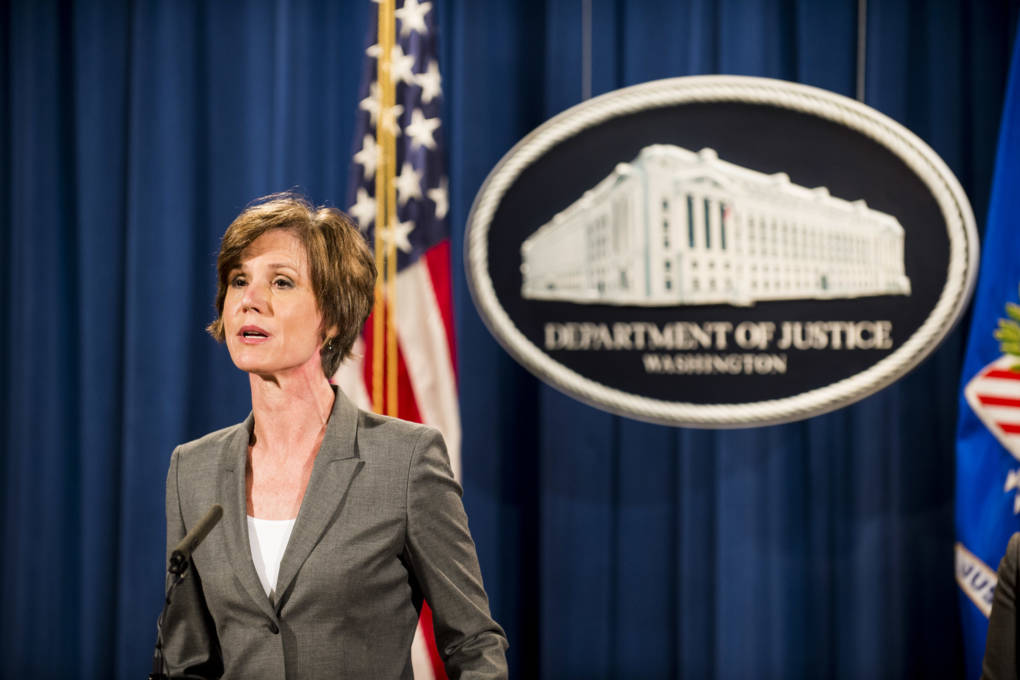
"caption": "Deputy Attorney General Sally Q. Yates speaks during a press conference at the Department of Justice.",
"description": "Deputy Attorney General Sally Q. Yates speaks during a press conference at the Department of Justice.",
"title": "Justice Department, EPA Announce $15 Billion Settlement In VW Emissions Fraud",
"credit": "Pete Marovich/Getty Images",
"status": "inherit",
"isLoading": false,
"fetchFailed": false
},
"news_11293783": {
"type": "attachments",
"id": "news_11293783",
"meta": {
"index": "attachments_1716263798",
"site": "news",
"id": "11293783",
"found": true
},
"parent": 11293781,
"imgSizes": {
"small": {
"file": "https://ww2.kqed.org/app/uploads/sites/10/2017/01/RS20023_GettyImages-537754382-qut-520x347.jpg",
"width": 520,
"mimeType": "image/jpeg",
"height": 347
},
"twentyfourteen-full-width": {
"file": "https://ww2.kqed.org/app/uploads/sites/10/2017/01/RS20023_GettyImages-537754382-qut-1038x576.jpg",
"width": 1038,
"mimeType": "image/jpeg",
"height": 576
},
"thumbnail": {
"file": "https://ww2.kqed.org/app/uploads/sites/10/2017/01/RS20023_GettyImages-537754382-qut-160x107.jpg",
"width": 160,
"mimeType": "image/jpeg",
"height": 107
},
"fd-sm": {
"file": "https://ww2.kqed.org/app/uploads/sites/10/2017/01/RS20023_GettyImages-537754382-qut-960x640.jpg",
"width": 960,
"mimeType": "image/jpeg",
"height": 640
},
"post-thumbnail": {
"file": "https://ww2.kqed.org/app/uploads/sites/10/2017/01/RS20023_GettyImages-537754382-qut-672x372.jpg",
"width": 672,
"mimeType": "image/jpeg",
"height": 372
},
"xsmall": {
"file": "https://ww2.kqed.org/app/uploads/sites/10/2017/01/RS20023_GettyImages-537754382-qut-375x250.jpg",
"width": 375,
"mimeType": "image/jpeg",
"height": 250
},
"kqedFullSize": {
"file": "https://ww2.kqed.org/app/uploads/sites/10/2017/01/RS20023_GettyImages-537754382-qut.jpg",
"width": 1920,
"height": 1280
},
"large": {
"file": "https://ww2.kqed.org/app/uploads/sites/10/2017/01/RS20023_GettyImages-537754382-qut-1020x680.jpg",
"width": 1020,
"mimeType": "image/jpeg",
"height": 680
},
"xlarge": {
"file": "https://ww2.kqed.org/app/uploads/sites/10/2017/01/RS20023_GettyImages-537754382-qut-1180x787.jpg",
"width": 1180,
"mimeType": "image/jpeg",
"height": 787
},
"guest-author-50": {
"file": "https://ww2.kqed.org/app/uploads/sites/10/2017/01/RS20023_GettyImages-537754382-qut-50x50.jpg",
"width": 50,
"mimeType": "image/jpeg",
"height": 50
},
"guest-author-96": {
"file": "https://ww2.kqed.org/app/uploads/sites/10/2017/01/RS20023_GettyImages-537754382-qut-96x96.jpg",
"width": 96,
"mimeType": "image/jpeg",
"height": 96
},
"medium": {
"file": "https://ww2.kqed.org/app/uploads/sites/10/2017/01/RS20023_GettyImages-537754382-qut-800x533.jpg",
"width": 800,
"mimeType": "image/jpeg",
"height": 533
},
"guest-author-64": {
"file": "https://ww2.kqed.org/app/uploads/sites/10/2017/01/RS20023_GettyImages-537754382-qut-64x64.jpg",
"width": 64,
"mimeType": "image/jpeg",
"height": 64
},
"guest-author-32": {
"file": "https://ww2.kqed.org/app/uploads/sites/10/2017/01/RS20023_GettyImages-537754382-qut-32x32.jpg",
"width": 32,
"mimeType": "image/jpeg",
"height": 32
},
"jmtc-small-thumb": {
"file": "https://ww2.kqed.org/app/uploads/sites/10/2017/01/RS20023_GettyImages-537754382-qut-280x150.jpg",
"width": 280,
"mimeType": "image/jpeg",
"height": 150
},
"fd-lrg": {
"file": "https://ww2.kqed.org/app/uploads/sites/10/2017/01/RS20023_GettyImages-537754382-qut-1920x1280.jpg",
"width": 1920,
"mimeType": "image/jpeg",
"height": 1280
},
"fd-med": {
"file": "https://ww2.kqed.org/app/uploads/sites/10/2017/01/RS20023_GettyImages-537754382-qut-1180x787.jpg",
"width": 1180,
"mimeType": "image/jpeg",
"height": 787
},
"full-width": {
"file": "https://ww2.kqed.org/app/uploads/sites/10/2017/01/RS20023_GettyImages-537754382-qut-1920x1280.jpg",
"width": 1920,
"mimeType": "image/jpeg",
"height": 1280
},
"detail": {
"file": "https://ww2.kqed.org/app/uploads/sites/10/2017/01/RS20023_GettyImages-537754382-qut-150x150.jpg",
"width": 150,
"mimeType": "image/jpeg",
"height": 150
},
"guest-author-128": {
"file": "https://ww2.kqed.org/app/uploads/sites/10/2017/01/RS20023_GettyImages-537754382-qut-128x128.jpg",
"width": 128,
"mimeType": "image/jpeg",
"height": 128
},
"xxsmall": {
"file": "https://ww2.kqed.org/app/uploads/sites/10/2017/01/RS20023_GettyImages-537754382-qut-240x160.jpg",
"width": 240,
"mimeType": "image/jpeg",
"height": 160
}
},
"publishDate": 1485823372,
"modified": 1485823443,
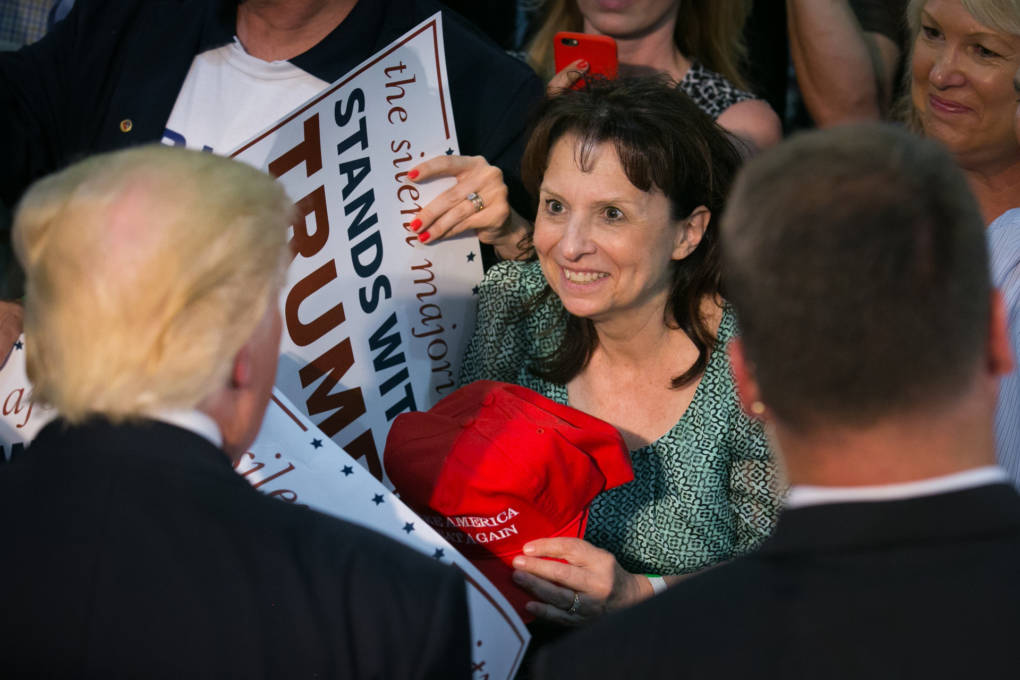
"caption": "A supporter smiles upon meeting Republican Presidential candidate Donald Trump following a campaign rally on June 2, 2016 in San Jose, California.",
"description": "A supporter smiles upon meeting Republican Presidential candidate Donald Trump following a campaign rally on June 2, 2016 in San Jose, California.",
"title": "A supporter smiles upon meeting Republican Presidential candidate Donald Trump following a campaign rally on June 2, 2016 in San Jose, California.",
"credit": "Elijah Nouvelage/Getty Images",
"status": "inherit",
"isLoading": false,
"fetchFailed": false
},
"news_11293475": {
"type": "attachments",
"id": "news_11293475",
"meta": {
"index": "attachments_1716263798",
"site": "news",
"id": "11293475",
"found": true
},
"parent": 11293417,
"imgSizes": {
"small": {
"file": "https://ww2.kqed.org/app/uploads/sites/10/2017/01/GettyImages-632955482-520x347.jpg",
"width": 520,
"mimeType": "image/jpeg",
"height": 347
},
"twentyfourteen-full-width": {
"file": "https://ww2.kqed.org/app/uploads/sites/10/2017/01/GettyImages-632955482-1038x576.jpg",
"width": 1038,
"mimeType": "image/jpeg",
"height": 576
},
"thumbnail": {
"file": "https://ww2.kqed.org/app/uploads/sites/10/2017/01/GettyImages-632955482-160x107.jpg",
"width": 160,
"mimeType": "image/jpeg",
"height": 107
},
"fd-sm": {
"file": "https://ww2.kqed.org/app/uploads/sites/10/2017/01/GettyImages-632955482-960x641.jpg",
"width": 960,
"mimeType": "image/jpeg",
"height": 641
},
"post-thumbnail": {
"file": "https://ww2.kqed.org/app/uploads/sites/10/2017/01/GettyImages-632955482-672x372.jpg",
"width": 672,
"mimeType": "image/jpeg",
"height": 372
},
"xsmall": {
"file": "https://ww2.kqed.org/app/uploads/sites/10/2017/01/GettyImages-632955482-375x250.jpg",
"width": 375,
"mimeType": "image/jpeg",
"height": 250
},
"kqedFullSize": {
"file": "https://ww2.kqed.org/app/uploads/sites/10/2017/01/GettyImages-632955482-e1485806772216.jpg",
"width": 1920,
"height": 1281
},
"large": {
"file": "https://ww2.kqed.org/app/uploads/sites/10/2017/01/GettyImages-632955482-1020x681.jpg",
"width": 1020,
"mimeType": "image/jpeg",
"height": 681
},
"xlarge": {
"file": "https://ww2.kqed.org/app/uploads/sites/10/2017/01/GettyImages-632955482-1180x787.jpg",
"width": 1180,
"mimeType": "image/jpeg",
"height": 787
},
"guest-author-50": {
"file": "https://ww2.kqed.org/app/uploads/sites/10/2017/01/GettyImages-632955482-50x50.jpg",
"width": 50,
"mimeType": "image/jpeg",
"height": 50
},
"guest-author-96": {
"file": "https://ww2.kqed.org/app/uploads/sites/10/2017/01/GettyImages-632955482-96x96.jpg",
"width": 96,
"mimeType": "image/jpeg",
"height": 96
},
"medium": {
"file": "https://ww2.kqed.org/app/uploads/sites/10/2017/01/GettyImages-632955482-800x534.jpg",
"width": 800,
"mimeType": "image/jpeg",
"height": 534
},
"guest-author-64": {
"file": "https://ww2.kqed.org/app/uploads/sites/10/2017/01/GettyImages-632955482-64x64.jpg",
"width": 64,
"mimeType": "image/jpeg",
"height": 64
},
"guest-author-32": {
"file": "https://ww2.kqed.org/app/uploads/sites/10/2017/01/GettyImages-632955482-32x32.jpg",
"width": 32,
"mimeType": "image/jpeg",
"height": 32
},
"jmtc-small-thumb": {
"file": "https://ww2.kqed.org/app/uploads/sites/10/2017/01/GettyImages-632955482-280x150.jpg",
"width": 280,
"mimeType": "image/jpeg",
"height": 150
},
"fd-lrg": {
"file": "https://ww2.kqed.org/app/uploads/sites/10/2017/01/GettyImages-632955482-1920x1281.jpg",
"width": 1920,
"mimeType": "image/jpeg",
"height": 1281
},
"fd-med": {
"file": "https://ww2.kqed.org/app/uploads/sites/10/2017/01/GettyImages-632955482-1180x787.jpg",
"width": 1180,
"mimeType": "image/jpeg",
"height": 787
},
"full-width": {
"file": "https://ww2.kqed.org/app/uploads/sites/10/2017/01/GettyImages-632955482-1920x1281.jpg",
"width": 1920,
"mimeType": "image/jpeg",
"height": 1281
},
"detail": {
"file": "https://ww2.kqed.org/app/uploads/sites/10/2017/01/GettyImages-632955482-150x150.jpg",
"width": 150,
"mimeType": "image/jpeg",
"height": 150
},
"guest-author-128": {
"file": "https://ww2.kqed.org/app/uploads/sites/10/2017/01/GettyImages-632955482-128x128.jpg",
"width": 128,
"mimeType": "image/jpeg",
"height": 128
},
"xxsmall": {
"file": "https://ww2.kqed.org/app/uploads/sites/10/2017/01/GettyImages-632955482-240x160.jpg",
"width": 240,
"mimeType": "image/jpeg",
"height": 160
}
},
"publishDate": 1485806694,
"modified": 1485815468,
"caption": "Protesters rally during a demonstration against the new immigration ban issued by President Donald Trump at John F. Kennedy International Airport on Jan. 28, 2017 in New York City. President Trump signed the controversial executive order that halted refugees and residents from predominantly Muslim countries from entering the United States. ",
"description": "Protestors rally during a demonstration against the new immigration ban issued by President Donald Trump at John F. Kennedy International Airport on January 28, 2017 in New York City. President Trump signed the controversial executive order that halted refugees and residents from predominantly Muslim countries from entering the United States.",
"title": "Protestors Rally At JFK Airport Against Muslim Immigration Ban",
"credit": "Stephanie Keith/Getty Images",
"status": "inherit",
"isLoading": false,
"fetchFailed": false
},
"news_11293405": {
"type": "attachments",
"id": "news_11293405",
"meta": {
"index": "attachments_1716263798",
"site": "news",
"id": "11293405",
"found": true
},
"parent": 11293398,
"imgSizes": {
"small": {
"file": "https://ww2.kqed.org/app/uploads/sites/10/2017/01/GettyImages-633082980-520x347.jpg",
"width": 520,
"mimeType": "image/jpeg",
"height": 347
},
"twentyfourteen-full-width": {
"file": "https://ww2.kqed.org/app/uploads/sites/10/2017/01/GettyImages-633082980-1038x576.jpg",
"width": 1038,
"mimeType": "image/jpeg",
"height": 576
},
"thumbnail": {
"file": "https://ww2.kqed.org/app/uploads/sites/10/2017/01/GettyImages-633082980-160x107.jpg",
"width": 160,
"mimeType": "image/jpeg",
"height": 107
},
"fd-sm": {
"file": "https://ww2.kqed.org/app/uploads/sites/10/2017/01/GettyImages-633082980-960x640.jpg",
"width": 960,
"mimeType": "image/jpeg",
"height": 640
},
"post-thumbnail": {
"file": "https://ww2.kqed.org/app/uploads/sites/10/2017/01/GettyImages-633082980-672x372.jpg",
"width": 672,
"mimeType": "image/jpeg",
"height": 372
},
"xsmall": {
"file": "https://ww2.kqed.org/app/uploads/sites/10/2017/01/GettyImages-633082980-375x250.jpg",
"width": 375,
"mimeType": "image/jpeg",
"height": 250
},
"kqedFullSize": {
"file": "https://ww2.kqed.org/app/uploads/sites/10/2017/01/GettyImages-633082980-e1485804324351.jpg",
"width": 1920,
"height": 1280
},
"large": {
"file": "https://ww2.kqed.org/app/uploads/sites/10/2017/01/GettyImages-633082980-1020x680.jpg",
"width": 1020,
"mimeType": "image/jpeg",
"height": 680
},
"xlarge": {
"file": "https://ww2.kqed.org/app/uploads/sites/10/2017/01/GettyImages-633082980-1180x787.jpg",
"width": 1180,
"mimeType": "image/jpeg",
"height": 787
},
"guest-author-50": {
"file": "https://ww2.kqed.org/app/uploads/sites/10/2017/01/GettyImages-633082980-50x50.jpg",
"width": 50,
"mimeType": "image/jpeg",
"height": 50
},
"guest-author-96": {
"file": "https://ww2.kqed.org/app/uploads/sites/10/2017/01/GettyImages-633082980-96x96.jpg",
"width": 96,
"mimeType": "image/jpeg",
"height": 96
},
"medium": {
"file": "https://ww2.kqed.org/app/uploads/sites/10/2017/01/GettyImages-633082980-800x533.jpg",
"width": 800,
"mimeType": "image/jpeg",
"height": 533
},
"guest-author-64": {
"file": "https://ww2.kqed.org/app/uploads/sites/10/2017/01/GettyImages-633082980-64x64.jpg",
"width": 64,
"mimeType": "image/jpeg",
"height": 64
},
"guest-author-32": {
"file": "https://ww2.kqed.org/app/uploads/sites/10/2017/01/GettyImages-633082980-32x32.jpg",
"width": 32,
"mimeType": "image/jpeg",
"height": 32
},
"jmtc-small-thumb": {
"file": "https://ww2.kqed.org/app/uploads/sites/10/2017/01/GettyImages-633082980-280x150.jpg",
"width": 280,
"mimeType": "image/jpeg",
"height": 150
},
"fd-lrg": {
"file": "https://ww2.kqed.org/app/uploads/sites/10/2017/01/GettyImages-633082980-1920x1280.jpg",
"width": 1920,
"mimeType": "image/jpeg",
"height": 1280
},
"fd-med": {
"file": "https://ww2.kqed.org/app/uploads/sites/10/2017/01/GettyImages-633082980-1180x787.jpg",
"width": 1180,
"mimeType": "image/jpeg",
"height": 787
},
"full-width": {
"file": "https://ww2.kqed.org/app/uploads/sites/10/2017/01/GettyImages-633082980-1920x1280.jpg",
"width": 1920,
"mimeType": "image/jpeg",
"height": 1280
},
"detail": {
"file": "https://ww2.kqed.org/app/uploads/sites/10/2017/01/GettyImages-633082980-150x150.jpg",
"width": 150,
"mimeType": "image/jpeg",
"height": 150
},
"guest-author-128": {
"file": "https://ww2.kqed.org/app/uploads/sites/10/2017/01/GettyImages-633082980-128x128.jpg",
"width": 128,
"mimeType": "image/jpeg",
"height": 128
},
"xxsmall": {
"file": "https://ww2.kqed.org/app/uploads/sites/10/2017/01/GettyImages-633082980-240x160.jpg",
"width": 240,
"mimeType": "image/jpeg",
"height": 160
}
},
"publishDate": 1485804018,
"modified": 1485816899,
"caption": "Actor Mahershala Ali attends the 23rd Annual Screen Actors Guild Awards at Shrine Auditorium on Jan. 29, 2017, in Los Angeles, California. ",
"description": "Actor Mahershala Ali attends The 23rd Annual Screen Actors Guild Awards at The Shrine Auditorium on January 29, 2017 in Los Angeles, California. ",
"title": "The 23rd Annual Screen Actors Guild Awards - Roaming Show",
"credit": "Christopher Polk/Getty Images",
"status": "inherit",
"isLoading": false,
"fetchFailed": false
},
"news_11293403": {
"type": "attachments",
"id": "news_11293403",
"meta": {
"index": "attachments_1716263798",
"site": "news",
"id": "11293403",
"found": true
},
"parent": 11293402,
"imgSizes": {
"small": {
"file": "https://ww2.kqed.org/app/uploads/sites/10/2017/01/gettyimages-633088042_wide-1c9a68a0b54c8a82e93b77e6a9a913adf0d8dad5-520x292.jpg",
"width": 520,
"mimeType": "image/jpeg",
"height": 292
},
"thumbnail": {
"file": "https://ww2.kqed.org/app/uploads/sites/10/2017/01/gettyimages-633088042_wide-1c9a68a0b54c8a82e93b77e6a9a913adf0d8dad5-160x90.jpg",
"width": 160,
"mimeType": "image/jpeg",
"height": 90
},
"fd-sm": {
"file": "https://ww2.kqed.org/app/uploads/sites/10/2017/01/gettyimages-633088042_wide-1c9a68a0b54c8a82e93b77e6a9a913adf0d8dad5-960x539.jpg",
"width": 960,
"mimeType": "image/jpeg",
"height": 539
},
"post-thumbnail": {
"file": "https://ww2.kqed.org/app/uploads/sites/10/2017/01/gettyimages-633088042_wide-1c9a68a0b54c8a82e93b77e6a9a913adf0d8dad5-672x372.jpg",
"width": 672,
"mimeType": "image/jpeg",
"height": 372
},
"xsmall": {
"file": "https://ww2.kqed.org/app/uploads/sites/10/2017/01/gettyimages-633088042_wide-1c9a68a0b54c8a82e93b77e6a9a913adf0d8dad5-375x211.jpg",
"width": 375,
"mimeType": "image/jpeg",
"height": 211
},
"kqedFullSize": {
"file": "https://ww2.kqed.org/app/uploads/sites/10/2017/01/gettyimages-633088042_wide-1c9a68a0b54c8a82e93b77e6a9a913adf0d8dad5.jpg",
"width": 1018,
"height": 572
},
"guest-author-50": {
"file": "https://ww2.kqed.org/app/uploads/sites/10/2017/01/gettyimages-633088042_wide-1c9a68a0b54c8a82e93b77e6a9a913adf0d8dad5-50x50.jpg",
"width": 50,
"mimeType": "image/jpeg",
"height": 50
},
"guest-author-96": {
"file": "https://ww2.kqed.org/app/uploads/sites/10/2017/01/gettyimages-633088042_wide-1c9a68a0b54c8a82e93b77e6a9a913adf0d8dad5-96x96.jpg",
"width": 96,
"mimeType": "image/jpeg",
"height": 96
},
"medium": {
"file": "https://ww2.kqed.org/app/uploads/sites/10/2017/01/gettyimages-633088042_wide-1c9a68a0b54c8a82e93b77e6a9a913adf0d8dad5-800x450.jpg",
"width": 800,
"mimeType": "image/jpeg",
"height": 450
},
"guest-author-64": {
"file": "https://ww2.kqed.org/app/uploads/sites/10/2017/01/gettyimages-633088042_wide-1c9a68a0b54c8a82e93b77e6a9a913adf0d8dad5-64x64.jpg",
"width": 64,
"mimeType": "image/jpeg",
"height": 64
},
"guest-author-32": {
"file": "https://ww2.kqed.org/app/uploads/sites/10/2017/01/gettyimages-633088042_wide-1c9a68a0b54c8a82e93b77e6a9a913adf0d8dad5-32x32.jpg",
"width": 32,
"mimeType": "image/jpeg",
"height": 32
},
"jmtc-small-thumb": {
"file": "https://ww2.kqed.org/app/uploads/sites/10/2017/01/gettyimages-633088042_wide-1c9a68a0b54c8a82e93b77e6a9a913adf0d8dad5-280x150.jpg",
"width": 280,
"mimeType": "image/jpeg",
"height": 150
},
"detail": {
"file": "https://ww2.kqed.org/app/uploads/sites/10/2017/01/gettyimages-633088042_wide-1c9a68a0b54c8a82e93b77e6a9a913adf0d8dad5-150x150.jpg",
"width": 150,
"mimeType": "image/jpeg",
"height": 150
},
"guest-author-128": {
"file": "https://ww2.kqed.org/app/uploads/sites/10/2017/01/gettyimages-633088042_wide-1c9a68a0b54c8a82e93b77e6a9a913adf0d8dad5-128x128.jpg",
"width": 128,
"mimeType": "image/jpeg",
"height": 128
},
"xxsmall": {
"file": "https://ww2.kqed.org/app/uploads/sites/10/2017/01/gettyimages-633088042_wide-1c9a68a0b54c8a82e93b77e6a9a913adf0d8dad5-240x135.jpg",
"width": 240,
"mimeType": "image/jpeg",
"height": 135
}
},
"publishDate": 1485803860,
"modified": 1485803892,
"caption": "President Trump signs an executive action in the Oval Office of the White House on Monday in Washington, D.C., saying he will \"dramatically\" reduce small business regulations overall.",
"description": "President Trump signs an executive action in the Oval Office of the White House on Monday in Washington, D.C., saying he will \"dramatically\" reduce small business regulations overall.",
"title": "President Trump signs an executive action in the Oval Office of the White House on Monday in Washington, D.C., saying he will \"dramatically\" reduce small business regulations overall.",
"credit": "Andrew Harrer/Getty Images",
"status": "inherit",
"isLoading": false,
"fetchFailed": false
},
"news_11289288": {
"type": "attachments",
"id": "news_11289288",
"meta": {
"index": "attachments_1716263798",
"site": "news",
"id": "11289288",
"found": true
},
"parent": 11289188,
"imgSizes": {
"small": {
"file": "https://ww2.kqed.org/app/uploads/sites/10/2017/01/BenCarson-520x334.jpg",
"width": 520,
"mimeType": "image/jpeg",
"height": 334
},
"twentyfourteen-full-width": {
"file": "https://ww2.kqed.org/app/uploads/sites/10/2017/01/BenCarson-1038x576.jpg",
"width": 1038,
"mimeType": "image/jpeg",
"height": 576
},
"thumbnail": {
"file": "https://ww2.kqed.org/app/uploads/sites/10/2017/01/BenCarson-160x103.jpg",
"width": 160,
"mimeType": "image/jpeg",
"height": 103
},
"fd-sm": {
"file": "https://ww2.kqed.org/app/uploads/sites/10/2017/01/BenCarson-960x616.jpg",
"width": 960,
"mimeType": "image/jpeg",
"height": 616
},
"post-thumbnail": {
"file": "https://ww2.kqed.org/app/uploads/sites/10/2017/01/BenCarson-672x372.jpg",
"width": 672,
"mimeType": "image/jpeg",
"height": 372
},
"xsmall": {
"file": "https://ww2.kqed.org/app/uploads/sites/10/2017/01/BenCarson-375x241.jpg",
"width": 375,
"mimeType": "image/jpeg",
"height": 241
},
"kqedFullSize": {
"file": "https://ww2.kqed.org/app/uploads/sites/10/2017/01/BenCarson.jpg",
"width": 1920,
"height": 1232
},
"large": {
"file": "https://ww2.kqed.org/app/uploads/sites/10/2017/01/BenCarson-1020x655.jpg",
"width": 1020,
"mimeType": "image/jpeg",
"height": 655
},
"xlarge": {
"file": "https://ww2.kqed.org/app/uploads/sites/10/2017/01/BenCarson-1180x757.jpg",
"width": 1180,
"mimeType": "image/jpeg",
"height": 757
},
"guest-author-50": {
"file": "https://ww2.kqed.org/app/uploads/sites/10/2017/01/BenCarson-50x50.jpg",
"width": 50,
"mimeType": "image/jpeg",
"height": 50
},
"guest-author-96": {
"file": "https://ww2.kqed.org/app/uploads/sites/10/2017/01/BenCarson-96x96.jpg",
"width": 96,
"mimeType": "image/jpeg",
"height": 96
},
"medium": {
"file": "https://ww2.kqed.org/app/uploads/sites/10/2017/01/BenCarson-800x513.jpg",
"width": 800,
"mimeType": "image/jpeg",
"height": 513
},
"guest-author-64": {
"file": "https://ww2.kqed.org/app/uploads/sites/10/2017/01/BenCarson-64x64.jpg",
"width": 64,
"mimeType": "image/jpeg",
"height": 64
},
"guest-author-32": {
"file": "https://ww2.kqed.org/app/uploads/sites/10/2017/01/BenCarson-32x32.jpg",
"width": 32,
"mimeType": "image/jpeg",
"height": 32
},
"jmtc-small-thumb": {
"file": "https://ww2.kqed.org/app/uploads/sites/10/2017/01/BenCarson-280x150.jpg",
"width": 280,
"mimeType": "image/jpeg",
"height": 150
},
"fd-lrg": {
"file": "https://ww2.kqed.org/app/uploads/sites/10/2017/01/BenCarson-1920x1232.jpg",
"width": 1920,
"mimeType": "image/jpeg",
"height": 1232
},
"fd-med": {
"file": "https://ww2.kqed.org/app/uploads/sites/10/2017/01/BenCarson-1180x757.jpg",
"width": 1180,
"mimeType": "image/jpeg",
"height": 757
},
"full-width": {
"file": "https://ww2.kqed.org/app/uploads/sites/10/2017/01/BenCarson-1920x1232.jpg",
"width": 1920,
"mimeType": "image/jpeg",
"height": 1232
},
"detail": {
"file": "https://ww2.kqed.org/app/uploads/sites/10/2017/01/BenCarson-150x150.jpg",
"width": 150,
"mimeType": "image/jpeg",
"height": 150
},
"guest-author-128": {
"file": "https://ww2.kqed.org/app/uploads/sites/10/2017/01/BenCarson-128x128.jpg",
"width": 128,
"mimeType": "image/jpeg",
"height": 128
},
"xxsmall": {
"file": "https://ww2.kqed.org/app/uploads/sites/10/2017/01/BenCarson-240x154.jpg",
"width": 240,
"mimeType": "image/jpeg",
"height": 154
}
},
"publishDate": 1485556647,
"modified": 1485560499,
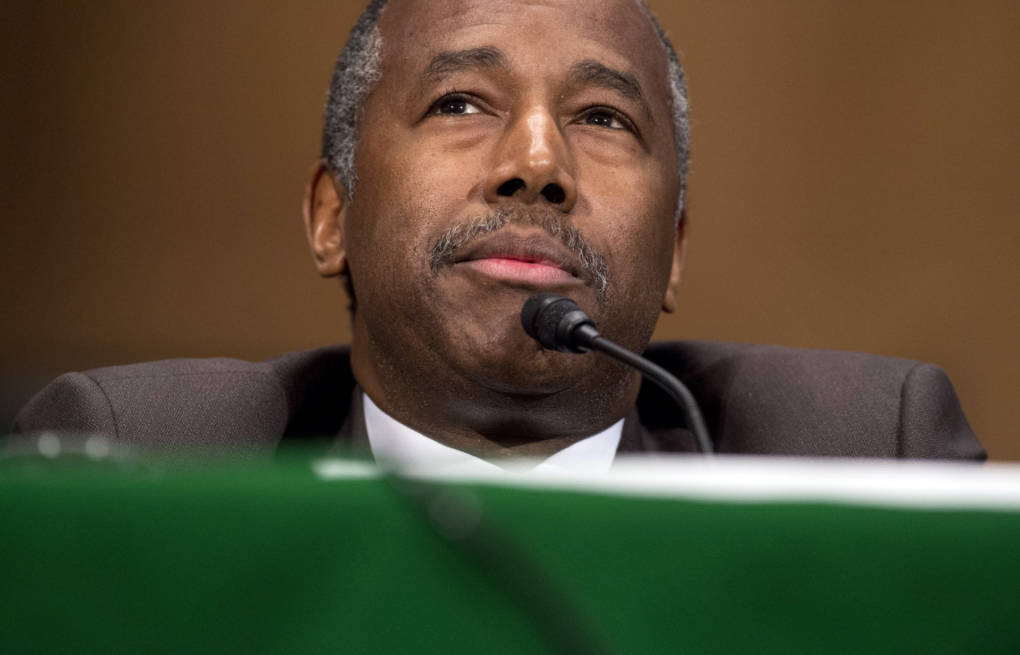
"caption": "Ben Carson testifies during his Senate confirmation hearing for secretary of Housing and Urban Development (HUD) on Jan. 12, 2017.",
"description": "Ben Carson testifies during his Senate confirmation hearing for Secretary of Housing and Urban Development (HUD) on Jan. 12, 2017.",
"title": "BenCarson",
"credit": "Saul Loeb/AFP/Getty Images",
"status": "inherit",
"isLoading": false,
"fetchFailed": false
},
"news_11292300": {
"type": "attachments",
"id": "news_11292300",
"meta": {
"index": "attachments_1716263798",
"site": "news",
"id": "11292300",
"found": true
},
"parent": 11292235,
"imgSizes": {
"small": {
"file": "https://ww2.kqed.org/app/uploads/sites/10/2017/01/RS23928_GettyImages-633034344-qut-520x347.jpg",
"width": 520,
"mimeType": "image/jpeg",
"height": 347
},
"twentyfourteen-full-width": {
"file": "https://ww2.kqed.org/app/uploads/sites/10/2017/01/RS23928_GettyImages-633034344-qut-1038x576.jpg",
"width": 1038,
"mimeType": "image/jpeg",
"height": 576
},
"thumbnail": {
"file": "https://ww2.kqed.org/app/uploads/sites/10/2017/01/RS23928_GettyImages-633034344-qut-160x107.jpg",
"width": 160,
"mimeType": "image/jpeg",
"height": 107
},
"fd-sm": {
"file": "https://ww2.kqed.org/app/uploads/sites/10/2017/01/RS23928_GettyImages-633034344-qut-960x640.jpg",
"width": 960,
"mimeType": "image/jpeg",
"height": 640
},
"post-thumbnail": {
"file": "https://ww2.kqed.org/app/uploads/sites/10/2017/01/RS23928_GettyImages-633034344-qut-672x372.jpg",
"width": 672,
"mimeType": "image/jpeg",
"height": 372
},
"xsmall": {
"file": "https://ww2.kqed.org/app/uploads/sites/10/2017/01/RS23928_GettyImages-633034344-qut-375x250.jpg",
"width": 375,
"mimeType": "image/jpeg",
"height": 250
},
"kqedFullSize": {
"file": "https://ww2.kqed.org/app/uploads/sites/10/2017/01/RS23928_GettyImages-633034344-qut.jpg",
"width": 1920,
"height": 1280
},
"large": {
"file": "https://ww2.kqed.org/app/uploads/sites/10/2017/01/RS23928_GettyImages-633034344-qut-1020x680.jpg",
"width": 1020,
"mimeType": "image/jpeg",
"height": 680
},
"xlarge": {
"file": "https://ww2.kqed.org/app/uploads/sites/10/2017/01/RS23928_GettyImages-633034344-qut-1180x787.jpg",
"width": 1180,
"mimeType": "image/jpeg",
"height": 787
},
"guest-author-50": {
"file": "https://ww2.kqed.org/app/uploads/sites/10/2017/01/RS23928_GettyImages-633034344-qut-50x50.jpg",
"width": 50,
"mimeType": "image/jpeg",
"height": 50
},
"guest-author-96": {
"file": "https://ww2.kqed.org/app/uploads/sites/10/2017/01/RS23928_GettyImages-633034344-qut-96x96.jpg",
"width": 96,
"mimeType": "image/jpeg",
"height": 96
},
"medium": {
"file": "https://ww2.kqed.org/app/uploads/sites/10/2017/01/RS23928_GettyImages-633034344-qut-800x533.jpg",
"width": 800,
"mimeType": "image/jpeg",
"height": 533
},
"guest-author-64": {
"file": "https://ww2.kqed.org/app/uploads/sites/10/2017/01/RS23928_GettyImages-633034344-qut-64x64.jpg",
"width": 64,
"mimeType": "image/jpeg",
"height": 64
},
"guest-author-32": {
"file": "https://ww2.kqed.org/app/uploads/sites/10/2017/01/RS23928_GettyImages-633034344-qut-32x32.jpg",
"width": 32,
"mimeType": "image/jpeg",
"height": 32
},
"jmtc-small-thumb": {
"file": "https://ww2.kqed.org/app/uploads/sites/10/2017/01/RS23928_GettyImages-633034344-qut-280x150.jpg",
"width": 280,
"mimeType": "image/jpeg",
"height": 150
},
"fd-lrg": {
"file": "https://ww2.kqed.org/app/uploads/sites/10/2017/01/RS23928_GettyImages-633034344-qut-1920x1280.jpg",
"width": 1920,
"mimeType": "image/jpeg",
"height": 1280
},
"fd-med": {
"file": "https://ww2.kqed.org/app/uploads/sites/10/2017/01/RS23928_GettyImages-633034344-qut-1180x787.jpg",
"width": 1180,
"mimeType": "image/jpeg",
"height": 787
},
"full-width": {
"file": "https://ww2.kqed.org/app/uploads/sites/10/2017/01/RS23928_GettyImages-633034344-qut-1920x1280.jpg",
"width": 1920,
"mimeType": "image/jpeg",
"height": 1280
},
"detail": {
"file": "https://ww2.kqed.org/app/uploads/sites/10/2017/01/RS23928_GettyImages-633034344-qut-150x150.jpg",
"width": 150,
"mimeType": "image/jpeg",
"height": 150
},
"guest-author-128": {
"file": "https://ww2.kqed.org/app/uploads/sites/10/2017/01/RS23928_GettyImages-633034344-qut-128x128.jpg",
"width": 128,
"mimeType": "image/jpeg",
"height": 128
},
"xxsmall": {
"file": "https://ww2.kqed.org/app/uploads/sites/10/2017/01/RS23928_GettyImages-633034344-qut-240x160.jpg",
"width": 240,
"mimeType": "image/jpeg",
"height": 160
}
},
"publishDate": 1485734633,
"modified": 1485903699,
"caption": "Protesters at Los Angeles International Airport on Jan. 29, 2017, hold signs during a rally against the immigration ban imposed by U.S. President Donald Trump. ",
"description": "Protesters hold signs during a rally against the immigration ban imposed by U.S. President Donald Trump on Jan. 29, 2017 at Los Angeles International Airport. ",
"title": "RS23928_GettyImages-633034344-qut",
"credit": "Justin Sullivan/Getty Images",
"status": "inherit",
"isLoading": false,
"fetchFailed": false
},
"news_11292297": {
"type": "attachments",
"id": "news_11292297",
"meta": {
"index": "attachments_1716263798",
"site": "news",
"id": "11292297",
"found": true
},
"parent": 11292235,
"imgSizes": {
"small": {
"file": "https://ww2.kqed.org/app/uploads/sites/10/2017/01/RS23923_GettyImages-633030772-qut-1-520x326.jpg",
"width": 520,
"mimeType": "image/jpeg",
"height": 326
},
"twentyfourteen-full-width": {
"file": "https://ww2.kqed.org/app/uploads/sites/10/2017/01/RS23923_GettyImages-633030772-qut-1-1038x576.jpg",
"width": 1038,
"mimeType": "image/jpeg",
"height": 576
},
"thumbnail": {
"file": "https://ww2.kqed.org/app/uploads/sites/10/2017/01/RS23923_GettyImages-633030772-qut-1-160x100.jpg",
"width": 160,
"mimeType": "image/jpeg",
"height": 100
},
"fd-sm": {
"file": "https://ww2.kqed.org/app/uploads/sites/10/2017/01/RS23923_GettyImages-633030772-qut-1-960x602.jpg",
"width": 960,
"mimeType": "image/jpeg",
"height": 602
},
"post-thumbnail": {
"file": "https://ww2.kqed.org/app/uploads/sites/10/2017/01/RS23923_GettyImages-633030772-qut-1-672x372.jpg",
"width": 672,
"mimeType": "image/jpeg",
"height": 372
},
"xsmall": {
"file": "https://ww2.kqed.org/app/uploads/sites/10/2017/01/RS23923_GettyImages-633030772-qut-1-375x235.jpg",
"width": 375,
"mimeType": "image/jpeg",
"height": 235
},
"kqedFullSize": {
"file": "https://ww2.kqed.org/app/uploads/sites/10/2017/01/RS23923_GettyImages-633030772-qut-1.jpg",
"width": 1920,
"height": 1203
},
"large": {
"file": "https://ww2.kqed.org/app/uploads/sites/10/2017/01/RS23923_GettyImages-633030772-qut-1-1020x639.jpg",
"width": 1020,
"mimeType": "image/jpeg",
"height": 639
},
"xlarge": {
"file": "https://ww2.kqed.org/app/uploads/sites/10/2017/01/RS23923_GettyImages-633030772-qut-1-1180x739.jpg",
"width": 1180,
"mimeType": "image/jpeg",
"height": 739
},
"guest-author-50": {
"file": "https://ww2.kqed.org/app/uploads/sites/10/2017/01/RS23923_GettyImages-633030772-qut-1-50x50.jpg",
"width": 50,
"mimeType": "image/jpeg",
"height": 50
},
"guest-author-96": {
"file": "https://ww2.kqed.org/app/uploads/sites/10/2017/01/RS23923_GettyImages-633030772-qut-1-96x96.jpg",
"width": 96,
"mimeType": "image/jpeg",
"height": 96
},
"medium": {
"file": "https://ww2.kqed.org/app/uploads/sites/10/2017/01/RS23923_GettyImages-633030772-qut-1-800x501.jpg",
"width": 800,
"mimeType": "image/jpeg",
"height": 501
},
"guest-author-64": {
"file": "https://ww2.kqed.org/app/uploads/sites/10/2017/01/RS23923_GettyImages-633030772-qut-1-64x64.jpg",
"width": 64,
"mimeType": "image/jpeg",
"height": 64
},
"guest-author-32": {
"file": "https://ww2.kqed.org/app/uploads/sites/10/2017/01/RS23923_GettyImages-633030772-qut-1-32x32.jpg",
"width": 32,
"mimeType": "image/jpeg",
"height": 32
},
"jmtc-small-thumb": {
"file": "https://ww2.kqed.org/app/uploads/sites/10/2017/01/RS23923_GettyImages-633030772-qut-1-280x150.jpg",
"width": 280,
"mimeType": "image/jpeg",
"height": 150
},
"fd-lrg": {
"file": "https://ww2.kqed.org/app/uploads/sites/10/2017/01/RS23923_GettyImages-633030772-qut-1-1920x1203.jpg",
"width": 1920,
"mimeType": "image/jpeg",
"height": 1203
},
"fd-med": {
"file": "https://ww2.kqed.org/app/uploads/sites/10/2017/01/RS23923_GettyImages-633030772-qut-1-1180x739.jpg",
"width": 1180,
"mimeType": "image/jpeg",
"height": 739
},
"full-width": {
"file": "https://ww2.kqed.org/app/uploads/sites/10/2017/01/RS23923_GettyImages-633030772-qut-1-1920x1203.jpg",
"width": 1920,
"mimeType": "image/jpeg",
"height": 1203
},
"detail": {
"file": "https://ww2.kqed.org/app/uploads/sites/10/2017/01/RS23923_GettyImages-633030772-qut-1-150x150.jpg",
"width": 150,
"mimeType": "image/jpeg",
"height": 150
},
"guest-author-128": {
"file": "https://ww2.kqed.org/app/uploads/sites/10/2017/01/RS23923_GettyImages-633030772-qut-1-128x128.jpg",
"width": 128,
"mimeType": "image/jpeg",
"height": 128
},
"xxsmall": {
"file": "https://ww2.kqed.org/app/uploads/sites/10/2017/01/RS23923_GettyImages-633030772-qut-1-240x150.jpg",
"width": 240,
"mimeType": "image/jpeg",
"height": 150
}
},
"publishDate": 1485734214,
"modified": 1485734257,
"caption": "Protesters hold signs up during a protest at San Francisco International Airport in San Francisco, California on January 29, 2017.",
"description": null,
"title": "RS23923_GettyImages-633030772-qut (1)",
"credit": "JOSH EDELSON/AFP/Getty Images",
"status": "inherit",
"isLoading": false,
"fetchFailed": false
},
"news_11292112": {
"type": "attachments",
"id": "news_11292112",
"meta": {
"index": "attachments_1716263798",
"site": "news",
"id": "11292112",
"found": true
},
"parent": 11292111,
"imgSizes": {
"small": {
"file": "https://ww2.kqed.org/app/uploads/sites/10/2017/01/gettyimages-632966090-c688568e6e900e3b31e6dd53d5a0c6ab819738f3-520x390.jpg",
"width": 520,
"mimeType": "image/jpeg",
"height": 390
},
"twentyfourteen-full-width": {
"file": "https://ww2.kqed.org/app/uploads/sites/10/2017/01/gettyimages-632966090-c688568e6e900e3b31e6dd53d5a0c6ab819738f3-1038x576.jpg",
"width": 1038,
"mimeType": "image/jpeg",
"height": 576
},
"thumbnail": {
"file": "https://ww2.kqed.org/app/uploads/sites/10/2017/01/gettyimages-632966090-c688568e6e900e3b31e6dd53d5a0c6ab819738f3-160x120.jpg",
"width": 160,
"mimeType": "image/jpeg",
"height": 120
},
"fd-sm": {
"file": "https://ww2.kqed.org/app/uploads/sites/10/2017/01/gettyimages-632966090-c688568e6e900e3b31e6dd53d5a0c6ab819738f3-960x720.jpg",
"width": 960,
"mimeType": "image/jpeg",
"height": 720
},
"post-thumbnail": {
"file": "https://ww2.kqed.org/app/uploads/sites/10/2017/01/gettyimages-632966090-c688568e6e900e3b31e6dd53d5a0c6ab819738f3-672x372.jpg",
"width": 672,
"mimeType": "image/jpeg",
"height": 372
},
"xsmall": {
"file": "https://ww2.kqed.org/app/uploads/sites/10/2017/01/gettyimages-632966090-c688568e6e900e3b31e6dd53d5a0c6ab819738f3-375x281.jpg",
"width": 375,
"mimeType": "image/jpeg",
"height": 281
},
"kqedFullSize": {
"file": "https://ww2.kqed.org/app/uploads/sites/10/2017/01/gettyimages-632966090-c688568e6e900e3b31e6dd53d5a0c6ab819738f3-e1485724841898.jpg",
"width": 1920,
"height": 1440
},
"large": {
"file": "https://ww2.kqed.org/app/uploads/sites/10/2017/01/gettyimages-632966090-c688568e6e900e3b31e6dd53d5a0c6ab819738f3-1020x765.jpg",
"width": 1020,
"mimeType": "image/jpeg",
"height": 765
},
"xlarge": {
"file": "https://ww2.kqed.org/app/uploads/sites/10/2017/01/gettyimages-632966090-c688568e6e900e3b31e6dd53d5a0c6ab819738f3-1180x885.jpg",
"width": 1180,
"mimeType": "image/jpeg",
"height": 885
},
"guest-author-50": {
"file": "https://ww2.kqed.org/app/uploads/sites/10/2017/01/gettyimages-632966090-c688568e6e900e3b31e6dd53d5a0c6ab819738f3-50x50.jpg",
"width": 50,
"mimeType": "image/jpeg",
"height": 50
},
"guest-author-96": {
"file": "https://ww2.kqed.org/app/uploads/sites/10/2017/01/gettyimages-632966090-c688568e6e900e3b31e6dd53d5a0c6ab819738f3-96x96.jpg",
"width": 96,
"mimeType": "image/jpeg",
"height": 96
},
"medium": {
"file": "https://ww2.kqed.org/app/uploads/sites/10/2017/01/gettyimages-632966090-c688568e6e900e3b31e6dd53d5a0c6ab819738f3-800x600.jpg",
"width": 800,
"mimeType": "image/jpeg",
"height": 600
},
"guest-author-64": {
"file": "https://ww2.kqed.org/app/uploads/sites/10/2017/01/gettyimages-632966090-c688568e6e900e3b31e6dd53d5a0c6ab819738f3-64x64.jpg",
"width": 64,
"mimeType": "image/jpeg",
"height": 64
},
"guest-author-32": {
"file": "https://ww2.kqed.org/app/uploads/sites/10/2017/01/gettyimages-632966090-c688568e6e900e3b31e6dd53d5a0c6ab819738f3-32x32.jpg",
"width": 32,
"mimeType": "image/jpeg",
"height": 32
},
"jmtc-small-thumb": {
"file": "https://ww2.kqed.org/app/uploads/sites/10/2017/01/gettyimages-632966090-c688568e6e900e3b31e6dd53d5a0c6ab819738f3-280x150.jpg",
"width": 280,
"mimeType": "image/jpeg",
"height": 150
},
"fd-lrg": {
"file": "https://ww2.kqed.org/app/uploads/sites/10/2017/01/gettyimages-632966090-c688568e6e900e3b31e6dd53d5a0c6ab819738f3-1920x1440.jpg",
"width": 1920,
"mimeType": "image/jpeg",
"height": 1440
},
"fd-med": {
"file": "https://ww2.kqed.org/app/uploads/sites/10/2017/01/gettyimages-632966090-c688568e6e900e3b31e6dd53d5a0c6ab819738f3-1180x885.jpg",
"width": 1180,
"mimeType": "image/jpeg",
"height": 885
},
"full-width": {
"file": "https://ww2.kqed.org/app/uploads/sites/10/2017/01/gettyimages-632966090-c688568e6e900e3b31e6dd53d5a0c6ab819738f3-1920x1440.jpg",
"width": 1920,
"mimeType": "image/jpeg",
"height": 1440
},
"detail": {
"file": "https://ww2.kqed.org/app/uploads/sites/10/2017/01/gettyimages-632966090-c688568e6e900e3b31e6dd53d5a0c6ab819738f3-150x150.jpg",
"width": 150,
"mimeType": "image/jpeg",
"height": 150
},
"guest-author-128": {
"file": "https://ww2.kqed.org/app/uploads/sites/10/2017/01/gettyimages-632966090-c688568e6e900e3b31e6dd53d5a0c6ab819738f3-128x128.jpg",
"width": 128,
"mimeType": "image/jpeg",
"height": 128
},
"xxsmall": {
"file": "https://ww2.kqed.org/app/uploads/sites/10/2017/01/gettyimages-632966090-c688568e6e900e3b31e6dd53d5a0c6ab819738f3-240x180.jpg",
"width": 240,
"mimeType": "image/jpeg",
"height": 180
}
},
"publishDate": 1485723609,
"modified": 1485724834,
"caption": "Demonstrators at Dallas-Fort Worth International Airport gather on Saturday to protest President Trump's executive order temporarily barred refugees and citizens of seven countries.",
"description": "Demonstrators at Dallas-Fort Worth International Airport gather on Saturday to protest President Trump's executive order temporarily barred refugees and citizens of seven countries.",
"title": "gettyimages-632966090-c688568e6e900e3b31e6dd53d5a0c6ab819738f3",
"credit": "G. Morty Ortega/Getty Images",
"status": "inherit",
"isLoading": false,
"fetchFailed": false
},
"news_11291236": {
"type": "attachments",
"id": "news_11291236",
"meta": {
"index": "attachments_1716263798",
"site": "news",
"id": "11291236",
"found": true
},
"parent": 11291235,
"imgSizes": {
"small": {
"file": "https://ww2.kqed.org/app/uploads/sites/10/2017/01/GettyImages-632935736-520x347.jpg",
"width": 520,
"mimeType": "image/jpeg",
"height": 347
},
"twentyfourteen-full-width": {
"file": "https://ww2.kqed.org/app/uploads/sites/10/2017/01/GettyImages-632935736-1038x576.jpg",
"width": 1038,
"mimeType": "image/jpeg",
"height": 576
},
"thumbnail": {
"file": "https://ww2.kqed.org/app/uploads/sites/10/2017/01/GettyImages-632935736-160x107.jpg",
"width": 160,
"mimeType": "image/jpeg",
"height": 107
},
"fd-sm": {
"file": "https://ww2.kqed.org/app/uploads/sites/10/2017/01/GettyImages-632935736-960x640.jpg",
"width": 960,
"mimeType": "image/jpeg",
"height": 640
},
"post-thumbnail": {
"file": "https://ww2.kqed.org/app/uploads/sites/10/2017/01/GettyImages-632935736-672x372.jpg",
"width": 672,
"mimeType": "image/jpeg",
"height": 372
},
"xsmall": {
"file": "https://ww2.kqed.org/app/uploads/sites/10/2017/01/GettyImages-632935736-375x250.jpg",
"width": 375,
"mimeType": "image/jpeg",
"height": 250
},
"kqedFullSize": {
"file": "https://ww2.kqed.org/app/uploads/sites/10/2017/01/GettyImages-632935736-e1485668712291.jpg",
"width": 1920,
"height": 1280
},
"large": {
"file": "https://ww2.kqed.org/app/uploads/sites/10/2017/01/GettyImages-632935736-1020x680.jpg",
"width": 1020,
"mimeType": "image/jpeg",
"height": 680
},
"xlarge": {
"file": "https://ww2.kqed.org/app/uploads/sites/10/2017/01/GettyImages-632935736-1180x787.jpg",
"width": 1180,
"mimeType": "image/jpeg",
"height": 787
},
"guest-author-50": {
"file": "https://ww2.kqed.org/app/uploads/sites/10/2017/01/GettyImages-632935736-50x50.jpg",
"width": 50,
"mimeType": "image/jpeg",
"height": 50
},
"guest-author-96": {
"file": "https://ww2.kqed.org/app/uploads/sites/10/2017/01/GettyImages-632935736-96x96.jpg",
"width": 96,
"mimeType": "image/jpeg",
"height": 96
},
"medium": {
"file": "https://ww2.kqed.org/app/uploads/sites/10/2017/01/GettyImages-632935736-800x533.jpg",
"width": 800,
"mimeType": "image/jpeg",
"height": 533
},
"guest-author-64": {
"file": "https://ww2.kqed.org/app/uploads/sites/10/2017/01/GettyImages-632935736-64x64.jpg",
"width": 64,
"mimeType": "image/jpeg",
"height": 64
},
"guest-author-32": {
"file": "https://ww2.kqed.org/app/uploads/sites/10/2017/01/GettyImages-632935736-32x32.jpg",
"width": 32,
"mimeType": "image/jpeg",
"height": 32
},
"jmtc-small-thumb": {
"file": "https://ww2.kqed.org/app/uploads/sites/10/2017/01/GettyImages-632935736-280x150.jpg",
"width": 280,
"mimeType": "image/jpeg",
"height": 150
},
"fd-lrg": {
"file": "https://ww2.kqed.org/app/uploads/sites/10/2017/01/GettyImages-632935736-1920x1280.jpg",
"width": 1920,
"mimeType": "image/jpeg",
"height": 1280
},
"fd-med": {
"file": "https://ww2.kqed.org/app/uploads/sites/10/2017/01/GettyImages-632935736-1180x787.jpg",
"width": 1180,
"mimeType": "image/jpeg",
"height": 787
},
"full-width": {
"file": "https://ww2.kqed.org/app/uploads/sites/10/2017/01/GettyImages-632935736-1920x1280.jpg",
"width": 1920,
"mimeType": "image/jpeg",
"height": 1280
},
"detail": {
"file": "https://ww2.kqed.org/app/uploads/sites/10/2017/01/GettyImages-632935736-150x150.jpg",
"width": 150,
"mimeType": "image/jpeg",
"height": 150
},
"guest-author-128": {
"file": "https://ww2.kqed.org/app/uploads/sites/10/2017/01/GettyImages-632935736-128x128.jpg",
"width": 128,
"mimeType": "image/jpeg",
"height": 128
},
"xxsmall": {
"file": "https://ww2.kqed.org/app/uploads/sites/10/2017/01/GettyImages-632935736-240x160.jpg",
"width": 240,
"mimeType": "image/jpeg",
"height": 160
}
},
"publishDate": 1485668556,
"modified": 1485668705,
"caption": "President Trump holds up one of his latest round of executive actions on Saturday in the Oval Office. ",
"description": null,
"title": "Donald Trump-Executive Orders",
"credit": "Pete Marovich/Pool-Getty Ima",
"status": "inherit",
"isLoading": false,
"fetchFailed": false
},
"news_11291086": {
"type": "attachments",
"id": "news_11291086",
"meta": {
"index": "attachments_1716263798",
"site": "news",
"id": "11291086",
"found": true
},
"parent": 11291084,
"imgSizes": {
"small": {
"file": "https://ww2.kqed.org/app/uploads/sites/10/2017/01/RS23905_GettyImages-632947106-qut-520x347.jpg",
"width": 520,
"mimeType": "image/jpeg",
"height": 347
},
"twentyfourteen-full-width": {
"file": "https://ww2.kqed.org/app/uploads/sites/10/2017/01/RS23905_GettyImages-632947106-qut-1038x576.jpg",
"width": 1038,
"mimeType": "image/jpeg",
"height": 576
},
"thumbnail": {
"file": "https://ww2.kqed.org/app/uploads/sites/10/2017/01/RS23905_GettyImages-632947106-qut-160x107.jpg",
"width": 160,
"mimeType": "image/jpeg",
"height": 107
},
"fd-sm": {
"file": "https://ww2.kqed.org/app/uploads/sites/10/2017/01/RS23905_GettyImages-632947106-qut-960x640.jpg",
"width": 960,
"mimeType": "image/jpeg",
"height": 640
},
"post-thumbnail": {
"file": "https://ww2.kqed.org/app/uploads/sites/10/2017/01/RS23905_GettyImages-632947106-qut-672x372.jpg",
"width": 672,
"mimeType": "image/jpeg",
"height": 372
},
"xsmall": {
"file": "https://ww2.kqed.org/app/uploads/sites/10/2017/01/RS23905_GettyImages-632947106-qut-375x250.jpg",
"width": 375,
"mimeType": "image/jpeg",
"height": 250
},
"kqedFullSize": {
"file": "https://ww2.kqed.org/app/uploads/sites/10/2017/01/RS23905_GettyImages-632947106-qut.jpg",
"width": 1920,
"height": 1280
},
"large": {
"file": "https://ww2.kqed.org/app/uploads/sites/10/2017/01/RS23905_GettyImages-632947106-qut-1020x680.jpg",
"width": 1020,
"mimeType": "image/jpeg",
"height": 680
},
"xlarge": {
"file": "https://ww2.kqed.org/app/uploads/sites/10/2017/01/RS23905_GettyImages-632947106-qut-1180x787.jpg",
"width": 1180,
"mimeType": "image/jpeg",
"height": 787
},
"guest-author-50": {
"file": "https://ww2.kqed.org/app/uploads/sites/10/2017/01/RS23905_GettyImages-632947106-qut-50x50.jpg",
"width": 50,
"mimeType": "image/jpeg",
"height": 50
},
"guest-author-96": {
"file": "https://ww2.kqed.org/app/uploads/sites/10/2017/01/RS23905_GettyImages-632947106-qut-96x96.jpg",
"width": 96,
"mimeType": "image/jpeg",
"height": 96
},
"medium": {
"file": "https://ww2.kqed.org/app/uploads/sites/10/2017/01/RS23905_GettyImages-632947106-qut-800x533.jpg",
"width": 800,
"mimeType": "image/jpeg",
"height": 533
},
"guest-author-64": {
"file": "https://ww2.kqed.org/app/uploads/sites/10/2017/01/RS23905_GettyImages-632947106-qut-64x64.jpg",
"width": 64,
"mimeType": "image/jpeg",
"height": 64
},
"guest-author-32": {
"file": "https://ww2.kqed.org/app/uploads/sites/10/2017/01/RS23905_GettyImages-632947106-qut-32x32.jpg",
"width": 32,
"mimeType": "image/jpeg",
"height": 32
},
"jmtc-small-thumb": {
"file": "https://ww2.kqed.org/app/uploads/sites/10/2017/01/RS23905_GettyImages-632947106-qut-280x150.jpg",
"width": 280,
"mimeType": "image/jpeg",
"height": 150
},
"fd-lrg": {
"file": "https://ww2.kqed.org/app/uploads/sites/10/2017/01/RS23905_GettyImages-632947106-qut-1920x1280.jpg",
"width": 1920,
"mimeType": "image/jpeg",
"height": 1280
},
"fd-med": {
"file": "https://ww2.kqed.org/app/uploads/sites/10/2017/01/RS23905_GettyImages-632947106-qut-1180x787.jpg",
"width": 1180,
"mimeType": "image/jpeg",
"height": 787
},
"full-width": {
"file": "https://ww2.kqed.org/app/uploads/sites/10/2017/01/RS23905_GettyImages-632947106-qut-1920x1280.jpg",
"width": 1920,
"mimeType": "image/jpeg",
"height": 1280
},
"detail": {
"file": "https://ww2.kqed.org/app/uploads/sites/10/2017/01/RS23905_GettyImages-632947106-qut-150x150.jpg",
"width": 150,
"mimeType": "image/jpeg",
"height": 150
},
"guest-author-128": {
"file": "https://ww2.kqed.org/app/uploads/sites/10/2017/01/RS23905_GettyImages-632947106-qut-128x128.jpg",
"width": 128,
"mimeType": "image/jpeg",
"height": 128
},
"xxsmall": {
"file": "https://ww2.kqed.org/app/uploads/sites/10/2017/01/RS23905_GettyImages-632947106-qut-240x160.jpg",
"width": 240,
"mimeType": "image/jpeg",
"height": 160
}
},
"publishDate": 1485659426,
"modified": 1485660382,
"caption": "Demonstrators march at SFO to protest President Trump's new immigration policies. ",
"description": null,
"title": "RS23905_GettyImages-632947106-qut",
"credit": "Stephen Lam/Getty Images",
"status": "inherit",
"isLoading": false,
"fetchFailed": false
},
"news_11291019": {
"type": "attachments",
"id": "news_11291019",
"meta": {
"index": "attachments_1716263798",
"site": "news",
"id": "11291019",
"found": true
},
"parent": 11291018,
"imgSizes": {
"small": {
"file": "https://ww2.kqed.org/app/uploads/sites/10/2017/01/sfoprotest-e1485657526399-520x363.jpg",
"width": 520,
"mimeType": "image/jpeg",
"height": 363
},
"twentyfourteen-full-width": {
"file": "https://ww2.kqed.org/app/uploads/sites/10/2017/01/sfoprotest-e1485657526399-1038x576.jpg",
"width": 1038,
"mimeType": "image/jpeg",
"height": 576
},
"thumbnail": {
"file": "https://ww2.kqed.org/app/uploads/sites/10/2017/01/sfoprotest-e1485657526399-160x112.jpg",
"width": 160,
"mimeType": "image/jpeg",
"height": 112
},
"fd-sm": {
"file": "https://ww2.kqed.org/app/uploads/sites/10/2017/01/sfoprotest-e1485657526399-960x670.jpg",
"width": 960,
"mimeType": "image/jpeg",
"height": 670
},
"post-thumbnail": {
"file": "https://ww2.kqed.org/app/uploads/sites/10/2017/01/sfoprotest-e1485657526399-672x372.jpg",
"width": 672,
"mimeType": "image/jpeg",
"height": 372
},
"xsmall": {
"file": "https://ww2.kqed.org/app/uploads/sites/10/2017/01/sfoprotest-e1485657526399-375x262.jpg",
"width": 375,
"mimeType": "image/jpeg",
"height": 262
},
"kqedFullSize": {
"file": "https://ww2.kqed.org/app/uploads/sites/10/2017/01/sfoprotest-e1485657526399.jpg",
"width": 1200,
"height": 837
},
"large": {
"file": "https://ww2.kqed.org/app/uploads/sites/10/2017/01/sfoprotest-e1485657526399-1020x711.jpg",
"width": 1020,
"mimeType": "image/jpeg",
"height": 711
},
"xlarge": {
"file": "https://ww2.kqed.org/app/uploads/sites/10/2017/01/sfoprotest-e1485657526399-1180x823.jpg",
"width": 1180,
"mimeType": "image/jpeg",
"height": 823
},
"guest-author-50": {
"file": "https://ww2.kqed.org/app/uploads/sites/10/2017/01/sfoprotest-e1485657526399-50x50.jpg",
"width": 50,
"mimeType": "image/jpeg",
"height": 50
},
"guest-author-96": {
"file": "https://ww2.kqed.org/app/uploads/sites/10/2017/01/sfoprotest-e1485657526399-96x96.jpg",
"width": 96,
"mimeType": "image/jpeg",
"height": 96
},
"medium": {
"file": "https://ww2.kqed.org/app/uploads/sites/10/2017/01/sfoprotest-e1485657526399-800x558.jpg",
"width": 800,
"mimeType": "image/jpeg",
"height": 558
},
"guest-author-64": {
"file": "https://ww2.kqed.org/app/uploads/sites/10/2017/01/sfoprotest-e1485657526399-64x64.jpg",
"width": 64,
"mimeType": "image/jpeg",
"height": 64
},
"guest-author-32": {
"file": "https://ww2.kqed.org/app/uploads/sites/10/2017/01/sfoprotest-e1485657526399-32x32.jpg",
"width": 32,
"mimeType": "image/jpeg",
"height": 32
},
"jmtc-small-thumb": {
"file": "https://ww2.kqed.org/app/uploads/sites/10/2017/01/sfoprotest-e1485657526399-280x150.jpg",
"width": 280,
"mimeType": "image/jpeg",
"height": 150
},
"fd-med": {
"file": "https://ww2.kqed.org/app/uploads/sites/10/2017/01/sfoprotest-e1485657526399-1180x823.jpg",
"width": 1180,
"mimeType": "image/jpeg",
"height": 823
},
"detail": {
"file": "https://ww2.kqed.org/app/uploads/sites/10/2017/01/sfoprotest-e1485657526399-150x150.jpg",
"width": 150,
"mimeType": "image/jpeg",
"height": 150
},
"guest-author-128": {
"file": "https://ww2.kqed.org/app/uploads/sites/10/2017/01/sfoprotest-e1485657526399-128x128.jpg",
"width": 128,
"mimeType": "image/jpeg",
"height": 128
},
"xxsmall": {
"file": "https://ww2.kqed.org/app/uploads/sites/10/2017/01/sfoprotest-e1485657526399-240x167.jpg",
"width": 240,
"mimeType": "image/jpeg",
"height": 167
}
},
"publishDate": 1485657281,
"modified": 1485657494,
"caption": "Signs at a Saturday afternoon demonstration at San Francisco International Airport as protesters gathered to oppose detention of passengers arriving from Iran, Yemen and other Muslim nations. ",
"description": null,
"title": "Trump Order-SFO Protest",
"credit": "Eliza Gibson via Twitter",
"status": "inherit",
"isLoading": false,
"fetchFailed": false
}
},
"audioPlayerReducer": {
"postId": "stream_live",
"isPaused": true,
"isPlaying": false,
"pfsActive": false,
"pledgeModalIsOpen": true,
"playerDrawerIsOpen": false,
"liveAudioPlayStartedAt": 0,
"liveAudioPlayContext": ""
},
"authorsReducer": {
"byline_news_11293845": {
"type": "authors",
"id": "byline_news_11293845",
"meta": {
"override": true
},
"slug": "byline_news_11293845",
"name": "\u003cb> Jessica Taylor \u003c/b> and \u003cb> Carrie Johnson \u003cbr> NPR \u003c/b>",
"isLoading": false
},
"byline_news_11293781": {
"type": "authors",
"id": "byline_news_11293781",
"meta": {
"override": true
},
"slug": "byline_news_11293781",
"name": "\u003cb> Jay Reeves \u003cbr> Associated Press \u003c/b>",
"isLoading": false
},
"byline_news_11293417": {
"type": "authors",
"id": "byline_news_11293417",
"meta": {
"override": true
},
"slug": "byline_news_11293417",
"name": "\u003cb>Rachel Zoll \u003cbr>Associated Press\u003c/b>",
"isLoading": false
},
"byline_news_11293398": {
"type": "authors",
"id": "byline_news_11293398",
"meta": {
"override": true
},
"slug": "byline_news_11293398",
"name": "\u003cb> Jake Coyle \u003cbr> Associated Press \u003c/b>",
"isLoading": false
},
"byline_news_11293402": {
"type": "authors",
"id": "byline_news_11293402",
"meta": {
"override": true
},
"slug": "byline_news_11293402",
"name": "\u003cstrong>Brian Naylor\u003cbr />NPR\u003c/strong>",
"isLoading": false
},
"byline_news_11292111": {
"type": "authors",
"id": "byline_news_11292111",
"meta": {
"override": true
},
"slug": "byline_news_11292111",
"name": "\u003cstrong>Colin Dwyer\u003cbr />\u003c/strong>",
"isLoading": false
},
"byline_news_11291235": {
"type": "authors",
"id": "byline_news_11291235",
"meta": {
"override": true
},
"slug": "byline_news_11291235",
"name": "\u003cstrong>Mae Anderson\u003cbr />Associated Press\u003c/strong>",
"isLoading": false
},
"byline_news_11291018": {
"type": "authors",
"id": "byline_news_11291018",
"meta": {
"override": true
},
"slug": "byline_news_11291018",
"name": "\u003cstrong>Dan Brekke and Alyssa Jeong Perry\u003c/strong>",
"isLoading": false
},
"scuevas": {
"type": "authors",
"id": "2600",
"meta": {
"index": "authors_1716337520",
"id": "2600",
"found": true
},
"name": "Steven Cuevas",
"firstName": "Steven",
"lastName": "Cuevas",
"slug": "scuevas",
"email": "scuevas@kqed.org",
"display_author_email": false,
"staff_mastheads": [],
"title": "KQED Contributor",
"bio": "Steven is a former Los Angeles bureau chief for The California Report.\r\n\r\nHe reports on an array of issues across the Southland, from immigration and regional politics to religion, the performing arts and pop culture.\r\n\r\nPrior to joining KQED in 2012, Steven covered Inland southern California for KPCC in Pasadena. He also helped establish the first newsroom at \u003ca href=\"http://kut.org/\">KUT\u003c/a> in Austin, Texas where he was a general assignment reporter.\r\n\r\nSteven has received numerous awards for his reporting including an RTNDA Edward R. Murrow Award for investigative reporting in addition to awards from the LA Press Club, the Associated Press and the Society for Professional Journalists.\r\n\r\nSteven grew up in and around San Francisco and now lives in Pasadena just a short jog from the foot of the San Gabriel Mountains.",
"avatar": "https://secure.gravatar.com/avatar/2d253580794f8e026100fae05cfabbbd4889b4fe15146146cacb82a01974c538?s=600&d=blank&r=g",
"twitter": null,
"bluesky": null,
"facebook": null,
"instagram": null,
"linkedin": null,
"sites": [
{
"site": "news",
"roles": [
"subscriber"
]
}
],
"headData": {
"title": "Steven Cuevas | KQED",
"description": "KQED Contributor",
"ogImgSrc": "https://secure.gravatar.com/avatar/2d253580794f8e026100fae05cfabbbd4889b4fe15146146cacb82a01974c538?s=600&d=blank&r=g",
"twImgSrc": "https://secure.gravatar.com/avatar/2d253580794f8e026100fae05cfabbbd4889b4fe15146146cacb82a01974c538?s=600&d=blank&r=g"
},
"isLoading": false,
"link": "/author/scuevas"
},
"mleitsinger": {
"type": "authors",
"id": "11310",
"meta": {
"index": "authors_1716337520",
"id": "11310",
"found": true
},
"name": "Miranda Leitsinger",
"firstName": "Miranda",
"lastName": "Leitsinger",
"slug": "mleitsinger",
"email": "mleitsinger@KQED.org",
"display_author_email": false,
"staff_mastheads": [
"news"
],
"title": "KQED Contributor",
"bio": "Miranda Leitsinger has worked in journalism as a reporter and editor since 2000, including seven years at The Associated Press in locales such as Cambodia and Puerto Rico, four years at NBC News Digital in New York and 2.5 years at CNN.com International in Hong Kong. Major stories she has covered included sexual abuse in the yoga community, the rise of women in local politics post-2016 election, the struggle over LGBTQ inclusion in the Boy Scouts, aftermath of the 2004 and 2011 tsunamis, the Aurora movie theater attack, the Newtown school shooting, Superstorm Sandy and the Boston Marathon bombing.",
"avatar": "https://secure.gravatar.com/avatar/cdd00de7be92aab3b7fd3d915e02033d?s=600&d=blank&r=g",
"twitter": "mimileitsinger",
"facebook": null,
"instagram": null,
"linkedin": null,
"sites": [
{
"site": "arts",
"roles": [
"author"
]
},
{
"site": "news",
"roles": [
"subscriber"
]
},
{
"site": "futureofyou",
"roles": [
"editor"
]
},
{
"site": "stateofhealth",
"roles": [
"editor"
]
}
],
"headData": {
"title": "Miranda Leitsinger | KQED",
"description": "KQED Contributor",
"ogImgSrc": "https://secure.gravatar.com/avatar/cdd00de7be92aab3b7fd3d915e02033d?s=600&d=blank&r=g",
"twImgSrc": "https://secure.gravatar.com/avatar/cdd00de7be92aab3b7fd3d915e02033d?s=600&d=blank&r=g"
},
"isLoading": false,
"link": "/author/mleitsinger"
}
},
"pagesReducer": {
"news_tag_donald-trump": {
"type": "terms",
"id": "news_1323",
"meta": {
"index": "terms_1716263798",
"site": "news",
"id": "1323",
"score": 8.557362
},
"featImg": null,
"name": "Donald Trump",
"description": null,
"taxonomy": "tag",
"headData": {
"twImgId": null,
"twTitle": null,
"ogTitle": null,
"ogImgId": null,
"twDescription": null,
"description": null,
"title": "Donald Trump Archives | KQED News",
"ogDescription": null
},
"ttid": 1335,
"slug": "donald-trump",
"isLoading": false,
"title": "Donald Trump",
"pageMeta": {
"site": "news",
"WpPageTemplate": "page-topic-editorial",
"currentPage": 174
},
"blocks": [
{
"blockName": "kqed/post-list",
"attrs": {
"layout": "cardArticle2",
"query": "posts/news?tag=donald-trump",
"seeMore": false,
"paginated": true,
"page": 174
}
},
{
"blockName": "kqed/ad"
}
]
}
},
"pfsSessionReducer": {},
"postsReducer": {
"stream_live": {
"type": "live",
"id": "stream_live",
"audioUrl": "https://streams.kqed.org/kqedradio",
"title": "Live Stream",
"excerpt": "Live Stream information currently unavailable.",
"link": "/radio",
"featImg": "",
"label": {
"name": "KQED Live",
"link": "/"
}
},
"stream_kqedNewscast": {
"type": "posts",
"id": "stream_kqedNewscast",
"audioUrl": "https://www.kqed.org/.stream/anon/radio/RDnews/newscast.mp3?_=1",
"title": "KQED Newscast",
"featImg": "",
"label": {
"name": "88.5 FM",
"link": "/"
}
},
"news_11293845": {
"type": "posts",
"id": "news_11293845",
"meta": {
"index": "posts_1716263798",
"site": "news",
"id": "11293845",
"score": null,
"sort": [
1485824736000
]
},
"guestAuthors": [],
"slug": "justice-department-wont-defend-trumps-immigration-order",
"title": "Trump Fires Acting Attorney General for Refusing to Defend Immigration Order",
"publishDate": 1485824736,
"format": "standard",
"headTitle": "Trump Fires Acting Attorney General for Refusing to Defend Immigration Order | KQED",
"labelTerm": {},
"content": "\u003cp>\u003cstrong>Updated at 9:15 p.m. ET\u003c/strong>\u003c/p>\n\u003cp>President Donald Trump has fired Acting Attorney General Sally Yates, concluding she has “betrayed the Department of Justice” by refusing to defend his executive order that imposes a temporary ban on refugees and visa holders from seven majority Muslim countries.\u003c/p>\n\u003cp>In a statement, the White House called Yates, an Obama administration holdover with 27 years of experience prosecuting corrupt public officials and the man who bombed the Atlanta Olympic park, “weak on borders and very weak on illegal immigration.”\u003c/p>\n\u003cp>The Trump administration immediately named Dana Boente, the top federal prosecutor in suburban Virginia, the interim Attorney General. Boente, a veteran prosecutor with decades of experience, will serve until Trump’s nominee, Alabama Sen. Jeff Sessions, is confirmed by the Senate.\u003c/p>\n\u003cp>Less than two weeks after his inauguration, and only hours after Yates sent a message to department lawyers pledging that she would not enforce Trump’s order restricting travel and immigration from many Muslim-majority countries, the new president removed the nation’s top law enforcement officer in a move not seen since the Nixon era.\u003c/p>\n\u003cp>[ad fullwidth]\u003c/p>\n\u003cp>Yates said she was not “convinced” about the legality of Trump’s decision to block travelers from Iraq, Iran, Syria, Yemen, Sudan, Libya and Somalia for 90 days; to suspend new refugee admissions; and to ban the acceptance of Syrian refugees indefinitely.\u003c/p>\n\u003cp>Her letter cited a sense of responsibility for both law and justice:\u003c/p>\n\u003cblockquote class=\"edTag\">\n\u003cdiv>\n\u003cp>“My responsibility is to ensure that the position of the Department of Justice is not only legally defensible, but is informed by our best view of what the law is after consideration of all the facts. In addition, I am responsible for ensuring that the positions we take in court remain consistent with this institution’s solemn obligation to always seek justice and stand for what is right. At present, I am not convinced that the defense of the Executive Order is consistent with these responsibilities nor am I convinced that the Executive Order is lawful.\u003c/p>\n\u003c/div>\n\u003c/blockquote>\n\u003cdiv id=\"res512538883\" class=\"bucketwrap internallink insettwocolumn inset2col \">\n\u003cdiv class=\"bucket img\">\u003ca id=\"featuredStackSquareImage512158238\" href=\"http://www.npr.org/sections/thetwo-way/2017/01/28/512158238/arrivals-to-u-s-blocked-and-detained-as-trumps-immigration-freeze-sets-in\">\u003cimg decoding=\"async\" class=\"img\" src=\"http://media.npr.org/assets/img/2017/01/28/gettyimages-632870216_sq-eb8f7e7a27afc67f0a5413965eff982df1bb6b11-s300-c85.jpg\" alt=\"Federal Judge Stays Deportations, Blocking Part Of Trump's Immigration Order\">\u003c/a>\n\u003cdiv class=\"bucketblock\">\n\u003ch3 class=\"slug\">\u003ca href=\"http://www.npr.org/sections/thetwo-way/\">THE TWO-WAY\u003c/a>\u003c/h3>\n\u003ch3>\u003ca href=\"http://www.npr.org/sections/thetwo-way/2017/01/28/512158238/arrivals-to-u-s-blocked-and-detained-as-trumps-immigration-freeze-sets-in\">Federal Judge Stays Deportations, Blocking Part Of Trump’s Immigration Order\u003c/a>\u003c/h3>\n\u003c/div>\n\u003c/div>\n\u003c/div>\n\u003cblockquote class=\"edTag\">\n\u003cdiv>\n\u003cp>“Consequently, for as long as I am the Acting Attorney General, the Department of Justice will not present arguments in defense of the Executive Order, unless and until I become convinced that it is appropriate to do so.”\u003c/p>\n\u003c/div>\n\u003c/blockquote>\n\u003caside id=\"ad-backstage-wrap\">\u003c/aside>\n\u003caside id=\"ad-mobilebackfill-wrap\">\n\u003cdiv id=\"ad-mobilebackfill-News_Politics\" class=\"ad-mobilebackfill\">\u003c/div>\n\u003c/aside>\n\u003cp>Justice lawyers had been in courts all over the country this past weekend on the opposing side of refugees and travelers, often making weak arguments and stating they didn’t have enough information about the executive order and its legal underpinnings.\u003c/p>\n\u003cp>The Justice Department confirmed its Office of Legal Counsel had done a review of the order to determine whether it was “on its face, lawful, and properly drafted.”\u003c/p>\n\u003cp>But the objections Yates raised in her bombshell letter pointed out the OLC review didn’t consider statements “made by an administration or its surrogates…that may bear on the order’s purpose.”\u003c/p>\n\u003cp>That passage appeared to refer to comments by Rudy Giuliani, who told Fox News that Trump had wanted to impose a “Muslim ban” but wanted advisers to find a way to do it “legally.” Immigrants rights advocates said Giuliani’s remarks could offer them evidence to prove the administration had a “discriminatory purpose.”\u003c/p>\n\u003cp>The order set off chaos — and protests — across the country as many people with valid visas and legal U.S. residents with green cards were denied entry and threatened with deportation. On Saturday night, federal Judge Ann Donnelly issued a stay on the deportations of valid visa holders.\u003c/p>\n\u003cp>Lee Gelernt, deputy director of the American Civil Liberties Union’s Immigrants’ Rights Project, said of the DOJ action: “This is a remarkable but welcome development and sends a powerful message that there’s something very wrong with a Muslim ban.”\u003c/p>\n\u003cp>As the news was breaking of the directive from Yates, Trump senior policy adviser Stephen Miller told MSNBC’s Greta Van Susteren that Yates’ decision was “a further demonstration of how politicized our legal system has become.”\u003c/p>\n\u003cp>And inside the White House, Trump tweeted about Democratic obstruction of his nominees, “Now have an Obama AG.” Less than two hours later, Yates was out of a job.\u003c/p>\n\u003cp>Her successor, Dana Boente, pledged to “defend and enforce the laws of our country to ensure that our people and our nation are protected.”\u003c/p>\n\u003cp>It’s very unusual for the Justice Department to refuse to defend a law or an executive order, though it isn’t unprecedented. During the Obama administration, for example, top officials decided not to defend the Defense of Marriage Act that defined marriage as between one man and one woman. The Supreme Court eventually ruled in favor of same-sex marriage.\u003c/p>\n\u003cp>\u003c/p>\n\u003cp>Trump could remove Yates, but there would be no one at the Justice Department who could sign Foreign Intelligence Surveillance Act warrants, which would leave a big gap in national security.\u003c/p>\n\n",
"blocks": [],
"excerpt": "Acting Attorney General Sally Yates has told lawyers she is not convinced President Trump's executive order restricting travel and immigration from many Muslim-majority countries is lawful.",
"status": "publish",
"parent": 0,
"modified": 1738179177,
"stats": {
"hasAudio": false,
"hasVideo": false,
"hasChartOrMap": false,
"iframeSrcs": [],
"hasGoogleForm": false,
"hasGallery": false,
"hasHearkenModule": false,
"hasPolis": false,
"paragraphCount": 22,
"wordCount": 860
},
"headData": {
"title": "Trump Fires Acting Attorney General for Refusing to Defend Immigration Order | KQED",
"description": "Acting Attorney General Sally Yates has told lawyers she is not convinced President Trump's executive order restricting travel and immigration from many Muslim-majority countries is lawful.",
"ogTitle": "",
"ogDescription": "",
"ogImgId": "",
"twTitle": "",
"twDescription": "",
"twImgId": "",
"schema": {
"@context": "https://schema.org",
"@type": "NewsArticle",
"headline": "Trump Fires Acting Attorney General for Refusing to Defend Immigration Order",
"datePublished": "2017-01-30T17:05:36-08:00",
"dateModified": "2025-01-29T11:32:57-08:00",
"image": "https://cdn.kqed.org/wp-content/uploads/2020/02/KQED-OG-Image@1x.png",
"isAccessibleForFree": "True",
"publisher": {
"@type": "NewsMediaOrganization",
"@id": "https://www.kqed.org/#organization",
"name": "KQED",
"logo": "https://cdn.kqed.org/wp-content/uploads/2020/02/KQED-OG-Image@1x.png",
"url": "https://www.kqed.org",
"sameAs": [
"https://www.facebook.com/KQED",
"https://twitter.com/KQED",
"https://www.instagram.com/kqed/",
"https://www.tiktok.com/@kqedofficial",
"https://www.linkedin.com/company/kqed",
"https://www.youtube.com/channel/UCeC0IOo7i1P_61zVUWbJ4nw"
]
}
}
},
"source": "NPR",
"sticky": false,
"nprImageCredit": "Saul Loeb",
"nprByline": "\u003cb> Jessica Taylor \u003c/b> and \u003cb> Carrie Johnson \u003cbr> NPR \u003c/b>",
"nprImageAgency": "AFP/Getty Images",
"nprStoryId": "512534805",
"nprApiLink": "http://api.npr.org/query?id=512534805&apiKey=MDAxOTAwOTE4MDEyMTkxMDAzNjczZDljZA004",
"nprHtmlLink": "http://www.npr.org/2017/01/30/512534805/justice-department-wont-defend-trumps-immigration-order?ft=nprml&f=512534805",
"nprRetrievedStory": "1",
"nprPubDate": "Mon, 30 Jan 2017 19:30:00 -0500",
"nprStoryDate": "Mon, 30 Jan 2017 19:09:00 -0500",
"nprLastModifiedDate": "Mon, 30 Jan 2017 19:30:53 -0500",
"path": "/news/11293845/justice-department-wont-defend-trumps-immigration-order",
"audioTrackLength": null,
"parsedContent": [
{
"type": "contentString",
"content": "\u003cdiv class=\"post-body\">\u003cp>\u003cp>\u003cstrong>Updated at 9:15 p.m. ET\u003c/strong>\u003c/p>\n\u003cp>President Donald Trump has fired Acting Attorney General Sally Yates, concluding she has “betrayed the Department of Justice” by refusing to defend his executive order that imposes a temporary ban on refugees and visa holders from seven majority Muslim countries.\u003c/p>\n\u003cp>In a statement, the White House called Yates, an Obama administration holdover with 27 years of experience prosecuting corrupt public officials and the man who bombed the Atlanta Olympic park, “weak on borders and very weak on illegal immigration.”\u003c/p>\n\u003cp>The Trump administration immediately named Dana Boente, the top federal prosecutor in suburban Virginia, the interim Attorney General. Boente, a veteran prosecutor with decades of experience, will serve until Trump’s nominee, Alabama Sen. Jeff Sessions, is confirmed by the Senate.\u003c/p>\n\u003cp>Less than two weeks after his inauguration, and only hours after Yates sent a message to department lawyers pledging that she would not enforce Trump’s order restricting travel and immigration from many Muslim-majority countries, the new president removed the nation’s top law enforcement officer in a move not seen since the Nixon era.\u003c/p>\n\u003cp>\u003c/p>\u003c/div>",
"attributes": {
"named": {},
"numeric": []
}
},
{
"type": "component",
"content": "",
"name": "ad",
"attributes": {
"named": {
"label": "fullwidth"
},
"numeric": [
"fullwidth"
]
}
},
{
"type": "contentString",
"content": "\u003cdiv class=\"post-body\">\u003cp>\u003c/p>\n\u003cp>Yates said she was not “convinced” about the legality of Trump’s decision to block travelers from Iraq, Iran, Syria, Yemen, Sudan, Libya and Somalia for 90 days; to suspend new refugee admissions; and to ban the acceptance of Syrian refugees indefinitely.\u003c/p>\n\u003cp>Her letter cited a sense of responsibility for both law and justice:\u003c/p>\n\u003cblockquote class=\"edTag\">\n\u003cdiv>\n\u003cp>“My responsibility is to ensure that the position of the Department of Justice is not only legally defensible, but is informed by our best view of what the law is after consideration of all the facts. In addition, I am responsible for ensuring that the positions we take in court remain consistent with this institution’s solemn obligation to always seek justice and stand for what is right. At present, I am not convinced that the defense of the Executive Order is consistent with these responsibilities nor am I convinced that the Executive Order is lawful.\u003c/p>\n\u003c/div>\n\u003c/blockquote>\n\u003cdiv id=\"res512538883\" class=\"bucketwrap internallink insettwocolumn inset2col \">\n\u003cdiv class=\"bucket img\">\u003ca id=\"featuredStackSquareImage512158238\" href=\"http://www.npr.org/sections/thetwo-way/2017/01/28/512158238/arrivals-to-u-s-blocked-and-detained-as-trumps-immigration-freeze-sets-in\">\u003cimg decoding=\"async\" class=\"img\" src=\"http://media.npr.org/assets/img/2017/01/28/gettyimages-632870216_sq-eb8f7e7a27afc67f0a5413965eff982df1bb6b11-s300-c85.jpg\" alt=\"Federal Judge Stays Deportations, Blocking Part Of Trump's Immigration Order\">\u003c/a>\n\u003cdiv class=\"bucketblock\">\n\u003ch3 class=\"slug\">\u003ca href=\"http://www.npr.org/sections/thetwo-way/\">THE TWO-WAY\u003c/a>\u003c/h3>\n\u003ch3>\u003ca href=\"http://www.npr.org/sections/thetwo-way/2017/01/28/512158238/arrivals-to-u-s-blocked-and-detained-as-trumps-immigration-freeze-sets-in\">Federal Judge Stays Deportations, Blocking Part Of Trump’s Immigration Order\u003c/a>\u003c/h3>\n\u003c/div>\n\u003c/div>\n\u003c/div>\n\u003cblockquote class=\"edTag\">\n\u003cdiv>\n\u003cp>“Consequently, for as long as I am the Acting Attorney General, the Department of Justice will not present arguments in defense of the Executive Order, unless and until I become convinced that it is appropriate to do so.”\u003c/p>\n\u003c/div>\n\u003c/blockquote>\n\u003caside id=\"ad-backstage-wrap\">\u003c/aside>\n\u003caside id=\"ad-mobilebackfill-wrap\">\n\u003cdiv id=\"ad-mobilebackfill-News_Politics\" class=\"ad-mobilebackfill\">\u003c/div>\n\u003c/aside>\n\u003cp>Justice lawyers had been in courts all over the country this past weekend on the opposing side of refugees and travelers, often making weak arguments and stating they didn’t have enough information about the executive order and its legal underpinnings.\u003c/p>\n\u003cp>The Justice Department confirmed its Office of Legal Counsel had done a review of the order to determine whether it was “on its face, lawful, and properly drafted.”\u003c/p>\n\u003cp>But the objections Yates raised in her bombshell letter pointed out the OLC review didn’t consider statements “made by an administration or its surrogates…that may bear on the order’s purpose.”\u003c/p>\n\u003cp>That passage appeared to refer to comments by Rudy Giuliani, who told Fox News that Trump had wanted to impose a “Muslim ban” but wanted advisers to find a way to do it “legally.” Immigrants rights advocates said Giuliani’s remarks could offer them evidence to prove the administration had a “discriminatory purpose.”\u003c/p>\n\u003cp>The order set off chaos — and protests — across the country as many people with valid visas and legal U.S. residents with green cards were denied entry and threatened with deportation. On Saturday night, federal Judge Ann Donnelly issued a stay on the deportations of valid visa holders.\u003c/p>\n\u003cp>Lee Gelernt, deputy director of the American Civil Liberties Union’s Immigrants’ Rights Project, said of the DOJ action: “This is a remarkable but welcome development and sends a powerful message that there’s something very wrong with a Muslim ban.”\u003c/p>\n\u003cp>As the news was breaking of the directive from Yates, Trump senior policy adviser Stephen Miller told MSNBC’s Greta Van Susteren that Yates’ decision was “a further demonstration of how politicized our legal system has become.”\u003c/p>\n\u003cp>And inside the White House, Trump tweeted about Democratic obstruction of his nominees, “Now have an Obama AG.” Less than two hours later, Yates was out of a job.\u003c/p>\n\u003cp>Her successor, Dana Boente, pledged to “defend and enforce the laws of our country to ensure that our people and our nation are protected.”\u003c/p>\n\u003cp>It’s very unusual for the Justice Department to refuse to defend a law or an executive order, though it isn’t unprecedented. During the Obama administration, for example, top officials decided not to defend the Defense of Marriage Act that defined marriage as between one man and one woman. The Supreme Court eventually ruled in favor of same-sex marriage.\u003c/p>\n\u003cp>\u003c/p>\n\u003cp>Trump could remove Yates, but there would be no one at the Justice Department who could sign Foreign Intelligence Surveillance Act warrants, which would leave a big gap in national security.\u003c/p>\n\n\u003c/div>\u003c/p>",
"attributes": {
"named": {},
"numeric": []
}
}
],
"link": "/news/11293845/justice-department-wont-defend-trumps-immigration-order",
"authors": [
"byline_news_11293845"
],
"programs": [
"news_6944",
"news_72"
],
"categories": [
"news_6188",
"news_8",
"news_33520",
"news_13"
],
"tags": [
"news_1323",
"news_20465"
],
"affiliates": [
"news_253"
],
"featImg": "news_11293851",
"label": "source_news_11293845"
},
"news_11293781": {
"type": "posts",
"id": "news_11293781",
"meta": {
"index": "posts_1716263798",
"site": "news",
"id": "11293781",
"score": null,
"sort": [
1485824057000
]
},
"guestAuthors": [],
"slug": "trump-supporters-say-they-are-happy-with-immigration-order",
"title": "Trump Supporters Say They Are Happy With Immigration Order",
"publishDate": 1485824057,
"format": "standard",
"headTitle": "Trump Supporters Say They Are Happy With Immigration Order | KQED",
"labelTerm": {},
"content": "\u003cp>BIRMINGHAM, Ala. (AP) — Don’t talk about airport protests in Trump Country. In the places that propelled Donald Trump to the White House, the president’s fans couldn’t be much happier with his executive order temporarily banning refugees and immigrants from seven mostly Muslim countries.\u003c/p>\n\u003cp>Trump promised to put America first during the campaign, his supporters say, and he’s doing it. That includes securing the nation’s borders and doing everything possible to prevent terrorists from entering the U.S.\u003c/p>\n\u003cp>In their view, Democrats and liberal snowflakes and soft-hearted do-gooders just need to calm down. Trump is being Trump.\u003c/p>\n\u003cp>“He’s going to do what he says and says what he does,” said Barbara Van Syckel, 66, of Sterling Heights, Michigan. “That’s a little frightening for some people.”\u003c/p>\n\u003cp>Two of Barbara Wood’s three sons served in the military after Sept. 11, and she’s all for Trump and his immigration order.\u003c/p>\n\u003cp>[ad fullwidth]\u003c/p>\n\u003cp>The president “is fulfilling his campaign promises to the best of his ability. I applaud him for that,” said Wood, who lives in suburban Birmingham.\u003c/p>\n\u003cp>Thousands of people have demonstrated at U.S. airports since Trump issued an order Friday blocking people from seven countries in the Middle East and Africa from entering the United States and suspending refugee immigration for four months. The protests included a gathering of several hundred people in Birmingham, the largest airport in a Southern state that Trump carried with ease.\u003c/p>\n\u003cp>Washington’s state attorney general filed a lawsuit over the order, and a federal judge in New York issued an emergency order temporarily banning deportations of people from the seven nations. Some Republican lawmakers have questioned the order, with Sens. John McCain of Arizona and Lindsey Graham of South Carolina saying they fear it will become “a self-inflicted wound in the fight against terrorism.”\u003c/p>\n\u003cp>Yet none of that criticism matters much in Trump Country, those states and counties where Trump claimed the votes to win the Electoral College despite losing the popular vote to Democrat Hillary Clinton.\u003c/p>\n\u003cp>Retired social-service worker Judith Wilkenroh says the order shows Trump “means what he says.”\u003c/p>\n\u003cp>“He’s just unafraid. He’s just going ahead like a locomotive, and I like him more and more every time he does something,” said Wilkenroh, 72, of Fredrick, Maryland.\u003c/p>\n\u003cp>Trump supporters said they are happy with the immigration order and the ideas behind it. Some Trump backers said they might do things a little differently than the president, but their overall reaction is positive.\u003c/p>\n\u003cp>“We’re not the world’s Social Security office. We’re not here to take care of people,” said Jim Buterbaugh, the head of custodial work and maintenance at a public school in the western Montana town of White Hall. “I understand that people need help, but there are other ways besides bringing them here.”\u003c/p>\n\u003cp>Buterbaugh, who has actively fought the re-settlement of Syrians in Montana, was frustrated that Trump’s moratorium did not include countries such as Saudi Arabia, where most of the Sept. 11 hijackers were from. The executive order also did not include the creation of safe zones for refugees, which he favors.\u003c/p>\n\u003cp>Mike Honaker has some misgivings, too. A Trump supporter in a struggling West Virginia coal town, he didn’t think “blitzing everybody” with an order that spread chaos around the world was the right way to go.\u003c/p>\n\u003cp>But Honaker worries about terrorism and does not have a problem with Trump’s plan to screen refugees more thoroughly. Overall, Honaker likes 85 percent of what the president has done so far.\u003c/p>\n\u003cp>“I think he’s shaking it up, the whole of Washington, D.C., and half the country, like he said he would,” he said.\u003c/p>\n\u003cp>Attorney Terri King, 56, said Trump’s order has widespread support in her Rust Belt city of Middletown, Ohio.\u003c/p>\n\u003cp>The only people who don’t support it are “those who are paid to protest on the left … and some Democrats,” said King, an also-ran in a GOP congressional race last year.\u003c/p>\n\u003cp>Republican Scott Presler of Virginia Beach, Virginia, likes Trump’s order so much he thought about staging an airport protest of his own in support of the president.\u003c/p>\n\u003cp>Presler, who is gay, said he wanted to go to Virginia’s Dulles International Airport to support the president’s immigration ban while carrying a sign that said “Radical Islam Murders Gays.” But he said he stopped short of making the trip out of fear for his safety.\u003c/p>\n\u003cp>“I’m a compassionate human being,” said Presler, 28. “I’m a humanitarian. But I’m also compassionate toward the health and well-being of the American people. We have 50,000 homeless veterans in this country. We have our own poor and suffering.”\u003c/p>\n\u003cp>___\u003c/p>\n\u003cp>\u003c/p>\n\u003cp>\u003cem>Associated Press writers Dave Dishneau in Hagerstown, Maryland; Claire Galofaro in Louisville, Kentucky; Ben Finley in Norfolk, Virginia; Dan Sewell in Cincinnati; Mike Householder in Sterling Heights, Michigan; Jacob Jordan in Atlanta; and Alanna Durkin Richer in Richmond, Virginia, contributed to this report.\u003c/em>\u003c/p>\n\n",
"blocks": [],
"excerpt": "Trump promised to put America first during the campaign, his supporters say, and he's doing it. ",
"status": "publish",
"parent": 0,
"modified": 1738179183,
"stats": {
"hasAudio": false,
"hasVideo": false,
"hasChartOrMap": false,
"iframeSrcs": [],
"hasGoogleForm": false,
"hasGallery": false,
"hasHearkenModule": false,
"hasPolis": false,
"paragraphCount": 26,
"wordCount": 897
},
"headData": {
"title": "Trump Supporters Say They Are Happy With Immigration Order | KQED",
"description": "Trump promised to put America first during the campaign, his supporters say, and he's doing it. ",
"ogTitle": "",
"ogDescription": "",
"ogImgId": "",
"twTitle": "",
"twDescription": "",
"twImgId": "",
"schema": {
"@context": "https://schema.org",
"@type": "NewsArticle",
"headline": "Trump Supporters Say They Are Happy With Immigration Order",
"datePublished": "2017-01-30T16:54:17-08:00",
"dateModified": "2025-01-29T11:33:03-08:00",
"image": "https://cdn.kqed.org/wp-content/uploads/2020/02/KQED-OG-Image@1x.png",
"isAccessibleForFree": "True",
"publisher": {
"@type": "NewsMediaOrganization",
"@id": "https://www.kqed.org/#organization",
"name": "KQED",
"logo": "https://cdn.kqed.org/wp-content/uploads/2020/02/KQED-OG-Image@1x.png",
"url": "https://www.kqed.org",
"sameAs": [
"https://www.facebook.com/KQED",
"https://twitter.com/KQED",
"https://www.instagram.com/kqed/",
"https://www.tiktok.com/@kqedofficial",
"https://www.linkedin.com/company/kqed",
"https://www.youtube.com/channel/UCeC0IOo7i1P_61zVUWbJ4nw"
]
}
}
},
"source": "Associated Press",
"sticky": false,
"nprByline": "\u003cb> Jay Reeves \u003cbr> Associated Press \u003c/b>",
"path": "/news/11293781/trump-supporters-say-they-are-happy-with-immigration-order",
"audioTrackLength": null,
"parsedContent": [
{
"type": "contentString",
"content": "\u003cdiv class=\"post-body\">\u003cp>\u003cp>BIRMINGHAM, Ala. (AP) — Don’t talk about airport protests in Trump Country. In the places that propelled Donald Trump to the White House, the president’s fans couldn’t be much happier with his executive order temporarily banning refugees and immigrants from seven mostly Muslim countries.\u003c/p>\n\u003cp>Trump promised to put America first during the campaign, his supporters say, and he’s doing it. That includes securing the nation’s borders and doing everything possible to prevent terrorists from entering the U.S.\u003c/p>\n\u003cp>In their view, Democrats and liberal snowflakes and soft-hearted do-gooders just need to calm down. Trump is being Trump.\u003c/p>\n\u003cp>“He’s going to do what he says and says what he does,” said Barbara Van Syckel, 66, of Sterling Heights, Michigan. “That’s a little frightening for some people.”\u003c/p>\n\u003cp>Two of Barbara Wood’s three sons served in the military after Sept. 11, and she’s all for Trump and his immigration order.\u003c/p>\n\u003cp>\u003c/p>\u003c/div>",
"attributes": {
"named": {},
"numeric": []
}
},
{
"type": "component",
"content": "",
"name": "ad",
"attributes": {
"named": {
"label": "fullwidth"
},
"numeric": [
"fullwidth"
]
}
},
{
"type": "contentString",
"content": "\u003cdiv class=\"post-body\">\u003cp>\u003c/p>\n\u003cp>The president “is fulfilling his campaign promises to the best of his ability. I applaud him for that,” said Wood, who lives in suburban Birmingham.\u003c/p>\n\u003cp>Thousands of people have demonstrated at U.S. airports since Trump issued an order Friday blocking people from seven countries in the Middle East and Africa from entering the United States and suspending refugee immigration for four months. The protests included a gathering of several hundred people in Birmingham, the largest airport in a Southern state that Trump carried with ease.\u003c/p>\n\u003cp>Washington’s state attorney general filed a lawsuit over the order, and a federal judge in New York issued an emergency order temporarily banning deportations of people from the seven nations. Some Republican lawmakers have questioned the order, with Sens. John McCain of Arizona and Lindsey Graham of South Carolina saying they fear it will become “a self-inflicted wound in the fight against terrorism.”\u003c/p>\n\u003cp>Yet none of that criticism matters much in Trump Country, those states and counties where Trump claimed the votes to win the Electoral College despite losing the popular vote to Democrat Hillary Clinton.\u003c/p>\n\u003cp>Retired social-service worker Judith Wilkenroh says the order shows Trump “means what he says.”\u003c/p>\n\u003cp>“He’s just unafraid. He’s just going ahead like a locomotive, and I like him more and more every time he does something,” said Wilkenroh, 72, of Fredrick, Maryland.\u003c/p>\n\u003cp>Trump supporters said they are happy with the immigration order and the ideas behind it. Some Trump backers said they might do things a little differently than the president, but their overall reaction is positive.\u003c/p>\n\u003cp>“We’re not the world’s Social Security office. We’re not here to take care of people,” said Jim Buterbaugh, the head of custodial work and maintenance at a public school in the western Montana town of White Hall. “I understand that people need help, but there are other ways besides bringing them here.”\u003c/p>\n\u003cp>Buterbaugh, who has actively fought the re-settlement of Syrians in Montana, was frustrated that Trump’s moratorium did not include countries such as Saudi Arabia, where most of the Sept. 11 hijackers were from. The executive order also did not include the creation of safe zones for refugees, which he favors.\u003c/p>\n\u003cp>Mike Honaker has some misgivings, too. A Trump supporter in a struggling West Virginia coal town, he didn’t think “blitzing everybody” with an order that spread chaos around the world was the right way to go.\u003c/p>\n\u003cp>But Honaker worries about terrorism and does not have a problem with Trump’s plan to screen refugees more thoroughly. Overall, Honaker likes 85 percent of what the president has done so far.\u003c/p>\n\u003cp>“I think he’s shaking it up, the whole of Washington, D.C., and half the country, like he said he would,” he said.\u003c/p>\n\u003cp>Attorney Terri King, 56, said Trump’s order has widespread support in her Rust Belt city of Middletown, Ohio.\u003c/p>\n\u003cp>The only people who don’t support it are “those who are paid to protest on the left … and some Democrats,” said King, an also-ran in a GOP congressional race last year.\u003c/p>\n\u003cp>Republican Scott Presler of Virginia Beach, Virginia, likes Trump’s order so much he thought about staging an airport protest of his own in support of the president.\u003c/p>\n\u003cp>Presler, who is gay, said he wanted to go to Virginia’s Dulles International Airport to support the president’s immigration ban while carrying a sign that said “Radical Islam Murders Gays.” But he said he stopped short of making the trip out of fear for his safety.\u003c/p>\n\u003cp>“I’m a compassionate human being,” said Presler, 28. “I’m a humanitarian. But I’m also compassionate toward the health and well-being of the American people. We have 50,000 homeless veterans in this country. We have our own poor and suffering.”\u003c/p>\n\u003cp>___\u003c/p>\n\u003cp>\u003c/p>\n\u003cp>\u003cem>Associated Press writers Dave Dishneau in Hagerstown, Maryland; Claire Galofaro in Louisville, Kentucky; Ben Finley in Norfolk, Virginia; Dan Sewell in Cincinnati; Mike Householder in Sterling Heights, Michigan; Jacob Jordan in Atlanta; and Alanna Durkin Richer in Richmond, Virginia, contributed to this report.\u003c/em>\u003c/p>\n\n\u003c/div>\u003c/p>",
"attributes": {
"named": {},
"numeric": []
}
}
],
"link": "/news/11293781/trump-supporters-say-they-are-happy-with-immigration-order",
"authors": [
"byline_news_11293781"
],
"programs": [
"news_6944",
"news_72"
],
"categories": [
"news_8",
"news_33520"
],
"tags": [
"news_1323",
"news_20465",
"news_17286"
],
"featImg": "news_11293783",
"label": "source_news_11293781"
},
"news_11293417": {
"type": "posts",
"id": "news_11293417",
"meta": {
"index": "posts_1716263798",
"site": "news",
"id": "11293417",
"score": null,
"sort": [
1485806901000
]
},
"guestAuthors": [],
"slug": "most-religious-groups-come-out-against-trump-refugee-order",
"title": "Most Religious Groups Come Out Against Trump Refugee Order",
"publishDate": 1485806901,
"format": "standard",
"headTitle": "Most Religious Groups Come Out Against Trump Refugee Order | KQED",
"labelTerm": {},
"content": "\u003cp>Rabbi Joel Mosbacher had just finished the morning’s Shabbat service when he got an urgent message: Rabbis were needed at New York’s Kennedy Airport. People were being detained under President Donald Trump’s sharp travel restrictions on refugees. Would he come pray?\u003c/p>\n\u003cp>By sundown, Mosbacher was part a group of rabbis at the airport, playing guitar and conducting a Havdalah service marking the end of the Sabbath. About 2,000 people gathered to rally against the new policy.\u003c/p>\n\u003cp>“We know what it’s like to be the stranger,” said Mosbacher, a Reform rabbi at Temple Shaaray Tefila, noting that Jewish refugees were at times turned away from the U.S. “As a person of faith, it was so important to be there.”\u003c/p>\n\u003cp>From pulpits to sidewalk vigils, clergy have been part of a religious outpouring against Trump’s plan to suspend refugee entry from seven majority Muslim countries. Faith leaders who support the president’s executive order as a way to fight terrorism have been far less vocal, ceding the religious discussion to those overwhelmingly opposed to the president’s sweeping immigration order, which suspends refugee admissions for four months and indefinitely bars refugees from Syria.\u003c/p>\n\u003cp>The U.S. Conference of Catholic Bishops, which runs the largest refugee resettlement network in the country, said it “strongly disagreed” with the prohibitions and pledged to work “vigorously to ensure refugees are humanely welcomed.” The Orthodox Union, the largest association for American Orthodox synagogues, acknowledged the complexities of fighting terror, but said “discrimination against any group based solely upon religion is wrong and anathema to the great traditions of religious and personal freedoms upon which this country was founded.”\u003c/p>\n\u003cp>[ad fullwidth]\u003c/p>\n\u003cp>Trump’s executive order gives preference to refugees fleeing their countries over religious persecution. The president told the Christian Broadcasting Network he aims to prioritize Christian refugees. Still, relatively few evangelicals have voiced support for the idea.\u003c/p>\n\u003cp>Among those who did offer support was the Rev. Franklin Graham, whose aid agency, Samaritan’s Purse, works with refugees in Iraq, Greece and other nations. Graham said in a statement that he backed a closer examination of refugees’ views on “freedom and liberty” and that Islamic law was incompatible with the Constitution.\u003c/p>\n\u003cp>The Rev. Robert Jeffress, the leader of First Baptist Dallas and a vocal supporter of Trump, told “Fox & Friends” television show that Trump was “fulfilling his God-given responsibility to protect this country.” A few protesters gathered outside his church during services, with one carrying a sign that read, “Love Thy Neighbor.”\u003c/p>\n\u003cp>“We believe in security. We believe in careful vetting. We just don’t think a full shutdown is the right reaction,” said Scott Arbeiter, head of World Relief, the humanitarian arm of the National Association of Evangelicals, which resettles large numbers of refugees. “These are people who are running from the very terror as a nation we’re trying to stop.”\u003c/p>\n\u003cp>Beth Hood, who attended Mass at St. Camillus Church in Silver Springs, Maryland, said her priest did not directly discuss the refugee restrictions, “but the whole tenor of the Mass was somber” and the reason why was obvious.\u003c/p>\n\u003cp>The Roman Catholic parish serves a large immigrant population from El Salvador, Guatemala, West Africa and Bangladesh. The Scripture reading for the day was from the Beatitudes, the blessings from the Sermon on the Mount, including blessings for peacemakers.\u003c/p>\n\u003cp>“There was just a real synchronicity between what we were feeling and readings for the day and again the somber tone of the homily,” said Hood, a social worker who works with Central American immigrants. She called Trump’s action “mean-spirited, abrupt and callous.”\u003c/p>\n\u003cp>A Mass near the White House organized in protest of Trump’s policy drew hundreds of participants, who knelt as they received Holy Communion on Sunday evening.\u003c/p>\n\u003cp>Many clergy had to take special care with how they addressed the issue during Sunday services, given a mix of political views in their congregations.\u003c/p>\n\u003cp>At Johnson Ferry Baptist Church, a Marietta, Georgia, evangelical church that resettles refugees, a pastor at an early morning service prayed that the congregation would “lift up the Syrian refugee families that we are sponsoring,” noting they may never see some members of their family again. The pastor also asked God to grant “wisdom” to Trump so he would make appointments to the U.S. Supreme Court “that can protect the right to life, protect the unborn.”\u003c/p>\n\u003cp>The Rev. Gary Manning, rector of Trinity Episcopal Church in Wauwatosa, Wisconsin, said he started revising his sermon at 2:45 a.m. Sunday, anxious to strike the right tone for his politically mixed suburban Milwaukee parish. Worried his preaching would be “not fiery enough for some and not practical enough for others,” he ended up speaking about mercy and reflecting on what can be done to help others.\u003c/p>\n\u003cp>“One of my Trump supporters walked by and said, ‘Thank you for keeping it subtle. I don’t think I could have handled being screamed at today,’ ” Manning said. “It’s incumbent upon me to remember that the people in my congregation are doing their best to live out their Christian values.”\u003c/p>\n\u003cp>Episcopal Bishop Sean Rowe, who leads the Dioceses of Bethlehem and Northwestern Pennsylvania, said he has never seen such a strong, across-the-spectrum religious response to a social issue. His dioceses include programs to settle refugees, including a Syrian family that had been expecting a relative to come soon — a plan now on hold indefinitely. Rowe said he planned meetings this week with his own clergy and leaders of other faiths on what they should do next to oppose Trump’s policy.\u003c/p>\n\u003cp>“I find it outrageous at every level,” Rowe said. “There’s a real sense that the church cannot be silent about this.”\u003c/p>\n\u003cp>\u003c/p>\n\u003cp>\u003cem>Associated Press Writer David Warren in Dallas contributed to this report.\u003c/em>\u003c/p>\n\n",
"blocks": [],
"excerpt": "Faith leaders who support Trump's restrictive refugee policy have been far quieter than those who oppose it.",
"status": "publish",
"parent": 0,
"modified": 1738179188,
"stats": {
"hasAudio": false,
"hasVideo": false,
"hasChartOrMap": false,
"iframeSrcs": [],
"hasGoogleForm": false,
"hasGallery": false,
"hasHearkenModule": false,
"hasPolis": false,
"paragraphCount": 22,
"wordCount": 1037
},
"headData": {
"title": "Most Religious Groups Come Out Against Trump Refugee Order | KQED",
"description": "Faith leaders who support Trump's restrictive refugee policy have been far quieter than those who oppose it.",
"ogTitle": "",
"ogDescription": "",
"ogImgId": "",
"twTitle": "",
"twDescription": "",
"twImgId": "",
"schema": {
"@context": "https://schema.org",
"@type": "NewsArticle",
"headline": "Most Religious Groups Come Out Against Trump Refugee Order",
"datePublished": "2017-01-30T12:08:21-08:00",
"dateModified": "2025-01-29T11:33:08-08:00",
"image": "https://cdn.kqed.org/wp-content/uploads/2020/02/KQED-OG-Image@1x.png",
"isAccessibleForFree": "True",
"publisher": {
"@type": "NewsMediaOrganization",
"@id": "https://www.kqed.org/#organization",
"name": "KQED",
"logo": "https://cdn.kqed.org/wp-content/uploads/2020/02/KQED-OG-Image@1x.png",
"url": "https://www.kqed.org",
"sameAs": [
"https://www.facebook.com/KQED",
"https://twitter.com/KQED",
"https://www.instagram.com/kqed/",
"https://www.tiktok.com/@kqedofficial",
"https://www.linkedin.com/company/kqed",
"https://www.youtube.com/channel/UCeC0IOo7i1P_61zVUWbJ4nw"
]
}
}
},
"source": "Associated Press",
"sticky": false,
"nprByline": "\u003cb>Rachel Zoll \u003cbr>Associated Press\u003c/b>",
"path": "/news/11293417/most-religious-groups-come-out-against-trump-refugee-order",
"audioTrackLength": null,
"parsedContent": [
{
"type": "contentString",
"content": "\u003cdiv class=\"post-body\">\u003cp>\u003cp>Rabbi Joel Mosbacher had just finished the morning’s Shabbat service when he got an urgent message: Rabbis were needed at New York’s Kennedy Airport. People were being detained under President Donald Trump’s sharp travel restrictions on refugees. Would he come pray?\u003c/p>\n\u003cp>By sundown, Mosbacher was part a group of rabbis at the airport, playing guitar and conducting a Havdalah service marking the end of the Sabbath. About 2,000 people gathered to rally against the new policy.\u003c/p>\n\u003cp>“We know what it’s like to be the stranger,” said Mosbacher, a Reform rabbi at Temple Shaaray Tefila, noting that Jewish refugees were at times turned away from the U.S. “As a person of faith, it was so important to be there.”\u003c/p>\n\u003cp>From pulpits to sidewalk vigils, clergy have been part of a religious outpouring against Trump’s plan to suspend refugee entry from seven majority Muslim countries. Faith leaders who support the president’s executive order as a way to fight terrorism have been far less vocal, ceding the religious discussion to those overwhelmingly opposed to the president’s sweeping immigration order, which suspends refugee admissions for four months and indefinitely bars refugees from Syria.\u003c/p>\n\u003cp>The U.S. Conference of Catholic Bishops, which runs the largest refugee resettlement network in the country, said it “strongly disagreed” with the prohibitions and pledged to work “vigorously to ensure refugees are humanely welcomed.” The Orthodox Union, the largest association for American Orthodox synagogues, acknowledged the complexities of fighting terror, but said “discrimination against any group based solely upon religion is wrong and anathema to the great traditions of religious and personal freedoms upon which this country was founded.”\u003c/p>\n\u003cp>\u003c/p>\u003c/div>",
"attributes": {
"named": {},
"numeric": []
}
},
{
"type": "component",
"content": "",
"name": "ad",
"attributes": {
"named": {
"label": "fullwidth"
},
"numeric": [
"fullwidth"
]
}
},
{
"type": "contentString",
"content": "\u003cdiv class=\"post-body\">\u003cp>\u003c/p>\n\u003cp>Trump’s executive order gives preference to refugees fleeing their countries over religious persecution. The president told the Christian Broadcasting Network he aims to prioritize Christian refugees. Still, relatively few evangelicals have voiced support for the idea.\u003c/p>\n\u003cp>Among those who did offer support was the Rev. Franklin Graham, whose aid agency, Samaritan’s Purse, works with refugees in Iraq, Greece and other nations. Graham said in a statement that he backed a closer examination of refugees’ views on “freedom and liberty” and that Islamic law was incompatible with the Constitution.\u003c/p>\n\u003cp>The Rev. Robert Jeffress, the leader of First Baptist Dallas and a vocal supporter of Trump, told “Fox & Friends” television show that Trump was “fulfilling his God-given responsibility to protect this country.” A few protesters gathered outside his church during services, with one carrying a sign that read, “Love Thy Neighbor.”\u003c/p>\n\u003cp>“We believe in security. We believe in careful vetting. We just don’t think a full shutdown is the right reaction,” said Scott Arbeiter, head of World Relief, the humanitarian arm of the National Association of Evangelicals, which resettles large numbers of refugees. “These are people who are running from the very terror as a nation we’re trying to stop.”\u003c/p>\n\u003cp>Beth Hood, who attended Mass at St. Camillus Church in Silver Springs, Maryland, said her priest did not directly discuss the refugee restrictions, “but the whole tenor of the Mass was somber” and the reason why was obvious.\u003c/p>\n\u003cp>The Roman Catholic parish serves a large immigrant population from El Salvador, Guatemala, West Africa and Bangladesh. The Scripture reading for the day was from the Beatitudes, the blessings from the Sermon on the Mount, including blessings for peacemakers.\u003c/p>\n\u003cp>“There was just a real synchronicity between what we were feeling and readings for the day and again the somber tone of the homily,” said Hood, a social worker who works with Central American immigrants. She called Trump’s action “mean-spirited, abrupt and callous.”\u003c/p>\n\u003cp>A Mass near the White House organized in protest of Trump’s policy drew hundreds of participants, who knelt as they received Holy Communion on Sunday evening.\u003c/p>\n\u003cp>Many clergy had to take special care with how they addressed the issue during Sunday services, given a mix of political views in their congregations.\u003c/p>\n\u003cp>At Johnson Ferry Baptist Church, a Marietta, Georgia, evangelical church that resettles refugees, a pastor at an early morning service prayed that the congregation would “lift up the Syrian refugee families that we are sponsoring,” noting they may never see some members of their family again. The pastor also asked God to grant “wisdom” to Trump so he would make appointments to the U.S. Supreme Court “that can protect the right to life, protect the unborn.”\u003c/p>\n\u003cp>The Rev. Gary Manning, rector of Trinity Episcopal Church in Wauwatosa, Wisconsin, said he started revising his sermon at 2:45 a.m. Sunday, anxious to strike the right tone for his politically mixed suburban Milwaukee parish. Worried his preaching would be “not fiery enough for some and not practical enough for others,” he ended up speaking about mercy and reflecting on what can be done to help others.\u003c/p>\n\u003cp>“One of my Trump supporters walked by and said, ‘Thank you for keeping it subtle. I don’t think I could have handled being screamed at today,’ ” Manning said. “It’s incumbent upon me to remember that the people in my congregation are doing their best to live out their Christian values.”\u003c/p>\n\u003cp>Episcopal Bishop Sean Rowe, who leads the Dioceses of Bethlehem and Northwestern Pennsylvania, said he has never seen such a strong, across-the-spectrum religious response to a social issue. His dioceses include programs to settle refugees, including a Syrian family that had been expecting a relative to come soon — a plan now on hold indefinitely. Rowe said he planned meetings this week with his own clergy and leaders of other faiths on what they should do next to oppose Trump’s policy.\u003c/p>\n\u003cp>“I find it outrageous at every level,” Rowe said. “There’s a real sense that the church cannot be silent about this.”\u003c/p>\n\u003cp>\u003c/p>\n\u003cp>\u003cem>Associated Press Writer David Warren in Dallas contributed to this report.\u003c/em>\u003c/p>\n\n\u003c/div>\u003c/p>",
"attributes": {
"named": {},
"numeric": []
}
}
],
"link": "/news/11293417/most-religious-groups-come-out-against-trump-refugee-order",
"authors": [
"byline_news_11293417"
],
"programs": [
"news_6944",
"news_72"
],
"categories": [
"news_1169",
"news_6188",
"news_8",
"news_33520",
"news_13"
],
"tags": [
"news_1323",
"news_20202",
"news_20463",
"news_856",
"news_17286"
],
"featImg": "news_11293475",
"label": "source_news_11293417"
},
"news_11293398": {
"type": "posts",
"id": "news_11293398",
"meta": {
"index": "posts_1716263798",
"site": "news",
"id": "11293398",
"score": null,
"sort": [
1485804356000
]
},
"guestAuthors": [],
"slug": "at-sag-awards-protest-of-immigration-ban-takes-spotlight",
"title": "At SAG Awards, Protest of Immigration Ban Takes Spotlight",
"publishDate": 1485804356,
"format": "standard",
"headTitle": "At SAG Awards, Protest of Immigration Ban Takes Spotlight | KQED",
"labelTerm": {},
"content": "\u003cp>Oscar season is looking more and more like one very well-dressed protest against President Donald Trump.\u003c/p>\n\u003cp>In speech after fiery speech at Sunday night’s Screen Actors Guild Awards, winners struck a defiant tone against Trump’s sweeping immigration ban. Their words varied from tender personal reflections to full-throated battle cries, but they were nearly uniform in channeling the nationwide demonstrations sparked by Trump’s halting of immigrants from seven predominantly Muslim nations.\u003c/p>\n\u003cp>The SAG Awards culminated with the evening’s top honor, best movie ensemble, going to the cast of “Hidden Figures,” an uplifting drama about African-American mathematicians who aided NASA’s 1960s space race, starring Taraji P. Henson, Janelle Monae and Octavia Spencer. Henson concluded the show the same way its first presenter, Ashton Kutcher, began it: with the kind of pointed politics that have traditionally been more an aberration than a constant at Hollywood award shows.\u003c/p>\n\u003cp>“This story is about unity,” said Henson. ”This story is about what happens when we put our differences aside and we come together as a human race. We win. Love wins. Every time.”\u003c/p>\n\u003cp>It was a surprise win for “Hidden Figures.” With the Oscar front-runner “La La Land” (which took the Producers Guild Awards’ top honor on Saturday) not nominated in the category, most expected a contest between “Moonlight” or “Manchester by the Sea.” Such a result could now mean “Hidden Figures” is the strongest challenger to the “La La Land” dominance, or, perhaps, that none of the three films will be able to muster enough to topple the song-and-dance juggernaut.\u003c/p>\n\u003cp>[ad fullwidth]\u003c/p>\n\u003cp>Yet if Damien Chazelle’s musical is to go on to win best picture, it will be just the second film to do so without a SAG ensemble nod in the category’s history. Only Mel Gibson’s “Braveheart” managed it in 1996.\u003c/p>\n\u003cp>But such Oscar handicapping — usually the prime drama at the SAG Awards — largely took a back seat to politics on Sunday. (That is, with the possible exception of Denzel Washington’s surprise win over Casey Affleck.) Whichever film ultimately triumphs at the Oscars, it seems assured of being dwarfed by the growing off-screen clamor.\u003c/p>\n\u003cp>The immigration ban has already altered the Academy Awards. On Sunday, the revered Iranian filmmaker Asghar Farhadi, whose “A Salesman” is nominated for best foreign language film, said he would boycott the Oscars, even if he were allowed to travel for them.\u003c/p>\n\u003cp>Julia Louis-Dreyfus, who added another honor for her performance on the political satire “Veep,” said she was the daughter of an immigrant who fled religious persecution in Nazi-occupied France.\u003c/p>\n\u003cp>“Because I love this country, I am horrified by its blemishes,” said Louis-Dreyfus. “And this immigrant ban is a blemish and it is un-American.”\u003c/p>\n\u003cp>Perhaps the most moving speech came from Mahershala Ali, who won best supporting actor for his acclaimed performance in Barry Jenkins’ coming-of-age portrait, “Moonlight.” Ali said the film, about a shy, gay Miami boy’s hard life, held lessons of acceptance. “We see what happens when you persecute people,” Ali said. “They fold into themselves.”\u003c/p>\n\u003cp>Ali said his own relationship with his mother exemplified tolerance. The son of a Protestant minister, Ali converted to Islam 17 years ago.\u003c/p>\n\u003cp>“We put things to the side,” Ali said of their differences. “I’m able to see her. She’s able to see me. We love each other. The love has grown. That stuff is minutia. It’s not that important.”\u003c/p>\n\u003cp>Ali was among the several Oscar favorites who cemented their front-runner status, including best actress winner Emma Stone for “La La Land” and best supporting actress winner Viola Davis for “Fences.” But best actor went to Davis’ co-star (and director) Washington for his performance in the August Wilson adaptation. Most expected the award to go to Affleck, apparently including Washington himself.\u003c/p>\n\u003cp>“I’m a God-fearing man,” he said, still shaking his head as he reached the podium. “I’m supposed to have faith, but I didn’t have faith.”\u003c/p>\n\u003cp>The most blistering speech was by David Harbour, who led the cast of Netflix’s “Stranger Things” — another big surprise winner — on stage to accept best ensemble in a TV drama series. “We will hunt monsters,” Harbour vowed in lengthy remarks that drew a standing ovation.\u003c/p>\n\u003cp>The hit Netflix series “Orange Is the New Black” won best ensemble in a comedy series for the third straight year.\u003c/p>\n\u003cp>“We stand up here representing a diverse group of people, representing generations of families who have sought a better life here from places like Nigeria, the Dominican Republic, Puerto Rico, Colombia, Ireland,” said star Taylor Schilling, while a cast member added “Brooklyn!” ”And we know that it’s going to be up to us and all you, probably, to keep telling stories that show what unites us is stronger than the forces that divide us.”\u003c/p>\n\u003cp>Lily Tomlin was the lifetime achievement honoree Sunday. The 77-year-old actress gave a warm, rollicking speech that dispensed both drinking advice and regret over wasting “a lot of time being ambitious about the wrong things.”\u003c/p>\n\u003cp>\u003c/p>\n\u003cp>“Did you hear? The Doomsday Clock has been moved up to 2½ minutes before midnight,” said Tomlin. “And this award, it came just in the nick of time.”\u003c/p>\n\u003cdiv class=\"prose-body\">\n\u003ch2>Awards list\u003c/h2>\n\u003ch3 id=\"movies\">MOVIES\u003c/h3>\n\u003cul>\n\u003cli>\u003cstrong>Actor:\u003c/strong> Denzel Washington, “Fences”\u003c/li>\n\u003cli>\u003cstrong>Actress:\u003c/strong> Emma Stone, “La La Land”\u003c/li>\n\u003cli>\u003cstrong>Supporting actor:\u003c/strong> Mahershala Ali, “Moonlight”\u003c/li>\n\u003cli>\u003cstrong>Supporting actress:\u003c/strong> Viola Davis, “Fences”\u003c/li>\n\u003cli>\u003cstrong>Cast:\u003c/strong> “Hidden Figures”\u003c/li>\n\u003cli>\u003cstrong>Stunt ensemble:\u003c/strong> “Hacksaw Ridge”\u003c/li>\n\u003c/ul>\n\u003ch3 id=\"television\">TELEVISION\u003c/h3>\n\u003cul>\n\u003cli>\u003cstrong>Actor in a comedy series:\u003c/strong> William H. Macy, “Shameless”\u003c/li>\n\u003cli>\u003cstrong>Actress in a comedy series:\u003c/strong> Julia Louis-Dreyfus, “Veep”\u003c/li>\n\u003cli>\u003cstrong>Comedy series cast:\u003c/strong> “Orange is the New Black”\u003c/li>\n\u003cli>\u003cstrong>Actor in a movie or miniseries:\u003c/strong> Bryan Cranston, “All the Way”\u003c/li>\n\u003cli>\u003cstrong>Actress in a movie or miniseries:\u003c/strong> Sarah Paulson, “The People V. O.J. Simpson: American Crime Story”\u003c/li>\n\u003cli>\u003cstrong>Drama series cast:\u003c/strong> “Stranger Things”\u003c/li>\n\u003cli>\u003cstrong>Actor in a drama series:\u003c/strong> John Lithgow, “The Crown”\u003c/li>\n\u003cli>\u003cstrong>Actress in a drama series:\u003c/strong> Claire Foy, “The Crown”\u003c/li>\n\u003cli>\u003cstrong>Stunt ensemble:\u003c/strong> “Game of Thrones”\u003c/li>\n\u003c/ul>\n\u003ch3>LIFE ACHIEVEMENT\u003c/h3>\n\u003cp>\u003cstrong>Lily Tomlin\u003c/strong>\u003c/p>\n\u003cp>\u003cem>Sandy Cohen in Los Angeles contributed to this report.\u003c/em>\u003c/p>\n\u003c/div>\n\u003cdiv id=\"appeal-donate-cta\" class=\"appeal-newsletter donate-cta ancillary\">\u003c/div>\n\n",
"blocks": [],
"excerpt": "In speech after fiery speech at Sunday night's Screen Actors Guild Awards, winners struck a defiant tone against Trump's sweeping immigration ban.",
"status": "publish",
"parent": 0,
"modified": 1738179194,
"stats": {
"hasAudio": false,
"hasVideo": false,
"hasChartOrMap": false,
"iframeSrcs": [],
"hasGoogleForm": false,
"hasGallery": false,
"hasHearkenModule": false,
"hasPolis": false,
"paragraphCount": 24,
"wordCount": 1130
},
"headData": {
"title": "At SAG Awards, Protest of Immigration Ban Takes Spotlight | KQED",
"description": "In speech after fiery speech at Sunday night's Screen Actors Guild Awards, winners struck a defiant tone against Trump's sweeping immigration ban.",
"ogTitle": "",
"ogDescription": "",
"ogImgId": "",
"twTitle": "",
"twDescription": "",
"twImgId": "",
"schema": {
"@context": "https://schema.org",
"@type": "NewsArticle",
"headline": "At SAG Awards, Protest of Immigration Ban Takes Spotlight",
"datePublished": "2017-01-30T11:25:56-08:00",
"dateModified": "2025-01-29T11:33:14-08:00",
"image": "https://cdn.kqed.org/wp-content/uploads/2020/02/KQED-OG-Image@1x.png",
"isAccessibleForFree": "True",
"publisher": {
"@type": "NewsMediaOrganization",
"@id": "https://www.kqed.org/#organization",
"name": "KQED",
"logo": "https://cdn.kqed.org/wp-content/uploads/2020/02/KQED-OG-Image@1x.png",
"url": "https://www.kqed.org",
"sameAs": [
"https://www.facebook.com/KQED",
"https://twitter.com/KQED",
"https://www.instagram.com/kqed/",
"https://www.tiktok.com/@kqedofficial",
"https://www.linkedin.com/company/kqed",
"https://www.youtube.com/channel/UCeC0IOo7i1P_61zVUWbJ4nw"
]
}
}
},
"source": "Associated Press",
"sticky": false,
"nprByline": "\u003cb> Jake Coyle \u003cbr> Associated Press \u003c/b>",
"path": "/news/11293398/at-sag-awards-protest-of-immigration-ban-takes-spotlight",
"audioTrackLength": null,
"parsedContent": [
{
"type": "contentString",
"content": "\u003cdiv class=\"post-body\">\u003cp>\u003cp>Oscar season is looking more and more like one very well-dressed protest against President Donald Trump.\u003c/p>\n\u003cp>In speech after fiery speech at Sunday night’s Screen Actors Guild Awards, winners struck a defiant tone against Trump’s sweeping immigration ban. Their words varied from tender personal reflections to full-throated battle cries, but they were nearly uniform in channeling the nationwide demonstrations sparked by Trump’s halting of immigrants from seven predominantly Muslim nations.\u003c/p>\n\u003cp>The SAG Awards culminated with the evening’s top honor, best movie ensemble, going to the cast of “Hidden Figures,” an uplifting drama about African-American mathematicians who aided NASA’s 1960s space race, starring Taraji P. Henson, Janelle Monae and Octavia Spencer. Henson concluded the show the same way its first presenter, Ashton Kutcher, began it: with the kind of pointed politics that have traditionally been more an aberration than a constant at Hollywood award shows.\u003c/p>\n\u003cp>“This story is about unity,” said Henson. ”This story is about what happens when we put our differences aside and we come together as a human race. We win. Love wins. Every time.”\u003c/p>\n\u003cp>It was a surprise win for “Hidden Figures.” With the Oscar front-runner “La La Land” (which took the Producers Guild Awards’ top honor on Saturday) not nominated in the category, most expected a contest between “Moonlight” or “Manchester by the Sea.” Such a result could now mean “Hidden Figures” is the strongest challenger to the “La La Land” dominance, or, perhaps, that none of the three films will be able to muster enough to topple the song-and-dance juggernaut.\u003c/p>\n\u003cp>\u003c/p>\u003c/div>",
"attributes": {
"named": {},
"numeric": []
}
},
{
"type": "component",
"content": "",
"name": "ad",
"attributes": {
"named": {
"label": "fullwidth"
},
"numeric": [
"fullwidth"
]
}
},
{
"type": "contentString",
"content": "\u003cdiv class=\"post-body\">\u003cp>\u003c/p>\n\u003cp>Yet if Damien Chazelle’s musical is to go on to win best picture, it will be just the second film to do so without a SAG ensemble nod in the category’s history. Only Mel Gibson’s “Braveheart” managed it in 1996.\u003c/p>\n\u003cp>But such Oscar handicapping — usually the prime drama at the SAG Awards — largely took a back seat to politics on Sunday. (That is, with the possible exception of Denzel Washington’s surprise win over Casey Affleck.) Whichever film ultimately triumphs at the Oscars, it seems assured of being dwarfed by the growing off-screen clamor.\u003c/p>\n\u003cp>The immigration ban has already altered the Academy Awards. On Sunday, the revered Iranian filmmaker Asghar Farhadi, whose “A Salesman” is nominated for best foreign language film, said he would boycott the Oscars, even if he were allowed to travel for them.\u003c/p>\n\u003cp>Julia Louis-Dreyfus, who added another honor for her performance on the political satire “Veep,” said she was the daughter of an immigrant who fled religious persecution in Nazi-occupied France.\u003c/p>\n\u003cp>“Because I love this country, I am horrified by its blemishes,” said Louis-Dreyfus. “And this immigrant ban is a blemish and it is un-American.”\u003c/p>\n\u003cp>Perhaps the most moving speech came from Mahershala Ali, who won best supporting actor for his acclaimed performance in Barry Jenkins’ coming-of-age portrait, “Moonlight.” Ali said the film, about a shy, gay Miami boy’s hard life, held lessons of acceptance. “We see what happens when you persecute people,” Ali said. “They fold into themselves.”\u003c/p>\n\u003cp>Ali said his own relationship with his mother exemplified tolerance. The son of a Protestant minister, Ali converted to Islam 17 years ago.\u003c/p>\n\u003cp>“We put things to the side,” Ali said of their differences. “I’m able to see her. She’s able to see me. We love each other. The love has grown. That stuff is minutia. It’s not that important.”\u003c/p>\n\u003cp>Ali was among the several Oscar favorites who cemented their front-runner status, including best actress winner Emma Stone for “La La Land” and best supporting actress winner Viola Davis for “Fences.” But best actor went to Davis’ co-star (and director) Washington for his performance in the August Wilson adaptation. Most expected the award to go to Affleck, apparently including Washington himself.\u003c/p>\n\u003cp>“I’m a God-fearing man,” he said, still shaking his head as he reached the podium. “I’m supposed to have faith, but I didn’t have faith.”\u003c/p>\n\u003cp>The most blistering speech was by David Harbour, who led the cast of Netflix’s “Stranger Things” — another big surprise winner — on stage to accept best ensemble in a TV drama series. “We will hunt monsters,” Harbour vowed in lengthy remarks that drew a standing ovation.\u003c/p>\n\u003cp>The hit Netflix series “Orange Is the New Black” won best ensemble in a comedy series for the third straight year.\u003c/p>\n\u003cp>“We stand up here representing a diverse group of people, representing generations of families who have sought a better life here from places like Nigeria, the Dominican Republic, Puerto Rico, Colombia, Ireland,” said star Taylor Schilling, while a cast member added “Brooklyn!” ”And we know that it’s going to be up to us and all you, probably, to keep telling stories that show what unites us is stronger than the forces that divide us.”\u003c/p>\n\u003cp>Lily Tomlin was the lifetime achievement honoree Sunday. The 77-year-old actress gave a warm, rollicking speech that dispensed both drinking advice and regret over wasting “a lot of time being ambitious about the wrong things.”\u003c/p>\n\u003cp>\u003c/p>\n\u003cp>“Did you hear? The Doomsday Clock has been moved up to 2½ minutes before midnight,” said Tomlin. “And this award, it came just in the nick of time.”\u003c/p>\n\u003cdiv class=\"prose-body\">\n\u003ch2>Awards list\u003c/h2>\n\u003ch3 id=\"movies\">MOVIES\u003c/h3>\n\u003cul>\n\u003cli>\u003cstrong>Actor:\u003c/strong> Denzel Washington, “Fences”\u003c/li>\n\u003cli>\u003cstrong>Actress:\u003c/strong> Emma Stone, “La La Land”\u003c/li>\n\u003cli>\u003cstrong>Supporting actor:\u003c/strong> Mahershala Ali, “Moonlight”\u003c/li>\n\u003cli>\u003cstrong>Supporting actress:\u003c/strong> Viola Davis, “Fences”\u003c/li>\n\u003cli>\u003cstrong>Cast:\u003c/strong> “Hidden Figures”\u003c/li>\n\u003cli>\u003cstrong>Stunt ensemble:\u003c/strong> “Hacksaw Ridge”\u003c/li>\n\u003c/ul>\n\u003ch3 id=\"television\">TELEVISION\u003c/h3>\n\u003cul>\n\u003cli>\u003cstrong>Actor in a comedy series:\u003c/strong> William H. Macy, “Shameless”\u003c/li>\n\u003cli>\u003cstrong>Actress in a comedy series:\u003c/strong> Julia Louis-Dreyfus, “Veep”\u003c/li>\n\u003cli>\u003cstrong>Comedy series cast:\u003c/strong> “Orange is the New Black”\u003c/li>\n\u003cli>\u003cstrong>Actor in a movie or miniseries:\u003c/strong> Bryan Cranston, “All the Way”\u003c/li>\n\u003cli>\u003cstrong>Actress in a movie or miniseries:\u003c/strong> Sarah Paulson, “The People V. O.J. Simpson: American Crime Story”\u003c/li>\n\u003cli>\u003cstrong>Drama series cast:\u003c/strong> “Stranger Things”\u003c/li>\n\u003cli>\u003cstrong>Actor in a drama series:\u003c/strong> John Lithgow, “The Crown”\u003c/li>\n\u003cli>\u003cstrong>Actress in a drama series:\u003c/strong> Claire Foy, “The Crown”\u003c/li>\n\u003cli>\u003cstrong>Stunt ensemble:\u003c/strong> “Game of Thrones”\u003c/li>\n\u003c/ul>\n\u003ch3>LIFE ACHIEVEMENT\u003c/h3>\n\u003cp>\u003cstrong>Lily Tomlin\u003c/strong>\u003c/p>\n\u003cp>\u003cem>Sandy Cohen in Los Angeles contributed to this report.\u003c/em>\u003c/p>\n\u003c/div>\n\u003cdiv id=\"appeal-donate-cta\" class=\"appeal-newsletter donate-cta ancillary\">\u003c/div>\n\n\u003c/div>\u003c/p>",
"attributes": {
"named": {},
"numeric": []
}
}
],
"link": "/news/11293398/at-sag-awards-protest-of-immigration-ban-takes-spotlight",
"authors": [
"byline_news_11293398"
],
"programs": [
"news_72"
],
"categories": [
"news_223",
"news_8",
"news_33520"
],
"tags": [
"news_1323",
"news_701",
"news_1100",
"news_17286"
],
"featImg": "news_11293405",
"label": "source_news_11293398"
},
"news_11293402": {
"type": "posts",
"id": "news_11293402",
"meta": {
"index": "posts_1716263798",
"site": "news",
"id": "11293402",
"score": null,
"sort": [
1485804092000
]
},
"parent": 0,
"labelTerm": {
"site": "news",
"term": 72
},
"blocks": [],
"publishDate": 1485804092,
"format": "standard",
"disqusTitle": "Trump Acts to Roll Back Regulations on Businesses",
"title": "Trump Acts to Roll Back Regulations on Businesses",
"headTitle": "The California Report | KQED News",
"content": "\u003cp>President Trump signed another executive order Monday morning, fulfilling another campaign pledge, this one to eliminate two federal regulations for every new regulation enacted.\u003c/p>\n\u003cp>Trump signed the order during an Oval Office photo op, saying, \"We're cutting regulations massively for small business and large business,\" adding, \"This will be the biggest such act our country has ever seen.\"\u003c/p>\n\u003cp>\u003ca href=\"https://www.whitehouse.gov/the-press-office/2017/01/30/presidential-executive-order-reducing-regulation-and-controlling\">The order stipulates\u003c/a>:\u003c/p>\n\u003cblockquote>\u003cp>\"Unless prohibited by law, whenever an executive department or agency (agency) publicly proposes for notice and comment or otherwise promulgates a new regulation, it shall identify at least two existing regulations to be repealed.\"\u003c/p>\u003c/blockquote>\n\u003cp>Trump said earlier Monday that he wants to eliminate \"a little more than 75 percent\" of the regulations now on the books. \"We don't need 97 different rules to take care of one element,\" he said.\u003c/p>\n\u003cp>The directive exempts regulations relating to the military, national security and foreign affairs.\u003c/p>\n\u003cp>[ad fullwidth]\u003c/p>\n\u003cp>Business groups applauded Trump's order. The National Federation of Independent Business calls it \"a good first step on the long road toward eliminating ball-and-chain regulations.\"\u003c/p>\n\u003cp>Environmental groups, however, were dismayed. Center for Biological Diversity director Kieran Suckling called the new policy \"as dumb as it gets.\" In a statement, Suckling said, \"So you'll protect my drinking water but only in exchange for allowing oil drilling in national parks and more lead in my paint?\"\u003c/p>\n\u003cp>Rolling back regulations has long been a goal of Republican and Democratic administrations, but it's not easy, \u003ca href=\"http://www.npr.org/2016/11/23/503108918/trump-team-to-discover-rolling-back-regulatons-isnt-easy\">as we've reported\u003c/a>.\u003c/p>\n\u003cp>There are some 80,000 pages in the Federal Register, where all federal rules are published. But in order to repeal a regulation, a federal agency has to go through the same notice and comment rule-making process used to formulate new regulations. And that generally takes at least a year.\u003c/p>\n\u003cp>There is a workaround for newly enacted regulations, the Congressional Review Act. It gives lawmakers the opportunity to repeal regulations approved in the last 60 days of the congressional session. But that, too, is a time-consuming process. And given the Senate's need to act on Trump's nominations, it's likely that only a relatively few regulations will be repealed in this manner.\u003c/p>\n\u003cp>One is likely to come up this week. House leaders say they will attempt to repeal the stream protection rule, an Obama administration regulation that forbids coal companies from dumping rocks and other debris created by mountaintop removal mining into nearby streams.\u003c/p>\n\u003cp>\u003c/p>\n\u003cp>Republicans and the coal industry say the regulation threatens jobs. The Natural Resources Defense Council says mountaintop removal mining, in which ground is blasted to access coal seams below, has been responsible for the destruction of 2,000 miles of streams in Appalachia.\u003c/p>\n\u003cdiv class=\"fullattribution\">Copyright 2017 NPR. To see more, visit http://www.npr.org/.\u003cimg src=\"http://www.google-analytics.com/__utm.gif?utmac=UA-5828686-4&utmdt=Trump+Acts+To+Roll+Back+Regulations+On+Businesses&utme=8(APIKey)9(MDAxOTAwOTE4MDEyMTkxMDAzNjczZDljZA004)\">\u003c/div>\n\n",
"disqusIdentifier": "11293402 https://ww2.kqed.org/news/?p=11293402",
"disqusUrl": "https://ww2.kqed.org/news/2017/01/30/trump-acts-to-roll-back-regulations-on-businesses/",
"stats": {
"hasVideo": false,
"hasChartOrMap": false,
"hasAudio": false,
"hasPolis": false,
"wordCount": 460,
"hasGoogleForm": false,
"hasGallery": false,
"hasHearkenModule": false,
"iframeSrcs": [],
"paragraphCount": 15
},
"modified": 1485818804,
"excerpt": "Cutting regulations is easier said than done, requiring a lengthy process involving public comment.",
"headData": {
"twImgId": "",
"twTitle": "",
"ogTitle": "",
"ogImgId": "",
"twDescription": "",
"description": "Cutting regulations is easier said than done, requiring a lengthy process involving public comment.",
"title": "Trump Acts to Roll Back Regulations on Businesses | KQED",
"ogDescription": "",
"schema": {
"@context": "https://schema.org",
"@type": "NewsArticle",
"headline": "Trump Acts to Roll Back Regulations on Businesses",
"datePublished": "2017-01-30T11:21:32-08:00",
"dateModified": "2017-01-30T15:26:44-08:00",
"image": "https://cdn.kqed.org/wp-content/uploads/2020/02/KQED-OG-Image@1x.png",
"isAccessibleForFree": "True",
"publisher": {
"@type": "NewsMediaOrganization",
"@id": "https://www.kqed.org/#organization",
"name": "KQED",
"logo": "https://cdn.kqed.org/wp-content/uploads/2020/02/KQED-OG-Image@1x.png",
"url": "https://www.kqed.org",
"sameAs": [
"https://www.facebook.com/KQED",
"https://twitter.com/KQED",
"https://www.instagram.com/kqed/",
"https://www.tiktok.com/@kqedofficial",
"https://www.linkedin.com/company/kqed",
"https://www.youtube.com/channel/UCeC0IOo7i1P_61zVUWbJ4nw"
]
}
}
},
"guestAuthors": [],
"slug": "trump-acts-to-roll-back-regulations-on-businesses",
"status": "publish",
"nprApiLink": "http://api.npr.org/query?id=512445032&apiKey=MDAxOTAwOTE4MDEyMTkxMDAzNjczZDljZA004",
"nprByline": "\u003cstrong>Brian Naylor\u003cbr />NPR\u003c/strong>",
"nprStoryDate": "Mon, 30 Jan 2017 10:49:00 -0500",
"nprLastModifiedDate": "Mon, 30 Jan 2017 13:58:31 -0500",
"nprHtmlLink": "http://www.npr.org/2017/01/30/512445032/trump-acts-to-roll-back-regulations-on-businesses?ft=nprml&f=512445032",
"nprImageAgency": "Getty Images",
"nprImageCredit": "Andrew Harrer",
"nprStoryId": "512445032",
"nprRetrievedStory": "1",
"nprPubDate": "Mon, 30 Jan 2017 13:58:00 -0500",
"path": "/news/11293402/trump-acts-to-roll-back-regulations-on-businesses",
"audioTrackLength": null,
"parsedContent": [
{
"type": "contentString",
"content": "\u003cdiv class=\"post-body\">\u003cp>\u003cp>President Trump signed another executive order Monday morning, fulfilling another campaign pledge, this one to eliminate two federal regulations for every new regulation enacted.\u003c/p>\n\u003cp>Trump signed the order during an Oval Office photo op, saying, \"We're cutting regulations massively for small business and large business,\" adding, \"This will be the biggest such act our country has ever seen.\"\u003c/p>\n\u003cp>\u003ca href=\"https://www.whitehouse.gov/the-press-office/2017/01/30/presidential-executive-order-reducing-regulation-and-controlling\">The order stipulates\u003c/a>:\u003c/p>\n\u003cblockquote>\u003cp>\"Unless prohibited by law, whenever an executive department or agency (agency) publicly proposes for notice and comment or otherwise promulgates a new regulation, it shall identify at least two existing regulations to be repealed.\"\u003c/p>\u003c/blockquote>\n\u003cp>Trump said earlier Monday that he wants to eliminate \"a little more than 75 percent\" of the regulations now on the books. \"We don't need 97 different rules to take care of one element,\" he said.\u003c/p>\n\u003cp>The directive exempts regulations relating to the military, national security and foreign affairs.\u003c/p>\n\u003cp>\u003c/p>\u003c/div>",
"attributes": {
"named": {},
"numeric": []
}
},
{
"type": "component",
"content": "",
"name": "ad",
"attributes": {
"named": {
"label": "fullwidth"
},
"numeric": [
"fullwidth"
]
}
},
{
"type": "contentString",
"content": "\u003cdiv class=\"post-body\">\u003cp>\u003c/p>\n\u003cp>Business groups applauded Trump's order. The National Federation of Independent Business calls it \"a good first step on the long road toward eliminating ball-and-chain regulations.\"\u003c/p>\n\u003cp>Environmental groups, however, were dismayed. Center for Biological Diversity director Kieran Suckling called the new policy \"as dumb as it gets.\" In a statement, Suckling said, \"So you'll protect my drinking water but only in exchange for allowing oil drilling in national parks and more lead in my paint?\"\u003c/p>\n\u003cp>Rolling back regulations has long been a goal of Republican and Democratic administrations, but it's not easy, \u003ca href=\"http://www.npr.org/2016/11/23/503108918/trump-team-to-discover-rolling-back-regulatons-isnt-easy\">as we've reported\u003c/a>.\u003c/p>\n\u003cp>There are some 80,000 pages in the Federal Register, where all federal rules are published. But in order to repeal a regulation, a federal agency has to go through the same notice and comment rule-making process used to formulate new regulations. And that generally takes at least a year.\u003c/p>\n\u003cp>There is a workaround for newly enacted regulations, the Congressional Review Act. It gives lawmakers the opportunity to repeal regulations approved in the last 60 days of the congressional session. But that, too, is a time-consuming process. And given the Senate's need to act on Trump's nominations, it's likely that only a relatively few regulations will be repealed in this manner.\u003c/p>\n\u003cp>One is likely to come up this week. House leaders say they will attempt to repeal the stream protection rule, an Obama administration regulation that forbids coal companies from dumping rocks and other debris created by mountaintop removal mining into nearby streams.\u003c/p>\n\u003cp>\u003c/p>\n\u003cp>Republicans and the coal industry say the regulation threatens jobs. The Natural Resources Defense Council says mountaintop removal mining, in which ground is blasted to access coal seams below, has been responsible for the destruction of 2,000 miles of streams in Appalachia.\u003c/p>\n\u003cdiv class=\"fullattribution\">Copyright 2017 NPR. To see more, visit http://www.npr.org/.\u003cimg src=\"http://www.google-analytics.com/__utm.gif?utmac=UA-5828686-4&utmdt=Trump+Acts+To+Roll+Back+Regulations+On+Businesses&utme=8(APIKey)9(MDAxOTAwOTE4MDEyMTkxMDAzNjczZDljZA004)\">\u003c/div>\n\n\u003c/div>\u003c/p>",
"attributes": {
"named": {},
"numeric": []
}
}
],
"link": "/news/11293402/trump-acts-to-roll-back-regulations-on-businesses",
"authors": [
"byline_news_11293402"
],
"programs": [
"news_6944",
"news_72"
],
"categories": [
"news_1758",
"news_19906",
"news_457",
"news_8",
"news_13",
"news_356"
],
"tags": [
"news_1323"
],
"featImg": "news_11293403",
"label": "news_72"
},
"news_11289188": {
"type": "posts",
"id": "news_11289188",
"meta": {
"index": "posts_1716263798",
"site": "news",
"id": "11289188",
"score": null,
"sort": [
1485765033000
]
},
"guestAuthors": [],
"slug": "homeless-service-providers-urge-feds-to-keep-hud-funds-flowing",
"title": "Homeless Service Providers Urge Feds to Keep HUD Funds Flowing",
"publishDate": 1485765033,
"format": "standard",
"headTitle": "Homeless Service Providers Urge Feds to Keep HUD Funds Flowing | KQED",
"labelTerm": {
"term": 72,
"site": "news"
},
"content": "\u003cp>President Trump’s choice to lead the Department of Housing and Urban Development, retired surgeon \u003ca href=\"https://www.nytimes.com/2016/12/05/us/politics/ben-carson-housing-urban-development-trump.html?_r=0\" target=\"_blank\">Ben Carson\u003c/a>, has no experience in housing or homeless services. He’s never held elected office or a government job.\u003c/p>\n\u003cp>But Carson says as a pediatric neurosurgeon and pediatrician he saw firsthand the devastating health impacts of homelessness and sub-standard housing.\u003c/p>\n\u003cp>At his \u003ca href=\"https://www.youtube.com/watch?v=9ZfJH9Cidg8\" target=\"_blank\">Senate confirmation hearing \u003c/a>earlier this month, the 65-year-old Republican expressed support for homeless programs that emphasize housing first.\u003c/p>\n\u003cp>[soundcloud url=”https://api.soundcloud.com/tracks/306395530″ params=”color=ff5500&auto_play=false&hide_related=false&show_comments=true&show_user=true&show_reposts=false” width=”100%” height=”166″ iframe=”true” /]\u003c/p>\n\u003cp>“I know of one individual who was chronically homeless and having a very difficult time with substance abuse that, through that program, not only became employed but was able to purchase their own home,” said Carson. “And those are programs that we will study carefully, see what we can derive from those, and how we can take those lessons and multiply them across the nation.”\u003c/p>\n\u003cp>[ad fullwidth]\u003c/p>\n\u003cp>The ‘’\u003ca href=\"http://www.sfhip.org/index.php?module=promisepractice&controller=index&action=view&pid=3933\" target=\"_blank\">housing first\u003c/a>” philosophy is at the heart of homeless reduction strategies in big cities like Los Angeles and San Francisco, where homelessness is on the rise.\u003c/p>\n\u003cfigure id=\"attachment_11289264\" class=\"wp-caption aligncenter\" style=\"max-width: 800px\">\u003cimg loading=\"lazy\" decoding=\"async\" class=\"size-medium wp-image-11289264\" src=\"https://ww2.kqed.org/news/wp-content/uploads/sites/10/2017/01/SKHT-close-800x533.jpg\" alt=\"L.A. originations like the Skid Row Housing Trust are hoping President Trump’s choice for HUD chief doesn’t mean a shift in focus away from a housing first approach to combatting homeless.\" width=\"800\" height=\"533\" srcset=\"https://cdn.kqed.org/wp-content/uploads/sites/10/2017/01/SKHT-close-800x533.jpg 800w, https://cdn.kqed.org/wp-content/uploads/sites/10/2017/01/SKHT-close-160x107.jpg 160w, https://cdn.kqed.org/wp-content/uploads/sites/10/2017/01/SKHT-close-1020x680.jpg 1020w, https://cdn.kqed.org/wp-content/uploads/sites/10/2017/01/SKHT-close.jpg 1920w, https://cdn.kqed.org/wp-content/uploads/sites/10/2017/01/SKHT-close-1180x787.jpg 1180w, https://cdn.kqed.org/wp-content/uploads/sites/10/2017/01/SKHT-close-960x640.jpg 960w, https://cdn.kqed.org/wp-content/uploads/sites/10/2017/01/SKHT-close-240x160.jpg 240w, https://cdn.kqed.org/wp-content/uploads/sites/10/2017/01/SKHT-close-375x250.jpg 375w, https://cdn.kqed.org/wp-content/uploads/sites/10/2017/01/SKHT-close-520x347.jpg 520w\" sizes=\"auto, (max-width: 800px) 100vw, 800px\">\u003cfigcaption class=\"wp-caption-text\">L.A. organizations like the Skid Row Housing Trust are hoping President Trump’s choice for HUD chief doesn’t mean a shift in focus away from a housing-first approach to combating homelessness. \u003ccite>(Steven Cuevas / KQED)\u003c/cite>\u003c/figcaption>\u003c/figure>\n\u003cp>In any given year, tens of millions of dollars of HUD money flows through the \u003ca href=\"https://www.lahsa.org/\" target=\"_blank\">Los Angeles Homeless Services Authority \u003c/a>to scores of nonprofit programs aimed at getting people into supportive housing — and into drug rehab, job training and other services.\u003c/p>\n\u003cp>“Well, we hope that there is a recognition of the fact that the federal government has an important role to play,” says Mike Alvidrez, the chief executive officer at \u003ca href=\"http://skidrow.org/\" target=\"_blank\">L.A.’s Skid Row Housing Trust.\u003c/a>\u003c/p>\n\u003cp>The Trust operates a number of large, modern, permanent supportive housing projects across Los Angeles.\u003c/p>\n\u003cp>“Primarily in terms of rental subsidies required to be available to help pay for the operating costs of a building that houses homeless folks. We wouldn’t want to see homelessness get worse across the county,” says Alvidrez, when asked about the coming leadership shake-up at HUD.\u003c/p>\n\u003cfigure id=\"attachment_11289268\" class=\"wp-caption aligncenter\" style=\"max-width: 800px\">\u003cimg loading=\"lazy\" decoding=\"async\" class=\"size-medium wp-image-11289268\" src=\"https://ww2.kqed.org/news/wp-content/uploads/sites/10/2017/01/skht-STREET-800x533.jpg\" alt=\"One of a number of permanent supportive housing complexes in downtown Los Angeles complexes that rely in part on rental subsides for formerly homeless tenants .\" width=\"800\" height=\"533\" srcset=\"https://cdn.kqed.org/wp-content/uploads/sites/10/2017/01/skht-STREET-800x533.jpg 800w, https://cdn.kqed.org/wp-content/uploads/sites/10/2017/01/skht-STREET-160x107.jpg 160w, https://cdn.kqed.org/wp-content/uploads/sites/10/2017/01/skht-STREET-1020x680.jpg 1020w, https://cdn.kqed.org/wp-content/uploads/sites/10/2017/01/skht-STREET.jpg 1920w, https://cdn.kqed.org/wp-content/uploads/sites/10/2017/01/skht-STREET-1180x787.jpg 1180w, https://cdn.kqed.org/wp-content/uploads/sites/10/2017/01/skht-STREET-960x640.jpg 960w, https://cdn.kqed.org/wp-content/uploads/sites/10/2017/01/skht-STREET-240x160.jpg 240w, https://cdn.kqed.org/wp-content/uploads/sites/10/2017/01/skht-STREET-375x250.jpg 375w, https://cdn.kqed.org/wp-content/uploads/sites/10/2017/01/skht-STREET-520x347.jpg 520w\" sizes=\"auto, (max-width: 800px) 100vw, 800px\">\u003cfigcaption class=\"wp-caption-text\">One of a number of permanent supportive housing complexes in downtown Los Angeles that rely in part on federal rental subsidies for formerly homeless tenants . \u003ccite>(Steven Cuevas/KQED)\u003c/cite>\u003c/figcaption>\u003c/figure>\n\u003cp>But the homeless and those at risk of homelessness may have cause for concern. Ben Carson is \u003ca href=\"http://www.washingtontimes.com/news/2015/jul/23/ben-carson-obamas-housing-rules-try-to-accomplish-/\" target=\"_blank\">generally critical \u003c/a>of social welfare programs that he sees as trapping people in a cycle of dependence. On \u003ca href=\"https://ww2.kqed.org/forum/2016/12/06/checking-in-with-san-franciscos-top-homeless-official/\" target=\"_blank\">KQED’s Forum program last month\u003c/a>, San Francisco’s director of the new \u003ca href=\"http://dhsh.sfgov.org/\">Department of Homelessness and Supportive Housing, \u003c/a>Jeff Kositsky, expressed hope that the agency would not see a reduction in HUD money under the new Republican leadership.\u003c/p>\n\u003cp>A significant portion of San Francisco’s roughly $250 million a year homeless budget comes from HUD. Kositsky says his team is working on contingency plans should there be any significant drop in funding.\u003c/p>\n\u003cp>“You know, we can never rely on federal, state and even local funding. We always need to be careful in our planning and are thinking about this,” says Kositsky.\u003c/p>\n\u003cp>He expressed faith in HUD staff that will likely stay on in the new administration, and in long-standing federal housing initiatives.\u003c/p>\n\u003cp>“And I’m hopeful that these programs are going to continue because HUD’s been very successful in this particular area,” says Kositsky. “And I hope that Ben Carson will recognize that and not knock the country off of what I think has been a pretty positive trajectory around homelessness.”\u003c/p>\n\u003cfigure id=\"attachment_11289274\" class=\"wp-caption aligncenter\" style=\"max-width: 800px\">\u003cimg loading=\"lazy\" decoding=\"async\" class=\"size-medium wp-image-11289274\" src=\"https://ww2.kqed.org/news/wp-content/uploads/sites/10/2017/01/HOMELESS-VOTERS-V_Katherine-and-Billy-800x585.jpg\" alt=\"Several homeless services programs at Episcopal Community Services of San Francisco rely on HUD funding. Staff there express concern over President Trump’s choice to run the federal department. \" width=\"800\" height=\"585\" srcset=\"https://cdn.kqed.org/wp-content/uploads/sites/10/2017/01/HOMELESS-VOTERS-V_Katherine-and-Billy-800x585.jpg 800w, https://cdn.kqed.org/wp-content/uploads/sites/10/2017/01/HOMELESS-VOTERS-V_Katherine-and-Billy-160x117.jpg 160w, https://cdn.kqed.org/wp-content/uploads/sites/10/2017/01/HOMELESS-VOTERS-V_Katherine-and-Billy-1020x746.jpg 1020w, https://cdn.kqed.org/wp-content/uploads/sites/10/2017/01/HOMELESS-VOTERS-V_Katherine-and-Billy.jpg 1920w, https://cdn.kqed.org/wp-content/uploads/sites/10/2017/01/HOMELESS-VOTERS-V_Katherine-and-Billy-1180x863.jpg 1180w, https://cdn.kqed.org/wp-content/uploads/sites/10/2017/01/HOMELESS-VOTERS-V_Katherine-and-Billy-960x703.jpg 960w, https://cdn.kqed.org/wp-content/uploads/sites/10/2017/01/HOMELESS-VOTERS-V_Katherine-and-Billy-240x176.jpg 240w, https://cdn.kqed.org/wp-content/uploads/sites/10/2017/01/HOMELESS-VOTERS-V_Katherine-and-Billy-375x274.jpg 375w, https://cdn.kqed.org/wp-content/uploads/sites/10/2017/01/HOMELESS-VOTERS-V_Katherine-and-Billy-520x381.jpg 520w\" sizes=\"auto, (max-width: 800px) 100vw, 800px\">\u003cfigcaption class=\"wp-caption-text\">Several homeless services programs at Episcopal Community Services of San Francisco rely on HUD funding. Staff there express concern over President Trump’s choice to run the federal department. \u003ccite>(Lacy Robertrs / KQED)\u003c/cite>\u003c/figcaption>\u003c/figure>\n\u003cp>At his Senate confirmation hearing, Carson was vague on whether he aimed to slash the HUD budget or redirect how money is spent.\u003c/p>\n\u003cp>But in a style befitting a Donald Trump nominee, he pledged to create a housing plan that is “world class.”\u003c/p>\n\u003cp>“I want to convince you all that this is what we need to do. I don’t know what that number is going to be. Quite frankly it might be more, might be less,” said Carson. “But it will be what is required to accomplish what we need to do.”\u003c/p>\n\u003cp>A bipartisan Senate committee confirmed Carson’s appointment as the nation’s new housing chief earlier this month.\u003c/p>\n\u003cp>\u003c/p>\n\u003cp>The nomination now goes before the Republican-controlled Senate for a final vote.\u003c/p>\n\n",
"blocks": [],
"excerpt": "L.A. and S.F. housing officials hope that Ben Carson, nominated to head HUD, maintains federal dollars for services to help the homeless.",
"status": "publish",
"parent": 0,
"modified": 1740517815,
"stats": {
"hasAudio": false,
"hasVideo": false,
"hasChartOrMap": false,
"iframeSrcs": [],
"hasGoogleForm": false,
"hasGallery": false,
"hasHearkenModule": false,
"hasPolis": false,
"paragraphCount": 22,
"wordCount": 825
},
"headData": {
"title": "Homeless Service Providers Urge Feds to Keep HUD Funds Flowing | KQED",
"description": "L.A. and S.F. housing officials hope that Ben Carson, nominated to head HUD, maintains federal dollars for services to help the homeless.",
"ogTitle": "",
"ogDescription": "",
"ogImgId": "",
"twTitle": "",
"twDescription": "",
"twImgId": "",
"schema": {
"@context": "https://schema.org",
"@type": "NewsArticle",
"headline": "Homeless Service Providers Urge Feds to Keep HUD Funds Flowing",
"datePublished": "2017-01-30T00:30:33-08:00",
"dateModified": "2025-02-25T13:10:15-08:00",
"image": "https://cdn.kqed.org/wp-content/uploads/2020/02/KQED-OG-Image@1x.png",
"isAccessibleForFree": "True",
"publisher": {
"@type": "NewsMediaOrganization",
"@id": "https://www.kqed.org/#organization",
"name": "KQED",
"logo": "https://cdn.kqed.org/wp-content/uploads/2020/02/KQED-OG-Image@1x.png",
"url": "https://www.kqed.org",
"sameAs": [
"https://www.facebook.com/KQED",
"https://twitter.com/KQED",
"https://www.instagram.com/kqed/",
"https://www.tiktok.com/@kqedofficial",
"https://www.linkedin.com/company/kqed",
"https://www.youtube.com/channel/UCeC0IOo7i1P_61zVUWbJ4nw"
]
}
}
},
"sticky": false,
"path": "/news/11289188/homeless-service-providers-urge-feds-to-keep-hud-funds-flowing",
"audioTrackLength": null,
"parsedContent": [
{
"type": "contentString",
"content": "\u003cdiv class=\"post-body\">\u003cp>\u003cp>President Trump’s choice to lead the Department of Housing and Urban Development, retired surgeon \u003ca href=\"https://www.nytimes.com/2016/12/05/us/politics/ben-carson-housing-urban-development-trump.html?_r=0\" target=\"_blank\">Ben Carson\u003c/a>, has no experience in housing or homeless services. He’s never held elected office or a government job.\u003c/p>\n\u003cp>But Carson says as a pediatric neurosurgeon and pediatrician he saw firsthand the devastating health impacts of homelessness and sub-standard housing.\u003c/p>\n\u003cp>At his \u003ca href=\"https://www.youtube.com/watch?v=9ZfJH9Cidg8\" target=\"_blank\">Senate confirmation hearing \u003c/a>earlier this month, the 65-year-old Republican expressed support for homeless programs that emphasize housing first.\u003c/p>\n\u003cp>\u003c/p>\u003cp>\u003cdiv class='utils-parseShortcode-shortcodes-__shortcodes__shortcodeWrapper'>\n \u003ciframe width='”100%”' height='”166″'\n scrolling='no' frameborder='no'\n src='https://w.soundcloud.com/player/?url=”https://api.soundcloud.com/tracks/306395530″&visual=true&”color=ff5500&auto_play=false&hide_related=false&show_comments=true&show_user=true&show_reposts=false”'\n title='”https://api.soundcloud.com/tracks/306395530″'>\n \u003c/iframe>\n \u003c/div>\u003c/p>\u003cp>\u003c/p>\n\u003cp>“I know of one individual who was chronically homeless and having a very difficult time with substance abuse that, through that program, not only became employed but was able to purchase their own home,” said Carson. “And those are programs that we will study carefully, see what we can derive from those, and how we can take those lessons and multiply them across the nation.”\u003c/p>\n\u003cp>\u003c/p>\u003c/div>",
"attributes": {
"named": {},
"numeric": []
}
},
{
"type": "component",
"content": "",
"name": "ad",
"attributes": {
"named": {
"label": "fullwidth"
},
"numeric": [
"fullwidth"
]
}
},
{
"type": "contentString",
"content": "\u003cdiv class=\"post-body\">\u003cp>\u003c/p>\n\u003cp>The ‘’\u003ca href=\"http://www.sfhip.org/index.php?module=promisepractice&controller=index&action=view&pid=3933\" target=\"_blank\">housing first\u003c/a>” philosophy is at the heart of homeless reduction strategies in big cities like Los Angeles and San Francisco, where homelessness is on the rise.\u003c/p>\n\u003cfigure id=\"attachment_11289264\" class=\"wp-caption aligncenter\" style=\"max-width: 800px\">\u003cimg loading=\"lazy\" decoding=\"async\" class=\"size-medium wp-image-11289264\" src=\"https://ww2.kqed.org/news/wp-content/uploads/sites/10/2017/01/SKHT-close-800x533.jpg\" alt=\"L.A. originations like the Skid Row Housing Trust are hoping President Trump’s choice for HUD chief doesn’t mean a shift in focus away from a housing first approach to combatting homeless.\" width=\"800\" height=\"533\" srcset=\"https://cdn.kqed.org/wp-content/uploads/sites/10/2017/01/SKHT-close-800x533.jpg 800w, https://cdn.kqed.org/wp-content/uploads/sites/10/2017/01/SKHT-close-160x107.jpg 160w, https://cdn.kqed.org/wp-content/uploads/sites/10/2017/01/SKHT-close-1020x680.jpg 1020w, https://cdn.kqed.org/wp-content/uploads/sites/10/2017/01/SKHT-close.jpg 1920w, https://cdn.kqed.org/wp-content/uploads/sites/10/2017/01/SKHT-close-1180x787.jpg 1180w, https://cdn.kqed.org/wp-content/uploads/sites/10/2017/01/SKHT-close-960x640.jpg 960w, https://cdn.kqed.org/wp-content/uploads/sites/10/2017/01/SKHT-close-240x160.jpg 240w, https://cdn.kqed.org/wp-content/uploads/sites/10/2017/01/SKHT-close-375x250.jpg 375w, https://cdn.kqed.org/wp-content/uploads/sites/10/2017/01/SKHT-close-520x347.jpg 520w\" sizes=\"auto, (max-width: 800px) 100vw, 800px\">\u003cfigcaption class=\"wp-caption-text\">L.A. organizations like the Skid Row Housing Trust are hoping President Trump’s choice for HUD chief doesn’t mean a shift in focus away from a housing-first approach to combating homelessness. \u003ccite>(Steven Cuevas / KQED)\u003c/cite>\u003c/figcaption>\u003c/figure>\n\u003cp>In any given year, tens of millions of dollars of HUD money flows through the \u003ca href=\"https://www.lahsa.org/\" target=\"_blank\">Los Angeles Homeless Services Authority \u003c/a>to scores of nonprofit programs aimed at getting people into supportive housing — and into drug rehab, job training and other services.\u003c/p>\n\u003cp>“Well, we hope that there is a recognition of the fact that the federal government has an important role to play,” says Mike Alvidrez, the chief executive officer at \u003ca href=\"http://skidrow.org/\" target=\"_blank\">L.A.’s Skid Row Housing Trust.\u003c/a>\u003c/p>\n\u003cp>The Trust operates a number of large, modern, permanent supportive housing projects across Los Angeles.\u003c/p>\n\u003cp>“Primarily in terms of rental subsidies required to be available to help pay for the operating costs of a building that houses homeless folks. We wouldn’t want to see homelessness get worse across the county,” says Alvidrez, when asked about the coming leadership shake-up at HUD.\u003c/p>\n\u003cfigure id=\"attachment_11289268\" class=\"wp-caption aligncenter\" style=\"max-width: 800px\">\u003cimg loading=\"lazy\" decoding=\"async\" class=\"size-medium wp-image-11289268\" src=\"https://ww2.kqed.org/news/wp-content/uploads/sites/10/2017/01/skht-STREET-800x533.jpg\" alt=\"One of a number of permanent supportive housing complexes in downtown Los Angeles complexes that rely in part on rental subsides for formerly homeless tenants .\" width=\"800\" height=\"533\" srcset=\"https://cdn.kqed.org/wp-content/uploads/sites/10/2017/01/skht-STREET-800x533.jpg 800w, https://cdn.kqed.org/wp-content/uploads/sites/10/2017/01/skht-STREET-160x107.jpg 160w, https://cdn.kqed.org/wp-content/uploads/sites/10/2017/01/skht-STREET-1020x680.jpg 1020w, https://cdn.kqed.org/wp-content/uploads/sites/10/2017/01/skht-STREET.jpg 1920w, https://cdn.kqed.org/wp-content/uploads/sites/10/2017/01/skht-STREET-1180x787.jpg 1180w, https://cdn.kqed.org/wp-content/uploads/sites/10/2017/01/skht-STREET-960x640.jpg 960w, https://cdn.kqed.org/wp-content/uploads/sites/10/2017/01/skht-STREET-240x160.jpg 240w, https://cdn.kqed.org/wp-content/uploads/sites/10/2017/01/skht-STREET-375x250.jpg 375w, https://cdn.kqed.org/wp-content/uploads/sites/10/2017/01/skht-STREET-520x347.jpg 520w\" sizes=\"auto, (max-width: 800px) 100vw, 800px\">\u003cfigcaption class=\"wp-caption-text\">One of a number of permanent supportive housing complexes in downtown Los Angeles that rely in part on federal rental subsidies for formerly homeless tenants . \u003ccite>(Steven Cuevas/KQED)\u003c/cite>\u003c/figcaption>\u003c/figure>\n\u003cp>But the homeless and those at risk of homelessness may have cause for concern. Ben Carson is \u003ca href=\"http://www.washingtontimes.com/news/2015/jul/23/ben-carson-obamas-housing-rules-try-to-accomplish-/\" target=\"_blank\">generally critical \u003c/a>of social welfare programs that he sees as trapping people in a cycle of dependence. On \u003ca href=\"https://ww2.kqed.org/forum/2016/12/06/checking-in-with-san-franciscos-top-homeless-official/\" target=\"_blank\">KQED’s Forum program last month\u003c/a>, San Francisco’s director of the new \u003ca href=\"http://dhsh.sfgov.org/\">Department of Homelessness and Supportive Housing, \u003c/a>Jeff Kositsky, expressed hope that the agency would not see a reduction in HUD money under the new Republican leadership.\u003c/p>\n\u003cp>A significant portion of San Francisco’s roughly $250 million a year homeless budget comes from HUD. Kositsky says his team is working on contingency plans should there be any significant drop in funding.\u003c/p>\n\u003cp>“You know, we can never rely on federal, state and even local funding. We always need to be careful in our planning and are thinking about this,” says Kositsky.\u003c/p>\n\u003cp>He expressed faith in HUD staff that will likely stay on in the new administration, and in long-standing federal housing initiatives.\u003c/p>\n\u003cp>“And I’m hopeful that these programs are going to continue because HUD’s been very successful in this particular area,” says Kositsky. “And I hope that Ben Carson will recognize that and not knock the country off of what I think has been a pretty positive trajectory around homelessness.”\u003c/p>\n\u003cfigure id=\"attachment_11289274\" class=\"wp-caption aligncenter\" style=\"max-width: 800px\">\u003cimg loading=\"lazy\" decoding=\"async\" class=\"size-medium wp-image-11289274\" src=\"https://ww2.kqed.org/news/wp-content/uploads/sites/10/2017/01/HOMELESS-VOTERS-V_Katherine-and-Billy-800x585.jpg\" alt=\"Several homeless services programs at Episcopal Community Services of San Francisco rely on HUD funding. Staff there express concern over President Trump’s choice to run the federal department. \" width=\"800\" height=\"585\" srcset=\"https://cdn.kqed.org/wp-content/uploads/sites/10/2017/01/HOMELESS-VOTERS-V_Katherine-and-Billy-800x585.jpg 800w, https://cdn.kqed.org/wp-content/uploads/sites/10/2017/01/HOMELESS-VOTERS-V_Katherine-and-Billy-160x117.jpg 160w, https://cdn.kqed.org/wp-content/uploads/sites/10/2017/01/HOMELESS-VOTERS-V_Katherine-and-Billy-1020x746.jpg 1020w, https://cdn.kqed.org/wp-content/uploads/sites/10/2017/01/HOMELESS-VOTERS-V_Katherine-and-Billy.jpg 1920w, https://cdn.kqed.org/wp-content/uploads/sites/10/2017/01/HOMELESS-VOTERS-V_Katherine-and-Billy-1180x863.jpg 1180w, https://cdn.kqed.org/wp-content/uploads/sites/10/2017/01/HOMELESS-VOTERS-V_Katherine-and-Billy-960x703.jpg 960w, https://cdn.kqed.org/wp-content/uploads/sites/10/2017/01/HOMELESS-VOTERS-V_Katherine-and-Billy-240x176.jpg 240w, https://cdn.kqed.org/wp-content/uploads/sites/10/2017/01/HOMELESS-VOTERS-V_Katherine-and-Billy-375x274.jpg 375w, https://cdn.kqed.org/wp-content/uploads/sites/10/2017/01/HOMELESS-VOTERS-V_Katherine-and-Billy-520x381.jpg 520w\" sizes=\"auto, (max-width: 800px) 100vw, 800px\">\u003cfigcaption class=\"wp-caption-text\">Several homeless services programs at Episcopal Community Services of San Francisco rely on HUD funding. Staff there express concern over President Trump’s choice to run the federal department. \u003ccite>(Lacy Robertrs / KQED)\u003c/cite>\u003c/figcaption>\u003c/figure>\n\u003cp>At his Senate confirmation hearing, Carson was vague on whether he aimed to slash the HUD budget or redirect how money is spent.\u003c/p>\n\u003cp>But in a style befitting a Donald Trump nominee, he pledged to create a housing plan that is “world class.”\u003c/p>\n\u003cp>“I want to convince you all that this is what we need to do. I don’t know what that number is going to be. Quite frankly it might be more, might be less,” said Carson. “But it will be what is required to accomplish what we need to do.”\u003c/p>\n\u003cp>A bipartisan Senate committee confirmed Carson’s appointment as the nation’s new housing chief earlier this month.\u003c/p>\n\u003cp>\u003c/p>\n\u003cp>The nomination now goes before the Republican-controlled Senate for a final vote.\u003c/p>\n\n\u003c/div>\u003c/p>",
"attributes": {
"named": {},
"numeric": []
}
}
],
"link": "/news/11289188/homeless-service-providers-urge-feds-to-keep-hud-funds-flowing",
"authors": [
"2600"
],
"programs": [
"news_6944",
"news_72"
],
"categories": [
"news_457",
"news_6266",
"news_8",
"news_33520",
"news_13"
],
"tags": [
"news_20453",
"news_1323",
"news_4020",
"news_4",
"news_1585",
"news_38",
"news_17286"
],
"featImg": "news_11289288",
"label": "news_72"
},
"news_11292428": {
"type": "posts",
"id": "news_11292428",
"meta": {
"index": "posts_1716263798",
"site": "news",
"id": "11292428",
"score": null,
"sort": [
1485750876000
]
},
"parent": 0,
"labelTerm": {
"site": "news",
"term": 72
},
"blocks": [],
"publishDate": 1485750876,
"format": "standard",
"disqusTitle": "Anger Over Trump Ban Stirs Protests at L.A. Airport",
"title": "Anger Over Trump Ban Stirs Protests at L.A. Airport",
"headTitle": "The California Report | KQED News",
"content": "\u003cp class=\"p1\">\u003cspan class=\"s1\">Chanting \"Let the\u003c/span>\u003cspan class=\"s1\">m in\" and \"Immigrants are welcome here,\" thousands of people jammed Los Angeles International Airport for a second day of protests on Sunday against President Trump's new immigration policies.\u003c/span>\u003c/p>\n\u003cp class=\"p1\">\u003cspan class=\"s1\">Those policies temporarily bar refugees (those from Syria indefinitely) and travelers from seven predominantly Muslim countries. Many people were already en route to the U.S. when Trump signed the order, and it's unclear how many travelers have been detained at Los Angeles International Airport under it.\u003cbr>\n\u003c/span>\u003c/p>\n\u003cp class=\"p1\">\u003cspan class=\"s1\">Amir Ghayoomi, a protester at the airport and a graduate student from Iran, said he'd been\u003c/span>\u003cspan class=\"s1\"> looking forward to a visit in March from his parents, who he hasn't seen in five years. \u003c/span>\u003cspan class=\"s1\">Now those plans are in doubt since Iran is one of the countries named in Trump's order.\u003c/span>\u003c/p>\n\u003cp>\"Donald Trump is attacking my people, not my government,\" said Ghayoomi, who held a handmade sign reading, \"I am an Iranian. Not a terrorist!\"\u003c/p>\n\u003cp>[contextly_sidebar id=\"I3wq021gHcJpaebXZznwFMAzoO5nTGol\"]\u003c/p>\n\u003cp class=\"p1\">\u003cspan class=\"s1\">Attorneys from the American Immigration Lawyer's Association, ACLU and other legal aid groups were at the airport offering help. Some of them held signs like \"I am an attorney. Are you still waiting for a relative?\"\u003c/span>\u003c/p>\n\u003cp>[ad fullwidth]\u003c/p>\n\u003cp class=\"p1\">\u003cspan class=\"s1\">As of late Sunday, it was unclear how many people may still be detained by U.S. Customs and Border Protection agents, but protesters said they weren't leaving until everyone was released.\u003c/span>\u003c/p>\n\u003cp>\u003c/p>\n\u003cp class=\"p1\">\n\u003c/p>\n",
"disqusIdentifier": "11292428 https://ww2.kqed.org/news/?p=11292428",
"disqusUrl": "https://ww2.kqed.org/news/2017/01/29/confusion-anger-over-trump-ban-charge-protests-at-la-airport/",
"stats": {
"hasVideo": false,
"hasChartOrMap": false,
"hasAudio": false,
"hasPolis": false,
"wordCount": 245,
"hasGoogleForm": false,
"hasGallery": false,
"hasHearkenModule": false,
"iframeSrcs": [],
"paragraphCount": 4
},
"modified": 1485753743,
"excerpt": "Scores of people jammed LA's international airport for a second day of protests against Trump's immigration policies.",
"headData": {
"twImgId": "",
"twTitle": "",
"ogTitle": "",
"ogImgId": "",
"twDescription": "",
"description": "Scores of people jammed LA's international airport for a second day of protests against Trump's immigration policies.",
"title": "Anger Over Trump Ban Stirs Protests at L.A. Airport | KQED",
"ogDescription": "",
"schema": {
"@context": "https://schema.org",
"@type": "NewsArticle",
"headline": "Anger Over Trump Ban Stirs Protests at L.A. Airport",
"datePublished": "2017-01-29T20:34:36-08:00",
"dateModified": "2017-01-29T21:22:23-08:00",
"image": "https://cdn.kqed.org/wp-content/uploads/2020/02/KQED-OG-Image@1x.png",
"isAccessibleForFree": "True",
"publisher": {
"@type": "NewsMediaOrganization",
"@id": "https://www.kqed.org/#organization",
"name": "KQED",
"logo": "https://cdn.kqed.org/wp-content/uploads/2020/02/KQED-OG-Image@1x.png",
"url": "https://www.kqed.org",
"sameAs": [
"https://www.facebook.com/KQED",
"https://twitter.com/KQED",
"https://www.instagram.com/kqed/",
"https://www.tiktok.com/@kqedofficial",
"https://www.linkedin.com/company/kqed",
"https://www.youtube.com/channel/UCeC0IOo7i1P_61zVUWbJ4nw"
]
}
}
},
"guestAuthors": [],
"slug": "confusion-anger-over-trump-ban-charge-protests-at-la-airport",
"status": "publish",
"path": "/news/11292428/confusion-anger-over-trump-ban-charge-protests-at-la-airport",
"audioTrackLength": null,
"parsedContent": [
{
"type": "contentString",
"content": "\u003cdiv class=\"post-body\">\u003cp>\u003cp class=\"p1\">\u003cspan class=\"s1\">Chanting \"Let the\u003c/span>\u003cspan class=\"s1\">m in\" and \"Immigrants are welcome here,\" thousands of people jammed Los Angeles International Airport for a second day of protests on Sunday against President Trump's new immigration policies.\u003c/span>\u003c/p>\n\u003cp class=\"p1\">\u003cspan class=\"s1\">Those policies temporarily bar refugees (those from Syria indefinitely) and travelers from seven predominantly Muslim countries. Many people were already en route to the U.S. when Trump signed the order, and it's unclear how many travelers have been detained at Los Angeles International Airport under it.\u003cbr>\n\u003c/span>\u003c/p>\n\u003cp class=\"p1\">\u003cspan class=\"s1\">Amir Ghayoomi, a protester at the airport and a graduate student from Iran, said he'd been\u003c/span>\u003cspan class=\"s1\"> looking forward to a visit in March from his parents, who he hasn't seen in five years. \u003c/span>\u003cspan class=\"s1\">Now those plans are in doubt since Iran is one of the countries named in Trump's order.\u003c/span>\u003c/p>\n\u003cp>\"Donald Trump is attacking my people, not my government,\" said Ghayoomi, who held a handmade sign reading, \"I am an Iranian. Not a terrorist!\"\u003c/p>\n\u003cp>\u003c/p>\u003cp>\u003c/p>\u003cp>\u003c/p>\n\u003cp class=\"p1\">\u003cspan class=\"s1\">Attorneys from the American Immigration Lawyer's Association, ACLU and other legal aid groups were at the airport offering help. Some of them held signs like \"I am an attorney. Are you still waiting for a relative?\"\u003c/span>\u003c/p>\n\u003cp>\u003c/p>\u003c/div>",
"attributes": {
"named": {},
"numeric": []
}
},
{
"type": "component",
"content": "",
"name": "ad",
"attributes": {
"named": {
"label": "fullwidth"
},
"numeric": [
"fullwidth"
]
}
},
{
"type": "contentString",
"content": "\u003cdiv class=\"post-body\">\u003cp>\u003c/p>\n\u003cp class=\"p1\">\u003cspan class=\"s1\">As of late Sunday, it was unclear how many people may still be detained by U.S. Customs and Border Protection agents, but protesters said they weren't leaving until everyone was released.\u003c/span>\u003c/p>\n\u003cp>\u003c/p>\n\u003cp class=\"p1\">\n\u003c/p>\n\u003c/div>\u003c/p>",
"attributes": {
"named": {},
"numeric": []
}
}
],
"link": "/news/11292428/confusion-anger-over-trump-ban-charge-protests-at-la-airport",
"authors": [
"2600"
],
"programs": [
"news_6944",
"news_72"
],
"categories": [
"news_8"
],
"tags": [
"news_18538",
"news_1323",
"news_20202",
"news_4272"
],
"featImg": "news_11292300",
"label": "news_72"
},
"news_11292235": {
"type": "posts",
"id": "news_11292235",
"meta": {
"index": "posts_1716263798",
"site": "news",
"id": "11292235",
"score": null,
"sort": [
1485734994000
]
},
"parent": 0,
"labelTerm": {
"site": "news",
"term": 72
},
"blocks": [],
"publishDate": 1485734994,
"format": "image",
"disqusTitle": "PHOTOS: People Rally Statewide To Protest Trump Ban on Immigrants",
"title": "PHOTOS: People Rally Statewide To Protest Trump Ban on Immigrants",
"headTitle": "The California Report | KQED News",
"content": "\u003cp>People across California deluged airports on Sunday to protest Trump's new immigration policies that ban refugees temporarily (and those from Syria, indefinitely) and freeze immigration from seven predominantly Muslim countries. Others held peaceful marches and rallies in support of their Muslim neighbors. Here's a snapshot of the day's events in photos.\u003c/p>\n\u003cp>In Alameda, people came out to support the Muslim community at the Islamic Center of Alameda.\u003c/p>\n\u003cfigure id=\"attachment_11292231\" class=\"wp-caption aligncenter\" style=\"max-width: 800px\">\u003cimg class=\"wp-image-11292231 size-medium\" src=\"https://ww2.kqed.org/news/wp-content/uploads/sites/10/2017/01/RS23922_FullSizeRender-3-qut-800x533.jpg\" alt=\"RS23922_FullSizeRender (3)-qut\" width=\"800\" height=\"533\" srcset=\"https://ww2.kqed.org/app/uploads/sites/10/2017/01/RS23922_FullSizeRender-3-qut-800x533.jpg 800w, https://ww2.kqed.org/app/uploads/sites/10/2017/01/RS23922_FullSizeRender-3-qut-160x107.jpg 160w, https://ww2.kqed.org/app/uploads/sites/10/2017/01/RS23922_FullSizeRender-3-qut-1020x680.jpg 1020w, https://ww2.kqed.org/app/uploads/sites/10/2017/01/RS23922_FullSizeRender-3-qut.jpg 1920w, https://ww2.kqed.org/app/uploads/sites/10/2017/01/RS23922_FullSizeRender-3-qut-1180x787.jpg 1180w, https://ww2.kqed.org/app/uploads/sites/10/2017/01/RS23922_FullSizeRender-3-qut-960x640.jpg 960w, https://ww2.kqed.org/app/uploads/sites/10/2017/01/RS23922_FullSizeRender-3-qut-240x160.jpg 240w, https://ww2.kqed.org/app/uploads/sites/10/2017/01/RS23922_FullSizeRender-3-qut-375x250.jpg 375w, https://ww2.kqed.org/app/uploads/sites/10/2017/01/RS23922_FullSizeRender-3-qut-520x347.jpg 520w\" sizes=\"(max-width: 800px) 100vw, 800px\">\u003cfigcaption class=\"wp-caption-text\">People came out to support the Muslim community at the Islamic Center of Alameda, on Sunday, Jan. 29, 2017. \u003ccite>(Eric Kayne/For KQED)\u003c/cite>\u003c/figcaption>\u003c/figure>\n\u003cfigure id=\"attachment_11292236\" class=\"wp-caption aligncenter\" style=\"max-width: 800px\">\u003cimg class=\"size-medium wp-image-11292236\" src=\"https://ww2.kqed.org/news/wp-content/uploads/sites/10/2017/01/RS23918_FullSizeRender-qut-800x533.jpg\" alt=\"Freshta Kohgadai at the Islamic Center of Alameda, on Sunday, Jan. 29, 2017. "I'm overwhelmed with joy seeing Alameda's community unified like this. We feel appreciated and loved. During these last weeks, I felt very alone and scared of going outside. Being here today has shown me that this is a safe space for me."\" width=\"800\" height=\"533\" srcset=\"https://ww2.kqed.org/app/uploads/sites/10/2017/01/RS23918_FullSizeRender-qut-800x533.jpg 800w, https://ww2.kqed.org/app/uploads/sites/10/2017/01/RS23918_FullSizeRender-qut-160x107.jpg 160w, https://ww2.kqed.org/app/uploads/sites/10/2017/01/RS23918_FullSizeRender-qut-1020x680.jpg 1020w, https://ww2.kqed.org/app/uploads/sites/10/2017/01/RS23918_FullSizeRender-qut.jpg 1920w, https://ww2.kqed.org/app/uploads/sites/10/2017/01/RS23918_FullSizeRender-qut-1180x787.jpg 1180w, https://ww2.kqed.org/app/uploads/sites/10/2017/01/RS23918_FullSizeRender-qut-960x640.jpg 960w, https://ww2.kqed.org/app/uploads/sites/10/2017/01/RS23918_FullSizeRender-qut-240x160.jpg 240w, https://ww2.kqed.org/app/uploads/sites/10/2017/01/RS23918_FullSizeRender-qut-375x250.jpg 375w, https://ww2.kqed.org/app/uploads/sites/10/2017/01/RS23918_FullSizeRender-qut-520x347.jpg 520w\" sizes=\"(max-width: 800px) 100vw, 800px\">\u003cfigcaption class=\"wp-caption-text\">Freshta Kohgadai at the Islamic Center of Alameda, on Sunday, Jan. 29, 2017. \"I'm overwhelmed with joy seeing Alameda's community unified like this. We feel appreciated and loved. During these last weeks, I felt very alone and scared of going outside. Being here today has shown me that this is a safe space for me.\" \u003ccite>(Eric Kayne/For KQED)\u003c/cite>\u003c/figcaption>\u003c/figure>\n\u003cfigure id=\"attachment_11292237\" class=\"wp-caption aligncenter\" style=\"max-width: 800px\">\u003cimg class=\"wp-image-11292237 size-medium\" src=\"https://ww2.kqed.org/news/wp-content/uploads/sites/10/2017/01/RS23919_FullSizeRender-1-qut-800x533.jpg\" alt=\"People came out to support the Muslim community at the Islamic Center of Alameda, on Sunday, Jan. 29, 2017.\" width=\"800\" height=\"533\" srcset=\"https://ww2.kqed.org/app/uploads/sites/10/2017/01/RS23919_FullSizeRender-1-qut-800x533.jpg 800w, https://ww2.kqed.org/app/uploads/sites/10/2017/01/RS23919_FullSizeRender-1-qut-160x107.jpg 160w, https://ww2.kqed.org/app/uploads/sites/10/2017/01/RS23919_FullSizeRender-1-qut-1020x680.jpg 1020w, https://ww2.kqed.org/app/uploads/sites/10/2017/01/RS23919_FullSizeRender-1-qut.jpg 1920w, https://ww2.kqed.org/app/uploads/sites/10/2017/01/RS23919_FullSizeRender-1-qut-1180x787.jpg 1180w, https://ww2.kqed.org/app/uploads/sites/10/2017/01/RS23919_FullSizeRender-1-qut-960x640.jpg 960w, https://ww2.kqed.org/app/uploads/sites/10/2017/01/RS23919_FullSizeRender-1-qut-240x160.jpg 240w, https://ww2.kqed.org/app/uploads/sites/10/2017/01/RS23919_FullSizeRender-1-qut-375x250.jpg 375w, https://ww2.kqed.org/app/uploads/sites/10/2017/01/RS23919_FullSizeRender-1-qut-520x347.jpg 520w\" sizes=\"(max-width: 800px) 100vw, 800px\">\u003cfigcaption class=\"wp-caption-text\">People came out to support the Muslim community at the Islamic Center of Alameda, on Sunday, Jan. 29, 2017. \u003ccite>(Eric Kayne/For KQED)\u003c/cite>\u003c/figcaption>\u003c/figure>\n\u003cp>At San Francisco and Los Angeles international airports, protesters called for the release of people being held under Trump's orders.\u003c/p>\n\u003cfigure id=\"attachment_11292238\" class=\"wp-caption aligncenter\" style=\"max-width: 800px\">\u003cimg class=\"size-medium wp-image-11292238\" src=\"https://ww2.kqed.org/news/wp-content/uploads/sites/10/2017/01/RS23921_GettyImages-633025340-qut-800x583.jpg\" alt=\"Hattie Burke-foreuic holds up a sign on her father's shoulders during a protest at San Francisco International Airport January 29, 2017 U.S. President Donald Trump issued an executive order yesterday barring citizens of seven Muslim-majority countries from entering the United States for the next 90 days and suspends the admission of all refugees for 120 days.\" width=\"800\" height=\"583\" srcset=\"https://ww2.kqed.org/app/uploads/sites/10/2017/01/RS23921_GettyImages-633025340-qut-800x583.jpg 800w, https://ww2.kqed.org/app/uploads/sites/10/2017/01/RS23921_GettyImages-633025340-qut-160x117.jpg 160w, https://ww2.kqed.org/app/uploads/sites/10/2017/01/RS23921_GettyImages-633025340-qut-1020x743.jpg 1020w, https://ww2.kqed.org/app/uploads/sites/10/2017/01/RS23921_GettyImages-633025340-qut.jpg 1920w, https://ww2.kqed.org/app/uploads/sites/10/2017/01/RS23921_GettyImages-633025340-qut-1180x860.jpg 1180w, https://ww2.kqed.org/app/uploads/sites/10/2017/01/RS23921_GettyImages-633025340-qut-960x700.jpg 960w, https://ww2.kqed.org/app/uploads/sites/10/2017/01/RS23921_GettyImages-633025340-qut-240x175.jpg 240w, https://ww2.kqed.org/app/uploads/sites/10/2017/01/RS23921_GettyImages-633025340-qut-375x273.jpg 375w, https://ww2.kqed.org/app/uploads/sites/10/2017/01/RS23921_GettyImages-633025340-qut-520x379.jpg 520w\" sizes=\"(max-width: 800px) 100vw, 800px\">\u003cfigcaption class=\"wp-caption-text\">Hattie Burke-foreuic holds up a sign on her father's shoulders during a protest at San Francisco International Airport January 29, 2017 \u003ccite>(JOSH EDELSON/AFP/Getty Images)\u003c/cite>\u003c/figcaption>\u003c/figure>\n\u003cfigure id=\"attachment_11292298\" class=\"wp-caption aligncenter\" style=\"max-width: 800px\">\u003cimg class=\"size-medium wp-image-11292298\" src=\"https://ww2.kqed.org/news/wp-content/uploads/sites/10/2017/01/RS23926_GettyImages-633034288-qut-800x535.jpg\" alt=\"Protesters hold signs during a rally against the immigration ban imposed by U.S. President Donald Trump on January 29, 2017 at Los Angeles International Airport. \" width=\"800\" height=\"535\" srcset=\"https://ww2.kqed.org/app/uploads/sites/10/2017/01/RS23926_GettyImages-633034288-qut-800x535.jpg 800w, https://ww2.kqed.org/app/uploads/sites/10/2017/01/RS23926_GettyImages-633034288-qut-160x107.jpg 160w, https://ww2.kqed.org/app/uploads/sites/10/2017/01/RS23926_GettyImages-633034288-qut-1020x683.jpg 1020w, https://ww2.kqed.org/app/uploads/sites/10/2017/01/RS23926_GettyImages-633034288-qut.jpg 1920w, https://ww2.kqed.org/app/uploads/sites/10/2017/01/RS23926_GettyImages-633034288-qut-1180x790.jpg 1180w, https://ww2.kqed.org/app/uploads/sites/10/2017/01/RS23926_GettyImages-633034288-qut-960x643.jpg 960w, https://ww2.kqed.org/app/uploads/sites/10/2017/01/RS23926_GettyImages-633034288-qut-240x161.jpg 240w, https://ww2.kqed.org/app/uploads/sites/10/2017/01/RS23926_GettyImages-633034288-qut-375x251.jpg 375w, https://ww2.kqed.org/app/uploads/sites/10/2017/01/RS23926_GettyImages-633034288-qut-520x348.jpg 520w\" sizes=\"(max-width: 800px) 100vw, 800px\">\u003cfigcaption class=\"wp-caption-text\">Protesters hold signs during a rally against the immigration ban imposed by U.S. President Donald Trump on January 29, 2017 at Los Angeles International Airport. \u003ccite>(Justin Sullivan/Getty Images)\u003c/cite>\u003c/figcaption>\u003c/figure>\n\u003cfigure id=\"attachment_11292299\" class=\"wp-caption aligncenter\" style=\"max-width: 800px\">\u003cimg class=\"size-medium wp-image-11292299\" src=\"https://ww2.kqed.org/news/wp-content/uploads/sites/10/2017/01/RS23927_GettyImages-633034294-qut-800x558.jpg\" alt=\"Protesters hold signs during a rally against the immigration ban imposed by U.S. President Donald Trump on January 29, 2017 at Los Angeles International Airport. \" width=\"800\" height=\"558\" srcset=\"https://ww2.kqed.org/app/uploads/sites/10/2017/01/RS23927_GettyImages-633034294-qut-800x558.jpg 800w, https://ww2.kqed.org/app/uploads/sites/10/2017/01/RS23927_GettyImages-633034294-qut-160x112.jpg 160w, https://ww2.kqed.org/app/uploads/sites/10/2017/01/RS23927_GettyImages-633034294-qut-1020x712.jpg 1020w, https://ww2.kqed.org/app/uploads/sites/10/2017/01/RS23927_GettyImages-633034294-qut.jpg 1920w, https://ww2.kqed.org/app/uploads/sites/10/2017/01/RS23927_GettyImages-633034294-qut-1180x824.jpg 1180w, https://ww2.kqed.org/app/uploads/sites/10/2017/01/RS23927_GettyImages-633034294-qut-960x670.jpg 960w, https://ww2.kqed.org/app/uploads/sites/10/2017/01/RS23927_GettyImages-633034294-qut-240x168.jpg 240w, https://ww2.kqed.org/app/uploads/sites/10/2017/01/RS23927_GettyImages-633034294-qut-375x262.jpg 375w, https://ww2.kqed.org/app/uploads/sites/10/2017/01/RS23927_GettyImages-633034294-qut-520x363.jpg 520w\" sizes=\"(max-width: 800px) 100vw, 800px\">\u003cfigcaption class=\"wp-caption-text\">Protesters hold signs during a rally against the immigration ban imposed by U.S. President Donald Trump on January 29, 2017 at Los Angeles International Airport. \u003ccite>(Justin Sullivan/Getty Images)\u003c/cite>\u003c/figcaption>\u003c/figure>\n\u003cfigure id=\"attachment_11292300\" class=\"wp-caption aligncenter\" style=\"max-width: 800px\">\u003cimg class=\"size-medium wp-image-11292300\" src=\"https://ww2.kqed.org/news/wp-content/uploads/sites/10/2017/01/RS23928_GettyImages-633034344-qut-800x533.jpg\" alt=\"Protesters hold signs during a rally against the immigration ban imposed by U.S. President Donald Trump on January 29, 2017 at Los Angeles International Airport. \" width=\"800\" height=\"533\" srcset=\"https://ww2.kqed.org/app/uploads/sites/10/2017/01/RS23928_GettyImages-633034344-qut-800x533.jpg 800w, https://ww2.kqed.org/app/uploads/sites/10/2017/01/RS23928_GettyImages-633034344-qut-160x107.jpg 160w, https://ww2.kqed.org/app/uploads/sites/10/2017/01/RS23928_GettyImages-633034344-qut-1020x680.jpg 1020w, https://ww2.kqed.org/app/uploads/sites/10/2017/01/RS23928_GettyImages-633034344-qut.jpg 1920w, https://ww2.kqed.org/app/uploads/sites/10/2017/01/RS23928_GettyImages-633034344-qut-1180x787.jpg 1180w, https://ww2.kqed.org/app/uploads/sites/10/2017/01/RS23928_GettyImages-633034344-qut-960x640.jpg 960w, https://ww2.kqed.org/app/uploads/sites/10/2017/01/RS23928_GettyImages-633034344-qut-240x160.jpg 240w, https://ww2.kqed.org/app/uploads/sites/10/2017/01/RS23928_GettyImages-633034344-qut-375x250.jpg 375w, https://ww2.kqed.org/app/uploads/sites/10/2017/01/RS23928_GettyImages-633034344-qut-520x347.jpg 520w\" sizes=\"(max-width: 800px) 100vw, 800px\">\u003cfigcaption class=\"wp-caption-text\">Protesters hold signs during a rally against the immigration ban imposed by U.S. President Donald Trump on January 29, 2017 at Los Angeles International Airport. \u003ccite>(Justin Sullivan/Getty Images)\u003c/cite>\u003c/figcaption>\u003c/figure>\n\u003cfigure id=\"attachment_11292301\" class=\"wp-caption aligncenter\" style=\"max-width: 800px\">\u003cimg class=\"size-medium wp-image-11292301\" src=\"https://ww2.kqed.org/news/wp-content/uploads/sites/10/2017/01/RS23929_GettyImages-633034358-qut-800x531.jpg\" alt=\"Protesters hold signs during a rally against the immigration ban imposed by U.S. President Donald Trump on January 29, 2017 at Los Angeles International Airport. \" width=\"800\" height=\"531\" srcset=\"https://ww2.kqed.org/app/uploads/sites/10/2017/01/RS23929_GettyImages-633034358-qut-800x531.jpg 800w, https://ww2.kqed.org/app/uploads/sites/10/2017/01/RS23929_GettyImages-633034358-qut-160x106.jpg 160w, https://ww2.kqed.org/app/uploads/sites/10/2017/01/RS23929_GettyImages-633034358-qut-1020x677.jpg 1020w, https://ww2.kqed.org/app/uploads/sites/10/2017/01/RS23929_GettyImages-633034358-qut.jpg 1920w, https://ww2.kqed.org/app/uploads/sites/10/2017/01/RS23929_GettyImages-633034358-qut-1180x783.jpg 1180w, https://ww2.kqed.org/app/uploads/sites/10/2017/01/RS23929_GettyImages-633034358-qut-960x637.jpg 960w, https://ww2.kqed.org/app/uploads/sites/10/2017/01/RS23929_GettyImages-633034358-qut-240x159.jpg 240w, https://ww2.kqed.org/app/uploads/sites/10/2017/01/RS23929_GettyImages-633034358-qut-375x249.jpg 375w, https://ww2.kqed.org/app/uploads/sites/10/2017/01/RS23929_GettyImages-633034358-qut-520x345.jpg 520w\" sizes=\"(max-width: 800px) 100vw, 800px\">\u003cfigcaption class=\"wp-caption-text\">Protesters hold signs during a rally against the immigration ban imposed by U.S. President Donald Trump on January 29, 2017 at Los Angeles International Airport. \u003ccite>(Justin Sullivan/Getty Images)\u003c/cite>\u003c/figcaption>\u003c/figure>\n\u003cfigure id=\"attachment_11292242\" class=\"wp-caption aligncenter\" style=\"max-width: 800px\">\u003cimg class=\"size-medium wp-image-11292242\" src=\"https://ww2.kqed.org/news/wp-content/uploads/sites/10/2017/01/RS23925_GettyImages-633033254-qut-800x543.jpg\" alt=\"Protesters hold signs up during a protest at San Francisco International Airport in San Francisco, California on January 29, 2017. \" width=\"800\" height=\"543\" srcset=\"https://ww2.kqed.org/app/uploads/sites/10/2017/01/RS23925_GettyImages-633033254-qut-800x543.jpg 800w, https://ww2.kqed.org/app/uploads/sites/10/2017/01/RS23925_GettyImages-633033254-qut-160x109.jpg 160w, https://ww2.kqed.org/app/uploads/sites/10/2017/01/RS23925_GettyImages-633033254-qut-1020x692.jpg 1020w, https://ww2.kqed.org/app/uploads/sites/10/2017/01/RS23925_GettyImages-633033254-qut.jpg 1920w, https://ww2.kqed.org/app/uploads/sites/10/2017/01/RS23925_GettyImages-633033254-qut-1180x800.jpg 1180w, https://ww2.kqed.org/app/uploads/sites/10/2017/01/RS23925_GettyImages-633033254-qut-960x651.jpg 960w, https://ww2.kqed.org/app/uploads/sites/10/2017/01/RS23925_GettyImages-633033254-qut-240x163.jpg 240w, https://ww2.kqed.org/app/uploads/sites/10/2017/01/RS23925_GettyImages-633033254-qut-375x254.jpg 375w, https://ww2.kqed.org/app/uploads/sites/10/2017/01/RS23925_GettyImages-633033254-qut-520x353.jpg 520w\" sizes=\"(max-width: 800px) 100vw, 800px\">\u003cfigcaption class=\"wp-caption-text\">Protesters hold signs up during a protest at San Francisco International Airport in San Francisco, California on January 29, 2017. \u003ccite>(JOSH EDELSON/AFP/Getty Images))\u003c/cite>\u003c/figcaption>\u003c/figure>\n\u003cfigure id=\"attachment_11292241\" class=\"wp-caption aligncenter\" style=\"max-width: 800px\">\u003cimg class=\"size-medium wp-image-11292241\" src=\"https://ww2.kqed.org/news/wp-content/uploads/sites/10/2017/01/RS23924_GettyImages-633033222-qut-800x968.jpg\" alt=\"Protesters hold signs up during a protest at San Francisco International Airport in San Francisco, California on January 29, 2017. \" width=\"800\" height=\"968\" srcset=\"https://ww2.kqed.org/app/uploads/sites/10/2017/01/RS23924_GettyImages-633033222-qut-800x968.jpg 800w, https://ww2.kqed.org/app/uploads/sites/10/2017/01/RS23924_GettyImages-633033222-qut-160x194.jpg 160w, https://ww2.kqed.org/app/uploads/sites/10/2017/01/RS23924_GettyImages-633033222-qut-1020x1234.jpg 1020w, https://ww2.kqed.org/app/uploads/sites/10/2017/01/RS23924_GettyImages-633033222-qut.jpg 1920w, https://ww2.kqed.org/app/uploads/sites/10/2017/01/RS23924_GettyImages-633033222-qut-1180x1427.jpg 1180w, https://ww2.kqed.org/app/uploads/sites/10/2017/01/RS23924_GettyImages-633033222-qut-960x1161.jpg 960w, https://ww2.kqed.org/app/uploads/sites/10/2017/01/RS23924_GettyImages-633033222-qut-240x290.jpg 240w, https://ww2.kqed.org/app/uploads/sites/10/2017/01/RS23924_GettyImages-633033222-qut-375x454.jpg 375w, https://ww2.kqed.org/app/uploads/sites/10/2017/01/RS23924_GettyImages-633033222-qut-520x629.jpg 520w\" sizes=\"(max-width: 800px) 100vw, 800px\">\u003cfigcaption class=\"wp-caption-text\">Protesters hold signs up during a protest at San Francisco International Airport in San Francisco, California on January 29, 2017. \u003ccite>(JOSH EDELSON/AFP/Getty Images)\u003c/cite>\u003c/figcaption>\u003c/figure>\n\u003cp>[ad fullwidth]\u003c/p>\u003cp>\u003c/p>\n",
"disqusIdentifier": "11292235 https://ww2.kqed.org/news/?p=11292235",
"disqusUrl": "https://ww2.kqed.org/news/2017/01/29/photos-people-rally-statewide-to-protest-trump-ban-on-immigrants/",
"stats": {
"hasVideo": false,
"hasChartOrMap": false,
"hasAudio": false,
"hasPolis": false,
"wordCount": 399,
"hasGoogleForm": false,
"hasGallery": false,
"hasHearkenModule": false,
"iframeSrcs": [],
"paragraphCount": 5
},
"modified": 1485738008,
"excerpt": "People flooded airports statewide to protest Trump's immigration orders, while others rallied to support their Muslim neighbors.",
"headData": {
"twImgId": "",
"twTitle": "",
"ogTitle": "",
"ogImgId": "",
"twDescription": "",
"description": "People flooded airports statewide to protest Trump's immigration orders, while others rallied to support their Muslim neighbors.",
"title": "PHOTOS: People Rally Statewide To Protest Trump Ban on Immigrants | KQED",
"ogDescription": "",
"schema": {
"@context": "https://schema.org",
"@type": "NewsArticle",
"headline": "PHOTOS: People Rally Statewide To Protest Trump Ban on Immigrants",
"datePublished": "2017-01-29T16:09:54-08:00",
"dateModified": "2017-01-29T17:00:08-08:00",
"image": "https://cdn.kqed.org/wp-content/uploads/2020/02/KQED-OG-Image@1x.png",
"isAccessibleForFree": "True",
"publisher": {
"@type": "NewsMediaOrganization",
"@id": "https://www.kqed.org/#organization",
"name": "KQED",
"logo": "https://cdn.kqed.org/wp-content/uploads/2020/02/KQED-OG-Image@1x.png",
"url": "https://www.kqed.org",
"sameAs": [
"https://www.facebook.com/KQED",
"https://twitter.com/KQED",
"https://www.instagram.com/kqed/",
"https://www.tiktok.com/@kqedofficial",
"https://www.linkedin.com/company/kqed",
"https://www.youtube.com/channel/UCeC0IOo7i1P_61zVUWbJ4nw"
]
}
}
},
"guestAuthors": [],
"slug": "photos-people-rally-statewide-to-protest-trump-ban-on-immigrants",
"status": "publish",
"path": "/news/11292235/photos-people-rally-statewide-to-protest-trump-ban-on-immigrants",
"audioTrackLength": null,
"parsedContent": [
{
"type": "contentString",
"content": "\u003cdiv class=\"post-body\">\u003cp>\u003cp>People across California deluged airports on Sunday to protest Trump's new immigration policies that ban refugees temporarily (and those from Syria, indefinitely) and freeze immigration from seven predominantly Muslim countries. Others held peaceful marches and rallies in support of their Muslim neighbors. Here's a snapshot of the day's events in photos.\u003c/p>\n\u003cp>In Alameda, people came out to support the Muslim community at the Islamic Center of Alameda.\u003c/p>\n\u003cfigure id=\"attachment_11292231\" class=\"wp-caption aligncenter\" style=\"max-width: 800px\">\u003cimg class=\"wp-image-11292231 size-medium\" src=\"https://ww2.kqed.org/news/wp-content/uploads/sites/10/2017/01/RS23922_FullSizeRender-3-qut-800x533.jpg\" alt=\"RS23922_FullSizeRender (3)-qut\" width=\"800\" height=\"533\" srcset=\"https://ww2.kqed.org/app/uploads/sites/10/2017/01/RS23922_FullSizeRender-3-qut-800x533.jpg 800w, https://ww2.kqed.org/app/uploads/sites/10/2017/01/RS23922_FullSizeRender-3-qut-160x107.jpg 160w, https://ww2.kqed.org/app/uploads/sites/10/2017/01/RS23922_FullSizeRender-3-qut-1020x680.jpg 1020w, https://ww2.kqed.org/app/uploads/sites/10/2017/01/RS23922_FullSizeRender-3-qut.jpg 1920w, https://ww2.kqed.org/app/uploads/sites/10/2017/01/RS23922_FullSizeRender-3-qut-1180x787.jpg 1180w, https://ww2.kqed.org/app/uploads/sites/10/2017/01/RS23922_FullSizeRender-3-qut-960x640.jpg 960w, https://ww2.kqed.org/app/uploads/sites/10/2017/01/RS23922_FullSizeRender-3-qut-240x160.jpg 240w, https://ww2.kqed.org/app/uploads/sites/10/2017/01/RS23922_FullSizeRender-3-qut-375x250.jpg 375w, https://ww2.kqed.org/app/uploads/sites/10/2017/01/RS23922_FullSizeRender-3-qut-520x347.jpg 520w\" sizes=\"(max-width: 800px) 100vw, 800px\">\u003cfigcaption class=\"wp-caption-text\">People came out to support the Muslim community at the Islamic Center of Alameda, on Sunday, Jan. 29, 2017. \u003ccite>(Eric Kayne/For KQED)\u003c/cite>\u003c/figcaption>\u003c/figure>\n\u003cfigure id=\"attachment_11292236\" class=\"wp-caption aligncenter\" style=\"max-width: 800px\">\u003cimg class=\"size-medium wp-image-11292236\" src=\"https://ww2.kqed.org/news/wp-content/uploads/sites/10/2017/01/RS23918_FullSizeRender-qut-800x533.jpg\" alt=\"Freshta Kohgadai at the Islamic Center of Alameda, on Sunday, Jan. 29, 2017. "I'm overwhelmed with joy seeing Alameda's community unified like this. We feel appreciated and loved. During these last weeks, I felt very alone and scared of going outside. Being here today has shown me that this is a safe space for me."\" width=\"800\" height=\"533\" srcset=\"https://ww2.kqed.org/app/uploads/sites/10/2017/01/RS23918_FullSizeRender-qut-800x533.jpg 800w, https://ww2.kqed.org/app/uploads/sites/10/2017/01/RS23918_FullSizeRender-qut-160x107.jpg 160w, https://ww2.kqed.org/app/uploads/sites/10/2017/01/RS23918_FullSizeRender-qut-1020x680.jpg 1020w, https://ww2.kqed.org/app/uploads/sites/10/2017/01/RS23918_FullSizeRender-qut.jpg 1920w, https://ww2.kqed.org/app/uploads/sites/10/2017/01/RS23918_FullSizeRender-qut-1180x787.jpg 1180w, https://ww2.kqed.org/app/uploads/sites/10/2017/01/RS23918_FullSizeRender-qut-960x640.jpg 960w, https://ww2.kqed.org/app/uploads/sites/10/2017/01/RS23918_FullSizeRender-qut-240x160.jpg 240w, https://ww2.kqed.org/app/uploads/sites/10/2017/01/RS23918_FullSizeRender-qut-375x250.jpg 375w, https://ww2.kqed.org/app/uploads/sites/10/2017/01/RS23918_FullSizeRender-qut-520x347.jpg 520w\" sizes=\"(max-width: 800px) 100vw, 800px\">\u003cfigcaption class=\"wp-caption-text\">Freshta Kohgadai at the Islamic Center of Alameda, on Sunday, Jan. 29, 2017. \"I'm overwhelmed with joy seeing Alameda's community unified like this. We feel appreciated and loved. During these last weeks, I felt very alone and scared of going outside. Being here today has shown me that this is a safe space for me.\" \u003ccite>(Eric Kayne/For KQED)\u003c/cite>\u003c/figcaption>\u003c/figure>\n\u003cfigure id=\"attachment_11292237\" class=\"wp-caption aligncenter\" style=\"max-width: 800px\">\u003cimg class=\"wp-image-11292237 size-medium\" src=\"https://ww2.kqed.org/news/wp-content/uploads/sites/10/2017/01/RS23919_FullSizeRender-1-qut-800x533.jpg\" alt=\"People came out to support the Muslim community at the Islamic Center of Alameda, on Sunday, Jan. 29, 2017.\" width=\"800\" height=\"533\" srcset=\"https://ww2.kqed.org/app/uploads/sites/10/2017/01/RS23919_FullSizeRender-1-qut-800x533.jpg 800w, https://ww2.kqed.org/app/uploads/sites/10/2017/01/RS23919_FullSizeRender-1-qut-160x107.jpg 160w, https://ww2.kqed.org/app/uploads/sites/10/2017/01/RS23919_FullSizeRender-1-qut-1020x680.jpg 1020w, https://ww2.kqed.org/app/uploads/sites/10/2017/01/RS23919_FullSizeRender-1-qut.jpg 1920w, https://ww2.kqed.org/app/uploads/sites/10/2017/01/RS23919_FullSizeRender-1-qut-1180x787.jpg 1180w, https://ww2.kqed.org/app/uploads/sites/10/2017/01/RS23919_FullSizeRender-1-qut-960x640.jpg 960w, https://ww2.kqed.org/app/uploads/sites/10/2017/01/RS23919_FullSizeRender-1-qut-240x160.jpg 240w, https://ww2.kqed.org/app/uploads/sites/10/2017/01/RS23919_FullSizeRender-1-qut-375x250.jpg 375w, https://ww2.kqed.org/app/uploads/sites/10/2017/01/RS23919_FullSizeRender-1-qut-520x347.jpg 520w\" sizes=\"(max-width: 800px) 100vw, 800px\">\u003cfigcaption class=\"wp-caption-text\">People came out to support the Muslim community at the Islamic Center of Alameda, on Sunday, Jan. 29, 2017. \u003ccite>(Eric Kayne/For KQED)\u003c/cite>\u003c/figcaption>\u003c/figure>\n\u003cp>At San Francisco and Los Angeles international airports, protesters called for the release of people being held under Trump's orders.\u003c/p>\n\u003cfigure id=\"attachment_11292238\" class=\"wp-caption aligncenter\" style=\"max-width: 800px\">\u003cimg class=\"size-medium wp-image-11292238\" src=\"https://ww2.kqed.org/news/wp-content/uploads/sites/10/2017/01/RS23921_GettyImages-633025340-qut-800x583.jpg\" alt=\"Hattie Burke-foreuic holds up a sign on her father's shoulders during a protest at San Francisco International Airport January 29, 2017 U.S. President Donald Trump issued an executive order yesterday barring citizens of seven Muslim-majority countries from entering the United States for the next 90 days and suspends the admission of all refugees for 120 days.\" width=\"800\" height=\"583\" srcset=\"https://ww2.kqed.org/app/uploads/sites/10/2017/01/RS23921_GettyImages-633025340-qut-800x583.jpg 800w, https://ww2.kqed.org/app/uploads/sites/10/2017/01/RS23921_GettyImages-633025340-qut-160x117.jpg 160w, https://ww2.kqed.org/app/uploads/sites/10/2017/01/RS23921_GettyImages-633025340-qut-1020x743.jpg 1020w, https://ww2.kqed.org/app/uploads/sites/10/2017/01/RS23921_GettyImages-633025340-qut.jpg 1920w, https://ww2.kqed.org/app/uploads/sites/10/2017/01/RS23921_GettyImages-633025340-qut-1180x860.jpg 1180w, https://ww2.kqed.org/app/uploads/sites/10/2017/01/RS23921_GettyImages-633025340-qut-960x700.jpg 960w, https://ww2.kqed.org/app/uploads/sites/10/2017/01/RS23921_GettyImages-633025340-qut-240x175.jpg 240w, https://ww2.kqed.org/app/uploads/sites/10/2017/01/RS23921_GettyImages-633025340-qut-375x273.jpg 375w, https://ww2.kqed.org/app/uploads/sites/10/2017/01/RS23921_GettyImages-633025340-qut-520x379.jpg 520w\" sizes=\"(max-width: 800px) 100vw, 800px\">\u003cfigcaption class=\"wp-caption-text\">Hattie Burke-foreuic holds up a sign on her father's shoulders during a protest at San Francisco International Airport January 29, 2017 \u003ccite>(JOSH EDELSON/AFP/Getty Images)\u003c/cite>\u003c/figcaption>\u003c/figure>\n\u003cfigure id=\"attachment_11292298\" class=\"wp-caption aligncenter\" style=\"max-width: 800px\">\u003cimg class=\"size-medium wp-image-11292298\" src=\"https://ww2.kqed.org/news/wp-content/uploads/sites/10/2017/01/RS23926_GettyImages-633034288-qut-800x535.jpg\" alt=\"Protesters hold signs during a rally against the immigration ban imposed by U.S. President Donald Trump on January 29, 2017 at Los Angeles International Airport. \" width=\"800\" height=\"535\" srcset=\"https://ww2.kqed.org/app/uploads/sites/10/2017/01/RS23926_GettyImages-633034288-qut-800x535.jpg 800w, https://ww2.kqed.org/app/uploads/sites/10/2017/01/RS23926_GettyImages-633034288-qut-160x107.jpg 160w, https://ww2.kqed.org/app/uploads/sites/10/2017/01/RS23926_GettyImages-633034288-qut-1020x683.jpg 1020w, https://ww2.kqed.org/app/uploads/sites/10/2017/01/RS23926_GettyImages-633034288-qut.jpg 1920w, https://ww2.kqed.org/app/uploads/sites/10/2017/01/RS23926_GettyImages-633034288-qut-1180x790.jpg 1180w, https://ww2.kqed.org/app/uploads/sites/10/2017/01/RS23926_GettyImages-633034288-qut-960x643.jpg 960w, https://ww2.kqed.org/app/uploads/sites/10/2017/01/RS23926_GettyImages-633034288-qut-240x161.jpg 240w, https://ww2.kqed.org/app/uploads/sites/10/2017/01/RS23926_GettyImages-633034288-qut-375x251.jpg 375w, https://ww2.kqed.org/app/uploads/sites/10/2017/01/RS23926_GettyImages-633034288-qut-520x348.jpg 520w\" sizes=\"(max-width: 800px) 100vw, 800px\">\u003cfigcaption class=\"wp-caption-text\">Protesters hold signs during a rally against the immigration ban imposed by U.S. President Donald Trump on January 29, 2017 at Los Angeles International Airport. \u003ccite>(Justin Sullivan/Getty Images)\u003c/cite>\u003c/figcaption>\u003c/figure>\n\u003cfigure id=\"attachment_11292299\" class=\"wp-caption aligncenter\" style=\"max-width: 800px\">\u003cimg class=\"size-medium wp-image-11292299\" src=\"https://ww2.kqed.org/news/wp-content/uploads/sites/10/2017/01/RS23927_GettyImages-633034294-qut-800x558.jpg\" alt=\"Protesters hold signs during a rally against the immigration ban imposed by U.S. President Donald Trump on January 29, 2017 at Los Angeles International Airport. \" width=\"800\" height=\"558\" srcset=\"https://ww2.kqed.org/app/uploads/sites/10/2017/01/RS23927_GettyImages-633034294-qut-800x558.jpg 800w, https://ww2.kqed.org/app/uploads/sites/10/2017/01/RS23927_GettyImages-633034294-qut-160x112.jpg 160w, https://ww2.kqed.org/app/uploads/sites/10/2017/01/RS23927_GettyImages-633034294-qut-1020x712.jpg 1020w, https://ww2.kqed.org/app/uploads/sites/10/2017/01/RS23927_GettyImages-633034294-qut.jpg 1920w, https://ww2.kqed.org/app/uploads/sites/10/2017/01/RS23927_GettyImages-633034294-qut-1180x824.jpg 1180w, https://ww2.kqed.org/app/uploads/sites/10/2017/01/RS23927_GettyImages-633034294-qut-960x670.jpg 960w, https://ww2.kqed.org/app/uploads/sites/10/2017/01/RS23927_GettyImages-633034294-qut-240x168.jpg 240w, https://ww2.kqed.org/app/uploads/sites/10/2017/01/RS23927_GettyImages-633034294-qut-375x262.jpg 375w, https://ww2.kqed.org/app/uploads/sites/10/2017/01/RS23927_GettyImages-633034294-qut-520x363.jpg 520w\" sizes=\"(max-width: 800px) 100vw, 800px\">\u003cfigcaption class=\"wp-caption-text\">Protesters hold signs during a rally against the immigration ban imposed by U.S. President Donald Trump on January 29, 2017 at Los Angeles International Airport. \u003ccite>(Justin Sullivan/Getty Images)\u003c/cite>\u003c/figcaption>\u003c/figure>\n\u003cfigure id=\"attachment_11292300\" class=\"wp-caption aligncenter\" style=\"max-width: 800px\">\u003cimg class=\"size-medium wp-image-11292300\" src=\"https://ww2.kqed.org/news/wp-content/uploads/sites/10/2017/01/RS23928_GettyImages-633034344-qut-800x533.jpg\" alt=\"Protesters hold signs during a rally against the immigration ban imposed by U.S. President Donald Trump on January 29, 2017 at Los Angeles International Airport. \" width=\"800\" height=\"533\" srcset=\"https://ww2.kqed.org/app/uploads/sites/10/2017/01/RS23928_GettyImages-633034344-qut-800x533.jpg 800w, https://ww2.kqed.org/app/uploads/sites/10/2017/01/RS23928_GettyImages-633034344-qut-160x107.jpg 160w, https://ww2.kqed.org/app/uploads/sites/10/2017/01/RS23928_GettyImages-633034344-qut-1020x680.jpg 1020w, https://ww2.kqed.org/app/uploads/sites/10/2017/01/RS23928_GettyImages-633034344-qut.jpg 1920w, https://ww2.kqed.org/app/uploads/sites/10/2017/01/RS23928_GettyImages-633034344-qut-1180x787.jpg 1180w, https://ww2.kqed.org/app/uploads/sites/10/2017/01/RS23928_GettyImages-633034344-qut-960x640.jpg 960w, https://ww2.kqed.org/app/uploads/sites/10/2017/01/RS23928_GettyImages-633034344-qut-240x160.jpg 240w, https://ww2.kqed.org/app/uploads/sites/10/2017/01/RS23928_GettyImages-633034344-qut-375x250.jpg 375w, https://ww2.kqed.org/app/uploads/sites/10/2017/01/RS23928_GettyImages-633034344-qut-520x347.jpg 520w\" sizes=\"(max-width: 800px) 100vw, 800px\">\u003cfigcaption class=\"wp-caption-text\">Protesters hold signs during a rally against the immigration ban imposed by U.S. President Donald Trump on January 29, 2017 at Los Angeles International Airport. \u003ccite>(Justin Sullivan/Getty Images)\u003c/cite>\u003c/figcaption>\u003c/figure>\n\u003cfigure id=\"attachment_11292301\" class=\"wp-caption aligncenter\" style=\"max-width: 800px\">\u003cimg class=\"size-medium wp-image-11292301\" src=\"https://ww2.kqed.org/news/wp-content/uploads/sites/10/2017/01/RS23929_GettyImages-633034358-qut-800x531.jpg\" alt=\"Protesters hold signs during a rally against the immigration ban imposed by U.S. President Donald Trump on January 29, 2017 at Los Angeles International Airport. \" width=\"800\" height=\"531\" srcset=\"https://ww2.kqed.org/app/uploads/sites/10/2017/01/RS23929_GettyImages-633034358-qut-800x531.jpg 800w, https://ww2.kqed.org/app/uploads/sites/10/2017/01/RS23929_GettyImages-633034358-qut-160x106.jpg 160w, https://ww2.kqed.org/app/uploads/sites/10/2017/01/RS23929_GettyImages-633034358-qut-1020x677.jpg 1020w, https://ww2.kqed.org/app/uploads/sites/10/2017/01/RS23929_GettyImages-633034358-qut.jpg 1920w, https://ww2.kqed.org/app/uploads/sites/10/2017/01/RS23929_GettyImages-633034358-qut-1180x783.jpg 1180w, https://ww2.kqed.org/app/uploads/sites/10/2017/01/RS23929_GettyImages-633034358-qut-960x637.jpg 960w, https://ww2.kqed.org/app/uploads/sites/10/2017/01/RS23929_GettyImages-633034358-qut-240x159.jpg 240w, https://ww2.kqed.org/app/uploads/sites/10/2017/01/RS23929_GettyImages-633034358-qut-375x249.jpg 375w, https://ww2.kqed.org/app/uploads/sites/10/2017/01/RS23929_GettyImages-633034358-qut-520x345.jpg 520w\" sizes=\"(max-width: 800px) 100vw, 800px\">\u003cfigcaption class=\"wp-caption-text\">Protesters hold signs during a rally against the immigration ban imposed by U.S. President Donald Trump on January 29, 2017 at Los Angeles International Airport. \u003ccite>(Justin Sullivan/Getty Images)\u003c/cite>\u003c/figcaption>\u003c/figure>\n\u003cfigure id=\"attachment_11292242\" class=\"wp-caption aligncenter\" style=\"max-width: 800px\">\u003cimg class=\"size-medium wp-image-11292242\" src=\"https://ww2.kqed.org/news/wp-content/uploads/sites/10/2017/01/RS23925_GettyImages-633033254-qut-800x543.jpg\" alt=\"Protesters hold signs up during a protest at San Francisco International Airport in San Francisco, California on January 29, 2017. \" width=\"800\" height=\"543\" srcset=\"https://ww2.kqed.org/app/uploads/sites/10/2017/01/RS23925_GettyImages-633033254-qut-800x543.jpg 800w, https://ww2.kqed.org/app/uploads/sites/10/2017/01/RS23925_GettyImages-633033254-qut-160x109.jpg 160w, https://ww2.kqed.org/app/uploads/sites/10/2017/01/RS23925_GettyImages-633033254-qut-1020x692.jpg 1020w, https://ww2.kqed.org/app/uploads/sites/10/2017/01/RS23925_GettyImages-633033254-qut.jpg 1920w, https://ww2.kqed.org/app/uploads/sites/10/2017/01/RS23925_GettyImages-633033254-qut-1180x800.jpg 1180w, https://ww2.kqed.org/app/uploads/sites/10/2017/01/RS23925_GettyImages-633033254-qut-960x651.jpg 960w, https://ww2.kqed.org/app/uploads/sites/10/2017/01/RS23925_GettyImages-633033254-qut-240x163.jpg 240w, https://ww2.kqed.org/app/uploads/sites/10/2017/01/RS23925_GettyImages-633033254-qut-375x254.jpg 375w, https://ww2.kqed.org/app/uploads/sites/10/2017/01/RS23925_GettyImages-633033254-qut-520x353.jpg 520w\" sizes=\"(max-width: 800px) 100vw, 800px\">\u003cfigcaption class=\"wp-caption-text\">Protesters hold signs up during a protest at San Francisco International Airport in San Francisco, California on January 29, 2017. \u003ccite>(JOSH EDELSON/AFP/Getty Images))\u003c/cite>\u003c/figcaption>\u003c/figure>\n\u003cfigure id=\"attachment_11292241\" class=\"wp-caption aligncenter\" style=\"max-width: 800px\">\u003cimg class=\"size-medium wp-image-11292241\" src=\"https://ww2.kqed.org/news/wp-content/uploads/sites/10/2017/01/RS23924_GettyImages-633033222-qut-800x968.jpg\" alt=\"Protesters hold signs up during a protest at San Francisco International Airport in San Francisco, California on January 29, 2017. \" width=\"800\" height=\"968\" srcset=\"https://ww2.kqed.org/app/uploads/sites/10/2017/01/RS23924_GettyImages-633033222-qut-800x968.jpg 800w, https://ww2.kqed.org/app/uploads/sites/10/2017/01/RS23924_GettyImages-633033222-qut-160x194.jpg 160w, https://ww2.kqed.org/app/uploads/sites/10/2017/01/RS23924_GettyImages-633033222-qut-1020x1234.jpg 1020w, https://ww2.kqed.org/app/uploads/sites/10/2017/01/RS23924_GettyImages-633033222-qut.jpg 1920w, https://ww2.kqed.org/app/uploads/sites/10/2017/01/RS23924_GettyImages-633033222-qut-1180x1427.jpg 1180w, https://ww2.kqed.org/app/uploads/sites/10/2017/01/RS23924_GettyImages-633033222-qut-960x1161.jpg 960w, https://ww2.kqed.org/app/uploads/sites/10/2017/01/RS23924_GettyImages-633033222-qut-240x290.jpg 240w, https://ww2.kqed.org/app/uploads/sites/10/2017/01/RS23924_GettyImages-633033222-qut-375x454.jpg 375w, https://ww2.kqed.org/app/uploads/sites/10/2017/01/RS23924_GettyImages-633033222-qut-520x629.jpg 520w\" sizes=\"(max-width: 800px) 100vw, 800px\">\u003cfigcaption class=\"wp-caption-text\">Protesters hold signs up during a protest at San Francisco International Airport in San Francisco, California on January 29, 2017. \u003ccite>(JOSH EDELSON/AFP/Getty Images)\u003c/cite>\u003c/figcaption>\u003c/figure>\n\u003cp>\u003c/p>\u003c/div>",
"attributes": {
"named": {},
"numeric": []
}
},
{
"type": "component",
"content": "",
"name": "ad",
"attributes": {
"named": {
"label": "fullwidth"
},
"numeric": [
"fullwidth"
]
}
},
{
"type": "contentString",
"content": "\u003cdiv class=\"post-body\">\u003cp>\u003c/p>\u003cp>\u003c/p>\n\u003c/div>\u003c/p>",
"attributes": {
"named": {},
"numeric": []
}
}
],
"link": "/news/11292235/photos-people-rally-statewide-to-protest-trump-ban-on-immigrants",
"authors": [
"11310"
],
"programs": [
"news_6944",
"news_72"
],
"categories": [
"news_8",
"news_13"
],
"tags": [
"news_18538",
"news_1323",
"news_20202",
"news_4272"
],
"featImg": "news_11292297",
"label": "news_72"
},
"news_11292111": {
"type": "posts",
"id": "news_11292111",
"meta": {
"index": "posts_1716263798",
"site": "news",
"id": "11292111",
"score": null,
"sort": [
1485724901000
]
},
"guestAuthors": [],
"slug": "trump-travel-ban-continues-to-spread-confusion-protests",
"title": "Trump Travel Ban Continues to Spread Confusion, Protests",
"publishDate": 1485724901,
"format": "standard",
"headTitle": "Trump Travel Ban Continues to Spread Confusion, Protests | KQED",
"labelTerm": {
"term": 72,
"site": "news"
},
"content": "\u003cp>President Trump’s executive order barring refugees from all over the world as well as travelers from seven predominantly Muslim countries is sparking a second day of legal confusion and vocal opposition across the United States. \u003c/p>\n\u003cp>Trump’s order was blocked in part by a federal judge in Brooklyn on Saturday night. Addressing a lawsuit brought by two Iraqi men \u003ca href=\"http://www.npr.org/sections/thetwo-way/2017/01/28/512158238/arrivals-to-u-s-blocked-and-detained-as-trumps-immigration-freeze-sets-in\">detained Saturday in New York\u003c/a>, Judge Ann Donnelly issued a stay that would temporarily prevent federal agents from deporting anyone who entered the U.S. with a valid visa.\u003c/p>\n\u003cp>Three additional federal district courts also issued orders of more limited scope pertaining to Trump’s executive order on immigration.\u003c/p>\n\u003cp>Trump, for his part, tweeted an ardent defense of his immigration freeze Sunday.\u003c/p>\n\u003cp>https://twitter.com/realDonaldTrump/status/825692045532618753\u003c/p>\n\u003cp>[ad fullwidth]\u003c/p>\n\u003cp>Meanwhile at major international airports, both across the U.S. and around the world, that decision did little to ease the maelstrom of protests, outraged politicians and lawyers scrambling to offer legal help to refugees who had been blocked or detained.\u003c/p>\n\u003cp>From the\u003ca href=\"#detainees\"> \u003c/a>\u003cstrong>\u003ca href=\"#detainees\">detainees\u003c/a>\u003c/strong> to the\u003ca href=\"#protests\"> \u003c/a>\u003cstrong>\u003ca href=\"#protests\">protests\u003c/a>\u003c/strong>, from the\u003ca href=\"#defense\"> \u003c/a>\u003cstrong>\u003ca href=\"#defense\">administration’s defense\u003c/a>\u003c/strong> to questions of \u003cstrong>\u003ca href=\"#next\">what happens next\u003c/a>\u003c/strong> — here is what we know Sunday.\u003c/p>\n\u003chr>\n\u003ch3>\u003ca name=\"detainees\">\u003c/a>The Detainees And Deportees\u003c/h3>\n\u003cp>Trump’s executive order bars citizens from Iran, Iraq, Syria, Yemen, Libya, Somalia and Sudan — including those who hold green cards as legal permanent residents of the U.S.\u003c/p>\n\u003cp>That last detail came as a surprise to Hessam Noorian and his wife, who were detained for more than five hours with their 6-month-old son at Chicago’s O’hare Airport. She is a citizen; he has a green card.\u003c/p>\n\u003cp>They had been returning from a trip to Iran when they heard President Trump might ban travel by refugees, the couple told NPR’s David Schaper.\u003c/p>\n\u003cp>“But I didn’t know this applied to green card. I thought as long as you have green card, then you’re are safe, you are fine,” she said.\u003c/p>\n\u003cp>After they had been questioned and searched by authorities, they were released.\u003c/p>\n\u003cp>Others, like a traveler from Iraq who spoke with NPR’s Jeff Brady, remain less certain. His wife said he was detained at Philadelphia International Airport. A half-day later, as she spoke with Jeff, she had still not been able to reach him to learn what had happened.\u003c/p>\n\u003cp>At the same airport, federal authorities deported two families from Syria despite legal paperwork to enter the U.S.\u003c/p>\n\u003cp>On Sunday, Philadelphia Mayor Jim Kenney announced that the rest of the passengers detained Saturday would be released, and that “all new passengers arriving today will be treated the same as they would have been prior to the executive order.”\u003c/p>\n\u003cfigure id=\"attachment_11292113\" class=\"wp-caption alignleft\" style=\"max-width: 800px\">\u003ca href=\"https://ww2.kqed.org/news/wp-content/uploads/sites/10/2017/01/volunteers-making-signs-in-arabic-saying-free-legal-help-_wide-7498eb2406a746e0013c2b05994dcb63499b072c.jpg\">\u003cimg loading=\"lazy\" decoding=\"async\" src=\"https://ww2.kqed.org/news/wp-content/uploads/sites/10/2017/01/volunteers-making-signs-in-arabic-saying-free-legal-help-_wide-7498eb2406a746e0013c2b05994dcb63499b072c-800x450.jpg\" alt='Volunteers at Dulles International Airport outside Washington, D.C., make a sign in Arabic on Sunday, which reads \"free legal help.\"' width=\"800\" height=\"450\" class=\"size-medium wp-image-11292113\" srcset=\"https://cdn.kqed.org/wp-content/uploads/sites/10/2017/01/volunteers-making-signs-in-arabic-saying-free-legal-help-_wide-7498eb2406a746e0013c2b05994dcb63499b072c-800x450.jpg 800w, https://cdn.kqed.org/wp-content/uploads/sites/10/2017/01/volunteers-making-signs-in-arabic-saying-free-legal-help-_wide-7498eb2406a746e0013c2b05994dcb63499b072c-160x90.jpg 160w, https://cdn.kqed.org/wp-content/uploads/sites/10/2017/01/volunteers-making-signs-in-arabic-saying-free-legal-help-_wide-7498eb2406a746e0013c2b05994dcb63499b072c-1020x574.jpg 1020w, https://cdn.kqed.org/wp-content/uploads/sites/10/2017/01/volunteers-making-signs-in-arabic-saying-free-legal-help-_wide-7498eb2406a746e0013c2b05994dcb63499b072c-1920x1080.jpg 1920w, https://cdn.kqed.org/wp-content/uploads/sites/10/2017/01/volunteers-making-signs-in-arabic-saying-free-legal-help-_wide-7498eb2406a746e0013c2b05994dcb63499b072c-1180x664.jpg 1180w, https://cdn.kqed.org/wp-content/uploads/sites/10/2017/01/volunteers-making-signs-in-arabic-saying-free-legal-help-_wide-7498eb2406a746e0013c2b05994dcb63499b072c-960x540.jpg 960w, https://cdn.kqed.org/wp-content/uploads/sites/10/2017/01/volunteers-making-signs-in-arabic-saying-free-legal-help-_wide-7498eb2406a746e0013c2b05994dcb63499b072c-240x135.jpg 240w, https://cdn.kqed.org/wp-content/uploads/sites/10/2017/01/volunteers-making-signs-in-arabic-saying-free-legal-help-_wide-7498eb2406a746e0013c2b05994dcb63499b072c-375x211.jpg 375w, https://cdn.kqed.org/wp-content/uploads/sites/10/2017/01/volunteers-making-signs-in-arabic-saying-free-legal-help-_wide-7498eb2406a746e0013c2b05994dcb63499b072c-520x293.jpg 520w, https://cdn.kqed.org/wp-content/uploads/sites/10/2017/01/volunteers-making-signs-in-arabic-saying-free-legal-help-_wide-7498eb2406a746e0013c2b05994dcb63499b072c.jpg 2048w\" sizes=\"(max-width: 800px) 100vw, 800px\">\u003c/a>\u003cfigcaption class=\"wp-caption-text\">Volunteers at Dulles International Airport outside Washington, D.C., make a sign in Arabic on Sunday, which reads “free legal help.” \u003ccite>(Ariel Zambelich/NPR)\u003c/cite>\u003c/figcaption>\u003c/figure>\n\u003cp>At least 63 people were detained at Dulles International Airport outside Washington, D.C. And a lot of unanswered questions linger on Sunday, according to NPR’s Hansi Lo Wang.\u003c/p>\n\u003cp>Hansi offers more details on what appears to be a deepening struggle between immigration attorneys and the Customs and Border Protection there:\u003c/p>\n\u003cblockquote>\n\u003cp>“Immigration attorneys at Dulles International Airport say they’re having difficulty getting access to any detainees as granted by an order by a federal judge in Alexandria, Va.\u003c/p>\n\u003cp>“They say Customs and Border Protection officials are telling them detainees on site are not allowed to speak to the lawyers here. Lawyers say they are considering filing a motion saying that federal officials are not complying with the judge’s order.”\u003c/p>\n\u003c/blockquote>\n\u003cp>In Seattle, lawyers “were able to spare at least two people placed on a departure flight back out of the U.S.,” reports Liz Jones of member station KUOW. “But at least one refugee from Somalia was deported.”\u003c/p>\n\u003cp>Sara Assali of Allentown, Pa., \u003ca href=\"http://www.newsworks.org/index.php/local/item/100895-family-of-six-syrians-who-were-detained-at-philadelphia-international-airport-and-sent-back-how-much-can-one-family-take\">told Bobby Allyn of WHYY\u003c/a> that she had been expecting six members of her Orthodox Christian family from Damascus, Syria, on Saturday. That reunion had been 14 years in coming, Assali said, and all six had finally obtained their visas in 2015.\u003c/p>\n\u003cp>But Assali said U.S. Customs and Border Patrol detained her family members and told them they would need to fly instead to Doha, Qatar, or risk losing green cards and visas.\u003c/p>\n\u003cp>“We weren’t expecting this because we paid everything. The green cards have been paid for, the visas have been paid for, everything has been approved,” Assali said. “To suddenly be told, ‘No, you no longer qualify to enter the country,’ it kind of comes as a slap in the face.’ ”\u003c/p>\n\u003chr>\n\u003ch3>\u003ca name=\"protests\">\u003c/a>The Protests And Political Backlash\u003c/h3>\n\u003cp>https://twitter.com/marty_walsh/status/825543597252628482\u003c/p>\n\u003cp>By the end of Saturday, protesters had gathered outside several airports and inside baggage claims to register their objection to Trump’s executive order.\u003c/p>\n\u003cp>Mayor Marty Walsh addressed the demonstrators outside Boston’s Logan International Airport, asking them to “join us” and “stand with our Muslim brothers and sisters.”\u003c/p>\n\u003cp>At New York City’s John F. Kennedy International Airport, where The Associated Press reports 12 refugees were detained Saturday, the protests assembled early in the day and gathered momentum by nightfall.\u003c/p>\n\u003cp>“I never thought I’d see the day when refugees, who have fled war-torn countries in search of a better life, would be turned away at our doorstep,” New York Gov. Andrew Cuomo said in a statement supporting the demonstrators. “This is not who we are, and not who we should be.”\u003c/p>\n\u003cp>The international airport in Charlotte, N.C., drew protesters on Saturday, as well. The demonstrations there grew more acrimonious than most, as six people were arrested after police and protesters “engaged in a brief skirmish,” reports Nick de la Canal of member station WFAE.\u003c/p>\n\u003cp>But the Rev. Jay McKinnon, an organizer of the Charlotte protests who spoke to de la Canal, said he would not be dissuaded from further protest.\u003c/p>\n\u003cp>Trump is “doing what he said he would do,” McKinnon said Saturday. “It’s a resistance to that — to his policies, to him thinking that this is okay in our name.”\u003c/p>\n\u003chr>\n\u003ch3>\u003ca name=\"defense\">\u003c/a>Defense From The Order’s Supporters\u003c/h3>\n\u003cp>“It’s not a Muslim ban, but we were totally prepared. It’s working out very nicely,” Trump said Saturday, according to a White House pool report. “You see it at the airports, you see it all over.”\u003c/p>\n\u003cp>Republican leaders in both houses of Congress have backed up the president.\u003c/p>\n\u003cp>On ABC’s \u003cem>This Week,\u003c/em> Senate Majority Leader Mitch McConnell said he supports a tightening of the vetting process, according to Reuters. The news service reports that McConnell added:\u003c/p>\n\u003cblockquote>\n\u003cp>“I also think it’s important to remember that some of our best sources in the war against radical Islamic terrorism, are Muslims, both in this country and overseas. … We need to be careful as we do this.”\u003c/p>\n\u003c/blockquote>\n\u003cp>On Friday, House Speaker Paul Ryan released a statement praising Trump as “right to make sure we are doing everything possible to know exactly who is entering our country.” His spokesperson, AshLee Strong, also told \u003cem>The Washington Post\u003c/em>, “This is not a religious test and it is not a ban on people of any religion.”\u003c/p>\n\u003cp>Trump has \u003ca href=\"http://www1.cbn.com/thebrodyfile/archive/2017/01/27/brody-file-exclusive-president-trump-says-persecuted-christians-will-be-given-priority-as-refugees\">told the Christian Broadcasting Network\u003c/a> that preference will be shown to Christian refugees from the Middle East, where most of the seven banned countries are located.\u003c/p>\n\u003cp>On Sunday, he again singled out Christians from the Middle East in a tweet, saying, “Christians in the Middle-East have been executed in large numbers. We cannot allow this horror to continue!”\u003c/p>\n\u003cp>“What do we say to the family of someone who gets killed because we didn’t take these steps?” White House press secretary Sean Spicer said Sunday on \u003cem>This Week\u003c/em>. “Protecting this nation and our people is the No. 1 priority of this president and our government.”\u003c/p>\n\u003cp>Reince Priebus, Trump’s chief of staff, told CBS News that 109 people were detained on Saturday, “most of whom were moved out,” and an additional 170 people were stopped before they could get on planes to the U.S.\u003c/p>\n\u003cp>Priebus appeared to offer contradictory statements on whether green card holders are affected by the executive order — first appearing to say the temporary ban does not apply to them, then walking that statement back when asked to clarify.\u003c/p>\n\u003cp>Some GOP lawmakers sounded a more ambivalent note, though.\u003c/p>\n\u003cp>The immigration freeze has been “a very confusing process,” Arizona Sen. John McCain told CBS on Sunday, saying more should have been done to alert U.S. allies before instituting it. “The effect will be to give ISIS some more propaganda.”\u003c/p>\n\u003cp>And on CNN’s \u003cem>State of the Union\u003c/em>, Ohio Sen. Rob Portman remarked that “you have an extreme vetting proposal that did not get the vetting it should have had.”\u003c/p>\n\u003cfigure id=\"attachment_11292114\" class=\"wp-caption alignleft\" style=\"max-width: 800px\">\u003ca href=\"https://ww2.kqed.org/news/wp-content/uploads/sites/10/2017/01/gettyimages-632947298-b700cb5a821c5bad1e5d2ff5462ad23fc8ff1798.jpg\">\u003cimg loading=\"lazy\" decoding=\"async\" src=\"https://ww2.kqed.org/news/wp-content/uploads/sites/10/2017/01/gettyimages-632947298-b700cb5a821c5bad1e5d2ff5462ad23fc8ff1798-800x600.jpg\" alt=\"People at the international arrival terminal at San Francisco International Airport protest President Trump's executive order on immigration on Saturday.\" width=\"800\" height=\"600\" class=\"size-medium wp-image-11292114\" srcset=\"https://cdn.kqed.org/wp-content/uploads/sites/10/2017/01/gettyimages-632947298-b700cb5a821c5bad1e5d2ff5462ad23fc8ff1798-800x600.jpg 800w, https://cdn.kqed.org/wp-content/uploads/sites/10/2017/01/gettyimages-632947298-b700cb5a821c5bad1e5d2ff5462ad23fc8ff1798-160x120.jpg 160w, https://cdn.kqed.org/wp-content/uploads/sites/10/2017/01/gettyimages-632947298-b700cb5a821c5bad1e5d2ff5462ad23fc8ff1798-1020x765.jpg 1020w, https://cdn.kqed.org/wp-content/uploads/sites/10/2017/01/gettyimages-632947298-b700cb5a821c5bad1e5d2ff5462ad23fc8ff1798-1920x1440.jpg 1920w, https://cdn.kqed.org/wp-content/uploads/sites/10/2017/01/gettyimages-632947298-b700cb5a821c5bad1e5d2ff5462ad23fc8ff1798-1180x885.jpg 1180w, https://cdn.kqed.org/wp-content/uploads/sites/10/2017/01/gettyimages-632947298-b700cb5a821c5bad1e5d2ff5462ad23fc8ff1798-960x720.jpg 960w, https://cdn.kqed.org/wp-content/uploads/sites/10/2017/01/gettyimages-632947298-b700cb5a821c5bad1e5d2ff5462ad23fc8ff1798-240x180.jpg 240w, https://cdn.kqed.org/wp-content/uploads/sites/10/2017/01/gettyimages-632947298-b700cb5a821c5bad1e5d2ff5462ad23fc8ff1798-375x281.jpg 375w, https://cdn.kqed.org/wp-content/uploads/sites/10/2017/01/gettyimages-632947298-b700cb5a821c5bad1e5d2ff5462ad23fc8ff1798-520x390.jpg 520w\" sizes=\"(max-width: 800px) 100vw, 800px\">\u003c/a>\u003cfigcaption class=\"wp-caption-text\">People at the international arrival terminal at San Francisco International Airport protest President Trump’s executive order on immigration on Saturday. \u003ccite>(Stephen Lam/Getty Images)\u003c/cite>\u003c/figcaption>\u003c/figure>\n\u003chr>\n\u003ch3>Reaction Beyond U.S. Borders\u003c/h3>\n\u003cp>Initially, British Prime Minister Theresa May was noncommittal in her judgment of the executive order. On a diplomatic trip in Turkey on Saturday, May deferred to Trump, telling reporters only that “the United States is responsible for the United States’ policy on refugees.”\u003c/p>\n\u003cp>Overnight, however, the line from 10 Downing Street drew a slightly sharper contrast.\u003c/p>\n\u003cp>“Immigration policy in the United States is a matter for the government of the United States, just the same as immigration policy for this country should be set by our government,” her office said through a spokesperson, \u003ca href=\"https://www.theguardian.com/politics/2017/jan/28/may-under-pressure-to-condemn-trumps-immigration-ban\">according to The Guardian\u003c/a>.\u003c/p>\n\u003cp>“But we do not agree with this kind of approach and it is not one we will be taking.”\u003c/p>\n\u003cp>German Foreign Minister Sigmar Gabriel, speaking at a news conference in Paris, “questioned how such orders could be imposed by a country that embraces Christian values like the U.S.,” NPR’s Soraya Sarhaddi Nelson reports from Berlin.\u003c/p>\n\u003cp>Still stronger rebukes came from the countries listed on Trump’s immigration freeze.\u003c/p>\n\u003cp>“President Trump is dealing with Iraq as if the U.S. had no relationship with the country,” Razaq al-Haidari, a member of Iraq’s parliamentary foreign affairs committee, told NPR’s Alice Fordham. “When in fact the US leads an anti-ISIS coalition working to improve Iraq’s armed forces and thousands of American soldiers, officials and advisers are operating there.”\u003c/p>\n\u003cp>Others in Iraq took an even harder line, Alice reports.\u003c/p>\n\u003cp>“A spokesman of a powerful bloc of paramilitary forces says all Americans should now be banned from Iraq, and all Americans in Iraq should be deported,” Alice says.\u003c/p>\n\u003cp>In a series of tweets, Iranian Foreign Minister Javad-Zarif accused the U.S. of hypocrisy, calling the executive order “a gift to terrorists.”\u003c/p>\n\u003cp>“Collective discrimination aids terrorists,” Zarif said, “by deepening fault lines exploited by extremist demagogues to swell their ranks.”\u003c/p>\n\u003cp>NPR’s Peter Kenyon reports Iran is promising reciprocal action against Americans seeking Iranian visas — “but Zarif says unlike the U.S. move, it will not be retroactive, meaning U.S. passport holders with valid Iranian visas will be allowed in,” Peter says.\u003c/p>\n\u003cfigure id=\"attachment_11292115\" class=\"wp-caption alignleft\" style=\"max-width: 800px\">\u003ca href=\"https://ww2.kqed.org/news/wp-content/uploads/sites/10/2017/01/gettyimages-632957652-321a05b4d7ab77c1e7a9f273287eb3ce7ad46032.jpg\">\u003cimg loading=\"lazy\" decoding=\"async\" src=\"https://ww2.kqed.org/news/wp-content/uploads/sites/10/2017/01/gettyimages-632957652-321a05b4d7ab77c1e7a9f273287eb3ce7ad46032-800x600.jpg\" alt=\"A woman uses a megaphone to address a crowd of protesters at Boston's Logan International Airport on Saturday.\" width=\"800\" height=\"600\" class=\"size-medium wp-image-11292115\" srcset=\"https://cdn.kqed.org/wp-content/uploads/sites/10/2017/01/gettyimages-632957652-321a05b4d7ab77c1e7a9f273287eb3ce7ad46032-800x600.jpg 800w, https://cdn.kqed.org/wp-content/uploads/sites/10/2017/01/gettyimages-632957652-321a05b4d7ab77c1e7a9f273287eb3ce7ad46032-160x120.jpg 160w, https://cdn.kqed.org/wp-content/uploads/sites/10/2017/01/gettyimages-632957652-321a05b4d7ab77c1e7a9f273287eb3ce7ad46032-1020x765.jpg 1020w, https://cdn.kqed.org/wp-content/uploads/sites/10/2017/01/gettyimages-632957652-321a05b4d7ab77c1e7a9f273287eb3ce7ad46032-1920x1440.jpg 1920w, https://cdn.kqed.org/wp-content/uploads/sites/10/2017/01/gettyimages-632957652-321a05b4d7ab77c1e7a9f273287eb3ce7ad46032-1180x885.jpg 1180w, https://cdn.kqed.org/wp-content/uploads/sites/10/2017/01/gettyimages-632957652-321a05b4d7ab77c1e7a9f273287eb3ce7ad46032-960x720.jpg 960w, https://cdn.kqed.org/wp-content/uploads/sites/10/2017/01/gettyimages-632957652-321a05b4d7ab77c1e7a9f273287eb3ce7ad46032-240x180.jpg 240w, https://cdn.kqed.org/wp-content/uploads/sites/10/2017/01/gettyimages-632957652-321a05b4d7ab77c1e7a9f273287eb3ce7ad46032-375x281.jpg 375w, https://cdn.kqed.org/wp-content/uploads/sites/10/2017/01/gettyimages-632957652-321a05b4d7ab77c1e7a9f273287eb3ce7ad46032-520x390.jpg 520w\" sizes=\"(max-width: 800px) 100vw, 800px\">\u003c/a>\u003cfigcaption class=\"wp-caption-text\">A woman uses a megaphone to address a crowd of protesters at Boston’s Logan International Airport on Saturday.\u003c/figcaption>\u003c/figure>\n\u003chr>\n\u003ch3>\u003ca name=\"next\">\u003c/a>Where Do We Go From Here?\u003c/h3>\n\u003cp>The temporary stay issued by the federal judge in Brooklyn appears to cover as many as 200 people across the country, NPR’s Carrie Johnson reports. But that stay, which addresses only those who traveled to the U.S. before the immigration freeze was enacted, means only that they cannot be deported immediately.\u003c/p>\n\u003cp>Carrie breaks it down:\u003c/p>\n\u003cblockquote>\n\u003cp>“Judge Ann Donnelly found that sending the travelers home could cause them irreparable harm to the refugees and no harm to the us government. The judge didn’t make a broad ruling about the constitutional claims in the case.”\u003c/p>\n\u003c/blockquote>\n\u003cp>The Department of Homeland Security says that it intends to continue enforcing the order, and that it retains the right to revoke visas.\u003c/p>\n\u003cp>The department “will comply with judicial orders,” U.S. Customs and Border Protection said in a statement. But the statement noted that “approximately 80 million international travelers enter the United States every year. Yesterday, less than one percent of the more than 325,000 international air travelers who arrive every day were inconvenienced.”\u003c/p>\n\u003cp>As far as enforcement is concerned, Hansi says that many of the passengers and lawyers at Dulles Airport outside D.C. are taking a “wait-and-see approach” as they try to figure out the implications of the temporary stay on the ground.\u003c/p>\n\u003cp>[ad floatright]\u003c/p>\n\u003cp>In the meantime, protests against the executive order have been organized for Sunday in at least half a dozen cities across the country, including New York City, Houston and Washington, D.C., directly outside the White House. \u003c/p>\n\u003cdiv class=\"fullattribution\">Copyright 2017 NPR. To see more, visit http://www.npr.org/.\u003cimg decoding=\"async\" src=\"http://www.google-analytics.com/__utm.gif?utmac=UA-5828686-4&utmdt=Of+Courts+And+Confusion%3A+Here%27s+The+Reaction+To+Trump%27s+Immigration+Freeze&utme=8(APIKey)9(MDAxOTAwOTE4MDEyMTkxMDAzNjczZDljZA004)\">\u003c/div>\n\n",
"blocks": [],
"excerpt": "Chaos has roiled U.S. airports, and family members and foreign leaders are trying to respond to the order.",
"status": "publish",
"parent": 0,
"modified": 1721109672,
"stats": {
"hasAudio": false,
"hasVideo": false,
"hasChartOrMap": false,
"iframeSrcs": [],
"hasGoogleForm": false,
"hasGallery": false,
"hasHearkenModule": false,
"hasPolis": false,
"paragraphCount": 63,
"wordCount": 2253
},
"headData": {
"title": "Trump Travel Ban Continues to Spread Confusion, Protests | KQED",
"description": "Chaos has roiled U.S. airports, and family members and foreign leaders are trying to respond to the order.",
"ogTitle": "",
"ogDescription": "",
"ogImgId": "",
"twTitle": "",
"twDescription": "",
"twImgId": "",
"schema": {
"@context": "https://schema.org",
"@type": "NewsArticle",
"headline": "Trump Travel Ban Continues to Spread Confusion, Protests",
"datePublished": "2017-01-29T13:21:41-08:00",
"dateModified": "2024-07-15T23:01:12-07:00",
"image": "https://cdn.kqed.org/wp-content/uploads/2020/02/KQED-OG-Image@1x.png",
"isAccessibleForFree": "True",
"publisher": {
"@type": "NewsMediaOrganization",
"@id": "https://www.kqed.org/#organization",
"name": "KQED",
"logo": "https://cdn.kqed.org/wp-content/uploads/2020/02/KQED-OG-Image@1x.png",
"url": "https://www.kqed.org",
"sameAs": [
"https://www.facebook.com/KQED",
"https://twitter.com/KQED",
"https://www.instagram.com/kqed/",
"https://www.tiktok.com/@kqedofficial",
"https://www.linkedin.com/company/kqed",
"https://www.youtube.com/channel/UCeC0IOo7i1P_61zVUWbJ4nw"
]
}
}
},
"sticky": false,
"nprImageCredit": "G. Morty Ortega",
"nprByline": "\u003cstrong>Colin Dwyer\u003cbr />\u003c/strong>",
"nprImageAgency": "Getty Images",
"nprStoryId": "512272524",
"nprApiLink": "http://api.npr.org/query?id=512272524&apiKey=MDAxOTAwOTE4MDEyMTkxMDAzNjczZDljZA004",
"nprHtmlLink": "http://www.npr.org/sections/thetwo-way/2017/01/29/512272524/of-courts-and-confusion-heres-the-reaction-to-trumps-immigration-freeze?ft=nprml&f=512272524",
"nprRetrievedStory": "1",
"nprPubDate": "Sun, 29 Jan 2017 13:24:00 -0500",
"nprStoryDate": "Sun, 29 Jan 2017 09:17:00 -0500",
"nprLastModifiedDate": "Sun, 29 Jan 2017 13:24:23 -0500",
"path": "/news/11292111/trump-travel-ban-continues-to-spread-confusion-protests",
"audioTrackLength": null,
"parsedContent": [
{
"type": "contentString",
"content": "\u003cdiv class=\"post-body\">\u003cp>\u003cp>President Trump’s executive order barring refugees from all over the world as well as travelers from seven predominantly Muslim countries is sparking a second day of legal confusion and vocal opposition across the United States. \u003c/p>\n\u003cp>Trump’s order was blocked in part by a federal judge in Brooklyn on Saturday night. Addressing a lawsuit brought by two Iraqi men \u003ca href=\"http://www.npr.org/sections/thetwo-way/2017/01/28/512158238/arrivals-to-u-s-blocked-and-detained-as-trumps-immigration-freeze-sets-in\">detained Saturday in New York\u003c/a>, Judge Ann Donnelly issued a stay that would temporarily prevent federal agents from deporting anyone who entered the U.S. with a valid visa.\u003c/p>\n\u003cp>Three additional federal district courts also issued orders of more limited scope pertaining to Trump’s executive order on immigration.\u003c/p>\n\u003cp>Trump, for his part, tweeted an ardent defense of his immigration freeze Sunday.\u003c/p>\u003c/p>\u003c/div>",
"attributes": {
"named": {},
"numeric": []
}
},
{
"type": "component",
"content": "",
"name": "singleTwitterStatus",
"attributes": {
"named": {
"id": "825692045532618753"
},
"numeric": []
}
},
{
"type": "contentString",
"content": "\u003cdiv class=\"post-body\">\u003cp>\n\u003cp>\u003c/p>\u003c/div>",
"attributes": {
"named": {},
"numeric": []
}
},
{
"type": "component",
"content": "",
"name": "ad",
"attributes": {
"named": {
"label": "fullwidth"
},
"numeric": [
"fullwidth"
]
}
},
{
"type": "contentString",
"content": "\u003cdiv class=\"post-body\">\u003cp>\u003c/p>\n\u003cp>Meanwhile at major international airports, both across the U.S. and around the world, that decision did little to ease the maelstrom of protests, outraged politicians and lawyers scrambling to offer legal help to refugees who had been blocked or detained.\u003c/p>\n\u003cp>From the\u003ca href=\"#detainees\"> \u003c/a>\u003cstrong>\u003ca href=\"#detainees\">detainees\u003c/a>\u003c/strong> to the\u003ca href=\"#protests\"> \u003c/a>\u003cstrong>\u003ca href=\"#protests\">protests\u003c/a>\u003c/strong>, from the\u003ca href=\"#defense\"> \u003c/a>\u003cstrong>\u003ca href=\"#defense\">administration’s defense\u003c/a>\u003c/strong> to questions of \u003cstrong>\u003ca href=\"#next\">what happens next\u003c/a>\u003c/strong> — here is what we know Sunday.\u003c/p>\n\u003chr>\n\u003ch3>\u003ca name=\"detainees\">\u003c/a>The Detainees And Deportees\u003c/h3>\n\u003cp>Trump’s executive order bars citizens from Iran, Iraq, Syria, Yemen, Libya, Somalia and Sudan — including those who hold green cards as legal permanent residents of the U.S.\u003c/p>\n\u003cp>That last detail came as a surprise to Hessam Noorian and his wife, who were detained for more than five hours with their 6-month-old son at Chicago’s O’hare Airport. She is a citizen; he has a green card.\u003c/p>\n\u003cp>They had been returning from a trip to Iran when they heard President Trump might ban travel by refugees, the couple told NPR’s David Schaper.\u003c/p>\n\u003cp>“But I didn’t know this applied to green card. I thought as long as you have green card, then you’re are safe, you are fine,” she said.\u003c/p>\n\u003cp>After they had been questioned and searched by authorities, they were released.\u003c/p>\n\u003cp>Others, like a traveler from Iraq who spoke with NPR’s Jeff Brady, remain less certain. His wife said he was detained at Philadelphia International Airport. A half-day later, as she spoke with Jeff, she had still not been able to reach him to learn what had happened.\u003c/p>\n\u003cp>At the same airport, federal authorities deported two families from Syria despite legal paperwork to enter the U.S.\u003c/p>\n\u003cp>On Sunday, Philadelphia Mayor Jim Kenney announced that the rest of the passengers detained Saturday would be released, and that “all new passengers arriving today will be treated the same as they would have been prior to the executive order.”\u003c/p>\n\u003cfigure id=\"attachment_11292113\" class=\"wp-caption alignleft\" style=\"max-width: 800px\">\u003ca href=\"https://ww2.kqed.org/news/wp-content/uploads/sites/10/2017/01/volunteers-making-signs-in-arabic-saying-free-legal-help-_wide-7498eb2406a746e0013c2b05994dcb63499b072c.jpg\">\u003cimg loading=\"lazy\" decoding=\"async\" src=\"https://ww2.kqed.org/news/wp-content/uploads/sites/10/2017/01/volunteers-making-signs-in-arabic-saying-free-legal-help-_wide-7498eb2406a746e0013c2b05994dcb63499b072c-800x450.jpg\" alt='Volunteers at Dulles International Airport outside Washington, D.C., make a sign in Arabic on Sunday, which reads \"free legal help.\"' width=\"800\" height=\"450\" class=\"size-medium wp-image-11292113\" srcset=\"https://cdn.kqed.org/wp-content/uploads/sites/10/2017/01/volunteers-making-signs-in-arabic-saying-free-legal-help-_wide-7498eb2406a746e0013c2b05994dcb63499b072c-800x450.jpg 800w, https://cdn.kqed.org/wp-content/uploads/sites/10/2017/01/volunteers-making-signs-in-arabic-saying-free-legal-help-_wide-7498eb2406a746e0013c2b05994dcb63499b072c-160x90.jpg 160w, https://cdn.kqed.org/wp-content/uploads/sites/10/2017/01/volunteers-making-signs-in-arabic-saying-free-legal-help-_wide-7498eb2406a746e0013c2b05994dcb63499b072c-1020x574.jpg 1020w, https://cdn.kqed.org/wp-content/uploads/sites/10/2017/01/volunteers-making-signs-in-arabic-saying-free-legal-help-_wide-7498eb2406a746e0013c2b05994dcb63499b072c-1920x1080.jpg 1920w, https://cdn.kqed.org/wp-content/uploads/sites/10/2017/01/volunteers-making-signs-in-arabic-saying-free-legal-help-_wide-7498eb2406a746e0013c2b05994dcb63499b072c-1180x664.jpg 1180w, https://cdn.kqed.org/wp-content/uploads/sites/10/2017/01/volunteers-making-signs-in-arabic-saying-free-legal-help-_wide-7498eb2406a746e0013c2b05994dcb63499b072c-960x540.jpg 960w, https://cdn.kqed.org/wp-content/uploads/sites/10/2017/01/volunteers-making-signs-in-arabic-saying-free-legal-help-_wide-7498eb2406a746e0013c2b05994dcb63499b072c-240x135.jpg 240w, https://cdn.kqed.org/wp-content/uploads/sites/10/2017/01/volunteers-making-signs-in-arabic-saying-free-legal-help-_wide-7498eb2406a746e0013c2b05994dcb63499b072c-375x211.jpg 375w, https://cdn.kqed.org/wp-content/uploads/sites/10/2017/01/volunteers-making-signs-in-arabic-saying-free-legal-help-_wide-7498eb2406a746e0013c2b05994dcb63499b072c-520x293.jpg 520w, https://cdn.kqed.org/wp-content/uploads/sites/10/2017/01/volunteers-making-signs-in-arabic-saying-free-legal-help-_wide-7498eb2406a746e0013c2b05994dcb63499b072c.jpg 2048w\" sizes=\"(max-width: 800px) 100vw, 800px\">\u003c/a>\u003cfigcaption class=\"wp-caption-text\">Volunteers at Dulles International Airport outside Washington, D.C., make a sign in Arabic on Sunday, which reads “free legal help.” \u003ccite>(Ariel Zambelich/NPR)\u003c/cite>\u003c/figcaption>\u003c/figure>\n\u003cp>At least 63 people were detained at Dulles International Airport outside Washington, D.C. And a lot of unanswered questions linger on Sunday, according to NPR’s Hansi Lo Wang.\u003c/p>\n\u003cp>Hansi offers more details on what appears to be a deepening struggle between immigration attorneys and the Customs and Border Protection there:\u003c/p>\n\u003cblockquote>\n\u003cp>“Immigration attorneys at Dulles International Airport say they’re having difficulty getting access to any detainees as granted by an order by a federal judge in Alexandria, Va.\u003c/p>\n\u003cp>“They say Customs and Border Protection officials are telling them detainees on site are not allowed to speak to the lawyers here. Lawyers say they are considering filing a motion saying that federal officials are not complying with the judge’s order.”\u003c/p>\n\u003c/blockquote>\n\u003cp>In Seattle, lawyers “were able to spare at least two people placed on a departure flight back out of the U.S.,” reports Liz Jones of member station KUOW. “But at least one refugee from Somalia was deported.”\u003c/p>\n\u003cp>Sara Assali of Allentown, Pa., \u003ca href=\"http://www.newsworks.org/index.php/local/item/100895-family-of-six-syrians-who-were-detained-at-philadelphia-international-airport-and-sent-back-how-much-can-one-family-take\">told Bobby Allyn of WHYY\u003c/a> that she had been expecting six members of her Orthodox Christian family from Damascus, Syria, on Saturday. That reunion had been 14 years in coming, Assali said, and all six had finally obtained their visas in 2015.\u003c/p>\n\u003cp>But Assali said U.S. Customs and Border Patrol detained her family members and told them they would need to fly instead to Doha, Qatar, or risk losing green cards and visas.\u003c/p>\n\u003cp>“We weren’t expecting this because we paid everything. The green cards have been paid for, the visas have been paid for, everything has been approved,” Assali said. “To suddenly be told, ‘No, you no longer qualify to enter the country,’ it kind of comes as a slap in the face.’ ”\u003c/p>\n\u003chr>\n\u003ch3>\u003ca name=\"protests\">\u003c/a>The Protests And Political Backlash\u003c/h3>\u003c/p>\u003c/div>",
"attributes": {
"named": {},
"numeric": []
}
},
{
"type": "component",
"content": "",
"name": "singleTwitterStatus",
"attributes": {
"named": {
"id": "825543597252628482"
},
"numeric": []
}
},
{
"type": "contentString",
"content": "\u003cdiv class=\"post-body\">\u003cp>\n\u003cp>By the end of Saturday, protesters had gathered outside several airports and inside baggage claims to register their objection to Trump’s executive order.\u003c/p>\n\u003cp>Mayor Marty Walsh addressed the demonstrators outside Boston’s Logan International Airport, asking them to “join us” and “stand with our Muslim brothers and sisters.”\u003c/p>\n\u003cp>At New York City’s John F. Kennedy International Airport, where The Associated Press reports 12 refugees were detained Saturday, the protests assembled early in the day and gathered momentum by nightfall.\u003c/p>\n\u003cp>“I never thought I’d see the day when refugees, who have fled war-torn countries in search of a better life, would be turned away at our doorstep,” New York Gov. Andrew Cuomo said in a statement supporting the demonstrators. “This is not who we are, and not who we should be.”\u003c/p>\n\u003cp>The international airport in Charlotte, N.C., drew protesters on Saturday, as well. The demonstrations there grew more acrimonious than most, as six people were arrested after police and protesters “engaged in a brief skirmish,” reports Nick de la Canal of member station WFAE.\u003c/p>\n\u003cp>But the Rev. Jay McKinnon, an organizer of the Charlotte protests who spoke to de la Canal, said he would not be dissuaded from further protest.\u003c/p>\n\u003cp>Trump is “doing what he said he would do,” McKinnon said Saturday. “It’s a resistance to that — to his policies, to him thinking that this is okay in our name.”\u003c/p>\n\u003chr>\n\u003ch3>\u003ca name=\"defense\">\u003c/a>Defense From The Order’s Supporters\u003c/h3>\n\u003cp>“It’s not a Muslim ban, but we were totally prepared. It’s working out very nicely,” Trump said Saturday, according to a White House pool report. “You see it at the airports, you see it all over.”\u003c/p>\n\u003cp>Republican leaders in both houses of Congress have backed up the president.\u003c/p>\n\u003cp>On ABC’s \u003cem>This Week,\u003c/em> Senate Majority Leader Mitch McConnell said he supports a tightening of the vetting process, according to Reuters. The news service reports that McConnell added:\u003c/p>\n\u003cblockquote>\n\u003cp>“I also think it’s important to remember that some of our best sources in the war against radical Islamic terrorism, are Muslims, both in this country and overseas. … We need to be careful as we do this.”\u003c/p>\n\u003c/blockquote>\n\u003cp>On Friday, House Speaker Paul Ryan released a statement praising Trump as “right to make sure we are doing everything possible to know exactly who is entering our country.” His spokesperson, AshLee Strong, also told \u003cem>The Washington Post\u003c/em>, “This is not a religious test and it is not a ban on people of any religion.”\u003c/p>\n\u003cp>Trump has \u003ca href=\"http://www1.cbn.com/thebrodyfile/archive/2017/01/27/brody-file-exclusive-president-trump-says-persecuted-christians-will-be-given-priority-as-refugees\">told the Christian Broadcasting Network\u003c/a> that preference will be shown to Christian refugees from the Middle East, where most of the seven banned countries are located.\u003c/p>\n\u003cp>On Sunday, he again singled out Christians from the Middle East in a tweet, saying, “Christians in the Middle-East have been executed in large numbers. We cannot allow this horror to continue!”\u003c/p>\n\u003cp>“What do we say to the family of someone who gets killed because we didn’t take these steps?” White House press secretary Sean Spicer said Sunday on \u003cem>This Week\u003c/em>. “Protecting this nation and our people is the No. 1 priority of this president and our government.”\u003c/p>\n\u003cp>Reince Priebus, Trump’s chief of staff, told CBS News that 109 people were detained on Saturday, “most of whom were moved out,” and an additional 170 people were stopped before they could get on planes to the U.S.\u003c/p>\n\u003cp>Priebus appeared to offer contradictory statements on whether green card holders are affected by the executive order — first appearing to say the temporary ban does not apply to them, then walking that statement back when asked to clarify.\u003c/p>\n\u003cp>Some GOP lawmakers sounded a more ambivalent note, though.\u003c/p>\n\u003cp>The immigration freeze has been “a very confusing process,” Arizona Sen. John McCain told CBS on Sunday, saying more should have been done to alert U.S. allies before instituting it. “The effect will be to give ISIS some more propaganda.”\u003c/p>\n\u003cp>And on CNN’s \u003cem>State of the Union\u003c/em>, Ohio Sen. Rob Portman remarked that “you have an extreme vetting proposal that did not get the vetting it should have had.”\u003c/p>\n\u003cfigure id=\"attachment_11292114\" class=\"wp-caption alignleft\" style=\"max-width: 800px\">\u003ca href=\"https://ww2.kqed.org/news/wp-content/uploads/sites/10/2017/01/gettyimages-632947298-b700cb5a821c5bad1e5d2ff5462ad23fc8ff1798.jpg\">\u003cimg loading=\"lazy\" decoding=\"async\" src=\"https://ww2.kqed.org/news/wp-content/uploads/sites/10/2017/01/gettyimages-632947298-b700cb5a821c5bad1e5d2ff5462ad23fc8ff1798-800x600.jpg\" alt=\"People at the international arrival terminal at San Francisco International Airport protest President Trump's executive order on immigration on Saturday.\" width=\"800\" height=\"600\" class=\"size-medium wp-image-11292114\" srcset=\"https://cdn.kqed.org/wp-content/uploads/sites/10/2017/01/gettyimages-632947298-b700cb5a821c5bad1e5d2ff5462ad23fc8ff1798-800x600.jpg 800w, https://cdn.kqed.org/wp-content/uploads/sites/10/2017/01/gettyimages-632947298-b700cb5a821c5bad1e5d2ff5462ad23fc8ff1798-160x120.jpg 160w, https://cdn.kqed.org/wp-content/uploads/sites/10/2017/01/gettyimages-632947298-b700cb5a821c5bad1e5d2ff5462ad23fc8ff1798-1020x765.jpg 1020w, https://cdn.kqed.org/wp-content/uploads/sites/10/2017/01/gettyimages-632947298-b700cb5a821c5bad1e5d2ff5462ad23fc8ff1798-1920x1440.jpg 1920w, https://cdn.kqed.org/wp-content/uploads/sites/10/2017/01/gettyimages-632947298-b700cb5a821c5bad1e5d2ff5462ad23fc8ff1798-1180x885.jpg 1180w, https://cdn.kqed.org/wp-content/uploads/sites/10/2017/01/gettyimages-632947298-b700cb5a821c5bad1e5d2ff5462ad23fc8ff1798-960x720.jpg 960w, https://cdn.kqed.org/wp-content/uploads/sites/10/2017/01/gettyimages-632947298-b700cb5a821c5bad1e5d2ff5462ad23fc8ff1798-240x180.jpg 240w, https://cdn.kqed.org/wp-content/uploads/sites/10/2017/01/gettyimages-632947298-b700cb5a821c5bad1e5d2ff5462ad23fc8ff1798-375x281.jpg 375w, https://cdn.kqed.org/wp-content/uploads/sites/10/2017/01/gettyimages-632947298-b700cb5a821c5bad1e5d2ff5462ad23fc8ff1798-520x390.jpg 520w\" sizes=\"(max-width: 800px) 100vw, 800px\">\u003c/a>\u003cfigcaption class=\"wp-caption-text\">People at the international arrival terminal at San Francisco International Airport protest President Trump’s executive order on immigration on Saturday. \u003ccite>(Stephen Lam/Getty Images)\u003c/cite>\u003c/figcaption>\u003c/figure>\n\u003chr>\n\u003ch3>Reaction Beyond U.S. Borders\u003c/h3>\n\u003cp>Initially, British Prime Minister Theresa May was noncommittal in her judgment of the executive order. On a diplomatic trip in Turkey on Saturday, May deferred to Trump, telling reporters only that “the United States is responsible for the United States’ policy on refugees.”\u003c/p>\n\u003cp>Overnight, however, the line from 10 Downing Street drew a slightly sharper contrast.\u003c/p>\n\u003cp>“Immigration policy in the United States is a matter for the government of the United States, just the same as immigration policy for this country should be set by our government,” her office said through a spokesperson, \u003ca href=\"https://www.theguardian.com/politics/2017/jan/28/may-under-pressure-to-condemn-trumps-immigration-ban\">according to The Guardian\u003c/a>.\u003c/p>\n\u003cp>“But we do not agree with this kind of approach and it is not one we will be taking.”\u003c/p>\n\u003cp>German Foreign Minister Sigmar Gabriel, speaking at a news conference in Paris, “questioned how such orders could be imposed by a country that embraces Christian values like the U.S.,” NPR’s Soraya Sarhaddi Nelson reports from Berlin.\u003c/p>\n\u003cp>Still stronger rebukes came from the countries listed on Trump’s immigration freeze.\u003c/p>\n\u003cp>“President Trump is dealing with Iraq as if the U.S. had no relationship with the country,” Razaq al-Haidari, a member of Iraq’s parliamentary foreign affairs committee, told NPR’s Alice Fordham. “When in fact the US leads an anti-ISIS coalition working to improve Iraq’s armed forces and thousands of American soldiers, officials and advisers are operating there.”\u003c/p>\n\u003cp>Others in Iraq took an even harder line, Alice reports.\u003c/p>\n\u003cp>“A spokesman of a powerful bloc of paramilitary forces says all Americans should now be banned from Iraq, and all Americans in Iraq should be deported,” Alice says.\u003c/p>\n\u003cp>In a series of tweets, Iranian Foreign Minister Javad-Zarif accused the U.S. of hypocrisy, calling the executive order “a gift to terrorists.”\u003c/p>\n\u003cp>“Collective discrimination aids terrorists,” Zarif said, “by deepening fault lines exploited by extremist demagogues to swell their ranks.”\u003c/p>\n\u003cp>NPR’s Peter Kenyon reports Iran is promising reciprocal action against Americans seeking Iranian visas — “but Zarif says unlike the U.S. move, it will not be retroactive, meaning U.S. passport holders with valid Iranian visas will be allowed in,” Peter says.\u003c/p>\n\u003cfigure id=\"attachment_11292115\" class=\"wp-caption alignleft\" style=\"max-width: 800px\">\u003ca href=\"https://ww2.kqed.org/news/wp-content/uploads/sites/10/2017/01/gettyimages-632957652-321a05b4d7ab77c1e7a9f273287eb3ce7ad46032.jpg\">\u003cimg loading=\"lazy\" decoding=\"async\" src=\"https://ww2.kqed.org/news/wp-content/uploads/sites/10/2017/01/gettyimages-632957652-321a05b4d7ab77c1e7a9f273287eb3ce7ad46032-800x600.jpg\" alt=\"A woman uses a megaphone to address a crowd of protesters at Boston's Logan International Airport on Saturday.\" width=\"800\" height=\"600\" class=\"size-medium wp-image-11292115\" srcset=\"https://cdn.kqed.org/wp-content/uploads/sites/10/2017/01/gettyimages-632957652-321a05b4d7ab77c1e7a9f273287eb3ce7ad46032-800x600.jpg 800w, https://cdn.kqed.org/wp-content/uploads/sites/10/2017/01/gettyimages-632957652-321a05b4d7ab77c1e7a9f273287eb3ce7ad46032-160x120.jpg 160w, https://cdn.kqed.org/wp-content/uploads/sites/10/2017/01/gettyimages-632957652-321a05b4d7ab77c1e7a9f273287eb3ce7ad46032-1020x765.jpg 1020w, https://cdn.kqed.org/wp-content/uploads/sites/10/2017/01/gettyimages-632957652-321a05b4d7ab77c1e7a9f273287eb3ce7ad46032-1920x1440.jpg 1920w, https://cdn.kqed.org/wp-content/uploads/sites/10/2017/01/gettyimages-632957652-321a05b4d7ab77c1e7a9f273287eb3ce7ad46032-1180x885.jpg 1180w, https://cdn.kqed.org/wp-content/uploads/sites/10/2017/01/gettyimages-632957652-321a05b4d7ab77c1e7a9f273287eb3ce7ad46032-960x720.jpg 960w, https://cdn.kqed.org/wp-content/uploads/sites/10/2017/01/gettyimages-632957652-321a05b4d7ab77c1e7a9f273287eb3ce7ad46032-240x180.jpg 240w, https://cdn.kqed.org/wp-content/uploads/sites/10/2017/01/gettyimages-632957652-321a05b4d7ab77c1e7a9f273287eb3ce7ad46032-375x281.jpg 375w, https://cdn.kqed.org/wp-content/uploads/sites/10/2017/01/gettyimages-632957652-321a05b4d7ab77c1e7a9f273287eb3ce7ad46032-520x390.jpg 520w\" sizes=\"(max-width: 800px) 100vw, 800px\">\u003c/a>\u003cfigcaption class=\"wp-caption-text\">A woman uses a megaphone to address a crowd of protesters at Boston’s Logan International Airport on Saturday.\u003c/figcaption>\u003c/figure>\n\u003chr>\n\u003ch3>\u003ca name=\"next\">\u003c/a>Where Do We Go From Here?\u003c/h3>\n\u003cp>The temporary stay issued by the federal judge in Brooklyn appears to cover as many as 200 people across the country, NPR’s Carrie Johnson reports. But that stay, which addresses only those who traveled to the U.S. before the immigration freeze was enacted, means only that they cannot be deported immediately.\u003c/p>\n\u003cp>Carrie breaks it down:\u003c/p>\n\u003cblockquote>\n\u003cp>“Judge Ann Donnelly found that sending the travelers home could cause them irreparable harm to the refugees and no harm to the us government. The judge didn’t make a broad ruling about the constitutional claims in the case.”\u003c/p>\n\u003c/blockquote>\n\u003cp>The Department of Homeland Security says that it intends to continue enforcing the order, and that it retains the right to revoke visas.\u003c/p>\n\u003cp>The department “will comply with judicial orders,” U.S. Customs and Border Protection said in a statement. But the statement noted that “approximately 80 million international travelers enter the United States every year. Yesterday, less than one percent of the more than 325,000 international air travelers who arrive every day were inconvenienced.”\u003c/p>\n\u003cp>As far as enforcement is concerned, Hansi says that many of the passengers and lawyers at Dulles Airport outside D.C. are taking a “wait-and-see approach” as they try to figure out the implications of the temporary stay on the ground.\u003c/p>\n\u003cp>\u003c/p>\u003c/div>",
"attributes": {
"named": {},
"numeric": []
}
},
{
"type": "component",
"content": "",
"name": "ad",
"attributes": {
"named": {
"label": "floatright"
},
"numeric": [
"floatright"
]
}
},
{
"type": "contentString",
"content": "\u003cdiv class=\"post-body\">\u003cp>\u003c/p>\n\u003cp>In the meantime, protests against the executive order have been organized for Sunday in at least half a dozen cities across the country, including New York City, Houston and Washington, D.C., directly outside the White House. \u003c/p>\n\u003cdiv class=\"fullattribution\">Copyright 2017 NPR. To see more, visit http://www.npr.org/.\u003cimg decoding=\"async\" src=\"http://www.google-analytics.com/__utm.gif?utmac=UA-5828686-4&utmdt=Of+Courts+And+Confusion%3A+Here%27s+The+Reaction+To+Trump%27s+Immigration+Freeze&utme=8(APIKey)9(MDAxOTAwOTE4MDEyMTkxMDAzNjczZDljZA004)\">\u003c/div>\n\n\u003c/div>\u003c/p>",
"attributes": {
"named": {},
"numeric": []
}
}
],
"link": "/news/11292111/trump-travel-ban-continues-to-spread-confusion-protests",
"authors": [
"byline_news_11292111"
],
"programs": [
"news_6944",
"news_72"
],
"categories": [
"news_1169",
"news_6188",
"news_8",
"news_13"
],
"tags": [
"news_1323",
"news_17968",
"news_17286"
],
"featImg": "news_11292112",
"label": "news_72"
},
"news_11291235": {
"type": "posts",
"id": "news_11291235",
"meta": {
"index": "posts_1716263798",
"site": "news",
"id": "11291235",
"score": null,
"sort": [
1485668747000
]
},
"guestAuthors": [],
"slug": "some-silicon-valley-heavyweights-denounce-trump-order",
"title": "Some Silicon Valley Heavyweights Denounce Trump Order",
"publishDate": 1485668747,
"format": "standard",
"headTitle": "Some Silicon Valley Heavyweights Denounce Trump Order | KQED",
"labelTerm": {
"term": 72,
"site": "news"
},
"content": "\u003cp>\u003cem>Updated 10:35 a.m. Sunday\u003c/em>\u003c/p>\n\u003cp>Google, Apple and other tech giants expressed dismay over Friday’s executive order on immigration from President Trump that bars nationals of seven Muslim-majority countries from entering the United States\u003c/p>\n\u003cp>The U.S tech industry relies on foreign engineers and other technical experts for a sizable percentage of its workforce. The order bars entry to the U.S. for anyone from Iran, Iraq, Libya, Somalia, Sudan, Syria and Yemen for 90 days.\u003c/p>\n\u003caside class=\"pullquote alignright\">‘Trump’s actions are hurting Netflix employees around the world, and are so un-American it pains us all. Worse, these actions will make America less safe (through hatred and loss of allies) rather than more safe.’\u003ccite>Reed Hastings,\u003cbr>Netflix CEO\u003c/cite>\u003c/aside>\n\u003cp>The move, ostensibly intended to prevent extremists from carrying out attacks in the U.S., could now also heighten tensions between the Trump administration and one of the nation’s most economically and culturally important industries. That’s especially true if Trump goes on to revamp the industry’s temporary worker permits known as H-1B visas, as some fear.\u003c/p>\n\u003cp>“I share your concerns” about Trump’s immigration order, Apple CEO Tim Cook wrote in a memo to employees obtained by The Associated Press. “It is not a policy we support.”\u003c/p>\n\u003cp>[ad fullwidth]\u003c/p>\n\u003cp>“We have reached out to the White House to explain the negative effect on our coworkers and our company,” he added.\u003c/p>\n\u003cp>Cook didn’t say how many Apple employees are directly affected by the order, but said the company’s HR, legal and security teams are in contact to support them. \u003c/p>\n\u003cp>“Apple would not exist without immigration, let alone thrive and innovate the way we do,” Cook wrote — an apparent reference not only to the company’s foreign-born employees, but to Apple co-founder Steve Jobs, the son of a Syrian immigrant.\u003c/p>\n\u003cp>Netflix CEO Reed Hastings was forcefully blunt.\u003c/p>\n\u003cp>“Trump’s actions are hurting Netflix employees around the world, and are so un-American it pains us all,” he wrote on Facebook . “Worse, these actions will make America less safe (through hatred and loss of allies) rather than more safe.”\u003c/p>\n\u003cp>“It is time to link arms together to protect American values of freedom and opportunity,” he continued.\u003c/p>\n\u003cp>Facebook founder Mark Zuckerberg criticized the order in similar, though more carefully couched, terms on Friday.\u003c/p>\n\u003cp>On Sunday, Lyft cofounders John Zimmer and Logan Green announced they would donate $1 million to the American Civil Liberties Union over the next four years “to defend our Constitution.”\u003c/p>\n\u003cp>“Banning people of a particular faith or creed, race or identity, sexuality or ethnicity, from entering the U.S. is antithetical to both Lyft’s and our nation’s core values,” Zimmer and Green said in a statement. “We stand firmly against these actions, and will not be silent on issues that threaten the values of our community.”\u003c/p>\n\u003cp>Uber CEO Travis Kalanick, one of 19 corporate leaders chosen to serve as business advisors to Trump, stopped short of criticizing the president’s order. But he noted in \u003ca href=\"https://newsroom.uber.com/standing-up-for-whats-right/\" target=\"_blank\" rel=\"noopener\">a blog post published Saturday\u003c/a> that the travel ban will affect thousands of Uber drivers.\u003c/p>\n\u003cp>“This ban will impact many innocent people,” Kalanick said, “an issue that I will raise this coming Friday when I go to Washington for President Trump’s first business advisory group meeting.” \u003c/p>\n\u003cp>Technology investor Chris Sacca, an early backer of Uber and Instagram, said on Twitter that he would match ACLU donations up to $75,000 after the organization sued over the ban — and then decided to donate another $75,000 , for a total of $150,000. \u003c/p>\n\u003cp>EBay founder Pierre Omidyar, the child of Iranians, complained that the order was “simple bigotry .”\u003c/p>\n\u003cp>Tesla Motors and SpaceX founder Elon Musk, who has recently appeared to be cultivating a relationship with Trump, tweeted that “many people negatively affected by this policy are strong supporters of the U.S.” who don’t “deserve to be rejected.” Musk is an immigrant from South Africa.\u003c/p>\n\u003cp>Google told its employees from those countries to cancel any travel plans outside the U.S. and to consult with the company’s human resources department if they’re not currently in the U.S., according to a companywide note described to The Associated Press. That memo was first reported by Bloomberg and the Wall Street Journal.\u003c/p>\n\u003cp>Google CEO Sundar Pichai told employees in the note that at least 187 Google workers could be affected by Trump’s order. It is not clear how many of those workers are currently traveling outside the U.S. “We’ve always made our views on immigration known publicly and will continue to do so,” Pichai said in the memo.\u003c/p>\n\u003cp>Company representatives declined to discuss the memo or to answer questions about the affected employees. In an official statement, Google said: “We’re concerned about the impact of this order and any proposals that could impose restrictions on Googlers and their families, or that could create barriers to bringing great talent to the U.S.”\u003c/p>\n\u003cp>Microsoft also said it is providing legal advice and assistance to its employees from the banned countries, noting they are all working in the U.S. lawfully.\u003c/p>\n\u003cp>The tech industry may be bracing for further immigration-related hits. Leaks of draft executive orders, still unverified, suggest that Trump might also revamp the H1-B program that lets Silicon Valley bring foreigners with technical skills to the U.S. for three to six years.\u003c/p>\n\u003cp>While the tech industry insists the H1-B program is vital, it has drawn fire for allegedly disadvantaging American programmers and engineers, especially given that the visas are widely used by outsourcing firms. Trump’s attorney general nominee, Sen. Jeff Sessions, is a long-time critic of the program.\u003c/p>\n\u003cp>Venky Ganesan, a managing director at venture capitalist firm Menlo Ventures, acknowledged that the program is “not perfect” and subject to some abuse, but noted that it provides an invaluable source of skilled workers and plays a “pivotal” role in the tech industry.\u003c/p>\n\u003cp>“If we want to buy American and hire American, we do that best by creating companies in America,” he said. :Having the best and brightest from all over the world come and create companies in America is better than them creating companies in India, Israel or China.”\u003c/p>\n\u003cp>[ad floatright]\u003c/p>\n\u003cp>\u003cem>AP Auto Writer Dee-Ann Durbin contributed to this article from Detroit. AP Technology Editor David Hamilton contributed from San Francisco.\u003c/em>\u003c/p>\n\n",
"blocks": [],
"excerpt": "Netflix, eBay, Tesla, Apple and Google among firms voicing criticism of ban on refugees and travelers from seven Muslim-majority nations.",
"status": "publish",
"parent": 0,
"modified": 1729029618,
"stats": {
"hasAudio": false,
"hasVideo": false,
"hasChartOrMap": false,
"iframeSrcs": [],
"hasGoogleForm": false,
"hasGallery": false,
"hasHearkenModule": false,
"hasPolis": false,
"paragraphCount": 30,
"wordCount": 1131
},
"headData": {
"title": "Some Silicon Valley Heavyweights Denounce Trump Order | KQED",
"description": "Netflix, eBay, Tesla, Apple and Google among firms voicing criticism of ban on refugees and travelers from seven Muslim-majority nations.",
"ogTitle": "",
"ogDescription": "",
"ogImgId": "",
"twTitle": "",
"twDescription": "",
"twImgId": "",
"schema": {
"@context": "https://schema.org",
"@type": "NewsArticle",
"headline": "Some Silicon Valley Heavyweights Denounce Trump Order",
"datePublished": "2017-01-28T21:45:47-08:00",
"dateModified": "2024-10-15T15:00:18-07:00",
"image": "https://cdn.kqed.org/wp-content/uploads/2020/02/KQED-OG-Image@1x.png",
"isAccessibleForFree": "True",
"publisher": {
"@type": "NewsMediaOrganization",
"@id": "https://www.kqed.org/#organization",
"name": "KQED",
"logo": "https://cdn.kqed.org/wp-content/uploads/2020/02/KQED-OG-Image@1x.png",
"url": "https://www.kqed.org",
"sameAs": [
"https://www.facebook.com/KQED",
"https://twitter.com/KQED",
"https://www.instagram.com/kqed/",
"https://www.tiktok.com/@kqedofficial",
"https://www.linkedin.com/company/kqed",
"https://www.youtube.com/channel/UCeC0IOo7i1P_61zVUWbJ4nw"
]
}
}
},
"sticky": false,
"nprByline": "\u003cstrong>Mae Anderson\u003cbr />Associated Press\u003c/strong>",
"path": "/news/11291235/some-silicon-valley-heavyweights-denounce-trump-order",
"audioTrackLength": null,
"parsedContent": [
{
"type": "contentString",
"content": "\u003cdiv class=\"post-body\">\u003cp>\u003cp>\u003cem>Updated 10:35 a.m. Sunday\u003c/em>\u003c/p>\n\u003cp>Google, Apple and other tech giants expressed dismay over Friday’s executive order on immigration from President Trump that bars nationals of seven Muslim-majority countries from entering the United States\u003c/p>\n\u003cp>The U.S tech industry relies on foreign engineers and other technical experts for a sizable percentage of its workforce. The order bars entry to the U.S. for anyone from Iran, Iraq, Libya, Somalia, Sudan, Syria and Yemen for 90 days.\u003c/p>\n\u003caside class=\"pullquote alignright\">‘Trump’s actions are hurting Netflix employees around the world, and are so un-American it pains us all. Worse, these actions will make America less safe (through hatred and loss of allies) rather than more safe.’\u003ccite>Reed Hastings,\u003cbr>Netflix CEO\u003c/cite>\u003c/aside>\n\u003cp>The move, ostensibly intended to prevent extremists from carrying out attacks in the U.S., could now also heighten tensions between the Trump administration and one of the nation’s most economically and culturally important industries. That’s especially true if Trump goes on to revamp the industry’s temporary worker permits known as H-1B visas, as some fear.\u003c/p>\n\u003cp>“I share your concerns” about Trump’s immigration order, Apple CEO Tim Cook wrote in a memo to employees obtained by The Associated Press. “It is not a policy we support.”\u003c/p>\n\u003cp>\u003c/p>\u003c/div>",
"attributes": {
"named": {},
"numeric": []
}
},
{
"type": "component",
"content": "",
"name": "ad",
"attributes": {
"named": {
"label": "fullwidth"
},
"numeric": [
"fullwidth"
]
}
},
{
"type": "contentString",
"content": "\u003cdiv class=\"post-body\">\u003cp>\u003c/p>\n\u003cp>“We have reached out to the White House to explain the negative effect on our coworkers and our company,” he added.\u003c/p>\n\u003cp>Cook didn’t say how many Apple employees are directly affected by the order, but said the company’s HR, legal and security teams are in contact to support them. \u003c/p>\n\u003cp>“Apple would not exist without immigration, let alone thrive and innovate the way we do,” Cook wrote — an apparent reference not only to the company’s foreign-born employees, but to Apple co-founder Steve Jobs, the son of a Syrian immigrant.\u003c/p>\n\u003cp>Netflix CEO Reed Hastings was forcefully blunt.\u003c/p>\n\u003cp>“Trump’s actions are hurting Netflix employees around the world, and are so un-American it pains us all,” he wrote on Facebook . “Worse, these actions will make America less safe (through hatred and loss of allies) rather than more safe.”\u003c/p>\n\u003cp>“It is time to link arms together to protect American values of freedom and opportunity,” he continued.\u003c/p>\n\u003cp>Facebook founder Mark Zuckerberg criticized the order in similar, though more carefully couched, terms on Friday.\u003c/p>\n\u003cp>On Sunday, Lyft cofounders John Zimmer and Logan Green announced they would donate $1 million to the American Civil Liberties Union over the next four years “to defend our Constitution.”\u003c/p>\n\u003cp>“Banning people of a particular faith or creed, race or identity, sexuality or ethnicity, from entering the U.S. is antithetical to both Lyft’s and our nation’s core values,” Zimmer and Green said in a statement. “We stand firmly against these actions, and will not be silent on issues that threaten the values of our community.”\u003c/p>\n\u003cp>Uber CEO Travis Kalanick, one of 19 corporate leaders chosen to serve as business advisors to Trump, stopped short of criticizing the president’s order. But he noted in \u003ca href=\"https://newsroom.uber.com/standing-up-for-whats-right/\" target=\"_blank\" rel=\"noopener\">a blog post published Saturday\u003c/a> that the travel ban will affect thousands of Uber drivers.\u003c/p>\n\u003cp>“This ban will impact many innocent people,” Kalanick said, “an issue that I will raise this coming Friday when I go to Washington for President Trump’s first business advisory group meeting.” \u003c/p>\n\u003cp>Technology investor Chris Sacca, an early backer of Uber and Instagram, said on Twitter that he would match ACLU donations up to $75,000 after the organization sued over the ban — and then decided to donate another $75,000 , for a total of $150,000. \u003c/p>\n\u003cp>EBay founder Pierre Omidyar, the child of Iranians, complained that the order was “simple bigotry .”\u003c/p>\n\u003cp>Tesla Motors and SpaceX founder Elon Musk, who has recently appeared to be cultivating a relationship with Trump, tweeted that “many people negatively affected by this policy are strong supporters of the U.S.” who don’t “deserve to be rejected.” Musk is an immigrant from South Africa.\u003c/p>\n\u003cp>Google told its employees from those countries to cancel any travel plans outside the U.S. and to consult with the company’s human resources department if they’re not currently in the U.S., according to a companywide note described to The Associated Press. That memo was first reported by Bloomberg and the Wall Street Journal.\u003c/p>\n\u003cp>Google CEO Sundar Pichai told employees in the note that at least 187 Google workers could be affected by Trump’s order. It is not clear how many of those workers are currently traveling outside the U.S. “We’ve always made our views on immigration known publicly and will continue to do so,” Pichai said in the memo.\u003c/p>\n\u003cp>Company representatives declined to discuss the memo or to answer questions about the affected employees. In an official statement, Google said: “We’re concerned about the impact of this order and any proposals that could impose restrictions on Googlers and their families, or that could create barriers to bringing great talent to the U.S.”\u003c/p>\n\u003cp>Microsoft also said it is providing legal advice and assistance to its employees from the banned countries, noting they are all working in the U.S. lawfully.\u003c/p>\n\u003cp>The tech industry may be bracing for further immigration-related hits. Leaks of draft executive orders, still unverified, suggest that Trump might also revamp the H1-B program that lets Silicon Valley bring foreigners with technical skills to the U.S. for three to six years.\u003c/p>\n\u003cp>While the tech industry insists the H1-B program is vital, it has drawn fire for allegedly disadvantaging American programmers and engineers, especially given that the visas are widely used by outsourcing firms. Trump’s attorney general nominee, Sen. Jeff Sessions, is a long-time critic of the program.\u003c/p>\n\u003cp>Venky Ganesan, a managing director at venture capitalist firm Menlo Ventures, acknowledged that the program is “not perfect” and subject to some abuse, but noted that it provides an invaluable source of skilled workers and plays a “pivotal” role in the tech industry.\u003c/p>\n\u003cp>“If we want to buy American and hire American, we do that best by creating companies in America,” he said. :Having the best and brightest from all over the world come and create companies in America is better than them creating companies in India, Israel or China.”\u003c/p>\n\u003cp>\u003c/p>\u003c/div>",
"attributes": {
"named": {},
"numeric": []
}
},
{
"type": "component",
"content": "",
"name": "ad",
"attributes": {
"named": {
"label": "floatright"
},
"numeric": [
"floatright"
]
}
},
{
"type": "contentString",
"content": "\u003cdiv class=\"post-body\">\u003cp>\u003c/p>\n\u003cp>\u003cem>AP Auto Writer Dee-Ann Durbin contributed to this article from Detroit. AP Technology Editor David Hamilton contributed from San Francisco.\u003c/em>\u003c/p>\n\n\u003c/div>\u003c/p>",
"attributes": {
"named": {},
"numeric": []
}
}
],
"link": "/news/11291235/some-silicon-valley-heavyweights-denounce-trump-order",
"authors": [
"byline_news_11291235"
],
"programs": [
"news_6944",
"news_72"
],
"categories": [
"news_1169",
"news_6188",
"news_33520",
"news_13",
"news_356",
"news_248"
],
"tags": [
"news_1323",
"news_17286",
"news_1631"
],
"featImg": "news_11291236",
"label": "news_72"
},
"news_11291084": {
"type": "posts",
"id": "news_11291084",
"meta": {
"index": "posts_1716263798",
"site": "news",
"id": "11291084",
"score": null,
"sort": [
1485660739000
]
},
"parent": 0,
"labelTerm": {
"site": "news",
"term": 72
},
"blocks": [],
"publishDate": 1485660739,
"format": "image",
"disqusTitle": "PHOTOS: Protest at SFO Against Trump's New Immigration Ban, Policy",
"title": "PHOTOS: Protest at SFO Against Trump's New Immigration Ban, Policy",
"headTitle": "The California Report | KQED News",
"content": "\u003cp>Protesters on Saturday marched in the international arrivals area at San Francisco International Airport during a rally against President Donald Trump's new immigration orders, which bar refugees from entering the U.S. for 120 days as well as people from seven predominantly Muslim countries for 90 days.\u003c/p>\n\u003cp>The orders indefinitely suspend the entry of all Syrian refugees.\u003c/p>\n\u003cp>Late Saturday, a federal judge in New York issued an emergency order temporarily barring the U.S. from deporting people from nations subject to Trump’s travel ban. It also covered anyone with an approved refugee application.\u003c/p>\n\u003cfigure id=\"attachment_11291115\" class=\"wp-caption aligncenter\" style=\"max-width: 800px\">\u003cimg class=\"wp-image-11291115 size-medium\" src=\"https://ww2.kqed.org/news/wp-content/uploads/sites/10/2017/01/RS23913_GettyImages-632947288-qut-1-800x533.jpg\" alt=\"RS23913_GettyImages-632947288-qut\" width=\"800\" height=\"533\" srcset=\"https://ww2.kqed.org/app/uploads/sites/10/2017/01/RS23913_GettyImages-632947288-qut-1-800x533.jpg 800w, https://ww2.kqed.org/app/uploads/sites/10/2017/01/RS23913_GettyImages-632947288-qut-1-160x107.jpg 160w, https://ww2.kqed.org/app/uploads/sites/10/2017/01/RS23913_GettyImages-632947288-qut-1-1020x680.jpg 1020w, https://ww2.kqed.org/app/uploads/sites/10/2017/01/RS23913_GettyImages-632947288-qut-1.jpg 1920w, https://ww2.kqed.org/app/uploads/sites/10/2017/01/RS23913_GettyImages-632947288-qut-1-1180x787.jpg 1180w, https://ww2.kqed.org/app/uploads/sites/10/2017/01/RS23913_GettyImages-632947288-qut-1-960x640.jpg 960w, https://ww2.kqed.org/app/uploads/sites/10/2017/01/RS23913_GettyImages-632947288-qut-1-240x160.jpg 240w, https://ww2.kqed.org/app/uploads/sites/10/2017/01/RS23913_GettyImages-632947288-qut-1-375x250.jpg 375w, https://ww2.kqed.org/app/uploads/sites/10/2017/01/RS23913_GettyImages-632947288-qut-1-520x347.jpg 520w\" sizes=\"(max-width: 800px) 100vw, 800px\">\u003cfigcaption class=\"wp-caption-text\">Photo by Stephen Lam/Getty Images\u003c/figcaption>\u003c/figure>\n\u003cfigure id=\"attachment_11291096\" class=\"wp-caption aligncenter\" style=\"max-width: 800px\">\u003cimg class=\"size-medium wp-image-11291096\" src=\"https://ww2.kqed.org/news/wp-content/uploads/sites/10/2017/01/GettyImages-632952656-800x533.jpg\" alt=\"SAN FRANCISCO, CA - JANUARY 28: Demonstrators march into the international arrival area during a rally against muslim immigration ban at San Francisco International Airport on January 28, 2017 in San Francisco, California. President Donald Trump signed an executive order Friday that suspends entry of all refugees for 120 days, indefinitely suspends the entries of all Syrian refugees, as well as barring entries from seven predominantly Muslim countries from entering for 90 days. (Photo by Stephen Lam/Getty Images)\" width=\"800\" height=\"533\" srcset=\"https://ww2.kqed.org/app/uploads/sites/10/2017/01/GettyImages-632952656-800x533.jpg 800w, https://ww2.kqed.org/app/uploads/sites/10/2017/01/GettyImages-632952656-160x107.jpg 160w, https://ww2.kqed.org/app/uploads/sites/10/2017/01/GettyImages-632952656-1020x680.jpg 1020w, https://ww2.kqed.org/app/uploads/sites/10/2017/01/GettyImages-632952656-1920x1280.jpg 1920w, https://ww2.kqed.org/app/uploads/sites/10/2017/01/GettyImages-632952656-1180x787.jpg 1180w, https://ww2.kqed.org/app/uploads/sites/10/2017/01/GettyImages-632952656-960x640.jpg 960w, https://ww2.kqed.org/app/uploads/sites/10/2017/01/GettyImages-632952656-240x160.jpg 240w, https://ww2.kqed.org/app/uploads/sites/10/2017/01/GettyImages-632952656-375x250.jpg 375w, https://ww2.kqed.org/app/uploads/sites/10/2017/01/GettyImages-632952656-520x347.jpg 520w\" sizes=\"(max-width: 800px) 100vw, 800px\">\u003cfigcaption class=\"wp-caption-text\">Photo by Stephen Lam/Getty Images\u003c/figcaption>\u003c/figure>\n\u003cfigure id=\"attachment_11291095\" class=\"wp-caption aligncenter\" style=\"max-width: 800px\">\u003cimg class=\"size-medium wp-image-11291095\" src=\"https://ww2.kqed.org/news/wp-content/uploads/sites/10/2017/01/GettyImages-632952654-800x533.jpg\" alt=\"SAN FRANCISCO, CA - JANUARY 28: A woman wears a pin during a rally against muslim immigration ban at San Francisco International Airport on January 28, 2017 in San Francisco, California. President Donald Trump signed an executive order Friday that suspends entry of all refugees for 120 days, indefinitely suspends the entries of all Syrian refugees, as well as barring entries from seven predominantly Muslim countries from entering for 90 days. (Photo by Stephen Lam/Getty Images)\" width=\"800\" height=\"533\" srcset=\"https://ww2.kqed.org/app/uploads/sites/10/2017/01/GettyImages-632952654-800x533.jpg 800w, https://ww2.kqed.org/app/uploads/sites/10/2017/01/GettyImages-632952654-160x107.jpg 160w, https://ww2.kqed.org/app/uploads/sites/10/2017/01/GettyImages-632952654-1020x680.jpg 1020w, https://ww2.kqed.org/app/uploads/sites/10/2017/01/GettyImages-632952654-1920x1280.jpg 1920w, https://ww2.kqed.org/app/uploads/sites/10/2017/01/GettyImages-632952654-1180x787.jpg 1180w, https://ww2.kqed.org/app/uploads/sites/10/2017/01/GettyImages-632952654-960x640.jpg 960w, https://ww2.kqed.org/app/uploads/sites/10/2017/01/GettyImages-632952654-240x160.jpg 240w, https://ww2.kqed.org/app/uploads/sites/10/2017/01/GettyImages-632952654-375x250.jpg 375w, https://ww2.kqed.org/app/uploads/sites/10/2017/01/GettyImages-632952654-520x347.jpg 520w\" sizes=\"(max-width: 800px) 100vw, 800px\">\u003cfigcaption class=\"wp-caption-text\">Photo by Stephen Lam/Getty Images\u003c/figcaption>\u003c/figure>\n\u003cfigure id=\"attachment_11291094\" class=\"wp-caption aligncenter\" style=\"max-width: 800px\">\u003cimg class=\"wp-image-11291094 size-medium\" src=\"https://ww2.kqed.org/news/wp-content/uploads/sites/10/2017/01/RS23910_GettyImages-632952646-qut-1-800x533.jpg\" alt=\"RS23910_GettyImages-632952646-qut\" width=\"800\" height=\"533\" srcset=\"https://ww2.kqed.org/app/uploads/sites/10/2017/01/RS23910_GettyImages-632952646-qut-1-800x533.jpg 800w, https://ww2.kqed.org/app/uploads/sites/10/2017/01/RS23910_GettyImages-632952646-qut-1-160x107.jpg 160w, https://ww2.kqed.org/app/uploads/sites/10/2017/01/RS23910_GettyImages-632952646-qut-1-1020x680.jpg 1020w, https://ww2.kqed.org/app/uploads/sites/10/2017/01/RS23910_GettyImages-632952646-qut-1.jpg 1920w, https://ww2.kqed.org/app/uploads/sites/10/2017/01/RS23910_GettyImages-632952646-qut-1-1180x787.jpg 1180w, https://ww2.kqed.org/app/uploads/sites/10/2017/01/RS23910_GettyImages-632952646-qut-1-960x640.jpg 960w, https://ww2.kqed.org/app/uploads/sites/10/2017/01/RS23910_GettyImages-632952646-qut-1-240x160.jpg 240w, https://ww2.kqed.org/app/uploads/sites/10/2017/01/RS23910_GettyImages-632952646-qut-1-375x250.jpg 375w, https://ww2.kqed.org/app/uploads/sites/10/2017/01/RS23910_GettyImages-632952646-qut-1-520x347.jpg 520w\" sizes=\"(max-width: 800px) 100vw, 800px\">\u003cfigcaption class=\"wp-caption-text\">Photo by Stephen Lam/Getty Images\u003c/figcaption>\u003c/figure>\n\u003cfigure id=\"attachment_11291092\" class=\"wp-caption aligncenter\" style=\"max-width: 800px\">\u003cimg class=\"wp-image-11291092 size-medium\" src=\"https://ww2.kqed.org/news/wp-content/uploads/sites/10/2017/01/RS23909_GettyImages-632952628-qut-800x533.jpg\" alt=\"RS23909_GettyImages-632952628-qut\" width=\"800\" height=\"533\" srcset=\"https://ww2.kqed.org/app/uploads/sites/10/2017/01/RS23909_GettyImages-632952628-qut-800x533.jpg 800w, https://ww2.kqed.org/app/uploads/sites/10/2017/01/RS23909_GettyImages-632952628-qut-160x107.jpg 160w, https://ww2.kqed.org/app/uploads/sites/10/2017/01/RS23909_GettyImages-632952628-qut-1020x680.jpg 1020w, https://ww2.kqed.org/app/uploads/sites/10/2017/01/RS23909_GettyImages-632952628-qut.jpg 1920w, https://ww2.kqed.org/app/uploads/sites/10/2017/01/RS23909_GettyImages-632952628-qut-1180x787.jpg 1180w, https://ww2.kqed.org/app/uploads/sites/10/2017/01/RS23909_GettyImages-632952628-qut-960x640.jpg 960w, https://ww2.kqed.org/app/uploads/sites/10/2017/01/RS23909_GettyImages-632952628-qut-240x160.jpg 240w, https://ww2.kqed.org/app/uploads/sites/10/2017/01/RS23909_GettyImages-632952628-qut-375x250.jpg 375w, https://ww2.kqed.org/app/uploads/sites/10/2017/01/RS23909_GettyImages-632952628-qut-520x347.jpg 520w\" sizes=\"(max-width: 800px) 100vw, 800px\">\u003cfigcaption class=\"wp-caption-text\">Photo by Stephen Lam/Getty Images\u003c/figcaption>\u003c/figure>\n\u003cfigure id=\"attachment_11291088\" class=\"wp-caption aligncenter\" style=\"max-width: 800px\">\u003cimg class=\"wp-image-11291091 size-medium\" src=\"https://ww2.kqed.org/news/wp-content/uploads/sites/10/2017/01/RS23908_GettyImages-632952588-qut-800x533.jpg\" alt=\"RS23908_GettyImages-632952588-qut\" width=\"800\" height=\"533\" srcset=\"https://ww2.kqed.org/app/uploads/sites/10/2017/01/RS23908_GettyImages-632952588-qut-800x533.jpg 800w, https://ww2.kqed.org/app/uploads/sites/10/2017/01/RS23908_GettyImages-632952588-qut-160x107.jpg 160w, https://ww2.kqed.org/app/uploads/sites/10/2017/01/RS23908_GettyImages-632952588-qut-1020x680.jpg 1020w, https://ww2.kqed.org/app/uploads/sites/10/2017/01/RS23908_GettyImages-632952588-qut.jpg 1920w, https://ww2.kqed.org/app/uploads/sites/10/2017/01/RS23908_GettyImages-632952588-qut-1180x787.jpg 1180w, https://ww2.kqed.org/app/uploads/sites/10/2017/01/RS23908_GettyImages-632952588-qut-960x640.jpg 960w, https://ww2.kqed.org/app/uploads/sites/10/2017/01/RS23908_GettyImages-632952588-qut-240x160.jpg 240w, https://ww2.kqed.org/app/uploads/sites/10/2017/01/RS23908_GettyImages-632952588-qut-375x250.jpg 375w, https://ww2.kqed.org/app/uploads/sites/10/2017/01/RS23908_GettyImages-632952588-qut-520x347.jpg 520w\" sizes=\"(max-width: 800px) 100vw, 800px\">\u003cfigcaption class=\"wp-caption-text\">Photo by Stephen Lam/Getty Images\u003c/figcaption>\u003c/figure>\n\u003cfigure id=\"attachment_11291087\" class=\"wp-caption aligncenter\" style=\"max-width: 800px\">\u003cimg class=\"wp-image-11291087 size-medium\" src=\"https://ww2.kqed.org/news/wp-content/uploads/sites/10/2017/01/RS23906_GettyImages-632947226-qut-800x533.jpg\" alt=\"RS23906_GettyImages-632947226-qut\" width=\"800\" height=\"533\" srcset=\"https://ww2.kqed.org/app/uploads/sites/10/2017/01/RS23906_GettyImages-632947226-qut-800x533.jpg 800w, https://ww2.kqed.org/app/uploads/sites/10/2017/01/RS23906_GettyImages-632947226-qut-160x107.jpg 160w, https://ww2.kqed.org/app/uploads/sites/10/2017/01/RS23906_GettyImages-632947226-qut-1020x680.jpg 1020w, https://ww2.kqed.org/app/uploads/sites/10/2017/01/RS23906_GettyImages-632947226-qut.jpg 1920w, https://ww2.kqed.org/app/uploads/sites/10/2017/01/RS23906_GettyImages-632947226-qut-1180x787.jpg 1180w, https://ww2.kqed.org/app/uploads/sites/10/2017/01/RS23906_GettyImages-632947226-qut-960x640.jpg 960w, https://ww2.kqed.org/app/uploads/sites/10/2017/01/RS23906_GettyImages-632947226-qut-240x160.jpg 240w, https://ww2.kqed.org/app/uploads/sites/10/2017/01/RS23906_GettyImages-632947226-qut-375x250.jpg 375w, https://ww2.kqed.org/app/uploads/sites/10/2017/01/RS23906_GettyImages-632947226-qut-520x347.jpg 520w\" sizes=\"(max-width: 800px) 100vw, 800px\">\u003cfigcaption class=\"wp-caption-text\">Photo by Stephen Lam/Getty Images\u003c/figcaption>\u003c/figure>\n\u003cp>[ad fullwidth]\u003c/p>\u003cp>\u003c/p>\n",
"disqusIdentifier": "11291084 https://ww2.kqed.org/news/?p=11291084",
"disqusUrl": "https://ww2.kqed.org/news/2017/01/28/photos-protest-at-sfo-against-trumps-new-immigration-ban-policy/",
"stats": {
"hasVideo": false,
"hasChartOrMap": false,
"hasAudio": false,
"hasPolis": false,
"wordCount": 145,
"hasGoogleForm": false,
"hasGallery": false,
"hasHearkenModule": false,
"iframeSrcs": [],
"paragraphCount": 5
},
"modified": 1485731360,
"excerpt": "People marched in San Francisco International Airport to protest President Trump's immigration orders.",
"headData": {
"twImgId": "",
"twTitle": "",
"ogTitle": "",
"ogImgId": "",
"twDescription": "",
"description": "People marched in San Francisco International Airport to protest President Trump's immigration orders.",
"title": "PHOTOS: Protest at SFO Against Trump's New Immigration Ban, Policy | KQED",
"ogDescription": "",
"schema": {
"@context": "https://schema.org",
"@type": "NewsArticle",
"headline": "PHOTOS: Protest at SFO Against Trump's New Immigration Ban, Policy",
"datePublished": "2017-01-28T19:32:19-08:00",
"dateModified": "2017-01-29T15:09:20-08:00",
"image": "https://cdn.kqed.org/wp-content/uploads/2020/02/KQED-OG-Image@1x.png",
"isAccessibleForFree": "True",
"publisher": {
"@type": "NewsMediaOrganization",
"@id": "https://www.kqed.org/#organization",
"name": "KQED",
"logo": "https://cdn.kqed.org/wp-content/uploads/2020/02/KQED-OG-Image@1x.png",
"url": "https://www.kqed.org",
"sameAs": [
"https://www.facebook.com/KQED",
"https://twitter.com/KQED",
"https://www.instagram.com/kqed/",
"https://www.tiktok.com/@kqedofficial",
"https://www.linkedin.com/company/kqed",
"https://www.youtube.com/channel/UCeC0IOo7i1P_61zVUWbJ4nw"
]
}
}
},
"guestAuthors": [],
"slug": "photos-protest-at-sfo-against-trumps-new-immigration-ban-policy",
"status": "publish",
"path": "/news/11291084/photos-protest-at-sfo-against-trumps-new-immigration-ban-policy",
"audioTrackLength": null,
"parsedContent": [
{
"type": "contentString",
"content": "\u003cdiv class=\"post-body\">\u003cp>\u003cp>Protesters on Saturday marched in the international arrivals area at San Francisco International Airport during a rally against President Donald Trump's new immigration orders, which bar refugees from entering the U.S. for 120 days as well as people from seven predominantly Muslim countries for 90 days.\u003c/p>\n\u003cp>The orders indefinitely suspend the entry of all Syrian refugees.\u003c/p>\n\u003cp>Late Saturday, a federal judge in New York issued an emergency order temporarily barring the U.S. from deporting people from nations subject to Trump’s travel ban. It also covered anyone with an approved refugee application.\u003c/p>\n\u003cfigure id=\"attachment_11291115\" class=\"wp-caption aligncenter\" style=\"max-width: 800px\">\u003cimg class=\"wp-image-11291115 size-medium\" src=\"https://ww2.kqed.org/news/wp-content/uploads/sites/10/2017/01/RS23913_GettyImages-632947288-qut-1-800x533.jpg\" alt=\"RS23913_GettyImages-632947288-qut\" width=\"800\" height=\"533\" srcset=\"https://ww2.kqed.org/app/uploads/sites/10/2017/01/RS23913_GettyImages-632947288-qut-1-800x533.jpg 800w, https://ww2.kqed.org/app/uploads/sites/10/2017/01/RS23913_GettyImages-632947288-qut-1-160x107.jpg 160w, https://ww2.kqed.org/app/uploads/sites/10/2017/01/RS23913_GettyImages-632947288-qut-1-1020x680.jpg 1020w, https://ww2.kqed.org/app/uploads/sites/10/2017/01/RS23913_GettyImages-632947288-qut-1.jpg 1920w, https://ww2.kqed.org/app/uploads/sites/10/2017/01/RS23913_GettyImages-632947288-qut-1-1180x787.jpg 1180w, https://ww2.kqed.org/app/uploads/sites/10/2017/01/RS23913_GettyImages-632947288-qut-1-960x640.jpg 960w, https://ww2.kqed.org/app/uploads/sites/10/2017/01/RS23913_GettyImages-632947288-qut-1-240x160.jpg 240w, https://ww2.kqed.org/app/uploads/sites/10/2017/01/RS23913_GettyImages-632947288-qut-1-375x250.jpg 375w, https://ww2.kqed.org/app/uploads/sites/10/2017/01/RS23913_GettyImages-632947288-qut-1-520x347.jpg 520w\" sizes=\"(max-width: 800px) 100vw, 800px\">\u003cfigcaption class=\"wp-caption-text\">Photo by Stephen Lam/Getty Images\u003c/figcaption>\u003c/figure>\n\u003cfigure id=\"attachment_11291096\" class=\"wp-caption aligncenter\" style=\"max-width: 800px\">\u003cimg class=\"size-medium wp-image-11291096\" src=\"https://ww2.kqed.org/news/wp-content/uploads/sites/10/2017/01/GettyImages-632952656-800x533.jpg\" alt=\"SAN FRANCISCO, CA - JANUARY 28: Demonstrators march into the international arrival area during a rally against muslim immigration ban at San Francisco International Airport on January 28, 2017 in San Francisco, California. President Donald Trump signed an executive order Friday that suspends entry of all refugees for 120 days, indefinitely suspends the entries of all Syrian refugees, as well as barring entries from seven predominantly Muslim countries from entering for 90 days. (Photo by Stephen Lam/Getty Images)\" width=\"800\" height=\"533\" srcset=\"https://ww2.kqed.org/app/uploads/sites/10/2017/01/GettyImages-632952656-800x533.jpg 800w, https://ww2.kqed.org/app/uploads/sites/10/2017/01/GettyImages-632952656-160x107.jpg 160w, https://ww2.kqed.org/app/uploads/sites/10/2017/01/GettyImages-632952656-1020x680.jpg 1020w, https://ww2.kqed.org/app/uploads/sites/10/2017/01/GettyImages-632952656-1920x1280.jpg 1920w, https://ww2.kqed.org/app/uploads/sites/10/2017/01/GettyImages-632952656-1180x787.jpg 1180w, https://ww2.kqed.org/app/uploads/sites/10/2017/01/GettyImages-632952656-960x640.jpg 960w, https://ww2.kqed.org/app/uploads/sites/10/2017/01/GettyImages-632952656-240x160.jpg 240w, https://ww2.kqed.org/app/uploads/sites/10/2017/01/GettyImages-632952656-375x250.jpg 375w, https://ww2.kqed.org/app/uploads/sites/10/2017/01/GettyImages-632952656-520x347.jpg 520w\" sizes=\"(max-width: 800px) 100vw, 800px\">\u003cfigcaption class=\"wp-caption-text\">Photo by Stephen Lam/Getty Images\u003c/figcaption>\u003c/figure>\n\u003cfigure id=\"attachment_11291095\" class=\"wp-caption aligncenter\" style=\"max-width: 800px\">\u003cimg class=\"size-medium wp-image-11291095\" src=\"https://ww2.kqed.org/news/wp-content/uploads/sites/10/2017/01/GettyImages-632952654-800x533.jpg\" alt=\"SAN FRANCISCO, CA - JANUARY 28: A woman wears a pin during a rally against muslim immigration ban at San Francisco International Airport on January 28, 2017 in San Francisco, California. President Donald Trump signed an executive order Friday that suspends entry of all refugees for 120 days, indefinitely suspends the entries of all Syrian refugees, as well as barring entries from seven predominantly Muslim countries from entering for 90 days. (Photo by Stephen Lam/Getty Images)\" width=\"800\" height=\"533\" srcset=\"https://ww2.kqed.org/app/uploads/sites/10/2017/01/GettyImages-632952654-800x533.jpg 800w, https://ww2.kqed.org/app/uploads/sites/10/2017/01/GettyImages-632952654-160x107.jpg 160w, https://ww2.kqed.org/app/uploads/sites/10/2017/01/GettyImages-632952654-1020x680.jpg 1020w, https://ww2.kqed.org/app/uploads/sites/10/2017/01/GettyImages-632952654-1920x1280.jpg 1920w, https://ww2.kqed.org/app/uploads/sites/10/2017/01/GettyImages-632952654-1180x787.jpg 1180w, https://ww2.kqed.org/app/uploads/sites/10/2017/01/GettyImages-632952654-960x640.jpg 960w, https://ww2.kqed.org/app/uploads/sites/10/2017/01/GettyImages-632952654-240x160.jpg 240w, https://ww2.kqed.org/app/uploads/sites/10/2017/01/GettyImages-632952654-375x250.jpg 375w, https://ww2.kqed.org/app/uploads/sites/10/2017/01/GettyImages-632952654-520x347.jpg 520w\" sizes=\"(max-width: 800px) 100vw, 800px\">\u003cfigcaption class=\"wp-caption-text\">Photo by Stephen Lam/Getty Images\u003c/figcaption>\u003c/figure>\n\u003cfigure id=\"attachment_11291094\" class=\"wp-caption aligncenter\" style=\"max-width: 800px\">\u003cimg class=\"wp-image-11291094 size-medium\" src=\"https://ww2.kqed.org/news/wp-content/uploads/sites/10/2017/01/RS23910_GettyImages-632952646-qut-1-800x533.jpg\" alt=\"RS23910_GettyImages-632952646-qut\" width=\"800\" height=\"533\" srcset=\"https://ww2.kqed.org/app/uploads/sites/10/2017/01/RS23910_GettyImages-632952646-qut-1-800x533.jpg 800w, https://ww2.kqed.org/app/uploads/sites/10/2017/01/RS23910_GettyImages-632952646-qut-1-160x107.jpg 160w, https://ww2.kqed.org/app/uploads/sites/10/2017/01/RS23910_GettyImages-632952646-qut-1-1020x680.jpg 1020w, https://ww2.kqed.org/app/uploads/sites/10/2017/01/RS23910_GettyImages-632952646-qut-1.jpg 1920w, https://ww2.kqed.org/app/uploads/sites/10/2017/01/RS23910_GettyImages-632952646-qut-1-1180x787.jpg 1180w, https://ww2.kqed.org/app/uploads/sites/10/2017/01/RS23910_GettyImages-632952646-qut-1-960x640.jpg 960w, https://ww2.kqed.org/app/uploads/sites/10/2017/01/RS23910_GettyImages-632952646-qut-1-240x160.jpg 240w, https://ww2.kqed.org/app/uploads/sites/10/2017/01/RS23910_GettyImages-632952646-qut-1-375x250.jpg 375w, https://ww2.kqed.org/app/uploads/sites/10/2017/01/RS23910_GettyImages-632952646-qut-1-520x347.jpg 520w\" sizes=\"(max-width: 800px) 100vw, 800px\">\u003cfigcaption class=\"wp-caption-text\">Photo by Stephen Lam/Getty Images\u003c/figcaption>\u003c/figure>\n\u003cfigure id=\"attachment_11291092\" class=\"wp-caption aligncenter\" style=\"max-width: 800px\">\u003cimg class=\"wp-image-11291092 size-medium\" src=\"https://ww2.kqed.org/news/wp-content/uploads/sites/10/2017/01/RS23909_GettyImages-632952628-qut-800x533.jpg\" alt=\"RS23909_GettyImages-632952628-qut\" width=\"800\" height=\"533\" srcset=\"https://ww2.kqed.org/app/uploads/sites/10/2017/01/RS23909_GettyImages-632952628-qut-800x533.jpg 800w, https://ww2.kqed.org/app/uploads/sites/10/2017/01/RS23909_GettyImages-632952628-qut-160x107.jpg 160w, https://ww2.kqed.org/app/uploads/sites/10/2017/01/RS23909_GettyImages-632952628-qut-1020x680.jpg 1020w, https://ww2.kqed.org/app/uploads/sites/10/2017/01/RS23909_GettyImages-632952628-qut.jpg 1920w, https://ww2.kqed.org/app/uploads/sites/10/2017/01/RS23909_GettyImages-632952628-qut-1180x787.jpg 1180w, https://ww2.kqed.org/app/uploads/sites/10/2017/01/RS23909_GettyImages-632952628-qut-960x640.jpg 960w, https://ww2.kqed.org/app/uploads/sites/10/2017/01/RS23909_GettyImages-632952628-qut-240x160.jpg 240w, https://ww2.kqed.org/app/uploads/sites/10/2017/01/RS23909_GettyImages-632952628-qut-375x250.jpg 375w, https://ww2.kqed.org/app/uploads/sites/10/2017/01/RS23909_GettyImages-632952628-qut-520x347.jpg 520w\" sizes=\"(max-width: 800px) 100vw, 800px\">\u003cfigcaption class=\"wp-caption-text\">Photo by Stephen Lam/Getty Images\u003c/figcaption>\u003c/figure>\n\u003cfigure id=\"attachment_11291088\" class=\"wp-caption aligncenter\" style=\"max-width: 800px\">\u003cimg class=\"wp-image-11291091 size-medium\" src=\"https://ww2.kqed.org/news/wp-content/uploads/sites/10/2017/01/RS23908_GettyImages-632952588-qut-800x533.jpg\" alt=\"RS23908_GettyImages-632952588-qut\" width=\"800\" height=\"533\" srcset=\"https://ww2.kqed.org/app/uploads/sites/10/2017/01/RS23908_GettyImages-632952588-qut-800x533.jpg 800w, https://ww2.kqed.org/app/uploads/sites/10/2017/01/RS23908_GettyImages-632952588-qut-160x107.jpg 160w, https://ww2.kqed.org/app/uploads/sites/10/2017/01/RS23908_GettyImages-632952588-qut-1020x680.jpg 1020w, https://ww2.kqed.org/app/uploads/sites/10/2017/01/RS23908_GettyImages-632952588-qut.jpg 1920w, https://ww2.kqed.org/app/uploads/sites/10/2017/01/RS23908_GettyImages-632952588-qut-1180x787.jpg 1180w, https://ww2.kqed.org/app/uploads/sites/10/2017/01/RS23908_GettyImages-632952588-qut-960x640.jpg 960w, https://ww2.kqed.org/app/uploads/sites/10/2017/01/RS23908_GettyImages-632952588-qut-240x160.jpg 240w, https://ww2.kqed.org/app/uploads/sites/10/2017/01/RS23908_GettyImages-632952588-qut-375x250.jpg 375w, https://ww2.kqed.org/app/uploads/sites/10/2017/01/RS23908_GettyImages-632952588-qut-520x347.jpg 520w\" sizes=\"(max-width: 800px) 100vw, 800px\">\u003cfigcaption class=\"wp-caption-text\">Photo by Stephen Lam/Getty Images\u003c/figcaption>\u003c/figure>\n\u003cfigure id=\"attachment_11291087\" class=\"wp-caption aligncenter\" style=\"max-width: 800px\">\u003cimg class=\"wp-image-11291087 size-medium\" src=\"https://ww2.kqed.org/news/wp-content/uploads/sites/10/2017/01/RS23906_GettyImages-632947226-qut-800x533.jpg\" alt=\"RS23906_GettyImages-632947226-qut\" width=\"800\" height=\"533\" srcset=\"https://ww2.kqed.org/app/uploads/sites/10/2017/01/RS23906_GettyImages-632947226-qut-800x533.jpg 800w, https://ww2.kqed.org/app/uploads/sites/10/2017/01/RS23906_GettyImages-632947226-qut-160x107.jpg 160w, https://ww2.kqed.org/app/uploads/sites/10/2017/01/RS23906_GettyImages-632947226-qut-1020x680.jpg 1020w, https://ww2.kqed.org/app/uploads/sites/10/2017/01/RS23906_GettyImages-632947226-qut.jpg 1920w, https://ww2.kqed.org/app/uploads/sites/10/2017/01/RS23906_GettyImages-632947226-qut-1180x787.jpg 1180w, https://ww2.kqed.org/app/uploads/sites/10/2017/01/RS23906_GettyImages-632947226-qut-960x640.jpg 960w, https://ww2.kqed.org/app/uploads/sites/10/2017/01/RS23906_GettyImages-632947226-qut-240x160.jpg 240w, https://ww2.kqed.org/app/uploads/sites/10/2017/01/RS23906_GettyImages-632947226-qut-375x250.jpg 375w, https://ww2.kqed.org/app/uploads/sites/10/2017/01/RS23906_GettyImages-632947226-qut-520x347.jpg 520w\" sizes=\"(max-width: 800px) 100vw, 800px\">\u003cfigcaption class=\"wp-caption-text\">Photo by Stephen Lam/Getty Images\u003c/figcaption>\u003c/figure>\n\u003cp>\u003c/p>\u003c/div>",
"attributes": {
"named": {},
"numeric": []
}
},
{
"type": "component",
"content": "",
"name": "ad",
"attributes": {
"named": {
"label": "fullwidth"
},
"numeric": [
"fullwidth"
]
}
},
{
"type": "contentString",
"content": "\u003cdiv class=\"post-body\">\u003cp>\u003c/p>\u003cp>\u003c/p>\n\u003c/div>\u003c/p>",
"attributes": {
"named": {},
"numeric": []
}
}
],
"link": "/news/11291084/photos-protest-at-sfo-against-trumps-new-immigration-ban-policy",
"authors": [
"11310"
],
"programs": [
"news_6944",
"news_72"
],
"categories": [
"news_8"
],
"tags": [
"news_18538",
"news_1323",
"news_20202",
"news_4272",
"news_451"
],
"featImg": "news_11291086",
"label": "news_72"
},
"news_11291018": {
"type": "posts",
"id": "news_11291018",
"meta": {
"index": "posts_1716263798",
"site": "news",
"id": "11291018",
"score": null,
"sort": [
1485659493000
]
},
"guestAuthors": [],
"slug": "protesters-rush-to-airports-as-trump-order-targeting-refugees-take-effect",
"title": "Protesters Rush to SFO to Denounce Trump Ban Targeting Refugees",
"publishDate": 1485659493,
"format": "standard",
"headTitle": "Protesters Rush to SFO to Denounce Trump Ban Targeting Refugees | KQED",
"labelTerm": {
"term": 72,
"site": "news"
},
"content": "\u003cp>Hundreds of people gathered at San Francisco International Airport on Saturday afternoon as word spread that some arriving passengers faced detention or deportation under President Donald Trump’s ban on refugees and travelers from seven predominantly Muslim nations.\u003c/p>\n\u003cp>The crowd, which included Lt. Gov. Gavin Newsom and Google cofounder Sergey Brin, was joined by immigration lawyers seeking to help the detained passengers.\u003c/p>\n\u003cp>“Let the lawyers in, let the families out!” was one of many chants that echoed through the airport’s international terminal. Many protesters carried signs that said, “We stand with Muslim Travelers” and “No Ban, No Wall” signs.\u003c/p>\n\u003cp>[soundcloud url=”https://api.soundcloud.com/tracks/305302503″ params=”color=ff5500&auto_play=false&hide_related=false&show_comments=true&show_user=true&show_reposts=false” width=”100%” height=”166″ iframe=”true” /]\u003c/p>\n\u003cp>Amid the protest, families sat on the floor of SFO’s international terminal waiting for loved ones reportedly stopped from entering the country.\u003c/p>\n\u003cp>[ad fullwidth]\u003c/p>\n\u003cp>One, Cupertino resident Ben Hosseini, said he had been at the airport since 6:30 a.m. waiting for his nephew.\u003c/p>\n\u003cp>“They (customs) have detained him and we don’t know what is going on,” Hosseini said. Houseini added that his nephew holds a K-1 visa, a document that allows immigrants who plan to marry a U.S. citizen to legally stay in the country.\u003c/p>\n\u003cp>Lt. Gov. Newsom said he joined the protest to show his opposition to Trump’s policy.\u003c/p>\n\u003cp>“I am disgusted like everyone else with this president,” he said.\u003c/p>\n\u003cp>Another high-profile attendee was Brin, the Google cofounder, who came to the United States as an emigre from the former Soviet Union.\u003c/p>\n\u003cp>“I’m here because I’m a refugee,” Brin was quoted as saying.\u003c/p>\n\u003cp>https://twitter.com/RMac18/status/825546620276088834\u003c/p>\n\u003cp>Similar protests occurred at airports in Los Angeles, Chicago and New York, all places where Customs and Border Protection agents had stopped arriving passengers and, in some cases, \u003ca href=\"http://www.sfchronicle.com/bayarea/article/Confusion-heartbreak-over-Trump-order-on-10891257.php\" target=\"_blank\" rel=\"noopener\">reportedly forced them\u003c/a> to leave the country.\u003c/p>\n\u003cp>\u003ca href=\"https://www.nytimes.com/2017/01/27/us/politics/refugee-muslim-executive-order-trump.html\" target=\"_blank\" rel=\"noopener\">Trump’s order\u003c/a>, announced Friday, imposes a ban on refugees from all nations for 120 days and travelers from a select list of countries — Iraq, Iran, Libya, Somalia, Sudan, Syria and Yemen — for 90 days.\u003c/p>\n\u003cp>On Saturday evening, a federal judge in Brooklyn \u003ca href=\"https://www.nytimes.com/2017/01/28/us/refugees-detained-at-us-airports-prompting-legal-challenges-to-trumps-immigration-order.html?hp&action=click&pgtype=Homepage&clickSource=story-heading&module=a-lede-package-region®ion=top-news&WT.nav=top-news\" target=\"_blank\" rel=\"noopener\">granted a limited stay\u003c/a> of Trump’s order.\u003c/p>\n\u003cp>Judge Ann M. Donnelly ruled that forcing those snared by the abrupt travel ban would cause them “irreparable harm.” But she did not order those detained at U.S. airports freed, and it was not immediately clear whether those who had been denied entry — including many who hold Green Cards granting permanent U.S. residency — would be placed in detention.\u003c/p>\n\u003cp>The New York Times quoted Department of Homeland Security officials as saying Saturday evening that more than 280 people had been affected by the Trump immigration order:\u003c/p>\n\u003cblockquote>\u003cp>Homeland Security officials said on Saturday night that 109 people who were already in transit to the United States when the order was signed were denied access; 173 were stopped before boarding planes heading to America. Eighty-one people who were stopped were eventually given waivers to enter the United States, officials said.\u003c/p>\u003c/blockquote>\n\u003cp>Cody Wofsy, a staff immigration attorney for the ACLU of Northern California who was at SFO Saturday night, said it was unclear how many of those involved were at the airport and how many might still be detained.\u003c/p>\n\u003cp>“Some families have been released, but we aren’t sure if it is because of the temporary stay or not,” Wofsy said. He said customs officials would not say how many people were still held up inside the terminal.\u003c/p>\n\u003cp>Below is a collection of social media and news coverage, mostly focused on the SFO protest.\u003c/p>\n\u003cp>\u003c/p>\n\u003cp>\u003c!-- iframe plugin v.4.3 wordpress.org/plugins/iframe/ -->\u003cbr>\n\u003ciframe loading=\"lazy\" src=\"//storify.com/kqednews/sfo-protest-against-trump-order-on-refugees-muslim/embed?border=false\" width=\"100%\" height=\"750\" frameborder=\"no\" allowtransparency=\"true\" scrolling=\"yes\" class=\"iframe-class\">\u003c/iframe>\u003c/p>\n\n",
"blocks": [],
"excerpt": "Arriving passengers from Iran and other nations detained after president issues order temporarily banning all refugees and travelers from seven predominantly Muslim nations.",
"status": "publish",
"parent": 0,
"modified": 1721109677,
"stats": {
"hasAudio": false,
"hasVideo": false,
"hasChartOrMap": true,
"iframeSrcs": [
"//storify.com/kqednews/sfo-protest-against-trump-order-on-refugees-muslim/embed"
],
"hasGoogleForm": false,
"hasGallery": false,
"hasHearkenModule": false,
"hasPolis": false,
"paragraphCount": 23,
"wordCount": 651
},
"headData": {
"title": "Protesters Rush to SFO to Denounce Trump Ban Targeting Refugees | KQED",
"description": "Arriving passengers from Iran and other nations detained after president issues order temporarily banning all refugees and travelers from seven predominantly Muslim nations.",
"ogTitle": "",
"ogDescription": "",
"ogImgId": "",
"twTitle": "",
"twDescription": "",
"twImgId": "",
"schema": {
"@context": "https://schema.org",
"@type": "NewsArticle",
"headline": "Protesters Rush to SFO to Denounce Trump Ban Targeting Refugees",
"datePublished": "2017-01-28T19:11:33-08:00",
"dateModified": "2024-07-15T23:01:17-07:00",
"image": "https://cdn.kqed.org/wp-content/uploads/2020/02/KQED-OG-Image@1x.png",
"isAccessibleForFree": "True",
"publisher": {
"@type": "NewsMediaOrganization",
"@id": "https://www.kqed.org/#organization",
"name": "KQED",
"logo": "https://cdn.kqed.org/wp-content/uploads/2020/02/KQED-OG-Image@1x.png",
"url": "https://www.kqed.org",
"sameAs": [
"https://www.facebook.com/KQED",
"https://twitter.com/KQED",
"https://www.instagram.com/kqed/",
"https://www.tiktok.com/@kqedofficial",
"https://www.linkedin.com/company/kqed",
"https://www.youtube.com/channel/UCeC0IOo7i1P_61zVUWbJ4nw"
]
}
}
},
"sticky": false,
"nprByline": "\u003cstrong>Dan Brekke and Alyssa Jeong Perry\u003c/strong>",
"path": "/news/11291018/protesters-rush-to-airports-as-trump-order-targeting-refugees-take-effect",
"audioTrackLength": null,
"parsedContent": [
{
"type": "contentString",
"content": "\u003cdiv class=\"post-body\">\u003cp>\u003cp>Hundreds of people gathered at San Francisco International Airport on Saturday afternoon as word spread that some arriving passengers faced detention or deportation under President Donald Trump’s ban on refugees and travelers from seven predominantly Muslim nations.\u003c/p>\n\u003cp>The crowd, which included Lt. Gov. Gavin Newsom and Google cofounder Sergey Brin, was joined by immigration lawyers seeking to help the detained passengers.\u003c/p>\n\u003cp>“Let the lawyers in, let the families out!” was one of many chants that echoed through the airport’s international terminal. Many protesters carried signs that said, “We stand with Muslim Travelers” and “No Ban, No Wall” signs.\u003c/p>\n\u003cp>\u003c/p>\u003cp>\u003cdiv class='utils-parseShortcode-shortcodes-__shortcodes__shortcodeWrapper'>\n \u003ciframe width='”100%”' height='”166″'\n scrolling='no' frameborder='no'\n src='https://w.soundcloud.com/player/?url=”https://api.soundcloud.com/tracks/305302503″&visual=true&”color=ff5500&auto_play=false&hide_related=false&show_comments=true&show_user=true&show_reposts=false”'\n title='”https://api.soundcloud.com/tracks/305302503″'>\n \u003c/iframe>\n \u003c/div>\u003c/p>\u003cp>\u003c/p>\n\u003cp>Amid the protest, families sat on the floor of SFO’s international terminal waiting for loved ones reportedly stopped from entering the country.\u003c/p>\n\u003cp>\u003c/p>\u003c/div>",
"attributes": {
"named": {},
"numeric": []
}
},
{
"type": "component",
"content": "",
"name": "ad",
"attributes": {
"named": {
"label": "fullwidth"
},
"numeric": [
"fullwidth"
]
}
},
{
"type": "contentString",
"content": "\u003cdiv class=\"post-body\">\u003cp>\u003c/p>\n\u003cp>One, Cupertino resident Ben Hosseini, said he had been at the airport since 6:30 a.m. waiting for his nephew.\u003c/p>\n\u003cp>“They (customs) have detained him and we don’t know what is going on,” Hosseini said. Houseini added that his nephew holds a K-1 visa, a document that allows immigrants who plan to marry a U.S. citizen to legally stay in the country.\u003c/p>\n\u003cp>Lt. Gov. Newsom said he joined the protest to show his opposition to Trump’s policy.\u003c/p>\n\u003cp>“I am disgusted like everyone else with this president,” he said.\u003c/p>\n\u003cp>Another high-profile attendee was Brin, the Google cofounder, who came to the United States as an emigre from the former Soviet Union.\u003c/p>\n\u003cp>“I’m here because I’m a refugee,” Brin was quoted as saying.\u003c/p>\u003c/p>\u003c/div>",
"attributes": {
"named": {},
"numeric": []
}
},
{
"type": "component",
"content": "",
"name": "singleTwitterStatus",
"attributes": {
"named": {
"id": "825546620276088834"
},
"numeric": []
}
},
{
"type": "contentString",
"content": "\u003cdiv class=\"post-body\">\u003cp>\n\u003cp>Similar protests occurred at airports in Los Angeles, Chicago and New York, all places where Customs and Border Protection agents had stopped arriving passengers and, in some cases, \u003ca href=\"http://www.sfchronicle.com/bayarea/article/Confusion-heartbreak-over-Trump-order-on-10891257.php\" target=\"_blank\" rel=\"noopener\">reportedly forced them\u003c/a> to leave the country.\u003c/p>\n\u003cp>\u003ca href=\"https://www.nytimes.com/2017/01/27/us/politics/refugee-muslim-executive-order-trump.html\" target=\"_blank\" rel=\"noopener\">Trump’s order\u003c/a>, announced Friday, imposes a ban on refugees from all nations for 120 days and travelers from a select list of countries — Iraq, Iran, Libya, Somalia, Sudan, Syria and Yemen — for 90 days.\u003c/p>\n\u003cp>On Saturday evening, a federal judge in Brooklyn \u003ca href=\"https://www.nytimes.com/2017/01/28/us/refugees-detained-at-us-airports-prompting-legal-challenges-to-trumps-immigration-order.html?hp&action=click&pgtype=Homepage&clickSource=story-heading&module=a-lede-package-region®ion=top-news&WT.nav=top-news\" target=\"_blank\" rel=\"noopener\">granted a limited stay\u003c/a> of Trump’s order.\u003c/p>\n\u003cp>Judge Ann M. Donnelly ruled that forcing those snared by the abrupt travel ban would cause them “irreparable harm.” But she did not order those detained at U.S. airports freed, and it was not immediately clear whether those who had been denied entry — including many who hold Green Cards granting permanent U.S. residency — would be placed in detention.\u003c/p>\n\u003cp>The New York Times quoted Department of Homeland Security officials as saying Saturday evening that more than 280 people had been affected by the Trump immigration order:\u003c/p>\n\u003cblockquote>\u003cp>Homeland Security officials said on Saturday night that 109 people who were already in transit to the United States when the order was signed were denied access; 173 were stopped before boarding planes heading to America. Eighty-one people who were stopped were eventually given waivers to enter the United States, officials said.\u003c/p>\u003c/blockquote>\n\u003cp>Cody Wofsy, a staff immigration attorney for the ACLU of Northern California who was at SFO Saturday night, said it was unclear how many of those involved were at the airport and how many might still be detained.\u003c/p>\n\u003cp>“Some families have been released, but we aren’t sure if it is because of the temporary stay or not,” Wofsy said. He said customs officials would not say how many people were still held up inside the terminal.\u003c/p>\n\u003cp>Below is a collection of social media and news coverage, mostly focused on the SFO protest.\u003c/p>\n\u003cp>\u003c/p>\n\u003cp>\u003c!-- iframe plugin v.4.3 wordpress.org/plugins/iframe/ -->\u003cbr>\n\u003ciframe loading=\"lazy\" src=\"//storify.com/kqednews/sfo-protest-against-trump-order-on-refugees-muslim/embed?border=false\" width=\"100%\" height=\"750\" frameborder=\"no\" allowtransparency=\"true\" scrolling=\"yes\" class=\"iframe-class\">\u003c/iframe>\u003c/p>\n\n\u003c/div>\u003c/p>",
"attributes": {
"named": {},
"numeric": []
}
}
],
"link": "/news/11291018/protesters-rush-to-airports-as-trump-order-targeting-refugees-take-effect",
"authors": [
"byline_news_11291018"
],
"programs": [
"news_6944",
"news_72"
],
"categories": [
"news_8"
],
"tags": [
"news_1323",
"news_19542",
"news_17968"
],
"featImg": "news_11291019",
"label": "news_72"
}
},
"podcastsReducer": {
"isFetching": false,
"fetchFailed": false,
"hasFetched": false,
"podcasts": {}
},
"radioProgramsReducer": {
"isFetching": false,
"fetchFailed": false,
"hasFetched": false,
"radioPrograms": {}
},
"radioSearchSegmentsReducer": {},
"programsReducer": {
"all-things-considered": {
"id": "all-things-considered",
"title": "All Things Considered",
"info": "Every weekday, \u003cem>All Things Considered\u003c/em> hosts Robert Siegel, Audie Cornish, Ari Shapiro, and Kelly McEvers present the program's trademark mix of news, interviews, commentaries, reviews, and offbeat features. Michel Martin hosts on the weekends.",
"airtime": "MON-FRI 1pm-2pm, 4:30pm-6:30pm\u003cbr />SAT-SUN 5pm-6pm",
"imageSrc": "https://cdn.kqed.org/wp-content/uploads/2024/04/All-Things-Considered-Podcast-Tile-360x360-1.jpg",
"officialWebsiteLink": "https://www.npr.org/programs/all-things-considered/",
"meta": {
"site": "news",
"source": "npr"
},
"link": "/radio/program/all-things-considered"
},
"american-suburb-podcast": {
"id": "american-suburb-podcast",
"title": "American Suburb: The Podcast",
"tagline": "The flip side of gentrification, told through one town",
"info": "Gentrification is changing cities across America, forcing people from neighborhoods they have long called home. Call them the displaced. Now those priced out of the Bay Area are looking for a better life in an unlikely place. American Suburb follows this migration to one California town along the Delta, 45 miles from San Francisco. But is this once sleepy suburb ready for them?",
"imageSrc": "https://cdn.kqed.org/wp-content/uploads/2024/04/American-Suburb-Podcast-Tile-703x703-1.jpg",
"officialWebsiteLink": "/news/series/american-suburb-podcast",
"meta": {
"site": "news",
"source": "kqed",
"order": 19
},
"link": "/news/series/american-suburb-podcast/",
"subscribe": {
"npr": "https://rpb3r.app.goo.gl/RBrW",
"apple": "https://itunes.apple.com/WebObjects/MZStore.woa/wa/viewPodcast?mt=2&id=1287748328",
"tuneIn": "https://tunein.com/radio/American-Suburb-p1086805/",
"rss": "https://ww2.kqed.org/news/series/american-suburb-podcast/feed/podcast",
"google": "https://podcasts.google.com/feed/aHR0cHM6Ly9mZWVkcy5tZWdhcGhvbmUuZm0vS1FJTkMzMDExODgxNjA5"
}
},
"baycurious": {
"id": "baycurious",
"title": "Bay Curious",
"tagline": "Exploring the Bay Area, one question at a time",
"info": "KQED’s new podcast, Bay Curious, gets to the bottom of the mysteries — both profound and peculiar — that give the Bay Area its unique identity. And we’ll do it with your help! You ask the questions. You decide what Bay Curious investigates. And you join us on the journey to find the answers.",
"imageSrc": "https://cdn.kqed.org/wp-content/uploads/2024/04/Bay-Curious-Podcast-Tile-703x703-1.jpg",
"imageAlt": "KQED Bay Curious",
"officialWebsiteLink": "/news/series/baycurious",
"meta": {
"site": "news",
"source": "kqed",
"order": 3
},
"link": "/podcasts/baycurious",
"subscribe": {
"apple": "https://podcasts.apple.com/us/podcast/bay-curious/id1172473406",
"npr": "https://www.npr.org/podcasts/500557090/bay-curious",
"rss": "https://ww2.kqed.org/news/category/bay-curious-podcast/feed/podcast",
"amazon": "https://music.amazon.com/podcasts/9a90d476-aa04-455d-9a4c-0871ed6216d4/bay-curious",
"stitcher": "https://www.stitcher.com/podcast/kqed/bay-curious",
"spotify": "https://open.spotify.com/show/6O76IdmhixfijmhTZLIJ8k"
}
},
"bbc-world-service": {
"id": "bbc-world-service",
"title": "BBC World Service",
"info": "The day's top stories from BBC News compiled twice daily in the week, once at weekends.",
"airtime": "MON-FRI 9pm-10pm, TUE-FRI 1am-2am",
"imageSrc": "https://cdn.kqed.org/wp-content/uploads/2024/04/BBC-World-Service-Podcast-Tile-360x360-1.jpg",
"officialWebsiteLink": "https://www.bbc.co.uk/sounds/play/live:bbc_world_service",
"meta": {
"site": "news",
"source": "BBC World Service"
},
"link": "/radio/program/bbc-world-service",
"subscribe": {
"apple": "https://itunes.apple.com/us/podcast/global-news-podcast/id135067274?mt=2",
"tuneIn": "https://tunein.com/radio/BBC-World-Service-p455581/",
"rss": "https://podcasts.files.bbci.co.uk/p02nq0gn.rss"
}
},
"californiareport": {
"id": "californiareport",
"title": "The California Report",
"tagline": "California, day by day",
"info": "KQED’s statewide radio news program providing daily coverage of issues, trends and public policy decisions.",
"imageSrc": "https://cdn.kqed.org/wp-content/uploads/2024/04/The-California-Report-Podcast-Tile-703x703-1.jpg",
"imageAlt": "KQED The California Report",
"officialWebsiteLink": "/californiareport",
"meta": {
"site": "news",
"source": "kqed",
"order": 8
},
"link": "/californiareport",
"subscribe": {
"apple": "https://podcasts.apple.com/us/podcast/kqeds-the-california-report/id79681292",
"amazon": "https://music.amazon.com/podcasts/26099305-72af-4542-9dde-ac1807fe36d5/kqed-s-the-california-report",
"npr": "https://www.npr.org/podcasts/432285393/the-california-report",
"stitcher": "https://www.stitcher.com/podcast/kqedfm-kqeds-the-california-report-podcast-8838",
"rss": "https://ww2.kqed.org/news/tag/tcram/feed/podcast"
}
},
"californiareportmagazine": {
"id": "californiareportmagazine",
"title": "The California Report Magazine",
"tagline": "Your state, your stories",
"info": "Every week, The California Report Magazine takes you on a road trip for the ears: to visit the places and meet the people who make California unique. The in-depth storytelling podcast from the California Report.",
"airtime": "FRI 4:30pm-5pm, 6:30pm-7pm, 11pm-11:30pm",
"imageSrc": "https://cdn.kqed.org/wp-content/uploads/2024/04/The-California-Report-Magazine-Podcast-Tile-703x703-1.jpg",
"imageAlt": "KQED The California Report Magazine",
"officialWebsiteLink": "/californiareportmagazine",
"meta": {
"site": "news",
"source": "kqed",
"order": 10
},
"link": "/californiareportmagazine",
"subscribe": {
"apple": "https://podcasts.apple.com/us/podcast/the-california-report-magazine/id1314750545",
"google": "https://podcasts.google.com/feed/aHR0cHM6Ly9mZWVkcy5tZWdhcGhvbmUuZm0vS1FJTkM3NjkwNjk1OTAz",
"npr": "https://www.npr.org/podcasts/564733126/the-california-report-magazine",
"stitcher": "https://www.stitcher.com/podcast/kqed/the-california-report-magazine",
"rss": "https://ww2.kqed.org/news/tag/tcrmag/feed/podcast"
}
},
"city-arts": {
"id": "city-arts",
"title": "City Arts & Lectures",
"info": "A one-hour radio program to hear celebrated writers, artists and thinkers address contemporary ideas and values, often discussing the creative process. Please note: tapes or transcripts are not available",
"imageSrc": "https://ww2.kqed.org/radio/wp-content/uploads/sites/50/2018/05/cityartsandlecture-300x300.jpg",
"officialWebsiteLink": "https://www.cityarts.net/",
"airtime": "SUN 1pm-2pm, TUE 10pm, WED 1am",
"meta": {
"site": "news",
"source": "City Arts & Lectures"
},
"link": "https://www.cityarts.net",
"subscribe": {
"tuneIn": "https://tunein.com/radio/City-Arts-and-Lectures-p692/",
"rss": "https://www.cityarts.net/feed/"
}
},
"closealltabs": {
"id": "closealltabs",
"title": "Close All Tabs",
"tagline": "Your irreverent guide to the trends redefining our world",
"info": "Close All Tabs breaks down how digital culture shapes our world through thoughtful insights and irreverent humor.",
"imageSrc": "https://cdn.kqed.org/wp-content/uploads/2025/02/CAT_2_Tile-scaled.jpg",
"imageAlt": "KQED Close All Tabs",
"officialWebsiteLink": "/podcasts/closealltabs",
"meta": {
"site": "news",
"source": "kqed",
"order": 1
},
"link": "/podcasts/closealltabs",
"subscribe": {
"apple": "https://podcasts.apple.com/us/podcast/close-all-tabs/id214663465",
"rss": "https://feeds.megaphone.fm/KQINC6993880386",
"amazon": "https://music.amazon.com/podcasts/92d9d4ac-67a3-4eed-b10a-fb45d45b1ef2/close-all-tabs",
"spotify": "https://open.spotify.com/show/6LAJFHnGK1pYXYzv6SIol6?si=deb0cae19813417c"
}
},
"code-switch-life-kit": {
"id": "code-switch-life-kit",
"title": "Code Switch / Life Kit",
"info": "\u003cem>Code Switch\u003c/em>, which listeners will hear in the first part of the hour, has fearless and much-needed conversations about race. Hosted by journalists of color, the show tackles the subject of race head-on, exploring how it impacts every part of society — from politics and pop culture to history, sports and more.\u003cbr />\u003cbr />\u003cem>Life Kit\u003c/em>, which will be in the second part of the hour, guides you through spaces and feelings no one prepares you for — from finances to mental health, from workplace microaggressions to imposter syndrome, from relationships to parenting. The show features experts with real world experience and shares their knowledge. Because everyone needs a little help being human.\u003cbr />\u003cbr />\u003ca href=\"https://www.npr.org/podcasts/510312/codeswitch\">\u003cem>Code Switch\u003c/em> offical site and podcast\u003c/a>\u003cbr />\u003ca href=\"https://www.npr.org/lifekit\">\u003cem>Life Kit\u003c/em> offical site and podcast\u003c/a>\u003cbr />",
"airtime": "SUN 9pm-10pm",
"imageSrc": "https://cdn.kqed.org/wp-content/uploads/2024/04/Code-Switch-Life-Kit-Podcast-Tile-360x360-1.jpg",
"meta": {
"site": "radio",
"source": "npr"
},
"link": "/radio/program/code-switch-life-kit",
"subscribe": {
"apple": "https://podcasts.apple.com/podcast/1112190608?mt=2&at=11l79Y&ct=nprdirectory",
"google": "https://podcasts.google.com/feed/aHR0cHM6Ly93d3cubnByLm9yZy9yc3MvcG9kY2FzdC5waHA_aWQ9NTEwMzEy",
"spotify": "https://open.spotify.com/show/3bExJ9JQpkwNhoHvaIIuyV",
"rss": "https://feeds.npr.org/510312/podcast.xml"
}
},
"commonwealth-club": {
"id": "commonwealth-club",
"title": "Commonwealth Club of California Podcast",
"info": "The Commonwealth Club of California is the nation's oldest and largest public affairs forum. As a non-partisan forum, The Club brings to the public airwaves diverse viewpoints on important topics. The Club's weekly radio broadcast - the oldest in the U.S., dating back to 1924 - is carried across the nation on public radio stations and is now podcasting. Our website archive features audio of our recent programs, as well as selected speeches from our long and distinguished history. This podcast feed is usually updated twice a week and is always un-edited.",
"airtime": "THU 10pm, FRI 1am",
"imageSrc": "https://cdn.kqed.org/wp-content/uploads/2024/04/Commonwealth-Club-Podcast-Tile-360x360-1.jpg",
"officialWebsiteLink": "https://www.commonwealthclub.org/podcasts",
"meta": {
"site": "news",
"source": "Commonwealth Club of California"
},
"link": "/radio/program/commonwealth-club",
"subscribe": {
"apple": "https://itunes.apple.com/us/podcast/commonwealth-club-of-california-podcast/id976334034?mt=2",
"google": "https://podcasts.google.com/feed/aHR0cDovL3d3dy5jb21tb253ZWFsdGhjbHViLm9yZy9hdWRpby9wb2RjYXN0L3dlZWtseS54bWw",
"tuneIn": "https://tunein.com/radio/Commonwealth-Club-of-California-p1060/"
}
},
"forum": {
"id": "forum",
"title": "Forum",
"tagline": "The conversation starts here",
"info": "KQED’s live call-in program discussing local, state, national and international issues, as well as in-depth interviews.",
"airtime": "MON-FRI 9am-11am, 10pm-11pm",
"imageSrc": "https://cdn.kqed.org/wp-content/uploads/2024/04/Forum-Podcast-Tile-703x703-1.jpg",
"imageAlt": "KQED Forum with Mina Kim and Alexis Madrigal",
"officialWebsiteLink": "/forum",
"meta": {
"site": "news",
"source": "kqed",
"order": 9
},
"link": "/forum",
"subscribe": {
"apple": "https://podcasts.apple.com/us/podcast/kqeds-forum/id73329719",
"google": "https://podcasts.google.com/feed/aHR0cHM6Ly9mZWVkcy5tZWdhcGhvbmUuZm0vS1FJTkM5NTU3MzgxNjMz",
"npr": "https://www.npr.org/podcasts/432307980/forum",
"stitcher": "https://www.stitcher.com/podcast/kqedfm-kqeds-forum-podcast",
"rss": "https://feeds.megaphone.fm/KQINC9557381633"
}
},
"freakonomics-radio": {
"id": "freakonomics-radio",
"title": "Freakonomics Radio",
"info": "Freakonomics Radio is a one-hour award-winning podcast and public-radio project hosted by Stephen Dubner, with co-author Steve Levitt as a regular guest. It is produced in partnership with WNYC.",
"imageSrc": "https://ww2.kqed.org/news/wp-content/uploads/sites/10/2018/05/freakonomicsRadio.png",
"officialWebsiteLink": "http://freakonomics.com/",
"airtime": "SUN 1am-2am, SAT 3pm-4pm",
"meta": {
"site": "radio",
"source": "WNYC"
},
"link": "/radio/program/freakonomics-radio",
"subscribe": {
"npr": "https://rpb3r.app.goo.gl/4s8b",
"apple": "https://itunes.apple.com/us/podcast/freakonomics-radio/id354668519",
"tuneIn": "https://tunein.com/podcasts/WNYC-Podcasts/Freakonomics-Radio-p272293/",
"rss": "https://feeds.feedburner.com/freakonomicsradio"
}
},
"fresh-air": {
"id": "fresh-air",
"title": "Fresh Air",
"info": "Hosted by Terry Gross, \u003cem>Fresh Air from WHYY\u003c/em> is the Peabody Award-winning weekday magazine of contemporary arts and issues. One of public radio's most popular programs, Fresh Air features intimate conversations with today's biggest luminaries.",
"airtime": "MON-FRI 7pm-8pm",
"imageSrc": "https://cdn.kqed.org/wp-content/uploads/2024/04/Fresh-Air-Podcast-Tile-360x360-1.jpg",
"officialWebsiteLink": "https://www.npr.org/programs/fresh-air/",
"meta": {
"site": "radio",
"source": "npr"
},
"link": "/radio/program/fresh-air",
"subscribe": {
"npr": "https://rpb3r.app.goo.gl/4s8b",
"apple": "https://itunes.apple.com/WebObjects/MZStore.woa/wa/viewPodcast?s=143441&mt=2&id=214089682&at=11l79Y&ct=nprdirectory",
"tuneIn": "https://tunein.com/radio/Fresh-Air-p17/",
"rss": "https://feeds.npr.org/381444908/podcast.xml"
}
},
"here-and-now": {
"id": "here-and-now",
"title": "Here & Now",
"info": "A live production of NPR and WBUR Boston, in collaboration with stations across the country, Here & Now reflects the fluid world of news as it's happening in the middle of the day, with timely, in-depth news, interviews and conversation. Hosted by Robin Young, Jeremy Hobson and Tonya Mosley.",
"airtime": "MON-THU 11am-12pm",
"imageSrc": "https://cdn.kqed.org/wp-content/uploads/2024/04/Here-And-Now-Podcast-Tile-360x360-1.jpg",
"officialWebsiteLink": "http://www.wbur.org/hereandnow",
"meta": {
"site": "news",
"source": "npr"
},
"link": "/radio/program/here-and-now",
"subsdcribe": {
"apple": "https://itunes.apple.com/WebObjects/MZStore.woa/wa/viewPodcast?mt=2&id=426698661",
"tuneIn": "https://tunein.com/radio/Here--Now-p211/",
"rss": "https://feeds.npr.org/510051/podcast.xml"
}
},
"hidden-brain": {
"id": "hidden-brain",
"title": "Hidden Brain",
"info": "Shankar Vedantam uses science and storytelling to reveal the unconscious patterns that drive human behavior, shape our choices and direct our relationships.",
"imageSrc": "https://ww2.kqed.org/radio/wp-content/uploads/sites/50/2018/05/hiddenbrain.jpg",
"officialWebsiteLink": "https://www.npr.org/series/423302056/hidden-brain",
"airtime": "SUN 7pm-8pm",
"meta": {
"site": "news",
"source": "NPR"
},
"link": "/radio/program/hidden-brain",
"subscribe": {
"apple": "https://itunes.apple.com/us/podcast/hidden-brain/id1028908750?mt=2",
"tuneIn": "https://tunein.com/podcasts/Science-Podcasts/Hidden-Brain-p787503/",
"rss": "https://feeds.npr.org/510308/podcast.xml"
}
},
"how-i-built-this": {
"id": "how-i-built-this",
"title": "How I Built This with Guy Raz",
"info": "Guy Raz dives into the stories behind some of the world's best known companies. How I Built This weaves a narrative journey about innovators, entrepreneurs and idealists—and the movements they built.",
"imageSrc": "https://ww2.kqed.org/news/wp-content/uploads/sites/10/2018/05/howIBuiltThis.png",
"officialWebsiteLink": "https://www.npr.org/podcasts/510313/how-i-built-this",
"airtime": "SUN 7:30pm-8pm",
"meta": {
"site": "news",
"source": "npr"
},
"link": "/radio/program/how-i-built-this",
"subscribe": {
"npr": "https://rpb3r.app.goo.gl/3zxy",
"apple": "https://itunes.apple.com/us/podcast/how-i-built-this-with-guy-raz/id1150510297?mt=2",
"tuneIn": "https://tunein.com/podcasts/Arts--Culture-Podcasts/How-I-Built-This-p910896/",
"rss": "https://feeds.npr.org/510313/podcast.xml"
}
},
"hyphenacion": {
"id": "hyphenacion",
"title": "Hyphenación",
"tagline": "Where conversation and cultura meet",
"info": "What kind of no sabo word is Hyphenación? For us, it’s about living within a hyphenation. Like being a third-gen Mexican-American from the Texas border now living that Bay Area Chicano life. Like Xorje! Each week we bring together a couple of hyphenated Latinos to talk all about personal life choices: family, careers, relationships, belonging … everything is on the table. ",
"imageSrc": "https://cdn.kqed.org/wp-content/uploads/2025/03/Hyphenacion_FinalAssets_PodcastTile.png",
"imageAlt": "KQED Hyphenación",
"officialWebsiteLink": "/podcasts/hyphenacion",
"meta": {
"site": "news",
"source": "kqed",
"order": 15
},
"link": "/podcasts/hyphenacion",
"subscribe": {
"apple": "https://podcasts.apple.com/us/podcast/hyphenaci%C3%B3n/id1191591838",
"spotify": "https://open.spotify.com/show/2p3Fifq96nw9BPcmFdIq0o?si=39209f7b25774f38",
"youtube": "https://www.youtube.com/c/kqedarts",
"amazon": "https://music.amazon.com/podcasts/6c3dd23c-93fb-4aab-97ba-1725fa6315f1/hyphenaci%C3%B3n",
"rss": "https://feeds.megaphone.fm/KQINC2275451163"
}
},
"jerrybrown": {
"id": "jerrybrown",
"title": "The Political Mind of Jerry Brown",
"tagline": "Lessons from a lifetime in politics",
"info": "The Political Mind of Jerry Brown brings listeners the wisdom of the former Governor, Mayor, and presidential candidate. Scott Shafer interviewed Brown for more than 40 hours, covering the former governor's life and half-century in the political game – and Brown has some lessons he'd like to share. ",
"imageSrc": "https://cdn.kqed.org/wp-content/uploads/2024/04/The-Political-Mind-of-Jerry-Brown-Podcast-Tile-703x703-1.jpg",
"imageAlt": "KQED The Political Mind of Jerry Brown",
"officialWebsiteLink": "/podcasts/jerrybrown",
"meta": {
"site": "news",
"source": "kqed",
"order": 18
},
"link": "/podcasts/jerrybrown",
"subscribe": {
"npr": "https://www.npr.org/podcasts/790253322/the-political-mind-of-jerry-brown",
"apple": "https://itunes.apple.com/us/podcast/id1492194549",
"rss": "https://ww2.kqed.org/news/series/jerrybrown/feed/podcast/",
"tuneIn": "http://tun.in/pjGcK",
"stitcher": "https://www.stitcher.com/podcast/kqed/the-political-mind-of-jerry-brown",
"spotify": "https://open.spotify.com/show/54C1dmuyFyKMFttY6X2j6r?si=K8SgRCoISNK6ZbjpXrX5-w",
"amazon": "https://music.amazon.com/podcasts/44420f75-3b0e-4301-ab3b-16da6b09e543/the-political-mind-of-jerry-brown"
}
},
"latino-usa": {
"id": "latino-usa",
"title": "Latino USA",
"airtime": "MON 1am-2am, SUN 6pm-7pm",
"info": "Latino USA, the radio journal of news and culture, is the only national, English-language radio program produced from a Latino perspective.",
"imageSrc": "https://ww2.kqed.org/radio/wp-content/uploads/sites/50/2018/04/latinoUsa.jpg",
"officialWebsiteLink": "http://latinousa.org/",
"meta": {
"site": "news",
"source": "npr"
},
"link": "/radio/program/latino-usa",
"subscribe": {
"npr": "https://rpb3r.app.goo.gl/xtTd",
"apple": "https://itunes.apple.com/WebObjects/MZStore.woa/wa/viewPodcast?s=143441&mt=2&id=79681317&at=11l79Y&ct=nprdirectory",
"tuneIn": "https://tunein.com/radio/Latino-USA-p621/",
"rss": "https://feeds.npr.org/510016/podcast.xml"
}
},
"marketplace": {
"id": "marketplace",
"title": "Marketplace",
"info": "Our flagship program, helmed by Kai Ryssdal, examines what the day in money delivered, through stories, conversations, newsworthy numbers and more. Updated Monday through Friday at about 3:30 p.m. PT.",
"airtime": "MON-FRI 4pm-4:30pm, MON-WED 6:30pm-7pm",
"imageSrc": "https://cdn.kqed.org/wp-content/uploads/2024/04/Marketplace-Podcast-Tile-360x360-1.jpg",
"officialWebsiteLink": "https://www.marketplace.org/",
"meta": {
"site": "news",
"source": "American Public Media"
},
"link": "/radio/program/marketplace",
"subscribe": {
"apple": "https://itunes.apple.com/WebObjects/MZStore.woa/wa/viewPodcast?s=143441&mt=2&id=201853034&at=11l79Y&ct=nprdirectory",
"tuneIn": "https://tunein.com/radio/APM-Marketplace-p88/",
"rss": "https://feeds.publicradio.org/public_feeds/marketplace-pm/rss/rss"
}
},
"masters-of-scale": {
"id": "masters-of-scale",
"title": "Masters of Scale",
"info": "Masters of Scale is an original podcast in which LinkedIn co-founder and Greylock Partner Reid Hoffman sets out to describe and prove theories that explain how great entrepreneurs take their companies from zero to a gazillion in ingenious fashion.",
"airtime": "Every other Wednesday June 12 through October 16 at 8pm (repeats Thursdays at 2am)",
"imageSrc": "https://cdn.kqed.org/wp-content/uploads/2024/04/Masters-of-Scale-Podcast-Tile-360x360-1.jpg",
"officialWebsiteLink": "https://mastersofscale.com/",
"meta": {
"site": "radio",
"source": "WaitWhat"
},
"link": "/radio/program/masters-of-scale",
"subscribe": {
"apple": "http://mastersofscale.app.link/",
"rss": "https://rss.art19.com/masters-of-scale"
}
},
"mindshift": {
"id": "mindshift",
"title": "MindShift",
"tagline": "A podcast about the future of learning and how we raise our kids",
"info": "The MindShift podcast explores the innovations in education that are shaping how kids learn. Hosts Ki Sung and Katrina Schwartz introduce listeners to educators, researchers, parents and students who are developing effective ways to improve how kids learn. We cover topics like how fed-up administrators are developing surprising tactics to deal with classroom disruptions; how listening to podcasts are helping kids develop reading skills; the consequences of overparenting; and why interdisciplinary learning can engage students on all ends of the traditional achievement spectrum. This podcast is part of the MindShift education site, a division of KQED News. KQED is an NPR/PBS member station based in San Francisco. You can also visit the MindShift website for episodes and supplemental blog posts or tweet us \u003ca href=\"https://twitter.com/MindShiftKQED\">@MindShiftKQED\u003c/a> or visit us at \u003ca href=\"/mindshift\">MindShift.KQED.org\u003c/a>",
"imageSrc": "https://cdn.kqed.org/wp-content/uploads/2024/04/Mindshift-Podcast-Tile-703x703-1.jpg",
"imageAlt": "KQED MindShift: How We Will Learn",
"officialWebsiteLink": "/mindshift/",
"meta": {
"site": "news",
"source": "kqed",
"order": 12
},
"link": "/podcasts/mindshift",
"subscribe": {
"apple": "https://podcasts.apple.com/us/podcast/mindshift-podcast/id1078765985",
"google": "https://podcasts.google.com/feed/aHR0cHM6Ly9mZWVkcy5tZWdhcGhvbmUuZm0vS1FJTkM1NzY0NjAwNDI5",
"npr": "https://www.npr.org/podcasts/464615685/mind-shift-podcast",
"stitcher": "https://www.stitcher.com/podcast/kqed/stories-teachers-share",
"spotify": "https://open.spotify.com/show/0MxSpNYZKNprFLCl7eEtyx"
}
},
"morning-edition": {
"id": "morning-edition",
"title": "Morning Edition",
"info": "\u003cem>Morning Edition\u003c/em> takes listeners around the country and the world with multi-faceted stories and commentaries every weekday. Hosts Steve Inskeep, David Greene and Rachel Martin bring you the latest breaking news and features to prepare you for the day.",
"airtime": "MON-FRI 3am-9am",
"imageSrc": "https://cdn.kqed.org/wp-content/uploads/2024/04/Morning-Edition-Podcast-Tile-360x360-1.jpg",
"officialWebsiteLink": "https://www.npr.org/programs/morning-edition/",
"meta": {
"site": "news",
"source": "npr"
},
"link": "/radio/program/morning-edition"
},
"onourwatch": {
"id": "onourwatch",
"title": "On Our Watch",
"tagline": "Deeply-reported investigative journalism",
"info": "For decades, the process for how police police themselves has been inconsistent – if not opaque. In some states, like California, these proceedings were completely hidden. After a new police transparency law unsealed scores of internal affairs files, our reporters set out to examine these cases and the shadow world of police discipline. On Our Watch brings listeners into the rooms where officers are questioned and witnesses are interrogated to find out who this system is really protecting. Is it the officers, or the public they've sworn to serve?",
"imageSrc": "https://cdn.kqed.org/wp-content/uploads/2024/04/On-Our-Watch-Podcast-Tile-703x703-1.jpg",
"imageAlt": "On Our Watch from NPR and KQED",
"officialWebsiteLink": "/podcasts/onourwatch",
"meta": {
"site": "news",
"source": "kqed",
"order": 11
},
"link": "/podcasts/onourwatch",
"subscribe": {
"apple": "https://podcasts.apple.com/podcast/id1567098962",
"google": "https://podcasts.google.com/feed/aHR0cHM6Ly9mZWVkcy5ucHIub3JnLzUxMDM2MC9wb2RjYXN0LnhtbD9zYz1nb29nbGVwb2RjYXN0cw",
"npr": "https://rpb3r.app.goo.gl/onourwatch",
"spotify": "https://open.spotify.com/show/0OLWoyizopu6tY1XiuX70x",
"tuneIn": "https://tunein.com/radio/On-Our-Watch-p1436229/",
"stitcher": "https://www.stitcher.com/show/on-our-watch",
"rss": "https://feeds.npr.org/510360/podcast.xml"
}
},
"on-the-media": {
"id": "on-the-media",
"title": "On The Media",
"info": "Our weekly podcast explores how the media 'sausage' is made, casts an incisive eye on fluctuations in the marketplace of ideas, and examines threats to the freedom of information and expression in America and abroad. For one hour a week, the show tries to lift the veil from the process of \"making media,\" especially news media, because it's through that lens that we see the world and the world sees us",
"airtime": "SUN 2pm-3pm, MON 12am-1am",
"imageSrc": "https://ww2.kqed.org/radio/wp-content/uploads/sites/50/2018/04/onTheMedia.png",
"officialWebsiteLink": "https://www.wnycstudios.org/shows/otm",
"meta": {
"site": "news",
"source": "wnyc"
},
"link": "/radio/program/on-the-media",
"subscribe": {
"apple": "https://itunes.apple.com/us/podcast/on-the-media/id73330715?mt=2",
"tuneIn": "https://tunein.com/radio/On-the-Media-p69/",
"rss": "http://feeds.wnyc.org/onthemedia"
}
},
"pbs-newshour": {
"id": "pbs-newshour",
"title": "PBS NewsHour",
"info": "Analysis, background reports and updates from the PBS NewsHour putting today's news in context.",
"airtime": "MON-FRI 3pm-4pm",
"imageSrc": "https://cdn.kqed.org/wp-content/uploads/2024/04/PBS-News-Hour-Podcast-Tile-360x360-1.jpg",
"officialWebsiteLink": "https://www.pbs.org/newshour/",
"meta": {
"site": "news",
"source": "pbs"
},
"link": "/radio/program/pbs-newshour",
"subscribe": {
"apple": "https://itunes.apple.com/us/podcast/pbs-newshour-full-show/id394432287?mt=2",
"tuneIn": "https://tunein.com/radio/PBS-NewsHour---Full-Show-p425698/",
"rss": "https://www.pbs.org/newshour/feeds/rss/podcasts/show"
}
},
"perspectives": {
"id": "perspectives",
"title": "Perspectives",
"tagline": "KQED's series of daily listener commentaries since 1991",
"info": "KQED's series of daily listener commentaries since 1991.",
"imageSrc": "https://cdn.kqed.org/wp-content/uploads/2025/01/Perspectives_Tile_Final.jpg",
"imageAlt": "KQED Perspectives",
"officialWebsiteLink": "/perspectives/",
"meta": {
"site": "radio",
"source": "kqed",
"order": 14
},
"link": "/perspectives",
"subscribe": {
"apple": "https://podcasts.apple.com/us/podcast/id73801135",
"npr": "https://www.npr.org/podcasts/432309616/perspectives",
"rss": "https://ww2.kqed.org/perspectives/category/perspectives/feed/",
"google": "https://podcasts.google.com/feed/aHR0cHM6Ly93dzIua3FlZC5vcmcvcGVyc3BlY3RpdmVzL2NhdGVnb3J5L3BlcnNwZWN0aXZlcy9mZWVkLw"
}
},
"planet-money": {
"id": "planet-money",
"title": "Planet Money",
"info": "The economy explained. Imagine you could call up a friend and say, Meet me at the bar and tell me what's going on with the economy. Now imagine that's actually a fun evening.",
"airtime": "SUN 3pm-4pm",
"imageSrc": "https://ww2.kqed.org/radio/wp-content/uploads/sites/50/2018/04/planetmoney.jpg",
"officialWebsiteLink": "https://www.npr.org/sections/money/",
"meta": {
"site": "news",
"source": "npr"
},
"link": "/radio/program/planet-money",
"subscribe": {
"npr": "https://rpb3r.app.goo.gl/M4f5",
"apple": "https://itunes.apple.com/us/podcast/planet-money/id290783428?mt=2",
"tuneIn": "https://tunein.com/podcasts/Business--Economics-Podcasts/Planet-Money-p164680/",
"rss": "https://feeds.npr.org/510289/podcast.xml"
}
},
"politicalbreakdown": {
"id": "politicalbreakdown",
"title": "Political Breakdown",
"tagline": "Politics from a personal perspective",
"info": "Political Breakdown is a new series that explores the political intersection of California and the nation. Each week hosts Scott Shafer and Marisa Lagos are joined with a new special guest to unpack politics -- with personality — and offer an insider’s glimpse at how politics happens.",
"airtime": "THU 6:30pm-7pm",
"imageSrc": "https://cdn.kqed.org/wp-content/uploads/2024/04/Political-Breakdown-2024-Podcast-Tile-703x703-1.jpg",
"imageAlt": "KQED Political Breakdown",
"officialWebsiteLink": "/podcasts/politicalbreakdown",
"meta": {
"site": "radio",
"source": "kqed",
"order": 5
},
"link": "/podcasts/politicalbreakdown",
"subscribe": {
"apple": "https://podcasts.apple.com/us/podcast/political-breakdown/id1327641087",
"amazon": "https://music.amazon.com/podcasts/e0c2d153-ad36-4c8d-901d-f1da6a724824/political-breakdown",
"npr": "https://www.npr.org/podcasts/572155894/political-breakdown",
"stitcher": "https://www.stitcher.com/podcast/kqed/political-breakdown",
"spotify": "https://open.spotify.com/show/07RVyIjIdk2WDuVehvBMoN",
"rss": "https://ww2.kqed.org/news/tag/political-breakdown/feed/podcast"
}
},
"possible": {
"id": "possible",
"title": "Possible",
"info": "Possible is hosted by entrepreneur Reid Hoffman and writer Aria Finger. Together in Possible, Hoffman and Finger lead enlightening discussions about building a brighter collective future. The show features interviews with visionary guests like Trevor Noah, Sam Altman and Janette Sadik-Khan. Possible paints an optimistic portrait of the world we can create through science, policy, business, art and our shared humanity. It asks: What if everything goes right for once? How can we get there? Each episode also includes a short fiction story generated by advanced AI GPT-4, serving as a thought-provoking springboard to speculate how humanity could leverage technology for good.",
"airtime": "SUN 2pm",
"imageSrc": "https://cdn.kqed.org/wp-content/uploads/2024/04/Possible-Podcast-Tile-360x360-1.jpg",
"officialWebsiteLink": "https://www.possible.fm/",
"meta": {
"site": "news",
"source": "Possible"
},
"link": "/radio/program/possible",
"subscribe": {
"apple": "https://podcasts.apple.com/us/podcast/possible/id1677184070",
"spotify": "https://open.spotify.com/show/730YpdUSNlMyPQwNnyjp4k"
}
},
"pri-the-world": {
"id": "pri-the-world",
"title": "PRI's The World: Latest Edition",
"info": "Each weekday, host Marco Werman and his team of producers bring you the world's most interesting stories in an hour of radio that reminds us just how small our planet really is.",
"airtime": "MON-FRI 2pm-3pm",
"imageSrc": "https://cdn.kqed.org/wp-content/uploads/2024/04/The-World-Podcast-Tile-360x360-1.jpg",
"officialWebsiteLink": "https://www.pri.org/programs/the-world",
"meta": {
"site": "news",
"source": "PRI"
},
"link": "/radio/program/pri-the-world",
"subscribe": {
"apple": "https://itunes.apple.com/us/podcast/pris-the-world-latest-edition/id278196007?mt=2",
"tuneIn": "https://tunein.com/podcasts/News--Politics-Podcasts/PRIs-The-World-p24/",
"rss": "http://feeds.feedburner.com/pri/theworld"
}
},
"radiolab": {
"id": "radiolab",
"title": "Radiolab",
"info": "A two-time Peabody Award-winner, Radiolab is an investigation told through sounds and stories, and centered around one big idea. In the Radiolab world, information sounds like music and science and culture collide. Hosted by Jad Abumrad and Robert Krulwich, the show is designed for listeners who demand skepticism, but appreciate wonder. WNYC Studios is the producer of other leading podcasts including Freakonomics Radio, Death, Sex & Money, On the Media and many more.",
"airtime": "SUN 12am-1am, SAT 2pm-3pm",
"imageSrc": "https://ww2.kqed.org/radio/wp-content/uploads/sites/50/2018/04/radiolab1400.png",
"officialWebsiteLink": "https://www.wnycstudios.org/shows/radiolab/",
"meta": {
"site": "science",
"source": "WNYC"
},
"link": "/radio/program/radiolab",
"subscribe": {
"apple": "https://itunes.apple.com/us/podcast/radiolab/id152249110?mt=2",
"tuneIn": "https://tunein.com/radio/RadioLab-p68032/",
"rss": "https://feeds.wnyc.org/radiolab"
}
},
"reveal": {
"id": "reveal",
"title": "Reveal",
"info": "Created by The Center for Investigative Reporting and PRX, Reveal is public radios first one-hour weekly radio show and podcast dedicated to investigative reporting. Credible, fact based and without a partisan agenda, Reveal combines the power and artistry of driveway moment storytelling with data-rich reporting on critically important issues. The result is stories that inform and inspire, arming our listeners with information to right injustices, hold the powerful accountable and improve lives.Reveal is hosted by Al Letson and showcases the award-winning work of CIR and newsrooms large and small across the nation. In a radio and podcast market crowded with choices, Reveal focuses on important and often surprising stories that illuminate the world for our listeners.",
"airtime": "SAT 4pm-5pm",
"imageSrc": "https://ww2.kqed.org/radio/wp-content/uploads/sites/50/2018/04/reveal300px.png",
"officialWebsiteLink": "https://www.revealnews.org/episodes/",
"meta": {
"site": "news",
"source": "npr"
},
"link": "/radio/program/reveal",
"subscribe": {
"apple": "https://itunes.apple.com/us/podcast/reveal/id886009669",
"tuneIn": "https://tunein.com/radio/Reveal-p679597/",
"rss": "http://feeds.revealradio.org/revealpodcast"
}
},
"rightnowish": {
"id": "rightnowish",
"title": "Rightnowish",
"tagline": "Art is where you find it",
"info": "Rightnowish digs into life in the Bay Area right now… ish. Journalist Pendarvis Harshaw takes us to galleries painted on the sides of liquor stores in West Oakland. We'll dance in warehouses in the Bayview, make smoothies with kids in South Berkeley, and listen to classical music in a 1984 Cutlass Supreme in Richmond. Every week, Pen talks to movers and shakers about how the Bay Area shapes what they create, and how they shape the place we call home.",
"imageSrc": "https://cdn.kqed.org/wp-content/uploads/2024/04/Rightnowish-Podcast-Tile-500x500-1.jpg",
"imageAlt": "KQED Rightnowish with Pendarvis Harshaw",
"officialWebsiteLink": "/podcasts/rightnowish",
"meta": {
"site": "arts",
"source": "kqed",
"order": 16
},
"link": "/podcasts/rightnowish",
"subscribe": {
"npr": "https://www.npr.org/podcasts/721590300/rightnowish",
"rss": "https://ww2.kqed.org/arts/programs/rightnowish/feed/podcast",
"apple": "https://podcasts.apple.com/us/podcast/rightnowish/id1482187648",
"stitcher": "https://www.stitcher.com/podcast/kqed/rightnowish",
"google": "https://podcasts.google.com/feed/aHR0cHM6Ly9mZWVkcy5tZWdhcGhvbmUuZm0vS1FJTkMxMjU5MTY3NDc4",
"spotify": "https://open.spotify.com/show/7kEJuafTzTVan7B78ttz1I"
}
},
"science-friday": {
"id": "science-friday",
"title": "Science Friday",
"info": "Science Friday is a weekly science talk show, broadcast live over public radio stations nationwide. Each week, the show focuses on science topics that are in the news and tries to bring an educated, balanced discussion to bear on the scientific issues at hand. Panels of expert guests join host Ira Flatow, a veteran science journalist, to discuss science and to take questions from listeners during the call-in portion of the program.",
"airtime": "FRI 11am-1pm",
"imageSrc": "https://cdn.kqed.org/wp-content/uploads/2024/04/Science-Friday-Podcast-Tile-360x360-1.jpg",
"officialWebsiteLink": "https://www.wnycstudios.org/shows/science-friday",
"meta": {
"site": "news",
"source": "npr"
},
"link": "/radio/program/science-friday",
"subscribe": {
"apple": "https://itunes.apple.com/WebObjects/MZStore.woa/wa/viewPodcast?s=143441&mt=2&id=73329284&at=11l79Y&ct=nprdirectory",
"tuneIn": "https://tunein.com/radio/Science-Friday-p394/",
"rss": "http://feeds.wnyc.org/science-friday"
}
},
"snap-judgment": {
"id": "snap-judgment",
"title": "Snap Judgment",
"tagline": "Real stories with killer beats",
"info": "The Snap Judgment radio show and podcast mixes real stories with killer beats to produce cinematic, dramatic radio. Snap's musical brand of storytelling dares listeners to see the world through the eyes of another. This is storytelling... with a BEAT!! Snap first aired on public radio stations nationwide in July 2010. Today, Snap Judgment airs on over 450 public radio stations and is brought to the airwaves by KQED & PRX.",
"airtime": "SAT 1pm-2pm, 9pm-10pm",
"imageSrc": "https://cdn.kqed.org/wp-content/uploads/2024/05/Snap-Judgment-Podcast-Tile-703x703-1.jpg",
"imageAlt": "KQED Snap Judgment",
"officialWebsiteLink": "https://snapjudgment.org",
"meta": {
"site": "arts",
"source": "kqed",
"order": 4
},
"link": "https://snapjudgment.org",
"subscribe": {
"apple": "https://podcasts.apple.com/us/podcast/snap-judgment/id283657561",
"npr": "https://www.npr.org/podcasts/449018144/snap-judgment",
"stitcher": "https://www.pandora.com/podcast/snap-judgment/PC:241?source=stitcher-sunset",
"spotify": "https://open.spotify.com/show/3Cct7ZWmxHNAtLgBTqjC5v",
"rss": "https://snap.feed.snapjudgment.org/"
}
},
"soldout": {
"id": "soldout",
"title": "SOLD OUT: Rethinking Housing in America",
"tagline": "A new future for housing",
"info": "Sold Out: Rethinking Housing in America",
"imageSrc": "https://cdn.kqed.org/wp-content/uploads/2024/04/Sold-Out-Podcast-Tile-703x703-1.jpg",
"imageAlt": "KQED Sold Out: Rethinking Housing in America",
"officialWebsiteLink": "/podcasts/soldout",
"meta": {
"site": "news",
"source": "kqed",
"order": 13
},
"link": "/podcasts/soldout",
"subscribe": {
"npr": "https://www.npr.org/podcasts/911586047/s-o-l-d-o-u-t-a-new-future-for-housing",
"apple": "https://podcasts.apple.com/us/podcast/introducing-sold-out-rethinking-housing-in-america/id1531354937",
"rss": "https://feeds.megaphone.fm/soldout",
"spotify": "https://open.spotify.com/show/38dTBSk2ISFoPiyYNoKn1X",
"stitcher": "https://www.stitcher.com/podcast/kqed/sold-out-rethinking-housing-in-america",
"tunein": "https://tunein.com/radio/SOLD-OUT-Rethinking-Housing-in-America-p1365871/"
}
},
"spooked": {
"id": "spooked",
"title": "Spooked",
"tagline": "True-life supernatural stories",
"info": "",
"imageSrc": "https://cdn.kqed.org/wp-content/uploads/2024/10/Spooked-Podcast-Tile-703x703-1.jpg",
"imageAlt": "KQED Spooked",
"officialWebsiteLink": "https://spookedpodcast.org/",
"meta": {
"site": "news",
"source": "kqed",
"order": 7
},
"link": "https://spookedpodcast.org/",
"subscribe": {
"apple": "https://podcasts.apple.com/us/podcast/spooked/id1279361017",
"npr": "https://www.npr.org/podcasts/549547848/snap-judgment-presents-spooked",
"spotify": "https://open.spotify.com/show/76571Rfl3m7PLJQZKQIGCT",
"rss": "https://feeds.simplecast.com/TBotaapn"
}
},
"tech-nation": {
"id": "tech-nation",
"title": "Tech Nation Radio Podcast",
"info": "Tech Nation is a weekly public radio program, hosted by Dr. Moira Gunn. Founded in 1993, it has grown from a simple interview show to a multi-faceted production, featuring conversations with noted technology and science leaders, and a weekly science and technology-related commentary.",
"airtime": "FRI 10pm",
"imageSrc": "https://cdn.kqed.org/wp-content/uploads/2024/04/Tech-Nation-Radio-Podcast-Tile-360x360-1.jpg",
"officialWebsiteLink": "http://technation.podomatic.com/",
"meta": {
"site": "science",
"source": "Tech Nation Media"
},
"link": "/radio/program/tech-nation",
"subscribe": {
"rss": "https://technation.podomatic.com/rss2.xml"
}
},
"ted-radio-hour": {
"id": "ted-radio-hour",
"title": "TED Radio Hour",
"info": "The TED Radio Hour is a journey through fascinating ideas, astonishing inventions, fresh approaches to old problems, and new ways to think and create.",
"airtime": "SUN 3pm-4pm, SAT 10pm-11pm",
"imageSrc": "https://ww2.kqed.org/radio/wp-content/uploads/sites/50/2018/04/tedRadioHour.jpg",
"officialWebsiteLink": "https://www.npr.org/programs/ted-radio-hour/?showDate=2018-06-22",
"meta": {
"site": "news",
"source": "npr"
},
"link": "/radio/program/ted-radio-hour",
"subscribe": {
"npr": "https://rpb3r.app.goo.gl/8vsS",
"apple": "https://itunes.apple.com/WebObjects/MZStore.woa/wa/viewPodcast?s=143441&mt=2&id=523121474&at=11l79Y&ct=nprdirectory",
"tuneIn": "https://tunein.com/radio/TED-Radio-Hour-p418021/",
"rss": "https://feeds.npr.org/510298/podcast.xml"
}
},
"thebay": {
"id": "thebay",
"title": "The Bay",
"tagline": "Local news to keep you rooted",
"info": "Host Devin Katayama walks you through the biggest story of the day with reporters and newsmakers.",
"imageSrc": "https://cdn.kqed.org/wp-content/uploads/2024/04/The-Bay-Podcast-Tile-703x703-1.jpg",
"imageAlt": "KQED The Bay",
"officialWebsiteLink": "/podcasts/thebay",
"meta": {
"site": "radio",
"source": "kqed",
"order": 2
},
"link": "/podcasts/thebay",
"subscribe": {
"apple": "https://podcasts.apple.com/us/podcast/the-bay/id1350043452",
"amazon": "https://music.amazon.com/podcasts/d800ea4c-7a2c-42f2-b861-edaf78a5db0b/the-bay",
"npr": "https://www.npr.org/podcasts/586725995/the-bay",
"stitcher": "https://www.stitcher.com/podcast/kqed/the-bay",
"spotify": "https://open.spotify.com/show/4BIKBKIujizLHlIlBNaAqQ",
"rss": "https://feeds.megaphone.fm/KQINC8259786327"
}
},
"thelatest": {
"id": "thelatest",
"title": "The Latest",
"tagline": "Trusted local news in real time",
"info": "",
"imageSrc": "https://cdn.kqed.org/wp-content/uploads/2025/05/The-Latest-2025-Podcast-Tile-703x703-1.jpg",
"imageAlt": "KQED The Latest",
"officialWebsiteLink": "/thelatest",
"meta": {
"site": "news",
"source": "kqed",
"order": 6
},
"link": "/thelatest",
"subscribe": {
"apple": "https://podcasts.apple.com/us/podcast/the-latest-from-kqed/id1197721799",
"npr": "https://www.npr.org/podcasts/1257949365/the-latest-from-k-q-e-d",
"spotify": "https://open.spotify.com/show/5KIIXMgM9GTi5AepwOYvIZ?si=bd3053fec7244dba",
"rss": "https://feeds.megaphone.fm/KQINC9137121918"
}
},
"theleap": {
"id": "theleap",
"title": "The Leap",
"tagline": "What if you closed your eyes, and jumped?",
"info": "Stories about people making dramatic, risky changes, told by award-winning public radio reporter Judy Campbell.",
"imageSrc": "https://cdn.kqed.org/wp-content/uploads/2024/04/The-Leap-Podcast-Tile-703x703-1.jpg",
"imageAlt": "KQED The Leap",
"officialWebsiteLink": "/podcasts/theleap",
"meta": {
"site": "news",
"source": "kqed",
"order": 17
},
"link": "/podcasts/theleap",
"subscribe": {
"apple": "https://podcasts.apple.com/us/podcast/the-leap/id1046668171",
"npr": "https://www.npr.org/podcasts/447248267/the-leap",
"stitcher": "https://www.stitcher.com/podcast/kqed/the-leap",
"spotify": "https://open.spotify.com/show/3sSlVHHzU0ytLwuGs1SD1U",
"rss": "https://ww2.kqed.org/news/programs/the-leap/feed/podcast"
}
},
"the-moth-radio-hour": {
"id": "the-moth-radio-hour",
"title": "The Moth Radio Hour",
"info": "Since its launch in 1997, The Moth has presented thousands of true stories, told live and without notes, to standing-room-only crowds worldwide. Moth storytellers stand alone, under a spotlight, with only a microphone and a roomful of strangers. The storyteller and the audience embark on a high-wire act of shared experience which is both terrifying and exhilarating. Since 2008, The Moth podcast has featured many of our favorite stories told live on Moth stages around the country. For information on all of our programs and live events, visit themoth.org.",
"airtime": "SAT 8pm-9pm and SUN 11am-12pm",
"imageSrc": "https://ww2.kqed.org/radio/wp-content/uploads/sites/50/2018/04/theMoth.jpg",
"officialWebsiteLink": "https://themoth.org/",
"meta": {
"site": "arts",
"source": "prx"
},
"link": "/radio/program/the-moth-radio-hour",
"subscribe": {
"apple": "https://itunes.apple.com/us/podcast/the-moth-podcast/id275699983?mt=2",
"tuneIn": "https://tunein.com/radio/The-Moth-p273888/",
"rss": "http://feeds.themoth.org/themothpodcast"
}
},
"the-new-yorker-radio-hour": {
"id": "the-new-yorker-radio-hour",
"title": "The New Yorker Radio Hour",
"info": "The New Yorker Radio Hour is a weekly program presented by the magazine's editor, David Remnick, and produced by WNYC Studios and The New Yorker. Each episode features a diverse mix of interviews, profiles, storytelling, and an occasional burst of humor inspired by the magazine, and shaped by its writers, artists, and editors. This isn't a radio version of a magazine, but something all its own, reflecting the rich possibilities of audio storytelling and conversation. Theme music for the show was composed and performed by Merrill Garbus of tUnE-YArDs.",
"airtime": "SAT 10am-11am",
"imageSrc": "https://cdn.kqed.org/wp-content/uploads/2024/04/The-New-Yorker-Podcast-Tile-360x360-1.jpg",
"officialWebsiteLink": "https://www.wnycstudios.org/shows/tnyradiohour",
"meta": {
"site": "arts",
"source": "WNYC"
},
"link": "/radio/program/the-new-yorker-radio-hour",
"subscribe": {
"apple": "https://itunes.apple.com/us/podcast/id1050430296",
"tuneIn": "https://tunein.com/podcasts/WNYC-Podcasts/New-Yorker-Radio-Hour-p803804/",
"rss": "https://feeds.feedburner.com/newyorkerradiohour"
}
},
"the-sam-sanders-show": {
"id": "the-sam-sanders-show",
"title": "The Sam Sanders Show",
"info": "One of public radio's most dynamic voices, Sam Sanders helped launch The NPR Politics Podcast and hosted NPR's hit show It's Been A Minute. Now, the award-winning host returns with something brand new, The Sam Sanders Show. Every week, Sam Sanders and friends dig into the culture that shapes our lives: what's driving the biggest trends, how artists really think, and even the memes you can't stop scrolling past. Sam is beloved for his way of unpacking the world and bringing you up close to fresh currents and engaging conversations. The Sam Sanders Show is smart, funny and always a good time.",
"airtime": "FRI 12-1pm AND SAT 11am-12pm",
"imageSrc": "https://cdn.kqed.org/wp-content/uploads/2025/11/The-Sam-Sanders-Show-Podcast-Tile-400x400-1.jpg",
"officialWebsiteLink": "https://www.kcrw.com/shows/the-sam-sanders-show/latest",
"meta": {
"site": "arts",
"source": "KCRW"
},
"link": "https://www.kcrw.com/shows/the-sam-sanders-show/latest",
"subscribe": {
"rss": "https://feed.cdnstream1.com/zjb/feed/download/ac/28/59/ac28594c-e1d0-4231-8728-61865cdc80e8.xml"
}
},
"the-splendid-table": {
"id": "the-splendid-table",
"title": "The Splendid Table",
"info": "\u003cem>The Splendid Table\u003c/em> hosts our nation's conversations about cooking, sustainability and food culture.",
"imageSrc": "https://cdn.kqed.org/wp-content/uploads/2024/04/The-Splendid-Table-Podcast-Tile-360x360-1.jpg",
"officialWebsiteLink": "https://www.splendidtable.org/",
"airtime": "SUN 10-11 pm",
"meta": {
"site": "radio",
"source": "npr"
},
"link": "/radio/program/the-splendid-table"
},
"this-american-life": {
"id": "this-american-life",
"title": "This American Life",
"info": "This American Life is a weekly public radio show, heard by 2.2 million people on more than 500 stations. Another 2.5 million people download the weekly podcast. It is hosted by Ira Glass, produced in collaboration with Chicago Public Media, delivered to stations by PRX The Public Radio Exchange, and has won all of the major broadcasting awards.",
"airtime": "SAT 12pm-1pm, 7pm-8pm",
"imageSrc": "https://ww2.kqed.org/radio/wp-content/uploads/sites/50/2018/04/thisAmericanLife.png",
"officialWebsiteLink": "https://www.thisamericanlife.org/",
"meta": {
"site": "news",
"source": "wbez"
},
"link": "/radio/program/this-american-life",
"subscribe": {
"apple": "https://itunes.apple.com/WebObjects/MZStore.woa/wa/viewPodcast?s=143441&mt=2&id=201671138&at=11l79Y&ct=nprdirectory",
"rss": "https://www.thisamericanlife.org/podcast/rss.xml"
}
},
"tinydeskradio": {
"id": "tinydeskradio",
"title": "Tiny Desk Radio",
"info": "We're bringing the best of Tiny Desk to the airwaves, only on public radio.",
"airtime": "SUN 8pm and SAT 9pm",
"imageSrc": "https://cdn.kqed.org/wp-content/uploads/2025/04/300x300-For-Member-Station-Logo-Tiny-Desk-Radio-@2x.png",
"officialWebsiteLink": "https://www.npr.org/series/g-s1-52030/tiny-desk-radio",
"meta": {
"site": "news",
"source": "npr"
},
"link": "/radio/program/tinydeskradio",
"subscribe": {
"rss": "https://feeds.npr.org/g-s1-52030/rss.xml"
}
},
"wait-wait-dont-tell-me": {
"id": "wait-wait-dont-tell-me",
"title": "Wait Wait... Don't Tell Me!",
"info": "Peter Sagal and Bill Kurtis host the weekly NPR News quiz show alongside some of the best and brightest news and entertainment personalities.",
"airtime": "SUN 10am-11am, SAT 11am-12pm, SAT 6pm-7pm",
"imageSrc": "https://cdn.kqed.org/wp-content/uploads/2024/04/Wait-Wait-Podcast-Tile-300x300-1.jpg",
"officialWebsiteLink": "https://www.npr.org/programs/wait-wait-dont-tell-me/",
"meta": {
"site": "news",
"source": "npr"
},
"link": "/radio/program/wait-wait-dont-tell-me",
"subscribe": {
"npr": "https://rpb3r.app.goo.gl/Xogv",
"apple": "https://itunes.apple.com/WebObjects/MZStore.woa/wa/viewPodcast?s=143441&mt=2&id=121493804&at=11l79Y&ct=nprdirectory",
"tuneIn": "https://tunein.com/radio/Wait-Wait-Dont-Tell-Me-p46/",
"rss": "https://feeds.npr.org/344098539/podcast.xml"
}
},
"weekend-edition-saturday": {
"id": "weekend-edition-saturday",
"title": "Weekend Edition Saturday",
"info": "Weekend Edition Saturday wraps up the week's news and offers a mix of analysis and features on a wide range of topics, including arts, sports, entertainment, and human interest stories. The two-hour program is hosted by NPR's Peabody Award-winning Scott Simon.",
"airtime": "SAT 5am-10am",
"imageSrc": "https://cdn.kqed.org/wp-content/uploads/2024/04/Weekend-Edition-Podcast-Tile-360x360-1.jpg",
"officialWebsiteLink": "https://www.npr.org/programs/weekend-edition-saturday/",
"meta": {
"site": "news",
"source": "npr"
},
"link": "/radio/program/weekend-edition-saturday"
},
"weekend-edition-sunday": {
"id": "weekend-edition-sunday",
"title": "Weekend Edition Sunday",
"info": "Weekend Edition Sunday features interviews with newsmakers, artists, scientists, politicians, musicians, writers, theologians and historians. The program has covered news events from Nelson Mandela's 1990 release from a South African prison to the capture of Saddam Hussein.",
"airtime": "SUN 5am-10am",
"imageSrc": "https://cdn.kqed.org/wp-content/uploads/2024/04/Weekend-Edition-Podcast-Tile-360x360-1.jpg",
"officialWebsiteLink": "https://www.npr.org/programs/weekend-edition-sunday/",
"meta": {
"site": "news",
"source": "npr"
},
"link": "/radio/program/weekend-edition-sunday"
}
},
"racesReducer": {},
"racesGenElectionReducer": {},
"racesGenElection2026Reducer": {},
"radioSchedulesReducer": {},
"listsReducer": {
"posts/news?tag=donald-trump": {
"isFetching": false,
"latestQuery": {
"from": 2076,
"size": 12
},
"vitalsOnly": false,
"totalRequested": 12,
"isLoading": false,
"isLoadingMore": true,
"total": {
"value": 2293,
"relation": "eq"
},
"items": [
"news_11293845",
"news_11293781",
"news_11293417",
"news_11293398",
"news_11293402",
"news_11289188",
"news_11292428",
"news_11292235",
"news_11292111",
"news_11291235",
"news_11291084",
"news_11291018"
],
"complete": true
}
},
"recallGuideReducer": {
"intros": {},
"policy": {},
"candidates": {}
},
"savedArticleReducer": {
"articles": [],
"status": {}
},
"newslettersReducer": {
"isFetching": false,
"fetchFailed": false,
"hasFetched": false,
"newsletters": {},
"isSubscribing": false,
"isUnsubscribing": false,
"subscribedNewsletters": {}
},
"termsReducer": {
"about": {
"name": "About",
"type": "terms",
"id": "about",
"slug": "about",
"link": "/about",
"taxonomy": "site"
},
"arts": {
"name": "Arts & Culture",
"grouping": [
"arts",
"pop",
"trulyca"
],
"description": "KQED Arts provides daily in-depth coverage of the Bay Area's music, art, film, performing arts, literature and arts news, as well as cultural commentary and criticism.",
"type": "terms",
"id": "arts",
"slug": "arts",
"link": "/arts",
"taxonomy": "site"
},
"artschool": {
"name": "Art School",
"parent": "arts",
"type": "terms",
"id": "artschool",
"slug": "artschool",
"link": "/artschool",
"taxonomy": "site"
},
"bayareabites": {
"name": "KQED food",
"grouping": [
"food",
"bayareabites",
"checkplease"
],
"parent": "food",
"type": "terms",
"id": "bayareabites",
"slug": "bayareabites",
"link": "/food",
"taxonomy": "site"
},
"bayareahiphop": {
"name": "Bay Area Hiphop",
"type": "terms",
"id": "bayareahiphop",
"slug": "bayareahiphop",
"link": "/bayareahiphop",
"taxonomy": "site"
},
"campaign21": {
"name": "Campaign 21",
"type": "terms",
"id": "campaign21",
"slug": "campaign21",
"link": "/campaign21",
"taxonomy": "site"
},
"careers": {
"name": "Careers",
"type": "terms",
"id": "careers",
"slug": "careers",
"link": "/careers",
"taxonomy": "site"
},
"checkplease": {
"name": "KQED food",
"grouping": [
"food",
"bayareabites",
"checkplease"
],
"parent": "food",
"type": "terms",
"id": "checkplease",
"slug": "checkplease",
"link": "/food",
"taxonomy": "site"
},
"education": {
"name": "Education",
"grouping": [
"education"
],
"type": "terms",
"id": "education",
"slug": "education",
"link": "/education",
"taxonomy": "site"
},
"elections": {
"name": "Elections",
"type": "terms",
"id": "elections",
"slug": "elections",
"link": "/elections",
"taxonomy": "site"
},
"events": {
"name": "Events",
"type": "terms",
"id": "events",
"slug": "events",
"link": "/events",
"taxonomy": "site"
},
"event": {
"name": "Event",
"alias": "events",
"type": "terms",
"id": "event",
"slug": "event",
"link": "/event",
"taxonomy": "site"
},
"filmschoolshorts": {
"name": "Film School Shorts",
"type": "terms",
"id": "filmschoolshorts",
"slug": "filmschoolshorts",
"link": "/filmschoolshorts",
"taxonomy": "site"
},
"food": {
"name": "KQED food",
"grouping": [
"food",
"bayareabites",
"checkplease"
],
"type": "terms",
"id": "food",
"slug": "food",
"link": "/food",
"taxonomy": "site"
},
"forum": {
"name": "Forum",
"relatedContentQuery": "posts/forum?",
"parent": "news",
"type": "terms",
"id": "forum",
"slug": "forum",
"link": "/forum",
"taxonomy": "site"
},
"futureofyou": {
"name": "Future of You",
"grouping": [
"science",
"futureofyou"
],
"parent": "science",
"type": "terms",
"id": "futureofyou",
"slug": "futureofyou",
"link": "/futureofyou",
"taxonomy": "site"
},
"jpepinheart": {
"name": "KQED food",
"relatedContentQuery": "posts/food,bayareabites,checkplease",
"parent": "food",
"type": "terms",
"id": "jpepinheart",
"slug": "jpepinheart",
"link": "/food",
"taxonomy": "site"
},
"liveblog": {
"name": "Live Blog",
"type": "terms",
"id": "liveblog",
"slug": "liveblog",
"link": "/liveblog",
"taxonomy": "site"
},
"livetv": {
"name": "Live TV",
"parent": "tv",
"type": "terms",
"id": "livetv",
"slug": "livetv",
"link": "/livetv",
"taxonomy": "site"
},
"lowdown": {
"name": "The Lowdown",
"relatedContentQuery": "posts/lowdown?",
"parent": "news",
"type": "terms",
"id": "lowdown",
"slug": "lowdown",
"link": "/lowdown",
"taxonomy": "site"
},
"mindshift": {
"name": "Mindshift",
"parent": "news",
"description": "MindShift explores the future of education by highlighting the innovative – and sometimes counterintuitive – ways educators and parents are helping all children succeed.",
"type": "terms",
"id": "mindshift",
"slug": "mindshift",
"link": "/mindshift",
"taxonomy": "site"
},
"news": {
"name": "News",
"grouping": [
"news",
"forum"
],
"type": "terms",
"id": "news",
"slug": "news",
"link": "/news",
"taxonomy": "site"
},
"newsletters": {
"name": "newsletters",
"type": "terms",
"id": "newsletters",
"slug": "newsletters",
"link": "/newsletters",
"taxonomy": "site"
},
"perspectives": {
"name": "Perspectives",
"parent": "radio",
"type": "terms",
"id": "perspectives",
"slug": "perspectives",
"link": "/perspectives",
"taxonomy": "site"
},
"podcasts": {
"name": "Podcasts",
"type": "terms",
"id": "podcasts",
"slug": "podcasts",
"link": "/podcasts",
"taxonomy": "site"
},
"pop": {
"name": "Pop",
"parent": "arts",
"type": "terms",
"id": "pop",
"slug": "pop",
"link": "/pop",
"taxonomy": "site"
},
"pressroom": {
"name": "Pressroom",
"type": "terms",
"id": "pressroom",
"slug": "pressroom",
"link": "/pressroom",
"taxonomy": "site"
},
"quest": {
"name": "Quest",
"parent": "science",
"type": "terms",
"id": "quest",
"slug": "quest",
"link": "/quest",
"taxonomy": "site"
},
"radio": {
"name": "Radio",
"grouping": [
"forum",
"perspectives"
],
"description": "Listen to KQED Public Radio – home of Forum and The California Report – on 88.5 FM in San Francisco, 89.3 FM in Sacramento, 88.3 FM in Santa Rosa and 88.1 FM in Martinez.",
"type": "terms",
"id": "radio",
"slug": "radio",
"link": "/radio",
"taxonomy": "site"
},
"root": {
"name": "KQED",
"image": "https://ww2.kqed.org/app/uploads/2020/02/KQED-OG-Image@1x.png",
"imageWidth": 1200,
"imageHeight": 630,
"headData": {
"title": "KQED | News, Radio, Podcasts, TV | Public Media for Northern California",
"description": "KQED provides public radio, television, and independent reporting on issues that matter to the Bay Area. We’re the NPR and PBS member station for Northern California."
},
"type": "terms",
"id": "root",
"slug": "root",
"link": "/root",
"taxonomy": "site"
},
"science": {
"name": "Science",
"grouping": [
"science",
"futureofyou"
],
"description": "KQED Science brings you award-winning science and environment coverage from the Bay Area and beyond.",
"type": "terms",
"id": "science",
"slug": "science",
"link": "/science",
"taxonomy": "site"
},
"stateofhealth": {
"name": "State of Health",
"parent": "science",
"type": "terms",
"id": "stateofhealth",
"slug": "stateofhealth",
"link": "/stateofhealth",
"taxonomy": "site"
},
"support": {
"name": "Support",
"type": "terms",
"id": "support",
"slug": "support",
"link": "/support",
"taxonomy": "site"
},
"thedolist": {
"name": "The Do List",
"parent": "arts",
"type": "terms",
"id": "thedolist",
"slug": "thedolist",
"link": "/thedolist",
"taxonomy": "site"
},
"trulyca": {
"name": "Truly CA",
"grouping": [
"arts",
"pop",
"trulyca"
],
"parent": "arts",
"type": "terms",
"id": "trulyca",
"slug": "trulyca",
"link": "/trulyca",
"taxonomy": "site"
},
"tv": {
"name": "TV",
"type": "terms",
"id": "tv",
"slug": "tv",
"link": "/tv",
"taxonomy": "site"
},
"voterguide": {
"name": "Voter Guide",
"parent": "elections",
"alias": "elections",
"type": "terms",
"id": "voterguide",
"slug": "voterguide",
"link": "/voterguide",
"taxonomy": "site"
},
"guiaelectoral": {
"name": "Guia Electoral",
"parent": "elections",
"alias": "elections",
"type": "terms",
"id": "guiaelectoral",
"slug": "guiaelectoral",
"link": "/guiaelectoral",
"taxonomy": "site"
},
"news_tag_donald-trump": {
"isLoading": true
},
"news_1323": {
"type": "terms",
"id": "news_1323",
"meta": {
"index": "terms_1716263798",
"site": "news",
"id": "1323",
"found": true
},
"relationships": {},
"featImg": null,
"name": "Donald Trump",
"description": null,
"taxonomy": "tag",
"headData": {
"twImgId": null,
"twTitle": null,
"ogTitle": null,
"ogImgId": null,
"twDescription": null,
"description": null,
"title": "Donald Trump Archives | KQED News",
"ogDescription": null
},
"ttid": 1335,
"slug": "donald-trump",
"isLoading": false,
"link": "/news/tag/donald-trump"
},
"source_news_11293845": {
"type": "terms",
"id": "source_news_11293845",
"meta": {
"override": true
},
"name": "NPR",
"isLoading": false
},
"source_news_11293781": {
"type": "terms",
"id": "source_news_11293781",
"meta": {
"override": true
},
"name": "Associated Press",
"isLoading": false
},
"source_news_11293417": {
"type": "terms",
"id": "source_news_11293417",
"meta": {
"override": true
},
"name": "Associated Press",
"isLoading": false
},
"source_news_11293398": {
"type": "terms",
"id": "source_news_11293398",
"meta": {
"override": true
},
"name": "Associated Press",
"isLoading": false
},
"news_6944": {
"type": "terms",
"id": "news_6944",
"meta": {
"index": "terms_1716263798",
"site": "news",
"id": "6944",
"found": true
},
"relationships": {},
"featImg": "https://ww2.kqed.org/app/uploads/sites/10/2014/10/News-Fix-Logo-Web-Banners-04.png",
"name": "News Fix",
"description": null,
"taxonomy": "program",
"headData": {
"twImgId": null,
"twTitle": null,
"ogTitle": null,
"ogImgId": null,
"twDescription": null,
"description": "The News Fix is a daily news podcast from KQED that breaks down the latest headlines and provides in-depth analysis of the stories that matter to the Bay Area.",
"title": "News Fix - Daily Dose of Bay Area News | KQED",
"ogDescription": null
},
"ttid": 6968,
"slug": "news-fix",
"isLoading": false,
"link": "/news/program/news-fix"
},
"news_72": {
"type": "terms",
"id": "news_72",
"meta": {
"index": "terms_1716263798",
"site": "news",
"id": "72",
"found": true
},
"relationships": {},
"featImg": "https://ww2.kqed.org/app/uploads/sites/10/2014/10/TCR-2-Logo-Web-Banners-03.png",
"name": "The California Report",
"description": null,
"taxonomy": "program",
"headData": {
"twImgId": null,
"twTitle": null,
"ogTitle": null,
"ogImgId": null,
"twDescription": null,
"description": null,
"title": "The California Report Archives | KQED News",
"ogDescription": null
},
"ttid": 6969,
"slug": "the-california-report",
"isLoading": false,
"link": "/news/program/the-california-report"
},
"news_6188": {
"type": "terms",
"id": "news_6188",
"meta": {
"index": "terms_1716263798",
"site": "news",
"id": "6188",
"found": true
},
"relationships": {},
"featImg": null,
"name": "Law and Justice",
"description": null,
"taxonomy": "category",
"headData": {
"twImgId": null,
"twTitle": null,
"ogTitle": null,
"ogImgId": null,
"twDescription": null,
"description": null,
"title": "Law and Justice Archives | KQED News",
"ogDescription": null
},
"ttid": 6212,
"slug": "law-and-justice",
"isLoading": false,
"link": "/news/category/law-and-justice"
},
"news_8": {
"type": "terms",
"id": "news_8",
"meta": {
"index": "terms_1716263798",
"site": "news",
"id": "8",
"found": true
},
"relationships": {},
"featImg": null,
"name": "News",
"description": null,
"taxonomy": "category",
"headData": {
"twImgId": null,
"twTitle": null,
"ogTitle": null,
"ogImgId": null,
"twDescription": null,
"description": null,
"title": "News Archives | KQED News",
"ogDescription": null
},
"ttid": 8,
"slug": "news",
"isLoading": false,
"link": "/news/category/news"
},
"news_33520": {
"type": "terms",
"id": "news_33520",
"meta": {
"index": "terms_1716263798",
"site": "news",
"id": "33520",
"found": true
},
"relationships": {},
"featImg": null,
"name": "Podcast",
"description": null,
"taxonomy": "category",
"headData": {
"twImgId": null,
"twTitle": null,
"ogTitle": null,
"ogImgId": null,
"twDescription": null,
"description": null,
"title": "Podcast Archives | KQED News",
"ogDescription": null
},
"ttid": 33537,
"slug": "podcast",
"isLoading": false,
"link": "/news/category/podcast"
},
"news_13": {
"type": "terms",
"id": "news_13",
"meta": {
"index": "terms_1716263798",
"site": "news",
"id": "13",
"found": true
},
"relationships": {},
"name": "Politics",
"slug": "politics",
"taxonomy": "category",
"description": null,
"featImg": null,
"headData": {
"title": "Politics | KQED News",
"description": null,
"ogTitle": null,
"ogDescription": null,
"ogImgId": null,
"twTitle": null,
"twDescription": null,
"twImgId": null
},
"ttid": 13,
"isLoading": false,
"link": "/news/category/politics"
},
"news_20465": {
"type": "terms",
"id": "news_20465",
"meta": {
"index": "terms_1716263798",
"site": "news",
"id": "20465",
"found": true
},
"relationships": {},
"featImg": null,
"name": "immigration ban",
"description": null,
"taxonomy": "tag",
"headData": {
"twImgId": null,
"twTitle": null,
"ogTitle": null,
"ogImgId": null,
"twDescription": null,
"description": null,
"title": "immigration ban Archives | KQED News",
"ogDescription": null
},
"ttid": 20482,
"slug": "immigration-ban",
"isLoading": false,
"link": "/news/tag/immigration-ban"
},
"news_253": {
"type": "terms",
"id": "news_253",
"meta": {
"index": "terms_1716263798",
"site": "news",
"id": "253",
"found": true
},
"relationships": {},
"featImg": null,
"name": "NPR",
"description": null,
"taxonomy": "affiliate",
"headData": {
"twImgId": null,
"twTitle": null,
"ogTitle": null,
"ogImgId": null,
"twDescription": null,
"description": "KQED is the NPR station for the Bay Area, providing award-winning news, programming, and community engagement.",
"title": "NPR Archives - Get the Latest News and Reports from California | KQED",
"ogDescription": null
},
"ttid": 7083,
"slug": "npr",
"isLoading": false,
"link": "/news/affiliate/npr"
},
"news_17286": {
"type": "terms",
"id": "news_17286",
"meta": {
"index": "terms_1716263798",
"site": "news",
"id": "17286",
"found": true
},
"relationships": {},
"featImg": null,
"name": "tcr",
"description": null,
"taxonomy": "tag",
"headData": {
"twImgId": null,
"twTitle": null,
"ogTitle": null,
"ogImgId": null,
"twDescription": null,
"description": null,
"title": "tcr Archives | KQED News",
"ogDescription": null
},
"ttid": 17318,
"slug": "tcr",
"isLoading": false,
"link": "/news/tag/tcr"
},
"news_1169": {
"type": "terms",
"id": "news_1169",
"meta": {
"index": "terms_1716263798",
"site": "news",
"id": "1169",
"found": true
},
"relationships": {},
"featImg": null,
"name": "Immigration",
"description": null,
"taxonomy": "category",
"headData": {
"twImgId": null,
"twTitle": null,
"ogTitle": null,
"ogImgId": null,
"twDescription": null,
"description": null,
"title": "Immigration Archives | KQED News",
"ogDescription": null
},
"ttid": 1180,
"slug": "immigration",
"isLoading": false,
"link": "/news/category/immigration"
},
"news_20202": {
"type": "terms",
"id": "news_20202",
"meta": {
"index": "terms_1716263798",
"site": "news",
"id": "20202",
"found": true
},
"relationships": {},
"featImg": null,
"name": "immigration",
"description": null,
"taxonomy": "tag",
"headData": {
"twImgId": null,
"twTitle": null,
"ogTitle": null,
"ogImgId": null,
"twDescription": null,
"description": null,
"title": "immigration Archives | KQED News",
"ogDescription": null
},
"ttid": 20219,
"slug": "immigration",
"isLoading": false,
"link": "/news/tag/immigration"
},
"news_20463": {
"type": "terms",
"id": "news_20463",
"meta": {
"index": "terms_1716263798",
"site": "news",
"id": "20463",
"found": true
},
"relationships": {},
"featImg": null,
"name": "refugee",
"description": null,
"taxonomy": "tag",
"headData": {
"twImgId": null,
"twTitle": null,
"ogTitle": null,
"ogImgId": null,
"twDescription": null,
"description": null,
"title": "refugee Archives | KQED News",
"ogDescription": null
},
"ttid": 20480,
"slug": "refugee",
"isLoading": false,
"link": "/news/tag/refugee"
},
"news_856": {
"type": "terms",
"id": "news_856",
"meta": {
"index": "terms_1716263798",
"site": "news",
"id": "856",
"found": true
},
"relationships": {},
"featImg": null,
"name": "Religion",
"description": null,
"taxonomy": "tag",
"headData": {
"twImgId": null,
"twTitle": null,
"ogTitle": null,
"ogImgId": null,
"twDescription": null,
"description": null,
"title": "Religion Archives | KQED News",
"ogDescription": null
},
"ttid": 866,
"slug": "religion",
"isLoading": false,
"link": "/news/tag/religion"
},
"news_223": {
"type": "terms",
"id": "news_223",
"meta": {
"index": "terms_1716263798",
"site": "news",
"id": "223",
"found": true
},
"relationships": {},
"featImg": null,
"name": "Arts and Culture",
"description": null,
"taxonomy": "category",
"headData": {
"twImgId": null,
"twTitle": null,
"ogTitle": null,
"ogImgId": null,
"twDescription": null,
"description": null,
"title": "Arts and Culture Archives | KQED News",
"ogDescription": null
},
"ttid": 231,
"slug": "arts-and-culture",
"isLoading": false,
"link": "/news/category/arts-and-culture"
},
"news_701": {
"type": "terms",
"id": "news_701",
"meta": {
"index": "terms_1716263798",
"site": "news",
"id": "701",
"found": true
},
"relationships": {},
"featImg": null,
"name": "movies",
"description": null,
"taxonomy": "tag",
"headData": {
"twImgId": null,
"twTitle": null,
"ogTitle": null,
"ogImgId": null,
"twDescription": null,
"description": null,
"title": "movies Archives | KQED News",
"ogDescription": null
},
"ttid": 710,
"slug": "movies",
"isLoading": false,
"link": "/news/tag/movies"
},
"news_1100": {
"type": "terms",
"id": "news_1100",
"meta": {
"index": "terms_1716263798",
"site": "news",
"id": "1100",
"found": true
},
"relationships": {},
"featImg": null,
"name": "protest",
"description": null,
"taxonomy": "tag",
"headData": {
"twImgId": null,
"twTitle": null,
"ogTitle": null,
"ogImgId": null,
"twDescription": null,
"description": null,
"title": "protest Archives | KQED News",
"ogDescription": null
},
"ttid": 1111,
"slug": "protest",
"isLoading": false,
"link": "/news/tag/protest"
},
"news_1758": {
"type": "terms",
"id": "news_1758",
"meta": {
"index": "terms_1716263798",
"site": "news",
"id": "1758",
"found": true
},
"relationships": {},
"featImg": null,
"name": "Economy",
"description": null,
"taxonomy": "category",
"headData": {
"twImgId": null,
"twTitle": null,
"ogTitle": null,
"ogImgId": null,
"twDescription": null,
"description": "Full coverage of the economy",
"title": "Economy Archives | KQED News",
"ogDescription": null
},
"ttid": 2648,
"slug": "economy",
"isLoading": false,
"link": "/news/category/economy"
},
"news_19906": {
"type": "terms",
"id": "news_19906",
"meta": {
"index": "terms_1716263798",
"site": "news",
"id": "19906",
"found": true
},
"relationships": {},
"featImg": null,
"name": "Environment",
"description": null,
"taxonomy": "category",
"headData": {
"twImgId": null,
"twTitle": null,
"ogTitle": null,
"ogImgId": null,
"twDescription": null,
"description": null,
"title": "Environment Archives | KQED News",
"ogDescription": null
},
"ttid": 19923,
"slug": "environment",
"isLoading": false,
"link": "/news/category/environment"
},
"news_457": {
"type": "terms",
"id": "news_457",
"meta": {
"index": "terms_1716263798",
"site": "news",
"id": "457",
"found": true
},
"relationships": {},
"featImg": null,
"name": "Health",
"description": null,
"taxonomy": "category",
"headData": {
"twImgId": null,
"twTitle": null,
"ogTitle": null,
"ogImgId": null,
"twDescription": null,
"description": null,
"title": "Health Archives | KQED News",
"ogDescription": null
},
"ttid": 16998,
"slug": "health",
"isLoading": false,
"link": "/news/category/health"
},
"news_356": {
"type": "terms",
"id": "news_356",
"meta": {
"index": "terms_1716263798",
"site": "news",
"id": "356",
"found": true
},
"relationships": {},
"featImg": null,
"name": "Science",
"description": null,
"taxonomy": "category",
"headData": {
"twImgId": null,
"twTitle": null,
"ogTitle": null,
"ogImgId": null,
"twDescription": null,
"description": null,
"title": "Science Archives | KQED News",
"ogDescription": null
},
"ttid": 364,
"slug": "science",
"isLoading": false,
"link": "/news/category/science"
},
"news_6266": {
"type": "terms",
"id": "news_6266",
"meta": {
"index": "terms_1716263798",
"site": "news",
"id": "6266",
"found": true
},
"relationships": {},
"featImg": null,
"name": "Housing",
"description": null,
"taxonomy": "category",
"headData": {
"twImgId": null,
"twTitle": null,
"ogTitle": null,
"ogImgId": null,
"twDescription": null,
"description": null,
"title": "Housing Archives | KQED News",
"ogDescription": null
},
"ttid": 6290,
"slug": "housing",
"isLoading": false,
"link": "/news/category/housing"
},
"news_20453": {
"type": "terms",
"id": "news_20453",
"meta": {
"index": "terms_1716263798",
"site": "news",
"id": "20453",
"found": true
},
"relationships": {},
"featImg": null,
"name": "Ben Carson",
"description": null,
"taxonomy": "tag",
"headData": {
"twImgId": null,
"twTitle": null,
"ogTitle": null,
"ogImgId": null,
"twDescription": null,
"description": null,
"title": "Ben Carson Archives | KQED News",
"ogDescription": null
},
"ttid": 20470,
"slug": "ben-carson",
"isLoading": false,
"link": "/news/tag/ben-carson"
},
"news_4020": {
"type": "terms",
"id": "news_4020",
"meta": {
"index": "terms_1716263798",
"site": "news",
"id": "4020",
"found": true
},
"relationships": {},
"name": "Homelessness",
"slug": "homelessness",
"taxonomy": "tag",
"description": null,
"featImg": null,
"headData": {
"title": "Homelessness | KQED News",
"description": null,
"ogTitle": null,
"ogDescription": null,
"ogImgId": null,
"twTitle": null,
"twDescription": null,
"twImgId": null,
"metaRobotsNoIndex": "index"
},
"ttid": 4039,
"isLoading": false,
"link": "/news/tag/homelessness"
},
"news_4": {
"type": "terms",
"id": "news_4",
"meta": {
"index": "terms_1716263798",
"site": "news",
"id": "4",
"found": true
},
"relationships": {},
"featImg": null,
"name": "los angeles",
"description": null,
"taxonomy": "tag",
"headData": {
"twImgId": null,
"twTitle": null,
"ogTitle": null,
"ogImgId": null,
"twDescription": null,
"description": null,
"title": "los angeles Archives | KQED News",
"ogDescription": null
},
"ttid": 4,
"slug": "los-angeles",
"isLoading": false,
"link": "/news/tag/los-angeles"
},
"news_1585": {
"type": "terms",
"id": "news_1585",
"meta": {
"index": "terms_1716263798",
"site": "news",
"id": "1585",
"found": true
},
"relationships": {},
"featImg": null,
"name": "poverty",
"description": null,
"taxonomy": "tag",
"headData": {
"twImgId": null,
"twTitle": null,
"ogTitle": null,
"ogImgId": null,
"twDescription": null,
"description": null,
"title": "poverty Archives | KQED News",
"ogDescription": null
},
"ttid": 1597,
"slug": "poverty",
"isLoading": false,
"link": "/news/tag/poverty"
},
"news_38": {
"type": "terms",
"id": "news_38",
"meta": {
"index": "terms_1716263798",
"site": "news",
"id": "38",
"found": true
},
"relationships": {},
"featImg": null,
"name": "San Francisco",
"description": null,
"taxonomy": "tag",
"headData": {
"twImgId": null,
"twTitle": null,
"ogTitle": null,
"ogImgId": null,
"twDescription": null,
"description": null,
"title": "San Francisco Archives | KQED News",
"ogDescription": null
},
"ttid": 58,
"slug": "san-francisco",
"isLoading": false,
"link": "/news/tag/san-francisco"
},
"news_18538": {
"type": "terms",
"id": "news_18538",
"meta": {
"index": "terms_1716263798",
"site": "news",
"id": "18538",
"found": true
},
"relationships": {},
"featImg": null,
"name": "California",
"description": null,
"taxonomy": "tag",
"headData": {
"twImgId": null,
"twTitle": null,
"ogTitle": null,
"ogImgId": null,
"twDescription": null,
"description": null,
"title": "California Archives | KQED News",
"ogDescription": null
},
"ttid": 31,
"slug": "california",
"isLoading": false,
"link": "/news/tag/california"
},
"news_4272": {
"type": "terms",
"id": "news_4272",
"meta": {
"index": "terms_1716263798",
"site": "news",
"id": "4272",
"found": true
},
"relationships": {},
"featImg": null,
"name": "Muslims",
"description": null,
"taxonomy": "tag",
"headData": {
"twImgId": null,
"twTitle": null,
"ogTitle": null,
"ogImgId": null,
"twDescription": null,
"description": null,
"title": "Muslims Archives | KQED News",
"ogDescription": null
},
"ttid": 4291,
"slug": "muslims",
"isLoading": false,
"link": "/news/tag/muslims"
},
"news_17968": {
"type": "terms",
"id": "news_17968",
"meta": {
"index": "terms_1716263798",
"site": "news",
"id": "17968",
"found": true
},
"relationships": {},
"name": "Politics",
"slug": "politics",
"taxonomy": "tag",
"description": null,
"featImg": null,
"headData": {
"title": "Politics | KQED News",
"description": null,
"ogTitle": null,
"ogDescription": null,
"ogImgId": null,
"twTitle": null,
"twDescription": null,
"twImgId": null
},
"ttid": 18002,
"isLoading": false,
"link": "/news/tag/politics"
},
"news_248": {
"type": "terms",
"id": "news_248",
"meta": {
"index": "terms_1716263798",
"site": "news",
"id": "248",
"found": true
},
"relationships": {},
"featImg": null,
"name": "Technology",
"description": null,
"taxonomy": "category",
"headData": {
"twImgId": null,
"twTitle": null,
"ogTitle": null,
"ogImgId": null,
"twDescription": null,
"description": null,
"title": "Technology Archives | KQED News",
"ogDescription": null
},
"ttid": 256,
"slug": "technology",
"isLoading": false,
"link": "/news/category/technology"
},
"news_1631": {
"type": "terms",
"id": "news_1631",
"meta": {
"index": "terms_1716263798",
"site": "news",
"id": "1631",
"found": true
},
"relationships": {},
"name": "Technology",
"slug": "technology",
"taxonomy": "tag",
"description": null,
"featImg": null,
"headData": {
"title": "Technology | KQED News",
"description": null,
"ogTitle": null,
"ogDescription": null,
"ogImgId": null,
"twTitle": null,
"twDescription": null,
"twImgId": null
},
"ttid": 1643,
"isLoading": false,
"link": "/news/tag/technology"
},
"news_451": {
"type": "terms",
"id": "news_451",
"meta": {
"index": "terms_1716263798",
"site": "news",
"id": "451",
"found": true
},
"relationships": {},
"featImg": null,
"name": "SFO",
"description": null,
"taxonomy": "tag",
"headData": {
"twImgId": null,
"twTitle": null,
"ogTitle": null,
"ogImgId": null,
"twDescription": null,
"description": null,
"title": "SFO Archives | KQED News",
"ogDescription": null
},
"ttid": 460,
"slug": "sfo",
"isLoading": false,
"link": "/news/tag/sfo"
},
"news_19542": {
"type": "terms",
"id": "news_19542",
"meta": {
"index": "terms_1716263798",
"site": "news",
"id": "19542",
"found": true
},
"relationships": {},
"featImg": null,
"name": "featured",
"description": null,
"taxonomy": "tag",
"headData": {
"twImgId": null,
"twTitle": null,
"ogTitle": null,
"ogImgId": null,
"twDescription": null,
"description": null,
"title": "featured Archives | KQED News",
"ogDescription": null
},
"ttid": 19559,
"slug": "featured",
"isLoading": false,
"link": "/news/tag/featured"
}
},
"userPermissionsReducer": {
"wpLoggedIn": false
},
"eventsReducer": {},
"fssReducer": {},
"tvDailyScheduleReducer": {},
"tvWeeklyScheduleReducer": {},
"tvPrimetimeScheduleReducer": {},
"tvMonthlyScheduleReducer": {},
"userAccountReducer": {
"user": {
"email": null,
"emailStatus": "EMAIL_UNVALIDATED",
"loggedStatus": "LOGGED_OUT",
"loggingChecked": false,
"articles": [],
"firstName": null,
"lastName": null,
"phoneNumber": null,
"fetchingMembership": false,
"membershipError": false,
"memberships": [
{
"id": null,
"startDate": null,
"firstName": null,
"lastName": null,
"familyNumber": null,
"memberNumber": null,
"memberSince": null,
"expirationDate": null,
"pfsEligible": false,
"isSustaining": false,
"membershipLevel": "Prospect",
"membershipStatus": "Non Member",
"lastGiftDate": null,
"renewalDate": null,
"lastDonationAmount": null
}
]
},
"authModal": {
"isOpen": false,
"view": "LANDING_VIEW"
},
"error": null
},
"youthMediaReducer": {},
"checkPleaseReducer": {
"filterData": {
"region": {
"key": "Restaurant Region",
"filters": [
"Any Region"
]
},
"cuisine": {
"key": "Restaurant Cuisine",
"filters": [
"Any Cuisine"
]
}
},
"restaurantDataById": {},
"restaurantIdsSorted": [],
"error": null
},
"userAgentReducer": {
"userAgent": "Mozilla/5.0 AppleWebKit/537.36 (KHTML, like Gecko; compatible; ClaudeBot/1.0; +claudebot@anthropic.com)",
"isBot": true
},
"requestOutcomesReducer": {
"notFound": []
}
}