window.__IS_SSR__=true
window.__INITIAL_STATE__={
"attachmentsReducer": {
"audio_0": {
"type": "attachments",
"id": "audio_0",
"imgSizes": {
"kqedFullSize": {
"file": "https://ww2.kqed.org/news/wp-content/themes/KQED-unified/img/audio_bgs/background0.jpg"
}
}
},
"audio_1": {
"type": "attachments",
"id": "audio_1",
"imgSizes": {
"kqedFullSize": {
"file": "https://ww2.kqed.org/news/wp-content/themes/KQED-unified/img/audio_bgs/background1.jpg"
}
}
},
"audio_2": {
"type": "attachments",
"id": "audio_2",
"imgSizes": {
"kqedFullSize": {
"file": "https://ww2.kqed.org/news/wp-content/themes/KQED-unified/img/audio_bgs/background2.jpg"
}
}
},
"audio_3": {
"type": "attachments",
"id": "audio_3",
"imgSizes": {
"kqedFullSize": {
"file": "https://ww2.kqed.org/news/wp-content/themes/KQED-unified/img/audio_bgs/background3.jpg"
}
}
},
"audio_4": {
"type": "attachments",
"id": "audio_4",
"imgSizes": {
"kqedFullSize": {
"file": "https://ww2.kqed.org/news/wp-content/themes/KQED-unified/img/audio_bgs/background4.jpg"
}
}
},
"placeholder": {
"type": "attachments",
"id": "placeholder",
"imgSizes": {
"thumbnail": {
"file": "https://cdn.kqed.org/wp-content/uploads/2024/12/KQED-Default-Image-816638274-2000x1333-1-160x107.jpg",
"width": 160,
"height": 107,
"mimeType": "image/jpeg"
},
"medium": {
"file": "https://cdn.kqed.org/wp-content/uploads/2024/12/KQED-Default-Image-816638274-2000x1333-1-800x533.jpg",
"width": 800,
"height": 533,
"mimeType": "image/jpeg"
},
"medium_large": {
"file": "https://cdn.kqed.org/wp-content/uploads/2024/12/KQED-Default-Image-816638274-2000x1333-1-768x512.jpg",
"width": 768,
"height": 512,
"mimeType": "image/jpeg"
},
"large": {
"file": "https://cdn.kqed.org/wp-content/uploads/2024/12/KQED-Default-Image-816638274-2000x1333-1-1020x680.jpg",
"width": 1020,
"height": 680,
"mimeType": "image/jpeg"
},
"1536x1536": {
"file": "https://cdn.kqed.org/wp-content/uploads/2024/12/KQED-Default-Image-816638274-2000x1333-1-1536x1024.jpg",
"width": 1536,
"height": 1024,
"mimeType": "image/jpeg"
},
"fd-lrg": {
"file": "https://cdn.kqed.org/wp-content/uploads/2024/12/KQED-Default-Image-816638274-2000x1333-1-1536x1024.jpg",
"width": 1536,
"height": 1024,
"mimeType": "image/jpeg"
},
"fd-med": {
"file": "https://cdn.kqed.org/wp-content/uploads/2024/12/KQED-Default-Image-816638274-2000x1333-1-1020x680.jpg",
"width": 1020,
"height": 680,
"mimeType": "image/jpeg"
},
"fd-sm": {
"file": "https://cdn.kqed.org/wp-content/uploads/2024/12/KQED-Default-Image-816638274-2000x1333-1-800x533.jpg",
"width": 800,
"height": 533,
"mimeType": "image/jpeg"
},
"post-thumbnail": {
"file": "https://cdn.kqed.org/wp-content/uploads/2024/12/KQED-Default-Image-816638274-2000x1333-1-672x372.jpg",
"width": 672,
"height": 372,
"mimeType": "image/jpeg"
},
"twentyfourteen-full-width": {
"file": "https://cdn.kqed.org/wp-content/uploads/2024/12/KQED-Default-Image-816638274-2000x1333-1-1038x576.jpg",
"width": 1038,
"height": 576,
"mimeType": "image/jpeg"
},
"xxsmall": {
"file": "https://cdn.kqed.org/wp-content/uploads/2024/12/KQED-Default-Image-816638274-2000x1333-1-160x107.jpg",
"width": 160,
"height": 107,
"mimeType": "image/jpeg"
},
"xsmall": {
"file": "https://cdn.kqed.org/wp-content/uploads/2024/12/KQED-Default-Image-816638274-2000x1333-1-672x372.jpg",
"width": 672,
"height": 372,
"mimeType": "image/jpeg"
},
"small": {
"file": "https://cdn.kqed.org/wp-content/uploads/2024/12/KQED-Default-Image-816638274-2000x1333-1-672x372.jpg",
"width": 672,
"height": 372,
"mimeType": "image/jpeg"
},
"xlarge": {
"file": "https://cdn.kqed.org/wp-content/uploads/2024/12/KQED-Default-Image-816638274-2000x1333-1-1020x680.jpg",
"width": 1020,
"height": 680,
"mimeType": "image/jpeg"
},
"full-width": {
"file": "https://cdn.kqed.org/wp-content/uploads/2024/12/KQED-Default-Image-816638274-2000x1333-1-1920x1280.jpg",
"width": 1920,
"height": 1280,
"mimeType": "image/jpeg"
},
"guest-author-32": {
"file": "https://cdn.kqed.org/wp-content/uploads/2025/01/KQED-Default-Image-816638274-1333x1333-1-160x160.jpg",
"width": 32,
"height": 32,
"mimeType": "image/jpeg"
},
"guest-author-50": {
"file": "https://cdn.kqed.org/wp-content/uploads/2025/01/KQED-Default-Image-816638274-1333x1333-1-160x160.jpg",
"width": 50,
"height": 50,
"mimeType": "image/jpeg"
},
"guest-author-64": {
"file": "https://cdn.kqed.org/wp-content/uploads/2025/01/KQED-Default-Image-816638274-1333x1333-1-160x160.jpg",
"width": 64,
"height": 64,
"mimeType": "image/jpeg"
},
"guest-author-96": {
"file": "https://cdn.kqed.org/wp-content/uploads/2025/01/KQED-Default-Image-816638274-1333x1333-1-160x160.jpg",
"width": 96,
"height": 96,
"mimeType": "image/jpeg"
},
"guest-author-128": {
"file": "https://cdn.kqed.org/wp-content/uploads/2025/01/KQED-Default-Image-816638274-1333x1333-1-160x160.jpg",
"width": 128,
"height": 128,
"mimeType": "image/jpeg"
},
"detail": {
"file": "https://cdn.kqed.org/wp-content/uploads/2025/01/KQED-Default-Image-816638274-1333x1333-1-160x160.jpg",
"width": 160,
"height": 160,
"mimeType": "image/jpeg"
},
"kqedFullSize": {
"file": "https://cdn.kqed.org/wp-content/uploads/2024/12/KQED-Default-Image-816638274-2000x1333-1.jpg",
"width": 2000,
"height": 1333
}
}
},
"science_1368576": {
"type": "attachments",
"id": "science_1368576",
"meta": {
"index": "attachments_1716263798",
"site": "science",
"id": "1368576",
"found": true
},
"parent": 1367908,
"imgSizes": {
"small": {
"file": "https://ww2.kqed.org/app/uploads/sites/35/2017/01/IMG_6265-520x371.jpg",
"width": 520,
"mimeType": "image/jpeg",
"height": 371
},
"twentyfourteen-full-width": {
"file": "https://ww2.kqed.org/app/uploads/sites/35/2017/01/IMG_6265-1038x576.jpg",
"width": 1038,
"mimeType": "image/jpeg",
"height": 576
},
"thumbnail": {
"file": "https://ww2.kqed.org/app/uploads/sites/35/2017/01/IMG_6265-160x114.jpg",
"width": 160,
"mimeType": "image/jpeg",
"height": 114
},
"fd-sm": {
"file": "https://ww2.kqed.org/app/uploads/sites/35/2017/01/IMG_6265-960x685.jpg",
"width": 960,
"mimeType": "image/jpeg",
"height": 685
},
"post-thumbnail": {
"file": "https://ww2.kqed.org/app/uploads/sites/35/2017/01/IMG_6265-672x372.jpg",
"width": 672,
"mimeType": "image/jpeg",
"height": 372
},
"xsmall": {
"file": "https://ww2.kqed.org/app/uploads/sites/35/2017/01/IMG_6265-375x268.jpg",
"width": 375,
"mimeType": "image/jpeg",
"height": 268
},
"kqedFullSize": {
"file": "https://ww2.kqed.org/app/uploads/sites/35/2017/01/IMG_6265.jpg",
"width": 2000,
"height": 1428
},
"large": {
"file": "https://ww2.kqed.org/app/uploads/sites/35/2017/01/IMG_6265-1020x728.jpg",
"width": 1020,
"mimeType": "image/jpeg",
"height": 728
},
"xlarge": {
"file": "https://ww2.kqed.org/app/uploads/sites/35/2017/01/IMG_6265-1180x843.jpg",
"width": 1180,
"mimeType": "image/jpeg",
"height": 843
},
"guest-author-50": {
"file": "https://ww2.kqed.org/app/uploads/sites/35/2017/01/IMG_6265-50x50.jpg",
"width": 50,
"mimeType": "image/jpeg",
"height": 50
},
"guest-author-96": {
"file": "https://ww2.kqed.org/app/uploads/sites/35/2017/01/IMG_6265-96x96.jpg",
"width": 96,
"mimeType": "image/jpeg",
"height": 96
},
"medium": {
"file": "https://ww2.kqed.org/app/uploads/sites/35/2017/01/IMG_6265-800x571.jpg",
"width": 800,
"mimeType": "image/jpeg",
"height": 571
},
"guest-author-64": {
"file": "https://ww2.kqed.org/app/uploads/sites/35/2017/01/IMG_6265-64x64.jpg",
"width": 64,
"mimeType": "image/jpeg",
"height": 64
},
"guest-author-32": {
"file": "https://ww2.kqed.org/app/uploads/sites/35/2017/01/IMG_6265-32x32.jpg",
"width": 32,
"mimeType": "image/jpeg",
"height": 32
},
"fd-lrg": {
"file": "https://ww2.kqed.org/app/uploads/sites/35/2017/01/IMG_6265-1920x1371.jpg",
"width": 1920,
"mimeType": "image/jpeg",
"height": 1371
},
"fd-med": {
"file": "https://ww2.kqed.org/app/uploads/sites/35/2017/01/IMG_6265-1180x843.jpg",
"width": 1180,
"mimeType": "image/jpeg",
"height": 843
},
"full-width": {
"file": "https://ww2.kqed.org/app/uploads/sites/35/2017/01/IMG_6265-1920x1371.jpg",
"width": 1920,
"mimeType": "image/jpeg",
"height": 1371
},
"detail": {
"file": "https://ww2.kqed.org/app/uploads/sites/35/2017/01/IMG_6265-150x150.jpg",
"width": 150,
"mimeType": "image/jpeg",
"height": 150
},
"medium_large": {
"file": "https://ww2.kqed.org/app/uploads/sites/35/2017/01/IMG_6265-768x548.jpg",
"width": 768,
"mimeType": "image/jpeg",
"height": 548
},
"guest-author-128": {
"file": "https://ww2.kqed.org/app/uploads/sites/35/2017/01/IMG_6265-128x128.jpg",
"width": 128,
"mimeType": "image/jpeg",
"height": 128
},
"xxsmall": {
"file": "https://ww2.kqed.org/app/uploads/sites/35/2017/01/IMG_6265-240x171.jpg",
"width": 240,
"mimeType": "image/jpeg",
"height": 171
}
},
"publishDate": 1485915667,
"modified": 1485915783,
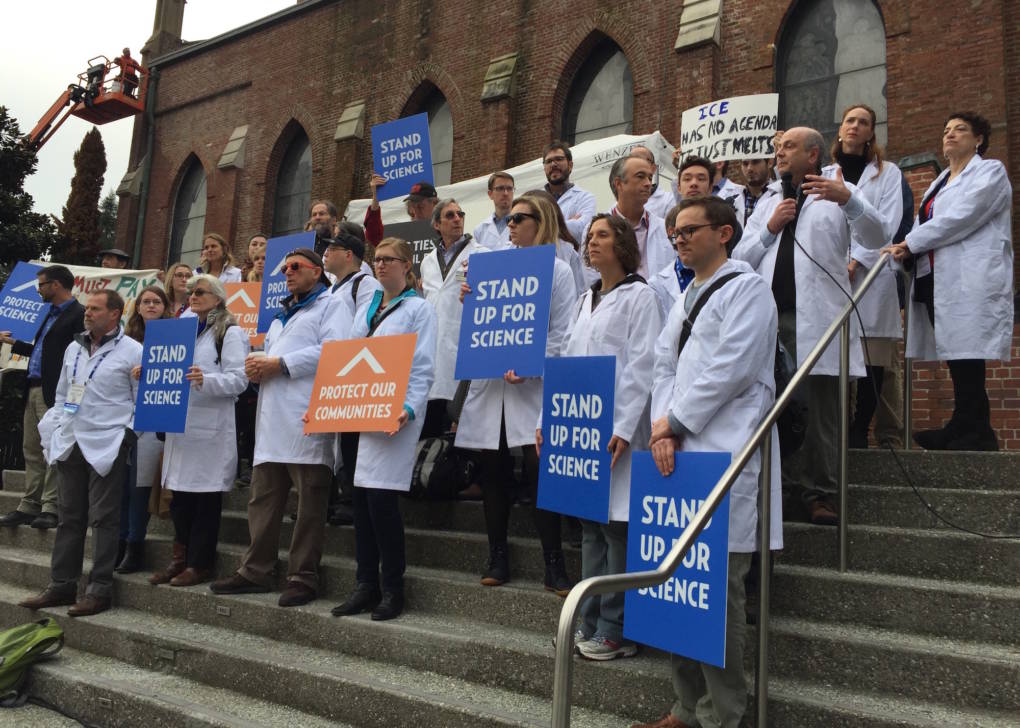
"caption": "Scientists rally outside the American Geophysical Union's fall meeting in San Francisco.",
"description": "Scientists rally outside the American Geophysical Union's fall meeting in San Francisco.",
"title": "IMG_6265",
"credit": "Craig Miller/KQED",
"status": "inherit",
"isLoading": false,
"fetchFailed": false
},
"news_11296427": {
"type": "attachments",
"id": "news_11296427",
"meta": {
"index": "attachments_1716263798",
"site": "news",
"id": "11296427",
"found": true
},
"parent": 11296426,
"imgSizes": {
"small": {
"file": "https://ww2.kqed.org/app/uploads/sites/10/2017/02/trumpinauguration21_custom-eddbf9365f701e092c94b7c3db49b2c9d100742f-520x330.jpg",
"width": 520,
"mimeType": "image/jpeg",
"height": 330
},
"twentyfourteen-full-width": {
"file": "https://ww2.kqed.org/app/uploads/sites/10/2017/02/trumpinauguration21_custom-eddbf9365f701e092c94b7c3db49b2c9d100742f-1038x576.jpg",
"width": 1038,
"mimeType": "image/jpeg",
"height": 576
},
"thumbnail": {
"file": "https://ww2.kqed.org/app/uploads/sites/10/2017/02/trumpinauguration21_custom-eddbf9365f701e092c94b7c3db49b2c9d100742f-160x102.jpg",
"width": 160,
"mimeType": "image/jpeg",
"height": 102
},
"fd-sm": {
"file": "https://ww2.kqed.org/app/uploads/sites/10/2017/02/trumpinauguration21_custom-eddbf9365f701e092c94b7c3db49b2c9d100742f-960x609.jpg",
"width": 960,
"mimeType": "image/jpeg",
"height": 609
},
"post-thumbnail": {
"file": "https://ww2.kqed.org/app/uploads/sites/10/2017/02/trumpinauguration21_custom-eddbf9365f701e092c94b7c3db49b2c9d100742f-672x372.jpg",
"width": 672,
"mimeType": "image/jpeg",
"height": 372
},
"xsmall": {
"file": "https://ww2.kqed.org/app/uploads/sites/10/2017/02/trumpinauguration21_custom-eddbf9365f701e092c94b7c3db49b2c9d100742f-375x238.jpg",
"width": 375,
"mimeType": "image/jpeg",
"height": 238
},
"kqedFullSize": {
"file": "https://ww2.kqed.org/app/uploads/sites/10/2017/02/trumpinauguration21_custom-eddbf9365f701e092c94b7c3db49b2c9d100742f.jpg",
"width": 5858,
"height": 3719
},
"large": {
"file": "https://ww2.kqed.org/app/uploads/sites/10/2017/02/trumpinauguration21_custom-eddbf9365f701e092c94b7c3db49b2c9d100742f-1020x648.jpg",
"width": 1020,
"mimeType": "image/jpeg",
"height": 648
},
"xlarge": {
"file": "https://ww2.kqed.org/app/uploads/sites/10/2017/02/trumpinauguration21_custom-eddbf9365f701e092c94b7c3db49b2c9d100742f-1180x749.jpg",
"width": 1180,
"mimeType": "image/jpeg",
"height": 749
},
"guest-author-50": {
"file": "https://ww2.kqed.org/app/uploads/sites/10/2017/02/trumpinauguration21_custom-eddbf9365f701e092c94b7c3db49b2c9d100742f-50x50.jpg",
"width": 50,
"mimeType": "image/jpeg",
"height": 50
},
"guest-author-96": {
"file": "https://ww2.kqed.org/app/uploads/sites/10/2017/02/trumpinauguration21_custom-eddbf9365f701e092c94b7c3db49b2c9d100742f-96x96.jpg",
"width": 96,
"mimeType": "image/jpeg",
"height": 96
},
"medium": {
"file": "https://ww2.kqed.org/app/uploads/sites/10/2017/02/trumpinauguration21_custom-eddbf9365f701e092c94b7c3db49b2c9d100742f-800x508.jpg",
"width": 800,
"mimeType": "image/jpeg",
"height": 508
},
"guest-author-64": {
"file": "https://ww2.kqed.org/app/uploads/sites/10/2017/02/trumpinauguration21_custom-eddbf9365f701e092c94b7c3db49b2c9d100742f-64x64.jpg",
"width": 64,
"mimeType": "image/jpeg",
"height": 64
},
"guest-author-32": {
"file": "https://ww2.kqed.org/app/uploads/sites/10/2017/02/trumpinauguration21_custom-eddbf9365f701e092c94b7c3db49b2c9d100742f-32x32.jpg",
"width": 32,
"mimeType": "image/jpeg",
"height": 32
},
"jmtc-small-thumb": {
"file": "https://ww2.kqed.org/app/uploads/sites/10/2017/02/trumpinauguration21_custom-eddbf9365f701e092c94b7c3db49b2c9d100742f-280x150.jpg",
"width": 280,
"mimeType": "image/jpeg",
"height": 150
},
"fd-lrg": {
"file": "https://ww2.kqed.org/app/uploads/sites/10/2017/02/trumpinauguration21_custom-eddbf9365f701e092c94b7c3db49b2c9d100742f-1920x1219.jpg",
"width": 1920,
"mimeType": "image/jpeg",
"height": 1219
},
"fd-med": {
"file": "https://ww2.kqed.org/app/uploads/sites/10/2017/02/trumpinauguration21_custom-eddbf9365f701e092c94b7c3db49b2c9d100742f-1180x749.jpg",
"width": 1180,
"mimeType": "image/jpeg",
"height": 749
},
"full-width": {
"file": "https://ww2.kqed.org/app/uploads/sites/10/2017/02/trumpinauguration21_custom-eddbf9365f701e092c94b7c3db49b2c9d100742f-1920x1219.jpg",
"width": 1920,
"mimeType": "image/jpeg",
"height": 1219
},
"detail": {
"file": "https://ww2.kqed.org/app/uploads/sites/10/2017/02/trumpinauguration21_custom-eddbf9365f701e092c94b7c3db49b2c9d100742f-150x150.jpg",
"width": 150,
"mimeType": "image/jpeg",
"height": 150
},
"guest-author-128": {
"file": "https://ww2.kqed.org/app/uploads/sites/10/2017/02/trumpinauguration21_custom-eddbf9365f701e092c94b7c3db49b2c9d100742f-128x128.jpg",
"width": 128,
"mimeType": "image/jpeg",
"height": 128
},
"xxsmall": {
"file": "https://ww2.kqed.org/app/uploads/sites/10/2017/02/trumpinauguration21_custom-eddbf9365f701e092c94b7c3db49b2c9d100742f-240x152.jpg",
"width": 240,
"mimeType": "image/jpeg",
"height": 152
}
},
"publishDate": 1485974801,
"modified": 1485989962,
"caption": "The rotunda of the Capitol during the inauguration of Donald Trump in January.",
"description": "The rotunda of the Capitol during the inauguration of Donald Trump in January",
"title": "The rotunda of the Capitol during the inauguration of Donald Trump in January.",
"credit": "Gabriella Demczuk for NPR",
"status": "inherit",
"isLoading": false,
"fetchFailed": false
},
"news_11296417": {
"type": "attachments",
"id": "news_11296417",
"meta": {
"index": "attachments_1716263798",
"site": "news",
"id": "11296417",
"found": true
},
"parent": 11296416,
"imgSizes": {
"small": {
"file": "https://ww2.kqed.org/app/uploads/sites/10/2017/02/gettyimages-632604474_wide-86407c573daf9e3afef39ec30c0e0a5560125f60-520x292.jpg",
"width": 520,
"mimeType": "image/jpeg",
"height": 292
},
"twentyfourteen-full-width": {
"file": "https://ww2.kqed.org/app/uploads/sites/10/2017/02/gettyimages-632604474_wide-86407c573daf9e3afef39ec30c0e0a5560125f60-1038x576.jpg",
"width": 1038,
"mimeType": "image/jpeg",
"height": 576
},
"thumbnail": {
"file": "https://ww2.kqed.org/app/uploads/sites/10/2017/02/gettyimages-632604474_wide-86407c573daf9e3afef39ec30c0e0a5560125f60-160x90.jpg",
"width": 160,
"mimeType": "image/jpeg",
"height": 90
},
"fd-sm": {
"file": "https://ww2.kqed.org/app/uploads/sites/10/2017/02/gettyimages-632604474_wide-86407c573daf9e3afef39ec30c0e0a5560125f60-960x540.jpg",
"width": 960,
"mimeType": "image/jpeg",
"height": 540
},
"post-thumbnail": {
"file": "https://ww2.kqed.org/app/uploads/sites/10/2017/02/gettyimages-632604474_wide-86407c573daf9e3afef39ec30c0e0a5560125f60-672x372.jpg",
"width": 672,
"mimeType": "image/jpeg",
"height": 372
},
"xsmall": {
"file": "https://ww2.kqed.org/app/uploads/sites/10/2017/02/gettyimages-632604474_wide-86407c573daf9e3afef39ec30c0e0a5560125f60-375x211.jpg",
"width": 375,
"mimeType": "image/jpeg",
"height": 211
},
"kqedFullSize": {
"file": "https://ww2.kqed.org/app/uploads/sites/10/2017/02/gettyimages-632604474_wide-86407c573daf9e3afef39ec30c0e0a5560125f60.jpg",
"width": 2311,
"height": 1299
},
"large": {
"file": "https://ww2.kqed.org/app/uploads/sites/10/2017/02/gettyimages-632604474_wide-86407c573daf9e3afef39ec30c0e0a5560125f60-1020x573.jpg",
"width": 1020,
"mimeType": "image/jpeg",
"height": 573
},
"xlarge": {
"file": "https://ww2.kqed.org/app/uploads/sites/10/2017/02/gettyimages-632604474_wide-86407c573daf9e3afef39ec30c0e0a5560125f60-1180x663.jpg",
"width": 1180,
"mimeType": "image/jpeg",
"height": 663
},
"guest-author-50": {
"file": "https://ww2.kqed.org/app/uploads/sites/10/2017/02/gettyimages-632604474_wide-86407c573daf9e3afef39ec30c0e0a5560125f60-50x50.jpg",
"width": 50,
"mimeType": "image/jpeg",
"height": 50
},
"guest-author-96": {
"file": "https://ww2.kqed.org/app/uploads/sites/10/2017/02/gettyimages-632604474_wide-86407c573daf9e3afef39ec30c0e0a5560125f60-96x96.jpg",
"width": 96,
"mimeType": "image/jpeg",
"height": 96
},
"medium": {
"file": "https://ww2.kqed.org/app/uploads/sites/10/2017/02/gettyimages-632604474_wide-86407c573daf9e3afef39ec30c0e0a5560125f60-800x450.jpg",
"width": 800,
"mimeType": "image/jpeg",
"height": 450
},
"guest-author-64": {
"file": "https://ww2.kqed.org/app/uploads/sites/10/2017/02/gettyimages-632604474_wide-86407c573daf9e3afef39ec30c0e0a5560125f60-64x64.jpg",
"width": 64,
"mimeType": "image/jpeg",
"height": 64
},
"guest-author-32": {
"file": "https://ww2.kqed.org/app/uploads/sites/10/2017/02/gettyimages-632604474_wide-86407c573daf9e3afef39ec30c0e0a5560125f60-32x32.jpg",
"width": 32,
"mimeType": "image/jpeg",
"height": 32
},
"jmtc-small-thumb": {
"file": "https://ww2.kqed.org/app/uploads/sites/10/2017/02/gettyimages-632604474_wide-86407c573daf9e3afef39ec30c0e0a5560125f60-280x150.jpg",
"width": 280,
"mimeType": "image/jpeg",
"height": 150
},
"fd-lrg": {
"file": "https://ww2.kqed.org/app/uploads/sites/10/2017/02/gettyimages-632604474_wide-86407c573daf9e3afef39ec30c0e0a5560125f60-1920x1079.jpg",
"width": 1920,
"mimeType": "image/jpeg",
"height": 1079
},
"fd-med": {
"file": "https://ww2.kqed.org/app/uploads/sites/10/2017/02/gettyimages-632604474_wide-86407c573daf9e3afef39ec30c0e0a5560125f60-1180x663.jpg",
"width": 1180,
"mimeType": "image/jpeg",
"height": 663
},
"full-width": {
"file": "https://ww2.kqed.org/app/uploads/sites/10/2017/02/gettyimages-632604474_wide-86407c573daf9e3afef39ec30c0e0a5560125f60-1920x1079.jpg",
"width": 1920,
"mimeType": "image/jpeg",
"height": 1079
},
"detail": {
"file": "https://ww2.kqed.org/app/uploads/sites/10/2017/02/gettyimages-632604474_wide-86407c573daf9e3afef39ec30c0e0a5560125f60-150x150.jpg",
"width": 150,
"mimeType": "image/jpeg",
"height": 150
},
"guest-author-128": {
"file": "https://ww2.kqed.org/app/uploads/sites/10/2017/02/gettyimages-632604474_wide-86407c573daf9e3afef39ec30c0e0a5560125f60-128x128.jpg",
"width": 128,
"mimeType": "image/jpeg",
"height": 128
},
"xxsmall": {
"file": "https://ww2.kqed.org/app/uploads/sites/10/2017/02/gettyimages-632604474_wide-86407c573daf9e3afef39ec30c0e0a5560125f60-240x135.jpg",
"width": 240,
"mimeType": "image/jpeg",
"height": 135
}
},
"publishDate": 1485973880,
"modified": 1485992055,
"caption": "Rep. Tom Price, R-Ga. (L), nominee for Health and Human Services secretary, is seen with chairman Orrin Hatch, R-Utah, before his Senate Finance Committee confirmation hearing on Jan. 24.",
"description": "Rep. Tom Price, R-Ga. (L), nominee for Health and Human Services secretary, is seen with Chairman Orrin Hatch, R-Utah, before his Senate Finance Committee confirmation hearing on Jan. 24.",
"title": "Rep. Tom Price, R-Ga., center, nominee for Health and Human Services secretary, is seen with Chairman Orrin Hatch, R-Utah, before his Senate Finance Committee confirmation hearing on Jan. 24.",
"credit": "Tom Williams/CQ-Roll Call,Inc.",
"status": "inherit",
"isLoading": false,
"fetchFailed": false
},
"news_11295514": {
"type": "attachments",
"id": "news_11295514",
"meta": {
"index": "attachments_1716263798",
"site": "news",
"id": "11295514",
"found": true
},
"parent": 11295510,
"imgSizes": {
"small": {
"file": "https://ww2.kqed.org/app/uploads/sites/10/2017/01/GettyImages-633221278-520x347.jpg",
"width": 520,
"mimeType": "image/jpeg",
"height": 347
},
"twentyfourteen-full-width": {
"file": "https://ww2.kqed.org/app/uploads/sites/10/2017/01/GettyImages-633221278-1038x576.jpg",
"width": 1038,
"mimeType": "image/jpeg",
"height": 576
},
"thumbnail": {
"file": "https://ww2.kqed.org/app/uploads/sites/10/2017/01/GettyImages-633221278-160x107.jpg",
"width": 160,
"mimeType": "image/jpeg",
"height": 107
},
"fd-sm": {
"file": "https://ww2.kqed.org/app/uploads/sites/10/2017/01/GettyImages-633221278-960x640.jpg",
"width": 960,
"mimeType": "image/jpeg",
"height": 640
},
"post-thumbnail": {
"file": "https://ww2.kqed.org/app/uploads/sites/10/2017/01/GettyImages-633221278-672x372.jpg",
"width": 672,
"mimeType": "image/jpeg",
"height": 372
},
"xsmall": {
"file": "https://ww2.kqed.org/app/uploads/sites/10/2017/01/GettyImages-633221278-375x250.jpg",
"width": 375,
"mimeType": "image/jpeg",
"height": 250
},
"kqedFullSize": {
"file": "https://ww2.kqed.org/app/uploads/sites/10/2017/01/GettyImages-633221278.jpg",
"width": 3000,
"height": 2000
},
"large": {
"file": "https://ww2.kqed.org/app/uploads/sites/10/2017/01/GettyImages-633221278-1020x680.jpg",
"width": 1020,
"mimeType": "image/jpeg",
"height": 680
},
"xlarge": {
"file": "https://ww2.kqed.org/app/uploads/sites/10/2017/01/GettyImages-633221278-1180x787.jpg",
"width": 1180,
"mimeType": "image/jpeg",
"height": 787
},
"guest-author-50": {
"file": "https://ww2.kqed.org/app/uploads/sites/10/2017/01/GettyImages-633221278-50x50.jpg",
"width": 50,
"mimeType": "image/jpeg",
"height": 50
},
"guest-author-96": {
"file": "https://ww2.kqed.org/app/uploads/sites/10/2017/01/GettyImages-633221278-96x96.jpg",
"width": 96,
"mimeType": "image/jpeg",
"height": 96
},
"medium": {
"file": "https://ww2.kqed.org/app/uploads/sites/10/2017/01/GettyImages-633221278-800x533.jpg",
"width": 800,
"mimeType": "image/jpeg",
"height": 533
},
"guest-author-64": {
"file": "https://ww2.kqed.org/app/uploads/sites/10/2017/01/GettyImages-633221278-64x64.jpg",
"width": 64,
"mimeType": "image/jpeg",
"height": 64
},
"guest-author-32": {
"file": "https://ww2.kqed.org/app/uploads/sites/10/2017/01/GettyImages-633221278-32x32.jpg",
"width": 32,
"mimeType": "image/jpeg",
"height": 32
},
"jmtc-small-thumb": {
"file": "https://ww2.kqed.org/app/uploads/sites/10/2017/01/GettyImages-633221278-280x150.jpg",
"width": 280,
"mimeType": "image/jpeg",
"height": 150
},
"fd-lrg": {
"file": "https://ww2.kqed.org/app/uploads/sites/10/2017/01/GettyImages-633221278-1920x1280.jpg",
"width": 1920,
"mimeType": "image/jpeg",
"height": 1280
},
"fd-med": {
"file": "https://ww2.kqed.org/app/uploads/sites/10/2017/01/GettyImages-633221278-1180x787.jpg",
"width": 1180,
"mimeType": "image/jpeg",
"height": 787
},
"full-width": {
"file": "https://ww2.kqed.org/app/uploads/sites/10/2017/01/GettyImages-633221278-1920x1280.jpg",
"width": 1920,
"mimeType": "image/jpeg",
"height": 1280
},
"detail": {
"file": "https://ww2.kqed.org/app/uploads/sites/10/2017/01/GettyImages-633221278-150x150.jpg",
"width": 150,
"mimeType": "image/jpeg",
"height": 150
},
"guest-author-128": {
"file": "https://ww2.kqed.org/app/uploads/sites/10/2017/01/GettyImages-633221278-128x128.jpg",
"width": 128,
"mimeType": "image/jpeg",
"height": 128
},
"xxsmall": {
"file": "https://ww2.kqed.org/app/uploads/sites/10/2017/01/GettyImages-633221278-240x160.jpg",
"width": 240,
"mimeType": "image/jpeg",
"height": 160
}
},
"publishDate": 1485915250,
"modified": 1485915312,
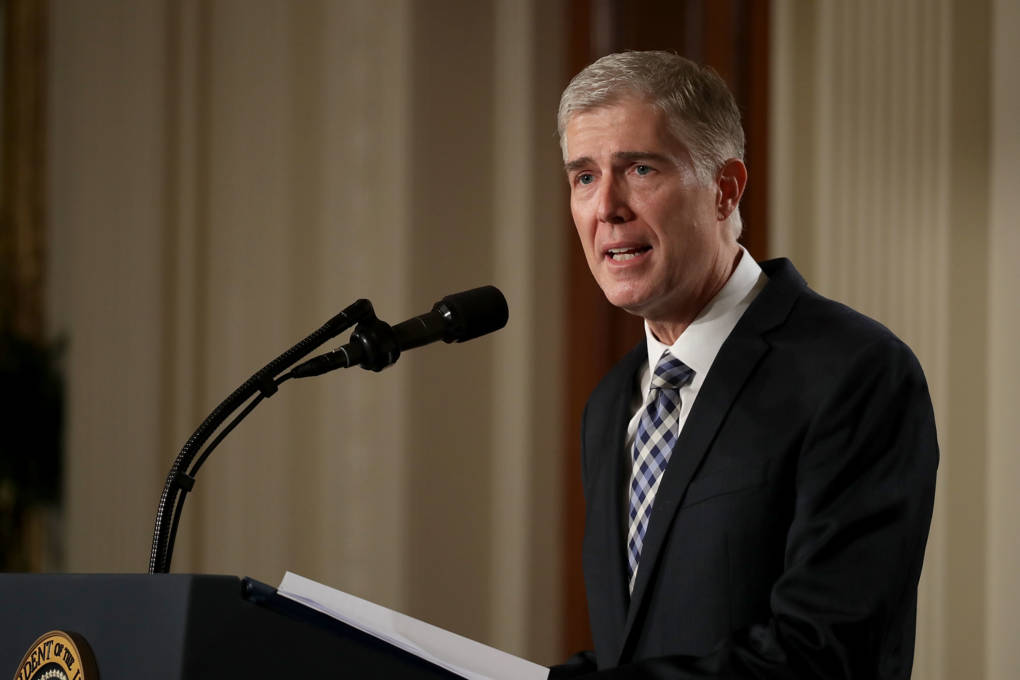
"caption": "Judge Neil Gorsuch delivers brief remarks after being nominated by U.S. President Donald Trump to the Supreme Court.",
"description": null,
"title": "President Trump Announces His Supreme Court Nominee",
"credit": "Chip Somodevilla/Getty Images",
"status": "inherit",
"isLoading": false,
"fetchFailed": false
},
"news_11294915": {
"type": "attachments",
"id": "news_11294915",
"meta": {
"index": "attachments_1716263798",
"site": "news",
"id": "11294915",
"found": true
},
"parent": 11294776,
"imgSizes": {
"small": {
"file": "https://ww2.kqed.org/app/uploads/sites/10/2017/01/google-protest-in-quad-520x390.jpg",
"width": 520,
"mimeType": "image/jpeg",
"height": 390
},
"twentyfourteen-full-width": {
"file": "https://ww2.kqed.org/app/uploads/sites/10/2017/01/google-protest-in-quad-1038x576.jpg",
"width": 1038,
"mimeType": "image/jpeg",
"height": 576
},
"thumbnail": {
"file": "https://ww2.kqed.org/app/uploads/sites/10/2017/01/google-protest-in-quad-160x120.jpg",
"width": 160,
"mimeType": "image/jpeg",
"height": 120
},
"fd-sm": {
"file": "https://ww2.kqed.org/app/uploads/sites/10/2017/01/google-protest-in-quad-960x720.jpg",
"width": 960,
"mimeType": "image/jpeg",
"height": 720
},
"post-thumbnail": {
"file": "https://ww2.kqed.org/app/uploads/sites/10/2017/01/google-protest-in-quad-672x372.jpg",
"width": 672,
"mimeType": "image/jpeg",
"height": 372
},
"xsmall": {
"file": "https://ww2.kqed.org/app/uploads/sites/10/2017/01/google-protest-in-quad-375x281.jpg",
"width": 375,
"mimeType": "image/jpeg",
"height": 281
},
"kqedFullSize": {
"file": "https://ww2.kqed.org/app/uploads/sites/10/2017/01/google-protest-in-quad.jpg",
"width": 3264,
"height": 2448
},
"large": {
"file": "https://ww2.kqed.org/app/uploads/sites/10/2017/01/google-protest-in-quad-1020x765.jpg",
"width": 1020,
"mimeType": "image/jpeg",
"height": 765
},
"xlarge": {
"file": "https://ww2.kqed.org/app/uploads/sites/10/2017/01/google-protest-in-quad-1180x885.jpg",
"width": 1180,
"mimeType": "image/jpeg",
"height": 885
},
"guest-author-50": {
"file": "https://ww2.kqed.org/app/uploads/sites/10/2017/01/google-protest-in-quad-50x50.jpg",
"width": 50,
"mimeType": "image/jpeg",
"height": 50
},
"guest-author-96": {
"file": "https://ww2.kqed.org/app/uploads/sites/10/2017/01/google-protest-in-quad-96x96.jpg",
"width": 96,
"mimeType": "image/jpeg",
"height": 96
},
"medium": {
"file": "https://ww2.kqed.org/app/uploads/sites/10/2017/01/google-protest-in-quad-800x600.jpg",
"width": 800,
"mimeType": "image/jpeg",
"height": 600
},
"guest-author-64": {
"file": "https://ww2.kqed.org/app/uploads/sites/10/2017/01/google-protest-in-quad-64x64.jpg",
"width": 64,
"mimeType": "image/jpeg",
"height": 64
},
"guest-author-32": {
"file": "https://ww2.kqed.org/app/uploads/sites/10/2017/01/google-protest-in-quad-32x32.jpg",
"width": 32,
"mimeType": "image/jpeg",
"height": 32
},
"jmtc-small-thumb": {
"file": "https://ww2.kqed.org/app/uploads/sites/10/2017/01/google-protest-in-quad-280x150.jpg",
"width": 280,
"mimeType": "image/jpeg",
"height": 150
},
"fd-lrg": {
"file": "https://ww2.kqed.org/app/uploads/sites/10/2017/01/google-protest-in-quad-1920x1440.jpg",
"width": 1920,
"mimeType": "image/jpeg",
"height": 1440
},
"fd-med": {
"file": "https://ww2.kqed.org/app/uploads/sites/10/2017/01/google-protest-in-quad-1180x885.jpg",
"width": 1180,
"mimeType": "image/jpeg",
"height": 885
},
"full-width": {
"file": "https://ww2.kqed.org/app/uploads/sites/10/2017/01/google-protest-in-quad-1920x1440.jpg",
"width": 1920,
"mimeType": "image/jpeg",
"height": 1440
},
"detail": {
"file": "https://ww2.kqed.org/app/uploads/sites/10/2017/01/google-protest-in-quad-150x150.jpg",
"width": 150,
"mimeType": "image/jpeg",
"height": 150
},
"guest-author-128": {
"file": "https://ww2.kqed.org/app/uploads/sites/10/2017/01/google-protest-in-quad-128x128.jpg",
"width": 128,
"mimeType": "image/jpeg",
"height": 128
},
"xxsmall": {
"file": "https://ww2.kqed.org/app/uploads/sites/10/2017/01/google-protest-in-quad-240x180.jpg",
"width": 240,
"mimeType": "image/jpeg",
"height": 180
}
},
"publishDate": 1485889519,
"modified": 1485889557,
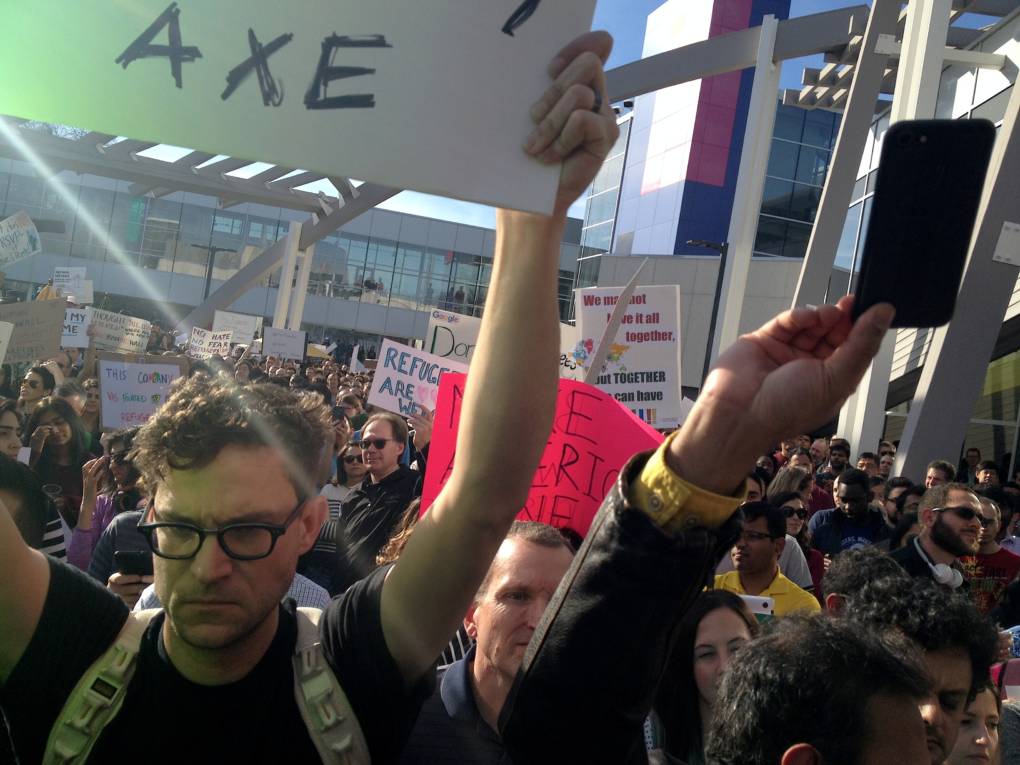
"caption": "Googlers packed the campus quad at the company's headquarters in Mountain View. They were protesting President Trump's executive order to ban people from seven majority Muslim states from entering the U.S.",
"description": null,
"title": "google protest in quad",
"credit": "Queena Sook Kim",
"status": "inherit",
"isLoading": false,
"fetchFailed": false
},
"news_11295438": {
"type": "attachments",
"id": "news_11295438",
"meta": {
"index": "attachments_1716263798",
"site": "news",
"id": "11295438",
"found": true
},
"parent": 11295230,
"imgSizes": {
"small": {
"file": "https://ww2.kqed.org/app/uploads/sites/10/2017/01/RS23967_GettyImages-633220996-qut-520x350.jpg",
"width": 520,
"mimeType": "image/jpeg",
"height": 350
},
"twentyfourteen-full-width": {
"file": "https://ww2.kqed.org/app/uploads/sites/10/2017/01/RS23967_GettyImages-633220996-qut-1038x576.jpg",
"width": 1038,
"mimeType": "image/jpeg",
"height": 576
},
"thumbnail": {
"file": "https://ww2.kqed.org/app/uploads/sites/10/2017/01/RS23967_GettyImages-633220996-qut-160x108.jpg",
"width": 160,
"mimeType": "image/jpeg",
"height": 108
},
"fd-sm": {
"file": "https://ww2.kqed.org/app/uploads/sites/10/2017/01/RS23967_GettyImages-633220996-qut-960x646.jpg",
"width": 960,
"mimeType": "image/jpeg",
"height": 646
},
"post-thumbnail": {
"file": "https://ww2.kqed.org/app/uploads/sites/10/2017/01/RS23967_GettyImages-633220996-qut-672x372.jpg",
"width": 672,
"mimeType": "image/jpeg",
"height": 372
},
"xsmall": {
"file": "https://ww2.kqed.org/app/uploads/sites/10/2017/01/RS23967_GettyImages-633220996-qut-375x252.jpg",
"width": 375,
"mimeType": "image/jpeg",
"height": 252
},
"kqedFullSize": {
"file": "https://ww2.kqed.org/app/uploads/sites/10/2017/01/RS23967_GettyImages-633220996-qut.jpg",
"width": 1920,
"height": 1292
},
"large": {
"file": "https://ww2.kqed.org/app/uploads/sites/10/2017/01/RS23967_GettyImages-633220996-qut-1020x686.jpg",
"width": 1020,
"mimeType": "image/jpeg",
"height": 686
},
"xlarge": {
"file": "https://ww2.kqed.org/app/uploads/sites/10/2017/01/RS23967_GettyImages-633220996-qut-1180x794.jpg",
"width": 1180,
"mimeType": "image/jpeg",
"height": 794
},
"guest-author-50": {
"file": "https://ww2.kqed.org/app/uploads/sites/10/2017/01/RS23967_GettyImages-633220996-qut-50x50.jpg",
"width": 50,
"mimeType": "image/jpeg",
"height": 50
},
"guest-author-96": {
"file": "https://ww2.kqed.org/app/uploads/sites/10/2017/01/RS23967_GettyImages-633220996-qut-96x96.jpg",
"width": 96,
"mimeType": "image/jpeg",
"height": 96
},
"medium": {
"file": "https://ww2.kqed.org/app/uploads/sites/10/2017/01/RS23967_GettyImages-633220996-qut-800x538.jpg",
"width": 800,
"mimeType": "image/jpeg",
"height": 538
},
"guest-author-64": {
"file": "https://ww2.kqed.org/app/uploads/sites/10/2017/01/RS23967_GettyImages-633220996-qut-64x64.jpg",
"width": 64,
"mimeType": "image/jpeg",
"height": 64
},
"guest-author-32": {
"file": "https://ww2.kqed.org/app/uploads/sites/10/2017/01/RS23967_GettyImages-633220996-qut-32x32.jpg",
"width": 32,
"mimeType": "image/jpeg",
"height": 32
},
"jmtc-small-thumb": {
"file": "https://ww2.kqed.org/app/uploads/sites/10/2017/01/RS23967_GettyImages-633220996-qut-280x150.jpg",
"width": 280,
"mimeType": "image/jpeg",
"height": 150
},
"fd-lrg": {
"file": "https://ww2.kqed.org/app/uploads/sites/10/2017/01/RS23967_GettyImages-633220996-qut-1920x1292.jpg",
"width": 1920,
"mimeType": "image/jpeg",
"height": 1292
},
"fd-med": {
"file": "https://ww2.kqed.org/app/uploads/sites/10/2017/01/RS23967_GettyImages-633220996-qut-1180x794.jpg",
"width": 1180,
"mimeType": "image/jpeg",
"height": 794
},
"full-width": {
"file": "https://ww2.kqed.org/app/uploads/sites/10/2017/01/RS23967_GettyImages-633220996-qut-1920x1292.jpg",
"width": 1920,
"mimeType": "image/jpeg",
"height": 1292
},
"detail": {
"file": "https://ww2.kqed.org/app/uploads/sites/10/2017/01/RS23967_GettyImages-633220996-qut-150x150.jpg",
"width": 150,
"mimeType": "image/jpeg",
"height": 150
},
"guest-author-128": {
"file": "https://ww2.kqed.org/app/uploads/sites/10/2017/01/RS23967_GettyImages-633220996-qut-128x128.jpg",
"width": 128,
"mimeType": "image/jpeg",
"height": 128
},
"xxsmall": {
"file": "https://ww2.kqed.org/app/uploads/sites/10/2017/01/RS23967_GettyImages-633220996-qut-240x162.jpg",
"width": 240,
"mimeType": "image/jpeg",
"height": 162
}
},
"publishDate": 1485912812,
"modified": 1485912879,
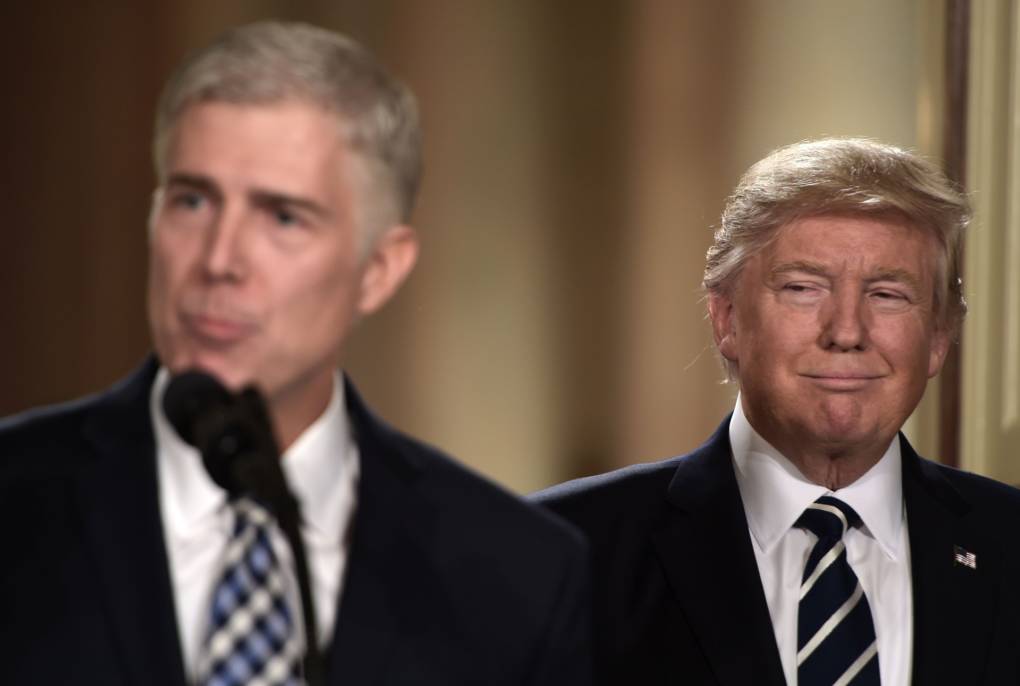
"caption": "Judge Neil Gorsuch speaks after President Donald Trump nominated him for the Supreme Court, at the White House in Washington, DC, on January 31, 2017.",
"description": null,
"title": "RS23967_GettyImages-633220996-qut",
"credit": "BRENDAN SMIALOWSKI/AFP/Getty Images",
"status": "inherit",
"isLoading": false,
"fetchFailed": false
},
"news_11295158": {
"type": "attachments",
"id": "news_11295158",
"meta": {
"index": "attachments_1716263798",
"site": "news",
"id": "11295158",
"found": true
},
"parent": 11295065,
"imgSizes": {
"small": {
"file": "https://ww2.kqed.org/app/uploads/sites/10/2017/01/voting-sign-1920-520x311.jpg",
"width": 520,
"mimeType": "image/jpeg",
"height": 311
},
"twentyfourteen-full-width": {
"file": "https://ww2.kqed.org/app/uploads/sites/10/2017/01/voting-sign-1920-1038x576.jpg",
"width": 1038,
"mimeType": "image/jpeg",
"height": 576
},
"thumbnail": {
"file": "https://ww2.kqed.org/app/uploads/sites/10/2017/01/voting-sign-1920-160x96.jpg",
"width": 160,
"mimeType": "image/jpeg",
"height": 96
},
"fd-sm": {
"file": "https://ww2.kqed.org/app/uploads/sites/10/2017/01/voting-sign-1920-960x575.jpg",
"width": 960,
"mimeType": "image/jpeg",
"height": 575
},
"post-thumbnail": {
"file": "https://ww2.kqed.org/app/uploads/sites/10/2017/01/voting-sign-1920-672x372.jpg",
"width": 672,
"mimeType": "image/jpeg",
"height": 372
},
"xsmall": {
"file": "https://ww2.kqed.org/app/uploads/sites/10/2017/01/voting-sign-1920-375x225.jpg",
"width": 375,
"mimeType": "image/jpeg",
"height": 225
},
"kqedFullSize": {
"file": "https://ww2.kqed.org/app/uploads/sites/10/2017/01/voting-sign-1920.jpg",
"width": 1920,
"height": 1150
},
"large": {
"file": "https://ww2.kqed.org/app/uploads/sites/10/2017/01/voting-sign-1920-1020x611.jpg",
"width": 1020,
"mimeType": "image/jpeg",
"height": 611
},
"xlarge": {
"file": "https://ww2.kqed.org/app/uploads/sites/10/2017/01/voting-sign-1920-1180x707.jpg",
"width": 1180,
"mimeType": "image/jpeg",
"height": 707
},
"guest-author-50": {
"file": "https://ww2.kqed.org/app/uploads/sites/10/2017/01/voting-sign-1920-50x50.jpg",
"width": 50,
"mimeType": "image/jpeg",
"height": 50
},
"guest-author-96": {
"file": "https://ww2.kqed.org/app/uploads/sites/10/2017/01/voting-sign-1920-96x96.jpg",
"width": 96,
"mimeType": "image/jpeg",
"height": 96
},
"medium": {
"file": "https://ww2.kqed.org/app/uploads/sites/10/2017/01/voting-sign-1920-800x479.jpg",
"width": 800,
"mimeType": "image/jpeg",
"height": 479
},
"guest-author-64": {
"file": "https://ww2.kqed.org/app/uploads/sites/10/2017/01/voting-sign-1920-64x64.jpg",
"width": 64,
"mimeType": "image/jpeg",
"height": 64
},
"guest-author-32": {
"file": "https://ww2.kqed.org/app/uploads/sites/10/2017/01/voting-sign-1920-32x32.jpg",
"width": 32,
"mimeType": "image/jpeg",
"height": 32
},
"jmtc-small-thumb": {
"file": "https://ww2.kqed.org/app/uploads/sites/10/2017/01/voting-sign-1920-280x150.jpg",
"width": 280,
"mimeType": "image/jpeg",
"height": 150
},
"fd-lrg": {
"file": "https://ww2.kqed.org/app/uploads/sites/10/2017/01/voting-sign-1920-1920x1150.jpg",
"width": 1920,
"mimeType": "image/jpeg",
"height": 1150
},
"fd-med": {
"file": "https://ww2.kqed.org/app/uploads/sites/10/2017/01/voting-sign-1920-1180x707.jpg",
"width": 1180,
"mimeType": "image/jpeg",
"height": 707
},
"full-width": {
"file": "https://ww2.kqed.org/app/uploads/sites/10/2017/01/voting-sign-1920-1920x1150.jpg",
"width": 1920,
"mimeType": "image/jpeg",
"height": 1150
},
"detail": {
"file": "https://ww2.kqed.org/app/uploads/sites/10/2017/01/voting-sign-1920-150x150.jpg",
"width": 150,
"mimeType": "image/jpeg",
"height": 150
},
"guest-author-128": {
"file": "https://ww2.kqed.org/app/uploads/sites/10/2017/01/voting-sign-1920-128x128.jpg",
"width": 128,
"mimeType": "image/jpeg",
"height": 128
},
"xxsmall": {
"file": "https://ww2.kqed.org/app/uploads/sites/10/2017/01/voting-sign-1920-240x144.jpg",
"width": 240,
"mimeType": "image/jpeg",
"height": 144
}
},
"publishDate": 1485903015,
"modified": 1485908034,
"caption": "A sign points to a polling place on Nov. 8, 2016, in Panora, Iowa.",
"description": null,
"title": "voting-sign-1920",
"credit": "Steve Pope/Getty Images",
"status": "inherit",
"isLoading": false,
"fetchFailed": false
},
"news_11286494": {
"type": "attachments",
"id": "news_11286494",
"meta": {
"index": "attachments_1716263798",
"site": "news",
"id": "11286494",
"found": true
},
"parent": 11286488,
"imgSizes": {
"small": {
"file": "https://ww2.kqed.org/app/uploads/sites/10/2017/01/RS23854_GettyImages-632685470-qut-520x347.jpg",
"width": 520,
"mimeType": "image/jpeg",
"height": 347
},
"twentyfourteen-full-width": {
"file": "https://ww2.kqed.org/app/uploads/sites/10/2017/01/RS23854_GettyImages-632685470-qut-1038x576.jpg",
"width": 1038,
"mimeType": "image/jpeg",
"height": 576
},
"thumbnail": {
"file": "https://ww2.kqed.org/app/uploads/sites/10/2017/01/RS23854_GettyImages-632685470-qut-160x107.jpg",
"width": 160,
"mimeType": "image/jpeg",
"height": 107
},
"fd-sm": {
"file": "https://ww2.kqed.org/app/uploads/sites/10/2017/01/RS23854_GettyImages-632685470-qut-960x640.jpg",
"width": 960,
"mimeType": "image/jpeg",
"height": 640
},
"post-thumbnail": {
"file": "https://ww2.kqed.org/app/uploads/sites/10/2017/01/RS23854_GettyImages-632685470-qut-672x372.jpg",
"width": 672,
"mimeType": "image/jpeg",
"height": 372
},
"xsmall": {
"file": "https://ww2.kqed.org/app/uploads/sites/10/2017/01/RS23854_GettyImages-632685470-qut-375x250.jpg",
"width": 375,
"mimeType": "image/jpeg",
"height": 250
},
"kqedFullSize": {
"file": "https://ww2.kqed.org/app/uploads/sites/10/2017/01/RS23854_GettyImages-632685470-qut.jpg",
"width": 1920,
"height": 1280
},
"large": {
"file": "https://ww2.kqed.org/app/uploads/sites/10/2017/01/RS23854_GettyImages-632685470-qut-1020x680.jpg",
"width": 1020,
"mimeType": "image/jpeg",
"height": 680
},
"xlarge": {
"file": "https://ww2.kqed.org/app/uploads/sites/10/2017/01/RS23854_GettyImages-632685470-qut-1180x787.jpg",
"width": 1180,
"mimeType": "image/jpeg",
"height": 787
},
"guest-author-50": {
"file": "https://ww2.kqed.org/app/uploads/sites/10/2017/01/RS23854_GettyImages-632685470-qut-50x50.jpg",
"width": 50,
"mimeType": "image/jpeg",
"height": 50
},
"guest-author-96": {
"file": "https://ww2.kqed.org/app/uploads/sites/10/2017/01/RS23854_GettyImages-632685470-qut-96x96.jpg",
"width": 96,
"mimeType": "image/jpeg",
"height": 96
},
"medium": {
"file": "https://ww2.kqed.org/app/uploads/sites/10/2017/01/RS23854_GettyImages-632685470-qut-800x533.jpg",
"width": 800,
"mimeType": "image/jpeg",
"height": 533
},
"guest-author-64": {
"file": "https://ww2.kqed.org/app/uploads/sites/10/2017/01/RS23854_GettyImages-632685470-qut-64x64.jpg",
"width": 64,
"mimeType": "image/jpeg",
"height": 64
},
"guest-author-32": {
"file": "https://ww2.kqed.org/app/uploads/sites/10/2017/01/RS23854_GettyImages-632685470-qut-32x32.jpg",
"width": 32,
"mimeType": "image/jpeg",
"height": 32
},
"jmtc-small-thumb": {
"file": "https://ww2.kqed.org/app/uploads/sites/10/2017/01/RS23854_GettyImages-632685470-qut-280x150.jpg",
"width": 280,
"mimeType": "image/jpeg",
"height": 150
},
"fd-lrg": {
"file": "https://ww2.kqed.org/app/uploads/sites/10/2017/01/RS23854_GettyImages-632685470-qut-1920x1280.jpg",
"width": 1920,
"mimeType": "image/jpeg",
"height": 1280
},
"fd-med": {
"file": "https://ww2.kqed.org/app/uploads/sites/10/2017/01/RS23854_GettyImages-632685470-qut-1180x787.jpg",
"width": 1180,
"mimeType": "image/jpeg",
"height": 787
},
"full-width": {
"file": "https://ww2.kqed.org/app/uploads/sites/10/2017/01/RS23854_GettyImages-632685470-qut-1920x1280.jpg",
"width": 1920,
"mimeType": "image/jpeg",
"height": 1280
},
"detail": {
"file": "https://ww2.kqed.org/app/uploads/sites/10/2017/01/RS23854_GettyImages-632685470-qut-150x150.jpg",
"width": 150,
"mimeType": "image/jpeg",
"height": 150
},
"guest-author-128": {
"file": "https://ww2.kqed.org/app/uploads/sites/10/2017/01/RS23854_GettyImages-632685470-qut-128x128.jpg",
"width": 128,
"mimeType": "image/jpeg",
"height": 128
},
"xxsmall": {
"file": "https://ww2.kqed.org/app/uploads/sites/10/2017/01/RS23854_GettyImages-632685470-qut-240x160.jpg",
"width": 240,
"mimeType": "image/jpeg",
"height": 160
}
},
"publishDate": 1485387460,
"modified": 1511309574,
"caption": "U.S. President Trump displays one of the two executive orders on immigration he signed during a visit to the Department of Homeland Security in January. ",
"description": " U.S. President Donald Trump displays one of the two executive orders on immigration he signed during a visit to the Department of Homeland Security Jan. 25, 2017 in Washington.",
"title": "Donald Trump-Executive Orders",
"credit": " Chip Somodevilla/Getty Images",
"status": "inherit",
"isLoading": false,
"fetchFailed": false
},
"news_11294918": {
"type": "attachments",
"id": "news_11294918",
"meta": {
"index": "attachments_1716263798",
"site": "news",
"id": "11294918",
"found": true
},
"parent": 11294917,
"imgSizes": {
"small": {
"file": "https://ww2.kqed.org/app/uploads/sites/10/2017/01/gettyimages-633171434_wide-bdc48e3d68cf286706c94c434b7cb1d3b3a11433-520x292.jpg",
"width": 520,
"mimeType": "image/jpeg",
"height": 292
},
"twentyfourteen-full-width": {
"file": "https://ww2.kqed.org/app/uploads/sites/10/2017/01/gettyimages-633171434_wide-bdc48e3d68cf286706c94c434b7cb1d3b3a11433-1038x576.jpg",
"width": 1038,
"mimeType": "image/jpeg",
"height": 576
},
"thumbnail": {
"file": "https://ww2.kqed.org/app/uploads/sites/10/2017/01/gettyimages-633171434_wide-bdc48e3d68cf286706c94c434b7cb1d3b3a11433-160x90.jpg",
"width": 160,
"mimeType": "image/jpeg",
"height": 90
},
"fd-sm": {
"file": "https://ww2.kqed.org/app/uploads/sites/10/2017/01/gettyimages-633171434_wide-bdc48e3d68cf286706c94c434b7cb1d3b3a11433-960x540.jpg",
"width": 960,
"mimeType": "image/jpeg",
"height": 540
},
"post-thumbnail": {
"file": "https://ww2.kqed.org/app/uploads/sites/10/2017/01/gettyimages-633171434_wide-bdc48e3d68cf286706c94c434b7cb1d3b3a11433-672x372.jpg",
"width": 672,
"mimeType": "image/jpeg",
"height": 372
},
"xsmall": {
"file": "https://ww2.kqed.org/app/uploads/sites/10/2017/01/gettyimages-633171434_wide-bdc48e3d68cf286706c94c434b7cb1d3b3a11433-375x211.jpg",
"width": 375,
"mimeType": "image/jpeg",
"height": 211
},
"kqedFullSize": {
"file": "https://ww2.kqed.org/app/uploads/sites/10/2017/01/gettyimages-633171434_wide-bdc48e3d68cf286706c94c434b7cb1d3b3a11433.jpg",
"width": 5256,
"height": 2956
},
"large": {
"file": "https://ww2.kqed.org/app/uploads/sites/10/2017/01/gettyimages-633171434_wide-bdc48e3d68cf286706c94c434b7cb1d3b3a11433-1020x574.jpg",
"width": 1020,
"mimeType": "image/jpeg",
"height": 574
},
"xlarge": {
"file": "https://ww2.kqed.org/app/uploads/sites/10/2017/01/gettyimages-633171434_wide-bdc48e3d68cf286706c94c434b7cb1d3b3a11433-1180x664.jpg",
"width": 1180,
"mimeType": "image/jpeg",
"height": 664
},
"guest-author-50": {
"file": "https://ww2.kqed.org/app/uploads/sites/10/2017/01/gettyimages-633171434_wide-bdc48e3d68cf286706c94c434b7cb1d3b3a11433-50x50.jpg",
"width": 50,
"mimeType": "image/jpeg",
"height": 50
},
"guest-author-96": {
"file": "https://ww2.kqed.org/app/uploads/sites/10/2017/01/gettyimages-633171434_wide-bdc48e3d68cf286706c94c434b7cb1d3b3a11433-96x96.jpg",
"width": 96,
"mimeType": "image/jpeg",
"height": 96
},
"medium": {
"file": "https://ww2.kqed.org/app/uploads/sites/10/2017/01/gettyimages-633171434_wide-bdc48e3d68cf286706c94c434b7cb1d3b3a11433-800x450.jpg",
"width": 800,
"mimeType": "image/jpeg",
"height": 450
},
"guest-author-64": {
"file": "https://ww2.kqed.org/app/uploads/sites/10/2017/01/gettyimages-633171434_wide-bdc48e3d68cf286706c94c434b7cb1d3b3a11433-64x64.jpg",
"width": 64,
"mimeType": "image/jpeg",
"height": 64
},
"guest-author-32": {
"file": "https://ww2.kqed.org/app/uploads/sites/10/2017/01/gettyimages-633171434_wide-bdc48e3d68cf286706c94c434b7cb1d3b3a11433-32x32.jpg",
"width": 32,
"mimeType": "image/jpeg",
"height": 32
},
"jmtc-small-thumb": {
"file": "https://ww2.kqed.org/app/uploads/sites/10/2017/01/gettyimages-633171434_wide-bdc48e3d68cf286706c94c434b7cb1d3b3a11433-280x150.jpg",
"width": 280,
"mimeType": "image/jpeg",
"height": 150
},
"fd-lrg": {
"file": "https://ww2.kqed.org/app/uploads/sites/10/2017/01/gettyimages-633171434_wide-bdc48e3d68cf286706c94c434b7cb1d3b3a11433-1920x1080.jpg",
"width": 1920,
"mimeType": "image/jpeg",
"height": 1080
},
"fd-med": {
"file": "https://ww2.kqed.org/app/uploads/sites/10/2017/01/gettyimages-633171434_wide-bdc48e3d68cf286706c94c434b7cb1d3b3a11433-1180x664.jpg",
"width": 1180,
"mimeType": "image/jpeg",
"height": 664
},
"full-width": {
"file": "https://ww2.kqed.org/app/uploads/sites/10/2017/01/gettyimages-633171434_wide-bdc48e3d68cf286706c94c434b7cb1d3b3a11433-1920x1080.jpg",
"width": 1920,
"mimeType": "image/jpeg",
"height": 1080
},
"detail": {
"file": "https://ww2.kqed.org/app/uploads/sites/10/2017/01/gettyimages-633171434_wide-bdc48e3d68cf286706c94c434b7cb1d3b3a11433-150x150.jpg",
"width": 150,
"mimeType": "image/jpeg",
"height": 150
},
"guest-author-128": {
"file": "https://ww2.kqed.org/app/uploads/sites/10/2017/01/gettyimages-633171434_wide-bdc48e3d68cf286706c94c434b7cb1d3b3a11433-128x128.jpg",
"width": 128,
"mimeType": "image/jpeg",
"height": 128
},
"xxsmall": {
"file": "https://ww2.kqed.org/app/uploads/sites/10/2017/01/gettyimages-633171434_wide-bdc48e3d68cf286706c94c434b7cb1d3b3a11433-240x135.jpg",
"width": 240,
"mimeType": "image/jpeg",
"height": 135
}
},
"publishDate": 1485889699,
"modified": 1485901748,
"caption": "Chris Campbell, Republican staff director for the Senate Finance Committee chairman, sets nameplates out for Democratic senators who boycotted the committee vote on Rep. Tom Price, R-Ga., nominee for HHS secretary, and Steve Mnuchin, nominee for Treasury secretary.",
"description": "Chris Campbell, Republican staff director for the Senate Finance Committee chairman, sets nameplates out for Democratic senators who boycotted the committee vote on Rep. Tom Price, R-Ga., nominee for HHS secretary and Steve Mnuchin, nominee for Treasury secretary.",
"title": "Chris Campbell, Republican staff director for the Senate Finance Committee chairman, sets nameplates out for Democratic senators who boycotted the committee vote on Rep. Tom Price, R-Ga., nominee for HHS secretary and Steve Mnuchin, nominee for Treasury secretary.",
"credit": "Tom Williams/CQ-Roll Call Inc.",
"status": "inherit",
"isLoading": false,
"fetchFailed": false
},
"news_11283494": {
"type": "attachments",
"id": "news_11283494",
"meta": {
"index": "attachments_1716263798",
"site": "news",
"id": "11283494",
"found": true
},
"parent": 11283115,
"imgSizes": {
"small": {
"file": "https://ww2.kqed.org/app/uploads/sites/10/2018/01/oakland-protest-1920d-520x317.jpg",
"width": 520,
"mimeType": "image/jpeg",
"height": 317
},
"twentyfourteen-full-width": {
"file": "https://ww2.kqed.org/app/uploads/sites/10/2018/01/oakland-protest-1920d-1038x576.jpg",
"width": 1038,
"mimeType": "image/jpeg",
"height": 576
},
"thumbnail": {
"file": "https://ww2.kqed.org/app/uploads/sites/10/2018/01/oakland-protest-1920d-160x97.jpg",
"width": 160,
"mimeType": "image/jpeg",
"height": 97
},
"fd-sm": {
"file": "https://ww2.kqed.org/app/uploads/sites/10/2018/01/oakland-protest-1920d-960x585.jpg",
"width": 960,
"mimeType": "image/jpeg",
"height": 585
},
"post-thumbnail": {
"file": "https://ww2.kqed.org/app/uploads/sites/10/2018/01/oakland-protest-1920d-672x372.jpg",
"width": 672,
"mimeType": "image/jpeg",
"height": 372
},
"xsmall": {
"file": "https://ww2.kqed.org/app/uploads/sites/10/2018/01/oakland-protest-1920d-375x228.jpg",
"width": 375,
"mimeType": "image/jpeg",
"height": 228
},
"kqedFullSize": {
"file": "https://ww2.kqed.org/app/uploads/sites/10/2018/01/oakland-protest-1920d.jpg",
"width": 1920,
"height": 1169
},
"large": {
"file": "https://ww2.kqed.org/app/uploads/sites/10/2018/01/oakland-protest-1920d-1020x621.jpg",
"width": 1020,
"mimeType": "image/jpeg",
"height": 621
},
"xlarge": {
"file": "https://ww2.kqed.org/app/uploads/sites/10/2018/01/oakland-protest-1920d-1180x718.jpg",
"width": 1180,
"mimeType": "image/jpeg",
"height": 718
},
"guest-author-50": {
"file": "https://ww2.kqed.org/app/uploads/sites/10/2018/01/oakland-protest-1920d-50x50.jpg",
"width": 50,
"mimeType": "image/jpeg",
"height": 50
},
"guest-author-96": {
"file": "https://ww2.kqed.org/app/uploads/sites/10/2018/01/oakland-protest-1920d-96x96.jpg",
"width": 96,
"mimeType": "image/jpeg",
"height": 96
},
"medium": {
"file": "https://ww2.kqed.org/app/uploads/sites/10/2018/01/oakland-protest-1920d-800x487.jpg",
"width": 800,
"mimeType": "image/jpeg",
"height": 487
},
"guest-author-64": {
"file": "https://ww2.kqed.org/app/uploads/sites/10/2018/01/oakland-protest-1920d-64x64.jpg",
"width": 64,
"mimeType": "image/jpeg",
"height": 64
},
"guest-author-32": {
"file": "https://ww2.kqed.org/app/uploads/sites/10/2018/01/oakland-protest-1920d-32x32.jpg",
"width": 32,
"mimeType": "image/jpeg",
"height": 32
},
"jmtc-small-thumb": {
"file": "https://ww2.kqed.org/app/uploads/sites/10/2018/01/oakland-protest-1920d-280x150.jpg",
"width": 280,
"mimeType": "image/jpeg",
"height": 150
},
"fd-lrg": {
"file": "https://ww2.kqed.org/app/uploads/sites/10/2018/01/oakland-protest-1920d-1920x1169.jpg",
"width": 1920,
"mimeType": "image/jpeg",
"height": 1169
},
"fd-med": {
"file": "https://ww2.kqed.org/app/uploads/sites/10/2018/01/oakland-protest-1920d-1180x718.jpg",
"width": 1180,
"mimeType": "image/jpeg",
"height": 718
},
"full-width": {
"file": "https://ww2.kqed.org/app/uploads/sites/10/2018/01/oakland-protest-1920d-1920x1169.jpg",
"width": 1920,
"mimeType": "image/jpeg",
"height": 1169
},
"detail": {
"file": "https://ww2.kqed.org/app/uploads/sites/10/2018/01/oakland-protest-1920d-150x150.jpg",
"width": 150,
"mimeType": "image/jpeg",
"height": 150
},
"guest-author-128": {
"file": "https://ww2.kqed.org/app/uploads/sites/10/2018/01/oakland-protest-1920d-128x128.jpg",
"width": 128,
"mimeType": "image/jpeg",
"height": 128
},
"xxsmall": {
"file": "https://ww2.kqed.org/app/uploads/sites/10/2018/01/oakland-protest-1920d-240x146.jpg",
"width": 240,
"mimeType": "image/jpeg",
"height": 146
}
},
"publishDate": 1485210198,
"modified": 1485210321,
"caption": "Protest signs left behind at 19th Street BART station following the Oakland Women's March on Jan. 21, 2017.",
"description": null,
"title": "oakland-protest-1920d",
"credit": "Alex Helmick/KQED",
"status": "inherit",
"isLoading": false,
"fetchFailed": false
},
"news_10574254": {
"type": "attachments",
"id": "news_10574254",
"meta": {
"index": "attachments_1716263798",
"site": "news",
"id": "10574254",
"found": true
},
"parent": 10574253,
"imgSizes": {
"twentyfourteen-full-width": {
"file": "https://ww2.kqed.org/app/uploads/sites/10/2015/06/RS15578_BUDGET_34-qut-1038x576.jpg",
"width": 1038,
"mimeType": "image/jpeg",
"height": 576
},
"thumbnail": {
"file": "https://ww2.kqed.org/app/uploads/sites/10/2015/06/RS15578_BUDGET_34-qut-400x267.jpg",
"width": 400,
"mimeType": "image/jpeg",
"height": 267
},
"fd-sm": {
"file": "https://ww2.kqed.org/app/uploads/sites/10/2015/06/RS15578_BUDGET_34-qut-960x640.jpg",
"width": 960,
"mimeType": "image/jpeg",
"height": 640
},
"post-thumbnail": {
"file": "https://ww2.kqed.org/app/uploads/sites/10/2015/06/RS15578_BUDGET_34-qut-672x372.jpg",
"width": 672,
"mimeType": "image/jpeg",
"height": 372
},
"kqedFullSize": {
"file": "https://ww2.kqed.org/app/uploads/sites/10/2015/06/RS15578_BUDGET_34-qut.jpg",
"width": 1920,
"height": 1280
},
"large": {
"file": "https://ww2.kqed.org/app/uploads/sites/10/2015/06/RS15578_BUDGET_34-qut-1440x960.jpg",
"width": 1440,
"mimeType": "image/jpeg",
"height": 960
},
"guest-author-96": {
"file": "https://ww2.kqed.org/app/uploads/sites/10/2015/06/RS15578_BUDGET_34-qut-96x96.jpg",
"width": 96,
"mimeType": "image/jpeg",
"height": 96
},
"medium": {
"file": "https://ww2.kqed.org/app/uploads/sites/10/2015/06/RS15578_BUDGET_34-qut-800x533.jpg",
"width": 800,
"mimeType": "image/jpeg",
"height": 533
},
"guest-author-64": {
"file": "https://ww2.kqed.org/app/uploads/sites/10/2015/06/RS15578_BUDGET_34-qut-64x64.jpg",
"width": 64,
"mimeType": "image/jpeg",
"height": 64
},
"guest-author-32": {
"file": "https://ww2.kqed.org/app/uploads/sites/10/2015/06/RS15578_BUDGET_34-qut-32x32.jpg",
"width": 32,
"mimeType": "image/jpeg",
"height": 32
},
"jmtc-small-thumb": {
"file": "https://ww2.kqed.org/app/uploads/sites/10/2015/06/RS15578_BUDGET_34-qut-280x150.jpg",
"width": 280,
"mimeType": "image/jpeg",
"height": 150
},
"fd-med": {
"file": "https://ww2.kqed.org/app/uploads/sites/10/2015/06/RS15578_BUDGET_34-qut-1180x787.jpg",
"width": 1180,
"mimeType": "image/jpeg",
"height": 787
},
"detail": {
"file": "https://ww2.kqed.org/app/uploads/sites/10/2015/06/RS15578_BUDGET_34-qut-75x75.jpg",
"width": 75,
"mimeType": "image/jpeg",
"height": 75
},
"guest-author-128": {
"file": "https://ww2.kqed.org/app/uploads/sites/10/2015/06/RS15578_BUDGET_34-qut-128x128.jpg",
"width": 128,
"mimeType": "image/jpeg",
"height": 128
}
},
"publishDate": 1435077660,
"modified": 1485824117,
"caption": "Senate President Kevin de León (D-Los Angeles).",
"description": null,
"title": "RS15578_BUDGET_34-qut",
"credit": "Max Whittaker/KQED",
"status": "inherit",
"isLoading": false,
"fetchFailed": false
},
"news_11292486": {
"type": "attachments",
"id": "news_11292486",
"meta": {
"index": "attachments_1716263798",
"site": "news",
"id": "11292486",
"found": true
},
"parent": 11292485,
"imgSizes": {
"small": {
"file": "https://ww2.kqed.org/app/uploads/sites/10/2017/01/RS23930_SaraK-qut-520x390.jpg",
"width": 520,
"mimeType": "image/jpeg",
"height": 390
},
"twentyfourteen-full-width": {
"file": "https://ww2.kqed.org/app/uploads/sites/10/2017/01/RS23930_SaraK-qut-1038x576.jpg",
"width": 1038,
"mimeType": "image/jpeg",
"height": 576
},
"thumbnail": {
"file": "https://ww2.kqed.org/app/uploads/sites/10/2017/01/RS23930_SaraK-qut-160x120.jpg",
"width": 160,
"mimeType": "image/jpeg",
"height": 120
},
"fd-sm": {
"file": "https://ww2.kqed.org/app/uploads/sites/10/2017/01/RS23930_SaraK-qut-960x720.jpg",
"width": 960,
"mimeType": "image/jpeg",
"height": 720
},
"post-thumbnail": {
"file": "https://ww2.kqed.org/app/uploads/sites/10/2017/01/RS23930_SaraK-qut-672x372.jpg",
"width": 672,
"mimeType": "image/jpeg",
"height": 372
},
"xsmall": {
"file": "https://ww2.kqed.org/app/uploads/sites/10/2017/01/RS23930_SaraK-qut-375x281.jpg",
"width": 375,
"mimeType": "image/jpeg",
"height": 281
},
"kqedFullSize": {
"file": "https://ww2.kqed.org/app/uploads/sites/10/2017/01/RS23930_SaraK-qut.jpg",
"width": 1920,
"height": 1440
},
"large": {
"file": "https://ww2.kqed.org/app/uploads/sites/10/2017/01/RS23930_SaraK-qut-1020x765.jpg",
"width": 1020,
"mimeType": "image/jpeg",
"height": 765
},
"xlarge": {
"file": "https://ww2.kqed.org/app/uploads/sites/10/2017/01/RS23930_SaraK-qut-1180x885.jpg",
"width": 1180,
"mimeType": "image/jpeg",
"height": 885
},
"guest-author-50": {
"file": "https://ww2.kqed.org/app/uploads/sites/10/2017/01/RS23930_SaraK-qut-50x50.jpg",
"width": 50,
"mimeType": "image/jpeg",
"height": 50
},
"guest-author-96": {
"file": "https://ww2.kqed.org/app/uploads/sites/10/2017/01/RS23930_SaraK-qut-96x96.jpg",
"width": 96,
"mimeType": "image/jpeg",
"height": 96
},
"medium": {
"file": "https://ww2.kqed.org/app/uploads/sites/10/2017/01/RS23930_SaraK-qut-800x600.jpg",
"width": 800,
"mimeType": "image/jpeg",
"height": 600
},
"guest-author-64": {
"file": "https://ww2.kqed.org/app/uploads/sites/10/2017/01/RS23930_SaraK-qut-64x64.jpg",
"width": 64,
"mimeType": "image/jpeg",
"height": 64
},
"guest-author-32": {
"file": "https://ww2.kqed.org/app/uploads/sites/10/2017/01/RS23930_SaraK-qut-32x32.jpg",
"width": 32,
"mimeType": "image/jpeg",
"height": 32
},
"jmtc-small-thumb": {
"file": "https://ww2.kqed.org/app/uploads/sites/10/2017/01/RS23930_SaraK-qut-280x150.jpg",
"width": 280,
"mimeType": "image/jpeg",
"height": 150
},
"fd-lrg": {
"file": "https://ww2.kqed.org/app/uploads/sites/10/2017/01/RS23930_SaraK-qut-1920x1440.jpg",
"width": 1920,
"mimeType": "image/jpeg",
"height": 1440
},
"fd-med": {
"file": "https://ww2.kqed.org/app/uploads/sites/10/2017/01/RS23930_SaraK-qut-1180x885.jpg",
"width": 1180,
"mimeType": "image/jpeg",
"height": 885
},
"full-width": {
"file": "https://ww2.kqed.org/app/uploads/sites/10/2017/01/RS23930_SaraK-qut-1920x1440.jpg",
"width": 1920,
"mimeType": "image/jpeg",
"height": 1440
},
"detail": {
"file": "https://ww2.kqed.org/app/uploads/sites/10/2017/01/RS23930_SaraK-qut-150x150.jpg",
"width": 150,
"mimeType": "image/jpeg",
"height": 150
},
"guest-author-128": {
"file": "https://ww2.kqed.org/app/uploads/sites/10/2017/01/RS23930_SaraK-qut-128x128.jpg",
"width": 128,
"mimeType": "image/jpeg",
"height": 128
},
"xxsmall": {
"file": "https://ww2.kqed.org/app/uploads/sites/10/2017/01/RS23930_SaraK-qut-240x180.jpg",
"width": 240,
"mimeType": "image/jpeg",
"height": 180
}
},
"publishDate": 1485748529,
"modified": 1485822969,
"caption": "Sara K., of Sunnyvale, greets her mom, Farideh, at San Francisco International Airport on Jan. 28, 2017. Farideh, a legal permanent U.S. resident from Iran, was held for several hours at SFO after President Donald Trump's new immigration policies went into effect.",
"description": null,
"title": "RS23930_SaraK-qut",
"credit": "Courtesy of Sara K.",
"status": "inherit",
"isLoading": false,
"fetchFailed": false
}
},
"audioPlayerReducer": {
"postId": "stream_live",
"isPaused": true,
"isPlaying": false,
"pfsActive": false,
"pledgeModalIsOpen": true,
"playerDrawerIsOpen": false,
"liveAudioPlayStartedAt": 0,
"liveAudioPlayContext": ""
},
"authorsReducer": {
"byline_news_11296426": {
"type": "authors",
"id": "byline_news_11296426",
"meta": {
"override": true
},
"slug": "byline_news_11296426",
"name": "\u003cstrong>Laurel Wamsley and Brett Neely\u003cbr />NPR\u003c/strong>",
"isLoading": false
},
"byline_news_11296416": {
"type": "authors",
"id": "byline_news_11296416",
"meta": {
"override": true
},
"slug": "byline_news_11296416",
"name": "Arnie Seipel",
"isLoading": false
},
"byline_news_11295510": {
"type": "authors",
"id": "byline_news_11295510",
"meta": {
"override": true
},
"slug": "byline_news_11295510",
"name": "\u003cstrong>Carrie Johnson\u003cbr />NPR\u003c/strong>",
"isLoading": false
},
"byline_news_11295065": {
"type": "authors",
"id": "byline_news_11295065",
"meta": {
"override": true
},
"slug": "byline_news_11295065",
"name": "\u003cstrong>Garance Burke\u003cbr />Associated Press\u003c/strong>",
"isLoading": false
},
"byline_news_11294917": {
"type": "authors",
"id": "byline_news_11294917",
"meta": {
"override": true
},
"slug": "byline_news_11294917",
"name": "Arnie Seipel",
"isLoading": false
},
"byline_news_11292485": {
"type": "authors",
"id": "byline_news_11292485",
"meta": {
"override": true
},
"slug": "byline_news_11292485",
"name": "\u003cstrong>Alyssa Jeong Perry\u003c/strong>",
"isLoading": false
},
"cmiller": {
"type": "authors",
"id": "221",
"meta": {
"index": "authors_1716337520",
"id": "221",
"found": true
},
"name": "Craig Miller",
"firstName": "Craig",
"lastName": "Miller",
"slug": "cmiller",
"email": "craig@voxterra.net",
"display_author_email": false,
"staff_mastheads": [
"science"
],
"title": "Editor Emeritus, Science",
"bio": "Craig is a former KQED Science editor, specializing in weather, climate, water & energy issues, with a little seismology thrown in just to shake things up. Prior to that, he launched and led the station's award-winning multimedia project, Climate Watch. Craig is also an accomplished writer/producer of television documentaries, with a focus on natural resource issues.",
"avatar": "https://secure.gravatar.com/avatar/b91661df645e001a9cafe0861fa685f9?s=600&d=blank&r=g",
"twitter": "voxterra",
"facebook": null,
"instagram": null,
"linkedin": null,
"sites": [
{
"site": "news",
"roles": [
"author"
]
},
{
"site": "futureofyou",
"roles": [
"editor"
]
},
{
"site": "stateofhealth",
"roles": [
"author"
]
},
{
"site": "science",
"roles": [
"editor"
]
},
{
"site": "quest",
"roles": [
"editor"
]
}
],
"headData": {
"title": "Craig Miller | KQED",
"description": "Editor Emeritus, Science",
"ogImgSrc": "https://secure.gravatar.com/avatar/b91661df645e001a9cafe0861fa685f9?s=600&d=blank&r=g",
"twImgSrc": "https://secure.gravatar.com/avatar/b91661df645e001a9cafe0861fa685f9?s=600&d=blank&r=g"
},
"isLoading": false,
"link": "/author/cmiller"
},
"danbrekke": {
"type": "authors",
"id": "222",
"meta": {
"index": "authors_1716337520",
"id": "222",
"found": true
},
"name": "Dan Brekke",
"firstName": "Dan",
"lastName": "Brekke",
"slug": "danbrekke",
"email": "dbrekke@kqed.org",
"display_author_email": true,
"staff_mastheads": [
"news",
"science"
],
"title": "KQED Editor and Reporter",
"bio": "Dan Brekke is a reporter and editor for KQED News, responsible for coverage of topics ranging from California water issues to the Bay Area's transportation challenges. In a newsroom career that began in Chicago in 1972, Dan has worked for \u003cem>The San Francisco Examiner,\u003c/em> Wired and TechTV and has been published in The New York Times, The New York Times Magazine, Business 2.0, Salon and elsewhere.\r\n\r\nSince joining KQED in 2007, Dan has reported, edited and produced both radio and online features and breaking news pieces. He has shared as both editor and reporter in four Society of Professional Journalists Norcal Excellence in Journalism awards and one Edward R. Murrow regional award. He was chosen for a spring 2017 residency at the Mesa Refuge to advance his research on California salmon.\r\n\r\nEmail Dan at: \u003ca href=\"mailto:dbrekke@kqed.org\">dbrekke@kqed.org\u003c/a>\r\n\r\n\u003cstrong>Twitter:\u003c/strong> \u003ca href=\"https://twitter.com/danbrekke\" rel=\"noopener noreferrer\">twitter.com/danbrekke\u003c/a>\r\n\u003cstrong>Facebook:\u003c/strong> \u003ca href=\"https://www.facebook.com/danbrekke\" rel=\"noopener noreferrer\">www.facebook.com/danbrekke\u003c/a>\r\n\u003cstrong>LinkedIn:\u003c/strong> \u003ca href=\"https://www.linkedin.com/in/danbrekke\" rel=\"noopener noreferrer\">www.linkedin.com/in/danbrekke\u003c/a>",
"avatar": "https://secure.gravatar.com/avatar/c8126230345efca3f7aa89b1a402be45?s=600&d=mm&r=g",
"twitter": "danbrekke",
"facebook": null,
"instagram": "https://www.instagram.com/dan.brekke/",
"linkedin": "https://www.linkedin.com/in/danbrekke/",
"sites": [
{
"site": "news",
"roles": [
"administrator",
"create_posts"
]
},
{
"site": "stateofhealth",
"roles": [
"editor"
]
},
{
"site": "science",
"roles": [
"editor"
]
},
{
"site": "quest",
"roles": [
"contributor"
]
},
{
"site": "food",
"roles": [
"contributor"
]
},
{
"site": "forum",
"roles": [
"contributor"
]
},
{
"site": "liveblog",
"roles": [
"editor"
]
}
],
"headData": {
"title": "Dan Brekke | KQED",
"description": "KQED Editor and Reporter",
"ogImgSrc": "https://secure.gravatar.com/avatar/c8126230345efca3f7aa89b1a402be45?s=600&d=mm&r=g",
"twImgSrc": "https://secure.gravatar.com/avatar/c8126230345efca3f7aa89b1a402be45?s=600&d=mm&r=g"
},
"isLoading": false,
"link": "/author/danbrekke"
},
"scottshafer": {
"type": "authors",
"id": "255",
"meta": {
"index": "authors_1716337520",
"id": "255",
"found": true
},
"name": "Scott Shafer",
"firstName": "Scott",
"lastName": "Shafer",
"slug": "scottshafer",
"email": "sshafer@kqed.org",
"display_author_email": false,
"staff_mastheads": [
"news"
],
"title": "KQED Contributor",
"bio": "Scott Shafer is a senior editor with the KQED Politics and Government desk. He is co-host of Political Breakdown, the award-winning radio show and podcast with a personal take on the world of politics. Scott came to KQED in 1998 to host the statewide\u003cem> California Report\u003c/em>. Prior to that he had extended stints in politics and government\u003cem>.\u003c/em> He uses that inside experience at KQED in his, reporting, hosting and analysis for the politics desk. Scott collaborated \u003cem>Political Breakdown a\u003c/em>nd on \u003cem>The Political Mind of Jerry Brown, \u003c/em>an eight-part series about the life and extraordinary political career of the former governor. For fun, he plays water polo with the San Francisco Tsunami.",
"avatar": "https://secure.gravatar.com/avatar/a62ebae45b79d7aed1a39a0e3bf68104?s=600&d=blank&r=g",
"twitter": "scottshafer",
"bluesky": null,
"facebook": null,
"instagram": null,
"linkedin": null,
"sites": [
{
"site": "news",
"roles": [
"editor"
]
},
{
"site": "stateofhealth",
"roles": [
"author"
]
},
{
"site": "science",
"roles": [
"author"
]
},
{
"site": "forum",
"roles": [
"subscriber"
]
},
{
"site": "liveblog",
"roles": [
"author"
]
}
],
"headData": {
"title": "Scott Shafer | KQED",
"description": "KQED Contributor",
"ogImgSrc": "https://secure.gravatar.com/avatar/a62ebae45b79d7aed1a39a0e3bf68104?s=600&d=blank&r=g",
"twImgSrc": "https://secure.gravatar.com/avatar/a62ebae45b79d7aed1a39a0e3bf68104?s=600&d=blank&r=g"
},
"isLoading": false,
"link": "/author/scottshafer"
},
"mlagos": {
"type": "authors",
"id": "3239",
"meta": {
"index": "authors_1716337520",
"id": "3239",
"found": true
},
"name": "Marisa Lagos",
"firstName": "Marisa",
"lastName": "Lagos",
"slug": "mlagos",
"email": "mlagos@kqed.org",
"display_author_email": false,
"staff_mastheads": [
"news"
],
"title": "KQED Contributor",
"bio": "Marisa Lagos is a correspondent for KQED’s California Politics and Government Desk and co-hosts the award-winning show and podcast, Political Breakdown. At KQED, Lagos also conducts reporting, analysis and investigations into state, local and national politics for radio, TV, online and onstage. In 2022, she and co-host, Scott Shafer, moderated the only gubernatorial debate in California. In 2020, the \u003ci>Washington Post\u003c/i> named her one of the top political journalists in California; she was nominated for a Peabody and won several other awards for her work investigating the 2017 California wildfires. She has worked at the \u003ci>San Francisco Chronicle\u003c/i>, \u003ci>San Francisco Examiner\u003c/i> and \u003ci>Los Angeles Times\u003c/i>. A UC Santa Barbara graduate, she lives in San Francisco with her two sons and husband.",
"avatar": "https://secure.gravatar.com/avatar/a261a0d3696fc066871ef96b85b5e7d2?s=600&d=blank&r=g",
"twitter": "@mlagos",
"facebook": null,
"instagram": null,
"linkedin": null,
"sites": [
{
"site": "arts",
"roles": [
"author"
]
},
{
"site": "news",
"roles": [
"editor"
]
},
{
"site": "science",
"roles": [
"editor"
]
},
{
"site": "forum",
"roles": [
"author"
]
},
{
"site": "liveblog",
"roles": [
"author"
]
}
],
"headData": {
"title": "Marisa Lagos | KQED",
"description": "KQED Contributor",
"ogImgSrc": "https://secure.gravatar.com/avatar/a261a0d3696fc066871ef96b85b5e7d2?s=600&d=blank&r=g",
"twImgSrc": "https://secure.gravatar.com/avatar/a261a0d3696fc066871ef96b85b5e7d2?s=600&d=blank&r=g"
},
"isLoading": false,
"link": "/author/mlagos"
},
"qkim": {
"type": "authors",
"id": "11099",
"meta": {
"index": "authors_1716337520",
"id": "11099",
"found": true
},
"name": "Queena Sook Kim",
"firstName": "Queena",
"lastName": "Kim",
"slug": "qkim",
"email": "qkim@kqed.org",
"display_author_email": false,
"staff_mastheads": [
"news"
],
"title": "Senior Editor",
"bio": "\u003cspan style=\"font-weight: 400;\">Queena Sook Kim is a former senior editor of the weekend desk at KQED. Before taking on that post, she was the Senior Editor of the Silicon Valley Desk and was the \u003c/span>\u003cspan style=\"font-weight: 400;\">host of The California Report. The daily morning show airs on KQED in San Francisco, one of the nation’s largest NPR affiliates, and on 30 stations across the state. In that role, she produces and reports on news, politics and life in the Golden State. Queena likes to take sideways look at the larger trends changing the state. One of her favorite stories asked\u003c/span>\u003ca href=\"https://ww2.kqed.org/news/2015/02/15/why-the-heck-do-mexican-reporters-on-public-radio-say-their-names-that-way\"> \u003cspan style=\"font-weight: 400;\">why Latino journalists “over’pronounce” their Spanish surnames\u003c/span>\u003c/a>\u003cspan style=\"font-weight: 400;\"> as a way of looking at how immigration is creating a culture shift in California.\u003c/span>\r\n\r\n\u003cspan style=\"font-weight: 400;\">Before joining The California Report, Queena was a \u003ca href=\"http://www.marketplace.org/people/queena-kim\">Senior Reporter covering technology for Marketplace\u003c/a>, the daily business show that airs on public radio. Queena covered daily tech business stories and reported on larger technology trends. She did a series of stories looking at role of social engineering in hacking and on a start-up in Silicon Valley that’s trying to use technology, instead of animals, to make meat that bleeds.\u003c/span>\r\n\r\n\u003cspan style=\"font-weight: 400;\">Queena started her career as a business journalist at the Wall Street Journal, where she spent four years covering the paper, home building and toy industries. She wrote A1 stories about the unusually aggressive tactics KB Home took against its home buyers. and the resurgence of “Cracker” architecture in Florida. She also wrote section front stories on marketing trends and\u003c/span>\r\n\r\n\u003cspan style=\"font-weight: 400;\">As a journalist, Queena has spent much of her career helping start-up editorial products. She was on the founding editorial team of The Bay Citizen, an experimental, online news site in San Francisco that was funded by the late hillbilly billionaire Warren Hellman. In 2009, Queena received a grant from the Corporation of Public Broadcasting to start-up a podcast called \u003ca href=\"https://soundcloud.com/cyberfrequencies\">CyberFrequencies\u003c/a>, which reported on the culture of technology. She also helped start-up two radio shows - Off-Ramp and Pacific Drift - for KPCC, the NPR-affiliate in Los Angeles. Off-Ramp was awarded 1st Place for news and Public Affairs programming by the PRINDI and the L.A. Press club. \u003ca href=\"https://soundcloud.com/queena-sook-kim\">Queena’s stories have appeared \u003c/a>on NPR’s Day to Day, Hearing Voices, WNYC’s Studio 360, WBUR’s Here and Now, BBC’s Global Perspectives and New York Times’ multimedia page.\u003c/span>\r\n\r\n\u003cspan style=\"font-weight: 400;\">In 1994, Queena won a Fulbright Grant to teach and study in Seoul, South Korea. She was also selected to be a Teach For America Corps Member in 1991 and taught elementary school in the Inglewood Unified School District in Southern California.\u003c/span>\r\n\r\n\u003cspan style=\"font-weight: 400;\">Queena is a frequent public speaker and has given talks at UC Berkeley, Stanford University, San Francisco State University, PRINDI conference and the Craigslist Foundation Boot Camp. Queena went to UC Berkeley’s Graduate School of Journalism and graduated cum laude from New York University with a B.A. in Politics. She grew up in Southern California and lives in Berkeley, Ca in a big fixer on which she spends most weekends, well, fixing.\u003c/span>",
"avatar": "https://secure.gravatar.com/avatar/b72382fd0db351b99f8a31939f4853fc?s=600&d=blank&r=g",
"twitter": "queenasookkim",
"facebook": null,
"instagram": null,
"linkedin": null,
"sites": [
{
"site": "news",
"roles": [
"subscriber"
]
},
{
"site": "forum",
"roles": [
"author"
]
},
{
"site": "breakingnews",
"roles": [
"editor"
]
}
],
"headData": {
"title": "Queena Sook Kim | KQED",
"description": "Senior Editor",
"ogImgSrc": "https://secure.gravatar.com/avatar/b72382fd0db351b99f8a31939f4853fc?s=600&d=blank&r=g",
"twImgSrc": "https://secure.gravatar.com/avatar/b72382fd0db351b99f8a31939f4853fc?s=600&d=blank&r=g"
},
"isLoading": false,
"link": "/author/qkim"
},
"korr": {
"type": "authors",
"id": "11200",
"meta": {
"index": "authors_1716337520",
"id": "11200",
"found": true
},
"name": "Katie Orr",
"firstName": "Katie",
"lastName": "Orr",
"slug": "korr",
"email": "korr@kqed.org",
"display_author_email": false,
"staff_mastheads": [],
"title": "KQED Contributor",
"bio": "Katie Orr was a Sacramento-based reporter for KQED's Politics and Government Desk, covering the state Capitol and a variety of issues including women in politics, voting and elections and legislation. Prior to joining KQED in 2016, Katie was state government reporter for Capital Public Radio in Sacramento. She's also worked for KPBS in San Diego, where she covered City Hall.\r\n\r\nKatie received her masters degree in political science from San Diego State University and holds a Bachelors degree in broadcast journalism from Arizona State University.\r\n\r\nIn 2015 Katie won a national Clarion Award for a series of stories she did on women in California politics. She's been honored by the Society for Professional Journalists and, in 2013, was named by \u003cem>The Washington Post\u003c/em> as one of the country's top state Capitol reporters. She's also reported for the award-winning documentary series \u003cem>The View from Here \u003c/em>and was part of the team that won national PRNDI and Gabriel Awards in 2015. She lives in Sacramento with her husband. Twitter: @1KatieOrr",
"avatar": "https://secure.gravatar.com/avatar/41a40b25845adc78f50808670860449e?s=600&d=blank&r=g",
"twitter": "1katieorr",
"facebook": null,
"instagram": null,
"linkedin": null,
"sites": [
{
"site": "news",
"roles": [
"subscriber"
]
},
{
"site": "stateofhealth",
"roles": [
"author"
]
},
{
"site": "forum",
"roles": [
"author"
]
}
],
"headData": {
"title": "Katie Orr | KQED",
"description": "KQED Contributor",
"ogImgSrc": "https://secure.gravatar.com/avatar/41a40b25845adc78f50808670860449e?s=600&d=blank&r=g",
"twImgSrc": "https://secure.gravatar.com/avatar/41a40b25845adc78f50808670860449e?s=600&d=blank&r=g"
},
"isLoading": false,
"link": "/author/korr"
},
"ewirtschafter": {
"type": "authors",
"id": "11259",
"meta": {
"index": "authors_1716337520",
"id": "11259",
"found": true
},
"name": "Eli Wirtschafter",
"firstName": "Eli",
"lastName": "Wirtschafter",
"slug": "ewirtschafter",
"email": "ewirtschafter@KQED.org",
"display_author_email": false,
"staff_mastheads": [],
"title": "KQED Contributor",
"bio": "Eli Wirtschafter is a freelance reporter and producer focusing on transportation, art, and activism. He previously interned with \u003cem>The California Report\u003c/em> and KQED Local News\u003cem>.\u003c/em> Eli is also KALW's transportation reporter, and a graduate of KALW's \u003ca href=\"http://kalw.org/post/enrollment-now-open-kalws-audio-academy#stream/0\" target=\"_blank\" rel=\"noopener noreferrer\">Audio Academy.\u003c/a> Eli's work has been heard on NPR, Here & Now, and BackStory. Find him on Twitter at \u003ca href=\"https://twitter.com/RadioEli\" target=\"_blank\" rel=\"noopener noreferrer\">@RadioEli\u003c/a>.",
"avatar": "https://secure.gravatar.com/avatar/dd6917a8f3309e9659ae1da5ffc10865559102003d58d9f077ca49c7f7ca792e?s=600&d=blank&r=g",
"twitter": "RadioEli",
"bluesky": null,
"facebook": null,
"instagram": null,
"linkedin": null,
"sites": [
{
"site": "arts",
"roles": [
"subscriber"
]
},
{
"site": "news",
"roles": [
"author"
]
},
{
"site": "science",
"roles": [
"author"
]
}
],
"headData": {
"title": "Eli Wirtschafter | KQED",
"description": "KQED Contributor",
"ogImgSrc": "https://secure.gravatar.com/avatar/dd6917a8f3309e9659ae1da5ffc10865559102003d58d9f077ca49c7f7ca792e?s=600&d=blank&r=g",
"twImgSrc": "https://secure.gravatar.com/avatar/dd6917a8f3309e9659ae1da5ffc10865559102003d58d9f077ca49c7f7ca792e?s=600&d=blank&r=g"
},
"isLoading": false,
"link": "/author/ewirtschafter"
}
},
"pagesReducer": {
"news_tag_donald-trump": {
"type": "terms",
"id": "news_1323",
"meta": {
"index": "terms_1716263798",
"site": "news",
"id": "1323",
"score": 8.557362
},
"featImg": null,
"name": "Donald Trump",
"description": null,
"taxonomy": "tag",
"headData": {
"twImgId": null,
"twTitle": null,
"ogTitle": null,
"ogImgId": null,
"twDescription": null,
"description": null,
"title": "Donald Trump Archives | KQED News",
"ogDescription": null
},
"ttid": 1335,
"slug": "donald-trump",
"isLoading": false,
"title": "Donald Trump",
"pageMeta": {
"site": "news",
"WpPageTemplate": "page-topic-editorial",
"currentPage": 173
},
"blocks": [
{
"blockName": "kqed/post-list",
"attrs": {
"layout": "cardArticle2",
"query": "posts/news?tag=donald-trump",
"seeMore": false,
"paginated": true,
"page": 173
}
},
{
"blockName": "kqed/ad"
}
]
}
},
"pfsSessionReducer": {},
"postsReducer": {
"stream_live": {
"type": "live",
"id": "stream_live",
"audioUrl": "https://streams.kqed.org/kqedradio",
"title": "Live Stream",
"excerpt": "Live Stream information currently unavailable.",
"link": "/radio",
"featImg": "",
"label": {
"name": "KQED Live",
"link": "/"
}
},
"stream_kqedNewscast": {
"type": "posts",
"id": "stream_kqedNewscast",
"audioUrl": "https://www.kqed.org/.stream/anon/radio/RDnews/newscast.mp3?_=1",
"title": "KQED Newscast",
"featImg": "",
"label": {
"name": "88.5 FM",
"link": "/"
}
},
"science_1367908": {
"type": "posts",
"id": "science_1367908",
"meta": {
"index": "posts_1716263798",
"site": "science",
"id": "1367908",
"score": null,
"sort": [
1485967226000
]
},
"parent": 0,
"labelTerm": {
"site": "science"
},
"blocks": [],
"publishDate": 1485967226,
"format": "standard",
"title": "Thousands of UC, Cal State Faculty Urge Trump Turnaround on Climate",
"headTitle": "Thousands of UC, Cal State Faculty Urge Trump Turnaround on Climate | KQED",
"content": "\u003cp>Last week, Governor Jerry Brown turned up on public radio’s \u003ca href=\"http://www.sciencefriday.com/episodes/january-27-2017/\">Science Friday\u003c/a> program, urging scientists to stand up and be heard on the impacts of climate change and other “existential threats,” from mass extinction of species to nuclear war.\u003c/p>\n\u003cp>“Catastrophe — it does loom,” said Brown, calling on scientists to, “speak the truth as they know it and thereby combat the error and the falsity that is spreading like a cancerous plague.”\u003c/p>\n\u003cp>This week, more than 2,300 faculty members from Caltech, the University of California and Cal State University systems responded by sending an \u003ca href=\"https://docs.google.com/document/u/1/d/1PKBnTWIGk__YNnmDqaO_7ckSK_s5P3J2Gygy7WTQCfY/pub\">open letter to President Donald Trump\u003c/a>, imploring him to rethink his position on climate change.\u003c/p>\n\u003cp class=\"c7\">\u003cspan class=\"c3 c5\">The letter, written by Berkeley astronomer \u003ca href=\"http://astro.berkeley.edu/faculty-profile/aaron-parsons\">Aaron Parsons\u003c/a>, urged Trump and his administration “\u003cspan class=\"c11\">in the most urgent terms possible\u003c/span>” to stand by the international climate agreement signed in Paris by the U.S. (under President Barack Obama) and nearly 200 other nations. Trump has threatened to “tear up” the agreement, while on other occasions saying he has an “open mind” on the matter.\u003cbr>\n\u003c/span>\u003c/p>\n\u003caside class=\"pullquote alignright\">‘We run an increasing risk of major damage to America’s economy and security.’\u003ccite>Aaron Parsons, Letter Author\u003c/cite>\u003c/aside>\n\u003cp class=\"c7\">The letter, to which signatures are still being added electronically, warns that the rapidly warming globe will lead to “catastrophic, unstoppable consequences,” if “bold and decisive action” isn’t taken to reduce burning of fossil fuels. Trump has aggressively promoted fossil fuels, with his words and appointments .\u003c/p>\n\u003cp>[ad fullwidth]\u003c/p>\n\u003cp class=\"c7\">“We’re really at a critical crossroads here and there doesn’t seem to be any time to lose,” Parsons told KQED. “And I really felt compelled to have to do something about it.”\u003c/p>\n\u003cp class=\"c7\">Parsons is under no illusions that the letter will be taken to heart in Washington.\u003c/p>\n\u003cp class=\"c7\">“I’m pretty sure the people to whom this letter is directly addressed are going to ignore it,” he said. Parsons explained that he hopes the effort will spur more people within the science and academic communities to stand up and be heard, and also that California’s state and federal representatives will rally to the cause.\u003c/p>\n\u003cp class=\"c7\">Parsons thus joins the ranks of academics such as Harvard’s \u003ca href=\"https://ww2.kqed.org/science/2017/01/09/why-climate-change-continues-to-be-a-tough-sell/\">Naomi Oreskes\u003c/a> and Ed Maibach of George Mason University, who have been calling on scientists to become more vocal advocates of, well, science, while well-established facts such as the warming planet and humans’ role in that process continue to be challenged in the national political arena.\u003c/p>\n\u003cp class=\"c7\">“These aren’t things that are, in our minds, subject to debate,” said Parsons, “but if they’re subject to debate in political circles, then scientists have to weigh in on that.”\u003c/p>\n\u003cp class=\"c7\">And indeed, scientists are planning to weigh in with their own “\u003ca href=\"https://ww2.kqed.org/science/2017/01/25/scientists-are-planning-the-next-big-washington-march/\">March on Washington,\u003c/a>” scheduled for Earth Day, April 22.\u003c/p>\n\u003cp>[ad floatright]\u003c/p>\n\u003cp class=\"c7\">\u003cspan class=\"c3 c5\">Full text of the letter:\u003cbr>\n\u003c/span>\u003c/p>\n\u003cblockquote>\n\u003cp class=\"c8\">\u003cstrong>\u003cspan class=\"c11\">An Open Letter to President Donald Trump and His Administration\u003c/span>\u003c/strong>\u003c/p>\n\u003cp class=\"c8\">\u003cspan class=\"c11\">We the undersigned are calling on you, in the most urgent terms possible, to maintain our country’s commitment to meeting the greenhouse gas emission targets set forth in the Paris Climate Agreement. This agreement is the first of a series of steps required to avert substantial\u003c/span>\u003cspan class=\"c0\"> climate change. The Earth’s climate is entering a state that has not been experienced in human history. Continuing to produce greenhouse gases at current rates will have catastrophic, unstoppable consequences for our environment, our economy, and our country. Bold and decisive action may still avoid the worst scenarios, allow for adaptation to the changes, mitigate the damage, and bring new economic opportunities to our country. To this end, we ask that you ensure America’s place as the global leader on climate action.\u003c/span>\u003c/p>\n\u003cp class=\"c8\">\u003cspan class=\"c11\">With this letter, we aim to express the degree to which the scientists and intellectual leaders of our state, speaking for themselves and not on behalf of their respective employers, agree on the facts of climate change. Despite misleading portrayals, there is widespread consensus in the scientific and academic communities that human-caused climate change is real, with consequences that are already being felt.\u003c/span>\u003cspan class=\"c0\"> The science of how greenhouse gases trap heat is unimpeachable. Climate records are being broken as human-caused changes add onto natural oscillations (e.g., El Niño) in the climate system. Fossil records from pre-human times show much higher sea levels and a reorganization of vegetation patterns when greenhouse gases were higher and Earth’s climate was much warmer than today. Increasing levels of greenhouse gases in our atmosphere set in motion regional variations in weather, weather extremes, the loss of major ice sheets, and declining biodiversity that has been associated with mass extinctions in Earth’s past.\u003c/span>\u003c/p>\n\u003cp class=\"c8\">\u003cspan class=\"c0\">Scientists have warned for decades of the dangers of overreliance on fossil fuels. The world has been slow to respond and, as a result, we run an increasing risk of major damage to America’s economy and security. We have had an unusually large number of serious natural disasters in the past decade that are in line with climate change predictions. The Southeast and West suffer from increasing droughts. Miami floods at high tide as sea levels rise. Major cities on the Eastern and Gulf coasts regularly suffer major damage from violent weather. Western forests die because winters are insufficiently cold to prevent insect infestation of drought-stressed trees. Left unchecked, the frequency and severity of these climate change events will increase with time, as will their economic impact. To secure and conserve our way of life, our economy, and our environment, we need immediate action.\u003c/span>\u003c/p>\n\u003cp class=\"c8\">\u003cspan class=\"c0\">The United States now has a unique opportunity to lead the world in developing innovative ways to reduce greenhouse gas emissions. By investing in and incentivizing clean energy and carbon sequestration technologies now, we position ourselves to be the economic and political leaders of the 21st century. To do otherwise cedes these opportunities to others and undermines our national security, food security, water security, and the future of our children and grandchildren. For these reasons, we ask you to maintain and increase our country’s commitment to taking action on climate change, beginning with the current Paris Climate Agreement.\u003c/span>\u003c/p>\n\u003cp class=\"c8\">\u003cspan class=\"c11\">Signed by\u003c/span>\u003cspan class=\"c0\">,\u003c/span>\u003c/p>\n\u003cp class=\"c8\">\u003cspan class=\"c0\">2344 \u003ca href=\"http://bit.ly/2kNeOSa\">faculty members\u003c/a>, (as of 5 p.m. Tuesday) listed on \u003ca href=\"http://bit.ly/2kNeOSa\">the following pages\u003c/a>.\u003c/span>\u003c/p>\n\u003c/blockquote>\n\n",
"stats": {
"hasVideo": false,
"hasChartOrMap": false,
"hasAudio": false,
"hasPolis": false,
"wordCount": 1086,
"hasGoogleForm": false,
"hasGallery": false,
"hasHearkenModule": false,
"iframeSrcs": [],
"paragraphCount": 5
},
"modified": 1704929121,
"excerpt": "Early actions by the Trump administration to downplay climate change and censor scientists have elicited an unprecedented hue and cry from scientists themselves.",
"headData": {
"twImgId": "",
"twTitle": "",
"ogTitle": "",
"ogImgId": "",
"twDescription": "",
"description": "Early actions by the Trump administration to downplay climate change and censor scientists have elicited an unprecedented hue and cry from scientists themselves.",
"title": "Thousands of UC, Cal State Faculty Urge Trump Turnaround on Climate | KQED",
"ogDescription": "",
"schema": {
"@context": "https://schema.org",
"@type": "Article",
"headline": "Thousands of UC, Cal State Faculty Urge Trump Turnaround on Climate",
"datePublished": "2017-02-01T08:40:26-08:00",
"dateModified": "2024-01-10T15:25:21-08:00",
"image": "https://cdn.kqed.org/wp-content/uploads/2020/02/KQED-OG-Image@1x.png"
}
},
"guestAuthors": [],
"slug": "thousands-of-uc-cal-state-faculty-urge-trump-turnaround-on-climate",
"status": "publish",
"sticky": false,
"path": "/science/1367908/thousands-of-uc-cal-state-faculty-urge-trump-turnaround-on-climate",
"audioTrackLength": null,
"parsedContent": [
{
"type": "contentString",
"content": "\u003cdiv class=\"post-body\">\u003cp>\u003cp>Last week, Governor Jerry Brown turned up on public radio’s \u003ca href=\"http://www.sciencefriday.com/episodes/january-27-2017/\">Science Friday\u003c/a> program, urging scientists to stand up and be heard on the impacts of climate change and other “existential threats,” from mass extinction of species to nuclear war.\u003c/p>\n\u003cp>“Catastrophe — it does loom,” said Brown, calling on scientists to, “speak the truth as they know it and thereby combat the error and the falsity that is spreading like a cancerous plague.”\u003c/p>\n\u003cp>This week, more than 2,300 faculty members from Caltech, the University of California and Cal State University systems responded by sending an \u003ca href=\"https://docs.google.com/document/u/1/d/1PKBnTWIGk__YNnmDqaO_7ckSK_s5P3J2Gygy7WTQCfY/pub\">open letter to President Donald Trump\u003c/a>, imploring him to rethink his position on climate change.\u003c/p>\n\u003cp class=\"c7\">\u003cspan class=\"c3 c5\">The letter, written by Berkeley astronomer \u003ca href=\"http://astro.berkeley.edu/faculty-profile/aaron-parsons\">Aaron Parsons\u003c/a>, urged Trump and his administration “\u003cspan class=\"c11\">in the most urgent terms possible\u003c/span>” to stand by the international climate agreement signed in Paris by the U.S. (under President Barack Obama) and nearly 200 other nations. Trump has threatened to “tear up” the agreement, while on other occasions saying he has an “open mind” on the matter.\u003cbr>\n\u003c/span>\u003c/p>\n\u003caside class=\"pullquote alignright\">‘We run an increasing risk of major damage to America’s economy and security.’\u003ccite>Aaron Parsons, Letter Author\u003c/cite>\u003c/aside>\n\u003cp class=\"c7\">The letter, to which signatures are still being added electronically, warns that the rapidly warming globe will lead to “catastrophic, unstoppable consequences,” if “bold and decisive action” isn’t taken to reduce burning of fossil fuels. Trump has aggressively promoted fossil fuels, with his words and appointments .\u003c/p>\n\u003cp>\u003c/p>\u003c/div>",
"attributes": {
"named": {},
"numeric": []
}
},
{
"type": "component",
"content": "",
"name": "ad",
"attributes": {
"named": {
"label": "fullwidth"
},
"numeric": [
"fullwidth"
]
}
},
{
"type": "contentString",
"content": "\u003cdiv class=\"post-body\">\u003cp>\u003c/p>\n\u003cp class=\"c7\">“We’re really at a critical crossroads here and there doesn’t seem to be any time to lose,” Parsons told KQED. “And I really felt compelled to have to do something about it.”\u003c/p>\n\u003cp class=\"c7\">Parsons is under no illusions that the letter will be taken to heart in Washington.\u003c/p>\n\u003cp class=\"c7\">“I’m pretty sure the people to whom this letter is directly addressed are going to ignore it,” he said. Parsons explained that he hopes the effort will spur more people within the science and academic communities to stand up and be heard, and also that California’s state and federal representatives will rally to the cause.\u003c/p>\n\u003cp class=\"c7\">Parsons thus joins the ranks of academics such as Harvard’s \u003ca href=\"https://ww2.kqed.org/science/2017/01/09/why-climate-change-continues-to-be-a-tough-sell/\">Naomi Oreskes\u003c/a> and Ed Maibach of George Mason University, who have been calling on scientists to become more vocal advocates of, well, science, while well-established facts such as the warming planet and humans’ role in that process continue to be challenged in the national political arena.\u003c/p>\n\u003cp class=\"c7\">“These aren’t things that are, in our minds, subject to debate,” said Parsons, “but if they’re subject to debate in political circles, then scientists have to weigh in on that.”\u003c/p>\n\u003cp class=\"c7\">And indeed, scientists are planning to weigh in with their own “\u003ca href=\"https://ww2.kqed.org/science/2017/01/25/scientists-are-planning-the-next-big-washington-march/\">March on Washington,\u003c/a>” scheduled for Earth Day, April 22.\u003c/p>\n\u003cp>\u003c/p>\u003c/div>",
"attributes": {
"named": {},
"numeric": []
}
},
{
"type": "component",
"content": "",
"name": "ad",
"attributes": {
"named": {
"label": "floatright"
},
"numeric": [
"floatright"
]
}
},
{
"type": "contentString",
"content": "\u003cdiv class=\"post-body\">\u003cp>\u003c/p>\n\u003cp class=\"c7\">\u003cspan class=\"c3 c5\">Full text of the letter:\u003cbr>\n\u003c/span>\u003c/p>\n\u003cblockquote>\n\u003cp class=\"c8\">\u003cstrong>\u003cspan class=\"c11\">An Open Letter to President Donald Trump and His Administration\u003c/span>\u003c/strong>\u003c/p>\n\u003cp class=\"c8\">\u003cspan class=\"c11\">We the undersigned are calling on you, in the most urgent terms possible, to maintain our country’s commitment to meeting the greenhouse gas emission targets set forth in the Paris Climate Agreement. This agreement is the first of a series of steps required to avert substantial\u003c/span>\u003cspan class=\"c0\"> climate change. The Earth’s climate is entering a state that has not been experienced in human history. Continuing to produce greenhouse gases at current rates will have catastrophic, unstoppable consequences for our environment, our economy, and our country. Bold and decisive action may still avoid the worst scenarios, allow for adaptation to the changes, mitigate the damage, and bring new economic opportunities to our country. To this end, we ask that you ensure America’s place as the global leader on climate action.\u003c/span>\u003c/p>\n\u003cp class=\"c8\">\u003cspan class=\"c11\">With this letter, we aim to express the degree to which the scientists and intellectual leaders of our state, speaking for themselves and not on behalf of their respective employers, agree on the facts of climate change. Despite misleading portrayals, there is widespread consensus in the scientific and academic communities that human-caused climate change is real, with consequences that are already being felt.\u003c/span>\u003cspan class=\"c0\"> The science of how greenhouse gases trap heat is unimpeachable. Climate records are being broken as human-caused changes add onto natural oscillations (e.g., El Niño) in the climate system. Fossil records from pre-human times show much higher sea levels and a reorganization of vegetation patterns when greenhouse gases were higher and Earth’s climate was much warmer than today. Increasing levels of greenhouse gases in our atmosphere set in motion regional variations in weather, weather extremes, the loss of major ice sheets, and declining biodiversity that has been associated with mass extinctions in Earth’s past.\u003c/span>\u003c/p>\n\u003cp class=\"c8\">\u003cspan class=\"c0\">Scientists have warned for decades of the dangers of overreliance on fossil fuels. The world has been slow to respond and, as a result, we run an increasing risk of major damage to America’s economy and security. We have had an unusually large number of serious natural disasters in the past decade that are in line with climate change predictions. The Southeast and West suffer from increasing droughts. Miami floods at high tide as sea levels rise. Major cities on the Eastern and Gulf coasts regularly suffer major damage from violent weather. Western forests die because winters are insufficiently cold to prevent insect infestation of drought-stressed trees. Left unchecked, the frequency and severity of these climate change events will increase with time, as will their economic impact. To secure and conserve our way of life, our economy, and our environment, we need immediate action.\u003c/span>\u003c/p>\n\u003cp class=\"c8\">\u003cspan class=\"c0\">The United States now has a unique opportunity to lead the world in developing innovative ways to reduce greenhouse gas emissions. By investing in and incentivizing clean energy and carbon sequestration technologies now, we position ourselves to be the economic and political leaders of the 21st century. To do otherwise cedes these opportunities to others and undermines our national security, food security, water security, and the future of our children and grandchildren. For these reasons, we ask you to maintain and increase our country’s commitment to taking action on climate change, beginning with the current Paris Climate Agreement.\u003c/span>\u003c/p>\n\u003cp class=\"c8\">\u003cspan class=\"c11\">Signed by\u003c/span>\u003cspan class=\"c0\">,\u003c/span>\u003c/p>\n\u003cp class=\"c8\">\u003cspan class=\"c0\">2344 \u003ca href=\"http://bit.ly/2kNeOSa\">faculty members\u003c/a>, (as of 5 p.m. Tuesday) listed on \u003ca href=\"http://bit.ly/2kNeOSa\">the following pages\u003c/a>.\u003c/span>\u003c/p>\n\u003c/blockquote>\n\n\u003c/div>\u003c/p>",
"attributes": {
"named": {},
"numeric": []
}
}
],
"link": "/science/1367908/thousands-of-uc-cal-state-faculty-urge-trump-turnaround-on-climate",
"authors": [
"221"
],
"categories": [
"science_31",
"science_40",
"science_43"
],
"tags": [
"science_194",
"science_3221",
"science_101"
],
"featImg": "science_1368576",
"label": "science"
},
"news_11296426": {
"type": "posts",
"id": "news_11296426",
"meta": {
"index": "posts_1716263798",
"site": "news",
"id": "11296426",
"score": null,
"sort": [
1485975497000
]
},
"parent": 0,
"labelTerm": {
"site": "news",
"term": 72
},
"blocks": [],
"publishDate": 1485975497,
"format": "standard",
"disqusTitle": "Congress Tracker: Trump's Refugee and Immigration Executive Orders",
"title": "Congress Tracker: Trump's Refugee and Immigration Executive Orders",
"headTitle": "The California Report | KQED News",
"content": "\u003cp>Last week, President Donald Trump signed\u003ca href=\"http://www.npr.org/2017/01/31/512439121/trumps-executive-order-on-immigration-annotated\"> an executive order\u003c/a> suspending new-refugee admissions for 120 days and blocking travelers from seven Muslim-majority countries — Iraq, Iran, Syria, Yemen, Sudan, Libya and Somalia — for 90 days. Syrian refugees are banned indefinitely.\u003c/p>\n\u003cp>The move caused immediate controversy,\u003ca href=\"http://www.npr.org/sections/thetwo-way/2017/01/29/512304697/dispatches-of-discontent-protesters-of-immigration-ban-take-to-the-streets\"> sparking protests\u003c/a> in cities and airports around the U.S. as federal authorities began enforcing the ban, preventing\u003ca href=\"https://www.washingtonpost.com/news/fact-checker/wp/2017/01/30/the-number-of-people-affected-by-trumps-travel-ban-about-90000/\"> hundreds of travelers\u003c/a> from boarding planes over the weekend. Other travelers and refugees landing in the U.S. have been detained or sent back. Federal judges quickly weighed in to issue temporary stays, and the future of the executive order will likely to be determined in court. The Trump administration has also come under criticism from scores of countries, including close allies.\u003c/p>\n\u003cp>At the same time, a \u003ca href=\"http://www.reuters.com/article/us-usa-trump-immigration-poll-exclusive-idUSKBN15F2MG\">recent poll by Reuters/Ipsos\u003c/a> shows public opinion narrowly backs Trump's action, with 49 percent of Americans agreeing with the order while 41 percent disagree.\u003c/p>\n\u003cp>NPR and dozens of member stations wanted to help the public understand where their lawmakers stand on the issue. Collectively, we searched for public statements on Twitter and Facebook, on lawmakers' websites and in interviews with us in public media or other news organizations. We did this for each of the 536 members of Congress — 100 senators, 435 voting members of the House, and the District of Columbia's non-voting House delegate.\u003c/p>\n\u003cp>Overall, strong partisan lines are clear on the issue, with Democrats in Congress overwhelmingly opposed to the new travel restrictions; many of them joined in the airport protests and some called it a \"Muslim ban.\" On the Republican side, members generally support the order, although significant numbers did not make public statements. A few Republicans, especially in the Senate, stated their opposition or offered mixed messages, with some critical of how the order was carried out.\u003c/p>\n\u003cp>[ad fullwidth]\u003c/p>\n\u003cp>A few observations and notes on how we undertook this project:\u003c/p>\n\u003cul>\n\u003cul>\n\u003cli>We created four categories to represent each member's position: In Favor, Oppose, No Statement and Statement Unclear.\u003c/li>\n\u003cli>If we could not find a statement from a member of Congress on the issue, even if they have taken a position on previous bills aimed at restricting refugee access to the United States, we marked their position as \"No Statement.\"\u003c/li>\n\u003cli>When a statement was clearly in favor or opposition to the order, it was labeled as such. But many statements were less clear-cut, indicating support for increased scrutiny of refugees and travelers from the seven nations but also showing concern about the specifics of the order and its implementation. Those statements were labeled \"Statement Unclear.\"\u003c/li>\n\u003cli>Two members of Congress — Sen. Bernie Sanders of Vermont and Sen. Angus King of Maine — identify as independents. Because they caucus with Senate Democrats, we included them in the Democratic column.\u003c/li>\n\u003cli>Several of President Trump's Cabinet nominees are sitting members of Congress, including Attorney General nominee, Sen. Jeff Sessions; Rep. Mick Mulvaney, Trump's nominee to lead the Office of Management and Budget, Rep. Ryan Zinke to lead the Interior Department and Rep. Tom Price, who's been nominated to lead the Department of Health and Human Services. It is traditional for Cabinet nominees to refrain from making public statements during the confirmation process.\u003c/li>\n\u003cli>Help us keep this tool accurate! Submit changes in position and new statements \u003ca href=\"https://goo.gl/forms/pmdMdLAII6WMJTX92\">\u003cstrong>here\u003c/strong>\u003c/a>\u003cstrong>. \u003c/strong>\u003c/li>\n\u003c/ul>\n\u003c/ul>\n\u003cp>\u003c/p>\n\u003cp>[congressTrack]\u003c/p>\n\u003cdiv class=\"fullattribution\">Copyright 2017 NPR. To see more, visit http://www.npr.org/.\u003cimg src=\"http://www.google-analytics.com/__utm.gif?utmac=UA-5828686-4&utmdt=Congress+Tracker%3A+Trump%27s+Refugee+And+Immigration+Executive+Order&utme=8(APIKey)9(MDAxOTAwOTE4MDEyMTkxMDAzNjczZDljZA004)\">\u003c/div>\n\n",
"disqusIdentifier": "11296426 https://ww2.kqed.org/news/?p=11296426",
"disqusUrl": "https://ww2.kqed.org/news/2017/02/01/congress-tracker-trumps-refugee-and-immigration-executive-order/",
"stats": {
"hasVideo": false,
"hasChartOrMap": false,
"hasAudio": false,
"hasPolis": false,
"wordCount": 569,
"hasGoogleForm": false,
"hasGallery": false,
"hasHearkenModule": false,
"iframeSrcs": [],
"paragraphCount": 9
},
"modified": 1485990627,
"excerpt": "NPR and dozens of member stations want to help the public understand where their lawmakers stand on the president's controversial travel restrictions. Here's what we found.",
"headData": {
"twImgId": "",
"twTitle": "",
"ogTitle": "",
"ogImgId": "",
"twDescription": "",
"description": "NPR and dozens of member stations want to help the public understand where their lawmakers stand on the president's controversial travel restrictions. Here's what we found.",
"title": "Congress Tracker: Trump's Refugee and Immigration Executive Orders | KQED",
"ogDescription": "",
"schema": {
"@context": "https://schema.org",
"@type": "NewsArticle",
"headline": "Congress Tracker: Trump's Refugee and Immigration Executive Orders",
"datePublished": "2017-02-01T10:58:17-08:00",
"dateModified": "2017-02-01T15:10:27-08:00",
"image": "https://cdn.kqed.org/wp-content/uploads/2020/02/KQED-OG-Image@1x.png",
"isAccessibleForFree": "True",
"publisher": {
"@type": "NewsMediaOrganization",
"@id": "https://www.kqed.org/#organization",
"name": "KQED",
"logo": "https://cdn.kqed.org/wp-content/uploads/2020/02/KQED-OG-Image@1x.png",
"url": "https://www.kqed.org",
"sameAs": [
"https://www.facebook.com/KQED",
"https://twitter.com/KQED",
"https://www.instagram.com/kqed/",
"https://www.tiktok.com/@kqedofficial",
"https://www.linkedin.com/company/kqed",
"https://www.youtube.com/channel/UCeC0IOo7i1P_61zVUWbJ4nw"
]
}
}
},
"guestAuthors": [],
"slug": "congress-tracker-trumps-refugee-and-immigration-executive-order",
"status": "publish",
"nprApiLink": "http://api.npr.org/query?id=512860167&apiKey=MDAxOTAwOTE4MDEyMTkxMDAzNjczZDljZA004",
"nprByline": "\u003cstrong>Laurel Wamsley and Brett Neely\u003cbr />NPR\u003c/strong>",
"nprStoryDate": "Wed, 01 Feb 2017 13:29:30 -0500",
"nprLastModifiedDate": "Wed, 01 Feb 2017 13:29:30 -0500",
"nprHtmlLink": "http://www.npr.org/2017/02/01/512860167/congress-tracker-trumps-refugee-and-immigration-executive-order?ft=nprml&f=512860167",
"nprImageAgency": "Gabriella Demczuk for NPR",
"nprStoryId": "512860167",
"nprRetrievedStory": "1",
"nprPubDate": "Wed, 01 Feb 2017 13:29:00 -0500",
"path": "/news/11296426/congress-tracker-trumps-refugee-and-immigration-executive-order",
"audioTrackLength": null,
"parsedContent": [
{
"type": "contentString",
"content": "\u003cdiv class=\"post-body\">\u003cp>\u003cp>Last week, President Donald Trump signed\u003ca href=\"http://www.npr.org/2017/01/31/512439121/trumps-executive-order-on-immigration-annotated\"> an executive order\u003c/a> suspending new-refugee admissions for 120 days and blocking travelers from seven Muslim-majority countries — Iraq, Iran, Syria, Yemen, Sudan, Libya and Somalia — for 90 days. Syrian refugees are banned indefinitely.\u003c/p>\n\u003cp>The move caused immediate controversy,\u003ca href=\"http://www.npr.org/sections/thetwo-way/2017/01/29/512304697/dispatches-of-discontent-protesters-of-immigration-ban-take-to-the-streets\"> sparking protests\u003c/a> in cities and airports around the U.S. as federal authorities began enforcing the ban, preventing\u003ca href=\"https://www.washingtonpost.com/news/fact-checker/wp/2017/01/30/the-number-of-people-affected-by-trumps-travel-ban-about-90000/\"> hundreds of travelers\u003c/a> from boarding planes over the weekend. Other travelers and refugees landing in the U.S. have been detained or sent back. Federal judges quickly weighed in to issue temporary stays, and the future of the executive order will likely to be determined in court. The Trump administration has also come under criticism from scores of countries, including close allies.\u003c/p>\n\u003cp>At the same time, a \u003ca href=\"http://www.reuters.com/article/us-usa-trump-immigration-poll-exclusive-idUSKBN15F2MG\">recent poll by Reuters/Ipsos\u003c/a> shows public opinion narrowly backs Trump's action, with 49 percent of Americans agreeing with the order while 41 percent disagree.\u003c/p>\n\u003cp>NPR and dozens of member stations wanted to help the public understand where their lawmakers stand on the issue. Collectively, we searched for public statements on Twitter and Facebook, on lawmakers' websites and in interviews with us in public media or other news organizations. We did this for each of the 536 members of Congress — 100 senators, 435 voting members of the House, and the District of Columbia's non-voting House delegate.\u003c/p>\n\u003cp>Overall, strong partisan lines are clear on the issue, with Democrats in Congress overwhelmingly opposed to the new travel restrictions; many of them joined in the airport protests and some called it a \"Muslim ban.\" On the Republican side, members generally support the order, although significant numbers did not make public statements. A few Republicans, especially in the Senate, stated their opposition or offered mixed messages, with some critical of how the order was carried out.\u003c/p>\n\u003cp>\u003c/p>\u003c/div>",
"attributes": {
"named": {},
"numeric": []
}
},
{
"type": "component",
"content": "",
"name": "ad",
"attributes": {
"named": {
"label": "fullwidth"
},
"numeric": [
"fullwidth"
]
}
},
{
"type": "contentString",
"content": "\u003cdiv class=\"post-body\">\u003cp>\u003c/p>\n\u003cp>A few observations and notes on how we undertook this project:\u003c/p>\n\u003cul>\n\u003cul>\n\u003cli>We created four categories to represent each member's position: In Favor, Oppose, No Statement and Statement Unclear.\u003c/li>\n\u003cli>If we could not find a statement from a member of Congress on the issue, even if they have taken a position on previous bills aimed at restricting refugee access to the United States, we marked their position as \"No Statement.\"\u003c/li>\n\u003cli>When a statement was clearly in favor or opposition to the order, it was labeled as such. But many statements were less clear-cut, indicating support for increased scrutiny of refugees and travelers from the seven nations but also showing concern about the specifics of the order and its implementation. Those statements were labeled \"Statement Unclear.\"\u003c/li>\n\u003cli>Two members of Congress — Sen. Bernie Sanders of Vermont and Sen. Angus King of Maine — identify as independents. Because they caucus with Senate Democrats, we included them in the Democratic column.\u003c/li>\n\u003cli>Several of President Trump's Cabinet nominees are sitting members of Congress, including Attorney General nominee, Sen. Jeff Sessions; Rep. Mick Mulvaney, Trump's nominee to lead the Office of Management and Budget, Rep. Ryan Zinke to lead the Interior Department and Rep. Tom Price, who's been nominated to lead the Department of Health and Human Services. It is traditional for Cabinet nominees to refrain from making public statements during the confirmation process.\u003c/li>\n\u003cli>Help us keep this tool accurate! Submit changes in position and new statements \u003ca href=\"https://goo.gl/forms/pmdMdLAII6WMJTX92\">\u003cstrong>here\u003c/strong>\u003c/a>\u003cstrong>. \u003c/strong>\u003c/li>\n\u003c/ul>\n\u003c/ul>\n\u003cp>\u003c/p>\n\u003cp>[congressTrack]\u003c/p>\n\u003cdiv class=\"fullattribution\">Copyright 2017 NPR. To see more, visit http://www.npr.org/.\u003cimg src=\"http://www.google-analytics.com/__utm.gif?utmac=UA-5828686-4&utmdt=Congress+Tracker%3A+Trump%27s+Refugee+And+Immigration+Executive+Order&utme=8(APIKey)9(MDAxOTAwOTE4MDEyMTkxMDAzNjczZDljZA004)\">\u003c/div>\n\n\u003c/div>\u003c/p>",
"attributes": {
"named": {},
"numeric": []
}
}
],
"link": "/news/11296426/congress-tracker-trumps-refugee-and-immigration-executive-order",
"authors": [
"byline_news_11296426"
],
"programs": [
"news_72"
],
"categories": [
"news_1169",
"news_8",
"news_13"
],
"tags": [
"news_20149",
"news_1323",
"news_17286"
],
"featImg": "news_11296427",
"label": "news_72"
},
"news_11296416": {
"type": "posts",
"id": "news_11296416",
"meta": {
"index": "posts_1716263798",
"site": "news",
"id": "11296416",
"score": null,
"sort": [
1485974409000
]
},
"parent": 0,
"labelTerm": {},
"blocks": [],
"publishDate": 1485974409,
"format": "standard",
"disqusTitle": "Senate Republicans Defy Democrats' Boycott to Advance Trump Nominees",
"title": "Senate Republicans Defy Democrats' Boycott to Advance Trump Nominees",
"headTitle": "The California Report | KQED News",
"content": "\u003cp>A day after Democrats on the Senate Finance Committee boycotted votes to advance the nominations for President Trump's nominees to lead the departments of the Treasury and Health and Human Services, the panel's Republicans met in a surprise meeting Wednesday morning and voted to suspend committee rules to vote on those nominees without Democrats present.\u003c/p>\n\u003cp>Sen. Orrin Hatch, R-Utah, the chairman of the Finance Committee, called the Democrats' boycott \"the most pathetic thing.\" Opening the meeting, Hatch said, \"We took some unprecedented actions today due to the unprecedented obstruction on the part of our colleagues.\"\u003c/p>\n\u003cp>Democrats consider the move in violation of long-standing rules on the committee, which require one member of each party present.\u003c/p>\n\u003cp>https://twitter.com/SenSherrodBrown/status/826805202044985345\u003c/p>\n\u003cp>Sen. Sherrod Brown, D-Ohio, posted a photo of empty seats in the committee room and said the Democrats were standing with people \"hurt by the abusive practices of Mnuchin's bank.\"\u003c/p>\n\u003cp>[ad fullwidth]\u003c/p>\n\u003cp>Democrats boycotted yesterday, saying they had new ethical questions about both Treasury Secretary-designate Steven Mnuchin and HHS Secretary-designate Tom Price, as we reported:\u003c/p>\n\u003cblockquote>\u003cp>Price has been under a cloud of controversy for weeks over questions about whether he properly disclosed stock trading of a biomedical company, which says the congressman was able to purchase with a discount, \u003ca href=\"https://www.wsj.com/articles/rep-tom-price-got-privileged-discounted-offer-on-biomedical-stock-company-says-1485800769\">according to the Wall Street Journal\u003c/a>.\u003c/p>\n\u003cp>As for Mnuchin, he faces more questions about his role in the foreclosure crisis as the head of OneWest Bank. As \u003ca href=\"http://www.npr.org/2017/01/19/510576713/trump-treasury-nominee-defends-record-of-profiting-off-foreclosure-crisis\">NPR's Yuki Noguchi reported\u003c/a> when Mnuchin testified before the committee earlier this month, he was grilled by Democrats \"for his role as CEO of a company that took over IndyMac Bank, now known as OneWest, which failed because of its bad home loans and later pushed through many controversial foreclosures, ultimately yielding massive profits for Mnuchin.\"\u003c/p>\n\u003cp>The \u003ca href=\"http://www.dispatch.com/news/20170129/trump-treasury-pick-mnuchin-misled-senate-on-foreclosures-ohio-cases-show\">Columbus Dispatch reported over the weekend\u003c/a> that Mnuchin \"flatly denied in testimony before the Senate Finance Committee that OneWest used 'robo-signing' on mortgage documents. But records show the bank utilized the questionable practice in Ohio.\"\u003c/p>\u003c/blockquote>\n\u003cp>Hatch defended both nominees this morning. \"Dr. Price's account of the investment hasn't really been substantially refuted, let alone disproven. But, my colleagues claim that their misinterpretation of his testimony is grounds for an indefinite delay on his confirmation,\" he said. Hatch also said the Mnuchin controversy is moot because there is \"no fixed definition\" of robo-signing. Consumer advocates and the financial services industry have differing views on the term.\u003c/p>\n\u003cp>[contextly_sidebar id=\"JdpdnelZWjoHfZoQ5Ys5gEfOlQJSnEXZ\"]\u003c/p>\n\u003cp>Democrats have insisted that their issue with these nominees is strictly the issues they've raised, though Hatch accused them of being \"ready to leap off whatever cliff\" that Senate Minority Leader Chuck Schumer asks them to.\u003c/p>\n\u003cp>Schumer broke with time-honored Senate decorum yesterday by voting against Elaine Chao, the wife of Senate Majority Leader Mitch McConnell, for Transportation secretary. She was approved 93-6.\u003c/p>\n\u003cp>The minority party, with virtually no legislative power to block Trump Cabinet nominees as was illustrated this morning, is under pressure from liberal voters to do whatever they possibly can to stop Trump's nominees from being approved.\u003c/p>\n\u003cp>Democrats did stage another boycott against the committee vote for Trump's pick to lead the Environmental Protection Agency, Scott Pruitt, who sued the agency over Obama-era regulations as Oklahoma attorney general and has expressed skepticism about climate change. That vote was supposed to occur Wednesday morning in the Senate Environment and Public Works Committee.\u003c/p>\n\u003cp>[contextly_sidebar id=\"zKNhVM7qyGqxaOE8flblGxb4tNMjNDQF\"]\u003c/p>\n\u003cp>GOP committee chairman Sen. John Barrasso, R-Wyo., called the move \"political theater,\" and said there would not be a vote today, declining to force a vote in the way Hatch did. He also said Democrats were simply stalling because they don't like Pruitt's views.\u003c/p>\n\u003cp>Sen. Tom Carper, D-Del., said he didn't like that Pruitt would not definitively say whether he'd recuse himself from the lawsuit by the state of Oklahoma that he had filed as attorney general against the EPA if he were leading the agency.\u003c/p>\n\u003cp>The real fight could come now with Trump's nomination of a Supreme Court justice. Federal judge Neil Gorsuch will need 60 votes to clear a procedural hurdle needed for confirmation. That threshold was removed for lower court nominees and cabinet positions in 2013.\u003c/p>\n\u003cp>While the Democrats boycotted the Price and Mnuchin committee votes, they did allow other panels to move ahead on Trump nominees, including Betsy DeVos for Education secretary, Rick Perry for Energy secretary and Ryan Zinke for Interior secretary.\u003c/p>\n\u003cp>Democrats have delayed the final floor vote on Trump's nominee for secretary of State, but Rex Tillerson was set to be confirmed Wednesday afternoon.\u003c/p>\n\u003cp>\u003c/p>\n\u003cp>Copyright 2017 NPR. To see more, visit \u003ca href=\"http://www.npr.org/\" target=\"_blank\">NPR.org\u003c/a>.\u003c/p>\n\n",
"disqusIdentifier": "11296416 https://ww2.kqed.org/news/?p=11296416",
"disqusUrl": "https://ww2.kqed.org/news/2017/02/01/senate-republicans-defy-democrats-boycott-to-advance-trump-nominees/",
"stats": {
"hasVideo": false,
"hasChartOrMap": false,
"hasAudio": false,
"hasPolis": false,
"wordCount": 786,
"hasGoogleForm": false,
"hasGallery": false,
"hasHearkenModule": false,
"iframeSrcs": [],
"paragraphCount": 23
},
"modified": 1485992258,
"excerpt": "Republicans suspended committee rules this morning to advance the nominations for Health and Human Services and Treasury. Democrats staged another boycott over Trump's pick for the EPA.",
"headData": {
"twImgId": "",
"twTitle": "",
"ogTitle": "",
"ogImgId": "",
"twDescription": "",
"description": "Republicans suspended committee rules this morning to advance the nominations for Health and Human Services and Treasury. Democrats staged another boycott over Trump's pick for the EPA.",
"title": "Senate Republicans Defy Democrats' Boycott to Advance Trump Nominees | KQED",
"ogDescription": "",
"schema": {
"@context": "https://schema.org",
"@type": "NewsArticle",
"headline": "Senate Republicans Defy Democrats' Boycott to Advance Trump Nominees",
"datePublished": "2017-02-01T10:40:09-08:00",
"dateModified": "2017-02-01T15:37:38-08:00",
"image": "https://cdn.kqed.org/wp-content/uploads/2020/02/KQED-OG-Image@1x.png",
"isAccessibleForFree": "True",
"publisher": {
"@type": "NewsMediaOrganization",
"@id": "https://www.kqed.org/#organization",
"name": "KQED",
"logo": "https://cdn.kqed.org/wp-content/uploads/2020/02/KQED-OG-Image@1x.png",
"url": "https://www.kqed.org",
"sameAs": [
"https://www.facebook.com/KQED",
"https://twitter.com/KQED",
"https://www.instagram.com/kqed/",
"https://www.tiktok.com/@kqedofficial",
"https://www.linkedin.com/company/kqed",
"https://www.youtube.com/channel/UCeC0IOo7i1P_61zVUWbJ4nw"
]
}
}
},
"guestAuthors": [],
"slug": "senate-republicans-defy-democrats-boycott-to-advance-trump-nominees",
"status": "publish",
"sourceUrl": "http://www.npr.org/",
"nprApiLink": "http://api.npr.org/query?id=512840513&apiKey=MDAxOTAwOTE4MDEyMTkxMDAzNjczZDljZA004",
"nprByline": "Arnie Seipel",
"nprStoryDate": "Wed, 01 Feb 2017 10:42:00 -0500",
"nprLastModifiedDate": "Wed, 01 Feb 2017 13:23:49 -0500",
"nprHtmlLink": "http://www.npr.org/2017/02/01/512840513/senate-republicans-break-democrats-boycott-to-advance-trump-nominees?ft=nprml&f=512840513",
"source": "NPR",
"nprStoryId": "512840513",
"nprRetrievedStory": "1",
"nprPubDate": "Wed, 01 Feb 2017 13:23:00 -0500",
"path": "/news/11296416/senate-republicans-defy-democrats-boycott-to-advance-trump-nominees",
"audioTrackLength": null,
"parsedContent": [
{
"type": "contentString",
"content": "\u003cdiv class=\"post-body\">\u003cp>\u003cp>A day after Democrats on the Senate Finance Committee boycotted votes to advance the nominations for President Trump's nominees to lead the departments of the Treasury and Health and Human Services, the panel's Republicans met in a surprise meeting Wednesday morning and voted to suspend committee rules to vote on those nominees without Democrats present.\u003c/p>\n\u003cp>Sen. Orrin Hatch, R-Utah, the chairman of the Finance Committee, called the Democrats' boycott \"the most pathetic thing.\" Opening the meeting, Hatch said, \"We took some unprecedented actions today due to the unprecedented obstruction on the part of our colleagues.\"\u003c/p>\n\u003cp>Democrats consider the move in violation of long-standing rules on the committee, which require one member of each party present.\u003c/p>\u003c/p>\u003c/div>",
"attributes": {
"named": {},
"numeric": []
}
},
{
"type": "component",
"content": "",
"name": "singleTwitterStatus",
"attributes": {
"named": {
"id": "826805202044985345"
},
"numeric": []
}
},
{
"type": "contentString",
"content": "\u003cdiv class=\"post-body\">\u003cp>\n\u003cp>Sen. Sherrod Brown, D-Ohio, posted a photo of empty seats in the committee room and said the Democrats were standing with people \"hurt by the abusive practices of Mnuchin's bank.\"\u003c/p>\n\u003cp>\u003c/p>\u003c/div>",
"attributes": {
"named": {},
"numeric": []
}
},
{
"type": "component",
"content": "",
"name": "ad",
"attributes": {
"named": {
"label": "fullwidth"
},
"numeric": [
"fullwidth"
]
}
},
{
"type": "contentString",
"content": "\u003cdiv class=\"post-body\">\u003cp>\u003c/p>\n\u003cp>Democrats boycotted yesterday, saying they had new ethical questions about both Treasury Secretary-designate Steven Mnuchin and HHS Secretary-designate Tom Price, as we reported:\u003c/p>\n\u003cblockquote>\u003cp>Price has been under a cloud of controversy for weeks over questions about whether he properly disclosed stock trading of a biomedical company, which says the congressman was able to purchase with a discount, \u003ca href=\"https://www.wsj.com/articles/rep-tom-price-got-privileged-discounted-offer-on-biomedical-stock-company-says-1485800769\">according to the Wall Street Journal\u003c/a>.\u003c/p>\n\u003cp>As for Mnuchin, he faces more questions about his role in the foreclosure crisis as the head of OneWest Bank. As \u003ca href=\"http://www.npr.org/2017/01/19/510576713/trump-treasury-nominee-defends-record-of-profiting-off-foreclosure-crisis\">NPR's Yuki Noguchi reported\u003c/a> when Mnuchin testified before the committee earlier this month, he was grilled by Democrats \"for his role as CEO of a company that took over IndyMac Bank, now known as OneWest, which failed because of its bad home loans and later pushed through many controversial foreclosures, ultimately yielding massive profits for Mnuchin.\"\u003c/p>\n\u003cp>The \u003ca href=\"http://www.dispatch.com/news/20170129/trump-treasury-pick-mnuchin-misled-senate-on-foreclosures-ohio-cases-show\">Columbus Dispatch reported over the weekend\u003c/a> that Mnuchin \"flatly denied in testimony before the Senate Finance Committee that OneWest used 'robo-signing' on mortgage documents. But records show the bank utilized the questionable practice in Ohio.\"\u003c/p>\u003c/blockquote>\n\u003cp>Hatch defended both nominees this morning. \"Dr. Price's account of the investment hasn't really been substantially refuted, let alone disproven. But, my colleagues claim that their misinterpretation of his testimony is grounds for an indefinite delay on his confirmation,\" he said. Hatch also said the Mnuchin controversy is moot because there is \"no fixed definition\" of robo-signing. Consumer advocates and the financial services industry have differing views on the term.\u003c/p>\n\u003cp>\u003c/p>\u003cp>\u003c/p>\u003cp>\u003c/p>\n\u003cp>Democrats have insisted that their issue with these nominees is strictly the issues they've raised, though Hatch accused them of being \"ready to leap off whatever cliff\" that Senate Minority Leader Chuck Schumer asks them to.\u003c/p>\n\u003cp>Schumer broke with time-honored Senate decorum yesterday by voting against Elaine Chao, the wife of Senate Majority Leader Mitch McConnell, for Transportation secretary. She was approved 93-6.\u003c/p>\n\u003cp>The minority party, with virtually no legislative power to block Trump Cabinet nominees as was illustrated this morning, is under pressure from liberal voters to do whatever they possibly can to stop Trump's nominees from being approved.\u003c/p>\n\u003cp>Democrats did stage another boycott against the committee vote for Trump's pick to lead the Environmental Protection Agency, Scott Pruitt, who sued the agency over Obama-era regulations as Oklahoma attorney general and has expressed skepticism about climate change. That vote was supposed to occur Wednesday morning in the Senate Environment and Public Works Committee.\u003c/p>\n\u003cp>\u003c/p>\u003cp>\u003c/p>\u003cp>\u003c/p>\n\u003cp>GOP committee chairman Sen. John Barrasso, R-Wyo., called the move \"political theater,\" and said there would not be a vote today, declining to force a vote in the way Hatch did. He also said Democrats were simply stalling because they don't like Pruitt's views.\u003c/p>\n\u003cp>Sen. Tom Carper, D-Del., said he didn't like that Pruitt would not definitively say whether he'd recuse himself from the lawsuit by the state of Oklahoma that he had filed as attorney general against the EPA if he were leading the agency.\u003c/p>\n\u003cp>The real fight could come now with Trump's nomination of a Supreme Court justice. Federal judge Neil Gorsuch will need 60 votes to clear a procedural hurdle needed for confirmation. That threshold was removed for lower court nominees and cabinet positions in 2013.\u003c/p>\n\u003cp>While the Democrats boycotted the Price and Mnuchin committee votes, they did allow other panels to move ahead on Trump nominees, including Betsy DeVos for Education secretary, Rick Perry for Energy secretary and Ryan Zinke for Interior secretary.\u003c/p>\n\u003cp>Democrats have delayed the final floor vote on Trump's nominee for secretary of State, but Rex Tillerson was set to be confirmed Wednesday afternoon.\u003c/p>\n\u003cp>\u003c/p>\n\u003cp>Copyright 2017 NPR. To see more, visit \u003ca href=\"http://www.npr.org/\" target=\"_blank\">NPR.org\u003c/a>.\u003c/p>\n\n\u003c/div>\u003c/p>",
"attributes": {
"named": {},
"numeric": []
}
}
],
"link": "/news/11296416/senate-republicans-defy-democrats-boycott-to-advance-trump-nominees",
"authors": [
"byline_news_11296416"
],
"programs": [
"news_6944",
"news_72"
],
"categories": [
"news_1758",
"news_457",
"news_8",
"news_13"
],
"tags": [
"news_1323",
"news_17286",
"news_17628"
],
"affiliates": [
"news_253"
],
"featImg": "news_11296417",
"label": "source_news_11296416"
},
"news_11295510": {
"type": "posts",
"id": "news_11295510",
"meta": {
"index": "posts_1716263798",
"site": "news",
"id": "11295510",
"score": null,
"sort": [
1485915469000
]
},
"parent": 0,
"labelTerm": {
"site": "news",
"term": 72
},
"blocks": [],
"publishDate": 1485915469,
"format": "standard",
"disqusTitle": "Who Is Neil Gorsuch, Trump's First Pick for the Supreme Court?",
"title": "Who Is Neil Gorsuch, Trump's First Pick for the Supreme Court?",
"headTitle": "The California Report | KQED News",
"content": "\u003cp>President Trump \u003ca href=\"http://www.npr.org/2017/01/31/512708127/president-trump-to-announce-supreme-court-nominee-shortly\">has selected federal appeals court Judge Neil Gorsuch to fill a Supreme Court seat \u003c/a>that has sat vacant for nearly a year, setting up a blockbuster confirmation hearing that could put the new White House's domestic political agenda on trial in the U.S. Senate.\u003c/p>\n\u003cp>The selection fulfills an early campaign promise by Trump to nominate a solidly conservative judge with a record of strictly interpreting the U.S. Constitution. Gorsuch, 49, sailed through an earlier confirmation process for a spot on the federal appeals court in Denver.\u003c/p>\n\u003cp>Only weeks after his nomination in 2006, the Senate confirmed him by voice vote. The American Bar Association rated him as \"unanimously well qualified\" at the time.\u003cbr>\n[contextly_sidebar id=\"YHpiNaSqFJdEUaamkKpD6W9tPN4OfWVM\"]\u003cbr>\nGorsuch has a sterling legal pedigree. He clerked for two Supreme Court justices, Byron White and Anthony Kennedy. He also served as a clerk on the second-most-important appeals court in the country, in Washington D.C., for conservative Judge David Sentelle.\u003c/p>\n\u003cp>Like Justice Antonin Scalia, whom he is in line to replace, Gorsuch has cultivated a reputation as a memorable and clear author of legal opinions. He also considers himself to be an originalist. Lawyers who practice before the U.S. Court of Appeals for the 10th Circuit, where Gorsuch currently works, said he is a popular and approachable judge.\u003c/p>\n\u003cp>SCOTUSblog, the leading Supreme Court blog, described some of Gorsuch's parallels to Scalia as \"eerie.\"\u003c/p>\n\u003cp>[ad fullwidth]\u003c/p>\n\u003cp>\"He is an ardent textualist (like Scalia); he believes criminal laws should be clear and interpreted in favor of defendants even if that hurts government prosecutions (like Scalia); he is skeptical of efforts to purge religious expression from public spaces (like Scalia); he is highly dubious of legislative history (like Scalia); and he is less than enamored of the dormant commerce clause (like Scalia),\" \u003ca href=\"http://www.scotusblog.com/2017/01/potential-nominee-profile-neil-gorsuch/\">the blog wrote\u003c/a>.\u003c/p>\n\u003cp>Among other rulings that came to national attention, Gorsuch sided in favor of \"religious freedom\" claims made by the Little Sisters of the Poor and the owners of the craft company Hobby Lobby, who challenged language in the Affordable Care Act that required them to pay for contraceptive coverage for employees. The Supreme Court \u003ca href=\"http://www.npr.org/sections/thetwo-way/2014/06/30/326926331/companies-can-refuse-to-cover-contraception-supreme-court-says\">backed those Hobby Lobby challengers\u003c/a>, in a divided vote, in 2014.\u003c/p>\n\u003cp>In a lecture to the conservative Federalist Society in Washington more than three years ago, Gorsuch elicited laughter from the audience as he quoted from the 1853 Charles Dickens novel \u003cem>Bleak House,\u003c/em> referenced the work of the late novelist David Foster Wallace, and discussed irony and the law.\u003c/p>\n\u003cp>\"Like any human enterprise, the law's crooked timber occasionally produces the opposite of the intended effect,\" he said. \"We turn to the law earnestly to promote a worthy idea and wind up with a host of unwelcome side effects that do more harm than good. ... We depend upon the rule of law to guarantee freedom, but we have to give up freedom to live under the law's rules.\"\u003c/p>\n\u003cp>\u003c/p>\n\u003cp>Off the bench, Gorsuch in 2006 published a book called \u003cem>The Future of Assisted Suicide and Euthanasia,\u003c/em> criticizing the practice and defending the \"intrinsic value\" of human life. He also contributed to \u003cem>The Law of Judicial Precedent\u003c/em> last year.\u003c/p>\n\u003cdiv class=\"fullattribution\">Copyright 2017 NPR. To see more, visit http://www.npr.org/.\u003cimg src=\"http://www.google-analytics.com/__utm.gif?utmac=UA-5828686-4&utmdt=Who+Is+Neil+Gorsuch%2C+Trump%27s+First+Pick+For+The+Supreme+Court%3F&utme=8(APIKey)9(MDAxOTAwOTE4MDEyMTkxMDAzNjczZDljZA004)\">\u003c/div>\n\n",
"disqusIdentifier": "11295510 https://ww2.kqed.org/news/?p=11295510",
"disqusUrl": "https://ww2.kqed.org/news/2017/01/31/who-is-neil-gorsuch-trumps-first-pick-for-the-supreme-court/",
"stats": {
"hasVideo": false,
"hasChartOrMap": false,
"hasAudio": false,
"hasPolis": false,
"wordCount": 541,
"hasGoogleForm": false,
"hasGallery": false,
"hasHearkenModule": false,
"iframeSrcs": [],
"paragraphCount": 12
},
"modified": 1485999403,
"excerpt": "Gorsuch, 49, is one of the youngest Supreme Court nominees in decades. The judge has a sterling legal pedigree and has been likened to Justice Antonin Scalia, whom he is in line to replace.",
"headData": {
"twImgId": "",
"twTitle": "",
"ogTitle": "",
"ogImgId": "",
"twDescription": "",
"description": "Gorsuch, 49, is one of the youngest Supreme Court nominees in decades. The judge has a sterling legal pedigree and has been likened to Justice Antonin Scalia, whom he is in line to replace.",
"title": "Who Is Neil Gorsuch, Trump's First Pick for the Supreme Court? | KQED",
"ogDescription": "",
"schema": {
"@context": "https://schema.org",
"@type": "NewsArticle",
"headline": "Who Is Neil Gorsuch, Trump's First Pick for the Supreme Court?",
"datePublished": "2017-01-31T18:17:49-08:00",
"dateModified": "2017-02-01T17:36:43-08:00",
"image": "https://cdn.kqed.org/wp-content/uploads/2020/02/KQED-OG-Image@1x.png",
"isAccessibleForFree": "True",
"publisher": {
"@type": "NewsMediaOrganization",
"@id": "https://www.kqed.org/#organization",
"name": "KQED",
"logo": "https://cdn.kqed.org/wp-content/uploads/2020/02/KQED-OG-Image@1x.png",
"url": "https://www.kqed.org",
"sameAs": [
"https://www.facebook.com/KQED",
"https://twitter.com/KQED",
"https://www.instagram.com/kqed/",
"https://www.tiktok.com/@kqedofficial",
"https://www.linkedin.com/company/kqed",
"https://www.youtube.com/channel/UCeC0IOo7i1P_61zVUWbJ4nw"
]
}
}
},
"guestAuthors": [],
"slug": "who-is-neil-gorsuch-trumps-first-pick-for-the-supreme-court",
"status": "publish",
"nprApiLink": "http://api.npr.org/query?id=511850519&apiKey=MDAxOTAwOTE4MDEyMTkxMDAzNjczZDljZA004",
"nprByline": "\u003cstrong>Carrie Johnson\u003cbr />NPR\u003c/strong>",
"nprStoryDate": "Tue, 31 Jan 2017 20:05:00 -0500",
"nprLastModifiedDate": "Tue, 31 Jan 2017 20:40:15 -0500",
"nprHtmlLink": "http://www.npr.org/2017/01/31/511850519/who-is-neil-gorsuch-trumps-first-pick-for-the-supreme-court?ft=nprml&f=511850519",
"nprImageAgency": "AP",
"nprImageCredit": "David Zalubowski",
"nprStoryId": "511850519",
"nprRetrievedStory": "1",
"nprPubDate": "Tue, 31 Jan 2017 20:40:00 -0500",
"path": "/news/11295510/who-is-neil-gorsuch-trumps-first-pick-for-the-supreme-court",
"audioTrackLength": null,
"parsedContent": [
{
"type": "contentString",
"content": "\u003cdiv class=\"post-body\">\u003cp>\u003cp>President Trump \u003ca href=\"http://www.npr.org/2017/01/31/512708127/president-trump-to-announce-supreme-court-nominee-shortly\">has selected federal appeals court Judge Neil Gorsuch to fill a Supreme Court seat \u003c/a>that has sat vacant for nearly a year, setting up a blockbuster confirmation hearing that could put the new White House's domestic political agenda on trial in the U.S. Senate.\u003c/p>\n\u003cp>The selection fulfills an early campaign promise by Trump to nominate a solidly conservative judge with a record of strictly interpreting the U.S. Constitution. Gorsuch, 49, sailed through an earlier confirmation process for a spot on the federal appeals court in Denver.\u003c/p>\n\u003cp>Only weeks after his nomination in 2006, the Senate confirmed him by voice vote. The American Bar Association rated him as \"unanimously well qualified\" at the time.\u003cbr>\n\u003c/p>\u003cp>\u003c/p>\u003cp>\u003cbr>\nGorsuch has a sterling legal pedigree. He clerked for two Supreme Court justices, Byron White and Anthony Kennedy. He also served as a clerk on the second-most-important appeals court in the country, in Washington D.C., for conservative Judge David Sentelle.\u003c/p>\n\u003cp>Like Justice Antonin Scalia, whom he is in line to replace, Gorsuch has cultivated a reputation as a memorable and clear author of legal opinions. He also considers himself to be an originalist. Lawyers who practice before the U.S. Court of Appeals for the 10th Circuit, where Gorsuch currently works, said he is a popular and approachable judge.\u003c/p>\n\u003cp>SCOTUSblog, the leading Supreme Court blog, described some of Gorsuch's parallels to Scalia as \"eerie.\"\u003c/p>\n\u003cp>\u003c/p>\u003c/div>",
"attributes": {
"named": {},
"numeric": []
}
},
{
"type": "component",
"content": "",
"name": "ad",
"attributes": {
"named": {
"label": "fullwidth"
},
"numeric": [
"fullwidth"
]
}
},
{
"type": "contentString",
"content": "\u003cdiv class=\"post-body\">\u003cp>\u003c/p>\n\u003cp>\"He is an ardent textualist (like Scalia); he believes criminal laws should be clear and interpreted in favor of defendants even if that hurts government prosecutions (like Scalia); he is skeptical of efforts to purge religious expression from public spaces (like Scalia); he is highly dubious of legislative history (like Scalia); and he is less than enamored of the dormant commerce clause (like Scalia),\" \u003ca href=\"http://www.scotusblog.com/2017/01/potential-nominee-profile-neil-gorsuch/\">the blog wrote\u003c/a>.\u003c/p>\n\u003cp>Among other rulings that came to national attention, Gorsuch sided in favor of \"religious freedom\" claims made by the Little Sisters of the Poor and the owners of the craft company Hobby Lobby, who challenged language in the Affordable Care Act that required them to pay for contraceptive coverage for employees. The Supreme Court \u003ca href=\"http://www.npr.org/sections/thetwo-way/2014/06/30/326926331/companies-can-refuse-to-cover-contraception-supreme-court-says\">backed those Hobby Lobby challengers\u003c/a>, in a divided vote, in 2014.\u003c/p>\n\u003cp>In a lecture to the conservative Federalist Society in Washington more than three years ago, Gorsuch elicited laughter from the audience as he quoted from the 1853 Charles Dickens novel \u003cem>Bleak House,\u003c/em> referenced the work of the late novelist David Foster Wallace, and discussed irony and the law.\u003c/p>\n\u003cp>\"Like any human enterprise, the law's crooked timber occasionally produces the opposite of the intended effect,\" he said. \"We turn to the law earnestly to promote a worthy idea and wind up with a host of unwelcome side effects that do more harm than good. ... We depend upon the rule of law to guarantee freedom, but we have to give up freedom to live under the law's rules.\"\u003c/p>\n\u003cp>\u003c/p>\n\u003cp>Off the bench, Gorsuch in 2006 published a book called \u003cem>The Future of Assisted Suicide and Euthanasia,\u003c/em> criticizing the practice and defending the \"intrinsic value\" of human life. He also contributed to \u003cem>The Law of Judicial Precedent\u003c/em> last year.\u003c/p>\n\u003cdiv class=\"fullattribution\">Copyright 2017 NPR. To see more, visit http://www.npr.org/.\u003cimg src=\"http://www.google-analytics.com/__utm.gif?utmac=UA-5828686-4&utmdt=Who+Is+Neil+Gorsuch%2C+Trump%27s+First+Pick+For+The+Supreme+Court%3F&utme=8(APIKey)9(MDAxOTAwOTE4MDEyMTkxMDAzNjczZDljZA004)\">\u003c/div>\n\n\u003c/div>\u003c/p>",
"attributes": {
"named": {},
"numeric": []
}
}
],
"link": "/news/11295510/who-is-neil-gorsuch-trumps-first-pick-for-the-supreme-court",
"authors": [
"byline_news_11295510"
],
"programs": [
"news_72"
],
"categories": [
"news_6188",
"news_8",
"news_13"
],
"tags": [
"news_1323",
"news_20475",
"news_17286",
"news_1172"
],
"featImg": "news_11295514",
"label": "news_72"
},
"news_11294776": {
"type": "posts",
"id": "news_11294776",
"meta": {
"index": "posts_1716263798",
"site": "news",
"id": "11294776",
"score": null,
"sort": [
1485913779000
]
},
"guestAuthors": [],
"slug": "google-employees-protest-trumps-immigration-ban",
"title": "Google Employees Protest Trump's Immigration Ban",
"publishDate": 1485913779,
"format": "standard",
"headTitle": "Google Employees Protest Trump’s Immigration Ban | KQED",
"labelTerm": {
"term": 72,
"site": "news"
},
"content": "\u003cp>In an unusual sign of protest at an iconic Silicon Valley name, Google employees worldwide took to the streets to denounce Trump’s new immigration policies that are directly impacting workers at the global giant.\u003c/p>\n\u003cfigure id=\"attachment_11294847\" class=\"wp-caption alignnone\" style=\"max-width: 800px\">\u003cimg loading=\"lazy\" decoding=\"async\" class=\"size-medium wp-image-11294847\" src=\"https://ww2.kqed.org/news/wp-content/uploads/sites/10/2017/01/GOOG-PIC-1-800x806.jpg\" alt=\"A Google worker walks to a protest against President Trump's executive order banning immigrants from seven majority-Muslim countries.\" width=\"800\" height=\"806\" srcset=\"https://cdn.kqed.org/wp-content/uploads/sites/10/2017/01/GOOG-PIC-1-800x806.jpg 800w, https://cdn.kqed.org/wp-content/uploads/sites/10/2017/01/GOOG-PIC-1-160x161.jpg 160w, https://cdn.kqed.org/wp-content/uploads/sites/10/2017/01/GOOG-PIC-1-1020x1027.jpg 1020w, https://cdn.kqed.org/wp-content/uploads/sites/10/2017/01/GOOG-PIC-1-1920x1934.jpg 1920w, https://cdn.kqed.org/wp-content/uploads/sites/10/2017/01/GOOG-PIC-1-1180x1188.jpg 1180w, https://cdn.kqed.org/wp-content/uploads/sites/10/2017/01/GOOG-PIC-1-960x967.jpg 960w, https://cdn.kqed.org/wp-content/uploads/sites/10/2017/01/GOOG-PIC-1-240x242.jpg 240w, https://cdn.kqed.org/wp-content/uploads/sites/10/2017/01/GOOG-PIC-1-375x378.jpg 375w, https://cdn.kqed.org/wp-content/uploads/sites/10/2017/01/GOOG-PIC-1-520x524.jpg 520w, https://cdn.kqed.org/wp-content/uploads/sites/10/2017/01/GOOG-PIC-1-32x32.jpg 32w, https://cdn.kqed.org/wp-content/uploads/sites/10/2017/01/GOOG-PIC-1-50x50.jpg 50w, https://cdn.kqed.org/wp-content/uploads/sites/10/2017/01/GOOG-PIC-1-64x64.jpg 64w, https://cdn.kqed.org/wp-content/uploads/sites/10/2017/01/GOOG-PIC-1-96x96.jpg 96w, https://cdn.kqed.org/wp-content/uploads/sites/10/2017/01/GOOG-PIC-1-128x128.jpg 128w, https://cdn.kqed.org/wp-content/uploads/sites/10/2017/01/GOOG-PIC-1-150x150.jpg 150w\" sizes=\"auto, (max-width: 800px) 100vw, 800px\">\u003cfigcaption class=\"wp-caption-text\">A Google worker walks to a protest against President Trump’s executive order banning immigrants from seven majority-Muslim countries. \u003ccite>(Queena Sook Kim)\u003c/cite>\u003c/figcaption>\u003c/figure>\n\u003cp>At Google’s headquarters in Mountain View on Monday, a quad was packed with Googlers toting signs reading “Nation of immigrants,” “Even introverts are here” and “No ban, no wall.”\u003c/p>\n\u003cp>Google CEO Sundar Pichai, who joined the rally, has been highly critical of Trump’s order and warned that it could prevent at least 187 foreign-born Google employees from entering the United States.\u003c/p>\n\u003cp>“There are some values that are foundational and you should never compromise on,” said Pichai, a U.S. citizen born in India. “It is core to the founding of this company.”\u003c/p>\n\u003cp>Silicon Valley relies heavily on a foreign and immigrant workforce. That’s apparent at Google, where visitors can see large groups of Indians, Chinese, Iranians, Europeans and more — both foreign nationals and hyphenated Americans.\u003c/p>\n\u003cp>[ad fullwidth]\u003c/p>\n\u003cp>One of them — Soufi Esmaeilzdeh, an Iranian-born Canadian Google product manager — addressed the crowd. She was in Switzerland when news of the Trump policies broke, learning that the immigration freeze included people from Iran (the others are Iraq, Yemen, Syria, Libya, Somalia and Sudan).\u003c/p>\n\u003cfigure id=\"attachment_11294850\" class=\"wp-caption alignnone\" style=\"max-width: 800px\">\u003cimg loading=\"lazy\" decoding=\"async\" class=\"size-medium wp-image-11294850\" src=\"https://ww2.kqed.org/news/wp-content/uploads/sites/10/2017/01/Soufi-Esmaeilzdeh-800x600.jpg\" alt=\"Soufi Esmaeilzdeh, a product manager at Google, speaks about her experience dealing with Trump's executive action banning people from seven majority Muslim states entry into the U.S. Esmaeilzdeh is an Iranian-born Canadian citizen and was in Switzerland when the executive action was announced.\" width=\"800\" height=\"600\" srcset=\"https://cdn.kqed.org/wp-content/uploads/sites/10/2017/01/Soufi-Esmaeilzdeh-800x600.jpg 800w, https://cdn.kqed.org/wp-content/uploads/sites/10/2017/01/Soufi-Esmaeilzdeh-160x120.jpg 160w, https://cdn.kqed.org/wp-content/uploads/sites/10/2017/01/Soufi-Esmaeilzdeh-1020x765.jpg 1020w, https://cdn.kqed.org/wp-content/uploads/sites/10/2017/01/Soufi-Esmaeilzdeh-1920x1440.jpg 1920w, https://cdn.kqed.org/wp-content/uploads/sites/10/2017/01/Soufi-Esmaeilzdeh-1180x885.jpg 1180w, https://cdn.kqed.org/wp-content/uploads/sites/10/2017/01/Soufi-Esmaeilzdeh-960x720.jpg 960w, https://cdn.kqed.org/wp-content/uploads/sites/10/2017/01/Soufi-Esmaeilzdeh-240x180.jpg 240w, https://cdn.kqed.org/wp-content/uploads/sites/10/2017/01/Soufi-Esmaeilzdeh-375x281.jpg 375w, https://cdn.kqed.org/wp-content/uploads/sites/10/2017/01/Soufi-Esmaeilzdeh-520x390.jpg 520w\" sizes=\"auto, (max-width: 800px) 100vw, 800px\">\u003cfigcaption class=\"wp-caption-text\">Soufi Esmaeilzdeh, a product manager at Google, speaks about her experience dealing with Trump’s executive action banning people from seven majority Muslim states entry into the U.S. Esmaeilzdeh is an Iranian-born Canadian citizen and was in Switzerland when the executive action was announced. \u003ccite>(Queena Sook Kim)\u003c/cite>\u003c/figcaption>\u003c/figure>\n\u003cp>\u003cspan style=\"font-weight: 400\">When Esmaeilzdeh asked Google’s immigration and security team if she should come home to the U.S., they advised her to stay put. It was unclear what the consequences would be and the Google team needed to figure it out. \u003c/span>\u003c/p>\n\u003cp>\u003cspan style=\"font-weight: 400\">She asked, what would happen if she tried to return?\u003c/span>\u003c/p>\n\u003cp>They told her, “The likelihood was very high that I would either be deported, turned away and put on the next flight back to Canada or back to Europe.” She was also told that if any of those immigration actions was taken, it could become a part of her record and pose a problem in the future.\u003c/p>\n\u003cp>\u003cspan style=\"font-weight: 400\">And so, like an untold number of travelers, Esmaeilzdeh was stuck in limbo until the courts intervened.\u003c/span>\u003c/p>\n\u003cp>The protest was capped off by an appearance from Google co-founder Sergey Brin, who joined the large protests at San Francisco International Airport against the Trump policies over the weekend.\u003c/p>\n\u003cfigure id=\"attachment_11294923\" class=\"wp-caption alignnone\" style=\"max-width: 800px\">\u003cimg loading=\"lazy\" decoding=\"async\" class=\"size-medium wp-image-11294923\" src=\"https://ww2.kqed.org/news/wp-content/uploads/sites/10/2017/01/sundar-and-sergy-800x472.jpg\" alt=\"Google co-founder Sergey Brin speaking at a protest on the company's headquarters in Mountain View. The protest was against President Trump's executive order banning people from seven majority Muslim states from entering the U.S.\" width=\"800\" height=\"472\" srcset=\"https://cdn.kqed.org/wp-content/uploads/sites/10/2017/01/sundar-and-sergy-800x472.jpg 800w, https://cdn.kqed.org/wp-content/uploads/sites/10/2017/01/sundar-and-sergy-160x94.jpg 160w, https://cdn.kqed.org/wp-content/uploads/sites/10/2017/01/sundar-and-sergy-1020x602.jpg 1020w, https://cdn.kqed.org/wp-content/uploads/sites/10/2017/01/sundar-and-sergy-1920x1133.jpg 1920w, https://cdn.kqed.org/wp-content/uploads/sites/10/2017/01/sundar-and-sergy-1180x696.jpg 1180w, https://cdn.kqed.org/wp-content/uploads/sites/10/2017/01/sundar-and-sergy-960x567.jpg 960w, https://cdn.kqed.org/wp-content/uploads/sites/10/2017/01/sundar-and-sergy-240x142.jpg 240w, https://cdn.kqed.org/wp-content/uploads/sites/10/2017/01/sundar-and-sergy-375x221.jpg 375w, https://cdn.kqed.org/wp-content/uploads/sites/10/2017/01/sundar-and-sergy-520x307.jpg 520w\" sizes=\"auto, (max-width: 800px) 100vw, 800px\">\u003cfigcaption class=\"wp-caption-text\">Google co-founder Sergey Brin speaking at a protest on the company’s headquarters in Mountain View. The protest was against President Trump’s executive order banning people from seven majority Muslim states from entering the U.S. \u003ccite>(Queena Sook Kim)\u003c/cite>\u003c/figcaption>\u003c/figure>\n\u003cp>\u003cspan style=\"font-weight: 400\">Brin, whose family immigrated from the Soviet Union at the height of the Cold War, reminded the crowd that tensions between the two nations were fierce and the relationship was full of mistrust. \u003c/span>\u003c/p>\n\u003cp>\u003cspan style=\"font-weight: 400\">“Nevertheless, this country was brave and welcoming,” said Brin, who was six years old when his family moved to the U.S. “I wouldn’t be where I am here today, if it was not for this great country that stood up for liberty.”\u003c/span>\u003c/p>\n\u003cp>\u003c/p>\n\u003cp>\u003cem>This story is part of our ongoing series on Techquity: Diversity, Inclusion and Equity in Silicon Valley. \u003c/em>\u003c/p>\n\n",
"blocks": [],
"excerpt": "In an unusual sign of protest at an iconic Silicon Valley name, Google employees worldwide took to the streets to denounce Trump's new immigration policies.",
"status": "publish",
"parent": 0,
"modified": 1740179134,
"stats": {
"hasAudio": false,
"hasVideo": false,
"hasChartOrMap": false,
"iframeSrcs": [],
"hasGoogleForm": false,
"hasGallery": false,
"hasHearkenModule": false,
"hasPolis": false,
"paragraphCount": 16,
"wordCount": 618
},
"headData": {
"title": "Google Employees Protest Trump's Immigration Ban | KQED",
"description": "In an unusual sign of protest at an iconic Silicon Valley name, Google employees worldwide took to the streets to denounce Trump's new immigration policies.",
"ogTitle": "",
"ogDescription": "",
"ogImgId": "",
"twTitle": "",
"twDescription": "",
"twImgId": "",
"schema": {
"@context": "https://schema.org",
"@type": "NewsArticle",
"headline": "Google Employees Protest Trump's Immigration Ban",
"datePublished": "2017-01-31T17:49:39-08:00",
"dateModified": "2025-02-21T15:05:34-08:00",
"image": "https://cdn.kqed.org/wp-content/uploads/2020/02/KQED-OG-Image@1x.png",
"isAccessibleForFree": "True",
"publisher": {
"@type": "NewsMediaOrganization",
"@id": "https://www.kqed.org/#organization",
"name": "KQED",
"logo": "https://cdn.kqed.org/wp-content/uploads/2020/02/KQED-OG-Image@1x.png",
"url": "https://www.kqed.org",
"sameAs": [
"https://www.facebook.com/KQED",
"https://twitter.com/KQED",
"https://www.instagram.com/kqed/",
"https://www.tiktok.com/@kqedofficial",
"https://www.linkedin.com/company/kqed",
"https://www.youtube.com/channel/UCeC0IOo7i1P_61zVUWbJ4nw"
]
}
}
},
"sticky": false,
"path": "/news/11294776/google-employees-protest-trumps-immigration-ban",
"audioTrackLength": null,
"parsedContent": [
{
"type": "contentString",
"content": "\u003cdiv class=\"post-body\">\u003cp>\u003cp>In an unusual sign of protest at an iconic Silicon Valley name, Google employees worldwide took to the streets to denounce Trump’s new immigration policies that are directly impacting workers at the global giant.\u003c/p>\n\u003cfigure id=\"attachment_11294847\" class=\"wp-caption alignnone\" style=\"max-width: 800px\">\u003cimg loading=\"lazy\" decoding=\"async\" class=\"size-medium wp-image-11294847\" src=\"https://ww2.kqed.org/news/wp-content/uploads/sites/10/2017/01/GOOG-PIC-1-800x806.jpg\" alt=\"A Google worker walks to a protest against President Trump's executive order banning immigrants from seven majority-Muslim countries.\" width=\"800\" height=\"806\" srcset=\"https://cdn.kqed.org/wp-content/uploads/sites/10/2017/01/GOOG-PIC-1-800x806.jpg 800w, https://cdn.kqed.org/wp-content/uploads/sites/10/2017/01/GOOG-PIC-1-160x161.jpg 160w, https://cdn.kqed.org/wp-content/uploads/sites/10/2017/01/GOOG-PIC-1-1020x1027.jpg 1020w, https://cdn.kqed.org/wp-content/uploads/sites/10/2017/01/GOOG-PIC-1-1920x1934.jpg 1920w, https://cdn.kqed.org/wp-content/uploads/sites/10/2017/01/GOOG-PIC-1-1180x1188.jpg 1180w, https://cdn.kqed.org/wp-content/uploads/sites/10/2017/01/GOOG-PIC-1-960x967.jpg 960w, https://cdn.kqed.org/wp-content/uploads/sites/10/2017/01/GOOG-PIC-1-240x242.jpg 240w, https://cdn.kqed.org/wp-content/uploads/sites/10/2017/01/GOOG-PIC-1-375x378.jpg 375w, https://cdn.kqed.org/wp-content/uploads/sites/10/2017/01/GOOG-PIC-1-520x524.jpg 520w, https://cdn.kqed.org/wp-content/uploads/sites/10/2017/01/GOOG-PIC-1-32x32.jpg 32w, https://cdn.kqed.org/wp-content/uploads/sites/10/2017/01/GOOG-PIC-1-50x50.jpg 50w, https://cdn.kqed.org/wp-content/uploads/sites/10/2017/01/GOOG-PIC-1-64x64.jpg 64w, https://cdn.kqed.org/wp-content/uploads/sites/10/2017/01/GOOG-PIC-1-96x96.jpg 96w, https://cdn.kqed.org/wp-content/uploads/sites/10/2017/01/GOOG-PIC-1-128x128.jpg 128w, https://cdn.kqed.org/wp-content/uploads/sites/10/2017/01/GOOG-PIC-1-150x150.jpg 150w\" sizes=\"auto, (max-width: 800px) 100vw, 800px\">\u003cfigcaption class=\"wp-caption-text\">A Google worker walks to a protest against President Trump’s executive order banning immigrants from seven majority-Muslim countries. \u003ccite>(Queena Sook Kim)\u003c/cite>\u003c/figcaption>\u003c/figure>\n\u003cp>At Google’s headquarters in Mountain View on Monday, a quad was packed with Googlers toting signs reading “Nation of immigrants,” “Even introverts are here” and “No ban, no wall.”\u003c/p>\n\u003cp>Google CEO Sundar Pichai, who joined the rally, has been highly critical of Trump’s order and warned that it could prevent at least 187 foreign-born Google employees from entering the United States.\u003c/p>\n\u003cp>“There are some values that are foundational and you should never compromise on,” said Pichai, a U.S. citizen born in India. “It is core to the founding of this company.”\u003c/p>\n\u003cp>Silicon Valley relies heavily on a foreign and immigrant workforce. That’s apparent at Google, where visitors can see large groups of Indians, Chinese, Iranians, Europeans and more — both foreign nationals and hyphenated Americans.\u003c/p>\n\u003cp>\u003c/p>\u003c/div>",
"attributes": {
"named": {},
"numeric": []
}
},
{
"type": "component",
"content": "",
"name": "ad",
"attributes": {
"named": {
"label": "fullwidth"
},
"numeric": [
"fullwidth"
]
}
},
{
"type": "contentString",
"content": "\u003cdiv class=\"post-body\">\u003cp>\u003c/p>\n\u003cp>One of them — Soufi Esmaeilzdeh, an Iranian-born Canadian Google product manager — addressed the crowd. She was in Switzerland when news of the Trump policies broke, learning that the immigration freeze included people from Iran (the others are Iraq, Yemen, Syria, Libya, Somalia and Sudan).\u003c/p>\n\u003cfigure id=\"attachment_11294850\" class=\"wp-caption alignnone\" style=\"max-width: 800px\">\u003cimg loading=\"lazy\" decoding=\"async\" class=\"size-medium wp-image-11294850\" src=\"https://ww2.kqed.org/news/wp-content/uploads/sites/10/2017/01/Soufi-Esmaeilzdeh-800x600.jpg\" alt=\"Soufi Esmaeilzdeh, a product manager at Google, speaks about her experience dealing with Trump's executive action banning people from seven majority Muslim states entry into the U.S. Esmaeilzdeh is an Iranian-born Canadian citizen and was in Switzerland when the executive action was announced.\" width=\"800\" height=\"600\" srcset=\"https://cdn.kqed.org/wp-content/uploads/sites/10/2017/01/Soufi-Esmaeilzdeh-800x600.jpg 800w, https://cdn.kqed.org/wp-content/uploads/sites/10/2017/01/Soufi-Esmaeilzdeh-160x120.jpg 160w, https://cdn.kqed.org/wp-content/uploads/sites/10/2017/01/Soufi-Esmaeilzdeh-1020x765.jpg 1020w, https://cdn.kqed.org/wp-content/uploads/sites/10/2017/01/Soufi-Esmaeilzdeh-1920x1440.jpg 1920w, https://cdn.kqed.org/wp-content/uploads/sites/10/2017/01/Soufi-Esmaeilzdeh-1180x885.jpg 1180w, https://cdn.kqed.org/wp-content/uploads/sites/10/2017/01/Soufi-Esmaeilzdeh-960x720.jpg 960w, https://cdn.kqed.org/wp-content/uploads/sites/10/2017/01/Soufi-Esmaeilzdeh-240x180.jpg 240w, https://cdn.kqed.org/wp-content/uploads/sites/10/2017/01/Soufi-Esmaeilzdeh-375x281.jpg 375w, https://cdn.kqed.org/wp-content/uploads/sites/10/2017/01/Soufi-Esmaeilzdeh-520x390.jpg 520w\" sizes=\"auto, (max-width: 800px) 100vw, 800px\">\u003cfigcaption class=\"wp-caption-text\">Soufi Esmaeilzdeh, a product manager at Google, speaks about her experience dealing with Trump’s executive action banning people from seven majority Muslim states entry into the U.S. Esmaeilzdeh is an Iranian-born Canadian citizen and was in Switzerland when the executive action was announced. \u003ccite>(Queena Sook Kim)\u003c/cite>\u003c/figcaption>\u003c/figure>\n\u003cp>\u003cspan style=\"font-weight: 400\">When Esmaeilzdeh asked Google’s immigration and security team if she should come home to the U.S., they advised her to stay put. It was unclear what the consequences would be and the Google team needed to figure it out. \u003c/span>\u003c/p>\n\u003cp>\u003cspan style=\"font-weight: 400\">She asked, what would happen if she tried to return?\u003c/span>\u003c/p>\n\u003cp>They told her, “The likelihood was very high that I would either be deported, turned away and put on the next flight back to Canada or back to Europe.” She was also told that if any of those immigration actions was taken, it could become a part of her record and pose a problem in the future.\u003c/p>\n\u003cp>\u003cspan style=\"font-weight: 400\">And so, like an untold number of travelers, Esmaeilzdeh was stuck in limbo until the courts intervened.\u003c/span>\u003c/p>\n\u003cp>The protest was capped off by an appearance from Google co-founder Sergey Brin, who joined the large protests at San Francisco International Airport against the Trump policies over the weekend.\u003c/p>\n\u003cfigure id=\"attachment_11294923\" class=\"wp-caption alignnone\" style=\"max-width: 800px\">\u003cimg loading=\"lazy\" decoding=\"async\" class=\"size-medium wp-image-11294923\" src=\"https://ww2.kqed.org/news/wp-content/uploads/sites/10/2017/01/sundar-and-sergy-800x472.jpg\" alt=\"Google co-founder Sergey Brin speaking at a protest on the company's headquarters in Mountain View. The protest was against President Trump's executive order banning people from seven majority Muslim states from entering the U.S.\" width=\"800\" height=\"472\" srcset=\"https://cdn.kqed.org/wp-content/uploads/sites/10/2017/01/sundar-and-sergy-800x472.jpg 800w, https://cdn.kqed.org/wp-content/uploads/sites/10/2017/01/sundar-and-sergy-160x94.jpg 160w, https://cdn.kqed.org/wp-content/uploads/sites/10/2017/01/sundar-and-sergy-1020x602.jpg 1020w, https://cdn.kqed.org/wp-content/uploads/sites/10/2017/01/sundar-and-sergy-1920x1133.jpg 1920w, https://cdn.kqed.org/wp-content/uploads/sites/10/2017/01/sundar-and-sergy-1180x696.jpg 1180w, https://cdn.kqed.org/wp-content/uploads/sites/10/2017/01/sundar-and-sergy-960x567.jpg 960w, https://cdn.kqed.org/wp-content/uploads/sites/10/2017/01/sundar-and-sergy-240x142.jpg 240w, https://cdn.kqed.org/wp-content/uploads/sites/10/2017/01/sundar-and-sergy-375x221.jpg 375w, https://cdn.kqed.org/wp-content/uploads/sites/10/2017/01/sundar-and-sergy-520x307.jpg 520w\" sizes=\"auto, (max-width: 800px) 100vw, 800px\">\u003cfigcaption class=\"wp-caption-text\">Google co-founder Sergey Brin speaking at a protest on the company’s headquarters in Mountain View. The protest was against President Trump’s executive order banning people from seven majority Muslim states from entering the U.S. \u003ccite>(Queena Sook Kim)\u003c/cite>\u003c/figcaption>\u003c/figure>\n\u003cp>\u003cspan style=\"font-weight: 400\">Brin, whose family immigrated from the Soviet Union at the height of the Cold War, reminded the crowd that tensions between the two nations were fierce and the relationship was full of mistrust. \u003c/span>\u003c/p>\n\u003cp>\u003cspan style=\"font-weight: 400\">“Nevertheless, this country was brave and welcoming,” said Brin, who was six years old when his family moved to the U.S. “I wouldn’t be where I am here today, if it was not for this great country that stood up for liberty.”\u003c/span>\u003c/p>\n\u003cp>\u003c/p>\n\u003cp>\u003cem>This story is part of our ongoing series on Techquity: Diversity, Inclusion and Equity in Silicon Valley. \u003c/em>\u003c/p>\n\n\u003c/div>\u003c/p>",
"attributes": {
"named": {},
"numeric": []
}
}
],
"link": "/news/11294776/google-employees-protest-trumps-immigration-ban",
"authors": [
"11099"
],
"programs": [
"news_6944",
"news_72"
],
"categories": [
"news_1169",
"news_8",
"news_33520",
"news_248"
],
"tags": [
"news_18538",
"news_1323",
"news_93",
"news_20202",
"news_20473",
"news_1631"
],
"featImg": "news_11294915",
"label": "news_72"
},
"news_11295230": {
"type": "posts",
"id": "news_11295230",
"meta": {
"index": "posts_1716263798",
"site": "news",
"id": "11295230",
"score": null,
"sort": [
1485907718000
]
},
"parent": 0,
"labelTerm": {
"site": "news",
"term": 72
},
"blocks": [],
"publishDate": 1485907718,
"format": "standard",
"disqusTitle": "Supreme Court Pick: What's at Stake for California?",
"title": "Supreme Court Pick: What's at Stake for California?",
"headTitle": "The California Report | KQED News",
"content": "\u003cp>California's U.S. senators are weighing in on President Donald Trump's nomination of Colorado Judge Neil Gorsuch for the U.S. Supreme Court with cautious concern.\u003c/p>\n\u003cp>Shortly after the nomination was announced, Sen. Kamala Harris tweeted that she was \"troubled\" by the choice. Sen. Dianne Feinstein, who serves on the Judiciary Committee which will first consider the nomination, was more circumspect, suggesting she would take her time evaluating the nominee.\u003c/p>\n\u003cp>\"Judge Gorsuch has a long record and it will take time to conduct a thorough review,\" Sen. Feinstein said in a statement. But she pointed to at least one area of worry.\u003c/p>\n\u003cp>\"(He) voted twice to deny contraceptive coverage to women, elevating a corporation's religious beliefs over women's health care,\" Feinstein said in a reference to the \"\u003ca href=\"http://www.scotusblog.com/case-files/cases/sebelius-v-hobby-lobby-stores-inc/\" target=\"_blank\">Hobby Lobby\" case\u003c/a> before the Supreme Court.\u003c/p>\n\u003cp>In that instance, the Supreme Court ultimately ruled 5-4 that a provision of the Affordable Care Act requiring employers to offer female employees no-cost access to contraception as part of their health plan violated the Religious Freedom Restoration Act.\u003c/p>\n\u003cp>[ad fullwidth]\u003c/p>\n\u003cp>Sen. Kamala Harris, on the job less than a month, tweeted that she was \"troubled by the nomination.\"\u003c/p>\n\u003cp>The selection of Gorsuch signals a philosophical continuation for the court in the wake of the vacancy left by the death of Antonin Scalia last year.\u003c/p>\n\u003cp>If confirmed, Gorsuch, 49, would be the only Westerner on the court. His tenure as a 10th Circuit Appeals Court judge suggests he'll echo Scalia's legal thinking but with a softer, gentler style that could be more influential on his colleagues than Scalia, whose bluster and personal attacks in dissents alienated other justices.\u003c/p>\n\u003cp>California has a lot riding on issues that the U.S. Supreme Court could soon take up, and no one has more at stake than public employee unions.\u003c/p>\n\u003cp>Like Scalia, \u003ca href=\"http://www.scotusblog.com/2017/01/potential-nominee-profile-neil-gorsuch/\" target=\"_blank\">Neil Gorsuch\u003c/a> would likely vote against unions on issues such as \u003ca href=\"http://www.scotusblog.com/case-files/cases/friedrichs-v-california-teachers-association/\" target=\"_blank\">Friedrichs v. California Teachers Association\u003c/a>, a case that challenged public employee unions' right to force members to pay dues.\u003c/p>\n\u003cp>Lower courts sided with the CTA. When the case got to the Supreme Court minus Scalia, the justices deadlocked 4-4, leaving in place the 9th U.S. Circuit Court of Appeals \u003ca href=\"http://sblog.s3.amazonaws.com/wp-content/uploads/2015/03/14-915-opbelow.pdf\" target=\"_blank\">decision\u003c/a>. But a similar case is likely to bubble up with an outcome that unions won't like.\u003c/p>\n\u003cp>\"I actually see that as a no-brainer,\" said UC Hastings law professor Rory Little. \"The minute a (union dues) case comes up that is a vehicle for this — whether it comes from California or another state —you're going to see it go. I don't think that's even a question.\"\u003c/p>\n\u003cp>Another California case the court could soon consider is \u003ca href=\"http://michellawyers.com/wp-content/uploads/2010/11/Peruta-Final-Cert-Petition-1.pdf\" target=\"_blank\">Peruta v. California\u003c/a>. Five California gun owners are challenging the policy of San Diego's sheriff to limit licenses for concealed carry of guns. The high court is expected to decide soon whether to take up this case, which could help answer the question: How limited are Second Amendment rights?\u003c/p>\n\u003cp>Of course this appointment is really just the warmup, since it won't change the basic liberal-conservative split on the court that existed when Scalia was there.\u003c/p>\n\u003cp>The real fight comes over the next vacancy, whether it's created by the departure of moderate Justice Anthony Kennedy or liberals Ruth Bader Ginsburg and Stephen Breyer.\u003c/p>\n\u003cp>Everything is up for grabs then, including abortion, gun control, LGBT rights and more. Expect to see real fireworks then.\u003c/p>\n\u003cp>But Democrats won't go away quietly. Many senators are still furious that former President Obama's nomination of moderate judge Merrick Garland never received a hearing, much less a vote. But they may decide to keep their powder dry for the next vacancy, which could well shift the court's ideological center to the right.\u003c/p>\n\u003cp>\u003c/p>\n\u003cp> \u003c/p>\n\n",
"disqusIdentifier": "11295230 https://ww2.kqed.org/news/?p=11295230",
"disqusUrl": "https://ww2.kqed.org/news/2017/01/31/supreme-court-pick-whats-at-stake-for-california/",
"stats": {
"hasVideo": false,
"hasChartOrMap": false,
"hasAudio": false,
"hasPolis": false,
"wordCount": 648,
"hasGoogleForm": false,
"hasGallery": false,
"hasHearkenModule": false,
"iframeSrcs": [],
"paragraphCount": 19
},
"modified": 1485918649,
"excerpt": "The state has a lot riding on issues that the U.S. Supreme Court could soon take up, with Trump's nominee breaking the tie.",
"headData": {
"twImgId": "",
"twTitle": "",
"ogTitle": "",
"ogImgId": "",
"twDescription": "",
"description": "The state has a lot riding on issues that the U.S. Supreme Court could soon take up, with Trump's nominee breaking the tie.",
"title": "Supreme Court Pick: What's at Stake for California? | KQED",
"ogDescription": "",
"schema": {
"@context": "https://schema.org",
"@type": "NewsArticle",
"headline": "Supreme Court Pick: What's at Stake for California?",
"datePublished": "2017-01-31T16:08:38-08:00",
"dateModified": "2017-01-31T19:10:49-08:00",
"image": "https://cdn.kqed.org/wp-content/uploads/2020/02/KQED-OG-Image@1x.png",
"isAccessibleForFree": "True",
"publisher": {
"@type": "NewsMediaOrganization",
"@id": "https://www.kqed.org/#organization",
"name": "KQED",
"logo": "https://cdn.kqed.org/wp-content/uploads/2020/02/KQED-OG-Image@1x.png",
"url": "https://www.kqed.org",
"sameAs": [
"https://www.facebook.com/KQED",
"https://twitter.com/KQED",
"https://www.instagram.com/kqed/",
"https://www.tiktok.com/@kqedofficial",
"https://www.linkedin.com/company/kqed",
"https://www.youtube.com/channel/UCeC0IOo7i1P_61zVUWbJ4nw"
]
}
}
},
"guestAuthors": [],
"slug": "supreme-court-pick-whats-at-stake-for-california",
"status": "publish",
"path": "/news/11295230/supreme-court-pick-whats-at-stake-for-california",
"audioTrackLength": null,
"parsedContent": [
{
"type": "contentString",
"content": "\u003cdiv class=\"post-body\">\u003cp>\u003cp>California's U.S. senators are weighing in on President Donald Trump's nomination of Colorado Judge Neil Gorsuch for the U.S. Supreme Court with cautious concern.\u003c/p>\n\u003cp>Shortly after the nomination was announced, Sen. Kamala Harris tweeted that she was \"troubled\" by the choice. Sen. Dianne Feinstein, who serves on the Judiciary Committee which will first consider the nomination, was more circumspect, suggesting she would take her time evaluating the nominee.\u003c/p>\n\u003cp>\"Judge Gorsuch has a long record and it will take time to conduct a thorough review,\" Sen. Feinstein said in a statement. But she pointed to at least one area of worry.\u003c/p>\n\u003cp>\"(He) voted twice to deny contraceptive coverage to women, elevating a corporation's religious beliefs over women's health care,\" Feinstein said in a reference to the \"\u003ca href=\"http://www.scotusblog.com/case-files/cases/sebelius-v-hobby-lobby-stores-inc/\" target=\"_blank\">Hobby Lobby\" case\u003c/a> before the Supreme Court.\u003c/p>\n\u003cp>In that instance, the Supreme Court ultimately ruled 5-4 that a provision of the Affordable Care Act requiring employers to offer female employees no-cost access to contraception as part of their health plan violated the Religious Freedom Restoration Act.\u003c/p>\n\u003cp>\u003c/p>\u003c/div>",
"attributes": {
"named": {},
"numeric": []
}
},
{
"type": "component",
"content": "",
"name": "ad",
"attributes": {
"named": {
"label": "fullwidth"
},
"numeric": [
"fullwidth"
]
}
},
{
"type": "contentString",
"content": "\u003cdiv class=\"post-body\">\u003cp>\u003c/p>\n\u003cp>Sen. Kamala Harris, on the job less than a month, tweeted that she was \"troubled by the nomination.\"\u003c/p>\n\u003cp>The selection of Gorsuch signals a philosophical continuation for the court in the wake of the vacancy left by the death of Antonin Scalia last year.\u003c/p>\n\u003cp>If confirmed, Gorsuch, 49, would be the only Westerner on the court. His tenure as a 10th Circuit Appeals Court judge suggests he'll echo Scalia's legal thinking but with a softer, gentler style that could be more influential on his colleagues than Scalia, whose bluster and personal attacks in dissents alienated other justices.\u003c/p>\n\u003cp>California has a lot riding on issues that the U.S. Supreme Court could soon take up, and no one has more at stake than public employee unions.\u003c/p>\n\u003cp>Like Scalia, \u003ca href=\"http://www.scotusblog.com/2017/01/potential-nominee-profile-neil-gorsuch/\" target=\"_blank\">Neil Gorsuch\u003c/a> would likely vote against unions on issues such as \u003ca href=\"http://www.scotusblog.com/case-files/cases/friedrichs-v-california-teachers-association/\" target=\"_blank\">Friedrichs v. California Teachers Association\u003c/a>, a case that challenged public employee unions' right to force members to pay dues.\u003c/p>\n\u003cp>Lower courts sided with the CTA. When the case got to the Supreme Court minus Scalia, the justices deadlocked 4-4, leaving in place the 9th U.S. Circuit Court of Appeals \u003ca href=\"http://sblog.s3.amazonaws.com/wp-content/uploads/2015/03/14-915-opbelow.pdf\" target=\"_blank\">decision\u003c/a>. But a similar case is likely to bubble up with an outcome that unions won't like.\u003c/p>\n\u003cp>\"I actually see that as a no-brainer,\" said UC Hastings law professor Rory Little. \"The minute a (union dues) case comes up that is a vehicle for this — whether it comes from California or another state —you're going to see it go. I don't think that's even a question.\"\u003c/p>\n\u003cp>Another California case the court could soon consider is \u003ca href=\"http://michellawyers.com/wp-content/uploads/2010/11/Peruta-Final-Cert-Petition-1.pdf\" target=\"_blank\">Peruta v. California\u003c/a>. Five California gun owners are challenging the policy of San Diego's sheriff to limit licenses for concealed carry of guns. The high court is expected to decide soon whether to take up this case, which could help answer the question: How limited are Second Amendment rights?\u003c/p>\n\u003cp>Of course this appointment is really just the warmup, since it won't change the basic liberal-conservative split on the court that existed when Scalia was there.\u003c/p>\n\u003cp>The real fight comes over the next vacancy, whether it's created by the departure of moderate Justice Anthony Kennedy or liberals Ruth Bader Ginsburg and Stephen Breyer.\u003c/p>\n\u003cp>Everything is up for grabs then, including abortion, gun control, LGBT rights and more. Expect to see real fireworks then.\u003c/p>\n\u003cp>But Democrats won't go away quietly. Many senators are still furious that former President Obama's nomination of moderate judge Merrick Garland never received a hearing, much less a vote. But they may decide to keep their powder dry for the next vacancy, which could well shift the court's ideological center to the right.\u003c/p>\n\u003cp>\u003c/p>\n\u003cp> \u003c/p>\n\n\u003c/div>\u003c/p>",
"attributes": {
"named": {},
"numeric": []
}
}
],
"link": "/news/11295230/supreme-court-pick-whats-at-stake-for-california",
"authors": [
"255"
],
"programs": [
"news_6944",
"news_72"
],
"categories": [
"news_6188",
"news_8",
"news_13"
],
"tags": [
"news_18538",
"news_1323",
"news_2865",
"news_18037",
"news_794"
],
"featImg": "news_11295438",
"label": "news_72"
},
"news_11295065": {
"type": "posts",
"id": "news_11295065",
"meta": {
"index": "posts_1716263798",
"site": "news",
"id": "11295065",
"score": null,
"sort": [
1485903191000
]
},
"parent": 0,
"labelTerm": {
"site": "news",
"term": 72
},
"blocks": [],
"publishDate": 1485903191,
"format": "standard",
"disqusTitle": "Trump's Voter Fraud Expert Registered in 3 States",
"title": "Trump's Voter Fraud Expert Registered in 3 States",
"headTitle": "The California Report | KQED News",
"content": "\u003cp>A man who President Donald Trump has promoted as an authority on voter fraud was registered to vote in multiple states during the 2016 presidential election, the Associated Press has learned.\u003c/p>\n\u003cp>Gregg Phillips, whose unsubstantiated claim that the election was marred by 3 million illegal votes was tweeted by the president, was listed on the rolls in Alabama, Texas and Mississippi, according to voting records and election officials in those states. He voted only in Alabama in November, records show.\u003c/p>\n\u003cp>In a post earlier this month, Phillips described \"an amazing effort\" by volunteers tied to True the Vote, an organization whose board he sits on, who he said found \"thousands of duplicate records and registrations of dead people.\"\u003c/p>\n\u003cp>Trump has made an issue of people who are registered to vote in more than one state, using it as one of the bedrocks of his overall contention that voter fraud is rampant in the U.S. and that voting by 3 million to 5 million immigrants illegally in the country cost him the popular vote in November.\u003c/p>\n\u003cp>The AP found that Phillips was registered in Alabama and Texas under the name Gregg Allen Phillips, with the identical Social Security number. Mississippi records list him under the name Gregg A. Phillips, and that record includes the final four digits of Phillips' Social Security number, his correct date of birth and a prior address matching one once attached to Gregg Allen Phillips. He has lived in all three states.\u003c/p>\n\u003cp>[ad fullwidth]\u003c/p>\n\u003cp>At the time of November's presidential election, Phillips' status was \"inactive\" in Mississippi and suspended in Texas. Officials in both states told the AP that Phillips could have voted, however, by producing identification and updating his address at the polls.\u003c/p>\n\u003cp>Citing concerns about voters registered in several states, the president last week called for a major investigation into his claim of voter fraud, despite his campaign lawyer's conclusion that the 2016 election was \"not tainted.\"\u003c/p>\n\u003cp>\"When you look at the people that are registered, dead, illegal and two states, and some cases maybe three states, we have a lot to look into,\" Trump said in an ABC interview.\u003c/p>\n\u003cp>Reached by telephone Monday, Phillips said he was unaware of his multiple registrations but asked, \"Why would I know or care?\"\u003c/p>\n\u003cp>\"Doesn't that just demonstrate how broken the system is?\" he asked. \"That is not fraud -- that is a broken system. We need a national ID that travels with people.\"\u003c/p>\n\u003cp>Phillips has been in the national spotlight since Nov. 11, when he tweeted without evidence that his completed analysis of voter registrations concluded the \"number of non-citizen votes exceeded 3 million.\"\u003c/p>\n\u003cp>Thousands of people liked and retweeted the claim, which led to a viral article three days later on InfoWars.com, a site known to traffic in conspiracy theories.\u003c/p>\n\u003cp>Phillips also has previously tweeted about the dangers of \"inactive voters\" being able to vote in U.S. elections. \"There is already law that compels states to remove inactive voters. Many don't,\" Phillips tweeted Nov. 29.\u003c/p>\n\u003cp>According to media reports, five Trump family members or top administration officials also were registered to vote in two states during the 2016 election -- chief White House strategist Stephen Bannon; press secretary Sean Spicer; Treasury Secretary nominee Steven Mnuchin; Tiffany Trump, the president's youngest daughter; and Jared Kushner, Trump's son-in-law and a senior White House adviser.\u003c/p>\n\u003cp>The Houston-based True the Vote has challenged the validity of voter rolls in numerous states. On Friday, Phillips tweeted that the conservative group \"will lead the analysis\" of widespread voter fraud, and suggested in a CNN interview that it might release the underlying data in a few months.\u003c/p>\n\u003cp>Shortly after Phillips appeared on CNN on Friday, Trump tweeted: \"Look forward to seeing the final results of VoteStand. Gregg Phillips and crew say at least 3,000,000 votes were illegal. We must do better!\"\u003c/p>\n\u003cp>\u003c/p>\n\u003cp>\u003cem>AP reporters Emily Wagster Pettus in Jackson, Mississippi, and Kim Chandler in Montgomery, Alabama, contributed to this report.\u003c/em>\u003c/p>\n\n",
"disqusIdentifier": "11295065 https://ww2.kqed.org/news/?p=11295065",
"disqusUrl": "https://ww2.kqed.org/news/2017/01/31/trumps-voter-fraud-expert-registered-in-3-states/",
"stats": {
"hasVideo": false,
"hasChartOrMap": false,
"hasAudio": false,
"hasPolis": false,
"wordCount": 669,
"hasGoogleForm": false,
"hasGallery": false,
"hasHearkenModule": false,
"iframeSrcs": [],
"paragraphCount": 19
},
"modified": 1486054849,
"excerpt": "Gregg Phillips, whose unsubstantiated claim that the election was marred by 3 million illegal votes was tweeted by the president, was listed on the rolls in Alabama, Texas and Mississippi, according to voting records and election officials in those states.",
"headData": {
"twImgId": "",
"twTitle": "",
"ogTitle": "",
"ogImgId": "",
"twDescription": "",
"description": "Gregg Phillips, whose unsubstantiated claim that the election was marred by 3 million illegal votes was tweeted by the president, was listed on the rolls in Alabama, Texas and Mississippi, according to voting records and election officials in those states.",
"title": "Trump's Voter Fraud Expert Registered in 3 States | KQED",
"ogDescription": "",
"schema": {
"@context": "https://schema.org",
"@type": "NewsArticle",
"headline": "Trump's Voter Fraud Expert Registered in 3 States",
"datePublished": "2017-01-31T14:53:11-08:00",
"dateModified": "2017-02-02T09:00:49-08:00",
"image": "https://cdn.kqed.org/wp-content/uploads/2020/02/KQED-OG-Image@1x.png",
"isAccessibleForFree": "True",
"publisher": {
"@type": "NewsMediaOrganization",
"@id": "https://www.kqed.org/#organization",
"name": "KQED",
"logo": "https://cdn.kqed.org/wp-content/uploads/2020/02/KQED-OG-Image@1x.png",
"url": "https://www.kqed.org",
"sameAs": [
"https://www.facebook.com/KQED",
"https://twitter.com/KQED",
"https://www.instagram.com/kqed/",
"https://www.tiktok.com/@kqedofficial",
"https://www.linkedin.com/company/kqed",
"https://www.youtube.com/channel/UCeC0IOo7i1P_61zVUWbJ4nw"
]
}
}
},
"guestAuthors": [],
"slug": "trumps-voter-fraud-expert-registered-in-3-states",
"status": "publish",
"nprByline": "\u003cstrong>Garance Burke\u003cbr />Associated Press\u003c/strong>",
"path": "/news/11295065/trumps-voter-fraud-expert-registered-in-3-states",
"audioTrackLength": null,
"parsedContent": [
{
"type": "contentString",
"content": "\u003cdiv class=\"post-body\">\u003cp>\u003cp>A man who President Donald Trump has promoted as an authority on voter fraud was registered to vote in multiple states during the 2016 presidential election, the Associated Press has learned.\u003c/p>\n\u003cp>Gregg Phillips, whose unsubstantiated claim that the election was marred by 3 million illegal votes was tweeted by the president, was listed on the rolls in Alabama, Texas and Mississippi, according to voting records and election officials in those states. He voted only in Alabama in November, records show.\u003c/p>\n\u003cp>In a post earlier this month, Phillips described \"an amazing effort\" by volunteers tied to True the Vote, an organization whose board he sits on, who he said found \"thousands of duplicate records and registrations of dead people.\"\u003c/p>\n\u003cp>Trump has made an issue of people who are registered to vote in more than one state, using it as one of the bedrocks of his overall contention that voter fraud is rampant in the U.S. and that voting by 3 million to 5 million immigrants illegally in the country cost him the popular vote in November.\u003c/p>\n\u003cp>The AP found that Phillips was registered in Alabama and Texas under the name Gregg Allen Phillips, with the identical Social Security number. Mississippi records list him under the name Gregg A. Phillips, and that record includes the final four digits of Phillips' Social Security number, his correct date of birth and a prior address matching one once attached to Gregg Allen Phillips. He has lived in all three states.\u003c/p>\n\u003cp>\u003c/p>\u003c/div>",
"attributes": {
"named": {},
"numeric": []
}
},
{
"type": "component",
"content": "",
"name": "ad",
"attributes": {
"named": {
"label": "fullwidth"
},
"numeric": [
"fullwidth"
]
}
},
{
"type": "contentString",
"content": "\u003cdiv class=\"post-body\">\u003cp>\u003c/p>\n\u003cp>At the time of November's presidential election, Phillips' status was \"inactive\" in Mississippi and suspended in Texas. Officials in both states told the AP that Phillips could have voted, however, by producing identification and updating his address at the polls.\u003c/p>\n\u003cp>Citing concerns about voters registered in several states, the president last week called for a major investigation into his claim of voter fraud, despite his campaign lawyer's conclusion that the 2016 election was \"not tainted.\"\u003c/p>\n\u003cp>\"When you look at the people that are registered, dead, illegal and two states, and some cases maybe three states, we have a lot to look into,\" Trump said in an ABC interview.\u003c/p>\n\u003cp>Reached by telephone Monday, Phillips said he was unaware of his multiple registrations but asked, \"Why would I know or care?\"\u003c/p>\n\u003cp>\"Doesn't that just demonstrate how broken the system is?\" he asked. \"That is not fraud -- that is a broken system. We need a national ID that travels with people.\"\u003c/p>\n\u003cp>Phillips has been in the national spotlight since Nov. 11, when he tweeted without evidence that his completed analysis of voter registrations concluded the \"number of non-citizen votes exceeded 3 million.\"\u003c/p>\n\u003cp>Thousands of people liked and retweeted the claim, which led to a viral article three days later on InfoWars.com, a site known to traffic in conspiracy theories.\u003c/p>\n\u003cp>Phillips also has previously tweeted about the dangers of \"inactive voters\" being able to vote in U.S. elections. \"There is already law that compels states to remove inactive voters. Many don't,\" Phillips tweeted Nov. 29.\u003c/p>\n\u003cp>According to media reports, five Trump family members or top administration officials also were registered to vote in two states during the 2016 election -- chief White House strategist Stephen Bannon; press secretary Sean Spicer; Treasury Secretary nominee Steven Mnuchin; Tiffany Trump, the president's youngest daughter; and Jared Kushner, Trump's son-in-law and a senior White House adviser.\u003c/p>\n\u003cp>The Houston-based True the Vote has challenged the validity of voter rolls in numerous states. On Friday, Phillips tweeted that the conservative group \"will lead the analysis\" of widespread voter fraud, and suggested in a CNN interview that it might release the underlying data in a few months.\u003c/p>\n\u003cp>Shortly after Phillips appeared on CNN on Friday, Trump tweeted: \"Look forward to seeing the final results of VoteStand. Gregg Phillips and crew say at least 3,000,000 votes were illegal. We must do better!\"\u003c/p>\n\u003cp>\u003c/p>\n\u003cp>\u003cem>AP reporters Emily Wagster Pettus in Jackson, Mississippi, and Kim Chandler in Montgomery, Alabama, contributed to this report.\u003c/em>\u003c/p>\n\n\u003c/div>\u003c/p>",
"attributes": {
"named": {},
"numeric": []
}
}
],
"link": "/news/11295065/trumps-voter-fraud-expert-registered-in-3-states",
"authors": [
"byline_news_11295065"
],
"programs": [
"news_6944",
"news_72"
],
"categories": [
"news_6188",
"news_8",
"news_13"
],
"tags": [
"news_1323",
"news_20469"
],
"featImg": "news_11295158",
"label": "news_72"
},
"news_11294922": {
"type": "posts",
"id": "news_11294922",
"meta": {
"index": "posts_1716263798",
"site": "news",
"id": "11294922",
"score": null,
"sort": [
1485896693000
]
},
"parent": 0,
"labelTerm": {
"site": "news",
"term": 72
},
"blocks": [],
"publishDate": 1485896693,
"format": "standard",
"disqusTitle": "S.F. Files Suit Against Trump, Saying Punishing Sanctuary Cities Is Illegal",
"title": "S.F. Files Suit Against Trump, Saying Punishing Sanctuary Cities Is Illegal",
"headTitle": "The California Report | KQED News",
"content": "\u003cp>The city of San Francisco filed suit Tuesday against President Trump and his administration, charging that Trump's order to strip funding from sanctuary cities amounts to an invasion of the city's sovereignty, a violation of the 10th Amendment.\u003c/p>\n\u003cp>City Attorney Dennis Herrera and Mayor Ed Lee announced the \u003ca href=\"#sfvstrump\">lawsuit (embedded below)\u003c/a> at City Hall, arguing that previous court decisions over states' rights issues prevent the federal government from enacting policy like \u003ca href=\"https://ww2.kqed.org/news/2017/01/25/questions-resistance-greet-trumps-immigration-orders-in-california/\">last week's executive order\u003c/a>.\u003c/p>\n\u003cp>“This is not a step I take lightly, but it’s one that’s necessary to defend the people of this city, this state and this country from the overreach of a president who has shown little respect for our Constitution, states' rights or the rule of law,\" Herrera said. \"The fabric of our communities and billions of dollars are at stake.”\u003c/p>\n\u003cp>[soundcloud url=\"https://api.soundcloud.com/tracks/305628698\" params=\"color=ff5500&auto_play=false&hide_related=false&show_comments=true&show_user=true&show_reposts=false\" width=\"100%\" height=\"166\" iframe=\"true\" /]\u003c/p>\n\u003cp>A spokesman for the White House did not immediately respond to a request for comment.\u003c/p>\n\u003cp>[ad fullwidth]\u003c/p>\n\u003cp>Trump's \u003ca href=\"https://www.whitehouse.gov/the-press-office/2017/01/25/presidential-executive-order-enhancing-public-safety-interior-united\">executive order\u003c/a> directs the U.S. attorney general and secretary of the Department of Homeland Security to take federal grants away from jurisdictions that refuse to comply with a U.S. law that requires local governments to communicate with the federal government about undocumented immigrants.\u003c/p>\n\u003cp>\"Sanctuary jurisdictions across the United States willfully violate federal law in an attempt to shield aliens from removal from the United States,\" the order stated. \"Tens of thousands of removable aliens have been released into communities across the country, solely because their home countries refuse to accept their repatriation. Many of these aliens are criminals who have served time in our federal, state, and local jails. The presence of such individuals in the United States, and the practices of foreign nations that refuse the repatriation of their nationals, are contrary to the national interest.\"\u003c/p>\n\u003cp>But the lawsuit states that San Francisco's sanctuary laws don't prevent the city from communicating with federal officials -- and Herrera said city officials do that regularly. The city attorney wants a court to rule that San Francisco's sanctuary policies and ordinances comply with that federal code, or to decide that the relevant federal law is unconstitutional.\u003c/p>\n\u003cfigure id=\"attachment_11295129\" class=\"wp-caption aligncenter\" style=\"max-width: 800px\">\u003cimg class=\"size-medium wp-image-11295129\" src=\"https://ww2.kqed.org/news/wp-content/uploads/sites/10/2017/01/Herrera-800x603.jpg\" alt=\"San Francisco City Attorney Dennis Herrera says not only is President Trump's executive order to strip funding from sanctuary cities illegal, but that it also undermines local communities by 'sowing distrust of law enforcement.'\" width=\"800\" height=\"603\" srcset=\"https://ww2.kqed.org/app/uploads/sites/10/2017/01/Herrera-800x603.jpg 800w, https://ww2.kqed.org/app/uploads/sites/10/2017/01/Herrera-160x121.jpg 160w, https://ww2.kqed.org/app/uploads/sites/10/2017/01/Herrera-1020x769.jpg 1020w, https://ww2.kqed.org/app/uploads/sites/10/2017/01/Herrera.jpg 1920w, https://ww2.kqed.org/app/uploads/sites/10/2017/01/Herrera-1180x890.jpg 1180w, https://ww2.kqed.org/app/uploads/sites/10/2017/01/Herrera-960x724.jpg 960w, https://ww2.kqed.org/app/uploads/sites/10/2017/01/Herrera-240x181.jpg 240w, https://ww2.kqed.org/app/uploads/sites/10/2017/01/Herrera-375x283.jpg 375w, https://ww2.kqed.org/app/uploads/sites/10/2017/01/Herrera-520x392.jpg 520w\" sizes=\"(max-width: 800px) 100vw, 800px\">\u003cfigcaption class=\"wp-caption-text\">San Francisco City Attorney Dennis Herrera says not only is President Trump's executive order to strip funding from sanctuary cities illegal, but that it also undermines local communities by 'sowing distrust of law enforcement.' \u003ccite>(Ryan Levi/KQED)\u003c/cite>\u003c/figcaption>\u003c/figure>\n\u003cp>“President Trump's executive order tries to turn city and state employees into federal immigration officers. That is unconstitutional,\" Herrera said. \"No president can commandeer the local police force and turn it into the deportation arm of the federal government.\"\u003c/p>\n\u003cp>Herrera argued that the order undermines local communities by \"sowing distrust of law enforcement,\" and that far from making cities safer -- as Trump and supporters of the order claim -- it will make them less safe. He cited \u003ca href=\"https://www.americanprogress.org/press/release/2017/01/26/297292/release-in-sanctuary-counties-crime-is-significantly-lower-and-economies-are-stronger-than-in-comparable-nonsanctuary-ones-says-new-cap-nilc-report/\">a report, released last week\u003c/a> by a pro-immigration group, finding that there's less crime in sanctuary jurisdictions.\u003c/p>\n\u003cp>\"Sanctuary policies encourage undocumented immigrants to report crimes so that cities can investigate and prosecute. These policies get violent criminals off the street who might otherwise not have been reported,\" he said. \"Many people think that sanctuary city policies protect criminals, but that is wrong. If the federal government has a criminal warrant, we honor that.\"\u003c/p>\n\u003cp>Herrera said the city has been gearing up for a legal fight since Trump's election, \u003ca href=\"https://ww2.kqed.org/news/2016/11/29/donald-trump-wants-to-cut-funding-from-sanctuary-cities-but-can-he/\">given his campaign promises to target sanctuary cities.\u003c/a> And both he and Mayor Lee said they would welcome the participation of other sanctuary cities and the state of California in the lawsuit.\u003c/p>\n\u003cp>“We are ready to fight to keep our city safe,\" Lee said. \"As a city we will fight back, and today we fight back.\"\u003c/p>\n\u003cp>Lee and Herrera downplayed the possibility that the suit would make San Francisco even more of a target for the Trump administration and Republicans in Congress.\u003c/p>\n\u003cp>\"It's no secret San Francisco has been a target, as it were, from well before the filing of this lawsuit today, and we owe it to our residents to make sure we are protecting their interests, protecting taxpayer dollars,\" Herrera said. \"We are going to use every tool at our disposal to make sure that the rule of law is followed, our residents are protected and they know they have an entity here that will fight on their behalf.\"\u003c/p>\n\u003cp>Asked if he has a message for the new president, Herrera didn't mince words.\u003c/p>\n\u003cp>“Obey the rule of law. Abide by the Constitution. We are a nation of laws, not of men, right? And there are processes and there are legal structures there that give a level of predictability that we all have to live by,\" Herrera said. \"You're not emperor who rules by fiat. We all have to abide by the rule of law, and we are going to make that clear.\"\u003c/p>\n\u003cp>\u003c/p>\n\u003cp>\u003c!-- iframe plugin v.4.3 wordpress.org/plugins/iframe/ -->\u003cbr>\n\u003ciframe class=\"scribd_iframe_embed\" src=\"https://www.scribd.com/embeds/338046530/content?start_page=1&view_mode=scroll&access_key=key-gYaxq31ClKQKLawzT2hN&show_recommendations=true\" data-auto-height=\"false\" data-aspect-ratio=\"0.7729220222793488\" scrolling=\"no\" id=\"doc_60979\" width=\"100%\" height=\"600\" frameborder=\"0\">\u003c/iframe>\u003c/p>\n\n",
"disqusIdentifier": "11294922 https://ww2.kqed.org/news/?p=11294922",
"disqusUrl": "https://ww2.kqed.org/news/2017/01/31/s-f-files-suit-against-trump-saying-punishing-sanctuary-cities-is-illegal/",
"stats": {
"hasVideo": false,
"hasChartOrMap": false,
"hasAudio": false,
"hasPolis": false,
"wordCount": 859,
"hasGoogleForm": false,
"hasGallery": false,
"hasHearkenModule": false,
"iframeSrcs": [],
"paragraphCount": 20
},
"modified": 1485975191,
"excerpt": "Action alleges that administration has overstepped constitutional boundaries and is violating the city's sovereignty.",
"headData": {
"twImgId": "",
"twTitle": "",
"ogTitle": "",
"ogImgId": "",
"twDescription": "",
"description": "Action alleges that administration has overstepped constitutional boundaries and is violating the city's sovereignty.",
"title": "S.F. Files Suit Against Trump, Saying Punishing Sanctuary Cities Is Illegal | KQED",
"ogDescription": "",
"schema": {
"@context": "https://schema.org",
"@type": "NewsArticle",
"headline": "S.F. Files Suit Against Trump, Saying Punishing Sanctuary Cities Is Illegal",
"datePublished": "2017-01-31T13:04:53-08:00",
"dateModified": "2017-02-01T10:53:11-08:00",
"image": "https://cdn.kqed.org/wp-content/uploads/2020/02/KQED-OG-Image@1x.png",
"isAccessibleForFree": "True",
"publisher": {
"@type": "NewsMediaOrganization",
"@id": "https://www.kqed.org/#organization",
"name": "KQED",
"logo": "https://cdn.kqed.org/wp-content/uploads/2020/02/KQED-OG-Image@1x.png",
"url": "https://www.kqed.org",
"sameAs": [
"https://www.facebook.com/KQED",
"https://twitter.com/KQED",
"https://www.instagram.com/kqed/",
"https://www.tiktok.com/@kqedofficial",
"https://www.linkedin.com/company/kqed",
"https://www.youtube.com/channel/UCeC0IOo7i1P_61zVUWbJ4nw"
]
}
}
},
"guestAuthors": [],
"slug": "s-f-files-suit-against-trump-saying-punishing-sanctuary-cities-is-illegal",
"status": "publish",
"path": "/news/11294922/s-f-files-suit-against-trump-saying-punishing-sanctuary-cities-is-illegal",
"audioTrackLength": null,
"parsedContent": [
{
"type": "contentString",
"content": "\u003cdiv class=\"post-body\">\u003cp>\u003cp>The city of San Francisco filed suit Tuesday against President Trump and his administration, charging that Trump's order to strip funding from sanctuary cities amounts to an invasion of the city's sovereignty, a violation of the 10th Amendment.\u003c/p>\n\u003cp>City Attorney Dennis Herrera and Mayor Ed Lee announced the \u003ca href=\"#sfvstrump\">lawsuit (embedded below)\u003c/a> at City Hall, arguing that previous court decisions over states' rights issues prevent the federal government from enacting policy like \u003ca href=\"https://ww2.kqed.org/news/2017/01/25/questions-resistance-greet-trumps-immigration-orders-in-california/\">last week's executive order\u003c/a>.\u003c/p>\n\u003cp>“This is not a step I take lightly, but it’s one that’s necessary to defend the people of this city, this state and this country from the overreach of a president who has shown little respect for our Constitution, states' rights or the rule of law,\" Herrera said. \"The fabric of our communities and billions of dollars are at stake.”\u003c/p>\n\u003cp>\u003c/p>\u003cp>\u003cdiv class='utils-parseShortcode-shortcodes-__shortcodes__shortcodeWrapper'>\n \u003ciframe width='100%' height='166'\n scrolling='no' frameborder='no'\n src='https://w.soundcloud.com/player/?url=https://api.soundcloud.com/tracks/305628698&visual=true&color=ff5500&auto_play=false&hide_related=false&show_comments=true&show_user=true&show_reposts=false'\n title='https://api.soundcloud.com/tracks/305628698'>\n \u003c/iframe>\n \u003c/div>\u003c/p>\u003cp>\u003c/p>\n\u003cp>A spokesman for the White House did not immediately respond to a request for comment.\u003c/p>\n\u003cp>\u003c/p>\u003c/div>",
"attributes": {
"named": {},
"numeric": []
}
},
{
"type": "component",
"content": "",
"name": "ad",
"attributes": {
"named": {
"label": "fullwidth"
},
"numeric": [
"fullwidth"
]
}
},
{
"type": "contentString",
"content": "\u003cdiv class=\"post-body\">\u003cp>\u003c/p>\n\u003cp>Trump's \u003ca href=\"https://www.whitehouse.gov/the-press-office/2017/01/25/presidential-executive-order-enhancing-public-safety-interior-united\">executive order\u003c/a> directs the U.S. attorney general and secretary of the Department of Homeland Security to take federal grants away from jurisdictions that refuse to comply with a U.S. law that requires local governments to communicate with the federal government about undocumented immigrants.\u003c/p>\n\u003cp>\"Sanctuary jurisdictions across the United States willfully violate federal law in an attempt to shield aliens from removal from the United States,\" the order stated. \"Tens of thousands of removable aliens have been released into communities across the country, solely because their home countries refuse to accept their repatriation. Many of these aliens are criminals who have served time in our federal, state, and local jails. The presence of such individuals in the United States, and the practices of foreign nations that refuse the repatriation of their nationals, are contrary to the national interest.\"\u003c/p>\n\u003cp>But the lawsuit states that San Francisco's sanctuary laws don't prevent the city from communicating with federal officials -- and Herrera said city officials do that regularly. The city attorney wants a court to rule that San Francisco's sanctuary policies and ordinances comply with that federal code, or to decide that the relevant federal law is unconstitutional.\u003c/p>\n\u003cfigure id=\"attachment_11295129\" class=\"wp-caption aligncenter\" style=\"max-width: 800px\">\u003cimg class=\"size-medium wp-image-11295129\" src=\"https://ww2.kqed.org/news/wp-content/uploads/sites/10/2017/01/Herrera-800x603.jpg\" alt=\"San Francisco City Attorney Dennis Herrera says not only is President Trump's executive order to strip funding from sanctuary cities illegal, but that it also undermines local communities by 'sowing distrust of law enforcement.'\" width=\"800\" height=\"603\" srcset=\"https://ww2.kqed.org/app/uploads/sites/10/2017/01/Herrera-800x603.jpg 800w, https://ww2.kqed.org/app/uploads/sites/10/2017/01/Herrera-160x121.jpg 160w, https://ww2.kqed.org/app/uploads/sites/10/2017/01/Herrera-1020x769.jpg 1020w, https://ww2.kqed.org/app/uploads/sites/10/2017/01/Herrera.jpg 1920w, https://ww2.kqed.org/app/uploads/sites/10/2017/01/Herrera-1180x890.jpg 1180w, https://ww2.kqed.org/app/uploads/sites/10/2017/01/Herrera-960x724.jpg 960w, https://ww2.kqed.org/app/uploads/sites/10/2017/01/Herrera-240x181.jpg 240w, https://ww2.kqed.org/app/uploads/sites/10/2017/01/Herrera-375x283.jpg 375w, https://ww2.kqed.org/app/uploads/sites/10/2017/01/Herrera-520x392.jpg 520w\" sizes=\"(max-width: 800px) 100vw, 800px\">\u003cfigcaption class=\"wp-caption-text\">San Francisco City Attorney Dennis Herrera says not only is President Trump's executive order to strip funding from sanctuary cities illegal, but that it also undermines local communities by 'sowing distrust of law enforcement.' \u003ccite>(Ryan Levi/KQED)\u003c/cite>\u003c/figcaption>\u003c/figure>\n\u003cp>“President Trump's executive order tries to turn city and state employees into federal immigration officers. That is unconstitutional,\" Herrera said. \"No president can commandeer the local police force and turn it into the deportation arm of the federal government.\"\u003c/p>\n\u003cp>Herrera argued that the order undermines local communities by \"sowing distrust of law enforcement,\" and that far from making cities safer -- as Trump and supporters of the order claim -- it will make them less safe. He cited \u003ca href=\"https://www.americanprogress.org/press/release/2017/01/26/297292/release-in-sanctuary-counties-crime-is-significantly-lower-and-economies-are-stronger-than-in-comparable-nonsanctuary-ones-says-new-cap-nilc-report/\">a report, released last week\u003c/a> by a pro-immigration group, finding that there's less crime in sanctuary jurisdictions.\u003c/p>\n\u003cp>\"Sanctuary policies encourage undocumented immigrants to report crimes so that cities can investigate and prosecute. These policies get violent criminals off the street who might otherwise not have been reported,\" he said. \"Many people think that sanctuary city policies protect criminals, but that is wrong. If the federal government has a criminal warrant, we honor that.\"\u003c/p>\n\u003cp>Herrera said the city has been gearing up for a legal fight since Trump's election, \u003ca href=\"https://ww2.kqed.org/news/2016/11/29/donald-trump-wants-to-cut-funding-from-sanctuary-cities-but-can-he/\">given his campaign promises to target sanctuary cities.\u003c/a> And both he and Mayor Lee said they would welcome the participation of other sanctuary cities and the state of California in the lawsuit.\u003c/p>\n\u003cp>“We are ready to fight to keep our city safe,\" Lee said. \"As a city we will fight back, and today we fight back.\"\u003c/p>\n\u003cp>Lee and Herrera downplayed the possibility that the suit would make San Francisco even more of a target for the Trump administration and Republicans in Congress.\u003c/p>\n\u003cp>\"It's no secret San Francisco has been a target, as it were, from well before the filing of this lawsuit today, and we owe it to our residents to make sure we are protecting their interests, protecting taxpayer dollars,\" Herrera said. \"We are going to use every tool at our disposal to make sure that the rule of law is followed, our residents are protected and they know they have an entity here that will fight on their behalf.\"\u003c/p>\n\u003cp>Asked if he has a message for the new president, Herrera didn't mince words.\u003c/p>\n\u003cp>“Obey the rule of law. Abide by the Constitution. We are a nation of laws, not of men, right? And there are processes and there are legal structures there that give a level of predictability that we all have to live by,\" Herrera said. \"You're not emperor who rules by fiat. We all have to abide by the rule of law, and we are going to make that clear.\"\u003c/p>\n\u003cp>\u003c/p>\n\u003cp>\u003c!-- iframe plugin v.4.3 wordpress.org/plugins/iframe/ -->\u003cbr>\n\u003ciframe class=\"scribd_iframe_embed\" src=\"https://www.scribd.com/embeds/338046530/content?start_page=1&view_mode=scroll&access_key=key-gYaxq31ClKQKLawzT2hN&show_recommendations=true\" data-auto-height=\"false\" data-aspect-ratio=\"0.7729220222793488\" scrolling=\"no\" id=\"doc_60979\" width=\"100%\" height=\"600\" frameborder=\"0\">\u003c/iframe>\u003c/p>\n\n\u003c/div>\u003c/p>",
"attributes": {
"named": {},
"numeric": []
}
}
],
"link": "/news/11294922/s-f-files-suit-against-trump-saying-punishing-sanctuary-cities-is-illegal",
"authors": [
"3239"
],
"programs": [
"news_6944",
"news_72"
],
"categories": [
"news_1169",
"news_6188",
"news_8",
"news_13"
],
"tags": [
"news_1323",
"news_19542",
"news_38",
"news_18775",
"news_17286",
"news_17041"
],
"featImg": "news_11286494",
"label": "news_72"
},
"news_11294917": {
"type": "posts",
"id": "news_11294917",
"meta": {
"index": "posts_1716263798",
"site": "news",
"id": "11294917",
"score": null,
"sort": [
1485890544000
]
},
"parent": 0,
"labelTerm": {},
"blocks": [],
"publishDate": 1485890544,
"format": "standard",
"disqusTitle": "Senate Democrats Block Committee Votes on 2 Trump Nominees",
"title": "Senate Democrats Block Committee Votes on 2 Trump Nominees",
"headTitle": "The California Report | KQED News",
"content": "\u003cp>Democrats on the Senate Finance Committee boycotted planned votes on Tuesday morning to advance the nominations of two Trump Cabinet nominees.\u003c/p>\n\u003cp>The committee was to begin voting at 10 a.m. on the nominations of Georgia Rep. Tom Price to lead the Department of Health and Human Services and Treasury Secretary-designate Steven Mnuchin. Committee rules require that at least one member of each party be present for a vote to proceed. If and when the committee does vote, their confirmations would still need the approval of the full Senate.\u003c/p>\n\u003cp>In a press briefing Tuesday afternoon, White House spokesman Sean Spicer called the Democrats' actions \"outrageous.\"\u003c/p>\n\u003cp>[contextly_sidebar id=\"BKYwUOXkjbg3nYCGSibf6JmdU0uD3kSt\"]\u003c/p>\n\u003cp>\"It's unfortunate Senate Democrats remain so out of touch with the message that the American people sent this past November,\" Spicer told reporters. \"The people want change; President Trump is delivering that change.\"\u003c/p>\n\u003cp>[ad fullwidth]\u003c/p>\n\u003cp>Price has been under a cloud of controversy for weeks over questions about whether he properly disclosed stock trading of a biomedical company, which the congressman was able to purchase with a discount, \u003ca href=\"https://www.wsj.com/articles/rep-tom-price-got-privileged-discounted-offer-on-biomedical-stock-company-says-1485800769\">according to the Wall Street Journal\u003c/a>.\u003c/p>\n\u003cp>As for Mnuchin, he faces more questions about his role in the foreclosure crisis as the head of OneWest Bank. As \u003ca href=\"http://www.npr.org/2017/01/19/510576713/trump-treasury-nominee-defends-record-of-profiting-off-foreclosure-crisis\">NPR's Yuki Noguchi reported\u003c/a> when Mnuchin testified before the committee earlier this month, he was grilled by Democrats \"for his role as CEO of a company that took over IndyMac Bank, now known as OneWest, which failed because of its bad home loans and later pushed through many controversial foreclosures, ultimately yielding massive profits for Mnuchin.\"\u003c/p>\n\u003cp>[contextly_sidebar id=\"s3hmCeXfiF9pIh9auWgffjXkSHMWVIbt\"]\u003c/p>\n\u003cp>The \u003ca href=\"http://www.dispatch.com/news/20170129/trump-treasury-pick-mnuchin-misled-senate-on-foreclosures-ohio-cases-show\">Columbus Dispatch reported over the weekend\u003c/a> that Mnuchin \"flatly denied in testimony before the Senate Finance Committee that OneWest used 'robo-signing' on mortgage documents. But records show the bank utilized the questionable practice in Ohio.\"\u003c/p>\n\u003cp>Ohio Democrat Sherrod Brown said, \"We are not going to this committee today because we want the committee to regroup, get the information, have these two nominees come back in front of the committee, clarify what they lied about — I would hope they would apologize for that — and then give us the information that we all need for our states.\"\u003c/p>\n\u003cp>Senate Finance Committee chairman Orrin Hatch, R-Utah, opened the committee meeting by saying he was \"really disappointed\" by the Democrats' decision to boycott. \"These two nominees are going to go through regardless,\" Hatch said. \"Let's not treat people like this. I think some of this is because they just don't like the president.\"\u003c/p>\n\u003cp>Other Senate committees moved ahead on votes to approve Trump's nominees to lead the departments of Energy, Interior and Education, as well as Attorney General-designate Jeff Sessions.\u003c/p>\n\u003cp>Hatch said he couldn't remember Republicans treating nominees from Democratic presidents this way. In response to that and other such assertions from the GOP, many Democrats are raising the fact that Republicans refused to hold hearings last year on President Barack Obama's nominee for the Supreme Court, Merrick Garland. President Trump is set to announce his pick to fill that seat Tuesday night.\u003c/p>\n\u003cp>Democrats are under increasing pressure from their party's voters to obstruct the Trump administration however they can. At a demonstration led by House Minority Leader Nancy Pelosi and Senate Minority Leader Chuck Schumer last night in front of the Supreme Court to protest President Trump's executive order on immigration and refugees, some demonstrators said they wanted Democrats in Congress to block every Trump nominee, though they have limited power to do so.\u003c/p>\n\u003cp>In a statement on the delay, Sen. Ron Wyden, the top Democrat on the Finance Committee, said, \"Until questions are answered, Democrats believe the committee should not move forward with either nomination.\"\u003c/p>\n\u003cp>\u003c/p>\n\u003cp>Copyright 2017 NPR. To see more, visit \u003ca href=\"http://www.npr.org/\" target=\"_blank\">NPR.org\u003c/a>.\u003c/p>\n\n",
"disqusIdentifier": "11294917 https://ww2.kqed.org/news/?p=11294917",
"disqusUrl": "https://ww2.kqed.org/news/2017/01/31/senate-democrats-block-committee-votes-on-2-trump-nominees/",
"stats": {
"hasVideo": false,
"hasChartOrMap": false,
"hasAudio": false,
"hasPolis": false,
"wordCount": 629,
"hasGoogleForm": false,
"hasGallery": false,
"hasHearkenModule": false,
"iframeSrcs": [],
"paragraphCount": 18
},
"modified": 1485902089,
"excerpt": "Democrats boycotted a meeting of the Senate Finance Committee on Tuesday morning, preventing the panel from voting on nominees to lead the departments of the Treasury and Health and Human Services.",
"headData": {
"twImgId": "",
"twTitle": "",
"ogTitle": "",
"ogImgId": "",
"twDescription": "",
"description": "Democrats boycotted a meeting of the Senate Finance Committee on Tuesday morning, preventing the panel from voting on nominees to lead the departments of the Treasury and Health and Human Services.",
"title": "Senate Democrats Block Committee Votes on 2 Trump Nominees | KQED",
"ogDescription": "",
"schema": {
"@context": "https://schema.org",
"@type": "NewsArticle",
"headline": "Senate Democrats Block Committee Votes on 2 Trump Nominees",
"datePublished": "2017-01-31T11:22:24-08:00",
"dateModified": "2017-01-31T14:34:49-08:00",
"image": "https://cdn.kqed.org/wp-content/uploads/2020/02/KQED-OG-Image@1x.png",
"isAccessibleForFree": "True",
"publisher": {
"@type": "NewsMediaOrganization",
"@id": "https://www.kqed.org/#organization",
"name": "KQED",
"logo": "https://cdn.kqed.org/wp-content/uploads/2020/02/KQED-OG-Image@1x.png",
"url": "https://www.kqed.org",
"sameAs": [
"https://www.facebook.com/KQED",
"https://twitter.com/KQED",
"https://www.instagram.com/kqed/",
"https://www.tiktok.com/@kqedofficial",
"https://www.linkedin.com/company/kqed",
"https://www.youtube.com/channel/UCeC0IOo7i1P_61zVUWbJ4nw"
]
}
}
},
"guestAuthors": [],
"slug": "senate-democrats-block-committee-votes-on-2-trump-nominees",
"status": "publish",
"sourceUrl": "http://www.npr.org/",
"nprApiLink": "http://api.npr.org/query?id=512645903&apiKey=MDAxOTAwOTE4MDEyMTkxMDAzNjczZDljZA004",
"nprByline": "Arnie Seipel",
"nprStoryDate": "Tue, 31 Jan 2017 11:54:00 -0500",
"nprLastModifiedDate": "Tue, 31 Jan 2017 13:50:17 -0500",
"nprHtmlLink": "http://www.npr.org/2017/01/31/512645903/senate-democrats-block-committee-votes-on-two-trump-nominees?ft=nprml&f=512645903",
"nprImageAgency": "CQ-Roll Call Inc.",
"nprImageCredit": "Tom Williams",
"source": "NPR",
"nprStoryId": "512645903",
"nprRetrievedStory": "1",
"nprPubDate": "Tue, 31 Jan 2017 13:50:00 -0500",
"path": "/news/11294917/senate-democrats-block-committee-votes-on-2-trump-nominees",
"audioTrackLength": null,
"parsedContent": [
{
"type": "contentString",
"content": "\u003cdiv class=\"post-body\">\u003cp>\u003cp>Democrats on the Senate Finance Committee boycotted planned votes on Tuesday morning to advance the nominations of two Trump Cabinet nominees.\u003c/p>\n\u003cp>The committee was to begin voting at 10 a.m. on the nominations of Georgia Rep. Tom Price to lead the Department of Health and Human Services and Treasury Secretary-designate Steven Mnuchin. Committee rules require that at least one member of each party be present for a vote to proceed. If and when the committee does vote, their confirmations would still need the approval of the full Senate.\u003c/p>\n\u003cp>In a press briefing Tuesday afternoon, White House spokesman Sean Spicer called the Democrats' actions \"outrageous.\"\u003c/p>\n\u003cp>\u003c/p>\u003cp>\u003c/p>\u003cp>\u003c/p>\n\u003cp>\"It's unfortunate Senate Democrats remain so out of touch with the message that the American people sent this past November,\" Spicer told reporters. \"The people want change; President Trump is delivering that change.\"\u003c/p>\n\u003cp>\u003c/p>\u003c/div>",
"attributes": {
"named": {},
"numeric": []
}
},
{
"type": "component",
"content": "",
"name": "ad",
"attributes": {
"named": {
"label": "fullwidth"
},
"numeric": [
"fullwidth"
]
}
},
{
"type": "contentString",
"content": "\u003cdiv class=\"post-body\">\u003cp>\u003c/p>\n\u003cp>Price has been under a cloud of controversy for weeks over questions about whether he properly disclosed stock trading of a biomedical company, which the congressman was able to purchase with a discount, \u003ca href=\"https://www.wsj.com/articles/rep-tom-price-got-privileged-discounted-offer-on-biomedical-stock-company-says-1485800769\">according to the Wall Street Journal\u003c/a>.\u003c/p>\n\u003cp>As for Mnuchin, he faces more questions about his role in the foreclosure crisis as the head of OneWest Bank. As \u003ca href=\"http://www.npr.org/2017/01/19/510576713/trump-treasury-nominee-defends-record-of-profiting-off-foreclosure-crisis\">NPR's Yuki Noguchi reported\u003c/a> when Mnuchin testified before the committee earlier this month, he was grilled by Democrats \"for his role as CEO of a company that took over IndyMac Bank, now known as OneWest, which failed because of its bad home loans and later pushed through many controversial foreclosures, ultimately yielding massive profits for Mnuchin.\"\u003c/p>\n\u003cp>\u003c/p>\u003cp>\u003c/p>\u003cp>\u003c/p>\n\u003cp>The \u003ca href=\"http://www.dispatch.com/news/20170129/trump-treasury-pick-mnuchin-misled-senate-on-foreclosures-ohio-cases-show\">Columbus Dispatch reported over the weekend\u003c/a> that Mnuchin \"flatly denied in testimony before the Senate Finance Committee that OneWest used 'robo-signing' on mortgage documents. But records show the bank utilized the questionable practice in Ohio.\"\u003c/p>\n\u003cp>Ohio Democrat Sherrod Brown said, \"We are not going to this committee today because we want the committee to regroup, get the information, have these two nominees come back in front of the committee, clarify what they lied about — I would hope they would apologize for that — and then give us the information that we all need for our states.\"\u003c/p>\n\u003cp>Senate Finance Committee chairman Orrin Hatch, R-Utah, opened the committee meeting by saying he was \"really disappointed\" by the Democrats' decision to boycott. \"These two nominees are going to go through regardless,\" Hatch said. \"Let's not treat people like this. I think some of this is because they just don't like the president.\"\u003c/p>\n\u003cp>Other Senate committees moved ahead on votes to approve Trump's nominees to lead the departments of Energy, Interior and Education, as well as Attorney General-designate Jeff Sessions.\u003c/p>\n\u003cp>Hatch said he couldn't remember Republicans treating nominees from Democratic presidents this way. In response to that and other such assertions from the GOP, many Democrats are raising the fact that Republicans refused to hold hearings last year on President Barack Obama's nominee for the Supreme Court, Merrick Garland. President Trump is set to announce his pick to fill that seat Tuesday night.\u003c/p>\n\u003cp>Democrats are under increasing pressure from their party's voters to obstruct the Trump administration however they can. At a demonstration led by House Minority Leader Nancy Pelosi and Senate Minority Leader Chuck Schumer last night in front of the Supreme Court to protest President Trump's executive order on immigration and refugees, some demonstrators said they wanted Democrats in Congress to block every Trump nominee, though they have limited power to do so.\u003c/p>\n\u003cp>In a statement on the delay, Sen. Ron Wyden, the top Democrat on the Finance Committee, said, \"Until questions are answered, Democrats believe the committee should not move forward with either nomination.\"\u003c/p>\n\u003cp>\u003c/p>\n\u003cp>Copyright 2017 NPR. To see more, visit \u003ca href=\"http://www.npr.org/\" target=\"_blank\">NPR.org\u003c/a>.\u003c/p>\n\n\u003c/div>\u003c/p>",
"attributes": {
"named": {},
"numeric": []
}
}
],
"link": "/news/11294917/senate-democrats-block-committee-votes-on-2-trump-nominees",
"authors": [
"byline_news_11294917"
],
"programs": [
"news_6944",
"news_72"
],
"categories": [
"news_1758",
"news_457",
"news_6188",
"news_8",
"news_13"
],
"tags": [
"news_1323",
"news_17286"
],
"featImg": "news_11294918",
"label": "source_news_11294917"
},
"news_11294717": {
"type": "posts",
"id": "news_11294717",
"meta": {
"index": "posts_1716263798",
"site": "news",
"id": "11294717",
"score": null,
"sort": [
1485885323000
]
},
"parent": 0,
"labelTerm": {
"site": "news",
"term": 6944
},
"blocks": [],
"publishDate": 1485885323,
"format": "standard",
"disqusTitle": "BART Notebook: Trump Protests Drive Weekend Spike in Ridership",
"title": "BART Notebook: Trump Protests Drive Weekend Spike in Ridership",
"headTitle": "News Fix | KQED News",
"content": "\u003cp>The dawning of the Trump administration has prompted a spike in BART ridership.\u003c/p>\n\u003cp>The transit agency says events over the past two weekends -- including the \u003ca href=\"https://ww2.kqed.org/news/2017/01/21/protesters-gather-across-bay-area-and-sacramento-for-womens-marches-against-trump/\" target=\"_blank\">massive Women's March demonstrations\u003c/a> on Jan. 21 and this past weekend's \u003ca href=\"https://ww2.kqed.org/news/2017/01/28/protesters-rush-to-airports-as-trump-order-targeting-refugees-take-effect/\" target=\"_blank\">immigration protests\u003c/a> at San Francisco International Airport -- drew crowds of extra passengers to the system.\u003c/p>\n\u003cp>BART said Monday that it recorded 6,309 exits at its SFO station on Saturday. That was nearly double the average Saturday SFO ridership for the previous month and 50 percent above its Saturday SFO average (4,344 passengers) for all of 2016.\u003c/p>\n\u003cp>On Sunday, the increase was more dramatic. The agency said 9,770 people exited at SFO -- triple the average for the previous five weeks and more than double its Sunday SFO average for 2016 (4,091 passengers).\u003c/p>\n\u003cp>BART also reports that ridership on Jan. 21, a day featuring huge Women's March gatherings in Oakland and San Francisco, was the second-highest Saturday patronage in the system's history.\u003c/p>\n\u003cp>[ad fullwidth]\u003c/p>\n\u003cp>The agency said 347,322 people rode its trains the day of the marches. The system was jam-packed that day, riders say, despite the agency putting extra trains into service.\u003c/p>\n\u003cp>That Saturday ridership is surpassed only by the crowds that poured into stations on Feb. 6, 2016. BART says it recorded 419,161 exits that day. Passengers thronged to Super Bowl City in downtown San Francisco, a Warriors' home game at Oakland's Oracle Arena and a Metallica concert at AT&T Park.\u003c/p>\n\u003cp>\u003cem>In other BART news:\u003c/em>\u003c/p>\n\u003cp>\u003cstrong>Waiting for Warm Springs:\u003c/strong> Like you, we're wondering when BART's extension from Fremont to Warm Springs will open. The agency said it hoped to begin service in the fall. Autumn came and went as workers upgraded electrical infrastructure and wrestled with computer hardware and software problems. The latest from BART spokesman Chris Filippi:\u003c/p>\n\u003cblockquote>\u003cp>At this point no opening date has been set. Yes, some of the electrical cables to Warm Springs had to be replaced. Also, as you mention, there have been problems getting the new software to communicate with our current aging computer system. Progress is being made but there is still more testing to be done before we can be confident that the new station is ready for revenue service. Once the testing is complete, then we will also need state approval to open Warm Springs.\u003c/p>\u003c/blockquote>\n\u003cp>\u003cstrong>Waiting for the Fleet of the Future:\u003c/strong> Like you, we're wondering when we'll get to see the new generation of BART cars running on the tracks. And yes, we'd like to ride on them, too. Agency officials said in October that they hoped to have the first 10 cars (of a potential order of 1,081 cars to be delivered over the next five or six years) ready to roll by the end of 2016. First, they'd be operated on BART's \"main line\" -- its regular tracks. And then at some point in early 2017, BART would give manufacturer Bombardier the high sign to begin full-scale production, and those first cars would go into regular passenger service. Here's where we are now, according to BART's Filippi:\u003c/p>\n\u003cblockquote>\u003cp>The first 10-car train has been delivered and it is being tested on a regular basis on our mainline during the overnight hours when we are not in service. Once that testing is complete, we will tell Bombardier to start production of more cars. We do not have a firm date for when the new cars will begin revenue service. We should start getting additional new cars later this year.\u003c/p>\u003c/blockquote>\n\u003cp>\u003c/p>\n\u003cp>\u003cstrong>Waiting for BART's next board meeting?\u003c/strong> It's scheduled for \u003ca href=\"http://www.bart.gov/sites/default/files/docs/notices/01-27-17%20Notice.pdf\" target=\"_blank\">9 a.m. Feb. 9\u003c/a> in the BART board room on the third floor at 344 20th St. in Oakland.\u003c/p>\n\n",
"disqusIdentifier": "11294717 https://ww2.kqed.org/news/?p=11294717",
"disqusUrl": "https://ww2.kqed.org/news/2017/01/31/the-trump-era-unleashes-bart-ridership-spike/",
"stats": {
"hasVideo": false,
"hasChartOrMap": false,
"hasAudio": false,
"hasPolis": false,
"wordCount": 631,
"hasGoogleForm": false,
"hasGallery": false,
"hasHearkenModule": false,
"iframeSrcs": [],
"paragraphCount": 15
},
"modified": 1485904559,
"excerpt": "Protests spark big increase in traffic to SFO. Also: Still awaiting news on BART's Warm Springs station and new train cars. ",
"headData": {
"twImgId": "",
"twTitle": "",
"ogTitle": "",
"ogImgId": "",
"twDescription": "",
"description": "Protests spark big increase in traffic to SFO. Also: Still awaiting news on BART's Warm Springs station and new train cars. ",
"title": "BART Notebook: Trump Protests Drive Weekend Spike in Ridership | KQED",
"ogDescription": "",
"schema": {
"@context": "https://schema.org",
"@type": "NewsArticle",
"headline": "BART Notebook: Trump Protests Drive Weekend Spike in Ridership",
"datePublished": "2017-01-31T09:55:23-08:00",
"dateModified": "2017-01-31T15:15:59-08:00",
"image": "https://cdn.kqed.org/wp-content/uploads/2020/02/KQED-OG-Image@1x.png",
"isAccessibleForFree": "True",
"publisher": {
"@type": "NewsMediaOrganization",
"@id": "https://www.kqed.org/#organization",
"name": "KQED",
"logo": "https://cdn.kqed.org/wp-content/uploads/2020/02/KQED-OG-Image@1x.png",
"url": "https://www.kqed.org",
"sameAs": [
"https://www.facebook.com/KQED",
"https://twitter.com/KQED",
"https://www.instagram.com/kqed/",
"https://www.tiktok.com/@kqedofficial",
"https://www.linkedin.com/company/kqed",
"https://www.youtube.com/channel/UCeC0IOo7i1P_61zVUWbJ4nw"
]
}
}
},
"guestAuthors": [],
"slug": "the-trump-era-unleashes-bart-ridership-spike",
"status": "publish",
"path": "/news/11294717/the-trump-era-unleashes-bart-ridership-spike",
"audioTrackLength": null,
"parsedContent": [
{
"type": "contentString",
"content": "\u003cdiv class=\"post-body\">\u003cp>\u003cp>The dawning of the Trump administration has prompted a spike in BART ridership.\u003c/p>\n\u003cp>The transit agency says events over the past two weekends -- including the \u003ca href=\"https://ww2.kqed.org/news/2017/01/21/protesters-gather-across-bay-area-and-sacramento-for-womens-marches-against-trump/\" target=\"_blank\">massive Women's March demonstrations\u003c/a> on Jan. 21 and this past weekend's \u003ca href=\"https://ww2.kqed.org/news/2017/01/28/protesters-rush-to-airports-as-trump-order-targeting-refugees-take-effect/\" target=\"_blank\">immigration protests\u003c/a> at San Francisco International Airport -- drew crowds of extra passengers to the system.\u003c/p>\n\u003cp>BART said Monday that it recorded 6,309 exits at its SFO station on Saturday. That was nearly double the average Saturday SFO ridership for the previous month and 50 percent above its Saturday SFO average (4,344 passengers) for all of 2016.\u003c/p>\n\u003cp>On Sunday, the increase was more dramatic. The agency said 9,770 people exited at SFO -- triple the average for the previous five weeks and more than double its Sunday SFO average for 2016 (4,091 passengers).\u003c/p>\n\u003cp>BART also reports that ridership on Jan. 21, a day featuring huge Women's March gatherings in Oakland and San Francisco, was the second-highest Saturday patronage in the system's history.\u003c/p>\n\u003cp>\u003c/p>\u003c/div>",
"attributes": {
"named": {},
"numeric": []
}
},
{
"type": "component",
"content": "",
"name": "ad",
"attributes": {
"named": {
"label": "fullwidth"
},
"numeric": [
"fullwidth"
]
}
},
{
"type": "contentString",
"content": "\u003cdiv class=\"post-body\">\u003cp>\u003c/p>\n\u003cp>The agency said 347,322 people rode its trains the day of the marches. The system was jam-packed that day, riders say, despite the agency putting extra trains into service.\u003c/p>\n\u003cp>That Saturday ridership is surpassed only by the crowds that poured into stations on Feb. 6, 2016. BART says it recorded 419,161 exits that day. Passengers thronged to Super Bowl City in downtown San Francisco, a Warriors' home game at Oakland's Oracle Arena and a Metallica concert at AT&T Park.\u003c/p>\n\u003cp>\u003cem>In other BART news:\u003c/em>\u003c/p>\n\u003cp>\u003cstrong>Waiting for Warm Springs:\u003c/strong> Like you, we're wondering when BART's extension from Fremont to Warm Springs will open. The agency said it hoped to begin service in the fall. Autumn came and went as workers upgraded electrical infrastructure and wrestled with computer hardware and software problems. The latest from BART spokesman Chris Filippi:\u003c/p>\n\u003cblockquote>\u003cp>At this point no opening date has been set. Yes, some of the electrical cables to Warm Springs had to be replaced. Also, as you mention, there have been problems getting the new software to communicate with our current aging computer system. Progress is being made but there is still more testing to be done before we can be confident that the new station is ready for revenue service. Once the testing is complete, then we will also need state approval to open Warm Springs.\u003c/p>\u003c/blockquote>\n\u003cp>\u003cstrong>Waiting for the Fleet of the Future:\u003c/strong> Like you, we're wondering when we'll get to see the new generation of BART cars running on the tracks. And yes, we'd like to ride on them, too. Agency officials said in October that they hoped to have the first 10 cars (of a potential order of 1,081 cars to be delivered over the next five or six years) ready to roll by the end of 2016. First, they'd be operated on BART's \"main line\" -- its regular tracks. And then at some point in early 2017, BART would give manufacturer Bombardier the high sign to begin full-scale production, and those first cars would go into regular passenger service. Here's where we are now, according to BART's Filippi:\u003c/p>\n\u003cblockquote>\u003cp>The first 10-car train has been delivered and it is being tested on a regular basis on our mainline during the overnight hours when we are not in service. Once that testing is complete, we will tell Bombardier to start production of more cars. We do not have a firm date for when the new cars will begin revenue service. We should start getting additional new cars later this year.\u003c/p>\u003c/blockquote>\n\u003cp>\u003c/p>\n\u003cp>\u003cstrong>Waiting for BART's next board meeting?\u003c/strong> It's scheduled for \u003ca href=\"http://www.bart.gov/sites/default/files/docs/notices/01-27-17%20Notice.pdf\" target=\"_blank\">9 a.m. Feb. 9\u003c/a> in the BART board room on the third floor at 344 20th St. in Oakland.\u003c/p>\n\n\u003c/div>\u003c/p>",
"attributes": {
"named": {},
"numeric": []
}
}
],
"link": "/news/11294717/the-trump-era-unleashes-bart-ridership-spike",
"authors": [
"222",
"11259"
],
"programs": [
"news_6944"
],
"categories": [
"news_1397"
],
"tags": [
"news_269",
"news_1323",
"news_19542",
"news_20357"
],
"featImg": "news_11283494",
"label": "news_6944"
},
"news_11293778": {
"type": "posts",
"id": "news_11293778",
"meta": {
"index": "posts_1716263798",
"site": "news",
"id": "11293778",
"score": null,
"sort": [
1485838201000
]
},
"guestAuthors": [],
"slug": "state-senate-democrats-harshly-criticize-order-banning-refugees",
"title": "State Senate Democrats Harshly Criticize Order Banning Refugees",
"publishDate": 1485838201,
"format": "standard",
"headTitle": "State Senate Democrats Harshly Criticize Order Banning Refugees | KQED",
"labelTerm": {
"term": 72,
"site": "news"
},
"content": "\u003cp>Following a \u003ca href=\"https://ww2.kqed.org/news/2017/01/28/protesters-rush-to-airports-as-trump-order-targeting-refugees-take-effect/\" target=\"_blank\">weekend of large protests\u003c/a> at airports across the country, California Senate Democrats took their outrage at President Donald Trump to the floor today. Senate leader Kevin de \u003cspan class=\"il\">León\u003c/span> (D-Los Angeles) introduced a \u003ca href=\"http://leginfo.legislature.ca.gov/faces/billNavClient.xhtml?bill_id=201720180SR16\" target=\"_blank\">lengthy resolution\u003c/a> condemning Trump’s recent executive order temporarily banning U.S. entry to visitors from seven Muslim-majority countries and to refugees worldwide.\u003c/p>\n\u003cp>In part, the resolution said that the order “desecrates our American values and panders to fears and nativist instincts…”\u003c/p>\n\u003cp>[soundcloud url=”https://api.soundcloud.com/tracks/305453531″ params=”color=ff5500&auto_play=false&hide_related=false&show_comments=true&show_user=true&show_reposts=false” width=”100%” height=”166″ iframe=”true” /]\u003c/p>\n\u003cp>The resolution passed on a 26-11 vote, with no Republicans supporting it. Sen. Jeff Stone (R-Temecula) echoed the views of others in his party when he said Trump acted in the interest of national security.\u003c/p>\n\u003cp>“The president’s number one goal is to keep this country safe,” he said. Stone rejected the notion that the travel ban discriminated against Muslims.\u003c/p>\n\u003cp>[ad fullwidth]\u003c/p>\n\u003cp>But de \u003cspan class=\"il\">León \u003c/span>dismissed such claims.\u003c/p>\n\u003cp>“The actions of the president are, in fact, anti-Muslim. And if they are anti-Muslim, they are un-American,” he said.\u003c/p>\n\u003cp>The Senate is also pushing quickly ahead with two bills that aim to protect immigrants in the state. \u003c/p>\n\u003cp>\u003c/p>\n\u003cp>The first, \u003ca href=\"http://leginfo.legislature.ca.gov/faces/billNavClient.xhtml?bill_id=201720180SB54\" target=\"_blank\">Senate Bill 54\u003c/a>, would prohibit state and local law enforcement agencies from helping federal immigration officials with deportations. The second, \u003ca href=\"http://leginfo.legislature.ca.gov/faces/billNavClient.xhtml?bill_id=201720180SB6\" target=\"_blank\">Senate Bill 6\u003c/a>, would provide legal services to people facing deportation. Both have committee hearings Tuesday. They are urgency measures, meaning they would take effect immediately should they be signed into law.\u003c/p>\n\n",
"blocks": [],
"excerpt": "California lawmakers are forcefully speaking out against an executive order by President Donald Trump banning visitors from certain countries and refugees from around the world.",
"status": "publish",
"parent": 0,
"modified": 1738096149,
"stats": {
"hasAudio": false,
"hasVideo": false,
"hasChartOrMap": false,
"iframeSrcs": [],
"hasGoogleForm": false,
"hasGallery": false,
"hasHearkenModule": false,
"hasPolis": false,
"paragraphCount": 11,
"wordCount": 303
},
"headData": {
"title": "State Senate Democrats Harshly Criticize Order Banning Refugees | KQED",
"description": "California lawmakers are forcefully speaking out against an executive order by President Donald Trump banning visitors from certain countries and refugees from around the world.",
"ogTitle": "",
"ogDescription": "",
"ogImgId": "",
"twTitle": "",
"twDescription": "",
"twImgId": "",
"schema": {
"@context": "https://schema.org",
"@type": "NewsArticle",
"headline": "State Senate Democrats Harshly Criticize Order Banning Refugees",
"datePublished": "2017-01-30T20:50:01-08:00",
"dateModified": "2025-01-28T12:29:09-08:00",
"image": "https://cdn.kqed.org/wp-content/uploads/2020/02/KQED-OG-Image@1x.png",
"isAccessibleForFree": "True",
"publisher": {
"@type": "NewsMediaOrganization",
"@id": "https://www.kqed.org/#organization",
"name": "KQED",
"logo": "https://cdn.kqed.org/wp-content/uploads/2020/02/KQED-OG-Image@1x.png",
"url": "https://www.kqed.org",
"sameAs": [
"https://www.facebook.com/KQED",
"https://twitter.com/KQED",
"https://www.instagram.com/kqed/",
"https://www.tiktok.com/@kqedofficial",
"https://www.linkedin.com/company/kqed",
"https://www.youtube.com/channel/UCeC0IOo7i1P_61zVUWbJ4nw"
]
}
}
},
"sticky": false,
"path": "/news/11293778/state-senate-democrats-harshly-criticize-order-banning-refugees",
"audioTrackLength": null,
"parsedContent": [
{
"type": "contentString",
"content": "\u003cdiv class=\"post-body\">\u003cp>\u003cp>Following a \u003ca href=\"https://ww2.kqed.org/news/2017/01/28/protesters-rush-to-airports-as-trump-order-targeting-refugees-take-effect/\" target=\"_blank\">weekend of large protests\u003c/a> at airports across the country, California Senate Democrats took their outrage at President Donald Trump to the floor today. Senate leader Kevin de \u003cspan class=\"il\">León\u003c/span> (D-Los Angeles) introduced a \u003ca href=\"http://leginfo.legislature.ca.gov/faces/billNavClient.xhtml?bill_id=201720180SR16\" target=\"_blank\">lengthy resolution\u003c/a> condemning Trump’s recent executive order temporarily banning U.S. entry to visitors from seven Muslim-majority countries and to refugees worldwide.\u003c/p>\n\u003cp>In part, the resolution said that the order “desecrates our American values and panders to fears and nativist instincts…”\u003c/p>\n\u003cp>\u003c/p>\u003cp>\u003cdiv class='utils-parseShortcode-shortcodes-__shortcodes__shortcodeWrapper'>\n \u003ciframe width='”100%”' height='”166″'\n scrolling='no' frameborder='no'\n src='https://w.soundcloud.com/player/?url=”https://api.soundcloud.com/tracks/305453531″&visual=true&”color=ff5500&auto_play=false&hide_related=false&show_comments=true&show_user=true&show_reposts=false”'\n title='”https://api.soundcloud.com/tracks/305453531″'>\n \u003c/iframe>\n \u003c/div>\u003c/p>\u003cp>\u003c/p>\n\u003cp>The resolution passed on a 26-11 vote, with no Republicans supporting it. Sen. Jeff Stone (R-Temecula) echoed the views of others in his party when he said Trump acted in the interest of national security.\u003c/p>\n\u003cp>“The president’s number one goal is to keep this country safe,” he said. Stone rejected the notion that the travel ban discriminated against Muslims.\u003c/p>\n\u003cp>\u003c/p>\u003c/div>",
"attributes": {
"named": {},
"numeric": []
}
},
{
"type": "component",
"content": "",
"name": "ad",
"attributes": {
"named": {
"label": "fullwidth"
},
"numeric": [
"fullwidth"
]
}
},
{
"type": "contentString",
"content": "\u003cdiv class=\"post-body\">\u003cp>\u003c/p>\n\u003cp>But de \u003cspan class=\"il\">León \u003c/span>dismissed such claims.\u003c/p>\n\u003cp>“The actions of the president are, in fact, anti-Muslim. And if they are anti-Muslim, they are un-American,” he said.\u003c/p>\n\u003cp>The Senate is also pushing quickly ahead with two bills that aim to protect immigrants in the state. \u003c/p>\n\u003cp>\u003c/p>\n\u003cp>The first, \u003ca href=\"http://leginfo.legislature.ca.gov/faces/billNavClient.xhtml?bill_id=201720180SB54\" target=\"_blank\">Senate Bill 54\u003c/a>, would prohibit state and local law enforcement agencies from helping federal immigration officials with deportations. The second, \u003ca href=\"http://leginfo.legislature.ca.gov/faces/billNavClient.xhtml?bill_id=201720180SB6\" target=\"_blank\">Senate Bill 6\u003c/a>, would provide legal services to people facing deportation. Both have committee hearings Tuesday. They are urgency measures, meaning they would take effect immediately should they be signed into law.\u003c/p>\n\n\u003c/div>\u003c/p>",
"attributes": {
"named": {},
"numeric": []
}
}
],
"link": "/news/11293778/state-senate-democrats-harshly-criticize-order-banning-refugees",
"authors": [
"11200"
],
"programs": [
"news_6944",
"news_72"
],
"categories": [
"news_8",
"news_33520",
"news_13"
],
"tags": [
"news_2704",
"news_914",
"news_1323",
"news_20466",
"news_17286"
],
"featImg": "news_10574254",
"label": "news_72"
},
"news_11292485": {
"type": "posts",
"id": "news_11292485",
"meta": {
"index": "posts_1716263798",
"site": "news",
"id": "11292485",
"score": null,
"sort": [
1485826505000
]
},
"parent": 0,
"labelTerm": {
"site": "news",
"term": 72
},
"blocks": [],
"publishDate": 1485826505,
"format": "standard",
"disqusTitle": "Sunnyvale Woman From Iran Held at SFO for Hours Over Trump Immigration Ban",
"title": "Sunnyvale Woman From Iran Held at SFO for Hours Over Trump Immigration Ban",
"headTitle": "The California Report | KQED News",
"content": "\u003cp>A year ago, Sara K.’s father passed away in Iran.\u003c/p>\n\u003cp>In Iranian culture, it is customary for relatives and friends to celebrate the first anniversary of a loved one’s death. So Sara's 65-year-old mother, Farideh, left their home in Sunnyvale over the recent holidays and traveled back to Iran for the memorial.\u003c/p>\n\u003cp>Farideh, a legal permanent resident in the U.S. since 2015, was headed home to the Bay Area on Saturday. Her plane landed at San Francisco International Airport at 1:30 p.m. But unlike the other passengers, she wasn't able to leave and meet her waiting family — her daughter and her son-in-law.\u003c/p>\n\u003cp>[soundcloud url=\"https://api.soundcloud.com/tracks/305342166\" params=\"color=ff5500&auto_play=false&hide_related=false&show_comments=true&show_user=true&show_reposts=false\" width=\"100%\" height=\"166\" iframe=\"true\" /]\u003c/p>\n\u003cp>Sara recalls the phone call she received from Farideh around 3 p.m. Her mother said: “There is an officer speaking Farsi and they are questioning me.\"\u003c/p>\n\u003cp>[ad fullwidth]\u003c/p>\n\u003cp>Farideh had been swept up in President Trump’s executive order, signed Friday, barring entry to all refugees for 120 days and from Syria indefinitely, and blocking visitors from seven predominantly Muslim countries for 90 days.\u003c/p>\n\u003cp>Sara was in disbelief that enforcement of the order happened in such a short period. Pregnant with her first child, she has tried to keep her stress low -- though the last few days have been tough.\u003c/p>\n\u003cp>As for Farideh, she said -- with Sara translating -- that she was treated well by U.S. Customs and Border Protection. They asked her only general questions, such as “Why did you come here? What did you do in Iran?”\u003c/p>\n\u003cp>Customs didn’t explain why she was released. They simply gave back her passport after a few hours, and she was reunited with her daughter, the pair walking hand in hand at the airport.\u003c/p>\n\u003cp>\u003c/p>\n\u003cp>Still, their worries aren’t over. Sara's brother, an Iranian citizen, is studying in Canada on a student visa and the family worries that he might not be able to come visit them in Sunnyvale like he does so often.\u003c/p>\n\n",
"disqusIdentifier": "11292485 https://ww2.kqed.org/news/?p=11292485",
"disqusUrl": "https://ww2.kqed.org/news/2017/01/30/sunnyvale-woman-from-iran-held-at-sfo-for-hours-over-trump-immigration-ban/",
"stats": {
"hasVideo": false,
"hasChartOrMap": false,
"hasAudio": false,
"hasPolis": false,
"wordCount": 373,
"hasGoogleForm": false,
"hasGallery": false,
"hasHearkenModule": false,
"iframeSrcs": [],
"paragraphCount": 12
},
"modified": 1485826832,
"excerpt": "A 65-year-old widow, who is a legal permanent resident in the U.S., was detained after returning from her homeland for her late husband's memorial.",
"headData": {
"twImgId": "",
"twTitle": "",
"ogTitle": "",
"ogImgId": "",
"twDescription": "",
"description": "A 65-year-old widow, who is a legal permanent resident in the U.S., was detained after returning from her homeland for her late husband's memorial.",
"title": "Sunnyvale Woman From Iran Held at SFO for Hours Over Trump Immigration Ban | KQED",
"ogDescription": "",
"schema": {
"@context": "https://schema.org",
"@type": "NewsArticle",
"headline": "Sunnyvale Woman From Iran Held at SFO for Hours Over Trump Immigration Ban",
"datePublished": "2017-01-30T17:35:05-08:00",
"dateModified": "2017-01-30T17:40:32-08:00",
"image": "https://cdn.kqed.org/wp-content/uploads/2020/02/KQED-OG-Image@1x.png",
"isAccessibleForFree": "True",
"publisher": {
"@type": "NewsMediaOrganization",
"@id": "https://www.kqed.org/#organization",
"name": "KQED",
"logo": "https://cdn.kqed.org/wp-content/uploads/2020/02/KQED-OG-Image@1x.png",
"url": "https://www.kqed.org",
"sameAs": [
"https://www.facebook.com/KQED",
"https://twitter.com/KQED",
"https://www.instagram.com/kqed/",
"https://www.tiktok.com/@kqedofficial",
"https://www.linkedin.com/company/kqed",
"https://www.youtube.com/channel/UCeC0IOo7i1P_61zVUWbJ4nw"
]
}
}
},
"guestAuthors": [],
"slug": "sunnyvale-woman-from-iran-held-at-sfo-for-hours-over-trump-immigration-ban",
"status": "publish",
"nprByline": "\u003cstrong>Alyssa Jeong Perry\u003c/strong>",
"path": "/news/11292485/sunnyvale-woman-from-iran-held-at-sfo-for-hours-over-trump-immigration-ban",
"audioTrackLength": null,
"parsedContent": [
{
"type": "contentString",
"content": "\u003cdiv class=\"post-body\">\u003cp>\u003cp>A year ago, Sara K.’s father passed away in Iran.\u003c/p>\n\u003cp>In Iranian culture, it is customary for relatives and friends to celebrate the first anniversary of a loved one’s death. So Sara's 65-year-old mother, Farideh, left their home in Sunnyvale over the recent holidays and traveled back to Iran for the memorial.\u003c/p>\n\u003cp>Farideh, a legal permanent resident in the U.S. since 2015, was headed home to the Bay Area on Saturday. Her plane landed at San Francisco International Airport at 1:30 p.m. But unlike the other passengers, she wasn't able to leave and meet her waiting family — her daughter and her son-in-law.\u003c/p>\n\u003cp>\u003c/p>\u003cp>\u003cdiv class='utils-parseShortcode-shortcodes-__shortcodes__shortcodeWrapper'>\n \u003ciframe width='100%' height='166'\n scrolling='no' frameborder='no'\n src='https://w.soundcloud.com/player/?url=https://api.soundcloud.com/tracks/305342166&visual=true&color=ff5500&auto_play=false&hide_related=false&show_comments=true&show_user=true&show_reposts=false'\n title='https://api.soundcloud.com/tracks/305342166'>\n \u003c/iframe>\n \u003c/div>\u003c/p>\u003cp>\u003c/p>\n\u003cp>Sara recalls the phone call she received from Farideh around 3 p.m. Her mother said: “There is an officer speaking Farsi and they are questioning me.\"\u003c/p>\n\u003cp>\u003c/p>\u003c/div>",
"attributes": {
"named": {},
"numeric": []
}
},
{
"type": "component",
"content": "",
"name": "ad",
"attributes": {
"named": {
"label": "fullwidth"
},
"numeric": [
"fullwidth"
]
}
},
{
"type": "contentString",
"content": "\u003cdiv class=\"post-body\">\u003cp>\u003c/p>\n\u003cp>Farideh had been swept up in President Trump’s executive order, signed Friday, barring entry to all refugees for 120 days and from Syria indefinitely, and blocking visitors from seven predominantly Muslim countries for 90 days.\u003c/p>\n\u003cp>Sara was in disbelief that enforcement of the order happened in such a short period. Pregnant with her first child, she has tried to keep her stress low -- though the last few days have been tough.\u003c/p>\n\u003cp>As for Farideh, she said -- with Sara translating -- that she was treated well by U.S. Customs and Border Protection. They asked her only general questions, such as “Why did you come here? What did you do in Iran?”\u003c/p>\n\u003cp>Customs didn’t explain why she was released. They simply gave back her passport after a few hours, and she was reunited with her daughter, the pair walking hand in hand at the airport.\u003c/p>\n\u003cp>\u003c/p>\n\u003cp>Still, their worries aren’t over. Sara's brother, an Iranian citizen, is studying in Canada on a student visa and the family worries that he might not be able to come visit them in Sunnyvale like he does so often.\u003c/p>\n\n\u003c/div>\u003c/p>",
"attributes": {
"named": {},
"numeric": []
}
}
],
"link": "/news/11292485/sunnyvale-woman-from-iran-held-at-sfo-for-hours-over-trump-immigration-ban",
"authors": [
"byline_news_11292485"
],
"programs": [
"news_6944",
"news_72"
],
"categories": [
"news_8",
"news_13"
],
"tags": [
"news_18538",
"news_1323",
"news_20202",
"news_4272"
],
"featImg": "news_11292486",
"label": "news_72"
}
},
"podcastsReducer": {
"isFetching": false,
"fetchFailed": false,
"hasFetched": false,
"podcasts": {}
},
"radioProgramsReducer": {
"isFetching": false,
"fetchFailed": false,
"hasFetched": false,
"radioPrograms": {}
},
"radioSearchSegmentsReducer": {},
"programsReducer": {
"all-things-considered": {
"id": "all-things-considered",
"title": "All Things Considered",
"info": "Every weekday, \u003cem>All Things Considered\u003c/em> hosts Robert Siegel, Audie Cornish, Ari Shapiro, and Kelly McEvers present the program's trademark mix of news, interviews, commentaries, reviews, and offbeat features. Michel Martin hosts on the weekends.",
"airtime": "MON-FRI 1pm-2pm, 4:30pm-6:30pm\u003cbr />SAT-SUN 5pm-6pm",
"imageSrc": "https://cdn.kqed.org/wp-content/uploads/2024/04/All-Things-Considered-Podcast-Tile-360x360-1.jpg",
"officialWebsiteLink": "https://www.npr.org/programs/all-things-considered/",
"meta": {
"site": "news",
"source": "npr"
},
"link": "/radio/program/all-things-considered"
},
"american-suburb-podcast": {
"id": "american-suburb-podcast",
"title": "American Suburb: The Podcast",
"tagline": "The flip side of gentrification, told through one town",
"info": "Gentrification is changing cities across America, forcing people from neighborhoods they have long called home. Call them the displaced. Now those priced out of the Bay Area are looking for a better life in an unlikely place. American Suburb follows this migration to one California town along the Delta, 45 miles from San Francisco. But is this once sleepy suburb ready for them?",
"imageSrc": "https://cdn.kqed.org/wp-content/uploads/2024/04/American-Suburb-Podcast-Tile-703x703-1.jpg",
"officialWebsiteLink": "/news/series/american-suburb-podcast",
"meta": {
"site": "news",
"source": "kqed",
"order": 19
},
"link": "/news/series/american-suburb-podcast/",
"subscribe": {
"npr": "https://rpb3r.app.goo.gl/RBrW",
"apple": "https://itunes.apple.com/WebObjects/MZStore.woa/wa/viewPodcast?mt=2&id=1287748328",
"tuneIn": "https://tunein.com/radio/American-Suburb-p1086805/",
"rss": "https://ww2.kqed.org/news/series/american-suburb-podcast/feed/podcast",
"google": "https://podcasts.google.com/feed/aHR0cHM6Ly9mZWVkcy5tZWdhcGhvbmUuZm0vS1FJTkMzMDExODgxNjA5"
}
},
"baycurious": {
"id": "baycurious",
"title": "Bay Curious",
"tagline": "Exploring the Bay Area, one question at a time",
"info": "KQED’s new podcast, Bay Curious, gets to the bottom of the mysteries — both profound and peculiar — that give the Bay Area its unique identity. And we’ll do it with your help! You ask the questions. You decide what Bay Curious investigates. And you join us on the journey to find the answers.",
"imageSrc": "https://cdn.kqed.org/wp-content/uploads/2024/04/Bay-Curious-Podcast-Tile-703x703-1.jpg",
"imageAlt": "KQED Bay Curious",
"officialWebsiteLink": "/news/series/baycurious",
"meta": {
"site": "news",
"source": "kqed",
"order": 3
},
"link": "/podcasts/baycurious",
"subscribe": {
"apple": "https://podcasts.apple.com/us/podcast/bay-curious/id1172473406",
"npr": "https://www.npr.org/podcasts/500557090/bay-curious",
"rss": "https://ww2.kqed.org/news/category/bay-curious-podcast/feed/podcast",
"amazon": "https://music.amazon.com/podcasts/9a90d476-aa04-455d-9a4c-0871ed6216d4/bay-curious",
"stitcher": "https://www.stitcher.com/podcast/kqed/bay-curious",
"spotify": "https://open.spotify.com/show/6O76IdmhixfijmhTZLIJ8k"
}
},
"bbc-world-service": {
"id": "bbc-world-service",
"title": "BBC World Service",
"info": "The day's top stories from BBC News compiled twice daily in the week, once at weekends.",
"airtime": "MON-FRI 9pm-10pm, TUE-FRI 1am-2am",
"imageSrc": "https://cdn.kqed.org/wp-content/uploads/2024/04/BBC-World-Service-Podcast-Tile-360x360-1.jpg",
"officialWebsiteLink": "https://www.bbc.co.uk/sounds/play/live:bbc_world_service",
"meta": {
"site": "news",
"source": "BBC World Service"
},
"link": "/radio/program/bbc-world-service",
"subscribe": {
"apple": "https://itunes.apple.com/us/podcast/global-news-podcast/id135067274?mt=2",
"tuneIn": "https://tunein.com/radio/BBC-World-Service-p455581/",
"rss": "https://podcasts.files.bbci.co.uk/p02nq0gn.rss"
}
},
"californiareport": {
"id": "californiareport",
"title": "The California Report",
"tagline": "California, day by day",
"info": "KQED’s statewide radio news program providing daily coverage of issues, trends and public policy decisions.",
"imageSrc": "https://cdn.kqed.org/wp-content/uploads/2024/04/The-California-Report-Podcast-Tile-703x703-1.jpg",
"imageAlt": "KQED The California Report",
"officialWebsiteLink": "/californiareport",
"meta": {
"site": "news",
"source": "kqed",
"order": 8
},
"link": "/californiareport",
"subscribe": {
"apple": "https://podcasts.apple.com/us/podcast/kqeds-the-california-report/id79681292",
"amazon": "https://music.amazon.com/podcasts/26099305-72af-4542-9dde-ac1807fe36d5/kqed-s-the-california-report",
"npr": "https://www.npr.org/podcasts/432285393/the-california-report",
"stitcher": "https://www.stitcher.com/podcast/kqedfm-kqeds-the-california-report-podcast-8838",
"rss": "https://ww2.kqed.org/news/tag/tcram/feed/podcast"
}
},
"californiareportmagazine": {
"id": "californiareportmagazine",
"title": "The California Report Magazine",
"tagline": "Your state, your stories",
"info": "Every week, The California Report Magazine takes you on a road trip for the ears: to visit the places and meet the people who make California unique. The in-depth storytelling podcast from the California Report.",
"airtime": "FRI 4:30pm-5pm, 6:30pm-7pm, 11pm-11:30pm",
"imageSrc": "https://cdn.kqed.org/wp-content/uploads/2024/04/The-California-Report-Magazine-Podcast-Tile-703x703-1.jpg",
"imageAlt": "KQED The California Report Magazine",
"officialWebsiteLink": "/californiareportmagazine",
"meta": {
"site": "news",
"source": "kqed",
"order": 10
},
"link": "/californiareportmagazine",
"subscribe": {
"apple": "https://podcasts.apple.com/us/podcast/the-california-report-magazine/id1314750545",
"google": "https://podcasts.google.com/feed/aHR0cHM6Ly9mZWVkcy5tZWdhcGhvbmUuZm0vS1FJTkM3NjkwNjk1OTAz",
"npr": "https://www.npr.org/podcasts/564733126/the-california-report-magazine",
"stitcher": "https://www.stitcher.com/podcast/kqed/the-california-report-magazine",
"rss": "https://ww2.kqed.org/news/tag/tcrmag/feed/podcast"
}
},
"city-arts": {
"id": "city-arts",
"title": "City Arts & Lectures",
"info": "A one-hour radio program to hear celebrated writers, artists and thinkers address contemporary ideas and values, often discussing the creative process. Please note: tapes or transcripts are not available",
"imageSrc": "https://ww2.kqed.org/radio/wp-content/uploads/sites/50/2018/05/cityartsandlecture-300x300.jpg",
"officialWebsiteLink": "https://www.cityarts.net/",
"airtime": "SUN 1pm-2pm, TUE 10pm, WED 1am",
"meta": {
"site": "news",
"source": "City Arts & Lectures"
},
"link": "https://www.cityarts.net",
"subscribe": {
"tuneIn": "https://tunein.com/radio/City-Arts-and-Lectures-p692/",
"rss": "https://www.cityarts.net/feed/"
}
},
"closealltabs": {
"id": "closealltabs",
"title": "Close All Tabs",
"tagline": "Your irreverent guide to the trends redefining our world",
"info": "Close All Tabs breaks down how digital culture shapes our world through thoughtful insights and irreverent humor.",
"imageSrc": "https://cdn.kqed.org/wp-content/uploads/2025/02/CAT_2_Tile-scaled.jpg",
"imageAlt": "KQED Close All Tabs",
"officialWebsiteLink": "/podcasts/closealltabs",
"meta": {
"site": "news",
"source": "kqed",
"order": 1
},
"link": "/podcasts/closealltabs",
"subscribe": {
"apple": "https://podcasts.apple.com/us/podcast/close-all-tabs/id214663465",
"rss": "https://feeds.megaphone.fm/KQINC6993880386",
"amazon": "https://music.amazon.com/podcasts/92d9d4ac-67a3-4eed-b10a-fb45d45b1ef2/close-all-tabs",
"spotify": "https://open.spotify.com/show/6LAJFHnGK1pYXYzv6SIol6?si=deb0cae19813417c"
}
},
"code-switch-life-kit": {
"id": "code-switch-life-kit",
"title": "Code Switch / Life Kit",
"info": "\u003cem>Code Switch\u003c/em>, which listeners will hear in the first part of the hour, has fearless and much-needed conversations about race. Hosted by journalists of color, the show tackles the subject of race head-on, exploring how it impacts every part of society — from politics and pop culture to history, sports and more.\u003cbr />\u003cbr />\u003cem>Life Kit\u003c/em>, which will be in the second part of the hour, guides you through spaces and feelings no one prepares you for — from finances to mental health, from workplace microaggressions to imposter syndrome, from relationships to parenting. The show features experts with real world experience and shares their knowledge. Because everyone needs a little help being human.\u003cbr />\u003cbr />\u003ca href=\"https://www.npr.org/podcasts/510312/codeswitch\">\u003cem>Code Switch\u003c/em> offical site and podcast\u003c/a>\u003cbr />\u003ca href=\"https://www.npr.org/lifekit\">\u003cem>Life Kit\u003c/em> offical site and podcast\u003c/a>\u003cbr />",
"airtime": "SUN 9pm-10pm",
"imageSrc": "https://cdn.kqed.org/wp-content/uploads/2024/04/Code-Switch-Life-Kit-Podcast-Tile-360x360-1.jpg",
"meta": {
"site": "radio",
"source": "npr"
},
"link": "/radio/program/code-switch-life-kit",
"subscribe": {
"apple": "https://podcasts.apple.com/podcast/1112190608?mt=2&at=11l79Y&ct=nprdirectory",
"google": "https://podcasts.google.com/feed/aHR0cHM6Ly93d3cubnByLm9yZy9yc3MvcG9kY2FzdC5waHA_aWQ9NTEwMzEy",
"spotify": "https://open.spotify.com/show/3bExJ9JQpkwNhoHvaIIuyV",
"rss": "https://feeds.npr.org/510312/podcast.xml"
}
},
"commonwealth-club": {
"id": "commonwealth-club",
"title": "Commonwealth Club of California Podcast",
"info": "The Commonwealth Club of California is the nation's oldest and largest public affairs forum. As a non-partisan forum, The Club brings to the public airwaves diverse viewpoints on important topics. The Club's weekly radio broadcast - the oldest in the U.S., dating back to 1924 - is carried across the nation on public radio stations and is now podcasting. Our website archive features audio of our recent programs, as well as selected speeches from our long and distinguished history. This podcast feed is usually updated twice a week and is always un-edited.",
"airtime": "THU 10pm, FRI 1am",
"imageSrc": "https://cdn.kqed.org/wp-content/uploads/2024/04/Commonwealth-Club-Podcast-Tile-360x360-1.jpg",
"officialWebsiteLink": "https://www.commonwealthclub.org/podcasts",
"meta": {
"site": "news",
"source": "Commonwealth Club of California"
},
"link": "/radio/program/commonwealth-club",
"subscribe": {
"apple": "https://itunes.apple.com/us/podcast/commonwealth-club-of-california-podcast/id976334034?mt=2",
"google": "https://podcasts.google.com/feed/aHR0cDovL3d3dy5jb21tb253ZWFsdGhjbHViLm9yZy9hdWRpby9wb2RjYXN0L3dlZWtseS54bWw",
"tuneIn": "https://tunein.com/radio/Commonwealth-Club-of-California-p1060/"
}
},
"forum": {
"id": "forum",
"title": "Forum",
"tagline": "The conversation starts here",
"info": "KQED’s live call-in program discussing local, state, national and international issues, as well as in-depth interviews.",
"airtime": "MON-FRI 9am-11am, 10pm-11pm",
"imageSrc": "https://cdn.kqed.org/wp-content/uploads/2024/04/Forum-Podcast-Tile-703x703-1.jpg",
"imageAlt": "KQED Forum with Mina Kim and Alexis Madrigal",
"officialWebsiteLink": "/forum",
"meta": {
"site": "news",
"source": "kqed",
"order": 9
},
"link": "/forum",
"subscribe": {
"apple": "https://podcasts.apple.com/us/podcast/kqeds-forum/id73329719",
"google": "https://podcasts.google.com/feed/aHR0cHM6Ly9mZWVkcy5tZWdhcGhvbmUuZm0vS1FJTkM5NTU3MzgxNjMz",
"npr": "https://www.npr.org/podcasts/432307980/forum",
"stitcher": "https://www.stitcher.com/podcast/kqedfm-kqeds-forum-podcast",
"rss": "https://feeds.megaphone.fm/KQINC9557381633"
}
},
"freakonomics-radio": {
"id": "freakonomics-radio",
"title": "Freakonomics Radio",
"info": "Freakonomics Radio is a one-hour award-winning podcast and public-radio project hosted by Stephen Dubner, with co-author Steve Levitt as a regular guest. It is produced in partnership with WNYC.",
"imageSrc": "https://ww2.kqed.org/news/wp-content/uploads/sites/10/2018/05/freakonomicsRadio.png",
"officialWebsiteLink": "http://freakonomics.com/",
"airtime": "SUN 1am-2am, SAT 3pm-4pm",
"meta": {
"site": "radio",
"source": "WNYC"
},
"link": "/radio/program/freakonomics-radio",
"subscribe": {
"npr": "https://rpb3r.app.goo.gl/4s8b",
"apple": "https://itunes.apple.com/us/podcast/freakonomics-radio/id354668519",
"tuneIn": "https://tunein.com/podcasts/WNYC-Podcasts/Freakonomics-Radio-p272293/",
"rss": "https://feeds.feedburner.com/freakonomicsradio"
}
},
"fresh-air": {
"id": "fresh-air",
"title": "Fresh Air",
"info": "Hosted by Terry Gross, \u003cem>Fresh Air from WHYY\u003c/em> is the Peabody Award-winning weekday magazine of contemporary arts and issues. One of public radio's most popular programs, Fresh Air features intimate conversations with today's biggest luminaries.",
"airtime": "MON-FRI 7pm-8pm",
"imageSrc": "https://cdn.kqed.org/wp-content/uploads/2024/04/Fresh-Air-Podcast-Tile-360x360-1.jpg",
"officialWebsiteLink": "https://www.npr.org/programs/fresh-air/",
"meta": {
"site": "radio",
"source": "npr"
},
"link": "/radio/program/fresh-air",
"subscribe": {
"npr": "https://rpb3r.app.goo.gl/4s8b",
"apple": "https://itunes.apple.com/WebObjects/MZStore.woa/wa/viewPodcast?s=143441&mt=2&id=214089682&at=11l79Y&ct=nprdirectory",
"tuneIn": "https://tunein.com/radio/Fresh-Air-p17/",
"rss": "https://feeds.npr.org/381444908/podcast.xml"
}
},
"here-and-now": {
"id": "here-and-now",
"title": "Here & Now",
"info": "A live production of NPR and WBUR Boston, in collaboration with stations across the country, Here & Now reflects the fluid world of news as it's happening in the middle of the day, with timely, in-depth news, interviews and conversation. Hosted by Robin Young, Jeremy Hobson and Tonya Mosley.",
"airtime": "MON-THU 11am-12pm",
"imageSrc": "https://cdn.kqed.org/wp-content/uploads/2024/04/Here-And-Now-Podcast-Tile-360x360-1.jpg",
"officialWebsiteLink": "http://www.wbur.org/hereandnow",
"meta": {
"site": "news",
"source": "npr"
},
"link": "/radio/program/here-and-now",
"subsdcribe": {
"apple": "https://itunes.apple.com/WebObjects/MZStore.woa/wa/viewPodcast?mt=2&id=426698661",
"tuneIn": "https://tunein.com/radio/Here--Now-p211/",
"rss": "https://feeds.npr.org/510051/podcast.xml"
}
},
"hidden-brain": {
"id": "hidden-brain",
"title": "Hidden Brain",
"info": "Shankar Vedantam uses science and storytelling to reveal the unconscious patterns that drive human behavior, shape our choices and direct our relationships.",
"imageSrc": "https://ww2.kqed.org/radio/wp-content/uploads/sites/50/2018/05/hiddenbrain.jpg",
"officialWebsiteLink": "https://www.npr.org/series/423302056/hidden-brain",
"airtime": "SUN 7pm-8pm",
"meta": {
"site": "news",
"source": "NPR"
},
"link": "/radio/program/hidden-brain",
"subscribe": {
"apple": "https://itunes.apple.com/us/podcast/hidden-brain/id1028908750?mt=2",
"tuneIn": "https://tunein.com/podcasts/Science-Podcasts/Hidden-Brain-p787503/",
"rss": "https://feeds.npr.org/510308/podcast.xml"
}
},
"how-i-built-this": {
"id": "how-i-built-this",
"title": "How I Built This with Guy Raz",
"info": "Guy Raz dives into the stories behind some of the world's best known companies. How I Built This weaves a narrative journey about innovators, entrepreneurs and idealists—and the movements they built.",
"imageSrc": "https://ww2.kqed.org/news/wp-content/uploads/sites/10/2018/05/howIBuiltThis.png",
"officialWebsiteLink": "https://www.npr.org/podcasts/510313/how-i-built-this",
"airtime": "SUN 7:30pm-8pm",
"meta": {
"site": "news",
"source": "npr"
},
"link": "/radio/program/how-i-built-this",
"subscribe": {
"npr": "https://rpb3r.app.goo.gl/3zxy",
"apple": "https://itunes.apple.com/us/podcast/how-i-built-this-with-guy-raz/id1150510297?mt=2",
"tuneIn": "https://tunein.com/podcasts/Arts--Culture-Podcasts/How-I-Built-This-p910896/",
"rss": "https://feeds.npr.org/510313/podcast.xml"
}
},
"hyphenacion": {
"id": "hyphenacion",
"title": "Hyphenación",
"tagline": "Where conversation and cultura meet",
"info": "What kind of no sabo word is Hyphenación? For us, it’s about living within a hyphenation. Like being a third-gen Mexican-American from the Texas border now living that Bay Area Chicano life. Like Xorje! Each week we bring together a couple of hyphenated Latinos to talk all about personal life choices: family, careers, relationships, belonging … everything is on the table. ",
"imageSrc": "https://cdn.kqed.org/wp-content/uploads/2025/03/Hyphenacion_FinalAssets_PodcastTile.png",
"imageAlt": "KQED Hyphenación",
"officialWebsiteLink": "/podcasts/hyphenacion",
"meta": {
"site": "news",
"source": "kqed",
"order": 15
},
"link": "/podcasts/hyphenacion",
"subscribe": {
"apple": "https://podcasts.apple.com/us/podcast/hyphenaci%C3%B3n/id1191591838",
"spotify": "https://open.spotify.com/show/2p3Fifq96nw9BPcmFdIq0o?si=39209f7b25774f38",
"youtube": "https://www.youtube.com/c/kqedarts",
"amazon": "https://music.amazon.com/podcasts/6c3dd23c-93fb-4aab-97ba-1725fa6315f1/hyphenaci%C3%B3n",
"rss": "https://feeds.megaphone.fm/KQINC2275451163"
}
},
"jerrybrown": {
"id": "jerrybrown",
"title": "The Political Mind of Jerry Brown",
"tagline": "Lessons from a lifetime in politics",
"info": "The Political Mind of Jerry Brown brings listeners the wisdom of the former Governor, Mayor, and presidential candidate. Scott Shafer interviewed Brown for more than 40 hours, covering the former governor's life and half-century in the political game – and Brown has some lessons he'd like to share. ",
"imageSrc": "https://cdn.kqed.org/wp-content/uploads/2024/04/The-Political-Mind-of-Jerry-Brown-Podcast-Tile-703x703-1.jpg",
"imageAlt": "KQED The Political Mind of Jerry Brown",
"officialWebsiteLink": "/podcasts/jerrybrown",
"meta": {
"site": "news",
"source": "kqed",
"order": 18
},
"link": "/podcasts/jerrybrown",
"subscribe": {
"npr": "https://www.npr.org/podcasts/790253322/the-political-mind-of-jerry-brown",
"apple": "https://itunes.apple.com/us/podcast/id1492194549",
"rss": "https://ww2.kqed.org/news/series/jerrybrown/feed/podcast/",
"tuneIn": "http://tun.in/pjGcK",
"stitcher": "https://www.stitcher.com/podcast/kqed/the-political-mind-of-jerry-brown",
"spotify": "https://open.spotify.com/show/54C1dmuyFyKMFttY6X2j6r?si=K8SgRCoISNK6ZbjpXrX5-w",
"amazon": "https://music.amazon.com/podcasts/44420f75-3b0e-4301-ab3b-16da6b09e543/the-political-mind-of-jerry-brown"
}
},
"latino-usa": {
"id": "latino-usa",
"title": "Latino USA",
"airtime": "MON 1am-2am, SUN 6pm-7pm",
"info": "Latino USA, the radio journal of news and culture, is the only national, English-language radio program produced from a Latino perspective.",
"imageSrc": "https://ww2.kqed.org/radio/wp-content/uploads/sites/50/2018/04/latinoUsa.jpg",
"officialWebsiteLink": "http://latinousa.org/",
"meta": {
"site": "news",
"source": "npr"
},
"link": "/radio/program/latino-usa",
"subscribe": {
"npr": "https://rpb3r.app.goo.gl/xtTd",
"apple": "https://itunes.apple.com/WebObjects/MZStore.woa/wa/viewPodcast?s=143441&mt=2&id=79681317&at=11l79Y&ct=nprdirectory",
"tuneIn": "https://tunein.com/radio/Latino-USA-p621/",
"rss": "https://feeds.npr.org/510016/podcast.xml"
}
},
"marketplace": {
"id": "marketplace",
"title": "Marketplace",
"info": "Our flagship program, helmed by Kai Ryssdal, examines what the day in money delivered, through stories, conversations, newsworthy numbers and more. Updated Monday through Friday at about 3:30 p.m. PT.",
"airtime": "MON-FRI 4pm-4:30pm, MON-WED 6:30pm-7pm",
"imageSrc": "https://cdn.kqed.org/wp-content/uploads/2024/04/Marketplace-Podcast-Tile-360x360-1.jpg",
"officialWebsiteLink": "https://www.marketplace.org/",
"meta": {
"site": "news",
"source": "American Public Media"
},
"link": "/radio/program/marketplace",
"subscribe": {
"apple": "https://itunes.apple.com/WebObjects/MZStore.woa/wa/viewPodcast?s=143441&mt=2&id=201853034&at=11l79Y&ct=nprdirectory",
"tuneIn": "https://tunein.com/radio/APM-Marketplace-p88/",
"rss": "https://feeds.publicradio.org/public_feeds/marketplace-pm/rss/rss"
}
},
"masters-of-scale": {
"id": "masters-of-scale",
"title": "Masters of Scale",
"info": "Masters of Scale is an original podcast in which LinkedIn co-founder and Greylock Partner Reid Hoffman sets out to describe and prove theories that explain how great entrepreneurs take their companies from zero to a gazillion in ingenious fashion.",
"airtime": "Every other Wednesday June 12 through October 16 at 8pm (repeats Thursdays at 2am)",
"imageSrc": "https://cdn.kqed.org/wp-content/uploads/2024/04/Masters-of-Scale-Podcast-Tile-360x360-1.jpg",
"officialWebsiteLink": "https://mastersofscale.com/",
"meta": {
"site": "radio",
"source": "WaitWhat"
},
"link": "/radio/program/masters-of-scale",
"subscribe": {
"apple": "http://mastersofscale.app.link/",
"rss": "https://rss.art19.com/masters-of-scale"
}
},
"mindshift": {
"id": "mindshift",
"title": "MindShift",
"tagline": "A podcast about the future of learning and how we raise our kids",
"info": "The MindShift podcast explores the innovations in education that are shaping how kids learn. Hosts Ki Sung and Katrina Schwartz introduce listeners to educators, researchers, parents and students who are developing effective ways to improve how kids learn. We cover topics like how fed-up administrators are developing surprising tactics to deal with classroom disruptions; how listening to podcasts are helping kids develop reading skills; the consequences of overparenting; and why interdisciplinary learning can engage students on all ends of the traditional achievement spectrum. This podcast is part of the MindShift education site, a division of KQED News. KQED is an NPR/PBS member station based in San Francisco. You can also visit the MindShift website for episodes and supplemental blog posts or tweet us \u003ca href=\"https://twitter.com/MindShiftKQED\">@MindShiftKQED\u003c/a> or visit us at \u003ca href=\"/mindshift\">MindShift.KQED.org\u003c/a>",
"imageSrc": "https://cdn.kqed.org/wp-content/uploads/2024/04/Mindshift-Podcast-Tile-703x703-1.jpg",
"imageAlt": "KQED MindShift: How We Will Learn",
"officialWebsiteLink": "/mindshift/",
"meta": {
"site": "news",
"source": "kqed",
"order": 12
},
"link": "/podcasts/mindshift",
"subscribe": {
"apple": "https://podcasts.apple.com/us/podcast/mindshift-podcast/id1078765985",
"google": "https://podcasts.google.com/feed/aHR0cHM6Ly9mZWVkcy5tZWdhcGhvbmUuZm0vS1FJTkM1NzY0NjAwNDI5",
"npr": "https://www.npr.org/podcasts/464615685/mind-shift-podcast",
"stitcher": "https://www.stitcher.com/podcast/kqed/stories-teachers-share",
"spotify": "https://open.spotify.com/show/0MxSpNYZKNprFLCl7eEtyx"
}
},
"morning-edition": {
"id": "morning-edition",
"title": "Morning Edition",
"info": "\u003cem>Morning Edition\u003c/em> takes listeners around the country and the world with multi-faceted stories and commentaries every weekday. Hosts Steve Inskeep, David Greene and Rachel Martin bring you the latest breaking news and features to prepare you for the day.",
"airtime": "MON-FRI 3am-9am",
"imageSrc": "https://cdn.kqed.org/wp-content/uploads/2024/04/Morning-Edition-Podcast-Tile-360x360-1.jpg",
"officialWebsiteLink": "https://www.npr.org/programs/morning-edition/",
"meta": {
"site": "news",
"source": "npr"
},
"link": "/radio/program/morning-edition"
},
"onourwatch": {
"id": "onourwatch",
"title": "On Our Watch",
"tagline": "Deeply-reported investigative journalism",
"info": "For decades, the process for how police police themselves has been inconsistent – if not opaque. In some states, like California, these proceedings were completely hidden. After a new police transparency law unsealed scores of internal affairs files, our reporters set out to examine these cases and the shadow world of police discipline. On Our Watch brings listeners into the rooms where officers are questioned and witnesses are interrogated to find out who this system is really protecting. Is it the officers, or the public they've sworn to serve?",
"imageSrc": "https://cdn.kqed.org/wp-content/uploads/2024/04/On-Our-Watch-Podcast-Tile-703x703-1.jpg",
"imageAlt": "On Our Watch from NPR and KQED",
"officialWebsiteLink": "/podcasts/onourwatch",
"meta": {
"site": "news",
"source": "kqed",
"order": 11
},
"link": "/podcasts/onourwatch",
"subscribe": {
"apple": "https://podcasts.apple.com/podcast/id1567098962",
"google": "https://podcasts.google.com/feed/aHR0cHM6Ly9mZWVkcy5ucHIub3JnLzUxMDM2MC9wb2RjYXN0LnhtbD9zYz1nb29nbGVwb2RjYXN0cw",
"npr": "https://rpb3r.app.goo.gl/onourwatch",
"spotify": "https://open.spotify.com/show/0OLWoyizopu6tY1XiuX70x",
"tuneIn": "https://tunein.com/radio/On-Our-Watch-p1436229/",
"stitcher": "https://www.stitcher.com/show/on-our-watch",
"rss": "https://feeds.npr.org/510360/podcast.xml"
}
},
"on-the-media": {
"id": "on-the-media",
"title": "On The Media",
"info": "Our weekly podcast explores how the media 'sausage' is made, casts an incisive eye on fluctuations in the marketplace of ideas, and examines threats to the freedom of information and expression in America and abroad. For one hour a week, the show tries to lift the veil from the process of \"making media,\" especially news media, because it's through that lens that we see the world and the world sees us",
"airtime": "SUN 2pm-3pm, MON 12am-1am",
"imageSrc": "https://ww2.kqed.org/radio/wp-content/uploads/sites/50/2018/04/onTheMedia.png",
"officialWebsiteLink": "https://www.wnycstudios.org/shows/otm",
"meta": {
"site": "news",
"source": "wnyc"
},
"link": "/radio/program/on-the-media",
"subscribe": {
"apple": "https://itunes.apple.com/us/podcast/on-the-media/id73330715?mt=2",
"tuneIn": "https://tunein.com/radio/On-the-Media-p69/",
"rss": "http://feeds.wnyc.org/onthemedia"
}
},
"pbs-newshour": {
"id": "pbs-newshour",
"title": "PBS NewsHour",
"info": "Analysis, background reports and updates from the PBS NewsHour putting today's news in context.",
"airtime": "MON-FRI 3pm-4pm",
"imageSrc": "https://cdn.kqed.org/wp-content/uploads/2024/04/PBS-News-Hour-Podcast-Tile-360x360-1.jpg",
"officialWebsiteLink": "https://www.pbs.org/newshour/",
"meta": {
"site": "news",
"source": "pbs"
},
"link": "/radio/program/pbs-newshour",
"subscribe": {
"apple": "https://itunes.apple.com/us/podcast/pbs-newshour-full-show/id394432287?mt=2",
"tuneIn": "https://tunein.com/radio/PBS-NewsHour---Full-Show-p425698/",
"rss": "https://www.pbs.org/newshour/feeds/rss/podcasts/show"
}
},
"perspectives": {
"id": "perspectives",
"title": "Perspectives",
"tagline": "KQED's series of daily listener commentaries since 1991",
"info": "KQED's series of daily listener commentaries since 1991.",
"imageSrc": "https://cdn.kqed.org/wp-content/uploads/2025/01/Perspectives_Tile_Final.jpg",
"imageAlt": "KQED Perspectives",
"officialWebsiteLink": "/perspectives/",
"meta": {
"site": "radio",
"source": "kqed",
"order": 14
},
"link": "/perspectives",
"subscribe": {
"apple": "https://podcasts.apple.com/us/podcast/id73801135",
"npr": "https://www.npr.org/podcasts/432309616/perspectives",
"rss": "https://ww2.kqed.org/perspectives/category/perspectives/feed/",
"google": "https://podcasts.google.com/feed/aHR0cHM6Ly93dzIua3FlZC5vcmcvcGVyc3BlY3RpdmVzL2NhdGVnb3J5L3BlcnNwZWN0aXZlcy9mZWVkLw"
}
},
"planet-money": {
"id": "planet-money",
"title": "Planet Money",
"info": "The economy explained. Imagine you could call up a friend and say, Meet me at the bar and tell me what's going on with the economy. Now imagine that's actually a fun evening.",
"airtime": "SUN 3pm-4pm",
"imageSrc": "https://ww2.kqed.org/radio/wp-content/uploads/sites/50/2018/04/planetmoney.jpg",
"officialWebsiteLink": "https://www.npr.org/sections/money/",
"meta": {
"site": "news",
"source": "npr"
},
"link": "/radio/program/planet-money",
"subscribe": {
"npr": "https://rpb3r.app.goo.gl/M4f5",
"apple": "https://itunes.apple.com/us/podcast/planet-money/id290783428?mt=2",
"tuneIn": "https://tunein.com/podcasts/Business--Economics-Podcasts/Planet-Money-p164680/",
"rss": "https://feeds.npr.org/510289/podcast.xml"
}
},
"politicalbreakdown": {
"id": "politicalbreakdown",
"title": "Political Breakdown",
"tagline": "Politics from a personal perspective",
"info": "Political Breakdown is a new series that explores the political intersection of California and the nation. Each week hosts Scott Shafer and Marisa Lagos are joined with a new special guest to unpack politics -- with personality — and offer an insider’s glimpse at how politics happens.",
"airtime": "THU 6:30pm-7pm",
"imageSrc": "https://cdn.kqed.org/wp-content/uploads/2024/04/Political-Breakdown-2024-Podcast-Tile-703x703-1.jpg",
"imageAlt": "KQED Political Breakdown",
"officialWebsiteLink": "/podcasts/politicalbreakdown",
"meta": {
"site": "radio",
"source": "kqed",
"order": 5
},
"link": "/podcasts/politicalbreakdown",
"subscribe": {
"apple": "https://podcasts.apple.com/us/podcast/political-breakdown/id1327641087",
"amazon": "https://music.amazon.com/podcasts/e0c2d153-ad36-4c8d-901d-f1da6a724824/political-breakdown",
"npr": "https://www.npr.org/podcasts/572155894/political-breakdown",
"stitcher": "https://www.stitcher.com/podcast/kqed/political-breakdown",
"spotify": "https://open.spotify.com/show/07RVyIjIdk2WDuVehvBMoN",
"rss": "https://ww2.kqed.org/news/tag/political-breakdown/feed/podcast"
}
},
"possible": {
"id": "possible",
"title": "Possible",
"info": "Possible is hosted by entrepreneur Reid Hoffman and writer Aria Finger. Together in Possible, Hoffman and Finger lead enlightening discussions about building a brighter collective future. The show features interviews with visionary guests like Trevor Noah, Sam Altman and Janette Sadik-Khan. Possible paints an optimistic portrait of the world we can create through science, policy, business, art and our shared humanity. It asks: What if everything goes right for once? How can we get there? Each episode also includes a short fiction story generated by advanced AI GPT-4, serving as a thought-provoking springboard to speculate how humanity could leverage technology for good.",
"airtime": "SUN 2pm",
"imageSrc": "https://cdn.kqed.org/wp-content/uploads/2024/04/Possible-Podcast-Tile-360x360-1.jpg",
"officialWebsiteLink": "https://www.possible.fm/",
"meta": {
"site": "news",
"source": "Possible"
},
"link": "/radio/program/possible",
"subscribe": {
"apple": "https://podcasts.apple.com/us/podcast/possible/id1677184070",
"spotify": "https://open.spotify.com/show/730YpdUSNlMyPQwNnyjp4k"
}
},
"pri-the-world": {
"id": "pri-the-world",
"title": "PRI's The World: Latest Edition",
"info": "Each weekday, host Marco Werman and his team of producers bring you the world's most interesting stories in an hour of radio that reminds us just how small our planet really is.",
"airtime": "MON-FRI 2pm-3pm",
"imageSrc": "https://cdn.kqed.org/wp-content/uploads/2024/04/The-World-Podcast-Tile-360x360-1.jpg",
"officialWebsiteLink": "https://www.pri.org/programs/the-world",
"meta": {
"site": "news",
"source": "PRI"
},
"link": "/radio/program/pri-the-world",
"subscribe": {
"apple": "https://itunes.apple.com/us/podcast/pris-the-world-latest-edition/id278196007?mt=2",
"tuneIn": "https://tunein.com/podcasts/News--Politics-Podcasts/PRIs-The-World-p24/",
"rss": "http://feeds.feedburner.com/pri/theworld"
}
},
"radiolab": {
"id": "radiolab",
"title": "Radiolab",
"info": "A two-time Peabody Award-winner, Radiolab is an investigation told through sounds and stories, and centered around one big idea. In the Radiolab world, information sounds like music and science and culture collide. Hosted by Jad Abumrad and Robert Krulwich, the show is designed for listeners who demand skepticism, but appreciate wonder. WNYC Studios is the producer of other leading podcasts including Freakonomics Radio, Death, Sex & Money, On the Media and many more.",
"airtime": "SUN 12am-1am, SAT 2pm-3pm",
"imageSrc": "https://ww2.kqed.org/radio/wp-content/uploads/sites/50/2018/04/radiolab1400.png",
"officialWebsiteLink": "https://www.wnycstudios.org/shows/radiolab/",
"meta": {
"site": "science",
"source": "WNYC"
},
"link": "/radio/program/radiolab",
"subscribe": {
"apple": "https://itunes.apple.com/us/podcast/radiolab/id152249110?mt=2",
"tuneIn": "https://tunein.com/radio/RadioLab-p68032/",
"rss": "https://feeds.wnyc.org/radiolab"
}
},
"reveal": {
"id": "reveal",
"title": "Reveal",
"info": "Created by The Center for Investigative Reporting and PRX, Reveal is public radios first one-hour weekly radio show and podcast dedicated to investigative reporting. Credible, fact based and without a partisan agenda, Reveal combines the power and artistry of driveway moment storytelling with data-rich reporting on critically important issues. The result is stories that inform and inspire, arming our listeners with information to right injustices, hold the powerful accountable and improve lives.Reveal is hosted by Al Letson and showcases the award-winning work of CIR and newsrooms large and small across the nation. In a radio and podcast market crowded with choices, Reveal focuses on important and often surprising stories that illuminate the world for our listeners.",
"airtime": "SAT 4pm-5pm",
"imageSrc": "https://ww2.kqed.org/radio/wp-content/uploads/sites/50/2018/04/reveal300px.png",
"officialWebsiteLink": "https://www.revealnews.org/episodes/",
"meta": {
"site": "news",
"source": "npr"
},
"link": "/radio/program/reveal",
"subscribe": {
"apple": "https://itunes.apple.com/us/podcast/reveal/id886009669",
"tuneIn": "https://tunein.com/radio/Reveal-p679597/",
"rss": "http://feeds.revealradio.org/revealpodcast"
}
},
"rightnowish": {
"id": "rightnowish",
"title": "Rightnowish",
"tagline": "Art is where you find it",
"info": "Rightnowish digs into life in the Bay Area right now… ish. Journalist Pendarvis Harshaw takes us to galleries painted on the sides of liquor stores in West Oakland. We'll dance in warehouses in the Bayview, make smoothies with kids in South Berkeley, and listen to classical music in a 1984 Cutlass Supreme in Richmond. Every week, Pen talks to movers and shakers about how the Bay Area shapes what they create, and how they shape the place we call home.",
"imageSrc": "https://cdn.kqed.org/wp-content/uploads/2024/04/Rightnowish-Podcast-Tile-500x500-1.jpg",
"imageAlt": "KQED Rightnowish with Pendarvis Harshaw",
"officialWebsiteLink": "/podcasts/rightnowish",
"meta": {
"site": "arts",
"source": "kqed",
"order": 16
},
"link": "/podcasts/rightnowish",
"subscribe": {
"npr": "https://www.npr.org/podcasts/721590300/rightnowish",
"rss": "https://ww2.kqed.org/arts/programs/rightnowish/feed/podcast",
"apple": "https://podcasts.apple.com/us/podcast/rightnowish/id1482187648",
"stitcher": "https://www.stitcher.com/podcast/kqed/rightnowish",
"google": "https://podcasts.google.com/feed/aHR0cHM6Ly9mZWVkcy5tZWdhcGhvbmUuZm0vS1FJTkMxMjU5MTY3NDc4",
"spotify": "https://open.spotify.com/show/7kEJuafTzTVan7B78ttz1I"
}
},
"science-friday": {
"id": "science-friday",
"title": "Science Friday",
"info": "Science Friday is a weekly science talk show, broadcast live over public radio stations nationwide. Each week, the show focuses on science topics that are in the news and tries to bring an educated, balanced discussion to bear on the scientific issues at hand. Panels of expert guests join host Ira Flatow, a veteran science journalist, to discuss science and to take questions from listeners during the call-in portion of the program.",
"airtime": "FRI 11am-1pm",
"imageSrc": "https://cdn.kqed.org/wp-content/uploads/2024/04/Science-Friday-Podcast-Tile-360x360-1.jpg",
"officialWebsiteLink": "https://www.wnycstudios.org/shows/science-friday",
"meta": {
"site": "news",
"source": "npr"
},
"link": "/radio/program/science-friday",
"subscribe": {
"apple": "https://itunes.apple.com/WebObjects/MZStore.woa/wa/viewPodcast?s=143441&mt=2&id=73329284&at=11l79Y&ct=nprdirectory",
"tuneIn": "https://tunein.com/radio/Science-Friday-p394/",
"rss": "http://feeds.wnyc.org/science-friday"
}
},
"snap-judgment": {
"id": "snap-judgment",
"title": "Snap Judgment",
"tagline": "Real stories with killer beats",
"info": "The Snap Judgment radio show and podcast mixes real stories with killer beats to produce cinematic, dramatic radio. Snap's musical brand of storytelling dares listeners to see the world through the eyes of another. This is storytelling... with a BEAT!! Snap first aired on public radio stations nationwide in July 2010. Today, Snap Judgment airs on over 450 public radio stations and is brought to the airwaves by KQED & PRX.",
"airtime": "SAT 1pm-2pm, 9pm-10pm",
"imageSrc": "https://cdn.kqed.org/wp-content/uploads/2024/05/Snap-Judgment-Podcast-Tile-703x703-1.jpg",
"imageAlt": "KQED Snap Judgment",
"officialWebsiteLink": "https://snapjudgment.org",
"meta": {
"site": "arts",
"source": "kqed",
"order": 4
},
"link": "https://snapjudgment.org",
"subscribe": {
"apple": "https://podcasts.apple.com/us/podcast/snap-judgment/id283657561",
"npr": "https://www.npr.org/podcasts/449018144/snap-judgment",
"stitcher": "https://www.pandora.com/podcast/snap-judgment/PC:241?source=stitcher-sunset",
"spotify": "https://open.spotify.com/show/3Cct7ZWmxHNAtLgBTqjC5v",
"rss": "https://snap.feed.snapjudgment.org/"
}
},
"soldout": {
"id": "soldout",
"title": "SOLD OUT: Rethinking Housing in America",
"tagline": "A new future for housing",
"info": "Sold Out: Rethinking Housing in America",
"imageSrc": "https://cdn.kqed.org/wp-content/uploads/2024/04/Sold-Out-Podcast-Tile-703x703-1.jpg",
"imageAlt": "KQED Sold Out: Rethinking Housing in America",
"officialWebsiteLink": "/podcasts/soldout",
"meta": {
"site": "news",
"source": "kqed",
"order": 13
},
"link": "/podcasts/soldout",
"subscribe": {
"npr": "https://www.npr.org/podcasts/911586047/s-o-l-d-o-u-t-a-new-future-for-housing",
"apple": "https://podcasts.apple.com/us/podcast/introducing-sold-out-rethinking-housing-in-america/id1531354937",
"rss": "https://feeds.megaphone.fm/soldout",
"spotify": "https://open.spotify.com/show/38dTBSk2ISFoPiyYNoKn1X",
"stitcher": "https://www.stitcher.com/podcast/kqed/sold-out-rethinking-housing-in-america",
"tunein": "https://tunein.com/radio/SOLD-OUT-Rethinking-Housing-in-America-p1365871/"
}
},
"spooked": {
"id": "spooked",
"title": "Spooked",
"tagline": "True-life supernatural stories",
"info": "",
"imageSrc": "https://cdn.kqed.org/wp-content/uploads/2024/10/Spooked-Podcast-Tile-703x703-1.jpg",
"imageAlt": "KQED Spooked",
"officialWebsiteLink": "https://spookedpodcast.org/",
"meta": {
"site": "news",
"source": "kqed",
"order": 7
},
"link": "https://spookedpodcast.org/",
"subscribe": {
"apple": "https://podcasts.apple.com/us/podcast/spooked/id1279361017",
"npr": "https://www.npr.org/podcasts/549547848/snap-judgment-presents-spooked",
"spotify": "https://open.spotify.com/show/76571Rfl3m7PLJQZKQIGCT",
"rss": "https://feeds.simplecast.com/TBotaapn"
}
},
"tech-nation": {
"id": "tech-nation",
"title": "Tech Nation Radio Podcast",
"info": "Tech Nation is a weekly public radio program, hosted by Dr. Moira Gunn. Founded in 1993, it has grown from a simple interview show to a multi-faceted production, featuring conversations with noted technology and science leaders, and a weekly science and technology-related commentary.",
"airtime": "FRI 10pm",
"imageSrc": "https://cdn.kqed.org/wp-content/uploads/2024/04/Tech-Nation-Radio-Podcast-Tile-360x360-1.jpg",
"officialWebsiteLink": "http://technation.podomatic.com/",
"meta": {
"site": "science",
"source": "Tech Nation Media"
},
"link": "/radio/program/tech-nation",
"subscribe": {
"rss": "https://technation.podomatic.com/rss2.xml"
}
},
"ted-radio-hour": {
"id": "ted-radio-hour",
"title": "TED Radio Hour",
"info": "The TED Radio Hour is a journey through fascinating ideas, astonishing inventions, fresh approaches to old problems, and new ways to think and create.",
"airtime": "SUN 3pm-4pm, SAT 10pm-11pm",
"imageSrc": "https://ww2.kqed.org/radio/wp-content/uploads/sites/50/2018/04/tedRadioHour.jpg",
"officialWebsiteLink": "https://www.npr.org/programs/ted-radio-hour/?showDate=2018-06-22",
"meta": {
"site": "news",
"source": "npr"
},
"link": "/radio/program/ted-radio-hour",
"subscribe": {
"npr": "https://rpb3r.app.goo.gl/8vsS",
"apple": "https://itunes.apple.com/WebObjects/MZStore.woa/wa/viewPodcast?s=143441&mt=2&id=523121474&at=11l79Y&ct=nprdirectory",
"tuneIn": "https://tunein.com/radio/TED-Radio-Hour-p418021/",
"rss": "https://feeds.npr.org/510298/podcast.xml"
}
},
"thebay": {
"id": "thebay",
"title": "The Bay",
"tagline": "Local news to keep you rooted",
"info": "Host Devin Katayama walks you through the biggest story of the day with reporters and newsmakers.",
"imageSrc": "https://cdn.kqed.org/wp-content/uploads/2024/04/The-Bay-Podcast-Tile-703x703-1.jpg",
"imageAlt": "KQED The Bay",
"officialWebsiteLink": "/podcasts/thebay",
"meta": {
"site": "radio",
"source": "kqed",
"order": 2
},
"link": "/podcasts/thebay",
"subscribe": {
"apple": "https://podcasts.apple.com/us/podcast/the-bay/id1350043452",
"amazon": "https://music.amazon.com/podcasts/d800ea4c-7a2c-42f2-b861-edaf78a5db0b/the-bay",
"npr": "https://www.npr.org/podcasts/586725995/the-bay",
"stitcher": "https://www.stitcher.com/podcast/kqed/the-bay",
"spotify": "https://open.spotify.com/show/4BIKBKIujizLHlIlBNaAqQ",
"rss": "https://feeds.megaphone.fm/KQINC8259786327"
}
},
"thelatest": {
"id": "thelatest",
"title": "The Latest",
"tagline": "Trusted local news in real time",
"info": "",
"imageSrc": "https://cdn.kqed.org/wp-content/uploads/2025/05/The-Latest-2025-Podcast-Tile-703x703-1.jpg",
"imageAlt": "KQED The Latest",
"officialWebsiteLink": "/thelatest",
"meta": {
"site": "news",
"source": "kqed",
"order": 6
},
"link": "/thelatest",
"subscribe": {
"apple": "https://podcasts.apple.com/us/podcast/the-latest-from-kqed/id1197721799",
"npr": "https://www.npr.org/podcasts/1257949365/the-latest-from-k-q-e-d",
"spotify": "https://open.spotify.com/show/5KIIXMgM9GTi5AepwOYvIZ?si=bd3053fec7244dba",
"rss": "https://feeds.megaphone.fm/KQINC9137121918"
}
},
"theleap": {
"id": "theleap",
"title": "The Leap",
"tagline": "What if you closed your eyes, and jumped?",
"info": "Stories about people making dramatic, risky changes, told by award-winning public radio reporter Judy Campbell.",
"imageSrc": "https://cdn.kqed.org/wp-content/uploads/2024/04/The-Leap-Podcast-Tile-703x703-1.jpg",
"imageAlt": "KQED The Leap",
"officialWebsiteLink": "/podcasts/theleap",
"meta": {
"site": "news",
"source": "kqed",
"order": 17
},
"link": "/podcasts/theleap",
"subscribe": {
"apple": "https://podcasts.apple.com/us/podcast/the-leap/id1046668171",
"npr": "https://www.npr.org/podcasts/447248267/the-leap",
"stitcher": "https://www.stitcher.com/podcast/kqed/the-leap",
"spotify": "https://open.spotify.com/show/3sSlVHHzU0ytLwuGs1SD1U",
"rss": "https://ww2.kqed.org/news/programs/the-leap/feed/podcast"
}
},
"the-moth-radio-hour": {
"id": "the-moth-radio-hour",
"title": "The Moth Radio Hour",
"info": "Since its launch in 1997, The Moth has presented thousands of true stories, told live and without notes, to standing-room-only crowds worldwide. Moth storytellers stand alone, under a spotlight, with only a microphone and a roomful of strangers. The storyteller and the audience embark on a high-wire act of shared experience which is both terrifying and exhilarating. Since 2008, The Moth podcast has featured many of our favorite stories told live on Moth stages around the country. For information on all of our programs and live events, visit themoth.org.",
"airtime": "SAT 8pm-9pm and SUN 11am-12pm",
"imageSrc": "https://ww2.kqed.org/radio/wp-content/uploads/sites/50/2018/04/theMoth.jpg",
"officialWebsiteLink": "https://themoth.org/",
"meta": {
"site": "arts",
"source": "prx"
},
"link": "/radio/program/the-moth-radio-hour",
"subscribe": {
"apple": "https://itunes.apple.com/us/podcast/the-moth-podcast/id275699983?mt=2",
"tuneIn": "https://tunein.com/radio/The-Moth-p273888/",
"rss": "http://feeds.themoth.org/themothpodcast"
}
},
"the-new-yorker-radio-hour": {
"id": "the-new-yorker-radio-hour",
"title": "The New Yorker Radio Hour",
"info": "The New Yorker Radio Hour is a weekly program presented by the magazine's editor, David Remnick, and produced by WNYC Studios and The New Yorker. Each episode features a diverse mix of interviews, profiles, storytelling, and an occasional burst of humor inspired by the magazine, and shaped by its writers, artists, and editors. This isn't a radio version of a magazine, but something all its own, reflecting the rich possibilities of audio storytelling and conversation. Theme music for the show was composed and performed by Merrill Garbus of tUnE-YArDs.",
"airtime": "SAT 10am-11am",
"imageSrc": "https://cdn.kqed.org/wp-content/uploads/2024/04/The-New-Yorker-Podcast-Tile-360x360-1.jpg",
"officialWebsiteLink": "https://www.wnycstudios.org/shows/tnyradiohour",
"meta": {
"site": "arts",
"source": "WNYC"
},
"link": "/radio/program/the-new-yorker-radio-hour",
"subscribe": {
"apple": "https://itunes.apple.com/us/podcast/id1050430296",
"tuneIn": "https://tunein.com/podcasts/WNYC-Podcasts/New-Yorker-Radio-Hour-p803804/",
"rss": "https://feeds.feedburner.com/newyorkerradiohour"
}
},
"the-sam-sanders-show": {
"id": "the-sam-sanders-show",
"title": "The Sam Sanders Show",
"info": "One of public radio's most dynamic voices, Sam Sanders helped launch The NPR Politics Podcast and hosted NPR's hit show It's Been A Minute. Now, the award-winning host returns with something brand new, The Sam Sanders Show. Every week, Sam Sanders and friends dig into the culture that shapes our lives: what's driving the biggest trends, how artists really think, and even the memes you can't stop scrolling past. Sam is beloved for his way of unpacking the world and bringing you up close to fresh currents and engaging conversations. The Sam Sanders Show is smart, funny and always a good time.",
"airtime": "FRI 12-1pm AND SAT 11am-12pm",
"imageSrc": "https://cdn.kqed.org/wp-content/uploads/2025/11/The-Sam-Sanders-Show-Podcast-Tile-400x400-1.jpg",
"officialWebsiteLink": "https://www.kcrw.com/shows/the-sam-sanders-show/latest",
"meta": {
"site": "arts",
"source": "KCRW"
},
"link": "https://www.kcrw.com/shows/the-sam-sanders-show/latest",
"subscribe": {
"rss": "https://feed.cdnstream1.com/zjb/feed/download/ac/28/59/ac28594c-e1d0-4231-8728-61865cdc80e8.xml"
}
},
"the-splendid-table": {
"id": "the-splendid-table",
"title": "The Splendid Table",
"info": "\u003cem>The Splendid Table\u003c/em> hosts our nation's conversations about cooking, sustainability and food culture.",
"imageSrc": "https://cdn.kqed.org/wp-content/uploads/2024/04/The-Splendid-Table-Podcast-Tile-360x360-1.jpg",
"officialWebsiteLink": "https://www.splendidtable.org/",
"airtime": "SUN 10-11 pm",
"meta": {
"site": "radio",
"source": "npr"
},
"link": "/radio/program/the-splendid-table"
},
"this-american-life": {
"id": "this-american-life",
"title": "This American Life",
"info": "This American Life is a weekly public radio show, heard by 2.2 million people on more than 500 stations. Another 2.5 million people download the weekly podcast. It is hosted by Ira Glass, produced in collaboration with Chicago Public Media, delivered to stations by PRX The Public Radio Exchange, and has won all of the major broadcasting awards.",
"airtime": "SAT 12pm-1pm, 7pm-8pm",
"imageSrc": "https://ww2.kqed.org/radio/wp-content/uploads/sites/50/2018/04/thisAmericanLife.png",
"officialWebsiteLink": "https://www.thisamericanlife.org/",
"meta": {
"site": "news",
"source": "wbez"
},
"link": "/radio/program/this-american-life",
"subscribe": {
"apple": "https://itunes.apple.com/WebObjects/MZStore.woa/wa/viewPodcast?s=143441&mt=2&id=201671138&at=11l79Y&ct=nprdirectory",
"rss": "https://www.thisamericanlife.org/podcast/rss.xml"
}
},
"tinydeskradio": {
"id": "tinydeskradio",
"title": "Tiny Desk Radio",
"info": "We're bringing the best of Tiny Desk to the airwaves, only on public radio.",
"airtime": "SUN 8pm and SAT 9pm",
"imageSrc": "https://cdn.kqed.org/wp-content/uploads/2025/04/300x300-For-Member-Station-Logo-Tiny-Desk-Radio-@2x.png",
"officialWebsiteLink": "https://www.npr.org/series/g-s1-52030/tiny-desk-radio",
"meta": {
"site": "news",
"source": "npr"
},
"link": "/radio/program/tinydeskradio",
"subscribe": {
"rss": "https://feeds.npr.org/g-s1-52030/rss.xml"
}
},
"wait-wait-dont-tell-me": {
"id": "wait-wait-dont-tell-me",
"title": "Wait Wait... Don't Tell Me!",
"info": "Peter Sagal and Bill Kurtis host the weekly NPR News quiz show alongside some of the best and brightest news and entertainment personalities.",
"airtime": "SUN 10am-11am, SAT 11am-12pm, SAT 6pm-7pm",
"imageSrc": "https://cdn.kqed.org/wp-content/uploads/2024/04/Wait-Wait-Podcast-Tile-300x300-1.jpg",
"officialWebsiteLink": "https://www.npr.org/programs/wait-wait-dont-tell-me/",
"meta": {
"site": "news",
"source": "npr"
},
"link": "/radio/program/wait-wait-dont-tell-me",
"subscribe": {
"npr": "https://rpb3r.app.goo.gl/Xogv",
"apple": "https://itunes.apple.com/WebObjects/MZStore.woa/wa/viewPodcast?s=143441&mt=2&id=121493804&at=11l79Y&ct=nprdirectory",
"tuneIn": "https://tunein.com/radio/Wait-Wait-Dont-Tell-Me-p46/",
"rss": "https://feeds.npr.org/344098539/podcast.xml"
}
},
"weekend-edition-saturday": {
"id": "weekend-edition-saturday",
"title": "Weekend Edition Saturday",
"info": "Weekend Edition Saturday wraps up the week's news and offers a mix of analysis and features on a wide range of topics, including arts, sports, entertainment, and human interest stories. The two-hour program is hosted by NPR's Peabody Award-winning Scott Simon.",
"airtime": "SAT 5am-10am",
"imageSrc": "https://cdn.kqed.org/wp-content/uploads/2024/04/Weekend-Edition-Podcast-Tile-360x360-1.jpg",
"officialWebsiteLink": "https://www.npr.org/programs/weekend-edition-saturday/",
"meta": {
"site": "news",
"source": "npr"
},
"link": "/radio/program/weekend-edition-saturday"
},
"weekend-edition-sunday": {
"id": "weekend-edition-sunday",
"title": "Weekend Edition Sunday",
"info": "Weekend Edition Sunday features interviews with newsmakers, artists, scientists, politicians, musicians, writers, theologians and historians. The program has covered news events from Nelson Mandela's 1990 release from a South African prison to the capture of Saddam Hussein.",
"airtime": "SUN 5am-10am",
"imageSrc": "https://cdn.kqed.org/wp-content/uploads/2024/04/Weekend-Edition-Podcast-Tile-360x360-1.jpg",
"officialWebsiteLink": "https://www.npr.org/programs/weekend-edition-sunday/",
"meta": {
"site": "news",
"source": "npr"
},
"link": "/radio/program/weekend-edition-sunday"
}
},
"racesReducer": {},
"racesGenElectionReducer": {},
"racesGenElection2026Reducer": {},
"radioSchedulesReducer": {},
"listsReducer": {
"posts/news?tag=donald-trump": {
"isFetching": false,
"latestQuery": {
"from": 2064,
"size": 12
},
"vitalsOnly": false,
"totalRequested": 12,
"isLoading": false,
"isLoadingMore": true,
"total": {
"value": 2293,
"relation": "eq"
},
"items": [
"science_1367908",
"news_11296426",
"news_11296416",
"news_11295510",
"news_11294776",
"news_11295230",
"news_11295065",
"news_11294922",
"news_11294917",
"news_11294717",
"news_11293778",
"news_11292485"
],
"complete": true
}
},
"recallGuideReducer": {
"intros": {},
"policy": {},
"candidates": {}
},
"savedArticleReducer": {
"articles": [],
"status": {}
},
"newslettersReducer": {
"isFetching": false,
"fetchFailed": false,
"hasFetched": false,
"newsletters": {},
"isSubscribing": false,
"isUnsubscribing": false,
"subscribedNewsletters": {}
},
"termsReducer": {
"about": {
"name": "About",
"type": "terms",
"id": "about",
"slug": "about",
"link": "/about",
"taxonomy": "site"
},
"arts": {
"name": "Arts & Culture",
"grouping": [
"arts",
"pop",
"trulyca"
],
"description": "KQED Arts provides daily in-depth coverage of the Bay Area's music, art, film, performing arts, literature and arts news, as well as cultural commentary and criticism.",
"type": "terms",
"id": "arts",
"slug": "arts",
"link": "/arts",
"taxonomy": "site"
},
"artschool": {
"name": "Art School",
"parent": "arts",
"type": "terms",
"id": "artschool",
"slug": "artschool",
"link": "/artschool",
"taxonomy": "site"
},
"bayareabites": {
"name": "KQED food",
"grouping": [
"food",
"bayareabites",
"checkplease"
],
"parent": "food",
"type": "terms",
"id": "bayareabites",
"slug": "bayareabites",
"link": "/food",
"taxonomy": "site"
},
"bayareahiphop": {
"name": "Bay Area Hiphop",
"type": "terms",
"id": "bayareahiphop",
"slug": "bayareahiphop",
"link": "/bayareahiphop",
"taxonomy": "site"
},
"campaign21": {
"name": "Campaign 21",
"type": "terms",
"id": "campaign21",
"slug": "campaign21",
"link": "/campaign21",
"taxonomy": "site"
},
"careers": {
"name": "Careers",
"type": "terms",
"id": "careers",
"slug": "careers",
"link": "/careers",
"taxonomy": "site"
},
"checkplease": {
"name": "KQED food",
"grouping": [
"food",
"bayareabites",
"checkplease"
],
"parent": "food",
"type": "terms",
"id": "checkplease",
"slug": "checkplease",
"link": "/food",
"taxonomy": "site"
},
"education": {
"name": "Education",
"grouping": [
"education"
],
"type": "terms",
"id": "education",
"slug": "education",
"link": "/education",
"taxonomy": "site"
},
"elections": {
"name": "Elections",
"type": "terms",
"id": "elections",
"slug": "elections",
"link": "/elections",
"taxonomy": "site"
},
"events": {
"name": "Events",
"type": "terms",
"id": "events",
"slug": "events",
"link": "/events",
"taxonomy": "site"
},
"event": {
"name": "Event",
"alias": "events",
"type": "terms",
"id": "event",
"slug": "event",
"link": "/event",
"taxonomy": "site"
},
"filmschoolshorts": {
"name": "Film School Shorts",
"type": "terms",
"id": "filmschoolshorts",
"slug": "filmschoolshorts",
"link": "/filmschoolshorts",
"taxonomy": "site"
},
"food": {
"name": "KQED food",
"grouping": [
"food",
"bayareabites",
"checkplease"
],
"type": "terms",
"id": "food",
"slug": "food",
"link": "/food",
"taxonomy": "site"
},
"forum": {
"name": "Forum",
"relatedContentQuery": "posts/forum?",
"parent": "news",
"type": "terms",
"id": "forum",
"slug": "forum",
"link": "/forum",
"taxonomy": "site"
},
"futureofyou": {
"name": "Future of You",
"grouping": [
"science",
"futureofyou"
],
"parent": "science",
"type": "terms",
"id": "futureofyou",
"slug": "futureofyou",
"link": "/futureofyou",
"taxonomy": "site"
},
"jpepinheart": {
"name": "KQED food",
"relatedContentQuery": "posts/food,bayareabites,checkplease",
"parent": "food",
"type": "terms",
"id": "jpepinheart",
"slug": "jpepinheart",
"link": "/food",
"taxonomy": "site"
},
"liveblog": {
"name": "Live Blog",
"type": "terms",
"id": "liveblog",
"slug": "liveblog",
"link": "/liveblog",
"taxonomy": "site"
},
"livetv": {
"name": "Live TV",
"parent": "tv",
"type": "terms",
"id": "livetv",
"slug": "livetv",
"link": "/livetv",
"taxonomy": "site"
},
"lowdown": {
"name": "The Lowdown",
"relatedContentQuery": "posts/lowdown?",
"parent": "news",
"type": "terms",
"id": "lowdown",
"slug": "lowdown",
"link": "/lowdown",
"taxonomy": "site"
},
"mindshift": {
"name": "Mindshift",
"parent": "news",
"description": "MindShift explores the future of education by highlighting the innovative – and sometimes counterintuitive – ways educators and parents are helping all children succeed.",
"type": "terms",
"id": "mindshift",
"slug": "mindshift",
"link": "/mindshift",
"taxonomy": "site"
},
"news": {
"name": "News",
"grouping": [
"news",
"forum"
],
"type": "terms",
"id": "news",
"slug": "news",
"link": "/news",
"taxonomy": "site"
},
"newsletters": {
"name": "newsletters",
"type": "terms",
"id": "newsletters",
"slug": "newsletters",
"link": "/newsletters",
"taxonomy": "site"
},
"perspectives": {
"name": "Perspectives",
"parent": "radio",
"type": "terms",
"id": "perspectives",
"slug": "perspectives",
"link": "/perspectives",
"taxonomy": "site"
},
"podcasts": {
"name": "Podcasts",
"type": "terms",
"id": "podcasts",
"slug": "podcasts",
"link": "/podcasts",
"taxonomy": "site"
},
"pop": {
"name": "Pop",
"parent": "arts",
"type": "terms",
"id": "pop",
"slug": "pop",
"link": "/pop",
"taxonomy": "site"
},
"pressroom": {
"name": "Pressroom",
"type": "terms",
"id": "pressroom",
"slug": "pressroom",
"link": "/pressroom",
"taxonomy": "site"
},
"quest": {
"name": "Quest",
"parent": "science",
"type": "terms",
"id": "quest",
"slug": "quest",
"link": "/quest",
"taxonomy": "site"
},
"radio": {
"name": "Radio",
"grouping": [
"forum",
"perspectives"
],
"description": "Listen to KQED Public Radio – home of Forum and The California Report – on 88.5 FM in San Francisco, 89.3 FM in Sacramento, 88.3 FM in Santa Rosa and 88.1 FM in Martinez.",
"type": "terms",
"id": "radio",
"slug": "radio",
"link": "/radio",
"taxonomy": "site"
},
"root": {
"name": "KQED",
"image": "https://ww2.kqed.org/app/uploads/2020/02/KQED-OG-Image@1x.png",
"imageWidth": 1200,
"imageHeight": 630,
"headData": {
"title": "KQED | News, Radio, Podcasts, TV | Public Media for Northern California",
"description": "KQED provides public radio, television, and independent reporting on issues that matter to the Bay Area. We’re the NPR and PBS member station for Northern California."
},
"type": "terms",
"id": "root",
"slug": "root",
"link": "/root",
"taxonomy": "site"
},
"science": {
"name": "Science",
"grouping": [
"science",
"futureofyou"
],
"description": "KQED Science brings you award-winning science and environment coverage from the Bay Area and beyond.",
"type": "terms",
"id": "science",
"slug": "science",
"link": "/science",
"taxonomy": "site"
},
"stateofhealth": {
"name": "State of Health",
"parent": "science",
"type": "terms",
"id": "stateofhealth",
"slug": "stateofhealth",
"link": "/stateofhealth",
"taxonomy": "site"
},
"support": {
"name": "Support",
"type": "terms",
"id": "support",
"slug": "support",
"link": "/support",
"taxonomy": "site"
},
"thedolist": {
"name": "The Do List",
"parent": "arts",
"type": "terms",
"id": "thedolist",
"slug": "thedolist",
"link": "/thedolist",
"taxonomy": "site"
},
"trulyca": {
"name": "Truly CA",
"grouping": [
"arts",
"pop",
"trulyca"
],
"parent": "arts",
"type": "terms",
"id": "trulyca",
"slug": "trulyca",
"link": "/trulyca",
"taxonomy": "site"
},
"tv": {
"name": "TV",
"type": "terms",
"id": "tv",
"slug": "tv",
"link": "/tv",
"taxonomy": "site"
},
"voterguide": {
"name": "Voter Guide",
"parent": "elections",
"alias": "elections",
"type": "terms",
"id": "voterguide",
"slug": "voterguide",
"link": "/voterguide",
"taxonomy": "site"
},
"guiaelectoral": {
"name": "Guia Electoral",
"parent": "elections",
"alias": "elections",
"type": "terms",
"id": "guiaelectoral",
"slug": "guiaelectoral",
"link": "/guiaelectoral",
"taxonomy": "site"
},
"news_tag_donald-trump": {
"isLoading": true
},
"news_1323": {
"type": "terms",
"id": "news_1323",
"meta": {
"index": "terms_1716263798",
"site": "news",
"id": "1323",
"found": true
},
"relationships": {},
"featImg": null,
"name": "Donald Trump",
"description": null,
"taxonomy": "tag",
"headData": {
"twImgId": null,
"twTitle": null,
"ogTitle": null,
"ogImgId": null,
"twDescription": null,
"description": null,
"title": "Donald Trump Archives | KQED News",
"ogDescription": null
},
"ttid": 1335,
"slug": "donald-trump",
"isLoading": false,
"link": "/news/tag/donald-trump"
},
"source_news_11296416": {
"type": "terms",
"id": "source_news_11296416",
"meta": {
"override": true
},
"name": "NPR",
"link": "http://www.npr.org/",
"isLoading": false
},
"source_news_11294917": {
"type": "terms",
"id": "source_news_11294917",
"meta": {
"override": true
},
"name": "NPR",
"link": "http://www.npr.org/",
"isLoading": false
},
"science_31": {
"type": "terms",
"id": "science_31",
"meta": {
"index": "terms_1716263798",
"site": "science",
"id": "31",
"found": true
},
"relationships": {},
"featImg": null,
"name": "Climate",
"description": null,
"taxonomy": "category",
"headData": {
"twImgId": null,
"twTitle": null,
"ogTitle": null,
"ogImgId": null,
"twDescription": null,
"description": null,
"title": "Climate Archives | KQED Science",
"ogDescription": null
},
"ttid": 33,
"slug": "climate",
"isLoading": false,
"link": "/science/category/climate"
},
"science_40": {
"type": "terms",
"id": "science_40",
"meta": {
"index": "terms_1716263798",
"site": "science",
"id": "40",
"found": true
},
"relationships": {},
"featImg": null,
"name": "News",
"description": null,
"taxonomy": "category",
"headData": {
"twImgId": null,
"twTitle": null,
"ogTitle": null,
"ogImgId": null,
"twDescription": null,
"description": null,
"title": "News Archives | KQED Science",
"ogDescription": null
},
"ttid": 42,
"slug": "news",
"isLoading": false,
"link": "/science/category/news"
},
"science_43": {
"type": "terms",
"id": "science_43",
"meta": {
"index": "terms_1716263798",
"site": "science",
"id": "43",
"found": true
},
"relationships": {},
"featImg": null,
"name": "Radio",
"description": null,
"taxonomy": "category",
"headData": {
"twImgId": null,
"twTitle": null,
"ogTitle": null,
"ogImgId": null,
"twDescription": null,
"description": null,
"title": "Radio Archives | KQED Science",
"ogDescription": null
},
"ttid": 45,
"slug": "radio",
"isLoading": false,
"link": "/science/category/radio"
},
"science_194": {
"type": "terms",
"id": "science_194",
"meta": {
"index": "terms_1716263798",
"site": "science",
"id": "194",
"found": true
},
"relationships": {},
"featImg": null,
"name": "climate change",
"description": null,
"taxonomy": "tag",
"headData": {
"twImgId": null,
"twTitle": null,
"ogTitle": null,
"ogImgId": null,
"twDescription": null,
"description": null,
"title": "climate change Archives | KQED Science",
"ogDescription": null
},
"ttid": 198,
"slug": "climate-change",
"isLoading": false,
"link": "/science/tag/climate-change"
},
"science_3221": {
"type": "terms",
"id": "science_3221",
"meta": {
"index": "terms_1716263798",
"site": "science",
"id": "3221",
"found": true
},
"relationships": {},
"featImg": null,
"name": "Donald Trump",
"description": null,
"taxonomy": "tag",
"headData": {
"twImgId": null,
"twTitle": null,
"ogTitle": null,
"ogImgId": null,
"twDescription": null,
"description": null,
"title": "Donald Trump Archives | KQED Science",
"ogDescription": null
},
"ttid": 3221,
"slug": "donald-trump",
"isLoading": false,
"link": "/science/tag/donald-trump"
},
"science_101": {
"type": "terms",
"id": "science_101",
"meta": {
"index": "terms_1716263798",
"site": "science",
"id": "101",
"found": true
},
"relationships": {},
"featImg": null,
"name": "Jerry Brown",
"description": null,
"taxonomy": "tag",
"headData": {
"twImgId": null,
"twTitle": null,
"ogTitle": null,
"ogImgId": null,
"twDescription": null,
"description": null,
"title": "Jerry Brown Archives | KQED Science",
"ogDescription": null
},
"ttid": 105,
"slug": "jerry-brown",
"isLoading": false,
"link": "/science/tag/jerry-brown"
},
"news_72": {
"type": "terms",
"id": "news_72",
"meta": {
"index": "terms_1716263798",
"site": "news",
"id": "72",
"found": true
},
"relationships": {},
"featImg": "https://ww2.kqed.org/app/uploads/sites/10/2014/10/TCR-2-Logo-Web-Banners-03.png",
"name": "The California Report",
"description": null,
"taxonomy": "program",
"headData": {
"twImgId": null,
"twTitle": null,
"ogTitle": null,
"ogImgId": null,
"twDescription": null,
"description": null,
"title": "The California Report Archives | KQED News",
"ogDescription": null
},
"ttid": 6969,
"slug": "the-california-report",
"isLoading": false,
"link": "/news/program/the-california-report"
},
"news_1169": {
"type": "terms",
"id": "news_1169",
"meta": {
"index": "terms_1716263798",
"site": "news",
"id": "1169",
"found": true
},
"relationships": {},
"featImg": null,
"name": "Immigration",
"description": null,
"taxonomy": "category",
"headData": {
"twImgId": null,
"twTitle": null,
"ogTitle": null,
"ogImgId": null,
"twDescription": null,
"description": null,
"title": "Immigration Archives | KQED News",
"ogDescription": null
},
"ttid": 1180,
"slug": "immigration",
"isLoading": false,
"link": "/news/category/immigration"
},
"news_8": {
"type": "terms",
"id": "news_8",
"meta": {
"index": "terms_1716263798",
"site": "news",
"id": "8",
"found": true
},
"relationships": {},
"featImg": null,
"name": "News",
"description": null,
"taxonomy": "category",
"headData": {
"twImgId": null,
"twTitle": null,
"ogTitle": null,
"ogImgId": null,
"twDescription": null,
"description": null,
"title": "News Archives | KQED News",
"ogDescription": null
},
"ttid": 8,
"slug": "news",
"isLoading": false,
"link": "/news/category/news"
},
"news_13": {
"type": "terms",
"id": "news_13",
"meta": {
"index": "terms_1716263798",
"site": "news",
"id": "13",
"found": true
},
"relationships": {},
"name": "Politics",
"slug": "politics",
"taxonomy": "category",
"description": null,
"featImg": null,
"headData": {
"title": "Politics | KQED News",
"description": null,
"ogTitle": null,
"ogDescription": null,
"ogImgId": null,
"twTitle": null,
"twDescription": null,
"twImgId": null
},
"ttid": 13,
"isLoading": false,
"link": "/news/category/politics"
},
"news_20149": {
"type": "terms",
"id": "news_20149",
"meta": {
"index": "terms_1716263798",
"site": "news",
"id": "20149",
"found": true
},
"relationships": {},
"featImg": null,
"name": "Congress",
"description": null,
"taxonomy": "tag",
"headData": {
"twImgId": null,
"twTitle": null,
"ogTitle": null,
"ogImgId": null,
"twDescription": null,
"description": null,
"title": "Congress Archives | KQED News",
"ogDescription": null
},
"ttid": 20166,
"slug": "congress",
"isLoading": false,
"link": "/news/tag/congress"
},
"news_17286": {
"type": "terms",
"id": "news_17286",
"meta": {
"index": "terms_1716263798",
"site": "news",
"id": "17286",
"found": true
},
"relationships": {},
"featImg": null,
"name": "tcr",
"description": null,
"taxonomy": "tag",
"headData": {
"twImgId": null,
"twTitle": null,
"ogTitle": null,
"ogImgId": null,
"twDescription": null,
"description": null,
"title": "tcr Archives | KQED News",
"ogDescription": null
},
"ttid": 17318,
"slug": "tcr",
"isLoading": false,
"link": "/news/tag/tcr"
},
"news_6944": {
"type": "terms",
"id": "news_6944",
"meta": {
"index": "terms_1716263798",
"site": "news",
"id": "6944",
"found": true
},
"relationships": {},
"featImg": "https://ww2.kqed.org/app/uploads/sites/10/2014/10/News-Fix-Logo-Web-Banners-04.png",
"name": "News Fix",
"description": null,
"taxonomy": "program",
"headData": {
"twImgId": null,
"twTitle": null,
"ogTitle": null,
"ogImgId": null,
"twDescription": null,
"description": "The News Fix is a daily news podcast from KQED that breaks down the latest headlines and provides in-depth analysis of the stories that matter to the Bay Area.",
"title": "News Fix - Daily Dose of Bay Area News | KQED",
"ogDescription": null
},
"ttid": 6968,
"slug": "news-fix",
"isLoading": false,
"link": "/news/program/news-fix"
},
"news_1758": {
"type": "terms",
"id": "news_1758",
"meta": {
"index": "terms_1716263798",
"site": "news",
"id": "1758",
"found": true
},
"relationships": {},
"featImg": null,
"name": "Economy",
"description": null,
"taxonomy": "category",
"headData": {
"twImgId": null,
"twTitle": null,
"ogTitle": null,
"ogImgId": null,
"twDescription": null,
"description": "Full coverage of the economy",
"title": "Economy Archives | KQED News",
"ogDescription": null
},
"ttid": 2648,
"slug": "economy",
"isLoading": false,
"link": "/news/category/economy"
},
"news_457": {
"type": "terms",
"id": "news_457",
"meta": {
"index": "terms_1716263798",
"site": "news",
"id": "457",
"found": true
},
"relationships": {},
"featImg": null,
"name": "Health",
"description": null,
"taxonomy": "category",
"headData": {
"twImgId": null,
"twTitle": null,
"ogTitle": null,
"ogImgId": null,
"twDescription": null,
"description": null,
"title": "Health Archives | KQED News",
"ogDescription": null
},
"ttid": 16998,
"slug": "health",
"isLoading": false,
"link": "/news/category/health"
},
"news_17628": {
"type": "terms",
"id": "news_17628",
"meta": {
"index": "terms_1716263798",
"site": "news",
"id": "17628",
"found": true
},
"relationships": {},
"featImg": null,
"name": "U.S. Senate",
"description": null,
"taxonomy": "tag",
"headData": {
"twImgId": null,
"twTitle": null,
"ogTitle": null,
"ogImgId": null,
"twDescription": null,
"description": null,
"title": "U.S. Senate Archives | KQED News",
"ogDescription": null
},
"ttid": 17662,
"slug": "u-s-senate",
"isLoading": false,
"link": "/news/tag/u-s-senate"
},
"news_253": {
"type": "terms",
"id": "news_253",
"meta": {
"index": "terms_1716263798",
"site": "news",
"id": "253",
"found": true
},
"relationships": {},
"featImg": null,
"name": "NPR",
"description": null,
"taxonomy": "affiliate",
"headData": {
"twImgId": null,
"twTitle": null,
"ogTitle": null,
"ogImgId": null,
"twDescription": null,
"description": "KQED is the NPR station for the Bay Area, providing award-winning news, programming, and community engagement.",
"title": "NPR Archives - Get the Latest News and Reports from California | KQED",
"ogDescription": null
},
"ttid": 7083,
"slug": "npr",
"isLoading": false,
"link": "/news/affiliate/npr"
},
"news_6188": {
"type": "terms",
"id": "news_6188",
"meta": {
"index": "terms_1716263798",
"site": "news",
"id": "6188",
"found": true
},
"relationships": {},
"featImg": null,
"name": "Law and Justice",
"description": null,
"taxonomy": "category",
"headData": {
"twImgId": null,
"twTitle": null,
"ogTitle": null,
"ogImgId": null,
"twDescription": null,
"description": null,
"title": "Law and Justice Archives | KQED News",
"ogDescription": null
},
"ttid": 6212,
"slug": "law-and-justice",
"isLoading": false,
"link": "/news/category/law-and-justice"
},
"news_20475": {
"type": "terms",
"id": "news_20475",
"meta": {
"index": "terms_1716263798",
"site": "news",
"id": "20475",
"found": true
},
"relationships": {},
"featImg": null,
"name": "Neil Gorsuch",
"description": null,
"taxonomy": "tag",
"headData": {
"twImgId": null,
"twTitle": null,
"ogTitle": null,
"ogImgId": null,
"twDescription": null,
"description": null,
"title": "Neil Gorsuch Archives | KQED News",
"ogDescription": null
},
"ttid": 20492,
"slug": "neil-gorsuch",
"isLoading": false,
"link": "/news/tag/neil-gorsuch"
},
"news_1172": {
"type": "terms",
"id": "news_1172",
"meta": {
"index": "terms_1716263798",
"site": "news",
"id": "1172",
"found": true
},
"relationships": {},
"featImg": null,
"name": "U.S. Supreme Court",
"description": null,
"taxonomy": "tag",
"headData": {
"twImgId": null,
"twTitle": null,
"ogTitle": null,
"ogImgId": null,
"twDescription": null,
"description": null,
"title": "U.S. Supreme Court Archives | KQED News",
"ogDescription": null
},
"ttid": 1183,
"slug": "u-s-supreme-court",
"isLoading": false,
"link": "/news/tag/u-s-supreme-court"
},
"news_33520": {
"type": "terms",
"id": "news_33520",
"meta": {
"index": "terms_1716263798",
"site": "news",
"id": "33520",
"found": true
},
"relationships": {},
"featImg": null,
"name": "Podcast",
"description": null,
"taxonomy": "category",
"headData": {
"twImgId": null,
"twTitle": null,
"ogTitle": null,
"ogImgId": null,
"twDescription": null,
"description": null,
"title": "Podcast Archives | KQED News",
"ogDescription": null
},
"ttid": 33537,
"slug": "podcast",
"isLoading": false,
"link": "/news/category/podcast"
},
"news_248": {
"type": "terms",
"id": "news_248",
"meta": {
"index": "terms_1716263798",
"site": "news",
"id": "248",
"found": true
},
"relationships": {},
"featImg": null,
"name": "Technology",
"description": null,
"taxonomy": "category",
"headData": {
"twImgId": null,
"twTitle": null,
"ogTitle": null,
"ogImgId": null,
"twDescription": null,
"description": null,
"title": "Technology Archives | KQED News",
"ogDescription": null
},
"ttid": 256,
"slug": "technology",
"isLoading": false,
"link": "/news/category/technology"
},
"news_18538": {
"type": "terms",
"id": "news_18538",
"meta": {
"index": "terms_1716263798",
"site": "news",
"id": "18538",
"found": true
},
"relationships": {},
"featImg": null,
"name": "California",
"description": null,
"taxonomy": "tag",
"headData": {
"twImgId": null,
"twTitle": null,
"ogTitle": null,
"ogImgId": null,
"twDescription": null,
"description": null,
"title": "California Archives | KQED News",
"ogDescription": null
},
"ttid": 31,
"slug": "california",
"isLoading": false,
"link": "/news/tag/california"
},
"news_93": {
"type": "terms",
"id": "news_93",
"meta": {
"index": "terms_1716263798",
"site": "news",
"id": "93",
"found": true
},
"relationships": {},
"featImg": null,
"name": "Google",
"description": null,
"taxonomy": "tag",
"headData": {
"twImgId": null,
"twTitle": null,
"ogTitle": null,
"ogImgId": null,
"twDescription": null,
"description": null,
"title": "Google Archives | KQED News",
"ogDescription": null
},
"ttid": 96,
"slug": "google",
"isLoading": false,
"link": "/news/tag/google"
},
"news_20202": {
"type": "terms",
"id": "news_20202",
"meta": {
"index": "terms_1716263798",
"site": "news",
"id": "20202",
"found": true
},
"relationships": {},
"featImg": null,
"name": "immigration",
"description": null,
"taxonomy": "tag",
"headData": {
"twImgId": null,
"twTitle": null,
"ogTitle": null,
"ogImgId": null,
"twDescription": null,
"description": null,
"title": "immigration Archives | KQED News",
"ogDescription": null
},
"ttid": 20219,
"slug": "immigration",
"isLoading": false,
"link": "/news/tag/immigration"
},
"news_20473": {
"type": "terms",
"id": "news_20473",
"meta": {
"index": "terms_1716263798",
"site": "news",
"id": "20473",
"found": true
},
"relationships": {},
"featImg": null,
"name": "sundar pichai",
"description": null,
"taxonomy": "tag",
"headData": {
"twImgId": null,
"twTitle": null,
"ogTitle": null,
"ogImgId": null,
"twDescription": null,
"description": null,
"title": "sundar pichai Archives | KQED News",
"ogDescription": null
},
"ttid": 20490,
"slug": "sundar-pichai",
"isLoading": false,
"link": "/news/tag/sundar-pichai"
},
"news_1631": {
"type": "terms",
"id": "news_1631",
"meta": {
"index": "terms_1716263798",
"site": "news",
"id": "1631",
"found": true
},
"relationships": {},
"name": "Technology",
"slug": "technology",
"taxonomy": "tag",
"description": null,
"featImg": null,
"headData": {
"title": "Technology | KQED News",
"description": null,
"ogTitle": null,
"ogDescription": null,
"ogImgId": null,
"twTitle": null,
"twDescription": null,
"twImgId": null
},
"ttid": 1643,
"isLoading": false,
"link": "/news/tag/technology"
},
"news_2865": {
"type": "terms",
"id": "news_2865",
"meta": {
"index": "terms_1716263798",
"site": "news",
"id": "2865",
"found": true
},
"relationships": {},
"featImg": null,
"name": "Gun Issues",
"description": null,
"taxonomy": "tag",
"headData": {
"twImgId": null,
"twTitle": null,
"ogTitle": null,
"ogImgId": null,
"twDescription": null,
"description": null,
"title": "Gun Issues Archives | KQED News",
"ogDescription": null
},
"ttid": 2883,
"slug": "gun-issues",
"isLoading": false,
"link": "/news/tag/gun-issues"
},
"news_18037": {
"type": "terms",
"id": "news_18037",
"meta": {
"index": "terms_1716263798",
"site": "news",
"id": "18037",
"found": true
},
"relationships": {},
"featImg": null,
"name": "Supreme Court of the United States",
"description": null,
"taxonomy": "tag",
"headData": {
"twImgId": null,
"twTitle": null,
"ogTitle": null,
"ogImgId": null,
"twDescription": null,
"description": null,
"title": "Supreme Court of the United States Archives | KQED News",
"ogDescription": null
},
"ttid": 18071,
"slug": "supreme-court-of-the-united-states",
"isLoading": false,
"link": "/news/tag/supreme-court-of-the-united-states"
},
"news_794": {
"type": "terms",
"id": "news_794",
"meta": {
"index": "terms_1716263798",
"site": "news",
"id": "794",
"found": true
},
"relationships": {},
"name": "Unions",
"slug": "unions",
"taxonomy": "tag",
"description": null,
"featImg": null,
"headData": {
"title": "Unions | KQED News",
"description": null,
"ogTitle": null,
"ogDescription": null,
"ogImgId": null,
"twTitle": null,
"twDescription": null,
"twImgId": null
},
"ttid": 804,
"isLoading": false,
"link": "/news/tag/unions"
},
"news_20469": {
"type": "terms",
"id": "news_20469",
"meta": {
"index": "terms_1716263798",
"site": "news",
"id": "20469",
"found": true
},
"relationships": {},
"featImg": null,
"name": "Voter Fraud",
"description": null,
"taxonomy": "tag",
"headData": {
"twImgId": null,
"twTitle": null,
"ogTitle": null,
"ogImgId": null,
"twDescription": null,
"description": null,
"title": "Voter Fraud Archives | KQED News",
"ogDescription": null
},
"ttid": 20486,
"slug": "voter-fraud",
"isLoading": false,
"link": "/news/tag/voter-fraud"
},
"news_19542": {
"type": "terms",
"id": "news_19542",
"meta": {
"index": "terms_1716263798",
"site": "news",
"id": "19542",
"found": true
},
"relationships": {},
"featImg": null,
"name": "featured",
"description": null,
"taxonomy": "tag",
"headData": {
"twImgId": null,
"twTitle": null,
"ogTitle": null,
"ogImgId": null,
"twDescription": null,
"description": null,
"title": "featured Archives | KQED News",
"ogDescription": null
},
"ttid": 19559,
"slug": "featured",
"isLoading": false,
"link": "/news/tag/featured"
},
"news_38": {
"type": "terms",
"id": "news_38",
"meta": {
"index": "terms_1716263798",
"site": "news",
"id": "38",
"found": true
},
"relationships": {},
"featImg": null,
"name": "San Francisco",
"description": null,
"taxonomy": "tag",
"headData": {
"twImgId": null,
"twTitle": null,
"ogTitle": null,
"ogImgId": null,
"twDescription": null,
"description": null,
"title": "San Francisco Archives | KQED News",
"ogDescription": null
},
"ttid": 58,
"slug": "san-francisco",
"isLoading": false,
"link": "/news/tag/san-francisco"
},
"news_18775": {
"type": "terms",
"id": "news_18775",
"meta": {
"index": "terms_1716263798",
"site": "news",
"id": "18775",
"found": true
},
"relationships": {},
"featImg": null,
"name": "sanctuary city",
"description": null,
"taxonomy": "tag",
"headData": {
"twImgId": null,
"twTitle": null,
"ogTitle": null,
"ogImgId": null,
"twDescription": null,
"description": null,
"title": "sanctuary city Archives | KQED News",
"ogDescription": null
},
"ttid": 18792,
"slug": "sanctuary-city",
"isLoading": false,
"link": "/news/tag/sanctuary-city"
},
"news_17041": {
"type": "terms",
"id": "news_17041",
"meta": {
"index": "terms_1716263798",
"site": "news",
"id": "17041",
"found": true
},
"relationships": {},
"featImg": null,
"name": "the-california-report-featured",
"description": null,
"taxonomy": "tag",
"headData": {
"twImgId": null,
"twTitle": null,
"ogTitle": null,
"ogImgId": null,
"twDescription": null,
"description": null,
"title": "the-california-report-featured Archives | KQED News",
"ogDescription": null
},
"ttid": 17067,
"slug": "the-california-report-featured",
"isLoading": false,
"link": "/news/tag/the-california-report-featured"
},
"news_1397": {
"type": "terms",
"id": "news_1397",
"meta": {
"index": "terms_1716263798",
"site": "news",
"id": "1397",
"found": true
},
"relationships": {},
"featImg": null,
"name": "Transportation",
"description": null,
"taxonomy": "category",
"headData": {
"twImgId": null,
"twTitle": null,
"ogTitle": null,
"ogImgId": null,
"twDescription": null,
"description": null,
"title": "Transportation Archives | KQED News",
"ogDescription": null
},
"ttid": 1409,
"slug": "transportation",
"isLoading": false,
"link": "/news/category/transportation"
},
"news_269": {
"type": "terms",
"id": "news_269",
"meta": {
"index": "terms_1716263798",
"site": "news",
"id": "269",
"found": true
},
"relationships": {},
"featImg": null,
"name": "BART",
"description": null,
"taxonomy": "tag",
"headData": {
"twImgId": null,
"twTitle": null,
"ogTitle": null,
"ogImgId": null,
"twDescription": null,
"description": null,
"title": "BART Archives | KQED News",
"ogDescription": null
},
"ttid": 277,
"slug": "bart",
"isLoading": false,
"link": "/news/tag/bart"
},
"news_20357": {
"type": "terms",
"id": "news_20357",
"meta": {
"index": "terms_1716263798",
"site": "news",
"id": "20357",
"found": true
},
"relationships": {},
"featImg": null,
"name": "women's march",
"description": null,
"taxonomy": "tag",
"headData": {
"twImgId": null,
"twTitle": null,
"ogTitle": null,
"ogImgId": null,
"twDescription": null,
"description": null,
"title": "women's march Archives | KQED News",
"ogDescription": null
},
"ttid": 20374,
"slug": "womens-march",
"isLoading": false,
"link": "/news/tag/womens-march"
},
"news_2704": {
"type": "terms",
"id": "news_2704",
"meta": {
"index": "terms_1716263798",
"site": "news",
"id": "2704",
"found": true
},
"relationships": {},
"featImg": null,
"name": "California Legislature",
"description": null,
"taxonomy": "tag",
"headData": {
"twImgId": null,
"twTitle": null,
"ogTitle": null,
"ogImgId": null,
"twDescription": null,
"description": null,
"title": "California Legislature Archives | KQED News",
"ogDescription": null
},
"ttid": 2722,
"slug": "california-legislature",
"isLoading": false,
"link": "/news/tag/california-legislature"
},
"news_914": {
"type": "terms",
"id": "news_914",
"meta": {
"index": "terms_1716263798",
"site": "news",
"id": "914",
"found": true
},
"relationships": {},
"featImg": null,
"name": "California Senate",
"description": null,
"taxonomy": "tag",
"headData": {
"twImgId": null,
"twTitle": null,
"ogTitle": null,
"ogImgId": null,
"twDescription": null,
"description": null,
"title": "California Senate Archives | KQED News",
"ogDescription": null
},
"ttid": 924,
"slug": "california-senate",
"isLoading": false,
"link": "/news/tag/california-senate"
},
"news_20466": {
"type": "terms",
"id": "news_20466",
"meta": {
"index": "terms_1716263798",
"site": "news",
"id": "20466",
"found": true
},
"relationships": {},
"featImg": null,
"name": "Executive Order",
"description": null,
"taxonomy": "tag",
"headData": {
"twImgId": null,
"twTitle": null,
"ogTitle": null,
"ogImgId": null,
"twDescription": null,
"description": null,
"title": "Executive Order Archives | KQED News",
"ogDescription": null
},
"ttid": 20483,
"slug": "executive-order",
"isLoading": false,
"link": "/news/tag/executive-order"
},
"news_4272": {
"type": "terms",
"id": "news_4272",
"meta": {
"index": "terms_1716263798",
"site": "news",
"id": "4272",
"found": true
},
"relationships": {},
"featImg": null,
"name": "Muslims",
"description": null,
"taxonomy": "tag",
"headData": {
"twImgId": null,
"twTitle": null,
"ogTitle": null,
"ogImgId": null,
"twDescription": null,
"description": null,
"title": "Muslims Archives | KQED News",
"ogDescription": null
},
"ttid": 4291,
"slug": "muslims",
"isLoading": false,
"link": "/news/tag/muslims"
}
},
"userPermissionsReducer": {
"wpLoggedIn": false
},
"eventsReducer": {},
"fssReducer": {},
"tvDailyScheduleReducer": {},
"tvWeeklyScheduleReducer": {},
"tvPrimetimeScheduleReducer": {},
"tvMonthlyScheduleReducer": {},
"userAccountReducer": {
"user": {
"email": null,
"emailStatus": "EMAIL_UNVALIDATED",
"loggedStatus": "LOGGED_OUT",
"loggingChecked": false,
"articles": [],
"firstName": null,
"lastName": null,
"phoneNumber": null,
"fetchingMembership": false,
"membershipError": false,
"memberships": [
{
"id": null,
"startDate": null,
"firstName": null,
"lastName": null,
"familyNumber": null,
"memberNumber": null,
"memberSince": null,
"expirationDate": null,
"pfsEligible": false,
"isSustaining": false,
"membershipLevel": "Prospect",
"membershipStatus": "Non Member",
"lastGiftDate": null,
"renewalDate": null,
"lastDonationAmount": null
}
]
},
"authModal": {
"isOpen": false,
"view": "LANDING_VIEW"
},
"error": null
},
"youthMediaReducer": {},
"checkPleaseReducer": {
"filterData": {
"region": {
"key": "Restaurant Region",
"filters": [
"Any Region"
]
},
"cuisine": {
"key": "Restaurant Cuisine",
"filters": [
"Any Cuisine"
]
}
},
"restaurantDataById": {},
"restaurantIdsSorted": [],
"error": null
},
"userAgentReducer": {
"userAgent": "Mozilla/5.0 AppleWebKit/537.36 (KHTML, like Gecko; compatible; ClaudeBot/1.0; +claudebot@anthropic.com)",
"isBot": true
},
"requestOutcomesReducer": {
"notFound": []
}
}