window.__IS_SSR__=true
window.__INITIAL_STATE__={
"attachmentsReducer": {
"audio_0": {
"type": "attachments",
"id": "audio_0",
"imgSizes": {
"kqedFullSize": {
"file": "https://ww2.kqed.org/news/wp-content/themes/KQED-unified/img/audio_bgs/background0.jpg"
}
}
},
"audio_1": {
"type": "attachments",
"id": "audio_1",
"imgSizes": {
"kqedFullSize": {
"file": "https://ww2.kqed.org/news/wp-content/themes/KQED-unified/img/audio_bgs/background1.jpg"
}
}
},
"audio_2": {
"type": "attachments",
"id": "audio_2",
"imgSizes": {
"kqedFullSize": {
"file": "https://ww2.kqed.org/news/wp-content/themes/KQED-unified/img/audio_bgs/background2.jpg"
}
}
},
"audio_3": {
"type": "attachments",
"id": "audio_3",
"imgSizes": {
"kqedFullSize": {
"file": "https://ww2.kqed.org/news/wp-content/themes/KQED-unified/img/audio_bgs/background3.jpg"
}
}
},
"audio_4": {
"type": "attachments",
"id": "audio_4",
"imgSizes": {
"kqedFullSize": {
"file": "https://ww2.kqed.org/news/wp-content/themes/KQED-unified/img/audio_bgs/background4.jpg"
}
}
},
"placeholder": {
"type": "attachments",
"id": "placeholder",
"imgSizes": {
"thumbnail": {
"file": "https://cdn.kqed.org/wp-content/uploads/2024/12/KQED-Default-Image-816638274-2000x1333-1-160x107.jpg",
"width": 160,
"height": 107,
"mimeType": "image/jpeg"
},
"medium": {
"file": "https://cdn.kqed.org/wp-content/uploads/2024/12/KQED-Default-Image-816638274-2000x1333-1-800x533.jpg",
"width": 800,
"height": 533,
"mimeType": "image/jpeg"
},
"medium_large": {
"file": "https://cdn.kqed.org/wp-content/uploads/2024/12/KQED-Default-Image-816638274-2000x1333-1-768x512.jpg",
"width": 768,
"height": 512,
"mimeType": "image/jpeg"
},
"large": {
"file": "https://cdn.kqed.org/wp-content/uploads/2024/12/KQED-Default-Image-816638274-2000x1333-1-1020x680.jpg",
"width": 1020,
"height": 680,
"mimeType": "image/jpeg"
},
"1536x1536": {
"file": "https://cdn.kqed.org/wp-content/uploads/2024/12/KQED-Default-Image-816638274-2000x1333-1-1536x1024.jpg",
"width": 1536,
"height": 1024,
"mimeType": "image/jpeg"
},
"fd-lrg": {
"file": "https://cdn.kqed.org/wp-content/uploads/2024/12/KQED-Default-Image-816638274-2000x1333-1-1536x1024.jpg",
"width": 1536,
"height": 1024,
"mimeType": "image/jpeg"
},
"fd-med": {
"file": "https://cdn.kqed.org/wp-content/uploads/2024/12/KQED-Default-Image-816638274-2000x1333-1-1020x680.jpg",
"width": 1020,
"height": 680,
"mimeType": "image/jpeg"
},
"fd-sm": {
"file": "https://cdn.kqed.org/wp-content/uploads/2024/12/KQED-Default-Image-816638274-2000x1333-1-800x533.jpg",
"width": 800,
"height": 533,
"mimeType": "image/jpeg"
},
"post-thumbnail": {
"file": "https://cdn.kqed.org/wp-content/uploads/2024/12/KQED-Default-Image-816638274-2000x1333-1-672x372.jpg",
"width": 672,
"height": 372,
"mimeType": "image/jpeg"
},
"twentyfourteen-full-width": {
"file": "https://cdn.kqed.org/wp-content/uploads/2024/12/KQED-Default-Image-816638274-2000x1333-1-1038x576.jpg",
"width": 1038,
"height": 576,
"mimeType": "image/jpeg"
},
"xxsmall": {
"file": "https://cdn.kqed.org/wp-content/uploads/2024/12/KQED-Default-Image-816638274-2000x1333-1-160x107.jpg",
"width": 160,
"height": 107,
"mimeType": "image/jpeg"
},
"xsmall": {
"file": "https://cdn.kqed.org/wp-content/uploads/2024/12/KQED-Default-Image-816638274-2000x1333-1-672x372.jpg",
"width": 672,
"height": 372,
"mimeType": "image/jpeg"
},
"small": {
"file": "https://cdn.kqed.org/wp-content/uploads/2024/12/KQED-Default-Image-816638274-2000x1333-1-672x372.jpg",
"width": 672,
"height": 372,
"mimeType": "image/jpeg"
},
"xlarge": {
"file": "https://cdn.kqed.org/wp-content/uploads/2024/12/KQED-Default-Image-816638274-2000x1333-1-1020x680.jpg",
"width": 1020,
"height": 680,
"mimeType": "image/jpeg"
},
"full-width": {
"file": "https://cdn.kqed.org/wp-content/uploads/2024/12/KQED-Default-Image-816638274-2000x1333-1-1920x1280.jpg",
"width": 1920,
"height": 1280,
"mimeType": "image/jpeg"
},
"guest-author-32": {
"file": "https://cdn.kqed.org/wp-content/uploads/2025/01/KQED-Default-Image-816638274-1333x1333-1-160x160.jpg",
"width": 32,
"height": 32,
"mimeType": "image/jpeg"
},
"guest-author-50": {
"file": "https://cdn.kqed.org/wp-content/uploads/2025/01/KQED-Default-Image-816638274-1333x1333-1-160x160.jpg",
"width": 50,
"height": 50,
"mimeType": "image/jpeg"
},
"guest-author-64": {
"file": "https://cdn.kqed.org/wp-content/uploads/2025/01/KQED-Default-Image-816638274-1333x1333-1-160x160.jpg",
"width": 64,
"height": 64,
"mimeType": "image/jpeg"
},
"guest-author-96": {
"file": "https://cdn.kqed.org/wp-content/uploads/2025/01/KQED-Default-Image-816638274-1333x1333-1-160x160.jpg",
"width": 96,
"height": 96,
"mimeType": "image/jpeg"
},
"guest-author-128": {
"file": "https://cdn.kqed.org/wp-content/uploads/2025/01/KQED-Default-Image-816638274-1333x1333-1-160x160.jpg",
"width": 128,
"height": 128,
"mimeType": "image/jpeg"
},
"detail": {
"file": "https://cdn.kqed.org/wp-content/uploads/2025/01/KQED-Default-Image-816638274-1333x1333-1-160x160.jpg",
"width": 160,
"height": 160,
"mimeType": "image/jpeg"
},
"kqedFullSize": {
"file": "https://cdn.kqed.org/wp-content/uploads/2024/12/KQED-Default-Image-816638274-2000x1333-1.jpg",
"width": 2000,
"height": 1333
}
}
},
"news_12029449": {
"type": "attachments",
"id": "news_12029449",
"meta": {
"index": "attachments_1716263798",
"site": "news",
"id": "12029449",
"found": true
},
"title": "250226-NAMEGENDERMARKERS-12-BL-KQED",
"publishDate": 1741024522,
"status": "inherit",
"parent": 0,
"modified": 1741024565,
"caption": "Andrea and Milo Ronquillo stand outside the Civic Center Courthouse in San Francisco on Feb. 26, 2025. They attended a workshop hosted by Alexis Levy about changing the name and gender marker on official government documents.",
"credit": "Beth LaBerge/KQED",
"altTag": null,
"description": null,
"imgSizes": {
"medium": {
"file": "https://cdn.kqed.org/wp-content/uploads/sites/10/2025/03/250226-NAMEGENDERMARKERS-12-BL-KQED-800x533.jpg",
"width": 800,
"height": 533,
"mimeType": "image/jpeg"
},
"large": {
"file": "https://cdn.kqed.org/wp-content/uploads/sites/10/2025/03/250226-NAMEGENDERMARKERS-12-BL-KQED-1020x680.jpg",
"width": 1020,
"height": 680,
"mimeType": "image/jpeg"
},
"thumbnail": {
"file": "https://cdn.kqed.org/wp-content/uploads/sites/10/2025/03/250226-NAMEGENDERMARKERS-12-BL-KQED-160x107.jpg",
"width": 160,
"height": 107,
"mimeType": "image/jpeg"
},
"1536x1536": {
"file": "https://cdn.kqed.org/wp-content/uploads/sites/10/2025/03/250226-NAMEGENDERMARKERS-12-BL-KQED-1536x1024.jpg",
"width": 1536,
"height": 1024,
"mimeType": "image/jpeg"
},
"post-thumbnail": {
"file": "https://cdn.kqed.org/wp-content/uploads/sites/10/2025/03/250226-NAMEGENDERMARKERS-12-BL-KQED-672x372.jpg",
"width": 672,
"height": 372,
"mimeType": "image/jpeg"
},
"twentyfourteen-full-width": {
"file": "https://cdn.kqed.org/wp-content/uploads/sites/10/2025/03/250226-NAMEGENDERMARKERS-12-BL-KQED-1038x576.jpg",
"width": 1038,
"height": 576,
"mimeType": "image/jpeg"
},
"full-width": {
"file": "https://cdn.kqed.org/wp-content/uploads/sites/10/2025/03/250226-NAMEGENDERMARKERS-12-BL-KQED-1920x1280.jpg",
"width": 1920,
"height": 1280,
"mimeType": "image/jpeg"
},
"kqedFullSize": {
"file": "https://cdn.kqed.org/wp-content/uploads/sites/10/2025/03/250226-NAMEGENDERMARKERS-12-BL-KQED.jpg",
"width": 2000,
"height": 1333
}
},
"isLoading": false,
"fetchFailed": false
},
"news_12063671": {
"type": "attachments",
"id": "news_12063671",
"meta": {
"index": "attachments_1716263798",
"site": "news",
"id": "12063671",
"found": true
},
"title": "Supreme Court Tariffs",
"publishDate": 1762809166,
"status": "inherit",
"parent": 12063660,
"modified": 1762809199,
"caption": "California Attorney General Rob Bonta speaks to reporters as Arizona Attorney General Kris Mayes, left, and Oregon Attorney General Dan Rayfield, right, listen outside the Supreme Court on Wednesday, Nov. 5, 2025, in Washington, D.C.",
"credit": "Mark Schiefelbein/AP Photo",
"altTag": null,
"description": null,
"imgSizes": {
"thumbnail": {
"file": "https://cdn.kqed.org/wp-content/uploads/sites/10/2025/11/RobBontaAP-160x107.jpg",
"width": 160,
"height": 107,
"mimeType": "image/jpeg"
},
"1536x1536": {
"file": "https://cdn.kqed.org/wp-content/uploads/sites/10/2025/11/RobBontaAP-1536x1024.jpg",
"width": 1536,
"height": 1024,
"mimeType": "image/jpeg"
},
"post-thumbnail": {
"file": "https://cdn.kqed.org/wp-content/uploads/sites/10/2025/11/RobBontaAP-672x372.jpg",
"width": 672,
"height": 372,
"mimeType": "image/jpeg"
},
"twentyfourteen-full-width": {
"file": "https://cdn.kqed.org/wp-content/uploads/sites/10/2025/11/RobBontaAP-1038x576.jpg",
"width": 1038,
"height": 576,
"mimeType": "image/jpeg"
},
"npr-cds-wide": {
"file": "https://cdn.kqed.org/wp-content/uploads/sites/10/2025/11/RobBontaAP-1200x675.jpg",
"width": 1200,
"height": 675,
"mimeType": "image/jpeg"
},
"kqedFullSize": {
"file": "https://cdn.kqed.org/wp-content/uploads/sites/10/2025/11/RobBontaAP.jpg",
"width": 2000,
"height": 1333
}
},
"isLoading": false,
"fetchFailed": false
},
"news_12063559": {
"type": "attachments",
"id": "news_12063559",
"meta": {
"index": "attachments_1716263798",
"site": "news",
"id": "12063559",
"found": true
},
"title": "US-POLITICS-VANCE",
"publishDate": 1762561403,
"status": "inherit",
"parent": 12063538,
"modified": 1762808184,
"caption": "People at a Turning Point USA event, where U.S. Vice President JD Vance also spoke, at the University of Mississippi, in Oxford, Mississippi, on Oct. 29, 2025. ",
"credit": "Jonathan Ernst/AFP via Getty Images",
"altTag": null,
"description": null,
"imgSizes": {
"thumbnail": {
"file": "https://cdn.kqed.org/wp-content/uploads/sites/10/2025/11/TurningPointUSAGetty-160x107.jpg",
"width": 160,
"height": 107,
"mimeType": "image/jpeg"
},
"1536x1536": {
"file": "https://cdn.kqed.org/wp-content/uploads/sites/10/2025/11/TurningPointUSAGetty-1536x1024.jpg",
"width": 1536,
"height": 1024,
"mimeType": "image/jpeg"
},
"post-thumbnail": {
"file": "https://cdn.kqed.org/wp-content/uploads/sites/10/2025/11/TurningPointUSAGetty-672x372.jpg",
"width": 672,
"height": 372,
"mimeType": "image/jpeg"
},
"twentyfourteen-full-width": {
"file": "https://cdn.kqed.org/wp-content/uploads/sites/10/2025/11/TurningPointUSAGetty-1038x576.jpg",
"width": 1038,
"height": 576,
"mimeType": "image/jpeg"
},
"npr-cds-wide": {
"file": "https://cdn.kqed.org/wp-content/uploads/sites/10/2025/11/TurningPointUSAGetty-1200x675.jpg",
"width": 1200,
"height": 675,
"mimeType": "image/jpeg"
},
"kqedFullSize": {
"file": "https://cdn.kqed.org/wp-content/uploads/sites/10/2025/11/TurningPointUSAGetty.jpg",
"width": 2000,
"height": 1333
}
},
"isLoading": false,
"fetchFailed": false
},
"news_12063563": {
"type": "attachments",
"id": "news_12063563",
"meta": {
"index": "attachments_1716263798",
"site": "news",
"id": "12063563",
"found": true
},
"title": "Biden To Reportedly Ban Offshore Oil Drilling In Vast Swaths Of U.S. Waters",
"publishDate": 1762563594,
"status": "inherit",
"parent": 12063468,
"modified": 1762563633,
"caption": "A surfer stands with offshore oil and gas platform Esther in the distance on Jan. 5, 2025 in Seal Beach, California. ",
"credit": "Mario Tama/Getty Images",
"altTag": null,
"description": null,
"imgSizes": {
"thumbnail": {
"file": "https://cdn.kqed.org/wp-content/uploads/sites/10/2025/11/SealBeachOilRigGetty-160x101.jpg",
"width": 160,
"height": 101,
"mimeType": "image/jpeg"
},
"1536x1536": {
"file": "https://cdn.kqed.org/wp-content/uploads/sites/10/2025/11/SealBeachOilRigGetty-1536x972.jpg",
"width": 1536,
"height": 972,
"mimeType": "image/jpeg"
},
"post-thumbnail": {
"file": "https://cdn.kqed.org/wp-content/uploads/sites/10/2025/11/SealBeachOilRigGetty-672x372.jpg",
"width": 672,
"height": 372,
"mimeType": "image/jpeg"
},
"twentyfourteen-full-width": {
"file": "https://cdn.kqed.org/wp-content/uploads/sites/10/2025/11/SealBeachOilRigGetty-1038x576.jpg",
"width": 1038,
"height": 576,
"mimeType": "image/jpeg"
},
"npr-cds-wide": {
"file": "https://cdn.kqed.org/wp-content/uploads/sites/10/2025/11/SealBeachOilRigGetty-1200x675.jpg",
"width": 1200,
"height": 675,
"mimeType": "image/jpeg"
},
"kqedFullSize": {
"file": "https://cdn.kqed.org/wp-content/uploads/sites/10/2025/11/SealBeachOilRigGetty.jpg",
"width": 2000,
"height": 1266
}
},
"isLoading": false,
"fetchFailed": false
},
"news_12063527": {
"type": "attachments",
"id": "news_12063527",
"meta": {
"index": "attachments_1716263798",
"site": "news",
"id": "12063527",
"found": true
},
"title": "251023-MAYOR LEE PRESSER-MD-02_qed",
"publishDate": 1762558007,
"status": "inherit",
"parent": 12063471,
"modified": 1762558017,
"caption": "Oakland Mayor Barbara Lee speaks at a press conference at Oakland City Hall on Oct. 23, 2025.",
"credit": "Martin do Nascimento/KQED",
"altTag": null,
"description": null,
"imgSizes": {
"thumbnail": {
"file": "https://cdn.kqed.org/wp-content/uploads/sites/10/2025/11/251023-MAYOR-LEE-PRESSER-MD-02_qed-160x107.jpg",
"width": 160,
"height": 107,
"mimeType": "image/jpeg"
},
"1536x1536": {
"file": "https://cdn.kqed.org/wp-content/uploads/sites/10/2025/11/251023-MAYOR-LEE-PRESSER-MD-02_qed-1536x1024.jpg",
"width": 1536,
"height": 1024,
"mimeType": "image/jpeg"
},
"post-thumbnail": {
"file": "https://cdn.kqed.org/wp-content/uploads/sites/10/2025/11/251023-MAYOR-LEE-PRESSER-MD-02_qed-672x372.jpg",
"width": 672,
"height": 372,
"mimeType": "image/jpeg"
},
"twentyfourteen-full-width": {
"file": "https://cdn.kqed.org/wp-content/uploads/sites/10/2025/11/251023-MAYOR-LEE-PRESSER-MD-02_qed-1038x576.jpg",
"width": 1038,
"height": 576,
"mimeType": "image/jpeg"
},
"npr-cds-wide": {
"file": "https://cdn.kqed.org/wp-content/uploads/sites/10/2025/11/251023-MAYOR-LEE-PRESSER-MD-02_qed-1200x675.jpg",
"width": 1200,
"height": 675,
"mimeType": "image/jpeg"
},
"kqedFullSize": {
"file": "https://cdn.kqed.org/wp-content/uploads/sites/10/2025/11/251023-MAYOR-LEE-PRESSER-MD-02_qed.jpg",
"width": 2000,
"height": 1333
}
},
"isLoading": false,
"fetchFailed": false
},
"news_12063251": {
"type": "attachments",
"id": "news_12063251",
"meta": {
"index": "attachments_1716263798",
"site": "news",
"id": "12063251",
"found": true
},
"title": "Passengers sleep while waiting for their flight at Terminal 3 of San Francisco International Airport on Thursday, July 20, 2017 in San Francisco, Calif.",
"publishDate": 1762461164,
"status": "inherit",
"parent": 12063192,
"modified": 1762461205,
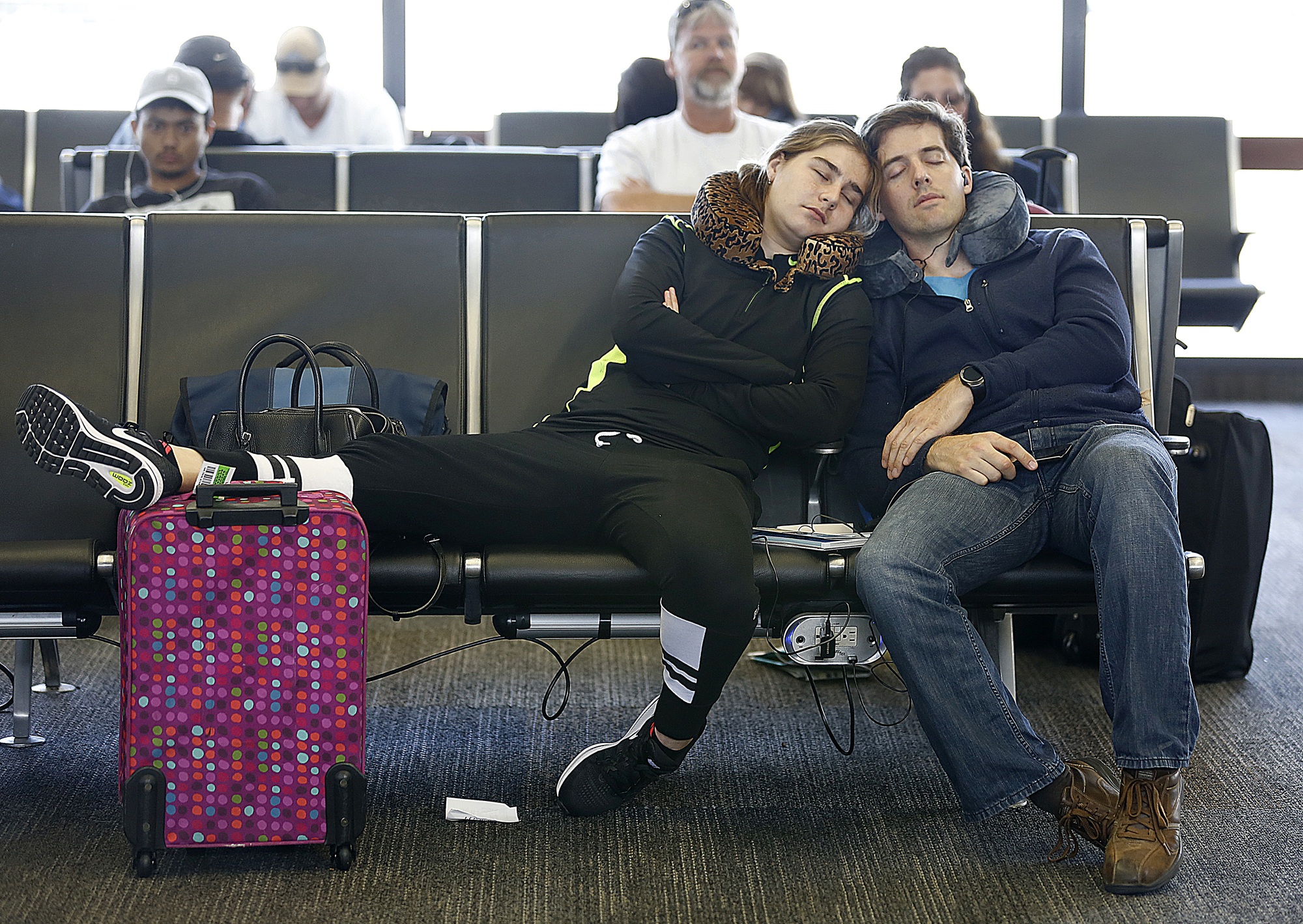
"caption": "Passengers sleep while waiting for their flight at Terminal 3 of San Francisco International Airport on July 20, 2017, in San Francisco, California.",
"credit": "Liz Hafalia/The San Francisco Chronicle via Getty Images",
"altTag": null,
"description": null,
"imgSizes": {
"thumbnail": {
"file": "https://cdn.kqed.org/wp-content/uploads/sites/10/2025/11/SFODelaysGetty2-160x114.jpg",
"width": 160,
"height": 114,
"mimeType": "image/jpeg"
},
"1536x1536": {
"file": "https://cdn.kqed.org/wp-content/uploads/sites/10/2025/11/SFODelaysGetty2-1536x1090.jpg",
"width": 1536,
"height": 1090,
"mimeType": "image/jpeg"
},
"post-thumbnail": {
"file": "https://cdn.kqed.org/wp-content/uploads/sites/10/2025/11/SFODelaysGetty2-672x372.jpg",
"width": 672,
"height": 372,
"mimeType": "image/jpeg"
},
"twentyfourteen-full-width": {
"file": "https://cdn.kqed.org/wp-content/uploads/sites/10/2025/11/SFODelaysGetty2-1038x576.jpg",
"width": 1038,
"height": 576,
"mimeType": "image/jpeg"
},
"npr-cds-wide": {
"file": "https://cdn.kqed.org/wp-content/uploads/sites/10/2025/11/SFODelaysGetty2-1200x675.jpg",
"width": 1200,
"height": 675,
"mimeType": "image/jpeg"
},
"kqedFullSize": {
"file": "https://cdn.kqed.org/wp-content/uploads/sites/10/2025/11/SFODelaysGetty2.jpg",
"width": 2000,
"height": 1419
}
},
"isLoading": false,
"fetchFailed": false
},
"news_12062943": {
"type": "attachments",
"id": "news_12062943",
"meta": {
"index": "attachments_1716263798",
"site": "news",
"id": "12062943",
"found": true
},
"title": "251104-BART SAN JOSE FUNDING CONCERNS-MD-04-KQED",
"publishDate": 1762301661,
"status": "inherit",
"parent": 0,
"modified": 1762391827,
"caption": "Construction crews work at the West Portal site as part of the project to bring BART through downtown San José on Nov. 4, 2025",
"credit": "Martin do Nascimento/KQED",
"altTag": null,
"description": null,
"imgSizes": {
"thumbnail": {
"file": "https://cdn.kqed.org/wp-content/uploads/sites/10/2025/11/251104-BART-SAN-JOSE-FUNDING-CONCERNS-MD-04-KQED-160x107.jpg",
"width": 160,
"height": 107,
"mimeType": "image/jpeg"
},
"1536x1536": {
"file": "https://cdn.kqed.org/wp-content/uploads/sites/10/2025/11/251104-BART-SAN-JOSE-FUNDING-CONCERNS-MD-04-KQED-1536x1024.jpg",
"width": 1536,
"height": 1024,
"mimeType": "image/jpeg"
},
"post-thumbnail": {
"file": "https://cdn.kqed.org/wp-content/uploads/sites/10/2025/11/251104-BART-SAN-JOSE-FUNDING-CONCERNS-MD-04-KQED-672x372.jpg",
"width": 672,
"height": 372,
"mimeType": "image/jpeg"
},
"twentyfourteen-full-width": {
"file": "https://cdn.kqed.org/wp-content/uploads/sites/10/2025/11/251104-BART-SAN-JOSE-FUNDING-CONCERNS-MD-04-KQED-1038x576.jpg",
"width": 1038,
"height": 576,
"mimeType": "image/jpeg"
},
"npr-cds-wide": {
"file": "https://cdn.kqed.org/wp-content/uploads/sites/10/2025/11/251104-BART-SAN-JOSE-FUNDING-CONCERNS-MD-04-KQED-1200x675.jpg",
"width": 1200,
"height": 675,
"mimeType": "image/jpeg"
},
"kqedFullSize": {
"file": "https://cdn.kqed.org/wp-content/uploads/sites/10/2025/11/251104-BART-SAN-JOSE-FUNDING-CONCERNS-MD-04-KQED.jpg",
"width": 2000,
"height": 1333
}
},
"isLoading": false,
"fetchFailed": false
},
"news_12062666": {
"type": "attachments",
"id": "news_12062666",
"meta": {
"index": "attachments_1716263798",
"site": "news",
"id": "12062666",
"found": true
},
"title": "251103-NewsomProp50Rally-59-BL",
"publishDate": 1762210481,
"status": "inherit",
"parent": 0,
"modified": 1762210481,
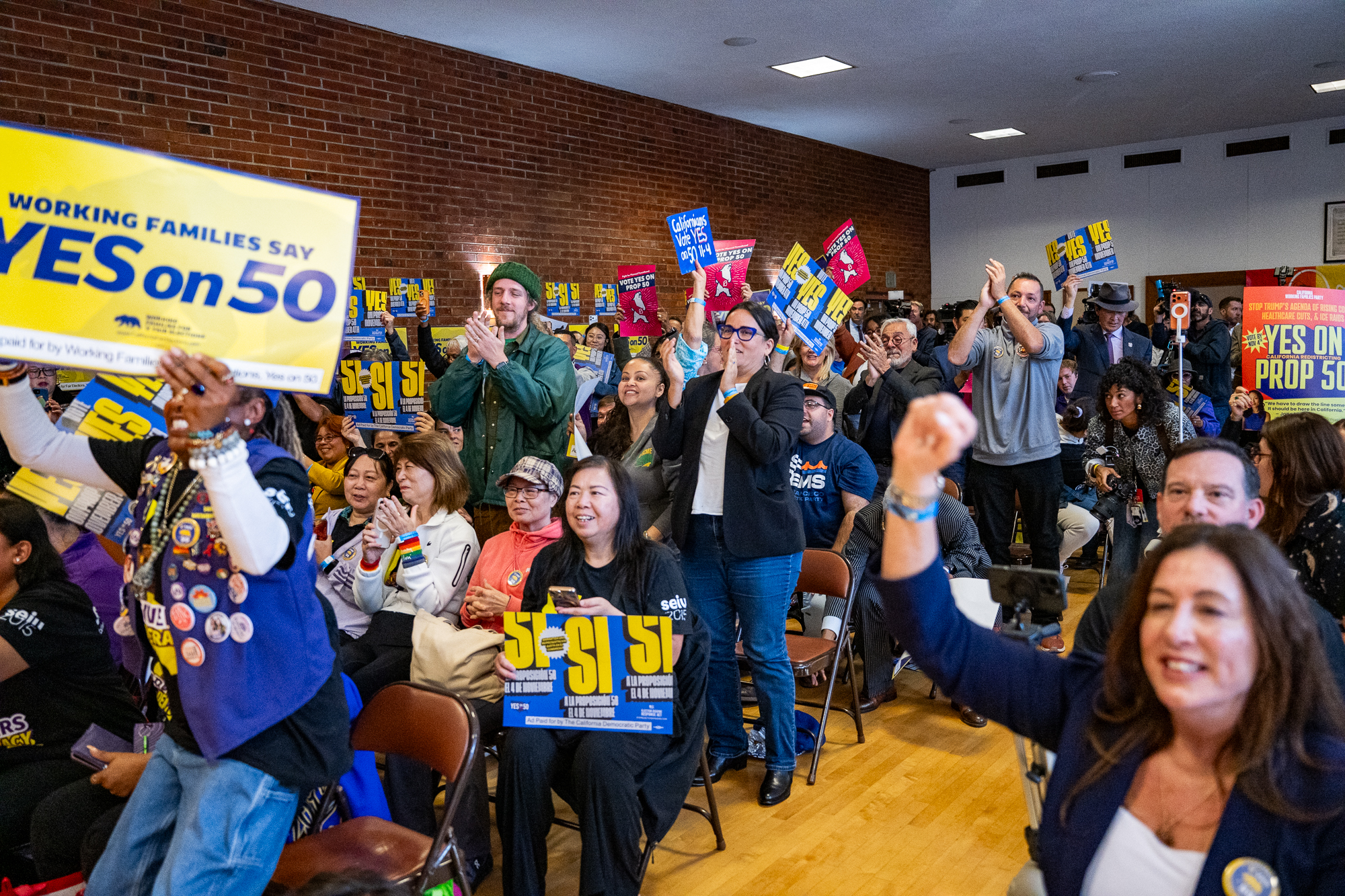
"caption": "Attendees cheer during a rally in support of Proposition 50 with Governor Gavin Newsom, Speaker Emerita Nancy Pelosi, and local elected officials at IBEW Local 6 in San Francisco on Nov. 3, 2025.",
"credit": null,
"altTag": null,
"description": null,
"imgSizes": {
"thumbnail": {
"file": "https://cdn.kqed.org/wp-content/uploads/sites/10/2025/11/251103-NewsomProp50Rally-59-BL-160x107.jpg",
"width": 160,
"height": 107,
"mimeType": "image/jpeg"
},
"1536x1536": {
"file": "https://cdn.kqed.org/wp-content/uploads/sites/10/2025/11/251103-NewsomProp50Rally-59-BL-1536x1024.jpg",
"width": 1536,
"height": 1024,
"mimeType": "image/jpeg"
},
"post-thumbnail": {
"file": "https://cdn.kqed.org/wp-content/uploads/sites/10/2025/11/251103-NewsomProp50Rally-59-BL-672x372.jpg",
"width": 672,
"height": 372,
"mimeType": "image/jpeg"
},
"twentyfourteen-full-width": {
"file": "https://cdn.kqed.org/wp-content/uploads/sites/10/2025/11/251103-NewsomProp50Rally-59-BL-1038x576.jpg",
"width": 1038,
"height": 576,
"mimeType": "image/jpeg"
},
"npr-cds-wide": {
"file": "https://cdn.kqed.org/wp-content/uploads/sites/10/2025/11/251103-NewsomProp50Rally-59-BL-1200x675.jpg",
"width": 1200,
"height": 675,
"mimeType": "image/jpeg"
},
"kqedFullSize": {
"file": "https://cdn.kqed.org/wp-content/uploads/sites/10/2025/11/251103-NewsomProp50Rally-59-BL.jpg",
"width": 2000,
"height": 1333
}
},
"isLoading": false,
"fetchFailed": false
},
"news_12063252": {
"type": "attachments",
"id": "news_12063252",
"meta": {
"index": "attachments_1716263798",
"site": "news",
"id": "12063252",
"found": true
},
"title": "Delays And Cancellations Continue To Plague Airline Industry Heading Into Holiday Weekend",
"publishDate": 1762461535,
"status": "inherit",
"parent": 12063192,
"modified": 1762461575,
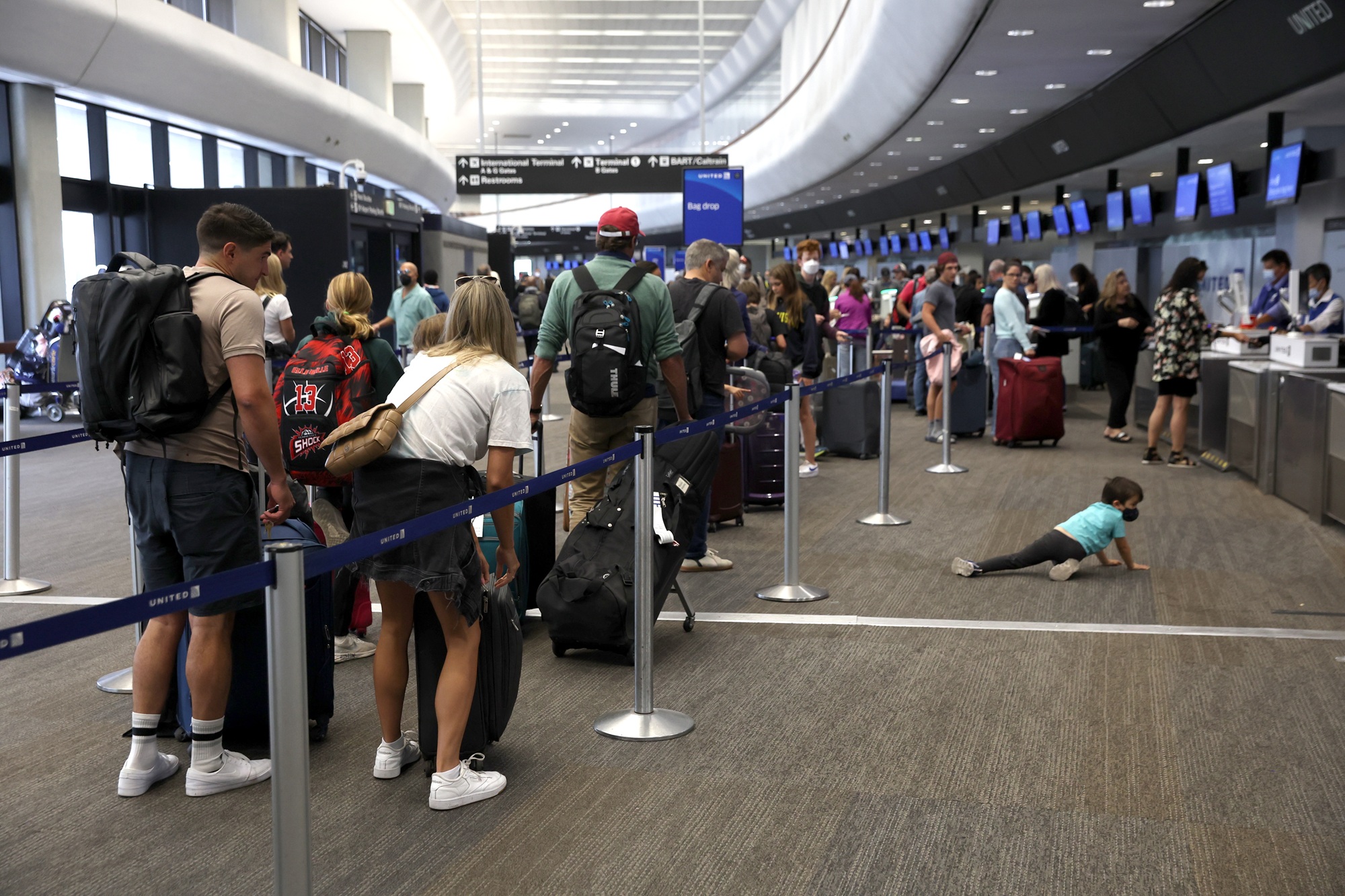
"caption": "Travelers line up to check in for United Airlines flights at San Francisco International Airport on July 1, 2022 ,in San Francisco, California. ",
"credit": "Justin Sullivan/Getty Images",
"altTag": null,
"description": null,
"imgSizes": {
"thumbnail": {
"file": "https://cdn.kqed.org/wp-content/uploads/sites/10/2025/11/SFODelaysGetty3-160x107.jpg",
"width": 160,
"height": 107,
"mimeType": "image/jpeg"
},
"1536x1536": {
"file": "https://cdn.kqed.org/wp-content/uploads/sites/10/2025/11/SFODelaysGetty3-1536x1024.jpg",
"width": 1536,
"height": 1024,
"mimeType": "image/jpeg"
},
"post-thumbnail": {
"file": "https://cdn.kqed.org/wp-content/uploads/sites/10/2025/11/SFODelaysGetty3-672x372.jpg",
"width": 672,
"height": 372,
"mimeType": "image/jpeg"
},
"twentyfourteen-full-width": {
"file": "https://cdn.kqed.org/wp-content/uploads/sites/10/2025/11/SFODelaysGetty3-1038x576.jpg",
"width": 1038,
"height": 576,
"mimeType": "image/jpeg"
},
"npr-cds-wide": {
"file": "https://cdn.kqed.org/wp-content/uploads/sites/10/2025/11/SFODelaysGetty3-1200x675.jpg",
"width": 1200,
"height": 675,
"mimeType": "image/jpeg"
},
"kqedFullSize": {
"file": "https://cdn.kqed.org/wp-content/uploads/sites/10/2025/11/SFODelaysGetty3.jpg",
"width": 2000,
"height": 1333
}
},
"isLoading": false,
"fetchFailed": false
},
"news_12063201": {
"type": "attachments",
"id": "news_12063201",
"meta": {
"index": "attachments_1716263798",
"site": "news",
"id": "12063201",
"found": true
},
"title": "Delays And Cancellations Continue To Plague Airline Industry Heading Into Holiday Weekend",
"publishDate": 1762451503,
"status": "inherit",
"parent": 12063196,
"modified": 1762452703,
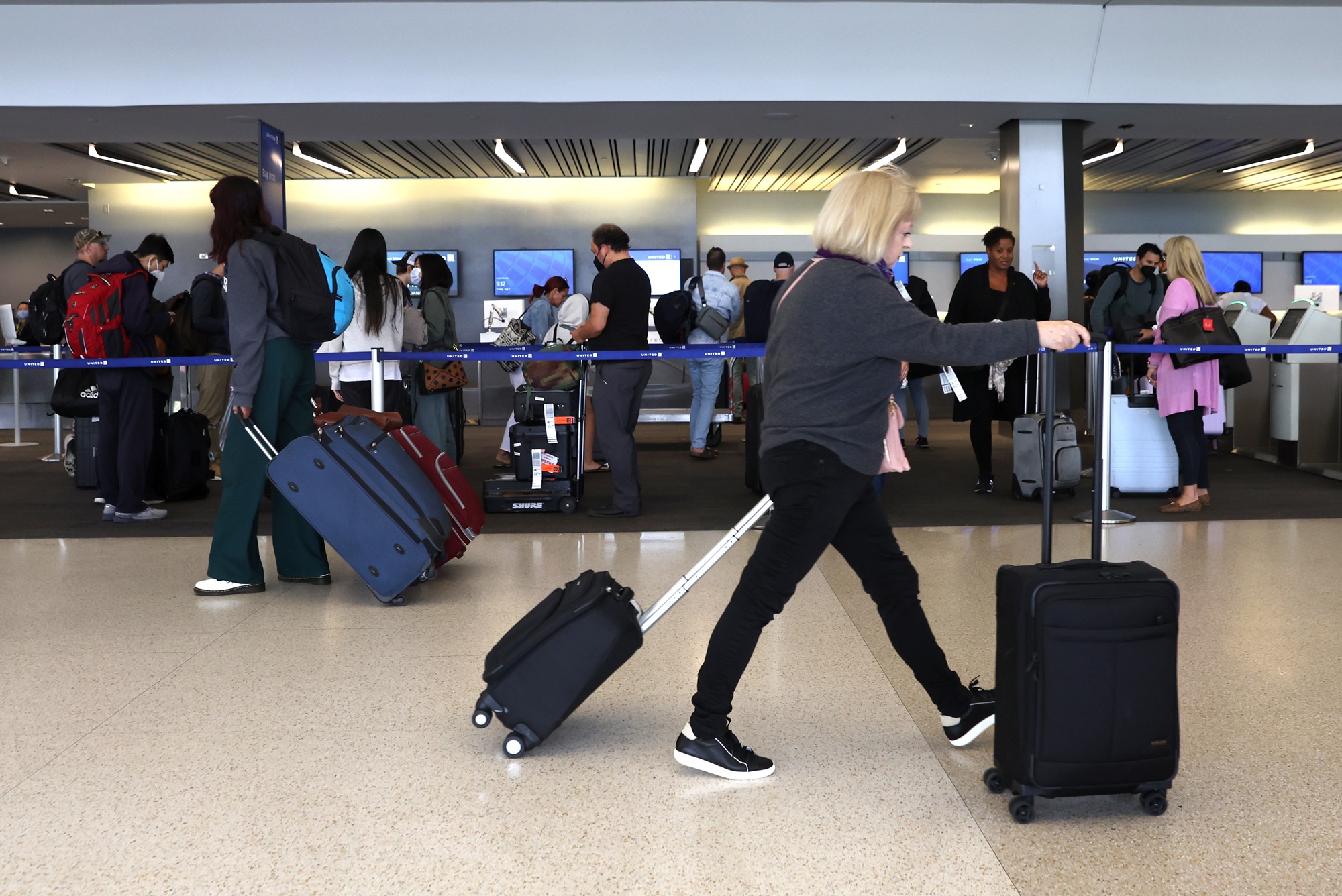
"caption": "Travelers walk with their luggage at San Francisco International Airport on July 1, 2022, in San Francisco, California. ",
"credit": "Justin Sullivan/Getty Images",
"altTag": null,
"description": null,
"imgSizes": {
"thumbnail": {
"file": "https://cdn.kqed.org/wp-content/uploads/sites/10/2025/11/SFODelaysGetty-160x107.jpg",
"width": 160,
"height": 107,
"mimeType": "image/jpeg"
},
"1536x1536": {
"file": "https://cdn.kqed.org/wp-content/uploads/sites/10/2025/11/SFODelaysGetty-1536x1026.jpg",
"width": 1536,
"height": 1026,
"mimeType": "image/jpeg"
},
"post-thumbnail": {
"file": "https://cdn.kqed.org/wp-content/uploads/sites/10/2025/11/SFODelaysGetty-672x372.jpg",
"width": 672,
"height": 372,
"mimeType": "image/jpeg"
},
"twentyfourteen-full-width": {
"file": "https://cdn.kqed.org/wp-content/uploads/sites/10/2025/11/SFODelaysGetty-1038x576.jpg",
"width": 1038,
"height": 576,
"mimeType": "image/jpeg"
},
"npr-cds-wide": {
"file": "https://cdn.kqed.org/wp-content/uploads/sites/10/2025/11/SFODelaysGetty-1200x675.jpg",
"width": 1200,
"height": 675,
"mimeType": "image/jpeg"
},
"kqedFullSize": {
"file": "https://cdn.kqed.org/wp-content/uploads/sites/10/2025/11/SFODelaysGetty.jpg",
"width": 2000,
"height": 1336
}
},
"isLoading": false,
"fetchFailed": false
},
"news_12063066": {
"type": "attachments",
"id": "news_12063066",
"meta": {
"index": "attachments_1716263798",
"site": "news",
"id": "12063066",
"found": true
},
"title": "David Tangipa",
"publishDate": 1762373312,
"status": "inherit",
"parent": 12081927,
"modified": 1777570934,
"caption": "Republican Assemblymember David Tangipa speaks to reporters during a press conference announcing a federal lawsuit challenging Proposition 50 in Sacramento on Nov. 5, 2025. ",
"credit": "Godofredo A. Vásquez/AP Photo",
"altTag": null,
"description": null,
"imgSizes": {
"thumbnail": {
"file": "https://cdn.kqed.org/wp-content/uploads/sites/10/2025/11/AP25309664191702-KQED-160x107.jpg",
"width": 160,
"height": 107,
"mimeType": "image/jpeg"
},
"1536x1536": {
"file": "https://cdn.kqed.org/wp-content/uploads/sites/10/2025/11/AP25309664191702-KQED-1536x1025.jpg",
"width": 1536,
"height": 1025,
"mimeType": "image/jpeg"
},
"post-thumbnail": {
"file": "https://cdn.kqed.org/wp-content/uploads/sites/10/2025/11/AP25309664191702-KQED-672x372.jpg",
"width": 672,
"height": 372,
"mimeType": "image/jpeg"
},
"twentyfourteen-full-width": {
"file": "https://cdn.kqed.org/wp-content/uploads/sites/10/2025/11/AP25309664191702-KQED-1038x576.jpg",
"width": 1038,
"height": 576,
"mimeType": "image/jpeg"
},
"npr-cds-wide": {
"file": "https://cdn.kqed.org/wp-content/uploads/sites/10/2025/11/AP25309664191702-KQED-1200x675.jpg",
"width": 1200,
"height": 675,
"mimeType": "image/jpeg"
},
"kqedFullSize": {
"file": "https://cdn.kqed.org/wp-content/uploads/sites/10/2025/11/AP25309664191702-KQED.jpg",
"width": 2000,
"height": 1334
}
},
"isLoading": false,
"fetchFailed": false
},
"news_12062567": {
"type": "attachments",
"id": "news_12062567",
"meta": {
"index": "attachments_1716263798",
"site": "news",
"id": "12062567",
"found": true
},
"title": "251031-SFMARINFOODBANK-24-BL-KQED",
"publishDate": 1761943592,
"status": "inherit",
"parent": 12062743,
"modified": 1762277859,
"caption": "Workers sort fresh produce into boxes at the San Francisco‑Marin Food Bank warehouse in San Francisco on Oct. 31, 2025.",
"credit": "Beth LaBerge/KQED",
"altTag": null,
"description": null,
"imgSizes": {
"thumbnail": {
"file": "https://cdn.kqed.org/wp-content/uploads/sites/10/2025/10/251031-SFMARINFOODBANK-24-BL-KQED-160x107.jpg",
"width": 160,
"height": 107,
"mimeType": "image/jpeg"
},
"1536x1536": {
"file": "https://cdn.kqed.org/wp-content/uploads/sites/10/2025/10/251031-SFMARINFOODBANK-24-BL-KQED-1536x1024.jpg",
"width": 1536,
"height": 1024,
"mimeType": "image/jpeg"
},
"post-thumbnail": {
"file": "https://cdn.kqed.org/wp-content/uploads/sites/10/2025/10/251031-SFMARINFOODBANK-24-BL-KQED-672x372.jpg",
"width": 672,
"height": 372,
"mimeType": "image/jpeg"
},
"twentyfourteen-full-width": {
"file": "https://cdn.kqed.org/wp-content/uploads/sites/10/2025/10/251031-SFMARINFOODBANK-24-BL-KQED-1038x576.jpg",
"width": 1038,
"height": 576,
"mimeType": "image/jpeg"
},
"npr-cds-wide": {
"file": "https://cdn.kqed.org/wp-content/uploads/sites/10/2025/10/251031-SFMARINFOODBANK-24-BL-KQED-1200x675.jpg",
"width": 1200,
"height": 675,
"mimeType": "image/jpeg"
},
"kqedFullSize": {
"file": "https://cdn.kqed.org/wp-content/uploads/sites/10/2025/10/251031-SFMARINFOODBANK-24-BL-KQED.jpg",
"width": 2000,
"height": 1333
}
},
"isLoading": false,
"fetchFailed": false
}
},
"audioPlayerReducer": {
"postId": "stream_live",
"isPaused": true,
"isPlaying": false,
"pfsActive": false,
"pledgeModalIsOpen": true,
"playerDrawerIsOpen": false,
"liveAudioPlayStartedAt": 0,
"liveAudioPlayContext": ""
},
"authorsReducer": {
"gmarzorati": {
"type": "authors",
"id": "227",
"meta": {
"index": "authors_1716337520",
"id": "227",
"found": true
},
"name": "Guy Marzorati",
"firstName": "Guy",
"lastName": "Marzorati",
"slug": "gmarzorati",
"email": "gmarzorati@KQED.org",
"display_author_email": true,
"staff_mastheads": [
"news"
],
"title": "Correspondent",
"bio": "Guy Marzorati is a correspondent on KQED's California Politics and Government Desk, based in San Jose. A graduate of Santa Clara University, Guy joined KQED in 2013. He reports on state and local politics and produces KQED's digital voter guide.",
"avatar": "https://secure.gravatar.com/avatar/e7038b8dbfd55b104369b76b1cd0b9de?s=600&d=blank&r=g",
"twitter": "guymarzorati",
"facebook": null,
"instagram": null,
"linkedin": null,
"sites": [
{
"site": "",
"roles": [
"editor"
]
},
{
"site": "news",
"roles": [
"editor"
]
},
{
"site": "science",
"roles": [
"editor"
]
},
{
"site": "forum",
"roles": [
"editor"
]
},
{
"site": "elections",
"roles": [
"editor"
]
},
{
"site": "liveblog",
"roles": [
"editor"
]
}
],
"headData": {
"title": "Guy Marzorati | KQED",
"description": "Correspondent",
"ogImgSrc": "https://secure.gravatar.com/avatar/e7038b8dbfd55b104369b76b1cd0b9de?s=600&d=blank&r=g",
"twImgSrc": "https://secure.gravatar.com/avatar/e7038b8dbfd55b104369b76b1cd0b9de?s=600&d=blank&r=g"
},
"isLoading": false,
"link": "/author/gmarzorati"
},
"aemslie": {
"type": "authors",
"id": "3206",
"meta": {
"index": "authors_1716337520",
"id": "3206",
"found": true
},
"name": "Alex Emslie",
"firstName": "Alex",
"lastName": "Emslie",
"slug": "aemslie",
"email": "aemslie@kqed.org",
"display_author_email": true,
"staff_mastheads": [
"news"
],
"title": "KQED Senior Editor",
"bio": "Alex Emslie is senior editor of talent and development at KQED, where he manages dozens of early career journalists and oversees news department internships.\r\n\r\nHe is a former carpenter and proud graduate of City College of San Francisco and San Francisco State University, where he studied journalism and criminal justice before joining KQED in 2013.\r\n\r\nAlex produced investigative journalism focused on \u003ca href=\"https://www.kqed.org/news/11667594/the-trials-of-marvin-mutch-video\">criminal justice\u003c/a> and policing for most of a decade. He has broken major stories about \u003ca href=\"https://www.kqed.org/news/135682/amid-a-series-of-vallejo-police-shootings-one-officers-name-stands-out\">police use of deadly force\u003c/a>, \u003ca href=\"https://www.kqed.org/news/10454955/racist-texts-prompt-sfpd-internal-investigation\">officer misconduct\u003c/a> and \u003ca href=\"https://www.kqed.org/news/11712239/terrorist-or-troll-judge-to-weigh-whether-oakland-man-really-intended-to-attack-bay-area\">other\u003c/a> \u003ca href=\"https://www.kqed.org/news/11221414/hayward-paid-159000-to-husband-of-retired-police-chief-documents-show\">high\u003c/a>-\u003ca href=\"https://www.kqed.org/news/10622762/the-forgotten-tracking-two-homicides-in-san-francisco-public-housing\">profile\u003c/a> \u003ca href=\"https://www.kqed.org/news/11624516/federal-agency-promoted-ranger-just-months-after-his-gun-was-stolen-and-used-in-steinle-killing\">cases\u003c/a>. He co-founded the \u003ca href=\"https://projects.scpr.org/california-reporting-project/\">California Reporting Project\u003c/a> in 2019 to obtain and report on previously confidential police internal investigations. The effort produced well over 100 original stories and changed the course of multiple criminal cases.\r\n\r\nHis work has been recognized with numerous journalism awards, including a national Edward R. Murrow award for several years of \u003ca href=\"https://www.kqed.org/news/11688481/sfpd-officers-in-mario-woods-case-recount-shooting-in-newly-filed-depositions\">reporting\u003c/a> on the San Francisco Police shooting of Mario Woods. His \u003ca href=\"https://www.kqed.org/news/147854/half-of-those-killed-by-san-francisco-police-are-mentally-ill\">reporting\u003c/a> on police killings of people in psychiatric crisis was cited in amicus briefs before the U.S. Supreme Court.\r\n\r\nAlex now enjoys mentoring the next generation of journalists at KQED.",
"avatar": "https://secure.gravatar.com/avatar/e691e65209f20e9da202bd730ead5663?s=600&d=blank&r=g",
"twitter": "SFNewsReporter",
"facebook": null,
"instagram": null,
"linkedin": null,
"sites": [
{
"site": "arts",
"roles": [
"editor"
]
},
{
"site": "news",
"roles": [
"editor"
]
},
{
"site": "mindshift",
"roles": [
"editor"
]
},
{
"site": "stateofhealth",
"roles": [
"editor"
]
},
{
"site": "science",
"roles": [
"administrator"
]
}
],
"headData": {
"title": "Alex Emslie | KQED",
"description": "KQED Senior Editor",
"ogImgSrc": "https://secure.gravatar.com/avatar/e691e65209f20e9da202bd730ead5663?s=600&d=blank&r=g",
"twImgSrc": "https://secure.gravatar.com/avatar/e691e65209f20e9da202bd730ead5663?s=600&d=blank&r=g"
},
"isLoading": false,
"link": "/author/aemslie"
},
"mlagos": {
"type": "authors",
"id": "3239",
"meta": {
"index": "authors_1716337520",
"id": "3239",
"found": true
},
"name": "Marisa Lagos",
"firstName": "Marisa",
"lastName": "Lagos",
"slug": "mlagos",
"email": "mlagos@kqed.org",
"display_author_email": false,
"staff_mastheads": [
"news"
],
"title": "KQED Contributor",
"bio": "Marisa Lagos is a correspondent for KQED’s California Politics and Government Desk and co-hosts the award-winning show and podcast, Political Breakdown. At KQED, Lagos also conducts reporting, analysis and investigations into state, local and national politics for radio, TV, online and onstage. In 2022, she and co-host, Scott Shafer, moderated the only gubernatorial debate in California. In 2020, the \u003ci>Washington Post\u003c/i> named her one of the top political journalists in California; she was nominated for a Peabody and won several other awards for her work investigating the 2017 California wildfires. She has worked at the \u003ci>San Francisco Chronicle\u003c/i>, \u003ci>San Francisco Examiner\u003c/i> and \u003ci>Los Angeles Times\u003c/i>. A UC Santa Barbara graduate, she lives in San Francisco with her two sons and husband.",
"avatar": "https://secure.gravatar.com/avatar/a261a0d3696fc066871ef96b85b5e7d2?s=600&d=blank&r=g",
"twitter": "@mlagos",
"facebook": null,
"instagram": null,
"linkedin": null,
"sites": [
{
"site": "arts",
"roles": [
"author"
]
},
{
"site": "news",
"roles": [
"editor"
]
},
{
"site": "science",
"roles": [
"editor"
]
},
{
"site": "forum",
"roles": [
"author"
]
},
{
"site": "liveblog",
"roles": [
"author"
]
}
],
"headData": {
"title": "Marisa Lagos | KQED",
"description": "KQED Contributor",
"ogImgSrc": "https://secure.gravatar.com/avatar/a261a0d3696fc066871ef96b85b5e7d2?s=600&d=blank&r=g",
"twImgSrc": "https://secure.gravatar.com/avatar/a261a0d3696fc066871ef96b85b5e7d2?s=600&d=blank&r=g"
},
"isLoading": false,
"link": "/author/mlagos"
},
"carlysevern": {
"type": "authors",
"id": "3243",
"meta": {
"index": "authors_1716337520",
"id": "3243",
"found": true
},
"name": "Carly Severn",
"firstName": "Carly",
"lastName": "Severn",
"slug": "carlysevern",
"email": "csevern@kqed.org",
"display_author_email": false,
"staff_mastheads": [
"news"
],
"title": "Senior Editor, Audience News ",
"bio": "Carly is KQED's Senior Editor of Audience News on the Digital News team, and has reported for the California Report Magazine, Bay Curious and KQED Arts. She's formerly the host of \u003ca href=\"http://ww2.kqed.org/pop/category/the-cooler/\" rel=\"noopener noreferrer\">The Cooler\u003c/a> podcast.",
"avatar": "https://secure.gravatar.com/avatar/54037bf5c128fe678f0ef26cec97a93f2e7f220a22d7285703328f12c42c1b1d?s=600&d=blank&r=g",
"twitter": "teacupinthebay",
"bluesky": null,
"facebook": null,
"instagram": null,
"linkedin": null,
"sites": [
{
"site": "",
"roles": [
"editor"
]
},
{
"site": "arts",
"roles": [
"editor"
]
},
{
"site": "news",
"roles": [
"administrator"
]
},
{
"site": "pop",
"roles": [
"editor"
]
},
{
"site": "futureofyou",
"roles": [
"editor"
]
},
{
"site": "about",
"roles": [
"administrator"
]
},
{
"site": "mindshift",
"roles": [
"editor"
]
},
{
"site": "bayareabites",
"roles": [
"editor"
]
},
{
"site": "stateofhealth",
"roles": [
"editor"
]
},
{
"site": "science",
"roles": [
"editor"
]
},
{
"site": "food",
"roles": [
"contributor"
]
},
{
"site": "forum",
"roles": [
"editor"
]
},
{
"site": "perspectives",
"roles": [
"administrator"
]
},
{
"site": "liveblog",
"roles": [
"editor"
]
}
],
"headData": {
"title": "Carly Severn | KQED",
"description": "Senior Editor, Audience News ",
"ogImgSrc": "https://secure.gravatar.com/avatar/54037bf5c128fe678f0ef26cec97a93f2e7f220a22d7285703328f12c42c1b1d?s=600&d=blank&r=g",
"twImgSrc": "https://secure.gravatar.com/avatar/54037bf5c128fe678f0ef26cec97a93f2e7f220a22d7285703328f12c42c1b1d?s=600&d=blank&r=g"
},
"isLoading": false,
"link": "/author/carlysevern"
},
"ecruzguevarra": {
"type": "authors",
"id": "8654",
"meta": {
"index": "authors_1716337520",
"id": "8654",
"found": true
},
"name": "Ericka Cruz Guevarra",
"firstName": "Ericka",
"lastName": "Cruz Guevarra",
"slug": "ecruzguevarra",
"email": "ecruzguevarra@kqed.org",
"display_author_email": true,
"staff_mastheads": [
"news"
],
"title": "Producer, The Bay Podcast",
"bio": "Ericka Cruz Guevarra is host of \u003ca href=\"https://www.kqed.org/podcasts/thebay\">\u003cem>The Bay\u003c/em>\u003c/a> podcast at KQED. Before host, she was the show’s producer. Her work in that capacity includes a three-part reported series on policing in Vallejo, which won a 2020 excellence in journalism award from the Society of Professional Journalists. Ericka has worked as a breaking news reporter at Oregon Public Broadcasting, helped produce the Code Switch podcast, and was KQED’s inaugural Raul Ramirez Diversity Fund intern. She’s also an alumna of NPR’s Next Generation Radio program. Send her an email if you have strong feelings about whether Fairfield and Suisun City are the Bay. Ericka is represented by SAG-AFTRA.",
"avatar": "https://secure.gravatar.com/avatar/accefc1de4bafc7e234b69bcb9b6f6536c130fd84709bc3069ef11a78787e1bb?s=600&d=blank&r=g",
"twitter": "NotoriousECG",
"bluesky": null,
"facebook": null,
"instagram": null,
"linkedin": null,
"sites": [
{
"site": "arts",
"roles": [
"subscriber"
]
},
{
"site": "news",
"roles": [
"editor",
"manage_categories"
]
},
{
"site": "futureofyou",
"roles": [
"subscriber"
]
},
{
"site": "stateofhealth",
"roles": [
"subscriber"
]
},
{
"site": "science",
"roles": [
"editor"
]
},
{
"site": "forum",
"roles": [
"subscriber"
]
}
],
"headData": {
"title": "Ericka Cruz Guevarra | KQED",
"description": "Producer, The Bay Podcast",
"ogImgSrc": "https://secure.gravatar.com/avatar/accefc1de4bafc7e234b69bcb9b6f6536c130fd84709bc3069ef11a78787e1bb?s=600&d=blank&r=g",
"twImgSrc": "https://secure.gravatar.com/avatar/accefc1de4bafc7e234b69bcb9b6f6536c130fd84709bc3069ef11a78787e1bb?s=600&d=blank&r=g"
},
"isLoading": false,
"link": "/author/ecruzguevarra"
},
"amontecillo": {
"type": "authors",
"id": "11649",
"meta": {
"index": "authors_1716337520",
"id": "11649",
"found": true
},
"name": "Alan Montecillo",
"firstName": "Alan",
"lastName": "Montecillo",
"slug": "amontecillo",
"email": "amontecillo@kqed.org",
"display_author_email": false,
"staff_mastheads": [
"news"
],
"title": "KQED Contributor",
"bio": "Alan Montecillo is the senior editor of \u003cem>\u003ca href=\"http://kqed.org/thebay\">The Bay\u003c/a>, \u003c/em> KQED's local news podcast. Before moving to the Bay Area, he worked as a senior talk show producer for WILL in Champaign-Urbana, Illinois and at Oregon Public Broadcasting in Portland, Oregon. He has won journalism awards from the Society of Professional Journalists Northern California, the Public Media Journalists Association, The Signal Awards, and has also received a regional Edward R. Murrow award. Alan is a Filipino American from Hong Kong and a graduate of Reed College.",
"avatar": "https://secure.gravatar.com/avatar/268f53a2066899ea9efdd8a5900218b17c822d9862cbc9326cccec53ef41d349?s=600&d=blank&r=g",
"twitter": "alanmontecillo",
"bluesky": null,
"facebook": null,
"instagram": null,
"linkedin": null,
"sites": [
{
"site": "",
"roles": [
"editor"
]
},
{
"site": "news",
"roles": [
"editor",
"manage_categories"
]
}
],
"headData": {
"title": "Alan Montecillo | KQED",
"description": "KQED Contributor",
"ogImgSrc": "https://secure.gravatar.com/avatar/268f53a2066899ea9efdd8a5900218b17c822d9862cbc9326cccec53ef41d349?s=600&d=blank&r=g",
"twImgSrc": "https://secure.gravatar.com/avatar/268f53a2066899ea9efdd8a5900218b17c822d9862cbc9326cccec53ef41d349?s=600&d=blank&r=g"
},
"isLoading": false,
"link": "/author/amontecillo"
},
"jessicakariisa": {
"type": "authors",
"id": "11831",
"meta": {
"index": "authors_1716337520",
"id": "11831",
"found": true
},
"name": "Jessica Kariisa",
"firstName": "Jessica",
"lastName": "Kariisa",
"slug": "jessicakariisa",
"email": "jkariisa@kqed.org",
"display_author_email": false,
"staff_mastheads": [],
"title": "Producer, The Bay",
"bio": "Jessica Kariisa is the producer of The Bay. She first joined KQED as an intern for The California Report Magazine, after which she became an on-call producer. She reported a Bay Curious episode on the use of rap lyrics in criminal trials which won a Society of Professional Journalists award in 2023 for Excellence in Features Journalism and the 2023 Signal Award for Best Conversation Starter. She’s worked on podcasts for Snap Judgment and American Public Media. Before embarking on her audio career, she was a music journalist.\r\n\r\nJessica Kariisa is represented by SAG-AFTRA.",
"avatar": "https://secure.gravatar.com/avatar/522e97b28ac0b3d411621c0fde8f3419c7b71ea2c5c262c57c4bb600963f328c?s=600&d=blank&r=g",
"twitter": null,
"bluesky": null,
"facebook": null,
"instagram": null,
"linkedin": null,
"sites": [
{
"site": "arts",
"roles": [
"author"
]
},
{
"site": "news",
"roles": [
"editor",
"manage_categories"
]
}
],
"headData": {
"title": "Jessica Kariisa | KQED",
"description": "Producer, The Bay",
"ogImgSrc": "https://secure.gravatar.com/avatar/522e97b28ac0b3d411621c0fde8f3419c7b71ea2c5c262c57c4bb600963f328c?s=600&d=blank&r=g",
"twImgSrc": "https://secure.gravatar.com/avatar/522e97b28ac0b3d411621c0fde8f3419c7b71ea2c5c262c57c4bb600963f328c?s=600&d=blank&r=g"
},
"isLoading": false,
"link": "/author/jessicakariisa"
},
"nkhan": {
"type": "authors",
"id": "11867",
"meta": {
"index": "authors_1716337520",
"id": "11867",
"found": true
},
"name": "Nisa Khan",
"firstName": "Nisa",
"lastName": "Khan",
"slug": "nkhan",
"email": "nkhan@kqed.org",
"display_author_email": false,
"staff_mastheads": [],
"title": "KQED Contributor",
"bio": "Nisa Khan is a reporter for KQED's Audience News Desk. She was formerly a data reporter at Michigan Radio. She earned a Bachelor of Science in Information from the University of Michigan and a Master of Arts in Communication from Stanford University.",
"avatar": "https://secure.gravatar.com/avatar/8720459eef081ff64582b3506b124d58523e80e120704a0cbd9892533c914991?s=600&d=blank&r=g",
"twitter": "mnisakhan",
"bluesky": null,
"facebook": null,
"instagram": null,
"linkedin": null,
"sites": [
{
"site": "arts",
"roles": [
"editor"
]
},
{
"site": "news",
"roles": [
"editor"
]
},
{
"site": "science",
"roles": [
"editor",
"author"
]
},
{
"site": "forum",
"roles": [
"editor"
]
},
{
"site": "liveblog",
"roles": [
"contributor"
]
}
],
"headData": {
"title": "Nisa Khan | KQED",
"description": "KQED Contributor",
"ogImgSrc": "https://secure.gravatar.com/avatar/8720459eef081ff64582b3506b124d58523e80e120704a0cbd9892533c914991?s=600&d=blank&r=g",
"twImgSrc": "https://secure.gravatar.com/avatar/8720459eef081ff64582b3506b124d58523e80e120704a0cbd9892533c914991?s=600&d=blank&r=g"
},
"isLoading": false,
"link": "/author/nkhan"
},
"jgeha": {
"type": "authors",
"id": "11906",
"meta": {
"index": "authors_1716337520",
"id": "11906",
"found": true
},
"name": "Joseph Geha",
"firstName": "Joseph",
"lastName": "Geha",
"slug": "jgeha",
"email": "jgeha@kqed.org",
"display_author_email": false,
"staff_mastheads": [
"news",
"science"
],
"title": "KQED Contributor",
"bio": null,
"avatar": "https://secure.gravatar.com/avatar/ea84d2b6dd93d6369d453edf19dd583f117cd1759d2d9c9c92f9de77017354fe?s=600&d=blank&r=g",
"twitter": null,
"bluesky": null,
"facebook": null,
"instagram": null,
"linkedin": null,
"sites": [
{
"site": "news",
"roles": [
"editor"
]
},
{
"site": "liveblog",
"roles": [
"author"
]
}
],
"headData": {
"title": "Joseph Geha | KQED",
"description": "KQED Contributor",
"ogImgSrc": "https://secure.gravatar.com/avatar/ea84d2b6dd93d6369d453edf19dd583f117cd1759d2d9c9c92f9de77017354fe?s=600&d=blank&r=g",
"twImgSrc": "https://secure.gravatar.com/avatar/ea84d2b6dd93d6369d453edf19dd583f117cd1759d2d9c9c92f9de77017354fe?s=600&d=blank&r=g"
},
"isLoading": false,
"link": "/author/jgeha"
},
"kdebenedetti": {
"type": "authors",
"id": "11913",
"meta": {
"index": "authors_1716337520",
"id": "11913",
"found": true
},
"name": "Katie DeBenedetti",
"firstName": "Katie",
"lastName": "DeBenedetti",
"slug": "kdebenedetti",
"email": "kdebenedetti@kqed.org",
"display_author_email": false,
"staff_mastheads": [
"news",
"science"
],
"title": "KQED Contributor",
"bio": "Katie DeBenedetti is a digital reporter covering daily news for the Express Desk. Prior to joining KQED as a culture reporting intern in January 2024, she covered education and city government for the Napa Valley Register.",
"avatar": "https://secure.gravatar.com/avatar/6e31073cb8f7e4214ab03f42771d0f45?s=600&d=blank&r=g",
"twitter": null,
"facebook": null,
"instagram": null,
"linkedin": null,
"sites": [
{
"site": "news",
"roles": [
"author"
]
},
{
"site": "science",
"roles": [
"author"
]
},
{
"site": "liveblog",
"roles": [
"author"
]
}
],
"headData": {
"title": "Katie DeBenedetti | KQED",
"description": "KQED Contributor",
"ogImgSrc": "https://secure.gravatar.com/avatar/6e31073cb8f7e4214ab03f42771d0f45?s=600&d=blank&r=g",
"twImgSrc": "https://secure.gravatar.com/avatar/6e31073cb8f7e4214ab03f42771d0f45?s=600&d=blank&r=g"
},
"isLoading": false,
"link": "/author/kdebenedetti"
},
"emanoukian": {
"type": "authors",
"id": "11925",
"meta": {
"index": "authors_1716337520",
"id": "11925",
"found": true
},
"name": "Elize Manoukian",
"firstName": "Elize",
"lastName": "Manoukian",
"slug": "emanoukian",
"email": "emanoukian@KQED.org",
"display_author_email": false,
"staff_mastheads": [
"news"
],
"title": "Digital News Editor",
"bio": "Elize Manoukian is an award-winning audio producer and Senior Editor on the Express Desk, KQED's digital news platform. Her work has appeared on KPFA, Interlochen Public Radio, Oregon Public Broadcast, the New York Daily News, LA Times and the San Diego Union-Tribune.",
"avatar": "https://secure.gravatar.com/avatar/4525f1a8e46ccb30933b32653d9772064cfefe3fa655eb45b3b3a80341f6bdad?s=600&d=blank&r=g",
"twitter": null,
"bluesky": null,
"facebook": null,
"instagram": null,
"linkedin": null,
"sites": [
{
"site": "arts",
"roles": [
"editor"
]
},
{
"site": "news",
"roles": [
"editor"
]
},
{
"site": "science",
"roles": [
"editor"
]
}
],
"headData": {
"title": "Elize Manoukian | KQED",
"description": "Digital News Editor",
"ogImgSrc": "https://secure.gravatar.com/avatar/4525f1a8e46ccb30933b32653d9772064cfefe3fa655eb45b3b3a80341f6bdad?s=600&d=blank&r=g",
"twImgSrc": "https://secure.gravatar.com/avatar/4525f1a8e46ccb30933b32653d9772064cfefe3fa655eb45b3b3a80341f6bdad?s=600&d=blank&r=g"
},
"isLoading": false,
"link": "/author/emanoukian"
},
"epeppel": {
"type": "authors",
"id": "11989",
"meta": {
"index": "authors_1716337520",
"id": "11989",
"found": true
},
"name": "Eliza Peppel",
"firstName": "Eliza",
"lastName": "Peppel",
"slug": "epeppel",
"email": "epeppel@kqed.org",
"display_author_email": false,
"staff_mastheads": [],
"title": null,
"bio": "Eliza is an award-winning journalist living in Oakland. She was previously a reporting fellow at KALW, where she reported daily news and long-form radio features. Eliza studied journalism at Fordham University in The Bronx during the COVID-19 pandemic. She grew up mainly in California and spent a few childhood years in Aix en Provence, France.",
"avatar": "https://secure.gravatar.com/avatar/20d9e17a06ee787c11052e6096319dd583b6376233d02383dab5eaeb874d5f56?s=600&d=blank&r=g",
"twitter": null,
"bluesky": null,
"facebook": null,
"instagram": null,
"linkedin": null,
"sites": [
{
"site": "news",
"roles": [
"subscriber"
]
},
{
"site": "science",
"roles": [
"subscriber"
]
}
],
"headData": {
"title": "Eliza Peppel | KQED",
"description": null,
"ogImgSrc": "https://secure.gravatar.com/avatar/20d9e17a06ee787c11052e6096319dd583b6376233d02383dab5eaeb874d5f56?s=600&d=blank&r=g",
"twImgSrc": "https://secure.gravatar.com/avatar/20d9e17a06ee787c11052e6096319dd583b6376233d02383dab5eaeb874d5f56?s=600&d=blank&r=g"
},
"isLoading": false,
"link": "/author/epeppel"
}
},
"pagesReducer": {
"news_tag_donald-trump": {
"type": "terms",
"id": "news_1323",
"meta": {
"index": "terms_1716263798",
"site": "news",
"id": "1323",
"score": 8.557362
},
"featImg": null,
"name": "Donald Trump",
"description": null,
"taxonomy": "tag",
"headData": {
"twImgId": null,
"twTitle": null,
"ogTitle": null,
"ogImgId": null,
"twDescription": null,
"description": null,
"title": "Donald Trump Archives | KQED News",
"ogDescription": null
},
"ttid": 1335,
"slug": "donald-trump",
"isLoading": false,
"title": "Donald Trump",
"pageMeta": {
"site": "news",
"WpPageTemplate": "page-topic-editorial",
"currentPage": 16
},
"blocks": [
{
"blockName": "kqed/post-list",
"attrs": {
"layout": "cardArticle2",
"query": "posts/news?tag=donald-trump",
"seeMore": false,
"paginated": true,
"page": 16
}
},
{
"blockName": "kqed/ad"
}
]
}
},
"pfsSessionReducer": {},
"postsReducer": {
"stream_live": {
"type": "live",
"id": "stream_live",
"audioUrl": "https://streams.kqed.org/kqedradio",
"title": "Live Stream",
"excerpt": "Live Stream information currently unavailable.",
"link": "/radio",
"featImg": "",
"label": {
"name": "KQED Live",
"link": "/"
}
},
"stream_kqedNewscast": {
"type": "posts",
"id": "stream_kqedNewscast",
"audioUrl": "https://www.kqed.org/.stream/anon/radio/RDnews/newscast.mp3?_=1",
"title": "KQED Newscast",
"featImg": "",
"label": {
"name": "88.5 FM",
"link": "/"
}
},
"news_12029428": {
"type": "posts",
"id": "news_12029428",
"meta": {
"index": "posts_1716263798",
"site": "news",
"id": "12029428",
"score": null,
"sort": [
1762821272000
]
},
"guestAuthors": [],
"slug": "how-californians-can-start-changing-names-and-gender-markers-on-government-ids",
"title": "Updating Your Name and Gender on CA, Federal IDs: What to Know After SCOTUS’ Passport Ruling",
"publishDate": 1762821272,
"format": "standard",
"headTitle": "Updating Your Name and Gender on CA, Federal IDs: What to Know After SCOTUS’ Passport Ruling | KQED",
"labelTerm": {
"site": "news"
},
"content": "\u003cp>Mere hours after his Jan. 20 inauguration, \u003ca href=\"https://www.kqed.org/news/tag/donald-trump\">President Donald Trump\u003c/a> issued an executive order stating that the federal government would recognize only two sexes, male and female. As a result, the State Department \u003ca href=\"https://www.npr.org/2025/02/21/nx-s1-5300880/trump-passport-policy-trans-gender-intersex-nonbinary\">immediately eliminated the “X” gender\u003c/a> as an option and suspended its previous policy that permitted transgender, intersex and nonbinary people to update gender markers on their passports.\u003ca href=\"https://www.npr.org/2025/02/21/nx-s1-5300880/trump-passport-policy-trans-gender-intersex-nonbinary\"> \u003c/a>\u003c/p>\n\u003cp>[ad fullwidth]\u003c/p>\n\u003cp>After a back-and-forth in the federal courts following a \u003ca href=\"https://www.courtlistener.com/docket/69623342/orr-v-trump-president-of-the-united-states/\">lawsuit filed by the American Civil Liberties Union\u003c/a>, the \u003ca href=\"https://news.gallup.com/poll/695759/new-high-say-supreme-court-too-conservative.aspx\">conservative-leaning\u003c/a> Supreme Court has ruled that the Trump administration \u003cem>can \u003c/em>\u003ca href=\"https://apnews.com/article/trump-transgender-nonbinary-passport-sex-marker-5040c6412e06a072889af30cfae97462\">enforce this policy\u003c/a>.\u003c/p>\n\u003cp>But the latest update is not the end of the road for trans people and gender markers, San Francisco lawyer Alexis Levy said, since “this decision doesn’t dispose of the lawsuit in general.”“That will take several more months at least,” Levy said. “This was\u003ca href=\"https://www.law.cornell.edu/rules/supct/rule_23\"> an emergency stay\u003c/a>, which is a very specific subset that’s become a very frequent feature in this administration, and the Supreme Court during this administration.”[aside postID=news_12067497 hero='https://cdn.kqed.org/wp-content/uploads/sites/10/2025/12/PassportGetty.jpg']\u003ca href=\"https://selfhelp.courts.ca.gov/gender-recognition/update-gender-marker-ID-documents\">California still allows people to change their gender marker\u003c/a> or use “X” on state-issued documents like their birth certificate or their \u003ca href=\"https://www.kqed.org/news/12027050/apply-for-real-id-deadline-may-7-can-i-fly-without\">driver’s license\u003c/a>.\u003c/p>\n\u003cp>Levy, who\u003ca href=\"https://www.identityaffirmation.org/about\"> specializes in name and gender marker changes\u003c/a> through their nonprofit\u003ca href=\"https://www.identityaffirmation.org/\"> Identity Affirmation Workshop\u003c/a>, said they’ve seen clientele increase “pretty significantly” since the November election.\u003c/p>\n\u003cp>“People saw the writing on the wall,” said Levy, who has been hosting free gender marker and name change clinics with other LGBTQ+ organizations, including \u003ca href=\"https://www.instagram.com/p/DFGt_wDyAJ3/?igsh=NTc4MTIwNjQ2YQ%3D%3D\">the Oakland LGBTQ Center\u003c/a>. “The whole process can be really daunting,” they said.\u003c/p>\n\u003cp>But what does changing your name or gender marker on official government documents now entail? KQED spoke to Levy about what trans, intersex and nonbinary people can expect during the lengthy process.\u003c/p>\n\u003cp>Please bear in mind that this is not legal advice, and it’s always a good idea to talk to an expert about your individual situation before taking concrete action — especially because current events may have superseded some information online. \u003cstrong>\u003ca href=\"#A\">Jump straight to: Organizations and resources offering advice about documentation changes for trans folks.\u003c/a>\u003c/strong>\u003c/p>\n\u003cp>\u003cstrong>Jump to:\u003c/strong>\u003c/p>\n\u003cul>\n\u003cli>\u003cstrong>\u003ca href=\"#updating-passport-sex-field\">What should I know about updating my gender marker on a U.S. passport right now, and what could the risks be?\u003c/a>\u003c/strong>\u003c/li>\n\u003cli>\u003cstrong>\u003ca href=\"#B\">How long does it take to update your name or gender marker on your documentation?\u003c/a>\u003c/strong>\u003c/li>\n\u003cli>\u003cstrong>\u003ca href=\"#C\">What are the costs associated with officially changing your name or gender marker?\u003c/a>\u003c/strong>\u003c/li>\n\u003c/ul>\n\u003cfigure id=\"attachment_12029447\" class=\"wp-caption aligncenter\" style=\"max-width: 2000px\">\u003cimg loading=\"lazy\" decoding=\"async\" class=\"size-full wp-image-12029447\" src=\"https://cdn.kqed.org/wp-content/uploads/sites/10/2025/03/250226-NAMEGENDERMARKERS-03-BL-KQED.jpg\" alt=\"\" width=\"2000\" height=\"1333\" srcset=\"https://cdn.kqed.org/wp-content/uploads/sites/10/2025/03/250226-NAMEGENDERMARKERS-03-BL-KQED.jpg 2000w, https://cdn.kqed.org/wp-content/uploads/sites/10/2025/03/250226-NAMEGENDERMARKERS-03-BL-KQED-800x533.jpg 800w, https://cdn.kqed.org/wp-content/uploads/sites/10/2025/03/250226-NAMEGENDERMARKERS-03-BL-KQED-1020x680.jpg 1020w, https://cdn.kqed.org/wp-content/uploads/sites/10/2025/03/250226-NAMEGENDERMARKERS-03-BL-KQED-160x107.jpg 160w, https://cdn.kqed.org/wp-content/uploads/sites/10/2025/03/250226-NAMEGENDERMARKERS-03-BL-KQED-1536x1024.jpg 1536w, https://cdn.kqed.org/wp-content/uploads/sites/10/2025/03/250226-NAMEGENDERMARKERS-03-BL-KQED-1920x1280.jpg 1920w\" sizes=\"auto, (max-width: 2000px) 100vw, 2000px\">\u003cfigcaption class=\"wp-caption-text\">Attorney Alexis Levy poses for a portrait outside the Civic Center Courthouse in San Francisco on Feb. 26, 2025. \u003ccite>(Beth LaBerge/KQED)\u003c/cite>\u003c/figcaption>\u003c/figure>\n\u003ch2>\u003ca id=\"updating-passport-sex-field\">\u003c/a>What’s the current situation for trans people’s U.S. passports?\u003c/h2>\n\u003cp>Back in June, the U.S. District Court of Massachusetts \u003ca href=\"https://www.gladlaw.org/issues/identity-document-updates-for-transgender-people/#:~:text=What%20did%20the%20court%20order,with%20your%20gender%20identity%20if:\">ruled\u003c/a> that the State Department “must allow people with a gender identity different from their sex assigned at birth to self-select the sex designation on their passport,” leaving a brief window of time in which trans Americans could update or renew their documents accordingly.\u003c/p>\n\u003cp>But that window is \u003ca href=\"https://lambdalegal.org/tgnc-checklist-under-trump/\">closed once again\u003c/a>. Following \u003ca href=\"https://apnews.com/article/trump-transgender-nonbinary-passport-sex-marker-5040c6412e06a072889af30cfae97462\">the Supreme Court’s decision on Nov. 6\u003c/a>, all new, renewed and replacement passports will now use the gender marker assigned at birth — and the ‘X’ gender option is no longer available.\u003c/p>\n\u003cp>While there’s still another decision to come from the First Circuit Court of Appeals left, which could lead to another brief window in which trans people can once again adjust their gender markers, this timeline is “really hard to predict,” Levy said.\u003c/p>\n\u003cp>“My advice remains the same: that it is better to have a passport with the wrong gender marker on it than it is to have no passport at all,” they said.[aside postID=news_12021521 hero='https://cdn.kqed.org/wp-content/uploads/sites/10/2025/01/GettyImages-1158696624-1020x681.jpg']\u003c/p>\n\u003cp>In addition to the confusion and anxiety caused by the frequent policy changes, the situation remains “demoralizing” for many trans, intersex, and gender non-conforming people across the country, Levy said — people who were already reeling from the Trump administration’s January executive order affecting their passports.\u003c/p>\n\u003cp>A \u003ca href=\"https://www.npr.org/2025/02/21/nx-s1-5300880/trump-passport-policy-trans-gender-intersex-nonbinary\">24-year-old trans man told NPR\u003c/a> in February that after filing paperwork to change his gender marker to male on his passport \u003cem>before\u003c/em> Trump’s inauguration, he received a passport marking him as female. \u003cem>Euphoria\u003c/em> actor Hunter Schafer detailed \u003ca href=\"https://www.tiktok.com/@csbvkjbvjkbkjjvkfsjk/video/7473999740842151214?_t=ZT-8u734MhV6Ew&_r=1\">on TikTok\u003c/a> how her new passport lists her as male, despite having female on her government documents since she was a teenager.\u003c/p>\n\u003cp>“I’m just sort of scared of the way this stuff slowly gets implemented,” Schafer said in her social post, explaining her concerns about possibly being forced to out herself in front of a border patrol agent.\u003c/p>\n\u003cp>“We are never going to stop existing. I’m never going to stop being trans,” Schafer said in her February video. “A letter and a passport can’t change that.”\u003c/p>\n\u003cp>“There’s really no purpose for policies like this one, apart from making the people it affects’ lives miserable,” Levy said.\u003c/p>\n\u003ch2>Can people who have changed their gender marker or have “X” still use their passports to travel?\u003c/h2>\n\u003cp>The U.S. State Department’s site said that a passport with an “X” marker or that “lists a sex other than [your] sex as defined by the White House executive order” \u003ca href=\"https://travel.state.gov/content/travel/en/passports/passport-help/sex-marker.html\">will “remain valid until its expiration date,”\u003c/a> and that you can still use it to travel in and out of the U.S.\u003c/p>\n\u003cp>Acknowledging the anxiety some may have around traveling these passports, Lambda Legal, \u003ca href=\"https://lambdalegal.org/tgnc-checklist-under-trump/\">an organization serving LGBTQ+ people\u003c/a>, said it’s not aware of any confirmed incidents “where individuals have faced problems leaving or reentering the United States using an unexpired passport issued prior to the 2025 policy changes — including those with an X gender marker.”\u003c/p>\n\u003cp>“There have also been no verified reports of passports being confiscated upon reentry,” the \u003ca href=\"https://lambdalegal.org/tgnc-checklist-under-trump/\">group’s website\u003c/a> reads.\u003c/p>\n\u003cp>However, stressed Lambda Legal, travelers should weigh their personal circumstances, “including how you use your passport, your plans for international travel, and your individual safety needs and risk tolerance.”\u003c/p>\n\u003ch2>\u003cstrong>Which documents can I change my name and/or gender markers on?\u003c/strong>\u003c/h2>\n\u003cp>There is no one universal application where you can change your name or gender marker for all of your documents and changing one does not prompt another document to change. You have to do it “manually 100% of the time,” Levy said.\u003c/p>\n\u003cp>Levy said the four major documents people have historically wanted to change to reflect an update to their name or gender identity are:\u003c/p>\n\u003cp>\u003cstrong>Federal:\u003c/strong>\u003c/p>\n\u003cul>\n\u003cli>\u003ca href=\"https://travel.state.gov/content/travel/en/passports.html\">Passport\u003c/a>\u003c/li>\n\u003cli>\u003ca href=\"https://www.ssa.gov/faqs/en/questions/KA-01981.html\">Social Security card and record\u003c/a>\u003c/li>\n\u003c/ul>\n\u003cp>\u003cstrong>State:\u003c/strong>\u003c/p>\n\u003cul>\n\u003cli>\u003ca href=\"https://www.cdph.ca.gov/Programs/CHSI/Pages/Amending-a-California-Birth-Record.aspx\">Birth certificate\u003c/a>\u003c/li>\n\u003cli>\u003ca href=\"https://www.dmv.ca.gov/portal/driver-licenses-identification-cards/updating-information-on-your-driver-license-or-identification-dl-id-card/\">Driver’s license\u003c/a> or\u003ca href=\"https://www.kqed.org/news/12027050/apply-for-real-id-deadline-may-7-can-i-fly-without\"> REAL ID\u003c/a>\u003c/li>\n\u003c/ul>\n\u003cp>California, along with several other states, still allows people to change their gender marker or use “X” on state-issued documents like their birth certificate or driver’s license.[aside postID=news_12028454 hero='https://cdn.kqed.org/wp-content/uploads/sites/10/2025/02/GettyImages-2177324845-1020x680.jpg']Other documentation or information that a person might update to reflect a new name or correct gender marker could potentially include: green cards, visas, foreign passports, citizenship certificates, health insurance, insurance and information around banking and credit cards. And name changes, especially, don’t have to be confined to government documents, Levy said.\u003c/p>\n\u003cp>“Anywhere where your name is attached to it is somewhere where eventually you’re going to have to update it,” said Levy, who went through the name change process themself last summer.\u003c/p>\n\u003cp>These updates could include mail, magazine subscriptions or their identity at a club or nonprofit.\u003c/p>\n\u003ch2>\u003cstrong>How can I legally have a change of name and/or gender identity recognized?\u003c/strong>\u003c/h2>\n\u003cp>To update a lot of your major documentation to reflect a new name and/or correct gender marker, you’ll need to go to\u003ca href=\"https://www.courts.ca.gov/find-my-court.htm\"> your local county court\u003c/a> and obtain a court order.\u003c/p>\n\u003cp>In California, you can ask for the court to recognize:\u003c/p>\n\u003cul>\n\u003cli>\u003ca href=\"https://selfhelp.courts.ca.gov/name-change/name-match-gender-adult\">A change of name “to make it match your gender identity”\u003c/a> or\u003c/li>\n\u003cli>\u003ca href=\"https://selfhelp.courts.ca.gov/gender-recognition/gender-name-adult\">A change of gender identity\u003c/a> or\u003c/li>\n\u003cli>\u003ca href=\"https://selfhelp.courts.ca.gov/gender-recognition/gender-name-adult\">A change of both name and gender identity\u003c/a> at the same time.\u003c/li>\n\u003c/ul>\n\u003cp>Depending on your individual situation, you will have to fill out \u003ca href=\"https://selfhelp.courts.ca.gov/gender-recognition/gender-name-adult/fill-forms\">at least two — and potentially several more — forms\u003c/a>, which will be filed with your local clerk (and be sure to make a copy of all of them). See \u003ca href=\"https://selfhelp.courts.ca.gov/gender-recognition/gender-name-adult/fill-forms\">which forms might be required\u003c/a> to change your name and/or gender identity in California.[aside postID=news_12026245 hero='https://cdn.kqed.org/wp-content/uploads/sites/10/2025/01/ap25023755326447-1020x681.jpeg']Some local courts will ask for their own additional forms to file, which\u003ca href=\"https://courts.ca.gov/find-my-court\"> you can check with your court’s clerk\u003c/a>. Levy notes that some counties may ask for more biographical information for background-checking purposes, including height, weight and place of birth.\u003c/p>\n\u003cp>After you’ve provided the information required by your county, generally, the clerk will then send the forms to a judge, who will then\u003ca href=\"https://selfhelp.courts.ca.gov/gender-recognition/gender-name-adult/file\"> sign a name change and gender recognition order\u003c/a>.\u003c/p>\n\u003cp>This certified signed order helps you change your \u003ca href=\"https://selfhelp.courts.ca.gov/name-change/name-adult/get-decree\">other official documents, like state IDs\u003c/a>. You will need\u003ca href=\"https://selfhelp.courts.ca.gov/gender-recognition/gender-name-adult/get-decree\"> multiple copies of the signed order\u003c/a> to change each document.\u003c/p>\n\u003cp>This process is also available to\u003ca href=\"https://selfhelp.courts.ca.gov/out-state-name-gender-change\"> people born or married in California\u003c/a> but who now live out of state.\u003c/p>\n\u003ch2>\u003cstrong>Are there any documents I can change without a court order? \u003c/strong>\u003c/h2>\n\u003cp>Levy said you could change your gender marker on California documents — such as \u003ca href=\"https://www.cdph.ca.gov/Programs/CHSI/Pages/Assembly-Bill-(AB)-218.aspx\">birth certificates\u003c/a> and driver’s licenses/IDs — without a court order, although you’ll still be asked for some \u003ca href=\"https://www.cdph.ca.gov/Programs/CHSI/Pages/Assembly-Bill-(AB)-218.aspx\">“specific supporting documentation.”\u003c/a> Name change recognition, however, almost always needs a court order.\u003c/p>\n\u003cp>Some people may still consider obtaining the court order regardless of having their gender marker changed, even if it’s possible to do so in California without the order, Levy said. That includes people born in another state or country that \u003cem>does \u003c/em>require a court order to make such a change. Californians may also consider obtaining the court order as a kind of insurance against potential future changes in federal policy regarding self-selection on gender markers, Levy said, since the Constitution mandates that the federal government. As well as other states, \u003ca href=\"https://constitution.congress.gov/browse/essay/artIV-S1-1/ALDE_00013015/\">must respect a state court order\u003c/a>.\u003c/p>\n\u003cp>The bureaucratic process of updating a birth certificate without a court order can also be intricate and specific, according to Levy. And since any administrative mistakes on the applicant’s part can lead to long delays, they recommend you consult a legal expert if you choose to go this route.\u003c/p>\n\u003ch2>\u003cstrong>Do I need permission for a physician to change my name or gender marker?\u003c/strong>\u003c/h2>\n\u003cp>No. After a 2018 law, California residents do not need\u003ca href=\"https://eznamechange.com/transgender-name-change-in-california/\"> a physician’s letter\u003c/a> for a name and gender change petition.\u003c/p>\n\u003ch2>\u003cstrong>Once I’ve obtained my court order recognizing my name and/or gender identity change, how can I start updating my documents?\u003c/strong>\u003c/h2>\n\u003cp>\u003cstrong>Updating your Social Security card\u003c/strong>\u003c/p>\n\u003cp>You can change your name on your Social Security card through\u003ca href=\"https://faq.ssa.gov/en-us/Topic/article/KA-01981\"> the Social Security Administration\u003c/a>.\u003c/p>\n\u003cp>The card does not list a person’s gender marker, but \u003ca href=\"https://transequality.org/documents/know-your-rights-social-security\">the agency said\u003c/a> it “maintains information in its computer records on everyone who has a Social Security number, including name, date of birth, and sex.”\u003c/p>\n\u003cp>The California Department of Motor Vehicles — as well as the State Department, banks, insurance companies, credit card companies and more — often use the Social Security database to cross-reference and confirm people’s identities. Changing a name with the Social Security Administration is almost always a prerequisite before updating other government IDs (except birth certificates) and insurance, Levy said.[aside postID=news_12027050 hero='https://cdn.kqed.org/wp-content/uploads/sites/10/2025/02/GettyImages-1808440413-1020x680.jpg']Lambda Legal, \u003ca href=\"https://lambdalegal.org/tgnc-checklist-under-trump/\">an organization serving LGBTQ+ people\u003c/a>, notes that as of Jan. 31, the Trump administration has directed the Social Security Administration to “stop processing gender marker updates” associated with their records.\u003c/p>\n\u003cp>Advocates for Trans Equality, a trans advocacy group, has \u003ca href=\"https://transequality.org/documents/know-your-rights-social-security\">noted\u003c/a> that Social Security benefits are not dependent on sex. However, “when applying for Medicare, Medicaid, or Obamacare health insurance through the marketplace, use the sex that matches Social Security,” the group said.\u003c/p>\n\u003cp>\u003cstrong>Updating your driver’s license or RealID\u003c/strong>\u003c/p>\n\u003cp>These are state documents, so you can update your name and/or your gender marker \u003ca href=\"https://www.dmv.ca.gov/portal/driver-licenses-identification-cards/updating-information-on-your-driver-license-or-identification-dl-id-card/\">through your local Department of Motor Vehicles\u003c/a>. According to the state, \u003ca href=\"https://selfhelp.courts.ca.gov/name-change/update-documents\">you should change your \u003cem>name \u003c/em>on your Social Security card\u003c/a> before you request a name update on your driver’s license or RealID.\u003c/p>\n\u003cp>\u003cstrong>Updating your birth certificate \u003c/strong>\u003c/p>\n\u003cp>You can update your name and your gender marker on your birth certificate through the\u003ca href=\"https://www.cdph.ca.gov/Programs/CHSI/Pages/Amending-a-California-Birth-Record.aspx\"> California Department of Public Health\u003c/a>. \u003ca href=\"https://www.cdph.ca.gov/Programs/CHSI/Pages/Amending-a-California-Birth-Record.aspx\">Updating your name requires a court order\u003c/a>, but \u003ca href=\"https://www.cdph.ca.gov/Programs/CHSI/Pages/Assembly-Bill-(AB)-218.aspx\">updating your gender marker does not\u003c/a>.\u003c/p>\n\u003cp>\u003cstrong>Updating your passport \u003c/strong>\u003c/p>\n\u003cp>You can update your name on your passport through\u003ca href=\"https://travel.state.gov/content/travel/en/passports/have-passport/change-correct.html\"> the U.S. Department of State\u003c/a>. \u003cstrong>Jump back to: \u003ca href=\"#updating-passport-sex-field\">What should I know about updating my gender marker on a U.S. passport right now, and what could the risks be?\u003c/a>\u003c/strong>\u003c/p>\n\u003cp>\u003cstrong>Updating your marriage certificate\u003c/strong>\u003c/p>\n\u003cp>If you had a public marriage, you can update\u003ca href=\"https://www.cdph.ca.gov/Programs/CHSI/Pages/Amending-a-California-Marriage-Record.aspx\"> your name or gender marker on your marriage certificate with the State Registrar\u003c/a>. If you had\u003ca href=\"https://smcacre.gov/county-clerk-recorder/what-difference-between-confidential-and-public-marriage-license\"> a confidential marriage\u003c/a>, you can update your marriage certificate with\u003ca href=\"https://www.cdph.ca.gov/Programs/CHSI/Pages/County-Registrars-and-Recorders.aspx\"> the county recorder’s office\u003c/a> that issued the certificate.\u003c/p>\n\u003ch2>\u003cstrong>\u003ca id=\"B\">\u003c/a>How long would changing my name or gender marker take?\u003c/strong>\u003c/h2>\n\u003cp>According to the state, the decision period in which a judge signs the name change and gender recognition order is \u003ca href=\"https://selfhelp.courts.ca.gov/gender-recognition/gender-name-adult/file\">six weeks\u003c/a>. But in many cases, this can vary, Levy said, and the process can be delayed even longer if there are mistakes in your paperwork.\u003c/p>\n\u003cp>And once the court order is approved, “each of those individual documents takes different periods of time,” Levy said. “So California birth certificates take about four months. … Usually [with] Social Security, you do that, and you get a new card in the mail within two weeks.”\u003c/p>\n\u003ch2>\u003cstrong>\u003ca id=\"C\">\u003c/a>How much money will changing my name and/or gender markers cost?\u003c/strong>\u003c/h2>\n\u003cp>Name and gender marker changes can be a pricey process, with just some of the costs including:\u003c/p>\n\u003cul>\n\u003cli>A \u003ca href=\"https://selfhelp.courts.ca.gov/gender-recognition/gender-name-adult/file\">court petition is $435 to $450\u003c/a>, with\u003ca href=\"https://selfhelp.courts.ca.gov/ask-fee-waiver\"> some fee waivers available\u003c/a> for people whose household income is below a set amount or who receive public benefits if a judge approves it.\u003c/li>\n\u003cli>Each\u003ca href=\"https://selfhelp.courts.ca.gov/gender-recognition/gender-name-adult/get-decree\"> copy of a certified order is $40\u003c/a>. (This is free if you qualify for the fee waiver.)\u003c/li>\n\u003cli>Reissuing an updated \u003ca href=\"https://www.cdph.ca.gov/Programs/CHSI/pages/vital-records-fees.aspx#:~:text=*The%20fee%20to%20change/correct,%2429%20per%20copy\">California birth certificate costs $26\u003c/a>.\u003c/li>\n\u003cli>\u003ca href=\"https://www.usa.gov/social-security-card#:~:text=Replacing%20a%20Social%20Security%20card,replacement%20online%20or%20in%20person.\">Social Security cards are reissued for free\u003c/a>.\u003c/li>\n\u003cli>An\u003ca href=\"https://www.dmv.ca.gov/portal/driver-licenses-identification-cards/licensing-fees/\"> updated driver’s license is $36\u003c/a>.\u003c/li>\n\u003cli>Passport renewals are\u003ca href=\"https://travel.state.gov/content/travel/en/passports/how-apply/fees.html\"> $130\u003c/a>.\u003c/li>\n\u003c/ul>\n\u003ch2>\u003cstrong>Do I need to circulate my name in the local newspaper?\u003c/strong>\u003c/h2>\n\u003cp>No. If you are changing\u003ca href=\"https://transequality.org/documents/california-identity-documents\"> your name according to your gender identity\u003c/a>, you do not need to have your name change printed in a newspaper.\u003c/p>\n\u003ch2>\u003cstrong>What if I am worried about my safety?\u003c/strong>\u003c/h2>\n\u003cp>Court documents are usually public records. If you are in the state witness program or the\u003ca href=\"https://www.sos.ca.gov/registries/safe-home\"> Safe at Home address confidentiality program\u003c/a>, you can ask to keep your name change confidential by\u003ca href=\"https://www.courts.ca.gov/find-my-court.htm\"> asking your local court\u003c/a>.\u003c/p>\n\u003ch2>\u003cstrong>Do I need to be a certain age to update my name or gender marker? \u003c/strong>\u003c/h2>\n\u003cp>If a person is under 18 and in California, they would need \u003ca href=\"https://transequality.org/sites/default/files/docs/id/NameChangesforMinors/NCTE%20Minor%20Name%20Change%20California.pdf\">parental permission\u003c/a> to change their name and gender marker on their state ID.\u003c/p>\n\u003cp>Young people can also use their preferred names and pronouns in public schools without \u003ca href=\"https://www.aclusocal.org/en/know-your-rights/lgbtq-student-rights-k-12-california-public-schools#:~:text=You%20should%20not%20need%20to,YES.\">having to show any legal documentation\u003c/a>. KQED has\u003ca href=\"https://www.kqed.org/news/12021521/new-year-new-law-know-more-about-your-rights-as-a-trans-student-in-california-schools\"> a guide further explaining the rights of trans students in public K–12 schools\u003c/a>.\u003c/p>\n\u003cfigure id=\"attachment_12029448\" class=\"wp-caption aligncenter\" style=\"max-width: 2000px\">\u003cimg loading=\"lazy\" decoding=\"async\" class=\"size-full wp-image-12029448\" src=\"https://cdn.kqed.org/wp-content/uploads/sites/10/2025/03/250226-NAMEGENDERMARKERS-07-BL-KQED.jpg\" alt=\"\" width=\"2000\" height=\"1333\" srcset=\"https://cdn.kqed.org/wp-content/uploads/sites/10/2025/03/250226-NAMEGENDERMARKERS-07-BL-KQED.jpg 2000w, https://cdn.kqed.org/wp-content/uploads/sites/10/2025/03/250226-NAMEGENDERMARKERS-07-BL-KQED-800x533.jpg 800w, https://cdn.kqed.org/wp-content/uploads/sites/10/2025/03/250226-NAMEGENDERMARKERS-07-BL-KQED-1020x680.jpg 1020w, https://cdn.kqed.org/wp-content/uploads/sites/10/2025/03/250226-NAMEGENDERMARKERS-07-BL-KQED-160x107.jpg 160w, https://cdn.kqed.org/wp-content/uploads/sites/10/2025/03/250226-NAMEGENDERMARKERS-07-BL-KQED-1536x1024.jpg 1536w, https://cdn.kqed.org/wp-content/uploads/sites/10/2025/03/250226-NAMEGENDERMARKERS-07-BL-KQED-1920x1280.jpg 1920w\" sizes=\"auto, (max-width: 2000px) 100vw, 2000px\">\u003cfigcaption class=\"wp-caption-text\">Andrea and Milo Ronquillo sit with attorney Alexis Levy (right) near the Civic Center Courthouse in San Francisco on Feb. 26, 2025. \u003ccite>(Beth LaBerge/KQED)\u003c/cite>\u003c/figcaption>\u003c/figure>\n\u003ch2>\u003cstrong>\u003ca id=\"A\">\u003c/a>Where can trans folks find support and resources around documentation changes?\u003c/strong>\u003c/h2>\n\u003cp>Levy holds regular clinic with their firm \u003ca href=\"https://www.identityaffirmation.org/\">Identity Affirmation Workshop \u003c/a>and said the service is pro bono to anyone living in California or, if they live out of state, born or married in the state.\u003c/p>\n\u003cp>Other organizations offering advice in this area:\u003c/p>\n\u003cul>\n\u003cli>\u003ca href=\"https://transequality.org/\">Trans Equality\u003c/a>\u003c/li>\n\u003cli>\u003ca href=\"https://lambdalegal.org/helpdesk/\">Lambda Legal’s help desk\u003c/a>\u003c/li>\n\u003cli>\u003ca href=\"https://translifeline.org/resources/id-change-library/\">Trans Lifeline\u003c/a>\u003c/li>\n\u003cli>More about the name and gender marker changing process\u003ca href=\"https://transgenderlawcenter.org/guide-to-legally-changingyour-name-genderwhile-incarcerated/\"> if you are incarcerated\u003c/a>.\u003c/li>\n\u003c/ul>\n\u003cp>\u003ci>\u003cspan style=\"font-weight: 400;\">KQED’s \u003ca href=\"https://www.kqed.org/author/nnavarro\">Natalia Navarro\u003c/a> contributed to this report.\u003c/span>\u003c/i>\u003c/p>\n\u003cp>\u003cem>This story was originally published on March 6 and has been updated to reflect that Alexis Levy’s nonprofit is called Identity Affirmation Workshop.\u003c/em>\u003c/p>\n\u003cp>[ad floatright]\u003c/p>\n",
"blocks": [],
"excerpt": "From passports to state IDs, here’s what experts and advocates say trans people in the Bay Area should know about updating their documentation — especially in the light of the recent Supreme Court ruling.",
"status": "publish",
"parent": 0,
"modified": 1768944275,
"stats": {
"hasAudio": false,
"hasVideo": false,
"hasChartOrMap": false,
"iframeSrcs": [],
"hasGoogleForm": false,
"hasGallery": false,
"hasHearkenModule": false,
"hasPolis": false,
"paragraphCount": 64,
"wordCount": 2809
},
"headData": {
"title": "Changing Your Name & Gender Marker in California | KQED",
"description": "Learn the steps to change your name and gender marker on California government IDs. Understand the requirements and processes involved.",
"ogTitle": "",
"ogDescription": "",
"ogImgId": "",
"twTitle": "",
"twDescription": "",
"twImgId": "",
"socialTitle": "Changing Your Name & Gender Marker in California | KQED",
"socialDescription": "Learn the steps to change your name and gender marker on California government IDs. Understand the requirements and processes involved.",
"schema": {
"@context": "https://schema.org",
"@type": "NewsArticle",
"headline": "Updating Your Name and Gender on CA, Federal IDs: What to Know After SCOTUS’ Passport Ruling",
"datePublished": "2025-11-10T16:34:32-08:00",
"dateModified": "2026-01-20T13:24:35-08:00",
"image": "https://cdn.kqed.org/wp-content/uploads/2020/02/KQED-OG-Image@1x.png",
"isAccessibleForFree": "True",
"publisher": {
"@type": "NewsMediaOrganization",
"@id": "https://www.kqed.org/#organization",
"name": "KQED",
"logo": "https://cdn.kqed.org/wp-content/uploads/2020/02/KQED-OG-Image@1x.png",
"url": "https://www.kqed.org",
"sameAs": [
"https://www.facebook.com/KQED",
"https://twitter.com/KQED",
"https://www.instagram.com/kqed/",
"https://www.tiktok.com/@kqedofficial",
"https://www.linkedin.com/company/kqed",
"https://www.youtube.com/channel/UCeC0IOo7i1P_61zVUWbJ4nw"
]
}
}
},
"primaryCategory": {
"termId": 8,
"slug": "news",
"name": "News"
},
"sticky": false,
"nprStoryId": "kqed-12029428",
"templateType": "standard",
"featuredImageType": "standard",
"excludeFromSiteSearch": "Include",
"articleAge": "0",
"path": "/news/12029428/how-californians-can-start-changing-names-and-gender-markers-on-government-ids",
"audioTrackLength": null,
"parsedContent": [
{
"type": "contentString",
"content": "\u003cdiv class=\"post-body\">\u003cp>\u003cp>Mere hours after his Jan. 20 inauguration, \u003ca href=\"https://www.kqed.org/news/tag/donald-trump\">President Donald Trump\u003c/a> issued an executive order stating that the federal government would recognize only two sexes, male and female. As a result, the State Department \u003ca href=\"https://www.npr.org/2025/02/21/nx-s1-5300880/trump-passport-policy-trans-gender-intersex-nonbinary\">immediately eliminated the “X” gender\u003c/a> as an option and suspended its previous policy that permitted transgender, intersex and nonbinary people to update gender markers on their passports.\u003ca href=\"https://www.npr.org/2025/02/21/nx-s1-5300880/trump-passport-policy-trans-gender-intersex-nonbinary\"> \u003c/a>\u003c/p>\n\u003cp>\u003c/p>\u003c/div>",
"attributes": {
"named": {},
"numeric": []
}
},
{
"type": "component",
"content": "",
"name": "ad",
"attributes": {
"named": {
"label": "fullwidth"
},
"numeric": [
"fullwidth"
]
}
},
{
"type": "contentString",
"content": "\u003cdiv class=\"post-body\">\u003cp>\u003c/p>\n\u003cp>After a back-and-forth in the federal courts following a \u003ca href=\"https://www.courtlistener.com/docket/69623342/orr-v-trump-president-of-the-united-states/\">lawsuit filed by the American Civil Liberties Union\u003c/a>, the \u003ca href=\"https://news.gallup.com/poll/695759/new-high-say-supreme-court-too-conservative.aspx\">conservative-leaning\u003c/a> Supreme Court has ruled that the Trump administration \u003cem>can \u003c/em>\u003ca href=\"https://apnews.com/article/trump-transgender-nonbinary-passport-sex-marker-5040c6412e06a072889af30cfae97462\">enforce this policy\u003c/a>.\u003c/p>\n\u003cp>But the latest update is not the end of the road for trans people and gender markers, San Francisco lawyer Alexis Levy said, since “this decision doesn’t dispose of the lawsuit in general.”“That will take several more months at least,” Levy said. “This was\u003ca href=\"https://www.law.cornell.edu/rules/supct/rule_23\"> an emergency stay\u003c/a>, which is a very specific subset that’s become a very frequent feature in this administration, and the Supreme Court during this administration.”\u003c/p>\u003c/div>",
"attributes": {
"named": {},
"numeric": []
}
},
{
"type": "component",
"content": "",
"name": "aside",
"attributes": {
"named": {
"postid": "news_12067497",
"hero": "https://cdn.kqed.org/wp-content/uploads/sites/10/2025/12/PassportGetty.jpg",
"label": ""
},
"numeric": []
}
},
{
"type": "contentString",
"content": "\u003cdiv class=\"post-body\">\u003cp>\u003ca href=\"https://selfhelp.courts.ca.gov/gender-recognition/update-gender-marker-ID-documents\">California still allows people to change their gender marker\u003c/a> or use “X” on state-issued documents like their birth certificate or their \u003ca href=\"https://www.kqed.org/news/12027050/apply-for-real-id-deadline-may-7-can-i-fly-without\">driver’s license\u003c/a>.\u003c/p>\n\u003cp>Levy, who\u003ca href=\"https://www.identityaffirmation.org/about\"> specializes in name and gender marker changes\u003c/a> through their nonprofit\u003ca href=\"https://www.identityaffirmation.org/\"> Identity Affirmation Workshop\u003c/a>, said they’ve seen clientele increase “pretty significantly” since the November election.\u003c/p>\n\u003cp>“People saw the writing on the wall,” said Levy, who has been hosting free gender marker and name change clinics with other LGBTQ+ organizations, including \u003ca href=\"https://www.instagram.com/p/DFGt_wDyAJ3/?igsh=NTc4MTIwNjQ2YQ%3D%3D\">the Oakland LGBTQ Center\u003c/a>. “The whole process can be really daunting,” they said.\u003c/p>\n\u003cp>But what does changing your name or gender marker on official government documents now entail? KQED spoke to Levy about what trans, intersex and nonbinary people can expect during the lengthy process.\u003c/p>\n\u003cp>Please bear in mind that this is not legal advice, and it’s always a good idea to talk to an expert about your individual situation before taking concrete action — especially because current events may have superseded some information online. \u003cstrong>\u003ca href=\"#A\">Jump straight to: Organizations and resources offering advice about documentation changes for trans folks.\u003c/a>\u003c/strong>\u003c/p>\n\u003cp>\u003cstrong>Jump to:\u003c/strong>\u003c/p>\n\u003cul>\n\u003cli>\u003cstrong>\u003ca href=\"#updating-passport-sex-field\">What should I know about updating my gender marker on a U.S. passport right now, and what could the risks be?\u003c/a>\u003c/strong>\u003c/li>\n\u003cli>\u003cstrong>\u003ca href=\"#B\">How long does it take to update your name or gender marker on your documentation?\u003c/a>\u003c/strong>\u003c/li>\n\u003cli>\u003cstrong>\u003ca href=\"#C\">What are the costs associated with officially changing your name or gender marker?\u003c/a>\u003c/strong>\u003c/li>\n\u003c/ul>\n\u003cfigure id=\"attachment_12029447\" class=\"wp-caption aligncenter\" style=\"max-width: 2000px\">\u003cimg loading=\"lazy\" decoding=\"async\" class=\"size-full wp-image-12029447\" src=\"https://cdn.kqed.org/wp-content/uploads/sites/10/2025/03/250226-NAMEGENDERMARKERS-03-BL-KQED.jpg\" alt=\"\" width=\"2000\" height=\"1333\" srcset=\"https://cdn.kqed.org/wp-content/uploads/sites/10/2025/03/250226-NAMEGENDERMARKERS-03-BL-KQED.jpg 2000w, https://cdn.kqed.org/wp-content/uploads/sites/10/2025/03/250226-NAMEGENDERMARKERS-03-BL-KQED-800x533.jpg 800w, https://cdn.kqed.org/wp-content/uploads/sites/10/2025/03/250226-NAMEGENDERMARKERS-03-BL-KQED-1020x680.jpg 1020w, https://cdn.kqed.org/wp-content/uploads/sites/10/2025/03/250226-NAMEGENDERMARKERS-03-BL-KQED-160x107.jpg 160w, https://cdn.kqed.org/wp-content/uploads/sites/10/2025/03/250226-NAMEGENDERMARKERS-03-BL-KQED-1536x1024.jpg 1536w, https://cdn.kqed.org/wp-content/uploads/sites/10/2025/03/250226-NAMEGENDERMARKERS-03-BL-KQED-1920x1280.jpg 1920w\" sizes=\"auto, (max-width: 2000px) 100vw, 2000px\">\u003cfigcaption class=\"wp-caption-text\">Attorney Alexis Levy poses for a portrait outside the Civic Center Courthouse in San Francisco on Feb. 26, 2025. \u003ccite>(Beth LaBerge/KQED)\u003c/cite>\u003c/figcaption>\u003c/figure>\n\u003ch2>\u003ca id=\"updating-passport-sex-field\">\u003c/a>What’s the current situation for trans people’s U.S. passports?\u003c/h2>\n\u003cp>Back in June, the U.S. District Court of Massachusetts \u003ca href=\"https://www.gladlaw.org/issues/identity-document-updates-for-transgender-people/#:~:text=What%20did%20the%20court%20order,with%20your%20gender%20identity%20if:\">ruled\u003c/a> that the State Department “must allow people with a gender identity different from their sex assigned at birth to self-select the sex designation on their passport,” leaving a brief window of time in which trans Americans could update or renew their documents accordingly.\u003c/p>\n\u003cp>But that window is \u003ca href=\"https://lambdalegal.org/tgnc-checklist-under-trump/\">closed once again\u003c/a>. Following \u003ca href=\"https://apnews.com/article/trump-transgender-nonbinary-passport-sex-marker-5040c6412e06a072889af30cfae97462\">the Supreme Court’s decision on Nov. 6\u003c/a>, all new, renewed and replacement passports will now use the gender marker assigned at birth — and the ‘X’ gender option is no longer available.\u003c/p>\n\u003cp>While there’s still another decision to come from the First Circuit Court of Appeals left, which could lead to another brief window in which trans people can once again adjust their gender markers, this timeline is “really hard to predict,” Levy said.\u003c/p>\n\u003cp>“My advice remains the same: that it is better to have a passport with the wrong gender marker on it than it is to have no passport at all,” they said.\u003c/p>\u003c/div>",
"attributes": {
"named": {},
"numeric": []
}
},
{
"type": "component",
"content": "",
"name": "aside",
"attributes": {
"named": {
"postid": "news_12021521",
"hero": "https://cdn.kqed.org/wp-content/uploads/sites/10/2025/01/GettyImages-1158696624-1020x681.jpg",
"label": ""
},
"numeric": []
}
},
{
"type": "contentString",
"content": "\u003cdiv class=\"post-body\">\u003cp>\u003c/p>\n\u003cp>In addition to the confusion and anxiety caused by the frequent policy changes, the situation remains “demoralizing” for many trans, intersex, and gender non-conforming people across the country, Levy said — people who were already reeling from the Trump administration’s January executive order affecting their passports.\u003c/p>\n\u003cp>A \u003ca href=\"https://www.npr.org/2025/02/21/nx-s1-5300880/trump-passport-policy-trans-gender-intersex-nonbinary\">24-year-old trans man told NPR\u003c/a> in February that after filing paperwork to change his gender marker to male on his passport \u003cem>before\u003c/em> Trump’s inauguration, he received a passport marking him as female. \u003cem>Euphoria\u003c/em> actor Hunter Schafer detailed \u003ca href=\"https://www.tiktok.com/@csbvkjbvjkbkjjvkfsjk/video/7473999740842151214?_t=ZT-8u734MhV6Ew&_r=1\">on TikTok\u003c/a> how her new passport lists her as male, despite having female on her government documents since she was a teenager.\u003c/p>\n\u003cp>“I’m just sort of scared of the way this stuff slowly gets implemented,” Schafer said in her social post, explaining her concerns about possibly being forced to out herself in front of a border patrol agent.\u003c/p>\n\u003cp>“We are never going to stop existing. I’m never going to stop being trans,” Schafer said in her February video. “A letter and a passport can’t change that.”\u003c/p>\n\u003cp>“There’s really no purpose for policies like this one, apart from making the people it affects’ lives miserable,” Levy said.\u003c/p>\n\u003ch2>Can people who have changed their gender marker or have “X” still use their passports to travel?\u003c/h2>\n\u003cp>The U.S. State Department’s site said that a passport with an “X” marker or that “lists a sex other than [your] sex as defined by the White House executive order” \u003ca href=\"https://travel.state.gov/content/travel/en/passports/passport-help/sex-marker.html\">will “remain valid until its expiration date,”\u003c/a> and that you can still use it to travel in and out of the U.S.\u003c/p>\n\u003cp>Acknowledging the anxiety some may have around traveling these passports, Lambda Legal, \u003ca href=\"https://lambdalegal.org/tgnc-checklist-under-trump/\">an organization serving LGBTQ+ people\u003c/a>, said it’s not aware of any confirmed incidents “where individuals have faced problems leaving or reentering the United States using an unexpired passport issued prior to the 2025 policy changes — including those with an X gender marker.”\u003c/p>\n\u003cp>“There have also been no verified reports of passports being confiscated upon reentry,” the \u003ca href=\"https://lambdalegal.org/tgnc-checklist-under-trump/\">group’s website\u003c/a> reads.\u003c/p>\n\u003cp>However, stressed Lambda Legal, travelers should weigh their personal circumstances, “including how you use your passport, your plans for international travel, and your individual safety needs and risk tolerance.”\u003c/p>\n\u003ch2>\u003cstrong>Which documents can I change my name and/or gender markers on?\u003c/strong>\u003c/h2>\n\u003cp>There is no one universal application where you can change your name or gender marker for all of your documents and changing one does not prompt another document to change. You have to do it “manually 100% of the time,” Levy said.\u003c/p>\n\u003cp>Levy said the four major documents people have historically wanted to change to reflect an update to their name or gender identity are:\u003c/p>\n\u003cp>\u003cstrong>Federal:\u003c/strong>\u003c/p>\n\u003cul>\n\u003cli>\u003ca href=\"https://travel.state.gov/content/travel/en/passports.html\">Passport\u003c/a>\u003c/li>\n\u003cli>\u003ca href=\"https://www.ssa.gov/faqs/en/questions/KA-01981.html\">Social Security card and record\u003c/a>\u003c/li>\n\u003c/ul>\n\u003cp>\u003cstrong>State:\u003c/strong>\u003c/p>\n\u003cul>\n\u003cli>\u003ca href=\"https://www.cdph.ca.gov/Programs/CHSI/Pages/Amending-a-California-Birth-Record.aspx\">Birth certificate\u003c/a>\u003c/li>\n\u003cli>\u003ca href=\"https://www.dmv.ca.gov/portal/driver-licenses-identification-cards/updating-information-on-your-driver-license-or-identification-dl-id-card/\">Driver’s license\u003c/a> or\u003ca href=\"https://www.kqed.org/news/12027050/apply-for-real-id-deadline-may-7-can-i-fly-without\"> REAL ID\u003c/a>\u003c/li>\n\u003c/ul>\n\u003cp>California, along with several other states, still allows people to change their gender marker or use “X” on state-issued documents like their birth certificate or driver’s license.\u003c/p>\u003c/div>",
"attributes": {
"named": {},
"numeric": []
}
},
{
"type": "component",
"content": "",
"name": "aside",
"attributes": {
"named": {
"postid": "news_12028454",
"hero": "https://cdn.kqed.org/wp-content/uploads/sites/10/2025/02/GettyImages-2177324845-1020x680.jpg",
"label": ""
},
"numeric": []
}
},
{
"type": "contentString",
"content": "\u003cdiv class=\"post-body\">\u003cp>Other documentation or information that a person might update to reflect a new name or correct gender marker could potentially include: green cards, visas, foreign passports, citizenship certificates, health insurance, insurance and information around banking and credit cards. And name changes, especially, don’t have to be confined to government documents, Levy said.\u003c/p>\n\u003cp>“Anywhere where your name is attached to it is somewhere where eventually you’re going to have to update it,” said Levy, who went through the name change process themself last summer.\u003c/p>\n\u003cp>These updates could include mail, magazine subscriptions or their identity at a club or nonprofit.\u003c/p>\n\u003ch2>\u003cstrong>How can I legally have a change of name and/or gender identity recognized?\u003c/strong>\u003c/h2>\n\u003cp>To update a lot of your major documentation to reflect a new name and/or correct gender marker, you’ll need to go to\u003ca href=\"https://www.courts.ca.gov/find-my-court.htm\"> your local county court\u003c/a> and obtain a court order.\u003c/p>\n\u003cp>In California, you can ask for the court to recognize:\u003c/p>\n\u003cul>\n\u003cli>\u003ca href=\"https://selfhelp.courts.ca.gov/name-change/name-match-gender-adult\">A change of name “to make it match your gender identity”\u003c/a> or\u003c/li>\n\u003cli>\u003ca href=\"https://selfhelp.courts.ca.gov/gender-recognition/gender-name-adult\">A change of gender identity\u003c/a> or\u003c/li>\n\u003cli>\u003ca href=\"https://selfhelp.courts.ca.gov/gender-recognition/gender-name-adult\">A change of both name and gender identity\u003c/a> at the same time.\u003c/li>\n\u003c/ul>\n\u003cp>Depending on your individual situation, you will have to fill out \u003ca href=\"https://selfhelp.courts.ca.gov/gender-recognition/gender-name-adult/fill-forms\">at least two — and potentially several more — forms\u003c/a>, which will be filed with your local clerk (and be sure to make a copy of all of them). See \u003ca href=\"https://selfhelp.courts.ca.gov/gender-recognition/gender-name-adult/fill-forms\">which forms might be required\u003c/a> to change your name and/or gender identity in California.\u003c/p>\u003c/div>",
"attributes": {
"named": {},
"numeric": []
}
},
{
"type": "component",
"content": "",
"name": "aside",
"attributes": {
"named": {
"postid": "news_12026245",
"hero": "https://cdn.kqed.org/wp-content/uploads/sites/10/2025/01/ap25023755326447-1020x681.jpeg",
"label": ""
},
"numeric": []
}
},
{
"type": "contentString",
"content": "\u003cdiv class=\"post-body\">\u003cp>Some local courts will ask for their own additional forms to file, which\u003ca href=\"https://courts.ca.gov/find-my-court\"> you can check with your court’s clerk\u003c/a>. Levy notes that some counties may ask for more biographical information for background-checking purposes, including height, weight and place of birth.\u003c/p>\n\u003cp>After you’ve provided the information required by your county, generally, the clerk will then send the forms to a judge, who will then\u003ca href=\"https://selfhelp.courts.ca.gov/gender-recognition/gender-name-adult/file\"> sign a name change and gender recognition order\u003c/a>.\u003c/p>\n\u003cp>This certified signed order helps you change your \u003ca href=\"https://selfhelp.courts.ca.gov/name-change/name-adult/get-decree\">other official documents, like state IDs\u003c/a>. You will need\u003ca href=\"https://selfhelp.courts.ca.gov/gender-recognition/gender-name-adult/get-decree\"> multiple copies of the signed order\u003c/a> to change each document.\u003c/p>\n\u003cp>This process is also available to\u003ca href=\"https://selfhelp.courts.ca.gov/out-state-name-gender-change\"> people born or married in California\u003c/a> but who now live out of state.\u003c/p>\n\u003ch2>\u003cstrong>Are there any documents I can change without a court order? \u003c/strong>\u003c/h2>\n\u003cp>Levy said you could change your gender marker on California documents — such as \u003ca href=\"https://www.cdph.ca.gov/Programs/CHSI/Pages/Assembly-Bill-(AB)-218.aspx\">birth certificates\u003c/a> and driver’s licenses/IDs — without a court order, although you’ll still be asked for some \u003ca href=\"https://www.cdph.ca.gov/Programs/CHSI/Pages/Assembly-Bill-(AB)-218.aspx\">“specific supporting documentation.”\u003c/a> Name change recognition, however, almost always needs a court order.\u003c/p>\n\u003cp>Some people may still consider obtaining the court order regardless of having their gender marker changed, even if it’s possible to do so in California without the order, Levy said. That includes people born in another state or country that \u003cem>does \u003c/em>require a court order to make such a change. Californians may also consider obtaining the court order as a kind of insurance against potential future changes in federal policy regarding self-selection on gender markers, Levy said, since the Constitution mandates that the federal government. As well as other states, \u003ca href=\"https://constitution.congress.gov/browse/essay/artIV-S1-1/ALDE_00013015/\">must respect a state court order\u003c/a>.\u003c/p>\n\u003cp>The bureaucratic process of updating a birth certificate without a court order can also be intricate and specific, according to Levy. And since any administrative mistakes on the applicant’s part can lead to long delays, they recommend you consult a legal expert if you choose to go this route.\u003c/p>\n\u003ch2>\u003cstrong>Do I need permission for a physician to change my name or gender marker?\u003c/strong>\u003c/h2>\n\u003cp>No. After a 2018 law, California residents do not need\u003ca href=\"https://eznamechange.com/transgender-name-change-in-california/\"> a physician’s letter\u003c/a> for a name and gender change petition.\u003c/p>\n\u003ch2>\u003cstrong>Once I’ve obtained my court order recognizing my name and/or gender identity change, how can I start updating my documents?\u003c/strong>\u003c/h2>\n\u003cp>\u003cstrong>Updating your Social Security card\u003c/strong>\u003c/p>\n\u003cp>You can change your name on your Social Security card through\u003ca href=\"https://faq.ssa.gov/en-us/Topic/article/KA-01981\"> the Social Security Administration\u003c/a>.\u003c/p>\n\u003cp>The card does not list a person’s gender marker, but \u003ca href=\"https://transequality.org/documents/know-your-rights-social-security\">the agency said\u003c/a> it “maintains information in its computer records on everyone who has a Social Security number, including name, date of birth, and sex.”\u003c/p>\n\u003cp>The California Department of Motor Vehicles — as well as the State Department, banks, insurance companies, credit card companies and more — often use the Social Security database to cross-reference and confirm people’s identities. Changing a name with the Social Security Administration is almost always a prerequisite before updating other government IDs (except birth certificates) and insurance, Levy said.\u003c/p>\u003c/div>",
"attributes": {
"named": {},
"numeric": []
}
},
{
"type": "component",
"content": "",
"name": "aside",
"attributes": {
"named": {
"postid": "news_12027050",
"hero": "https://cdn.kqed.org/wp-content/uploads/sites/10/2025/02/GettyImages-1808440413-1020x680.jpg",
"label": ""
},
"numeric": []
}
},
{
"type": "contentString",
"content": "\u003cdiv class=\"post-body\">\u003cp>Lambda Legal, \u003ca href=\"https://lambdalegal.org/tgnc-checklist-under-trump/\">an organization serving LGBTQ+ people\u003c/a>, notes that as of Jan. 31, the Trump administration has directed the Social Security Administration to “stop processing gender marker updates” associated with their records.\u003c/p>\n\u003cp>Advocates for Trans Equality, a trans advocacy group, has \u003ca href=\"https://transequality.org/documents/know-your-rights-social-security\">noted\u003c/a> that Social Security benefits are not dependent on sex. However, “when applying for Medicare, Medicaid, or Obamacare health insurance through the marketplace, use the sex that matches Social Security,” the group said.\u003c/p>\n\u003cp>\u003cstrong>Updating your driver’s license or RealID\u003c/strong>\u003c/p>\n\u003cp>These are state documents, so you can update your name and/or your gender marker \u003ca href=\"https://www.dmv.ca.gov/portal/driver-licenses-identification-cards/updating-information-on-your-driver-license-or-identification-dl-id-card/\">through your local Department of Motor Vehicles\u003c/a>. According to the state, \u003ca href=\"https://selfhelp.courts.ca.gov/name-change/update-documents\">you should change your \u003cem>name \u003c/em>on your Social Security card\u003c/a> before you request a name update on your driver’s license or RealID.\u003c/p>\n\u003cp>\u003cstrong>Updating your birth certificate \u003c/strong>\u003c/p>\n\u003cp>You can update your name and your gender marker on your birth certificate through the\u003ca href=\"https://www.cdph.ca.gov/Programs/CHSI/Pages/Amending-a-California-Birth-Record.aspx\"> California Department of Public Health\u003c/a>. \u003ca href=\"https://www.cdph.ca.gov/Programs/CHSI/Pages/Amending-a-California-Birth-Record.aspx\">Updating your name requires a court order\u003c/a>, but \u003ca href=\"https://www.cdph.ca.gov/Programs/CHSI/Pages/Assembly-Bill-(AB)-218.aspx\">updating your gender marker does not\u003c/a>.\u003c/p>\n\u003cp>\u003cstrong>Updating your passport \u003c/strong>\u003c/p>\n\u003cp>You can update your name on your passport through\u003ca href=\"https://travel.state.gov/content/travel/en/passports/have-passport/change-correct.html\"> the U.S. Department of State\u003c/a>. \u003cstrong>Jump back to: \u003ca href=\"#updating-passport-sex-field\">What should I know about updating my gender marker on a U.S. passport right now, and what could the risks be?\u003c/a>\u003c/strong>\u003c/p>\n\u003cp>\u003cstrong>Updating your marriage certificate\u003c/strong>\u003c/p>\n\u003cp>If you had a public marriage, you can update\u003ca href=\"https://www.cdph.ca.gov/Programs/CHSI/Pages/Amending-a-California-Marriage-Record.aspx\"> your name or gender marker on your marriage certificate with the State Registrar\u003c/a>. If you had\u003ca href=\"https://smcacre.gov/county-clerk-recorder/what-difference-between-confidential-and-public-marriage-license\"> a confidential marriage\u003c/a>, you can update your marriage certificate with\u003ca href=\"https://www.cdph.ca.gov/Programs/CHSI/Pages/County-Registrars-and-Recorders.aspx\"> the county recorder’s office\u003c/a> that issued the certificate.\u003c/p>\n\u003ch2>\u003cstrong>\u003ca id=\"B\">\u003c/a>How long would changing my name or gender marker take?\u003c/strong>\u003c/h2>\n\u003cp>According to the state, the decision period in which a judge signs the name change and gender recognition order is \u003ca href=\"https://selfhelp.courts.ca.gov/gender-recognition/gender-name-adult/file\">six weeks\u003c/a>. But in many cases, this can vary, Levy said, and the process can be delayed even longer if there are mistakes in your paperwork.\u003c/p>\n\u003cp>And once the court order is approved, “each of those individual documents takes different periods of time,” Levy said. “So California birth certificates take about four months. … Usually [with] Social Security, you do that, and you get a new card in the mail within two weeks.”\u003c/p>\n\u003ch2>\u003cstrong>\u003ca id=\"C\">\u003c/a>How much money will changing my name and/or gender markers cost?\u003c/strong>\u003c/h2>\n\u003cp>Name and gender marker changes can be a pricey process, with just some of the costs including:\u003c/p>\n\u003cul>\n\u003cli>A \u003ca href=\"https://selfhelp.courts.ca.gov/gender-recognition/gender-name-adult/file\">court petition is $435 to $450\u003c/a>, with\u003ca href=\"https://selfhelp.courts.ca.gov/ask-fee-waiver\"> some fee waivers available\u003c/a> for people whose household income is below a set amount or who receive public benefits if a judge approves it.\u003c/li>\n\u003cli>Each\u003ca href=\"https://selfhelp.courts.ca.gov/gender-recognition/gender-name-adult/get-decree\"> copy of a certified order is $40\u003c/a>. (This is free if you qualify for the fee waiver.)\u003c/li>\n\u003cli>Reissuing an updated \u003ca href=\"https://www.cdph.ca.gov/Programs/CHSI/pages/vital-records-fees.aspx#:~:text=*The%20fee%20to%20change/correct,%2429%20per%20copy\">California birth certificate costs $26\u003c/a>.\u003c/li>\n\u003cli>\u003ca href=\"https://www.usa.gov/social-security-card#:~:text=Replacing%20a%20Social%20Security%20card,replacement%20online%20or%20in%20person.\">Social Security cards are reissued for free\u003c/a>.\u003c/li>\n\u003cli>An\u003ca href=\"https://www.dmv.ca.gov/portal/driver-licenses-identification-cards/licensing-fees/\"> updated driver’s license is $36\u003c/a>.\u003c/li>\n\u003cli>Passport renewals are\u003ca href=\"https://travel.state.gov/content/travel/en/passports/how-apply/fees.html\"> $130\u003c/a>.\u003c/li>\n\u003c/ul>\n\u003ch2>\u003cstrong>Do I need to circulate my name in the local newspaper?\u003c/strong>\u003c/h2>\n\u003cp>No. If you are changing\u003ca href=\"https://transequality.org/documents/california-identity-documents\"> your name according to your gender identity\u003c/a>, you do not need to have your name change printed in a newspaper.\u003c/p>\n\u003ch2>\u003cstrong>What if I am worried about my safety?\u003c/strong>\u003c/h2>\n\u003cp>Court documents are usually public records. If you are in the state witness program or the\u003ca href=\"https://www.sos.ca.gov/registries/safe-home\"> Safe at Home address confidentiality program\u003c/a>, you can ask to keep your name change confidential by\u003ca href=\"https://www.courts.ca.gov/find-my-court.htm\"> asking your local court\u003c/a>.\u003c/p>\n\u003ch2>\u003cstrong>Do I need to be a certain age to update my name or gender marker? \u003c/strong>\u003c/h2>\n\u003cp>If a person is under 18 and in California, they would need \u003ca href=\"https://transequality.org/sites/default/files/docs/id/NameChangesforMinors/NCTE%20Minor%20Name%20Change%20California.pdf\">parental permission\u003c/a> to change their name and gender marker on their state ID.\u003c/p>\n\u003cp>Young people can also use their preferred names and pronouns in public schools without \u003ca href=\"https://www.aclusocal.org/en/know-your-rights/lgbtq-student-rights-k-12-california-public-schools#:~:text=You%20should%20not%20need%20to,YES.\">having to show any legal documentation\u003c/a>. KQED has\u003ca href=\"https://www.kqed.org/news/12021521/new-year-new-law-know-more-about-your-rights-as-a-trans-student-in-california-schools\"> a guide further explaining the rights of trans students in public K–12 schools\u003c/a>.\u003c/p>\n\u003cfigure id=\"attachment_12029448\" class=\"wp-caption aligncenter\" style=\"max-width: 2000px\">\u003cimg loading=\"lazy\" decoding=\"async\" class=\"size-full wp-image-12029448\" src=\"https://cdn.kqed.org/wp-content/uploads/sites/10/2025/03/250226-NAMEGENDERMARKERS-07-BL-KQED.jpg\" alt=\"\" width=\"2000\" height=\"1333\" srcset=\"https://cdn.kqed.org/wp-content/uploads/sites/10/2025/03/250226-NAMEGENDERMARKERS-07-BL-KQED.jpg 2000w, https://cdn.kqed.org/wp-content/uploads/sites/10/2025/03/250226-NAMEGENDERMARKERS-07-BL-KQED-800x533.jpg 800w, https://cdn.kqed.org/wp-content/uploads/sites/10/2025/03/250226-NAMEGENDERMARKERS-07-BL-KQED-1020x680.jpg 1020w, https://cdn.kqed.org/wp-content/uploads/sites/10/2025/03/250226-NAMEGENDERMARKERS-07-BL-KQED-160x107.jpg 160w, https://cdn.kqed.org/wp-content/uploads/sites/10/2025/03/250226-NAMEGENDERMARKERS-07-BL-KQED-1536x1024.jpg 1536w, https://cdn.kqed.org/wp-content/uploads/sites/10/2025/03/250226-NAMEGENDERMARKERS-07-BL-KQED-1920x1280.jpg 1920w\" sizes=\"auto, (max-width: 2000px) 100vw, 2000px\">\u003cfigcaption class=\"wp-caption-text\">Andrea and Milo Ronquillo sit with attorney Alexis Levy (right) near the Civic Center Courthouse in San Francisco on Feb. 26, 2025. \u003ccite>(Beth LaBerge/KQED)\u003c/cite>\u003c/figcaption>\u003c/figure>\n\u003ch2>\u003cstrong>\u003ca id=\"A\">\u003c/a>Where can trans folks find support and resources around documentation changes?\u003c/strong>\u003c/h2>\n\u003cp>Levy holds regular clinic with their firm \u003ca href=\"https://www.identityaffirmation.org/\">Identity Affirmation Workshop \u003c/a>and said the service is pro bono to anyone living in California or, if they live out of state, born or married in the state.\u003c/p>\n\u003cp>Other organizations offering advice in this area:\u003c/p>\n\u003cul>\n\u003cli>\u003ca href=\"https://transequality.org/\">Trans Equality\u003c/a>\u003c/li>\n\u003cli>\u003ca href=\"https://lambdalegal.org/helpdesk/\">Lambda Legal’s help desk\u003c/a>\u003c/li>\n\u003cli>\u003ca href=\"https://translifeline.org/resources/id-change-library/\">Trans Lifeline\u003c/a>\u003c/li>\n\u003cli>More about the name and gender marker changing process\u003ca href=\"https://transgenderlawcenter.org/guide-to-legally-changingyour-name-genderwhile-incarcerated/\"> if you are incarcerated\u003c/a>.\u003c/li>\n\u003c/ul>\n\u003cp>\u003ci>\u003cspan style=\"font-weight: 400;\">KQED’s \u003ca href=\"https://www.kqed.org/author/nnavarro\">Natalia Navarro\u003c/a> contributed to this report.\u003c/span>\u003c/i>\u003c/p>\n\u003cp>\u003cem>This story was originally published on March 6 and has been updated to reflect that Alexis Levy’s nonprofit is called Identity Affirmation Workshop.\u003c/em>\u003c/p>\n\u003cp>\u003c/p>\u003c/div>",
"attributes": {
"named": {},
"numeric": []
}
},
{
"type": "component",
"content": "",
"name": "ad",
"attributes": {
"named": {
"label": "floatright"
},
"numeric": [
"floatright"
]
}
},
{
"type": "contentString",
"content": "\u003cdiv class=\"post-body\">\u003cp>\u003c/p>\n\u003c/div>\u003c/p>",
"attributes": {
"named": {},
"numeric": []
}
}
],
"link": "/news/12029428/how-californians-can-start-changing-names-and-gender-markers-on-government-ids",
"authors": [
"11867"
],
"categories": [
"news_31795",
"news_8",
"news_13"
],
"tags": [
"news_32707",
"news_1323",
"news_20466",
"news_34948",
"news_34905",
"news_20004",
"news_19345",
"news_17968"
],
"featImg": "news_12029449",
"label": "news"
},
"news_12063660": {
"type": "posts",
"id": "news_12063660",
"meta": {
"index": "posts_1716263798",
"site": "news",
"id": "12063660",
"score": null,
"sort": [
1762809422000
]
},
"guestAuthors": [],
"slug": "california-moves-to-protect-calfresh-payments-from-federal-confusion-and-chaos",
"title": "California Moves to Protect CalFresh Payments From Federal ‘Confusion and Chaos’",
"publishDate": 1762809422,
"format": "standard",
"headTitle": "California Moves to Protect CalFresh Payments From Federal ‘Confusion and Chaos’ | KQED",
"labelTerm": {
"site": "news"
},
"content": "\u003cp>Attorney General Rob Bonta on Monday morning announced moves to protect \u003ca href=\"https://www.kqed.org/news/12062743/shutdown-san-francisco-sf-cal-fresh-snap-november-grocery-card-ebt-meals-prepaid-debit-contra-costa\">food benefits\u003c/a> that California has paid out after the U.S. Department of Agriculture \u003ca href=\"https://www.fns.usda.gov/snap/updated-supplemental-nutrition-assistance-program-snap-november-benefit-issuance11-8\">called on states\u003c/a> over the weekend to halt and unwind payments.\u003c/p>\n\u003cp>The filing for a temporary restraining order against the federal government, joined by \u003ca href=\"https://oag.ca.gov/news/press-releases/continuing-fight-full-november-snap-benefits-attorney-general-bonta-co-leads\">23 attorneys general\u003c/a> and three governors, comes as the USDA told states to “immediately undo any steps taken to issue full SNAP benefits for November 2025” during the longest federal government shutdown in U.S. history.\u003c/p>\n\u003cp>“The whiplash the president and USDA Secretary Brooke Rollins have given Americans in recent weeks, the steps they’ve taken to prevent vulnerable families from putting food on the table, are unnecessary, unconscionable and unlawful,” Bonta said. “We refuse to stand by and allow it to continue without a fight.”\u003c/p>\n\u003cp>[ad fullwidth]\u003c/p>\n\u003cp>The shutdown, which \u003ca href=\"https://www.kqed.org/news/12060770/snap-calfresh-food-stamps-government-shutdown-november-payments-ebt\">started in early October\u003c/a>, has led to delayed payments for people on the federal Supplemental Nutrition Assistance Program and has, according to Bonta, sparked “confusion and chaos” that was “concocted by the Trump administration.”\u003c/p>\n\u003cp>Over \u003ca href=\"https://www.ers.usda.gov/data-products/chart-gallery/chart-detail?chartId=55416\">41 million people\u003c/a> depend on SNAP, with \u003ca href=\"https://www.gov.ca.gov/2025/11/06/californians-are-beginning-to-see-cash-on-their-snap-cards-following-major-win-against-the-trump-administration/#:~:text=Earlier%20today%2C%20a%20court%20ordered,access%20the%20food%20they%20need.\">around 5.5 million\u003c/a> on California’s version, known as CalFresh.\u003c/p>\n\u003cp>Food benefits have been at the center of the clashes between courts, states and the administration. Last week, a federal judge ordered Trump’s administration to make a payment that would \u003ca href=\"https://abcnews.go.com/US/judge-orders-trump-administration-fully-fund-snap-benefits/story?id=127273708\">fully fund\u003c/a> the month of November. The administration has already ignored a previous order to resume some payments and is \u003ca href=\"https://www.nytimes.com/2025/11/06/us/politics/snap-food-stamps-shutdown-trump.html\">appealing this most recent decision\u003c/a> as well.\u003c/p>\n\u003cfigure id=\"attachment_11939767\" class=\"wp-caption aligncenter\" style=\"max-width: 2000px\">\u003cimg loading=\"lazy\" decoding=\"async\" class=\"wp-image-11939767 size-full\" src=\"https://cdn.kqed.org/wp-content/uploads/sites/10/2023/01/GettyImages-1322106041-scaled-e1762809304939.jpg\" alt=\"two hands hold a plastic card that reads 'golden state advantage'\" width=\"2000\" height=\"1334\">\u003cfigcaption class=\"wp-caption-text\">A Berkeley resident holds his Golden State Advantage Electronic Benefit Transfer (EBT) card. \u003ccite>(Lea Suzuki/The San Francisco Chronicle via Getty Images)\u003c/cite>\u003c/figcaption>\u003c/figure>\n\u003cp>The court’s decision prompted states, including California, to \u003ca href=\"https://www.gov.ca.gov/2025/11/06/californians-are-beginning-to-see-cash-on-their-snap-cards-following-major-win-against-the-trump-administration/\">reinstate benefits \u003c/a>on people’s EBT cards. According to Bonta, “the vast majority” of Californians on CalFresh “have received full funding” — payments that the USDA is now attempting to claw back.\u003c/p>\n\u003cp>According to \u003ca href=\"https://www.fns.usda.gov/snap/updated-supplemental-nutrition-assistance-program-snap-november-benefit-issuance11-8\">the USDA on Saturday\u003c/a>, “failure to comply with this memorandum may result in USDA taking various actions, including cancellation of the Federal share of State administrative costs and holding States liable for any overissuances that result from the noncompliance.”\u003c/p>\n\u003cp>The U.S. District Court for the District of Massachusetts is pausing this request, with \u003ca href=\"https://oag.ca.gov/news/press-releases/continuing-fight-full-november-snap-benefits-attorney-general-bonta-co-leads\">a hearing on the matter set for later Monday\u003c/a>.[aside postID=news_12062743 hero='https://cdn.kqed.org/wp-content/uploads/sites/10/2025/10/251031-SFMARINFOODBANK-03-BL-KQED.jpg']“If any of that back and forth left you with whiplash, you are not alone,” Bonta said.\u003c/p>\n\u003cp>However, he later emphasized, “I want every SNAP beneficiary to know we are fighting for you tooth and nail to make sure that you can be fed. And that there will be no revocation or undoing of the benefits that you have loaded onto your cards.”\u003c/p>\n\u003cp>An end to the federal government shutdown is in sight. Eight Democratic senators \u003ca href=\"https://www.npr.org/2025/11/10/nx-s1-5604135/senate-shutdown-breakthrough-snap-legal-battle-cop30-climate-summit-starts\">broke rank to join Republicans\u003c/a> on Sunday in making a deal to reopen the government.\u003c/p>\n\u003cp>The shutdown in October was triggered primarily by Democrats trying to secure extended subsidies under the Affordable Care Act, also known as Obamacare, which supports \u003ca href=\"https://www.reuters.com/business/healthcare-pharmaceuticals/trump-takes-aim-obamacare-historic-federal-shutdown-hits-40th-day-2025-11-09/\">lower-income Americans’ access to health care\u003c/a>.\u003c/p>\n\u003cp>The current deal does not guarantee the extended subsidies but is based on \u003ca href=\"https://www.npr.org/2025/11/09/nx-s1-5603659/government-shutdown-senate-agreement\">an informal agreement\u003c/a> that Republicans will vote to extend them in December.\u003c/p>\n\u003cp>“They got a promise that they would bring up a bill. Well, what’s that? They’re gonna vote for it? Is he gonna sign it? What’s the promise? What’s a promise? Them is fighting words,” former House Speaker Nancy Pelosi said Monday morning.\u003c/p>\n\u003cfigure id=\"attachment_12034002\" class=\"wp-caption aligncenter\" style=\"max-width: 2000px\">\u003cimg loading=\"lazy\" decoding=\"async\" class=\"size-full wp-image-12034002\" src=\"https://cdn.kqed.org/wp-content/uploads/sites/10/2025/04/034_SanFrancisco_AlexPadillaMissionKids_06012021_qed-1.jpg\" alt=\"\" width=\"2000\" height=\"1333\" srcset=\"https://cdn.kqed.org/wp-content/uploads/sites/10/2025/04/034_SanFrancisco_AlexPadillaMissionKids_06012021_qed-1.jpg 2000w, https://cdn.kqed.org/wp-content/uploads/sites/10/2025/04/034_SanFrancisco_AlexPadillaMissionKids_06012021_qed-1-800x533.jpg 800w, https://cdn.kqed.org/wp-content/uploads/sites/10/2025/04/034_SanFrancisco_AlexPadillaMissionKids_06012021_qed-1-1020x680.jpg 1020w, https://cdn.kqed.org/wp-content/uploads/sites/10/2025/04/034_SanFrancisco_AlexPadillaMissionKids_06012021_qed-1-160x107.jpg 160w, https://cdn.kqed.org/wp-content/uploads/sites/10/2025/04/034_SanFrancisco_AlexPadillaMissionKids_06012021_qed-1-1536x1024.jpg 1536w, https://cdn.kqed.org/wp-content/uploads/sites/10/2025/04/034_SanFrancisco_AlexPadillaMissionKids_06012021_qed-1-1920x1280.jpg 1920w\" sizes=\"auto, (max-width: 2000px) 100vw, 2000px\">\u003cfigcaption class=\"wp-caption-text\">Sen. Alex Padilla speaks at a press briefing in San Francisco on June 1, 2021. \u003ccite>(Beth LaBerge/KQED)\u003c/cite>\u003c/figcaption>\u003c/figure>\n\u003cp>The eight Democrats have been criticized by fellow party members, including Gov. Gavin Newsom, who \u003ca href=\"https://x.com/govpressoffice/status/1987664398014677442?s=46&t=7BBzFwo6eYLzJIVfAlumEQ\">posted on social media\u003c/a>, saying, “Pathetic. This isn’t a deal. It’s a surrender. Don’t bend the knee!”\u003c/p>\n\u003cp>California’s senators, Alex Padilla and Adam Schiff, said they will not be voting for the deal, highlighting their concerns about health care access.\u003c/p>\n\u003cp>“This does nothing to stop the Republican-made health care crisis. It does nothing to stop premiums from doubling for millions of Americans,” Padilla said, according to \u003ca href=\"https://www.sacbee.com/news/politics-government/capitol-alert/article312852331.html\">the \u003cem>Sacramento Bee\u003c/em>\u003c/a>\u003cem>.\u003c/em>\u003c/p>\n\u003cp>“I have heard from countless Californians who are at risk of losing their health insurance, and my position has been clear from the beginning: I would not support a government funding bill that did not fund health care tax credits,” Schiff said.\u003c/p>\n\u003cp>\u003cem>KQED’s \u003c/em>\u003ca href=\"https://www.kqed.org/author/carlysevern\">\u003cem>Carly Severn\u003c/em>\u003c/a>\u003cem> and \u003c/em>\u003ca href=\"https://www.kqed.org/author/shossaini\">\u003cem>Sara Hossaini\u003c/em>\u003c/a>\u003cem> contributed to this report.\u003c/em>\u003c/p>\n\u003cp>\u003c/p>\n",
"blocks": [],
"excerpt": "In response to a USDA directive to undo SNAP payments, Attorney General Rob Bonta announced Monday morning that he is filing for a restraining order against the federal government.",
"status": "publish",
"parent": 0,
"modified": 1762815336,
"stats": {
"hasAudio": false,
"hasVideo": false,
"hasChartOrMap": false,
"iframeSrcs": [],
"hasGoogleForm": false,
"hasGallery": false,
"hasHearkenModule": false,
"hasPolis": false,
"paragraphCount": 21,
"wordCount": 797
},
"headData": {
"title": "California Moves to Protect CalFresh Payments From Federal ‘Confusion and Chaos’ | KQED",
"description": "In response to a USDA directive to undo SNAP payments, Attorney General Rob Bonta announced Monday morning that he is filing for a restraining order against the federal government.",
"ogTitle": "",
"ogDescription": "",
"ogImgId": "",
"twTitle": "",
"twDescription": "",
"twImgId": "",
"schema": {
"@context": "https://schema.org",
"@type": "NewsArticle",
"headline": "California Moves to Protect CalFresh Payments From Federal ‘Confusion and Chaos’",
"datePublished": "2025-11-10T13:17:02-08:00",
"dateModified": "2025-11-10T14:55:36-08:00",
"image": "https://cdn.kqed.org/wp-content/uploads/2020/02/KQED-OG-Image@1x.png",
"isAccessibleForFree": "True",
"publisher": {
"@type": "NewsMediaOrganization",
"@id": "https://www.kqed.org/#organization",
"name": "KQED",
"logo": "https://cdn.kqed.org/wp-content/uploads/2020/02/KQED-OG-Image@1x.png",
"url": "https://www.kqed.org",
"sameAs": [
"https://www.facebook.com/KQED",
"https://twitter.com/KQED",
"https://www.instagram.com/kqed/",
"https://www.tiktok.com/@kqedofficial",
"https://www.linkedin.com/company/kqed",
"https://www.youtube.com/channel/UCeC0IOo7i1P_61zVUWbJ4nw"
]
}
}
},
"primaryCategory": {
"termId": 13,
"slug": "politics",
"name": "Politics"
},
"sticky": false,
"nprStoryId": "kqed-12063660",
"templateType": "standard",
"featuredImageType": "standard",
"excludeFromSiteSearch": "Include",
"articleAge": "0",
"path": "/news/12063660/california-moves-to-protect-calfresh-payments-from-federal-confusion-and-chaos",
"audioTrackLength": null,
"parsedContent": [
{
"type": "contentString",
"content": "\u003cdiv class=\"post-body\">\u003cp>\u003cp>Attorney General Rob Bonta on Monday morning announced moves to protect \u003ca href=\"https://www.kqed.org/news/12062743/shutdown-san-francisco-sf-cal-fresh-snap-november-grocery-card-ebt-meals-prepaid-debit-contra-costa\">food benefits\u003c/a> that California has paid out after the U.S. Department of Agriculture \u003ca href=\"https://www.fns.usda.gov/snap/updated-supplemental-nutrition-assistance-program-snap-november-benefit-issuance11-8\">called on states\u003c/a> over the weekend to halt and unwind payments.\u003c/p>\n\u003cp>The filing for a temporary restraining order against the federal government, joined by \u003ca href=\"https://oag.ca.gov/news/press-releases/continuing-fight-full-november-snap-benefits-attorney-general-bonta-co-leads\">23 attorneys general\u003c/a> and three governors, comes as the USDA told states to “immediately undo any steps taken to issue full SNAP benefits for November 2025” during the longest federal government shutdown in U.S. history.\u003c/p>\n\u003cp>“The whiplash the president and USDA Secretary Brooke Rollins have given Americans in recent weeks, the steps they’ve taken to prevent vulnerable families from putting food on the table, are unnecessary, unconscionable and unlawful,” Bonta said. “We refuse to stand by and allow it to continue without a fight.”\u003c/p>\n\u003cp>\u003c/p>\u003c/div>",
"attributes": {
"named": {},
"numeric": []
}
},
{
"type": "component",
"content": "",
"name": "ad",
"attributes": {
"named": {
"label": "fullwidth"
},
"numeric": [
"fullwidth"
]
}
},
{
"type": "contentString",
"content": "\u003cdiv class=\"post-body\">\u003cp>\u003c/p>\n\u003cp>The shutdown, which \u003ca href=\"https://www.kqed.org/news/12060770/snap-calfresh-food-stamps-government-shutdown-november-payments-ebt\">started in early October\u003c/a>, has led to delayed payments for people on the federal Supplemental Nutrition Assistance Program and has, according to Bonta, sparked “confusion and chaos” that was “concocted by the Trump administration.”\u003c/p>\n\u003cp>Over \u003ca href=\"https://www.ers.usda.gov/data-products/chart-gallery/chart-detail?chartId=55416\">41 million people\u003c/a> depend on SNAP, with \u003ca href=\"https://www.gov.ca.gov/2025/11/06/californians-are-beginning-to-see-cash-on-their-snap-cards-following-major-win-against-the-trump-administration/#:~:text=Earlier%20today%2C%20a%20court%20ordered,access%20the%20food%20they%20need.\">around 5.5 million\u003c/a> on California’s version, known as CalFresh.\u003c/p>\n\u003cp>Food benefits have been at the center of the clashes between courts, states and the administration. Last week, a federal judge ordered Trump’s administration to make a payment that would \u003ca href=\"https://abcnews.go.com/US/judge-orders-trump-administration-fully-fund-snap-benefits/story?id=127273708\">fully fund\u003c/a> the month of November. The administration has already ignored a previous order to resume some payments and is \u003ca href=\"https://www.nytimes.com/2025/11/06/us/politics/snap-food-stamps-shutdown-trump.html\">appealing this most recent decision\u003c/a> as well.\u003c/p>\n\u003cfigure id=\"attachment_11939767\" class=\"wp-caption aligncenter\" style=\"max-width: 2000px\">\u003cimg loading=\"lazy\" decoding=\"async\" class=\"wp-image-11939767 size-full\" src=\"https://cdn.kqed.org/wp-content/uploads/sites/10/2023/01/GettyImages-1322106041-scaled-e1762809304939.jpg\" alt=\"two hands hold a plastic card that reads 'golden state advantage'\" width=\"2000\" height=\"1334\">\u003cfigcaption class=\"wp-caption-text\">A Berkeley resident holds his Golden State Advantage Electronic Benefit Transfer (EBT) card. \u003ccite>(Lea Suzuki/The San Francisco Chronicle via Getty Images)\u003c/cite>\u003c/figcaption>\u003c/figure>\n\u003cp>The court’s decision prompted states, including California, to \u003ca href=\"https://www.gov.ca.gov/2025/11/06/californians-are-beginning-to-see-cash-on-their-snap-cards-following-major-win-against-the-trump-administration/\">reinstate benefits \u003c/a>on people’s EBT cards. According to Bonta, “the vast majority” of Californians on CalFresh “have received full funding” — payments that the USDA is now attempting to claw back.\u003c/p>\n\u003cp>According to \u003ca href=\"https://www.fns.usda.gov/snap/updated-supplemental-nutrition-assistance-program-snap-november-benefit-issuance11-8\">the USDA on Saturday\u003c/a>, “failure to comply with this memorandum may result in USDA taking various actions, including cancellation of the Federal share of State administrative costs and holding States liable for any overissuances that result from the noncompliance.”\u003c/p>\n\u003cp>The U.S. District Court for the District of Massachusetts is pausing this request, with \u003ca href=\"https://oag.ca.gov/news/press-releases/continuing-fight-full-november-snap-benefits-attorney-general-bonta-co-leads\">a hearing on the matter set for later Monday\u003c/a>.\u003c/p>\u003c/div>",
"attributes": {
"named": {},
"numeric": []
}
},
{
"type": "component",
"content": "",
"name": "aside",
"attributes": {
"named": {
"postid": "news_12062743",
"hero": "https://cdn.kqed.org/wp-content/uploads/sites/10/2025/10/251031-SFMARINFOODBANK-03-BL-KQED.jpg",
"label": ""
},
"numeric": []
}
},
{
"type": "contentString",
"content": "\u003cdiv class=\"post-body\">\u003cp>“If any of that back and forth left you with whiplash, you are not alone,” Bonta said.\u003c/p>\n\u003cp>However, he later emphasized, “I want every SNAP beneficiary to know we are fighting for you tooth and nail to make sure that you can be fed. And that there will be no revocation or undoing of the benefits that you have loaded onto your cards.”\u003c/p>\n\u003cp>An end to the federal government shutdown is in sight. Eight Democratic senators \u003ca href=\"https://www.npr.org/2025/11/10/nx-s1-5604135/senate-shutdown-breakthrough-snap-legal-battle-cop30-climate-summit-starts\">broke rank to join Republicans\u003c/a> on Sunday in making a deal to reopen the government.\u003c/p>\n\u003cp>The shutdown in October was triggered primarily by Democrats trying to secure extended subsidies under the Affordable Care Act, also known as Obamacare, which supports \u003ca href=\"https://www.reuters.com/business/healthcare-pharmaceuticals/trump-takes-aim-obamacare-historic-federal-shutdown-hits-40th-day-2025-11-09/\">lower-income Americans’ access to health care\u003c/a>.\u003c/p>\n\u003cp>The current deal does not guarantee the extended subsidies but is based on \u003ca href=\"https://www.npr.org/2025/11/09/nx-s1-5603659/government-shutdown-senate-agreement\">an informal agreement\u003c/a> that Republicans will vote to extend them in December.\u003c/p>\n\u003cp>“They got a promise that they would bring up a bill. Well, what’s that? They’re gonna vote for it? Is he gonna sign it? What’s the promise? What’s a promise? Them is fighting words,” former House Speaker Nancy Pelosi said Monday morning.\u003c/p>\n\u003cfigure id=\"attachment_12034002\" class=\"wp-caption aligncenter\" style=\"max-width: 2000px\">\u003cimg loading=\"lazy\" decoding=\"async\" class=\"size-full wp-image-12034002\" src=\"https://cdn.kqed.org/wp-content/uploads/sites/10/2025/04/034_SanFrancisco_AlexPadillaMissionKids_06012021_qed-1.jpg\" alt=\"\" width=\"2000\" height=\"1333\" srcset=\"https://cdn.kqed.org/wp-content/uploads/sites/10/2025/04/034_SanFrancisco_AlexPadillaMissionKids_06012021_qed-1.jpg 2000w, https://cdn.kqed.org/wp-content/uploads/sites/10/2025/04/034_SanFrancisco_AlexPadillaMissionKids_06012021_qed-1-800x533.jpg 800w, https://cdn.kqed.org/wp-content/uploads/sites/10/2025/04/034_SanFrancisco_AlexPadillaMissionKids_06012021_qed-1-1020x680.jpg 1020w, https://cdn.kqed.org/wp-content/uploads/sites/10/2025/04/034_SanFrancisco_AlexPadillaMissionKids_06012021_qed-1-160x107.jpg 160w, https://cdn.kqed.org/wp-content/uploads/sites/10/2025/04/034_SanFrancisco_AlexPadillaMissionKids_06012021_qed-1-1536x1024.jpg 1536w, https://cdn.kqed.org/wp-content/uploads/sites/10/2025/04/034_SanFrancisco_AlexPadillaMissionKids_06012021_qed-1-1920x1280.jpg 1920w\" sizes=\"auto, (max-width: 2000px) 100vw, 2000px\">\u003cfigcaption class=\"wp-caption-text\">Sen. Alex Padilla speaks at a press briefing in San Francisco on June 1, 2021. \u003ccite>(Beth LaBerge/KQED)\u003c/cite>\u003c/figcaption>\u003c/figure>\n\u003cp>The eight Democrats have been criticized by fellow party members, including Gov. Gavin Newsom, who \u003ca href=\"https://x.com/govpressoffice/status/1987664398014677442?s=46&t=7BBzFwo6eYLzJIVfAlumEQ\">posted on social media\u003c/a>, saying, “Pathetic. This isn’t a deal. It’s a surrender. Don’t bend the knee!”\u003c/p>\n\u003cp>California’s senators, Alex Padilla and Adam Schiff, said they will not be voting for the deal, highlighting their concerns about health care access.\u003c/p>\n\u003cp>“This does nothing to stop the Republican-made health care crisis. It does nothing to stop premiums from doubling for millions of Americans,” Padilla said, according to \u003ca href=\"https://www.sacbee.com/news/politics-government/capitol-alert/article312852331.html\">the \u003cem>Sacramento Bee\u003c/em>\u003c/a>\u003cem>.\u003c/em>\u003c/p>\n\u003cp>“I have heard from countless Californians who are at risk of losing their health insurance, and my position has been clear from the beginning: I would not support a government funding bill that did not fund health care tax credits,” Schiff said.\u003c/p>\n\u003cp>\u003cem>KQED’s \u003c/em>\u003ca href=\"https://www.kqed.org/author/carlysevern\">\u003cem>Carly Severn\u003c/em>\u003c/a>\u003cem> and \u003c/em>\u003ca href=\"https://www.kqed.org/author/shossaini\">\u003cem>Sara Hossaini\u003c/em>\u003c/a>\u003cem> contributed to this report.\u003c/em>\u003c/p>\n\u003cp>\u003c/p>\n\u003c/div>\u003c/p>",
"attributes": {
"named": {},
"numeric": []
}
}
],
"link": "/news/12063660/california-moves-to-protect-calfresh-payments-from-federal-confusion-and-chaos",
"authors": [
"11867"
],
"categories": [
"news_31795",
"news_24114",
"news_8",
"news_13"
],
"tags": [
"news_22578",
"news_18538",
"news_1323",
"news_29806",
"news_35397",
"news_23122",
"news_20337",
"news_21602",
"news_1204",
"news_17968",
"news_3674",
"news_22992"
],
"featImg": "news_12063671",
"label": "news"
},
"news_12063538": {
"type": "posts",
"id": "news_12063538",
"meta": {
"index": "posts_1716263798",
"site": "news",
"id": "12063538",
"score": null,
"sort": [
1762807196000
]
},
"guestAuthors": [],
"slug": "turning-point-usa-arrives-at-uc-berkeley-for-last-tour-stop-after-charlie-kirks-killing",
"title": "Turning Point USA Arrives at UC Berkeley for Last Tour Stop After Charlie Kirk’s Killing",
"publishDate": 1762807196,
"format": "standard",
"headTitle": "Turning Point USA Arrives at UC Berkeley for Last Tour Stop After Charlie Kirk’s Killing | KQED",
"labelTerm": {
"site": "news"
},
"content": "\u003cp>Protests are expected as Turning Point USA, the conservative student group founded by Charlie Kirk, makes its final college tour stop at \u003ca href=\"https://www.kqed.org/news/tag/uc-berkeley\">UC Berkeley\u003c/a> on Monday evening, two months after the controversial founder was \u003ca href=\"https://www.kqed.org/news/12056113/charlie-kirks-assassination-and-the-rise-of-political-violence\">shot and killed\u003c/a> at a Utah university.\u003c/p>\n\u003cp>Kirk was originally set to headline the sold-out appearance as part of the American Comeback Tour, a series of college campus visits across the country that were meant to mark a triumphant year for the organization.\u003c/p>\n\u003cp>From Republicans’ sweeping 2024 congressional wins to President Donald Trump’s inauguration, the theme was “definitely very resonant of the current climate on the national level,” said John Paul Leon, the president of UC Berkeley’s TPUSA chapter.\u003c/p>\n\u003cp>[ad fullwidth]\u003c/p>\n\u003cp>Since \u003ca href=\"https://www.kqed.org/news/12055641/after-kirks-death-trump-targets-critics-in-expanding-free-speech-fight\">Kirk was killed\u003c/a> during the opening leg of his tour in Orem, Utah, on Sept. 10, though, the organization has rebranded the events to memorialize him, calling the dozen or so stops that resumed two weeks after his death “This is the Turning Point.”\u003c/p>\n\u003cp>It’s “a sort of notion that everyone’s now coming together to play their part and try to fill in the gap that was the giant that Charlie Kirk left,” Leon told KQED. Appearances at the University of Mississippi and Auburn University have featured his wife, Erika, Vice President JD Vance, Eric and Lara Trump, among other high-profile conservative figures.\u003c/p>\n\u003cp>More than 300 people are expected to attend Monday’s event at UC Berkeley’s Zellerbach Hall, which will feature comedian and actor Rob Schneider and author and “Christian apologist” Frank Turek.\u003c/p>\n\u003cfigure id=\"attachment_12063635\" class=\"wp-caption aligncenter\" style=\"max-width: 2000px\">\u003cimg loading=\"lazy\" decoding=\"async\" class=\"size-full wp-image-12063635\" src=\"https://cdn.kqed.org/wp-content/uploads/sites/10/2025/11/UCBerkeleyZellerbachHallGetty1.jpg\" alt=\"\" width=\"2000\" height=\"1333\" srcset=\"https://cdn.kqed.org/wp-content/uploads/sites/10/2025/11/UCBerkeleyZellerbachHallGetty1.jpg 2000w, https://cdn.kqed.org/wp-content/uploads/sites/10/2025/11/UCBerkeleyZellerbachHallGetty1-160x107.jpg 160w, https://cdn.kqed.org/wp-content/uploads/sites/10/2025/11/UCBerkeleyZellerbachHallGetty1-1536x1024.jpg 1536w\" sizes=\"auto, (max-width: 2000px) 100vw, 2000px\">\u003cfigcaption class=\"wp-caption-text\">Zellerbach Hall on the UC Berkeley campus in Berkeley, California, on Oct. 9, 2018. \u003ccite>(Smith Collection/Gado via Getty Images)\u003c/cite>\u003c/figcaption>\u003c/figure>\n\u003cp>It’s also likely to draw protesters, as previous TPUSA appearances at University of California campuses have. In 2019, conservative activist Hayden Williams and anti-TPUSA protesters got into a fight on Berkeley’s Sproul Plaza, where he’d been invited to recruit students.\u003c/p>\n\u003cp>At nearby UC Davis, protesters and counter-protesters, some wearing Proud Boys apparel, clashed with pepper spray and knocked over security barricades ahead of a planned speaker event in 2022.\u003c/p>\n\u003cp>Around 12:30 a.m., three people were arrested while trying to hang a cardboard bug and post anti-TPUSA fliers on Sather Gate in protest, \u003ca href=\"https://www.dailycal.org/news/campus/3-arrested-at-uc-berkeley-while-installing-large-bug-ahead-of-tpusa-event/article_c65ad4c0-2c69-4d6f-b630-ba111573fd5a.html\">the \u003cem>Daily Californian\u003c/em> reported\u003c/a>.\u003c/p>\n\u003cp>After Kirk’s shooting, UC President James Milliken sent a letter \u003ca href=\"https://www.ucop.edu/uc-operations/systemwide-community-safety/_files/letter-from-president-milliken-chancellors-re-high-visibility-event-guidance.pdf\">advising campuses\u003c/a> to review procedures for events “where speakers or performers and the crowds they draw require extra security attention.” The letter urged schools to use indoor venues and add longer and more thorough “door opening” protocols such as security sweeps, bag checks and ticket scanning.[aside postID=news_12055641 hero='https://cdn.kqed.org/wp-content/uploads/sites/10/2025/09/250922-KIRKVIGIL00438_TV-KQED.jpg']Leon said Berkeley’s TPUSA club is taking additional security measures to ensure safety. Attendees will need a photo ID and won’t be allowed to bring bags or water bottles into the venue. Noisemakers, signs and banners are also prohibited, and other items could be deemed prohibited at the door, according to the event’s description online.\u003c/p>\n\u003cp>Campus spokesperson Dan Mogulof said the school would not share its security planning ahead of Monday’s tour stop, but he said it will follow campus policies for major events.\u003c/p>\n\u003cp>After Kirk’s killing, Leon said TPUSA has seen \u003ca href=\"https://www.pbs.org/newshour/show/after-charlie-kirks-assassination-young-conservatives-work-to-carry-on-his-message-2\">significant growth\u003c/a>, even at the notoriously progressive campus in Berkeley. Last year’s weekly meetings averaged fewer than 30 students, he said, but their smallest crowd this fall has been about 60.\u003c/p>\n\u003cp>“It’s a national movement,” Leon said, adding that many Berkeley students who were previously afraid to join “have this deep, deep sense that they need to do something about what’s going on in the world,” blaming the left for a rise in political violence and polarizing rhetoric.\u003c/p>\n\u003cp>He said Kirk, who founded TPUSA at 18, advocated for free speech, limited government and values that “maintain the traditions and cultures of the West, not destroy them, not hate the West.”\u003c/p>\n\u003cp>Critics, however, have long considered Kirk’s positions and debate style to be divisive if not outright bigoted.\u003c/p>\n\u003cfigure id=\"attachment_12056138\" class=\"wp-caption aligncenter\" style=\"max-width: 2000px\">\u003cimg loading=\"lazy\" decoding=\"async\" class=\"size-full wp-image-12056138\" src=\"https://cdn.kqed.org/wp-content/uploads/sites/10/2025/09/GettyImages-2234173687-scaled-e1762806816541.jpg\" alt=\"\" width=\"2000\" height=\"1334\">\u003cfigcaption class=\"wp-caption-text\">Charlie Kirk throws hats to the crowd after arriving at Utah Valley University on Sept. 10, 2025, in Orem, Utah. Kirk, founder of Turning Point USA, was speaking at his “American Comeback Tour” when he was shot in the neck and killed. \u003ccite>(Trent Nelson/The Salt Lake Tribune via Getty Images)\u003c/cite>\u003c/figcaption>\u003c/figure>\n\u003cp>He called Supreme Court Justice Ketanji Brown Jackson, a former appeals court judge for the District of Columbia and member of the U.S. Sentencing Commission, a “\u003ca href=\"https://x.com/charliekirk11/status/1938631309930496221?lang=en\">diversity hire\u003c/a>” and the Rev. Dr. Martin Luther King Jr. “\u003ca href=\"https://www.wired.com/story/charlie-kirk-tpusa-mlk-civil-rights-act/\">awful\u003c/a>.”\u003c/p>\n\u003cp>He advocated against gay marriage and health care for transgender people, and in an interview with anti-trans activist and former college swimmer Riley Gaines, invoked \u003ca href=\"https://www.youtube.com/watch?v=8WhMtFZtmcg\">violence against trans college athletes\u003c/a>, saying that instead of allowing a trans person to compete in the NCAA championships, “someone should have just took care of it the way we used to take care of things in the 1950s or ’60s.”\u003c/p>\n\u003cp>He was often accused of antisemitism, and \u003ca href=\"https://www.nytimes.com/2025/09/11/us/charlie-kirk-views-guns-gender-climate.html\">he called Islam\u003c/a> “a danger” to America.[aside postID=news_12063055 hero='https://cdn.kqed.org/wp-content/uploads/sites/10/2025/11/AP25309664191702-KQED.jpg']Kirk used his organization as a mouthpiece to spread Christianity, advocate for gun rights and a “return of family values,” and oppose affirmative action and LGBTQ rights.\u003c/p>\n\u003cp>He would often debate students who disagreed with these positions in viral “Prove Me Wrong” videos, setting up a booth on campus and inviting people to debate him in front of a crowd.\u003c/p>\n\u003cp>“TPUSA is coming to our campus to spread their message of hate, intolerance, and fascism,” UC Berkeley’s Democratic Socialists of America chapter and multiple pro-Palestinian student groups said in a statement on social media last week. “We stand with people of color, migrants, LGBTQI+, the poor and all oppressed people.”\u003c/p>\n\u003cp>In addition to planned protests, UC Berkeley’s Queer Alliance and Gender Equity Resource Centers plan to hold \u003ca href=\"https://www.dailycal.org/news/campus/protests-and-closures-planned-ahead-of-uc-berkeley-tpusa-event/article_25ffc599-1667-4184-be04-ff95a44fe90d.html\">community spaces\u003c/a> for students during the TPUSA event.\u003c/p>\n\u003cp>The \u003cem>Daily Californian\u003c/em> reported that the Cesar Chavez Student Center would close at 1 p.m. and the Student Learning Center would hold its services online.\u003c/p>\n\u003cp>[ad floatright]\u003c/p>\n",
"blocks": [],
"excerpt": "Protests are expected as the conservative student group hosts a sold-out event at UC Berkeley on Monday evening.",
"status": "publish",
"parent": 0,
"modified": 1762809213,
"stats": {
"hasAudio": false,
"hasVideo": false,
"hasChartOrMap": false,
"iframeSrcs": [],
"hasGoogleForm": false,
"hasGallery": false,
"hasHearkenModule": false,
"hasPolis": false,
"paragraphCount": 24,
"wordCount": 1098
},
"headData": {
"title": "Turning Point USA Arrives at UC Berkeley for Last Tour Stop After Charlie Kirk’s Killing | KQED",
"description": "Protests are expected as the conservative student group hosts a sold-out event at UC Berkeley on Monday evening.",
"ogTitle": "",
"ogDescription": "",
"ogImgId": "",
"twTitle": "",
"twDescription": "",
"twImgId": "",
"schema": {
"@context": "https://schema.org",
"@type": "NewsArticle",
"headline": "Turning Point USA Arrives at UC Berkeley for Last Tour Stop After Charlie Kirk’s Killing",
"datePublished": "2025-11-10T12:39:56-08:00",
"dateModified": "2025-11-10T13:13:33-08:00",
"image": "https://cdn.kqed.org/wp-content/uploads/2020/02/KQED-OG-Image@1x.png",
"isAccessibleForFree": "True",
"publisher": {
"@type": "NewsMediaOrganization",
"@id": "https://www.kqed.org/#organization",
"name": "KQED",
"logo": "https://cdn.kqed.org/wp-content/uploads/2020/02/KQED-OG-Image@1x.png",
"url": "https://www.kqed.org",
"sameAs": [
"https://www.facebook.com/KQED",
"https://twitter.com/KQED",
"https://www.instagram.com/kqed/",
"https://www.tiktok.com/@kqedofficial",
"https://www.linkedin.com/company/kqed",
"https://www.youtube.com/channel/UCeC0IOo7i1P_61zVUWbJ4nw"
]
}
}
},
"primaryCategory": {
"termId": 13,
"slug": "politics",
"name": "Politics"
},
"sticky": false,
"nprStoryId": "kqed-12063538",
"templateType": "standard",
"featuredImageType": "standard",
"excludeFromSiteSearch": "Include",
"articleAge": "0",
"path": "/news/12063538/turning-point-usa-arrives-at-uc-berkeley-for-last-tour-stop-after-charlie-kirks-killing",
"audioTrackLength": null,
"parsedContent": [
{
"type": "contentString",
"content": "\u003cdiv class=\"post-body\">\u003cp>\u003cp>Protests are expected as Turning Point USA, the conservative student group founded by Charlie Kirk, makes its final college tour stop at \u003ca href=\"https://www.kqed.org/news/tag/uc-berkeley\">UC Berkeley\u003c/a> on Monday evening, two months after the controversial founder was \u003ca href=\"https://www.kqed.org/news/12056113/charlie-kirks-assassination-and-the-rise-of-political-violence\">shot and killed\u003c/a> at a Utah university.\u003c/p>\n\u003cp>Kirk was originally set to headline the sold-out appearance as part of the American Comeback Tour, a series of college campus visits across the country that were meant to mark a triumphant year for the organization.\u003c/p>\n\u003cp>From Republicans’ sweeping 2024 congressional wins to President Donald Trump’s inauguration, the theme was “definitely very resonant of the current climate on the national level,” said John Paul Leon, the president of UC Berkeley’s TPUSA chapter.\u003c/p>\n\u003cp>\u003c/p>\u003c/div>",
"attributes": {
"named": {},
"numeric": []
}
},
{
"type": "component",
"content": "",
"name": "ad",
"attributes": {
"named": {
"label": "fullwidth"
},
"numeric": [
"fullwidth"
]
}
},
{
"type": "contentString",
"content": "\u003cdiv class=\"post-body\">\u003cp>\u003c/p>\n\u003cp>Since \u003ca href=\"https://www.kqed.org/news/12055641/after-kirks-death-trump-targets-critics-in-expanding-free-speech-fight\">Kirk was killed\u003c/a> during the opening leg of his tour in Orem, Utah, on Sept. 10, though, the organization has rebranded the events to memorialize him, calling the dozen or so stops that resumed two weeks after his death “This is the Turning Point.”\u003c/p>\n\u003cp>It’s “a sort of notion that everyone’s now coming together to play their part and try to fill in the gap that was the giant that Charlie Kirk left,” Leon told KQED. Appearances at the University of Mississippi and Auburn University have featured his wife, Erika, Vice President JD Vance, Eric and Lara Trump, among other high-profile conservative figures.\u003c/p>\n\u003cp>More than 300 people are expected to attend Monday’s event at UC Berkeley’s Zellerbach Hall, which will feature comedian and actor Rob Schneider and author and “Christian apologist” Frank Turek.\u003c/p>\n\u003cfigure id=\"attachment_12063635\" class=\"wp-caption aligncenter\" style=\"max-width: 2000px\">\u003cimg loading=\"lazy\" decoding=\"async\" class=\"size-full wp-image-12063635\" src=\"https://cdn.kqed.org/wp-content/uploads/sites/10/2025/11/UCBerkeleyZellerbachHallGetty1.jpg\" alt=\"\" width=\"2000\" height=\"1333\" srcset=\"https://cdn.kqed.org/wp-content/uploads/sites/10/2025/11/UCBerkeleyZellerbachHallGetty1.jpg 2000w, https://cdn.kqed.org/wp-content/uploads/sites/10/2025/11/UCBerkeleyZellerbachHallGetty1-160x107.jpg 160w, https://cdn.kqed.org/wp-content/uploads/sites/10/2025/11/UCBerkeleyZellerbachHallGetty1-1536x1024.jpg 1536w\" sizes=\"auto, (max-width: 2000px) 100vw, 2000px\">\u003cfigcaption class=\"wp-caption-text\">Zellerbach Hall on the UC Berkeley campus in Berkeley, California, on Oct. 9, 2018. \u003ccite>(Smith Collection/Gado via Getty Images)\u003c/cite>\u003c/figcaption>\u003c/figure>\n\u003cp>It’s also likely to draw protesters, as previous TPUSA appearances at University of California campuses have. In 2019, conservative activist Hayden Williams and anti-TPUSA protesters got into a fight on Berkeley’s Sproul Plaza, where he’d been invited to recruit students.\u003c/p>\n\u003cp>At nearby UC Davis, protesters and counter-protesters, some wearing Proud Boys apparel, clashed with pepper spray and knocked over security barricades ahead of a planned speaker event in 2022.\u003c/p>\n\u003cp>Around 12:30 a.m., three people were arrested while trying to hang a cardboard bug and post anti-TPUSA fliers on Sather Gate in protest, \u003ca href=\"https://www.dailycal.org/news/campus/3-arrested-at-uc-berkeley-while-installing-large-bug-ahead-of-tpusa-event/article_c65ad4c0-2c69-4d6f-b630-ba111573fd5a.html\">the \u003cem>Daily Californian\u003c/em> reported\u003c/a>.\u003c/p>\n\u003cp>After Kirk’s shooting, UC President James Milliken sent a letter \u003ca href=\"https://www.ucop.edu/uc-operations/systemwide-community-safety/_files/letter-from-president-milliken-chancellors-re-high-visibility-event-guidance.pdf\">advising campuses\u003c/a> to review procedures for events “where speakers or performers and the crowds they draw require extra security attention.” The letter urged schools to use indoor venues and add longer and more thorough “door opening” protocols such as security sweeps, bag checks and ticket scanning.\u003c/p>\u003c/div>",
"attributes": {
"named": {},
"numeric": []
}
},
{
"type": "component",
"content": "",
"name": "aside",
"attributes": {
"named": {
"postid": "news_12055641",
"hero": "https://cdn.kqed.org/wp-content/uploads/sites/10/2025/09/250922-KIRKVIGIL00438_TV-KQED.jpg",
"label": ""
},
"numeric": []
}
},
{
"type": "contentString",
"content": "\u003cdiv class=\"post-body\">\u003cp>Leon said Berkeley’s TPUSA club is taking additional security measures to ensure safety. Attendees will need a photo ID and won’t be allowed to bring bags or water bottles into the venue. Noisemakers, signs and banners are also prohibited, and other items could be deemed prohibited at the door, according to the event’s description online.\u003c/p>\n\u003cp>Campus spokesperson Dan Mogulof said the school would not share its security planning ahead of Monday’s tour stop, but he said it will follow campus policies for major events.\u003c/p>\n\u003cp>After Kirk’s killing, Leon said TPUSA has seen \u003ca href=\"https://www.pbs.org/newshour/show/after-charlie-kirks-assassination-young-conservatives-work-to-carry-on-his-message-2\">significant growth\u003c/a>, even at the notoriously progressive campus in Berkeley. Last year’s weekly meetings averaged fewer than 30 students, he said, but their smallest crowd this fall has been about 60.\u003c/p>\n\u003cp>“It’s a national movement,” Leon said, adding that many Berkeley students who were previously afraid to join “have this deep, deep sense that they need to do something about what’s going on in the world,” blaming the left for a rise in political violence and polarizing rhetoric.\u003c/p>\n\u003cp>He said Kirk, who founded TPUSA at 18, advocated for free speech, limited government and values that “maintain the traditions and cultures of the West, not destroy them, not hate the West.”\u003c/p>\n\u003cp>Critics, however, have long considered Kirk’s positions and debate style to be divisive if not outright bigoted.\u003c/p>\n\u003cfigure id=\"attachment_12056138\" class=\"wp-caption aligncenter\" style=\"max-width: 2000px\">\u003cimg loading=\"lazy\" decoding=\"async\" class=\"size-full wp-image-12056138\" src=\"https://cdn.kqed.org/wp-content/uploads/sites/10/2025/09/GettyImages-2234173687-scaled-e1762806816541.jpg\" alt=\"\" width=\"2000\" height=\"1334\">\u003cfigcaption class=\"wp-caption-text\">Charlie Kirk throws hats to the crowd after arriving at Utah Valley University on Sept. 10, 2025, in Orem, Utah. Kirk, founder of Turning Point USA, was speaking at his “American Comeback Tour” when he was shot in the neck and killed. \u003ccite>(Trent Nelson/The Salt Lake Tribune via Getty Images)\u003c/cite>\u003c/figcaption>\u003c/figure>\n\u003cp>He called Supreme Court Justice Ketanji Brown Jackson, a former appeals court judge for the District of Columbia and member of the U.S. Sentencing Commission, a “\u003ca href=\"https://x.com/charliekirk11/status/1938631309930496221?lang=en\">diversity hire\u003c/a>” and the Rev. Dr. Martin Luther King Jr. “\u003ca href=\"https://www.wired.com/story/charlie-kirk-tpusa-mlk-civil-rights-act/\">awful\u003c/a>.”\u003c/p>\n\u003cp>He advocated against gay marriage and health care for transgender people, and in an interview with anti-trans activist and former college swimmer Riley Gaines, invoked \u003ca href=\"https://www.youtube.com/watch?v=8WhMtFZtmcg\">violence against trans college athletes\u003c/a>, saying that instead of allowing a trans person to compete in the NCAA championships, “someone should have just took care of it the way we used to take care of things in the 1950s or ’60s.”\u003c/p>\n\u003cp>He was often accused of antisemitism, and \u003ca href=\"https://www.nytimes.com/2025/09/11/us/charlie-kirk-views-guns-gender-climate.html\">he called Islam\u003c/a> “a danger” to America.\u003c/p>\u003c/div>",
"attributes": {
"named": {},
"numeric": []
}
},
{
"type": "component",
"content": "",
"name": "aside",
"attributes": {
"named": {
"postid": "news_12063055",
"hero": "https://cdn.kqed.org/wp-content/uploads/sites/10/2025/11/AP25309664191702-KQED.jpg",
"label": ""
},
"numeric": []
}
},
{
"type": "contentString",
"content": "\u003cdiv class=\"post-body\">\u003cp>Kirk used his organization as a mouthpiece to spread Christianity, advocate for gun rights and a “return of family values,” and oppose affirmative action and LGBTQ rights.\u003c/p>\n\u003cp>He would often debate students who disagreed with these positions in viral “Prove Me Wrong” videos, setting up a booth on campus and inviting people to debate him in front of a crowd.\u003c/p>\n\u003cp>“TPUSA is coming to our campus to spread their message of hate, intolerance, and fascism,” UC Berkeley’s Democratic Socialists of America chapter and multiple pro-Palestinian student groups said in a statement on social media last week. “We stand with people of color, migrants, LGBTQI+, the poor and all oppressed people.”\u003c/p>\n\u003cp>In addition to planned protests, UC Berkeley’s Queer Alliance and Gender Equity Resource Centers plan to hold \u003ca href=\"https://www.dailycal.org/news/campus/protests-and-closures-planned-ahead-of-uc-berkeley-tpusa-event/article_25ffc599-1667-4184-be04-ff95a44fe90d.html\">community spaces\u003c/a> for students during the TPUSA event.\u003c/p>\n\u003cp>The \u003cem>Daily Californian\u003c/em> reported that the Cesar Chavez Student Center would close at 1 p.m. and the Student Learning Center would hold its services online.\u003c/p>\n\u003cp>\u003c/p>\u003c/div>",
"attributes": {
"named": {},
"numeric": []
}
},
{
"type": "component",
"content": "",
"name": "ad",
"attributes": {
"named": {
"label": "floatright"
},
"numeric": [
"floatright"
]
}
},
{
"type": "contentString",
"content": "\u003cdiv class=\"post-body\">\u003cp>\u003c/p>\n\u003c/div>\u003c/p>",
"attributes": {
"named": {},
"numeric": []
}
}
],
"link": "/news/12063538/turning-point-usa-arrives-at-uc-berkeley-for-last-tour-stop-after-charlie-kirks-killing",
"authors": [
"11913"
],
"categories": [
"news_31795",
"news_18540",
"news_28250",
"news_8",
"news_13"
],
"tags": [
"news_1386",
"news_129",
"news_23177",
"news_3976",
"news_35881",
"news_36084",
"news_1323",
"news_20013",
"news_27626",
"news_34377",
"news_34284",
"news_17968",
"news_21447",
"news_386",
"news_17597"
],
"featImg": "news_12063559",
"label": "news"
},
"news_12063468": {
"type": "posts",
"id": "news_12063468",
"meta": {
"index": "posts_1716263798",
"site": "news",
"id": "12063468",
"score": null,
"sort": [
1762563882000
]
},
"guestAuthors": [],
"slug": "environmentalists-celebrate-retirement-of-platform-esther-a-socal-oil-rig",
"title": "Environmentalists Celebrate ‘Retirement’ of Platform Esther, a SoCal Oil Rig",
"publishDate": 1762563882,
"format": "standard",
"headTitle": "Environmentalists Celebrate ‘Retirement’ of Platform Esther, a SoCal Oil Rig | KQED",
"labelTerm": {
"site": "news"
},
"content": "\u003cp>Environmental activists partied outside the \u003ca href=\"https://www.kqed.org/news/tag/san-francisco\">San Francisco\u003c/a> Ferry Building on Friday to celebrate the decommission of a Southern California oil rig.\u003c/p>\n\u003cp>The Center for Biological Diversity called the event a “retirement party” for Platform Esther, a soon-to-be decommissioned oil rig off the coast of Orange County.\u003c/p>\n\u003cp>Activists donned party hats and performed their own rendition of Kool & the Gang’s \u003cem>Celebration\u003c/em>, renamed \u003cem>Decommission. \u003c/em>They danced with a giant inflatable whale, and tore into a blue-iced cake decorated with a paper cutout of an oil rig.\u003c/p>\n\u003cp>[ad fullwidth]\u003c/p>\n\u003cp>Inside the Ferry Building, the California State Lands Commission officially finalized the decommission at a hearing.\u003c/p>\n\u003cp>“This is actually a historic win. This platform is being retired about fifteen years ahead of the official end of its useful life,” said Ilonka Zlatar, an organizer with Oil and Gas Action Network. “We want to thank the State Lands Commission and the agencies that are standing up and helping us to transition into the clean energy economy that we need.”[aside postID=news_12035274 hero='https://cdn.kqed.org/wp-content/uploads/sites/10/2025/04/SantaBarbaraOilPlatform-1020x765.jpg']Platform Esther was first built in 1965 and is located 1.5 miles off the coast of Seal Beach. It was rebuilt in the ’80s after sustaining major damage from a winter storm in 1983. Production officially ceased in August 2025.\u003c/p>\n\u003cp>New leases for oil drilling off the coast haven’t been approved since 1984, and past Republican presidents have worked with Democrats in protecting California’s waters from drilling.\u003c/p>\n\u003cp>But conservation efforts have faced new threats under the current and past Trump administrations, which \u003ca href=\"https://www.sfchronicle.com/california/article/trump-offshore-drilling-21116334.php\">recently revealed a proposal\u003c/a> to dramatically ramp up oil drilling off California’s coast to increase the country’s energy independence.\u003c/p>\n\u003cp>That plan will likely meet a barrage of obstacles in the form of local and state environmental regulations, with officials already expressing strong opposition.\u003c/p>\n\u003cp>But those looming threats weren’t enough to dampen the enthusiasm at Platform Esther’s retirement party.\u003c/p>\n\u003cp>“It’s really great to see agencies like the State Lands Commission taking bold steps like this to shut down oil operations in state waters,” said Brady Bradshaw, a senior oceans campaigner with the Center. “We’re hoping to see the state continue to fight against proposals like what’s coming with the Trump administration.”\u003c/p>\n\u003cp>\u003c/p>\n",
"blocks": [],
"excerpt": "The end of the rig’s production career symbolizes a moment of transition in California’s clean energy economy. ",
"status": "publish",
"parent": 0,
"modified": 1768600629,
"stats": {
"hasAudio": false,
"hasVideo": false,
"hasChartOrMap": false,
"iframeSrcs": [],
"hasGoogleForm": false,
"hasGallery": false,
"hasHearkenModule": false,
"hasPolis": false,
"paragraphCount": 12,
"wordCount": 410
},
"headData": {
"title": "Environmentalists Celebrate ‘Retirement’ of Platform Esther, a SoCal Oil Rig | KQED",
"description": "The end of the rig’s production career symbolizes a moment of transition in California’s clean energy economy. ",
"ogTitle": "",
"ogDescription": "",
"ogImgId": "",
"twTitle": "",
"twDescription": "",
"twImgId": "",
"schema": {
"@context": "https://schema.org",
"@type": "NewsArticle",
"headline": "Environmentalists Celebrate ‘Retirement’ of Platform Esther, a SoCal Oil Rig",
"datePublished": "2025-11-07T17:04:42-08:00",
"dateModified": "2026-01-16T13:57:09-08:00",
"image": "https://cdn.kqed.org/wp-content/uploads/2020/02/KQED-OG-Image@1x.png",
"isAccessibleForFree": "True",
"publisher": {
"@type": "NewsMediaOrganization",
"@id": "https://www.kqed.org/#organization",
"name": "KQED",
"logo": "https://cdn.kqed.org/wp-content/uploads/2020/02/KQED-OG-Image@1x.png",
"url": "https://www.kqed.org",
"sameAs": [
"https://www.facebook.com/KQED",
"https://twitter.com/KQED",
"https://www.instagram.com/kqed/",
"https://www.tiktok.com/@kqedofficial",
"https://www.linkedin.com/company/kqed",
"https://www.youtube.com/channel/UCeC0IOo7i1P_61zVUWbJ4nw"
]
}
}
},
"primaryCategory": {
"termId": 34165,
"slug": "climate",
"name": "Climate"
},
"sticky": false,
"nprStoryId": "kqed-12063468",
"templateType": "standard",
"featuredImageType": "standard",
"excludeFromSiteSearch": "Include",
"showOnAuthorArchivePages": "No",
"articleAge": "0",
"path": "/news/12063468/environmentalists-celebrate-retirement-of-platform-esther-a-socal-oil-rig",
"audioTrackLength": null,
"parsedContent": [
{
"type": "contentString",
"content": "\u003cdiv class=\"post-body\">\u003cp>\u003cp>Environmental activists partied outside the \u003ca href=\"https://www.kqed.org/news/tag/san-francisco\">San Francisco\u003c/a> Ferry Building on Friday to celebrate the decommission of a Southern California oil rig.\u003c/p>\n\u003cp>The Center for Biological Diversity called the event a “retirement party” for Platform Esther, a soon-to-be decommissioned oil rig off the coast of Orange County.\u003c/p>\n\u003cp>Activists donned party hats and performed their own rendition of Kool & the Gang’s \u003cem>Celebration\u003c/em>, renamed \u003cem>Decommission. \u003c/em>They danced with a giant inflatable whale, and tore into a blue-iced cake decorated with a paper cutout of an oil rig.\u003c/p>\n\u003cp>\u003c/p>\u003c/div>",
"attributes": {
"named": {},
"numeric": []
}
},
{
"type": "component",
"content": "",
"name": "ad",
"attributes": {
"named": {
"label": "fullwidth"
},
"numeric": [
"fullwidth"
]
}
},
{
"type": "contentString",
"content": "\u003cdiv class=\"post-body\">\u003cp>\u003c/p>\n\u003cp>Inside the Ferry Building, the California State Lands Commission officially finalized the decommission at a hearing.\u003c/p>\n\u003cp>“This is actually a historic win. This platform is being retired about fifteen years ahead of the official end of its useful life,” said Ilonka Zlatar, an organizer with Oil and Gas Action Network. “We want to thank the State Lands Commission and the agencies that are standing up and helping us to transition into the clean energy economy that we need.”\u003c/p>\u003c/div>",
"attributes": {
"named": {},
"numeric": []
}
},
{
"type": "component",
"content": "",
"name": "aside",
"attributes": {
"named": {
"postid": "news_12035274",
"hero": "https://cdn.kqed.org/wp-content/uploads/sites/10/2025/04/SantaBarbaraOilPlatform-1020x765.jpg",
"label": ""
},
"numeric": []
}
},
{
"type": "contentString",
"content": "\u003cdiv class=\"post-body\">\u003cp>Platform Esther was first built in 1965 and is located 1.5 miles off the coast of Seal Beach. It was rebuilt in the ’80s after sustaining major damage from a winter storm in 1983. Production officially ceased in August 2025.\u003c/p>\n\u003cp>New leases for oil drilling off the coast haven’t been approved since 1984, and past Republican presidents have worked with Democrats in protecting California’s waters from drilling.\u003c/p>\n\u003cp>But conservation efforts have faced new threats under the current and past Trump administrations, which \u003ca href=\"https://www.sfchronicle.com/california/article/trump-offshore-drilling-21116334.php\">recently revealed a proposal\u003c/a> to dramatically ramp up oil drilling off California’s coast to increase the country’s energy independence.\u003c/p>\n\u003cp>That plan will likely meet a barrage of obstacles in the form of local and state environmental regulations, with officials already expressing strong opposition.\u003c/p>\n\u003cp>But those looming threats weren’t enough to dampen the enthusiasm at Platform Esther’s retirement party.\u003c/p>\n\u003cp>“It’s really great to see agencies like the State Lands Commission taking bold steps like this to shut down oil operations in state waters,” said Brady Bradshaw, a senior oceans campaigner with the Center. “We’re hoping to see the state continue to fight against proposals like what’s coming with the Trump administration.”\u003c/p>\n\u003cp>\u003c/p>\n\u003c/div>\u003c/p>",
"attributes": {
"named": {},
"numeric": []
}
}
],
"link": "/news/12063468/environmentalists-celebrate-retirement-of-platform-esther-a-socal-oil-rig",
"authors": [
"11989"
],
"categories": [
"news_31795",
"news_34165",
"news_19906",
"news_8",
"news_13"
],
"tags": [
"news_18538",
"news_34076",
"news_1323",
"news_20023",
"news_31830",
"news_22531",
"news_17781",
"news_21390",
"news_17968",
"news_18355"
],
"featImg": "news_12063563",
"label": "news"
},
"news_12063471": {
"type": "posts",
"id": "news_12063471",
"meta": {
"index": "posts_1716263798",
"site": "news",
"id": "12063471",
"score": null,
"sort": [
1762558267000
]
},
"guestAuthors": [],
"slug": "oakland-mayor-wary-of-coast-guards-wish-to-take-over-road-leading-to-island-base",
"title": "Oakland Mayor Wary of Coast Guard’s Wish to Take Over Road Leading to Island Base",
"publishDate": 1762558267,
"format": "standard",
"headTitle": "Oakland Mayor Wary of Coast Guard’s Wish to Take Over Road Leading to Island Base | KQED",
"labelTerm": {
"site": "news"
},
"content": "\u003cp>Oakland Mayor \u003ca href=\"https://www.kqed.org/news/tag/barbara-lee\">Barbara Lee\u003c/a> said Friday she was surprised to learn that the U.S. Coast Guard is looking to take control of a city-owned road and bridge to the agency’s Alameda base, where \u003ca href=\"https://www.kqed.org/news/12061191/activists-federal-agents-clash-at-coast-guard-base-during-immigration-crackdown\">protests erupted last month\u003c/a> over a planned immigration enforcement surge.\u003c/p>\n\u003cp>Lee told KQED that she found out about the Coast Guard’s request like everyone else: through the news, which the \u003cem>San Francisco Chronicle\u003c/em> first reported.\u003c/p>\n\u003cp>“We have a large immigrant community in Oakland. We don’t cooperate with ICE. This is something that we’re looking at and trying to understand what they’re talking about and why they would even think about doing this here,” she said. “They never called me.”\u003c/p>\n\u003cp>[ad fullwidth]\u003c/p>\n\u003cp>In a Monday email to Brendan Moriarty, Oakland’s director of real estate and special projects, Coast Guard Lt. Cmdr. Jordan Converse expressed interest in obtaining “permanent control of the roadway extending from the Embarcadero and Dennison St intersection back to the Port of Oakland Parcel Boundary.”\u003c/p>\n\u003cp>Converse, who heads the Coast Guard’s real estate management on the West Coast, said the agency was interested in purchasing the property through either a permanent easement or fee title to the property.\u003c/p>\n\u003cfigure id=\"attachment_12063475\" class=\"wp-caption aligncenter\" style=\"max-width: 2000px\">\u003cimg loading=\"lazy\" decoding=\"async\" class=\"size-full wp-image-12063475\" src=\"https://cdn.kqed.org/wp-content/uploads/sites/10/2025/11/UHaulAP2.jpg\" alt=\"\" width=\"2000\" height=\"1333\" srcset=\"https://cdn.kqed.org/wp-content/uploads/sites/10/2025/11/UHaulAP2.jpg 2000w, https://cdn.kqed.org/wp-content/uploads/sites/10/2025/11/UHaulAP2-160x107.jpg 160w, https://cdn.kqed.org/wp-content/uploads/sites/10/2025/11/UHaulAP2-1536x1024.jpg 1536w\" sizes=\"auto, (max-width: 2000px) 100vw, 2000px\">\u003cfigcaption class=\"wp-caption-text\">Law enforcement officers investigate the entrance to Coast Guard Base Alameda after shots were fired at a U-Haul truck, according to an officer at the scene on Oct. 24, 2025, in Oakland, California. \u003ccite>(Noah Berger/AP Photo)\u003c/cite>\u003c/figcaption>\u003c/figure>\n\u003cp>The road became a flashpoint late last month after the Trump administration planned to use Alameda’s Coast Guard Island as a staging ground for dozens of\u003ca href=\"https://www.kqed.org/news/12061080/federal-border-agents-to-arrive-in-bay-area-as-cities-brace-for-enforcement-surge\"> federal agents\u003c/a> as part of a widely anticipated ramp-up of immigration enforcement in the Bay Area. The action was \u003ca href=\"https://www.kqed.org/news/12061209/lurie-trump-is-calling-off-plans-to-send-federal-troops-to-san-francisco\">eventually called off\u003c/a> after President Trump said he spoke with San Francisco Mayor Daniel Lurie.\u003c/p>\n\u003cp>While the rally on the bridge on Oct. 23 was mostly peaceful, two people were arrested, and federal officers injured some protesters with less-lethal weapons.\u003c/p>\n\u003cp>\u003ca href=\"https://www.kqed.org/news/12061191/activists-federal-agents-clash-at-coast-guard-base-during-immigration-crackdown\">Tensions flared again at night\u003c/a> when some protesters refused to leave the bridge and a U-Haul truck backed toward the Coast Guard blockade, leading law enforcement to open fire, \u003ca href=\"https://www.kqed.org/news/12061436/2-injured-after-officers-shoot-at-truck-outside-alameda-base-following-day-of-protests\">injuring two people\u003c/a>. The suspected driver has \u003ca href=\"https://www.kqed.org/news/12062859/suspected-u-haul-driver-charged-with-assaulting-federal-officers-after-bay-area-protest\">been charged\u003c/a>.[aside postID=news_12062859 hero='https://cdn.kqed.org/wp-content/uploads/sites/10/2025/11/UHaulCoastGuardAlamedaAP.jpg']Sean Maher, a city spokesperson, said the request to give up the land would require review and City Council approval.\u003c/p>\n\u003cp>But the Coast Guard may already have an ally on Oakland City Council. Noel Gallo, whose district includes the road to the island, told KQED on Friday that he has been meeting with the Coast Guard “on a regular basis” and is willing to consider the request in exchange for “their help” with issues in their vicinity.\u003c/p>\n\u003cp>This includes a nascent idea to build a $25 million housing project for veterans near Union Point Park, south of the approach that the Coast Guard hopes to annex. Gallo also said he wants the Coast Guard to continue to help the city remove abandoned boats and debris from the Oakland Estuary.\u003c/p>\n\u003cp>Gallo met with Converse and two other Coast Guard officials on Friday afternoon at the road, which is currently managed by Oakland’s Department of Transportation and provides the only public vehicle access to the island.\u003c/p>\n\u003cp>“We need to work together, and that’s what’s missing within government,” Gallo said. “For me, it is very plain and very direct that I need to work with the Coast Guard. They’re asking for access to property that hasn’t been used for years.”\u003c/p>\n\u003cp>\u003c/p>\n",
"blocks": [],
"excerpt": "Oakland currently owns the road and bridge that serves as the only public vehicle access to Coast Guard Island, where protests erupted last month.",
"status": "publish",
"parent": 0,
"modified": 1762559333,
"stats": {
"hasAudio": false,
"hasVideo": false,
"hasChartOrMap": false,
"iframeSrcs": [],
"hasGoogleForm": false,
"hasGallery": false,
"hasHearkenModule": false,
"hasPolis": false,
"paragraphCount": 14,
"wordCount": 623
},
"headData": {
"title": "Oakland Mayor Wary of Coast Guard’s Wish to Take Over Road Leading to Island Base | KQED",
"description": "Oakland currently owns the road and bridge that serves as the only public vehicle access to Coast Guard Island, where protests erupted last month.",
"ogTitle": "",
"ogDescription": "",
"ogImgId": "",
"twTitle": "",
"twDescription": "",
"twImgId": "",
"schema": {
"@context": "https://schema.org",
"@type": "NewsArticle",
"headline": "Oakland Mayor Wary of Coast Guard’s Wish to Take Over Road Leading to Island Base",
"datePublished": "2025-11-07T15:31:07-08:00",
"dateModified": "2025-11-07T15:48:53-08:00",
"image": "https://cdn.kqed.org/wp-content/uploads/2020/02/KQED-OG-Image@1x.png",
"isAccessibleForFree": "True",
"publisher": {
"@type": "NewsMediaOrganization",
"@id": "https://www.kqed.org/#organization",
"name": "KQED",
"logo": "https://cdn.kqed.org/wp-content/uploads/2020/02/KQED-OG-Image@1x.png",
"url": "https://www.kqed.org",
"sameAs": [
"https://www.facebook.com/KQED",
"https://twitter.com/KQED",
"https://www.instagram.com/kqed/",
"https://www.tiktok.com/@kqedofficial",
"https://www.linkedin.com/company/kqed",
"https://www.youtube.com/channel/UCeC0IOo7i1P_61zVUWbJ4nw"
]
}
}
},
"primaryCategory": {
"termId": 1169,
"slug": "immigration",
"name": "Immigration"
},
"sticky": false,
"nprStoryId": "kqed-12063471",
"templateType": "standard",
"featuredImageType": "standard",
"excludeFromSiteSearch": "Include",
"articleAge": "0",
"path": "/news/12063471/oakland-mayor-wary-of-coast-guards-wish-to-take-over-road-leading-to-island-base",
"audioTrackLength": null,
"parsedContent": [
{
"type": "contentString",
"content": "\u003cdiv class=\"post-body\">\u003cp>\u003cp>Oakland Mayor \u003ca href=\"https://www.kqed.org/news/tag/barbara-lee\">Barbara Lee\u003c/a> said Friday she was surprised to learn that the U.S. Coast Guard is looking to take control of a city-owned road and bridge to the agency’s Alameda base, where \u003ca href=\"https://www.kqed.org/news/12061191/activists-federal-agents-clash-at-coast-guard-base-during-immigration-crackdown\">protests erupted last month\u003c/a> over a planned immigration enforcement surge.\u003c/p>\n\u003cp>Lee told KQED that she found out about the Coast Guard’s request like everyone else: through the news, which the \u003cem>San Francisco Chronicle\u003c/em> first reported.\u003c/p>\n\u003cp>“We have a large immigrant community in Oakland. We don’t cooperate with ICE. This is something that we’re looking at and trying to understand what they’re talking about and why they would even think about doing this here,” she said. “They never called me.”\u003c/p>\n\u003cp>\u003c/p>\u003c/div>",
"attributes": {
"named": {},
"numeric": []
}
},
{
"type": "component",
"content": "",
"name": "ad",
"attributes": {
"named": {
"label": "fullwidth"
},
"numeric": [
"fullwidth"
]
}
},
{
"type": "contentString",
"content": "\u003cdiv class=\"post-body\">\u003cp>\u003c/p>\n\u003cp>In a Monday email to Brendan Moriarty, Oakland’s director of real estate and special projects, Coast Guard Lt. Cmdr. Jordan Converse expressed interest in obtaining “permanent control of the roadway extending from the Embarcadero and Dennison St intersection back to the Port of Oakland Parcel Boundary.”\u003c/p>\n\u003cp>Converse, who heads the Coast Guard’s real estate management on the West Coast, said the agency was interested in purchasing the property through either a permanent easement or fee title to the property.\u003c/p>\n\u003cfigure id=\"attachment_12063475\" class=\"wp-caption aligncenter\" style=\"max-width: 2000px\">\u003cimg loading=\"lazy\" decoding=\"async\" class=\"size-full wp-image-12063475\" src=\"https://cdn.kqed.org/wp-content/uploads/sites/10/2025/11/UHaulAP2.jpg\" alt=\"\" width=\"2000\" height=\"1333\" srcset=\"https://cdn.kqed.org/wp-content/uploads/sites/10/2025/11/UHaulAP2.jpg 2000w, https://cdn.kqed.org/wp-content/uploads/sites/10/2025/11/UHaulAP2-160x107.jpg 160w, https://cdn.kqed.org/wp-content/uploads/sites/10/2025/11/UHaulAP2-1536x1024.jpg 1536w\" sizes=\"auto, (max-width: 2000px) 100vw, 2000px\">\u003cfigcaption class=\"wp-caption-text\">Law enforcement officers investigate the entrance to Coast Guard Base Alameda after shots were fired at a U-Haul truck, according to an officer at the scene on Oct. 24, 2025, in Oakland, California. \u003ccite>(Noah Berger/AP Photo)\u003c/cite>\u003c/figcaption>\u003c/figure>\n\u003cp>The road became a flashpoint late last month after the Trump administration planned to use Alameda’s Coast Guard Island as a staging ground for dozens of\u003ca href=\"https://www.kqed.org/news/12061080/federal-border-agents-to-arrive-in-bay-area-as-cities-brace-for-enforcement-surge\"> federal agents\u003c/a> as part of a widely anticipated ramp-up of immigration enforcement in the Bay Area. The action was \u003ca href=\"https://www.kqed.org/news/12061209/lurie-trump-is-calling-off-plans-to-send-federal-troops-to-san-francisco\">eventually called off\u003c/a> after President Trump said he spoke with San Francisco Mayor Daniel Lurie.\u003c/p>\n\u003cp>While the rally on the bridge on Oct. 23 was mostly peaceful, two people were arrested, and federal officers injured some protesters with less-lethal weapons.\u003c/p>\n\u003cp>\u003ca href=\"https://www.kqed.org/news/12061191/activists-federal-agents-clash-at-coast-guard-base-during-immigration-crackdown\">Tensions flared again at night\u003c/a> when some protesters refused to leave the bridge and a U-Haul truck backed toward the Coast Guard blockade, leading law enforcement to open fire, \u003ca href=\"https://www.kqed.org/news/12061436/2-injured-after-officers-shoot-at-truck-outside-alameda-base-following-day-of-protests\">injuring two people\u003c/a>. The suspected driver has \u003ca href=\"https://www.kqed.org/news/12062859/suspected-u-haul-driver-charged-with-assaulting-federal-officers-after-bay-area-protest\">been charged\u003c/a>.\u003c/p>\u003c/div>",
"attributes": {
"named": {},
"numeric": []
}
},
{
"type": "component",
"content": "",
"name": "aside",
"attributes": {
"named": {
"postid": "news_12062859",
"hero": "https://cdn.kqed.org/wp-content/uploads/sites/10/2025/11/UHaulCoastGuardAlamedaAP.jpg",
"label": ""
},
"numeric": []
}
},
{
"type": "contentString",
"content": "\u003cdiv class=\"post-body\">\u003cp>Sean Maher, a city spokesperson, said the request to give up the land would require review and City Council approval.\u003c/p>\n\u003cp>But the Coast Guard may already have an ally on Oakland City Council. Noel Gallo, whose district includes the road to the island, told KQED on Friday that he has been meeting with the Coast Guard “on a regular basis” and is willing to consider the request in exchange for “their help” with issues in their vicinity.\u003c/p>\n\u003cp>This includes a nascent idea to build a $25 million housing project for veterans near Union Point Park, south of the approach that the Coast Guard hopes to annex. Gallo also said he wants the Coast Guard to continue to help the city remove abandoned boats and debris from the Oakland Estuary.\u003c/p>\n\u003cp>Gallo met with Converse and two other Coast Guard officials on Friday afternoon at the road, which is currently managed by Oakland’s Department of Transportation and provides the only public vehicle access to the island.\u003c/p>\n\u003cp>“We need to work together, and that’s what’s missing within government,” Gallo said. “For me, it is very plain and very direct that I need to work with the Coast Guard. They’re asking for access to property that hasn’t been used for years.”\u003c/p>\n\u003cp>\u003c/p>\n\u003c/div>\u003c/p>",
"attributes": {
"named": {},
"numeric": []
}
}
],
"link": "/news/12063471/oakland-mayor-wary-of-coast-guards-wish-to-take-over-road-leading-to-island-base",
"authors": [
"11925",
"3206"
],
"categories": [
"news_31795",
"news_34167",
"news_1169",
"news_28250",
"news_8",
"news_13"
],
"tags": [
"news_260",
"news_22185",
"news_1386",
"news_18538",
"news_21130",
"news_17626",
"news_17725",
"news_1323",
"news_27626",
"news_35606",
"news_20202",
"news_34054",
"news_34661",
"news_22923",
"news_20529"
],
"featImg": "news_12063527",
"label": "news"
},
"news_12063451": {
"type": "posts",
"id": "news_12063451",
"meta": {
"index": "posts_1716263798",
"site": "news",
"id": "12063451",
"score": null,
"sort": [
1762548476000
]
},
"guestAuthors": [],
"slug": "flight-cuts-hit-bay-area-airports-with-more-to-come-over-the-next-week",
"title": "Flight Cuts Hit Bay Area Airports, With More to Come Over the Next Week",
"publishDate": 1762548476,
"format": "standard",
"headTitle": "Flight Cuts Hit Bay Area Airports, With More to Come Over the Next Week | KQED",
"labelTerm": {
"site": "news"
},
"content": "\u003cp>Flight cuts began to hit the Bay Area on Friday after the Federal Aviation Administration ordered airlines this week to \u003ca href=\"https://www.kqed.org/news/12063196/sfo-delays-could-worsen-under-trump-plans-to-cut-air-traffic-in-us-by-10\">reduce travel through major U.S. airports\u003c/a> as they deal with growing workforce strains amid the federal government shutdown.\u003c/p>\n\u003cp>Nearly 40 flights out of San Francisco International Airport have been canceled, along with nine through Oakland San Francisco Bay Airport, according to the airports’ spokespeople. That number could grow as airlines increase cuts from 4% Friday to 10% by the end of next week, in line with the FAA’s demand.\u003c/p>\n\u003cp>While travelers \u003ca href=\"https://www.kqed.org/news/12063192/faa-reducing-cutting-flights-cancellations-sfo-oak-delays-government-shutdown-refund-check-flight-status\">looking ahead to end-of-year trips\u003c/a> will almost certainly still reach their destinations, the economic impact of holiday flight cuts could put pressure on lawmakers to reopen the federal government, said Philip Mann, an adjunct professor at Embry-Riddle Aeronautical University.\u003c/p>\n\u003cp>[ad fullwidth]\u003c/p>\n\u003cp>“All the various economic factors that are tied to aviation travel, such as the tourism money and the money going to different cities — I think that’s where the biggest impact from this will show up: the reduction in holiday travel money getting into the economy,” he told KQED.\u003c/p>\n\u003cp>While the 2018–19 federal shutdown also led to major disruptions to air travel, which pressured the Trump administration to make a deal with congressional leaders to reopen the government after a little over a month, Mann said the holiday travel season was largely spared.\u003c/p>\n\u003cp>That funding lapse began the week of Christmas, so airport employees required to work without pay weren’t yet as fatigued.\u003c/p>\n\u003cfigure id=\"attachment_12063306\" class=\"wp-caption aligncenter\" style=\"max-width: 2000px\">\u003cimg loading=\"lazy\" decoding=\"async\" class=\"size-full wp-image-12063306\" src=\"https://cdn.kqed.org/wp-content/uploads/sites/10/2025/11/GETTYIMAGES-2239993360-KQED.jpg\" alt=\"\" width=\"2000\" height=\"1297\" srcset=\"https://cdn.kqed.org/wp-content/uploads/sites/10/2025/11/GETTYIMAGES-2239993360-KQED.jpg 2000w, https://cdn.kqed.org/wp-content/uploads/sites/10/2025/11/GETTYIMAGES-2239993360-KQED-160x104.jpg 160w, https://cdn.kqed.org/wp-content/uploads/sites/10/2025/11/GETTYIMAGES-2239993360-KQED-1536x996.jpg 1536w\" sizes=\"auto, (max-width: 2000px) 100vw, 2000px\">\u003cfigcaption class=\"wp-caption-text\">Planes line up on the runway to depart from San Francisco International Airport in San Francisco on Oct. 8, 2025. \u003ccite>(Justin Sullivan/Getty Images)\u003c/cite>\u003c/figcaption>\u003c/figure>\n\u003cp>“[When] controllers went into Christmas, they were still on a relatively normal schedule, relatively normal stress load,” Mann said.\u003c/p>\n\u003cp>Now, they’ve gone two paycheck cycles — more than a month — without any pay. “They’ve been at the edge of it for a while … so we’re going to see the effects of the compounded stress into the holidays,” Mann said.\u003c/p>\n\u003cp>Transportation Secretary Sean Duffy said Wednesday that as the shutdown drags into a sixth week, the specialized workers are increasingly calling out sick and missing shifts. Flight reductions, he told reporters, are necessary to prioritize safety with a limited workforce.\u003c/p>\n\u003cp>If the shutdown lasts until the full 10% air traffic cut takes effect next week, Mann said that could affect anywhere from 2,000 to 3,000 flights on a normal day, and up to 3,500 during the holiday season.[aside postID=news_12063192 hero='https://cdn.kqed.org/wp-content/uploads/sites/10/2025/11/SFODelaysGetty3.jpg']“Whether that is sufficient to get the airlines and the airports and the cities to call their senators, call their congressmen, and get them to start moving? I don’t know,” he said. But it’s what he thinks would be necessary for air travel interruptions to be the harbinger of ending the lapse in appropriations.\u003c/p>\n\u003cp>“In the current political climate, I think it’ll be more the airlines and the people that make their business in air travel that are going to be able to push it over the hill and get things actually moving,” he said.\u003c/p>\n\u003cp>In the meantime, most fliers should still be able to reach their destinations, though they might have to deal with delays of a few hours or longer at security checkpoint lines.\u003c/p>\n\u003cp>Since flights are being pre-emptively canceled, airlines should be able to rebook travelers onto others and mitigate the rippling effects of canceling flights last minute, like during major weather events.\u003c/p>\n\u003cp>“What people will see is kind of like [what] I’ve seen because I’m traveling over the holidays. … I actually got rebooked on a different flight, but to me, it just means I just have an hour difference in my flight, it’s not like I’m not flying,” Mann said.\u003c/p>\n\u003cp>Those with tight schedules might want to think about cutting their travel short or waiting until uncertainty dies down.\u003c/p>\n\u003cp>“If somebody’s on a super, super, super tight schedule, they might want to push that holiday trip off until maybe after the shutdown’s over,” Mann said. “Or they may want to … drive if they can, or get there some other way, versus trying to get into the system with an absolutely desperate schedule. That’s just not going to be a good time for anybody.”\u003c/p>\n\u003cp>\u003c/p>\n",
"blocks": [],
"excerpt": "Dozens of flights out of San Francisco and Oakland airports have been canceled for Friday, and the Trump administration has ordered cuts to ramp up by the end of next week.",
"status": "publish",
"parent": 0,
"modified": 1762552830,
"stats": {
"hasAudio": false,
"hasVideo": false,
"hasChartOrMap": false,
"iframeSrcs": [],
"hasGoogleForm": false,
"hasGallery": false,
"hasHearkenModule": false,
"hasPolis": false,
"paragraphCount": 18,
"wordCount": 773
},
"headData": {
"title": "Flight Cuts Hit Bay Area Airports, With More to Come Over the Next Week | KQED",
"description": "Dozens of flights out of San Francisco and Oakland airports have been canceled for Friday, and the Trump administration has ordered cuts to ramp up by the end of next week.",
"ogTitle": "",
"ogDescription": "",
"ogImgId": "",
"twTitle": "",
"twDescription": "",
"twImgId": "",
"schema": {
"@context": "https://schema.org",
"@type": "NewsArticle",
"headline": "Flight Cuts Hit Bay Area Airports, With More to Come Over the Next Week",
"datePublished": "2025-11-07T12:47:56-08:00",
"dateModified": "2025-11-07T14:00:30-08:00",
"image": "https://cdn.kqed.org/wp-content/uploads/2020/02/KQED-OG-Image@1x.png",
"isAccessibleForFree": "True",
"publisher": {
"@type": "NewsMediaOrganization",
"@id": "https://www.kqed.org/#organization",
"name": "KQED",
"logo": "https://cdn.kqed.org/wp-content/uploads/2020/02/KQED-OG-Image@1x.png",
"url": "https://www.kqed.org",
"sameAs": [
"https://www.facebook.com/KQED",
"https://twitter.com/KQED",
"https://www.instagram.com/kqed/",
"https://www.tiktok.com/@kqedofficial",
"https://www.linkedin.com/company/kqed",
"https://www.youtube.com/channel/UCeC0IOo7i1P_61zVUWbJ4nw"
]
}
}
},
"primaryCategory": {
"termId": 1397,
"slug": "transportation",
"name": "Transportation"
},
"sticky": false,
"nprStoryId": "kqed-12063451",
"templateType": "standard",
"featuredImageType": "standard",
"excludeFromSiteSearch": "Include",
"articleAge": "0",
"path": "/news/12063451/flight-cuts-hit-bay-area-airports-with-more-to-come-over-the-next-week",
"audioTrackLength": null,
"parsedContent": [
{
"type": "contentString",
"content": "\u003cdiv class=\"post-body\">\u003cp>\u003cp>Flight cuts began to hit the Bay Area on Friday after the Federal Aviation Administration ordered airlines this week to \u003ca href=\"https://www.kqed.org/news/12063196/sfo-delays-could-worsen-under-trump-plans-to-cut-air-traffic-in-us-by-10\">reduce travel through major U.S. airports\u003c/a> as they deal with growing workforce strains amid the federal government shutdown.\u003c/p>\n\u003cp>Nearly 40 flights out of San Francisco International Airport have been canceled, along with nine through Oakland San Francisco Bay Airport, according to the airports’ spokespeople. That number could grow as airlines increase cuts from 4% Friday to 10% by the end of next week, in line with the FAA’s demand.\u003c/p>\n\u003cp>While travelers \u003ca href=\"https://www.kqed.org/news/12063192/faa-reducing-cutting-flights-cancellations-sfo-oak-delays-government-shutdown-refund-check-flight-status\">looking ahead to end-of-year trips\u003c/a> will almost certainly still reach their destinations, the economic impact of holiday flight cuts could put pressure on lawmakers to reopen the federal government, said Philip Mann, an adjunct professor at Embry-Riddle Aeronautical University.\u003c/p>\n\u003cp>\u003c/p>\u003c/div>",
"attributes": {
"named": {},
"numeric": []
}
},
{
"type": "component",
"content": "",
"name": "ad",
"attributes": {
"named": {
"label": "fullwidth"
},
"numeric": [
"fullwidth"
]
}
},
{
"type": "contentString",
"content": "\u003cdiv class=\"post-body\">\u003cp>\u003c/p>\n\u003cp>“All the various economic factors that are tied to aviation travel, such as the tourism money and the money going to different cities — I think that’s where the biggest impact from this will show up: the reduction in holiday travel money getting into the economy,” he told KQED.\u003c/p>\n\u003cp>While the 2018–19 federal shutdown also led to major disruptions to air travel, which pressured the Trump administration to make a deal with congressional leaders to reopen the government after a little over a month, Mann said the holiday travel season was largely spared.\u003c/p>\n\u003cp>That funding lapse began the week of Christmas, so airport employees required to work without pay weren’t yet as fatigued.\u003c/p>\n\u003cfigure id=\"attachment_12063306\" class=\"wp-caption aligncenter\" style=\"max-width: 2000px\">\u003cimg loading=\"lazy\" decoding=\"async\" class=\"size-full wp-image-12063306\" src=\"https://cdn.kqed.org/wp-content/uploads/sites/10/2025/11/GETTYIMAGES-2239993360-KQED.jpg\" alt=\"\" width=\"2000\" height=\"1297\" srcset=\"https://cdn.kqed.org/wp-content/uploads/sites/10/2025/11/GETTYIMAGES-2239993360-KQED.jpg 2000w, https://cdn.kqed.org/wp-content/uploads/sites/10/2025/11/GETTYIMAGES-2239993360-KQED-160x104.jpg 160w, https://cdn.kqed.org/wp-content/uploads/sites/10/2025/11/GETTYIMAGES-2239993360-KQED-1536x996.jpg 1536w\" sizes=\"auto, (max-width: 2000px) 100vw, 2000px\">\u003cfigcaption class=\"wp-caption-text\">Planes line up on the runway to depart from San Francisco International Airport in San Francisco on Oct. 8, 2025. \u003ccite>(Justin Sullivan/Getty Images)\u003c/cite>\u003c/figcaption>\u003c/figure>\n\u003cp>“[When] controllers went into Christmas, they were still on a relatively normal schedule, relatively normal stress load,” Mann said.\u003c/p>\n\u003cp>Now, they’ve gone two paycheck cycles — more than a month — without any pay. “They’ve been at the edge of it for a while … so we’re going to see the effects of the compounded stress into the holidays,” Mann said.\u003c/p>\n\u003cp>Transportation Secretary Sean Duffy said Wednesday that as the shutdown drags into a sixth week, the specialized workers are increasingly calling out sick and missing shifts. Flight reductions, he told reporters, are necessary to prioritize safety with a limited workforce.\u003c/p>\n\u003cp>If the shutdown lasts until the full 10% air traffic cut takes effect next week, Mann said that could affect anywhere from 2,000 to 3,000 flights on a normal day, and up to 3,500 during the holiday season.\u003c/p>\u003c/div>",
"attributes": {
"named": {},
"numeric": []
}
},
{
"type": "component",
"content": "",
"name": "aside",
"attributes": {
"named": {
"postid": "news_12063192",
"hero": "https://cdn.kqed.org/wp-content/uploads/sites/10/2025/11/SFODelaysGetty3.jpg",
"label": ""
},
"numeric": []
}
},
{
"type": "contentString",
"content": "\u003cdiv class=\"post-body\">\u003cp>“Whether that is sufficient to get the airlines and the airports and the cities to call their senators, call their congressmen, and get them to start moving? I don’t know,” he said. But it’s what he thinks would be necessary for air travel interruptions to be the harbinger of ending the lapse in appropriations.\u003c/p>\n\u003cp>“In the current political climate, I think it’ll be more the airlines and the people that make their business in air travel that are going to be able to push it over the hill and get things actually moving,” he said.\u003c/p>\n\u003cp>In the meantime, most fliers should still be able to reach their destinations, though they might have to deal with delays of a few hours or longer at security checkpoint lines.\u003c/p>\n\u003cp>Since flights are being pre-emptively canceled, airlines should be able to rebook travelers onto others and mitigate the rippling effects of canceling flights last minute, like during major weather events.\u003c/p>\n\u003cp>“What people will see is kind of like [what] I’ve seen because I’m traveling over the holidays. … I actually got rebooked on a different flight, but to me, it just means I just have an hour difference in my flight, it’s not like I’m not flying,” Mann said.\u003c/p>\n\u003cp>Those with tight schedules might want to think about cutting their travel short or waiting until uncertainty dies down.\u003c/p>\n\u003cp>“If somebody’s on a super, super, super tight schedule, they might want to push that holiday trip off until maybe after the shutdown’s over,” Mann said. “Or they may want to … drive if they can, or get there some other way, versus trying to get into the system with an absolutely desperate schedule. That’s just not going to be a good time for anybody.”\u003c/p>\n\u003cp>\u003c/p>\n\u003c/div>\u003c/p>",
"attributes": {
"named": {},
"numeric": []
}
}
],
"link": "/news/12063451/flight-cuts-hit-bay-area-airports-with-more-to-come-over-the-next-week",
"authors": [
"11913"
],
"categories": [
"news_31795",
"news_34551",
"news_28250",
"news_8",
"news_13",
"news_1397"
],
"tags": [
"news_20281",
"news_1386",
"news_18538",
"news_1323",
"news_5647",
"news_1204",
"news_33915",
"news_508",
"news_2767",
"news_20517",
"news_1855"
],
"featImg": "news_12063251",
"label": "news"
},
"news_12063022": {
"type": "posts",
"id": "news_12063022",
"meta": {
"index": "posts_1716263798",
"site": "news",
"id": "12063022",
"score": null,
"sort": [
1762546304000
]
},
"guestAuthors": [],
"slug": "south-bay-transit-officials-working-on-plan-b-in-case-trump-cuts-bart-funding",
"title": "Could Trump Funding Cuts Doom BART Extension?",
"publishDate": 1762546304,
"format": "standard",
"headTitle": "Could Trump Funding Cuts Doom BART Extension? | KQED",
"labelTerm": {
"site": "news"
},
"content": "\u003cp>As \u003ca href=\"https://www.kqed.org/news/tag/south-bay\">South Bay\u003c/a> transit officials work to bring the long-awaited BART extension through downtown San José to life, they’re also scrambling to form a “Plan B” for how to keep the project moving if President \u003ca href=\"https://www.kqed.org/news/tag/donald-trump\">Donald Trump\u003c/a> derails a massive chunk of pledged federal funding.\u003c/p>\n\u003cp>While the extension still faces many hurdles and financial uncertainties, it’s currently estimated to cost about $12.7 billion and open in 2037. Under President Joe Biden, the Federal Transit Administration last year promised $5.1 billion to support it, and local officials had secured another roughly $7 billion.\u003c/p>\n\u003cp>Officials from the Santa Clara Valley Transportation Authority, which is building the six-mile, four-station extension for BART, at the time celebrated the commitment from Washington and said it would be critical to making the project a reality.\u003c/p>\n\u003cp>[ad fullwidth]\u003c/p>\n\u003cp>But during Trump’s second term, local leaders have grown increasingly concerned about the potential for the federal funding to be cut off or delayed, and have pressed top project officials to put together a backup plan.\u003c/p>\n\u003cp>“I’ve asked it every month recently, and I’ll continue to ask, what the status of a plan B is,” San José Mayor Matt Mahan, who chairs a VTA subcommittee intended to more closely oversee the project, said at an October meeting.\u003c/p>\n\u003cp>“We’re in uncharted waters in Washington. If it becomes clear that the [federal funding] may not be in the works for us for many years, what’s our progress on having a more … radical Plan B so that we continue to have a project?”\u003c/p>\n\u003cfigure id=\"attachment_12063142\" class=\"wp-caption alignleft\" style=\"max-width: 938px\">\u003cimg loading=\"lazy\" decoding=\"async\" class=\"wp-image-12063142 size-full\" src=\"https://cdn.kqed.org/wp-content/uploads/sites/10/2025/11/VTA_Graphic-Board_Aerial-Alignment-Map_0.jpg\" alt=\"\" width=\"938\" height=\"565\" srcset=\"https://cdn.kqed.org/wp-content/uploads/sites/10/2025/11/VTA_Graphic-Board_Aerial-Alignment-Map_0.jpg 938w, https://cdn.kqed.org/wp-content/uploads/sites/10/2025/11/VTA_Graphic-Board_Aerial-Alignment-Map_0-160x96.jpg 160w\" sizes=\"auto, (max-width: 938px) 100vw, 938px\">\u003cfigcaption class=\"wp-caption-text\">The four-station South Bay BART extension is expected to extend the system through San José and up to Santa Clara. \u003ccite>(Courtesy of Valley Transportation Authority)\u003c/cite>\u003c/figcaption>\u003c/figure>\n\u003cp>Responses from top project officials at VTA have so far left a lot to the imagination.\u003c/p>\n\u003cp>Tom Maguire, the chief megaprojects delivery officer leading the effort, said in October that after hearing from board members about the concerns, he and his team are working on what the agency calls an “adaptive plan” and expect to deliver it to the board next year.\u003c/p>\n\u003cp>“The adaptive plan will address the specific risk of not knowing when the federal share will be available. We will explore what options best address this risk and report back early next year,” Maguire said in an email to KQED.\u003c/p>\n\u003cp>But in an interview with KQED in early October, Maguire said it is “hard to see” what the specifics of a Plan B might look like, noting that the primary focus for the agency has been figuring out the logistics of building the 53-foot-diameter tunnel the extension will run through.\u003c/p>\n\u003cp>The project, earlier this year, began its first heavy construction, with crews building a “launch structure” — essentially a massive, reinforced hole in the ground where a future $76 million tunnel-boring machine can be dropped into the earth to begin digging.\u003c/p>\n\u003cfigure id=\"attachment_12062941\" class=\"wp-caption aligncenter\" style=\"max-width: 2000px\">\u003cimg loading=\"lazy\" decoding=\"async\" class=\"wp-image-12062941 size-full\" src=\"https://cdn.kqed.org/wp-content/uploads/sites/10/2025/11/251104-BART-SAN-JOSE-FUNDING-CONCERNS-MD-01-KQED.jpg\" alt=\"\" width=\"2000\" height=\"1333\" srcset=\"https://cdn.kqed.org/wp-content/uploads/sites/10/2025/11/251104-BART-SAN-JOSE-FUNDING-CONCERNS-MD-01-KQED.jpg 2000w, https://cdn.kqed.org/wp-content/uploads/sites/10/2025/11/251104-BART-SAN-JOSE-FUNDING-CONCERNS-MD-01-KQED-160x107.jpg 160w, https://cdn.kqed.org/wp-content/uploads/sites/10/2025/11/251104-BART-SAN-JOSE-FUNDING-CONCERNS-MD-01-KQED-1536x1024.jpg 1536w\" sizes=\"auto, (max-width: 2000px) 100vw, 2000px\">\u003cfigcaption class=\"wp-caption-text\">Construction crews work at the West Portal site as part of the project to bring BART through downtown San José on Nov. 4, 2025 \u003ccite>(Martin do Nascimento/KQED)\u003c/cite>\u003c/figcaption>\u003c/figure>\n\u003cp>Even with the $5.1 billion commitment from the federal government, combined with county taxes and state funds totaling nearly $7 billion, the six-mile, four-station extension is still over budget by roughly $700 million to $1 billion, officials say.\u003c/p>\n\u003cp>VTA staff have been working for the last year to slash costs to bring the project in line with the $12.1 billion in what they hope will be the available pot of money, through trims such as axing a maintenance yard and parking garages and simplifying station designs.\u003c/p>\n\u003cp>Some board members have raised the potential of harsher cuts — especially if federal funding doesn’t materialize soon — including cutting some stations out of the extension altogether.\u003c/p>\n\u003cp>The VTA must prove that it can build the project within a timeline and cost that Federal Transit Administration overseers approve in order to formally apply for the funding, something Maguire said the agency plans on doing in late 2026 or early 2027.[aside postID=news_12053738 hero='https://cdn.kqed.org/wp-content/uploads/sites/10/2025/08/250623-VTAWESTPORTAL-JG-4_qed.jpg']But if Trump or his Transportation Secretary Sean Duffy were to unilaterally pull back the funding commitment before then, it could deal another blow to a project that has already faced significant challenges, including yearslong delays, harsh internal audits and billions of dollars in cost increases.\u003c/p>\n\u003cp>While the level of concern about Trump’s potential influence is mixed among officials and experts, he has already intruded on other big transit projects, banking on significant federal support.\u003c/p>\n\u003cp>Trump’s administration earlier this year clawed back $4 billion from California’s in-progress high-speed rail project, denigrating the long-delayed infrastructure work in the process.\u003c/p>\n\u003cp>And in mid-October, remarks to reporters, Trump said a $16 billion rail project in New York and New Jersey, known as the Gateway project, was “terminated,” in part, analysts said, to politically punish Democratic Senate Minority Leader Chuck Schumer, who has championed it.\u003c/p>\n\u003cp>Since those initial comments, mixed signals from the administration about its intentions for the Gateway have only sown more \u003ca href=\"https://prospect.org/2025/10/27/another-rail-headache-for-new-york-new-jersey-courtesy-of-trump/\">concern and consternation, and fueled anxiety in the Bay Area.\u003c/a>\u003c/p>\n\u003cp>“It’s dire,” Santa Clara City Councilmember Suds Jain, a member of the VTA board and oversight subcommittee, told KQED about the president’s potential to complicate the South Bay project.\u003c/p>\n\u003cfigure id=\"attachment_12062944\" class=\"wp-caption aligncenter\" style=\"max-width: 2000px\">\u003cimg loading=\"lazy\" decoding=\"async\" class=\"size-full wp-image-12062944\" src=\"https://cdn.kqed.org/wp-content/uploads/sites/10/2025/11/251104-BART-SAN-JOSE-FUNDING-CONCERNS-MD-05-KQED.jpg\" alt=\"\" width=\"2000\" height=\"1333\" srcset=\"https://cdn.kqed.org/wp-content/uploads/sites/10/2025/11/251104-BART-SAN-JOSE-FUNDING-CONCERNS-MD-05-KQED.jpg 2000w, https://cdn.kqed.org/wp-content/uploads/sites/10/2025/11/251104-BART-SAN-JOSE-FUNDING-CONCERNS-MD-05-KQED-160x107.jpg 160w, https://cdn.kqed.org/wp-content/uploads/sites/10/2025/11/251104-BART-SAN-JOSE-FUNDING-CONCERNS-MD-05-KQED-1536x1024.jpg 1536w\" sizes=\"auto, (max-width: 2000px) 100vw, 2000px\">\u003cfigcaption class=\"wp-caption-text\">Construction crews work at the West Portal site as part of the project to bring BART through downtown San José on Nov. 4, 2025 \u003ccite>(Martin do Nascimento/KQED)\u003c/cite>\u003c/figcaption>\u003c/figure>\n\u003cp>“The Trump administration has been trying to penalize blue states,” he said. “So it’s not a great situation for this project because of how much power they have and how much control they have.”\u003c/p>\n\u003cp>Jain said he thinks the VTA’s only viable “Plan B” options would be to lobby California leaders, already struggling with a budget deficit, to help backfill the funding, or to simply “outlast” Trump, by using existing local and state funds to build portions of the project until the president is out of office, and then apply for the federal money.\u003c/p>\n\u003cp>Stacey Hendler Ross, a VTA spokesperson, told KQED the agency believes the project has strong support, based on reports from the agency’s lobbyists in Washington, D.C.\u003c/p>\n\u003cp>“It’s not a matter of if [the project] will receive federal funding, but when,” Hendler Ross said in an email.[aside postID=news_12059533 hero='https://cdn.kqed.org/wp-content/uploads/sites/10/2025/06/002_KQED_Housing_Oakland_02212020_3417_qed-1020x680.jpg']The Federal Transit Administration, in an emailed statement, said its staff is working with VTA to meet the requirements for the federal funding. “This involves multiple steps completed over several years,” the statement said.\u003c/p>\n\u003cp>Jacob Wasserman, a research program manager at the UCLA Institute of Transportation Studies, agreed he doesn’t think projects like VTA’s BART extension would be cut off entirely by the federal government. But there could still be trouble caused by any meddling with the funding, he said, and political leadership could play a big role.\u003c/p>\n\u003cp>“I don’t think they’ll ultimately be totally canceled for lack of federal funding, but it certainly will engender delays, which add cost,” Wasserman said. “I think if the Republican administration, an administration hostile to California, is still in power at the time they apply for their funds, it could be a huge issue.”\u003c/p>\n\u003cp>All of the uncertainty comes while questions about the feasibility of the project linger. The Trump administration aside, some VTA board members and other critics have raised concerns about the potential for more delays and even higher costs.\u003c/p>\n\u003cp>“This is going to turn into California’s version of the Boston Big Dig, where you start digging, you run out of money, and you’re going to have major delays, major cost increases,” Barney Smits, a retired engineer who worked for BART for 25 years, said at a public meeting.\u003c/p>\n\u003cp>The VTA decided in June to ditch its primary contractor on the project, a joint venture called Kiewit Shea Traylor, because of a dispute over the cost of tunneling and trackwork. That decision could add 18 months to the timeline before tunneling begins, which is currently pegged for 2029.\u003c/p>\n\u003cfigure id=\"attachment_12051900\" class=\"wp-caption aligncenter\" style=\"max-width: 2000px\">\u003cimg loading=\"lazy\" decoding=\"async\" class=\"size-full wp-image-12051900\" src=\"https://cdn.kqed.org/wp-content/uploads/sites/10/2025/08/250623-VTAWESTPORTAL-JG-3_qed.jpg\" alt=\"\" width=\"2000\" height=\"1333\" srcset=\"https://cdn.kqed.org/wp-content/uploads/sites/10/2025/08/250623-VTAWESTPORTAL-JG-3_qed.jpg 2000w, https://cdn.kqed.org/wp-content/uploads/sites/10/2025/08/250623-VTAWESTPORTAL-JG-3_qed-160x107.jpg 160w, https://cdn.kqed.org/wp-content/uploads/sites/10/2025/08/250623-VTAWESTPORTAL-JG-3_qed-1536x1024.jpg 1536w\" sizes=\"auto, (max-width: 2000px) 100vw, 2000px\">\u003cfigcaption class=\"wp-caption-text\">Workers and machinery are seen at VTA’s West Portal construction site in San José on June 23, 2025. \u003ccite>(Joseph Geha/KQED)\u003c/cite>\u003c/figcaption>\u003c/figure>\n\u003cp>Other transit agency experts brought in to review VTA’s progress suggested the agency consider keeping the original contractor or “major components of that team” to take on a new tunneling contract because of their expertise.\u003c/p>\n\u003cp>It’s unclear if the agency plans to reconsider its contracting decision.\u003c/p>\n\u003cp>Jain, in an October meeting, said the project has been marred by “rookie mistakes” and mismanagement, and he has “little confidence” it can be completed for $12.7 billion, let alone $12.1 billion.\u003c/p>\n\u003cp>Morgan Hill Mayor Mark Turner, a VTA board member, asked Maguire during a joint BART and VTA meeting in October about the prospect of added costs.\u003c/p>\n\u003cp>“We have years to go on this project. Are we possibly looking at a price tag of $15 to $20 billion? Are you saying we can hold this to $12 billion throughout the rest of the project?” he asked.\u003c/p>\n\u003cp>“The answer to that is yes, but it’s a qualified yes,” Maguire said. “Yes, if we continue to make decisions, get contracts out there, get contractors locked in at prices that are valid today so that we don’t lose any more time.”\u003c/p>\n\u003cp>[ad floatright]\u003c/p>\n",
"blocks": [],
"excerpt": "Officials working on the BART extension through downtown San José are creating a backup plan in case federal funding is delayed or cut off. ",
"status": "publish",
"parent": 0,
"modified": 1763668956,
"stats": {
"hasAudio": false,
"hasVideo": false,
"hasChartOrMap": false,
"iframeSrcs": [],
"hasGoogleForm": false,
"hasGallery": false,
"hasHearkenModule": false,
"hasPolis": false,
"paragraphCount": 37,
"wordCount": 1675
},
"headData": {
"title": "Could Trump Funding Cuts Doom BART Extension? | KQED",
"description": "Officials working on the BART extension through downtown San José are creating a backup plan in case federal funding is delayed or cut off. ",
"ogTitle": "",
"ogDescription": "",
"ogImgId": "",
"twTitle": "",
"twDescription": "",
"twImgId": "",
"schema": {
"@context": "https://schema.org",
"@type": "NewsArticle",
"headline": "Could Trump Funding Cuts Doom BART Extension?",
"datePublished": "2025-11-07T12:11:44-08:00",
"dateModified": "2025-11-20T12:02:36-08:00",
"image": "https://cdn.kqed.org/wp-content/uploads/2020/02/KQED-OG-Image@1x.png",
"isAccessibleForFree": "True",
"publisher": {
"@type": "NewsMediaOrganization",
"@id": "https://www.kqed.org/#organization",
"name": "KQED",
"logo": "https://cdn.kqed.org/wp-content/uploads/2020/02/KQED-OG-Image@1x.png",
"url": "https://www.kqed.org",
"sameAs": [
"https://www.facebook.com/KQED",
"https://twitter.com/KQED",
"https://www.instagram.com/kqed/",
"https://www.tiktok.com/@kqedofficial",
"https://www.linkedin.com/company/kqed",
"https://www.youtube.com/channel/UCeC0IOo7i1P_61zVUWbJ4nw"
]
}
}
},
"primaryCategory": {
"termId": 1397,
"slug": "transportation",
"name": "Transportation"
},
"audioUrl": "https://traffic.omny.fm/d/clips/0af137ef-751e-4b19-a055-aaef00d2d578/ffca7e9f-6831-41c5-bcaf-aaef00f5a073/bc24c1c8-7e5c-40fe-aae7-b39b011c1376/audio.mp3",
"sticky": false,
"nprStoryId": "kqed-12063022",
"templateType": "standard",
"featuredImageType": "standard",
"excludeFromSiteSearch": "Include",
"articleAge": "0",
"path": "/news/12063022/south-bay-transit-officials-working-on-plan-b-in-case-trump-cuts-bart-funding",
"audioTrackLength": null,
"parsedContent": [
{
"type": "contentString",
"content": "\u003cdiv class=\"post-body\">\u003cp>\u003cp>As \u003ca href=\"https://www.kqed.org/news/tag/south-bay\">South Bay\u003c/a> transit officials work to bring the long-awaited BART extension through downtown San José to life, they’re also scrambling to form a “Plan B” for how to keep the project moving if President \u003ca href=\"https://www.kqed.org/news/tag/donald-trump\">Donald Trump\u003c/a> derails a massive chunk of pledged federal funding.\u003c/p>\n\u003cp>While the extension still faces many hurdles and financial uncertainties, it’s currently estimated to cost about $12.7 billion and open in 2037. Under President Joe Biden, the Federal Transit Administration last year promised $5.1 billion to support it, and local officials had secured another roughly $7 billion.\u003c/p>\n\u003cp>Officials from the Santa Clara Valley Transportation Authority, which is building the six-mile, four-station extension for BART, at the time celebrated the commitment from Washington and said it would be critical to making the project a reality.\u003c/p>\n\u003cp>\u003c/p>\u003c/div>",
"attributes": {
"named": {},
"numeric": []
}
},
{
"type": "component",
"content": "",
"name": "ad",
"attributes": {
"named": {
"label": "fullwidth"
},
"numeric": [
"fullwidth"
]
}
},
{
"type": "contentString",
"content": "\u003cdiv class=\"post-body\">\u003cp>\u003c/p>\n\u003cp>But during Trump’s second term, local leaders have grown increasingly concerned about the potential for the federal funding to be cut off or delayed, and have pressed top project officials to put together a backup plan.\u003c/p>\n\u003cp>“I’ve asked it every month recently, and I’ll continue to ask, what the status of a plan B is,” San José Mayor Matt Mahan, who chairs a VTA subcommittee intended to more closely oversee the project, said at an October meeting.\u003c/p>\n\u003cp>“We’re in uncharted waters in Washington. If it becomes clear that the [federal funding] may not be in the works for us for many years, what’s our progress on having a more … radical Plan B so that we continue to have a project?”\u003c/p>\n\u003cfigure id=\"attachment_12063142\" class=\"wp-caption alignleft\" style=\"max-width: 938px\">\u003cimg loading=\"lazy\" decoding=\"async\" class=\"wp-image-12063142 size-full\" src=\"https://cdn.kqed.org/wp-content/uploads/sites/10/2025/11/VTA_Graphic-Board_Aerial-Alignment-Map_0.jpg\" alt=\"\" width=\"938\" height=\"565\" srcset=\"https://cdn.kqed.org/wp-content/uploads/sites/10/2025/11/VTA_Graphic-Board_Aerial-Alignment-Map_0.jpg 938w, https://cdn.kqed.org/wp-content/uploads/sites/10/2025/11/VTA_Graphic-Board_Aerial-Alignment-Map_0-160x96.jpg 160w\" sizes=\"auto, (max-width: 938px) 100vw, 938px\">\u003cfigcaption class=\"wp-caption-text\">The four-station South Bay BART extension is expected to extend the system through San José and up to Santa Clara. \u003ccite>(Courtesy of Valley Transportation Authority)\u003c/cite>\u003c/figcaption>\u003c/figure>\n\u003cp>Responses from top project officials at VTA have so far left a lot to the imagination.\u003c/p>\n\u003cp>Tom Maguire, the chief megaprojects delivery officer leading the effort, said in October that after hearing from board members about the concerns, he and his team are working on what the agency calls an “adaptive plan” and expect to deliver it to the board next year.\u003c/p>\n\u003cp>“The adaptive plan will address the specific risk of not knowing when the federal share will be available. We will explore what options best address this risk and report back early next year,” Maguire said in an email to KQED.\u003c/p>\n\u003cp>But in an interview with KQED in early October, Maguire said it is “hard to see” what the specifics of a Plan B might look like, noting that the primary focus for the agency has been figuring out the logistics of building the 53-foot-diameter tunnel the extension will run through.\u003c/p>\n\u003cp>The project, earlier this year, began its first heavy construction, with crews building a “launch structure” — essentially a massive, reinforced hole in the ground where a future $76 million tunnel-boring machine can be dropped into the earth to begin digging.\u003c/p>\n\u003cfigure id=\"attachment_12062941\" class=\"wp-caption aligncenter\" style=\"max-width: 2000px\">\u003cimg loading=\"lazy\" decoding=\"async\" class=\"wp-image-12062941 size-full\" src=\"https://cdn.kqed.org/wp-content/uploads/sites/10/2025/11/251104-BART-SAN-JOSE-FUNDING-CONCERNS-MD-01-KQED.jpg\" alt=\"\" width=\"2000\" height=\"1333\" srcset=\"https://cdn.kqed.org/wp-content/uploads/sites/10/2025/11/251104-BART-SAN-JOSE-FUNDING-CONCERNS-MD-01-KQED.jpg 2000w, https://cdn.kqed.org/wp-content/uploads/sites/10/2025/11/251104-BART-SAN-JOSE-FUNDING-CONCERNS-MD-01-KQED-160x107.jpg 160w, https://cdn.kqed.org/wp-content/uploads/sites/10/2025/11/251104-BART-SAN-JOSE-FUNDING-CONCERNS-MD-01-KQED-1536x1024.jpg 1536w\" sizes=\"auto, (max-width: 2000px) 100vw, 2000px\">\u003cfigcaption class=\"wp-caption-text\">Construction crews work at the West Portal site as part of the project to bring BART through downtown San José on Nov. 4, 2025 \u003ccite>(Martin do Nascimento/KQED)\u003c/cite>\u003c/figcaption>\u003c/figure>\n\u003cp>Even with the $5.1 billion commitment from the federal government, combined with county taxes and state funds totaling nearly $7 billion, the six-mile, four-station extension is still over budget by roughly $700 million to $1 billion, officials say.\u003c/p>\n\u003cp>VTA staff have been working for the last year to slash costs to bring the project in line with the $12.1 billion in what they hope will be the available pot of money, through trims such as axing a maintenance yard and parking garages and simplifying station designs.\u003c/p>\n\u003cp>Some board members have raised the potential of harsher cuts — especially if federal funding doesn’t materialize soon — including cutting some stations out of the extension altogether.\u003c/p>\n\u003cp>The VTA must prove that it can build the project within a timeline and cost that Federal Transit Administration overseers approve in order to formally apply for the funding, something Maguire said the agency plans on doing in late 2026 or early 2027.\u003c/p>\u003c/div>",
"attributes": {
"named": {},
"numeric": []
}
},
{
"type": "component",
"content": "",
"name": "aside",
"attributes": {
"named": {
"postid": "news_12053738",
"hero": "https://cdn.kqed.org/wp-content/uploads/sites/10/2025/08/250623-VTAWESTPORTAL-JG-4_qed.jpg",
"label": ""
},
"numeric": []
}
},
{
"type": "contentString",
"content": "\u003cdiv class=\"post-body\">\u003cp>But if Trump or his Transportation Secretary Sean Duffy were to unilaterally pull back the funding commitment before then, it could deal another blow to a project that has already faced significant challenges, including yearslong delays, harsh internal audits and billions of dollars in cost increases.\u003c/p>\n\u003cp>While the level of concern about Trump’s potential influence is mixed among officials and experts, he has already intruded on other big transit projects, banking on significant federal support.\u003c/p>\n\u003cp>Trump’s administration earlier this year clawed back $4 billion from California’s in-progress high-speed rail project, denigrating the long-delayed infrastructure work in the process.\u003c/p>\n\u003cp>And in mid-October, remarks to reporters, Trump said a $16 billion rail project in New York and New Jersey, known as the Gateway project, was “terminated,” in part, analysts said, to politically punish Democratic Senate Minority Leader Chuck Schumer, who has championed it.\u003c/p>\n\u003cp>Since those initial comments, mixed signals from the administration about its intentions for the Gateway have only sown more \u003ca href=\"https://prospect.org/2025/10/27/another-rail-headache-for-new-york-new-jersey-courtesy-of-trump/\">concern and consternation, and fueled anxiety in the Bay Area.\u003c/a>\u003c/p>\n\u003cp>“It’s dire,” Santa Clara City Councilmember Suds Jain, a member of the VTA board and oversight subcommittee, told KQED about the president’s potential to complicate the South Bay project.\u003c/p>\n\u003cfigure id=\"attachment_12062944\" class=\"wp-caption aligncenter\" style=\"max-width: 2000px\">\u003cimg loading=\"lazy\" decoding=\"async\" class=\"size-full wp-image-12062944\" src=\"https://cdn.kqed.org/wp-content/uploads/sites/10/2025/11/251104-BART-SAN-JOSE-FUNDING-CONCERNS-MD-05-KQED.jpg\" alt=\"\" width=\"2000\" height=\"1333\" srcset=\"https://cdn.kqed.org/wp-content/uploads/sites/10/2025/11/251104-BART-SAN-JOSE-FUNDING-CONCERNS-MD-05-KQED.jpg 2000w, https://cdn.kqed.org/wp-content/uploads/sites/10/2025/11/251104-BART-SAN-JOSE-FUNDING-CONCERNS-MD-05-KQED-160x107.jpg 160w, https://cdn.kqed.org/wp-content/uploads/sites/10/2025/11/251104-BART-SAN-JOSE-FUNDING-CONCERNS-MD-05-KQED-1536x1024.jpg 1536w\" sizes=\"auto, (max-width: 2000px) 100vw, 2000px\">\u003cfigcaption class=\"wp-caption-text\">Construction crews work at the West Portal site as part of the project to bring BART through downtown San José on Nov. 4, 2025 \u003ccite>(Martin do Nascimento/KQED)\u003c/cite>\u003c/figcaption>\u003c/figure>\n\u003cp>“The Trump administration has been trying to penalize blue states,” he said. “So it’s not a great situation for this project because of how much power they have and how much control they have.”\u003c/p>\n\u003cp>Jain said he thinks the VTA’s only viable “Plan B” options would be to lobby California leaders, already struggling with a budget deficit, to help backfill the funding, or to simply “outlast” Trump, by using existing local and state funds to build portions of the project until the president is out of office, and then apply for the federal money.\u003c/p>\n\u003cp>Stacey Hendler Ross, a VTA spokesperson, told KQED the agency believes the project has strong support, based on reports from the agency’s lobbyists in Washington, D.C.\u003c/p>\n\u003cp>“It’s not a matter of if [the project] will receive federal funding, but when,” Hendler Ross said in an email.\u003c/p>\u003c/div>",
"attributes": {
"named": {},
"numeric": []
}
},
{
"type": "component",
"content": "",
"name": "aside",
"attributes": {
"named": {
"postid": "news_12059533",
"hero": "https://cdn.kqed.org/wp-content/uploads/sites/10/2025/06/002_KQED_Housing_Oakland_02212020_3417_qed-1020x680.jpg",
"label": ""
},
"numeric": []
}
},
{
"type": "contentString",
"content": "\u003cdiv class=\"post-body\">\u003cp>The Federal Transit Administration, in an emailed statement, said its staff is working with VTA to meet the requirements for the federal funding. “This involves multiple steps completed over several years,” the statement said.\u003c/p>\n\u003cp>Jacob Wasserman, a research program manager at the UCLA Institute of Transportation Studies, agreed he doesn’t think projects like VTA’s BART extension would be cut off entirely by the federal government. But there could still be trouble caused by any meddling with the funding, he said, and political leadership could play a big role.\u003c/p>\n\u003cp>“I don’t think they’ll ultimately be totally canceled for lack of federal funding, but it certainly will engender delays, which add cost,” Wasserman said. “I think if the Republican administration, an administration hostile to California, is still in power at the time they apply for their funds, it could be a huge issue.”\u003c/p>\n\u003cp>All of the uncertainty comes while questions about the feasibility of the project linger. The Trump administration aside, some VTA board members and other critics have raised concerns about the potential for more delays and even higher costs.\u003c/p>\n\u003cp>“This is going to turn into California’s version of the Boston Big Dig, where you start digging, you run out of money, and you’re going to have major delays, major cost increases,” Barney Smits, a retired engineer who worked for BART for 25 years, said at a public meeting.\u003c/p>\n\u003cp>The VTA decided in June to ditch its primary contractor on the project, a joint venture called Kiewit Shea Traylor, because of a dispute over the cost of tunneling and trackwork. That decision could add 18 months to the timeline before tunneling begins, which is currently pegged for 2029.\u003c/p>\n\u003cfigure id=\"attachment_12051900\" class=\"wp-caption aligncenter\" style=\"max-width: 2000px\">\u003cimg loading=\"lazy\" decoding=\"async\" class=\"size-full wp-image-12051900\" src=\"https://cdn.kqed.org/wp-content/uploads/sites/10/2025/08/250623-VTAWESTPORTAL-JG-3_qed.jpg\" alt=\"\" width=\"2000\" height=\"1333\" srcset=\"https://cdn.kqed.org/wp-content/uploads/sites/10/2025/08/250623-VTAWESTPORTAL-JG-3_qed.jpg 2000w, https://cdn.kqed.org/wp-content/uploads/sites/10/2025/08/250623-VTAWESTPORTAL-JG-3_qed-160x107.jpg 160w, https://cdn.kqed.org/wp-content/uploads/sites/10/2025/08/250623-VTAWESTPORTAL-JG-3_qed-1536x1024.jpg 1536w\" sizes=\"auto, (max-width: 2000px) 100vw, 2000px\">\u003cfigcaption class=\"wp-caption-text\">Workers and machinery are seen at VTA’s West Portal construction site in San José on June 23, 2025. \u003ccite>(Joseph Geha/KQED)\u003c/cite>\u003c/figcaption>\u003c/figure>\n\u003cp>Other transit agency experts brought in to review VTA’s progress suggested the agency consider keeping the original contractor or “major components of that team” to take on a new tunneling contract because of their expertise.\u003c/p>\n\u003cp>It’s unclear if the agency plans to reconsider its contracting decision.\u003c/p>\n\u003cp>Jain, in an October meeting, said the project has been marred by “rookie mistakes” and mismanagement, and he has “little confidence” it can be completed for $12.7 billion, let alone $12.1 billion.\u003c/p>\n\u003cp>Morgan Hill Mayor Mark Turner, a VTA board member, asked Maguire during a joint BART and VTA meeting in October about the prospect of added costs.\u003c/p>\n\u003cp>“We have years to go on this project. Are we possibly looking at a price tag of $15 to $20 billion? Are you saying we can hold this to $12 billion throughout the rest of the project?” he asked.\u003c/p>\n\u003cp>“The answer to that is yes, but it’s a qualified yes,” Maguire said. “Yes, if we continue to make decisions, get contracts out there, get contractors locked in at prices that are valid today so that we don’t lose any more time.”\u003c/p>\n\u003cp>\u003c/p>\u003c/div>",
"attributes": {
"named": {},
"numeric": []
}
},
{
"type": "component",
"content": "",
"name": "ad",
"attributes": {
"named": {
"label": "floatright"
},
"numeric": [
"floatright"
]
}
},
{
"type": "contentString",
"content": "\u003cdiv class=\"post-body\">\u003cp>\u003c/p>\n\u003c/div>\u003c/p>",
"attributes": {
"named": {},
"numeric": []
}
}
],
"link": "/news/12063022/south-bay-transit-officials-working-on-plan-b-in-case-trump-cuts-bart-funding",
"authors": [
"11906"
],
"categories": [
"news_28250",
"news_8",
"news_13",
"news_1397"
],
"tags": [
"news_269",
"news_1386",
"news_17768",
"news_1323",
"news_35063",
"news_34388",
"news_1204",
"news_17968",
"news_1764",
"news_1533",
"news_18541",
"news_21285",
"news_20517"
],
"featImg": "news_12062943",
"label": "news"
},
"news_12063269": {
"type": "posts",
"id": "news_12063269",
"meta": {
"index": "posts_1716263798",
"site": "news",
"id": "12063269",
"score": null,
"sort": [
1762513220000
]
},
"guestAuthors": [],
"slug": "what-prop-50s-passage-means-for-the-bay-area-santa-clara-countys-measure-a-and-nancy-pelosis-retirement",
"title": "What Prop. 50's Passage Means for the Bay Area, Santa Clara County's Measure A, and Nancy Pelosi's Retirement",
"publishDate": 1762513220,
"format": "audio",
"headTitle": "What Prop. 50’s Passage Means for the Bay Area, Santa Clara County’s Measure A, and Nancy Pelosi’s Retirement | KQED",
"labelTerm": {},
"content": "\u003cp>California voters overwhelmingly approved Prop. 50, which will redraw our Congressional maps in an effort to push back against President Donald Trump. In Santa Clara County, voters also appeared to pass a sales tax measure to partially make up for federal funding cuts.\u003c/p>\n\u003cp>Today, we break down how Prop. 50 will change U.S. House districts in the Bay, Santa Clara County’s Measure A, and Rep. Nancy Pelosi’s retirement announcement after nearly 40 years representing San Francisco.\u003c/p>\n\u003cp>\u003cb>Links:\u003c/b>\u003c/p>\n\u003cul>\n\u003cli>\u003ca href=\"https://www.kqed.org/news/12063016/how-prop-50s-win-reshapes-californias-2026-elections\">How Proposition 50’s Win Reshapes California’s 2026 Elections | KQED\u003c/a>\u003c/li>\n\u003cli>\u003ca href=\"https://www.kqed.org/news/12062796/nancy-pelosi-leaves-congress-after-38-years-defining-generations-of-democratic-power\">Nancy Pelosi Retiring After 38 Years Representing San Francisco in Congress | KQED\u003c/a>\u003c/li>\n\u003cli>\u003ca href=\"https://www.kqed.org/news/12062794/santa-clara-county-sales-tax-measure-appears-poised-to-pass-amid-federal-cuts\">Santa Clara County Sales Tax Measure Appears Poised to Pass Amid Federal Cuts | KQED\u003c/a>\u003c/li>\n\u003c/ul>\n\u003cp>\u003ci>Some members of the KQED podcast team are represented by The Screen Actors Guild, American Federation of Television and Radio Artists, San Francisco-Northern California Local.\u003c/i>\u003c/p>\n\u003cp>\u003c!-- iframe plugin v.4.3 wordpress.org/plugins/iframe/ -->\u003cbr>\n\u003ciframe loading=\"lazy\" frameborder=\"0\" height=\"200\" scrolling=\"no\" src=\"https://playlist.megaphone.fm?e=KQINC5256405939&light=true\" width=\"100%\" class=\"iframe-class\">\u003c/iframe>\u003c/p>\n\u003cp>[ad fullwidth]\u003c/p>\n\u003cp>\u003cem>This is a computer-generated transcript. While our team has reviewed it, there may be errors.\u003c/em>\u003c/p>\n\u003cp>\u003cstrong>Ericka Cruz Guevarra \u003c/strong>[00:00:00] I’m Ericka Cruz-Gavarra and welcome to The Bay, local news to keep you rooted.\u003c/p>\n\u003cp>\u003cstrong>Newsom \u003c/strong>[00:00:06] Well, good evening, everybody. And let me underscore, it’s been a good evening. For everybody, not just the Democratic Party.\u003c/p>\n\u003cp>\u003cstrong>Ericka Cruz Guevarra \u003c/strong>[00:00:16] On Tuesday night, Californians overwhelmingly passed Proposition 50, which gives the state temporary power to redraw our congressional maps. All election season, California Democrats built up Prop 50 as a clapback to President Donald Trump by redrawing the congressional maps to help Democrats retake the House in next year’s midterm.\u003c/p>\n\u003cp>\u003cstrong>Newsom \u003c/strong>[00:00:44] We stood tall and we stood firm in response to Donald Trump’s recklessness. And tonight, after poking the bear, this bear roared.\u003c/p>\n\u003cp>\u003cstrong>Voter \u003c/strong>[00:00:56] Everything that’s going on in the world, this has given me a slight little hope as a chance to fight back, right?\u003c/p>\n\u003cp>\u003cstrong>Voter \u003c/strong>[00:01:04] We have to stop the Trump machine and we have to get a fair election.\u003c/p>\n\u003cp>\u003cstrong>Voter \u003c/strong>[00:01:09] There’s so much already altered that I feel like we have to make it fair so that there’s a balanced reception of people’s opinions and that seems like the only way to do it right now.\u003c/p>\n\u003cp>\u003cstrong>Ericka Cruz Guevarra \u003c/strong>[00:01:23] Today, we’re going to talk with KQED’s politics and government correspondent, Guy Marzorati, about the results of the election and how Prop 50 will change congressional districts in the Bay Area. Plus, Measure A passes in Santa Clara County, and Nancy Pelosi announces her retirement.\u003c/p>\n\u003cp>\u003cstrong>Ericka Cruz Guevarra \u003c/strong>[00:01:50] So Guy, this is not your first rodeo. Of course, you stayed up for many an election night. But we didn’t think this year was gonna be an election year in California, and it was. I’m curious how this compares to past election years that you’ve covered.\u003c/p>\n\u003cp>\u003cstrong>Guy Marzorati \u003c/strong>[00:02:06] Yeah, I would say it was a easier election night than a lot of past ones, just because we really got the big result pretty early in the evening. Right after polls closed at 8 o’clock, the Associated Press called that Proposition 50 had passed. And so it wasn’t really a lot of, you know, suspense. I think going into election night, we’re fairly confident Proposition 50 was going to pass. And so now it’s just kind of digging through the results and kind of ripple effects from Prop 50 that will be following.\u003c/p>\n\u003cp>\u003cstrong>Ericka Cruz Guevarra \u003c/strong>[00:02:49] Yeah, and let’s talk about Prop 50 for a little bit. This was really billed as California’s rebuke against Trump. So as you mentioned, it wasn’t really surprising that Prop 50 passed in California. How much did it pass by though? Do we know anything about that?\u003c/p>\n\u003cp>\u003cstrong>Guy Marzorati \u003c/strong>[00:03:08] Right now, with what the Associated Press estimates as about three quarters of the votes in, Prop 50 is passing with 64 percent of the vote, which is a huge margin. To see, you know, 64 percent for this, I think, speaks to the success that the Governor Gavin Newsom was able to have in convincing voters to really, yes, make this a partisan fight and a referendum on the president.\u003c/p>\n\u003cp>\u003cstrong>Ericka Cruz Guevarra \u003c/strong>[00:03:33] So Guy, I mean Prop 50’s win wasn’t always a guarantee. There were some early polls that showed California voters were hesitant to redraw the maps. So how did we end up with such a landslide for the Yes side?\u003c/p>\n\u003cp>\u003cstrong>Guy Marzorati \u003c/strong>[00:03:47] Yeah, I think in the end, this election became a lot more about President Donald Trump than about redistricting.\u003c/p>\n\u003cp>\u003cstrong>Newsom \u003c/strong>[00:03:57] Donald Trump does not believe in fair and free elections, period and full stop.\u003c/p>\n\u003cp>\u003cstrong>Guy Marzorati \u003c/strong>[00:04:04] Which was Newsom’s goal all along, was to not make this about whether or not voters favored independent citizen-led redistricting, which remains popular. I mean, there was a CNN exit poll of Prop 50 that said 92% of voters favored independent redistricting in California. 60% of those voters still voted for Prop 50. So in the end, I think voters were able to hold two things together. One, that they supported the idea of having citizens draw lines, not favoring either political party, but also using this election to push back against the Trump administration and the efforts by Republicans nationwide to pursue seats through gerrymandering.\u003c/p>\n\u003cp>\u003cstrong>Ericka Cruz Guevarra \u003c/strong>[00:04:49] Yeah, and Governor Newsom really came out as sort of the face of Prop 50 in many ways and was really the guy pitching this as this fight against Donald Trump. What did he say at the end of election day after seeing these results?\u003c/p>\n\u003cp>\u003cstrong>Guy Marzorati \u003c/strong>[00:05:07] Yeah, what we heard from Newsom on election night was really a call for other states to follow in California’s footsteps.\u003c/p>\n\u003cp>\u003cstrong>Newsom \u003c/strong>[00:05:16] We need the state of Virginia. We need state of Maryland. We need our friends in New York, in Illinois, in Colorado. We need to see other states meet this moment head on as well.\u003c/p>\n\u003cp>\u003cstrong>Guy Marzorati \u003c/strong>[00:05:29] He made the case for other democratic states to do something similar, to pursue plans, to redraw their congressional maps to help Democrats, because Prop 50 is really part of this nationwide fight over congressional district lines, where we’ve seen Republican states like Texas, like Missouri, like North Carolina, do their own gerrymandering. California has now approved a gerrymander plan favoring Democrats, and there could other states that Newsom called out. As possibly pursuing this down the line as we get closer to the 2026 midterms.\u003c/p>\n\u003cp>\u003cstrong>Newsom \u003c/strong>[00:06:03] We can de facto end Donald Trump’s presidency as we know it. The minute Speaker Jeffreys gets sworn in as Speaker of the House of Representatives, it is all on the line.\u003c/p>\n\u003cp>\u003cstrong>Ericka Cruz Guevarra \u003c/strong>[00:06:21] Well, let’s talk about what it actually means now that Prop 50 has passed, because obviously what happens now is that our congressional districts will be redrawn, and you’ve done a bit of reporting before this about the Bay Area cities that are gonna be really impacted by Prop 50, and some of them include Pittsburgh and Antioch, right?\u003c/p>\n\u003cp>\u003cstrong>Guy Marzorati \u003c/strong>[00:06:47] That’s right. When you look at the 8th congressional district, which includes Pittsburgh, includes Antioch, this is really kind of at the heart of the debate over Proposition 50. This was a district that was drawn by the Citizens Commission based on input that they got from residents. So they heard from residents in Pittsburgh and Antioch, but also in communities like Martinez, Richmond, Vallejo, residents who said, we have a lot in common and we’d like to be included in one congressional district. And these communities, working class, very racially diverse, expressed that to the commission and got included in one Congressional District. What the Prop 50 map does is it takes these heavily democratic voters in Antioch and in Pittsburgh, and it loops them into a district with communities in the Central Valley. And the purpose of that is to help a democratic incumbent in the central valley have an easier path to re-election.\u003c/p>\n\u003cp>\u003cstrong>Ericka Cruz Guevarra \u003c/strong>[00:07:49] It’s interesting, though, because in the reporting you did ahead of the election, many Democratic voters in some of these cities like Antioch and Pittsburgh knew the impact that this would have on their communities and remember how much work went into building that very diverse district, but still supported Prop 50, right?\u003c/p>\n\u003cp>\u003cstrong>Guy Marzorati \u003c/strong>[00:08:12] That’s true. I mean, even the county supervisor Shanelle Scales-Preston who represents a lot of that area on the Contra Costa County Board of Supervisors, it was a tough decision for her.\u003c/p>\n\u003cp>\u003cstrong>Shanelle Scales-Preston \u003c/strong>[00:08:22] I’m born and raised here in this community and you know I want to make sure that representation is there.\u003c/p>\n\u003cp>\u003cstrong>Guy Marzorati \u003c/strong>[00:08:28] She understood the impact of having these communities grouped together in a congressional district. She talked about how where she lives in Pittsburgh, she’s like, this is not like the Central Valley. We have very different needs than constituents in the Central valley. But at the same time, she was like, the fact that if we can get Democrats to flip the House of Representatives, it will mean potentially more funding for the issues that I care about in my community.\u003c/p>\n\u003cp>\u003cstrong>Shanelle Scales-Preston \u003c/strong>[00:09:00] These cuts that are coming down from the federal government, starting in January, I mean, it’s going to be a huge, a huge cut. And so I think… You know, if there’s any way that we’re able to get more seats so that we can help the people here on the ground, we gotta do it.\u003c/p>\n\u003cp>\u003cstrong>Ericka Cruz Guevarra \u003c/strong>[00:09:48] Well, I wanna move on, Guy, to one local measure that was on the ballot for voters in Santa Clara County where you live, Measure A. This was, of course, the sales tax increase, which also passed. Can you remind us briefly what this does?\u003c/p>\n\u003cp>\u003cstrong>Guy Marzorati \u003c/strong>[00:10:09] Yeah, so Measure A in Santa Clara County, it raises the county sales tax by 5 eighths of a cent for every dollar you spend, and it’s gonna raise about $330 million a year for the county. This was put on the ballot by the County Board of Supervisors after we saw these big federal budget cuts to Medicaid, to SNAP, food benefits, and the county leaders basically went to voters and said, Would you be willing to raise taxes on yourself to help? Backfill some of the money that we’re losing as a result of these federal budget cuts, particularly with healthcare. Santa Clara County runs four public hospitals. These are heavily reliant on Medicaid dollars coming from the federal government. So without those, the county was looking at basically a loss of about a billion dollars a year by the end of the decade.\u003c/p>\n\u003cp>\u003cstrong>Joseph Geha \u003c/strong>[00:10:57] What was your feeling when you saw the uh… The numbers flash across the screen there?\u003c/p>\n\u003cp>\u003cstrong>James Williams \u003c/strong>[00:11:01] Gratitude and relief gratitude for our community and its continued commitment to a public health care system that works for everyone in our\u003c/p>\n\u003cp>\u003cstrong>Guy Marzorati \u003c/strong>[00:11:13] James Williams, who’s the county executive in Santa Clara County, was talking with my colleague Joseph Geha on election night and really described the fact that he felt like the passage of Measure A in Santa Clare County gives the county a fighting chance as it kind of grapples with these federal cuts.\u003c/p>\n\u003cp>\u003cstrong>James Williams \u003c/strong>[00:11:29] We are staring down such a devastating level of federal budget cuts. That daunting task still remains in front of us, but the passage of Measure 8 tonight makes a huge world of difference.\u003c/p>\n\u003cp>\u003cstrong>Guy Marzorati \u003c/strong>[00:11:44] Now the question is, this campaign was really run as we’re gonna save the county’s four public hospitals by passing measure A, will the county leaders do that? Will they be able to keep the doors open at all four of the county public hospitals? When Joseph asked James Williams that question, does this guarantee the hospitals remain open? James Williams didn’t 100% say, yes, I guarantee that. So that’s gonna be something to watch going forward.\u003c/p>\n\u003cp>\u003cstrong>Ericka Cruz Guevarra \u003c/strong>[00:12:17] Well, I wanna transition now, Guy, into something that’s not explicitly election-related, at least to this year’s election, but I do have to ask you about the news around Nancy Pelosi and her announcement that she, after 38 years of representing San Francisco in Congress, will not be seeking re-election. Pretty big news.\u003c/p>\n\u003cp>\u003cstrong>Guy Marzorati \u003c/strong>[00:12:43] Yeah, huge. I mean, Pelosi has been not only like an impactful leader locally, but someone who really will go down in history as one of the most significant speakers of the House of Representatives in American history, whether you’re talking about, you know, the Affordable Care Act, the work that she did during the Biden administration, pushing that legislative agenda. So an icon in California, as well as national politics, and perhaps the first of a changing of the guard that we might see. Here in our own state’s congressional delegation.\u003c/p>\n\u003cp>\u003cstrong>Ericka Cruz Guevarra \u003c/strong>[00:13:17] Nancy Pelosi posted a video on Thursday morning announcing her decision to not seek re-election. What did she say in this video?\u003c/p>\n\u003cp>\u003cstrong>Guy Marzorati \u003c/strong>[00:13:30] She titled the video like a letter to San Francisco and really, you know, in the video talked about her own career representing the city in Congress, but also just like, you now, in her words, like what made San Francisco special.\u003c/p>\n\u003cp>\u003cstrong>Nancy Pelosi \u003c/strong>[00:13:46] Here we don’t fear the future, we forge it. From the gold rush to the miracles of science and technology, our city has always been the cradle of innovation.\u003c/p>\n\u003cp>\u003cstrong>Guy Marzorati \u003c/strong>[00:13:56] So almost like a love letter to the city as she eventually made the announcement in the video that she would not be seeking another term in Congress.\u003c/p>\n\u003cp>\u003cstrong>Nancy Pelosi \u003c/strong>[00:14:05] As we go forward, my message to the city I love is this. San Francisco, know your power. We have made history, we have made progress. We have always led the way. And now we must continue to do so by remaining full participants.\u003c/p>\n\u003cp>\u003cstrong>Ericka Cruz Guevarra \u003c/strong>[00:14:24] I mean, do we know anything about why she’s making this announcement now? I mean it does seem like we are in this very interesting moment, it seems like, with the Democratic Party really, and folks really wanting to see a sort of generational change.\u003c/p>\n\u003cp>\u003cstrong>Guy Marzorati \u003c/strong>[00:14:44] Yeah, I think that’s that’s very true. And I do think you’ll see, I think a lot of that discussion go into the 2026 midterms in the June primary in California, younger democratic challengers may be taking on established incumbents. Look, there was already a number of folks who had who had signed up to run for this congressional seat, perhaps in anticipation that Pelosi would make this move. State Senator Scott Weiner has announced that he’s running to succeed Pelosi. So is Saikat Chakrabarti , who is the former chief of staff to Alexandria Ocasio-Cortez. We’ve heard Connie Chan, a member of the board of supervisors in San Francisco as a potential contender. So I wonder now that Pelosi has made this announcement, if we might see some other California Congress members kind of follow suit, um, and announce that they won’t be running.\u003c/p>\n\u003cp>\u003cstrong>Ericka Cruz Guevarra \u003c/strong>[00:15:35] Well, Guy, my last question for you. I mean, between the results that we’ve seen in California, both locally but also statewide, Democrats winning in New Jersey and Virginia and also New York City, I feel like the national media is really talking about this election as the first big rebuke of President Donald Trump. Does that seem right to you?\u003c/p>\n\u003cp>\u003cstrong>Guy Marzorati \u003c/strong>[00:16:01] I think that’s absolutely spot on. I think whether you’re talking about Proposition 50 or these other results across the country, this really was an election about Trump in large measure. Look at the exit polling around Proposition 50 in California, where almost two-thirds of voters said they disapproved of Trump in a CNN exit poll. Over 90% of those voters voted for Prop 50. Even among voters who said they somewhat disapprove of the Democratic Party, 60% voted for Prop 50. So again, this was not about loving everything that Democrats are putting forward in some cases, but simply the fact that people are opposed in large measure to the way this administration is acting on a whole suite of policies, and they express that in a lot of the election results on Tuesday.\u003c/p>\n\u003cp>\u003cstrong>Ericka Cruz Guevarra \u003c/strong>[00:16:59] Well, Guy, as always, thank you so much for breaking this all down. Appreciate it.\u003c/p>\n\u003cp>[ad floatright]\u003c/p>\n\u003cp>\u003cstrong>Guy Marzorati \u003c/strong>[00:17:04] Yeah, thank you for having me.\u003c/p>\n\n\n",
"blocks": [],
"excerpt": "Today, we break down how Prop. 50 will change U.S. House districts in the Bay, Santa Clara County’s Measure A, and Rep. Nancy Pelosi’s retirement announcement after nearly 40 years representing San Francisco. ",
"status": "publish",
"parent": 0,
"modified": 1762537980,
"stats": {
"hasAudio": true,
"hasVideo": false,
"hasChartOrMap": false,
"iframeSrcs": [],
"hasGoogleForm": false,
"hasGallery": false,
"hasHearkenModule": false,
"hasPolis": false,
"paragraphCount": 56,
"wordCount": 2993
},
"headData": {
"title": "What Prop. 50's Passage Means for the Bay Area, Santa Clara County's Measure A, and Nancy Pelosi's Retirement | KQED",
"description": "Today, we break down how Prop. 50 will change U.S. House districts in the Bay, Santa Clara County’s Measure A, and Rep. Nancy Pelosi’s retirement announcement after nearly 40 years representing San Francisco. ",
"ogTitle": "",
"ogDescription": "",
"ogImgId": "",
"twTitle": "",
"twDescription": "",
"twImgId": "",
"schema": {
"@context": "https://schema.org",
"@type": "NewsArticle",
"headline": "What Prop. 50's Passage Means for the Bay Area, Santa Clara County's Measure A, and Nancy Pelosi's Retirement",
"datePublished": "2025-11-07T03:00:20-08:00",
"dateModified": "2025-11-07T09:53:00-08:00",
"image": "https://cdn.kqed.org/wp-content/uploads/2020/02/KQED-OG-Image@1x.png",
"isAccessibleForFree": "True",
"publisher": {
"@type": "NewsMediaOrganization",
"@id": "https://www.kqed.org/#organization",
"name": "KQED",
"logo": "https://cdn.kqed.org/wp-content/uploads/2020/02/KQED-OG-Image@1x.png",
"url": "https://www.kqed.org",
"sameAs": [
"https://www.facebook.com/KQED",
"https://twitter.com/KQED",
"https://www.instagram.com/kqed/",
"https://www.tiktok.com/@kqedofficial",
"https://www.linkedin.com/company/kqed",
"https://www.youtube.com/channel/UCeC0IOo7i1P_61zVUWbJ4nw"
]
}
}
},
"primaryCategory": {
"termId": 8,
"slug": "news",
"name": "News"
},
"source": "The Bay",
"sourceUrl": "https://www.kqed.org/podcasts/thebay",
"audioUrl": "https://www.podtrac.com/pts/redirect.mp3/chrt.fm/track/G6C7C3/traffic.megaphone.fm/KQINC5256405939.mp3",
"sticky": false,
"nprStoryId": "kqed-12063269",
"templateType": "standard",
"featuredImageType": "standard",
"excludeFromSiteSearch": "Include",
"articleAge": "0",
"path": "/news/12063269/what-prop-50s-passage-means-for-the-bay-area-santa-clara-countys-measure-a-and-nancy-pelosis-retirement",
"audioTrackLength": null,
"parsedContent": [
{
"type": "contentString",
"content": "\u003cdiv class=\"post-body\">\u003cp>\u003cp>California voters overwhelmingly approved Prop. 50, which will redraw our Congressional maps in an effort to push back against President Donald Trump. In Santa Clara County, voters also appeared to pass a sales tax measure to partially make up for federal funding cuts.\u003c/p>\n\u003cp>Today, we break down how Prop. 50 will change U.S. House districts in the Bay, Santa Clara County’s Measure A, and Rep. Nancy Pelosi’s retirement announcement after nearly 40 years representing San Francisco.\u003c/p>\n\u003cp>\u003cb>Links:\u003c/b>\u003c/p>\n\u003cul>\n\u003cli>\u003ca href=\"https://www.kqed.org/news/12063016/how-prop-50s-win-reshapes-californias-2026-elections\">How Proposition 50’s Win Reshapes California’s 2026 Elections | KQED\u003c/a>\u003c/li>\n\u003cli>\u003ca href=\"https://www.kqed.org/news/12062796/nancy-pelosi-leaves-congress-after-38-years-defining-generations-of-democratic-power\">Nancy Pelosi Retiring After 38 Years Representing San Francisco in Congress | KQED\u003c/a>\u003c/li>\n\u003cli>\u003ca href=\"https://www.kqed.org/news/12062794/santa-clara-county-sales-tax-measure-appears-poised-to-pass-amid-federal-cuts\">Santa Clara County Sales Tax Measure Appears Poised to Pass Amid Federal Cuts | KQED\u003c/a>\u003c/li>\n\u003c/ul>\n\u003cp>\u003ci>Some members of the KQED podcast team are represented by The Screen Actors Guild, American Federation of Television and Radio Artists, San Francisco-Northern California Local.\u003c/i>\u003c/p>\n\u003cp>\u003c!-- iframe plugin v.4.3 wordpress.org/plugins/iframe/ -->\u003cbr>\n\u003ciframe loading=\"lazy\" frameborder=\"0\" height=\"200\" scrolling=\"no\" src=\"https://playlist.megaphone.fm?e=KQINC5256405939&light=true\" width=\"100%\" class=\"iframe-class\">\u003c/iframe>\u003c/p>\n\u003cp>\u003c/p>\u003c/div>",
"attributes": {
"named": {},
"numeric": []
}
},
{
"type": "component",
"content": "",
"name": "ad",
"attributes": {
"named": {
"label": "fullwidth"
},
"numeric": [
"fullwidth"
]
}
},
{
"type": "contentString",
"content": "\u003cdiv class=\"post-body\">\u003cp>\u003c/p>\n\u003cp>\u003cem>This is a computer-generated transcript. While our team has reviewed it, there may be errors.\u003c/em>\u003c/p>\n\u003cp>\u003cstrong>Ericka Cruz Guevarra \u003c/strong>[00:00:00] I’m Ericka Cruz-Gavarra and welcome to The Bay, local news to keep you rooted.\u003c/p>\n\u003cp>\u003cstrong>Newsom \u003c/strong>[00:00:06] Well, good evening, everybody. And let me underscore, it’s been a good evening. For everybody, not just the Democratic Party.\u003c/p>\n\u003cp>\u003cstrong>Ericka Cruz Guevarra \u003c/strong>[00:00:16] On Tuesday night, Californians overwhelmingly passed Proposition 50, which gives the state temporary power to redraw our congressional maps. All election season, California Democrats built up Prop 50 as a clapback to President Donald Trump by redrawing the congressional maps to help Democrats retake the House in next year’s midterm.\u003c/p>\n\u003cp>\u003cstrong>Newsom \u003c/strong>[00:00:44] We stood tall and we stood firm in response to Donald Trump’s recklessness. And tonight, after poking the bear, this bear roared.\u003c/p>\n\u003cp>\u003cstrong>Voter \u003c/strong>[00:00:56] Everything that’s going on in the world, this has given me a slight little hope as a chance to fight back, right?\u003c/p>\n\u003cp>\u003cstrong>Voter \u003c/strong>[00:01:04] We have to stop the Trump machine and we have to get a fair election.\u003c/p>\n\u003cp>\u003cstrong>Voter \u003c/strong>[00:01:09] There’s so much already altered that I feel like we have to make it fair so that there’s a balanced reception of people’s opinions and that seems like the only way to do it right now.\u003c/p>\n\u003cp>\u003cstrong>Ericka Cruz Guevarra \u003c/strong>[00:01:23] Today, we’re going to talk with KQED’s politics and government correspondent, Guy Marzorati, about the results of the election and how Prop 50 will change congressional districts in the Bay Area. Plus, Measure A passes in Santa Clara County, and Nancy Pelosi announces her retirement.\u003c/p>\n\u003cp>\u003cstrong>Ericka Cruz Guevarra \u003c/strong>[00:01:50] So Guy, this is not your first rodeo. Of course, you stayed up for many an election night. But we didn’t think this year was gonna be an election year in California, and it was. I’m curious how this compares to past election years that you’ve covered.\u003c/p>\n\u003cp>\u003cstrong>Guy Marzorati \u003c/strong>[00:02:06] Yeah, I would say it was a easier election night than a lot of past ones, just because we really got the big result pretty early in the evening. Right after polls closed at 8 o’clock, the Associated Press called that Proposition 50 had passed. And so it wasn’t really a lot of, you know, suspense. I think going into election night, we’re fairly confident Proposition 50 was going to pass. And so now it’s just kind of digging through the results and kind of ripple effects from Prop 50 that will be following.\u003c/p>\n\u003cp>\u003cstrong>Ericka Cruz Guevarra \u003c/strong>[00:02:49] Yeah, and let’s talk about Prop 50 for a little bit. This was really billed as California’s rebuke against Trump. So as you mentioned, it wasn’t really surprising that Prop 50 passed in California. How much did it pass by though? Do we know anything about that?\u003c/p>\n\u003cp>\u003cstrong>Guy Marzorati \u003c/strong>[00:03:08] Right now, with what the Associated Press estimates as about three quarters of the votes in, Prop 50 is passing with 64 percent of the vote, which is a huge margin. To see, you know, 64 percent for this, I think, speaks to the success that the Governor Gavin Newsom was able to have in convincing voters to really, yes, make this a partisan fight and a referendum on the president.\u003c/p>\n\u003cp>\u003cstrong>Ericka Cruz Guevarra \u003c/strong>[00:03:33] So Guy, I mean Prop 50’s win wasn’t always a guarantee. There were some early polls that showed California voters were hesitant to redraw the maps. So how did we end up with such a landslide for the Yes side?\u003c/p>\n\u003cp>\u003cstrong>Guy Marzorati \u003c/strong>[00:03:47] Yeah, I think in the end, this election became a lot more about President Donald Trump than about redistricting.\u003c/p>\n\u003cp>\u003cstrong>Newsom \u003c/strong>[00:03:57] Donald Trump does not believe in fair and free elections, period and full stop.\u003c/p>\n\u003cp>\u003cstrong>Guy Marzorati \u003c/strong>[00:04:04] Which was Newsom’s goal all along, was to not make this about whether or not voters favored independent citizen-led redistricting, which remains popular. I mean, there was a CNN exit poll of Prop 50 that said 92% of voters favored independent redistricting in California. 60% of those voters still voted for Prop 50. So in the end, I think voters were able to hold two things together. One, that they supported the idea of having citizens draw lines, not favoring either political party, but also using this election to push back against the Trump administration and the efforts by Republicans nationwide to pursue seats through gerrymandering.\u003c/p>\n\u003cp>\u003cstrong>Ericka Cruz Guevarra \u003c/strong>[00:04:49] Yeah, and Governor Newsom really came out as sort of the face of Prop 50 in many ways and was really the guy pitching this as this fight against Donald Trump. What did he say at the end of election day after seeing these results?\u003c/p>\n\u003cp>\u003cstrong>Guy Marzorati \u003c/strong>[00:05:07] Yeah, what we heard from Newsom on election night was really a call for other states to follow in California’s footsteps.\u003c/p>\n\u003cp>\u003cstrong>Newsom \u003c/strong>[00:05:16] We need the state of Virginia. We need state of Maryland. We need our friends in New York, in Illinois, in Colorado. We need to see other states meet this moment head on as well.\u003c/p>\n\u003cp>\u003cstrong>Guy Marzorati \u003c/strong>[00:05:29] He made the case for other democratic states to do something similar, to pursue plans, to redraw their congressional maps to help Democrats, because Prop 50 is really part of this nationwide fight over congressional district lines, where we’ve seen Republican states like Texas, like Missouri, like North Carolina, do their own gerrymandering. California has now approved a gerrymander plan favoring Democrats, and there could other states that Newsom called out. As possibly pursuing this down the line as we get closer to the 2026 midterms.\u003c/p>\n\u003cp>\u003cstrong>Newsom \u003c/strong>[00:06:03] We can de facto end Donald Trump’s presidency as we know it. The minute Speaker Jeffreys gets sworn in as Speaker of the House of Representatives, it is all on the line.\u003c/p>\n\u003cp>\u003cstrong>Ericka Cruz Guevarra \u003c/strong>[00:06:21] Well, let’s talk about what it actually means now that Prop 50 has passed, because obviously what happens now is that our congressional districts will be redrawn, and you’ve done a bit of reporting before this about the Bay Area cities that are gonna be really impacted by Prop 50, and some of them include Pittsburgh and Antioch, right?\u003c/p>\n\u003cp>\u003cstrong>Guy Marzorati \u003c/strong>[00:06:47] That’s right. When you look at the 8th congressional district, which includes Pittsburgh, includes Antioch, this is really kind of at the heart of the debate over Proposition 50. This was a district that was drawn by the Citizens Commission based on input that they got from residents. So they heard from residents in Pittsburgh and Antioch, but also in communities like Martinez, Richmond, Vallejo, residents who said, we have a lot in common and we’d like to be included in one congressional district. And these communities, working class, very racially diverse, expressed that to the commission and got included in one Congressional District. What the Prop 50 map does is it takes these heavily democratic voters in Antioch and in Pittsburgh, and it loops them into a district with communities in the Central Valley. And the purpose of that is to help a democratic incumbent in the central valley have an easier path to re-election.\u003c/p>\n\u003cp>\u003cstrong>Ericka Cruz Guevarra \u003c/strong>[00:07:49] It’s interesting, though, because in the reporting you did ahead of the election, many Democratic voters in some of these cities like Antioch and Pittsburgh knew the impact that this would have on their communities and remember how much work went into building that very diverse district, but still supported Prop 50, right?\u003c/p>\n\u003cp>\u003cstrong>Guy Marzorati \u003c/strong>[00:08:12] That’s true. I mean, even the county supervisor Shanelle Scales-Preston who represents a lot of that area on the Contra Costa County Board of Supervisors, it was a tough decision for her.\u003c/p>\n\u003cp>\u003cstrong>Shanelle Scales-Preston \u003c/strong>[00:08:22] I’m born and raised here in this community and you know I want to make sure that representation is there.\u003c/p>\n\u003cp>\u003cstrong>Guy Marzorati \u003c/strong>[00:08:28] She understood the impact of having these communities grouped together in a congressional district. She talked about how where she lives in Pittsburgh, she’s like, this is not like the Central Valley. We have very different needs than constituents in the Central valley. But at the same time, she was like, the fact that if we can get Democrats to flip the House of Representatives, it will mean potentially more funding for the issues that I care about in my community.\u003c/p>\n\u003cp>\u003cstrong>Shanelle Scales-Preston \u003c/strong>[00:09:00] These cuts that are coming down from the federal government, starting in January, I mean, it’s going to be a huge, a huge cut. And so I think… You know, if there’s any way that we’re able to get more seats so that we can help the people here on the ground, we gotta do it.\u003c/p>\n\u003cp>\u003cstrong>Ericka Cruz Guevarra \u003c/strong>[00:09:48] Well, I wanna move on, Guy, to one local measure that was on the ballot for voters in Santa Clara County where you live, Measure A. This was, of course, the sales tax increase, which also passed. Can you remind us briefly what this does?\u003c/p>\n\u003cp>\u003cstrong>Guy Marzorati \u003c/strong>[00:10:09] Yeah, so Measure A in Santa Clara County, it raises the county sales tax by 5 eighths of a cent for every dollar you spend, and it’s gonna raise about $330 million a year for the county. This was put on the ballot by the County Board of Supervisors after we saw these big federal budget cuts to Medicaid, to SNAP, food benefits, and the county leaders basically went to voters and said, Would you be willing to raise taxes on yourself to help? Backfill some of the money that we’re losing as a result of these federal budget cuts, particularly with healthcare. Santa Clara County runs four public hospitals. These are heavily reliant on Medicaid dollars coming from the federal government. So without those, the county was looking at basically a loss of about a billion dollars a year by the end of the decade.\u003c/p>\n\u003cp>\u003cstrong>Joseph Geha \u003c/strong>[00:10:57] What was your feeling when you saw the uh… The numbers flash across the screen there?\u003c/p>\n\u003cp>\u003cstrong>James Williams \u003c/strong>[00:11:01] Gratitude and relief gratitude for our community and its continued commitment to a public health care system that works for everyone in our\u003c/p>\n\u003cp>\u003cstrong>Guy Marzorati \u003c/strong>[00:11:13] James Williams, who’s the county executive in Santa Clara County, was talking with my colleague Joseph Geha on election night and really described the fact that he felt like the passage of Measure A in Santa Clare County gives the county a fighting chance as it kind of grapples with these federal cuts.\u003c/p>\n\u003cp>\u003cstrong>James Williams \u003c/strong>[00:11:29] We are staring down such a devastating level of federal budget cuts. That daunting task still remains in front of us, but the passage of Measure 8 tonight makes a huge world of difference.\u003c/p>\n\u003cp>\u003cstrong>Guy Marzorati \u003c/strong>[00:11:44] Now the question is, this campaign was really run as we’re gonna save the county’s four public hospitals by passing measure A, will the county leaders do that? Will they be able to keep the doors open at all four of the county public hospitals? When Joseph asked James Williams that question, does this guarantee the hospitals remain open? James Williams didn’t 100% say, yes, I guarantee that. So that’s gonna be something to watch going forward.\u003c/p>\n\u003cp>\u003cstrong>Ericka Cruz Guevarra \u003c/strong>[00:12:17] Well, I wanna transition now, Guy, into something that’s not explicitly election-related, at least to this year’s election, but I do have to ask you about the news around Nancy Pelosi and her announcement that she, after 38 years of representing San Francisco in Congress, will not be seeking re-election. Pretty big news.\u003c/p>\n\u003cp>\u003cstrong>Guy Marzorati \u003c/strong>[00:12:43] Yeah, huge. I mean, Pelosi has been not only like an impactful leader locally, but someone who really will go down in history as one of the most significant speakers of the House of Representatives in American history, whether you’re talking about, you know, the Affordable Care Act, the work that she did during the Biden administration, pushing that legislative agenda. So an icon in California, as well as national politics, and perhaps the first of a changing of the guard that we might see. Here in our own state’s congressional delegation.\u003c/p>\n\u003cp>\u003cstrong>Ericka Cruz Guevarra \u003c/strong>[00:13:17] Nancy Pelosi posted a video on Thursday morning announcing her decision to not seek re-election. What did she say in this video?\u003c/p>\n\u003cp>\u003cstrong>Guy Marzorati \u003c/strong>[00:13:30] She titled the video like a letter to San Francisco and really, you know, in the video talked about her own career representing the city in Congress, but also just like, you now, in her words, like what made San Francisco special.\u003c/p>\n\u003cp>\u003cstrong>Nancy Pelosi \u003c/strong>[00:13:46] Here we don’t fear the future, we forge it. From the gold rush to the miracles of science and technology, our city has always been the cradle of innovation.\u003c/p>\n\u003cp>\u003cstrong>Guy Marzorati \u003c/strong>[00:13:56] So almost like a love letter to the city as she eventually made the announcement in the video that she would not be seeking another term in Congress.\u003c/p>\n\u003cp>\u003cstrong>Nancy Pelosi \u003c/strong>[00:14:05] As we go forward, my message to the city I love is this. San Francisco, know your power. We have made history, we have made progress. We have always led the way. And now we must continue to do so by remaining full participants.\u003c/p>\n\u003cp>\u003cstrong>Ericka Cruz Guevarra \u003c/strong>[00:14:24] I mean, do we know anything about why she’s making this announcement now? I mean it does seem like we are in this very interesting moment, it seems like, with the Democratic Party really, and folks really wanting to see a sort of generational change.\u003c/p>\n\u003cp>\u003cstrong>Guy Marzorati \u003c/strong>[00:14:44] Yeah, I think that’s that’s very true. And I do think you’ll see, I think a lot of that discussion go into the 2026 midterms in the June primary in California, younger democratic challengers may be taking on established incumbents. Look, there was already a number of folks who had who had signed up to run for this congressional seat, perhaps in anticipation that Pelosi would make this move. State Senator Scott Weiner has announced that he’s running to succeed Pelosi. So is Saikat Chakrabarti , who is the former chief of staff to Alexandria Ocasio-Cortez. We’ve heard Connie Chan, a member of the board of supervisors in San Francisco as a potential contender. So I wonder now that Pelosi has made this announcement, if we might see some other California Congress members kind of follow suit, um, and announce that they won’t be running.\u003c/p>\n\u003cp>\u003cstrong>Ericka Cruz Guevarra \u003c/strong>[00:15:35] Well, Guy, my last question for you. I mean, between the results that we’ve seen in California, both locally but also statewide, Democrats winning in New Jersey and Virginia and also New York City, I feel like the national media is really talking about this election as the first big rebuke of President Donald Trump. Does that seem right to you?\u003c/p>\n\u003cp>\u003cstrong>Guy Marzorati \u003c/strong>[00:16:01] I think that’s absolutely spot on. I think whether you’re talking about Proposition 50 or these other results across the country, this really was an election about Trump in large measure. Look at the exit polling around Proposition 50 in California, where almost two-thirds of voters said they disapproved of Trump in a CNN exit poll. Over 90% of those voters voted for Prop 50. Even among voters who said they somewhat disapprove of the Democratic Party, 60% voted for Prop 50. So again, this was not about loving everything that Democrats are putting forward in some cases, but simply the fact that people are opposed in large measure to the way this administration is acting on a whole suite of policies, and they express that in a lot of the election results on Tuesday.\u003c/p>\n\u003cp>\u003cstrong>Ericka Cruz Guevarra \u003c/strong>[00:16:59] Well, Guy, as always, thank you so much for breaking this all down. Appreciate it.\u003c/p>\n\u003cp>\u003c/p>\u003c/div>",
"attributes": {
"named": {},
"numeric": []
}
},
{
"type": "component",
"content": "",
"name": "ad",
"attributes": {
"named": {
"label": "floatright"
},
"numeric": [
"floatright"
]
}
},
{
"type": "contentString",
"content": "\u003cdiv class=\"post-body\">\u003cp>\u003c/p>\n\u003cp>\u003cstrong>Guy Marzorati \u003c/strong>[00:17:04] Yeah, thank you for having me.\u003c/p>\n\n\n\u003c/div>\u003c/p>",
"attributes": {
"named": {},
"numeric": []
}
}
],
"link": "/news/12063269/what-prop-50s-passage-means-for-the-bay-area-santa-clara-countys-measure-a-and-nancy-pelosis-retirement",
"authors": [
"8654",
"227",
"11831",
"11649"
],
"categories": [
"news_8"
],
"tags": [
"news_35796",
"news_1323",
"news_23394",
"news_16",
"news_33812",
"news_177",
"news_17968",
"news_35913",
"news_18188",
"news_35930",
"news_22598"
],
"featImg": "news_12062666",
"label": "source_news_12063269"
},
"news_12063192": {
"type": "posts",
"id": "news_12063192",
"meta": {
"index": "posts_1716263798",
"site": "news",
"id": "12063192",
"score": null,
"sort": [
1762464174000
]
},
"guestAuthors": [],
"slug": "faa-reducing-cutting-flights-cancellations-sfo-oak-delays-government-shutdown-refund-check-flight-status",
"title": "Flying Soon? What to Know About Shutdown Flight Cancellations",
"publishDate": 1762464174,
"format": "standard",
"headTitle": "Flying Soon? What to Know About Shutdown Flight Cancellations | KQED",
"labelTerm": {
"site": "news"
},
"content": "\u003cp>\u003ca href=\"https://www.kqed.org/news/12063196/sfo-delays-could-worsen-under-trump-plans-to-cut-air-traffic-in-us-by-10\">President Donald Trump’s plan to reduce air traffic by 10%\u003c/a> across the country starting Friday is already impacting Bay Area airports — and a total of 40 major airports nationwide.\u003c/p>\n\u003cp>Flight cancellations have already begun after the Federal Aviation Administration announced on Wednesday its intention to cut flights across “high-volume” markets to relieve pressure on air traffic controllers who are working without pay during \u003ca href=\"https://www.kqed.org/news/tag/government-shutdown\">the government shutdown\u003c/a>, and who’ve been increasingly calling off work. The move also comes as the Trump administration is ramping up pressure on Democrats in Congress to end the shutdown.\u003c/p>\n\u003cp>Ahead of the Veterans Day holiday weekend, dozens of flights out of both San Francisco International and Oakland San Francisco Bay International have already been canceled, according to the airports, and those numbers are likely to grow.\u003c/p>\n\u003cp>[ad fullwidth]\u003c/p>\n\u003cp>So if you’re planning to fly soon out of the Bay Area, what should you know — especially as the busy Thanksgiving travel period approaches?\u003c/p>\n\u003cp>Keep reading for what we know right now about flight cancellations during the federal government shutdown.\u003c/p>\n\u003cp>\u003cstrong>Jump straight to: \u003c/strong>\u003c/p>\n\u003cul>\n\u003cli>\u003cstrong>\u003ca href=\"#HowcanIfindoutifmyflightisaffected\">How can I find out if my flight is affected?\u003c/a>\u003cbr>\n\u003c/strong>\u003c/li>\n\u003cli>\u003cstrong>\u003ca href=\"#ShouldIbeworriedaboutThanksgivingtravelatthisstage\">Should I be worried about Thanksgiving travel at this stage?\u003c/a>\u003c/strong>\u003c/li>\n\u003c/ul>\n\u003ch2>Which airports will be affected?\u003c/h2>\n\u003cp>\u003ca href=\"https://apnews.com/article/faa-government-shutdown-flight-cuts-airports-list-a11237fe6d6e14bed0935930dffed72e\">According to a list distributed to airlines\u003c/a> by the FAA and seen by the Associated Press, 40 of the busiest airports around the U.S. would be subject to flight cancellations.\u003c/p>\n\u003cp>In the Bay Area, this would include San Francisco International Airport (SFO) and Oakland San Francisco Bay Airport (OAK).\u003c/p>\n\u003cfigure id=\"attachment_11985763\" class=\"wp-caption aligncenter\" style=\"max-width: 1920px\">\u003cimg loading=\"lazy\" decoding=\"async\" class=\"size-full wp-image-11985763\" src=\"https://cdn.kqed.org/wp-content/uploads/sites/10/2024/05/240412-OAKAirport-011-BL_qut.jpg\" alt=\"\" width=\"1920\" height=\"1280\" srcset=\"https://cdn.kqed.org/wp-content/uploads/sites/10/2024/05/240412-OAKAirport-011-BL_qut.jpg 1920w, https://cdn.kqed.org/wp-content/uploads/sites/10/2024/05/240412-OAKAirport-011-BL_qut-800x533.jpg 800w, https://cdn.kqed.org/wp-content/uploads/sites/10/2024/05/240412-OAKAirport-011-BL_qut-1020x680.jpg 1020w, https://cdn.kqed.org/wp-content/uploads/sites/10/2024/05/240412-OAKAirport-011-BL_qut-160x107.jpg 160w, https://cdn.kqed.org/wp-content/uploads/sites/10/2024/05/240412-OAKAirport-011-BL_qut-1536x1024.jpg 1536w\" sizes=\"auto, (max-width: 1920px) 100vw, 1920px\">\u003cfigcaption class=\"wp-caption-text\">Passengers walk into Oakland International Airport in Oakland on April 12, 2024. \u003ccite>(Beth LaBerge/KQED)\u003c/cite>\u003c/figcaption>\u003c/figure>\n\u003cp>The other California airports affected would be:\u003c/p>\n\u003cul>\n\u003cli>Los Angeles International Airport (LAX)\u003c/li>\n\u003cli>Ontario International Airport (ONT)\u003c/li>\n\u003cli>San Diego International Airport (SAN)\u003c/li>\n\u003c/ul>\n\u003ch2>Which kinds of flights will be canceled?\u003c/h2>\n\u003cp>\u003ca href=\"https://abcnews.go.com/US/flight-capacity-reduced-10-40-major-airports-faa/story?id=127235525\">According to an anonymous source who spoke to ABC News\u003c/a>, only domestic flights will be subject to cancellations, and international routes will be unaffected.\u003c/p>\n\u003cp>Airlines may handle the reduction in flights differently. On Wednesday, \u003ca href=\"https://www.united.com/en/us/newsroom/announcements/cision-125419\">United CEO Scott Kirby confirmed the airline would maintain international flights\u003c/a>, as well as \u003ca href=\"https://www.oag.com/blog/what-are-airport-hubs-and-what-is-their-significance-in-the-travel-industry-today\">“hub-to-hub” routes\u003c/a> between high-volume major airports, and\u003ca href=\"https://apnews.com/article/government-shutdown-travel-delays-canceled-flights-38bd3f9d066b064b5f2aa248864fe13b\"> focus the cuts on smaller regional routes \u003c/a>that use smaller planes like 737s.\u003c/p>\n\u003cp>“\u003ca href=\"https://news.delta.com/delta-cares-customers-reduces-flights-beginning-nov-7-compliance-faa-directive\">Delta expects to operate the vast majority of our flights as scheduled\u003c/a>, including all long-haul international service, and will work to minimize customer impact while keeping safety our top priority,” according to a statement by the airline.\u003c/p>\n\u003ch2>\u003ca id=\"HowcanIfindoutifmyflightisaffected\">\u003c/a>How can I find out if my flight is affected?\u003c/h2>\n\u003cp>Passengers should start to be notified about cancellations on Thursday. Airlines said they would try to minimize the impact on customers, some of whom will see weekend travel plans disrupted with little notice.[aside postID=news_12063196 hero='https://cdn.kqed.org/wp-content/uploads/sites/10/2025/11/SFODelaysGetty.jpg']SFO spokesperson Doug Yakel said that airlines would be handling the administration’s order to reduce flight traffic individually, and suggested passengers reach out directly to their airlines for information.\u003c/p>\n\u003cp>In its statement,\u003ca href=\"https://news.delta.com/delta-cares-customers-reduces-flights-beginning-nov-7-compliance-faa-directive\"> Delta said the airline would provide additional flexibility \u003c/a>for travelers to cancel or refund their flights when flying through impacted airports.\u003c/p>\n\u003cp>Make sure you’re signed up for email and text alerts from your airline if you’re traveling soon, so you can stay up-to-date with any cancellations — and be sure to check your flight status long before you leave for the airport.\u003c/p>\n\u003cp>You can also use tools like \u003ca href=\"https://www.flightaware.com/\">FlightAware.com\u003c/a> to track cancelations, as well as the FAA’s \u003ca href=\"https://nasstatus.faa.gov/\">National Airspace System Status\u003c/a> site which allows passengers to see “active airport events” that might affect their flight — including staffing issues and weather.\u003c/p>\n\u003ch2>What should I do if my flight is canceled?\u003c/h2>\n\u003cp>If you are already at the airport, it is time to find another flight.\u003c/p>\n\u003cp>Airlines will rebook you on a later flight for no additional charge. You can ask to be booked on another airline, but airlines aren’t required to put you on another carrier’s flight.\u003c/p>\n\u003cp>This process is, unfortunately, often hit or miss — but you might consider also asking if there are any alternative flight options at different, nearby airports.\u003c/p>\n\u003ch2>Will I be refunded or get compensation?\u003c/h2>\n\u003cp>If your flight is canceled and you no longer want to take the trip, or have found another way of getting to your destination, the airline is legally required to refund your money, even if you bought a nonrefundable ticket.\u003c/p>\n\u003cfigure id=\"attachment_12063251\" class=\"wp-caption aligncenter\" style=\"max-width: 2000px\">\u003cimg loading=\"lazy\" decoding=\"async\" class=\"size-full wp-image-12063251\" src=\"https://cdn.kqed.org/wp-content/uploads/sites/10/2025/11/SFODelaysGetty2.jpg\" alt=\"\" width=\"2000\" height=\"1419\" srcset=\"https://cdn.kqed.org/wp-content/uploads/sites/10/2025/11/SFODelaysGetty2.jpg 2000w, https://cdn.kqed.org/wp-content/uploads/sites/10/2025/11/SFODelaysGetty2-160x114.jpg 160w, https://cdn.kqed.org/wp-content/uploads/sites/10/2025/11/SFODelaysGetty2-1536x1090.jpg 1536w\" sizes=\"auto, (max-width: 2000px) 100vw, 2000px\">\u003cfigcaption class=\"wp-caption-text\">Passengers sleep while waiting for their flight at Terminal 3 of San Francisco International Airport on July 20, 2017, in San Francisco, California. \u003ccite>(Liz Hafalia/The San Francisco Chronicle via Getty Images)\u003c/cite>\u003c/figcaption>\u003c/figure>\n\u003cp>United, Delta Air Lines and American Airlines have said they will offer refunds to passengers who opt not to fly — even if they purchased tickets that aren’t normally refundable.\u003c/p>\n\u003cp>U.S. airlines are not required to pay additional cash compensation and cover lodging and meals for passengers who are stranded, even if a flight cancellation or a severe delay is the airline’s fault.\u003c/p>\n\u003ch2>Even if my flight isn’t canceled, what should I know about flying right now?\u003c/h2>\n\u003cp>Over the last month, the government shutdown has caused delays due to staffing issues at airports across the country.\u003c/p>\n\u003cfigure id=\"attachment_12050041\" class=\"wp-caption aligncenter\" style=\"max-width: 2000px\">\u003cimg loading=\"lazy\" decoding=\"async\" class=\"size-full wp-image-12050041\" src=\"https://cdn.kqed.org/wp-content/uploads/sites/10/2025/07/DeltaSFOGetty.jpg\" alt=\"\" width=\"2000\" height=\"1332\" srcset=\"https://cdn.kqed.org/wp-content/uploads/sites/10/2025/07/DeltaSFOGetty.jpg 2000w, https://cdn.kqed.org/wp-content/uploads/sites/10/2025/07/DeltaSFOGetty-160x107.jpg 160w, https://cdn.kqed.org/wp-content/uploads/sites/10/2025/07/DeltaSFOGetty-1536x1023.jpg 1536w\" sizes=\"auto, (max-width: 2000px) 100vw, 2000px\">\u003cfigcaption class=\"wp-caption-text\">A Delta Airlines plane lands at San Francisco International Airport (SFO) in San Francisco, California, on July 24, 2025. \u003ccite>(Tayfun Coskun/Anadolu via Getty Images)\u003c/cite>\u003c/figcaption>\u003c/figure>\n\u003cp>Transportation Security Administration staff are federal workers — except at SFO, where they’re private contractors working for TSA, who are still being paid during the shutdown — so you should plan for potentially long security lines and give yourself extra time to make your flight, as a rule.\u003c/p>\n\u003cp>Read our guide on\u003ca href=\"https://www.kqed.org/news/12058887/flight-delays-government-shutdown-air-traffic-controllers-sfo-oak-sjc\"> how to check for staffing-related flight delays during the shutdown.\u003c/a>\u003c/p>\n\u003ch2>How long could this go on? \u003ca id=\"ShouldIbeworriedaboutThanksgivingtravelatthisstage\">\u003c/a>Should I be worried about Thanksgiving travel?\u003c/h2>\n\u003cp>\u003ca href=\"https://www.npr.org/2025/11/06/nx-s1-5599582/government-shutdown-airport-thanksgiving-travel\">Aviation and travel experts told \u003cem>NPR\u003c/em>\u003c/a> that travelers can expect more delays and cancellations — as well as longer TSA lines — if the shutdown does not end before Thanksgiving.[aside postID=news_12058887 hero='https://cdn.kqed.org/wp-content/uploads/sites/10/2019/09/GettyImages-1173446702-1-1020x685.jpg']“During one of the busiest times of the year, an awful lot of folks are gonna get stranded,” said William J. McGee, a senior fellow for aviation and travel at anti-monopoly group the American Economic Liberties Project.\u003c/p>\n\u003cp>The days around Thanksgiving are some of the busiest times to travel, with the Sunday after Thanksgiving 2024 setting \u003ca href=\"https://www.facebook.com/watch/?v=942921390529380\">a record of nearly 3.09 million passengers screened by TSA.\u003c/a>\u003c/p>\n\u003cp>Katy Nastro, a representative of flight deals app Going, told NPR that anyone who hasn’t yet purchased their Thanksgiving flights should \u003ca href=\"https://www.npr.org/2025/11/06/nx-s1-5599582/government-shutdown-airport-thanksgiving-travel\">choose tickets that offer flight credits.\u003c/a>\u003c/p>\n\u003cp>Travelers should also consider opting for nonstop flights and early departures to minimize possible disruption, she said.\u003c/p>\n\u003ch2>Has something like this ever happened before?\u003c/h2>\n\u003cp>“I’m not aware in my 35-year history in the aviation market where we’ve had a situation where we’re taking these kinds of measures,” FAA administrator Bryan Bedford said Wednesday. “We’re in new territory in terms of government shutdowns.”\u003c/p>\n\u003cp>Until this week, the 2018–19 government shutdown was the longest in history. Disruptions to air travel have been widely credited as the impetus to finally end that shutdown, with Trump backing a stopgap spending bill to end that shutdown after \u003ca href=\"https://www.cnn.com/2019/02/06/politics/ten-air-traffic-controllers-shutdown\">air traffic controllers coordinated a sickout \u003c/a>that paused travel through LaGuardia Airport in New York and impacted several major airports.\u003c/p>\n\u003cp>\u003cem>This story contains reporting from KQED’s \u003ca href=\"https://www.kqed.org/author/kdebenedetti\">Katie DeBenedetti\u003c/a> and \u003ca href=\"https://apnews.com/\">The Associated Press\u003c/a>. \u003c/em>\u003c/p>\n\u003cp>\u003cem>Nov. 7: A previous version of this story said more than 700 flights were canceled at the San Francisco and Oakland airports Friday. That figure represents the total number of cancellations across the country. So far on Friday, San Francisco and Oakland have seen about 50 canceled flights.\u003c/em>\u003c/p>\n\u003cp>[ad floatright]\u003c/p>\n",
"blocks": [],
"excerpt": "As airlines plan to cancel flights to reduce air traffic across the country, here’s what to find out if your flight is canceled — and what to do about it.",
"status": "publish",
"parent": 0,
"modified": 1762541572,
"stats": {
"hasAudio": false,
"hasVideo": false,
"hasChartOrMap": false,
"iframeSrcs": [],
"hasGoogleForm": false,
"hasGallery": false,
"hasHearkenModule": false,
"hasPolis": false,
"paragraphCount": 35,
"wordCount": 1345
},
"headData": {
"title": "Flying Soon? What to Know About Shutdown Flight Cancellations | KQED",
"description": "As airlines plan to cancel flights to reduce air traffic across the country, here’s what to find out if your flight is canceled — and what to do about it.",
"ogTitle": "",
"ogDescription": "",
"ogImgId": "",
"twTitle": "",
"twDescription": "",
"twImgId": "",
"schema": {
"@context": "https://schema.org",
"@type": "NewsArticle",
"headline": "Flying Soon? What to Know About Shutdown Flight Cancellations",
"datePublished": "2025-11-06T13:22:54-08:00",
"dateModified": "2025-11-07T10:52:52-08:00",
"image": "https://cdn.kqed.org/wp-content/uploads/2020/02/KQED-OG-Image@1x.png",
"isAccessibleForFree": "True",
"publisher": {
"@type": "NewsMediaOrganization",
"@id": "https://www.kqed.org/#organization",
"name": "KQED",
"logo": "https://cdn.kqed.org/wp-content/uploads/2020/02/KQED-OG-Image@1x.png",
"url": "https://www.kqed.org",
"sameAs": [
"https://www.facebook.com/KQED",
"https://twitter.com/KQED",
"https://www.instagram.com/kqed/",
"https://www.tiktok.com/@kqedofficial",
"https://www.linkedin.com/company/kqed",
"https://www.youtube.com/channel/UCeC0IOo7i1P_61zVUWbJ4nw"
]
}
}
},
"primaryCategory": {
"termId": 34168,
"slug": "guides-and-explainers",
"name": "Guides and Explainers"
},
"sticky": false,
"nprStoryId": "kqed-12063192",
"templateType": "standard",
"featuredImageType": "standard",
"excludeFromSiteSearch": "Include",
"articleAge": "0",
"path": "/news/12063192/faa-reducing-cutting-flights-cancellations-sfo-oak-delays-government-shutdown-refund-check-flight-status",
"audioTrackLength": null,
"parsedContent": [
{
"type": "contentString",
"content": "\u003cdiv class=\"post-body\">\u003cp>\u003cp>\u003ca href=\"https://www.kqed.org/news/12063196/sfo-delays-could-worsen-under-trump-plans-to-cut-air-traffic-in-us-by-10\">President Donald Trump’s plan to reduce air traffic by 10%\u003c/a> across the country starting Friday is already impacting Bay Area airports — and a total of 40 major airports nationwide.\u003c/p>\n\u003cp>Flight cancellations have already begun after the Federal Aviation Administration announced on Wednesday its intention to cut flights across “high-volume” markets to relieve pressure on air traffic controllers who are working without pay during \u003ca href=\"https://www.kqed.org/news/tag/government-shutdown\">the government shutdown\u003c/a>, and who’ve been increasingly calling off work. The move also comes as the Trump administration is ramping up pressure on Democrats in Congress to end the shutdown.\u003c/p>\n\u003cp>Ahead of the Veterans Day holiday weekend, dozens of flights out of both San Francisco International and Oakland San Francisco Bay International have already been canceled, according to the airports, and those numbers are likely to grow.\u003c/p>\n\u003cp>\u003c/p>\u003c/div>",
"attributes": {
"named": {},
"numeric": []
}
},
{
"type": "component",
"content": "",
"name": "ad",
"attributes": {
"named": {
"label": "fullwidth"
},
"numeric": [
"fullwidth"
]
}
},
{
"type": "contentString",
"content": "\u003cdiv class=\"post-body\">\u003cp>\u003c/p>\n\u003cp>So if you’re planning to fly soon out of the Bay Area, what should you know — especially as the busy Thanksgiving travel period approaches?\u003c/p>\n\u003cp>Keep reading for what we know right now about flight cancellations during the federal government shutdown.\u003c/p>\n\u003cp>\u003cstrong>Jump straight to: \u003c/strong>\u003c/p>\n\u003cul>\n\u003cli>\u003cstrong>\u003ca href=\"#HowcanIfindoutifmyflightisaffected\">How can I find out if my flight is affected?\u003c/a>\u003cbr>\n\u003c/strong>\u003c/li>\n\u003cli>\u003cstrong>\u003ca href=\"#ShouldIbeworriedaboutThanksgivingtravelatthisstage\">Should I be worried about Thanksgiving travel at this stage?\u003c/a>\u003c/strong>\u003c/li>\n\u003c/ul>\n\u003ch2>Which airports will be affected?\u003c/h2>\n\u003cp>\u003ca href=\"https://apnews.com/article/faa-government-shutdown-flight-cuts-airports-list-a11237fe6d6e14bed0935930dffed72e\">According to a list distributed to airlines\u003c/a> by the FAA and seen by the Associated Press, 40 of the busiest airports around the U.S. would be subject to flight cancellations.\u003c/p>\n\u003cp>In the Bay Area, this would include San Francisco International Airport (SFO) and Oakland San Francisco Bay Airport (OAK).\u003c/p>\n\u003cfigure id=\"attachment_11985763\" class=\"wp-caption aligncenter\" style=\"max-width: 1920px\">\u003cimg loading=\"lazy\" decoding=\"async\" class=\"size-full wp-image-11985763\" src=\"https://cdn.kqed.org/wp-content/uploads/sites/10/2024/05/240412-OAKAirport-011-BL_qut.jpg\" alt=\"\" width=\"1920\" height=\"1280\" srcset=\"https://cdn.kqed.org/wp-content/uploads/sites/10/2024/05/240412-OAKAirport-011-BL_qut.jpg 1920w, https://cdn.kqed.org/wp-content/uploads/sites/10/2024/05/240412-OAKAirport-011-BL_qut-800x533.jpg 800w, https://cdn.kqed.org/wp-content/uploads/sites/10/2024/05/240412-OAKAirport-011-BL_qut-1020x680.jpg 1020w, https://cdn.kqed.org/wp-content/uploads/sites/10/2024/05/240412-OAKAirport-011-BL_qut-160x107.jpg 160w, https://cdn.kqed.org/wp-content/uploads/sites/10/2024/05/240412-OAKAirport-011-BL_qut-1536x1024.jpg 1536w\" sizes=\"auto, (max-width: 1920px) 100vw, 1920px\">\u003cfigcaption class=\"wp-caption-text\">Passengers walk into Oakland International Airport in Oakland on April 12, 2024. \u003ccite>(Beth LaBerge/KQED)\u003c/cite>\u003c/figcaption>\u003c/figure>\n\u003cp>The other California airports affected would be:\u003c/p>\n\u003cul>\n\u003cli>Los Angeles International Airport (LAX)\u003c/li>\n\u003cli>Ontario International Airport (ONT)\u003c/li>\n\u003cli>San Diego International Airport (SAN)\u003c/li>\n\u003c/ul>\n\u003ch2>Which kinds of flights will be canceled?\u003c/h2>\n\u003cp>\u003ca href=\"https://abcnews.go.com/US/flight-capacity-reduced-10-40-major-airports-faa/story?id=127235525\">According to an anonymous source who spoke to ABC News\u003c/a>, only domestic flights will be subject to cancellations, and international routes will be unaffected.\u003c/p>\n\u003cp>Airlines may handle the reduction in flights differently. On Wednesday, \u003ca href=\"https://www.united.com/en/us/newsroom/announcements/cision-125419\">United CEO Scott Kirby confirmed the airline would maintain international flights\u003c/a>, as well as \u003ca href=\"https://www.oag.com/blog/what-are-airport-hubs-and-what-is-their-significance-in-the-travel-industry-today\">“hub-to-hub” routes\u003c/a> between high-volume major airports, and\u003ca href=\"https://apnews.com/article/government-shutdown-travel-delays-canceled-flights-38bd3f9d066b064b5f2aa248864fe13b\"> focus the cuts on smaller regional routes \u003c/a>that use smaller planes like 737s.\u003c/p>\n\u003cp>“\u003ca href=\"https://news.delta.com/delta-cares-customers-reduces-flights-beginning-nov-7-compliance-faa-directive\">Delta expects to operate the vast majority of our flights as scheduled\u003c/a>, including all long-haul international service, and will work to minimize customer impact while keeping safety our top priority,” according to a statement by the airline.\u003c/p>\n\u003ch2>\u003ca id=\"HowcanIfindoutifmyflightisaffected\">\u003c/a>How can I find out if my flight is affected?\u003c/h2>\n\u003cp>Passengers should start to be notified about cancellations on Thursday. Airlines said they would try to minimize the impact on customers, some of whom will see weekend travel plans disrupted with little notice.\u003c/p>\u003c/div>",
"attributes": {
"named": {},
"numeric": []
}
},
{
"type": "component",
"content": "",
"name": "aside",
"attributes": {
"named": {
"postid": "news_12063196",
"hero": "https://cdn.kqed.org/wp-content/uploads/sites/10/2025/11/SFODelaysGetty.jpg",
"label": ""
},
"numeric": []
}
},
{
"type": "contentString",
"content": "\u003cdiv class=\"post-body\">\u003cp>SFO spokesperson Doug Yakel said that airlines would be handling the administration’s order to reduce flight traffic individually, and suggested passengers reach out directly to their airlines for information.\u003c/p>\n\u003cp>In its statement,\u003ca href=\"https://news.delta.com/delta-cares-customers-reduces-flights-beginning-nov-7-compliance-faa-directive\"> Delta said the airline would provide additional flexibility \u003c/a>for travelers to cancel or refund their flights when flying through impacted airports.\u003c/p>\n\u003cp>Make sure you’re signed up for email and text alerts from your airline if you’re traveling soon, so you can stay up-to-date with any cancellations — and be sure to check your flight status long before you leave for the airport.\u003c/p>\n\u003cp>You can also use tools like \u003ca href=\"https://www.flightaware.com/\">FlightAware.com\u003c/a> to track cancelations, as well as the FAA’s \u003ca href=\"https://nasstatus.faa.gov/\">National Airspace System Status\u003c/a> site which allows passengers to see “active airport events” that might affect their flight — including staffing issues and weather.\u003c/p>\n\u003ch2>What should I do if my flight is canceled?\u003c/h2>\n\u003cp>If you are already at the airport, it is time to find another flight.\u003c/p>\n\u003cp>Airlines will rebook you on a later flight for no additional charge. You can ask to be booked on another airline, but airlines aren’t required to put you on another carrier’s flight.\u003c/p>\n\u003cp>This process is, unfortunately, often hit or miss — but you might consider also asking if there are any alternative flight options at different, nearby airports.\u003c/p>\n\u003ch2>Will I be refunded or get compensation?\u003c/h2>\n\u003cp>If your flight is canceled and you no longer want to take the trip, or have found another way of getting to your destination, the airline is legally required to refund your money, even if you bought a nonrefundable ticket.\u003c/p>\n\u003cfigure id=\"attachment_12063251\" class=\"wp-caption aligncenter\" style=\"max-width: 2000px\">\u003cimg loading=\"lazy\" decoding=\"async\" class=\"size-full wp-image-12063251\" src=\"https://cdn.kqed.org/wp-content/uploads/sites/10/2025/11/SFODelaysGetty2.jpg\" alt=\"\" width=\"2000\" height=\"1419\" srcset=\"https://cdn.kqed.org/wp-content/uploads/sites/10/2025/11/SFODelaysGetty2.jpg 2000w, https://cdn.kqed.org/wp-content/uploads/sites/10/2025/11/SFODelaysGetty2-160x114.jpg 160w, https://cdn.kqed.org/wp-content/uploads/sites/10/2025/11/SFODelaysGetty2-1536x1090.jpg 1536w\" sizes=\"auto, (max-width: 2000px) 100vw, 2000px\">\u003cfigcaption class=\"wp-caption-text\">Passengers sleep while waiting for their flight at Terminal 3 of San Francisco International Airport on July 20, 2017, in San Francisco, California. \u003ccite>(Liz Hafalia/The San Francisco Chronicle via Getty Images)\u003c/cite>\u003c/figcaption>\u003c/figure>\n\u003cp>United, Delta Air Lines and American Airlines have said they will offer refunds to passengers who opt not to fly — even if they purchased tickets that aren’t normally refundable.\u003c/p>\n\u003cp>U.S. airlines are not required to pay additional cash compensation and cover lodging and meals for passengers who are stranded, even if a flight cancellation or a severe delay is the airline’s fault.\u003c/p>\n\u003ch2>Even if my flight isn’t canceled, what should I know about flying right now?\u003c/h2>\n\u003cp>Over the last month, the government shutdown has caused delays due to staffing issues at airports across the country.\u003c/p>\n\u003cfigure id=\"attachment_12050041\" class=\"wp-caption aligncenter\" style=\"max-width: 2000px\">\u003cimg loading=\"lazy\" decoding=\"async\" class=\"size-full wp-image-12050041\" src=\"https://cdn.kqed.org/wp-content/uploads/sites/10/2025/07/DeltaSFOGetty.jpg\" alt=\"\" width=\"2000\" height=\"1332\" srcset=\"https://cdn.kqed.org/wp-content/uploads/sites/10/2025/07/DeltaSFOGetty.jpg 2000w, https://cdn.kqed.org/wp-content/uploads/sites/10/2025/07/DeltaSFOGetty-160x107.jpg 160w, https://cdn.kqed.org/wp-content/uploads/sites/10/2025/07/DeltaSFOGetty-1536x1023.jpg 1536w\" sizes=\"auto, (max-width: 2000px) 100vw, 2000px\">\u003cfigcaption class=\"wp-caption-text\">A Delta Airlines plane lands at San Francisco International Airport (SFO) in San Francisco, California, on July 24, 2025. \u003ccite>(Tayfun Coskun/Anadolu via Getty Images)\u003c/cite>\u003c/figcaption>\u003c/figure>\n\u003cp>Transportation Security Administration staff are federal workers — except at SFO, where they’re private contractors working for TSA, who are still being paid during the shutdown — so you should plan for potentially long security lines and give yourself extra time to make your flight, as a rule.\u003c/p>\n\u003cp>Read our guide on\u003ca href=\"https://www.kqed.org/news/12058887/flight-delays-government-shutdown-air-traffic-controllers-sfo-oak-sjc\"> how to check for staffing-related flight delays during the shutdown.\u003c/a>\u003c/p>\n\u003ch2>How long could this go on? \u003ca id=\"ShouldIbeworriedaboutThanksgivingtravelatthisstage\">\u003c/a>Should I be worried about Thanksgiving travel?\u003c/h2>\n\u003cp>\u003ca href=\"https://www.npr.org/2025/11/06/nx-s1-5599582/government-shutdown-airport-thanksgiving-travel\">Aviation and travel experts told \u003cem>NPR\u003c/em>\u003c/a> that travelers can expect more delays and cancellations — as well as longer TSA lines — if the shutdown does not end before Thanksgiving.\u003c/p>\u003c/div>",
"attributes": {
"named": {},
"numeric": []
}
},
{
"type": "component",
"content": "",
"name": "aside",
"attributes": {
"named": {
"postid": "news_12058887",
"hero": "https://cdn.kqed.org/wp-content/uploads/sites/10/2019/09/GettyImages-1173446702-1-1020x685.jpg",
"label": ""
},
"numeric": []
}
},
{
"type": "contentString",
"content": "\u003cdiv class=\"post-body\">\u003cp>“During one of the busiest times of the year, an awful lot of folks are gonna get stranded,” said William J. McGee, a senior fellow for aviation and travel at anti-monopoly group the American Economic Liberties Project.\u003c/p>\n\u003cp>The days around Thanksgiving are some of the busiest times to travel, with the Sunday after Thanksgiving 2024 setting \u003ca href=\"https://www.facebook.com/watch/?v=942921390529380\">a record of nearly 3.09 million passengers screened by TSA.\u003c/a>\u003c/p>\n\u003cp>Katy Nastro, a representative of flight deals app Going, told NPR that anyone who hasn’t yet purchased their Thanksgiving flights should \u003ca href=\"https://www.npr.org/2025/11/06/nx-s1-5599582/government-shutdown-airport-thanksgiving-travel\">choose tickets that offer flight credits.\u003c/a>\u003c/p>\n\u003cp>Travelers should also consider opting for nonstop flights and early departures to minimize possible disruption, she said.\u003c/p>\n\u003ch2>Has something like this ever happened before?\u003c/h2>\n\u003cp>“I’m not aware in my 35-year history in the aviation market where we’ve had a situation where we’re taking these kinds of measures,” FAA administrator Bryan Bedford said Wednesday. “We’re in new territory in terms of government shutdowns.”\u003c/p>\n\u003cp>Until this week, the 2018–19 government shutdown was the longest in history. Disruptions to air travel have been widely credited as the impetus to finally end that shutdown, with Trump backing a stopgap spending bill to end that shutdown after \u003ca href=\"https://www.cnn.com/2019/02/06/politics/ten-air-traffic-controllers-shutdown\">air traffic controllers coordinated a sickout \u003c/a>that paused travel through LaGuardia Airport in New York and impacted several major airports.\u003c/p>\n\u003cp>\u003cem>This story contains reporting from KQED’s \u003ca href=\"https://www.kqed.org/author/kdebenedetti\">Katie DeBenedetti\u003c/a> and \u003ca href=\"https://apnews.com/\">The Associated Press\u003c/a>. \u003c/em>\u003c/p>\n\u003cp>\u003cem>Nov. 7: A previous version of this story said more than 700 flights were canceled at the San Francisco and Oakland airports Friday. That figure represents the total number of cancellations across the country. So far on Friday, San Francisco and Oakland have seen about 50 canceled flights.\u003c/em>\u003c/p>\n\u003cp>\u003c/p>\u003c/div>",
"attributes": {
"named": {},
"numeric": []
}
},
{
"type": "component",
"content": "",
"name": "ad",
"attributes": {
"named": {
"label": "floatright"
},
"numeric": [
"floatright"
]
}
},
{
"type": "contentString",
"content": "\u003cdiv class=\"post-body\">\u003cp>\u003c/p>\n\u003c/div>\u003c/p>",
"attributes": {
"named": {},
"numeric": []
}
}
],
"link": "/news/12063192/faa-reducing-cutting-flights-cancellations-sfo-oak-delays-government-shutdown-refund-check-flight-status",
"authors": [
"3243"
],
"categories": [
"news_31795",
"news_34168",
"news_28250",
"news_8",
"news_13",
"news_1397"
],
"tags": [
"news_20281",
"news_32707",
"news_36020",
"news_1386",
"news_18538",
"news_1323",
"news_35888",
"news_1204",
"news_17968",
"news_22456",
"news_38",
"news_2767",
"news_451",
"news_20517",
"news_1855"
],
"featImg": "news_12063252",
"label": "news"
},
"news_12063196": {
"type": "posts",
"id": "news_12063196",
"meta": {
"index": "posts_1716263798",
"site": "news",
"id": "12063196",
"score": null,
"sort": [
1762452123000
]
},
"guestAuthors": [],
"slug": "sfo-delays-could-worsen-under-trump-plans-to-cut-air-traffic-in-us-by-10",
"title": "Dozens of Flights Through Bay Area Canceled Ahead of Holiday Weekend After FAA Cuts",
"publishDate": 1762452123,
"format": "standard",
"headTitle": "Dozens of Flights Through Bay Area Canceled Ahead of Holiday Weekend After FAA Cuts | KQED",
"labelTerm": {
"site": "news"
},
"content": "\u003cp>Dozens of flights through \u003ca href=\"https://www.kqed.org/news/tag/san-francisco\">San Francisco\u003c/a> and \u003ca href=\"https://www.kqed.org/news/tag/oakland\">Oakland\u003c/a>’s airports have been canceled after the Federal Aviation Administration ordered airlines to reduce air traffic by 10% across the country beginning Friday amid the ongoing government shutdown.\u003c/p>\n\u003cp>San Francisco International spokesperson Doug Yakel said 39 flights have been canceled Friday, which he said are likely all related to the order. Oakland had five canceled arrivals and four canceled departures.\u003c/p>\n\u003cp>Those numbers are likely to grow, as airlines have been given orders to gradually decrease air traffic at 40 major U.S. airports incrementally over the next week. The order from the FAA requires them to nix 4% of flights Friday, increasing to 10% by Nov. 14.\u003c/p>\n\u003cp>[ad fullwidth]\u003c/p>\n\u003cp>The cuts, which will also affect Los Angeles International Airport, along with major airports in New York, Washington, D.C., and Philadelphia, according to the list obtained by \u003ca href=\"https://apnews.com/article/government-shutdown-reduced-flights-a082a6817d960101968a923f7dfd8ef0\">\u003cem>The\u003c/em> \u003cem>Associated Press\u003c/em>\u003c/a>\u003cem>, \u003c/em>come as airports deal with air traffic control staffing shortages exacerbated by the lapse in federal funding.\u003c/p>\n\u003cp>“Those who travel will see that we’ve had more delays, we’ve had more cancellations,” U.S. Transportation Secretary Sean Duffy told reporters Wednesday. “We don’t want that, but our number one priority is to make sure when you travel, you travel safely.”\u003c/p>\n\u003cp>SFO, Oakland San Francisco Bay and San José Mineta International Airports all told KQED on Thursday that they hadn’t received any formal communication from the FAA about impacts at their sites.\u003c/p>\n\u003cfigure id=\"attachment_12063307\" class=\"wp-caption aligncenter\" style=\"max-width: 2000px\">\u003cimg loading=\"lazy\" decoding=\"async\" class=\"wp-image-12063307 size-full\" src=\"https://cdn.kqed.org/wp-content/uploads/sites/10/2025/11/GETTYIMAGES-2244764792-KQED.jpg\" alt=\"\" width=\"2000\" height=\"1332\" srcset=\"https://cdn.kqed.org/wp-content/uploads/sites/10/2025/11/GETTYIMAGES-2244764792-KQED.jpg 2000w, https://cdn.kqed.org/wp-content/uploads/sites/10/2025/11/GETTYIMAGES-2244764792-KQED-160x107.jpg 160w, https://cdn.kqed.org/wp-content/uploads/sites/10/2025/11/GETTYIMAGES-2244764792-KQED-1536x1023.jpg 1536w\" sizes=\"auto, (max-width: 2000px) 100vw, 2000px\">\u003cfigcaption class=\"wp-caption-text\">A United Airlines plane takes off from the San Francisco International Airport (SFO) in San Francisco on November 5, 2025. \u003ccite>(Tayfun Coskun/Anadolu via Getty Images)\u003c/cite>\u003c/figcaption>\u003c/figure>\n\u003cp>Yakel, SFO’s public information officer, said the order to reduce traffic will be handled individually by each airline and suggested passengers reach out to their carrier directly for more information.\u003c/p>\n\u003cp>Travelers at SFO on Thursday were already receiving updates that their travel might be affected. Howard Robinson, who’s flying to Jamaica to help his mom recover after Hurricane Melissa, received an email from American Airlines early Thursday warning that flights could be canceled as soon as Friday.\u003c/p>\n\u003cp>“We have one to Kingston on Saturday and we’re hoping it’s not one of the 10%,” he told KQED. “That’s from Miami Airport.”\u003c/p>\n\u003cp>While Robinson said he’s already avoiding layovers because of the increased chance of a delay or cancellation, he’s stopping in Miami to pick up his aunt and mother, who were able to leave Jamaica before the storm hit.[aside postID=news_12063192 hero='https://cdn.kqed.org/wp-content/uploads/sites/10/2025/11/SFODelaysGetty3.jpg']“Real life goes on, government shutdown or not,” he said. “I wonder if it’s worth it to affect all these people and change all these lives and have all this worry … I wish they would just figure it out and let us get on with our normal lives too.”\u003c/p>\n\u003cp>Other airlines have also confirmed that some of their flights could be impacted and announced looser cancellation and flight change policies while air traffic is reduced.\u003c/p>\n\u003cp>In \u003ca href=\"https://news.delta.com/delta-cares-customers-reduces-flights-beginning-nov-7-compliance-faa-directive\">a statement\u003c/a>, Delta said it would provide additional flexibility to customers traveling through impacted markets to cancel or refund their flights, and was prioritizing international flights. United CEO Scott Kirby said the airline would also maintain \u003ca href=\"https://www.united.com/en/us/newsroom/announcements/cision-125419\">hub-to-hub flights\u003c/a>.\u003c/p>\n\u003cp>The shutdown has already led to flight delays and cancellations at a number of airports across the country, including SFO, as many of the specialized workers miss shifts or call out sick. Even before the shutdown, airports were facing \u003ca href=\"https://www.kqed.org/news/12033338/bay-area-air-traffic-control-is-down-to-1-meteorologist-after-trumps-hiring-freeze\">a shortage of air traffic control workers\u003c/a>, which Duffy said has now been exacerbated.\u003c/p>\n\u003cp>During the government shutdown in 2019 — which was the longest in history before this week — air travel disruptions were widely credited as the impetus to finally re-opening the government.\u003c/p>\n\u003cp>Not long after air traffic controllers \u003ca href=\"https://www.cnn.com/2019/02/06/politics/ten-air-traffic-controllers-shutdown\">coordinated\u003c/a> a sickout in February 2019, temporarily pausing travel through LaGuardia and causing rippling delays at dozens of major airports, President Donald Trump backed a stopgap spending bill amid mounting pressure.\u003c/p>\n\u003cfigure id=\"attachment_12057833\" class=\"wp-caption aligncenter\" style=\"max-width: 1999px\">\u003cimg loading=\"lazy\" decoding=\"async\" class=\"size-full wp-image-12057833\" src=\"https://cdn.kqed.org/wp-content/uploads/sites/10/2025/09/240412-OAKAirport-027-BL_qed.jpg\" alt=\"\" width=\"1999\" height=\"1333\" srcset=\"https://cdn.kqed.org/wp-content/uploads/sites/10/2025/09/240412-OAKAirport-027-BL_qed.jpg 1999w, https://cdn.kqed.org/wp-content/uploads/sites/10/2025/09/240412-OAKAirport-027-BL_qed-160x107.jpg 160w, https://cdn.kqed.org/wp-content/uploads/sites/10/2025/09/240412-OAKAirport-027-BL_qed-1536x1024.jpg 1536w\" sizes=\"auto, (max-width: 1999px) 100vw, 1999px\">\u003cfigcaption class=\"wp-caption-text\">Passengers walk in to the Oakland International Airport in Oakland on April 12, 2024. \u003ccite>(Beth LaBerge/KQED)\u003c/cite>\u003c/figcaption>\u003c/figure>\n\u003cp>It’s unclear how the air travel disruption will play out this time. So far, the Trump administration appears to be following the strategy it has employed since the beginning of the shutdown, blaming Democrats for withholding votes on a Republican-led spending plan in the Senate.\u003c/p>\n\u003cp>“I don’t have access to money to pay air traffic controllers during this shutdown. Congress has said there is no money. I’d love to pay them, but I can’t,” Duffy \u003ca href=\"https://x.com/SecDuffy\">posted on X\u003c/a> Thursday. “My message to Democrats is to sit down, figure it out, and not hold the American people hostage- especially when they want to travel.”\u003c/p>\n\u003cp>While Bay Area airports were largely spared from disruptions in 2019, in part because San Francisco’s security workers are not federal employees, some flights through SFO have already been canceled.[aside postID=news_12058887 hero='https://cdn.kqed.org/wp-content/uploads/sites/10/2019/09/GettyImages-1173446702-1-1020x685.jpg']Even before the FAA order took effect, Debbie Mizer’s trip to Dallas was among 160 delayed at SFO on Thursday.\u003c/p>\n\u003cp>She’s trying to make a brief connection before her flight home to Bloomington, Indiana, after a month in the Bay Area, visiting her daughter and newborn baby.\u003c/p>\n\u003cp>She said when she came out here a month ago, she wasn’t as worried about flight impacts due to the shutdown.\u003c/p>\n\u003cp>“I didn’t know how it would be coming home,” she said, adding that regardless, she would have made the trip. “This is what family does.”\u003c/p>\n\u003cp>Mizer said she was staying positive, since her flight was only running an hour late. She said air traffic controllers working without pay and others with longer delays or cancelled flights are facing harder circumstances.\u003c/p>\n\u003cp>“I brought a good book and I’ll sit and read until the time comes,” she said. “Then they’ll delay it more and [I’ll have] been here for five hours — but I’m not looking at it that way.”\u003c/p>\n\u003cp>\u003cem>KQED’s \u003c/em>\u003ca href=\"https://www.kqed.org/author/adahlstromeckman\">\u003cem>Azul Dahlstrom-Eckman\u003c/em>\u003c/a>\u003cem> contributed to this report.\u003c/em>\u003c/p>\n\u003cp>\u003cem>A previous version of this story and its headline said more than 700 flights were canceled at the San Francisco and Oakland airports Friday. That figure represents the total number of cancellations across the country. So far on Friday, San Francisco and Oakland have seen about 50 canceled flights.\u003c/em>\u003c/p>\n\u003cp>[ad floatright]\u003c/p>\n",
"blocks": [],
"excerpt": "The plan could force the cancellation of thousands of flights across the country as the Trump administration ramps up pressure on Democrats in Congress to end the government shutdown.",
"status": "publish",
"parent": 0,
"modified": 1762538492,
"stats": {
"hasAudio": false,
"hasVideo": false,
"hasChartOrMap": false,
"iframeSrcs": [],
"hasGoogleForm": false,
"hasGallery": false,
"hasHearkenModule": false,
"hasPolis": false,
"paragraphCount": 27,
"wordCount": 1134
},
"headData": {
"title": "Dozens of Flights Through Bay Area Canceled Ahead of Holiday Weekend After FAA Cuts | KQED",
"description": "The plan could force the cancellation of thousands of flights across the country as the Trump administration ramps up pressure on Democrats in Congress to end the government shutdown.",
"ogTitle": "",
"ogDescription": "",
"ogImgId": "",
"twTitle": "",
"twDescription": "",
"twImgId": "",
"schema": {
"@context": "https://schema.org",
"@type": "NewsArticle",
"headline": "Dozens of Flights Through Bay Area Canceled Ahead of Holiday Weekend After FAA Cuts",
"datePublished": "2025-11-06T10:02:03-08:00",
"dateModified": "2025-11-07T10:01:32-08:00",
"image": "https://cdn.kqed.org/wp-content/uploads/2020/02/KQED-OG-Image@1x.png",
"isAccessibleForFree": "True",
"publisher": {
"@type": "NewsMediaOrganization",
"@id": "https://www.kqed.org/#organization",
"name": "KQED",
"logo": "https://cdn.kqed.org/wp-content/uploads/2020/02/KQED-OG-Image@1x.png",
"url": "https://www.kqed.org",
"sameAs": [
"https://www.facebook.com/KQED",
"https://twitter.com/KQED",
"https://www.instagram.com/kqed/",
"https://www.tiktok.com/@kqedofficial",
"https://www.linkedin.com/company/kqed",
"https://www.youtube.com/channel/UCeC0IOo7i1P_61zVUWbJ4nw"
]
}
}
},
"primaryCategory": {
"termId": 1397,
"slug": "transportation",
"name": "Transportation"
},
"sticky": false,
"nprStoryId": "kqed-12063196",
"templateType": "standard",
"featuredImageType": "standard",
"excludeFromSiteSearch": "Include",
"articleAge": "0",
"path": "/news/12063196/sfo-delays-could-worsen-under-trump-plans-to-cut-air-traffic-in-us-by-10",
"audioTrackLength": null,
"parsedContent": [
{
"type": "contentString",
"content": "\u003cdiv class=\"post-body\">\u003cp>\u003cp>Dozens of flights through \u003ca href=\"https://www.kqed.org/news/tag/san-francisco\">San Francisco\u003c/a> and \u003ca href=\"https://www.kqed.org/news/tag/oakland\">Oakland\u003c/a>’s airports have been canceled after the Federal Aviation Administration ordered airlines to reduce air traffic by 10% across the country beginning Friday amid the ongoing government shutdown.\u003c/p>\n\u003cp>San Francisco International spokesperson Doug Yakel said 39 flights have been canceled Friday, which he said are likely all related to the order. Oakland had five canceled arrivals and four canceled departures.\u003c/p>\n\u003cp>Those numbers are likely to grow, as airlines have been given orders to gradually decrease air traffic at 40 major U.S. airports incrementally over the next week. The order from the FAA requires them to nix 4% of flights Friday, increasing to 10% by Nov. 14.\u003c/p>\n\u003cp>\u003c/p>\u003c/div>",
"attributes": {
"named": {},
"numeric": []
}
},
{
"type": "component",
"content": "",
"name": "ad",
"attributes": {
"named": {
"label": "fullwidth"
},
"numeric": [
"fullwidth"
]
}
},
{
"type": "contentString",
"content": "\u003cdiv class=\"post-body\">\u003cp>\u003c/p>\n\u003cp>The cuts, which will also affect Los Angeles International Airport, along with major airports in New York, Washington, D.C., and Philadelphia, according to the list obtained by \u003ca href=\"https://apnews.com/article/government-shutdown-reduced-flights-a082a6817d960101968a923f7dfd8ef0\">\u003cem>The\u003c/em> \u003cem>Associated Press\u003c/em>\u003c/a>\u003cem>, \u003c/em>come as airports deal with air traffic control staffing shortages exacerbated by the lapse in federal funding.\u003c/p>\n\u003cp>“Those who travel will see that we’ve had more delays, we’ve had more cancellations,” U.S. Transportation Secretary Sean Duffy told reporters Wednesday. “We don’t want that, but our number one priority is to make sure when you travel, you travel safely.”\u003c/p>\n\u003cp>SFO, Oakland San Francisco Bay and San José Mineta International Airports all told KQED on Thursday that they hadn’t received any formal communication from the FAA about impacts at their sites.\u003c/p>\n\u003cfigure id=\"attachment_12063307\" class=\"wp-caption aligncenter\" style=\"max-width: 2000px\">\u003cimg loading=\"lazy\" decoding=\"async\" class=\"wp-image-12063307 size-full\" src=\"https://cdn.kqed.org/wp-content/uploads/sites/10/2025/11/GETTYIMAGES-2244764792-KQED.jpg\" alt=\"\" width=\"2000\" height=\"1332\" srcset=\"https://cdn.kqed.org/wp-content/uploads/sites/10/2025/11/GETTYIMAGES-2244764792-KQED.jpg 2000w, https://cdn.kqed.org/wp-content/uploads/sites/10/2025/11/GETTYIMAGES-2244764792-KQED-160x107.jpg 160w, https://cdn.kqed.org/wp-content/uploads/sites/10/2025/11/GETTYIMAGES-2244764792-KQED-1536x1023.jpg 1536w\" sizes=\"auto, (max-width: 2000px) 100vw, 2000px\">\u003cfigcaption class=\"wp-caption-text\">A United Airlines plane takes off from the San Francisco International Airport (SFO) in San Francisco on November 5, 2025. \u003ccite>(Tayfun Coskun/Anadolu via Getty Images)\u003c/cite>\u003c/figcaption>\u003c/figure>\n\u003cp>Yakel, SFO’s public information officer, said the order to reduce traffic will be handled individually by each airline and suggested passengers reach out to their carrier directly for more information.\u003c/p>\n\u003cp>Travelers at SFO on Thursday were already receiving updates that their travel might be affected. Howard Robinson, who’s flying to Jamaica to help his mom recover after Hurricane Melissa, received an email from American Airlines early Thursday warning that flights could be canceled as soon as Friday.\u003c/p>\n\u003cp>“We have one to Kingston on Saturday and we’re hoping it’s not one of the 10%,” he told KQED. “That’s from Miami Airport.”\u003c/p>\n\u003cp>While Robinson said he’s already avoiding layovers because of the increased chance of a delay or cancellation, he’s stopping in Miami to pick up his aunt and mother, who were able to leave Jamaica before the storm hit.\u003c/p>\u003c/div>",
"attributes": {
"named": {},
"numeric": []
}
},
{
"type": "component",
"content": "",
"name": "aside",
"attributes": {
"named": {
"postid": "news_12063192",
"hero": "https://cdn.kqed.org/wp-content/uploads/sites/10/2025/11/SFODelaysGetty3.jpg",
"label": ""
},
"numeric": []
}
},
{
"type": "contentString",
"content": "\u003cdiv class=\"post-body\">\u003cp>“Real life goes on, government shutdown or not,” he said. “I wonder if it’s worth it to affect all these people and change all these lives and have all this worry … I wish they would just figure it out and let us get on with our normal lives too.”\u003c/p>\n\u003cp>Other airlines have also confirmed that some of their flights could be impacted and announced looser cancellation and flight change policies while air traffic is reduced.\u003c/p>\n\u003cp>In \u003ca href=\"https://news.delta.com/delta-cares-customers-reduces-flights-beginning-nov-7-compliance-faa-directive\">a statement\u003c/a>, Delta said it would provide additional flexibility to customers traveling through impacted markets to cancel or refund their flights, and was prioritizing international flights. United CEO Scott Kirby said the airline would also maintain \u003ca href=\"https://www.united.com/en/us/newsroom/announcements/cision-125419\">hub-to-hub flights\u003c/a>.\u003c/p>\n\u003cp>The shutdown has already led to flight delays and cancellations at a number of airports across the country, including SFO, as many of the specialized workers miss shifts or call out sick. Even before the shutdown, airports were facing \u003ca href=\"https://www.kqed.org/news/12033338/bay-area-air-traffic-control-is-down-to-1-meteorologist-after-trumps-hiring-freeze\">a shortage of air traffic control workers\u003c/a>, which Duffy said has now been exacerbated.\u003c/p>\n\u003cp>During the government shutdown in 2019 — which was the longest in history before this week — air travel disruptions were widely credited as the impetus to finally re-opening the government.\u003c/p>\n\u003cp>Not long after air traffic controllers \u003ca href=\"https://www.cnn.com/2019/02/06/politics/ten-air-traffic-controllers-shutdown\">coordinated\u003c/a> a sickout in February 2019, temporarily pausing travel through LaGuardia and causing rippling delays at dozens of major airports, President Donald Trump backed a stopgap spending bill amid mounting pressure.\u003c/p>\n\u003cfigure id=\"attachment_12057833\" class=\"wp-caption aligncenter\" style=\"max-width: 1999px\">\u003cimg loading=\"lazy\" decoding=\"async\" class=\"size-full wp-image-12057833\" src=\"https://cdn.kqed.org/wp-content/uploads/sites/10/2025/09/240412-OAKAirport-027-BL_qed.jpg\" alt=\"\" width=\"1999\" height=\"1333\" srcset=\"https://cdn.kqed.org/wp-content/uploads/sites/10/2025/09/240412-OAKAirport-027-BL_qed.jpg 1999w, https://cdn.kqed.org/wp-content/uploads/sites/10/2025/09/240412-OAKAirport-027-BL_qed-160x107.jpg 160w, https://cdn.kqed.org/wp-content/uploads/sites/10/2025/09/240412-OAKAirport-027-BL_qed-1536x1024.jpg 1536w\" sizes=\"auto, (max-width: 1999px) 100vw, 1999px\">\u003cfigcaption class=\"wp-caption-text\">Passengers walk in to the Oakland International Airport in Oakland on April 12, 2024. \u003ccite>(Beth LaBerge/KQED)\u003c/cite>\u003c/figcaption>\u003c/figure>\n\u003cp>It’s unclear how the air travel disruption will play out this time. So far, the Trump administration appears to be following the strategy it has employed since the beginning of the shutdown, blaming Democrats for withholding votes on a Republican-led spending plan in the Senate.\u003c/p>\n\u003cp>“I don’t have access to money to pay air traffic controllers during this shutdown. Congress has said there is no money. I’d love to pay them, but I can’t,” Duffy \u003ca href=\"https://x.com/SecDuffy\">posted on X\u003c/a> Thursday. “My message to Democrats is to sit down, figure it out, and not hold the American people hostage- especially when they want to travel.”\u003c/p>\n\u003cp>While Bay Area airports were largely spared from disruptions in 2019, in part because San Francisco’s security workers are not federal employees, some flights through SFO have already been canceled.\u003c/p>\u003c/div>",
"attributes": {
"named": {},
"numeric": []
}
},
{
"type": "component",
"content": "",
"name": "aside",
"attributes": {
"named": {
"postid": "news_12058887",
"hero": "https://cdn.kqed.org/wp-content/uploads/sites/10/2019/09/GettyImages-1173446702-1-1020x685.jpg",
"label": ""
},
"numeric": []
}
},
{
"type": "contentString",
"content": "\u003cdiv class=\"post-body\">\u003cp>Even before the FAA order took effect, Debbie Mizer’s trip to Dallas was among 160 delayed at SFO on Thursday.\u003c/p>\n\u003cp>She’s trying to make a brief connection before her flight home to Bloomington, Indiana, after a month in the Bay Area, visiting her daughter and newborn baby.\u003c/p>\n\u003cp>She said when she came out here a month ago, she wasn’t as worried about flight impacts due to the shutdown.\u003c/p>\n\u003cp>“I didn’t know how it would be coming home,” she said, adding that regardless, she would have made the trip. “This is what family does.”\u003c/p>\n\u003cp>Mizer said she was staying positive, since her flight was only running an hour late. She said air traffic controllers working without pay and others with longer delays or cancelled flights are facing harder circumstances.\u003c/p>\n\u003cp>“I brought a good book and I’ll sit and read until the time comes,” she said. “Then they’ll delay it more and [I’ll have] been here for five hours — but I’m not looking at it that way.”\u003c/p>\n\u003cp>\u003cem>KQED’s \u003c/em>\u003ca href=\"https://www.kqed.org/author/adahlstromeckman\">\u003cem>Azul Dahlstrom-Eckman\u003c/em>\u003c/a>\u003cem> contributed to this report.\u003c/em>\u003c/p>\n\u003cp>\u003cem>A previous version of this story and its headline said more than 700 flights were canceled at the San Francisco and Oakland airports Friday. That figure represents the total number of cancellations across the country. So far on Friday, San Francisco and Oakland have seen about 50 canceled flights.\u003c/em>\u003c/p>\n\u003cp>\u003c/p>\u003c/div>",
"attributes": {
"named": {},
"numeric": []
}
},
{
"type": "component",
"content": "",
"name": "ad",
"attributes": {
"named": {
"label": "floatright"
},
"numeric": [
"floatright"
]
}
},
{
"type": "contentString",
"content": "\u003cdiv class=\"post-body\">\u003cp>\u003c/p>\n\u003c/div>\u003c/p>",
"attributes": {
"named": {},
"numeric": []
}
}
],
"link": "/news/12063196/sfo-delays-could-worsen-under-trump-plans-to-cut-air-traffic-in-us-by-10",
"authors": [
"11913"
],
"categories": [
"news_31795",
"news_28250",
"news_8",
"news_13",
"news_1397"
],
"tags": [
"news_20281",
"news_1323",
"news_34957",
"news_34974",
"news_1204",
"news_19904",
"news_33915",
"news_17968",
"news_22456",
"news_34040",
"news_2767",
"news_20517"
],
"featImg": "news_12063201",
"label": "news"
},
"news_12063055": {
"type": "posts",
"id": "news_12063055",
"meta": {
"index": "posts_1716263798",
"site": "news",
"id": "12063055",
"score": null,
"sort": [
1762373973000
]
},
"guestAuthors": [],
"slug": "california-republicans-sue-over-proposition-50-alleging-unconstitutional-racial-bias",
"title": "California Republicans Sue Over Proposition 50, Alleging Unconstitutional Racial Bias",
"publishDate": 1762373973,
"format": "standard",
"headTitle": "California Republicans Sue Over Proposition 50, Alleging Unconstitutional Racial Bias | KQED",
"labelTerm": {
"site": "news"
},
"content": "\u003cp>California Republicans filed a lawsuit on Wednesday challenging the legality of \u003ca href=\"https://www.kqed.org/proposition-50\">Proposition 50\u003c/a>, the ballot measure to redraw California’s congressional maps that was \u003ca href=\"https://www.kqed.org/news/12062781/proposition-50-passes-in-california-boosting-democrats-in-fight-for-us-house-control\">overwhelmingly approved by state voters\u003c/a> this week.\u003c/p>\n\u003cp>The lawsuit was filed in federal court in the Central District of California on behalf of GOP Assemblymember David Tangipa, along with 16 California voters from various congressional districts. It contends that the congressional maps in Proposition 50 were drawn to favor Latino voters in violation of the 14th and 15th amendments of the Constitution.\u003c/p>\n\u003cp>“As an elected official here in the state of California, I’m appalled by what has happened,” Tangipa said, alleging that the new maps will benefit Latinos at the expense of other racial groups. “What this is about is fighting for our voices to make sure that we are all heard the same as everybody else.”\u003c/p>\n\u003cp>[ad fullwidth]\u003c/p>\n\u003cp>While the Supreme Court has allowed states to draw districts that would benefit one racial group, the lawsuit said it is only allowed when that minority “could not elect its preferred candidates due to the concerted opposition of voters of a white majority race.”\u003c/p>\n\u003cp>The suit contends that “Hispanic voters have successfully elected their preferred candidates to both state and federal office, without being thwarted by a racial majority voting as a bloc.”\u003c/p>\n\u003cp>But some experts see the lawsuit as a long shot. Matt Barreto, a political science professor at UCLA and Democratic pollster, said it will be hard for Republicans to argue that the maps were based on race, given the very public statements by Gov. Gavin Newsom and others who backed it.[aside postID=news_12062781 hero='https://cdn.kqed.org/wp-content/uploads/sites/10/2025/11/251103-NewsomProp50Rally-60-BL.jpg']“California did not draw their map based on race. The governor was very clear that this was a partisan objective to push back against Republican control in other states,” he said. “This Republican lawsuit is saying just because you said the word ‘Latino’ or the word ‘Asian,’ your map should be thrown out. And I don’t think that’s to get very far. They don’t seem to have a lot of evidence in this complaint.”\u003c/p>\n\u003cp>Proposition 50 was placed on the ballot by state Democrats, led by Gov. Gavin Newsom, following President Donald Trump’s demand that Texas and other Republican-led states redraw their maps to help keep the GOP in control of the House of Representatives in 2026.\u003c/p>\n\u003cp>The ballot measure temporarily throws out the congressional maps created just a few years ago by California’s independent redistricting commission and adopts new maps that give Democrats the opportunity to pick up five more seats.\u003c/p>\n\u003cp>Under Proposition 50, those maps would expire after the 2030 census, and the redistricting commission would begin drawing lines again.\u003c/p>\n\u003cp>In a \u003ca href=\"https://x.com/GovPressOffice/status/1986128681517887721\">social media post\u003c/a> on Wednesday morning, Newsom’s press office said: “We haven’t reviewed the lawsuit, but if it’s from the California Republican Party and Harmeet Dhillon’s law firm, it’s going to fail. Good luck, losers.”\u003c/p>\n\u003cp>\u003c/p>\n",
"blocks": [],
"excerpt": "The lawsuit contends California’s new congressional maps in Proposition 50 were drawn to favor Latino voters. Some experts see it as a long shot.",
"status": "publish",
"parent": 0,
"modified": 1762375672,
"stats": {
"hasAudio": false,
"hasVideo": false,
"hasChartOrMap": false,
"iframeSrcs": [],
"hasGoogleForm": false,
"hasGallery": false,
"hasHearkenModule": false,
"hasPolis": false,
"paragraphCount": 12,
"wordCount": 538
},
"headData": {
"title": "California Republicans Sue Over Proposition 50, Alleging Unconstitutional Racial Bias | KQED",
"description": "The lawsuit contends California’s new congressional maps in Proposition 50 were drawn to favor Latino voters. Some experts see it as a long shot.",
"ogTitle": "",
"ogDescription": "",
"ogImgId": "",
"twTitle": "",
"twDescription": "",
"twImgId": "",
"schema": {
"@context": "https://schema.org",
"@type": "NewsArticle",
"headline": "California Republicans Sue Over Proposition 50, Alleging Unconstitutional Racial Bias",
"datePublished": "2025-11-05T12:19:33-08:00",
"dateModified": "2025-11-05T12:47:52-08:00",
"image": "https://cdn.kqed.org/wp-content/uploads/2020/02/KQED-OG-Image@1x.png",
"isAccessibleForFree": "True",
"publisher": {
"@type": "NewsMediaOrganization",
"@id": "https://www.kqed.org/#organization",
"name": "KQED",
"logo": "https://cdn.kqed.org/wp-content/uploads/2020/02/KQED-OG-Image@1x.png",
"url": "https://www.kqed.org",
"sameAs": [
"https://www.facebook.com/KQED",
"https://twitter.com/KQED",
"https://www.instagram.com/kqed/",
"https://www.tiktok.com/@kqedofficial",
"https://www.linkedin.com/company/kqed",
"https://www.youtube.com/channel/UCeC0IOo7i1P_61zVUWbJ4nw"
]
}
}
},
"primaryCategory": {
"termId": 13,
"slug": "politics",
"name": "Politics"
},
"sticky": false,
"nprStoryId": "kqed-12063055",
"templateType": "standard",
"featuredImageType": "standard",
"excludeFromSiteSearch": "Include",
"articleAge": "0",
"path": "/news/12063055/california-republicans-sue-over-proposition-50-alleging-unconstitutional-racial-bias",
"audioTrackLength": null,
"parsedContent": [
{
"type": "contentString",
"content": "\u003cdiv class=\"post-body\">\u003cp>\u003cp>California Republicans filed a lawsuit on Wednesday challenging the legality of \u003ca href=\"https://www.kqed.org/proposition-50\">Proposition 50\u003c/a>, the ballot measure to redraw California’s congressional maps that was \u003ca href=\"https://www.kqed.org/news/12062781/proposition-50-passes-in-california-boosting-democrats-in-fight-for-us-house-control\">overwhelmingly approved by state voters\u003c/a> this week.\u003c/p>\n\u003cp>The lawsuit was filed in federal court in the Central District of California on behalf of GOP Assemblymember David Tangipa, along with 16 California voters from various congressional districts. It contends that the congressional maps in Proposition 50 were drawn to favor Latino voters in violation of the 14th and 15th amendments of the Constitution.\u003c/p>\n\u003cp>“As an elected official here in the state of California, I’m appalled by what has happened,” Tangipa said, alleging that the new maps will benefit Latinos at the expense of other racial groups. “What this is about is fighting for our voices to make sure that we are all heard the same as everybody else.”\u003c/p>\n\u003cp>\u003c/p>\u003c/div>",
"attributes": {
"named": {},
"numeric": []
}
},
{
"type": "component",
"content": "",
"name": "ad",
"attributes": {
"named": {
"label": "fullwidth"
},
"numeric": [
"fullwidth"
]
}
},
{
"type": "contentString",
"content": "\u003cdiv class=\"post-body\">\u003cp>\u003c/p>\n\u003cp>While the Supreme Court has allowed states to draw districts that would benefit one racial group, the lawsuit said it is only allowed when that minority “could not elect its preferred candidates due to the concerted opposition of voters of a white majority race.”\u003c/p>\n\u003cp>The suit contends that “Hispanic voters have successfully elected their preferred candidates to both state and federal office, without being thwarted by a racial majority voting as a bloc.”\u003c/p>\n\u003cp>But some experts see the lawsuit as a long shot. Matt Barreto, a political science professor at UCLA and Democratic pollster, said it will be hard for Republicans to argue that the maps were based on race, given the very public statements by Gov. Gavin Newsom and others who backed it.\u003c/p>\u003c/div>",
"attributes": {
"named": {},
"numeric": []
}
},
{
"type": "component",
"content": "",
"name": "aside",
"attributes": {
"named": {
"postid": "news_12062781",
"hero": "https://cdn.kqed.org/wp-content/uploads/sites/10/2025/11/251103-NewsomProp50Rally-60-BL.jpg",
"label": ""
},
"numeric": []
}
},
{
"type": "contentString",
"content": "\u003cdiv class=\"post-body\">\u003cp>“California did not draw their map based on race. The governor was very clear that this was a partisan objective to push back against Republican control in other states,” he said. “This Republican lawsuit is saying just because you said the word ‘Latino’ or the word ‘Asian,’ your map should be thrown out. And I don’t think that’s to get very far. They don’t seem to have a lot of evidence in this complaint.”\u003c/p>\n\u003cp>Proposition 50 was placed on the ballot by state Democrats, led by Gov. Gavin Newsom, following President Donald Trump’s demand that Texas and other Republican-led states redraw their maps to help keep the GOP in control of the House of Representatives in 2026.\u003c/p>\n\u003cp>The ballot measure temporarily throws out the congressional maps created just a few years ago by California’s independent redistricting commission and adopts new maps that give Democrats the opportunity to pick up five more seats.\u003c/p>\n\u003cp>Under Proposition 50, those maps would expire after the 2030 census, and the redistricting commission would begin drawing lines again.\u003c/p>\n\u003cp>In a \u003ca href=\"https://x.com/GovPressOffice/status/1986128681517887721\">social media post\u003c/a> on Wednesday morning, Newsom’s press office said: “We haven’t reviewed the lawsuit, but if it’s from the California Republican Party and Harmeet Dhillon’s law firm, it’s going to fail. Good luck, losers.”\u003c/p>\n\u003cp>\u003c/p>\n\u003c/div>\u003c/p>",
"attributes": {
"named": {},
"numeric": []
}
}
],
"link": "/news/12063055/california-republicans-sue-over-proposition-50-alleging-unconstitutional-racial-bias",
"authors": [
"3239"
],
"categories": [
"news_31795",
"news_8",
"news_13"
],
"tags": [
"news_18538",
"news_20251",
"news_3976",
"news_1323",
"news_35929",
"news_16",
"news_27600",
"news_21891",
"news_17968",
"news_35928",
"news_282"
],
"featImg": "news_12063066",
"label": "news"
},
"news_12062817": {
"type": "posts",
"id": "news_12062817",
"meta": {
"index": "posts_1716263798",
"site": "news",
"id": "12062817",
"score": null,
"sort": [
1762370704000
]
},
"guestAuthors": [],
"slug": "more-bay-area-counties-join-push-to-send-prepaid-grocery-cards-amid-federal-snap-lapse",
"title": "More Bay Area Counties Join Push to Send Prepaid Grocery Cards Amid Federal SNAP Lapse",
"publishDate": 1762370704,
"format": "standard",
"headTitle": "More Bay Area Counties Join Push to Send Prepaid Grocery Cards Amid Federal SNAP Lapse | KQED",
"labelTerm": {
"site": "news"
},
"content": "\u003cp>Contra Costa County supervisors voted unanimously Tuesday to provide millions of dollars in direct funding to more than 65,000 households that rely on federal food assistance, joining \u003ca href=\"https://www.kqed.org/news/12062577/bay-area-counties-pour-millions-into-food-aid-assistance-as-clock-runs-out-on-snap\">similar efforts across the Bay Area\u003c/a> as benefits remain in limbo.\u003c/p>\n\u003cp>Although \u003ca href=\"https://www.kqed.org/news/12062530/judges-order-the-trump-administration-to-use-contingency-funds-for-snap-payments-during-the-shutdown\">multiple federal judges\u003c/a> ordered the Trump administration on Friday to continue operating the Supplemental Nutrition Assistance Program despite the lapse in appropriations since Oct. 1, when the federal government shut down, President Trump is still threatening to \u003ca href=\"https://truthsocial.com/@realDonaldTrump/posts/115492285081397189\">withhold any funds\u003c/a> until the shutdown ends.\u003c/p>\n\u003cp>Even if payments do go out this month, recipients across the country are expected to receive delayed and incomplete benefit transfers.\u003c/p>\n\u003cp>[ad fullwidth]\u003c/p>\n\u003cp>Amid the uncertainty, Contra Costa County will allocate up to $21 million to provide debit cards to households on CalFresh, California’s iteration of SNAP, beginning next week.\u003c/p>\n\u003cp>“The loss of CalFresh benefits threatens the food security of over 110,000 county residents,” said Marla Stuart, the director of East Bay County’s Employment & Human Services Department.\u003c/p>\n\u003cp>Even if the U.S. Department of Agriculture issues partial SNAP benefits for November, she said, those are not likely to hit recipients’ accounts during the usual window during the first 10 days of the month.\u003c/p>\n\u003cfigure id=\"attachment_12060772\" class=\"wp-caption aligncenter\" style=\"max-width: 2000px\">\u003cimg loading=\"lazy\" decoding=\"async\" class=\"size-full wp-image-12060772\" src=\"https://cdn.kqed.org/wp-content/uploads/sites/10/2025/10/SNAPGetty.jpg\" alt=\"\" width=\"2000\" height=\"1333\" srcset=\"https://cdn.kqed.org/wp-content/uploads/sites/10/2025/10/SNAPGetty.jpg 2000w, https://cdn.kqed.org/wp-content/uploads/sites/10/2025/10/SNAPGetty-160x107.jpg 160w, https://cdn.kqed.org/wp-content/uploads/sites/10/2025/10/SNAPGetty-1536x1024.jpg 1536w\" sizes=\"auto, (max-width: 2000px) 100vw, 2000px\">\u003cfigcaption class=\"wp-caption-text\">SNAP and EBT Accepted here sign. SNAP and Food Stamps provide nutrition benefits to supplement the budgets of disadvantaged families. \u003ccite>(Jet City Image/iStock Editorial via Getty Images Plus)\u003c/cite>\u003c/figcaption>\u003c/figure>\n\u003cp>“We do anticipate the best-case scenario at this point, and everything is changing, that we are several weeks away from any kind of distribution, if there is a distribution,” she said.\u003c/p>\n\u003cp>The cards will initially be loaded with 50% of the total funds, then reloaded with each half of the remaining funding weekly for the following two weeks. It wasn’t clear whether recipients would receive the full dollar amount they usually do through CalFresh, but Contra Costa County households received just over $21 million in electronic benefit transfers in September.\u003c/p>\n\u003cp>Recipients will be able to pick up the cards at the county’s Employment & Human Services Department (EHSD) buildings in Richmond, Hercules, Pleasant Hill and Antioch every weekday next week between 7 a.m. and 7 p.m. The supervisors asked EHSD staff to consider adding weekend hours to the pick-up schedule, though whether they will be able to do so wasn’t determined before the vote.[aside postID=news_12062685 hero='https://cdn.kqed.org/wp-content/uploads/sites/10/2025/11/251103-SNAP-RECIPIENTS-MD-03-KQED.jpg']To help households get through this week, Stuart said the county has already purchased the equivalent of 10,000 food boxes from the Food Bank of Contra Costa and Solano and begun distributing their contents. She said the food should be enough to serve about 40,000 people for two weeks, and estimated it would likely last through the middle of next week.\u003c/p>\n\u003cp>The county will load the debit cards using millions of dollars from COVID-19 reimbursement from the Federal Emergency Management Agency and other unallocated money in its general fund set aside for contingencies to pay for the cards.\u003c/p>\n\u003cp>While all of the supervisors agreed the lapse in CalFresh funding \u003ca href=\"https://www.kqed.org/news/12062685/eating-for-survival-with-november-snap-delays-how-will-bay-area-families-cope\">constituted a crisis\u003c/a> worth spending this funding on, multiple raised questions about the sustainability of spending such large sums to cover federal shortfalls.\u003c/p>\n\u003cp>“It’s clear that there’s an urgent need, and we are in a crisis in so many ways,” Supervisor Ken Carlson said. “I also want to be thinking that we’re 10 months into this crisis. We do not know what court order, what action [is coming]; what Congress, what this president will do. I want to be very thoughtful of how we proceed, because we might be here three months from now for a totally different issue.”\u003c/p>\n\u003cp>Elsewhere across the Bay Area, \u003ca href=\"https://www.kqed.org/news/12062577/bay-area-counties-pour-millions-into-food-aid-assistance-as-clock-runs-out-on-snap\">counties have taken similar steps\u003c/a> to support households whose usual electronic benefit transfers aren’t arriving this week.\u003c/p>\n\u003cfigure id=\"attachment_12062564\" class=\"wp-caption aligncenter\" style=\"max-width: 2000px\">\u003cimg loading=\"lazy\" decoding=\"async\" class=\"size-full wp-image-12062564\" src=\"https://cdn.kqed.org/wp-content/uploads/sites/10/2025/10/251031-SFMARINFOODBANK-11-BL-KQED.jpg\" alt=\"\" width=\"2000\" height=\"1333\" srcset=\"https://cdn.kqed.org/wp-content/uploads/sites/10/2025/10/251031-SFMARINFOODBANK-11-BL-KQED.jpg 2000w, https://cdn.kqed.org/wp-content/uploads/sites/10/2025/10/251031-SFMARINFOODBANK-11-BL-KQED-160x107.jpg 160w, https://cdn.kqed.org/wp-content/uploads/sites/10/2025/10/251031-SFMARINFOODBANK-11-BL-KQED-1536x1024.jpg 1536w\" sizes=\"auto, (max-width: 2000px) 100vw, 2000px\">\u003cfigcaption class=\"wp-caption-text\">Filmark Bernante (left) and Megan Feria sort fresh produce into boxes at the San Francisco‑Marin Food Bank warehouse in San Francisco on Oct. 31, 2025. \u003ccite>(Beth LaBerge/KQED)\u003c/cite>\u003c/figcaption>\u003c/figure>\n\u003cp>San Francisco is also providing direct aid, sending $18 million in \u003ca href=\"https://www.kqed.org/news/12062743/shutdown-san-francisco-sf-cal-fresh-snap-november-grocery-card-ebt-meals-prepaid-debit-contra-costa\">electronic gift cards\u003c/a> to CalFresh recipients. Alameda County, meanwhile, is sending $10 million in emergency funding to local food banks and food assistance programs, and it has raised an additional $1.5 million, partly through philanthropic support, for an emergency food program to support food banks and smaller, community-based organizations.\u003c/p>\n\u003cp>On Tuesday, Marin County supervisors allocated $800,000 to send prepaid cards to the county’s 15,000 CalFresh recipients. The program will be facilitated through the San Francisco-Marin Food Bank, and funding will be issued in $200,000 increments for four weeks.\u003c/p>\n\u003cp>While local jurisdictions and the state have quickly mobilized to help people continue to put food on the table, how long they’ll be able to do so is unclear.\u003c/p>\n\u003cp>“This is a Band-Aid,” Contra Costa Supervisor Diane Burgis said. “Are we also working on if this is to continue for another month or two, what we would do? This is four weeks. So what is the next plan after that?”\u003c/p>\n\u003cp>\u003c/p>\n",
"blocks": [],
"excerpt": "Contra Costa County will allocate up to $21 million for over 65,000 households that rely on federal food assistance, and Marin County allocated $800,000 for payments to 15,000 recipients.",
"status": "publish",
"parent": 0,
"modified": 1762374280,
"stats": {
"hasAudio": false,
"hasVideo": false,
"hasChartOrMap": false,
"iframeSrcs": [],
"hasGoogleForm": false,
"hasGallery": false,
"hasHearkenModule": false,
"hasPolis": false,
"paragraphCount": 19,
"wordCount": 882
},
"headData": {
"title": "More Bay Area Counties Join Push to Send Prepaid Grocery Cards Amid Federal SNAP Lapse | KQED",
"description": "Contra Costa County will allocate up to $21 million for over 65,000 households that rely on federal food assistance, and Marin County allocated $800,000 for payments to 15,000 recipients.",
"ogTitle": "",
"ogDescription": "",
"ogImgId": "",
"twTitle": "",
"twDescription": "",
"twImgId": "",
"schema": {
"@context": "https://schema.org",
"@type": "NewsArticle",
"headline": "More Bay Area Counties Join Push to Send Prepaid Grocery Cards Amid Federal SNAP Lapse",
"datePublished": "2025-11-05T11:25:04-08:00",
"dateModified": "2025-11-05T12:24:40-08:00",
"image": "https://cdn.kqed.org/wp-content/uploads/2020/02/KQED-OG-Image@1x.png",
"isAccessibleForFree": "True",
"publisher": {
"@type": "NewsMediaOrganization",
"@id": "https://www.kqed.org/#organization",
"name": "KQED",
"logo": "https://cdn.kqed.org/wp-content/uploads/2020/02/KQED-OG-Image@1x.png",
"url": "https://www.kqed.org",
"sameAs": [
"https://www.facebook.com/KQED",
"https://twitter.com/KQED",
"https://www.instagram.com/kqed/",
"https://www.tiktok.com/@kqedofficial",
"https://www.linkedin.com/company/kqed",
"https://www.youtube.com/channel/UCeC0IOo7i1P_61zVUWbJ4nw"
]
}
}
},
"primaryCategory": {
"termId": 457,
"slug": "health",
"name": "Health"
},
"sticky": false,
"nprStoryId": "kqed-12062817",
"templateType": "standard",
"featuredImageType": "standard",
"excludeFromSiteSearch": "Include",
"articleAge": "0",
"path": "/news/12062817/more-bay-area-counties-join-push-to-send-prepaid-grocery-cards-amid-federal-snap-lapse",
"audioTrackLength": null,
"parsedContent": [
{
"type": "contentString",
"content": "\u003cdiv class=\"post-body\">\u003cp>\u003cp>Contra Costa County supervisors voted unanimously Tuesday to provide millions of dollars in direct funding to more than 65,000 households that rely on federal food assistance, joining \u003ca href=\"https://www.kqed.org/news/12062577/bay-area-counties-pour-millions-into-food-aid-assistance-as-clock-runs-out-on-snap\">similar efforts across the Bay Area\u003c/a> as benefits remain in limbo.\u003c/p>\n\u003cp>Although \u003ca href=\"https://www.kqed.org/news/12062530/judges-order-the-trump-administration-to-use-contingency-funds-for-snap-payments-during-the-shutdown\">multiple federal judges\u003c/a> ordered the Trump administration on Friday to continue operating the Supplemental Nutrition Assistance Program despite the lapse in appropriations since Oct. 1, when the federal government shut down, President Trump is still threatening to \u003ca href=\"https://truthsocial.com/@realDonaldTrump/posts/115492285081397189\">withhold any funds\u003c/a> until the shutdown ends.\u003c/p>\n\u003cp>Even if payments do go out this month, recipients across the country are expected to receive delayed and incomplete benefit transfers.\u003c/p>\n\u003cp>\u003c/p>\u003c/div>",
"attributes": {
"named": {},
"numeric": []
}
},
{
"type": "component",
"content": "",
"name": "ad",
"attributes": {
"named": {
"label": "fullwidth"
},
"numeric": [
"fullwidth"
]
}
},
{
"type": "contentString",
"content": "\u003cdiv class=\"post-body\">\u003cp>\u003c/p>\n\u003cp>Amid the uncertainty, Contra Costa County will allocate up to $21 million to provide debit cards to households on CalFresh, California’s iteration of SNAP, beginning next week.\u003c/p>\n\u003cp>“The loss of CalFresh benefits threatens the food security of over 110,000 county residents,” said Marla Stuart, the director of East Bay County’s Employment & Human Services Department.\u003c/p>\n\u003cp>Even if the U.S. Department of Agriculture issues partial SNAP benefits for November, she said, those are not likely to hit recipients’ accounts during the usual window during the first 10 days of the month.\u003c/p>\n\u003cfigure id=\"attachment_12060772\" class=\"wp-caption aligncenter\" style=\"max-width: 2000px\">\u003cimg loading=\"lazy\" decoding=\"async\" class=\"size-full wp-image-12060772\" src=\"https://cdn.kqed.org/wp-content/uploads/sites/10/2025/10/SNAPGetty.jpg\" alt=\"\" width=\"2000\" height=\"1333\" srcset=\"https://cdn.kqed.org/wp-content/uploads/sites/10/2025/10/SNAPGetty.jpg 2000w, https://cdn.kqed.org/wp-content/uploads/sites/10/2025/10/SNAPGetty-160x107.jpg 160w, https://cdn.kqed.org/wp-content/uploads/sites/10/2025/10/SNAPGetty-1536x1024.jpg 1536w\" sizes=\"auto, (max-width: 2000px) 100vw, 2000px\">\u003cfigcaption class=\"wp-caption-text\">SNAP and EBT Accepted here sign. SNAP and Food Stamps provide nutrition benefits to supplement the budgets of disadvantaged families. \u003ccite>(Jet City Image/iStock Editorial via Getty Images Plus)\u003c/cite>\u003c/figcaption>\u003c/figure>\n\u003cp>“We do anticipate the best-case scenario at this point, and everything is changing, that we are several weeks away from any kind of distribution, if there is a distribution,” she said.\u003c/p>\n\u003cp>The cards will initially be loaded with 50% of the total funds, then reloaded with each half of the remaining funding weekly for the following two weeks. It wasn’t clear whether recipients would receive the full dollar amount they usually do through CalFresh, but Contra Costa County households received just over $21 million in electronic benefit transfers in September.\u003c/p>\n\u003cp>Recipients will be able to pick up the cards at the county’s Employment & Human Services Department (EHSD) buildings in Richmond, Hercules, Pleasant Hill and Antioch every weekday next week between 7 a.m. and 7 p.m. The supervisors asked EHSD staff to consider adding weekend hours to the pick-up schedule, though whether they will be able to do so wasn’t determined before the vote.\u003c/p>\u003c/div>",
"attributes": {
"named": {},
"numeric": []
}
},
{
"type": "component",
"content": "",
"name": "aside",
"attributes": {
"named": {
"postid": "news_12062685",
"hero": "https://cdn.kqed.org/wp-content/uploads/sites/10/2025/11/251103-SNAP-RECIPIENTS-MD-03-KQED.jpg",
"label": ""
},
"numeric": []
}
},
{
"type": "contentString",
"content": "\u003cdiv class=\"post-body\">\u003cp>To help households get through this week, Stuart said the county has already purchased the equivalent of 10,000 food boxes from the Food Bank of Contra Costa and Solano and begun distributing their contents. She said the food should be enough to serve about 40,000 people for two weeks, and estimated it would likely last through the middle of next week.\u003c/p>\n\u003cp>The county will load the debit cards using millions of dollars from COVID-19 reimbursement from the Federal Emergency Management Agency and other unallocated money in its general fund set aside for contingencies to pay for the cards.\u003c/p>\n\u003cp>While all of the supervisors agreed the lapse in CalFresh funding \u003ca href=\"https://www.kqed.org/news/12062685/eating-for-survival-with-november-snap-delays-how-will-bay-area-families-cope\">constituted a crisis\u003c/a> worth spending this funding on, multiple raised questions about the sustainability of spending such large sums to cover federal shortfalls.\u003c/p>\n\u003cp>“It’s clear that there’s an urgent need, and we are in a crisis in so many ways,” Supervisor Ken Carlson said. “I also want to be thinking that we’re 10 months into this crisis. We do not know what court order, what action [is coming]; what Congress, what this president will do. I want to be very thoughtful of how we proceed, because we might be here three months from now for a totally different issue.”\u003c/p>\n\u003cp>Elsewhere across the Bay Area, \u003ca href=\"https://www.kqed.org/news/12062577/bay-area-counties-pour-millions-into-food-aid-assistance-as-clock-runs-out-on-snap\">counties have taken similar steps\u003c/a> to support households whose usual electronic benefit transfers aren’t arriving this week.\u003c/p>\n\u003cfigure id=\"attachment_12062564\" class=\"wp-caption aligncenter\" style=\"max-width: 2000px\">\u003cimg loading=\"lazy\" decoding=\"async\" class=\"size-full wp-image-12062564\" src=\"https://cdn.kqed.org/wp-content/uploads/sites/10/2025/10/251031-SFMARINFOODBANK-11-BL-KQED.jpg\" alt=\"\" width=\"2000\" height=\"1333\" srcset=\"https://cdn.kqed.org/wp-content/uploads/sites/10/2025/10/251031-SFMARINFOODBANK-11-BL-KQED.jpg 2000w, https://cdn.kqed.org/wp-content/uploads/sites/10/2025/10/251031-SFMARINFOODBANK-11-BL-KQED-160x107.jpg 160w, https://cdn.kqed.org/wp-content/uploads/sites/10/2025/10/251031-SFMARINFOODBANK-11-BL-KQED-1536x1024.jpg 1536w\" sizes=\"auto, (max-width: 2000px) 100vw, 2000px\">\u003cfigcaption class=\"wp-caption-text\">Filmark Bernante (left) and Megan Feria sort fresh produce into boxes at the San Francisco‑Marin Food Bank warehouse in San Francisco on Oct. 31, 2025. \u003ccite>(Beth LaBerge/KQED)\u003c/cite>\u003c/figcaption>\u003c/figure>\n\u003cp>San Francisco is also providing direct aid, sending $18 million in \u003ca href=\"https://www.kqed.org/news/12062743/shutdown-san-francisco-sf-cal-fresh-snap-november-grocery-card-ebt-meals-prepaid-debit-contra-costa\">electronic gift cards\u003c/a> to CalFresh recipients. Alameda County, meanwhile, is sending $10 million in emergency funding to local food banks and food assistance programs, and it has raised an additional $1.5 million, partly through philanthropic support, for an emergency food program to support food banks and smaller, community-based organizations.\u003c/p>\n\u003cp>On Tuesday, Marin County supervisors allocated $800,000 to send prepaid cards to the county’s 15,000 CalFresh recipients. The program will be facilitated through the San Francisco-Marin Food Bank, and funding will be issued in $200,000 increments for four weeks.\u003c/p>\n\u003cp>While local jurisdictions and the state have quickly mobilized to help people continue to put food on the table, how long they’ll be able to do so is unclear.\u003c/p>\n\u003cp>“This is a Band-Aid,” Contra Costa Supervisor Diane Burgis said. “Are we also working on if this is to continue for another month or two, what we would do? This is four weeks. So what is the next plan after that?”\u003c/p>\n\u003cp>\u003c/p>\n\u003c/div>\u003c/p>",
"attributes": {
"named": {},
"numeric": []
}
}
],
"link": "/news/12062817/more-bay-area-counties-join-push-to-send-prepaid-grocery-cards-amid-federal-snap-lapse",
"authors": [
"11913"
],
"categories": [
"news_31795",
"news_24114",
"news_457",
"news_8",
"news_13"
],
"tags": [
"news_32707",
"news_1386",
"news_22578",
"news_18538",
"news_1467",
"news_1323",
"news_18352",
"news_29806",
"news_23122",
"news_21602",
"news_1204",
"news_22992"
],
"featImg": "news_12062567",
"label": "news"
}
},
"podcastsReducer": {
"isFetching": false,
"fetchFailed": false,
"hasFetched": false,
"podcasts": {}
},
"radioProgramsReducer": {
"isFetching": false,
"fetchFailed": false,
"hasFetched": false,
"radioPrograms": {}
},
"radioSearchSegmentsReducer": {},
"programsReducer": {
"all-things-considered": {
"id": "all-things-considered",
"title": "All Things Considered",
"info": "Every weekday, \u003cem>All Things Considered\u003c/em> hosts Robert Siegel, Audie Cornish, Ari Shapiro, and Kelly McEvers present the program's trademark mix of news, interviews, commentaries, reviews, and offbeat features. Michel Martin hosts on the weekends.",
"airtime": "MON-FRI 1pm-2pm, 4:30pm-6:30pm\u003cbr />SAT-SUN 5pm-6pm",
"imageSrc": "https://cdn.kqed.org/wp-content/uploads/2024/04/All-Things-Considered-Podcast-Tile-360x360-1.jpg",
"officialWebsiteLink": "https://www.npr.org/programs/all-things-considered/",
"meta": {
"site": "news",
"source": "npr"
},
"link": "/radio/program/all-things-considered"
},
"american-suburb-podcast": {
"id": "american-suburb-podcast",
"title": "American Suburb: The Podcast",
"tagline": "The flip side of gentrification, told through one town",
"info": "Gentrification is changing cities across America, forcing people from neighborhoods they have long called home. Call them the displaced. Now those priced out of the Bay Area are looking for a better life in an unlikely place. American Suburb follows this migration to one California town along the Delta, 45 miles from San Francisco. But is this once sleepy suburb ready for them?",
"imageSrc": "https://cdn.kqed.org/wp-content/uploads/2024/04/American-Suburb-Podcast-Tile-703x703-1.jpg",
"officialWebsiteLink": "/news/series/american-suburb-podcast",
"meta": {
"site": "news",
"source": "kqed",
"order": 19
},
"link": "/news/series/american-suburb-podcast/",
"subscribe": {
"npr": "https://rpb3r.app.goo.gl/RBrW",
"apple": "https://itunes.apple.com/WebObjects/MZStore.woa/wa/viewPodcast?mt=2&id=1287748328",
"tuneIn": "https://tunein.com/radio/American-Suburb-p1086805/",
"rss": "https://ww2.kqed.org/news/series/american-suburb-podcast/feed/podcast",
"google": "https://podcasts.google.com/feed/aHR0cHM6Ly9mZWVkcy5tZWdhcGhvbmUuZm0vS1FJTkMzMDExODgxNjA5"
}
},
"baycurious": {
"id": "baycurious",
"title": "Bay Curious",
"tagline": "Exploring the Bay Area, one question at a time",
"info": "KQED’s new podcast, Bay Curious, gets to the bottom of the mysteries — both profound and peculiar — that give the Bay Area its unique identity. And we’ll do it with your help! You ask the questions. You decide what Bay Curious investigates. And you join us on the journey to find the answers.",
"imageSrc": "https://cdn.kqed.org/wp-content/uploads/2024/04/Bay-Curious-Podcast-Tile-703x703-1.jpg",
"imageAlt": "KQED Bay Curious",
"officialWebsiteLink": "/news/series/baycurious",
"meta": {
"site": "news",
"source": "kqed",
"order": 3
},
"link": "/podcasts/baycurious",
"subscribe": {
"apple": "https://podcasts.apple.com/us/podcast/bay-curious/id1172473406",
"npr": "https://www.npr.org/podcasts/500557090/bay-curious",
"rss": "https://ww2.kqed.org/news/category/bay-curious-podcast/feed/podcast",
"amazon": "https://music.amazon.com/podcasts/9a90d476-aa04-455d-9a4c-0871ed6216d4/bay-curious",
"stitcher": "https://www.stitcher.com/podcast/kqed/bay-curious",
"spotify": "https://open.spotify.com/show/6O76IdmhixfijmhTZLIJ8k"
}
},
"bbc-world-service": {
"id": "bbc-world-service",
"title": "BBC World Service",
"info": "The day's top stories from BBC News compiled twice daily in the week, once at weekends.",
"airtime": "MON-FRI 9pm-10pm, TUE-FRI 1am-2am",
"imageSrc": "https://cdn.kqed.org/wp-content/uploads/2024/04/BBC-World-Service-Podcast-Tile-360x360-1.jpg",
"officialWebsiteLink": "https://www.bbc.co.uk/sounds/play/live:bbc_world_service",
"meta": {
"site": "news",
"source": "BBC World Service"
},
"link": "/radio/program/bbc-world-service",
"subscribe": {
"apple": "https://itunes.apple.com/us/podcast/global-news-podcast/id135067274?mt=2",
"tuneIn": "https://tunein.com/radio/BBC-World-Service-p455581/",
"rss": "https://podcasts.files.bbci.co.uk/p02nq0gn.rss"
}
},
"californiareport": {
"id": "californiareport",
"title": "The California Report",
"tagline": "California, day by day",
"info": "KQED’s statewide radio news program providing daily coverage of issues, trends and public policy decisions.",
"imageSrc": "https://cdn.kqed.org/wp-content/uploads/2024/04/The-California-Report-Podcast-Tile-703x703-1.jpg",
"imageAlt": "KQED The California Report",
"officialWebsiteLink": "/californiareport",
"meta": {
"site": "news",
"source": "kqed",
"order": 8
},
"link": "/californiareport",
"subscribe": {
"apple": "https://podcasts.apple.com/us/podcast/kqeds-the-california-report/id79681292",
"amazon": "https://music.amazon.com/podcasts/26099305-72af-4542-9dde-ac1807fe36d5/kqed-s-the-california-report",
"npr": "https://www.npr.org/podcasts/432285393/the-california-report",
"stitcher": "https://www.stitcher.com/podcast/kqedfm-kqeds-the-california-report-podcast-8838",
"rss": "https://ww2.kqed.org/news/tag/tcram/feed/podcast"
}
},
"californiareportmagazine": {
"id": "californiareportmagazine",
"title": "The California Report Magazine",
"tagline": "Your state, your stories",
"info": "Every week, The California Report Magazine takes you on a road trip for the ears: to visit the places and meet the people who make California unique. The in-depth storytelling podcast from the California Report.",
"airtime": "FRI 4:30pm-5pm, 6:30pm-7pm, 11pm-11:30pm",
"imageSrc": "https://cdn.kqed.org/wp-content/uploads/2024/04/The-California-Report-Magazine-Podcast-Tile-703x703-1.jpg",
"imageAlt": "KQED The California Report Magazine",
"officialWebsiteLink": "/californiareportmagazine",
"meta": {
"site": "news",
"source": "kqed",
"order": 10
},
"link": "/californiareportmagazine",
"subscribe": {
"apple": "https://podcasts.apple.com/us/podcast/the-california-report-magazine/id1314750545",
"google": "https://podcasts.google.com/feed/aHR0cHM6Ly9mZWVkcy5tZWdhcGhvbmUuZm0vS1FJTkM3NjkwNjk1OTAz",
"npr": "https://www.npr.org/podcasts/564733126/the-california-report-magazine",
"stitcher": "https://www.stitcher.com/podcast/kqed/the-california-report-magazine",
"rss": "https://ww2.kqed.org/news/tag/tcrmag/feed/podcast"
}
},
"city-arts": {
"id": "city-arts",
"title": "City Arts & Lectures",
"info": "A one-hour radio program to hear celebrated writers, artists and thinkers address contemporary ideas and values, often discussing the creative process. Please note: tapes or transcripts are not available",
"imageSrc": "https://ww2.kqed.org/radio/wp-content/uploads/sites/50/2018/05/cityartsandlecture-300x300.jpg",
"officialWebsiteLink": "https://www.cityarts.net/",
"airtime": "SUN 1pm-2pm, TUE 10pm, WED 1am",
"meta": {
"site": "news",
"source": "City Arts & Lectures"
},
"link": "https://www.cityarts.net",
"subscribe": {
"tuneIn": "https://tunein.com/radio/City-Arts-and-Lectures-p692/",
"rss": "https://www.cityarts.net/feed/"
}
},
"closealltabs": {
"id": "closealltabs",
"title": "Close All Tabs",
"tagline": "Your irreverent guide to the trends redefining our world",
"info": "Close All Tabs breaks down how digital culture shapes our world through thoughtful insights and irreverent humor.",
"imageSrc": "https://cdn.kqed.org/wp-content/uploads/2025/02/CAT_2_Tile-scaled.jpg",
"imageAlt": "KQED Close All Tabs",
"officialWebsiteLink": "/podcasts/closealltabs",
"meta": {
"site": "news",
"source": "kqed",
"order": 1
},
"link": "/podcasts/closealltabs",
"subscribe": {
"apple": "https://podcasts.apple.com/us/podcast/close-all-tabs/id214663465",
"rss": "https://feeds.megaphone.fm/KQINC6993880386",
"amazon": "https://music.amazon.com/podcasts/92d9d4ac-67a3-4eed-b10a-fb45d45b1ef2/close-all-tabs",
"spotify": "https://open.spotify.com/show/6LAJFHnGK1pYXYzv6SIol6?si=deb0cae19813417c"
}
},
"code-switch-life-kit": {
"id": "code-switch-life-kit",
"title": "Code Switch / Life Kit",
"info": "\u003cem>Code Switch\u003c/em>, which listeners will hear in the first part of the hour, has fearless and much-needed conversations about race. Hosted by journalists of color, the show tackles the subject of race head-on, exploring how it impacts every part of society — from politics and pop culture to history, sports and more.\u003cbr />\u003cbr />\u003cem>Life Kit\u003c/em>, which will be in the second part of the hour, guides you through spaces and feelings no one prepares you for — from finances to mental health, from workplace microaggressions to imposter syndrome, from relationships to parenting. The show features experts with real world experience and shares their knowledge. Because everyone needs a little help being human.\u003cbr />\u003cbr />\u003ca href=\"https://www.npr.org/podcasts/510312/codeswitch\">\u003cem>Code Switch\u003c/em> offical site and podcast\u003c/a>\u003cbr />\u003ca href=\"https://www.npr.org/lifekit\">\u003cem>Life Kit\u003c/em> offical site and podcast\u003c/a>\u003cbr />",
"airtime": "SUN 9pm-10pm",
"imageSrc": "https://cdn.kqed.org/wp-content/uploads/2024/04/Code-Switch-Life-Kit-Podcast-Tile-360x360-1.jpg",
"meta": {
"site": "radio",
"source": "npr"
},
"link": "/radio/program/code-switch-life-kit",
"subscribe": {
"apple": "https://podcasts.apple.com/podcast/1112190608?mt=2&at=11l79Y&ct=nprdirectory",
"google": "https://podcasts.google.com/feed/aHR0cHM6Ly93d3cubnByLm9yZy9yc3MvcG9kY2FzdC5waHA_aWQ9NTEwMzEy",
"spotify": "https://open.spotify.com/show/3bExJ9JQpkwNhoHvaIIuyV",
"rss": "https://feeds.npr.org/510312/podcast.xml"
}
},
"commonwealth-club": {
"id": "commonwealth-club",
"title": "Commonwealth Club of California Podcast",
"info": "The Commonwealth Club of California is the nation's oldest and largest public affairs forum. As a non-partisan forum, The Club brings to the public airwaves diverse viewpoints on important topics. The Club's weekly radio broadcast - the oldest in the U.S., dating back to 1924 - is carried across the nation on public radio stations and is now podcasting. Our website archive features audio of our recent programs, as well as selected speeches from our long and distinguished history. This podcast feed is usually updated twice a week and is always un-edited.",
"airtime": "THU 10pm, FRI 1am",
"imageSrc": "https://cdn.kqed.org/wp-content/uploads/2024/04/Commonwealth-Club-Podcast-Tile-360x360-1.jpg",
"officialWebsiteLink": "https://www.commonwealthclub.org/podcasts",
"meta": {
"site": "news",
"source": "Commonwealth Club of California"
},
"link": "/radio/program/commonwealth-club",
"subscribe": {
"apple": "https://itunes.apple.com/us/podcast/commonwealth-club-of-california-podcast/id976334034?mt=2",
"google": "https://podcasts.google.com/feed/aHR0cDovL3d3dy5jb21tb253ZWFsdGhjbHViLm9yZy9hdWRpby9wb2RjYXN0L3dlZWtseS54bWw",
"tuneIn": "https://tunein.com/radio/Commonwealth-Club-of-California-p1060/"
}
},
"forum": {
"id": "forum",
"title": "Forum",
"tagline": "The conversation starts here",
"info": "KQED’s live call-in program discussing local, state, national and international issues, as well as in-depth interviews.",
"airtime": "MON-FRI 9am-11am, 10pm-11pm",
"imageSrc": "https://cdn.kqed.org/wp-content/uploads/2024/04/Forum-Podcast-Tile-703x703-1.jpg",
"imageAlt": "KQED Forum with Mina Kim and Alexis Madrigal",
"officialWebsiteLink": "/forum",
"meta": {
"site": "news",
"source": "kqed",
"order": 9
},
"link": "/forum",
"subscribe": {
"apple": "https://podcasts.apple.com/us/podcast/kqeds-forum/id73329719",
"google": "https://podcasts.google.com/feed/aHR0cHM6Ly9mZWVkcy5tZWdhcGhvbmUuZm0vS1FJTkM5NTU3MzgxNjMz",
"npr": "https://www.npr.org/podcasts/432307980/forum",
"stitcher": "https://www.stitcher.com/podcast/kqedfm-kqeds-forum-podcast",
"rss": "https://feeds.megaphone.fm/KQINC9557381633"
}
},
"freakonomics-radio": {
"id": "freakonomics-radio",
"title": "Freakonomics Radio",
"info": "Freakonomics Radio is a one-hour award-winning podcast and public-radio project hosted by Stephen Dubner, with co-author Steve Levitt as a regular guest. It is produced in partnership with WNYC.",
"imageSrc": "https://ww2.kqed.org/news/wp-content/uploads/sites/10/2018/05/freakonomicsRadio.png",
"officialWebsiteLink": "http://freakonomics.com/",
"airtime": "SUN 1am-2am, SAT 3pm-4pm",
"meta": {
"site": "radio",
"source": "WNYC"
},
"link": "/radio/program/freakonomics-radio",
"subscribe": {
"npr": "https://rpb3r.app.goo.gl/4s8b",
"apple": "https://itunes.apple.com/us/podcast/freakonomics-radio/id354668519",
"tuneIn": "https://tunein.com/podcasts/WNYC-Podcasts/Freakonomics-Radio-p272293/",
"rss": "https://feeds.feedburner.com/freakonomicsradio"
}
},
"fresh-air": {
"id": "fresh-air",
"title": "Fresh Air",
"info": "Hosted by Terry Gross, \u003cem>Fresh Air from WHYY\u003c/em> is the Peabody Award-winning weekday magazine of contemporary arts and issues. One of public radio's most popular programs, Fresh Air features intimate conversations with today's biggest luminaries.",
"airtime": "MON-FRI 7pm-8pm",
"imageSrc": "https://cdn.kqed.org/wp-content/uploads/2024/04/Fresh-Air-Podcast-Tile-360x360-1.jpg",
"officialWebsiteLink": "https://www.npr.org/programs/fresh-air/",
"meta": {
"site": "radio",
"source": "npr"
},
"link": "/radio/program/fresh-air",
"subscribe": {
"npr": "https://rpb3r.app.goo.gl/4s8b",
"apple": "https://itunes.apple.com/WebObjects/MZStore.woa/wa/viewPodcast?s=143441&mt=2&id=214089682&at=11l79Y&ct=nprdirectory",
"tuneIn": "https://tunein.com/radio/Fresh-Air-p17/",
"rss": "https://feeds.npr.org/381444908/podcast.xml"
}
},
"here-and-now": {
"id": "here-and-now",
"title": "Here & Now",
"info": "A live production of NPR and WBUR Boston, in collaboration with stations across the country, Here & Now reflects the fluid world of news as it's happening in the middle of the day, with timely, in-depth news, interviews and conversation. Hosted by Robin Young, Jeremy Hobson and Tonya Mosley.",
"airtime": "MON-THU 11am-12pm",
"imageSrc": "https://cdn.kqed.org/wp-content/uploads/2024/04/Here-And-Now-Podcast-Tile-360x360-1.jpg",
"officialWebsiteLink": "http://www.wbur.org/hereandnow",
"meta": {
"site": "news",
"source": "npr"
},
"link": "/radio/program/here-and-now",
"subsdcribe": {
"apple": "https://itunes.apple.com/WebObjects/MZStore.woa/wa/viewPodcast?mt=2&id=426698661",
"tuneIn": "https://tunein.com/radio/Here--Now-p211/",
"rss": "https://feeds.npr.org/510051/podcast.xml"
}
},
"hidden-brain": {
"id": "hidden-brain",
"title": "Hidden Brain",
"info": "Shankar Vedantam uses science and storytelling to reveal the unconscious patterns that drive human behavior, shape our choices and direct our relationships.",
"imageSrc": "https://ww2.kqed.org/radio/wp-content/uploads/sites/50/2018/05/hiddenbrain.jpg",
"officialWebsiteLink": "https://www.npr.org/series/423302056/hidden-brain",
"airtime": "SUN 7pm-8pm",
"meta": {
"site": "news",
"source": "NPR"
},
"link": "/radio/program/hidden-brain",
"subscribe": {
"apple": "https://itunes.apple.com/us/podcast/hidden-brain/id1028908750?mt=2",
"tuneIn": "https://tunein.com/podcasts/Science-Podcasts/Hidden-Brain-p787503/",
"rss": "https://feeds.npr.org/510308/podcast.xml"
}
},
"how-i-built-this": {
"id": "how-i-built-this",
"title": "How I Built This with Guy Raz",
"info": "Guy Raz dives into the stories behind some of the world's best known companies. How I Built This weaves a narrative journey about innovators, entrepreneurs and idealists—and the movements they built.",
"imageSrc": "https://ww2.kqed.org/news/wp-content/uploads/sites/10/2018/05/howIBuiltThis.png",
"officialWebsiteLink": "https://www.npr.org/podcasts/510313/how-i-built-this",
"airtime": "SUN 7:30pm-8pm",
"meta": {
"site": "news",
"source": "npr"
},
"link": "/radio/program/how-i-built-this",
"subscribe": {
"npr": "https://rpb3r.app.goo.gl/3zxy",
"apple": "https://itunes.apple.com/us/podcast/how-i-built-this-with-guy-raz/id1150510297?mt=2",
"tuneIn": "https://tunein.com/podcasts/Arts--Culture-Podcasts/How-I-Built-This-p910896/",
"rss": "https://feeds.npr.org/510313/podcast.xml"
}
},
"hyphenacion": {
"id": "hyphenacion",
"title": "Hyphenación",
"tagline": "Where conversation and cultura meet",
"info": "What kind of no sabo word is Hyphenación? For us, it’s about living within a hyphenation. Like being a third-gen Mexican-American from the Texas border now living that Bay Area Chicano life. Like Xorje! Each week we bring together a couple of hyphenated Latinos to talk all about personal life choices: family, careers, relationships, belonging … everything is on the table. ",
"imageSrc": "https://cdn.kqed.org/wp-content/uploads/2025/03/Hyphenacion_FinalAssets_PodcastTile.png",
"imageAlt": "KQED Hyphenación",
"officialWebsiteLink": "/podcasts/hyphenacion",
"meta": {
"site": "news",
"source": "kqed",
"order": 15
},
"link": "/podcasts/hyphenacion",
"subscribe": {
"apple": "https://podcasts.apple.com/us/podcast/hyphenaci%C3%B3n/id1191591838",
"spotify": "https://open.spotify.com/show/2p3Fifq96nw9BPcmFdIq0o?si=39209f7b25774f38",
"youtube": "https://www.youtube.com/c/kqedarts",
"amazon": "https://music.amazon.com/podcasts/6c3dd23c-93fb-4aab-97ba-1725fa6315f1/hyphenaci%C3%B3n",
"rss": "https://feeds.megaphone.fm/KQINC2275451163"
}
},
"jerrybrown": {
"id": "jerrybrown",
"title": "The Political Mind of Jerry Brown",
"tagline": "Lessons from a lifetime in politics",
"info": "The Political Mind of Jerry Brown brings listeners the wisdom of the former Governor, Mayor, and presidential candidate. Scott Shafer interviewed Brown for more than 40 hours, covering the former governor's life and half-century in the political game – and Brown has some lessons he'd like to share. ",
"imageSrc": "https://cdn.kqed.org/wp-content/uploads/2024/04/The-Political-Mind-of-Jerry-Brown-Podcast-Tile-703x703-1.jpg",
"imageAlt": "KQED The Political Mind of Jerry Brown",
"officialWebsiteLink": "/podcasts/jerrybrown",
"meta": {
"site": "news",
"source": "kqed",
"order": 18
},
"link": "/podcasts/jerrybrown",
"subscribe": {
"npr": "https://www.npr.org/podcasts/790253322/the-political-mind-of-jerry-brown",
"apple": "https://itunes.apple.com/us/podcast/id1492194549",
"rss": "https://ww2.kqed.org/news/series/jerrybrown/feed/podcast/",
"tuneIn": "http://tun.in/pjGcK",
"stitcher": "https://www.stitcher.com/podcast/kqed/the-political-mind-of-jerry-brown",
"spotify": "https://open.spotify.com/show/54C1dmuyFyKMFttY6X2j6r?si=K8SgRCoISNK6ZbjpXrX5-w",
"amazon": "https://music.amazon.com/podcasts/44420f75-3b0e-4301-ab3b-16da6b09e543/the-political-mind-of-jerry-brown"
}
},
"latino-usa": {
"id": "latino-usa",
"title": "Latino USA",
"airtime": "MON 1am-2am, SUN 6pm-7pm",
"info": "Latino USA, the radio journal of news and culture, is the only national, English-language radio program produced from a Latino perspective.",
"imageSrc": "https://ww2.kqed.org/radio/wp-content/uploads/sites/50/2018/04/latinoUsa.jpg",
"officialWebsiteLink": "http://latinousa.org/",
"meta": {
"site": "news",
"source": "npr"
},
"link": "/radio/program/latino-usa",
"subscribe": {
"npr": "https://rpb3r.app.goo.gl/xtTd",
"apple": "https://itunes.apple.com/WebObjects/MZStore.woa/wa/viewPodcast?s=143441&mt=2&id=79681317&at=11l79Y&ct=nprdirectory",
"tuneIn": "https://tunein.com/radio/Latino-USA-p621/",
"rss": "https://feeds.npr.org/510016/podcast.xml"
}
},
"marketplace": {
"id": "marketplace",
"title": "Marketplace",
"info": "Our flagship program, helmed by Kai Ryssdal, examines what the day in money delivered, through stories, conversations, newsworthy numbers and more. Updated Monday through Friday at about 3:30 p.m. PT.",
"airtime": "MON-FRI 4pm-4:30pm, MON-WED 6:30pm-7pm",
"imageSrc": "https://cdn.kqed.org/wp-content/uploads/2024/04/Marketplace-Podcast-Tile-360x360-1.jpg",
"officialWebsiteLink": "https://www.marketplace.org/",
"meta": {
"site": "news",
"source": "American Public Media"
},
"link": "/radio/program/marketplace",
"subscribe": {
"apple": "https://itunes.apple.com/WebObjects/MZStore.woa/wa/viewPodcast?s=143441&mt=2&id=201853034&at=11l79Y&ct=nprdirectory",
"tuneIn": "https://tunein.com/radio/APM-Marketplace-p88/",
"rss": "https://feeds.publicradio.org/public_feeds/marketplace-pm/rss/rss"
}
},
"masters-of-scale": {
"id": "masters-of-scale",
"title": "Masters of Scale",
"info": "Masters of Scale is an original podcast in which LinkedIn co-founder and Greylock Partner Reid Hoffman sets out to describe and prove theories that explain how great entrepreneurs take their companies from zero to a gazillion in ingenious fashion.",
"airtime": "Every other Wednesday June 12 through October 16 at 8pm (repeats Thursdays at 2am)",
"imageSrc": "https://cdn.kqed.org/wp-content/uploads/2024/04/Masters-of-Scale-Podcast-Tile-360x360-1.jpg",
"officialWebsiteLink": "https://mastersofscale.com/",
"meta": {
"site": "radio",
"source": "WaitWhat"
},
"link": "/radio/program/masters-of-scale",
"subscribe": {
"apple": "http://mastersofscale.app.link/",
"rss": "https://rss.art19.com/masters-of-scale"
}
},
"mindshift": {
"id": "mindshift",
"title": "MindShift",
"tagline": "A podcast about the future of learning and how we raise our kids",
"info": "The MindShift podcast explores the innovations in education that are shaping how kids learn. Hosts Ki Sung and Katrina Schwartz introduce listeners to educators, researchers, parents and students who are developing effective ways to improve how kids learn. We cover topics like how fed-up administrators are developing surprising tactics to deal with classroom disruptions; how listening to podcasts are helping kids develop reading skills; the consequences of overparenting; and why interdisciplinary learning can engage students on all ends of the traditional achievement spectrum. This podcast is part of the MindShift education site, a division of KQED News. KQED is an NPR/PBS member station based in San Francisco. You can also visit the MindShift website for episodes and supplemental blog posts or tweet us \u003ca href=\"https://twitter.com/MindShiftKQED\">@MindShiftKQED\u003c/a> or visit us at \u003ca href=\"/mindshift\">MindShift.KQED.org\u003c/a>",
"imageSrc": "https://cdn.kqed.org/wp-content/uploads/2024/04/Mindshift-Podcast-Tile-703x703-1.jpg",
"imageAlt": "KQED MindShift: How We Will Learn",
"officialWebsiteLink": "/mindshift/",
"meta": {
"site": "news",
"source": "kqed",
"order": 12
},
"link": "/podcasts/mindshift",
"subscribe": {
"apple": "https://podcasts.apple.com/us/podcast/mindshift-podcast/id1078765985",
"google": "https://podcasts.google.com/feed/aHR0cHM6Ly9mZWVkcy5tZWdhcGhvbmUuZm0vS1FJTkM1NzY0NjAwNDI5",
"npr": "https://www.npr.org/podcasts/464615685/mind-shift-podcast",
"stitcher": "https://www.stitcher.com/podcast/kqed/stories-teachers-share",
"spotify": "https://open.spotify.com/show/0MxSpNYZKNprFLCl7eEtyx"
}
},
"morning-edition": {
"id": "morning-edition",
"title": "Morning Edition",
"info": "\u003cem>Morning Edition\u003c/em> takes listeners around the country and the world with multi-faceted stories and commentaries every weekday. Hosts Steve Inskeep, David Greene and Rachel Martin bring you the latest breaking news and features to prepare you for the day.",
"airtime": "MON-FRI 3am-9am",
"imageSrc": "https://cdn.kqed.org/wp-content/uploads/2024/04/Morning-Edition-Podcast-Tile-360x360-1.jpg",
"officialWebsiteLink": "https://www.npr.org/programs/morning-edition/",
"meta": {
"site": "news",
"source": "npr"
},
"link": "/radio/program/morning-edition"
},
"onourwatch": {
"id": "onourwatch",
"title": "On Our Watch",
"tagline": "Deeply-reported investigative journalism",
"info": "For decades, the process for how police police themselves has been inconsistent – if not opaque. In some states, like California, these proceedings were completely hidden. After a new police transparency law unsealed scores of internal affairs files, our reporters set out to examine these cases and the shadow world of police discipline. On Our Watch brings listeners into the rooms where officers are questioned and witnesses are interrogated to find out who this system is really protecting. Is it the officers, or the public they've sworn to serve?",
"imageSrc": "https://cdn.kqed.org/wp-content/uploads/2024/04/On-Our-Watch-Podcast-Tile-703x703-1.jpg",
"imageAlt": "On Our Watch from NPR and KQED",
"officialWebsiteLink": "/podcasts/onourwatch",
"meta": {
"site": "news",
"source": "kqed",
"order": 11
},
"link": "/podcasts/onourwatch",
"subscribe": {
"apple": "https://podcasts.apple.com/podcast/id1567098962",
"google": "https://podcasts.google.com/feed/aHR0cHM6Ly9mZWVkcy5ucHIub3JnLzUxMDM2MC9wb2RjYXN0LnhtbD9zYz1nb29nbGVwb2RjYXN0cw",
"npr": "https://rpb3r.app.goo.gl/onourwatch",
"spotify": "https://open.spotify.com/show/0OLWoyizopu6tY1XiuX70x",
"tuneIn": "https://tunein.com/radio/On-Our-Watch-p1436229/",
"stitcher": "https://www.stitcher.com/show/on-our-watch",
"rss": "https://feeds.npr.org/510360/podcast.xml"
}
},
"on-the-media": {
"id": "on-the-media",
"title": "On The Media",
"info": "Our weekly podcast explores how the media 'sausage' is made, casts an incisive eye on fluctuations in the marketplace of ideas, and examines threats to the freedom of information and expression in America and abroad. For one hour a week, the show tries to lift the veil from the process of \"making media,\" especially news media, because it's through that lens that we see the world and the world sees us",
"airtime": "SUN 2pm-3pm, MON 12am-1am",
"imageSrc": "https://ww2.kqed.org/radio/wp-content/uploads/sites/50/2018/04/onTheMedia.png",
"officialWebsiteLink": "https://www.wnycstudios.org/shows/otm",
"meta": {
"site": "news",
"source": "wnyc"
},
"link": "/radio/program/on-the-media",
"subscribe": {
"apple": "https://itunes.apple.com/us/podcast/on-the-media/id73330715?mt=2",
"tuneIn": "https://tunein.com/radio/On-the-Media-p69/",
"rss": "http://feeds.wnyc.org/onthemedia"
}
},
"pbs-newshour": {
"id": "pbs-newshour",
"title": "PBS NewsHour",
"info": "Analysis, background reports and updates from the PBS NewsHour putting today's news in context.",
"airtime": "MON-FRI 3pm-4pm",
"imageSrc": "https://cdn.kqed.org/wp-content/uploads/2024/04/PBS-News-Hour-Podcast-Tile-360x360-1.jpg",
"officialWebsiteLink": "https://www.pbs.org/newshour/",
"meta": {
"site": "news",
"source": "pbs"
},
"link": "/radio/program/pbs-newshour",
"subscribe": {
"apple": "https://itunes.apple.com/us/podcast/pbs-newshour-full-show/id394432287?mt=2",
"tuneIn": "https://tunein.com/radio/PBS-NewsHour---Full-Show-p425698/",
"rss": "https://www.pbs.org/newshour/feeds/rss/podcasts/show"
}
},
"perspectives": {
"id": "perspectives",
"title": "Perspectives",
"tagline": "KQED's series of daily listener commentaries since 1991",
"info": "KQED's series of daily listener commentaries since 1991.",
"imageSrc": "https://cdn.kqed.org/wp-content/uploads/2025/01/Perspectives_Tile_Final.jpg",
"imageAlt": "KQED Perspectives",
"officialWebsiteLink": "/perspectives/",
"meta": {
"site": "radio",
"source": "kqed",
"order": 14
},
"link": "/perspectives",
"subscribe": {
"apple": "https://podcasts.apple.com/us/podcast/id73801135",
"npr": "https://www.npr.org/podcasts/432309616/perspectives",
"rss": "https://ww2.kqed.org/perspectives/category/perspectives/feed/",
"google": "https://podcasts.google.com/feed/aHR0cHM6Ly93dzIua3FlZC5vcmcvcGVyc3BlY3RpdmVzL2NhdGVnb3J5L3BlcnNwZWN0aXZlcy9mZWVkLw"
}
},
"planet-money": {
"id": "planet-money",
"title": "Planet Money",
"info": "The economy explained. Imagine you could call up a friend and say, Meet me at the bar and tell me what's going on with the economy. Now imagine that's actually a fun evening.",
"airtime": "SUN 3pm-4pm",
"imageSrc": "https://ww2.kqed.org/radio/wp-content/uploads/sites/50/2018/04/planetmoney.jpg",
"officialWebsiteLink": "https://www.npr.org/sections/money/",
"meta": {
"site": "news",
"source": "npr"
},
"link": "/radio/program/planet-money",
"subscribe": {
"npr": "https://rpb3r.app.goo.gl/M4f5",
"apple": "https://itunes.apple.com/us/podcast/planet-money/id290783428?mt=2",
"tuneIn": "https://tunein.com/podcasts/Business--Economics-Podcasts/Planet-Money-p164680/",
"rss": "https://feeds.npr.org/510289/podcast.xml"
}
},
"politicalbreakdown": {
"id": "politicalbreakdown",
"title": "Political Breakdown",
"tagline": "Politics from a personal perspective",
"info": "Political Breakdown is a new series that explores the political intersection of California and the nation. Each week hosts Scott Shafer and Marisa Lagos are joined with a new special guest to unpack politics -- with personality — and offer an insider’s glimpse at how politics happens.",
"airtime": "THU 6:30pm-7pm",
"imageSrc": "https://cdn.kqed.org/wp-content/uploads/2024/04/Political-Breakdown-2024-Podcast-Tile-703x703-1.jpg",
"imageAlt": "KQED Political Breakdown",
"officialWebsiteLink": "/podcasts/politicalbreakdown",
"meta": {
"site": "radio",
"source": "kqed",
"order": 5
},
"link": "/podcasts/politicalbreakdown",
"subscribe": {
"apple": "https://podcasts.apple.com/us/podcast/political-breakdown/id1327641087",
"amazon": "https://music.amazon.com/podcasts/e0c2d153-ad36-4c8d-901d-f1da6a724824/political-breakdown",
"npr": "https://www.npr.org/podcasts/572155894/political-breakdown",
"stitcher": "https://www.stitcher.com/podcast/kqed/political-breakdown",
"spotify": "https://open.spotify.com/show/07RVyIjIdk2WDuVehvBMoN",
"rss": "https://ww2.kqed.org/news/tag/political-breakdown/feed/podcast"
}
},
"possible": {
"id": "possible",
"title": "Possible",
"info": "Possible is hosted by entrepreneur Reid Hoffman and writer Aria Finger. Together in Possible, Hoffman and Finger lead enlightening discussions about building a brighter collective future. The show features interviews with visionary guests like Trevor Noah, Sam Altman and Janette Sadik-Khan. Possible paints an optimistic portrait of the world we can create through science, policy, business, art and our shared humanity. It asks: What if everything goes right for once? How can we get there? Each episode also includes a short fiction story generated by advanced AI GPT-4, serving as a thought-provoking springboard to speculate how humanity could leverage technology for good.",
"airtime": "SUN 2pm",
"imageSrc": "https://cdn.kqed.org/wp-content/uploads/2024/04/Possible-Podcast-Tile-360x360-1.jpg",
"officialWebsiteLink": "https://www.possible.fm/",
"meta": {
"site": "news",
"source": "Possible"
},
"link": "/radio/program/possible",
"subscribe": {
"apple": "https://podcasts.apple.com/us/podcast/possible/id1677184070",
"spotify": "https://open.spotify.com/show/730YpdUSNlMyPQwNnyjp4k"
}
},
"pri-the-world": {
"id": "pri-the-world",
"title": "PRI's The World: Latest Edition",
"info": "Each weekday, host Marco Werman and his team of producers bring you the world's most interesting stories in an hour of radio that reminds us just how small our planet really is.",
"airtime": "MON-FRI 2pm-3pm",
"imageSrc": "https://cdn.kqed.org/wp-content/uploads/2024/04/The-World-Podcast-Tile-360x360-1.jpg",
"officialWebsiteLink": "https://www.pri.org/programs/the-world",
"meta": {
"site": "news",
"source": "PRI"
},
"link": "/radio/program/pri-the-world",
"subscribe": {
"apple": "https://itunes.apple.com/us/podcast/pris-the-world-latest-edition/id278196007?mt=2",
"tuneIn": "https://tunein.com/podcasts/News--Politics-Podcasts/PRIs-The-World-p24/",
"rss": "http://feeds.feedburner.com/pri/theworld"
}
},
"radiolab": {
"id": "radiolab",
"title": "Radiolab",
"info": "A two-time Peabody Award-winner, Radiolab is an investigation told through sounds and stories, and centered around one big idea. In the Radiolab world, information sounds like music and science and culture collide. Hosted by Jad Abumrad and Robert Krulwich, the show is designed for listeners who demand skepticism, but appreciate wonder. WNYC Studios is the producer of other leading podcasts including Freakonomics Radio, Death, Sex & Money, On the Media and many more.",
"airtime": "SUN 12am-1am, SAT 2pm-3pm",
"imageSrc": "https://ww2.kqed.org/radio/wp-content/uploads/sites/50/2018/04/radiolab1400.png",
"officialWebsiteLink": "https://www.wnycstudios.org/shows/radiolab/",
"meta": {
"site": "science",
"source": "WNYC"
},
"link": "/radio/program/radiolab",
"subscribe": {
"apple": "https://itunes.apple.com/us/podcast/radiolab/id152249110?mt=2",
"tuneIn": "https://tunein.com/radio/RadioLab-p68032/",
"rss": "https://feeds.wnyc.org/radiolab"
}
},
"reveal": {
"id": "reveal",
"title": "Reveal",
"info": "Created by The Center for Investigative Reporting and PRX, Reveal is public radios first one-hour weekly radio show and podcast dedicated to investigative reporting. Credible, fact based and without a partisan agenda, Reveal combines the power and artistry of driveway moment storytelling with data-rich reporting on critically important issues. The result is stories that inform and inspire, arming our listeners with information to right injustices, hold the powerful accountable and improve lives.Reveal is hosted by Al Letson and showcases the award-winning work of CIR and newsrooms large and small across the nation. In a radio and podcast market crowded with choices, Reveal focuses on important and often surprising stories that illuminate the world for our listeners.",
"airtime": "SAT 4pm-5pm",
"imageSrc": "https://ww2.kqed.org/radio/wp-content/uploads/sites/50/2018/04/reveal300px.png",
"officialWebsiteLink": "https://www.revealnews.org/episodes/",
"meta": {
"site": "news",
"source": "npr"
},
"link": "/radio/program/reveal",
"subscribe": {
"apple": "https://itunes.apple.com/us/podcast/reveal/id886009669",
"tuneIn": "https://tunein.com/radio/Reveal-p679597/",
"rss": "http://feeds.revealradio.org/revealpodcast"
}
},
"rightnowish": {
"id": "rightnowish",
"title": "Rightnowish",
"tagline": "Art is where you find it",
"info": "Rightnowish digs into life in the Bay Area right now… ish. Journalist Pendarvis Harshaw takes us to galleries painted on the sides of liquor stores in West Oakland. We'll dance in warehouses in the Bayview, make smoothies with kids in South Berkeley, and listen to classical music in a 1984 Cutlass Supreme in Richmond. Every week, Pen talks to movers and shakers about how the Bay Area shapes what they create, and how they shape the place we call home.",
"imageSrc": "https://cdn.kqed.org/wp-content/uploads/2024/04/Rightnowish-Podcast-Tile-500x500-1.jpg",
"imageAlt": "KQED Rightnowish with Pendarvis Harshaw",
"officialWebsiteLink": "/podcasts/rightnowish",
"meta": {
"site": "arts",
"source": "kqed",
"order": 16
},
"link": "/podcasts/rightnowish",
"subscribe": {
"npr": "https://www.npr.org/podcasts/721590300/rightnowish",
"rss": "https://ww2.kqed.org/arts/programs/rightnowish/feed/podcast",
"apple": "https://podcasts.apple.com/us/podcast/rightnowish/id1482187648",
"stitcher": "https://www.stitcher.com/podcast/kqed/rightnowish",
"google": "https://podcasts.google.com/feed/aHR0cHM6Ly9mZWVkcy5tZWdhcGhvbmUuZm0vS1FJTkMxMjU5MTY3NDc4",
"spotify": "https://open.spotify.com/show/7kEJuafTzTVan7B78ttz1I"
}
},
"science-friday": {
"id": "science-friday",
"title": "Science Friday",
"info": "Science Friday is a weekly science talk show, broadcast live over public radio stations nationwide. Each week, the show focuses on science topics that are in the news and tries to bring an educated, balanced discussion to bear on the scientific issues at hand. Panels of expert guests join host Ira Flatow, a veteran science journalist, to discuss science and to take questions from listeners during the call-in portion of the program.",
"airtime": "FRI 11am-1pm",
"imageSrc": "https://cdn.kqed.org/wp-content/uploads/2024/04/Science-Friday-Podcast-Tile-360x360-1.jpg",
"officialWebsiteLink": "https://www.wnycstudios.org/shows/science-friday",
"meta": {
"site": "news",
"source": "npr"
},
"link": "/radio/program/science-friday",
"subscribe": {
"apple": "https://itunes.apple.com/WebObjects/MZStore.woa/wa/viewPodcast?s=143441&mt=2&id=73329284&at=11l79Y&ct=nprdirectory",
"tuneIn": "https://tunein.com/radio/Science-Friday-p394/",
"rss": "http://feeds.wnyc.org/science-friday"
}
},
"snap-judgment": {
"id": "snap-judgment",
"title": "Snap Judgment",
"tagline": "Real stories with killer beats",
"info": "The Snap Judgment radio show and podcast mixes real stories with killer beats to produce cinematic, dramatic radio. Snap's musical brand of storytelling dares listeners to see the world through the eyes of another. This is storytelling... with a BEAT!! Snap first aired on public radio stations nationwide in July 2010. Today, Snap Judgment airs on over 450 public radio stations and is brought to the airwaves by KQED & PRX.",
"airtime": "SAT 1pm-2pm, 9pm-10pm",
"imageSrc": "https://cdn.kqed.org/wp-content/uploads/2024/05/Snap-Judgment-Podcast-Tile-703x703-1.jpg",
"imageAlt": "KQED Snap Judgment",
"officialWebsiteLink": "https://snapjudgment.org",
"meta": {
"site": "arts",
"source": "kqed",
"order": 4
},
"link": "https://snapjudgment.org",
"subscribe": {
"apple": "https://podcasts.apple.com/us/podcast/snap-judgment/id283657561",
"npr": "https://www.npr.org/podcasts/449018144/snap-judgment",
"stitcher": "https://www.pandora.com/podcast/snap-judgment/PC:241?source=stitcher-sunset",
"spotify": "https://open.spotify.com/show/3Cct7ZWmxHNAtLgBTqjC5v",
"rss": "https://snap.feed.snapjudgment.org/"
}
},
"soldout": {
"id": "soldout",
"title": "SOLD OUT: Rethinking Housing in America",
"tagline": "A new future for housing",
"info": "Sold Out: Rethinking Housing in America",
"imageSrc": "https://cdn.kqed.org/wp-content/uploads/2024/04/Sold-Out-Podcast-Tile-703x703-1.jpg",
"imageAlt": "KQED Sold Out: Rethinking Housing in America",
"officialWebsiteLink": "/podcasts/soldout",
"meta": {
"site": "news",
"source": "kqed",
"order": 13
},
"link": "/podcasts/soldout",
"subscribe": {
"npr": "https://www.npr.org/podcasts/911586047/s-o-l-d-o-u-t-a-new-future-for-housing",
"apple": "https://podcasts.apple.com/us/podcast/introducing-sold-out-rethinking-housing-in-america/id1531354937",
"rss": "https://feeds.megaphone.fm/soldout",
"spotify": "https://open.spotify.com/show/38dTBSk2ISFoPiyYNoKn1X",
"stitcher": "https://www.stitcher.com/podcast/kqed/sold-out-rethinking-housing-in-america",
"tunein": "https://tunein.com/radio/SOLD-OUT-Rethinking-Housing-in-America-p1365871/"
}
},
"spooked": {
"id": "spooked",
"title": "Spooked",
"tagline": "True-life supernatural stories",
"info": "",
"imageSrc": "https://cdn.kqed.org/wp-content/uploads/2024/10/Spooked-Podcast-Tile-703x703-1.jpg",
"imageAlt": "KQED Spooked",
"officialWebsiteLink": "https://spookedpodcast.org/",
"meta": {
"site": "news",
"source": "kqed",
"order": 7
},
"link": "https://spookedpodcast.org/",
"subscribe": {
"apple": "https://podcasts.apple.com/us/podcast/spooked/id1279361017",
"npr": "https://www.npr.org/podcasts/549547848/snap-judgment-presents-spooked",
"spotify": "https://open.spotify.com/show/76571Rfl3m7PLJQZKQIGCT",
"rss": "https://feeds.simplecast.com/TBotaapn"
}
},
"tech-nation": {
"id": "tech-nation",
"title": "Tech Nation Radio Podcast",
"info": "Tech Nation is a weekly public radio program, hosted by Dr. Moira Gunn. Founded in 1993, it has grown from a simple interview show to a multi-faceted production, featuring conversations with noted technology and science leaders, and a weekly science and technology-related commentary.",
"airtime": "FRI 10pm",
"imageSrc": "https://cdn.kqed.org/wp-content/uploads/2024/04/Tech-Nation-Radio-Podcast-Tile-360x360-1.jpg",
"officialWebsiteLink": "http://technation.podomatic.com/",
"meta": {
"site": "science",
"source": "Tech Nation Media"
},
"link": "/radio/program/tech-nation",
"subscribe": {
"rss": "https://technation.podomatic.com/rss2.xml"
}
},
"ted-radio-hour": {
"id": "ted-radio-hour",
"title": "TED Radio Hour",
"info": "The TED Radio Hour is a journey through fascinating ideas, astonishing inventions, fresh approaches to old problems, and new ways to think and create.",
"airtime": "SUN 3pm-4pm, SAT 10pm-11pm",
"imageSrc": "https://ww2.kqed.org/radio/wp-content/uploads/sites/50/2018/04/tedRadioHour.jpg",
"officialWebsiteLink": "https://www.npr.org/programs/ted-radio-hour/?showDate=2018-06-22",
"meta": {
"site": "news",
"source": "npr"
},
"link": "/radio/program/ted-radio-hour",
"subscribe": {
"npr": "https://rpb3r.app.goo.gl/8vsS",
"apple": "https://itunes.apple.com/WebObjects/MZStore.woa/wa/viewPodcast?s=143441&mt=2&id=523121474&at=11l79Y&ct=nprdirectory",
"tuneIn": "https://tunein.com/radio/TED-Radio-Hour-p418021/",
"rss": "https://feeds.npr.org/510298/podcast.xml"
}
},
"thebay": {
"id": "thebay",
"title": "The Bay",
"tagline": "Local news to keep you rooted",
"info": "Host Devin Katayama walks you through the biggest story of the day with reporters and newsmakers.",
"imageSrc": "https://cdn.kqed.org/wp-content/uploads/2024/04/The-Bay-Podcast-Tile-703x703-1.jpg",
"imageAlt": "KQED The Bay",
"officialWebsiteLink": "/podcasts/thebay",
"meta": {
"site": "radio",
"source": "kqed",
"order": 2
},
"link": "/podcasts/thebay",
"subscribe": {
"apple": "https://podcasts.apple.com/us/podcast/the-bay/id1350043452",
"amazon": "https://music.amazon.com/podcasts/d800ea4c-7a2c-42f2-b861-edaf78a5db0b/the-bay",
"npr": "https://www.npr.org/podcasts/586725995/the-bay",
"stitcher": "https://www.stitcher.com/podcast/kqed/the-bay",
"spotify": "https://open.spotify.com/show/4BIKBKIujizLHlIlBNaAqQ",
"rss": "https://feeds.megaphone.fm/KQINC8259786327"
}
},
"thelatest": {
"id": "thelatest",
"title": "The Latest",
"tagline": "Trusted local news in real time",
"info": "",
"imageSrc": "https://cdn.kqed.org/wp-content/uploads/2025/05/The-Latest-2025-Podcast-Tile-703x703-1.jpg",
"imageAlt": "KQED The Latest",
"officialWebsiteLink": "/thelatest",
"meta": {
"site": "news",
"source": "kqed",
"order": 6
},
"link": "/thelatest",
"subscribe": {
"apple": "https://podcasts.apple.com/us/podcast/the-latest-from-kqed/id1197721799",
"npr": "https://www.npr.org/podcasts/1257949365/the-latest-from-k-q-e-d",
"spotify": "https://open.spotify.com/show/5KIIXMgM9GTi5AepwOYvIZ?si=bd3053fec7244dba",
"rss": "https://feeds.megaphone.fm/KQINC9137121918"
}
},
"theleap": {
"id": "theleap",
"title": "The Leap",
"tagline": "What if you closed your eyes, and jumped?",
"info": "Stories about people making dramatic, risky changes, told by award-winning public radio reporter Judy Campbell.",
"imageSrc": "https://cdn.kqed.org/wp-content/uploads/2024/04/The-Leap-Podcast-Tile-703x703-1.jpg",
"imageAlt": "KQED The Leap",
"officialWebsiteLink": "/podcasts/theleap",
"meta": {
"site": "news",
"source": "kqed",
"order": 17
},
"link": "/podcasts/theleap",
"subscribe": {
"apple": "https://podcasts.apple.com/us/podcast/the-leap/id1046668171",
"npr": "https://www.npr.org/podcasts/447248267/the-leap",
"stitcher": "https://www.stitcher.com/podcast/kqed/the-leap",
"spotify": "https://open.spotify.com/show/3sSlVHHzU0ytLwuGs1SD1U",
"rss": "https://ww2.kqed.org/news/programs/the-leap/feed/podcast"
}
},
"the-moth-radio-hour": {
"id": "the-moth-radio-hour",
"title": "The Moth Radio Hour",
"info": "Since its launch in 1997, The Moth has presented thousands of true stories, told live and without notes, to standing-room-only crowds worldwide. Moth storytellers stand alone, under a spotlight, with only a microphone and a roomful of strangers. The storyteller and the audience embark on a high-wire act of shared experience which is both terrifying and exhilarating. Since 2008, The Moth podcast has featured many of our favorite stories told live on Moth stages around the country. For information on all of our programs and live events, visit themoth.org.",
"airtime": "SAT 8pm-9pm and SUN 11am-12pm",
"imageSrc": "https://ww2.kqed.org/radio/wp-content/uploads/sites/50/2018/04/theMoth.jpg",
"officialWebsiteLink": "https://themoth.org/",
"meta": {
"site": "arts",
"source": "prx"
},
"link": "/radio/program/the-moth-radio-hour",
"subscribe": {
"apple": "https://itunes.apple.com/us/podcast/the-moth-podcast/id275699983?mt=2",
"tuneIn": "https://tunein.com/radio/The-Moth-p273888/",
"rss": "http://feeds.themoth.org/themothpodcast"
}
},
"the-new-yorker-radio-hour": {
"id": "the-new-yorker-radio-hour",
"title": "The New Yorker Radio Hour",
"info": "The New Yorker Radio Hour is a weekly program presented by the magazine's editor, David Remnick, and produced by WNYC Studios and The New Yorker. Each episode features a diverse mix of interviews, profiles, storytelling, and an occasional burst of humor inspired by the magazine, and shaped by its writers, artists, and editors. This isn't a radio version of a magazine, but something all its own, reflecting the rich possibilities of audio storytelling and conversation. Theme music for the show was composed and performed by Merrill Garbus of tUnE-YArDs.",
"airtime": "SAT 10am-11am",
"imageSrc": "https://cdn.kqed.org/wp-content/uploads/2024/04/The-New-Yorker-Podcast-Tile-360x360-1.jpg",
"officialWebsiteLink": "https://www.wnycstudios.org/shows/tnyradiohour",
"meta": {
"site": "arts",
"source": "WNYC"
},
"link": "/radio/program/the-new-yorker-radio-hour",
"subscribe": {
"apple": "https://itunes.apple.com/us/podcast/id1050430296",
"tuneIn": "https://tunein.com/podcasts/WNYC-Podcasts/New-Yorker-Radio-Hour-p803804/",
"rss": "https://feeds.feedburner.com/newyorkerradiohour"
}
},
"the-sam-sanders-show": {
"id": "the-sam-sanders-show",
"title": "The Sam Sanders Show",
"info": "One of public radio's most dynamic voices, Sam Sanders helped launch The NPR Politics Podcast and hosted NPR's hit show It's Been A Minute. Now, the award-winning host returns with something brand new, The Sam Sanders Show. Every week, Sam Sanders and friends dig into the culture that shapes our lives: what's driving the biggest trends, how artists really think, and even the memes you can't stop scrolling past. Sam is beloved for his way of unpacking the world and bringing you up close to fresh currents and engaging conversations. The Sam Sanders Show is smart, funny and always a good time.",
"airtime": "FRI 12-1pm AND SAT 11am-12pm",
"imageSrc": "https://cdn.kqed.org/wp-content/uploads/2025/11/The-Sam-Sanders-Show-Podcast-Tile-400x400-1.jpg",
"officialWebsiteLink": "https://www.kcrw.com/shows/the-sam-sanders-show/latest",
"meta": {
"site": "arts",
"source": "KCRW"
},
"link": "https://www.kcrw.com/shows/the-sam-sanders-show/latest",
"subscribe": {
"rss": "https://feed.cdnstream1.com/zjb/feed/download/ac/28/59/ac28594c-e1d0-4231-8728-61865cdc80e8.xml"
}
},
"the-splendid-table": {
"id": "the-splendid-table",
"title": "The Splendid Table",
"info": "\u003cem>The Splendid Table\u003c/em> hosts our nation's conversations about cooking, sustainability and food culture.",
"imageSrc": "https://cdn.kqed.org/wp-content/uploads/2024/04/The-Splendid-Table-Podcast-Tile-360x360-1.jpg",
"officialWebsiteLink": "https://www.splendidtable.org/",
"airtime": "SUN 10-11 pm",
"meta": {
"site": "radio",
"source": "npr"
},
"link": "/radio/program/the-splendid-table"
},
"this-american-life": {
"id": "this-american-life",
"title": "This American Life",
"info": "This American Life is a weekly public radio show, heard by 2.2 million people on more than 500 stations. Another 2.5 million people download the weekly podcast. It is hosted by Ira Glass, produced in collaboration with Chicago Public Media, delivered to stations by PRX The Public Radio Exchange, and has won all of the major broadcasting awards.",
"airtime": "SAT 12pm-1pm, 7pm-8pm",
"imageSrc": "https://ww2.kqed.org/radio/wp-content/uploads/sites/50/2018/04/thisAmericanLife.png",
"officialWebsiteLink": "https://www.thisamericanlife.org/",
"meta": {
"site": "news",
"source": "wbez"
},
"link": "/radio/program/this-american-life",
"subscribe": {
"apple": "https://itunes.apple.com/WebObjects/MZStore.woa/wa/viewPodcast?s=143441&mt=2&id=201671138&at=11l79Y&ct=nprdirectory",
"rss": "https://www.thisamericanlife.org/podcast/rss.xml"
}
},
"tinydeskradio": {
"id": "tinydeskradio",
"title": "Tiny Desk Radio",
"info": "We're bringing the best of Tiny Desk to the airwaves, only on public radio.",
"airtime": "SUN 8pm and SAT 9pm",
"imageSrc": "https://cdn.kqed.org/wp-content/uploads/2025/04/300x300-For-Member-Station-Logo-Tiny-Desk-Radio-@2x.png",
"officialWebsiteLink": "https://www.npr.org/series/g-s1-52030/tiny-desk-radio",
"meta": {
"site": "news",
"source": "npr"
},
"link": "/radio/program/tinydeskradio",
"subscribe": {
"rss": "https://feeds.npr.org/g-s1-52030/rss.xml"
}
},
"wait-wait-dont-tell-me": {
"id": "wait-wait-dont-tell-me",
"title": "Wait Wait... Don't Tell Me!",
"info": "Peter Sagal and Bill Kurtis host the weekly NPR News quiz show alongside some of the best and brightest news and entertainment personalities.",
"airtime": "SUN 10am-11am, SAT 11am-12pm, SAT 6pm-7pm",
"imageSrc": "https://cdn.kqed.org/wp-content/uploads/2024/04/Wait-Wait-Podcast-Tile-300x300-1.jpg",
"officialWebsiteLink": "https://www.npr.org/programs/wait-wait-dont-tell-me/",
"meta": {
"site": "news",
"source": "npr"
},
"link": "/radio/program/wait-wait-dont-tell-me",
"subscribe": {
"npr": "https://rpb3r.app.goo.gl/Xogv",
"apple": "https://itunes.apple.com/WebObjects/MZStore.woa/wa/viewPodcast?s=143441&mt=2&id=121493804&at=11l79Y&ct=nprdirectory",
"tuneIn": "https://tunein.com/radio/Wait-Wait-Dont-Tell-Me-p46/",
"rss": "https://feeds.npr.org/344098539/podcast.xml"
}
},
"weekend-edition-saturday": {
"id": "weekend-edition-saturday",
"title": "Weekend Edition Saturday",
"info": "Weekend Edition Saturday wraps up the week's news and offers a mix of analysis and features on a wide range of topics, including arts, sports, entertainment, and human interest stories. The two-hour program is hosted by NPR's Peabody Award-winning Scott Simon.",
"airtime": "SAT 5am-10am",
"imageSrc": "https://cdn.kqed.org/wp-content/uploads/2024/04/Weekend-Edition-Podcast-Tile-360x360-1.jpg",
"officialWebsiteLink": "https://www.npr.org/programs/weekend-edition-saturday/",
"meta": {
"site": "news",
"source": "npr"
},
"link": "/radio/program/weekend-edition-saturday"
},
"weekend-edition-sunday": {
"id": "weekend-edition-sunday",
"title": "Weekend Edition Sunday",
"info": "Weekend Edition Sunday features interviews with newsmakers, artists, scientists, politicians, musicians, writers, theologians and historians. The program has covered news events from Nelson Mandela's 1990 release from a South African prison to the capture of Saddam Hussein.",
"airtime": "SUN 5am-10am",
"imageSrc": "https://cdn.kqed.org/wp-content/uploads/2024/04/Weekend-Edition-Podcast-Tile-360x360-1.jpg",
"officialWebsiteLink": "https://www.npr.org/programs/weekend-edition-sunday/",
"meta": {
"site": "news",
"source": "npr"
},
"link": "/radio/program/weekend-edition-sunday"
}
},
"racesReducer": {},
"racesGenElectionReducer": {},
"racesGenElection2026Reducer": {},
"radioSchedulesReducer": {},
"listsReducer": {
"posts/news?tag=donald-trump": {
"isFetching": false,
"latestQuery": {
"from": 180,
"size": 12
},
"vitalsOnly": false,
"totalRequested": 12,
"isLoading": false,
"isLoadingMore": true,
"total": {
"value": 2292,
"relation": "eq"
},
"items": [
"news_12029428",
"news_12063660",
"news_12063538",
"news_12063468",
"news_12063471",
"news_12063451",
"news_12063022",
"news_12063269",
"news_12063192",
"news_12063196",
"news_12063055",
"news_12062817"
],
"complete": true
}
},
"recallGuideReducer": {
"intros": {},
"policy": {},
"candidates": {}
},
"savedArticleReducer": {
"articles": [],
"status": {}
},
"newslettersReducer": {
"isFetching": false,
"fetchFailed": false,
"hasFetched": false,
"newsletters": {},
"isSubscribing": false,
"isUnsubscribing": false,
"subscribedNewsletters": {}
},
"termsReducer": {
"about": {
"name": "About",
"type": "terms",
"id": "about",
"slug": "about",
"link": "/about",
"taxonomy": "site"
},
"arts": {
"name": "Arts & Culture",
"grouping": [
"arts",
"pop",
"trulyca"
],
"description": "KQED Arts provides daily in-depth coverage of the Bay Area's music, art, film, performing arts, literature and arts news, as well as cultural commentary and criticism.",
"type": "terms",
"id": "arts",
"slug": "arts",
"link": "/arts",
"taxonomy": "site"
},
"artschool": {
"name": "Art School",
"parent": "arts",
"type": "terms",
"id": "artschool",
"slug": "artschool",
"link": "/artschool",
"taxonomy": "site"
},
"bayareabites": {
"name": "KQED food",
"grouping": [
"food",
"bayareabites",
"checkplease"
],
"parent": "food",
"type": "terms",
"id": "bayareabites",
"slug": "bayareabites",
"link": "/food",
"taxonomy": "site"
},
"bayareahiphop": {
"name": "Bay Area Hiphop",
"type": "terms",
"id": "bayareahiphop",
"slug": "bayareahiphop",
"link": "/bayareahiphop",
"taxonomy": "site"
},
"campaign21": {
"name": "Campaign 21",
"type": "terms",
"id": "campaign21",
"slug": "campaign21",
"link": "/campaign21",
"taxonomy": "site"
},
"careers": {
"name": "Careers",
"type": "terms",
"id": "careers",
"slug": "careers",
"link": "/careers",
"taxonomy": "site"
},
"checkplease": {
"name": "KQED food",
"grouping": [
"food",
"bayareabites",
"checkplease"
],
"parent": "food",
"type": "terms",
"id": "checkplease",
"slug": "checkplease",
"link": "/food",
"taxonomy": "site"
},
"education": {
"name": "Education",
"grouping": [
"education"
],
"type": "terms",
"id": "education",
"slug": "education",
"link": "/education",
"taxonomy": "site"
},
"elections": {
"name": "Elections",
"type": "terms",
"id": "elections",
"slug": "elections",
"link": "/elections",
"taxonomy": "site"
},
"events": {
"name": "Events",
"type": "terms",
"id": "events",
"slug": "events",
"link": "/events",
"taxonomy": "site"
},
"event": {
"name": "Event",
"alias": "events",
"type": "terms",
"id": "event",
"slug": "event",
"link": "/event",
"taxonomy": "site"
},
"filmschoolshorts": {
"name": "Film School Shorts",
"type": "terms",
"id": "filmschoolshorts",
"slug": "filmschoolshorts",
"link": "/filmschoolshorts",
"taxonomy": "site"
},
"food": {
"name": "KQED food",
"grouping": [
"food",
"bayareabites",
"checkplease"
],
"type": "terms",
"id": "food",
"slug": "food",
"link": "/food",
"taxonomy": "site"
},
"forum": {
"name": "Forum",
"relatedContentQuery": "posts/forum?",
"parent": "news",
"type": "terms",
"id": "forum",
"slug": "forum",
"link": "/forum",
"taxonomy": "site"
},
"futureofyou": {
"name": "Future of You",
"grouping": [
"science",
"futureofyou"
],
"parent": "science",
"type": "terms",
"id": "futureofyou",
"slug": "futureofyou",
"link": "/futureofyou",
"taxonomy": "site"
},
"jpepinheart": {
"name": "KQED food",
"relatedContentQuery": "posts/food,bayareabites,checkplease",
"parent": "food",
"type": "terms",
"id": "jpepinheart",
"slug": "jpepinheart",
"link": "/food",
"taxonomy": "site"
},
"liveblog": {
"name": "Live Blog",
"type": "terms",
"id": "liveblog",
"slug": "liveblog",
"link": "/liveblog",
"taxonomy": "site"
},
"livetv": {
"name": "Live TV",
"parent": "tv",
"type": "terms",
"id": "livetv",
"slug": "livetv",
"link": "/livetv",
"taxonomy": "site"
},
"lowdown": {
"name": "The Lowdown",
"relatedContentQuery": "posts/lowdown?",
"parent": "news",
"type": "terms",
"id": "lowdown",
"slug": "lowdown",
"link": "/lowdown",
"taxonomy": "site"
},
"mindshift": {
"name": "Mindshift",
"parent": "news",
"description": "MindShift explores the future of education by highlighting the innovative – and sometimes counterintuitive – ways educators and parents are helping all children succeed.",
"type": "terms",
"id": "mindshift",
"slug": "mindshift",
"link": "/mindshift",
"taxonomy": "site"
},
"news": {
"name": "News",
"grouping": [
"news",
"forum"
],
"type": "terms",
"id": "news",
"slug": "news",
"link": "/news",
"taxonomy": "site"
},
"newsletters": {
"name": "newsletters",
"type": "terms",
"id": "newsletters",
"slug": "newsletters",
"link": "/newsletters",
"taxonomy": "site"
},
"perspectives": {
"name": "Perspectives",
"parent": "radio",
"type": "terms",
"id": "perspectives",
"slug": "perspectives",
"link": "/perspectives",
"taxonomy": "site"
},
"podcasts": {
"name": "Podcasts",
"type": "terms",
"id": "podcasts",
"slug": "podcasts",
"link": "/podcasts",
"taxonomy": "site"
},
"pop": {
"name": "Pop",
"parent": "arts",
"type": "terms",
"id": "pop",
"slug": "pop",
"link": "/pop",
"taxonomy": "site"
},
"pressroom": {
"name": "Pressroom",
"type": "terms",
"id": "pressroom",
"slug": "pressroom",
"link": "/pressroom",
"taxonomy": "site"
},
"quest": {
"name": "Quest",
"parent": "science",
"type": "terms",
"id": "quest",
"slug": "quest",
"link": "/quest",
"taxonomy": "site"
},
"radio": {
"name": "Radio",
"grouping": [
"forum",
"perspectives"
],
"description": "Listen to KQED Public Radio – home of Forum and The California Report – on 88.5 FM in San Francisco, 89.3 FM in Sacramento, 88.3 FM in Santa Rosa and 88.1 FM in Martinez.",
"type": "terms",
"id": "radio",
"slug": "radio",
"link": "/radio",
"taxonomy": "site"
},
"root": {
"name": "KQED",
"image": "https://ww2.kqed.org/app/uploads/2020/02/KQED-OG-Image@1x.png",
"imageWidth": 1200,
"imageHeight": 630,
"headData": {
"title": "KQED | News, Radio, Podcasts, TV | Public Media for Northern California",
"description": "KQED provides public radio, television, and independent reporting on issues that matter to the Bay Area. We’re the NPR and PBS member station for Northern California."
},
"type": "terms",
"id": "root",
"slug": "root",
"link": "/root",
"taxonomy": "site"
},
"science": {
"name": "Science",
"grouping": [
"science",
"futureofyou"
],
"description": "KQED Science brings you award-winning science and environment coverage from the Bay Area and beyond.",
"type": "terms",
"id": "science",
"slug": "science",
"link": "/science",
"taxonomy": "site"
},
"stateofhealth": {
"name": "State of Health",
"parent": "science",
"type": "terms",
"id": "stateofhealth",
"slug": "stateofhealth",
"link": "/stateofhealth",
"taxonomy": "site"
},
"support": {
"name": "Support",
"type": "terms",
"id": "support",
"slug": "support",
"link": "/support",
"taxonomy": "site"
},
"thedolist": {
"name": "The Do List",
"parent": "arts",
"type": "terms",
"id": "thedolist",
"slug": "thedolist",
"link": "/thedolist",
"taxonomy": "site"
},
"trulyca": {
"name": "Truly CA",
"grouping": [
"arts",
"pop",
"trulyca"
],
"parent": "arts",
"type": "terms",
"id": "trulyca",
"slug": "trulyca",
"link": "/trulyca",
"taxonomy": "site"
},
"tv": {
"name": "TV",
"type": "terms",
"id": "tv",
"slug": "tv",
"link": "/tv",
"taxonomy": "site"
},
"voterguide": {
"name": "Voter Guide",
"parent": "elections",
"alias": "elections",
"type": "terms",
"id": "voterguide",
"slug": "voterguide",
"link": "/voterguide",
"taxonomy": "site"
},
"guiaelectoral": {
"name": "Guia Electoral",
"parent": "elections",
"alias": "elections",
"type": "terms",
"id": "guiaelectoral",
"slug": "guiaelectoral",
"link": "/guiaelectoral",
"taxonomy": "site"
},
"news_tag_donald-trump": {
"isLoading": true
},
"news_1323": {
"type": "terms",
"id": "news_1323",
"meta": {
"index": "terms_1716263798",
"site": "news",
"id": "1323",
"found": true
},
"relationships": {},
"featImg": null,
"name": "Donald Trump",
"description": null,
"taxonomy": "tag",
"headData": {
"twImgId": null,
"twTitle": null,
"ogTitle": null,
"ogImgId": null,
"twDescription": null,
"description": null,
"title": "Donald Trump Archives | KQED News",
"ogDescription": null
},
"ttid": 1335,
"slug": "donald-trump",
"isLoading": false,
"link": "/news/tag/donald-trump"
},
"source_news_12063269": {
"type": "terms",
"id": "source_news_12063269",
"meta": {
"override": true
},
"name": "The Bay",
"link": "https://www.kqed.org/podcasts/thebay",
"isLoading": false
},
"news_31795": {
"type": "terms",
"id": "news_31795",
"meta": {
"index": "terms_1716263798",
"site": "news",
"id": "31795",
"found": true
},
"relationships": {},
"featImg": null,
"name": "California",
"description": null,
"taxonomy": "category",
"headData": {
"twImgId": null,
"twTitle": null,
"ogTitle": null,
"ogImgId": null,
"twDescription": null,
"description": null,
"title": "California Archives | KQED News",
"ogDescription": null
},
"ttid": 31812,
"slug": "california",
"isLoading": false,
"link": "/news/category/california"
},
"news_8": {
"type": "terms",
"id": "news_8",
"meta": {
"index": "terms_1716263798",
"site": "news",
"id": "8",
"found": true
},
"relationships": {},
"featImg": null,
"name": "News",
"description": null,
"taxonomy": "category",
"headData": {
"twImgId": null,
"twTitle": null,
"ogTitle": null,
"ogImgId": null,
"twDescription": null,
"description": null,
"title": "News Archives | KQED News",
"ogDescription": null
},
"ttid": 8,
"slug": "news",
"isLoading": false,
"link": "/news/category/news"
},
"news_13": {
"type": "terms",
"id": "news_13",
"meta": {
"index": "terms_1716263798",
"site": "news",
"id": "13",
"found": true
},
"relationships": {},
"name": "Politics",
"slug": "politics",
"taxonomy": "category",
"description": null,
"featImg": null,
"headData": {
"title": "Politics | KQED News",
"description": null,
"ogTitle": null,
"ogDescription": null,
"ogImgId": null,
"twTitle": null,
"twDescription": null,
"twImgId": null
},
"ttid": 13,
"isLoading": false,
"link": "/news/category/politics"
},
"news_32707": {
"type": "terms",
"id": "news_32707",
"meta": {
"index": "terms_1716263798",
"site": "news",
"id": "32707",
"found": true
},
"relationships": {},
"featImg": null,
"name": "audience-news",
"description": null,
"taxonomy": "tag",
"headData": {
"twImgId": null,
"twTitle": null,
"ogTitle": null,
"ogImgId": null,
"twDescription": null,
"description": null,
"title": "audience-news Archives | KQED News",
"ogDescription": null
},
"ttid": 32724,
"slug": "audience-news",
"isLoading": false,
"link": "/news/tag/audience-news"
},
"news_20466": {
"type": "terms",
"id": "news_20466",
"meta": {
"index": "terms_1716263798",
"site": "news",
"id": "20466",
"found": true
},
"relationships": {},
"featImg": null,
"name": "Executive Order",
"description": null,
"taxonomy": "tag",
"headData": {
"twImgId": null,
"twTitle": null,
"ogTitle": null,
"ogImgId": null,
"twDescription": null,
"description": null,
"title": "Executive Order Archives | KQED News",
"ogDescription": null
},
"ttid": 20483,
"slug": "executive-order",
"isLoading": false,
"link": "/news/tag/executive-order"
},
"news_34948": {
"type": "terms",
"id": "news_34948",
"meta": {
"index": "terms_1716263798",
"site": "news",
"id": "34948",
"found": true
},
"relationships": {},
"name": "gender",
"slug": "gender",
"taxonomy": "tag",
"description": null,
"featImg": null,
"headData": {
"title": "gender | KQED News",
"description": null,
"ogTitle": null,
"ogDescription": null,
"ogImgId": null,
"twTitle": null,
"twDescription": null,
"twImgId": null
},
"ttid": 34965,
"isLoading": false,
"link": "/news/tag/gender"
},
"news_34905": {
"type": "terms",
"id": "news_34905",
"meta": {
"index": "terms_1716263798",
"site": "news",
"id": "34905",
"found": true
},
"relationships": {},
"name": "gender identity",
"slug": "gender-identity",
"taxonomy": "tag",
"description": null,
"featImg": null,
"headData": {
"title": "gender identity | KQED News",
"description": null,
"ogTitle": null,
"ogDescription": null,
"ogImgId": null,
"twTitle": null,
"twDescription": null,
"twImgId": null
},
"ttid": 34922,
"isLoading": false,
"link": "/news/tag/gender-identity"
},
"news_20004": {
"type": "terms",
"id": "news_20004",
"meta": {
"index": "terms_1716263798",
"site": "news",
"id": "20004",
"found": true
},
"relationships": {},
"featImg": null,
"name": "LGBTQ",
"description": null,
"taxonomy": "tag",
"headData": {
"twImgId": null,
"twTitle": null,
"ogTitle": null,
"ogImgId": null,
"twDescription": null,
"description": null,
"title": "LGBTQ Archives | KQED News",
"ogDescription": null
},
"ttid": 20021,
"slug": "lgbtq",
"isLoading": false,
"link": "/news/tag/lgbtq"
},
"news_19345": {
"type": "terms",
"id": "news_19345",
"meta": {
"index": "terms_1716263798",
"site": "news",
"id": "19345",
"found": true
},
"relationships": {},
"featImg": null,
"name": "LGBTQ rights",
"description": null,
"taxonomy": "tag",
"headData": {
"twImgId": null,
"twTitle": null,
"ogTitle": null,
"ogImgId": null,
"twDescription": null,
"description": null,
"title": "LGBTQ rights Archives | KQED News",
"ogDescription": null
},
"ttid": 19362,
"slug": "lgbtq-rights",
"isLoading": false,
"link": "/news/tag/lgbtq-rights"
},
"news_17968": {
"type": "terms",
"id": "news_17968",
"meta": {
"index": "terms_1716263798",
"site": "news",
"id": "17968",
"found": true
},
"relationships": {},
"name": "Politics",
"slug": "politics",
"taxonomy": "tag",
"description": null,
"featImg": null,
"headData": {
"title": "Politics | KQED News",
"description": null,
"ogTitle": null,
"ogDescription": null,
"ogImgId": null,
"twTitle": null,
"twDescription": null,
"twImgId": null
},
"ttid": 18002,
"isLoading": false,
"link": "/news/tag/politics"
},
"news_33734": {
"type": "terms",
"id": "news_33734",
"meta": {
"index": "terms_1716263798",
"site": "news",
"id": "33734",
"found": true
},
"relationships": {},
"featImg": null,
"name": "Local Politics",
"description": null,
"taxonomy": "interest",
"headData": {
"twImgId": null,
"twTitle": null,
"ogTitle": null,
"ogImgId": null,
"twDescription": null,
"description": null,
"title": "Local Politics Archives | KQED News",
"ogDescription": null
},
"ttid": 33751,
"slug": "local-politics",
"isLoading": false,
"link": "/news/interest/local-politics"
},
"news_33733": {
"type": "terms",
"id": "news_33733",
"meta": {
"index": "terms_1716263798",
"site": "news",
"id": "33733",
"found": true
},
"relationships": {},
"featImg": null,
"name": "News",
"description": null,
"taxonomy": "interest",
"headData": {
"twImgId": null,
"twTitle": null,
"ogTitle": null,
"ogImgId": null,
"twDescription": null,
"description": null,
"title": "News Archives | KQED News",
"ogDescription": null
},
"ttid": 33750,
"slug": "news",
"isLoading": false,
"link": "/news/interest/news"
},
"news_33729": {
"type": "terms",
"id": "news_33729",
"meta": {
"index": "terms_1716263798",
"site": "news",
"id": "33729",
"found": true
},
"relationships": {},
"featImg": null,
"name": "San Francisco",
"description": null,
"taxonomy": "interest",
"headData": {
"twImgId": null,
"twTitle": null,
"ogTitle": null,
"ogImgId": null,
"twDescription": null,
"description": null,
"title": "San Francisco Archives | KQED News",
"ogDescription": null
},
"ttid": 33746,
"slug": "san-francisco",
"isLoading": false,
"link": "/news/interest/san-francisco"
},
"news_24114": {
"type": "terms",
"id": "news_24114",
"meta": {
"index": "terms_1716263798",
"site": "news",
"id": "24114",
"found": true
},
"relationships": {},
"featImg": null,
"name": "Food",
"description": null,
"taxonomy": "category",
"headData": {
"twImgId": null,
"twTitle": null,
"ogTitle": null,
"ogImgId": null,
"twDescription": null,
"description": null,
"title": "Food Archives | KQED News",
"ogDescription": null
},
"ttid": 24131,
"slug": "food",
"isLoading": false,
"link": "/news/category/food"
},
"news_22578": {
"type": "terms",
"id": "news_22578",
"meta": {
"index": "terms_1716263798",
"site": "news",
"id": "22578",
"found": true
},
"relationships": {},
"featImg": null,
"name": "CalFresh",
"description": null,
"taxonomy": "tag",
"headData": {
"twImgId": null,
"twTitle": null,
"ogTitle": null,
"ogImgId": null,
"twDescription": null,
"description": null,
"title": "CalFresh Archives | KQED News",
"ogDescription": null
},
"ttid": 22595,
"slug": "calfresh",
"isLoading": false,
"link": "/news/tag/calfresh"
},
"news_18538": {
"type": "terms",
"id": "news_18538",
"meta": {
"index": "terms_1716263798",
"site": "news",
"id": "18538",
"found": true
},
"relationships": {},
"featImg": null,
"name": "California",
"description": null,
"taxonomy": "tag",
"headData": {
"twImgId": null,
"twTitle": null,
"ogTitle": null,
"ogImgId": null,
"twDescription": null,
"description": null,
"title": "California Archives | KQED News",
"ogDescription": null
},
"ttid": 31,
"slug": "california",
"isLoading": false,
"link": "/news/tag/california"
},
"news_29806": {
"type": "terms",
"id": "news_29806",
"meta": {
"index": "terms_1716263798",
"site": "news",
"id": "29806",
"found": true
},
"relationships": {},
"name": "EBT",
"slug": "ebt",
"taxonomy": "tag",
"description": null,
"featImg": null,
"headData": {
"title": "EBT | KQED News",
"description": null,
"ogTitle": null,
"ogDescription": null,
"ogImgId": null,
"twTitle": null,
"twDescription": null,
"twImgId": null,
"metaRobotsNoIndex": "noindex"
},
"ttid": 29823,
"isLoading": false,
"link": "/news/tag/ebt"
},
"news_35397": {
"type": "terms",
"id": "news_35397",
"meta": {
"index": "terms_1716263798",
"site": "news",
"id": "35397",
"found": true
},
"relationships": {},
"name": "federal government",
"slug": "federal-government",
"taxonomy": "tag",
"description": null,
"featImg": null,
"headData": {
"title": "federal government | KQED News",
"description": null,
"ogTitle": null,
"ogDescription": null,
"ogImgId": null,
"twTitle": null,
"twDescription": null,
"twImgId": null
},
"ttid": 35414,
"isLoading": false,
"link": "/news/tag/federal-government"
},
"news_23122": {
"type": "terms",
"id": "news_23122",
"meta": {
"index": "terms_1716263798",
"site": "news",
"id": "23122",
"found": true
},
"relationships": {},
"featImg": null,
"name": "food assistance",
"description": null,
"taxonomy": "tag",
"headData": {
"twImgId": null,
"twTitle": null,
"ogTitle": null,
"ogImgId": null,
"twDescription": null,
"description": null,
"title": "food assistance Archives | KQED News",
"ogDescription": null
},
"ttid": 23139,
"slug": "food-assistance",
"isLoading": false,
"link": "/news/tag/food-assistance"
},
"news_20337": {
"type": "terms",
"id": "news_20337",
"meta": {
"index": "terms_1716263798",
"site": "news",
"id": "20337",
"found": true
},
"relationships": {},
"featImg": null,
"name": "food banks",
"description": null,
"taxonomy": "tag",
"headData": {
"twImgId": null,
"twTitle": null,
"ogTitle": null,
"ogImgId": null,
"twDescription": null,
"description": null,
"title": "food banks Archives | KQED News",
"ogDescription": null
},
"ttid": 20354,
"slug": "food-banks",
"isLoading": false,
"link": "/news/tag/food-banks"
},
"news_21602": {
"type": "terms",
"id": "news_21602",
"meta": {
"index": "terms_1716263798",
"site": "news",
"id": "21602",
"found": true
},
"relationships": {},
"featImg": null,
"name": "food insecurity",
"description": null,
"taxonomy": "tag",
"headData": {
"twImgId": null,
"twTitle": null,
"ogTitle": null,
"ogImgId": null,
"twDescription": null,
"description": null,
"title": "food insecurity Archives | KQED News",
"ogDescription": null
},
"ttid": 21619,
"slug": "food-insecurity",
"isLoading": false,
"link": "/news/tag/food-insecurity"
},
"news_1204": {
"type": "terms",
"id": "news_1204",
"meta": {
"index": "terms_1716263798",
"site": "news",
"id": "1204",
"found": true
},
"relationships": {},
"featImg": null,
"name": "government shutdown",
"description": null,
"taxonomy": "tag",
"headData": {
"twImgId": null,
"twTitle": null,
"ogTitle": null,
"ogImgId": null,
"twDescription": null,
"description": null,
"title": "government shutdown Archives | KQED News",
"ogDescription": null
},
"ttid": 1216,
"slug": "government-shutdown",
"isLoading": false,
"link": "/news/tag/government-shutdown"
},
"news_3674": {
"type": "terms",
"id": "news_3674",
"meta": {
"index": "terms_1716263798",
"site": "news",
"id": "3674",
"found": true
},
"relationships": {},
"featImg": null,
"name": "Rob Bonta",
"description": null,
"taxonomy": "tag",
"headData": {
"twImgId": null,
"twTitle": null,
"ogTitle": null,
"ogImgId": null,
"twDescription": null,
"description": null,
"title": "Rob Bonta Archives | KQED News",
"ogDescription": null
},
"ttid": 3692,
"slug": "rob-bonta",
"isLoading": false,
"link": "/news/tag/rob-bonta"
},
"news_22992": {
"type": "terms",
"id": "news_22992",
"meta": {
"index": "terms_1716263798",
"site": "news",
"id": "22992",
"found": true
},
"relationships": {},
"featImg": null,
"name": "snap",
"description": null,
"taxonomy": "tag",
"headData": {
"twImgId": null,
"twTitle": null,
"ogTitle": null,
"ogImgId": null,
"twDescription": null,
"description": null,
"title": "snap Archives | KQED News",
"ogDescription": null
},
"ttid": 23009,
"slug": "snap",
"isLoading": false,
"link": "/news/tag/snap"
},
"news_33738": {
"type": "terms",
"id": "news_33738",
"meta": {
"index": "terms_1716263798",
"site": "news",
"id": "33738",
"found": true
},
"relationships": {},
"featImg": null,
"name": "California",
"description": null,
"taxonomy": "interest",
"headData": {
"twImgId": null,
"twTitle": null,
"ogTitle": null,
"ogImgId": null,
"twDescription": null,
"description": null,
"title": "California Archives | KQED News",
"ogDescription": null
},
"ttid": 33755,
"slug": "california",
"isLoading": false,
"link": "/news/interest/california"
},
"news_18540": {
"type": "terms",
"id": "news_18540",
"meta": {
"index": "terms_1716263798",
"site": "news",
"id": "18540",
"found": true
},
"relationships": {},
"featImg": null,
"name": "Education",
"description": null,
"taxonomy": "category",
"headData": {
"twImgId": null,
"twTitle": null,
"ogTitle": null,
"ogImgId": null,
"twDescription": null,
"description": null,
"title": "Education Archives | KQED News",
"ogDescription": null
},
"ttid": 2595,
"slug": "education",
"isLoading": false,
"link": "/news/category/education"
},
"news_28250": {
"type": "terms",
"id": "news_28250",
"meta": {
"index": "terms_1716263798",
"site": "news",
"id": "28250",
"found": true
},
"relationships": {},
"featImg": null,
"name": "Local",
"description": null,
"taxonomy": "category",
"headData": {
"twImgId": null,
"twTitle": null,
"ogTitle": null,
"ogImgId": null,
"twDescription": null,
"description": null,
"title": "Local Archives | KQED News",
"ogDescription": null
},
"ttid": 28267,
"slug": "local",
"isLoading": false,
"link": "/news/category/local"
},
"news_1386": {
"type": "terms",
"id": "news_1386",
"meta": {
"index": "terms_1716263798",
"site": "news",
"id": "1386",
"found": true
},
"relationships": {},
"featImg": null,
"name": "Bay Area",
"description": null,
"taxonomy": "tag",
"headData": {
"twImgId": null,
"twTitle": null,
"ogTitle": null,
"ogImgId": null,
"twDescription": null,
"description": null,
"title": "Bay Area Archives | KQED News",
"ogDescription": null
},
"ttid": 1398,
"slug": "bay-area",
"isLoading": false,
"link": "/news/tag/bay-area"
},
"news_129": {
"type": "terms",
"id": "news_129",
"meta": {
"index": "terms_1716263798",
"site": "news",
"id": "129",
"found": true
},
"relationships": {},
"featImg": null,
"name": "Berkeley",
"description": null,
"taxonomy": "tag",
"headData": {
"twImgId": null,
"twTitle": null,
"ogTitle": null,
"ogImgId": null,
"twDescription": null,
"description": null,
"title": "Berkeley Archives | KQED News",
"ogDescription": null
},
"ttid": 133,
"slug": "berkeley",
"isLoading": false,
"link": "/news/tag/berkeley"
},
"news_23177": {
"type": "terms",
"id": "news_23177",
"meta": {
"index": "terms_1716263798",
"site": "news",
"id": "23177",
"found": true
},
"relationships": {},
"featImg": null,
"name": "California Republican Party",
"description": null,
"taxonomy": "tag",
"headData": {
"twImgId": null,
"twTitle": null,
"ogTitle": null,
"ogImgId": null,
"twDescription": null,
"description": null,
"title": "California Republican Party Archives | KQED News",
"ogDescription": null
},
"ttid": 23194,
"slug": "california-republican-party",
"isLoading": false,
"link": "/news/tag/california-republican-party"
},
"news_3976": {
"type": "terms",
"id": "news_3976",
"meta": {
"index": "terms_1716263798",
"site": "news",
"id": "3976",
"found": true
},
"relationships": {},
"featImg": null,
"name": "California Republicans",
"description": null,
"taxonomy": "tag",
"headData": {
"twImgId": null,
"twTitle": null,
"ogTitle": null,
"ogImgId": null,
"twDescription": null,
"description": null,
"title": "California Republicans Archives | KQED News",
"ogDescription": null
},
"ttid": 3995,
"slug": "california-republicans",
"isLoading": false,
"link": "/news/tag/california-republicans"
},
"news_35881": {
"type": "terms",
"id": "news_35881",
"meta": {
"index": "terms_1716263798",
"site": "news",
"id": "35881",
"found": true
},
"relationships": {},
"name": "charlie kirk",
"slug": "charlie-kirk",
"taxonomy": "tag",
"description": null,
"featImg": null,
"headData": {
"title": "charlie kirk | KQED News",
"description": null,
"ogTitle": null,
"ogDescription": null,
"ogImgId": null,
"twTitle": null,
"twDescription": null,
"twImgId": null
},
"ttid": 35898,
"isLoading": false,
"link": "/news/tag/charlie-kirk"
},
"news_36084": {
"type": "terms",
"id": "news_36084",
"meta": {
"index": "terms_1716263798",
"site": "news",
"id": "36084",
"found": true
},
"relationships": {},
"name": "college students",
"slug": "college-students",
"taxonomy": "tag",
"description": null,
"featImg": null,
"headData": {
"title": "college students | KQED News",
"description": null,
"ogTitle": null,
"ogDescription": null,
"ogImgId": null,
"twTitle": null,
"twDescription": null,
"twImgId": null
},
"ttid": 36101,
"isLoading": false,
"link": "/news/tag/college-students"
},
"news_20013": {
"type": "terms",
"id": "news_20013",
"meta": {
"index": "terms_1716263798",
"site": "news",
"id": "20013",
"found": true
},
"relationships": {},
"featImg": null,
"name": "education",
"description": null,
"taxonomy": "tag",
"headData": {
"twImgId": null,
"twTitle": null,
"ogTitle": null,
"ogImgId": null,
"twDescription": null,
"description": null,
"title": "education Archives | KQED News",
"ogDescription": null
},
"ttid": 20030,
"slug": "education",
"isLoading": false,
"link": "/news/tag/education"
},
"news_27626": {
"type": "terms",
"id": "news_27626",
"meta": {
"index": "terms_1716263798",
"site": "news",
"id": "27626",
"found": true
},
"relationships": {},
"featImg": null,
"name": "featured-news",
"description": null,
"taxonomy": "tag",
"headData": {
"twImgId": null,
"twTitle": null,
"ogTitle": null,
"ogImgId": null,
"twDescription": null,
"description": null,
"title": "featured-news Archives | KQED News",
"ogDescription": null
},
"ttid": 27643,
"slug": "featured-news",
"isLoading": false,
"link": "/news/tag/featured-news"
},
"news_34377": {
"type": "terms",
"id": "news_34377",
"meta": {
"index": "terms_1716263798",
"site": "news",
"id": "34377",
"found": true
},
"relationships": {},
"name": "featured-politics",
"slug": "featured-politics",
"taxonomy": "tag",
"description": null,
"featImg": null,
"headData": {
"title": "featured-politics Archives | KQED News",
"description": null,
"ogTitle": null,
"ogDescription": null,
"ogImgId": null,
"twTitle": null,
"twDescription": null,
"twImgId": null
},
"ttid": 34394,
"isLoading": false,
"link": "/news/tag/featured-politics"
},
"news_34284": {
"type": "terms",
"id": "news_34284",
"meta": {
"index": "terms_1716263798",
"site": "news",
"id": "34284",
"found": true
},
"relationships": {},
"name": "JD Vance",
"slug": "jd-vance",
"taxonomy": "tag",
"description": null,
"featImg": null,
"headData": {
"title": "JD Vance Archives | KQED News",
"description": null,
"ogTitle": null,
"ogDescription": null,
"ogImgId": null,
"twTitle": null,
"twDescription": null,
"twImgId": null
},
"ttid": 34301,
"isLoading": false,
"link": "/news/tag/jd-vance"
},
"news_21447": {
"type": "terms",
"id": "news_21447",
"meta": {
"index": "terms_1716263798",
"site": "news",
"id": "21447",
"found": true
},
"relationships": {},
"featImg": null,
"name": "Republican Party",
"description": null,
"taxonomy": "tag",
"headData": {
"twImgId": null,
"twTitle": null,
"ogTitle": null,
"ogImgId": null,
"twDescription": null,
"description": null,
"title": "Republican Party Archives | KQED News",
"ogDescription": null
},
"ttid": 21464,
"slug": "republican-party",
"isLoading": false,
"link": "/news/tag/republican-party"
},
"news_386": {
"type": "terms",
"id": "news_386",
"meta": {
"index": "terms_1716263798",
"site": "news",
"id": "386",
"found": true
},
"relationships": {},
"featImg": null,
"name": "Republicans",
"description": null,
"taxonomy": "tag",
"headData": {
"twImgId": null,
"twTitle": null,
"ogTitle": null,
"ogImgId": null,
"twDescription": null,
"description": null,
"title": "Republicans Archives | KQED News",
"ogDescription": null
},
"ttid": 394,
"slug": "republicans",
"isLoading": false,
"link": "/news/tag/republicans"
},
"news_17597": {
"type": "terms",
"id": "news_17597",
"meta": {
"index": "terms_1716263798",
"site": "news",
"id": "17597",
"found": true
},
"relationships": {},
"featImg": null,
"name": "UC Berkeley",
"description": null,
"taxonomy": "tag",
"headData": {
"twImgId": null,
"twTitle": null,
"ogTitle": null,
"ogImgId": null,
"twDescription": null,
"description": null,
"title": "UC Berkeley Archives | KQED News",
"ogDescription": null
},
"ttid": 17631,
"slug": "uc-berkeley",
"isLoading": false,
"link": "/news/tag/uc-berkeley"
},
"news_33742": {
"type": "terms",
"id": "news_33742",
"meta": {
"index": "terms_1716263798",
"site": "news",
"id": "33742",
"found": true
},
"relationships": {},
"featImg": null,
"name": "Berkeley",
"description": null,
"taxonomy": "interest",
"headData": {
"twImgId": null,
"twTitle": null,
"ogTitle": null,
"ogImgId": null,
"twDescription": null,
"description": null,
"title": "Berkeley Archives | KQED News",
"ogDescription": null
},
"ttid": 33759,
"slug": "berkeley",
"isLoading": false,
"link": "/news/interest/berkeley"
},
"news_34165": {
"type": "terms",
"id": "news_34165",
"meta": {
"index": "terms_1716263798",
"site": "news",
"id": "34165",
"found": true
},
"relationships": {},
"name": "Climate",
"slug": "climate",
"taxonomy": "category",
"description": null,
"featImg": null,
"headData": {
"title": "Climate Archives | KQED News",
"description": null,
"ogTitle": null,
"ogDescription": null,
"ogImgId": null,
"twTitle": null,
"twDescription": null,
"twImgId": null
},
"ttid": 34182,
"isLoading": false,
"link": "/news/category/climate"
},
"news_19906": {
"type": "terms",
"id": "news_19906",
"meta": {
"index": "terms_1716263798",
"site": "news",
"id": "19906",
"found": true
},
"relationships": {},
"featImg": null,
"name": "Environment",
"description": null,
"taxonomy": "category",
"headData": {
"twImgId": null,
"twTitle": null,
"ogTitle": null,
"ogImgId": null,
"twDescription": null,
"description": null,
"title": "Environment Archives | KQED News",
"ogDescription": null
},
"ttid": 19923,
"slug": "environment",
"isLoading": false,
"link": "/news/category/environment"
},
"news_34076": {
"type": "terms",
"id": "news_34076",
"meta": {
"index": "terms_1716263798",
"site": "news",
"id": "34076",
"found": true
},
"relationships": {},
"featImg": null,
"name": "California coast",
"description": null,
"taxonomy": "tag",
"headData": {
"twImgId": null,
"twTitle": null,
"ogTitle": null,
"ogImgId": null,
"twDescription": null,
"description": null,
"title": "California coast Archives | KQED News",
"ogDescription": null
},
"ttid": 34093,
"slug": "california-coast",
"isLoading": false,
"link": "/news/tag/california-coast"
},
"news_20023": {
"type": "terms",
"id": "news_20023",
"meta": {
"index": "terms_1716263798",
"site": "news",
"id": "20023",
"found": true
},
"relationships": {},
"featImg": null,
"name": "environment",
"description": null,
"taxonomy": "tag",
"headData": {
"twImgId": null,
"twTitle": null,
"ogTitle": null,
"ogImgId": null,
"twDescription": null,
"description": null,
"title": "environment Archives | KQED News",
"ogDescription": null
},
"ttid": 20040,
"slug": "environment",
"isLoading": false,
"link": "/news/tag/environment"
},
"news_31830": {
"type": "terms",
"id": "news_31830",
"meta": {
"index": "terms_1716263798",
"site": "news",
"id": "31830",
"found": true
},
"relationships": {},
"featImg": null,
"name": "environmental pollution",
"description": null,
"taxonomy": "tag",
"headData": {
"twImgId": null,
"twTitle": null,
"ogTitle": null,
"ogImgId": null,
"twDescription": null,
"description": null,
"title": "environmental pollution Archives | KQED News",
"ogDescription": null
},
"ttid": 31847,
"slug": "environmental-pollution",
"isLoading": false,
"link": "/news/tag/environmental-pollution"
},
"news_22531": {
"type": "terms",
"id": "news_22531",
"meta": {
"index": "terms_1716263798",
"site": "news",
"id": "22531",
"found": true
},
"relationships": {},
"featImg": null,
"name": "oceans",
"description": null,
"taxonomy": "tag",
"headData": {
"twImgId": null,
"twTitle": null,
"ogTitle": null,
"ogImgId": null,
"twDescription": null,
"description": null,
"title": "oceans Archives | KQED News",
"ogDescription": null
},
"ttid": 22548,
"slug": "oceans",
"isLoading": false,
"link": "/news/tag/oceans"
},
"news_17781": {
"type": "terms",
"id": "news_17781",
"meta": {
"index": "terms_1716263798",
"site": "news",
"id": "17781",
"found": true
},
"relationships": {},
"featImg": null,
"name": "oil drilling",
"description": null,
"taxonomy": "tag",
"headData": {
"twImgId": null,
"twTitle": null,
"ogTitle": null,
"ogImgId": null,
"twDescription": null,
"description": null,
"title": "oil drilling Archives | KQED News",
"ogDescription": null
},
"ttid": 17815,
"slug": "oil-drilling",
"isLoading": false,
"link": "/news/tag/oil-drilling"
},
"news_21390": {
"type": "terms",
"id": "news_21390",
"meta": {
"index": "terms_1716263798",
"site": "news",
"id": "21390",
"found": true
},
"relationships": {},
"featImg": null,
"name": "oil industry",
"description": null,
"taxonomy": "tag",
"headData": {
"twImgId": null,
"twTitle": null,
"ogTitle": null,
"ogImgId": null,
"twDescription": null,
"description": null,
"title": "oil industry Archives | KQED News",
"ogDescription": null
},
"ttid": 21407,
"slug": "oil-industry",
"isLoading": false,
"link": "/news/tag/oil-industry"
},
"news_18355": {
"type": "terms",
"id": "news_18355",
"meta": {
"index": "terms_1716263798",
"site": "news",
"id": "18355",
"found": true
},
"relationships": {},
"featImg": null,
"name": "Southern California",
"description": null,
"taxonomy": "tag",
"headData": {
"twImgId": null,
"twTitle": null,
"ogTitle": null,
"ogImgId": null,
"twDescription": null,
"description": null,
"title": "Southern California Archives | KQED News",
"ogDescription": null
},
"ttid": 18389,
"slug": "southern-california",
"isLoading": false,
"link": "/news/tag/southern-california"
},
"news_33750": {
"type": "terms",
"id": "news_33750",
"meta": {
"index": "terms_1716263798",
"site": "news",
"id": "33750",
"found": true
},
"relationships": {},
"featImg": null,
"name": "Climate",
"description": null,
"taxonomy": "interest",
"headData": {
"twImgId": null,
"twTitle": null,
"ogTitle": null,
"ogImgId": null,
"twDescription": null,
"description": null,
"title": "Climate Archives | KQED News",
"ogDescription": null
},
"ttid": 33767,
"slug": "climate",
"isLoading": false,
"link": "/news/interest/climate"
},
"news_34167": {
"type": "terms",
"id": "news_34167",
"meta": {
"index": "terms_1716263798",
"site": "news",
"id": "34167",
"found": true
},
"relationships": {},
"name": "Criminal Justice",
"slug": "criminal-justice",
"taxonomy": "category",
"description": null,
"featImg": null,
"headData": {
"title": "Criminal Justice Archives | KQED News",
"description": null,
"ogTitle": null,
"ogDescription": null,
"ogImgId": null,
"twTitle": null,
"twDescription": null,
"twImgId": null
},
"ttid": 34184,
"isLoading": false,
"link": "/news/category/criminal-justice"
},
"news_1169": {
"type": "terms",
"id": "news_1169",
"meta": {
"index": "terms_1716263798",
"site": "news",
"id": "1169",
"found": true
},
"relationships": {},
"featImg": null,
"name": "Immigration",
"description": null,
"taxonomy": "category",
"headData": {
"twImgId": null,
"twTitle": null,
"ogTitle": null,
"ogImgId": null,
"twDescription": null,
"description": null,
"title": "Immigration Archives | KQED News",
"ogDescription": null
},
"ttid": 1180,
"slug": "immigration",
"isLoading": false,
"link": "/news/category/immigration"
},
"news_260": {
"type": "terms",
"id": "news_260",
"meta": {
"index": "terms_1716263798",
"site": "news",
"id": "260",
"found": true
},
"relationships": {},
"featImg": null,
"name": "Alameda County",
"description": null,
"taxonomy": "tag",
"headData": {
"twImgId": null,
"twTitle": null,
"ogTitle": null,
"ogImgId": null,
"twDescription": null,
"description": null,
"title": "Alameda County Archives | KQED News",
"ogDescription": null
},
"ttid": 268,
"slug": "alameda-county",
"isLoading": false,
"link": "/news/tag/alameda-county"
},
"news_22185": {
"type": "terms",
"id": "news_22185",
"meta": {
"index": "terms_1716263798",
"site": "news",
"id": "22185",
"found": true
},
"relationships": {},
"featImg": null,
"name": "Barbara Lee",
"description": null,
"taxonomy": "tag",
"headData": {
"twImgId": null,
"twTitle": null,
"ogTitle": null,
"ogImgId": null,
"twDescription": null,
"description": null,
"title": "Barbara Lee Archives | KQED News",
"ogDescription": null
},
"ttid": 22202,
"slug": "barbara-lee",
"isLoading": false,
"link": "/news/tag/barbara-lee"
},
"news_21130": {
"type": "terms",
"id": "news_21130",
"meta": {
"index": "terms_1716263798",
"site": "news",
"id": "21130",
"found": true
},
"relationships": {},
"name": "Coast Guard",
"slug": "coast-guard",
"taxonomy": "tag",
"description": null,
"featImg": null,
"headData": {
"title": "Coast Guard | KQED News",
"description": null,
"ogTitle": null,
"ogDescription": null,
"ogImgId": null,
"twTitle": null,
"twDescription": null,
"twImgId": null,
"metaRobotsNoIndex": "noindex"
},
"ttid": 21147,
"isLoading": false,
"link": "/news/tag/coast-guard"
},
"news_17626": {
"type": "terms",
"id": "news_17626",
"meta": {
"index": "terms_1716263798",
"site": "news",
"id": "17626",
"found": true
},
"relationships": {},
"featImg": null,
"name": "crime",
"description": null,
"taxonomy": "tag",
"headData": {
"twImgId": null,
"twTitle": null,
"ogTitle": null,
"ogImgId": null,
"twDescription": null,
"description": null,
"title": "crime Archives | KQED News",
"ogDescription": null
},
"ttid": 17660,
"slug": "crime",
"isLoading": false,
"link": "/news/tag/crime"
},
"news_17725": {
"type": "terms",
"id": "news_17725",
"meta": {
"index": "terms_1716263798",
"site": "news",
"id": "17725",
"found": true
},
"relationships": {},
"featImg": null,
"name": "criminal justice",
"description": null,
"taxonomy": "tag",
"headData": {
"twImgId": null,
"twTitle": null,
"ogTitle": null,
"ogImgId": null,
"twDescription": null,
"description": null,
"title": "criminal justice Archives | KQED News",
"ogDescription": null
},
"ttid": 17759,
"slug": "criminal-justice",
"isLoading": false,
"link": "/news/tag/criminal-justice"
},
"news_35606": {
"type": "terms",
"id": "news_35606",
"meta": {
"index": "terms_1716263798",
"site": "news",
"id": "35606",
"found": true
},
"relationships": {},
"name": "ICE raids",
"slug": "ice-raids",
"taxonomy": "tag",
"description": null,
"featImg": null,
"headData": {
"title": "ICE raids | KQED News",
"description": null,
"ogTitle": null,
"ogDescription": null,
"ogImgId": null,
"twTitle": null,
"twDescription": null,
"twImgId": null
},
"ttid": 35623,
"isLoading": false,
"link": "/news/tag/ice-raids"
},
"news_20202": {
"type": "terms",
"id": "news_20202",
"meta": {
"index": "terms_1716263798",
"site": "news",
"id": "20202",
"found": true
},
"relationships": {},
"featImg": null,
"name": "immigration",
"description": null,
"taxonomy": "tag",
"headData": {
"twImgId": null,
"twTitle": null,
"ogTitle": null,
"ogImgId": null,
"twDescription": null,
"description": null,
"title": "immigration Archives | KQED News",
"ogDescription": null
},
"ttid": 20219,
"slug": "immigration",
"isLoading": false,
"link": "/news/tag/immigration"
},
"news_34054": {
"type": "terms",
"id": "news_34054",
"meta": {
"index": "terms_1716263798",
"site": "news",
"id": "34054",
"found": true
},
"relationships": {},
"featImg": null,
"name": "oakland",
"description": null,
"taxonomy": "tag",
"headData": {
"twImgId": null,
"twTitle": null,
"ogTitle": null,
"ogImgId": null,
"twDescription": null,
"description": null,
"title": "oakland Archives | KQED News",
"ogDescription": null
},
"ttid": 34071,
"slug": "oakland",
"isLoading": false,
"link": "/news/tag/oakland"
},
"news_34661": {
"type": "terms",
"id": "news_34661",
"meta": {
"index": "terms_1716263798",
"site": "news",
"id": "34661",
"found": true
},
"relationships": {},
"name": "Oakland Mayor",
"slug": "oakland-mayor",
"taxonomy": "tag",
"description": null,
"featImg": null,
"headData": {
"title": "Oakland Mayor | KQED News",
"description": null,
"ogTitle": null,
"ogDescription": null,
"ogImgId": null,
"twTitle": null,
"twDescription": null,
"twImgId": null
},
"ttid": 34678,
"isLoading": false,
"link": "/news/tag/oakland-mayor"
},
"news_22923": {
"type": "terms",
"id": "news_22923",
"meta": {
"index": "terms_1716263798",
"site": "news",
"id": "22923",
"found": true
},
"relationships": {},
"name": "U.S. Coast Guard",
"slug": "u-s-coast-guard",
"taxonomy": "tag",
"description": null,
"featImg": null,
"headData": {
"title": "U.S. Coast Guard | KQED News",
"description": null,
"ogTitle": null,
"ogDescription": null,
"ogImgId": null,
"twTitle": null,
"twDescription": null,
"twImgId": null,
"metaRobotsNoIndex": "noindex"
},
"ttid": 22940,
"isLoading": false,
"link": "/news/tag/u-s-coast-guard"
},
"news_20529": {
"type": "terms",
"id": "news_20529",
"meta": {
"index": "terms_1716263798",
"site": "news",
"id": "20529",
"found": true
},
"relationships": {},
"featImg": null,
"name": "U.S. Immigration and Customs Enforcement",
"description": null,
"taxonomy": "tag",
"headData": {
"twImgId": null,
"twTitle": null,
"ogTitle": null,
"ogImgId": null,
"twDescription": null,
"description": null,
"title": "U.S. Immigration and Customs Enforcement Archives | KQED News",
"ogDescription": null
},
"ttid": 20546,
"slug": "u-s-immigration-and-customs-enforcement",
"isLoading": false,
"link": "/news/tag/u-s-immigration-and-customs-enforcement"
},
"news_33748": {
"type": "terms",
"id": "news_33748",
"meta": {
"index": "terms_1716263798",
"site": "news",
"id": "33748",
"found": true
},
"relationships": {},
"featImg": null,
"name": "Immigration",
"description": null,
"taxonomy": "interest",
"headData": {
"twImgId": null,
"twTitle": null,
"ogTitle": null,
"ogImgId": null,
"twDescription": null,
"description": null,
"title": "Immigration Archives | KQED News",
"ogDescription": null
},
"ttid": 33765,
"slug": "immigration",
"isLoading": false,
"link": "/news/interest/immigration"
},
"news_34551": {
"type": "terms",
"id": "news_34551",
"meta": {
"index": "terms_1716263798",
"site": "news",
"id": "34551",
"found": true
},
"relationships": {},
"name": "Labor",
"slug": "labor",
"taxonomy": "category",
"description": "We examine worker safety, workplace regulation, employment trends and union organizing.",
"featImg": null,
"headData": {
"title": "Labor | KQED News",
"description": "We examine worker safety, workplace regulation, employment trends and union organizing.",
"ogTitle": null,
"ogDescription": null,
"ogImgId": null,
"twTitle": null,
"twDescription": null,
"twImgId": null
},
"ttid": 34568,
"isLoading": false,
"link": "/news/category/labor"
},
"news_1397": {
"type": "terms",
"id": "news_1397",
"meta": {
"index": "terms_1716263798",
"site": "news",
"id": "1397",
"found": true
},
"relationships": {},
"featImg": null,
"name": "Transportation",
"description": null,
"taxonomy": "category",
"headData": {
"twImgId": null,
"twTitle": null,
"ogTitle": null,
"ogImgId": null,
"twDescription": null,
"description": null,
"title": "Transportation Archives | KQED News",
"ogDescription": null
},
"ttid": 1409,
"slug": "transportation",
"isLoading": false,
"link": "/news/category/transportation"
},
"news_20281": {
"type": "terms",
"id": "news_20281",
"meta": {
"index": "terms_1716263798",
"site": "news",
"id": "20281",
"found": true
},
"relationships": {},
"featImg": null,
"name": "air travel",
"description": null,
"taxonomy": "tag",
"headData": {
"twImgId": null,
"twTitle": null,
"ogTitle": null,
"ogImgId": null,
"twDescription": null,
"description": null,
"title": "air travel Archives | KQED News",
"ogDescription": null
},
"ttid": 20298,
"slug": "air-travel",
"isLoading": false,
"link": "/news/tag/air-travel"
},
"news_5647": {
"type": "terms",
"id": "news_5647",
"meta": {
"index": "terms_1716263798",
"site": "news",
"id": "5647",
"found": true
},
"relationships": {},
"featImg": null,
"name": "FAA",
"description": null,
"taxonomy": "tag",
"headData": {
"twImgId": null,
"twTitle": null,
"ogTitle": null,
"ogImgId": null,
"twDescription": null,
"description": null,
"title": "FAA Archives | KQED News",
"ogDescription": null
},
"ttid": 5671,
"slug": "faa",
"isLoading": false,
"link": "/news/tag/faa"
},
"news_33915": {
"type": "terms",
"id": "news_33915",
"meta": {
"index": "terms_1716263798",
"site": "news",
"id": "33915",
"found": true
},
"relationships": {},
"featImg": null,
"name": "Oakland Airport",
"description": null,
"taxonomy": "tag",
"headData": {
"twImgId": null,
"twTitle": null,
"ogTitle": null,
"ogImgId": null,
"twDescription": null,
"description": null,
"title": "Oakland Airport Archives | KQED News",
"ogDescription": null
},
"ttid": 33932,
"slug": "oakland-airport",
"isLoading": false,
"link": "/news/tag/oakland-airport"
},
"news_508": {
"type": "terms",
"id": "news_508",
"meta": {
"index": "terms_1716263798",
"site": "news",
"id": "508",
"found": true
},
"relationships": {},
"featImg": null,
"name": "San Francisco Airport",
"description": null,
"taxonomy": "tag",
"headData": {
"twImgId": null,
"twTitle": null,
"ogTitle": null,
"ogImgId": null,
"twDescription": null,
"description": null,
"title": "San Francisco Airport Archives | KQED News",
"ogDescription": null
},
"ttid": 517,
"slug": "san-francisco-airport",
"isLoading": false,
"link": "/news/tag/san-francisco-airport"
},
"news_2767": {
"type": "terms",
"id": "news_2767",
"meta": {
"index": "terms_1716263798",
"site": "news",
"id": "2767",
"found": true
},
"relationships": {},
"featImg": null,
"name": "San Francisco international Airport",
"description": null,
"taxonomy": "tag",
"headData": {
"twImgId": null,
"twTitle": null,
"ogTitle": null,
"ogImgId": null,
"twDescription": null,
"description": null,
"title": "San Francisco international Airport Archives | KQED News",
"ogDescription": null
},
"ttid": 2785,
"slug": "san-francisco-international-airport",
"isLoading": false,
"link": "/news/tag/san-francisco-international-airport"
},
"news_20517": {
"type": "terms",
"id": "news_20517",
"meta": {
"index": "terms_1716263798",
"site": "news",
"id": "20517",
"found": true
},
"relationships": {},
"featImg": null,
"name": "transportation",
"description": null,
"taxonomy": "tag",
"headData": {
"twImgId": null,
"twTitle": null,
"ogTitle": null,
"ogImgId": null,
"twDescription": null,
"description": null,
"title": "transportation Archives | KQED News",
"ogDescription": null
},
"ttid": 20534,
"slug": "transportation",
"isLoading": false,
"link": "/news/tag/transportation"
},
"news_1855": {
"type": "terms",
"id": "news_1855",
"meta": {
"index": "terms_1716263798",
"site": "news",
"id": "1855",
"found": true
},
"relationships": {},
"featImg": null,
"name": "travel",
"description": null,
"taxonomy": "tag",
"headData": {
"twImgId": null,
"twTitle": null,
"ogTitle": null,
"ogImgId": null,
"twDescription": null,
"description": null,
"title": "travel Archives | KQED News",
"ogDescription": null
},
"ttid": 1870,
"slug": "travel",
"isLoading": false,
"link": "/news/tag/travel"
},
"news_269": {
"type": "terms",
"id": "news_269",
"meta": {
"index": "terms_1716263798",
"site": "news",
"id": "269",
"found": true
},
"relationships": {},
"featImg": null,
"name": "BART",
"description": null,
"taxonomy": "tag",
"headData": {
"twImgId": null,
"twTitle": null,
"ogTitle": null,
"ogImgId": null,
"twDescription": null,
"description": null,
"title": "BART Archives | KQED News",
"ogDescription": null
},
"ttid": 277,
"slug": "bart",
"isLoading": false,
"link": "/news/tag/bart"
},
"news_17768": {
"type": "terms",
"id": "news_17768",
"meta": {
"index": "terms_1716263798",
"site": "news",
"id": "17768",
"found": true
},
"relationships": {},
"featImg": null,
"name": "commuting",
"description": null,
"taxonomy": "tag",
"headData": {
"twImgId": null,
"twTitle": null,
"ogTitle": null,
"ogImgId": null,
"twDescription": null,
"description": null,
"title": "commuting Archives | KQED News",
"ogDescription": null
},
"ttid": 17802,
"slug": "commuting",
"isLoading": false,
"link": "/news/tag/commuting"
},
"news_35063": {
"type": "terms",
"id": "news_35063",
"meta": {
"index": "terms_1716263798",
"site": "news",
"id": "35063",
"found": true
},
"relationships": {},
"name": "federal funding",
"slug": "federal-funding",
"taxonomy": "tag",
"description": null,
"featImg": null,
"headData": {
"title": "federal funding | KQED News",
"description": null,
"ogTitle": null,
"ogDescription": null,
"ogImgId": null,
"twTitle": null,
"twDescription": null,
"twImgId": null
},
"ttid": 35080,
"isLoading": false,
"link": "/news/tag/federal-funding"
},
"news_34388": {
"type": "terms",
"id": "news_34388",
"meta": {
"index": "terms_1716263798",
"site": "news",
"id": "34388",
"found": true
},
"relationships": {},
"name": "funding",
"slug": "funding",
"taxonomy": "tag",
"description": null,
"featImg": null,
"headData": {
"title": "funding Archives | KQED News",
"description": null,
"ogTitle": null,
"ogDescription": null,
"ogImgId": null,
"twTitle": null,
"twDescription": null,
"twImgId": null
},
"ttid": 34405,
"isLoading": false,
"link": "/news/tag/funding"
},
"news_1764": {
"type": "terms",
"id": "news_1764",
"meta": {
"index": "terms_1716263798",
"site": "news",
"id": "1764",
"found": true
},
"relationships": {},
"featImg": null,
"name": "public transit",
"description": null,
"taxonomy": "tag",
"headData": {
"twImgId": null,
"twTitle": null,
"ogTitle": null,
"ogImgId": null,
"twDescription": null,
"description": null,
"title": "public transit Archives | KQED News",
"ogDescription": null
},
"ttid": 1777,
"slug": "public-transit",
"isLoading": false,
"link": "/news/tag/public-transit"
},
"news_1533": {
"type": "terms",
"id": "news_1533",
"meta": {
"index": "terms_1716263798",
"site": "news",
"id": "1533",
"found": true
},
"relationships": {},
"featImg": null,
"name": "public transportation",
"description": null,
"taxonomy": "tag",
"headData": {
"twImgId": null,
"twTitle": null,
"ogTitle": null,
"ogImgId": null,
"twDescription": null,
"description": null,
"title": "public transportation Archives | KQED News",
"ogDescription": null
},
"ttid": 1545,
"slug": "public-transportation",
"isLoading": false,
"link": "/news/tag/public-transportation"
},
"news_18541": {
"type": "terms",
"id": "news_18541",
"meta": {
"index": "terms_1716263798",
"site": "news",
"id": "18541",
"found": true
},
"relationships": {},
"featImg": null,
"name": "San Jose",
"description": null,
"taxonomy": "tag",
"headData": {
"twImgId": null,
"twTitle": null,
"ogTitle": null,
"ogImgId": null,
"twDescription": null,
"description": null,
"title": "San Jose Archives | KQED News",
"ogDescription": null
},
"ttid": 91,
"slug": "san-jose",
"isLoading": false,
"link": "/news/tag/san-jose"
},
"news_21285": {
"type": "terms",
"id": "news_21285",
"meta": {
"index": "terms_1716263798",
"site": "news",
"id": "21285",
"found": true
},
"relationships": {},
"featImg": null,
"name": "South Bay",
"description": null,
"taxonomy": "tag",
"headData": {
"twImgId": null,
"twTitle": null,
"ogTitle": null,
"ogImgId": null,
"twDescription": null,
"description": null,
"title": "South Bay Archives | KQED News",
"ogDescription": null
},
"ttid": 21302,
"slug": "south-bay",
"isLoading": false,
"link": "/news/tag/south-bay"
},
"news_33731": {
"type": "terms",
"id": "news_33731",
"meta": {
"index": "terms_1716263798",
"site": "news",
"id": "33731",
"found": true
},
"relationships": {},
"featImg": null,
"name": "South Bay",
"description": null,
"taxonomy": "interest",
"headData": {
"twImgId": null,
"twTitle": null,
"ogTitle": null,
"ogImgId": null,
"twDescription": null,
"description": null,
"title": "South Bay Archives | KQED News",
"ogDescription": null
},
"ttid": 33748,
"slug": "south-bay",
"isLoading": false,
"link": "/news/interest/south-bay"
},
"news_35796": {
"type": "terms",
"id": "news_35796",
"meta": {
"index": "terms_1716263798",
"site": "news",
"id": "35796",
"found": true
},
"relationships": {},
"name": "2026 midterms",
"slug": "2026-midterms",
"taxonomy": "tag",
"description": null,
"featImg": null,
"headData": {
"title": "2026 midterms | KQED News",
"description": null,
"ogTitle": null,
"ogDescription": null,
"ogImgId": null,
"twTitle": null,
"twDescription": null,
"twImgId": null
},
"ttid": 35813,
"isLoading": false,
"link": "/news/tag/2026-midterms"
},
"news_23394": {
"type": "terms",
"id": "news_23394",
"meta": {
"index": "terms_1716263798",
"site": "news",
"id": "23394",
"found": true
},
"relationships": {},
"featImg": null,
"name": "elections",
"description": null,
"taxonomy": "tag",
"headData": {
"twImgId": null,
"twTitle": null,
"ogTitle": null,
"ogImgId": null,
"twDescription": null,
"description": null,
"title": "elections Archives | KQED News",
"ogDescription": null
},
"ttid": 23411,
"slug": "elections",
"isLoading": false,
"link": "/news/tag/elections"
},
"news_16": {
"type": "terms",
"id": "news_16",
"meta": {
"index": "terms_1716263798",
"site": "news",
"id": "16",
"found": true
},
"relationships": {},
"featImg": null,
"name": "Gavin Newsom",
"description": null,
"taxonomy": "tag",
"headData": {
"twImgId": null,
"twTitle": null,
"ogTitle": null,
"ogImgId": null,
"twDescription": null,
"description": null,
"title": "Gavin Newsom Archives | KQED News",
"ogDescription": null
},
"ttid": 16,
"slug": "gavin-newsom",
"isLoading": false,
"link": "/news/tag/gavin-newsom"
},
"news_33812": {
"type": "terms",
"id": "news_33812",
"meta": {
"index": "terms_1716263798",
"site": "news",
"id": "33812",
"found": true
},
"relationships": {},
"featImg": null,
"name": "Interests",
"description": null,
"taxonomy": "tag",
"headData": {
"twImgId": null,
"twTitle": null,
"ogTitle": null,
"ogImgId": null,
"twDescription": null,
"description": null,
"title": "Interests Archives | KQED News",
"ogDescription": null
},
"ttid": 33829,
"slug": "interests",
"isLoading": false,
"link": "/news/tag/interests"
},
"news_177": {
"type": "terms",
"id": "news_177",
"meta": {
"index": "terms_1716263798",
"site": "news",
"id": "177",
"found": true
},
"relationships": {},
"featImg": null,
"name": "Nancy Pelosi",
"description": null,
"taxonomy": "tag",
"headData": {
"twImgId": null,
"twTitle": null,
"ogTitle": null,
"ogImgId": null,
"twDescription": null,
"description": null,
"title": "Nancy Pelosi Archives | KQED News",
"ogDescription": null
},
"ttid": 184,
"slug": "nancy-pelosi",
"isLoading": false,
"link": "/news/tag/nancy-pelosi"
},
"news_35913": {
"type": "terms",
"id": "news_35913",
"meta": {
"index": "terms_1716263798",
"site": "news",
"id": "35913",
"found": true
},
"relationships": {},
"name": "prop 50",
"slug": "prop-50",
"taxonomy": "tag",
"description": null,
"featImg": null,
"headData": {
"title": "prop 50 | KQED News",
"description": null,
"ogTitle": null,
"ogDescription": null,
"ogImgId": null,
"twTitle": null,
"twDescription": null,
"twImgId": null
},
"ttid": 35930,
"isLoading": false,
"link": "/news/tag/prop-50"
},
"news_18188": {
"type": "terms",
"id": "news_18188",
"meta": {
"index": "terms_1716263798",
"site": "news",
"id": "18188",
"found": true
},
"relationships": {},
"featImg": null,
"name": "Santa Clara County",
"description": null,
"taxonomy": "tag",
"headData": {
"twImgId": null,
"twTitle": null,
"ogTitle": null,
"ogImgId": null,
"twDescription": null,
"description": null,
"title": "Santa Clara County Archives | KQED News",
"ogDescription": null
},
"ttid": 18222,
"slug": "santa-clara-county",
"isLoading": false,
"link": "/news/tag/santa-clara-county"
},
"news_35930": {
"type": "terms",
"id": "news_35930",
"meta": {
"index": "terms_1716263798",
"site": "news",
"id": "35930",
"found": true
},
"relationships": {},
"name": "Santa Clara Measure A",
"slug": "santa-clara-measure-a",
"taxonomy": "tag",
"description": null,
"featImg": null,
"headData": {
"title": "Santa Clara Measure A | KQED News",
"description": null,
"ogTitle": null,
"ogDescription": null,
"ogImgId": null,
"twTitle": null,
"twDescription": null,
"twImgId": null
},
"ttid": 35947,
"isLoading": false,
"link": "/news/tag/santa-clara-measure-a"
},
"news_22598": {
"type": "terms",
"id": "news_22598",
"meta": {
"index": "terms_1716263798",
"site": "news",
"id": "22598",
"found": true
},
"relationships": {},
"featImg": null,
"name": "The Bay",
"description": "\u003cimg class=\"alignnone size-medium wp-image-11638190\" src=\"https://ww2.kqed.org/news/wp-content/uploads/sites/10/2018/02/TheBay_1200x6301.png\" alt=\"\" />\r\n\u003cbr/>\r\n\r\nEvery good story starts local. So that’s where we start. \u003ci>The Bay\u003c/i> is storytelling for daily news. KQED host Devin Katayama talks with reporters to help us make sense of what’s happening in the Bay Area. One story. One conversation. One idea.\r\n\r\n\u003cstrong>Subscribe to The Bay:\u003c/strong>\r\n\r\n\u003ca href=\"https://itunes.apple.com/us/podcast/the-bay/id1350043452?mt=2\">\u003cimg src=\"https://ww2.kqed.org/news/wp-content/uploads/sites/10/2018/01/Listen_on_Apple_Podcasts_sRGB_US-e1515635079510.png\" />\u003c/a>",
"taxonomy": "tag",
"headData": {
"twImgId": null,
"twTitle": null,
"ogTitle": null,
"ogImgId": null,
"twDescription": null,
"description": "Every good story starts local. So that’s where we start. The Bay is storytelling for daily news. KQED host Devin Katayama talks with reporters to help us make sense of what’s happening in the Bay Area. One story. One conversation. One idea. Subscribe to The Bay:",
"title": "The Bay Archives | KQED News",
"ogDescription": null
},
"ttid": 22615,
"slug": "the-bay",
"isLoading": false,
"link": "/news/tag/the-bay"
},
"news_34168": {
"type": "terms",
"id": "news_34168",
"meta": {
"index": "terms_1716263798",
"site": "news",
"id": "34168",
"found": true
},
"relationships": {},
"name": "Guides and Explainers",
"slug": "guides-and-explainers",
"taxonomy": "category",
"description": null,
"featImg": null,
"headData": {
"title": "Guides and Explainers Archives | KQED News",
"description": null,
"ogTitle": null,
"ogDescription": null,
"ogImgId": null,
"twTitle": null,
"twDescription": null,
"twImgId": null
},
"ttid": 34185,
"isLoading": false,
"link": "/news/category/guides-and-explainers"
},
"news_36020": {
"type": "terms",
"id": "news_36020",
"meta": {
"index": "terms_1716263798",
"site": "news",
"id": "36020",
"found": true
},
"relationships": {},
"name": "audience-shutdown",
"slug": "audience-shutdown",
"taxonomy": "tag",
"description": null,
"featImg": null,
"headData": {
"title": "audience-shutdown | KQED News",
"description": null,
"ogTitle": null,
"ogDescription": null,
"ogImgId": null,
"twTitle": null,
"twDescription": null,
"twImgId": null
},
"ttid": 36037,
"isLoading": false,
"link": "/news/tag/audience-shutdown"
},
"news_35888": {
"type": "terms",
"id": "news_35888",
"meta": {
"index": "terms_1716263798",
"site": "news",
"id": "35888",
"found": true
},
"relationships": {},
"name": "featured-audience-news",
"slug": "featured-audience-news",
"taxonomy": "tag",
"description": null,
"featImg": null,
"headData": {
"title": "featured-audience-news | KQED News",
"description": null,
"ogTitle": null,
"ogDescription": null,
"ogImgId": null,
"twTitle": null,
"twDescription": null,
"twImgId": null
},
"ttid": 35905,
"isLoading": false,
"link": "/news/tag/featured-audience-news"
},
"news_22456": {
"type": "terms",
"id": "news_22456",
"meta": {
"index": "terms_1716263798",
"site": "news",
"id": "22456",
"found": true
},
"relationships": {},
"featImg": null,
"name": "public safety",
"description": null,
"taxonomy": "tag",
"headData": {
"twImgId": null,
"twTitle": null,
"ogTitle": null,
"ogImgId": null,
"twDescription": null,
"description": null,
"title": "public safety Archives | KQED News",
"ogDescription": null
},
"ttid": 22473,
"slug": "public-safety",
"isLoading": false,
"link": "/news/tag/public-safety"
},
"news_38": {
"type": "terms",
"id": "news_38",
"meta": {
"index": "terms_1716263798",
"site": "news",
"id": "38",
"found": true
},
"relationships": {},
"featImg": null,
"name": "San Francisco",
"description": null,
"taxonomy": "tag",
"headData": {
"twImgId": null,
"twTitle": null,
"ogTitle": null,
"ogImgId": null,
"twDescription": null,
"description": null,
"title": "San Francisco Archives | KQED News",
"ogDescription": null
},
"ttid": 58,
"slug": "san-francisco",
"isLoading": false,
"link": "/news/tag/san-francisco"
},
"news_451": {
"type": "terms",
"id": "news_451",
"meta": {
"index": "terms_1716263798",
"site": "news",
"id": "451",
"found": true
},
"relationships": {},
"featImg": null,
"name": "SFO",
"description": null,
"taxonomy": "tag",
"headData": {
"twImgId": null,
"twTitle": null,
"ogTitle": null,
"ogImgId": null,
"twDescription": null,
"description": null,
"title": "SFO Archives | KQED News",
"ogDescription": null
},
"ttid": 460,
"slug": "sfo",
"isLoading": false,
"link": "/news/tag/sfo"
},
"news_34957": {
"type": "terms",
"id": "news_34957",
"meta": {
"index": "terms_1716263798",
"site": "news",
"id": "34957",
"found": true
},
"relationships": {},
"name": "federal employees",
"slug": "federal-employees",
"taxonomy": "tag",
"description": null,
"featImg": null,
"headData": {
"title": "federal employees | KQED News",
"description": null,
"ogTitle": null,
"ogDescription": null,
"ogImgId": null,
"twTitle": null,
"twDescription": null,
"twImgId": null
},
"ttid": 34974,
"isLoading": false,
"link": "/news/tag/federal-employees"
},
"news_34974": {
"type": "terms",
"id": "news_34974",
"meta": {
"index": "terms_1716263798",
"site": "news",
"id": "34974",
"found": true
},
"relationships": {},
"name": "federal workers",
"slug": "federal-workers",
"taxonomy": "tag",
"description": null,
"featImg": null,
"headData": {
"title": "federal workers | KQED News",
"description": null,
"ogTitle": null,
"ogDescription": null,
"ogImgId": null,
"twTitle": null,
"twDescription": null,
"twImgId": null
},
"ttid": 34991,
"isLoading": false,
"link": "/news/tag/federal-workers"
},
"news_19904": {
"type": "terms",
"id": "news_19904",
"meta": {
"index": "terms_1716263798",
"site": "news",
"id": "19904",
"found": true
},
"relationships": {},
"name": "Labor",
"slug": "labor",
"taxonomy": "tag",
"description": null,
"featImg": null,
"headData": {
"title": "Labor | KQED News",
"description": null,
"ogTitle": null,
"ogDescription": null,
"ogImgId": null,
"twTitle": null,
"twDescription": null,
"twImgId": null
},
"ttid": 19921,
"isLoading": false,
"link": "/news/tag/labor"
},
"news_34040": {
"type": "terms",
"id": "news_34040",
"meta": {
"index": "terms_1716263798",
"site": "news",
"id": "34040",
"found": true
},
"relationships": {},
"featImg": null,
"name": "San Francisco Bay Oakland International Airport",
"description": null,
"taxonomy": "tag",
"headData": {
"twImgId": null,
"twTitle": null,
"ogTitle": null,
"ogImgId": null,
"twDescription": null,
"description": null,
"title": "San Francisco Bay Oakland International Airport Archives | KQED News",
"ogDescription": null
},
"ttid": 34057,
"slug": "san-francisco-bay-oakland-international-airport",
"isLoading": false,
"link": "/news/tag/san-francisco-bay-oakland-international-airport"
},
"news_20251": {
"type": "terms",
"id": "news_20251",
"meta": {
"index": "terms_1716263798",
"site": "news",
"id": "20251",
"found": true
},
"relationships": {},
"featImg": null,
"name": "California Democrats",
"description": null,
"taxonomy": "tag",
"headData": {
"twImgId": null,
"twTitle": null,
"ogTitle": null,
"ogImgId": null,
"twDescription": null,
"description": null,
"title": "California Democrats Archives | KQED News",
"ogDescription": null
},
"ttid": 20268,
"slug": "california-democrats",
"isLoading": false,
"link": "/news/tag/california-democrats"
},
"news_35929": {
"type": "terms",
"id": "news_35929",
"meta": {
"index": "terms_1716263798",
"site": "news",
"id": "35929",
"found": true
},
"relationships": {},
"name": "Election 2025",
"slug": "election-2025",
"taxonomy": "tag",
"description": null,
"featImg": null,
"headData": {
"title": "Election 2025 | KQED News",
"description": null,
"ogTitle": null,
"ogDescription": null,
"ogImgId": null,
"twTitle": null,
"twDescription": null,
"twImgId": null
},
"ttid": 35946,
"isLoading": false,
"link": "/news/tag/election-2025"
},
"news_27600": {
"type": "terms",
"id": "news_27600",
"meta": {
"index": "terms_1716263798",
"site": "news",
"id": "27600",
"found": true
},
"relationships": {},
"featImg": null,
"name": "Latino voters",
"description": null,
"taxonomy": "tag",
"headData": {
"twImgId": null,
"twTitle": null,
"ogTitle": null,
"ogImgId": null,
"twDescription": null,
"description": null,
"title": "Latino voters Archives | KQED News",
"ogDescription": null
},
"ttid": 27617,
"slug": "latino-voters",
"isLoading": false,
"link": "/news/tag/latino-voters"
},
"news_21891": {
"type": "terms",
"id": "news_21891",
"meta": {
"index": "terms_1716263798",
"site": "news",
"id": "21891",
"found": true
},
"relationships": {},
"featImg": null,
"name": "lawsuits",
"description": null,
"taxonomy": "tag",
"headData": {
"twImgId": null,
"twTitle": null,
"ogTitle": null,
"ogImgId": null,
"twDescription": null,
"description": null,
"title": "lawsuits Archives | KQED News",
"ogDescription": null
},
"ttid": 21908,
"slug": "lawsuits",
"isLoading": false,
"link": "/news/tag/lawsuits"
},
"news_35928": {
"type": "terms",
"id": "news_35928",
"meta": {
"index": "terms_1716263798",
"site": "news",
"id": "35928",
"found": true
},
"relationships": {},
"name": "Proposition 50",
"slug": "proposition-50",
"taxonomy": "tag",
"description": null,
"featImg": null,
"headData": {
"title": "Proposition 50 | KQED News",
"description": null,
"ogTitle": null,
"ogDescription": null,
"ogImgId": null,
"twTitle": null,
"twDescription": null,
"twImgId": null
},
"ttid": 35945,
"isLoading": false,
"link": "/news/tag/proposition-50"
},
"news_282": {
"type": "terms",
"id": "news_282",
"meta": {
"index": "terms_1716263798",
"site": "news",
"id": "282",
"found": true
},
"relationships": {},
"featImg": null,
"name": "redistricting",
"description": null,
"taxonomy": "tag",
"headData": {
"twImgId": null,
"twTitle": null,
"ogTitle": null,
"ogImgId": null,
"twDescription": null,
"description": null,
"title": "redistricting Archives | KQED News",
"ogDescription": null
},
"ttid": 290,
"slug": "redistricting",
"isLoading": false,
"link": "/news/tag/redistricting"
},
"news_457": {
"type": "terms",
"id": "news_457",
"meta": {
"index": "terms_1716263798",
"site": "news",
"id": "457",
"found": true
},
"relationships": {},
"featImg": null,
"name": "Health",
"description": null,
"taxonomy": "category",
"headData": {
"twImgId": null,
"twTitle": null,
"ogTitle": null,
"ogImgId": null,
"twDescription": null,
"description": null,
"title": "Health Archives | KQED News",
"ogDescription": null
},
"ttid": 16998,
"slug": "health",
"isLoading": false,
"link": "/news/category/health"
},
"news_1467": {
"type": "terms",
"id": "news_1467",
"meta": {
"index": "terms_1716263798",
"site": "news",
"id": "1467",
"found": true
},
"relationships": {},
"featImg": null,
"name": "Contra Costa County",
"description": null,
"taxonomy": "tag",
"headData": {
"twImgId": null,
"twTitle": null,
"ogTitle": null,
"ogImgId": null,
"twDescription": null,
"description": null,
"title": "Contra Costa County Archives | KQED News",
"ogDescription": null
},
"ttid": 1479,
"slug": "contra-costa-county",
"isLoading": false,
"link": "/news/tag/contra-costa-county"
},
"news_18352": {
"type": "terms",
"id": "news_18352",
"meta": {
"index": "terms_1716263798",
"site": "news",
"id": "18352",
"found": true
},
"relationships": {},
"featImg": null,
"name": "East Bay",
"description": null,
"taxonomy": "tag",
"headData": {
"twImgId": null,
"twTitle": null,
"ogTitle": null,
"ogImgId": null,
"twDescription": null,
"description": null,
"title": "East Bay Archives | KQED News",
"ogDescription": null
},
"ttid": 18386,
"slug": "east-bay",
"isLoading": false,
"link": "/news/tag/east-bay"
},
"news_33741": {
"type": "terms",
"id": "news_33741",
"meta": {
"index": "terms_1716263798",
"site": "news",
"id": "33741",
"found": true
},
"relationships": {},
"featImg": null,
"name": "East Bay",
"description": null,
"taxonomy": "interest",
"headData": {
"twImgId": null,
"twTitle": null,
"ogTitle": null,
"ogImgId": null,
"twDescription": null,
"description": null,
"title": "East Bay Archives | KQED News",
"ogDescription": null
},
"ttid": 33758,
"slug": "east-bay",
"isLoading": false,
"link": "/news/interest/east-bay"
},
"news_33747": {
"type": "terms",
"id": "news_33747",
"meta": {
"index": "terms_1716263798",
"site": "news",
"id": "33747",
"found": true
},
"relationships": {},
"featImg": null,
"name": "Health",
"description": null,
"taxonomy": "interest",
"headData": {
"twImgId": null,
"twTitle": null,
"ogTitle": null,
"ogImgId": null,
"twDescription": null,
"description": null,
"title": "Health Archives | KQED News",
"ogDescription": null
},
"ttid": 33764,
"slug": "health",
"isLoading": false,
"link": "/news/interest/health"
}
},
"userPermissionsReducer": {
"wpLoggedIn": false
},
"eventsReducer": {},
"fssReducer": {},
"tvDailyScheduleReducer": {},
"tvWeeklyScheduleReducer": {},
"tvPrimetimeScheduleReducer": {},
"tvMonthlyScheduleReducer": {},
"userAccountReducer": {
"user": {
"email": null,
"emailStatus": "EMAIL_UNVALIDATED",
"loggedStatus": "LOGGED_OUT",
"loggingChecked": false,
"articles": [],
"firstName": null,
"lastName": null,
"phoneNumber": null,
"fetchingMembership": false,
"membershipError": false,
"memberships": [
{
"id": null,
"startDate": null,
"firstName": null,
"lastName": null,
"familyNumber": null,
"memberNumber": null,
"memberSince": null,
"expirationDate": null,
"pfsEligible": false,
"isSustaining": false,
"membershipLevel": "Prospect",
"membershipStatus": "Non Member",
"lastGiftDate": null,
"renewalDate": null,
"lastDonationAmount": null
}
]
},
"authModal": {
"isOpen": false,
"view": "LANDING_VIEW"
},
"error": null
},
"youthMediaReducer": {},
"checkPleaseReducer": {
"filterData": {
"region": {
"key": "Restaurant Region",
"filters": [
"Any Region"
]
},
"cuisine": {
"key": "Restaurant Cuisine",
"filters": [
"Any Cuisine"
]
}
},
"restaurantDataById": {},
"restaurantIdsSorted": [],
"error": null
},
"userAgentReducer": {
"userAgent": "Mozilla/5.0 AppleWebKit/537.36 (KHTML, like Gecko; compatible; ClaudeBot/1.0; +claudebot@anthropic.com)",
"isBot": true
},
"requestOutcomesReducer": {
"notFound": []
}
}