window.__IS_SSR__=true
window.__INITIAL_STATE__={
"attachmentsReducer": {
"audio_0": {
"type": "attachments",
"id": "audio_0",
"imgSizes": {
"kqedFullSize": {
"file": "https://ww2.kqed.org/news/wp-content/themes/KQED-unified/img/audio_bgs/background0.jpg"
}
}
},
"audio_1": {
"type": "attachments",
"id": "audio_1",
"imgSizes": {
"kqedFullSize": {
"file": "https://ww2.kqed.org/news/wp-content/themes/KQED-unified/img/audio_bgs/background1.jpg"
}
}
},
"audio_2": {
"type": "attachments",
"id": "audio_2",
"imgSizes": {
"kqedFullSize": {
"file": "https://ww2.kqed.org/news/wp-content/themes/KQED-unified/img/audio_bgs/background2.jpg"
}
}
},
"audio_3": {
"type": "attachments",
"id": "audio_3",
"imgSizes": {
"kqedFullSize": {
"file": "https://ww2.kqed.org/news/wp-content/themes/KQED-unified/img/audio_bgs/background3.jpg"
}
}
},
"audio_4": {
"type": "attachments",
"id": "audio_4",
"imgSizes": {
"kqedFullSize": {
"file": "https://ww2.kqed.org/news/wp-content/themes/KQED-unified/img/audio_bgs/background4.jpg"
}
}
},
"placeholder": {
"type": "attachments",
"id": "placeholder",
"imgSizes": {
"thumbnail": {
"file": "https://cdn.kqed.org/wp-content/uploads/2024/12/KQED-Default-Image-816638274-2000x1333-1-160x107.jpg",
"width": 160,
"height": 107,
"mimeType": "image/jpeg"
},
"medium": {
"file": "https://cdn.kqed.org/wp-content/uploads/2024/12/KQED-Default-Image-816638274-2000x1333-1-800x533.jpg",
"width": 800,
"height": 533,
"mimeType": "image/jpeg"
},
"medium_large": {
"file": "https://cdn.kqed.org/wp-content/uploads/2024/12/KQED-Default-Image-816638274-2000x1333-1-768x512.jpg",
"width": 768,
"height": 512,
"mimeType": "image/jpeg"
},
"large": {
"file": "https://cdn.kqed.org/wp-content/uploads/2024/12/KQED-Default-Image-816638274-2000x1333-1-1020x680.jpg",
"width": 1020,
"height": 680,
"mimeType": "image/jpeg"
},
"1536x1536": {
"file": "https://cdn.kqed.org/wp-content/uploads/2024/12/KQED-Default-Image-816638274-2000x1333-1-1536x1024.jpg",
"width": 1536,
"height": 1024,
"mimeType": "image/jpeg"
},
"fd-lrg": {
"file": "https://cdn.kqed.org/wp-content/uploads/2024/12/KQED-Default-Image-816638274-2000x1333-1-1536x1024.jpg",
"width": 1536,
"height": 1024,
"mimeType": "image/jpeg"
},
"fd-med": {
"file": "https://cdn.kqed.org/wp-content/uploads/2024/12/KQED-Default-Image-816638274-2000x1333-1-1020x680.jpg",
"width": 1020,
"height": 680,
"mimeType": "image/jpeg"
},
"fd-sm": {
"file": "https://cdn.kqed.org/wp-content/uploads/2024/12/KQED-Default-Image-816638274-2000x1333-1-800x533.jpg",
"width": 800,
"height": 533,
"mimeType": "image/jpeg"
},
"post-thumbnail": {
"file": "https://cdn.kqed.org/wp-content/uploads/2024/12/KQED-Default-Image-816638274-2000x1333-1-672x372.jpg",
"width": 672,
"height": 372,
"mimeType": "image/jpeg"
},
"twentyfourteen-full-width": {
"file": "https://cdn.kqed.org/wp-content/uploads/2024/12/KQED-Default-Image-816638274-2000x1333-1-1038x576.jpg",
"width": 1038,
"height": 576,
"mimeType": "image/jpeg"
},
"xxsmall": {
"file": "https://cdn.kqed.org/wp-content/uploads/2024/12/KQED-Default-Image-816638274-2000x1333-1-160x107.jpg",
"width": 160,
"height": 107,
"mimeType": "image/jpeg"
},
"xsmall": {
"file": "https://cdn.kqed.org/wp-content/uploads/2024/12/KQED-Default-Image-816638274-2000x1333-1-672x372.jpg",
"width": 672,
"height": 372,
"mimeType": "image/jpeg"
},
"small": {
"file": "https://cdn.kqed.org/wp-content/uploads/2024/12/KQED-Default-Image-816638274-2000x1333-1-672x372.jpg",
"width": 672,
"height": 372,
"mimeType": "image/jpeg"
},
"xlarge": {
"file": "https://cdn.kqed.org/wp-content/uploads/2024/12/KQED-Default-Image-816638274-2000x1333-1-1020x680.jpg",
"width": 1020,
"height": 680,
"mimeType": "image/jpeg"
},
"full-width": {
"file": "https://cdn.kqed.org/wp-content/uploads/2024/12/KQED-Default-Image-816638274-2000x1333-1-1920x1280.jpg",
"width": 1920,
"height": 1280,
"mimeType": "image/jpeg"
},
"guest-author-32": {
"file": "https://cdn.kqed.org/wp-content/uploads/2025/01/KQED-Default-Image-816638274-1333x1333-1-160x160.jpg",
"width": 32,
"height": 32,
"mimeType": "image/jpeg"
},
"guest-author-50": {
"file": "https://cdn.kqed.org/wp-content/uploads/2025/01/KQED-Default-Image-816638274-1333x1333-1-160x160.jpg",
"width": 50,
"height": 50,
"mimeType": "image/jpeg"
},
"guest-author-64": {
"file": "https://cdn.kqed.org/wp-content/uploads/2025/01/KQED-Default-Image-816638274-1333x1333-1-160x160.jpg",
"width": 64,
"height": 64,
"mimeType": "image/jpeg"
},
"guest-author-96": {
"file": "https://cdn.kqed.org/wp-content/uploads/2025/01/KQED-Default-Image-816638274-1333x1333-1-160x160.jpg",
"width": 96,
"height": 96,
"mimeType": "image/jpeg"
},
"guest-author-128": {
"file": "https://cdn.kqed.org/wp-content/uploads/2025/01/KQED-Default-Image-816638274-1333x1333-1-160x160.jpg",
"width": 128,
"height": 128,
"mimeType": "image/jpeg"
},
"detail": {
"file": "https://cdn.kqed.org/wp-content/uploads/2025/01/KQED-Default-Image-816638274-1333x1333-1-160x160.jpg",
"width": 160,
"height": 160,
"mimeType": "image/jpeg"
},
"kqedFullSize": {
"file": "https://cdn.kqed.org/wp-content/uploads/2024/12/KQED-Default-Image-816638274-2000x1333-1.jpg",
"width": 2000,
"height": 1333
}
}
},
"news_11693447": {
"type": "attachments",
"id": "news_11693447",
"meta": {
"index": "attachments_1716263798",
"site": "news",
"id": "11693447",
"found": true
},
"parent": 11693442,
"imgSizes": {
"small": {
"file": "https://ww2.kqed.org/app/uploads/sites/10/2018/09/TrumpBorderWallPrototypes-520x354.jpg",
"width": 520,
"mimeType": "image/jpeg",
"height": 354
},
"twentyfourteen-full-width": {
"file": "https://ww2.kqed.org/app/uploads/sites/10/2018/09/TrumpBorderWallPrototypes-1038x576.jpg",
"width": 1038,
"mimeType": "image/jpeg",
"height": 576
},
"thumbnail": {
"file": "https://ww2.kqed.org/app/uploads/sites/10/2018/09/TrumpBorderWallPrototypes-160x109.jpg",
"width": 160,
"mimeType": "image/jpeg",
"height": 109
},
"fd-sm": {
"file": "https://ww2.kqed.org/app/uploads/sites/10/2018/09/TrumpBorderWallPrototypes-960x653.jpg",
"width": 960,
"mimeType": "image/jpeg",
"height": 653
},
"post-thumbnail": {
"file": "https://ww2.kqed.org/app/uploads/sites/10/2018/09/TrumpBorderWallPrototypes-672x372.jpg",
"width": 672,
"mimeType": "image/jpeg",
"height": 372
},
"xsmall": {
"file": "https://ww2.kqed.org/app/uploads/sites/10/2018/09/TrumpBorderWallPrototypes-375x255.jpg",
"width": 375,
"mimeType": "image/jpeg",
"height": 255
},
"kqedFullSize": {
"file": "https://ww2.kqed.org/app/uploads/sites/10/2018/09/TrumpBorderWallPrototypes.jpg",
"width": 1920,
"height": 1306
},
"large": {
"file": "https://ww2.kqed.org/app/uploads/sites/10/2018/09/TrumpBorderWallPrototypes-1020x694.jpg",
"width": 1020,
"mimeType": "image/jpeg",
"height": 694
},
"xlarge": {
"file": "https://ww2.kqed.org/app/uploads/sites/10/2018/09/TrumpBorderWallPrototypes-1180x803.jpg",
"width": 1180,
"mimeType": "image/jpeg",
"height": 803
},
"complete_open_graph": {
"file": "https://ww2.kqed.org/app/uploads/sites/10/2018/09/TrumpBorderWallPrototypes-1200x816.jpg",
"width": 1200,
"mimeType": "image/jpeg",
"height": 816
},
"guest-author-50": {
"file": "https://ww2.kqed.org/app/uploads/sites/10/2018/09/TrumpBorderWallPrototypes-50x50.jpg",
"width": 50,
"mimeType": "image/jpeg",
"height": 50
},
"guest-author-96": {
"file": "https://ww2.kqed.org/app/uploads/sites/10/2018/09/TrumpBorderWallPrototypes-96x96.jpg",
"width": 96,
"mimeType": "image/jpeg",
"height": 96
},
"medium": {
"file": "https://ww2.kqed.org/app/uploads/sites/10/2018/09/TrumpBorderWallPrototypes-800x544.jpg",
"width": 800,
"mimeType": "image/jpeg",
"height": 544
},
"guest-author-64": {
"file": "https://ww2.kqed.org/app/uploads/sites/10/2018/09/TrumpBorderWallPrototypes-64x64.jpg",
"width": 64,
"mimeType": "image/jpeg",
"height": 64
},
"guest-author-32": {
"file": "https://ww2.kqed.org/app/uploads/sites/10/2018/09/TrumpBorderWallPrototypes-32x32.jpg",
"width": 32,
"mimeType": "image/jpeg",
"height": 32
},
"fd-lrg": {
"file": "https://ww2.kqed.org/app/uploads/sites/10/2018/09/TrumpBorderWallPrototypes-1920x1306.jpg",
"width": 1920,
"mimeType": "image/jpeg",
"height": 1306
},
"fd-med": {
"file": "https://ww2.kqed.org/app/uploads/sites/10/2018/09/TrumpBorderWallPrototypes-1180x803.jpg",
"width": 1180,
"mimeType": "image/jpeg",
"height": 803
},
"full-width": {
"file": "https://ww2.kqed.org/app/uploads/sites/10/2018/09/TrumpBorderWallPrototypes-1920x1306.jpg",
"width": 1920,
"mimeType": "image/jpeg",
"height": 1306
},
"detail": {
"file": "https://ww2.kqed.org/app/uploads/sites/10/2018/09/TrumpBorderWallPrototypes-150x150.jpg",
"width": 150,
"mimeType": "image/jpeg",
"height": 150
},
"guest-author-128": {
"file": "https://ww2.kqed.org/app/uploads/sites/10/2018/09/TrumpBorderWallPrototypes-128x128.jpg",
"width": 128,
"mimeType": "image/jpeg",
"height": 128
},
"xxsmall": {
"file": "https://ww2.kqed.org/app/uploads/sites/10/2018/09/TrumpBorderWallPrototypes-240x163.jpg",
"width": 240,
"mimeType": "image/jpeg",
"height": 163
}
},
"publishDate": 1537383833,
"modified": 1537383870,
"caption": "President Donald Trump is shown border wall prototypes in San Diego on March 13, 2018.",
"description": "President Donald Trump is shown border wall prototypes in San Diego on March 13, 2018.",
"title": "TrumpBorderWallPrototypes",
"credit": "MANDEL NGAN/AFP/Getty Images",
"status": "inherit",
"isLoading": false,
"fetchFailed": false
},
"news_11693388": {
"type": "attachments",
"id": "news_11693388",
"meta": {
"index": "attachments_1716263798",
"site": "news",
"id": "11693388",
"found": true
},
"parent": 11693387,
"imgSizes": {
"small": {
"file": "https://ww2.kqed.org/app/uploads/sites/10/2018/09/gettyimages-1027754774kav_wide-73b84f0d39412e7aedf8f8f87c1f6bf1ba6c0cfe-520x293.jpg",
"width": 520,
"mimeType": "image/jpeg",
"height": 293
},
"twentyfourteen-full-width": {
"file": "https://ww2.kqed.org/app/uploads/sites/10/2018/09/gettyimages-1027754774kav_wide-73b84f0d39412e7aedf8f8f87c1f6bf1ba6c0cfe-1038x576.jpg",
"width": 1038,
"mimeType": "image/jpeg",
"height": 576
},
"thumbnail": {
"file": "https://ww2.kqed.org/app/uploads/sites/10/2018/09/gettyimages-1027754774kav_wide-73b84f0d39412e7aedf8f8f87c1f6bf1ba6c0cfe-160x90.jpg",
"width": 160,
"mimeType": "image/jpeg",
"height": 90
},
"fd-sm": {
"file": "https://ww2.kqed.org/app/uploads/sites/10/2018/09/gettyimages-1027754774kav_wide-73b84f0d39412e7aedf8f8f87c1f6bf1ba6c0cfe-960x540.jpg",
"width": 960,
"mimeType": "image/jpeg",
"height": 540
},
"post-thumbnail": {
"file": "https://ww2.kqed.org/app/uploads/sites/10/2018/09/gettyimages-1027754774kav_wide-73b84f0d39412e7aedf8f8f87c1f6bf1ba6c0cfe-672x372.jpg",
"width": 672,
"mimeType": "image/jpeg",
"height": 372
},
"xsmall": {
"file": "https://ww2.kqed.org/app/uploads/sites/10/2018/09/gettyimages-1027754774kav_wide-73b84f0d39412e7aedf8f8f87c1f6bf1ba6c0cfe-375x211.jpg",
"width": 375,
"mimeType": "image/jpeg",
"height": 211
},
"kqedFullSize": {
"file": "https://ww2.kqed.org/app/uploads/sites/10/2018/09/gettyimages-1027754774kav_wide-73b84f0d39412e7aedf8f8f87c1f6bf1ba6c0cfe-e1537322305365.jpg",
"width": 1920,
"height": 1080
},
"large": {
"file": "https://ww2.kqed.org/app/uploads/sites/10/2018/09/gettyimages-1027754774kav_wide-73b84f0d39412e7aedf8f8f87c1f6bf1ba6c0cfe-1020x574.jpg",
"width": 1020,
"mimeType": "image/jpeg",
"height": 574
},
"xlarge": {
"file": "https://ww2.kqed.org/app/uploads/sites/10/2018/09/gettyimages-1027754774kav_wide-73b84f0d39412e7aedf8f8f87c1f6bf1ba6c0cfe-1180x664.jpg",
"width": 1180,
"mimeType": "image/jpeg",
"height": 664
},
"complete_open_graph": {
"file": "https://ww2.kqed.org/app/uploads/sites/10/2018/09/gettyimages-1027754774kav_wide-73b84f0d39412e7aedf8f8f87c1f6bf1ba6c0cfe-1200x675.jpg",
"width": 1200,
"mimeType": "image/jpeg",
"height": 675
},
"guest-author-50": {
"file": "https://ww2.kqed.org/app/uploads/sites/10/2018/09/gettyimages-1027754774kav_wide-73b84f0d39412e7aedf8f8f87c1f6bf1ba6c0cfe-50x50.jpg",
"width": 50,
"mimeType": "image/jpeg",
"height": 50
},
"guest-author-96": {
"file": "https://ww2.kqed.org/app/uploads/sites/10/2018/09/gettyimages-1027754774kav_wide-73b84f0d39412e7aedf8f8f87c1f6bf1ba6c0cfe-96x96.jpg",
"width": 96,
"mimeType": "image/jpeg",
"height": 96
},
"medium": {
"file": "https://ww2.kqed.org/app/uploads/sites/10/2018/09/gettyimages-1027754774kav_wide-73b84f0d39412e7aedf8f8f87c1f6bf1ba6c0cfe-800x450.jpg",
"width": 800,
"mimeType": "image/jpeg",
"height": 450
},
"guest-author-64": {
"file": "https://ww2.kqed.org/app/uploads/sites/10/2018/09/gettyimages-1027754774kav_wide-73b84f0d39412e7aedf8f8f87c1f6bf1ba6c0cfe-64x64.jpg",
"width": 64,
"mimeType": "image/jpeg",
"height": 64
},
"guest-author-32": {
"file": "https://ww2.kqed.org/app/uploads/sites/10/2018/09/gettyimages-1027754774kav_wide-73b84f0d39412e7aedf8f8f87c1f6bf1ba6c0cfe-32x32.jpg",
"width": 32,
"mimeType": "image/jpeg",
"height": 32
},
"fd-lrg": {
"file": "https://ww2.kqed.org/app/uploads/sites/10/2018/09/gettyimages-1027754774kav_wide-73b84f0d39412e7aedf8f8f87c1f6bf1ba6c0cfe-1920x1080.jpg",
"width": 1920,
"mimeType": "image/jpeg",
"height": 1080
},
"fd-med": {
"file": "https://ww2.kqed.org/app/uploads/sites/10/2018/09/gettyimages-1027754774kav_wide-73b84f0d39412e7aedf8f8f87c1f6bf1ba6c0cfe-1180x664.jpg",
"width": 1180,
"mimeType": "image/jpeg",
"height": 664
},
"full-width": {
"file": "https://ww2.kqed.org/app/uploads/sites/10/2018/09/gettyimages-1027754774kav_wide-73b84f0d39412e7aedf8f8f87c1f6bf1ba6c0cfe-1920x1080.jpg",
"width": 1920,
"mimeType": "image/jpeg",
"height": 1080
},
"detail": {
"file": "https://ww2.kqed.org/app/uploads/sites/10/2018/09/gettyimages-1027754774kav_wide-73b84f0d39412e7aedf8f8f87c1f6bf1ba6c0cfe-150x150.jpg",
"width": 150,
"mimeType": "image/jpeg",
"height": 150
},
"guest-author-128": {
"file": "https://ww2.kqed.org/app/uploads/sites/10/2018/09/gettyimages-1027754774kav_wide-73b84f0d39412e7aedf8f8f87c1f6bf1ba6c0cfe-128x128.jpg",
"width": 128,
"mimeType": "image/jpeg",
"height": 128
},
"xxsmall": {
"file": "https://ww2.kqed.org/app/uploads/sites/10/2018/09/gettyimages-1027754774kav_wide-73b84f0d39412e7aedf8f8f87c1f6bf1ba6c0cfe-240x135.jpg",
"width": 240,
"mimeType": "image/jpeg",
"height": 135
}
},
"publishDate": 1537322170,
"modified": 1537322295,
"caption": "Supreme Court nominee Judge Brett Kavanaugh testifies before the Senate Judiciary Committee during his confirmation hearing Sept. 6.",
"description": "Supreme Court nominee Judge Brett Kavanaugh testifies before the Senate Judiciary Committee during his confirmation hearing Sept. 6.",
"title": "Supreme Court nominee Judge Brett Kavanaugh testifies before the Senate Judiciary Committee during his confirmation hearing Sept. 6.",
"credit": "Alex Wong/Getty Images",
"status": "inherit",
"isLoading": false,
"fetchFailed": false
},
"news_11693006": {
"type": "attachments",
"id": "news_11693006",
"meta": {
"index": "attachments_1716263798",
"site": "news",
"id": "11693006",
"found": true
},
"parent": 11692983,
"imgSizes": {
"small": {
"file": "https://ww2.kqed.org/app/uploads/sites/10/2018/09/Newsom-520x345.jpg",
"width": 520,
"mimeType": "image/jpeg",
"height": 345
},
"twentyfourteen-full-width": {
"file": "https://ww2.kqed.org/app/uploads/sites/10/2018/09/Newsom-1038x576.jpg",
"width": 1038,
"mimeType": "image/jpeg",
"height": 576
},
"thumbnail": {
"file": "https://ww2.kqed.org/app/uploads/sites/10/2018/09/Newsom-160x106.jpg",
"width": 160,
"mimeType": "image/jpeg",
"height": 106
},
"fd-sm": {
"file": "https://ww2.kqed.org/app/uploads/sites/10/2018/09/Newsom-960x637.jpg",
"width": 960,
"mimeType": "image/jpeg",
"height": 637
},
"post-thumbnail": {
"file": "https://ww2.kqed.org/app/uploads/sites/10/2018/09/Newsom-672x372.jpg",
"width": 672,
"mimeType": "image/jpeg",
"height": 372
},
"xsmall": {
"file": "https://ww2.kqed.org/app/uploads/sites/10/2018/09/Newsom-375x249.jpg",
"width": 375,
"mimeType": "image/jpeg",
"height": 249
},
"kqedFullSize": {
"file": "https://ww2.kqed.org/app/uploads/sites/10/2018/09/Newsom.jpg",
"width": 1920,
"height": 1273
},
"large": {
"file": "https://ww2.kqed.org/app/uploads/sites/10/2018/09/Newsom-1020x676.jpg",
"width": 1020,
"mimeType": "image/jpeg",
"height": 676
},
"xlarge": {
"file": "https://ww2.kqed.org/app/uploads/sites/10/2018/09/Newsom-1180x782.jpg",
"width": 1180,
"mimeType": "image/jpeg",
"height": 782
},
"complete_open_graph": {
"file": "https://ww2.kqed.org/app/uploads/sites/10/2018/09/Newsom-1200x796.jpg",
"width": 1200,
"mimeType": "image/jpeg",
"height": 796
},
"guest-author-50": {
"file": "https://ww2.kqed.org/app/uploads/sites/10/2018/09/Newsom-50x50.jpg",
"width": 50,
"mimeType": "image/jpeg",
"height": 50
},
"guest-author-96": {
"file": "https://ww2.kqed.org/app/uploads/sites/10/2018/09/Newsom-96x96.jpg",
"width": 96,
"mimeType": "image/jpeg",
"height": 96
},
"medium": {
"file": "https://ww2.kqed.org/app/uploads/sites/10/2018/09/Newsom-800x530.jpg",
"width": 800,
"mimeType": "image/jpeg",
"height": 530
},
"guest-author-64": {
"file": "https://ww2.kqed.org/app/uploads/sites/10/2018/09/Newsom-64x64.jpg",
"width": 64,
"mimeType": "image/jpeg",
"height": 64
},
"guest-author-32": {
"file": "https://ww2.kqed.org/app/uploads/sites/10/2018/09/Newsom-32x32.jpg",
"width": 32,
"mimeType": "image/jpeg",
"height": 32
},
"fd-lrg": {
"file": "https://ww2.kqed.org/app/uploads/sites/10/2018/09/Newsom-1920x1273.jpg",
"width": 1920,
"mimeType": "image/jpeg",
"height": 1273
},
"fd-med": {
"file": "https://ww2.kqed.org/app/uploads/sites/10/2018/09/Newsom-1180x782.jpg",
"width": 1180,
"mimeType": "image/jpeg",
"height": 782
},
"full-width": {
"file": "https://ww2.kqed.org/app/uploads/sites/10/2018/09/Newsom-1920x1273.jpg",
"width": 1920,
"mimeType": "image/jpeg",
"height": 1273
},
"detail": {
"file": "https://ww2.kqed.org/app/uploads/sites/10/2018/09/Newsom-150x150.jpg",
"width": 150,
"mimeType": "image/jpeg",
"height": 150
},
"guest-author-128": {
"file": "https://ww2.kqed.org/app/uploads/sites/10/2018/09/Newsom-128x128.jpg",
"width": 128,
"mimeType": "image/jpeg",
"height": 128
},
"xxsmall": {
"file": "https://ww2.kqed.org/app/uploads/sites/10/2018/09/Newsom-240x159.jpg",
"width": 240,
"mimeType": "image/jpeg",
"height": 159
}
},
"publishDate": 1537213809,
"modified": 1537227088,
"caption": "California gubernatorial candidate Gavin Newsom.",
"description": "Gubernatorial candidate Gavin Newsom.",
"title": "Newsom",
"credit": "Justin Sullivan/Getty Images",
"status": "inherit",
"isLoading": false,
"fetchFailed": false
},
"news_11692959": {
"type": "attachments",
"id": "news_11692959",
"meta": {
"index": "attachments_1716263798",
"site": "news",
"id": "11692959",
"found": true
},
"parent": 11692955,
"imgSizes": {
"small": {
"file": "https://ww2.kqed.org/app/uploads/sites/10/2018/09/GettyImages-1027859632-520x347.jpg",
"width": 520,
"mimeType": "image/jpeg",
"height": 347
},
"twentyfourteen-full-width": {
"file": "https://ww2.kqed.org/app/uploads/sites/10/2018/09/GettyImages-1027859632-1038x576.jpg",
"width": 1038,
"mimeType": "image/jpeg",
"height": 576
},
"thumbnail": {
"file": "https://ww2.kqed.org/app/uploads/sites/10/2018/09/GettyImages-1027859632-160x107.jpg",
"width": 160,
"mimeType": "image/jpeg",
"height": 107
},
"fd-sm": {
"file": "https://ww2.kqed.org/app/uploads/sites/10/2018/09/GettyImages-1027859632-960x640.jpg",
"width": 960,
"mimeType": "image/jpeg",
"height": 640
},
"post-thumbnail": {
"file": "https://ww2.kqed.org/app/uploads/sites/10/2018/09/GettyImages-1027859632-672x372.jpg",
"width": 672,
"mimeType": "image/jpeg",
"height": 372
},
"xsmall": {
"file": "https://ww2.kqed.org/app/uploads/sites/10/2018/09/GettyImages-1027859632-375x250.jpg",
"width": 375,
"mimeType": "image/jpeg",
"height": 250
},
"kqedFullSize": {
"file": "https://ww2.kqed.org/app/uploads/sites/10/2018/09/GettyImages-1027859632-e1537205050742.jpg",
"width": 1920,
"height": 1280
},
"large": {
"file": "https://ww2.kqed.org/app/uploads/sites/10/2018/09/GettyImages-1027859632-1020x680.jpg",
"width": 1020,
"mimeType": "image/jpeg",
"height": 680
},
"xlarge": {
"file": "https://ww2.kqed.org/app/uploads/sites/10/2018/09/GettyImages-1027859632-1180x787.jpg",
"width": 1180,
"mimeType": "image/jpeg",
"height": 787
},
"complete_open_graph": {
"file": "https://ww2.kqed.org/app/uploads/sites/10/2018/09/GettyImages-1027859632-1200x800.jpg",
"width": 1200,
"mimeType": "image/jpeg",
"height": 800
},
"guest-author-50": {
"file": "https://ww2.kqed.org/app/uploads/sites/10/2018/09/GettyImages-1027859632-50x50.jpg",
"width": 50,
"mimeType": "image/jpeg",
"height": 50
},
"guest-author-96": {
"file": "https://ww2.kqed.org/app/uploads/sites/10/2018/09/GettyImages-1027859632-96x96.jpg",
"width": 96,
"mimeType": "image/jpeg",
"height": 96
},
"medium": {
"file": "https://ww2.kqed.org/app/uploads/sites/10/2018/09/GettyImages-1027859632-800x533.jpg",
"width": 800,
"mimeType": "image/jpeg",
"height": 533
},
"guest-author-64": {
"file": "https://ww2.kqed.org/app/uploads/sites/10/2018/09/GettyImages-1027859632-64x64.jpg",
"width": 64,
"mimeType": "image/jpeg",
"height": 64
},
"guest-author-32": {
"file": "https://ww2.kqed.org/app/uploads/sites/10/2018/09/GettyImages-1027859632-32x32.jpg",
"width": 32,
"mimeType": "image/jpeg",
"height": 32
},
"fd-lrg": {
"file": "https://ww2.kqed.org/app/uploads/sites/10/2018/09/GettyImages-1027859632-1920x1280.jpg",
"width": 1920,
"mimeType": "image/jpeg",
"height": 1280
},
"fd-med": {
"file": "https://ww2.kqed.org/app/uploads/sites/10/2018/09/GettyImages-1027859632-1180x787.jpg",
"width": 1180,
"mimeType": "image/jpeg",
"height": 787
},
"full-width": {
"file": "https://ww2.kqed.org/app/uploads/sites/10/2018/09/GettyImages-1027859632-1920x1280.jpg",
"width": 1920,
"mimeType": "image/jpeg",
"height": 1280
},
"detail": {
"file": "https://ww2.kqed.org/app/uploads/sites/10/2018/09/GettyImages-1027859632-150x150.jpg",
"width": 150,
"mimeType": "image/jpeg",
"height": 150
},
"guest-author-128": {
"file": "https://ww2.kqed.org/app/uploads/sites/10/2018/09/GettyImages-1027859632-128x128.jpg",
"width": 128,
"mimeType": "image/jpeg",
"height": 128
},
"xxsmall": {
"file": "https://ww2.kqed.org/app/uploads/sites/10/2018/09/GettyImages-1027859632-240x160.jpg",
"width": 240,
"mimeType": "image/jpeg",
"height": 160
}
},
"publishDate": 1537204994,
"modified": 1537209471,
"caption": "Supreme Court nominee Judge Brett Kavanaugh testifies before the Senate Judiciary Committee on the third day of his Supreme Court confirmation hearing on Capitol Hill Sept. 6, 2018 in Washington, D.C.",
"description": "Supreme Court nominee Judge Brett Kavanaugh testifies before the Senate Judiciary Committee on the third day of his Supreme Court confirmation hearing on Capitol Hill Sept. 6, 2018 in Washington, D.C.",
"title": "Senate Holds Confirmation Hearing For Brett Kavanaugh To Be Supreme Court Justice",
"credit": "Chip Somodevilla/Getty Images",
"status": "inherit",
"isLoading": false,
"fetchFailed": false
},
"news_11692190": {
"type": "attachments",
"id": "news_11692190",
"meta": {
"index": "attachments_1716263798",
"site": "news",
"id": "11692190",
"found": true
},
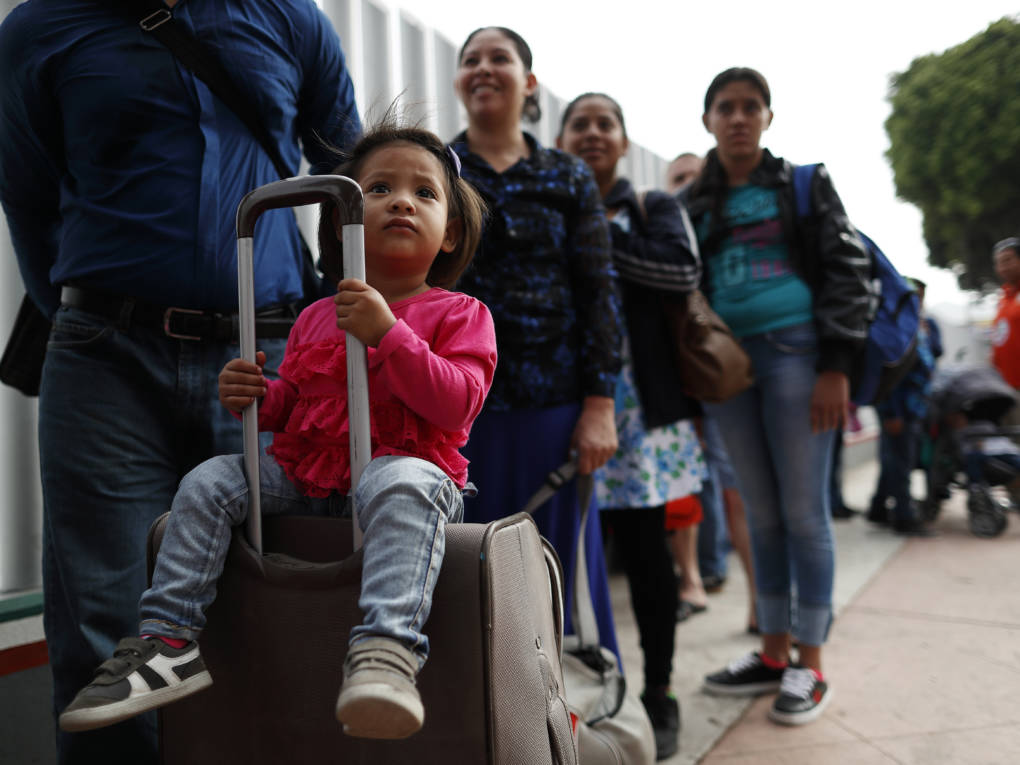
"title": "Asylum seekers line up at the San Ysidro port of entry in Tijuana, Mexico. The ACLU announced today a preliminary agreement with the Trump administration to allow some parents already in the U.S. but separated from their children at the border to apply for asylum.",
"publishDate": 1536864954,
"status": "inherit",
"parent": 11692189,
"modified": 1760642987,
"caption": "Asylum seekers line up at the San Ysidro port of entry in Tijuana, Mexico, on Sept. 13, 2018. The ACLU announced today a preliminary agreement with the Trump administration to allow some parents already in the U.S. but separated from their children at the border to apply for asylum.",
"credit": "Gregory Bull/AP Photo",
"altTag": "Asylum seekers line up at the San Ysidro port of entry in Tijuana, Mexico. The ACLU announced today a preliminary agreement with the Trump administration to allow some parents already in the U.S. but separated from their children at the border to apply for asylum.",
"description": "Asylum seekers line up at the San Ysidro port of entry in Tijuana, Mexico. The ACLU announced today a preliminary agreement with the Trump administration to allow some parents already in the U.S. but separated from their children at the border to apply for asylum.",
"imgSizes": {
"thumbnail": {
"file": "https://cdn.kqed.org/wp-content/uploads/sites/10/2018/09/ap_18207644894177-bf4e7bceee939dda2a4262cf80ca6777a3d16a80-160x120.jpg",
"width": 160,
"height": 120,
"mimeType": "image/jpeg"
},
"medium": {
"file": "https://cdn.kqed.org/wp-content/uploads/sites/10/2018/09/ap_18207644894177-bf4e7bceee939dda2a4262cf80ca6777a3d16a80-800x600.jpg",
"width": 800,
"height": 600,
"mimeType": "image/jpeg"
},
"large": {
"file": "https://cdn.kqed.org/wp-content/uploads/sites/10/2018/09/ap_18207644894177-bf4e7bceee939dda2a4262cf80ca6777a3d16a80-1020x765.jpg",
"width": 1020,
"height": 765,
"mimeType": "image/jpeg"
},
"complete_open_graph": {
"file": "https://cdn.kqed.org/wp-content/uploads/sites/10/2018/09/ap_18207644894177-bf4e7bceee939dda2a4262cf80ca6777a3d16a80-1200x900.jpg",
"width": 1200,
"height": 900,
"mimeType": "image/jpeg"
},
"fd-lrg": {
"file": "https://cdn.kqed.org/wp-content/uploads/sites/10/2018/09/ap_18207644894177-bf4e7bceee939dda2a4262cf80ca6777a3d16a80-1920x1440.jpg",
"width": 1920,
"height": 1440,
"mimeType": "image/jpeg"
},
"fd-med": {
"file": "https://cdn.kqed.org/wp-content/uploads/sites/10/2018/09/ap_18207644894177-bf4e7bceee939dda2a4262cf80ca6777a3d16a80-1180x885.jpg",
"width": 1180,
"height": 885,
"mimeType": "image/jpeg"
},
"fd-sm": {
"file": "https://cdn.kqed.org/wp-content/uploads/sites/10/2018/09/ap_18207644894177-bf4e7bceee939dda2a4262cf80ca6777a3d16a80-960x720.jpg",
"width": 960,
"height": 720,
"mimeType": "image/jpeg"
},
"post-thumbnail": {
"file": "https://cdn.kqed.org/wp-content/uploads/sites/10/2018/09/ap_18207644894177-bf4e7bceee939dda2a4262cf80ca6777a3d16a80-672x372.jpg",
"width": 672,
"height": 372,
"mimeType": "image/jpeg"
},
"twentyfourteen-full-width": {
"file": "https://cdn.kqed.org/wp-content/uploads/sites/10/2018/09/ap_18207644894177-bf4e7bceee939dda2a4262cf80ca6777a3d16a80-1038x576.jpg",
"width": 1038,
"height": 576,
"mimeType": "image/jpeg"
},
"xxsmall": {
"file": "https://cdn.kqed.org/wp-content/uploads/sites/10/2018/09/ap_18207644894177-bf4e7bceee939dda2a4262cf80ca6777a3d16a80-240x180.jpg",
"width": 240,
"height": 180,
"mimeType": "image/jpeg"
},
"xsmall": {
"file": "https://cdn.kqed.org/wp-content/uploads/sites/10/2018/09/ap_18207644894177-bf4e7bceee939dda2a4262cf80ca6777a3d16a80-375x281.jpg",
"width": 375,
"height": 281,
"mimeType": "image/jpeg"
},
"small": {
"file": "https://cdn.kqed.org/wp-content/uploads/sites/10/2018/09/ap_18207644894177-bf4e7bceee939dda2a4262cf80ca6777a3d16a80-520x390.jpg",
"width": 520,
"height": 390,
"mimeType": "image/jpeg"
},
"xlarge": {
"file": "https://cdn.kqed.org/wp-content/uploads/sites/10/2018/09/ap_18207644894177-bf4e7bceee939dda2a4262cf80ca6777a3d16a80-1180x885.jpg",
"width": 1180,
"height": 885,
"mimeType": "image/jpeg"
},
"full-width": {
"file": "https://cdn.kqed.org/wp-content/uploads/sites/10/2018/09/ap_18207644894177-bf4e7bceee939dda2a4262cf80ca6777a3d16a80-1920x1440.jpg",
"width": 1920,
"height": 1440,
"mimeType": "image/jpeg"
},
"guest-author-32": {
"file": "https://cdn.kqed.org/wp-content/uploads/sites/10/2018/09/ap_18207644894177-bf4e7bceee939dda2a4262cf80ca6777a3d16a80-32x32.jpg",
"width": 32,
"height": 32,
"mimeType": "image/jpeg"
},
"guest-author-50": {
"file": "https://cdn.kqed.org/wp-content/uploads/sites/10/2018/09/ap_18207644894177-bf4e7bceee939dda2a4262cf80ca6777a3d16a80-50x50.jpg",
"width": 50,
"height": 50,
"mimeType": "image/jpeg"
},
"guest-author-64": {
"file": "https://cdn.kqed.org/wp-content/uploads/sites/10/2018/09/ap_18207644894177-bf4e7bceee939dda2a4262cf80ca6777a3d16a80-64x64.jpg",
"width": 64,
"height": 64,
"mimeType": "image/jpeg"
},
"guest-author-96": {
"file": "https://cdn.kqed.org/wp-content/uploads/sites/10/2018/09/ap_18207644894177-bf4e7bceee939dda2a4262cf80ca6777a3d16a80-96x96.jpg",
"width": 96,
"height": 96,
"mimeType": "image/jpeg"
},
"guest-author-128": {
"file": "https://cdn.kqed.org/wp-content/uploads/sites/10/2018/09/ap_18207644894177-bf4e7bceee939dda2a4262cf80ca6777a3d16a80-128x128.jpg",
"width": 128,
"height": 128,
"mimeType": "image/jpeg"
},
"detail": {
"file": "https://cdn.kqed.org/wp-content/uploads/sites/10/2018/09/ap_18207644894177-bf4e7bceee939dda2a4262cf80ca6777a3d16a80-150x150.jpg",
"width": 150,
"height": 150,
"mimeType": "image/jpeg"
},
"kqedFullSize": {
"file": "https://cdn.kqed.org/wp-content/uploads/sites/10/2018/09/ap_18207644894177-bf4e7bceee939dda2a4262cf80ca6777a3d16a80-e1536865057762.jpg",
"width": 1920,
"height": 1440
}
},
"isLoading": false,
"fetchFailed": false
},
"news_11691999": {
"type": "attachments",
"id": "news_11691999",
"meta": {
"index": "attachments_1716263798",
"site": "news",
"id": "11691999",
"found": true
},
"parent": 11691989,
"imgSizes": {
"small": {
"file": "https://ww2.kqed.org/app/uploads/sites/10/2018/09/FarzadFazeli-520x534.jpg",
"width": 520,
"mimeType": "image/jpeg",
"height": 534
},
"twentyfourteen-full-width": {
"file": "https://ww2.kqed.org/app/uploads/sites/10/2018/09/FarzadFazeli-600x576.jpg",
"width": 600,
"mimeType": "image/jpeg",
"height": 576
},
"thumbnail": {
"file": "https://ww2.kqed.org/app/uploads/sites/10/2018/09/FarzadFazeli-160x164.jpg",
"width": 160,
"mimeType": "image/jpeg",
"height": 164
},
"post-thumbnail": {
"file": "https://ww2.kqed.org/app/uploads/sites/10/2018/09/FarzadFazeli-600x372.jpg",
"width": 600,
"mimeType": "image/jpeg",
"height": 372
},
"xsmall": {
"file": "https://ww2.kqed.org/app/uploads/sites/10/2018/09/FarzadFazeli-375x385.jpg",
"width": 375,
"mimeType": "image/jpeg",
"height": 385
},
"kqedFullSize": {
"file": "https://ww2.kqed.org/app/uploads/sites/10/2018/09/FarzadFazeli.jpg",
"width": 600,
"height": 616
},
"guest-author-50": {
"file": "https://ww2.kqed.org/app/uploads/sites/10/2018/09/FarzadFazeli-50x50.jpg",
"width": 50,
"mimeType": "image/jpeg",
"height": 50
},
"guest-author-96": {
"file": "https://ww2.kqed.org/app/uploads/sites/10/2018/09/FarzadFazeli-96x96.jpg",
"width": 96,
"mimeType": "image/jpeg",
"height": 96
},
"guest-author-64": {
"file": "https://ww2.kqed.org/app/uploads/sites/10/2018/09/FarzadFazeli-64x64.jpg",
"width": 64,
"mimeType": "image/jpeg",
"height": 64
},
"guest-author-32": {
"file": "https://ww2.kqed.org/app/uploads/sites/10/2018/09/FarzadFazeli-32x32.jpg",
"width": 32,
"mimeType": "image/jpeg",
"height": 32
},
"detail": {
"file": "https://ww2.kqed.org/app/uploads/sites/10/2018/09/FarzadFazeli-150x150.jpg",
"width": 150,
"mimeType": "image/jpeg",
"height": 150
},
"guest-author-128": {
"file": "https://ww2.kqed.org/app/uploads/sites/10/2018/09/FarzadFazeli-128x128.jpg",
"width": 128,
"mimeType": "image/jpeg",
"height": 128
},
"xxsmall": {
"file": "https://ww2.kqed.org/app/uploads/sites/10/2018/09/FarzadFazeli-240x246.jpg",
"width": 240,
"mimeType": "image/jpeg",
"height": 246
}
},
"publishDate": 1536784191,
"modified": 1536784260,
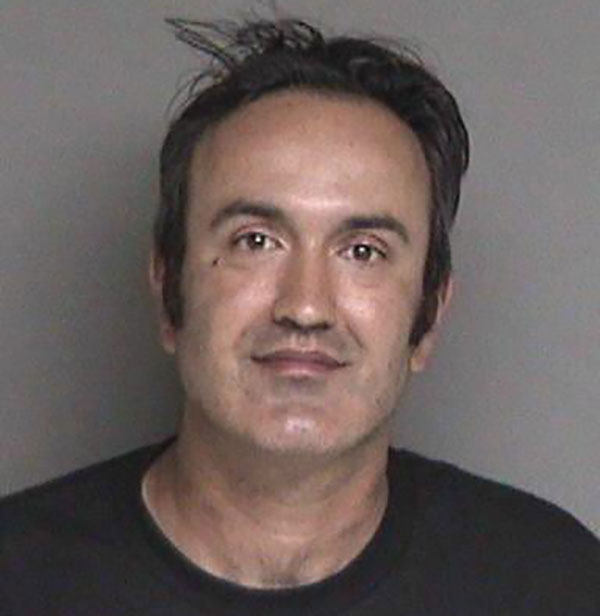
"caption": "A booking photo of Farzad Fazeli, provided by the Alameda County Sheriff's Office.",
"description": "A booking photo of Farzad Fazeli, provided by the Alameda County Sheriff's Office.",
"title": "FarzadFazeli",
"credit": "Alameda County Sheriff's Office",
"status": "inherit",
"isLoading": false,
"fetchFailed": false
},
"news_11690774": {
"type": "attachments",
"id": "news_11690774",
"meta": {
"index": "attachments_1716263798",
"site": "news",
"id": "11690774",
"found": true
},
"parent": 11690768,
"imgSizes": {
"small": {
"file": "https://ww2.kqed.org/app/uploads/sites/10/2018/09/GettyImages-1027351346-520x347.jpg",
"width": 520,
"mimeType": "image/jpeg",
"height": 347
},
"twentyfourteen-full-width": {
"file": "https://ww2.kqed.org/app/uploads/sites/10/2018/09/GettyImages-1027351346-1038x576.jpg",
"width": 1038,
"mimeType": "image/jpeg",
"height": 576
},
"thumbnail": {
"file": "https://ww2.kqed.org/app/uploads/sites/10/2018/09/GettyImages-1027351346-160x107.jpg",
"width": 160,
"mimeType": "image/jpeg",
"height": 107
},
"fd-sm": {
"file": "https://ww2.kqed.org/app/uploads/sites/10/2018/09/GettyImages-1027351346-960x640.jpg",
"width": 960,
"mimeType": "image/jpeg",
"height": 640
},
"post-thumbnail": {
"file": "https://ww2.kqed.org/app/uploads/sites/10/2018/09/GettyImages-1027351346-672x372.jpg",
"width": 672,
"mimeType": "image/jpeg",
"height": 372
},
"xsmall": {
"file": "https://ww2.kqed.org/app/uploads/sites/10/2018/09/GettyImages-1027351346-375x250.jpg",
"width": 375,
"mimeType": "image/jpeg",
"height": 250
},
"kqedFullSize": {
"file": "https://ww2.kqed.org/app/uploads/sites/10/2018/09/GettyImages-1027351346-e1536241366892.jpg",
"width": 1920,
"height": 1280
},
"large": {
"file": "https://ww2.kqed.org/app/uploads/sites/10/2018/09/GettyImages-1027351346-1020x680.jpg",
"width": 1020,
"mimeType": "image/jpeg",
"height": 680
},
"xlarge": {
"file": "https://ww2.kqed.org/app/uploads/sites/10/2018/09/GettyImages-1027351346-1180x787.jpg",
"width": 1180,
"mimeType": "image/jpeg",
"height": 787
},
"complete_open_graph": {
"file": "https://ww2.kqed.org/app/uploads/sites/10/2018/09/GettyImages-1027351346-1200x800.jpg",
"width": 1200,
"mimeType": "image/jpeg",
"height": 800
},
"guest-author-50": {
"file": "https://ww2.kqed.org/app/uploads/sites/10/2018/09/GettyImages-1027351346-50x50.jpg",
"width": 50,
"mimeType": "image/jpeg",
"height": 50
},
"guest-author-96": {
"file": "https://ww2.kqed.org/app/uploads/sites/10/2018/09/GettyImages-1027351346-96x96.jpg",
"width": 96,
"mimeType": "image/jpeg",
"height": 96
},
"medium": {
"file": "https://ww2.kqed.org/app/uploads/sites/10/2018/09/GettyImages-1027351346-800x533.jpg",
"width": 800,
"mimeType": "image/jpeg",
"height": 533
},
"guest-author-64": {
"file": "https://ww2.kqed.org/app/uploads/sites/10/2018/09/GettyImages-1027351346-64x64.jpg",
"width": 64,
"mimeType": "image/jpeg",
"height": 64
},
"guest-author-32": {
"file": "https://ww2.kqed.org/app/uploads/sites/10/2018/09/GettyImages-1027351346-32x32.jpg",
"width": 32,
"mimeType": "image/jpeg",
"height": 32
},
"fd-lrg": {
"file": "https://ww2.kqed.org/app/uploads/sites/10/2018/09/GettyImages-1027351346-1920x1280.jpg",
"width": 1920,
"mimeType": "image/jpeg",
"height": 1280
},
"fd-med": {
"file": "https://ww2.kqed.org/app/uploads/sites/10/2018/09/GettyImages-1027351346-1180x787.jpg",
"width": 1180,
"mimeType": "image/jpeg",
"height": 787
},
"full-width": {
"file": "https://ww2.kqed.org/app/uploads/sites/10/2018/09/GettyImages-1027351346-1920x1280.jpg",
"width": 1920,
"mimeType": "image/jpeg",
"height": 1280
},
"detail": {
"file": "https://ww2.kqed.org/app/uploads/sites/10/2018/09/GettyImages-1027351346-150x150.jpg",
"width": 150,
"mimeType": "image/jpeg",
"height": 150
},
"guest-author-128": {
"file": "https://ww2.kqed.org/app/uploads/sites/10/2018/09/GettyImages-1027351346-128x128.jpg",
"width": 128,
"mimeType": "image/jpeg",
"height": 128
},
"xxsmall": {
"file": "https://ww2.kqed.org/app/uploads/sites/10/2018/09/GettyImages-1027351346-240x160.jpg",
"width": 240,
"mimeType": "image/jpeg",
"height": 160
}
},
"publishDate": 1536241311,
"modified": 1536241357,
"caption": "Supreme Court Nominee Brett Kavanaugh testifies during the second day of his Supreme Court confirmation hearing on Capitol Hill Sept. 5, 2018 in Washington, D.C. Kavanaugh was nominated by President Trump to fill the vacancy on the court left by retiring Associate Justice Anthony Kennedy.",
"description": null,
"title": "Senate Holds Confirmation Hearing For Brett Kavanaugh To Be Supreme Court Justice",
"credit": "Zach Gibson/Getty Images",
"status": "inherit",
"isLoading": false,
"fetchFailed": false
},
"news_11690570": {
"type": "attachments",
"id": "news_11690570",
"meta": {
"index": "attachments_1716263798",
"site": "news",
"id": "11690570",
"found": true
},
"parent": 11690569,
"imgSizes": {
"small": {
"file": "https://ww2.kqed.org/app/uploads/sites/10/2018/09/gettyimages-1027064682kavconstit_wide-57725fa0abb143995a5fa9cbbaf7680196e101ce-520x292.jpg",
"width": 520,
"mimeType": "image/jpeg",
"height": 292
},
"twentyfourteen-full-width": {
"file": "https://ww2.kqed.org/app/uploads/sites/10/2018/09/gettyimages-1027064682kavconstit_wide-57725fa0abb143995a5fa9cbbaf7680196e101ce-1038x576.jpg",
"width": 1038,
"mimeType": "image/jpeg",
"height": 576
},
"thumbnail": {
"file": "https://ww2.kqed.org/app/uploads/sites/10/2018/09/gettyimages-1027064682kavconstit_wide-57725fa0abb143995a5fa9cbbaf7680196e101ce-160x90.jpg",
"width": 160,
"mimeType": "image/jpeg",
"height": 90
},
"fd-sm": {
"file": "https://ww2.kqed.org/app/uploads/sites/10/2018/09/gettyimages-1027064682kavconstit_wide-57725fa0abb143995a5fa9cbbaf7680196e101ce-960x540.jpg",
"width": 960,
"mimeType": "image/jpeg",
"height": 540
},
"post-thumbnail": {
"file": "https://ww2.kqed.org/app/uploads/sites/10/2018/09/gettyimages-1027064682kavconstit_wide-57725fa0abb143995a5fa9cbbaf7680196e101ce-672x372.jpg",
"width": 672,
"mimeType": "image/jpeg",
"height": 372
},
"xsmall": {
"file": "https://ww2.kqed.org/app/uploads/sites/10/2018/09/gettyimages-1027064682kavconstit_wide-57725fa0abb143995a5fa9cbbaf7680196e101ce-375x211.jpg",
"width": 375,
"mimeType": "image/jpeg",
"height": 211
},
"kqedFullSize": {
"file": "https://ww2.kqed.org/app/uploads/sites/10/2018/09/gettyimages-1027064682kavconstit_wide-57725fa0abb143995a5fa9cbbaf7680196e101ce-e1536176620129.jpg",
"width": 1920,
"height": 1080
},
"large": {
"file": "https://ww2.kqed.org/app/uploads/sites/10/2018/09/gettyimages-1027064682kavconstit_wide-57725fa0abb143995a5fa9cbbaf7680196e101ce-1020x574.jpg",
"width": 1020,
"mimeType": "image/jpeg",
"height": 574
},
"xlarge": {
"file": "https://ww2.kqed.org/app/uploads/sites/10/2018/09/gettyimages-1027064682kavconstit_wide-57725fa0abb143995a5fa9cbbaf7680196e101ce-1180x664.jpg",
"width": 1180,
"mimeType": "image/jpeg",
"height": 664
},
"complete_open_graph": {
"file": "https://ww2.kqed.org/app/uploads/sites/10/2018/09/gettyimages-1027064682kavconstit_wide-57725fa0abb143995a5fa9cbbaf7680196e101ce-1200x675.jpg",
"width": 1200,
"mimeType": "image/jpeg",
"height": 675
},
"guest-author-50": {
"file": "https://ww2.kqed.org/app/uploads/sites/10/2018/09/gettyimages-1027064682kavconstit_wide-57725fa0abb143995a5fa9cbbaf7680196e101ce-50x50.jpg",
"width": 50,
"mimeType": "image/jpeg",
"height": 50
},
"guest-author-96": {
"file": "https://ww2.kqed.org/app/uploads/sites/10/2018/09/gettyimages-1027064682kavconstit_wide-57725fa0abb143995a5fa9cbbaf7680196e101ce-96x96.jpg",
"width": 96,
"mimeType": "image/jpeg",
"height": 96
},
"medium": {
"file": "https://ww2.kqed.org/app/uploads/sites/10/2018/09/gettyimages-1027064682kavconstit_wide-57725fa0abb143995a5fa9cbbaf7680196e101ce-800x450.jpg",
"width": 800,
"mimeType": "image/jpeg",
"height": 450
},
"guest-author-64": {
"file": "https://ww2.kqed.org/app/uploads/sites/10/2018/09/gettyimages-1027064682kavconstit_wide-57725fa0abb143995a5fa9cbbaf7680196e101ce-64x64.jpg",
"width": 64,
"mimeType": "image/jpeg",
"height": 64
},
"guest-author-32": {
"file": "https://ww2.kqed.org/app/uploads/sites/10/2018/09/gettyimages-1027064682kavconstit_wide-57725fa0abb143995a5fa9cbbaf7680196e101ce-32x32.jpg",
"width": 32,
"mimeType": "image/jpeg",
"height": 32
},
"fd-lrg": {
"file": "https://ww2.kqed.org/app/uploads/sites/10/2018/09/gettyimages-1027064682kavconstit_wide-57725fa0abb143995a5fa9cbbaf7680196e101ce-1920x1080.jpg",
"width": 1920,
"mimeType": "image/jpeg",
"height": 1080
},
"fd-med": {
"file": "https://ww2.kqed.org/app/uploads/sites/10/2018/09/gettyimages-1027064682kavconstit_wide-57725fa0abb143995a5fa9cbbaf7680196e101ce-1180x664.jpg",
"width": 1180,
"mimeType": "image/jpeg",
"height": 664
},
"full-width": {
"file": "https://ww2.kqed.org/app/uploads/sites/10/2018/09/gettyimages-1027064682kavconstit_wide-57725fa0abb143995a5fa9cbbaf7680196e101ce-1920x1080.jpg",
"width": 1920,
"mimeType": "image/jpeg",
"height": 1080
},
"detail": {
"file": "https://ww2.kqed.org/app/uploads/sites/10/2018/09/gettyimages-1027064682kavconstit_wide-57725fa0abb143995a5fa9cbbaf7680196e101ce-150x150.jpg",
"width": 150,
"mimeType": "image/jpeg",
"height": 150
},
"guest-author-128": {
"file": "https://ww2.kqed.org/app/uploads/sites/10/2018/09/gettyimages-1027064682kavconstit_wide-57725fa0abb143995a5fa9cbbaf7680196e101ce-128x128.jpg",
"width": 128,
"mimeType": "image/jpeg",
"height": 128
},
"xxsmall": {
"file": "https://ww2.kqed.org/app/uploads/sites/10/2018/09/gettyimages-1027064682kavconstit_wide-57725fa0abb143995a5fa9cbbaf7680196e101ce-240x135.jpg",
"width": 240,
"mimeType": "image/jpeg",
"height": 135
}
},
"publishDate": 1536176536,
"modified": 1536176645,
"caption": "Supreme Court nominee Judge Brett Kavanaugh holds up a small copy of the U.S. Constitution while answering questions before the Senate Judiciary Committee during his confirmation hearing Wednesday on Capitol Hill.",
"description": "Supreme Court nominee Judge Brett Kavanaugh holds up a small copy of the U.S. Constitution while answering questions before the Senate Judiciary Committee during his confirmation hearing Wednesday on Capitol Hil",
"title": "Supreme Court nominee Judge Brett Kavanaugh holds up a small copy of the U.S. Constitution while answering questions before the Senate Judiciary Committee during his confirmation hearing Wednesday on Capitol Hill.",
"credit": "Chip Somodevilla/Getty Images",
"status": "inherit",
"isLoading": false,
"fetchFailed": false
},
"news_11690466": {
"type": "attachments",
"id": "news_11690466",
"meta": {
"index": "attachments_1716263798",
"site": "news",
"id": "11690466",
"found": true
},
"parent": 11690384,
"imgSizes": {
"small": {
"file": "https://ww2.kqed.org/app/uploads/sites/10/2018/09/GettyImages-1026740002-520x347.jpg",
"width": 520,
"mimeType": "image/jpeg",
"height": 347
},
"twentyfourteen-full-width": {
"file": "https://ww2.kqed.org/app/uploads/sites/10/2018/09/GettyImages-1026740002-1038x576.jpg",
"width": 1038,
"mimeType": "image/jpeg",
"height": 576
},
"thumbnail": {
"file": "https://ww2.kqed.org/app/uploads/sites/10/2018/09/GettyImages-1026740002-160x107.jpg",
"width": 160,
"mimeType": "image/jpeg",
"height": 107
},
"fd-sm": {
"file": "https://ww2.kqed.org/app/uploads/sites/10/2018/09/GettyImages-1026740002-960x640.jpg",
"width": 960,
"mimeType": "image/jpeg",
"height": 640
},
"post-thumbnail": {
"file": "https://ww2.kqed.org/app/uploads/sites/10/2018/09/GettyImages-1026740002-672x372.jpg",
"width": 672,
"mimeType": "image/jpeg",
"height": 372
},
"xsmall": {
"file": "https://ww2.kqed.org/app/uploads/sites/10/2018/09/GettyImages-1026740002-375x250.jpg",
"width": 375,
"mimeType": "image/jpeg",
"height": 250
},
"kqedFullSize": {
"file": "https://ww2.kqed.org/app/uploads/sites/10/2018/09/GettyImages-1026740002.jpg",
"width": 1920,
"height": 1280
},
"large": {
"file": "https://ww2.kqed.org/app/uploads/sites/10/2018/09/GettyImages-1026740002-1020x680.jpg",
"width": 1020,
"mimeType": "image/jpeg",
"height": 680
},
"xlarge": {
"file": "https://ww2.kqed.org/app/uploads/sites/10/2018/09/GettyImages-1026740002-1180x787.jpg",
"width": 1180,
"mimeType": "image/jpeg",
"height": 787
},
"complete_open_graph": {
"file": "https://ww2.kqed.org/app/uploads/sites/10/2018/09/GettyImages-1026740002-1200x800.jpg",
"width": 1200,
"mimeType": "image/jpeg",
"height": 800
},
"guest-author-50": {
"file": "https://ww2.kqed.org/app/uploads/sites/10/2018/09/GettyImages-1026740002-50x50.jpg",
"width": 50,
"mimeType": "image/jpeg",
"height": 50
},
"guest-author-96": {
"file": "https://ww2.kqed.org/app/uploads/sites/10/2018/09/GettyImages-1026740002-96x96.jpg",
"width": 96,
"mimeType": "image/jpeg",
"height": 96
},
"medium": {
"file": "https://ww2.kqed.org/app/uploads/sites/10/2018/09/GettyImages-1026740002-800x533.jpg",
"width": 800,
"mimeType": "image/jpeg",
"height": 533
},
"guest-author-64": {
"file": "https://ww2.kqed.org/app/uploads/sites/10/2018/09/GettyImages-1026740002-64x64.jpg",
"width": 64,
"mimeType": "image/jpeg",
"height": 64
},
"guest-author-32": {
"file": "https://ww2.kqed.org/app/uploads/sites/10/2018/09/GettyImages-1026740002-32x32.jpg",
"width": 32,
"mimeType": "image/jpeg",
"height": 32
},
"fd-lrg": {
"file": "https://ww2.kqed.org/app/uploads/sites/10/2018/09/GettyImages-1026740002-1920x1280.jpg",
"width": 1920,
"mimeType": "image/jpeg",
"height": 1280
},
"fd-med": {
"file": "https://ww2.kqed.org/app/uploads/sites/10/2018/09/GettyImages-1026740002-1180x787.jpg",
"width": 1180,
"mimeType": "image/jpeg",
"height": 787
},
"full-width": {
"file": "https://ww2.kqed.org/app/uploads/sites/10/2018/09/GettyImages-1026740002-1920x1280.jpg",
"width": 1920,
"mimeType": "image/jpeg",
"height": 1280
},
"detail": {
"file": "https://ww2.kqed.org/app/uploads/sites/10/2018/09/GettyImages-1026740002-150x150.jpg",
"width": 150,
"mimeType": "image/jpeg",
"height": 150
},
"guest-author-128": {
"file": "https://ww2.kqed.org/app/uploads/sites/10/2018/09/GettyImages-1026740002-128x128.jpg",
"width": 128,
"mimeType": "image/jpeg",
"height": 128
},
"xxsmall": {
"file": "https://ww2.kqed.org/app/uploads/sites/10/2018/09/GettyImages-1026740002-240x160.jpg",
"width": 240,
"mimeType": "image/jpeg",
"height": 160
}
},
"publishDate": 1536110200,
"modified": 1536110268,
"caption": "Sen. Kamala Harris delivers her opening statement as Supreme Court nominee Judge Brett Kavanaugh appears for his confirmation hearing before the Senate Judiciary Committee on September 4, 2018.",
"description": "Sen. Kamala Harris delivers her opening statement as Supreme Court nominee Judge Brett Kavanaugh appears for his confirmation hearing before the Senate Judiciary Committee on September 4, 2018.",
"title": "Senate Holds Confirmation Hearing For Brett Kavanugh To Be Supreme Court Justice",
"credit": "Drew Angerer/Getty Images",
"status": "inherit",
"isLoading": false,
"fetchFailed": false
},
"news_11690425": {
"type": "attachments",
"id": "news_11690425",
"meta": {
"index": "attachments_1716263798",
"site": "news",
"id": "11690425",
"found": true
},
"parent": 11690422,
"imgSizes": {
"small": {
"file": "https://ww2.kqed.org/app/uploads/sites/10/2018/09/backdrop_090418_final-520x349.jpg",
"width": 520,
"mimeType": "image/jpeg",
"height": 349
},
"twentyfourteen-full-width": {
"file": "https://ww2.kqed.org/app/uploads/sites/10/2018/09/backdrop_090418_final-1038x576.jpg",
"width": 1038,
"mimeType": "image/jpeg",
"height": 576
},
"thumbnail": {
"file": "https://ww2.kqed.org/app/uploads/sites/10/2018/09/backdrop_090418_final-160x107.jpg",
"width": 160,
"mimeType": "image/jpeg",
"height": 107
},
"fd-sm": {
"file": "https://ww2.kqed.org/app/uploads/sites/10/2018/09/backdrop_090418_final-960x644.jpg",
"width": 960,
"mimeType": "image/jpeg",
"height": 644
},
"post-thumbnail": {
"file": "https://ww2.kqed.org/app/uploads/sites/10/2018/09/backdrop_090418_final-672x372.jpg",
"width": 672,
"mimeType": "image/jpeg",
"height": 372
},
"xsmall": {
"file": "https://ww2.kqed.org/app/uploads/sites/10/2018/09/backdrop_090418_final-375x252.jpg",
"width": 375,
"mimeType": "image/jpeg",
"height": 252
},
"kqedFullSize": {
"file": "https://ww2.kqed.org/app/uploads/sites/10/2018/09/backdrop_090418_final.jpg",
"width": 1920,
"height": 1288
},
"large": {
"file": "https://ww2.kqed.org/app/uploads/sites/10/2018/09/backdrop_090418_final-1020x684.jpg",
"width": 1020,
"mimeType": "image/jpeg",
"height": 684
},
"xlarge": {
"file": "https://ww2.kqed.org/app/uploads/sites/10/2018/09/backdrop_090418_final-1180x792.jpg",
"width": 1180,
"mimeType": "image/jpeg",
"height": 792
},
"complete_open_graph": {
"file": "https://ww2.kqed.org/app/uploads/sites/10/2018/09/backdrop_090418_final-1200x805.jpg",
"width": 1200,
"mimeType": "image/jpeg",
"height": 805
},
"guest-author-50": {
"file": "https://ww2.kqed.org/app/uploads/sites/10/2018/09/backdrop_090418_final-50x50.jpg",
"width": 50,
"mimeType": "image/jpeg",
"height": 50
},
"guest-author-96": {
"file": "https://ww2.kqed.org/app/uploads/sites/10/2018/09/backdrop_090418_final-96x96.jpg",
"width": 96,
"mimeType": "image/jpeg",
"height": 96
},
"medium": {
"file": "https://ww2.kqed.org/app/uploads/sites/10/2018/09/backdrop_090418_final-800x537.jpg",
"width": 800,
"mimeType": "image/jpeg",
"height": 537
},
"guest-author-64": {
"file": "https://ww2.kqed.org/app/uploads/sites/10/2018/09/backdrop_090418_final-64x64.jpg",
"width": 64,
"mimeType": "image/jpeg",
"height": 64
},
"guest-author-32": {
"file": "https://ww2.kqed.org/app/uploads/sites/10/2018/09/backdrop_090418_final-32x32.jpg",
"width": 32,
"mimeType": "image/jpeg",
"height": 32
},
"fd-lrg": {
"file": "https://ww2.kqed.org/app/uploads/sites/10/2018/09/backdrop_090418_final-1920x1288.jpg",
"width": 1920,
"mimeType": "image/jpeg",
"height": 1288
},
"fd-med": {
"file": "https://ww2.kqed.org/app/uploads/sites/10/2018/09/backdrop_090418_final-1180x792.jpg",
"width": 1180,
"mimeType": "image/jpeg",
"height": 792
},
"full-width": {
"file": "https://ww2.kqed.org/app/uploads/sites/10/2018/09/backdrop_090418_final-1920x1288.jpg",
"width": 1920,
"mimeType": "image/jpeg",
"height": 1288
},
"detail": {
"file": "https://ww2.kqed.org/app/uploads/sites/10/2018/09/backdrop_090418_final-150x150.jpg",
"width": 150,
"mimeType": "image/jpeg",
"height": 150
},
"guest-author-128": {
"file": "https://ww2.kqed.org/app/uploads/sites/10/2018/09/backdrop_090418_final-128x128.jpg",
"width": 128,
"mimeType": "image/jpeg",
"height": 128
},
"xxsmall": {
"file": "https://ww2.kqed.org/app/uploads/sites/10/2018/09/backdrop_090418_final-240x161.jpg",
"width": 240,
"mimeType": "image/jpeg",
"height": 161
}
},
"publishDate": 1536103758,
"modified": 1536103775,
"caption": null,
"description": null,
"title": "backdrop_090418_final",
"credit": null,
"status": "inherit",
"isLoading": false,
"fetchFailed": false
},
"news_11690333": {
"type": "attachments",
"id": "news_11690333",
"meta": {
"index": "attachments_1716263798",
"site": "news",
"id": "11690333",
"found": true
},
"parent": 11690332,
"imgSizes": {
"small": {
"file": "https://ww2.kqed.org/app/uploads/sites/10/2018/09/ap_18233752661459_wide-9885a4becbc3d6190fe481c9537d387a023950d1-520x292.jpg",
"width": 520,
"mimeType": "image/jpeg",
"height": 292
},
"twentyfourteen-full-width": {
"file": "https://ww2.kqed.org/app/uploads/sites/10/2018/09/ap_18233752661459_wide-9885a4becbc3d6190fe481c9537d387a023950d1-1038x576.jpg",
"width": 1038,
"mimeType": "image/jpeg",
"height": 576
},
"thumbnail": {
"file": "https://ww2.kqed.org/app/uploads/sites/10/2018/09/ap_18233752661459_wide-9885a4becbc3d6190fe481c9537d387a023950d1-160x90.jpg",
"width": 160,
"mimeType": "image/jpeg",
"height": 90
},
"fd-sm": {
"file": "https://ww2.kqed.org/app/uploads/sites/10/2018/09/ap_18233752661459_wide-9885a4becbc3d6190fe481c9537d387a023950d1-960x540.jpg",
"width": 960,
"mimeType": "image/jpeg",
"height": 540
},
"post-thumbnail": {
"file": "https://ww2.kqed.org/app/uploads/sites/10/2018/09/ap_18233752661459_wide-9885a4becbc3d6190fe481c9537d387a023950d1-672x372.jpg",
"width": 672,
"mimeType": "image/jpeg",
"height": 372
},
"xsmall": {
"file": "https://ww2.kqed.org/app/uploads/sites/10/2018/09/ap_18233752661459_wide-9885a4becbc3d6190fe481c9537d387a023950d1-375x211.jpg",
"width": 375,
"mimeType": "image/jpeg",
"height": 211
},
"kqedFullSize": {
"file": "https://ww2.kqed.org/app/uploads/sites/10/2018/09/ap_18233752661459_wide-9885a4becbc3d6190fe481c9537d387a023950d1-e1536087819881.jpg",
"width": 1920,
"height": 1080
},
"large": {
"file": "https://ww2.kqed.org/app/uploads/sites/10/2018/09/ap_18233752661459_wide-9885a4becbc3d6190fe481c9537d387a023950d1-1020x574.jpg",
"width": 1020,
"mimeType": "image/jpeg",
"height": 574
},
"xlarge": {
"file": "https://ww2.kqed.org/app/uploads/sites/10/2018/09/ap_18233752661459_wide-9885a4becbc3d6190fe481c9537d387a023950d1-1180x664.jpg",
"width": 1180,
"mimeType": "image/jpeg",
"height": 664
},
"complete_open_graph": {
"file": "https://ww2.kqed.org/app/uploads/sites/10/2018/09/ap_18233752661459_wide-9885a4becbc3d6190fe481c9537d387a023950d1-1200x675.jpg",
"width": 1200,
"mimeType": "image/jpeg",
"height": 675
},
"guest-author-50": {
"file": "https://ww2.kqed.org/app/uploads/sites/10/2018/09/ap_18233752661459_wide-9885a4becbc3d6190fe481c9537d387a023950d1-50x50.jpg",
"width": 50,
"mimeType": "image/jpeg",
"height": 50
},
"guest-author-96": {
"file": "https://ww2.kqed.org/app/uploads/sites/10/2018/09/ap_18233752661459_wide-9885a4becbc3d6190fe481c9537d387a023950d1-96x96.jpg",
"width": 96,
"mimeType": "image/jpeg",
"height": 96
},
"medium": {
"file": "https://ww2.kqed.org/app/uploads/sites/10/2018/09/ap_18233752661459_wide-9885a4becbc3d6190fe481c9537d387a023950d1-800x450.jpg",
"width": 800,
"mimeType": "image/jpeg",
"height": 450
},
"guest-author-64": {
"file": "https://ww2.kqed.org/app/uploads/sites/10/2018/09/ap_18233752661459_wide-9885a4becbc3d6190fe481c9537d387a023950d1-64x64.jpg",
"width": 64,
"mimeType": "image/jpeg",
"height": 64
},
"guest-author-32": {
"file": "https://ww2.kqed.org/app/uploads/sites/10/2018/09/ap_18233752661459_wide-9885a4becbc3d6190fe481c9537d387a023950d1-32x32.jpg",
"width": 32,
"mimeType": "image/jpeg",
"height": 32
},
"fd-lrg": {
"file": "https://ww2.kqed.org/app/uploads/sites/10/2018/09/ap_18233752661459_wide-9885a4becbc3d6190fe481c9537d387a023950d1-1920x1080.jpg",
"width": 1920,
"mimeType": "image/jpeg",
"height": 1080
},
"fd-med": {
"file": "https://ww2.kqed.org/app/uploads/sites/10/2018/09/ap_18233752661459_wide-9885a4becbc3d6190fe481c9537d387a023950d1-1180x664.jpg",
"width": 1180,
"mimeType": "image/jpeg",
"height": 664
},
"full-width": {
"file": "https://ww2.kqed.org/app/uploads/sites/10/2018/09/ap_18233752661459_wide-9885a4becbc3d6190fe481c9537d387a023950d1-1920x1080.jpg",
"width": 1920,
"mimeType": "image/jpeg",
"height": 1080
},
"detail": {
"file": "https://ww2.kqed.org/app/uploads/sites/10/2018/09/ap_18233752661459_wide-9885a4becbc3d6190fe481c9537d387a023950d1-150x150.jpg",
"width": 150,
"mimeType": "image/jpeg",
"height": 150
},
"guest-author-128": {
"file": "https://ww2.kqed.org/app/uploads/sites/10/2018/09/ap_18233752661459_wide-9885a4becbc3d6190fe481c9537d387a023950d1-128x128.jpg",
"width": 128,
"mimeType": "image/jpeg",
"height": 128
},
"xxsmall": {
"file": "https://ww2.kqed.org/app/uploads/sites/10/2018/09/ap_18233752661459_wide-9885a4becbc3d6190fe481c9537d387a023950d1-240x135.jpg",
"width": 240,
"mimeType": "image/jpeg",
"height": 135
}
},
"publishDate": 1536086409,
"modified": 1536086781,
"caption": "House Minority Leader Nancy Pelosi campaigned for Democratic candidates across the country this summer, including challengers hoping to oust GOP candidates in her home state.",
"description": "House Minority Leader Nancy Pelosi campaigned for Democratic candidates across the country this summer, including challengers hoping to oust GOP candidates in her home state.",
"title": "House Minority Leader Nancy Pelosi, D-Calif., campaigned for Democratic candidates across the country this summer, including challengers hoping to oust GOP candidates in her home state.",
"credit": "Jeff Chiu/AP",
"status": "inherit",
"isLoading": false,
"fetchFailed": false
},
"news_11689194": {
"type": "attachments",
"id": "news_11689194",
"meta": {
"index": "attachments_1716263798",
"site": "news",
"id": "11689194",
"found": true
},
"parent": 11689180,
"imgSizes": {
"small": {
"file": "https://ww2.kqed.org/app/uploads/sites/10/2018/08/trumpalgo_082818_final-520x341.jpg",
"width": 520,
"mimeType": "image/jpeg",
"height": 341
},
"twentyfourteen-full-width": {
"file": "https://ww2.kqed.org/app/uploads/sites/10/2018/08/trumpalgo_082818_final-1038x576.jpg",
"width": 1038,
"mimeType": "image/jpeg",
"height": 576
},
"thumbnail": {
"file": "https://ww2.kqed.org/app/uploads/sites/10/2018/08/trumpalgo_082818_final-160x105.jpg",
"width": 160,
"mimeType": "image/jpeg",
"height": 105
},
"fd-sm": {
"file": "https://ww2.kqed.org/app/uploads/sites/10/2018/08/trumpalgo_082818_final-960x630.jpg",
"width": 960,
"mimeType": "image/jpeg",
"height": 630
},
"post-thumbnail": {
"file": "https://ww2.kqed.org/app/uploads/sites/10/2018/08/trumpalgo_082818_final-672x372.jpg",
"width": 672,
"mimeType": "image/jpeg",
"height": 372
},
"xsmall": {
"file": "https://ww2.kqed.org/app/uploads/sites/10/2018/08/trumpalgo_082818_final-375x246.jpg",
"width": 375,
"mimeType": "image/jpeg",
"height": 246
},
"kqedFullSize": {
"file": "https://ww2.kqed.org/app/uploads/sites/10/2018/08/trumpalgo_082818_final.jpg",
"width": 1920,
"height": 1260
},
"large": {
"file": "https://ww2.kqed.org/app/uploads/sites/10/2018/08/trumpalgo_082818_final-1020x669.jpg",
"width": 1020,
"mimeType": "image/jpeg",
"height": 669
},
"xlarge": {
"file": "https://ww2.kqed.org/app/uploads/sites/10/2018/08/trumpalgo_082818_final-1180x774.jpg",
"width": 1180,
"mimeType": "image/jpeg",
"height": 774
},
"complete_open_graph": {
"file": "https://ww2.kqed.org/app/uploads/sites/10/2018/08/trumpalgo_082818_final-1200x788.jpg",
"width": 1200,
"mimeType": "image/jpeg",
"height": 788
},
"guest-author-50": {
"file": "https://ww2.kqed.org/app/uploads/sites/10/2018/08/trumpalgo_082818_final-50x50.jpg",
"width": 50,
"mimeType": "image/jpeg",
"height": 50
},
"guest-author-96": {
"file": "https://ww2.kqed.org/app/uploads/sites/10/2018/08/trumpalgo_082818_final-96x96.jpg",
"width": 96,
"mimeType": "image/jpeg",
"height": 96
},
"medium": {
"file": "https://ww2.kqed.org/app/uploads/sites/10/2018/08/trumpalgo_082818_final-800x525.jpg",
"width": 800,
"mimeType": "image/jpeg",
"height": 525
},
"guest-author-64": {
"file": "https://ww2.kqed.org/app/uploads/sites/10/2018/08/trumpalgo_082818_final-64x64.jpg",
"width": 64,
"mimeType": "image/jpeg",
"height": 64
},
"guest-author-32": {
"file": "https://ww2.kqed.org/app/uploads/sites/10/2018/08/trumpalgo_082818_final-32x32.jpg",
"width": 32,
"mimeType": "image/jpeg",
"height": 32
},
"fd-lrg": {
"file": "https://ww2.kqed.org/app/uploads/sites/10/2018/08/trumpalgo_082818_final-1920x1260.jpg",
"width": 1920,
"mimeType": "image/jpeg",
"height": 1260
},
"fd-med": {
"file": "https://ww2.kqed.org/app/uploads/sites/10/2018/08/trumpalgo_082818_final-1180x774.jpg",
"width": 1180,
"mimeType": "image/jpeg",
"height": 774
},
"full-width": {
"file": "https://ww2.kqed.org/app/uploads/sites/10/2018/08/trumpalgo_082818_final-1920x1260.jpg",
"width": 1920,
"mimeType": "image/jpeg",
"height": 1260
},
"detail": {
"file": "https://ww2.kqed.org/app/uploads/sites/10/2018/08/trumpalgo_082818_final-150x150.jpg",
"width": 150,
"mimeType": "image/jpeg",
"height": 150
},
"guest-author-128": {
"file": "https://ww2.kqed.org/app/uploads/sites/10/2018/08/trumpalgo_082818_final-128x128.jpg",
"width": 128,
"mimeType": "image/jpeg",
"height": 128
},
"xxsmall": {
"file": "https://ww2.kqed.org/app/uploads/sites/10/2018/08/trumpalgo_082818_final-240x158.jpg",
"width": 240,
"mimeType": "image/jpeg",
"height": 158
}
},
"publishDate": 1535492554,
"modified": 1535492573,
"caption": null,
"description": null,
"title": "trumpalgo_082818_final",
"credit": null,
"status": "inherit",
"isLoading": false,
"fetchFailed": false
}
},
"audioPlayerReducer": {
"postId": "stream_live",
"isPaused": true,
"isPlaying": false,
"pfsActive": false,
"pledgeModalIsOpen": true,
"playerDrawerIsOpen": false,
"liveAudioPlayStartedAt": 0,
"liveAudioPlayContext": ""
},
"authorsReducer": {
"byline_news_11693442": {
"type": "authors",
"id": "byline_news_11693442",
"meta": {
"override": true
},
"slug": "byline_news_11693442",
"name": "\u003cstrong>\u003ca href=\"https://www.kpbs.org/staff/jean-guerrero/\">Jean Guerrero\u003c/a>\u003c/strong>",
"isLoading": false
},
"byline_news_11693387": {
"type": "authors",
"id": "byline_news_11693387",
"meta": {
"override": true
},
"slug": "byline_news_11693387",
"name": "\u003cstrong>Scott Detrow and Kelsey Snell\u003c/strong>",
"isLoading": false
},
"byline_news_11692955": {
"type": "authors",
"id": "byline_news_11692955",
"meta": {
"override": true
},
"slug": "byline_news_11692955",
"name": "Scott Horsley",
"isLoading": false
},
"byline_news_11692189": {
"type": "authors",
"id": "byline_news_11692189",
"meta": {
"override": true
},
"slug": "byline_news_11692189",
"name": "Joel Rose",
"isLoading": false
},
"byline_news_11691989": {
"type": "authors",
"id": "byline_news_11691989",
"meta": {
"override": true
},
"slug": "byline_news_11691989",
"name": "The Associated Press",
"isLoading": false
},
"byline_news_11690768": {
"type": "authors",
"id": "byline_news_11690768",
"meta": {
"override": true
},
"slug": "byline_news_11690768",
"name": "Scott Horsley",
"isLoading": false
},
"byline_news_11690569": {
"type": "authors",
"id": "byline_news_11690569",
"meta": {
"override": true
},
"slug": "byline_news_11690569",
"name": "Scott Horsley",
"isLoading": false
},
"byline_news_11690332": {
"type": "authors",
"id": "byline_news_11690332",
"meta": {
"override": true
},
"slug": "byline_news_11690332",
"name": "Scott Detrow",
"isLoading": false
},
"scottshafer": {
"type": "authors",
"id": "255",
"meta": {
"index": "authors_1716337520",
"id": "255",
"found": true
},
"name": "Scott Shafer",
"firstName": "Scott",
"lastName": "Shafer",
"slug": "scottshafer",
"email": "sshafer@kqed.org",
"display_author_email": false,
"staff_mastheads": [
"news"
],
"title": "KQED Contributor",
"bio": "Scott Shafer is a senior editor with the KQED Politics and Government desk. He is co-host of Political Breakdown, the award-winning radio show and podcast with a personal take on the world of politics. Scott came to KQED in 1998 to host the statewide\u003cem> California Report\u003c/em>. Prior to that he had extended stints in politics and government\u003cem>.\u003c/em> He uses that inside experience at KQED in his, reporting, hosting and analysis for the politics desk. Scott collaborated \u003cem>Political Breakdown a\u003c/em>nd on \u003cem>The Political Mind of Jerry Brown, \u003c/em>an eight-part series about the life and extraordinary political career of the former governor. For fun, he plays water polo with the San Francisco Tsunami.",
"avatar": "https://secure.gravatar.com/avatar/a62ebae45b79d7aed1a39a0e3bf68104?s=600&d=blank&r=g",
"twitter": "scottshafer",
"bluesky": null,
"facebook": null,
"instagram": null,
"linkedin": null,
"sites": [
{
"site": "news",
"roles": [
"editor"
]
},
{
"site": "stateofhealth",
"roles": [
"author"
]
},
{
"site": "science",
"roles": [
"author"
]
},
{
"site": "forum",
"roles": [
"subscriber"
]
},
{
"site": "liveblog",
"roles": [
"author"
]
}
],
"headData": {
"title": "Scott Shafer | KQED",
"description": "KQED Contributor",
"ogImgSrc": "https://secure.gravatar.com/avatar/a62ebae45b79d7aed1a39a0e3bf68104?s=600&d=blank&r=g",
"twImgSrc": "https://secure.gravatar.com/avatar/a62ebae45b79d7aed1a39a0e3bf68104?s=600&d=blank&r=g"
},
"isLoading": false,
"link": "/author/scottshafer"
},
"markfiore": {
"type": "authors",
"id": "3236",
"meta": {
"index": "authors_1716337520",
"id": "3236",
"found": true
},
"name": "Mark Fiore",
"firstName": "Mark",
"lastName": "Fiore",
"slug": "markfiore",
"email": "mark@markfiore.com",
"display_author_email": false,
"staff_mastheads": [
"news"
],
"title": "KQED News Cartoonist",
"bio": "\u003ca href=\"http://www.MarkFiore.com\">MarkFiore.com\u003c/a> | \u003ca href=\"https://twitter.com/markfiore\">Follow on Twitter\u003c/a> | \u003ca href=\"https://www.facebook.com/pages/Mark-Fiore-Animated-Political-Cartoons/94451707396?ref=bookmarks\">Facebook\u003c/a> | \u003ca href=\"mailto:mark@markfiore.com\">email\u003c/a>\r\n\r\nPulitzer Prize-winner, Mark Fiore, who the Wall Street Journal has called “the undisputed guru of the form,” creates animated political cartoons in San Francisco, where his work has been featured regularly on the San Francisco Chronicle’s web site, SFGate.com. His work has appeared on Newsweek.com, Slate.com, CBSNews.com, MotherJones.com, DailyKos.com and NPR’s web site. Fiore’s political animation has appeared on CNN, Frontline, Bill Moyers Journal, Salon.com and cable and broadcast outlets across the globe.\r\n\r\nBeginning his professional life by drawing traditional political cartoons for newspapers, Fiore’s work appeared in publications ranging from the Washington Post to the Los Angeles Times. In the late 1990s, he began to experiment with animating political cartoons and, after a short stint at the San Jose Mercury News as their staff cartoonist, Fiore devoted all his energies to animation.\r\nGrowing up in California, Fiore also spent a good portion of his life in the backwoods of Idaho. It was this combination that shaped him politically. Mark majored in political science at Colorado College, where, in a perfect send-off for a cartoonist, he received his diploma in 1991 as commencement speaker Dick Cheney smiled approvingly.\r\nMark Fiore was awarded the Pulitzer Prize for political cartooning in 2010, a Robert F. Kennedy Journalism Award in 2004 and has twice received an Online Journalism Award for commentary from the Online News Association (2002, 2008). Fiore has received two awards for his work in new media from the National Cartoonists Society (2001, 2002), and in 2006 received The James Madison Freedom of Information Award from The Society of Professional Journalists.",
"avatar": "https://secure.gravatar.com/avatar/fc4e2a612b15b67bad0c6f0e1db4ca9b?s=600&d=blank&r=g",
"twitter": "MarkFiore",
"facebook": null,
"instagram": "https://www.instagram.com/markfiore/?hl=en",
"linkedin": null,
"sites": [
{
"site": "arts",
"roles": [
"contributor"
]
},
{
"site": "news",
"roles": [
"editor"
]
},
{
"site": "futureofyou",
"roles": [
"editor"
]
},
{
"site": "science",
"roles": [
"editor"
]
}
],
"headData": {
"title": "Mark Fiore | KQED",
"description": "KQED News Cartoonist",
"ogImgSrc": "https://secure.gravatar.com/avatar/fc4e2a612b15b67bad0c6f0e1db4ca9b?s=600&d=blank&r=g",
"twImgSrc": "https://secure.gravatar.com/avatar/fc4e2a612b15b67bad0c6f0e1db4ca9b?s=600&d=blank&r=g"
},
"isLoading": false,
"link": "/author/markfiore"
},
"ljamali": {
"type": "authors",
"id": "11552",
"meta": {
"index": "authors_1716337520",
"id": "11552",
"found": true
},
"name": "Lily Jamali",
"firstName": "Lily",
"lastName": "Jamali",
"slug": "ljamali",
"email": "ljamali@kqed.org",
"display_author_email": false,
"staff_mastheads": [],
"title": "KQED Contributor",
"bio": "Lily was the former co-host of the daily morning show, The California Report.",
"avatar": "https://secure.gravatar.com/avatar/dbf7b30d159e697731046a10d25a9e29?s=600&d=blank&r=g",
"twitter": "lilyjamali",
"facebook": null,
"instagram": null,
"linkedin": null,
"sites": [
{
"site": "news",
"roles": [
"create_posts",
"subscriber"
]
},
{
"site": "forum",
"roles": [
"editor"
]
}
],
"headData": {
"title": "Lily Jamali | KQED",
"description": "KQED Contributor",
"ogImgSrc": "https://secure.gravatar.com/avatar/dbf7b30d159e697731046a10d25a9e29?s=600&d=blank&r=g",
"twImgSrc": "https://secure.gravatar.com/avatar/dbf7b30d159e697731046a10d25a9e29?s=600&d=blank&r=g"
},
"isLoading": false,
"link": "/author/ljamali"
}
},
"pagesReducer": {
"news_tag_donald-trump": {
"type": "terms",
"id": "news_1323",
"meta": {
"index": "terms_1716263798",
"site": "news",
"id": "1323",
"score": 8.557341
},
"featImg": null,
"name": "Donald Trump",
"description": null,
"taxonomy": "tag",
"headData": {
"twImgId": null,
"twTitle": null,
"ogTitle": null,
"ogImgId": null,
"twDescription": null,
"description": null,
"title": "Donald Trump Archives | KQED News",
"ogDescription": null
},
"ttid": 1335,
"slug": "donald-trump",
"isLoading": false,
"title": "Donald Trump",
"pageMeta": {
"site": "news",
"WpPageTemplate": "page-topic-editorial",
"currentPage": 124
},
"blocks": [
{
"blockName": "kqed/post-list",
"attrs": {
"layout": "cardArticle2",
"query": "posts/news?tag=donald-trump",
"seeMore": false,
"paginated": true,
"page": 124
}
},
{
"blockName": "kqed/ad"
}
]
}
},
"pfsSessionReducer": {},
"postsReducer": {
"stream_live": {
"type": "live",
"id": "stream_live",
"audioUrl": "https://streams.kqed.org/kqedradio",
"title": "Live Stream",
"excerpt": "Live Stream information currently unavailable.",
"link": "/radio",
"featImg": "",
"label": {
"name": "KQED Live",
"link": "/"
}
},
"stream_kqedNewscast": {
"type": "posts",
"id": "stream_kqedNewscast",
"audioUrl": "https://www.kqed.org/.stream/anon/radio/RDnews/newscast.mp3?_=1",
"title": "KQED Newscast",
"featImg": "",
"label": {
"name": "88.5 FM",
"link": "/"
}
},
"news_11693442": {
"type": "posts",
"id": "news_11693442",
"meta": {
"index": "posts_1716263798",
"site": "news",
"id": "11693442",
"score": null,
"sort": [
1537385661000
]
},
"parent": 0,
"labelTerm": {},
"blocks": [],
"publishDate": 1537385661,
"format": "image",
"disqusTitle": "Government Report Shows Border Wall Designs Can Be Broken",
"title": "Government Report Shows Border Wall Designs Can Be Broken",
"headTitle": "The California Report | KQED News",
"content": "\u003cp>[dropcap]P[/dropcap]resident Donald Trump has stated that his vision of a “\u003ca href=\"https://www.kpbs.org/news/2017/aug/22/fact-check-what-has-president-trump-done-to-fight/\">great\u003c/a>” and “\u003ca href=\"https://www.washingtonpost.com/news/politics/wp/2018/01/18/how-trumps-wall-has-evolved-despite-his-denials-that-it-has/?utm_term=.faf9dc9869b4\">not penetrable\u003c/a>” wall along the border with Mexico would keep “\u003ca href=\"https://www.npr.org/sections/itsallpolitics/2015/06/25/417586527/univision-cuts-ties-with-trump-after-comments-about-immigrants\">rapists\u003c/a>,” “\u003ca href=\"https://www.pbs.org/newshour/politics/ap-fact-check-trumps-mixed-signals-on-immigration-north-korea\">murderers\u003c/a>” and other people from breaking into the United States.\u003c/p>\n\u003cp>But a U.S. Customs and Border Protection report shows new barriers could fail in that job — at least if they’re based on the steel and concrete barriers that were tested in last year’s $5 million Otay Mesa prototype project. The models were meant to inform future wall designs, combining different features of the prototypes.\u003c/p>\n\u003cp>The heavily redacted government documents reveal every mock-up was deemed vulnerable to at least one breaching technique. The report, obtained by KPBS through a Freedom of Information Act request filed in January, shows the final results of tactical teams trying to breach or scale the prototypes and mock-ups of the wall. During testing, the teams who observed the damage caused by one breaching technique decided to postpone it on other mock-ups. The technique’s nature was redacted.\u003c/p>\n\u003cp>“The (redacted) breaching technique was rescheduled to be last breaching technique on each mock-up, since the technique had the potential to impact the structural integrity of the entire mock-up,” the \u003ca href=\"https://www.documentcloud.org/documents/4891728-Border-Wall-Mock-Up-and-Prototype-Test-Final.html#document/p26/a454445\">report\u003c/a> states.\u003c/p>\n\u003cp>Engineers interviewed by KPBS said these sections of the report show that the mock-ups were at risk of collapsing due to the redacted breaching technique.\u003c/p>\n\u003cp>[ad fullwidth]\u003c/p>\n\u003cp>“It wasn’t intended on their part, but when they ran this test, they must have realized it was causing some kind of major damage to the mock-ups,” said Robert K. Dowell, associate professor of structural engineering at San Diego State University’s Department of Civil, Construction and Environmental Engineering. “And they put it at the end because of that. They thought it was going to collapse.”\u003c/p>\n\u003cp>As for the prototypes, it’s unclear from the document whether they can be scaled. The \u003ca href=\"https://www.documentcloud.org/documents/4891728-Border-Wall-Mock-Up-and-Prototype-Test-Final.html#document/p121/a454470\">government redacted\u003c/a> almost the entire section on scaling.\u003c/p>\n\u003cp>Meanwhile, the report provides no evidence that the government tested how well the barriers resist the creation of tunnels beneath them. Resistance to tunneling was among the \u003ca href=\"https://www.documentcloud.org/documents/4895857-SOLICITATION-OFFER-AND-AWARD.html#document/p62/a454626\">project requirements\u003c/a>. Additionally, most of the prototypes failed to show they could be easily modified in response to different border landscapes.\u003c/p>\n\u003cp>In response to a request for comment on the documented flaws of the barriers, U.S. Customs and Border Protection spokesman Ralph DeSio said the prototypes “were not and cannot be designed to be indestructible.” He said they were instead meant to help create barriers that would “impede or deny efforts to scale, breach, or dig under such a barrier, giving agents time to respond.”\u003c/p>\n\u003cp>He also added that no single prototype was “the intended end result.”\u003c/p>\n\u003cp>When Trump visited San Diego in March, he toured the prototype site as part of his campaign for still-nonexistent funds for his wall, projected to cost \u003ca href=\"https://www.kpbs.org/news/2018/jan/24/one-year-trumps-presidency-border-wall-remains-que/\">upwards of $20 billion\u003c/a>. He said his wall would stop \u003ca href=\"https://www.apnews.com/257492ff75ff43bd9c92e3152ff75d08\">99 percent of smugglers\u003c/a>, including those he described as “\u003ca href=\"https://www.realclearpolitics.com/video/2018/03/13/trump_illegals_able_to_cross_border_walls_are_like_professional_mountain_climbers.html\">professional mountain climbers\u003c/a>.”\u003c/p>\n\u003cp>The unveiling of the prototypes generated a lot of buzz. Fox News, Business Insider and the Los Angeles Times quoted unnamed officials who claimed the barriers had withstood attempts to scale and break them. Some of the headlines included these descriptions:\u003c/p>\n\u003cp>– “\u003ca href=\"http://www.foxnews.com/us/2018/01/30/trump-s-border-wall-prototypes-virtually-impassable-pass-rigorous-testing.html\">Virtually Impassable\u003c/a>”\u003c/p>\n\u003cp>– “\u003ca href=\"https://www.businessinsider.com/trump-border-wall-prototypes-withstood-breaching-climbing-tests-2018-2\">Nearly impossible to scale\u003c/a>”\u003c/p>\n\u003cp>– “\u003ca href=\"http://www.latimes.com/local/lanow/la-me-border-wall-test-20180119-story.html\">Wall prototypes pass tests\u003c/a>”\u003c/p>\n\u003cp>Here’s a breakdown of the actual results.\u003c/p>\n\u003ch3>Q: Can The Barriers Be Breached? A: They Can Be Broken.\u003c/h3>\n\u003cp>The breaching trials on the mock-ups were \u003ca href=\"https://www.documentcloud.org/documents/4891728-Border-Wall-Mock-Up-and-Prototype-Test-Final.html#document/p31/a454454\">conducted\u003c/a> by the Border Patrol Tactical Unit and military special forces including Marine Special Operations Command and the U.S. Special Operations Command.\u003c/p>\n\u003cp>The teams had nearly 60 different breaching tools available to them. Thirteen redacted photographs in the “Border Wall Mock-Up and Prototype Test Final Report” are labeled as “breached,” but it’s unclear how many mock-ups those photos correspond to because of the redactions.\u003c/p>\n\u003cp>All of the prototypes were deemed vulnerable to the breaching technique that was rescheduled to be at the end of each test. Whether that technique was actually applied to the mock-ups is not evident in the documents.\u003c/p>\n\u003cfigure id=\"attachment_11693455\" class=\"wp-caption aligncenter\" style=\"max-width: 800px\">\u003cimg src=\"https://ww2.kqed.org/news/wp-content/uploads/sites/10/2018/09/Prototypes-800x554.jpg\" alt=\"Theron Francisco, public affairs officer with the U.S. Border Patrol, stands in front of border wall prototypes in Otay Mesa.\" width=\"800\" height=\"554\" class=\"size-medium wp-image-11693455\" srcset=\"https://ww2.kqed.org/app/uploads/sites/10/2018/09/Prototypes-800x554.jpg 800w, https://ww2.kqed.org/app/uploads/sites/10/2018/09/Prototypes-160x111.jpg 160w, https://ww2.kqed.org/app/uploads/sites/10/2018/09/Prototypes-1020x706.jpg 1020w, https://ww2.kqed.org/app/uploads/sites/10/2018/09/Prototypes-1200x831.jpg 1200w, https://ww2.kqed.org/app/uploads/sites/10/2018/09/Prototypes.jpg 1920w, https://ww2.kqed.org/app/uploads/sites/10/2018/09/Prototypes-1180x817.jpg 1180w, https://ww2.kqed.org/app/uploads/sites/10/2018/09/Prototypes-960x665.jpg 960w, https://ww2.kqed.org/app/uploads/sites/10/2018/09/Prototypes-240x166.jpg 240w, https://ww2.kqed.org/app/uploads/sites/10/2018/09/Prototypes-375x260.jpg 375w, https://ww2.kqed.org/app/uploads/sites/10/2018/09/Prototypes-520x360.jpg 520w\" sizes=\"(max-width: 800px) 100vw, 800px\">\u003cfigcaption class=\"wp-caption-text\">Theron Francisco, public affairs officer with the U.S. Border Patrol, stands in front of border wall prototypes in Otay Mesa. \u003ccite>(Ariana Drehsler/KQED)\u003c/cite>\u003c/figcaption>\u003c/figure>\n\u003cp>Another change of plans came when one of the mock-ups was so damaged by a technique that not all portions of the testing were conducted on that mock-up.\u003c/p>\n\u003cp>During the \u003ca href=\"https://www.documentcloud.org/documents/4891728-Border-Wall-Mock-Up-and-Prototype-Test-Final.html#document/p26/a454456\">application of that breaching technique\u003c/a>, “the compromised structural integrity of (redacted) caused by the (redacted) led to unsafe conditions resulting in the technique being stopped and the (redacted) portion not executed.”\u003c/p>\n\u003cp>The mock-ups were replicas of the \u003ca href=\"https://www.gao.gov/assets/700/693488.pdf\">lowest 10 feet\u003c/a> of each prototype. Unlike scaling tests conducted on the 30-foot prototypes in open air beside existing 10-foot rusting steel fencing, the breaching tests were done on mock-ups of the prototypes November through December in a location described in the \u003ca href=\"https://www.documentcloud.org/documents/4891728-Border-Wall-Mock-Up-and-Prototype-Test-Final.html#document/p24/a454613\">document\u003c/a> as “Pogo Row,” a dirt road north of the prototypes.\u003c/p>\n\u003cp>The dirt road is lined on the south by Brown Field Municipal Airport and on the north by stretches of wrecked and dismembered vehicles stacked by auto parts vendors. At the east end of the road, U.S. Customs and Border Protection support facilities lie behind a chain-link fence featuring “No Trespassing” signs.\u003c/p>\n\u003cp>The tactical teams tested the mock-ups for how well they met the Department of Homeland Security specification in the \u003ca href=\"https://www.fbo.gov/index?s=opportunity&mode=form&id=151d4eaab6927f4e2d6d396d084c23f1&tab=core&_cview=1\">requests for proposals\u003c/a> to prevent “a physical breach … larger than 12-inches in diameter or square.”\u003c/p>\n\u003cp>During testing late last year, a Customs and Border Protection spokesman told KPBS breaching trials were hidden from public view to keep smugglers from gleaning information about how to break the barriers.\u003c/p>\n\u003cp>Dowell of San Diego State University’s engineering department said it was strange that the breaching tests were conducted on mock-ups a third the size of the prototypes. He said that the taller a structure, the more likely it is to fall.\u003c/p>\n\u003cp>“The results at the base, what we call the bending moment and overturning moment at the bottom or footing, would be different… unless they accounted for that by applying different loads,” he said.\u003c/p>\n\u003cp>Breaching is a widespread problem along existing border infrastructure. The 653 miles of barriers on the nearly 2,000-mile U.S.-Mexico border are marred with cuts and patches. New breaches appear on a \u003ca href=\"https://www.gao.gov/assets/690/682838.pdf\">daily basis\u003c/a>, with smugglers using axes, torches, battery operated cutting tools and more.\u003c/p>\n\u003cp>A 2017 Government Accountability Office \u003ca href=\"https://www.gao.gov/assets/690/682838.pdf\">analysis of Customs and Border Protection\u003c/a> data estimates that “illegal entrants breached legacy pedestrian fencing at an average rate of 82 breaches per fence mile, compared to an average of 14 breaches per fence mile of modern pedestrian fencing.”\u003c/p>\n\u003cfigure id=\"attachment_11693459\" class=\"wp-caption aligncenter\" style=\"max-width: 800px\">\u003cimg src=\"https://ww2.kqed.org/news/wp-content/uploads/sites/10/2018/09/WallPrototypes-800x565.jpg\" alt=\"Border wall prototypes displayed in Otay Mesa near the existing border fence.\" width=\"800\" height=\"565\" class=\"size-medium wp-image-11693459\" srcset=\"https://ww2.kqed.org/app/uploads/sites/10/2018/09/WallPrototypes-800x565.jpg 800w, https://ww2.kqed.org/app/uploads/sites/10/2018/09/WallPrototypes-160x113.jpg 160w, https://ww2.kqed.org/app/uploads/sites/10/2018/09/WallPrototypes-1020x720.jpg 1020w, https://ww2.kqed.org/app/uploads/sites/10/2018/09/WallPrototypes-1200x848.jpg 1200w, https://ww2.kqed.org/app/uploads/sites/10/2018/09/WallPrototypes.jpg 1920w, https://ww2.kqed.org/app/uploads/sites/10/2018/09/WallPrototypes-1180x833.jpg 1180w, https://ww2.kqed.org/app/uploads/sites/10/2018/09/WallPrototypes-960x678.jpg 960w, https://ww2.kqed.org/app/uploads/sites/10/2018/09/WallPrototypes-240x170.jpg 240w, https://ww2.kqed.org/app/uploads/sites/10/2018/09/WallPrototypes-375x265.jpg 375w, https://ww2.kqed.org/app/uploads/sites/10/2018/09/WallPrototypes-520x367.jpg 520w\" sizes=\"(max-width: 800px) 100vw, 800px\">\u003cfigcaption class=\"wp-caption-text\">Border wall prototypes displayed in Otay Mesa near the existing border fence. \u003ccite>(Ariana Drehsler/KQED)\u003c/cite>\u003c/figcaption>\u003c/figure>\n\u003cp>U.S. Customs and Border Protection has said that in five years, existing fencing was breached more than 9,000 times, and two decades of maintenance costs more than $1 billion, due in part to breach repair.\u003c/p>\n\u003cp>While most of the tools and all of the breaching techniques are redacted in the report, the document does reveal the use of a \u003ca href=\"https://www.documentcloud.org/documents/4891728-Border-Wall-Mock-Up-and-Prototype-Test-Final.html#document/p84/a454464\">plasma cutter \u003c/a>and a quick saw. One redacted photograph under the \u003ca href=\"https://www.documentcloud.org/documents/4891728-Border-Wall-Mock-Up-and-Prototype-Test-Final.html#document/p88/a454467\">quick saw\u003c/a> section is labeled as “breached.”\u003c/p>\n\u003ch3>Q: Can The Barriers Be Tunneled Under? A: Unknown.\u003c/h3>\n\u003cp>The prototypes were supposed to prevent digging or tunneling for a minimum of 6 feet below the lowest adjacent grade, according to \u003ca href=\"https://www.fbo.gov/index?s=opportunity&mode=form&id=151d4eaab6927f4e2d6d396d084c23f1&tab=core&_cview=1\">government specifications\u003c/a> for construction.\u003c/p>\n\u003cp>But the final report doesn’t show that the mock-ups were tested for this requirement.\u003c/p>\n\u003cp>In a previous investigative series, America’s Wall, KPBS and inewsource found border fence construction is correlated with illegal cross-border tunneling. These tunnels, used for drug and human smuggling, tend to concentrate in areas with strong and layered fencing. In San Diego, which has one of the most fortified borders with Mexico, more than 60 tunnels have been found since fencing construction began. One was 90 feet underground.\u003c/p>\n\u003caside class=\"alignright\">\n\u003ch3>\u003ca href=\"https://www.kqed.org/news/11573091/u-s-mexico-drug-tunnels-evolving-amid-increased-border-security\">U.S.-Mexico Drug Tunnels Evolving Amid Increased Border Security\u003c/a>\u003c/h3>\n\u003cfigure>\u003ca href=\"https://www.kqed.org/news/11573091/u-s-mexico-drug-tunnels-evolving-amid-increased-border-security\">\u003cimg src=\"https://ww2.kqed.org/wp-content/uploads/sites/10/2017/07/GalvezTunnel-1180x650.jpg\" alt=\"\">\u003c/a>\u003c/figure>\n\u003c/aside>\n\u003cp>As tunnels become increasingly plentiful and sophisticated — with lighting, rail and ventilation systems — government methods to detect them remain rudimentary,\u003ca href=\"https://www.kpbs.org/news/2017/jun/21/us-mexico-drug-tunnels-change-amid-increased-borde/\"> according to Border Patrol\u003c/a>.\u003c/p>\n\u003ch3>Q: Can The Barriers Be Scaled? A: Some Can.\u003c/h3>\n\u003cp>The prototypes were tested for how well they resisted climbing. That section of the report was too redacted to draw conclusions.\u003c/p>\n\u003cp>But based on Trump’s comments when he visited the prototypes, \u003ca href=\"https://www.cnn.com/videos/politics/2018/03/13/san-diego-trump-wall-see-through-mountain-climbers.cnn\">“some” of the barriers\u003c/a> can be scaled. “Those are the ones we’re not using,” he said.\u003c/p>\n\u003cp>In the report, a \u003ca href=\"https://www.documentcloud.org/documents/4891728-Border-Wall-Mock-Up-and-Prototype-Test-Final.html#document/p126/a454482\">reference\u003c/a> is made to a “two by four wooden board” that was tied to a rope and thrown over the top of one of the prototypes.\u003c/p>\n\u003cp>The \u003ca href=\"https://www.documentcloud.org/documents/4891728-Border-Wall-Mock-Up-and-Prototype-Test-Final.html#document/p128/a454483\">report says data\u003c/a> was collected about “the start time of the scale attempt, the ‘scale time’ when scaler reaches the top of the prototype or a note that the scaler could not reach the top.”\u003c/p>\n\u003cp>The attempts were also photographed and filmed.\u003c/p>\n\u003ch3>Q: Are The Barriers Adaptable? A: Not Entirely.\u003c/h3>\n\u003cp>The effectiveness of border barriers \u003ca href=\"https://www.gao.gov/products/GAO-18-614\">depends in part\u003c/a> on the landscape. Whether the ground is mountainous, flat, coastal, sandy, rocky or thick with desert shrub, it impacts the functionality and constructability of the wall.\u003c/p>\n\u003cp>According to the testing results, the prototypes didn’t meet all of the construction and engineering-related requirements intended to ensure their compatibility with variegated border terrain.\u003c/p>\n\u003cp>Five out of eight of the prototypes failed to meet the government specification to “facilitate changes in color and textures” amid \u003ca href=\"https://www.documentcloud.org/documents/4891728-Border-Wall-Mock-Up-and-Prototype-Test-Final.html#document/p174/a454485\">changing landscapes\u003c/a>.\u003c/p>\n\u003cp>Six out of eight of the prototype designs “require \u003ca href=\"https://www.documentcloud.org/documents/4891728-Border-Wall-Mock-Up-and-Prototype-Test-Final.html#document/p182/a454486\">significant deviation\u003c/a> from the submitted design, resulting in variance in appearance and function,” to meet Border Patrol’s design standards for sliding gates.\u003c/p>\n\u003cp>This summer, the Government Accountability Office \u003ca href=\"https://www.gao.gov/products/GAO-18-614\">published a report\u003c/a> indicating that border barrier construction could end up being costlier than necessary because Customs and Border Protection has failed to account for “costs associated with deploying barriers in each location or segment, which can vary depending on topography, land ownership, and other factors.”\u003c/p>\n\u003cp>The report singled out the prototype project, saying their construction was initiated without “key information.”\u003c/p>\n\u003ch3>Q: Are The Barriers Attractive? A: Yes, To Some.\u003c/h3>\n\u003cp>The \u003ca href=\"https://www.documentcloud.org/documents/4891728-Border-Wall-Mock-Up-and-Prototype-Test-Final.html#document/p166/a454488\">report\u003c/a> analyzed how well the prototypes pleased the eyes of 76 participants, mostly engineers and people in law enforcement.\u003c/p>\n\u003cp>One of the \u003ca href=\"https://www.documentcloud.org/documents/4891728-Border-Wall-Mock-Up-and-Prototype-Test-Final.html#document/p165/a454494\">requirements\u003c/a> in the requests for proposals was that the “north side of wall (i.e. US facing side) shall be \u003ca href=\"https://www.fbo.gov/index?s=opportunity&mode=form&id=151d4eaab6927f4e2d6d396d084c23f1&tab=core&_cview=1\">aesthetically pleasing.\u003c/a>” Participants were shown digital pictures of the prototypes to assess “shape, color, and texture, in a way that appeals to the senses and/or emotions.”\u003c/p>\n\u003cp>According to the \u003ca href=\"https://www.documentcloud.org/documents/4891728-Border-Wall-Mock-Up-and-Prototype-Test-Final.html#document/p169/a454497\">report\u003c/a>, the “texture” of each prototype was the most important feature in determining its attractiveness.\u003c/p>\n\u003cp>There was some agreement among participants about which was the best-looking, but the \u003ca href=\"https://www.documentcloud.org/documents/4891728-Border-Wall-Mock-Up-and-Prototype-Test-Final.html#document/p170/a454498\">report redacted its name\u003c/a>.\u003c/p>\n\u003cp>The prototypes \u003ca href=\"https://www.washingtonpost.com/news/wonk/wp/2017/09/07/here-are-the-winners-of-trumps-other-kind-of-border-wall-design-contest/?utm_term=.78f3da9e2e4d\">were built by\u003c/a> Caddell Construction, KWR Construction, ELTA North America, W.G. Yates & Sons Construction Company, Fisher Sand & Gravel, and Texas Sterling Construction.\u003c/p>\n\u003cp>[ad floatright]\u003c/p>\n\u003cp>The report was completed on February 23, 2018.\u003c/p>\n\n",
"disqusIdentifier": "11693442 https://ww2.kqed.org/news/?p=11693442",
"disqusUrl": "https://ww2.kqed.org/news/2018/09/19/government-report-shows-border-wall-designs-can-be-broken/",
"stats": {
"hasVideo": false,
"hasChartOrMap": false,
"hasAudio": false,
"hasPolis": false,
"wordCount": 1988,
"hasGoogleForm": false,
"hasGallery": false,
"hasHearkenModule": false,
"iframeSrcs": [],
"paragraphCount": 54
},
"modified": 1537387396,
"excerpt": "President Trump has a vision of a 'not penetrable' wall along the U.S.-Mexico border. But a Customs and Border Protection report reveals every mock-up so far was deemed vulnerable to at least one breaching technique.",
"headData": {
"twImgId": "",
"twTitle": "",
"ogTitle": "",
"ogImgId": "",
"twDescription": "",
"description": "President Trump has a vision of a 'not penetrable' wall along the U.S.-Mexico border. But a Customs and Border Protection report reveals every mock-up so far was deemed vulnerable to at least one breaching technique.",
"title": "Government Report Shows Border Wall Designs Can Be Broken | KQED",
"ogDescription": "",
"schema": {
"@context": "https://schema.org",
"@type": "NewsArticle",
"headline": "Government Report Shows Border Wall Designs Can Be Broken",
"datePublished": "2018-09-19T12:34:21-07:00",
"dateModified": "2018-09-19T13:03:16-07:00",
"image": "https://cdn.kqed.org/wp-content/uploads/2020/02/KQED-OG-Image@1x.png",
"isAccessibleForFree": "True",
"publisher": {
"@type": "NewsMediaOrganization",
"@id": "https://www.kqed.org/#organization",
"name": "KQED",
"logo": "https://cdn.kqed.org/wp-content/uploads/2020/02/KQED-OG-Image@1x.png",
"url": "https://www.kqed.org",
"sameAs": [
"https://www.facebook.com/KQED",
"https://twitter.com/KQED",
"https://www.instagram.com/kqed/",
"https://www.tiktok.com/@kqedofficial",
"https://www.linkedin.com/company/kqed",
"https://www.youtube.com/channel/UCeC0IOo7i1P_61zVUWbJ4nw"
]
}
}
},
"guestAuthors": [],
"slug": "government-report-shows-border-wall-designs-can-be-broken",
"status": "publish",
"sourceUrl": "https://www.kpbs.org/",
"audioUrl": "https://www.kqed.org/.stream/anon/radio/tcr/2018/09/JamaliGuerreroBorderWallPrototypesTCRAM180919.mp3",
"nprByline": "\u003cstrong>\u003ca href=\"https://www.kpbs.org/staff/jean-guerrero/\">Jean Guerrero\u003c/a>\u003c/strong>",
"audioTrackLength": 100,
"source": "KPBS",
"path": "/news/11693442/government-report-shows-border-wall-designs-can-be-broken",
"audioDuration": 114000,
"parsedContent": [
{
"type": "contentString",
"content": "\u003cdiv class=\"post-body\">\u003cp>\u003cp>\u003c/p>\u003cp>\u003cspan class=\"utils-parseShortcode-shortcodes-__dropcapShortcode__dropcap\">P\u003c/span>\u003c/p>\u003cp>resident Donald Trump has stated that his vision of a “\u003ca href=\"https://www.kpbs.org/news/2017/aug/22/fact-check-what-has-president-trump-done-to-fight/\">great\u003c/a>” and “\u003ca href=\"https://www.washingtonpost.com/news/politics/wp/2018/01/18/how-trumps-wall-has-evolved-despite-his-denials-that-it-has/?utm_term=.faf9dc9869b4\">not penetrable\u003c/a>” wall along the border with Mexico would keep “\u003ca href=\"https://www.npr.org/sections/itsallpolitics/2015/06/25/417586527/univision-cuts-ties-with-trump-after-comments-about-immigrants\">rapists\u003c/a>,” “\u003ca href=\"https://www.pbs.org/newshour/politics/ap-fact-check-trumps-mixed-signals-on-immigration-north-korea\">murderers\u003c/a>” and other people from breaking into the United States.\u003c/p>\n\u003cp>But a U.S. Customs and Border Protection report shows new barriers could fail in that job — at least if they’re based on the steel and concrete barriers that were tested in last year’s $5 million Otay Mesa prototype project. The models were meant to inform future wall designs, combining different features of the prototypes.\u003c/p>\n\u003cp>The heavily redacted government documents reveal every mock-up was deemed vulnerable to at least one breaching technique. The report, obtained by KPBS through a Freedom of Information Act request filed in January, shows the final results of tactical teams trying to breach or scale the prototypes and mock-ups of the wall. During testing, the teams who observed the damage caused by one breaching technique decided to postpone it on other mock-ups. The technique’s nature was redacted.\u003c/p>\n\u003cp>“The (redacted) breaching technique was rescheduled to be last breaching technique on each mock-up, since the technique had the potential to impact the structural integrity of the entire mock-up,” the \u003ca href=\"https://www.documentcloud.org/documents/4891728-Border-Wall-Mock-Up-and-Prototype-Test-Final.html#document/p26/a454445\">report\u003c/a> states.\u003c/p>\n\u003cp>Engineers interviewed by KPBS said these sections of the report show that the mock-ups were at risk of collapsing due to the redacted breaching technique.\u003c/p>\n\u003cp>\u003c/p>\u003c/div>",
"attributes": {
"named": {},
"numeric": []
}
},
{
"type": "component",
"content": "",
"name": "ad",
"attributes": {
"named": {
"label": "fullwidth"
},
"numeric": [
"fullwidth"
]
}
},
{
"type": "contentString",
"content": "\u003cdiv class=\"post-body\">\u003cp>\u003c/p>\n\u003cp>“It wasn’t intended on their part, but when they ran this test, they must have realized it was causing some kind of major damage to the mock-ups,” said Robert K. Dowell, associate professor of structural engineering at San Diego State University’s Department of Civil, Construction and Environmental Engineering. “And they put it at the end because of that. They thought it was going to collapse.”\u003c/p>\n\u003cp>As for the prototypes, it’s unclear from the document whether they can be scaled. The \u003ca href=\"https://www.documentcloud.org/documents/4891728-Border-Wall-Mock-Up-and-Prototype-Test-Final.html#document/p121/a454470\">government redacted\u003c/a> almost the entire section on scaling.\u003c/p>\n\u003cp>Meanwhile, the report provides no evidence that the government tested how well the barriers resist the creation of tunnels beneath them. Resistance to tunneling was among the \u003ca href=\"https://www.documentcloud.org/documents/4895857-SOLICITATION-OFFER-AND-AWARD.html#document/p62/a454626\">project requirements\u003c/a>. Additionally, most of the prototypes failed to show they could be easily modified in response to different border landscapes.\u003c/p>\n\u003cp>In response to a request for comment on the documented flaws of the barriers, U.S. Customs and Border Protection spokesman Ralph DeSio said the prototypes “were not and cannot be designed to be indestructible.” He said they were instead meant to help create barriers that would “impede or deny efforts to scale, breach, or dig under such a barrier, giving agents time to respond.”\u003c/p>\n\u003cp>He also added that no single prototype was “the intended end result.”\u003c/p>\n\u003cp>When Trump visited San Diego in March, he toured the prototype site as part of his campaign for still-nonexistent funds for his wall, projected to cost \u003ca href=\"https://www.kpbs.org/news/2018/jan/24/one-year-trumps-presidency-border-wall-remains-que/\">upwards of $20 billion\u003c/a>. He said his wall would stop \u003ca href=\"https://www.apnews.com/257492ff75ff43bd9c92e3152ff75d08\">99 percent of smugglers\u003c/a>, including those he described as “\u003ca href=\"https://www.realclearpolitics.com/video/2018/03/13/trump_illegals_able_to_cross_border_walls_are_like_professional_mountain_climbers.html\">professional mountain climbers\u003c/a>.”\u003c/p>\n\u003cp>The unveiling of the prototypes generated a lot of buzz. Fox News, Business Insider and the Los Angeles Times quoted unnamed officials who claimed the barriers had withstood attempts to scale and break them. Some of the headlines included these descriptions:\u003c/p>\n\u003cp>– “\u003ca href=\"http://www.foxnews.com/us/2018/01/30/trump-s-border-wall-prototypes-virtually-impassable-pass-rigorous-testing.html\">Virtually Impassable\u003c/a>”\u003c/p>\n\u003cp>– “\u003ca href=\"https://www.businessinsider.com/trump-border-wall-prototypes-withstood-breaching-climbing-tests-2018-2\">Nearly impossible to scale\u003c/a>”\u003c/p>\n\u003cp>– “\u003ca href=\"http://www.latimes.com/local/lanow/la-me-border-wall-test-20180119-story.html\">Wall prototypes pass tests\u003c/a>”\u003c/p>\n\u003cp>Here’s a breakdown of the actual results.\u003c/p>\n\u003ch3>Q: Can The Barriers Be Breached? A: They Can Be Broken.\u003c/h3>\n\u003cp>The breaching trials on the mock-ups were \u003ca href=\"https://www.documentcloud.org/documents/4891728-Border-Wall-Mock-Up-and-Prototype-Test-Final.html#document/p31/a454454\">conducted\u003c/a> by the Border Patrol Tactical Unit and military special forces including Marine Special Operations Command and the U.S. Special Operations Command.\u003c/p>\n\u003cp>The teams had nearly 60 different breaching tools available to them. Thirteen redacted photographs in the “Border Wall Mock-Up and Prototype Test Final Report” are labeled as “breached,” but it’s unclear how many mock-ups those photos correspond to because of the redactions.\u003c/p>\n\u003cp>All of the prototypes were deemed vulnerable to the breaching technique that was rescheduled to be at the end of each test. Whether that technique was actually applied to the mock-ups is not evident in the documents.\u003c/p>\n\u003cfigure id=\"attachment_11693455\" class=\"wp-caption aligncenter\" style=\"max-width: 800px\">\u003cimg src=\"https://ww2.kqed.org/news/wp-content/uploads/sites/10/2018/09/Prototypes-800x554.jpg\" alt=\"Theron Francisco, public affairs officer with the U.S. Border Patrol, stands in front of border wall prototypes in Otay Mesa.\" width=\"800\" height=\"554\" class=\"size-medium wp-image-11693455\" srcset=\"https://ww2.kqed.org/app/uploads/sites/10/2018/09/Prototypes-800x554.jpg 800w, https://ww2.kqed.org/app/uploads/sites/10/2018/09/Prototypes-160x111.jpg 160w, https://ww2.kqed.org/app/uploads/sites/10/2018/09/Prototypes-1020x706.jpg 1020w, https://ww2.kqed.org/app/uploads/sites/10/2018/09/Prototypes-1200x831.jpg 1200w, https://ww2.kqed.org/app/uploads/sites/10/2018/09/Prototypes.jpg 1920w, https://ww2.kqed.org/app/uploads/sites/10/2018/09/Prototypes-1180x817.jpg 1180w, https://ww2.kqed.org/app/uploads/sites/10/2018/09/Prototypes-960x665.jpg 960w, https://ww2.kqed.org/app/uploads/sites/10/2018/09/Prototypes-240x166.jpg 240w, https://ww2.kqed.org/app/uploads/sites/10/2018/09/Prototypes-375x260.jpg 375w, https://ww2.kqed.org/app/uploads/sites/10/2018/09/Prototypes-520x360.jpg 520w\" sizes=\"(max-width: 800px) 100vw, 800px\">\u003cfigcaption class=\"wp-caption-text\">Theron Francisco, public affairs officer with the U.S. Border Patrol, stands in front of border wall prototypes in Otay Mesa. \u003ccite>(Ariana Drehsler/KQED)\u003c/cite>\u003c/figcaption>\u003c/figure>\n\u003cp>Another change of plans came when one of the mock-ups was so damaged by a technique that not all portions of the testing were conducted on that mock-up.\u003c/p>\n\u003cp>During the \u003ca href=\"https://www.documentcloud.org/documents/4891728-Border-Wall-Mock-Up-and-Prototype-Test-Final.html#document/p26/a454456\">application of that breaching technique\u003c/a>, “the compromised structural integrity of (redacted) caused by the (redacted) led to unsafe conditions resulting in the technique being stopped and the (redacted) portion not executed.”\u003c/p>\n\u003cp>The mock-ups were replicas of the \u003ca href=\"https://www.gao.gov/assets/700/693488.pdf\">lowest 10 feet\u003c/a> of each prototype. Unlike scaling tests conducted on the 30-foot prototypes in open air beside existing 10-foot rusting steel fencing, the breaching tests were done on mock-ups of the prototypes November through December in a location described in the \u003ca href=\"https://www.documentcloud.org/documents/4891728-Border-Wall-Mock-Up-and-Prototype-Test-Final.html#document/p24/a454613\">document\u003c/a> as “Pogo Row,” a dirt road north of the prototypes.\u003c/p>\n\u003cp>The dirt road is lined on the south by Brown Field Municipal Airport and on the north by stretches of wrecked and dismembered vehicles stacked by auto parts vendors. At the east end of the road, U.S. Customs and Border Protection support facilities lie behind a chain-link fence featuring “No Trespassing” signs.\u003c/p>\n\u003cp>The tactical teams tested the mock-ups for how well they met the Department of Homeland Security specification in the \u003ca href=\"https://www.fbo.gov/index?s=opportunity&mode=form&id=151d4eaab6927f4e2d6d396d084c23f1&tab=core&_cview=1\">requests for proposals\u003c/a> to prevent “a physical breach … larger than 12-inches in diameter or square.”\u003c/p>\n\u003cp>During testing late last year, a Customs and Border Protection spokesman told KPBS breaching trials were hidden from public view to keep smugglers from gleaning information about how to break the barriers.\u003c/p>\n\u003cp>Dowell of San Diego State University’s engineering department said it was strange that the breaching tests were conducted on mock-ups a third the size of the prototypes. He said that the taller a structure, the more likely it is to fall.\u003c/p>\n\u003cp>“The results at the base, what we call the bending moment and overturning moment at the bottom or footing, would be different… unless they accounted for that by applying different loads,” he said.\u003c/p>\n\u003cp>Breaching is a widespread problem along existing border infrastructure. The 653 miles of barriers on the nearly 2,000-mile U.S.-Mexico border are marred with cuts and patches. New breaches appear on a \u003ca href=\"https://www.gao.gov/assets/690/682838.pdf\">daily basis\u003c/a>, with smugglers using axes, torches, battery operated cutting tools and more.\u003c/p>\n\u003cp>A 2017 Government Accountability Office \u003ca href=\"https://www.gao.gov/assets/690/682838.pdf\">analysis of Customs and Border Protection\u003c/a> data estimates that “illegal entrants breached legacy pedestrian fencing at an average rate of 82 breaches per fence mile, compared to an average of 14 breaches per fence mile of modern pedestrian fencing.”\u003c/p>\n\u003cfigure id=\"attachment_11693459\" class=\"wp-caption aligncenter\" style=\"max-width: 800px\">\u003cimg src=\"https://ww2.kqed.org/news/wp-content/uploads/sites/10/2018/09/WallPrototypes-800x565.jpg\" alt=\"Border wall prototypes displayed in Otay Mesa near the existing border fence.\" width=\"800\" height=\"565\" class=\"size-medium wp-image-11693459\" srcset=\"https://ww2.kqed.org/app/uploads/sites/10/2018/09/WallPrototypes-800x565.jpg 800w, https://ww2.kqed.org/app/uploads/sites/10/2018/09/WallPrototypes-160x113.jpg 160w, https://ww2.kqed.org/app/uploads/sites/10/2018/09/WallPrototypes-1020x720.jpg 1020w, https://ww2.kqed.org/app/uploads/sites/10/2018/09/WallPrototypes-1200x848.jpg 1200w, https://ww2.kqed.org/app/uploads/sites/10/2018/09/WallPrototypes.jpg 1920w, https://ww2.kqed.org/app/uploads/sites/10/2018/09/WallPrototypes-1180x833.jpg 1180w, https://ww2.kqed.org/app/uploads/sites/10/2018/09/WallPrototypes-960x678.jpg 960w, https://ww2.kqed.org/app/uploads/sites/10/2018/09/WallPrototypes-240x170.jpg 240w, https://ww2.kqed.org/app/uploads/sites/10/2018/09/WallPrototypes-375x265.jpg 375w, https://ww2.kqed.org/app/uploads/sites/10/2018/09/WallPrototypes-520x367.jpg 520w\" sizes=\"(max-width: 800px) 100vw, 800px\">\u003cfigcaption class=\"wp-caption-text\">Border wall prototypes displayed in Otay Mesa near the existing border fence. \u003ccite>(Ariana Drehsler/KQED)\u003c/cite>\u003c/figcaption>\u003c/figure>\n\u003cp>U.S. Customs and Border Protection has said that in five years, existing fencing was breached more than 9,000 times, and two decades of maintenance costs more than $1 billion, due in part to breach repair.\u003c/p>\n\u003cp>While most of the tools and all of the breaching techniques are redacted in the report, the document does reveal the use of a \u003ca href=\"https://www.documentcloud.org/documents/4891728-Border-Wall-Mock-Up-and-Prototype-Test-Final.html#document/p84/a454464\">plasma cutter \u003c/a>and a quick saw. One redacted photograph under the \u003ca href=\"https://www.documentcloud.org/documents/4891728-Border-Wall-Mock-Up-and-Prototype-Test-Final.html#document/p88/a454467\">quick saw\u003c/a> section is labeled as “breached.”\u003c/p>\n\u003ch3>Q: Can The Barriers Be Tunneled Under? A: Unknown.\u003c/h3>\n\u003cp>The prototypes were supposed to prevent digging or tunneling for a minimum of 6 feet below the lowest adjacent grade, according to \u003ca href=\"https://www.fbo.gov/index?s=opportunity&mode=form&id=151d4eaab6927f4e2d6d396d084c23f1&tab=core&_cview=1\">government specifications\u003c/a> for construction.\u003c/p>\n\u003cp>But the final report doesn’t show that the mock-ups were tested for this requirement.\u003c/p>\n\u003cp>In a previous investigative series, America’s Wall, KPBS and inewsource found border fence construction is correlated with illegal cross-border tunneling. These tunnels, used for drug and human smuggling, tend to concentrate in areas with strong and layered fencing. In San Diego, which has one of the most fortified borders with Mexico, more than 60 tunnels have been found since fencing construction began. One was 90 feet underground.\u003c/p>\n\u003caside class=\"alignright\">\n\u003ch3>\u003ca href=\"https://www.kqed.org/news/11573091/u-s-mexico-drug-tunnels-evolving-amid-increased-border-security\">U.S.-Mexico Drug Tunnels Evolving Amid Increased Border Security\u003c/a>\u003c/h3>\n\u003cfigure>\u003ca href=\"https://www.kqed.org/news/11573091/u-s-mexico-drug-tunnels-evolving-amid-increased-border-security\">\u003cimg src=\"https://ww2.kqed.org/wp-content/uploads/sites/10/2017/07/GalvezTunnel-1180x650.jpg\" alt=\"\">\u003c/a>\u003c/figure>\n\u003c/aside>\n\u003cp>As tunnels become increasingly plentiful and sophisticated — with lighting, rail and ventilation systems — government methods to detect them remain rudimentary,\u003ca href=\"https://www.kpbs.org/news/2017/jun/21/us-mexico-drug-tunnels-change-amid-increased-borde/\"> according to Border Patrol\u003c/a>.\u003c/p>\n\u003ch3>Q: Can The Barriers Be Scaled? A: Some Can.\u003c/h3>\n\u003cp>The prototypes were tested for how well they resisted climbing. That section of the report was too redacted to draw conclusions.\u003c/p>\n\u003cp>But based on Trump’s comments when he visited the prototypes, \u003ca href=\"https://www.cnn.com/videos/politics/2018/03/13/san-diego-trump-wall-see-through-mountain-climbers.cnn\">“some” of the barriers\u003c/a> can be scaled. “Those are the ones we’re not using,” he said.\u003c/p>\n\u003cp>In the report, a \u003ca href=\"https://www.documentcloud.org/documents/4891728-Border-Wall-Mock-Up-and-Prototype-Test-Final.html#document/p126/a454482\">reference\u003c/a> is made to a “two by four wooden board” that was tied to a rope and thrown over the top of one of the prototypes.\u003c/p>\n\u003cp>The \u003ca href=\"https://www.documentcloud.org/documents/4891728-Border-Wall-Mock-Up-and-Prototype-Test-Final.html#document/p128/a454483\">report says data\u003c/a> was collected about “the start time of the scale attempt, the ‘scale time’ when scaler reaches the top of the prototype or a note that the scaler could not reach the top.”\u003c/p>\n\u003cp>The attempts were also photographed and filmed.\u003c/p>\n\u003ch3>Q: Are The Barriers Adaptable? A: Not Entirely.\u003c/h3>\n\u003cp>The effectiveness of border barriers \u003ca href=\"https://www.gao.gov/products/GAO-18-614\">depends in part\u003c/a> on the landscape. Whether the ground is mountainous, flat, coastal, sandy, rocky or thick with desert shrub, it impacts the functionality and constructability of the wall.\u003c/p>\n\u003cp>According to the testing results, the prototypes didn’t meet all of the construction and engineering-related requirements intended to ensure their compatibility with variegated border terrain.\u003c/p>\n\u003cp>Five out of eight of the prototypes failed to meet the government specification to “facilitate changes in color and textures” amid \u003ca href=\"https://www.documentcloud.org/documents/4891728-Border-Wall-Mock-Up-and-Prototype-Test-Final.html#document/p174/a454485\">changing landscapes\u003c/a>.\u003c/p>\n\u003cp>Six out of eight of the prototype designs “require \u003ca href=\"https://www.documentcloud.org/documents/4891728-Border-Wall-Mock-Up-and-Prototype-Test-Final.html#document/p182/a454486\">significant deviation\u003c/a> from the submitted design, resulting in variance in appearance and function,” to meet Border Patrol’s design standards for sliding gates.\u003c/p>\n\u003cp>This summer, the Government Accountability Office \u003ca href=\"https://www.gao.gov/products/GAO-18-614\">published a report\u003c/a> indicating that border barrier construction could end up being costlier than necessary because Customs and Border Protection has failed to account for “costs associated with deploying barriers in each location or segment, which can vary depending on topography, land ownership, and other factors.”\u003c/p>\n\u003cp>The report singled out the prototype project, saying their construction was initiated without “key information.”\u003c/p>\n\u003ch3>Q: Are The Barriers Attractive? A: Yes, To Some.\u003c/h3>\n\u003cp>The \u003ca href=\"https://www.documentcloud.org/documents/4891728-Border-Wall-Mock-Up-and-Prototype-Test-Final.html#document/p166/a454488\">report\u003c/a> analyzed how well the prototypes pleased the eyes of 76 participants, mostly engineers and people in law enforcement.\u003c/p>\n\u003cp>One of the \u003ca href=\"https://www.documentcloud.org/documents/4891728-Border-Wall-Mock-Up-and-Prototype-Test-Final.html#document/p165/a454494\">requirements\u003c/a> in the requests for proposals was that the “north side of wall (i.e. US facing side) shall be \u003ca href=\"https://www.fbo.gov/index?s=opportunity&mode=form&id=151d4eaab6927f4e2d6d396d084c23f1&tab=core&_cview=1\">aesthetically pleasing.\u003c/a>” Participants were shown digital pictures of the prototypes to assess “shape, color, and texture, in a way that appeals to the senses and/or emotions.”\u003c/p>\n\u003cp>According to the \u003ca href=\"https://www.documentcloud.org/documents/4891728-Border-Wall-Mock-Up-and-Prototype-Test-Final.html#document/p169/a454497\">report\u003c/a>, the “texture” of each prototype was the most important feature in determining its attractiveness.\u003c/p>\n\u003cp>There was some agreement among participants about which was the best-looking, but the \u003ca href=\"https://www.documentcloud.org/documents/4891728-Border-Wall-Mock-Up-and-Prototype-Test-Final.html#document/p170/a454498\">report redacted its name\u003c/a>.\u003c/p>\n\u003cp>The prototypes \u003ca href=\"https://www.washingtonpost.com/news/wonk/wp/2017/09/07/here-are-the-winners-of-trumps-other-kind-of-border-wall-design-contest/?utm_term=.78f3da9e2e4d\">were built by\u003c/a> Caddell Construction, KWR Construction, ELTA North America, W.G. Yates & Sons Construction Company, Fisher Sand & Gravel, and Texas Sterling Construction.\u003c/p>\n\u003cp>\u003c/p>\u003c/div>",
"attributes": {
"named": {},
"numeric": []
}
},
{
"type": "component",
"content": "",
"name": "ad",
"attributes": {
"named": {
"label": "floatright"
},
"numeric": [
"floatright"
]
}
},
{
"type": "contentString",
"content": "\u003cdiv class=\"post-body\">\u003cp>\u003c/p>\n\u003cp>The report was completed on February 23, 2018.\u003c/p>\n\n\u003c/div>\u003c/p>",
"attributes": {
"named": {},
"numeric": []
}
}
],
"link": "/news/11693442/government-report-shows-border-wall-designs-can-be-broken",
"authors": [
"byline_news_11693442"
],
"programs": [
"news_72"
],
"categories": [
"news_1169",
"news_6188",
"news_8",
"news_13"
],
"tags": [
"news_20594",
"news_20446",
"news_21200",
"news_1323",
"news_19542",
"news_23797",
"news_4486"
],
"affiliates": [
"news_7054"
],
"featImg": "news_11693447",
"label": "source_news_11693442"
},
"news_11693387": {
"type": "posts",
"id": "news_11693387",
"meta": {
"index": "posts_1716263798",
"site": "news",
"id": "11693387",
"score": null,
"sort": [
1537373040000
]
},
"parent": 0,
"labelTerm": {},
"blocks": [],
"publishDate": 1537373040,
"format": "standard",
"disqusTitle": "Republicans Reject Kavanaugh Accuser's Request to Delay Hearing for FBI Investigation",
"title": "Republicans Reject Kavanaugh Accuser's Request to Delay Hearing for FBI Investigation",
"headTitle": "The California Report | KQED News",
"content": "\u003cp>\u003cstrong>Updated at 11 p.m. ET\u003c/strong>\u003c/p>\n\u003cp>The Senate Judiciary Committee will move forward with a hearing scheduled for Monday on sexual assault allegations against Supreme Court nominee Judge Brett Kavanaugh, despite a request for further investigation from his accuser.\u003c/p>\n\u003cp>The decision follows the release of a letter sent to Senate Judiciary Committee Chairman Chuck Grassley from attorneys representing Christine Blasey Ford, the woman who accused Kavanaugh of sexual assaulting her more than three decades ago when they were teenagers. In the letter, Ford's attorneys said an FBI investigation should be \"the first step in addressing her allegations.\"\u003c/p>\n\u003cp>Ford's attorneys argue that an investigation is necessary so that \"the Committee is fully informed before conducting any hearing or making any decisions.\" Ford's attorneys also say that since she went public with her allegations, \"she has been the target of vicious harassment and even death threats.\" They also complained that the committee scheduled Ford to \"testify at the same table as Judge Kavanaugh in front of two dozen U.S. Senators on national television to relive this traumatic and harrowing incident.\"\u003c/p>\n\u003cp>Grassley declined Tuesday night to delay the hearing.\u003c/p>\n\u003cp>[ad fullwidth]\u003c/p>\n\u003cp>\"The invitation for Monday still stands,\" Grassley said in a statement. \"Nothing the FBI or any other investigator does would have any bearing on what Dr. Ford tells the committee, so there is no reason for any further delay.\"\u003c/p>\n\u003cp>Grassley's decision echoed the sentiment of Sen. Orrin Hatch, R-Utah, a former chairman of the Senate Judiciary Committee. \"The FBI does not do investigations like this. The responsibility falls to us,\" \u003ca href=\"https://twitter.com/senorrinhatch/status/1042216779043491840\">Hatch tweeted. \"\u003c/a>We should proceed as planned.\"\u003c/p>\n\u003cp>And retiring Sen. Bob Corker, R-Tenn., suggested that if Ford did not appear at Monday's hearing, Senate Republicans should proceed to move forward considering Kavanaugh's nomination. \" If we don't hear from both sides on Monday, let's vote,\" Corker posted on Twitter late Tuesday night.\u003c/p>\n\u003cp>The letter from Ford's attorneys and Grassley's response capped a day of uncertainty about the next step in the Kavanaugh confirmation process, which has spiraled into turmoil in recent days.\u003c/p>\n\u003cp>Ford's attorneys stop short of saying Ford will refuse to appear before the committee, while objecting to the rushed timeline and comments from Republican senators who seemed to question her accusations.\u003c/p>\n\u003cp>\"The hearing was scheduled for six short days from today and would include interrogation by Senators who appear to have made up their minds that she is 'mistaken' and 'mixed up,' \" the letter reads. \"While no sexual assault survivor should be subjected to such an ordeal, Dr. Ford wants to cooperate with the Committee and with law enforcement officials.\"\u003c/p>\n\u003cp>Democrats, including Senate Minority Leader Chuck Schumer, issued statements supporting Ford's concerns about the hearing.\u003c/p>\n\u003cp>\"I strongly support Dr. Ford's call for an FBI investigation before a hearing is held,\" Schumer said. \"Dr. Ford's call for the FBI to investigate also demonstrates her confidence that when all the facts are examined by an impartial investigation, her account will be further corroborated and confirmed.\"\u003c/p>\n\u003cp>California Sen. Dianne Feinstein, the top Democrat on the Judiciary Committee, also weighed in to support Ford.\u003c/p>\n\u003cp>\"We should honor Dr. Blasey Ford's wishes and delay this hearing,\" Feinstein said in a statement. \"A proper investigation must be completed, witnesses interviewed, evidence reviewed and all sides spoken to. Only then should the chairman set a hearing date.\"\u003c/p>\n\u003cp>Earlier in the day, Senate Majority Leader Mitch McConnell, R-Ky., said the Senate Judiciary Committee would offer Ford the opportunity to testify in either an open public session or behind closed doors about her allegation.\u003c/p>\n\u003cp>\"She could do it privately if she prefers, or publicly if she prefers,\" McConnell said, adding, \"Monday is her opportunity.\" He stressed that Kavanaugh is eager to provide his testimony.\u003c/p>\n\u003cp>Democratic aides have privately floated the possibility of boycotting the hearing if Republicans choose to proceed without Ford present.\u003c/p>\n\u003cp>Grassley's committee staff has already begun conducting preliminary interviews by phone with alleged witnesses related to the incident that \u003ca href=\"https://www.washingtonpost.com/investigations/california-professor-writer-of-confidential-brett-kavanaugh-letter-speaks-out-about-her-allegation-of-sexual-assault/2018/09/16/46982194-b846-11e8-94eb-3bd52dfe917b_story.html?utm_term=.a4d85614fef9\">Ford described to the Washington Post\u003c/a> as having happened in the early 1980s when she and Kavanaugh were teenagers living in the Washington, D.C., suburbs. Aides plan follow-up sessions as needed to obtain additional information ahead of Monday's planned public hearing.\u003c/p>\n\u003cp>Ford named Mark Judge, a classmate of Kavanaugh's, as a witness to the incident at the high school party, but \u003ca href=\"https://www.weeklystandard.com/john-mccormack/kavanaugh-classmate-named-in-letter-strongly-denies-allegations-of-misconduct\">Judge told the Weekly Standard\u003c/a> earlier this week he doesn't recall the episode.\u003c/p>\n\u003cp>Grassley's office released a letter from Judge's attorney on Tuesday with a statement from him saying he has \"no memory\" of the incident. He also says, \"I have no more information to offer the Committee and I do not wish to speak publicly regarding the incidents described in Dr. Ford's letter.\"\u003c/p>\n\u003cp>Democrats have rejected the GOP process and are refusing to participate in any committee phone interviews. They are insisting that the hearing be delayed to further explore the allegations. They want additional witnesses beyond Kavanaugh and Ford to be added to the planned hearing Monday.\u003c/p>\n\u003cp>But their primary demand is one that Ford asked for her in her letter Tuesday night — that the FBI conduct a full evaluation before any hearing is held.\u003c/p>\n\u003cp>That's a proposal President Trump himself rejected earlier Tuesday prior to the release of the letter from Ford's attorneys.\u003c/p>\n\u003cp>\"That's not what they do,\" Trump said. \"They have done now, supposedly, six background checks as Judge Kavanaugh has gone beautifully up a ladder.\"\u003c/p>\n\u003cp>On Monday a spokesperson for the Justice Department indicated that the FBI does not get involved in matters unless a federal crime is alleged and that it had completed its work related to Kavanaugh's background check.\u003c/p>\n\u003cp>Speaking at a joint news conference with Polish President Andrzej Sebastian Duda, Trump said Tuesday he feels \"so badly\" that Kavanaugh is going through the ordeal of the accusations.\u003c/p>\n\u003cp>\"I feel terribly for him, for his wife and for his beautiful young daughters,\" Trump said. \"I feel terribly for them.\"\u003c/p>\n\u003cp>Washington state Sen. Patty Murray, the No. 3 Democrat in the Senate, told reporters that an FBI investigation is necessary to ensure a full and impartial assessment of the accusations.\u003c/p>\n\u003cp>\"Scheduling a hearing for Monday, a week from when Dr. Ford made her accusations public, is a shameful attempt to jam this through without giving anyone the time they need to investigate and put together the questions that need to be asked,\" Murray said. \"This is a test for the United States Senate on how we handle accusations of sexual harassment and assault.\"\u003c/p>\n\u003cp>Murray and other Democrats are drawing a direct parallel between the claims against Kavanaugh and those raised in 1991 when Anita Hill accused Clarence Thomas of sexual harassment during his confirmation hearings for the Supreme Court. At the time an all-male Senate Judiciary Committee aggressively questioned Hill in televised hearings, cast doubt on her accusations and ultimately voted to move Thomas' nomination to the full Senate, which confirmed him to the court.\u003c/p>\n\u003cp>That incident inspired a record number of women to run for federal office that cycle, including Murray, who was elected the following year. Murray told reporters that America — and women in particular — will be closely watching how Ford's case is handled.\u003c/p>\n\u003cp>\"If Republicans attack Dr. Ford and this turns into anything like what we saw in 1991, women across the country are going to rise up and make their voice heard and Republicans will pay a very huge price,\" Murray said. \"I am here today to say, once again, women are watching, we are not going allow that to happen again.\"\u003c/p>\n\u003cp>Before Ford asked for an FBI investigation, McConnell and other leaders said they wanted to hear directly from Ford but were standing firm on their expectation that she appear before the committee on Monday, blaming Democrats for creating a disorderly examination of Kavanaugh's record.\u003c/p>\n\u003cp>\"Next week Dr. Ford and Judge Kavanaugh will testify to the Senate Judiciary Committee under oath,\" McConnell said Tuesday. \"We should not have gotten to this point. That this process has played out with so little order and so little sensitivity lies solely at the feet of Senate Democrats.\"\u003c/p>\n\u003cp>Republicans have accused Feinstein of concealing details of Ford's accusation for several months after it was sent to her office in July.\u003c/p>\n\u003cp>Feinstein referred the information to the FBI but did not discuss it until Ford went public over the weekend. She defended her decision to keep the letter private Tuesday, saying she was respecting Ford's own request for anonymity and following procedure for working with federal investigators.\u003c/p>\n\u003cp>\"What we were trying to do was get an investigation,\" Feinstein said. \"We were going through all of that process.\"\u003c/p>\n\u003cp>Some Republicans are warning that the Judiciary Committee has to tread lightly and handle the accusations with respect, regardless of their timing. Retiring Sen. Jeff Flake, R-Ariz., told reporters that there is a risk in being too aggressive or appearing to bully Ford. McConnell and other top GOP leaders repeatedly stressed that Ford deserved to be heard and they hoped she would agree to testify.\u003c/p>\n\u003cp>[ad floatright]\u003c/p>\n\u003cp>Maine Sen. Susan Collins, who is one of just a handful of Republicans who have not said whether they plan to support Kavanaugh, proposed calling both Kavanaugh and Ford to testify and allowing their attorneys to question them both as witnesses. \"I believe that would elicit the most information,\" Collins said.\u003c/p>\n\u003cdiv class=\"fullattribution\">Copyright 2018 NPR. To see more, visit http://www.npr.org/.\u003cimg src=\"https://www.google-analytics.com/__utm.gif?utmac=UA-5828686-4&utmdt=Republicans+Reject+Kavanaugh+Accuser%27s+Request+To+Delay+Hearing+For+FBI+Investigation&utme=8(APIKey)9(MDAxOTAwOTE4MDEyMTkxMDAzNjczZDljZA004)\">\u003c/div>\n\n",
"disqusIdentifier": "11693387 https://ww2.kqed.org/news/?p=11693387",
"disqusUrl": "https://ww2.kqed.org/news/2018/09/19/kavanaugh-accuser-fbi-investigation-would-be-a-first-step-in-addressing-allegation/",
"stats": {
"hasVideo": false,
"hasChartOrMap": false,
"hasAudio": false,
"hasPolis": false,
"wordCount": 1596,
"hasGoogleForm": false,
"hasGallery": false,
"hasHearkenModule": false,
"iframeSrcs": [],
"paragraphCount": 42
},
"modified": 1537392984,
"excerpt": "Attorneys for Christine Blasey Ford said that an investigation would be necessary before the committee holds a hearing or makes a decision. But the panel's chairman is moving forward with Monday's hearing.",
"headData": {
"twImgId": "",
"twTitle": "",
"ogTitle": "",
"ogImgId": "",
"twDescription": "",
"description": "Attorneys for Christine Blasey Ford said that an investigation would be necessary before the committee holds a hearing or makes a decision. But the panel's chairman is moving forward with Monday's hearing.",
"title": "Republicans Reject Kavanaugh Accuser's Request to Delay Hearing for FBI Investigation | KQED",
"ogDescription": "",
"schema": {
"@context": "https://schema.org",
"@type": "NewsArticle",
"headline": "Republicans Reject Kavanaugh Accuser's Request to Delay Hearing for FBI Investigation",
"datePublished": "2018-09-19T09:04:00-07:00",
"dateModified": "2018-09-19T14:36:24-07:00",
"image": "https://cdn.kqed.org/wp-content/uploads/2020/02/KQED-OG-Image@1x.png",
"isAccessibleForFree": "True",
"publisher": {
"@type": "NewsMediaOrganization",
"@id": "https://www.kqed.org/#organization",
"name": "KQED",
"logo": "https://cdn.kqed.org/wp-content/uploads/2020/02/KQED-OG-Image@1x.png",
"url": "https://www.kqed.org",
"sameAs": [
"https://www.facebook.com/KQED",
"https://twitter.com/KQED",
"https://www.instagram.com/kqed/",
"https://www.tiktok.com/@kqedofficial",
"https://www.linkedin.com/company/kqed",
"https://www.youtube.com/channel/UCeC0IOo7i1P_61zVUWbJ4nw"
]
}
}
},
"guestAuthors": [],
"slug": "kavanaugh-accuser-fbi-investigation-would-be-a-first-step-in-addressing-allegation",
"status": "publish",
"nprApiLink": "http://api.npr.org/query?id=649209595&apiKey=MDAxOTAwOTE4MDEyMTkxMDAzNjczZDljZA004",
"nprStoryDate": "Tue, 18 Sep 2018 17:55:00 -0400",
"nprLastModifiedDate": "Wed, 19 Sep 2018 12:08:44 -0400",
"nprHtmlLink": "https://www.npr.org/2018/09/18/649209595/hearing-with-kavanaugh-and-accuser-alleging-sexual-assault-in-turmoil?ft=nprml&f=649209595",
"nprAudio": "https://ondemand.npr.org/anon.npr-mp3/npr/atc/2018/09/20180918_atc_hearing_with_kavanaugh_and_accuser_alleging_sexual_assault_in_turmoil.mp3?orgId=1&topicId=1014&d=258&p=2&story=649209595&ft=nprml&f=649209595",
"nprImageAgency": "Getty Images",
"source": "NPR",
"nprAudioM3u": "http://api.npr.org/m3u/1649274592-b88e64.m3u?orgId=1&topicId=1014&d=258&p=2&story=649209595&ft=nprml&f=649209595",
"nprStoryId": "649209595",
"sourceUrl": "https://www.npr.org/",
"nprByline": "\u003cstrong>Scott Detrow and Kelsey Snell\u003c/strong>",
"audioTrackLength": 259,
"nprImageCredit": "Alex Wong",
"nprRetrievedStory": "1",
"nprPubDate": "Wed, 19 Sep 2018 12:08:00 -0400",
"path": "/news/11693387/kavanaugh-accuser-fbi-investigation-would-be-a-first-step-in-addressing-allegation",
"audioUrl": "https://ondemand.npr.org/anon.npr-mp3/npr/atc/2018/09/20180918_atc_hearing_with_kavanaugh_and_accuser_alleging_sexual_assault_in_turmoil.mp3?orgId=1&topicId=1014&d=258&p=2&story=649209595&ft=nprml&f=649209595",
"parsedContent": [
{
"type": "contentString",
"content": "\u003cdiv class=\"post-body\">\u003cp>\u003cp>\u003cstrong>Updated at 11 p.m. ET\u003c/strong>\u003c/p>\n\u003cp>The Senate Judiciary Committee will move forward with a hearing scheduled for Monday on sexual assault allegations against Supreme Court nominee Judge Brett Kavanaugh, despite a request for further investigation from his accuser.\u003c/p>\n\u003cp>The decision follows the release of a letter sent to Senate Judiciary Committee Chairman Chuck Grassley from attorneys representing Christine Blasey Ford, the woman who accused Kavanaugh of sexual assaulting her more than three decades ago when they were teenagers. In the letter, Ford's attorneys said an FBI investigation should be \"the first step in addressing her allegations.\"\u003c/p>\n\u003cp>Ford's attorneys argue that an investigation is necessary so that \"the Committee is fully informed before conducting any hearing or making any decisions.\" Ford's attorneys also say that since she went public with her allegations, \"she has been the target of vicious harassment and even death threats.\" They also complained that the committee scheduled Ford to \"testify at the same table as Judge Kavanaugh in front of two dozen U.S. Senators on national television to relive this traumatic and harrowing incident.\"\u003c/p>\n\u003cp>Grassley declined Tuesday night to delay the hearing.\u003c/p>\n\u003cp>\u003c/p>\u003c/div>",
"attributes": {
"named": {},
"numeric": []
}
},
{
"type": "component",
"content": "",
"name": "ad",
"attributes": {
"named": {
"label": "fullwidth"
},
"numeric": [
"fullwidth"
]
}
},
{
"type": "contentString",
"content": "\u003cdiv class=\"post-body\">\u003cp>\u003c/p>\n\u003cp>\"The invitation for Monday still stands,\" Grassley said in a statement. \"Nothing the FBI or any other investigator does would have any bearing on what Dr. Ford tells the committee, so there is no reason for any further delay.\"\u003c/p>\n\u003cp>Grassley's decision echoed the sentiment of Sen. Orrin Hatch, R-Utah, a former chairman of the Senate Judiciary Committee. \"The FBI does not do investigations like this. The responsibility falls to us,\" \u003ca href=\"https://twitter.com/senorrinhatch/status/1042216779043491840\">Hatch tweeted. \"\u003c/a>We should proceed as planned.\"\u003c/p>\n\u003cp>And retiring Sen. Bob Corker, R-Tenn., suggested that if Ford did not appear at Monday's hearing, Senate Republicans should proceed to move forward considering Kavanaugh's nomination. \" If we don't hear from both sides on Monday, let's vote,\" Corker posted on Twitter late Tuesday night.\u003c/p>\n\u003cp>The letter from Ford's attorneys and Grassley's response capped a day of uncertainty about the next step in the Kavanaugh confirmation process, which has spiraled into turmoil in recent days.\u003c/p>\n\u003cp>Ford's attorneys stop short of saying Ford will refuse to appear before the committee, while objecting to the rushed timeline and comments from Republican senators who seemed to question her accusations.\u003c/p>\n\u003cp>\"The hearing was scheduled for six short days from today and would include interrogation by Senators who appear to have made up their minds that she is 'mistaken' and 'mixed up,' \" the letter reads. \"While no sexual assault survivor should be subjected to such an ordeal, Dr. Ford wants to cooperate with the Committee and with law enforcement officials.\"\u003c/p>\n\u003cp>Democrats, including Senate Minority Leader Chuck Schumer, issued statements supporting Ford's concerns about the hearing.\u003c/p>\n\u003cp>\"I strongly support Dr. Ford's call for an FBI investigation before a hearing is held,\" Schumer said. \"Dr. Ford's call for the FBI to investigate also demonstrates her confidence that when all the facts are examined by an impartial investigation, her account will be further corroborated and confirmed.\"\u003c/p>\n\u003cp>California Sen. Dianne Feinstein, the top Democrat on the Judiciary Committee, also weighed in to support Ford.\u003c/p>\n\u003cp>\"We should honor Dr. Blasey Ford's wishes and delay this hearing,\" Feinstein said in a statement. \"A proper investigation must be completed, witnesses interviewed, evidence reviewed and all sides spoken to. Only then should the chairman set a hearing date.\"\u003c/p>\n\u003cp>Earlier in the day, Senate Majority Leader Mitch McConnell, R-Ky., said the Senate Judiciary Committee would offer Ford the opportunity to testify in either an open public session or behind closed doors about her allegation.\u003c/p>\n\u003cp>\"She could do it privately if she prefers, or publicly if she prefers,\" McConnell said, adding, \"Monday is her opportunity.\" He stressed that Kavanaugh is eager to provide his testimony.\u003c/p>\n\u003cp>Democratic aides have privately floated the possibility of boycotting the hearing if Republicans choose to proceed without Ford present.\u003c/p>\n\u003cp>Grassley's committee staff has already begun conducting preliminary interviews by phone with alleged witnesses related to the incident that \u003ca href=\"https://www.washingtonpost.com/investigations/california-professor-writer-of-confidential-brett-kavanaugh-letter-speaks-out-about-her-allegation-of-sexual-assault/2018/09/16/46982194-b846-11e8-94eb-3bd52dfe917b_story.html?utm_term=.a4d85614fef9\">Ford described to the Washington Post\u003c/a> as having happened in the early 1980s when she and Kavanaugh were teenagers living in the Washington, D.C., suburbs. Aides plan follow-up sessions as needed to obtain additional information ahead of Monday's planned public hearing.\u003c/p>\n\u003cp>Ford named Mark Judge, a classmate of Kavanaugh's, as a witness to the incident at the high school party, but \u003ca href=\"https://www.weeklystandard.com/john-mccormack/kavanaugh-classmate-named-in-letter-strongly-denies-allegations-of-misconduct\">Judge told the Weekly Standard\u003c/a> earlier this week he doesn't recall the episode.\u003c/p>\n\u003cp>Grassley's office released a letter from Judge's attorney on Tuesday with a statement from him saying he has \"no memory\" of the incident. He also says, \"I have no more information to offer the Committee and I do not wish to speak publicly regarding the incidents described in Dr. Ford's letter.\"\u003c/p>\n\u003cp>Democrats have rejected the GOP process and are refusing to participate in any committee phone interviews. They are insisting that the hearing be delayed to further explore the allegations. They want additional witnesses beyond Kavanaugh and Ford to be added to the planned hearing Monday.\u003c/p>\n\u003cp>But their primary demand is one that Ford asked for her in her letter Tuesday night — that the FBI conduct a full evaluation before any hearing is held.\u003c/p>\n\u003cp>That's a proposal President Trump himself rejected earlier Tuesday prior to the release of the letter from Ford's attorneys.\u003c/p>\n\u003cp>\"That's not what they do,\" Trump said. \"They have done now, supposedly, six background checks as Judge Kavanaugh has gone beautifully up a ladder.\"\u003c/p>\n\u003cp>On Monday a spokesperson for the Justice Department indicated that the FBI does not get involved in matters unless a federal crime is alleged and that it had completed its work related to Kavanaugh's background check.\u003c/p>\n\u003cp>Speaking at a joint news conference with Polish President Andrzej Sebastian Duda, Trump said Tuesday he feels \"so badly\" that Kavanaugh is going through the ordeal of the accusations.\u003c/p>\n\u003cp>\"I feel terribly for him, for his wife and for his beautiful young daughters,\" Trump said. \"I feel terribly for them.\"\u003c/p>\n\u003cp>Washington state Sen. Patty Murray, the No. 3 Democrat in the Senate, told reporters that an FBI investigation is necessary to ensure a full and impartial assessment of the accusations.\u003c/p>\n\u003cp>\"Scheduling a hearing for Monday, a week from when Dr. Ford made her accusations public, is a shameful attempt to jam this through without giving anyone the time they need to investigate and put together the questions that need to be asked,\" Murray said. \"This is a test for the United States Senate on how we handle accusations of sexual harassment and assault.\"\u003c/p>\n\u003cp>Murray and other Democrats are drawing a direct parallel between the claims against Kavanaugh and those raised in 1991 when Anita Hill accused Clarence Thomas of sexual harassment during his confirmation hearings for the Supreme Court. At the time an all-male Senate Judiciary Committee aggressively questioned Hill in televised hearings, cast doubt on her accusations and ultimately voted to move Thomas' nomination to the full Senate, which confirmed him to the court.\u003c/p>\n\u003cp>That incident inspired a record number of women to run for federal office that cycle, including Murray, who was elected the following year. Murray told reporters that America — and women in particular — will be closely watching how Ford's case is handled.\u003c/p>\n\u003cp>\"If Republicans attack Dr. Ford and this turns into anything like what we saw in 1991, women across the country are going to rise up and make their voice heard and Republicans will pay a very huge price,\" Murray said. \"I am here today to say, once again, women are watching, we are not going allow that to happen again.\"\u003c/p>\n\u003cp>Before Ford asked for an FBI investigation, McConnell and other leaders said they wanted to hear directly from Ford but were standing firm on their expectation that she appear before the committee on Monday, blaming Democrats for creating a disorderly examination of Kavanaugh's record.\u003c/p>\n\u003cp>\"Next week Dr. Ford and Judge Kavanaugh will testify to the Senate Judiciary Committee under oath,\" McConnell said Tuesday. \"We should not have gotten to this point. That this process has played out with so little order and so little sensitivity lies solely at the feet of Senate Democrats.\"\u003c/p>\n\u003cp>Republicans have accused Feinstein of concealing details of Ford's accusation for several months after it was sent to her office in July.\u003c/p>\n\u003cp>Feinstein referred the information to the FBI but did not discuss it until Ford went public over the weekend. She defended her decision to keep the letter private Tuesday, saying she was respecting Ford's own request for anonymity and following procedure for working with federal investigators.\u003c/p>\n\u003cp>\"What we were trying to do was get an investigation,\" Feinstein said. \"We were going through all of that process.\"\u003c/p>\n\u003cp>Some Republicans are warning that the Judiciary Committee has to tread lightly and handle the accusations with respect, regardless of their timing. Retiring Sen. Jeff Flake, R-Ariz., told reporters that there is a risk in being too aggressive or appearing to bully Ford. McConnell and other top GOP leaders repeatedly stressed that Ford deserved to be heard and they hoped she would agree to testify.\u003c/p>\n\u003cp>\u003c/p>\u003c/div>",
"attributes": {
"named": {},
"numeric": []
}
},
{
"type": "component",
"content": "",
"name": "ad",
"attributes": {
"named": {
"label": "floatright"
},
"numeric": [
"floatright"
]
}
},
{
"type": "contentString",
"content": "\u003cdiv class=\"post-body\">\u003cp>\u003c/p>\n\u003cp>Maine Sen. Susan Collins, who is one of just a handful of Republicans who have not said whether they plan to support Kavanaugh, proposed calling both Kavanaugh and Ford to testify and allowing their attorneys to question them both as witnesses. \"I believe that would elicit the most information,\" Collins said.\u003c/p>\n\u003cdiv class=\"fullattribution\">Copyright 2018 NPR. To see more, visit http://www.npr.org/.\u003cimg src=\"https://www.google-analytics.com/__utm.gif?utmac=UA-5828686-4&utmdt=Republicans+Reject+Kavanaugh+Accuser%27s+Request+To+Delay+Hearing+For+FBI+Investigation&utme=8(APIKey)9(MDAxOTAwOTE4MDEyMTkxMDAzNjczZDljZA004)\">\u003c/div>\n\n\u003c/div>\u003c/p>",
"attributes": {
"named": {},
"numeric": []
}
}
],
"link": "/news/11693387/kavanaugh-accuser-fbi-investigation-would-be-a-first-step-in-addressing-allegation",
"authors": [
"byline_news_11693387"
],
"programs": [
"news_72"
],
"categories": [
"news_6188",
"news_8",
"news_13"
],
"tags": [
"news_23686",
"news_24150",
"news_1323",
"news_425",
"news_19542",
"news_1527",
"news_17041",
"news_1172"
],
"affiliates": [
"news_253"
],
"featImg": "news_11693388",
"label": "source_news_11693387"
},
"news_11692983": {
"type": "posts",
"id": "news_11692983",
"meta": {
"index": "posts_1716263798",
"site": "news",
"id": "11692983",
"score": null,
"sort": [
1537221769000
]
},
"guestAuthors": [],
"slug": "gavin-newsoms-ex-is-dating-don-trump-jr-does-that-impact-his-relationship-with-the-president",
"title": "Gavin Newsom's Ex Is Dating Trump's Son. Does That Impact His Relationship With the President?",
"publishDate": 1537221769,
"format": "audio",
"headTitle": "Gavin Newsom’s Ex Is Dating Trump’s Son. Does That Impact His Relationship With the President? | KQED",
"labelTerm": {
"term": 72,
"site": "news"
},
"content": "\u003cp>Democratic gubernatorial candidate Gavin Newsom can hardly be described as a fan of President Trump.\u003c/p>\n\u003cp>Just over a week ago, Trump \u003ca href=\"https://www.sfgate.com/politics/article/Trump-Gavin-Newsom-rally-health-care-immigrants-13211462.php\" target=\"_blank\" rel=\"noopener\">called Newsom out\u003c/a> for his proposal to have California cover the cost of universal health care for undocumented immigrants.\u003c/p>\n\u003cp>Meanwhile, the president has practically made a sport of attacking Gov. Jerry Brown, whose legacy Newsom is expected to carry forward if he wins. Trump and Brown have tussled perhaps most notably over climate change, one of Brown’s signature issues. Trump has called climate change a hoax.\u003c/p>\n\u003cp>With that background in mind, it’s worth asking about the fact that Newsom’s ex-wife Kimberly Guilfoyle, who until recently worked for Fox News, \u003ca href=\"https://www.washingtonpost.com/lifestyle/style/kimberly-guilfoyle-was-once-compared-to-jackie-kennedy-now-shes-basically-a-trump/2018/08/22/eed842f0-9756-11e8-810c-5fa705927d54_story.html?utm_term=.c4cbfc054804\" target=\"_blank\" rel=\"noopener\">is dating Donald Trump Jr.\u003c/a>\u003c/p>\n\u003cp>I asked Newsom about it not because it would make for good tape. (At least not entirely.) The unexpected connection between the front-runner to be California’s next governor and the current occupant of the White House may be the talk of California’s political class — but Newsom told me I was the first to ask him about it.\u003c/p>\n\u003cp>[ad fullwidth]\u003c/p>\n\u003cp>“What do you think my response is going to be?” Newsom joked. “I appreciate the question,” he said in a voice that invoked Bill Clinton, while even doing Clinton’s signature thumb pump.\u003c/p>\n\u003cp>But it’s a serious question. While California’s progressives view their state as a key pillar of “the resistance,” could Newsom’s relationship with his ex-wife, in an unexpected way, open up an otherwise non-existent line of communication between Trump and Newsom?\u003c/p>\n\u003cp>“I think in those terms I’m still trying to come to grips with all of it,” Newsom chuckled. “No it’s fine. I wish her well, and them well. And we see the world, clearly, with a different set of eyes politically.”\u003c/p>\n\u003cp>Newsom’s answer balanced a stance that belied sympathy with vociferous Democratic rejection of Trump with the necessity of keeping open lines of communication between the governor’s mansion and the White House.\u003c/p>\n\u003cp>“I think when you’re asked about Trump as a Democrat, your first response is ‘Impeach! Impeach!’ But at the end of the day, the responsibility of governing and being the governor of the state of California — when it comes to disaster declarations, when it comes to getting reimbursed for the hundreds and hundreds of millions of dollars that we’re putting out on these — you’ve got to have at least some semblance of a relationship,” Newsom said.\u003c/p>\n\u003cp>“So my purpose is not to wake up every day looking to get a crowbar to put in the wheels or spokes of the administration,” Newsom said.\u003c/p>\n\u003cp>At the same time, Newsom made it clear that as governor, he’d push back strongly when he felt it necessary.\u003c/p>\n\u003cp>“I’ll take a backseat to absolutely no one in protecting and preserving our values,” Newsom told me. “And if [Donald Trump] wants to attack the people of this state, they will have no greater champion than myself. I will push back aggressively. But it’s not my intention to wake up every day trying to pick a fight. Quite the contrary.”\u003c/p>\n\u003cp>Make no mistake. The big blue campaign bus I traveled on with Newsom is his ride into some of the state’s most contested districts.\u003c/p>\n\u003cp>He’s likely to win, and he’s spending his political capital on getting tight Congressional and state Legislature races to either stay or turn blue.\u003c/p>\n\u003cp>In public, Newsom isn’t likely to stray far from Brown’s approach.\u003c/p>\n\u003cp>His response to Trump’s recent attack on him is proof of that:\u003c/p>\n\u003cp>https://twitter.com/GavinNewsom/status/1037910550540251137\u003c/p>\n\u003cp>\u003c/p>\n\u003cp>But Newsom may have a back channel to the Oval Office that his predecessor didn’t, should he choose to use it.\u003c/p>\n\n",
"blocks": [],
"excerpt": "If Newsom is elected governor of California, could his relationship with his ex-wife open up an otherwise non-existent line of communication with Trump? We asked him about it.",
"status": "publish",
"parent": 0,
"modified": 1721110780,
"stats": {
"hasAudio": false,
"hasVideo": false,
"hasChartOrMap": false,
"iframeSrcs": [],
"hasGoogleForm": false,
"hasGallery": false,
"hasHearkenModule": false,
"hasPolis": false,
"paragraphCount": 20,
"wordCount": 678
},
"headData": {
"title": "Gavin Newsom's Ex Is Dating Trump's Son. Does That Impact His Relationship With the President? | KQED",
"description": "If Newsom is elected governor of California, could his relationship with his ex-wife open up an otherwise non-existent line of communication with Trump? We asked him about it.",
"ogTitle": "",
"ogDescription": "",
"ogImgId": "",
"twTitle": "",
"twDescription": "",
"twImgId": "",
"schema": {
"@context": "https://schema.org",
"@type": "NewsArticle",
"headline": "Gavin Newsom's Ex Is Dating Trump's Son. Does That Impact His Relationship With the President?",
"datePublished": "2018-09-17T15:02:49-07:00",
"dateModified": "2024-07-15T23:19:40-07:00",
"image": "https://cdn.kqed.org/wp-content/uploads/2020/02/KQED-OG-Image@1x.png",
"isAccessibleForFree": "True",
"publisher": {
"@type": "NewsMediaOrganization",
"@id": "https://www.kqed.org/#organization",
"name": "KQED",
"logo": "https://cdn.kqed.org/wp-content/uploads/2020/02/KQED-OG-Image@1x.png",
"url": "https://www.kqed.org",
"sameAs": [
"https://www.facebook.com/KQED",
"https://twitter.com/KQED",
"https://www.instagram.com/kqed/",
"https://www.tiktok.com/@kqedofficial",
"https://www.linkedin.com/company/kqed",
"https://www.youtube.com/channel/UCeC0IOo7i1P_61zVUWbJ4nw"
]
}
}
},
"audioUrl": "https://www.kqed.org/.stream/anon/radio/tcr/2018/09/TCRAM20180917JamaliNewsomontheBus.mp3",
"sticky": false,
"audioTrackLength": 183,
"path": "/news/11692983/gavin-newsoms-ex-is-dating-don-trump-jr-does-that-impact-his-relationship-with-the-president",
"audioDuration": 198000,
"parsedContent": [
{
"type": "contentString",
"content": "\u003cdiv class=\"post-body\">\u003cp>\u003cp>Democratic gubernatorial candidate Gavin Newsom can hardly be described as a fan of President Trump.\u003c/p>\n\u003cp>Just over a week ago, Trump \u003ca href=\"https://www.sfgate.com/politics/article/Trump-Gavin-Newsom-rally-health-care-immigrants-13211462.php\" target=\"_blank\" rel=\"noopener\">called Newsom out\u003c/a> for his proposal to have California cover the cost of universal health care for undocumented immigrants.\u003c/p>\n\u003cp>Meanwhile, the president has practically made a sport of attacking Gov. Jerry Brown, whose legacy Newsom is expected to carry forward if he wins. Trump and Brown have tussled perhaps most notably over climate change, one of Brown’s signature issues. Trump has called climate change a hoax.\u003c/p>\n\u003cp>With that background in mind, it’s worth asking about the fact that Newsom’s ex-wife Kimberly Guilfoyle, who until recently worked for Fox News, \u003ca href=\"https://www.washingtonpost.com/lifestyle/style/kimberly-guilfoyle-was-once-compared-to-jackie-kennedy-now-shes-basically-a-trump/2018/08/22/eed842f0-9756-11e8-810c-5fa705927d54_story.html?utm_term=.c4cbfc054804\" target=\"_blank\" rel=\"noopener\">is dating Donald Trump Jr.\u003c/a>\u003c/p>\n\u003cp>I asked Newsom about it not because it would make for good tape. (At least not entirely.) The unexpected connection between the front-runner to be California’s next governor and the current occupant of the White House may be the talk of California’s political class — but Newsom told me I was the first to ask him about it.\u003c/p>\n\u003cp>\u003c/p>\u003c/div>",
"attributes": {
"named": {},
"numeric": []
}
},
{
"type": "component",
"content": "",
"name": "ad",
"attributes": {
"named": {
"label": "fullwidth"
},
"numeric": [
"fullwidth"
]
}
},
{
"type": "contentString",
"content": "\u003cdiv class=\"post-body\">\u003cp>\u003c/p>\n\u003cp>“What do you think my response is going to be?” Newsom joked. “I appreciate the question,” he said in a voice that invoked Bill Clinton, while even doing Clinton’s signature thumb pump.\u003c/p>\n\u003cp>But it’s a serious question. While California’s progressives view their state as a key pillar of “the resistance,” could Newsom’s relationship with his ex-wife, in an unexpected way, open up an otherwise non-existent line of communication between Trump and Newsom?\u003c/p>\n\u003cp>“I think in those terms I’m still trying to come to grips with all of it,” Newsom chuckled. “No it’s fine. I wish her well, and them well. And we see the world, clearly, with a different set of eyes politically.”\u003c/p>\n\u003cp>Newsom’s answer balanced a stance that belied sympathy with vociferous Democratic rejection of Trump with the necessity of keeping open lines of communication between the governor’s mansion and the White House.\u003c/p>\n\u003cp>“I think when you’re asked about Trump as a Democrat, your first response is ‘Impeach! Impeach!’ But at the end of the day, the responsibility of governing and being the governor of the state of California — when it comes to disaster declarations, when it comes to getting reimbursed for the hundreds and hundreds of millions of dollars that we’re putting out on these — you’ve got to have at least some semblance of a relationship,” Newsom said.\u003c/p>\n\u003cp>“So my purpose is not to wake up every day looking to get a crowbar to put in the wheels or spokes of the administration,” Newsom said.\u003c/p>\n\u003cp>At the same time, Newsom made it clear that as governor, he’d push back strongly when he felt it necessary.\u003c/p>\n\u003cp>“I’ll take a backseat to absolutely no one in protecting and preserving our values,” Newsom told me. “And if [Donald Trump] wants to attack the people of this state, they will have no greater champion than myself. I will push back aggressively. But it’s not my intention to wake up every day trying to pick a fight. Quite the contrary.”\u003c/p>\n\u003cp>Make no mistake. The big blue campaign bus I traveled on with Newsom is his ride into some of the state’s most contested districts.\u003c/p>\n\u003cp>He’s likely to win, and he’s spending his political capital on getting tight Congressional and state Legislature races to either stay or turn blue.\u003c/p>\n\u003cp>In public, Newsom isn’t likely to stray far from Brown’s approach.\u003c/p>\n\u003cp>His response to Trump’s recent attack on him is proof of that:\u003c/p>\u003c/p>\u003c/div>",
"attributes": {
"named": {},
"numeric": []
}
},
{
"type": "component",
"content": "",
"name": "singleTwitterStatus",
"attributes": {
"named": {
"id": "1037910550540251137"
},
"numeric": []
}
},
{
"type": "contentString",
"content": "\u003cdiv class=\"post-body\">\u003cp>\n\u003cp>\u003c/p>\n\u003cp>But Newsom may have a back channel to the Oval Office that his predecessor didn’t, should he choose to use it.\u003c/p>\n\n\u003c/div>\u003c/p>",
"attributes": {
"named": {},
"numeric": []
}
}
],
"link": "/news/11692983/gavin-newsoms-ex-is-dating-don-trump-jr-does-that-impact-his-relationship-with-the-president",
"authors": [
"11552"
],
"programs": [
"news_72"
],
"categories": [
"news_8",
"news_13"
],
"tags": [
"news_1323",
"news_20191",
"news_16",
"news_23202"
],
"featImg": "news_11693006",
"label": "news_72"
},
"news_11692955": {
"type": "posts",
"id": "news_11692955",
"meta": {
"index": "posts_1716263798",
"site": "news",
"id": "11692955",
"score": null,
"sort": [
1537195680000
]
},
"parent": 0,
"labelTerm": {},
"blocks": [],
"publishDate": 1537195680,
"format": "standard",
"disqusTitle": "Kavanaugh and Accuser to Testify Publicly Before Senators Next Week",
"title": "Kavanaugh and Accuser to Testify Publicly Before Senators Next Week",
"headTitle": "The California Report | KQED News",
"content": "\u003cp>\u003cstrong>Updated at 6:26 p.m. ET\u003c/strong>\u003c/p>\n\u003cp>Supreme Court nominee Brett Kavanaugh and the woman accusing him of sexual assault more than three decades ago, Christine Blasey Ford, will both testify publicly before the Senate Judiciary Committee on Monday, Sept. 24. The committee was supposed to vote on the nomination this Thursday, but faced pressure after Ford went public with her allegation over the weekend. \u003c/p>\n\u003cp>Ford and Kavanaugh had both agreed to testify under oath before the committee. \u003c/p>\n\u003cp>\"Judge Kavanaugh looks forward to a hearing where he can clear his name of this false allegation. He stands ready to testify tomorrow if the Senate is ready to hear him,\" White House spokesman Raj Shah said in a statement on Monday. \u003c/p>\n\u003cp>\"Her recollection of these events is crystal clear,\" Ford's attorney Lisa Banks told \u003ca href=\"https://www.npr.org/2018/09/17/648670994/sexual-assault-allegation-could-derail-kavanaugh-s-supreme-court-bid\">Morning Edition\u003c/a>. \"She will agree to participate in any proceedings that she's asked to participate in.\"\u003c/p>\n\u003cp>[ad fullwidth]\u003c/p>\n\u003cp>Kavanaugh was scheduled to speak by phone with Republican staff on the Senate Judiciary Committee late Monday. Democrats on the panel refused to participate, arguing that the FBI should investigate the allegations stemming from an incident Ford says happened at a party in the early 1980s when they were both students in high school. \u003c/p>\n\u003cp>The assault accusation, made privately in July, took on new weight over the weekend when Ford went on the record with \u003ca href=\"https://www.washingtonpost.com/investigations/california-professor-writer-of-confidential-brett-kavanaugh-letter-speaks-out-about-her-allegation-of-sexual-assault/2018/09/16/46982194-b846-11e8-94eb-3bd52dfe917b_story.html?hpid=hp_rhp-banner-low_kavanaughwoman-145pm%3Ahomepage%2Fstory-ans&utm_term=.9ecb946a4dbf\">The Washington Post\u003c/a>.\u003c/p>\n\u003cp>She described a high school party in the early 1980s at which a drunken Kavanaugh pinned her to a bed, attempted to pull off her clothes, and covered her mouth as she tried to scream. She said she escaped after Kavanaugh's friend, Mark Judge, jumped on them.\u003c/p>\n\u003cp>Kavanaugh, who was at the White House on Monday, continues to vehemently denied Ford's account. \u003c/p>\n\u003cp>\"This is a completely false allegation,\" he said in a statement issued through the White House on Monday morning. \"I have never done anything like what the accuser describes — to her or to anyone.\"\u003c/p>\n\u003cp>Kavanaugh had issued a similar statement on Friday, before the identity of his accuser was made public.\u003c/p>\n\u003cp>\"I am willing to talk to the Senate Judiciary Committee in any way the Committee deems appropriate to refute this false allegation, from 36 years ago, and defend my integrity,\" Kavanaugh said.\u003c/p>\n\u003cp>President Trump defended his nominee, noting that Kavanaugh had been vetted by the FBI on half a dozen occasions.\u003c/p>\n\u003cp>\"Judge Kavanaugh is one of the finest people that I've ever known\" Trump told reporters at the White House Monday. \"Never had even a little blemish on his record.\"\u003c/p>\n\u003cp>Trump expressed regret that the allegation against Kavanaugh had surfaced so late in the process, but said he wants the Senate to satisfy any lingering questions.\u003c/p>\n\u003cp>\"If it takes a little delay, it will take a little delay. It shouldn't certainly be very much,\" Trump said. \"I'd like everybody to be very happy. Most importantly I want the American people to be happy, because they're getting somebody that is great.\"\u003c/p>\n\u003cp>While the president stood behind his nominee, White House counselor Kellyanne Conway also took pains to display concern for Kavanaugh's accuser.\u003c/p>\n\u003cp>\"This woman should not be insulted and she should not be ignored,\" Conway \u003ca href=\"http://video.foxnews.com/v/5835806063001/#sp=show-clips\">told Fox News\u003c/a>. \"This woman will be heard.\"\u003c/p>\n\u003cp>Senate Judiciary committee Chairman Chuck Grassley, R-Iowa, said Monday that Ford \"deserves to be heard,\" but complained that Democrats failed to share information about the allegations when Ford sent a letter to the committee's top Democrat, Sen. Dianne Feinstein of California, in July.\u003c/p>\n\u003caside class=\"alignright\">\n\u003ch3>\u003ca href=\"https://www.kqed.org/news/11692960/rep-eshoo-kavanaugh-accusers-decision-to-go-public-a-tremendous-act-of-courage\">Rep. Eshoo: Kavanaugh Accuser's Decision to Go Public a 'Tremendous Act of Courage'\u003c/a>\u003c/h3>\n\u003cfigure>\u003ca href=\"https://www.kqed.org/news/11692960/rep-eshoo-kavanaugh-accusers-decision-to-go-public-a-tremendous-act-of-courage\">\u003cimg src=\"https://ww2.kqed.org/news/wp-content/uploads/sites/10/2018/09/GettyImages-1027782116-1180x787.jpg\" alt=\"\">\u003c/a>\u003c/figure>\n\u003c/aside>\n\u003cp>It's unclear whether phone interviews would be sufficient to address questions of some of Grassley's GOP colleagues. Sen. Susan Collins, R-Maine, \u003ca href=\"https://twitter.com/SenatorCollins/status/1041719261142679553\">tweeted Monday\u003c/a> that Kavanaugh and Ford \"should both testify under oath before the Judiciary Committee.\" As one of only a handful of GOP women in the Senate and a key undecided vote on Kavanaugh's nomination, Collins' views may carry outsized weight with Grassley.\u003c/p>\n\u003cp>Sen. Jeff Flake, R-Ariz., who sits on the judiciary committee, joined Democrats in saying the vote on Kavanaugh's nomination may have to be postponed.\u003c/p>\n\u003cp>\"I've made it clear that I'm not comfortable moving ahead with the vote on Thursday if we have not heard her side of the story or explored this further,\" Flake told \u003ca href=\"https://www.washingtonpost.com/powerpost/senators-say-kavanaugh-letter-wont-hold-up-confirmation-process/2018/09/16/cbee4b4c-b9b9-11e8-9812-a389be6690af_story.html?utm_term=.b5694fa9f18f\">The Washington Post\u003c/a>. \"For me, we can't vote until we hear more.\"\u003c/p>\n\u003cp>Earlier on Monday Feinstein pressed for a hearing before any committee action on the nomination.\u003c/p>\n\u003cp>\"I agree with Sen. Flake that we should delay this week's vote,\" Feinstein said. \"There's a lot of information we don't know and the FBI should have the time it needs to investigate this new material.\"\u003c/p>\n\u003cp>Sen. Lindsey Graham, R-S.C., said he was open to hearing from Ford, while resisting calls to delay the vote.\u003c/p>\n\u003cp>\"If Ms. Ford wishes to provide information to the committee, I would gladly listen to what she has to say and compare that against all other information we have received about Judge Kavanaugh,\" Graham said in \u003ca href=\"https://twitter.com/LindseyGrahamSC/status/1041430520255721472\">a statement\u003c/a>. \"If the committee is to hear from Ms. Ford, it should be done immediately so the process can continue as scheduled.\"\u003c/p>\n\u003cp>Sen. Lisa Murkowski, R-Alaska, who is not on the committee but is a key undecided vote on Kavanaugh's nomination, \u003ca href=\"https://twitter.com/mj_lee/status/1041532063806091264\">told CNN\u003c/a> a delay may be necessary.\u003c/p>\n\u003cp>\"If there is real substance to this, it demands a response,\" Murkowski said.\u003c/p>\n\u003cp>Republicans, who hold a narrow majority on the committee and in the Senate, are eager to confirm Kavanaugh in time for him to join the high court when it begins its fall term in two weeks. But faced with a growing Me Too movement, they are also sensitive about appearances.\u003c/p>\n\u003cp>\"To railroad a vote now would be an insult to the women of America and the integrity of the Supreme Court,\" said Senate Minority Leader Chuck Schumer, D-N.Y.\u003c/p>\n\u003cp>Senate Majority Leader Mitch McConnell, R-Ky., and other GOP leaders complained that the allegation was made public just days before the committee was set to vote on Kavanaugh's confirmation.\u003c/p>\n\u003cp>\"Unfortunately, committee Republicans have only known this person's identity from news reports for less than 24 hours and known about her allegations for less than a week,\" Grassley said. \"Senator Feinstein, on the other hand, has had this information for many weeks and deprived her colleagues of the information necessary to do their jobs.\"\u003c/p>\n\u003cp>Ford initially contacted both Feinstein and \u003cem>The Washington Post\u003c/em> in July, but at the time, she was not willing to make her allegation publicly.\u003c/p>\n\u003cp>\"Victims of sexual assault have the right to decide whether and when to come forward,\" Banks said about her client. \"It was something that she struggled with mightily. She was weighing her desire and her belief that she had a civic duty to provide this information to those making the decision about Brett Kavanaugh with, frankly, her fear about coming forward, and there was going to be great personal risk to her and her family in doing so.\"\u003c/p>\n\u003cp>[ad floatright]\u003c/p>\n\u003cp>Ford decided to go public after reporters began contacting her last week. Her attorney said Ford is \"not motivated at all by politics.\" \u003c/p>\n\u003cdiv class=\"fullattribution\">Copyright 2018 NPR. To see more, visit http://www.npr.org/.\u003cimg src=\"https://www.google-analytics.com/__utm.gif?utmac=UA-5828686-4&utmdt=Kavanaugh+And+Accuser+To+Testify+Publicly+Before+Senators+Next+Week&utme=8(APIKey)9(MDAxOTAwOTE4MDEyMTkxMDAzNjczZDljZA004)\">\u003c/div>\n\n",
"disqusIdentifier": "11692955 https://ww2.kqed.org/news/?p=11692955",
"disqusUrl": "https://ww2.kqed.org/news/2018/09/17/kavanaugh-accuser-willing-to-testify-if-asked/",
"stats": {
"hasVideo": false,
"hasChartOrMap": false,
"hasAudio": false,
"hasPolis": false,
"wordCount": 1222,
"hasGoogleForm": false,
"hasGallery": false,
"hasHearkenModule": false,
"iframeSrcs": [],
"paragraphCount": 37
},
"modified": 1537230997,
"excerpt": "Christine Blasey Ford went public on Sunday with an allegation that Supreme Court nominee Brett Kavanaugh sexually assaulted her in high school, which he denies. They will both testify next Monday. ",
"headData": {
"twImgId": "",
"twTitle": "",
"ogTitle": "",
"ogImgId": "",
"twDescription": "",
"description": "Christine Blasey Ford went public on Sunday with an allegation that Supreme Court nominee Brett Kavanaugh sexually assaulted her in high school, which he denies. They will both testify next Monday. ",
"title": "Kavanaugh and Accuser to Testify Publicly Before Senators Next Week | KQED",
"ogDescription": "",
"schema": {
"@context": "https://schema.org",
"@type": "NewsArticle",
"headline": "Kavanaugh and Accuser to Testify Publicly Before Senators Next Week",
"datePublished": "2018-09-17T07:48:00-07:00",
"dateModified": "2018-09-17T17:36:37-07:00",
"image": "https://cdn.kqed.org/wp-content/uploads/2020/02/KQED-OG-Image@1x.png",
"isAccessibleForFree": "True",
"publisher": {
"@type": "NewsMediaOrganization",
"@id": "https://www.kqed.org/#organization",
"name": "KQED",
"logo": "https://cdn.kqed.org/wp-content/uploads/2020/02/KQED-OG-Image@1x.png",
"url": "https://www.kqed.org",
"sameAs": [
"https://www.facebook.com/KQED",
"https://twitter.com/KQED",
"https://www.instagram.com/kqed/",
"https://www.tiktok.com/@kqedofficial",
"https://www.linkedin.com/company/kqed",
"https://www.youtube.com/channel/UCeC0IOo7i1P_61zVUWbJ4nw"
]
}
}
},
"guestAuthors": [],
"slug": "kavanaugh-accuser-willing-to-testify-if-asked",
"status": "publish",
"nprApiLink": "http://api.npr.org/query?id=648663337&apiKey=MDAxOTAwOTE4MDEyMTkxMDAzNjczZDljZA004",
"nprStoryDate": "Mon, 17 Sep 2018 07:48:00 -0400",
"nprLastModifiedDate": "Mon, 17 Sep 2018 18:39:11 -0400",
"nprHtmlLink": "https://www.npr.org/2018/09/17/648663337/kavanaugh-vote-could-face-delay?ft=nprml&f=648663337",
"nprImageAgency": "Getty Images",
"source": "NPR",
"nprStoryId": "648663337",
"sourceUrl": "https://www.npr.org/",
"nprByline": "Scott Horsley",
"audioTrackLength": 80,
"nprImageCredit": "Drew Angerer",
"nprRetrievedStory": "1",
"nprPubDate": "Mon, 17 Sep 2018 18:39:00 -0400",
"path": "/news/11692955/kavanaugh-accuser-willing-to-testify-if-asked",
"parsedContent": [
{
"type": "contentString",
"content": "\u003cdiv class=\"post-body\">\u003cp>\u003cp>\u003cstrong>Updated at 6:26 p.m. ET\u003c/strong>\u003c/p>\n\u003cp>Supreme Court nominee Brett Kavanaugh and the woman accusing him of sexual assault more than three decades ago, Christine Blasey Ford, will both testify publicly before the Senate Judiciary Committee on Monday, Sept. 24. The committee was supposed to vote on the nomination this Thursday, but faced pressure after Ford went public with her allegation over the weekend. \u003c/p>\n\u003cp>Ford and Kavanaugh had both agreed to testify under oath before the committee. \u003c/p>\n\u003cp>\"Judge Kavanaugh looks forward to a hearing where he can clear his name of this false allegation. He stands ready to testify tomorrow if the Senate is ready to hear him,\" White House spokesman Raj Shah said in a statement on Monday. \u003c/p>\n\u003cp>\"Her recollection of these events is crystal clear,\" Ford's attorney Lisa Banks told \u003ca href=\"https://www.npr.org/2018/09/17/648670994/sexual-assault-allegation-could-derail-kavanaugh-s-supreme-court-bid\">Morning Edition\u003c/a>. \"She will agree to participate in any proceedings that she's asked to participate in.\"\u003c/p>\n\u003cp>\u003c/p>\u003c/div>",
"attributes": {
"named": {},
"numeric": []
}
},
{
"type": "component",
"content": "",
"name": "ad",
"attributes": {
"named": {
"label": "fullwidth"
},
"numeric": [
"fullwidth"
]
}
},
{
"type": "contentString",
"content": "\u003cdiv class=\"post-body\">\u003cp>\u003c/p>\n\u003cp>Kavanaugh was scheduled to speak by phone with Republican staff on the Senate Judiciary Committee late Monday. Democrats on the panel refused to participate, arguing that the FBI should investigate the allegations stemming from an incident Ford says happened at a party in the early 1980s when they were both students in high school. \u003c/p>\n\u003cp>The assault accusation, made privately in July, took on new weight over the weekend when Ford went on the record with \u003ca href=\"https://www.washingtonpost.com/investigations/california-professor-writer-of-confidential-brett-kavanaugh-letter-speaks-out-about-her-allegation-of-sexual-assault/2018/09/16/46982194-b846-11e8-94eb-3bd52dfe917b_story.html?hpid=hp_rhp-banner-low_kavanaughwoman-145pm%3Ahomepage%2Fstory-ans&utm_term=.9ecb946a4dbf\">The Washington Post\u003c/a>.\u003c/p>\n\u003cp>She described a high school party in the early 1980s at which a drunken Kavanaugh pinned her to a bed, attempted to pull off her clothes, and covered her mouth as she tried to scream. She said she escaped after Kavanaugh's friend, Mark Judge, jumped on them.\u003c/p>\n\u003cp>Kavanaugh, who was at the White House on Monday, continues to vehemently denied Ford's account. \u003c/p>\n\u003cp>\"This is a completely false allegation,\" he said in a statement issued through the White House on Monday morning. \"I have never done anything like what the accuser describes — to her or to anyone.\"\u003c/p>\n\u003cp>Kavanaugh had issued a similar statement on Friday, before the identity of his accuser was made public.\u003c/p>\n\u003cp>\"I am willing to talk to the Senate Judiciary Committee in any way the Committee deems appropriate to refute this false allegation, from 36 years ago, and defend my integrity,\" Kavanaugh said.\u003c/p>\n\u003cp>President Trump defended his nominee, noting that Kavanaugh had been vetted by the FBI on half a dozen occasions.\u003c/p>\n\u003cp>\"Judge Kavanaugh is one of the finest people that I've ever known\" Trump told reporters at the White House Monday. \"Never had even a little blemish on his record.\"\u003c/p>\n\u003cp>Trump expressed regret that the allegation against Kavanaugh had surfaced so late in the process, but said he wants the Senate to satisfy any lingering questions.\u003c/p>\n\u003cp>\"If it takes a little delay, it will take a little delay. It shouldn't certainly be very much,\" Trump said. \"I'd like everybody to be very happy. Most importantly I want the American people to be happy, because they're getting somebody that is great.\"\u003c/p>\n\u003cp>While the president stood behind his nominee, White House counselor Kellyanne Conway also took pains to display concern for Kavanaugh's accuser.\u003c/p>\n\u003cp>\"This woman should not be insulted and she should not be ignored,\" Conway \u003ca href=\"http://video.foxnews.com/v/5835806063001/#sp=show-clips\">told Fox News\u003c/a>. \"This woman will be heard.\"\u003c/p>\n\u003cp>Senate Judiciary committee Chairman Chuck Grassley, R-Iowa, said Monday that Ford \"deserves to be heard,\" but complained that Democrats failed to share information about the allegations when Ford sent a letter to the committee's top Democrat, Sen. Dianne Feinstein of California, in July.\u003c/p>\n\u003caside class=\"alignright\">\n\u003ch3>\u003ca href=\"https://www.kqed.org/news/11692960/rep-eshoo-kavanaugh-accusers-decision-to-go-public-a-tremendous-act-of-courage\">Rep. Eshoo: Kavanaugh Accuser's Decision to Go Public a 'Tremendous Act of Courage'\u003c/a>\u003c/h3>\n\u003cfigure>\u003ca href=\"https://www.kqed.org/news/11692960/rep-eshoo-kavanaugh-accusers-decision-to-go-public-a-tremendous-act-of-courage\">\u003cimg src=\"https://ww2.kqed.org/news/wp-content/uploads/sites/10/2018/09/GettyImages-1027782116-1180x787.jpg\" alt=\"\">\u003c/a>\u003c/figure>\n\u003c/aside>\n\u003cp>It's unclear whether phone interviews would be sufficient to address questions of some of Grassley's GOP colleagues. Sen. Susan Collins, R-Maine, \u003ca href=\"https://twitter.com/SenatorCollins/status/1041719261142679553\">tweeted Monday\u003c/a> that Kavanaugh and Ford \"should both testify under oath before the Judiciary Committee.\" As one of only a handful of GOP women in the Senate and a key undecided vote on Kavanaugh's nomination, Collins' views may carry outsized weight with Grassley.\u003c/p>\n\u003cp>Sen. Jeff Flake, R-Ariz., who sits on the judiciary committee, joined Democrats in saying the vote on Kavanaugh's nomination may have to be postponed.\u003c/p>\n\u003cp>\"I've made it clear that I'm not comfortable moving ahead with the vote on Thursday if we have not heard her side of the story or explored this further,\" Flake told \u003ca href=\"https://www.washingtonpost.com/powerpost/senators-say-kavanaugh-letter-wont-hold-up-confirmation-process/2018/09/16/cbee4b4c-b9b9-11e8-9812-a389be6690af_story.html?utm_term=.b5694fa9f18f\">The Washington Post\u003c/a>. \"For me, we can't vote until we hear more.\"\u003c/p>\n\u003cp>Earlier on Monday Feinstein pressed for a hearing before any committee action on the nomination.\u003c/p>\n\u003cp>\"I agree with Sen. Flake that we should delay this week's vote,\" Feinstein said. \"There's a lot of information we don't know and the FBI should have the time it needs to investigate this new material.\"\u003c/p>\n\u003cp>Sen. Lindsey Graham, R-S.C., said he was open to hearing from Ford, while resisting calls to delay the vote.\u003c/p>\n\u003cp>\"If Ms. Ford wishes to provide information to the committee, I would gladly listen to what she has to say and compare that against all other information we have received about Judge Kavanaugh,\" Graham said in \u003ca href=\"https://twitter.com/LindseyGrahamSC/status/1041430520255721472\">a statement\u003c/a>. \"If the committee is to hear from Ms. Ford, it should be done immediately so the process can continue as scheduled.\"\u003c/p>\n\u003cp>Sen. Lisa Murkowski, R-Alaska, who is not on the committee but is a key undecided vote on Kavanaugh's nomination, \u003ca href=\"https://twitter.com/mj_lee/status/1041532063806091264\">told CNN\u003c/a> a delay may be necessary.\u003c/p>\n\u003cp>\"If there is real substance to this, it demands a response,\" Murkowski said.\u003c/p>\n\u003cp>Republicans, who hold a narrow majority on the committee and in the Senate, are eager to confirm Kavanaugh in time for him to join the high court when it begins its fall term in two weeks. But faced with a growing Me Too movement, they are also sensitive about appearances.\u003c/p>\n\u003cp>\"To railroad a vote now would be an insult to the women of America and the integrity of the Supreme Court,\" said Senate Minority Leader Chuck Schumer, D-N.Y.\u003c/p>\n\u003cp>Senate Majority Leader Mitch McConnell, R-Ky., and other GOP leaders complained that the allegation was made public just days before the committee was set to vote on Kavanaugh's confirmation.\u003c/p>\n\u003cp>\"Unfortunately, committee Republicans have only known this person's identity from news reports for less than 24 hours and known about her allegations for less than a week,\" Grassley said. \"Senator Feinstein, on the other hand, has had this information for many weeks and deprived her colleagues of the information necessary to do their jobs.\"\u003c/p>\n\u003cp>Ford initially contacted both Feinstein and \u003cem>The Washington Post\u003c/em> in July, but at the time, she was not willing to make her allegation publicly.\u003c/p>\n\u003cp>\"Victims of sexual assault have the right to decide whether and when to come forward,\" Banks said about her client. \"It was something that she struggled with mightily. She was weighing her desire and her belief that she had a civic duty to provide this information to those making the decision about Brett Kavanaugh with, frankly, her fear about coming forward, and there was going to be great personal risk to her and her family in doing so.\"\u003c/p>\n\u003cp>\u003c/p>\u003c/div>",
"attributes": {
"named": {},
"numeric": []
}
},
{
"type": "component",
"content": "",
"name": "ad",
"attributes": {
"named": {
"label": "floatright"
},
"numeric": [
"floatright"
]
}
},
{
"type": "contentString",
"content": "\u003cdiv class=\"post-body\">\u003cp>\u003c/p>\n\u003cp>Ford decided to go public after reporters began contacting her last week. Her attorney said Ford is \"not motivated at all by politics.\" \u003c/p>\n\u003cdiv class=\"fullattribution\">Copyright 2018 NPR. To see more, visit http://www.npr.org/.\u003cimg src=\"https://www.google-analytics.com/__utm.gif?utmac=UA-5828686-4&utmdt=Kavanaugh+And+Accuser+To+Testify+Publicly+Before+Senators+Next+Week&utme=8(APIKey)9(MDAxOTAwOTE4MDEyMTkxMDAzNjczZDljZA004)\">\u003c/div>\n\n\u003c/div>\u003c/p>",
"attributes": {
"named": {},
"numeric": []
}
}
],
"link": "/news/11692955/kavanaugh-accuser-willing-to-testify-if-asked",
"authors": [
"byline_news_11692955"
],
"programs": [
"news_72"
],
"categories": [
"news_6188",
"news_8",
"news_13"
],
"tags": [
"news_23686",
"news_24150",
"news_1323",
"news_19542",
"news_17041",
"news_1172"
],
"featImg": "news_11692959",
"label": "source_news_11692955"
},
"news_11692189": {
"type": "posts",
"id": "news_11692189",
"meta": {
"index": "posts_1716263798",
"site": "news",
"id": "11692189",
"score": null,
"sort": [
1536867180000
]
},
"guestAuthors": [],
"slug": "agreement-would-allow-separated-families-to-seek-asylum-in-u-s",
"title": "Agreement Would Allow Separated Families to Seek Asylum in U.S.",
"publishDate": 1536867180,
"format": "standard",
"headTitle": "Agreement Would Allow Separated Families to Seek Asylum in U.S. | KQED",
"labelTerm": {},
"content": "\u003cp>\u003cstrong>Updated at 3:51 p.m. ET\u003c/strong>\u003c/p>\n\u003cp>The American Civil Liberties Union says it reached an agreement overnight with the Trump administration regarding the future of families separated at the Southwest border.\u003c/p>\n\u003cp>If approved by the court, the agreement would allow many of the parents to apply for asylum, according to the ACLU, even if they had already been issued deportation orders. The agreement would also open the door for parents who have already been deported without their children to return to the U.S. to pursue asylum claims, but only in “rare and unusual” cases.\u003c/p>\n\u003cp>The agreement lays out in detail how asylum claims can proceed, both for hundreds of families that have been reunified in the U.S., and for children whose parents were deported. In some situations, parents whose asylum claims were rejected at the earliest stage — known as the credible fear interview — will get a chance to present new information.\u003c/p>\n\u003cp>For about a thousand families, “it will get them another shot at seeking asylum,” said Lee Gelernt, the deputy director of the ACLU’s Immigrants’ Rights Project, in an interview. \u003c/p>\n\u003cp>[ad fullwidth]\u003c/p>\n\u003cp>“That’s critical, because we don’t feel like these families have these separated families have had proper asylum proceedings up until this point,” Gelernt said. \u003c/p>\n\u003cp>The Trump administration separated more than 2500 children from their parents before abandoning the policy in June. The administration has since reunited nearly 2000 migrant children with their parents after being ordered to do so by a federal judge in California. As of last week, more than 400 children remained in government custody, in most cases because their parents have already been deported to Central America.\u003c/p>\n\u003cp>In some cases, the ACLU says, parents who were deported without their children can ask the court to allow them return to the U.S. to pursue asylum claims. Cases where a parent was “misled or coerced into giving up their right to apply for asylum” might qualify, said Lee Gelernt, if the parent wishes to return to the U.S. and can make a viable asylum claim. \u003c/p>\n\u003cp>The agreement would resolve claims brought under three different lawsuits sparked by the Trump administration’s abandoned family separation policy. It\u003cstrong> \u003c/strong>still requires approval from Federal District Judge Dana Sabraw, who is overseeing the ACLU’s family reunification lawsuit. Details of the agreement are likely to be discussed at a status hearing on Friday.\u003c/p>\n\u003cp>\u003c/p>\n\u003cp>The Department of Justice declined to comment on the proposed agreement. \u003c/p>\n\u003cdiv class=\"fullattribution\">Copyright 2018 NPR. To see more, visit http://www.npr.org/.\u003cimg decoding=\"async\" src=\"https://www.google-analytics.com/__utm.gif?utmac=UA-5828686-4&utmdt=Agreement+Would+Allow+Separated+Families+To+Seek+Asylum+in+U.S.&utme=8(APIKey)9(MDAxOTAwOTE4MDEyMTkxMDAzNjczZDljZA004)\">\u003c/div>\n\n",
"blocks": [],
"excerpt": "The ACLU says a proposed agreement with the Trump administration will give many reunified families a second chance to pursue asylum claims in the U.S.",
"status": "publish",
"parent": 0,
"modified": 1739475194,
"stats": {
"hasAudio": false,
"hasVideo": false,
"hasChartOrMap": false,
"iframeSrcs": [],
"hasGoogleForm": false,
"hasGallery": false,
"hasHearkenModule": false,
"hasPolis": false,
"paragraphCount": 12,
"wordCount": 438
},
"headData": {
"title": "Agreement Would Allow Separated Families to Seek Asylum in U.S. | KQED",
"description": "The ACLU says a proposed agreement with the Trump administration will give many reunified families a second chance to pursue asylum claims in the U.S.",
"ogTitle": "",
"ogDescription": "",
"ogImgId": "",
"twTitle": "",
"twDescription": "",
"twImgId": "",
"schema": {
"@context": "https://schema.org",
"@type": "NewsArticle",
"headline": "Agreement Would Allow Separated Families to Seek Asylum in U.S.",
"datePublished": "2018-09-13T12:33:00-07:00",
"dateModified": "2025-02-13T11:33:14-08:00",
"image": "https://cdn.kqed.org/wp-content/uploads/2020/02/KQED-OG-Image@1x.png",
"isAccessibleForFree": "True",
"publisher": {
"@type": "NewsMediaOrganization",
"@id": "https://www.kqed.org/#organization",
"name": "KQED",
"logo": "https://cdn.kqed.org/wp-content/uploads/2020/02/KQED-OG-Image@1x.png",
"url": "https://www.kqed.org",
"sameAs": [
"https://www.facebook.com/KQED",
"https://twitter.com/KQED",
"https://www.instagram.com/kqed/",
"https://www.tiktok.com/@kqedofficial",
"https://www.linkedin.com/company/kqed",
"https://www.youtube.com/channel/UCeC0IOo7i1P_61zVUWbJ4nw"
]
}
}
},
"source": "NPR",
"sourceUrl": "https://www.npr.org/",
"sticky": false,
"nprImageCredit": "Gregory Bull",
"nprByline": "Joel Rose",
"nprImageAgency": "AP",
"nprStoryId": "647430277",
"nprApiLink": "http://api.npr.org/query?id=647430277&apiKey=MDAxOTAwOTE4MDEyMTkxMDAzNjczZDljZA004",
"nprHtmlLink": "https://www.npr.org/2018/09/13/647430277/agreement-would-allow-separated-families-to-seek-asylum-in-u-s?ft=nprml&f=647430277",
"nprRetrievedStory": "1",
"nprPubDate": "Thu, 13 Sep 2018 15:51:00 -0400",
"nprStoryDate": "Thu, 13 Sep 2018 12:33:00 -0400",
"nprLastModifiedDate": "Thu, 13 Sep 2018 15:51:24 -0400",
"path": "/news/11692189/agreement-would-allow-separated-families-to-seek-asylum-in-u-s",
"audioTrackLength": null,
"parsedContent": [
{
"type": "contentString",
"content": "\u003cdiv class=\"post-body\">\u003cp>\u003cp>\u003cstrong>Updated at 3:51 p.m. ET\u003c/strong>\u003c/p>\n\u003cp>The American Civil Liberties Union says it reached an agreement overnight with the Trump administration regarding the future of families separated at the Southwest border.\u003c/p>\n\u003cp>If approved by the court, the agreement would allow many of the parents to apply for asylum, according to the ACLU, even if they had already been issued deportation orders. The agreement would also open the door for parents who have already been deported without their children to return to the U.S. to pursue asylum claims, but only in “rare and unusual” cases.\u003c/p>\n\u003cp>The agreement lays out in detail how asylum claims can proceed, both for hundreds of families that have been reunified in the U.S., and for children whose parents were deported. In some situations, parents whose asylum claims were rejected at the earliest stage — known as the credible fear interview — will get a chance to present new information.\u003c/p>\n\u003cp>For about a thousand families, “it will get them another shot at seeking asylum,” said Lee Gelernt, the deputy director of the ACLU’s Immigrants’ Rights Project, in an interview. \u003c/p>\n\u003cp>\u003c/p>\u003c/div>",
"attributes": {
"named": {},
"numeric": []
}
},
{
"type": "component",
"content": "",
"name": "ad",
"attributes": {
"named": {
"label": "fullwidth"
},
"numeric": [
"fullwidth"
]
}
},
{
"type": "contentString",
"content": "\u003cdiv class=\"post-body\">\u003cp>\u003c/p>\n\u003cp>“That’s critical, because we don’t feel like these families have these separated families have had proper asylum proceedings up until this point,” Gelernt said. \u003c/p>\n\u003cp>The Trump administration separated more than 2500 children from their parents before abandoning the policy in June. The administration has since reunited nearly 2000 migrant children with their parents after being ordered to do so by a federal judge in California. As of last week, more than 400 children remained in government custody, in most cases because their parents have already been deported to Central America.\u003c/p>\n\u003cp>In some cases, the ACLU says, parents who were deported without their children can ask the court to allow them return to the U.S. to pursue asylum claims. Cases where a parent was “misled or coerced into giving up their right to apply for asylum” might qualify, said Lee Gelernt, if the parent wishes to return to the U.S. and can make a viable asylum claim. \u003c/p>\n\u003cp>The agreement would resolve claims brought under three different lawsuits sparked by the Trump administration’s abandoned family separation policy. It\u003cstrong> \u003c/strong>still requires approval from Federal District Judge Dana Sabraw, who is overseeing the ACLU’s family reunification lawsuit. Details of the agreement are likely to be discussed at a status hearing on Friday.\u003c/p>\n\u003cp>\u003c/p>\n\u003cp>The Department of Justice declined to comment on the proposed agreement. \u003c/p>\n\u003cdiv class=\"fullattribution\">Copyright 2018 NPR. To see more, visit http://www.npr.org/.\u003cimg decoding=\"async\" src=\"https://www.google-analytics.com/__utm.gif?utmac=UA-5828686-4&utmdt=Agreement+Would+Allow+Separated+Families+To+Seek+Asylum+in+U.S.&utme=8(APIKey)9(MDAxOTAwOTE4MDEyMTkxMDAzNjczZDljZA004)\">\u003c/div>\n\n\u003c/div>\u003c/p>",
"attributes": {
"named": {},
"numeric": []
}
}
],
"link": "/news/11692189/agreement-would-allow-separated-families-to-seek-asylum-in-u-s",
"authors": [
"byline_news_11692189"
],
"programs": [
"news_72"
],
"categories": [
"news_1169",
"news_6188",
"news_8",
"news_33520",
"news_13"
],
"tags": [
"news_350",
"news_24082",
"news_1323",
"news_23456",
"news_244"
],
"affiliates": [
"news_253"
],
"featImg": "news_11692190",
"label": "source_news_11692189"
},
"news_11691989": {
"type": "posts",
"id": "news_11691989",
"meta": {
"index": "posts_1716263798",
"site": "news",
"id": "11691989",
"score": null,
"sort": [
1536785337000
]
},
"parent": 0,
"labelTerm": {
"site": "news",
"term": 72
},
"blocks": [],
"publishDate": 1536785337,
"format": "standard",
"disqusTitle": "Police: Man Cursed Trump, Tried to Pull Knife on Candidate in Castro Valley",
"title": "Police: Man Cursed Trump, Tried to Pull Knife on Candidate in Castro Valley",
"headTitle": "The California Report | KQED News",
"content": "\u003cp>A man who authorities say tried to pull a switchblade on a Republican candidate in California shouted profanities about President Trump and the Republican Party before the assault, the candidate said.\u003c/p>\n\u003cp>Congressional candidate Rudy Peters said he was at a booth Sunday at the Castro Valley Fall Festival when the man shouted expletives about Trump and raised his middle finger.\u003c/p>\n\u003cp>Alameda County prosecutors on Tuesday \u003ca href=\"https://www.documentcloud.org/documents/4873146-FAZELI-COMPLAINT-and-PC-DEC-18CR014856.html\" target=\"_blank\" rel=\"noopener\">charged\u003c/a> Farzad Fazeli, 35, with a felony count of making criminal threats and misdemeanor counts of exhibiting a deadly weapon and possessing a switchblade. Fazeli was released from custody after posting bond.\u003c/p>\n\u003cp>\"It's a shame,\" Peters told the San Francisco Chronicle. \"People are just polarized right now, and this country's divided and it's just a mess. It shouldn't be that way.\"\u003c/p>\n\u003cp>Peters said the man initially seemed to be walking away from the booth.\u003c/p>\n\u003cp>[ad fullwidth]\u003c/p>\n\u003cp>\"The next thing you know, he stops and turns around and says, 'I'll show you,' and runs at the booth,\" Peters said.\u003c/p>\n\u003cp>The man grabbed a coffee cup from the table and threw it at Peters, who says he threw the attacker to the ground.\u003c/p>\n\u003cp>The man hopped back up and pulled a switchblade from his pocket but couldn't open it, the newspaper reported.\u003c/p>\n\u003cp>Peters said he grabbed a sign from a nearby cupcake booth and prepared to use it as a shield until someone urged the attacker to calm down.\u003c/p>\n\u003cp>Fazeli was later arrested at a nearby bank. No one was seriously injured.\u003c/p>\n\u003cp>A message left Wednesday by The Associated Press on a telephone number listed for Fazeli was not immediately answered. It was unclear if he had a lawyer.\u003c/p>\n\u003cp>Peters is running for the 15th Congressional District seat, which represents Hayward and the surrounding area and eastern Alameda County. He is a supporter of President Trump.\u003c/p>\n\u003cp>His opponent is incumbent Rep. Eric Swalwell, a Democrat from Dublin, who tweeted he was \"glad to hear Mr. Peters is okay.\"\u003c/p>\n\u003cp>\u003c/p>\n\u003cp>\"But it's NEVER okay to use violence to settle political disagreements (or any disagreement),\" the tweet continued.\u003c/p>\n\n",
"disqusIdentifier": "11691989 https://ww2.kqed.org/news/?p=11691989",
"disqusUrl": "https://ww2.kqed.org/news/2018/09/12/police-man-cursed-trump-tried-to-pull-knife-on-candidate-in-castro-valley/",
"stats": {
"hasVideo": false,
"hasChartOrMap": false,
"hasAudio": false,
"hasPolis": false,
"wordCount": 345,
"hasGoogleForm": false,
"hasGallery": false,
"hasHearkenModule": false,
"iframeSrcs": [],
"paragraphCount": 16
},
"modified": 1541200704,
"excerpt": "Farzad Fazeli, 35, faces a felony and two misdemeanor charges after allegedly threatening a GOP congressional candidate with a switchblade that he couldn't get to open.",
"headData": {
"twImgId": "",
"twTitle": "",
"ogTitle": "",
"ogImgId": "",
"twDescription": "",
"description": "Farzad Fazeli, 35, faces a felony and two misdemeanor charges after allegedly threatening a GOP congressional candidate with a switchblade that he couldn't get to open.",
"title": "Police: Man Cursed Trump, Tried to Pull Knife on Candidate in Castro Valley | KQED",
"ogDescription": "",
"schema": {
"@context": "https://schema.org",
"@type": "NewsArticle",
"headline": "Police: Man Cursed Trump, Tried to Pull Knife on Candidate in Castro Valley",
"datePublished": "2018-09-12T13:48:57-07:00",
"dateModified": "2018-11-02T16:18:24-07:00",
"image": "https://cdn.kqed.org/wp-content/uploads/2020/02/KQED-OG-Image@1x.png",
"isAccessibleForFree": "True",
"publisher": {
"@type": "NewsMediaOrganization",
"@id": "https://www.kqed.org/#organization",
"name": "KQED",
"logo": "https://cdn.kqed.org/wp-content/uploads/2020/02/KQED-OG-Image@1x.png",
"url": "https://www.kqed.org",
"sameAs": [
"https://www.facebook.com/KQED",
"https://twitter.com/KQED",
"https://www.instagram.com/kqed/",
"https://www.tiktok.com/@kqedofficial",
"https://www.linkedin.com/company/kqed",
"https://www.youtube.com/channel/UCeC0IOo7i1P_61zVUWbJ4nw"
]
}
}
},
"guestAuthors": [],
"slug": "police-man-cursed-trump-tried-to-pull-knife-on-candidate-in-castro-valley",
"status": "publish",
"nprByline": "The Associated Press",
"path": "/news/11691989/police-man-cursed-trump-tried-to-pull-knife-on-candidate-in-castro-valley",
"audioTrackLength": null,
"parsedContent": [
{
"type": "contentString",
"content": "\u003cdiv class=\"post-body\">\u003cp>\u003cp>A man who authorities say tried to pull a switchblade on a Republican candidate in California shouted profanities about President Trump and the Republican Party before the assault, the candidate said.\u003c/p>\n\u003cp>Congressional candidate Rudy Peters said he was at a booth Sunday at the Castro Valley Fall Festival when the man shouted expletives about Trump and raised his middle finger.\u003c/p>\n\u003cp>Alameda County prosecutors on Tuesday \u003ca href=\"https://www.documentcloud.org/documents/4873146-FAZELI-COMPLAINT-and-PC-DEC-18CR014856.html\" target=\"_blank\" rel=\"noopener\">charged\u003c/a> Farzad Fazeli, 35, with a felony count of making criminal threats and misdemeanor counts of exhibiting a deadly weapon and possessing a switchblade. Fazeli was released from custody after posting bond.\u003c/p>\n\u003cp>\"It's a shame,\" Peters told the San Francisco Chronicle. \"People are just polarized right now, and this country's divided and it's just a mess. It shouldn't be that way.\"\u003c/p>\n\u003cp>Peters said the man initially seemed to be walking away from the booth.\u003c/p>\n\u003cp>\u003c/p>\u003c/div>",
"attributes": {
"named": {},
"numeric": []
}
},
{
"type": "component",
"content": "",
"name": "ad",
"attributes": {
"named": {
"label": "fullwidth"
},
"numeric": [
"fullwidth"
]
}
},
{
"type": "contentString",
"content": "\u003cdiv class=\"post-body\">\u003cp>\u003c/p>\n\u003cp>\"The next thing you know, he stops and turns around and says, 'I'll show you,' and runs at the booth,\" Peters said.\u003c/p>\n\u003cp>The man grabbed a coffee cup from the table and threw it at Peters, who says he threw the attacker to the ground.\u003c/p>\n\u003cp>The man hopped back up and pulled a switchblade from his pocket but couldn't open it, the newspaper reported.\u003c/p>\n\u003cp>Peters said he grabbed a sign from a nearby cupcake booth and prepared to use it as a shield until someone urged the attacker to calm down.\u003c/p>\n\u003cp>Fazeli was later arrested at a nearby bank. No one was seriously injured.\u003c/p>\n\u003cp>A message left Wednesday by The Associated Press on a telephone number listed for Fazeli was not immediately answered. It was unclear if he had a lawyer.\u003c/p>\n\u003cp>Peters is running for the 15th Congressional District seat, which represents Hayward and the surrounding area and eastern Alameda County. He is a supporter of President Trump.\u003c/p>\n\u003cp>His opponent is incumbent Rep. Eric Swalwell, a Democrat from Dublin, who tweeted he was \"glad to hear Mr. Peters is okay.\"\u003c/p>\n\u003cp>\u003c/p>\n\u003cp>\"But it's NEVER okay to use violence to settle political disagreements (or any disagreement),\" the tweet continued.\u003c/p>\n\n\u003c/div>\u003c/p>",
"attributes": {
"named": {},
"numeric": []
}
}
],
"link": "/news/11691989/police-man-cursed-trump-tried-to-pull-knife-on-candidate-in-castro-valley",
"authors": [
"byline_news_11691989"
],
"programs": [
"news_72"
],
"categories": [
"news_6188",
"news_8"
],
"tags": [
"news_5012",
"news_1323",
"news_20910",
"news_24446"
],
"featImg": "news_11691999",
"label": "news_72"
},
"news_11690768": {
"type": "posts",
"id": "news_11690768",
"meta": {
"index": "posts_1716263798",
"site": "news",
"id": "11690768",
"score": null,
"sort": [
1536277200000
]
},
"parent": 0,
"labelTerm": {},
"blocks": [],
"publishDate": 1536277200,
"format": "aside",
"disqusTitle": "Senators Dispute Status of Released Documents as Questioning of Kavanaugh Wraps Up",
"title": "Senators Dispute Status of Released Documents as Questioning of Kavanaugh Wraps Up",
"headTitle": "The California Report | KQED News",
"content": "\u003cp>\u003c!-- iframe plugin v.4.3 wordpress.org/plugins/iframe/ -->\u003cbr>\n\u003ciframe width=\"800\" height=\"515\" src=\"https://www.youtube.com/embed/4vGW0oEiLpg\" frameborder=\"0\" allow=\"autoplay; encrypted-media\" scrolling=\"yes\" class=\"iframe-class\">\u003c/iframe>\u003c/p>\n\u003cp>\u003cstrong>Updated at 7:40 p.m. ET\u003c/strong>\u003c/p>\n\u003cp>Supreme Court nominee Judge Brett Kavanaugh weathered another long day of questions from the Senate Judiciary Committee Thursday.\u003c/p>\n\u003cp>He was pressed once again for his views on presidential power.\u003c/p>\n\u003cp>Sen. Dick Durbin, D-Ill., sought a promise from Kavanaugh that he would be willing to serve as a check on the president who nominated him.\u003c/p>\n\u003cp>[ad fullwidth]\u003c/p>\n\u003cp>\"Give us some reassurance about your commitment to the democratic institutions in this country, in the face of a president who seems prepared to cast them aside,\" Durbin said. \"Whether it's voter suppression, the role of the media — case after case, we hear this president willing to walk away from the rule of law in this country.\"\u003c/p>\n\u003cp>\"No one is above the law,\" Kavanaugh replied. \"I've made clear in my writings that a court order that requires a president to do something or prohibits a president from doing something under the Constitution or laws of the United States is the final word in our system.\"\u003c/p>\n\u003cfigure id=\"attachment_11690850\" class=\"wp-caption aligncenter\" style=\"max-width: 800px\">\u003cimg src=\"https://ww2.kqed.org/news/wp-content/uploads/sites/10/2018/09/Kav1920-800x533.jpg\" alt=\"Supreme Court nominee Judge Brett Kavanaugh testifies before the Senate Judiciary Committee on the third day of his Supreme Court confirmation hearing on September 6, 2018.\" width=\"800\" height=\"533\" class=\"size-medium wp-image-11690850\" srcset=\"https://ww2.kqed.org/app/uploads/sites/10/2018/09/Kav1920-800x533.jpg 800w, https://ww2.kqed.org/app/uploads/sites/10/2018/09/Kav1920-160x107.jpg 160w, https://ww2.kqed.org/app/uploads/sites/10/2018/09/Kav1920-1020x680.jpg 1020w, https://ww2.kqed.org/app/uploads/sites/10/2018/09/Kav1920-1200x800.jpg 1200w, https://ww2.kqed.org/app/uploads/sites/10/2018/09/Kav1920.jpg 1920w, https://ww2.kqed.org/app/uploads/sites/10/2018/09/Kav1920-1180x787.jpg 1180w, https://ww2.kqed.org/app/uploads/sites/10/2018/09/Kav1920-960x640.jpg 960w, https://ww2.kqed.org/app/uploads/sites/10/2018/09/Kav1920-240x160.jpg 240w, https://ww2.kqed.org/app/uploads/sites/10/2018/09/Kav1920-375x250.jpg 375w, https://ww2.kqed.org/app/uploads/sites/10/2018/09/Kav1920-520x347.jpg 520w\" sizes=\"(max-width: 800px) 100vw, 800px\">\u003cfigcaption class=\"wp-caption-text\">Supreme Court nominee Judge Brett Kavanaugh testifies before the Senate Judiciary Committee on the third day of his Supreme Court confirmation hearing on September 6, 2018. \u003ccite>(Chip Somodevilla/Getty Images)\u003c/cite>\u003c/figcaption>\u003c/figure>\n\u003cp>Sen. Mazie Hirono, D-Hawaii, complained that the Supreme Court had been unduly deferential to President Trump this summer when it upheld his travel ban, despite what she called the administration's \"obviously bogus\" justification. She pressed Kavanaugh on when the high court should question a president's national security claims.\u003c/p>\n\u003cp>\"National security is not a blank check for the president,\" Kavanaugh said, pointing to a number of cases in which the court had overruled the administration. \"Even in the context of wartime, the courts are not silenced. Civil liberties are not silent.\"\u003c/p>\n\u003cp>Kavanaugh told lawmakers he is so committed to judicial independence, he stopped voting in national elections after he became a judge.\u003c/p>\n\u003cp>California Sen. Kamala Harris again asked Kavanaugh if he'd ever spoken with anyone at the law firm of Trump's personal attorney Marc Kasowitz about special counsel Robert Mueller's investigation, renewing \u003ca href=\"https://www.npr.org/2018/09/05/644948708/kavanaugh-hearings-day-2-more-protests-as-senators-press-on-precedent\">a line of questioning she'd opened Wednesday night.\u003c/a>\u003c/p>\n\u003cp>\"The answer is no,\" Kavanaugh said.\u003c/p>\n\u003cp>As he's done throughout the hearing, Kavanaugh declined to answer a series of questions from Harris about issues that might come before the high court, including abortion, same-sex marriage, and immigration.\u003c/p>\n\u003cp>Kavanaugh was asked repeatedly during the televised hearing about whether he would support opening the Supreme Court to TV cameras. He promised to keep an open mind, but said he would also want to consider the views of the eight current justices.\u003c/p>\n\u003cp>Thursday's session began with Democrats on the committee in open revolt over the handling of documents from Kavanaugh's tenure in the George W. Bush White House.\u003c/p>\n\u003cp>Some documents have been withheld altogether. Others have been provided to the committee on \"confidential\" terms, meaning senators can see them but they can't be made public.\u003c/p>\n\u003cp>Democrats object that the confidential label has been applied to a wide swath of records, many of which contain no personal or sensitive information. They also complain that classification decisions were made by former President Bush's attorney, William Burck, a former deputy of Kavanaugh's.\u003c/p>\n\u003cfigure id=\"attachment_11690843\" class=\"wp-caption aligncenter\" style=\"max-width: 800px\">\u003cimg src=\"https://ww2.kqed.org/news/wp-content/uploads/sites/10/2018/09/ap_18249034520767booker_wide-211a02665e529d7038dd7c3d7d267b232ebed392-s1600-c85-800x450.jpg\" alt=\"Sen. Cory Booker, D-N.J. — sitting next to Sen. Kamala Harris, D-Calif. — questions Supreme Court nominee Judge Brett Kavanaugh at the Senate Judiciary Committee hearing on Wednesday.\" width=\"800\" height=\"450\" class=\"size-medium wp-image-11690843\" srcset=\"https://ww2.kqed.org/app/uploads/sites/10/2018/09/ap_18249034520767booker_wide-211a02665e529d7038dd7c3d7d267b232ebed392-s1600-c85-800x450.jpg 800w, https://ww2.kqed.org/app/uploads/sites/10/2018/09/ap_18249034520767booker_wide-211a02665e529d7038dd7c3d7d267b232ebed392-s1600-c85-160x90.jpg 160w, https://ww2.kqed.org/app/uploads/sites/10/2018/09/ap_18249034520767booker_wide-211a02665e529d7038dd7c3d7d267b232ebed392-s1600-c85-1020x573.jpg 1020w, https://ww2.kqed.org/app/uploads/sites/10/2018/09/ap_18249034520767booker_wide-211a02665e529d7038dd7c3d7d267b232ebed392-s1600-c85-1200x674.jpg 1200w, https://ww2.kqed.org/app/uploads/sites/10/2018/09/ap_18249034520767booker_wide-211a02665e529d7038dd7c3d7d267b232ebed392-s1600-c85-1180x663.jpg 1180w, https://ww2.kqed.org/app/uploads/sites/10/2018/09/ap_18249034520767booker_wide-211a02665e529d7038dd7c3d7d267b232ebed392-s1600-c85-960x539.jpg 960w, https://ww2.kqed.org/app/uploads/sites/10/2018/09/ap_18249034520767booker_wide-211a02665e529d7038dd7c3d7d267b232ebed392-s1600-c85-240x135.jpg 240w, https://ww2.kqed.org/app/uploads/sites/10/2018/09/ap_18249034520767booker_wide-211a02665e529d7038dd7c3d7d267b232ebed392-s1600-c85-375x211.jpg 375w, https://ww2.kqed.org/app/uploads/sites/10/2018/09/ap_18249034520767booker_wide-211a02665e529d7038dd7c3d7d267b232ebed392-s1600-c85-520x292.jpg 520w, https://ww2.kqed.org/app/uploads/sites/10/2018/09/ap_18249034520767booker_wide-211a02665e529d7038dd7c3d7d267b232ebed392-s1600-c85.jpg 1600w\" sizes=\"(max-width: 800px) 100vw, 800px\">\u003cfigcaption class=\"wp-caption-text\">Sen. Cory Booker, D-N.J. — sitting next to Sen. Kamala Harris, D-Calif. — questions Supreme Court nominee Judge Brett Kavanaugh at the Senate Judiciary Committee hearing on Wednesday. \u003ccite>(Jacquelyn Martin/AP)\u003c/cite>\u003c/figcaption>\u003c/figure>\n\u003cp>\u003ca href=\"https://apps.npr.org/documents/document.html?id=4834171-Kavanaugh-Confidential-Documents-Released-By\">Sen. Cory Booker, D-N.J., released some of the confidential documents\u003c/a> Thursday morning. Sen. Patrick Leahy, D-Vt., and Hirono also released \"confidential\" documents, drawing a stern rebuke from Sen. John Cornyn, R-Texas, who called them \"irresponsible and outrageous.\"\u003c/p>\n\u003cp>\"This is no different from the senator deciding to release classified information,\" Cornyn said Thursday morning. \"No senator deserves to sit on this committee, or serve in the Senate, in my view, if they decide to be a law unto themselves and willingly flout the rules of the Senate and the determination of confidentiality and classification.\"\u003c/p>\n\u003cp>Read \u003ca href=\"https://apps.npr.org/documents/document.html?id=4834231-Kavanaugh-Documents-Released-By-Hirono\">the documents released by Sen. Hirono here\u003c/a> and \u003ca href=\"https://apps.npr.org/documents/document.html?id=4834307-Kavanaugh-Documents-Released-By-Leahy\">the documents released by Sen. Leahy here\u003c/a>.\u003c/p>\n\u003cp>For all the theatrics on both sides, the debate over documents fizzled by Thursday afternoon, once it became clear their release had been authorized by Bush's attorney overnight.\u003c/p>\n\u003cp>\"We cleared the documents last night shortly after Senator Booker's staff asked us to,\" Burck said in a statement. \"In fact, we have said yes to every request made by the Senate Democrats to make documents public.\"\u003c/p>\n\u003cp>And an aide to Grassley told NPR that \"counsels for the senators who requested waivers last night/this morning for particular documents were notified that their requests had been honored beginning at around 3:50 this morning.\"\u003c/p>\n\u003cp>But a spokesperson for Hirono said the senator was not informed that the documents released by her office Thursday morning had been approved to be made public.\u003c/p>\n\u003cp>It is not clear whether Booker knew the documents he released had already been approved before his statements Thursday morning at the beginning of the hearing — when he said that his decision to release the documents was a form of civil disobedience and that he was aware he was risking expulsion from the Senate for making the documents public.\u003c/p>\n\u003cp>\"Cory said this morning that he was releasing committee confidential documents, and that's exactly what he's done,\" Booker spokeswoman Kristin Lynch said in an email to NPR. \"Last night, he was admonished by Republicans for breaking the rules when he read from committee confidential documents. Cory and Senate Democrats were able to shame the committee into agreeing to make last night's documents publicly available, and Cory publicly released those documents as well as other committee confidential documents today. And he'll keep releasing them because Republicans are hiding Brett Kavanaugh's record from the American people.\"\u003c/p>\n\u003cp>The documents released by Booker include a batch of emails concerning racial profiling, affirmative action and other race-conscious government programs.\u003c/p>\n\u003cp>In a 2002 email, Kavanaugh wrote that security procedures adopted in the wake of the Sept. 11 attacks should ultimately be race-neutral, though he acknowledged that developing such procedures could take time. Others in the White House suggested racial profiling might be legally justified if it enhanced security.\u003c/p>\n\u003cp>In a 2001 email, Kavanaugh addressed a legal challenge to an affirmative action program within the Department of Transportation.\u003c/p>\n\u003cp>\"The fundamental problem in this case is that these DOT regulations use a lot of legalisms and disguises to mask what in reality is a naked racial set-aside,\" he wrote.\u003c/p>\n\u003cp>Kavanaugh had sidestepped questions from Booker on Wednesday night about the circumstances in which government can and cannot use race-conscious measures to address past discrimination.\u003c/p>\n\u003cp>He conceded that hopes he expressed nearly two decades ago for a color-blind society have not been fulfilled.\u003c/p>\n\u003cp>\"We see on an all-too-common basis that racism still exists in the United States of America,\" Kavanaugh said. \"Our long march to racial equality is not over.\"\u003c/p>\n\u003cp>Separately, \u003ca href=\"https://www.nytimes.com/2018/09/06/us/politics/kavanaugh-leaked-documents.html?action=click&module=Top%20Stories&pgtype=Homepage\">The New York Times\u003c/a> reported on leaked emails from the \"confidential\" file. One is an email drafted by Kavanaugh in 2003, in which he questioned whether the Supreme Court's 1973 \u003cem>Roe v. Wade\u003c/em> decision legalizing abortion should be described as \"settled law of the land.\"\u003c/p>\n\u003cfigure id=\"attachment_11690866\" class=\"wp-caption aligncenter\" style=\"max-width: 800px\">\u003cimg src=\"https://ww2.kqed.org/news/wp-content/uploads/sites/10/2018/09/DiFiKavhearing-800x538.jpg\" alt=\"Senate Judiciary Committee ranking member Dianne Feinstein and Chairman Charles Grassley (R-IA) engage in a debate with fellow members of the committee during the third day of Supreme Court nominee Judge Brett Kavanaugh's confirmation hearing.\" width=\"800\" height=\"538\" class=\"size-medium wp-image-11690866\" srcset=\"https://ww2.kqed.org/app/uploads/sites/10/2018/09/DiFiKavhearing-800x538.jpg 800w, https://ww2.kqed.org/app/uploads/sites/10/2018/09/DiFiKavhearing-160x108.jpg 160w, https://ww2.kqed.org/app/uploads/sites/10/2018/09/DiFiKavhearing-1020x686.jpg 1020w, https://ww2.kqed.org/app/uploads/sites/10/2018/09/DiFiKavhearing-1200x808.jpg 1200w, https://ww2.kqed.org/app/uploads/sites/10/2018/09/DiFiKavhearing.jpg 1920w, https://ww2.kqed.org/app/uploads/sites/10/2018/09/DiFiKavhearing-1180x794.jpg 1180w, https://ww2.kqed.org/app/uploads/sites/10/2018/09/DiFiKavhearing-960x646.jpg 960w, https://ww2.kqed.org/app/uploads/sites/10/2018/09/DiFiKavhearing-240x162.jpg 240w, https://ww2.kqed.org/app/uploads/sites/10/2018/09/DiFiKavhearing-375x252.jpg 375w, https://ww2.kqed.org/app/uploads/sites/10/2018/09/DiFiKavhearing-520x350.jpg 520w\" sizes=\"(max-width: 800px) 100vw, 800px\">\u003cfigcaption class=\"wp-caption-text\">Senate Judiciary Committee ranking member Dianne Feinstein and Chairman Charles Grassley (R-IA) engage in a debate with fellow members of the committee during the third day of Supreme Court nominee Judge Brett Kavanaugh's confirmation hearing. \u003ccite>(Chip Somodevilla/Getty Images)\u003c/cite>\u003c/figcaption>\u003c/figure>\n\u003cp>Pressed on that email by California Sen. Dianne Feinstein on Thursday, Kavanaugh explained he was simply summarizing views of legal scholars and not offering his own view.\u003c/p>\n\u003cp>On Wednesday, Kavanaugh said he understands the weight that many people attach to \u003cem>Roe\u003c/em>. But he declined to say whether that case was properly decided.\u003c/p>\n\u003cp>Throughout the hearing, Kavanaugh has avoided commenting on Trump's behavior, despite urging from Senate Democrats.\u003c/p>\n\u003cp>\"I'm not going to get within three zip codes of a political controversy,\" he said Thursday, when Sen. Richard Blumenthal, D-Conn., asked him about Trump's attacks on judges, including Supreme Court Justice Ruth Bader Ginsburg.\u003c/p>\n\u003cp>\"I've spoken about my respect and appreciation for the eight justices on the Supreme Court,\" Kavanaugh said. \"I know they're all dedicated public servants who have given a great deal to this country.\"\u003c/p>\n\u003cp>[ad floatright]\u003c/p>\n\u003cp>Barring surprises, Kavanaugh appears likely to win confirmation in time to take his place alongside those eight justices when the Supreme Court begins its fall term next month. \u003c/p>\n\u003cdiv class=\"fullattribution\">Copyright 2018 NPR. To see more, visit http://www.npr.org/.\u003cimg src=\"https://www.google-analytics.com/__utm.gif?utmac=UA-5828686-4&utmdt=WATCH+LIVE%3A+Democrats%2C+Republicans+Dispute+Status+Of+Released+Documents&utme=8(APIKey)9(MDAxOTAwOTE4MDEyMTkxMDAzNjczZDljZA004)\">\u003c/div>\n\n",
"disqusIdentifier": "11690768 https://ww2.kqed.org/news/?p=11690768",
"disqusUrl": "https://ww2.kqed.org/news/2018/09/06/watch-live-kavanaugh-defends-judicial-record-as-dems-focus-on-hot-button-issues/",
"stats": {
"hasVideo": true,
"hasChartOrMap": false,
"hasAudio": false,
"hasPolis": false,
"wordCount": 1442,
"hasGoogleForm": false,
"hasGallery": false,
"hasHearkenModule": false,
"iframeSrcs": [],
"paragraphCount": 42
},
"modified": 1536285131,
"excerpt": "Sen. Cory Booker was the first Democrat on the Senate Judiciary Committee to release documents that had been designated as \"confidential\" as the third day of the Kavanaugh hearings began.",
"headData": {
"twImgId": "",
"twTitle": "",
"ogTitle": "",
"ogImgId": "",
"twDescription": "",
"description": "Sen. Cory Booker was the first Democrat on the Senate Judiciary Committee to release documents that had been designated as "confidential" as the third day of the Kavanaugh hearings began.",
"title": "Senators Dispute Status of Released Documents as Questioning of Kavanaugh Wraps Up | KQED",
"ogDescription": "",
"schema": {
"@context": "https://schema.org",
"@type": "NewsArticle",
"headline": "Senators Dispute Status of Released Documents as Questioning of Kavanaugh Wraps Up",
"datePublished": "2018-09-06T16:40:00-07:00",
"dateModified": "2018-09-06T18:52:11-07:00",
"image": "https://cdn.kqed.org/wp-content/uploads/2020/02/KQED-OG-Image@1x.png",
"isAccessibleForFree": "True",
"publisher": {
"@type": "NewsMediaOrganization",
"@id": "https://www.kqed.org/#organization",
"name": "KQED",
"logo": "https://cdn.kqed.org/wp-content/uploads/2020/02/KQED-OG-Image@1x.png",
"url": "https://www.kqed.org",
"sameAs": [
"https://www.facebook.com/KQED",
"https://twitter.com/KQED",
"https://www.instagram.com/kqed/",
"https://www.tiktok.com/@kqedofficial",
"https://www.linkedin.com/company/kqed",
"https://www.youtube.com/channel/UCeC0IOo7i1P_61zVUWbJ4nw"
]
}
}
},
"guestAuthors": [],
"slug": "watch-live-kavanaugh-defends-judicial-record-as-dems-focus-on-hot-button-issues",
"status": "publish",
"nprApiLink": "http://api.npr.org/query?id=645007033&apiKey=MDAxOTAwOTE4MDEyMTkxMDAzNjczZDljZA004",
"nprStoryDate": "Thu, 06 Sep 2018 05:00:00 -0400",
"nprLastModifiedDate": "Thu, 06 Sep 2018 19:40:28 -0400",
"nprHtmlLink": "https://www.npr.org/2018/09/06/645007033/watch-live-kavanaugh-defends-judicial-record-as-dems-focus-on-hot-button-issues?ft=nprml&f=645007033",
"nprImageAgency": "Getty Images",
"source": "NPR",
"nprStoryId": "645007033",
"sourceUrl": "https://www.npr.org/",
"audioUrl": "https://www.kqed.org/.stream/anon/radio/tcr/2018/09/JamaliLittleFeinstein2wayTCRAM180906.mp3",
"nprByline": "Scott Horsley",
"audioTrackLength": 213,
"nprImageCredit": "Chip Somodevilla",
"nprRetrievedStory": "1",
"nprPubDate": "Thu, 06 Sep 2018 19:40:00 -0400",
"path": "/news/11690768/watch-live-kavanaugh-defends-judicial-record-as-dems-focus-on-hot-button-issues",
"audioDuration": 227000,
"parsedContent": [
{
"type": "contentString",
"content": "\u003cdiv class=\"post-body\">\u003cp>\u003cp>\u003c!-- iframe plugin v.4.3 wordpress.org/plugins/iframe/ -->\u003cbr>\n\u003ciframe width=\"800\" height=\"515\" src=\"https://www.youtube.com/embed/4vGW0oEiLpg\" frameborder=\"0\" allow=\"autoplay; encrypted-media\" scrolling=\"yes\" class=\"iframe-class\">\u003c/iframe>\u003c/p>\n\u003cp>\u003cstrong>Updated at 7:40 p.m. ET\u003c/strong>\u003c/p>\n\u003cp>Supreme Court nominee Judge Brett Kavanaugh weathered another long day of questions from the Senate Judiciary Committee Thursday.\u003c/p>\n\u003cp>He was pressed once again for his views on presidential power.\u003c/p>\n\u003cp>Sen. Dick Durbin, D-Ill., sought a promise from Kavanaugh that he would be willing to serve as a check on the president who nominated him.\u003c/p>\n\u003cp>\u003c/p>\u003c/div>",
"attributes": {
"named": {},
"numeric": []
}
},
{
"type": "component",
"content": "",
"name": "ad",
"attributes": {
"named": {
"label": "fullwidth"
},
"numeric": [
"fullwidth"
]
}
},
{
"type": "contentString",
"content": "\u003cdiv class=\"post-body\">\u003cp>\u003c/p>\n\u003cp>\"Give us some reassurance about your commitment to the democratic institutions in this country, in the face of a president who seems prepared to cast them aside,\" Durbin said. \"Whether it's voter suppression, the role of the media — case after case, we hear this president willing to walk away from the rule of law in this country.\"\u003c/p>\n\u003cp>\"No one is above the law,\" Kavanaugh replied. \"I've made clear in my writings that a court order that requires a president to do something or prohibits a president from doing something under the Constitution or laws of the United States is the final word in our system.\"\u003c/p>\n\u003cfigure id=\"attachment_11690850\" class=\"wp-caption aligncenter\" style=\"max-width: 800px\">\u003cimg src=\"https://ww2.kqed.org/news/wp-content/uploads/sites/10/2018/09/Kav1920-800x533.jpg\" alt=\"Supreme Court nominee Judge Brett Kavanaugh testifies before the Senate Judiciary Committee on the third day of his Supreme Court confirmation hearing on September 6, 2018.\" width=\"800\" height=\"533\" class=\"size-medium wp-image-11690850\" srcset=\"https://ww2.kqed.org/app/uploads/sites/10/2018/09/Kav1920-800x533.jpg 800w, https://ww2.kqed.org/app/uploads/sites/10/2018/09/Kav1920-160x107.jpg 160w, https://ww2.kqed.org/app/uploads/sites/10/2018/09/Kav1920-1020x680.jpg 1020w, https://ww2.kqed.org/app/uploads/sites/10/2018/09/Kav1920-1200x800.jpg 1200w, https://ww2.kqed.org/app/uploads/sites/10/2018/09/Kav1920.jpg 1920w, https://ww2.kqed.org/app/uploads/sites/10/2018/09/Kav1920-1180x787.jpg 1180w, https://ww2.kqed.org/app/uploads/sites/10/2018/09/Kav1920-960x640.jpg 960w, https://ww2.kqed.org/app/uploads/sites/10/2018/09/Kav1920-240x160.jpg 240w, https://ww2.kqed.org/app/uploads/sites/10/2018/09/Kav1920-375x250.jpg 375w, https://ww2.kqed.org/app/uploads/sites/10/2018/09/Kav1920-520x347.jpg 520w\" sizes=\"(max-width: 800px) 100vw, 800px\">\u003cfigcaption class=\"wp-caption-text\">Supreme Court nominee Judge Brett Kavanaugh testifies before the Senate Judiciary Committee on the third day of his Supreme Court confirmation hearing on September 6, 2018. \u003ccite>(Chip Somodevilla/Getty Images)\u003c/cite>\u003c/figcaption>\u003c/figure>\n\u003cp>Sen. Mazie Hirono, D-Hawaii, complained that the Supreme Court had been unduly deferential to President Trump this summer when it upheld his travel ban, despite what she called the administration's \"obviously bogus\" justification. She pressed Kavanaugh on when the high court should question a president's national security claims.\u003c/p>\n\u003cp>\"National security is not a blank check for the president,\" Kavanaugh said, pointing to a number of cases in which the court had overruled the administration. \"Even in the context of wartime, the courts are not silenced. Civil liberties are not silent.\"\u003c/p>\n\u003cp>Kavanaugh told lawmakers he is so committed to judicial independence, he stopped voting in national elections after he became a judge.\u003c/p>\n\u003cp>California Sen. Kamala Harris again asked Kavanaugh if he'd ever spoken with anyone at the law firm of Trump's personal attorney Marc Kasowitz about special counsel Robert Mueller's investigation, renewing \u003ca href=\"https://www.npr.org/2018/09/05/644948708/kavanaugh-hearings-day-2-more-protests-as-senators-press-on-precedent\">a line of questioning she'd opened Wednesday night.\u003c/a>\u003c/p>\n\u003cp>\"The answer is no,\" Kavanaugh said.\u003c/p>\n\u003cp>As he's done throughout the hearing, Kavanaugh declined to answer a series of questions from Harris about issues that might come before the high court, including abortion, same-sex marriage, and immigration.\u003c/p>\n\u003cp>Kavanaugh was asked repeatedly during the televised hearing about whether he would support opening the Supreme Court to TV cameras. He promised to keep an open mind, but said he would also want to consider the views of the eight current justices.\u003c/p>\n\u003cp>Thursday's session began with Democrats on the committee in open revolt over the handling of documents from Kavanaugh's tenure in the George W. Bush White House.\u003c/p>\n\u003cp>Some documents have been withheld altogether. Others have been provided to the committee on \"confidential\" terms, meaning senators can see them but they can't be made public.\u003c/p>\n\u003cp>Democrats object that the confidential label has been applied to a wide swath of records, many of which contain no personal or sensitive information. They also complain that classification decisions were made by former President Bush's attorney, William Burck, a former deputy of Kavanaugh's.\u003c/p>\n\u003cfigure id=\"attachment_11690843\" class=\"wp-caption aligncenter\" style=\"max-width: 800px\">\u003cimg src=\"https://ww2.kqed.org/news/wp-content/uploads/sites/10/2018/09/ap_18249034520767booker_wide-211a02665e529d7038dd7c3d7d267b232ebed392-s1600-c85-800x450.jpg\" alt=\"Sen. Cory Booker, D-N.J. — sitting next to Sen. Kamala Harris, D-Calif. — questions Supreme Court nominee Judge Brett Kavanaugh at the Senate Judiciary Committee hearing on Wednesday.\" width=\"800\" height=\"450\" class=\"size-medium wp-image-11690843\" srcset=\"https://ww2.kqed.org/app/uploads/sites/10/2018/09/ap_18249034520767booker_wide-211a02665e529d7038dd7c3d7d267b232ebed392-s1600-c85-800x450.jpg 800w, https://ww2.kqed.org/app/uploads/sites/10/2018/09/ap_18249034520767booker_wide-211a02665e529d7038dd7c3d7d267b232ebed392-s1600-c85-160x90.jpg 160w, https://ww2.kqed.org/app/uploads/sites/10/2018/09/ap_18249034520767booker_wide-211a02665e529d7038dd7c3d7d267b232ebed392-s1600-c85-1020x573.jpg 1020w, https://ww2.kqed.org/app/uploads/sites/10/2018/09/ap_18249034520767booker_wide-211a02665e529d7038dd7c3d7d267b232ebed392-s1600-c85-1200x674.jpg 1200w, https://ww2.kqed.org/app/uploads/sites/10/2018/09/ap_18249034520767booker_wide-211a02665e529d7038dd7c3d7d267b232ebed392-s1600-c85-1180x663.jpg 1180w, https://ww2.kqed.org/app/uploads/sites/10/2018/09/ap_18249034520767booker_wide-211a02665e529d7038dd7c3d7d267b232ebed392-s1600-c85-960x539.jpg 960w, https://ww2.kqed.org/app/uploads/sites/10/2018/09/ap_18249034520767booker_wide-211a02665e529d7038dd7c3d7d267b232ebed392-s1600-c85-240x135.jpg 240w, https://ww2.kqed.org/app/uploads/sites/10/2018/09/ap_18249034520767booker_wide-211a02665e529d7038dd7c3d7d267b232ebed392-s1600-c85-375x211.jpg 375w, https://ww2.kqed.org/app/uploads/sites/10/2018/09/ap_18249034520767booker_wide-211a02665e529d7038dd7c3d7d267b232ebed392-s1600-c85-520x292.jpg 520w, https://ww2.kqed.org/app/uploads/sites/10/2018/09/ap_18249034520767booker_wide-211a02665e529d7038dd7c3d7d267b232ebed392-s1600-c85.jpg 1600w\" sizes=\"(max-width: 800px) 100vw, 800px\">\u003cfigcaption class=\"wp-caption-text\">Sen. Cory Booker, D-N.J. — sitting next to Sen. Kamala Harris, D-Calif. — questions Supreme Court nominee Judge Brett Kavanaugh at the Senate Judiciary Committee hearing on Wednesday. \u003ccite>(Jacquelyn Martin/AP)\u003c/cite>\u003c/figcaption>\u003c/figure>\n\u003cp>\u003ca href=\"https://apps.npr.org/documents/document.html?id=4834171-Kavanaugh-Confidential-Documents-Released-By\">Sen. Cory Booker, D-N.J., released some of the confidential documents\u003c/a> Thursday morning. Sen. Patrick Leahy, D-Vt., and Hirono also released \"confidential\" documents, drawing a stern rebuke from Sen. John Cornyn, R-Texas, who called them \"irresponsible and outrageous.\"\u003c/p>\n\u003cp>\"This is no different from the senator deciding to release classified information,\" Cornyn said Thursday morning. \"No senator deserves to sit on this committee, or serve in the Senate, in my view, if they decide to be a law unto themselves and willingly flout the rules of the Senate and the determination of confidentiality and classification.\"\u003c/p>\n\u003cp>Read \u003ca href=\"https://apps.npr.org/documents/document.html?id=4834231-Kavanaugh-Documents-Released-By-Hirono\">the documents released by Sen. Hirono here\u003c/a> and \u003ca href=\"https://apps.npr.org/documents/document.html?id=4834307-Kavanaugh-Documents-Released-By-Leahy\">the documents released by Sen. Leahy here\u003c/a>.\u003c/p>\n\u003cp>For all the theatrics on both sides, the debate over documents fizzled by Thursday afternoon, once it became clear their release had been authorized by Bush's attorney overnight.\u003c/p>\n\u003cp>\"We cleared the documents last night shortly after Senator Booker's staff asked us to,\" Burck said in a statement. \"In fact, we have said yes to every request made by the Senate Democrats to make documents public.\"\u003c/p>\n\u003cp>And an aide to Grassley told NPR that \"counsels for the senators who requested waivers last night/this morning for particular documents were notified that their requests had been honored beginning at around 3:50 this morning.\"\u003c/p>\n\u003cp>But a spokesperson for Hirono said the senator was not informed that the documents released by her office Thursday morning had been approved to be made public.\u003c/p>\n\u003cp>It is not clear whether Booker knew the documents he released had already been approved before his statements Thursday morning at the beginning of the hearing — when he said that his decision to release the documents was a form of civil disobedience and that he was aware he was risking expulsion from the Senate for making the documents public.\u003c/p>\n\u003cp>\"Cory said this morning that he was releasing committee confidential documents, and that's exactly what he's done,\" Booker spokeswoman Kristin Lynch said in an email to NPR. \"Last night, he was admonished by Republicans for breaking the rules when he read from committee confidential documents. Cory and Senate Democrats were able to shame the committee into agreeing to make last night's documents publicly available, and Cory publicly released those documents as well as other committee confidential documents today. And he'll keep releasing them because Republicans are hiding Brett Kavanaugh's record from the American people.\"\u003c/p>\n\u003cp>The documents released by Booker include a batch of emails concerning racial profiling, affirmative action and other race-conscious government programs.\u003c/p>\n\u003cp>In a 2002 email, Kavanaugh wrote that security procedures adopted in the wake of the Sept. 11 attacks should ultimately be race-neutral, though he acknowledged that developing such procedures could take time. Others in the White House suggested racial profiling might be legally justified if it enhanced security.\u003c/p>\n\u003cp>In a 2001 email, Kavanaugh addressed a legal challenge to an affirmative action program within the Department of Transportation.\u003c/p>\n\u003cp>\"The fundamental problem in this case is that these DOT regulations use a lot of legalisms and disguises to mask what in reality is a naked racial set-aside,\" he wrote.\u003c/p>\n\u003cp>Kavanaugh had sidestepped questions from Booker on Wednesday night about the circumstances in which government can and cannot use race-conscious measures to address past discrimination.\u003c/p>\n\u003cp>He conceded that hopes he expressed nearly two decades ago for a color-blind society have not been fulfilled.\u003c/p>\n\u003cp>\"We see on an all-too-common basis that racism still exists in the United States of America,\" Kavanaugh said. \"Our long march to racial equality is not over.\"\u003c/p>\n\u003cp>Separately, \u003ca href=\"https://www.nytimes.com/2018/09/06/us/politics/kavanaugh-leaked-documents.html?action=click&module=Top%20Stories&pgtype=Homepage\">The New York Times\u003c/a> reported on leaked emails from the \"confidential\" file. One is an email drafted by Kavanaugh in 2003, in which he questioned whether the Supreme Court's 1973 \u003cem>Roe v. Wade\u003c/em> decision legalizing abortion should be described as \"settled law of the land.\"\u003c/p>\n\u003cfigure id=\"attachment_11690866\" class=\"wp-caption aligncenter\" style=\"max-width: 800px\">\u003cimg src=\"https://ww2.kqed.org/news/wp-content/uploads/sites/10/2018/09/DiFiKavhearing-800x538.jpg\" alt=\"Senate Judiciary Committee ranking member Dianne Feinstein and Chairman Charles Grassley (R-IA) engage in a debate with fellow members of the committee during the third day of Supreme Court nominee Judge Brett Kavanaugh's confirmation hearing.\" width=\"800\" height=\"538\" class=\"size-medium wp-image-11690866\" srcset=\"https://ww2.kqed.org/app/uploads/sites/10/2018/09/DiFiKavhearing-800x538.jpg 800w, https://ww2.kqed.org/app/uploads/sites/10/2018/09/DiFiKavhearing-160x108.jpg 160w, https://ww2.kqed.org/app/uploads/sites/10/2018/09/DiFiKavhearing-1020x686.jpg 1020w, https://ww2.kqed.org/app/uploads/sites/10/2018/09/DiFiKavhearing-1200x808.jpg 1200w, https://ww2.kqed.org/app/uploads/sites/10/2018/09/DiFiKavhearing.jpg 1920w, https://ww2.kqed.org/app/uploads/sites/10/2018/09/DiFiKavhearing-1180x794.jpg 1180w, https://ww2.kqed.org/app/uploads/sites/10/2018/09/DiFiKavhearing-960x646.jpg 960w, https://ww2.kqed.org/app/uploads/sites/10/2018/09/DiFiKavhearing-240x162.jpg 240w, https://ww2.kqed.org/app/uploads/sites/10/2018/09/DiFiKavhearing-375x252.jpg 375w, https://ww2.kqed.org/app/uploads/sites/10/2018/09/DiFiKavhearing-520x350.jpg 520w\" sizes=\"(max-width: 800px) 100vw, 800px\">\u003cfigcaption class=\"wp-caption-text\">Senate Judiciary Committee ranking member Dianne Feinstein and Chairman Charles Grassley (R-IA) engage in a debate with fellow members of the committee during the third day of Supreme Court nominee Judge Brett Kavanaugh's confirmation hearing. \u003ccite>(Chip Somodevilla/Getty Images)\u003c/cite>\u003c/figcaption>\u003c/figure>\n\u003cp>Pressed on that email by California Sen. Dianne Feinstein on Thursday, Kavanaugh explained he was simply summarizing views of legal scholars and not offering his own view.\u003c/p>\n\u003cp>On Wednesday, Kavanaugh said he understands the weight that many people attach to \u003cem>Roe\u003c/em>. But he declined to say whether that case was properly decided.\u003c/p>\n\u003cp>Throughout the hearing, Kavanaugh has avoided commenting on Trump's behavior, despite urging from Senate Democrats.\u003c/p>\n\u003cp>\"I'm not going to get within three zip codes of a political controversy,\" he said Thursday, when Sen. Richard Blumenthal, D-Conn., asked him about Trump's attacks on judges, including Supreme Court Justice Ruth Bader Ginsburg.\u003c/p>\n\u003cp>\"I've spoken about my respect and appreciation for the eight justices on the Supreme Court,\" Kavanaugh said. \"I know they're all dedicated public servants who have given a great deal to this country.\"\u003c/p>\n\u003cp>\u003c/p>\u003c/div>",
"attributes": {
"named": {},
"numeric": []
}
},
{
"type": "component",
"content": "",
"name": "ad",
"attributes": {
"named": {
"label": "floatright"
},
"numeric": [
"floatright"
]
}
},
{
"type": "contentString",
"content": "\u003cdiv class=\"post-body\">\u003cp>\u003c/p>\n\u003cp>Barring surprises, Kavanaugh appears likely to win confirmation in time to take his place alongside those eight justices when the Supreme Court begins its fall term next month. \u003c/p>\n\u003cdiv class=\"fullattribution\">Copyright 2018 NPR. To see more, visit http://www.npr.org/.\u003cimg src=\"https://www.google-analytics.com/__utm.gif?utmac=UA-5828686-4&utmdt=WATCH+LIVE%3A+Democrats%2C+Republicans+Dispute+Status+Of+Released+Documents&utme=8(APIKey)9(MDAxOTAwOTE4MDEyMTkxMDAzNjczZDljZA004)\">\u003c/div>\n\n\u003c/div>\u003c/p>",
"attributes": {
"named": {},
"numeric": []
}
}
],
"link": "/news/11690768/watch-live-kavanaugh-defends-judicial-record-as-dems-focus-on-hot-button-issues",
"authors": [
"byline_news_11690768"
],
"programs": [
"news_72"
],
"categories": [
"news_6188",
"news_8",
"news_13"
],
"tags": [
"news_23686",
"news_24081",
"news_274",
"news_1323",
"news_19542",
"news_61",
"news_23688",
"news_1172"
],
"affiliates": [
"news_253"
],
"featImg": "news_11690774",
"label": "source_news_11690768"
},
"news_11690569": {
"type": "posts",
"id": "news_11690569",
"meta": {
"index": "posts_1716263798",
"site": "news",
"id": "11690569",
"score": null,
"sort": [
1536200460000
]
},
"parent": 0,
"labelTerm": {},
"blocks": [],
"publishDate": 1536200460,
"format": "standard",
"disqusTitle": "Kavanaugh Defends Controversial Abortion, Gun-Control Dissents",
"title": "Kavanaugh Defends Controversial Abortion, Gun-Control Dissents",
"headTitle": "The California Report | KQED News",
"content": "\u003cp>\u003cstrong>Updated at 10:21 p.m. ET\u003c/strong>\u003c/p>\n\u003cp>Supreme Court nominee Brett Kavanaugh is presenting himself as an open-minded judge who is guided by the law but not indifferent to the effects of his decisions, during a marathon day of confirmation hearings.\u003c/p>\n\u003cp>\"I don't live in a bubble,\" Kavanaugh told members of the Senate Judiciary Committee. \"I base my decisions on the law, but I do so with an awareness of the facts and an awareness of the real-world consequences.\"\u003c/p>\n\u003cp>The committee's ranking member, Dianne Feinstein, D-Calif., pressed Kavanaugh on that, as she probed the judge's views on \u003ca href=\"https://www.npr.org/2018/09/04/644105543/kavanaugh-confirmation-hearings-to-focus-on-6-hot-button-issues\">hot-button issues such as abortion and gun control\u003c/a>.\u003c/p>\n\u003cp>Kavanaugh said he understands the importance that people attach to the Supreme Court's 1973 \u003cem>Roe v. Wade \u003c/em>decision legalizing abortion — a ruling that was reaffirmed two decades later in \u003cem>Planned Parenthood v. Casey\u003c/em>.\u003c/p>\n\u003cp>[ad fullwidth]\u003c/p>\n\u003cp>\"It's an important precedent of the Supreme Court,\" Kavanaugh said. But he stopped short of saying whether he believes \u003cem>Roe\u003c/em> or \u003cem>Casey\u003c/em> was correctly decided.\u003c/p>\n\u003cp>Kavanaugh was later asked about his dissenting opinion last year in a case involving a teenage immigrant who sought an abortion while in federal custody for crossing the border illegally.\u003c/p>\n\u003cp>Kavanaugh said he would have allowed the Trump administration to require the young woman be placed with an \"immigration sponsor,\" though he added the administration could not use that as a ruse to block the abortion.\u003c/p>\n\u003cp>\"Consider the circumstances,\" he said. \"She's a 17-year-old, by herself in a foreign country in a facility where she's detained and she has no one to talk to and she's pregnant. Now that is a difficult situation.\"\u003c/p>\n\u003cp>Kavanaugh also defended his dissenting opinion in a case involving a ban on semi-automatic rifles. He argued the ban should have been found unconstitutional, citing a decision by the late Justice Antonin Scalia that only \"unusual\" weapons can be outlawed.\u003c/p>\n\u003cp>\"Semi-automatic rifles are widely possessed in the United States. There are millions and millions and millions,\" Kavanaugh said. \"As a judge, my job was to follow the Second Amendment decision of the Supreme Court, whether I agreed with it or disagreed with it.\"\u003c/p>\n\u003cp>Kavanaugh stressed that as a native of the Washington, D.C., area, he is well-aware of the danger posed by gun violence.\u003c/p>\n\u003cp>\"Of course, the violence in schools is something that we all detest and want to do something about,\" Kavanaugh said.\u003c/p>\n\u003cp>Sen. Dick Durbin, D-Ill., challenged Kavanaugh over a dissenting opinion in which he argued that slaughterhouse workers living in the country illegally were not entitled to form a union, despite the express language of the National Labor Relations Act.\u003c/p>\n\u003cp>\"You claim over and over again to be a textualist — to be carefully weighing every word of a statute,\" Durbin said. \"So why did you go out of your way to interpret the word 'employee' in a way that benefited this horrible business and disadvantaged these exploited workers?\"\u003c/p>\n\u003cp>Kavanaugh insisted he was simply following Supreme Court precedent.\u003c/p>\n\u003cp>\"I have no agenda in any direction,\" he said. \"I'm a judge.\"\u003c/p>\n\u003cp>Kavanaugh allowed that from time to time the Supreme Court reverses its own precedents. He pointed to once such reversal — \u003cem>Brown v. Board of Education\u003c/em>, which ended the \"separate but equal\" doctrine — as \"the single greatest moment in Supreme Court history.\"\u003c/p>\n\u003cfigure id=\"attachment_11690571\" class=\"wp-caption aligncenter\" style=\"max-width: 800px\">\u003cimg src=\"https://ww2.kqed.org/news/wp-content/uploads/sites/10/2018/09/ap_18248513765908kavprotester_wide-8b86ce130be401935fd02eeec3d0f692b8b3b25f-800x450.jpg\" alt=\"A protester disrupts the proceedings as Supreme Court nominee Judge Brett Kavanaugh appears before the Senate Judiciary Committee on Wednesday on Capitol Hill in Washington, D.C.\" width=\"800\" height=\"450\" class=\"size-medium wp-image-11690571\">\u003cfigcaption class=\"wp-caption-text\">A protester disrupts the proceedings as Supreme Court nominee Judge Brett Kavanaugh appears before the Senate Judiciary Committee on Wednesday on Capitol Hill in Washington, D.C. \u003ccite>( J. Scott Applewhite/AP )\u003c/cite>\u003c/figcaption>\u003c/figure>\n\u003cp>For the second day in a row, the hearing was repeatedly interrupted by protesters. But questioning quickly resumed as demonstrators were hustled out of the hearing room by U.S. Capitol Police.\u003c/p>\n\u003cp>Barring a surprise, Senate Republicans have the votes to confirm Kavanaugh in time for him to take his place on the high court when it begins its fall term next month. Both supporters and opponents believe he would tilt the Supreme Court to the right, cementing a 5-4 conservative majority for years to come.\u003c/p>\n\u003cp>Sen. Chuck Grassley, R-Iowa, the committee's chairman, highlighted Kavanaugh's experience as an appeals court judge, then asked whether he would have any trouble ruling against the president who appointed him.\u003c/p>\n\u003cp>\"No one is above the law in our constitutional system,\" Kavanaugh replied. \"Under our system of government, the executive branch is subject to the law.\"\u003c/p>\n\u003cp>Kavanaugh pointed approvingly to several examples of Supreme Court justices who ruled against the presidents who appointed them. He also highlighted his own decision as an appeals court judge, rejecting a military tribunal for terrorism suspect Salim Hamdan, even though it was a \"signature prosecution\" of the George W. Bush administration in which Kavanaugh served before joining the federal bench.\u003c/p>\n\u003cp>\"You'll never have a nominee who's ruled for a more unpopular defendant,\" Kavanaugh said. \"You don't make decisions based on who people are or their policy preferences. You base decisions on the law.\"\u003c/p>\n\u003cp>Kavanaugh is also facing questions about \u003ca href=\"https://www.npr.org/2018/08/18/639653174/brett-kavanaugh-investigated-a-president-then-voiced-concerns-about-doing-just-t\">his thoughts on presidential power and immunity\u003c/a>. Although he worked on Kenneth Starr's investigation into President Bill Clinton, \u003ca href=\"http://www.minnesotalawreview.org/wp-content/uploads/2012/01/Kavanaugh_MLR.pdf\">he later wrote\u003c/a> that a sitting president should not have to face the distraction of civil or criminal investigations.\u003c/p>\n\u003cp>\"What changed was Sept. 11,\" Kavanaugh said, explaining the evolution of his views. He stressed that his writing on presidential immunity was meant as a recommendation for lawmakers, not a preview of how he might rule as a judge.\u003c/p>\n\u003cp>\"They were ideas for Congress to consider,\" Kavanaugh said. \"They were not my constitutional views.\"\u003c/p>\n\u003cp>Like previous nominees, Kavanaugh avoided answering questions that might come before the Supreme Court, including whether he would uphold a statute requiring insurance companies to provide coverage for pre-existing medical conditions and whether a president can offer a pardon in exchange for someone's silence.\u003c/p>\n\u003cp>He also ducked questions about the president's tweets this week criticizing the prosecution of two GOP lawmakers, as well as his comments on the deadly white supremacists rally in Charlottesville, Va.\u003c/p>\n\u003cp>\"I don't think we want judges commenting on the latest political controversy,\" Kavanaugh said. \"That would ultimately lead the people to doubt whether we're independent, whether we're politicians in robes.\"\u003c/p>\n\u003cp>Sen. Mazie Hirono, D-Hawaii, grilled Kavanaugh over a legal brief he'd co-authored raising questions about whether native Hawaiians are entitled to protections similar to those granted Native Americans on the mainland. She suggested his reasoning might also affect the treatment of native tribes in Alaska. Kavanaugh noted that his argument was embraced by the Supreme Court on a 7-2 vote.\u003c/p>\n\u003cp>On the question of regulation, Kavanaugh expressed reservations about how much latitude government agencies should be given, saying administrations sometimes try to do through rule-making what they're unable to do through legislation.\u003c/p>\n\u003cp>\"I'm not a skeptic of regulation at all,\" Kavanaugh said. \"I'm a skeptic of unauthorized regulation — of illegal regulation.\"\u003c/p>\n\u003cp>Kavanaugh also described his experience tutoring boys from low-income families and working at a soup kitchen as helping to ground his work on the bench.\u003c/p>\n\u003cp>\"You're a better judge if you're aware,\" he said. \"Judging is important, but I wanted to be more directly involved in the community.\"\u003c/p>\n\u003cp>[ad floatright]\u003c/p>\n\u003cp>\"We've all been in courtrooms where the judge is acting a little too full of being a judge,\" Kavanaugh added. \"I try not to do that.\"\u003c/p>\n\u003cdiv class=\"fullattribution\">Copyright 2018 NPR. To see more, visit http://www.npr.org/.\u003cimg src=\"https://www.google-analytics.com/__utm.gif?utmac=UA-5828686-4&utmdt=Kavanaugh+Defends+Controversial+Abortion%2C+Gun-Control+Dissents&utme=8(APIKey)9(MDAxOTAwOTE4MDEyMTkxMDAzNjczZDljZA004)\">\u003c/div>\n\n",
"disqusIdentifier": "11690569 https://ww2.kqed.org/news/?p=11690569",
"disqusUrl": "https://ww2.kqed.org/news/2018/09/05/watch-live-kavanaugh-defends-controversial-abortion-gun-control-dissents/",
"stats": {
"hasVideo": false,
"hasChartOrMap": false,
"hasAudio": false,
"hasPolis": false,
"wordCount": 1257,
"hasGoogleForm": false,
"hasGallery": false,
"hasHearkenModule": false,
"iframeSrcs": [],
"paragraphCount": 38
},
"modified": 1536201050,
"excerpt": "The Supreme Court nominee said \u003cem>Roe v. Wade \u003c/em>was \"important precedent\" but stopped short of saying whether he thinks the case was correctly decided.",
"headData": {
"twImgId": "",
"twTitle": "",
"ogTitle": "",
"ogImgId": "",
"twDescription": "",
"description": "The Supreme Court nominee said Roe v. Wade was "important precedent" but stopped short of saying whether he thinks the case was correctly decided.",
"title": "Kavanaugh Defends Controversial Abortion, Gun-Control Dissents | KQED",
"ogDescription": "",
"schema": {
"@context": "https://schema.org",
"@type": "NewsArticle",
"headline": "Kavanaugh Defends Controversial Abortion, Gun-Control Dissents",
"datePublished": "2018-09-05T19:21:00-07:00",
"dateModified": "2018-09-05T19:30:50-07:00",
"image": "https://cdn.kqed.org/wp-content/uploads/2020/02/KQED-OG-Image@1x.png",
"isAccessibleForFree": "True",
"publisher": {
"@type": "NewsMediaOrganization",
"@id": "https://www.kqed.org/#organization",
"name": "KQED",
"logo": "https://cdn.kqed.org/wp-content/uploads/2020/02/KQED-OG-Image@1x.png",
"url": "https://www.kqed.org",
"sameAs": [
"https://www.facebook.com/KQED",
"https://twitter.com/KQED",
"https://www.instagram.com/kqed/",
"https://www.tiktok.com/@kqedofficial",
"https://www.linkedin.com/company/kqed",
"https://www.youtube.com/channel/UCeC0IOo7i1P_61zVUWbJ4nw"
]
}
}
},
"guestAuthors": [],
"slug": "watch-live-kavanaugh-defends-controversial-abortion-gun-control-dissents",
"status": "publish",
"sourceUrl": "https://www.npr.org/",
"nprApiLink": "http://api.npr.org/query?id=644615158&apiKey=MDAxOTAwOTE4MDEyMTkxMDAzNjczZDljZA004",
"nprByline": "Scott Horsley",
"nprStoryDate": "Wed, 05 Sep 2018 05:00:00 -0400",
"nprLastModifiedDate": "Wed, 05 Sep 2018 22:24:08 -0400",
"nprHtmlLink": "https://www.npr.org/2018/09/05/644615158/kavanaugh-hearings-day-2-senators-questions-to-take-center-stage?ft=nprml&f=644615158",
"nprImageAgency": "Getty Images",
"nprImageCredit": "Chip Somodevilla",
"source": "NPR",
"nprStoryId": "644615158",
"nprRetrievedStory": "1",
"nprPubDate": "Wed, 05 Sep 2018 22:24:00 -0400",
"path": "/news/11690569/watch-live-kavanaugh-defends-controversial-abortion-gun-control-dissents",
"audioTrackLength": null,
"parsedContent": [
{
"type": "contentString",
"content": "\u003cdiv class=\"post-body\">\u003cp>\u003cp>\u003cstrong>Updated at 10:21 p.m. ET\u003c/strong>\u003c/p>\n\u003cp>Supreme Court nominee Brett Kavanaugh is presenting himself as an open-minded judge who is guided by the law but not indifferent to the effects of his decisions, during a marathon day of confirmation hearings.\u003c/p>\n\u003cp>\"I don't live in a bubble,\" Kavanaugh told members of the Senate Judiciary Committee. \"I base my decisions on the law, but I do so with an awareness of the facts and an awareness of the real-world consequences.\"\u003c/p>\n\u003cp>The committee's ranking member, Dianne Feinstein, D-Calif., pressed Kavanaugh on that, as she probed the judge's views on \u003ca href=\"https://www.npr.org/2018/09/04/644105543/kavanaugh-confirmation-hearings-to-focus-on-6-hot-button-issues\">hot-button issues such as abortion and gun control\u003c/a>.\u003c/p>\n\u003cp>Kavanaugh said he understands the importance that people attach to the Supreme Court's 1973 \u003cem>Roe v. Wade \u003c/em>decision legalizing abortion — a ruling that was reaffirmed two decades later in \u003cem>Planned Parenthood v. Casey\u003c/em>.\u003c/p>\n\u003cp>\u003c/p>\u003c/div>",
"attributes": {
"named": {},
"numeric": []
}
},
{
"type": "component",
"content": "",
"name": "ad",
"attributes": {
"named": {
"label": "fullwidth"
},
"numeric": [
"fullwidth"
]
}
},
{
"type": "contentString",
"content": "\u003cdiv class=\"post-body\">\u003cp>\u003c/p>\n\u003cp>\"It's an important precedent of the Supreme Court,\" Kavanaugh said. But he stopped short of saying whether he believes \u003cem>Roe\u003c/em> or \u003cem>Casey\u003c/em> was correctly decided.\u003c/p>\n\u003cp>Kavanaugh was later asked about his dissenting opinion last year in a case involving a teenage immigrant who sought an abortion while in federal custody for crossing the border illegally.\u003c/p>\n\u003cp>Kavanaugh said he would have allowed the Trump administration to require the young woman be placed with an \"immigration sponsor,\" though he added the administration could not use that as a ruse to block the abortion.\u003c/p>\n\u003cp>\"Consider the circumstances,\" he said. \"She's a 17-year-old, by herself in a foreign country in a facility where she's detained and she has no one to talk to and she's pregnant. Now that is a difficult situation.\"\u003c/p>\n\u003cp>Kavanaugh also defended his dissenting opinion in a case involving a ban on semi-automatic rifles. He argued the ban should have been found unconstitutional, citing a decision by the late Justice Antonin Scalia that only \"unusual\" weapons can be outlawed.\u003c/p>\n\u003cp>\"Semi-automatic rifles are widely possessed in the United States. There are millions and millions and millions,\" Kavanaugh said. \"As a judge, my job was to follow the Second Amendment decision of the Supreme Court, whether I agreed with it or disagreed with it.\"\u003c/p>\n\u003cp>Kavanaugh stressed that as a native of the Washington, D.C., area, he is well-aware of the danger posed by gun violence.\u003c/p>\n\u003cp>\"Of course, the violence in schools is something that we all detest and want to do something about,\" Kavanaugh said.\u003c/p>\n\u003cp>Sen. Dick Durbin, D-Ill., challenged Kavanaugh over a dissenting opinion in which he argued that slaughterhouse workers living in the country illegally were not entitled to form a union, despite the express language of the National Labor Relations Act.\u003c/p>\n\u003cp>\"You claim over and over again to be a textualist — to be carefully weighing every word of a statute,\" Durbin said. \"So why did you go out of your way to interpret the word 'employee' in a way that benefited this horrible business and disadvantaged these exploited workers?\"\u003c/p>\n\u003cp>Kavanaugh insisted he was simply following Supreme Court precedent.\u003c/p>\n\u003cp>\"I have no agenda in any direction,\" he said. \"I'm a judge.\"\u003c/p>\n\u003cp>Kavanaugh allowed that from time to time the Supreme Court reverses its own precedents. He pointed to once such reversal — \u003cem>Brown v. Board of Education\u003c/em>, which ended the \"separate but equal\" doctrine — as \"the single greatest moment in Supreme Court history.\"\u003c/p>\n\u003cfigure id=\"attachment_11690571\" class=\"wp-caption aligncenter\" style=\"max-width: 800px\">\u003cimg src=\"https://ww2.kqed.org/news/wp-content/uploads/sites/10/2018/09/ap_18248513765908kavprotester_wide-8b86ce130be401935fd02eeec3d0f692b8b3b25f-800x450.jpg\" alt=\"A protester disrupts the proceedings as Supreme Court nominee Judge Brett Kavanaugh appears before the Senate Judiciary Committee on Wednesday on Capitol Hill in Washington, D.C.\" width=\"800\" height=\"450\" class=\"size-medium wp-image-11690571\">\u003cfigcaption class=\"wp-caption-text\">A protester disrupts the proceedings as Supreme Court nominee Judge Brett Kavanaugh appears before the Senate Judiciary Committee on Wednesday on Capitol Hill in Washington, D.C. \u003ccite>( J. Scott Applewhite/AP )\u003c/cite>\u003c/figcaption>\u003c/figure>\n\u003cp>For the second day in a row, the hearing was repeatedly interrupted by protesters. But questioning quickly resumed as demonstrators were hustled out of the hearing room by U.S. Capitol Police.\u003c/p>\n\u003cp>Barring a surprise, Senate Republicans have the votes to confirm Kavanaugh in time for him to take his place on the high court when it begins its fall term next month. Both supporters and opponents believe he would tilt the Supreme Court to the right, cementing a 5-4 conservative majority for years to come.\u003c/p>\n\u003cp>Sen. Chuck Grassley, R-Iowa, the committee's chairman, highlighted Kavanaugh's experience as an appeals court judge, then asked whether he would have any trouble ruling against the president who appointed him.\u003c/p>\n\u003cp>\"No one is above the law in our constitutional system,\" Kavanaugh replied. \"Under our system of government, the executive branch is subject to the law.\"\u003c/p>\n\u003cp>Kavanaugh pointed approvingly to several examples of Supreme Court justices who ruled against the presidents who appointed them. He also highlighted his own decision as an appeals court judge, rejecting a military tribunal for terrorism suspect Salim Hamdan, even though it was a \"signature prosecution\" of the George W. Bush administration in which Kavanaugh served before joining the federal bench.\u003c/p>\n\u003cp>\"You'll never have a nominee who's ruled for a more unpopular defendant,\" Kavanaugh said. \"You don't make decisions based on who people are or their policy preferences. You base decisions on the law.\"\u003c/p>\n\u003cp>Kavanaugh is also facing questions about \u003ca href=\"https://www.npr.org/2018/08/18/639653174/brett-kavanaugh-investigated-a-president-then-voiced-concerns-about-doing-just-t\">his thoughts on presidential power and immunity\u003c/a>. Although he worked on Kenneth Starr's investigation into President Bill Clinton, \u003ca href=\"http://www.minnesotalawreview.org/wp-content/uploads/2012/01/Kavanaugh_MLR.pdf\">he later wrote\u003c/a> that a sitting president should not have to face the distraction of civil or criminal investigations.\u003c/p>\n\u003cp>\"What changed was Sept. 11,\" Kavanaugh said, explaining the evolution of his views. He stressed that his writing on presidential immunity was meant as a recommendation for lawmakers, not a preview of how he might rule as a judge.\u003c/p>\n\u003cp>\"They were ideas for Congress to consider,\" Kavanaugh said. \"They were not my constitutional views.\"\u003c/p>\n\u003cp>Like previous nominees, Kavanaugh avoided answering questions that might come before the Supreme Court, including whether he would uphold a statute requiring insurance companies to provide coverage for pre-existing medical conditions and whether a president can offer a pardon in exchange for someone's silence.\u003c/p>\n\u003cp>He also ducked questions about the president's tweets this week criticizing the prosecution of two GOP lawmakers, as well as his comments on the deadly white supremacists rally in Charlottesville, Va.\u003c/p>\n\u003cp>\"I don't think we want judges commenting on the latest political controversy,\" Kavanaugh said. \"That would ultimately lead the people to doubt whether we're independent, whether we're politicians in robes.\"\u003c/p>\n\u003cp>Sen. Mazie Hirono, D-Hawaii, grilled Kavanaugh over a legal brief he'd co-authored raising questions about whether native Hawaiians are entitled to protections similar to those granted Native Americans on the mainland. She suggested his reasoning might also affect the treatment of native tribes in Alaska. Kavanaugh noted that his argument was embraced by the Supreme Court on a 7-2 vote.\u003c/p>\n\u003cp>On the question of regulation, Kavanaugh expressed reservations about how much latitude government agencies should be given, saying administrations sometimes try to do through rule-making what they're unable to do through legislation.\u003c/p>\n\u003cp>\"I'm not a skeptic of regulation at all,\" Kavanaugh said. \"I'm a skeptic of unauthorized regulation — of illegal regulation.\"\u003c/p>\n\u003cp>Kavanaugh also described his experience tutoring boys from low-income families and working at a soup kitchen as helping to ground his work on the bench.\u003c/p>\n\u003cp>\"You're a better judge if you're aware,\" he said. \"Judging is important, but I wanted to be more directly involved in the community.\"\u003c/p>\n\u003cp>\u003c/p>\u003c/div>",
"attributes": {
"named": {},
"numeric": []
}
},
{
"type": "component",
"content": "",
"name": "ad",
"attributes": {
"named": {
"label": "floatright"
},
"numeric": [
"floatright"
]
}
},
{
"type": "contentString",
"content": "\u003cdiv class=\"post-body\">\u003cp>\u003c/p>\n\u003cp>\"We've all been in courtrooms where the judge is acting a little too full of being a judge,\" Kavanaugh added. \"I try not to do that.\"\u003c/p>\n\u003cdiv class=\"fullattribution\">Copyright 2018 NPR. To see more, visit http://www.npr.org/.\u003cimg src=\"https://www.google-analytics.com/__utm.gif?utmac=UA-5828686-4&utmdt=Kavanaugh+Defends+Controversial+Abortion%2C+Gun-Control+Dissents&utme=8(APIKey)9(MDAxOTAwOTE4MDEyMTkxMDAzNjczZDljZA004)\">\u003c/div>\n\n\u003c/div>\u003c/p>",
"attributes": {
"named": {},
"numeric": []
}
}
],
"link": "/news/11690569/watch-live-kavanaugh-defends-controversial-abortion-gun-control-dissents",
"authors": [
"byline_news_11690569"
],
"programs": [
"news_72"
],
"categories": [
"news_6188",
"news_8",
"news_13"
],
"tags": [
"news_866",
"news_23686",
"news_1323",
"news_19542",
"news_23688",
"news_17041",
"news_1172"
],
"affiliates": [
"news_253"
],
"featImg": "news_11690570",
"label": "source_news_11690569"
},
"news_11690384": {
"type": "posts",
"id": "news_11690384",
"meta": {
"index": "posts_1716263798",
"site": "news",
"id": "11690384",
"score": null,
"sort": [
1536111137000
]
},
"parent": 0,
"labelTerm": {
"site": "news",
"term": 72
},
"blocks": [],
"publishDate": 1536111137,
"format": "audio",
"disqusTitle": "Kamala Harris Leads a Democratic Revolt as Kavanaugh Hearings Begin",
"title": "Kamala Harris Leads a Democratic Revolt as Kavanaugh Hearings Begin",
"headTitle": "The California Report | KQED News",
"content": "\u003cp>It took about a minute for the spirit of bipartisanship that permeated Sen. John McCain's funeral Saturday to evaporate into political bitterness as the confirmation hearing for Supreme Court nominee Brett Kavanaugh got underway in Washington Tuesday morning.\u003c/p>\n\u003cp>Under seniority rules of the U.S. Senate, California Sen. Kamala Harris was expected to speak near the end of Tuesday's Senate Judiciary Committee hearing. Instead, she was the \u003cem>first\u003c/em> Democrat to pierce the air of cordiality by interrupting committee chairman Charles Grassley (R-Iowa) as he began the hearing.\u003c/p>\n\u003cp>“Mr Chairman, Mr. Chairman, Mr. Chairman,” Harris said, at times speaking over Grassley. “I'd like to be recognized for a question before we proceed. Mr. Chairman, I'd like to be recognized to ask a question before we proceed.\" \u003c/p>\n\u003cp>Harris and fellow Democratic Sen. Richard Blumenthal (D-Conn) wanted a vote to postpone the hearing.\u003c/p>\n\u003cp>Harris was giving voice to the anger and frustration many Democrats feel over the lack of transparency and access to documents related to Kavanaugh's career, especially his time as a legal adviser to President George W. Bush.\u003c/p>\n\u003cp>[ad fullwidth]\u003c/p>\n\u003cp>Throughout the morning, protesters in the hearing room yelled one after another, expressing concern over how Kavanaugh's confirmation would affect Roe v. Wade, the 1973 Supreme Court decision that legalized abortion.\u003c/p>\n\u003cp>Capitol police escorted protesters out the door, some shouting as they left.\u003c/p>\n\u003cfigure id=\"attachment_11690470\" class=\"wp-caption aligncenter\" style=\"max-width: 800px\">\u003cimg src=\"https://ww2.kqed.org/news/wp-content/uploads/sites/10/2018/09/GettyImages-1026724780-800x515.jpg\" alt=\"A protester shouts during a hearing of the Senate Judiciary Committee on the nomination of Brett Kavanaugh to the U.S. Supreme Court September 4, 2018.\" width=\"800\" height=\"515\" class=\"size-medium wp-image-11690470\">\u003cfigcaption class=\"wp-caption-text\">A protester shouts during a hearing of the Senate Judiciary Committee on the nomination of Brett Kavanaugh to the U.S. Supreme Court September 4, 2018. \u003ccite>(BRENDAN SMIALOWSKI/AFP/Getty Images)\u003c/cite>\u003c/figcaption>\u003c/figure>\n\u003cp>Some protests were organized by the San Francisco-based activist group Code Pink. \u003c/p>\n\u003cp>\"The idea was to do it popcorn style,\" said Code Pink co-founder Medea Benjamin. \"Different people getting up and speaking out,\" she told KQED. \"Today was part of pushing the Democrats to take a stand.\"\u003c/p>\n\u003cp>Benjamin praised both Harris and Sen. Dianne Feinstein, the ranking member of the Senate Judiciary Committee. But she expressed disappointment that Feinstein seemed eager to move on from the initial protest.\u003c/p>\n\u003cp>\"It was unfortunate when we were still challenging Republicans that she turned her remarks into her opening statement and moved on,\" Benjamin said. \"I would have liked to see her keep the challenge going.\"\u003c/p>\n\u003cp>Democratic state Sen. Kevin de León, Feinstein's opponent in her November re-election campaign, agreed.\u003c/p>\n\u003cp>\"I would sooner walk out into the streets and protest with people we represent than remain in that Senate chamber, where diplomatic bluster is worth less than the paper the members’ talking points are printed on,\" de León said in a statement.\u003c/p>\n\u003cfigure id=\"attachment_11614707\" class=\"wp-caption aligncenter\" style=\"max-width: 800px\">\u003cimg src=\"https://ww2.kqed.org/news/wp-content/uploads/sites/10/2017/08/DiFi-1-800x563.jpg\" alt=\"Sen. Dianne Feinstein\" width=\"800\" height=\"563\" class=\"size-medium wp-image-11614707\" srcset=\"https://ww2.kqed.org/app/uploads/sites/10/2017/08/DiFi-1-800x563.jpg 800w, https://ww2.kqed.org/app/uploads/sites/10/2017/08/DiFi-1-160x113.jpg 160w, https://ww2.kqed.org/app/uploads/sites/10/2017/08/DiFi-1-1020x717.jpg 1020w, https://ww2.kqed.org/app/uploads/sites/10/2017/08/DiFi-1.jpg 1920w, https://ww2.kqed.org/app/uploads/sites/10/2017/08/DiFi-1-1180x830.jpg 1180w, https://ww2.kqed.org/app/uploads/sites/10/2017/08/DiFi-1-960x675.jpg 960w, https://ww2.kqed.org/app/uploads/sites/10/2017/08/DiFi-1-240x169.jpg 240w, https://ww2.kqed.org/app/uploads/sites/10/2017/08/DiFi-1-375x264.jpg 375w, https://ww2.kqed.org/app/uploads/sites/10/2017/08/DiFi-1-520x366.jpg 520w\" sizes=\"(max-width: 800px) 100vw, 800px\">\u003cfigcaption class=\"wp-caption-text\">Sen. Dianne Feinstein \u003ccite>(Eric Thayer/Getty Images)\u003c/cite>\u003c/figcaption>\u003c/figure>\n\u003cp>But Republicans on the committee expressed outrage, even disgust at the protesters, with Texas Sen. John Cornyn calling it \"mob rule.\"\u003c/p>\n\u003cp>Senate Democrats, of course, saw it differently. \u003c/p>\n\u003cp>“What we've heard is the noise of democracy,” Sen. Richard Durbin (D-Ill.) said. “This is what happens in a free country when people can stand up and speak and not be jailed, imprisoned, tortured or killed because of it.”\u003c/p>\n\u003cp>In her opening statement, Feinstein also pressed the case for releasing more Kavanaugh documents and expressed concern over how women would be affected by further restrictions on their access to abortion services. She also said she plans to press Kavanaugh on his views about gun control.\u003c/p>\n\u003cp>The first day of hearings exemplified the differences between Feinstein and Harris. While both are San Francisco Democrats, Feinstein is clearly more comfortable within the confines of decorum.\u003c/p>\n\u003cp>\"Thank God somebody is!,\" said Jennifer Duffy, who covers the Senate for the nonpartisan Cook Political Report. \"Feinstein is who she is. I think it would have been a huge story if she behaved \u003cem>without\u003c/em> decorum and dignity.\"\u003c/p>\n\u003cp>Harris is clearly more in tune with the raucous progressive wing of the Democratic Party, which wants their elected officials to aggressively push a more liberal agenda. That's no surprise, given her apparent interest in running for president in 2020.\u003c/p>\n\u003cp>\u003c/p>\n\u003cp>By that measure, her performance Tuesday only adds to Harris' status as a rising star.\u003c/p>\n\n",
"disqusIdentifier": "11690384 https://ww2.kqed.org/news/?p=11690384",
"disqusUrl": "https://ww2.kqed.org/news/2018/09/04/kamala-harris-leads-a-democratic-revolt-as-kavanaugh-hearings-begin/",
"stats": {
"hasVideo": false,
"hasChartOrMap": false,
"hasAudio": false,
"hasPolis": false,
"wordCount": 697,
"hasGoogleForm": false,
"hasGallery": false,
"hasHearkenModule": false,
"iframeSrcs": [],
"paragraphCount": 23
},
"modified": 1536119582,
"excerpt": "The California senator's performance Tuesday adds fuel to her reputation as a quickly rising star in the Democratic Party.",
"headData": {
"twImgId": "",
"twTitle": "",
"ogTitle": "",
"ogImgId": "",
"twDescription": "",
"description": "The California senator's performance Tuesday adds fuel to her reputation as a quickly rising star in the Democratic Party.",
"title": "Kamala Harris Leads a Democratic Revolt as Kavanaugh Hearings Begin | KQED",
"ogDescription": "",
"schema": {
"@context": "https://schema.org",
"@type": "NewsArticle",
"headline": "Kamala Harris Leads a Democratic Revolt as Kavanaugh Hearings Begin",
"datePublished": "2018-09-04T18:32:17-07:00",
"dateModified": "2018-09-04T20:53:02-07:00",
"image": "https://cdn.kqed.org/wp-content/uploads/2020/02/KQED-OG-Image@1x.png",
"isAccessibleForFree": "True",
"publisher": {
"@type": "NewsMediaOrganization",
"@id": "https://www.kqed.org/#organization",
"name": "KQED",
"logo": "https://cdn.kqed.org/wp-content/uploads/2020/02/KQED-OG-Image@1x.png",
"url": "https://www.kqed.org",
"sameAs": [
"https://www.facebook.com/KQED",
"https://twitter.com/KQED",
"https://www.instagram.com/kqed/",
"https://www.tiktok.com/@kqedofficial",
"https://www.linkedin.com/company/kqed",
"https://www.youtube.com/channel/UCeC0IOo7i1P_61zVUWbJ4nw"
]
}
}
},
"guestAuthors": [],
"slug": "kamala-harris-leads-a-democratic-revolt-as-kavanaugh-hearings-begin",
"status": "publish",
"audioUrl": "https://www.kqed.org/.stream/anon/radio/RDnews/2018/09/2wayCamhiShaferHearingDisruptions.mp3",
"audioTrackLength": 245,
"path": "/news/11690384/kamala-harris-leads-a-democratic-revolt-as-kavanaugh-hearings-begin",
"audioDuration": 231000,
"parsedContent": [
{
"type": "contentString",
"content": "\u003cdiv class=\"post-body\">\u003cp>\u003cp>It took about a minute for the spirit of bipartisanship that permeated Sen. John McCain's funeral Saturday to evaporate into political bitterness as the confirmation hearing for Supreme Court nominee Brett Kavanaugh got underway in Washington Tuesday morning.\u003c/p>\n\u003cp>Under seniority rules of the U.S. Senate, California Sen. Kamala Harris was expected to speak near the end of Tuesday's Senate Judiciary Committee hearing. Instead, she was the \u003cem>first\u003c/em> Democrat to pierce the air of cordiality by interrupting committee chairman Charles Grassley (R-Iowa) as he began the hearing.\u003c/p>\n\u003cp>“Mr Chairman, Mr. Chairman, Mr. Chairman,” Harris said, at times speaking over Grassley. “I'd like to be recognized for a question before we proceed. Mr. Chairman, I'd like to be recognized to ask a question before we proceed.\" \u003c/p>\n\u003cp>Harris and fellow Democratic Sen. Richard Blumenthal (D-Conn) wanted a vote to postpone the hearing.\u003c/p>\n\u003cp>Harris was giving voice to the anger and frustration many Democrats feel over the lack of transparency and access to documents related to Kavanaugh's career, especially his time as a legal adviser to President George W. Bush.\u003c/p>\n\u003cp>\u003c/p>\u003c/div>",
"attributes": {
"named": {},
"numeric": []
}
},
{
"type": "component",
"content": "",
"name": "ad",
"attributes": {
"named": {
"label": "fullwidth"
},
"numeric": [
"fullwidth"
]
}
},
{
"type": "contentString",
"content": "\u003cdiv class=\"post-body\">\u003cp>\u003c/p>\n\u003cp>Throughout the morning, protesters in the hearing room yelled one after another, expressing concern over how Kavanaugh's confirmation would affect Roe v. Wade, the 1973 Supreme Court decision that legalized abortion.\u003c/p>\n\u003cp>Capitol police escorted protesters out the door, some shouting as they left.\u003c/p>\n\u003cfigure id=\"attachment_11690470\" class=\"wp-caption aligncenter\" style=\"max-width: 800px\">\u003cimg src=\"https://ww2.kqed.org/news/wp-content/uploads/sites/10/2018/09/GettyImages-1026724780-800x515.jpg\" alt=\"A protester shouts during a hearing of the Senate Judiciary Committee on the nomination of Brett Kavanaugh to the U.S. Supreme Court September 4, 2018.\" width=\"800\" height=\"515\" class=\"size-medium wp-image-11690470\">\u003cfigcaption class=\"wp-caption-text\">A protester shouts during a hearing of the Senate Judiciary Committee on the nomination of Brett Kavanaugh to the U.S. Supreme Court September 4, 2018. \u003ccite>(BRENDAN SMIALOWSKI/AFP/Getty Images)\u003c/cite>\u003c/figcaption>\u003c/figure>\n\u003cp>Some protests were organized by the San Francisco-based activist group Code Pink. \u003c/p>\n\u003cp>\"The idea was to do it popcorn style,\" said Code Pink co-founder Medea Benjamin. \"Different people getting up and speaking out,\" she told KQED. \"Today was part of pushing the Democrats to take a stand.\"\u003c/p>\n\u003cp>Benjamin praised both Harris and Sen. Dianne Feinstein, the ranking member of the Senate Judiciary Committee. But she expressed disappointment that Feinstein seemed eager to move on from the initial protest.\u003c/p>\n\u003cp>\"It was unfortunate when we were still challenging Republicans that she turned her remarks into her opening statement and moved on,\" Benjamin said. \"I would have liked to see her keep the challenge going.\"\u003c/p>\n\u003cp>Democratic state Sen. Kevin de León, Feinstein's opponent in her November re-election campaign, agreed.\u003c/p>\n\u003cp>\"I would sooner walk out into the streets and protest with people we represent than remain in that Senate chamber, where diplomatic bluster is worth less than the paper the members’ talking points are printed on,\" de León said in a statement.\u003c/p>\n\u003cfigure id=\"attachment_11614707\" class=\"wp-caption aligncenter\" style=\"max-width: 800px\">\u003cimg src=\"https://ww2.kqed.org/news/wp-content/uploads/sites/10/2017/08/DiFi-1-800x563.jpg\" alt=\"Sen. Dianne Feinstein\" width=\"800\" height=\"563\" class=\"size-medium wp-image-11614707\" srcset=\"https://ww2.kqed.org/app/uploads/sites/10/2017/08/DiFi-1-800x563.jpg 800w, https://ww2.kqed.org/app/uploads/sites/10/2017/08/DiFi-1-160x113.jpg 160w, https://ww2.kqed.org/app/uploads/sites/10/2017/08/DiFi-1-1020x717.jpg 1020w, https://ww2.kqed.org/app/uploads/sites/10/2017/08/DiFi-1.jpg 1920w, https://ww2.kqed.org/app/uploads/sites/10/2017/08/DiFi-1-1180x830.jpg 1180w, https://ww2.kqed.org/app/uploads/sites/10/2017/08/DiFi-1-960x675.jpg 960w, https://ww2.kqed.org/app/uploads/sites/10/2017/08/DiFi-1-240x169.jpg 240w, https://ww2.kqed.org/app/uploads/sites/10/2017/08/DiFi-1-375x264.jpg 375w, https://ww2.kqed.org/app/uploads/sites/10/2017/08/DiFi-1-520x366.jpg 520w\" sizes=\"(max-width: 800px) 100vw, 800px\">\u003cfigcaption class=\"wp-caption-text\">Sen. Dianne Feinstein \u003ccite>(Eric Thayer/Getty Images)\u003c/cite>\u003c/figcaption>\u003c/figure>\n\u003cp>But Republicans on the committee expressed outrage, even disgust at the protesters, with Texas Sen. John Cornyn calling it \"mob rule.\"\u003c/p>\n\u003cp>Senate Democrats, of course, saw it differently. \u003c/p>\n\u003cp>“What we've heard is the noise of democracy,” Sen. Richard Durbin (D-Ill.) said. “This is what happens in a free country when people can stand up and speak and not be jailed, imprisoned, tortured or killed because of it.”\u003c/p>\n\u003cp>In her opening statement, Feinstein also pressed the case for releasing more Kavanaugh documents and expressed concern over how women would be affected by further restrictions on their access to abortion services. She also said she plans to press Kavanaugh on his views about gun control.\u003c/p>\n\u003cp>The first day of hearings exemplified the differences between Feinstein and Harris. While both are San Francisco Democrats, Feinstein is clearly more comfortable within the confines of decorum.\u003c/p>\n\u003cp>\"Thank God somebody is!,\" said Jennifer Duffy, who covers the Senate for the nonpartisan Cook Political Report. \"Feinstein is who she is. I think it would have been a huge story if she behaved \u003cem>without\u003c/em> decorum and dignity.\"\u003c/p>\n\u003cp>Harris is clearly more in tune with the raucous progressive wing of the Democratic Party, which wants their elected officials to aggressively push a more liberal agenda. That's no surprise, given her apparent interest in running for president in 2020.\u003c/p>\n\u003cp>\u003c/p>\n\u003cp>By that measure, her performance Tuesday only adds to Harris' status as a rising star.\u003c/p>\n\n\u003c/div>\u003c/p>",
"attributes": {
"named": {},
"numeric": []
}
}
],
"link": "/news/11690384/kamala-harris-leads-a-democratic-revolt-as-kavanaugh-hearings-begin",
"authors": [
"255"
],
"programs": [
"news_72"
],
"categories": [
"news_6188",
"news_8",
"news_13"
],
"tags": [
"news_23686",
"news_1323",
"news_19542",
"news_61",
"news_17041",
"news_1172"
],
"featImg": "news_11690466",
"label": "news_72"
},
"news_11690422": {
"type": "posts",
"id": "news_11690422",
"meta": {
"index": "posts_1716263798",
"site": "news",
"id": "11690422",
"score": null,
"sort": [
1536104851000
]
},
"guestAuthors": [],
"slug": "a-contentious-confirmation",
"title": "A Contentious Confirmation",
"publishDate": 1536104851,
"format": "standard",
"headTitle": "A Contentious Confirmation | KQED",
"labelTerm": {
"term": 18515,
"site": "news"
},
"content": "\u003cp>Sen. Dianne Feinstein said a White House “\u003ca href=\"http://bit.ly/fiorekavanaugh\" target=\"_blank\" rel=\"noopener\">entangled by indictments, guilty pleas and criminal convictions\u003c/a>” forms a backdrop for Supreme Court nominee Brett Kavanaugh’s confirmation hearing that began Tuesday.\u003c/p>\n\u003cp>As Senate Judiciary Chair Chuck Grassley, R-Iowa, began the hearing, California Sen. Kamala Harris immediately interceded to try to delay the hearing.\u003c/p>\n\u003cp>“You are out of order, I’ll proceed …” Grassley said as he allowed the contentious hearing to continue unabated.\u003c/p>\n\u003cp>Senate Democrats were furious about an 11th-hour document dump, and an additional 100,000 documents from Kavanaugh’s days in the George W. Bush administration that are being withheld.\u003c/p>\n\u003cp>[ad fullwidth]\u003c/p>\u003cp>\u003c/p>\n",
"blocks": [],
"excerpt": "Sen. Dianne Feinstein said a White House \"entangled by indictments, guilty pleas and criminal convictions\" forms a backdrop for Brett Kavanaugh's Supreme Court confirmation hearing that began Tuesday.",
"status": "publish",
"parent": 0,
"modified": 1721117841,
"stats": {
"hasAudio": false,
"hasVideo": false,
"hasChartOrMap": false,
"iframeSrcs": [],
"hasGoogleForm": false,
"hasGallery": false,
"hasHearkenModule": false,
"hasPolis": false,
"paragraphCount": 6,
"wordCount": 113
},
"headData": {
"title": "A Contentious Confirmation | KQED",
"description": "Sen. Dianne Feinstein said a White House "entangled by indictments, guilty pleas and criminal convictions" forms a backdrop for Brett Kavanaugh's Supreme Court confirmation hearing that began Tuesday.",
"ogTitle": "",
"ogDescription": "",
"ogImgId": "",
"twTitle": "",
"twDescription": "",
"twImgId": "",
"schema": {
"@context": "https://schema.org",
"@type": "NewsArticle",
"headline": "A Contentious Confirmation",
"datePublished": "2018-09-04T16:47:31-07:00",
"dateModified": "2024-07-16T01:17:21-07:00",
"image": "https://cdn.kqed.org/wp-content/uploads/2020/02/KQED-OG-Image@1x.png",
"isAccessibleForFree": "True",
"publisher": {
"@type": "NewsMediaOrganization",
"@id": "https://www.kqed.org/#organization",
"name": "KQED",
"logo": "https://cdn.kqed.org/wp-content/uploads/2020/02/KQED-OG-Image@1x.png",
"url": "https://www.kqed.org",
"sameAs": [
"https://www.facebook.com/KQED",
"https://twitter.com/KQED",
"https://www.instagram.com/kqed/",
"https://www.tiktok.com/@kqedofficial",
"https://www.linkedin.com/company/kqed",
"https://www.youtube.com/channel/UCeC0IOo7i1P_61zVUWbJ4nw"
]
}
}
},
"sticky": false,
"path": "/news/11690422/a-contentious-confirmation",
"audioTrackLength": null,
"parsedContent": [
{
"type": "contentString",
"content": "\u003cdiv class=\"post-body\">\u003cp>\u003cp>Sen. Dianne Feinstein said a White House “\u003ca href=\"http://bit.ly/fiorekavanaugh\" target=\"_blank\" rel=\"noopener\">entangled by indictments, guilty pleas and criminal convictions\u003c/a>” forms a backdrop for Supreme Court nominee Brett Kavanaugh’s confirmation hearing that began Tuesday.\u003c/p>\n\u003cp>As Senate Judiciary Chair Chuck Grassley, R-Iowa, began the hearing, California Sen. Kamala Harris immediately interceded to try to delay the hearing.\u003c/p>\n\u003cp>“You are out of order, I’ll proceed …” Grassley said as he allowed the contentious hearing to continue unabated.\u003c/p>\n\u003cp>Senate Democrats were furious about an 11th-hour document dump, and an additional 100,000 documents from Kavanaugh’s days in the George W. Bush administration that are being withheld.\u003c/p>\n\u003cp>\u003c/p>\u003c/div>",
"attributes": {
"named": {},
"numeric": []
}
},
{
"type": "component",
"content": "",
"name": "ad",
"attributes": {
"named": {
"label": "fullwidth"
},
"numeric": [
"fullwidth"
]
}
},
{
"type": "contentString",
"content": "\u003cdiv class=\"post-body\">\u003cp>\u003c/p>\u003cp>\u003c/p>\n\u003c/div>\u003c/p>",
"attributes": {
"named": {},
"numeric": []
}
}
],
"link": "/news/11690422/a-contentious-confirmation",
"authors": [
"3236"
],
"series": [
"news_18515"
],
"categories": [
"news_6188",
"news_8",
"news_13"
],
"tags": [
"news_23686",
"news_274",
"news_1323",
"news_61",
"news_20949",
"news_17968",
"news_201",
"news_1172"
],
"featImg": "news_11690425",
"label": "news_18515"
},
"news_11690332": {
"type": "posts",
"id": "news_11690332",
"meta": {
"index": "posts_1716263798",
"site": "news",
"id": "11690332",
"score": null,
"sort": [
1536088005000
]
},
"parent": 0,
"labelTerm": {},
"blocks": [],
"publishDate": 1536088005,
"format": "standard",
"disqusTitle": "Pelosi Focuses on Retaking the House, Dismisses Questions About Her Leadership",
"title": "Pelosi Focuses on Retaking the House, Dismisses Questions About Her Leadership",
"headTitle": "The California Report | KQED News",
"content": "\u003cp>House Minority Leader Nancy Pelosi has gotten fed up with all the speculation.\u003c/p>\n\u003cp>\"It is the least important question you could ask,\" she told NPR, \"with all due respect to your list of questions there.\"\u003c/p>\n\u003cp>The question, of course, is whether Pelosi would have enough votes to retake the Speaker's gavel if Democrats win back control of Congress in November.\u003c/p>\n\u003cp>Republicans have focused their advertising fire on Pelosi this year, and as a result, she and many Democratic candidates are hearing that question a lot. \"You wake up each day thinking, what can I do to advance what I believe in, to make the future better. And then some reporter comes up and asks you: 'who are you going to vote for for leader?'\" Pelosi said.\u003c/p>\n\u003cp>\"The most important thing is, what does this election mean for the American people?\"\u003c/p>\n\u003ch3>Fundraising Focus\u003c/h3>\n\u003cp>Democrats want voters to focus on \u003ca href=\"https://www.npr.org/2018/06/13/619672927/why-democrats-now-see-health-care-as-a-winning-political-issue\">health care costs\u003c/a> and access, jobs, and say a new Democratic majority will provide a check on President Trump's power. In order to amplify that message, Pelosi has spent the election cycle traveling the country and raising nearly $100 million for Democratic candidates.\u003c/p>\n\u003cp>[ad fullwidth]\u003c/p>\n\u003cp>Last week she was in Laguna Beach and San Diego in her home state, fundraising and campaigning for Democrats Harley Rouda and Mike Levin. The two candidates are running for the types of seats that will likely decide control of the House: high-income, high-education districts that have historically been safe for Republicans, but have trended more blue in recent years.\u003c/p>\n\u003cp>The idea that Democrats could win the Orange County and northern San Diego County districts would have been hard to comprehend when Pelosi was California's Democratic Party Chair in the 1980s. But on a Tuesday night, she was standing in the backyard of an oceanside mansion, pulling in $100,000 for the Rouda campaign.\u003c/p>\n\u003cp>\"Will it be a tsunami or will it be a wave?\" she said, assessing Democrats' chances of winning back the House. \"Either case it's tiny little drops of water, and all of them close races.\"\u003c/p>\n\u003cp>Sitting in Levin's campaign headquarters the next day, Pelosi told NPR, \"I have every confidence that we'll win. Not because I'm taking anything for granted, but because we're not yielding one grain of sand. This is urgent.\"\u003c/p>\n\u003ch3>Democrats Governing Agenda: a Check on Trump\u003c/h3>\n\u003cp>The most immediate, high-profile — and perhaps with divided government — most consequential result of Democratic House control would be aggressive oversight of the White House and executive branch.\u003c/p>\n\u003cp>Democrats would be able to set the committee schedule and issue subpoenas, and use that power to examine everything from President Trump's tax returns to \u003ca href=\"https://www.npr.org/2018/04/26/606153411/lawmakers-ask-epa-chief-scott-pruitt-tough-questions-amid-ethics-allegations\">former Environmental Protection Agency Administrator Scott Pruitt's countless ethical scandals\u003c/a>.\u003c/p>\n\u003cp>\"You will see us use every arrow in our quiver to find the truth about what's happening in public policy, what they're doing to the environment,\" Pelosi stressed. \"We see this as a culture of corruption, cronyism and incompetence.\"\u003c/p>\n\u003cp>That focus on ethics is reminiscent of the last time Pelosi led her party to take control of the House in 2006 — a goal she's intent on repeating.\u003c/p>\n\u003cp>\u003c!-- iframe plugin v.4.3 wordpress.org/plugins/iframe/ -->\u003cbr>\n\u003ciframe src=\"https://www.npr.org/player/embed/643985147/644447064\" width=\"100%\" height=\"290\" frameborder=\"0\" scrolling=\"no\" title=\"NPR embedded audio player\" class=\"iframe-class\">\u003c/iframe>\u003c/p>\n\u003cp>The pace and scope of any Democratic-led probes – most significantly, whether or when to begin impeachment proceedings – would be one of countless strategic choices Pelosi or another Democratic leader would have to make. Every single one could pit members from the more center or right-leaning districts Democrats are trying to win against an increasingly energetic progressive movement within the national party.\u003c/p>\n\u003cp>That constant intramural battle was on display at a campaign volunteer meet-and-greet Pelosi conducted with Rouda before the fundraiser. One woman pleaded with the California Democrat to swing the party toward the center. A few minutes later, someone else volunteered a triple-bank shot scenario where Democrats impeach Trump and Vice President Pence, and a Speaker Pelosi becomes president. (Pelosi politely dismissed the speculation.)\u003c/p>\n\u003cp>\"That's, you know, creative tension, as we call it,\" Pelosi said afterwards about the two competing pressures. \"There may be some differences in approach, but there's no difference in what our purpose is.\"\u003c/p>\n\u003cp>On top of intra-caucus differences, the next Democratic speaker would also have to take into consideration a grassroots movement filling up with many political newcomers who flirt with or embrace socialism. These new members would likely be opposed to the types of compromises and deal-cutting Pelosi has built her career on.\u003c/p>\n\u003cp>She doesn't quite see it that way. \"You're just hanging out on the fringe,\" she said in a response to a question about growing \"blow it up\" sentiments in both parties' bases. \"That's not really what we hear even in the most progressive districts. I represent San Francisco. Yes, people want us to use our leverage to have solutions come closer to their point of view. But people want us to get the job done.\"\u003c/p>\n\u003cp>\"I'm a liberal progressive from San Francisco,\" she said. \"But if it is going to be sustainable, you have to find some common ground to do that.\"\u003c/p>\n\u003cp>\"I don't run into a lot of people who want to blow things up,\" Pelosi said. \"If they do we can't accommodate them. You can have as big a tent as you want but people have to want to be in the tent.\"\u003c/p>\n\u003cfigure id=\"attachment_11688253\" class=\"wp-caption aligncenter\" style=\"max-width: 800px\">\u003cimg src=\"https://ww2.kqed.org/news/wp-content/uploads/sites/10/2018/08/PelosiStudio-800x564.jpg\" alt=\"House Minority Leader Nancy Pelosi in the KQED studios on Aug. 22, 2018.\" width=\"800\" height=\"564\" class=\"size-medium wp-image-11688253\" srcset=\"https://ww2.kqed.org/app/uploads/sites/10/2018/08/PelosiStudio-800x564.jpg 800w, https://ww2.kqed.org/app/uploads/sites/10/2018/08/PelosiStudio-160x113.jpg 160w, https://ww2.kqed.org/app/uploads/sites/10/2018/08/PelosiStudio-1020x719.jpg 1020w, https://ww2.kqed.org/app/uploads/sites/10/2018/08/PelosiStudio-1200x846.jpg 1200w, https://ww2.kqed.org/app/uploads/sites/10/2018/08/PelosiStudio.jpg 1920w, https://ww2.kqed.org/app/uploads/sites/10/2018/08/PelosiStudio-1180x832.jpg 1180w, https://ww2.kqed.org/app/uploads/sites/10/2018/08/PelosiStudio-960x677.jpg 960w, https://ww2.kqed.org/app/uploads/sites/10/2018/08/PelosiStudio-240x169.jpg 240w, https://ww2.kqed.org/app/uploads/sites/10/2018/08/PelosiStudio-375x264.jpg 375w, https://ww2.kqed.org/app/uploads/sites/10/2018/08/PelosiStudio-520x366.jpg 520w\" sizes=\"(max-width: 800px) 100vw, 800px\">\u003cfigcaption class=\"wp-caption-text\">House Minority Leader Nancy Pelosi in the KQED studios on Aug. 22, 2018. \u003ccite>(Samantha Shanahan/KQED)\u003c/cite>\u003c/figcaption>\u003c/figure>\n\u003ch3>Pelosi's Future Hinges on Midterm Margin\u003c/h3>\n\u003cp>The best job security Pelosi may have is the fact that no other Democrat appears to be as well-versed as she is at navigating all those cross-currents.\u003c/p>\n\u003cp>\"Who's going to keep the caucus united? Who's going to govern? Who's going to be willing to travel the country relentlessly for candidates?\" asked former New York Rep. Steve Israel, who once ran the Democratic Congressional Campaign Committee under Pelosi. \"I don't know of anybody other than Nancy Pelosi who has been able to knit together the coalition necessary to reflect the fundamental values of Democrats and get things done.\"\u003c/p>\n\u003cp>Israel dismissed the Pelosi-focused Republican attack ads as a \"weak and ineffective strategy\" in a campaign cycle dominated by questions about President Trump's popularity.\u003c/p>\n\u003cp>But it's clear the pressure – and the constant media focus on whether Democrats will support her – have many candidates worried.\u003c/p>\n\u003cp>Even as he held a fundraiser with Pelosi, Harley Rouda has not said publicly whether or not he'd vote for her as leader. And before the meet-and-greet with campaign volunteers, a Rouda staffer reminded the audience \"not to post anything on social media\" about the event.\u003c/p>\n\u003cp>In addition to the Republican pressure, there's a vocal call for new leadership from several incumbent Democrats and first-time candidates.\u003c/p>\n\u003cp>Still, Pelosi batted away questions about any sort of vulnerability. \u003c/p>\n\u003cp>\"We have 430 candidates. How many have you heard from?\" she asked, when NPR posed the question.\u003c/p>\n\u003cp>The \u003ca href=\"https://www.nbcnews.com/politics/elections/democrats-opposing-pelosi-n899536\">latest count from NBC News\u003c/a> stands at more than 50 Democrats saying they wouldn't support her. That doesn't appear to be enough to worry her — especially since it won't be clear until after Election Day which Democrats, and how many of them, will be voting for their next leader. There will be an internal vote using secret ballots for the top Democratic leadership spot in early December and then a public vote on the House floor in January.\u003c/p>\n\u003cp>\"I'm a numbers person when it comes to counting votes for legislation,\" she said. \"Passing the Affordable Care Act, the Recovery Act, the list goes on — Wall Street reform and the rest. And I'm a numbers person when it comes to my own possibilities in Congress.\"\u003c/p>\n\u003cp>[ad floatright]\u003c/p>\n\u003cp>So for the next two months, the most important number for Pelosi is 23. That's the net number of seats Democrats need to pick up to take back control of the House. \u003c/p>\n\u003cdiv class=\"fullattribution\">Copyright 2018 NPR. To see more, visit http://www.npr.org/.\u003cimg src=\"https://www.google-analytics.com/__utm.gif?utmac=UA-5828686-4&utmdt=Pelosi+Focuses+On+Retaking+The+House%2C+Dismisses+Questions+About+Her+Leadership&utme=8(APIKey)9(MDAxOTAwOTE4MDEyMTkxMDAzNjczZDljZA004)\">\u003c/div>\n\n",
"disqusIdentifier": "11690332 https://ww2.kqed.org/news/?p=11690332",
"disqusUrl": "https://ww2.kqed.org/news/2018/09/04/pelosi-focuses-on-retaking-the-house-dismisses-questions-about-her-leadership/",
"stats": {
"hasVideo": false,
"hasChartOrMap": false,
"hasAudio": false,
"hasPolis": false,
"wordCount": 1355,
"hasGoogleForm": false,
"hasGallery": false,
"hasHearkenModule": false,
"iframeSrcs": [],
"paragraphCount": 35
},
"modified": 1536088005,
"excerpt": "While some are calling for her to step aside, Nancy Pelosi continues to raise money and campaign across the country. She downplays ideological splits in the party and pledges a check on Trump.",
"headData": {
"twImgId": "",
"twTitle": "",
"ogTitle": "",
"ogImgId": "",
"twDescription": "",
"description": "While some are calling for her to step aside, Nancy Pelosi continues to raise money and campaign across the country. She downplays ideological splits in the party and pledges a check on Trump.",
"title": "Pelosi Focuses on Retaking the House, Dismisses Questions About Her Leadership | KQED",
"ogDescription": "",
"schema": {
"@context": "https://schema.org",
"@type": "NewsArticle",
"headline": "Pelosi Focuses on Retaking the House, Dismisses Questions About Her Leadership",
"datePublished": "2018-09-04T12:06:45-07:00",
"dateModified": "2018-09-04T12:06:45-07:00",
"image": "https://cdn.kqed.org/wp-content/uploads/2020/02/KQED-OG-Image@1x.png",
"isAccessibleForFree": "True",
"publisher": {
"@type": "NewsMediaOrganization",
"@id": "https://www.kqed.org/#organization",
"name": "KQED",
"logo": "https://cdn.kqed.org/wp-content/uploads/2020/02/KQED-OG-Image@1x.png",
"url": "https://www.kqed.org",
"sameAs": [
"https://www.facebook.com/KQED",
"https://twitter.com/KQED",
"https://www.instagram.com/kqed/",
"https://www.tiktok.com/@kqedofficial",
"https://www.linkedin.com/company/kqed",
"https://www.youtube.com/channel/UCeC0IOo7i1P_61zVUWbJ4nw"
]
}
}
},
"guestAuthors": [],
"slug": "pelosi-focuses-on-retaking-the-house-dismisses-questions-about-her-leadership",
"status": "publish",
"nprApiLink": "http://api.npr.org/query?id=643985147&apiKey=MDAxOTAwOTE4MDEyMTkxMDAzNjczZDljZA004",
"nprStoryDate": "Tue, 04 Sep 2018 05:00:00 -0400",
"nprLastModifiedDate": "Tue, 04 Sep 2018 07:39:54 -0400",
"nprHtmlLink": "https://www.npr.org/2018/09/04/643985147/pelosi-focuses-on-retaking-the-house-dismisses-questions-about-her-leadership?ft=nprml&f=643985147",
"nprAudio": "https://ondemand.npr.org/anon.npr-mp3/npr/me/2018/09/20180904_me_pelosi_focuses_on_retaking_the_house_dismisses_questions_about_her_leadership.mp3?orgId=1&topicId=1014&d=259&p=3&story=643985147&ft=nprml&f=643985147",
"nprImageAgency": "AP",
"source": "NPR",
"nprAudioM3u": "http://api.npr.org/m3u/1644447064-a993ff.m3u?orgId=1&topicId=1014&d=259&p=3&story=643985147&ft=nprml&f=643985147",
"nprStoryId": "643985147",
"sourceUrl": "https://www.npr.org/",
"nprByline": "Scott Detrow",
"audioTrackLength": 260,
"nprImageCredit": "Jeff Chiu",
"nprRetrievedStory": "1",
"nprPubDate": "Tue, 04 Sep 2018 11:17:00 -0400",
"path": "/news/11690332/pelosi-focuses-on-retaking-the-house-dismisses-questions-about-her-leadership",
"audioUrl": "https://ondemand.npr.org/anon.npr-mp3/npr/me/2018/09/20180904_me_pelosi_focuses_on_retaking_the_house_dismisses_questions_about_her_leadership.mp3?orgId=1&topicId=1014&d=259&p=3&story=643985147&ft=nprml&f=643985147",
"parsedContent": [
{
"type": "contentString",
"content": "\u003cdiv class=\"post-body\">\u003cp>\u003cp>House Minority Leader Nancy Pelosi has gotten fed up with all the speculation.\u003c/p>\n\u003cp>\"It is the least important question you could ask,\" she told NPR, \"with all due respect to your list of questions there.\"\u003c/p>\n\u003cp>The question, of course, is whether Pelosi would have enough votes to retake the Speaker's gavel if Democrats win back control of Congress in November.\u003c/p>\n\u003cp>Republicans have focused their advertising fire on Pelosi this year, and as a result, she and many Democratic candidates are hearing that question a lot. \"You wake up each day thinking, what can I do to advance what I believe in, to make the future better. And then some reporter comes up and asks you: 'who are you going to vote for for leader?'\" Pelosi said.\u003c/p>\n\u003cp>\"The most important thing is, what does this election mean for the American people?\"\u003c/p>\n\u003ch3>Fundraising Focus\u003c/h3>\n\u003cp>Democrats want voters to focus on \u003ca href=\"https://www.npr.org/2018/06/13/619672927/why-democrats-now-see-health-care-as-a-winning-political-issue\">health care costs\u003c/a> and access, jobs, and say a new Democratic majority will provide a check on President Trump's power. In order to amplify that message, Pelosi has spent the election cycle traveling the country and raising nearly $100 million for Democratic candidates.\u003c/p>\n\u003cp>\u003c/p>\u003c/div>",
"attributes": {
"named": {},
"numeric": []
}
},
{
"type": "component",
"content": "",
"name": "ad",
"attributes": {
"named": {
"label": "fullwidth"
},
"numeric": [
"fullwidth"
]
}
},
{
"type": "contentString",
"content": "\u003cdiv class=\"post-body\">\u003cp>\u003c/p>\n\u003cp>Last week she was in Laguna Beach and San Diego in her home state, fundraising and campaigning for Democrats Harley Rouda and Mike Levin. The two candidates are running for the types of seats that will likely decide control of the House: high-income, high-education districts that have historically been safe for Republicans, but have trended more blue in recent years.\u003c/p>\n\u003cp>The idea that Democrats could win the Orange County and northern San Diego County districts would have been hard to comprehend when Pelosi was California's Democratic Party Chair in the 1980s. But on a Tuesday night, she was standing in the backyard of an oceanside mansion, pulling in $100,000 for the Rouda campaign.\u003c/p>\n\u003cp>\"Will it be a tsunami or will it be a wave?\" she said, assessing Democrats' chances of winning back the House. \"Either case it's tiny little drops of water, and all of them close races.\"\u003c/p>\n\u003cp>Sitting in Levin's campaign headquarters the next day, Pelosi told NPR, \"I have every confidence that we'll win. Not because I'm taking anything for granted, but because we're not yielding one grain of sand. This is urgent.\"\u003c/p>\n\u003ch3>Democrats Governing Agenda: a Check on Trump\u003c/h3>\n\u003cp>The most immediate, high-profile — and perhaps with divided government — most consequential result of Democratic House control would be aggressive oversight of the White House and executive branch.\u003c/p>\n\u003cp>Democrats would be able to set the committee schedule and issue subpoenas, and use that power to examine everything from President Trump's tax returns to \u003ca href=\"https://www.npr.org/2018/04/26/606153411/lawmakers-ask-epa-chief-scott-pruitt-tough-questions-amid-ethics-allegations\">former Environmental Protection Agency Administrator Scott Pruitt's countless ethical scandals\u003c/a>.\u003c/p>\n\u003cp>\"You will see us use every arrow in our quiver to find the truth about what's happening in public policy, what they're doing to the environment,\" Pelosi stressed. \"We see this as a culture of corruption, cronyism and incompetence.\"\u003c/p>\n\u003cp>That focus on ethics is reminiscent of the last time Pelosi led her party to take control of the House in 2006 — a goal she's intent on repeating.\u003c/p>\n\u003cp>\u003c!-- iframe plugin v.4.3 wordpress.org/plugins/iframe/ -->\u003cbr>\n\u003ciframe src=\"https://www.npr.org/player/embed/643985147/644447064\" width=\"100%\" height=\"290\" frameborder=\"0\" scrolling=\"no\" title=\"NPR embedded audio player\" class=\"iframe-class\">\u003c/iframe>\u003c/p>\n\u003cp>The pace and scope of any Democratic-led probes – most significantly, whether or when to begin impeachment proceedings – would be one of countless strategic choices Pelosi or another Democratic leader would have to make. Every single one could pit members from the more center or right-leaning districts Democrats are trying to win against an increasingly energetic progressive movement within the national party.\u003c/p>\n\u003cp>That constant intramural battle was on display at a campaign volunteer meet-and-greet Pelosi conducted with Rouda before the fundraiser. One woman pleaded with the California Democrat to swing the party toward the center. A few minutes later, someone else volunteered a triple-bank shot scenario where Democrats impeach Trump and Vice President Pence, and a Speaker Pelosi becomes president. (Pelosi politely dismissed the speculation.)\u003c/p>\n\u003cp>\"That's, you know, creative tension, as we call it,\" Pelosi said afterwards about the two competing pressures. \"There may be some differences in approach, but there's no difference in what our purpose is.\"\u003c/p>\n\u003cp>On top of intra-caucus differences, the next Democratic speaker would also have to take into consideration a grassroots movement filling up with many political newcomers who flirt with or embrace socialism. These new members would likely be opposed to the types of compromises and deal-cutting Pelosi has built her career on.\u003c/p>\n\u003cp>She doesn't quite see it that way. \"You're just hanging out on the fringe,\" she said in a response to a question about growing \"blow it up\" sentiments in both parties' bases. \"That's not really what we hear even in the most progressive districts. I represent San Francisco. Yes, people want us to use our leverage to have solutions come closer to their point of view. But people want us to get the job done.\"\u003c/p>\n\u003cp>\"I'm a liberal progressive from San Francisco,\" she said. \"But if it is going to be sustainable, you have to find some common ground to do that.\"\u003c/p>\n\u003cp>\"I don't run into a lot of people who want to blow things up,\" Pelosi said. \"If they do we can't accommodate them. You can have as big a tent as you want but people have to want to be in the tent.\"\u003c/p>\n\u003cfigure id=\"attachment_11688253\" class=\"wp-caption aligncenter\" style=\"max-width: 800px\">\u003cimg src=\"https://ww2.kqed.org/news/wp-content/uploads/sites/10/2018/08/PelosiStudio-800x564.jpg\" alt=\"House Minority Leader Nancy Pelosi in the KQED studios on Aug. 22, 2018.\" width=\"800\" height=\"564\" class=\"size-medium wp-image-11688253\" srcset=\"https://ww2.kqed.org/app/uploads/sites/10/2018/08/PelosiStudio-800x564.jpg 800w, https://ww2.kqed.org/app/uploads/sites/10/2018/08/PelosiStudio-160x113.jpg 160w, https://ww2.kqed.org/app/uploads/sites/10/2018/08/PelosiStudio-1020x719.jpg 1020w, https://ww2.kqed.org/app/uploads/sites/10/2018/08/PelosiStudio-1200x846.jpg 1200w, https://ww2.kqed.org/app/uploads/sites/10/2018/08/PelosiStudio.jpg 1920w, https://ww2.kqed.org/app/uploads/sites/10/2018/08/PelosiStudio-1180x832.jpg 1180w, https://ww2.kqed.org/app/uploads/sites/10/2018/08/PelosiStudio-960x677.jpg 960w, https://ww2.kqed.org/app/uploads/sites/10/2018/08/PelosiStudio-240x169.jpg 240w, https://ww2.kqed.org/app/uploads/sites/10/2018/08/PelosiStudio-375x264.jpg 375w, https://ww2.kqed.org/app/uploads/sites/10/2018/08/PelosiStudio-520x366.jpg 520w\" sizes=\"(max-width: 800px) 100vw, 800px\">\u003cfigcaption class=\"wp-caption-text\">House Minority Leader Nancy Pelosi in the KQED studios on Aug. 22, 2018. \u003ccite>(Samantha Shanahan/KQED)\u003c/cite>\u003c/figcaption>\u003c/figure>\n\u003ch3>Pelosi's Future Hinges on Midterm Margin\u003c/h3>\n\u003cp>The best job security Pelosi may have is the fact that no other Democrat appears to be as well-versed as she is at navigating all those cross-currents.\u003c/p>\n\u003cp>\"Who's going to keep the caucus united? Who's going to govern? Who's going to be willing to travel the country relentlessly for candidates?\" asked former New York Rep. Steve Israel, who once ran the Democratic Congressional Campaign Committee under Pelosi. \"I don't know of anybody other than Nancy Pelosi who has been able to knit together the coalition necessary to reflect the fundamental values of Democrats and get things done.\"\u003c/p>\n\u003cp>Israel dismissed the Pelosi-focused Republican attack ads as a \"weak and ineffective strategy\" in a campaign cycle dominated by questions about President Trump's popularity.\u003c/p>\n\u003cp>But it's clear the pressure – and the constant media focus on whether Democrats will support her – have many candidates worried.\u003c/p>\n\u003cp>Even as he held a fundraiser with Pelosi, Harley Rouda has not said publicly whether or not he'd vote for her as leader. And before the meet-and-greet with campaign volunteers, a Rouda staffer reminded the audience \"not to post anything on social media\" about the event.\u003c/p>\n\u003cp>In addition to the Republican pressure, there's a vocal call for new leadership from several incumbent Democrats and first-time candidates.\u003c/p>\n\u003cp>Still, Pelosi batted away questions about any sort of vulnerability. \u003c/p>\n\u003cp>\"We have 430 candidates. How many have you heard from?\" she asked, when NPR posed the question.\u003c/p>\n\u003cp>The \u003ca href=\"https://www.nbcnews.com/politics/elections/democrats-opposing-pelosi-n899536\">latest count from NBC News\u003c/a> stands at more than 50 Democrats saying they wouldn't support her. That doesn't appear to be enough to worry her — especially since it won't be clear until after Election Day which Democrats, and how many of them, will be voting for their next leader. There will be an internal vote using secret ballots for the top Democratic leadership spot in early December and then a public vote on the House floor in January.\u003c/p>\n\u003cp>\"I'm a numbers person when it comes to counting votes for legislation,\" she said. \"Passing the Affordable Care Act, the Recovery Act, the list goes on — Wall Street reform and the rest. And I'm a numbers person when it comes to my own possibilities in Congress.\"\u003c/p>\n\u003cp>\u003c/p>\u003c/div>",
"attributes": {
"named": {},
"numeric": []
}
},
{
"type": "component",
"content": "",
"name": "ad",
"attributes": {
"named": {
"label": "floatright"
},
"numeric": [
"floatright"
]
}
},
{
"type": "contentString",
"content": "\u003cdiv class=\"post-body\">\u003cp>\u003c/p>\n\u003cp>So for the next two months, the most important number for Pelosi is 23. That's the net number of seats Democrats need to pick up to take back control of the House. \u003c/p>\n\u003cdiv class=\"fullattribution\">Copyright 2018 NPR. To see more, visit http://www.npr.org/.\u003cimg src=\"https://www.google-analytics.com/__utm.gif?utmac=UA-5828686-4&utmdt=Pelosi+Focuses+On+Retaking+The+House%2C+Dismisses+Questions+About+Her+Leadership&utme=8(APIKey)9(MDAxOTAwOTE4MDEyMTkxMDAzNjczZDljZA004)\">\u003c/div>\n\n\u003c/div>\u003c/p>",
"attributes": {
"named": {},
"numeric": []
}
}
],
"link": "/news/11690332/pelosi-focuses-on-retaking-the-house-dismisses-questions-about-her-leadership",
"authors": [
"byline_news_11690332"
],
"programs": [
"news_72"
],
"categories": [
"news_6188",
"news_8",
"news_13"
],
"tags": [
"news_20149",
"news_1323",
"news_20191",
"news_177",
"news_387"
],
"affiliates": [
"news_253"
],
"featImg": "news_11690333",
"label": "source_news_11690332"
},
"news_11689180": {
"type": "posts",
"id": "news_11689180",
"meta": {
"index": "posts_1716263798",
"site": "news",
"id": "11689180",
"score": null,
"sort": [
1535493966000
]
},
"parent": 0,
"labelTerm": {
"site": "news",
"term": 18515
},
"blocks": [],
"publishDate": 1535493966,
"format": "standard",
"disqusTitle": "President Trump Googles Himself, Doesn't Like the Results",
"title": "President Trump Googles Himself, Doesn't Like the Results",
"headTitle": "Mark Fiore: Drawn to the Bay | KQED News",
"content": "\u003cp>In a pair of early morning tweets, President Trump accused \"\u003ca href=\"http://bit.ly/fioretrumpalgo\" target=\"_blank\" rel=\"noopener\">Google & others\u003c/a>\" of suppressing conservative viewpoints.\u003c/p>\n\u003cp>Trump's chief economic adviser, Larry Kudlow, later suggested that government regulation of Google may be an option.\u003c/p>\n\u003cp>Google quickly responded to the president's attack, claiming \"we never rank search results to manipulate political sentiment.\"\u003c/p>\n\u003cp>[ad fullwidth]\u003c/p>\u003cp>\u003c/p>\n",
"disqusIdentifier": "11689180 https://ww2.kqed.org/news/?p=11689180",
"disqusUrl": "https://ww2.kqed.org/news/2018/08/28/president-trump-googles-himself-doesnt-like-the-results/",
"stats": {
"hasVideo": false,
"hasChartOrMap": false,
"hasAudio": false,
"hasPolis": false,
"wordCount": 55,
"hasGoogleForm": false,
"hasGallery": false,
"hasHearkenModule": false,
"iframeSrcs": [],
"paragraphCount": 5
},
"modified": 1535493966,
"excerpt": "In a pair of early morning tweets, President Trump accused 'Google & others' of suppressing conservative viewpoints.",
"headData": {
"twImgId": "",
"twTitle": "",
"ogTitle": "",
"ogImgId": "",
"twDescription": "",
"description": "In a pair of early morning tweets, President Trump accused 'Google & others' of suppressing conservative viewpoints.",
"title": "President Trump Googles Himself, Doesn't Like the Results | KQED",
"ogDescription": "",
"schema": {
"@context": "https://schema.org",
"@type": "NewsArticle",
"headline": "President Trump Googles Himself, Doesn't Like the Results",
"datePublished": "2018-08-28T15:06:06-07:00",
"dateModified": "2018-08-28T15:06:06-07:00",
"image": "https://cdn.kqed.org/wp-content/uploads/2020/02/KQED-OG-Image@1x.png",
"isAccessibleForFree": "True",
"publisher": {
"@type": "NewsMediaOrganization",
"@id": "https://www.kqed.org/#organization",
"name": "KQED",
"logo": "https://cdn.kqed.org/wp-content/uploads/2020/02/KQED-OG-Image@1x.png",
"url": "https://www.kqed.org",
"sameAs": [
"https://www.facebook.com/KQED",
"https://twitter.com/KQED",
"https://www.instagram.com/kqed/",
"https://www.tiktok.com/@kqedofficial",
"https://www.linkedin.com/company/kqed",
"https://www.youtube.com/channel/UCeC0IOo7i1P_61zVUWbJ4nw"
]
}
}
},
"guestAuthors": [],
"slug": "president-trump-googles-himself-doesnt-like-the-results",
"status": "publish",
"path": "/news/11689180/president-trump-googles-himself-doesnt-like-the-results",
"audioTrackLength": null,
"parsedContent": [
{
"type": "contentString",
"content": "\u003cdiv class=\"post-body\">\u003cp>\u003cp>In a pair of early morning tweets, President Trump accused \"\u003ca href=\"http://bit.ly/fioretrumpalgo\" target=\"_blank\" rel=\"noopener\">Google & others\u003c/a>\" of suppressing conservative viewpoints.\u003c/p>\n\u003cp>Trump's chief economic adviser, Larry Kudlow, later suggested that government regulation of Google may be an option.\u003c/p>\n\u003cp>Google quickly responded to the president's attack, claiming \"we never rank search results to manipulate political sentiment.\"\u003c/p>\n\u003cp>\u003c/p>\u003c/div>",
"attributes": {
"named": {},
"numeric": []
}
},
{
"type": "component",
"content": "",
"name": "ad",
"attributes": {
"named": {
"label": "fullwidth"
},
"numeric": [
"fullwidth"
]
}
},
{
"type": "contentString",
"content": "\u003cdiv class=\"post-body\">\u003cp>\u003c/p>\u003cp>\u003c/p>\n\u003c/div>\u003c/p>",
"attributes": {
"named": {},
"numeric": []
}
}
],
"link": "/news/11689180/president-trump-googles-himself-doesnt-like-the-results",
"authors": [
"3236"
],
"series": [
"news_18515"
],
"categories": [
"news_1758",
"news_8",
"news_13",
"news_248"
],
"tags": [
"news_24027",
"news_1323",
"news_20261",
"news_93",
"news_2670",
"news_20949"
],
"featImg": "news_11689194",
"label": "news_18515"
}
},
"podcastsReducer": {
"isFetching": false,
"fetchFailed": false,
"hasFetched": false,
"podcasts": {}
},
"radioProgramsReducer": {
"isFetching": false,
"fetchFailed": false,
"hasFetched": false,
"radioPrograms": {}
},
"radioSearchSegmentsReducer": {},
"programsReducer": {
"all-things-considered": {
"id": "all-things-considered",
"title": "All Things Considered",
"info": "Every weekday, \u003cem>All Things Considered\u003c/em> hosts Robert Siegel, Audie Cornish, Ari Shapiro, and Kelly McEvers present the program's trademark mix of news, interviews, commentaries, reviews, and offbeat features. Michel Martin hosts on the weekends.",
"airtime": "MON-FRI 1pm-2pm, 4:30pm-6:30pm\u003cbr />SAT-SUN 5pm-6pm",
"imageSrc": "https://cdn.kqed.org/wp-content/uploads/2024/04/All-Things-Considered-Podcast-Tile-360x360-1.jpg",
"officialWebsiteLink": "https://www.npr.org/programs/all-things-considered/",
"meta": {
"site": "news",
"source": "npr"
},
"link": "/radio/program/all-things-considered"
},
"american-suburb-podcast": {
"id": "american-suburb-podcast",
"title": "American Suburb: The Podcast",
"tagline": "The flip side of gentrification, told through one town",
"info": "Gentrification is changing cities across America, forcing people from neighborhoods they have long called home. Call them the displaced. Now those priced out of the Bay Area are looking for a better life in an unlikely place. American Suburb follows this migration to one California town along the Delta, 45 miles from San Francisco. But is this once sleepy suburb ready for them?",
"imageSrc": "https://cdn.kqed.org/wp-content/uploads/2024/04/American-Suburb-Podcast-Tile-703x703-1.jpg",
"officialWebsiteLink": "/news/series/american-suburb-podcast",
"meta": {
"site": "news",
"source": "kqed",
"order": 19
},
"link": "/news/series/american-suburb-podcast/",
"subscribe": {
"npr": "https://rpb3r.app.goo.gl/RBrW",
"apple": "https://itunes.apple.com/WebObjects/MZStore.woa/wa/viewPodcast?mt=2&id=1287748328",
"tuneIn": "https://tunein.com/radio/American-Suburb-p1086805/",
"rss": "https://ww2.kqed.org/news/series/american-suburb-podcast/feed/podcast",
"google": "https://podcasts.google.com/feed/aHR0cHM6Ly9mZWVkcy5tZWdhcGhvbmUuZm0vS1FJTkMzMDExODgxNjA5"
}
},
"baycurious": {
"id": "baycurious",
"title": "Bay Curious",
"tagline": "Exploring the Bay Area, one question at a time",
"info": "KQED’s new podcast, Bay Curious, gets to the bottom of the mysteries — both profound and peculiar — that give the Bay Area its unique identity. And we’ll do it with your help! You ask the questions. You decide what Bay Curious investigates. And you join us on the journey to find the answers.",
"imageSrc": "https://cdn.kqed.org/wp-content/uploads/2024/04/Bay-Curious-Podcast-Tile-703x703-1.jpg",
"imageAlt": "KQED Bay Curious",
"officialWebsiteLink": "/news/series/baycurious",
"meta": {
"site": "news",
"source": "kqed",
"order": 3
},
"link": "/podcasts/baycurious",
"subscribe": {
"apple": "https://podcasts.apple.com/us/podcast/bay-curious/id1172473406",
"npr": "https://www.npr.org/podcasts/500557090/bay-curious",
"rss": "https://ww2.kqed.org/news/category/bay-curious-podcast/feed/podcast",
"amazon": "https://music.amazon.com/podcasts/9a90d476-aa04-455d-9a4c-0871ed6216d4/bay-curious",
"stitcher": "https://www.stitcher.com/podcast/kqed/bay-curious",
"spotify": "https://open.spotify.com/show/6O76IdmhixfijmhTZLIJ8k"
}
},
"bbc-world-service": {
"id": "bbc-world-service",
"title": "BBC World Service",
"info": "The day's top stories from BBC News compiled twice daily in the week, once at weekends.",
"airtime": "MON-FRI 9pm-10pm, TUE-FRI 1am-2am",
"imageSrc": "https://cdn.kqed.org/wp-content/uploads/2024/04/BBC-World-Service-Podcast-Tile-360x360-1.jpg",
"officialWebsiteLink": "https://www.bbc.co.uk/sounds/play/live:bbc_world_service",
"meta": {
"site": "news",
"source": "BBC World Service"
},
"link": "/radio/program/bbc-world-service",
"subscribe": {
"apple": "https://itunes.apple.com/us/podcast/global-news-podcast/id135067274?mt=2",
"tuneIn": "https://tunein.com/radio/BBC-World-Service-p455581/",
"rss": "https://podcasts.files.bbci.co.uk/p02nq0gn.rss"
}
},
"californiareport": {
"id": "californiareport",
"title": "The California Report",
"tagline": "California, day by day",
"info": "KQED’s statewide radio news program providing daily coverage of issues, trends and public policy decisions.",
"imageSrc": "https://cdn.kqed.org/wp-content/uploads/2024/04/The-California-Report-Podcast-Tile-703x703-1.jpg",
"imageAlt": "KQED The California Report",
"officialWebsiteLink": "/californiareport",
"meta": {
"site": "news",
"source": "kqed",
"order": 8
},
"link": "/californiareport",
"subscribe": {
"apple": "https://podcasts.apple.com/us/podcast/kqeds-the-california-report/id79681292",
"amazon": "https://music.amazon.com/podcasts/26099305-72af-4542-9dde-ac1807fe36d5/kqed-s-the-california-report",
"npr": "https://www.npr.org/podcasts/432285393/the-california-report",
"stitcher": "https://www.stitcher.com/podcast/kqedfm-kqeds-the-california-report-podcast-8838",
"rss": "https://ww2.kqed.org/news/tag/tcram/feed/podcast"
}
},
"californiareportmagazine": {
"id": "californiareportmagazine",
"title": "The California Report Magazine",
"tagline": "Your state, your stories",
"info": "Every week, The California Report Magazine takes you on a road trip for the ears: to visit the places and meet the people who make California unique. The in-depth storytelling podcast from the California Report.",
"airtime": "FRI 4:30pm-5pm, 6:30pm-7pm, 11pm-11:30pm",
"imageSrc": "https://cdn.kqed.org/wp-content/uploads/2024/04/The-California-Report-Magazine-Podcast-Tile-703x703-1.jpg",
"imageAlt": "KQED The California Report Magazine",
"officialWebsiteLink": "/californiareportmagazine",
"meta": {
"site": "news",
"source": "kqed",
"order": 10
},
"link": "/californiareportmagazine",
"subscribe": {
"apple": "https://podcasts.apple.com/us/podcast/the-california-report-magazine/id1314750545",
"google": "https://podcasts.google.com/feed/aHR0cHM6Ly9mZWVkcy5tZWdhcGhvbmUuZm0vS1FJTkM3NjkwNjk1OTAz",
"npr": "https://www.npr.org/podcasts/564733126/the-california-report-magazine",
"stitcher": "https://www.stitcher.com/podcast/kqed/the-california-report-magazine",
"rss": "https://ww2.kqed.org/news/tag/tcrmag/feed/podcast"
}
},
"city-arts": {
"id": "city-arts",
"title": "City Arts & Lectures",
"info": "A one-hour radio program to hear celebrated writers, artists and thinkers address contemporary ideas and values, often discussing the creative process. Please note: tapes or transcripts are not available",
"imageSrc": "https://ww2.kqed.org/radio/wp-content/uploads/sites/50/2018/05/cityartsandlecture-300x300.jpg",
"officialWebsiteLink": "https://www.cityarts.net/",
"airtime": "SUN 1pm-2pm, TUE 10pm, WED 1am",
"meta": {
"site": "news",
"source": "City Arts & Lectures"
},
"link": "https://www.cityarts.net",
"subscribe": {
"tuneIn": "https://tunein.com/radio/City-Arts-and-Lectures-p692/",
"rss": "https://www.cityarts.net/feed/"
}
},
"closealltabs": {
"id": "closealltabs",
"title": "Close All Tabs",
"tagline": "Your irreverent guide to the trends redefining our world",
"info": "Close All Tabs breaks down how digital culture shapes our world through thoughtful insights and irreverent humor.",
"imageSrc": "https://cdn.kqed.org/wp-content/uploads/2025/02/CAT_2_Tile-scaled.jpg",
"imageAlt": "KQED Close All Tabs",
"officialWebsiteLink": "/podcasts/closealltabs",
"meta": {
"site": "news",
"source": "kqed",
"order": 1
},
"link": "/podcasts/closealltabs",
"subscribe": {
"apple": "https://podcasts.apple.com/us/podcast/close-all-tabs/id214663465",
"rss": "https://feeds.megaphone.fm/KQINC6993880386",
"amazon": "https://music.amazon.com/podcasts/92d9d4ac-67a3-4eed-b10a-fb45d45b1ef2/close-all-tabs",
"spotify": "https://open.spotify.com/show/6LAJFHnGK1pYXYzv6SIol6?si=deb0cae19813417c"
}
},
"code-switch-life-kit": {
"id": "code-switch-life-kit",
"title": "Code Switch / Life Kit",
"info": "\u003cem>Code Switch\u003c/em>, which listeners will hear in the first part of the hour, has fearless and much-needed conversations about race. Hosted by journalists of color, the show tackles the subject of race head-on, exploring how it impacts every part of society — from politics and pop culture to history, sports and more.\u003cbr />\u003cbr />\u003cem>Life Kit\u003c/em>, which will be in the second part of the hour, guides you through spaces and feelings no one prepares you for — from finances to mental health, from workplace microaggressions to imposter syndrome, from relationships to parenting. The show features experts with real world experience and shares their knowledge. Because everyone needs a little help being human.\u003cbr />\u003cbr />\u003ca href=\"https://www.npr.org/podcasts/510312/codeswitch\">\u003cem>Code Switch\u003c/em> offical site and podcast\u003c/a>\u003cbr />\u003ca href=\"https://www.npr.org/lifekit\">\u003cem>Life Kit\u003c/em> offical site and podcast\u003c/a>\u003cbr />",
"airtime": "SUN 9pm-10pm",
"imageSrc": "https://cdn.kqed.org/wp-content/uploads/2024/04/Code-Switch-Life-Kit-Podcast-Tile-360x360-1.jpg",
"meta": {
"site": "radio",
"source": "npr"
},
"link": "/radio/program/code-switch-life-kit",
"subscribe": {
"apple": "https://podcasts.apple.com/podcast/1112190608?mt=2&at=11l79Y&ct=nprdirectory",
"google": "https://podcasts.google.com/feed/aHR0cHM6Ly93d3cubnByLm9yZy9yc3MvcG9kY2FzdC5waHA_aWQ9NTEwMzEy",
"spotify": "https://open.spotify.com/show/3bExJ9JQpkwNhoHvaIIuyV",
"rss": "https://feeds.npr.org/510312/podcast.xml"
}
},
"commonwealth-club": {
"id": "commonwealth-club",
"title": "Commonwealth Club of California Podcast",
"info": "The Commonwealth Club of California is the nation's oldest and largest public affairs forum. As a non-partisan forum, The Club brings to the public airwaves diverse viewpoints on important topics. The Club's weekly radio broadcast - the oldest in the U.S., dating back to 1924 - is carried across the nation on public radio stations and is now podcasting. Our website archive features audio of our recent programs, as well as selected speeches from our long and distinguished history. This podcast feed is usually updated twice a week and is always un-edited.",
"airtime": "THU 10pm, FRI 1am",
"imageSrc": "https://cdn.kqed.org/wp-content/uploads/2024/04/Commonwealth-Club-Podcast-Tile-360x360-1.jpg",
"officialWebsiteLink": "https://www.commonwealthclub.org/podcasts",
"meta": {
"site": "news",
"source": "Commonwealth Club of California"
},
"link": "/radio/program/commonwealth-club",
"subscribe": {
"apple": "https://itunes.apple.com/us/podcast/commonwealth-club-of-california-podcast/id976334034?mt=2",
"google": "https://podcasts.google.com/feed/aHR0cDovL3d3dy5jb21tb253ZWFsdGhjbHViLm9yZy9hdWRpby9wb2RjYXN0L3dlZWtseS54bWw",
"tuneIn": "https://tunein.com/radio/Commonwealth-Club-of-California-p1060/"
}
},
"forum": {
"id": "forum",
"title": "Forum",
"tagline": "The conversation starts here",
"info": "KQED’s live call-in program discussing local, state, national and international issues, as well as in-depth interviews.",
"airtime": "MON-FRI 9am-11am, 10pm-11pm",
"imageSrc": "https://cdn.kqed.org/wp-content/uploads/2024/04/Forum-Podcast-Tile-703x703-1.jpg",
"imageAlt": "KQED Forum with Mina Kim and Alexis Madrigal",
"officialWebsiteLink": "/forum",
"meta": {
"site": "news",
"source": "kqed",
"order": 9
},
"link": "/forum",
"subscribe": {
"apple": "https://podcasts.apple.com/us/podcast/kqeds-forum/id73329719",
"google": "https://podcasts.google.com/feed/aHR0cHM6Ly9mZWVkcy5tZWdhcGhvbmUuZm0vS1FJTkM5NTU3MzgxNjMz",
"npr": "https://www.npr.org/podcasts/432307980/forum",
"stitcher": "https://www.stitcher.com/podcast/kqedfm-kqeds-forum-podcast",
"rss": "https://feeds.megaphone.fm/KQINC9557381633"
}
},
"freakonomics-radio": {
"id": "freakonomics-radio",
"title": "Freakonomics Radio",
"info": "Freakonomics Radio is a one-hour award-winning podcast and public-radio project hosted by Stephen Dubner, with co-author Steve Levitt as a regular guest. It is produced in partnership with WNYC.",
"imageSrc": "https://ww2.kqed.org/news/wp-content/uploads/sites/10/2018/05/freakonomicsRadio.png",
"officialWebsiteLink": "http://freakonomics.com/",
"airtime": "SUN 1am-2am, SAT 3pm-4pm",
"meta": {
"site": "radio",
"source": "WNYC"
},
"link": "/radio/program/freakonomics-radio",
"subscribe": {
"npr": "https://rpb3r.app.goo.gl/4s8b",
"apple": "https://itunes.apple.com/us/podcast/freakonomics-radio/id354668519",
"tuneIn": "https://tunein.com/podcasts/WNYC-Podcasts/Freakonomics-Radio-p272293/",
"rss": "https://feeds.feedburner.com/freakonomicsradio"
}
},
"fresh-air": {
"id": "fresh-air",
"title": "Fresh Air",
"info": "Hosted by Terry Gross, \u003cem>Fresh Air from WHYY\u003c/em> is the Peabody Award-winning weekday magazine of contemporary arts and issues. One of public radio's most popular programs, Fresh Air features intimate conversations with today's biggest luminaries.",
"airtime": "MON-FRI 7pm-8pm",
"imageSrc": "https://cdn.kqed.org/wp-content/uploads/2024/04/Fresh-Air-Podcast-Tile-360x360-1.jpg",
"officialWebsiteLink": "https://www.npr.org/programs/fresh-air/",
"meta": {
"site": "radio",
"source": "npr"
},
"link": "/radio/program/fresh-air",
"subscribe": {
"npr": "https://rpb3r.app.goo.gl/4s8b",
"apple": "https://itunes.apple.com/WebObjects/MZStore.woa/wa/viewPodcast?s=143441&mt=2&id=214089682&at=11l79Y&ct=nprdirectory",
"tuneIn": "https://tunein.com/radio/Fresh-Air-p17/",
"rss": "https://feeds.npr.org/381444908/podcast.xml"
}
},
"here-and-now": {
"id": "here-and-now",
"title": "Here & Now",
"info": "A live production of NPR and WBUR Boston, in collaboration with stations across the country, Here & Now reflects the fluid world of news as it's happening in the middle of the day, with timely, in-depth news, interviews and conversation. Hosted by Robin Young, Jeremy Hobson and Tonya Mosley.",
"airtime": "MON-THU 11am-12pm",
"imageSrc": "https://cdn.kqed.org/wp-content/uploads/2024/04/Here-And-Now-Podcast-Tile-360x360-1.jpg",
"officialWebsiteLink": "http://www.wbur.org/hereandnow",
"meta": {
"site": "news",
"source": "npr"
},
"link": "/radio/program/here-and-now",
"subsdcribe": {
"apple": "https://itunes.apple.com/WebObjects/MZStore.woa/wa/viewPodcast?mt=2&id=426698661",
"tuneIn": "https://tunein.com/radio/Here--Now-p211/",
"rss": "https://feeds.npr.org/510051/podcast.xml"
}
},
"hidden-brain": {
"id": "hidden-brain",
"title": "Hidden Brain",
"info": "Shankar Vedantam uses science and storytelling to reveal the unconscious patterns that drive human behavior, shape our choices and direct our relationships.",
"imageSrc": "https://ww2.kqed.org/radio/wp-content/uploads/sites/50/2018/05/hiddenbrain.jpg",
"officialWebsiteLink": "https://www.npr.org/series/423302056/hidden-brain",
"airtime": "SUN 7pm-8pm",
"meta": {
"site": "news",
"source": "NPR"
},
"link": "/radio/program/hidden-brain",
"subscribe": {
"apple": "https://itunes.apple.com/us/podcast/hidden-brain/id1028908750?mt=2",
"tuneIn": "https://tunein.com/podcasts/Science-Podcasts/Hidden-Brain-p787503/",
"rss": "https://feeds.npr.org/510308/podcast.xml"
}
},
"how-i-built-this": {
"id": "how-i-built-this",
"title": "How I Built This with Guy Raz",
"info": "Guy Raz dives into the stories behind some of the world's best known companies. How I Built This weaves a narrative journey about innovators, entrepreneurs and idealists—and the movements they built.",
"imageSrc": "https://ww2.kqed.org/news/wp-content/uploads/sites/10/2018/05/howIBuiltThis.png",
"officialWebsiteLink": "https://www.npr.org/podcasts/510313/how-i-built-this",
"airtime": "SUN 7:30pm-8pm",
"meta": {
"site": "news",
"source": "npr"
},
"link": "/radio/program/how-i-built-this",
"subscribe": {
"npr": "https://rpb3r.app.goo.gl/3zxy",
"apple": "https://itunes.apple.com/us/podcast/how-i-built-this-with-guy-raz/id1150510297?mt=2",
"tuneIn": "https://tunein.com/podcasts/Arts--Culture-Podcasts/How-I-Built-This-p910896/",
"rss": "https://feeds.npr.org/510313/podcast.xml"
}
},
"hyphenacion": {
"id": "hyphenacion",
"title": "Hyphenación",
"tagline": "Where conversation and cultura meet",
"info": "What kind of no sabo word is Hyphenación? For us, it’s about living within a hyphenation. Like being a third-gen Mexican-American from the Texas border now living that Bay Area Chicano life. Like Xorje! Each week we bring together a couple of hyphenated Latinos to talk all about personal life choices: family, careers, relationships, belonging … everything is on the table. ",
"imageSrc": "https://cdn.kqed.org/wp-content/uploads/2025/03/Hyphenacion_FinalAssets_PodcastTile.png",
"imageAlt": "KQED Hyphenación",
"officialWebsiteLink": "/podcasts/hyphenacion",
"meta": {
"site": "news",
"source": "kqed",
"order": 15
},
"link": "/podcasts/hyphenacion",
"subscribe": {
"apple": "https://podcasts.apple.com/us/podcast/hyphenaci%C3%B3n/id1191591838",
"spotify": "https://open.spotify.com/show/2p3Fifq96nw9BPcmFdIq0o?si=39209f7b25774f38",
"youtube": "https://www.youtube.com/c/kqedarts",
"amazon": "https://music.amazon.com/podcasts/6c3dd23c-93fb-4aab-97ba-1725fa6315f1/hyphenaci%C3%B3n",
"rss": "https://feeds.megaphone.fm/KQINC2275451163"
}
},
"jerrybrown": {
"id": "jerrybrown",
"title": "The Political Mind of Jerry Brown",
"tagline": "Lessons from a lifetime in politics",
"info": "The Political Mind of Jerry Brown brings listeners the wisdom of the former Governor, Mayor, and presidential candidate. Scott Shafer interviewed Brown for more than 40 hours, covering the former governor's life and half-century in the political game – and Brown has some lessons he'd like to share. ",
"imageSrc": "https://cdn.kqed.org/wp-content/uploads/2024/04/The-Political-Mind-of-Jerry-Brown-Podcast-Tile-703x703-1.jpg",
"imageAlt": "KQED The Political Mind of Jerry Brown",
"officialWebsiteLink": "/podcasts/jerrybrown",
"meta": {
"site": "news",
"source": "kqed",
"order": 18
},
"link": "/podcasts/jerrybrown",
"subscribe": {
"npr": "https://www.npr.org/podcasts/790253322/the-political-mind-of-jerry-brown",
"apple": "https://itunes.apple.com/us/podcast/id1492194549",
"rss": "https://ww2.kqed.org/news/series/jerrybrown/feed/podcast/",
"tuneIn": "http://tun.in/pjGcK",
"stitcher": "https://www.stitcher.com/podcast/kqed/the-political-mind-of-jerry-brown",
"spotify": "https://open.spotify.com/show/54C1dmuyFyKMFttY6X2j6r?si=K8SgRCoISNK6ZbjpXrX5-w",
"amazon": "https://music.amazon.com/podcasts/44420f75-3b0e-4301-ab3b-16da6b09e543/the-political-mind-of-jerry-brown"
}
},
"latino-usa": {
"id": "latino-usa",
"title": "Latino USA",
"airtime": "MON 1am-2am, SUN 6pm-7pm",
"info": "Latino USA, the radio journal of news and culture, is the only national, English-language radio program produced from a Latino perspective.",
"imageSrc": "https://ww2.kqed.org/radio/wp-content/uploads/sites/50/2018/04/latinoUsa.jpg",
"officialWebsiteLink": "http://latinousa.org/",
"meta": {
"site": "news",
"source": "npr"
},
"link": "/radio/program/latino-usa",
"subscribe": {
"npr": "https://rpb3r.app.goo.gl/xtTd",
"apple": "https://itunes.apple.com/WebObjects/MZStore.woa/wa/viewPodcast?s=143441&mt=2&id=79681317&at=11l79Y&ct=nprdirectory",
"tuneIn": "https://tunein.com/radio/Latino-USA-p621/",
"rss": "https://feeds.npr.org/510016/podcast.xml"
}
},
"marketplace": {
"id": "marketplace",
"title": "Marketplace",
"info": "Our flagship program, helmed by Kai Ryssdal, examines what the day in money delivered, through stories, conversations, newsworthy numbers and more. Updated Monday through Friday at about 3:30 p.m. PT.",
"airtime": "MON-FRI 4pm-4:30pm, MON-WED 6:30pm-7pm",
"imageSrc": "https://cdn.kqed.org/wp-content/uploads/2024/04/Marketplace-Podcast-Tile-360x360-1.jpg",
"officialWebsiteLink": "https://www.marketplace.org/",
"meta": {
"site": "news",
"source": "American Public Media"
},
"link": "/radio/program/marketplace",
"subscribe": {
"apple": "https://itunes.apple.com/WebObjects/MZStore.woa/wa/viewPodcast?s=143441&mt=2&id=201853034&at=11l79Y&ct=nprdirectory",
"tuneIn": "https://tunein.com/radio/APM-Marketplace-p88/",
"rss": "https://feeds.publicradio.org/public_feeds/marketplace-pm/rss/rss"
}
},
"masters-of-scale": {
"id": "masters-of-scale",
"title": "Masters of Scale",
"info": "Masters of Scale is an original podcast in which LinkedIn co-founder and Greylock Partner Reid Hoffman sets out to describe and prove theories that explain how great entrepreneurs take their companies from zero to a gazillion in ingenious fashion.",
"airtime": "Every other Wednesday June 12 through October 16 at 8pm (repeats Thursdays at 2am)",
"imageSrc": "https://cdn.kqed.org/wp-content/uploads/2024/04/Masters-of-Scale-Podcast-Tile-360x360-1.jpg",
"officialWebsiteLink": "https://mastersofscale.com/",
"meta": {
"site": "radio",
"source": "WaitWhat"
},
"link": "/radio/program/masters-of-scale",
"subscribe": {
"apple": "http://mastersofscale.app.link/",
"rss": "https://rss.art19.com/masters-of-scale"
}
},
"mindshift": {
"id": "mindshift",
"title": "MindShift",
"tagline": "A podcast about the future of learning and how we raise our kids",
"info": "The MindShift podcast explores the innovations in education that are shaping how kids learn. Hosts Ki Sung and Katrina Schwartz introduce listeners to educators, researchers, parents and students who are developing effective ways to improve how kids learn. We cover topics like how fed-up administrators are developing surprising tactics to deal with classroom disruptions; how listening to podcasts are helping kids develop reading skills; the consequences of overparenting; and why interdisciplinary learning can engage students on all ends of the traditional achievement spectrum. This podcast is part of the MindShift education site, a division of KQED News. KQED is an NPR/PBS member station based in San Francisco. You can also visit the MindShift website for episodes and supplemental blog posts or tweet us \u003ca href=\"https://twitter.com/MindShiftKQED\">@MindShiftKQED\u003c/a> or visit us at \u003ca href=\"/mindshift\">MindShift.KQED.org\u003c/a>",
"imageSrc": "https://cdn.kqed.org/wp-content/uploads/2024/04/Mindshift-Podcast-Tile-703x703-1.jpg",
"imageAlt": "KQED MindShift: How We Will Learn",
"officialWebsiteLink": "/mindshift/",
"meta": {
"site": "news",
"source": "kqed",
"order": 12
},
"link": "/podcasts/mindshift",
"subscribe": {
"apple": "https://podcasts.apple.com/us/podcast/mindshift-podcast/id1078765985",
"google": "https://podcasts.google.com/feed/aHR0cHM6Ly9mZWVkcy5tZWdhcGhvbmUuZm0vS1FJTkM1NzY0NjAwNDI5",
"npr": "https://www.npr.org/podcasts/464615685/mind-shift-podcast",
"stitcher": "https://www.stitcher.com/podcast/kqed/stories-teachers-share",
"spotify": "https://open.spotify.com/show/0MxSpNYZKNprFLCl7eEtyx"
}
},
"morning-edition": {
"id": "morning-edition",
"title": "Morning Edition",
"info": "\u003cem>Morning Edition\u003c/em> takes listeners around the country and the world with multi-faceted stories and commentaries every weekday. Hosts Steve Inskeep, David Greene and Rachel Martin bring you the latest breaking news and features to prepare you for the day.",
"airtime": "MON-FRI 3am-9am",
"imageSrc": "https://cdn.kqed.org/wp-content/uploads/2024/04/Morning-Edition-Podcast-Tile-360x360-1.jpg",
"officialWebsiteLink": "https://www.npr.org/programs/morning-edition/",
"meta": {
"site": "news",
"source": "npr"
},
"link": "/radio/program/morning-edition"
},
"onourwatch": {
"id": "onourwatch",
"title": "On Our Watch",
"tagline": "Deeply-reported investigative journalism",
"info": "For decades, the process for how police police themselves has been inconsistent – if not opaque. In some states, like California, these proceedings were completely hidden. After a new police transparency law unsealed scores of internal affairs files, our reporters set out to examine these cases and the shadow world of police discipline. On Our Watch brings listeners into the rooms where officers are questioned and witnesses are interrogated to find out who this system is really protecting. Is it the officers, or the public they've sworn to serve?",
"imageSrc": "https://cdn.kqed.org/wp-content/uploads/2024/04/On-Our-Watch-Podcast-Tile-703x703-1.jpg",
"imageAlt": "On Our Watch from NPR and KQED",
"officialWebsiteLink": "/podcasts/onourwatch",
"meta": {
"site": "news",
"source": "kqed",
"order": 11
},
"link": "/podcasts/onourwatch",
"subscribe": {
"apple": "https://podcasts.apple.com/podcast/id1567098962",
"google": "https://podcasts.google.com/feed/aHR0cHM6Ly9mZWVkcy5ucHIub3JnLzUxMDM2MC9wb2RjYXN0LnhtbD9zYz1nb29nbGVwb2RjYXN0cw",
"npr": "https://rpb3r.app.goo.gl/onourwatch",
"spotify": "https://open.spotify.com/show/0OLWoyizopu6tY1XiuX70x",
"tuneIn": "https://tunein.com/radio/On-Our-Watch-p1436229/",
"stitcher": "https://www.stitcher.com/show/on-our-watch",
"rss": "https://feeds.npr.org/510360/podcast.xml"
}
},
"on-the-media": {
"id": "on-the-media",
"title": "On The Media",
"info": "Our weekly podcast explores how the media 'sausage' is made, casts an incisive eye on fluctuations in the marketplace of ideas, and examines threats to the freedom of information and expression in America and abroad. For one hour a week, the show tries to lift the veil from the process of \"making media,\" especially news media, because it's through that lens that we see the world and the world sees us",
"airtime": "SUN 2pm-3pm, MON 12am-1am",
"imageSrc": "https://ww2.kqed.org/radio/wp-content/uploads/sites/50/2018/04/onTheMedia.png",
"officialWebsiteLink": "https://www.wnycstudios.org/shows/otm",
"meta": {
"site": "news",
"source": "wnyc"
},
"link": "/radio/program/on-the-media",
"subscribe": {
"apple": "https://itunes.apple.com/us/podcast/on-the-media/id73330715?mt=2",
"tuneIn": "https://tunein.com/radio/On-the-Media-p69/",
"rss": "http://feeds.wnyc.org/onthemedia"
}
},
"pbs-newshour": {
"id": "pbs-newshour",
"title": "PBS NewsHour",
"info": "Analysis, background reports and updates from the PBS NewsHour putting today's news in context.",
"airtime": "MON-FRI 3pm-4pm",
"imageSrc": "https://cdn.kqed.org/wp-content/uploads/2024/04/PBS-News-Hour-Podcast-Tile-360x360-1.jpg",
"officialWebsiteLink": "https://www.pbs.org/newshour/",
"meta": {
"site": "news",
"source": "pbs"
},
"link": "/radio/program/pbs-newshour",
"subscribe": {
"apple": "https://itunes.apple.com/us/podcast/pbs-newshour-full-show/id394432287?mt=2",
"tuneIn": "https://tunein.com/radio/PBS-NewsHour---Full-Show-p425698/",
"rss": "https://www.pbs.org/newshour/feeds/rss/podcasts/show"
}
},
"perspectives": {
"id": "perspectives",
"title": "Perspectives",
"tagline": "KQED's series of daily listener commentaries since 1991",
"info": "KQED's series of daily listener commentaries since 1991.",
"imageSrc": "https://cdn.kqed.org/wp-content/uploads/2025/01/Perspectives_Tile_Final.jpg",
"imageAlt": "KQED Perspectives",
"officialWebsiteLink": "/perspectives/",
"meta": {
"site": "radio",
"source": "kqed",
"order": 14
},
"link": "/perspectives",
"subscribe": {
"apple": "https://podcasts.apple.com/us/podcast/id73801135",
"npr": "https://www.npr.org/podcasts/432309616/perspectives",
"rss": "https://ww2.kqed.org/perspectives/category/perspectives/feed/",
"google": "https://podcasts.google.com/feed/aHR0cHM6Ly93dzIua3FlZC5vcmcvcGVyc3BlY3RpdmVzL2NhdGVnb3J5L3BlcnNwZWN0aXZlcy9mZWVkLw"
}
},
"planet-money": {
"id": "planet-money",
"title": "Planet Money",
"info": "The economy explained. Imagine you could call up a friend and say, Meet me at the bar and tell me what's going on with the economy. Now imagine that's actually a fun evening.",
"airtime": "SUN 3pm-4pm",
"imageSrc": "https://ww2.kqed.org/radio/wp-content/uploads/sites/50/2018/04/planetmoney.jpg",
"officialWebsiteLink": "https://www.npr.org/sections/money/",
"meta": {
"site": "news",
"source": "npr"
},
"link": "/radio/program/planet-money",
"subscribe": {
"npr": "https://rpb3r.app.goo.gl/M4f5",
"apple": "https://itunes.apple.com/us/podcast/planet-money/id290783428?mt=2",
"tuneIn": "https://tunein.com/podcasts/Business--Economics-Podcasts/Planet-Money-p164680/",
"rss": "https://feeds.npr.org/510289/podcast.xml"
}
},
"politicalbreakdown": {
"id": "politicalbreakdown",
"title": "Political Breakdown",
"tagline": "Politics from a personal perspective",
"info": "Political Breakdown is a new series that explores the political intersection of California and the nation. Each week hosts Scott Shafer and Marisa Lagos are joined with a new special guest to unpack politics -- with personality — and offer an insider’s glimpse at how politics happens.",
"airtime": "THU 6:30pm-7pm",
"imageSrc": "https://cdn.kqed.org/wp-content/uploads/2024/04/Political-Breakdown-2024-Podcast-Tile-703x703-1.jpg",
"imageAlt": "KQED Political Breakdown",
"officialWebsiteLink": "/podcasts/politicalbreakdown",
"meta": {
"site": "radio",
"source": "kqed",
"order": 5
},
"link": "/podcasts/politicalbreakdown",
"subscribe": {
"apple": "https://podcasts.apple.com/us/podcast/political-breakdown/id1327641087",
"amazon": "https://music.amazon.com/podcasts/e0c2d153-ad36-4c8d-901d-f1da6a724824/political-breakdown",
"npr": "https://www.npr.org/podcasts/572155894/political-breakdown",
"stitcher": "https://www.stitcher.com/podcast/kqed/political-breakdown",
"spotify": "https://open.spotify.com/show/07RVyIjIdk2WDuVehvBMoN",
"rss": "https://ww2.kqed.org/news/tag/political-breakdown/feed/podcast"
}
},
"possible": {
"id": "possible",
"title": "Possible",
"info": "Possible is hosted by entrepreneur Reid Hoffman and writer Aria Finger. Together in Possible, Hoffman and Finger lead enlightening discussions about building a brighter collective future. The show features interviews with visionary guests like Trevor Noah, Sam Altman and Janette Sadik-Khan. Possible paints an optimistic portrait of the world we can create through science, policy, business, art and our shared humanity. It asks: What if everything goes right for once? How can we get there? Each episode also includes a short fiction story generated by advanced AI GPT-4, serving as a thought-provoking springboard to speculate how humanity could leverage technology for good.",
"airtime": "SUN 2pm",
"imageSrc": "https://cdn.kqed.org/wp-content/uploads/2024/04/Possible-Podcast-Tile-360x360-1.jpg",
"officialWebsiteLink": "https://www.possible.fm/",
"meta": {
"site": "news",
"source": "Possible"
},
"link": "/radio/program/possible",
"subscribe": {
"apple": "https://podcasts.apple.com/us/podcast/possible/id1677184070",
"spotify": "https://open.spotify.com/show/730YpdUSNlMyPQwNnyjp4k"
}
},
"pri-the-world": {
"id": "pri-the-world",
"title": "PRI's The World: Latest Edition",
"info": "Each weekday, host Marco Werman and his team of producers bring you the world's most interesting stories in an hour of radio that reminds us just how small our planet really is.",
"airtime": "MON-FRI 2pm-3pm",
"imageSrc": "https://cdn.kqed.org/wp-content/uploads/2024/04/The-World-Podcast-Tile-360x360-1.jpg",
"officialWebsiteLink": "https://www.pri.org/programs/the-world",
"meta": {
"site": "news",
"source": "PRI"
},
"link": "/radio/program/pri-the-world",
"subscribe": {
"apple": "https://itunes.apple.com/us/podcast/pris-the-world-latest-edition/id278196007?mt=2",
"tuneIn": "https://tunein.com/podcasts/News--Politics-Podcasts/PRIs-The-World-p24/",
"rss": "http://feeds.feedburner.com/pri/theworld"
}
},
"radiolab": {
"id": "radiolab",
"title": "Radiolab",
"info": "A two-time Peabody Award-winner, Radiolab is an investigation told through sounds and stories, and centered around one big idea. In the Radiolab world, information sounds like music and science and culture collide. Hosted by Jad Abumrad and Robert Krulwich, the show is designed for listeners who demand skepticism, but appreciate wonder. WNYC Studios is the producer of other leading podcasts including Freakonomics Radio, Death, Sex & Money, On the Media and many more.",
"airtime": "SUN 12am-1am, SAT 2pm-3pm",
"imageSrc": "https://ww2.kqed.org/radio/wp-content/uploads/sites/50/2018/04/radiolab1400.png",
"officialWebsiteLink": "https://www.wnycstudios.org/shows/radiolab/",
"meta": {
"site": "science",
"source": "WNYC"
},
"link": "/radio/program/radiolab",
"subscribe": {
"apple": "https://itunes.apple.com/us/podcast/radiolab/id152249110?mt=2",
"tuneIn": "https://tunein.com/radio/RadioLab-p68032/",
"rss": "https://feeds.wnyc.org/radiolab"
}
},
"reveal": {
"id": "reveal",
"title": "Reveal",
"info": "Created by The Center for Investigative Reporting and PRX, Reveal is public radios first one-hour weekly radio show and podcast dedicated to investigative reporting. Credible, fact based and without a partisan agenda, Reveal combines the power and artistry of driveway moment storytelling with data-rich reporting on critically important issues. The result is stories that inform and inspire, arming our listeners with information to right injustices, hold the powerful accountable and improve lives.Reveal is hosted by Al Letson and showcases the award-winning work of CIR and newsrooms large and small across the nation. In a radio and podcast market crowded with choices, Reveal focuses on important and often surprising stories that illuminate the world for our listeners.",
"airtime": "SAT 4pm-5pm",
"imageSrc": "https://ww2.kqed.org/radio/wp-content/uploads/sites/50/2018/04/reveal300px.png",
"officialWebsiteLink": "https://www.revealnews.org/episodes/",
"meta": {
"site": "news",
"source": "npr"
},
"link": "/radio/program/reveal",
"subscribe": {
"apple": "https://itunes.apple.com/us/podcast/reveal/id886009669",
"tuneIn": "https://tunein.com/radio/Reveal-p679597/",
"rss": "http://feeds.revealradio.org/revealpodcast"
}
},
"rightnowish": {
"id": "rightnowish",
"title": "Rightnowish",
"tagline": "Art is where you find it",
"info": "Rightnowish digs into life in the Bay Area right now… ish. Journalist Pendarvis Harshaw takes us to galleries painted on the sides of liquor stores in West Oakland. We'll dance in warehouses in the Bayview, make smoothies with kids in South Berkeley, and listen to classical music in a 1984 Cutlass Supreme in Richmond. Every week, Pen talks to movers and shakers about how the Bay Area shapes what they create, and how they shape the place we call home.",
"imageSrc": "https://cdn.kqed.org/wp-content/uploads/2024/04/Rightnowish-Podcast-Tile-500x500-1.jpg",
"imageAlt": "KQED Rightnowish with Pendarvis Harshaw",
"officialWebsiteLink": "/podcasts/rightnowish",
"meta": {
"site": "arts",
"source": "kqed",
"order": 16
},
"link": "/podcasts/rightnowish",
"subscribe": {
"npr": "https://www.npr.org/podcasts/721590300/rightnowish",
"rss": "https://ww2.kqed.org/arts/programs/rightnowish/feed/podcast",
"apple": "https://podcasts.apple.com/us/podcast/rightnowish/id1482187648",
"stitcher": "https://www.stitcher.com/podcast/kqed/rightnowish",
"google": "https://podcasts.google.com/feed/aHR0cHM6Ly9mZWVkcy5tZWdhcGhvbmUuZm0vS1FJTkMxMjU5MTY3NDc4",
"spotify": "https://open.spotify.com/show/7kEJuafTzTVan7B78ttz1I"
}
},
"science-friday": {
"id": "science-friday",
"title": "Science Friday",
"info": "Science Friday is a weekly science talk show, broadcast live over public radio stations nationwide. Each week, the show focuses on science topics that are in the news and tries to bring an educated, balanced discussion to bear on the scientific issues at hand. Panels of expert guests join host Ira Flatow, a veteran science journalist, to discuss science and to take questions from listeners during the call-in portion of the program.",
"airtime": "FRI 11am-1pm",
"imageSrc": "https://cdn.kqed.org/wp-content/uploads/2024/04/Science-Friday-Podcast-Tile-360x360-1.jpg",
"officialWebsiteLink": "https://www.wnycstudios.org/shows/science-friday",
"meta": {
"site": "news",
"source": "npr"
},
"link": "/radio/program/science-friday",
"subscribe": {
"apple": "https://itunes.apple.com/WebObjects/MZStore.woa/wa/viewPodcast?s=143441&mt=2&id=73329284&at=11l79Y&ct=nprdirectory",
"tuneIn": "https://tunein.com/radio/Science-Friday-p394/",
"rss": "http://feeds.wnyc.org/science-friday"
}
},
"snap-judgment": {
"id": "snap-judgment",
"title": "Snap Judgment",
"tagline": "Real stories with killer beats",
"info": "The Snap Judgment radio show and podcast mixes real stories with killer beats to produce cinematic, dramatic radio. Snap's musical brand of storytelling dares listeners to see the world through the eyes of another. This is storytelling... with a BEAT!! Snap first aired on public radio stations nationwide in July 2010. Today, Snap Judgment airs on over 450 public radio stations and is brought to the airwaves by KQED & PRX.",
"airtime": "SAT 1pm-2pm, 9pm-10pm",
"imageSrc": "https://cdn.kqed.org/wp-content/uploads/2024/05/Snap-Judgment-Podcast-Tile-703x703-1.jpg",
"imageAlt": "KQED Snap Judgment",
"officialWebsiteLink": "https://snapjudgment.org",
"meta": {
"site": "arts",
"source": "kqed",
"order": 4
},
"link": "https://snapjudgment.org",
"subscribe": {
"apple": "https://podcasts.apple.com/us/podcast/snap-judgment/id283657561",
"npr": "https://www.npr.org/podcasts/449018144/snap-judgment",
"stitcher": "https://www.pandora.com/podcast/snap-judgment/PC:241?source=stitcher-sunset",
"spotify": "https://open.spotify.com/show/3Cct7ZWmxHNAtLgBTqjC5v",
"rss": "https://snap.feed.snapjudgment.org/"
}
},
"soldout": {
"id": "soldout",
"title": "SOLD OUT: Rethinking Housing in America",
"tagline": "A new future for housing",
"info": "Sold Out: Rethinking Housing in America",
"imageSrc": "https://cdn.kqed.org/wp-content/uploads/2024/04/Sold-Out-Podcast-Tile-703x703-1.jpg",
"imageAlt": "KQED Sold Out: Rethinking Housing in America",
"officialWebsiteLink": "/podcasts/soldout",
"meta": {
"site": "news",
"source": "kqed",
"order": 13
},
"link": "/podcasts/soldout",
"subscribe": {
"npr": "https://www.npr.org/podcasts/911586047/s-o-l-d-o-u-t-a-new-future-for-housing",
"apple": "https://podcasts.apple.com/us/podcast/introducing-sold-out-rethinking-housing-in-america/id1531354937",
"rss": "https://feeds.megaphone.fm/soldout",
"spotify": "https://open.spotify.com/show/38dTBSk2ISFoPiyYNoKn1X",
"stitcher": "https://www.stitcher.com/podcast/kqed/sold-out-rethinking-housing-in-america",
"tunein": "https://tunein.com/radio/SOLD-OUT-Rethinking-Housing-in-America-p1365871/"
}
},
"spooked": {
"id": "spooked",
"title": "Spooked",
"tagline": "True-life supernatural stories",
"info": "",
"imageSrc": "https://cdn.kqed.org/wp-content/uploads/2024/10/Spooked-Podcast-Tile-703x703-1.jpg",
"imageAlt": "KQED Spooked",
"officialWebsiteLink": "https://spookedpodcast.org/",
"meta": {
"site": "news",
"source": "kqed",
"order": 7
},
"link": "https://spookedpodcast.org/",
"subscribe": {
"apple": "https://podcasts.apple.com/us/podcast/spooked/id1279361017",
"npr": "https://www.npr.org/podcasts/549547848/snap-judgment-presents-spooked",
"spotify": "https://open.spotify.com/show/76571Rfl3m7PLJQZKQIGCT",
"rss": "https://feeds.simplecast.com/TBotaapn"
}
},
"tech-nation": {
"id": "tech-nation",
"title": "Tech Nation Radio Podcast",
"info": "Tech Nation is a weekly public radio program, hosted by Dr. Moira Gunn. Founded in 1993, it has grown from a simple interview show to a multi-faceted production, featuring conversations with noted technology and science leaders, and a weekly science and technology-related commentary.",
"airtime": "FRI 10pm",
"imageSrc": "https://cdn.kqed.org/wp-content/uploads/2024/04/Tech-Nation-Radio-Podcast-Tile-360x360-1.jpg",
"officialWebsiteLink": "http://technation.podomatic.com/",
"meta": {
"site": "science",
"source": "Tech Nation Media"
},
"link": "/radio/program/tech-nation",
"subscribe": {
"rss": "https://technation.podomatic.com/rss2.xml"
}
},
"ted-radio-hour": {
"id": "ted-radio-hour",
"title": "TED Radio Hour",
"info": "The TED Radio Hour is a journey through fascinating ideas, astonishing inventions, fresh approaches to old problems, and new ways to think and create.",
"airtime": "SUN 3pm-4pm, SAT 10pm-11pm",
"imageSrc": "https://ww2.kqed.org/radio/wp-content/uploads/sites/50/2018/04/tedRadioHour.jpg",
"officialWebsiteLink": "https://www.npr.org/programs/ted-radio-hour/?showDate=2018-06-22",
"meta": {
"site": "news",
"source": "npr"
},
"link": "/radio/program/ted-radio-hour",
"subscribe": {
"npr": "https://rpb3r.app.goo.gl/8vsS",
"apple": "https://itunes.apple.com/WebObjects/MZStore.woa/wa/viewPodcast?s=143441&mt=2&id=523121474&at=11l79Y&ct=nprdirectory",
"tuneIn": "https://tunein.com/radio/TED-Radio-Hour-p418021/",
"rss": "https://feeds.npr.org/510298/podcast.xml"
}
},
"thebay": {
"id": "thebay",
"title": "The Bay",
"tagline": "Local news to keep you rooted",
"info": "Host Devin Katayama walks you through the biggest story of the day with reporters and newsmakers.",
"imageSrc": "https://cdn.kqed.org/wp-content/uploads/2024/04/The-Bay-Podcast-Tile-703x703-1.jpg",
"imageAlt": "KQED The Bay",
"officialWebsiteLink": "/podcasts/thebay",
"meta": {
"site": "radio",
"source": "kqed",
"order": 2
},
"link": "/podcasts/thebay",
"subscribe": {
"apple": "https://podcasts.apple.com/us/podcast/the-bay/id1350043452",
"amazon": "https://music.amazon.com/podcasts/d800ea4c-7a2c-42f2-b861-edaf78a5db0b/the-bay",
"npr": "https://www.npr.org/podcasts/586725995/the-bay",
"stitcher": "https://www.stitcher.com/podcast/kqed/the-bay",
"spotify": "https://open.spotify.com/show/4BIKBKIujizLHlIlBNaAqQ",
"rss": "https://feeds.megaphone.fm/KQINC8259786327"
}
},
"thelatest": {
"id": "thelatest",
"title": "The Latest",
"tagline": "Trusted local news in real time",
"info": "",
"imageSrc": "https://cdn.kqed.org/wp-content/uploads/2025/05/The-Latest-2025-Podcast-Tile-703x703-1.jpg",
"imageAlt": "KQED The Latest",
"officialWebsiteLink": "/thelatest",
"meta": {
"site": "news",
"source": "kqed",
"order": 6
},
"link": "/thelatest",
"subscribe": {
"apple": "https://podcasts.apple.com/us/podcast/the-latest-from-kqed/id1197721799",
"npr": "https://www.npr.org/podcasts/1257949365/the-latest-from-k-q-e-d",
"spotify": "https://open.spotify.com/show/5KIIXMgM9GTi5AepwOYvIZ?si=bd3053fec7244dba",
"rss": "https://feeds.megaphone.fm/KQINC9137121918"
}
},
"theleap": {
"id": "theleap",
"title": "The Leap",
"tagline": "What if you closed your eyes, and jumped?",
"info": "Stories about people making dramatic, risky changes, told by award-winning public radio reporter Judy Campbell.",
"imageSrc": "https://cdn.kqed.org/wp-content/uploads/2024/04/The-Leap-Podcast-Tile-703x703-1.jpg",
"imageAlt": "KQED The Leap",
"officialWebsiteLink": "/podcasts/theleap",
"meta": {
"site": "news",
"source": "kqed",
"order": 17
},
"link": "/podcasts/theleap",
"subscribe": {
"apple": "https://podcasts.apple.com/us/podcast/the-leap/id1046668171",
"npr": "https://www.npr.org/podcasts/447248267/the-leap",
"stitcher": "https://www.stitcher.com/podcast/kqed/the-leap",
"spotify": "https://open.spotify.com/show/3sSlVHHzU0ytLwuGs1SD1U",
"rss": "https://ww2.kqed.org/news/programs/the-leap/feed/podcast"
}
},
"the-moth-radio-hour": {
"id": "the-moth-radio-hour",
"title": "The Moth Radio Hour",
"info": "Since its launch in 1997, The Moth has presented thousands of true stories, told live and without notes, to standing-room-only crowds worldwide. Moth storytellers stand alone, under a spotlight, with only a microphone and a roomful of strangers. The storyteller and the audience embark on a high-wire act of shared experience which is both terrifying and exhilarating. Since 2008, The Moth podcast has featured many of our favorite stories told live on Moth stages around the country. For information on all of our programs and live events, visit themoth.org.",
"airtime": "SAT 8pm-9pm and SUN 11am-12pm",
"imageSrc": "https://ww2.kqed.org/radio/wp-content/uploads/sites/50/2018/04/theMoth.jpg",
"officialWebsiteLink": "https://themoth.org/",
"meta": {
"site": "arts",
"source": "prx"
},
"link": "/radio/program/the-moth-radio-hour",
"subscribe": {
"apple": "https://itunes.apple.com/us/podcast/the-moth-podcast/id275699983?mt=2",
"tuneIn": "https://tunein.com/radio/The-Moth-p273888/",
"rss": "http://feeds.themoth.org/themothpodcast"
}
},
"the-new-yorker-radio-hour": {
"id": "the-new-yorker-radio-hour",
"title": "The New Yorker Radio Hour",
"info": "The New Yorker Radio Hour is a weekly program presented by the magazine's editor, David Remnick, and produced by WNYC Studios and The New Yorker. Each episode features a diverse mix of interviews, profiles, storytelling, and an occasional burst of humor inspired by the magazine, and shaped by its writers, artists, and editors. This isn't a radio version of a magazine, but something all its own, reflecting the rich possibilities of audio storytelling and conversation. Theme music for the show was composed and performed by Merrill Garbus of tUnE-YArDs.",
"airtime": "SAT 10am-11am",
"imageSrc": "https://cdn.kqed.org/wp-content/uploads/2024/04/The-New-Yorker-Podcast-Tile-360x360-1.jpg",
"officialWebsiteLink": "https://www.wnycstudios.org/shows/tnyradiohour",
"meta": {
"site": "arts",
"source": "WNYC"
},
"link": "/radio/program/the-new-yorker-radio-hour",
"subscribe": {
"apple": "https://itunes.apple.com/us/podcast/id1050430296",
"tuneIn": "https://tunein.com/podcasts/WNYC-Podcasts/New-Yorker-Radio-Hour-p803804/",
"rss": "https://feeds.feedburner.com/newyorkerradiohour"
}
},
"the-sam-sanders-show": {
"id": "the-sam-sanders-show",
"title": "The Sam Sanders Show",
"info": "One of public radio's most dynamic voices, Sam Sanders helped launch The NPR Politics Podcast and hosted NPR's hit show It's Been A Minute. Now, the award-winning host returns with something brand new, The Sam Sanders Show. Every week, Sam Sanders and friends dig into the culture that shapes our lives: what's driving the biggest trends, how artists really think, and even the memes you can't stop scrolling past. Sam is beloved for his way of unpacking the world and bringing you up close to fresh currents and engaging conversations. The Sam Sanders Show is smart, funny and always a good time.",
"airtime": "FRI 12-1pm AND SAT 11am-12pm",
"imageSrc": "https://cdn.kqed.org/wp-content/uploads/2025/11/The-Sam-Sanders-Show-Podcast-Tile-400x400-1.jpg",
"officialWebsiteLink": "https://www.kcrw.com/shows/the-sam-sanders-show/latest",
"meta": {
"site": "arts",
"source": "KCRW"
},
"link": "https://www.kcrw.com/shows/the-sam-sanders-show/latest",
"subscribe": {
"rss": "https://feed.cdnstream1.com/zjb/feed/download/ac/28/59/ac28594c-e1d0-4231-8728-61865cdc80e8.xml"
}
},
"the-splendid-table": {
"id": "the-splendid-table",
"title": "The Splendid Table",
"info": "\u003cem>The Splendid Table\u003c/em> hosts our nation's conversations about cooking, sustainability and food culture.",
"imageSrc": "https://cdn.kqed.org/wp-content/uploads/2024/04/The-Splendid-Table-Podcast-Tile-360x360-1.jpg",
"officialWebsiteLink": "https://www.splendidtable.org/",
"airtime": "SUN 10-11 pm",
"meta": {
"site": "radio",
"source": "npr"
},
"link": "/radio/program/the-splendid-table"
},
"this-american-life": {
"id": "this-american-life",
"title": "This American Life",
"info": "This American Life is a weekly public radio show, heard by 2.2 million people on more than 500 stations. Another 2.5 million people download the weekly podcast. It is hosted by Ira Glass, produced in collaboration with Chicago Public Media, delivered to stations by PRX The Public Radio Exchange, and has won all of the major broadcasting awards.",
"airtime": "SAT 12pm-1pm, 7pm-8pm",
"imageSrc": "https://ww2.kqed.org/radio/wp-content/uploads/sites/50/2018/04/thisAmericanLife.png",
"officialWebsiteLink": "https://www.thisamericanlife.org/",
"meta": {
"site": "news",
"source": "wbez"
},
"link": "/radio/program/this-american-life",
"subscribe": {
"apple": "https://itunes.apple.com/WebObjects/MZStore.woa/wa/viewPodcast?s=143441&mt=2&id=201671138&at=11l79Y&ct=nprdirectory",
"rss": "https://www.thisamericanlife.org/podcast/rss.xml"
}
},
"tinydeskradio": {
"id": "tinydeskradio",
"title": "Tiny Desk Radio",
"info": "We're bringing the best of Tiny Desk to the airwaves, only on public radio.",
"airtime": "SUN 8pm and SAT 9pm",
"imageSrc": "https://cdn.kqed.org/wp-content/uploads/2025/04/300x300-For-Member-Station-Logo-Tiny-Desk-Radio-@2x.png",
"officialWebsiteLink": "https://www.npr.org/series/g-s1-52030/tiny-desk-radio",
"meta": {
"site": "news",
"source": "npr"
},
"link": "/radio/program/tinydeskradio",
"subscribe": {
"rss": "https://feeds.npr.org/g-s1-52030/rss.xml"
}
},
"wait-wait-dont-tell-me": {
"id": "wait-wait-dont-tell-me",
"title": "Wait Wait... Don't Tell Me!",
"info": "Peter Sagal and Bill Kurtis host the weekly NPR News quiz show alongside some of the best and brightest news and entertainment personalities.",
"airtime": "SUN 10am-11am, SAT 11am-12pm, SAT 6pm-7pm",
"imageSrc": "https://cdn.kqed.org/wp-content/uploads/2024/04/Wait-Wait-Podcast-Tile-300x300-1.jpg",
"officialWebsiteLink": "https://www.npr.org/programs/wait-wait-dont-tell-me/",
"meta": {
"site": "news",
"source": "npr"
},
"link": "/radio/program/wait-wait-dont-tell-me",
"subscribe": {
"npr": "https://rpb3r.app.goo.gl/Xogv",
"apple": "https://itunes.apple.com/WebObjects/MZStore.woa/wa/viewPodcast?s=143441&mt=2&id=121493804&at=11l79Y&ct=nprdirectory",
"tuneIn": "https://tunein.com/radio/Wait-Wait-Dont-Tell-Me-p46/",
"rss": "https://feeds.npr.org/344098539/podcast.xml"
}
},
"weekend-edition-saturday": {
"id": "weekend-edition-saturday",
"title": "Weekend Edition Saturday",
"info": "Weekend Edition Saturday wraps up the week's news and offers a mix of analysis and features on a wide range of topics, including arts, sports, entertainment, and human interest stories. The two-hour program is hosted by NPR's Peabody Award-winning Scott Simon.",
"airtime": "SAT 5am-10am",
"imageSrc": "https://cdn.kqed.org/wp-content/uploads/2024/04/Weekend-Edition-Podcast-Tile-360x360-1.jpg",
"officialWebsiteLink": "https://www.npr.org/programs/weekend-edition-saturday/",
"meta": {
"site": "news",
"source": "npr"
},
"link": "/radio/program/weekend-edition-saturday"
},
"weekend-edition-sunday": {
"id": "weekend-edition-sunday",
"title": "Weekend Edition Sunday",
"info": "Weekend Edition Sunday features interviews with newsmakers, artists, scientists, politicians, musicians, writers, theologians and historians. The program has covered news events from Nelson Mandela's 1990 release from a South African prison to the capture of Saddam Hussein.",
"airtime": "SUN 5am-10am",
"imageSrc": "https://cdn.kqed.org/wp-content/uploads/2024/04/Weekend-Edition-Podcast-Tile-360x360-1.jpg",
"officialWebsiteLink": "https://www.npr.org/programs/weekend-edition-sunday/",
"meta": {
"site": "news",
"source": "npr"
},
"link": "/radio/program/weekend-edition-sunday"
}
},
"racesReducer": {},
"racesGenElectionReducer": {},
"racesGenElection2026Reducer": {},
"radioSchedulesReducer": {},
"listsReducer": {
"posts/news?tag=donald-trump": {
"isFetching": false,
"latestQuery": {
"from": 1476,
"size": 12
},
"vitalsOnly": false,
"totalRequested": 12,
"isLoading": false,
"isLoadingMore": true,
"total": {
"value": 2292,
"relation": "eq"
},
"items": [
"news_11693442",
"news_11693387",
"news_11692983",
"news_11692955",
"news_11692189",
"news_11691989",
"news_11690768",
"news_11690569",
"news_11690384",
"news_11690422",
"news_11690332",
"news_11689180"
],
"complete": true
}
},
"recallGuideReducer": {
"intros": {},
"policy": {},
"candidates": {}
},
"savedArticleReducer": {
"articles": [],
"status": {}
},
"newslettersReducer": {
"isFetching": false,
"fetchFailed": false,
"hasFetched": false,
"newsletters": {},
"isSubscribing": false,
"isUnsubscribing": false,
"subscribedNewsletters": {}
},
"termsReducer": {
"about": {
"name": "About",
"type": "terms",
"id": "about",
"slug": "about",
"link": "/about",
"taxonomy": "site"
},
"arts": {
"name": "Arts & Culture",
"grouping": [
"arts",
"pop",
"trulyca"
],
"description": "KQED Arts provides daily in-depth coverage of the Bay Area's music, art, film, performing arts, literature and arts news, as well as cultural commentary and criticism.",
"type": "terms",
"id": "arts",
"slug": "arts",
"link": "/arts",
"taxonomy": "site"
},
"artschool": {
"name": "Art School",
"parent": "arts",
"type": "terms",
"id": "artschool",
"slug": "artschool",
"link": "/artschool",
"taxonomy": "site"
},
"bayareabites": {
"name": "KQED food",
"grouping": [
"food",
"bayareabites",
"checkplease"
],
"parent": "food",
"type": "terms",
"id": "bayareabites",
"slug": "bayareabites",
"link": "/food",
"taxonomy": "site"
},
"bayareahiphop": {
"name": "Bay Area Hiphop",
"type": "terms",
"id": "bayareahiphop",
"slug": "bayareahiphop",
"link": "/bayareahiphop",
"taxonomy": "site"
},
"campaign21": {
"name": "Campaign 21",
"type": "terms",
"id": "campaign21",
"slug": "campaign21",
"link": "/campaign21",
"taxonomy": "site"
},
"careers": {
"name": "Careers",
"type": "terms",
"id": "careers",
"slug": "careers",
"link": "/careers",
"taxonomy": "site"
},
"checkplease": {
"name": "KQED food",
"grouping": [
"food",
"bayareabites",
"checkplease"
],
"parent": "food",
"type": "terms",
"id": "checkplease",
"slug": "checkplease",
"link": "/food",
"taxonomy": "site"
},
"education": {
"name": "Education",
"grouping": [
"education"
],
"type": "terms",
"id": "education",
"slug": "education",
"link": "/education",
"taxonomy": "site"
},
"elections": {
"name": "Elections",
"type": "terms",
"id": "elections",
"slug": "elections",
"link": "/elections",
"taxonomy": "site"
},
"events": {
"name": "Events",
"type": "terms",
"id": "events",
"slug": "events",
"link": "/events",
"taxonomy": "site"
},
"event": {
"name": "Event",
"alias": "events",
"type": "terms",
"id": "event",
"slug": "event",
"link": "/event",
"taxonomy": "site"
},
"filmschoolshorts": {
"name": "Film School Shorts",
"type": "terms",
"id": "filmschoolshorts",
"slug": "filmschoolshorts",
"link": "/filmschoolshorts",
"taxonomy": "site"
},
"food": {
"name": "KQED food",
"grouping": [
"food",
"bayareabites",
"checkplease"
],
"type": "terms",
"id": "food",
"slug": "food",
"link": "/food",
"taxonomy": "site"
},
"forum": {
"name": "Forum",
"relatedContentQuery": "posts/forum?",
"parent": "news",
"type": "terms",
"id": "forum",
"slug": "forum",
"link": "/forum",
"taxonomy": "site"
},
"futureofyou": {
"name": "Future of You",
"grouping": [
"science",
"futureofyou"
],
"parent": "science",
"type": "terms",
"id": "futureofyou",
"slug": "futureofyou",
"link": "/futureofyou",
"taxonomy": "site"
},
"jpepinheart": {
"name": "KQED food",
"relatedContentQuery": "posts/food,bayareabites,checkplease",
"parent": "food",
"type": "terms",
"id": "jpepinheart",
"slug": "jpepinheart",
"link": "/food",
"taxonomy": "site"
},
"liveblog": {
"name": "Live Blog",
"type": "terms",
"id": "liveblog",
"slug": "liveblog",
"link": "/liveblog",
"taxonomy": "site"
},
"livetv": {
"name": "Live TV",
"parent": "tv",
"type": "terms",
"id": "livetv",
"slug": "livetv",
"link": "/livetv",
"taxonomy": "site"
},
"lowdown": {
"name": "The Lowdown",
"relatedContentQuery": "posts/lowdown?",
"parent": "news",
"type": "terms",
"id": "lowdown",
"slug": "lowdown",
"link": "/lowdown",
"taxonomy": "site"
},
"mindshift": {
"name": "Mindshift",
"parent": "news",
"description": "MindShift explores the future of education by highlighting the innovative – and sometimes counterintuitive – ways educators and parents are helping all children succeed.",
"type": "terms",
"id": "mindshift",
"slug": "mindshift",
"link": "/mindshift",
"taxonomy": "site"
},
"news": {
"name": "News",
"grouping": [
"news",
"forum"
],
"type": "terms",
"id": "news",
"slug": "news",
"link": "/news",
"taxonomy": "site"
},
"newsletters": {
"name": "newsletters",
"type": "terms",
"id": "newsletters",
"slug": "newsletters",
"link": "/newsletters",
"taxonomy": "site"
},
"perspectives": {
"name": "Perspectives",
"parent": "radio",
"type": "terms",
"id": "perspectives",
"slug": "perspectives",
"link": "/perspectives",
"taxonomy": "site"
},
"podcasts": {
"name": "Podcasts",
"type": "terms",
"id": "podcasts",
"slug": "podcasts",
"link": "/podcasts",
"taxonomy": "site"
},
"pop": {
"name": "Pop",
"parent": "arts",
"type": "terms",
"id": "pop",
"slug": "pop",
"link": "/pop",
"taxonomy": "site"
},
"pressroom": {
"name": "Pressroom",
"type": "terms",
"id": "pressroom",
"slug": "pressroom",
"link": "/pressroom",
"taxonomy": "site"
},
"quest": {
"name": "Quest",
"parent": "science",
"type": "terms",
"id": "quest",
"slug": "quest",
"link": "/quest",
"taxonomy": "site"
},
"radio": {
"name": "Radio",
"grouping": [
"forum",
"perspectives"
],
"description": "Listen to KQED Public Radio – home of Forum and The California Report – on 88.5 FM in San Francisco, 89.3 FM in Sacramento, 88.3 FM in Santa Rosa and 88.1 FM in Martinez.",
"type": "terms",
"id": "radio",
"slug": "radio",
"link": "/radio",
"taxonomy": "site"
},
"root": {
"name": "KQED",
"image": "https://ww2.kqed.org/app/uploads/2020/02/KQED-OG-Image@1x.png",
"imageWidth": 1200,
"imageHeight": 630,
"headData": {
"title": "KQED | News, Radio, Podcasts, TV | Public Media for Northern California",
"description": "KQED provides public radio, television, and independent reporting on issues that matter to the Bay Area. We’re the NPR and PBS member station for Northern California."
},
"type": "terms",
"id": "root",
"slug": "root",
"link": "/root",
"taxonomy": "site"
},
"science": {
"name": "Science",
"grouping": [
"science",
"futureofyou"
],
"description": "KQED Science brings you award-winning science and environment coverage from the Bay Area and beyond.",
"type": "terms",
"id": "science",
"slug": "science",
"link": "/science",
"taxonomy": "site"
},
"stateofhealth": {
"name": "State of Health",
"parent": "science",
"type": "terms",
"id": "stateofhealth",
"slug": "stateofhealth",
"link": "/stateofhealth",
"taxonomy": "site"
},
"support": {
"name": "Support",
"type": "terms",
"id": "support",
"slug": "support",
"link": "/support",
"taxonomy": "site"
},
"thedolist": {
"name": "The Do List",
"parent": "arts",
"type": "terms",
"id": "thedolist",
"slug": "thedolist",
"link": "/thedolist",
"taxonomy": "site"
},
"trulyca": {
"name": "Truly CA",
"grouping": [
"arts",
"pop",
"trulyca"
],
"parent": "arts",
"type": "terms",
"id": "trulyca",
"slug": "trulyca",
"link": "/trulyca",
"taxonomy": "site"
},
"tv": {
"name": "TV",
"type": "terms",
"id": "tv",
"slug": "tv",
"link": "/tv",
"taxonomy": "site"
},
"voterguide": {
"name": "Voter Guide",
"parent": "elections",
"alias": "elections",
"type": "terms",
"id": "voterguide",
"slug": "voterguide",
"link": "/voterguide",
"taxonomy": "site"
},
"guiaelectoral": {
"name": "Guia Electoral",
"parent": "elections",
"alias": "elections",
"type": "terms",
"id": "guiaelectoral",
"slug": "guiaelectoral",
"link": "/guiaelectoral",
"taxonomy": "site"
},
"news_tag_donald-trump": {
"isLoading": true
},
"news_1323": {
"type": "terms",
"id": "news_1323",
"meta": {
"index": "terms_1716263798",
"site": "news",
"id": "1323",
"found": true
},
"relationships": {},
"featImg": null,
"name": "Donald Trump",
"description": null,
"taxonomy": "tag",
"headData": {
"twImgId": null,
"twTitle": null,
"ogTitle": null,
"ogImgId": null,
"twDescription": null,
"description": null,
"title": "Donald Trump Archives | KQED News",
"ogDescription": null
},
"ttid": 1335,
"slug": "donald-trump",
"isLoading": false,
"link": "/news/tag/donald-trump"
},
"source_news_11693442": {
"type": "terms",
"id": "source_news_11693442",
"meta": {
"override": true
},
"name": "KPBS",
"link": "https://www.kpbs.org/",
"isLoading": false
},
"source_news_11693387": {
"type": "terms",
"id": "source_news_11693387",
"meta": {
"override": true
},
"name": "NPR",
"link": "https://www.npr.org/",
"isLoading": false
},
"source_news_11692955": {
"type": "terms",
"id": "source_news_11692955",
"meta": {
"override": true
},
"name": "NPR",
"link": "https://www.npr.org/",
"isLoading": false
},
"source_news_11692189": {
"type": "terms",
"id": "source_news_11692189",
"meta": {
"override": true
},
"name": "NPR",
"link": "https://www.npr.org/",
"isLoading": false
},
"source_news_11690768": {
"type": "terms",
"id": "source_news_11690768",
"meta": {
"override": true
},
"name": "NPR",
"link": "https://www.npr.org/",
"isLoading": false
},
"source_news_11690569": {
"type": "terms",
"id": "source_news_11690569",
"meta": {
"override": true
},
"name": "NPR",
"link": "https://www.npr.org/",
"isLoading": false
},
"source_news_11690332": {
"type": "terms",
"id": "source_news_11690332",
"meta": {
"override": true
},
"name": "NPR",
"link": "https://www.npr.org/",
"isLoading": false
},
"news_72": {
"type": "terms",
"id": "news_72",
"meta": {
"index": "terms_1716263798",
"site": "news",
"id": "72",
"found": true
},
"relationships": {},
"featImg": "https://ww2.kqed.org/app/uploads/sites/10/2014/10/TCR-2-Logo-Web-Banners-03.png",
"name": "The California Report",
"description": null,
"taxonomy": "program",
"headData": {
"twImgId": null,
"twTitle": null,
"ogTitle": null,
"ogImgId": null,
"twDescription": null,
"description": null,
"title": "The California Report Archives | KQED News",
"ogDescription": null
},
"ttid": 6969,
"slug": "the-california-report",
"isLoading": false,
"link": "/news/program/the-california-report"
},
"news_1169": {
"type": "terms",
"id": "news_1169",
"meta": {
"index": "terms_1716263798",
"site": "news",
"id": "1169",
"found": true
},
"relationships": {},
"featImg": null,
"name": "Immigration",
"description": null,
"taxonomy": "category",
"headData": {
"twImgId": null,
"twTitle": null,
"ogTitle": null,
"ogImgId": null,
"twDescription": null,
"description": null,
"title": "Immigration Archives | KQED News",
"ogDescription": null
},
"ttid": 1180,
"slug": "immigration",
"isLoading": false,
"link": "/news/category/immigration"
},
"news_6188": {
"type": "terms",
"id": "news_6188",
"meta": {
"index": "terms_1716263798",
"site": "news",
"id": "6188",
"found": true
},
"relationships": {},
"featImg": null,
"name": "Law and Justice",
"description": null,
"taxonomy": "category",
"headData": {
"twImgId": null,
"twTitle": null,
"ogTitle": null,
"ogImgId": null,
"twDescription": null,
"description": null,
"title": "Law and Justice Archives | KQED News",
"ogDescription": null
},
"ttid": 6212,
"slug": "law-and-justice",
"isLoading": false,
"link": "/news/category/law-and-justice"
},
"news_8": {
"type": "terms",
"id": "news_8",
"meta": {
"index": "terms_1716263798",
"site": "news",
"id": "8",
"found": true
},
"relationships": {},
"featImg": null,
"name": "News",
"description": null,
"taxonomy": "category",
"headData": {
"twImgId": null,
"twTitle": null,
"ogTitle": null,
"ogImgId": null,
"twDescription": null,
"description": null,
"title": "News Archives | KQED News",
"ogDescription": null
},
"ttid": 8,
"slug": "news",
"isLoading": false,
"link": "/news/category/news"
},
"news_13": {
"type": "terms",
"id": "news_13",
"meta": {
"index": "terms_1716263798",
"site": "news",
"id": "13",
"found": true
},
"relationships": {},
"name": "Politics",
"slug": "politics",
"taxonomy": "category",
"description": null,
"featImg": null,
"headData": {
"title": "Politics | KQED News",
"description": null,
"ogTitle": null,
"ogDescription": null,
"ogImgId": null,
"twTitle": null,
"twDescription": null,
"twImgId": null
},
"ttid": 13,
"isLoading": false,
"link": "/news/category/politics"
},
"news_20594": {
"type": "terms",
"id": "news_20594",
"meta": {
"index": "terms_1716263798",
"site": "news",
"id": "20594",
"found": true
},
"relationships": {},
"featImg": null,
"name": "border security",
"description": null,
"taxonomy": "tag",
"headData": {
"twImgId": null,
"twTitle": null,
"ogTitle": null,
"ogImgId": null,
"twDescription": null,
"description": null,
"title": "border security Archives | KQED News",
"ogDescription": null
},
"ttid": 20611,
"slug": "border-security",
"isLoading": false,
"link": "/news/tag/border-security"
},
"news_20446": {
"type": "terms",
"id": "news_20446",
"meta": {
"index": "terms_1716263798",
"site": "news",
"id": "20446",
"found": true
},
"relationships": {},
"featImg": null,
"name": "Border Wall",
"description": null,
"taxonomy": "tag",
"headData": {
"twImgId": null,
"twTitle": null,
"ogTitle": null,
"ogImgId": null,
"twDescription": null,
"description": null,
"title": "Border Wall Archives | KQED News",
"ogDescription": null
},
"ttid": 20463,
"slug": "border-wall",
"isLoading": false,
"link": "/news/tag/border-wall"
},
"news_21200": {
"type": "terms",
"id": "news_21200",
"meta": {
"index": "terms_1716263798",
"site": "news",
"id": "21200",
"found": true
},
"relationships": {},
"featImg": null,
"name": "Customs and Border Protection",
"description": null,
"taxonomy": "tag",
"headData": {
"twImgId": null,
"twTitle": null,
"ogTitle": null,
"ogImgId": null,
"twDescription": null,
"description": null,
"title": "Customs and Border Protection Archives | KQED News",
"ogDescription": null
},
"ttid": 21217,
"slug": "customs-and-border-protection",
"isLoading": false,
"link": "/news/tag/customs-and-border-protection"
},
"news_19542": {
"type": "terms",
"id": "news_19542",
"meta": {
"index": "terms_1716263798",
"site": "news",
"id": "19542",
"found": true
},
"relationships": {},
"featImg": null,
"name": "featured",
"description": null,
"taxonomy": "tag",
"headData": {
"twImgId": null,
"twTitle": null,
"ogTitle": null,
"ogImgId": null,
"twDescription": null,
"description": null,
"title": "featured Archives | KQED News",
"ogDescription": null
},
"ttid": 19559,
"slug": "featured",
"isLoading": false,
"link": "/news/tag/featured"
},
"news_23797": {
"type": "terms",
"id": "news_23797",
"meta": {
"index": "terms_1716263798",
"site": "news",
"id": "23797",
"found": true
},
"relationships": {},
"featImg": null,
"name": "Otay Mesa",
"description": null,
"taxonomy": "tag",
"headData": {
"twImgId": null,
"twTitle": null,
"ogTitle": null,
"ogImgId": null,
"twDescription": null,
"description": null,
"title": "Otay Mesa Archives | KQED News",
"ogDescription": null
},
"ttid": 23814,
"slug": "otay-mesa",
"isLoading": false,
"link": "/news/tag/otay-mesa"
},
"news_4486": {
"type": "terms",
"id": "news_4486",
"meta": {
"index": "terms_1716263798",
"site": "news",
"id": "4486",
"found": true
},
"relationships": {},
"featImg": null,
"name": "San Diego",
"description": null,
"taxonomy": "tag",
"headData": {
"twImgId": null,
"twTitle": null,
"ogTitle": null,
"ogImgId": null,
"twDescription": null,
"description": null,
"title": "San Diego Archives | KQED News",
"ogDescription": null
},
"ttid": 4505,
"slug": "san-diego",
"isLoading": false,
"link": "/news/tag/san-diego"
},
"news_7054": {
"type": "terms",
"id": "news_7054",
"meta": {
"index": "terms_1716263798",
"site": "news",
"id": "7054",
"found": true
},
"relationships": {},
"featImg": null,
"name": "KPBS",
"description": null,
"taxonomy": "affiliate",
"headData": {
"twImgId": null,
"twTitle": null,
"ogTitle": null,
"ogImgId": null,
"twDescription": null,
"description": null,
"title": "KPBS Archives | KQED Arts",
"ogDescription": null
},
"ttid": 7081,
"slug": "kpbs",
"isLoading": false,
"link": "/news/affiliate/kpbs"
},
"news_23686": {
"type": "terms",
"id": "news_23686",
"meta": {
"index": "terms_1716263798",
"site": "news",
"id": "23686",
"found": true
},
"relationships": {},
"featImg": null,
"name": "Brett Kavanaugh",
"description": null,
"taxonomy": "tag",
"headData": {
"twImgId": null,
"twTitle": null,
"ogTitle": null,
"ogImgId": null,
"twDescription": null,
"description": null,
"title": "Brett Kavanaugh Archives | KQED News",
"ogDescription": null
},
"ttid": 23703,
"slug": "brett-kavanaugh",
"isLoading": false,
"link": "/news/tag/brett-kavanaugh"
},
"news_24150": {
"type": "terms",
"id": "news_24150",
"meta": {
"index": "terms_1716263798",
"site": "news",
"id": "24150",
"found": true
},
"relationships": {},
"featImg": null,
"name": "Christine Blasey Ford",
"description": null,
"taxonomy": "tag",
"headData": {
"twImgId": null,
"twTitle": null,
"ogTitle": null,
"ogImgId": null,
"twDescription": null,
"description": null,
"title": "Christine Blasey Ford Archives | KQED News",
"ogDescription": null
},
"ttid": 24167,
"slug": "christine-blasey-ford",
"isLoading": false,
"link": "/news/tag/christine-blasey-ford"
},
"news_425": {
"type": "terms",
"id": "news_425",
"meta": {
"index": "terms_1716263798",
"site": "news",
"id": "425",
"found": true
},
"relationships": {},
"featImg": null,
"name": "FBI",
"description": null,
"taxonomy": "tag",
"headData": {
"twImgId": null,
"twTitle": null,
"ogTitle": null,
"ogImgId": null,
"twDescription": null,
"description": null,
"title": "FBI Archives | KQED News",
"ogDescription": null
},
"ttid": 434,
"slug": "fbi",
"isLoading": false,
"link": "/news/tag/fbi"
},
"news_1527": {
"type": "terms",
"id": "news_1527",
"meta": {
"index": "terms_1716263798",
"site": "news",
"id": "1527",
"found": true
},
"relationships": {},
"featImg": null,
"name": "sexual assault",
"description": null,
"taxonomy": "tag",
"headData": {
"twImgId": null,
"twTitle": null,
"ogTitle": null,
"ogImgId": null,
"twDescription": null,
"description": null,
"title": "sexual assault Archives | KQED News",
"ogDescription": null
},
"ttid": 1539,
"slug": "sexual-assault",
"isLoading": false,
"link": "/news/tag/sexual-assault"
},
"news_17041": {
"type": "terms",
"id": "news_17041",
"meta": {
"index": "terms_1716263798",
"site": "news",
"id": "17041",
"found": true
},
"relationships": {},
"featImg": null,
"name": "the-california-report-featured",
"description": null,
"taxonomy": "tag",
"headData": {
"twImgId": null,
"twTitle": null,
"ogTitle": null,
"ogImgId": null,
"twDescription": null,
"description": null,
"title": "the-california-report-featured Archives | KQED News",
"ogDescription": null
},
"ttid": 17067,
"slug": "the-california-report-featured",
"isLoading": false,
"link": "/news/tag/the-california-report-featured"
},
"news_1172": {
"type": "terms",
"id": "news_1172",
"meta": {
"index": "terms_1716263798",
"site": "news",
"id": "1172",
"found": true
},
"relationships": {},
"featImg": null,
"name": "U.S. Supreme Court",
"description": null,
"taxonomy": "tag",
"headData": {
"twImgId": null,
"twTitle": null,
"ogTitle": null,
"ogImgId": null,
"twDescription": null,
"description": null,
"title": "U.S. Supreme Court Archives | KQED News",
"ogDescription": null
},
"ttid": 1183,
"slug": "u-s-supreme-court",
"isLoading": false,
"link": "/news/tag/u-s-supreme-court"
},
"news_253": {
"type": "terms",
"id": "news_253",
"meta": {
"index": "terms_1716263798",
"site": "news",
"id": "253",
"found": true
},
"relationships": {},
"featImg": null,
"name": "NPR",
"description": null,
"taxonomy": "affiliate",
"headData": {
"twImgId": null,
"twTitle": null,
"ogTitle": null,
"ogImgId": null,
"twDescription": null,
"description": "KQED is the NPR station for the Bay Area, providing award-winning news, programming, and community engagement.",
"title": "NPR Archives - Get the Latest News and Reports from California | KQED",
"ogDescription": null
},
"ttid": 7083,
"slug": "npr",
"isLoading": false,
"link": "/news/affiliate/npr"
},
"news_20191": {
"type": "terms",
"id": "news_20191",
"meta": {
"index": "terms_1716263798",
"site": "news",
"id": "20191",
"found": true
},
"relationships": {},
"featImg": null,
"name": "election 2018",
"description": null,
"taxonomy": "tag",
"headData": {
"twImgId": null,
"twTitle": null,
"ogTitle": null,
"ogImgId": null,
"twDescription": null,
"description": null,
"title": "election 2018 Archives | KQED News",
"ogDescription": null
},
"ttid": 20208,
"slug": "election-2018",
"isLoading": false,
"link": "/news/tag/election-2018"
},
"news_16": {
"type": "terms",
"id": "news_16",
"meta": {
"index": "terms_1716263798",
"site": "news",
"id": "16",
"found": true
},
"relationships": {},
"featImg": null,
"name": "Gavin Newsom",
"description": null,
"taxonomy": "tag",
"headData": {
"twImgId": null,
"twTitle": null,
"ogTitle": null,
"ogImgId": null,
"twDescription": null,
"description": null,
"title": "Gavin Newsom Archives | KQED News",
"ogDescription": null
},
"ttid": 16,
"slug": "gavin-newsom",
"isLoading": false,
"link": "/news/tag/gavin-newsom"
},
"news_23202": {
"type": "terms",
"id": "news_23202",
"meta": {
"index": "terms_1716263798",
"site": "news",
"id": "23202",
"found": true
},
"relationships": {},
"featImg": null,
"name": "Governor 2018",
"description": null,
"taxonomy": "tag",
"headData": {
"twImgId": null,
"twTitle": null,
"ogTitle": null,
"ogImgId": null,
"twDescription": null,
"description": null,
"title": "Governor 2018 Archives | KQED News",
"ogDescription": null
},
"ttid": 23219,
"slug": "governor-2018",
"isLoading": false,
"link": "/news/tag/governor-2018"
},
"news_33520": {
"type": "terms",
"id": "news_33520",
"meta": {
"index": "terms_1716263798",
"site": "news",
"id": "33520",
"found": true
},
"relationships": {},
"featImg": null,
"name": "Podcast",
"description": null,
"taxonomy": "category",
"headData": {
"twImgId": null,
"twTitle": null,
"ogTitle": null,
"ogImgId": null,
"twDescription": null,
"description": null,
"title": "Podcast Archives | KQED News",
"ogDescription": null
},
"ttid": 33537,
"slug": "podcast",
"isLoading": false,
"link": "/news/category/podcast"
},
"news_350": {
"type": "terms",
"id": "news_350",
"meta": {
"index": "terms_1716263798",
"site": "news",
"id": "350",
"found": true
},
"relationships": {},
"featImg": null,
"name": "ACLU",
"description": null,
"taxonomy": "tag",
"headData": {
"twImgId": null,
"twTitle": null,
"ogTitle": null,
"ogImgId": null,
"twDescription": null,
"description": null,
"title": "ACLU Archives | KQED News",
"ogDescription": null
},
"ttid": 358,
"slug": "aclu",
"isLoading": false,
"link": "/news/tag/aclu"
},
"news_24082": {
"type": "terms",
"id": "news_24082",
"meta": {
"index": "terms_1716263798",
"site": "news",
"id": "24082",
"found": true
},
"relationships": {},
"featImg": null,
"name": "child migrants",
"description": null,
"taxonomy": "tag",
"headData": {
"twImgId": null,
"twTitle": null,
"ogTitle": null,
"ogImgId": null,
"twDescription": null,
"description": null,
"title": "child migrants Archives | KQED News",
"ogDescription": null
},
"ttid": 24099,
"slug": "child-migrants",
"isLoading": false,
"link": "/news/tag/child-migrants"
},
"news_23456": {
"type": "terms",
"id": "news_23456",
"meta": {
"index": "terms_1716263798",
"site": "news",
"id": "23456",
"found": true
},
"relationships": {},
"featImg": null,
"name": "family separation",
"description": null,
"taxonomy": "tag",
"headData": {
"twImgId": null,
"twTitle": null,
"ogTitle": null,
"ogImgId": null,
"twDescription": null,
"description": null,
"title": "family separation Archives | KQED News",
"ogDescription": null
},
"ttid": 23473,
"slug": "family-separation",
"isLoading": false,
"link": "/news/tag/family-separation"
},
"news_244": {
"type": "terms",
"id": "news_244",
"meta": {
"index": "terms_1716263798",
"site": "news",
"id": "244",
"found": true
},
"relationships": {},
"featImg": null,
"name": "undocumented immigrants",
"description": null,
"taxonomy": "tag",
"headData": {
"twImgId": null,
"twTitle": null,
"ogTitle": null,
"ogImgId": null,
"twDescription": null,
"description": null,
"title": "undocumented immigrants Archives | KQED News",
"ogDescription": null
},
"ttid": 252,
"slug": "undocumented-immigrants",
"isLoading": false,
"link": "/news/tag/undocumented-immigrants"
},
"news_5012": {
"type": "terms",
"id": "news_5012",
"meta": {
"index": "terms_1716263798",
"site": "news",
"id": "5012",
"found": true
},
"relationships": {},
"name": "Castro Valley",
"slug": "castro-valley",
"taxonomy": "tag",
"description": null,
"featImg": null,
"headData": {
"title": "Castro Valley | KQED News",
"description": null,
"ogTitle": null,
"ogDescription": null,
"ogImgId": null,
"twTitle": null,
"twDescription": null,
"twImgId": null,
"metaRobotsNoIndex": "noindex"
},
"ttid": 5031,
"isLoading": false,
"link": "/news/tag/castro-valley"
},
"news_20910": {
"type": "terms",
"id": "news_20910",
"meta": {
"index": "terms_1716263798",
"site": "news",
"id": "20910",
"found": true
},
"relationships": {},
"featImg": null,
"name": "Eric Swalwell",
"description": null,
"taxonomy": "tag",
"headData": {
"twImgId": null,
"twTitle": null,
"ogTitle": null,
"ogImgId": null,
"twDescription": null,
"description": null,
"title": "Eric Swalwell Archives | KQED News",
"ogDescription": null
},
"ttid": 20927,
"slug": "eric-swalwell",
"isLoading": false,
"link": "/news/tag/eric-swalwell"
},
"news_24446": {
"type": "terms",
"id": "news_24446",
"meta": {
"index": "terms_1716263798",
"site": "news",
"id": "24446",
"found": true
},
"relationships": {},
"featImg": null,
"name": "local 2018",
"description": null,
"taxonomy": "tag",
"headData": {
"twImgId": null,
"twTitle": null,
"ogTitle": null,
"ogImgId": null,
"twDescription": null,
"description": null,
"title": "local 2018 Archives | KQED News",
"ogDescription": null
},
"ttid": 24463,
"slug": "local-2018",
"isLoading": false,
"link": "/news/tag/local-2018"
},
"news_24081": {
"type": "terms",
"id": "news_24081",
"meta": {
"index": "terms_1716263798",
"site": "news",
"id": "24081",
"found": true
},
"relationships": {},
"featImg": null,
"name": "cory booker",
"description": null,
"taxonomy": "tag",
"headData": {
"twImgId": null,
"twTitle": null,
"ogTitle": null,
"ogImgId": null,
"twDescription": null,
"description": null,
"title": "cory booker Archives | KQED News",
"ogDescription": null
},
"ttid": 24098,
"slug": "cory-booker",
"isLoading": false,
"link": "/news/tag/cory-booker"
},
"news_274": {
"type": "terms",
"id": "news_274",
"meta": {
"index": "terms_1716263798",
"site": "news",
"id": "274",
"found": true
},
"relationships": {},
"featImg": null,
"name": "Dianne Feinstein",
"description": null,
"taxonomy": "tag",
"headData": {
"twImgId": null,
"twTitle": null,
"ogTitle": null,
"ogImgId": null,
"twDescription": null,
"description": null,
"title": "Dianne Feinstein Archives | KQED News",
"ogDescription": null
},
"ttid": 282,
"slug": "dianne-feinstein",
"isLoading": false,
"link": "/news/tag/dianne-feinstein"
},
"news_61": {
"type": "terms",
"id": "news_61",
"meta": {
"index": "terms_1716263798",
"site": "news",
"id": "61",
"found": true
},
"relationships": {},
"name": "Kamala Harris",
"slug": "kamala-harris",
"taxonomy": "tag",
"description": "Browse all our stories on Vice President Kamala Harris, including archive coverage of her accomplishments — and controversies — during her time in Bay Area and California politics before 2020.\r\n\r\nThe Oakland-born, Berkeley-raised Harris was San Francisco district attorney from 2004–10, California attorney general from 2011–17 and United States senator for California from 2017–21. In 2020, she became the first woman, the first Black woman and the first South Asian woman to be elected to vice president.",
"featImg": null,
"headData": {
"title": "Kamala Harris Archives | KQED News",
"description": "Browse all our stories on Vice President Kamala Harris, including archive coverage of her accomplishments — and controversies — during her time in Bay Area and California politics before 2020. The Oakland-born, Berkeley-raised Harris was San Francisco district attorney from 2004–10, California attorney general from 2011–17 and United States senator for California from 2017–21. In 2020, she became the first woman, the first Black woman and the first South Asian woman to be elected to vice president.",
"ogTitle": null,
"ogDescription": null,
"ogImgId": null,
"twTitle": null,
"twDescription": null,
"twImgId": null
},
"ttid": 62,
"isLoading": false,
"link": "/news/tag/kamala-harris"
},
"news_23688": {
"type": "terms",
"id": "news_23688",
"meta": {
"index": "terms_1716263798",
"site": "news",
"id": "23688",
"found": true
},
"relationships": {},
"featImg": null,
"name": "roe v. wade",
"description": null,
"taxonomy": "tag",
"headData": {
"twImgId": null,
"twTitle": null,
"ogTitle": null,
"ogImgId": null,
"twDescription": null,
"description": null,
"title": "roe v. wade Archives | KQED News",
"ogDescription": null
},
"ttid": 23705,
"slug": "roe-v-wade",
"isLoading": false,
"link": "/news/tag/roe-v-wade"
},
"news_866": {
"type": "terms",
"id": "news_866",
"meta": {
"index": "terms_1716263798",
"site": "news",
"id": "866",
"found": true
},
"relationships": {},
"featImg": null,
"name": "abortion",
"description": null,
"taxonomy": "tag",
"headData": {
"twImgId": null,
"twTitle": null,
"ogTitle": null,
"ogImgId": null,
"twDescription": null,
"description": null,
"title": "abortion Archives | KQED News",
"ogDescription": null
},
"ttid": 876,
"slug": "abortion",
"isLoading": false,
"link": "/news/tag/abortion"
},
"news_18515": {
"type": "terms",
"id": "news_18515",
"meta": {
"index": "terms_1716263798",
"site": "news",
"id": "18515",
"found": true
},
"relationships": {},
"featImg": "https://ww2.kqed.org/app/uploads/sites/10/2015/09/DrawnBayHeader.jpg",
"name": "Mark Fiore: Drawn to the Bay",
"description": "\"Mark Fiore: Drawn to the Bay\" is a look at the Bay Area through the eyes of a longtime local cartoonist. Sometimes current, sometimes quirky, always interesting and engaging, you can find Drawn to the Bay here and on KQED’s Facebook, Twitter and Instagram feeds Monday through Friday. Mark Fiore is a Pulitzer Prize-winning political animator and cartoonist who hatched in California before the Intertubes were even invented.\r\n",
"taxonomy": "series",
"headData": {
"twImgId": null,
"twTitle": null,
"ogTitle": null,
"ogImgId": null,
"twDescription": null,
"description": "\"Mark Fiore: Drawn to the Bay\" is a look at the Bay Area through the eyes of a longtime local cartoonist. Sometimes current, sometimes quirky, always interesting and engaging, you can find Drawn to the Bay here and on KQED’s Facebook, Twitter and Instagram feeds Monday through Friday. Mark Fiore is a Pulitzer Prize-winning political animator and cartoonist who hatched in California before the Intertubes were even invented.",
"title": "Mark Fiore: Drawn to the Bay Archives | KQED News",
"ogDescription": null
},
"ttid": 18549,
"slug": "mark-fiore-drawn-to-the-bay",
"isLoading": false,
"link": "/news/series/mark-fiore-drawn-to-the-bay"
},
"news_20949": {
"type": "terms",
"id": "news_20949",
"meta": {
"index": "terms_1716263798",
"site": "news",
"id": "20949",
"found": true
},
"relationships": {},
"featImg": null,
"name": "mark-fiore-drawn-to-the-bay-featured",
"description": null,
"taxonomy": "tag",
"headData": {
"twImgId": null,
"twTitle": null,
"ogTitle": null,
"ogImgId": null,
"twDescription": null,
"description": null,
"title": "mark-fiore-drawn-to-the-bay-featured Archives | KQED News",
"ogDescription": null
},
"ttid": 20966,
"slug": "mark-fiore-drawn-to-the-bay-featured",
"isLoading": false,
"link": "/news/tag/mark-fiore-drawn-to-the-bay-featured"
},
"news_17968": {
"type": "terms",
"id": "news_17968",
"meta": {
"index": "terms_1716263798",
"site": "news",
"id": "17968",
"found": true
},
"relationships": {},
"name": "Politics",
"slug": "politics",
"taxonomy": "tag",
"description": null,
"featImg": null,
"headData": {
"title": "Politics | KQED News",
"description": null,
"ogTitle": null,
"ogDescription": null,
"ogImgId": null,
"twTitle": null,
"twDescription": null,
"twImgId": null
},
"ttid": 18002,
"isLoading": false,
"link": "/news/tag/politics"
},
"news_201": {
"type": "terms",
"id": "news_201",
"meta": {
"index": "terms_1716263798",
"site": "news",
"id": "201",
"found": true
},
"relationships": {},
"featImg": null,
"name": "SCOTUS",
"description": null,
"taxonomy": "tag",
"headData": {
"twImgId": null,
"twTitle": null,
"ogTitle": null,
"ogImgId": null,
"twDescription": null,
"description": null,
"title": "SCOTUS Archives | KQED News",
"ogDescription": null
},
"ttid": 209,
"slug": "scotus",
"isLoading": false,
"link": "/news/tag/scotus"
},
"news_20149": {
"type": "terms",
"id": "news_20149",
"meta": {
"index": "terms_1716263798",
"site": "news",
"id": "20149",
"found": true
},
"relationships": {},
"featImg": null,
"name": "Congress",
"description": null,
"taxonomy": "tag",
"headData": {
"twImgId": null,
"twTitle": null,
"ogTitle": null,
"ogImgId": null,
"twDescription": null,
"description": null,
"title": "Congress Archives | KQED News",
"ogDescription": null
},
"ttid": 20166,
"slug": "congress",
"isLoading": false,
"link": "/news/tag/congress"
},
"news_177": {
"type": "terms",
"id": "news_177",
"meta": {
"index": "terms_1716263798",
"site": "news",
"id": "177",
"found": true
},
"relationships": {},
"featImg": null,
"name": "Nancy Pelosi",
"description": null,
"taxonomy": "tag",
"headData": {
"twImgId": null,
"twTitle": null,
"ogTitle": null,
"ogImgId": null,
"twDescription": null,
"description": null,
"title": "Nancy Pelosi Archives | KQED News",
"ogDescription": null
},
"ttid": 184,
"slug": "nancy-pelosi",
"isLoading": false,
"link": "/news/tag/nancy-pelosi"
},
"news_387": {
"type": "terms",
"id": "news_387",
"meta": {
"index": "terms_1716263798",
"site": "news",
"id": "387",
"found": true
},
"relationships": {},
"featImg": null,
"name": "U.S. House of Representatives",
"description": null,
"taxonomy": "tag",
"headData": {
"twImgId": null,
"twTitle": null,
"ogTitle": null,
"ogImgId": null,
"twDescription": null,
"description": null,
"title": "U.S. House of Representatives Archives | KQED News",
"ogDescription": null
},
"ttid": 395,
"slug": "u-s-house-of-representatives",
"isLoading": false,
"link": "/news/tag/u-s-house-of-representatives"
},
"news_1758": {
"type": "terms",
"id": "news_1758",
"meta": {
"index": "terms_1716263798",
"site": "news",
"id": "1758",
"found": true
},
"relationships": {},
"featImg": null,
"name": "Economy",
"description": null,
"taxonomy": "category",
"headData": {
"twImgId": null,
"twTitle": null,
"ogTitle": null,
"ogImgId": null,
"twDescription": null,
"description": "Full coverage of the economy",
"title": "Economy Archives | KQED News",
"ogDescription": null
},
"ttid": 2648,
"slug": "economy",
"isLoading": false,
"link": "/news/category/economy"
},
"news_248": {
"type": "terms",
"id": "news_248",
"meta": {
"index": "terms_1716263798",
"site": "news",
"id": "248",
"found": true
},
"relationships": {},
"featImg": null,
"name": "Technology",
"description": null,
"taxonomy": "category",
"headData": {
"twImgId": null,
"twTitle": null,
"ogTitle": null,
"ogImgId": null,
"twDescription": null,
"description": null,
"title": "Technology Archives | KQED News",
"ogDescription": null
},
"ttid": 256,
"slug": "technology",
"isLoading": false,
"link": "/news/category/technology"
},
"news_24027": {
"type": "terms",
"id": "news_24027",
"meta": {
"index": "terms_1716263798",
"site": "news",
"id": "24027",
"found": true
},
"relationships": {},
"featImg": null,
"name": "Alphabet",
"description": null,
"taxonomy": "tag",
"headData": {
"twImgId": null,
"twTitle": null,
"ogTitle": null,
"ogImgId": null,
"twDescription": null,
"description": null,
"title": "Alphabet Archives | KQED News",
"ogDescription": null
},
"ttid": 24044,
"slug": "alphabet",
"isLoading": false,
"link": "/news/tag/alphabet"
},
"news_20261": {
"type": "terms",
"id": "news_20261",
"meta": {
"index": "terms_1716263798",
"site": "news",
"id": "20261",
"found": true
},
"relationships": {},
"featImg": null,
"name": "fake news",
"description": null,
"taxonomy": "tag",
"headData": {
"twImgId": null,
"twTitle": null,
"ogTitle": null,
"ogImgId": null,
"twDescription": null,
"description": null,
"title": "fake news Archives | KQED News",
"ogDescription": null
},
"ttid": 20278,
"slug": "fake-news",
"isLoading": false,
"link": "/news/tag/fake-news"
},
"news_93": {
"type": "terms",
"id": "news_93",
"meta": {
"index": "terms_1716263798",
"site": "news",
"id": "93",
"found": true
},
"relationships": {},
"featImg": null,
"name": "Google",
"description": null,
"taxonomy": "tag",
"headData": {
"twImgId": null,
"twTitle": null,
"ogTitle": null,
"ogImgId": null,
"twDescription": null,
"description": null,
"title": "Google Archives | KQED News",
"ogDescription": null
},
"ttid": 96,
"slug": "google",
"isLoading": false,
"link": "/news/tag/google"
},
"news_2670": {
"type": "terms",
"id": "news_2670",
"meta": {
"index": "terms_1716263798",
"site": "news",
"id": "2670",
"found": true
},
"relationships": {},
"featImg": null,
"name": "journalism",
"description": null,
"taxonomy": "tag",
"headData": {
"twImgId": null,
"twTitle": null,
"ogTitle": null,
"ogImgId": null,
"twDescription": null,
"description": null,
"title": "journalism Archives | KQED News",
"ogDescription": null
},
"ttid": 2687,
"slug": "journalism",
"isLoading": false,
"link": "/news/tag/journalism"
}
},
"userPermissionsReducer": {
"wpLoggedIn": false
},
"eventsReducer": {},
"fssReducer": {},
"tvDailyScheduleReducer": {},
"tvWeeklyScheduleReducer": {},
"tvPrimetimeScheduleReducer": {},
"tvMonthlyScheduleReducer": {},
"userAccountReducer": {
"user": {
"email": null,
"emailStatus": "EMAIL_UNVALIDATED",
"loggedStatus": "LOGGED_OUT",
"loggingChecked": false,
"articles": [],
"firstName": null,
"lastName": null,
"phoneNumber": null,
"fetchingMembership": false,
"membershipError": false,
"memberships": [
{
"id": null,
"startDate": null,
"firstName": null,
"lastName": null,
"familyNumber": null,
"memberNumber": null,
"memberSince": null,
"expirationDate": null,
"pfsEligible": false,
"isSustaining": false,
"membershipLevel": "Prospect",
"membershipStatus": "Non Member",
"lastGiftDate": null,
"renewalDate": null,
"lastDonationAmount": null
}
]
},
"authModal": {
"isOpen": false,
"view": "LANDING_VIEW"
},
"error": null
},
"youthMediaReducer": {},
"checkPleaseReducer": {
"filterData": {
"region": {
"key": "Restaurant Region",
"filters": [
"Any Region"
]
},
"cuisine": {
"key": "Restaurant Cuisine",
"filters": [
"Any Cuisine"
]
}
},
"restaurantDataById": {},
"restaurantIdsSorted": [],
"error": null
},
"userAgentReducer": {
"userAgent": "Mozilla/5.0 AppleWebKit/537.36 (KHTML, like Gecko; compatible; ClaudeBot/1.0; +claudebot@anthropic.com)",
"isBot": true
},
"requestOutcomesReducer": {
"notFound": []
}
}