window.__IS_SSR__=true
window.__INITIAL_STATE__={
"attachmentsReducer": {
"audio_0": {
"type": "attachments",
"id": "audio_0",
"imgSizes": {
"kqedFullSize": {
"file": "https://ww2.kqed.org/news/wp-content/themes/KQED-unified/img/audio_bgs/background0.jpg"
}
}
},
"audio_1": {
"type": "attachments",
"id": "audio_1",
"imgSizes": {
"kqedFullSize": {
"file": "https://ww2.kqed.org/news/wp-content/themes/KQED-unified/img/audio_bgs/background1.jpg"
}
}
},
"audio_2": {
"type": "attachments",
"id": "audio_2",
"imgSizes": {
"kqedFullSize": {
"file": "https://ww2.kqed.org/news/wp-content/themes/KQED-unified/img/audio_bgs/background2.jpg"
}
}
},
"audio_3": {
"type": "attachments",
"id": "audio_3",
"imgSizes": {
"kqedFullSize": {
"file": "https://ww2.kqed.org/news/wp-content/themes/KQED-unified/img/audio_bgs/background3.jpg"
}
}
},
"audio_4": {
"type": "attachments",
"id": "audio_4",
"imgSizes": {
"kqedFullSize": {
"file": "https://ww2.kqed.org/news/wp-content/themes/KQED-unified/img/audio_bgs/background4.jpg"
}
}
},
"placeholder": {
"type": "attachments",
"id": "placeholder",
"imgSizes": {
"thumbnail": {
"file": "https://cdn.kqed.org/wp-content/uploads/2024/12/KQED-Default-Image-816638274-2000x1333-1-160x107.jpg",
"width": 160,
"height": 107,
"mimeType": "image/jpeg"
},
"medium": {
"file": "https://cdn.kqed.org/wp-content/uploads/2024/12/KQED-Default-Image-816638274-2000x1333-1-800x533.jpg",
"width": 800,
"height": 533,
"mimeType": "image/jpeg"
},
"medium_large": {
"file": "https://cdn.kqed.org/wp-content/uploads/2024/12/KQED-Default-Image-816638274-2000x1333-1-768x512.jpg",
"width": 768,
"height": 512,
"mimeType": "image/jpeg"
},
"large": {
"file": "https://cdn.kqed.org/wp-content/uploads/2024/12/KQED-Default-Image-816638274-2000x1333-1-1020x680.jpg",
"width": 1020,
"height": 680,
"mimeType": "image/jpeg"
},
"1536x1536": {
"file": "https://cdn.kqed.org/wp-content/uploads/2024/12/KQED-Default-Image-816638274-2000x1333-1-1536x1024.jpg",
"width": 1536,
"height": 1024,
"mimeType": "image/jpeg"
},
"fd-lrg": {
"file": "https://cdn.kqed.org/wp-content/uploads/2024/12/KQED-Default-Image-816638274-2000x1333-1-1536x1024.jpg",
"width": 1536,
"height": 1024,
"mimeType": "image/jpeg"
},
"fd-med": {
"file": "https://cdn.kqed.org/wp-content/uploads/2024/12/KQED-Default-Image-816638274-2000x1333-1-1020x680.jpg",
"width": 1020,
"height": 680,
"mimeType": "image/jpeg"
},
"fd-sm": {
"file": "https://cdn.kqed.org/wp-content/uploads/2024/12/KQED-Default-Image-816638274-2000x1333-1-800x533.jpg",
"width": 800,
"height": 533,
"mimeType": "image/jpeg"
},
"post-thumbnail": {
"file": "https://cdn.kqed.org/wp-content/uploads/2024/12/KQED-Default-Image-816638274-2000x1333-1-672x372.jpg",
"width": 672,
"height": 372,
"mimeType": "image/jpeg"
},
"twentyfourteen-full-width": {
"file": "https://cdn.kqed.org/wp-content/uploads/2024/12/KQED-Default-Image-816638274-2000x1333-1-1038x576.jpg",
"width": 1038,
"height": 576,
"mimeType": "image/jpeg"
},
"xxsmall": {
"file": "https://cdn.kqed.org/wp-content/uploads/2024/12/KQED-Default-Image-816638274-2000x1333-1-160x107.jpg",
"width": 160,
"height": 107,
"mimeType": "image/jpeg"
},
"xsmall": {
"file": "https://cdn.kqed.org/wp-content/uploads/2024/12/KQED-Default-Image-816638274-2000x1333-1-672x372.jpg",
"width": 672,
"height": 372,
"mimeType": "image/jpeg"
},
"small": {
"file": "https://cdn.kqed.org/wp-content/uploads/2024/12/KQED-Default-Image-816638274-2000x1333-1-672x372.jpg",
"width": 672,
"height": 372,
"mimeType": "image/jpeg"
},
"xlarge": {
"file": "https://cdn.kqed.org/wp-content/uploads/2024/12/KQED-Default-Image-816638274-2000x1333-1-1020x680.jpg",
"width": 1020,
"height": 680,
"mimeType": "image/jpeg"
},
"full-width": {
"file": "https://cdn.kqed.org/wp-content/uploads/2024/12/KQED-Default-Image-816638274-2000x1333-1-1920x1280.jpg",
"width": 1920,
"height": 1280,
"mimeType": "image/jpeg"
},
"guest-author-32": {
"file": "https://cdn.kqed.org/wp-content/uploads/2025/01/KQED-Default-Image-816638274-1333x1333-1-160x160.jpg",
"width": 32,
"height": 32,
"mimeType": "image/jpeg"
},
"guest-author-50": {
"file": "https://cdn.kqed.org/wp-content/uploads/2025/01/KQED-Default-Image-816638274-1333x1333-1-160x160.jpg",
"width": 50,
"height": 50,
"mimeType": "image/jpeg"
},
"guest-author-64": {
"file": "https://cdn.kqed.org/wp-content/uploads/2025/01/KQED-Default-Image-816638274-1333x1333-1-160x160.jpg",
"width": 64,
"height": 64,
"mimeType": "image/jpeg"
},
"guest-author-96": {
"file": "https://cdn.kqed.org/wp-content/uploads/2025/01/KQED-Default-Image-816638274-1333x1333-1-160x160.jpg",
"width": 96,
"height": 96,
"mimeType": "image/jpeg"
},
"guest-author-128": {
"file": "https://cdn.kqed.org/wp-content/uploads/2025/01/KQED-Default-Image-816638274-1333x1333-1-160x160.jpg",
"width": 128,
"height": 128,
"mimeType": "image/jpeg"
},
"detail": {
"file": "https://cdn.kqed.org/wp-content/uploads/2025/01/KQED-Default-Image-816638274-1333x1333-1-160x160.jpg",
"width": 160,
"height": 160,
"mimeType": "image/jpeg"
},
"kqedFullSize": {
"file": "https://cdn.kqed.org/wp-content/uploads/2024/12/KQED-Default-Image-816638274-2000x1333-1.jpg",
"width": 2000,
"height": 1333
}
}
},
"news_11720883": {
"type": "attachments",
"id": "news_11720883",
"meta": {
"index": "attachments_1716263798",
"site": "news",
"id": "11720883",
"found": true
},
"parent": 11720716,
"imgSizes": {
"thumbnail": {
"file": "https://ww2.kqed.org/app/uploads/sites/10/2019/01/Screen-Shot-2019-01-24-at-4.47.30-PM-160x106.png",
"width": 160,
"mimeType": "image/png",
"height": 106
},
"post-thumbnail": {
"file": "https://ww2.kqed.org/app/uploads/sites/10/2019/01/Screen-Shot-2019-01-24-at-4.47.30-PM-672x372.png",
"width": 672,
"mimeType": "image/png",
"height": 372
},
"kqedFullSize": {
"file": "https://ww2.kqed.org/app/uploads/sites/10/2019/01/Screen-Shot-2019-01-24-at-4.47.30-PM.png",
"width": 806,
"height": 536
},
"guest-author-50": {
"file": "https://ww2.kqed.org/app/uploads/sites/10/2019/01/Screen-Shot-2019-01-24-at-4.47.30-PM-50x50.png",
"width": 50,
"mimeType": "image/png",
"height": 50
},
"guest-author-96": {
"file": "https://ww2.kqed.org/app/uploads/sites/10/2019/01/Screen-Shot-2019-01-24-at-4.47.30-PM-96x96.png",
"width": 96,
"mimeType": "image/png",
"height": 96
},
"medium": {
"file": "https://ww2.kqed.org/app/uploads/sites/10/2019/01/Screen-Shot-2019-01-24-at-4.47.30-PM-800x532.png",
"width": 800,
"mimeType": "image/png",
"height": 532
},
"guest-author-64": {
"file": "https://ww2.kqed.org/app/uploads/sites/10/2019/01/Screen-Shot-2019-01-24-at-4.47.30-PM-64x64.png",
"width": 64,
"mimeType": "image/png",
"height": 64
},
"detail": {
"file": "https://ww2.kqed.org/app/uploads/sites/10/2019/01/Screen-Shot-2019-01-24-at-4.47.30-PM-150x150.png",
"width": 150,
"mimeType": "image/png",
"height": 150
},
"guest-author-32": {
"file": "https://ww2.kqed.org/app/uploads/sites/10/2019/01/Screen-Shot-2019-01-24-at-4.47.30-PM-32x32.png",
"width": 32,
"mimeType": "image/png",
"height": 32
},
"guest-author-128": {
"file": "https://ww2.kqed.org/app/uploads/sites/10/2019/01/Screen-Shot-2019-01-24-at-4.47.30-PM-128x128.png",
"width": 128,
"mimeType": "image/png",
"height": 128
}
},
"publishDate": 1548377008,
"modified": 1548437608,
"caption": "A baleen whale breaches in the Gulf of the Farallones, a rich sanctuary for wildlife.",
"description": "A baleen whale breaches in the Gulf of the Farallones, a rich sanctuary for wildlife.",
"title": "Screen Shot 2019-01-24 at 4.47.30 PM",
"credit": "Jeremy Winn/National Oceanic and Atmospheric Administration",
"status": "inherit",
"isLoading": false,
"fetchFailed": false
},
"news_11720810": {
"type": "attachments",
"id": "news_11720810",
"meta": {
"index": "attachments_1716263798",
"site": "news",
"id": "11720810",
"found": true
},
"parent": 11720747,
"imgSizes": {
"thumbnail": {
"file": "https://ww2.kqed.org/app/uploads/sites/10/2019/01/Screen-Shot-2019-01-24-at-3.36.46-PM-160x96.png",
"width": 160,
"mimeType": "image/png",
"height": 96
},
"post-thumbnail": {
"file": "https://ww2.kqed.org/app/uploads/sites/10/2019/01/Screen-Shot-2019-01-24-at-3.36.46-PM-672x372.png",
"width": 672,
"mimeType": "image/png",
"height": 372
},
"kqedFullSize": {
"file": "https://ww2.kqed.org/app/uploads/sites/10/2019/01/Screen-Shot-2019-01-24-at-3.36.46-PM-e1548373588792.png",
"width": 823,
"height": 492
},
"guest-author-50": {
"file": "https://ww2.kqed.org/app/uploads/sites/10/2019/01/Screen-Shot-2019-01-24-at-3.36.46-PM-50x50.png",
"width": 50,
"mimeType": "image/png",
"height": 50
},
"guest-author-96": {
"file": "https://ww2.kqed.org/app/uploads/sites/10/2019/01/Screen-Shot-2019-01-24-at-3.36.46-PM-96x96.png",
"width": 96,
"mimeType": "image/png",
"height": 96
},
"medium": {
"file": "https://ww2.kqed.org/app/uploads/sites/10/2019/01/Screen-Shot-2019-01-24-at-3.36.46-PM-800x478.png",
"width": 800,
"mimeType": "image/png",
"height": 478
},
"guest-author-64": {
"file": "https://ww2.kqed.org/app/uploads/sites/10/2019/01/Screen-Shot-2019-01-24-at-3.36.46-PM-64x64.png",
"width": 64,
"mimeType": "image/png",
"height": 64
},
"detail": {
"file": "https://ww2.kqed.org/app/uploads/sites/10/2019/01/Screen-Shot-2019-01-24-at-3.36.46-PM-150x150.png",
"width": 150,
"mimeType": "image/png",
"height": 150
},
"guest-author-32": {
"file": "https://ww2.kqed.org/app/uploads/sites/10/2019/01/Screen-Shot-2019-01-24-at-3.36.46-PM-32x32.png",
"width": 32,
"mimeType": "image/png",
"height": 32
},
"guest-author-128": {
"file": "https://ww2.kqed.org/app/uploads/sites/10/2019/01/Screen-Shot-2019-01-24-at-3.36.46-PM-128x128.png",
"width": 128,
"mimeType": "image/png",
"height": 128
}
},
"publishDate": 1548372808,
"modified": 1548380403,
"caption": "Democratic Congressman Adam Schiff (L) and GOP Congressman Tom McClintock.",
"description": "Democratic Congressman Adam Schiff (L) and GOP Congressman Tom McClintock.",
"title": "Screen Shot 2019-01-24 at 3.36.46 PM",
"credit": "Mark Wilson and Sandy Huffaker/Getty Images",
"status": "inherit",
"isLoading": false,
"fetchFailed": false
},
"news_11720714": {
"type": "attachments",
"id": "news_11720714",
"meta": {
"index": "attachments_1716263798",
"site": "news",
"id": "11720714",
"found": true
},
"parent": 11720713,
"imgSizes": {
"twentyfourteen-full-width": {
"file": "https://ww2.kqed.org/app/uploads/sites/10/2019/01/ap_19023711412343_wide-a50f740431be66a9d67fda6fed8c3d6173f1f22f-1038x576.jpg",
"width": 1038,
"mimeType": "image/jpeg",
"height": 576
},
"thumbnail": {
"file": "https://ww2.kqed.org/app/uploads/sites/10/2019/01/ap_19023711412343_wide-a50f740431be66a9d67fda6fed8c3d6173f1f22f-160x90.jpg",
"width": 160,
"mimeType": "image/jpeg",
"height": 90
},
"post-thumbnail": {
"file": "https://ww2.kqed.org/app/uploads/sites/10/2019/01/ap_19023711412343_wide-a50f740431be66a9d67fda6fed8c3d6173f1f22f-672x372.jpg",
"width": 672,
"mimeType": "image/jpeg",
"height": 372
},
"kqedFullSize": {
"file": "https://ww2.kqed.org/app/uploads/sites/10/2019/01/ap_19023711412343_wide-a50f740431be66a9d67fda6fed8c3d6173f1f22f-e1548357443284.jpg",
"width": 1920,
"height": 1080
},
"large": {
"file": "https://ww2.kqed.org/app/uploads/sites/10/2019/01/ap_19023711412343_wide-a50f740431be66a9d67fda6fed8c3d6173f1f22f-1020x574.jpg",
"width": 1020,
"mimeType": "image/jpeg",
"height": 574
},
"complete_open_graph": {
"file": "https://ww2.kqed.org/app/uploads/sites/10/2019/01/ap_19023711412343_wide-a50f740431be66a9d67fda6fed8c3d6173f1f22f-1200x675.jpg",
"width": 1200,
"mimeType": "image/jpeg",
"height": 675
},
"guest-author-50": {
"file": "https://ww2.kqed.org/app/uploads/sites/10/2019/01/ap_19023711412343_wide-a50f740431be66a9d67fda6fed8c3d6173f1f22f-50x50.jpg",
"width": 50,
"mimeType": "image/jpeg",
"height": 50
},
"guest-author-96": {
"file": "https://ww2.kqed.org/app/uploads/sites/10/2019/01/ap_19023711412343_wide-a50f740431be66a9d67fda6fed8c3d6173f1f22f-96x96.jpg",
"width": 96,
"mimeType": "image/jpeg",
"height": 96
},
"medium": {
"file": "https://ww2.kqed.org/app/uploads/sites/10/2019/01/ap_19023711412343_wide-a50f740431be66a9d67fda6fed8c3d6173f1f22f-800x450.jpg",
"width": 800,
"mimeType": "image/jpeg",
"height": 450
},
"guest-author-64": {
"file": "https://ww2.kqed.org/app/uploads/sites/10/2019/01/ap_19023711412343_wide-a50f740431be66a9d67fda6fed8c3d6173f1f22f-64x64.jpg",
"width": 64,
"mimeType": "image/jpeg",
"height": 64
},
"guest-author-32": {
"file": "https://ww2.kqed.org/app/uploads/sites/10/2019/01/ap_19023711412343_wide-a50f740431be66a9d67fda6fed8c3d6173f1f22f-32x32.jpg",
"width": 32,
"mimeType": "image/jpeg",
"height": 32
},
"full-width": {
"file": "https://ww2.kqed.org/app/uploads/sites/10/2019/01/ap_19023711412343_wide-a50f740431be66a9d67fda6fed8c3d6173f1f22f-1920x1080.jpg",
"width": 1920,
"mimeType": "image/jpeg",
"height": 1080
},
"detail": {
"file": "https://ww2.kqed.org/app/uploads/sites/10/2019/01/ap_19023711412343_wide-a50f740431be66a9d67fda6fed8c3d6173f1f22f-150x150.jpg",
"width": 150,
"mimeType": "image/jpeg",
"height": 150
},
"guest-author-128": {
"file": "https://ww2.kqed.org/app/uploads/sites/10/2019/01/ap_19023711412343_wide-a50f740431be66a9d67fda6fed8c3d6173f1f22f-128x128.jpg",
"width": 128,
"mimeType": "image/jpeg",
"height": 128
}
},
"publishDate": 1548356321,
"modified": 1548357459,
"caption": "President Trump appears at the White House on Wednesday as House Speaker Nancy Pelosi blocked him from delivering the State of the Union at the Capitol. Trump agreed to postpone while the shutdown goes on.",
"description": "President Trump appears at the White House on Wednesday as House Speaker Nancy Pelosi blocked him from delivering the State of the Union at the Capitol. Trump agreed to postpone while the shutdown goes on.",
"title": "President Trump appears at the White House on Wednesday as House Speaker Nancy Pelosi blocked him from delivering the State of the Union at the Capitol. Trump agreed to postpone while the shutdown goes on.",
"credit": "Jacquelyn Martin/AP",
"status": "inherit",
"isLoading": false,
"fetchFailed": false
},
"news_11720266": {
"type": "attachments",
"id": "news_11720266",
"meta": {
"index": "attachments_1716263798",
"site": "news",
"id": "11720266",
"found": true
},
"parent": 11720251,
"imgSizes": {
"twentyfourteen-full-width": {
"file": "https://ww2.kqed.org/app/uploads/sites/10/2019/01/TrumpPelosi-1038x576.jpg",
"width": 1038,
"mimeType": "image/jpeg",
"height": 576
},
"thumbnail": {
"file": "https://ww2.kqed.org/app/uploads/sites/10/2019/01/TrumpPelosi-160x110.jpg",
"width": 160,
"mimeType": "image/jpeg",
"height": 110
},
"post-thumbnail": {
"file": "https://ww2.kqed.org/app/uploads/sites/10/2019/01/TrumpPelosi-672x372.jpg",
"width": 672,
"mimeType": "image/jpeg",
"height": 372
},
"kqedFullSize": {
"file": "https://ww2.kqed.org/app/uploads/sites/10/2019/01/TrumpPelosi.jpg",
"width": 1920,
"height": 1318
},
"large": {
"file": "https://ww2.kqed.org/app/uploads/sites/10/2019/01/TrumpPelosi-1020x700.jpg",
"width": 1020,
"mimeType": "image/jpeg",
"height": 700
},
"complete_open_graph": {
"file": "https://ww2.kqed.org/app/uploads/sites/10/2019/01/TrumpPelosi-1200x824.jpg",
"width": 1200,
"mimeType": "image/jpeg",
"height": 824
},
"guest-author-50": {
"file": "https://ww2.kqed.org/app/uploads/sites/10/2019/01/TrumpPelosi-50x50.jpg",
"width": 50,
"mimeType": "image/jpeg",
"height": 50
},
"guest-author-96": {
"file": "https://ww2.kqed.org/app/uploads/sites/10/2019/01/TrumpPelosi-96x96.jpg",
"width": 96,
"mimeType": "image/jpeg",
"height": 96
},
"medium": {
"file": "https://ww2.kqed.org/app/uploads/sites/10/2019/01/TrumpPelosi-800x549.jpg",
"width": 800,
"mimeType": "image/jpeg",
"height": 549
},
"guest-author-64": {
"file": "https://ww2.kqed.org/app/uploads/sites/10/2019/01/TrumpPelosi-64x64.jpg",
"width": 64,
"mimeType": "image/jpeg",
"height": 64
},
"guest-author-32": {
"file": "https://ww2.kqed.org/app/uploads/sites/10/2019/01/TrumpPelosi-32x32.jpg",
"width": 32,
"mimeType": "image/jpeg",
"height": 32
},
"full-width": {
"file": "https://ww2.kqed.org/app/uploads/sites/10/2019/01/TrumpPelosi-1920x1318.jpg",
"width": 1920,
"mimeType": "image/jpeg",
"height": 1318
},
"detail": {
"file": "https://ww2.kqed.org/app/uploads/sites/10/2019/01/TrumpPelosi-150x150.jpg",
"width": 150,
"mimeType": "image/jpeg",
"height": 150
},
"guest-author-128": {
"file": "https://ww2.kqed.org/app/uploads/sites/10/2019/01/TrumpPelosi-128x128.jpg",
"width": 128,
"mimeType": "image/jpeg",
"height": 128
}
},
"publishDate": 1548275543,
"modified": 1548275676,
"caption": "President Donald Trump listens while House Speaker Nancy Pelosi makes a statement on Dec. 11, 2018. Trump is pressing forward with his desire to give a State of the Union speech in the House chamber next week, even as House Speaker Nancy Pelosi says the speech should be postponed or canceled because of the ongoing partial government shutdown.",
"description": "President Donald Trump listens while House Speaker Nancy Pelosi makes a statement on Dec. 11, 2018. Trump is pressing forward with his desire to give a State of the Union speech in the House chamber next week, even as House Speaker Nancy Pelosi says the speech should be postponed or canceled because of the ongoing partial government shutdown.",
"title": "TrumpPelosi",
"credit": "BRENDAN SMIALOWSKI/AFP/Getty Images",
"status": "inherit",
"isLoading": false,
"fetchFailed": false
},
"news_11720088": {
"type": "attachments",
"id": "news_11720088",
"meta": {
"index": "attachments_1716263798",
"site": "news",
"id": "11720088",
"found": true
},
"parent": 11720059,
"imgSizes": {
"twentyfourteen-full-width": {
"file": "https://ww2.kqed.org/app/uploads/sites/10/2019/01/19ec60d2-gettyimages-1086316242-e1548206184487-1038x576.jpg",
"width": 1038,
"mimeType": "image/jpeg",
"height": 576
},
"thumbnail": {
"file": "https://ww2.kqed.org/app/uploads/sites/10/2019/01/19ec60d2-gettyimages-1086316242-e1548206184487-160x107.jpg",
"width": 160,
"mimeType": "image/jpeg",
"height": 107
},
"post-thumbnail": {
"file": "https://ww2.kqed.org/app/uploads/sites/10/2019/01/19ec60d2-gettyimages-1086316242-e1548206184487-672x372.jpg",
"width": 672,
"mimeType": "image/jpeg",
"height": 372
},
"kqedFullSize": {
"file": "https://ww2.kqed.org/app/uploads/sites/10/2019/01/19ec60d2-gettyimages-1086316242-e1548206184487.jpg",
"width": 1920,
"height": 1280
},
"large": {
"file": "https://ww2.kqed.org/app/uploads/sites/10/2019/01/19ec60d2-gettyimages-1086316242-e1548206184487-1020x680.jpg",
"width": 1020,
"mimeType": "image/jpeg",
"height": 680
},
"complete_open_graph": {
"file": "https://ww2.kqed.org/app/uploads/sites/10/2019/01/19ec60d2-gettyimages-1086316242-e1548206184487-1200x800.jpg",
"width": 1200,
"mimeType": "image/jpeg",
"height": 800
},
"guest-author-50": {
"file": "https://ww2.kqed.org/app/uploads/sites/10/2019/01/19ec60d2-gettyimages-1086316242-e1548206184487-50x50.jpg",
"width": 50,
"mimeType": "image/jpeg",
"height": 50
},
"guest-author-96": {
"file": "https://ww2.kqed.org/app/uploads/sites/10/2019/01/19ec60d2-gettyimages-1086316242-e1548206184487-96x96.jpg",
"width": 96,
"mimeType": "image/jpeg",
"height": 96
},
"medium": {
"file": "https://ww2.kqed.org/app/uploads/sites/10/2019/01/19ec60d2-gettyimages-1086316242-e1548206184487-800x533.jpg",
"width": 800,
"mimeType": "image/jpeg",
"height": 533
},
"guest-author-64": {
"file": "https://ww2.kqed.org/app/uploads/sites/10/2019/01/19ec60d2-gettyimages-1086316242-e1548206184487-64x64.jpg",
"width": 64,
"mimeType": "image/jpeg",
"height": 64
},
"guest-author-32": {
"file": "https://ww2.kqed.org/app/uploads/sites/10/2019/01/19ec60d2-gettyimages-1086316242-e1548206184487-32x32.jpg",
"width": 32,
"mimeType": "image/jpeg",
"height": 32
},
"full-width": {
"file": "https://ww2.kqed.org/app/uploads/sites/10/2019/01/19ec60d2-gettyimages-1086316242-e1548206184487-1920x1280.jpg",
"width": 1920,
"mimeType": "image/jpeg",
"height": 1280
},
"detail": {
"file": "https://ww2.kqed.org/app/uploads/sites/10/2019/01/19ec60d2-gettyimages-1086316242-e1548206184487-150x150.jpg",
"width": 150,
"mimeType": "image/jpeg",
"height": 150
},
"guest-author-128": {
"file": "https://ww2.kqed.org/app/uploads/sites/10/2019/01/19ec60d2-gettyimages-1086316242-e1548206184487-128x128.jpg",
"width": 128,
"mimeType": "image/jpeg",
"height": 128
}
},
"publishDate": 1548203338,
"modified": 1548206253,
"caption": "The U.S. Supreme Court in Washington, DC, on January 22, 2019. The Trump administration is planning to ask the Supreme Court to take up a quick review of a lower court's ruling that blocks the addition of a citizenship question to the 2020 census.",
"description": "The U.S. Supreme Court in Washington, DC, on January 22, 2019. The Trump administration is planning to ask the Supreme Court to take up a quick review of a lower court's ruling that blocks the addition of a citizenship question to the 2020 census.",
"title": "US-POLITICS-MILITARY-TRANSGENDER",
"credit": "Jim Watson/AFP/Getty Images",
"status": "inherit",
"isLoading": false,
"fetchFailed": false
},
"news_11719642": {
"type": "attachments",
"id": "news_11719642",
"meta": {
"index": "attachments_1716263798",
"site": "news",
"id": "11719642",
"found": true
},
"parent": 11719628,
"imgSizes": {
"twentyfourteen-full-width": {
"file": "https://ww2.kqed.org/app/uploads/sites/10/2019/01/4935be95-rs34766_gettyimages-1092246050-qut-1038x576.jpg",
"width": 1038,
"mimeType": "image/jpeg",
"height": 576
},
"thumbnail": {
"file": "https://ww2.kqed.org/app/uploads/sites/10/2019/01/4935be95-rs34766_gettyimages-1092246050-qut-160x111.jpg",
"width": 160,
"mimeType": "image/jpeg",
"height": 111
},
"post-thumbnail": {
"file": "https://ww2.kqed.org/app/uploads/sites/10/2019/01/4935be95-rs34766_gettyimages-1092246050-qut-672x372.jpg",
"width": 672,
"mimeType": "image/jpeg",
"height": 372
},
"kqedFullSize": {
"file": "https://ww2.kqed.org/app/uploads/sites/10/2019/01/4935be95-rs34766_gettyimages-1092246050-qut.jpg",
"width": 1920,
"height": 1331
},
"large": {
"file": "https://ww2.kqed.org/app/uploads/sites/10/2019/01/4935be95-rs34766_gettyimages-1092246050-qut-1020x707.jpg",
"width": 1020,
"mimeType": "image/jpeg",
"height": 707
},
"complete_open_graph": {
"file": "https://ww2.kqed.org/app/uploads/sites/10/2019/01/4935be95-rs34766_gettyimages-1092246050-qut-1200x832.jpg",
"width": 1200,
"mimeType": "image/jpeg",
"height": 832
},
"guest-author-50": {
"file": "https://ww2.kqed.org/app/uploads/sites/10/2019/01/4935be95-rs34766_gettyimages-1092246050-qut-50x50.jpg",
"width": 50,
"mimeType": "image/jpeg",
"height": 50
},
"guest-author-96": {
"file": "https://ww2.kqed.org/app/uploads/sites/10/2019/01/4935be95-rs34766_gettyimages-1092246050-qut-96x96.jpg",
"width": 96,
"mimeType": "image/jpeg",
"height": 96
},
"medium": {
"file": "https://ww2.kqed.org/app/uploads/sites/10/2019/01/4935be95-rs34766_gettyimages-1092246050-qut-800x555.jpg",
"width": 800,
"mimeType": "image/jpeg",
"height": 555
},
"guest-author-64": {
"file": "https://ww2.kqed.org/app/uploads/sites/10/2019/01/4935be95-rs34766_gettyimages-1092246050-qut-64x64.jpg",
"width": 64,
"mimeType": "image/jpeg",
"height": 64
},
"guest-author-32": {
"file": "https://ww2.kqed.org/app/uploads/sites/10/2019/01/4935be95-rs34766_gettyimages-1092246050-qut-32x32.jpg",
"width": 32,
"mimeType": "image/jpeg",
"height": 32
},
"full-width": {
"file": "https://ww2.kqed.org/app/uploads/sites/10/2019/01/4935be95-rs34766_gettyimages-1092246050-qut-1920x1331.jpg",
"width": 1920,
"mimeType": "image/jpeg",
"height": 1331
},
"detail": {
"file": "https://ww2.kqed.org/app/uploads/sites/10/2019/01/4935be95-rs34766_gettyimages-1092246050-qut-150x150.jpg",
"width": 150,
"mimeType": "image/jpeg",
"height": 150
},
"guest-author-128": {
"file": "https://ww2.kqed.org/app/uploads/sites/10/2019/01/4935be95-rs34766_gettyimages-1092246050-qut-128x128.jpg",
"width": 128,
"mimeType": "image/jpeg",
"height": 128
}
},
"publishDate": 1547940484,
"modified": 1547941795,
"caption": "San Francisco Democrat and House Speaker Nancy Pelosi called President Trump's border proposal a 'non-starter' even before it was officially announced.",
"description": "San Francisco Democrat and House Speaker Nancy Pelosi called President Trump's border proposal a 'non-starter' even before it was officially announced.",
"title": "House Speaker Nancy Pelosi Holds Her Weekly News Conference On Capitol Hill",
"credit": "Win McNamee/Getty Images",
"status": "inherit",
"isLoading": false,
"fetchFailed": false
},
"news_11719417": {
"type": "attachments",
"id": "news_11719417",
"meta": {
"index": "attachments_1716263798",
"site": "news",
"id": "11719417",
"found": true
},
"parent": 11719411,
"imgSizes": {
"twentyfourteen-full-width": {
"file": "https://ww2.kqed.org/app/uploads/sites/10/2019/01/4458d919-nr613_marquee-1038x576.jpg",
"width": 1038,
"mimeType": "image/jpeg",
"height": 576
},
"thumbnail": {
"file": "https://ww2.kqed.org/app/uploads/sites/10/2019/01/4458d919-nr613_marquee-160x90.jpg",
"width": 160,
"mimeType": "image/jpeg",
"height": 90
},
"post-thumbnail": {
"file": "https://ww2.kqed.org/app/uploads/sites/10/2019/01/4458d919-nr613_marquee-672x372.jpg",
"width": 672,
"mimeType": "image/jpeg",
"height": 372
},
"kqedFullSize": {
"file": "https://ww2.kqed.org/app/uploads/sites/10/2019/01/4458d919-nr613_marquee.jpg",
"width": 1280,
"height": 720
},
"large": {
"file": "https://ww2.kqed.org/app/uploads/sites/10/2019/01/4458d919-nr613_marquee-1020x574.jpg",
"width": 1020,
"mimeType": "image/jpeg",
"height": 574
},
"complete_open_graph": {
"file": "https://ww2.kqed.org/app/uploads/sites/10/2019/01/4458d919-nr613_marquee-1200x675.jpg",
"width": 1200,
"mimeType": "image/jpeg",
"height": 675
},
"guest-author-50": {
"file": "https://ww2.kqed.org/app/uploads/sites/10/2019/01/4458d919-nr613_marquee-50x50.jpg",
"width": 50,
"mimeType": "image/jpeg",
"height": 50
},
"guest-author-96": {
"file": "https://ww2.kqed.org/app/uploads/sites/10/2019/01/4458d919-nr613_marquee-96x96.jpg",
"width": 96,
"mimeType": "image/jpeg",
"height": 96
},
"medium": {
"file": "https://ww2.kqed.org/app/uploads/sites/10/2019/01/4458d919-nr613_marquee-800x450.jpg",
"width": 800,
"mimeType": "image/jpeg",
"height": 450
},
"guest-author-64": {
"file": "https://ww2.kqed.org/app/uploads/sites/10/2019/01/4458d919-nr613_marquee-64x64.jpg",
"width": 64,
"mimeType": "image/jpeg",
"height": 64
},
"guest-author-32": {
"file": "https://ww2.kqed.org/app/uploads/sites/10/2019/01/4458d919-nr613_marquee-32x32.jpg",
"width": 32,
"mimeType": "image/jpeg",
"height": 32
},
"detail": {
"file": "https://ww2.kqed.org/app/uploads/sites/10/2019/01/4458d919-nr613_marquee-150x150.jpg",
"width": 150,
"mimeType": "image/jpeg",
"height": 150
},
"guest-author-128": {
"file": "https://ww2.kqed.org/app/uploads/sites/10/2019/01/4458d919-nr613_marquee-128x128.jpg",
"width": 128,
"mimeType": "image/jpeg",
"height": 128
}
},
"publishDate": 1547853236,
"modified": 1547853236,
"caption": null,
"description": null,
"title": "NR613_MARQUEE",
"credit": null,
"status": "inherit",
"isLoading": false,
"fetchFailed": false
},
"news_11719429": {
"type": "attachments",
"id": "news_11719429",
"meta": {
"index": "attachments_1716263798",
"site": "news",
"id": "11719429",
"found": true
},
"parent": 11719402,
"imgSizes": {
"twentyfourteen-full-width": {
"file": "https://ww2.kqed.org/app/uploads/sites/10/2019/01/9d62021d-penpals_011819_final-1038x576.jpg",
"width": 1038,
"mimeType": "image/jpeg",
"height": 576
},
"thumbnail": {
"file": "https://ww2.kqed.org/app/uploads/sites/10/2019/01/9d62021d-penpals_011819_final-160x114.jpg",
"width": 160,
"mimeType": "image/jpeg",
"height": 114
},
"post-thumbnail": {
"file": "https://ww2.kqed.org/app/uploads/sites/10/2019/01/9d62021d-penpals_011819_final-672x372.jpg",
"width": 672,
"mimeType": "image/jpeg",
"height": 372
},
"kqedFullSize": {
"file": "https://ww2.kqed.org/app/uploads/sites/10/2019/01/9d62021d-penpals_011819_final.jpg",
"width": 1920,
"height": 1363
},
"large": {
"file": "https://ww2.kqed.org/app/uploads/sites/10/2019/01/9d62021d-penpals_011819_final-1020x724.jpg",
"width": 1020,
"mimeType": "image/jpeg",
"height": 724
},
"complete_open_graph": {
"file": "https://ww2.kqed.org/app/uploads/sites/10/2019/01/9d62021d-penpals_011819_final-1200x852.jpg",
"width": 1200,
"mimeType": "image/jpeg",
"height": 852
},
"guest-author-50": {
"file": "https://ww2.kqed.org/app/uploads/sites/10/2019/01/9d62021d-penpals_011819_final-50x50.jpg",
"width": 50,
"mimeType": "image/jpeg",
"height": 50
},
"guest-author-96": {
"file": "https://ww2.kqed.org/app/uploads/sites/10/2019/01/9d62021d-penpals_011819_final-96x96.jpg",
"width": 96,
"mimeType": "image/jpeg",
"height": 96
},
"medium": {
"file": "https://ww2.kqed.org/app/uploads/sites/10/2019/01/9d62021d-penpals_011819_final-800x568.jpg",
"width": 800,
"mimeType": "image/jpeg",
"height": 568
},
"guest-author-64": {
"file": "https://ww2.kqed.org/app/uploads/sites/10/2019/01/9d62021d-penpals_011819_final-64x64.jpg",
"width": 64,
"mimeType": "image/jpeg",
"height": 64
},
"guest-author-32": {
"file": "https://ww2.kqed.org/app/uploads/sites/10/2019/01/9d62021d-penpals_011819_final-32x32.jpg",
"width": 32,
"mimeType": "image/jpeg",
"height": 32
},
"full-width": {
"file": "https://ww2.kqed.org/app/uploads/sites/10/2019/01/9d62021d-penpals_011819_final-1920x1363.jpg",
"width": 1920,
"mimeType": "image/jpeg",
"height": 1363
},
"detail": {
"file": "https://ww2.kqed.org/app/uploads/sites/10/2019/01/9d62021d-penpals_011819_final-150x150.jpg",
"width": 150,
"mimeType": "image/jpeg",
"height": 150
},
"guest-author-128": {
"file": "https://ww2.kqed.org/app/uploads/sites/10/2019/01/9d62021d-penpals_011819_final-128x128.jpg",
"width": 128,
"mimeType": "image/jpeg",
"height": 128
}
},
"publishDate": 1547853852,
"modified": 1547853884,
"caption": null,
"description": null,
"title": "penpals_011819_final",
"credit": null,
"status": "inherit",
"isLoading": false,
"fetchFailed": false
},
"news_11719259": {
"type": "attachments",
"id": "news_11719259",
"meta": {
"index": "attachments_1716263798",
"site": "news",
"id": "11719259",
"found": true
},
"parent": 11719257,
"imgSizes": {
"twentyfourteen-full-width": {
"file": "https://ww2.kqed.org/app/uploads/sites/10/2019/01/gettyimages-1083973832_wide-72fe2d57a70b8938231d4fc64d25e4d5354a055e-e1547836142759-1038x576.jpg",
"width": 1038,
"mimeType": "image/jpeg",
"height": 576
},
"thumbnail": {
"file": "https://ww2.kqed.org/app/uploads/sites/10/2019/01/gettyimages-1083973832_wide-72fe2d57a70b8938231d4fc64d25e4d5354a055e-e1547836142759-160x90.jpg",
"width": 160,
"mimeType": "image/jpeg",
"height": 90
},
"post-thumbnail": {
"file": "https://ww2.kqed.org/app/uploads/sites/10/2019/01/gettyimages-1083973832_wide-72fe2d57a70b8938231d4fc64d25e4d5354a055e-e1547836142759-672x372.jpg",
"width": 672,
"mimeType": "image/jpeg",
"height": 372
},
"kqedFullSize": {
"file": "https://ww2.kqed.org/app/uploads/sites/10/2019/01/gettyimages-1083973832_wide-72fe2d57a70b8938231d4fc64d25e4d5354a055e-e1547836142759.jpg",
"width": 1920,
"height": 1080
},
"large": {
"file": "https://ww2.kqed.org/app/uploads/sites/10/2019/01/gettyimages-1083973832_wide-72fe2d57a70b8938231d4fc64d25e4d5354a055e-e1547836142759-1020x574.jpg",
"width": 1020,
"mimeType": "image/jpeg",
"height": 574
},
"complete_open_graph": {
"file": "https://ww2.kqed.org/app/uploads/sites/10/2019/01/gettyimages-1083973832_wide-72fe2d57a70b8938231d4fc64d25e4d5354a055e-e1547836142759-1200x675.jpg",
"width": 1200,
"mimeType": "image/jpeg",
"height": 675
},
"guest-author-50": {
"file": "https://ww2.kqed.org/app/uploads/sites/10/2019/01/gettyimages-1083973832_wide-72fe2d57a70b8938231d4fc64d25e4d5354a055e-e1547836142759-50x50.jpg",
"width": 50,
"mimeType": "image/jpeg",
"height": 50
},
"guest-author-96": {
"file": "https://ww2.kqed.org/app/uploads/sites/10/2019/01/gettyimages-1083973832_wide-72fe2d57a70b8938231d4fc64d25e4d5354a055e-e1547836142759-96x96.jpg",
"width": 96,
"mimeType": "image/jpeg",
"height": 96
},
"medium": {
"file": "https://ww2.kqed.org/app/uploads/sites/10/2019/01/gettyimages-1083973832_wide-72fe2d57a70b8938231d4fc64d25e4d5354a055e-e1547836142759-800x450.jpg",
"width": 800,
"mimeType": "image/jpeg",
"height": 450
},
"guest-author-64": {
"file": "https://ww2.kqed.org/app/uploads/sites/10/2019/01/gettyimages-1083973832_wide-72fe2d57a70b8938231d4fc64d25e4d5354a055e-e1547836142759-64x64.jpg",
"width": 64,
"mimeType": "image/jpeg",
"height": 64
},
"guest-author-32": {
"file": "https://ww2.kqed.org/app/uploads/sites/10/2019/01/gettyimages-1083973832_wide-72fe2d57a70b8938231d4fc64d25e4d5354a055e-e1547836142759-32x32.jpg",
"width": 32,
"mimeType": "image/jpeg",
"height": 32
},
"full-width": {
"file": "https://ww2.kqed.org/app/uploads/sites/10/2019/01/gettyimages-1083973832_wide-72fe2d57a70b8938231d4fc64d25e4d5354a055e-e1547836142759-1920x1080.jpg",
"width": 1920,
"mimeType": "image/jpeg",
"height": 1080
},
"detail": {
"file": "https://ww2.kqed.org/app/uploads/sites/10/2019/01/gettyimages-1083973832_wide-72fe2d57a70b8938231d4fc64d25e4d5354a055e-e1547836142759-150x150.jpg",
"width": 150,
"mimeType": "image/jpeg",
"height": 150
},
"guest-author-128": {
"file": "https://ww2.kqed.org/app/uploads/sites/10/2019/01/gettyimages-1083973832_wide-72fe2d57a70b8938231d4fc64d25e4d5354a055e-e1547836142759-128x128.jpg",
"width": 128,
"mimeType": "image/jpeg",
"height": 128
}
},
"publishDate": 1547835969,
"modified": 1547836130,
"caption": "House Speaker Nancy Pelosi has postponed plans to travel to Afghanistan, charging the White House with leaking plans of the trip.",
"description": "House Speaker Nancy Pelosi has postponed plans to travel to Afghanistan, charging the White House with leaking plans of the trip.",
"title": "Speaker Nancy Pelosi, D-Calif., has postponed plans to travel to Afghanistan charging the White House leaked plans.",
"credit": "Bloomberg/Bloomberg via Getty Images",
"status": "inherit",
"isLoading": false,
"fetchFailed": false
},
"news_11719292": {
"type": "attachments",
"id": "news_11719292",
"meta": {
"index": "attachments_1716263798",
"site": "news",
"id": "11719292",
"found": true
},
"parent": 11719291,
"imgSizes": {
"twentyfourteen-full-width": {
"file": "https://ww2.kqed.org/app/uploads/sites/10/2019/01/ap_19018046168150_wide-29b2e5eed7deac6f82cebcecbe7860cf9135c88b-e1547840787979-1038x576.jpg",
"width": 1038,
"mimeType": "image/jpeg",
"height": 576
},
"thumbnail": {
"file": "https://ww2.kqed.org/app/uploads/sites/10/2019/01/ap_19018046168150_wide-29b2e5eed7deac6f82cebcecbe7860cf9135c88b-e1547840787979-160x90.jpg",
"width": 160,
"mimeType": "image/jpeg",
"height": 90
},
"post-thumbnail": {
"file": "https://ww2.kqed.org/app/uploads/sites/10/2019/01/ap_19018046168150_wide-29b2e5eed7deac6f82cebcecbe7860cf9135c88b-e1547840787979-672x372.jpg",
"width": 672,
"mimeType": "image/jpeg",
"height": 372
},
"kqedFullSize": {
"file": "https://ww2.kqed.org/app/uploads/sites/10/2019/01/ap_19018046168150_wide-29b2e5eed7deac6f82cebcecbe7860cf9135c88b-e1547840787979.jpg",
"width": 1920,
"height": 1080
},
"large": {
"file": "https://ww2.kqed.org/app/uploads/sites/10/2019/01/ap_19018046168150_wide-29b2e5eed7deac6f82cebcecbe7860cf9135c88b-e1547840787979-1020x574.jpg",
"width": 1020,
"mimeType": "image/jpeg",
"height": 574
},
"complete_open_graph": {
"file": "https://ww2.kqed.org/app/uploads/sites/10/2019/01/ap_19018046168150_wide-29b2e5eed7deac6f82cebcecbe7860cf9135c88b-e1547840787979-1200x675.jpg",
"width": 1200,
"mimeType": "image/jpeg",
"height": 675
},
"guest-author-50": {
"file": "https://ww2.kqed.org/app/uploads/sites/10/2019/01/ap_19018046168150_wide-29b2e5eed7deac6f82cebcecbe7860cf9135c88b-e1547840787979-50x50.jpg",
"width": 50,
"mimeType": "image/jpeg",
"height": 50
},
"guest-author-96": {
"file": "https://ww2.kqed.org/app/uploads/sites/10/2019/01/ap_19018046168150_wide-29b2e5eed7deac6f82cebcecbe7860cf9135c88b-e1547840787979-96x96.jpg",
"width": 96,
"mimeType": "image/jpeg",
"height": 96
},
"medium": {
"file": "https://ww2.kqed.org/app/uploads/sites/10/2019/01/ap_19018046168150_wide-29b2e5eed7deac6f82cebcecbe7860cf9135c88b-e1547840787979-800x450.jpg",
"width": 800,
"mimeType": "image/jpeg",
"height": 450
},
"guest-author-64": {
"file": "https://ww2.kqed.org/app/uploads/sites/10/2019/01/ap_19018046168150_wide-29b2e5eed7deac6f82cebcecbe7860cf9135c88b-e1547840787979-64x64.jpg",
"width": 64,
"mimeType": "image/jpeg",
"height": 64
},
"guest-author-32": {
"file": "https://ww2.kqed.org/app/uploads/sites/10/2019/01/ap_19018046168150_wide-29b2e5eed7deac6f82cebcecbe7860cf9135c88b-e1547840787979-32x32.jpg",
"width": 32,
"mimeType": "image/jpeg",
"height": 32
},
"full-width": {
"file": "https://ww2.kqed.org/app/uploads/sites/10/2019/01/ap_19018046168150_wide-29b2e5eed7deac6f82cebcecbe7860cf9135c88b-e1547840787979-1920x1080.jpg",
"width": 1920,
"mimeType": "image/jpeg",
"height": 1080
},
"detail": {
"file": "https://ww2.kqed.org/app/uploads/sites/10/2019/01/ap_19018046168150_wide-29b2e5eed7deac6f82cebcecbe7860cf9135c88b-e1547840787979-150x150.jpg",
"width": 150,
"mimeType": "image/jpeg",
"height": 150
},
"guest-author-128": {
"file": "https://ww2.kqed.org/app/uploads/sites/10/2019/01/ap_19018046168150_wide-29b2e5eed7deac6f82cebcecbe7860cf9135c88b-e1547840787979-128x128.jpg",
"width": 128,
"mimeType": "image/jpeg",
"height": 128
}
},
"publishDate": 1547840073,
"modified": 1547860412,
"caption": "Gov. Gavin Newsom hugs TSA employee Miguel Pagarigan at Sacramento International Airport Thursday. \"Because of the shutdown and being furloughed ... I had to put a 'For Sale' sign on my house on Sunday,\" Pagarigan said.",
"description": "Gov. Gavin Newsom hugs TSA employee Miguel Pagarigan at the Sacramento International Airport Thursday. \"Because of the shutdown and being furloughed ... I had to put a 'For Sale' sign on my house on Sunday,\" Pagarigan said.",
"title": "California Gov. Gavin Newsom, right, hugs TSA employee Miguel Pagarigan at the Sacramento International Airport Thursday. \"Because of the shutdown and being furloughed ... I had to put a 'For Sale' sign on my house on Sunday,\" Pagarigan said.",
"credit": "Rich Pedroncelli/AP",
"status": "inherit",
"isLoading": false,
"fetchFailed": false
},
"news_11719112": {
"type": "attachments",
"id": "news_11719112",
"meta": {
"index": "attachments_1716263798",
"site": "news",
"id": "11719112",
"found": true
},
"parent": 11719103,
"imgSizes": {
"thumbnail": {
"file": "https://ww2.kqed.org/app/uploads/sites/10/2019/01/MigrantTearGas-e1547785562629-160x109.jpg",
"width": 160,
"mimeType": "image/jpeg",
"height": 109
},
"post-thumbnail": {
"file": "https://ww2.kqed.org/app/uploads/sites/10/2019/01/MigrantTearGas-e1547785562629-672x372.jpg",
"width": 672,
"mimeType": "image/jpeg",
"height": 372
},
"kqedFullSize": {
"file": "https://ww2.kqed.org/app/uploads/sites/10/2019/01/MigrantTearGas-e1547785562629.jpg",
"width": 800,
"height": 545
},
"guest-author-50": {
"file": "https://ww2.kqed.org/app/uploads/sites/10/2019/01/MigrantTearGas-e1547785562629-50x50.jpg",
"width": 50,
"mimeType": "image/jpeg",
"height": 50
},
"guest-author-96": {
"file": "https://ww2.kqed.org/app/uploads/sites/10/2019/01/MigrantTearGas-e1547785562629-96x96.jpg",
"width": 96,
"mimeType": "image/jpeg",
"height": 96
},
"medium": {
"file": "https://ww2.kqed.org/app/uploads/sites/10/2019/01/MigrantTearGas-e1547785562629-800x545.jpg",
"width": 800,
"mimeType": "image/jpeg",
"height": 545
},
"guest-author-64": {
"file": "https://ww2.kqed.org/app/uploads/sites/10/2019/01/MigrantTearGas-e1547785562629-64x64.jpg",
"width": 64,
"mimeType": "image/jpeg",
"height": 64
},
"detail": {
"file": "https://ww2.kqed.org/app/uploads/sites/10/2019/01/MigrantTearGas-e1547785562629-150x150.jpg",
"width": 150,
"mimeType": "image/jpeg",
"height": 150
},
"guest-author-32": {
"file": "https://ww2.kqed.org/app/uploads/sites/10/2019/01/MigrantTearGas-e1547785562629-32x32.jpg",
"width": 32,
"mimeType": "image/jpeg",
"height": 32
},
"guest-author-128": {
"file": "https://ww2.kqed.org/app/uploads/sites/10/2019/01/MigrantTearGas-e1547785562629-128x128.jpg",
"width": 128,
"mimeType": "image/jpeg",
"height": 128
}
},
"publishDate": 1547773204,
"modified": 1547773285,
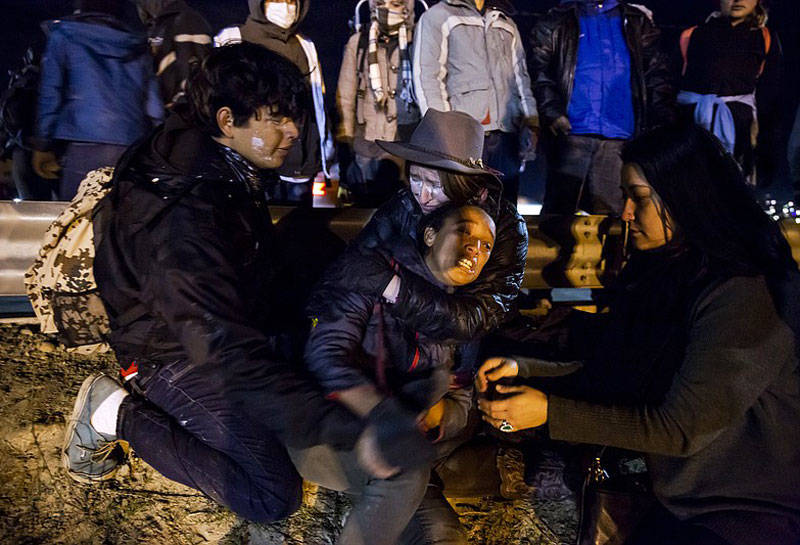
"caption": "American activists comfort a migrant mother during a tear gas incident at the border fence on Jan. 1, 2019.",
"description": "American activists comfort a migrant mother during a tear gas incident at the border fence on Jan. 1, 2019.",
"title": "MigrantTearGas",
"credit": "MARK ABRAMSON/KPBS",
"status": "inherit",
"isLoading": false,
"fetchFailed": false
},
"news_11719028": {
"type": "attachments",
"id": "news_11719028",
"meta": {
"index": "attachments_1716263798",
"site": "news",
"id": "11719028",
"found": true
},
"parent": 11718987,
"imgSizes": {
"twentyfourteen-full-width": {
"file": "https://ww2.kqed.org/app/uploads/sites/10/2019/01/GettyImages-1026536026-e1547762507389-1038x576.jpg",
"width": 1038,
"mimeType": "image/jpeg",
"height": 576
},
"thumbnail": {
"file": "https://ww2.kqed.org/app/uploads/sites/10/2019/01/GettyImages-1026536026-e1547762507389-160x107.jpg",
"width": 160,
"mimeType": "image/jpeg",
"height": 107
},
"post-thumbnail": {
"file": "https://ww2.kqed.org/app/uploads/sites/10/2019/01/GettyImages-1026536026-e1547762507389-672x372.jpg",
"width": 672,
"mimeType": "image/jpeg",
"height": 372
},
"kqedFullSize": {
"file": "https://ww2.kqed.org/app/uploads/sites/10/2019/01/GettyImages-1026536026-e1547762507389.jpg",
"width": 1920,
"height": 1280
},
"large": {
"file": "https://ww2.kqed.org/app/uploads/sites/10/2019/01/GettyImages-1026536026-e1547762507389-1020x680.jpg",
"width": 1020,
"mimeType": "image/jpeg",
"height": 680
},
"complete_open_graph": {
"file": "https://ww2.kqed.org/app/uploads/sites/10/2019/01/GettyImages-1026536026-e1547762507389-1200x800.jpg",
"width": 1200,
"mimeType": "image/jpeg",
"height": 800
},
"guest-author-50": {
"file": "https://ww2.kqed.org/app/uploads/sites/10/2019/01/GettyImages-1026536026-e1547762507389-50x50.jpg",
"width": 50,
"mimeType": "image/jpeg",
"height": 50
},
"guest-author-96": {
"file": "https://ww2.kqed.org/app/uploads/sites/10/2019/01/GettyImages-1026536026-e1547762507389-96x96.jpg",
"width": 96,
"mimeType": "image/jpeg",
"height": 96
},
"medium": {
"file": "https://ww2.kqed.org/app/uploads/sites/10/2019/01/GettyImages-1026536026-e1547762507389-800x533.jpg",
"width": 800,
"mimeType": "image/jpeg",
"height": 533
},
"guest-author-64": {
"file": "https://ww2.kqed.org/app/uploads/sites/10/2019/01/GettyImages-1026536026-e1547762507389-64x64.jpg",
"width": 64,
"mimeType": "image/jpeg",
"height": 64
},
"guest-author-32": {
"file": "https://ww2.kqed.org/app/uploads/sites/10/2019/01/GettyImages-1026536026-e1547762507389-32x32.jpg",
"width": 32,
"mimeType": "image/jpeg",
"height": 32
},
"full-width": {
"file": "https://ww2.kqed.org/app/uploads/sites/10/2019/01/GettyImages-1026536026-e1547762507389-1920x1280.jpg",
"width": 1920,
"mimeType": "image/jpeg",
"height": 1280
},
"detail": {
"file": "https://ww2.kqed.org/app/uploads/sites/10/2019/01/GettyImages-1026536026-e1547762507389-150x150.jpg",
"width": 150,
"mimeType": "image/jpeg",
"height": 150
},
"guest-author-128": {
"file": "https://ww2.kqed.org/app/uploads/sites/10/2019/01/GettyImages-1026536026-e1547762507389-128x128.jpg",
"width": 128,
"mimeType": "image/jpeg",
"height": 128
}
},
"publishDate": 1547762229,
"modified": 1553818461,
"caption": "An immigrant who identified herself only as Vioney (L), was released after spending six months in an ICE detention facility. She hugged her sister Yadira while being reunited with family on Sept. 2, 2018, in Oregon. Vioney, originally from Mexico, crossed the San Ysidro Port of Entry with three of her children in February, and asked for asylum. She was separated from her three children the same day and held in detention in California until August 31. Her children, who are U.S. citizens, were immediately freed. A group of mothers known as Immigrant Families Together posted her bond, and she will remain in the country with her family while her case is adjudicated. ",
"description": "An immigrant who identified herself only as Vioney (L), was released after spending six months in an ICE detention facility. She hugged her sister Yadira while being reunited with family on Sept. 2, 2018, in Oregon. Vioney, originally from Mexico, crossed the San Ysidro Port of Entry with three of her children in February, and asked for asylum. She was separated from her three children the same day and held in detention in California until August 31. Her children, who are U.S. citizens, were immediately freed. A group of mothers known as Immigrant Families Together posted her bond, and she will remain in the country with her family while her case is adjudicated. ",
"title": "Asylum-Seeking Mexican Immigrant Reunited With Family After Months Of Detainment",
"credit": "Mario Tama/Getty Images",
"status": "inherit",
"isLoading": false,
"fetchFailed": false
}
},
"audioPlayerReducer": {
"postId": "stream_live",
"isPaused": true,
"isPlaying": false,
"pfsActive": false,
"pledgeModalIsOpen": true,
"playerDrawerIsOpen": false,
"liveAudioPlayStartedAt": 0,
"liveAudioPlayContext": ""
},
"authorsReducer": {
"byline_news_11720716": {
"type": "authors",
"id": "byline_news_11720716",
"meta": {
"override": true
},
"slug": "byline_news_11720716",
"name": "\u003cstrong>John Flesher and Tammy Webber\u003cbr />Associated Press\u003c/strong>",
"isLoading": false
},
"byline_news_11720713": {
"type": "authors",
"id": "byline_news_11720713",
"meta": {
"override": true
},
"slug": "byline_news_11720713",
"name": "Domenico Montanaro",
"isLoading": false
},
"byline_news_11720251": {
"type": "authors",
"id": "byline_news_11720251",
"meta": {
"override": true
},
"slug": "byline_news_11720251",
"name": "Scott Horsley",
"isLoading": false
},
"byline_news_11720059": {
"type": "authors",
"id": "byline_news_11720059",
"meta": {
"override": true
},
"slug": "byline_news_11720059",
"name": "Mark Sherman\u003cbr>Associated Press",
"isLoading": false
},
"byline_news_11719257": {
"type": "authors",
"id": "byline_news_11719257",
"meta": {
"override": true
},
"slug": "byline_news_11719257",
"name": "Brian Naylor",
"isLoading": false
},
"byline_news_11719291": {
"type": "authors",
"id": "byline_news_11719291",
"meta": {
"override": true
},
"slug": "byline_news_11719291",
"name": "Ben Adler and Nadine Sebai \u003cbr> NPR / Capital Public Radio",
"isLoading": false
},
"byline_news_11719103": {
"type": "authors",
"id": "byline_news_11719103",
"meta": {
"override": true
},
"slug": "byline_news_11719103",
"name": "\u003cstrong>\u003ca href=\"https://www.kpbs.org/staff/jean-guerrero/\">Jean Guerrero\u003c/a>\u003c/strong>\u003cbr>KPBS",
"isLoading": false
},
"byline_news_11718987": {
"type": "authors",
"id": "byline_news_11718987",
"meta": {
"override": true
},
"slug": "byline_news_11718987",
"name": "Colleen Long\u003cbr>Ricardo Alonzo-Zaldivar\u003cbr>Associated Press",
"isLoading": false
},
"kqed": {
"type": "authors",
"id": "236",
"meta": {
"index": "authors_1716337520",
"id": "236",
"found": true
},
"name": "KQED News Staff",
"firstName": "KQED News Staff",
"lastName": null,
"slug": "kqed",
"email": "faq@kqed.org",
"display_author_email": false,
"staff_mastheads": [],
"title": null,
"bio": null,
"avatar": "https://secure.gravatar.com/avatar/ef0e801a68c4c54afa9180db14084167?s=600&d=blank&r=g",
"twitter": null,
"facebook": null,
"instagram": null,
"linkedin": null,
"sites": [
{
"site": "arts",
"roles": [
"contributor"
]
},
{
"site": "news",
"roles": [
"editor"
]
},
{
"site": "futureofyou",
"roles": [
"author"
]
}
],
"headData": {
"title": "KQED News Staff | KQED",
"description": null,
"ogImgSrc": "https://secure.gravatar.com/avatar/ef0e801a68c4c54afa9180db14084167?s=600&d=blank&r=g",
"twImgSrc": "https://secure.gravatar.com/avatar/ef0e801a68c4c54afa9180db14084167?s=600&d=blank&r=g"
},
"isLoading": false,
"link": "/author/kqed"
},
"markfiore": {
"type": "authors",
"id": "3236",
"meta": {
"index": "authors_1716337520",
"id": "3236",
"found": true
},
"name": "Mark Fiore",
"firstName": "Mark",
"lastName": "Fiore",
"slug": "markfiore",
"email": "mark@markfiore.com",
"display_author_email": false,
"staff_mastheads": [
"news"
],
"title": "KQED News Cartoonist",
"bio": "\u003ca href=\"http://www.MarkFiore.com\">MarkFiore.com\u003c/a> | \u003ca href=\"https://twitter.com/markfiore\">Follow on Twitter\u003c/a> | \u003ca href=\"https://www.facebook.com/pages/Mark-Fiore-Animated-Political-Cartoons/94451707396?ref=bookmarks\">Facebook\u003c/a> | \u003ca href=\"mailto:mark@markfiore.com\">email\u003c/a>\r\n\r\nPulitzer Prize-winner, Mark Fiore, who the Wall Street Journal has called “the undisputed guru of the form,” creates animated political cartoons in San Francisco, where his work has been featured regularly on the San Francisco Chronicle’s web site, SFGate.com. His work has appeared on Newsweek.com, Slate.com, CBSNews.com, MotherJones.com, DailyKos.com and NPR’s web site. Fiore’s political animation has appeared on CNN, Frontline, Bill Moyers Journal, Salon.com and cable and broadcast outlets across the globe.\r\n\r\nBeginning his professional life by drawing traditional political cartoons for newspapers, Fiore’s work appeared in publications ranging from the Washington Post to the Los Angeles Times. In the late 1990s, he began to experiment with animating political cartoons and, after a short stint at the San Jose Mercury News as their staff cartoonist, Fiore devoted all his energies to animation.\r\nGrowing up in California, Fiore also spent a good portion of his life in the backwoods of Idaho. It was this combination that shaped him politically. Mark majored in political science at Colorado College, where, in a perfect send-off for a cartoonist, he received his diploma in 1991 as commencement speaker Dick Cheney smiled approvingly.\r\nMark Fiore was awarded the Pulitzer Prize for political cartooning in 2010, a Robert F. Kennedy Journalism Award in 2004 and has twice received an Online Journalism Award for commentary from the Online News Association (2002, 2008). Fiore has received two awards for his work in new media from the National Cartoonists Society (2001, 2002), and in 2006 received The James Madison Freedom of Information Award from The Society of Professional Journalists.",
"avatar": "https://secure.gravatar.com/avatar/fc4e2a612b15b67bad0c6f0e1db4ca9b?s=600&d=blank&r=g",
"twitter": "MarkFiore",
"facebook": null,
"instagram": "https://www.instagram.com/markfiore/?hl=en",
"linkedin": null,
"sites": [
{
"site": "arts",
"roles": [
"contributor"
]
},
{
"site": "news",
"roles": [
"editor"
]
},
{
"site": "futureofyou",
"roles": [
"editor"
]
},
{
"site": "science",
"roles": [
"editor"
]
}
],
"headData": {
"title": "Mark Fiore | KQED",
"description": "KQED News Cartoonist",
"ogImgSrc": "https://secure.gravatar.com/avatar/fc4e2a612b15b67bad0c6f0e1db4ca9b?s=600&d=blank&r=g",
"twImgSrc": "https://secure.gravatar.com/avatar/fc4e2a612b15b67bad0c6f0e1db4ca9b?s=600&d=blank&r=g"
},
"isLoading": false,
"link": "/author/markfiore"
},
"jeremysiegel": {
"type": "authors",
"id": "11258",
"meta": {
"index": "authors_1716337520",
"id": "11258",
"found": true
},
"name": "Jeremy Siegel",
"firstName": "Jeremy",
"lastName": "Siegel",
"slug": "jeremysiegel",
"email": "jsiegel@kqed.org",
"display_author_email": false,
"staff_mastheads": [],
"title": "KQED Contributor",
"bio": "Jeremy Siegel is is the weekend afternoon news anchor for KQED. His reporting can be heard on KQED News, Morning Edition, All Things Considered and The California Report. Jeremy's coverage of the Camp Fire in Butte County won the 2019 Society of Professional Journalists, Northern California Chapter, Excellence in Journalism Award for Breaking News. Jeremy grew up in Cincinnati, Ohio, and graduated from UC Berkeley.",
"avatar": "https://secure.gravatar.com/avatar/3921a64ceb9ed5d0ba47d9ae9782f1ab?s=600&d=blank&r=g",
"twitter": "jersiegel",
"facebook": null,
"instagram": null,
"linkedin": null,
"sites": [
{
"site": "arts",
"roles": []
},
{
"site": "news",
"roles": [
"subscriber"
]
},
{
"site": "science",
"roles": []
}
],
"headData": {
"title": "Jeremy Siegel | KQED",
"description": "KQED Contributor",
"ogImgSrc": "https://secure.gravatar.com/avatar/3921a64ceb9ed5d0ba47d9ae9782f1ab?s=600&d=blank&r=g",
"twImgSrc": "https://secure.gravatar.com/avatar/3921a64ceb9ed5d0ba47d9ae9782f1ab?s=600&d=blank&r=g"
},
"isLoading": false,
"link": "/author/jeremysiegel"
},
"rlevi": {
"type": "authors",
"id": "11260",
"meta": {
"index": "authors_1716337520",
"id": "11260",
"found": true
},
"name": "Ryan Levi",
"firstName": "Ryan",
"lastName": "Levi",
"slug": "rlevi",
"email": "rlevi@KQED.org",
"display_author_email": false,
"staff_mastheads": [],
"title": "KQED Contributor",
"bio": "Ryan Levi was a reporter and podcast producer at KQED News from 2016-2019. He worked on \u003ca href=\"https://www.kqed.org/news/series/baycurious\">Bay Curious\u003c/a>, \u003ca href=\"https://www.kqed.org/news/tag/the-bay/\">The Bay, \u003c/a>and \u003ca href=\"https://podcasts.apple.com/us/podcast/the-california-report-magazine/id1314750545\">The California Report Magazine\u003c/a>, as well as hosting and producing the weekly \u003ca href=\"https://www.kqed.org/news/program/qedup/\">Q'ed Up podcast. \u003c/a>He also helped inaugurate KQED's weekend news coverage in 2017 as one of two original digital producers. Ryan holds degrees in multimedia journalism and Spanish from the University of Missouri.",
"avatar": "https://secure.gravatar.com/avatar/4cb2ddd028ac8807d1adf09609c5555d?s=600&d=blank&r=g",
"twitter": "ryan_levi",
"facebook": null,
"instagram": null,
"linkedin": null,
"sites": [
{
"site": "arts",
"roles": [
"editor"
]
},
{
"site": "news",
"roles": [
"subscriber"
]
},
{
"site": "stateofhealth",
"roles": [
"editor"
]
},
{
"site": "science",
"roles": [
"editor"
]
},
{
"site": "forum",
"roles": [
"administrator"
]
},
{
"site": "perspectives",
"roles": [
"administrator"
]
}
],
"headData": {
"title": "Ryan Levi | KQED",
"description": "KQED Contributor",
"ogImgSrc": "https://secure.gravatar.com/avatar/4cb2ddd028ac8807d1adf09609c5555d?s=600&d=blank&r=g",
"twImgSrc": "https://secure.gravatar.com/avatar/4cb2ddd028ac8807d1adf09609c5555d?s=600&d=blank&r=g"
},
"isLoading": false,
"link": "/author/rlevi"
},
"ktandy": {
"type": "authors",
"id": "11545",
"meta": {
"index": "authors_1716337520",
"id": "11545",
"found": true
},
"name": "Katie Tandy",
"firstName": "Katie",
"lastName": "Tandy",
"slug": "ktandy",
"email": "ktandy@kqed.org",
"display_author_email": false,
"staff_mastheads": [],
"title": "KQED Contributor",
"bio": "Katie Tandy is the co-founding editor of\u003ca href=\"http://www.theestablishment.co\"> The Establishment,\u003c/a> an online news+culture publication which champions the voices and stories of those who have been marginalized by mainstream media.\r\nShe is a former on-call interactive producer for KQED.",
"avatar": "https://secure.gravatar.com/avatar/1f877a62bab50d75c8bbef40e4ebe7f6?s=600&d=blank&r=g",
"twitter": null,
"facebook": null,
"instagram": null,
"linkedin": null,
"sites": [
{
"site": "news",
"roles": [
"subscriber"
]
}
],
"headData": {
"title": "Katie Tandy | KQED",
"description": "KQED Contributor",
"ogImgSrc": "https://secure.gravatar.com/avatar/1f877a62bab50d75c8bbef40e4ebe7f6?s=600&d=blank&r=g",
"twImgSrc": "https://secure.gravatar.com/avatar/1f877a62bab50d75c8bbef40e4ebe7f6?s=600&d=blank&r=g"
},
"isLoading": false,
"link": "/author/ktandy"
}
},
"pagesReducer": {
"news_tag_donald-trump": {
"type": "terms",
"id": "news_1323",
"meta": {
"index": "terms_1716263798",
"site": "news",
"id": "1323",
"score": 8.557341
},
"featImg": null,
"name": "Donald Trump",
"description": null,
"taxonomy": "tag",
"headData": {
"twImgId": null,
"twTitle": null,
"ogTitle": null,
"ogImgId": null,
"twDescription": null,
"description": null,
"title": "Donald Trump Archives | KQED News",
"ogDescription": null
},
"ttid": 1335,
"slug": "donald-trump",
"isLoading": false,
"title": "Donald Trump",
"pageMeta": {
"site": "news",
"WpPageTemplate": "page-topic-editorial",
"currentPage": 116
},
"blocks": [
{
"blockName": "kqed/post-list",
"attrs": {
"layout": "cardArticle2",
"query": "posts/news?tag=donald-trump",
"seeMore": false,
"paginated": true,
"page": 116
}
},
{
"blockName": "kqed/ad"
}
]
}
},
"pfsSessionReducer": {},
"postsReducer": {
"stream_live": {
"type": "live",
"id": "stream_live",
"audioUrl": "https://streams.kqed.org/kqedradio",
"title": "Live Stream",
"excerpt": "Live Stream information currently unavailable.",
"link": "/radio",
"featImg": "",
"label": {
"name": "KQED Live",
"link": "/"
}
},
"stream_kqedNewscast": {
"type": "posts",
"id": "stream_kqedNewscast",
"audioUrl": "https://www.kqed.org/.stream/anon/radio/RDnews/newscast.mp3?_=1",
"title": "KQED Newscast",
"featImg": "",
"label": {
"name": "88.5 FM",
"link": "/"
}
},
"news_11720716": {
"type": "posts",
"id": "news_11720716",
"meta": {
"index": "posts_1716263798",
"site": "news",
"id": "11720716",
"score": null,
"sort": [
1548435581000
]
},
"guestAuthors": [],
"slug": "government-shutdown-delays-disrupts-environmental-studies",
"title": "Shutdown Delays and Disrupts Environmental Studies, Including on the Farallones",
"publishDate": 1548435581,
"format": "standard",
"headTitle": "Shutdown Delays and Disrupts Environmental Studies, Including on the Farallones | KQED",
"labelTerm": {
"term": 72,
"site": "news"
},
"content": "\u003cp>The rainwater collection system is broken at the environmental research station on a remote, rocky Pacific island off the California coast. So is a crane used to hoist small boats in and out of the water. A two-year supply of diesel fuel for the power generators is almost gone.\u003c/p>\n\u003cp>U.S. Fish and Wildlife Service personnel ordinarily would help with such problems. But they haven’t been around since the partial federal government shutdown began a month ago, forcing researchers with the nonprofit Point Blue Conservation Science to rely on volunteers to haul bottled water and 5-gallon jugs of diesel to the Farallon Islands National Wildlife Refuge, about 30 miles from San Francisco.\u003c/p>\n\u003cp>[youtube https://www.youtube.com/watch?v=1pruDfr5hL0]\u003c/p>\n\u003cp>Still, the scientists are pressing on with their long-running study of elephant seals during the crucial winter breeding season. They tag and monitor the lumbering creatures, whose numbers are recovering after being hunted to near-extinction, and study how warming oceans could affect them.\u003c/p>\n\u003cp>“We’ve found some creative solutions, but things will get more strained the longer the shutdown is continued,” said Pete Warzybok, a marine ecologist with Point Blue.\u003c/p>\n\u003cp>[ad fullwidth]\u003c/p>\n\u003cp>The impasse has delayed, disrupted and now threatens to derail environmental research projects across the nation — and not just those conducted by government agencies.\u003c/p>\n\u003cp>Scientists with universities, nonprofit organizations and private companies say their inability to collaborate with federal partners, gain access to federal lands and laboratories, and secure federal funding is jeopardizing their work on a vast array of subjects, including invasive and endangered species and air and water quality.\u003c/p>\n\u003caside class=\"alignright\">\n\u003ch3>\u003ca href=\"https://www.kqed.org/news/11715467/national-parks-dealing-with-vandals-human-waste-in-shutdown\">National Parks Dealing With Vandals, Human Waste in Shutdown\u003c/a>\u003c/h3>\n\u003cfigure>\u003ca href=\"https://www.kqed.org/news/11715467/national-parks-dealing-with-vandals-human-waste-in-shutdown\">\u003cimg decoding=\"async\" src=\"https://ww2.kqed.org/news/wp-content/uploads/sites/10/2019/01/shutdown_010219_final-1020x698.jpg\" alt=\"\">\u003c/a>\u003c/figure>\n\u003c/aside>\n\u003cp>Researchers might miss court-ordered deadlines for reports involving endangered plants or animals. Warm-weather field studies that must be planned months in advance could be delayed or canceled. And studies that rely on strict monitoring or testing schedules could be compromised.\u003c/p>\n\u003cp>Depending on how long the shutdown lasts, the damage could range from inconvenient to irreparable.\u003c/p>\n\u003cp>Scientists with a constant presence on the Farallones since 1968 might have to leave if their agreement with the government isn’t renewed by the end of March. Besides opening a gap in decades of data collection, their absence would leave the islands and their wildlife defenseless to trespassers.\u003c/p>\n\u003cp>“It would mean that there would be no stewards present on the island, so the island would be completely empty, leaving it vulnerable to disturbance for people coming on the island illegally,” said Warzybok.\u003c/p>\n\u003cfigure id=\"attachment_11720946\" class=\"wp-caption aligncenter\" style=\"max-width: 800px\">\u003cimg loading=\"lazy\" decoding=\"async\" src=\"https://ww2.kqed.org/news/wp-content/uploads/sites/10/2019/01/owl-800x533.jpg\" alt=\"\" width=\"800\" height=\"533\" class=\"size-medium wp-image-11720946\" srcset=\"https://cdn.kqed.org/wp-content/uploads/sites/10/2019/01/owl-800x533.jpg 800w, https://cdn.kqed.org/wp-content/uploads/sites/10/2019/01/owl-160x107.jpg 160w, https://cdn.kqed.org/wp-content/uploads/sites/10/2019/01/owl-1020x680.jpg 1020w, https://cdn.kqed.org/wp-content/uploads/sites/10/2019/01/owl-1200x800.jpg 1200w, https://cdn.kqed.org/wp-content/uploads/sites/10/2019/01/owl.jpg 1600w\" sizes=\"(max-width: 800px) 100vw, 800px\">\u003cfigcaption class=\"wp-caption-text\">Three Western Gull chicks, just days old, share their new nest in the Southeast Farallon Islands. \u003ccite>(RJ Roush/Point Blue Conservation Science)\u003c/cite>\u003c/figcaption>\u003c/figure>\n\u003cp>Nobody from the U.S. Fish and Wildlife Service was available to respond because employees are not allowed to work during the shutdown, according to voicemail messages.\u003c/p>\n\u003cp>Scientist Harvey Bootsma needs to book a National Park Service boat for summer experiments involving quagga mussels in Lake Michigan, where the invasive pests are suspected of causing a decline in perch, whitefish and other prized species.\u003c/p>\n\u003cp>If the government doesn’t reopen soon, “it could really mess us up,” said Bootsma, of the University of Wisconsin-Milwaukee.\u003c/p>\n\u003cp>One increasingly likely casualty is the world’s longest continuous study of a predator-prey relationship in one location. For 60 years, biologists have documented population shifts and interactions between gray wolves and moose at Isle Royale National Park in Lake Superior. Much of the data is collected during winter, when scientists use planes to observe the wolves forming packs, battling over territory and killing moose, but the team is shut out of the park.\u003c/p>\n\u003cp>The seven-week mission isn’t dead yet, but prospects fade daily.\u003c/p>\n\u003cp>The loss of a season’s worth of data would be “devastating,” said Rolf Peterson of Michigan Technological University, the co-leader. “Continuity is what’s at the core of a lot of observational science, especially long-term projects. At some point, the loss of continuity degrades the integrity and value of the work itself. And there are things that don’t come around a second time.”\u003c/p>\n\u003cfigure id=\"attachment_11720919\" class=\"wp-caption aligncenter\" style=\"max-width: 794px\">\u003cimg loading=\"lazy\" decoding=\"async\" class=\"wp-image-11720919 size-full\" src=\"https://ww2.kqed.org/news/wp-content/uploads/sites/10/2019/01/Screen-Shot-2019-01-24-at-5.33.31-PM.png\" alt=\"\" width=\"794\" height=\"533\" srcset=\"https://cdn.kqed.org/wp-content/uploads/sites/10/2019/01/Screen-Shot-2019-01-24-at-5.33.31-PM.png 794w, https://cdn.kqed.org/wp-content/uploads/sites/10/2019/01/Screen-Shot-2019-01-24-at-5.33.31-PM-160x107.png 160w\" sizes=\"(max-width: 794px) 100vw, 794px\">\u003cfigcaption class=\"wp-caption-text\">The USFWS Kodiak seaplane arrives on Isle Royale in Lake Superior carrying the fourth relocated wolf on October 14, 2018. \u003ccite>(Jim Peaco/National Park Service)\u003c/cite>\u003c/figcaption>\u003c/figure>\n\u003cp>The timing is particularly bad because the park recently began a multiyear effort to replenish its wolf population, which had fallen to two. Four were flown to Isle Royale from the mainland last fall — one later died — and researchers planned to relocate several others this winter. Peterson’s group also wants to dart 20 moose and fit them with radio collars to gauge their reaction to the arriving wolves.\u003c/p>\n\u003cfigure id=\"attachment_11720921\" class=\"wp-caption aligncenter\" style=\"max-width: 800px\">\u003cimg loading=\"lazy\" decoding=\"async\" class=\"size-medium wp-image-11720921\" src=\"https://ww2.kqed.org/news/wp-content/uploads/sites/10/2019/01/wolfcrate-800x533.jpg\" alt=\"\" width=\"800\" height=\"533\" srcset=\"https://cdn.kqed.org/wp-content/uploads/sites/10/2019/01/wolfcrate-800x533.jpg 800w, https://cdn.kqed.org/wp-content/uploads/sites/10/2019/01/wolfcrate-160x107.jpg 160w, https://cdn.kqed.org/wp-content/uploads/sites/10/2019/01/wolfcrate-1020x680.jpg 1020w, https://cdn.kqed.org/wp-content/uploads/sites/10/2019/01/wolfcrate-1200x800.jpg 1200w, https://cdn.kqed.org/wp-content/uploads/sites/10/2019/01/wolfcrate-1920x1280.jpg 1920w\" sizes=\"(max-width: 800px) 100vw, 800px\">\u003cfigcaption class=\"wp-caption-text\">The female wolf is shown looking at a remote camera shortly before leaving her crate upon relocation to Isle Royale. \u003ccite>(Jacob W. Frank/National Park Service)\u003c/cite>\u003c/figcaption>\u003c/figure>\n\u003cp>“Both of these projects, while partially supported by other funds, require National Park Service personnel and facilities to operate,” agency spokeswoman Alexandra Picavet said. “Until there is an approved funding source to support those functions, both operations are suspended.”\u003c/p>\n\u003cp>Also at risk are the U.S. Fish and Wildlife Service’s aerial surveys of endangered Mexican gray wolves in Arizona and New Mexico, which usually happen in late January and early February.\u003c/p>\n\u003cp>A California mission to gather data on fish and study how climate change is affecting oceans, which began 70 years ago, also is in limbo. A research ship was reserved for this winter’s operation, carried out by a federal, state and university partnership. But because it’s owned by the National Oceanic and Atmospheric Administration, the San Diego-based vessel is off-limits until the shutdown ends. No suitable replacement is available, said program director Brice Semmens.\u003c/p>\n\u003cp>Data gaps from a lost mission would be harmful because “the ocean is changing so rapidly now,” he said. “We need to understand how these changes are going to affect populations we care about, like shellfish or Dungeness crab.”\u003c/p>\n\u003cfigure id=\"attachment_11720926\" class=\"wp-caption aligncenter\" style=\"max-width: 800px\">\u003cimg loading=\"lazy\" decoding=\"async\" class=\"size-medium wp-image-11720926\" src=\"https://ww2.kqed.org/news/wp-content/uploads/sites/10/2019/01/dungenesscrab-800x557.jpg\" alt=\"\" width=\"800\" height=\"557\" srcset=\"https://cdn.kqed.org/wp-content/uploads/sites/10/2019/01/dungenesscrab-800x557.jpg 800w, https://cdn.kqed.org/wp-content/uploads/sites/10/2019/01/dungenesscrab-160x111.jpg 160w, https://cdn.kqed.org/wp-content/uploads/sites/10/2019/01/dungenesscrab-1020x710.jpg 1020w, https://cdn.kqed.org/wp-content/uploads/sites/10/2019/01/dungenesscrab-1200x836.jpg 1200w, https://cdn.kqed.org/wp-content/uploads/sites/10/2019/01/dungenesscrab.jpg 1525w\" sizes=\"(max-width: 800px) 100vw, 800px\">\u003cfigcaption class=\"wp-caption-text\">A juvenile Dungeness crab scuttles in the waters of Monterey Harbor. \u003ccite>(Steve Lonhart/NOAA MBNMS)\u003c/cite>\u003c/figcaption>\u003c/figure>\n\u003cp>The shutdown is also taking a toll on the next generation of environmental researchers.\u003c/p>\n\u003cp>Federal scientists teach and monitor graduate students’ projects at universities nationwide. Now, the schools may cancel some courses and students are worrying about graduating on time.\u003c/p>\n\u003cp>Three experts with the U.S. Geological Survey teach in the wildlife and fisheries program at the University of Georgia, where a statistical modeling class was scratched because the government instructor isn’t allowed to work, biology professor John Maerz said.\u003c/p>\n\u003cp>“We depend on them being there; we build our curriculum and projects around them,” Maerz said. “You can’t replace that expertise.”\u003c/p>\n\u003cp>Many students are struggling to do research with federal laboratories and other facilities shuttered. Professors are hesitating to accept another class of graduate students because they don’t know whether they’ll get federal grants to pay the newcomers and fund their work.\u003c/p>\n\u003cp>“I applied for a bunch of grants last year and am waiting to see if I’ll get funding so I can determine whether to admit a grad student and if so, how many,” said Andrew Dessler, an atmospheric scientist at Texas A&M. “The way things are going, I may not take any.”\u003c/p>\n\u003cp>[ad floatright]\u003c/p>\n\u003cp>\u003cem>Flesher reported from Traverse City, Michigan, and Webber reported from Chicago. AP reporter Susan Montoya Bryan contributed from Albuquerque, New Mexico.\u003c/em>\u003c/p>\n\n",
"blocks": [],
"excerpt": "Scientists with a constant presence on the Farallon Islands since 1968 might have to leave if their agreement with the government isn't renewed by the end of March.",
"status": "publish",
"parent": 0,
"modified": 1721105474,
"stats": {
"hasAudio": false,
"hasVideo": true,
"hasChartOrMap": false,
"iframeSrcs": [],
"hasGoogleForm": false,
"hasGallery": false,
"hasHearkenModule": false,
"hasPolis": false,
"paragraphCount": 31,
"wordCount": 1275
},
"headData": {
"title": "Shutdown Delays and Disrupts Environmental Studies, Including on the Farallones | KQED",
"description": "Scientists with a constant presence on the Farallon Islands since 1968 might have to leave if their agreement with the government isn't renewed by the end of March.",
"ogTitle": "",
"ogDescription": "",
"ogImgId": "",
"twTitle": "",
"twDescription": "",
"twImgId": "",
"schema": {
"@context": "https://schema.org",
"@type": "NewsArticle",
"headline": "Shutdown Delays and Disrupts Environmental Studies, Including on the Farallones",
"datePublished": "2019-01-25T08:59:41-08:00",
"dateModified": "2024-07-15T21:51:14-07:00",
"image": "https://cdn.kqed.org/wp-content/uploads/2020/02/KQED-OG-Image@1x.png",
"isAccessibleForFree": "True",
"publisher": {
"@type": "NewsMediaOrganization",
"@id": "https://www.kqed.org/#organization",
"name": "KQED",
"logo": "https://cdn.kqed.org/wp-content/uploads/2020/02/KQED-OG-Image@1x.png",
"url": "https://www.kqed.org",
"sameAs": [
"https://www.facebook.com/KQED",
"https://twitter.com/KQED",
"https://www.instagram.com/kqed/",
"https://www.tiktok.com/@kqedofficial",
"https://www.linkedin.com/company/kqed",
"https://www.youtube.com/channel/UCeC0IOo7i1P_61zVUWbJ4nw"
]
}
}
},
"sticky": false,
"nprByline": "\u003cstrong>John Flesher and Tammy Webber\u003cbr />Associated Press\u003c/strong>",
"path": "/news/11720716/government-shutdown-delays-disrupts-environmental-studies",
"audioTrackLength": null,
"parsedContent": [
{
"type": "contentString",
"content": "\u003cdiv class=\"post-body\">\u003cp>\u003cp>The rainwater collection system is broken at the environmental research station on a remote, rocky Pacific island off the California coast. So is a crane used to hoist small boats in and out of the water. A two-year supply of diesel fuel for the power generators is almost gone.\u003c/p>\n\u003cp>U.S. Fish and Wildlife Service personnel ordinarily would help with such problems. But they haven’t been around since the partial federal government shutdown began a month ago, forcing researchers with the nonprofit Point Blue Conservation Science to rely on volunteers to haul bottled water and 5-gallon jugs of diesel to the Farallon Islands National Wildlife Refuge, about 30 miles from San Francisco.\u003c/p>\n\u003cp>\u003c/p>\u003cp>\u003cspan class='utils-parseShortcode-shortcodes-__youtubeShortcode__embedYoutube'>\n \u003cspan class='utils-parseShortcode-shortcodes-__youtubeShortcode__embedYoutubeInside'>\n \u003ciframe\n loading='lazy'\n class='utils-parseShortcode-shortcodes-__youtubeShortcode__youtubePlayer'\n type='text/html'\n src='//www.youtube.com/embed/1pruDfr5hL0'\n title='//www.youtube.com/embed/1pruDfr5hL0'\n allowfullscreen='true'\n style='border:0;'>\u003c/iframe>\n \u003c/span>\n \u003c/span>\u003c/p>\u003cp>\u003c/p>\n\u003cp>Still, the scientists are pressing on with their long-running study of elephant seals during the crucial winter breeding season. They tag and monitor the lumbering creatures, whose numbers are recovering after being hunted to near-extinction, and study how warming oceans could affect them.\u003c/p>\n\u003cp>“We’ve found some creative solutions, but things will get more strained the longer the shutdown is continued,” said Pete Warzybok, a marine ecologist with Point Blue.\u003c/p>\n\u003cp>\u003c/p>\u003c/div>",
"attributes": {
"named": {},
"numeric": []
}
},
{
"type": "component",
"content": "",
"name": "ad",
"attributes": {
"named": {
"label": "fullwidth"
},
"numeric": [
"fullwidth"
]
}
},
{
"type": "contentString",
"content": "\u003cdiv class=\"post-body\">\u003cp>\u003c/p>\n\u003cp>The impasse has delayed, disrupted and now threatens to derail environmental research projects across the nation — and not just those conducted by government agencies.\u003c/p>\n\u003cp>Scientists with universities, nonprofit organizations and private companies say their inability to collaborate with federal partners, gain access to federal lands and laboratories, and secure federal funding is jeopardizing their work on a vast array of subjects, including invasive and endangered species and air and water quality.\u003c/p>\n\u003caside class=\"alignright\">\n\u003ch3>\u003ca href=\"https://www.kqed.org/news/11715467/national-parks-dealing-with-vandals-human-waste-in-shutdown\">National Parks Dealing With Vandals, Human Waste in Shutdown\u003c/a>\u003c/h3>\n\u003cfigure>\u003ca href=\"https://www.kqed.org/news/11715467/national-parks-dealing-with-vandals-human-waste-in-shutdown\">\u003cimg decoding=\"async\" src=\"https://ww2.kqed.org/news/wp-content/uploads/sites/10/2019/01/shutdown_010219_final-1020x698.jpg\" alt=\"\">\u003c/a>\u003c/figure>\n\u003c/aside>\n\u003cp>Researchers might miss court-ordered deadlines for reports involving endangered plants or animals. Warm-weather field studies that must be planned months in advance could be delayed or canceled. And studies that rely on strict monitoring or testing schedules could be compromised.\u003c/p>\n\u003cp>Depending on how long the shutdown lasts, the damage could range from inconvenient to irreparable.\u003c/p>\n\u003cp>Scientists with a constant presence on the Farallones since 1968 might have to leave if their agreement with the government isn’t renewed by the end of March. Besides opening a gap in decades of data collection, their absence would leave the islands and their wildlife defenseless to trespassers.\u003c/p>\n\u003cp>“It would mean that there would be no stewards present on the island, so the island would be completely empty, leaving it vulnerable to disturbance for people coming on the island illegally,” said Warzybok.\u003c/p>\n\u003cfigure id=\"attachment_11720946\" class=\"wp-caption aligncenter\" style=\"max-width: 800px\">\u003cimg loading=\"lazy\" decoding=\"async\" src=\"https://ww2.kqed.org/news/wp-content/uploads/sites/10/2019/01/owl-800x533.jpg\" alt=\"\" width=\"800\" height=\"533\" class=\"size-medium wp-image-11720946\" srcset=\"https://cdn.kqed.org/wp-content/uploads/sites/10/2019/01/owl-800x533.jpg 800w, https://cdn.kqed.org/wp-content/uploads/sites/10/2019/01/owl-160x107.jpg 160w, https://cdn.kqed.org/wp-content/uploads/sites/10/2019/01/owl-1020x680.jpg 1020w, https://cdn.kqed.org/wp-content/uploads/sites/10/2019/01/owl-1200x800.jpg 1200w, https://cdn.kqed.org/wp-content/uploads/sites/10/2019/01/owl.jpg 1600w\" sizes=\"(max-width: 800px) 100vw, 800px\">\u003cfigcaption class=\"wp-caption-text\">Three Western Gull chicks, just days old, share their new nest in the Southeast Farallon Islands. \u003ccite>(RJ Roush/Point Blue Conservation Science)\u003c/cite>\u003c/figcaption>\u003c/figure>\n\u003cp>Nobody from the U.S. Fish and Wildlife Service was available to respond because employees are not allowed to work during the shutdown, according to voicemail messages.\u003c/p>\n\u003cp>Scientist Harvey Bootsma needs to book a National Park Service boat for summer experiments involving quagga mussels in Lake Michigan, where the invasive pests are suspected of causing a decline in perch, whitefish and other prized species.\u003c/p>\n\u003cp>If the government doesn’t reopen soon, “it could really mess us up,” said Bootsma, of the University of Wisconsin-Milwaukee.\u003c/p>\n\u003cp>One increasingly likely casualty is the world’s longest continuous study of a predator-prey relationship in one location. For 60 years, biologists have documented population shifts and interactions between gray wolves and moose at Isle Royale National Park in Lake Superior. Much of the data is collected during winter, when scientists use planes to observe the wolves forming packs, battling over territory and killing moose, but the team is shut out of the park.\u003c/p>\n\u003cp>The seven-week mission isn’t dead yet, but prospects fade daily.\u003c/p>\n\u003cp>The loss of a season’s worth of data would be “devastating,” said Rolf Peterson of Michigan Technological University, the co-leader. “Continuity is what’s at the core of a lot of observational science, especially long-term projects. At some point, the loss of continuity degrades the integrity and value of the work itself. And there are things that don’t come around a second time.”\u003c/p>\n\u003cfigure id=\"attachment_11720919\" class=\"wp-caption aligncenter\" style=\"max-width: 794px\">\u003cimg loading=\"lazy\" decoding=\"async\" class=\"wp-image-11720919 size-full\" src=\"https://ww2.kqed.org/news/wp-content/uploads/sites/10/2019/01/Screen-Shot-2019-01-24-at-5.33.31-PM.png\" alt=\"\" width=\"794\" height=\"533\" srcset=\"https://cdn.kqed.org/wp-content/uploads/sites/10/2019/01/Screen-Shot-2019-01-24-at-5.33.31-PM.png 794w, https://cdn.kqed.org/wp-content/uploads/sites/10/2019/01/Screen-Shot-2019-01-24-at-5.33.31-PM-160x107.png 160w\" sizes=\"(max-width: 794px) 100vw, 794px\">\u003cfigcaption class=\"wp-caption-text\">The USFWS Kodiak seaplane arrives on Isle Royale in Lake Superior carrying the fourth relocated wolf on October 14, 2018. \u003ccite>(Jim Peaco/National Park Service)\u003c/cite>\u003c/figcaption>\u003c/figure>\n\u003cp>The timing is particularly bad because the park recently began a multiyear effort to replenish its wolf population, which had fallen to two. Four were flown to Isle Royale from the mainland last fall — one later died — and researchers planned to relocate several others this winter. Peterson’s group also wants to dart 20 moose and fit them with radio collars to gauge their reaction to the arriving wolves.\u003c/p>\n\u003cfigure id=\"attachment_11720921\" class=\"wp-caption aligncenter\" style=\"max-width: 800px\">\u003cimg loading=\"lazy\" decoding=\"async\" class=\"size-medium wp-image-11720921\" src=\"https://ww2.kqed.org/news/wp-content/uploads/sites/10/2019/01/wolfcrate-800x533.jpg\" alt=\"\" width=\"800\" height=\"533\" srcset=\"https://cdn.kqed.org/wp-content/uploads/sites/10/2019/01/wolfcrate-800x533.jpg 800w, https://cdn.kqed.org/wp-content/uploads/sites/10/2019/01/wolfcrate-160x107.jpg 160w, https://cdn.kqed.org/wp-content/uploads/sites/10/2019/01/wolfcrate-1020x680.jpg 1020w, https://cdn.kqed.org/wp-content/uploads/sites/10/2019/01/wolfcrate-1200x800.jpg 1200w, https://cdn.kqed.org/wp-content/uploads/sites/10/2019/01/wolfcrate-1920x1280.jpg 1920w\" sizes=\"(max-width: 800px) 100vw, 800px\">\u003cfigcaption class=\"wp-caption-text\">The female wolf is shown looking at a remote camera shortly before leaving her crate upon relocation to Isle Royale. \u003ccite>(Jacob W. Frank/National Park Service)\u003c/cite>\u003c/figcaption>\u003c/figure>\n\u003cp>“Both of these projects, while partially supported by other funds, require National Park Service personnel and facilities to operate,” agency spokeswoman Alexandra Picavet said. “Until there is an approved funding source to support those functions, both operations are suspended.”\u003c/p>\n\u003cp>Also at risk are the U.S. Fish and Wildlife Service’s aerial surveys of endangered Mexican gray wolves in Arizona and New Mexico, which usually happen in late January and early February.\u003c/p>\n\u003cp>A California mission to gather data on fish and study how climate change is affecting oceans, which began 70 years ago, also is in limbo. A research ship was reserved for this winter’s operation, carried out by a federal, state and university partnership. But because it’s owned by the National Oceanic and Atmospheric Administration, the San Diego-based vessel is off-limits until the shutdown ends. No suitable replacement is available, said program director Brice Semmens.\u003c/p>\n\u003cp>Data gaps from a lost mission would be harmful because “the ocean is changing so rapidly now,” he said. “We need to understand how these changes are going to affect populations we care about, like shellfish or Dungeness crab.”\u003c/p>\n\u003cfigure id=\"attachment_11720926\" class=\"wp-caption aligncenter\" style=\"max-width: 800px\">\u003cimg loading=\"lazy\" decoding=\"async\" class=\"size-medium wp-image-11720926\" src=\"https://ww2.kqed.org/news/wp-content/uploads/sites/10/2019/01/dungenesscrab-800x557.jpg\" alt=\"\" width=\"800\" height=\"557\" srcset=\"https://cdn.kqed.org/wp-content/uploads/sites/10/2019/01/dungenesscrab-800x557.jpg 800w, https://cdn.kqed.org/wp-content/uploads/sites/10/2019/01/dungenesscrab-160x111.jpg 160w, https://cdn.kqed.org/wp-content/uploads/sites/10/2019/01/dungenesscrab-1020x710.jpg 1020w, https://cdn.kqed.org/wp-content/uploads/sites/10/2019/01/dungenesscrab-1200x836.jpg 1200w, https://cdn.kqed.org/wp-content/uploads/sites/10/2019/01/dungenesscrab.jpg 1525w\" sizes=\"(max-width: 800px) 100vw, 800px\">\u003cfigcaption class=\"wp-caption-text\">A juvenile Dungeness crab scuttles in the waters of Monterey Harbor. \u003ccite>(Steve Lonhart/NOAA MBNMS)\u003c/cite>\u003c/figcaption>\u003c/figure>\n\u003cp>The shutdown is also taking a toll on the next generation of environmental researchers.\u003c/p>\n\u003cp>Federal scientists teach and monitor graduate students’ projects at universities nationwide. Now, the schools may cancel some courses and students are worrying about graduating on time.\u003c/p>\n\u003cp>Three experts with the U.S. Geological Survey teach in the wildlife and fisheries program at the University of Georgia, where a statistical modeling class was scratched because the government instructor isn’t allowed to work, biology professor John Maerz said.\u003c/p>\n\u003cp>“We depend on them being there; we build our curriculum and projects around them,” Maerz said. “You can’t replace that expertise.”\u003c/p>\n\u003cp>Many students are struggling to do research with federal laboratories and other facilities shuttered. Professors are hesitating to accept another class of graduate students because they don’t know whether they’ll get federal grants to pay the newcomers and fund their work.\u003c/p>\n\u003cp>“I applied for a bunch of grants last year and am waiting to see if I’ll get funding so I can determine whether to admit a grad student and if so, how many,” said Andrew Dessler, an atmospheric scientist at Texas A&M. “The way things are going, I may not take any.”\u003c/p>\n\u003cp>\u003c/p>\u003c/div>",
"attributes": {
"named": {},
"numeric": []
}
},
{
"type": "component",
"content": "",
"name": "ad",
"attributes": {
"named": {
"label": "floatright"
},
"numeric": [
"floatright"
]
}
},
{
"type": "contentString",
"content": "\u003cdiv class=\"post-body\">\u003cp>\u003c/p>\n\u003cp>\u003cem>Flesher reported from Traverse City, Michigan, and Webber reported from Chicago. AP reporter Susan Montoya Bryan contributed from Albuquerque, New Mexico.\u003c/em>\u003c/p>\n\n\u003c/div>\u003c/p>",
"attributes": {
"named": {},
"numeric": []
}
}
],
"link": "/news/11720716/government-shutdown-delays-disrupts-environmental-studies",
"authors": [
"byline_news_11720716"
],
"programs": [
"news_72"
],
"categories": [
"news_19906",
"news_8",
"news_13",
"news_356"
],
"tags": [
"news_1323",
"news_24878",
"news_19542",
"news_17968"
],
"featImg": "news_11720883",
"label": "news_72"
},
"news_11720747": {
"type": "posts",
"id": "news_11720747",
"meta": {
"index": "posts_1716263798",
"site": "news",
"id": "11720747",
"score": null,
"sort": [
1548433204000
]
},
"guestAuthors": [],
"slug": "california-reps-schiff-mcclintock-trade-barbs-as-shutdowns-shadow-grows",
"title": "California Reps. Schiff, McClintock Trade Barbs as Shutdown's Shadow Grows",
"publishDate": 1548433204,
"format": "audio",
"headTitle": "California Reps. Schiff, McClintock Trade Barbs as Shutdown’s Shadow Grows | KQED",
"labelTerm": {
"term": 72,
"site": "news"
},
"content": "\u003cp>As the federal government shutdown entered its 35th day on Friday, there was little light at the end of a long tunnel, even as crippling dysfunction mounts across myriad agencies and organizations from the IRS to the \u003ca href=\"https://www.kqed.org/news/11715467/national-parks-dealing-with-vandals-human-waste-in-shutdown\" target=\"_blank\" rel=\"noopener\">National Parks Service\u003c/a>, the TSA, the \u003ca href=\"https://www.kqed.org/news/11717701/shutdown-forces-some-bay-area-meteorologists-to-work-without-pay\" target=\"_blank\" rel=\"noopener\">National Weather Service\u003c/a> and the \u003ca href=\"https://www.kqed.org/news/11717702/thousands-of-immigrants-in-court-limbo-due-to-government-shutdown\" target=\"_blank\" rel=\"noopener\">U.S. Department of Justice\u003c/a>.\u003c/p>\n\u003cp>Nearly half of the 800,000 federal employees mired in the shutdown are still working, even as they face their \u003ca href=\"https://thinkprogress.org/government-shutdown-trump-pelosi-97dd1bbbc9f0/\">second delinquent paycheck\u003c/a> at the end of this week. Meanwhile, California is experiencing both \u003ca href=\"http://trac.syr.edu/immigration/reports/543/\" target=\"_blank\" rel=\"noopener\">the nation’s most cancellations\u003c/a> of immigration court hearings and the nation’s largest immigration court case backlog, with \u003ca href=\"https://www.kqed.org/news/11717702/thousands-of-immigrants-in-court-limbo-due-to-government-shutdown\">more than 146,800 pending cases\u003c/a>.\u003c/p>\n\u003cp>KQED spoke with two California congressmen Thursday — Republican Rep. Tom McClintock and Democratic Rep. Adam Schiff — about what to expect as 2019 heads into unprecedented territory.\u003c/p>\n\u003cp>[ad fullwidth]\u003c/p>\n\u003ch3>Obligation and Executive Authority — GOP Congressman Tom McClintock\u003c/h3>\n\u003cp>\u003ca href=\"https://mcclintock.house.gov/\">Rep. McClintock\u003c/a> — whose political reputation is conservative, anti-tax and keen on limited government — represents California’s 4th Congressional District, which includes part of Lake Tahoe in the north to Kings Canyon National Park to the south. He was recently \u003ca href=\"https://ballotpedia.org/California%27s_4th_Congressional_District_election,_2018\">reelected to his fifth term\u003c/a>, besting Democratic challenger Jessica Morse 54 to 46 percent.\u003c/p>\n\u003cp>Asked about Democrats’ insistence that President Trump should have found a way to get Mexico to pay for a border wall if he was serious about coming to an agreement on it, McClintock said Mexico footing the bill was “always an unrealistic expectation,” as it’s the responsibility of the United States and a “vital security interest” of our nation to protect our own borders.\u003c/p>\n\u003cp>He added that the U.S. seems to “have plenty of money to secure the borders of other countries,” and that he remains astonished that “Democrats can’t bring themselves to provide the money necessary to protect our own border.”\u003c/p>\n\u003cp>McClintock said there is approximately $13 billion of obligated military construction funds available to the president.\u003c/p>\n\u003cp>“I think ultimately if the impasse continues, [Trump] will just to throw up his hands and say, ‘We’ll fund it through the statutory authorization I have to expend funds for military construction projects necessary for the defense of our country.'”\u003c/p>\n\u003caside class=\"alignright\">\n\u003ch3>\u003ca href=\"https://www.kqed.org/news/11720713/trump-blinked-could-a-shutdown-deal-be-next\">Trump Blinked. Could a Shutdown Deal Be Next?\u003c/a>\u003c/h3>\n\u003cfigure>\u003ca href=\"https://www.kqed.org/news/11720713/trump-blinked-could-a-shutdown-deal-be-next\">\u003cimg decoding=\"async\" src=\"https://ww2.kqed.org/news/wp-content/uploads/sites/10/2019/01/ap_19023711412343_wide-a50f740431be66a9d67fda6fed8c3d6173f1f22f-1020x574.jpg\" alt=\"\">\u003c/a>\u003c/figure>\n\u003c/aside>\n\u003cp>As to whether the TSA and the possible closure of airports is the lynchpin in this standoff, McClintock reemphasized that in lieu of Congress cooperating and working towards a compromise, Trump has “the obligation and the authority to pursue the matter on his executive authority as commander in chief.”\u003c/p>\n\u003cp>McClintock admitted that while a comprise deal that reopens the federal government might not be the “best possible policy,” it would be the best possible policy acceptable to the most people, and laid blame at the feet of Democrats who refused to accept an invitation to the Oval Office from President Trump last Tuesday to discuss the border wall.\u003c/p>\n\u003cp>“Our entire process of government is based on talking and negotiating and disagreeing and compromising,” McClintock said. “But all of that requires that we talk.”\u003c/p>\n\u003ch3>On Tailspins and Scare Tactics — Democratic Congressman Adam Schiff\u003c/h3>\n\u003cp>So are lawmakers and the White House talking to one another behind the scenes? Or is the dynamic as it appears publicly, like kids who have left the sandbox and aren’t speaking?\u003c/p>\n\u003cp>\u003ca href=\"https://schiff.house.gov/\">Adam Schiff\u003c/a> — who represents California’s 28th District and recently became chair of the House Intelligence Committee — explained there is common ground on border security, but said that border security is ultimately just a “talking point” of the president.\u003c/p>\n\u003cp>Schiff insisted that Trump is “punishing the country” for his inability to glean votes for the border wall.\u003c/p>\n\u003cp>“It’s intolerable,” he said. “That’s just no way to run the country.”\u003c/p>\n\u003caside class=\"alignright\">\n\u003ch3>\u003ca href=\"https://www.kqed.org/news/11718626/california-rep-schiff-hiring-team-to-investigate-trump-russia-ties\">California Rep. Schiff Hiring Team to Investigate Trump, Russia Ties\u003c/a>\u003c/h3>\n\u003cfigure>\u003ca href=\"https://www.kqed.org/news/11718626/california-rep-schiff-hiring-team-to-investigate-trump-russia-ties\">\u003cimg decoding=\"async\" src=\"https://ww2.kqed.org/news/wp-content/uploads/sites/10/2019/01/GettyImages-1000790602-e1547673366594-1020x680.jpg\" alt=\"\">\u003c/a>\u003c/figure>\n\u003c/aside>\n\u003cp>Schiff also warned about the dangers of giving in, despite the fact that both Democrats and Republicans are “deeply worried” about the shutdown.\u003c/p>\n\u003cp>“I guarantee you if we relent on this, that will just encourage these kind of extortionist tactics,” he said.\u003c/p>\n\u003cp>Schiff partly blames the extended shutdown on a public lambasting of Trump by conservative pundits who said the president was weak.\u003c/p>\n\u003cp>“Originally the government was kept open, and Ann Coulter and Rush Limbaugh complained and said the president was weak and that sent the president into a tailspin,” Schiff said. “As a result, 34 days later [we’ve got] a government still shut down and ultimately federal employees having to struggle to put bread on the table and pay the bills.”\u003c/p>\n\u003cp>On the $13 billion emergency military fund that McClintock believes Trump should and will dip into, Schiff was quick to say that tactic would fail a judicial test, and that the president should instead refocus his efforts on reopening the government and fostering an open, bipartisan dialogue.\u003c/p>\n\u003cp>“Ultimately [using emergency military funds] will fail, it will fail in the courts … What the president ought to do is reopen the government,” Schiff said. “We ought to have a debate about border security and we ought to reach a compromise with border security. We have been more than willing to do that. But if there are parts of that border security plan that don’t have sufficient bipartisan support, then that’s the way it goes. That’s how our government works. You don’t simply get to bring down the whole house if you don’t get your way.\u003c/p>\n\u003cp>“Everyone realizes — whether they’ll discuss it publicly or not on both sides of the aisle — it was a terrible mistake for the president to shut the government down to begin with.”\u003c/p>\n\u003cp>\u003c/p>\n",
"blocks": [],
"excerpt": "KQED spoke with the two congressmen about what to expect as the federal government shutdown continues into unprecedented territory.",
"status": "publish",
"parent": 0,
"modified": 1721111539,
"stats": {
"hasAudio": false,
"hasVideo": false,
"hasChartOrMap": false,
"iframeSrcs": [],
"hasGoogleForm": false,
"hasGallery": false,
"hasHearkenModule": false,
"hasPolis": false,
"paragraphCount": 24,
"wordCount": 1008
},
"headData": {
"title": "California Reps. Schiff, McClintock Trade Barbs as Shutdown's Shadow Grows | KQED",
"description": "KQED spoke with the two congressmen about what to expect as the federal government shutdown continues into unprecedented territory.",
"ogTitle": "",
"ogDescription": "",
"ogImgId": "",
"twTitle": "",
"twDescription": "",
"twImgId": "",
"schema": {
"@context": "https://schema.org",
"@type": "NewsArticle",
"headline": "California Reps. Schiff, McClintock Trade Barbs as Shutdown's Shadow Grows",
"datePublished": "2019-01-25T08:20:04-08:00",
"dateModified": "2024-07-15T23:32:19-07:00",
"image": "https://cdn.kqed.org/wp-content/uploads/2020/02/KQED-OG-Image@1x.png",
"isAccessibleForFree": "True",
"publisher": {
"@type": "NewsMediaOrganization",
"@id": "https://www.kqed.org/#organization",
"name": "KQED",
"logo": "https://cdn.kqed.org/wp-content/uploads/2020/02/KQED-OG-Image@1x.png",
"url": "https://www.kqed.org",
"sameAs": [
"https://www.facebook.com/KQED",
"https://twitter.com/KQED",
"https://www.instagram.com/kqed/",
"https://www.tiktok.com/@kqedofficial",
"https://www.linkedin.com/company/kqed",
"https://www.youtube.com/channel/UCeC0IOo7i1P_61zVUWbJ4nw"
]
}
}
},
"audioUrl": "https://www.kqed.org/.stream/anon/radio/tcr/2019/01/McClintockSchiff2waytcram190124.mp3",
"sticky": false,
"audioTrackLength": 346,
"path": "/news/11720747/california-reps-schiff-mcclintock-trade-barbs-as-shutdowns-shadow-grows",
"audioDuration": 348000,
"parsedContent": [
{
"type": "contentString",
"content": "\u003cdiv class=\"post-body\">\u003cp>\u003cp>As the federal government shutdown entered its 35th day on Friday, there was little light at the end of a long tunnel, even as crippling dysfunction mounts across myriad agencies and organizations from the IRS to the \u003ca href=\"https://www.kqed.org/news/11715467/national-parks-dealing-with-vandals-human-waste-in-shutdown\" target=\"_blank\" rel=\"noopener\">National Parks Service\u003c/a>, the TSA, the \u003ca href=\"https://www.kqed.org/news/11717701/shutdown-forces-some-bay-area-meteorologists-to-work-without-pay\" target=\"_blank\" rel=\"noopener\">National Weather Service\u003c/a> and the \u003ca href=\"https://www.kqed.org/news/11717702/thousands-of-immigrants-in-court-limbo-due-to-government-shutdown\" target=\"_blank\" rel=\"noopener\">U.S. Department of Justice\u003c/a>.\u003c/p>\n\u003cp>Nearly half of the 800,000 federal employees mired in the shutdown are still working, even as they face their \u003ca href=\"https://thinkprogress.org/government-shutdown-trump-pelosi-97dd1bbbc9f0/\">second delinquent paycheck\u003c/a> at the end of this week. Meanwhile, California is experiencing both \u003ca href=\"http://trac.syr.edu/immigration/reports/543/\" target=\"_blank\" rel=\"noopener\">the nation’s most cancellations\u003c/a> of immigration court hearings and the nation’s largest immigration court case backlog, with \u003ca href=\"https://www.kqed.org/news/11717702/thousands-of-immigrants-in-court-limbo-due-to-government-shutdown\">more than 146,800 pending cases\u003c/a>.\u003c/p>\n\u003cp>KQED spoke with two California congressmen Thursday — Republican Rep. Tom McClintock and Democratic Rep. Adam Schiff — about what to expect as 2019 heads into unprecedented territory.\u003c/p>\n\u003cp>\u003c/p>\u003c/div>",
"attributes": {
"named": {},
"numeric": []
}
},
{
"type": "component",
"content": "",
"name": "ad",
"attributes": {
"named": {
"label": "fullwidth"
},
"numeric": [
"fullwidth"
]
}
},
{
"type": "contentString",
"content": "\u003cdiv class=\"post-body\">\u003cp>\u003c/p>\n\u003ch3>Obligation and Executive Authority — GOP Congressman Tom McClintock\u003c/h3>\n\u003cp>\u003ca href=\"https://mcclintock.house.gov/\">Rep. McClintock\u003c/a> — whose political reputation is conservative, anti-tax and keen on limited government — represents California’s 4th Congressional District, which includes part of Lake Tahoe in the north to Kings Canyon National Park to the south. He was recently \u003ca href=\"https://ballotpedia.org/California%27s_4th_Congressional_District_election,_2018\">reelected to his fifth term\u003c/a>, besting Democratic challenger Jessica Morse 54 to 46 percent.\u003c/p>\n\u003cp>Asked about Democrats’ insistence that President Trump should have found a way to get Mexico to pay for a border wall if he was serious about coming to an agreement on it, McClintock said Mexico footing the bill was “always an unrealistic expectation,” as it’s the responsibility of the United States and a “vital security interest” of our nation to protect our own borders.\u003c/p>\n\u003cp>He added that the U.S. seems to “have plenty of money to secure the borders of other countries,” and that he remains astonished that “Democrats can’t bring themselves to provide the money necessary to protect our own border.”\u003c/p>\n\u003cp>McClintock said there is approximately $13 billion of obligated military construction funds available to the president.\u003c/p>\n\u003cp>“I think ultimately if the impasse continues, [Trump] will just to throw up his hands and say, ‘We’ll fund it through the statutory authorization I have to expend funds for military construction projects necessary for the defense of our country.'”\u003c/p>\n\u003caside class=\"alignright\">\n\u003ch3>\u003ca href=\"https://www.kqed.org/news/11720713/trump-blinked-could-a-shutdown-deal-be-next\">Trump Blinked. Could a Shutdown Deal Be Next?\u003c/a>\u003c/h3>\n\u003cfigure>\u003ca href=\"https://www.kqed.org/news/11720713/trump-blinked-could-a-shutdown-deal-be-next\">\u003cimg decoding=\"async\" src=\"https://ww2.kqed.org/news/wp-content/uploads/sites/10/2019/01/ap_19023711412343_wide-a50f740431be66a9d67fda6fed8c3d6173f1f22f-1020x574.jpg\" alt=\"\">\u003c/a>\u003c/figure>\n\u003c/aside>\n\u003cp>As to whether the TSA and the possible closure of airports is the lynchpin in this standoff, McClintock reemphasized that in lieu of Congress cooperating and working towards a compromise, Trump has “the obligation and the authority to pursue the matter on his executive authority as commander in chief.”\u003c/p>\n\u003cp>McClintock admitted that while a comprise deal that reopens the federal government might not be the “best possible policy,” it would be the best possible policy acceptable to the most people, and laid blame at the feet of Democrats who refused to accept an invitation to the Oval Office from President Trump last Tuesday to discuss the border wall.\u003c/p>\n\u003cp>“Our entire process of government is based on talking and negotiating and disagreeing and compromising,” McClintock said. “But all of that requires that we talk.”\u003c/p>\n\u003ch3>On Tailspins and Scare Tactics — Democratic Congressman Adam Schiff\u003c/h3>\n\u003cp>So are lawmakers and the White House talking to one another behind the scenes? Or is the dynamic as it appears publicly, like kids who have left the sandbox and aren’t speaking?\u003c/p>\n\u003cp>\u003ca href=\"https://schiff.house.gov/\">Adam Schiff\u003c/a> — who represents California’s 28th District and recently became chair of the House Intelligence Committee — explained there is common ground on border security, but said that border security is ultimately just a “talking point” of the president.\u003c/p>\n\u003cp>Schiff insisted that Trump is “punishing the country” for his inability to glean votes for the border wall.\u003c/p>\n\u003cp>“It’s intolerable,” he said. “That’s just no way to run the country.”\u003c/p>\n\u003caside class=\"alignright\">\n\u003ch3>\u003ca href=\"https://www.kqed.org/news/11718626/california-rep-schiff-hiring-team-to-investigate-trump-russia-ties\">California Rep. Schiff Hiring Team to Investigate Trump, Russia Ties\u003c/a>\u003c/h3>\n\u003cfigure>\u003ca href=\"https://www.kqed.org/news/11718626/california-rep-schiff-hiring-team-to-investigate-trump-russia-ties\">\u003cimg decoding=\"async\" src=\"https://ww2.kqed.org/news/wp-content/uploads/sites/10/2019/01/GettyImages-1000790602-e1547673366594-1020x680.jpg\" alt=\"\">\u003c/a>\u003c/figure>\n\u003c/aside>\n\u003cp>Schiff also warned about the dangers of giving in, despite the fact that both Democrats and Republicans are “deeply worried” about the shutdown.\u003c/p>\n\u003cp>“I guarantee you if we relent on this, that will just encourage these kind of extortionist tactics,” he said.\u003c/p>\n\u003cp>Schiff partly blames the extended shutdown on a public lambasting of Trump by conservative pundits who said the president was weak.\u003c/p>\n\u003cp>“Originally the government was kept open, and Ann Coulter and Rush Limbaugh complained and said the president was weak and that sent the president into a tailspin,” Schiff said. “As a result, 34 days later [we’ve got] a government still shut down and ultimately federal employees having to struggle to put bread on the table and pay the bills.”\u003c/p>\n\u003cp>On the $13 billion emergency military fund that McClintock believes Trump should and will dip into, Schiff was quick to say that tactic would fail a judicial test, and that the president should instead refocus his efforts on reopening the government and fostering an open, bipartisan dialogue.\u003c/p>\n\u003cp>“Ultimately [using emergency military funds] will fail, it will fail in the courts … What the president ought to do is reopen the government,” Schiff said. “We ought to have a debate about border security and we ought to reach a compromise with border security. We have been more than willing to do that. But if there are parts of that border security plan that don’t have sufficient bipartisan support, then that’s the way it goes. That’s how our government works. You don’t simply get to bring down the whole house if you don’t get your way.\u003c/p>\n\u003cp>“Everyone realizes — whether they’ll discuss it publicly or not on both sides of the aisle — it was a terrible mistake for the president to shut the government down to begin with.”\u003c/p>\n\u003cp>\u003c/p>\n\u003c/div>\u003c/p>",
"attributes": {
"named": {},
"numeric": []
}
}
],
"link": "/news/11720747/california-reps-schiff-mcclintock-trade-barbs-as-shutdowns-shadow-grows",
"authors": [
"11545"
],
"programs": [
"news_72"
],
"categories": [
"news_1758",
"news_1169",
"news_8",
"news_13"
],
"tags": [
"news_20716",
"news_1323",
"news_24796",
"news_1204",
"news_17968"
],
"featImg": "news_11720810",
"label": "news_72"
},
"news_11720713": {
"type": "posts",
"id": "news_11720713",
"meta": {
"index": "posts_1716263798",
"site": "news",
"id": "11720713",
"score": null,
"sort": [
1548357974000
]
},
"parent": 0,
"labelTerm": {},
"blocks": [],
"publishDate": 1548357974,
"format": "standard",
"disqusTitle": "Trump Blinked. Could a Shutdown Deal Be Next?",
"title": "Trump Blinked. Could a Shutdown Deal Be Next?",
"headTitle": "The California Report | KQED News",
"content": "\u003cp>In this game of who would blink first in this shutdown showdown, it was, perhaps surprisingly, President Trump.\u003c/p>\n\u003cp>Late Wednesday night, the president \u003ca href=\"https://twitter.com/realDonaldTrump/status/1088288311922307072?ref_src=twsrc%5Etfw%7Ctwcamp%5Etweetembed%7Ctwterm%5E1088288311922307072&ref_url=https%3A%2F%2Fseamus.npr.org%2Ftemplates%2Fpreview%2FtwitterPreview.php%3FtweetId%3D1088288311922307072%26hideMedia%3Dtrue\">tweeted\u003c/a> saying he would defer to House Speaker Nancy Pelosi and not deliver a State of the Union address until the government is back open.\u003c/p>\n\u003cp>https://twitter.com/realDonaldTrump/status/1088288311922307072\u003c/p>\n\u003cp>https://twitter.com/realDonaldTrump/status/1088289916826648577\u003c/p>\n\u003cp>It was a remarkable concession from this president, who at nearly every turn since he's been on the national stage has not backed down. It comes on a day that the Senate is voting on two measures that were expected to fail as soon as they were introduced — Trump's proposal made in a speech on Saturday for $5.7 billion in border wall funding in exchange for temporary protections for immigrants and a Democratic bill that would open the government for a few weeks as negotiations continue on border security.\u003c/p>\n\u003cp>[ad fullwidth]\u003c/p>\n\u003cp>Trump's concession could signal an openness to getting the government back open, especially as Democrats show no sign of giving in on the wall and as the shutdown takes a political toll on this president.\u003c/p>\n\u003cp>Democrats are \u003ca href=\"https://www.npr.org/2019/01/24/688147596/democrats-to-offer-deal-on-border-to-end-shutdown\">poised to offer a counterproposal \u003c/a>of a significant purse of money for border security. That would not include money for a wall, but there's talk of a \"smart wall\" — a new framing alluding to the president's demand — with technology and manpower that Democrats are willing to fund.\u003c/p>\n\u003caside class=\"alignright\">\n\u003ch3>\u003ca href=\"https://www.kqed.org/arts/13849264/due-to-government-shutdown-california-humanities-suspends-all-arts-grants\">Due to Government Shutdown, California Humanities Suspends All Arts Grants\u003c/a>\u003c/h3>\n\u003cfigure>\u003ca href=\"https://www.kqed.org/arts/13849264/due-to-government-shutdown-california-humanities-suspends-all-arts-grants\">\u003cimg src=\"https://ww2.kqed.org/arts/wp-content/uploads/sites/2/2019/01/JulieFry.jpg\" alt=\"\">\u003c/a>\u003c/figure>\n\u003c/aside>\n\u003cp>Pelosi and other Democrats were saying Wednesday that they felt they had to \"hold the line\" against wall funding in the midst of a shutdown, so as to not encourage Trump to try it again. After all, most estimates put the cost of a wall along the entire border at far higher than $5.7 billion.\u003c/p>\n\u003cp>Instead of arguing over the specifics of border security, which some Democrats disagree on — including freshmen who delivered the party a majority by flipping swing districts in 2018 — Pelosi has held her caucus together by focusing on the president's tactics, which they all can oppose.\u003c/p>\n\u003cp>\"There is serious and justified concern that this president would shut down the government any time he does not get his way legislatively,\" Pelosi said Wednesday. \"That is why we must hold the line on this shutdown.\"\u003c/p>\n\u003cp>The next question is how the White House will respond to the Democrats' offer, since Trump has stopped negotiating to end the shutdown. In recent days he has been talking solely with Republicans, didn't consult with Democrats before his speech Saturday to see if elements of what he was proposing would be acceptable, and has been lobbying Republicans to vote for his legislation.\u003c/p>\n\u003cp>But what happens when not only his legislation fails, but if some Republicans vote in favor of the Democratic bill? What then? Does he retrench?\u003c/p>\n\u003cp>Mercedes Schlapp, a White House spokeswoman, notably did not mention the wall when asked by NPR's Steve Inskeep on \u003cem>Morning Edition\u003c/em> Thursday if the president could accept, for example, $5.7 billion for border security, but not for a wall.\u003c/p>\n\u003cp>\"Well, why don't we have the Democrats come over and propose that over to the president?\" Schlapp said.\u003c/p>\n\u003caside class=\"alignright\">\n\u003ch3>\u003ca href=\"https://www.kqed.org/news/11719830/shutdown-makes-government-websites-more-vulnerable-to-hackers-experts-say\">Shutdown Makes Government Websites More Vulnerable to Hackers, Experts Say\u003c/a>\u003c/h3>\n\u003cfigure>\u003ca href=\"https://www.kqed.org/news/11719830/shutdown-makes-government-websites-more-vulnerable-to-hackers-experts-say\">\u003cimg src=\"https://ww2.kqed.org/news/wp-content/uploads/sites/10/2019/01/bf15da11-gettyimages-931630654-5cb1e8dbec74cbe7d7a4b9bc9e958f1e65088295-1020x765.jpg\" alt=\"\">\u003c/a>\u003c/figure>\n\u003c/aside>\n\u003cp>A trio of polls out Wednesday showed bad news for the president. Majorities are blaming him for the shutdown, and his approval rating is suffering. The most dramatic result was from \u003ca href=\"https://www.apnews.com/dad8086738a64b4ba78c0404d5d04e79\">The Associated Press and NORC\u003c/a>, which showed Trump's approval rating at a low for his presidency in that poll: 34 percent, down from 42 percent last month. Two-thirds of people said they disapproved of the job he's doing. That included a whopping 69 percent of independents.\u003c/p>\n\u003cp>A \u003ca href=\"https://www.cbsnews.com/news/pelosi-has-edge-over-trump-on-budget-negotiations-says-cbs-news-poll/\">CBS news poll\u003c/a> found that 71 percent of Americans do not think a border wall is worth a government shutdown. And a \u003ca href=\"https://www.foxnews.com/politics/fox-news-poll-voters-see-shutdown-as-bigger-problem-than-border-situation\">Fox News poll \u003c/a>found three-quarters of Americans think the shutdown is an emergency or major problem, higher than the number who say that about the situation at the border.\u003c/p>\n\u003cp>It's easy to dismiss one poll or cherry-pick from another, but it's almost impossible to not notice when a confluence of polling is all saying essentially the same thing.\u003c/p>\n\u003cp>Undoubtedly, the polls are on Democrats' side right now, but they also have to be wary of going too far. While more people in the CBS poll said they think Trump should compromise, a majority also believes Democrats should accept a budget with at least some wall funding.\u003c/p>\n\u003cp>It is a sign that \"no\" will probably not be an acceptable answer for long. Democrats knew that after Trump made his speech and proposal Saturday — and now are prepared to make their counteroffer.\u003c/p>\n\u003cp>As the political pressure grows, it seems there could be, for the first time since this longest partial shutdown in U.S. history began in December, a light at the end of the tunnel.\u003c/p>\n\u003cp>\u003c/p>\n\u003cp>There is an opening, but the reality remains that no one, even those close to this president in the White House and his administration, knows exactly what he would sign off on.\u003c/p>\n\u003cdiv class=\"fullattribution\">Copyright 2019 NPR. To see more, visit https://www.npr.org.\u003cimg src=\"https://www.google-analytics.com/__utm.gif?utmac=UA-5828686-4&utmdt=Trump+Blinked.+Could+A+Shutdown+Deal+Be+Next%3F&utme=8(APIKey)9(MDAxOTAwOTE4MDEyMTkxMDAzNjczZDljZA004)\">\u003c/div>\n\n",
"disqusIdentifier": "11720713 https://ww2.kqed.org/news/?p=11720713",
"disqusUrl": "https://ww2.kqed.org/news/2019/01/24/trump-blinked-could-a-shutdown-deal-be-next/",
"stats": {
"hasVideo": false,
"hasChartOrMap": false,
"hasAudio": false,
"hasPolis": false,
"wordCount": 879,
"hasGoogleForm": false,
"hasGallery": false,
"hasHearkenModule": false,
"iframeSrcs": [],
"paragraphCount": 21
},
"modified": 1548373950,
"excerpt": "The president gave in to House Speaker Nancy Pelosi in their State of the Union spat, with political pressure mounting against him. But negotiating an end to the shutdown is a higher bar.",
"headData": {
"twImgId": "",
"twTitle": "",
"ogTitle": "",
"ogImgId": "",
"twDescription": "",
"description": "The president gave in to House Speaker Nancy Pelosi in their State of the Union spat, with political pressure mounting against him. But negotiating an end to the shutdown is a higher bar.",
"title": "Trump Blinked. Could a Shutdown Deal Be Next? | KQED",
"ogDescription": "",
"schema": {
"@context": "https://schema.org",
"@type": "NewsArticle",
"headline": "Trump Blinked. Could a Shutdown Deal Be Next?",
"datePublished": "2019-01-24T11:26:14-08:00",
"dateModified": "2019-01-24T15:52:30-08:00",
"image": "https://cdn.kqed.org/wp-content/uploads/2020/02/KQED-OG-Image@1x.png",
"isAccessibleForFree": "True",
"publisher": {
"@type": "NewsMediaOrganization",
"@id": "https://www.kqed.org/#organization",
"name": "KQED",
"logo": "https://cdn.kqed.org/wp-content/uploads/2020/02/KQED-OG-Image@1x.png",
"url": "https://www.kqed.org",
"sameAs": [
"https://www.facebook.com/KQED",
"https://twitter.com/KQED",
"https://www.instagram.com/kqed/",
"https://www.tiktok.com/@kqedofficial",
"https://www.linkedin.com/company/kqed",
"https://www.youtube.com/channel/UCeC0IOo7i1P_61zVUWbJ4nw"
]
}
}
},
"guestAuthors": [],
"slug": "trump-blinked-could-a-shutdown-deal-be-next",
"status": "publish",
"sourceUrl": "https://www.npr.org/",
"nprApiLink": "http://api.npr.org/query?id=688151634&apiKey=MDAxOTAwOTE4MDEyMTkxMDAzNjczZDljZA004",
"nprByline": "Domenico Montanaro",
"nprStoryDate": "Thu, 24 Jan 2019 10:44:00 -0500",
"nprLastModifiedDate": "Thu, 24 Jan 2019 11:57:39 -0500",
"nprHtmlLink": "https://www.npr.org/2019/01/24/688151634/trump-backs-down-but-will-he-make-a-deal?ft=nprml&f=688151634",
"nprImageAgency": "AP",
"nprImageCredit": "Jacquelyn Martin",
"source": "NPR",
"nprStoryId": "688151634",
"nprRetrievedStory": "1",
"nprPubDate": "Thu, 24 Jan 2019 11:57:00 -0500",
"path": "/news/11720713/trump-blinked-could-a-shutdown-deal-be-next",
"audioTrackLength": null,
"parsedContent": [
{
"type": "contentString",
"content": "\u003cdiv class=\"post-body\">\u003cp>\u003cp>In this game of who would blink first in this shutdown showdown, it was, perhaps surprisingly, President Trump.\u003c/p>\n\u003cp>Late Wednesday night, the president \u003ca href=\"https://twitter.com/realDonaldTrump/status/1088288311922307072?ref_src=twsrc%5Etfw%7Ctwcamp%5Etweetembed%7Ctwterm%5E1088288311922307072&ref_url=https%3A%2F%2Fseamus.npr.org%2Ftemplates%2Fpreview%2FtwitterPreview.php%3FtweetId%3D1088288311922307072%26hideMedia%3Dtrue\">tweeted\u003c/a> saying he would defer to House Speaker Nancy Pelosi and not deliver a State of the Union address until the government is back open.\u003c/p>\u003c/p>\u003c/div>",
"attributes": {
"named": {},
"numeric": []
}
},
{
"type": "component",
"content": "",
"name": "singleTwitterStatus",
"attributes": {
"named": {
"id": "1088288311922307072"
},
"numeric": []
}
},
{
"type": "contentString",
"content": "\u003cdiv class=\"post-body\">\u003cp>\u003c/p>\u003c/div>",
"attributes": {
"named": {},
"numeric": []
}
},
{
"type": "component",
"content": "",
"name": "singleTwitterStatus",
"attributes": {
"named": {
"id": "1088289916826648577"
},
"numeric": []
}
},
{
"type": "contentString",
"content": "\u003cdiv class=\"post-body\">\u003cp>\n\u003cp>It was a remarkable concession from this president, who at nearly every turn since he's been on the national stage has not backed down. It comes on a day that the Senate is voting on two measures that were expected to fail as soon as they were introduced — Trump's proposal made in a speech on Saturday for $5.7 billion in border wall funding in exchange for temporary protections for immigrants and a Democratic bill that would open the government for a few weeks as negotiations continue on border security.\u003c/p>\n\u003cp>\u003c/p>\u003c/div>",
"attributes": {
"named": {},
"numeric": []
}
},
{
"type": "component",
"content": "",
"name": "ad",
"attributes": {
"named": {
"label": "fullwidth"
},
"numeric": [
"fullwidth"
]
}
},
{
"type": "contentString",
"content": "\u003cdiv class=\"post-body\">\u003cp>\u003c/p>\n\u003cp>Trump's concession could signal an openness to getting the government back open, especially as Democrats show no sign of giving in on the wall and as the shutdown takes a political toll on this president.\u003c/p>\n\u003cp>Democrats are \u003ca href=\"https://www.npr.org/2019/01/24/688147596/democrats-to-offer-deal-on-border-to-end-shutdown\">poised to offer a counterproposal \u003c/a>of a significant purse of money for border security. That would not include money for a wall, but there's talk of a \"smart wall\" — a new framing alluding to the president's demand — with technology and manpower that Democrats are willing to fund.\u003c/p>\n\u003caside class=\"alignright\">\n\u003ch3>\u003ca href=\"https://www.kqed.org/arts/13849264/due-to-government-shutdown-california-humanities-suspends-all-arts-grants\">Due to Government Shutdown, California Humanities Suspends All Arts Grants\u003c/a>\u003c/h3>\n\u003cfigure>\u003ca href=\"https://www.kqed.org/arts/13849264/due-to-government-shutdown-california-humanities-suspends-all-arts-grants\">\u003cimg src=\"https://ww2.kqed.org/arts/wp-content/uploads/sites/2/2019/01/JulieFry.jpg\" alt=\"\">\u003c/a>\u003c/figure>\n\u003c/aside>\n\u003cp>Pelosi and other Democrats were saying Wednesday that they felt they had to \"hold the line\" against wall funding in the midst of a shutdown, so as to not encourage Trump to try it again. After all, most estimates put the cost of a wall along the entire border at far higher than $5.7 billion.\u003c/p>\n\u003cp>Instead of arguing over the specifics of border security, which some Democrats disagree on — including freshmen who delivered the party a majority by flipping swing districts in 2018 — Pelosi has held her caucus together by focusing on the president's tactics, which they all can oppose.\u003c/p>\n\u003cp>\"There is serious and justified concern that this president would shut down the government any time he does not get his way legislatively,\" Pelosi said Wednesday. \"That is why we must hold the line on this shutdown.\"\u003c/p>\n\u003cp>The next question is how the White House will respond to the Democrats' offer, since Trump has stopped negotiating to end the shutdown. In recent days he has been talking solely with Republicans, didn't consult with Democrats before his speech Saturday to see if elements of what he was proposing would be acceptable, and has been lobbying Republicans to vote for his legislation.\u003c/p>\n\u003cp>But what happens when not only his legislation fails, but if some Republicans vote in favor of the Democratic bill? What then? Does he retrench?\u003c/p>\n\u003cp>Mercedes Schlapp, a White House spokeswoman, notably did not mention the wall when asked by NPR's Steve Inskeep on \u003cem>Morning Edition\u003c/em> Thursday if the president could accept, for example, $5.7 billion for border security, but not for a wall.\u003c/p>\n\u003cp>\"Well, why don't we have the Democrats come over and propose that over to the president?\" Schlapp said.\u003c/p>\n\u003caside class=\"alignright\">\n\u003ch3>\u003ca href=\"https://www.kqed.org/news/11719830/shutdown-makes-government-websites-more-vulnerable-to-hackers-experts-say\">Shutdown Makes Government Websites More Vulnerable to Hackers, Experts Say\u003c/a>\u003c/h3>\n\u003cfigure>\u003ca href=\"https://www.kqed.org/news/11719830/shutdown-makes-government-websites-more-vulnerable-to-hackers-experts-say\">\u003cimg src=\"https://ww2.kqed.org/news/wp-content/uploads/sites/10/2019/01/bf15da11-gettyimages-931630654-5cb1e8dbec74cbe7d7a4b9bc9e958f1e65088295-1020x765.jpg\" alt=\"\">\u003c/a>\u003c/figure>\n\u003c/aside>\n\u003cp>A trio of polls out Wednesday showed bad news for the president. Majorities are blaming him for the shutdown, and his approval rating is suffering. The most dramatic result was from \u003ca href=\"https://www.apnews.com/dad8086738a64b4ba78c0404d5d04e79\">The Associated Press and NORC\u003c/a>, which showed Trump's approval rating at a low for his presidency in that poll: 34 percent, down from 42 percent last month. Two-thirds of people said they disapproved of the job he's doing. That included a whopping 69 percent of independents.\u003c/p>\n\u003cp>A \u003ca href=\"https://www.cbsnews.com/news/pelosi-has-edge-over-trump-on-budget-negotiations-says-cbs-news-poll/\">CBS news poll\u003c/a> found that 71 percent of Americans do not think a border wall is worth a government shutdown. And a \u003ca href=\"https://www.foxnews.com/politics/fox-news-poll-voters-see-shutdown-as-bigger-problem-than-border-situation\">Fox News poll \u003c/a>found three-quarters of Americans think the shutdown is an emergency or major problem, higher than the number who say that about the situation at the border.\u003c/p>\n\u003cp>It's easy to dismiss one poll or cherry-pick from another, but it's almost impossible to not notice when a confluence of polling is all saying essentially the same thing.\u003c/p>\n\u003cp>Undoubtedly, the polls are on Democrats' side right now, but they also have to be wary of going too far. While more people in the CBS poll said they think Trump should compromise, a majority also believes Democrats should accept a budget with at least some wall funding.\u003c/p>\n\u003cp>It is a sign that \"no\" will probably not be an acceptable answer for long. Democrats knew that after Trump made his speech and proposal Saturday — and now are prepared to make their counteroffer.\u003c/p>\n\u003cp>As the political pressure grows, it seems there could be, for the first time since this longest partial shutdown in U.S. history began in December, a light at the end of the tunnel.\u003c/p>\n\u003cp>\u003c/p>\n\u003cp>There is an opening, but the reality remains that no one, even those close to this president in the White House and his administration, knows exactly what he would sign off on.\u003c/p>\n\u003cdiv class=\"fullattribution\">Copyright 2019 NPR. To see more, visit https://www.npr.org.\u003cimg src=\"https://www.google-analytics.com/__utm.gif?utmac=UA-5828686-4&utmdt=Trump+Blinked.+Could+A+Shutdown+Deal+Be+Next%3F&utme=8(APIKey)9(MDAxOTAwOTE4MDEyMTkxMDAzNjczZDljZA004)\">\u003c/div>\n\n\u003c/div>\u003c/p>",
"attributes": {
"named": {},
"numeric": []
}
}
],
"link": "/news/11720713/trump-blinked-could-a-shutdown-deal-be-next",
"authors": [
"byline_news_11720713"
],
"programs": [
"news_72"
],
"categories": [
"news_1758",
"news_1169",
"news_8",
"news_13"
],
"tags": [
"news_1323",
"news_1204",
"news_177",
"news_24748"
],
"affiliates": [
"news_253"
],
"featImg": "news_11720714",
"label": "source_news_11720713"
},
"news_11720251": {
"type": "posts",
"id": "news_11720251",
"meta": {
"index": "posts_1716263798",
"site": "news",
"id": "11720251",
"score": null,
"sort": [
1548279300000
]
},
"parent": 0,
"labelTerm": {},
"blocks": [],
"publishDate": 1548279300,
"format": "standard",
"disqusTitle": "Pelosi to Trump: House Won't Host State of the Union Until Shutdown Ends",
"title": "Pelosi to Trump: House Won't Host State of the Union Until Shutdown Ends",
"headTitle": "The California Report | KQED News",
"content": "\u003cp>\u003cstrong>Updated at 4:25 p.m. ET\u003c/strong>\u003c/p>\n\u003cp>President Trump promised to find an alternative setting for his State of the Union address, after House Speaker Nancy Pelosi, D-Calif., insisted he could not speak on the House floor until a partial government shutdown is over.\u003c/p>\n\u003cp>The president and the speaker traded barbed letters Wednesday, with Trump initially saying he wanted to deliver the speech next Tuesday in the House chamber — the traditional location.\u003c/p>\n\u003cp>\"It would be so very sad for our Country if the State of the Union were not delivered on time, on schedule, and very importantly, on location!\" Trump wrote, formally accepting an invitation that Pelosi had originally extended on Jan. 3.\u003c/p>\n\u003cp>But Pelosi had rescinded that invitation a week earlier, citing security concerns. She noted that both the Secret Service and the Department of Homeland Security are unfunded as a result of the ongoing budget standoff.\u003c/p>\n\u003cp>[ad fullwidth]\u003c/p>\n\u003cp>Pelosi suggested Trump postpone the speech until the partial shutdown is over. She also gave the president the option of delivering his message to Congress in writing — \u003ca href=\"https://www.npr.org/2019/01/19/686396367/our-state-of-disunion-trump-pelosi-spar-over-big-speech-but-why-do-we-care\">a common practice in the 19th century\u003c/a> but one that would have denied Trump a major platform on prime-time television.\u003c/p>\n\u003cp>[documentcloud url=\"https://www.documentcloud.org/documents/5692181-Trump-Letter-to-Speaker-Pelosi.html\" width=800 height=800]\u003c/p>\n\u003cp>When Trump brushed aside those concerns, Pelosi adopted stronger language.\u003c/p>\n\u003cp>\"I am writing to inform you that the House of Representatives will not consider a concurrent resolution authorizing the President's State of the Union address in the House Chamber until government has opened,\" Pelosi wrote in her \u003ca href=\"https://apps.npr.org/documents/document.html?id=5692152-Pelosi-To-Trump-House-Won-t-Pass-State-Of-The\">own letter on Wednesday\u003c/a>.\u003c/p>\n\u003cp>[documentcloud url=\"https://www.documentcloud.org/documents/5692189-Pelosi-to-Trump-House-Won-T-Pass-State-of-The.html\" width=800 height=800]\u003c/p>\n\u003cp>The battle of wills over the speech is a microcosm of the larger showdown over Trump's demand for a $5.7 billion border wall, which has shuttered parts of the government for more than a month.\u003c/p>\n\u003cp>Pelosi's stiff-arm left the president looking for an alternative setting from which to address the nation.\u003c/p>\n\u003cp>\"The State of the Union has been canceled by Nancy Pelosi because she doesn't want to hear the truth,\" Trump also told reporters Wednesday.\u003c/p>\n\u003cp>He could deliver the speech from the White House or from one of the several state capitols where he has been invited.\u003c/p>\n\u003cp>\"The American people want to hear the truth,\" Trump said. \"They have to hear the truth.\"\u003c/p>\n\u003cp>\u003c/p>\n\u003cp>\u003cem>NPR congressional correspondent Susan Davis contributed to this report.\u003c/em>\u003c/p>\n\u003cdiv class=\"fullattribution\">Copyright 2019 NPR. To see more, visit https://www.npr.org.\u003cimg src=\"https://www.google-analytics.com/__utm.gif?utmac=UA-5828686-4&utmdt=Pelosi+To+Trump%3A+House+Won%27t+Host+State+Of+The+Union+Until+Shutdown+Ends+&utme=8(APIKey)9(MDAxOTAwOTE4MDEyMTkxMDAzNjczZDljZA004)\">\u003c/div>\n\n",
"disqusIdentifier": "11720251 https://ww2.kqed.org/news/?p=11720251",
"disqusUrl": "https://ww2.kqed.org/news/2019/01/23/pelosi-to-trump-house-wont-host-state-of-the-union-until-shutdown-ends/",
"stats": {
"hasVideo": false,
"hasChartOrMap": false,
"hasAudio": false,
"hasPolis": false,
"wordCount": 432,
"hasGoogleForm": false,
"hasGallery": false,
"hasHearkenModule": false,
"iframeSrcs": [],
"paragraphCount": 18
},
"modified": 1548285076,
"excerpt": "President Trump promised to find an alternative setting for his State of the Union speech after House Speaker Nancy Pelosi declared the House chamber off limits during the partial government shutdown.",
"headData": {
"twImgId": "",
"twTitle": "",
"ogTitle": "",
"ogImgId": "",
"twDescription": "",
"description": "President Trump promised to find an alternative setting for his State of the Union speech after House Speaker Nancy Pelosi declared the House chamber off limits during the partial government shutdown.",
"title": "Pelosi to Trump: House Won't Host State of the Union Until Shutdown Ends | KQED",
"ogDescription": "",
"schema": {
"@context": "https://schema.org",
"@type": "NewsArticle",
"headline": "Pelosi to Trump: House Won't Host State of the Union Until Shutdown Ends",
"datePublished": "2019-01-23T13:35:00-08:00",
"dateModified": "2019-01-23T15:11:16-08:00",
"image": "https://cdn.kqed.org/wp-content/uploads/2020/02/KQED-OG-Image@1x.png",
"isAccessibleForFree": "True",
"publisher": {
"@type": "NewsMediaOrganization",
"@id": "https://www.kqed.org/#organization",
"name": "KQED",
"logo": "https://cdn.kqed.org/wp-content/uploads/2020/02/KQED-OG-Image@1x.png",
"url": "https://www.kqed.org",
"sameAs": [
"https://www.facebook.com/KQED",
"https://twitter.com/KQED",
"https://www.instagram.com/kqed/",
"https://www.tiktok.com/@kqedofficial",
"https://www.linkedin.com/company/kqed",
"https://www.youtube.com/channel/UCeC0IOo7i1P_61zVUWbJ4nw"
]
}
}
},
"guestAuthors": [],
"slug": "pelosi-to-trump-house-wont-host-state-of-the-union-until-shutdown-ends",
"status": "publish",
"sourceUrl": "https://www.npr.org/",
"nprApiLink": "http://api.npr.org/query?id=687745949&apiKey=MDAxOTAwOTE4MDEyMTkxMDAzNjczZDljZA004",
"nprByline": "Scott Horsley",
"nprStoryDate": "Wed, 23 Jan 2019 13:35:00 -0500",
"nprLastModifiedDate": "Wed, 23 Jan 2019 17:10:27 -0500",
"nprHtmlLink": "https://www.npr.org/2019/01/23/687745949/trump-says-state-of-the-union-will-be-on-schedule-and-on-location?ft=nprml&f=687745949",
"nprImageAgency": "Getty Images",
"nprImageCredit": "Brendan Hoffman",
"source": "NPR",
"nprStoryId": "687745949",
"nprRetrievedStory": "1",
"nprPubDate": "Wed, 23 Jan 2019 17:10:00 -0500",
"path": "/news/11720251/pelosi-to-trump-house-wont-host-state-of-the-union-until-shutdown-ends",
"audioTrackLength": null,
"parsedContent": [
{
"type": "contentString",
"content": "\u003cdiv class=\"post-body\">\u003cp>\u003cp>\u003cstrong>Updated at 4:25 p.m. ET\u003c/strong>\u003c/p>\n\u003cp>President Trump promised to find an alternative setting for his State of the Union address, after House Speaker Nancy Pelosi, D-Calif., insisted he could not speak on the House floor until a partial government shutdown is over.\u003c/p>\n\u003cp>The president and the speaker traded barbed letters Wednesday, with Trump initially saying he wanted to deliver the speech next Tuesday in the House chamber — the traditional location.\u003c/p>\n\u003cp>\"It would be so very sad for our Country if the State of the Union were not delivered on time, on schedule, and very importantly, on location!\" Trump wrote, formally accepting an invitation that Pelosi had originally extended on Jan. 3.\u003c/p>\n\u003cp>But Pelosi had rescinded that invitation a week earlier, citing security concerns. She noted that both the Secret Service and the Department of Homeland Security are unfunded as a result of the ongoing budget standoff.\u003c/p>\n\u003cp>\u003c/p>\u003c/div>",
"attributes": {
"named": {},
"numeric": []
}
},
{
"type": "component",
"content": "",
"name": "ad",
"attributes": {
"named": {
"label": "fullwidth"
},
"numeric": [
"fullwidth"
]
}
},
{
"type": "contentString",
"content": "\u003cdiv class=\"post-body\">\u003cp>\u003c/p>\n\u003cp>Pelosi suggested Trump postpone the speech until the partial shutdown is over. She also gave the president the option of delivering his message to Congress in writing — \u003ca href=\"https://www.npr.org/2019/01/19/686396367/our-state-of-disunion-trump-pelosi-spar-over-big-speech-but-why-do-we-care\">a common practice in the 19th century\u003c/a> but one that would have denied Trump a major platform on prime-time television.\u003c/p>\n\u003cp>\u003c/p>\u003c/div>",
"attributes": {
"named": {},
"numeric": []
}
},
{
"type": "component",
"content": "",
"name": "documentcloud",
"attributes": {
"named": {
"url": "https://www.documentcloud.org/documents/5692181-Trump-Letter-to-Speaker-Pelosi.html",
"width": "800",
"height": "800",
"label": ""
},
"numeric": []
}
},
{
"type": "contentString",
"content": "\u003cdiv class=\"post-body\">\u003cp>\u003c/p>\n\u003cp>When Trump brushed aside those concerns, Pelosi adopted stronger language.\u003c/p>\n\u003cp>\"I am writing to inform you that the House of Representatives will not consider a concurrent resolution authorizing the President's State of the Union address in the House Chamber until government has opened,\" Pelosi wrote in her \u003ca href=\"https://apps.npr.org/documents/document.html?id=5692152-Pelosi-To-Trump-House-Won-t-Pass-State-Of-The\">own letter on Wednesday\u003c/a>.\u003c/p>\n\u003cp>\u003c/p>\u003c/div>",
"attributes": {
"named": {},
"numeric": []
}
},
{
"type": "component",
"content": "",
"name": "documentcloud",
"attributes": {
"named": {
"url": "https://www.documentcloud.org/documents/5692189-Pelosi-to-Trump-House-Won-T-Pass-State-of-The.html",
"width": "800",
"height": "800",
"label": ""
},
"numeric": []
}
},
{
"type": "contentString",
"content": "\u003cdiv class=\"post-body\">\u003cp>\u003c/p>\n\u003cp>The battle of wills over the speech is a microcosm of the larger showdown over Trump's demand for a $5.7 billion border wall, which has shuttered parts of the government for more than a month.\u003c/p>\n\u003cp>Pelosi's stiff-arm left the president looking for an alternative setting from which to address the nation.\u003c/p>\n\u003cp>\"The State of the Union has been canceled by Nancy Pelosi because she doesn't want to hear the truth,\" Trump also told reporters Wednesday.\u003c/p>\n\u003cp>He could deliver the speech from the White House or from one of the several state capitols where he has been invited.\u003c/p>\n\u003cp>\"The American people want to hear the truth,\" Trump said. \"They have to hear the truth.\"\u003c/p>\n\u003cp>\u003c/p>\n\u003cp>\u003cem>NPR congressional correspondent Susan Davis contributed to this report.\u003c/em>\u003c/p>\n\u003cdiv class=\"fullattribution\">Copyright 2019 NPR. To see more, visit https://www.npr.org.\u003cimg src=\"https://www.google-analytics.com/__utm.gif?utmac=UA-5828686-4&utmdt=Pelosi+To+Trump%3A+House+Won%27t+Host+State+Of+The+Union+Until+Shutdown+Ends+&utme=8(APIKey)9(MDAxOTAwOTE4MDEyMTkxMDAzNjczZDljZA004)\">\u003c/div>\n\n\u003c/div>\u003c/p>",
"attributes": {
"named": {},
"numeric": []
}
}
],
"link": "/news/11720251/pelosi-to-trump-house-wont-host-state-of-the-union-until-shutdown-ends",
"authors": [
"byline_news_11720251"
],
"programs": [
"news_72"
],
"categories": [
"news_8",
"news_13"
],
"tags": [
"news_1323",
"news_1204",
"news_177",
"news_716",
"news_387"
],
"affiliates": [
"news_253"
],
"featImg": "news_11720266",
"label": "source_news_11720251"
},
"news_11720059": {
"type": "posts",
"id": "news_11720059",
"meta": {
"index": "posts_1716263798",
"site": "news",
"id": "11720059",
"score": null,
"sort": [
1548206511000
]
},
"guestAuthors": [],
"slug": "trump-seeks-quick-supreme-court-ruling-on-census-citizenship-question",
"title": "Trump Seeks Quick Supreme Court Ruling on Census Citizenship Question",
"publishDate": 1548206511,
"format": "standard",
"headTitle": "Trump Seeks Quick Supreme Court Ruling on Census Citizenship Question | KQED",
"labelTerm": {
"site": "news"
},
"content": "\u003cp>The Trump administration says it will appeal directly to the Supreme Court to be allowed to include a citizenship question on the 2020 census, bypassing the court of appeals and seeking a final ruling by the end of June.\u003c/p>\n\u003cp>Solicitor General Noel Francisco says in court papers filed Tuesday that the rare and fast turnaround is necessary if census questionnaires are to be printed in time.\u003c/p>\n\u003cp>A week ago, a federal judge \u003ca href=\"https://www.kqed.org/news/11718397/judge-orders-trump-administration-to-remove-2020-census-citizenship-question\" rel=\"noopener\" target=\"_blank\">blocked the administration\u003c/a> from asking about citizenship on the upcoming census.\u003c/p>\n\u003caside class=\"alignright\">\n\u003ch3>\u003ca href=\"https://www.kqed.org/news/11718397/judge-orders-trump-administration-to-remove-2020-census-citizenship-question\">Judge Orders Trump Administration to Remove 2020 Census Citizenship Question\u003c/a>\u003c/h3>\n\u003cfigure>\u003ca href=\"https://www.kqed.org/news/11718397/judge-orders-trump-administration-to-remove-2020-census-citizenship-question\">\u003cimg decoding=\"async\" src=\"https://ww2.kqed.org/news/wp-content/uploads/sites/10/2019/01/GettyImages-981260906-1180x799.jpg\" alt=\"\">\u003c/a>\u003c/figure>\n\u003c/aside>\n\u003cp>It’s been 30 years since the court took on an issue without waiting for a federal appeals court to weigh in. Francisco says the justices should hear arguments in April or a special session in May.\u003c/p>\n\u003cp>The citizenship question is the third time since October that Francisco is seeking the court’s intervention without an appellate ruling. \u003c/p>\n\u003cp>The other two are Obama-era programs to shield young immigrants from deportation and allow transgender people to serve in the military. The Supreme Court hasn’t acted on the immigration case, and an appellate court has since ruled on the issue. The justices on Tuesday \u003ca href=\"https://www.kqed.org/news/11719923/supreme-court-revives-trumps-ban-on-transgender-military-personnel-for-now\" rel=\"noopener\" target=\"_blank\">denied early review of the transgender service policy\u003c/a>, but allowed Pentagon restrictions that had been blocked by lower courts to take effect while the appeals process unfolds.\u003c/p>\n\u003cp>Commerce Secretary Wilbur Ross announced in March 2018 that the 2020 census would be the first since 1950 to include a citizenship question. The question would help the government enforce the 1965 Voting Rights Act that is intended to assure access to the ballot.\u003c/p>\n\u003cp>But 18 states, the District of Columbia, 15 big cities or counties, and immigrants’ rights groups sued the Commerce Department, which designs the census, and claimed it failed to properly analyze the effect that the question would have on households with immigrants. The challengers said the Trump administration added the question to discourage immigrants from participating, potentially leading to a population undercount — and possibly fewer seats in Congress — in places that tend to vote Democratic.\u003c/p>\n\u003cp>[ad fullwidth]\u003c/p>\n\u003cp>U.S. District Judge Jesse M. Furman used Census Bureau estimates to conclude the citizenship question would depress responses in households with noncitizens by at least 5.8 percent.\u003c/p>\n\u003cp>Furman ruled that Ross acted in an “arbitrary and capricious” manner and violated the law.\u003c/p>\n\u003cp>The justices already had agreed to an administration request to hear arguments over whether Furman could base his decision on depositions of high-ranking officials and other material that was not part of the administrative record the Commerce Department compiled in deciding to ask about citizenship. In the end, Furman largely stuck to that record and the court has now called off arguments that were scheduled for Feb. 19.\u003c/p>\n\u003cp>The question that the administration would like the justices to consider for this latest appeal, Francisco says, is whether or not Furman wrongfully ruled that the decision by Ross to add a citizenship question to the 2020 census was a misuse of Ross’ authority over the census.\u003c/p>\n\u003cp>The court could decide in the next few weeks whether to set new arguments on the timetable the Justice Department wants. The justices are next scheduled to meet and discuss cases on Feb. 15.\u003c/p>\n\u003cp>\u003cem>This report includes reporting from NPR’s Hansi Lo Wang.\u003c/em>\u003c/p>\n\u003cp>\u003c/p>\n",
"blocks": [],
"excerpt": "The Trump administration says it will appeal directly to the Supreme Court to be allowed to include a controversial citizenship question on the 2020 census.",
"status": "publish",
"parent": 0,
"modified": 1721119425,
"stats": {
"hasAudio": false,
"hasVideo": false,
"hasChartOrMap": false,
"iframeSrcs": [],
"hasGoogleForm": false,
"hasGallery": false,
"hasHearkenModule": false,
"hasPolis": false,
"paragraphCount": 16,
"wordCount": 559
},
"headData": {
"title": "Trump Seeks Quick Supreme Court Ruling on Census Citizenship Question | KQED",
"description": "The Trump administration says it will appeal directly to the Supreme Court to be allowed to include a controversial citizenship question on the 2020 census.",
"ogTitle": "",
"ogDescription": "",
"ogImgId": "",
"twTitle": "",
"twDescription": "",
"twImgId": "",
"schema": {
"@context": "https://schema.org",
"@type": "NewsArticle",
"headline": "Trump Seeks Quick Supreme Court Ruling on Census Citizenship Question",
"datePublished": "2019-01-22T17:21:51-08:00",
"dateModified": "2024-07-16T01:43:45-07:00",
"image": "https://cdn.kqed.org/wp-content/uploads/2020/02/KQED-OG-Image@1x.png",
"isAccessibleForFree": "True",
"publisher": {
"@type": "NewsMediaOrganization",
"@id": "https://www.kqed.org/#organization",
"name": "KQED",
"logo": "https://cdn.kqed.org/wp-content/uploads/2020/02/KQED-OG-Image@1x.png",
"url": "https://www.kqed.org",
"sameAs": [
"https://www.facebook.com/KQED",
"https://twitter.com/KQED",
"https://www.instagram.com/kqed/",
"https://www.tiktok.com/@kqedofficial",
"https://www.linkedin.com/company/kqed",
"https://www.youtube.com/channel/UCeC0IOo7i1P_61zVUWbJ4nw"
]
}
}
},
"sticky": false,
"nprByline": "Mark Sherman\u003cbr>Associated Press",
"path": "/news/11720059/trump-seeks-quick-supreme-court-ruling-on-census-citizenship-question",
"audioTrackLength": null,
"parsedContent": [
{
"type": "contentString",
"content": "\u003cdiv class=\"post-body\">\u003cp>\u003cp>The Trump administration says it will appeal directly to the Supreme Court to be allowed to include a citizenship question on the 2020 census, bypassing the court of appeals and seeking a final ruling by the end of June.\u003c/p>\n\u003cp>Solicitor General Noel Francisco says in court papers filed Tuesday that the rare and fast turnaround is necessary if census questionnaires are to be printed in time.\u003c/p>\n\u003cp>A week ago, a federal judge \u003ca href=\"https://www.kqed.org/news/11718397/judge-orders-trump-administration-to-remove-2020-census-citizenship-question\" rel=\"noopener\" target=\"_blank\">blocked the administration\u003c/a> from asking about citizenship on the upcoming census.\u003c/p>\n\u003caside class=\"alignright\">\n\u003ch3>\u003ca href=\"https://www.kqed.org/news/11718397/judge-orders-trump-administration-to-remove-2020-census-citizenship-question\">Judge Orders Trump Administration to Remove 2020 Census Citizenship Question\u003c/a>\u003c/h3>\n\u003cfigure>\u003ca href=\"https://www.kqed.org/news/11718397/judge-orders-trump-administration-to-remove-2020-census-citizenship-question\">\u003cimg decoding=\"async\" src=\"https://ww2.kqed.org/news/wp-content/uploads/sites/10/2019/01/GettyImages-981260906-1180x799.jpg\" alt=\"\">\u003c/a>\u003c/figure>\n\u003c/aside>\n\u003cp>It’s been 30 years since the court took on an issue without waiting for a federal appeals court to weigh in. Francisco says the justices should hear arguments in April or a special session in May.\u003c/p>\n\u003cp>The citizenship question is the third time since October that Francisco is seeking the court’s intervention without an appellate ruling. \u003c/p>\n\u003cp>The other two are Obama-era programs to shield young immigrants from deportation and allow transgender people to serve in the military. The Supreme Court hasn’t acted on the immigration case, and an appellate court has since ruled on the issue. The justices on Tuesday \u003ca href=\"https://www.kqed.org/news/11719923/supreme-court-revives-trumps-ban-on-transgender-military-personnel-for-now\" rel=\"noopener\" target=\"_blank\">denied early review of the transgender service policy\u003c/a>, but allowed Pentagon restrictions that had been blocked by lower courts to take effect while the appeals process unfolds.\u003c/p>\n\u003cp>Commerce Secretary Wilbur Ross announced in March 2018 that the 2020 census would be the first since 1950 to include a citizenship question. The question would help the government enforce the 1965 Voting Rights Act that is intended to assure access to the ballot.\u003c/p>\n\u003cp>But 18 states, the District of Columbia, 15 big cities or counties, and immigrants’ rights groups sued the Commerce Department, which designs the census, and claimed it failed to properly analyze the effect that the question would have on households with immigrants. The challengers said the Trump administration added the question to discourage immigrants from participating, potentially leading to a population undercount — and possibly fewer seats in Congress — in places that tend to vote Democratic.\u003c/p>\n\u003cp>\u003c/p>\u003c/div>",
"attributes": {
"named": {},
"numeric": []
}
},
{
"type": "component",
"content": "",
"name": "ad",
"attributes": {
"named": {
"label": "fullwidth"
},
"numeric": [
"fullwidth"
]
}
},
{
"type": "contentString",
"content": "\u003cdiv class=\"post-body\">\u003cp>\u003c/p>\n\u003cp>U.S. District Judge Jesse M. Furman used Census Bureau estimates to conclude the citizenship question would depress responses in households with noncitizens by at least 5.8 percent.\u003c/p>\n\u003cp>Furman ruled that Ross acted in an “arbitrary and capricious” manner and violated the law.\u003c/p>\n\u003cp>The justices already had agreed to an administration request to hear arguments over whether Furman could base his decision on depositions of high-ranking officials and other material that was not part of the administrative record the Commerce Department compiled in deciding to ask about citizenship. In the end, Furman largely stuck to that record and the court has now called off arguments that were scheduled for Feb. 19.\u003c/p>\n\u003cp>The question that the administration would like the justices to consider for this latest appeal, Francisco says, is whether or not Furman wrongfully ruled that the decision by Ross to add a citizenship question to the 2020 census was a misuse of Ross’ authority over the census.\u003c/p>\n\u003cp>The court could decide in the next few weeks whether to set new arguments on the timetable the Justice Department wants. The justices are next scheduled to meet and discuss cases on Feb. 15.\u003c/p>\n\u003cp>\u003cem>This report includes reporting from NPR’s Hansi Lo Wang.\u003c/em>\u003c/p>\n\u003cp>\u003c/p>\n\u003c/div>\u003c/p>",
"attributes": {
"named": {},
"numeric": []
}
}
],
"link": "/news/11720059/trump-seeks-quick-supreme-court-ruling-on-census-citizenship-question",
"authors": [
"byline_news_11720059"
],
"categories": [
"news_1169",
"news_6188",
"news_8",
"news_13"
],
"tags": [
"news_482",
"news_1323",
"news_20611",
"news_932",
"news_994",
"news_1172",
"news_22849"
],
"featImg": "news_11720088",
"label": "news"
},
"news_11719628": {
"type": "posts",
"id": "news_11719628",
"meta": {
"index": "posts_1716263798",
"site": "news",
"id": "11719628",
"score": null,
"sort": [
1547941702000
]
},
"parent": 0,
"labelTerm": {
"site": "news",
"term": 72
},
"blocks": [],
"publishDate": 1547941702,
"format": "standard",
"disqusTitle": "Bay Area Lawmakers Dismiss Trump's Proposal to End Government Shutdown",
"title": "Bay Area Lawmakers Dismiss Trump's Proposal to End Government Shutdown",
"headTitle": "The California Report | KQED News",
"content": "\u003cp>\u003cem>Updated Saturday, 11:55 p.m.\u003c/em>\u003c/p>\n\u003cp>Several Bay Area congressional leaders on Saturday quickly rejected President Trump's proposal to reopen the federal government by exchanging temporary protections for people brought to the country illegally as children for $5.7 billion in border wall funding.\u003c/p>\n\u003cp>\u003ca href=\"https://www.kqed.org/news/11719616/trump-offers-temporary-immigrant-protections-for-5-7-billion-in-wall-money\" target=\"_blank\" rel=\"noopener\">Trump's offer\u003c/a>, which he announced Saturday afternoon from the White House, would extend for three years legal status and protection from deportation for the roughly 700,000 recipients of Deferred Action for Childhood Arrivals, or DACA, as well as temporary protected status for some 300,000 immigrants who have fled natural disasters or unrest in their native countries.\u003c/p>\n\u003cp>The Trump administration has previously rescinded DACA and TPS protections, although its move against DACA has been blocked by the courts. \u003c/p>\n\u003cp>In exchange, he's asking for $800 million for humanitarian assistance at the border, $805 million for drug-detection technology at ports of entry, an additional 2,750 border agents, 75 new \"\u003ca href=\"https://www.kqed.org/news/11717702/thousands-of-immigrants-in-court-limbo-due-to-government-shutdown\" target=\"_blank\" rel=\"noopener\">immigration judge teams\u003c/a>,\" the ability for Central American minors to apply for asylum from their home countries and $5.7 billion for \"strategic deployment of physical barriers or a wall.\"\u003c/p>\n\u003cp>[ad fullwidth]\u003c/p>\n\u003cp>Even before the president announced his proposal, Bay Area Democrats were coming out against it based on early media reports.\u003c/p>\n\u003cp>San Francisco Democrat and House Speaker Nancy Pelosi called the proposal a \"compilation of previously rejected initiatives\" in a \u003ca href=\"https://twitter.com/SpeakerPelosi/status/1086730113369165827\" rel=\"noopener\" target=\"_blank\">statement released\u003c/a> 30 minutes before Trump's speech. \"It is unlikely that any one of these provisions alone would pass the House, and taken together, they are a non-starter,\" she wrote.\u003c/p>\n\u003cp>https://twitter.com/SpeakerPelosi/status/1086730113369165827\u003c/p>\n\u003cp>Pelosi specifically called out the lack of a permanent solution for DACA recipients and those with temporary protected status, but several of the \"smart, effective border security solutions\" Pelosi said that Democrats would support — new drug-detection technology at ports of entry, increased border staffing and more immigration judges — were included in Trump's proposal.\u003c/p>\n\u003cp>\"What is original in the President’s proposal is not good. What is good in the proposal is not original,\" Pelosi \u003ca href=\"https://twitter.com/SpeakerPelosi/status/1086756248119316482\" rel=\"noopener\" target=\"_blank\">tweeted\u003c/a> after Trump officially unveiled his plan.\u003c/p>\n\u003cp>East Bay Rep. Eric Swalwell, D-Dublin, also rebuffed Trump's offer before it was officially announced. Swalwell told KQED just before the president's speech that any proposal including a wall is off the table.\u003c/p>\n\u003cp>“I’m not going to trade opening the government or the fate of Dreamers for a wall,” he said.\u003c/p>\n\u003cp>Swalwell, a staunch critic of the president and rumored candidate for president in 2020, added that he could support a proposal that includes funding for barriers at certain points along the border, but not a wall.\u003c/p>\n\u003cp>“If he wants to have targeted barriers where he can articulate vulnerabilities, I’m open to working with him on that,” he said, noting that he does not think the president will budge on the issue.\u003c/p>\n\u003cp>Fellow Bay Area Rep. Zoe Lofgren, D-San Jose, said in an \u003ca href=\"https://www.cnn.com/videos/politics/2019/01/19/rep-zoe-lofgren-trump-daca-offer-democrats-response-sot-nr-vpx.cnn\" rel=\"noopener\" target=\"_blank\">interview with CNN\u003c/a> shortly after Trump's announcement that Democrats will not negotiate with the president on funding for a wall while the government is shut down.\u003c/p>\n\u003cp>“We can have a discussion about solving our policy differences, but not with the government hostage,” said Lofgren, who leads the House Judiciary Subcommittee on Immigration and Citizenship.\u003c/p>\n\u003cp>Lofgren, a former immigration attorney and longtime advocate for immigration reform, told CNN that Democrats do support funding for border security and conceded that some of their ideas may overlap with the president’s in some areas, but she said the government should reopen before negotiations begin.\u003c/p>\n\u003cp>“We’re not going to get to where we need to be for our country with the president coming up with deals that are only his deals that he’s never discussed with anyone,” she said.\u003c/p>\n\u003cp>Lofgren added that Democrats plan to release their border security proposals in detail next week, including a proposal to “dramatically” increase the number of immigration judges, one to increase funding for the Coast Guard, and another to strengthen funding for new detection technologies at official ports of entry.\u003c/p>\n\u003cp>“Almost all the drugs that are coming over the land borders come through the ports of entry; they come on trucks,” she said. “And we don’t have the technology to detect those drugs.”\u003c/p>\n\u003cp>Rep. Mark DeSaulnier, D-Concord, also called funding the border wall a \"non-starter\" and said border security negotiations should wait until after the government is reopened.\u003c/p>\n\u003cp>\"We shouldn't shut down the government for policy disagreements,\" DeSaulnier said at a town hall in his district on Saturday.\u003c/p>\n\u003cp>\"I do agree with [Trump] on the immigration reform,\" he added. \"We do need to fix the system; it's broken. But for him to claim there's a humanitarian crisis? I've seen it, and he's contributed to it significantly.\"\u003c/p>\n\u003cp>Rep. Barbara Lee, D-Oakland, called the proposal a \"real slap in the face,\" and echoed her colleagues complaints over the lack of long-term protections for DACA and TPS recipients. But she said even if they were included, it would not be enough for her to agree to the rest of Trump's proposal.\u003c/p>\n\u003cp>\"Not for a $5 billion wall,\" she told KQED. \"Dreamers deserve a pathway to citizenship regardless of any proposed wall or any proposal the president makes. That’s the right thing to do.” \u003c/p>\n\u003cp>She also lamented the continued impact of the partial government shutdown, now the longest in U.S. history.\u003c/p>\n\u003cp>“These government workers don’t have a lot of money, and this president is just holding them hostage,\" she said.\u003c/p>\n\u003cp>https://twitter.com/RepBarbaraLee/status/1086778035305467905\u003c/p>\n\u003cp>Unlike her colleagues, Rep. Jackie Speier, D-Hillsborough, said there are parameters under which she could support providing some funding for a border wall, including if the president were to propose a permanent fix for DACA, rather than just three years of protections.\u003c/p>\n\u003cp>“I think that would be a deal that I personally could support,” she said. “But not all of my colleagues would even be willing to do that.”\u003c/p>\n\u003cp>But that didn't stop her from harshly criticizing the proposal and the president's negotiating tactics, which she said indicate that he’s not willing to negotiate with Democrats at all.\u003c/p>\n\u003cp>“We’re not going to negotiate with a terrorist,” she said. “He’s becoming a terrorist in the way he’s negotiating with us.”\u003c/p>\n\u003cp>https://twitter.com/RepSpeier/status/1086780030372536320\u003c/p>\n\u003cp>In her statement, Pelosi said Democrats plan to pass a package of six bills to reopen the government \"so that we can fully negotiate on border security proposals.\"\u003c/p>\n\u003cp>Senate Leader Mitch McConnell, who has previously said he would not bring any proposal to reopen the government up for a vote in the Senate unless it was agreed upon by the president and Democrats, said in a statement after the speech that he will move the president's proposal through the Senate this week.\u003c/p>\n\u003cp>The federal government has been partially shutdown since Dec. 22. and has led to more than 800,000 federal employees being furloughed or forced to work without pay.\u003c/p>\n\u003cp>\u003cem>KQED's Sara Hossaini and Caroline Champlin contributed to this report.\u003c/em>\u003c/p>\n\u003cp>[ad floatright]\u003c/p>\n\u003cp>\u003cem>This post has been updated to include comments from Reps. Barbara Lee, Jackie Speier and Mark DeSaulnier.\u003c/em>\u003c/p>\n\n",
"disqusIdentifier": "11719628 https://ww2.kqed.org/news/?p=11719628",
"disqusUrl": "https://ww2.kqed.org/news/2019/01/19/bay-area-lawmakers-reject-trumps-latest-proposal-to-end-government-shutdown/",
"stats": {
"hasVideo": false,
"hasChartOrMap": false,
"hasAudio": false,
"hasPolis": false,
"wordCount": 1242,
"hasGoogleForm": false,
"hasGallery": false,
"hasHearkenModule": false,
"iframeSrcs": [],
"paragraphCount": 37
},
"modified": 1547970895,
"excerpt": "Even before the president officially released his plan, House Speaker Nancy Pelosi called it a 'non-starter.'",
"headData": {
"twImgId": "",
"twTitle": "",
"ogTitle": "",
"ogImgId": "",
"twDescription": "",
"description": "Even before the president officially released his plan, House Speaker Nancy Pelosi called it a 'non-starter.'",
"title": "Bay Area Lawmakers Dismiss Trump's Proposal to End Government Shutdown | KQED",
"ogDescription": "",
"schema": {
"@context": "https://schema.org",
"@type": "NewsArticle",
"headline": "Bay Area Lawmakers Dismiss Trump's Proposal to End Government Shutdown",
"datePublished": "2019-01-19T15:48:22-08:00",
"dateModified": "2019-01-19T23:54:55-08:00",
"image": "https://cdn.kqed.org/wp-content/uploads/2020/02/KQED-OG-Image@1x.png",
"isAccessibleForFree": "True",
"publisher": {
"@type": "NewsMediaOrganization",
"@id": "https://www.kqed.org/#organization",
"name": "KQED",
"logo": "https://cdn.kqed.org/wp-content/uploads/2020/02/KQED-OG-Image@1x.png",
"url": "https://www.kqed.org",
"sameAs": [
"https://www.facebook.com/KQED",
"https://twitter.com/KQED",
"https://www.instagram.com/kqed/",
"https://www.tiktok.com/@kqedofficial",
"https://www.linkedin.com/company/kqed",
"https://www.youtube.com/channel/UCeC0IOo7i1P_61zVUWbJ4nw"
]
}
}
},
"guestAuthors": [],
"slug": "bay-area-lawmakers-reject-trumps-latest-proposal-to-end-government-shutdown",
"status": "publish",
"path": "/news/11719628/bay-area-lawmakers-reject-trumps-latest-proposal-to-end-government-shutdown",
"audioTrackLength": null,
"parsedContent": [
{
"type": "contentString",
"content": "\u003cdiv class=\"post-body\">\u003cp>\u003cp>\u003cem>Updated Saturday, 11:55 p.m.\u003c/em>\u003c/p>\n\u003cp>Several Bay Area congressional leaders on Saturday quickly rejected President Trump's proposal to reopen the federal government by exchanging temporary protections for people brought to the country illegally as children for $5.7 billion in border wall funding.\u003c/p>\n\u003cp>\u003ca href=\"https://www.kqed.org/news/11719616/trump-offers-temporary-immigrant-protections-for-5-7-billion-in-wall-money\" target=\"_blank\" rel=\"noopener\">Trump's offer\u003c/a>, which he announced Saturday afternoon from the White House, would extend for three years legal status and protection from deportation for the roughly 700,000 recipients of Deferred Action for Childhood Arrivals, or DACA, as well as temporary protected status for some 300,000 immigrants who have fled natural disasters or unrest in their native countries.\u003c/p>\n\u003cp>The Trump administration has previously rescinded DACA and TPS protections, although its move against DACA has been blocked by the courts. \u003c/p>\n\u003cp>In exchange, he's asking for $800 million for humanitarian assistance at the border, $805 million for drug-detection technology at ports of entry, an additional 2,750 border agents, 75 new \"\u003ca href=\"https://www.kqed.org/news/11717702/thousands-of-immigrants-in-court-limbo-due-to-government-shutdown\" target=\"_blank\" rel=\"noopener\">immigration judge teams\u003c/a>,\" the ability for Central American minors to apply for asylum from their home countries and $5.7 billion for \"strategic deployment of physical barriers or a wall.\"\u003c/p>\n\u003cp>\u003c/p>\u003c/div>",
"attributes": {
"named": {},
"numeric": []
}
},
{
"type": "component",
"content": "",
"name": "ad",
"attributes": {
"named": {
"label": "fullwidth"
},
"numeric": [
"fullwidth"
]
}
},
{
"type": "contentString",
"content": "\u003cdiv class=\"post-body\">\u003cp>\u003c/p>\n\u003cp>Even before the president announced his proposal, Bay Area Democrats were coming out against it based on early media reports.\u003c/p>\n\u003cp>San Francisco Democrat and House Speaker Nancy Pelosi called the proposal a \"compilation of previously rejected initiatives\" in a \u003ca href=\"https://twitter.com/SpeakerPelosi/status/1086730113369165827\" rel=\"noopener\" target=\"_blank\">statement released\u003c/a> 30 minutes before Trump's speech. \"It is unlikely that any one of these provisions alone would pass the House, and taken together, they are a non-starter,\" she wrote.\u003c/p>\u003c/p>\u003c/div>",
"attributes": {
"named": {},
"numeric": []
}
},
{
"type": "component",
"content": "",
"name": "singleTwitterStatus",
"attributes": {
"named": {
"id": "1086730113369165827"
},
"numeric": []
}
},
{
"type": "contentString",
"content": "\u003cdiv class=\"post-body\">\u003cp>\n\u003cp>Pelosi specifically called out the lack of a permanent solution for DACA recipients and those with temporary protected status, but several of the \"smart, effective border security solutions\" Pelosi said that Democrats would support — new drug-detection technology at ports of entry, increased border staffing and more immigration judges — were included in Trump's proposal.\u003c/p>\n\u003cp>\"What is original in the President’s proposal is not good. What is good in the proposal is not original,\" Pelosi \u003ca href=\"https://twitter.com/SpeakerPelosi/status/1086756248119316482\" rel=\"noopener\" target=\"_blank\">tweeted\u003c/a> after Trump officially unveiled his plan.\u003c/p>\n\u003cp>East Bay Rep. Eric Swalwell, D-Dublin, also rebuffed Trump's offer before it was officially announced. Swalwell told KQED just before the president's speech that any proposal including a wall is off the table.\u003c/p>\n\u003cp>“I’m not going to trade opening the government or the fate of Dreamers for a wall,” he said.\u003c/p>\n\u003cp>Swalwell, a staunch critic of the president and rumored candidate for president in 2020, added that he could support a proposal that includes funding for barriers at certain points along the border, but not a wall.\u003c/p>\n\u003cp>“If he wants to have targeted barriers where he can articulate vulnerabilities, I’m open to working with him on that,” he said, noting that he does not think the president will budge on the issue.\u003c/p>\n\u003cp>Fellow Bay Area Rep. Zoe Lofgren, D-San Jose, said in an \u003ca href=\"https://www.cnn.com/videos/politics/2019/01/19/rep-zoe-lofgren-trump-daca-offer-democrats-response-sot-nr-vpx.cnn\" rel=\"noopener\" target=\"_blank\">interview with CNN\u003c/a> shortly after Trump's announcement that Democrats will not negotiate with the president on funding for a wall while the government is shut down.\u003c/p>\n\u003cp>“We can have a discussion about solving our policy differences, but not with the government hostage,” said Lofgren, who leads the House Judiciary Subcommittee on Immigration and Citizenship.\u003c/p>\n\u003cp>Lofgren, a former immigration attorney and longtime advocate for immigration reform, told CNN that Democrats do support funding for border security and conceded that some of their ideas may overlap with the president’s in some areas, but she said the government should reopen before negotiations begin.\u003c/p>\n\u003cp>“We’re not going to get to where we need to be for our country with the president coming up with deals that are only his deals that he’s never discussed with anyone,” she said.\u003c/p>\n\u003cp>Lofgren added that Democrats plan to release their border security proposals in detail next week, including a proposal to “dramatically” increase the number of immigration judges, one to increase funding for the Coast Guard, and another to strengthen funding for new detection technologies at official ports of entry.\u003c/p>\n\u003cp>“Almost all the drugs that are coming over the land borders come through the ports of entry; they come on trucks,” she said. “And we don’t have the technology to detect those drugs.”\u003c/p>\n\u003cp>Rep. Mark DeSaulnier, D-Concord, also called funding the border wall a \"non-starter\" and said border security negotiations should wait until after the government is reopened.\u003c/p>\n\u003cp>\"We shouldn't shut down the government for policy disagreements,\" DeSaulnier said at a town hall in his district on Saturday.\u003c/p>\n\u003cp>\"I do agree with [Trump] on the immigration reform,\" he added. \"We do need to fix the system; it's broken. But for him to claim there's a humanitarian crisis? I've seen it, and he's contributed to it significantly.\"\u003c/p>\n\u003cp>Rep. Barbara Lee, D-Oakland, called the proposal a \"real slap in the face,\" and echoed her colleagues complaints over the lack of long-term protections for DACA and TPS recipients. But she said even if they were included, it would not be enough for her to agree to the rest of Trump's proposal.\u003c/p>\n\u003cp>\"Not for a $5 billion wall,\" she told KQED. \"Dreamers deserve a pathway to citizenship regardless of any proposed wall or any proposal the president makes. That’s the right thing to do.” \u003c/p>\n\u003cp>She also lamented the continued impact of the partial government shutdown, now the longest in U.S. history.\u003c/p>\n\u003cp>“These government workers don’t have a lot of money, and this president is just holding them hostage,\" she said.\u003c/p>\u003c/p>\u003c/div>",
"attributes": {
"named": {},
"numeric": []
}
},
{
"type": "component",
"content": "",
"name": "singleTwitterStatus",
"attributes": {
"named": {
"id": "1086778035305467905"
},
"numeric": []
}
},
{
"type": "contentString",
"content": "\u003cdiv class=\"post-body\">\u003cp>\n\u003cp>Unlike her colleagues, Rep. Jackie Speier, D-Hillsborough, said there are parameters under which she could support providing some funding for a border wall, including if the president were to propose a permanent fix for DACA, rather than just three years of protections.\u003c/p>\n\u003cp>“I think that would be a deal that I personally could support,” she said. “But not all of my colleagues would even be willing to do that.”\u003c/p>\n\u003cp>But that didn't stop her from harshly criticizing the proposal and the president's negotiating tactics, which she said indicate that he’s not willing to negotiate with Democrats at all.\u003c/p>\n\u003cp>“We’re not going to negotiate with a terrorist,” she said. “He’s becoming a terrorist in the way he’s negotiating with us.”\u003c/p>\u003c/p>\u003c/div>",
"attributes": {
"named": {},
"numeric": []
}
},
{
"type": "component",
"content": "",
"name": "singleTwitterStatus",
"attributes": {
"named": {
"id": "1086780030372536320"
},
"numeric": []
}
},
{
"type": "contentString",
"content": "\u003cdiv class=\"post-body\">\u003cp>\n\u003cp>In her statement, Pelosi said Democrats plan to pass a package of six bills to reopen the government \"so that we can fully negotiate on border security proposals.\"\u003c/p>\n\u003cp>Senate Leader Mitch McConnell, who has previously said he would not bring any proposal to reopen the government up for a vote in the Senate unless it was agreed upon by the president and Democrats, said in a statement after the speech that he will move the president's proposal through the Senate this week.\u003c/p>\n\u003cp>The federal government has been partially shutdown since Dec. 22. and has led to more than 800,000 federal employees being furloughed or forced to work without pay.\u003c/p>\n\u003cp>\u003cem>KQED's Sara Hossaini and Caroline Champlin contributed to this report.\u003c/em>\u003c/p>\n\u003cp>\u003c/p>\u003c/div>",
"attributes": {
"named": {},
"numeric": []
}
},
{
"type": "component",
"content": "",
"name": "ad",
"attributes": {
"named": {
"label": "floatright"
},
"numeric": [
"floatright"
]
}
},
{
"type": "contentString",
"content": "\u003cdiv class=\"post-body\">\u003cp>\u003c/p>\n\u003cp>\u003cem>This post has been updated to include comments from Reps. Barbara Lee, Jackie Speier and Mark DeSaulnier.\u003c/em>\u003c/p>\n\n\u003c/div>\u003c/p>",
"attributes": {
"named": {},
"numeric": []
}
}
],
"link": "/news/11719628/bay-area-lawmakers-reject-trumps-latest-proposal-to-end-government-shutdown",
"authors": [
"11260",
"11258"
],
"programs": [
"news_72"
],
"categories": [
"news_1169",
"news_8",
"news_13"
],
"tags": [
"news_20594",
"news_20446",
"news_20226",
"news_1323",
"news_20415",
"news_20910",
"news_19542",
"news_24796",
"news_1204",
"news_177",
"news_24748",
"news_2013"
],
"featImg": "news_11719642",
"label": "news_72"
},
"news_11719411": {
"type": "posts",
"id": "news_11719411",
"meta": {
"index": "posts_1716263798",
"site": "news",
"id": "11719411",
"score": null,
"sort": [
1547862028000
]
},
"guestAuthors": [],
"slug": "shutdowns-toll-on-california-pge-challenge-for-lawmakers",
"title": "Shutdown’s Toll on California, PG&E Challenge for Lawmakers",
"publishDate": 1547862028,
"format": "video",
"headTitle": "Shutdown’s Toll on California, PG&E Challenge for Lawmakers | KQED",
"labelTerm": {
"term": 7052,
"site": "news"
},
"content": "\u003cp>\u003cb>Shutdown’s Toll on California\u003cbr>\n\u003c/b>\u003cspan style=\"font-weight: 400\">It’s been four weeks since the partial government shutdown started, forcing hundreds of thousands of federal employees to go on leave or work without pay. In the Bay Area, local food banks have reached out to affected federal workers and their families to offer assistance. President Trump is said to be considering using money earmarked for disaster relief projects to pay for the border wall that Democrats are refusing to fund. California could be especially hard hit with more than $2 billion in federal funds set aside for flood control and shoreline restoration projects in Northern and Central California. \u003c/span>\u003c/p>\n\u003cp>\u003cb>Guest:\u003c/b>\u003c/p>\n\u003cul>\n\u003cli style=\"font-weight: 400\">\u003cspan style=\"font-weight: 400\">U.S. Rep. John Garamendi (D-Fairfield) \u003c/span>\u003c/li>\n\u003c/ul>\n\u003cp>\u003cb>PG&E Challenge for Lawmakers\u003cbr>\n\u003c/b>\u003cspan style=\"font-weight: 400\">On Monday, San Francisco-based utility giant PG&E announced that it intends to file for bankruptcy protection by the end of the month. It claims that the Chapter 11 process is “the only viable option” as it faces $30 billion in liability costs over catastrophic 2017 and 2018 wildfires. The company is already on probation for violating federal safety laws that led to a gas pipeline explosion in San Bruno in 2010 that killed eight people. We hear from a California lawmaker about his plans to protect ratepayers and wildfire victims while pushing for an overhaul of the troubled utility.\u003c/span>\u003c/p>\n\u003cp>\u003cb>Guest:\u003c/b>\u003c/p>\n\u003cul>\n\u003cli style=\"font-weight: 400\">\u003cspan style=\"font-weight: 400\">California state Sen. Jerry Hill (D-San Mateo) \u003c/span>\u003c/li>\n\u003c/ul>\n\u003cp>\u003cb>PG&E Bankruptcy’s Ripple Effects\u003cbr>\n\u003c/b>\u003cspan style=\"font-weight: 400\">PG&E is the largest utility in California, providing electricity and natural gas to 16 million customers in 70,000 square miles. While it says that there will be no disruption to service, ratepayers may end up paying more for their power. California’s ambitious clean energy goals could also be affected, ranging from the billions of dollars required to build thousands of new charging stations for electric vehicles to ramping up investments in renewable energy sources that will be critical to slashing greenhouse gas emissions. \u003c/span>\u003c/p>\n\u003cp>[ad fullwidth]\u003c/p>\n\u003cp>\u003c/p>\n\u003cp>\u003cb>Guests:\u003c/b>\u003c/p>\n\u003cul>\n\u003cli style=\"font-weight: 400\">\u003cspan style=\"font-weight: 400\">Lisa Pickoff-White, data journalist, KQED\u003c/span>\u003c/li>\n\u003cli style=\"font-weight: 400\">\u003cspan style=\"font-weight: 400\">Severin Borenstein, professor, UC Berkeley Haas School of Business\u003c/span>\u003c/li>\n\u003cli style=\"font-weight: 400\">\u003cspan style=\"font-weight: 400\">Loretta Lynch, former president, California Public Utilities Commission\u003c/span>\u003c/li>\n\u003c/ul>\n\n",
"blocks": [],
"excerpt": "San Francisco-based utility giant announced that it intends to file for bankruptcy by the end of the month. It claims that filing for Chapter 11 bankruptcy protection was “the only viable option” as it faces $30 billion in liability costs over catastrophic 2017 and 2018 wildfires. ",
"status": "publish",
"parent": 0,
"modified": 1727475807,
"stats": {
"hasAudio": false,
"hasVideo": false,
"hasChartOrMap": false,
"iframeSrcs": [],
"hasGoogleForm": false,
"hasGallery": false,
"hasHearkenModule": false,
"hasPolis": false,
"paragraphCount": 8,
"wordCount": 357
},
"headData": {
"title": "Shutdown’s Toll on California, PG&E Challenge for Lawmakers | KQED",
"description": "San Francisco-based utility giant announced that it intends to file for bankruptcy by the end of the month. It claims that filing for Chapter 11 bankruptcy protection was “the only viable option” as it faces $30 billion in liability costs over catastrophic 2017 and 2018 wildfires. ",
"ogTitle": "",
"ogDescription": "",
"ogImgId": "",
"twTitle": "",
"twDescription": "",
"twImgId": "",
"schema": {
"@context": "https://schema.org",
"@type": "NewsArticle",
"headline": "Shutdown’s Toll on California, PG&E Challenge for Lawmakers",
"datePublished": "2019-01-18T17:40:28-08:00",
"dateModified": "2024-09-27T15:23:27-07:00",
"image": "https://cdn.kqed.org/wp-content/uploads/2020/02/KQED-OG-Image@1x.png",
"isAccessibleForFree": "True",
"publisher": {
"@type": "NewsMediaOrganization",
"@id": "https://www.kqed.org/#organization",
"name": "KQED",
"logo": "https://cdn.kqed.org/wp-content/uploads/2020/02/KQED-OG-Image@1x.png",
"url": "https://www.kqed.org",
"sameAs": [
"https://www.facebook.com/KQED",
"https://twitter.com/KQED",
"https://www.instagram.com/kqed/",
"https://www.tiktok.com/@kqedofficial",
"https://www.linkedin.com/company/kqed",
"https://www.youtube.com/channel/UCeC0IOo7i1P_61zVUWbJ4nw"
]
}
}
},
"videoEmbed": "https://youtu.be/skJa6HcGawQ",
"sticky": false,
"path": "/news/11719411/shutdowns-toll-on-california-pge-challenge-for-lawmakers",
"audioTrackLength": null,
"parsedContent": [
{
"type": "contentString",
"content": "\u003cdiv class=\"post-body\">\u003cp>\u003cp>\u003cb>Shutdown’s Toll on California\u003cbr>\n\u003c/b>\u003cspan style=\"font-weight: 400\">It’s been four weeks since the partial government shutdown started, forcing hundreds of thousands of federal employees to go on leave or work without pay. In the Bay Area, local food banks have reached out to affected federal workers and their families to offer assistance. President Trump is said to be considering using money earmarked for disaster relief projects to pay for the border wall that Democrats are refusing to fund. California could be especially hard hit with more than $2 billion in federal funds set aside for flood control and shoreline restoration projects in Northern and Central California. \u003c/span>\u003c/p>\n\u003cp>\u003cb>Guest:\u003c/b>\u003c/p>\n\u003cul>\n\u003cli style=\"font-weight: 400\">\u003cspan style=\"font-weight: 400\">U.S. Rep. John Garamendi (D-Fairfield) \u003c/span>\u003c/li>\n\u003c/ul>\n\u003cp>\u003cb>PG&E Challenge for Lawmakers\u003cbr>\n\u003c/b>\u003cspan style=\"font-weight: 400\">On Monday, San Francisco-based utility giant PG&E announced that it intends to file for bankruptcy protection by the end of the month. It claims that the Chapter 11 process is “the only viable option” as it faces $30 billion in liability costs over catastrophic 2017 and 2018 wildfires. The company is already on probation for violating federal safety laws that led to a gas pipeline explosion in San Bruno in 2010 that killed eight people. We hear from a California lawmaker about his plans to protect ratepayers and wildfire victims while pushing for an overhaul of the troubled utility.\u003c/span>\u003c/p>\n\u003cp>\u003cb>Guest:\u003c/b>\u003c/p>\n\u003cul>\n\u003cli style=\"font-weight: 400\">\u003cspan style=\"font-weight: 400\">California state Sen. Jerry Hill (D-San Mateo) \u003c/span>\u003c/li>\n\u003c/ul>\n\u003cp>\u003cb>PG&E Bankruptcy’s Ripple Effects\u003cbr>\n\u003c/b>\u003cspan style=\"font-weight: 400\">PG&E is the largest utility in California, providing electricity and natural gas to 16 million customers in 70,000 square miles. While it says that there will be no disruption to service, ratepayers may end up paying more for their power. California’s ambitious clean energy goals could also be affected, ranging from the billions of dollars required to build thousands of new charging stations for electric vehicles to ramping up investments in renewable energy sources that will be critical to slashing greenhouse gas emissions. \u003c/span>\u003c/p>\n\u003cp>\u003c/p>\u003c/div>",
"attributes": {
"named": {},
"numeric": []
}
},
{
"type": "component",
"content": "",
"name": "ad",
"attributes": {
"named": {
"label": "fullwidth"
},
"numeric": [
"fullwidth"
]
}
},
{
"type": "contentString",
"content": "\u003cdiv class=\"post-body\">\u003cp>\u003c/p>\n\u003cp>\u003c/p>\n\u003cp>\u003cb>Guests:\u003c/b>\u003c/p>\n\u003cul>\n\u003cli style=\"font-weight: 400\">\u003cspan style=\"font-weight: 400\">Lisa Pickoff-White, data journalist, KQED\u003c/span>\u003c/li>\n\u003cli style=\"font-weight: 400\">\u003cspan style=\"font-weight: 400\">Severin Borenstein, professor, UC Berkeley Haas School of Business\u003c/span>\u003c/li>\n\u003cli style=\"font-weight: 400\">\u003cspan style=\"font-weight: 400\">Loretta Lynch, former president, California Public Utilities Commission\u003c/span>\u003c/li>\n\u003c/ul>\n\n\u003c/div>\u003c/p>",
"attributes": {
"named": {},
"numeric": []
}
}
],
"link": "/news/11719411/shutdowns-toll-on-california-pge-challenge-for-lawmakers",
"authors": [
"236"
],
"programs": [
"news_7052"
],
"categories": [
"news_1758",
"news_1169",
"news_6188",
"news_8",
"news_13"
],
"tags": [
"news_18538",
"news_1323",
"news_24796",
"news_1537",
"news_20297",
"news_19177",
"news_22461",
"news_177",
"news_1092",
"news_24802"
],
"featImg": "news_11719417",
"label": "news_7052"
},
"news_11719402": {
"type": "posts",
"id": "news_11719402",
"meta": {
"index": "posts_1716263798",
"site": "news",
"id": "11719402",
"score": null,
"sort": [
1547854340000
]
},
"parent": 0,
"labelTerm": {
"site": "news",
"term": 18515
},
"blocks": [],
"publishDate": 1547854340,
"format": "standard",
"disqusTitle": "Dueling Letters Ground Democratic Delegation",
"title": "Dueling Letters Ground Democratic Delegation",
"headTitle": "Mark Fiore: Drawn to the Bay | KQED News",
"content": "\u003cp>Saying it was \"\u003ca href=\"http://bit.ly/fioreletters\" target=\"_blank\" rel=\"noopener\">very irresponsible on the part of the president\u003c/a>,\" House Speaker Nancy Pelosi accused the White House of leaking plans for a congressional delegation to fly commercially to Afghanistan.\u003c/p>\n\u003cp>After Pelosi \u003ca href=\"https://apps.npr.org/documents/document.html?id=5685399-Pelosi-Letter-To-Trump-On-SOTU\" target=\"_blank\" rel=\"noopener\">wrote a letter\u003c/a> to President Trump suggesting he postpone his planned State of the Union address because of the partial government shutdown, the president sent \u003ca href=\"https://www.kqed.org/news/11718977/trump-postpones-pelosi-trip-to-war-zone-after-she-postpones-state-of-the-union\" target=\"_blank\" rel=\"noopener\">his own letter\u003c/a> to the speaker canceling transport for a Democratic delegation to Afghanistan.\u003c/p>\n\u003cp>Pelosi spokesman Drew Hammill said that \"in light of the grave threats caused by the President's action, the delegation has decided to postpone the trip so as not to further endanger our troops and security personnel, or the other travelers on the flights.\"\u003c/p>\n\u003cp>[ad fullwidth]\u003c/p>\u003cp>\u003c/p>\n",
"disqusIdentifier": "11719402 https://ww2.kqed.org/news/?p=11719402",
"disqusUrl": "https://ww2.kqed.org/news/2019/01/18/dueling-letters-ground-democratic-delegation/",
"stats": {
"hasVideo": false,
"hasChartOrMap": false,
"hasAudio": false,
"hasPolis": false,
"wordCount": 118,
"hasGoogleForm": false,
"hasGallery": false,
"hasHearkenModule": false,
"iframeSrcs": [],
"paragraphCount": 5
},
"modified": 1547856652,
"excerpt": "Saying it was 'very irresponsible on the part of the president,' Nancy Pelosi accused the White House of leaking plans for a congressional delegation to fly commercially to Afghanistan.",
"headData": {
"twImgId": "",
"twTitle": "",
"ogTitle": "",
"ogImgId": "",
"twDescription": "",
"description": "Saying it was 'very irresponsible on the part of the president,' Nancy Pelosi accused the White House of leaking plans for a congressional delegation to fly commercially to Afghanistan.",
"title": "Dueling Letters Ground Democratic Delegation | KQED",
"ogDescription": "",
"schema": {
"@context": "https://schema.org",
"@type": "NewsArticle",
"headline": "Dueling Letters Ground Democratic Delegation",
"datePublished": "2019-01-18T15:32:20-08:00",
"dateModified": "2019-01-18T16:10:52-08:00",
"image": "https://cdn.kqed.org/wp-content/uploads/2020/02/KQED-OG-Image@1x.png",
"isAccessibleForFree": "True",
"publisher": {
"@type": "NewsMediaOrganization",
"@id": "https://www.kqed.org/#organization",
"name": "KQED",
"logo": "https://cdn.kqed.org/wp-content/uploads/2020/02/KQED-OG-Image@1x.png",
"url": "https://www.kqed.org",
"sameAs": [
"https://www.facebook.com/KQED",
"https://twitter.com/KQED",
"https://www.instagram.com/kqed/",
"https://www.tiktok.com/@kqedofficial",
"https://www.linkedin.com/company/kqed",
"https://www.youtube.com/channel/UCeC0IOo7i1P_61zVUWbJ4nw"
]
}
}
},
"guestAuthors": [],
"slug": "dueling-letters-ground-democratic-delegation",
"status": "publish",
"path": "/news/11719402/dueling-letters-ground-democratic-delegation",
"audioTrackLength": null,
"parsedContent": [
{
"type": "contentString",
"content": "\u003cdiv class=\"post-body\">\u003cp>\u003cp>Saying it was \"\u003ca href=\"http://bit.ly/fioreletters\" target=\"_blank\" rel=\"noopener\">very irresponsible on the part of the president\u003c/a>,\" House Speaker Nancy Pelosi accused the White House of leaking plans for a congressional delegation to fly commercially to Afghanistan.\u003c/p>\n\u003cp>After Pelosi \u003ca href=\"https://apps.npr.org/documents/document.html?id=5685399-Pelosi-Letter-To-Trump-On-SOTU\" target=\"_blank\" rel=\"noopener\">wrote a letter\u003c/a> to President Trump suggesting he postpone his planned State of the Union address because of the partial government shutdown, the president sent \u003ca href=\"https://www.kqed.org/news/11718977/trump-postpones-pelosi-trip-to-war-zone-after-she-postpones-state-of-the-union\" target=\"_blank\" rel=\"noopener\">his own letter\u003c/a> to the speaker canceling transport for a Democratic delegation to Afghanistan.\u003c/p>\n\u003cp>Pelosi spokesman Drew Hammill said that \"in light of the grave threats caused by the President's action, the delegation has decided to postpone the trip so as not to further endanger our troops and security personnel, or the other travelers on the flights.\"\u003c/p>\n\u003cp>\u003c/p>\u003c/div>",
"attributes": {
"named": {},
"numeric": []
}
},
{
"type": "component",
"content": "",
"name": "ad",
"attributes": {
"named": {
"label": "fullwidth"
},
"numeric": [
"fullwidth"
]
}
},
{
"type": "contentString",
"content": "\u003cdiv class=\"post-body\">\u003cp>\u003c/p>\u003cp>\u003c/p>\n\u003c/div>\u003c/p>",
"attributes": {
"named": {},
"numeric": []
}
}
],
"link": "/news/11719402/dueling-letters-ground-democratic-delegation",
"authors": [
"3236"
],
"series": [
"news_18515"
],
"categories": [
"news_1169",
"news_8",
"news_13"
],
"tags": [
"news_19537",
"news_1323",
"news_1204",
"news_20949",
"news_177",
"news_24748"
],
"featImg": "news_11719429",
"label": "news_18515"
},
"news_11719257": {
"type": "posts",
"id": "news_11719257",
"meta": {
"index": "posts_1716263798",
"site": "news",
"id": "11719257",
"score": null,
"sort": [
1547853611000
]
},
"parent": 0,
"labelTerm": {},
"blocks": [],
"publishDate": 1547853611,
"format": "standard",
"disqusTitle": "Pelosi Says Trump Administration Leaked Plans to Fly Commercially to War Zone",
"title": "Pelosi Says Trump Administration Leaked Plans to Fly Commercially to War Zone",
"headTitle": "The California Report | KQED News",
"content": "\u003cp>\u003cstrong>Updated at 6:20 p.m. ET\u003c/strong>\u003c/p>\n\u003cp>The back-and-forth between President Trump and House Speaker Nancy Pelosi over the partial government shutdown escalated Friday, as Pelosi said the White House leaked plans for a congressional delegation to fly commercially to Afghanistan.\u003c/p>\n\u003cp>On Thursday, Trump said he was revoking a military flight for the codel, suggesting Pelosi fly commercial instead.\u003c/p>\n\u003cp>Pelosi was apparently prepared to do just that. But she told reporters Friday that in the midst of the planning, word came that the White House had leaked that the delegation was preparing to travel commercially.\u003c/p>\n\u003cp>\"The fact that they would leak that we were flying commercial is a danger not only to us but to other people,\" she said, adding it was \"very irresponsible on the part of the president.\"\u003c/p>\n\u003cp>[ad fullwidth]\u003c/p>\n\u003cp>Told that the White House denied being the source of the leak, Pelosi responded, \"I rest my case.\"\u003c/p>\n\u003cp>In a statement released by her office earlier Friday, spokesman Drew Hammill said:\u003c/p>\n\u003cblockquote>\u003cp>\"In the middle of the night, the State Department's Diplomatic Security Service provided an updated threat assessment detailing that the President announcing this sensitive travel had significantly increased the danger to the delegation and to the troops, security, and other officials supporting the trip,\" continued Hammill. \"This morning, we learned that the Administration had leaked the commercial travel plans as well.\"\u003c/p>\u003c/blockquote>\n\u003cp>The White House, in a statement released on background, called the charge \"a flat out lie.\"\u003c/p>\n\u003cp>\"When the Speaker of the house and about 20 others from Capitol Hill decide to book their own commercial flights to Afghanistan, the world is going to find out. The idea we would leak anything that would put the safety and security of any American at risk is a flat out lie,\" the statement said.\u003c/p>\n\u003cp>Later, White House press secretary Sarah Sanders elaborated. \"It is outrageous that she would accuse the president of the United States of putting any life in jeopardy,\" Sanders said. \"In fact the reason he didn't want her to go is because he's trying to protect American citizens. He wants to secure our border. And he wants a solution and he wants her to stay here to help him fix it.\"\u003c/p>\n\u003cp>Hammill said that \"in light of the grave threats caused by the President's action, the delegation has decided to postpone the trip so as not to further endanger our troops and security personnel, or the other travelers on the flights.\"\u003c/p>\n\u003cp>He posted a similar response \u003ca href=\"https://twitter.com/Drew_Hammill/status/1086290051695329280\">on Twitter\u003c/a> after a White House reporter cited an administration official saying claims about the leak were a lie.\u003c/p>\n\u003cp>https://twitter.com/Drew_Hammill/status/1086290051695329280\u003c/p>\n\u003cp>As speaker, Pelosi is the second in line to succeed the president and travels with a security team, usually on planes provided by the military.\u003c/p>\n\u003cp>Pelosi's delegation had planned to visit U.S. troops in Afghanistan. She said it would have been her ninth trip there. The original plans also included a stop to meet with NATO leaders in Brussels.\u003c/p>\n\u003cp>Trump on Thursday sent a letter to Pelosi calling the trip \"a public relations event\" and said it should wait until the government shutdown, now in its 28th day, ends.\u003c/p>\n\u003cp>Trump's letter came a day after \u003ca href=\"https://www.npr.org/2019/01/16/685814372/pelosi-calls-for-postponement-of-state-of-the-union-address-due-to-shutdown\">Pelosi wrote to Trump\u003c/a> suggesting he postpone his planned State of the Union address to Congress on Jan. 29 because of the shutdown.\u003c/p>\n\u003cp>Asked if the president's revoking the use of a military aircraft was in retaliation for that, Pelosi said, \"I don't think the president would be that petty, do you?\"\u003c/p>\n\u003cp>The White House Office of Management and Budget, meanwhile, \u003ca href=\"https://apps.npr.org/documents/document.html?id=5689213-OMB-On-Travel-During-Shutdown\">issued a memo\u003c/a> requiring that any proposed congressional travel using \"government owned, rented, leased, or chartered aircraft\" must first be approved by the White House chief of staff for the duration of the shutdown.\u003c/p>\n\u003cp>Late Friday, \u003ca href=\"https://twitter.com/realDonaldTrump/status/1086395559504764930\">Trump tweeted\u003c/a> that he would be \"making a major announcement\" about the Southern border and the shutdown on Saturday at 3 p.m. ET.\u003c/p>\n\u003cp>\u003c/p>\n\u003cp>https://twitter.com/realDonaldTrump/status/1086395559504764930\u003c/p>\n\u003cdiv class=\"fullattribution\">Copyright 2019 NPR. To see more, visit https://www.npr.org.\u003cimg src=\"https://www.google-analytics.com/__utm.gif?utmac=UA-5828686-4&utmdt=Pelosi+Says+Trump+Administration+Leaked+Plans+To+Fly+Commercially+To+War+Zone&utme=8(APIKey)9(MDAxOTAwOTE4MDEyMTkxMDAzNjczZDljZA004)\">\u003c/div>\n\n",
"disqusIdentifier": "11719257 https://ww2.kqed.org/news/?p=11719257",
"disqusUrl": "https://ww2.kqed.org/news/2019/01/18/pelosi-says-trump-administration-leaked-plans-to-fly-commercially-to-war-zone/",
"stats": {
"hasVideo": false,
"hasChartOrMap": false,
"hasAudio": false,
"hasPolis": false,
"wordCount": 679,
"hasGoogleForm": false,
"hasGallery": false,
"hasHearkenModule": false,
"iframeSrcs": [],
"paragraphCount": 22
},
"modified": 1547859804,
"excerpt": "The speaker's office says a congressional delegation was prepared to take a commercial flight to Afghanistan after Trump revoked a military flight.",
"headData": {
"twImgId": "",
"twTitle": "",
"ogTitle": "",
"ogImgId": "",
"twDescription": "",
"description": "The speaker's office says a congressional delegation was prepared to take a commercial flight to Afghanistan after Trump revoked a military flight.",
"title": "Pelosi Says Trump Administration Leaked Plans to Fly Commercially to War Zone | KQED",
"ogDescription": "",
"schema": {
"@context": "https://schema.org",
"@type": "NewsArticle",
"headline": "Pelosi Says Trump Administration Leaked Plans to Fly Commercially to War Zone",
"datePublished": "2019-01-18T15:20:11-08:00",
"dateModified": "2019-01-18T17:03:24-08:00",
"image": "https://cdn.kqed.org/wp-content/uploads/2020/02/KQED-OG-Image@1x.png",
"isAccessibleForFree": "True",
"publisher": {
"@type": "NewsMediaOrganization",
"@id": "https://www.kqed.org/#organization",
"name": "KQED",
"logo": "https://cdn.kqed.org/wp-content/uploads/2020/02/KQED-OG-Image@1x.png",
"url": "https://www.kqed.org",
"sameAs": [
"https://www.facebook.com/KQED",
"https://twitter.com/KQED",
"https://www.instagram.com/kqed/",
"https://www.tiktok.com/@kqedofficial",
"https://www.linkedin.com/company/kqed",
"https://www.youtube.com/channel/UCeC0IOo7i1P_61zVUWbJ4nw"
]
}
}
},
"guestAuthors": [],
"slug": "pelosi-says-trump-administration-leaked-plans-to-fly-commercially-to-war-zone",
"status": "publish",
"sourceUrl": "https://www.npr.org/",
"nprApiLink": "http://api.npr.org/query?id=686512402&apiKey=MDAxOTAwOTE4MDEyMTkxMDAzNjczZDljZA004",
"nprByline": "Brian Naylor",
"nprStoryDate": "Fri, 18 Jan 2019 11:03:11 -0500",
"nprLastModifiedDate": "Fri, 18 Jan 2019 18:51:17 -0500",
"nprHtmlLink": "https://www.npr.org/2019/01/18/686512402/pelosis-spokesman-charges-trump-leaked-plans-to-fly-commercially-to-afghanistan?ft=nprml&f=686512402",
"nprImageAgency": "Bloomberg via Getty Images",
"nprImageCredit": "Bloomberg",
"source": "NPR",
"nprStoryId": "686512402",
"nprRetrievedStory": "1",
"nprPubDate": "Fri, 18 Jan 2019 18:51:00 -0500",
"path": "/news/11719257/pelosi-says-trump-administration-leaked-plans-to-fly-commercially-to-war-zone",
"audioTrackLength": null,
"parsedContent": [
{
"type": "contentString",
"content": "\u003cdiv class=\"post-body\">\u003cp>\u003cp>\u003cstrong>Updated at 6:20 p.m. ET\u003c/strong>\u003c/p>\n\u003cp>The back-and-forth between President Trump and House Speaker Nancy Pelosi over the partial government shutdown escalated Friday, as Pelosi said the White House leaked plans for a congressional delegation to fly commercially to Afghanistan.\u003c/p>\n\u003cp>On Thursday, Trump said he was revoking a military flight for the codel, suggesting Pelosi fly commercial instead.\u003c/p>\n\u003cp>Pelosi was apparently prepared to do just that. But she told reporters Friday that in the midst of the planning, word came that the White House had leaked that the delegation was preparing to travel commercially.\u003c/p>\n\u003cp>\"The fact that they would leak that we were flying commercial is a danger not only to us but to other people,\" she said, adding it was \"very irresponsible on the part of the president.\"\u003c/p>\n\u003cp>\u003c/p>\u003c/div>",
"attributes": {
"named": {},
"numeric": []
}
},
{
"type": "component",
"content": "",
"name": "ad",
"attributes": {
"named": {
"label": "fullwidth"
},
"numeric": [
"fullwidth"
]
}
},
{
"type": "contentString",
"content": "\u003cdiv class=\"post-body\">\u003cp>\u003c/p>\n\u003cp>Told that the White House denied being the source of the leak, Pelosi responded, \"I rest my case.\"\u003c/p>\n\u003cp>In a statement released by her office earlier Friday, spokesman Drew Hammill said:\u003c/p>\n\u003cblockquote>\u003cp>\"In the middle of the night, the State Department's Diplomatic Security Service provided an updated threat assessment detailing that the President announcing this sensitive travel had significantly increased the danger to the delegation and to the troops, security, and other officials supporting the trip,\" continued Hammill. \"This morning, we learned that the Administration had leaked the commercial travel plans as well.\"\u003c/p>\u003c/blockquote>\n\u003cp>The White House, in a statement released on background, called the charge \"a flat out lie.\"\u003c/p>\n\u003cp>\"When the Speaker of the house and about 20 others from Capitol Hill decide to book their own commercial flights to Afghanistan, the world is going to find out. The idea we would leak anything that would put the safety and security of any American at risk is a flat out lie,\" the statement said.\u003c/p>\n\u003cp>Later, White House press secretary Sarah Sanders elaborated. \"It is outrageous that she would accuse the president of the United States of putting any life in jeopardy,\" Sanders said. \"In fact the reason he didn't want her to go is because he's trying to protect American citizens. He wants to secure our border. And he wants a solution and he wants her to stay here to help him fix it.\"\u003c/p>\n\u003cp>Hammill said that \"in light of the grave threats caused by the President's action, the delegation has decided to postpone the trip so as not to further endanger our troops and security personnel, or the other travelers on the flights.\"\u003c/p>\n\u003cp>He posted a similar response \u003ca href=\"https://twitter.com/Drew_Hammill/status/1086290051695329280\">on Twitter\u003c/a> after a White House reporter cited an administration official saying claims about the leak were a lie.\u003c/p>\u003c/p>\u003c/div>",
"attributes": {
"named": {},
"numeric": []
}
},
{
"type": "component",
"content": "",
"name": "singleTwitterStatus",
"attributes": {
"named": {
"id": "1086290051695329280"
},
"numeric": []
}
},
{
"type": "contentString",
"content": "\u003cdiv class=\"post-body\">\u003cp>\n\u003cp>As speaker, Pelosi is the second in line to succeed the president and travels with a security team, usually on planes provided by the military.\u003c/p>\n\u003cp>Pelosi's delegation had planned to visit U.S. troops in Afghanistan. She said it would have been her ninth trip there. The original plans also included a stop to meet with NATO leaders in Brussels.\u003c/p>\n\u003cp>Trump on Thursday sent a letter to Pelosi calling the trip \"a public relations event\" and said it should wait until the government shutdown, now in its 28th day, ends.\u003c/p>\n\u003cp>Trump's letter came a day after \u003ca href=\"https://www.npr.org/2019/01/16/685814372/pelosi-calls-for-postponement-of-state-of-the-union-address-due-to-shutdown\">Pelosi wrote to Trump\u003c/a> suggesting he postpone his planned State of the Union address to Congress on Jan. 29 because of the shutdown.\u003c/p>\n\u003cp>Asked if the president's revoking the use of a military aircraft was in retaliation for that, Pelosi said, \"I don't think the president would be that petty, do you?\"\u003c/p>\n\u003cp>The White House Office of Management and Budget, meanwhile, \u003ca href=\"https://apps.npr.org/documents/document.html?id=5689213-OMB-On-Travel-During-Shutdown\">issued a memo\u003c/a> requiring that any proposed congressional travel using \"government owned, rented, leased, or chartered aircraft\" must first be approved by the White House chief of staff for the duration of the shutdown.\u003c/p>\n\u003cp>Late Friday, \u003ca href=\"https://twitter.com/realDonaldTrump/status/1086395559504764930\">Trump tweeted\u003c/a> that he would be \"making a major announcement\" about the Southern border and the shutdown on Saturday at 3 p.m. ET.\u003c/p>\n\u003cp>\u003c/p>\u003c/p>\u003c/div>",
"attributes": {
"named": {},
"numeric": []
}
},
{
"type": "component",
"content": "",
"name": "singleTwitterStatus",
"attributes": {
"named": {
"id": "1086395559504764930"
},
"numeric": []
}
},
{
"type": "contentString",
"content": "\u003cdiv class=\"post-body\">\u003cp>\n\u003cdiv class=\"fullattribution\">Copyright 2019 NPR. To see more, visit https://www.npr.org.\u003cimg src=\"https://www.google-analytics.com/__utm.gif?utmac=UA-5828686-4&utmdt=Pelosi+Says+Trump+Administration+Leaked+Plans+To+Fly+Commercially+To+War+Zone&utme=8(APIKey)9(MDAxOTAwOTE4MDEyMTkxMDAzNjczZDljZA004)\">\u003c/div>\n\n\u003c/div>\u003c/p>",
"attributes": {
"named": {},
"numeric": []
}
}
],
"link": "/news/11719257/pelosi-says-trump-administration-leaked-plans-to-fly-commercially-to-war-zone",
"authors": [
"byline_news_11719257"
],
"programs": [
"news_72"
],
"categories": [
"news_8",
"news_13"
],
"tags": [
"news_1323",
"news_1204",
"news_177"
],
"affiliates": [
"news_253"
],
"featImg": "news_11719259",
"label": "source_news_11719257"
},
"news_11719291": {
"type": "posts",
"id": "news_11719291",
"meta": {
"index": "posts_1716263798",
"site": "news",
"id": "11719291",
"score": null,
"sort": [
1547840337000
]
},
"parent": 0,
"labelTerm": {
"site": "news",
"term": 72
},
"blocks": [],
"publishDate": 1547840337,
"format": "audio",
"disqusTitle": "Defying Trump, California Offers Federal Workers Unemployment Benefits",
"title": "Defying Trump, California Offers Federal Workers Unemployment Benefits",
"headTitle": "The California Report | KQED News",
"content": "\u003cp>Gov. Gavin Newsom says the Trump administration has told states they can't offer unemployment benefits to federal employees who are required to report to work without pay during the government shutdown.\u003c/p>\n\u003cp>Newsom called a letter sent to states by the U.S. Department of Labor \"jaw-dropping and extraordinary\" as he met with TSA workers at the Sacramento International Airport Thursday afternoon.\u003c/p>\n\u003cp>\"So, the good news is, we're going to do it, and shame on them,\" Newsom said.\u003c/p>\n\u003caside class=\"alignright\">\n\u003ch3>\u003ca href=\"https://www.kqed.org/news/11718314/bay-area-food-banks-prepare-to-help-feed-local-furloughed-federal-workers\">As Shutdown Hits Coast Guard Workers, Bay Area Food Banks Step in to Help\u003c/a>\u003c/h3>\n\u003cfigure>\u003ca href=\"https://www.kqed.org/news/11718314/bay-area-food-banks-prepare-to-help-feed-local-furloughed-federal-workers\">\u003cimg src=\"https://ww2.kqed.org/news/wp-content/uploads/sites/10/2019/01/GettyImages-163308690-copy-1180x787.jpeg\" alt=\"\">\u003c/a>\u003c/figure>\n\u003c/aside>\n\u003cp>The governor explained that California will offer the workers unemployment coverage, despite the federal government telling the state it can't do so for workers still on the job. Newsom says he believes California is on strong legal footing.\u003c/p>\n\u003cp>Transportation Security Administration employee Miguel Pagarigan, who commutes about 40 miles from Vacaville each day, said he's not sure how long he can afford to go without pay as the shutdown continues.\u003c/p>\n\u003cp>\"Because of the shutdown and being furloughed — or basically, not being paid — I had to put a 'for sale' sign on my house on Sunday,\" Pagarigan said, beginning to cry as he spoke.\u003c/p>\n\u003cp>The Trump administration does not appear to be opposing unemployment benefits for federal workers who are staying home during the shutdown.\u003c/p>\n\u003cp>Newsom's appearance follows a protest by two dozen federal workers at the airport Wednesday.\u003c/p>\n\u003cp>[ad fullwidth]\u003c/p>\n\u003cp>Phil Miedema, a 68-year-old federal employee, said he was supposed to retire in December but the shutdown held up his paperwork.\u003c/p>\n\u003cp>\"I'm not spending money,\" Miedema said. \"In fact, I was concerned just driving out here wasting the gas and have to pay for parking so I could have my voice heard. My lifestyle is just on total hold.\"\u003c/p>\n\u003cp>Miedema said he has one month's savings. After that he'll have to take out a loan to pay next month's bills.\u003c/p>\n\u003cdiv class=\"fullattribution\">Copyright 2019 Capital Public Radio. To see more, visit \u003ca href=\"http://www.capradio.org\">Capital Public Radio\u003c/a>.\u003cimg src=\"https://www.google-analytics.com/__utm.gif?utmac=UA-5828686-4&utmdt=Defying+Trump+Administration%2C+Calif.+Offers+Federal+Workers+Unemployment+Benefits+&utme=8(APIKey)9(MDAxOTAwOTE4MDEyMTkxMDAzNjczZDljZA004)\">\u003c/div>\n\u003cp>\u003c/p>\n",
"disqusIdentifier": "11719291 https://ww2.kqed.org/news/?p=11719291",
"disqusUrl": "https://ww2.kqed.org/news/2019/01/18/defying-trump-administration-california-offers-federal-workers-unemployment-benefits/",
"stats": {
"hasVideo": false,
"hasChartOrMap": false,
"hasAudio": false,
"hasPolis": false,
"wordCount": 337,
"hasGoogleForm": false,
"hasGallery": false,
"hasHearkenModule": false,
"iframeSrcs": [],
"paragraphCount": 13
},
"modified": 1547860425,
"excerpt": "Gov. Gavin Newsom called the Department of Labor's guidance that states not allow furloughed workers to collect unemployment \"jaw-dropping.\" ",
"headData": {
"twImgId": "",
"twTitle": "",
"ogTitle": "",
"ogImgId": "",
"twDescription": "",
"description": "Gov. Gavin Newsom called the Department of Labor's guidance that states not allow furloughed workers to collect unemployment "jaw-dropping." ",
"title": "Defying Trump, California Offers Federal Workers Unemployment Benefits | KQED",
"ogDescription": "",
"schema": {
"@context": "https://schema.org",
"@type": "NewsArticle",
"headline": "Defying Trump, California Offers Federal Workers Unemployment Benefits",
"datePublished": "2019-01-18T11:38:57-08:00",
"dateModified": "2019-01-18T17:13:45-08:00",
"image": "https://cdn.kqed.org/wp-content/uploads/2020/02/KQED-OG-Image@1x.png",
"isAccessibleForFree": "True",
"publisher": {
"@type": "NewsMediaOrganization",
"@id": "https://www.kqed.org/#organization",
"name": "KQED",
"logo": "https://cdn.kqed.org/wp-content/uploads/2020/02/KQED-OG-Image@1x.png",
"url": "https://www.kqed.org",
"sameAs": [
"https://www.facebook.com/KQED",
"https://twitter.com/KQED",
"https://www.instagram.com/kqed/",
"https://www.tiktok.com/@kqedofficial",
"https://www.linkedin.com/company/kqed",
"https://www.youtube.com/channel/UCeC0IOo7i1P_61zVUWbJ4nw"
]
}
}
},
"guestAuthors": [],
"slug": "defying-trump-administration-california-offers-federal-workers-unemployment-benefits",
"status": "publish",
"nprApiLink": "http://api.npr.org/query?id=686468742&apiKey=MDAxOTAwOTE4MDEyMTkxMDAzNjczZDljZA004",
"nprStoryDate": "Fri, 18 Jan 2019 08:01:54 -0500",
"nprLastModifiedDate": "Fri, 18 Jan 2019 08:01:54 -0500",
"nprHtmlLink": "https://www.npr.org/2019/01/18/686468742/defying-trump-administration-calif-offers-federal-workers-unemployment-benefits?ft=nprml&f=686468742",
"nprImageAgency": "AP",
"nprStoryId": "686468742",
"audioUrl": "https://www.kqed.org/.stream/anon/radio/tcr/2019/01/NewsomTSAOrrtcram190118.mp3",
"nprByline": "Ben Adler and Nadine Sebai \u003cbr> NPR / Capital Public Radio",
"audioTrackLength": 84,
"nprImageCredit": "Rich Pedroncelli",
"nprRetrievedStory": "1",
"nprPubDate": "Fri, 18 Jan 2019 08:01:00 -0500",
"path": "/news/11719291/defying-trump-administration-california-offers-federal-workers-unemployment-benefits",
"audioDuration": 87000,
"parsedContent": [
{
"type": "contentString",
"content": "\u003cdiv class=\"post-body\">\u003cp>\u003cp>Gov. Gavin Newsom says the Trump administration has told states they can't offer unemployment benefits to federal employees who are required to report to work without pay during the government shutdown.\u003c/p>\n\u003cp>Newsom called a letter sent to states by the U.S. Department of Labor \"jaw-dropping and extraordinary\" as he met with TSA workers at the Sacramento International Airport Thursday afternoon.\u003c/p>\n\u003cp>\"So, the good news is, we're going to do it, and shame on them,\" Newsom said.\u003c/p>\n\u003caside class=\"alignright\">\n\u003ch3>\u003ca href=\"https://www.kqed.org/news/11718314/bay-area-food-banks-prepare-to-help-feed-local-furloughed-federal-workers\">As Shutdown Hits Coast Guard Workers, Bay Area Food Banks Step in to Help\u003c/a>\u003c/h3>\n\u003cfigure>\u003ca href=\"https://www.kqed.org/news/11718314/bay-area-food-banks-prepare-to-help-feed-local-furloughed-federal-workers\">\u003cimg src=\"https://ww2.kqed.org/news/wp-content/uploads/sites/10/2019/01/GettyImages-163308690-copy-1180x787.jpeg\" alt=\"\">\u003c/a>\u003c/figure>\n\u003c/aside>\n\u003cp>The governor explained that California will offer the workers unemployment coverage, despite the federal government telling the state it can't do so for workers still on the job. Newsom says he believes California is on strong legal footing.\u003c/p>\n\u003cp>Transportation Security Administration employee Miguel Pagarigan, who commutes about 40 miles from Vacaville each day, said he's not sure how long he can afford to go without pay as the shutdown continues.\u003c/p>\n\u003cp>\"Because of the shutdown and being furloughed — or basically, not being paid — I had to put a 'for sale' sign on my house on Sunday,\" Pagarigan said, beginning to cry as he spoke.\u003c/p>\n\u003cp>The Trump administration does not appear to be opposing unemployment benefits for federal workers who are staying home during the shutdown.\u003c/p>\n\u003cp>Newsom's appearance follows a protest by two dozen federal workers at the airport Wednesday.\u003c/p>\n\u003cp>\u003c/p>\u003c/div>",
"attributes": {
"named": {},
"numeric": []
}
},
{
"type": "component",
"content": "",
"name": "ad",
"attributes": {
"named": {
"label": "fullwidth"
},
"numeric": [
"fullwidth"
]
}
},
{
"type": "contentString",
"content": "\u003cdiv class=\"post-body\">\u003cp>\u003c/p>\n\u003cp>Phil Miedema, a 68-year-old federal employee, said he was supposed to retire in December but the shutdown held up his paperwork.\u003c/p>\n\u003cp>\"I'm not spending money,\" Miedema said. \"In fact, I was concerned just driving out here wasting the gas and have to pay for parking so I could have my voice heard. My lifestyle is just on total hold.\"\u003c/p>\n\u003cp>Miedema said he has one month's savings. After that he'll have to take out a loan to pay next month's bills.\u003c/p>\n\u003cdiv class=\"fullattribution\">Copyright 2019 Capital Public Radio. To see more, visit \u003ca href=\"http://www.capradio.org\">Capital Public Radio\u003c/a>.\u003cimg src=\"https://www.google-analytics.com/__utm.gif?utmac=UA-5828686-4&utmdt=Defying+Trump+Administration%2C+Calif.+Offers+Federal+Workers+Unemployment+Benefits+&utme=8(APIKey)9(MDAxOTAwOTE4MDEyMTkxMDAzNjczZDljZA004)\">\u003c/div>\n\u003cp>\u003c/p>\n\u003c/div>\u003c/p>",
"attributes": {
"named": {},
"numeric": []
}
}
],
"link": "/news/11719291/defying-trump-administration-california-offers-federal-workers-unemployment-benefits",
"authors": [
"byline_news_11719291"
],
"programs": [
"news_72"
],
"categories": [
"news_1758",
"news_8",
"news_13",
"news_1397"
],
"tags": [
"news_1323",
"news_16",
"news_1204",
"news_17041",
"news_264"
],
"featImg": "news_11719292",
"label": "news_72"
},
"news_11719103": {
"type": "posts",
"id": "news_11719103",
"meta": {
"index": "posts_1716263798",
"site": "news",
"id": "11719103",
"score": null,
"sort": [
1547777484000
]
},
"parent": 0,
"labelTerm": {},
"blocks": [],
"publishDate": 1547777484,
"format": "standard",
"disqusTitle": "U.S. Activists Urge Migrants to Cross Border 'By Any Means Necessary,' But Migrants Resist",
"title": "U.S. Activists Urge Migrants to Cross Border 'By Any Means Necessary,' But Migrants Resist",
"headTitle": "The California Report | KQED News",
"content": "\u003cp>The flyers spread across the migrant camps in Tijuana. Some Central Americans squinted at the papers as if they were love letters they didn’t believe. “Open the border or we’ll shut it down! All of us must be allowed to enter!” the notes read in Spanish.\u003c/p>\n\u003cp>The handouts, made in the United States, informed migrants of their legal right to seek asylum regardless of how they enter the U.S. Some featured illustrations of silhouetted families tearing down a chain-link fence.\u003c/p>\n\u003cp>The flyers were written in the first-person plural, as if by the migrants themselves. But they were, in fact, authored by By Any Means Necessary (BAMN), a U.S.-based group.\u003c/p>\n\u003cp>“Getting across the border by any means necessary is absolutely the right thing to do,” BAMN national chair Shanta Driver told KPBS in a phone interview from the U.S. “We urge and encourage people to take mass action.”\u003c/p>\n\u003cp>https://www.youtube.com/watch?v=p5U6fhSzzGE\u003c/p>\n\u003cp>The 64-year-old attorney and civil rights organizer said many migrants are not safe in Mexico. Tijuana is seeing \u003ca href=\"https://www.voiceofsandiego.org/topics/news/border-report-the-problem-with-blaming-tijuanas-violence-solely-on-the-drug-trade/\">record homicides\u003c/a>. Two migrant teenagers were killed in December while waiting to enter the U.S. BAMN has two to six “loosely organized” volunteers in Tijuana who have handed out hundreds of flyers, Driver said.\u003c/p>\n\u003cp>KPBS asked Driver about the two \u003ca href=\"https://www.pbs.org/newshour/nation/u-s-officials-defend-using-tear-gas-on-migrants-heres-a-close-look-at-their-claims\">recent incidents\u003c/a> in which U.S. authorities launched \u003ca href=\"https://www.kpbs.org/news/2019/jan/02/us-fired-tear-gas-mexico-early-new-years-day/\">tear gas\u003c/a> into Mexico because people, including women and children, were approaching the border en masse, some in response to BAMN flyers.\u003c/p>\n\u003cp>“The (tear gas) doesn’t concern me and it didn’t concern the people who were part of the march,” Driver said. “They’ve been tear-gassed before. They come from countries where political violence is a way of life.”\u003c/p>\n\u003cp>But some migrants disagree. \u003c/p>\n\u003cp>Karen Perez, 32, is a Nicaraguan who traveled with the caravan and her four children. She doesn’t like the idea of getting tear-gassed.\u003c/p>\n\u003cp>“If you tell me to cross illegally, then you’re putting my life in danger, and my kids’ lives as well,” she said.\u003c/p>\n\u003cp>In her tent at Barretal, Tijuana’s main shelter for the migrant caravan, she kept her chin up and tried not to smear her coral red lipstick as she wiped tears from her face. Talking about the uncertain future made her as emotional as the violent past.\u003c/p>\n\u003cfigure id=\"attachment_11719117\" class=\"wp-caption aligncenter\" style=\"max-width: 800px\">\u003cimg src=\"https://ww2.kqed.org/news/wp-content/uploads/sites/10/2019/01/BAMN-800x528.jpg\" alt=\"A migrant holds up a BAMN flyer on Nov. 26, 2018.\" width=\"800\" height=\"528\" class=\"size-medium wp-image-11719117\" srcset=\"https://ww2.kqed.org/app/uploads/sites/10/2019/01/BAMN.jpg 800w, https://ww2.kqed.org/app/uploads/sites/10/2019/01/BAMN-160x106.jpg 160w\" sizes=\"(max-width: 800px) 100vw, 800px\">\u003cfigcaption class=\"wp-caption-text\">A migrant holds up a BAMN flyer on Nov. 26, 2018. \u003ccite>(Jean Guerrero/KPBS)\u003c/cite>\u003c/figcaption>\u003c/figure>\n\u003cp>Perez said the conflicting messages about the U.S. asylum process have been confusing. She was first told to put her name on a weeks-long wait list so she could apply to enter through the San Ysidro Port of Entry. That’s what she did. Now, some Americans are telling her to skip the line.\u003c/p>\n\u003cp>“Sometimes I get hopeless, thinking I’ll say yes to the people telling me to jump — but no. What am I, crazy?” she said. “I’m not crazy. I’m going to wait.”\u003c/p>\n\u003cp>\u003cstrong>Is BAMN Putting Migrants in Danger?\u003c/strong>\u003c/p>\n\u003cp>Migrant advocates with \u003ca href=\"https://alotrolado.org/\">Al Otro Lado\u003c/a>, a migrant advocacy group that provides pro bono legal services in Tijuana, said BAMN is putting migrants’ lives in danger.\u003c/p>\n\u003cp>“Waiting in Tijuana is not the same as trying to cross a smuggling route that is controlled by organized crime,” said attorney Erika Pinheiro, who added that some of her clients have been kidnapped and killed after crossing the border illegally and getting caught in smuggling routes.\u003c/p>\n\u003cp>Pinheiro said the photos and videos of migrants storming the border feed Trump’s narrative that they’re invaders. She said BAMN is using the migrants to convey a message to President Donald Trump, and that it is backfiring.\u003c/p>\n\u003cp>“That is not solidarity. That’s exploitation. They’re exploiting migrants to make a political point about who should and shouldn’t be allowed into the United States,” she said. \"They're feeding into the narrative that anybody who tries to help migrants is also criminal, and it's really doing a lot to harm our movement.\"\u003c/p>\n\u003cp>[ad fullwidth]\u003c/p>\n\u003cp>As a precaution, she said, Al Otro Lado has changed its volunteer policy to prohibit anyone who works with the organization from encouraging migrants to cross the border illegally.\u003c/p>\n\u003cp>\u003cstrong>Other Activists Provide Aid And Protection\u003c/strong>\u003c/p>\n\u003cp>Some left-wing American activists under a collective they call the \"Caravan Support Network\" say they’re taking a more moderate approach with the migrants, bringing food and donations and protecting them from hate groups.\u003c/p>\n\u003cp>Evan Duke III stood 6’3” and towered above most of the Mexican police officers stationed at a migrant shelter in Tijuana called Contra Viento y Mareo on a recent Monday.\u003c/p>\n\u003cp>Duke, a 48-year-old anti-fascist organizer from Seattle, had previously faced down white supremacists and misogynists at protests by violent far-right groups like Proud Boys, Patriot Prayer and Unite the Right in the U.S.\u003c/p>\n\u003cp>On Jan. 7, he was with about a dozen younger Americans who’d brought coffee and breakfast burritos to migrants who faced eviction from the shelter. The activists, representing a range of social justice and environmental causes, heard that right-wing and nationalist Mexican groups were organizing a march against the caravan, like one over the weekend in which residents cried, “Mexico first!” and “Migrants yes, invaders no!”\u003c/p>\n\u003cfigure id=\"attachment_11719131\" class=\"wp-caption aligncenter\" style=\"max-width: 800px\">\u003cimg src=\"https://ww2.kqed.org/news/wp-content/uploads/sites/10/2019/01/Migrants-800x449.jpg\" alt=\"Activists from the Caravan Support Network stand guard outside a migrant shelter in Tijuana on Jan. 7, 2019.\" width=\"800\" height=\"449\" class=\"size-medium wp-image-11719131\" srcset=\"https://ww2.kqed.org/app/uploads/sites/10/2019/01/Migrants.jpg 800w, https://ww2.kqed.org/app/uploads/sites/10/2019/01/Migrants-160x90.jpg 160w\" sizes=\"(max-width: 800px) 100vw, 800px\">\u003cfigcaption class=\"wp-caption-text\">Activists from the Caravan Support Network stand guard outside a migrant shelter in Tijuana on Jan. 7, 2019. \u003ccite>(KRIS ARCIAGA/KPBS)\u003c/cite>\u003c/figcaption>\u003c/figure>\n\u003cp>Guarding the warehouse, the Americans were conspicuous in their eclectic style. A wiry blonde man in white gloves watched police with blue eyes behind thick-rimmed glasses. A woman wore cowboy boots over knee-high socks, and a man with long, blonde hair wore a sarape. A pile of backpacks and a tote bag lay beside a tree.\u003c/p>\n\u003cp>Duke, in a scarf and sunglasses, smoked a cigarette and spoke on the phone, trying to decide if he wanted to follow through with a scheduled interview with KPBS.\u003c/p>\n\u003cp>Duke’s record includes several guilty verdicts in the state of Washington for crimes ranging from DUIs to harassment, none more recent than 2012. Duke said he went through a period where he “struggled with an alcohol problem and was very reckless.” But those things are in his past, he said. He has since gotten into environmental and indigenous rights activism, including the Dakota Access Pipeline protests.\u003c/p>\n\u003cp>One woman told the group not to speak to us, citing \u003ca href=\"https://www.kpbs.org/news/2019/jan/02/witnesses-say-us-authorities-misconstrued-new-year/\">a story that we published\u003c/a> with testimony from a journalist who said he saw some of the Caravan Support Network activists helping migrants get over the border fence on New Year’s Day, after U.S. authorities fired tear gas into Mexico.\u003c/p>\n\u003caside class=\"alignright\">\n\u003ch3>\u003ca href=\"https://www.kqed.org/news/11717093/fewer-asylum-seekers-checking-waitlist-status-at-u-s-mexico-border-in-tijuana\">Fewer Asylum-Seekers Checking Waitlist Status at U.S.-Mexico Border in Tijuana\u003c/a>\u003c/h3>\n\u003cfigure>\u003ca href=\"https://www.kqed.org/news/11717093/fewer-asylum-seekers-checking-waitlist-status-at-u-s-mexico-border-in-tijuana\">\u003cimg src=\"https://ww2.kqed.org/news/wp-content/uploads/sites/10/2019/01/RS34051_chaparral-FINAL-01-1180x785.jpg\" alt=\"\">\u003c/a>\u003c/figure>\n\u003c/aside>\n\u003cp>Activist Lilith Sinclair had declined to comment about that allegation, saying only that the group was there to document human rights violations and to offer medical aid. Her Twitter bio reads: “Sex Worker. Activist. Intersectional feminist. A soft but rage-y kitten that wants to watch all the institutions of corporate white America burn.”\u003c/p>\n\u003cp>“I can’t do the interview,” Duke said after about an hour. He said it would cause “internal strife.”\u003c/p>\n\u003cp>A few days later, Duke changed his mind. He met us by the border in Playas de Tijuana.\u003c/p>\n\u003cp>Duke explained why the activists came to Tijuana in the first place. He said the Caravan Support Network started operating in Tijuana on Nov. 25, the day of the first tear-gas incident at the border, to provide food and other relief to migrants. Additionally, they wanted to protect the Central Americans from anti-migrant groups that were beginning to organize marches against them.\u003c/p>\n\u003cp>“When right-wing hate groups threaten to march on refugees, we’re going to put a call out to the community to stand in support of them … to put bodies in front of them if they’re threatened,” Duke said.\u003c/p>\n\u003cp>On Dec. 4, the far-right group Oath Keepers put out \u003ca href=\"https://oathkeepers.org/2018/12/oath-keepers-call-to-action-border-operation/\">a call to action\u003c/a> for militants to head to the border to “help stem the tide of illegal invasion.” The group did not respond to repeated requests for comment about those plans.\u003c/p>\n\u003cp>Duke said his group has received death threats from anti-migrant activists, including one on Facebook that KPBS viewed: “I will kill you if you get too comfortable.”\u003c/p>\n\u003cp>He said his group’s initiative to help the caravan is part of a larger plan: the “\u003ca href=\"https://www.facebook.com/groups/asylumaid/\">Border Support Network\u003c/a>,” to set up camps on indigenous land along the entire U.S.-Mexico border, to try to stop President Trump’s wall construction and other projects.\u003c/p>\n\u003cp>They plan to launch this effort at the \u003ca href=\"https://www.facebook.com/somisekvillage/\">Somi Se’k Village Base Camp\u003c/a>, where, with the help of the local tribe, they will educate activists in flora and fauna conservation, indigenous ways of life and nonviolent direct action such as\u003ca href=\"https://wagingnonviolence.org/feature/tree-sits-make-for-high-drama/\"> tree sits\u003c/a> and \u003ca href=\"https://en.wikipedia.org/wiki/Sleeping_dragon_(manoeuver)\">sleeping dragons.\u003c/a>\u003c/p>\n\u003cp>He said he believes in the Amazonian prophecy of the eagle and the condor, which says that two divided paths, represented by the birds of prey, will soon reunite.\u003c/p>\n\u003cp>“I advocate for an end to borders … that’s just me personally,” he said, emphasizing that not everyone in the Border Support Network has the same beliefs.\u003c/p>\n\u003cp>When asked about the New Year’s incident, Duke said he wasn’t there. But his friend Brendon Tucker, a 24-year-old Texan, was there and wanted to correct the record about that night. He denied allegations that activists had done anything illegal. He said they ran into the migrants as they approached the fence of their own volition, and that the Americans stopped to document human rights abuses and to offer medical aid. Someone in their group had milk of magnesia, to counter tear gas effects.\u003c/p>\n\u003cp>Tucker said he wanted to help migrants after learning that the U.S. contributed to unrest in Central America, such as by backing military coups, sending guns, and emitting greenhouse gases that hurt harvests.\u003c/p>\n\u003cp>“I believe in cleaning up our own mess, and this is a mess we created in the first place,” he said.\u003c/p>\n\u003cp>Tucker knows how to cook, and after hearing about family separations last summer, he set off to launch a kitchen for migrants south of Brownsville, Texas. When he heard thousands of migrants were going to be stuck in Tijuana while awaiting asylum in the U.S., he traveled west.\u003c/p>\n\u003cp>“If you see an injustice in your country, and you don’t speak out about it, there’s nothing less patriotic than that,” he said. “We need people en masse to show up and get involved. If you’re not involved now, I don’t know what you’re doing. You can’t sit out there and tweet about it all the time. You gotta get out and do something about it.”\u003c/p>\n\u003cp>Tucker, who’s blonde with a Texas Hill Country accent, said he didn’t always feel passionately about this issue.\u003c/p>\n\u003cp>“In Texas, we were taught Manifest Destiny like it was the best thing since sliced bread,” he said.\u003c/p>\n\u003cp>Books are what changed his mind about the superiority of the white race. He rattled off a list of books he said Americans who think of migrants as “criminals” should read: \"Manufacturing Consent\" by Edward S. Herman and Noam Chomsky and \"What Uncle Sam Really Wants,\" also by Noam Chomsky.\u003c/p>\n\u003cp>\u003cstrong>'Paloma For Trump' Encourages Migrants to Go Home\u003c/strong>\u003c/p>\n\u003cp>Paloma Zuniga, a 41-year-old Mexican-American media personality who goes by “\u003ca href=\"https://www.facebook.com/PalomaForTrump/\">Paloma for Trump,\u003c/a>” has become the face of the anti-migrant movement in Tijuana.\u003c/p>\n\u003cp>She travels to migrant shelters and makes Facebook Live videos about the people she’s characterized to her 49,000 Facebook followers as “invaders.”\u003c/p>\n\u003cp>While she was filming at Contra Viento y Mareo on Dec. 21, a security guard got angry and whipped out his phone to film her back. “Chill out,” she said. “We’re making a documentary.”\u003c/p>\n\u003cfigure id=\"attachment_11719154\" class=\"wp-caption aligncenter\" style=\"max-width: 800px\">\u003cimg src=\"https://ww2.kqed.org/news/wp-content/uploads/sites/10/2019/01/RedHadActivist-800x471.jpg\" alt=\"Paloma Zuniga talks to a Honduran migrant in Tijuana who wants to go home, Dec. 21, 2018.\" width=\"800\" height=\"471\" class=\"size-medium wp-image-11719154\" srcset=\"https://ww2.kqed.org/app/uploads/sites/10/2019/01/RedHadActivist.jpg 800w, https://ww2.kqed.org/app/uploads/sites/10/2019/01/RedHadActivist-160x94.jpg 160w\" sizes=\"(max-width: 800px) 100vw, 800px\">\u003cfigcaption class=\"wp-caption-text\">Paloma Zuniga talks to a Honduran migrant in Tijuana who wants to go home, Dec. 21, 2018. \u003ccite>(KRIS ARCIAGA/KPBS)\u003c/cite>\u003c/figcaption>\u003c/figure>\n\u003cp>Zuniga has sold “Make Tijuana Great Again” baseball caps since the arrival of the caravan. She spreads conspiracy theories and xenophobia on Facebook, falsely telling people a photo of a mother running from\u003ca href=\"https://www.politifact.com/facebook-fact-checks/statements/2018/nov/29/blog-posting/no-photo-migrant-mother-and-her-children-running-t/\"> tear gas was staged.\u003c/a>\u003c/p>\n\u003cp>“People say, ‘Donald Trump doesn’t like you, white people don’t like you,’ and that’s not true. Most of my friends are blonde and very American,” she said.\u003c/p>\n\u003cp>Zuniga was 11 when she migrated to the U.S. from Mexico with her mother, who married an American man with two daughters of Polish descent. “I couldn’t get away with not learning English ‘cause (my stepsisters) would pick on me like you wouldn’t believe,” she said.\u003c/p>\n\u003cp>Zuniga said the only discrimination she’s ever faced personally was in elementary school, and it wasn’t from white people, but from U.S.-born Mexicans. She said they would pull her hair and push her because of her accent.\u003c/p>\n\u003cp>“Hispanic people are all very jealous of each other,” she said.\u003c/p>\n\u003cp>At the migrant shelter, Zuniga found a Honduran man she had met before, who had told her he had plans to go home. He told her he needed money to buy bus tickets for his two friends to join him. He wanted to know if he could ask her followers on Facebook to help him; they were going to tell Hondurans to stop organizing caravans. He said he was disillusioned with how hard it was to get into the U.S.\u003c/p>\n\u003cp>“Okay I love your message,” Zuniga told him. “I’m going to go live … he wants to send a message.”\u003c/p>\n\u003cp>Zuniga was part of a confrontation against the caravan in the fall. Rocks and punches were thrown. She told KPBS she has since realized the migrants are not that bad.\u003c/p>\n\u003cp>“They’re not all criminals, which I also had a really bad understanding of them,” she said. “And as I’ve gotten to know them, there’s a lot of persecution, there’s a lot of oppression from their government.”\u003c/p>\n\u003cp>Zuniga says she’s not against all the migrants — just the ones who break the law.\u003c/p>\n\u003cp>“Give me your hand so they see,” she tells the Honduran man who was heading back home, gripping his hand while her boyfriend recorded them on Facebook Live.\u003c/p>\n\u003cp>And while thousands of these Central Americans want asylum, Zuniga said most of them don’t deserve it.\u003c/p>\n\u003cp>“They call me a racist all the time. They call me a vendida. They say I’m against my own people … The bottom line is, each country should take care of its own people,” she said.\u003c/p>\n\u003cp>[ad floatright]\u003c/p>\n",
"disqusIdentifier": "11719103 https://ww2.kqed.org/news/?p=11719103",
"disqusUrl": "https://ww2.kqed.org/news/2019/01/17/u-s-activists-urge-migrants-to-cross-border-by-any-means-necessary-but-migrants-resist/",
"stats": {
"hasVideo": true,
"hasChartOrMap": false,
"hasAudio": false,
"hasPolis": false,
"wordCount": 2603,
"hasGoogleForm": false,
"hasGallery": false,
"hasHearkenModule": false,
"iframeSrcs": [],
"paragraphCount": 66
},
"modified": 1547777484,
"excerpt": "'Sometimes I get hopeless, thinking I’ll say yes to the people telling me to jump — but no. What am I, crazy?' said Karen Perez, a migrant living in a Tijuana shelter. 'I’m not crazy. I’m going to wait.'",
"headData": {
"twImgId": "",
"twTitle": "",
"ogTitle": "",
"ogImgId": "",
"twDescription": "",
"description": "'Sometimes I get hopeless, thinking I’ll say yes to the people telling me to jump — but no. What am I, crazy?' said Karen Perez, a migrant living in a Tijuana shelter. 'I’m not crazy. I’m going to wait.'",
"title": "U.S. Activists Urge Migrants to Cross Border 'By Any Means Necessary,' But Migrants Resist | KQED",
"ogDescription": "",
"schema": {
"@context": "https://schema.org",
"@type": "NewsArticle",
"headline": "U.S. Activists Urge Migrants to Cross Border 'By Any Means Necessary,' But Migrants Resist",
"datePublished": "2019-01-17T18:11:24-08:00",
"dateModified": "2019-01-17T18:11:24-08:00",
"image": "https://cdn.kqed.org/wp-content/uploads/2020/02/KQED-OG-Image@1x.png",
"isAccessibleForFree": "True",
"publisher": {
"@type": "NewsMediaOrganization",
"@id": "https://www.kqed.org/#organization",
"name": "KQED",
"logo": "https://cdn.kqed.org/wp-content/uploads/2020/02/KQED-OG-Image@1x.png",
"url": "https://www.kqed.org",
"sameAs": [
"https://www.facebook.com/KQED",
"https://twitter.com/KQED",
"https://www.instagram.com/kqed/",
"https://www.tiktok.com/@kqedofficial",
"https://www.linkedin.com/company/kqed",
"https://www.youtube.com/channel/UCeC0IOo7i1P_61zVUWbJ4nw"
]
}
}
},
"guestAuthors": [],
"slug": "u-s-activists-urge-migrants-to-cross-border-by-any-means-necessary-but-migrants-resist",
"status": "publish",
"sourceUrl": "https://www.kpbs.org/",
"nprByline": "\u003cstrong>\u003ca href=\"https://www.kpbs.org/staff/jean-guerrero/\">Jean Guerrero\u003c/a>\u003c/strong>\u003cbr>KPBS",
"source": "KPBS",
"path": "/news/11719103/u-s-activists-urge-migrants-to-cross-border-by-any-means-necessary-but-migrants-resist",
"audioTrackLength": null,
"parsedContent": [
{
"type": "contentString",
"content": "\u003cdiv class=\"post-body\">\u003cp>\u003cp>The flyers spread across the migrant camps in Tijuana. Some Central Americans squinted at the papers as if they were love letters they didn’t believe. “Open the border or we’ll shut it down! All of us must be allowed to enter!” the notes read in Spanish.\u003c/p>\n\u003cp>The handouts, made in the United States, informed migrants of their legal right to seek asylum regardless of how they enter the U.S. Some featured illustrations of silhouetted families tearing down a chain-link fence.\u003c/p>\n\u003cp>The flyers were written in the first-person plural, as if by the migrants themselves. But they were, in fact, authored by By Any Means Necessary (BAMN), a U.S.-based group.\u003c/p>\n\u003cp>“Getting across the border by any means necessary is absolutely the right thing to do,” BAMN national chair Shanta Driver told KPBS in a phone interview from the U.S. “We urge and encourage people to take mass action.”\u003c/p>\u003c/p>\u003cp>\u003cspan class='utils-parseShortcode-shortcodes-__youtubeShortcode__embedYoutube'>\n \u003cspan class='utils-parseShortcode-shortcodes-__youtubeShortcode__embedYoutubeInside'>\n \u003ciframe\n loading='lazy'\n class='utils-parseShortcode-shortcodes-__youtubeShortcode__youtubePlayer'\n type='text/html'\n src='//www.youtube.com/embed/p5U6fhSzzGE'\n title='//www.youtube.com/embed/p5U6fhSzzGE'\n allowfullscreen='true'\n style='border:0;'>\u003c/iframe>\n \u003c/span>\n \u003c/span>\u003c/p>\u003cp>\u003cp>The 64-year-old attorney and civil rights organizer said many migrants are not safe in Mexico. Tijuana is seeing \u003ca href=\"https://www.voiceofsandiego.org/topics/news/border-report-the-problem-with-blaming-tijuanas-violence-solely-on-the-drug-trade/\">record homicides\u003c/a>. Two migrant teenagers were killed in December while waiting to enter the U.S. BAMN has two to six “loosely organized” volunteers in Tijuana who have handed out hundreds of flyers, Driver said.\u003c/p>\n\u003cp>KPBS asked Driver about the two \u003ca href=\"https://www.pbs.org/newshour/nation/u-s-officials-defend-using-tear-gas-on-migrants-heres-a-close-look-at-their-claims\">recent incidents\u003c/a> in which U.S. authorities launched \u003ca href=\"https://www.kpbs.org/news/2019/jan/02/us-fired-tear-gas-mexico-early-new-years-day/\">tear gas\u003c/a> into Mexico because people, including women and children, were approaching the border en masse, some in response to BAMN flyers.\u003c/p>\n\u003cp>“The (tear gas) doesn’t concern me and it didn’t concern the people who were part of the march,” Driver said. “They’ve been tear-gassed before. They come from countries where political violence is a way of life.”\u003c/p>\n\u003cp>But some migrants disagree. \u003c/p>\n\u003cp>Karen Perez, 32, is a Nicaraguan who traveled with the caravan and her four children. She doesn’t like the idea of getting tear-gassed.\u003c/p>\n\u003cp>“If you tell me to cross illegally, then you’re putting my life in danger, and my kids’ lives as well,” she said.\u003c/p>\n\u003cp>In her tent at Barretal, Tijuana’s main shelter for the migrant caravan, she kept her chin up and tried not to smear her coral red lipstick as she wiped tears from her face. Talking about the uncertain future made her as emotional as the violent past.\u003c/p>\n\u003cfigure id=\"attachment_11719117\" class=\"wp-caption aligncenter\" style=\"max-width: 800px\">\u003cimg src=\"https://ww2.kqed.org/news/wp-content/uploads/sites/10/2019/01/BAMN-800x528.jpg\" alt=\"A migrant holds up a BAMN flyer on Nov. 26, 2018.\" width=\"800\" height=\"528\" class=\"size-medium wp-image-11719117\" srcset=\"https://ww2.kqed.org/app/uploads/sites/10/2019/01/BAMN.jpg 800w, https://ww2.kqed.org/app/uploads/sites/10/2019/01/BAMN-160x106.jpg 160w\" sizes=\"(max-width: 800px) 100vw, 800px\">\u003cfigcaption class=\"wp-caption-text\">A migrant holds up a BAMN flyer on Nov. 26, 2018. \u003ccite>(Jean Guerrero/KPBS)\u003c/cite>\u003c/figcaption>\u003c/figure>\n\u003cp>Perez said the conflicting messages about the U.S. asylum process have been confusing. She was first told to put her name on a weeks-long wait list so she could apply to enter through the San Ysidro Port of Entry. That’s what she did. Now, some Americans are telling her to skip the line.\u003c/p>\n\u003cp>“Sometimes I get hopeless, thinking I’ll say yes to the people telling me to jump — but no. What am I, crazy?” she said. “I’m not crazy. I’m going to wait.”\u003c/p>\n\u003cp>\u003cstrong>Is BAMN Putting Migrants in Danger?\u003c/strong>\u003c/p>\n\u003cp>Migrant advocates with \u003ca href=\"https://alotrolado.org/\">Al Otro Lado\u003c/a>, a migrant advocacy group that provides pro bono legal services in Tijuana, said BAMN is putting migrants’ lives in danger.\u003c/p>\n\u003cp>“Waiting in Tijuana is not the same as trying to cross a smuggling route that is controlled by organized crime,” said attorney Erika Pinheiro, who added that some of her clients have been kidnapped and killed after crossing the border illegally and getting caught in smuggling routes.\u003c/p>\n\u003cp>Pinheiro said the photos and videos of migrants storming the border feed Trump’s narrative that they’re invaders. She said BAMN is using the migrants to convey a message to President Donald Trump, and that it is backfiring.\u003c/p>\n\u003cp>“That is not solidarity. That’s exploitation. They’re exploiting migrants to make a political point about who should and shouldn’t be allowed into the United States,” she said. \"They're feeding into the narrative that anybody who tries to help migrants is also criminal, and it's really doing a lot to harm our movement.\"\u003c/p>\n\u003cp>\u003c/p>\u003c/div>",
"attributes": {
"named": {},
"numeric": []
}
},
{
"type": "component",
"content": "",
"name": "ad",
"attributes": {
"named": {
"label": "fullwidth"
},
"numeric": [
"fullwidth"
]
}
},
{
"type": "contentString",
"content": "\u003cdiv class=\"post-body\">\u003cp>\u003c/p>\n\u003cp>As a precaution, she said, Al Otro Lado has changed its volunteer policy to prohibit anyone who works with the organization from encouraging migrants to cross the border illegally.\u003c/p>\n\u003cp>\u003cstrong>Other Activists Provide Aid And Protection\u003c/strong>\u003c/p>\n\u003cp>Some left-wing American activists under a collective they call the \"Caravan Support Network\" say they’re taking a more moderate approach with the migrants, bringing food and donations and protecting them from hate groups.\u003c/p>\n\u003cp>Evan Duke III stood 6’3” and towered above most of the Mexican police officers stationed at a migrant shelter in Tijuana called Contra Viento y Mareo on a recent Monday.\u003c/p>\n\u003cp>Duke, a 48-year-old anti-fascist organizer from Seattle, had previously faced down white supremacists and misogynists at protests by violent far-right groups like Proud Boys, Patriot Prayer and Unite the Right in the U.S.\u003c/p>\n\u003cp>On Jan. 7, he was with about a dozen younger Americans who’d brought coffee and breakfast burritos to migrants who faced eviction from the shelter. The activists, representing a range of social justice and environmental causes, heard that right-wing and nationalist Mexican groups were organizing a march against the caravan, like one over the weekend in which residents cried, “Mexico first!” and “Migrants yes, invaders no!”\u003c/p>\n\u003cfigure id=\"attachment_11719131\" class=\"wp-caption aligncenter\" style=\"max-width: 800px\">\u003cimg src=\"https://ww2.kqed.org/news/wp-content/uploads/sites/10/2019/01/Migrants-800x449.jpg\" alt=\"Activists from the Caravan Support Network stand guard outside a migrant shelter in Tijuana on Jan. 7, 2019.\" width=\"800\" height=\"449\" class=\"size-medium wp-image-11719131\" srcset=\"https://ww2.kqed.org/app/uploads/sites/10/2019/01/Migrants.jpg 800w, https://ww2.kqed.org/app/uploads/sites/10/2019/01/Migrants-160x90.jpg 160w\" sizes=\"(max-width: 800px) 100vw, 800px\">\u003cfigcaption class=\"wp-caption-text\">Activists from the Caravan Support Network stand guard outside a migrant shelter in Tijuana on Jan. 7, 2019. \u003ccite>(KRIS ARCIAGA/KPBS)\u003c/cite>\u003c/figcaption>\u003c/figure>\n\u003cp>Guarding the warehouse, the Americans were conspicuous in their eclectic style. A wiry blonde man in white gloves watched police with blue eyes behind thick-rimmed glasses. A woman wore cowboy boots over knee-high socks, and a man with long, blonde hair wore a sarape. A pile of backpacks and a tote bag lay beside a tree.\u003c/p>\n\u003cp>Duke, in a scarf and sunglasses, smoked a cigarette and spoke on the phone, trying to decide if he wanted to follow through with a scheduled interview with KPBS.\u003c/p>\n\u003cp>Duke’s record includes several guilty verdicts in the state of Washington for crimes ranging from DUIs to harassment, none more recent than 2012. Duke said he went through a period where he “struggled with an alcohol problem and was very reckless.” But those things are in his past, he said. He has since gotten into environmental and indigenous rights activism, including the Dakota Access Pipeline protests.\u003c/p>\n\u003cp>One woman told the group not to speak to us, citing \u003ca href=\"https://www.kpbs.org/news/2019/jan/02/witnesses-say-us-authorities-misconstrued-new-year/\">a story that we published\u003c/a> with testimony from a journalist who said he saw some of the Caravan Support Network activists helping migrants get over the border fence on New Year’s Day, after U.S. authorities fired tear gas into Mexico.\u003c/p>\n\u003caside class=\"alignright\">\n\u003ch3>\u003ca href=\"https://www.kqed.org/news/11717093/fewer-asylum-seekers-checking-waitlist-status-at-u-s-mexico-border-in-tijuana\">Fewer Asylum-Seekers Checking Waitlist Status at U.S.-Mexico Border in Tijuana\u003c/a>\u003c/h3>\n\u003cfigure>\u003ca href=\"https://www.kqed.org/news/11717093/fewer-asylum-seekers-checking-waitlist-status-at-u-s-mexico-border-in-tijuana\">\u003cimg src=\"https://ww2.kqed.org/news/wp-content/uploads/sites/10/2019/01/RS34051_chaparral-FINAL-01-1180x785.jpg\" alt=\"\">\u003c/a>\u003c/figure>\n\u003c/aside>\n\u003cp>Activist Lilith Sinclair had declined to comment about that allegation, saying only that the group was there to document human rights violations and to offer medical aid. Her Twitter bio reads: “Sex Worker. Activist. Intersectional feminist. A soft but rage-y kitten that wants to watch all the institutions of corporate white America burn.”\u003c/p>\n\u003cp>“I can’t do the interview,” Duke said after about an hour. He said it would cause “internal strife.”\u003c/p>\n\u003cp>A few days later, Duke changed his mind. He met us by the border in Playas de Tijuana.\u003c/p>\n\u003cp>Duke explained why the activists came to Tijuana in the first place. He said the Caravan Support Network started operating in Tijuana on Nov. 25, the day of the first tear-gas incident at the border, to provide food and other relief to migrants. Additionally, they wanted to protect the Central Americans from anti-migrant groups that were beginning to organize marches against them.\u003c/p>\n\u003cp>“When right-wing hate groups threaten to march on refugees, we’re going to put a call out to the community to stand in support of them … to put bodies in front of them if they’re threatened,” Duke said.\u003c/p>\n\u003cp>On Dec. 4, the far-right group Oath Keepers put out \u003ca href=\"https://oathkeepers.org/2018/12/oath-keepers-call-to-action-border-operation/\">a call to action\u003c/a> for militants to head to the border to “help stem the tide of illegal invasion.” The group did not respond to repeated requests for comment about those plans.\u003c/p>\n\u003cp>Duke said his group has received death threats from anti-migrant activists, including one on Facebook that KPBS viewed: “I will kill you if you get too comfortable.”\u003c/p>\n\u003cp>He said his group’s initiative to help the caravan is part of a larger plan: the “\u003ca href=\"https://www.facebook.com/groups/asylumaid/\">Border Support Network\u003c/a>,” to set up camps on indigenous land along the entire U.S.-Mexico border, to try to stop President Trump’s wall construction and other projects.\u003c/p>\n\u003cp>They plan to launch this effort at the \u003ca href=\"https://www.facebook.com/somisekvillage/\">Somi Se’k Village Base Camp\u003c/a>, where, with the help of the local tribe, they will educate activists in flora and fauna conservation, indigenous ways of life and nonviolent direct action such as\u003ca href=\"https://wagingnonviolence.org/feature/tree-sits-make-for-high-drama/\"> tree sits\u003c/a> and \u003ca href=\"https://en.wikipedia.org/wiki/Sleeping_dragon_(manoeuver)\">sleeping dragons.\u003c/a>\u003c/p>\n\u003cp>He said he believes in the Amazonian prophecy of the eagle and the condor, which says that two divided paths, represented by the birds of prey, will soon reunite.\u003c/p>\n\u003cp>“I advocate for an end to borders … that’s just me personally,” he said, emphasizing that not everyone in the Border Support Network has the same beliefs.\u003c/p>\n\u003cp>When asked about the New Year’s incident, Duke said he wasn’t there. But his friend Brendon Tucker, a 24-year-old Texan, was there and wanted to correct the record about that night. He denied allegations that activists had done anything illegal. He said they ran into the migrants as they approached the fence of their own volition, and that the Americans stopped to document human rights abuses and to offer medical aid. Someone in their group had milk of magnesia, to counter tear gas effects.\u003c/p>\n\u003cp>Tucker said he wanted to help migrants after learning that the U.S. contributed to unrest in Central America, such as by backing military coups, sending guns, and emitting greenhouse gases that hurt harvests.\u003c/p>\n\u003cp>“I believe in cleaning up our own mess, and this is a mess we created in the first place,” he said.\u003c/p>\n\u003cp>Tucker knows how to cook, and after hearing about family separations last summer, he set off to launch a kitchen for migrants south of Brownsville, Texas. When he heard thousands of migrants were going to be stuck in Tijuana while awaiting asylum in the U.S., he traveled west.\u003c/p>\n\u003cp>“If you see an injustice in your country, and you don’t speak out about it, there’s nothing less patriotic than that,” he said. “We need people en masse to show up and get involved. If you’re not involved now, I don’t know what you’re doing. You can’t sit out there and tweet about it all the time. You gotta get out and do something about it.”\u003c/p>\n\u003cp>Tucker, who’s blonde with a Texas Hill Country accent, said he didn’t always feel passionately about this issue.\u003c/p>\n\u003cp>“In Texas, we were taught Manifest Destiny like it was the best thing since sliced bread,” he said.\u003c/p>\n\u003cp>Books are what changed his mind about the superiority of the white race. He rattled off a list of books he said Americans who think of migrants as “criminals” should read: \"Manufacturing Consent\" by Edward S. Herman and Noam Chomsky and \"What Uncle Sam Really Wants,\" also by Noam Chomsky.\u003c/p>\n\u003cp>\u003cstrong>'Paloma For Trump' Encourages Migrants to Go Home\u003c/strong>\u003c/p>\n\u003cp>Paloma Zuniga, a 41-year-old Mexican-American media personality who goes by “\u003ca href=\"https://www.facebook.com/PalomaForTrump/\">Paloma for Trump,\u003c/a>” has become the face of the anti-migrant movement in Tijuana.\u003c/p>\n\u003cp>She travels to migrant shelters and makes Facebook Live videos about the people she’s characterized to her 49,000 Facebook followers as “invaders.”\u003c/p>\n\u003cp>While she was filming at Contra Viento y Mareo on Dec. 21, a security guard got angry and whipped out his phone to film her back. “Chill out,” she said. “We’re making a documentary.”\u003c/p>\n\u003cfigure id=\"attachment_11719154\" class=\"wp-caption aligncenter\" style=\"max-width: 800px\">\u003cimg src=\"https://ww2.kqed.org/news/wp-content/uploads/sites/10/2019/01/RedHadActivist-800x471.jpg\" alt=\"Paloma Zuniga talks to a Honduran migrant in Tijuana who wants to go home, Dec. 21, 2018.\" width=\"800\" height=\"471\" class=\"size-medium wp-image-11719154\" srcset=\"https://ww2.kqed.org/app/uploads/sites/10/2019/01/RedHadActivist.jpg 800w, https://ww2.kqed.org/app/uploads/sites/10/2019/01/RedHadActivist-160x94.jpg 160w\" sizes=\"(max-width: 800px) 100vw, 800px\">\u003cfigcaption class=\"wp-caption-text\">Paloma Zuniga talks to a Honduran migrant in Tijuana who wants to go home, Dec. 21, 2018. \u003ccite>(KRIS ARCIAGA/KPBS)\u003c/cite>\u003c/figcaption>\u003c/figure>\n\u003cp>Zuniga has sold “Make Tijuana Great Again” baseball caps since the arrival of the caravan. She spreads conspiracy theories and xenophobia on Facebook, falsely telling people a photo of a mother running from\u003ca href=\"https://www.politifact.com/facebook-fact-checks/statements/2018/nov/29/blog-posting/no-photo-migrant-mother-and-her-children-running-t/\"> tear gas was staged.\u003c/a>\u003c/p>\n\u003cp>“People say, ‘Donald Trump doesn’t like you, white people don’t like you,’ and that’s not true. Most of my friends are blonde and very American,” she said.\u003c/p>\n\u003cp>Zuniga was 11 when she migrated to the U.S. from Mexico with her mother, who married an American man with two daughters of Polish descent. “I couldn’t get away with not learning English ‘cause (my stepsisters) would pick on me like you wouldn’t believe,” she said.\u003c/p>\n\u003cp>Zuniga said the only discrimination she’s ever faced personally was in elementary school, and it wasn’t from white people, but from U.S.-born Mexicans. She said they would pull her hair and push her because of her accent.\u003c/p>\n\u003cp>“Hispanic people are all very jealous of each other,” she said.\u003c/p>\n\u003cp>At the migrant shelter, Zuniga found a Honduran man she had met before, who had told her he had plans to go home. He told her he needed money to buy bus tickets for his two friends to join him. He wanted to know if he could ask her followers on Facebook to help him; they were going to tell Hondurans to stop organizing caravans. He said he was disillusioned with how hard it was to get into the U.S.\u003c/p>\n\u003cp>“Okay I love your message,” Zuniga told him. “I’m going to go live … he wants to send a message.”\u003c/p>\n\u003cp>Zuniga was part of a confrontation against the caravan in the fall. Rocks and punches were thrown. She told KPBS she has since realized the migrants are not that bad.\u003c/p>\n\u003cp>“They’re not all criminals, which I also had a really bad understanding of them,” she said. “And as I’ve gotten to know them, there’s a lot of persecution, there’s a lot of oppression from their government.”\u003c/p>\n\u003cp>Zuniga says she’s not against all the migrants — just the ones who break the law.\u003c/p>\n\u003cp>“Give me your hand so they see,” she tells the Honduran man who was heading back home, gripping his hand while her boyfriend recorded them on Facebook Live.\u003c/p>\n\u003cp>And while thousands of these Central Americans want asylum, Zuniga said most of them don’t deserve it.\u003c/p>\n\u003cp>“They call me a racist all the time. They call me a vendida. They say I’m against my own people … The bottom line is, each country should take care of its own people,” she said.\u003c/p>\n\u003cp>\u003c/p>\u003c/div>",
"attributes": {
"named": {},
"numeric": []
}
},
{
"type": "component",
"content": "",
"name": "ad",
"attributes": {
"named": {
"label": "floatright"
},
"numeric": [
"floatright"
]
}
},
{
"type": "contentString",
"content": "\u003cdiv class=\"post-body\">\u003cp>\u003c/p>\n\u003c/div>\u003c/p>",
"attributes": {
"named": {},
"numeric": []
}
}
],
"link": "/news/11719103/u-s-activists-urge-migrants-to-cross-border-by-any-means-necessary-but-migrants-resist",
"authors": [
"byline_news_11719103"
],
"programs": [
"news_72"
],
"categories": [
"news_1169",
"news_6188",
"news_8",
"news_13"
],
"tags": [
"news_1323",
"news_23138",
"news_18121",
"news_244"
],
"affiliates": [
"news_7054"
],
"featImg": "news_11719112",
"label": "source_news_11719103"
},
"news_11718987": {
"type": "posts",
"id": "news_11718987",
"meta": {
"index": "posts_1716263798",
"site": "news",
"id": "11718987",
"score": null,
"sort": [
1547771858000
]
},
"parent": 0,
"labelTerm": {
"site": "news",
"term": 72
},
"blocks": [],
"publishDate": 1547771858,
"format": "image",
"disqusTitle": "Thousands More Migrant Children May Have Been Separated From Families",
"title": "Thousands More Migrant Children May Have Been Separated From Families",
"headTitle": "The California Report | KQED News",
"content": "\u003cp>It seems likely that thousands more migrant children were split from their families than the Trump administration previously reported, in part because officials were stepping up family separations long before the border policy that prompted international outrage last spring, a government watchdog said Thursday.\u003c/p>\n\u003cp>It's unclear just how many family separations occurred at the U.S.-Mexico border as immigration officials are allowed under longstanding policy to separate families under certain circumstances. Health and Human Services, the agency tasked with caring for migrant children, did not adequately track them until after a judge ruled that children must be reunited with their families, according to the \u003ca href=\"https://oig.hhs.gov/newsroom/news-releases/2019/uac.asp\">report by the agency's inspector general\u003c/a>.\u003c/p>\n\u003cp>Ann Maxwell, assistant inspector general for evaluations, said the number of children removed from their parents was certainly larger than the 2,737 listed by the government in court documents. Those documents chronicled separations that took place as parents were criminally prosecuted for illegally entering the country under President Donald Trump's \"zero tolerance\" policy.\u003c/p>\n\u003cp>\"It's certainly more,\" Maxwell said. \"But precisely how much more is unknown.\"\u003c/p>\n\u003caside class=\"alignright\">\n\u003ch3>\u003ca href=\"https://www.kqed.org/news/11714666/migrant-boy-8-dies-in-government-custody-in-new-mexico-hospital\">Migrant Boy, 8, Dies in Government Custody in New Mexico Hospital\u003c/a>\u003c/h3>\n\u003cfigure>\u003ca href=\"https://www.kqed.org/news/11714666/migrant-boy-8-dies-in-government-custody-in-new-mexico-hospital\">\u003cimg src=\"https://ww2.kqed.org/news/wp-content/uploads/sites/10/2018/12/gettyimages-1074813798_slide-540fd76cc9a78d0f54abeba6bd4348fdc5d1a3e8-1180x786.jpg\" alt=\"\">\u003c/a>\u003c/figure>\n\u003c/aside>\n\u003cp>Maxwell said investigators didn't have specific numbers, but that Health and Human Services staff had estimated the tally to be in the thousands.\u003c/p>\n\u003cp>Lee Gelernt, an American Civil Liberties Union attorney who sued on behalf of a mother separated from her son, said the separation policy \"was a cruel disaster from the start. This report reaffirms that the government never had a clear picture of how many children it ripped from their parents.\"\u003c/p>\n\u003cp>Most of the tens of thousands of children who come into government custody cross the border alone. But the report found that in late 2016, 0.3 percent of children turned over to Health and Human Services had crossed with a parent and were separated. By the summer of 2017, that percentage had grown to 3.6 percent, officials said. The watchdog did not have exact numbers, but the total number of migrant children who passed through the agency's care during the 2017 budget year was 40,810. The separated children had already been released to sponsors, who are generally parents or other close relatives.\u003c/p>\n\u003cp>The inspector general did not say why the children had been separated before the zero-tolerance policy. Immigration officials are allowed to take a child from a parent in certain cases such as serious criminal charges against a parent, concerns over the health and welfare of a child or medical concerns. That policy has long been in place.\u003c/p>\n\u003cp>[ad fullwidth]\u003c/p>\n\u003cp>Katie Waldman, a spokeswoman for Homeland Security, said the report reinforced what officials have long said. \u003c/p>\n\u003cp>\"For more than a decade it was and continues to be standard for apprehended minors to be separated when the adult is not the parent or legal guardian, the child's safety is at risk\" or there's a record of a \"serious criminal activity by the adult,\" she said.\u003c/p>\n\u003cp>In some cases, however, Homeland Security officials said a parent had a criminal history but did not offer details on the crimes, the watchdog reported.\u003c/p>\n\u003cp>The Administration for Children and Families, the division under Health and Human Services that manages the care of unaccompanied minors, said it generally agreed with the findings and noted the report did not find that the agency lost track of children under its care. It also noted new policies were in place to help track newly separated children. The court never instructed officials to determine the number of children separated before the June 26 ruling.\u003c/p>\n\u003cp>Last spring, then-Attorney General Jeff Sessions said anyone caught crossing the border illegally would be criminally prosecuted. Families were brought into custody by U.S. Customs and Border Protection officials, then their parents taken to criminal court.\u003c/p>\n\u003caside class=\"alignright\">\n\u003ch3>\u003ca href=\"https://www.kqed.org/news/11717702/thousands-of-immigrants-in-court-limbo-due-to-government-shutdown\">Thousands of Immigrants in Court Limbo Due to Government Shutdown\u003c/a>\u003c/h3>\n\u003cfigure>\u003ca href=\"https://www.kqed.org/news/11717702/thousands-of-immigrants-in-court-limbo-due-to-government-shutdown\">\u003cimg src=\"https://ww2.kqed.org/news/wp-content/uploads/sites/10/2019/01/GettyImages-923834000-1180x787.jpg\" alt=\"\">\u003c/a>\u003c/figure>\n\u003c/aside>\n\u003cp>If the parents were gone longer than 72 hours — the length of time Border Patrol is allowed to hold children — the children were transferred to the custody of Health and Human Services.\u003c/p>\n\u003cp>The practice prompted an outcry with church groups and lawmakers calling the separations inhumane. Trump ordered an end to the separations on June 20. At the time, a federal judge who was already hearing the case of a mother separated from her son ruled that children must be reunited with their parents.\u003c/p>\n\u003cp>Despite \"considerable\" effort by Health and Human Services to locate all the children placed in its care, the report said officials were still finding new cases as long as five months after the judge's order requiring reunifications.\u003c/p>\n\u003cp>\"There is even less visibility for separated children who fall outside the court case,\" investigators concluded.\u003c/p>\n\u003cp>They said it's not clear the system put in place to track separated children is good enough. The lack of detail from immigration authorities continues to be an issue.\u003c/p>\n\u003cp>The border remains a crucible for the Trump administration, with a partial government shutdown that has dragged on nearly a month over the president's demand for $5.7 billion for a border wall that congressional Democrats are unwilling to provide.\u003c/p>\n\u003cp>The inspector general's office was also looking into other aspects of the separations, including the health and mental well-being of the children who had been separated. It expects to have other reports on the topic.\u003c/p>\n\u003cp>Democratic Rep. Bennie Thompson of Mississippi, chairman of the House Homeland Security Committee, said he would hold the government accountable in the matter. \"The Trump administration, with its unique blend of incompetence, cruelty and disregard for basic decency, misled the American public on one of its most heinous policies to date,\" he said in a statement.\u003c/p>\n\u003cp>\u003c/p>\n",
"disqusIdentifier": "11718987 https://ww2.kqed.org/news/?p=11718987",
"disqusUrl": "https://ww2.kqed.org/news/2019/01/17/thousands-more-migrant-children-may-have-been-separated-from-families/",
"stats": {
"hasVideo": false,
"hasChartOrMap": false,
"hasAudio": false,
"hasPolis": false,
"wordCount": 949,
"hasGoogleForm": false,
"hasGallery": false,
"hasHearkenModule": false,
"iframeSrcs": [],
"paragraphCount": 23
},
"modified": 1547839280,
"excerpt": "A government watchdog agency said it was likely that thousands more migrant children were separated from their families by U.S. authorities than the Trump administration previously reported.",
"headData": {
"twImgId": "",
"twTitle": "",
"ogTitle": "",
"ogImgId": "",
"twDescription": "",
"description": "A government watchdog agency said it was likely that thousands more migrant children were separated from their families by U.S. authorities than the Trump administration previously reported.",
"title": "Thousands More Migrant Children May Have Been Separated From Families | KQED",
"ogDescription": "",
"schema": {
"@context": "https://schema.org",
"@type": "NewsArticle",
"headline": "Thousands More Migrant Children May Have Been Separated From Families",
"datePublished": "2019-01-17T16:37:38-08:00",
"dateModified": "2019-01-18T11:21:20-08:00",
"image": "https://cdn.kqed.org/wp-content/uploads/2020/02/KQED-OG-Image@1x.png",
"isAccessibleForFree": "True",
"publisher": {
"@type": "NewsMediaOrganization",
"@id": "https://www.kqed.org/#organization",
"name": "KQED",
"logo": "https://cdn.kqed.org/wp-content/uploads/2020/02/KQED-OG-Image@1x.png",
"url": "https://www.kqed.org",
"sameAs": [
"https://www.facebook.com/KQED",
"https://twitter.com/KQED",
"https://www.instagram.com/kqed/",
"https://www.tiktok.com/@kqedofficial",
"https://www.linkedin.com/company/kqed",
"https://www.youtube.com/channel/UCeC0IOo7i1P_61zVUWbJ4nw"
]
}
}
},
"guestAuthors": [],
"slug": "thousands-more-migrant-children-may-have-been-separated-from-families",
"status": "publish",
"audioUrl": "https://www.kqed.org/.stream/anon/radio/tcr/2019/01/SeparatedFamiliesSmalltcram190118.mp3",
"nprByline": "Colleen Long\u003cbr>Ricardo Alonzo-Zaldivar\u003cbr>Associated Press",
"audioTrackLength": 86,
"path": "/news/11718987/thousands-more-migrant-children-may-have-been-separated-from-families",
"audioDuration": 88000,
"parsedContent": [
{
"type": "contentString",
"content": "\u003cdiv class=\"post-body\">\u003cp>\u003cp>It seems likely that thousands more migrant children were split from their families than the Trump administration previously reported, in part because officials were stepping up family separations long before the border policy that prompted international outrage last spring, a government watchdog said Thursday.\u003c/p>\n\u003cp>It's unclear just how many family separations occurred at the U.S.-Mexico border as immigration officials are allowed under longstanding policy to separate families under certain circumstances. Health and Human Services, the agency tasked with caring for migrant children, did not adequately track them until after a judge ruled that children must be reunited with their families, according to the \u003ca href=\"https://oig.hhs.gov/newsroom/news-releases/2019/uac.asp\">report by the agency's inspector general\u003c/a>.\u003c/p>\n\u003cp>Ann Maxwell, assistant inspector general for evaluations, said the number of children removed from their parents was certainly larger than the 2,737 listed by the government in court documents. Those documents chronicled separations that took place as parents were criminally prosecuted for illegally entering the country under President Donald Trump's \"zero tolerance\" policy.\u003c/p>\n\u003cp>\"It's certainly more,\" Maxwell said. \"But precisely how much more is unknown.\"\u003c/p>\n\u003caside class=\"alignright\">\n\u003ch3>\u003ca href=\"https://www.kqed.org/news/11714666/migrant-boy-8-dies-in-government-custody-in-new-mexico-hospital\">Migrant Boy, 8, Dies in Government Custody in New Mexico Hospital\u003c/a>\u003c/h3>\n\u003cfigure>\u003ca href=\"https://www.kqed.org/news/11714666/migrant-boy-8-dies-in-government-custody-in-new-mexico-hospital\">\u003cimg src=\"https://ww2.kqed.org/news/wp-content/uploads/sites/10/2018/12/gettyimages-1074813798_slide-540fd76cc9a78d0f54abeba6bd4348fdc5d1a3e8-1180x786.jpg\" alt=\"\">\u003c/a>\u003c/figure>\n\u003c/aside>\n\u003cp>Maxwell said investigators didn't have specific numbers, but that Health and Human Services staff had estimated the tally to be in the thousands.\u003c/p>\n\u003cp>Lee Gelernt, an American Civil Liberties Union attorney who sued on behalf of a mother separated from her son, said the separation policy \"was a cruel disaster from the start. This report reaffirms that the government never had a clear picture of how many children it ripped from their parents.\"\u003c/p>\n\u003cp>Most of the tens of thousands of children who come into government custody cross the border alone. But the report found that in late 2016, 0.3 percent of children turned over to Health and Human Services had crossed with a parent and were separated. By the summer of 2017, that percentage had grown to 3.6 percent, officials said. The watchdog did not have exact numbers, but the total number of migrant children who passed through the agency's care during the 2017 budget year was 40,810. The separated children had already been released to sponsors, who are generally parents or other close relatives.\u003c/p>\n\u003cp>The inspector general did not say why the children had been separated before the zero-tolerance policy. Immigration officials are allowed to take a child from a parent in certain cases such as serious criminal charges against a parent, concerns over the health and welfare of a child or medical concerns. That policy has long been in place.\u003c/p>\n\u003cp>\u003c/p>\u003c/div>",
"attributes": {
"named": {},
"numeric": []
}
},
{
"type": "component",
"content": "",
"name": "ad",
"attributes": {
"named": {
"label": "fullwidth"
},
"numeric": [
"fullwidth"
]
}
},
{
"type": "contentString",
"content": "\u003cdiv class=\"post-body\">\u003cp>\u003c/p>\n\u003cp>Katie Waldman, a spokeswoman for Homeland Security, said the report reinforced what officials have long said. \u003c/p>\n\u003cp>\"For more than a decade it was and continues to be standard for apprehended minors to be separated when the adult is not the parent or legal guardian, the child's safety is at risk\" or there's a record of a \"serious criminal activity by the adult,\" she said.\u003c/p>\n\u003cp>In some cases, however, Homeland Security officials said a parent had a criminal history but did not offer details on the crimes, the watchdog reported.\u003c/p>\n\u003cp>The Administration for Children and Families, the division under Health and Human Services that manages the care of unaccompanied minors, said it generally agreed with the findings and noted the report did not find that the agency lost track of children under its care. It also noted new policies were in place to help track newly separated children. The court never instructed officials to determine the number of children separated before the June 26 ruling.\u003c/p>\n\u003cp>Last spring, then-Attorney General Jeff Sessions said anyone caught crossing the border illegally would be criminally prosecuted. Families were brought into custody by U.S. Customs and Border Protection officials, then their parents taken to criminal court.\u003c/p>\n\u003caside class=\"alignright\">\n\u003ch3>\u003ca href=\"https://www.kqed.org/news/11717702/thousands-of-immigrants-in-court-limbo-due-to-government-shutdown\">Thousands of Immigrants in Court Limbo Due to Government Shutdown\u003c/a>\u003c/h3>\n\u003cfigure>\u003ca href=\"https://www.kqed.org/news/11717702/thousands-of-immigrants-in-court-limbo-due-to-government-shutdown\">\u003cimg src=\"https://ww2.kqed.org/news/wp-content/uploads/sites/10/2019/01/GettyImages-923834000-1180x787.jpg\" alt=\"\">\u003c/a>\u003c/figure>\n\u003c/aside>\n\u003cp>If the parents were gone longer than 72 hours — the length of time Border Patrol is allowed to hold children — the children were transferred to the custody of Health and Human Services.\u003c/p>\n\u003cp>The practice prompted an outcry with church groups and lawmakers calling the separations inhumane. Trump ordered an end to the separations on June 20. At the time, a federal judge who was already hearing the case of a mother separated from her son ruled that children must be reunited with their parents.\u003c/p>\n\u003cp>Despite \"considerable\" effort by Health and Human Services to locate all the children placed in its care, the report said officials were still finding new cases as long as five months after the judge's order requiring reunifications.\u003c/p>\n\u003cp>\"There is even less visibility for separated children who fall outside the court case,\" investigators concluded.\u003c/p>\n\u003cp>They said it's not clear the system put in place to track separated children is good enough. The lack of detail from immigration authorities continues to be an issue.\u003c/p>\n\u003cp>The border remains a crucible for the Trump administration, with a partial government shutdown that has dragged on nearly a month over the president's demand for $5.7 billion for a border wall that congressional Democrats are unwilling to provide.\u003c/p>\n\u003cp>The inspector general's office was also looking into other aspects of the separations, including the health and mental well-being of the children who had been separated. It expects to have other reports on the topic.\u003c/p>\n\u003cp>Democratic Rep. Bennie Thompson of Mississippi, chairman of the House Homeland Security Committee, said he would hold the government accountable in the matter. \"The Trump administration, with its unique blend of incompetence, cruelty and disregard for basic decency, misled the American public on one of its most heinous policies to date,\" he said in a statement.\u003c/p>\n\u003cp>\u003c/p>\n\u003c/div>\u003c/p>",
"attributes": {
"named": {},
"numeric": []
}
}
],
"link": "/news/11718987/thousands-more-migrant-children-may-have-been-separated-from-families",
"authors": [
"byline_news_11718987"
],
"programs": [
"news_72"
],
"categories": [
"news_1169",
"news_6188",
"news_8",
"news_13"
],
"tags": [
"news_23653",
"news_1323",
"news_23456",
"news_6904",
"news_23138",
"news_23524",
"news_23978",
"news_17041",
"news_21038"
],
"featImg": "news_11719028",
"label": "news_72"
}
},
"podcastsReducer": {
"isFetching": false,
"fetchFailed": false,
"hasFetched": false,
"podcasts": {}
},
"radioProgramsReducer": {
"isFetching": false,
"fetchFailed": false,
"hasFetched": false,
"radioPrograms": {}
},
"radioSearchSegmentsReducer": {},
"programsReducer": {
"all-things-considered": {
"id": "all-things-considered",
"title": "All Things Considered",
"info": "Every weekday, \u003cem>All Things Considered\u003c/em> hosts Robert Siegel, Audie Cornish, Ari Shapiro, and Kelly McEvers present the program's trademark mix of news, interviews, commentaries, reviews, and offbeat features. Michel Martin hosts on the weekends.",
"airtime": "MON-FRI 1pm-2pm, 4:30pm-6:30pm\u003cbr />SAT-SUN 5pm-6pm",
"imageSrc": "https://cdn.kqed.org/wp-content/uploads/2024/04/All-Things-Considered-Podcast-Tile-360x360-1.jpg",
"officialWebsiteLink": "https://www.npr.org/programs/all-things-considered/",
"meta": {
"site": "news",
"source": "npr"
},
"link": "/radio/program/all-things-considered"
},
"american-suburb-podcast": {
"id": "american-suburb-podcast",
"title": "American Suburb: The Podcast",
"tagline": "The flip side of gentrification, told through one town",
"info": "Gentrification is changing cities across America, forcing people from neighborhoods they have long called home. Call them the displaced. Now those priced out of the Bay Area are looking for a better life in an unlikely place. American Suburb follows this migration to one California town along the Delta, 45 miles from San Francisco. But is this once sleepy suburb ready for them?",
"imageSrc": "https://cdn.kqed.org/wp-content/uploads/2024/04/American-Suburb-Podcast-Tile-703x703-1.jpg",
"officialWebsiteLink": "/news/series/american-suburb-podcast",
"meta": {
"site": "news",
"source": "kqed",
"order": 19
},
"link": "/news/series/american-suburb-podcast/",
"subscribe": {
"npr": "https://rpb3r.app.goo.gl/RBrW",
"apple": "https://itunes.apple.com/WebObjects/MZStore.woa/wa/viewPodcast?mt=2&id=1287748328",
"tuneIn": "https://tunein.com/radio/American-Suburb-p1086805/",
"rss": "https://ww2.kqed.org/news/series/american-suburb-podcast/feed/podcast",
"google": "https://podcasts.google.com/feed/aHR0cHM6Ly9mZWVkcy5tZWdhcGhvbmUuZm0vS1FJTkMzMDExODgxNjA5"
}
},
"baycurious": {
"id": "baycurious",
"title": "Bay Curious",
"tagline": "Exploring the Bay Area, one question at a time",
"info": "KQED’s new podcast, Bay Curious, gets to the bottom of the mysteries — both profound and peculiar — that give the Bay Area its unique identity. And we’ll do it with your help! You ask the questions. You decide what Bay Curious investigates. And you join us on the journey to find the answers.",
"imageSrc": "https://cdn.kqed.org/wp-content/uploads/2024/04/Bay-Curious-Podcast-Tile-703x703-1.jpg",
"imageAlt": "KQED Bay Curious",
"officialWebsiteLink": "/news/series/baycurious",
"meta": {
"site": "news",
"source": "kqed",
"order": 3
},
"link": "/podcasts/baycurious",
"subscribe": {
"apple": "https://podcasts.apple.com/us/podcast/bay-curious/id1172473406",
"npr": "https://www.npr.org/podcasts/500557090/bay-curious",
"rss": "https://ww2.kqed.org/news/category/bay-curious-podcast/feed/podcast",
"amazon": "https://music.amazon.com/podcasts/9a90d476-aa04-455d-9a4c-0871ed6216d4/bay-curious",
"stitcher": "https://www.stitcher.com/podcast/kqed/bay-curious",
"spotify": "https://open.spotify.com/show/6O76IdmhixfijmhTZLIJ8k"
}
},
"bbc-world-service": {
"id": "bbc-world-service",
"title": "BBC World Service",
"info": "The day's top stories from BBC News compiled twice daily in the week, once at weekends.",
"airtime": "MON-FRI 9pm-10pm, TUE-FRI 1am-2am",
"imageSrc": "https://cdn.kqed.org/wp-content/uploads/2024/04/BBC-World-Service-Podcast-Tile-360x360-1.jpg",
"officialWebsiteLink": "https://www.bbc.co.uk/sounds/play/live:bbc_world_service",
"meta": {
"site": "news",
"source": "BBC World Service"
},
"link": "/radio/program/bbc-world-service",
"subscribe": {
"apple": "https://itunes.apple.com/us/podcast/global-news-podcast/id135067274?mt=2",
"tuneIn": "https://tunein.com/radio/BBC-World-Service-p455581/",
"rss": "https://podcasts.files.bbci.co.uk/p02nq0gn.rss"
}
},
"californiareport": {
"id": "californiareport",
"title": "The California Report",
"tagline": "California, day by day",
"info": "KQED’s statewide radio news program providing daily coverage of issues, trends and public policy decisions.",
"imageSrc": "https://cdn.kqed.org/wp-content/uploads/2024/04/The-California-Report-Podcast-Tile-703x703-1.jpg",
"imageAlt": "KQED The California Report",
"officialWebsiteLink": "/californiareport",
"meta": {
"site": "news",
"source": "kqed",
"order": 8
},
"link": "/californiareport",
"subscribe": {
"apple": "https://podcasts.apple.com/us/podcast/kqeds-the-california-report/id79681292",
"amazon": "https://music.amazon.com/podcasts/26099305-72af-4542-9dde-ac1807fe36d5/kqed-s-the-california-report",
"npr": "https://www.npr.org/podcasts/432285393/the-california-report",
"stitcher": "https://www.stitcher.com/podcast/kqedfm-kqeds-the-california-report-podcast-8838",
"rss": "https://ww2.kqed.org/news/tag/tcram/feed/podcast"
}
},
"californiareportmagazine": {
"id": "californiareportmagazine",
"title": "The California Report Magazine",
"tagline": "Your state, your stories",
"info": "Every week, The California Report Magazine takes you on a road trip for the ears: to visit the places and meet the people who make California unique. The in-depth storytelling podcast from the California Report.",
"airtime": "FRI 4:30pm-5pm, 6:30pm-7pm, 11pm-11:30pm",
"imageSrc": "https://cdn.kqed.org/wp-content/uploads/2024/04/The-California-Report-Magazine-Podcast-Tile-703x703-1.jpg",
"imageAlt": "KQED The California Report Magazine",
"officialWebsiteLink": "/californiareportmagazine",
"meta": {
"site": "news",
"source": "kqed",
"order": 10
},
"link": "/californiareportmagazine",
"subscribe": {
"apple": "https://podcasts.apple.com/us/podcast/the-california-report-magazine/id1314750545",
"google": "https://podcasts.google.com/feed/aHR0cHM6Ly9mZWVkcy5tZWdhcGhvbmUuZm0vS1FJTkM3NjkwNjk1OTAz",
"npr": "https://www.npr.org/podcasts/564733126/the-california-report-magazine",
"stitcher": "https://www.stitcher.com/podcast/kqed/the-california-report-magazine",
"rss": "https://ww2.kqed.org/news/tag/tcrmag/feed/podcast"
}
},
"city-arts": {
"id": "city-arts",
"title": "City Arts & Lectures",
"info": "A one-hour radio program to hear celebrated writers, artists and thinkers address contemporary ideas and values, often discussing the creative process. Please note: tapes or transcripts are not available",
"imageSrc": "https://ww2.kqed.org/radio/wp-content/uploads/sites/50/2018/05/cityartsandlecture-300x300.jpg",
"officialWebsiteLink": "https://www.cityarts.net/",
"airtime": "SUN 1pm-2pm, TUE 10pm, WED 1am",
"meta": {
"site": "news",
"source": "City Arts & Lectures"
},
"link": "https://www.cityarts.net",
"subscribe": {
"tuneIn": "https://tunein.com/radio/City-Arts-and-Lectures-p692/",
"rss": "https://www.cityarts.net/feed/"
}
},
"closealltabs": {
"id": "closealltabs",
"title": "Close All Tabs",
"tagline": "Your irreverent guide to the trends redefining our world",
"info": "Close All Tabs breaks down how digital culture shapes our world through thoughtful insights and irreverent humor.",
"imageSrc": "https://cdn.kqed.org/wp-content/uploads/2025/02/CAT_2_Tile-scaled.jpg",
"imageAlt": "KQED Close All Tabs",
"officialWebsiteLink": "/podcasts/closealltabs",
"meta": {
"site": "news",
"source": "kqed",
"order": 1
},
"link": "/podcasts/closealltabs",
"subscribe": {
"apple": "https://podcasts.apple.com/us/podcast/close-all-tabs/id214663465",
"rss": "https://feeds.megaphone.fm/KQINC6993880386",
"amazon": "https://music.amazon.com/podcasts/92d9d4ac-67a3-4eed-b10a-fb45d45b1ef2/close-all-tabs",
"spotify": "https://open.spotify.com/show/6LAJFHnGK1pYXYzv6SIol6?si=deb0cae19813417c"
}
},
"code-switch-life-kit": {
"id": "code-switch-life-kit",
"title": "Code Switch / Life Kit",
"info": "\u003cem>Code Switch\u003c/em>, which listeners will hear in the first part of the hour, has fearless and much-needed conversations about race. Hosted by journalists of color, the show tackles the subject of race head-on, exploring how it impacts every part of society — from politics and pop culture to history, sports and more.\u003cbr />\u003cbr />\u003cem>Life Kit\u003c/em>, which will be in the second part of the hour, guides you through spaces and feelings no one prepares you for — from finances to mental health, from workplace microaggressions to imposter syndrome, from relationships to parenting. The show features experts with real world experience and shares their knowledge. Because everyone needs a little help being human.\u003cbr />\u003cbr />\u003ca href=\"https://www.npr.org/podcasts/510312/codeswitch\">\u003cem>Code Switch\u003c/em> offical site and podcast\u003c/a>\u003cbr />\u003ca href=\"https://www.npr.org/lifekit\">\u003cem>Life Kit\u003c/em> offical site and podcast\u003c/a>\u003cbr />",
"airtime": "SUN 9pm-10pm",
"imageSrc": "https://cdn.kqed.org/wp-content/uploads/2024/04/Code-Switch-Life-Kit-Podcast-Tile-360x360-1.jpg",
"meta": {
"site": "radio",
"source": "npr"
},
"link": "/radio/program/code-switch-life-kit",
"subscribe": {
"apple": "https://podcasts.apple.com/podcast/1112190608?mt=2&at=11l79Y&ct=nprdirectory",
"google": "https://podcasts.google.com/feed/aHR0cHM6Ly93d3cubnByLm9yZy9yc3MvcG9kY2FzdC5waHA_aWQ9NTEwMzEy",
"spotify": "https://open.spotify.com/show/3bExJ9JQpkwNhoHvaIIuyV",
"rss": "https://feeds.npr.org/510312/podcast.xml"
}
},
"commonwealth-club": {
"id": "commonwealth-club",
"title": "Commonwealth Club of California Podcast",
"info": "The Commonwealth Club of California is the nation's oldest and largest public affairs forum. As a non-partisan forum, The Club brings to the public airwaves diverse viewpoints on important topics. The Club's weekly radio broadcast - the oldest in the U.S., dating back to 1924 - is carried across the nation on public radio stations and is now podcasting. Our website archive features audio of our recent programs, as well as selected speeches from our long and distinguished history. This podcast feed is usually updated twice a week and is always un-edited.",
"airtime": "THU 10pm, FRI 1am",
"imageSrc": "https://cdn.kqed.org/wp-content/uploads/2024/04/Commonwealth-Club-Podcast-Tile-360x360-1.jpg",
"officialWebsiteLink": "https://www.commonwealthclub.org/podcasts",
"meta": {
"site": "news",
"source": "Commonwealth Club of California"
},
"link": "/radio/program/commonwealth-club",
"subscribe": {
"apple": "https://itunes.apple.com/us/podcast/commonwealth-club-of-california-podcast/id976334034?mt=2",
"google": "https://podcasts.google.com/feed/aHR0cDovL3d3dy5jb21tb253ZWFsdGhjbHViLm9yZy9hdWRpby9wb2RjYXN0L3dlZWtseS54bWw",
"tuneIn": "https://tunein.com/radio/Commonwealth-Club-of-California-p1060/"
}
},
"forum": {
"id": "forum",
"title": "Forum",
"tagline": "The conversation starts here",
"info": "KQED’s live call-in program discussing local, state, national and international issues, as well as in-depth interviews.",
"airtime": "MON-FRI 9am-11am, 10pm-11pm",
"imageSrc": "https://cdn.kqed.org/wp-content/uploads/2024/04/Forum-Podcast-Tile-703x703-1.jpg",
"imageAlt": "KQED Forum with Mina Kim and Alexis Madrigal",
"officialWebsiteLink": "/forum",
"meta": {
"site": "news",
"source": "kqed",
"order": 9
},
"link": "/forum",
"subscribe": {
"apple": "https://podcasts.apple.com/us/podcast/kqeds-forum/id73329719",
"google": "https://podcasts.google.com/feed/aHR0cHM6Ly9mZWVkcy5tZWdhcGhvbmUuZm0vS1FJTkM5NTU3MzgxNjMz",
"npr": "https://www.npr.org/podcasts/432307980/forum",
"stitcher": "https://www.stitcher.com/podcast/kqedfm-kqeds-forum-podcast",
"rss": "https://feeds.megaphone.fm/KQINC9557381633"
}
},
"freakonomics-radio": {
"id": "freakonomics-radio",
"title": "Freakonomics Radio",
"info": "Freakonomics Radio is a one-hour award-winning podcast and public-radio project hosted by Stephen Dubner, with co-author Steve Levitt as a regular guest. It is produced in partnership with WNYC.",
"imageSrc": "https://ww2.kqed.org/news/wp-content/uploads/sites/10/2018/05/freakonomicsRadio.png",
"officialWebsiteLink": "http://freakonomics.com/",
"airtime": "SUN 1am-2am, SAT 3pm-4pm",
"meta": {
"site": "radio",
"source": "WNYC"
},
"link": "/radio/program/freakonomics-radio",
"subscribe": {
"npr": "https://rpb3r.app.goo.gl/4s8b",
"apple": "https://itunes.apple.com/us/podcast/freakonomics-radio/id354668519",
"tuneIn": "https://tunein.com/podcasts/WNYC-Podcasts/Freakonomics-Radio-p272293/",
"rss": "https://feeds.feedburner.com/freakonomicsradio"
}
},
"fresh-air": {
"id": "fresh-air",
"title": "Fresh Air",
"info": "Hosted by Terry Gross, \u003cem>Fresh Air from WHYY\u003c/em> is the Peabody Award-winning weekday magazine of contemporary arts and issues. One of public radio's most popular programs, Fresh Air features intimate conversations with today's biggest luminaries.",
"airtime": "MON-FRI 7pm-8pm",
"imageSrc": "https://cdn.kqed.org/wp-content/uploads/2024/04/Fresh-Air-Podcast-Tile-360x360-1.jpg",
"officialWebsiteLink": "https://www.npr.org/programs/fresh-air/",
"meta": {
"site": "radio",
"source": "npr"
},
"link": "/radio/program/fresh-air",
"subscribe": {
"npr": "https://rpb3r.app.goo.gl/4s8b",
"apple": "https://itunes.apple.com/WebObjects/MZStore.woa/wa/viewPodcast?s=143441&mt=2&id=214089682&at=11l79Y&ct=nprdirectory",
"tuneIn": "https://tunein.com/radio/Fresh-Air-p17/",
"rss": "https://feeds.npr.org/381444908/podcast.xml"
}
},
"here-and-now": {
"id": "here-and-now",
"title": "Here & Now",
"info": "A live production of NPR and WBUR Boston, in collaboration with stations across the country, Here & Now reflects the fluid world of news as it's happening in the middle of the day, with timely, in-depth news, interviews and conversation. Hosted by Robin Young, Jeremy Hobson and Tonya Mosley.",
"airtime": "MON-THU 11am-12pm",
"imageSrc": "https://cdn.kqed.org/wp-content/uploads/2024/04/Here-And-Now-Podcast-Tile-360x360-1.jpg",
"officialWebsiteLink": "http://www.wbur.org/hereandnow",
"meta": {
"site": "news",
"source": "npr"
},
"link": "/radio/program/here-and-now",
"subsdcribe": {
"apple": "https://itunes.apple.com/WebObjects/MZStore.woa/wa/viewPodcast?mt=2&id=426698661",
"tuneIn": "https://tunein.com/radio/Here--Now-p211/",
"rss": "https://feeds.npr.org/510051/podcast.xml"
}
},
"hidden-brain": {
"id": "hidden-brain",
"title": "Hidden Brain",
"info": "Shankar Vedantam uses science and storytelling to reveal the unconscious patterns that drive human behavior, shape our choices and direct our relationships.",
"imageSrc": "https://ww2.kqed.org/radio/wp-content/uploads/sites/50/2018/05/hiddenbrain.jpg",
"officialWebsiteLink": "https://www.npr.org/series/423302056/hidden-brain",
"airtime": "SUN 7pm-8pm",
"meta": {
"site": "news",
"source": "NPR"
},
"link": "/radio/program/hidden-brain",
"subscribe": {
"apple": "https://itunes.apple.com/us/podcast/hidden-brain/id1028908750?mt=2",
"tuneIn": "https://tunein.com/podcasts/Science-Podcasts/Hidden-Brain-p787503/",
"rss": "https://feeds.npr.org/510308/podcast.xml"
}
},
"how-i-built-this": {
"id": "how-i-built-this",
"title": "How I Built This with Guy Raz",
"info": "Guy Raz dives into the stories behind some of the world's best known companies. How I Built This weaves a narrative journey about innovators, entrepreneurs and idealists—and the movements they built.",
"imageSrc": "https://ww2.kqed.org/news/wp-content/uploads/sites/10/2018/05/howIBuiltThis.png",
"officialWebsiteLink": "https://www.npr.org/podcasts/510313/how-i-built-this",
"airtime": "SUN 7:30pm-8pm",
"meta": {
"site": "news",
"source": "npr"
},
"link": "/radio/program/how-i-built-this",
"subscribe": {
"npr": "https://rpb3r.app.goo.gl/3zxy",
"apple": "https://itunes.apple.com/us/podcast/how-i-built-this-with-guy-raz/id1150510297?mt=2",
"tuneIn": "https://tunein.com/podcasts/Arts--Culture-Podcasts/How-I-Built-This-p910896/",
"rss": "https://feeds.npr.org/510313/podcast.xml"
}
},
"hyphenacion": {
"id": "hyphenacion",
"title": "Hyphenación",
"tagline": "Where conversation and cultura meet",
"info": "What kind of no sabo word is Hyphenación? For us, it’s about living within a hyphenation. Like being a third-gen Mexican-American from the Texas border now living that Bay Area Chicano life. Like Xorje! Each week we bring together a couple of hyphenated Latinos to talk all about personal life choices: family, careers, relationships, belonging … everything is on the table. ",
"imageSrc": "https://cdn.kqed.org/wp-content/uploads/2025/03/Hyphenacion_FinalAssets_PodcastTile.png",
"imageAlt": "KQED Hyphenación",
"officialWebsiteLink": "/podcasts/hyphenacion",
"meta": {
"site": "news",
"source": "kqed",
"order": 15
},
"link": "/podcasts/hyphenacion",
"subscribe": {
"apple": "https://podcasts.apple.com/us/podcast/hyphenaci%C3%B3n/id1191591838",
"spotify": "https://open.spotify.com/show/2p3Fifq96nw9BPcmFdIq0o?si=39209f7b25774f38",
"youtube": "https://www.youtube.com/c/kqedarts",
"amazon": "https://music.amazon.com/podcasts/6c3dd23c-93fb-4aab-97ba-1725fa6315f1/hyphenaci%C3%B3n",
"rss": "https://feeds.megaphone.fm/KQINC2275451163"
}
},
"jerrybrown": {
"id": "jerrybrown",
"title": "The Political Mind of Jerry Brown",
"tagline": "Lessons from a lifetime in politics",
"info": "The Political Mind of Jerry Brown brings listeners the wisdom of the former Governor, Mayor, and presidential candidate. Scott Shafer interviewed Brown for more than 40 hours, covering the former governor's life and half-century in the political game – and Brown has some lessons he'd like to share. ",
"imageSrc": "https://cdn.kqed.org/wp-content/uploads/2024/04/The-Political-Mind-of-Jerry-Brown-Podcast-Tile-703x703-1.jpg",
"imageAlt": "KQED The Political Mind of Jerry Brown",
"officialWebsiteLink": "/podcasts/jerrybrown",
"meta": {
"site": "news",
"source": "kqed",
"order": 18
},
"link": "/podcasts/jerrybrown",
"subscribe": {
"npr": "https://www.npr.org/podcasts/790253322/the-political-mind-of-jerry-brown",
"apple": "https://itunes.apple.com/us/podcast/id1492194549",
"rss": "https://ww2.kqed.org/news/series/jerrybrown/feed/podcast/",
"tuneIn": "http://tun.in/pjGcK",
"stitcher": "https://www.stitcher.com/podcast/kqed/the-political-mind-of-jerry-brown",
"spotify": "https://open.spotify.com/show/54C1dmuyFyKMFttY6X2j6r?si=K8SgRCoISNK6ZbjpXrX5-w",
"amazon": "https://music.amazon.com/podcasts/44420f75-3b0e-4301-ab3b-16da6b09e543/the-political-mind-of-jerry-brown"
}
},
"latino-usa": {
"id": "latino-usa",
"title": "Latino USA",
"airtime": "MON 1am-2am, SUN 6pm-7pm",
"info": "Latino USA, the radio journal of news and culture, is the only national, English-language radio program produced from a Latino perspective.",
"imageSrc": "https://ww2.kqed.org/radio/wp-content/uploads/sites/50/2018/04/latinoUsa.jpg",
"officialWebsiteLink": "http://latinousa.org/",
"meta": {
"site": "news",
"source": "npr"
},
"link": "/radio/program/latino-usa",
"subscribe": {
"npr": "https://rpb3r.app.goo.gl/xtTd",
"apple": "https://itunes.apple.com/WebObjects/MZStore.woa/wa/viewPodcast?s=143441&mt=2&id=79681317&at=11l79Y&ct=nprdirectory",
"tuneIn": "https://tunein.com/radio/Latino-USA-p621/",
"rss": "https://feeds.npr.org/510016/podcast.xml"
}
},
"marketplace": {
"id": "marketplace",
"title": "Marketplace",
"info": "Our flagship program, helmed by Kai Ryssdal, examines what the day in money delivered, through stories, conversations, newsworthy numbers and more. Updated Monday through Friday at about 3:30 p.m. PT.",
"airtime": "MON-FRI 4pm-4:30pm, MON-WED 6:30pm-7pm",
"imageSrc": "https://cdn.kqed.org/wp-content/uploads/2024/04/Marketplace-Podcast-Tile-360x360-1.jpg",
"officialWebsiteLink": "https://www.marketplace.org/",
"meta": {
"site": "news",
"source": "American Public Media"
},
"link": "/radio/program/marketplace",
"subscribe": {
"apple": "https://itunes.apple.com/WebObjects/MZStore.woa/wa/viewPodcast?s=143441&mt=2&id=201853034&at=11l79Y&ct=nprdirectory",
"tuneIn": "https://tunein.com/radio/APM-Marketplace-p88/",
"rss": "https://feeds.publicradio.org/public_feeds/marketplace-pm/rss/rss"
}
},
"masters-of-scale": {
"id": "masters-of-scale",
"title": "Masters of Scale",
"info": "Masters of Scale is an original podcast in which LinkedIn co-founder and Greylock Partner Reid Hoffman sets out to describe and prove theories that explain how great entrepreneurs take their companies from zero to a gazillion in ingenious fashion.",
"airtime": "Every other Wednesday June 12 through October 16 at 8pm (repeats Thursdays at 2am)",
"imageSrc": "https://cdn.kqed.org/wp-content/uploads/2024/04/Masters-of-Scale-Podcast-Tile-360x360-1.jpg",
"officialWebsiteLink": "https://mastersofscale.com/",
"meta": {
"site": "radio",
"source": "WaitWhat"
},
"link": "/radio/program/masters-of-scale",
"subscribe": {
"apple": "http://mastersofscale.app.link/",
"rss": "https://rss.art19.com/masters-of-scale"
}
},
"mindshift": {
"id": "mindshift",
"title": "MindShift",
"tagline": "A podcast about the future of learning and how we raise our kids",
"info": "The MindShift podcast explores the innovations in education that are shaping how kids learn. Hosts Ki Sung and Katrina Schwartz introduce listeners to educators, researchers, parents and students who are developing effective ways to improve how kids learn. We cover topics like how fed-up administrators are developing surprising tactics to deal with classroom disruptions; how listening to podcasts are helping kids develop reading skills; the consequences of overparenting; and why interdisciplinary learning can engage students on all ends of the traditional achievement spectrum. This podcast is part of the MindShift education site, a division of KQED News. KQED is an NPR/PBS member station based in San Francisco. You can also visit the MindShift website for episodes and supplemental blog posts or tweet us \u003ca href=\"https://twitter.com/MindShiftKQED\">@MindShiftKQED\u003c/a> or visit us at \u003ca href=\"/mindshift\">MindShift.KQED.org\u003c/a>",
"imageSrc": "https://cdn.kqed.org/wp-content/uploads/2024/04/Mindshift-Podcast-Tile-703x703-1.jpg",
"imageAlt": "KQED MindShift: How We Will Learn",
"officialWebsiteLink": "/mindshift/",
"meta": {
"site": "news",
"source": "kqed",
"order": 12
},
"link": "/podcasts/mindshift",
"subscribe": {
"apple": "https://podcasts.apple.com/us/podcast/mindshift-podcast/id1078765985",
"google": "https://podcasts.google.com/feed/aHR0cHM6Ly9mZWVkcy5tZWdhcGhvbmUuZm0vS1FJTkM1NzY0NjAwNDI5",
"npr": "https://www.npr.org/podcasts/464615685/mind-shift-podcast",
"stitcher": "https://www.stitcher.com/podcast/kqed/stories-teachers-share",
"spotify": "https://open.spotify.com/show/0MxSpNYZKNprFLCl7eEtyx"
}
},
"morning-edition": {
"id": "morning-edition",
"title": "Morning Edition",
"info": "\u003cem>Morning Edition\u003c/em> takes listeners around the country and the world with multi-faceted stories and commentaries every weekday. Hosts Steve Inskeep, David Greene and Rachel Martin bring you the latest breaking news and features to prepare you for the day.",
"airtime": "MON-FRI 3am-9am",
"imageSrc": "https://cdn.kqed.org/wp-content/uploads/2024/04/Morning-Edition-Podcast-Tile-360x360-1.jpg",
"officialWebsiteLink": "https://www.npr.org/programs/morning-edition/",
"meta": {
"site": "news",
"source": "npr"
},
"link": "/radio/program/morning-edition"
},
"onourwatch": {
"id": "onourwatch",
"title": "On Our Watch",
"tagline": "Deeply-reported investigative journalism",
"info": "For decades, the process for how police police themselves has been inconsistent – if not opaque. In some states, like California, these proceedings were completely hidden. After a new police transparency law unsealed scores of internal affairs files, our reporters set out to examine these cases and the shadow world of police discipline. On Our Watch brings listeners into the rooms where officers are questioned and witnesses are interrogated to find out who this system is really protecting. Is it the officers, or the public they've sworn to serve?",
"imageSrc": "https://cdn.kqed.org/wp-content/uploads/2024/04/On-Our-Watch-Podcast-Tile-703x703-1.jpg",
"imageAlt": "On Our Watch from NPR and KQED",
"officialWebsiteLink": "/podcasts/onourwatch",
"meta": {
"site": "news",
"source": "kqed",
"order": 11
},
"link": "/podcasts/onourwatch",
"subscribe": {
"apple": "https://podcasts.apple.com/podcast/id1567098962",
"google": "https://podcasts.google.com/feed/aHR0cHM6Ly9mZWVkcy5ucHIub3JnLzUxMDM2MC9wb2RjYXN0LnhtbD9zYz1nb29nbGVwb2RjYXN0cw",
"npr": "https://rpb3r.app.goo.gl/onourwatch",
"spotify": "https://open.spotify.com/show/0OLWoyizopu6tY1XiuX70x",
"tuneIn": "https://tunein.com/radio/On-Our-Watch-p1436229/",
"stitcher": "https://www.stitcher.com/show/on-our-watch",
"rss": "https://feeds.npr.org/510360/podcast.xml"
}
},
"on-the-media": {
"id": "on-the-media",
"title": "On The Media",
"info": "Our weekly podcast explores how the media 'sausage' is made, casts an incisive eye on fluctuations in the marketplace of ideas, and examines threats to the freedom of information and expression in America and abroad. For one hour a week, the show tries to lift the veil from the process of \"making media,\" especially news media, because it's through that lens that we see the world and the world sees us",
"airtime": "SUN 2pm-3pm, MON 12am-1am",
"imageSrc": "https://ww2.kqed.org/radio/wp-content/uploads/sites/50/2018/04/onTheMedia.png",
"officialWebsiteLink": "https://www.wnycstudios.org/shows/otm",
"meta": {
"site": "news",
"source": "wnyc"
},
"link": "/radio/program/on-the-media",
"subscribe": {
"apple": "https://itunes.apple.com/us/podcast/on-the-media/id73330715?mt=2",
"tuneIn": "https://tunein.com/radio/On-the-Media-p69/",
"rss": "http://feeds.wnyc.org/onthemedia"
}
},
"pbs-newshour": {
"id": "pbs-newshour",
"title": "PBS NewsHour",
"info": "Analysis, background reports and updates from the PBS NewsHour putting today's news in context.",
"airtime": "MON-FRI 3pm-4pm",
"imageSrc": "https://cdn.kqed.org/wp-content/uploads/2024/04/PBS-News-Hour-Podcast-Tile-360x360-1.jpg",
"officialWebsiteLink": "https://www.pbs.org/newshour/",
"meta": {
"site": "news",
"source": "pbs"
},
"link": "/radio/program/pbs-newshour",
"subscribe": {
"apple": "https://itunes.apple.com/us/podcast/pbs-newshour-full-show/id394432287?mt=2",
"tuneIn": "https://tunein.com/radio/PBS-NewsHour---Full-Show-p425698/",
"rss": "https://www.pbs.org/newshour/feeds/rss/podcasts/show"
}
},
"perspectives": {
"id": "perspectives",
"title": "Perspectives",
"tagline": "KQED's series of daily listener commentaries since 1991",
"info": "KQED's series of daily listener commentaries since 1991.",
"imageSrc": "https://cdn.kqed.org/wp-content/uploads/2025/01/Perspectives_Tile_Final.jpg",
"imageAlt": "KQED Perspectives",
"officialWebsiteLink": "/perspectives/",
"meta": {
"site": "radio",
"source": "kqed",
"order": 14
},
"link": "/perspectives",
"subscribe": {
"apple": "https://podcasts.apple.com/us/podcast/id73801135",
"npr": "https://www.npr.org/podcasts/432309616/perspectives",
"rss": "https://ww2.kqed.org/perspectives/category/perspectives/feed/",
"google": "https://podcasts.google.com/feed/aHR0cHM6Ly93dzIua3FlZC5vcmcvcGVyc3BlY3RpdmVzL2NhdGVnb3J5L3BlcnNwZWN0aXZlcy9mZWVkLw"
}
},
"planet-money": {
"id": "planet-money",
"title": "Planet Money",
"info": "The economy explained. Imagine you could call up a friend and say, Meet me at the bar and tell me what's going on with the economy. Now imagine that's actually a fun evening.",
"airtime": "SUN 3pm-4pm",
"imageSrc": "https://ww2.kqed.org/radio/wp-content/uploads/sites/50/2018/04/planetmoney.jpg",
"officialWebsiteLink": "https://www.npr.org/sections/money/",
"meta": {
"site": "news",
"source": "npr"
},
"link": "/radio/program/planet-money",
"subscribe": {
"npr": "https://rpb3r.app.goo.gl/M4f5",
"apple": "https://itunes.apple.com/us/podcast/planet-money/id290783428?mt=2",
"tuneIn": "https://tunein.com/podcasts/Business--Economics-Podcasts/Planet-Money-p164680/",
"rss": "https://feeds.npr.org/510289/podcast.xml"
}
},
"politicalbreakdown": {
"id": "politicalbreakdown",
"title": "Political Breakdown",
"tagline": "Politics from a personal perspective",
"info": "Political Breakdown is a new series that explores the political intersection of California and the nation. Each week hosts Scott Shafer and Marisa Lagos are joined with a new special guest to unpack politics -- with personality — and offer an insider’s glimpse at how politics happens.",
"airtime": "THU 6:30pm-7pm",
"imageSrc": "https://cdn.kqed.org/wp-content/uploads/2024/04/Political-Breakdown-2024-Podcast-Tile-703x703-1.jpg",
"imageAlt": "KQED Political Breakdown",
"officialWebsiteLink": "/podcasts/politicalbreakdown",
"meta": {
"site": "radio",
"source": "kqed",
"order": 5
},
"link": "/podcasts/politicalbreakdown",
"subscribe": {
"apple": "https://podcasts.apple.com/us/podcast/political-breakdown/id1327641087",
"amazon": "https://music.amazon.com/podcasts/e0c2d153-ad36-4c8d-901d-f1da6a724824/political-breakdown",
"npr": "https://www.npr.org/podcasts/572155894/political-breakdown",
"stitcher": "https://www.stitcher.com/podcast/kqed/political-breakdown",
"spotify": "https://open.spotify.com/show/07RVyIjIdk2WDuVehvBMoN",
"rss": "https://ww2.kqed.org/news/tag/political-breakdown/feed/podcast"
}
},
"possible": {
"id": "possible",
"title": "Possible",
"info": "Possible is hosted by entrepreneur Reid Hoffman and writer Aria Finger. Together in Possible, Hoffman and Finger lead enlightening discussions about building a brighter collective future. The show features interviews with visionary guests like Trevor Noah, Sam Altman and Janette Sadik-Khan. Possible paints an optimistic portrait of the world we can create through science, policy, business, art and our shared humanity. It asks: What if everything goes right for once? How can we get there? Each episode also includes a short fiction story generated by advanced AI GPT-4, serving as a thought-provoking springboard to speculate how humanity could leverage technology for good.",
"airtime": "SUN 2pm",
"imageSrc": "https://cdn.kqed.org/wp-content/uploads/2024/04/Possible-Podcast-Tile-360x360-1.jpg",
"officialWebsiteLink": "https://www.possible.fm/",
"meta": {
"site": "news",
"source": "Possible"
},
"link": "/radio/program/possible",
"subscribe": {
"apple": "https://podcasts.apple.com/us/podcast/possible/id1677184070",
"spotify": "https://open.spotify.com/show/730YpdUSNlMyPQwNnyjp4k"
}
},
"pri-the-world": {
"id": "pri-the-world",
"title": "PRI's The World: Latest Edition",
"info": "Each weekday, host Marco Werman and his team of producers bring you the world's most interesting stories in an hour of radio that reminds us just how small our planet really is.",
"airtime": "MON-FRI 2pm-3pm",
"imageSrc": "https://cdn.kqed.org/wp-content/uploads/2024/04/The-World-Podcast-Tile-360x360-1.jpg",
"officialWebsiteLink": "https://www.pri.org/programs/the-world",
"meta": {
"site": "news",
"source": "PRI"
},
"link": "/radio/program/pri-the-world",
"subscribe": {
"apple": "https://itunes.apple.com/us/podcast/pris-the-world-latest-edition/id278196007?mt=2",
"tuneIn": "https://tunein.com/podcasts/News--Politics-Podcasts/PRIs-The-World-p24/",
"rss": "http://feeds.feedburner.com/pri/theworld"
}
},
"radiolab": {
"id": "radiolab",
"title": "Radiolab",
"info": "A two-time Peabody Award-winner, Radiolab is an investigation told through sounds and stories, and centered around one big idea. In the Radiolab world, information sounds like music and science and culture collide. Hosted by Jad Abumrad and Robert Krulwich, the show is designed for listeners who demand skepticism, but appreciate wonder. WNYC Studios is the producer of other leading podcasts including Freakonomics Radio, Death, Sex & Money, On the Media and many more.",
"airtime": "SUN 12am-1am, SAT 2pm-3pm",
"imageSrc": "https://ww2.kqed.org/radio/wp-content/uploads/sites/50/2018/04/radiolab1400.png",
"officialWebsiteLink": "https://www.wnycstudios.org/shows/radiolab/",
"meta": {
"site": "science",
"source": "WNYC"
},
"link": "/radio/program/radiolab",
"subscribe": {
"apple": "https://itunes.apple.com/us/podcast/radiolab/id152249110?mt=2",
"tuneIn": "https://tunein.com/radio/RadioLab-p68032/",
"rss": "https://feeds.wnyc.org/radiolab"
}
},
"reveal": {
"id": "reveal",
"title": "Reveal",
"info": "Created by The Center for Investigative Reporting and PRX, Reveal is public radios first one-hour weekly radio show and podcast dedicated to investigative reporting. Credible, fact based and without a partisan agenda, Reveal combines the power and artistry of driveway moment storytelling with data-rich reporting on critically important issues. The result is stories that inform and inspire, arming our listeners with information to right injustices, hold the powerful accountable and improve lives.Reveal is hosted by Al Letson and showcases the award-winning work of CIR and newsrooms large and small across the nation. In a radio and podcast market crowded with choices, Reveal focuses on important and often surprising stories that illuminate the world for our listeners.",
"airtime": "SAT 4pm-5pm",
"imageSrc": "https://ww2.kqed.org/radio/wp-content/uploads/sites/50/2018/04/reveal300px.png",
"officialWebsiteLink": "https://www.revealnews.org/episodes/",
"meta": {
"site": "news",
"source": "npr"
},
"link": "/radio/program/reveal",
"subscribe": {
"apple": "https://itunes.apple.com/us/podcast/reveal/id886009669",
"tuneIn": "https://tunein.com/radio/Reveal-p679597/",
"rss": "http://feeds.revealradio.org/revealpodcast"
}
},
"rightnowish": {
"id": "rightnowish",
"title": "Rightnowish",
"tagline": "Art is where you find it",
"info": "Rightnowish digs into life in the Bay Area right now… ish. Journalist Pendarvis Harshaw takes us to galleries painted on the sides of liquor stores in West Oakland. We'll dance in warehouses in the Bayview, make smoothies with kids in South Berkeley, and listen to classical music in a 1984 Cutlass Supreme in Richmond. Every week, Pen talks to movers and shakers about how the Bay Area shapes what they create, and how they shape the place we call home.",
"imageSrc": "https://cdn.kqed.org/wp-content/uploads/2024/04/Rightnowish-Podcast-Tile-500x500-1.jpg",
"imageAlt": "KQED Rightnowish with Pendarvis Harshaw",
"officialWebsiteLink": "/podcasts/rightnowish",
"meta": {
"site": "arts",
"source": "kqed",
"order": 16
},
"link": "/podcasts/rightnowish",
"subscribe": {
"npr": "https://www.npr.org/podcasts/721590300/rightnowish",
"rss": "https://ww2.kqed.org/arts/programs/rightnowish/feed/podcast",
"apple": "https://podcasts.apple.com/us/podcast/rightnowish/id1482187648",
"stitcher": "https://www.stitcher.com/podcast/kqed/rightnowish",
"google": "https://podcasts.google.com/feed/aHR0cHM6Ly9mZWVkcy5tZWdhcGhvbmUuZm0vS1FJTkMxMjU5MTY3NDc4",
"spotify": "https://open.spotify.com/show/7kEJuafTzTVan7B78ttz1I"
}
},
"science-friday": {
"id": "science-friday",
"title": "Science Friday",
"info": "Science Friday is a weekly science talk show, broadcast live over public radio stations nationwide. Each week, the show focuses on science topics that are in the news and tries to bring an educated, balanced discussion to bear on the scientific issues at hand. Panels of expert guests join host Ira Flatow, a veteran science journalist, to discuss science and to take questions from listeners during the call-in portion of the program.",
"airtime": "FRI 11am-1pm",
"imageSrc": "https://cdn.kqed.org/wp-content/uploads/2024/04/Science-Friday-Podcast-Tile-360x360-1.jpg",
"officialWebsiteLink": "https://www.wnycstudios.org/shows/science-friday",
"meta": {
"site": "news",
"source": "npr"
},
"link": "/radio/program/science-friday",
"subscribe": {
"apple": "https://itunes.apple.com/WebObjects/MZStore.woa/wa/viewPodcast?s=143441&mt=2&id=73329284&at=11l79Y&ct=nprdirectory",
"tuneIn": "https://tunein.com/radio/Science-Friday-p394/",
"rss": "http://feeds.wnyc.org/science-friday"
}
},
"snap-judgment": {
"id": "snap-judgment",
"title": "Snap Judgment",
"tagline": "Real stories with killer beats",
"info": "The Snap Judgment radio show and podcast mixes real stories with killer beats to produce cinematic, dramatic radio. Snap's musical brand of storytelling dares listeners to see the world through the eyes of another. This is storytelling... with a BEAT!! Snap first aired on public radio stations nationwide in July 2010. Today, Snap Judgment airs on over 450 public radio stations and is brought to the airwaves by KQED & PRX.",
"airtime": "SAT 1pm-2pm, 9pm-10pm",
"imageSrc": "https://cdn.kqed.org/wp-content/uploads/2024/05/Snap-Judgment-Podcast-Tile-703x703-1.jpg",
"imageAlt": "KQED Snap Judgment",
"officialWebsiteLink": "https://snapjudgment.org",
"meta": {
"site": "arts",
"source": "kqed",
"order": 4
},
"link": "https://snapjudgment.org",
"subscribe": {
"apple": "https://podcasts.apple.com/us/podcast/snap-judgment/id283657561",
"npr": "https://www.npr.org/podcasts/449018144/snap-judgment",
"stitcher": "https://www.pandora.com/podcast/snap-judgment/PC:241?source=stitcher-sunset",
"spotify": "https://open.spotify.com/show/3Cct7ZWmxHNAtLgBTqjC5v",
"rss": "https://snap.feed.snapjudgment.org/"
}
},
"soldout": {
"id": "soldout",
"title": "SOLD OUT: Rethinking Housing in America",
"tagline": "A new future for housing",
"info": "Sold Out: Rethinking Housing in America",
"imageSrc": "https://cdn.kqed.org/wp-content/uploads/2024/04/Sold-Out-Podcast-Tile-703x703-1.jpg",
"imageAlt": "KQED Sold Out: Rethinking Housing in America",
"officialWebsiteLink": "/podcasts/soldout",
"meta": {
"site": "news",
"source": "kqed",
"order": 13
},
"link": "/podcasts/soldout",
"subscribe": {
"npr": "https://www.npr.org/podcasts/911586047/s-o-l-d-o-u-t-a-new-future-for-housing",
"apple": "https://podcasts.apple.com/us/podcast/introducing-sold-out-rethinking-housing-in-america/id1531354937",
"rss": "https://feeds.megaphone.fm/soldout",
"spotify": "https://open.spotify.com/show/38dTBSk2ISFoPiyYNoKn1X",
"stitcher": "https://www.stitcher.com/podcast/kqed/sold-out-rethinking-housing-in-america",
"tunein": "https://tunein.com/radio/SOLD-OUT-Rethinking-Housing-in-America-p1365871/"
}
},
"spooked": {
"id": "spooked",
"title": "Spooked",
"tagline": "True-life supernatural stories",
"info": "",
"imageSrc": "https://cdn.kqed.org/wp-content/uploads/2024/10/Spooked-Podcast-Tile-703x703-1.jpg",
"imageAlt": "KQED Spooked",
"officialWebsiteLink": "https://spookedpodcast.org/",
"meta": {
"site": "news",
"source": "kqed",
"order": 7
},
"link": "https://spookedpodcast.org/",
"subscribe": {
"apple": "https://podcasts.apple.com/us/podcast/spooked/id1279361017",
"npr": "https://www.npr.org/podcasts/549547848/snap-judgment-presents-spooked",
"spotify": "https://open.spotify.com/show/76571Rfl3m7PLJQZKQIGCT",
"rss": "https://feeds.simplecast.com/TBotaapn"
}
},
"tech-nation": {
"id": "tech-nation",
"title": "Tech Nation Radio Podcast",
"info": "Tech Nation is a weekly public radio program, hosted by Dr. Moira Gunn. Founded in 1993, it has grown from a simple interview show to a multi-faceted production, featuring conversations with noted technology and science leaders, and a weekly science and technology-related commentary.",
"airtime": "FRI 10pm",
"imageSrc": "https://cdn.kqed.org/wp-content/uploads/2024/04/Tech-Nation-Radio-Podcast-Tile-360x360-1.jpg",
"officialWebsiteLink": "http://technation.podomatic.com/",
"meta": {
"site": "science",
"source": "Tech Nation Media"
},
"link": "/radio/program/tech-nation",
"subscribe": {
"rss": "https://technation.podomatic.com/rss2.xml"
}
},
"ted-radio-hour": {
"id": "ted-radio-hour",
"title": "TED Radio Hour",
"info": "The TED Radio Hour is a journey through fascinating ideas, astonishing inventions, fresh approaches to old problems, and new ways to think and create.",
"airtime": "SUN 3pm-4pm, SAT 10pm-11pm",
"imageSrc": "https://ww2.kqed.org/radio/wp-content/uploads/sites/50/2018/04/tedRadioHour.jpg",
"officialWebsiteLink": "https://www.npr.org/programs/ted-radio-hour/?showDate=2018-06-22",
"meta": {
"site": "news",
"source": "npr"
},
"link": "/radio/program/ted-radio-hour",
"subscribe": {
"npr": "https://rpb3r.app.goo.gl/8vsS",
"apple": "https://itunes.apple.com/WebObjects/MZStore.woa/wa/viewPodcast?s=143441&mt=2&id=523121474&at=11l79Y&ct=nprdirectory",
"tuneIn": "https://tunein.com/radio/TED-Radio-Hour-p418021/",
"rss": "https://feeds.npr.org/510298/podcast.xml"
}
},
"thebay": {
"id": "thebay",
"title": "The Bay",
"tagline": "Local news to keep you rooted",
"info": "Host Devin Katayama walks you through the biggest story of the day with reporters and newsmakers.",
"imageSrc": "https://cdn.kqed.org/wp-content/uploads/2024/04/The-Bay-Podcast-Tile-703x703-1.jpg",
"imageAlt": "KQED The Bay",
"officialWebsiteLink": "/podcasts/thebay",
"meta": {
"site": "radio",
"source": "kqed",
"order": 2
},
"link": "/podcasts/thebay",
"subscribe": {
"apple": "https://podcasts.apple.com/us/podcast/the-bay/id1350043452",
"amazon": "https://music.amazon.com/podcasts/d800ea4c-7a2c-42f2-b861-edaf78a5db0b/the-bay",
"npr": "https://www.npr.org/podcasts/586725995/the-bay",
"stitcher": "https://www.stitcher.com/podcast/kqed/the-bay",
"spotify": "https://open.spotify.com/show/4BIKBKIujizLHlIlBNaAqQ",
"rss": "https://feeds.megaphone.fm/KQINC8259786327"
}
},
"thelatest": {
"id": "thelatest",
"title": "The Latest",
"tagline": "Trusted local news in real time",
"info": "",
"imageSrc": "https://cdn.kqed.org/wp-content/uploads/2025/05/The-Latest-2025-Podcast-Tile-703x703-1.jpg",
"imageAlt": "KQED The Latest",
"officialWebsiteLink": "/thelatest",
"meta": {
"site": "news",
"source": "kqed",
"order": 6
},
"link": "/thelatest",
"subscribe": {
"apple": "https://podcasts.apple.com/us/podcast/the-latest-from-kqed/id1197721799",
"npr": "https://www.npr.org/podcasts/1257949365/the-latest-from-k-q-e-d",
"spotify": "https://open.spotify.com/show/5KIIXMgM9GTi5AepwOYvIZ?si=bd3053fec7244dba",
"rss": "https://feeds.megaphone.fm/KQINC9137121918"
}
},
"theleap": {
"id": "theleap",
"title": "The Leap",
"tagline": "What if you closed your eyes, and jumped?",
"info": "Stories about people making dramatic, risky changes, told by award-winning public radio reporter Judy Campbell.",
"imageSrc": "https://cdn.kqed.org/wp-content/uploads/2024/04/The-Leap-Podcast-Tile-703x703-1.jpg",
"imageAlt": "KQED The Leap",
"officialWebsiteLink": "/podcasts/theleap",
"meta": {
"site": "news",
"source": "kqed",
"order": 17
},
"link": "/podcasts/theleap",
"subscribe": {
"apple": "https://podcasts.apple.com/us/podcast/the-leap/id1046668171",
"npr": "https://www.npr.org/podcasts/447248267/the-leap",
"stitcher": "https://www.stitcher.com/podcast/kqed/the-leap",
"spotify": "https://open.spotify.com/show/3sSlVHHzU0ytLwuGs1SD1U",
"rss": "https://ww2.kqed.org/news/programs/the-leap/feed/podcast"
}
},
"the-moth-radio-hour": {
"id": "the-moth-radio-hour",
"title": "The Moth Radio Hour",
"info": "Since its launch in 1997, The Moth has presented thousands of true stories, told live and without notes, to standing-room-only crowds worldwide. Moth storytellers stand alone, under a spotlight, with only a microphone and a roomful of strangers. The storyteller and the audience embark on a high-wire act of shared experience which is both terrifying and exhilarating. Since 2008, The Moth podcast has featured many of our favorite stories told live on Moth stages around the country. For information on all of our programs and live events, visit themoth.org.",
"airtime": "SAT 8pm-9pm and SUN 11am-12pm",
"imageSrc": "https://ww2.kqed.org/radio/wp-content/uploads/sites/50/2018/04/theMoth.jpg",
"officialWebsiteLink": "https://themoth.org/",
"meta": {
"site": "arts",
"source": "prx"
},
"link": "/radio/program/the-moth-radio-hour",
"subscribe": {
"apple": "https://itunes.apple.com/us/podcast/the-moth-podcast/id275699983?mt=2",
"tuneIn": "https://tunein.com/radio/The-Moth-p273888/",
"rss": "http://feeds.themoth.org/themothpodcast"
}
},
"the-new-yorker-radio-hour": {
"id": "the-new-yorker-radio-hour",
"title": "The New Yorker Radio Hour",
"info": "The New Yorker Radio Hour is a weekly program presented by the magazine's editor, David Remnick, and produced by WNYC Studios and The New Yorker. Each episode features a diverse mix of interviews, profiles, storytelling, and an occasional burst of humor inspired by the magazine, and shaped by its writers, artists, and editors. This isn't a radio version of a magazine, but something all its own, reflecting the rich possibilities of audio storytelling and conversation. Theme music for the show was composed and performed by Merrill Garbus of tUnE-YArDs.",
"airtime": "SAT 10am-11am",
"imageSrc": "https://cdn.kqed.org/wp-content/uploads/2024/04/The-New-Yorker-Podcast-Tile-360x360-1.jpg",
"officialWebsiteLink": "https://www.wnycstudios.org/shows/tnyradiohour",
"meta": {
"site": "arts",
"source": "WNYC"
},
"link": "/radio/program/the-new-yorker-radio-hour",
"subscribe": {
"apple": "https://itunes.apple.com/us/podcast/id1050430296",
"tuneIn": "https://tunein.com/podcasts/WNYC-Podcasts/New-Yorker-Radio-Hour-p803804/",
"rss": "https://feeds.feedburner.com/newyorkerradiohour"
}
},
"the-sam-sanders-show": {
"id": "the-sam-sanders-show",
"title": "The Sam Sanders Show",
"info": "One of public radio's most dynamic voices, Sam Sanders helped launch The NPR Politics Podcast and hosted NPR's hit show It's Been A Minute. Now, the award-winning host returns with something brand new, The Sam Sanders Show. Every week, Sam Sanders and friends dig into the culture that shapes our lives: what's driving the biggest trends, how artists really think, and even the memes you can't stop scrolling past. Sam is beloved for his way of unpacking the world and bringing you up close to fresh currents and engaging conversations. The Sam Sanders Show is smart, funny and always a good time.",
"airtime": "FRI 12-1pm AND SAT 11am-12pm",
"imageSrc": "https://cdn.kqed.org/wp-content/uploads/2025/11/The-Sam-Sanders-Show-Podcast-Tile-400x400-1.jpg",
"officialWebsiteLink": "https://www.kcrw.com/shows/the-sam-sanders-show/latest",
"meta": {
"site": "arts",
"source": "KCRW"
},
"link": "https://www.kcrw.com/shows/the-sam-sanders-show/latest",
"subscribe": {
"rss": "https://feed.cdnstream1.com/zjb/feed/download/ac/28/59/ac28594c-e1d0-4231-8728-61865cdc80e8.xml"
}
},
"the-splendid-table": {
"id": "the-splendid-table",
"title": "The Splendid Table",
"info": "\u003cem>The Splendid Table\u003c/em> hosts our nation's conversations about cooking, sustainability and food culture.",
"imageSrc": "https://cdn.kqed.org/wp-content/uploads/2024/04/The-Splendid-Table-Podcast-Tile-360x360-1.jpg",
"officialWebsiteLink": "https://www.splendidtable.org/",
"airtime": "SUN 10-11 pm",
"meta": {
"site": "radio",
"source": "npr"
},
"link": "/radio/program/the-splendid-table"
},
"this-american-life": {
"id": "this-american-life",
"title": "This American Life",
"info": "This American Life is a weekly public radio show, heard by 2.2 million people on more than 500 stations. Another 2.5 million people download the weekly podcast. It is hosted by Ira Glass, produced in collaboration with Chicago Public Media, delivered to stations by PRX The Public Radio Exchange, and has won all of the major broadcasting awards.",
"airtime": "SAT 12pm-1pm, 7pm-8pm",
"imageSrc": "https://ww2.kqed.org/radio/wp-content/uploads/sites/50/2018/04/thisAmericanLife.png",
"officialWebsiteLink": "https://www.thisamericanlife.org/",
"meta": {
"site": "news",
"source": "wbez"
},
"link": "/radio/program/this-american-life",
"subscribe": {
"apple": "https://itunes.apple.com/WebObjects/MZStore.woa/wa/viewPodcast?s=143441&mt=2&id=201671138&at=11l79Y&ct=nprdirectory",
"rss": "https://www.thisamericanlife.org/podcast/rss.xml"
}
},
"tinydeskradio": {
"id": "tinydeskradio",
"title": "Tiny Desk Radio",
"info": "We're bringing the best of Tiny Desk to the airwaves, only on public radio.",
"airtime": "SUN 8pm and SAT 9pm",
"imageSrc": "https://cdn.kqed.org/wp-content/uploads/2025/04/300x300-For-Member-Station-Logo-Tiny-Desk-Radio-@2x.png",
"officialWebsiteLink": "https://www.npr.org/series/g-s1-52030/tiny-desk-radio",
"meta": {
"site": "news",
"source": "npr"
},
"link": "/radio/program/tinydeskradio",
"subscribe": {
"rss": "https://feeds.npr.org/g-s1-52030/rss.xml"
}
},
"wait-wait-dont-tell-me": {
"id": "wait-wait-dont-tell-me",
"title": "Wait Wait... Don't Tell Me!",
"info": "Peter Sagal and Bill Kurtis host the weekly NPR News quiz show alongside some of the best and brightest news and entertainment personalities.",
"airtime": "SUN 10am-11am, SAT 11am-12pm, SAT 6pm-7pm",
"imageSrc": "https://cdn.kqed.org/wp-content/uploads/2024/04/Wait-Wait-Podcast-Tile-300x300-1.jpg",
"officialWebsiteLink": "https://www.npr.org/programs/wait-wait-dont-tell-me/",
"meta": {
"site": "news",
"source": "npr"
},
"link": "/radio/program/wait-wait-dont-tell-me",
"subscribe": {
"npr": "https://rpb3r.app.goo.gl/Xogv",
"apple": "https://itunes.apple.com/WebObjects/MZStore.woa/wa/viewPodcast?s=143441&mt=2&id=121493804&at=11l79Y&ct=nprdirectory",
"tuneIn": "https://tunein.com/radio/Wait-Wait-Dont-Tell-Me-p46/",
"rss": "https://feeds.npr.org/344098539/podcast.xml"
}
},
"weekend-edition-saturday": {
"id": "weekend-edition-saturday",
"title": "Weekend Edition Saturday",
"info": "Weekend Edition Saturday wraps up the week's news and offers a mix of analysis and features on a wide range of topics, including arts, sports, entertainment, and human interest stories. The two-hour program is hosted by NPR's Peabody Award-winning Scott Simon.",
"airtime": "SAT 5am-10am",
"imageSrc": "https://cdn.kqed.org/wp-content/uploads/2024/04/Weekend-Edition-Podcast-Tile-360x360-1.jpg",
"officialWebsiteLink": "https://www.npr.org/programs/weekend-edition-saturday/",
"meta": {
"site": "news",
"source": "npr"
},
"link": "/radio/program/weekend-edition-saturday"
},
"weekend-edition-sunday": {
"id": "weekend-edition-sunday",
"title": "Weekend Edition Sunday",
"info": "Weekend Edition Sunday features interviews with newsmakers, artists, scientists, politicians, musicians, writers, theologians and historians. The program has covered news events from Nelson Mandela's 1990 release from a South African prison to the capture of Saddam Hussein.",
"airtime": "SUN 5am-10am",
"imageSrc": "https://cdn.kqed.org/wp-content/uploads/2024/04/Weekend-Edition-Podcast-Tile-360x360-1.jpg",
"officialWebsiteLink": "https://www.npr.org/programs/weekend-edition-sunday/",
"meta": {
"site": "news",
"source": "npr"
},
"link": "/radio/program/weekend-edition-sunday"
}
},
"racesReducer": {},
"racesGenElectionReducer": {},
"racesGenElection2026Reducer": {},
"radioSchedulesReducer": {},
"listsReducer": {
"posts/news?tag=donald-trump": {
"isFetching": false,
"latestQuery": {
"from": 1380,
"size": 12
},
"vitalsOnly": false,
"totalRequested": 12,
"isLoading": false,
"isLoadingMore": true,
"total": {
"value": 2292,
"relation": "eq"
},
"items": [
"news_11720716",
"news_11720747",
"news_11720713",
"news_11720251",
"news_11720059",
"news_11719628",
"news_11719411",
"news_11719402",
"news_11719257",
"news_11719291",
"news_11719103",
"news_11718987"
],
"complete": true
}
},
"recallGuideReducer": {
"intros": {},
"policy": {},
"candidates": {}
},
"savedArticleReducer": {
"articles": [],
"status": {}
},
"newslettersReducer": {
"isFetching": false,
"fetchFailed": false,
"hasFetched": false,
"newsletters": {},
"isSubscribing": false,
"isUnsubscribing": false,
"subscribedNewsletters": {}
},
"termsReducer": {
"about": {
"name": "About",
"type": "terms",
"id": "about",
"slug": "about",
"link": "/about",
"taxonomy": "site"
},
"arts": {
"name": "Arts & Culture",
"grouping": [
"arts",
"pop",
"trulyca"
],
"description": "KQED Arts provides daily in-depth coverage of the Bay Area's music, art, film, performing arts, literature and arts news, as well as cultural commentary and criticism.",
"type": "terms",
"id": "arts",
"slug": "arts",
"link": "/arts",
"taxonomy": "site"
},
"artschool": {
"name": "Art School",
"parent": "arts",
"type": "terms",
"id": "artschool",
"slug": "artschool",
"link": "/artschool",
"taxonomy": "site"
},
"bayareabites": {
"name": "KQED food",
"grouping": [
"food",
"bayareabites",
"checkplease"
],
"parent": "food",
"type": "terms",
"id": "bayareabites",
"slug": "bayareabites",
"link": "/food",
"taxonomy": "site"
},
"bayareahiphop": {
"name": "Bay Area Hiphop",
"type": "terms",
"id": "bayareahiphop",
"slug": "bayareahiphop",
"link": "/bayareahiphop",
"taxonomy": "site"
},
"campaign21": {
"name": "Campaign 21",
"type": "terms",
"id": "campaign21",
"slug": "campaign21",
"link": "/campaign21",
"taxonomy": "site"
},
"careers": {
"name": "Careers",
"type": "terms",
"id": "careers",
"slug": "careers",
"link": "/careers",
"taxonomy": "site"
},
"checkplease": {
"name": "KQED food",
"grouping": [
"food",
"bayareabites",
"checkplease"
],
"parent": "food",
"type": "terms",
"id": "checkplease",
"slug": "checkplease",
"link": "/food",
"taxonomy": "site"
},
"education": {
"name": "Education",
"grouping": [
"education"
],
"type": "terms",
"id": "education",
"slug": "education",
"link": "/education",
"taxonomy": "site"
},
"elections": {
"name": "Elections",
"type": "terms",
"id": "elections",
"slug": "elections",
"link": "/elections",
"taxonomy": "site"
},
"events": {
"name": "Events",
"type": "terms",
"id": "events",
"slug": "events",
"link": "/events",
"taxonomy": "site"
},
"event": {
"name": "Event",
"alias": "events",
"type": "terms",
"id": "event",
"slug": "event",
"link": "/event",
"taxonomy": "site"
},
"filmschoolshorts": {
"name": "Film School Shorts",
"type": "terms",
"id": "filmschoolshorts",
"slug": "filmschoolshorts",
"link": "/filmschoolshorts",
"taxonomy": "site"
},
"food": {
"name": "KQED food",
"grouping": [
"food",
"bayareabites",
"checkplease"
],
"type": "terms",
"id": "food",
"slug": "food",
"link": "/food",
"taxonomy": "site"
},
"forum": {
"name": "Forum",
"relatedContentQuery": "posts/forum?",
"parent": "news",
"type": "terms",
"id": "forum",
"slug": "forum",
"link": "/forum",
"taxonomy": "site"
},
"futureofyou": {
"name": "Future of You",
"grouping": [
"science",
"futureofyou"
],
"parent": "science",
"type": "terms",
"id": "futureofyou",
"slug": "futureofyou",
"link": "/futureofyou",
"taxonomy": "site"
},
"jpepinheart": {
"name": "KQED food",
"relatedContentQuery": "posts/food,bayareabites,checkplease",
"parent": "food",
"type": "terms",
"id": "jpepinheart",
"slug": "jpepinheart",
"link": "/food",
"taxonomy": "site"
},
"liveblog": {
"name": "Live Blog",
"type": "terms",
"id": "liveblog",
"slug": "liveblog",
"link": "/liveblog",
"taxonomy": "site"
},
"livetv": {
"name": "Live TV",
"parent": "tv",
"type": "terms",
"id": "livetv",
"slug": "livetv",
"link": "/livetv",
"taxonomy": "site"
},
"lowdown": {
"name": "The Lowdown",
"relatedContentQuery": "posts/lowdown?",
"parent": "news",
"type": "terms",
"id": "lowdown",
"slug": "lowdown",
"link": "/lowdown",
"taxonomy": "site"
},
"mindshift": {
"name": "Mindshift",
"parent": "news",
"description": "MindShift explores the future of education by highlighting the innovative – and sometimes counterintuitive – ways educators and parents are helping all children succeed.",
"type": "terms",
"id": "mindshift",
"slug": "mindshift",
"link": "/mindshift",
"taxonomy": "site"
},
"news": {
"name": "News",
"grouping": [
"news",
"forum"
],
"type": "terms",
"id": "news",
"slug": "news",
"link": "/news",
"taxonomy": "site"
},
"newsletters": {
"name": "newsletters",
"type": "terms",
"id": "newsletters",
"slug": "newsletters",
"link": "/newsletters",
"taxonomy": "site"
},
"perspectives": {
"name": "Perspectives",
"parent": "radio",
"type": "terms",
"id": "perspectives",
"slug": "perspectives",
"link": "/perspectives",
"taxonomy": "site"
},
"podcasts": {
"name": "Podcasts",
"type": "terms",
"id": "podcasts",
"slug": "podcasts",
"link": "/podcasts",
"taxonomy": "site"
},
"pop": {
"name": "Pop",
"parent": "arts",
"type": "terms",
"id": "pop",
"slug": "pop",
"link": "/pop",
"taxonomy": "site"
},
"pressroom": {
"name": "Pressroom",
"type": "terms",
"id": "pressroom",
"slug": "pressroom",
"link": "/pressroom",
"taxonomy": "site"
},
"quest": {
"name": "Quest",
"parent": "science",
"type": "terms",
"id": "quest",
"slug": "quest",
"link": "/quest",
"taxonomy": "site"
},
"radio": {
"name": "Radio",
"grouping": [
"forum",
"perspectives"
],
"description": "Listen to KQED Public Radio – home of Forum and The California Report – on 88.5 FM in San Francisco, 89.3 FM in Sacramento, 88.3 FM in Santa Rosa and 88.1 FM in Martinez.",
"type": "terms",
"id": "radio",
"slug": "radio",
"link": "/radio",
"taxonomy": "site"
},
"root": {
"name": "KQED",
"image": "https://ww2.kqed.org/app/uploads/2020/02/KQED-OG-Image@1x.png",
"imageWidth": 1200,
"imageHeight": 630,
"headData": {
"title": "KQED | News, Radio, Podcasts, TV | Public Media for Northern California",
"description": "KQED provides public radio, television, and independent reporting on issues that matter to the Bay Area. We’re the NPR and PBS member station for Northern California."
},
"type": "terms",
"id": "root",
"slug": "root",
"link": "/root",
"taxonomy": "site"
},
"science": {
"name": "Science",
"grouping": [
"science",
"futureofyou"
],
"description": "KQED Science brings you award-winning science and environment coverage from the Bay Area and beyond.",
"type": "terms",
"id": "science",
"slug": "science",
"link": "/science",
"taxonomy": "site"
},
"stateofhealth": {
"name": "State of Health",
"parent": "science",
"type": "terms",
"id": "stateofhealth",
"slug": "stateofhealth",
"link": "/stateofhealth",
"taxonomy": "site"
},
"support": {
"name": "Support",
"type": "terms",
"id": "support",
"slug": "support",
"link": "/support",
"taxonomy": "site"
},
"thedolist": {
"name": "The Do List",
"parent": "arts",
"type": "terms",
"id": "thedolist",
"slug": "thedolist",
"link": "/thedolist",
"taxonomy": "site"
},
"trulyca": {
"name": "Truly CA",
"grouping": [
"arts",
"pop",
"trulyca"
],
"parent": "arts",
"type": "terms",
"id": "trulyca",
"slug": "trulyca",
"link": "/trulyca",
"taxonomy": "site"
},
"tv": {
"name": "TV",
"type": "terms",
"id": "tv",
"slug": "tv",
"link": "/tv",
"taxonomy": "site"
},
"voterguide": {
"name": "Voter Guide",
"parent": "elections",
"alias": "elections",
"type": "terms",
"id": "voterguide",
"slug": "voterguide",
"link": "/voterguide",
"taxonomy": "site"
},
"guiaelectoral": {
"name": "Guia Electoral",
"parent": "elections",
"alias": "elections",
"type": "terms",
"id": "guiaelectoral",
"slug": "guiaelectoral",
"link": "/guiaelectoral",
"taxonomy": "site"
},
"news_tag_donald-trump": {
"isLoading": true
},
"news_1323": {
"type": "terms",
"id": "news_1323",
"meta": {
"index": "terms_1716263798",
"site": "news",
"id": "1323",
"found": true
},
"relationships": {},
"featImg": null,
"name": "Donald Trump",
"description": null,
"taxonomy": "tag",
"headData": {
"twImgId": null,
"twTitle": null,
"ogTitle": null,
"ogImgId": null,
"twDescription": null,
"description": null,
"title": "Donald Trump Archives | KQED News",
"ogDescription": null
},
"ttid": 1335,
"slug": "donald-trump",
"isLoading": false,
"link": "/news/tag/donald-trump"
},
"source_news_11720713": {
"type": "terms",
"id": "source_news_11720713",
"meta": {
"override": true
},
"name": "NPR",
"link": "https://www.npr.org/",
"isLoading": false
},
"source_news_11720251": {
"type": "terms",
"id": "source_news_11720251",
"meta": {
"override": true
},
"name": "NPR",
"link": "https://www.npr.org/",
"isLoading": false
},
"source_news_11719257": {
"type": "terms",
"id": "source_news_11719257",
"meta": {
"override": true
},
"name": "NPR",
"link": "https://www.npr.org/",
"isLoading": false
},
"source_news_11719103": {
"type": "terms",
"id": "source_news_11719103",
"meta": {
"override": true
},
"name": "KPBS",
"link": "https://www.kpbs.org/",
"isLoading": false
},
"news_72": {
"type": "terms",
"id": "news_72",
"meta": {
"index": "terms_1716263798",
"site": "news",
"id": "72",
"found": true
},
"relationships": {},
"featImg": "https://ww2.kqed.org/app/uploads/sites/10/2014/10/TCR-2-Logo-Web-Banners-03.png",
"name": "The California Report",
"description": null,
"taxonomy": "program",
"headData": {
"twImgId": null,
"twTitle": null,
"ogTitle": null,
"ogImgId": null,
"twDescription": null,
"description": null,
"title": "The California Report Archives | KQED News",
"ogDescription": null
},
"ttid": 6969,
"slug": "the-california-report",
"isLoading": false,
"link": "/news/program/the-california-report"
},
"news_19906": {
"type": "terms",
"id": "news_19906",
"meta": {
"index": "terms_1716263798",
"site": "news",
"id": "19906",
"found": true
},
"relationships": {},
"featImg": null,
"name": "Environment",
"description": null,
"taxonomy": "category",
"headData": {
"twImgId": null,
"twTitle": null,
"ogTitle": null,
"ogImgId": null,
"twDescription": null,
"description": null,
"title": "Environment Archives | KQED News",
"ogDescription": null
},
"ttid": 19923,
"slug": "environment",
"isLoading": false,
"link": "/news/category/environment"
},
"news_8": {
"type": "terms",
"id": "news_8",
"meta": {
"index": "terms_1716263798",
"site": "news",
"id": "8",
"found": true
},
"relationships": {},
"featImg": null,
"name": "News",
"description": null,
"taxonomy": "category",
"headData": {
"twImgId": null,
"twTitle": null,
"ogTitle": null,
"ogImgId": null,
"twDescription": null,
"description": null,
"title": "News Archives | KQED News",
"ogDescription": null
},
"ttid": 8,
"slug": "news",
"isLoading": false,
"link": "/news/category/news"
},
"news_13": {
"type": "terms",
"id": "news_13",
"meta": {
"index": "terms_1716263798",
"site": "news",
"id": "13",
"found": true
},
"relationships": {},
"name": "Politics",
"slug": "politics",
"taxonomy": "category",
"description": null,
"featImg": null,
"headData": {
"title": "Politics | KQED News",
"description": null,
"ogTitle": null,
"ogDescription": null,
"ogImgId": null,
"twTitle": null,
"twDescription": null,
"twImgId": null
},
"ttid": 13,
"isLoading": false,
"link": "/news/category/politics"
},
"news_356": {
"type": "terms",
"id": "news_356",
"meta": {
"index": "terms_1716263798",
"site": "news",
"id": "356",
"found": true
},
"relationships": {},
"featImg": null,
"name": "Science",
"description": null,
"taxonomy": "category",
"headData": {
"twImgId": null,
"twTitle": null,
"ogTitle": null,
"ogImgId": null,
"twDescription": null,
"description": null,
"title": "Science Archives | KQED News",
"ogDescription": null
},
"ttid": 364,
"slug": "science",
"isLoading": false,
"link": "/news/category/science"
},
"news_24878": {
"type": "terms",
"id": "news_24878",
"meta": {
"index": "terms_1716263798",
"site": "news",
"id": "24878",
"found": true
},
"relationships": {},
"featImg": null,
"name": "Farallon Islands",
"description": null,
"taxonomy": "tag",
"headData": {
"twImgId": null,
"twTitle": null,
"ogTitle": null,
"ogImgId": null,
"twDescription": null,
"description": null,
"title": "Farallon Islands Archives | KQED News",
"ogDescription": null
},
"ttid": 24895,
"slug": "farallon-islands",
"isLoading": false,
"link": "/news/tag/farallon-islands"
},
"news_19542": {
"type": "terms",
"id": "news_19542",
"meta": {
"index": "terms_1716263798",
"site": "news",
"id": "19542",
"found": true
},
"relationships": {},
"featImg": null,
"name": "featured",
"description": null,
"taxonomy": "tag",
"headData": {
"twImgId": null,
"twTitle": null,
"ogTitle": null,
"ogImgId": null,
"twDescription": null,
"description": null,
"title": "featured Archives | KQED News",
"ogDescription": null
},
"ttid": 19559,
"slug": "featured",
"isLoading": false,
"link": "/news/tag/featured"
},
"news_17968": {
"type": "terms",
"id": "news_17968",
"meta": {
"index": "terms_1716263798",
"site": "news",
"id": "17968",
"found": true
},
"relationships": {},
"name": "Politics",
"slug": "politics",
"taxonomy": "tag",
"description": null,
"featImg": null,
"headData": {
"title": "Politics | KQED News",
"description": null,
"ogTitle": null,
"ogDescription": null,
"ogImgId": null,
"twTitle": null,
"twDescription": null,
"twImgId": null
},
"ttid": 18002,
"isLoading": false,
"link": "/news/tag/politics"
},
"news_1758": {
"type": "terms",
"id": "news_1758",
"meta": {
"index": "terms_1716263798",
"site": "news",
"id": "1758",
"found": true
},
"relationships": {},
"featImg": null,
"name": "Economy",
"description": null,
"taxonomy": "category",
"headData": {
"twImgId": null,
"twTitle": null,
"ogTitle": null,
"ogImgId": null,
"twDescription": null,
"description": "Full coverage of the economy",
"title": "Economy Archives | KQED News",
"ogDescription": null
},
"ttid": 2648,
"slug": "economy",
"isLoading": false,
"link": "/news/category/economy"
},
"news_1169": {
"type": "terms",
"id": "news_1169",
"meta": {
"index": "terms_1716263798",
"site": "news",
"id": "1169",
"found": true
},
"relationships": {},
"featImg": null,
"name": "Immigration",
"description": null,
"taxonomy": "category",
"headData": {
"twImgId": null,
"twTitle": null,
"ogTitle": null,
"ogImgId": null,
"twDescription": null,
"description": null,
"title": "Immigration Archives | KQED News",
"ogDescription": null
},
"ttid": 1180,
"slug": "immigration",
"isLoading": false,
"link": "/news/category/immigration"
},
"news_20716": {
"type": "terms",
"id": "news_20716",
"meta": {
"index": "terms_1716263798",
"site": "news",
"id": "20716",
"found": true
},
"relationships": {},
"featImg": null,
"name": "Adam Schiff",
"description": null,
"taxonomy": "tag",
"headData": {
"twImgId": null,
"twTitle": null,
"ogTitle": null,
"ogImgId": null,
"twDescription": null,
"description": null,
"title": "Adam Schiff Archives | KQED News",
"ogDescription": null
},
"ttid": 20733,
"slug": "adam-schiff",
"isLoading": false,
"link": "/news/tag/adam-schiff"
},
"news_24796": {
"type": "terms",
"id": "news_24796",
"meta": {
"index": "terms_1716263798",
"site": "news",
"id": "24796",
"found": true
},
"relationships": {},
"featImg": null,
"name": "Federal government shutdown",
"description": null,
"taxonomy": "tag",
"headData": {
"twImgId": null,
"twTitle": null,
"ogTitle": null,
"ogImgId": null,
"twDescription": null,
"description": null,
"title": "Federal government shutdown Archives | KQED News",
"ogDescription": null
},
"ttid": 24813,
"slug": "federal-government-shutdown",
"isLoading": false,
"link": "/news/tag/federal-government-shutdown"
},
"news_1204": {
"type": "terms",
"id": "news_1204",
"meta": {
"index": "terms_1716263798",
"site": "news",
"id": "1204",
"found": true
},
"relationships": {},
"featImg": null,
"name": "government shutdown",
"description": null,
"taxonomy": "tag",
"headData": {
"twImgId": null,
"twTitle": null,
"ogTitle": null,
"ogImgId": null,
"twDescription": null,
"description": null,
"title": "government shutdown Archives | KQED News",
"ogDescription": null
},
"ttid": 1216,
"slug": "government-shutdown",
"isLoading": false,
"link": "/news/tag/government-shutdown"
},
"news_177": {
"type": "terms",
"id": "news_177",
"meta": {
"index": "terms_1716263798",
"site": "news",
"id": "177",
"found": true
},
"relationships": {},
"featImg": null,
"name": "Nancy Pelosi",
"description": null,
"taxonomy": "tag",
"headData": {
"twImgId": null,
"twTitle": null,
"ogTitle": null,
"ogImgId": null,
"twDescription": null,
"description": null,
"title": "Nancy Pelosi Archives | KQED News",
"ogDescription": null
},
"ttid": 184,
"slug": "nancy-pelosi",
"isLoading": false,
"link": "/news/tag/nancy-pelosi"
},
"news_24748": {
"type": "terms",
"id": "news_24748",
"meta": {
"index": "terms_1716263798",
"site": "news",
"id": "24748",
"found": true
},
"relationships": {},
"featImg": null,
"name": "partial government shutdown",
"description": null,
"taxonomy": "tag",
"headData": {
"twImgId": null,
"twTitle": null,
"ogTitle": null,
"ogImgId": null,
"twDescription": null,
"description": null,
"title": "partial government shutdown Archives | KQED News",
"ogDescription": null
},
"ttid": 24765,
"slug": "partial-government-shutdown",
"isLoading": false,
"link": "/news/tag/partial-government-shutdown"
},
"news_253": {
"type": "terms",
"id": "news_253",
"meta": {
"index": "terms_1716263798",
"site": "news",
"id": "253",
"found": true
},
"relationships": {},
"featImg": null,
"name": "NPR",
"description": null,
"taxonomy": "affiliate",
"headData": {
"twImgId": null,
"twTitle": null,
"ogTitle": null,
"ogImgId": null,
"twDescription": null,
"description": "KQED is the NPR station for the Bay Area, providing award-winning news, programming, and community engagement.",
"title": "NPR Archives - Get the Latest News and Reports from California | KQED",
"ogDescription": null
},
"ttid": 7083,
"slug": "npr",
"isLoading": false,
"link": "/news/affiliate/npr"
},
"news_716": {
"type": "terms",
"id": "news_716",
"meta": {
"index": "terms_1716263798",
"site": "news",
"id": "716",
"found": true
},
"relationships": {},
"featImg": null,
"name": "State of the Union",
"description": null,
"taxonomy": "tag",
"headData": {
"twImgId": null,
"twTitle": null,
"ogTitle": null,
"ogImgId": null,
"twDescription": null,
"description": null,
"title": "State of the Union Archives | KQED News",
"ogDescription": null
},
"ttid": 725,
"slug": "state-of-the-union",
"isLoading": false,
"link": "/news/tag/state-of-the-union"
},
"news_387": {
"type": "terms",
"id": "news_387",
"meta": {
"index": "terms_1716263798",
"site": "news",
"id": "387",
"found": true
},
"relationships": {},
"featImg": null,
"name": "U.S. House of Representatives",
"description": null,
"taxonomy": "tag",
"headData": {
"twImgId": null,
"twTitle": null,
"ogTitle": null,
"ogImgId": null,
"twDescription": null,
"description": null,
"title": "U.S. House of Representatives Archives | KQED News",
"ogDescription": null
},
"ttid": 395,
"slug": "u-s-house-of-representatives",
"isLoading": false,
"link": "/news/tag/u-s-house-of-representatives"
},
"news_6188": {
"type": "terms",
"id": "news_6188",
"meta": {
"index": "terms_1716263798",
"site": "news",
"id": "6188",
"found": true
},
"relationships": {},
"featImg": null,
"name": "Law and Justice",
"description": null,
"taxonomy": "category",
"headData": {
"twImgId": null,
"twTitle": null,
"ogTitle": null,
"ogImgId": null,
"twDescription": null,
"description": null,
"title": "Law and Justice Archives | KQED News",
"ogDescription": null
},
"ttid": 6212,
"slug": "law-and-justice",
"isLoading": false,
"link": "/news/category/law-and-justice"
},
"news_482": {
"type": "terms",
"id": "news_482",
"meta": {
"index": "terms_1716263798",
"site": "news",
"id": "482",
"found": true
},
"relationships": {},
"featImg": null,
"name": "census",
"description": null,
"taxonomy": "tag",
"headData": {
"twImgId": null,
"twTitle": null,
"ogTitle": null,
"ogImgId": null,
"twDescription": null,
"description": null,
"title": "census Archives | KQED News",
"ogDescription": null
},
"ttid": 491,
"slug": "census",
"isLoading": false,
"link": "/news/tag/census"
},
"news_20611": {
"type": "terms",
"id": "news_20611",
"meta": {
"index": "terms_1716263798",
"site": "news",
"id": "20611",
"found": true
},
"relationships": {},
"featImg": null,
"name": "immigrant",
"description": null,
"taxonomy": "tag",
"headData": {
"twImgId": null,
"twTitle": null,
"ogTitle": null,
"ogImgId": null,
"twDescription": null,
"description": null,
"title": "immigrant Archives | KQED News",
"ogDescription": null
},
"ttid": 20628,
"slug": "immigrant",
"isLoading": false,
"link": "/news/tag/immigrant"
},
"news_932": {
"type": "terms",
"id": "news_932",
"meta": {
"index": "terms_1716263798",
"site": "news",
"id": "932",
"found": true
},
"relationships": {},
"featImg": null,
"name": "supreme court",
"description": null,
"taxonomy": "tag",
"headData": {
"twImgId": null,
"twTitle": null,
"ogTitle": null,
"ogImgId": null,
"twDescription": null,
"description": null,
"title": "supreme court Archives | KQED News",
"ogDescription": null
},
"ttid": 942,
"slug": "supreme-court",
"isLoading": false,
"link": "/news/tag/supreme-court"
},
"news_994": {
"type": "terms",
"id": "news_994",
"meta": {
"index": "terms_1716263798",
"site": "news",
"id": "994",
"found": true
},
"relationships": {},
"featImg": null,
"name": "U.S. Census",
"description": null,
"taxonomy": "tag",
"headData": {
"twImgId": null,
"twTitle": null,
"ogTitle": null,
"ogImgId": null,
"twDescription": null,
"description": null,
"title": "U.S. Census Archives | KQED News",
"ogDescription": null
},
"ttid": 1004,
"slug": "u-s-census",
"isLoading": false,
"link": "/news/tag/u-s-census"
},
"news_1172": {
"type": "terms",
"id": "news_1172",
"meta": {
"index": "terms_1716263798",
"site": "news",
"id": "1172",
"found": true
},
"relationships": {},
"featImg": null,
"name": "U.S. Supreme Court",
"description": null,
"taxonomy": "tag",
"headData": {
"twImgId": null,
"twTitle": null,
"ogTitle": null,
"ogImgId": null,
"twDescription": null,
"description": null,
"title": "U.S. Supreme Court Archives | KQED News",
"ogDescription": null
},
"ttid": 1183,
"slug": "u-s-supreme-court",
"isLoading": false,
"link": "/news/tag/u-s-supreme-court"
},
"news_22849": {
"type": "terms",
"id": "news_22849",
"meta": {
"index": "terms_1716263798",
"site": "news",
"id": "22849",
"found": true
},
"relationships": {},
"featImg": null,
"name": "Wilbur Ross",
"description": null,
"taxonomy": "tag",
"headData": {
"twImgId": null,
"twTitle": null,
"ogTitle": null,
"ogImgId": null,
"twDescription": null,
"description": null,
"title": "Wilbur Ross Archives | KQED News",
"ogDescription": null
},
"ttid": 22866,
"slug": "wilbur-ross",
"isLoading": false,
"link": "/news/tag/wilbur-ross"
},
"news_20594": {
"type": "terms",
"id": "news_20594",
"meta": {
"index": "terms_1716263798",
"site": "news",
"id": "20594",
"found": true
},
"relationships": {},
"featImg": null,
"name": "border security",
"description": null,
"taxonomy": "tag",
"headData": {
"twImgId": null,
"twTitle": null,
"ogTitle": null,
"ogImgId": null,
"twDescription": null,
"description": null,
"title": "border security Archives | KQED News",
"ogDescription": null
},
"ttid": 20611,
"slug": "border-security",
"isLoading": false,
"link": "/news/tag/border-security"
},
"news_20446": {
"type": "terms",
"id": "news_20446",
"meta": {
"index": "terms_1716263798",
"site": "news",
"id": "20446",
"found": true
},
"relationships": {},
"featImg": null,
"name": "Border Wall",
"description": null,
"taxonomy": "tag",
"headData": {
"twImgId": null,
"twTitle": null,
"ogTitle": null,
"ogImgId": null,
"twDescription": null,
"description": null,
"title": "Border Wall Archives | KQED News",
"ogDescription": null
},
"ttid": 20463,
"slug": "border-wall",
"isLoading": false,
"link": "/news/tag/border-wall"
},
"news_20226": {
"type": "terms",
"id": "news_20226",
"meta": {
"index": "terms_1716263798",
"site": "news",
"id": "20226",
"found": true
},
"relationships": {},
"featImg": null,
"name": "DACA",
"description": null,
"taxonomy": "tag",
"headData": {
"twImgId": null,
"twTitle": null,
"ogTitle": null,
"ogImgId": null,
"twDescription": null,
"description": null,
"title": "DACA Archives | KQED News",
"ogDescription": null
},
"ttid": 20243,
"slug": "daca",
"isLoading": false,
"link": "/news/tag/daca"
},
"news_20415": {
"type": "terms",
"id": "news_20415",
"meta": {
"index": "terms_1716263798",
"site": "news",
"id": "20415",
"found": true
},
"relationships": {},
"featImg": null,
"name": "dreamers",
"description": null,
"taxonomy": "tag",
"headData": {
"twImgId": null,
"twTitle": null,
"ogTitle": null,
"ogImgId": null,
"twDescription": null,
"description": null,
"title": "dreamers Archives | KQED News",
"ogDescription": null
},
"ttid": 20432,
"slug": "dreamers",
"isLoading": false,
"link": "/news/tag/dreamers"
},
"news_20910": {
"type": "terms",
"id": "news_20910",
"meta": {
"index": "terms_1716263798",
"site": "news",
"id": "20910",
"found": true
},
"relationships": {},
"featImg": null,
"name": "Eric Swalwell",
"description": null,
"taxonomy": "tag",
"headData": {
"twImgId": null,
"twTitle": null,
"ogTitle": null,
"ogImgId": null,
"twDescription": null,
"description": null,
"title": "Eric Swalwell Archives | KQED News",
"ogDescription": null
},
"ttid": 20927,
"slug": "eric-swalwell",
"isLoading": false,
"link": "/news/tag/eric-swalwell"
},
"news_2013": {
"type": "terms",
"id": "news_2013",
"meta": {
"index": "terms_1716263798",
"site": "news",
"id": "2013",
"found": true
},
"relationships": {},
"featImg": null,
"name": "Zoe Lofgren",
"description": null,
"taxonomy": "tag",
"headData": {
"twImgId": null,
"twTitle": null,
"ogTitle": null,
"ogImgId": null,
"twDescription": null,
"description": null,
"title": "Zoe Lofgren Archives | KQED News",
"ogDescription": null
},
"ttid": 2028,
"slug": "zoe-lofgren",
"isLoading": false,
"link": "/news/tag/zoe-lofgren"
},
"news_7052": {
"type": "terms",
"id": "news_7052",
"meta": {
"index": "terms_1716263798",
"site": "news",
"id": "7052",
"found": true
},
"relationships": {
"ogImgId": {
"data": {
"type": "attachments",
"id": "news_117396"
}
}
},
"featImg": "https://ww2.kqed.org/app/uploads/sites/10/2014/10/KQED-Newsroom-Logo-Web-Banners-051.png",
"name": "KQED Newsroom",
"description": null,
"taxonomy": "program",
"headData": {
"twImgId": null,
"twTitle": null,
"ogTitle": "KQED Newsroom",
"ogImgId": "news_117396",
"twDescription": null,
"description": "KQED Newsroom airs every Friday on KQED-9",
"title": "KQED Newsroom | KQED Arts",
"ogDescription": "KQED Newsroom is our weekly show highlighting the issues that matter most to the people of Northern California."
},
"ttid": 7078,
"slug": "kqed-newsroom",
"isLoading": false,
"link": "/news/program/kqed-newsroom"
},
"news_18538": {
"type": "terms",
"id": "news_18538",
"meta": {
"index": "terms_1716263798",
"site": "news",
"id": "18538",
"found": true
},
"relationships": {},
"featImg": null,
"name": "California",
"description": null,
"taxonomy": "tag",
"headData": {
"twImgId": null,
"twTitle": null,
"ogTitle": null,
"ogImgId": null,
"twDescription": null,
"description": null,
"title": "California Archives | KQED News",
"ogDescription": null
},
"ttid": 31,
"slug": "california",
"isLoading": false,
"link": "/news/tag/california"
},
"news_1537": {
"type": "terms",
"id": "news_1537",
"meta": {
"index": "terms_1716263798",
"site": "news",
"id": "1537",
"found": true
},
"relationships": {},
"featImg": null,
"name": "John Garamendi",
"description": null,
"taxonomy": "tag",
"headData": {
"twImgId": null,
"twTitle": null,
"ogTitle": null,
"ogImgId": null,
"twDescription": null,
"description": null,
"title": "John Garamendi Archives | KQED News",
"ogDescription": null
},
"ttid": 1549,
"slug": "john-garamendi",
"isLoading": false,
"link": "/news/tag/john-garamendi"
},
"news_20297": {
"type": "terms",
"id": "news_20297",
"meta": {
"index": "terms_1716263798",
"site": "news",
"id": "20297",
"found": true
},
"relationships": {},
"featImg": "https://ww2.kqed.org/app/uploads/sites/10/2014/10/KQED-Newsroom-Logo-Web-Banners-051.png",
"name": "KQED Newsroom Full Episodes",
"description": null,
"taxonomy": "tag",
"headData": {
"twImgId": null,
"twTitle": null,
"ogTitle": null,
"ogImgId": null,
"twDescription": null,
"description": null,
"title": "KQED Newsroom Full Episodes Archives | KQED News",
"ogDescription": null
},
"ttid": 20314,
"slug": "kqed-newsroom-episode",
"isLoading": false,
"link": "/news/tag/kqed-newsroom-episode"
},
"news_19177": {
"type": "terms",
"id": "news_19177",
"meta": {
"index": "terms_1716263798",
"site": "news",
"id": "19177",
"found": true
},
"relationships": {},
"featImg": null,
"name": "kqed-newsroom-featured",
"description": null,
"taxonomy": "tag",
"headData": {
"twImgId": null,
"twTitle": null,
"ogTitle": null,
"ogImgId": null,
"twDescription": null,
"description": null,
"title": "kqed-newsroom-featured Archives | KQED News",
"ogDescription": null
},
"ttid": 19194,
"slug": "kqed-newsroom-featured",
"isLoading": false,
"link": "/news/tag/kqed-newsroom-featured"
},
"news_22461": {
"type": "terms",
"id": "news_22461",
"meta": {
"index": "terms_1716263798",
"site": "news",
"id": "22461",
"found": true
},
"relationships": {},
"featImg": null,
"name": "lisa pickoff-white",
"description": null,
"taxonomy": "tag",
"headData": {
"twImgId": null,
"twTitle": null,
"ogTitle": null,
"ogImgId": null,
"twDescription": null,
"description": null,
"title": "lisa pickoff-white Archives | KQED News",
"ogDescription": null
},
"ttid": 22478,
"slug": "lisa-pickoff-white",
"isLoading": false,
"link": "/news/tag/lisa-pickoff-white"
},
"news_1092": {
"type": "terms",
"id": "news_1092",
"meta": {
"index": "terms_1716263798",
"site": "news",
"id": "1092",
"found": true
},
"relationships": {},
"featImg": null,
"name": "pacific gas and electric",
"description": null,
"taxonomy": "tag",
"headData": {
"twImgId": null,
"twTitle": null,
"ogTitle": null,
"ogImgId": null,
"twDescription": null,
"description": null,
"title": "pacific gas and electric Archives | KQED News",
"ogDescription": null
},
"ttid": 1103,
"slug": "pacific-gas-and-electric",
"isLoading": false,
"link": "/news/tag/pacific-gas-and-electric"
},
"news_24802": {
"type": "terms",
"id": "news_24802",
"meta": {
"index": "terms_1716263798",
"site": "news",
"id": "24802",
"found": true
},
"relationships": {},
"featImg": null,
"name": "PG&E bankruptcy",
"description": null,
"taxonomy": "tag",
"headData": {
"twImgId": null,
"twTitle": null,
"ogTitle": null,
"ogImgId": null,
"twDescription": null,
"description": null,
"title": "PG&E bankruptcy Archives | KQED News",
"ogDescription": null
},
"ttid": 24819,
"slug": "pge-bankruptcy",
"isLoading": false,
"link": "/news/tag/pge-bankruptcy"
},
"news_18515": {
"type": "terms",
"id": "news_18515",
"meta": {
"index": "terms_1716263798",
"site": "news",
"id": "18515",
"found": true
},
"relationships": {},
"featImg": "https://ww2.kqed.org/app/uploads/sites/10/2015/09/DrawnBayHeader.jpg",
"name": "Mark Fiore: Drawn to the Bay",
"description": "\"Mark Fiore: Drawn to the Bay\" is a look at the Bay Area through the eyes of a longtime local cartoonist. Sometimes current, sometimes quirky, always interesting and engaging, you can find Drawn to the Bay here and on KQED’s Facebook, Twitter and Instagram feeds Monday through Friday. Mark Fiore is a Pulitzer Prize-winning political animator and cartoonist who hatched in California before the Intertubes were even invented.\r\n",
"taxonomy": "series",
"headData": {
"twImgId": null,
"twTitle": null,
"ogTitle": null,
"ogImgId": null,
"twDescription": null,
"description": "\"Mark Fiore: Drawn to the Bay\" is a look at the Bay Area through the eyes of a longtime local cartoonist. Sometimes current, sometimes quirky, always interesting and engaging, you can find Drawn to the Bay here and on KQED’s Facebook, Twitter and Instagram feeds Monday through Friday. Mark Fiore is a Pulitzer Prize-winning political animator and cartoonist who hatched in California before the Intertubes were even invented.",
"title": "Mark Fiore: Drawn to the Bay Archives | KQED News",
"ogDescription": null
},
"ttid": 18549,
"slug": "mark-fiore-drawn-to-the-bay",
"isLoading": false,
"link": "/news/series/mark-fiore-drawn-to-the-bay"
},
"news_19537": {
"type": "terms",
"id": "news_19537",
"meta": {
"index": "terms_1716263798",
"site": "news",
"id": "19537",
"found": true
},
"relationships": {},
"featImg": null,
"name": "Afghanistan",
"description": null,
"taxonomy": "tag",
"headData": {
"twImgId": null,
"twTitle": null,
"ogTitle": null,
"ogImgId": null,
"twDescription": null,
"description": null,
"title": "Afghanistan Archives | KQED News",
"ogDescription": null
},
"ttid": 19554,
"slug": "afghanistan",
"isLoading": false,
"link": "/news/tag/afghanistan"
},
"news_20949": {
"type": "terms",
"id": "news_20949",
"meta": {
"index": "terms_1716263798",
"site": "news",
"id": "20949",
"found": true
},
"relationships": {},
"featImg": null,
"name": "mark-fiore-drawn-to-the-bay-featured",
"description": null,
"taxonomy": "tag",
"headData": {
"twImgId": null,
"twTitle": null,
"ogTitle": null,
"ogImgId": null,
"twDescription": null,
"description": null,
"title": "mark-fiore-drawn-to-the-bay-featured Archives | KQED News",
"ogDescription": null
},
"ttid": 20966,
"slug": "mark-fiore-drawn-to-the-bay-featured",
"isLoading": false,
"link": "/news/tag/mark-fiore-drawn-to-the-bay-featured"
},
"news_1397": {
"type": "terms",
"id": "news_1397",
"meta": {
"index": "terms_1716263798",
"site": "news",
"id": "1397",
"found": true
},
"relationships": {},
"featImg": null,
"name": "Transportation",
"description": null,
"taxonomy": "category",
"headData": {
"twImgId": null,
"twTitle": null,
"ogTitle": null,
"ogImgId": null,
"twDescription": null,
"description": null,
"title": "Transportation Archives | KQED News",
"ogDescription": null
},
"ttid": 1409,
"slug": "transportation",
"isLoading": false,
"link": "/news/category/transportation"
},
"news_16": {
"type": "terms",
"id": "news_16",
"meta": {
"index": "terms_1716263798",
"site": "news",
"id": "16",
"found": true
},
"relationships": {},
"featImg": null,
"name": "Gavin Newsom",
"description": null,
"taxonomy": "tag",
"headData": {
"twImgId": null,
"twTitle": null,
"ogTitle": null,
"ogImgId": null,
"twDescription": null,
"description": null,
"title": "Gavin Newsom Archives | KQED News",
"ogDescription": null
},
"ttid": 16,
"slug": "gavin-newsom",
"isLoading": false,
"link": "/news/tag/gavin-newsom"
},
"news_17041": {
"type": "terms",
"id": "news_17041",
"meta": {
"index": "terms_1716263798",
"site": "news",
"id": "17041",
"found": true
},
"relationships": {},
"featImg": null,
"name": "the-california-report-featured",
"description": null,
"taxonomy": "tag",
"headData": {
"twImgId": null,
"twTitle": null,
"ogTitle": null,
"ogImgId": null,
"twDescription": null,
"description": null,
"title": "the-california-report-featured Archives | KQED News",
"ogDescription": null
},
"ttid": 17067,
"slug": "the-california-report-featured",
"isLoading": false,
"link": "/news/tag/the-california-report-featured"
},
"news_264": {
"type": "terms",
"id": "news_264",
"meta": {
"index": "terms_1716263798",
"site": "news",
"id": "264",
"found": true
},
"relationships": {},
"featImg": null,
"name": "TSA",
"description": null,
"taxonomy": "tag",
"headData": {
"twImgId": null,
"twTitle": null,
"ogTitle": null,
"ogImgId": null,
"twDescription": null,
"description": null,
"title": "TSA Archives | KQED News",
"ogDescription": null
},
"ttid": 272,
"slug": "tsa",
"isLoading": false,
"link": "/news/tag/tsa"
},
"news_23138": {
"type": "terms",
"id": "news_23138",
"meta": {
"index": "terms_1716263798",
"site": "news",
"id": "23138",
"found": true
},
"relationships": {},
"featImg": null,
"name": "migrant caravan",
"description": null,
"taxonomy": "tag",
"headData": {
"twImgId": null,
"twTitle": null,
"ogTitle": null,
"ogImgId": null,
"twDescription": null,
"description": null,
"title": "migrant caravan Archives | KQED News",
"ogDescription": null
},
"ttid": 23155,
"slug": "migrant-caravan",
"isLoading": false,
"link": "/news/tag/migrant-caravan"
},
"news_18121": {
"type": "terms",
"id": "news_18121",
"meta": {
"index": "terms_1716263798",
"site": "news",
"id": "18121",
"found": true
},
"relationships": {},
"featImg": null,
"name": "Tijuana",
"description": null,
"taxonomy": "tag",
"headData": {
"twImgId": null,
"twTitle": null,
"ogTitle": null,
"ogImgId": null,
"twDescription": null,
"description": null,
"title": "Tijuana Archives | KQED News",
"ogDescription": null
},
"ttid": 18155,
"slug": "tijuana",
"isLoading": false,
"link": "/news/tag/tijuana"
},
"news_244": {
"type": "terms",
"id": "news_244",
"meta": {
"index": "terms_1716263798",
"site": "news",
"id": "244",
"found": true
},
"relationships": {},
"featImg": null,
"name": "undocumented immigrants",
"description": null,
"taxonomy": "tag",
"headData": {
"twImgId": null,
"twTitle": null,
"ogTitle": null,
"ogImgId": null,
"twDescription": null,
"description": null,
"title": "undocumented immigrants Archives | KQED News",
"ogDescription": null
},
"ttid": 252,
"slug": "undocumented-immigrants",
"isLoading": false,
"link": "/news/tag/undocumented-immigrants"
},
"news_7054": {
"type": "terms",
"id": "news_7054",
"meta": {
"index": "terms_1716263798",
"site": "news",
"id": "7054",
"found": true
},
"relationships": {},
"featImg": null,
"name": "KPBS",
"description": null,
"taxonomy": "affiliate",
"headData": {
"twImgId": null,
"twTitle": null,
"ogTitle": null,
"ogImgId": null,
"twDescription": null,
"description": null,
"title": "KPBS Archives | KQED Arts",
"ogDescription": null
},
"ttid": 7081,
"slug": "kpbs",
"isLoading": false,
"link": "/news/affiliate/kpbs"
},
"news_23653": {
"type": "terms",
"id": "news_23653",
"meta": {
"index": "terms_1716263798",
"site": "news",
"id": "23653",
"found": true
},
"relationships": {},
"featImg": null,
"name": "Asylum-seekers",
"description": null,
"taxonomy": "tag",
"headData": {
"twImgId": null,
"twTitle": null,
"ogTitle": null,
"ogImgId": null,
"twDescription": null,
"description": null,
"title": "Asylum-seekers Archives | KQED News",
"ogDescription": null
},
"ttid": 23670,
"slug": "asylum-seekers",
"isLoading": false,
"link": "/news/tag/asylum-seekers"
},
"news_23456": {
"type": "terms",
"id": "news_23456",
"meta": {
"index": "terms_1716263798",
"site": "news",
"id": "23456",
"found": true
},
"relationships": {},
"featImg": null,
"name": "family separation",
"description": null,
"taxonomy": "tag",
"headData": {
"twImgId": null,
"twTitle": null,
"ogTitle": null,
"ogImgId": null,
"twDescription": null,
"description": null,
"title": "family separation Archives | KQED News",
"ogDescription": null
},
"ttid": 23473,
"slug": "family-separation",
"isLoading": false,
"link": "/news/tag/family-separation"
},
"news_6904": {
"type": "terms",
"id": "news_6904",
"meta": {
"index": "terms_1716263798",
"site": "news",
"id": "6904",
"found": true
},
"relationships": {},
"featImg": null,
"name": "immigrant children",
"description": null,
"taxonomy": "tag",
"headData": {
"twImgId": null,
"twTitle": null,
"ogTitle": null,
"ogImgId": null,
"twDescription": null,
"description": null,
"title": "immigrant children Archives | KQED News",
"ogDescription": null
},
"ttid": 6928,
"slug": "immigrant-children",
"isLoading": false,
"link": "/news/tag/immigrant-children"
},
"news_23524": {
"type": "terms",
"id": "news_23524",
"meta": {
"index": "terms_1716263798",
"site": "news",
"id": "23524",
"found": true
},
"relationships": {},
"featImg": null,
"name": "migrant children",
"description": null,
"taxonomy": "tag",
"headData": {
"twImgId": null,
"twTitle": null,
"ogTitle": null,
"ogImgId": null,
"twDescription": null,
"description": null,
"title": "migrant children Archives | KQED News",
"ogDescription": null
},
"ttid": 23541,
"slug": "migrant-children",
"isLoading": false,
"link": "/news/tag/migrant-children"
},
"news_23978": {
"type": "terms",
"id": "news_23978",
"meta": {
"index": "terms_1716263798",
"site": "news",
"id": "23978",
"found": true
},
"relationships": {},
"featImg": null,
"name": "migrants",
"description": null,
"taxonomy": "tag",
"headData": {
"twImgId": null,
"twTitle": null,
"ogTitle": null,
"ogImgId": null,
"twDescription": null,
"description": null,
"title": "migrants Archives | KQED News",
"ogDescription": null
},
"ttid": 23995,
"slug": "migrants",
"isLoading": false,
"link": "/news/tag/migrants"
},
"news_21038": {
"type": "terms",
"id": "news_21038",
"meta": {
"index": "terms_1716263798",
"site": "news",
"id": "21038",
"found": true
},
"relationships": {},
"featImg": null,
"name": "U.S. Mexico border",
"description": null,
"taxonomy": "tag",
"headData": {
"twImgId": null,
"twTitle": null,
"ogTitle": null,
"ogImgId": null,
"twDescription": null,
"description": null,
"title": "U.S. Mexico border Archives | KQED News",
"ogDescription": null
},
"ttid": 21055,
"slug": "u-s-mexico-border",
"isLoading": false,
"link": "/news/tag/u-s-mexico-border"
}
},
"userPermissionsReducer": {
"wpLoggedIn": false
},
"eventsReducer": {},
"fssReducer": {},
"tvDailyScheduleReducer": {},
"tvWeeklyScheduleReducer": {},
"tvPrimetimeScheduleReducer": {},
"tvMonthlyScheduleReducer": {},
"userAccountReducer": {
"user": {
"email": null,
"emailStatus": "EMAIL_UNVALIDATED",
"loggedStatus": "LOGGED_OUT",
"loggingChecked": false,
"articles": [],
"firstName": null,
"lastName": null,
"phoneNumber": null,
"fetchingMembership": false,
"membershipError": false,
"memberships": [
{
"id": null,
"startDate": null,
"firstName": null,
"lastName": null,
"familyNumber": null,
"memberNumber": null,
"memberSince": null,
"expirationDate": null,
"pfsEligible": false,
"isSustaining": false,
"membershipLevel": "Prospect",
"membershipStatus": "Non Member",
"lastGiftDate": null,
"renewalDate": null,
"lastDonationAmount": null
}
]
},
"authModal": {
"isOpen": false,
"view": "LANDING_VIEW"
},
"error": null
},
"youthMediaReducer": {},
"checkPleaseReducer": {
"filterData": {
"region": {
"key": "Restaurant Region",
"filters": [
"Any Region"
]
},
"cuisine": {
"key": "Restaurant Cuisine",
"filters": [
"Any Cuisine"
]
}
},
"restaurantDataById": {},
"restaurantIdsSorted": [],
"error": null
},
"userAgentReducer": {
"userAgent": "Mozilla/5.0 AppleWebKit/537.36 (KHTML, like Gecko; compatible; ClaudeBot/1.0; +claudebot@anthropic.com)",
"isBot": true
},
"requestOutcomesReducer": {
"notFound": []
}
}