window.__IS_SSR__=true
window.__INITIAL_STATE__={
"attachmentsReducer": {
"audio_0": {
"type": "attachments",
"id": "audio_0",
"imgSizes": {
"kqedFullSize": {
"file": "https://ww2.kqed.org/news/wp-content/themes/KQED-unified/img/audio_bgs/background0.jpg"
}
}
},
"audio_1": {
"type": "attachments",
"id": "audio_1",
"imgSizes": {
"kqedFullSize": {
"file": "https://ww2.kqed.org/news/wp-content/themes/KQED-unified/img/audio_bgs/background1.jpg"
}
}
},
"audio_2": {
"type": "attachments",
"id": "audio_2",
"imgSizes": {
"kqedFullSize": {
"file": "https://ww2.kqed.org/news/wp-content/themes/KQED-unified/img/audio_bgs/background2.jpg"
}
}
},
"audio_3": {
"type": "attachments",
"id": "audio_3",
"imgSizes": {
"kqedFullSize": {
"file": "https://ww2.kqed.org/news/wp-content/themes/KQED-unified/img/audio_bgs/background3.jpg"
}
}
},
"audio_4": {
"type": "attachments",
"id": "audio_4",
"imgSizes": {
"kqedFullSize": {
"file": "https://ww2.kqed.org/news/wp-content/themes/KQED-unified/img/audio_bgs/background4.jpg"
}
}
},
"placeholder": {
"type": "attachments",
"id": "placeholder",
"imgSizes": {
"thumbnail": {
"file": "https://cdn.kqed.org/wp-content/uploads/2024/12/KQED-Default-Image-816638274-2000x1333-1-160x107.jpg",
"width": 160,
"height": 107,
"mimeType": "image/jpeg"
},
"medium": {
"file": "https://cdn.kqed.org/wp-content/uploads/2024/12/KQED-Default-Image-816638274-2000x1333-1-800x533.jpg",
"width": 800,
"height": 533,
"mimeType": "image/jpeg"
},
"medium_large": {
"file": "https://cdn.kqed.org/wp-content/uploads/2024/12/KQED-Default-Image-816638274-2000x1333-1-768x512.jpg",
"width": 768,
"height": 512,
"mimeType": "image/jpeg"
},
"large": {
"file": "https://cdn.kqed.org/wp-content/uploads/2024/12/KQED-Default-Image-816638274-2000x1333-1-1020x680.jpg",
"width": 1020,
"height": 680,
"mimeType": "image/jpeg"
},
"1536x1536": {
"file": "https://cdn.kqed.org/wp-content/uploads/2024/12/KQED-Default-Image-816638274-2000x1333-1-1536x1024.jpg",
"width": 1536,
"height": 1024,
"mimeType": "image/jpeg"
},
"fd-lrg": {
"file": "https://cdn.kqed.org/wp-content/uploads/2024/12/KQED-Default-Image-816638274-2000x1333-1-1536x1024.jpg",
"width": 1536,
"height": 1024,
"mimeType": "image/jpeg"
},
"fd-med": {
"file": "https://cdn.kqed.org/wp-content/uploads/2024/12/KQED-Default-Image-816638274-2000x1333-1-1020x680.jpg",
"width": 1020,
"height": 680,
"mimeType": "image/jpeg"
},
"fd-sm": {
"file": "https://cdn.kqed.org/wp-content/uploads/2024/12/KQED-Default-Image-816638274-2000x1333-1-800x533.jpg",
"width": 800,
"height": 533,
"mimeType": "image/jpeg"
},
"post-thumbnail": {
"file": "https://cdn.kqed.org/wp-content/uploads/2024/12/KQED-Default-Image-816638274-2000x1333-1-672x372.jpg",
"width": 672,
"height": 372,
"mimeType": "image/jpeg"
},
"twentyfourteen-full-width": {
"file": "https://cdn.kqed.org/wp-content/uploads/2024/12/KQED-Default-Image-816638274-2000x1333-1-1038x576.jpg",
"width": 1038,
"height": 576,
"mimeType": "image/jpeg"
},
"xxsmall": {
"file": "https://cdn.kqed.org/wp-content/uploads/2024/12/KQED-Default-Image-816638274-2000x1333-1-160x107.jpg",
"width": 160,
"height": 107,
"mimeType": "image/jpeg"
},
"xsmall": {
"file": "https://cdn.kqed.org/wp-content/uploads/2024/12/KQED-Default-Image-816638274-2000x1333-1-672x372.jpg",
"width": 672,
"height": 372,
"mimeType": "image/jpeg"
},
"small": {
"file": "https://cdn.kqed.org/wp-content/uploads/2024/12/KQED-Default-Image-816638274-2000x1333-1-672x372.jpg",
"width": 672,
"height": 372,
"mimeType": "image/jpeg"
},
"xlarge": {
"file": "https://cdn.kqed.org/wp-content/uploads/2024/12/KQED-Default-Image-816638274-2000x1333-1-1020x680.jpg",
"width": 1020,
"height": 680,
"mimeType": "image/jpeg"
},
"full-width": {
"file": "https://cdn.kqed.org/wp-content/uploads/2024/12/KQED-Default-Image-816638274-2000x1333-1-1920x1280.jpg",
"width": 1920,
"height": 1280,
"mimeType": "image/jpeg"
},
"guest-author-32": {
"file": "https://cdn.kqed.org/wp-content/uploads/2025/01/KQED-Default-Image-816638274-1333x1333-1-160x160.jpg",
"width": 32,
"height": 32,
"mimeType": "image/jpeg"
},
"guest-author-50": {
"file": "https://cdn.kqed.org/wp-content/uploads/2025/01/KQED-Default-Image-816638274-1333x1333-1-160x160.jpg",
"width": 50,
"height": 50,
"mimeType": "image/jpeg"
},
"guest-author-64": {
"file": "https://cdn.kqed.org/wp-content/uploads/2025/01/KQED-Default-Image-816638274-1333x1333-1-160x160.jpg",
"width": 64,
"height": 64,
"mimeType": "image/jpeg"
},
"guest-author-96": {
"file": "https://cdn.kqed.org/wp-content/uploads/2025/01/KQED-Default-Image-816638274-1333x1333-1-160x160.jpg",
"width": 96,
"height": 96,
"mimeType": "image/jpeg"
},
"guest-author-128": {
"file": "https://cdn.kqed.org/wp-content/uploads/2025/01/KQED-Default-Image-816638274-1333x1333-1-160x160.jpg",
"width": 128,
"height": 128,
"mimeType": "image/jpeg"
},
"detail": {
"file": "https://cdn.kqed.org/wp-content/uploads/2025/01/KQED-Default-Image-816638274-1333x1333-1-160x160.jpg",
"width": 160,
"height": 160,
"mimeType": "image/jpeg"
},
"kqedFullSize": {
"file": "https://cdn.kqed.org/wp-content/uploads/2024/12/KQED-Default-Image-816638274-2000x1333-1.jpg",
"width": 2000,
"height": 1333
}
}
},
"news_11723271": {
"type": "attachments",
"id": "news_11723271",
"meta": {
"index": "attachments_1716263798",
"site": "news",
"id": "11723271",
"found": true
},
"parent": 11723270,
"imgSizes": {
"twentyfourteen-full-width": {
"file": "https://ww2.kqed.org/app/uploads/sites/10/2019/02/ap_19029667220652-0c3105ff78386d3332867d0757d4cd3d06fa66e5-1038x576.jpg",
"width": 1038,
"mimeType": "image/jpeg",
"height": 576
},
"thumbnail": {
"file": "https://ww2.kqed.org/app/uploads/sites/10/2019/02/ap_19029667220652-0c3105ff78386d3332867d0757d4cd3d06fa66e5-160x120.jpg",
"width": 160,
"mimeType": "image/jpeg",
"height": 120
},
"post-thumbnail": {
"file": "https://ww2.kqed.org/app/uploads/sites/10/2019/02/ap_19029667220652-0c3105ff78386d3332867d0757d4cd3d06fa66e5-672x372.jpg",
"width": 672,
"mimeType": "image/jpeg",
"height": 372
},
"kqedFullSize": {
"file": "https://ww2.kqed.org/app/uploads/sites/10/2019/02/ap_19029667220652-0c3105ff78386d3332867d0757d4cd3d06fa66e5-e1549311694396.jpg",
"width": 1920,
"height": 1440
},
"large": {
"file": "https://ww2.kqed.org/app/uploads/sites/10/2019/02/ap_19029667220652-0c3105ff78386d3332867d0757d4cd3d06fa66e5-1020x765.jpg",
"width": 1020,
"mimeType": "image/jpeg",
"height": 765
},
"complete_open_graph": {
"file": "https://ww2.kqed.org/app/uploads/sites/10/2019/02/ap_19029667220652-0c3105ff78386d3332867d0757d4cd3d06fa66e5-1200x900.jpg",
"width": 1200,
"mimeType": "image/jpeg",
"height": 900
},
"guest-author-50": {
"file": "https://ww2.kqed.org/app/uploads/sites/10/2019/02/ap_19029667220652-0c3105ff78386d3332867d0757d4cd3d06fa66e5-50x50.jpg",
"width": 50,
"mimeType": "image/jpeg",
"height": 50
},
"guest-author-96": {
"file": "https://ww2.kqed.org/app/uploads/sites/10/2019/02/ap_19029667220652-0c3105ff78386d3332867d0757d4cd3d06fa66e5-96x96.jpg",
"width": 96,
"mimeType": "image/jpeg",
"height": 96
},
"medium": {
"file": "https://ww2.kqed.org/app/uploads/sites/10/2019/02/ap_19029667220652-0c3105ff78386d3332867d0757d4cd3d06fa66e5-800x600.jpg",
"width": 800,
"mimeType": "image/jpeg",
"height": 600
},
"guest-author-64": {
"file": "https://ww2.kqed.org/app/uploads/sites/10/2019/02/ap_19029667220652-0c3105ff78386d3332867d0757d4cd3d06fa66e5-64x64.jpg",
"width": 64,
"mimeType": "image/jpeg",
"height": 64
},
"guest-author-32": {
"file": "https://ww2.kqed.org/app/uploads/sites/10/2019/02/ap_19029667220652-0c3105ff78386d3332867d0757d4cd3d06fa66e5-32x32.jpg",
"width": 32,
"mimeType": "image/jpeg",
"height": 32
},
"full-width": {
"file": "https://ww2.kqed.org/app/uploads/sites/10/2019/02/ap_19029667220652-0c3105ff78386d3332867d0757d4cd3d06fa66e5-1920x1440.jpg",
"width": 1920,
"mimeType": "image/jpeg",
"height": 1440
},
"detail": {
"file": "https://ww2.kqed.org/app/uploads/sites/10/2019/02/ap_19029667220652-0c3105ff78386d3332867d0757d4cd3d06fa66e5-150x150.jpg",
"width": 150,
"mimeType": "image/jpeg",
"height": 150
},
"guest-author-128": {
"file": "https://ww2.kqed.org/app/uploads/sites/10/2019/02/ap_19029667220652-0c3105ff78386d3332867d0757d4cd3d06fa66e5-128x128.jpg",
"width": 128,
"mimeType": "image/jpeg",
"height": 128
}
},
"publishDate": 1549311478,
"modified": 1549311681,
"caption": "Members of the U.S. military install multiple tiers of concertina wire along the banks of the Rio Grande near the Juarez-Lincoln Bridge at the U.S.-Mexico border in Laredo, Texas, in November.",
"description": "Members of the U.S. military install multiple tiers of concertina wire along the banks of the Rio Grande near the Juarez-Lincoln Bridge at the U.S.-Mexico border in Laredo, Texas, in November.",
"title": "Members of the U.S. military install multiple tiers of concertina wire along the banks of the Rio Grande near the Juarez-Lincoln Bridge at the U.S.-Mexico border in Laredo, Texas, in November.",
"credit": "Eric Gay/AP",
"status": "inherit",
"isLoading": false,
"fetchFailed": false
},
"news_11722794": {
"type": "attachments",
"id": "news_11722794",
"meta": {
"index": "attachments_1716263798",
"site": "news",
"id": "11722794",
"found": true
},
"parent": 11722713,
"imgSizes": {
"twentyfourteen-full-width": {
"file": "https://ww2.kqed.org/app/uploads/sites/10/2019/02/GettyImages-1126478789-1038x576.jpg",
"width": 1038,
"mimeType": "image/jpeg",
"height": 576
},
"thumbnail": {
"file": "https://ww2.kqed.org/app/uploads/sites/10/2019/02/GettyImages-1126478789-160x113.jpg",
"width": 160,
"mimeType": "image/jpeg",
"height": 113
},
"post-thumbnail": {
"file": "https://ww2.kqed.org/app/uploads/sites/10/2019/02/GettyImages-1126478789-672x372.jpg",
"width": 672,
"mimeType": "image/jpeg",
"height": 372
},
"kqedFullSize": {
"file": "https://ww2.kqed.org/app/uploads/sites/10/2019/02/GettyImages-1126478789-e1549070577608.jpg",
"width": 1920,
"height": 1362
},
"large": {
"file": "https://ww2.kqed.org/app/uploads/sites/10/2019/02/GettyImages-1126478789-1020x724.jpg",
"width": 1020,
"mimeType": "image/jpeg",
"height": 724
},
"complete_open_graph": {
"file": "https://ww2.kqed.org/app/uploads/sites/10/2019/02/GettyImages-1126478789-1200x851.jpg",
"width": 1200,
"mimeType": "image/jpeg",
"height": 851
},
"guest-author-50": {
"file": "https://ww2.kqed.org/app/uploads/sites/10/2019/02/GettyImages-1126478789-50x50.jpg",
"width": 50,
"mimeType": "image/jpeg",
"height": 50
},
"guest-author-96": {
"file": "https://ww2.kqed.org/app/uploads/sites/10/2019/02/GettyImages-1126478789-96x96.jpg",
"width": 96,
"mimeType": "image/jpeg",
"height": 96
},
"medium": {
"file": "https://ww2.kqed.org/app/uploads/sites/10/2019/02/GettyImages-1126478789-800x567.jpg",
"width": 800,
"mimeType": "image/jpeg",
"height": 567
},
"guest-author-64": {
"file": "https://ww2.kqed.org/app/uploads/sites/10/2019/02/GettyImages-1126478789-64x64.jpg",
"width": 64,
"mimeType": "image/jpeg",
"height": 64
},
"guest-author-32": {
"file": "https://ww2.kqed.org/app/uploads/sites/10/2019/02/GettyImages-1126478789-32x32.jpg",
"width": 32,
"mimeType": "image/jpeg",
"height": 32
},
"full-width": {
"file": "https://ww2.kqed.org/app/uploads/sites/10/2019/02/GettyImages-1126478789-1920x1362.jpg",
"width": 1920,
"mimeType": "image/jpeg",
"height": 1362
},
"detail": {
"file": "https://ww2.kqed.org/app/uploads/sites/10/2019/02/GettyImages-1126478789-150x150.jpg",
"width": 150,
"mimeType": "image/jpeg",
"height": 150
},
"guest-author-128": {
"file": "https://ww2.kqed.org/app/uploads/sites/10/2019/02/GettyImages-1126478789-128x128.jpg",
"width": 128,
"mimeType": "image/jpeg",
"height": 128
}
},
"publishDate": 1549060900,
"modified": 1549070589,
"caption": "U.S. Speaker of the House Nancy Pelosi answers questions during her weekly press conference on Jan. 31, 2019, in Washington, D.C. ",
"description": "U.S. Speaker of the House Nancy Pelosi answers questions during her weekly press conference on Jan. 31, 2019, in Washington, D.C. ",
"title": "House Speaker Nancy Pelosi Holds Her Weekly Press Conference At The Capitol",
"credit": "Win McNamee/Getty Images",
"status": "inherit",
"isLoading": false,
"fetchFailed": false
},
"news_11722503": {
"type": "attachments",
"id": "news_11722503",
"meta": {
"index": "attachments_1716263798",
"site": "news",
"id": "11722503",
"found": true
},
"parent": 11722489,
"imgSizes": {
"twentyfourteen-full-width": {
"file": "https://ww2.kqed.org/app/uploads/sites/10/2019/01/PelosiConf-1038x576.jpg",
"width": 1038,
"mimeType": "image/jpeg",
"height": 576
},
"thumbnail": {
"file": "https://ww2.kqed.org/app/uploads/sites/10/2019/01/PelosiConf-160x107.jpg",
"width": 160,
"mimeType": "image/jpeg",
"height": 107
},
"post-thumbnail": {
"file": "https://ww2.kqed.org/app/uploads/sites/10/2019/01/PelosiConf-672x372.jpg",
"width": 672,
"mimeType": "image/jpeg",
"height": 372
},
"kqedFullSize": {
"file": "https://ww2.kqed.org/app/uploads/sites/10/2019/01/PelosiConf.jpg",
"width": 1920,
"height": 1288
},
"large": {
"file": "https://ww2.kqed.org/app/uploads/sites/10/2019/01/PelosiConf-1020x684.jpg",
"width": 1020,
"mimeType": "image/jpeg",
"height": 684
},
"complete_open_graph": {
"file": "https://ww2.kqed.org/app/uploads/sites/10/2019/01/PelosiConf-1200x805.jpg",
"width": 1200,
"mimeType": "image/jpeg",
"height": 805
},
"guest-author-50": {
"file": "https://ww2.kqed.org/app/uploads/sites/10/2019/01/PelosiConf-50x50.jpg",
"width": 50,
"mimeType": "image/jpeg",
"height": 50
},
"guest-author-96": {
"file": "https://ww2.kqed.org/app/uploads/sites/10/2019/01/PelosiConf-96x96.jpg",
"width": 96,
"mimeType": "image/jpeg",
"height": 96
},
"medium": {
"file": "https://ww2.kqed.org/app/uploads/sites/10/2019/01/PelosiConf-800x537.jpg",
"width": 800,
"mimeType": "image/jpeg",
"height": 537
},
"guest-author-64": {
"file": "https://ww2.kqed.org/app/uploads/sites/10/2019/01/PelosiConf-64x64.jpg",
"width": 64,
"mimeType": "image/jpeg",
"height": 64
},
"guest-author-32": {
"file": "https://ww2.kqed.org/app/uploads/sites/10/2019/01/PelosiConf-32x32.jpg",
"width": 32,
"mimeType": "image/jpeg",
"height": 32
},
"full-width": {
"file": "https://ww2.kqed.org/app/uploads/sites/10/2019/01/PelosiConf-1920x1288.jpg",
"width": 1920,
"mimeType": "image/jpeg",
"height": 1288
},
"detail": {
"file": "https://ww2.kqed.org/app/uploads/sites/10/2019/01/PelosiConf-150x150.jpg",
"width": 150,
"mimeType": "image/jpeg",
"height": 150
},
"guest-author-128": {
"file": "https://ww2.kqed.org/app/uploads/sites/10/2019/01/PelosiConf-128x128.jpg",
"width": 128,
"mimeType": "image/jpeg",
"height": 128
}
},
"publishDate": 1548965346,
"modified": 1548965414,
"caption": "House Speaker Nancy Pelosi answers questions during a press conference on Jan 31, 2019. Pelosi answered questions primarily relating to ongoing negotiations to fund the federal government beyond Feb. 15.",
"description": "House Speaker Nancy Pelosi answers questions during a press conference on Jan 31, 2019. Pelosi answered questions primarily relating to ongoing negotiations to fund the federal government beyond Feb. 15.",
"title": "PelosiConf",
"credit": "Win McNamee/Getty Images",
"status": "inherit",
"isLoading": false,
"fetchFailed": false
},
"news_11722192": {
"type": "attachments",
"id": "news_11722192",
"meta": {
"index": "attachments_1716263798",
"site": "news",
"id": "11722192",
"found": true
},
"parent": 11722189,
"imgSizes": {
"twentyfourteen-full-width": {
"file": "https://ww2.kqed.org/app/uploads/sites/10/2019/01/AsylumSeekers-1038x576.jpg",
"width": 1038,
"mimeType": "image/jpeg",
"height": 576
},
"thumbnail": {
"file": "https://ww2.kqed.org/app/uploads/sites/10/2019/01/AsylumSeekers-160x106.jpg",
"width": 160,
"mimeType": "image/jpeg",
"height": 106
},
"post-thumbnail": {
"file": "https://ww2.kqed.org/app/uploads/sites/10/2019/01/AsylumSeekers-672x372.jpg",
"width": 672,
"mimeType": "image/jpeg",
"height": 372
},
"kqedFullSize": {
"file": "https://ww2.kqed.org/app/uploads/sites/10/2019/01/AsylumSeekers.jpg",
"width": 1800,
"height": 1198
},
"large": {
"file": "https://ww2.kqed.org/app/uploads/sites/10/2019/01/AsylumSeekers-1020x679.jpg",
"width": 1020,
"mimeType": "image/jpeg",
"height": 679
},
"complete_open_graph": {
"file": "https://ww2.kqed.org/app/uploads/sites/10/2019/01/AsylumSeekers-1200x799.jpg",
"width": 1200,
"mimeType": "image/jpeg",
"height": 799
},
"guest-author-50": {
"file": "https://ww2.kqed.org/app/uploads/sites/10/2019/01/AsylumSeekers-50x50.jpg",
"width": 50,
"mimeType": "image/jpeg",
"height": 50
},
"guest-author-96": {
"file": "https://ww2.kqed.org/app/uploads/sites/10/2019/01/AsylumSeekers-96x96.jpg",
"width": 96,
"mimeType": "image/jpeg",
"height": 96
},
"medium": {
"file": "https://ww2.kqed.org/app/uploads/sites/10/2019/01/AsylumSeekers-800x532.jpg",
"width": 800,
"mimeType": "image/jpeg",
"height": 532
},
"guest-author-64": {
"file": "https://ww2.kqed.org/app/uploads/sites/10/2019/01/AsylumSeekers-64x64.jpg",
"width": 64,
"mimeType": "image/jpeg",
"height": 64
},
"guest-author-32": {
"file": "https://ww2.kqed.org/app/uploads/sites/10/2019/01/AsylumSeekers-32x32.jpg",
"width": 32,
"mimeType": "image/jpeg",
"height": 32
},
"detail": {
"file": "https://ww2.kqed.org/app/uploads/sites/10/2019/01/AsylumSeekers-150x150.jpg",
"width": 150,
"mimeType": "image/jpeg",
"height": 150
},
"guest-author-128": {
"file": "https://ww2.kqed.org/app/uploads/sites/10/2019/01/AsylumSeekers-128x128.jpg",
"width": 128,
"mimeType": "image/jpeg",
"height": 128
}
},
"publishDate": 1548878481,
"modified": 1548878732,
"caption": "A woman and child wait to hear their position on a list of asylum-seekers waiting at the U.S.-Mexico border on Nov. 21, 2018. ",
"description": "A woman and child wait to hear their position on a list of asylum-seekers waiting at the U.S.-Mexico border on Nov. 21, 2018. ",
"title": "AsylumSeekers",
"credit": "David Maung/KQED",
"status": "inherit",
"isLoading": false,
"fetchFailed": false
},
"news_11715751": {
"type": "attachments",
"id": "news_11715751",
"meta": {
"index": "attachments_1716263798",
"site": "news",
"id": "11715751",
"found": true
},
"parent": 11715748,
"imgSizes": {
"twentyfourteen-full-width": {
"file": "https://ww2.kqed.org/app/uploads/sites/10/2019/01/XavierBecerra-1038x576.jpg",
"width": 1038,
"mimeType": "image/jpeg",
"height": 576
},
"thumbnail": {
"file": "https://ww2.kqed.org/app/uploads/sites/10/2019/01/XavierBecerra-160x105.jpg",
"width": 160,
"mimeType": "image/jpeg",
"height": 105
},
"post-thumbnail": {
"file": "https://ww2.kqed.org/app/uploads/sites/10/2019/01/XavierBecerra-672x372.jpg",
"width": 672,
"mimeType": "image/jpeg",
"height": 372
},
"kqedFullSize": {
"file": "https://ww2.kqed.org/app/uploads/sites/10/2019/01/XavierBecerra.jpg",
"width": 1920,
"height": 1254
},
"large": {
"file": "https://ww2.kqed.org/app/uploads/sites/10/2019/01/XavierBecerra-1020x666.jpg",
"width": 1020,
"mimeType": "image/jpeg",
"height": 666
},
"complete_open_graph": {
"file": "https://ww2.kqed.org/app/uploads/sites/10/2019/01/XavierBecerra-1200x784.jpg",
"width": 1200,
"mimeType": "image/jpeg",
"height": 784
},
"guest-author-50": {
"file": "https://ww2.kqed.org/app/uploads/sites/10/2019/01/XavierBecerra-50x50.jpg",
"width": 50,
"mimeType": "image/jpeg",
"height": 50
},
"guest-author-96": {
"file": "https://ww2.kqed.org/app/uploads/sites/10/2019/01/XavierBecerra-96x96.jpg",
"width": 96,
"mimeType": "image/jpeg",
"height": 96
},
"medium": {
"file": "https://ww2.kqed.org/app/uploads/sites/10/2019/01/XavierBecerra-800x523.jpg",
"width": 800,
"mimeType": "image/jpeg",
"height": 523
},
"guest-author-64": {
"file": "https://ww2.kqed.org/app/uploads/sites/10/2019/01/XavierBecerra-64x64.jpg",
"width": 64,
"mimeType": "image/jpeg",
"height": 64
},
"guest-author-32": {
"file": "https://ww2.kqed.org/app/uploads/sites/10/2019/01/XavierBecerra-32x32.jpg",
"width": 32,
"mimeType": "image/jpeg",
"height": 32
},
"full-width": {
"file": "https://ww2.kqed.org/app/uploads/sites/10/2019/01/XavierBecerra-1920x1254.jpg",
"width": 1920,
"mimeType": "image/jpeg",
"height": 1254
},
"detail": {
"file": "https://ww2.kqed.org/app/uploads/sites/10/2019/01/XavierBecerra-150x150.jpg",
"width": 150,
"mimeType": "image/jpeg",
"height": 150
},
"guest-author-128": {
"file": "https://ww2.kqed.org/app/uploads/sites/10/2019/01/XavierBecerra-128x128.jpg",
"width": 128,
"mimeType": "image/jpeg",
"height": 128
}
},
"publishDate": 1546551524,
"modified": 1559590452,
"caption": "California Attorney General Xavier Becerra.",
"description": "California Attorney General Xavier Becerra.",
"title": "Xavier Becerra opioids Purdue Pharma Richard Sackler",
"credit": "Anne Wernikoff/KQED",
"status": "inherit",
"isLoading": false,
"fetchFailed": false
},
"news_11721743": {
"type": "attachments",
"id": "news_11721743",
"meta": {
"index": "attachments_1716263798",
"site": "news",
"id": "11721743",
"found": true
},
"parent": 11721742,
"imgSizes": {
"twentyfourteen-full-width": {
"file": "https://ww2.kqed.org/app/uploads/sites/10/2019/01/gettyimages-912428566_wide-92242be3fd6d62639120965d4b020fdd819c072b-1024x576.jpg",
"width": 1024,
"mimeType": "image/jpeg",
"height": 576
},
"thumbnail": {
"file": "https://ww2.kqed.org/app/uploads/sites/10/2019/01/gettyimages-912428566_wide-92242be3fd6d62639120965d4b020fdd819c072b-160x90.jpg",
"width": 160,
"mimeType": "image/jpeg",
"height": 90
},
"post-thumbnail": {
"file": "https://ww2.kqed.org/app/uploads/sites/10/2019/01/gettyimages-912428566_wide-92242be3fd6d62639120965d4b020fdd819c072b-672x372.jpg",
"width": 672,
"mimeType": "image/jpeg",
"height": 372
},
"kqedFullSize": {
"file": "https://ww2.kqed.org/app/uploads/sites/10/2019/01/gettyimages-912428566_wide-92242be3fd6d62639120965d4b020fdd819c072b.jpg",
"width": 1024,
"height": 576
},
"large": {
"file": "https://ww2.kqed.org/app/uploads/sites/10/2019/01/gettyimages-912428566_wide-92242be3fd6d62639120965d4b020fdd819c072b-1020x574.jpg",
"width": 1020,
"mimeType": "image/jpeg",
"height": 574
},
"guest-author-50": {
"file": "https://ww2.kqed.org/app/uploads/sites/10/2019/01/gettyimages-912428566_wide-92242be3fd6d62639120965d4b020fdd819c072b-50x50.jpg",
"width": 50,
"mimeType": "image/jpeg",
"height": 50
},
"guest-author-96": {
"file": "https://ww2.kqed.org/app/uploads/sites/10/2019/01/gettyimages-912428566_wide-92242be3fd6d62639120965d4b020fdd819c072b-96x96.jpg",
"width": 96,
"mimeType": "image/jpeg",
"height": 96
},
"medium": {
"file": "https://ww2.kqed.org/app/uploads/sites/10/2019/01/gettyimages-912428566_wide-92242be3fd6d62639120965d4b020fdd819c072b-800x450.jpg",
"width": 800,
"mimeType": "image/jpeg",
"height": 450
},
"guest-author-64": {
"file": "https://ww2.kqed.org/app/uploads/sites/10/2019/01/gettyimages-912428566_wide-92242be3fd6d62639120965d4b020fdd819c072b-64x64.jpg",
"width": 64,
"mimeType": "image/jpeg",
"height": 64
},
"detail": {
"file": "https://ww2.kqed.org/app/uploads/sites/10/2019/01/gettyimages-912428566_wide-92242be3fd6d62639120965d4b020fdd819c072b-150x150.jpg",
"width": 150,
"mimeType": "image/jpeg",
"height": 150
},
"guest-author-32": {
"file": "https://ww2.kqed.org/app/uploads/sites/10/2019/01/gettyimages-912428566_wide-92242be3fd6d62639120965d4b020fdd819c072b-32x32.jpg",
"width": 32,
"mimeType": "image/jpeg",
"height": 32
},
"guest-author-128": {
"file": "https://ww2.kqed.org/app/uploads/sites/10/2019/01/gettyimages-912428566_wide-92242be3fd6d62639120965d4b020fdd819c072b-128x128.jpg",
"width": 128,
"mimeType": "image/jpeg",
"height": 128
}
},
"publishDate": 1548720615,
"modified": 1548720845,
"caption": "President Trump delivers the State of the Union address in January 2018 as Vice President Pence and then-Speaker of the House Paul Ryan look on in the chamber of the House of Representatives.",
"description": "President Trump delivers the State of the Union address in January 2018 as Vice President Pence and then-Speaker of the House Paul Ryan look on in the chamber of the House of Representatives.",
"title": "President Trump delivers the State of the Union address in January 2018 as Vice President Pence and then-Speaker of the House Paul Ryan look on in the chamber of the House of Representatives.",
"credit": "Win McNamee/AFP/Getty Images",
"status": "inherit",
"isLoading": false,
"fetchFailed": false
},
"news_11721323": {
"type": "attachments",
"id": "news_11721323",
"meta": {
"index": "attachments_1716263798",
"site": "news",
"id": "11721323",
"found": true
},
"parent": 11721322,
"imgSizes": {
"twentyfourteen-full-width": {
"file": "https://ww2.kqed.org/app/uploads/sites/10/2019/01/gettyimages-1124779670stone_wide-8fa5039e217782fb4fa6ffcea40fcba584477ebe-1038x576.jpg",
"width": 1038,
"mimeType": "image/jpeg",
"height": 576
},
"thumbnail": {
"file": "https://ww2.kqed.org/app/uploads/sites/10/2019/01/gettyimages-1124779670stone_wide-8fa5039e217782fb4fa6ffcea40fcba584477ebe-160x90.jpg",
"width": 160,
"mimeType": "image/jpeg",
"height": 90
},
"post-thumbnail": {
"file": "https://ww2.kqed.org/app/uploads/sites/10/2019/01/gettyimages-1124779670stone_wide-8fa5039e217782fb4fa6ffcea40fcba584477ebe-672x372.jpg",
"width": 672,
"mimeType": "image/jpeg",
"height": 372
},
"kqedFullSize": {
"file": "https://ww2.kqed.org/app/uploads/sites/10/2019/01/gettyimages-1124779670stone_wide-8fa5039e217782fb4fa6ffcea40fcba584477ebe-e1548523671693.jpg",
"width": 1920,
"height": 1080
},
"large": {
"file": "https://ww2.kqed.org/app/uploads/sites/10/2019/01/gettyimages-1124779670stone_wide-8fa5039e217782fb4fa6ffcea40fcba584477ebe-1020x574.jpg",
"width": 1020,
"mimeType": "image/jpeg",
"height": 574
},
"complete_open_graph": {
"file": "https://ww2.kqed.org/app/uploads/sites/10/2019/01/gettyimages-1124779670stone_wide-8fa5039e217782fb4fa6ffcea40fcba584477ebe-1200x675.jpg",
"width": 1200,
"mimeType": "image/jpeg",
"height": 675
},
"guest-author-50": {
"file": "https://ww2.kqed.org/app/uploads/sites/10/2019/01/gettyimages-1124779670stone_wide-8fa5039e217782fb4fa6ffcea40fcba584477ebe-50x50.jpg",
"width": 50,
"mimeType": "image/jpeg",
"height": 50
},
"guest-author-96": {
"file": "https://ww2.kqed.org/app/uploads/sites/10/2019/01/gettyimages-1124779670stone_wide-8fa5039e217782fb4fa6ffcea40fcba584477ebe-96x96.jpg",
"width": 96,
"mimeType": "image/jpeg",
"height": 96
},
"medium": {
"file": "https://ww2.kqed.org/app/uploads/sites/10/2019/01/gettyimages-1124779670stone_wide-8fa5039e217782fb4fa6ffcea40fcba584477ebe-800x450.jpg",
"width": 800,
"mimeType": "image/jpeg",
"height": 450
},
"guest-author-64": {
"file": "https://ww2.kqed.org/app/uploads/sites/10/2019/01/gettyimages-1124779670stone_wide-8fa5039e217782fb4fa6ffcea40fcba584477ebe-64x64.jpg",
"width": 64,
"mimeType": "image/jpeg",
"height": 64
},
"guest-author-32": {
"file": "https://ww2.kqed.org/app/uploads/sites/10/2019/01/gettyimages-1124779670stone_wide-8fa5039e217782fb4fa6ffcea40fcba584477ebe-32x32.jpg",
"width": 32,
"mimeType": "image/jpeg",
"height": 32
},
"full-width": {
"file": "https://ww2.kqed.org/app/uploads/sites/10/2019/01/gettyimages-1124779670stone_wide-8fa5039e217782fb4fa6ffcea40fcba584477ebe-1920x1080.jpg",
"width": 1920,
"mimeType": "image/jpeg",
"height": 1080
},
"detail": {
"file": "https://ww2.kqed.org/app/uploads/sites/10/2019/01/gettyimages-1124779670stone_wide-8fa5039e217782fb4fa6ffcea40fcba584477ebe-150x150.jpg",
"width": 150,
"mimeType": "image/jpeg",
"height": 150
},
"guest-author-128": {
"file": "https://ww2.kqed.org/app/uploads/sites/10/2019/01/gettyimages-1124779670stone_wide-8fa5039e217782fb4fa6ffcea40fcba584477ebe-128x128.jpg",
"width": 128,
"mimeType": "image/jpeg",
"height": 128
}
},
"publishDate": 1548523488,
"modified": 1548523690,
"caption": "Roger Stone speaks to the media after leaving the federal courthouse Friday in Fort Lauderdale, Fla.",
"description": "Roger Stone speaks to the media after leaving the federal courthouse Friday in Fort Lauderdale, Fla.",
"title": "Roger Stone speaks to the media after leaving the federal courthouse Friday in Fort Lauderdale, Fla.",
"credit": "Joe Raedle/Getty Images",
"status": "inherit",
"isLoading": false,
"fetchFailed": false
},
"news_11721207": {
"type": "attachments",
"id": "news_11721207",
"meta": {
"index": "attachments_1716263798",
"site": "news",
"id": "11721207",
"found": true
},
"parent": 11721136,
"imgSizes": {
"twentyfourteen-full-width": {
"file": "https://ww2.kqed.org/app/uploads/sites/10/2019/01/NR614_MARQUEE-1038x576.jpg",
"width": 1038,
"mimeType": "image/jpeg",
"height": 576
},
"thumbnail": {
"file": "https://ww2.kqed.org/app/uploads/sites/10/2019/01/NR614_MARQUEE-160x90.jpg",
"width": 160,
"mimeType": "image/jpeg",
"height": 90
},
"post-thumbnail": {
"file": "https://ww2.kqed.org/app/uploads/sites/10/2019/01/NR614_MARQUEE-672x372.jpg",
"width": 672,
"mimeType": "image/jpeg",
"height": 372
},
"kqedFullSize": {
"file": "https://ww2.kqed.org/app/uploads/sites/10/2019/01/NR614_MARQUEE.jpg",
"width": 1280,
"height": 720
},
"large": {
"file": "https://ww2.kqed.org/app/uploads/sites/10/2019/01/NR614_MARQUEE-1020x574.jpg",
"width": 1020,
"mimeType": "image/jpeg",
"height": 574
},
"complete_open_graph": {
"file": "https://ww2.kqed.org/app/uploads/sites/10/2019/01/NR614_MARQUEE-1200x675.jpg",
"width": 1200,
"mimeType": "image/jpeg",
"height": 675
},
"guest-author-50": {
"file": "https://ww2.kqed.org/app/uploads/sites/10/2019/01/NR614_MARQUEE-50x50.jpg",
"width": 50,
"mimeType": "image/jpeg",
"height": 50
},
"guest-author-96": {
"file": "https://ww2.kqed.org/app/uploads/sites/10/2019/01/NR614_MARQUEE-96x96.jpg",
"width": 96,
"mimeType": "image/jpeg",
"height": 96
},
"medium": {
"file": "https://ww2.kqed.org/app/uploads/sites/10/2019/01/NR614_MARQUEE-800x450.jpg",
"width": 800,
"mimeType": "image/jpeg",
"height": 450
},
"guest-author-64": {
"file": "https://ww2.kqed.org/app/uploads/sites/10/2019/01/NR614_MARQUEE-64x64.jpg",
"width": 64,
"mimeType": "image/jpeg",
"height": 64
},
"guest-author-32": {
"file": "https://ww2.kqed.org/app/uploads/sites/10/2019/01/NR614_MARQUEE-32x32.jpg",
"width": 32,
"mimeType": "image/jpeg",
"height": 32
},
"detail": {
"file": "https://ww2.kqed.org/app/uploads/sites/10/2019/01/NR614_MARQUEE-150x150.jpg",
"width": 150,
"mimeType": "image/jpeg",
"height": 150
},
"guest-author-128": {
"file": "https://ww2.kqed.org/app/uploads/sites/10/2019/01/NR614_MARQUEE-128x128.jpg",
"width": 128,
"mimeType": "image/jpeg",
"height": 128
}
},
"publishDate": 1548461612,
"modified": 1548461612,
"caption": null,
"description": null,
"title": "NR614_MARQUEE",
"credit": null,
"status": "inherit",
"isLoading": false,
"fetchFailed": false
},
"news_11721190": {
"type": "attachments",
"id": "news_11721190",
"meta": {
"index": "attachments_1716263798",
"site": "news",
"id": "11721190",
"found": true
},
"parent": 11721178,
"imgSizes": {
"twentyfourteen-full-width": {
"file": "https://ww2.kqed.org/app/uploads/sites/10/2019/01/shut_012519_final-1038x576.jpg",
"width": 1038,
"mimeType": "image/jpeg",
"height": 576
},
"thumbnail": {
"file": "https://ww2.kqed.org/app/uploads/sites/10/2019/01/shut_012519_final-160x120.jpg",
"width": 160,
"mimeType": "image/jpeg",
"height": 120
},
"post-thumbnail": {
"file": "https://ww2.kqed.org/app/uploads/sites/10/2019/01/shut_012519_final-672x372.jpg",
"width": 672,
"mimeType": "image/jpeg",
"height": 372
},
"kqedFullSize": {
"file": "https://ww2.kqed.org/app/uploads/sites/10/2019/01/shut_012519_final.jpg",
"width": 1920,
"height": 1444
},
"large": {
"file": "https://ww2.kqed.org/app/uploads/sites/10/2019/01/shut_012519_final-1020x767.jpg",
"width": 1020,
"mimeType": "image/jpeg",
"height": 767
},
"complete_open_graph": {
"file": "https://ww2.kqed.org/app/uploads/sites/10/2019/01/shut_012519_final-1200x903.jpg",
"width": 1200,
"mimeType": "image/jpeg",
"height": 903
},
"guest-author-50": {
"file": "https://ww2.kqed.org/app/uploads/sites/10/2019/01/shut_012519_final-50x50.jpg",
"width": 50,
"mimeType": "image/jpeg",
"height": 50
},
"guest-author-96": {
"file": "https://ww2.kqed.org/app/uploads/sites/10/2019/01/shut_012519_final-96x96.jpg",
"width": 96,
"mimeType": "image/jpeg",
"height": 96
},
"medium": {
"file": "https://ww2.kqed.org/app/uploads/sites/10/2019/01/shut_012519_final-800x602.jpg",
"width": 800,
"mimeType": "image/jpeg",
"height": 602
},
"guest-author-64": {
"file": "https://ww2.kqed.org/app/uploads/sites/10/2019/01/shut_012519_final-64x64.jpg",
"width": 64,
"mimeType": "image/jpeg",
"height": 64
},
"guest-author-32": {
"file": "https://ww2.kqed.org/app/uploads/sites/10/2019/01/shut_012519_final-32x32.jpg",
"width": 32,
"mimeType": "image/jpeg",
"height": 32
},
"full-width": {
"file": "https://ww2.kqed.org/app/uploads/sites/10/2019/01/shut_012519_final-1920x1444.jpg",
"width": 1920,
"mimeType": "image/jpeg",
"height": 1444
},
"detail": {
"file": "https://ww2.kqed.org/app/uploads/sites/10/2019/01/shut_012519_final-150x150.jpg",
"width": 150,
"mimeType": "image/jpeg",
"height": 150
},
"guest-author-128": {
"file": "https://ww2.kqed.org/app/uploads/sites/10/2019/01/shut_012519_final-128x128.jpg",
"width": 128,
"mimeType": "image/jpeg",
"height": 128
}
},
"publishDate": 1548460927,
"modified": 1548460944,
"caption": null,
"description": null,
"title": "shut_012519_final",
"credit": null,
"status": "inherit",
"isLoading": false,
"fetchFailed": false
},
"news_11721170": {
"type": "attachments",
"id": "news_11721170",
"meta": {
"index": "attachments_1716263798",
"site": "news",
"id": "11721170",
"found": true
},
"parent": 11721092,
"imgSizes": {
"twentyfourteen-full-width": {
"file": "https://ww2.kqed.org/app/uploads/sites/10/2019/01/Maienschein-1-1038x576.jpg",
"width": 1038,
"mimeType": "image/jpeg",
"height": 576
},
"thumbnail": {
"file": "https://ww2.kqed.org/app/uploads/sites/10/2019/01/Maienschein-1-160x118.jpg",
"width": 160,
"mimeType": "image/jpeg",
"height": 118
},
"post-thumbnail": {
"file": "https://ww2.kqed.org/app/uploads/sites/10/2019/01/Maienschein-1-672x372.jpg",
"width": 672,
"mimeType": "image/jpeg",
"height": 372
},
"kqedFullSize": {
"file": "https://ww2.kqed.org/app/uploads/sites/10/2019/01/Maienschein-1.jpg",
"width": 1640,
"height": 1213
},
"large": {
"file": "https://ww2.kqed.org/app/uploads/sites/10/2019/01/Maienschein-1-1020x754.jpg",
"width": 1020,
"mimeType": "image/jpeg",
"height": 754
},
"complete_open_graph": {
"file": "https://ww2.kqed.org/app/uploads/sites/10/2019/01/Maienschein-1-1200x888.jpg",
"width": 1200,
"mimeType": "image/jpeg",
"height": 888
},
"guest-author-50": {
"file": "https://ww2.kqed.org/app/uploads/sites/10/2019/01/Maienschein-1-50x50.jpg",
"width": 50,
"mimeType": "image/jpeg",
"height": 50
},
"guest-author-96": {
"file": "https://ww2.kqed.org/app/uploads/sites/10/2019/01/Maienschein-1-96x96.jpg",
"width": 96,
"mimeType": "image/jpeg",
"height": 96
},
"medium": {
"file": "https://ww2.kqed.org/app/uploads/sites/10/2019/01/Maienschein-1-800x592.jpg",
"width": 800,
"mimeType": "image/jpeg",
"height": 592
},
"guest-author-64": {
"file": "https://ww2.kqed.org/app/uploads/sites/10/2019/01/Maienschein-1-64x64.jpg",
"width": 64,
"mimeType": "image/jpeg",
"height": 64
},
"guest-author-32": {
"file": "https://ww2.kqed.org/app/uploads/sites/10/2019/01/Maienschein-1-32x32.jpg",
"width": 32,
"mimeType": "image/jpeg",
"height": 32
},
"detail": {
"file": "https://ww2.kqed.org/app/uploads/sites/10/2019/01/Maienschein-1-150x150.jpg",
"width": 150,
"mimeType": "image/jpeg",
"height": 150
},
"guest-author-128": {
"file": "https://ww2.kqed.org/app/uploads/sites/10/2019/01/Maienschein-1-128x128.jpg",
"width": 128,
"mimeType": "image/jpeg",
"height": 128
}
},
"publishDate": 1548458803,
"modified": 1548458821,
"caption": "Assemblyman Brian Maienschein announces to the media on Jan. 24, 2019, that he has switched from the Republican to Democratic Party while surrounded by members of the Democratic Caucus.",
"description": "Assemblyman Brian Maienschein announces to the media on Jan. 24, 2019, that he has switched from the Republican to Democratic Party while surrounded by members of the Democratic Caucus.",
"title": "Maienschein",
"credit": "Katie Orr/KQED",
"status": "inherit",
"isLoading": false,
"fetchFailed": false
},
"news_11721033": {
"type": "attachments",
"id": "news_11721033",
"meta": {
"index": "attachments_1716263798",
"site": "news",
"id": "11721033",
"found": true
},
"parent": 11721026,
"imgSizes": {
"twentyfourteen-full-width": {
"file": "https://ww2.kqed.org/app/uploads/sites/10/2019/01/Trump-1038x576.jpg",
"width": 1038,
"mimeType": "image/jpeg",
"height": 576
},
"thumbnail": {
"file": "https://ww2.kqed.org/app/uploads/sites/10/2019/01/Trump-160x101.jpg",
"width": 160,
"mimeType": "image/jpeg",
"height": 101
},
"post-thumbnail": {
"file": "https://ww2.kqed.org/app/uploads/sites/10/2019/01/Trump-672x372.jpg",
"width": 672,
"mimeType": "image/jpeg",
"height": 372
},
"kqedFullSize": {
"file": "https://ww2.kqed.org/app/uploads/sites/10/2019/01/Trump.jpg",
"width": 1920,
"height": 1206
},
"large": {
"file": "https://ww2.kqed.org/app/uploads/sites/10/2019/01/Trump-1020x641.jpg",
"width": 1020,
"mimeType": "image/jpeg",
"height": 641
},
"complete_open_graph": {
"file": "https://ww2.kqed.org/app/uploads/sites/10/2019/01/Trump-1200x754.jpg",
"width": 1200,
"mimeType": "image/jpeg",
"height": 754
},
"guest-author-50": {
"file": "https://ww2.kqed.org/app/uploads/sites/10/2019/01/Trump-50x50.jpg",
"width": 50,
"mimeType": "image/jpeg",
"height": 50
},
"guest-author-96": {
"file": "https://ww2.kqed.org/app/uploads/sites/10/2019/01/Trump-96x96.jpg",
"width": 96,
"mimeType": "image/jpeg",
"height": 96
},
"medium": {
"file": "https://ww2.kqed.org/app/uploads/sites/10/2019/01/Trump-800x503.jpg",
"width": 800,
"mimeType": "image/jpeg",
"height": 503
},
"guest-author-64": {
"file": "https://ww2.kqed.org/app/uploads/sites/10/2019/01/Trump-64x64.jpg",
"width": 64,
"mimeType": "image/jpeg",
"height": 64
},
"guest-author-32": {
"file": "https://ww2.kqed.org/app/uploads/sites/10/2019/01/Trump-32x32.jpg",
"width": 32,
"mimeType": "image/jpeg",
"height": 32
},
"full-width": {
"file": "https://ww2.kqed.org/app/uploads/sites/10/2019/01/Trump-1920x1206.jpg",
"width": 1920,
"mimeType": "image/jpeg",
"height": 1206
},
"detail": {
"file": "https://ww2.kqed.org/app/uploads/sites/10/2019/01/Trump-150x150.jpg",
"width": 150,
"mimeType": "image/jpeg",
"height": 150
},
"guest-author-128": {
"file": "https://ww2.kqed.org/app/uploads/sites/10/2019/01/Trump-128x128.jpg",
"width": 128,
"mimeType": "image/jpeg",
"height": 128
}
},
"publishDate": 1548444211,
"modified": 1548444238,
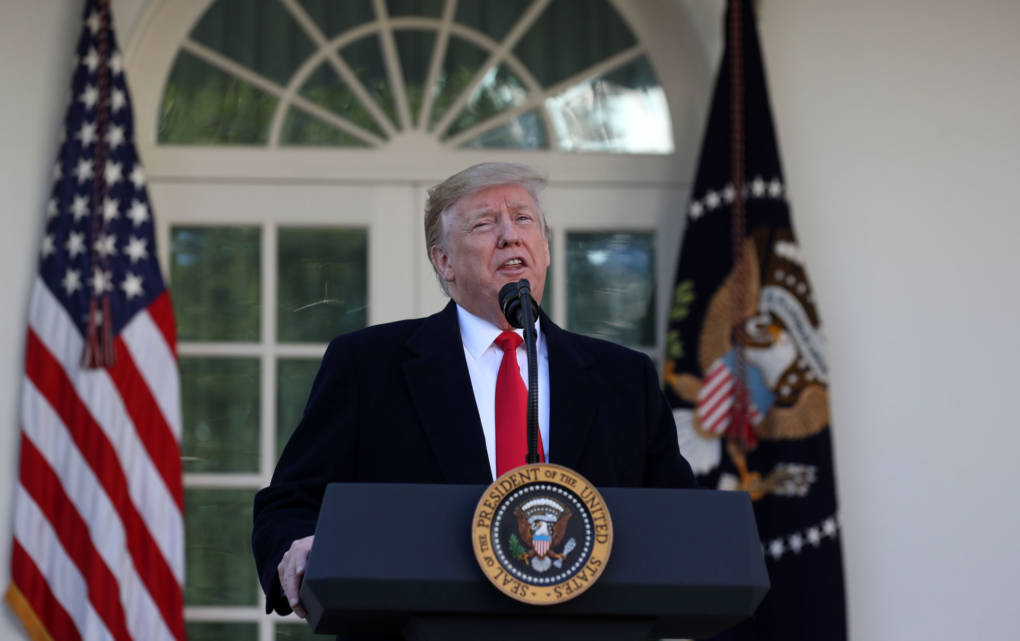
"caption": "President Donald Trump speaks about the government shutdown on January 25, 2019, from the Rose Garden of the White House.",
"description": "President Donald Trump speaks about the government shutdown on January 25, 2019, from the Rose Garden of the White House.",
"title": "Trump",
"credit": "ALEX EDELMAN/AFP/Getty Images",
"status": "inherit",
"isLoading": false,
"fetchFailed": false
},
"news_11720849": {
"type": "attachments",
"id": "news_11720849",
"meta": {
"index": "attachments_1716263798",
"site": "news",
"id": "11720849",
"found": true
},
"parent": 11720822,
"imgSizes": {
"twentyfourteen-full-width": {
"file": "https://ww2.kqed.org/app/uploads/sites/10/2019/01/scientists_012419_final-1038x576.jpg",
"width": 1038,
"mimeType": "image/jpeg",
"height": 576
},
"thumbnail": {
"file": "https://ww2.kqed.org/app/uploads/sites/10/2019/01/scientists_012419_final-160x123.jpg",
"width": 160,
"mimeType": "image/jpeg",
"height": 123
},
"post-thumbnail": {
"file": "https://ww2.kqed.org/app/uploads/sites/10/2019/01/scientists_012419_final-672x372.jpg",
"width": 672,
"mimeType": "image/jpeg",
"height": 372
},
"kqedFullSize": {
"file": "https://ww2.kqed.org/app/uploads/sites/10/2019/01/scientists_012419_final.jpg",
"width": 1921,
"height": 1476
},
"large": {
"file": "https://ww2.kqed.org/app/uploads/sites/10/2019/01/scientists_012419_final-1020x784.jpg",
"width": 1020,
"mimeType": "image/jpeg",
"height": 784
},
"complete_open_graph": {
"file": "https://ww2.kqed.org/app/uploads/sites/10/2019/01/scientists_012419_final-1200x922.jpg",
"width": 1200,
"mimeType": "image/jpeg",
"height": 922
},
"guest-author-50": {
"file": "https://ww2.kqed.org/app/uploads/sites/10/2019/01/scientists_012419_final-50x50.jpg",
"width": 50,
"mimeType": "image/jpeg",
"height": 50
},
"guest-author-96": {
"file": "https://ww2.kqed.org/app/uploads/sites/10/2019/01/scientists_012419_final-96x96.jpg",
"width": 96,
"mimeType": "image/jpeg",
"height": 96
},
"medium": {
"file": "https://ww2.kqed.org/app/uploads/sites/10/2019/01/scientists_012419_final-800x615.jpg",
"width": 800,
"mimeType": "image/jpeg",
"height": 615
},
"guest-author-64": {
"file": "https://ww2.kqed.org/app/uploads/sites/10/2019/01/scientists_012419_final-64x64.jpg",
"width": 64,
"mimeType": "image/jpeg",
"height": 64
},
"guest-author-32": {
"file": "https://ww2.kqed.org/app/uploads/sites/10/2019/01/scientists_012419_final-32x32.jpg",
"width": 32,
"mimeType": "image/jpeg",
"height": 32
},
"full-width": {
"file": "https://ww2.kqed.org/app/uploads/sites/10/2019/01/scientists_012419_final-1920x1475.jpg",
"width": 1920,
"mimeType": "image/jpeg",
"height": 1475
},
"detail": {
"file": "https://ww2.kqed.org/app/uploads/sites/10/2019/01/scientists_012419_final-150x150.jpg",
"width": 150,
"mimeType": "image/jpeg",
"height": 150
},
"guest-author-128": {
"file": "https://ww2.kqed.org/app/uploads/sites/10/2019/01/scientists_012419_final-128x128.jpg",
"width": 128,
"mimeType": "image/jpeg",
"height": 128
}
},
"publishDate": 1548374878,
"modified": 1548374903,
"caption": null,
"description": null,
"title": "scientists_012419_final",
"credit": null,
"status": "inherit",
"isLoading": false,
"fetchFailed": false
}
},
"audioPlayerReducer": {
"postId": "stream_live",
"isPaused": true,
"isPlaying": false,
"pfsActive": false,
"pledgeModalIsOpen": true,
"playerDrawerIsOpen": false,
"liveAudioPlayStartedAt": 0,
"liveAudioPlayContext": ""
},
"authorsReducer": {
"byline_news_11723270": {
"type": "authors",
"id": "byline_news_11723270",
"meta": {
"override": true
},
"slug": "byline_news_11723270",
"name": "Matthew S. Schwartz",
"isLoading": false
},
"byline_news_11722489": {
"type": "authors",
"id": "byline_news_11722489",
"meta": {
"override": true
},
"slug": "byline_news_11722489",
"name": "Andrew Taylor and Alan Fram \u003cbr> Associated Press",
"isLoading": false
},
"byline_news_11722189": {
"type": "authors",
"id": "byline_news_11722189",
"meta": {
"override": true
},
"slug": "byline_news_11722189",
"name": "Elliot Spagat \u003cbr> Associated Press",
"isLoading": false
},
"byline_news_11721742": {
"type": "authors",
"id": "byline_news_11721742",
"meta": {
"override": true
},
"slug": "byline_news_11721742",
"name": "Jessica Taylor",
"isLoading": false
},
"byline_news_11721322": {
"type": "authors",
"id": "byline_news_11721322",
"meta": {
"override": true
},
"slug": "byline_news_11721322",
"name": "Philip Ewing",
"isLoading": false
},
"byline_news_11721026": {
"type": "authors",
"id": "byline_news_11721026",
"meta": {
"override": true
},
"slug": "byline_news_11721026",
"name": "Jessica Taylor",
"isLoading": false
},
"kqed": {
"type": "authors",
"id": "236",
"meta": {
"index": "authors_1716337520",
"id": "236",
"found": true
},
"name": "KQED News Staff",
"firstName": "KQED News Staff",
"lastName": null,
"slug": "kqed",
"email": "faq@kqed.org",
"display_author_email": false,
"staff_mastheads": [],
"title": null,
"bio": null,
"avatar": "https://secure.gravatar.com/avatar/ef0e801a68c4c54afa9180db14084167?s=600&d=blank&r=g",
"twitter": null,
"facebook": null,
"instagram": null,
"linkedin": null,
"sites": [
{
"site": "arts",
"roles": [
"contributor"
]
},
{
"site": "news",
"roles": [
"editor"
]
},
{
"site": "futureofyou",
"roles": [
"author"
]
}
],
"headData": {
"title": "KQED News Staff | KQED",
"description": null,
"ogImgSrc": "https://secure.gravatar.com/avatar/ef0e801a68c4c54afa9180db14084167?s=600&d=blank&r=g",
"twImgSrc": "https://secure.gravatar.com/avatar/ef0e801a68c4c54afa9180db14084167?s=600&d=blank&r=g"
},
"isLoading": false,
"link": "/author/kqed"
},
"scottshafer": {
"type": "authors",
"id": "255",
"meta": {
"index": "authors_1716337520",
"id": "255",
"found": true
},
"name": "Scott Shafer",
"firstName": "Scott",
"lastName": "Shafer",
"slug": "scottshafer",
"email": "sshafer@kqed.org",
"display_author_email": false,
"staff_mastheads": [
"news"
],
"title": "KQED Contributor",
"bio": "Scott Shafer is a senior editor with the KQED Politics and Government desk. He is co-host of Political Breakdown, the award-winning radio show and podcast with a personal take on the world of politics. Scott came to KQED in 1998 to host the statewide\u003cem> California Report\u003c/em>. Prior to that he had extended stints in politics and government\u003cem>.\u003c/em> He uses that inside experience at KQED in his, reporting, hosting and analysis for the politics desk. Scott collaborated \u003cem>Political Breakdown a\u003c/em>nd on \u003cem>The Political Mind of Jerry Brown, \u003c/em>an eight-part series about the life and extraordinary political career of the former governor. For fun, he plays water polo with the San Francisco Tsunami.",
"avatar": "https://secure.gravatar.com/avatar/a62ebae45b79d7aed1a39a0e3bf68104?s=600&d=blank&r=g",
"twitter": "scottshafer",
"bluesky": null,
"facebook": null,
"instagram": null,
"linkedin": null,
"sites": [
{
"site": "news",
"roles": [
"editor"
]
},
{
"site": "stateofhealth",
"roles": [
"author"
]
},
{
"site": "science",
"roles": [
"author"
]
},
{
"site": "forum",
"roles": [
"subscriber"
]
},
{
"site": "liveblog",
"roles": [
"author"
]
}
],
"headData": {
"title": "Scott Shafer | KQED",
"description": "KQED Contributor",
"ogImgSrc": "https://secure.gravatar.com/avatar/a62ebae45b79d7aed1a39a0e3bf68104?s=600&d=blank&r=g",
"twImgSrc": "https://secure.gravatar.com/avatar/a62ebae45b79d7aed1a39a0e3bf68104?s=600&d=blank&r=g"
},
"isLoading": false,
"link": "/author/scottshafer"
},
"markfiore": {
"type": "authors",
"id": "3236",
"meta": {
"index": "authors_1716337520",
"id": "3236",
"found": true
},
"name": "Mark Fiore",
"firstName": "Mark",
"lastName": "Fiore",
"slug": "markfiore",
"email": "mark@markfiore.com",
"display_author_email": false,
"staff_mastheads": [
"news"
],
"title": "KQED News Cartoonist",
"bio": "\u003ca href=\"http://www.MarkFiore.com\">MarkFiore.com\u003c/a> | \u003ca href=\"https://twitter.com/markfiore\">Follow on Twitter\u003c/a> | \u003ca href=\"https://www.facebook.com/pages/Mark-Fiore-Animated-Political-Cartoons/94451707396?ref=bookmarks\">Facebook\u003c/a> | \u003ca href=\"mailto:mark@markfiore.com\">email\u003c/a>\r\n\r\nPulitzer Prize-winner, Mark Fiore, who the Wall Street Journal has called “the undisputed guru of the form,” creates animated political cartoons in San Francisco, where his work has been featured regularly on the San Francisco Chronicle’s web site, SFGate.com. His work has appeared on Newsweek.com, Slate.com, CBSNews.com, MotherJones.com, DailyKos.com and NPR’s web site. Fiore’s political animation has appeared on CNN, Frontline, Bill Moyers Journal, Salon.com and cable and broadcast outlets across the globe.\r\n\r\nBeginning his professional life by drawing traditional political cartoons for newspapers, Fiore’s work appeared in publications ranging from the Washington Post to the Los Angeles Times. In the late 1990s, he began to experiment with animating political cartoons and, after a short stint at the San Jose Mercury News as their staff cartoonist, Fiore devoted all his energies to animation.\r\nGrowing up in California, Fiore also spent a good portion of his life in the backwoods of Idaho. It was this combination that shaped him politically. Mark majored in political science at Colorado College, where, in a perfect send-off for a cartoonist, he received his diploma in 1991 as commencement speaker Dick Cheney smiled approvingly.\r\nMark Fiore was awarded the Pulitzer Prize for political cartooning in 2010, a Robert F. Kennedy Journalism Award in 2004 and has twice received an Online Journalism Award for commentary from the Online News Association (2002, 2008). Fiore has received two awards for his work in new media from the National Cartoonists Society (2001, 2002), and in 2006 received The James Madison Freedom of Information Award from The Society of Professional Journalists.",
"avatar": "https://secure.gravatar.com/avatar/fc4e2a612b15b67bad0c6f0e1db4ca9b?s=600&d=blank&r=g",
"twitter": "MarkFiore",
"facebook": null,
"instagram": "https://www.instagram.com/markfiore/?hl=en",
"linkedin": null,
"sites": [
{
"site": "arts",
"roles": [
"contributor"
]
},
{
"site": "news",
"roles": [
"editor"
]
},
{
"site": "futureofyou",
"roles": [
"editor"
]
},
{
"site": "science",
"roles": [
"editor"
]
}
],
"headData": {
"title": "Mark Fiore | KQED",
"description": "KQED News Cartoonist",
"ogImgSrc": "https://secure.gravatar.com/avatar/fc4e2a612b15b67bad0c6f0e1db4ca9b?s=600&d=blank&r=g",
"twImgSrc": "https://secure.gravatar.com/avatar/fc4e2a612b15b67bad0c6f0e1db4ca9b?s=600&d=blank&r=g"
},
"isLoading": false,
"link": "/author/markfiore"
},
"korr": {
"type": "authors",
"id": "11200",
"meta": {
"index": "authors_1716337520",
"id": "11200",
"found": true
},
"name": "Katie Orr",
"firstName": "Katie",
"lastName": "Orr",
"slug": "korr",
"email": "korr@kqed.org",
"display_author_email": false,
"staff_mastheads": [],
"title": "KQED Contributor",
"bio": "Katie Orr was a Sacramento-based reporter for KQED's Politics and Government Desk, covering the state Capitol and a variety of issues including women in politics, voting and elections and legislation. Prior to joining KQED in 2016, Katie was state government reporter for Capital Public Radio in Sacramento. She's also worked for KPBS in San Diego, where she covered City Hall.\r\n\r\nKatie received her masters degree in political science from San Diego State University and holds a Bachelors degree in broadcast journalism from Arizona State University.\r\n\r\nIn 2015 Katie won a national Clarion Award for a series of stories she did on women in California politics. She's been honored by the Society for Professional Journalists and, in 2013, was named by \u003cem>The Washington Post\u003c/em> as one of the country's top state Capitol reporters. She's also reported for the award-winning documentary series \u003cem>The View from Here \u003c/em>and was part of the team that won national PRNDI and Gabriel Awards in 2015. She lives in Sacramento with her husband. Twitter: @1KatieOrr",
"avatar": "https://secure.gravatar.com/avatar/41a40b25845adc78f50808670860449e?s=600&d=blank&r=g",
"twitter": "1katieorr",
"facebook": null,
"instagram": null,
"linkedin": null,
"sites": [
{
"site": "news",
"roles": [
"subscriber"
]
},
{
"site": "stateofhealth",
"roles": [
"author"
]
},
{
"site": "forum",
"roles": [
"author"
]
}
],
"headData": {
"title": "Katie Orr | KQED",
"description": "KQED Contributor",
"ogImgSrc": "https://secure.gravatar.com/avatar/41a40b25845adc78f50808670860449e?s=600&d=blank&r=g",
"twImgSrc": "https://secure.gravatar.com/avatar/41a40b25845adc78f50808670860449e?s=600&d=blank&r=g"
},
"isLoading": false,
"link": "/author/korr"
},
"ktandy": {
"type": "authors",
"id": "11545",
"meta": {
"index": "authors_1716337520",
"id": "11545",
"found": true
},
"name": "Katie Tandy",
"firstName": "Katie",
"lastName": "Tandy",
"slug": "ktandy",
"email": "ktandy@kqed.org",
"display_author_email": false,
"staff_mastheads": [],
"title": "KQED Contributor",
"bio": "Katie Tandy is the co-founding editor of\u003ca href=\"http://www.theestablishment.co\"> The Establishment,\u003c/a> an online news+culture publication which champions the voices and stories of those who have been marginalized by mainstream media.\r\nShe is a former on-call interactive producer for KQED.",
"avatar": "https://secure.gravatar.com/avatar/1f877a62bab50d75c8bbef40e4ebe7f6?s=600&d=blank&r=g",
"twitter": null,
"facebook": null,
"instagram": null,
"linkedin": null,
"sites": [
{
"site": "news",
"roles": [
"subscriber"
]
}
],
"headData": {
"title": "Katie Tandy | KQED",
"description": "KQED Contributor",
"ogImgSrc": "https://secure.gravatar.com/avatar/1f877a62bab50d75c8bbef40e4ebe7f6?s=600&d=blank&r=g",
"twImgSrc": "https://secure.gravatar.com/avatar/1f877a62bab50d75c8bbef40e4ebe7f6?s=600&d=blank&r=g"
},
"isLoading": false,
"link": "/author/ktandy"
}
},
"pagesReducer": {
"news_tag_donald-trump": {
"type": "terms",
"id": "news_1323",
"meta": {
"index": "terms_1716263798",
"site": "news",
"id": "1323",
"score": 8.557341
},
"featImg": null,
"name": "Donald Trump",
"description": null,
"taxonomy": "tag",
"headData": {
"twImgId": null,
"twTitle": null,
"ogTitle": null,
"ogImgId": null,
"twDescription": null,
"description": null,
"title": "Donald Trump Archives | KQED News",
"ogDescription": null
},
"ttid": 1335,
"slug": "donald-trump",
"isLoading": false,
"title": "Donald Trump",
"pageMeta": {
"site": "news",
"WpPageTemplate": "page-topic-editorial",
"currentPage": 115
},
"blocks": [
{
"blockName": "kqed/post-list",
"attrs": {
"layout": "cardArticle2",
"query": "posts/news?tag=donald-trump",
"seeMore": false,
"paginated": true,
"page": 115
}
},
{
"blockName": "kqed/ad"
}
]
}
},
"pfsSessionReducer": {},
"postsReducer": {
"stream_live": {
"type": "live",
"id": "stream_live",
"audioUrl": "https://streams.kqed.org/kqedradio",
"title": "Live Stream",
"excerpt": "Live Stream information currently unavailable.",
"link": "/radio",
"featImg": "",
"label": {
"name": "KQED Live",
"link": "/"
}
},
"stream_kqedNewscast": {
"type": "posts",
"id": "stream_kqedNewscast",
"audioUrl": "https://www.kqed.org/.stream/anon/radio/RDnews/newscast.mp3?_=1",
"title": "KQED Newscast",
"featImg": "",
"label": {
"name": "88.5 FM",
"link": "/"
}
},
"news_11723270": {
"type": "posts",
"id": "news_11723270",
"meta": {
"index": "posts_1716263798",
"site": "news",
"id": "11723270",
"score": null,
"sort": [
1549311891000
]
},
"parent": 0,
"labelTerm": {},
"blocks": [],
"publishDate": 1549311891,
"format": "standard",
"disqusTitle": "Pentagon Deploying 3,750 Troops to Southern Border",
"title": "Pentagon Deploying 3,750 Troops to Southern Border",
"headTitle": "The California Report | KQED News",
"content": "\u003cp>An additional 3,750 troops will be sent to the Southern border to help install wire barriers and monitor crossings, officials said. The new deployment will bring the number of active-duty troops there to around 6,000.\u003c/p>\n\u003cp>In a tweet on Sunday, President Trump said that \"STRONG Border Security\" is necessary in the face of \"Caravans marching through Mexico and toward our Country.\" \u003c/p>\n\u003cp>The announcement of new troops on Sunday comes just days before Trump is expected to discuss border security measures during Tuesday's State of the Union address.\u003c/p>\n\u003cp>https://twitter.com/realDonaldTrump/status/1092181733825490945\u003c/p>\n\u003cp>Acting Defense Secretary Patrick Shanahan \u003ca href=\"https://www.usatoday.com/story/news/politics/2019/01/29/increase-troops-pentagon-border-security-military-national-guard-house-armed-services-committee/2702965002/\">said Thursday \u003c/a>that the troops would be deployed to the border over the next month, \u003ca href=\"https://www.npr.org/2019/01/31/690559449/pentagon-to-send-thousands-more-active-duty-troops-to-u-s-mexico-border\">NPR's Tom Bowman reported\u003c/a>. They'll join the 2,300 active-duty troops already there, bringing the total to about the same number as were deployed last fall. An additional 2,100 National Guard troops are also stationed there.\u003c/p>\n\u003cp>[ad fullwidth]\u003c/p>\n\u003cp>Some in Congress have criticized the use of active-duty troops to perform the same tasks assigned to the National Guard. Both active-duty and National Guard troops are assisting U.S. Customs and Border Protection with logistics and other support. But apprehending migrants is not part of their assignment. The U.S. military is prevented by law from carrying out law enforcement duties within the United States.\u003c/p>\n\u003cp>Last week, around 2,400 migrants left a city shelter in Mexico City on their way to the U.S.-Mexico border, \u003ca href=\"https://www.reuters.com/article/us-usa-immigration-caravan/latest-group-of-central-american-migrants-proceed-with-northern-trek-idUSKCN1PP2SI\">Reuters reported\u003c/a>.\u003c/p>\n\u003caside class=\"alignright\">\n\u003ch3>\u003ca href=\"https://www.kqed.org/news/11722009/a-g-xavier-becerra-tapped-to-give-spanish-language-response-to-trump\">AG Becerra to Give Spanish-Language Response to Trump's State of the Union\u003c/a>\u003c/h3>\n\u003cfigure>\u003ca href=\"https://www.kqed.org/news/11722009/a-g-xavier-becerra-tapped-to-give-spanish-language-response-to-trump\">\u003cimg src=\"https://ww2.kqed.org/wp-content/uploads/sites/10/2019/01/XavierBecerra-1020x666.jpg\" alt=\"\">\u003c/a>\u003c/figure>\n\u003c/aside>\n\u003cp>When Defense Department officials testified before the House Armed Services Committee last week, they didn't mention the upcoming troop deployment. Rep. Adam Smith, D-Wash., who chairs the committee, released a statement criticizing what he called a lack of transparency. \u003c/p>\n\u003cp>\"I am deeply troubled that the witnesses did not disclose the upcoming increase in guard, reserve, and active duty personnel, even though we asked them multiple times during a two-and-a-half-hour hearing what would happen next on the border,\" Smith wrote, echoing concerns in a \u003ca href=\"https://armedservices.house.gov/_cache/files/d/c/dcadc8c8-7c0f-4e82-b9db-32eee7b9ce4b/36923FB2B4ADA7CA2BCECE25E00A1BCD.chairman-smith-letter-to-shanahan-transparency.pdf\">letter \u003c/a>he wrote to Shanahan. That omission raises questions about whether the troop increase \"is so unjustified that they cannot defend an increase in public,\" he wrote.\u003c/p>\n\u003cp>\u003c/p>\n\u003cp>Trump suggested Friday that he would announce action on a border wall during the State of the Union address, which will take place Tuesday. \"I don't want to say it, but you'll hear the State of the Union, and then you'll see what happens right after the State of the Union,\" \u003ca href=\"https://www.cnn.com/2019/02/01/politics/state-of-the-union-border-wall-donald-trump/index.html\">he told reporters.\u003c/a> \u003c/p>\n\u003cdiv class=\"fullattribution\">Copyright 2019 NPR. To see more, visit https://www.npr.org.\u003cimg src=\"https://www.google-analytics.com/__utm.gif?utmac=UA-5828686-4&utmdt=Pentagon+Deploying+3%2C750+Troops+To+Southern+Border&utme=8(APIKey)9(MDAxOTAwOTE4MDEyMTkxMDAzNjczZDljZA004)\">\u003c/div>\n\n",
"disqusIdentifier": "11723270 https://ww2.kqed.org/news/?p=11723270",
"disqusUrl": "https://ww2.kqed.org/news/2019/02/04/pentagon-deploying-3750-troops-to-southern-border/",
"stats": {
"hasVideo": false,
"hasChartOrMap": false,
"hasAudio": false,
"hasPolis": false,
"wordCount": 449,
"hasGoogleForm": false,
"hasGallery": false,
"hasHearkenModule": false,
"iframeSrcs": [],
"paragraphCount": 11
},
"modified": 1549311891,
"excerpt": "U.S. service members will install wire barriers and help monitor the border. However, some in Congress have questioned whether it's a good use of active-duty troops.",
"headData": {
"twImgId": "",
"twTitle": "",
"ogTitle": "",
"ogImgId": "",
"twDescription": "",
"description": "U.S. service members will install wire barriers and help monitor the border. However, some in Congress have questioned whether it's a good use of active-duty troops.",
"title": "Pentagon Deploying 3,750 Troops to Southern Border | KQED",
"ogDescription": "",
"schema": {
"@context": "https://schema.org",
"@type": "NewsArticle",
"headline": "Pentagon Deploying 3,750 Troops to Southern Border",
"datePublished": "2019-02-04T12:24:51-08:00",
"dateModified": "2019-02-04T12:24:51-08:00",
"image": "https://cdn.kqed.org/wp-content/uploads/2020/02/KQED-OG-Image@1x.png",
"isAccessibleForFree": "True",
"publisher": {
"@type": "NewsMediaOrganization",
"@id": "https://www.kqed.org/#organization",
"name": "KQED",
"logo": "https://cdn.kqed.org/wp-content/uploads/2020/02/KQED-OG-Image@1x.png",
"url": "https://www.kqed.org",
"sameAs": [
"https://www.facebook.com/KQED",
"https://twitter.com/KQED",
"https://www.instagram.com/kqed/",
"https://www.tiktok.com/@kqedofficial",
"https://www.linkedin.com/company/kqed",
"https://www.youtube.com/channel/UCeC0IOo7i1P_61zVUWbJ4nw"
]
}
}
},
"guestAuthors": [],
"slug": "pentagon-deploying-3750-troops-to-southern-border",
"status": "publish",
"sourceUrl": "https://www.npr.org/",
"nprApiLink": "http://api.npr.org/query?id=691222383&apiKey=MDAxOTAwOTE4MDEyMTkxMDAzNjczZDljZA004",
"nprByline": "Matthew S. Schwartz",
"nprStoryDate": "Mon, 04 Feb 2019 07:04:27 -0500",
"nprLastModifiedDate": "Mon, 04 Feb 2019 13:58:58 -0500",
"nprHtmlLink": "https://www.npr.org/2019/02/04/691222383/pentagon-deploying-3-750-troops-to-southern-border?ft=nprml&f=691222383",
"nprImageAgency": "AP",
"nprImageCredit": "Eric Gay",
"source": "NPR",
"nprStoryId": "691222383",
"nprRetrievedStory": "1",
"nprPubDate": "Mon, 04 Feb 2019 13:58:00 -0500",
"path": "/news/11723270/pentagon-deploying-3750-troops-to-southern-border",
"audioTrackLength": null,
"parsedContent": [
{
"type": "contentString",
"content": "\u003cdiv class=\"post-body\">\u003cp>\u003cp>An additional 3,750 troops will be sent to the Southern border to help install wire barriers and monitor crossings, officials said. The new deployment will bring the number of active-duty troops there to around 6,000.\u003c/p>\n\u003cp>In a tweet on Sunday, President Trump said that \"STRONG Border Security\" is necessary in the face of \"Caravans marching through Mexico and toward our Country.\" \u003c/p>\n\u003cp>The announcement of new troops on Sunday comes just days before Trump is expected to discuss border security measures during Tuesday's State of the Union address.\u003c/p>\u003c/p>\u003c/div>",
"attributes": {
"named": {},
"numeric": []
}
},
{
"type": "component",
"content": "",
"name": "singleTwitterStatus",
"attributes": {
"named": {
"id": "1092181733825490945"
},
"numeric": []
}
},
{
"type": "contentString",
"content": "\u003cdiv class=\"post-body\">\u003cp>\n\u003cp>Acting Defense Secretary Patrick Shanahan \u003ca href=\"https://www.usatoday.com/story/news/politics/2019/01/29/increase-troops-pentagon-border-security-military-national-guard-house-armed-services-committee/2702965002/\">said Thursday \u003c/a>that the troops would be deployed to the border over the next month, \u003ca href=\"https://www.npr.org/2019/01/31/690559449/pentagon-to-send-thousands-more-active-duty-troops-to-u-s-mexico-border\">NPR's Tom Bowman reported\u003c/a>. They'll join the 2,300 active-duty troops already there, bringing the total to about the same number as were deployed last fall. An additional 2,100 National Guard troops are also stationed there.\u003c/p>\n\u003cp>\u003c/p>\u003c/div>",
"attributes": {
"named": {},
"numeric": []
}
},
{
"type": "component",
"content": "",
"name": "ad",
"attributes": {
"named": {
"label": "fullwidth"
},
"numeric": [
"fullwidth"
]
}
},
{
"type": "contentString",
"content": "\u003cdiv class=\"post-body\">\u003cp>\u003c/p>\n\u003cp>Some in Congress have criticized the use of active-duty troops to perform the same tasks assigned to the National Guard. Both active-duty and National Guard troops are assisting U.S. Customs and Border Protection with logistics and other support. But apprehending migrants is not part of their assignment. The U.S. military is prevented by law from carrying out law enforcement duties within the United States.\u003c/p>\n\u003cp>Last week, around 2,400 migrants left a city shelter in Mexico City on their way to the U.S.-Mexico border, \u003ca href=\"https://www.reuters.com/article/us-usa-immigration-caravan/latest-group-of-central-american-migrants-proceed-with-northern-trek-idUSKCN1PP2SI\">Reuters reported\u003c/a>.\u003c/p>\n\u003caside class=\"alignright\">\n\u003ch3>\u003ca href=\"https://www.kqed.org/news/11722009/a-g-xavier-becerra-tapped-to-give-spanish-language-response-to-trump\">AG Becerra to Give Spanish-Language Response to Trump's State of the Union\u003c/a>\u003c/h3>\n\u003cfigure>\u003ca href=\"https://www.kqed.org/news/11722009/a-g-xavier-becerra-tapped-to-give-spanish-language-response-to-trump\">\u003cimg src=\"https://ww2.kqed.org/wp-content/uploads/sites/10/2019/01/XavierBecerra-1020x666.jpg\" alt=\"\">\u003c/a>\u003c/figure>\n\u003c/aside>\n\u003cp>When Defense Department officials testified before the House Armed Services Committee last week, they didn't mention the upcoming troop deployment. Rep. Adam Smith, D-Wash., who chairs the committee, released a statement criticizing what he called a lack of transparency. \u003c/p>\n\u003cp>\"I am deeply troubled that the witnesses did not disclose the upcoming increase in guard, reserve, and active duty personnel, even though we asked them multiple times during a two-and-a-half-hour hearing what would happen next on the border,\" Smith wrote, echoing concerns in a \u003ca href=\"https://armedservices.house.gov/_cache/files/d/c/dcadc8c8-7c0f-4e82-b9db-32eee7b9ce4b/36923FB2B4ADA7CA2BCECE25E00A1BCD.chairman-smith-letter-to-shanahan-transparency.pdf\">letter \u003c/a>he wrote to Shanahan. That omission raises questions about whether the troop increase \"is so unjustified that they cannot defend an increase in public,\" he wrote.\u003c/p>\n\u003cp>\u003c/p>\n\u003cp>Trump suggested Friday that he would announce action on a border wall during the State of the Union address, which will take place Tuesday. \"I don't want to say it, but you'll hear the State of the Union, and then you'll see what happens right after the State of the Union,\" \u003ca href=\"https://www.cnn.com/2019/02/01/politics/state-of-the-union-border-wall-donald-trump/index.html\">he told reporters.\u003c/a> \u003c/p>\n\u003cdiv class=\"fullattribution\">Copyright 2019 NPR. To see more, visit https://www.npr.org.\u003cimg src=\"https://www.google-analytics.com/__utm.gif?utmac=UA-5828686-4&utmdt=Pentagon+Deploying+3%2C750+Troops+To+Southern+Border&utme=8(APIKey)9(MDAxOTAwOTE4MDEyMTkxMDAzNjczZDljZA004)\">\u003c/div>\n\n\u003c/div>\u003c/p>",
"attributes": {
"named": {},
"numeric": []
}
}
],
"link": "/news/11723270/pentagon-deploying-3750-troops-to-southern-border",
"authors": [
"byline_news_11723270"
],
"programs": [
"news_72"
],
"categories": [
"news_1169",
"news_6188",
"news_8",
"news_13"
],
"tags": [
"news_1323",
"news_23138",
"news_21038"
],
"affiliates": [
"news_253"
],
"featImg": "news_11723271",
"label": "source_news_11723270"
},
"news_11722713": {
"type": "posts",
"id": "news_11722713",
"meta": {
"index": "posts_1716263798",
"site": "news",
"id": "11722713",
"score": null,
"sort": [
1549070990000
]
},
"guestAuthors": [],
"slug": "pelosi-i-wont-let-republicans-shut-down-government-again",
"title": "Pelosi: I Won't Let Republicans Shut Down Government Again",
"publishDate": 1549070990,
"format": "image",
"headTitle": "Pelosi: I Won’t Let Republicans Shut Down Government Again | KQED",
"labelTerm": {
"term": 72,
"site": "news"
},
"content": "\u003cp>House Speaker Nancy Pelosi told \u003ca href=\"https://www.kqed.org/forum\" rel=\"noopener\" target=\"_blank\">KQED’s Forum\u003c/a> on Friday there were “no winners” from the recent 35-day partial shutdown of the government, and vowed not to let Republicans close it again.\u003c/p>\n\u003cp>A fight over funding for President Trump’s border wall — a pledge he made to supporters as a presidential candidate — led to the longest shutdown in U.S. history, with Pelosi saying no deals would be made until the government reopened. The shutdown ended last Friday with Trump signing a bill that provides funding through Feb. 15, raising the specter that another closure could be imminent if both sides don’t find a path to a deal.\u003c/p>\n\u003cp>“When it comes to a shutdown, there are no winners,” Pelosi said.\u003c/p>\n\u003cp>“The fact that 800,000 families had to go without their paychecks is just unconscionable. … We have been very clear all along that Democrats support border security, and there are better ways to do it than devaluing who we are as a country. We don’t have to hold hostage 800,000 families.”\u003c/p>\n\u003caside class=\"alignright\">\n\u003ch3>\u003ca href=\"https://www.kqed.org/news/11722489/pelosi-and-trump-harden-their-positions-on-border-wall\">Pelosi and Trump Harden Their Positions on Border Wall\u003c/a>\u003c/h3>\n\u003cfigure>\u003ca href=\"https://www.kqed.org/news/11722489/pelosi-and-trump-harden-their-positions-on-border-wall\">\u003cimg decoding=\"async\" src=\"https://ww2.kqed.org/news/wp-content/uploads/sites/10/2019/01/PelosiConf-1020x684.jpg\" alt=\"\">\u003c/a>\u003c/figure>\n\u003c/aside>\n\u003cp>Capitol Hill negotiations intended to reach a compromise began on Wednesday, but House Democrats\u003ca href=\"https://www.washingtonpost.com/politics/trump-digs-in-on-border-wall-funds-as-congressional-negotiators-prepare-to-convene/2019/01/30/56139e24-2488-11e9-ad53-824486280311_story.html?noredirect=on&utm_term=.11f4ac9cdbe7\" target=\"_blank\" rel=\"noopener\"> emerged with a proposal\u003c/a> that openly defied Trump’s insistence that it include a physical barrier.\u003c/p>\n\u003cp>Trump reiterated his wall demands on Twitter, and appeared to sour on the congressional talks. He told reporters in the Oval Office that Pelosi was “just playing games” and repeated his threat to declare a national emergency and transfer billions of dollars in previously allocated funds to build the wall, \u003ca href=\"https://www.kqed.org/news/11722489/pelosi-and-trump-harden-their-positions-on-border-wall\">NPR reported\u003c/a>.\u003c/p>\n\u003cp>Pelosi said she resented Trump’s comments that lawmakers would be wasting their time if they don’t come up with wall money.\u003c/p>\n\u003cp>“It sounds like somebody who thinks his voice is the only one that counts, and we might as well all stay home and just see what his will is,” she said.\u003c/p>\n\u003cp>[ad fullwidth]\u003c/p>\n\u003cp>Despite the \u003ca href=\"https://www.kqed.org/news/11722489/pelosi-and-trump-harden-their-positions-on-border-wall\" rel=\"noopener\" target=\"_blank\">hardening of their positions\u003c/a> about a border wall, Pelosi was optimistic about the negotiations. She said Congress “can come to a compromise.”\u003c/p>\n\u003cp>“I look to them for guidance. They know the numbers,” she said on \u003cem>Forum\u003c/em>. “They know the values, they know the options that are there. And I think that they can prevail without any outside interference.”\u003c/p>\n\u003cp>Pelosi said she agreed with Trump on the need to stop drugs, guns and other contraband from coming into the U.S. but believes there are more cost-effective ways to do so, “honoring the value of our country” as well.\u003c/p>\n\u003cp>“We are not going to allow them to shut down government again,” she said of Republicans. “Public opinion is our biggest ally in this.”\u003c/p>\n\u003cfigure id=\"attachment_11722777\" class=\"wp-caption alignnone\" style=\"max-width: 800px\">\u003cimg loading=\"lazy\" decoding=\"async\" class=\"size-medium wp-image-11722777\" src=\"https://ww2.kqed.org/news/wp-content/uploads/sites/10/2019/02/Image-from-iOS-e1549059006323-800x655.jpg\" alt=\"\" width=\"800\" height=\"655\" srcset=\"https://cdn.kqed.org/wp-content/uploads/sites/10/2019/02/Image-from-iOS-e1549059006323-800x655.jpg 800w, https://cdn.kqed.org/wp-content/uploads/sites/10/2019/02/Image-from-iOS-e1549059006323-160x131.jpg 160w, https://cdn.kqed.org/wp-content/uploads/sites/10/2019/02/Image-from-iOS-e1549059006323-1020x836.jpg 1020w, https://cdn.kqed.org/wp-content/uploads/sites/10/2019/02/Image-from-iOS-e1549059006323-1200x983.jpg 1200w, https://cdn.kqed.org/wp-content/uploads/sites/10/2019/02/Image-from-iOS-e1549059006323.jpg 1593w\" sizes=\"auto, (max-width: 800px) 100vw, 800px\">\u003cfigcaption class=\"wp-caption-text\">House Speaker Nancy Pelosi joined KQED Forum on Friday, Feb. 1, 2019, to field questions from host Mina Kim and listeners. \u003ccite>(Zoe Schiffer/KQED)\u003c/cite>\u003c/figcaption>\u003c/figure>\n\u003cp>Pelosi has seen her political fortunes rise due to her steadfast approach in dealing with Trump, though late last year she faced a bruising leadership fight, resulting in her agreeing to serve \u003ca href=\"https://www.nytimes.com/2018/12/12/us/politics/nancy-pelosi-democrat-leadership.html\">only four years as speaker\u003c/a>.\u003c/p>\n\u003cp>Pelosi demurred when asked if this was her last term — “we all leave sometime” — and gave a hopeful nod to the Democratic Party’s future.\u003c/p>\n\u003cp>\u003cb>\u003c/b>“If anybody just looks to our leadership ranks, they will see beautiful diversity, a new generation. There’s no secret sauce here. It’s about building consensus within your party,” she said. “Our unity is our power.”\u003c/p>\n\u003cp>\u003c/p>\n",
"blocks": [],
"excerpt": "Nancy Pelosi has seen her political fortunes rise due to her steadfast approach in dealing with President Trump. But 'When it comes to the shutdown, there are no winners,' she told KQED on Friday.",
"status": "publish",
"parent": 0,
"modified": 1738180156,
"stats": {
"hasAudio": false,
"hasVideo": false,
"hasChartOrMap": false,
"iframeSrcs": [],
"hasGoogleForm": false,
"hasGallery": false,
"hasHearkenModule": false,
"hasPolis": false,
"paragraphCount": 17,
"wordCount": 617
},
"headData": {
"title": "Pelosi: I Won't Let Republicans Shut Down Government Again | KQED",
"description": "Nancy Pelosi has seen her political fortunes rise due to her steadfast approach in dealing with President Trump. But 'When it comes to the shutdown, there are no winners,' she told KQED on Friday.",
"ogTitle": "",
"ogDescription": "",
"ogImgId": "",
"twTitle": "",
"twDescription": "",
"twImgId": "",
"schema": {
"@context": "https://schema.org",
"@type": "NewsArticle",
"headline": "Pelosi: I Won't Let Republicans Shut Down Government Again",
"datePublished": "2019-02-01T17:29:50-08:00",
"dateModified": "2025-01-29T11:49:16-08:00",
"image": "https://cdn.kqed.org/wp-content/uploads/2020/02/KQED-OG-Image@1x.png",
"isAccessibleForFree": "True",
"publisher": {
"@type": "NewsMediaOrganization",
"@id": "https://www.kqed.org/#organization",
"name": "KQED",
"logo": "https://cdn.kqed.org/wp-content/uploads/2020/02/KQED-OG-Image@1x.png",
"url": "https://www.kqed.org",
"sameAs": [
"https://www.facebook.com/KQED",
"https://twitter.com/KQED",
"https://www.instagram.com/kqed/",
"https://www.tiktok.com/@kqedofficial",
"https://www.linkedin.com/company/kqed",
"https://www.youtube.com/channel/UCeC0IOo7i1P_61zVUWbJ4nw"
]
}
}
},
"audioUrl": "https://www.kqed.org/.stream/anon/radio/forum/2019/02/Forum20190201ba.mp3",
"sticky": false,
"audioTrackLength": 1433,
"path": "/news/11722713/pelosi-i-wont-let-republicans-shut-down-government-again",
"audioDuration": 1450000,
"parsedContent": [
{
"type": "contentString",
"content": "\u003cdiv class=\"post-body\">\u003cp>\u003cp>House Speaker Nancy Pelosi told \u003ca href=\"https://www.kqed.org/forum\" rel=\"noopener\" target=\"_blank\">KQED’s Forum\u003c/a> on Friday there were “no winners” from the recent 35-day partial shutdown of the government, and vowed not to let Republicans close it again.\u003c/p>\n\u003cp>A fight over funding for President Trump’s border wall — a pledge he made to supporters as a presidential candidate — led to the longest shutdown in U.S. history, with Pelosi saying no deals would be made until the government reopened. The shutdown ended last Friday with Trump signing a bill that provides funding through Feb. 15, raising the specter that another closure could be imminent if both sides don’t find a path to a deal.\u003c/p>\n\u003cp>“When it comes to a shutdown, there are no winners,” Pelosi said.\u003c/p>\n\u003cp>“The fact that 800,000 families had to go without their paychecks is just unconscionable. … We have been very clear all along that Democrats support border security, and there are better ways to do it than devaluing who we are as a country. We don’t have to hold hostage 800,000 families.”\u003c/p>\n\u003caside class=\"alignright\">\n\u003ch3>\u003ca href=\"https://www.kqed.org/news/11722489/pelosi-and-trump-harden-their-positions-on-border-wall\">Pelosi and Trump Harden Their Positions on Border Wall\u003c/a>\u003c/h3>\n\u003cfigure>\u003ca href=\"https://www.kqed.org/news/11722489/pelosi-and-trump-harden-their-positions-on-border-wall\">\u003cimg decoding=\"async\" src=\"https://ww2.kqed.org/news/wp-content/uploads/sites/10/2019/01/PelosiConf-1020x684.jpg\" alt=\"\">\u003c/a>\u003c/figure>\n\u003c/aside>\n\u003cp>Capitol Hill negotiations intended to reach a compromise began on Wednesday, but House Democrats\u003ca href=\"https://www.washingtonpost.com/politics/trump-digs-in-on-border-wall-funds-as-congressional-negotiators-prepare-to-convene/2019/01/30/56139e24-2488-11e9-ad53-824486280311_story.html?noredirect=on&utm_term=.11f4ac9cdbe7\" target=\"_blank\" rel=\"noopener\"> emerged with a proposal\u003c/a> that openly defied Trump’s insistence that it include a physical barrier.\u003c/p>\n\u003cp>Trump reiterated his wall demands on Twitter, and appeared to sour on the congressional talks. He told reporters in the Oval Office that Pelosi was “just playing games” and repeated his threat to declare a national emergency and transfer billions of dollars in previously allocated funds to build the wall, \u003ca href=\"https://www.kqed.org/news/11722489/pelosi-and-trump-harden-their-positions-on-border-wall\">NPR reported\u003c/a>.\u003c/p>\n\u003cp>Pelosi said she resented Trump’s comments that lawmakers would be wasting their time if they don’t come up with wall money.\u003c/p>\n\u003cp>“It sounds like somebody who thinks his voice is the only one that counts, and we might as well all stay home and just see what his will is,” she said.\u003c/p>\n\u003cp>\u003c/p>\u003c/div>",
"attributes": {
"named": {},
"numeric": []
}
},
{
"type": "component",
"content": "",
"name": "ad",
"attributes": {
"named": {
"label": "fullwidth"
},
"numeric": [
"fullwidth"
]
}
},
{
"type": "contentString",
"content": "\u003cdiv class=\"post-body\">\u003cp>\u003c/p>\n\u003cp>Despite the \u003ca href=\"https://www.kqed.org/news/11722489/pelosi-and-trump-harden-their-positions-on-border-wall\" rel=\"noopener\" target=\"_blank\">hardening of their positions\u003c/a> about a border wall, Pelosi was optimistic about the negotiations. She said Congress “can come to a compromise.”\u003c/p>\n\u003cp>“I look to them for guidance. They know the numbers,” she said on \u003cem>Forum\u003c/em>. “They know the values, they know the options that are there. And I think that they can prevail without any outside interference.”\u003c/p>\n\u003cp>Pelosi said she agreed with Trump on the need to stop drugs, guns and other contraband from coming into the U.S. but believes there are more cost-effective ways to do so, “honoring the value of our country” as well.\u003c/p>\n\u003cp>“We are not going to allow them to shut down government again,” she said of Republicans. “Public opinion is our biggest ally in this.”\u003c/p>\n\u003cfigure id=\"attachment_11722777\" class=\"wp-caption alignnone\" style=\"max-width: 800px\">\u003cimg loading=\"lazy\" decoding=\"async\" class=\"size-medium wp-image-11722777\" src=\"https://ww2.kqed.org/news/wp-content/uploads/sites/10/2019/02/Image-from-iOS-e1549059006323-800x655.jpg\" alt=\"\" width=\"800\" height=\"655\" srcset=\"https://cdn.kqed.org/wp-content/uploads/sites/10/2019/02/Image-from-iOS-e1549059006323-800x655.jpg 800w, https://cdn.kqed.org/wp-content/uploads/sites/10/2019/02/Image-from-iOS-e1549059006323-160x131.jpg 160w, https://cdn.kqed.org/wp-content/uploads/sites/10/2019/02/Image-from-iOS-e1549059006323-1020x836.jpg 1020w, https://cdn.kqed.org/wp-content/uploads/sites/10/2019/02/Image-from-iOS-e1549059006323-1200x983.jpg 1200w, https://cdn.kqed.org/wp-content/uploads/sites/10/2019/02/Image-from-iOS-e1549059006323.jpg 1593w\" sizes=\"auto, (max-width: 800px) 100vw, 800px\">\u003cfigcaption class=\"wp-caption-text\">House Speaker Nancy Pelosi joined KQED Forum on Friday, Feb. 1, 2019, to field questions from host Mina Kim and listeners. \u003ccite>(Zoe Schiffer/KQED)\u003c/cite>\u003c/figcaption>\u003c/figure>\n\u003cp>Pelosi has seen her political fortunes rise due to her steadfast approach in dealing with Trump, though late last year she faced a bruising leadership fight, resulting in her agreeing to serve \u003ca href=\"https://www.nytimes.com/2018/12/12/us/politics/nancy-pelosi-democrat-leadership.html\">only four years as speaker\u003c/a>.\u003c/p>\n\u003cp>Pelosi demurred when asked if this was her last term — “we all leave sometime” — and gave a hopeful nod to the Democratic Party’s future.\u003c/p>\n\u003cp>\u003cb>\u003c/b>“If anybody just looks to our leadership ranks, they will see beautiful diversity, a new generation. There’s no secret sauce here. It’s about building consensus within your party,” she said. “Our unity is our power.”\u003c/p>\n\u003cp>\u003c/p>\n\u003c/div>\u003c/p>",
"attributes": {
"named": {},
"numeric": []
}
}
],
"link": "/news/11722713/pelosi-i-wont-let-republicans-shut-down-government-again",
"authors": [
"11545"
],
"programs": [
"news_72"
],
"categories": [
"news_1758",
"news_1169",
"news_8",
"news_33520",
"news_13"
],
"tags": [
"news_20594",
"news_20446",
"news_1323",
"news_19542",
"news_24796",
"news_177"
],
"featImg": "news_11722794",
"label": "news_72"
},
"news_11722489": {
"type": "posts",
"id": "news_11722489",
"meta": {
"index": "posts_1716263798",
"site": "news",
"id": "11722489",
"score": null,
"sort": [
1548968984000
]
},
"parent": 0,
"labelTerm": {
"site": "news",
"term": 72
},
"blocks": [],
"publishDate": 1548968984,
"format": "standard",
"disqusTitle": "Pelosi and Trump Harden Their Positions on Border Wall",
"title": "Pelosi and Trump Harden Their Positions on Border Wall",
"headTitle": "The California Report | KQED News",
"content": "\u003cp>President Donald Trump and House Speaker Nancy Pelosi on Thursday hardened their positions about a border wall, casting doubt on the prospects of Capitol Hill negotiations intended to reach a compromise and avoid a second government shutdown.\u003c/p>\n\u003cp>\"There's not going to be any wall money in the legislation,\" Pelosi told reporters. Her remarks came after Democrats had signaled at least some flexibility in the talks on border security funding that began only Wednesday.\u003c/p>\n\u003cp>Pelosi's stance came as Trump used Twitter to reiterate his demands on the wall, and appeared to sour on the congressional talks aimed at striking a deal with Democrats. Trump told reporters in the Oval Office that Pelosi is \"just playing games\" and repeated his threat to declare a national emergency and transfer billions of dollars in previously allocated funds to build the wall.\u003c/p>\n\u003cp>In a barrage of morning tweets, Trump sent mixed messages in which he alternately hardened his wall demand and also suggested that repairing existing fencing is a big part of his plan.\u003c/p>\n\u003cp>\"Lets just call them WALLS from now on and stop playing political games! A WALL is a WALL!,\" Trump tweeted.\u003c/p>\n\u003cp>https://twitter.com/realDonaldTrump/status/1090946116496117760\u003c/p>\n\u003cp>https://twitter.com/realDonaldTrump/status/1090947003868213248\u003c/p>\n\u003cp>Democrats offered further details of their border security plan on Thursday, unveiling a measure that would not provide a penny for a wall, ignoring Trump's warnings that they'd be wasting their time if they don't come up with wall money.\u003c/p>\n\u003cp>The Democratic measure, totaling almost $22 billion for the customs service, border patrol and immigration agents, would significantly increase spending for scanners at ports of entry, humanitarian aid for apprehended migrants, and new aircraft to police the U.S.-Mexico border. It would freeze the number of border patrol agents and block any wall construction in wildlife refuges along the border.\u003c/p>\n\u003cp>Pelosi suggested she would be open to vehicle barriers called \"Normandy fencing.\"\u003c/p>\n\u003cp>\"If the president wants to call that a wall, he can call that a wall. ... Is there a place for enhanced fencing? Normandy fencing would work,\" Pelosi said.\u003c/p>\n\u003cfigure id=\"attachment_11722509\" class=\"wp-caption aligncenter\" style=\"max-width: 800px\">\u003cimg src=\"https://ww2.kqed.org/news/wp-content/uploads/sites/10/2019/01/NormandyFencing-800x513.jpg\" alt=\"A 'Normandy'-style border fence stretches along the U.S.-Mexico border on January 30, 2019 in Antelope Wells, New Mexico.\" width=\"800\" height=\"513\" class=\"size-medium wp-image-11722509\" srcset=\"https://ww2.kqed.org/app/uploads/sites/10/2019/01/NormandyFencing-800x513.jpg 800w, https://ww2.kqed.org/app/uploads/sites/10/2019/01/NormandyFencing-160x103.jpg 160w, https://ww2.kqed.org/app/uploads/sites/10/2019/01/NormandyFencing-1020x655.jpg 1020w, https://ww2.kqed.org/app/uploads/sites/10/2019/01/NormandyFencing-1200x770.jpg 1200w, https://ww2.kqed.org/app/uploads/sites/10/2019/01/NormandyFencing.jpg 1920w\" sizes=\"(max-width: 800px) 100vw, 800px\">\u003cfigcaption class=\"wp-caption-text\">A 'Normandy'-style border fence stretches along the U.S.-Mexico border on January 30, 2019 in Antelope Wells, New Mexico. \u003ccite>(John Moore/Getty Images))\u003c/cite>\u003c/figcaption>\u003c/figure>\n\u003cp>Trump on Thursday tamped down expectations, telling GOP negotiators they were \"wasting their time.\"\u003c/p>\n\u003cp>\"Democrats, despite all of the evidence, proof and Caravans coming, are not going to give money to build the DESPERATELY needed WALL. I've got you covered. Wall is already being built, I don't expect much help!\" Trump tweeted.\u003c/p>\n\u003cp>https://twitter.com/realDonaldTrump/status/1090963161942032385\u003c/p>\n\u003cp>Trump's threat to unilaterally build the wall through an unprecedented use of emergency powers could upset congressional Republicans. Pelosi's hard-line move could push the president further in that direction.\u003c/p>\n\u003cp>[ad fullwidth]\u003c/p>\n\u003cp>The high-stakes talks are taking place against the backdrop of another possible shutdown in mid-February — an outcome Trump's GOP allies in the Senate are especially eager to avoid. It increases the chances that the only way to avert another shutdown would be to put a host of federal agencies on autopilot for weeks or months.\u003c/p>\n\u003cp>Trump and the White House have proven to be an unpredictable force in the shutdown debate, mixing softer rhetoric about a multi-faceted approach to border security with campaign-style bluster about the wall. Lawmakers negotiating the bill are well aware that he could quash an agreement at any time, plunging them back into crisis.\u003c/p>\n\u003cp>Pelosi's declaration promises to put a nail in Trump's request for $5.7 billion to build about 234 miles of barriers along the U.S. border with Mexico. Trump's GOP allies acknowledge he might have settled for just a fraction of it. The Democratic plan includes new money for customs agents, scanners, aircraft and boats to police the border, and to provide humanitarian assistance for migrants.\u003c/p>\n\u003caside class=\"alignright\">\n\u003ch3>\u003ca href=\"https://www.kqed.org/news/11717656/once-a-fence-later-slats-almost-always-a-wall-trumps-border-wall-contradictions\">Once a Fence, Later Slats, Almost Always a Wall: Trump's Border Wall Contradictions\u003c/a>\u003c/h3>\n\u003cfigure>\u003ca href=\"https://www.kqed.org/news/11717656/once-a-fence-later-slats-almost-always-a-wall-trumps-border-wall-contradictions\">\u003cimg src=\"https://ww2.kqed.org/news/wp-content/uploads/sites/10/2019/01/gettyimages-1078312492_custom-cf7235bcb254b3328869340e88dd3af585a885ab-e1547235349247-1038x576.jpg\" alt=\"\">\u003c/a>\u003c/figure>\n\u003c/aside>\n\u003cp>The Democratic offer was just a starting point in House-Senate talks on border security funding that kicked off in a basement room in the Capitol. Then, a top Democrat, House Appropriations Committee Chairwoman Nita Lowey, D-N.Y., acknowledged that \"everything is on the table,\" including the border barriers demanded by Trump. Lawmakers on both sides in the talks signaled flexibility in hopes of resolving the standoff with Trump that sparked the 35-day partial government shutdown.\u003c/p>\n\u003cp>\"Democrats are once again supporting strong border security as an essential component of homeland security. Border security, however, is more than physical barriers; and homeland security is more than border security,\" said Democratic California Rep. Lucille Roybal-Allard.\u003c/p>\n\u003cp>Senators revisited a bipartisan $1.6 billion proposal for 65 miles of fencing in the Rio Grande Valley in Texas that passed a key committee last year. The panel of old-school lawmakers from the powerful appropriations committees has ample expertise on homeland security issues, as many of them helped finance fence built over the years that stretches across much of the 1,954-mile border.\u003c/p>\n\u003cp>\"Because of the work we did years ago we've already built almost 700 miles of fencing on our nation's border,\" said Rep. David Price, D-N.C. \"Whatever the president may say it is far from an open border. Meanwhile, the number of undocumented immigrants crossing our border or attempting to cross remain not at alarming highs but at historic lows.\"\u003c/p>\n\u003cp>Republican allies of the president said there will have to be some money to meet Trump's demands. But they also predict privately that the White House is eager to grab an agreement and declare victory — even if winning only a fraction of Trump's request.\u003c/p>\n\u003cp>\"The components of border security are people, technology and a barrier. And everybody has voted for all three,\" said Sen. John Hoeven, R-N.D. \"To get to an agreement we've got to have all three in there.\"\u003c/p>\n\u003cp>But as talks on the homeland security budget open, Trump and Republicans are in a weakened position just 17 days before the government runs out of money again without a deal. Democrats won back the House in a midterm rout and prevailed over Trump in the shutdown battle.\u003c/p>\n\u003cp>\"Smart border security is not overly reliant on physical barriers,\" said Lowey as the session began Wednesday. She said the Trump administration has failed to demonstrate that physical barriers are cost-effective compared with better technology and more personnel.\u003c/p>\n\u003cp>The comments at once served notice that Democrats weren't ruling out financing physical structures, but would do so only on a limited basis.\u003c/p>\n\u003cp>The president surrendered last Friday and agreed to reopen government for three weeks so negotiators can seek a border security deal, but with no commitments for wall funds.\u003c/p>\n\u003cp>[ad floatright]\u003c/p>\n",
"disqusIdentifier": "11722489 https://ww2.kqed.org/news/?p=11722489",
"disqusUrl": "https://ww2.kqed.org/news/2019/01/31/pelosi-and-trump-harden-their-positions-on-border-wall/",
"stats": {
"hasVideo": false,
"hasChartOrMap": false,
"hasAudio": false,
"hasPolis": false,
"wordCount": 1135,
"hasGoogleForm": false,
"hasGallery": false,
"hasHearkenModule": false,
"iframeSrcs": [],
"paragraphCount": 27
},
"modified": 1548969024,
"excerpt": "'There's not going to be any wall money in the legislation,' Pelosi said Thursday as President Trump reiterated his demands for the wall, casting doubt on the prospects of a compromise to avoid a second shutdown.",
"headData": {
"twImgId": "",
"twTitle": "",
"ogTitle": "",
"ogImgId": "",
"twDescription": "",
"description": "'There's not going to be any wall money in the legislation,' Pelosi said Thursday as President Trump reiterated his demands for the wall, casting doubt on the prospects of a compromise to avoid a second shutdown.",
"title": "Pelosi and Trump Harden Their Positions on Border Wall | KQED",
"ogDescription": "",
"schema": {
"@context": "https://schema.org",
"@type": "NewsArticle",
"headline": "Pelosi and Trump Harden Their Positions on Border Wall",
"datePublished": "2019-01-31T13:09:44-08:00",
"dateModified": "2019-01-31T13:10:24-08:00",
"image": "https://cdn.kqed.org/wp-content/uploads/2020/02/KQED-OG-Image@1x.png",
"isAccessibleForFree": "True",
"publisher": {
"@type": "NewsMediaOrganization",
"@id": "https://www.kqed.org/#organization",
"name": "KQED",
"logo": "https://cdn.kqed.org/wp-content/uploads/2020/02/KQED-OG-Image@1x.png",
"url": "https://www.kqed.org",
"sameAs": [
"https://www.facebook.com/KQED",
"https://twitter.com/KQED",
"https://www.instagram.com/kqed/",
"https://www.tiktok.com/@kqedofficial",
"https://www.linkedin.com/company/kqed",
"https://www.youtube.com/channel/UCeC0IOo7i1P_61zVUWbJ4nw"
]
}
}
},
"guestAuthors": [],
"slug": "pelosi-and-trump-harden-their-positions-on-border-wall",
"status": "publish",
"nprByline": "Andrew Taylor and Alan Fram \u003cbr> Associated Press",
"path": "/news/11722489/pelosi-and-trump-harden-their-positions-on-border-wall",
"audioTrackLength": null,
"parsedContent": [
{
"type": "contentString",
"content": "\u003cdiv class=\"post-body\">\u003cp>\u003cp>President Donald Trump and House Speaker Nancy Pelosi on Thursday hardened their positions about a border wall, casting doubt on the prospects of Capitol Hill negotiations intended to reach a compromise and avoid a second government shutdown.\u003c/p>\n\u003cp>\"There's not going to be any wall money in the legislation,\" Pelosi told reporters. Her remarks came after Democrats had signaled at least some flexibility in the talks on border security funding that began only Wednesday.\u003c/p>\n\u003cp>Pelosi's stance came as Trump used Twitter to reiterate his demands on the wall, and appeared to sour on the congressional talks aimed at striking a deal with Democrats. Trump told reporters in the Oval Office that Pelosi is \"just playing games\" and repeated his threat to declare a national emergency and transfer billions of dollars in previously allocated funds to build the wall.\u003c/p>\n\u003cp>In a barrage of morning tweets, Trump sent mixed messages in which he alternately hardened his wall demand and also suggested that repairing existing fencing is a big part of his plan.\u003c/p>\n\u003cp>\"Lets just call them WALLS from now on and stop playing political games! A WALL is a WALL!,\" Trump tweeted.\u003c/p>\u003c/p>\u003c/div>",
"attributes": {
"named": {},
"numeric": []
}
},
{
"type": "component",
"content": "",
"name": "singleTwitterStatus",
"attributes": {
"named": {
"id": "1090946116496117760"
},
"numeric": []
}
},
{
"type": "contentString",
"content": "\u003cdiv class=\"post-body\">\u003cp>\u003c/p>\u003c/div>",
"attributes": {
"named": {},
"numeric": []
}
},
{
"type": "component",
"content": "",
"name": "singleTwitterStatus",
"attributes": {
"named": {
"id": "1090947003868213248"
},
"numeric": []
}
},
{
"type": "contentString",
"content": "\u003cdiv class=\"post-body\">\u003cp>\n\u003cp>Democrats offered further details of their border security plan on Thursday, unveiling a measure that would not provide a penny for a wall, ignoring Trump's warnings that they'd be wasting their time if they don't come up with wall money.\u003c/p>\n\u003cp>The Democratic measure, totaling almost $22 billion for the customs service, border patrol and immigration agents, would significantly increase spending for scanners at ports of entry, humanitarian aid for apprehended migrants, and new aircraft to police the U.S.-Mexico border. It would freeze the number of border patrol agents and block any wall construction in wildlife refuges along the border.\u003c/p>\n\u003cp>Pelosi suggested she would be open to vehicle barriers called \"Normandy fencing.\"\u003c/p>\n\u003cp>\"If the president wants to call that a wall, he can call that a wall. ... Is there a place for enhanced fencing? Normandy fencing would work,\" Pelosi said.\u003c/p>\n\u003cfigure id=\"attachment_11722509\" class=\"wp-caption aligncenter\" style=\"max-width: 800px\">\u003cimg src=\"https://ww2.kqed.org/news/wp-content/uploads/sites/10/2019/01/NormandyFencing-800x513.jpg\" alt=\"A 'Normandy'-style border fence stretches along the U.S.-Mexico border on January 30, 2019 in Antelope Wells, New Mexico.\" width=\"800\" height=\"513\" class=\"size-medium wp-image-11722509\" srcset=\"https://ww2.kqed.org/app/uploads/sites/10/2019/01/NormandyFencing-800x513.jpg 800w, https://ww2.kqed.org/app/uploads/sites/10/2019/01/NormandyFencing-160x103.jpg 160w, https://ww2.kqed.org/app/uploads/sites/10/2019/01/NormandyFencing-1020x655.jpg 1020w, https://ww2.kqed.org/app/uploads/sites/10/2019/01/NormandyFencing-1200x770.jpg 1200w, https://ww2.kqed.org/app/uploads/sites/10/2019/01/NormandyFencing.jpg 1920w\" sizes=\"(max-width: 800px) 100vw, 800px\">\u003cfigcaption class=\"wp-caption-text\">A 'Normandy'-style border fence stretches along the U.S.-Mexico border on January 30, 2019 in Antelope Wells, New Mexico. \u003ccite>(John Moore/Getty Images))\u003c/cite>\u003c/figcaption>\u003c/figure>\n\u003cp>Trump on Thursday tamped down expectations, telling GOP negotiators they were \"wasting their time.\"\u003c/p>\n\u003cp>\"Democrats, despite all of the evidence, proof and Caravans coming, are not going to give money to build the DESPERATELY needed WALL. I've got you covered. Wall is already being built, I don't expect much help!\" Trump tweeted.\u003c/p>\u003c/p>\u003c/div>",
"attributes": {
"named": {},
"numeric": []
}
},
{
"type": "component",
"content": "",
"name": "singleTwitterStatus",
"attributes": {
"named": {
"id": "1090963161942032385"
},
"numeric": []
}
},
{
"type": "contentString",
"content": "\u003cdiv class=\"post-body\">\u003cp>\n\u003cp>Trump's threat to unilaterally build the wall through an unprecedented use of emergency powers could upset congressional Republicans. Pelosi's hard-line move could push the president further in that direction.\u003c/p>\n\u003cp>\u003c/p>\u003c/div>",
"attributes": {
"named": {},
"numeric": []
}
},
{
"type": "component",
"content": "",
"name": "ad",
"attributes": {
"named": {
"label": "fullwidth"
},
"numeric": [
"fullwidth"
]
}
},
{
"type": "contentString",
"content": "\u003cdiv class=\"post-body\">\u003cp>\u003c/p>\n\u003cp>The high-stakes talks are taking place against the backdrop of another possible shutdown in mid-February — an outcome Trump's GOP allies in the Senate are especially eager to avoid. It increases the chances that the only way to avert another shutdown would be to put a host of federal agencies on autopilot for weeks or months.\u003c/p>\n\u003cp>Trump and the White House have proven to be an unpredictable force in the shutdown debate, mixing softer rhetoric about a multi-faceted approach to border security with campaign-style bluster about the wall. Lawmakers negotiating the bill are well aware that he could quash an agreement at any time, plunging them back into crisis.\u003c/p>\n\u003cp>Pelosi's declaration promises to put a nail in Trump's request for $5.7 billion to build about 234 miles of barriers along the U.S. border with Mexico. Trump's GOP allies acknowledge he might have settled for just a fraction of it. The Democratic plan includes new money for customs agents, scanners, aircraft and boats to police the border, and to provide humanitarian assistance for migrants.\u003c/p>\n\u003caside class=\"alignright\">\n\u003ch3>\u003ca href=\"https://www.kqed.org/news/11717656/once-a-fence-later-slats-almost-always-a-wall-trumps-border-wall-contradictions\">Once a Fence, Later Slats, Almost Always a Wall: Trump's Border Wall Contradictions\u003c/a>\u003c/h3>\n\u003cfigure>\u003ca href=\"https://www.kqed.org/news/11717656/once-a-fence-later-slats-almost-always-a-wall-trumps-border-wall-contradictions\">\u003cimg src=\"https://ww2.kqed.org/news/wp-content/uploads/sites/10/2019/01/gettyimages-1078312492_custom-cf7235bcb254b3328869340e88dd3af585a885ab-e1547235349247-1038x576.jpg\" alt=\"\">\u003c/a>\u003c/figure>\n\u003c/aside>\n\u003cp>The Democratic offer was just a starting point in House-Senate talks on border security funding that kicked off in a basement room in the Capitol. Then, a top Democrat, House Appropriations Committee Chairwoman Nita Lowey, D-N.Y., acknowledged that \"everything is on the table,\" including the border barriers demanded by Trump. Lawmakers on both sides in the talks signaled flexibility in hopes of resolving the standoff with Trump that sparked the 35-day partial government shutdown.\u003c/p>\n\u003cp>\"Democrats are once again supporting strong border security as an essential component of homeland security. Border security, however, is more than physical barriers; and homeland security is more than border security,\" said Democratic California Rep. Lucille Roybal-Allard.\u003c/p>\n\u003cp>Senators revisited a bipartisan $1.6 billion proposal for 65 miles of fencing in the Rio Grande Valley in Texas that passed a key committee last year. The panel of old-school lawmakers from the powerful appropriations committees has ample expertise on homeland security issues, as many of them helped finance fence built over the years that stretches across much of the 1,954-mile border.\u003c/p>\n\u003cp>\"Because of the work we did years ago we've already built almost 700 miles of fencing on our nation's border,\" said Rep. David Price, D-N.C. \"Whatever the president may say it is far from an open border. Meanwhile, the number of undocumented immigrants crossing our border or attempting to cross remain not at alarming highs but at historic lows.\"\u003c/p>\n\u003cp>Republican allies of the president said there will have to be some money to meet Trump's demands. But they also predict privately that the White House is eager to grab an agreement and declare victory — even if winning only a fraction of Trump's request.\u003c/p>\n\u003cp>\"The components of border security are people, technology and a barrier. And everybody has voted for all three,\" said Sen. John Hoeven, R-N.D. \"To get to an agreement we've got to have all three in there.\"\u003c/p>\n\u003cp>But as talks on the homeland security budget open, Trump and Republicans are in a weakened position just 17 days before the government runs out of money again without a deal. Democrats won back the House in a midterm rout and prevailed over Trump in the shutdown battle.\u003c/p>\n\u003cp>\"Smart border security is not overly reliant on physical barriers,\" said Lowey as the session began Wednesday. She said the Trump administration has failed to demonstrate that physical barriers are cost-effective compared with better technology and more personnel.\u003c/p>\n\u003cp>The comments at once served notice that Democrats weren't ruling out financing physical structures, but would do so only on a limited basis.\u003c/p>\n\u003cp>The president surrendered last Friday and agreed to reopen government for three weeks so negotiators can seek a border security deal, but with no commitments for wall funds.\u003c/p>\n\u003cp>\u003c/p>\u003c/div>",
"attributes": {
"named": {},
"numeric": []
}
},
{
"type": "component",
"content": "",
"name": "ad",
"attributes": {
"named": {
"label": "floatright"
},
"numeric": [
"floatright"
]
}
},
{
"type": "contentString",
"content": "\u003cdiv class=\"post-body\">\u003cp>\u003c/p>\n\u003c/div>\u003c/p>",
"attributes": {
"named": {},
"numeric": []
}
}
],
"link": "/news/11722489/pelosi-and-trump-harden-their-positions-on-border-wall",
"authors": [
"byline_news_11722489"
],
"programs": [
"news_72"
],
"categories": [
"news_1169",
"news_6188",
"news_8",
"news_13"
],
"tags": [
"news_20594",
"news_20446",
"news_1323",
"news_1204",
"news_177",
"news_21038",
"news_244"
],
"featImg": "news_11722503",
"label": "news_72"
},
"news_11722189": {
"type": "posts",
"id": "news_11722189",
"meta": {
"index": "posts_1716263798",
"site": "news",
"id": "11722189",
"score": null,
"sort": [
1548880064000
]
},
"parent": 0,
"labelTerm": {
"site": "news",
"term": 72
},
"blocks": [],
"publishDate": 1548880064,
"format": "image",
"disqusTitle": "Trump Administration Starts Returning Asylum-Seekers to Tijuana",
"title": "Trump Administration Starts Returning Asylum-Seekers to Tijuana",
"headTitle": "The California Report | KQED News",
"content": "\u003cp>The Trump administration on Tuesday quietly launched an effort to make asylum-seekers wait in Mexico while their cases wind through U.S. immigration courts, despite clear reservations and conflicting messages from the Mexican government.\u003c/p>\n\u003cp>The U.S. returned one asylum-seeker to Mexico — a Honduran man named Carlos Gomez — on the first day of what would be one of the most dramatic changes to the U.S. immigration system of Donald Trump's presidency, if the policy survives an anticipated legal challenge. Gomez, 55, arrived in Tijuana around midday and asked authorities for a ride to a migrant shelter.\u003c/p>\n\u003cp>Mexican and U.S. authorities are asking San Diego-based nonprofits for help connecting asylum-seekers to legal services after they’re returned to Mexico. But Andrea Guerrero of Alliance San Diego said that's unrealistic, and that migrant advocacy groups don’t have the capacity to deal with this.\u003c/p>\n\u003cp>“It's unreasonable to expect that they're going to be making international phone calls to access U.S.-based legal service providers who may or may not have the capacity to cross an international border,\" Guerrero said. She added that the new program \"undermines\" the due process rights of asylum-seekers.\u003c/p>\n\u003caside class=\"alignright\">\n\u003ch3>\u003ca href=\"https://www.kqed.org/news/11721178/one-shutdown-ends-another-begins\">One Shutdown Ends, Another Begins\u003c/a>\u003c/h3>\n\u003cfigure>\u003ca href=\"https://www.kqed.org/news/11721178/one-shutdown-ends-another-begins\">\u003cimg src=\"https://ww2.kqed.org/news/wp-content/uploads/sites/10/2019/01/shut_012519_final-1020x767.jpg\" alt=\"\">\u003c/a>\u003c/figure>\n\u003c/aside>\n\u003cp>The only pro bono legal service provider in Tijuana is Al Otro Lado. Nicole Ramos, an attorney with the nonprofit, said it doesn't have the capacity to represent the number of individuals that the U.S. plans to return to Mexico, and that this program \"will complicate even the most basic presentation of a case,\" as well as expose asylum-seekers to historically high levels of violence in Tijuana.\u003c/p>\n\u003cp>Mexican officials sent mixed signals on the crucial point of whether Mexico would impose limits on accepting families. Tonatiuh Guillen, commissioner of Mexico's National Immigration Institute, said Mexico would accept only people 18 to 60 years old, which rules out families with young children.\u003c/p>\n\u003cp>But Roberto Velasco, spokesman for Mexico's foreign relations secretary, said Friday that families would be considered case by case. And a Mexican official with direct knowledge of the process said Mexico requested that families be excluded from the policy but that the U.S. declined to make any commitment, conceding only to start with single adults. The official spoke on condition of anonymity because the deliberations were not public.\u003c/p>\n\u003cp>The launch is limited to San Diego's San Ysidro border crossing, the nation's busiest, though Customs and Border Protection Commissioner Kevin McAleenan wrote in a memo released Tuesday that it is expected to expand to other crossings \"in the near future.\" Adding to a sense of confusion, Guillen said Mexico will allow it only at the one crossing that connects San Diego and Tijuana.\u003c/p>\n\u003cp>Katie Waldman, a Department of Homeland Security spokeswoman, insisted families will be included. A sharp increase in Central American families seeking asylum in the U.S. led to the Trump administration's dramatic move, and limiting families would diminish the impact.\u003c/p>\n\u003cp>\"It will be expanded across the entire Southwest border, and it will apply to family groups,\" Waldman said.\u003c/p>\n\u003cp>[ad fullwidth]\u003c/p>\n\u003cp>Homeland Security Secretary Kirstjen Nielsen was in San Diego on Tuesday to observe the launch but had no public appearances. The U.S. Embassy in Mexico said in a news release that the program began Tuesday.\u003c/p>\n\u003cp>Mexico's foreign relations secretary said Friday that the U.S. would start with 20 people a day. Two U.S. officials, who spoke on condition of anonymity because the deliberations were not public, said shortly before the launch that the policy would start with about 100 people a week in a trial period of up to 90 days in San Diego.\u003c/p>\n\u003cp>The launch followed months of delicate talks between the U.S. and Mexico and marked a change to the U.S. asylum system that both the administration and asylum experts said was unprecedented.\u003c/p>\n\u003caside class=\"pullquote alignright\">'With this policy, the Trump administration is purposefully keeping Central Americans in unsafe conditions without access to counsel and evidence in an effort to send them straight back to the hands of their persecutors.'\u003ccite>Dree Collopy, immigration lawyer and asylum expert\u003c/cite>\u003c/aside>\n\u003cp>Velasco, writing Monday in an opinion article in The Washington Post, outlined Mexico's doubts and said there \"are several technical-level questions ... that our two governments need to address to guarantee an adequate implementation of this unilateral policy.\" Mexico has repeatedly said the U.S. is acting alone, but it has pledged to issue temporary visas to the asylum-seekers, with permission to seek work authorization.\u003c/p>\n\u003cp>\"The operational complexity of receiving asylum-seekers from the United States opens the door to new potential drawbacks,\" Velasco wrote. \"Mexico will keep raising these concerns to the United States, to adequately manage the situation while guaranteeing the orderly functioning of our border.\"\u003c/p>\n\u003cp>On Monday, U.S. Citizenship and Immigration Services said in a memo to employees that asylum officers would interview migrants to determine if they are \"more likely than not\" to be persecuted or tortured in Mexico while waiting for hearings in the U.S.\u003c/p>\n\u003cp>If they are not, they will be returned to Mexico.\u003c/p>\n\u003cp>Asylum-seekers will not be allowed to have attorneys at that initial screening held at border crossings \"given the limited capacity and resources,\" drawing swift criticism from immigration attorneys.\u003c/p>\n\u003cp>\"With this policy, the Trump administration is purposefully keeping Central Americans in unsafe conditions without access to counsel and evidence in an effort to send them straight back to the hands of their persecutors,\" Dree Collopy, an immigration lawyer and asylum expert in Washington, wrote in an email. She regards the practice as illegal and contrary to U.S. obligations under domestic and international law.\u003c/p>\n\u003caside class=\"alignright\">\n\u003ch3>\u003ca href=\"https://www.kqed.org/news/11711704/after-eight-month-separation-an-salvadoran-asylum-seeker-reconnects-with-4-year-old-son\">After 8-Month Separation, Asylum-Seeker Reconnects With 4-Year-Old Son\u003c/a>\u003c/h3>\n\u003cfigure>\u003ca href=\"https://www.kqed.org/news/11711704/after-eight-month-separation-an-salvadoran-asylum-seeker-reconnects-with-4-year-old-son\">\u003cimg src=\"https://ww2.kqed.org/news/wp-content/uploads/sites/10/2018/12/Migrant-Family-Reunited-IMG_1608-e1544576284259-1020x825.jpg\" alt=\"\">\u003c/a>\u003c/figure>\n\u003c/aside>\n\u003cp>Due largely to a court-imposed 20-day limit on detaining children, families are typically released in the U.S. with a notice to appear in immigration court. With a backlog of more than 800,000 cases, it can take years to settle cases, giving rise to what the administration calls \"catch and release.\"\u003c/p>\n\u003cp>Nielsen said last week that the \"migrant protection protocols\" being introduced in San Diego are a \"methodical common-sense\" approach to what she calls a humanitarian and security crisis on the Mexican border.\u003c/p>\n\u003cp>\"For far too long, our immigration system has been exploited by smugglers, traffickers and those who have no legal right to remain in the United States,\" she said.\u003c/p>\n\u003cp>Children traveling alone and Mexican asylum-seekers will be exempt from the program, as will \"criminals,\" people with a \"history of violence\" and those with physical or mental health issues, according to guidelines issued Tuesday by Customs and Border Protection.\u003c/p>\n\u003cp>Customs and Border Protection said asylum-seekers would be given a sheet with information on the process and a list of free or low-cost legal service providers. U.S. authorities will provide transportation between the border and the courtroom.\u003c/p>\n\u003cp>Guillen said Mexico's temporary visas would last for a maximum of 120 days. The Mexican official said U.S. asylum judges are expected to render final decisions within 90 days.\u003c/p>\n\u003cp>\u003cem>This post includes reporting from KPBS reporter \u003ca href=\"https://www.kpbs.org/staff/jean-guerrero/\" target=\"_blank\" rel=\"noopener\">Jean Guerrero\u003c/a>.\u003c/em>\u003c/p>\n\u003cp>[ad floatright]\u003c/p>\n",
"disqusIdentifier": "11722189 https://ww2.kqed.org/news/?p=11722189",
"disqusUrl": "https://ww2.kqed.org/news/2019/01/30/trump-administration-starts-returning-asylum-seekers-to-tijuana/",
"stats": {
"hasVideo": false,
"hasChartOrMap": false,
"hasAudio": false,
"hasPolis": false,
"wordCount": 1203,
"hasGoogleForm": false,
"hasGallery": false,
"hasHearkenModule": false,
"iframeSrcs": [],
"paragraphCount": 28
},
"modified": 1548890174,
"excerpt": "An effort was quietly launched Tuesday to make asylum-seekers wait in Mexico while their cases wind through U.S. immigration courts, despite clear reservations and conflicting messages from the Mexican government.",
"headData": {
"twImgId": "",
"twTitle": "",
"ogTitle": "",
"ogImgId": "",
"twDescription": "",
"description": "An effort was quietly launched Tuesday to make asylum-seekers wait in Mexico while their cases wind through U.S. immigration courts, despite clear reservations and conflicting messages from the Mexican government.",
"title": "Trump Administration Starts Returning Asylum-Seekers to Tijuana | KQED",
"ogDescription": "",
"schema": {
"@context": "https://schema.org",
"@type": "NewsArticle",
"headline": "Trump Administration Starts Returning Asylum-Seekers to Tijuana",
"datePublished": "2019-01-30T12:27:44-08:00",
"dateModified": "2019-01-30T15:16:14-08:00",
"image": "https://cdn.kqed.org/wp-content/uploads/2020/02/KQED-OG-Image@1x.png",
"isAccessibleForFree": "True",
"publisher": {
"@type": "NewsMediaOrganization",
"@id": "https://www.kqed.org/#organization",
"name": "KQED",
"logo": "https://cdn.kqed.org/wp-content/uploads/2020/02/KQED-OG-Image@1x.png",
"url": "https://www.kqed.org",
"sameAs": [
"https://www.facebook.com/KQED",
"https://twitter.com/KQED",
"https://www.instagram.com/kqed/",
"https://www.tiktok.com/@kqedofficial",
"https://www.linkedin.com/company/kqed",
"https://www.youtube.com/channel/UCeC0IOo7i1P_61zVUWbJ4nw"
]
}
}
},
"guestAuthors": [],
"slug": "trump-administration-starts-returning-asylum-seekers-to-tijuana",
"status": "publish",
"audioUrl": "https://www.kqed.org/.stream/anon/radio/tcr/2019/01/TCRAMGuerreroBorder.mp3",
"nprByline": "Elliot Spagat \u003cbr> Associated Press",
"audioTrackLength": 94,
"path": "/news/11722189/trump-administration-starts-returning-asylum-seekers-to-tijuana",
"audioDuration": 97000,
"parsedContent": [
{
"type": "contentString",
"content": "\u003cdiv class=\"post-body\">\u003cp>\u003cp>The Trump administration on Tuesday quietly launched an effort to make asylum-seekers wait in Mexico while their cases wind through U.S. immigration courts, despite clear reservations and conflicting messages from the Mexican government.\u003c/p>\n\u003cp>The U.S. returned one asylum-seeker to Mexico — a Honduran man named Carlos Gomez — on the first day of what would be one of the most dramatic changes to the U.S. immigration system of Donald Trump's presidency, if the policy survives an anticipated legal challenge. Gomez, 55, arrived in Tijuana around midday and asked authorities for a ride to a migrant shelter.\u003c/p>\n\u003cp>Mexican and U.S. authorities are asking San Diego-based nonprofits for help connecting asylum-seekers to legal services after they’re returned to Mexico. But Andrea Guerrero of Alliance San Diego said that's unrealistic, and that migrant advocacy groups don’t have the capacity to deal with this.\u003c/p>\n\u003cp>“It's unreasonable to expect that they're going to be making international phone calls to access U.S.-based legal service providers who may or may not have the capacity to cross an international border,\" Guerrero said. She added that the new program \"undermines\" the due process rights of asylum-seekers.\u003c/p>\n\u003caside class=\"alignright\">\n\u003ch3>\u003ca href=\"https://www.kqed.org/news/11721178/one-shutdown-ends-another-begins\">One Shutdown Ends, Another Begins\u003c/a>\u003c/h3>\n\u003cfigure>\u003ca href=\"https://www.kqed.org/news/11721178/one-shutdown-ends-another-begins\">\u003cimg src=\"https://ww2.kqed.org/news/wp-content/uploads/sites/10/2019/01/shut_012519_final-1020x767.jpg\" alt=\"\">\u003c/a>\u003c/figure>\n\u003c/aside>\n\u003cp>The only pro bono legal service provider in Tijuana is Al Otro Lado. Nicole Ramos, an attorney with the nonprofit, said it doesn't have the capacity to represent the number of individuals that the U.S. plans to return to Mexico, and that this program \"will complicate even the most basic presentation of a case,\" as well as expose asylum-seekers to historically high levels of violence in Tijuana.\u003c/p>\n\u003cp>Mexican officials sent mixed signals on the crucial point of whether Mexico would impose limits on accepting families. Tonatiuh Guillen, commissioner of Mexico's National Immigration Institute, said Mexico would accept only people 18 to 60 years old, which rules out families with young children.\u003c/p>\n\u003cp>But Roberto Velasco, spokesman for Mexico's foreign relations secretary, said Friday that families would be considered case by case. And a Mexican official with direct knowledge of the process said Mexico requested that families be excluded from the policy but that the U.S. declined to make any commitment, conceding only to start with single adults. The official spoke on condition of anonymity because the deliberations were not public.\u003c/p>\n\u003cp>The launch is limited to San Diego's San Ysidro border crossing, the nation's busiest, though Customs and Border Protection Commissioner Kevin McAleenan wrote in a memo released Tuesday that it is expected to expand to other crossings \"in the near future.\" Adding to a sense of confusion, Guillen said Mexico will allow it only at the one crossing that connects San Diego and Tijuana.\u003c/p>\n\u003cp>Katie Waldman, a Department of Homeland Security spokeswoman, insisted families will be included. A sharp increase in Central American families seeking asylum in the U.S. led to the Trump administration's dramatic move, and limiting families would diminish the impact.\u003c/p>\n\u003cp>\"It will be expanded across the entire Southwest border, and it will apply to family groups,\" Waldman said.\u003c/p>\n\u003cp>\u003c/p>\u003c/div>",
"attributes": {
"named": {},
"numeric": []
}
},
{
"type": "component",
"content": "",
"name": "ad",
"attributes": {
"named": {
"label": "fullwidth"
},
"numeric": [
"fullwidth"
]
}
},
{
"type": "contentString",
"content": "\u003cdiv class=\"post-body\">\u003cp>\u003c/p>\n\u003cp>Homeland Security Secretary Kirstjen Nielsen was in San Diego on Tuesday to observe the launch but had no public appearances. The U.S. Embassy in Mexico said in a news release that the program began Tuesday.\u003c/p>\n\u003cp>Mexico's foreign relations secretary said Friday that the U.S. would start with 20 people a day. Two U.S. officials, who spoke on condition of anonymity because the deliberations were not public, said shortly before the launch that the policy would start with about 100 people a week in a trial period of up to 90 days in San Diego.\u003c/p>\n\u003cp>The launch followed months of delicate talks between the U.S. and Mexico and marked a change to the U.S. asylum system that both the administration and asylum experts said was unprecedented.\u003c/p>\n\u003caside class=\"pullquote alignright\">'With this policy, the Trump administration is purposefully keeping Central Americans in unsafe conditions without access to counsel and evidence in an effort to send them straight back to the hands of their persecutors.'\u003ccite>Dree Collopy, immigration lawyer and asylum expert\u003c/cite>\u003c/aside>\n\u003cp>Velasco, writing Monday in an opinion article in The Washington Post, outlined Mexico's doubts and said there \"are several technical-level questions ... that our two governments need to address to guarantee an adequate implementation of this unilateral policy.\" Mexico has repeatedly said the U.S. is acting alone, but it has pledged to issue temporary visas to the asylum-seekers, with permission to seek work authorization.\u003c/p>\n\u003cp>\"The operational complexity of receiving asylum-seekers from the United States opens the door to new potential drawbacks,\" Velasco wrote. \"Mexico will keep raising these concerns to the United States, to adequately manage the situation while guaranteeing the orderly functioning of our border.\"\u003c/p>\n\u003cp>On Monday, U.S. Citizenship and Immigration Services said in a memo to employees that asylum officers would interview migrants to determine if they are \"more likely than not\" to be persecuted or tortured in Mexico while waiting for hearings in the U.S.\u003c/p>\n\u003cp>If they are not, they will be returned to Mexico.\u003c/p>\n\u003cp>Asylum-seekers will not be allowed to have attorneys at that initial screening held at border crossings \"given the limited capacity and resources,\" drawing swift criticism from immigration attorneys.\u003c/p>\n\u003cp>\"With this policy, the Trump administration is purposefully keeping Central Americans in unsafe conditions without access to counsel and evidence in an effort to send them straight back to the hands of their persecutors,\" Dree Collopy, an immigration lawyer and asylum expert in Washington, wrote in an email. She regards the practice as illegal and contrary to U.S. obligations under domestic and international law.\u003c/p>\n\u003caside class=\"alignright\">\n\u003ch3>\u003ca href=\"https://www.kqed.org/news/11711704/after-eight-month-separation-an-salvadoran-asylum-seeker-reconnects-with-4-year-old-son\">After 8-Month Separation, Asylum-Seeker Reconnects With 4-Year-Old Son\u003c/a>\u003c/h3>\n\u003cfigure>\u003ca href=\"https://www.kqed.org/news/11711704/after-eight-month-separation-an-salvadoran-asylum-seeker-reconnects-with-4-year-old-son\">\u003cimg src=\"https://ww2.kqed.org/news/wp-content/uploads/sites/10/2018/12/Migrant-Family-Reunited-IMG_1608-e1544576284259-1020x825.jpg\" alt=\"\">\u003c/a>\u003c/figure>\n\u003c/aside>\n\u003cp>Due largely to a court-imposed 20-day limit on detaining children, families are typically released in the U.S. with a notice to appear in immigration court. With a backlog of more than 800,000 cases, it can take years to settle cases, giving rise to what the administration calls \"catch and release.\"\u003c/p>\n\u003cp>Nielsen said last week that the \"migrant protection protocols\" being introduced in San Diego are a \"methodical common-sense\" approach to what she calls a humanitarian and security crisis on the Mexican border.\u003c/p>\n\u003cp>\"For far too long, our immigration system has been exploited by smugglers, traffickers and those who have no legal right to remain in the United States,\" she said.\u003c/p>\n\u003cp>Children traveling alone and Mexican asylum-seekers will be exempt from the program, as will \"criminals,\" people with a \"history of violence\" and those with physical or mental health issues, according to guidelines issued Tuesday by Customs and Border Protection.\u003c/p>\n\u003cp>Customs and Border Protection said asylum-seekers would be given a sheet with information on the process and a list of free or low-cost legal service providers. U.S. authorities will provide transportation between the border and the courtroom.\u003c/p>\n\u003cp>Guillen said Mexico's temporary visas would last for a maximum of 120 days. The Mexican official said U.S. asylum judges are expected to render final decisions within 90 days.\u003c/p>\n\u003cp>\u003cem>This post includes reporting from KPBS reporter \u003ca href=\"https://www.kpbs.org/staff/jean-guerrero/\" target=\"_blank\" rel=\"noopener\">Jean Guerrero\u003c/a>.\u003c/em>\u003c/p>\n\u003cp>\u003c/p>\u003c/div>",
"attributes": {
"named": {},
"numeric": []
}
},
{
"type": "component",
"content": "",
"name": "ad",
"attributes": {
"named": {
"label": "floatright"
},
"numeric": [
"floatright"
]
}
},
{
"type": "contentString",
"content": "\u003cdiv class=\"post-body\">\u003cp>\u003c/p>\n\u003c/div>\u003c/p>",
"attributes": {
"named": {},
"numeric": []
}
}
],
"link": "/news/11722189/trump-administration-starts-returning-asylum-seekers-to-tijuana",
"authors": [
"byline_news_11722189"
],
"programs": [
"news_72"
],
"categories": [
"news_1169",
"news_6188",
"news_8",
"news_13"
],
"tags": [
"news_23087",
"news_23653",
"news_20446",
"news_1323",
"news_23138",
"news_18121",
"news_21038"
],
"affiliates": [
"news_7054"
],
"featImg": "news_11722192",
"label": "news_72"
},
"news_11722009": {
"type": "posts",
"id": "news_11722009",
"meta": {
"index": "posts_1716263798",
"site": "news",
"id": "11722009",
"score": null,
"sort": [
1548804618000
]
},
"parent": 0,
"labelTerm": {
"site": "news",
"term": 72
},
"blocks": [],
"publishDate": 1548804618,
"format": "standard",
"disqusTitle": "AG Becerra to Give Spanish-Language Response to Trump's State of the Union",
"title": "AG Becerra to Give Spanish-Language Response to Trump's State of the Union",
"headTitle": "The California Report | KQED News",
"content": "\u003cp>California Attorney General Xavier Becerra — who has sued the Trump administration 45 times over a wide range of issues — will deliver the Spanish-language response to President Trump's State of the Union (SOTU) address next week.\u003c/p>\n\u003cp>Becerra was tapped by Senate Minority Leader Chuck Schumer and House Speaker Nancy Pelosi.\u003c/p>\n\u003cp>“Attorney General Becerra is a towering champion of equal justice and a tireless fighter for every American’s right to quality, affordable health care, and we all look forward to his strong message of progress for all American families and communities,\" said Pelosi, who served with Becerra during his 24 years in Congress.\u003c/p>\n\u003cp>In a statement Becerra said, “I’m looking forward to addressing my fellow Americans on a day when truth, candor and unity should be the order of the day. There is enough good going on in this country that we don’t need to hide behind misrepresentations to describe the State of our Union. \"\u003c/p>\n\u003cp>Becerra became California's first Latino attorney general when he was nominated by former Gov. Jerry Brown to fill out the term of Kamala Harris, after she was elected to the U.S. Senate in 2016.\u003c/p>\n\u003cp>[ad fullwidth]\u003c/p>\n\u003cp>Since taking office in January 2017, Becerra on his own or in concert with other attorneys general has sued the Trump administration over many issues, including the travel ban, threats to sanctuary jurisdictions, clean air standards, women's access to reproductive health services and offshore oil drilling.\u003c/p>\n\u003caside class=\"alignright\">\n\u003ch3>\u003ca href=\"https://www.kqed.org/news/11675816/california-attorney-general-family-border-separations-illegal-and-immoral\">California Attorney General: Family Border Separations Illegal and Immoral\u003c/a>\u003c/h3>\n\u003cfigure>\u003ca href=\"https://www.kqed.org/news/11675816/california-attorney-general-family-border-separations-illegal-and-immoral\">\u003cimg src=\"https://ww2.kqed.org/news/wp-content/uploads/sites/10/2018/06/RS23547_GettyImages-530551244-qut-1180x787.jpg\" alt=\"\">\u003c/a>\u003c/figure>\n\u003c/aside>\n\u003cp>In doing so he has helped cement California's image as leader of \"the resistance\" to the Trump administration.\u003c/p>\n\u003cp>He is not the first person to deliver a Spanish-language response to the SOTU.\u003c/p>\n\u003cp>Last year \u003ca href=\"https://virginiageneralassembly.gov/house/members/members.php?id=H0297\" target=\"_blank\" rel=\"noopener\">Elizabeth Guzman\u003c/a>, a Peruvian-American member of the Virginia House of Delegates, gave the official response in Spanish. The year before it was Astrid Silva, an immigration rights activist and \"dreamer\" from Nevada.\u003c/p>\n\u003cp>Also chosen by Schumer and Pelosi was former Georgia House Minority Leader Stacey Abrams, who will give her SOTU response in English.\u003c/p>\n\u003cp>Abrams narrowly lost her bid to become Georgia's first African-American governor last year, a campaign that garnered national attention over charges of voter suppression by the Republican candidate, Brian Kemp, who was also the state's top election official.\u003c/p>\n\u003cp>\u003c/p>\n\u003cp>President Trump will deliver his State of the Union address Feb. 5, after a one-week delay \u003ca href=\"https://www.kqed.org/news/11721742/trumps-state-of-the-union-rescheduled-for-feb-5-after-new-pelosi-invite\" target=\"_blank\" rel=\"noopener\">initiated by Speaker Pelosi withdrawing her invitation\u003c/a> to have the president speak during the partial government shutdown.\u003c/p>\n\n",
"disqusIdentifier": "11722009 https://ww2.kqed.org/news/?p=11722009",
"disqusUrl": "https://ww2.kqed.org/news/2019/01/29/a-g-xavier-becerra-tapped-to-give-spanish-language-response-to-trump/",
"stats": {
"hasVideo": false,
"hasChartOrMap": false,
"hasAudio": false,
"hasPolis": false,
"wordCount": 428,
"hasGoogleForm": false,
"hasGallery": false,
"hasHearkenModule": false,
"iframeSrcs": [],
"paragraphCount": 14
},
"modified": 1548809476,
"excerpt": "California's attorney general, who will deliver a response to the president's address on Feb. 5, has helped cement the state's reputation as leader of 'the resistance' to Trump administration policies.",
"headData": {
"twImgId": "",
"twTitle": "",
"ogTitle": "",
"ogImgId": "",
"twDescription": "",
"description": "California's attorney general, who will deliver a response to the president's address on Feb. 5, has helped cement the state's reputation as leader of 'the resistance' to Trump administration policies.",
"title": "AG Becerra to Give Spanish-Language Response to Trump's State of the Union | KQED",
"ogDescription": "",
"schema": {
"@context": "https://schema.org",
"@type": "NewsArticle",
"headline": "AG Becerra to Give Spanish-Language Response to Trump's State of the Union",
"datePublished": "2019-01-29T15:30:18-08:00",
"dateModified": "2019-01-29T16:51:16-08:00",
"image": "https://cdn.kqed.org/wp-content/uploads/2020/02/KQED-OG-Image@1x.png",
"isAccessibleForFree": "True",
"publisher": {
"@type": "NewsMediaOrganization",
"@id": "https://www.kqed.org/#organization",
"name": "KQED",
"logo": "https://cdn.kqed.org/wp-content/uploads/2020/02/KQED-OG-Image@1x.png",
"url": "https://www.kqed.org",
"sameAs": [
"https://www.facebook.com/KQED",
"https://twitter.com/KQED",
"https://www.instagram.com/kqed/",
"https://www.tiktok.com/@kqedofficial",
"https://www.linkedin.com/company/kqed",
"https://www.youtube.com/channel/UCeC0IOo7i1P_61zVUWbJ4nw"
]
}
}
},
"guestAuthors": [],
"slug": "a-g-xavier-becerra-tapped-to-give-spanish-language-response-to-trump",
"status": "publish",
"path": "/news/11722009/a-g-xavier-becerra-tapped-to-give-spanish-language-response-to-trump",
"audioTrackLength": null,
"parsedContent": [
{
"type": "contentString",
"content": "\u003cdiv class=\"post-body\">\u003cp>\u003cp>California Attorney General Xavier Becerra — who has sued the Trump administration 45 times over a wide range of issues — will deliver the Spanish-language response to President Trump's State of the Union (SOTU) address next week.\u003c/p>\n\u003cp>Becerra was tapped by Senate Minority Leader Chuck Schumer and House Speaker Nancy Pelosi.\u003c/p>\n\u003cp>“Attorney General Becerra is a towering champion of equal justice and a tireless fighter for every American’s right to quality, affordable health care, and we all look forward to his strong message of progress for all American families and communities,\" said Pelosi, who served with Becerra during his 24 years in Congress.\u003c/p>\n\u003cp>In a statement Becerra said, “I’m looking forward to addressing my fellow Americans on a day when truth, candor and unity should be the order of the day. There is enough good going on in this country that we don’t need to hide behind misrepresentations to describe the State of our Union. \"\u003c/p>\n\u003cp>Becerra became California's first Latino attorney general when he was nominated by former Gov. Jerry Brown to fill out the term of Kamala Harris, after she was elected to the U.S. Senate in 2016.\u003c/p>\n\u003cp>\u003c/p>\u003c/div>",
"attributes": {
"named": {},
"numeric": []
}
},
{
"type": "component",
"content": "",
"name": "ad",
"attributes": {
"named": {
"label": "fullwidth"
},
"numeric": [
"fullwidth"
]
}
},
{
"type": "contentString",
"content": "\u003cdiv class=\"post-body\">\u003cp>\u003c/p>\n\u003cp>Since taking office in January 2017, Becerra on his own or in concert with other attorneys general has sued the Trump administration over many issues, including the travel ban, threats to sanctuary jurisdictions, clean air standards, women's access to reproductive health services and offshore oil drilling.\u003c/p>\n\u003caside class=\"alignright\">\n\u003ch3>\u003ca href=\"https://www.kqed.org/news/11675816/california-attorney-general-family-border-separations-illegal-and-immoral\">California Attorney General: Family Border Separations Illegal and Immoral\u003c/a>\u003c/h3>\n\u003cfigure>\u003ca href=\"https://www.kqed.org/news/11675816/california-attorney-general-family-border-separations-illegal-and-immoral\">\u003cimg src=\"https://ww2.kqed.org/news/wp-content/uploads/sites/10/2018/06/RS23547_GettyImages-530551244-qut-1180x787.jpg\" alt=\"\">\u003c/a>\u003c/figure>\n\u003c/aside>\n\u003cp>In doing so he has helped cement California's image as leader of \"the resistance\" to the Trump administration.\u003c/p>\n\u003cp>He is not the first person to deliver a Spanish-language response to the SOTU.\u003c/p>\n\u003cp>Last year \u003ca href=\"https://virginiageneralassembly.gov/house/members/members.php?id=H0297\" target=\"_blank\" rel=\"noopener\">Elizabeth Guzman\u003c/a>, a Peruvian-American member of the Virginia House of Delegates, gave the official response in Spanish. The year before it was Astrid Silva, an immigration rights activist and \"dreamer\" from Nevada.\u003c/p>\n\u003cp>Also chosen by Schumer and Pelosi was former Georgia House Minority Leader Stacey Abrams, who will give her SOTU response in English.\u003c/p>\n\u003cp>Abrams narrowly lost her bid to become Georgia's first African-American governor last year, a campaign that garnered national attention over charges of voter suppression by the Republican candidate, Brian Kemp, who was also the state's top election official.\u003c/p>\n\u003cp>\u003c/p>\n\u003cp>President Trump will deliver his State of the Union address Feb. 5, after a one-week delay \u003ca href=\"https://www.kqed.org/news/11721742/trumps-state-of-the-union-rescheduled-for-feb-5-after-new-pelosi-invite\" target=\"_blank\" rel=\"noopener\">initiated by Speaker Pelosi withdrawing her invitation\u003c/a> to have the president speak during the partial government shutdown.\u003c/p>\n\n\u003c/div>\u003c/p>",
"attributes": {
"named": {},
"numeric": []
}
}
],
"link": "/news/11722009/a-g-xavier-becerra-tapped-to-give-spanish-language-response-to-trump",
"authors": [
"255"
],
"programs": [
"news_72"
],
"categories": [
"news_1169",
"news_6188",
"news_8",
"news_13"
],
"tags": [
"news_1323",
"news_716",
"news_20378"
],
"featImg": "news_11715751",
"label": "news_72"
},
"news_11721742": {
"type": "posts",
"id": "news_11721742",
"meta": {
"index": "posts_1716263798",
"site": "news",
"id": "11721742",
"score": null,
"sort": [
1548721734000
]
},
"guestAuthors": [],
"slug": "trumps-state-of-the-union-rescheduled-for-feb-5-after-new-pelosi-invite",
"title": "Trump's State of the Union Rescheduled for Feb. 5 After New Pelosi Invite",
"publishDate": 1548721734,
"format": "standard",
"headTitle": "Trump’s State of the Union Rescheduled for Feb. 5 After New Pelosi Invite | KQED",
"labelTerm": {},
"content": "\u003cp>With the government reopened — at least for now — following a 35-day partial government shutdown, President Trump’s State of the Union address has been rescheduled for Tuesday, Feb. 5. \u003c/p>\n\u003cp>In a letter sent to the president on Monday, House Speaker Nancy Pelosi, D-Calif., wrote that the two had agreed upon the new date next week, after she had postponed her original offer of Jan. 29 amid the shutdown. \u003c/p>\n\u003cp>“When I wrote to you on January 23rd, I stated that we should work together to find a mutually agreeable date when government has reopened to schedule this year’s State of the Union address. In our conversation today, we agreed on February 5th,” Pelosi wrote. “Therefore, I invite you to deliver your State of the Union address before a Joint Session of Congress on February 5, 2019 in the House Chamber. Thank you for your attention to this matter.”\u003c/p>\n\u003cp>https://twitter.com/SpeakerPelosi/status/1090009704519081986\u003c/p>\n\u003cp>Trump responded with a letter of his own, accepting the new invitation. “Thank you for your letter inviting me to deliver the State of the Union Address before a joint session of Congress on Tuesday, February 5, 2019,” the president wrote to Pelosi. “It is my great honor to accept. We have a great story to tell and yet, great goals to achieve! I look forward to seeing you on the 5\u003csup>th.”\u003c/sup>\u003c/p>\n\u003cp>[ad fullwidth]\u003c/p>\n\u003cp>The annual address to Congress was a casualty of the longest government shutdown in U.S. history, which finally ended Friday. Earlier this month, \u003ca href=\"https://www.kqed.org/news/11720251/pelosi-to-trump-house-wont-host-state-of-the-union-until-shutdown-ends\" rel=\"noopener\" target=\"_blank\">Pelosi wrote to Trump\u003c/a> rescinding her initial offer of Jan. 29, citing security concerns as both the Secret Service and Department of Homeland Security officials were working without pay during the partial shutdown. \u003c/p>\n\u003cp>Trump initially pushed back, tweeting that “It would be so very sad for our Country if the State of the Union were not delivered on time, on schedule, and very importantly, on location!” The White House was also reportedly looking at other locations for the major speech, but then last Wednesday, Trump agreed with Pelosi that his address should wait until the government was reopened. \u003c/p>\n\u003cp>“[There] is no venue that can compete with the history, tradition and importance of the House Chamber,” the president tweeted. “I look forward to giving a ‘great’ State of the Union Address in the near future!”\u003c/p>\n\u003cp>Trump’s speech is likely to focus heavily on immigration and his continued push for a wall along the Mexican border — which was the sticking point in spending negotiations that led to the partial shutdown in the first place. But the president backed down on Friday; Trump agreed with congressional leaders to reopen the government for three weeks as negotiations over funding for border security and other aspects of immigration policy continue with a bipartisan group of lawmakers from both the House and the Senate. \u003c/p>\n\u003cp>But if those talks don’t produce a breakthrough or a compromise suitable to Trump, the country could be facing another partial shutdown, with funding for the agencies and departments that had been affected set to expire Feb. 15. Trump hinted as much in his speech in the Rose Garden last week, saying that if discussions don’t result in funding for the wall or steel barrier he has made the hallmark of his administration, “the government would either shut down again” or he could declare a national emergency to build a Southern border wall.\u003c/p>\n\u003cp>The national emergency route is something Trump has floated for weeks and is an idea sure to be challenged in court. “I have a very powerful alternative, but I didn’t want to use it at this time. Hopefully it will be unnecessary,” Trump teased on Friday. \u003c/p>\n\u003cp>White House press secretary Sarah Sanders didn’t deny the possibility of another shutdown during a rare briefing on Monday with reporters. \u003c/p>\n\u003cp>\u003c/p>\n\u003cp>“The president doesn’t want to go through another shutdown. That’s not the goal. The goal is border security and protecting the American people,” Sanders said. “Ideally, Democrats would take these next three weeks to negotiate in good faith, as they’ve indicated that they would, and come up with a deal that makes sense, that actually fixes the problem, so we don’t have to go through that process.” \u003c/p>\n\u003cdiv class=\"fullattribution\">Copyright 2019 NPR. To see more, visit https://www.npr.org.\u003cimg decoding=\"async\" src=\"https://www.google-analytics.com/__utm.gif?utmac=UA-5828686-4&utmdt=Trump%27s+State+Of+The+Union+Rescheduled+For+Feb.+5+After+New+Pelosi+Invite+&utme=8(APIKey)9(MDAxOTAwOTE4MDEyMTkxMDAzNjczZDljZA004)\">\u003c/div>\n\n",
"blocks": [],
"excerpt": "The initial Jan. 29 date was postponed amid the record 35-day partial government shutdown. With the government reopened, for at least three weeks, Trump is sure to push for the border wall he wants.",
"status": "publish",
"parent": 0,
"modified": 1738179015,
"stats": {
"hasAudio": false,
"hasVideo": false,
"hasChartOrMap": false,
"iframeSrcs": [],
"hasGoogleForm": false,
"hasGallery": false,
"hasHearkenModule": false,
"hasPolis": false,
"paragraphCount": 14,
"wordCount": 757
},
"headData": {
"title": "Trump's State of the Union Rescheduled for Feb. 5 After New Pelosi Invite | KQED",
"description": "The initial Jan. 29 date was postponed amid the record 35-day partial government shutdown. With the government reopened, for at least three weeks, Trump is sure to push for the border wall he wants.",
"ogTitle": "",
"ogDescription": "",
"ogImgId": "",
"twTitle": "",
"twDescription": "",
"twImgId": "",
"schema": {
"@context": "https://schema.org",
"@type": "NewsArticle",
"headline": "Trump's State of the Union Rescheduled for Feb. 5 After New Pelosi Invite",
"datePublished": "2019-01-28T16:28:54-08:00",
"dateModified": "2025-01-29T11:30:15-08:00",
"image": "https://cdn.kqed.org/wp-content/uploads/2020/02/KQED-OG-Image@1x.png",
"isAccessibleForFree": "True",
"publisher": {
"@type": "NewsMediaOrganization",
"@id": "https://www.kqed.org/#organization",
"name": "KQED",
"logo": "https://cdn.kqed.org/wp-content/uploads/2020/02/KQED-OG-Image@1x.png",
"url": "https://www.kqed.org",
"sameAs": [
"https://www.facebook.com/KQED",
"https://twitter.com/KQED",
"https://www.instagram.com/kqed/",
"https://www.tiktok.com/@kqedofficial",
"https://www.linkedin.com/company/kqed",
"https://www.youtube.com/channel/UCeC0IOo7i1P_61zVUWbJ4nw"
]
}
}
},
"source": "NPR",
"sourceUrl": "https://www.npr.org",
"sticky": false,
"nprImageCredit": "Win McNamee",
"nprByline": "Jessica Taylor",
"nprImageAgency": "AFP/Getty Images",
"nprStoryId": "689506656",
"nprApiLink": "http://api.npr.org/query?id=689506656&apiKey=MDAxOTAwOTE4MDEyMTkxMDAzNjczZDljZA004",
"nprHtmlLink": "https://www.npr.org/2019/01/28/689506656/trumps-state-of-the-union-rescheduled-for-feb-5-after-new-pelosi-invite?ft=nprml&f=689506656",
"nprRetrievedStory": "1",
"nprPubDate": "Mon, 28 Jan 2019 18:59:00 -0500",
"nprStoryDate": "Mon, 28 Jan 2019 17:55:38 -0500",
"nprLastModifiedDate": "Mon, 28 Jan 2019 18:59:40 -0500",
"path": "/news/11721742/trumps-state-of-the-union-rescheduled-for-feb-5-after-new-pelosi-invite",
"audioTrackLength": null,
"parsedContent": [
{
"type": "contentString",
"content": "\u003cdiv class=\"post-body\">\u003cp>\u003cp>With the government reopened — at least for now — following a 35-day partial government shutdown, President Trump’s State of the Union address has been rescheduled for Tuesday, Feb. 5. \u003c/p>\n\u003cp>In a letter sent to the president on Monday, House Speaker Nancy Pelosi, D-Calif., wrote that the two had agreed upon the new date next week, after she had postponed her original offer of Jan. 29 amid the shutdown. \u003c/p>\n\u003cp>“When I wrote to you on January 23rd, I stated that we should work together to find a mutually agreeable date when government has reopened to schedule this year’s State of the Union address. In our conversation today, we agreed on February 5th,” Pelosi wrote. “Therefore, I invite you to deliver your State of the Union address before a Joint Session of Congress on February 5, 2019 in the House Chamber. Thank you for your attention to this matter.”\u003c/p>\u003c/p>\u003c/div>",
"attributes": {
"named": {},
"numeric": []
}
},
{
"type": "component",
"content": "",
"name": "singleTwitterStatus",
"attributes": {
"named": {
"id": "1090009704519081986"
},
"numeric": []
}
},
{
"type": "contentString",
"content": "\u003cdiv class=\"post-body\">\u003cp>\n\u003cp>Trump responded with a letter of his own, accepting the new invitation. “Thank you for your letter inviting me to deliver the State of the Union Address before a joint session of Congress on Tuesday, February 5, 2019,” the president wrote to Pelosi. “It is my great honor to accept. We have a great story to tell and yet, great goals to achieve! I look forward to seeing you on the 5\u003csup>th.”\u003c/sup>\u003c/p>\n\u003cp>\u003c/p>\u003c/div>",
"attributes": {
"named": {},
"numeric": []
}
},
{
"type": "component",
"content": "",
"name": "ad",
"attributes": {
"named": {
"label": "fullwidth"
},
"numeric": [
"fullwidth"
]
}
},
{
"type": "contentString",
"content": "\u003cdiv class=\"post-body\">\u003cp>\u003c/p>\n\u003cp>The annual address to Congress was a casualty of the longest government shutdown in U.S. history, which finally ended Friday. Earlier this month, \u003ca href=\"https://www.kqed.org/news/11720251/pelosi-to-trump-house-wont-host-state-of-the-union-until-shutdown-ends\" rel=\"noopener\" target=\"_blank\">Pelosi wrote to Trump\u003c/a> rescinding her initial offer of Jan. 29, citing security concerns as both the Secret Service and Department of Homeland Security officials were working without pay during the partial shutdown. \u003c/p>\n\u003cp>Trump initially pushed back, tweeting that “It would be so very sad for our Country if the State of the Union were not delivered on time, on schedule, and very importantly, on location!” The White House was also reportedly looking at other locations for the major speech, but then last Wednesday, Trump agreed with Pelosi that his address should wait until the government was reopened. \u003c/p>\n\u003cp>“[There] is no venue that can compete with the history, tradition and importance of the House Chamber,” the president tweeted. “I look forward to giving a ‘great’ State of the Union Address in the near future!”\u003c/p>\n\u003cp>Trump’s speech is likely to focus heavily on immigration and his continued push for a wall along the Mexican border — which was the sticking point in spending negotiations that led to the partial shutdown in the first place. But the president backed down on Friday; Trump agreed with congressional leaders to reopen the government for three weeks as negotiations over funding for border security and other aspects of immigration policy continue with a bipartisan group of lawmakers from both the House and the Senate. \u003c/p>\n\u003cp>But if those talks don’t produce a breakthrough or a compromise suitable to Trump, the country could be facing another partial shutdown, with funding for the agencies and departments that had been affected set to expire Feb. 15. Trump hinted as much in his speech in the Rose Garden last week, saying that if discussions don’t result in funding for the wall or steel barrier he has made the hallmark of his administration, “the government would either shut down again” or he could declare a national emergency to build a Southern border wall.\u003c/p>\n\u003cp>The national emergency route is something Trump has floated for weeks and is an idea sure to be challenged in court. “I have a very powerful alternative, but I didn’t want to use it at this time. Hopefully it will be unnecessary,” Trump teased on Friday. \u003c/p>\n\u003cp>White House press secretary Sarah Sanders didn’t deny the possibility of another shutdown during a rare briefing on Monday with reporters. \u003c/p>\n\u003cp>\u003c/p>\n\u003cp>“The president doesn’t want to go through another shutdown. That’s not the goal. The goal is border security and protecting the American people,” Sanders said. “Ideally, Democrats would take these next three weeks to negotiate in good faith, as they’ve indicated that they would, and come up with a deal that makes sense, that actually fixes the problem, so we don’t have to go through that process.” \u003c/p>\n\u003cdiv class=\"fullattribution\">Copyright 2019 NPR. To see more, visit https://www.npr.org.\u003cimg decoding=\"async\" src=\"https://www.google-analytics.com/__utm.gif?utmac=UA-5828686-4&utmdt=Trump%27s+State+Of+The+Union+Rescheduled+For+Feb.+5+After+New+Pelosi+Invite+&utme=8(APIKey)9(MDAxOTAwOTE4MDEyMTkxMDAzNjczZDljZA004)\">\u003c/div>\n\n\u003c/div>\u003c/p>",
"attributes": {
"named": {},
"numeric": []
}
}
],
"link": "/news/11721742/trumps-state-of-the-union-rescheduled-for-feb-5-after-new-pelosi-invite",
"authors": [
"byline_news_11721742"
],
"categories": [
"news_8",
"news_13"
],
"tags": [
"news_1323",
"news_177",
"news_4937",
"news_716"
],
"featImg": "news_11721743",
"label": "source_news_11721742"
},
"news_11721322": {
"type": "posts",
"id": "news_11721322",
"meta": {
"index": "posts_1716263798",
"site": "news",
"id": "11721322",
"score": null,
"sort": [
1548524056000
]
},
"guestAuthors": [],
"slug": "roger-stone-indictment-raises-more-big-questions-about-russia-trump-2016-campaign",
"title": "Roger Stone Indictment Raises More Big Questions About Russia, Trump 2016 Campaign",
"publishDate": 1548524056,
"format": "standard",
"headTitle": "Roger Stone Indictment Raises More Big Questions About Russia, Trump 2016 Campaign | KQED",
"labelTerm": {},
"content": "\u003cp>The Justice Department added another piece to the puzzle of its Russia investigation on Friday with charges \u003ca href=\"https://www.npr.org/2019/01/25/615518287/trump-confidant-roger-stone-indicted-on-seven-counts-related-to-2016-election-at\" rel=\"noopener\" target=\"_blank\">against GOP political consultant Roger Stone\u003c/a> — but the full picture still isn’t complete.\u003c/p>\n\u003cp>Stone was arrested in Florida following \u003ca href=\"https://apps.npr.org/documents/document.html?id=5694753-Special-Counsel-Robert-Mueller-s-Indictment-of\" rel=\"noopener\" target=\"_blank\">an indictment\u003c/a> by a grand jury working with the office of special counsel Robert Mueller. \u003c/p>\n\u003cp>He denied breaking the law and said he’ll plead not guilty when he’s arraigned later in Washington, D.C.\u003c/p>\n\u003cp>Prosecutors say Stone and at least two of his associates served as intermediaries between Donald Trump’s 2016 presidential campaign and “Organization 1” — as WikiLeaks is referred to in the court document — which fenced material stolen by the Russian government as part of the Kremlin’s scheme to wreak havoc in the 2016 White House race.\u003c/p>\n\u003cp>After WikiLeaks released emails stolen from the Democratic National Committee in July 2016, “a senior Trump campaign official was directed to contact Stone” to ask what else WikiLeaks had planned. \u003c/p>\n\u003cp>[ad fullwidth]\u003c/p>\n\u003cp>Stone then pinged “Person 1” — conservative commentator Jerome Corsi — and instructed him to “get the pending … emails” from WikiLeaks founder Julian Assange.\u003c/p>\n\u003cp>That was the start of what appeared to be weeks’ worth of indirect communication between the Trump campaign and WikiLeaks through Stone and his associates, according to the indictment — and, via WikiLeaks, with Russia’s military intelligence agency, the GRU.\u003c/p>\n\u003cp>The charges Stone is facing are about the accounts he gave to Congress about these events. Stone vowed Friday that he’ll fight the charges and said he expects to be “vindicated” in court.\u003c/p>\n\u003cp>A Trump lawyer highlighted on Friday that the charges in the Stone indictment, however, aren’t about collusion — they’re about the statements Stone made to Congress and others.\u003c/p>\n\u003cp>“The indictment today does not allege Russian collusion by Roger Stone or anyone else,” said Trump personal attorney Jay Sekulow. “Rather, the indictment focuses on alleged false statements Mr. Stone made to Congress.”\u003c/p>\n\u003cp>White House press secretary Sarah Sanders attempted to distance the president from the indictment and arrest.\u003c/p>\n\u003cp>“The president did nothing wrong,” Sanders said in a Friday morning cable TV interview. “There was no collusion.”\u003c/p>\n\u003cp>And the president himself has frequently asserted via Twitter in the past two years that there was \u003ca href=\"https://twitter.com/realDonaldTrump/status/1088832908494888961\" rel=\"noopener\" target=\"_blank\">“NO COLLUSION!”\u003c/a> between his 2016 campaign and any Russian election interference effort and called suggestions otherwise a “hoax.” Trump has also frequently referred to the Mueller investigation as \u003ca href=\"https://twitter.com/realDonaldTrump/status/1088832908494888961\" rel=\"noopener\" target=\"_blank\">a “witch hunt.”\u003c/a>\u003c/p>\n\u003cp>The Stone indictment raises as many questions as it answers. Although the account it gives clarifies a few key points about the events of 2016, there are also important things that it doesn’t say.\u003c/p>\n\u003ch3>Did any of the Americans know they were ultimately dealing with Russia?\u003c/h3>\n\u003cp>In the summer of 2016, the fact of \u003ca href=\"https://www.npr.org/2018/04/25/586099619/the-russia-investigations-what-you-need-to-know-about-russian-active-measures\" rel=\"noopener\" target=\"_blank\">Russia’s “active measures” \u003c/a>was the subject of speculation, anonymous quotes and supposition — but was not officially confirmed in public. \u003c/p>\n\u003cp>Since then, Mueller’s office has detailed some of Russia’s practices: Its use of social media agitation to deepen divisions among Americans, and \u003ca href=\"https://www.npr.org/2018/07/13/628773789/deputy-attorney-general-rod-rosenstein-unveils-new-hacking-charges-in-dnc-case\" rel=\"noopener\" target=\"_blank\">the cyberattacks\u003c/a> against political and other targets in search of embarrassing dirt to release. \u003c/p>\n\u003cp>The question now is what Stone, Trump’s then-campaign chairman Paul Manafort, Trump’s family or Trump himself knew about what was taking place behind the scenes. \u003c/p>\n\u003cp>Trump has gone back and forth then and now about what he accepts about the Russian election interference in 2016. But at the time he was consistent about how much he loved WikiLeaks and urged voters to focus on what it was revealing about the Democrats, no matter where the material was coming from.\u003c/p>\n\u003cp>\u003cstrong>The inside game\u003c/strong>\u003c/p>\n\u003cp>The events of July 2016 followed many contacts by Russians or their agents with people in the Trump campaign — including a meeting the previous month hosted by Donald Trump Jr., following an offer of help for the campaign, again via intermediaries, from the Russian government.\u003c/p>\n\u003cp>Manafort also met at least once with a business associate who has been linked to the GRU and, according to court documents, \u003ca href=\"https://www.npr.org/2019/01/08/683327144/manafort-allegedly-shared-2016-polling-with-associate-linked-to-russian-intellig\" rel=\"noopener\" target=\"_blank\">allegedly discussed polling data from the campaign\u003c/a>, although the details about that meeting aren’t clear.\u003c/p>\n\u003cp>And even as Trump’s political fortunes improved throughout 2016, he and his deputies \u003ca href=\"https://www.npr.org/2018/11/29/671864979/trump-moscow-real-estate-talks-continued-into-presidential-run-documents-show\" rel=\"noopener\" target=\"_blank\">were negotiating with powerful Russians\u003c/a> behind the scenes over a potential Trump Tower project in Moscow.\u003c/p>\n\u003cp>But prosecutors haven’t established whether any contacts included information about Russia’s broader program of interference, or specifically whether anyone in Trump’s camp knew that Russia was behind the WikiLeaks releases.\u003c/p>\n\u003cp>Did Trump’s campaign know what the Russians were doing? Or did it embrace the support it was getting without being aware of its ultimate benefactor?\u003c/p>\n\u003cp>\u003ca href=\"https://www.npr.org/2018/11/03/663457964/the-russia-investigations-is-the-endgame-now-in-sight\" rel=\"noopener\" target=\"_blank\">WikiLeaks has denied\u003c/a> it received the stolen material from a Russian source. And \u003ca href=\"https://twitter.com/wikileaks/status/1088804095316684801\" rel=\"noopener\" target=\"_blank\">it said on Friday of the Stone indictment\u003c/a> that there was “new evidence of no ‘back channel’ with” it. But, according to Mueller’s earlier indictment of 12 GRU officers, the Russian spies used the fake persona they created, “Guccifer 2.0,” to give stolen material to WikiLeaks.\u003c/p>\n\u003cp>Prosecutors haven’t made clear whether they believe Assange knew for certain that he was actually dealing with the Russian government, although Secretary of State Mike Pompeo, when he was director of the CIA, declared unequivocally that WikiLeaks is a \u003ca href=\"https://www.nbcnews.com/news/us-news/cia-director-pompeo-calls-wikileaks-hostile-intelligence-service-n746311\" rel=\"noopener\" target=\"_blank\">“hostile intelligence service.”\u003c/a>\u003c/p>\n\u003cp>\u003cstrong>The outside game\u003c/strong>\u003c/p>\n\u003cp>In addition to the clandestine contacts, some actions took place in the open. Trump, for example, made a leitmotif of the emails that Hillary Clinton deleted from the private server she used while she was secretary of state.\u003c/p>\n\u003cp>\u003ca href=\"https://www.npr.org/2017/10/31/537926933/2016-under-scrutiny-a-timeline-of-russia-connections\" rel=\"noopener\" target=\"_blank\">On July 27, 2016, Trump said\u003c/a>: “Russia, if you’re listening, I hope you’re able to find the 30,000 emails that are missing … I think you will probably be rewarded mightily by our press.”\u003c/p>\n\u003cp>\u003ca href=\"https://www.npr.org/2018/07/14/628905825/the-russia-investigations-6-key-insights-from-the-cyberspy-indictment\" rel=\"noopener\" target=\"_blank\">There are suggestions that Russia was listening\u003c/a>: According to Mueller’s indictment of 12 GRU officers, the Russian spy agency ramped up its cyberattacks against Clinton and her presidential campaign that same day. \u003c/p>\n\u003cp>Was Trump being facetious because he considered all the discussion about Russian election interference to be a joke? Or did he have reason to expect that someone in Russia might be paying attention when he spoke? \u003c/p>\n\u003ch3>What communications did WikiLeaks potentially have with others in Stone’s circle?\u003c/h3>\n\u003cp>Much of the contact prosecutors contend took place between Americans and WikiLeaks allegedly was actually via two Stone associates: conservative commentator Jerome Corsi and \u003ca href=\"https://www.npr.org/2018/06/25/623199053/mueller-seeks-interview-with-disputed-link-between-trump-campaign-wikileaks\" rel=\"noopener\" target=\"_blank\">radio host Randy Credico\u003c/a>, who has denied being a link between WikiLeaks and Stone.\u003c/p>\n\u003cp>A statement issued by Corsi’s lawyers Friday says the Stone indictment vindicates Corsi — in Corsi’s view. Although Corsi contends that he testified truthfully before the grand jury and during his interviews with prosecutors, Corsi may yet face charges of his own from the special counsel, as he has said he has already walked away from a plea agreement about alleged lying about his actions.\u003c/p>\n\u003cp>A passage in the indictment unsealed on Friday suggested that someone was not only telling Corsi about WikiLeaks’ intentions, but about messaging for use against Clinton. Specifically, Corsi began to recommend to Stone that Clinton needed to be portrayed as unhealthy.\u003c/p>\n\u003cp>“Would not hurt to start suggesting HRC old, memory bad, has stroke — neither he nor she well,” he wrote on Aug. 2, according to the indictment. “I expect that much of next dump focus, setting stage for Foundation debacle.”\u003c/p>\n\u003cp>In fact, neither Clinton’s health nor the Clinton Foundation were the focus of the next WikiLeaks release, but a messaging campaign based on Clinton’s supposed ill health took off in August 2016. \u003c/p>\n\u003cp>Russia’s state-controlled RT news site mentioned Clinton’s “bad health,” the \u003cem>National Enquirer\u003c/em> published a piece about it, Fox News host Sean Hannity discussed it on TV and then \u003ca href=\"https://www.npr.org/2016/08/18/490390614/trump-adds-fuel-to-conspiracy-theories-questioning-clintons-health\" rel=\"noopener\" target=\"_blank\">Trump himself was warning about Clinton’s fitness by Aug. 18\u003c/a>. \u003c/p>\n\u003cp>Was Assange the conduit for this messaging strategy?\u003c/p>\n\u003ch3>What action did the Trump campaign take based on its alleged communications with WikiLeaks?\u003c/h3>\n\u003cp>Stone took credit, according to the indictment unsealed Friday, for telling the Trump campaign beforehand about the Oct. 7, 2016, release by WikiLeaks of emails stolen from Clinton’s campaign chairman, John Podesta. \u003c/p>\n\u003cp>He has said since that he didn’t have any inside information and he was just puffing up his own importance — taking things Assange was saying publicly and making it appear to Trump’s campaign that Stone had learned them through some kind of inside line.\u003c/p>\n\u003cp>Trump’s lawyer, Giuliani, said in December that Stone hadn’t given the campaign a heads-up but even if he had — as prosecutors now allege — \u003ca href=\"https://abcnews.go.com/Politics/rudy-giuliani-investigations-surrounding-president-donald-trump-left/story?id=59839387\" rel=\"noopener\" target=\"_blank\">that isn’t a crime\u003c/a>. Giuliani compared it to getting a tip that a newspaper is about to run a story before it appears. \u003c/p>\n\u003cp>And Stone, as he and others observed on Friday, isn’t facing criminal charges related to the actions he took in 2016, but rather the accounts he’s given about them afterward to Congress and other related activity. \u003c/p>\n\u003cp>If that suggests prosecutors don’t consider Stone’s underlying conduct itself to be illegal, it also raises questions about what he or Trump campaign leaders expected out of the advance warning about the Oct. 7 disclosure. \u003c/p>\n\u003cp>[ad floatright]\u003c/p>\n\u003cp>What actions did they take — or not take — with that information, if any? \u003c/p>\n\u003cdiv class=\"fullattribution\">Copyright 2019 NPR. To see more, visit https://www.npr.org.\u003cimg decoding=\"async\" src=\"https://www.google-analytics.com/__utm.gif?utmac=UA-5828686-4&utmdt=Roger+Stone+Indictment+Raises+More+Big+Questions+About+Russia%2C+Trump+2016+Campaign&utme=8(APIKey)9(MDAxOTAwOTE4MDEyMTkxMDAzNjczZDljZA004)\">\u003c/div>\n\n",
"blocks": [],
"excerpt": "A lawyer for the president highlighted Friday that the new charges aren't about collusion. But the indictment nonetheless raises questions about the knowledge, actions and intentions of the campaign. ",
"status": "publish",
"parent": 0,
"modified": 1738179019,
"stats": {
"hasAudio": false,
"hasVideo": false,
"hasChartOrMap": false,
"iframeSrcs": [],
"hasGoogleForm": false,
"hasGallery": false,
"hasHearkenModule": false,
"hasPolis": false,
"paragraphCount": 46,
"wordCount": 1650
},
"headData": {
"title": "Roger Stone Indictment Raises More Big Questions About Russia, Trump 2016 Campaign | KQED",
"description": "A lawyer for the president highlighted Friday that the new charges aren't about collusion. But the indictment nonetheless raises questions about the knowledge, actions and intentions of the campaign. ",
"ogTitle": "",
"ogDescription": "",
"ogImgId": "",
"twTitle": "",
"twDescription": "",
"twImgId": "",
"schema": {
"@context": "https://schema.org",
"@type": "NewsArticle",
"headline": "Roger Stone Indictment Raises More Big Questions About Russia, Trump 2016 Campaign",
"datePublished": "2019-01-26T09:34:16-08:00",
"dateModified": "2025-01-29T11:30:19-08:00",
"image": "https://cdn.kqed.org/wp-content/uploads/2020/02/KQED-OG-Image@1x.png",
"isAccessibleForFree": "True",
"publisher": {
"@type": "NewsMediaOrganization",
"@id": "https://www.kqed.org/#organization",
"name": "KQED",
"logo": "https://cdn.kqed.org/wp-content/uploads/2020/02/KQED-OG-Image@1x.png",
"url": "https://www.kqed.org",
"sameAs": [
"https://www.facebook.com/KQED",
"https://twitter.com/KQED",
"https://www.instagram.com/kqed/",
"https://www.tiktok.com/@kqedofficial",
"https://www.linkedin.com/company/kqed",
"https://www.youtube.com/channel/UCeC0IOo7i1P_61zVUWbJ4nw"
]
}
}
},
"source": "NPR",
"sourceUrl": "https://www.npr.org",
"sticky": false,
"nprImageCredit": "Joe Raedle",
"nprByline": "Philip Ewing",
"nprImageAgency": "Getty Images",
"nprStoryId": "688834291",
"nprApiLink": "http://api.npr.org/query?id=688834291&apiKey=MDAxOTAwOTE4MDEyMTkxMDAzNjczZDljZA004",
"nprHtmlLink": "https://www.npr.org/2019/01/26/688834291/roger-stone-indictment-raises-more-big-questions-about-russia-trump-2016-campaig?ft=nprml&f=688834291",
"nprRetrievedStory": "1",
"nprPubDate": "Sat, 26 Jan 2019 07:00:00 -0500",
"nprStoryDate": "Sat, 26 Jan 2019 07:00:42 -0500",
"nprLastModifiedDate": "Sat, 26 Jan 2019 07:00:42 -0500",
"path": "/news/11721322/roger-stone-indictment-raises-more-big-questions-about-russia-trump-2016-campaign",
"audioTrackLength": null,
"parsedContent": [
{
"type": "contentString",
"content": "\u003cdiv class=\"post-body\">\u003cp>\u003cp>The Justice Department added another piece to the puzzle of its Russia investigation on Friday with charges \u003ca href=\"https://www.npr.org/2019/01/25/615518287/trump-confidant-roger-stone-indicted-on-seven-counts-related-to-2016-election-at\" rel=\"noopener\" target=\"_blank\">against GOP political consultant Roger Stone\u003c/a> — but the full picture still isn’t complete.\u003c/p>\n\u003cp>Stone was arrested in Florida following \u003ca href=\"https://apps.npr.org/documents/document.html?id=5694753-Special-Counsel-Robert-Mueller-s-Indictment-of\" rel=\"noopener\" target=\"_blank\">an indictment\u003c/a> by a grand jury working with the office of special counsel Robert Mueller. \u003c/p>\n\u003cp>He denied breaking the law and said he’ll plead not guilty when he’s arraigned later in Washington, D.C.\u003c/p>\n\u003cp>Prosecutors say Stone and at least two of his associates served as intermediaries between Donald Trump’s 2016 presidential campaign and “Organization 1” — as WikiLeaks is referred to in the court document — which fenced material stolen by the Russian government as part of the Kremlin’s scheme to wreak havoc in the 2016 White House race.\u003c/p>\n\u003cp>After WikiLeaks released emails stolen from the Democratic National Committee in July 2016, “a senior Trump campaign official was directed to contact Stone” to ask what else WikiLeaks had planned. \u003c/p>\n\u003cp>\u003c/p>\u003c/div>",
"attributes": {
"named": {},
"numeric": []
}
},
{
"type": "component",
"content": "",
"name": "ad",
"attributes": {
"named": {
"label": "fullwidth"
},
"numeric": [
"fullwidth"
]
}
},
{
"type": "contentString",
"content": "\u003cdiv class=\"post-body\">\u003cp>\u003c/p>\n\u003cp>Stone then pinged “Person 1” — conservative commentator Jerome Corsi — and instructed him to “get the pending … emails” from WikiLeaks founder Julian Assange.\u003c/p>\n\u003cp>That was the start of what appeared to be weeks’ worth of indirect communication between the Trump campaign and WikiLeaks through Stone and his associates, according to the indictment — and, via WikiLeaks, with Russia’s military intelligence agency, the GRU.\u003c/p>\n\u003cp>The charges Stone is facing are about the accounts he gave to Congress about these events. Stone vowed Friday that he’ll fight the charges and said he expects to be “vindicated” in court.\u003c/p>\n\u003cp>A Trump lawyer highlighted on Friday that the charges in the Stone indictment, however, aren’t about collusion — they’re about the statements Stone made to Congress and others.\u003c/p>\n\u003cp>“The indictment today does not allege Russian collusion by Roger Stone or anyone else,” said Trump personal attorney Jay Sekulow. “Rather, the indictment focuses on alleged false statements Mr. Stone made to Congress.”\u003c/p>\n\u003cp>White House press secretary Sarah Sanders attempted to distance the president from the indictment and arrest.\u003c/p>\n\u003cp>“The president did nothing wrong,” Sanders said in a Friday morning cable TV interview. “There was no collusion.”\u003c/p>\n\u003cp>And the president himself has frequently asserted via Twitter in the past two years that there was \u003ca href=\"https://twitter.com/realDonaldTrump/status/1088832908494888961\" rel=\"noopener\" target=\"_blank\">“NO COLLUSION!”\u003c/a> between his 2016 campaign and any Russian election interference effort and called suggestions otherwise a “hoax.” Trump has also frequently referred to the Mueller investigation as \u003ca href=\"https://twitter.com/realDonaldTrump/status/1088832908494888961\" rel=\"noopener\" target=\"_blank\">a “witch hunt.”\u003c/a>\u003c/p>\n\u003cp>The Stone indictment raises as many questions as it answers. Although the account it gives clarifies a few key points about the events of 2016, there are also important things that it doesn’t say.\u003c/p>\n\u003ch3>Did any of the Americans know they were ultimately dealing with Russia?\u003c/h3>\n\u003cp>In the summer of 2016, the fact of \u003ca href=\"https://www.npr.org/2018/04/25/586099619/the-russia-investigations-what-you-need-to-know-about-russian-active-measures\" rel=\"noopener\" target=\"_blank\">Russia’s “active measures” \u003c/a>was the subject of speculation, anonymous quotes and supposition — but was not officially confirmed in public. \u003c/p>\n\u003cp>Since then, Mueller’s office has detailed some of Russia’s practices: Its use of social media agitation to deepen divisions among Americans, and \u003ca href=\"https://www.npr.org/2018/07/13/628773789/deputy-attorney-general-rod-rosenstein-unveils-new-hacking-charges-in-dnc-case\" rel=\"noopener\" target=\"_blank\">the cyberattacks\u003c/a> against political and other targets in search of embarrassing dirt to release. \u003c/p>\n\u003cp>The question now is what Stone, Trump’s then-campaign chairman Paul Manafort, Trump’s family or Trump himself knew about what was taking place behind the scenes. \u003c/p>\n\u003cp>Trump has gone back and forth then and now about what he accepts about the Russian election interference in 2016. But at the time he was consistent about how much he loved WikiLeaks and urged voters to focus on what it was revealing about the Democrats, no matter where the material was coming from.\u003c/p>\n\u003cp>\u003cstrong>The inside game\u003c/strong>\u003c/p>\n\u003cp>The events of July 2016 followed many contacts by Russians or their agents with people in the Trump campaign — including a meeting the previous month hosted by Donald Trump Jr., following an offer of help for the campaign, again via intermediaries, from the Russian government.\u003c/p>\n\u003cp>Manafort also met at least once with a business associate who has been linked to the GRU and, according to court documents, \u003ca href=\"https://www.npr.org/2019/01/08/683327144/manafort-allegedly-shared-2016-polling-with-associate-linked-to-russian-intellig\" rel=\"noopener\" target=\"_blank\">allegedly discussed polling data from the campaign\u003c/a>, although the details about that meeting aren’t clear.\u003c/p>\n\u003cp>And even as Trump’s political fortunes improved throughout 2016, he and his deputies \u003ca href=\"https://www.npr.org/2018/11/29/671864979/trump-moscow-real-estate-talks-continued-into-presidential-run-documents-show\" rel=\"noopener\" target=\"_blank\">were negotiating with powerful Russians\u003c/a> behind the scenes over a potential Trump Tower project in Moscow.\u003c/p>\n\u003cp>But prosecutors haven’t established whether any contacts included information about Russia’s broader program of interference, or specifically whether anyone in Trump’s camp knew that Russia was behind the WikiLeaks releases.\u003c/p>\n\u003cp>Did Trump’s campaign know what the Russians were doing? Or did it embrace the support it was getting without being aware of its ultimate benefactor?\u003c/p>\n\u003cp>\u003ca href=\"https://www.npr.org/2018/11/03/663457964/the-russia-investigations-is-the-endgame-now-in-sight\" rel=\"noopener\" target=\"_blank\">WikiLeaks has denied\u003c/a> it received the stolen material from a Russian source. And \u003ca href=\"https://twitter.com/wikileaks/status/1088804095316684801\" rel=\"noopener\" target=\"_blank\">it said on Friday of the Stone indictment\u003c/a> that there was “new evidence of no ‘back channel’ with” it. But, according to Mueller’s earlier indictment of 12 GRU officers, the Russian spies used the fake persona they created, “Guccifer 2.0,” to give stolen material to WikiLeaks.\u003c/p>\n\u003cp>Prosecutors haven’t made clear whether they believe Assange knew for certain that he was actually dealing with the Russian government, although Secretary of State Mike Pompeo, when he was director of the CIA, declared unequivocally that WikiLeaks is a \u003ca href=\"https://www.nbcnews.com/news/us-news/cia-director-pompeo-calls-wikileaks-hostile-intelligence-service-n746311\" rel=\"noopener\" target=\"_blank\">“hostile intelligence service.”\u003c/a>\u003c/p>\n\u003cp>\u003cstrong>The outside game\u003c/strong>\u003c/p>\n\u003cp>In addition to the clandestine contacts, some actions took place in the open. Trump, for example, made a leitmotif of the emails that Hillary Clinton deleted from the private server she used while she was secretary of state.\u003c/p>\n\u003cp>\u003ca href=\"https://www.npr.org/2017/10/31/537926933/2016-under-scrutiny-a-timeline-of-russia-connections\" rel=\"noopener\" target=\"_blank\">On July 27, 2016, Trump said\u003c/a>: “Russia, if you’re listening, I hope you’re able to find the 30,000 emails that are missing … I think you will probably be rewarded mightily by our press.”\u003c/p>\n\u003cp>\u003ca href=\"https://www.npr.org/2018/07/14/628905825/the-russia-investigations-6-key-insights-from-the-cyberspy-indictment\" rel=\"noopener\" target=\"_blank\">There are suggestions that Russia was listening\u003c/a>: According to Mueller’s indictment of 12 GRU officers, the Russian spy agency ramped up its cyberattacks against Clinton and her presidential campaign that same day. \u003c/p>\n\u003cp>Was Trump being facetious because he considered all the discussion about Russian election interference to be a joke? Or did he have reason to expect that someone in Russia might be paying attention when he spoke? \u003c/p>\n\u003ch3>What communications did WikiLeaks potentially have with others in Stone’s circle?\u003c/h3>\n\u003cp>Much of the contact prosecutors contend took place between Americans and WikiLeaks allegedly was actually via two Stone associates: conservative commentator Jerome Corsi and \u003ca href=\"https://www.npr.org/2018/06/25/623199053/mueller-seeks-interview-with-disputed-link-between-trump-campaign-wikileaks\" rel=\"noopener\" target=\"_blank\">radio host Randy Credico\u003c/a>, who has denied being a link between WikiLeaks and Stone.\u003c/p>\n\u003cp>A statement issued by Corsi’s lawyers Friday says the Stone indictment vindicates Corsi — in Corsi’s view. Although Corsi contends that he testified truthfully before the grand jury and during his interviews with prosecutors, Corsi may yet face charges of his own from the special counsel, as he has said he has already walked away from a plea agreement about alleged lying about his actions.\u003c/p>\n\u003cp>A passage in the indictment unsealed on Friday suggested that someone was not only telling Corsi about WikiLeaks’ intentions, but about messaging for use against Clinton. Specifically, Corsi began to recommend to Stone that Clinton needed to be portrayed as unhealthy.\u003c/p>\n\u003cp>“Would not hurt to start suggesting HRC old, memory bad, has stroke — neither he nor she well,” he wrote on Aug. 2, according to the indictment. “I expect that much of next dump focus, setting stage for Foundation debacle.”\u003c/p>\n\u003cp>In fact, neither Clinton’s health nor the Clinton Foundation were the focus of the next WikiLeaks release, but a messaging campaign based on Clinton’s supposed ill health took off in August 2016. \u003c/p>\n\u003cp>Russia’s state-controlled RT news site mentioned Clinton’s “bad health,” the \u003cem>National Enquirer\u003c/em> published a piece about it, Fox News host Sean Hannity discussed it on TV and then \u003ca href=\"https://www.npr.org/2016/08/18/490390614/trump-adds-fuel-to-conspiracy-theories-questioning-clintons-health\" rel=\"noopener\" target=\"_blank\">Trump himself was warning about Clinton’s fitness by Aug. 18\u003c/a>. \u003c/p>\n\u003cp>Was Assange the conduit for this messaging strategy?\u003c/p>\n\u003ch3>What action did the Trump campaign take based on its alleged communications with WikiLeaks?\u003c/h3>\n\u003cp>Stone took credit, according to the indictment unsealed Friday, for telling the Trump campaign beforehand about the Oct. 7, 2016, release by WikiLeaks of emails stolen from Clinton’s campaign chairman, John Podesta. \u003c/p>\n\u003cp>He has said since that he didn’t have any inside information and he was just puffing up his own importance — taking things Assange was saying publicly and making it appear to Trump’s campaign that Stone had learned them through some kind of inside line.\u003c/p>\n\u003cp>Trump’s lawyer, Giuliani, said in December that Stone hadn’t given the campaign a heads-up but even if he had — as prosecutors now allege — \u003ca href=\"https://abcnews.go.com/Politics/rudy-giuliani-investigations-surrounding-president-donald-trump-left/story?id=59839387\" rel=\"noopener\" target=\"_blank\">that isn’t a crime\u003c/a>. Giuliani compared it to getting a tip that a newspaper is about to run a story before it appears. \u003c/p>\n\u003cp>And Stone, as he and others observed on Friday, isn’t facing criminal charges related to the actions he took in 2016, but rather the accounts he’s given about them afterward to Congress and other related activity. \u003c/p>\n\u003cp>If that suggests prosecutors don’t consider Stone’s underlying conduct itself to be illegal, it also raises questions about what he or Trump campaign leaders expected out of the advance warning about the Oct. 7 disclosure. \u003c/p>\n\u003cp>\u003c/p>\u003c/div>",
"attributes": {
"named": {},
"numeric": []
}
},
{
"type": "component",
"content": "",
"name": "ad",
"attributes": {
"named": {
"label": "floatright"
},
"numeric": [
"floatright"
]
}
},
{
"type": "contentString",
"content": "\u003cdiv class=\"post-body\">\u003cp>\u003c/p>\n\u003cp>What actions did they take — or not take — with that information, if any? \u003c/p>\n\u003cdiv class=\"fullattribution\">Copyright 2019 NPR. To see more, visit https://www.npr.org.\u003cimg decoding=\"async\" src=\"https://www.google-analytics.com/__utm.gif?utmac=UA-5828686-4&utmdt=Roger+Stone+Indictment+Raises+More+Big+Questions+About+Russia%2C+Trump+2016+Campaign&utme=8(APIKey)9(MDAxOTAwOTE4MDEyMTkxMDAzNjczZDljZA004)\">\u003c/div>\n\n\u003c/div>\u003c/p>",
"attributes": {
"named": {},
"numeric": []
}
}
],
"link": "/news/11721322/roger-stone-indictment-raises-more-big-questions-about-russia-trump-2016-campaign",
"authors": [
"byline_news_11721322"
],
"categories": [
"news_6188",
"news_8",
"news_13"
],
"tags": [
"news_1323",
"news_20963",
"news_21120"
],
"featImg": "news_11721323",
"label": "source_news_11721322"
},
"news_11721136": {
"type": "posts",
"id": "news_11721136",
"meta": {
"index": "posts_1716263798",
"site": "news",
"id": "11721136",
"score": null,
"sort": [
1548467076000
]
},
"guestAuthors": [],
"slug": "shutdown-breakthrough-criminal-justice-reforms-cannabis-update",
"title": "Shutdown Breakthrough, Criminal Justice Reforms, Cannabis Update",
"publishDate": 1548467076,
"format": "video",
"headTitle": "Shutdown Breakthrough, Criminal Justice Reforms, Cannabis Update | KQED",
"labelTerm": {
"term": 7052,
"site": "news"
},
"content": "\u003cp>\u003cb>Shutdown Breakthrough\u003cbr>\n\u003c/b>\u003cspan style=\"font-weight: 400\">Earlier today, President Trump said he would support a plan to end the longest government shutdown in U.S. history, which has furloughed 800,000 federal employees or forced them to work without pay. The deal would reopen the federal government for three weeks, giving congressional lawmakers time to negotiate a plan for border security. Pressure had been growing on Senate Majority Leader Mitch McConnell and Trump, as delays and security concerns mounted at the nation’s airports over growing numbers of TSA workers and air traffic controllers calling in sick. On Thursday, competing bills to end the shutdown died on the Senate floor, while House Democrats were prepared to offer billions of dollars more to boost border security through the use of drones and hiring more personnel at ports of entry. \u003c/span>\u003c/p>\n\u003cp>\u003cb>Guests:\u003c/b>\u003c/p>\n\u003cul>\n\u003cli style=\"font-weight: 400\">\u003cspan style=\"font-weight: 400\"> Aimee Allison, Founder, She the People\u003c/span>\u003c/li>\n\u003cli style=\"font-weight: 400\">\u003cspan style=\"font-weight: 400\">Carla Marinucci, Senior Writer, Politico\u003c/span>\u003c/li>\n\u003cli style=\"font-weight: 400\">\u003cspan style=\"font-weight: 400\">Sean Walsh, GOP Consultant, Wilson Walsh Consulting\u003c/span>\u003c/li>\n\u003c/ul>\n\u003cp>\u003cb>Criminal Justice Reforms\u003cbr>\n\u003c/b>\u003cspan style=\"font-weight: 400\">Last year, Jerry Brown signed legislation that would have ended cash bail for criminal defendants. The practice was widely viewed as being discriminatory, keeping low-income people behind bars awaiting trial. But the law will now be put on hold pending the outcome of a measure challenging it, which has qualified for the 2020 ballot. This week, Gov. Gavin Newsom unveiled a plan to shift control of the state’s youth prisons in an effort to focus on rehabilitation instead of incarceration for juvenile offenders. \u003c/span>\u003c/p>\n\u003cp>\u003cb>Guests:\u003c/b>\u003c/p>\n\u003cul>\n\u003cli style=\"font-weight: 400\">\u003cspan style=\"font-weight: 400\">Marisa Lagos, KQED California Politics and Government Reporter\u003c/span>\u003c/li>\n\u003cli style=\"font-weight: 400\">\u003cspan style=\"font-weight: 400\">Daniel Macallair, Executive Director, Center on Juvenile and Criminal Justice\u003c/span>\u003c/li>\n\u003c/ul>\n\u003cp>\u003cb>Cannabis Update\u003cbr>\n\u003c/b>\u003cspan style=\"font-weight: 400\">California recently released its final set of rules for cannabis businesses. One of those rules now allows marijuana deliveries to anyone 21 or older anywhere in the state, including cities and counties that have banned sales of the drug. And while there were $2.5 billion in legal sales of cannabis last year in California, that’s a decrease from 2017, when only medical marijuana sales were allowed. The black market continues to be a problem, along with other challenges for the industry, such as consistency among labs that are required to test the safety and purity of pot products. \u003c/span>\u003c/p>\n\u003cp>[ad fullwidth]\u003c/p>\n\u003cp>\u003c/p>\n\u003cp>\u003cb>Guest:\u003c/b>\u003c/p>\n\u003cul>\n\u003cli style=\"font-weight: 400\">\u003cspan style=\"font-weight: 400\">David Downs, California Cannabis Bureau Chief, Leafly.com \u003c/span>\u003c/li>\n\u003c/ul>\n\n",
"blocks": [],
"excerpt": "President Trump said he would support a plan to end the longest government shutdown in U.S. history, which has furloughed 800,000 federal employees or forced them to work without pay. ",
"status": "publish",
"parent": 0,
"modified": 1727475800,
"stats": {
"hasAudio": false,
"hasVideo": false,
"hasChartOrMap": false,
"iframeSrcs": [],
"hasGoogleForm": false,
"hasGallery": false,
"hasHearkenModule": false,
"hasPolis": false,
"paragraphCount": 8,
"wordCount": 376
},
"headData": {
"title": "Shutdown Breakthrough, Criminal Justice Reforms, Cannabis Update | KQED",
"description": "President Trump said he would support a plan to end the longest government shutdown in U.S. history, which has furloughed 800,000 federal employees or forced them to work without pay. ",
"ogTitle": "",
"ogDescription": "",
"ogImgId": "",
"twTitle": "",
"twDescription": "",
"twImgId": "",
"schema": {
"@context": "https://schema.org",
"@type": "NewsArticle",
"headline": "Shutdown Breakthrough, Criminal Justice Reforms, Cannabis Update",
"datePublished": "2019-01-25T17:44:36-08:00",
"dateModified": "2024-09-27T15:23:20-07:00",
"image": "https://cdn.kqed.org/wp-content/uploads/2020/02/KQED-OG-Image@1x.png",
"isAccessibleForFree": "True",
"publisher": {
"@type": "NewsMediaOrganization",
"@id": "https://www.kqed.org/#organization",
"name": "KQED",
"logo": "https://cdn.kqed.org/wp-content/uploads/2020/02/KQED-OG-Image@1x.png",
"url": "https://www.kqed.org",
"sameAs": [
"https://www.facebook.com/KQED",
"https://twitter.com/KQED",
"https://www.instagram.com/kqed/",
"https://www.tiktok.com/@kqedofficial",
"https://www.linkedin.com/company/kqed",
"https://www.youtube.com/channel/UCeC0IOo7i1P_61zVUWbJ4nw"
]
}
}
},
"videoEmbed": "https://youtu.be/RO9awzJbKG0",
"sticky": false,
"path": "/news/11721136/shutdown-breakthrough-criminal-justice-reforms-cannabis-update",
"audioTrackLength": null,
"parsedContent": [
{
"type": "contentString",
"content": "\u003cdiv class=\"post-body\">\u003cp>\u003cp>\u003cb>Shutdown Breakthrough\u003cbr>\n\u003c/b>\u003cspan style=\"font-weight: 400\">Earlier today, President Trump said he would support a plan to end the longest government shutdown in U.S. history, which has furloughed 800,000 federal employees or forced them to work without pay. The deal would reopen the federal government for three weeks, giving congressional lawmakers time to negotiate a plan for border security. Pressure had been growing on Senate Majority Leader Mitch McConnell and Trump, as delays and security concerns mounted at the nation’s airports over growing numbers of TSA workers and air traffic controllers calling in sick. On Thursday, competing bills to end the shutdown died on the Senate floor, while House Democrats were prepared to offer billions of dollars more to boost border security through the use of drones and hiring more personnel at ports of entry. \u003c/span>\u003c/p>\n\u003cp>\u003cb>Guests:\u003c/b>\u003c/p>\n\u003cul>\n\u003cli style=\"font-weight: 400\">\u003cspan style=\"font-weight: 400\"> Aimee Allison, Founder, She the People\u003c/span>\u003c/li>\n\u003cli style=\"font-weight: 400\">\u003cspan style=\"font-weight: 400\">Carla Marinucci, Senior Writer, Politico\u003c/span>\u003c/li>\n\u003cli style=\"font-weight: 400\">\u003cspan style=\"font-weight: 400\">Sean Walsh, GOP Consultant, Wilson Walsh Consulting\u003c/span>\u003c/li>\n\u003c/ul>\n\u003cp>\u003cb>Criminal Justice Reforms\u003cbr>\n\u003c/b>\u003cspan style=\"font-weight: 400\">Last year, Jerry Brown signed legislation that would have ended cash bail for criminal defendants. The practice was widely viewed as being discriminatory, keeping low-income people behind bars awaiting trial. But the law will now be put on hold pending the outcome of a measure challenging it, which has qualified for the 2020 ballot. This week, Gov. Gavin Newsom unveiled a plan to shift control of the state’s youth prisons in an effort to focus on rehabilitation instead of incarceration for juvenile offenders. \u003c/span>\u003c/p>\n\u003cp>\u003cb>Guests:\u003c/b>\u003c/p>\n\u003cul>\n\u003cli style=\"font-weight: 400\">\u003cspan style=\"font-weight: 400\">Marisa Lagos, KQED California Politics and Government Reporter\u003c/span>\u003c/li>\n\u003cli style=\"font-weight: 400\">\u003cspan style=\"font-weight: 400\">Daniel Macallair, Executive Director, Center on Juvenile and Criminal Justice\u003c/span>\u003c/li>\n\u003c/ul>\n\u003cp>\u003cb>Cannabis Update\u003cbr>\n\u003c/b>\u003cspan style=\"font-weight: 400\">California recently released its final set of rules for cannabis businesses. One of those rules now allows marijuana deliveries to anyone 21 or older anywhere in the state, including cities and counties that have banned sales of the drug. And while there were $2.5 billion in legal sales of cannabis last year in California, that’s a decrease from 2017, when only medical marijuana sales were allowed. The black market continues to be a problem, along with other challenges for the industry, such as consistency among labs that are required to test the safety and purity of pot products. \u003c/span>\u003c/p>\n\u003cp>\u003c/p>\u003c/div>",
"attributes": {
"named": {},
"numeric": []
}
},
{
"type": "component",
"content": "",
"name": "ad",
"attributes": {
"named": {
"label": "fullwidth"
},
"numeric": [
"fullwidth"
]
}
},
{
"type": "contentString",
"content": "\u003cdiv class=\"post-body\">\u003cp>\u003c/p>\n\u003cp>\u003c/p>\n\u003cp>\u003cb>Guest:\u003c/b>\u003c/p>\n\u003cul>\n\u003cli style=\"font-weight: 400\">\u003cspan style=\"font-weight: 400\">David Downs, California Cannabis Bureau Chief, Leafly.com \u003c/span>\u003c/li>\n\u003c/ul>\n\n\u003c/div>\u003c/p>",
"attributes": {
"named": {},
"numeric": []
}
}
],
"link": "/news/11721136/shutdown-breakthrough-criminal-justice-reforms-cannabis-update",
"authors": [
"236"
],
"programs": [
"news_7052"
],
"categories": [
"news_1758",
"news_1169",
"news_6188",
"news_8",
"news_13"
],
"tags": [
"news_24889",
"news_18538",
"news_19963",
"news_1323",
"news_24796",
"news_16",
"news_23033",
"news_20297",
"news_19177",
"news_177",
"news_17968"
],
"featImg": "news_11721207",
"label": "news_7052"
},
"news_11721178": {
"type": "posts",
"id": "news_11721178",
"meta": {
"index": "posts_1716263798",
"site": "news",
"id": "11721178",
"score": null,
"sort": [
1548461962000
]
},
"parent": 0,
"labelTerm": {
"site": "news",
"term": 72
},
"blocks": [],
"publishDate": 1548461962,
"format": "standard",
"disqusTitle": "One Shutdown Ends, Another Begins",
"title": "One Shutdown Ends, Another Begins",
"headTitle": "Mark Fiore: Drawn to the Bay | The California Report | KQED News",
"content": "\u003cp>The Trump administration will \u003ca href=\"http://bit.ly/fioreshutasylum\" target=\"_blank\" rel=\"noopener\">begin turning back asylum-seekers\u003c/a> at border crossings, forcing migrants fleeing violence to remain in Mexico while they await their day in U.S. immigration court.\u003c/p>\n\u003cp>Before this change in policy, people who were looking to the United States for refuge could pass a \"credible fear\" test, and remain in the country.\u003c/p>\n\u003cp>With this new policy, migrant families seeking asylum must stay on the Mexico side of the border, often in squalid camps.\u003c/p>\n\u003cp>The United States currently has a backlog of \u003ca href=\"https://www.npr.org/2019/01/14/685369719/government-shutdown-leads-to-a-spike-in-cancelled-immigration-hearings\" target=\"_blank\" rel=\"noopener\">over 800,000 immigration cases\u003c/a>, a wait that has been exacerbated by the partial government shutdown.\u003c/p>\n\u003cp>[ad fullwidth]\u003c/p>\u003cp>\u003c/p>\n",
"disqusIdentifier": "11721178 https://ww2.kqed.org/news/?p=11721178",
"disqusUrl": "https://ww2.kqed.org/news/2019/01/25/one-shutdown-ends-another-begins/",
"stats": {
"hasVideo": false,
"hasChartOrMap": false,
"hasAudio": false,
"hasPolis": false,
"wordCount": 103,
"hasGoogleForm": false,
"hasGallery": false,
"hasHearkenModule": false,
"iframeSrcs": [],
"paragraphCount": 6
},
"modified": 1548461962,
"excerpt": "The Trump administration will begin turning back asylum-seekers at border crossings, forcing migrants fleeing violence to remain in Mexico while they await their day in U.S. immigration court.",
"headData": {
"twImgId": "",
"twTitle": "",
"ogTitle": "",
"ogImgId": "",
"twDescription": "",
"description": "The Trump administration will begin turning back asylum-seekers at border crossings, forcing migrants fleeing violence to remain in Mexico while they await their day in U.S. immigration court.",
"title": "One Shutdown Ends, Another Begins | KQED",
"ogDescription": "",
"schema": {
"@context": "https://schema.org",
"@type": "NewsArticle",
"headline": "One Shutdown Ends, Another Begins",
"datePublished": "2019-01-25T16:19:22-08:00",
"dateModified": "2019-01-25T16:19:22-08:00",
"image": "https://cdn.kqed.org/wp-content/uploads/2020/02/KQED-OG-Image@1x.png",
"isAccessibleForFree": "True",
"publisher": {
"@type": "NewsMediaOrganization",
"@id": "https://www.kqed.org/#organization",
"name": "KQED",
"logo": "https://cdn.kqed.org/wp-content/uploads/2020/02/KQED-OG-Image@1x.png",
"url": "https://www.kqed.org",
"sameAs": [
"https://www.facebook.com/KQED",
"https://twitter.com/KQED",
"https://www.instagram.com/kqed/",
"https://www.tiktok.com/@kqedofficial",
"https://www.linkedin.com/company/kqed",
"https://www.youtube.com/channel/UCeC0IOo7i1P_61zVUWbJ4nw"
]
}
}
},
"guestAuthors": [],
"slug": "one-shutdown-ends-another-begins",
"status": "publish",
"path": "/news/11721178/one-shutdown-ends-another-begins",
"audioTrackLength": null,
"parsedContent": [
{
"type": "contentString",
"content": "\u003cdiv class=\"post-body\">\u003cp>\u003cp>The Trump administration will \u003ca href=\"http://bit.ly/fioreshutasylum\" target=\"_blank\" rel=\"noopener\">begin turning back asylum-seekers\u003c/a> at border crossings, forcing migrants fleeing violence to remain in Mexico while they await their day in U.S. immigration court.\u003c/p>\n\u003cp>Before this change in policy, people who were looking to the United States for refuge could pass a \"credible fear\" test, and remain in the country.\u003c/p>\n\u003cp>With this new policy, migrant families seeking asylum must stay on the Mexico side of the border, often in squalid camps.\u003c/p>\n\u003cp>The United States currently has a backlog of \u003ca href=\"https://www.npr.org/2019/01/14/685369719/government-shutdown-leads-to-a-spike-in-cancelled-immigration-hearings\" target=\"_blank\" rel=\"noopener\">over 800,000 immigration cases\u003c/a>, a wait that has been exacerbated by the partial government shutdown.\u003c/p>\n\u003cp>\u003c/p>\u003c/div>",
"attributes": {
"named": {},
"numeric": []
}
},
{
"type": "component",
"content": "",
"name": "ad",
"attributes": {
"named": {
"label": "fullwidth"
},
"numeric": [
"fullwidth"
]
}
},
{
"type": "contentString",
"content": "\u003cdiv class=\"post-body\">\u003cp>\u003c/p>\u003cp>\u003c/p>\n\u003c/div>\u003c/p>",
"attributes": {
"named": {},
"numeric": []
}
}
],
"link": "/news/11721178/one-shutdown-ends-another-begins",
"authors": [
"3236"
],
"programs": [
"news_72"
],
"series": [
"news_18515"
],
"categories": [
"news_1169",
"news_6188",
"news_8",
"news_13"
],
"tags": [
"news_23087",
"news_3716",
"news_1323",
"news_1204",
"news_20949",
"news_23138",
"news_24748",
"news_22226"
],
"featImg": "news_11721190",
"label": "news_72"
},
"news_11721092": {
"type": "posts",
"id": "news_11721092",
"meta": {
"index": "posts_1716263798",
"site": "news",
"id": "11721092",
"score": null,
"sort": [
1548459047000
]
},
"parent": 0,
"labelTerm": {
"site": "news",
"term": 72
},
"blocks": [],
"publishDate": 1548459047,
"format": "audio",
"disqusTitle": "San Diego Republican Assemblyman Switches to Democratic Party",
"title": "San Diego Republican Assemblyman Switches to Democratic Party",
"headTitle": "The California Report | KQED News",
"content": "\u003cp>San Diego Assemblyman Brian Maienschein has announced he has left the Republican Party and has registered as a Democrat. He made the announcement Thursday surrounded by the San Diego Assembly delegation, as well as other members of the Assembly Democratic Caucus.\u003c/p>\n\u003cp>Maienschein said the current state of the Republican Party was a factor in his decision.\u003c/p>\n\u003cp>\"Donald Trump has led our party to the extreme on issues that divide our country. But his leadership is not the only reason for my change in party affiliation,\" Maienschein said. \"I, too, have changed. As the Republican Party has drifted further right, I and my votes have shifted further to the left.\"\u003c/p>\n\u003cp>But there are also political factors at play.\u003c/p>\n\u003cp>Maienschein wasn’t sure he was going to make it back to the Assembly when he faced re-election last November. The moderate Republican has authored bills expanding social services and promoting mental health. But the blue wave that rolled over much of California almost took him down with it. Maienschein beat his Democratic challenger by just about 600 votes. Still, he insists his narrow win did not convince him to switch parties.\u003c/p>\n\u003cp>[ad fullwidth]\u003c/p>\n\u003cp>“The political calculations are for others to make,\" he said. \"I’m proud of the votes that I’ve taken. I’ve crossed the aisle many times. And it will be nice to do that now and not hear criticism from my own caucus.”\u003c/p>\n\u003cp>Democrats welcome him with open arms. But Maienschein’s former caucus did not take the news well. Assembly Republican Party Leader Marie Waldron of Escondido issued a harsh statement upon hearing the news.\u003c/p>\n\u003cp>“It’s unfortunate that Brian’s takeaway from his extremely close re-election was that his political future depended on becoming a turncoat,\" she said. \"Unfortunately, some people run for office simply because they want a job, regardless of political philosophy. It appears that Brian falls into this category.\"\u003c/p>\n\u003cp>\u003c/p>\n\u003cp>The move means there are just 19 Republicans in the Assembly and 61 Democrats.\u003c/p>\n\n",
"disqusIdentifier": "11721092 https://ww2.kqed.org/news/?p=11721092",
"disqusUrl": "https://ww2.kqed.org/news/2019/01/25/san-diego-republican-assemblyman-switches-to-democratic-party/",
"stats": {
"hasVideo": false,
"hasChartOrMap": false,
"hasAudio": false,
"hasPolis": false,
"wordCount": 343,
"hasGoogleForm": false,
"hasGallery": false,
"hasHearkenModule": false,
"iframeSrcs": [],
"paragraphCount": 11
},
"modified": 1548463814,
"excerpt": "California Democrats have picked up one more seat in the state Assembly without even holding an election.",
"headData": {
"twImgId": "",
"twTitle": "",
"ogTitle": "",
"ogImgId": "",
"twDescription": "",
"description": "California Democrats have picked up one more seat in the state Assembly without even holding an election.",
"title": "San Diego Republican Assemblyman Switches to Democratic Party | KQED",
"ogDescription": "",
"schema": {
"@context": "https://schema.org",
"@type": "NewsArticle",
"headline": "San Diego Republican Assemblyman Switches to Democratic Party",
"datePublished": "2019-01-25T15:30:47-08:00",
"dateModified": "2019-01-25T16:50:14-08:00",
"image": "https://cdn.kqed.org/wp-content/uploads/2020/02/KQED-OG-Image@1x.png",
"isAccessibleForFree": "True",
"publisher": {
"@type": "NewsMediaOrganization",
"@id": "https://www.kqed.org/#organization",
"name": "KQED",
"logo": "https://cdn.kqed.org/wp-content/uploads/2020/02/KQED-OG-Image@1x.png",
"url": "https://www.kqed.org",
"sameAs": [
"https://www.facebook.com/KQED",
"https://twitter.com/KQED",
"https://www.instagram.com/kqed/",
"https://www.tiktok.com/@kqedofficial",
"https://www.linkedin.com/company/kqed",
"https://www.youtube.com/channel/UCeC0IOo7i1P_61zVUWbJ4nw"
]
}
}
},
"guestAuthors": [],
"slug": "san-diego-republican-assemblyman-switches-to-democratic-party",
"status": "publish",
"audioUrl": "https://www.kqed.org/.stream/anon/radio/tcr/2019/01/OrrGOPSwitch.mp3",
"audioTrackLength": 98,
"path": "/news/11721092/san-diego-republican-assemblyman-switches-to-democratic-party",
"audioDuration": 101000,
"parsedContent": [
{
"type": "contentString",
"content": "\u003cdiv class=\"post-body\">\u003cp>\u003cp>San Diego Assemblyman Brian Maienschein has announced he has left the Republican Party and has registered as a Democrat. He made the announcement Thursday surrounded by the San Diego Assembly delegation, as well as other members of the Assembly Democratic Caucus.\u003c/p>\n\u003cp>Maienschein said the current state of the Republican Party was a factor in his decision.\u003c/p>\n\u003cp>\"Donald Trump has led our party to the extreme on issues that divide our country. But his leadership is not the only reason for my change in party affiliation,\" Maienschein said. \"I, too, have changed. As the Republican Party has drifted further right, I and my votes have shifted further to the left.\"\u003c/p>\n\u003cp>But there are also political factors at play.\u003c/p>\n\u003cp>Maienschein wasn’t sure he was going to make it back to the Assembly when he faced re-election last November. The moderate Republican has authored bills expanding social services and promoting mental health. But the blue wave that rolled over much of California almost took him down with it. Maienschein beat his Democratic challenger by just about 600 votes. Still, he insists his narrow win did not convince him to switch parties.\u003c/p>\n\u003cp>\u003c/p>\u003c/div>",
"attributes": {
"named": {},
"numeric": []
}
},
{
"type": "component",
"content": "",
"name": "ad",
"attributes": {
"named": {
"label": "fullwidth"
},
"numeric": [
"fullwidth"
]
}
},
{
"type": "contentString",
"content": "\u003cdiv class=\"post-body\">\u003cp>\u003c/p>\n\u003cp>“The political calculations are for others to make,\" he said. \"I’m proud of the votes that I’ve taken. I’ve crossed the aisle many times. And it will be nice to do that now and not hear criticism from my own caucus.”\u003c/p>\n\u003cp>Democrats welcome him with open arms. But Maienschein’s former caucus did not take the news well. Assembly Republican Party Leader Marie Waldron of Escondido issued a harsh statement upon hearing the news.\u003c/p>\n\u003cp>“It’s unfortunate that Brian’s takeaway from his extremely close re-election was that his political future depended on becoming a turncoat,\" she said. \"Unfortunately, some people run for office simply because they want a job, regardless of political philosophy. It appears that Brian falls into this category.\"\u003c/p>\n\u003cp>\u003c/p>\n\u003cp>The move means there are just 19 Republicans in the Assembly and 61 Democrats.\u003c/p>\n\n\u003c/div>\u003c/p>",
"attributes": {
"named": {},
"numeric": []
}
}
],
"link": "/news/11721092/san-diego-republican-assemblyman-switches-to-democratic-party",
"authors": [
"11200"
],
"programs": [
"news_72"
],
"categories": [
"news_8",
"news_13"
],
"tags": [
"news_2704",
"news_176",
"news_1323",
"news_386"
],
"featImg": "news_11721170",
"label": "news_72"
},
"news_11721026": {
"type": "posts",
"id": "news_11721026",
"meta": {
"index": "posts_1716263798",
"site": "news",
"id": "11721026",
"score": null,
"sort": [
1548452131000
]
},
"parent": 0,
"labelTerm": {},
"blocks": [],
"publishDate": 1548452131,
"format": "image",
"disqusTitle": "Trump Signs Short-Term Bill to End Government Shutdown, but Border Fight Still Looms",
"title": "Trump Signs Short-Term Bill to End Government Shutdown, but Border Fight Still Looms",
"headTitle": "The California Report | KQED News",
"content": "\u003cp>\u003cstrong>Updated Friday at 6:45 p.m. PST\u003c/strong>\u003c/p>\n\u003cp>The longest government shutdown in history ended after President Trump signed a bipartisan three-week stopgap funding measure late Friday. Several agencies had been partially shuttered for 35 days.\u003c/p>\n\u003cp>\"I am very proud to announce today that we have reached a deal to end the shutdown and reopen the federal government,\" Trump said earlier Friday in the White House Rose Garden, announcing the long-awaited bipartisan breakthrough.\u003c/p>\n\u003cp>By Friday evening, the House and Senate had unanimously passed the bill to fund the government through Feb. 15. Lawmakers also authorized moving forward on a longer-term Department of Homeland Security funding bill for the rest of the fiscal year, where border security funds can be negotiated on a bipartisan basis. \u003c/p>\n\u003cp>The question remains, however, what exactly Trump accomplished with his firm stance against any deal without funding for a border wall, which he eventually capitulated to.\u003c/p>\n\u003cp>[ad fullwidth]\u003c/p>\n\u003cp>The stopgap measure does not include funding for the wall along the U.S.-Mexico border that Trump has pushed for. The Homeland Security bill does not include money earmarked for a wall, either, but a bipartisan group of lawmakers will hammer out the details over the next few weeks.\u003c/p>\n\u003cp>Ultimately, as the president's \u003ca href=\"https://www.npr.org/2019/01/17/685539207/poll-trump-approval-down-slips-with-base\" rel=\"noopener\" target=\"_blank\">approval ratings tumbled\u003c/a> and polls showed the \u003ca href=\"https://fivethirtyeight.com/features/americans-increasingly-blame-trump-for-the-government-shutdown\" rel=\"noopener\" target=\"_blank\">public largely blamed Republicans\u003c/a> for the increasingly dire situation — punctuated on Friday by \u003ca href=\"https://www.npr.org/688660390\" rel=\"noopener\" target=\"_blank\">massive delays at major airports\u003c/a> and recent warnings about a threat to national security — Trump finally seemed to back down from his demands. At least for now.\u003c/p>\n\u003cp>\u003cstrong>Another shutdown looming in three weeks?\u003c/strong>\u003c/p>\n\u003cp>Trump seemed to revive earlier deal-breakers as he ended his speech, warning that if negotiations over the next three weeks don't result in funding for the \"powerful wall or steel barrier\" he has demanded, \"the government would either shut down again\" or he would declare a national emergency to build the wall. \u003c/p>\n\u003cp>\"I have a very powerful alternative, but I didn't want to use it at this time. Hopefully it will be unnecessary,\" Trump teased at the beginning of his remarks about the extreme measures — which would very likely face legal challenges in court. \u003c/p>\n\u003cp>\"We do not need 2,000 miles of concrete wall from sea to shiny sea,\" the president added, showing an openness to some technology efforts that some Democrats have signaled they could back. Still, he reiterated proposals to build barriers in specific areas identified by the Border Patrol, strengthen security at legal ports of entry and provide humanitarian assistance to those who have crossed the border. \u003c/p>\n\u003cp>\"Walls or barriers or whatever you want to call it will be an important part of the solution,\" said Trump, who \u003ca href=\"https://www.npr.org/683920624\" rel=\"noopener\" target=\"_blank\">has regularly contradicted himself\u003c/a> on how he describes the promised wall.\u003c/p>\n\u003cp>Trump \u003ca href=\"https://twitter.com/realDonaldTrump/status/1088958154791100417\" rel=\"noopener\" target=\"_blank\">insisted later Friday evening\u003c/a> on Twitter that the deal \"was in no way a concession.\"\u003c/p>\n\u003cp>\u003cstrong>Democrats take a victory lap\u003c/strong>\u003c/p>\n\u003cp>Trump and Republicans had long maintained any deal to end the shutdown must include funding for the border wall the president wants, which was his key promise during the 2016 campaign. But Democrats said they should reopen the government and then resume talks, which is exactly what Friday's deal does.\u003c/p>\n\u003cp>Democratic leaders argued their conference's unity is what eventually caused Trump to cave. \u003c/p>\n\u003cp>\"The American people do not like it when you throw a wrench into the lives of government workers over an unrelated political dispute,\" Senate Minority Leader Chuck Schumer, D-N.Y., told reporters. \"Hopefully now the president has learned his lesson.\"\u003c/p>\n\u003cp>The first signs of a crack in Trump's resolve came earlier this week. After House Speaker Nancy Pelosi, D-Calif., said he could not give the State of the Union address until after the shutdown, Trump threatened to hold the annual speech someplace else. But he backed down hours later \u003ca href=\"https://www.npr.org/2019/01/23/687745949/trump-says-state-of-the-union-will-be-on-schedule-and-on-location\" rel=\"noopener\" target=\"_blank\">and said he would defer to Pelosi\u003c/a>. \u003c/p>\n\u003cp>It's unclear when the State of the Union, which had been slated for next Tuesday, will happen following Friday's deal to end the shutdown. Pelosi told reporters that it is \"not planned now\" and that she had told Trump \"when the government is opened we will discuss a mutually agreeable date.\"\u003c/p>\n\u003cp>Pelosi, a veteran appropriator, said she was hopeful the three-week talks would produce a deal on border security, though she didn't answer a question about whether that may include any funding for even portions of a wall. She has repeatedly said she is opposed to a wall and has called it \"immoral.\" \u003c/p>\n\u003cp>\"I see every challenge or every crisis as an opportunity,\" Pelosi said.\u003c/p>\n\u003cp>Speaking on the Senate floor shortly after Trump endorsed the deal, McConnell said he too was optimistic, but with some caveats.\u003c/p>\n\u003cp>\"Going forward, I hope Democrats will stay true to the commitment they have stated constantly over the past weeks — that once government was reopened, they would be perfectly willing to negotiate in good faith on full-year government funding that would include a significant investment in urgently needed border security measures, including physical barriers,\" McConnell said.\u003c/p>\n\u003cp>\u003cstrong>Consequences of the prolonged shutdown\u003c/strong>\u003c/p>\n\u003cp>Federal employees who have been working without pay or are furloughed would also get back pay as part of the agreement, though it's unclear how long that might take. \u003c/p>\n\u003cp>The American Federation of Government Employees says workers could get back pay as soon as next Thursday, but the union says it is also possible they won't get paid until their next scheduled pay date during the week of Feb. 4.\u003c/p>\n\u003cp>A senior administration official says \"the administration is taking steps to ensure that they receive pay as soon as possible.\"\u003c/p>\n\u003cp>Federal contractors also impacted by the shutdown would not get any back pay. \u003c/p>\n\u003cp>The breakthrough comes as federal workers missed their second paycheck in a row, now going without their salaries for more than a month. Trump thanked those workers, calling them \"patriots\" and said they have \"suffered\" far greater than anyone but they and their families can understand. \u003c/p>\n\u003cp>The prolonged stalemate pushed the nation's security and infrastructure to the brink, with significant flight delays at major airports due to Federal Aviation Administration and Transportation Security Administration absences escalating on Friday. The FBI also warned that critical crime-fighting measures have been curtailed with its agents limited and working without pay.\u003c/p>\n\u003cp>\u003cstrong>How it began\u003c/strong>\u003c/p>\n\u003cp>The shutdown began on Dec. 22, when Republicans still had control of a lame-duck Congress following their loss of 40 seats in the House in November 2018. \u003c/p>\n\u003cp>After two years of unified control, the GOP president was unable to push through Trump's signature campaign promise — which he repeatedly said during the 2016 campaign that Mexico would pay for — and there seemed to be an urgency to his last push. Egged on by conservative media and pundits, Trump drew a line — until he didn't.\u003c/p>\n\u003cp>Schumer said the lesson Trump should take away from the quagmire is that Pelosi, who reclaimed the speaker's gavel at the beginning of January, should not be taken lightly. \u003c/p>\n\u003cp>\"No one should ever underestimate the speaker, as Donald Trump has learned,\" Schumer said.\u003c/p>\n\u003cp>[ad floatright]\u003c/p>\n\u003cp>\u003cem>NPR congressional correspondents Susan Davis and Kelsey Snell and NPR national security correspondent Greg Myre contributed to this report. \u003c/em> \u003c/p>\n\u003cdiv class=\"fullattribution\">Copyright 2019 NPR. To see more, visit https://www.npr.org.\u003cimg src=\"https://www.google-analytics.com/__utm.gif?utmac=UA-5828686-4&utmdt=Trump+Signs+Short-Term+Bill+To+End+Government+Shutdown%2C+But+Border+Fight+Still+Looms&utme=8(APIKey)9(MDAxOTAwOTE4MDEyMTkxMDAzNjczZDljZA004)\">\u003c/div>\n\n",
"disqusIdentifier": "11721026 https://ww2.kqed.org/news/?p=11721026",
"disqusUrl": "https://ww2.kqed.org/news/2019/01/25/trump-to-address-shutdown-as-lawmakers-zero-in-on-short-term-deal/",
"stats": {
"hasVideo": false,
"hasChartOrMap": false,
"hasAudio": false,
"hasPolis": false,
"wordCount": 1220,
"hasGoogleForm": false,
"hasGallery": false,
"hasHearkenModule": false,
"iframeSrcs": [],
"paragraphCount": 38
},
"modified": 1548516568,
"excerpt": "The bill opens the government through Feb. 15 and provides back pay for federal workers who have missed two paychecks during the longest shutdown in U.S. history. Border security talks continue.",
"headData": {
"twImgId": "",
"twTitle": "",
"ogTitle": "",
"ogImgId": "",
"twDescription": "",
"description": "The bill opens the government through Feb. 15 and provides back pay for federal workers who have missed two paychecks during the longest shutdown in U.S. history. Border security talks continue.",
"title": "Trump Signs Short-Term Bill to End Government Shutdown, but Border Fight Still Looms | KQED",
"ogDescription": "",
"schema": {
"@context": "https://schema.org",
"@type": "NewsArticle",
"headline": "Trump Signs Short-Term Bill to End Government Shutdown, but Border Fight Still Looms",
"datePublished": "2019-01-25T13:35:31-08:00",
"dateModified": "2019-01-26T07:29:28-08:00",
"image": "https://cdn.kqed.org/wp-content/uploads/2020/02/KQED-OG-Image@1x.png",
"isAccessibleForFree": "True",
"publisher": {
"@type": "NewsMediaOrganization",
"@id": "https://www.kqed.org/#organization",
"name": "KQED",
"logo": "https://cdn.kqed.org/wp-content/uploads/2020/02/KQED-OG-Image@1x.png",
"url": "https://www.kqed.org",
"sameAs": [
"https://www.facebook.com/KQED",
"https://twitter.com/KQED",
"https://www.instagram.com/kqed/",
"https://www.tiktok.com/@kqedofficial",
"https://www.linkedin.com/company/kqed",
"https://www.youtube.com/channel/UCeC0IOo7i1P_61zVUWbJ4nw"
]
}
}
},
"guestAuthors": [],
"slug": "trump-to-address-shutdown-as-lawmakers-zero-in-on-short-term-deal",
"status": "publish",
"sourceUrl": "https://www.npr.org/",
"nprApiLink": "http://api.npr.org/query?id=688414503&apiKey=MDAxOTAwOTE4MDEyMTkxMDAzNjczZDljZA004",
"nprByline": "Jessica Taylor",
"nprStoryDate": "Fri, 25 Jan 2019 13:35:31 -0500",
"nprLastModifiedDate": "Fri, 25 Jan 2019 21:45:58 -0500",
"nprHtmlLink": "https://www.npr.org/2019/01/25/688414503/watch-live-trump-addresses-shutdown-from-white-house-rose-garden?ft=nprml&f=688414503",
"nprImageAgency": "AP",
"nprImageCredit": "Alex Brandon",
"source": "NPR",
"nprStoryId": "688414503",
"nprRetrievedStory": "1",
"nprPubDate": "Fri, 25 Jan 2019 21:45:00 -0500",
"path": "/news/11721026/trump-to-address-shutdown-as-lawmakers-zero-in-on-short-term-deal",
"audioTrackLength": null,
"parsedContent": [
{
"type": "contentString",
"content": "\u003cdiv class=\"post-body\">\u003cp>\u003cp>\u003cstrong>Updated Friday at 6:45 p.m. PST\u003c/strong>\u003c/p>\n\u003cp>The longest government shutdown in history ended after President Trump signed a bipartisan three-week stopgap funding measure late Friday. Several agencies had been partially shuttered for 35 days.\u003c/p>\n\u003cp>\"I am very proud to announce today that we have reached a deal to end the shutdown and reopen the federal government,\" Trump said earlier Friday in the White House Rose Garden, announcing the long-awaited bipartisan breakthrough.\u003c/p>\n\u003cp>By Friday evening, the House and Senate had unanimously passed the bill to fund the government through Feb. 15. Lawmakers also authorized moving forward on a longer-term Department of Homeland Security funding bill for the rest of the fiscal year, where border security funds can be negotiated on a bipartisan basis. \u003c/p>\n\u003cp>The question remains, however, what exactly Trump accomplished with his firm stance against any deal without funding for a border wall, which he eventually capitulated to.\u003c/p>\n\u003cp>\u003c/p>\u003c/div>",
"attributes": {
"named": {},
"numeric": []
}
},
{
"type": "component",
"content": "",
"name": "ad",
"attributes": {
"named": {
"label": "fullwidth"
},
"numeric": [
"fullwidth"
]
}
},
{
"type": "contentString",
"content": "\u003cdiv class=\"post-body\">\u003cp>\u003c/p>\n\u003cp>The stopgap measure does not include funding for the wall along the U.S.-Mexico border that Trump has pushed for. The Homeland Security bill does not include money earmarked for a wall, either, but a bipartisan group of lawmakers will hammer out the details over the next few weeks.\u003c/p>\n\u003cp>Ultimately, as the president's \u003ca href=\"https://www.npr.org/2019/01/17/685539207/poll-trump-approval-down-slips-with-base\" rel=\"noopener\" target=\"_blank\">approval ratings tumbled\u003c/a> and polls showed the \u003ca href=\"https://fivethirtyeight.com/features/americans-increasingly-blame-trump-for-the-government-shutdown\" rel=\"noopener\" target=\"_blank\">public largely blamed Republicans\u003c/a> for the increasingly dire situation — punctuated on Friday by \u003ca href=\"https://www.npr.org/688660390\" rel=\"noopener\" target=\"_blank\">massive delays at major airports\u003c/a> and recent warnings about a threat to national security — Trump finally seemed to back down from his demands. At least for now.\u003c/p>\n\u003cp>\u003cstrong>Another shutdown looming in three weeks?\u003c/strong>\u003c/p>\n\u003cp>Trump seemed to revive earlier deal-breakers as he ended his speech, warning that if negotiations over the next three weeks don't result in funding for the \"powerful wall or steel barrier\" he has demanded, \"the government would either shut down again\" or he would declare a national emergency to build the wall. \u003c/p>\n\u003cp>\"I have a very powerful alternative, but I didn't want to use it at this time. Hopefully it will be unnecessary,\" Trump teased at the beginning of his remarks about the extreme measures — which would very likely face legal challenges in court. \u003c/p>\n\u003cp>\"We do not need 2,000 miles of concrete wall from sea to shiny sea,\" the president added, showing an openness to some technology efforts that some Democrats have signaled they could back. Still, he reiterated proposals to build barriers in specific areas identified by the Border Patrol, strengthen security at legal ports of entry and provide humanitarian assistance to those who have crossed the border. \u003c/p>\n\u003cp>\"Walls or barriers or whatever you want to call it will be an important part of the solution,\" said Trump, who \u003ca href=\"https://www.npr.org/683920624\" rel=\"noopener\" target=\"_blank\">has regularly contradicted himself\u003c/a> on how he describes the promised wall.\u003c/p>\n\u003cp>Trump \u003ca href=\"https://twitter.com/realDonaldTrump/status/1088958154791100417\" rel=\"noopener\" target=\"_blank\">insisted later Friday evening\u003c/a> on Twitter that the deal \"was in no way a concession.\"\u003c/p>\n\u003cp>\u003cstrong>Democrats take a victory lap\u003c/strong>\u003c/p>\n\u003cp>Trump and Republicans had long maintained any deal to end the shutdown must include funding for the border wall the president wants, which was his key promise during the 2016 campaign. But Democrats said they should reopen the government and then resume talks, which is exactly what Friday's deal does.\u003c/p>\n\u003cp>Democratic leaders argued their conference's unity is what eventually caused Trump to cave. \u003c/p>\n\u003cp>\"The American people do not like it when you throw a wrench into the lives of government workers over an unrelated political dispute,\" Senate Minority Leader Chuck Schumer, D-N.Y., told reporters. \"Hopefully now the president has learned his lesson.\"\u003c/p>\n\u003cp>The first signs of a crack in Trump's resolve came earlier this week. After House Speaker Nancy Pelosi, D-Calif., said he could not give the State of the Union address until after the shutdown, Trump threatened to hold the annual speech someplace else. But he backed down hours later \u003ca href=\"https://www.npr.org/2019/01/23/687745949/trump-says-state-of-the-union-will-be-on-schedule-and-on-location\" rel=\"noopener\" target=\"_blank\">and said he would defer to Pelosi\u003c/a>. \u003c/p>\n\u003cp>It's unclear when the State of the Union, which had been slated for next Tuesday, will happen following Friday's deal to end the shutdown. Pelosi told reporters that it is \"not planned now\" and that she had told Trump \"when the government is opened we will discuss a mutually agreeable date.\"\u003c/p>\n\u003cp>Pelosi, a veteran appropriator, said she was hopeful the three-week talks would produce a deal on border security, though she didn't answer a question about whether that may include any funding for even portions of a wall. She has repeatedly said she is opposed to a wall and has called it \"immoral.\" \u003c/p>\n\u003cp>\"I see every challenge or every crisis as an opportunity,\" Pelosi said.\u003c/p>\n\u003cp>Speaking on the Senate floor shortly after Trump endorsed the deal, McConnell said he too was optimistic, but with some caveats.\u003c/p>\n\u003cp>\"Going forward, I hope Democrats will stay true to the commitment they have stated constantly over the past weeks — that once government was reopened, they would be perfectly willing to negotiate in good faith on full-year government funding that would include a significant investment in urgently needed border security measures, including physical barriers,\" McConnell said.\u003c/p>\n\u003cp>\u003cstrong>Consequences of the prolonged shutdown\u003c/strong>\u003c/p>\n\u003cp>Federal employees who have been working without pay or are furloughed would also get back pay as part of the agreement, though it's unclear how long that might take. \u003c/p>\n\u003cp>The American Federation of Government Employees says workers could get back pay as soon as next Thursday, but the union says it is also possible they won't get paid until their next scheduled pay date during the week of Feb. 4.\u003c/p>\n\u003cp>A senior administration official says \"the administration is taking steps to ensure that they receive pay as soon as possible.\"\u003c/p>\n\u003cp>Federal contractors also impacted by the shutdown would not get any back pay. \u003c/p>\n\u003cp>The breakthrough comes as federal workers missed their second paycheck in a row, now going without their salaries for more than a month. Trump thanked those workers, calling them \"patriots\" and said they have \"suffered\" far greater than anyone but they and their families can understand. \u003c/p>\n\u003cp>The prolonged stalemate pushed the nation's security and infrastructure to the brink, with significant flight delays at major airports due to Federal Aviation Administration and Transportation Security Administration absences escalating on Friday. The FBI also warned that critical crime-fighting measures have been curtailed with its agents limited and working without pay.\u003c/p>\n\u003cp>\u003cstrong>How it began\u003c/strong>\u003c/p>\n\u003cp>The shutdown began on Dec. 22, when Republicans still had control of a lame-duck Congress following their loss of 40 seats in the House in November 2018. \u003c/p>\n\u003cp>After two years of unified control, the GOP president was unable to push through Trump's signature campaign promise — which he repeatedly said during the 2016 campaign that Mexico would pay for — and there seemed to be an urgency to his last push. Egged on by conservative media and pundits, Trump drew a line — until he didn't.\u003c/p>\n\u003cp>Schumer said the lesson Trump should take away from the quagmire is that Pelosi, who reclaimed the speaker's gavel at the beginning of January, should not be taken lightly. \u003c/p>\n\u003cp>\"No one should ever underestimate the speaker, as Donald Trump has learned,\" Schumer said.\u003c/p>\n\u003cp>\u003c/p>\u003c/div>",
"attributes": {
"named": {},
"numeric": []
}
},
{
"type": "component",
"content": "",
"name": "ad",
"attributes": {
"named": {
"label": "floatright"
},
"numeric": [
"floatright"
]
}
},
{
"type": "contentString",
"content": "\u003cdiv class=\"post-body\">\u003cp>\u003c/p>\n\u003cp>\u003cem>NPR congressional correspondents Susan Davis and Kelsey Snell and NPR national security correspondent Greg Myre contributed to this report. \u003c/em> \u003c/p>\n\u003cdiv class=\"fullattribution\">Copyright 2019 NPR. To see more, visit https://www.npr.org.\u003cimg src=\"https://www.google-analytics.com/__utm.gif?utmac=UA-5828686-4&utmdt=Trump+Signs+Short-Term+Bill+To+End+Government+Shutdown%2C+But+Border+Fight+Still+Looms&utme=8(APIKey)9(MDAxOTAwOTE4MDEyMTkxMDAzNjczZDljZA004)\">\u003c/div>\n\n\u003c/div>\u003c/p>",
"attributes": {
"named": {},
"numeric": []
}
}
],
"link": "/news/11721026/trump-to-address-shutdown-as-lawmakers-zero-in-on-short-term-deal",
"authors": [
"byline_news_11721026"
],
"programs": [
"news_72"
],
"categories": [
"news_8"
],
"tags": [
"news_20446",
"news_1323",
"news_19542",
"news_1204"
],
"affiliates": [
"news_253"
],
"featImg": "news_11721033",
"label": "source_news_11721026"
},
"news_11720822": {
"type": "posts",
"id": "news_11720822",
"meta": {
"index": "posts_1716263798",
"site": "news",
"id": "11720822",
"score": null,
"sort": [
1548437749000
]
},
"parent": 0,
"labelTerm": {
"site": "news",
"term": 18515
},
"blocks": [],
"publishDate": 1548437749,
"format": "standard",
"disqusTitle": "Government Shutdown Maroons Science",
"title": "Government Shutdown Maroons Science",
"headTitle": "Mark Fiore: Drawn to the Bay | KQED News",
"content": "\u003cp>Thirty miles west of San Francisco, the partial government shutdown \u003ca href=\"https://www.kqed.org/news/11720716/government-shutdown-delays-disrupts-environmental-studies\" target=\"_blank\" rel=\"noopener\">is having a big impact on scientists\u003c/a> studying elephant seals around the Farallon Islands.\u003c/p>\n\u003cp>Since U.S. Fish and Wildlife Service personnel are not around to help supply the researchers, volunteers clamber onto the craggy island hauling bottles of water for the scientists and jugs of diesel for the research station's generator.\u003c/p>\n\u003cp>Besides impacting research in our local Farallon Islands National Wildlife Refuge, the longest partial government shutdown in U.S. history is threatening research projects all across the country.\u003c/p>\n\u003cp>[ad fullwidth]\u003c/p>\u003cp>\u003c/p>\n",
"disqusIdentifier": "11720822 https://ww2.kqed.org/news/?p=11720822",
"disqusUrl": "https://ww2.kqed.org/news/2019/01/25/government-shutdown-maroons-science/",
"stats": {
"hasVideo": false,
"hasChartOrMap": false,
"hasAudio": false,
"hasPolis": false,
"wordCount": 93,
"hasGoogleForm": false,
"hasGallery": false,
"hasHearkenModule": false,
"iframeSrcs": [],
"paragraphCount": 5
},
"modified": 1548455369,
"excerpt": "Thirty miles west of San Francisco, the partial federal government shutdown is having a big impact on scientists studying elephant seals around the Farallon Islands. ",
"headData": {
"twImgId": "",
"twTitle": "",
"ogTitle": "",
"ogImgId": "",
"twDescription": "",
"description": "Thirty miles west of San Francisco, the partial federal government shutdown is having a big impact on scientists studying elephant seals around the Farallon Islands. ",
"title": "Government Shutdown Maroons Science | KQED",
"ogDescription": "",
"schema": {
"@context": "https://schema.org",
"@type": "NewsArticle",
"headline": "Government Shutdown Maroons Science",
"datePublished": "2019-01-25T09:35:49-08:00",
"dateModified": "2019-01-25T14:29:29-08:00",
"image": "https://cdn.kqed.org/wp-content/uploads/2020/02/KQED-OG-Image@1x.png",
"isAccessibleForFree": "True",
"publisher": {
"@type": "NewsMediaOrganization",
"@id": "https://www.kqed.org/#organization",
"name": "KQED",
"logo": "https://cdn.kqed.org/wp-content/uploads/2020/02/KQED-OG-Image@1x.png",
"url": "https://www.kqed.org",
"sameAs": [
"https://www.facebook.com/KQED",
"https://twitter.com/KQED",
"https://www.instagram.com/kqed/",
"https://www.tiktok.com/@kqedofficial",
"https://www.linkedin.com/company/kqed",
"https://www.youtube.com/channel/UCeC0IOo7i1P_61zVUWbJ4nw"
]
}
}
},
"guestAuthors": [],
"slug": "government-shutdown-maroons-science",
"status": "publish",
"path": "/news/11720822/government-shutdown-maroons-science",
"audioTrackLength": null,
"parsedContent": [
{
"type": "contentString",
"content": "\u003cdiv class=\"post-body\">\u003cp>\u003cp>Thirty miles west of San Francisco, the partial government shutdown \u003ca href=\"https://www.kqed.org/news/11720716/government-shutdown-delays-disrupts-environmental-studies\" target=\"_blank\" rel=\"noopener\">is having a big impact on scientists\u003c/a> studying elephant seals around the Farallon Islands.\u003c/p>\n\u003cp>Since U.S. Fish and Wildlife Service personnel are not around to help supply the researchers, volunteers clamber onto the craggy island hauling bottles of water for the scientists and jugs of diesel for the research station's generator.\u003c/p>\n\u003cp>Besides impacting research in our local Farallon Islands National Wildlife Refuge, the longest partial government shutdown in U.S. history is threatening research projects all across the country.\u003c/p>\n\u003cp>\u003c/p>\u003c/div>",
"attributes": {
"named": {},
"numeric": []
}
},
{
"type": "component",
"content": "",
"name": "ad",
"attributes": {
"named": {
"label": "fullwidth"
},
"numeric": [
"fullwidth"
]
}
},
{
"type": "contentString",
"content": "\u003cdiv class=\"post-body\">\u003cp>\u003c/p>\u003cp>\u003c/p>\n\u003c/div>\u003c/p>",
"attributes": {
"named": {},
"numeric": []
}
}
],
"link": "/news/11720822/government-shutdown-maroons-science",
"authors": [
"3236"
],
"series": [
"news_18515"
],
"categories": [
"news_19906",
"news_8",
"news_13",
"news_356"
],
"tags": [
"news_18132",
"news_1323",
"news_24878",
"news_24881",
"news_1204",
"news_20949",
"news_24748"
],
"featImg": "news_11720849",
"label": "news_18515"
}
},
"podcastsReducer": {
"isFetching": false,
"fetchFailed": false,
"hasFetched": false,
"podcasts": {}
},
"radioProgramsReducer": {
"isFetching": false,
"fetchFailed": false,
"hasFetched": false,
"radioPrograms": {}
},
"radioSearchSegmentsReducer": {},
"programsReducer": {
"all-things-considered": {
"id": "all-things-considered",
"title": "All Things Considered",
"info": "Every weekday, \u003cem>All Things Considered\u003c/em> hosts Robert Siegel, Audie Cornish, Ari Shapiro, and Kelly McEvers present the program's trademark mix of news, interviews, commentaries, reviews, and offbeat features. Michel Martin hosts on the weekends.",
"airtime": "MON-FRI 1pm-2pm, 4:30pm-6:30pm\u003cbr />SAT-SUN 5pm-6pm",
"imageSrc": "https://cdn.kqed.org/wp-content/uploads/2024/04/All-Things-Considered-Podcast-Tile-360x360-1.jpg",
"officialWebsiteLink": "https://www.npr.org/programs/all-things-considered/",
"meta": {
"site": "news",
"source": "npr"
},
"link": "/radio/program/all-things-considered"
},
"american-suburb-podcast": {
"id": "american-suburb-podcast",
"title": "American Suburb: The Podcast",
"tagline": "The flip side of gentrification, told through one town",
"info": "Gentrification is changing cities across America, forcing people from neighborhoods they have long called home. Call them the displaced. Now those priced out of the Bay Area are looking for a better life in an unlikely place. American Suburb follows this migration to one California town along the Delta, 45 miles from San Francisco. But is this once sleepy suburb ready for them?",
"imageSrc": "https://cdn.kqed.org/wp-content/uploads/2024/04/American-Suburb-Podcast-Tile-703x703-1.jpg",
"officialWebsiteLink": "/news/series/american-suburb-podcast",
"meta": {
"site": "news",
"source": "kqed",
"order": 19
},
"link": "/news/series/american-suburb-podcast/",
"subscribe": {
"npr": "https://rpb3r.app.goo.gl/RBrW",
"apple": "https://itunes.apple.com/WebObjects/MZStore.woa/wa/viewPodcast?mt=2&id=1287748328",
"tuneIn": "https://tunein.com/radio/American-Suburb-p1086805/",
"rss": "https://ww2.kqed.org/news/series/american-suburb-podcast/feed/podcast",
"google": "https://podcasts.google.com/feed/aHR0cHM6Ly9mZWVkcy5tZWdhcGhvbmUuZm0vS1FJTkMzMDExODgxNjA5"
}
},
"baycurious": {
"id": "baycurious",
"title": "Bay Curious",
"tagline": "Exploring the Bay Area, one question at a time",
"info": "KQED’s new podcast, Bay Curious, gets to the bottom of the mysteries — both profound and peculiar — that give the Bay Area its unique identity. And we’ll do it with your help! You ask the questions. You decide what Bay Curious investigates. And you join us on the journey to find the answers.",
"imageSrc": "https://cdn.kqed.org/wp-content/uploads/2024/04/Bay-Curious-Podcast-Tile-703x703-1.jpg",
"imageAlt": "KQED Bay Curious",
"officialWebsiteLink": "/news/series/baycurious",
"meta": {
"site": "news",
"source": "kqed",
"order": 3
},
"link": "/podcasts/baycurious",
"subscribe": {
"apple": "https://podcasts.apple.com/us/podcast/bay-curious/id1172473406",
"npr": "https://www.npr.org/podcasts/500557090/bay-curious",
"rss": "https://ww2.kqed.org/news/category/bay-curious-podcast/feed/podcast",
"amazon": "https://music.amazon.com/podcasts/9a90d476-aa04-455d-9a4c-0871ed6216d4/bay-curious",
"stitcher": "https://www.stitcher.com/podcast/kqed/bay-curious",
"spotify": "https://open.spotify.com/show/6O76IdmhixfijmhTZLIJ8k"
}
},
"bbc-world-service": {
"id": "bbc-world-service",
"title": "BBC World Service",
"info": "The day's top stories from BBC News compiled twice daily in the week, once at weekends.",
"airtime": "MON-FRI 9pm-10pm, TUE-FRI 1am-2am",
"imageSrc": "https://cdn.kqed.org/wp-content/uploads/2024/04/BBC-World-Service-Podcast-Tile-360x360-1.jpg",
"officialWebsiteLink": "https://www.bbc.co.uk/sounds/play/live:bbc_world_service",
"meta": {
"site": "news",
"source": "BBC World Service"
},
"link": "/radio/program/bbc-world-service",
"subscribe": {
"apple": "https://itunes.apple.com/us/podcast/global-news-podcast/id135067274?mt=2",
"tuneIn": "https://tunein.com/radio/BBC-World-Service-p455581/",
"rss": "https://podcasts.files.bbci.co.uk/p02nq0gn.rss"
}
},
"californiareport": {
"id": "californiareport",
"title": "The California Report",
"tagline": "California, day by day",
"info": "KQED’s statewide radio news program providing daily coverage of issues, trends and public policy decisions.",
"imageSrc": "https://cdn.kqed.org/wp-content/uploads/2024/04/The-California-Report-Podcast-Tile-703x703-1.jpg",
"imageAlt": "KQED The California Report",
"officialWebsiteLink": "/californiareport",
"meta": {
"site": "news",
"source": "kqed",
"order": 8
},
"link": "/californiareport",
"subscribe": {
"apple": "https://podcasts.apple.com/us/podcast/kqeds-the-california-report/id79681292",
"amazon": "https://music.amazon.com/podcasts/26099305-72af-4542-9dde-ac1807fe36d5/kqed-s-the-california-report",
"npr": "https://www.npr.org/podcasts/432285393/the-california-report",
"stitcher": "https://www.stitcher.com/podcast/kqedfm-kqeds-the-california-report-podcast-8838",
"rss": "https://ww2.kqed.org/news/tag/tcram/feed/podcast"
}
},
"californiareportmagazine": {
"id": "californiareportmagazine",
"title": "The California Report Magazine",
"tagline": "Your state, your stories",
"info": "Every week, The California Report Magazine takes you on a road trip for the ears: to visit the places and meet the people who make California unique. The in-depth storytelling podcast from the California Report.",
"airtime": "FRI 4:30pm-5pm, 6:30pm-7pm, 11pm-11:30pm",
"imageSrc": "https://cdn.kqed.org/wp-content/uploads/2024/04/The-California-Report-Magazine-Podcast-Tile-703x703-1.jpg",
"imageAlt": "KQED The California Report Magazine",
"officialWebsiteLink": "/californiareportmagazine",
"meta": {
"site": "news",
"source": "kqed",
"order": 10
},
"link": "/californiareportmagazine",
"subscribe": {
"apple": "https://podcasts.apple.com/us/podcast/the-california-report-magazine/id1314750545",
"google": "https://podcasts.google.com/feed/aHR0cHM6Ly9mZWVkcy5tZWdhcGhvbmUuZm0vS1FJTkM3NjkwNjk1OTAz",
"npr": "https://www.npr.org/podcasts/564733126/the-california-report-magazine",
"stitcher": "https://www.stitcher.com/podcast/kqed/the-california-report-magazine",
"rss": "https://ww2.kqed.org/news/tag/tcrmag/feed/podcast"
}
},
"city-arts": {
"id": "city-arts",
"title": "City Arts & Lectures",
"info": "A one-hour radio program to hear celebrated writers, artists and thinkers address contemporary ideas and values, often discussing the creative process. Please note: tapes or transcripts are not available",
"imageSrc": "https://ww2.kqed.org/radio/wp-content/uploads/sites/50/2018/05/cityartsandlecture-300x300.jpg",
"officialWebsiteLink": "https://www.cityarts.net/",
"airtime": "SUN 1pm-2pm, TUE 10pm, WED 1am",
"meta": {
"site": "news",
"source": "City Arts & Lectures"
},
"link": "https://www.cityarts.net",
"subscribe": {
"tuneIn": "https://tunein.com/radio/City-Arts-and-Lectures-p692/",
"rss": "https://www.cityarts.net/feed/"
}
},
"closealltabs": {
"id": "closealltabs",
"title": "Close All Tabs",
"tagline": "Your irreverent guide to the trends redefining our world",
"info": "Close All Tabs breaks down how digital culture shapes our world through thoughtful insights and irreverent humor.",
"imageSrc": "https://cdn.kqed.org/wp-content/uploads/2025/02/CAT_2_Tile-scaled.jpg",
"imageAlt": "KQED Close All Tabs",
"officialWebsiteLink": "/podcasts/closealltabs",
"meta": {
"site": "news",
"source": "kqed",
"order": 1
},
"link": "/podcasts/closealltabs",
"subscribe": {
"apple": "https://podcasts.apple.com/us/podcast/close-all-tabs/id214663465",
"rss": "https://feeds.megaphone.fm/KQINC6993880386",
"amazon": "https://music.amazon.com/podcasts/92d9d4ac-67a3-4eed-b10a-fb45d45b1ef2/close-all-tabs",
"spotify": "https://open.spotify.com/show/6LAJFHnGK1pYXYzv6SIol6?si=deb0cae19813417c"
}
},
"code-switch-life-kit": {
"id": "code-switch-life-kit",
"title": "Code Switch / Life Kit",
"info": "\u003cem>Code Switch\u003c/em>, which listeners will hear in the first part of the hour, has fearless and much-needed conversations about race. Hosted by journalists of color, the show tackles the subject of race head-on, exploring how it impacts every part of society — from politics and pop culture to history, sports and more.\u003cbr />\u003cbr />\u003cem>Life Kit\u003c/em>, which will be in the second part of the hour, guides you through spaces and feelings no one prepares you for — from finances to mental health, from workplace microaggressions to imposter syndrome, from relationships to parenting. The show features experts with real world experience and shares their knowledge. Because everyone needs a little help being human.\u003cbr />\u003cbr />\u003ca href=\"https://www.npr.org/podcasts/510312/codeswitch\">\u003cem>Code Switch\u003c/em> offical site and podcast\u003c/a>\u003cbr />\u003ca href=\"https://www.npr.org/lifekit\">\u003cem>Life Kit\u003c/em> offical site and podcast\u003c/a>\u003cbr />",
"airtime": "SUN 9pm-10pm",
"imageSrc": "https://cdn.kqed.org/wp-content/uploads/2024/04/Code-Switch-Life-Kit-Podcast-Tile-360x360-1.jpg",
"meta": {
"site": "radio",
"source": "npr"
},
"link": "/radio/program/code-switch-life-kit",
"subscribe": {
"apple": "https://podcasts.apple.com/podcast/1112190608?mt=2&at=11l79Y&ct=nprdirectory",
"google": "https://podcasts.google.com/feed/aHR0cHM6Ly93d3cubnByLm9yZy9yc3MvcG9kY2FzdC5waHA_aWQ9NTEwMzEy",
"spotify": "https://open.spotify.com/show/3bExJ9JQpkwNhoHvaIIuyV",
"rss": "https://feeds.npr.org/510312/podcast.xml"
}
},
"commonwealth-club": {
"id": "commonwealth-club",
"title": "Commonwealth Club of California Podcast",
"info": "The Commonwealth Club of California is the nation's oldest and largest public affairs forum. As a non-partisan forum, The Club brings to the public airwaves diverse viewpoints on important topics. The Club's weekly radio broadcast - the oldest in the U.S., dating back to 1924 - is carried across the nation on public radio stations and is now podcasting. Our website archive features audio of our recent programs, as well as selected speeches from our long and distinguished history. This podcast feed is usually updated twice a week and is always un-edited.",
"airtime": "THU 10pm, FRI 1am",
"imageSrc": "https://cdn.kqed.org/wp-content/uploads/2024/04/Commonwealth-Club-Podcast-Tile-360x360-1.jpg",
"officialWebsiteLink": "https://www.commonwealthclub.org/podcasts",
"meta": {
"site": "news",
"source": "Commonwealth Club of California"
},
"link": "/radio/program/commonwealth-club",
"subscribe": {
"apple": "https://itunes.apple.com/us/podcast/commonwealth-club-of-california-podcast/id976334034?mt=2",
"google": "https://podcasts.google.com/feed/aHR0cDovL3d3dy5jb21tb253ZWFsdGhjbHViLm9yZy9hdWRpby9wb2RjYXN0L3dlZWtseS54bWw",
"tuneIn": "https://tunein.com/radio/Commonwealth-Club-of-California-p1060/"
}
},
"forum": {
"id": "forum",
"title": "Forum",
"tagline": "The conversation starts here",
"info": "KQED’s live call-in program discussing local, state, national and international issues, as well as in-depth interviews.",
"airtime": "MON-FRI 9am-11am, 10pm-11pm",
"imageSrc": "https://cdn.kqed.org/wp-content/uploads/2024/04/Forum-Podcast-Tile-703x703-1.jpg",
"imageAlt": "KQED Forum with Mina Kim and Alexis Madrigal",
"officialWebsiteLink": "/forum",
"meta": {
"site": "news",
"source": "kqed",
"order": 9
},
"link": "/forum",
"subscribe": {
"apple": "https://podcasts.apple.com/us/podcast/kqeds-forum/id73329719",
"google": "https://podcasts.google.com/feed/aHR0cHM6Ly9mZWVkcy5tZWdhcGhvbmUuZm0vS1FJTkM5NTU3MzgxNjMz",
"npr": "https://www.npr.org/podcasts/432307980/forum",
"stitcher": "https://www.stitcher.com/podcast/kqedfm-kqeds-forum-podcast",
"rss": "https://feeds.megaphone.fm/KQINC9557381633"
}
},
"freakonomics-radio": {
"id": "freakonomics-radio",
"title": "Freakonomics Radio",
"info": "Freakonomics Radio is a one-hour award-winning podcast and public-radio project hosted by Stephen Dubner, with co-author Steve Levitt as a regular guest. It is produced in partnership with WNYC.",
"imageSrc": "https://ww2.kqed.org/news/wp-content/uploads/sites/10/2018/05/freakonomicsRadio.png",
"officialWebsiteLink": "http://freakonomics.com/",
"airtime": "SUN 1am-2am, SAT 3pm-4pm",
"meta": {
"site": "radio",
"source": "WNYC"
},
"link": "/radio/program/freakonomics-radio",
"subscribe": {
"npr": "https://rpb3r.app.goo.gl/4s8b",
"apple": "https://itunes.apple.com/us/podcast/freakonomics-radio/id354668519",
"tuneIn": "https://tunein.com/podcasts/WNYC-Podcasts/Freakonomics-Radio-p272293/",
"rss": "https://feeds.feedburner.com/freakonomicsradio"
}
},
"fresh-air": {
"id": "fresh-air",
"title": "Fresh Air",
"info": "Hosted by Terry Gross, \u003cem>Fresh Air from WHYY\u003c/em> is the Peabody Award-winning weekday magazine of contemporary arts and issues. One of public radio's most popular programs, Fresh Air features intimate conversations with today's biggest luminaries.",
"airtime": "MON-FRI 7pm-8pm",
"imageSrc": "https://cdn.kqed.org/wp-content/uploads/2024/04/Fresh-Air-Podcast-Tile-360x360-1.jpg",
"officialWebsiteLink": "https://www.npr.org/programs/fresh-air/",
"meta": {
"site": "radio",
"source": "npr"
},
"link": "/radio/program/fresh-air",
"subscribe": {
"npr": "https://rpb3r.app.goo.gl/4s8b",
"apple": "https://itunes.apple.com/WebObjects/MZStore.woa/wa/viewPodcast?s=143441&mt=2&id=214089682&at=11l79Y&ct=nprdirectory",
"tuneIn": "https://tunein.com/radio/Fresh-Air-p17/",
"rss": "https://feeds.npr.org/381444908/podcast.xml"
}
},
"here-and-now": {
"id": "here-and-now",
"title": "Here & Now",
"info": "A live production of NPR and WBUR Boston, in collaboration with stations across the country, Here & Now reflects the fluid world of news as it's happening in the middle of the day, with timely, in-depth news, interviews and conversation. Hosted by Robin Young, Jeremy Hobson and Tonya Mosley.",
"airtime": "MON-THU 11am-12pm",
"imageSrc": "https://cdn.kqed.org/wp-content/uploads/2024/04/Here-And-Now-Podcast-Tile-360x360-1.jpg",
"officialWebsiteLink": "http://www.wbur.org/hereandnow",
"meta": {
"site": "news",
"source": "npr"
},
"link": "/radio/program/here-and-now",
"subsdcribe": {
"apple": "https://itunes.apple.com/WebObjects/MZStore.woa/wa/viewPodcast?mt=2&id=426698661",
"tuneIn": "https://tunein.com/radio/Here--Now-p211/",
"rss": "https://feeds.npr.org/510051/podcast.xml"
}
},
"hidden-brain": {
"id": "hidden-brain",
"title": "Hidden Brain",
"info": "Shankar Vedantam uses science and storytelling to reveal the unconscious patterns that drive human behavior, shape our choices and direct our relationships.",
"imageSrc": "https://ww2.kqed.org/radio/wp-content/uploads/sites/50/2018/05/hiddenbrain.jpg",
"officialWebsiteLink": "https://www.npr.org/series/423302056/hidden-brain",
"airtime": "SUN 7pm-8pm",
"meta": {
"site": "news",
"source": "NPR"
},
"link": "/radio/program/hidden-brain",
"subscribe": {
"apple": "https://itunes.apple.com/us/podcast/hidden-brain/id1028908750?mt=2",
"tuneIn": "https://tunein.com/podcasts/Science-Podcasts/Hidden-Brain-p787503/",
"rss": "https://feeds.npr.org/510308/podcast.xml"
}
},
"how-i-built-this": {
"id": "how-i-built-this",
"title": "How I Built This with Guy Raz",
"info": "Guy Raz dives into the stories behind some of the world's best known companies. How I Built This weaves a narrative journey about innovators, entrepreneurs and idealists—and the movements they built.",
"imageSrc": "https://ww2.kqed.org/news/wp-content/uploads/sites/10/2018/05/howIBuiltThis.png",
"officialWebsiteLink": "https://www.npr.org/podcasts/510313/how-i-built-this",
"airtime": "SUN 7:30pm-8pm",
"meta": {
"site": "news",
"source": "npr"
},
"link": "/radio/program/how-i-built-this",
"subscribe": {
"npr": "https://rpb3r.app.goo.gl/3zxy",
"apple": "https://itunes.apple.com/us/podcast/how-i-built-this-with-guy-raz/id1150510297?mt=2",
"tuneIn": "https://tunein.com/podcasts/Arts--Culture-Podcasts/How-I-Built-This-p910896/",
"rss": "https://feeds.npr.org/510313/podcast.xml"
}
},
"hyphenacion": {
"id": "hyphenacion",
"title": "Hyphenación",
"tagline": "Where conversation and cultura meet",
"info": "What kind of no sabo word is Hyphenación? For us, it’s about living within a hyphenation. Like being a third-gen Mexican-American from the Texas border now living that Bay Area Chicano life. Like Xorje! Each week we bring together a couple of hyphenated Latinos to talk all about personal life choices: family, careers, relationships, belonging … everything is on the table. ",
"imageSrc": "https://cdn.kqed.org/wp-content/uploads/2025/03/Hyphenacion_FinalAssets_PodcastTile.png",
"imageAlt": "KQED Hyphenación",
"officialWebsiteLink": "/podcasts/hyphenacion",
"meta": {
"site": "news",
"source": "kqed",
"order": 15
},
"link": "/podcasts/hyphenacion",
"subscribe": {
"apple": "https://podcasts.apple.com/us/podcast/hyphenaci%C3%B3n/id1191591838",
"spotify": "https://open.spotify.com/show/2p3Fifq96nw9BPcmFdIq0o?si=39209f7b25774f38",
"youtube": "https://www.youtube.com/c/kqedarts",
"amazon": "https://music.amazon.com/podcasts/6c3dd23c-93fb-4aab-97ba-1725fa6315f1/hyphenaci%C3%B3n",
"rss": "https://feeds.megaphone.fm/KQINC2275451163"
}
},
"jerrybrown": {
"id": "jerrybrown",
"title": "The Political Mind of Jerry Brown",
"tagline": "Lessons from a lifetime in politics",
"info": "The Political Mind of Jerry Brown brings listeners the wisdom of the former Governor, Mayor, and presidential candidate. Scott Shafer interviewed Brown for more than 40 hours, covering the former governor's life and half-century in the political game – and Brown has some lessons he'd like to share. ",
"imageSrc": "https://cdn.kqed.org/wp-content/uploads/2024/04/The-Political-Mind-of-Jerry-Brown-Podcast-Tile-703x703-1.jpg",
"imageAlt": "KQED The Political Mind of Jerry Brown",
"officialWebsiteLink": "/podcasts/jerrybrown",
"meta": {
"site": "news",
"source": "kqed",
"order": 18
},
"link": "/podcasts/jerrybrown",
"subscribe": {
"npr": "https://www.npr.org/podcasts/790253322/the-political-mind-of-jerry-brown",
"apple": "https://itunes.apple.com/us/podcast/id1492194549",
"rss": "https://ww2.kqed.org/news/series/jerrybrown/feed/podcast/",
"tuneIn": "http://tun.in/pjGcK",
"stitcher": "https://www.stitcher.com/podcast/kqed/the-political-mind-of-jerry-brown",
"spotify": "https://open.spotify.com/show/54C1dmuyFyKMFttY6X2j6r?si=K8SgRCoISNK6ZbjpXrX5-w",
"amazon": "https://music.amazon.com/podcasts/44420f75-3b0e-4301-ab3b-16da6b09e543/the-political-mind-of-jerry-brown"
}
},
"latino-usa": {
"id": "latino-usa",
"title": "Latino USA",
"airtime": "MON 1am-2am, SUN 6pm-7pm",
"info": "Latino USA, the radio journal of news and culture, is the only national, English-language radio program produced from a Latino perspective.",
"imageSrc": "https://ww2.kqed.org/radio/wp-content/uploads/sites/50/2018/04/latinoUsa.jpg",
"officialWebsiteLink": "http://latinousa.org/",
"meta": {
"site": "news",
"source": "npr"
},
"link": "/radio/program/latino-usa",
"subscribe": {
"npr": "https://rpb3r.app.goo.gl/xtTd",
"apple": "https://itunes.apple.com/WebObjects/MZStore.woa/wa/viewPodcast?s=143441&mt=2&id=79681317&at=11l79Y&ct=nprdirectory",
"tuneIn": "https://tunein.com/radio/Latino-USA-p621/",
"rss": "https://feeds.npr.org/510016/podcast.xml"
}
},
"marketplace": {
"id": "marketplace",
"title": "Marketplace",
"info": "Our flagship program, helmed by Kai Ryssdal, examines what the day in money delivered, through stories, conversations, newsworthy numbers and more. Updated Monday through Friday at about 3:30 p.m. PT.",
"airtime": "MON-FRI 4pm-4:30pm, MON-WED 6:30pm-7pm",
"imageSrc": "https://cdn.kqed.org/wp-content/uploads/2024/04/Marketplace-Podcast-Tile-360x360-1.jpg",
"officialWebsiteLink": "https://www.marketplace.org/",
"meta": {
"site": "news",
"source": "American Public Media"
},
"link": "/radio/program/marketplace",
"subscribe": {
"apple": "https://itunes.apple.com/WebObjects/MZStore.woa/wa/viewPodcast?s=143441&mt=2&id=201853034&at=11l79Y&ct=nprdirectory",
"tuneIn": "https://tunein.com/radio/APM-Marketplace-p88/",
"rss": "https://feeds.publicradio.org/public_feeds/marketplace-pm/rss/rss"
}
},
"masters-of-scale": {
"id": "masters-of-scale",
"title": "Masters of Scale",
"info": "Masters of Scale is an original podcast in which LinkedIn co-founder and Greylock Partner Reid Hoffman sets out to describe and prove theories that explain how great entrepreneurs take their companies from zero to a gazillion in ingenious fashion.",
"airtime": "Every other Wednesday June 12 through October 16 at 8pm (repeats Thursdays at 2am)",
"imageSrc": "https://cdn.kqed.org/wp-content/uploads/2024/04/Masters-of-Scale-Podcast-Tile-360x360-1.jpg",
"officialWebsiteLink": "https://mastersofscale.com/",
"meta": {
"site": "radio",
"source": "WaitWhat"
},
"link": "/radio/program/masters-of-scale",
"subscribe": {
"apple": "http://mastersofscale.app.link/",
"rss": "https://rss.art19.com/masters-of-scale"
}
},
"mindshift": {
"id": "mindshift",
"title": "MindShift",
"tagline": "A podcast about the future of learning and how we raise our kids",
"info": "The MindShift podcast explores the innovations in education that are shaping how kids learn. Hosts Ki Sung and Katrina Schwartz introduce listeners to educators, researchers, parents and students who are developing effective ways to improve how kids learn. We cover topics like how fed-up administrators are developing surprising tactics to deal with classroom disruptions; how listening to podcasts are helping kids develop reading skills; the consequences of overparenting; and why interdisciplinary learning can engage students on all ends of the traditional achievement spectrum. This podcast is part of the MindShift education site, a division of KQED News. KQED is an NPR/PBS member station based in San Francisco. You can also visit the MindShift website for episodes and supplemental blog posts or tweet us \u003ca href=\"https://twitter.com/MindShiftKQED\">@MindShiftKQED\u003c/a> or visit us at \u003ca href=\"/mindshift\">MindShift.KQED.org\u003c/a>",
"imageSrc": "https://cdn.kqed.org/wp-content/uploads/2024/04/Mindshift-Podcast-Tile-703x703-1.jpg",
"imageAlt": "KQED MindShift: How We Will Learn",
"officialWebsiteLink": "/mindshift/",
"meta": {
"site": "news",
"source": "kqed",
"order": 12
},
"link": "/podcasts/mindshift",
"subscribe": {
"apple": "https://podcasts.apple.com/us/podcast/mindshift-podcast/id1078765985",
"google": "https://podcasts.google.com/feed/aHR0cHM6Ly9mZWVkcy5tZWdhcGhvbmUuZm0vS1FJTkM1NzY0NjAwNDI5",
"npr": "https://www.npr.org/podcasts/464615685/mind-shift-podcast",
"stitcher": "https://www.stitcher.com/podcast/kqed/stories-teachers-share",
"spotify": "https://open.spotify.com/show/0MxSpNYZKNprFLCl7eEtyx"
}
},
"morning-edition": {
"id": "morning-edition",
"title": "Morning Edition",
"info": "\u003cem>Morning Edition\u003c/em> takes listeners around the country and the world with multi-faceted stories and commentaries every weekday. Hosts Steve Inskeep, David Greene and Rachel Martin bring you the latest breaking news and features to prepare you for the day.",
"airtime": "MON-FRI 3am-9am",
"imageSrc": "https://cdn.kqed.org/wp-content/uploads/2024/04/Morning-Edition-Podcast-Tile-360x360-1.jpg",
"officialWebsiteLink": "https://www.npr.org/programs/morning-edition/",
"meta": {
"site": "news",
"source": "npr"
},
"link": "/radio/program/morning-edition"
},
"onourwatch": {
"id": "onourwatch",
"title": "On Our Watch",
"tagline": "Deeply-reported investigative journalism",
"info": "For decades, the process for how police police themselves has been inconsistent – if not opaque. In some states, like California, these proceedings were completely hidden. After a new police transparency law unsealed scores of internal affairs files, our reporters set out to examine these cases and the shadow world of police discipline. On Our Watch brings listeners into the rooms where officers are questioned and witnesses are interrogated to find out who this system is really protecting. Is it the officers, or the public they've sworn to serve?",
"imageSrc": "https://cdn.kqed.org/wp-content/uploads/2024/04/On-Our-Watch-Podcast-Tile-703x703-1.jpg",
"imageAlt": "On Our Watch from NPR and KQED",
"officialWebsiteLink": "/podcasts/onourwatch",
"meta": {
"site": "news",
"source": "kqed",
"order": 11
},
"link": "/podcasts/onourwatch",
"subscribe": {
"apple": "https://podcasts.apple.com/podcast/id1567098962",
"google": "https://podcasts.google.com/feed/aHR0cHM6Ly9mZWVkcy5ucHIub3JnLzUxMDM2MC9wb2RjYXN0LnhtbD9zYz1nb29nbGVwb2RjYXN0cw",
"npr": "https://rpb3r.app.goo.gl/onourwatch",
"spotify": "https://open.spotify.com/show/0OLWoyizopu6tY1XiuX70x",
"tuneIn": "https://tunein.com/radio/On-Our-Watch-p1436229/",
"stitcher": "https://www.stitcher.com/show/on-our-watch",
"rss": "https://feeds.npr.org/510360/podcast.xml"
}
},
"on-the-media": {
"id": "on-the-media",
"title": "On The Media",
"info": "Our weekly podcast explores how the media 'sausage' is made, casts an incisive eye on fluctuations in the marketplace of ideas, and examines threats to the freedom of information and expression in America and abroad. For one hour a week, the show tries to lift the veil from the process of \"making media,\" especially news media, because it's through that lens that we see the world and the world sees us",
"airtime": "SUN 2pm-3pm, MON 12am-1am",
"imageSrc": "https://ww2.kqed.org/radio/wp-content/uploads/sites/50/2018/04/onTheMedia.png",
"officialWebsiteLink": "https://www.wnycstudios.org/shows/otm",
"meta": {
"site": "news",
"source": "wnyc"
},
"link": "/radio/program/on-the-media",
"subscribe": {
"apple": "https://itunes.apple.com/us/podcast/on-the-media/id73330715?mt=2",
"tuneIn": "https://tunein.com/radio/On-the-Media-p69/",
"rss": "http://feeds.wnyc.org/onthemedia"
}
},
"pbs-newshour": {
"id": "pbs-newshour",
"title": "PBS NewsHour",
"info": "Analysis, background reports and updates from the PBS NewsHour putting today's news in context.",
"airtime": "MON-FRI 3pm-4pm",
"imageSrc": "https://cdn.kqed.org/wp-content/uploads/2024/04/PBS-News-Hour-Podcast-Tile-360x360-1.jpg",
"officialWebsiteLink": "https://www.pbs.org/newshour/",
"meta": {
"site": "news",
"source": "pbs"
},
"link": "/radio/program/pbs-newshour",
"subscribe": {
"apple": "https://itunes.apple.com/us/podcast/pbs-newshour-full-show/id394432287?mt=2",
"tuneIn": "https://tunein.com/radio/PBS-NewsHour---Full-Show-p425698/",
"rss": "https://www.pbs.org/newshour/feeds/rss/podcasts/show"
}
},
"perspectives": {
"id": "perspectives",
"title": "Perspectives",
"tagline": "KQED's series of daily listener commentaries since 1991",
"info": "KQED's series of daily listener commentaries since 1991.",
"imageSrc": "https://cdn.kqed.org/wp-content/uploads/2025/01/Perspectives_Tile_Final.jpg",
"imageAlt": "KQED Perspectives",
"officialWebsiteLink": "/perspectives/",
"meta": {
"site": "radio",
"source": "kqed",
"order": 14
},
"link": "/perspectives",
"subscribe": {
"apple": "https://podcasts.apple.com/us/podcast/id73801135",
"npr": "https://www.npr.org/podcasts/432309616/perspectives",
"rss": "https://ww2.kqed.org/perspectives/category/perspectives/feed/",
"google": "https://podcasts.google.com/feed/aHR0cHM6Ly93dzIua3FlZC5vcmcvcGVyc3BlY3RpdmVzL2NhdGVnb3J5L3BlcnNwZWN0aXZlcy9mZWVkLw"
}
},
"planet-money": {
"id": "planet-money",
"title": "Planet Money",
"info": "The economy explained. Imagine you could call up a friend and say, Meet me at the bar and tell me what's going on with the economy. Now imagine that's actually a fun evening.",
"airtime": "SUN 3pm-4pm",
"imageSrc": "https://ww2.kqed.org/radio/wp-content/uploads/sites/50/2018/04/planetmoney.jpg",
"officialWebsiteLink": "https://www.npr.org/sections/money/",
"meta": {
"site": "news",
"source": "npr"
},
"link": "/radio/program/planet-money",
"subscribe": {
"npr": "https://rpb3r.app.goo.gl/M4f5",
"apple": "https://itunes.apple.com/us/podcast/planet-money/id290783428?mt=2",
"tuneIn": "https://tunein.com/podcasts/Business--Economics-Podcasts/Planet-Money-p164680/",
"rss": "https://feeds.npr.org/510289/podcast.xml"
}
},
"politicalbreakdown": {
"id": "politicalbreakdown",
"title": "Political Breakdown",
"tagline": "Politics from a personal perspective",
"info": "Political Breakdown is a new series that explores the political intersection of California and the nation. Each week hosts Scott Shafer and Marisa Lagos are joined with a new special guest to unpack politics -- with personality — and offer an insider’s glimpse at how politics happens.",
"airtime": "THU 6:30pm-7pm",
"imageSrc": "https://cdn.kqed.org/wp-content/uploads/2024/04/Political-Breakdown-2024-Podcast-Tile-703x703-1.jpg",
"imageAlt": "KQED Political Breakdown",
"officialWebsiteLink": "/podcasts/politicalbreakdown",
"meta": {
"site": "radio",
"source": "kqed",
"order": 5
},
"link": "/podcasts/politicalbreakdown",
"subscribe": {
"apple": "https://podcasts.apple.com/us/podcast/political-breakdown/id1327641087",
"amazon": "https://music.amazon.com/podcasts/e0c2d153-ad36-4c8d-901d-f1da6a724824/political-breakdown",
"npr": "https://www.npr.org/podcasts/572155894/political-breakdown",
"stitcher": "https://www.stitcher.com/podcast/kqed/political-breakdown",
"spotify": "https://open.spotify.com/show/07RVyIjIdk2WDuVehvBMoN",
"rss": "https://ww2.kqed.org/news/tag/political-breakdown/feed/podcast"
}
},
"possible": {
"id": "possible",
"title": "Possible",
"info": "Possible is hosted by entrepreneur Reid Hoffman and writer Aria Finger. Together in Possible, Hoffman and Finger lead enlightening discussions about building a brighter collective future. The show features interviews with visionary guests like Trevor Noah, Sam Altman and Janette Sadik-Khan. Possible paints an optimistic portrait of the world we can create through science, policy, business, art and our shared humanity. It asks: What if everything goes right for once? How can we get there? Each episode also includes a short fiction story generated by advanced AI GPT-4, serving as a thought-provoking springboard to speculate how humanity could leverage technology for good.",
"airtime": "SUN 2pm",
"imageSrc": "https://cdn.kqed.org/wp-content/uploads/2024/04/Possible-Podcast-Tile-360x360-1.jpg",
"officialWebsiteLink": "https://www.possible.fm/",
"meta": {
"site": "news",
"source": "Possible"
},
"link": "/radio/program/possible",
"subscribe": {
"apple": "https://podcasts.apple.com/us/podcast/possible/id1677184070",
"spotify": "https://open.spotify.com/show/730YpdUSNlMyPQwNnyjp4k"
}
},
"pri-the-world": {
"id": "pri-the-world",
"title": "PRI's The World: Latest Edition",
"info": "Each weekday, host Marco Werman and his team of producers bring you the world's most interesting stories in an hour of radio that reminds us just how small our planet really is.",
"airtime": "MON-FRI 2pm-3pm",
"imageSrc": "https://cdn.kqed.org/wp-content/uploads/2024/04/The-World-Podcast-Tile-360x360-1.jpg",
"officialWebsiteLink": "https://www.pri.org/programs/the-world",
"meta": {
"site": "news",
"source": "PRI"
},
"link": "/radio/program/pri-the-world",
"subscribe": {
"apple": "https://itunes.apple.com/us/podcast/pris-the-world-latest-edition/id278196007?mt=2",
"tuneIn": "https://tunein.com/podcasts/News--Politics-Podcasts/PRIs-The-World-p24/",
"rss": "http://feeds.feedburner.com/pri/theworld"
}
},
"radiolab": {
"id": "radiolab",
"title": "Radiolab",
"info": "A two-time Peabody Award-winner, Radiolab is an investigation told through sounds and stories, and centered around one big idea. In the Radiolab world, information sounds like music and science and culture collide. Hosted by Jad Abumrad and Robert Krulwich, the show is designed for listeners who demand skepticism, but appreciate wonder. WNYC Studios is the producer of other leading podcasts including Freakonomics Radio, Death, Sex & Money, On the Media and many more.",
"airtime": "SUN 12am-1am, SAT 2pm-3pm",
"imageSrc": "https://ww2.kqed.org/radio/wp-content/uploads/sites/50/2018/04/radiolab1400.png",
"officialWebsiteLink": "https://www.wnycstudios.org/shows/radiolab/",
"meta": {
"site": "science",
"source": "WNYC"
},
"link": "/radio/program/radiolab",
"subscribe": {
"apple": "https://itunes.apple.com/us/podcast/radiolab/id152249110?mt=2",
"tuneIn": "https://tunein.com/radio/RadioLab-p68032/",
"rss": "https://feeds.wnyc.org/radiolab"
}
},
"reveal": {
"id": "reveal",
"title": "Reveal",
"info": "Created by The Center for Investigative Reporting and PRX, Reveal is public radios first one-hour weekly radio show and podcast dedicated to investigative reporting. Credible, fact based and without a partisan agenda, Reveal combines the power and artistry of driveway moment storytelling with data-rich reporting on critically important issues. The result is stories that inform and inspire, arming our listeners with information to right injustices, hold the powerful accountable and improve lives.Reveal is hosted by Al Letson and showcases the award-winning work of CIR and newsrooms large and small across the nation. In a radio and podcast market crowded with choices, Reveal focuses on important and often surprising stories that illuminate the world for our listeners.",
"airtime": "SAT 4pm-5pm",
"imageSrc": "https://ww2.kqed.org/radio/wp-content/uploads/sites/50/2018/04/reveal300px.png",
"officialWebsiteLink": "https://www.revealnews.org/episodes/",
"meta": {
"site": "news",
"source": "npr"
},
"link": "/radio/program/reveal",
"subscribe": {
"apple": "https://itunes.apple.com/us/podcast/reveal/id886009669",
"tuneIn": "https://tunein.com/radio/Reveal-p679597/",
"rss": "http://feeds.revealradio.org/revealpodcast"
}
},
"rightnowish": {
"id": "rightnowish",
"title": "Rightnowish",
"tagline": "Art is where you find it",
"info": "Rightnowish digs into life in the Bay Area right now… ish. Journalist Pendarvis Harshaw takes us to galleries painted on the sides of liquor stores in West Oakland. We'll dance in warehouses in the Bayview, make smoothies with kids in South Berkeley, and listen to classical music in a 1984 Cutlass Supreme in Richmond. Every week, Pen talks to movers and shakers about how the Bay Area shapes what they create, and how they shape the place we call home.",
"imageSrc": "https://cdn.kqed.org/wp-content/uploads/2024/04/Rightnowish-Podcast-Tile-500x500-1.jpg",
"imageAlt": "KQED Rightnowish with Pendarvis Harshaw",
"officialWebsiteLink": "/podcasts/rightnowish",
"meta": {
"site": "arts",
"source": "kqed",
"order": 16
},
"link": "/podcasts/rightnowish",
"subscribe": {
"npr": "https://www.npr.org/podcasts/721590300/rightnowish",
"rss": "https://ww2.kqed.org/arts/programs/rightnowish/feed/podcast",
"apple": "https://podcasts.apple.com/us/podcast/rightnowish/id1482187648",
"stitcher": "https://www.stitcher.com/podcast/kqed/rightnowish",
"google": "https://podcasts.google.com/feed/aHR0cHM6Ly9mZWVkcy5tZWdhcGhvbmUuZm0vS1FJTkMxMjU5MTY3NDc4",
"spotify": "https://open.spotify.com/show/7kEJuafTzTVan7B78ttz1I"
}
},
"science-friday": {
"id": "science-friday",
"title": "Science Friday",
"info": "Science Friday is a weekly science talk show, broadcast live over public radio stations nationwide. Each week, the show focuses on science topics that are in the news and tries to bring an educated, balanced discussion to bear on the scientific issues at hand. Panels of expert guests join host Ira Flatow, a veteran science journalist, to discuss science and to take questions from listeners during the call-in portion of the program.",
"airtime": "FRI 11am-1pm",
"imageSrc": "https://cdn.kqed.org/wp-content/uploads/2024/04/Science-Friday-Podcast-Tile-360x360-1.jpg",
"officialWebsiteLink": "https://www.wnycstudios.org/shows/science-friday",
"meta": {
"site": "news",
"source": "npr"
},
"link": "/radio/program/science-friday",
"subscribe": {
"apple": "https://itunes.apple.com/WebObjects/MZStore.woa/wa/viewPodcast?s=143441&mt=2&id=73329284&at=11l79Y&ct=nprdirectory",
"tuneIn": "https://tunein.com/radio/Science-Friday-p394/",
"rss": "http://feeds.wnyc.org/science-friday"
}
},
"snap-judgment": {
"id": "snap-judgment",
"title": "Snap Judgment",
"tagline": "Real stories with killer beats",
"info": "The Snap Judgment radio show and podcast mixes real stories with killer beats to produce cinematic, dramatic radio. Snap's musical brand of storytelling dares listeners to see the world through the eyes of another. This is storytelling... with a BEAT!! Snap first aired on public radio stations nationwide in July 2010. Today, Snap Judgment airs on over 450 public radio stations and is brought to the airwaves by KQED & PRX.",
"airtime": "SAT 1pm-2pm, 9pm-10pm",
"imageSrc": "https://cdn.kqed.org/wp-content/uploads/2024/05/Snap-Judgment-Podcast-Tile-703x703-1.jpg",
"imageAlt": "KQED Snap Judgment",
"officialWebsiteLink": "https://snapjudgment.org",
"meta": {
"site": "arts",
"source": "kqed",
"order": 4
},
"link": "https://snapjudgment.org",
"subscribe": {
"apple": "https://podcasts.apple.com/us/podcast/snap-judgment/id283657561",
"npr": "https://www.npr.org/podcasts/449018144/snap-judgment",
"stitcher": "https://www.pandora.com/podcast/snap-judgment/PC:241?source=stitcher-sunset",
"spotify": "https://open.spotify.com/show/3Cct7ZWmxHNAtLgBTqjC5v",
"rss": "https://snap.feed.snapjudgment.org/"
}
},
"soldout": {
"id": "soldout",
"title": "SOLD OUT: Rethinking Housing in America",
"tagline": "A new future for housing",
"info": "Sold Out: Rethinking Housing in America",
"imageSrc": "https://cdn.kqed.org/wp-content/uploads/2024/04/Sold-Out-Podcast-Tile-703x703-1.jpg",
"imageAlt": "KQED Sold Out: Rethinking Housing in America",
"officialWebsiteLink": "/podcasts/soldout",
"meta": {
"site": "news",
"source": "kqed",
"order": 13
},
"link": "/podcasts/soldout",
"subscribe": {
"npr": "https://www.npr.org/podcasts/911586047/s-o-l-d-o-u-t-a-new-future-for-housing",
"apple": "https://podcasts.apple.com/us/podcast/introducing-sold-out-rethinking-housing-in-america/id1531354937",
"rss": "https://feeds.megaphone.fm/soldout",
"spotify": "https://open.spotify.com/show/38dTBSk2ISFoPiyYNoKn1X",
"stitcher": "https://www.stitcher.com/podcast/kqed/sold-out-rethinking-housing-in-america",
"tunein": "https://tunein.com/radio/SOLD-OUT-Rethinking-Housing-in-America-p1365871/"
}
},
"spooked": {
"id": "spooked",
"title": "Spooked",
"tagline": "True-life supernatural stories",
"info": "",
"imageSrc": "https://cdn.kqed.org/wp-content/uploads/2024/10/Spooked-Podcast-Tile-703x703-1.jpg",
"imageAlt": "KQED Spooked",
"officialWebsiteLink": "https://spookedpodcast.org/",
"meta": {
"site": "news",
"source": "kqed",
"order": 7
},
"link": "https://spookedpodcast.org/",
"subscribe": {
"apple": "https://podcasts.apple.com/us/podcast/spooked/id1279361017",
"npr": "https://www.npr.org/podcasts/549547848/snap-judgment-presents-spooked",
"spotify": "https://open.spotify.com/show/76571Rfl3m7PLJQZKQIGCT",
"rss": "https://feeds.simplecast.com/TBotaapn"
}
},
"tech-nation": {
"id": "tech-nation",
"title": "Tech Nation Radio Podcast",
"info": "Tech Nation is a weekly public radio program, hosted by Dr. Moira Gunn. Founded in 1993, it has grown from a simple interview show to a multi-faceted production, featuring conversations with noted technology and science leaders, and a weekly science and technology-related commentary.",
"airtime": "FRI 10pm",
"imageSrc": "https://cdn.kqed.org/wp-content/uploads/2024/04/Tech-Nation-Radio-Podcast-Tile-360x360-1.jpg",
"officialWebsiteLink": "http://technation.podomatic.com/",
"meta": {
"site": "science",
"source": "Tech Nation Media"
},
"link": "/radio/program/tech-nation",
"subscribe": {
"rss": "https://technation.podomatic.com/rss2.xml"
}
},
"ted-radio-hour": {
"id": "ted-radio-hour",
"title": "TED Radio Hour",
"info": "The TED Radio Hour is a journey through fascinating ideas, astonishing inventions, fresh approaches to old problems, and new ways to think and create.",
"airtime": "SUN 3pm-4pm, SAT 10pm-11pm",
"imageSrc": "https://ww2.kqed.org/radio/wp-content/uploads/sites/50/2018/04/tedRadioHour.jpg",
"officialWebsiteLink": "https://www.npr.org/programs/ted-radio-hour/?showDate=2018-06-22",
"meta": {
"site": "news",
"source": "npr"
},
"link": "/radio/program/ted-radio-hour",
"subscribe": {
"npr": "https://rpb3r.app.goo.gl/8vsS",
"apple": "https://itunes.apple.com/WebObjects/MZStore.woa/wa/viewPodcast?s=143441&mt=2&id=523121474&at=11l79Y&ct=nprdirectory",
"tuneIn": "https://tunein.com/radio/TED-Radio-Hour-p418021/",
"rss": "https://feeds.npr.org/510298/podcast.xml"
}
},
"thebay": {
"id": "thebay",
"title": "The Bay",
"tagline": "Local news to keep you rooted",
"info": "Host Devin Katayama walks you through the biggest story of the day with reporters and newsmakers.",
"imageSrc": "https://cdn.kqed.org/wp-content/uploads/2024/04/The-Bay-Podcast-Tile-703x703-1.jpg",
"imageAlt": "KQED The Bay",
"officialWebsiteLink": "/podcasts/thebay",
"meta": {
"site": "radio",
"source": "kqed",
"order": 2
},
"link": "/podcasts/thebay",
"subscribe": {
"apple": "https://podcasts.apple.com/us/podcast/the-bay/id1350043452",
"amazon": "https://music.amazon.com/podcasts/d800ea4c-7a2c-42f2-b861-edaf78a5db0b/the-bay",
"npr": "https://www.npr.org/podcasts/586725995/the-bay",
"stitcher": "https://www.stitcher.com/podcast/kqed/the-bay",
"spotify": "https://open.spotify.com/show/4BIKBKIujizLHlIlBNaAqQ",
"rss": "https://feeds.megaphone.fm/KQINC8259786327"
}
},
"thelatest": {
"id": "thelatest",
"title": "The Latest",
"tagline": "Trusted local news in real time",
"info": "",
"imageSrc": "https://cdn.kqed.org/wp-content/uploads/2025/05/The-Latest-2025-Podcast-Tile-703x703-1.jpg",
"imageAlt": "KQED The Latest",
"officialWebsiteLink": "/thelatest",
"meta": {
"site": "news",
"source": "kqed",
"order": 6
},
"link": "/thelatest",
"subscribe": {
"apple": "https://podcasts.apple.com/us/podcast/the-latest-from-kqed/id1197721799",
"npr": "https://www.npr.org/podcasts/1257949365/the-latest-from-k-q-e-d",
"spotify": "https://open.spotify.com/show/5KIIXMgM9GTi5AepwOYvIZ?si=bd3053fec7244dba",
"rss": "https://feeds.megaphone.fm/KQINC9137121918"
}
},
"theleap": {
"id": "theleap",
"title": "The Leap",
"tagline": "What if you closed your eyes, and jumped?",
"info": "Stories about people making dramatic, risky changes, told by award-winning public radio reporter Judy Campbell.",
"imageSrc": "https://cdn.kqed.org/wp-content/uploads/2024/04/The-Leap-Podcast-Tile-703x703-1.jpg",
"imageAlt": "KQED The Leap",
"officialWebsiteLink": "/podcasts/theleap",
"meta": {
"site": "news",
"source": "kqed",
"order": 17
},
"link": "/podcasts/theleap",
"subscribe": {
"apple": "https://podcasts.apple.com/us/podcast/the-leap/id1046668171",
"npr": "https://www.npr.org/podcasts/447248267/the-leap",
"stitcher": "https://www.stitcher.com/podcast/kqed/the-leap",
"spotify": "https://open.spotify.com/show/3sSlVHHzU0ytLwuGs1SD1U",
"rss": "https://ww2.kqed.org/news/programs/the-leap/feed/podcast"
}
},
"the-moth-radio-hour": {
"id": "the-moth-radio-hour",
"title": "The Moth Radio Hour",
"info": "Since its launch in 1997, The Moth has presented thousands of true stories, told live and without notes, to standing-room-only crowds worldwide. Moth storytellers stand alone, under a spotlight, with only a microphone and a roomful of strangers. The storyteller and the audience embark on a high-wire act of shared experience which is both terrifying and exhilarating. Since 2008, The Moth podcast has featured many of our favorite stories told live on Moth stages around the country. For information on all of our programs and live events, visit themoth.org.",
"airtime": "SAT 8pm-9pm and SUN 11am-12pm",
"imageSrc": "https://ww2.kqed.org/radio/wp-content/uploads/sites/50/2018/04/theMoth.jpg",
"officialWebsiteLink": "https://themoth.org/",
"meta": {
"site": "arts",
"source": "prx"
},
"link": "/radio/program/the-moth-radio-hour",
"subscribe": {
"apple": "https://itunes.apple.com/us/podcast/the-moth-podcast/id275699983?mt=2",
"tuneIn": "https://tunein.com/radio/The-Moth-p273888/",
"rss": "http://feeds.themoth.org/themothpodcast"
}
},
"the-new-yorker-radio-hour": {
"id": "the-new-yorker-radio-hour",
"title": "The New Yorker Radio Hour",
"info": "The New Yorker Radio Hour is a weekly program presented by the magazine's editor, David Remnick, and produced by WNYC Studios and The New Yorker. Each episode features a diverse mix of interviews, profiles, storytelling, and an occasional burst of humor inspired by the magazine, and shaped by its writers, artists, and editors. This isn't a radio version of a magazine, but something all its own, reflecting the rich possibilities of audio storytelling and conversation. Theme music for the show was composed and performed by Merrill Garbus of tUnE-YArDs.",
"airtime": "SAT 10am-11am",
"imageSrc": "https://cdn.kqed.org/wp-content/uploads/2024/04/The-New-Yorker-Podcast-Tile-360x360-1.jpg",
"officialWebsiteLink": "https://www.wnycstudios.org/shows/tnyradiohour",
"meta": {
"site": "arts",
"source": "WNYC"
},
"link": "/radio/program/the-new-yorker-radio-hour",
"subscribe": {
"apple": "https://itunes.apple.com/us/podcast/id1050430296",
"tuneIn": "https://tunein.com/podcasts/WNYC-Podcasts/New-Yorker-Radio-Hour-p803804/",
"rss": "https://feeds.feedburner.com/newyorkerradiohour"
}
},
"the-sam-sanders-show": {
"id": "the-sam-sanders-show",
"title": "The Sam Sanders Show",
"info": "One of public radio's most dynamic voices, Sam Sanders helped launch The NPR Politics Podcast and hosted NPR's hit show It's Been A Minute. Now, the award-winning host returns with something brand new, The Sam Sanders Show. Every week, Sam Sanders and friends dig into the culture that shapes our lives: what's driving the biggest trends, how artists really think, and even the memes you can't stop scrolling past. Sam is beloved for his way of unpacking the world and bringing you up close to fresh currents and engaging conversations. The Sam Sanders Show is smart, funny and always a good time.",
"airtime": "FRI 12-1pm AND SAT 11am-12pm",
"imageSrc": "https://cdn.kqed.org/wp-content/uploads/2025/11/The-Sam-Sanders-Show-Podcast-Tile-400x400-1.jpg",
"officialWebsiteLink": "https://www.kcrw.com/shows/the-sam-sanders-show/latest",
"meta": {
"site": "arts",
"source": "KCRW"
},
"link": "https://www.kcrw.com/shows/the-sam-sanders-show/latest",
"subscribe": {
"rss": "https://feed.cdnstream1.com/zjb/feed/download/ac/28/59/ac28594c-e1d0-4231-8728-61865cdc80e8.xml"
}
},
"the-splendid-table": {
"id": "the-splendid-table",
"title": "The Splendid Table",
"info": "\u003cem>The Splendid Table\u003c/em> hosts our nation's conversations about cooking, sustainability and food culture.",
"imageSrc": "https://cdn.kqed.org/wp-content/uploads/2024/04/The-Splendid-Table-Podcast-Tile-360x360-1.jpg",
"officialWebsiteLink": "https://www.splendidtable.org/",
"airtime": "SUN 10-11 pm",
"meta": {
"site": "radio",
"source": "npr"
},
"link": "/radio/program/the-splendid-table"
},
"this-american-life": {
"id": "this-american-life",
"title": "This American Life",
"info": "This American Life is a weekly public radio show, heard by 2.2 million people on more than 500 stations. Another 2.5 million people download the weekly podcast. It is hosted by Ira Glass, produced in collaboration with Chicago Public Media, delivered to stations by PRX The Public Radio Exchange, and has won all of the major broadcasting awards.",
"airtime": "SAT 12pm-1pm, 7pm-8pm",
"imageSrc": "https://ww2.kqed.org/radio/wp-content/uploads/sites/50/2018/04/thisAmericanLife.png",
"officialWebsiteLink": "https://www.thisamericanlife.org/",
"meta": {
"site": "news",
"source": "wbez"
},
"link": "/radio/program/this-american-life",
"subscribe": {
"apple": "https://itunes.apple.com/WebObjects/MZStore.woa/wa/viewPodcast?s=143441&mt=2&id=201671138&at=11l79Y&ct=nprdirectory",
"rss": "https://www.thisamericanlife.org/podcast/rss.xml"
}
},
"tinydeskradio": {
"id": "tinydeskradio",
"title": "Tiny Desk Radio",
"info": "We're bringing the best of Tiny Desk to the airwaves, only on public radio.",
"airtime": "SUN 8pm and SAT 9pm",
"imageSrc": "https://cdn.kqed.org/wp-content/uploads/2025/04/300x300-For-Member-Station-Logo-Tiny-Desk-Radio-@2x.png",
"officialWebsiteLink": "https://www.npr.org/series/g-s1-52030/tiny-desk-radio",
"meta": {
"site": "news",
"source": "npr"
},
"link": "/radio/program/tinydeskradio",
"subscribe": {
"rss": "https://feeds.npr.org/g-s1-52030/rss.xml"
}
},
"wait-wait-dont-tell-me": {
"id": "wait-wait-dont-tell-me",
"title": "Wait Wait... Don't Tell Me!",
"info": "Peter Sagal and Bill Kurtis host the weekly NPR News quiz show alongside some of the best and brightest news and entertainment personalities.",
"airtime": "SUN 10am-11am, SAT 11am-12pm, SAT 6pm-7pm",
"imageSrc": "https://cdn.kqed.org/wp-content/uploads/2024/04/Wait-Wait-Podcast-Tile-300x300-1.jpg",
"officialWebsiteLink": "https://www.npr.org/programs/wait-wait-dont-tell-me/",
"meta": {
"site": "news",
"source": "npr"
},
"link": "/radio/program/wait-wait-dont-tell-me",
"subscribe": {
"npr": "https://rpb3r.app.goo.gl/Xogv",
"apple": "https://itunes.apple.com/WebObjects/MZStore.woa/wa/viewPodcast?s=143441&mt=2&id=121493804&at=11l79Y&ct=nprdirectory",
"tuneIn": "https://tunein.com/radio/Wait-Wait-Dont-Tell-Me-p46/",
"rss": "https://feeds.npr.org/344098539/podcast.xml"
}
},
"weekend-edition-saturday": {
"id": "weekend-edition-saturday",
"title": "Weekend Edition Saturday",
"info": "Weekend Edition Saturday wraps up the week's news and offers a mix of analysis and features on a wide range of topics, including arts, sports, entertainment, and human interest stories. The two-hour program is hosted by NPR's Peabody Award-winning Scott Simon.",
"airtime": "SAT 5am-10am",
"imageSrc": "https://cdn.kqed.org/wp-content/uploads/2024/04/Weekend-Edition-Podcast-Tile-360x360-1.jpg",
"officialWebsiteLink": "https://www.npr.org/programs/weekend-edition-saturday/",
"meta": {
"site": "news",
"source": "npr"
},
"link": "/radio/program/weekend-edition-saturday"
},
"weekend-edition-sunday": {
"id": "weekend-edition-sunday",
"title": "Weekend Edition Sunday",
"info": "Weekend Edition Sunday features interviews with newsmakers, artists, scientists, politicians, musicians, writers, theologians and historians. The program has covered news events from Nelson Mandela's 1990 release from a South African prison to the capture of Saddam Hussein.",
"airtime": "SUN 5am-10am",
"imageSrc": "https://cdn.kqed.org/wp-content/uploads/2024/04/Weekend-Edition-Podcast-Tile-360x360-1.jpg",
"officialWebsiteLink": "https://www.npr.org/programs/weekend-edition-sunday/",
"meta": {
"site": "news",
"source": "npr"
},
"link": "/radio/program/weekend-edition-sunday"
}
},
"racesReducer": {},
"racesGenElectionReducer": {},
"racesGenElection2026Reducer": {},
"radioSchedulesReducer": {},
"listsReducer": {
"posts/news?tag=donald-trump": {
"isFetching": false,
"latestQuery": {
"from": 1368,
"size": 12
},
"vitalsOnly": false,
"totalRequested": 12,
"isLoading": false,
"isLoadingMore": true,
"total": {
"value": 2292,
"relation": "eq"
},
"items": [
"news_11723270",
"news_11722713",
"news_11722489",
"news_11722189",
"news_11722009",
"news_11721742",
"news_11721322",
"news_11721136",
"news_11721178",
"news_11721092",
"news_11721026",
"news_11720822"
],
"complete": true
}
},
"recallGuideReducer": {
"intros": {},
"policy": {},
"candidates": {}
},
"savedArticleReducer": {
"articles": [],
"status": {}
},
"newslettersReducer": {
"isFetching": false,
"fetchFailed": false,
"hasFetched": false,
"newsletters": {},
"isSubscribing": false,
"isUnsubscribing": false,
"subscribedNewsletters": {}
},
"termsReducer": {
"about": {
"name": "About",
"type": "terms",
"id": "about",
"slug": "about",
"link": "/about",
"taxonomy": "site"
},
"arts": {
"name": "Arts & Culture",
"grouping": [
"arts",
"pop",
"trulyca"
],
"description": "KQED Arts provides daily in-depth coverage of the Bay Area's music, art, film, performing arts, literature and arts news, as well as cultural commentary and criticism.",
"type": "terms",
"id": "arts",
"slug": "arts",
"link": "/arts",
"taxonomy": "site"
},
"artschool": {
"name": "Art School",
"parent": "arts",
"type": "terms",
"id": "artschool",
"slug": "artschool",
"link": "/artschool",
"taxonomy": "site"
},
"bayareabites": {
"name": "KQED food",
"grouping": [
"food",
"bayareabites",
"checkplease"
],
"parent": "food",
"type": "terms",
"id": "bayareabites",
"slug": "bayareabites",
"link": "/food",
"taxonomy": "site"
},
"bayareahiphop": {
"name": "Bay Area Hiphop",
"type": "terms",
"id": "bayareahiphop",
"slug": "bayareahiphop",
"link": "/bayareahiphop",
"taxonomy": "site"
},
"campaign21": {
"name": "Campaign 21",
"type": "terms",
"id": "campaign21",
"slug": "campaign21",
"link": "/campaign21",
"taxonomy": "site"
},
"careers": {
"name": "Careers",
"type": "terms",
"id": "careers",
"slug": "careers",
"link": "/careers",
"taxonomy": "site"
},
"checkplease": {
"name": "KQED food",
"grouping": [
"food",
"bayareabites",
"checkplease"
],
"parent": "food",
"type": "terms",
"id": "checkplease",
"slug": "checkplease",
"link": "/food",
"taxonomy": "site"
},
"education": {
"name": "Education",
"grouping": [
"education"
],
"type": "terms",
"id": "education",
"slug": "education",
"link": "/education",
"taxonomy": "site"
},
"elections": {
"name": "Elections",
"type": "terms",
"id": "elections",
"slug": "elections",
"link": "/elections",
"taxonomy": "site"
},
"events": {
"name": "Events",
"type": "terms",
"id": "events",
"slug": "events",
"link": "/events",
"taxonomy": "site"
},
"event": {
"name": "Event",
"alias": "events",
"type": "terms",
"id": "event",
"slug": "event",
"link": "/event",
"taxonomy": "site"
},
"filmschoolshorts": {
"name": "Film School Shorts",
"type": "terms",
"id": "filmschoolshorts",
"slug": "filmschoolshorts",
"link": "/filmschoolshorts",
"taxonomy": "site"
},
"food": {
"name": "KQED food",
"grouping": [
"food",
"bayareabites",
"checkplease"
],
"type": "terms",
"id": "food",
"slug": "food",
"link": "/food",
"taxonomy": "site"
},
"forum": {
"name": "Forum",
"relatedContentQuery": "posts/forum?",
"parent": "news",
"type": "terms",
"id": "forum",
"slug": "forum",
"link": "/forum",
"taxonomy": "site"
},
"futureofyou": {
"name": "Future of You",
"grouping": [
"science",
"futureofyou"
],
"parent": "science",
"type": "terms",
"id": "futureofyou",
"slug": "futureofyou",
"link": "/futureofyou",
"taxonomy": "site"
},
"jpepinheart": {
"name": "KQED food",
"relatedContentQuery": "posts/food,bayareabites,checkplease",
"parent": "food",
"type": "terms",
"id": "jpepinheart",
"slug": "jpepinheart",
"link": "/food",
"taxonomy": "site"
},
"liveblog": {
"name": "Live Blog",
"type": "terms",
"id": "liveblog",
"slug": "liveblog",
"link": "/liveblog",
"taxonomy": "site"
},
"livetv": {
"name": "Live TV",
"parent": "tv",
"type": "terms",
"id": "livetv",
"slug": "livetv",
"link": "/livetv",
"taxonomy": "site"
},
"lowdown": {
"name": "The Lowdown",
"relatedContentQuery": "posts/lowdown?",
"parent": "news",
"type": "terms",
"id": "lowdown",
"slug": "lowdown",
"link": "/lowdown",
"taxonomy": "site"
},
"mindshift": {
"name": "Mindshift",
"parent": "news",
"description": "MindShift explores the future of education by highlighting the innovative – and sometimes counterintuitive – ways educators and parents are helping all children succeed.",
"type": "terms",
"id": "mindshift",
"slug": "mindshift",
"link": "/mindshift",
"taxonomy": "site"
},
"news": {
"name": "News",
"grouping": [
"news",
"forum"
],
"type": "terms",
"id": "news",
"slug": "news",
"link": "/news",
"taxonomy": "site"
},
"newsletters": {
"name": "newsletters",
"type": "terms",
"id": "newsletters",
"slug": "newsletters",
"link": "/newsletters",
"taxonomy": "site"
},
"perspectives": {
"name": "Perspectives",
"parent": "radio",
"type": "terms",
"id": "perspectives",
"slug": "perspectives",
"link": "/perspectives",
"taxonomy": "site"
},
"podcasts": {
"name": "Podcasts",
"type": "terms",
"id": "podcasts",
"slug": "podcasts",
"link": "/podcasts",
"taxonomy": "site"
},
"pop": {
"name": "Pop",
"parent": "arts",
"type": "terms",
"id": "pop",
"slug": "pop",
"link": "/pop",
"taxonomy": "site"
},
"pressroom": {
"name": "Pressroom",
"type": "terms",
"id": "pressroom",
"slug": "pressroom",
"link": "/pressroom",
"taxonomy": "site"
},
"quest": {
"name": "Quest",
"parent": "science",
"type": "terms",
"id": "quest",
"slug": "quest",
"link": "/quest",
"taxonomy": "site"
},
"radio": {
"name": "Radio",
"grouping": [
"forum",
"perspectives"
],
"description": "Listen to KQED Public Radio – home of Forum and The California Report – on 88.5 FM in San Francisco, 89.3 FM in Sacramento, 88.3 FM in Santa Rosa and 88.1 FM in Martinez.",
"type": "terms",
"id": "radio",
"slug": "radio",
"link": "/radio",
"taxonomy": "site"
},
"root": {
"name": "KQED",
"image": "https://ww2.kqed.org/app/uploads/2020/02/KQED-OG-Image@1x.png",
"imageWidth": 1200,
"imageHeight": 630,
"headData": {
"title": "KQED | News, Radio, Podcasts, TV | Public Media for Northern California",
"description": "KQED provides public radio, television, and independent reporting on issues that matter to the Bay Area. We’re the NPR and PBS member station for Northern California."
},
"type": "terms",
"id": "root",
"slug": "root",
"link": "/root",
"taxonomy": "site"
},
"science": {
"name": "Science",
"grouping": [
"science",
"futureofyou"
],
"description": "KQED Science brings you award-winning science and environment coverage from the Bay Area and beyond.",
"type": "terms",
"id": "science",
"slug": "science",
"link": "/science",
"taxonomy": "site"
},
"stateofhealth": {
"name": "State of Health",
"parent": "science",
"type": "terms",
"id": "stateofhealth",
"slug": "stateofhealth",
"link": "/stateofhealth",
"taxonomy": "site"
},
"support": {
"name": "Support",
"type": "terms",
"id": "support",
"slug": "support",
"link": "/support",
"taxonomy": "site"
},
"thedolist": {
"name": "The Do List",
"parent": "arts",
"type": "terms",
"id": "thedolist",
"slug": "thedolist",
"link": "/thedolist",
"taxonomy": "site"
},
"trulyca": {
"name": "Truly CA",
"grouping": [
"arts",
"pop",
"trulyca"
],
"parent": "arts",
"type": "terms",
"id": "trulyca",
"slug": "trulyca",
"link": "/trulyca",
"taxonomy": "site"
},
"tv": {
"name": "TV",
"type": "terms",
"id": "tv",
"slug": "tv",
"link": "/tv",
"taxonomy": "site"
},
"voterguide": {
"name": "Voter Guide",
"parent": "elections",
"alias": "elections",
"type": "terms",
"id": "voterguide",
"slug": "voterguide",
"link": "/voterguide",
"taxonomy": "site"
},
"guiaelectoral": {
"name": "Guia Electoral",
"parent": "elections",
"alias": "elections",
"type": "terms",
"id": "guiaelectoral",
"slug": "guiaelectoral",
"link": "/guiaelectoral",
"taxonomy": "site"
},
"news_tag_donald-trump": {
"isLoading": true
},
"news_1323": {
"type": "terms",
"id": "news_1323",
"meta": {
"index": "terms_1716263798",
"site": "news",
"id": "1323",
"found": true
},
"relationships": {},
"featImg": null,
"name": "Donald Trump",
"description": null,
"taxonomy": "tag",
"headData": {
"twImgId": null,
"twTitle": null,
"ogTitle": null,
"ogImgId": null,
"twDescription": null,
"description": null,
"title": "Donald Trump Archives | KQED News",
"ogDescription": null
},
"ttid": 1335,
"slug": "donald-trump",
"isLoading": false,
"link": "/news/tag/donald-trump"
},
"source_news_11723270": {
"type": "terms",
"id": "source_news_11723270",
"meta": {
"override": true
},
"name": "NPR",
"link": "https://www.npr.org/",
"isLoading": false
},
"source_news_11721742": {
"type": "terms",
"id": "source_news_11721742",
"meta": {
"override": true
},
"name": "NPR",
"link": "https://www.npr.org",
"isLoading": false
},
"source_news_11721322": {
"type": "terms",
"id": "source_news_11721322",
"meta": {
"override": true
},
"name": "NPR",
"link": "https://www.npr.org",
"isLoading": false
},
"source_news_11721026": {
"type": "terms",
"id": "source_news_11721026",
"meta": {
"override": true
},
"name": "NPR",
"link": "https://www.npr.org/",
"isLoading": false
},
"news_72": {
"type": "terms",
"id": "news_72",
"meta": {
"index": "terms_1716263798",
"site": "news",
"id": "72",
"found": true
},
"relationships": {},
"featImg": "https://ww2.kqed.org/app/uploads/sites/10/2014/10/TCR-2-Logo-Web-Banners-03.png",
"name": "The California Report",
"description": null,
"taxonomy": "program",
"headData": {
"twImgId": null,
"twTitle": null,
"ogTitle": null,
"ogImgId": null,
"twDescription": null,
"description": null,
"title": "The California Report Archives | KQED News",
"ogDescription": null
},
"ttid": 6969,
"slug": "the-california-report",
"isLoading": false,
"link": "/news/program/the-california-report"
},
"news_1169": {
"type": "terms",
"id": "news_1169",
"meta": {
"index": "terms_1716263798",
"site": "news",
"id": "1169",
"found": true
},
"relationships": {},
"featImg": null,
"name": "Immigration",
"description": null,
"taxonomy": "category",
"headData": {
"twImgId": null,
"twTitle": null,
"ogTitle": null,
"ogImgId": null,
"twDescription": null,
"description": null,
"title": "Immigration Archives | KQED News",
"ogDescription": null
},
"ttid": 1180,
"slug": "immigration",
"isLoading": false,
"link": "/news/category/immigration"
},
"news_6188": {
"type": "terms",
"id": "news_6188",
"meta": {
"index": "terms_1716263798",
"site": "news",
"id": "6188",
"found": true
},
"relationships": {},
"featImg": null,
"name": "Law and Justice",
"description": null,
"taxonomy": "category",
"headData": {
"twImgId": null,
"twTitle": null,
"ogTitle": null,
"ogImgId": null,
"twDescription": null,
"description": null,
"title": "Law and Justice Archives | KQED News",
"ogDescription": null
},
"ttid": 6212,
"slug": "law-and-justice",
"isLoading": false,
"link": "/news/category/law-and-justice"
},
"news_8": {
"type": "terms",
"id": "news_8",
"meta": {
"index": "terms_1716263798",
"site": "news",
"id": "8",
"found": true
},
"relationships": {},
"featImg": null,
"name": "News",
"description": null,
"taxonomy": "category",
"headData": {
"twImgId": null,
"twTitle": null,
"ogTitle": null,
"ogImgId": null,
"twDescription": null,
"description": null,
"title": "News Archives | KQED News",
"ogDescription": null
},
"ttid": 8,
"slug": "news",
"isLoading": false,
"link": "/news/category/news"
},
"news_13": {
"type": "terms",
"id": "news_13",
"meta": {
"index": "terms_1716263798",
"site": "news",
"id": "13",
"found": true
},
"relationships": {},
"name": "Politics",
"slug": "politics",
"taxonomy": "category",
"description": null,
"featImg": null,
"headData": {
"title": "Politics | KQED News",
"description": null,
"ogTitle": null,
"ogDescription": null,
"ogImgId": null,
"twTitle": null,
"twDescription": null,
"twImgId": null
},
"ttid": 13,
"isLoading": false,
"link": "/news/category/politics"
},
"news_23138": {
"type": "terms",
"id": "news_23138",
"meta": {
"index": "terms_1716263798",
"site": "news",
"id": "23138",
"found": true
},
"relationships": {},
"featImg": null,
"name": "migrant caravan",
"description": null,
"taxonomy": "tag",
"headData": {
"twImgId": null,
"twTitle": null,
"ogTitle": null,
"ogImgId": null,
"twDescription": null,
"description": null,
"title": "migrant caravan Archives | KQED News",
"ogDescription": null
},
"ttid": 23155,
"slug": "migrant-caravan",
"isLoading": false,
"link": "/news/tag/migrant-caravan"
},
"news_21038": {
"type": "terms",
"id": "news_21038",
"meta": {
"index": "terms_1716263798",
"site": "news",
"id": "21038",
"found": true
},
"relationships": {},
"featImg": null,
"name": "U.S. Mexico border",
"description": null,
"taxonomy": "tag",
"headData": {
"twImgId": null,
"twTitle": null,
"ogTitle": null,
"ogImgId": null,
"twDescription": null,
"description": null,
"title": "U.S. Mexico border Archives | KQED News",
"ogDescription": null
},
"ttid": 21055,
"slug": "u-s-mexico-border",
"isLoading": false,
"link": "/news/tag/u-s-mexico-border"
},
"news_253": {
"type": "terms",
"id": "news_253",
"meta": {
"index": "terms_1716263798",
"site": "news",
"id": "253",
"found": true
},
"relationships": {},
"featImg": null,
"name": "NPR",
"description": null,
"taxonomy": "affiliate",
"headData": {
"twImgId": null,
"twTitle": null,
"ogTitle": null,
"ogImgId": null,
"twDescription": null,
"description": "KQED is the NPR station for the Bay Area, providing award-winning news, programming, and community engagement.",
"title": "NPR Archives - Get the Latest News and Reports from California | KQED",
"ogDescription": null
},
"ttid": 7083,
"slug": "npr",
"isLoading": false,
"link": "/news/affiliate/npr"
},
"news_1758": {
"type": "terms",
"id": "news_1758",
"meta": {
"index": "terms_1716263798",
"site": "news",
"id": "1758",
"found": true
},
"relationships": {},
"featImg": null,
"name": "Economy",
"description": null,
"taxonomy": "category",
"headData": {
"twImgId": null,
"twTitle": null,
"ogTitle": null,
"ogImgId": null,
"twDescription": null,
"description": "Full coverage of the economy",
"title": "Economy Archives | KQED News",
"ogDescription": null
},
"ttid": 2648,
"slug": "economy",
"isLoading": false,
"link": "/news/category/economy"
},
"news_33520": {
"type": "terms",
"id": "news_33520",
"meta": {
"index": "terms_1716263798",
"site": "news",
"id": "33520",
"found": true
},
"relationships": {},
"featImg": null,
"name": "Podcast",
"description": null,
"taxonomy": "category",
"headData": {
"twImgId": null,
"twTitle": null,
"ogTitle": null,
"ogImgId": null,
"twDescription": null,
"description": null,
"title": "Podcast Archives | KQED News",
"ogDescription": null
},
"ttid": 33537,
"slug": "podcast",
"isLoading": false,
"link": "/news/category/podcast"
},
"news_20594": {
"type": "terms",
"id": "news_20594",
"meta": {
"index": "terms_1716263798",
"site": "news",
"id": "20594",
"found": true
},
"relationships": {},
"featImg": null,
"name": "border security",
"description": null,
"taxonomy": "tag",
"headData": {
"twImgId": null,
"twTitle": null,
"ogTitle": null,
"ogImgId": null,
"twDescription": null,
"description": null,
"title": "border security Archives | KQED News",
"ogDescription": null
},
"ttid": 20611,
"slug": "border-security",
"isLoading": false,
"link": "/news/tag/border-security"
},
"news_20446": {
"type": "terms",
"id": "news_20446",
"meta": {
"index": "terms_1716263798",
"site": "news",
"id": "20446",
"found": true
},
"relationships": {},
"featImg": null,
"name": "Border Wall",
"description": null,
"taxonomy": "tag",
"headData": {
"twImgId": null,
"twTitle": null,
"ogTitle": null,
"ogImgId": null,
"twDescription": null,
"description": null,
"title": "Border Wall Archives | KQED News",
"ogDescription": null
},
"ttid": 20463,
"slug": "border-wall",
"isLoading": false,
"link": "/news/tag/border-wall"
},
"news_19542": {
"type": "terms",
"id": "news_19542",
"meta": {
"index": "terms_1716263798",
"site": "news",
"id": "19542",
"found": true
},
"relationships": {},
"featImg": null,
"name": "featured",
"description": null,
"taxonomy": "tag",
"headData": {
"twImgId": null,
"twTitle": null,
"ogTitle": null,
"ogImgId": null,
"twDescription": null,
"description": null,
"title": "featured Archives | KQED News",
"ogDescription": null
},
"ttid": 19559,
"slug": "featured",
"isLoading": false,
"link": "/news/tag/featured"
},
"news_24796": {
"type": "terms",
"id": "news_24796",
"meta": {
"index": "terms_1716263798",
"site": "news",
"id": "24796",
"found": true
},
"relationships": {},
"featImg": null,
"name": "Federal government shutdown",
"description": null,
"taxonomy": "tag",
"headData": {
"twImgId": null,
"twTitle": null,
"ogTitle": null,
"ogImgId": null,
"twDescription": null,
"description": null,
"title": "Federal government shutdown Archives | KQED News",
"ogDescription": null
},
"ttid": 24813,
"slug": "federal-government-shutdown",
"isLoading": false,
"link": "/news/tag/federal-government-shutdown"
},
"news_177": {
"type": "terms",
"id": "news_177",
"meta": {
"index": "terms_1716263798",
"site": "news",
"id": "177",
"found": true
},
"relationships": {},
"featImg": null,
"name": "Nancy Pelosi",
"description": null,
"taxonomy": "tag",
"headData": {
"twImgId": null,
"twTitle": null,
"ogTitle": null,
"ogImgId": null,
"twDescription": null,
"description": null,
"title": "Nancy Pelosi Archives | KQED News",
"ogDescription": null
},
"ttid": 184,
"slug": "nancy-pelosi",
"isLoading": false,
"link": "/news/tag/nancy-pelosi"
},
"news_1204": {
"type": "terms",
"id": "news_1204",
"meta": {
"index": "terms_1716263798",
"site": "news",
"id": "1204",
"found": true
},
"relationships": {},
"featImg": null,
"name": "government shutdown",
"description": null,
"taxonomy": "tag",
"headData": {
"twImgId": null,
"twTitle": null,
"ogTitle": null,
"ogImgId": null,
"twDescription": null,
"description": null,
"title": "government shutdown Archives | KQED News",
"ogDescription": null
},
"ttid": 1216,
"slug": "government-shutdown",
"isLoading": false,
"link": "/news/tag/government-shutdown"
},
"news_244": {
"type": "terms",
"id": "news_244",
"meta": {
"index": "terms_1716263798",
"site": "news",
"id": "244",
"found": true
},
"relationships": {},
"featImg": null,
"name": "undocumented immigrants",
"description": null,
"taxonomy": "tag",
"headData": {
"twImgId": null,
"twTitle": null,
"ogTitle": null,
"ogImgId": null,
"twDescription": null,
"description": null,
"title": "undocumented immigrants Archives | KQED News",
"ogDescription": null
},
"ttid": 252,
"slug": "undocumented-immigrants",
"isLoading": false,
"link": "/news/tag/undocumented-immigrants"
},
"news_23087": {
"type": "terms",
"id": "news_23087",
"meta": {
"index": "terms_1716263798",
"site": "news",
"id": "23087",
"found": true
},
"relationships": {},
"featImg": null,
"name": "Asylum",
"description": null,
"taxonomy": "tag",
"headData": {
"twImgId": null,
"twTitle": null,
"ogTitle": null,
"ogImgId": null,
"twDescription": null,
"description": null,
"title": "Asylum Archives | KQED News",
"ogDescription": null
},
"ttid": 23104,
"slug": "asylum",
"isLoading": false,
"link": "/news/tag/asylum"
},
"news_23653": {
"type": "terms",
"id": "news_23653",
"meta": {
"index": "terms_1716263798",
"site": "news",
"id": "23653",
"found": true
},
"relationships": {},
"featImg": null,
"name": "Asylum-seekers",
"description": null,
"taxonomy": "tag",
"headData": {
"twImgId": null,
"twTitle": null,
"ogTitle": null,
"ogImgId": null,
"twDescription": null,
"description": null,
"title": "Asylum-seekers Archives | KQED News",
"ogDescription": null
},
"ttid": 23670,
"slug": "asylum-seekers",
"isLoading": false,
"link": "/news/tag/asylum-seekers"
},
"news_18121": {
"type": "terms",
"id": "news_18121",
"meta": {
"index": "terms_1716263798",
"site": "news",
"id": "18121",
"found": true
},
"relationships": {},
"featImg": null,
"name": "Tijuana",
"description": null,
"taxonomy": "tag",
"headData": {
"twImgId": null,
"twTitle": null,
"ogTitle": null,
"ogImgId": null,
"twDescription": null,
"description": null,
"title": "Tijuana Archives | KQED News",
"ogDescription": null
},
"ttid": 18155,
"slug": "tijuana",
"isLoading": false,
"link": "/news/tag/tijuana"
},
"news_7054": {
"type": "terms",
"id": "news_7054",
"meta": {
"index": "terms_1716263798",
"site": "news",
"id": "7054",
"found": true
},
"relationships": {},
"featImg": null,
"name": "KPBS",
"description": null,
"taxonomy": "affiliate",
"headData": {
"twImgId": null,
"twTitle": null,
"ogTitle": null,
"ogImgId": null,
"twDescription": null,
"description": null,
"title": "KPBS Archives | KQED Arts",
"ogDescription": null
},
"ttid": 7081,
"slug": "kpbs",
"isLoading": false,
"link": "/news/affiliate/kpbs"
},
"news_716": {
"type": "terms",
"id": "news_716",
"meta": {
"index": "terms_1716263798",
"site": "news",
"id": "716",
"found": true
},
"relationships": {},
"featImg": null,
"name": "State of the Union",
"description": null,
"taxonomy": "tag",
"headData": {
"twImgId": null,
"twTitle": null,
"ogTitle": null,
"ogImgId": null,
"twDescription": null,
"description": null,
"title": "State of the Union Archives | KQED News",
"ogDescription": null
},
"ttid": 725,
"slug": "state-of-the-union",
"isLoading": false,
"link": "/news/tag/state-of-the-union"
},
"news_20378": {
"type": "terms",
"id": "news_20378",
"meta": {
"index": "terms_1716263798",
"site": "news",
"id": "20378",
"found": true
},
"relationships": {},
"featImg": null,
"name": "Xavier Becerra",
"description": null,
"taxonomy": "tag",
"headData": {
"twImgId": null,
"twTitle": null,
"ogTitle": null,
"ogImgId": null,
"twDescription": null,
"description": null,
"title": "Xavier Becerra Archives | KQED News",
"ogDescription": null
},
"ttid": 20395,
"slug": "xavier-becerra",
"isLoading": false,
"link": "/news/tag/xavier-becerra"
},
"news_4937": {
"type": "terms",
"id": "news_4937",
"meta": {
"index": "terms_1716263798",
"site": "news",
"id": "4937",
"found": true
},
"relationships": {},
"featImg": null,
"name": "shutdown",
"description": null,
"taxonomy": "tag",
"headData": {
"twImgId": null,
"twTitle": null,
"ogTitle": null,
"ogImgId": null,
"twDescription": null,
"description": null,
"title": "shutdown Archives | KQED News",
"ogDescription": null
},
"ttid": 4956,
"slug": "shutdown",
"isLoading": false,
"link": "/news/tag/shutdown"
},
"news_20963": {
"type": "terms",
"id": "news_20963",
"meta": {
"index": "terms_1716263798",
"site": "news",
"id": "20963",
"found": true
},
"relationships": {},
"featImg": null,
"name": "Robert Mueller",
"description": null,
"taxonomy": "tag",
"headData": {
"twImgId": null,
"twTitle": null,
"ogTitle": null,
"ogImgId": null,
"twDescription": null,
"description": null,
"title": "Robert Mueller Archives | KQED News",
"ogDescription": null
},
"ttid": 20980,
"slug": "robert-mueller",
"isLoading": false,
"link": "/news/tag/robert-mueller"
},
"news_21120": {
"type": "terms",
"id": "news_21120",
"meta": {
"index": "terms_1716263798",
"site": "news",
"id": "21120",
"found": true
},
"relationships": {},
"featImg": null,
"name": "Russia investigation",
"description": null,
"taxonomy": "tag",
"headData": {
"twImgId": null,
"twTitle": null,
"ogTitle": null,
"ogImgId": null,
"twDescription": null,
"description": null,
"title": "Russia investigation Archives | KQED News",
"ogDescription": null
},
"ttid": 21137,
"slug": "russia-investigation",
"isLoading": false,
"link": "/news/tag/russia-investigation"
},
"news_7052": {
"type": "terms",
"id": "news_7052",
"meta": {
"index": "terms_1716263798",
"site": "news",
"id": "7052",
"found": true
},
"relationships": {
"ogImgId": {
"data": {
"type": "attachments",
"id": "news_117396"
}
}
},
"featImg": "https://ww2.kqed.org/app/uploads/sites/10/2014/10/KQED-Newsroom-Logo-Web-Banners-051.png",
"name": "KQED Newsroom",
"description": null,
"taxonomy": "program",
"headData": {
"twImgId": null,
"twTitle": null,
"ogTitle": "KQED Newsroom",
"ogImgId": "news_117396",
"twDescription": null,
"description": "KQED Newsroom airs every Friday on KQED-9",
"title": "KQED Newsroom | KQED Arts",
"ogDescription": "KQED Newsroom is our weekly show highlighting the issues that matter most to the people of Northern California."
},
"ttid": 7078,
"slug": "kqed-newsroom",
"isLoading": false,
"link": "/news/program/kqed-newsroom"
},
"news_24889": {
"type": "terms",
"id": "news_24889",
"meta": {
"index": "terms_1716263798",
"site": "news",
"id": "24889",
"found": true
},
"relationships": {},
"featImg": null,
"name": "bail reform",
"description": null,
"taxonomy": "tag",
"headData": {
"twImgId": null,
"twTitle": null,
"ogTitle": null,
"ogImgId": null,
"twDescription": null,
"description": null,
"title": "bail reform Archives | KQED News",
"ogDescription": null
},
"ttid": 24906,
"slug": "bail-reform",
"isLoading": false,
"link": "/news/tag/bail-reform"
},
"news_18538": {
"type": "terms",
"id": "news_18538",
"meta": {
"index": "terms_1716263798",
"site": "news",
"id": "18538",
"found": true
},
"relationships": {},
"featImg": null,
"name": "California",
"description": null,
"taxonomy": "tag",
"headData": {
"twImgId": null,
"twTitle": null,
"ogTitle": null,
"ogImgId": null,
"twDescription": null,
"description": null,
"title": "California Archives | KQED News",
"ogDescription": null
},
"ttid": 31,
"slug": "california",
"isLoading": false,
"link": "/news/tag/california"
},
"news_19963": {
"type": "terms",
"id": "news_19963",
"meta": {
"index": "terms_1716263798",
"site": "news",
"id": "19963",
"found": true
},
"relationships": {},
"featImg": null,
"name": "Cannabis",
"description": null,
"taxonomy": "tag",
"headData": {
"twImgId": null,
"twTitle": null,
"ogTitle": null,
"ogImgId": null,
"twDescription": null,
"description": null,
"title": "Cannabis Archives | KQED News",
"ogDescription": null
},
"ttid": 19980,
"slug": "cannabis",
"isLoading": false,
"link": "/news/tag/cannabis"
},
"news_16": {
"type": "terms",
"id": "news_16",
"meta": {
"index": "terms_1716263798",
"site": "news",
"id": "16",
"found": true
},
"relationships": {},
"featImg": null,
"name": "Gavin Newsom",
"description": null,
"taxonomy": "tag",
"headData": {
"twImgId": null,
"twTitle": null,
"ogTitle": null,
"ogImgId": null,
"twDescription": null,
"description": null,
"title": "Gavin Newsom Archives | KQED News",
"ogDescription": null
},
"ttid": 16,
"slug": "gavin-newsom",
"isLoading": false,
"link": "/news/tag/gavin-newsom"
},
"news_23033": {
"type": "terms",
"id": "news_23033",
"meta": {
"index": "terms_1716263798",
"site": "news",
"id": "23033",
"found": true
},
"relationships": {},
"featImg": null,
"name": "Gov. Jerry Brown",
"description": null,
"taxonomy": "tag",
"headData": {
"twImgId": null,
"twTitle": null,
"ogTitle": null,
"ogImgId": null,
"twDescription": null,
"description": null,
"title": "Gov. Jerry Brown Archives | KQED News",
"ogDescription": null
},
"ttid": 23050,
"slug": "gov-jerry-brown",
"isLoading": false,
"link": "/news/tag/gov-jerry-brown"
},
"news_20297": {
"type": "terms",
"id": "news_20297",
"meta": {
"index": "terms_1716263798",
"site": "news",
"id": "20297",
"found": true
},
"relationships": {},
"featImg": "https://ww2.kqed.org/app/uploads/sites/10/2014/10/KQED-Newsroom-Logo-Web-Banners-051.png",
"name": "KQED Newsroom Full Episodes",
"description": null,
"taxonomy": "tag",
"headData": {
"twImgId": null,
"twTitle": null,
"ogTitle": null,
"ogImgId": null,
"twDescription": null,
"description": null,
"title": "KQED Newsroom Full Episodes Archives | KQED News",
"ogDescription": null
},
"ttid": 20314,
"slug": "kqed-newsroom-episode",
"isLoading": false,
"link": "/news/tag/kqed-newsroom-episode"
},
"news_19177": {
"type": "terms",
"id": "news_19177",
"meta": {
"index": "terms_1716263798",
"site": "news",
"id": "19177",
"found": true
},
"relationships": {},
"featImg": null,
"name": "kqed-newsroom-featured",
"description": null,
"taxonomy": "tag",
"headData": {
"twImgId": null,
"twTitle": null,
"ogTitle": null,
"ogImgId": null,
"twDescription": null,
"description": null,
"title": "kqed-newsroom-featured Archives | KQED News",
"ogDescription": null
},
"ttid": 19194,
"slug": "kqed-newsroom-featured",
"isLoading": false,
"link": "/news/tag/kqed-newsroom-featured"
},
"news_17968": {
"type": "terms",
"id": "news_17968",
"meta": {
"index": "terms_1716263798",
"site": "news",
"id": "17968",
"found": true
},
"relationships": {},
"name": "Politics",
"slug": "politics",
"taxonomy": "tag",
"description": null,
"featImg": null,
"headData": {
"title": "Politics | KQED News",
"description": null,
"ogTitle": null,
"ogDescription": null,
"ogImgId": null,
"twTitle": null,
"twDescription": null,
"twImgId": null
},
"ttid": 18002,
"isLoading": false,
"link": "/news/tag/politics"
},
"news_18515": {
"type": "terms",
"id": "news_18515",
"meta": {
"index": "terms_1716263798",
"site": "news",
"id": "18515",
"found": true
},
"relationships": {},
"featImg": "https://ww2.kqed.org/app/uploads/sites/10/2015/09/DrawnBayHeader.jpg",
"name": "Mark Fiore: Drawn to the Bay",
"description": "\"Mark Fiore: Drawn to the Bay\" is a look at the Bay Area through the eyes of a longtime local cartoonist. Sometimes current, sometimes quirky, always interesting and engaging, you can find Drawn to the Bay here and on KQED’s Facebook, Twitter and Instagram feeds Monday through Friday. Mark Fiore is a Pulitzer Prize-winning political animator and cartoonist who hatched in California before the Intertubes were even invented.\r\n",
"taxonomy": "series",
"headData": {
"twImgId": null,
"twTitle": null,
"ogTitle": null,
"ogImgId": null,
"twDescription": null,
"description": "\"Mark Fiore: Drawn to the Bay\" is a look at the Bay Area through the eyes of a longtime local cartoonist. Sometimes current, sometimes quirky, always interesting and engaging, you can find Drawn to the Bay here and on KQED’s Facebook, Twitter and Instagram feeds Monday through Friday. Mark Fiore is a Pulitzer Prize-winning political animator and cartoonist who hatched in California before the Intertubes were even invented.",
"title": "Mark Fiore: Drawn to the Bay Archives | KQED News",
"ogDescription": null
},
"ttid": 18549,
"slug": "mark-fiore-drawn-to-the-bay",
"isLoading": false,
"link": "/news/series/mark-fiore-drawn-to-the-bay"
},
"news_3716": {
"type": "terms",
"id": "news_3716",
"meta": {
"index": "terms_1716263798",
"site": "news",
"id": "3716",
"found": true
},
"relationships": {},
"featImg": null,
"name": "Department of Homeland Security",
"description": null,
"taxonomy": "tag",
"headData": {
"twImgId": null,
"twTitle": null,
"ogTitle": null,
"ogImgId": null,
"twDescription": null,
"description": null,
"title": "Department of Homeland Security Archives | KQED News",
"ogDescription": null
},
"ttid": 3734,
"slug": "department-of-homeland-security",
"isLoading": false,
"link": "/news/tag/department-of-homeland-security"
},
"news_20949": {
"type": "terms",
"id": "news_20949",
"meta": {
"index": "terms_1716263798",
"site": "news",
"id": "20949",
"found": true
},
"relationships": {},
"featImg": null,
"name": "mark-fiore-drawn-to-the-bay-featured",
"description": null,
"taxonomy": "tag",
"headData": {
"twImgId": null,
"twTitle": null,
"ogTitle": null,
"ogImgId": null,
"twDescription": null,
"description": null,
"title": "mark-fiore-drawn-to-the-bay-featured Archives | KQED News",
"ogDescription": null
},
"ttid": 20966,
"slug": "mark-fiore-drawn-to-the-bay-featured",
"isLoading": false,
"link": "/news/tag/mark-fiore-drawn-to-the-bay-featured"
},
"news_24748": {
"type": "terms",
"id": "news_24748",
"meta": {
"index": "terms_1716263798",
"site": "news",
"id": "24748",
"found": true
},
"relationships": {},
"featImg": null,
"name": "partial government shutdown",
"description": null,
"taxonomy": "tag",
"headData": {
"twImgId": null,
"twTitle": null,
"ogTitle": null,
"ogImgId": null,
"twDescription": null,
"description": null,
"title": "partial government shutdown Archives | KQED News",
"ogDescription": null
},
"ttid": 24765,
"slug": "partial-government-shutdown",
"isLoading": false,
"link": "/news/tag/partial-government-shutdown"
},
"news_22226": {
"type": "terms",
"id": "news_22226",
"meta": {
"index": "terms_1716263798",
"site": "news",
"id": "22226",
"found": true
},
"relationships": {},
"featImg": null,
"name": "U.S. Department of Homeland Security",
"description": null,
"taxonomy": "tag",
"headData": {
"twImgId": null,
"twTitle": null,
"ogTitle": null,
"ogImgId": null,
"twDescription": null,
"description": null,
"title": "U.S. Department of Homeland Security Archives | KQED News",
"ogDescription": null
},
"ttid": 22243,
"slug": "u-s-department-of-homeland-security",
"isLoading": false,
"link": "/news/tag/u-s-department-of-homeland-security"
},
"news_2704": {
"type": "terms",
"id": "news_2704",
"meta": {
"index": "terms_1716263798",
"site": "news",
"id": "2704",
"found": true
},
"relationships": {},
"featImg": null,
"name": "California Legislature",
"description": null,
"taxonomy": "tag",
"headData": {
"twImgId": null,
"twTitle": null,
"ogTitle": null,
"ogImgId": null,
"twDescription": null,
"description": null,
"title": "California Legislature Archives | KQED News",
"ogDescription": null
},
"ttid": 2722,
"slug": "california-legislature",
"isLoading": false,
"link": "/news/tag/california-legislature"
},
"news_176": {
"type": "terms",
"id": "news_176",
"meta": {
"index": "terms_1716263798",
"site": "news",
"id": "176",
"found": true
},
"relationships": {},
"featImg": null,
"name": "Democrats",
"description": null,
"taxonomy": "tag",
"headData": {
"twImgId": null,
"twTitle": null,
"ogTitle": null,
"ogImgId": null,
"twDescription": null,
"description": null,
"title": "Democrats Archives | KQED News",
"ogDescription": null
},
"ttid": 183,
"slug": "democrats",
"isLoading": false,
"link": "/news/tag/democrats"
},
"news_386": {
"type": "terms",
"id": "news_386",
"meta": {
"index": "terms_1716263798",
"site": "news",
"id": "386",
"found": true
},
"relationships": {},
"featImg": null,
"name": "Republicans",
"description": null,
"taxonomy": "tag",
"headData": {
"twImgId": null,
"twTitle": null,
"ogTitle": null,
"ogImgId": null,
"twDescription": null,
"description": null,
"title": "Republicans Archives | KQED News",
"ogDescription": null
},
"ttid": 394,
"slug": "republicans",
"isLoading": false,
"link": "/news/tag/republicans"
},
"news_19906": {
"type": "terms",
"id": "news_19906",
"meta": {
"index": "terms_1716263798",
"site": "news",
"id": "19906",
"found": true
},
"relationships": {},
"featImg": null,
"name": "Environment",
"description": null,
"taxonomy": "category",
"headData": {
"twImgId": null,
"twTitle": null,
"ogTitle": null,
"ogImgId": null,
"twDescription": null,
"description": null,
"title": "Environment Archives | KQED News",
"ogDescription": null
},
"ttid": 19923,
"slug": "environment",
"isLoading": false,
"link": "/news/category/environment"
},
"news_356": {
"type": "terms",
"id": "news_356",
"meta": {
"index": "terms_1716263798",
"site": "news",
"id": "356",
"found": true
},
"relationships": {},
"featImg": null,
"name": "Science",
"description": null,
"taxonomy": "category",
"headData": {
"twImgId": null,
"twTitle": null,
"ogTitle": null,
"ogImgId": null,
"twDescription": null,
"description": null,
"title": "Science Archives | KQED News",
"ogDescription": null
},
"ttid": 364,
"slug": "science",
"isLoading": false,
"link": "/news/category/science"
},
"news_18132": {
"type": "terms",
"id": "news_18132",
"meta": {
"index": "terms_1716263798",
"site": "news",
"id": "18132",
"found": true
},
"relationships": {},
"featImg": null,
"name": "animals",
"description": null,
"taxonomy": "tag",
"headData": {
"twImgId": null,
"twTitle": null,
"ogTitle": null,
"ogImgId": null,
"twDescription": null,
"description": null,
"title": "animals Archives | KQED News",
"ogDescription": null
},
"ttid": 18166,
"slug": "animals",
"isLoading": false,
"link": "/news/tag/animals"
},
"news_24878": {
"type": "terms",
"id": "news_24878",
"meta": {
"index": "terms_1716263798",
"site": "news",
"id": "24878",
"found": true
},
"relationships": {},
"featImg": null,
"name": "Farallon Islands",
"description": null,
"taxonomy": "tag",
"headData": {
"twImgId": null,
"twTitle": null,
"ogTitle": null,
"ogImgId": null,
"twDescription": null,
"description": null,
"title": "Farallon Islands Archives | KQED News",
"ogDescription": null
},
"ttid": 24895,
"slug": "farallon-islands",
"isLoading": false,
"link": "/news/tag/farallon-islands"
},
"news_24881": {
"type": "terms",
"id": "news_24881",
"meta": {
"index": "terms_1716263798",
"site": "news",
"id": "24881",
"found": true
},
"relationships": {},
"featImg": null,
"name": "Farallon Islands National Wildlife Refuge",
"description": null,
"taxonomy": "tag",
"headData": {
"twImgId": null,
"twTitle": null,
"ogTitle": null,
"ogImgId": null,
"twDescription": null,
"description": null,
"title": "Farallon Islands National Wildlife Refuge Archives | KQED News",
"ogDescription": null
},
"ttid": 24898,
"slug": "farallon-islands-national-wildlife-refuge",
"isLoading": false,
"link": "/news/tag/farallon-islands-national-wildlife-refuge"
}
},
"userPermissionsReducer": {
"wpLoggedIn": false
},
"eventsReducer": {},
"fssReducer": {},
"tvDailyScheduleReducer": {},
"tvWeeklyScheduleReducer": {},
"tvPrimetimeScheduleReducer": {},
"tvMonthlyScheduleReducer": {},
"userAccountReducer": {
"user": {
"email": null,
"emailStatus": "EMAIL_UNVALIDATED",
"loggedStatus": "LOGGED_OUT",
"loggingChecked": false,
"articles": [],
"firstName": null,
"lastName": null,
"phoneNumber": null,
"fetchingMembership": false,
"membershipError": false,
"memberships": [
{
"id": null,
"startDate": null,
"firstName": null,
"lastName": null,
"familyNumber": null,
"memberNumber": null,
"memberSince": null,
"expirationDate": null,
"pfsEligible": false,
"isSustaining": false,
"membershipLevel": "Prospect",
"membershipStatus": "Non Member",
"lastGiftDate": null,
"renewalDate": null,
"lastDonationAmount": null
}
]
},
"authModal": {
"isOpen": false,
"view": "LANDING_VIEW"
},
"error": null
},
"youthMediaReducer": {},
"checkPleaseReducer": {
"filterData": {
"region": {
"key": "Restaurant Region",
"filters": [
"Any Region"
]
},
"cuisine": {
"key": "Restaurant Cuisine",
"filters": [
"Any Cuisine"
]
}
},
"restaurantDataById": {},
"restaurantIdsSorted": [],
"error": null
},
"userAgentReducer": {
"userAgent": "Mozilla/5.0 AppleWebKit/537.36 (KHTML, like Gecko; compatible; ClaudeBot/1.0; +claudebot@anthropic.com)",
"isBot": true
},
"requestOutcomesReducer": {
"notFound": []
}
}