window.__IS_SSR__=true
window.__INITIAL_STATE__={
"attachmentsReducer": {
"audio_0": {
"type": "attachments",
"id": "audio_0",
"imgSizes": {
"kqedFullSize": {
"file": "https://ww2.kqed.org/news/wp-content/themes/KQED-unified/img/audio_bgs/background0.jpg"
}
}
},
"audio_1": {
"type": "attachments",
"id": "audio_1",
"imgSizes": {
"kqedFullSize": {
"file": "https://ww2.kqed.org/news/wp-content/themes/KQED-unified/img/audio_bgs/background1.jpg"
}
}
},
"audio_2": {
"type": "attachments",
"id": "audio_2",
"imgSizes": {
"kqedFullSize": {
"file": "https://ww2.kqed.org/news/wp-content/themes/KQED-unified/img/audio_bgs/background2.jpg"
}
}
},
"audio_3": {
"type": "attachments",
"id": "audio_3",
"imgSizes": {
"kqedFullSize": {
"file": "https://ww2.kqed.org/news/wp-content/themes/KQED-unified/img/audio_bgs/background3.jpg"
}
}
},
"audio_4": {
"type": "attachments",
"id": "audio_4",
"imgSizes": {
"kqedFullSize": {
"file": "https://ww2.kqed.org/news/wp-content/themes/KQED-unified/img/audio_bgs/background4.jpg"
}
}
},
"placeholder": {
"type": "attachments",
"id": "placeholder",
"imgSizes": {
"thumbnail": {
"file": "https://cdn.kqed.org/wp-content/uploads/2024/12/KQED-Default-Image-816638274-2000x1333-1-160x107.jpg",
"width": 160,
"height": 107,
"mimeType": "image/jpeg"
},
"medium": {
"file": "https://cdn.kqed.org/wp-content/uploads/2024/12/KQED-Default-Image-816638274-2000x1333-1-800x533.jpg",
"width": 800,
"height": 533,
"mimeType": "image/jpeg"
},
"medium_large": {
"file": "https://cdn.kqed.org/wp-content/uploads/2024/12/KQED-Default-Image-816638274-2000x1333-1-768x512.jpg",
"width": 768,
"height": 512,
"mimeType": "image/jpeg"
},
"large": {
"file": "https://cdn.kqed.org/wp-content/uploads/2024/12/KQED-Default-Image-816638274-2000x1333-1-1020x680.jpg",
"width": 1020,
"height": 680,
"mimeType": "image/jpeg"
},
"1536x1536": {
"file": "https://cdn.kqed.org/wp-content/uploads/2024/12/KQED-Default-Image-816638274-2000x1333-1-1536x1024.jpg",
"width": 1536,
"height": 1024,
"mimeType": "image/jpeg"
},
"fd-lrg": {
"file": "https://cdn.kqed.org/wp-content/uploads/2024/12/KQED-Default-Image-816638274-2000x1333-1-1536x1024.jpg",
"width": 1536,
"height": 1024,
"mimeType": "image/jpeg"
},
"fd-med": {
"file": "https://cdn.kqed.org/wp-content/uploads/2024/12/KQED-Default-Image-816638274-2000x1333-1-1020x680.jpg",
"width": 1020,
"height": 680,
"mimeType": "image/jpeg"
},
"fd-sm": {
"file": "https://cdn.kqed.org/wp-content/uploads/2024/12/KQED-Default-Image-816638274-2000x1333-1-800x533.jpg",
"width": 800,
"height": 533,
"mimeType": "image/jpeg"
},
"post-thumbnail": {
"file": "https://cdn.kqed.org/wp-content/uploads/2024/12/KQED-Default-Image-816638274-2000x1333-1-672x372.jpg",
"width": 672,
"height": 372,
"mimeType": "image/jpeg"
},
"twentyfourteen-full-width": {
"file": "https://cdn.kqed.org/wp-content/uploads/2024/12/KQED-Default-Image-816638274-2000x1333-1-1038x576.jpg",
"width": 1038,
"height": 576,
"mimeType": "image/jpeg"
},
"xxsmall": {
"file": "https://cdn.kqed.org/wp-content/uploads/2024/12/KQED-Default-Image-816638274-2000x1333-1-160x107.jpg",
"width": 160,
"height": 107,
"mimeType": "image/jpeg"
},
"xsmall": {
"file": "https://cdn.kqed.org/wp-content/uploads/2024/12/KQED-Default-Image-816638274-2000x1333-1-672x372.jpg",
"width": 672,
"height": 372,
"mimeType": "image/jpeg"
},
"small": {
"file": "https://cdn.kqed.org/wp-content/uploads/2024/12/KQED-Default-Image-816638274-2000x1333-1-672x372.jpg",
"width": 672,
"height": 372,
"mimeType": "image/jpeg"
},
"xlarge": {
"file": "https://cdn.kqed.org/wp-content/uploads/2024/12/KQED-Default-Image-816638274-2000x1333-1-1020x680.jpg",
"width": 1020,
"height": 680,
"mimeType": "image/jpeg"
},
"full-width": {
"file": "https://cdn.kqed.org/wp-content/uploads/2024/12/KQED-Default-Image-816638274-2000x1333-1-1920x1280.jpg",
"width": 1920,
"height": 1280,
"mimeType": "image/jpeg"
},
"guest-author-32": {
"file": "https://cdn.kqed.org/wp-content/uploads/2025/01/KQED-Default-Image-816638274-1333x1333-1-160x160.jpg",
"width": 32,
"height": 32,
"mimeType": "image/jpeg"
},
"guest-author-50": {
"file": "https://cdn.kqed.org/wp-content/uploads/2025/01/KQED-Default-Image-816638274-1333x1333-1-160x160.jpg",
"width": 50,
"height": 50,
"mimeType": "image/jpeg"
},
"guest-author-64": {
"file": "https://cdn.kqed.org/wp-content/uploads/2025/01/KQED-Default-Image-816638274-1333x1333-1-160x160.jpg",
"width": 64,
"height": 64,
"mimeType": "image/jpeg"
},
"guest-author-96": {
"file": "https://cdn.kqed.org/wp-content/uploads/2025/01/KQED-Default-Image-816638274-1333x1333-1-160x160.jpg",
"width": 96,
"height": 96,
"mimeType": "image/jpeg"
},
"guest-author-128": {
"file": "https://cdn.kqed.org/wp-content/uploads/2025/01/KQED-Default-Image-816638274-1333x1333-1-160x160.jpg",
"width": 128,
"height": 128,
"mimeType": "image/jpeg"
},
"detail": {
"file": "https://cdn.kqed.org/wp-content/uploads/2025/01/KQED-Default-Image-816638274-1333x1333-1-160x160.jpg",
"width": 160,
"height": 160,
"mimeType": "image/jpeg"
},
"kqedFullSize": {
"file": "https://cdn.kqed.org/wp-content/uploads/2024/12/KQED-Default-Image-816638274-2000x1333-1.jpg",
"width": 2000,
"height": 1333
}
}
},
"news_11757533": {
"type": "attachments",
"id": "news_11757533",
"meta": {
"index": "attachments_1716263798",
"site": "news",
"id": "11757533",
"found": true
},
"parent": 11757496,
"imgSizes": {
"apple_news_ca_landscape_5_5": {
"file": "https://ww2.kqed.org/app/uploads/sites/10/2019/06/Migrants-Texas-Border-CBP-1044x783.jpg",
"width": 1044,
"mimeType": "image/jpeg",
"height": 783
},
"apple_news_ca_square_4_0": {
"file": "https://ww2.kqed.org/app/uploads/sites/10/2019/06/Migrants-Texas-Border-CBP-470x470.jpg",
"width": 470,
"mimeType": "image/jpeg",
"height": 470
},
"twentyfourteen-full-width": {
"file": "https://ww2.kqed.org/app/uploads/sites/10/2019/06/Migrants-Texas-Border-CBP-1038x576.jpg",
"width": 1038,
"mimeType": "image/jpeg",
"height": 576
},
"thumbnail": {
"file": "https://ww2.kqed.org/app/uploads/sites/10/2019/06/Migrants-Texas-Border-CBP-160x107.jpg",
"width": 160,
"mimeType": "image/jpeg",
"height": 107
},
"post-thumbnail": {
"file": "https://ww2.kqed.org/app/uploads/sites/10/2019/06/Migrants-Texas-Border-CBP-672x372.jpg",
"width": 672,
"mimeType": "image/jpeg",
"height": 372
},
"kqedFullSize": {
"file": "https://ww2.kqed.org/app/uploads/sites/10/2019/06/Migrants-Texas-Border-CBP.jpg",
"width": 1920,
"height": 1281
},
"apple_news_ca_landscape_4_7": {
"file": "https://ww2.kqed.org/app/uploads/sites/10/2019/06/Migrants-Texas-Border-CBP-632x474.jpg",
"width": 632,
"mimeType": "image/jpeg",
"height": 474
},
"large": {
"file": "https://ww2.kqed.org/app/uploads/sites/10/2019/06/Migrants-Texas-Border-CBP-1020x681.jpg",
"width": 1020,
"mimeType": "image/jpeg",
"height": 681
},
"complete_open_graph": {
"file": "https://ww2.kqed.org/app/uploads/sites/10/2019/06/Migrants-Texas-Border-CBP-1200x801.jpg",
"width": 1200,
"mimeType": "image/jpeg",
"height": 801
},
"apple_news_ca_landscape_4_0": {
"file": "https://ww2.kqed.org/app/uploads/sites/10/2019/06/Migrants-Texas-Border-CBP-536x402.jpg",
"width": 536,
"mimeType": "image/jpeg",
"height": 402
},
"apple_news_ca_portrait_12_9": {
"file": "https://ww2.kqed.org/app/uploads/sites/10/2019/06/Migrants-Texas-Border-CBP-1122x1281.jpg",
"width": 1122,
"mimeType": "image/jpeg",
"height": 1281
},
"medium": {
"file": "https://ww2.kqed.org/app/uploads/sites/10/2019/06/Migrants-Texas-Border-CBP-800x534.jpg",
"width": 800,
"mimeType": "image/jpeg",
"height": 534
},
"apple_news_ca_portrait_4_0": {
"file": "https://ww2.kqed.org/app/uploads/sites/10/2019/06/Migrants-Texas-Border-CBP-354x472.jpg",
"width": 354,
"mimeType": "image/jpeg",
"height": 472
},
"apple_news_ca_portrait_9_7": {
"file": "https://ww2.kqed.org/app/uploads/sites/10/2019/06/Migrants-Texas-Border-CBP-840x1120.jpg",
"width": 840,
"mimeType": "image/jpeg",
"height": 1120
},
"apple_news_ca_landscape_12_9": {
"file": "https://ww2.kqed.org/app/uploads/sites/10/2019/06/Migrants-Texas-Border-CBP-1832x1281.jpg",
"width": 1832,
"mimeType": "image/jpeg",
"height": 1281
},
"apple_news_ca_square_9_7": {
"file": "https://ww2.kqed.org/app/uploads/sites/10/2019/06/Migrants-Texas-Border-CBP-1104x1104.jpg",
"width": 1104,
"mimeType": "image/jpeg",
"height": 1104
},
"apple_news_ca_portrait_4_7": {
"file": "https://ww2.kqed.org/app/uploads/sites/10/2019/06/Migrants-Texas-Border-CBP-414x552.jpg",
"width": 414,
"mimeType": "image/jpeg",
"height": 552
},
"apple_news_ca_square_12_9": {
"file": "https://ww2.kqed.org/app/uploads/sites/10/2019/06/Migrants-Texas-Border-CBP-1472x1281.jpg",
"width": 1472,
"mimeType": "image/jpeg",
"height": 1281
},
"apple_news_ca_portrait_5_5": {
"file": "https://ww2.kqed.org/app/uploads/sites/10/2019/06/Migrants-Texas-Border-CBP-687x916.jpg",
"width": 687,
"mimeType": "image/jpeg",
"height": 916
},
"full-width": {
"file": "https://ww2.kqed.org/app/uploads/sites/10/2019/06/Migrants-Texas-Border-CBP-1920x1281.jpg",
"width": 1920,
"mimeType": "image/jpeg",
"height": 1281
},
"apple_news_ca_square_4_7": {
"file": "https://ww2.kqed.org/app/uploads/sites/10/2019/06/Migrants-Texas-Border-CBP-550x550.jpg",
"width": 550,
"mimeType": "image/jpeg",
"height": 550
},
"apple_news_ca_landscape_9_7": {
"file": "https://ww2.kqed.org/app/uploads/sites/10/2019/06/Migrants-Texas-Border-CBP-1376x1032.jpg",
"width": 1376,
"mimeType": "image/jpeg",
"height": 1032
},
"apple_news_ca_square_5_5": {
"file": "https://ww2.kqed.org/app/uploads/sites/10/2019/06/Migrants-Texas-Border-CBP-912x912.jpg",
"width": 912,
"mimeType": "image/jpeg",
"height": 912
}
},
"publishDate": 1561589076,
"modified": 1561597476,
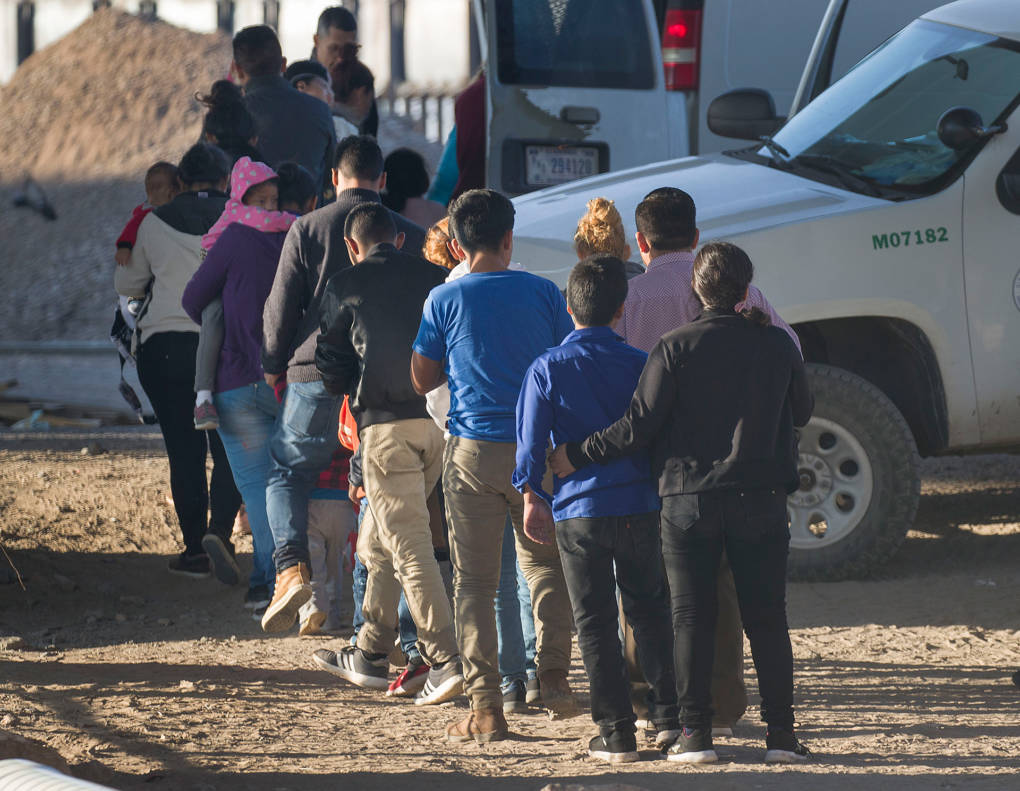
"caption": "Migrants, mostly from Central America, wait to board a van that will take them to a processing center, on May 16, 2019, in El Paso, Texas.",
"description": "Migrants, mostly from Central America, wait to board a van which will take them to a processing center, on May 16, 2019, in El Paso, Texas.",
"title": "Migrants-Texas-Border-CBP",
"credit": "PAUL RATJE/AFP/Getty Images",
"status": "inherit",
"isLoading": false,
"fetchFailed": false
},
"news_11757156": {
"type": "attachments",
"id": "news_11757156",
"meta": {
"index": "attachments_1716263798",
"site": "news",
"id": "11757156",
"found": true
},
"parent": 11757141,
"imgSizes": {
"apple_news_ca_landscape_5_5": {
"file": "https://ww2.kqed.org/app/uploads/sites/10/2019/06/sanders_custom-5819835c0d94a6366ceb7f0851420fddaac4be1c-s1600-c85-1044x783.jpg",
"width": 1044,
"mimeType": "image/jpeg",
"height": 783
},
"apple_news_ca_square_4_0": {
"file": "https://ww2.kqed.org/app/uploads/sites/10/2019/06/sanders_custom-5819835c0d94a6366ceb7f0851420fddaac4be1c-s1600-c85-470x470.jpg",
"width": 470,
"mimeType": "image/jpeg",
"height": 470
},
"twentyfourteen-full-width": {
"file": "https://ww2.kqed.org/app/uploads/sites/10/2019/06/sanders_custom-5819835c0d94a6366ceb7f0851420fddaac4be1c-s1600-c85-1038x576.jpg",
"width": 1038,
"mimeType": "image/jpeg",
"height": 576
},
"thumbnail": {
"file": "https://ww2.kqed.org/app/uploads/sites/10/2019/06/sanders_custom-5819835c0d94a6366ceb7f0851420fddaac4be1c-s1600-c85-160x104.jpg",
"width": 160,
"mimeType": "image/jpeg",
"height": 104
},
"post-thumbnail": {
"file": "https://ww2.kqed.org/app/uploads/sites/10/2019/06/sanders_custom-5819835c0d94a6366ceb7f0851420fddaac4be1c-s1600-c85-672x372.jpg",
"width": 672,
"mimeType": "image/jpeg",
"height": 372
},
"kqedFullSize": {
"file": "https://ww2.kqed.org/app/uploads/sites/10/2019/06/sanders_custom-5819835c0d94a6366ceb7f0851420fddaac4be1c-s1600-c85.jpg",
"width": 1600,
"height": 1039
},
"apple_news_ca_landscape_4_7": {
"file": "https://ww2.kqed.org/app/uploads/sites/10/2019/06/sanders_custom-5819835c0d94a6366ceb7f0851420fddaac4be1c-s1600-c85-632x474.jpg",
"width": 632,
"mimeType": "image/jpeg",
"height": 474
},
"large": {
"file": "https://ww2.kqed.org/app/uploads/sites/10/2019/06/sanders_custom-5819835c0d94a6366ceb7f0851420fddaac4be1c-s1600-c85-1020x662.jpg",
"width": 1020,
"mimeType": "image/jpeg",
"height": 662
},
"complete_open_graph": {
"file": "https://ww2.kqed.org/app/uploads/sites/10/2019/06/sanders_custom-5819835c0d94a6366ceb7f0851420fddaac4be1c-s1600-c85-1200x779.jpg",
"width": 1200,
"mimeType": "image/jpeg",
"height": 779
},
"apple_news_ca_landscape_4_0": {
"file": "https://ww2.kqed.org/app/uploads/sites/10/2019/06/sanders_custom-5819835c0d94a6366ceb7f0851420fddaac4be1c-s1600-c85-536x402.jpg",
"width": 536,
"mimeType": "image/jpeg",
"height": 402
},
"apple_news_ca_portrait_12_9": {
"file": "https://ww2.kqed.org/app/uploads/sites/10/2019/06/sanders_custom-5819835c0d94a6366ceb7f0851420fddaac4be1c-s1600-c85-1122x1039.jpg",
"width": 1122,
"mimeType": "image/jpeg",
"height": 1039
},
"medium": {
"file": "https://ww2.kqed.org/app/uploads/sites/10/2019/06/sanders_custom-5819835c0d94a6366ceb7f0851420fddaac4be1c-s1600-c85-800x520.jpg",
"width": 800,
"mimeType": "image/jpeg",
"height": 520
},
"apple_news_ca_portrait_4_0": {
"file": "https://ww2.kqed.org/app/uploads/sites/10/2019/06/sanders_custom-5819835c0d94a6366ceb7f0851420fddaac4be1c-s1600-c85-354x472.jpg",
"width": 354,
"mimeType": "image/jpeg",
"height": 472
},
"apple_news_ca_portrait_9_7": {
"file": "https://ww2.kqed.org/app/uploads/sites/10/2019/06/sanders_custom-5819835c0d94a6366ceb7f0851420fddaac4be1c-s1600-c85-840x1039.jpg",
"width": 840,
"mimeType": "image/jpeg",
"height": 1039
},
"apple_news_ca_square_9_7": {
"file": "https://ww2.kqed.org/app/uploads/sites/10/2019/06/sanders_custom-5819835c0d94a6366ceb7f0851420fddaac4be1c-s1600-c85-1104x1039.jpg",
"width": 1104,
"mimeType": "image/jpeg",
"height": 1039
},
"apple_news_ca_portrait_4_7": {
"file": "https://ww2.kqed.org/app/uploads/sites/10/2019/06/sanders_custom-5819835c0d94a6366ceb7f0851420fddaac4be1c-s1600-c85-414x552.jpg",
"width": 414,
"mimeType": "image/jpeg",
"height": 552
},
"apple_news_ca_square_12_9": {
"file": "https://ww2.kqed.org/app/uploads/sites/10/2019/06/sanders_custom-5819835c0d94a6366ceb7f0851420fddaac4be1c-s1600-c85-1472x1039.jpg",
"width": 1472,
"mimeType": "image/jpeg",
"height": 1039
},
"apple_news_ca_portrait_5_5": {
"file": "https://ww2.kqed.org/app/uploads/sites/10/2019/06/sanders_custom-5819835c0d94a6366ceb7f0851420fddaac4be1c-s1600-c85-687x916.jpg",
"width": 687,
"mimeType": "image/jpeg",
"height": 916
},
"apple_news_ca_square_4_7": {
"file": "https://ww2.kqed.org/app/uploads/sites/10/2019/06/sanders_custom-5819835c0d94a6366ceb7f0851420fddaac4be1c-s1600-c85-550x550.jpg",
"width": 550,
"mimeType": "image/jpeg",
"height": 550
},
"apple_news_ca_landscape_9_7": {
"file": "https://ww2.kqed.org/app/uploads/sites/10/2019/06/sanders_custom-5819835c0d94a6366ceb7f0851420fddaac4be1c-s1600-c85-1376x1032.jpg",
"width": 1376,
"mimeType": "image/jpeg",
"height": 1032
},
"apple_news_ca_square_5_5": {
"file": "https://ww2.kqed.org/app/uploads/sites/10/2019/06/sanders_custom-5819835c0d94a6366ceb7f0851420fddaac4be1c-s1600-c85-912x912.jpg",
"width": 912,
"mimeType": "image/jpeg",
"height": 912
}
},
"publishDate": 1561488128,
"modified": 1561488188,
"caption": "John Sanders (center) has been acting commissioner of U.S. Customs and Border Protection for just over two months.\n",
"description": null,
"title": "sanders_custom-5819835c0d94a6366ceb7f0851420fddaac4be1c-s1600-c85",
"credit": "Donna Burton/CBP handout via Reuters",
"status": "inherit",
"isLoading": false,
"fetchFailed": false
},
"news_11754757": {
"type": "attachments",
"id": "news_11754757",
"meta": {
"index": "attachments_1716263798",
"site": "news",
"id": "11754757",
"found": true
},
"parent": 11754525,
"imgSizes": {
"apple_news_ca_landscape_5_5": {
"file": "https://ww2.kqed.org/app/uploads/sites/10/2019/06/cbp-el-paso-1044x783.jpg",
"width": 1044,
"mimeType": "image/jpeg",
"height": 783
},
"apple_news_ca_square_4_0": {
"file": "https://ww2.kqed.org/app/uploads/sites/10/2019/06/cbp-el-paso-470x470.jpg",
"width": 470,
"mimeType": "image/jpeg",
"height": 470
},
"twentyfourteen-full-width": {
"file": "https://ww2.kqed.org/app/uploads/sites/10/2019/06/cbp-el-paso-1038x576.jpg",
"width": 1038,
"mimeType": "image/jpeg",
"height": 576
},
"thumbnail": {
"file": "https://ww2.kqed.org/app/uploads/sites/10/2019/06/cbp-el-paso-160x124.jpg",
"width": 160,
"mimeType": "image/jpeg",
"height": 124
},
"post-thumbnail": {
"file": "https://ww2.kqed.org/app/uploads/sites/10/2019/06/cbp-el-paso-672x372.jpg",
"width": 672,
"mimeType": "image/jpeg",
"height": 372
},
"kqedFullSize": {
"file": "https://ww2.kqed.org/app/uploads/sites/10/2019/06/cbp-el-paso.jpg",
"width": 1920,
"height": 1488
},
"apple_news_ca_landscape_4_7": {
"file": "https://ww2.kqed.org/app/uploads/sites/10/2019/06/cbp-el-paso-632x474.jpg",
"width": 632,
"mimeType": "image/jpeg",
"height": 474
},
"large": {
"file": "https://ww2.kqed.org/app/uploads/sites/10/2019/06/cbp-el-paso-1020x791.jpg",
"width": 1020,
"mimeType": "image/jpeg",
"height": 791
},
"complete_open_graph": {
"file": "https://ww2.kqed.org/app/uploads/sites/10/2019/06/cbp-el-paso-1200x930.jpg",
"width": 1200,
"mimeType": "image/jpeg",
"height": 930
},
"apple_news_ca_landscape_4_0": {
"file": "https://ww2.kqed.org/app/uploads/sites/10/2019/06/cbp-el-paso-536x402.jpg",
"width": 536,
"mimeType": "image/jpeg",
"height": 402
},
"apple_news_ca_portrait_12_9": {
"file": "https://ww2.kqed.org/app/uploads/sites/10/2019/06/cbp-el-paso-1122x1488.jpg",
"width": 1122,
"mimeType": "image/jpeg",
"height": 1488
},
"medium": {
"file": "https://ww2.kqed.org/app/uploads/sites/10/2019/06/cbp-el-paso-800x620.jpg",
"width": 800,
"mimeType": "image/jpeg",
"height": 620
},
"apple_news_ca_portrait_4_0": {
"file": "https://ww2.kqed.org/app/uploads/sites/10/2019/06/cbp-el-paso-354x472.jpg",
"width": 354,
"mimeType": "image/jpeg",
"height": 472
},
"apple_news_ca_portrait_9_7": {
"file": "https://ww2.kqed.org/app/uploads/sites/10/2019/06/cbp-el-paso-840x1120.jpg",
"width": 840,
"mimeType": "image/jpeg",
"height": 1120
},
"apple_news_ca_landscape_12_9": {
"file": "https://ww2.kqed.org/app/uploads/sites/10/2019/06/cbp-el-paso-1832x1374.jpg",
"width": 1832,
"mimeType": "image/jpeg",
"height": 1374
},
"apple_news_ca_square_9_7": {
"file": "https://ww2.kqed.org/app/uploads/sites/10/2019/06/cbp-el-paso-1104x1104.jpg",
"width": 1104,
"mimeType": "image/jpeg",
"height": 1104
},
"apple_news_ca_portrait_4_7": {
"file": "https://ww2.kqed.org/app/uploads/sites/10/2019/06/cbp-el-paso-414x552.jpg",
"width": 414,
"mimeType": "image/jpeg",
"height": 552
},
"apple_news_ca_square_12_9": {
"file": "https://ww2.kqed.org/app/uploads/sites/10/2019/06/cbp-el-paso-1472x1472.jpg",
"width": 1472,
"mimeType": "image/jpeg",
"height": 1472
},
"apple_news_ca_portrait_5_5": {
"file": "https://ww2.kqed.org/app/uploads/sites/10/2019/06/cbp-el-paso-687x916.jpg",
"width": 687,
"mimeType": "image/jpeg",
"height": 916
},
"full-width": {
"file": "https://ww2.kqed.org/app/uploads/sites/10/2019/06/cbp-el-paso-1920x1488.jpg",
"width": 1920,
"mimeType": "image/jpeg",
"height": 1488
},
"apple_news_ca_square_4_7": {
"file": "https://ww2.kqed.org/app/uploads/sites/10/2019/06/cbp-el-paso-550x550.jpg",
"width": 550,
"mimeType": "image/jpeg",
"height": 550
},
"apple_news_ca_landscape_9_7": {
"file": "https://ww2.kqed.org/app/uploads/sites/10/2019/06/cbp-el-paso-1376x1032.jpg",
"width": 1376,
"mimeType": "image/jpeg",
"height": 1032
},
"apple_news_ca_square_5_5": {
"file": "https://ww2.kqed.org/app/uploads/sites/10/2019/06/cbp-el-paso-912x912.jpg",
"width": 912,
"mimeType": "image/jpeg",
"height": 912
}
},
"publishDate": 1560532307,
"modified": 1567809906,
"caption": "Migrants wait to be processed and loaded onto a bus by U.S. Customs and Border Protection agents after being detained on June 2, 2019, in El Paso, Texas. The location is in an area where migrants frequently turn themselves in to Border Patrol and ask for asylum after crossing the border.",
"description": "Migrants wait to be processed and loaded onto a bus by United States Customs and Border Protection agents after being detained on June 02, 2019 in El Paso, Texas. The location is in an area where migrants frequently turn themselves in to Border Patrol and ask for asylum after crossing the border.",
"title": "cbp-el-paso",
"credit": "Joe Raedle/Getty Images",
"status": "inherit",
"isLoading": false,
"fetchFailed": false
},
"news_11753890": {
"type": "attachments",
"id": "news_11753890",
"meta": {
"index": "attachments_1716263798",
"site": "news",
"id": "11753890",
"found": true
},
"title": "U.S. Customs and Border Protection security cameras scan license plates as motor vehicles cross the U.S.-Mexico border from Tijuana, Mexico, in September 2016 in San Ysidro, Calif.",
"publishDate": 1560278588,
"status": "inherit",
"parent": 11753889,
"modified": 1749856011,
"caption": "US Customs and Border Protection security cameras scan license plates as motor vehicles cross the U.S.-Mexico border from Tijuana, Mexico, in Sept. 2016 in San Ysidro, Calif.",
"credit": "John Moore/Getty Images ",
"altTag": null,
"description": null,
"imgSizes": {
"thumbnail": {
"file": "https://cdn.kqed.org/wp-content/uploads/sites/10/2019/06/gettyimages-609971394_sq-18b3bb4cd8bf902dd7adbeb221e3018f2a0cb3fa-e1749856035530-160x128.jpg",
"width": 160,
"height": 128,
"mimeType": "image/jpeg"
},
"medium": {
"file": "https://cdn.kqed.org/wp-content/uploads/sites/10/2019/06/gettyimages-609971394_sq-18b3bb4cd8bf902dd7adbeb221e3018f2a0cb3fa-800x800.jpg",
"width": 800,
"height": 800,
"mimeType": "image/jpeg"
},
"large": {
"file": "https://cdn.kqed.org/wp-content/uploads/sites/10/2019/06/gettyimages-609971394_sq-18b3bb4cd8bf902dd7adbeb221e3018f2a0cb3fa-1020x1020.jpg",
"width": 1020,
"height": 1020,
"mimeType": "image/jpeg"
},
"complete_open_graph": {
"file": "https://cdn.kqed.org/wp-content/uploads/sites/10/2019/06/gettyimages-609971394_sq-18b3bb4cd8bf902dd7adbeb221e3018f2a0cb3fa-1200x1200.jpg",
"width": 1200,
"height": 1200,
"mimeType": "image/jpeg"
},
"post-thumbnail": {
"file": "https://cdn.kqed.org/wp-content/uploads/sites/10/2019/06/gettyimages-609971394_sq-18b3bb4cd8bf902dd7adbeb221e3018f2a0cb3fa-e1749856035530-672x372.jpg",
"width": 672,
"height": 372,
"mimeType": "image/jpeg"
},
"twentyfourteen-full-width": {
"file": "https://cdn.kqed.org/wp-content/uploads/sites/10/2019/06/gettyimages-609971394_sq-18b3bb4cd8bf902dd7adbeb221e3018f2a0cb3fa-e1749856035530-1038x576.jpg",
"width": 1038,
"height": 576,
"mimeType": "image/jpeg"
},
"full-width": {
"file": "https://cdn.kqed.org/wp-content/uploads/sites/10/2019/06/gettyimages-609971394_sq-18b3bb4cd8bf902dd7adbeb221e3018f2a0cb3fa-1920x1920.jpg",
"width": 1920,
"height": 1920,
"mimeType": "image/jpeg"
},
"apple_news_ca_landscape_12_9": {
"file": "https://cdn.kqed.org/wp-content/uploads/sites/10/2019/06/gettyimages-609971394_sq-18b3bb4cd8bf902dd7adbeb221e3018f2a0cb3fa-1832x1374.jpg",
"width": 1832,
"height": 1374,
"mimeType": "image/jpeg"
},
"apple_news_ca_landscape_9_7": {
"file": "https://cdn.kqed.org/wp-content/uploads/sites/10/2019/06/gettyimages-609971394_sq-18b3bb4cd8bf902dd7adbeb221e3018f2a0cb3fa-1376x1032.jpg",
"width": 1376,
"height": 1032,
"mimeType": "image/jpeg"
},
"apple_news_ca_landscape_5_5": {
"file": "https://cdn.kqed.org/wp-content/uploads/sites/10/2019/06/gettyimages-609971394_sq-18b3bb4cd8bf902dd7adbeb221e3018f2a0cb3fa-1044x783.jpg",
"width": 1044,
"height": 783,
"mimeType": "image/jpeg"
},
"apple_news_ca_landscape_4_7": {
"file": "https://cdn.kqed.org/wp-content/uploads/sites/10/2019/06/gettyimages-609971394_sq-18b3bb4cd8bf902dd7adbeb221e3018f2a0cb3fa-632x474.jpg",
"width": 632,
"height": 474,
"mimeType": "image/jpeg"
},
"apple_news_ca_landscape_4_0": {
"file": "https://cdn.kqed.org/wp-content/uploads/sites/10/2019/06/gettyimages-609971394_sq-18b3bb4cd8bf902dd7adbeb221e3018f2a0cb3fa-536x402.jpg",
"width": 536,
"height": 402,
"mimeType": "image/jpeg"
},
"apple_news_ca_portrait_12_9": {
"file": "https://cdn.kqed.org/wp-content/uploads/sites/10/2019/06/gettyimages-609971394_sq-18b3bb4cd8bf902dd7adbeb221e3018f2a0cb3fa-1122x1496.jpg",
"width": 1122,
"height": 1496,
"mimeType": "image/jpeg"
},
"apple_news_ca_portrait_9_7": {
"file": "https://cdn.kqed.org/wp-content/uploads/sites/10/2019/06/gettyimages-609971394_sq-18b3bb4cd8bf902dd7adbeb221e3018f2a0cb3fa-840x1120.jpg",
"width": 840,
"height": 1120,
"mimeType": "image/jpeg"
},
"apple_news_ca_portrait_5_5": {
"file": "https://cdn.kqed.org/wp-content/uploads/sites/10/2019/06/gettyimages-609971394_sq-18b3bb4cd8bf902dd7adbeb221e3018f2a0cb3fa-687x916.jpg",
"width": 687,
"height": 916,
"mimeType": "image/jpeg"
},
"apple_news_ca_portrait_4_7": {
"file": "https://cdn.kqed.org/wp-content/uploads/sites/10/2019/06/gettyimages-609971394_sq-18b3bb4cd8bf902dd7adbeb221e3018f2a0cb3fa-414x552.jpg",
"width": 414,
"height": 552,
"mimeType": "image/jpeg"
},
"apple_news_ca_portrait_4_0": {
"file": "https://cdn.kqed.org/wp-content/uploads/sites/10/2019/06/gettyimages-609971394_sq-18b3bb4cd8bf902dd7adbeb221e3018f2a0cb3fa-354x472.jpg",
"width": 354,
"height": 472,
"mimeType": "image/jpeg"
},
"apple_news_ca_square_12_9": {
"file": "https://cdn.kqed.org/wp-content/uploads/sites/10/2019/06/gettyimages-609971394_sq-18b3bb4cd8bf902dd7adbeb221e3018f2a0cb3fa-1472x1472.jpg",
"width": 1472,
"height": 1472,
"mimeType": "image/jpeg"
},
"apple_news_ca_square_9_7": {
"file": "https://cdn.kqed.org/wp-content/uploads/sites/10/2019/06/gettyimages-609971394_sq-18b3bb4cd8bf902dd7adbeb221e3018f2a0cb3fa-1104x1104.jpg",
"width": 1104,
"height": 1104,
"mimeType": "image/jpeg"
},
"apple_news_ca_square_5_5": {
"file": "https://cdn.kqed.org/wp-content/uploads/sites/10/2019/06/gettyimages-609971394_sq-18b3bb4cd8bf902dd7adbeb221e3018f2a0cb3fa-912x912.jpg",
"width": 912,
"height": 912,
"mimeType": "image/jpeg"
},
"apple_news_ca_square_4_7": {
"file": "https://cdn.kqed.org/wp-content/uploads/sites/10/2019/06/gettyimages-609971394_sq-18b3bb4cd8bf902dd7adbeb221e3018f2a0cb3fa-550x550.jpg",
"width": 550,
"height": 550,
"mimeType": "image/jpeg"
},
"apple_news_ca_square_4_0": {
"file": "https://cdn.kqed.org/wp-content/uploads/sites/10/2019/06/gettyimages-609971394_sq-18b3bb4cd8bf902dd7adbeb221e3018f2a0cb3fa-470x470.jpg",
"width": 470,
"height": 470,
"mimeType": "image/jpeg"
},
"1536x1536": {
"file": "https://cdn.kqed.org/wp-content/uploads/sites/10/2019/06/gettyimages-609971394_sq-18b3bb4cd8bf902dd7adbeb221e3018f2a0cb3fa-e1749856035530-1536x1226.jpg",
"width": 1536,
"height": 1226,
"mimeType": "image/jpeg"
},
"kqedFullSize": {
"file": "https://cdn.kqed.org/wp-content/uploads/sites/10/2019/06/gettyimages-609971394_sq-18b3bb4cd8bf902dd7adbeb221e3018f2a0cb3fa-e1749856035530.jpg",
"width": 1920,
"height": 1533
}
},
"isLoading": false,
"fetchFailed": false
},
"news_11753706": {
"type": "attachments",
"id": "news_11753706",
"meta": {
"index": "attachments_1716263798",
"site": "news",
"id": "11753706",
"found": true
},
"parent": 11753698,
"imgSizes": {
"apple_news_ca_landscape_5_5": {
"file": "https://ww2.kqed.org/app/uploads/sites/10/2019/06/perception_061019_final-1044x783.jpg",
"width": 1044,
"mimeType": "image/jpeg",
"height": 783
},
"apple_news_ca_square_4_0": {
"file": "https://ww2.kqed.org/app/uploads/sites/10/2019/06/perception_061019_final-470x470.jpg",
"width": 470,
"mimeType": "image/jpeg",
"height": 470
},
"twentyfourteen-full-width": {
"file": "https://ww2.kqed.org/app/uploads/sites/10/2019/06/perception_061019_final-1038x576.jpg",
"width": 1038,
"mimeType": "image/jpeg",
"height": 576
},
"thumbnail": {
"file": "https://ww2.kqed.org/app/uploads/sites/10/2019/06/perception_061019_final-160x114.jpg",
"width": 160,
"mimeType": "image/jpeg",
"height": 114
},
"post-thumbnail": {
"file": "https://ww2.kqed.org/app/uploads/sites/10/2019/06/perception_061019_final-672x372.jpg",
"width": 672,
"mimeType": "image/jpeg",
"height": 372
},
"kqedFullSize": {
"file": "https://ww2.kqed.org/app/uploads/sites/10/2019/06/perception_061019_final.jpg",
"width": 1920,
"height": 1370
},
"apple_news_ca_landscape_4_7": {
"file": "https://ww2.kqed.org/app/uploads/sites/10/2019/06/perception_061019_final-632x474.jpg",
"width": 632,
"mimeType": "image/jpeg",
"height": 474
},
"large": {
"file": "https://ww2.kqed.org/app/uploads/sites/10/2019/06/perception_061019_final-1020x728.jpg",
"width": 1020,
"mimeType": "image/jpeg",
"height": 728
},
"complete_open_graph": {
"file": "https://ww2.kqed.org/app/uploads/sites/10/2019/06/perception_061019_final-1200x856.jpg",
"width": 1200,
"mimeType": "image/jpeg",
"height": 856
},
"apple_news_ca_landscape_4_0": {
"file": "https://ww2.kqed.org/app/uploads/sites/10/2019/06/perception_061019_final-536x402.jpg",
"width": 536,
"mimeType": "image/jpeg",
"height": 402
},
"apple_news_ca_portrait_12_9": {
"file": "https://ww2.kqed.org/app/uploads/sites/10/2019/06/perception_061019_final-1122x1370.jpg",
"width": 1122,
"mimeType": "image/jpeg",
"height": 1370
},
"medium": {
"file": "https://ww2.kqed.org/app/uploads/sites/10/2019/06/perception_061019_final-800x571.jpg",
"width": 800,
"mimeType": "image/jpeg",
"height": 571
},
"apple_news_ca_portrait_4_0": {
"file": "https://ww2.kqed.org/app/uploads/sites/10/2019/06/perception_061019_final-354x472.jpg",
"width": 354,
"mimeType": "image/jpeg",
"height": 472
},
"apple_news_ca_portrait_9_7": {
"file": "https://ww2.kqed.org/app/uploads/sites/10/2019/06/perception_061019_final-840x1120.jpg",
"width": 840,
"mimeType": "image/jpeg",
"height": 1120
},
"apple_news_ca_landscape_12_9": {
"file": "https://ww2.kqed.org/app/uploads/sites/10/2019/06/perception_061019_final-1832x1370.jpg",
"width": 1832,
"mimeType": "image/jpeg",
"height": 1370
},
"apple_news_ca_square_9_7": {
"file": "https://ww2.kqed.org/app/uploads/sites/10/2019/06/perception_061019_final-1104x1104.jpg",
"width": 1104,
"mimeType": "image/jpeg",
"height": 1104
},
"apple_news_ca_portrait_4_7": {
"file": "https://ww2.kqed.org/app/uploads/sites/10/2019/06/perception_061019_final-414x552.jpg",
"width": 414,
"mimeType": "image/jpeg",
"height": 552
},
"apple_news_ca_square_12_9": {
"file": "https://ww2.kqed.org/app/uploads/sites/10/2019/06/perception_061019_final-1472x1370.jpg",
"width": 1472,
"mimeType": "image/jpeg",
"height": 1370
},
"apple_news_ca_portrait_5_5": {
"file": "https://ww2.kqed.org/app/uploads/sites/10/2019/06/perception_061019_final-687x916.jpg",
"width": 687,
"mimeType": "image/jpeg",
"height": 916
},
"full-width": {
"file": "https://ww2.kqed.org/app/uploads/sites/10/2019/06/perception_061019_final-1920x1370.jpg",
"width": 1920,
"mimeType": "image/jpeg",
"height": 1370
},
"apple_news_ca_square_4_7": {
"file": "https://ww2.kqed.org/app/uploads/sites/10/2019/06/perception_061019_final-550x550.jpg",
"width": 550,
"mimeType": "image/jpeg",
"height": 550
},
"apple_news_ca_landscape_9_7": {
"file": "https://ww2.kqed.org/app/uploads/sites/10/2019/06/perception_061019_final-1376x1032.jpg",
"width": 1376,
"mimeType": "image/jpeg",
"height": 1032
},
"apple_news_ca_square_5_5": {
"file": "https://ww2.kqed.org/app/uploads/sites/10/2019/06/perception_061019_final-912x912.jpg",
"width": 912,
"mimeType": "image/jpeg",
"height": 912
}
},
"publishDate": 1560199071,
"modified": 1560199104,
"caption": null,
"description": null,
"title": "perception_061019_final",
"credit": null,
"status": "inherit",
"isLoading": false,
"fetchFailed": false
},
"news_11752273": {
"type": "attachments",
"id": "news_11752273",
"meta": {
"index": "attachments_1716263798",
"site": "news",
"id": "11752273",
"found": true
},
"parent": 11752270,
"imgSizes": {
"apple_news_ca_landscape_5_5": {
"file": "https://ww2.kqed.org/app/uploads/sites/10/2019/06/RS44_border20130103-1044x783.jpg",
"width": 1044,
"mimeType": "image/jpeg",
"height": 783
},
"apple_news_ca_square_4_0": {
"file": "https://ww2.kqed.org/app/uploads/sites/10/2019/06/RS44_border20130103-470x470.jpg",
"width": 470,
"mimeType": "image/jpeg",
"height": 470
},
"twentyfourteen-full-width": {
"file": "https://ww2.kqed.org/app/uploads/sites/10/2019/06/RS44_border20130103-1038x576.jpg",
"width": 1038,
"mimeType": "image/jpeg",
"height": 576
},
"thumbnail": {
"file": "https://ww2.kqed.org/app/uploads/sites/10/2019/06/RS44_border20130103-160x107.jpg",
"width": 160,
"mimeType": "image/jpeg",
"height": 107
},
"post-thumbnail": {
"file": "https://ww2.kqed.org/app/uploads/sites/10/2019/06/RS44_border20130103-672x372.jpg",
"width": 672,
"mimeType": "image/jpeg",
"height": 372
},
"kqedFullSize": {
"file": "https://ww2.kqed.org/app/uploads/sites/10/2019/06/RS44_border20130103.jpg",
"width": 2048,
"height": 1365
},
"apple_news_ca_landscape_4_7": {
"file": "https://ww2.kqed.org/app/uploads/sites/10/2019/06/RS44_border20130103-632x474.jpg",
"width": 632,
"mimeType": "image/jpeg",
"height": 474
},
"large": {
"file": "https://ww2.kqed.org/app/uploads/sites/10/2019/06/RS44_border20130103-1020x680.jpg",
"width": 1020,
"mimeType": "image/jpeg",
"height": 680
},
"complete_open_graph": {
"file": "https://ww2.kqed.org/app/uploads/sites/10/2019/06/RS44_border20130103-1200x800.jpg",
"width": 1200,
"mimeType": "image/jpeg",
"height": 800
},
"apple_news_ca_landscape_4_0": {
"file": "https://ww2.kqed.org/app/uploads/sites/10/2019/06/RS44_border20130103-536x402.jpg",
"width": 536,
"mimeType": "image/jpeg",
"height": 402
},
"apple_news_ca_portrait_12_9": {
"file": "https://ww2.kqed.org/app/uploads/sites/10/2019/06/RS44_border20130103-1122x1496.jpg",
"width": 1122,
"mimeType": "image/jpeg",
"height": 1496
},
"medium": {
"file": "https://ww2.kqed.org/app/uploads/sites/10/2019/06/RS44_border20130103-800x533.jpg",
"width": 800,
"mimeType": "image/jpeg",
"height": 533
},
"apple_news_ca_portrait_4_0": {
"file": "https://ww2.kqed.org/app/uploads/sites/10/2019/06/RS44_border20130103-354x472.jpg",
"width": 354,
"mimeType": "image/jpeg",
"height": 472
},
"apple_news_ca_portrait_9_7": {
"file": "https://ww2.kqed.org/app/uploads/sites/10/2019/06/RS44_border20130103-840x1120.jpg",
"width": 840,
"mimeType": "image/jpeg",
"height": 1120
},
"apple_news_ca_landscape_12_9": {
"file": "https://ww2.kqed.org/app/uploads/sites/10/2019/06/RS44_border20130103-1832x1374.jpg",
"width": 1832,
"mimeType": "image/jpeg",
"height": 1374
},
"apple_news_ca_square_9_7": {
"file": "https://ww2.kqed.org/app/uploads/sites/10/2019/06/RS44_border20130103-1104x1104.jpg",
"width": 1104,
"mimeType": "image/jpeg",
"height": 1104
},
"apple_news_ca_portrait_4_7": {
"file": "https://ww2.kqed.org/app/uploads/sites/10/2019/06/RS44_border20130103-414x552.jpg",
"width": 414,
"mimeType": "image/jpeg",
"height": 552
},
"apple_news_ca_square_12_9": {
"file": "https://ww2.kqed.org/app/uploads/sites/10/2019/06/RS44_border20130103-1472x1472.jpg",
"width": 1472,
"mimeType": "image/jpeg",
"height": 1472
},
"apple_news_ca_portrait_5_5": {
"file": "https://ww2.kqed.org/app/uploads/sites/10/2019/06/RS44_border20130103-687x916.jpg",
"width": 687,
"mimeType": "image/jpeg",
"height": 916
},
"full-width": {
"file": "https://ww2.kqed.org/app/uploads/sites/10/2019/06/RS44_border20130103-1920x1280.jpg",
"width": 1920,
"mimeType": "image/jpeg",
"height": 1280
},
"apple_news_ca_square_4_7": {
"file": "https://ww2.kqed.org/app/uploads/sites/10/2019/06/RS44_border20130103-550x550.jpg",
"width": 550,
"mimeType": "image/jpeg",
"height": 550
},
"apple_news_ca_landscape_9_7": {
"file": "https://ww2.kqed.org/app/uploads/sites/10/2019/06/RS44_border20130103-1376x1032.jpg",
"width": 1376,
"mimeType": "image/jpeg",
"height": 1032
},
"apple_news_ca_square_5_5": {
"file": "https://ww2.kqed.org/app/uploads/sites/10/2019/06/RS44_border20130103-912x912.jpg",
"width": 912,
"mimeType": "image/jpeg",
"height": 912
}
},
"publishDate": 1559669302,
"modified": 1559683298,
"caption": "Traffic in the U.S. enters Mexico at the San Ysidro border crossing.",
"description": "Traffic in the US enters Mexico at the San Ysidro border crossing.",
"title": "American Fuel Up On Cheaper Gas Over The Border Of Mexico",
"credit": "David McNew/Getty Images",
"status": "inherit",
"isLoading": false,
"fetchFailed": false
},
"news_11751454": {
"type": "attachments",
"id": "news_11751454",
"meta": {
"index": "attachments_1716263798",
"site": "news",
"id": "11751454",
"found": true
},
"parent": 11751453,
"imgSizes": {
"apple_news_ca_landscape_5_5": {
"file": "https://ww2.kqed.org/app/uploads/sites/10/2019/05/ap_19150832606428_wide-ec6db0d3cc90a9b2861082c389315785620bc645-1044x783.jpg",
"width": 1044,
"mimeType": "image/jpeg",
"height": 783
},
"apple_news_ca_square_4_0": {
"file": "https://ww2.kqed.org/app/uploads/sites/10/2019/05/ap_19150832606428_wide-ec6db0d3cc90a9b2861082c389315785620bc645-470x470.jpg",
"width": 470,
"mimeType": "image/jpeg",
"height": 470
},
"twentyfourteen-full-width": {
"file": "https://ww2.kqed.org/app/uploads/sites/10/2019/05/ap_19150832606428_wide-ec6db0d3cc90a9b2861082c389315785620bc645-1038x576.jpg",
"width": 1038,
"mimeType": "image/jpeg",
"height": 576
},
"thumbnail": {
"file": "https://ww2.kqed.org/app/uploads/sites/10/2019/05/ap_19150832606428_wide-ec6db0d3cc90a9b2861082c389315785620bc645-160x90.jpg",
"width": 160,
"mimeType": "image/jpeg",
"height": 90
},
"post-thumbnail": {
"file": "https://ww2.kqed.org/app/uploads/sites/10/2019/05/ap_19150832606428_wide-ec6db0d3cc90a9b2861082c389315785620bc645-672x372.jpg",
"width": 672,
"mimeType": "image/jpeg",
"height": 372
},
"kqedFullSize": {
"file": "https://ww2.kqed.org/app/uploads/sites/10/2019/05/ap_19150832606428_wide-ec6db0d3cc90a9b2861082c389315785620bc645-e1559330818498.jpg",
"width": 1920,
"height": 1080
},
"apple_news_ca_landscape_4_7": {
"file": "https://ww2.kqed.org/app/uploads/sites/10/2019/05/ap_19150832606428_wide-ec6db0d3cc90a9b2861082c389315785620bc645-632x474.jpg",
"width": 632,
"mimeType": "image/jpeg",
"height": 474
},
"large": {
"file": "https://ww2.kqed.org/app/uploads/sites/10/2019/05/ap_19150832606428_wide-ec6db0d3cc90a9b2861082c389315785620bc645-1020x574.jpg",
"width": 1020,
"mimeType": "image/jpeg",
"height": 574
},
"complete_open_graph": {
"file": "https://ww2.kqed.org/app/uploads/sites/10/2019/05/ap_19150832606428_wide-ec6db0d3cc90a9b2861082c389315785620bc645-1200x675.jpg",
"width": 1200,
"mimeType": "image/jpeg",
"height": 675
},
"apple_news_ca_landscape_4_0": {
"file": "https://ww2.kqed.org/app/uploads/sites/10/2019/05/ap_19150832606428_wide-ec6db0d3cc90a9b2861082c389315785620bc645-536x402.jpg",
"width": 536,
"mimeType": "image/jpeg",
"height": 402
},
"apple_news_ca_portrait_12_9": {
"file": "https://ww2.kqed.org/app/uploads/sites/10/2019/05/ap_19150832606428_wide-ec6db0d3cc90a9b2861082c389315785620bc645-1122x1496.jpg",
"width": 1122,
"mimeType": "image/jpeg",
"height": 1496
},
"medium": {
"file": "https://ww2.kqed.org/app/uploads/sites/10/2019/05/ap_19150832606428_wide-ec6db0d3cc90a9b2861082c389315785620bc645-800x450.jpg",
"width": 800,
"mimeType": "image/jpeg",
"height": 450
},
"apple_news_ca_portrait_4_0": {
"file": "https://ww2.kqed.org/app/uploads/sites/10/2019/05/ap_19150832606428_wide-ec6db0d3cc90a9b2861082c389315785620bc645-354x472.jpg",
"width": 354,
"mimeType": "image/jpeg",
"height": 472
},
"apple_news_ca_portrait_9_7": {
"file": "https://ww2.kqed.org/app/uploads/sites/10/2019/05/ap_19150832606428_wide-ec6db0d3cc90a9b2861082c389315785620bc645-840x1120.jpg",
"width": 840,
"mimeType": "image/jpeg",
"height": 1120
},
"apple_news_ca_landscape_12_9": {
"file": "https://ww2.kqed.org/app/uploads/sites/10/2019/05/ap_19150832606428_wide-ec6db0d3cc90a9b2861082c389315785620bc645-1832x1374.jpg",
"width": 1832,
"mimeType": "image/jpeg",
"height": 1374
},
"apple_news_ca_square_9_7": {
"file": "https://ww2.kqed.org/app/uploads/sites/10/2019/05/ap_19150832606428_wide-ec6db0d3cc90a9b2861082c389315785620bc645-1104x1104.jpg",
"width": 1104,
"mimeType": "image/jpeg",
"height": 1104
},
"apple_news_ca_portrait_4_7": {
"file": "https://ww2.kqed.org/app/uploads/sites/10/2019/05/ap_19150832606428_wide-ec6db0d3cc90a9b2861082c389315785620bc645-414x552.jpg",
"width": 414,
"mimeType": "image/jpeg",
"height": 552
},
"apple_news_ca_square_12_9": {
"file": "https://ww2.kqed.org/app/uploads/sites/10/2019/05/ap_19150832606428_wide-ec6db0d3cc90a9b2861082c389315785620bc645-1472x1472.jpg",
"width": 1472,
"mimeType": "image/jpeg",
"height": 1472
},
"apple_news_ca_portrait_5_5": {
"file": "https://ww2.kqed.org/app/uploads/sites/10/2019/05/ap_19150832606428_wide-ec6db0d3cc90a9b2861082c389315785620bc645-687x916.jpg",
"width": 687,
"mimeType": "image/jpeg",
"height": 916
},
"full-width": {
"file": "https://ww2.kqed.org/app/uploads/sites/10/2019/05/ap_19150832606428_wide-ec6db0d3cc90a9b2861082c389315785620bc645-1920x1080.jpg",
"width": 1920,
"mimeType": "image/jpeg",
"height": 1080
},
"apple_news_ca_square_4_7": {
"file": "https://ww2.kqed.org/app/uploads/sites/10/2019/05/ap_19150832606428_wide-ec6db0d3cc90a9b2861082c389315785620bc645-550x550.jpg",
"width": 550,
"mimeType": "image/jpeg",
"height": 550
},
"apple_news_ca_landscape_9_7": {
"file": "https://ww2.kqed.org/app/uploads/sites/10/2019/05/ap_19150832606428_wide-ec6db0d3cc90a9b2861082c389315785620bc645-1376x1032.jpg",
"width": 1376,
"mimeType": "image/jpeg",
"height": 1032
},
"apple_news_ca_square_5_5": {
"file": "https://ww2.kqed.org/app/uploads/sites/10/2019/05/ap_19150832606428_wide-ec6db0d3cc90a9b2861082c389315785620bc645-912x912.jpg",
"width": 912,
"mimeType": "image/jpeg",
"height": 912
}
},
"publishDate": 1559324921,
"modified": 1559330812,
"caption": "President Trump has announced plans to impose escalating tariffs on goods imported from Mexico in an attempt to stop migrants from entering the U.S. over the southern border. U.S. Customs and Border Protection released this photo, taken on Wednesday in El Paso, Texas.",
"description": "President Trump has announced plans to impose escalating tariffs on goods imported from Mexico in an attempt to stop migrants from entering the U.S. over the southern border. U.S. Customs and Border Protection released this photo, taken on Wednesday at El Paso, Texas.",
"title": "President Trump has announced plans to impose escalating tariffs on goods imported from Mexico in an attempt to stop migrants from entering the U.S. over the southern border. U.S. Customs and Border Protection released this photo, taken on Wednesday at El Paso, Texas.",
"credit": "U.S. Customs and Border Protection via AP",
"status": "inherit",
"isLoading": false,
"fetchFailed": false
},
"news_11750447": {
"type": "attachments",
"id": "news_11750447",
"meta": {
"index": "attachments_1716263798",
"site": "news",
"id": "11750447",
"found": true
},
"parent": 11750296,
"imgSizes": {
"apple_news_ca_landscape_5_5": {
"file": "https://ww2.kqed.org/app/uploads/sites/10/2019/05/28-1044x783.jpg",
"width": 1044,
"mimeType": "image/jpeg",
"height": 783
},
"apple_news_ca_square_4_0": {
"file": "https://ww2.kqed.org/app/uploads/sites/10/2019/05/28-470x470.jpg",
"width": 470,
"mimeType": "image/jpeg",
"height": 470
},
"twentyfourteen-full-width": {
"file": "https://ww2.kqed.org/app/uploads/sites/10/2019/05/28-1038x576.jpg",
"width": 1038,
"mimeType": "image/jpeg",
"height": 576
},
"thumbnail": {
"file": "https://ww2.kqed.org/app/uploads/sites/10/2019/05/28-160x107.jpg",
"width": 160,
"mimeType": "image/jpeg",
"height": 107
},
"post-thumbnail": {
"file": "https://ww2.kqed.org/app/uploads/sites/10/2019/05/28-672x372.jpg",
"width": 672,
"mimeType": "image/jpeg",
"height": 372
},
"kqedFullSize": {
"file": "https://ww2.kqed.org/app/uploads/sites/10/2019/05/28-e1559078059936.jpg",
"width": 1920,
"height": 1280
},
"apple_news_ca_landscape_4_7": {
"file": "https://ww2.kqed.org/app/uploads/sites/10/2019/05/28-632x474.jpg",
"width": 632,
"mimeType": "image/jpeg",
"height": 474
},
"large": {
"file": "https://ww2.kqed.org/app/uploads/sites/10/2019/05/28-1020x680.jpg",
"width": 1020,
"mimeType": "image/jpeg",
"height": 680
},
"complete_open_graph": {
"file": "https://ww2.kqed.org/app/uploads/sites/10/2019/05/28-1200x800.jpg",
"width": 1200,
"mimeType": "image/jpeg",
"height": 800
},
"apple_news_ca_landscape_4_0": {
"file": "https://ww2.kqed.org/app/uploads/sites/10/2019/05/28-536x402.jpg",
"width": 536,
"mimeType": "image/jpeg",
"height": 402
},
"apple_news_ca_portrait_12_9": {
"file": "https://ww2.kqed.org/app/uploads/sites/10/2019/05/28-1122x1496.jpg",
"width": 1122,
"mimeType": "image/jpeg",
"height": 1496
},
"medium": {
"file": "https://ww2.kqed.org/app/uploads/sites/10/2019/05/28-800x533.jpg",
"width": 800,
"mimeType": "image/jpeg",
"height": 533
},
"apple_news_ca_portrait_4_0": {
"file": "https://ww2.kqed.org/app/uploads/sites/10/2019/05/28-354x472.jpg",
"width": 354,
"mimeType": "image/jpeg",
"height": 472
},
"apple_news_ca_portrait_9_7": {
"file": "https://ww2.kqed.org/app/uploads/sites/10/2019/05/28-840x1120.jpg",
"width": 840,
"mimeType": "image/jpeg",
"height": 1120
},
"apple_news_ca_landscape_12_9": {
"file": "https://ww2.kqed.org/app/uploads/sites/10/2019/05/28-1832x1374.jpg",
"width": 1832,
"mimeType": "image/jpeg",
"height": 1374
},
"apple_news_ca_square_9_7": {
"file": "https://ww2.kqed.org/app/uploads/sites/10/2019/05/28-1104x1104.jpg",
"width": 1104,
"mimeType": "image/jpeg",
"height": 1104
},
"apple_news_ca_portrait_4_7": {
"file": "https://ww2.kqed.org/app/uploads/sites/10/2019/05/28-414x552.jpg",
"width": 414,
"mimeType": "image/jpeg",
"height": 552
},
"apple_news_ca_square_12_9": {
"file": "https://ww2.kqed.org/app/uploads/sites/10/2019/05/28-1472x1472.jpg",
"width": 1472,
"mimeType": "image/jpeg",
"height": 1472
},
"apple_news_ca_portrait_5_5": {
"file": "https://ww2.kqed.org/app/uploads/sites/10/2019/05/28-687x916.jpg",
"width": 687,
"mimeType": "image/jpeg",
"height": 916
},
"full-width": {
"file": "https://ww2.kqed.org/app/uploads/sites/10/2019/05/28-1920x1280.jpg",
"width": 1920,
"mimeType": "image/jpeg",
"height": 1280
},
"apple_news_ca_square_4_7": {
"file": "https://ww2.kqed.org/app/uploads/sites/10/2019/05/28-550x550.jpg",
"width": 550,
"mimeType": "image/jpeg",
"height": 550
},
"apple_news_ca_landscape_9_7": {
"file": "https://ww2.kqed.org/app/uploads/sites/10/2019/05/28-1376x1032.jpg",
"width": 1376,
"mimeType": "image/jpeg",
"height": 1032
},
"apple_news_ca_square_5_5": {
"file": "https://ww2.kqed.org/app/uploads/sites/10/2019/05/28-912x912.jpg",
"width": 912,
"mimeType": "image/jpeg",
"height": 912
}
},
"publishDate": 1559077717,
"modified": 1559089826,
"caption": "A man wears an anti-viral face mask inside the migrant shelter run by Jewish Family Service of San Diego on May 24, 2019. ",
"description": "A man wears an anti-viral face mask inside the Jewish Family Service of San Diego on May 24, 2019. ",
"title": "28",
"credit": "Ariana Drehsler/KQED",
"status": "inherit",
"isLoading": false,
"fetchFailed": false
},
"news_11748814": {
"type": "attachments",
"id": "news_11748814",
"meta": {
"index": "attachments_1716263798",
"site": "news",
"id": "11748814",
"found": true
},
"parent": 11748722,
"imgSizes": {
"apple_news_ca_landscape_5_5": {
"file": "https://ww2.kqed.org/app/uploads/sites/10/2019/05/Migrants-Line-Up-Texas-1044x783.jpg",
"width": 1044,
"mimeType": "image/jpeg",
"height": 783
},
"apple_news_ca_square_4_0": {
"file": "https://ww2.kqed.org/app/uploads/sites/10/2019/05/Migrants-Line-Up-Texas-470x470.jpg",
"width": 470,
"mimeType": "image/jpeg",
"height": 470
},
"twentyfourteen-full-width": {
"file": "https://ww2.kqed.org/app/uploads/sites/10/2019/05/Migrants-Line-Up-Texas-1038x576.jpg",
"width": 1038,
"mimeType": "image/jpeg",
"height": 576
},
"thumbnail": {
"file": "https://ww2.kqed.org/app/uploads/sites/10/2019/05/Migrants-Line-Up-Texas-160x102.jpg",
"width": 160,
"mimeType": "image/jpeg",
"height": 102
},
"post-thumbnail": {
"file": "https://ww2.kqed.org/app/uploads/sites/10/2019/05/Migrants-Line-Up-Texas-672x372.jpg",
"width": 672,
"mimeType": "image/jpeg",
"height": 372
},
"kqedFullSize": {
"file": "https://ww2.kqed.org/app/uploads/sites/10/2019/05/Migrants-Line-Up-Texas.jpg",
"width": 1920,
"height": 1222
},
"apple_news_ca_landscape_4_7": {
"file": "https://ww2.kqed.org/app/uploads/sites/10/2019/05/Migrants-Line-Up-Texas-632x474.jpg",
"width": 632,
"mimeType": "image/jpeg",
"height": 474
},
"large": {
"file": "https://ww2.kqed.org/app/uploads/sites/10/2019/05/Migrants-Line-Up-Texas-1020x649.jpg",
"width": 1020,
"mimeType": "image/jpeg",
"height": 649
},
"complete_open_graph": {
"file": "https://ww2.kqed.org/app/uploads/sites/10/2019/05/Migrants-Line-Up-Texas-1200x764.jpg",
"width": 1200,
"mimeType": "image/jpeg",
"height": 764
},
"apple_news_ca_landscape_4_0": {
"file": "https://ww2.kqed.org/app/uploads/sites/10/2019/05/Migrants-Line-Up-Texas-536x402.jpg",
"width": 536,
"mimeType": "image/jpeg",
"height": 402
},
"apple_news_ca_portrait_12_9": {
"file": "https://ww2.kqed.org/app/uploads/sites/10/2019/05/Migrants-Line-Up-Texas-1122x1222.jpg",
"width": 1122,
"mimeType": "image/jpeg",
"height": 1222
},
"medium": {
"file": "https://ww2.kqed.org/app/uploads/sites/10/2019/05/Migrants-Line-Up-Texas-800x509.jpg",
"width": 800,
"mimeType": "image/jpeg",
"height": 509
},
"apple_news_ca_portrait_4_0": {
"file": "https://ww2.kqed.org/app/uploads/sites/10/2019/05/Migrants-Line-Up-Texas-354x472.jpg",
"width": 354,
"mimeType": "image/jpeg",
"height": 472
},
"apple_news_ca_portrait_9_7": {
"file": "https://ww2.kqed.org/app/uploads/sites/10/2019/05/Migrants-Line-Up-Texas-840x1120.jpg",
"width": 840,
"mimeType": "image/jpeg",
"height": 1120
},
"apple_news_ca_landscape_12_9": {
"file": "https://ww2.kqed.org/app/uploads/sites/10/2019/05/Migrants-Line-Up-Texas-1832x1222.jpg",
"width": 1832,
"mimeType": "image/jpeg",
"height": 1222
},
"apple_news_ca_square_9_7": {
"file": "https://ww2.kqed.org/app/uploads/sites/10/2019/05/Migrants-Line-Up-Texas-1104x1104.jpg",
"width": 1104,
"mimeType": "image/jpeg",
"height": 1104
},
"apple_news_ca_portrait_4_7": {
"file": "https://ww2.kqed.org/app/uploads/sites/10/2019/05/Migrants-Line-Up-Texas-414x552.jpg",
"width": 414,
"mimeType": "image/jpeg",
"height": 552
},
"apple_news_ca_square_12_9": {
"file": "https://ww2.kqed.org/app/uploads/sites/10/2019/05/Migrants-Line-Up-Texas-1472x1222.jpg",
"width": 1472,
"mimeType": "image/jpeg",
"height": 1222
},
"apple_news_ca_portrait_5_5": {
"file": "https://ww2.kqed.org/app/uploads/sites/10/2019/05/Migrants-Line-Up-Texas-687x916.jpg",
"width": 687,
"mimeType": "image/jpeg",
"height": 916
},
"full-width": {
"file": "https://ww2.kqed.org/app/uploads/sites/10/2019/05/Migrants-Line-Up-Texas-1920x1222.jpg",
"width": 1920,
"mimeType": "image/jpeg",
"height": 1222
},
"apple_news_ca_square_4_7": {
"file": "https://ww2.kqed.org/app/uploads/sites/10/2019/05/Migrants-Line-Up-Texas-550x550.jpg",
"width": 550,
"mimeType": "image/jpeg",
"height": 550
},
"apple_news_ca_landscape_9_7": {
"file": "https://ww2.kqed.org/app/uploads/sites/10/2019/05/Migrants-Line-Up-Texas-1376x1032.jpg",
"width": 1376,
"mimeType": "image/jpeg",
"height": 1032
},
"apple_news_ca_square_5_5": {
"file": "https://ww2.kqed.org/app/uploads/sites/10/2019/05/Migrants-Line-Up-Texas-912x912.jpg",
"width": 912,
"mimeType": "image/jpeg",
"height": 912
}
},
"publishDate": 1558465973,
"modified": 1558466072,
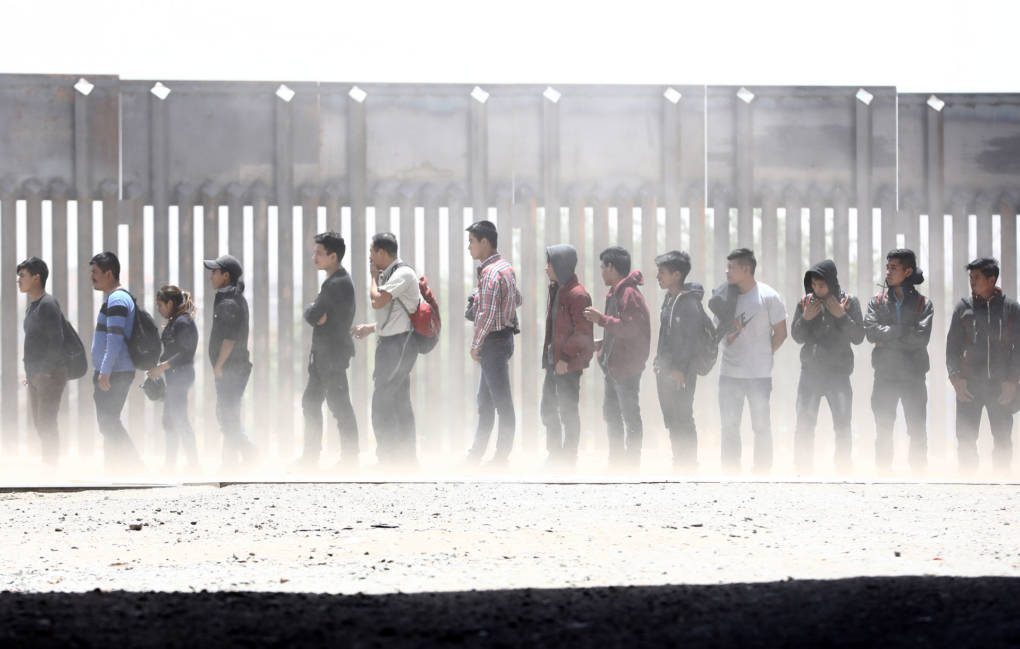
"caption": "Migrants stand while being detained by U.S. Border Patrol, after crossing the U.S.-Mexico border barrier on May 17, 2019 in El Paso, Texas.",
"description": "Migrants stand while being detained by U.S. Border Patrol, after crossing the U.S.-Mexico border barrier on May 17, 2019 in El Paso, Texas.",
"title": "Migrants-Line-Up-Texas",
"credit": "Mario Tama/Getty Images",
"status": "inherit",
"isLoading": false,
"fetchFailed": false
},
"news_11744516": {
"type": "attachments",
"id": "news_11744516",
"meta": {
"index": "attachments_1716263798",
"site": "news",
"id": "11744516",
"found": true
},
"title": "In this 2016 photo, a man holds up his iPhone during a rally in support of data privacy outside the Apple store in San Francisco. Watchdog groups that keep tabs on digital privacy rights are concerned that U.S. Customs and Border Protection agents are searching the phones and other digital devices of international travelers at border checkpoints in U.S. airports.",
"publishDate": 1556822893,
"status": "inherit",
"parent": 11744515,
"modified": 1757615642,
"caption": "In this 2016 photo, a man holds up his iPhone during a rally in support of data privacy outside the Apple store in San Francisco. ",
"credit": "Eric Risberg/AP",
"altTag": "In this 2016 photo, a man holds up his iPhone during a rally in support of data privacy outside the Apple store in San Francisco. Watchdog groups that keep tabs on digital privacy rights are concerned that U.S. Customs and Border Protection agents are searching the phones and other digital devices of international travelers at border checkpoints in U.S. airports.",
"description": "In this 2016 photo, a man holds up his iPhone during a rally in support of data privacy outside the Apple store in San Francisco. Watchdog groups that keep tabs on digital privacy rights are concerned that U.S. Customs and Border Protection agents are searching the phones and other digital devices of international travelers at border checkpoints in U.S. airports.",
"imgSizes": {
"thumbnail": {
"file": "https://cdn.kqed.org/wp-content/uploads/sites/10/2019/05/ap_17049076292456-98ef10b0a38140d3e3616319050b387595d13762-160x120.jpg",
"width": 160,
"height": 120,
"mimeType": "image/jpeg"
},
"medium": {
"file": "https://cdn.kqed.org/wp-content/uploads/sites/10/2019/05/ap_17049076292456-98ef10b0a38140d3e3616319050b387595d13762-800x600.jpg",
"width": 800,
"height": 600,
"mimeType": "image/jpeg"
},
"large": {
"file": "https://cdn.kqed.org/wp-content/uploads/sites/10/2019/05/ap_17049076292456-98ef10b0a38140d3e3616319050b387595d13762-1020x765.jpg",
"width": 1020,
"height": 765,
"mimeType": "image/jpeg"
},
"complete_open_graph": {
"file": "https://cdn.kqed.org/wp-content/uploads/sites/10/2019/05/ap_17049076292456-98ef10b0a38140d3e3616319050b387595d13762-1200x900.jpg",
"width": 1200,
"height": 900,
"mimeType": "image/jpeg"
},
"post-thumbnail": {
"file": "https://cdn.kqed.org/wp-content/uploads/sites/10/2019/05/ap_17049076292456-98ef10b0a38140d3e3616319050b387595d13762-672x372.jpg",
"width": 672,
"height": 372,
"mimeType": "image/jpeg"
},
"twentyfourteen-full-width": {
"file": "https://cdn.kqed.org/wp-content/uploads/sites/10/2019/05/ap_17049076292456-98ef10b0a38140d3e3616319050b387595d13762-1038x576.jpg",
"width": 1038,
"height": 576,
"mimeType": "image/jpeg"
},
"full-width": {
"file": "https://cdn.kqed.org/wp-content/uploads/sites/10/2019/05/ap_17049076292456-98ef10b0a38140d3e3616319050b387595d13762-1920x1440.jpg",
"width": 1920,
"height": 1440,
"mimeType": "image/jpeg"
},
"kqedFullSize": {
"file": "https://cdn.kqed.org/wp-content/uploads/sites/10/2019/05/ap_17049076292456-98ef10b0a38140d3e3616319050b387595d13762-e1556823156400.jpg",
"width": 1920,
"height": 1440
}
},
"isLoading": false,
"fetchFailed": false
},
"news_11738082": {
"type": "attachments",
"id": "news_11738082",
"meta": {
"index": "attachments_1716263798",
"site": "news",
"id": "11738082",
"found": true
},
"parent": 11738062,
"imgSizes": {
"post-thumbnail": {
"file": "https://ww2.kqed.org/app/uploads/sites/10/2019/04/RS36414_IMG_7972-qut-e1554430642930-672x372.jpg",
"width": 672,
"mimeType": "image/jpeg",
"height": 372
},
"kqedFullSize": {
"file": "https://ww2.kqed.org/app/uploads/sites/10/2019/04/RS36414_IMG_7972-qut-e1554430642930.jpg",
"width": 1920,
"height": 1440
},
"guest-author-50": {
"file": "https://ww2.kqed.org/app/uploads/sites/10/2019/04/RS36414_IMG_7972-qut-e1554430642930-50x50.jpg",
"width": 50,
"mimeType": "image/jpeg",
"height": 50
},
"guest-author-96": {
"file": "https://ww2.kqed.org/app/uploads/sites/10/2019/04/RS36414_IMG_7972-qut-e1554430642930-96x96.jpg",
"width": 96,
"mimeType": "image/jpeg",
"height": 96
},
"apple_news_ca_portrait_12_9": {
"file": "https://ww2.kqed.org/app/uploads/sites/10/2019/04/RS36414_IMG_7972-qut-e1554430642930-1122x1440.jpg",
"width": 1122,
"mimeType": "image/jpeg",
"height": 1440
},
"medium": {
"file": "https://ww2.kqed.org/app/uploads/sites/10/2019/04/RS36414_IMG_7972-qut-e1554430642930-800x600.jpg",
"width": 800,
"mimeType": "image/jpeg",
"height": 600
},
"guest-author-32": {
"file": "https://ww2.kqed.org/app/uploads/sites/10/2019/04/RS36414_IMG_7972-qut-e1554430642930-32x32.jpg",
"width": 32,
"mimeType": "image/jpeg",
"height": 32
},
"apple_news_ca_portrait_9_7": {
"file": "https://ww2.kqed.org/app/uploads/sites/10/2019/04/RS36414_IMG_7972-qut-e1554430642930-840x1120.jpg",
"width": 840,
"mimeType": "image/jpeg",
"height": 1120
},
"apple_news_ca_square_9_7": {
"file": "https://ww2.kqed.org/app/uploads/sites/10/2019/04/RS36414_IMG_7972-qut-e1554430642930-1104x1104.jpg",
"width": 1104,
"mimeType": "image/jpeg",
"height": 1104
},
"apple_news_ca_portrait_4_7": {
"file": "https://ww2.kqed.org/app/uploads/sites/10/2019/04/RS36414_IMG_7972-qut-e1554430642930-414x552.jpg",
"width": 414,
"mimeType": "image/jpeg",
"height": 552
},
"apple_news_ca_square_12_9": {
"file": "https://ww2.kqed.org/app/uploads/sites/10/2019/04/RS36414_IMG_7972-qut-e1554430642930-1472x1440.jpg",
"width": 1472,
"mimeType": "image/jpeg",
"height": 1440
},
"apple_news_ca_portrait_5_5": {
"file": "https://ww2.kqed.org/app/uploads/sites/10/2019/04/RS36414_IMG_7972-qut-e1554430642930-687x916.jpg",
"width": 687,
"mimeType": "image/jpeg",
"height": 916
},
"apple_news_ca_square_4_7": {
"file": "https://ww2.kqed.org/app/uploads/sites/10/2019/04/RS36414_IMG_7972-qut-e1554430642930-550x550.jpg",
"width": 550,
"mimeType": "image/jpeg",
"height": 550
},
"apple_news_ca_square_5_5": {
"file": "https://ww2.kqed.org/app/uploads/sites/10/2019/04/RS36414_IMG_7972-qut-e1554430642930-912x912.jpg",
"width": 912,
"mimeType": "image/jpeg",
"height": 912
},
"apple_news_ca_landscape_5_5": {
"file": "https://ww2.kqed.org/app/uploads/sites/10/2019/04/RS36414_IMG_7972-qut-e1554430642930-1044x783.jpg",
"width": 1044,
"mimeType": "image/jpeg",
"height": 783
},
"apple_news_ca_square_4_0": {
"file": "https://ww2.kqed.org/app/uploads/sites/10/2019/04/RS36414_IMG_7972-qut-e1554430642930-470x470.jpg",
"width": 470,
"mimeType": "image/jpeg",
"height": 470
},
"twentyfourteen-full-width": {
"file": "https://ww2.kqed.org/app/uploads/sites/10/2019/04/RS36414_IMG_7972-qut-e1554430642930-1038x576.jpg",
"width": 1038,
"mimeType": "image/jpeg",
"height": 576
},
"thumbnail": {
"file": "https://ww2.kqed.org/app/uploads/sites/10/2019/04/RS36414_IMG_7972-qut-e1554430642930-160x120.jpg",
"width": 160,
"mimeType": "image/jpeg",
"height": 120
},
"apple_news_ca_landscape_4_7": {
"file": "https://ww2.kqed.org/app/uploads/sites/10/2019/04/RS36414_IMG_7972-qut-e1554430642930-632x474.jpg",
"width": 632,
"mimeType": "image/jpeg",
"height": 474
},
"large": {
"file": "https://ww2.kqed.org/app/uploads/sites/10/2019/04/RS36414_IMG_7972-qut-e1554430642930-1020x765.jpg",
"width": 1020,
"mimeType": "image/jpeg",
"height": 765
},
"complete_open_graph": {
"file": "https://ww2.kqed.org/app/uploads/sites/10/2019/04/RS36414_IMG_7972-qut-e1554430642930-1200x900.jpg",
"width": 1200,
"mimeType": "image/jpeg",
"height": 900
},
"apple_news_ca_landscape_4_0": {
"file": "https://ww2.kqed.org/app/uploads/sites/10/2019/04/RS36414_IMG_7972-qut-e1554430642930-536x402.jpg",
"width": 536,
"mimeType": "image/jpeg",
"height": 402
},
"guest-author-64": {
"file": "https://ww2.kqed.org/app/uploads/sites/10/2019/04/RS36414_IMG_7972-qut-e1554430642930-64x64.jpg",
"width": 64,
"mimeType": "image/jpeg",
"height": 64
},
"apple_news_ca_portrait_4_0": {
"file": "https://ww2.kqed.org/app/uploads/sites/10/2019/04/RS36414_IMG_7972-qut-e1554430642930-354x472.jpg",
"width": 354,
"mimeType": "image/jpeg",
"height": 472
},
"apple_news_ca_landscape_12_9": {
"file": "https://ww2.kqed.org/app/uploads/sites/10/2019/04/RS36414_IMG_7972-qut-e1554430642930-1832x1374.jpg",
"width": 1832,
"mimeType": "image/jpeg",
"height": 1374
},
"full-width": {
"file": "https://ww2.kqed.org/app/uploads/sites/10/2019/04/RS36414_IMG_7972-qut-e1554430642930-1920x1440.jpg",
"width": 1920,
"mimeType": "image/jpeg",
"height": 1440
},
"guest-author-128": {
"file": "https://ww2.kqed.org/app/uploads/sites/10/2019/04/RS36414_IMG_7972-qut-e1554430642930-128x128.jpg",
"width": 128,
"mimeType": "image/jpeg",
"height": 128
},
"apple_news_ca_landscape_9_7": {
"file": "https://ww2.kqed.org/app/uploads/sites/10/2019/04/RS36414_IMG_7972-qut-e1554430642930-1376x1032.jpg",
"width": 1376,
"mimeType": "image/jpeg",
"height": 1032
}
},
"publishDate": 1554430606,
"modified": 1554508214,
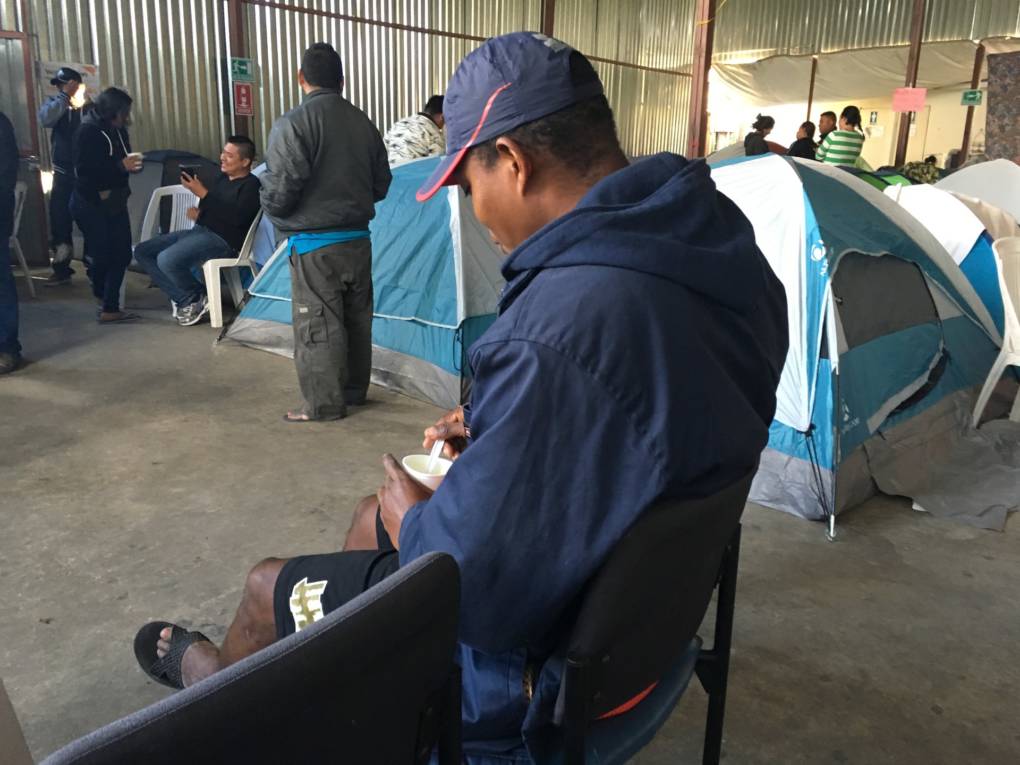
"caption": "Honduran asylum-seeker Saul Arzú eats a cup of soup at the Juventud 2000 migrant shelter in Tijuana on March 8, 2019. U.S. border officials told him he must wait in Mexico for his immigration court date in San Diego.",
"description": null,
"title": "RS36414_IMG_7972-qut",
"credit": "Tyche Hendricks/KQED",
"status": "inherit",
"isLoading": false,
"fetchFailed": false
},
"news_11736152": {
"type": "attachments",
"id": "news_11736152",
"meta": {
"index": "attachments_1716263798",
"site": "news",
"id": "11736152",
"found": true
},
"parent": 11736151,
"imgSizes": {
"post-thumbnail": {
"file": "https://ww2.kqed.org/app/uploads/sites/10/2019/03/ap_19079558007167_wide-3cf677363434ec4e621318a51b2ea090343cb4d3-672x372.jpg",
"width": 672,
"mimeType": "image/jpeg",
"height": 372
},
"kqedFullSize": {
"file": "https://ww2.kqed.org/app/uploads/sites/10/2019/03/ap_19079558007167_wide-3cf677363434ec4e621318a51b2ea090343cb4d3-e1553799097677.jpg",
"width": 1920,
"height": 1080
},
"guest-author-50": {
"file": "https://ww2.kqed.org/app/uploads/sites/10/2019/03/ap_19079558007167_wide-3cf677363434ec4e621318a51b2ea090343cb4d3-50x50.jpg",
"width": 50,
"mimeType": "image/jpeg",
"height": 50
},
"guest-author-96": {
"file": "https://ww2.kqed.org/app/uploads/sites/10/2019/03/ap_19079558007167_wide-3cf677363434ec4e621318a51b2ea090343cb4d3-96x96.jpg",
"width": 96,
"mimeType": "image/jpeg",
"height": 96
},
"apple_news_ca_portrait_12_9": {
"file": "https://ww2.kqed.org/app/uploads/sites/10/2019/03/ap_19079558007167_wide-3cf677363434ec4e621318a51b2ea090343cb4d3-1122x1496.jpg",
"width": 1122,
"mimeType": "image/jpeg",
"height": 1496
},
"medium": {
"file": "https://ww2.kqed.org/app/uploads/sites/10/2019/03/ap_19079558007167_wide-3cf677363434ec4e621318a51b2ea090343cb4d3-800x450.jpg",
"width": 800,
"mimeType": "image/jpeg",
"height": 450
},
"guest-author-32": {
"file": "https://ww2.kqed.org/app/uploads/sites/10/2019/03/ap_19079558007167_wide-3cf677363434ec4e621318a51b2ea090343cb4d3-32x32.jpg",
"width": 32,
"mimeType": "image/jpeg",
"height": 32
},
"apple_news_ca_portrait_9_7": {
"file": "https://ww2.kqed.org/app/uploads/sites/10/2019/03/ap_19079558007167_wide-3cf677363434ec4e621318a51b2ea090343cb4d3-840x1120.jpg",
"width": 840,
"mimeType": "image/jpeg",
"height": 1120
},
"apple_news_ca_square_9_7": {
"file": "https://ww2.kqed.org/app/uploads/sites/10/2019/03/ap_19079558007167_wide-3cf677363434ec4e621318a51b2ea090343cb4d3-1104x1104.jpg",
"width": 1104,
"mimeType": "image/jpeg",
"height": 1104
},
"apple_news_ca_portrait_4_7": {
"file": "https://ww2.kqed.org/app/uploads/sites/10/2019/03/ap_19079558007167_wide-3cf677363434ec4e621318a51b2ea090343cb4d3-414x552.jpg",
"width": 414,
"mimeType": "image/jpeg",
"height": 552
},
"apple_news_ca_square_12_9": {
"file": "https://ww2.kqed.org/app/uploads/sites/10/2019/03/ap_19079558007167_wide-3cf677363434ec4e621318a51b2ea090343cb4d3-1472x1472.jpg",
"width": 1472,
"mimeType": "image/jpeg",
"height": 1472
},
"apple_news_ca_portrait_5_5": {
"file": "https://ww2.kqed.org/app/uploads/sites/10/2019/03/ap_19079558007167_wide-3cf677363434ec4e621318a51b2ea090343cb4d3-687x916.jpg",
"width": 687,
"mimeType": "image/jpeg",
"height": 916
},
"apple_news_ca_square_4_7": {
"file": "https://ww2.kqed.org/app/uploads/sites/10/2019/03/ap_19079558007167_wide-3cf677363434ec4e621318a51b2ea090343cb4d3-550x550.jpg",
"width": 550,
"mimeType": "image/jpeg",
"height": 550
},
"apple_news_ca_square_5_5": {
"file": "https://ww2.kqed.org/app/uploads/sites/10/2019/03/ap_19079558007167_wide-3cf677363434ec4e621318a51b2ea090343cb4d3-912x912.jpg",
"width": 912,
"mimeType": "image/jpeg",
"height": 912
},
"apple_news_ca_landscape_5_5": {
"file": "https://ww2.kqed.org/app/uploads/sites/10/2019/03/ap_19079558007167_wide-3cf677363434ec4e621318a51b2ea090343cb4d3-1044x783.jpg",
"width": 1044,
"mimeType": "image/jpeg",
"height": 783
},
"apple_news_ca_square_4_0": {
"file": "https://ww2.kqed.org/app/uploads/sites/10/2019/03/ap_19079558007167_wide-3cf677363434ec4e621318a51b2ea090343cb4d3-470x470.jpg",
"width": 470,
"mimeType": "image/jpeg",
"height": 470
},
"twentyfourteen-full-width": {
"file": "https://ww2.kqed.org/app/uploads/sites/10/2019/03/ap_19079558007167_wide-3cf677363434ec4e621318a51b2ea090343cb4d3-1038x576.jpg",
"width": 1038,
"mimeType": "image/jpeg",
"height": 576
},
"thumbnail": {
"file": "https://ww2.kqed.org/app/uploads/sites/10/2019/03/ap_19079558007167_wide-3cf677363434ec4e621318a51b2ea090343cb4d3-160x90.jpg",
"width": 160,
"mimeType": "image/jpeg",
"height": 90
},
"apple_news_ca_landscape_4_7": {
"file": "https://ww2.kqed.org/app/uploads/sites/10/2019/03/ap_19079558007167_wide-3cf677363434ec4e621318a51b2ea090343cb4d3-632x474.jpg",
"width": 632,
"mimeType": "image/jpeg",
"height": 474
},
"large": {
"file": "https://ww2.kqed.org/app/uploads/sites/10/2019/03/ap_19079558007167_wide-3cf677363434ec4e621318a51b2ea090343cb4d3-1020x574.jpg",
"width": 1020,
"mimeType": "image/jpeg",
"height": 574
},
"complete_open_graph": {
"file": "https://ww2.kqed.org/app/uploads/sites/10/2019/03/ap_19079558007167_wide-3cf677363434ec4e621318a51b2ea090343cb4d3-1200x675.jpg",
"width": 1200,
"mimeType": "image/jpeg",
"height": 675
},
"apple_news_ca_landscape_4_0": {
"file": "https://ww2.kqed.org/app/uploads/sites/10/2019/03/ap_19079558007167_wide-3cf677363434ec4e621318a51b2ea090343cb4d3-536x402.jpg",
"width": 536,
"mimeType": "image/jpeg",
"height": 402
},
"guest-author-64": {
"file": "https://ww2.kqed.org/app/uploads/sites/10/2019/03/ap_19079558007167_wide-3cf677363434ec4e621318a51b2ea090343cb4d3-64x64.jpg",
"width": 64,
"mimeType": "image/jpeg",
"height": 64
},
"apple_news_ca_portrait_4_0": {
"file": "https://ww2.kqed.org/app/uploads/sites/10/2019/03/ap_19079558007167_wide-3cf677363434ec4e621318a51b2ea090343cb4d3-354x472.jpg",
"width": 354,
"mimeType": "image/jpeg",
"height": 472
},
"apple_news_ca_landscape_12_9": {
"file": "https://ww2.kqed.org/app/uploads/sites/10/2019/03/ap_19079558007167_wide-3cf677363434ec4e621318a51b2ea090343cb4d3-1832x1374.jpg",
"width": 1832,
"mimeType": "image/jpeg",
"height": 1374
},
"full-width": {
"file": "https://ww2.kqed.org/app/uploads/sites/10/2019/03/ap_19079558007167_wide-3cf677363434ec4e621318a51b2ea090343cb4d3-1920x1080.jpg",
"width": 1920,
"mimeType": "image/jpeg",
"height": 1080
},
"guest-author-128": {
"file": "https://ww2.kqed.org/app/uploads/sites/10/2019/03/ap_19079558007167_wide-3cf677363434ec4e621318a51b2ea090343cb4d3-128x128.jpg",
"width": 128,
"mimeType": "image/jpeg",
"height": 128
},
"apple_news_ca_landscape_9_7": {
"file": "https://ww2.kqed.org/app/uploads/sites/10/2019/03/ap_19079558007167_wide-3cf677363434ec4e621318a51b2ea090343cb4d3-1376x1032.jpg",
"width": 1376,
"mimeType": "image/jpeg",
"height": 1032
}
},
"publishDate": 1553798741,
"modified": 1553799091,
"caption": "A Border Patrol agent checks the names and documents of families who crossed the nearby U.S.-Mexico border near McAllen, Texas. Immigration authorities say they expect the continuing surge of Central American families crossing the border to multiply in the coming months.",
"description": "A Border Patrol agent checks the names and documents of families who crossed the nearby U.S.-Mexico border near McAllen, Texas. Immigration authorities say they expect the continuing surge of Central American families crossing the border to multiply in the coming months.",
"title": "Immigration System At The 'Breaking Point,' Homeland Security Official Says",
"credit": "Eric Gay/AP",
"status": "inherit",
"isLoading": false,
"fetchFailed": false
}
},
"audioPlayerReducer": {
"postId": "stream_live",
"isPaused": true,
"isPlaying": false,
"pfsActive": false,
"pledgeModalIsOpen": true,
"playerDrawerIsOpen": false,
"liveAudioPlayStartedAt": 0,
"liveAudioPlayContext": ""
},
"authorsReducer": {
"byline_news_11757141": {
"type": "authors",
"id": "byline_news_11757141",
"meta": {
"override": true
},
"slug": "byline_news_11757141",
"name": "Vanessa Romo and John Burnett",
"isLoading": false
},
"byline_news_11753889": {
"type": "authors",
"id": "byline_news_11753889",
"meta": {
"override": true
},
"slug": "byline_news_11753889",
"name": "\u003cstrong>Scott Neuman\u003cbr />NPR\u003c/strong>",
"isLoading": false
},
"byline_news_11752270": {
"type": "authors",
"id": "byline_news_11752270",
"meta": {
"override": true
},
"slug": "byline_news_11752270",
"name": "Associated Press",
"isLoading": false
},
"byline_news_11751453": {
"type": "authors",
"id": "byline_news_11751453",
"meta": {
"override": true
},
"slug": "byline_news_11751453",
"name": "Laurel Wamsley and Richard Gonzales",
"isLoading": false
},
"byline_news_11748722": {
"type": "authors",
"id": "byline_news_11748722",
"meta": {
"override": true
},
"slug": "byline_news_11748722",
"name": "\u003ca href= \"https://www.kpbs.org/staff/andrew-bowen/\"> Andrew Bowen \u003ca/>",
"isLoading": false
},
"byline_news_11744515": {
"type": "authors",
"id": "byline_news_11744515",
"meta": {
"override": true
},
"slug": "byline_news_11744515",
"name": "Matthew S. Schwartz",
"isLoading": false
},
"byline_news_11736151": {
"type": "authors",
"id": "byline_news_11736151",
"meta": {
"override": true
},
"slug": "byline_news_11736151",
"name": "\u003cstrong>Richard Gonzales\u003c/strong>",
"isLoading": false
},
"tychehendricks": {
"type": "authors",
"id": "259",
"meta": {
"index": "authors_1716337520",
"id": "259",
"found": true
},
"name": "Tyche Hendricks",
"firstName": "Tyche",
"lastName": "Hendricks",
"slug": "tychehendricks",
"email": "thendricks@kqed.org",
"display_author_email": true,
"staff_mastheads": [
"news"
],
"title": "KQED Senior Editor, Immigration",
"bio": "\u003cspan style=\"font-weight: 400;\">Tyche Hendricks is KQED’s senior editor for immigration, leading coverage of the policy and politics that affect California’s immigrant communities. Her work for KQED’s radio and online audiences is also carried on NPR and other national outlets. She has been recognized with awards from the Radio and Television News Directors Association, the Society for Professional Journalists; the Education Writers Association; the Best of the West and the National Federation of Community Broadcasters. Before joining KQED in 2010, Tyche spent more than a dozen years as a newspaper reporter, notably at the \u003c/span>\u003ci>\u003cspan style=\"font-weight: 400;\">San Francisco Chronicle\u003c/span>\u003c/i>\u003cspan style=\"font-weight: 400;\">. At different times she has covered criminal justice, government and politics and urban planning. Tyche has taught in the MFA Creative Writing program at the University of San Francisco and at UC Berkeley’s Graduate School of Journalism, where she was co-director of a national immigration symposium for professional journalists. She is the author of \u003c/span>\u003ci>\u003cspan style=\"font-weight: 400;\">The Wind Doesn't Need a Passport: Stories from the U.S.-Mexico Borderlands\u003c/span>\u003c/i>\u003cspan style=\"font-weight: 400;\"> (University of California Press). \u003c/span>",
"avatar": "https://secure.gravatar.com/avatar/b8ee458e2731c2d43df86882ce17267e?s=600&d=blank&r=g",
"twitter": "tychehendricks",
"facebook": null,
"instagram": null,
"linkedin": null,
"sites": [
{
"site": "news",
"roles": [
"editor"
]
},
{
"site": "stateofhealth",
"roles": [
"editor"
]
}
],
"headData": {
"title": "Tyche Hendricks | KQED",
"description": "KQED Senior Editor, Immigration",
"ogImgSrc": "https://secure.gravatar.com/avatar/b8ee458e2731c2d43df86882ce17267e?s=600&d=blank&r=g",
"twImgSrc": "https://secure.gravatar.com/avatar/b8ee458e2731c2d43df86882ce17267e?s=600&d=blank&r=g"
},
"isLoading": false,
"link": "/author/tychehendricks"
},
"markfiore": {
"type": "authors",
"id": "3236",
"meta": {
"index": "authors_1716337520",
"id": "3236",
"found": true
},
"name": "Mark Fiore",
"firstName": "Mark",
"lastName": "Fiore",
"slug": "markfiore",
"email": "mark@markfiore.com",
"display_author_email": false,
"staff_mastheads": [
"news"
],
"title": "KQED News Cartoonist",
"bio": "\u003ca href=\"http://www.MarkFiore.com\">MarkFiore.com\u003c/a> | \u003ca href=\"https://twitter.com/markfiore\">Follow on Twitter\u003c/a> | \u003ca href=\"https://www.facebook.com/pages/Mark-Fiore-Animated-Political-Cartoons/94451707396?ref=bookmarks\">Facebook\u003c/a> | \u003ca href=\"mailto:mark@markfiore.com\">email\u003c/a>\r\n\r\nPulitzer Prize-winner, Mark Fiore, who the Wall Street Journal has called “the undisputed guru of the form,” creates animated political cartoons in San Francisco, where his work has been featured regularly on the San Francisco Chronicle’s web site, SFGate.com. His work has appeared on Newsweek.com, Slate.com, CBSNews.com, MotherJones.com, DailyKos.com and NPR’s web site. Fiore’s political animation has appeared on CNN, Frontline, Bill Moyers Journal, Salon.com and cable and broadcast outlets across the globe.\r\n\r\nBeginning his professional life by drawing traditional political cartoons for newspapers, Fiore’s work appeared in publications ranging from the Washington Post to the Los Angeles Times. In the late 1990s, he began to experiment with animating political cartoons and, after a short stint at the San Jose Mercury News as their staff cartoonist, Fiore devoted all his energies to animation.\r\nGrowing up in California, Fiore also spent a good portion of his life in the backwoods of Idaho. It was this combination that shaped him politically. Mark majored in political science at Colorado College, where, in a perfect send-off for a cartoonist, he received his diploma in 1991 as commencement speaker Dick Cheney smiled approvingly.\r\nMark Fiore was awarded the Pulitzer Prize for political cartooning in 2010, a Robert F. Kennedy Journalism Award in 2004 and has twice received an Online Journalism Award for commentary from the Online News Association (2002, 2008). Fiore has received two awards for his work in new media from the National Cartoonists Society (2001, 2002), and in 2006 received The James Madison Freedom of Information Award from The Society of Professional Journalists.",
"avatar": "https://secure.gravatar.com/avatar/fc4e2a612b15b67bad0c6f0e1db4ca9b?s=600&d=blank&r=g",
"twitter": "MarkFiore",
"facebook": null,
"instagram": "https://www.instagram.com/markfiore/?hl=en",
"linkedin": null,
"sites": [
{
"site": "arts",
"roles": [
"contributor"
]
},
{
"site": "news",
"roles": [
"editor"
]
},
{
"site": "futureofyou",
"roles": [
"editor"
]
},
{
"site": "science",
"roles": [
"editor"
]
}
],
"headData": {
"title": "Mark Fiore | KQED",
"description": "KQED News Cartoonist",
"ogImgSrc": "https://secure.gravatar.com/avatar/fc4e2a612b15b67bad0c6f0e1db4ca9b?s=600&d=blank&r=g",
"twImgSrc": "https://secure.gravatar.com/avatar/fc4e2a612b15b67bad0c6f0e1db4ca9b?s=600&d=blank&r=g"
},
"isLoading": false,
"link": "/author/markfiore"
},
"fjhabvala": {
"type": "authors",
"id": "8659",
"meta": {
"index": "authors_1716337520",
"id": "8659",
"found": true
},
"name": "Farida Jhabvala Romero",
"firstName": "Farida",
"lastName": "Jhabvala Romero",
"slug": "fjhabvala",
"email": "fjhabvala@kqed.org",
"display_author_email": true,
"staff_mastheads": [
"news"
],
"title": "KQED Contributor",
"bio": "Farida Jhabvala Romero is a Labor Correspondent for KQED. She previously covered immigration. Farida was \u003ca href=\"https://www.ccnma.org/2022-most-influential-latina-journalists\">named\u003c/a> one of the 10 Most Influential Latina Journalists in California in 2022 by the California Chicano News Media Association. Her work has won awards from the Society of Professional Journalists (Northern California), as well as a national and regional Edward M. Murrow Award for the collaborative reporting projects “Dangerous Air” and “Graying California.” Before joining KQED, Farida worked as a producer at Radio Bilingüe, a national public radio network. Farida earned her master’s degree in journalism from Stanford University.",
"avatar": "https://secure.gravatar.com/avatar/f9f022d4e2609741874222a1e9d41f48fea74011aa7c615eef91d9a50c944ebe?s=600&d=blank&r=g",
"twitter": "FaridaJhabvala",
"bluesky": null,
"facebook": null,
"instagram": null,
"linkedin": "https://www.linkedin.com/in/faridajhabvala/",
"sites": [
{
"site": "news",
"roles": [
"editor"
]
},
{
"site": "stateofhealth",
"roles": [
"author"
]
},
{
"site": "liveblog",
"roles": [
"author"
]
}
],
"headData": {
"title": "Farida Jhabvala Romero | KQED",
"description": "KQED Contributor",
"ogImgSrc": "https://secure.gravatar.com/avatar/f9f022d4e2609741874222a1e9d41f48fea74011aa7c615eef91d9a50c944ebe?s=600&d=blank&r=g",
"twImgSrc": "https://secure.gravatar.com/avatar/f9f022d4e2609741874222a1e9d41f48fea74011aa7c615eef91d9a50c944ebe?s=600&d=blank&r=g"
},
"isLoading": false,
"link": "/author/fjhabvala"
},
"ahall": {
"type": "authors",
"id": "11490",
"meta": {
"index": "authors_1716337520",
"id": "11490",
"found": true
},
"name": "Alex Hall",
"firstName": "Alex",
"lastName": "Hall",
"slug": "ahall",
"email": "ahall@kqed.org",
"display_author_email": false,
"staff_mastheads": [
"news"
],
"title": "KQED Enterprise & Accountability Reporter",
"bio": "Alex Hall is KQED's Enterprise and Accountability Reporter. She previously covered the Central Valley for five years from KQED's bureau in Fresno. Before joining KQED, Alex was an investigative reporting fellow at Wisconsin Public Radio and the Wisconsin Center for Investigative Journalism. She has also worked as a bilingual producer for NPR's investigative unit and freelance video producer for Reuters TV on the Latin America desk. She got her start in journalism in South America, where she worked as a radio producer and Spanish-English translator for CNN Chile. Her documentary and investigation into the series of deadly COVID-19 outbreaks at Foster Farms won a national Edward R. Murrow award and was named an Investigative Reporters & Editors award finalist. Alex's reporting for Reveal on the Wisconsin dairy industry's reliance on undocumented immigrant labor was made into a film, Los Lecheros, which won a regional Edward R. Murrow award for best news documentary.",
"avatar": "https://secure.gravatar.com/avatar/defcbeb88b0bf591ff9af41f22644051?s=600&d=blank&r=g",
"twitter": "@chalexhall",
"facebook": null,
"instagram": null,
"linkedin": null,
"sites": [
{
"site": "news",
"roles": [
"editor"
]
},
{
"site": "liveblog",
"roles": [
"author"
]
}
],
"headData": {
"title": "Alex Hall | KQED",
"description": "KQED Enterprise & Accountability Reporter",
"ogImgSrc": "https://secure.gravatar.com/avatar/defcbeb88b0bf591ff9af41f22644051?s=600&d=blank&r=g",
"twImgSrc": "https://secure.gravatar.com/avatar/defcbeb88b0bf591ff9af41f22644051?s=600&d=blank&r=g"
},
"isLoading": false,
"link": "/author/ahall"
}
},
"pagesReducer": {
"news_tag_customs-and-border-protection": {
"type": "terms",
"id": "news_21200",
"meta": {
"index": "terms_1716263798",
"site": "news",
"id": "21200",
"score": 10.403818
},
"featImg": null,
"name": "Customs and Border Protection",
"description": null,
"taxonomy": "tag",
"headData": {
"twImgId": null,
"twTitle": null,
"ogTitle": null,
"ogImgId": null,
"twDescription": null,
"description": null,
"title": "Customs and Border Protection Archives | KQED News",
"ogDescription": null
},
"ttid": 21217,
"slug": "customs-and-border-protection",
"isLoading": false,
"title": "Customs and Border Protection",
"pageMeta": {
"site": "news",
"WpPageTemplate": "page-topic-editorial",
"currentPage": 3
},
"blocks": [
{
"blockName": "kqed/post-list",
"attrs": {
"layout": "cardArticle2",
"query": "posts/news?tag=customs-and-border-protection",
"seeMore": false,
"paginated": true,
"page": 3
}
},
{
"blockName": "kqed/ad"
}
]
}
},
"pfsSessionReducer": {},
"postsReducer": {
"stream_live": {
"type": "live",
"id": "stream_live",
"audioUrl": "https://streams.kqed.org/kqedradio",
"title": "Live Stream",
"excerpt": "Live Stream information currently unavailable.",
"link": "/radio",
"featImg": "",
"label": {
"name": "KQED Live",
"link": "/"
}
},
"stream_kqedNewscast": {
"type": "posts",
"id": "stream_kqedNewscast",
"audioUrl": "https://www.kqed.org/.stream/anon/radio/RDnews/newscast.mp3?_=1",
"title": "KQED Newscast",
"featImg": "",
"label": {
"name": "88.5 FM",
"link": "/"
}
},
"news_11757496": {
"type": "posts",
"id": "news_11757496",
"meta": {
"index": "posts_1716263798",
"site": "news",
"id": "11757496",
"score": null,
"sort": [
1561589549000
]
},
"parent": 0,
"labelTerm": {
"site": "news",
"term": 72
},
"blocks": [],
"publishDate": 1561589549,
"format": "standard",
"disqusTitle": "As Senate Approves Border Spending Bill, California Lawmakers Fight for More Safeguards",
"title": "As Senate Approves Border Spending Bill, California Lawmakers Fight for More Safeguards",
"headTitle": "The California Report | KQED News",
"content": "\u003cp>With an overwhelming bipartisan vote of 84-8, the U.S. Senate Wednesday passed a $4.6 billion emergency funding bill to handle a surge in migrants arrested at the U.S.-Mexico border. The vote came the day after the House of Representatives \u003ca href=\"https://www.kqed.org/news/11757370/house-passes-4-5-billion-in-emergency-border-aid\" target=\"_blank\" rel=\"noopener\">approved its own legislation\u003c/a> that includes more safeguards to protect vulnerable children and families.\u003c/p>\n\u003cp>House Speaker Nancy Pelosi pushed for swift negotiations to reconcile the two bills, even as White House advisers recommended President Trump veto the House bill, arguing the measure would curtail the administration’s border security efforts.\u003c/p>\n\u003cp>[pullquote size=“medium” align=”right” citation=\"Rep. Raul Ruiz (D-Palm Desert)\"]'It is contrary to our moral character as a nation. It's the way that children and women are treated inhumanely like animals. And there is no accountability.'[/pullquote]\u003c/p>\n\u003cp>\"The Senate has a good bill. Our bill is much better,\" Pelosi told her Democratic colleagues earlier in the week. On Wednesday, Pelosi told The Associated Press she had a \"good conversation\" with Trump and that \"I don’t know if the president is even going to be signing the Senate bill.\"\u003c/p>\n\u003cp>Approval of the House bill, by a 230-195 vote, mostly along party lines, came late Tuesday evening after Hispanic and liberal Democrats, appalled by the treatment of migrants at the border, succeeded in pushing for last-minute amendments aimed at improving in-custody conditions.\u003c/p>\n\u003cp>Those provisions limit the time that most unaccompanied minors can be held at unlicensed facilities to three months, and call for U.S. Customs and Border Protection to create more stringent standards to “protect the health and safety” of detained migrants.\u003c/p>\n\u003cp>But conflicted lawmakers who voted for the funding to ease overcrowded border facilities said it didn’t go far enough, in part because CBP already has standards that are often not met.\u003c/p>\n\u003cp>[aside postID=\"news_11757074,news_11752787,news_11755713\" label=\"At the Border\"]\u003c/p>\n\u003cp>\"It's absolutely a dysfunctional system. It is contrary to our moral character as a nation,\" said Rep. Raul Ruiz (D-Palm Desert), a Harvard-trained physician. \"It's the way that children and women are treated inhumanely like animals. And there is no accountability.\"\u003c/p>\n\u003cp>Ruiz recently introduced a \u003ca href=\"https://www.kqed.org/news/11754525/after-deaths-of-migrant-kids-lawmakers-push-for-changes-in-border-detention\">separate bill \u003c/a>this month that would require CBP to conduct health screenings of all detainees, provide them access to private toilets and nutritious food, and get rid of freezing cold holding rooms known as \"hieleras.\"\u003c/p>\n\u003cp>\"We have a whole lot more to do to meet the humanitarian needs of children and families under CBP custody,\" said Ruiz.\u003c/p>\n\u003cp>CBP arrested nearly 144,300 migrants at the southern border in May alone, more than any other month in the last five years. While male adults from Mexico represented most of the apprehensions in the 1980s and 1990s, now most of those arrested are Central American families and children who say they are fleeing crushing violence, impunity and poverty in their home countries.\u003c/p>\n\u003cp>[ad fullwidth]\u003c/p>\n\u003cp>CBP officials say they are under-resourced and under-equipped to cope with the influx of families and children apprehended without a parent or legal guardian.\u003c/p>\n\u003cp>\"We completely agree with some of the reporting that has gone out that (unaccompanied minors) should not be held in our custody,\" said a CBP official during a call with reporters. \"We do not want them in our custody, our facilities were not designed for that.\"\u003c/p>\n\u003cp>As House lawmakers debated the emergency spending bill Tuesday, CBP acting head John Sanders submitted his resignation, amid the latest controversy over the treatment of children in custody.\u003c/p>\n\u003cp>A group of independent monitors who visited a Border Patrol station in Clint, Texas, near El Paso, last week reported children were filthy, sick with the flu and held in overcrowded rooms for weeks, without much time outdoors or proper adult supervision.\u003c/p>\n\u003cp>[aside postID=\"forum_2010101871875,news_11757141\"]\"Border Patrol has these rules that they are not supposed to be touching the children. And so they don’t touch them, they don’t help them, they don’t care for them,\" said Bill Hing, a law professor with the University of San Francisco who interviewed kids at the facility, most of whom had been separated from aunts, uncles, cousins and siblings at the border.\u003c/p>\n\u003cp>One girl was just 2 years old, he said.\u003c/p>\n\u003cp>\"She was on her own, and only because there was a nice 16-year-old girl that took care of her that she has somebody to comfort her,\" said Hing. \"It was unbelievable.\"\u003c/p>\n\u003cp>By law, unaccompanied minors are supposed to be transferred out of CBP custody within 72 hours to specialized shelters meant to care for unaccompanied minors. But Health and Human Services Secretary Alex Azar said shelter space is \"at capacity.\"\u003c/p>\n\u003cp>Hing said while it was clear the government should fund more space to hold migrants, he doesn’t believe the Trump administration should detain and separate relatives traveling together, as \u003ca href=\"https://www.kqed.org/news/11756583/report-vast-majority-of-asylum-seeking-families-in-s-f-immigration-court-attend-all-hearings\">data shows\u003c/a> the vast majority show up for court asylum hearings even when not detained.\u003c/p>\n\u003cp>Rep. Julia Brownley (D-Westlake Village) echoed Hing’s concern, faulting the Trump administration for taking children from adult relatives because they were not parents or legal guardians.\u003c/p>\n\u003cp>\"The President is purposefully making this situation worse by refusing to place these children with known family members while their cases are reviewed,\" Brownley said in a statement Wednesday, \"and by cutting foreign assistance programs in Central America — a decision that is intended to make matters even worse.\"\u003c/p>\n\u003cp>\u003cem>The Associated Press contributed to this report.\u003c/em>\u003c/p>\n\u003cp>\u003c/p>\n",
"disqusIdentifier": "11757496 https://ww2.kqed.org/news/?p=11757496",
"disqusUrl": "https://ww2.kqed.org/news/2019/06/26/as-senate-approves-border-spending-bill-california-lawmakers-fight-for-more-safeguards/",
"stats": {
"hasVideo": false,
"hasChartOrMap": false,
"hasAudio": false,
"hasPolis": false,
"wordCount": 921,
"hasGoogleForm": false,
"hasGallery": false,
"hasHearkenModule": false,
"iframeSrcs": [],
"paragraphCount": 26
},
"modified": 1561597533,
"excerpt": "Conflicted lawmakers who voted for funding to ease overcrowded border facilities said it didn’t go far enough, in part because U.S. Customs and Border Protection already has standards that are often not met.",
"headData": {
"twImgId": "",
"twTitle": "",
"ogTitle": "",
"ogImgId": "",
"twDescription": "",
"description": "Conflicted lawmakers who voted for funding to ease overcrowded border facilities said it didn’t go far enough, in part because U.S. Customs and Border Protection already has standards that are often not met.",
"title": "As Senate Approves Border Spending Bill, California Lawmakers Fight for More Safeguards | KQED",
"ogDescription": "",
"schema": {
"@context": "https://schema.org",
"@type": "NewsArticle",
"headline": "As Senate Approves Border Spending Bill, California Lawmakers Fight for More Safeguards",
"datePublished": "2019-06-26T15:52:29-07:00",
"dateModified": "2019-06-26T18:05:33-07:00",
"image": "https://cdn.kqed.org/wp-content/uploads/2020/02/KQED-OG-Image@1x.png",
"isAccessibleForFree": "True",
"publisher": {
"@type": "NewsMediaOrganization",
"@id": "https://www.kqed.org/#organization",
"name": "KQED",
"logo": "https://cdn.kqed.org/wp-content/uploads/2020/02/KQED-OG-Image@1x.png",
"url": "https://www.kqed.org",
"sameAs": [
"https://www.facebook.com/KQED",
"https://twitter.com/KQED",
"https://www.instagram.com/kqed/",
"https://www.tiktok.com/@kqedofficial",
"https://www.linkedin.com/company/kqed",
"https://www.youtube.com/channel/UCeC0IOo7i1P_61zVUWbJ4nw"
]
}
}
},
"guestAuthors": [],
"slug": "as-senate-approves-border-spending-bill-california-lawmakers-fight-for-more-safeguards",
"status": "publish",
"audioUrl": "https://www.kqed.org/.stream/anon/radio/tcr/2019/06/RomeroBorder.mp3",
"audioTrackLength": 131,
"path": "/news/11757496/as-senate-approves-border-spending-bill-california-lawmakers-fight-for-more-safeguards",
"audioDuration": 131000,
"parsedContent": [
{
"type": "contentString",
"content": "\u003cdiv class=\"post-body\">\u003cp>\u003cp>With an overwhelming bipartisan vote of 84-8, the U.S. Senate Wednesday passed a $4.6 billion emergency funding bill to handle a surge in migrants arrested at the U.S.-Mexico border. The vote came the day after the House of Representatives \u003ca href=\"https://www.kqed.org/news/11757370/house-passes-4-5-billion-in-emergency-border-aid\" target=\"_blank\" rel=\"noopener\">approved its own legislation\u003c/a> that includes more safeguards to protect vulnerable children and families.\u003c/p>\n\u003cp>House Speaker Nancy Pelosi pushed for swift negotiations to reconcile the two bills, even as White House advisers recommended President Trump veto the House bill, arguing the measure would curtail the administration’s border security efforts.\u003c/p>\n\u003cp>\u003c/p>\u003c/div>",
"attributes": {
"named": {},
"numeric": []
}
},
{
"type": "component",
"content": "'It is contrary to our moral character as a nation. It's the way that children and women are treated inhumanely like animals. And there is no accountability.'",
"name": "pullquote",
"attributes": {
"named": {
"size": "“medium”",
"align": "”right”",
"citation": "Rep. Raul Ruiz (D-Palm Desert)",
"label": ""
},
"numeric": []
}
},
{
"type": "contentString",
"content": "\u003cdiv class=\"post-body\">\u003cp>\u003c/p>\n\u003cp>\"The Senate has a good bill. Our bill is much better,\" Pelosi told her Democratic colleagues earlier in the week. On Wednesday, Pelosi told The Associated Press she had a \"good conversation\" with Trump and that \"I don’t know if the president is even going to be signing the Senate bill.\"\u003c/p>\n\u003cp>Approval of the House bill, by a 230-195 vote, mostly along party lines, came late Tuesday evening after Hispanic and liberal Democrats, appalled by the treatment of migrants at the border, succeeded in pushing for last-minute amendments aimed at improving in-custody conditions.\u003c/p>\n\u003cp>Those provisions limit the time that most unaccompanied minors can be held at unlicensed facilities to three months, and call for U.S. Customs and Border Protection to create more stringent standards to “protect the health and safety” of detained migrants.\u003c/p>\n\u003cp>But conflicted lawmakers who voted for the funding to ease overcrowded border facilities said it didn’t go far enough, in part because CBP already has standards that are often not met.\u003c/p>\n\u003cp>\u003c/p>\u003c/div>",
"attributes": {
"named": {},
"numeric": []
}
},
{
"type": "component",
"content": "",
"name": "aside",
"attributes": {
"named": {
"postid": "news_11757074,news_11752787,news_11755713",
"label": "At the Border "
},
"numeric": []
}
},
{
"type": "contentString",
"content": "\u003cdiv class=\"post-body\">\u003cp>\u003c/p>\n\u003cp>\"It's absolutely a dysfunctional system. It is contrary to our moral character as a nation,\" said Rep. Raul Ruiz (D-Palm Desert), a Harvard-trained physician. \"It's the way that children and women are treated inhumanely like animals. And there is no accountability.\"\u003c/p>\n\u003cp>Ruiz recently introduced a \u003ca href=\"https://www.kqed.org/news/11754525/after-deaths-of-migrant-kids-lawmakers-push-for-changes-in-border-detention\">separate bill \u003c/a>this month that would require CBP to conduct health screenings of all detainees, provide them access to private toilets and nutritious food, and get rid of freezing cold holding rooms known as \"hieleras.\"\u003c/p>\n\u003cp>\"We have a whole lot more to do to meet the humanitarian needs of children and families under CBP custody,\" said Ruiz.\u003c/p>\n\u003cp>CBP arrested nearly 144,300 migrants at the southern border in May alone, more than any other month in the last five years. While male adults from Mexico represented most of the apprehensions in the 1980s and 1990s, now most of those arrested are Central American families and children who say they are fleeing crushing violence, impunity and poverty in their home countries.\u003c/p>\n\u003cp>\u003c/p>\u003c/div>",
"attributes": {
"named": {},
"numeric": []
}
},
{
"type": "component",
"content": "",
"name": "ad",
"attributes": {
"named": {
"label": "fullwidth"
},
"numeric": [
"fullwidth"
]
}
},
{
"type": "contentString",
"content": "\u003cdiv class=\"post-body\">\u003cp>\u003c/p>\n\u003cp>CBP officials say they are under-resourced and under-equipped to cope with the influx of families and children apprehended without a parent or legal guardian.\u003c/p>\n\u003cp>\"We completely agree with some of the reporting that has gone out that (unaccompanied minors) should not be held in our custody,\" said a CBP official during a call with reporters. \"We do not want them in our custody, our facilities were not designed for that.\"\u003c/p>\n\u003cp>As House lawmakers debated the emergency spending bill Tuesday, CBP acting head John Sanders submitted his resignation, amid the latest controversy over the treatment of children in custody.\u003c/p>\n\u003cp>A group of independent monitors who visited a Border Patrol station in Clint, Texas, near El Paso, last week reported children were filthy, sick with the flu and held in overcrowded rooms for weeks, without much time outdoors or proper adult supervision.\u003c/p>\n\u003cp>\u003c/p>\u003c/div>",
"attributes": {
"named": {},
"numeric": []
}
},
{
"type": "component",
"content": "",
"name": "aside",
"attributes": {
"named": {
"postid": "forum_2010101871875,news_11757141",
"label": ""
},
"numeric": []
}
},
{
"type": "contentString",
"content": "\u003cdiv class=\"post-body\">\u003cp>\"Border Patrol has these rules that they are not supposed to be touching the children. And so they don’t touch them, they don’t help them, they don’t care for them,\" said Bill Hing, a law professor with the University of San Francisco who interviewed kids at the facility, most of whom had been separated from aunts, uncles, cousins and siblings at the border.\u003c/p>\n\u003cp>One girl was just 2 years old, he said.\u003c/p>\n\u003cp>\"She was on her own, and only because there was a nice 16-year-old girl that took care of her that she has somebody to comfort her,\" said Hing. \"It was unbelievable.\"\u003c/p>\n\u003cp>By law, unaccompanied minors are supposed to be transferred out of CBP custody within 72 hours to specialized shelters meant to care for unaccompanied minors. But Health and Human Services Secretary Alex Azar said shelter space is \"at capacity.\"\u003c/p>\n\u003cp>Hing said while it was clear the government should fund more space to hold migrants, he doesn’t believe the Trump administration should detain and separate relatives traveling together, as \u003ca href=\"https://www.kqed.org/news/11756583/report-vast-majority-of-asylum-seeking-families-in-s-f-immigration-court-attend-all-hearings\">data shows\u003c/a> the vast majority show up for court asylum hearings even when not detained.\u003c/p>\n\u003cp>Rep. Julia Brownley (D-Westlake Village) echoed Hing’s concern, faulting the Trump administration for taking children from adult relatives because they were not parents or legal guardians.\u003c/p>\n\u003cp>\"The President is purposefully making this situation worse by refusing to place these children with known family members while their cases are reviewed,\" Brownley said in a statement Wednesday, \"and by cutting foreign assistance programs in Central America — a decision that is intended to make matters even worse.\"\u003c/p>\n\u003cp>\u003cem>The Associated Press contributed to this report.\u003c/em>\u003c/p>\n\u003cp>\u003c/p>\n\u003c/div>\u003c/p>",
"attributes": {
"named": {},
"numeric": []
}
}
],
"link": "/news/11757496/as-senate-approves-border-spending-bill-california-lawmakers-fight-for-more-safeguards",
"authors": [
"8659"
],
"programs": [
"news_72"
],
"categories": [
"news_1169",
"news_6188",
"news_8",
"news_13"
],
"tags": [
"news_20458",
"news_21200",
"news_20857",
"news_23524",
"news_17041",
"news_387",
"news_21038",
"news_17628",
"news_244"
],
"featImg": "news_11757533",
"label": "news_72"
},
"news_11757141": {
"type": "posts",
"id": "news_11757141",
"meta": {
"index": "posts_1716263798",
"site": "news",
"id": "11757141",
"score": null,
"sort": [
1561488222000
]
},
"parent": 0,
"labelTerm": {},
"blocks": [],
"publishDate": 1561488222,
"format": "standard",
"disqusTitle": "Acting Head of Customs and Border Protection Plans to Step Down",
"title": "Acting Head of Customs and Border Protection Plans to Step Down",
"headTitle": "KQED News",
"content": "\u003cp>The acting commissioner of U.S. Customs and Border Protection plans to step down in the coming weeks, according to two agency officials, amid a public furor over the treatment of migrant children in U.S. facilities.\u003c/p>\n\u003cp>John Sanders is expected to make his resignation effective July 5, according to the officials, who spoke to NPR on condition of anonymity because an official announcement had not been made to agency employees.\u003c/p>\n\u003cp>Sanders has held the post for just over two months, after President Trump tapped his predecessor, Kevin McAleenan, to be acting chief of the Department of Homeland Security.\u003c/p>\n\u003cp>Trump said Tuesday afternoon that he did not ask Sanders to step down. \"I don't think I've ever spoken to him,\" the president told reporters. He added that he expected Sanders' resignation and that \"I've made changes, very good changes.\"\u003c/p>\n\u003cp>\"We're moving some people around to different locations,\" Trump said, without expounding on who is being shuffled or where they might go.\u003c/p>\n\u003cp>[ad fullwidth]\u003c/p>\n\u003cp>Customs and Border Protection has come under fire in recent days amid revelations that nearly 300 migrant children — from infants to 17-year-olds — had been detained in a remote Border Patrol station in West Texas without adequate food, water and sanitation.\u003c/p>\n\u003cp>All but 30 of the children were transferred out of the center in Clint, Texas, after revelations last week that they were being held in squalid conditions.\u003c/p>\n\u003cp>According to a CBP official who asked not to be identified, \"nothing additional\" was provided at the Clint facility before the children were moved back.\u003c/p>\n\u003cp>During a phone conference with reporters, the same CBP official rejected accounts that children were being mistreated at any of its temporary shelter, as a group of lawyers who toured the Clint location reported last week.\u003c/p>\n\u003cp>\"I personally don't believe these allegations,\" he said, when asked whether children were denied showers, soap, toothbrushes and other personal hygiene items, as well as reports that children were forced to care for unconsoleable toddlers.\u003c/p>\n\u003cp>\"I don't buy that,\" he repeated, when reporters mentioned statements that children said they were often hungry.\u003c/p>\n\u003cp>The official maintained that CBP is not running low on supplies. \"Those things are available now and they have been continuously,\" he added.\u003c/p>\n\u003cp>Under the Flores settlement, a 1997 agreement that dictates how the government is supposed to treat detained underage migrants, children held by the Border Patrol are supposed to be transferred into the care of the Office of Refugee Resettlement within 72 hours. But many of the children were held for weeks at the Clint facility, which CBP says is not bound to the 72-hour limit because it is an emergency shelter.\u003c/p>\n\u003cp>The White House has been urging Congress to approve a supplemental budget request since last month, saying money to house and care for migrants will run out by the end of the month.\u003c/p>\n\u003cp>That additional funding, according to HHS spokeswoman Evelyn Stauffer, would go toward increasing \"shelter capacity in order to meet the needs of the minors in our custody while ORR works to find sponsors, usually family members, for the children.\"\u003c/p>\n\u003cp>On Tuesday, Trump said he is \"very concerned\" about the conditions for migrant children at facilities along the U.S.-Mexico border but added that \"they're much better than they were under President Obama by far.\"\u003c/p>\n\u003cp>\"A lot of these young children that come from places that you don't even want to know about, the way they've lived ... the poverty that they grew up in,\" he said.\u003c/p>\n\u003cp>Trump also accused Democrats of not taking action to improve the situation for migrants at the Southern border and to close what he called loopholes for asylum-seekers. \"We're trying to get the Democrats to agree to really give us some humanitarian aid, humanitarian money,\" he said.\u003c/p>\n\u003cp>The House is expected to vote Tuesday on a supplemental spending measure that would send money to agencies working to address the needs of migrants arriving at the U.S.-Mexico border.\u003c/p>\n\u003cp>\u003c/p>\n\u003cp>As NPR's Kelsey Snell reported, last-minute requirements were added to the $4.5 billion legislation that would obligate CBP to establish hygiene and medical standards for children and a 90-day limit on keeping kids in temporary emergency shelters.\u003c/p>\n\n",
"disqusIdentifier": "11757141 https://ww2.kqed.org/news/?p=11757141",
"disqusUrl": "https://ww2.kqed.org/news/2019/06/25/acting-head-of-customs-and-border-protection-plans-to-step-down/",
"stats": {
"hasVideo": false,
"hasChartOrMap": false,
"hasAudio": false,
"hasPolis": false,
"wordCount": 711,
"hasGoogleForm": false,
"hasGallery": false,
"hasHearkenModule": false,
"iframeSrcs": [],
"paragraphCount": 22
},
"modified": 1561515357,
"excerpt": "John Sanders is expected to make his resignation effective July 5, two officials said. The move comes after hundreds of children were removed from a facility without adequate food and sanitation.",
"headData": {
"twImgId": "",
"twTitle": "",
"ogTitle": "",
"ogImgId": "",
"twDescription": "",
"description": "John Sanders is expected to make his resignation effective July 5, two officials said. The move comes after hundreds of children were removed from a facility without adequate food and sanitation.",
"title": "Acting Head of Customs and Border Protection Plans to Step Down | KQED",
"ogDescription": "",
"schema": {
"@context": "https://schema.org",
"@type": "NewsArticle",
"headline": "Acting Head of Customs and Border Protection Plans to Step Down",
"datePublished": "2019-06-25T11:43:42-07:00",
"dateModified": "2019-06-25T19:15:57-07:00",
"image": "https://cdn.kqed.org/wp-content/uploads/2020/02/KQED-OG-Image@1x.png",
"isAccessibleForFree": "True",
"publisher": {
"@type": "NewsMediaOrganization",
"@id": "https://www.kqed.org/#organization",
"name": "KQED",
"logo": "https://cdn.kqed.org/wp-content/uploads/2020/02/KQED-OG-Image@1x.png",
"url": "https://www.kqed.org",
"sameAs": [
"https://www.facebook.com/KQED",
"https://twitter.com/KQED",
"https://www.instagram.com/kqed/",
"https://www.tiktok.com/@kqedofficial",
"https://www.linkedin.com/company/kqed",
"https://www.youtube.com/channel/UCeC0IOo7i1P_61zVUWbJ4nw"
]
}
}
},
"guestAuthors": [],
"slug": "acting-head-of-customs-and-border-protection-plans-to-step-down",
"status": "publish",
"sourceUrl": "https://www.npr.org/2019/06/25/735764301/acting-head-of-customs-and-border-protection-plans-to-step-down",
"nprByline": "Vanessa Romo and John Burnett",
"source": "NPR",
"path": "/news/11757141/acting-head-of-customs-and-border-protection-plans-to-step-down",
"audioTrackLength": null,
"parsedContent": [
{
"type": "contentString",
"content": "\u003cdiv class=\"post-body\">\u003cp>\u003cp>The acting commissioner of U.S. Customs and Border Protection plans to step down in the coming weeks, according to two agency officials, amid a public furor over the treatment of migrant children in U.S. facilities.\u003c/p>\n\u003cp>John Sanders is expected to make his resignation effective July 5, according to the officials, who spoke to NPR on condition of anonymity because an official announcement had not been made to agency employees.\u003c/p>\n\u003cp>Sanders has held the post for just over two months, after President Trump tapped his predecessor, Kevin McAleenan, to be acting chief of the Department of Homeland Security.\u003c/p>\n\u003cp>Trump said Tuesday afternoon that he did not ask Sanders to step down. \"I don't think I've ever spoken to him,\" the president told reporters. He added that he expected Sanders' resignation and that \"I've made changes, very good changes.\"\u003c/p>\n\u003cp>\"We're moving some people around to different locations,\" Trump said, without expounding on who is being shuffled or where they might go.\u003c/p>\n\u003cp>\u003c/p>\u003c/div>",
"attributes": {
"named": {},
"numeric": []
}
},
{
"type": "component",
"content": "",
"name": "ad",
"attributes": {
"named": {
"label": "fullwidth"
},
"numeric": [
"fullwidth"
]
}
},
{
"type": "contentString",
"content": "\u003cdiv class=\"post-body\">\u003cp>\u003c/p>\n\u003cp>Customs and Border Protection has come under fire in recent days amid revelations that nearly 300 migrant children — from infants to 17-year-olds — had been detained in a remote Border Patrol station in West Texas without adequate food, water and sanitation.\u003c/p>\n\u003cp>All but 30 of the children were transferred out of the center in Clint, Texas, after revelations last week that they were being held in squalid conditions.\u003c/p>\n\u003cp>According to a CBP official who asked not to be identified, \"nothing additional\" was provided at the Clint facility before the children were moved back.\u003c/p>\n\u003cp>During a phone conference with reporters, the same CBP official rejected accounts that children were being mistreated at any of its temporary shelter, as a group of lawyers who toured the Clint location reported last week.\u003c/p>\n\u003cp>\"I personally don't believe these allegations,\" he said, when asked whether children were denied showers, soap, toothbrushes and other personal hygiene items, as well as reports that children were forced to care for unconsoleable toddlers.\u003c/p>\n\u003cp>\"I don't buy that,\" he repeated, when reporters mentioned statements that children said they were often hungry.\u003c/p>\n\u003cp>The official maintained that CBP is not running low on supplies. \"Those things are available now and they have been continuously,\" he added.\u003c/p>\n\u003cp>Under the Flores settlement, a 1997 agreement that dictates how the government is supposed to treat detained underage migrants, children held by the Border Patrol are supposed to be transferred into the care of the Office of Refugee Resettlement within 72 hours. But many of the children were held for weeks at the Clint facility, which CBP says is not bound to the 72-hour limit because it is an emergency shelter.\u003c/p>\n\u003cp>The White House has been urging Congress to approve a supplemental budget request since last month, saying money to house and care for migrants will run out by the end of the month.\u003c/p>\n\u003cp>That additional funding, according to HHS spokeswoman Evelyn Stauffer, would go toward increasing \"shelter capacity in order to meet the needs of the minors in our custody while ORR works to find sponsors, usually family members, for the children.\"\u003c/p>\n\u003cp>On Tuesday, Trump said he is \"very concerned\" about the conditions for migrant children at facilities along the U.S.-Mexico border but added that \"they're much better than they were under President Obama by far.\"\u003c/p>\n\u003cp>\"A lot of these young children that come from places that you don't even want to know about, the way they've lived ... the poverty that they grew up in,\" he said.\u003c/p>\n\u003cp>Trump also accused Democrats of not taking action to improve the situation for migrants at the Southern border and to close what he called loopholes for asylum-seekers. \"We're trying to get the Democrats to agree to really give us some humanitarian aid, humanitarian money,\" he said.\u003c/p>\n\u003cp>The House is expected to vote Tuesday on a supplemental spending measure that would send money to agencies working to address the needs of migrants arriving at the U.S.-Mexico border.\u003c/p>\n\u003cp>\u003c/p>\n\u003cp>As NPR's Kelsey Snell reported, last-minute requirements were added to the $4.5 billion legislation that would obligate CBP to establish hygiene and medical standards for children and a 90-day limit on keeping kids in temporary emergency shelters.\u003c/p>\n\n\u003c/div>\u003c/p>",
"attributes": {
"named": {},
"numeric": []
}
}
],
"link": "/news/11757141/acting-head-of-customs-and-border-protection-plans-to-step-down",
"authors": [
"byline_news_11757141"
],
"categories": [
"news_1169",
"news_8",
"news_13"
],
"tags": [
"news_21200",
"news_20202"
],
"featImg": "news_11757156",
"label": "source_news_11757141"
},
"news_11754525": {
"type": "posts",
"id": "news_11754525",
"meta": {
"index": "posts_1716263798",
"site": "news",
"id": "11754525",
"score": null,
"sort": [
1560532414000
]
},
"parent": 0,
"labelTerm": {
"site": "news",
"term": 72
},
"blocks": [],
"publishDate": 1560532414,
"format": "standard",
"disqusTitle": "After Deaths of Migrant Kids, Lawmakers Push for Changes in Border Detention",
"title": "After Deaths of Migrant Kids, Lawmakers Push for Changes in Border Detention",
"headTitle": "The California Report | KQED News",
"content": "\u003cp>A Southern California congressman trained as a physician introduced a bill Wednesday that aims to prevent the deaths of migrant children and other detainees at U.S. Customs and Border Protection facilities.\u003c/p>\n\u003cp>[aside postID='news_11739785,news_11736531,news_11728992' label='More Coverage of Immigration Detention']\u003c/p>\n\u003cp>The \"Humanitarian Standards for Individuals in Customs and Border Protection Custody Act\" by Rep. Raul Ruiz, D-Palm Desert, would require CBP to conduct health screenings by medical professionals within 12 hours of individuals being detained, and improve conditions for them while they are held.\u003c/p>\n\u003cp>The legislation also calls for migrants in CBP custody to have access to private toilets, at least a gallon of clean drinking water per day and facilities with a temperature kept at \"comfortable levels\" — which would halt the use of freezing cold holding rooms former detainees refer to as \"hieleras.\"\u003c/p>\n\u003cp>\"These standards will ensure our treatment of children and families is consistent with the principles of basic human dignity,\" said Ruiz, who represents the Coachella Valley.\u003c/p>\n\u003cp>[ad fullwidth]\u003c/p>\n\u003cp>Standing at the Capitol before a row of doctors wearing white lab coats and Democratic lawmakers, Ruiz read the names of seven minors who have died while in immigration custody or shortly after release since last December.\u003c/p>\n\u003cp>He said the first reported \u003ca href=\"https://www.cbp.gov/newsroom/speeches-and-statements/statement-us-customs-and-border-protection-death-seven-year-old#\" target=\"_blank\" rel=\"noopener\">death\u003c/a> of a 7-year-old Guatemalan girl, Jakelin Caal Maquin, prompted him to visit CBP facilities.\u003c/p>\n\u003cp>\"The conditions I saw were deplorable, subhuman and heartbreaking,\" said Ruiz, who has experience as an emergency room doctor. \"Open toilets in crowded cells without any privacy. Visibly sick children coughing on one another. Babies who were dirty and didn't have diapers.\"\u003c/p>\n\u003cp>A CBP spokesman said agency policy prohibits him from commenting on pending legislation.\u003c/p>\n\u003cp>While agency \u003ca href=\"https://www.cbp.gov/sites/default/files/assets/documents/2017-Sep/CBP%20TEDS%20Policy%20Oct2015.pdf\" target=\"_blank\" rel=\"noopener\">guidelines\u003c/a> do not require health screenings by medical professionals for every detainee, they say medical care, clean drinking water and edible food should be available to migrants.\u003c/p>\n\u003cp>In January, in response to a surge of children and families being apprehended at the border, then-CBP Commissioner Kevin McAleenan \u003ca href=\"https://www.cbp.gov/sites/default/files/assets/documents/2019-Mar/CBP-Interim-Medical-Directive-28-January-2019.pdf\" target=\"_blank\" rel=\"noopener\">directed\u003c/a> the agency to beef up medical efforts, including health assessments for minors, to better care for people in custody.\u003c/p>\n\u003cp>McAleenan, now Department of Homeland Security acting director, \u003ca href=\"https://www.feinstein.senate.gov/public/_cache/files/b/c/bc5ea708-beac-4740-957e-dd25f18cdcdb/1A93FD812FD1EEB07C41F370D899C41D.final-signed-post-heraing-letter-to-mcaleenan-061219.pdf\" target=\"_blank\" rel=\"noopener\">testified\u003c/a> before the Senate Judiciary Committee this week that 200 medical professionals are providing screenings at the border.\u003c/p>\n\u003cp>Still, Democratic lawmakers supporting Ruiz's bill say CBP officers are woefully underequipped and underresourced to meet the basic needs of detainees, many of them Central Americans who say they are fleeing extreme poverty and violence in their home countries.\u003c/p>\n\u003cp>\"I hope that the House of Representatives and also the Senate will send a strong message that the United States, the strongest and most prosperous nation on earth, is one that will treat humanely those folks who come here seeking refuge,\" said Democratic Texas Rep. Joaquin Castro, chairman of the Congressional Hispanic Caucus.\u003c/p>\n\u003cp>This comes as the White House is \u003ca href=\"https://www.whitehouse.gov/wp-content/uploads/2019/05/Pence.pdf\" target=\"_blank\" rel=\"noopener\">asking\u003c/a> Congress for $4.5 billion to respond to what it calls a \"humanitarian and security crisis at the border.\"\u003c/p>\n\u003cp>Ruiz said that Congress shouldn't hand out that money without improving conditions for CBP detainees, as outlined in his bill.\u003c/p>\n\u003cp>\u003c/p>\n\u003cp>\"This is the blueprint of where that humanitarian aid can be spent,\" he said.\u003c/p>\n\n",
"disqusIdentifier": "11754525 https://ww2.kqed.org/news/?p=11754525",
"disqusUrl": "https://ww2.kqed.org/news/2019/06/14/after-deaths-of-migrant-kids-lawmakers-push-for-changes-in-border-detention/",
"stats": {
"hasVideo": false,
"hasChartOrMap": false,
"hasAudio": false,
"hasPolis": false,
"wordCount": 538,
"hasGoogleForm": false,
"hasGallery": false,
"hasHearkenModule": false,
"iframeSrcs": [],
"paragraphCount": 19
},
"modified": 1560613950,
"excerpt": "A new bill by California Rep. Raul Ruiz, a Harvard-trained physician, would require border immigration authorities to provide detainees health screenings and other basics such as clean water and a private toilet. ",
"headData": {
"twImgId": "",
"twTitle": "",
"ogTitle": "",
"ogImgId": "",
"twDescription": "",
"description": "A new bill by California Rep. Raul Ruiz, a Harvard-trained physician, would require border immigration authorities to provide detainees health screenings and other basics such as clean water and a private toilet. ",
"title": "After Deaths of Migrant Kids, Lawmakers Push for Changes in Border Detention | KQED",
"ogDescription": "",
"schema": {
"@context": "https://schema.org",
"@type": "NewsArticle",
"headline": "After Deaths of Migrant Kids, Lawmakers Push for Changes in Border Detention",
"datePublished": "2019-06-14T10:13:34-07:00",
"dateModified": "2019-06-15T08:52:30-07:00",
"image": "https://cdn.kqed.org/wp-content/uploads/2020/02/KQED-OG-Image@1x.png",
"isAccessibleForFree": "True",
"publisher": {
"@type": "NewsMediaOrganization",
"@id": "https://www.kqed.org/#organization",
"name": "KQED",
"logo": "https://cdn.kqed.org/wp-content/uploads/2020/02/KQED-OG-Image@1x.png",
"url": "https://www.kqed.org",
"sameAs": [
"https://www.facebook.com/KQED",
"https://twitter.com/KQED",
"https://www.instagram.com/kqed/",
"https://www.tiktok.com/@kqedofficial",
"https://www.linkedin.com/company/kqed",
"https://www.youtube.com/channel/UCeC0IOo7i1P_61zVUWbJ4nw"
]
}
}
},
"guestAuthors": [],
"slug": "after-deaths-of-migrant-kids-lawmakers-push-for-changes-in-border-detention",
"status": "publish",
"audioUrl": "https://www.kqed.org/.stream/anon/radio/tcr/2019/06/RomeroFedImmigration.mp3",
"audioTrackLength": 98,
"path": "/news/11754525/after-deaths-of-migrant-kids-lawmakers-push-for-changes-in-border-detention",
"audioDuration": 98000,
"parsedContent": [
{
"type": "contentString",
"content": "\u003cdiv class=\"post-body\">\u003cp>\u003cp>A Southern California congressman trained as a physician introduced a bill Wednesday that aims to prevent the deaths of migrant children and other detainees at U.S. Customs and Border Protection facilities.\u003c/p>\n\u003cp>\u003c/p>\u003c/div>",
"attributes": {
"named": {},
"numeric": []
}
},
{
"type": "component",
"content": "",
"name": "aside",
"attributes": {
"named": {
"postid": "news_11739785,news_11736531,news_11728992",
"label": "More Coverage of Immigration Detention "
},
"numeric": []
}
},
{
"type": "contentString",
"content": "\u003cdiv class=\"post-body\">\u003cp>\u003c/p>\n\u003cp>The \"Humanitarian Standards for Individuals in Customs and Border Protection Custody Act\" by Rep. Raul Ruiz, D-Palm Desert, would require CBP to conduct health screenings by medical professionals within 12 hours of individuals being detained, and improve conditions for them while they are held.\u003c/p>\n\u003cp>The legislation also calls for migrants in CBP custody to have access to private toilets, at least a gallon of clean drinking water per day and facilities with a temperature kept at \"comfortable levels\" — which would halt the use of freezing cold holding rooms former detainees refer to as \"hieleras.\"\u003c/p>\n\u003cp>\"These standards will ensure our treatment of children and families is consistent with the principles of basic human dignity,\" said Ruiz, who represents the Coachella Valley.\u003c/p>\n\u003cp>\u003c/p>\u003c/div>",
"attributes": {
"named": {},
"numeric": []
}
},
{
"type": "component",
"content": "",
"name": "ad",
"attributes": {
"named": {
"label": "fullwidth"
},
"numeric": [
"fullwidth"
]
}
},
{
"type": "contentString",
"content": "\u003cdiv class=\"post-body\">\u003cp>\u003c/p>\n\u003cp>Standing at the Capitol before a row of doctors wearing white lab coats and Democratic lawmakers, Ruiz read the names of seven minors who have died while in immigration custody or shortly after release since last December.\u003c/p>\n\u003cp>He said the first reported \u003ca href=\"https://www.cbp.gov/newsroom/speeches-and-statements/statement-us-customs-and-border-protection-death-seven-year-old#\" target=\"_blank\" rel=\"noopener\">death\u003c/a> of a 7-year-old Guatemalan girl, Jakelin Caal Maquin, prompted him to visit CBP facilities.\u003c/p>\n\u003cp>\"The conditions I saw were deplorable, subhuman and heartbreaking,\" said Ruiz, who has experience as an emergency room doctor. \"Open toilets in crowded cells without any privacy. Visibly sick children coughing on one another. Babies who were dirty and didn't have diapers.\"\u003c/p>\n\u003cp>A CBP spokesman said agency policy prohibits him from commenting on pending legislation.\u003c/p>\n\u003cp>While agency \u003ca href=\"https://www.cbp.gov/sites/default/files/assets/documents/2017-Sep/CBP%20TEDS%20Policy%20Oct2015.pdf\" target=\"_blank\" rel=\"noopener\">guidelines\u003c/a> do not require health screenings by medical professionals for every detainee, they say medical care, clean drinking water and edible food should be available to migrants.\u003c/p>\n\u003cp>In January, in response to a surge of children and families being apprehended at the border, then-CBP Commissioner Kevin McAleenan \u003ca href=\"https://www.cbp.gov/sites/default/files/assets/documents/2019-Mar/CBP-Interim-Medical-Directive-28-January-2019.pdf\" target=\"_blank\" rel=\"noopener\">directed\u003c/a> the agency to beef up medical efforts, including health assessments for minors, to better care for people in custody.\u003c/p>\n\u003cp>McAleenan, now Department of Homeland Security acting director, \u003ca href=\"https://www.feinstein.senate.gov/public/_cache/files/b/c/bc5ea708-beac-4740-957e-dd25f18cdcdb/1A93FD812FD1EEB07C41F370D899C41D.final-signed-post-heraing-letter-to-mcaleenan-061219.pdf\" target=\"_blank\" rel=\"noopener\">testified\u003c/a> before the Senate Judiciary Committee this week that 200 medical professionals are providing screenings at the border.\u003c/p>\n\u003cp>Still, Democratic lawmakers supporting Ruiz's bill say CBP officers are woefully underequipped and underresourced to meet the basic needs of detainees, many of them Central Americans who say they are fleeing extreme poverty and violence in their home countries.\u003c/p>\n\u003cp>\"I hope that the House of Representatives and also the Senate will send a strong message that the United States, the strongest and most prosperous nation on earth, is one that will treat humanely those folks who come here seeking refuge,\" said Democratic Texas Rep. Joaquin Castro, chairman of the Congressional Hispanic Caucus.\u003c/p>\n\u003cp>This comes as the White House is \u003ca href=\"https://www.whitehouse.gov/wp-content/uploads/2019/05/Pence.pdf\" target=\"_blank\" rel=\"noopener\">asking\u003c/a> Congress for $4.5 billion to respond to what it calls a \"humanitarian and security crisis at the border.\"\u003c/p>\n\u003cp>Ruiz said that Congress shouldn't hand out that money without improving conditions for CBP detainees, as outlined in his bill.\u003c/p>\n\u003cp>\u003c/p>\n\u003cp>\"This is the blueprint of where that humanitarian aid can be spent,\" he said.\u003c/p>\n\n\u003c/div>\u003c/p>",
"attributes": {
"named": {},
"numeric": []
}
}
],
"link": "/news/11754525/after-deaths-of-migrant-kids-lawmakers-push-for-changes-in-border-detention",
"authors": [
"8659"
],
"programs": [
"news_72"
],
"categories": [
"news_1169",
"news_8"
],
"tags": [
"news_20458",
"news_24736",
"news_24082",
"news_21200",
"news_17041"
],
"featImg": "news_11754757",
"label": "news_72"
},
"news_11753889": {
"type": "posts",
"id": "news_11753889",
"meta": {
"index": "posts_1716263798",
"site": "news",
"id": "11753889",
"score": null,
"sort": [
1560279858000
]
},
"parent": 0,
"labelTerm": {},
"blocks": [],
"publishDate": 1560279858,
"format": "standard",
"disqusTitle": "Hackers Grabbed Security Camera Images Taken at Border Crossing, CBP Says",
"title": "Hackers Grabbed Security Camera Images Taken at Border Crossing, CBP Says",
"headTitle": "The California Report | KQED News",
"content": "\u003cp>Photos of travelers and their vehicle plates snapped at a U.S. border control point have been hacked, according to the Customs and Border Protection agency.\u003c/p>\n\u003cp>Customs officials said in a statement on Monday that the hack involves fewer than 100,000 people photographed inside vehicles — as well as images of the vehicle license plates — that were taken as travelers left the U.S. through specific lanes at a single, unspecified land-border crossing. The images were captured by CBP over a six-week period.\u003c/p>\n\u003cp>The images found their way into the database of a government subcontractor that hackers were able to penetrate, the agency said.\u003c/p>\n\u003cp>\"Initial information indicates that the subcontractor violated mandatory security and privacy protocols outlined in their contract,\" CBP said in a statement.\u003c/p>\n\u003cp>Although the agency did not name the subcontractor, the news follows a report last month in the \u003ca href=\"https://www.theregister.co.uk/2019/05/23/perceptics_hacked_license_plate_recognition/\" target=\"_blank\">computer security website The Register\u003c/a> that Tennessee-based \u003ca href=\"https://www.perceptics.com/\" target=\"_blank\">Perceptics\u003c/a> — which purports to be \"the sole provider\" of license-plate readers at land border points in the U.S. — had been hacked.\u003c/p>\n\u003cp>[ad fullwidth]\u003c/p>\n\u003cp>CBP, which says it learned of the breach on May 31, says none of the images had yet surfaced on the internet or Dark Web. \u003c/p>\n\u003cp>The American Civil Liberties Union, among others, \u003ca href=\"https://www.aclu.org/issues/privacy-technology/location-tracking/you-are-being-tracked\" target=\"_blank\">has expressed concern\u003c/a> over the lack of regulation of license-plate-reading cameras, that the information from the readers \"is being collected and sometimes pooled into regional sharing systems.\"\u003c/p>\n\u003cp>\"As a result, enormous databases of innocent motorists' location information are growing rapidly,\" the civil liberties group wrote. \"This information is often retained for years or even indefinitely, with few or no restrictions to protect privacy rights.\"\u003c/p>\n\u003cp>\u003ca href=\"https://www.eff.org/cases/automated-license-plate-readers\" target=\"_blank\">The Electronic Frontier Foundation\u003c/a>, which says it defends civil liberties in the digital world, warns that \"Location-based information like license plate data can be very revealing. By matching your car to a particular time, date and location, and then building a database of that information over time, law enforcement can learn where you work and live, what doctor you go to, which religious services you attend, and who your friends are.\" \u003c/p>\n\u003cp>\u003c/p>\n\u003cp>Copyright 2019 NPR. To see more, visit https://www.npr.org.\u003c/p>\n\n",
"disqusIdentifier": "11753889 https://ww2.kqed.org/news/?p=11753889",
"disqusUrl": "https://ww2.kqed.org/news/2019/06/11/hackers-grabbed-security-camera-images-taken-at-border-crossing-cbp-says/",
"stats": {
"hasVideo": false,
"hasChartOrMap": false,
"hasAudio": false,
"hasPolis": false,
"wordCount": 362,
"hasGoogleForm": false,
"hasGallery": false,
"hasHearkenModule": false,
"iframeSrcs": [],
"paragraphCount": 12
},
"modified": 1560280345,
"excerpt": "The photographs of license plates and people inside vehicles were taken over a six-week period at a single U.S. land-border point, the Customs and Border Protection agency says.",
"headData": {
"twImgId": "",
"twTitle": "",
"ogTitle": "",
"ogImgId": "",
"twDescription": "",
"description": "The photographs of license plates and people inside vehicles were taken over a six-week period at a single U.S. land-border point, the Customs and Border Protection agency says.",
"title": "Hackers Grabbed Security Camera Images Taken at Border Crossing, CBP Says | KQED",
"ogDescription": "",
"schema": {
"@context": "https://schema.org",
"@type": "NewsArticle",
"headline": "Hackers Grabbed Security Camera Images Taken at Border Crossing, CBP Says",
"datePublished": "2019-06-11T12:04:18-07:00",
"dateModified": "2019-06-11T12:12:25-07:00",
"image": "https://cdn.kqed.org/wp-content/uploads/2020/02/KQED-OG-Image@1x.png",
"isAccessibleForFree": "True",
"publisher": {
"@type": "NewsMediaOrganization",
"@id": "https://www.kqed.org/#organization",
"name": "KQED",
"logo": "https://cdn.kqed.org/wp-content/uploads/2020/02/KQED-OG-Image@1x.png",
"url": "https://www.kqed.org",
"sameAs": [
"https://www.facebook.com/KQED",
"https://twitter.com/KQED",
"https://www.instagram.com/kqed/",
"https://www.tiktok.com/@kqedofficial",
"https://www.linkedin.com/company/kqed",
"https://www.youtube.com/channel/UCeC0IOo7i1P_61zVUWbJ4nw"
]
}
}
},
"guestAuthors": [],
"slug": "hackers-grabbed-security-camera-images-taken-at-border-crossing-cbp-says",
"status": "publish",
"sourceUrl": "https://www.npr.org/",
"nprApiLink": "http://api.npr.org/query?id=731551123&apiKey=MDAxOTAwOTE4MDEyMTkxMDAzNjczZDljZA004",
"nprByline": "\u003cstrong>Scott Neuman\u003cbr />NPR\u003c/strong>",
"nprStoryDate": "Tue, 11 Jun 2019 07:17:39 -0400",
"nprLastModifiedDate": "Tue, 11 Jun 2019 11:47:37 -0400",
"nprHtmlLink": "https://www.npr.org/2019/06/11/731551123/hackers-grabbed-security-camera-images-taken-at-border-crossing-cbp-says?ft=nprml&f=731551123",
"nprImageAgency": "Getty Images",
"nprImageCredit": "John Moore",
"source": "NPR",
"nprStoryId": "731551123",
"nprRetrievedStory": "1",
"nprPubDate": "Tue, 11 Jun 2019 11:47:00 -0400",
"path": "/news/11753889/hackers-grabbed-security-camera-images-taken-at-border-crossing-cbp-says",
"audioTrackLength": null,
"parsedContent": [
{
"type": "contentString",
"content": "\u003cdiv class=\"post-body\">\u003cp>\u003cp>Photos of travelers and their vehicle plates snapped at a U.S. border control point have been hacked, according to the Customs and Border Protection agency.\u003c/p>\n\u003cp>Customs officials said in a statement on Monday that the hack involves fewer than 100,000 people photographed inside vehicles — as well as images of the vehicle license plates — that were taken as travelers left the U.S. through specific lanes at a single, unspecified land-border crossing. The images were captured by CBP over a six-week period.\u003c/p>\n\u003cp>The images found their way into the database of a government subcontractor that hackers were able to penetrate, the agency said.\u003c/p>\n\u003cp>\"Initial information indicates that the subcontractor violated mandatory security and privacy protocols outlined in their contract,\" CBP said in a statement.\u003c/p>\n\u003cp>Although the agency did not name the subcontractor, the news follows a report last month in the \u003ca href=\"https://www.theregister.co.uk/2019/05/23/perceptics_hacked_license_plate_recognition/\" target=\"_blank\">computer security website The Register\u003c/a> that Tennessee-based \u003ca href=\"https://www.perceptics.com/\" target=\"_blank\">Perceptics\u003c/a> — which purports to be \"the sole provider\" of license-plate readers at land border points in the U.S. — had been hacked.\u003c/p>\n\u003cp>\u003c/p>\u003c/div>",
"attributes": {
"named": {},
"numeric": []
}
},
{
"type": "component",
"content": "",
"name": "ad",
"attributes": {
"named": {
"label": "fullwidth"
},
"numeric": [
"fullwidth"
]
}
},
{
"type": "contentString",
"content": "\u003cdiv class=\"post-body\">\u003cp>\u003c/p>\n\u003cp>CBP, which says it learned of the breach on May 31, says none of the images had yet surfaced on the internet or Dark Web. \u003c/p>\n\u003cp>The American Civil Liberties Union, among others, \u003ca href=\"https://www.aclu.org/issues/privacy-technology/location-tracking/you-are-being-tracked\" target=\"_blank\">has expressed concern\u003c/a> over the lack of regulation of license-plate-reading cameras, that the information from the readers \"is being collected and sometimes pooled into regional sharing systems.\"\u003c/p>\n\u003cp>\"As a result, enormous databases of innocent motorists' location information are growing rapidly,\" the civil liberties group wrote. \"This information is often retained for years or even indefinitely, with few or no restrictions to protect privacy rights.\"\u003c/p>\n\u003cp>\u003ca href=\"https://www.eff.org/cases/automated-license-plate-readers\" target=\"_blank\">The Electronic Frontier Foundation\u003c/a>, which says it defends civil liberties in the digital world, warns that \"Location-based information like license plate data can be very revealing. By matching your car to a particular time, date and location, and then building a database of that information over time, law enforcement can learn where you work and live, what doctor you go to, which religious services you attend, and who your friends are.\" \u003c/p>\n\u003cp>\u003c/p>\n\u003cp>Copyright 2019 NPR. To see more, visit https://www.npr.org.\u003c/p>\n\n\u003c/div>\u003c/p>",
"attributes": {
"named": {},
"numeric": []
}
}
],
"link": "/news/11753889/hackers-grabbed-security-camera-images-taken-at-border-crossing-cbp-says",
"authors": [
"byline_news_11753889"
],
"programs": [
"news_72"
],
"categories": [
"news_1169",
"news_8",
"news_248"
],
"tags": [
"news_21200",
"news_2736",
"news_3706",
"news_21038"
],
"featImg": "news_11753890",
"label": "source_news_11753889"
},
"news_11753698": {
"type": "posts",
"id": "news_11753698",
"meta": {
"index": "posts_1716263798",
"site": "news",
"id": "11753698",
"score": null,
"sort": [
1560202258000
]
},
"guestAuthors": [],
"slug": "a-dose-of-reality-in-a-border-patrol-basement",
"title": "A Dose of Reality in a Border Patrol Basement",
"publishDate": 1560202258,
"format": "standard",
"headTitle": "A Dose of Reality in a Border Patrol Basement | KQED",
"labelTerm": {
"term": 18515,
"site": "news"
},
"content": "\u003cp>“It’s like you lose hope. Maybe asylum isn’t real. Sometimes I wonder,” said a young asylum-seeker after being \u003ca href=\"http://bit.ly/fiorebasementcells\" target=\"_blank\" rel=\"noopener\">detained in a basement holding cell \u003c/a>at the San Ysidro Port of Entry in San Diego.\u003c/p>\n\u003cp>U.S. Customs and Border Protection holds people seeking asylum in cells in the basement, reportedly for much longer than CBP’s standard 72-hour maximum.\u003c/p>\n\u003cp>So much for that \u003ca href=\"https://en.wikipedia.org/wiki/The_New_Colossus\" target=\"_blank\" rel=\"noopener\">golden door\u003c/a>.\u003c/p>\n\u003cp>[ad fullwidth]\u003c/p>\u003cp>\u003c/p>\n",
"blocks": [],
"excerpt": "'It’s like you lose hope. Maybe asylum isn’t real. Sometimes I wonder,' said a young asylum-seeker after being detained in a basement holding cell in San Diego.",
"status": "publish",
"parent": 0,
"modified": 1721121607,
"stats": {
"hasAudio": false,
"hasVideo": false,
"hasChartOrMap": false,
"iframeSrcs": [],
"hasGoogleForm": false,
"hasGallery": false,
"hasHearkenModule": false,
"hasPolis": false,
"paragraphCount": 5,
"wordCount": 77
},
"headData": {
"title": "A Dose of Reality in a Border Patrol Basement | KQED",
"description": "'It’s like you lose hope. Maybe asylum isn’t real. Sometimes I wonder,' said a young asylum-seeker after being detained in a basement holding cell in San Diego.",
"ogTitle": "",
"ogDescription": "",
"ogImgId": "",
"twTitle": "",
"twDescription": "",
"twImgId": "",
"schema": {
"@context": "https://schema.org",
"@type": "NewsArticle",
"headline": "A Dose of Reality in a Border Patrol Basement",
"datePublished": "2019-06-10T14:30:58-07:00",
"dateModified": "2024-07-16T02:20:07-07:00",
"image": "https://cdn.kqed.org/wp-content/uploads/2020/02/KQED-OG-Image@1x.png",
"isAccessibleForFree": "True",
"publisher": {
"@type": "NewsMediaOrganization",
"@id": "https://www.kqed.org/#organization",
"name": "KQED",
"logo": "https://cdn.kqed.org/wp-content/uploads/2020/02/KQED-OG-Image@1x.png",
"url": "https://www.kqed.org",
"sameAs": [
"https://www.facebook.com/KQED",
"https://twitter.com/KQED",
"https://www.instagram.com/kqed/",
"https://www.tiktok.com/@kqedofficial",
"https://www.linkedin.com/company/kqed",
"https://www.youtube.com/channel/UCeC0IOo7i1P_61zVUWbJ4nw"
]
}
}
},
"sticky": false,
"path": "/news/11753698/a-dose-of-reality-in-a-border-patrol-basement",
"audioTrackLength": null,
"parsedContent": [
{
"type": "contentString",
"content": "\u003cdiv class=\"post-body\">\u003cp>\u003cp>“It’s like you lose hope. Maybe asylum isn’t real. Sometimes I wonder,” said a young asylum-seeker after being \u003ca href=\"http://bit.ly/fiorebasementcells\" target=\"_blank\" rel=\"noopener\">detained in a basement holding cell \u003c/a>at the San Ysidro Port of Entry in San Diego.\u003c/p>\n\u003cp>U.S. Customs and Border Protection holds people seeking asylum in cells in the basement, reportedly for much longer than CBP’s standard 72-hour maximum.\u003c/p>\n\u003cp>So much for that \u003ca href=\"https://en.wikipedia.org/wiki/The_New_Colossus\" target=\"_blank\" rel=\"noopener\">golden door\u003c/a>.\u003c/p>\n\u003cp>\u003c/p>\u003c/div>",
"attributes": {
"named": {},
"numeric": []
}
},
{
"type": "component",
"content": "",
"name": "ad",
"attributes": {
"named": {
"label": "fullwidth"
},
"numeric": [
"fullwidth"
]
}
},
{
"type": "contentString",
"content": "\u003cdiv class=\"post-body\">\u003cp>\u003c/p>\u003cp>\u003c/p>\n\u003c/div>\u003c/p>",
"attributes": {
"named": {},
"numeric": []
}
}
],
"link": "/news/11753698/a-dose-of-reality-in-a-border-patrol-basement",
"authors": [
"3236"
],
"series": [
"news_18515"
],
"categories": [
"news_1169",
"news_6188",
"news_8",
"news_13"
],
"tags": [
"news_24736",
"news_21200",
"news_20202",
"news_20949"
],
"featImg": "news_11753706",
"label": "news_18515"
},
"news_11752270": {
"type": "posts",
"id": "news_11752270",
"meta": {
"index": "posts_1716263798",
"site": "news",
"id": "11752270",
"score": null,
"sort": [
1559669638000
]
},
"parent": 0,
"labelTerm": {
"site": "news",
"term": 72
},
"blocks": [],
"publishDate": 1559669638,
"format": "audio",
"disqusTitle": "Agents Shoot and Kill Man Who Refused to Stop at Border Crossing",
"title": "Agents Shoot and Kill Man Who Refused to Stop at Border Crossing",
"headTitle": "The California Report | KQED News",
"content": "\u003cp>U.S. Customs and Border Protection agents fatally shot a driver Monday night who refused to stop when crossing over into California from Mexico.\u003c/p>\n\u003cp>San Diego police say the shooting took place in a secondary vehicle inspection area near the San Ysidro Port of Entry around 7:30 p.m. Police say the suspect's car was blocked and he opened fire on the officers from his vehicle, before exiting the car and continuing to fire.\u003c/p>\n\u003cp>KNSD-TV in San Diego \u003ca href=\"https://www.nbcsandiego.com/news/local/Officer-Involved-Shooting-at-the-Border-510793801.html\" target=\"_blank\" rel=\"noopener\">obtained video\u003c/a> showing gunfire erupted as cars waited in line to get into the U.S.\u003c/p>\n\u003cp>Border agents yelled, \"Get down, everybody get down!\" At least a dozen shots were heard.\u003c/p>\n\u003cp>The officers returned fire, and the suspect was hit. CBP officers and fire rescue attempted lifesaving measures, but he did not survive.\u003c/p>\n\u003cp>Police say the name of the 23-year-old U.S. citizen was withheld for family notification. None of the seven officers involved was injured. There is no known motivation for the shooting at this time.\u003c/p>\n\u003cp>[ad fullwidth]\u003c/p>\n\u003cp>\u003c/p>\n",
"disqusIdentifier": "11752270 https://ww2.kqed.org/news/?p=11752270",
"disqusUrl": "https://ww2.kqed.org/news/2019/06/04/agents-shoot-and-kill-man-at-border-crossing/",
"stats": {
"hasVideo": false,
"hasChartOrMap": false,
"hasAudio": false,
"hasPolis": false,
"wordCount": 172,
"hasGoogleForm": false,
"hasGallery": false,
"hasHearkenModule": false,
"iframeSrcs": [],
"paragraphCount": 8
},
"modified": 1559683375,
"excerpt": "Officers say a U.S. citizen driving a car refused to stop and then opened fire on Customs and Border Protection agents.",
"headData": {
"twImgId": "",
"twTitle": "",
"ogTitle": "",
"ogImgId": "",
"twDescription": "",
"description": "Officers say a U.S. citizen driving a car refused to stop and then opened fire on Customs and Border Protection agents.",
"title": "Agents Shoot and Kill Man Who Refused to Stop at Border Crossing | KQED",
"ogDescription": "",
"schema": {
"@context": "https://schema.org",
"@type": "NewsArticle",
"headline": "Agents Shoot and Kill Man Who Refused to Stop at Border Crossing",
"datePublished": "2019-06-04T10:33:58-07:00",
"dateModified": "2019-06-04T14:22:55-07:00",
"image": "https://cdn.kqed.org/wp-content/uploads/2020/02/KQED-OG-Image@1x.png",
"isAccessibleForFree": "True",
"publisher": {
"@type": "NewsMediaOrganization",
"@id": "https://www.kqed.org/#organization",
"name": "KQED",
"logo": "https://cdn.kqed.org/wp-content/uploads/2020/02/KQED-OG-Image@1x.png",
"url": "https://www.kqed.org",
"sameAs": [
"https://www.facebook.com/KQED",
"https://twitter.com/KQED",
"https://www.instagram.com/kqed/",
"https://www.tiktok.com/@kqedofficial",
"https://www.linkedin.com/company/kqed",
"https://www.youtube.com/channel/UCeC0IOo7i1P_61zVUWbJ4nw"
]
}
}
},
"guestAuthors": [],
"slug": "agents-shoot-and-kill-man-at-border-crossing",
"status": "publish",
"audioUrl": "https://www.kqed.org/.stream/anon/radio/tcr/2019/06/CBPShooting.mp3",
"nprByline": "Associated Press",
"audioTrackLength": 36,
"path": "/news/11752270/agents-shoot-and-kill-man-at-border-crossing",
"parsedContent": [
{
"type": "contentString",
"content": "\u003cdiv class=\"post-body\">\u003cp>\u003cp>U.S. Customs and Border Protection agents fatally shot a driver Monday night who refused to stop when crossing over into California from Mexico.\u003c/p>\n\u003cp>San Diego police say the shooting took place in a secondary vehicle inspection area near the San Ysidro Port of Entry around 7:30 p.m. Police say the suspect's car was blocked and he opened fire on the officers from his vehicle, before exiting the car and continuing to fire.\u003c/p>\n\u003cp>KNSD-TV in San Diego \u003ca href=\"https://www.nbcsandiego.com/news/local/Officer-Involved-Shooting-at-the-Border-510793801.html\" target=\"_blank\" rel=\"noopener\">obtained video\u003c/a> showing gunfire erupted as cars waited in line to get into the U.S.\u003c/p>\n\u003cp>Border agents yelled, \"Get down, everybody get down!\" At least a dozen shots were heard.\u003c/p>\n\u003cp>The officers returned fire, and the suspect was hit. CBP officers and fire rescue attempted lifesaving measures, but he did not survive.\u003c/p>\n\u003cp>Police say the name of the 23-year-old U.S. citizen was withheld for family notification. None of the seven officers involved was injured. There is no known motivation for the shooting at this time.\u003c/p>\n\u003cp>\u003c/p>\u003c/div>",
"attributes": {
"named": {},
"numeric": []
}
},
{
"type": "component",
"content": "",
"name": "ad",
"attributes": {
"named": {
"label": "fullwidth"
},
"numeric": [
"fullwidth"
]
}
},
{
"type": "contentString",
"content": "\u003cdiv class=\"post-body\">\u003cp>\u003c/p>\n\u003cp>\u003c/p>\n\u003c/div>\u003c/p>",
"attributes": {
"named": {},
"numeric": []
}
}
],
"link": "/news/11752270/agents-shoot-and-kill-man-at-border-crossing",
"authors": [
"byline_news_11752270"
],
"programs": [
"news_72"
],
"categories": [
"news_1169",
"news_8"
],
"tags": [
"news_20458",
"news_23602",
"news_21200"
],
"featImg": "news_11752273",
"label": "news_72"
},
"news_11751453": {
"type": "posts",
"id": "news_11751453",
"meta": {
"index": "posts_1716263798",
"site": "news",
"id": "11751453",
"score": null,
"sort": [
1559325942000
]
},
"guestAuthors": [],
"slug": "automaker-stocks-drop-as-trump-announces-new-tariffs-on-mexico",
"title": "Automaker Stocks Drop as Trump Announces New Tariffs on Mexico",
"publishDate": 1559325942,
"format": "standard",
"headTitle": "Automaker Stocks Drop as Trump Announces New Tariffs on Mexico | KQED",
"labelTerm": {},
"content": "\u003cp>President Trump said he will begin imposing a 5% tariff on all goods imported from Mexico beginning June 10, unless it does more to help reduce illegal immigration flowing into the United States from Central America.\u003c/p>\n\u003cp>According to statistics from the U.S. Chamber of Commerce, California imported $44 billion worth of goods from Mexico in 2018. A 5% tariff would threaten $2.2 billion of state imports.\u003c/p>\n\u003cp>Shares of automaker stocks fell Friday morning following the news. It also drew a response from carmakers, many of whom have built facilities in Mexico in recent years to take advantage of cheaper labor, looser regulations and easy access to the U.S.\u003c/p>\n\u003cp>[aside postID=news_11746318]\u003c/p>\n\u003cp>The American Automotive Policy Council, which represents U.S. automakers, criticized the threat to impose tariffs on Mexico, in \u003ca href=\"http://www.americanautocouncil.org/content/aapc-statement-mexico-tariffs\">a statement\u003c/a> released Friday.\u003c/p>\n\u003cp>“We are strong supporters of the administration’s United States Mexico Canada Agreement because it makes significant improvements to the NAFTA, but it relies on duty-free access to be successful,” the council said. “The imposition of tariffs against Mexico will undermine its positive impact and would impose significant cost on the U.S. auto industry.”\u003c/p>\n\u003cp>In a \u003ca href=\"https://www.whitehouse.gov/briefings-statements/statement-president-regarding-emergency-measures-address-border-crisis/\">statement\u003c/a> issued late Thursday, Trump cited his authority under the International Emergency Economic Powers Act, and said the crisis at the southern border requires action.\u003c/p>\n\u003cblockquote>\u003cp>“Accordingly, starting on June 10, 2019, the United States will impose a 5% Tariff on all goods imported from Mexico. If the illegal migration crisis is alleviated through effective actions taken by Mexico, to be determined in our sole discretion and judgment, the Tariffs will be removed. If the crisis persists, however, the Tariffs will be raised to 10% on July 1, 2019.”\u003c/p>\u003c/blockquote>\n\u003cp>Trump added that unless the Mexican government takes steps to “dramatically reduce or eliminate” the flow of Central American migrants moving through its country, tariffs will go to 15% on Aug. 1, to 20% on Sept. 1, and to 25% on Oct. 1. “Tariffs will permanently remain at the 25% level unless and until Mexico substantially stops the illegal inflow of aliens coming through its territory,” he wrote.\u003c/p>\n\u003cp>The consequences of new U.S. tariffs could be significant, said Torsten Slok, chief economist at Deutsche Bank Securities in New York, who said the auto industry would likely feel the largest effects. He notes that about two-thirds of imports from Mexico arrive through intracompany trade — companies bringing in goods from their affiliates.\u003c/p>\n\u003cp>“A lot of the trade with Mexico is really part of the supply chain for U.S. companies,” Slok told NPR. “So in that sense, what makes it difficult to quantify the impact is that the trade picture is really closely tied together between the U.S. and Mexico, and therefore the implications, as difficult as it is to quantify, look to be fairly significant.”\u003c/p>\n\u003cp>[ad fullwidth]\u003c/p>\n\u003cp>Mexico President Andrés Manuel López Obrador is sending his foreign secretary to Washington to try to negotiate a solution with the White House. Obrador said he has not yet gotten a response to a letter he wrote to Trump after the tariff threat.\u003c/p>\n\u003cp>“This is not a legal issue,” Obrador said on Friday. “We want to have a good relation with the U.S. and we do not want the first response to be a legal procedure. We want dialogue and to reach an accord without a legal process. We must find a way out of this that works for both governments.”\u003c/p>\n\u003cp>In his letter to Trump, Obrador argued that “social problems are not solved with taxes or coercive measures.”\u003c/p>\n\u003cp>“We must understand what is happening in the U.S. now, but we must be prudent and act with a warm heart and cool head,” he said. “We want a truce but the homeland is first.”\u003c/p>\n\u003cp>Mexico’s deputy foreign minister for North America, Jesus Seade, said that it would be disastrous if Trump imposed the new tariffs.\u003c/p>\n\u003cp>Trump’s surprise announcement comes as the administration urges Congress to approve the pending U.S.-Mexico-Canada Agreement, which is designed to replace the NAFTA deal reached in 1994. It is not immediately clear what impact the tariff threat will have on the draft agreement.\u003c/p>\n\u003cp>Acting White House Chief of Staff Mick Mulvaney, in a conference call with reporters, said the trade agreement and tariff threat “are not linked.”\u003c/p>\n\u003cp>“These are not tariffs as part of a trade dispute,” Mulvaney said. “These are tariffs as part of an immigration problem. USMCA is a trade matter and completely separate.”\u003c/p>\n\u003cp>When asked which Mexican imports the administration means to target, Mulvaney replied, “All of them.”\u003c/p>\n\u003cp>Acting Secretary for Homeland Security Kevin McAleenan, in the conference call Thursday, said the border crisis has become “a national emergency.”\u003c/p>\n\u003cp>“U.S. immigration authorities now have over 80,000 people in custody, a record level that is beyond sustainable capacity with current resources,” he said.\u003c/p>\n\u003cp>The president’s statement called for action by Mexico:\u003c/p>\n\u003cblockquote>\u003cp>“Mexico’s passive cooperation in allowing this mass incursion constitutes an emergency and extraordinary threat to the national security and economy of the United States. Mexico has very strong immigration laws and could easily halt the illegal flow of migrants, including by returning them to their home countries. Additionally, Mexico could quickly and easily stop illegal aliens from coming through its southern border with Guatemala.”\u003c/p>\u003c/blockquote>\n\u003cp>\u003cem>NPR’s Shannon Van Sant contributed to this report.\u003c/em>\u003c/p>\n\u003cdiv class=\"fullattribution\">Copyright 2019 NPR. To see more, visit https://www.npr.org.\u003cimg decoding=\"async\" src=\"https://www.google-analytics.com/__utm.gif?utmac=UA-5828686-4&utmdt=Automaker+Stocks+Drop+As+Trump+Announces+New+Tariffs+On+Mexico+&utme=8(APIKey)9(MDAxOTAwOTE4MDEyMTkxMDAzNjczZDljZA004)\">\u003c/div>\n\u003cp>\u003c/p>\n",
"blocks": [],
"excerpt": "Shares of automaker stocks fell Friday morning after President Trump announced tariffs on all goods imported from Mexico. Many carmakers have built facilities in Mexico in recent years.",
"status": "publish",
"parent": 0,
"modified": 1721154802,
"stats": {
"hasAudio": false,
"hasVideo": false,
"hasChartOrMap": false,
"iframeSrcs": [],
"hasGoogleForm": false,
"hasGallery": false,
"hasHearkenModule": false,
"hasPolis": false,
"paragraphCount": 27,
"wordCount": 953
},
"headData": {
"title": "Automaker Stocks Drop as Trump Announces New Tariffs on Mexico | KQED",
"description": "Shares of automaker stocks fell Friday morning after President Trump announced tariffs on all goods imported from Mexico. Many carmakers have built facilities in Mexico in recent years.",
"ogTitle": "",
"ogDescription": "",
"ogImgId": "",
"twTitle": "",
"twDescription": "",
"twImgId": "",
"schema": {
"@context": "https://schema.org",
"@type": "NewsArticle",
"headline": "Automaker Stocks Drop as Trump Announces New Tariffs on Mexico",
"datePublished": "2019-05-31T11:05:42-07:00",
"dateModified": "2024-07-16T11:33:22-07:00",
"image": "https://cdn.kqed.org/wp-content/uploads/2020/02/KQED-OG-Image@1x.png",
"isAccessibleForFree": "True",
"publisher": {
"@type": "NewsMediaOrganization",
"@id": "https://www.kqed.org/#organization",
"name": "KQED",
"logo": "https://cdn.kqed.org/wp-content/uploads/2020/02/KQED-OG-Image@1x.png",
"url": "https://www.kqed.org",
"sameAs": [
"https://www.facebook.com/KQED",
"https://twitter.com/KQED",
"https://www.instagram.com/kqed/",
"https://www.tiktok.com/@kqedofficial",
"https://www.linkedin.com/company/kqed",
"https://www.youtube.com/channel/UCeC0IOo7i1P_61zVUWbJ4nw"
]
}
}
},
"source": "NPR",
"sourceUrl": "https://www.npr.org/",
"sticky": false,
"nprByline": "Laurel Wamsley and Richard Gonzales",
"nprImageAgency": "U.S. Customs and Border Protection via AP",
"nprStoryId": "728484981",
"nprApiLink": "http://api.npr.org/query?id=728484981&apiKey=MDAxOTAwOTE4MDEyMTkxMDAzNjczZDljZA004",
"nprHtmlLink": "https://www.npr.org/2019/05/30/728484981/trump-announces-new-tariffs-on-mexico-to-force-cooperation-on-illegal-immigratio?ft=nprml&f=728484981",
"nprRetrievedStory": "1",
"nprPubDate": "Fri, 31 May 2019 12:39:00 -0400",
"nprStoryDate": "Thu, 30 May 2019 20:17:00 -0400",
"nprLastModifiedDate": "Fri, 31 May 2019 12:39:02 -0400",
"path": "/news/11751453/automaker-stocks-drop-as-trump-announces-new-tariffs-on-mexico",
"audioTrackLength": null,
"parsedContent": [
{
"type": "contentString",
"content": "\u003cdiv class=\"post-body\">\u003cp>\u003cp>President Trump said he will begin imposing a 5% tariff on all goods imported from Mexico beginning June 10, unless it does more to help reduce illegal immigration flowing into the United States from Central America.\u003c/p>\n\u003cp>According to statistics from the U.S. Chamber of Commerce, California imported $44 billion worth of goods from Mexico in 2018. A 5% tariff would threaten $2.2 billion of state imports.\u003c/p>\n\u003cp>Shares of automaker stocks fell Friday morning following the news. It also drew a response from carmakers, many of whom have built facilities in Mexico in recent years to take advantage of cheaper labor, looser regulations and easy access to the U.S.\u003c/p>\n\u003cp>\u003c/p>\u003c/div>",
"attributes": {
"named": {},
"numeric": []
}
},
{
"type": "component",
"content": "",
"name": "aside",
"attributes": {
"named": {
"postid": "news_11746318",
"label": ""
},
"numeric": []
}
},
{
"type": "contentString",
"content": "\u003cdiv class=\"post-body\">\u003cp>\u003c/p>\n\u003cp>The American Automotive Policy Council, which represents U.S. automakers, criticized the threat to impose tariffs on Mexico, in \u003ca href=\"http://www.americanautocouncil.org/content/aapc-statement-mexico-tariffs\">a statement\u003c/a> released Friday.\u003c/p>\n\u003cp>“We are strong supporters of the administration’s United States Mexico Canada Agreement because it makes significant improvements to the NAFTA, but it relies on duty-free access to be successful,” the council said. “The imposition of tariffs against Mexico will undermine its positive impact and would impose significant cost on the U.S. auto industry.”\u003c/p>\n\u003cp>In a \u003ca href=\"https://www.whitehouse.gov/briefings-statements/statement-president-regarding-emergency-measures-address-border-crisis/\">statement\u003c/a> issued late Thursday, Trump cited his authority under the International Emergency Economic Powers Act, and said the crisis at the southern border requires action.\u003c/p>\n\u003cblockquote>\u003cp>“Accordingly, starting on June 10, 2019, the United States will impose a 5% Tariff on all goods imported from Mexico. If the illegal migration crisis is alleviated through effective actions taken by Mexico, to be determined in our sole discretion and judgment, the Tariffs will be removed. If the crisis persists, however, the Tariffs will be raised to 10% on July 1, 2019.”\u003c/p>\u003c/blockquote>\n\u003cp>Trump added that unless the Mexican government takes steps to “dramatically reduce or eliminate” the flow of Central American migrants moving through its country, tariffs will go to 15% on Aug. 1, to 20% on Sept. 1, and to 25% on Oct. 1. “Tariffs will permanently remain at the 25% level unless and until Mexico substantially stops the illegal inflow of aliens coming through its territory,” he wrote.\u003c/p>\n\u003cp>The consequences of new U.S. tariffs could be significant, said Torsten Slok, chief economist at Deutsche Bank Securities in New York, who said the auto industry would likely feel the largest effects. He notes that about two-thirds of imports from Mexico arrive through intracompany trade — companies bringing in goods from their affiliates.\u003c/p>\n\u003cp>“A lot of the trade with Mexico is really part of the supply chain for U.S. companies,” Slok told NPR. “So in that sense, what makes it difficult to quantify the impact is that the trade picture is really closely tied together between the U.S. and Mexico, and therefore the implications, as difficult as it is to quantify, look to be fairly significant.”\u003c/p>\n\u003cp>\u003c/p>\u003c/div>",
"attributes": {
"named": {},
"numeric": []
}
},
{
"type": "component",
"content": "",
"name": "ad",
"attributes": {
"named": {
"label": "fullwidth"
},
"numeric": [
"fullwidth"
]
}
},
{
"type": "contentString",
"content": "\u003cdiv class=\"post-body\">\u003cp>\u003c/p>\n\u003cp>Mexico President Andrés Manuel López Obrador is sending his foreign secretary to Washington to try to negotiate a solution with the White House. Obrador said he has not yet gotten a response to a letter he wrote to Trump after the tariff threat.\u003c/p>\n\u003cp>“This is not a legal issue,” Obrador said on Friday. “We want to have a good relation with the U.S. and we do not want the first response to be a legal procedure. We want dialogue and to reach an accord without a legal process. We must find a way out of this that works for both governments.”\u003c/p>\n\u003cp>In his letter to Trump, Obrador argued that “social problems are not solved with taxes or coercive measures.”\u003c/p>\n\u003cp>“We must understand what is happening in the U.S. now, but we must be prudent and act with a warm heart and cool head,” he said. “We want a truce but the homeland is first.”\u003c/p>\n\u003cp>Mexico’s deputy foreign minister for North America, Jesus Seade, said that it would be disastrous if Trump imposed the new tariffs.\u003c/p>\n\u003cp>Trump’s surprise announcement comes as the administration urges Congress to approve the pending U.S.-Mexico-Canada Agreement, which is designed to replace the NAFTA deal reached in 1994. It is not immediately clear what impact the tariff threat will have on the draft agreement.\u003c/p>\n\u003cp>Acting White House Chief of Staff Mick Mulvaney, in a conference call with reporters, said the trade agreement and tariff threat “are not linked.”\u003c/p>\n\u003cp>“These are not tariffs as part of a trade dispute,” Mulvaney said. “These are tariffs as part of an immigration problem. USMCA is a trade matter and completely separate.”\u003c/p>\n\u003cp>When asked which Mexican imports the administration means to target, Mulvaney replied, “All of them.”\u003c/p>\n\u003cp>Acting Secretary for Homeland Security Kevin McAleenan, in the conference call Thursday, said the border crisis has become “a national emergency.”\u003c/p>\n\u003cp>“U.S. immigration authorities now have over 80,000 people in custody, a record level that is beyond sustainable capacity with current resources,” he said.\u003c/p>\n\u003cp>The president’s statement called for action by Mexico:\u003c/p>\n\u003cblockquote>\u003cp>“Mexico’s passive cooperation in allowing this mass incursion constitutes an emergency and extraordinary threat to the national security and economy of the United States. Mexico has very strong immigration laws and could easily halt the illegal flow of migrants, including by returning them to their home countries. Additionally, Mexico could quickly and easily stop illegal aliens from coming through its southern border with Guatemala.”\u003c/p>\u003c/blockquote>\n\u003cp>\u003cem>NPR’s Shannon Van Sant contributed to this report.\u003c/em>\u003c/p>\n\u003cdiv class=\"fullattribution\">Copyright 2019 NPR. To see more, visit https://www.npr.org.\u003cimg decoding=\"async\" src=\"https://www.google-analytics.com/__utm.gif?utmac=UA-5828686-4&utmdt=Automaker+Stocks+Drop+As+Trump+Announces+New+Tariffs+On+Mexico+&utme=8(APIKey)9(MDAxOTAwOTE4MDEyMTkxMDAzNjczZDljZA004)\">\u003c/div>\n\u003cp>\u003c/p>\n\u003c/div>\u003c/p>",
"attributes": {
"named": {},
"numeric": []
}
}
],
"link": "/news/11751453/automaker-stocks-drop-as-trump-announces-new-tariffs-on-mexico",
"authors": [
"byline_news_11751453"
],
"programs": [
"news_72"
],
"categories": [
"news_1758",
"news_1169",
"news_8",
"news_13"
],
"tags": [
"news_23629",
"news_21200",
"news_1323",
"news_2403",
"news_23908",
"news_22934",
"news_21038"
],
"affiliates": [
"news_253"
],
"featImg": "news_11751454",
"label": "source_news_11751453"
},
"news_11750296": {
"type": "posts",
"id": "news_11750296",
"meta": {
"index": "posts_1716263798",
"site": "news",
"id": "11750296",
"score": null,
"sort": [
1559087043000
]
},
"guestAuthors": [],
"slug": "we-have-no-choice-san-diego-officials-coping-with-influx-of-migrants-flu-outbreak",
"title": "‘We Have No Choice’: San Diego Officials Coping With Influx of Migrants, Flu Outbreak",
"publishDate": 1559087043,
"format": "standard",
"headTitle": "‘We Have No Choice’: San Diego Officials Coping With Influx of Migrants, Flu Outbreak | KQED",
"labelTerm": {
"term": 72,
"site": "news"
},
"content": "\u003cp>In a migrant shelter inside a former courthouse in downtown San Diego, medical personnel from local health clinics navigated through rows of green cots, stopping to check the temperatures and blood pressure of migrant parents and their children. Down the hall, physicians from the county and UC San Diego conducted initial health screenings for new arrivals.\u003c/p>\n\u003cp>[pullquote size='medium' align='right' citation='Michael Hopkins, Jewish Family Service CEO']‘I don’t think you’re gonna find a day that migrants are sleeping on the street because either the government or the nonprofit community has said we can’t handle them.’[/pullquote]\u003c/p>\n\u003cp>“Every single migrant that ICE (U.S. Immigration and Customs Enforcement) releases to our shelter, we’re sure that they have medical screening,” Jewish Family Service CEO Michael Hopkins explained, walking briskly from one floor of the shelter to another, passing charts showing how long it takes to get to different states by bus and plane.\u003c/p>\n\u003cp>“Ultimately we’re trying to figure out if they are healthy to travel, because we want to make sure that anyone who — if you’re on an airplane, you want to make sure the person next to you doesn’t have a communicable disease,” he said.\u003c/p>\n\u003cp>In one area, a group of children were clustered together on one cot to watch a movie. All of the adults were wearing electronic ankle monitors.\u003c/p>\n\u003cp>“I don’t think you’re gonna find a day that migrants are sleeping on the street because either the government or the nonprofit community has said we can’t handle them,” Hopkins said. “We’re pretty committed to figuring out a way to handle the migrants that are here.”\u003c/p>\n\u003cfigure id=\"attachment_11750453\" class=\"wp-caption alignnone\" style=\"max-width: 1920px\">\u003ca href=\"https://ww2.kqed.org/news/wp-content/uploads/sites/10/2019/05/5-e1559078173403.jpg\">\u003cimg loading=\"lazy\" decoding=\"async\" class=\"size-full wp-image-11750453\" src=\"https://ww2.kqed.org/news/wp-content/uploads/sites/10/2019/05/5-e1559078173403.jpg\" alt=\"\" width=\"1920\" height=\"1280\">\u003c/a>\u003cfigcaption class=\"wp-caption-text\">A woman sleeps wearing an ankle bracelet at the Jewish Family Service of San Diego on May 24, 2019. \u003ccite>(Ariana Drehsler/KQED)\u003c/cite>\u003c/figcaption>\u003c/figure>\n\u003ch3>Impact of Early Support\u003c/h3>\n\u003cp>In recent days, county health officials and a coalition of nonprofits and faith-based organizations known as the \u003ca href=\"http://www.rapidresponsesd.org\" target=\"_blank\" rel=\"noopener\">San Diego Rapid Response Network\u003c/a> have been responding to a flu outbreak among migrants recently arrived on government-chartered flights from south Texas Border Patrol facilities.\u003c/p>\n\u003cp>Hopkins and others say San Diego is well-equipped to deal with the flu outbreak because the immigrant service organizations have been getting support for months from the state and local governments to respond to the needs of earlier waves of migrants.\u003c/p>\n\u003cp>“We’re really pretty confident that the state of California will be the significant funder of this project,” Hopkins said. “In addition, we’ve literally raised over a million dollars through private philanthropy to help fund the operation.”\u003c/p>\n\u003cp>[ad fullwidth]\u003c/p>\n\u003cp>The shelter — run by Jewish Family Service — sprang into action last week after immigration authorities announced they’d be flying migrants from Texas to San Diego. At the time, they didn’t know that dozens of the arriving migrants would be suffering from the flu.\u003c/p>\n\u003cp>Migrant families from Texas began showing up at the shelter on May 19, the day before a 16-year-old Guatemalan boy with influenza died in Border Patrol custody in Texas.\u003c/p>\n\u003cp>So far, 47 migrants \u003ca href=\"https://www.countynewscenter.com/county-responds-to-flu-outbreak-at-migrant-shelter/\">have been diagnosed\u003c/a> with flu-like symptoms, according to the San Diego County Health and Human Services Agency. Fifteen are quarantined in hotels — down from two dozen. One person has been sent to the emergency room.\u003c/p>\n\u003cfigure id=\"attachment_11750449\" class=\"wp-caption alignnone\" style=\"max-width: 1920px\">\u003ca href=\"https://ww2.kqed.org/news/wp-content/uploads/sites/10/2019/05/29-e1559078443931.jpg\">\u003cimg loading=\"lazy\" decoding=\"async\" class=\"size-full wp-image-11750449\" src=\"https://ww2.kqed.org/news/wp-content/uploads/sites/10/2019/05/29-e1559078443931.jpg\" alt=\"\" width=\"1920\" height=\"1280\">\u003c/a>\u003cfigcaption class=\"wp-caption-text\">Check-in for volunteers at at the Jewish Family Service of San Diego on May 24, 2019. \u003ccite>(Ariana Drehsler/KQED)\u003c/cite>\u003c/figcaption>\u003c/figure>\n\u003ch3>One-Way Ticket to San Diego\u003c/h3>\n\u003cp>U.S. Customs and Border Protection (CBP) \u003ca href=\"https://www.cbp.gov/newsroom/speeches-and-statements/acting-commissioner-sanders-statement-transferring-people-border\">began flying\u003c/a> the migrants to San Diego on May 17 to relieve overwhelmed Border Patrol facilities in the Rio Grande Valley. \u003ca href=\"https://www.cbp.gov/sites/default/files/assets/documents/2017-Sep/CBP%20TEDS%20Policy%20Oct2015.pdf\">CBP standards\u003c/a> state that detainees should generally not be held in holding facilities for longer than 72 hours, although the time limit is often exceeded.\u003c/p>\n\u003cp>To date, San Diego has received eight flights carrying approximately 130 migrants each, according to a Border Patrol spokesman. A CBP spokesman said the agency expects up to three flights per week moving forward, with 120-135 migrants on each flight.\u003c/p>\n\u003cp>[aside postID='news_11748722,news_11743074,news_11736409' label='More on San Diego Migrant Response']\u003c/p>\n\u003cp>Once the migrants arrive, they are bused to Border Patrol stations for processing and then handed over to Immigration and Customs Enforcement. After ICE releases the migrants, they end up here at the shelter, where volunteers give them hot meals, fresh clothes and help them contact and eventually travel to relatives or sponsors in the U.S. to await their day in immigration court.\u003c/p>\n\u003cp>Some of the migrants arriving at the shelter have reported not having adequate access to food and water in government-run facilities. Medical staff have treated some for dehydration, Hopkins said.\u003c/p>\n\u003cp>“Depending on where they were — whether it’s a detention facility or Border Patrol station, it could be that they haven’t had food in 24 hours or 48 hours,” Hopkins explained.\u003c/p>\n\u003cp>It is unclear whether CBP plans to transport more migrants to other states and cities. Hopkins said he has received calls from county workers in Florida who anticipate they could receive migrants from federal immigration authorities next.\u003c/p>\n\u003cp>“The folks I was speaking with are preparing for hurricane season, not migrant season,” Hopkins said. “Even though they have a lot of experience running emergency shelters for hurricanes, obviously this work with migrants is a wee bit different. They wanted to learn what we’ve learned along the way, so that if in fact migrants are sent to other parts of the country, they could be prepared.”\u003c/p>\n\u003cfigure id=\"attachment_11750441\" class=\"wp-caption alignnone\" style=\"max-width: 1920px\">\u003ca href=\"https://ww2.kqed.org/news/wp-content/uploads/sites/10/2019/05/20-e1559078575381.jpg\">\u003cimg loading=\"lazy\" decoding=\"async\" class=\"size-full wp-image-11750441\" src=\"https://ww2.kqed.org/news/wp-content/uploads/sites/10/2019/05/20-e1559078575381.jpg\" alt=\"\" width=\"1920\" height=\"1280\">\u003c/a>\u003cfigcaption class=\"wp-caption-text\">Michael Hopkins, chief executive officer of the Jewish Family Service of San Diego, attends Migrant Crisis Working Group meeting on May 24, 2019. \u003ccite>(Ariana Drehsler/KQED)\u003c/cite>\u003c/figcaption>\u003c/figure>\n\u003ch3>‘We Have No Choice’\u003c/h3>\n\u003cp>The San Diego Rapid Response Network jumped into action last fall after the Trump administration ended a long-standing federal policy of helping migrants reach family in the U.S. upon release from ICE.\u003c/p>\n\u003cp>The shelter can house up to 200 people at a time and costs $450,000 a month to run. Jewish Family Service operates it with funding from the state as well as private donations. The county has made the \u003ca href=\"https://www.kqed.org/news/11736409/shelter-for-asylum-seeking-migrants-opens-in-vacant-san-diego-courthouse\">former courthouse\u003c/a> building available at virtually no cost. A new location is needed by the end of the year.\u003c/p>\n\u003cp>Since October, more than 14,000 migrants have received medical screenings from the County of San Diego Health and Human Services Agency, with help from UC San Diego.\u003c/p>\n\u003cp>Two local clinics that began volunteering medical care for the migrants are now being paid to provide health care with state funds that Gov. Gavin Newsom \u003ca href=\"https://www.gov.ca.gov/2019/01/31/asylum-seekers-and-refugees/\">pledged\u003c/a> earlier this year.\u003c/p>\n\u003cp>“I think it was late November when the county began to understand the numbers of individuals and the potential for health crisis if they weren’t involved,” Hopkins said.\u003c/p>\n\u003cp>County officials said if they had not had a system already in place, the flights and ensuing flu outbreak could have impacted San Diego’s hospitals.\u003c/p>\n\u003cp>“In reality, Border Patrol agents and so forth are not medical professionals,” said Dr. Nick Yphantides, San Diego County’s chief medical officer. “And if we didn’t have this in place, there would actually be a greater burden on our local emergency rooms.”\u003c/p>\n\u003cfigure id=\"attachment_11750451\" class=\"wp-caption alignnone\" style=\"max-width: 2048px\">\u003ca href=\"https://ww2.kqed.org/news/wp-content/uploads/sites/10/2019/05/15.jpg\">\u003cimg loading=\"lazy\" decoding=\"async\" class=\"size-full wp-image-11750451\" src=\"https://ww2.kqed.org/news/wp-content/uploads/sites/10/2019/05/15.jpg\" alt=\"\" width=\"2048\" height=\"1365\" srcset=\"https://cdn.kqed.org/wp-content/uploads/sites/10/2019/05/15.jpg 2048w, https://cdn.kqed.org/wp-content/uploads/sites/10/2019/05/15-160x107.jpg 160w, https://cdn.kqed.org/wp-content/uploads/sites/10/2019/05/15-800x533.jpg 800w, https://cdn.kqed.org/wp-content/uploads/sites/10/2019/05/15-1020x680.jpg 1020w, https://cdn.kqed.org/wp-content/uploads/sites/10/2019/05/15-1200x800.jpg 1200w, https://cdn.kqed.org/wp-content/uploads/sites/10/2019/05/15-1920x1280.jpg 1920w\" sizes=\"(max-width: 2048px) 100vw, 2048px\">\u003c/a>\u003cfigcaption class=\"wp-caption-text\">Drawings colored with crayons hang on the wall at the Jewish Family Service of San Diego on May 24, 2019. Staff and asylum-seekers meet in the room to discuss contact with sponsors in the United States, travel arrangements and immigration work. \u003ccite>(Ariana Drehsler/KQED)\u003c/cite>\u003c/figcaption>\u003c/figure>\n\u003cp>In April, the San Diego County Board of Supervisors filed a lawsuit against the Trump administration for “releasing thousands of asylum-seekers onto the streets of San Diego without any resources.”\u003c/p>\n\u003cp>San Diego County Supervisor Nathan Fletcher said the Trump administration’s decision to stop helping migrants with travel arrangements forced San Diego to step in and respond.\u003c/p>\n\u003cp>“We have no choice. Their failure to do their job does not alleviate … the impact of their irresponsible behavior,” Fletcher said. “We have 15,000 people who have come through here, and so our choice is to create a centralized center, provide the services and resources, or have 15,000 people wandering the streets of San Diego, which has serious implications on public health, health care, public safety. And so we’re stepping up to do the very best we can in the federal government’s failure.”\u003c/p>\n\u003cp>[pullquote size='medium' align='right' citation='Nathan Fletcher, San Diego County supervisor']‘We have no choice. [The Trump administration’s] failure to do their job does not alleviate … the impact of their irresponsible behavior.’[/pullquote]\u003c/p>\n\u003cp>Federal immigration authorities have for months reported that CBP facilities are overcrowded and unable to accommodate the \u003ca href=\"https://www.cbp.gov/newsroom/stats/sw-border-migration\">high volume\u003c/a> of parents and children showing up at the southern border.\u003c/p>\n\u003cp>“To mitigate the risk of holding family units past the time frame allotted to the government, ICE began curtailing all reviews of post-release plans from families apprehended along the southwest border starting on Tuesday, October 23,” ICE spokeswoman Lauren Mack told KQED.\u003c/p>\n\u003cp>“ICE continues to work with local and state officials and NGO partners in the area so they are prepared to provide assistance with transportation or other services,” Mack said.\u003c/p>\n\u003cp>Hopkins is not surprised that the San Diego shelter is where migrants from south Texas are ending up.\u003c/p>\n\u003cp>“I know that ICE and Border Patrol knows that we’ve got this down to a science,” Hopkins says. “And so if you were going to have planes drop off people anywhere in the country, it’s not a surprise that it’s here in San Diego because we’ve got this down.”\u003c/p>\n\u003cp>[ad floatright]\u003c/p>\n",
"blocks": [],
"excerpt": "Health officials and a coalition of nonprofits have been responding to a flu outbreak among hundreds of migrants recently arrived on government flights from overcrowded south Texas Border Patrol facilities.",
"status": "publish",
"parent": 0,
"modified": 1721154752,
"stats": {
"hasAudio": false,
"hasVideo": false,
"hasChartOrMap": false,
"iframeSrcs": [],
"hasGoogleForm": false,
"hasGallery": false,
"hasHearkenModule": false,
"hasPolis": false,
"paragraphCount": 38,
"wordCount": 1674
},
"headData": {
"title": "‘We Have No Choice’: San Diego Officials Coping With Influx of Migrants, Flu Outbreak | KQED",
"description": "Health officials and a coalition of nonprofits have been responding to a flu outbreak among hundreds of migrants recently arrived on government flights from overcrowded south Texas Border Patrol facilities.",
"ogTitle": "",
"ogDescription": "",
"ogImgId": "",
"twTitle": "",
"twDescription": "",
"twImgId": "",
"schema": {
"@context": "https://schema.org",
"@type": "NewsArticle",
"headline": "‘We Have No Choice’: San Diego Officials Coping With Influx of Migrants, Flu Outbreak",
"datePublished": "2019-05-28T16:44:03-07:00",
"dateModified": "2024-07-16T11:32:32-07:00",
"image": "https://cdn.kqed.org/wp-content/uploads/2020/02/KQED-OG-Image@1x.png",
"isAccessibleForFree": "True",
"publisher": {
"@type": "NewsMediaOrganization",
"@id": "https://www.kqed.org/#organization",
"name": "KQED",
"logo": "https://cdn.kqed.org/wp-content/uploads/2020/02/KQED-OG-Image@1x.png",
"url": "https://www.kqed.org",
"sameAs": [
"https://www.facebook.com/KQED",
"https://twitter.com/KQED",
"https://www.instagram.com/kqed/",
"https://www.tiktok.com/@kqedofficial",
"https://www.linkedin.com/company/kqed",
"https://www.youtube.com/channel/UCeC0IOo7i1P_61zVUWbJ4nw"
]
}
}
},
"audioUrl": "https://www.kqed.org/.stream/anon/radio/tcr/2019/05/HallSanDiegoFlu.mp3",
"sticky": false,
"audioTrackLength": 150,
"path": "/news/11750296/we-have-no-choice-san-diego-officials-coping-with-influx-of-migrants-flu-outbreak",
"audioDuration": 151000,
"parsedContent": [
{
"type": "contentString",
"content": "\u003cdiv class=\"post-body\">\u003cp>\u003cp>In a migrant shelter inside a former courthouse in downtown San Diego, medical personnel from local health clinics navigated through rows of green cots, stopping to check the temperatures and blood pressure of migrant parents and their children. Down the hall, physicians from the county and UC San Diego conducted initial health screenings for new arrivals.\u003c/p>\n\u003cp>\u003c/p>\u003c/div>",
"attributes": {
"named": {},
"numeric": []
}
},
{
"type": "component",
"content": "‘I don’t think you’re gonna find a day that migrants are sleeping on the street because either the government or the nonprofit community has said we can’t handle them.’",
"name": "pullquote",
"attributes": {
"named": {
"size": "medium",
"align": "right",
"citation": "Michael Hopkins, Jewish Family Service CEO",
"label": ""
},
"numeric": []
}
},
{
"type": "contentString",
"content": "\u003cdiv class=\"post-body\">\u003cp>\u003c/p>\n\u003cp>“Every single migrant that ICE (U.S. Immigration and Customs Enforcement) releases to our shelter, we’re sure that they have medical screening,” Jewish Family Service CEO Michael Hopkins explained, walking briskly from one floor of the shelter to another, passing charts showing how long it takes to get to different states by bus and plane.\u003c/p>\n\u003cp>“Ultimately we’re trying to figure out if they are healthy to travel, because we want to make sure that anyone who — if you’re on an airplane, you want to make sure the person next to you doesn’t have a communicable disease,” he said.\u003c/p>\n\u003cp>In one area, a group of children were clustered together on one cot to watch a movie. All of the adults were wearing electronic ankle monitors.\u003c/p>\n\u003cp>“I don’t think you’re gonna find a day that migrants are sleeping on the street because either the government or the nonprofit community has said we can’t handle them,” Hopkins said. “We’re pretty committed to figuring out a way to handle the migrants that are here.”\u003c/p>\n\u003cfigure id=\"attachment_11750453\" class=\"wp-caption alignnone\" style=\"max-width: 1920px\">\u003ca href=\"https://ww2.kqed.org/news/wp-content/uploads/sites/10/2019/05/5-e1559078173403.jpg\">\u003cimg loading=\"lazy\" decoding=\"async\" class=\"size-full wp-image-11750453\" src=\"https://ww2.kqed.org/news/wp-content/uploads/sites/10/2019/05/5-e1559078173403.jpg\" alt=\"\" width=\"1920\" height=\"1280\">\u003c/a>\u003cfigcaption class=\"wp-caption-text\">A woman sleeps wearing an ankle bracelet at the Jewish Family Service of San Diego on May 24, 2019. \u003ccite>(Ariana Drehsler/KQED)\u003c/cite>\u003c/figcaption>\u003c/figure>\n\u003ch3>Impact of Early Support\u003c/h3>\n\u003cp>In recent days, county health officials and a coalition of nonprofits and faith-based organizations known as the \u003ca href=\"http://www.rapidresponsesd.org\" target=\"_blank\" rel=\"noopener\">San Diego Rapid Response Network\u003c/a> have been responding to a flu outbreak among migrants recently arrived on government-chartered flights from south Texas Border Patrol facilities.\u003c/p>\n\u003cp>Hopkins and others say San Diego is well-equipped to deal with the flu outbreak because the immigrant service organizations have been getting support for months from the state and local governments to respond to the needs of earlier waves of migrants.\u003c/p>\n\u003cp>“We’re really pretty confident that the state of California will be the significant funder of this project,” Hopkins said. “In addition, we’ve literally raised over a million dollars through private philanthropy to help fund the operation.”\u003c/p>\n\u003cp>\u003c/p>\u003c/div>",
"attributes": {
"named": {},
"numeric": []
}
},
{
"type": "component",
"content": "",
"name": "ad",
"attributes": {
"named": {
"label": "fullwidth"
},
"numeric": [
"fullwidth"
]
}
},
{
"type": "contentString",
"content": "\u003cdiv class=\"post-body\">\u003cp>\u003c/p>\n\u003cp>The shelter — run by Jewish Family Service — sprang into action last week after immigration authorities announced they’d be flying migrants from Texas to San Diego. At the time, they didn’t know that dozens of the arriving migrants would be suffering from the flu.\u003c/p>\n\u003cp>Migrant families from Texas began showing up at the shelter on May 19, the day before a 16-year-old Guatemalan boy with influenza died in Border Patrol custody in Texas.\u003c/p>\n\u003cp>So far, 47 migrants \u003ca href=\"https://www.countynewscenter.com/county-responds-to-flu-outbreak-at-migrant-shelter/\">have been diagnosed\u003c/a> with flu-like symptoms, according to the San Diego County Health and Human Services Agency. Fifteen are quarantined in hotels — down from two dozen. One person has been sent to the emergency room.\u003c/p>\n\u003cfigure id=\"attachment_11750449\" class=\"wp-caption alignnone\" style=\"max-width: 1920px\">\u003ca href=\"https://ww2.kqed.org/news/wp-content/uploads/sites/10/2019/05/29-e1559078443931.jpg\">\u003cimg loading=\"lazy\" decoding=\"async\" class=\"size-full wp-image-11750449\" src=\"https://ww2.kqed.org/news/wp-content/uploads/sites/10/2019/05/29-e1559078443931.jpg\" alt=\"\" width=\"1920\" height=\"1280\">\u003c/a>\u003cfigcaption class=\"wp-caption-text\">Check-in for volunteers at at the Jewish Family Service of San Diego on May 24, 2019. \u003ccite>(Ariana Drehsler/KQED)\u003c/cite>\u003c/figcaption>\u003c/figure>\n\u003ch3>One-Way Ticket to San Diego\u003c/h3>\n\u003cp>U.S. Customs and Border Protection (CBP) \u003ca href=\"https://www.cbp.gov/newsroom/speeches-and-statements/acting-commissioner-sanders-statement-transferring-people-border\">began flying\u003c/a> the migrants to San Diego on May 17 to relieve overwhelmed Border Patrol facilities in the Rio Grande Valley. \u003ca href=\"https://www.cbp.gov/sites/default/files/assets/documents/2017-Sep/CBP%20TEDS%20Policy%20Oct2015.pdf\">CBP standards\u003c/a> state that detainees should generally not be held in holding facilities for longer than 72 hours, although the time limit is often exceeded.\u003c/p>\n\u003cp>To date, San Diego has received eight flights carrying approximately 130 migrants each, according to a Border Patrol spokesman. A CBP spokesman said the agency expects up to three flights per week moving forward, with 120-135 migrants on each flight.\u003c/p>\n\u003cp>\u003c/p>\u003c/div>",
"attributes": {
"named": {},
"numeric": []
}
},
{
"type": "component",
"content": "",
"name": "aside",
"attributes": {
"named": {
"postid": "news_11748722,news_11743074,news_11736409",
"label": "More on San Diego Migrant Response "
},
"numeric": []
}
},
{
"type": "contentString",
"content": "\u003cdiv class=\"post-body\">\u003cp>\u003c/p>\n\u003cp>Once the migrants arrive, they are bused to Border Patrol stations for processing and then handed over to Immigration and Customs Enforcement. After ICE releases the migrants, they end up here at the shelter, where volunteers give them hot meals, fresh clothes and help them contact and eventually travel to relatives or sponsors in the U.S. to await their day in immigration court.\u003c/p>\n\u003cp>Some of the migrants arriving at the shelter have reported not having adequate access to food and water in government-run facilities. Medical staff have treated some for dehydration, Hopkins said.\u003c/p>\n\u003cp>“Depending on where they were — whether it’s a detention facility or Border Patrol station, it could be that they haven’t had food in 24 hours or 48 hours,” Hopkins explained.\u003c/p>\n\u003cp>It is unclear whether CBP plans to transport more migrants to other states and cities. Hopkins said he has received calls from county workers in Florida who anticipate they could receive migrants from federal immigration authorities next.\u003c/p>\n\u003cp>“The folks I was speaking with are preparing for hurricane season, not migrant season,” Hopkins said. “Even though they have a lot of experience running emergency shelters for hurricanes, obviously this work with migrants is a wee bit different. They wanted to learn what we’ve learned along the way, so that if in fact migrants are sent to other parts of the country, they could be prepared.”\u003c/p>\n\u003cfigure id=\"attachment_11750441\" class=\"wp-caption alignnone\" style=\"max-width: 1920px\">\u003ca href=\"https://ww2.kqed.org/news/wp-content/uploads/sites/10/2019/05/20-e1559078575381.jpg\">\u003cimg loading=\"lazy\" decoding=\"async\" class=\"size-full wp-image-11750441\" src=\"https://ww2.kqed.org/news/wp-content/uploads/sites/10/2019/05/20-e1559078575381.jpg\" alt=\"\" width=\"1920\" height=\"1280\">\u003c/a>\u003cfigcaption class=\"wp-caption-text\">Michael Hopkins, chief executive officer of the Jewish Family Service of San Diego, attends Migrant Crisis Working Group meeting on May 24, 2019. \u003ccite>(Ariana Drehsler/KQED)\u003c/cite>\u003c/figcaption>\u003c/figure>\n\u003ch3>‘We Have No Choice’\u003c/h3>\n\u003cp>The San Diego Rapid Response Network jumped into action last fall after the Trump administration ended a long-standing federal policy of helping migrants reach family in the U.S. upon release from ICE.\u003c/p>\n\u003cp>The shelter can house up to 200 people at a time and costs $450,000 a month to run. Jewish Family Service operates it with funding from the state as well as private donations. The county has made the \u003ca href=\"https://www.kqed.org/news/11736409/shelter-for-asylum-seeking-migrants-opens-in-vacant-san-diego-courthouse\">former courthouse\u003c/a> building available at virtually no cost. A new location is needed by the end of the year.\u003c/p>\n\u003cp>Since October, more than 14,000 migrants have received medical screenings from the County of San Diego Health and Human Services Agency, with help from UC San Diego.\u003c/p>\n\u003cp>Two local clinics that began volunteering medical care for the migrants are now being paid to provide health care with state funds that Gov. Gavin Newsom \u003ca href=\"https://www.gov.ca.gov/2019/01/31/asylum-seekers-and-refugees/\">pledged\u003c/a> earlier this year.\u003c/p>\n\u003cp>“I think it was late November when the county began to understand the numbers of individuals and the potential for health crisis if they weren’t involved,” Hopkins said.\u003c/p>\n\u003cp>County officials said if they had not had a system already in place, the flights and ensuing flu outbreak could have impacted San Diego’s hospitals.\u003c/p>\n\u003cp>“In reality, Border Patrol agents and so forth are not medical professionals,” said Dr. Nick Yphantides, San Diego County’s chief medical officer. “And if we didn’t have this in place, there would actually be a greater burden on our local emergency rooms.”\u003c/p>\n\u003cfigure id=\"attachment_11750451\" class=\"wp-caption alignnone\" style=\"max-width: 2048px\">\u003ca href=\"https://ww2.kqed.org/news/wp-content/uploads/sites/10/2019/05/15.jpg\">\u003cimg loading=\"lazy\" decoding=\"async\" class=\"size-full wp-image-11750451\" src=\"https://ww2.kqed.org/news/wp-content/uploads/sites/10/2019/05/15.jpg\" alt=\"\" width=\"2048\" height=\"1365\" srcset=\"https://cdn.kqed.org/wp-content/uploads/sites/10/2019/05/15.jpg 2048w, https://cdn.kqed.org/wp-content/uploads/sites/10/2019/05/15-160x107.jpg 160w, https://cdn.kqed.org/wp-content/uploads/sites/10/2019/05/15-800x533.jpg 800w, https://cdn.kqed.org/wp-content/uploads/sites/10/2019/05/15-1020x680.jpg 1020w, https://cdn.kqed.org/wp-content/uploads/sites/10/2019/05/15-1200x800.jpg 1200w, https://cdn.kqed.org/wp-content/uploads/sites/10/2019/05/15-1920x1280.jpg 1920w\" sizes=\"(max-width: 2048px) 100vw, 2048px\">\u003c/a>\u003cfigcaption class=\"wp-caption-text\">Drawings colored with crayons hang on the wall at the Jewish Family Service of San Diego on May 24, 2019. Staff and asylum-seekers meet in the room to discuss contact with sponsors in the United States, travel arrangements and immigration work. \u003ccite>(Ariana Drehsler/KQED)\u003c/cite>\u003c/figcaption>\u003c/figure>\n\u003cp>In April, the San Diego County Board of Supervisors filed a lawsuit against the Trump administration for “releasing thousands of asylum-seekers onto the streets of San Diego without any resources.”\u003c/p>\n\u003cp>San Diego County Supervisor Nathan Fletcher said the Trump administration’s decision to stop helping migrants with travel arrangements forced San Diego to step in and respond.\u003c/p>\n\u003cp>“We have no choice. Their failure to do their job does not alleviate … the impact of their irresponsible behavior,” Fletcher said. “We have 15,000 people who have come through here, and so our choice is to create a centralized center, provide the services and resources, or have 15,000 people wandering the streets of San Diego, which has serious implications on public health, health care, public safety. And so we’re stepping up to do the very best we can in the federal government’s failure.”\u003c/p>\n\u003cp>\u003c/p>\u003c/div>",
"attributes": {
"named": {},
"numeric": []
}
},
{
"type": "component",
"content": "‘We have no choice. [The Trump administration’s] failure to do their job does not alleviate … the impact of their irresponsible behavior.’",
"name": "pullquote",
"attributes": {
"named": {
"size": "medium",
"align": "right",
"citation": "Nathan Fletcher, San Diego County supervisor",
"label": ""
},
"numeric": []
}
},
{
"type": "contentString",
"content": "\u003cdiv class=\"post-body\">\u003cp>\u003c/p>\n\u003cp>Federal immigration authorities have for months reported that CBP facilities are overcrowded and unable to accommodate the \u003ca href=\"https://www.cbp.gov/newsroom/stats/sw-border-migration\">high volume\u003c/a> of parents and children showing up at the southern border.\u003c/p>\n\u003cp>“To mitigate the risk of holding family units past the time frame allotted to the government, ICE began curtailing all reviews of post-release plans from families apprehended along the southwest border starting on Tuesday, October 23,” ICE spokeswoman Lauren Mack told KQED.\u003c/p>\n\u003cp>“ICE continues to work with local and state officials and NGO partners in the area so they are prepared to provide assistance with transportation or other services,” Mack said.\u003c/p>\n\u003cp>Hopkins is not surprised that the San Diego shelter is where migrants from south Texas are ending up.\u003c/p>\n\u003cp>“I know that ICE and Border Patrol knows that we’ve got this down to a science,” Hopkins says. “And so if you were going to have planes drop off people anywhere in the country, it’s not a surprise that it’s here in San Diego because we’ve got this down.”\u003c/p>\n\u003cp>\u003c/p>\u003c/div>",
"attributes": {
"named": {},
"numeric": []
}
},
{
"type": "component",
"content": "",
"name": "ad",
"attributes": {
"named": {
"label": "floatright"
},
"numeric": [
"floatright"
]
}
},
{
"type": "contentString",
"content": "\u003cdiv class=\"post-body\">\u003cp>\u003c/p>\n\u003c/div>\u003c/p>",
"attributes": {
"named": {},
"numeric": []
}
}
],
"link": "/news/11750296/we-have-no-choice-san-diego-officials-coping-with-influx-of-migrants-flu-outbreak",
"authors": [
"11490"
],
"programs": [
"news_72"
],
"categories": [
"news_457",
"news_1169",
"news_8",
"news_13"
],
"tags": [
"news_23653",
"news_21200",
"news_21027",
"news_23978",
"news_17041",
"news_20529",
"news_21038"
],
"featImg": "news_11750447",
"label": "news_72"
},
"news_11748722": {
"type": "posts",
"id": "news_11748722",
"meta": {
"index": "posts_1716263798",
"site": "news",
"id": "11748722",
"score": null,
"sort": [
1558466207000
]
},
"guestAuthors": [],
"slug": "san-diego-asks-for-federal-aid-as-border-patrol-flies-in-hundreds-of-migrants-from-texas",
"title": "San Diego Asks for Federal Aid as Border Patrol Flies in Hundreds of Migrants From Texas",
"publishDate": 1558466207,
"format": "audio",
"headTitle": "San Diego Asks for Federal Aid as Border Patrol Flies in Hundreds of Migrants From Texas | KQED",
"labelTerm": {},
"content": "\u003cp>San Diego officials asked for additional resources from the federal government on Monday to help deal with hundreds of migrant families expected to be flown to San Diego from Texas in the coming weeks.\u003c/p>\n\u003cp>[pullquote size='medium' align='right' citation='Dianne Jacob, San Diego County supervisor']‘Immigration is clearly the responsibility of the federal government, but now it’s sticking San Diego County with the bill.’[/pullquote]\u003c/p>\n\u003cp>U.S. Customs and Border Protection officials announced Friday that they would begin sending flights of between 120 and 135 migrants to San Diego from the Rio Grande Valley, saying Border Patrol stations there are overwhelmed by a surge in migrant apprehensions. \u003c/p>\n\u003cp>The flights began last week, and the agency said it is planning three such flights per week going forward.\u003c/p>\n\u003cp>San Diego County Supervisor Dianne Jacob said in an email she was “deeply concerned” that the additional migrants flown to San Diego would put an even greater strain on \u003ca href=\"https://www.npr.org/2018/12/14/676901089/asylum-seekers-awaiting-court-proceedings-turn-to-volunteer-organizations-for-he\" target=\"_blank\" rel=\"noopener\">local nonprofits\u003c/a> and taxpayers.\u003c/p>\n\u003cp>“Immigration is clearly the responsibility of the federal government, but now it’s sticking San Diego County with the bill,” Jacob said. “Since the opening of an emergency shelter downtown in October, the county has had to spend nearly $2 million to screen and process some 14,000 asylum seekers. Local taxpayers should not be on the hook for this.”\u003c/p>\n\u003cp>[ad fullwidth]\u003c/p>\n\u003cp>Since last fall, a group of nonprofits operating as the \u003ca href=\"http://www.rapidresponsesd.org\" target=\"_blank\" rel=\"noopener\">San Diego Rapid Response Network\u003c/a> has been operating a temporary shelter for migrants released from federal custody. The shelter is funded in part by county and state dollars.\u003c/p>\n\u003cp>[aside postID='news_11747705,news_11746698,news_11736409,news_11715117' label='migrant families']\u003c/p>\n\u003cp>County Supervisor Nathan Fletcher \u003ca href=\"https://twitter.com/SupFletcher/status/1129528361275936768\" target=\"_blank\" rel=\"noopener\">released a statement\u003c/a> on Friday saying the county would continue to do everything it could to help the families being flown to San Diego.\u003c/p>\n\u003cp>“Donald Trump has manufactured this immigration crisis to drive his political agenda,” Fletcher said. “His inability to lead has put undue burden on local communities. We stand ready to help immigrants and protect the public’s health.”\u003c/p>\n\u003cp>Mayor Kevin Faulconer said Monday the shelter’s operators were doing “tremendous work” under difficult circumstances, and that they should be getting federal resources.\u003c/p>\n\u003cp>“It’s incredibly important that the federal government jump in and … provide help and support, and that is the message that I will continue to be advocating in Washington, D.C.,” Faulconer said.\u003c/p>\n\u003cp>The flights to San Diego, which are operated by U.S. Immigration and Customs Enforcement, are part of a larger policy to transport migrants held on suspicion of illegal entry into the United States to sectors with excess capacity. \u003c/p>\n\u003cp>ICE is also transporting migrants by bus from the Yuma Sector to the El Centro Sector, and from the Rio Grande Valley Sector to the Laredo Sector.\u003c/p>\n\u003cp>\u003c/p>\n",
"blocks": [],
"excerpt": "San Diego officials called for additional resources from the federal government to help deal with hundreds of migrants expected to be flown to San Diego from Texas in the coming weeks.",
"status": "publish",
"parent": 0,
"modified": 1738715955,
"stats": {
"hasAudio": false,
"hasVideo": false,
"hasChartOrMap": false,
"iframeSrcs": [],
"hasGoogleForm": false,
"hasGallery": false,
"hasHearkenModule": false,
"hasPolis": false,
"paragraphCount": 16,
"wordCount": 480
},
"headData": {
"title": "San Diego Asks for Federal Aid as Border Patrol Flies in Hundreds of Migrants From Texas | KQED",
"description": "San Diego officials called for additional resources from the federal government to help deal with hundreds of migrants expected to be flown to San Diego from Texas in the coming weeks.",
"ogTitle": "",
"ogDescription": "",
"ogImgId": "",
"twTitle": "",
"twDescription": "",
"twImgId": "",
"schema": {
"@context": "https://schema.org",
"@type": "NewsArticle",
"headline": "San Diego Asks for Federal Aid as Border Patrol Flies in Hundreds of Migrants From Texas",
"datePublished": "2019-05-21T12:16:47-07:00",
"dateModified": "2025-02-04T16:39:15-08:00",
"image": "https://cdn.kqed.org/wp-content/uploads/2020/02/KQED-OG-Image@1x.png",
"isAccessibleForFree": "True",
"publisher": {
"@type": "NewsMediaOrganization",
"@id": "https://www.kqed.org/#organization",
"name": "KQED",
"logo": "https://cdn.kqed.org/wp-content/uploads/2020/02/KQED-OG-Image@1x.png",
"url": "https://www.kqed.org",
"sameAs": [
"https://www.facebook.com/KQED",
"https://twitter.com/KQED",
"https://www.instagram.com/kqed/",
"https://www.tiktok.com/@kqedofficial",
"https://www.linkedin.com/company/kqed",
"https://www.youtube.com/channel/UCeC0IOo7i1P_61zVUWbJ4nw"
]
}
}
},
"source": "KPBS",
"sourceUrl": "https://www.kpbs.org/",
"audioUrl": "https://www.kqed.org/.stream/anon/radio/tcr/2019/05/BowenMigrantFlights.mp3",
"sticky": false,
"nprByline": "\u003ca href= \"https://www.kpbs.org/staff/andrew-bowen/\"> Andrew Bowen \u003ca/>",
"audioTrackLength": 74,
"path": "/news/11748722/san-diego-asks-for-federal-aid-as-border-patrol-flies-in-hundreds-of-migrants-from-texas",
"parsedContent": [
{
"type": "contentString",
"content": "\u003cdiv class=\"post-body\">\u003cp>\u003cp>San Diego officials asked for additional resources from the federal government on Monday to help deal with hundreds of migrant families expected to be flown to San Diego from Texas in the coming weeks.\u003c/p>\n\u003cp>\u003c/p>\u003c/div>",
"attributes": {
"named": {},
"numeric": []
}
},
{
"type": "component",
"content": "‘Immigration is clearly the responsibility of the federal government, but now it’s sticking San Diego County with the bill.’",
"name": "pullquote",
"attributes": {
"named": {
"size": "medium",
"align": "right",
"citation": "Dianne Jacob, San Diego County supervisor",
"label": ""
},
"numeric": []
}
},
{
"type": "contentString",
"content": "\u003cdiv class=\"post-body\">\u003cp>\u003c/p>\n\u003cp>U.S. Customs and Border Protection officials announced Friday that they would begin sending flights of between 120 and 135 migrants to San Diego from the Rio Grande Valley, saying Border Patrol stations there are overwhelmed by a surge in migrant apprehensions. \u003c/p>\n\u003cp>The flights began last week, and the agency said it is planning three such flights per week going forward.\u003c/p>\n\u003cp>San Diego County Supervisor Dianne Jacob said in an email she was “deeply concerned” that the additional migrants flown to San Diego would put an even greater strain on \u003ca href=\"https://www.npr.org/2018/12/14/676901089/asylum-seekers-awaiting-court-proceedings-turn-to-volunteer-organizations-for-he\" target=\"_blank\" rel=\"noopener\">local nonprofits\u003c/a> and taxpayers.\u003c/p>\n\u003cp>“Immigration is clearly the responsibility of the federal government, but now it’s sticking San Diego County with the bill,” Jacob said. “Since the opening of an emergency shelter downtown in October, the county has had to spend nearly $2 million to screen and process some 14,000 asylum seekers. Local taxpayers should not be on the hook for this.”\u003c/p>\n\u003cp>\u003c/p>\u003c/div>",
"attributes": {
"named": {},
"numeric": []
}
},
{
"type": "component",
"content": "",
"name": "ad",
"attributes": {
"named": {
"label": "fullwidth"
},
"numeric": [
"fullwidth"
]
}
},
{
"type": "contentString",
"content": "\u003cdiv class=\"post-body\">\u003cp>\u003c/p>\n\u003cp>Since last fall, a group of nonprofits operating as the \u003ca href=\"http://www.rapidresponsesd.org\" target=\"_blank\" rel=\"noopener\">San Diego Rapid Response Network\u003c/a> has been operating a temporary shelter for migrants released from federal custody. The shelter is funded in part by county and state dollars.\u003c/p>\n\u003cp>\u003c/p>\u003c/div>",
"attributes": {
"named": {},
"numeric": []
}
},
{
"type": "component",
"content": "",
"name": "aside",
"attributes": {
"named": {
"postid": "news_11747705,news_11746698,news_11736409,news_11715117",
"label": "migrant families "
},
"numeric": []
}
},
{
"type": "contentString",
"content": "\u003cdiv class=\"post-body\">\u003cp>\u003c/p>\n\u003cp>County Supervisor Nathan Fletcher \u003ca href=\"https://twitter.com/SupFletcher/status/1129528361275936768\" target=\"_blank\" rel=\"noopener\">released a statement\u003c/a> on Friday saying the county would continue to do everything it could to help the families being flown to San Diego.\u003c/p>\n\u003cp>“Donald Trump has manufactured this immigration crisis to drive his political agenda,” Fletcher said. “His inability to lead has put undue burden on local communities. We stand ready to help immigrants and protect the public’s health.”\u003c/p>\n\u003cp>Mayor Kevin Faulconer said Monday the shelter’s operators were doing “tremendous work” under difficult circumstances, and that they should be getting federal resources.\u003c/p>\n\u003cp>“It’s incredibly important that the federal government jump in and … provide help and support, and that is the message that I will continue to be advocating in Washington, D.C.,” Faulconer said.\u003c/p>\n\u003cp>The flights to San Diego, which are operated by U.S. Immigration and Customs Enforcement, are part of a larger policy to transport migrants held on suspicion of illegal entry into the United States to sectors with excess capacity. \u003c/p>\n\u003cp>ICE is also transporting migrants by bus from the Yuma Sector to the El Centro Sector, and from the Rio Grande Valley Sector to the Laredo Sector.\u003c/p>\n\u003cp>\u003c/p>\n\u003c/div>\u003c/p>",
"attributes": {
"named": {},
"numeric": []
}
}
],
"link": "/news/11748722/san-diego-asks-for-federal-aid-as-border-patrol-flies-in-hundreds-of-migrants-from-texas",
"authors": [
"byline_news_11748722"
],
"programs": [
"news_72"
],
"categories": [
"news_1169",
"news_6188",
"news_8",
"news_33520",
"news_13"
],
"tags": [
"news_23653",
"news_20458",
"news_21200",
"news_21027",
"news_23138",
"news_23792",
"news_4486",
"news_21540",
"news_17041"
],
"affiliates": [
"news_7054"
],
"featImg": "news_11748814",
"label": "source_news_11748722"
},
"news_11744515": {
"type": "posts",
"id": "news_11744515",
"meta": {
"index": "posts_1716263798",
"site": "news",
"id": "11744515",
"score": null,
"sort": [
1556824973000
]
},
"guestAuthors": [],
"slug": "aclu-border-agents-violate-constitution-when-they-search-electronic-devices",
"title": "ACLU: Border Agents Violate Constitution When They Search Electronic Devices",
"publishDate": 1556824973,
"format": "standard",
"headTitle": "ACLU: Border Agents Violate Constitution When They Search Electronic Devices | KQED",
"labelTerm": {},
"content": "\u003cp>The American Civil Liberties Union says it has uncovered new evidence that federal border agents are violating the Constitution when they search travelers’ electronic devices.\u003c/p>\n\u003cp>The ACLU, along with the San Francisco-based Electronic Frontier Foundation, sued the federal government in 2017, alleging that its “warrantless and suspicionless searches” of electronic devices at the U.S. ports of entry violated the First and Fourth amendments. \u003c/p>\n\u003cp>[pullquote size=\"medium\" align=”right” citation=\"ACLU statement\"]‘Let’s get one thing clear. The government cannot use the pretext of the ‘border’ to make an end run around the Constitution.’[/pullquote]\u003c/p>\n\u003cp>Lawyers now say that, through depositions of border agents, they have learned that the scope of the warrantless searches has expanded far beyond the mere enforcement of immigration and customs laws.\u003c/p>\n\u003cp>Border officers have the authority to search belongings for contraband, or to determine who is admissible into the U.S., the ACLU said. But agents now “claim authority to search travelers’ devices for general law enforcement purposes, such as looking for potential evidence of illegal activity beyond violations of immigration and customs laws,” plaintiffs wrote.\u003c/p>\n\u003cp>“That claimed authority extends to enforcing ‘hundreds’ of federal laws, including tax, bankruptcy, environmental, and consumer protection laws. Defendants’ asserted purposes for conducting warrantless or suspicionless device searches also include intelligence gathering or advancing pre-existing investigations.”\u003c/p>\n\u003cp>These practices violate the Fourth Amendment’s protection against unreasonable search and seizure, the ACLU wrote. They also violate the First Amendment, attorneys said, because people traveling to the U.S. might censor themselves, knowing that a border agent might look through their phone.\u003c/p>\n\u003cp>In a \u003ca href=\"https://www.aclu.org/legal-document/alasaad-v-mcaleenan-memorandum-support-motion-summary-judgment\">filing \u003c/a>this week in the U.S. District Court in Massachusetts, the lawyers asked the government to rule in their favor without a trial.\u003c/p>\n\u003cp>“Let’s get one thing clear,” the ACLU said in a statement. “The government cannot use the pretext of the ‘border’ to make an end run around the Constitution.”\u003c/p>\n\u003cp>[ad fullwidth]\u003c/p>\n\u003cp>The government has said its searches are necessary to protect the country. The Department of Homeland Security did not respond to an Associated Press request for comment; ICE and CBP said they would not comment on pending litigation.\u003c/p>\n\u003cp>The case was filed on behalf of 11 defendants, including a limousine driver, two journalists, and a NASA engineer. Ten of the plaintiffs are U.S. citizens, and one is a lawful permanent resident.\u003c/p>\n\u003cp>[aside postID=news_11744162,news_11743074,news_11739952 label='More Coverage of the Border']\u003c/p>\n\u003cp>Searches of international travelers’ electronic devices have \u003ca href=\"https://www.cbp.gov/newsroom/national-media-release/cbp-releases-updated-border-search-electronic-device-directive-and\">spiked \u003c/a>in recent years. According to the lawsuit, border officers searched the smartphones and laptops of more than 33,000 international travelers in 2018 — an increase of almost 400% from three years earlier. Those searches, the complaint says, violate the Fourth Amendment’s protections against unreasonable search and seizure.\u003c/p>\n\u003cp>“Border searches of electronic devices intrude deeply on the private lives of all travelers and raise unique concerns for the journalists, lawyers, doctors, and others who carry particularly sensitive information about their news sources, clients, and patients,” the attorneys wrote. They argued that the warrantless searches “turn the border into a digital dragnet.”\u003c/p>\n\u003cp>A \u003ca href=\"https://www.cbp.gov/sites/default/files/assets/documents/2018-Jan/CBP-Directive-3340-049A-Border-Search-of-Electronic-Media-Compliant.pdf\">Customs and Border Protection policy\u003c/a> implemented in 2018 permits two kinds of searches: basic and advanced. In a basic search, an officer looks through an electronic device manually. In an advanced search, the officer connects external equipment to the device in order to review and sometimes copy its contents.\u003c/p>\n\u003cp>CBP policy allows basic searches without any suspicion of wrongdoing; advanced searches require a “reasonable suspicion of activity in violation of the laws enforced or administered by CBP” or a “national security concern.” U.S. Immigration and Customs Enforcement has a similar policy permitting both basic and advanced searches.\u003c/p>\n\u003cp>In a legal filing, the agencies said their searches were “a crucial tool for detecting evidence relating to terrorism and other national security matters” and “can also reveal information about financial and commercial crimes.”\u003c/p>\n\u003cp>But those searches go far beyond what the Constitution allows, the ACLU lawsuit argues. “The government cannot use the border to circumvent the Constitution,” they wrote. \u003c/p>\n\u003cdiv class=\"fullattribution\">Copyright 2019 NPR. To see more, visit https://www.npr.org.\u003cimg decoding=\"async\" src=\"https://www.google-analytics.com/__utm.gif?utmac=UA-5828686-4&utmdt=ACLU%3A+Border+Agents+Violate+Constitution+When+They+Search+Electronic+Devices&utme=8(APIKey)9(MDAxOTAwOTE4MDEyMTkxMDAzNjczZDljZA004)\">\u003c/div>\n\u003cp>\u003c/p>\n",
"blocks": [],
"excerpt": "U.S. border agents improperly look for broad evidence of crimes when they search international travelers' phones and laptops without probable cause, civil rights groups argue.",
"status": "publish",
"parent": 0,
"modified": 1721106952,
"stats": {
"hasAudio": false,
"hasVideo": false,
"hasChartOrMap": false,
"iframeSrcs": [],
"hasGoogleForm": false,
"hasGallery": false,
"hasHearkenModule": false,
"hasPolis": false,
"paragraphCount": 20,
"wordCount": 726
},
"headData": {
"title": "ACLU: Border Agents Violate Constitution When They Search Electronic Devices | KQED",
"description": "U.S. border agents improperly look for broad evidence of crimes when they search international travelers' phones and laptops without probable cause, civil rights groups argue.",
"ogTitle": "",
"ogDescription": "",
"ogImgId": "",
"twTitle": "",
"twDescription": "",
"twImgId": "",
"schema": {
"@context": "https://schema.org",
"@type": "NewsArticle",
"headline": "ACLU: Border Agents Violate Constitution When They Search Electronic Devices",
"datePublished": "2019-05-02T12:22:53-07:00",
"dateModified": "2024-07-15T22:15:52-07:00",
"image": "https://cdn.kqed.org/wp-content/uploads/2020/02/KQED-OG-Image@1x.png",
"isAccessibleForFree": "True",
"publisher": {
"@type": "NewsMediaOrganization",
"@id": "https://www.kqed.org/#organization",
"name": "KQED",
"logo": "https://cdn.kqed.org/wp-content/uploads/2020/02/KQED-OG-Image@1x.png",
"url": "https://www.kqed.org",
"sameAs": [
"https://www.facebook.com/KQED",
"https://twitter.com/KQED",
"https://www.instagram.com/kqed/",
"https://www.tiktok.com/@kqedofficial",
"https://www.linkedin.com/company/kqed",
"https://www.youtube.com/channel/UCeC0IOo7i1P_61zVUWbJ4nw"
]
}
}
},
"source": "NPR",
"sourceUrl": "https://www.npr.org/",
"sticky": false,
"nprImageCredit": "Eric Risberg",
"nprByline": "Matthew S. Schwartz",
"nprImageAgency": "AP",
"nprStoryId": "719337356",
"nprApiLink": "http://api.npr.org/query?id=719337356&apiKey=MDAxOTAwOTE4MDEyMTkxMDAzNjczZDljZA004",
"nprHtmlLink": "https://www.npr.org/2019/05/02/719337356/aclu-border-agents-violate-constitution-when-they-search-electronic-devices?ft=nprml&f=719337356",
"nprRetrievedStory": "1",
"nprPubDate": "Thu, 02 May 2019 08:44:00 -0400",
"nprStoryDate": "Thu, 02 May 2019 05:10:57 -0400",
"nprLastModifiedDate": "Thu, 02 May 2019 08:44:16 -0400",
"path": "/news/11744515/aclu-border-agents-violate-constitution-when-they-search-electronic-devices",
"audioTrackLength": null,
"parsedContent": [
{
"type": "contentString",
"content": "\u003cdiv class=\"post-body\">\u003cp>\u003cp>The American Civil Liberties Union says it has uncovered new evidence that federal border agents are violating the Constitution when they search travelers’ electronic devices.\u003c/p>\n\u003cp>The ACLU, along with the San Francisco-based Electronic Frontier Foundation, sued the federal government in 2017, alleging that its “warrantless and suspicionless searches” of electronic devices at the U.S. ports of entry violated the First and Fourth amendments. \u003c/p>\n\u003cp>\u003c/p>\u003c/div>",
"attributes": {
"named": {},
"numeric": []
}
},
{
"type": "component",
"content": "‘Let’s get one thing clear. The government cannot use the pretext of the ‘border’ to make an end run around the Constitution.’",
"name": "pullquote",
"attributes": {
"named": {
"size": "medium",
"align": "”right”",
"citation": "ACLU statement",
"label": ""
},
"numeric": []
}
},
{
"type": "contentString",
"content": "\u003cdiv class=\"post-body\">\u003cp>\u003c/p>\n\u003cp>Lawyers now say that, through depositions of border agents, they have learned that the scope of the warrantless searches has expanded far beyond the mere enforcement of immigration and customs laws.\u003c/p>\n\u003cp>Border officers have the authority to search belongings for contraband, or to determine who is admissible into the U.S., the ACLU said. But agents now “claim authority to search travelers’ devices for general law enforcement purposes, such as looking for potential evidence of illegal activity beyond violations of immigration and customs laws,” plaintiffs wrote.\u003c/p>\n\u003cp>“That claimed authority extends to enforcing ‘hundreds’ of federal laws, including tax, bankruptcy, environmental, and consumer protection laws. Defendants’ asserted purposes for conducting warrantless or suspicionless device searches also include intelligence gathering or advancing pre-existing investigations.”\u003c/p>\n\u003cp>These practices violate the Fourth Amendment’s protection against unreasonable search and seizure, the ACLU wrote. They also violate the First Amendment, attorneys said, because people traveling to the U.S. might censor themselves, knowing that a border agent might look through their phone.\u003c/p>\n\u003cp>In a \u003ca href=\"https://www.aclu.org/legal-document/alasaad-v-mcaleenan-memorandum-support-motion-summary-judgment\">filing \u003c/a>this week in the U.S. District Court in Massachusetts, the lawyers asked the government to rule in their favor without a trial.\u003c/p>\n\u003cp>“Let’s get one thing clear,” the ACLU said in a statement. “The government cannot use the pretext of the ‘border’ to make an end run around the Constitution.”\u003c/p>\n\u003cp>\u003c/p>\u003c/div>",
"attributes": {
"named": {},
"numeric": []
}
},
{
"type": "component",
"content": "",
"name": "ad",
"attributes": {
"named": {
"label": "fullwidth"
},
"numeric": [
"fullwidth"
]
}
},
{
"type": "contentString",
"content": "\u003cdiv class=\"post-body\">\u003cp>\u003c/p>\n\u003cp>The government has said its searches are necessary to protect the country. The Department of Homeland Security did not respond to an Associated Press request for comment; ICE and CBP said they would not comment on pending litigation.\u003c/p>\n\u003cp>The case was filed on behalf of 11 defendants, including a limousine driver, two journalists, and a NASA engineer. Ten of the plaintiffs are U.S. citizens, and one is a lawful permanent resident.\u003c/p>\n\u003cp>\u003c/p>\u003c/div>",
"attributes": {
"named": {},
"numeric": []
}
},
{
"type": "component",
"content": "",
"name": "aside",
"attributes": {
"named": {
"postid": "news_11744162,news_11743074,news_11739952",
"label": "More Coverage of the Border "
},
"numeric": []
}
},
{
"type": "contentString",
"content": "\u003cdiv class=\"post-body\">\u003cp>\u003c/p>\n\u003cp>Searches of international travelers’ electronic devices have \u003ca href=\"https://www.cbp.gov/newsroom/national-media-release/cbp-releases-updated-border-search-electronic-device-directive-and\">spiked \u003c/a>in recent years. According to the lawsuit, border officers searched the smartphones and laptops of more than 33,000 international travelers in 2018 — an increase of almost 400% from three years earlier. Those searches, the complaint says, violate the Fourth Amendment’s protections against unreasonable search and seizure.\u003c/p>\n\u003cp>“Border searches of electronic devices intrude deeply on the private lives of all travelers and raise unique concerns for the journalists, lawyers, doctors, and others who carry particularly sensitive information about their news sources, clients, and patients,” the attorneys wrote. They argued that the warrantless searches “turn the border into a digital dragnet.”\u003c/p>\n\u003cp>A \u003ca href=\"https://www.cbp.gov/sites/default/files/assets/documents/2018-Jan/CBP-Directive-3340-049A-Border-Search-of-Electronic-Media-Compliant.pdf\">Customs and Border Protection policy\u003c/a> implemented in 2018 permits two kinds of searches: basic and advanced. In a basic search, an officer looks through an electronic device manually. In an advanced search, the officer connects external equipment to the device in order to review and sometimes copy its contents.\u003c/p>\n\u003cp>CBP policy allows basic searches without any suspicion of wrongdoing; advanced searches require a “reasonable suspicion of activity in violation of the laws enforced or administered by CBP” or a “national security concern.” U.S. Immigration and Customs Enforcement has a similar policy permitting both basic and advanced searches.\u003c/p>\n\u003cp>In a legal filing, the agencies said their searches were “a crucial tool for detecting evidence relating to terrorism and other national security matters” and “can also reveal information about financial and commercial crimes.”\u003c/p>\n\u003cp>But those searches go far beyond what the Constitution allows, the ACLU lawsuit argues. “The government cannot use the border to circumvent the Constitution,” they wrote. \u003c/p>\n\u003cdiv class=\"fullattribution\">Copyright 2019 NPR. To see more, visit https://www.npr.org.\u003cimg decoding=\"async\" src=\"https://www.google-analytics.com/__utm.gif?utmac=UA-5828686-4&utmdt=ACLU%3A+Border+Agents+Violate+Constitution+When+They+Search+Electronic+Devices&utme=8(APIKey)9(MDAxOTAwOTE4MDEyMTkxMDAzNjczZDljZA004)\">\u003c/div>\n\u003cp>\u003c/p>\n\u003c/div>\u003c/p>",
"attributes": {
"named": {},
"numeric": []
}
}
],
"link": "/news/11744515/aclu-border-agents-violate-constitution-when-they-search-electronic-devices",
"authors": [
"byline_news_11744515"
],
"programs": [
"news_72"
],
"categories": [
"news_1169",
"news_6188",
"news_8",
"news_13"
],
"tags": [
"news_350",
"news_24736",
"news_17725",
"news_21200",
"news_22844",
"news_1323",
"news_4781",
"news_23138",
"news_2125",
"news_20529",
"news_21038"
],
"affiliates": [
"news_253"
],
"featImg": "news_11744516",
"label": "source_news_11744515"
},
"news_11738062": {
"type": "posts",
"id": "news_11738062",
"meta": {
"index": "posts_1716263798",
"site": "news",
"id": "11738062",
"score": null,
"sort": [
1554491966000
]
},
"parent": 0,
"labelTerm": {
"site": "news",
"term": 72
},
"blocks": [],
"publishDate": 1554491966,
"format": "standard",
"disqusTitle": "Honduran Asylum-Seeker Sees Links Between U.S. Policy and His 'Ungovernable' Homeland",
"title": "Honduran Asylum-Seeker Sees Links Between U.S. Policy and His 'Ungovernable' Homeland",
"headTitle": "The California Report | KQED News",
"content": "\u003cp>Saúl Arzú picked his way through a double row of tents inside Juventud 2000, a makeshift migrant shelter in a gritty neighborhood of Tijuana, not far from the international border fence. He was looking for a quiet place to talk, but the din of dozens of migrant parents and children bounced off the corrugated steel roof and rang through the converted warehouse.\u003c/p>\n\u003cp>Arzú, 31, has been living at the shelter for nearly three months, after arriving in this border city in late January. He hopes to win asylum in the United States. He said he left his home on the Atlantic coast of Honduras last October, when he was threatened.\u003c/p>\n\u003cp>At a time when President Trump has declared \u003ca href=\"https://www.usatoday.com/story/news/politics/2019/04/04/us-aid-central-america-what-does-and-why-trump-cut/3340142002/\" target=\"_blank\" rel=\"noopener\">a halt to U.S. aid\u003c/a> for the three countries of Central America’s Northern Triangle — El Salvador, Guatemala and Honduras — and California Gov. \u003ca href=\"https://www.latimes.com/politics/la-pol-ca-gavin-newsom-el-salvador-20190328-story.html\" target=\"_blank\" rel=\"noopener\">Gavin Newsom\u003c/a> is traveling to El Salvador to learn about the root causes of migration, Arzú said the reasons he felt he had to leave Honduras are connected with U.S. policies.\u003c/p>\n\u003cp>Arzú said he left home in the city of La Ceiba after gang members threatened his life. It’s a familiar story among people who have fled the homicide-plagued countries of the Northern Triangle. But Arzú said the widespread violence in Honduras ties directly back to a \u003ca href=\"https://www.theguardian.com/world/2017/dec/07/crisis-of-honduras-democracy-has-roots-in-us-tacit-support-for-2009-coup\" target=\"_blank\" rel=\"noopener\">2009 military coup\u003c/a> that had the tacit support of the U.S. government.\u003c/p>\n\u003cp>“This caravan is like karma, because they destabilized Honduras and people had to leave,” said Arzú. “It’s an ungovernable country. You can’t report crime to the police because the police will pass your information to the criminals and the criminals will find you. Organized crime and the police are good friends.”\u003c/p>\n\u003cfigure id=\"attachment_11738087\" class=\"wp-caption aligncenter\" style=\"max-width: 800px\">\u003cimg class=\"wp-image-11738087 size-medium\" src=\"https://ww2.kqed.org/news/wp-content/uploads/sites/10/2019/04/RS36415_IMG_7937-qut-800x1067.jpg\" alt=\"\" width=\"800\" height=\"1067\" srcset=\"https://ww2.kqed.org/app/uploads/sites/10/2019/04/RS36415_IMG_7937-qut-800x1067.jpg 800w, https://ww2.kqed.org/app/uploads/sites/10/2019/04/RS36415_IMG_7937-qut-160x213.jpg 160w, https://ww2.kqed.org/app/uploads/sites/10/2019/04/RS36415_IMG_7937-qut-1020x1360.jpg 1020w, https://ww2.kqed.org/app/uploads/sites/10/2019/04/RS36415_IMG_7937-qut-900x1200.jpg 900w, https://ww2.kqed.org/app/uploads/sites/10/2019/04/RS36415_IMG_7937-qut-1920x2560.jpg 1920w, https://ww2.kqed.org/app/uploads/sites/10/2019/04/RS36415_IMG_7937-qut-1122x1496.jpg 1122w, https://ww2.kqed.org/app/uploads/sites/10/2019/04/RS36415_IMG_7937-qut-840x1120.jpg 840w, https://ww2.kqed.org/app/uploads/sites/10/2019/04/RS36415_IMG_7937-qut-687x916.jpg 687w, https://ww2.kqed.org/app/uploads/sites/10/2019/04/RS36415_IMG_7937-qut-414x552.jpg 414w, https://ww2.kqed.org/app/uploads/sites/10/2019/04/RS36415_IMG_7937-qut-354x472.jpg 354w, https://ww2.kqed.org/app/uploads/sites/10/2019/04/RS36415_IMG_7937-qut.jpg 1536w\" sizes=\"(max-width: 800px) 100vw, 800px\">\u003cfigcaption class=\"wp-caption-text\">Honduran asylum-seeker Saul Arzú makes his way through the tents at the Juventud 2000 migrant shelter in Tijuana on March 8, 2019. \u003ccite>(Tyche Hendricks/KQED)\u003c/cite>\u003c/figcaption>\u003c/figure>\n\u003cp>\u003cstrong>Roots of the Crisis\u003c/strong>\u003c/p>\n\u003cp>[ad fullwidth]\u003c/p>\n\u003cp>That’s a view \u003ca href=\"https://www.nytimes.com/2012/01/27/opinion/in-honduras-a-mess-helped-by-the-us.html\" target=\"_blank\" rel=\"noopener\">shared by some scholars\u003c/a>, who say the coup opened the way for greater lawlessness and the repression of dissent, including the assassination of opposition leaders and an internationally recognized environmentalist.\u003c/p>\n\u003cp>[pullquote size='small' align='right' citation='Saúl Arzú, who is seeking asylum in the U.S.']'This caravan is like karma, because they destabilized Honduras and people had to leave. It’s an ungovernable country.'[/pullquote]\u003c/p>\n\u003cp>Dysfunction and corruption are rampant. Last fall, the brother of President Juan Orlando Hernández, himself a former congressman, was \u003ca href=\"https://www.dea.gov/press-releases/2018/11/26/dea-announces-arrest-former-honduran-congressman-and-brother-current\">arrested in Miami\u003c/a> on charges of running a major cocaine trafficking ring. And when researchers from the Wilson Center in Washington, D.C., visited La Ceiba, Arzú’s hometown, in 2017, they found that the municipal \u003ca href=\"https://www.wilsoncenter.org/sites/default/files/report_honduras_olson_final.pdf\">government had totally collapsed\u003c/a>, there was no electricity and employees had not been paid in eight months.\u003c/p>\n\u003cp>The \u003ca href=\"https://www.state.gov/p/wha/rt/strat/\">U.S. aid programs\u003c/a> that Trump is cutting, nearly $500 million worth, were initiated by Presidents George W. Bush and Barack Obama. They have been aimed at deterring drug trafficking and migration by \u003ca href=\"https://www.wola.org/monitoring-assistance-central-america/\">strengthening the economies, governance and security\u003c/a> of Honduras, El Salvador and Guatemala. Most of the funds are \u003ca href=\"https://www.nytimes.com/2019/04/01/world/americas/trump-central-america-aid.html\">channeled through non-governmental organizations.\u003c/a>\u003c/p>\n\u003cp>Trump made the move voicing frustration at continuing unauthorized migration, but analysts at the Migration Policy Institute and elsewhere say the long-term solution to Central American migration is to \u003ca href=\"https://www.migrationpolicy.org/news/policy-solutions-address-crisis-border-exist-require-will-staying-power\">stabilize the countries\u003c/a> people are leaving.\u003c/p>\n\u003cp>\u003cstrong>A Lack of Justice and Opportunity\u003c/strong>\u003c/p>\n\u003cfigure id=\"attachment_11738088\" class=\"wp-caption aligncenter\" style=\"max-width: 800px\">\u003cimg class=\"size-medium wp-image-11738088\" src=\"https://ww2.kqed.org/news/wp-content/uploads/sites/10/2019/04/RS36416_IMG_7934-qut-800x600.jpg\" alt=\"\" width=\"800\" height=\"600\" srcset=\"https://ww2.kqed.org/app/uploads/sites/10/2019/04/RS36416_IMG_7934-qut-800x600.jpg 800w, https://ww2.kqed.org/app/uploads/sites/10/2019/04/RS36416_IMG_7934-qut-160x120.jpg 160w, https://ww2.kqed.org/app/uploads/sites/10/2019/04/RS36416_IMG_7934-qut-1020x765.jpg 1020w, https://ww2.kqed.org/app/uploads/sites/10/2019/04/RS36416_IMG_7934-qut-1200x900.jpg 1200w, https://ww2.kqed.org/app/uploads/sites/10/2019/04/RS36416_IMG_7934-qut.jpg 1920w, https://ww2.kqed.org/app/uploads/sites/10/2019/04/RS36416_IMG_7934-qut-1832x1374.jpg 1832w, https://ww2.kqed.org/app/uploads/sites/10/2019/04/RS36416_IMG_7934-qut-1376x1032.jpg 1376w, https://ww2.kqed.org/app/uploads/sites/10/2019/04/RS36416_IMG_7934-qut-1044x783.jpg 1044w, https://ww2.kqed.org/app/uploads/sites/10/2019/04/RS36416_IMG_7934-qut-632x474.jpg 632w, https://ww2.kqed.org/app/uploads/sites/10/2019/04/RS36416_IMG_7934-qut-536x402.jpg 536w\" sizes=\"(max-width: 800px) 100vw, 800px\">\u003cfigcaption class=\"wp-caption-text\">Honduran asylum-seeker Saul Arzú plays with a baseball at the Juventud 2000 migrant shelter in Tijuana on March 8, 2019. He said the lawlessness in Honduras that forced him to flee began with a 2009 military coup that had the tacit support of the U.S. \u003ccite>(Tyche Hendricks/KQED)\u003c/cite>\u003c/figcaption>\u003c/figure>\n\u003cp>Arzú said he worked as a fisherman. As he watched the political situation unravel, he dreamed of attending university to study political science. But he said he couldn’t afford the tuition and didn’t have the right political connections because he believes the government is corrupt.\u003c/p>\n\u003cp>Then last year Arzú said he was approached by members of the Mara Salvatrucha, or MS-13 gang, who urged him to drive them across town.\u003c/p>\n\u003cp>[aside postID='news_11703189' label='Daughter of Slain Environmentalist Connects Migrant Caravan to Honduran Government's Failures']\u003c/p>\n\u003cp>“I said I couldn’t do it,” he recounted. “Because if you work for them once, they won’t let you quit.”\u003c/p>\n\u003cp>He said the gang members followed him, but he got away. When he crossed paths with them a few days later, they threatened him, and Arzú said he knew he had to leave.\u003c/p>\n\u003cp>“It’s not a question of, ‘Oh, I hear the United States is beautiful.’ No,” he said, choking back emotion. “To leave the country where you’ve lived your whole life? It hits hard. You don’t want to cry. You don’t want to go. But you want to survive.”\u003c/p>\n\u003cp>As he spoke, Arzú idly tossed a baseball from hand to hand. He looked around the spare but tidy shelter that is his temporary home. In a small kitchen, three women in hairnets shredded cabbage and carrots for the evening meal. Next to the rows of tents, kids and their parents lined up at a table for a children’s shoe giveaway, where they could try on donated sneakers.\u003c/p>\n\u003cfigure id=\"attachment_11738089\" class=\"wp-caption aligncenter\" style=\"max-width: 800px\">\u003cimg class=\"size-medium wp-image-11738089\" src=\"https://ww2.kqed.org/news/wp-content/uploads/sites/10/2019/04/RS36418_IMG_7917-qut-800x602.jpg\" alt=\"\" width=\"800\" height=\"602\" srcset=\"https://ww2.kqed.org/app/uploads/sites/10/2019/04/RS36418_IMG_7917-qut-800x602.jpg 800w, https://ww2.kqed.org/app/uploads/sites/10/2019/04/RS36418_IMG_7917-qut-160x120.jpg 160w, https://ww2.kqed.org/app/uploads/sites/10/2019/04/RS36418_IMG_7917-qut-1020x767.jpg 1020w, https://ww2.kqed.org/app/uploads/sites/10/2019/04/RS36418_IMG_7917-qut-1200x903.jpg 1200w, https://ww2.kqed.org/app/uploads/sites/10/2019/04/RS36418_IMG_7917-qut.jpg 1920w, https://ww2.kqed.org/app/uploads/sites/10/2019/04/RS36418_IMG_7917-qut-536x402.jpg 536w\" sizes=\"(max-width: 800px) 100vw, 800px\">\u003cfigcaption class=\"wp-caption-text\">Parents and children look through donated shoes at the Juventud 2000 migrant shelter in Tijuana on March 8, 2019. Migrants from Central America are waiting at the shelter to apply for asylum in the United States. \u003ccite>(Tyche Hendricks/KQED)\u003c/cite>\u003c/figcaption>\u003c/figure>\n\u003cp>He has so far spent five months in Mexico, working his way north, but he said he doesn’t feel safe here either, having been robbed more than once. In the U.S., he said, the justice system seems more intact than in Mexico or Honduras.\u003c/p>\n\u003cp>“You can be killed anywhere,” said Arzú. “But if you’re killed in the United States, at least they would investigate. In Honduras? No. You’d just be a statistic.”\u003c/p>\n\u003cp>\u003cstrong>Waiting in Mexico\u003c/strong>\u003c/p>\n\u003cp>In February, after a month’s wait, Arzú got his turn at the U.S. port of entry to ask for asylum. He said Customs and Border Protection officials kept him locked in a crowded underground cell with the air conditioning blasting for four days. He said Cell No. 31 had three metal bunks but contained 15 people.\u003c/p>\n\u003cp>“They were the worst four days of my life,” said Arzú. “They treated me like a dog.”\u003c/p>\n\u003cp>[aside tag='migrant-caravan' label='KQED immigration coverage']\u003c/p>\n\u003cp>After an interview with a Customs and Border Protection agent, Arzú was returned to Tijuana to await his immigration court date in San Diego because of the Trump administration’s new Migrant Protection Protocols, commonly known as the “remain in Mexico” policy, for asylum-seekers.\u003c/p>\n\u003cp>Arzú said he keeps telephoning the U.S. legal aid groups on a list provided by border officials, but he hasn’t found anyone to help him with his case. More than 80 percent of asylum-seekers without legal representation lose their cases, while more than half of those with a lawyer win asylum, \u003ca href=\"https://trac.syr.edu/phptools/immigration/asylum/\">according to data analysis\u003c/a> by the Transactional Records Access Clearinghouse at Syracuse University.\u003c/p>\n\u003cp>Friday morning, Arzú will return to the border crossing and officials will drive him to the federal immigration courthouse in San Diego, where he’ll try to make his case to a judge.\u003c/p>\n\u003cp>[ad floatright]\u003c/p>\n\u003cp>\u003cem>This reporting was supported by the International Women’s Media Foundation as part of its \u003ca href=\"https://www.iwmf.org/programs/adelante/\">Adelante Latin America Reporting Initiative\u003c/a>.\u003c/em>\u003c/p>\n\n",
"disqusIdentifier": "11738062 https://ww2.kqed.org/news/?p=11738062",
"disqusUrl": "https://ww2.kqed.org/news/2019/04/05/honduran-asylum-seeker-sees-links-between-u-s-policy-and-his-ungovernable-homeland/",
"stats": {
"hasVideo": false,
"hasChartOrMap": false,
"hasAudio": false,
"hasPolis": false,
"wordCount": 1322,
"hasGoogleForm": false,
"hasGallery": false,
"hasHearkenModule": false,
"iframeSrcs": [],
"paragraphCount": 31
},
"modified": 1554508463,
"excerpt": "As President Trump moves to cut off aid to Central America and Gov. Newsom makes a trip to strengthen ties, migrant from Honduras says 'the caravan is like karma.'\r\n",
"headData": {
"twImgId": "",
"twTitle": "",
"ogTitle": "",
"ogImgId": "",
"twDescription": "",
"description": "As President Trump moves to cut off aid to Central America and Gov. Newsom makes a trip to strengthen ties, migrant from Honduras says 'the caravan is like karma.'\r\n",
"title": "Honduran Asylum-Seeker Sees Links Between U.S. Policy and His 'Ungovernable' Homeland | KQED",
"ogDescription": "",
"schema": {
"@context": "https://schema.org",
"@type": "NewsArticle",
"headline": "Honduran Asylum-Seeker Sees Links Between U.S. Policy and His 'Ungovernable' Homeland",
"datePublished": "2019-04-05T12:19:26-07:00",
"dateModified": "2019-04-05T16:54:23-07:00",
"image": "https://cdn.kqed.org/wp-content/uploads/2020/02/KQED-OG-Image@1x.png",
"isAccessibleForFree": "True",
"publisher": {
"@type": "NewsMediaOrganization",
"@id": "https://www.kqed.org/#organization",
"name": "KQED",
"logo": "https://cdn.kqed.org/wp-content/uploads/2020/02/KQED-OG-Image@1x.png",
"url": "https://www.kqed.org",
"sameAs": [
"https://www.facebook.com/KQED",
"https://twitter.com/KQED",
"https://www.instagram.com/kqed/",
"https://www.tiktok.com/@kqedofficial",
"https://www.linkedin.com/company/kqed",
"https://www.youtube.com/channel/UCeC0IOo7i1P_61zVUWbJ4nw"
]
}
}
},
"guestAuthors": [],
"slug": "honduran-asylum-seeker-sees-links-between-u-s-policy-and-his-ungovernable-homeland",
"status": "publish",
"audioUrl": "https://www.kqed.org/.stream/anon/radio/tcr/2019/04/HendricksHonduranAsylumSeeker.mp3",
"audioTrackLength": 163,
"path": "/news/11738062/honduran-asylum-seeker-sees-links-between-u-s-policy-and-his-ungovernable-homeland",
"audioDuration": 161000,
"parsedContent": [
{
"type": "contentString",
"content": "\u003cdiv class=\"post-body\">\u003cp>\u003cp>Saúl Arzú picked his way through a double row of tents inside Juventud 2000, a makeshift migrant shelter in a gritty neighborhood of Tijuana, not far from the international border fence. He was looking for a quiet place to talk, but the din of dozens of migrant parents and children bounced off the corrugated steel roof and rang through the converted warehouse.\u003c/p>\n\u003cp>Arzú, 31, has been living at the shelter for nearly three months, after arriving in this border city in late January. He hopes to win asylum in the United States. He said he left his home on the Atlantic coast of Honduras last October, when he was threatened.\u003c/p>\n\u003cp>At a time when President Trump has declared \u003ca href=\"https://www.usatoday.com/story/news/politics/2019/04/04/us-aid-central-america-what-does-and-why-trump-cut/3340142002/\" target=\"_blank\" rel=\"noopener\">a halt to U.S. aid\u003c/a> for the three countries of Central America’s Northern Triangle — El Salvador, Guatemala and Honduras — and California Gov. \u003ca href=\"https://www.latimes.com/politics/la-pol-ca-gavin-newsom-el-salvador-20190328-story.html\" target=\"_blank\" rel=\"noopener\">Gavin Newsom\u003c/a> is traveling to El Salvador to learn about the root causes of migration, Arzú said the reasons he felt he had to leave Honduras are connected with U.S. policies.\u003c/p>\n\u003cp>Arzú said he left home in the city of La Ceiba after gang members threatened his life. It’s a familiar story among people who have fled the homicide-plagued countries of the Northern Triangle. But Arzú said the widespread violence in Honduras ties directly back to a \u003ca href=\"https://www.theguardian.com/world/2017/dec/07/crisis-of-honduras-democracy-has-roots-in-us-tacit-support-for-2009-coup\" target=\"_blank\" rel=\"noopener\">2009 military coup\u003c/a> that had the tacit support of the U.S. government.\u003c/p>\n\u003cp>“This caravan is like karma, because they destabilized Honduras and people had to leave,” said Arzú. “It’s an ungovernable country. You can’t report crime to the police because the police will pass your information to the criminals and the criminals will find you. Organized crime and the police are good friends.”\u003c/p>\n\u003cfigure id=\"attachment_11738087\" class=\"wp-caption aligncenter\" style=\"max-width: 800px\">\u003cimg class=\"wp-image-11738087 size-medium\" src=\"https://ww2.kqed.org/news/wp-content/uploads/sites/10/2019/04/RS36415_IMG_7937-qut-800x1067.jpg\" alt=\"\" width=\"800\" height=\"1067\" srcset=\"https://ww2.kqed.org/app/uploads/sites/10/2019/04/RS36415_IMG_7937-qut-800x1067.jpg 800w, https://ww2.kqed.org/app/uploads/sites/10/2019/04/RS36415_IMG_7937-qut-160x213.jpg 160w, https://ww2.kqed.org/app/uploads/sites/10/2019/04/RS36415_IMG_7937-qut-1020x1360.jpg 1020w, https://ww2.kqed.org/app/uploads/sites/10/2019/04/RS36415_IMG_7937-qut-900x1200.jpg 900w, https://ww2.kqed.org/app/uploads/sites/10/2019/04/RS36415_IMG_7937-qut-1920x2560.jpg 1920w, https://ww2.kqed.org/app/uploads/sites/10/2019/04/RS36415_IMG_7937-qut-1122x1496.jpg 1122w, https://ww2.kqed.org/app/uploads/sites/10/2019/04/RS36415_IMG_7937-qut-840x1120.jpg 840w, https://ww2.kqed.org/app/uploads/sites/10/2019/04/RS36415_IMG_7937-qut-687x916.jpg 687w, https://ww2.kqed.org/app/uploads/sites/10/2019/04/RS36415_IMG_7937-qut-414x552.jpg 414w, https://ww2.kqed.org/app/uploads/sites/10/2019/04/RS36415_IMG_7937-qut-354x472.jpg 354w, https://ww2.kqed.org/app/uploads/sites/10/2019/04/RS36415_IMG_7937-qut.jpg 1536w\" sizes=\"(max-width: 800px) 100vw, 800px\">\u003cfigcaption class=\"wp-caption-text\">Honduran asylum-seeker Saul Arzú makes his way through the tents at the Juventud 2000 migrant shelter in Tijuana on March 8, 2019. \u003ccite>(Tyche Hendricks/KQED)\u003c/cite>\u003c/figcaption>\u003c/figure>\n\u003cp>\u003cstrong>Roots of the Crisis\u003c/strong>\u003c/p>\n\u003cp>\u003c/p>\u003c/div>",
"attributes": {
"named": {},
"numeric": []
}
},
{
"type": "component",
"content": "",
"name": "ad",
"attributes": {
"named": {
"label": "fullwidth"
},
"numeric": [
"fullwidth"
]
}
},
{
"type": "contentString",
"content": "\u003cdiv class=\"post-body\">\u003cp>\u003c/p>\n\u003cp>That’s a view \u003ca href=\"https://www.nytimes.com/2012/01/27/opinion/in-honduras-a-mess-helped-by-the-us.html\" target=\"_blank\" rel=\"noopener\">shared by some scholars\u003c/a>, who say the coup opened the way for greater lawlessness and the repression of dissent, including the assassination of opposition leaders and an internationally recognized environmentalist.\u003c/p>\n\u003cp>\u003c/p>\u003c/div>",
"attributes": {
"named": {},
"numeric": []
}
},
{
"type": "component",
"content": "'This caravan is like karma, because they destabilized Honduras and people had to leave. It’s an ungovernable country.'",
"name": "pullquote",
"attributes": {
"named": {
"size": "small",
"align": "right",
"citation": "Saúl Arzú, who is seeking asylum in the U.S.",
"label": ""
},
"numeric": []
}
},
{
"type": "contentString",
"content": "\u003cdiv class=\"post-body\">\u003cp>\u003c/p>\n\u003cp>Dysfunction and corruption are rampant. Last fall, the brother of President Juan Orlando Hernández, himself a former congressman, was \u003ca href=\"https://www.dea.gov/press-releases/2018/11/26/dea-announces-arrest-former-honduran-congressman-and-brother-current\">arrested in Miami\u003c/a> on charges of running a major cocaine trafficking ring. And when researchers from the Wilson Center in Washington, D.C., visited La Ceiba, Arzú’s hometown, in 2017, they found that the municipal \u003ca href=\"https://www.wilsoncenter.org/sites/default/files/report_honduras_olson_final.pdf\">government had totally collapsed\u003c/a>, there was no electricity and employees had not been paid in eight months.\u003c/p>\n\u003cp>The \u003ca href=\"https://www.state.gov/p/wha/rt/strat/\">U.S. aid programs\u003c/a> that Trump is cutting, nearly $500 million worth, were initiated by Presidents George W. Bush and Barack Obama. They have been aimed at deterring drug trafficking and migration by \u003ca href=\"https://www.wola.org/monitoring-assistance-central-america/\">strengthening the economies, governance and security\u003c/a> of Honduras, El Salvador and Guatemala. Most of the funds are \u003ca href=\"https://www.nytimes.com/2019/04/01/world/americas/trump-central-america-aid.html\">channeled through non-governmental organizations.\u003c/a>\u003c/p>\n\u003cp>Trump made the move voicing frustration at continuing unauthorized migration, but analysts at the Migration Policy Institute and elsewhere say the long-term solution to Central American migration is to \u003ca href=\"https://www.migrationpolicy.org/news/policy-solutions-address-crisis-border-exist-require-will-staying-power\">stabilize the countries\u003c/a> people are leaving.\u003c/p>\n\u003cp>\u003cstrong>A Lack of Justice and Opportunity\u003c/strong>\u003c/p>\n\u003cfigure id=\"attachment_11738088\" class=\"wp-caption aligncenter\" style=\"max-width: 800px\">\u003cimg class=\"size-medium wp-image-11738088\" src=\"https://ww2.kqed.org/news/wp-content/uploads/sites/10/2019/04/RS36416_IMG_7934-qut-800x600.jpg\" alt=\"\" width=\"800\" height=\"600\" srcset=\"https://ww2.kqed.org/app/uploads/sites/10/2019/04/RS36416_IMG_7934-qut-800x600.jpg 800w, https://ww2.kqed.org/app/uploads/sites/10/2019/04/RS36416_IMG_7934-qut-160x120.jpg 160w, https://ww2.kqed.org/app/uploads/sites/10/2019/04/RS36416_IMG_7934-qut-1020x765.jpg 1020w, https://ww2.kqed.org/app/uploads/sites/10/2019/04/RS36416_IMG_7934-qut-1200x900.jpg 1200w, https://ww2.kqed.org/app/uploads/sites/10/2019/04/RS36416_IMG_7934-qut.jpg 1920w, https://ww2.kqed.org/app/uploads/sites/10/2019/04/RS36416_IMG_7934-qut-1832x1374.jpg 1832w, https://ww2.kqed.org/app/uploads/sites/10/2019/04/RS36416_IMG_7934-qut-1376x1032.jpg 1376w, https://ww2.kqed.org/app/uploads/sites/10/2019/04/RS36416_IMG_7934-qut-1044x783.jpg 1044w, https://ww2.kqed.org/app/uploads/sites/10/2019/04/RS36416_IMG_7934-qut-632x474.jpg 632w, https://ww2.kqed.org/app/uploads/sites/10/2019/04/RS36416_IMG_7934-qut-536x402.jpg 536w\" sizes=\"(max-width: 800px) 100vw, 800px\">\u003cfigcaption class=\"wp-caption-text\">Honduran asylum-seeker Saul Arzú plays with a baseball at the Juventud 2000 migrant shelter in Tijuana on March 8, 2019. He said the lawlessness in Honduras that forced him to flee began with a 2009 military coup that had the tacit support of the U.S. \u003ccite>(Tyche Hendricks/KQED)\u003c/cite>\u003c/figcaption>\u003c/figure>\n\u003cp>Arzú said he worked as a fisherman. As he watched the political situation unravel, he dreamed of attending university to study political science. But he said he couldn’t afford the tuition and didn’t have the right political connections because he believes the government is corrupt.\u003c/p>\n\u003cp>Then last year Arzú said he was approached by members of the Mara Salvatrucha, or MS-13 gang, who urged him to drive them across town.\u003c/p>\n\u003cp>\u003c/p>\u003c/div>",
"attributes": {
"named": {},
"numeric": []
}
},
{
"type": "component",
"content": "",
"name": "aside",
"attributes": {
"named": {
"postid": "news_11703189",
"label": "label='Daughter of Slain Environmentalist Connects Migrant Caravan to Honduran Government's Failures'"
},
"numeric": [
"label='Daughter",
"of",
"Slain",
"Environmentalist",
"Connects",
"Migrant",
"Caravan",
"to",
"Honduran",
"Government's",
"Failures'"
]
}
},
{
"type": "contentString",
"content": "\u003cdiv class=\"post-body\">\u003cp>\u003c/p>\n\u003cp>“I said I couldn’t do it,” he recounted. “Because if you work for them once, they won’t let you quit.”\u003c/p>\n\u003cp>He said the gang members followed him, but he got away. When he crossed paths with them a few days later, they threatened him, and Arzú said he knew he had to leave.\u003c/p>\n\u003cp>“It’s not a question of, ‘Oh, I hear the United States is beautiful.’ No,” he said, choking back emotion. “To leave the country where you’ve lived your whole life? It hits hard. You don’t want to cry. You don’t want to go. But you want to survive.”\u003c/p>\n\u003cp>As he spoke, Arzú idly tossed a baseball from hand to hand. He looked around the spare but tidy shelter that is his temporary home. In a small kitchen, three women in hairnets shredded cabbage and carrots for the evening meal. Next to the rows of tents, kids and their parents lined up at a table for a children’s shoe giveaway, where they could try on donated sneakers.\u003c/p>\n\u003cfigure id=\"attachment_11738089\" class=\"wp-caption aligncenter\" style=\"max-width: 800px\">\u003cimg class=\"size-medium wp-image-11738089\" src=\"https://ww2.kqed.org/news/wp-content/uploads/sites/10/2019/04/RS36418_IMG_7917-qut-800x602.jpg\" alt=\"\" width=\"800\" height=\"602\" srcset=\"https://ww2.kqed.org/app/uploads/sites/10/2019/04/RS36418_IMG_7917-qut-800x602.jpg 800w, https://ww2.kqed.org/app/uploads/sites/10/2019/04/RS36418_IMG_7917-qut-160x120.jpg 160w, https://ww2.kqed.org/app/uploads/sites/10/2019/04/RS36418_IMG_7917-qut-1020x767.jpg 1020w, https://ww2.kqed.org/app/uploads/sites/10/2019/04/RS36418_IMG_7917-qut-1200x903.jpg 1200w, https://ww2.kqed.org/app/uploads/sites/10/2019/04/RS36418_IMG_7917-qut.jpg 1920w, https://ww2.kqed.org/app/uploads/sites/10/2019/04/RS36418_IMG_7917-qut-536x402.jpg 536w\" sizes=\"(max-width: 800px) 100vw, 800px\">\u003cfigcaption class=\"wp-caption-text\">Parents and children look through donated shoes at the Juventud 2000 migrant shelter in Tijuana on March 8, 2019. Migrants from Central America are waiting at the shelter to apply for asylum in the United States. \u003ccite>(Tyche Hendricks/KQED)\u003c/cite>\u003c/figcaption>\u003c/figure>\n\u003cp>He has so far spent five months in Mexico, working his way north, but he said he doesn’t feel safe here either, having been robbed more than once. In the U.S., he said, the justice system seems more intact than in Mexico or Honduras.\u003c/p>\n\u003cp>“You can be killed anywhere,” said Arzú. “But if you’re killed in the United States, at least they would investigate. In Honduras? No. You’d just be a statistic.”\u003c/p>\n\u003cp>\u003cstrong>Waiting in Mexico\u003c/strong>\u003c/p>\n\u003cp>In February, after a month’s wait, Arzú got his turn at the U.S. port of entry to ask for asylum. He said Customs and Border Protection officials kept him locked in a crowded underground cell with the air conditioning blasting for four days. He said Cell No. 31 had three metal bunks but contained 15 people.\u003c/p>\n\u003cp>“They were the worst four days of my life,” said Arzú. “They treated me like a dog.”\u003c/p>\n\u003cp>\u003c/p>\u003c/div>",
"attributes": {
"named": {},
"numeric": []
}
},
{
"type": "component",
"content": "",
"name": "aside",
"attributes": {
"named": {
"tag": "migrant-caravan",
"label": "KQED immigration coverage "
},
"numeric": []
}
},
{
"type": "contentString",
"content": "\u003cdiv class=\"post-body\">\u003cp>\u003c/p>\n\u003cp>After an interview with a Customs and Border Protection agent, Arzú was returned to Tijuana to await his immigration court date in San Diego because of the Trump administration’s new Migrant Protection Protocols, commonly known as the “remain in Mexico” policy, for asylum-seekers.\u003c/p>\n\u003cp>Arzú said he keeps telephoning the U.S. legal aid groups on a list provided by border officials, but he hasn’t found anyone to help him with his case. More than 80 percent of asylum-seekers without legal representation lose their cases, while more than half of those with a lawyer win asylum, \u003ca href=\"https://trac.syr.edu/phptools/immigration/asylum/\">according to data analysis\u003c/a> by the Transactional Records Access Clearinghouse at Syracuse University.\u003c/p>\n\u003cp>Friday morning, Arzú will return to the border crossing and officials will drive him to the federal immigration courthouse in San Diego, where he’ll try to make his case to a judge.\u003c/p>\n\u003cp>\u003c/p>\u003c/div>",
"attributes": {
"named": {},
"numeric": []
}
},
{
"type": "component",
"content": "",
"name": "ad",
"attributes": {
"named": {
"label": "floatright"
},
"numeric": [
"floatright"
]
}
},
{
"type": "contentString",
"content": "\u003cdiv class=\"post-body\">\u003cp>\u003c/p>\n\u003cp>\u003cem>This reporting was supported by the International Women’s Media Foundation as part of its \u003ca href=\"https://www.iwmf.org/programs/adelante/\">Adelante Latin America Reporting Initiative\u003c/a>.\u003c/em>\u003c/p>\n\n\u003c/div>\u003c/p>",
"attributes": {
"named": {},
"numeric": []
}
}
],
"link": "/news/11738062/honduran-asylum-seeker-sees-links-between-u-s-policy-and-his-ungovernable-homeland",
"authors": [
"259"
],
"programs": [
"news_72"
],
"categories": [
"news_1169",
"news_6188",
"news_8",
"news_13"
],
"tags": [
"news_23653",
"news_23602",
"news_20575",
"news_21200",
"news_1323",
"news_22527",
"news_17708",
"news_23138",
"news_23978",
"news_18121"
],
"featImg": "news_11738082",
"label": "news_72"
},
"news_11736151": {
"type": "posts",
"id": "news_11736151",
"meta": {
"index": "posts_1716263798",
"site": "news",
"id": "11736151",
"score": null,
"sort": [
1553801693000
]
},
"parent": 0,
"labelTerm": {},
"blocks": [],
"publishDate": 1553801693,
"format": "standard",
"disqusTitle": "Immigration System at 'Breaking Point,' Homeland Security Official Says",
"title": "Immigration System at 'Breaking Point,' Homeland Security Official Says",
"headTitle": "The California Report | KQED News",
"content": "\u003cp>Immigration authorities are expressing alarm about the growing number of migrants crossing the southern border.\u003c/p>\n\u003cp>[aside tag='border-crossings' label='KQED coverage of the border']\u003c/p>\n\u003cp>Federal agents apprehended more than 4,000 migrants crossing the border on each of two days this week — the highest daily total recorded in 15 years, a senior official with Customs and Border Protection said Wednesday.\u003c/p>\n\u003cp>\"The breaking point has arrived,\" CBP Commissioner Kevin McAleenan \u003ca href=\"https://www.cbp.gov/newsroom/speeches-and-statements/el-paso-press-conference-transcript\">said\u003c/a> in El Paso, Texas.\u003c/p>\n\u003cp>\"CBP is facing an unprecedented humanitarian and border security crisis all along our Southwest border — and nowhere has that crisis manifested more acutely than here in El Paso,\" McAleenan said.\u003c/p>\n\u003cp>As the weather warms up, immigration authorities warn that the flow of migrants crossing the border will continue to grow, possibly reaching as high as 150,000 per month. Federal agents are on pace to apprehend or encounter more than 100,000 migrants in March — the largest monthly total in more than a decade.\u003c/p>\n\u003cp>CBP will reluctantly begin releasing more migrant families with a notice to appear in immigration court, McAleenan said, instead of first handing them over to U.S. Immigration and Customs Enforcement for processing and detention.\u003c/p>\n\u003cp>[ad fullwidth]\u003c/p>\n\u003cp>CBP already had begun \u003ca href=\"https://www.npr.org/2019/03/20/705341748/border-patrol-starts-releasing-asylum-seeking-migrants-to-south-texas-streets\">releasing some recently apprehended migrants\u003c/a> to the streets of cities in the Rio Grande Valley. Senior border officials say they are prepared to extend that practice to other cities such as San Diego; Yuma, Arizona; and Del Rio and El Paso, Texas.\u003c/p>\n\u003cp>The majority of these migrants are families and children fleeing violence and poverty in Central America. McAleenan said they are straining the resources of border patrol facilities, which were designed primarily for single men and are far beyond their official capacity.\u003c/p>\n\u003cp>[aside tag='immigration' label='KQED coverage of immigration']\u003c/p>\n\u003cp>\"We are doing everything we can to simply avoid a tragedy,\" McAleenan said. \"But with these numbers, with the types of illnesses we're seeing at the border, I fear that it's just a matter of time.\"\u003c/p>\n\u003cp>CBP has stepped up medical care for migrants since two children died in custody in December. But McAleenan said efforts to provide that medical attention have diverted border patrol agents from their security duties.\u003c/p>\n\u003cp>\"Our expanded medical checks and concerted efforts are saving lives,\" McAleenan said. \"But they have a high cost to our enforcement mission.\"\u003c/p>\n\u003cp>In response, McAleenan said, CBP is redirecting 750 blue-uniformed agents who work at ports of entry to help the Border Patrol with the care and custody of migrants. McAleenan warned that could lead to longer wait times at ports of entry on the U.S.-Mexico border, but said \"this is required to help us manage this operational crisis.\"\u003c/p>\n\u003cp>McAleenan spoke in El Paso, which has become \u003ca href=\"https://www.npr.org/2019/03/26/706583199/a-surge-of-migrants-strains-border-patrol-as-el-paso-becomes-latest-hot-spot\">the latest hot spot for migrant crossings in recent months\u003c/a>.\u003c/p>\n\u003cp>\"There's no questioning why this is happening,\" McAleenan said. \"The increase in family units is a direct response to the vulnerabilities in our legal framework, where migrants and smugglers know that they will be released and allowed to stay in the U.S. indefinitely pending immigration proceedings that could be many years out.\"\u003c/p>\n\u003cp>But immigrant advocates dispute that. They note that migrants have a legal right to seek asylum once they're in the U.S.\u003c/p>\n\u003cp>Critics say the Trump administration has been too focused on deterring migrants from coming and has not allocated enough resources for humanitarian aid or adjudicating the migrants' asylum claims quickly.\u003c/p>\n\u003cp>\"The Trump administration's response to the multidimensional refugee and migration challenge posed by deteriorating conditions in Central America is one-dimensional,\" said Frank Sharry, director of America's Voice. \"No wonder their simplistic and futile strategy has failed so miserably.\"\u003c/p>\n\u003cp>There may be \u003ca href=\"https://www.npr.org/2019/03/21/705620835/with-thousands-of-migrants-crossing-the-border-daily-we-asked-why-now\">several reasons the number of migrants has grown\u003c/a> in recent months — including the reach of social media, lower smuggling costs and unintended consequences of the Trump administration's crackdown on immigration.\u003c/p>\n\u003cp>\u003cem>John Burnett contributed to this report.\u003c/em>\u003c/p>\n\u003cp>\u003c/p>\n",
"disqusIdentifier": "11736151 https://ww2.kqed.org/news/?p=11736151",
"disqusUrl": "https://ww2.kqed.org/news/2019/03/28/immigration-system-at-breaking-point-homeland-security-official-says/",
"stats": {
"hasVideo": false,
"hasChartOrMap": false,
"hasAudio": false,
"hasPolis": false,
"wordCount": 656,
"hasGoogleForm": false,
"hasGallery": false,
"hasHearkenModule": false,
"iframeSrcs": [],
"paragraphCount": 23
},
"modified": 1553818998,
"excerpt": "Federal agents apprehended more than 4,000 migrants crossing the border on each of two days this week — the highest daily total recorded in 15 years.",
"headData": {
"twImgId": "",
"twTitle": "",
"ogTitle": "",
"ogImgId": "",
"twDescription": "",
"description": "Federal agents apprehended more than 4,000 migrants crossing the border on each of two days this week — the highest daily total recorded in 15 years.",
"title": "Immigration System at 'Breaking Point,' Homeland Security Official Says | KQED",
"ogDescription": "",
"schema": {
"@context": "https://schema.org",
"@type": "NewsArticle",
"headline": "Immigration System at 'Breaking Point,' Homeland Security Official Says",
"datePublished": "2019-03-28T12:34:53-07:00",
"dateModified": "2019-03-28T17:23:18-07:00",
"image": "https://cdn.kqed.org/wp-content/uploads/2020/02/KQED-OG-Image@1x.png",
"isAccessibleForFree": "True",
"publisher": {
"@type": "NewsMediaOrganization",
"@id": "https://www.kqed.org/#organization",
"name": "KQED",
"logo": "https://cdn.kqed.org/wp-content/uploads/2020/02/KQED-OG-Image@1x.png",
"url": "https://www.kqed.org",
"sameAs": [
"https://www.facebook.com/KQED",
"https://twitter.com/KQED",
"https://www.instagram.com/kqed/",
"https://www.tiktok.com/@kqedofficial",
"https://www.linkedin.com/company/kqed",
"https://www.youtube.com/channel/UCeC0IOo7i1P_61zVUWbJ4nw"
]
}
}
},
"guestAuthors": [],
"slug": "immigration-system-at-breaking-point-homeland-security-official-says",
"status": "publish",
"sourceUrl": "https://www.npr.org/",
"nprApiLink": "http://api.npr.org/query?id=707297404&apiKey=MDAxOTAwOTE4MDEyMTkxMDAzNjczZDljZA004",
"nprByline": "\u003cstrong>Richard Gonzales\u003c/strong>",
"nprStoryDate": "Wed, 27 Mar 2019 15:08:47 -0400",
"nprLastModifiedDate": "Thu, 28 Mar 2019 10:14:55 -0400",
"nprHtmlLink": "https://www.npr.org/2019/03/27/707297404/immigration-system-at-the-breaking-point-homeland-security-official-warns?ft=nprml&f=707297404",
"nprImageAgency": "AP",
"nprImageCredit": "Eric Gay",
"source": "NPR",
"nprStoryId": "707297404",
"nprRetrievedStory": "1",
"nprPubDate": "Thu, 28 Mar 2019 10:14:00 -0400",
"path": "/news/11736151/immigration-system-at-breaking-point-homeland-security-official-says",
"audioTrackLength": null,
"parsedContent": [
{
"type": "contentString",
"content": "\u003cdiv class=\"post-body\">\u003cp>\u003cp>Immigration authorities are expressing alarm about the growing number of migrants crossing the southern border.\u003c/p>\n\u003cp>\u003c/p>\u003c/div>",
"attributes": {
"named": {},
"numeric": []
}
},
{
"type": "component",
"content": "",
"name": "aside",
"attributes": {
"named": {
"tag": "border-crossings",
"label": "KQED coverage of the border "
},
"numeric": []
}
},
{
"type": "contentString",
"content": "\u003cdiv class=\"post-body\">\u003cp>\u003c/p>\n\u003cp>Federal agents apprehended more than 4,000 migrants crossing the border on each of two days this week — the highest daily total recorded in 15 years, a senior official with Customs and Border Protection said Wednesday.\u003c/p>\n\u003cp>\"The breaking point has arrived,\" CBP Commissioner Kevin McAleenan \u003ca href=\"https://www.cbp.gov/newsroom/speeches-and-statements/el-paso-press-conference-transcript\">said\u003c/a> in El Paso, Texas.\u003c/p>\n\u003cp>\"CBP is facing an unprecedented humanitarian and border security crisis all along our Southwest border — and nowhere has that crisis manifested more acutely than here in El Paso,\" McAleenan said.\u003c/p>\n\u003cp>As the weather warms up, immigration authorities warn that the flow of migrants crossing the border will continue to grow, possibly reaching as high as 150,000 per month. Federal agents are on pace to apprehend or encounter more than 100,000 migrants in March — the largest monthly total in more than a decade.\u003c/p>\n\u003cp>CBP will reluctantly begin releasing more migrant families with a notice to appear in immigration court, McAleenan said, instead of first handing them over to U.S. Immigration and Customs Enforcement for processing and detention.\u003c/p>\n\u003cp>\u003c/p>\u003c/div>",
"attributes": {
"named": {},
"numeric": []
}
},
{
"type": "component",
"content": "",
"name": "ad",
"attributes": {
"named": {
"label": "fullwidth"
},
"numeric": [
"fullwidth"
]
}
},
{
"type": "contentString",
"content": "\u003cdiv class=\"post-body\">\u003cp>\u003c/p>\n\u003cp>CBP already had begun \u003ca href=\"https://www.npr.org/2019/03/20/705341748/border-patrol-starts-releasing-asylum-seeking-migrants-to-south-texas-streets\">releasing some recently apprehended migrants\u003c/a> to the streets of cities in the Rio Grande Valley. Senior border officials say they are prepared to extend that practice to other cities such as San Diego; Yuma, Arizona; and Del Rio and El Paso, Texas.\u003c/p>\n\u003cp>The majority of these migrants are families and children fleeing violence and poverty in Central America. McAleenan said they are straining the resources of border patrol facilities, which were designed primarily for single men and are far beyond their official capacity.\u003c/p>\n\u003cp>\u003c/p>\u003c/div>",
"attributes": {
"named": {},
"numeric": []
}
},
{
"type": "component",
"content": "",
"name": "aside",
"attributes": {
"named": {
"tag": "immigration",
"label": "KQED coverage of immigration "
},
"numeric": []
}
},
{
"type": "contentString",
"content": "\u003cdiv class=\"post-body\">\u003cp>\u003c/p>\n\u003cp>\"We are doing everything we can to simply avoid a tragedy,\" McAleenan said. \"But with these numbers, with the types of illnesses we're seeing at the border, I fear that it's just a matter of time.\"\u003c/p>\n\u003cp>CBP has stepped up medical care for migrants since two children died in custody in December. But McAleenan said efforts to provide that medical attention have diverted border patrol agents from their security duties.\u003c/p>\n\u003cp>\"Our expanded medical checks and concerted efforts are saving lives,\" McAleenan said. \"But they have a high cost to our enforcement mission.\"\u003c/p>\n\u003cp>In response, McAleenan said, CBP is redirecting 750 blue-uniformed agents who work at ports of entry to help the Border Patrol with the care and custody of migrants. McAleenan warned that could lead to longer wait times at ports of entry on the U.S.-Mexico border, but said \"this is required to help us manage this operational crisis.\"\u003c/p>\n\u003cp>McAleenan spoke in El Paso, which has become \u003ca href=\"https://www.npr.org/2019/03/26/706583199/a-surge-of-migrants-strains-border-patrol-as-el-paso-becomes-latest-hot-spot\">the latest hot spot for migrant crossings in recent months\u003c/a>.\u003c/p>\n\u003cp>\"There's no questioning why this is happening,\" McAleenan said. \"The increase in family units is a direct response to the vulnerabilities in our legal framework, where migrants and smugglers know that they will be released and allowed to stay in the U.S. indefinitely pending immigration proceedings that could be many years out.\"\u003c/p>\n\u003cp>But immigrant advocates dispute that. They note that migrants have a legal right to seek asylum once they're in the U.S.\u003c/p>\n\u003cp>Critics say the Trump administration has been too focused on deterring migrants from coming and has not allocated enough resources for humanitarian aid or adjudicating the migrants' asylum claims quickly.\u003c/p>\n\u003cp>\"The Trump administration's response to the multidimensional refugee and migration challenge posed by deteriorating conditions in Central America is one-dimensional,\" said Frank Sharry, director of America's Voice. \"No wonder their simplistic and futile strategy has failed so miserably.\"\u003c/p>\n\u003cp>There may be \u003ca href=\"https://www.npr.org/2019/03/21/705620835/with-thousands-of-migrants-crossing-the-border-daily-we-asked-why-now\">several reasons the number of migrants has grown\u003c/a> in recent months — including the reach of social media, lower smuggling costs and unintended consequences of the Trump administration's crackdown on immigration.\u003c/p>\n\u003cp>\u003cem>John Burnett contributed to this report.\u003c/em>\u003c/p>\n\u003cp>\u003c/p>\n\u003c/div>\u003c/p>",
"attributes": {
"named": {},
"numeric": []
}
}
],
"link": "/news/11736151/immigration-system-at-breaking-point-homeland-security-official-says",
"authors": [
"byline_news_11736151"
],
"programs": [
"news_72"
],
"categories": [
"news_1169",
"news_6188",
"news_8",
"news_13"
],
"tags": [
"news_23629",
"news_20595",
"news_21200",
"news_3716",
"news_2403",
"news_23138",
"news_21038"
],
"affiliates": [
"news_253"
],
"featImg": "news_11736152",
"label": "source_news_11736151"
}
},
"podcastsReducer": {
"isFetching": false,
"fetchFailed": false,
"hasFetched": false,
"podcasts": {}
},
"radioProgramsReducer": {
"isFetching": false,
"fetchFailed": false,
"hasFetched": false,
"radioPrograms": {}
},
"radioSearchSegmentsReducer": {},
"programsReducer": {
"all-things-considered": {
"id": "all-things-considered",
"title": "All Things Considered",
"info": "Every weekday, \u003cem>All Things Considered\u003c/em> hosts Robert Siegel, Audie Cornish, Ari Shapiro, and Kelly McEvers present the program's trademark mix of news, interviews, commentaries, reviews, and offbeat features. Michel Martin hosts on the weekends.",
"airtime": "MON-FRI 1pm-2pm, 4:30pm-6:30pm\u003cbr />SAT-SUN 5pm-6pm",
"imageSrc": "https://cdn.kqed.org/wp-content/uploads/2024/04/All-Things-Considered-Podcast-Tile-360x360-1.jpg",
"officialWebsiteLink": "https://www.npr.org/programs/all-things-considered/",
"meta": {
"site": "news",
"source": "npr"
},
"link": "/radio/program/all-things-considered"
},
"american-suburb-podcast": {
"id": "american-suburb-podcast",
"title": "American Suburb: The Podcast",
"tagline": "The flip side of gentrification, told through one town",
"info": "Gentrification is changing cities across America, forcing people from neighborhoods they have long called home. Call them the displaced. Now those priced out of the Bay Area are looking for a better life in an unlikely place. American Suburb follows this migration to one California town along the Delta, 45 miles from San Francisco. But is this once sleepy suburb ready for them?",
"imageSrc": "https://cdn.kqed.org/wp-content/uploads/2024/04/American-Suburb-Podcast-Tile-703x703-1.jpg",
"officialWebsiteLink": "/news/series/american-suburb-podcast",
"meta": {
"site": "news",
"source": "kqed",
"order": 19
},
"link": "/news/series/american-suburb-podcast/",
"subscribe": {
"npr": "https://rpb3r.app.goo.gl/RBrW",
"apple": "https://itunes.apple.com/WebObjects/MZStore.woa/wa/viewPodcast?mt=2&id=1287748328",
"tuneIn": "https://tunein.com/radio/American-Suburb-p1086805/",
"rss": "https://ww2.kqed.org/news/series/american-suburb-podcast/feed/podcast",
"google": "https://podcasts.google.com/feed/aHR0cHM6Ly9mZWVkcy5tZWdhcGhvbmUuZm0vS1FJTkMzMDExODgxNjA5"
}
},
"baycurious": {
"id": "baycurious",
"title": "Bay Curious",
"tagline": "Exploring the Bay Area, one question at a time",
"info": "KQED’s new podcast, Bay Curious, gets to the bottom of the mysteries — both profound and peculiar — that give the Bay Area its unique identity. And we’ll do it with your help! You ask the questions. You decide what Bay Curious investigates. And you join us on the journey to find the answers.",
"imageSrc": "https://cdn.kqed.org/wp-content/uploads/2024/04/Bay-Curious-Podcast-Tile-703x703-1.jpg",
"imageAlt": "KQED Bay Curious",
"officialWebsiteLink": "/news/series/baycurious",
"meta": {
"site": "news",
"source": "kqed",
"order": 3
},
"link": "/podcasts/baycurious",
"subscribe": {
"apple": "https://podcasts.apple.com/us/podcast/bay-curious/id1172473406",
"npr": "https://www.npr.org/podcasts/500557090/bay-curious",
"rss": "https://ww2.kqed.org/news/category/bay-curious-podcast/feed/podcast",
"amazon": "https://music.amazon.com/podcasts/9a90d476-aa04-455d-9a4c-0871ed6216d4/bay-curious",
"stitcher": "https://www.stitcher.com/podcast/kqed/bay-curious",
"spotify": "https://open.spotify.com/show/6O76IdmhixfijmhTZLIJ8k"
}
},
"bbc-world-service": {
"id": "bbc-world-service",
"title": "BBC World Service",
"info": "The day's top stories from BBC News compiled twice daily in the week, once at weekends.",
"airtime": "MON-FRI 9pm-10pm, TUE-FRI 1am-2am",
"imageSrc": "https://cdn.kqed.org/wp-content/uploads/2024/04/BBC-World-Service-Podcast-Tile-360x360-1.jpg",
"officialWebsiteLink": "https://www.bbc.co.uk/sounds/play/live:bbc_world_service",
"meta": {
"site": "news",
"source": "BBC World Service"
},
"link": "/radio/program/bbc-world-service",
"subscribe": {
"apple": "https://itunes.apple.com/us/podcast/global-news-podcast/id135067274?mt=2",
"tuneIn": "https://tunein.com/radio/BBC-World-Service-p455581/",
"rss": "https://podcasts.files.bbci.co.uk/p02nq0gn.rss"
}
},
"californiareport": {
"id": "californiareport",
"title": "The California Report",
"tagline": "California, day by day",
"info": "KQED’s statewide radio news program providing daily coverage of issues, trends and public policy decisions.",
"imageSrc": "https://cdn.kqed.org/wp-content/uploads/2024/04/The-California-Report-Podcast-Tile-703x703-1.jpg",
"imageAlt": "KQED The California Report",
"officialWebsiteLink": "/californiareport",
"meta": {
"site": "news",
"source": "kqed",
"order": 8
},
"link": "/californiareport",
"subscribe": {
"apple": "https://podcasts.apple.com/us/podcast/kqeds-the-california-report/id79681292",
"amazon": "https://music.amazon.com/podcasts/26099305-72af-4542-9dde-ac1807fe36d5/kqed-s-the-california-report",
"npr": "https://www.npr.org/podcasts/432285393/the-california-report",
"stitcher": "https://www.stitcher.com/podcast/kqedfm-kqeds-the-california-report-podcast-8838",
"rss": "https://ww2.kqed.org/news/tag/tcram/feed/podcast"
}
},
"californiareportmagazine": {
"id": "californiareportmagazine",
"title": "The California Report Magazine",
"tagline": "Your state, your stories",
"info": "Every week, The California Report Magazine takes you on a road trip for the ears: to visit the places and meet the people who make California unique. The in-depth storytelling podcast from the California Report.",
"airtime": "FRI 4:30pm-5pm, 6:30pm-7pm, 11pm-11:30pm",
"imageSrc": "https://cdn.kqed.org/wp-content/uploads/2024/04/The-California-Report-Magazine-Podcast-Tile-703x703-1.jpg",
"imageAlt": "KQED The California Report Magazine",
"officialWebsiteLink": "/californiareportmagazine",
"meta": {
"site": "news",
"source": "kqed",
"order": 10
},
"link": "/californiareportmagazine",
"subscribe": {
"apple": "https://podcasts.apple.com/us/podcast/the-california-report-magazine/id1314750545",
"google": "https://podcasts.google.com/feed/aHR0cHM6Ly9mZWVkcy5tZWdhcGhvbmUuZm0vS1FJTkM3NjkwNjk1OTAz",
"npr": "https://www.npr.org/podcasts/564733126/the-california-report-magazine",
"stitcher": "https://www.stitcher.com/podcast/kqed/the-california-report-magazine",
"rss": "https://ww2.kqed.org/news/tag/tcrmag/feed/podcast"
}
},
"city-arts": {
"id": "city-arts",
"title": "City Arts & Lectures",
"info": "A one-hour radio program to hear celebrated writers, artists and thinkers address contemporary ideas and values, often discussing the creative process. Please note: tapes or transcripts are not available",
"imageSrc": "https://ww2.kqed.org/radio/wp-content/uploads/sites/50/2018/05/cityartsandlecture-300x300.jpg",
"officialWebsiteLink": "https://www.cityarts.net/",
"airtime": "SUN 1pm-2pm, TUE 10pm, WED 1am",
"meta": {
"site": "news",
"source": "City Arts & Lectures"
},
"link": "https://www.cityarts.net",
"subscribe": {
"tuneIn": "https://tunein.com/radio/City-Arts-and-Lectures-p692/",
"rss": "https://www.cityarts.net/feed/"
}
},
"closealltabs": {
"id": "closealltabs",
"title": "Close All Tabs",
"tagline": "Your irreverent guide to the trends redefining our world",
"info": "Close All Tabs breaks down how digital culture shapes our world through thoughtful insights and irreverent humor.",
"imageSrc": "https://cdn.kqed.org/wp-content/uploads/2025/02/CAT_2_Tile-scaled.jpg",
"imageAlt": "KQED Close All Tabs",
"officialWebsiteLink": "/podcasts/closealltabs",
"meta": {
"site": "news",
"source": "kqed",
"order": 1
},
"link": "/podcasts/closealltabs",
"subscribe": {
"apple": "https://podcasts.apple.com/us/podcast/close-all-tabs/id214663465",
"rss": "https://feeds.megaphone.fm/KQINC6993880386",
"amazon": "https://music.amazon.com/podcasts/92d9d4ac-67a3-4eed-b10a-fb45d45b1ef2/close-all-tabs",
"spotify": "https://open.spotify.com/show/6LAJFHnGK1pYXYzv6SIol6?si=deb0cae19813417c"
}
},
"code-switch-life-kit": {
"id": "code-switch-life-kit",
"title": "Code Switch / Life Kit",
"info": "\u003cem>Code Switch\u003c/em>, which listeners will hear in the first part of the hour, has fearless and much-needed conversations about race. Hosted by journalists of color, the show tackles the subject of race head-on, exploring how it impacts every part of society — from politics and pop culture to history, sports and more.\u003cbr />\u003cbr />\u003cem>Life Kit\u003c/em>, which will be in the second part of the hour, guides you through spaces and feelings no one prepares you for — from finances to mental health, from workplace microaggressions to imposter syndrome, from relationships to parenting. The show features experts with real world experience and shares their knowledge. Because everyone needs a little help being human.\u003cbr />\u003cbr />\u003ca href=\"https://www.npr.org/podcasts/510312/codeswitch\">\u003cem>Code Switch\u003c/em> offical site and podcast\u003c/a>\u003cbr />\u003ca href=\"https://www.npr.org/lifekit\">\u003cem>Life Kit\u003c/em> offical site and podcast\u003c/a>\u003cbr />",
"airtime": "SUN 9pm-10pm",
"imageSrc": "https://cdn.kqed.org/wp-content/uploads/2024/04/Code-Switch-Life-Kit-Podcast-Tile-360x360-1.jpg",
"meta": {
"site": "radio",
"source": "npr"
},
"link": "/radio/program/code-switch-life-kit",
"subscribe": {
"apple": "https://podcasts.apple.com/podcast/1112190608?mt=2&at=11l79Y&ct=nprdirectory",
"google": "https://podcasts.google.com/feed/aHR0cHM6Ly93d3cubnByLm9yZy9yc3MvcG9kY2FzdC5waHA_aWQ9NTEwMzEy",
"spotify": "https://open.spotify.com/show/3bExJ9JQpkwNhoHvaIIuyV",
"rss": "https://feeds.npr.org/510312/podcast.xml"
}
},
"commonwealth-club": {
"id": "commonwealth-club",
"title": "Commonwealth Club of California Podcast",
"info": "The Commonwealth Club of California is the nation's oldest and largest public affairs forum. As a non-partisan forum, The Club brings to the public airwaves diverse viewpoints on important topics. The Club's weekly radio broadcast - the oldest in the U.S., dating back to 1924 - is carried across the nation on public radio stations and is now podcasting. Our website archive features audio of our recent programs, as well as selected speeches from our long and distinguished history. This podcast feed is usually updated twice a week and is always un-edited.",
"airtime": "THU 10pm, FRI 1am",
"imageSrc": "https://cdn.kqed.org/wp-content/uploads/2024/04/Commonwealth-Club-Podcast-Tile-360x360-1.jpg",
"officialWebsiteLink": "https://www.commonwealthclub.org/podcasts",
"meta": {
"site": "news",
"source": "Commonwealth Club of California"
},
"link": "/radio/program/commonwealth-club",
"subscribe": {
"apple": "https://itunes.apple.com/us/podcast/commonwealth-club-of-california-podcast/id976334034?mt=2",
"google": "https://podcasts.google.com/feed/aHR0cDovL3d3dy5jb21tb253ZWFsdGhjbHViLm9yZy9hdWRpby9wb2RjYXN0L3dlZWtseS54bWw",
"tuneIn": "https://tunein.com/radio/Commonwealth-Club-of-California-p1060/"
}
},
"forum": {
"id": "forum",
"title": "Forum",
"tagline": "The conversation starts here",
"info": "KQED’s live call-in program discussing local, state, national and international issues, as well as in-depth interviews.",
"airtime": "MON-FRI 9am-11am, 10pm-11pm",
"imageSrc": "https://cdn.kqed.org/wp-content/uploads/2024/04/Forum-Podcast-Tile-703x703-1.jpg",
"imageAlt": "KQED Forum with Mina Kim and Alexis Madrigal",
"officialWebsiteLink": "/forum",
"meta": {
"site": "news",
"source": "kqed",
"order": 9
},
"link": "/forum",
"subscribe": {
"apple": "https://podcasts.apple.com/us/podcast/kqeds-forum/id73329719",
"google": "https://podcasts.google.com/feed/aHR0cHM6Ly9mZWVkcy5tZWdhcGhvbmUuZm0vS1FJTkM5NTU3MzgxNjMz",
"npr": "https://www.npr.org/podcasts/432307980/forum",
"stitcher": "https://www.stitcher.com/podcast/kqedfm-kqeds-forum-podcast",
"rss": "https://feeds.megaphone.fm/KQINC9557381633"
}
},
"freakonomics-radio": {
"id": "freakonomics-radio",
"title": "Freakonomics Radio",
"info": "Freakonomics Radio is a one-hour award-winning podcast and public-radio project hosted by Stephen Dubner, with co-author Steve Levitt as a regular guest. It is produced in partnership with WNYC.",
"imageSrc": "https://ww2.kqed.org/news/wp-content/uploads/sites/10/2018/05/freakonomicsRadio.png",
"officialWebsiteLink": "http://freakonomics.com/",
"airtime": "SUN 1am-2am, SAT 3pm-4pm",
"meta": {
"site": "radio",
"source": "WNYC"
},
"link": "/radio/program/freakonomics-radio",
"subscribe": {
"npr": "https://rpb3r.app.goo.gl/4s8b",
"apple": "https://itunes.apple.com/us/podcast/freakonomics-radio/id354668519",
"tuneIn": "https://tunein.com/podcasts/WNYC-Podcasts/Freakonomics-Radio-p272293/",
"rss": "https://feeds.feedburner.com/freakonomicsradio"
}
},
"fresh-air": {
"id": "fresh-air",
"title": "Fresh Air",
"info": "Hosted by Terry Gross, \u003cem>Fresh Air from WHYY\u003c/em> is the Peabody Award-winning weekday magazine of contemporary arts and issues. One of public radio's most popular programs, Fresh Air features intimate conversations with today's biggest luminaries.",
"airtime": "MON-FRI 7pm-8pm",
"imageSrc": "https://cdn.kqed.org/wp-content/uploads/2024/04/Fresh-Air-Podcast-Tile-360x360-1.jpg",
"officialWebsiteLink": "https://www.npr.org/programs/fresh-air/",
"meta": {
"site": "radio",
"source": "npr"
},
"link": "/radio/program/fresh-air",
"subscribe": {
"npr": "https://rpb3r.app.goo.gl/4s8b",
"apple": "https://itunes.apple.com/WebObjects/MZStore.woa/wa/viewPodcast?s=143441&mt=2&id=214089682&at=11l79Y&ct=nprdirectory",
"tuneIn": "https://tunein.com/radio/Fresh-Air-p17/",
"rss": "https://feeds.npr.org/381444908/podcast.xml"
}
},
"here-and-now": {
"id": "here-and-now",
"title": "Here & Now",
"info": "A live production of NPR and WBUR Boston, in collaboration with stations across the country, Here & Now reflects the fluid world of news as it's happening in the middle of the day, with timely, in-depth news, interviews and conversation. Hosted by Robin Young, Jeremy Hobson and Tonya Mosley.",
"airtime": "MON-THU 11am-12pm",
"imageSrc": "https://cdn.kqed.org/wp-content/uploads/2024/04/Here-And-Now-Podcast-Tile-360x360-1.jpg",
"officialWebsiteLink": "http://www.wbur.org/hereandnow",
"meta": {
"site": "news",
"source": "npr"
},
"link": "/radio/program/here-and-now",
"subsdcribe": {
"apple": "https://itunes.apple.com/WebObjects/MZStore.woa/wa/viewPodcast?mt=2&id=426698661",
"tuneIn": "https://tunein.com/radio/Here--Now-p211/",
"rss": "https://feeds.npr.org/510051/podcast.xml"
}
},
"hidden-brain": {
"id": "hidden-brain",
"title": "Hidden Brain",
"info": "Shankar Vedantam uses science and storytelling to reveal the unconscious patterns that drive human behavior, shape our choices and direct our relationships.",
"imageSrc": "https://ww2.kqed.org/radio/wp-content/uploads/sites/50/2018/05/hiddenbrain.jpg",
"officialWebsiteLink": "https://www.npr.org/series/423302056/hidden-brain",
"airtime": "SUN 7pm-8pm",
"meta": {
"site": "news",
"source": "NPR"
},
"link": "/radio/program/hidden-brain",
"subscribe": {
"apple": "https://itunes.apple.com/us/podcast/hidden-brain/id1028908750?mt=2",
"tuneIn": "https://tunein.com/podcasts/Science-Podcasts/Hidden-Brain-p787503/",
"rss": "https://feeds.npr.org/510308/podcast.xml"
}
},
"how-i-built-this": {
"id": "how-i-built-this",
"title": "How I Built This with Guy Raz",
"info": "Guy Raz dives into the stories behind some of the world's best known companies. How I Built This weaves a narrative journey about innovators, entrepreneurs and idealists—and the movements they built.",
"imageSrc": "https://ww2.kqed.org/news/wp-content/uploads/sites/10/2018/05/howIBuiltThis.png",
"officialWebsiteLink": "https://www.npr.org/podcasts/510313/how-i-built-this",
"airtime": "SUN 7:30pm-8pm",
"meta": {
"site": "news",
"source": "npr"
},
"link": "/radio/program/how-i-built-this",
"subscribe": {
"npr": "https://rpb3r.app.goo.gl/3zxy",
"apple": "https://itunes.apple.com/us/podcast/how-i-built-this-with-guy-raz/id1150510297?mt=2",
"tuneIn": "https://tunein.com/podcasts/Arts--Culture-Podcasts/How-I-Built-This-p910896/",
"rss": "https://feeds.npr.org/510313/podcast.xml"
}
},
"hyphenacion": {
"id": "hyphenacion",
"title": "Hyphenación",
"tagline": "Where conversation and cultura meet",
"info": "What kind of no sabo word is Hyphenación? For us, it’s about living within a hyphenation. Like being a third-gen Mexican-American from the Texas border now living that Bay Area Chicano life. Like Xorje! Each week we bring together a couple of hyphenated Latinos to talk all about personal life choices: family, careers, relationships, belonging … everything is on the table. ",
"imageSrc": "https://cdn.kqed.org/wp-content/uploads/2025/03/Hyphenacion_FinalAssets_PodcastTile.png",
"imageAlt": "KQED Hyphenación",
"officialWebsiteLink": "/podcasts/hyphenacion",
"meta": {
"site": "news",
"source": "kqed",
"order": 15
},
"link": "/podcasts/hyphenacion",
"subscribe": {
"apple": "https://podcasts.apple.com/us/podcast/hyphenaci%C3%B3n/id1191591838",
"spotify": "https://open.spotify.com/show/2p3Fifq96nw9BPcmFdIq0o?si=39209f7b25774f38",
"youtube": "https://www.youtube.com/c/kqedarts",
"amazon": "https://music.amazon.com/podcasts/6c3dd23c-93fb-4aab-97ba-1725fa6315f1/hyphenaci%C3%B3n",
"rss": "https://feeds.megaphone.fm/KQINC2275451163"
}
},
"jerrybrown": {
"id": "jerrybrown",
"title": "The Political Mind of Jerry Brown",
"tagline": "Lessons from a lifetime in politics",
"info": "The Political Mind of Jerry Brown brings listeners the wisdom of the former Governor, Mayor, and presidential candidate. Scott Shafer interviewed Brown for more than 40 hours, covering the former governor's life and half-century in the political game – and Brown has some lessons he'd like to share. ",
"imageSrc": "https://cdn.kqed.org/wp-content/uploads/2024/04/The-Political-Mind-of-Jerry-Brown-Podcast-Tile-703x703-1.jpg",
"imageAlt": "KQED The Political Mind of Jerry Brown",
"officialWebsiteLink": "/podcasts/jerrybrown",
"meta": {
"site": "news",
"source": "kqed",
"order": 18
},
"link": "/podcasts/jerrybrown",
"subscribe": {
"npr": "https://www.npr.org/podcasts/790253322/the-political-mind-of-jerry-brown",
"apple": "https://itunes.apple.com/us/podcast/id1492194549",
"rss": "https://ww2.kqed.org/news/series/jerrybrown/feed/podcast/",
"tuneIn": "http://tun.in/pjGcK",
"stitcher": "https://www.stitcher.com/podcast/kqed/the-political-mind-of-jerry-brown",
"spotify": "https://open.spotify.com/show/54C1dmuyFyKMFttY6X2j6r?si=K8SgRCoISNK6ZbjpXrX5-w",
"amazon": "https://music.amazon.com/podcasts/44420f75-3b0e-4301-ab3b-16da6b09e543/the-political-mind-of-jerry-brown"
}
},
"latino-usa": {
"id": "latino-usa",
"title": "Latino USA",
"airtime": "MON 1am-2am, SUN 6pm-7pm",
"info": "Latino USA, the radio journal of news and culture, is the only national, English-language radio program produced from a Latino perspective.",
"imageSrc": "https://ww2.kqed.org/radio/wp-content/uploads/sites/50/2018/04/latinoUsa.jpg",
"officialWebsiteLink": "http://latinousa.org/",
"meta": {
"site": "news",
"source": "npr"
},
"link": "/radio/program/latino-usa",
"subscribe": {
"npr": "https://rpb3r.app.goo.gl/xtTd",
"apple": "https://itunes.apple.com/WebObjects/MZStore.woa/wa/viewPodcast?s=143441&mt=2&id=79681317&at=11l79Y&ct=nprdirectory",
"tuneIn": "https://tunein.com/radio/Latino-USA-p621/",
"rss": "https://feeds.npr.org/510016/podcast.xml"
}
},
"marketplace": {
"id": "marketplace",
"title": "Marketplace",
"info": "Our flagship program, helmed by Kai Ryssdal, examines what the day in money delivered, through stories, conversations, newsworthy numbers and more. Updated Monday through Friday at about 3:30 p.m. PT.",
"airtime": "MON-FRI 4pm-4:30pm, MON-WED 6:30pm-7pm",
"imageSrc": "https://cdn.kqed.org/wp-content/uploads/2024/04/Marketplace-Podcast-Tile-360x360-1.jpg",
"officialWebsiteLink": "https://www.marketplace.org/",
"meta": {
"site": "news",
"source": "American Public Media"
},
"link": "/radio/program/marketplace",
"subscribe": {
"apple": "https://itunes.apple.com/WebObjects/MZStore.woa/wa/viewPodcast?s=143441&mt=2&id=201853034&at=11l79Y&ct=nprdirectory",
"tuneIn": "https://tunein.com/radio/APM-Marketplace-p88/",
"rss": "https://feeds.publicradio.org/public_feeds/marketplace-pm/rss/rss"
}
},
"masters-of-scale": {
"id": "masters-of-scale",
"title": "Masters of Scale",
"info": "Masters of Scale is an original podcast in which LinkedIn co-founder and Greylock Partner Reid Hoffman sets out to describe and prove theories that explain how great entrepreneurs take their companies from zero to a gazillion in ingenious fashion.",
"airtime": "Every other Wednesday June 12 through October 16 at 8pm (repeats Thursdays at 2am)",
"imageSrc": "https://cdn.kqed.org/wp-content/uploads/2024/04/Masters-of-Scale-Podcast-Tile-360x360-1.jpg",
"officialWebsiteLink": "https://mastersofscale.com/",
"meta": {
"site": "radio",
"source": "WaitWhat"
},
"link": "/radio/program/masters-of-scale",
"subscribe": {
"apple": "http://mastersofscale.app.link/",
"rss": "https://rss.art19.com/masters-of-scale"
}
},
"mindshift": {
"id": "mindshift",
"title": "MindShift",
"tagline": "A podcast about the future of learning and how we raise our kids",
"info": "The MindShift podcast explores the innovations in education that are shaping how kids learn. Hosts Ki Sung and Katrina Schwartz introduce listeners to educators, researchers, parents and students who are developing effective ways to improve how kids learn. We cover topics like how fed-up administrators are developing surprising tactics to deal with classroom disruptions; how listening to podcasts are helping kids develop reading skills; the consequences of overparenting; and why interdisciplinary learning can engage students on all ends of the traditional achievement spectrum. This podcast is part of the MindShift education site, a division of KQED News. KQED is an NPR/PBS member station based in San Francisco. You can also visit the MindShift website for episodes and supplemental blog posts or tweet us \u003ca href=\"https://twitter.com/MindShiftKQED\">@MindShiftKQED\u003c/a> or visit us at \u003ca href=\"/mindshift\">MindShift.KQED.org\u003c/a>",
"imageSrc": "https://cdn.kqed.org/wp-content/uploads/2024/04/Mindshift-Podcast-Tile-703x703-1.jpg",
"imageAlt": "KQED MindShift: How We Will Learn",
"officialWebsiteLink": "/mindshift/",
"meta": {
"site": "news",
"source": "kqed",
"order": 12
},
"link": "/podcasts/mindshift",
"subscribe": {
"apple": "https://podcasts.apple.com/us/podcast/mindshift-podcast/id1078765985",
"google": "https://podcasts.google.com/feed/aHR0cHM6Ly9mZWVkcy5tZWdhcGhvbmUuZm0vS1FJTkM1NzY0NjAwNDI5",
"npr": "https://www.npr.org/podcasts/464615685/mind-shift-podcast",
"stitcher": "https://www.stitcher.com/podcast/kqed/stories-teachers-share",
"spotify": "https://open.spotify.com/show/0MxSpNYZKNprFLCl7eEtyx"
}
},
"morning-edition": {
"id": "morning-edition",
"title": "Morning Edition",
"info": "\u003cem>Morning Edition\u003c/em> takes listeners around the country and the world with multi-faceted stories and commentaries every weekday. Hosts Steve Inskeep, David Greene and Rachel Martin bring you the latest breaking news and features to prepare you for the day.",
"airtime": "MON-FRI 3am-9am",
"imageSrc": "https://cdn.kqed.org/wp-content/uploads/2024/04/Morning-Edition-Podcast-Tile-360x360-1.jpg",
"officialWebsiteLink": "https://www.npr.org/programs/morning-edition/",
"meta": {
"site": "news",
"source": "npr"
},
"link": "/radio/program/morning-edition"
},
"onourwatch": {
"id": "onourwatch",
"title": "On Our Watch",
"tagline": "Deeply-reported investigative journalism",
"info": "For decades, the process for how police police themselves has been inconsistent – if not opaque. In some states, like California, these proceedings were completely hidden. After a new police transparency law unsealed scores of internal affairs files, our reporters set out to examine these cases and the shadow world of police discipline. On Our Watch brings listeners into the rooms where officers are questioned and witnesses are interrogated to find out who this system is really protecting. Is it the officers, or the public they've sworn to serve?",
"imageSrc": "https://cdn.kqed.org/wp-content/uploads/2024/04/On-Our-Watch-Podcast-Tile-703x703-1.jpg",
"imageAlt": "On Our Watch from NPR and KQED",
"officialWebsiteLink": "/podcasts/onourwatch",
"meta": {
"site": "news",
"source": "kqed",
"order": 11
},
"link": "/podcasts/onourwatch",
"subscribe": {
"apple": "https://podcasts.apple.com/podcast/id1567098962",
"google": "https://podcasts.google.com/feed/aHR0cHM6Ly9mZWVkcy5ucHIub3JnLzUxMDM2MC9wb2RjYXN0LnhtbD9zYz1nb29nbGVwb2RjYXN0cw",
"npr": "https://rpb3r.app.goo.gl/onourwatch",
"spotify": "https://open.spotify.com/show/0OLWoyizopu6tY1XiuX70x",
"tuneIn": "https://tunein.com/radio/On-Our-Watch-p1436229/",
"stitcher": "https://www.stitcher.com/show/on-our-watch",
"rss": "https://feeds.npr.org/510360/podcast.xml"
}
},
"on-the-media": {
"id": "on-the-media",
"title": "On The Media",
"info": "Our weekly podcast explores how the media 'sausage' is made, casts an incisive eye on fluctuations in the marketplace of ideas, and examines threats to the freedom of information and expression in America and abroad. For one hour a week, the show tries to lift the veil from the process of \"making media,\" especially news media, because it's through that lens that we see the world and the world sees us",
"airtime": "SUN 2pm-3pm, MON 12am-1am",
"imageSrc": "https://ww2.kqed.org/radio/wp-content/uploads/sites/50/2018/04/onTheMedia.png",
"officialWebsiteLink": "https://www.wnycstudios.org/shows/otm",
"meta": {
"site": "news",
"source": "wnyc"
},
"link": "/radio/program/on-the-media",
"subscribe": {
"apple": "https://itunes.apple.com/us/podcast/on-the-media/id73330715?mt=2",
"tuneIn": "https://tunein.com/radio/On-the-Media-p69/",
"rss": "http://feeds.wnyc.org/onthemedia"
}
},
"pbs-newshour": {
"id": "pbs-newshour",
"title": "PBS NewsHour",
"info": "Analysis, background reports and updates from the PBS NewsHour putting today's news in context.",
"airtime": "MON-FRI 3pm-4pm",
"imageSrc": "https://cdn.kqed.org/wp-content/uploads/2024/04/PBS-News-Hour-Podcast-Tile-360x360-1.jpg",
"officialWebsiteLink": "https://www.pbs.org/newshour/",
"meta": {
"site": "news",
"source": "pbs"
},
"link": "/radio/program/pbs-newshour",
"subscribe": {
"apple": "https://itunes.apple.com/us/podcast/pbs-newshour-full-show/id394432287?mt=2",
"tuneIn": "https://tunein.com/radio/PBS-NewsHour---Full-Show-p425698/",
"rss": "https://www.pbs.org/newshour/feeds/rss/podcasts/show"
}
},
"perspectives": {
"id": "perspectives",
"title": "Perspectives",
"tagline": "KQED's series of daily listener commentaries since 1991",
"info": "KQED's series of daily listener commentaries since 1991.",
"imageSrc": "https://cdn.kqed.org/wp-content/uploads/2025/01/Perspectives_Tile_Final.jpg",
"imageAlt": "KQED Perspectives",
"officialWebsiteLink": "/perspectives/",
"meta": {
"site": "radio",
"source": "kqed",
"order": 14
},
"link": "/perspectives",
"subscribe": {
"apple": "https://podcasts.apple.com/us/podcast/id73801135",
"npr": "https://www.npr.org/podcasts/432309616/perspectives",
"rss": "https://ww2.kqed.org/perspectives/category/perspectives/feed/",
"google": "https://podcasts.google.com/feed/aHR0cHM6Ly93dzIua3FlZC5vcmcvcGVyc3BlY3RpdmVzL2NhdGVnb3J5L3BlcnNwZWN0aXZlcy9mZWVkLw"
}
},
"planet-money": {
"id": "planet-money",
"title": "Planet Money",
"info": "The economy explained. Imagine you could call up a friend and say, Meet me at the bar and tell me what's going on with the economy. Now imagine that's actually a fun evening.",
"airtime": "SUN 3pm-4pm",
"imageSrc": "https://ww2.kqed.org/radio/wp-content/uploads/sites/50/2018/04/planetmoney.jpg",
"officialWebsiteLink": "https://www.npr.org/sections/money/",
"meta": {
"site": "news",
"source": "npr"
},
"link": "/radio/program/planet-money",
"subscribe": {
"npr": "https://rpb3r.app.goo.gl/M4f5",
"apple": "https://itunes.apple.com/us/podcast/planet-money/id290783428?mt=2",
"tuneIn": "https://tunein.com/podcasts/Business--Economics-Podcasts/Planet-Money-p164680/",
"rss": "https://feeds.npr.org/510289/podcast.xml"
}
},
"politicalbreakdown": {
"id": "politicalbreakdown",
"title": "Political Breakdown",
"tagline": "Politics from a personal perspective",
"info": "Political Breakdown is a new series that explores the political intersection of California and the nation. Each week hosts Scott Shafer and Marisa Lagos are joined with a new special guest to unpack politics -- with personality — and offer an insider’s glimpse at how politics happens.",
"airtime": "THU 6:30pm-7pm",
"imageSrc": "https://cdn.kqed.org/wp-content/uploads/2024/04/Political-Breakdown-2024-Podcast-Tile-703x703-1.jpg",
"imageAlt": "KQED Political Breakdown",
"officialWebsiteLink": "/podcasts/politicalbreakdown",
"meta": {
"site": "radio",
"source": "kqed",
"order": 5
},
"link": "/podcasts/politicalbreakdown",
"subscribe": {
"apple": "https://podcasts.apple.com/us/podcast/political-breakdown/id1327641087",
"amazon": "https://music.amazon.com/podcasts/e0c2d153-ad36-4c8d-901d-f1da6a724824/political-breakdown",
"npr": "https://www.npr.org/podcasts/572155894/political-breakdown",
"stitcher": "https://www.stitcher.com/podcast/kqed/political-breakdown",
"spotify": "https://open.spotify.com/show/07RVyIjIdk2WDuVehvBMoN",
"rss": "https://ww2.kqed.org/news/tag/political-breakdown/feed/podcast"
}
},
"possible": {
"id": "possible",
"title": "Possible",
"info": "Possible is hosted by entrepreneur Reid Hoffman and writer Aria Finger. Together in Possible, Hoffman and Finger lead enlightening discussions about building a brighter collective future. The show features interviews with visionary guests like Trevor Noah, Sam Altman and Janette Sadik-Khan. Possible paints an optimistic portrait of the world we can create through science, policy, business, art and our shared humanity. It asks: What if everything goes right for once? How can we get there? Each episode also includes a short fiction story generated by advanced AI GPT-4, serving as a thought-provoking springboard to speculate how humanity could leverage technology for good.",
"airtime": "SUN 2pm",
"imageSrc": "https://cdn.kqed.org/wp-content/uploads/2024/04/Possible-Podcast-Tile-360x360-1.jpg",
"officialWebsiteLink": "https://www.possible.fm/",
"meta": {
"site": "news",
"source": "Possible"
},
"link": "/radio/program/possible",
"subscribe": {
"apple": "https://podcasts.apple.com/us/podcast/possible/id1677184070",
"spotify": "https://open.spotify.com/show/730YpdUSNlMyPQwNnyjp4k"
}
},
"pri-the-world": {
"id": "pri-the-world",
"title": "PRI's The World: Latest Edition",
"info": "Each weekday, host Marco Werman and his team of producers bring you the world's most interesting stories in an hour of radio that reminds us just how small our planet really is.",
"airtime": "MON-FRI 2pm-3pm",
"imageSrc": "https://cdn.kqed.org/wp-content/uploads/2024/04/The-World-Podcast-Tile-360x360-1.jpg",
"officialWebsiteLink": "https://www.pri.org/programs/the-world",
"meta": {
"site": "news",
"source": "PRI"
},
"link": "/radio/program/pri-the-world",
"subscribe": {
"apple": "https://itunes.apple.com/us/podcast/pris-the-world-latest-edition/id278196007?mt=2",
"tuneIn": "https://tunein.com/podcasts/News--Politics-Podcasts/PRIs-The-World-p24/",
"rss": "http://feeds.feedburner.com/pri/theworld"
}
},
"radiolab": {
"id": "radiolab",
"title": "Radiolab",
"info": "A two-time Peabody Award-winner, Radiolab is an investigation told through sounds and stories, and centered around one big idea. In the Radiolab world, information sounds like music and science and culture collide. Hosted by Jad Abumrad and Robert Krulwich, the show is designed for listeners who demand skepticism, but appreciate wonder. WNYC Studios is the producer of other leading podcasts including Freakonomics Radio, Death, Sex & Money, On the Media and many more.",
"airtime": "SUN 12am-1am, SAT 2pm-3pm",
"imageSrc": "https://ww2.kqed.org/radio/wp-content/uploads/sites/50/2018/04/radiolab1400.png",
"officialWebsiteLink": "https://www.wnycstudios.org/shows/radiolab/",
"meta": {
"site": "science",
"source": "WNYC"
},
"link": "/radio/program/radiolab",
"subscribe": {
"apple": "https://itunes.apple.com/us/podcast/radiolab/id152249110?mt=2",
"tuneIn": "https://tunein.com/radio/RadioLab-p68032/",
"rss": "https://feeds.wnyc.org/radiolab"
}
},
"reveal": {
"id": "reveal",
"title": "Reveal",
"info": "Created by The Center for Investigative Reporting and PRX, Reveal is public radios first one-hour weekly radio show and podcast dedicated to investigative reporting. Credible, fact based and without a partisan agenda, Reveal combines the power and artistry of driveway moment storytelling with data-rich reporting on critically important issues. The result is stories that inform and inspire, arming our listeners with information to right injustices, hold the powerful accountable and improve lives.Reveal is hosted by Al Letson and showcases the award-winning work of CIR and newsrooms large and small across the nation. In a radio and podcast market crowded with choices, Reveal focuses on important and often surprising stories that illuminate the world for our listeners.",
"airtime": "SAT 4pm-5pm",
"imageSrc": "https://ww2.kqed.org/radio/wp-content/uploads/sites/50/2018/04/reveal300px.png",
"officialWebsiteLink": "https://www.revealnews.org/episodes/",
"meta": {
"site": "news",
"source": "npr"
},
"link": "/radio/program/reveal",
"subscribe": {
"apple": "https://itunes.apple.com/us/podcast/reveal/id886009669",
"tuneIn": "https://tunein.com/radio/Reveal-p679597/",
"rss": "http://feeds.revealradio.org/revealpodcast"
}
},
"rightnowish": {
"id": "rightnowish",
"title": "Rightnowish",
"tagline": "Art is where you find it",
"info": "Rightnowish digs into life in the Bay Area right now… ish. Journalist Pendarvis Harshaw takes us to galleries painted on the sides of liquor stores in West Oakland. We'll dance in warehouses in the Bayview, make smoothies with kids in South Berkeley, and listen to classical music in a 1984 Cutlass Supreme in Richmond. Every week, Pen talks to movers and shakers about how the Bay Area shapes what they create, and how they shape the place we call home.",
"imageSrc": "https://cdn.kqed.org/wp-content/uploads/2024/04/Rightnowish-Podcast-Tile-500x500-1.jpg",
"imageAlt": "KQED Rightnowish with Pendarvis Harshaw",
"officialWebsiteLink": "/podcasts/rightnowish",
"meta": {
"site": "arts",
"source": "kqed",
"order": 16
},
"link": "/podcasts/rightnowish",
"subscribe": {
"npr": "https://www.npr.org/podcasts/721590300/rightnowish",
"rss": "https://ww2.kqed.org/arts/programs/rightnowish/feed/podcast",
"apple": "https://podcasts.apple.com/us/podcast/rightnowish/id1482187648",
"stitcher": "https://www.stitcher.com/podcast/kqed/rightnowish",
"google": "https://podcasts.google.com/feed/aHR0cHM6Ly9mZWVkcy5tZWdhcGhvbmUuZm0vS1FJTkMxMjU5MTY3NDc4",
"spotify": "https://open.spotify.com/show/7kEJuafTzTVan7B78ttz1I"
}
},
"science-friday": {
"id": "science-friday",
"title": "Science Friday",
"info": "Science Friday is a weekly science talk show, broadcast live over public radio stations nationwide. Each week, the show focuses on science topics that are in the news and tries to bring an educated, balanced discussion to bear on the scientific issues at hand. Panels of expert guests join host Ira Flatow, a veteran science journalist, to discuss science and to take questions from listeners during the call-in portion of the program.",
"airtime": "FRI 11am-1pm",
"imageSrc": "https://cdn.kqed.org/wp-content/uploads/2024/04/Science-Friday-Podcast-Tile-360x360-1.jpg",
"officialWebsiteLink": "https://www.wnycstudios.org/shows/science-friday",
"meta": {
"site": "news",
"source": "npr"
},
"link": "/radio/program/science-friday",
"subscribe": {
"apple": "https://itunes.apple.com/WebObjects/MZStore.woa/wa/viewPodcast?s=143441&mt=2&id=73329284&at=11l79Y&ct=nprdirectory",
"tuneIn": "https://tunein.com/radio/Science-Friday-p394/",
"rss": "http://feeds.wnyc.org/science-friday"
}
},
"snap-judgment": {
"id": "snap-judgment",
"title": "Snap Judgment",
"tagline": "Real stories with killer beats",
"info": "The Snap Judgment radio show and podcast mixes real stories with killer beats to produce cinematic, dramatic radio. Snap's musical brand of storytelling dares listeners to see the world through the eyes of another. This is storytelling... with a BEAT!! Snap first aired on public radio stations nationwide in July 2010. Today, Snap Judgment airs on over 450 public radio stations and is brought to the airwaves by KQED & PRX.",
"airtime": "SAT 1pm-2pm, 9pm-10pm",
"imageSrc": "https://cdn.kqed.org/wp-content/uploads/2024/05/Snap-Judgment-Podcast-Tile-703x703-1.jpg",
"imageAlt": "KQED Snap Judgment",
"officialWebsiteLink": "https://snapjudgment.org",
"meta": {
"site": "arts",
"source": "kqed",
"order": 4
},
"link": "https://snapjudgment.org",
"subscribe": {
"apple": "https://podcasts.apple.com/us/podcast/snap-judgment/id283657561",
"npr": "https://www.npr.org/podcasts/449018144/snap-judgment",
"stitcher": "https://www.pandora.com/podcast/snap-judgment/PC:241?source=stitcher-sunset",
"spotify": "https://open.spotify.com/show/3Cct7ZWmxHNAtLgBTqjC5v",
"rss": "https://snap.feed.snapjudgment.org/"
}
},
"soldout": {
"id": "soldout",
"title": "SOLD OUT: Rethinking Housing in America",
"tagline": "A new future for housing",
"info": "Sold Out: Rethinking Housing in America",
"imageSrc": "https://cdn.kqed.org/wp-content/uploads/2024/04/Sold-Out-Podcast-Tile-703x703-1.jpg",
"imageAlt": "KQED Sold Out: Rethinking Housing in America",
"officialWebsiteLink": "/podcasts/soldout",
"meta": {
"site": "news",
"source": "kqed",
"order": 13
},
"link": "/podcasts/soldout",
"subscribe": {
"npr": "https://www.npr.org/podcasts/911586047/s-o-l-d-o-u-t-a-new-future-for-housing",
"apple": "https://podcasts.apple.com/us/podcast/introducing-sold-out-rethinking-housing-in-america/id1531354937",
"rss": "https://feeds.megaphone.fm/soldout",
"spotify": "https://open.spotify.com/show/38dTBSk2ISFoPiyYNoKn1X",
"stitcher": "https://www.stitcher.com/podcast/kqed/sold-out-rethinking-housing-in-america",
"tunein": "https://tunein.com/radio/SOLD-OUT-Rethinking-Housing-in-America-p1365871/"
}
},
"spooked": {
"id": "spooked",
"title": "Spooked",
"tagline": "True-life supernatural stories",
"info": "",
"imageSrc": "https://cdn.kqed.org/wp-content/uploads/2024/10/Spooked-Podcast-Tile-703x703-1.jpg",
"imageAlt": "KQED Spooked",
"officialWebsiteLink": "https://spookedpodcast.org/",
"meta": {
"site": "news",
"source": "kqed",
"order": 7
},
"link": "https://spookedpodcast.org/",
"subscribe": {
"apple": "https://podcasts.apple.com/us/podcast/spooked/id1279361017",
"npr": "https://www.npr.org/podcasts/549547848/snap-judgment-presents-spooked",
"spotify": "https://open.spotify.com/show/76571Rfl3m7PLJQZKQIGCT",
"rss": "https://feeds.simplecast.com/TBotaapn"
}
},
"tech-nation": {
"id": "tech-nation",
"title": "Tech Nation Radio Podcast",
"info": "Tech Nation is a weekly public radio program, hosted by Dr. Moira Gunn. Founded in 1993, it has grown from a simple interview show to a multi-faceted production, featuring conversations with noted technology and science leaders, and a weekly science and technology-related commentary.",
"airtime": "FRI 10pm",
"imageSrc": "https://cdn.kqed.org/wp-content/uploads/2024/04/Tech-Nation-Radio-Podcast-Tile-360x360-1.jpg",
"officialWebsiteLink": "http://technation.podomatic.com/",
"meta": {
"site": "science",
"source": "Tech Nation Media"
},
"link": "/radio/program/tech-nation",
"subscribe": {
"rss": "https://technation.podomatic.com/rss2.xml"
}
},
"ted-radio-hour": {
"id": "ted-radio-hour",
"title": "TED Radio Hour",
"info": "The TED Radio Hour is a journey through fascinating ideas, astonishing inventions, fresh approaches to old problems, and new ways to think and create.",
"airtime": "SUN 3pm-4pm, SAT 10pm-11pm",
"imageSrc": "https://ww2.kqed.org/radio/wp-content/uploads/sites/50/2018/04/tedRadioHour.jpg",
"officialWebsiteLink": "https://www.npr.org/programs/ted-radio-hour/?showDate=2018-06-22",
"meta": {
"site": "news",
"source": "npr"
},
"link": "/radio/program/ted-radio-hour",
"subscribe": {
"npr": "https://rpb3r.app.goo.gl/8vsS",
"apple": "https://itunes.apple.com/WebObjects/MZStore.woa/wa/viewPodcast?s=143441&mt=2&id=523121474&at=11l79Y&ct=nprdirectory",
"tuneIn": "https://tunein.com/radio/TED-Radio-Hour-p418021/",
"rss": "https://feeds.npr.org/510298/podcast.xml"
}
},
"thebay": {
"id": "thebay",
"title": "The Bay",
"tagline": "Local news to keep you rooted",
"info": "Host Devin Katayama walks you through the biggest story of the day with reporters and newsmakers.",
"imageSrc": "https://cdn.kqed.org/wp-content/uploads/2024/04/The-Bay-Podcast-Tile-703x703-1.jpg",
"imageAlt": "KQED The Bay",
"officialWebsiteLink": "/podcasts/thebay",
"meta": {
"site": "radio",
"source": "kqed",
"order": 2
},
"link": "/podcasts/thebay",
"subscribe": {
"apple": "https://podcasts.apple.com/us/podcast/the-bay/id1350043452",
"amazon": "https://music.amazon.com/podcasts/d800ea4c-7a2c-42f2-b861-edaf78a5db0b/the-bay",
"npr": "https://www.npr.org/podcasts/586725995/the-bay",
"stitcher": "https://www.stitcher.com/podcast/kqed/the-bay",
"spotify": "https://open.spotify.com/show/4BIKBKIujizLHlIlBNaAqQ",
"rss": "https://feeds.megaphone.fm/KQINC8259786327"
}
},
"thelatest": {
"id": "thelatest",
"title": "The Latest",
"tagline": "Trusted local news in real time",
"info": "",
"imageSrc": "https://cdn.kqed.org/wp-content/uploads/2025/05/The-Latest-2025-Podcast-Tile-703x703-1.jpg",
"imageAlt": "KQED The Latest",
"officialWebsiteLink": "/thelatest",
"meta": {
"site": "news",
"source": "kqed",
"order": 6
},
"link": "/thelatest",
"subscribe": {
"apple": "https://podcasts.apple.com/us/podcast/the-latest-from-kqed/id1197721799",
"npr": "https://www.npr.org/podcasts/1257949365/the-latest-from-k-q-e-d",
"spotify": "https://open.spotify.com/show/5KIIXMgM9GTi5AepwOYvIZ?si=bd3053fec7244dba",
"rss": "https://feeds.megaphone.fm/KQINC9137121918"
}
},
"theleap": {
"id": "theleap",
"title": "The Leap",
"tagline": "What if you closed your eyes, and jumped?",
"info": "Stories about people making dramatic, risky changes, told by award-winning public radio reporter Judy Campbell.",
"imageSrc": "https://cdn.kqed.org/wp-content/uploads/2024/04/The-Leap-Podcast-Tile-703x703-1.jpg",
"imageAlt": "KQED The Leap",
"officialWebsiteLink": "/podcasts/theleap",
"meta": {
"site": "news",
"source": "kqed",
"order": 17
},
"link": "/podcasts/theleap",
"subscribe": {
"apple": "https://podcasts.apple.com/us/podcast/the-leap/id1046668171",
"npr": "https://www.npr.org/podcasts/447248267/the-leap",
"stitcher": "https://www.stitcher.com/podcast/kqed/the-leap",
"spotify": "https://open.spotify.com/show/3sSlVHHzU0ytLwuGs1SD1U",
"rss": "https://ww2.kqed.org/news/programs/the-leap/feed/podcast"
}
},
"the-moth-radio-hour": {
"id": "the-moth-radio-hour",
"title": "The Moth Radio Hour",
"info": "Since its launch in 1997, The Moth has presented thousands of true stories, told live and without notes, to standing-room-only crowds worldwide. Moth storytellers stand alone, under a spotlight, with only a microphone and a roomful of strangers. The storyteller and the audience embark on a high-wire act of shared experience which is both terrifying and exhilarating. Since 2008, The Moth podcast has featured many of our favorite stories told live on Moth stages around the country. For information on all of our programs and live events, visit themoth.org.",
"airtime": "SAT 8pm-9pm and SUN 11am-12pm",
"imageSrc": "https://ww2.kqed.org/radio/wp-content/uploads/sites/50/2018/04/theMoth.jpg",
"officialWebsiteLink": "https://themoth.org/",
"meta": {
"site": "arts",
"source": "prx"
},
"link": "/radio/program/the-moth-radio-hour",
"subscribe": {
"apple": "https://itunes.apple.com/us/podcast/the-moth-podcast/id275699983?mt=2",
"tuneIn": "https://tunein.com/radio/The-Moth-p273888/",
"rss": "http://feeds.themoth.org/themothpodcast"
}
},
"the-new-yorker-radio-hour": {
"id": "the-new-yorker-radio-hour",
"title": "The New Yorker Radio Hour",
"info": "The New Yorker Radio Hour is a weekly program presented by the magazine's editor, David Remnick, and produced by WNYC Studios and The New Yorker. Each episode features a diverse mix of interviews, profiles, storytelling, and an occasional burst of humor inspired by the magazine, and shaped by its writers, artists, and editors. This isn't a radio version of a magazine, but something all its own, reflecting the rich possibilities of audio storytelling and conversation. Theme music for the show was composed and performed by Merrill Garbus of tUnE-YArDs.",
"airtime": "SAT 10am-11am",
"imageSrc": "https://cdn.kqed.org/wp-content/uploads/2024/04/The-New-Yorker-Podcast-Tile-360x360-1.jpg",
"officialWebsiteLink": "https://www.wnycstudios.org/shows/tnyradiohour",
"meta": {
"site": "arts",
"source": "WNYC"
},
"link": "/radio/program/the-new-yorker-radio-hour",
"subscribe": {
"apple": "https://itunes.apple.com/us/podcast/id1050430296",
"tuneIn": "https://tunein.com/podcasts/WNYC-Podcasts/New-Yorker-Radio-Hour-p803804/",
"rss": "https://feeds.feedburner.com/newyorkerradiohour"
}
},
"the-sam-sanders-show": {
"id": "the-sam-sanders-show",
"title": "The Sam Sanders Show",
"info": "One of public radio's most dynamic voices, Sam Sanders helped launch The NPR Politics Podcast and hosted NPR's hit show It's Been A Minute. Now, the award-winning host returns with something brand new, The Sam Sanders Show. Every week, Sam Sanders and friends dig into the culture that shapes our lives: what's driving the biggest trends, how artists really think, and even the memes you can't stop scrolling past. Sam is beloved for his way of unpacking the world and bringing you up close to fresh currents and engaging conversations. The Sam Sanders Show is smart, funny and always a good time.",
"airtime": "FRI 12-1pm AND SAT 11am-12pm",
"imageSrc": "https://cdn.kqed.org/wp-content/uploads/2025/11/The-Sam-Sanders-Show-Podcast-Tile-400x400-1.jpg",
"officialWebsiteLink": "https://www.kcrw.com/shows/the-sam-sanders-show/latest",
"meta": {
"site": "arts",
"source": "KCRW"
},
"link": "https://www.kcrw.com/shows/the-sam-sanders-show/latest",
"subscribe": {
"rss": "https://feed.cdnstream1.com/zjb/feed/download/ac/28/59/ac28594c-e1d0-4231-8728-61865cdc80e8.xml"
}
},
"the-splendid-table": {
"id": "the-splendid-table",
"title": "The Splendid Table",
"info": "\u003cem>The Splendid Table\u003c/em> hosts our nation's conversations about cooking, sustainability and food culture.",
"imageSrc": "https://cdn.kqed.org/wp-content/uploads/2024/04/The-Splendid-Table-Podcast-Tile-360x360-1.jpg",
"officialWebsiteLink": "https://www.splendidtable.org/",
"airtime": "SUN 10-11 pm",
"meta": {
"site": "radio",
"source": "npr"
},
"link": "/radio/program/the-splendid-table"
},
"this-american-life": {
"id": "this-american-life",
"title": "This American Life",
"info": "This American Life is a weekly public radio show, heard by 2.2 million people on more than 500 stations. Another 2.5 million people download the weekly podcast. It is hosted by Ira Glass, produced in collaboration with Chicago Public Media, delivered to stations by PRX The Public Radio Exchange, and has won all of the major broadcasting awards.",
"airtime": "SAT 12pm-1pm, 7pm-8pm",
"imageSrc": "https://ww2.kqed.org/radio/wp-content/uploads/sites/50/2018/04/thisAmericanLife.png",
"officialWebsiteLink": "https://www.thisamericanlife.org/",
"meta": {
"site": "news",
"source": "wbez"
},
"link": "/radio/program/this-american-life",
"subscribe": {
"apple": "https://itunes.apple.com/WebObjects/MZStore.woa/wa/viewPodcast?s=143441&mt=2&id=201671138&at=11l79Y&ct=nprdirectory",
"rss": "https://www.thisamericanlife.org/podcast/rss.xml"
}
},
"tinydeskradio": {
"id": "tinydeskradio",
"title": "Tiny Desk Radio",
"info": "We're bringing the best of Tiny Desk to the airwaves, only on public radio.",
"airtime": "SUN 8pm and SAT 9pm",
"imageSrc": "https://cdn.kqed.org/wp-content/uploads/2025/04/300x300-For-Member-Station-Logo-Tiny-Desk-Radio-@2x.png",
"officialWebsiteLink": "https://www.npr.org/series/g-s1-52030/tiny-desk-radio",
"meta": {
"site": "news",
"source": "npr"
},
"link": "/radio/program/tinydeskradio",
"subscribe": {
"rss": "https://feeds.npr.org/g-s1-52030/rss.xml"
}
},
"wait-wait-dont-tell-me": {
"id": "wait-wait-dont-tell-me",
"title": "Wait Wait... Don't Tell Me!",
"info": "Peter Sagal and Bill Kurtis host the weekly NPR News quiz show alongside some of the best and brightest news and entertainment personalities.",
"airtime": "SUN 10am-11am, SAT 11am-12pm, SAT 6pm-7pm",
"imageSrc": "https://cdn.kqed.org/wp-content/uploads/2024/04/Wait-Wait-Podcast-Tile-300x300-1.jpg",
"officialWebsiteLink": "https://www.npr.org/programs/wait-wait-dont-tell-me/",
"meta": {
"site": "news",
"source": "npr"
},
"link": "/radio/program/wait-wait-dont-tell-me",
"subscribe": {
"npr": "https://rpb3r.app.goo.gl/Xogv",
"apple": "https://itunes.apple.com/WebObjects/MZStore.woa/wa/viewPodcast?s=143441&mt=2&id=121493804&at=11l79Y&ct=nprdirectory",
"tuneIn": "https://tunein.com/radio/Wait-Wait-Dont-Tell-Me-p46/",
"rss": "https://feeds.npr.org/344098539/podcast.xml"
}
},
"weekend-edition-saturday": {
"id": "weekend-edition-saturday",
"title": "Weekend Edition Saturday",
"info": "Weekend Edition Saturday wraps up the week's news and offers a mix of analysis and features on a wide range of topics, including arts, sports, entertainment, and human interest stories. The two-hour program is hosted by NPR's Peabody Award-winning Scott Simon.",
"airtime": "SAT 5am-10am",
"imageSrc": "https://cdn.kqed.org/wp-content/uploads/2024/04/Weekend-Edition-Podcast-Tile-360x360-1.jpg",
"officialWebsiteLink": "https://www.npr.org/programs/weekend-edition-saturday/",
"meta": {
"site": "news",
"source": "npr"
},
"link": "/radio/program/weekend-edition-saturday"
},
"weekend-edition-sunday": {
"id": "weekend-edition-sunday",
"title": "Weekend Edition Sunday",
"info": "Weekend Edition Sunday features interviews with newsmakers, artists, scientists, politicians, musicians, writers, theologians and historians. The program has covered news events from Nelson Mandela's 1990 release from a South African prison to the capture of Saddam Hussein.",
"airtime": "SUN 5am-10am",
"imageSrc": "https://cdn.kqed.org/wp-content/uploads/2024/04/Weekend-Edition-Podcast-Tile-360x360-1.jpg",
"officialWebsiteLink": "https://www.npr.org/programs/weekend-edition-sunday/",
"meta": {
"site": "news",
"source": "npr"
},
"link": "/radio/program/weekend-edition-sunday"
}
},
"racesReducer": {},
"racesGenElectionReducer": {},
"racesGenElection2026Reducer": {},
"radioSchedulesReducer": {},
"listsReducer": {
"posts/news?tag=customs-and-border-protection": {
"isFetching": false,
"latestQuery": {
"from": 24,
"size": 12
},
"vitalsOnly": false,
"totalRequested": 12,
"isLoading": false,
"isLoadingMore": true,
"total": {
"value": 61,
"relation": "eq"
},
"items": [
"news_11757496",
"news_11757141",
"news_11754525",
"news_11753889",
"news_11753698",
"news_11752270",
"news_11751453",
"news_11750296",
"news_11748722",
"news_11744515",
"news_11738062",
"news_11736151"
],
"complete": true
}
},
"recallGuideReducer": {
"intros": {},
"policy": {},
"candidates": {}
},
"savedArticleReducer": {
"articles": [],
"status": {}
},
"newslettersReducer": {
"isFetching": false,
"fetchFailed": false,
"hasFetched": false,
"newsletters": {},
"isSubscribing": false,
"isUnsubscribing": false,
"subscribedNewsletters": {}
},
"termsReducer": {
"about": {
"name": "About",
"type": "terms",
"id": "about",
"slug": "about",
"link": "/about",
"taxonomy": "site"
},
"arts": {
"name": "Arts & Culture",
"grouping": [
"arts",
"pop",
"trulyca"
],
"description": "KQED Arts provides daily in-depth coverage of the Bay Area's music, art, film, performing arts, literature and arts news, as well as cultural commentary and criticism.",
"type": "terms",
"id": "arts",
"slug": "arts",
"link": "/arts",
"taxonomy": "site"
},
"artschool": {
"name": "Art School",
"parent": "arts",
"type": "terms",
"id": "artschool",
"slug": "artschool",
"link": "/artschool",
"taxonomy": "site"
},
"bayareabites": {
"name": "KQED food",
"grouping": [
"food",
"bayareabites",
"checkplease"
],
"parent": "food",
"type": "terms",
"id": "bayareabites",
"slug": "bayareabites",
"link": "/food",
"taxonomy": "site"
},
"bayareahiphop": {
"name": "Bay Area Hiphop",
"type": "terms",
"id": "bayareahiphop",
"slug": "bayareahiphop",
"link": "/bayareahiphop",
"taxonomy": "site"
},
"campaign21": {
"name": "Campaign 21",
"type": "terms",
"id": "campaign21",
"slug": "campaign21",
"link": "/campaign21",
"taxonomy": "site"
},
"careers": {
"name": "Careers",
"type": "terms",
"id": "careers",
"slug": "careers",
"link": "/careers",
"taxonomy": "site"
},
"checkplease": {
"name": "KQED food",
"grouping": [
"food",
"bayareabites",
"checkplease"
],
"parent": "food",
"type": "terms",
"id": "checkplease",
"slug": "checkplease",
"link": "/food",
"taxonomy": "site"
},
"education": {
"name": "Education",
"grouping": [
"education"
],
"type": "terms",
"id": "education",
"slug": "education",
"link": "/education",
"taxonomy": "site"
},
"elections": {
"name": "Elections",
"type": "terms",
"id": "elections",
"slug": "elections",
"link": "/elections",
"taxonomy": "site"
},
"events": {
"name": "Events",
"type": "terms",
"id": "events",
"slug": "events",
"link": "/events",
"taxonomy": "site"
},
"event": {
"name": "Event",
"alias": "events",
"type": "terms",
"id": "event",
"slug": "event",
"link": "/event",
"taxonomy": "site"
},
"filmschoolshorts": {
"name": "Film School Shorts",
"type": "terms",
"id": "filmschoolshorts",
"slug": "filmschoolshorts",
"link": "/filmschoolshorts",
"taxonomy": "site"
},
"food": {
"name": "KQED food",
"grouping": [
"food",
"bayareabites",
"checkplease"
],
"type": "terms",
"id": "food",
"slug": "food",
"link": "/food",
"taxonomy": "site"
},
"forum": {
"name": "Forum",
"relatedContentQuery": "posts/forum?",
"parent": "news",
"type": "terms",
"id": "forum",
"slug": "forum",
"link": "/forum",
"taxonomy": "site"
},
"futureofyou": {
"name": "Future of You",
"grouping": [
"science",
"futureofyou"
],
"parent": "science",
"type": "terms",
"id": "futureofyou",
"slug": "futureofyou",
"link": "/futureofyou",
"taxonomy": "site"
},
"jpepinheart": {
"name": "KQED food",
"relatedContentQuery": "posts/food,bayareabites,checkplease",
"parent": "food",
"type": "terms",
"id": "jpepinheart",
"slug": "jpepinheart",
"link": "/food",
"taxonomy": "site"
},
"liveblog": {
"name": "Live Blog",
"type": "terms",
"id": "liveblog",
"slug": "liveblog",
"link": "/liveblog",
"taxonomy": "site"
},
"livetv": {
"name": "Live TV",
"parent": "tv",
"type": "terms",
"id": "livetv",
"slug": "livetv",
"link": "/livetv",
"taxonomy": "site"
},
"lowdown": {
"name": "The Lowdown",
"relatedContentQuery": "posts/lowdown?",
"parent": "news",
"type": "terms",
"id": "lowdown",
"slug": "lowdown",
"link": "/lowdown",
"taxonomy": "site"
},
"mindshift": {
"name": "Mindshift",
"parent": "news",
"description": "MindShift explores the future of education by highlighting the innovative – and sometimes counterintuitive – ways educators and parents are helping all children succeed.",
"type": "terms",
"id": "mindshift",
"slug": "mindshift",
"link": "/mindshift",
"taxonomy": "site"
},
"news": {
"name": "News",
"grouping": [
"news",
"forum"
],
"type": "terms",
"id": "news",
"slug": "news",
"link": "/news",
"taxonomy": "site"
},
"newsletters": {
"name": "newsletters",
"type": "terms",
"id": "newsletters",
"slug": "newsletters",
"link": "/newsletters",
"taxonomy": "site"
},
"perspectives": {
"name": "Perspectives",
"parent": "radio",
"type": "terms",
"id": "perspectives",
"slug": "perspectives",
"link": "/perspectives",
"taxonomy": "site"
},
"podcasts": {
"name": "Podcasts",
"type": "terms",
"id": "podcasts",
"slug": "podcasts",
"link": "/podcasts",
"taxonomy": "site"
},
"pop": {
"name": "Pop",
"parent": "arts",
"type": "terms",
"id": "pop",
"slug": "pop",
"link": "/pop",
"taxonomy": "site"
},
"pressroom": {
"name": "Pressroom",
"type": "terms",
"id": "pressroom",
"slug": "pressroom",
"link": "/pressroom",
"taxonomy": "site"
},
"quest": {
"name": "Quest",
"parent": "science",
"type": "terms",
"id": "quest",
"slug": "quest",
"link": "/quest",
"taxonomy": "site"
},
"radio": {
"name": "Radio",
"grouping": [
"forum",
"perspectives"
],
"description": "Listen to KQED Public Radio – home of Forum and The California Report – on 88.5 FM in San Francisco, 89.3 FM in Sacramento, 88.3 FM in Santa Rosa and 88.1 FM in Martinez.",
"type": "terms",
"id": "radio",
"slug": "radio",
"link": "/radio",
"taxonomy": "site"
},
"root": {
"name": "KQED",
"image": "https://ww2.kqed.org/app/uploads/2020/02/KQED-OG-Image@1x.png",
"imageWidth": 1200,
"imageHeight": 630,
"headData": {
"title": "KQED | News, Radio, Podcasts, TV | Public Media for Northern California",
"description": "KQED provides public radio, television, and independent reporting on issues that matter to the Bay Area. We’re the NPR and PBS member station for Northern California."
},
"type": "terms",
"id": "root",
"slug": "root",
"link": "/root",
"taxonomy": "site"
},
"science": {
"name": "Science",
"grouping": [
"science",
"futureofyou"
],
"description": "KQED Science brings you award-winning science and environment coverage from the Bay Area and beyond.",
"type": "terms",
"id": "science",
"slug": "science",
"link": "/science",
"taxonomy": "site"
},
"stateofhealth": {
"name": "State of Health",
"parent": "science",
"type": "terms",
"id": "stateofhealth",
"slug": "stateofhealth",
"link": "/stateofhealth",
"taxonomy": "site"
},
"support": {
"name": "Support",
"type": "terms",
"id": "support",
"slug": "support",
"link": "/support",
"taxonomy": "site"
},
"thedolist": {
"name": "The Do List",
"parent": "arts",
"type": "terms",
"id": "thedolist",
"slug": "thedolist",
"link": "/thedolist",
"taxonomy": "site"
},
"trulyca": {
"name": "Truly CA",
"grouping": [
"arts",
"pop",
"trulyca"
],
"parent": "arts",
"type": "terms",
"id": "trulyca",
"slug": "trulyca",
"link": "/trulyca",
"taxonomy": "site"
},
"tv": {
"name": "TV",
"type": "terms",
"id": "tv",
"slug": "tv",
"link": "/tv",
"taxonomy": "site"
},
"voterguide": {
"name": "Voter Guide",
"parent": "elections",
"alias": "elections",
"type": "terms",
"id": "voterguide",
"slug": "voterguide",
"link": "/voterguide",
"taxonomy": "site"
},
"guiaelectoral": {
"name": "Guia Electoral",
"parent": "elections",
"alias": "elections",
"type": "terms",
"id": "guiaelectoral",
"slug": "guiaelectoral",
"link": "/guiaelectoral",
"taxonomy": "site"
},
"news_tag_customs-and-border-protection": {
"isLoading": true
},
"news_21200": {
"type": "terms",
"id": "news_21200",
"meta": {
"index": "terms_1716263798",
"site": "news",
"id": "21200",
"found": true
},
"relationships": {},
"featImg": null,
"name": "Customs and Border Protection",
"description": null,
"taxonomy": "tag",
"headData": {
"twImgId": null,
"twTitle": null,
"ogTitle": null,
"ogImgId": null,
"twDescription": null,
"description": null,
"title": "Customs and Border Protection Archives | KQED News",
"ogDescription": null
},
"ttid": 21217,
"slug": "customs-and-border-protection",
"isLoading": false,
"link": "/news/tag/customs-and-border-protection"
},
"source_news_11757141": {
"type": "terms",
"id": "source_news_11757141",
"meta": {
"override": true
},
"name": "NPR",
"link": "https://www.npr.org/2019/06/25/735764301/acting-head-of-customs-and-border-protection-plans-to-step-down",
"isLoading": false
},
"source_news_11753889": {
"type": "terms",
"id": "source_news_11753889",
"meta": {
"override": true
},
"name": "NPR",
"link": "https://www.npr.org/",
"isLoading": false
},
"source_news_11751453": {
"type": "terms",
"id": "source_news_11751453",
"meta": {
"override": true
},
"name": "NPR",
"link": "https://www.npr.org/",
"isLoading": false
},
"source_news_11748722": {
"type": "terms",
"id": "source_news_11748722",
"meta": {
"override": true
},
"name": "KPBS",
"link": "https://www.kpbs.org/",
"isLoading": false
},
"source_news_11744515": {
"type": "terms",
"id": "source_news_11744515",
"meta": {
"override": true
},
"name": "NPR",
"link": "https://www.npr.org/",
"isLoading": false
},
"source_news_11736151": {
"type": "terms",
"id": "source_news_11736151",
"meta": {
"override": true
},
"name": "NPR",
"link": "https://www.npr.org/",
"isLoading": false
},
"news_72": {
"type": "terms",
"id": "news_72",
"meta": {
"index": "terms_1716263798",
"site": "news",
"id": "72",
"found": true
},
"relationships": {},
"featImg": "https://ww2.kqed.org/app/uploads/sites/10/2014/10/TCR-2-Logo-Web-Banners-03.png",
"name": "The California Report",
"description": null,
"taxonomy": "program",
"headData": {
"twImgId": null,
"twTitle": null,
"ogTitle": null,
"ogImgId": null,
"twDescription": null,
"description": null,
"title": "The California Report Archives | KQED News",
"ogDescription": null
},
"ttid": 6969,
"slug": "the-california-report",
"isLoading": false,
"link": "/news/program/the-california-report"
},
"news_1169": {
"type": "terms",
"id": "news_1169",
"meta": {
"index": "terms_1716263798",
"site": "news",
"id": "1169",
"found": true
},
"relationships": {},
"featImg": null,
"name": "Immigration",
"description": null,
"taxonomy": "category",
"headData": {
"twImgId": null,
"twTitle": null,
"ogTitle": null,
"ogImgId": null,
"twDescription": null,
"description": null,
"title": "Immigration Archives | KQED News",
"ogDescription": null
},
"ttid": 1180,
"slug": "immigration",
"isLoading": false,
"link": "/news/category/immigration"
},
"news_6188": {
"type": "terms",
"id": "news_6188",
"meta": {
"index": "terms_1716263798",
"site": "news",
"id": "6188",
"found": true
},
"relationships": {},
"featImg": null,
"name": "Law and Justice",
"description": null,
"taxonomy": "category",
"headData": {
"twImgId": null,
"twTitle": null,
"ogTitle": null,
"ogImgId": null,
"twDescription": null,
"description": null,
"title": "Law and Justice Archives | KQED News",
"ogDescription": null
},
"ttid": 6212,
"slug": "law-and-justice",
"isLoading": false,
"link": "/news/category/law-and-justice"
},
"news_8": {
"type": "terms",
"id": "news_8",
"meta": {
"index": "terms_1716263798",
"site": "news",
"id": "8",
"found": true
},
"relationships": {},
"featImg": null,
"name": "News",
"description": null,
"taxonomy": "category",
"headData": {
"twImgId": null,
"twTitle": null,
"ogTitle": null,
"ogImgId": null,
"twDescription": null,
"description": null,
"title": "News Archives | KQED News",
"ogDescription": null
},
"ttid": 8,
"slug": "news",
"isLoading": false,
"link": "/news/category/news"
},
"news_13": {
"type": "terms",
"id": "news_13",
"meta": {
"index": "terms_1716263798",
"site": "news",
"id": "13",
"found": true
},
"relationships": {},
"name": "Politics",
"slug": "politics",
"taxonomy": "category",
"description": null,
"featImg": null,
"headData": {
"title": "Politics | KQED News",
"description": null,
"ogTitle": null,
"ogDescription": null,
"ogImgId": null,
"twTitle": null,
"twDescription": null,
"twImgId": null
},
"ttid": 13,
"isLoading": false,
"link": "/news/category/politics"
},
"news_20458": {
"type": "terms",
"id": "news_20458",
"meta": {
"index": "terms_1716263798",
"site": "news",
"id": "20458",
"found": true
},
"relationships": {},
"featImg": null,
"name": "border",
"description": null,
"taxonomy": "tag",
"headData": {
"twImgId": null,
"twTitle": null,
"ogTitle": null,
"ogImgId": null,
"twDescription": null,
"description": null,
"title": "border Archives | KQED News",
"ogDescription": null
},
"ttid": 20475,
"slug": "border",
"isLoading": false,
"link": "/news/tag/border"
},
"news_20857": {
"type": "terms",
"id": "news_20857",
"meta": {
"index": "terms_1716263798",
"site": "news",
"id": "20857",
"found": true
},
"relationships": {},
"featImg": null,
"name": "Immigration Customs and Enforcement",
"description": null,
"taxonomy": "tag",
"headData": {
"twImgId": null,
"twTitle": null,
"ogTitle": null,
"ogImgId": null,
"twDescription": null,
"description": null,
"title": "Immigration Customs and Enforcement Archives | KQED News",
"ogDescription": null
},
"ttid": 20874,
"slug": "immigration-customs-and-enforcement",
"isLoading": false,
"link": "/news/tag/immigration-customs-and-enforcement"
},
"news_23524": {
"type": "terms",
"id": "news_23524",
"meta": {
"index": "terms_1716263798",
"site": "news",
"id": "23524",
"found": true
},
"relationships": {},
"featImg": null,
"name": "migrant children",
"description": null,
"taxonomy": "tag",
"headData": {
"twImgId": null,
"twTitle": null,
"ogTitle": null,
"ogImgId": null,
"twDescription": null,
"description": null,
"title": "migrant children Archives | KQED News",
"ogDescription": null
},
"ttid": 23541,
"slug": "migrant-children",
"isLoading": false,
"link": "/news/tag/migrant-children"
},
"news_17041": {
"type": "terms",
"id": "news_17041",
"meta": {
"index": "terms_1716263798",
"site": "news",
"id": "17041",
"found": true
},
"relationships": {},
"featImg": null,
"name": "the-california-report-featured",
"description": null,
"taxonomy": "tag",
"headData": {
"twImgId": null,
"twTitle": null,
"ogTitle": null,
"ogImgId": null,
"twDescription": null,
"description": null,
"title": "the-california-report-featured Archives | KQED News",
"ogDescription": null
},
"ttid": 17067,
"slug": "the-california-report-featured",
"isLoading": false,
"link": "/news/tag/the-california-report-featured"
},
"news_387": {
"type": "terms",
"id": "news_387",
"meta": {
"index": "terms_1716263798",
"site": "news",
"id": "387",
"found": true
},
"relationships": {},
"featImg": null,
"name": "U.S. House of Representatives",
"description": null,
"taxonomy": "tag",
"headData": {
"twImgId": null,
"twTitle": null,
"ogTitle": null,
"ogImgId": null,
"twDescription": null,
"description": null,
"title": "U.S. House of Representatives Archives | KQED News",
"ogDescription": null
},
"ttid": 395,
"slug": "u-s-house-of-representatives",
"isLoading": false,
"link": "/news/tag/u-s-house-of-representatives"
},
"news_21038": {
"type": "terms",
"id": "news_21038",
"meta": {
"index": "terms_1716263798",
"site": "news",
"id": "21038",
"found": true
},
"relationships": {},
"featImg": null,
"name": "U.S. Mexico border",
"description": null,
"taxonomy": "tag",
"headData": {
"twImgId": null,
"twTitle": null,
"ogTitle": null,
"ogImgId": null,
"twDescription": null,
"description": null,
"title": "U.S. Mexico border Archives | KQED News",
"ogDescription": null
},
"ttid": 21055,
"slug": "u-s-mexico-border",
"isLoading": false,
"link": "/news/tag/u-s-mexico-border"
},
"news_17628": {
"type": "terms",
"id": "news_17628",
"meta": {
"index": "terms_1716263798",
"site": "news",
"id": "17628",
"found": true
},
"relationships": {},
"featImg": null,
"name": "U.S. Senate",
"description": null,
"taxonomy": "tag",
"headData": {
"twImgId": null,
"twTitle": null,
"ogTitle": null,
"ogImgId": null,
"twDescription": null,
"description": null,
"title": "U.S. Senate Archives | KQED News",
"ogDescription": null
},
"ttid": 17662,
"slug": "u-s-senate",
"isLoading": false,
"link": "/news/tag/u-s-senate"
},
"news_244": {
"type": "terms",
"id": "news_244",
"meta": {
"index": "terms_1716263798",
"site": "news",
"id": "244",
"found": true
},
"relationships": {},
"featImg": null,
"name": "undocumented immigrants",
"description": null,
"taxonomy": "tag",
"headData": {
"twImgId": null,
"twTitle": null,
"ogTitle": null,
"ogImgId": null,
"twDescription": null,
"description": null,
"title": "undocumented immigrants Archives | KQED News",
"ogDescription": null
},
"ttid": 252,
"slug": "undocumented-immigrants",
"isLoading": false,
"link": "/news/tag/undocumented-immigrants"
},
"news_20202": {
"type": "terms",
"id": "news_20202",
"meta": {
"index": "terms_1716263798",
"site": "news",
"id": "20202",
"found": true
},
"relationships": {},
"featImg": null,
"name": "immigration",
"description": null,
"taxonomy": "tag",
"headData": {
"twImgId": null,
"twTitle": null,
"ogTitle": null,
"ogImgId": null,
"twDescription": null,
"description": null,
"title": "immigration Archives | KQED News",
"ogDescription": null
},
"ttid": 20219,
"slug": "immigration",
"isLoading": false,
"link": "/news/tag/immigration"
},
"news_24736": {
"type": "terms",
"id": "news_24736",
"meta": {
"index": "terms_1716263798",
"site": "news",
"id": "24736",
"found": true
},
"relationships": {},
"featImg": null,
"name": "CBP",
"description": null,
"taxonomy": "tag",
"headData": {
"twImgId": null,
"twTitle": null,
"ogTitle": null,
"ogImgId": null,
"twDescription": null,
"description": null,
"title": "CBP Archives | KQED News",
"ogDescription": null
},
"ttid": 24753,
"slug": "cbp",
"isLoading": false,
"link": "/news/tag/cbp"
},
"news_24082": {
"type": "terms",
"id": "news_24082",
"meta": {
"index": "terms_1716263798",
"site": "news",
"id": "24082",
"found": true
},
"relationships": {},
"featImg": null,
"name": "child migrants",
"description": null,
"taxonomy": "tag",
"headData": {
"twImgId": null,
"twTitle": null,
"ogTitle": null,
"ogImgId": null,
"twDescription": null,
"description": null,
"title": "child migrants Archives | KQED News",
"ogDescription": null
},
"ttid": 24099,
"slug": "child-migrants",
"isLoading": false,
"link": "/news/tag/child-migrants"
},
"news_248": {
"type": "terms",
"id": "news_248",
"meta": {
"index": "terms_1716263798",
"site": "news",
"id": "248",
"found": true
},
"relationships": {},
"featImg": null,
"name": "Technology",
"description": null,
"taxonomy": "category",
"headData": {
"twImgId": null,
"twTitle": null,
"ogTitle": null,
"ogImgId": null,
"twDescription": null,
"description": null,
"title": "Technology Archives | KQED News",
"ogDescription": null
},
"ttid": 256,
"slug": "technology",
"isLoading": false,
"link": "/news/category/technology"
},
"news_2736": {
"type": "terms",
"id": "news_2736",
"meta": {
"index": "terms_1716263798",
"site": "news",
"id": "2736",
"found": true
},
"relationships": {},
"featImg": null,
"name": "hackers",
"description": null,
"taxonomy": "tag",
"headData": {
"twImgId": null,
"twTitle": null,
"ogTitle": null,
"ogImgId": null,
"twDescription": null,
"description": null,
"title": "hackers Archives | KQED News",
"ogDescription": null
},
"ttid": 2754,
"slug": "hackers",
"isLoading": false,
"link": "/news/tag/hackers"
},
"news_3706": {
"type": "terms",
"id": "news_3706",
"meta": {
"index": "terms_1716263798",
"site": "news",
"id": "3706",
"found": true
},
"relationships": {},
"featImg": null,
"name": "hacking",
"description": null,
"taxonomy": "tag",
"headData": {
"twImgId": null,
"twTitle": null,
"ogTitle": null,
"ogImgId": null,
"twDescription": null,
"description": null,
"title": "hacking Archives | KQED News",
"ogDescription": null
},
"ttid": 3724,
"slug": "hacking",
"isLoading": false,
"link": "/news/tag/hacking"
},
"news_18515": {
"type": "terms",
"id": "news_18515",
"meta": {
"index": "terms_1716263798",
"site": "news",
"id": "18515",
"found": true
},
"relationships": {},
"featImg": "https://ww2.kqed.org/app/uploads/sites/10/2015/09/DrawnBayHeader.jpg",
"name": "Mark Fiore: Drawn to the Bay",
"description": "\"Mark Fiore: Drawn to the Bay\" is a look at the Bay Area through the eyes of a longtime local cartoonist. Sometimes current, sometimes quirky, always interesting and engaging, you can find Drawn to the Bay here and on KQED’s Facebook, Twitter and Instagram feeds Monday through Friday. Mark Fiore is a Pulitzer Prize-winning political animator and cartoonist who hatched in California before the Intertubes were even invented.\r\n",
"taxonomy": "series",
"headData": {
"twImgId": null,
"twTitle": null,
"ogTitle": null,
"ogImgId": null,
"twDescription": null,
"description": "\"Mark Fiore: Drawn to the Bay\" is a look at the Bay Area through the eyes of a longtime local cartoonist. Sometimes current, sometimes quirky, always interesting and engaging, you can find Drawn to the Bay here and on KQED’s Facebook, Twitter and Instagram feeds Monday through Friday. Mark Fiore is a Pulitzer Prize-winning political animator and cartoonist who hatched in California before the Intertubes were even invented.",
"title": "Mark Fiore: Drawn to the Bay Archives | KQED News",
"ogDescription": null
},
"ttid": 18549,
"slug": "mark-fiore-drawn-to-the-bay",
"isLoading": false,
"link": "/news/series/mark-fiore-drawn-to-the-bay"
},
"news_20949": {
"type": "terms",
"id": "news_20949",
"meta": {
"index": "terms_1716263798",
"site": "news",
"id": "20949",
"found": true
},
"relationships": {},
"featImg": null,
"name": "mark-fiore-drawn-to-the-bay-featured",
"description": null,
"taxonomy": "tag",
"headData": {
"twImgId": null,
"twTitle": null,
"ogTitle": null,
"ogImgId": null,
"twDescription": null,
"description": null,
"title": "mark-fiore-drawn-to-the-bay-featured Archives | KQED News",
"ogDescription": null
},
"ttid": 20966,
"slug": "mark-fiore-drawn-to-the-bay-featured",
"isLoading": false,
"link": "/news/tag/mark-fiore-drawn-to-the-bay-featured"
},
"news_23602": {
"type": "terms",
"id": "news_23602",
"meta": {
"index": "terms_1716263798",
"site": "news",
"id": "23602",
"found": true
},
"relationships": {},
"featImg": null,
"name": "border crossing",
"description": null,
"taxonomy": "tag",
"headData": {
"twImgId": null,
"twTitle": null,
"ogTitle": null,
"ogImgId": null,
"twDescription": null,
"description": null,
"title": "border crossing Archives | KQED News",
"ogDescription": null
},
"ttid": 23619,
"slug": "border-crossing",
"isLoading": false,
"link": "/news/tag/border-crossing"
},
"news_1758": {
"type": "terms",
"id": "news_1758",
"meta": {
"index": "terms_1716263798",
"site": "news",
"id": "1758",
"found": true
},
"relationships": {},
"featImg": null,
"name": "Economy",
"description": null,
"taxonomy": "category",
"headData": {
"twImgId": null,
"twTitle": null,
"ogTitle": null,
"ogImgId": null,
"twDescription": null,
"description": "Full coverage of the economy",
"title": "Economy Archives | KQED News",
"ogDescription": null
},
"ttid": 2648,
"slug": "economy",
"isLoading": false,
"link": "/news/category/economy"
},
"news_23629": {
"type": "terms",
"id": "news_23629",
"meta": {
"index": "terms_1716263798",
"site": "news",
"id": "23629",
"found": true
},
"relationships": {},
"featImg": null,
"name": "border crossings",
"description": null,
"taxonomy": "tag",
"headData": {
"twImgId": null,
"twTitle": null,
"ogTitle": null,
"ogImgId": null,
"twDescription": null,
"description": null,
"title": "border crossings Archives | KQED News",
"ogDescription": null
},
"ttid": 23646,
"slug": "border-crossings",
"isLoading": false,
"link": "/news/tag/border-crossings"
},
"news_1323": {
"type": "terms",
"id": "news_1323",
"meta": {
"index": "terms_1716263798",
"site": "news",
"id": "1323",
"found": true
},
"relationships": {},
"featImg": null,
"name": "Donald Trump",
"description": null,
"taxonomy": "tag",
"headData": {
"twImgId": null,
"twTitle": null,
"ogTitle": null,
"ogImgId": null,
"twDescription": null,
"description": null,
"title": "Donald Trump Archives | KQED News",
"ogDescription": null
},
"ttid": 1335,
"slug": "donald-trump",
"isLoading": false,
"link": "/news/tag/donald-trump"
},
"news_2403": {
"type": "terms",
"id": "news_2403",
"meta": {
"index": "terms_1716263798",
"site": "news",
"id": "2403",
"found": true
},
"relationships": {},
"featImg": null,
"name": "Mexico",
"description": null,
"taxonomy": "tag",
"headData": {
"twImgId": null,
"twTitle": null,
"ogTitle": null,
"ogImgId": null,
"twDescription": null,
"description": null,
"title": "Mexico Archives | KQED News",
"ogDescription": null
},
"ttid": 2418,
"slug": "mexico",
"isLoading": false,
"link": "/news/tag/mexico"
},
"news_23908": {
"type": "terms",
"id": "news_23908",
"meta": {
"index": "terms_1716263798",
"site": "news",
"id": "23908",
"found": true
},
"relationships": {},
"featImg": null,
"name": "tariffs",
"description": null,
"taxonomy": "tag",
"headData": {
"twImgId": null,
"twTitle": null,
"ogTitle": null,
"ogImgId": null,
"twDescription": null,
"description": null,
"title": "tariffs Archives | KQED News",
"ogDescription": null
},
"ttid": 23925,
"slug": "tariffs",
"isLoading": false,
"link": "/news/tag/tariffs"
},
"news_22934": {
"type": "terms",
"id": "news_22934",
"meta": {
"index": "terms_1716263798",
"site": "news",
"id": "22934",
"found": true
},
"relationships": {},
"featImg": null,
"name": "trade war",
"description": null,
"taxonomy": "tag",
"headData": {
"twImgId": null,
"twTitle": null,
"ogTitle": null,
"ogImgId": null,
"twDescription": null,
"description": null,
"title": "trade war Archives | KQED News",
"ogDescription": null
},
"ttid": 22951,
"slug": "trade-war",
"isLoading": false,
"link": "/news/tag/trade-war"
},
"news_253": {
"type": "terms",
"id": "news_253",
"meta": {
"index": "terms_1716263798",
"site": "news",
"id": "253",
"found": true
},
"relationships": {},
"featImg": null,
"name": "NPR",
"description": null,
"taxonomy": "affiliate",
"headData": {
"twImgId": null,
"twTitle": null,
"ogTitle": null,
"ogImgId": null,
"twDescription": null,
"description": "KQED is the NPR station for the Bay Area, providing award-winning news, programming, and community engagement.",
"title": "NPR Archives - Get the Latest News and Reports from California | KQED",
"ogDescription": null
},
"ttid": 7083,
"slug": "npr",
"isLoading": false,
"link": "/news/affiliate/npr"
},
"news_457": {
"type": "terms",
"id": "news_457",
"meta": {
"index": "terms_1716263798",
"site": "news",
"id": "457",
"found": true
},
"relationships": {},
"featImg": null,
"name": "Health",
"description": null,
"taxonomy": "category",
"headData": {
"twImgId": null,
"twTitle": null,
"ogTitle": null,
"ogImgId": null,
"twDescription": null,
"description": null,
"title": "Health Archives | KQED News",
"ogDescription": null
},
"ttid": 16998,
"slug": "health",
"isLoading": false,
"link": "/news/category/health"
},
"news_23653": {
"type": "terms",
"id": "news_23653",
"meta": {
"index": "terms_1716263798",
"site": "news",
"id": "23653",
"found": true
},
"relationships": {},
"featImg": null,
"name": "Asylum-seekers",
"description": null,
"taxonomy": "tag",
"headData": {
"twImgId": null,
"twTitle": null,
"ogTitle": null,
"ogImgId": null,
"twDescription": null,
"description": null,
"title": "Asylum-seekers Archives | KQED News",
"ogDescription": null
},
"ttid": 23670,
"slug": "asylum-seekers",
"isLoading": false,
"link": "/news/tag/asylum-seekers"
},
"news_21027": {
"type": "terms",
"id": "news_21027",
"meta": {
"index": "terms_1716263798",
"site": "news",
"id": "21027",
"found": true
},
"relationships": {},
"featImg": null,
"name": "ICE",
"description": null,
"taxonomy": "tag",
"headData": {
"twImgId": null,
"twTitle": null,
"ogTitle": null,
"ogImgId": null,
"twDescription": null,
"description": null,
"title": "ICE Archives | KQED News",
"ogDescription": null
},
"ttid": 21044,
"slug": "ice",
"isLoading": false,
"link": "/news/tag/ice"
},
"news_23978": {
"type": "terms",
"id": "news_23978",
"meta": {
"index": "terms_1716263798",
"site": "news",
"id": "23978",
"found": true
},
"relationships": {},
"featImg": null,
"name": "migrants",
"description": null,
"taxonomy": "tag",
"headData": {
"twImgId": null,
"twTitle": null,
"ogTitle": null,
"ogImgId": null,
"twDescription": null,
"description": null,
"title": "migrants Archives | KQED News",
"ogDescription": null
},
"ttid": 23995,
"slug": "migrants",
"isLoading": false,
"link": "/news/tag/migrants"
},
"news_20529": {
"type": "terms",
"id": "news_20529",
"meta": {
"index": "terms_1716263798",
"site": "news",
"id": "20529",
"found": true
},
"relationships": {},
"featImg": null,
"name": "U.S. Immigration and Customs Enforcement",
"description": null,
"taxonomy": "tag",
"headData": {
"twImgId": null,
"twTitle": null,
"ogTitle": null,
"ogImgId": null,
"twDescription": null,
"description": null,
"title": "U.S. Immigration and Customs Enforcement Archives | KQED News",
"ogDescription": null
},
"ttid": 20546,
"slug": "u-s-immigration-and-customs-enforcement",
"isLoading": false,
"link": "/news/tag/u-s-immigration-and-customs-enforcement"
},
"news_33520": {
"type": "terms",
"id": "news_33520",
"meta": {
"index": "terms_1716263798",
"site": "news",
"id": "33520",
"found": true
},
"relationships": {},
"featImg": null,
"name": "Podcast",
"description": null,
"taxonomy": "category",
"headData": {
"twImgId": null,
"twTitle": null,
"ogTitle": null,
"ogImgId": null,
"twDescription": null,
"description": null,
"title": "Podcast Archives | KQED News",
"ogDescription": null
},
"ttid": 33537,
"slug": "podcast",
"isLoading": false,
"link": "/news/category/podcast"
},
"news_23138": {
"type": "terms",
"id": "news_23138",
"meta": {
"index": "terms_1716263798",
"site": "news",
"id": "23138",
"found": true
},
"relationships": {},
"featImg": null,
"name": "migrant caravan",
"description": null,
"taxonomy": "tag",
"headData": {
"twImgId": null,
"twTitle": null,
"ogTitle": null,
"ogImgId": null,
"twDescription": null,
"description": null,
"title": "migrant caravan Archives | KQED News",
"ogDescription": null
},
"ttid": 23155,
"slug": "migrant-caravan",
"isLoading": false,
"link": "/news/tag/migrant-caravan"
},
"news_23792": {
"type": "terms",
"id": "news_23792",
"meta": {
"index": "terms_1716263798",
"site": "news",
"id": "23792",
"found": true
},
"relationships": {},
"featImg": null,
"name": "migrant families",
"description": null,
"taxonomy": "tag",
"headData": {
"twImgId": null,
"twTitle": null,
"ogTitle": null,
"ogImgId": null,
"twDescription": null,
"description": null,
"title": "migrant families Archives | KQED News",
"ogDescription": null
},
"ttid": 23809,
"slug": "migrant-families",
"isLoading": false,
"link": "/news/tag/migrant-families"
},
"news_4486": {
"type": "terms",
"id": "news_4486",
"meta": {
"index": "terms_1716263798",
"site": "news",
"id": "4486",
"found": true
},
"relationships": {},
"featImg": null,
"name": "San Diego",
"description": null,
"taxonomy": "tag",
"headData": {
"twImgId": null,
"twTitle": null,
"ogTitle": null,
"ogImgId": null,
"twDescription": null,
"description": null,
"title": "San Diego Archives | KQED News",
"ogDescription": null
},
"ttid": 4505,
"slug": "san-diego",
"isLoading": false,
"link": "/news/tag/san-diego"
},
"news_21540": {
"type": "terms",
"id": "news_21540",
"meta": {
"index": "terms_1716263798",
"site": "news",
"id": "21540",
"found": true
},
"relationships": {},
"featImg": null,
"name": "Texas",
"description": null,
"taxonomy": "tag",
"headData": {
"twImgId": null,
"twTitle": null,
"ogTitle": null,
"ogImgId": null,
"twDescription": null,
"description": null,
"title": "Texas Archives | KQED News",
"ogDescription": null
},
"ttid": 21557,
"slug": "texas",
"isLoading": false,
"link": "/news/tag/texas"
},
"news_7054": {
"type": "terms",
"id": "news_7054",
"meta": {
"index": "terms_1716263798",
"site": "news",
"id": "7054",
"found": true
},
"relationships": {},
"featImg": null,
"name": "KPBS",
"description": null,
"taxonomy": "affiliate",
"headData": {
"twImgId": null,
"twTitle": null,
"ogTitle": null,
"ogImgId": null,
"twDescription": null,
"description": null,
"title": "KPBS Archives | KQED Arts",
"ogDescription": null
},
"ttid": 7081,
"slug": "kpbs",
"isLoading": false,
"link": "/news/affiliate/kpbs"
},
"news_350": {
"type": "terms",
"id": "news_350",
"meta": {
"index": "terms_1716263798",
"site": "news",
"id": "350",
"found": true
},
"relationships": {},
"featImg": null,
"name": "ACLU",
"description": null,
"taxonomy": "tag",
"headData": {
"twImgId": null,
"twTitle": null,
"ogTitle": null,
"ogImgId": null,
"twDescription": null,
"description": null,
"title": "ACLU Archives | KQED News",
"ogDescription": null
},
"ttid": 358,
"slug": "aclu",
"isLoading": false,
"link": "/news/tag/aclu"
},
"news_17725": {
"type": "terms",
"id": "news_17725",
"meta": {
"index": "terms_1716263798",
"site": "news",
"id": "17725",
"found": true
},
"relationships": {},
"featImg": null,
"name": "criminal justice",
"description": null,
"taxonomy": "tag",
"headData": {
"twImgId": null,
"twTitle": null,
"ogTitle": null,
"ogImgId": null,
"twDescription": null,
"description": null,
"title": "criminal justice Archives | KQED News",
"ogDescription": null
},
"ttid": 17759,
"slug": "criminal-justice",
"isLoading": false,
"link": "/news/tag/criminal-justice"
},
"news_22844": {
"type": "terms",
"id": "news_22844",
"meta": {
"index": "terms_1716263798",
"site": "news",
"id": "22844",
"found": true
},
"relationships": {},
"featImg": null,
"name": "Data Privacy",
"description": null,
"taxonomy": "tag",
"headData": {
"twImgId": null,
"twTitle": null,
"ogTitle": null,
"ogImgId": null,
"twDescription": null,
"description": null,
"title": "Data Privacy Archives | KQED News",
"ogDescription": null
},
"ttid": 22861,
"slug": "data-privacy",
"isLoading": false,
"link": "/news/tag/data-privacy"
},
"news_4781": {
"type": "terms",
"id": "news_4781",
"meta": {
"index": "terms_1716263798",
"site": "news",
"id": "4781",
"found": true
},
"relationships": {},
"featImg": null,
"name": "Electronic Frontier Foundation",
"description": null,
"taxonomy": "tag",
"headData": {
"twImgId": null,
"twTitle": null,
"ogTitle": null,
"ogImgId": null,
"twDescription": null,
"description": null,
"title": "Electronic Frontier Foundation Archives | KQED News",
"ogDescription": null
},
"ttid": 4800,
"slug": "electronic-frontier-foundation",
"isLoading": false,
"link": "/news/tag/electronic-frontier-foundation"
},
"news_2125": {
"type": "terms",
"id": "news_2125",
"meta": {
"index": "terms_1716263798",
"site": "news",
"id": "2125",
"found": true
},
"relationships": {},
"featImg": null,
"name": "online privacy",
"description": null,
"taxonomy": "tag",
"headData": {
"twImgId": null,
"twTitle": null,
"ogTitle": null,
"ogImgId": null,
"twDescription": null,
"description": null,
"title": "online privacy Archives | KQED News",
"ogDescription": null
},
"ttid": 2140,
"slug": "online-privacy",
"isLoading": false,
"link": "/news/tag/online-privacy"
},
"news_20575": {
"type": "terms",
"id": "news_20575",
"meta": {
"index": "terms_1716263798",
"site": "news",
"id": "20575",
"found": true
},
"relationships": {},
"featImg": null,
"name": "Central America",
"description": null,
"taxonomy": "tag",
"headData": {
"twImgId": null,
"twTitle": null,
"ogTitle": null,
"ogImgId": null,
"twDescription": null,
"description": null,
"title": "Central America Archives | KQED News",
"ogDescription": null
},
"ttid": 20592,
"slug": "central-america",
"isLoading": false,
"link": "/news/tag/central-america"
},
"news_22527": {
"type": "terms",
"id": "news_22527",
"meta": {
"index": "terms_1716263798",
"site": "news",
"id": "22527",
"found": true
},
"relationships": {},
"featImg": null,
"name": "Honduras",
"description": null,
"taxonomy": "tag",
"headData": {
"twImgId": null,
"twTitle": null,
"ogTitle": null,
"ogImgId": null,
"twDescription": null,
"description": null,
"title": "Honduras Archives | KQED News",
"ogDescription": null
},
"ttid": 22544,
"slug": "honduras",
"isLoading": false,
"link": "/news/tag/honduras"
},
"news_17708": {
"type": "terms",
"id": "news_17708",
"meta": {
"index": "terms_1716263798",
"site": "news",
"id": "17708",
"found": true
},
"relationships": {},
"featImg": null,
"name": "immigrants",
"description": null,
"taxonomy": "tag",
"headData": {
"twImgId": null,
"twTitle": null,
"ogTitle": null,
"ogImgId": null,
"twDescription": null,
"description": null,
"title": "immigrants Archives | KQED News",
"ogDescription": null
},
"ttid": 17742,
"slug": "immigrants",
"isLoading": false,
"link": "/news/tag/immigrants"
},
"news_18121": {
"type": "terms",
"id": "news_18121",
"meta": {
"index": "terms_1716263798",
"site": "news",
"id": "18121",
"found": true
},
"relationships": {},
"featImg": null,
"name": "Tijuana",
"description": null,
"taxonomy": "tag",
"headData": {
"twImgId": null,
"twTitle": null,
"ogTitle": null,
"ogImgId": null,
"twDescription": null,
"description": null,
"title": "Tijuana Archives | KQED News",
"ogDescription": null
},
"ttid": 18155,
"slug": "tijuana",
"isLoading": false,
"link": "/news/tag/tijuana"
},
"news_20595": {
"type": "terms",
"id": "news_20595",
"meta": {
"index": "terms_1716263798",
"site": "news",
"id": "20595",
"found": true
},
"relationships": {},
"featImg": null,
"name": "border patrol",
"description": null,
"taxonomy": "tag",
"headData": {
"twImgId": null,
"twTitle": null,
"ogTitle": null,
"ogImgId": null,
"twDescription": null,
"description": null,
"title": "border patrol Archives | KQED News",
"ogDescription": null
},
"ttid": 20612,
"slug": "border-patrol",
"isLoading": false,
"link": "/news/tag/border-patrol"
},
"news_3716": {
"type": "terms",
"id": "news_3716",
"meta": {
"index": "terms_1716263798",
"site": "news",
"id": "3716",
"found": true
},
"relationships": {},
"featImg": null,
"name": "Department of Homeland Security",
"description": null,
"taxonomy": "tag",
"headData": {
"twImgId": null,
"twTitle": null,
"ogTitle": null,
"ogImgId": null,
"twDescription": null,
"description": null,
"title": "Department of Homeland Security Archives | KQED News",
"ogDescription": null
},
"ttid": 3734,
"slug": "department-of-homeland-security",
"isLoading": false,
"link": "/news/tag/department-of-homeland-security"
}
},
"userPermissionsReducer": {
"wpLoggedIn": false
},
"eventsReducer": {},
"fssReducer": {},
"tvDailyScheduleReducer": {},
"tvWeeklyScheduleReducer": {},
"tvPrimetimeScheduleReducer": {},
"tvMonthlyScheduleReducer": {},
"userAccountReducer": {
"user": {
"email": null,
"emailStatus": "EMAIL_UNVALIDATED",
"loggedStatus": "LOGGED_OUT",
"loggingChecked": false,
"articles": [],
"firstName": null,
"lastName": null,
"phoneNumber": null,
"fetchingMembership": false,
"membershipError": false,
"memberships": [
{
"id": null,
"startDate": null,
"firstName": null,
"lastName": null,
"familyNumber": null,
"memberNumber": null,
"memberSince": null,
"expirationDate": null,
"pfsEligible": false,
"isSustaining": false,
"membershipLevel": "Prospect",
"membershipStatus": "Non Member",
"lastGiftDate": null,
"renewalDate": null,
"lastDonationAmount": null
}
]
},
"authModal": {
"isOpen": false,
"view": "LANDING_VIEW"
},
"error": null
},
"youthMediaReducer": {},
"checkPleaseReducer": {
"filterData": {
"region": {
"key": "Restaurant Region",
"filters": [
"Any Region"
]
},
"cuisine": {
"key": "Restaurant Cuisine",
"filters": [
"Any Cuisine"
]
}
},
"restaurantDataById": {},
"restaurantIdsSorted": [],
"error": null
},
"userAgentReducer": {
"userAgent": "Mozilla/5.0 AppleWebKit/537.36 (KHTML, like Gecko; compatible; ClaudeBot/1.0; +claudebot@anthropic.com)",
"isBot": true
},
"requestOutcomesReducer": {
"notFound": []
}
}