window.__IS_SSR__=true
window.__INITIAL_STATE__={
"attachmentsReducer": {
"audio_0": {
"type": "attachments",
"id": "audio_0",
"imgSizes": {
"kqedFullSize": {
"file": "https://ww2.kqed.org/news/wp-content/themes/KQED-unified/img/audio_bgs/background0.jpg"
}
}
},
"audio_1": {
"type": "attachments",
"id": "audio_1",
"imgSizes": {
"kqedFullSize": {
"file": "https://ww2.kqed.org/news/wp-content/themes/KQED-unified/img/audio_bgs/background1.jpg"
}
}
},
"audio_2": {
"type": "attachments",
"id": "audio_2",
"imgSizes": {
"kqedFullSize": {
"file": "https://ww2.kqed.org/news/wp-content/themes/KQED-unified/img/audio_bgs/background2.jpg"
}
}
},
"audio_3": {
"type": "attachments",
"id": "audio_3",
"imgSizes": {
"kqedFullSize": {
"file": "https://ww2.kqed.org/news/wp-content/themes/KQED-unified/img/audio_bgs/background3.jpg"
}
}
},
"audio_4": {
"type": "attachments",
"id": "audio_4",
"imgSizes": {
"kqedFullSize": {
"file": "https://ww2.kqed.org/news/wp-content/themes/KQED-unified/img/audio_bgs/background4.jpg"
}
}
},
"placeholder": {
"type": "attachments",
"id": "placeholder",
"imgSizes": {
"thumbnail": {
"file": "https://cdn.kqed.org/wp-content/uploads/2024/12/KQED-Default-Image-816638274-2000x1333-1-160x107.jpg",
"width": 160,
"height": 107,
"mimeType": "image/jpeg"
},
"medium": {
"file": "https://cdn.kqed.org/wp-content/uploads/2024/12/KQED-Default-Image-816638274-2000x1333-1-800x533.jpg",
"width": 800,
"height": 533,
"mimeType": "image/jpeg"
},
"medium_large": {
"file": "https://cdn.kqed.org/wp-content/uploads/2024/12/KQED-Default-Image-816638274-2000x1333-1-768x512.jpg",
"width": 768,
"height": 512,
"mimeType": "image/jpeg"
},
"large": {
"file": "https://cdn.kqed.org/wp-content/uploads/2024/12/KQED-Default-Image-816638274-2000x1333-1-1020x680.jpg",
"width": 1020,
"height": 680,
"mimeType": "image/jpeg"
},
"1536x1536": {
"file": "https://cdn.kqed.org/wp-content/uploads/2024/12/KQED-Default-Image-816638274-2000x1333-1-1536x1024.jpg",
"width": 1536,
"height": 1024,
"mimeType": "image/jpeg"
},
"fd-lrg": {
"file": "https://cdn.kqed.org/wp-content/uploads/2024/12/KQED-Default-Image-816638274-2000x1333-1-1536x1024.jpg",
"width": 1536,
"height": 1024,
"mimeType": "image/jpeg"
},
"fd-med": {
"file": "https://cdn.kqed.org/wp-content/uploads/2024/12/KQED-Default-Image-816638274-2000x1333-1-1020x680.jpg",
"width": 1020,
"height": 680,
"mimeType": "image/jpeg"
},
"fd-sm": {
"file": "https://cdn.kqed.org/wp-content/uploads/2024/12/KQED-Default-Image-816638274-2000x1333-1-800x533.jpg",
"width": 800,
"height": 533,
"mimeType": "image/jpeg"
},
"post-thumbnail": {
"file": "https://cdn.kqed.org/wp-content/uploads/2024/12/KQED-Default-Image-816638274-2000x1333-1-672x372.jpg",
"width": 672,
"height": 372,
"mimeType": "image/jpeg"
},
"twentyfourteen-full-width": {
"file": "https://cdn.kqed.org/wp-content/uploads/2024/12/KQED-Default-Image-816638274-2000x1333-1-1038x576.jpg",
"width": 1038,
"height": 576,
"mimeType": "image/jpeg"
},
"xxsmall": {
"file": "https://cdn.kqed.org/wp-content/uploads/2024/12/KQED-Default-Image-816638274-2000x1333-1-160x107.jpg",
"width": 160,
"height": 107,
"mimeType": "image/jpeg"
},
"xsmall": {
"file": "https://cdn.kqed.org/wp-content/uploads/2024/12/KQED-Default-Image-816638274-2000x1333-1-672x372.jpg",
"width": 672,
"height": 372,
"mimeType": "image/jpeg"
},
"small": {
"file": "https://cdn.kqed.org/wp-content/uploads/2024/12/KQED-Default-Image-816638274-2000x1333-1-672x372.jpg",
"width": 672,
"height": 372,
"mimeType": "image/jpeg"
},
"xlarge": {
"file": "https://cdn.kqed.org/wp-content/uploads/2024/12/KQED-Default-Image-816638274-2000x1333-1-1020x680.jpg",
"width": 1020,
"height": 680,
"mimeType": "image/jpeg"
},
"full-width": {
"file": "https://cdn.kqed.org/wp-content/uploads/2024/12/KQED-Default-Image-816638274-2000x1333-1-1920x1280.jpg",
"width": 1920,
"height": 1280,
"mimeType": "image/jpeg"
},
"guest-author-32": {
"file": "https://cdn.kqed.org/wp-content/uploads/2025/01/KQED-Default-Image-816638274-1333x1333-1-160x160.jpg",
"width": 32,
"height": 32,
"mimeType": "image/jpeg"
},
"guest-author-50": {
"file": "https://cdn.kqed.org/wp-content/uploads/2025/01/KQED-Default-Image-816638274-1333x1333-1-160x160.jpg",
"width": 50,
"height": 50,
"mimeType": "image/jpeg"
},
"guest-author-64": {
"file": "https://cdn.kqed.org/wp-content/uploads/2025/01/KQED-Default-Image-816638274-1333x1333-1-160x160.jpg",
"width": 64,
"height": 64,
"mimeType": "image/jpeg"
},
"guest-author-96": {
"file": "https://cdn.kqed.org/wp-content/uploads/2025/01/KQED-Default-Image-816638274-1333x1333-1-160x160.jpg",
"width": 96,
"height": 96,
"mimeType": "image/jpeg"
},
"guest-author-128": {
"file": "https://cdn.kqed.org/wp-content/uploads/2025/01/KQED-Default-Image-816638274-1333x1333-1-160x160.jpg",
"width": 128,
"height": 128,
"mimeType": "image/jpeg"
},
"detail": {
"file": "https://cdn.kqed.org/wp-content/uploads/2025/01/KQED-Default-Image-816638274-1333x1333-1-160x160.jpg",
"width": 160,
"height": 160,
"mimeType": "image/jpeg"
},
"kqedFullSize": {
"file": "https://cdn.kqed.org/wp-content/uploads/2024/12/KQED-Default-Image-816638274-2000x1333-1.jpg",
"width": 2000,
"height": 1333
}
}
},
"news_11730963": {
"type": "attachments",
"id": "news_11730963",
"meta": {
"index": "attachments_1716263798",
"site": "news",
"id": "11730963",
"found": true
},
"parent": 11730932,
"imgSizes": {
"twentyfourteen-full-width": {
"file": "https://ww2.kqed.org/app/uploads/sites/10/2019/03/MigrantsSurrender-1038x576.jpg",
"width": 1038,
"mimeType": "image/jpeg",
"height": 576
},
"thumbnail": {
"file": "https://ww2.kqed.org/app/uploads/sites/10/2019/03/MigrantsSurrender-160x120.jpg",
"width": 160,
"mimeType": "image/jpeg",
"height": 120
},
"post-thumbnail": {
"file": "https://ww2.kqed.org/app/uploads/sites/10/2019/03/MigrantsSurrender-672x372.jpg",
"width": 672,
"mimeType": "image/jpeg",
"height": 372
},
"kqedFullSize": {
"file": "https://ww2.kqed.org/app/uploads/sites/10/2019/03/MigrantsSurrender.jpg",
"width": 1600,
"height": 1200
},
"large": {
"file": "https://ww2.kqed.org/app/uploads/sites/10/2019/03/MigrantsSurrender-1020x765.jpg",
"width": 1020,
"mimeType": "image/jpeg",
"height": 765
},
"complete_open_graph": {
"file": "https://ww2.kqed.org/app/uploads/sites/10/2019/03/MigrantsSurrender-1200x900.jpg",
"width": 1200,
"mimeType": "image/jpeg",
"height": 900
},
"guest-author-50": {
"file": "https://ww2.kqed.org/app/uploads/sites/10/2019/03/MigrantsSurrender-50x50.jpg",
"width": 50,
"mimeType": "image/jpeg",
"height": 50
},
"guest-author-96": {
"file": "https://ww2.kqed.org/app/uploads/sites/10/2019/03/MigrantsSurrender-96x96.jpg",
"width": 96,
"mimeType": "image/jpeg",
"height": 96
},
"medium": {
"file": "https://ww2.kqed.org/app/uploads/sites/10/2019/03/MigrantsSurrender-800x600.jpg",
"width": 800,
"mimeType": "image/jpeg",
"height": 600
},
"guest-author-64": {
"file": "https://ww2.kqed.org/app/uploads/sites/10/2019/03/MigrantsSurrender-64x64.jpg",
"width": 64,
"mimeType": "image/jpeg",
"height": 64
},
"guest-author-32": {
"file": "https://ww2.kqed.org/app/uploads/sites/10/2019/03/MigrantsSurrender-32x32.jpg",
"width": 32,
"mimeType": "image/jpeg",
"height": 32
},
"guest-author-128": {
"file": "https://ww2.kqed.org/app/uploads/sites/10/2019/03/MigrantsSurrender-128x128.jpg",
"width": 128,
"mimeType": "image/jpeg",
"height": 128
}
},
"publishDate": 1551901463,
"modified": 1551901493,
"caption": "Honduran migrants surrender to the U.S. Border Patrol after crossing a border wall into the United States. According to new federal data, the number of migrants apprehended crossing the border in recent months has surged.",
"description": "Honduran migrants surrender to the U.S. Border Patrol after crossing a border wall into the United States. According to new federal data, the number of migrants apprehended crossing the border in recent months has surged.",
"title": "MigrantsSurrender",
"credit": "Ramon Espinosa/AP",
"status": "inherit",
"isLoading": false,
"fetchFailed": false
},
"news_11729585": {
"type": "attachments",
"id": "news_11729585",
"meta": {
"index": "attachments_1716263798",
"site": "news",
"id": "11729585",
"found": true
},
"parent": 11729531,
"imgSizes": {
"twentyfourteen-full-width": {
"file": "https://ww2.kqed.org/app/uploads/sites/10/2019/02/WallsDestroyed-1038x576.jpg",
"width": 1038,
"mimeType": "image/jpeg",
"height": 576
},
"thumbnail": {
"file": "https://ww2.kqed.org/app/uploads/sites/10/2019/02/WallsDestroyed-160x107.jpg",
"width": 160,
"mimeType": "image/jpeg",
"height": 107
},
"post-thumbnail": {
"file": "https://ww2.kqed.org/app/uploads/sites/10/2019/02/WallsDestroyed-672x372.jpg",
"width": 672,
"mimeType": "image/jpeg",
"height": 372
},
"kqedFullSize": {
"file": "https://ww2.kqed.org/app/uploads/sites/10/2019/02/WallsDestroyed.jpg",
"width": 1920,
"height": 1280
},
"large": {
"file": "https://ww2.kqed.org/app/uploads/sites/10/2019/02/WallsDestroyed-1020x680.jpg",
"width": 1020,
"mimeType": "image/jpeg",
"height": 680
},
"complete_open_graph": {
"file": "https://ww2.kqed.org/app/uploads/sites/10/2019/02/WallsDestroyed-1200x800.jpg",
"width": 1200,
"mimeType": "image/jpeg",
"height": 800
},
"guest-author-50": {
"file": "https://ww2.kqed.org/app/uploads/sites/10/2019/02/WallsDestroyed-50x50.jpg",
"width": 50,
"mimeType": "image/jpeg",
"height": 50
},
"guest-author-96": {
"file": "https://ww2.kqed.org/app/uploads/sites/10/2019/02/WallsDestroyed-96x96.jpg",
"width": 96,
"mimeType": "image/jpeg",
"height": 96
},
"medium": {
"file": "https://ww2.kqed.org/app/uploads/sites/10/2019/02/WallsDestroyed-800x533.jpg",
"width": 800,
"mimeType": "image/jpeg",
"height": 533
},
"guest-author-64": {
"file": "https://ww2.kqed.org/app/uploads/sites/10/2019/02/WallsDestroyed-64x64.jpg",
"width": 64,
"mimeType": "image/jpeg",
"height": 64
},
"guest-author-32": {
"file": "https://ww2.kqed.org/app/uploads/sites/10/2019/02/WallsDestroyed-32x32.jpg",
"width": 32,
"mimeType": "image/jpeg",
"height": 32
},
"full-width": {
"file": "https://ww2.kqed.org/app/uploads/sites/10/2019/02/WallsDestroyed-1920x1280.jpg",
"width": 1920,
"mimeType": "image/jpeg",
"height": 1280
},
"guest-author-128": {
"file": "https://ww2.kqed.org/app/uploads/sites/10/2019/02/WallsDestroyed-128x128.jpg",
"width": 128,
"mimeType": "image/jpeg",
"height": 128
}
},
"publishDate": 1551310436,
"modified": 1551310479,
"caption": "A border wall prototype is torn down at the U.S.-Mexico border, as seen from Tijuana, Mexico, on Feb. 27, 2019.",
"description": "A border wall prototype is torn down at the U.S.-Mexico border, as seen from Tijuana, Mexico, on Feb. 27, 2019.",
"title": "WallsDestroyed",
"credit": "GUILLERMO ARIAS/AFP/Getty Images",
"status": "inherit",
"isLoading": false,
"fetchFailed": false
},
"news_11710563": {
"type": "attachments",
"id": "news_11710563",
"meta": {
"index": "attachments_1716263798",
"site": "news",
"id": "11710563",
"found": true
},
"parent": 11710546,
"imgSizes": {
"twentyfourteen-full-width": {
"file": "https://ww2.kqed.org/app/uploads/sites/10/2018/12/GettyImages-975840050-e1544134714617-1038x576.jpg",
"width": 1038,
"mimeType": "image/jpeg",
"height": 576
},
"thumbnail": {
"file": "https://ww2.kqed.org/app/uploads/sites/10/2018/12/GettyImages-975840050-e1544134714617-160x107.jpg",
"width": 160,
"mimeType": "image/jpeg",
"height": 107
},
"post-thumbnail": {
"file": "https://ww2.kqed.org/app/uploads/sites/10/2018/12/GettyImages-975840050-e1544134714617-672x372.jpg",
"width": 672,
"mimeType": "image/jpeg",
"height": 372
},
"kqedFullSize": {
"file": "https://ww2.kqed.org/app/uploads/sites/10/2018/12/GettyImages-975840050-e1544134714617.jpg",
"width": 1920,
"height": 1280
},
"large": {
"file": "https://ww2.kqed.org/app/uploads/sites/10/2018/12/GettyImages-975840050-e1544134714617-1020x680.jpg",
"width": 1020,
"mimeType": "image/jpeg",
"height": 680
},
"complete_open_graph": {
"file": "https://ww2.kqed.org/app/uploads/sites/10/2018/12/GettyImages-975840050-e1544134714617-1200x800.jpg",
"width": 1200,
"mimeType": "image/jpeg",
"height": 800
},
"guest-author-50": {
"file": "https://ww2.kqed.org/app/uploads/sites/10/2018/12/GettyImages-975840050-e1544134714617-50x50.jpg",
"width": 50,
"mimeType": "image/jpeg",
"height": 50
},
"guest-author-96": {
"file": "https://ww2.kqed.org/app/uploads/sites/10/2018/12/GettyImages-975840050-e1544134714617-96x96.jpg",
"width": 96,
"mimeType": "image/jpeg",
"height": 96
},
"medium": {
"file": "https://ww2.kqed.org/app/uploads/sites/10/2018/12/GettyImages-975840050-e1544134714617-800x533.jpg",
"width": 800,
"mimeType": "image/jpeg",
"height": 533
},
"guest-author-64": {
"file": "https://ww2.kqed.org/app/uploads/sites/10/2018/12/GettyImages-975840050-e1544134714617-64x64.jpg",
"width": 64,
"mimeType": "image/jpeg",
"height": 64
},
"guest-author-32": {
"file": "https://ww2.kqed.org/app/uploads/sites/10/2018/12/GettyImages-975840050-e1544134714617-32x32.jpg",
"width": 32,
"mimeType": "image/jpeg",
"height": 32
},
"full-width": {
"file": "https://ww2.kqed.org/app/uploads/sites/10/2018/12/GettyImages-975840050-e1544134714617-1920x1280.jpg",
"width": 1920,
"mimeType": "image/jpeg",
"height": 1280
},
"detail": {
"file": "https://ww2.kqed.org/app/uploads/sites/10/2018/12/GettyImages-975840050-e1544134714617-150x150.jpg",
"width": 150,
"mimeType": "image/jpeg",
"height": 150
},
"guest-author-128": {
"file": "https://ww2.kqed.org/app/uploads/sites/10/2018/12/GettyImages-975840050-e1544134714617-128x128.jpg",
"width": 128,
"mimeType": "image/jpeg",
"height": 128
}
},
"publishDate": 1544134649,
"modified": 1544145070,
"caption": "A member of the Pink Unity Collective holds a poster demanding justice in the death of Honduran transgender woman Roxana Hernàndez, in San Pedro Sula, on June 3, 2018. ",
"description": "A member of the Pink Unity Collective holds a poster demanding justice in the death of Honduran transgender woman Roxana Hernàndez, in San Pedro Sula, on June 3, 2018. ",
"title": "HONDURAS-US-MIGRATION-LGBT",
"credit": "Orlando Sierra/AFP/Getty Images",
"status": "inherit",
"isLoading": false,
"fetchFailed": false
},
"news_11702145": {
"type": "attachments",
"id": "news_11702145",
"meta": {
"index": "attachments_1716263798",
"site": "news",
"id": "11702145",
"found": true
},
"parent": 11702079,
"imgSizes": {
"small": {
"file": "https://ww2.kqed.org/app/uploads/sites/10/2018/10/CaravanRiver-520x382.jpg",
"width": 520,
"mimeType": "image/jpeg",
"height": 382
},
"twentyfourteen-full-width": {
"file": "https://ww2.kqed.org/app/uploads/sites/10/2018/10/CaravanRiver-1038x576.jpg",
"width": 1038,
"mimeType": "image/jpeg",
"height": 576
},
"thumbnail": {
"file": "https://ww2.kqed.org/app/uploads/sites/10/2018/10/CaravanRiver-160x118.jpg",
"width": 160,
"mimeType": "image/jpeg",
"height": 118
},
"fd-sm": {
"file": "https://ww2.kqed.org/app/uploads/sites/10/2018/10/CaravanRiver-960x705.jpg",
"width": 960,
"mimeType": "image/jpeg",
"height": 705
},
"post-thumbnail": {
"file": "https://ww2.kqed.org/app/uploads/sites/10/2018/10/CaravanRiver-672x372.jpg",
"width": 672,
"mimeType": "image/jpeg",
"height": 372
},
"xsmall": {
"file": "https://ww2.kqed.org/app/uploads/sites/10/2018/10/CaravanRiver-375x275.jpg",
"width": 375,
"mimeType": "image/jpeg",
"height": 275
},
"kqedFullSize": {
"file": "https://ww2.kqed.org/app/uploads/sites/10/2018/10/CaravanRiver.jpg",
"width": 1920,
"height": 1410
},
"large": {
"file": "https://ww2.kqed.org/app/uploads/sites/10/2018/10/CaravanRiver-1020x749.jpg",
"width": 1020,
"mimeType": "image/jpeg",
"height": 749
},
"xlarge": {
"file": "https://ww2.kqed.org/app/uploads/sites/10/2018/10/CaravanRiver-1180x867.jpg",
"width": 1180,
"mimeType": "image/jpeg",
"height": 867
},
"complete_open_graph": {
"file": "https://ww2.kqed.org/app/uploads/sites/10/2018/10/CaravanRiver-1200x881.jpg",
"width": 1200,
"mimeType": "image/jpeg",
"height": 881
},
"guest-author-50": {
"file": "https://ww2.kqed.org/app/uploads/sites/10/2018/10/CaravanRiver-50x50.jpg",
"width": 50,
"mimeType": "image/jpeg",
"height": 50
},
"guest-author-96": {
"file": "https://ww2.kqed.org/app/uploads/sites/10/2018/10/CaravanRiver-96x96.jpg",
"width": 96,
"mimeType": "image/jpeg",
"height": 96
},
"medium": {
"file": "https://ww2.kqed.org/app/uploads/sites/10/2018/10/CaravanRiver-800x588.jpg",
"width": 800,
"mimeType": "image/jpeg",
"height": 588
},
"guest-author-64": {
"file": "https://ww2.kqed.org/app/uploads/sites/10/2018/10/CaravanRiver-64x64.jpg",
"width": 64,
"mimeType": "image/jpeg",
"height": 64
},
"guest-author-32": {
"file": "https://ww2.kqed.org/app/uploads/sites/10/2018/10/CaravanRiver-32x32.jpg",
"width": 32,
"mimeType": "image/jpeg",
"height": 32
},
"fd-lrg": {
"file": "https://ww2.kqed.org/app/uploads/sites/10/2018/10/CaravanRiver-1920x1410.jpg",
"width": 1920,
"mimeType": "image/jpeg",
"height": 1410
},
"fd-med": {
"file": "https://ww2.kqed.org/app/uploads/sites/10/2018/10/CaravanRiver-1180x867.jpg",
"width": 1180,
"mimeType": "image/jpeg",
"height": 867
},
"full-width": {
"file": "https://ww2.kqed.org/app/uploads/sites/10/2018/10/CaravanRiver-1920x1410.jpg",
"width": 1920,
"mimeType": "image/jpeg",
"height": 1410
},
"detail": {
"file": "https://ww2.kqed.org/app/uploads/sites/10/2018/10/CaravanRiver-150x150.jpg",
"width": 150,
"mimeType": "image/jpeg",
"height": 150
},
"guest-author-128": {
"file": "https://ww2.kqed.org/app/uploads/sites/10/2018/10/CaravanRiver-128x128.jpg",
"width": 128,
"mimeType": "image/jpeg",
"height": 128
},
"xxsmall": {
"file": "https://ww2.kqed.org/app/uploads/sites/10/2018/10/CaravanRiver-240x176.jpg",
"width": 240,
"mimeType": "image/jpeg",
"height": 176
}
},
"publishDate": 1540848352,
"modified": 1540848406,
"caption": "Migrants reach Mexico after crossing the Suchiate River from Tecun Uman in Guatemala to Ciudad Hidalgo in Mexico on Oct. 29, 2018, a day after a security fence on the international bridge was reinforced to prevent them from passing through.",
"description": "Migrants reach Mexico after crossing the Suchiate River from Tecun Uman in Guatemala to Ciudad Hidalgo in Mexico on Oct. 29, 2018, a day after a security fence on the international bridge was reinforced to prevent them from passing through.",
"title": "CaravanRiver",
"credit": "CARLOS ALONZO/AFP/Getty Images",
"status": "inherit",
"isLoading": false,
"fetchFailed": false
},
"news_11693447": {
"type": "attachments",
"id": "news_11693447",
"meta": {
"index": "attachments_1716263798",
"site": "news",
"id": "11693447",
"found": true
},
"parent": 11693442,
"imgSizes": {
"small": {
"file": "https://ww2.kqed.org/app/uploads/sites/10/2018/09/TrumpBorderWallPrototypes-520x354.jpg",
"width": 520,
"mimeType": "image/jpeg",
"height": 354
},
"twentyfourteen-full-width": {
"file": "https://ww2.kqed.org/app/uploads/sites/10/2018/09/TrumpBorderWallPrototypes-1038x576.jpg",
"width": 1038,
"mimeType": "image/jpeg",
"height": 576
},
"thumbnail": {
"file": "https://ww2.kqed.org/app/uploads/sites/10/2018/09/TrumpBorderWallPrototypes-160x109.jpg",
"width": 160,
"mimeType": "image/jpeg",
"height": 109
},
"fd-sm": {
"file": "https://ww2.kqed.org/app/uploads/sites/10/2018/09/TrumpBorderWallPrototypes-960x653.jpg",
"width": 960,
"mimeType": "image/jpeg",
"height": 653
},
"post-thumbnail": {
"file": "https://ww2.kqed.org/app/uploads/sites/10/2018/09/TrumpBorderWallPrototypes-672x372.jpg",
"width": 672,
"mimeType": "image/jpeg",
"height": 372
},
"xsmall": {
"file": "https://ww2.kqed.org/app/uploads/sites/10/2018/09/TrumpBorderWallPrototypes-375x255.jpg",
"width": 375,
"mimeType": "image/jpeg",
"height": 255
},
"kqedFullSize": {
"file": "https://ww2.kqed.org/app/uploads/sites/10/2018/09/TrumpBorderWallPrototypes.jpg",
"width": 1920,
"height": 1306
},
"large": {
"file": "https://ww2.kqed.org/app/uploads/sites/10/2018/09/TrumpBorderWallPrototypes-1020x694.jpg",
"width": 1020,
"mimeType": "image/jpeg",
"height": 694
},
"xlarge": {
"file": "https://ww2.kqed.org/app/uploads/sites/10/2018/09/TrumpBorderWallPrototypes-1180x803.jpg",
"width": 1180,
"mimeType": "image/jpeg",
"height": 803
},
"complete_open_graph": {
"file": "https://ww2.kqed.org/app/uploads/sites/10/2018/09/TrumpBorderWallPrototypes-1200x816.jpg",
"width": 1200,
"mimeType": "image/jpeg",
"height": 816
},
"guest-author-50": {
"file": "https://ww2.kqed.org/app/uploads/sites/10/2018/09/TrumpBorderWallPrototypes-50x50.jpg",
"width": 50,
"mimeType": "image/jpeg",
"height": 50
},
"guest-author-96": {
"file": "https://ww2.kqed.org/app/uploads/sites/10/2018/09/TrumpBorderWallPrototypes-96x96.jpg",
"width": 96,
"mimeType": "image/jpeg",
"height": 96
},
"medium": {
"file": "https://ww2.kqed.org/app/uploads/sites/10/2018/09/TrumpBorderWallPrototypes-800x544.jpg",
"width": 800,
"mimeType": "image/jpeg",
"height": 544
},
"guest-author-64": {
"file": "https://ww2.kqed.org/app/uploads/sites/10/2018/09/TrumpBorderWallPrototypes-64x64.jpg",
"width": 64,
"mimeType": "image/jpeg",
"height": 64
},
"guest-author-32": {
"file": "https://ww2.kqed.org/app/uploads/sites/10/2018/09/TrumpBorderWallPrototypes-32x32.jpg",
"width": 32,
"mimeType": "image/jpeg",
"height": 32
},
"fd-lrg": {
"file": "https://ww2.kqed.org/app/uploads/sites/10/2018/09/TrumpBorderWallPrototypes-1920x1306.jpg",
"width": 1920,
"mimeType": "image/jpeg",
"height": 1306
},
"fd-med": {
"file": "https://ww2.kqed.org/app/uploads/sites/10/2018/09/TrumpBorderWallPrototypes-1180x803.jpg",
"width": 1180,
"mimeType": "image/jpeg",
"height": 803
},
"full-width": {
"file": "https://ww2.kqed.org/app/uploads/sites/10/2018/09/TrumpBorderWallPrototypes-1920x1306.jpg",
"width": 1920,
"mimeType": "image/jpeg",
"height": 1306
},
"detail": {
"file": "https://ww2.kqed.org/app/uploads/sites/10/2018/09/TrumpBorderWallPrototypes-150x150.jpg",
"width": 150,
"mimeType": "image/jpeg",
"height": 150
},
"guest-author-128": {
"file": "https://ww2.kqed.org/app/uploads/sites/10/2018/09/TrumpBorderWallPrototypes-128x128.jpg",
"width": 128,
"mimeType": "image/jpeg",
"height": 128
},
"xxsmall": {
"file": "https://ww2.kqed.org/app/uploads/sites/10/2018/09/TrumpBorderWallPrototypes-240x163.jpg",
"width": 240,
"mimeType": "image/jpeg",
"height": 163
}
},
"publishDate": 1537383833,
"modified": 1537383870,
"caption": "President Donald Trump is shown border wall prototypes in San Diego on March 13, 2018.",
"description": "President Donald Trump is shown border wall prototypes in San Diego on March 13, 2018.",
"title": "TrumpBorderWallPrototypes",
"credit": "MANDEL NGAN/AFP/Getty Images",
"status": "inherit",
"isLoading": false,
"fetchFailed": false
},
"news_11688689": {
"type": "attachments",
"id": "news_11688689",
"meta": {
"index": "attachments_1716263798",
"site": "news",
"id": "11688689",
"found": true
},
"parent": 11688678,
"imgSizes": {
"small": {
"file": "https://ww2.kqed.org/app/uploads/sites/10/2018/08/Lovell-520x352.jpg",
"width": 520,
"mimeType": "image/jpeg",
"height": 352
},
"twentyfourteen-full-width": {
"file": "https://ww2.kqed.org/app/uploads/sites/10/2018/08/Lovell-1038x576.jpg",
"width": 1038,
"mimeType": "image/jpeg",
"height": 576
},
"thumbnail": {
"file": "https://ww2.kqed.org/app/uploads/sites/10/2018/08/Lovell-160x108.jpg",
"width": 160,
"mimeType": "image/jpeg",
"height": 108
},
"fd-sm": {
"file": "https://ww2.kqed.org/app/uploads/sites/10/2018/08/Lovell-960x651.jpg",
"width": 960,
"mimeType": "image/jpeg",
"height": 651
},
"post-thumbnail": {
"file": "https://ww2.kqed.org/app/uploads/sites/10/2018/08/Lovell-672x372.jpg",
"width": 672,
"mimeType": "image/jpeg",
"height": 372
},
"xsmall": {
"file": "https://ww2.kqed.org/app/uploads/sites/10/2018/08/Lovell-375x254.jpg",
"width": 375,
"mimeType": "image/jpeg",
"height": 254
},
"kqedFullSize": {
"file": "https://ww2.kqed.org/app/uploads/sites/10/2018/08/Lovell.jpg",
"width": 1920,
"height": 1301
},
"large": {
"file": "https://ww2.kqed.org/app/uploads/sites/10/2018/08/Lovell-1020x691.jpg",
"width": 1020,
"mimeType": "image/jpeg",
"height": 691
},
"xlarge": {
"file": "https://ww2.kqed.org/app/uploads/sites/10/2018/08/Lovell-1180x800.jpg",
"width": 1180,
"mimeType": "image/jpeg",
"height": 800
},
"complete_open_graph": {
"file": "https://ww2.kqed.org/app/uploads/sites/10/2018/08/Lovell-1200x813.jpg",
"width": 1200,
"mimeType": "image/jpeg",
"height": 813
},
"guest-author-50": {
"file": "https://ww2.kqed.org/app/uploads/sites/10/2018/08/Lovell-50x50.jpg",
"width": 50,
"mimeType": "image/jpeg",
"height": 50
},
"guest-author-96": {
"file": "https://ww2.kqed.org/app/uploads/sites/10/2018/08/Lovell-96x96.jpg",
"width": 96,
"mimeType": "image/jpeg",
"height": 96
},
"medium": {
"file": "https://ww2.kqed.org/app/uploads/sites/10/2018/08/Lovell-800x542.jpg",
"width": 800,
"mimeType": "image/jpeg",
"height": 542
},
"guest-author-64": {
"file": "https://ww2.kqed.org/app/uploads/sites/10/2018/08/Lovell-64x64.jpg",
"width": 64,
"mimeType": "image/jpeg",
"height": 64
},
"guest-author-32": {
"file": "https://ww2.kqed.org/app/uploads/sites/10/2018/08/Lovell-32x32.jpg",
"width": 32,
"mimeType": "image/jpeg",
"height": 32
},
"fd-lrg": {
"file": "https://ww2.kqed.org/app/uploads/sites/10/2018/08/Lovell-1920x1301.jpg",
"width": 1920,
"mimeType": "image/jpeg",
"height": 1301
},
"fd-med": {
"file": "https://ww2.kqed.org/app/uploads/sites/10/2018/08/Lovell-1180x800.jpg",
"width": 1180,
"mimeType": "image/jpeg",
"height": 800
},
"full-width": {
"file": "https://ww2.kqed.org/app/uploads/sites/10/2018/08/Lovell-1920x1301.jpg",
"width": 1920,
"mimeType": "image/jpeg",
"height": 1301
},
"detail": {
"file": "https://ww2.kqed.org/app/uploads/sites/10/2018/08/Lovell-150x150.jpg",
"width": 150,
"mimeType": "image/jpeg",
"height": 150
},
"guest-author-128": {
"file": "https://ww2.kqed.org/app/uploads/sites/10/2018/08/Lovell-128x128.jpg",
"width": 128,
"mimeType": "image/jpeg",
"height": 128
},
"xxsmall": {
"file": "https://ww2.kqed.org/app/uploads/sites/10/2018/08/Lovell-240x163.jpg",
"width": 240,
"mimeType": "image/jpeg",
"height": 163
}
},
"publishDate": 1535141060,
"modified": 1535141168,
"caption": "Tameika Lovell filed a lawsuit alleging that a CBP officer at Kennedy Airport in New York used a gloved hand to probe her private parts to look for contraband. Suits filed in other states allege that CBP officers strip-searched teens and transported women from the border or airports to hospitals where pelvic exams and other procedures were forcibly carried out to look for drugs.",
"description": "Tameika Lovell filed a lawsuit alleging that a CBP officer at Kennedy Airport in New York used a gloved hand to probe her private parts to look for contraband. Suits filed in other states allege that CBP officers strip-searched teens and transported women from the border or airports to hospitals where pelvic exams and other procedures were forcibly carried out to look for drugs.",
"title": "Lovell",
"credit": "David Wexler/Center for Public Integrity",
"status": "inherit",
"isLoading": false,
"fetchFailed": false
},
"news_11687114": {
"type": "attachments",
"id": "news_11687114",
"meta": {
"index": "attachments_1716263798",
"site": "news",
"id": "11687114",
"found": true
},
"parent": 11687046,
"imgSizes": {
"small": {
"file": "https://ww2.kqed.org/app/uploads/sites/10/2018/08/screenshot-520x268.jpg",
"width": 520,
"mimeType": "image/jpeg",
"height": 268
},
"twentyfourteen-full-width": {
"file": "https://ww2.kqed.org/app/uploads/sites/10/2018/08/screenshot-1038x576.jpg",
"width": 1038,
"mimeType": "image/jpeg",
"height": 576
},
"thumbnail": {
"file": "https://ww2.kqed.org/app/uploads/sites/10/2018/08/screenshot-160x83.jpg",
"width": 160,
"mimeType": "image/jpeg",
"height": 83
},
"fd-sm": {
"file": "https://ww2.kqed.org/app/uploads/sites/10/2018/08/screenshot-960x495.jpg",
"width": 960,
"mimeType": "image/jpeg",
"height": 495
},
"post-thumbnail": {
"file": "https://ww2.kqed.org/app/uploads/sites/10/2018/08/screenshot-672x372.jpg",
"width": 672,
"mimeType": "image/jpeg",
"height": 372
},
"xsmall": {
"file": "https://ww2.kqed.org/app/uploads/sites/10/2018/08/screenshot-375x193.jpg",
"width": 375,
"mimeType": "image/jpeg",
"height": 193
},
"kqedFullSize": {
"file": "https://ww2.kqed.org/app/uploads/sites/10/2018/08/screenshot.jpg",
"width": 1920,
"height": 990
},
"large": {
"file": "https://ww2.kqed.org/app/uploads/sites/10/2018/08/screenshot-1020x526.jpg",
"width": 1020,
"mimeType": "image/jpeg",
"height": 526
},
"xlarge": {
"file": "https://ww2.kqed.org/app/uploads/sites/10/2018/08/screenshot-1180x608.jpg",
"width": 1180,
"mimeType": "image/jpeg",
"height": 608
},
"complete_open_graph": {
"file": "https://ww2.kqed.org/app/uploads/sites/10/2018/08/screenshot-1200x619.jpg",
"width": 1200,
"mimeType": "image/jpeg",
"height": 619
},
"guest-author-50": {
"file": "https://ww2.kqed.org/app/uploads/sites/10/2018/08/screenshot-50x50.jpg",
"width": 50,
"mimeType": "image/jpeg",
"height": 50
},
"guest-author-96": {
"file": "https://ww2.kqed.org/app/uploads/sites/10/2018/08/screenshot-96x96.jpg",
"width": 96,
"mimeType": "image/jpeg",
"height": 96
},
"medium": {
"file": "https://ww2.kqed.org/app/uploads/sites/10/2018/08/screenshot-800x413.jpg",
"width": 800,
"mimeType": "image/jpeg",
"height": 413
},
"guest-author-64": {
"file": "https://ww2.kqed.org/app/uploads/sites/10/2018/08/screenshot-64x64.jpg",
"width": 64,
"mimeType": "image/jpeg",
"height": 64
},
"guest-author-32": {
"file": "https://ww2.kqed.org/app/uploads/sites/10/2018/08/screenshot-32x32.jpg",
"width": 32,
"mimeType": "image/jpeg",
"height": 32
},
"fd-lrg": {
"file": "https://ww2.kqed.org/app/uploads/sites/10/2018/08/screenshot-1920x990.jpg",
"width": 1920,
"mimeType": "image/jpeg",
"height": 990
},
"fd-med": {
"file": "https://ww2.kqed.org/app/uploads/sites/10/2018/08/screenshot-1180x608.jpg",
"width": 1180,
"mimeType": "image/jpeg",
"height": 608
},
"full-width": {
"file": "https://ww2.kqed.org/app/uploads/sites/10/2018/08/screenshot-1920x990.jpg",
"width": 1920,
"mimeType": "image/jpeg",
"height": 990
},
"detail": {
"file": "https://ww2.kqed.org/app/uploads/sites/10/2018/08/screenshot-150x150.jpg",
"width": 150,
"mimeType": "image/jpeg",
"height": 150
},
"guest-author-128": {
"file": "https://ww2.kqed.org/app/uploads/sites/10/2018/08/screenshot-128x128.jpg",
"width": 128,
"mimeType": "image/jpeg",
"height": 128
},
"xxsmall": {
"file": "https://ww2.kqed.org/app/uploads/sites/10/2018/08/screenshot-240x124.jpg",
"width": 240,
"mimeType": "image/jpeg",
"height": 124
}
},
"publishDate": 1534373259,
"modified": 1534373259,
"caption": null,
"description": null,
"title": "screenshot",
"credit": null,
"status": "inherit",
"isLoading": false,
"fetchFailed": false
},
"news_11685552": {
"type": "attachments",
"id": "news_11685552",
"meta": {
"index": "attachments_1716263798",
"site": "news",
"id": "11685552",
"found": true
},
"parent": 11684978,
"imgSizes": {
"small": {
"file": "https://ww2.kqed.org/app/uploads/sites/10/2018/08/Rodney-Scott_sunglasses-520x347.jpg",
"width": 520,
"mimeType": "image/jpeg",
"height": 347
},
"twentyfourteen-full-width": {
"file": "https://ww2.kqed.org/app/uploads/sites/10/2018/08/Rodney-Scott_sunglasses-1038x576.jpg",
"width": 1038,
"mimeType": "image/jpeg",
"height": 576
},
"thumbnail": {
"file": "https://ww2.kqed.org/app/uploads/sites/10/2018/08/Rodney-Scott_sunglasses-160x107.jpg",
"width": 160,
"mimeType": "image/jpeg",
"height": 107
},
"fd-sm": {
"file": "https://ww2.kqed.org/app/uploads/sites/10/2018/08/Rodney-Scott_sunglasses-960x640.jpg",
"width": 960,
"mimeType": "image/jpeg",
"height": 640
},
"post-thumbnail": {
"file": "https://ww2.kqed.org/app/uploads/sites/10/2018/08/Rodney-Scott_sunglasses-672x372.jpg",
"width": 672,
"mimeType": "image/jpeg",
"height": 372
},
"xsmall": {
"file": "https://ww2.kqed.org/app/uploads/sites/10/2018/08/Rodney-Scott_sunglasses-375x250.jpg",
"width": 375,
"mimeType": "image/jpeg",
"height": 250
},
"kqedFullSize": {
"file": "https://ww2.kqed.org/app/uploads/sites/10/2018/08/Rodney-Scott_sunglasses-e1533695874387.jpg",
"width": 1920,
"height": 1280
},
"large": {
"file": "https://ww2.kqed.org/app/uploads/sites/10/2018/08/Rodney-Scott_sunglasses-1020x680.jpg",
"width": 1020,
"mimeType": "image/jpeg",
"height": 680
},
"xlarge": {
"file": "https://ww2.kqed.org/app/uploads/sites/10/2018/08/Rodney-Scott_sunglasses-1180x787.jpg",
"width": 1180,
"mimeType": "image/jpeg",
"height": 787
},
"complete_open_graph": {
"file": "https://ww2.kqed.org/app/uploads/sites/10/2018/08/Rodney-Scott_sunglasses-1200x800.jpg",
"width": 1200,
"mimeType": "image/jpeg",
"height": 800
},
"guest-author-50": {
"file": "https://ww2.kqed.org/app/uploads/sites/10/2018/08/Rodney-Scott_sunglasses-50x50.jpg",
"width": 50,
"mimeType": "image/jpeg",
"height": 50
},
"guest-author-96": {
"file": "https://ww2.kqed.org/app/uploads/sites/10/2018/08/Rodney-Scott_sunglasses-96x96.jpg",
"width": 96,
"mimeType": "image/jpeg",
"height": 96
},
"medium": {
"file": "https://ww2.kqed.org/app/uploads/sites/10/2018/08/Rodney-Scott_sunglasses-800x533.jpg",
"width": 800,
"mimeType": "image/jpeg",
"height": 533
},
"guest-author-64": {
"file": "https://ww2.kqed.org/app/uploads/sites/10/2018/08/Rodney-Scott_sunglasses-64x64.jpg",
"width": 64,
"mimeType": "image/jpeg",
"height": 64
},
"guest-author-32": {
"file": "https://ww2.kqed.org/app/uploads/sites/10/2018/08/Rodney-Scott_sunglasses-32x32.jpg",
"width": 32,
"mimeType": "image/jpeg",
"height": 32
},
"fd-lrg": {
"file": "https://ww2.kqed.org/app/uploads/sites/10/2018/08/Rodney-Scott_sunglasses-1920x1280.jpg",
"width": 1920,
"mimeType": "image/jpeg",
"height": 1280
},
"fd-med": {
"file": "https://ww2.kqed.org/app/uploads/sites/10/2018/08/Rodney-Scott_sunglasses-1180x787.jpg",
"width": 1180,
"mimeType": "image/jpeg",
"height": 787
},
"full-width": {
"file": "https://ww2.kqed.org/app/uploads/sites/10/2018/08/Rodney-Scott_sunglasses-1920x1280.jpg",
"width": 1920,
"mimeType": "image/jpeg",
"height": 1280
},
"detail": {
"file": "https://ww2.kqed.org/app/uploads/sites/10/2018/08/Rodney-Scott_sunglasses-150x150.jpg",
"width": 150,
"mimeType": "image/jpeg",
"height": 150
},
"guest-author-128": {
"file": "https://ww2.kqed.org/app/uploads/sites/10/2018/08/Rodney-Scott_sunglasses-128x128.jpg",
"width": 128,
"mimeType": "image/jpeg",
"height": 128
},
"xxsmall": {
"file": "https://ww2.kqed.org/app/uploads/sites/10/2018/08/Rodney-Scott_sunglasses-240x160.jpg",
"width": 240,
"mimeType": "image/jpeg",
"height": 160
}
},
"publishDate": 1533690887,
"modified": 1533743014,
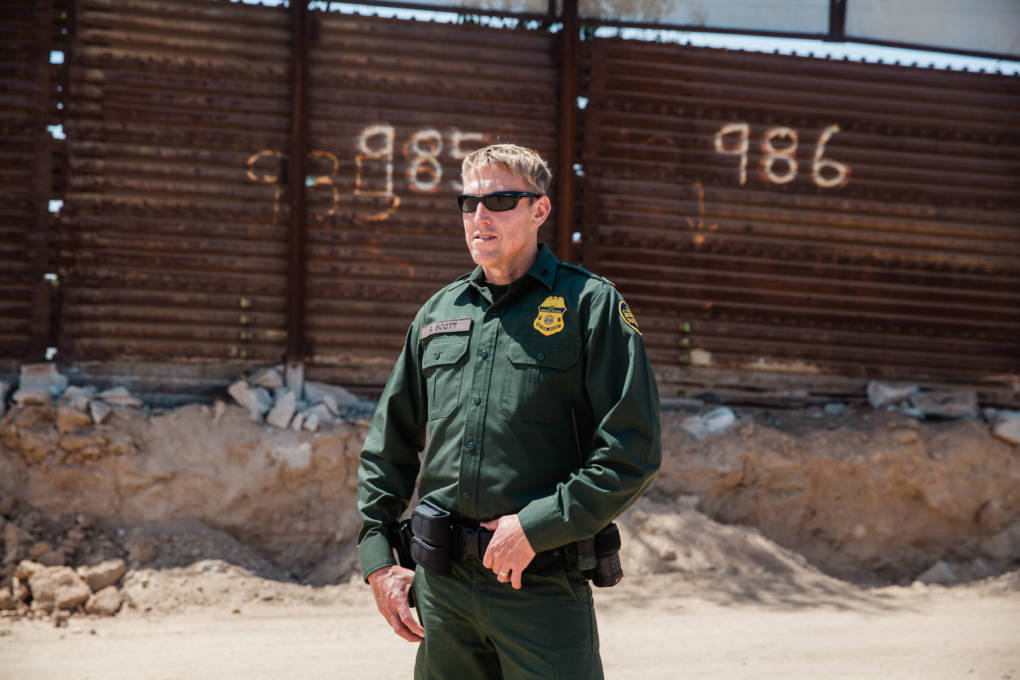
"caption": "Chief Patrol Agent Rodney Scott at the San Diego-Tijuana border. ",
"description": "Chief Patrol Agent Rodney Scott at the San Diego - Tijuana border. ",
"title": "Chief Patrol Agent Rodney Scott at the San Diego - Tijuana border.",
"credit": "Ariana Drehsler/KQED",
"status": "inherit",
"isLoading": false,
"fetchFailed": false
},
"news_11686774": {
"type": "attachments",
"id": "news_11686774",
"meta": {
"index": "attachments_1716263798",
"site": "news",
"id": "11686774",
"found": true
},
"parent": 11683780,
"imgSizes": {
"small": {
"file": "https://ww2.kqed.org/app/uploads/sites/10/2018/07/filomena_still_revised_073018_final-520x350.jpg",
"width": 520,
"mimeType": "image/jpeg",
"height": 350
},
"twentyfourteen-full-width": {
"file": "https://ww2.kqed.org/app/uploads/sites/10/2018/07/filomena_still_revised_073018_final-1038x576.jpg",
"width": 1038,
"mimeType": "image/jpeg",
"height": 576
},
"thumbnail": {
"file": "https://ww2.kqed.org/app/uploads/sites/10/2018/07/filomena_still_revised_073018_final-160x108.jpg",
"width": 160,
"mimeType": "image/jpeg",
"height": 108
},
"fd-sm": {
"file": "https://ww2.kqed.org/app/uploads/sites/10/2018/07/filomena_still_revised_073018_final-960x646.jpg",
"width": 960,
"mimeType": "image/jpeg",
"height": 646
},
"post-thumbnail": {
"file": "https://ww2.kqed.org/app/uploads/sites/10/2018/07/filomena_still_revised_073018_final-672x372.jpg",
"width": 672,
"mimeType": "image/jpeg",
"height": 372
},
"xsmall": {
"file": "https://ww2.kqed.org/app/uploads/sites/10/2018/07/filomena_still_revised_073018_final-375x252.jpg",
"width": 375,
"mimeType": "image/jpeg",
"height": 252
},
"kqedFullSize": {
"file": "https://ww2.kqed.org/app/uploads/sites/10/2018/07/filomena_still_revised_073018_final.jpg",
"width": 1920,
"height": 1291
},
"large": {
"file": "https://ww2.kqed.org/app/uploads/sites/10/2018/07/filomena_still_revised_073018_final-1020x686.jpg",
"width": 1020,
"mimeType": "image/jpeg",
"height": 686
},
"xlarge": {
"file": "https://ww2.kqed.org/app/uploads/sites/10/2018/07/filomena_still_revised_073018_final-1180x793.jpg",
"width": 1180,
"mimeType": "image/jpeg",
"height": 793
},
"complete_open_graph": {
"file": "https://ww2.kqed.org/app/uploads/sites/10/2018/07/filomena_still_revised_073018_final-1200x807.jpg",
"width": 1200,
"mimeType": "image/jpeg",
"height": 807
},
"guest-author-50": {
"file": "https://ww2.kqed.org/app/uploads/sites/10/2018/07/filomena_still_revised_073018_final-50x50.jpg",
"width": 50,
"mimeType": "image/jpeg",
"height": 50
},
"guest-author-96": {
"file": "https://ww2.kqed.org/app/uploads/sites/10/2018/07/filomena_still_revised_073018_final-96x96.jpg",
"width": 96,
"mimeType": "image/jpeg",
"height": 96
},
"medium": {
"file": "https://ww2.kqed.org/app/uploads/sites/10/2018/07/filomena_still_revised_073018_final-800x538.jpg",
"width": 800,
"mimeType": "image/jpeg",
"height": 538
},
"guest-author-64": {
"file": "https://ww2.kqed.org/app/uploads/sites/10/2018/07/filomena_still_revised_073018_final-64x64.jpg",
"width": 64,
"mimeType": "image/jpeg",
"height": 64
},
"guest-author-32": {
"file": "https://ww2.kqed.org/app/uploads/sites/10/2018/07/filomena_still_revised_073018_final-32x32.jpg",
"width": 32,
"mimeType": "image/jpeg",
"height": 32
},
"fd-lrg": {
"file": "https://ww2.kqed.org/app/uploads/sites/10/2018/07/filomena_still_revised_073018_final-1920x1291.jpg",
"width": 1920,
"mimeType": "image/jpeg",
"height": 1291
},
"fd-med": {
"file": "https://ww2.kqed.org/app/uploads/sites/10/2018/07/filomena_still_revised_073018_final-1180x793.jpg",
"width": 1180,
"mimeType": "image/jpeg",
"height": 793
},
"full-width": {
"file": "https://ww2.kqed.org/app/uploads/sites/10/2018/07/filomena_still_revised_073018_final-1920x1291.jpg",
"width": 1920,
"mimeType": "image/jpeg",
"height": 1291
},
"detail": {
"file": "https://ww2.kqed.org/app/uploads/sites/10/2018/07/filomena_still_revised_073018_final-150x150.jpg",
"width": 150,
"mimeType": "image/jpeg",
"height": 150
},
"guest-author-128": {
"file": "https://ww2.kqed.org/app/uploads/sites/10/2018/07/filomena_still_revised_073018_final-128x128.jpg",
"width": 128,
"mimeType": "image/jpeg",
"height": 128
},
"xxsmall": {
"file": "https://ww2.kqed.org/app/uploads/sites/10/2018/07/filomena_still_revised_073018_final-240x161.jpg",
"width": 240,
"mimeType": "image/jpeg",
"height": 161
}
},
"publishDate": 1534200858,
"modified": 1534200880,
"caption": null,
"description": null,
"title": "filomena_still_revised_073018_final",
"credit": null,
"status": "inherit",
"isLoading": false,
"fetchFailed": false
},
"news_11682269": {
"type": "attachments",
"id": "news_11682269",
"meta": {
"index": "attachments_1716263798",
"site": "news",
"id": "11682269",
"found": true
},
"parent": 11682247,
"imgSizes": {
"small": {
"file": "https://ww2.kqed.org/app/uploads/sites/10/2018/07/NapolitanoMain-520x347.jpg",
"width": 520,
"mimeType": "image/jpeg",
"height": 347
},
"twentyfourteen-full-width": {
"file": "https://ww2.kqed.org/app/uploads/sites/10/2018/07/NapolitanoMain-1038x576.jpg",
"width": 1038,
"mimeType": "image/jpeg",
"height": 576
},
"thumbnail": {
"file": "https://ww2.kqed.org/app/uploads/sites/10/2018/07/NapolitanoMain-160x107.jpg",
"width": 160,
"mimeType": "image/jpeg",
"height": 107
},
"fd-sm": {
"file": "https://ww2.kqed.org/app/uploads/sites/10/2018/07/NapolitanoMain-960x640.jpg",
"width": 960,
"mimeType": "image/jpeg",
"height": 640
},
"post-thumbnail": {
"file": "https://ww2.kqed.org/app/uploads/sites/10/2018/07/NapolitanoMain-672x372.jpg",
"width": 672,
"mimeType": "image/jpeg",
"height": 372
},
"xsmall": {
"file": "https://ww2.kqed.org/app/uploads/sites/10/2018/07/NapolitanoMain-375x250.jpg",
"width": 375,
"mimeType": "image/jpeg",
"height": 250
},
"kqedFullSize": {
"file": "https://ww2.kqed.org/app/uploads/sites/10/2018/07/NapolitanoMain.jpg",
"width": 1920,
"height": 1280
},
"large": {
"file": "https://ww2.kqed.org/app/uploads/sites/10/2018/07/NapolitanoMain-1020x680.jpg",
"width": 1020,
"mimeType": "image/jpeg",
"height": 680
},
"xlarge": {
"file": "https://ww2.kqed.org/app/uploads/sites/10/2018/07/NapolitanoMain-1180x787.jpg",
"width": 1180,
"mimeType": "image/jpeg",
"height": 787
},
"complete_open_graph": {
"file": "https://ww2.kqed.org/app/uploads/sites/10/2018/07/NapolitanoMain-1200x800.jpg",
"width": 1200,
"mimeType": "image/jpeg",
"height": 800
},
"guest-author-50": {
"file": "https://ww2.kqed.org/app/uploads/sites/10/2018/07/NapolitanoMain-50x50.jpg",
"width": 50,
"mimeType": "image/jpeg",
"height": 50
},
"guest-author-96": {
"file": "https://ww2.kqed.org/app/uploads/sites/10/2018/07/NapolitanoMain-96x96.jpg",
"width": 96,
"mimeType": "image/jpeg",
"height": 96
},
"medium": {
"file": "https://ww2.kqed.org/app/uploads/sites/10/2018/07/NapolitanoMain-800x533.jpg",
"width": 800,
"mimeType": "image/jpeg",
"height": 533
},
"guest-author-64": {
"file": "https://ww2.kqed.org/app/uploads/sites/10/2018/07/NapolitanoMain-64x64.jpg",
"width": 64,
"mimeType": "image/jpeg",
"height": 64
},
"guest-author-32": {
"file": "https://ww2.kqed.org/app/uploads/sites/10/2018/07/NapolitanoMain-32x32.jpg",
"width": 32,
"mimeType": "image/jpeg",
"height": 32
},
"fd-lrg": {
"file": "https://ww2.kqed.org/app/uploads/sites/10/2018/07/NapolitanoMain-1920x1280.jpg",
"width": 1920,
"mimeType": "image/jpeg",
"height": 1280
},
"fd-med": {
"file": "https://ww2.kqed.org/app/uploads/sites/10/2018/07/NapolitanoMain-1180x787.jpg",
"width": 1180,
"mimeType": "image/jpeg",
"height": 787
},
"full-width": {
"file": "https://ww2.kqed.org/app/uploads/sites/10/2018/07/NapolitanoMain-1920x1280.jpg",
"width": 1920,
"mimeType": "image/jpeg",
"height": 1280
},
"detail": {
"file": "https://ww2.kqed.org/app/uploads/sites/10/2018/07/NapolitanoMain-150x150.jpg",
"width": 150,
"mimeType": "image/jpeg",
"height": 150
},
"guest-author-128": {
"file": "https://ww2.kqed.org/app/uploads/sites/10/2018/07/NapolitanoMain-128x128.jpg",
"width": 128,
"mimeType": "image/jpeg",
"height": 128
},
"xxsmall": {
"file": "https://ww2.kqed.org/app/uploads/sites/10/2018/07/NapolitanoMain-240x160.jpg",
"width": 240,
"mimeType": "image/jpeg",
"height": 160
}
},
"publishDate": 1532458617,
"modified": 1589261409,
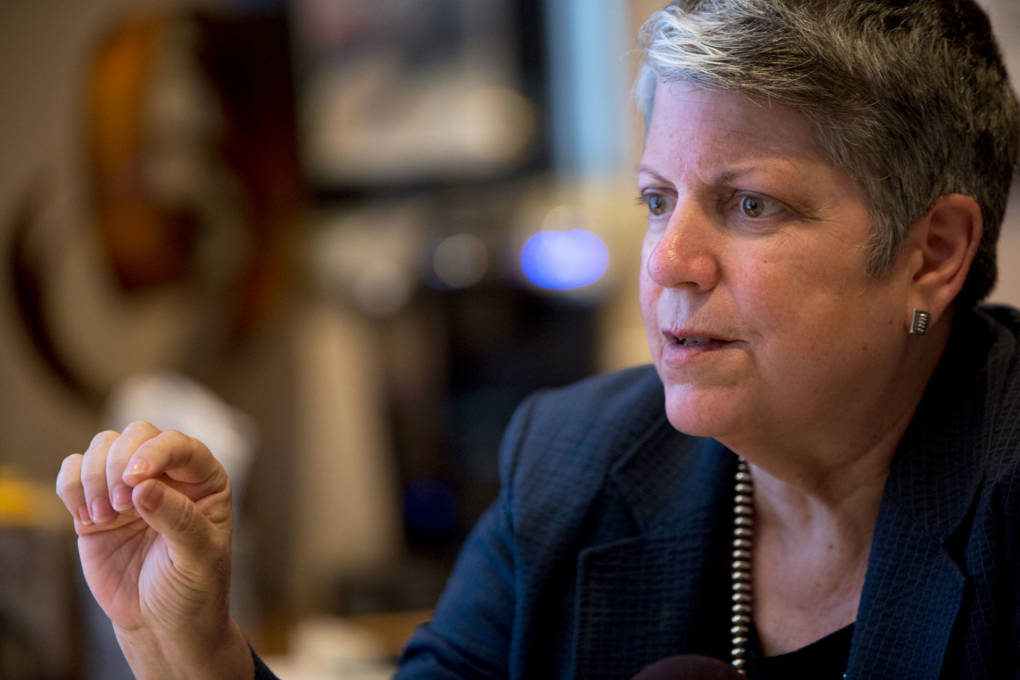
"caption": "UC President Janet Napolitano in her office in Oakland on July 17, 2018.",
"description": "UC President and former Secretary of Homeland Security Janet Napolitano talked with The California Report in her office in Oakland on July 17, 2018.",
"title": "NapolitanoMain",
"credit": "Anne Wernikoff/KQED",
"status": "inherit",
"isLoading": false,
"fetchFailed": false
},
"news_11681729": {
"type": "attachments",
"id": "news_11681729",
"meta": {
"index": "attachments_1716263798",
"site": "news",
"id": "11681729",
"found": true
},
"parent": 11681568,
"imgSizes": {
"small": {
"file": "https://ww2.kqed.org/app/uploads/sites/10/2018/07/HoldingBaby-520x366.jpg",
"width": 520,
"mimeType": "image/jpeg",
"height": 366
},
"twentyfourteen-full-width": {
"file": "https://ww2.kqed.org/app/uploads/sites/10/2018/07/HoldingBaby-1038x576.jpg",
"width": 1038,
"mimeType": "image/jpeg",
"height": 576
},
"thumbnail": {
"file": "https://ww2.kqed.org/app/uploads/sites/10/2018/07/HoldingBaby-160x113.jpg",
"width": 160,
"mimeType": "image/jpeg",
"height": 113
},
"fd-sm": {
"file": "https://ww2.kqed.org/app/uploads/sites/10/2018/07/HoldingBaby-960x675.jpg",
"width": 960,
"mimeType": "image/jpeg",
"height": 675
},
"post-thumbnail": {
"file": "https://ww2.kqed.org/app/uploads/sites/10/2018/07/HoldingBaby-672x372.jpg",
"width": 672,
"mimeType": "image/jpeg",
"height": 372
},
"xsmall": {
"file": "https://ww2.kqed.org/app/uploads/sites/10/2018/07/HoldingBaby-375x264.jpg",
"width": 375,
"mimeType": "image/jpeg",
"height": 264
},
"kqedFullSize": {
"file": "https://ww2.kqed.org/app/uploads/sites/10/2018/07/HoldingBaby.jpg",
"width": 1920,
"height": 1350
},
"large": {
"file": "https://ww2.kqed.org/app/uploads/sites/10/2018/07/HoldingBaby-1020x717.jpg",
"width": 1020,
"mimeType": "image/jpeg",
"height": 717
},
"xlarge": {
"file": "https://ww2.kqed.org/app/uploads/sites/10/2018/07/HoldingBaby-1180x830.jpg",
"width": 1180,
"mimeType": "image/jpeg",
"height": 830
},
"complete_open_graph": {
"file": "https://ww2.kqed.org/app/uploads/sites/10/2018/07/HoldingBaby-1200x844.jpg",
"width": 1200,
"mimeType": "image/jpeg",
"height": 844
},
"guest-author-50": {
"file": "https://ww2.kqed.org/app/uploads/sites/10/2018/07/HoldingBaby-50x50.jpg",
"width": 50,
"mimeType": "image/jpeg",
"height": 50
},
"guest-author-96": {
"file": "https://ww2.kqed.org/app/uploads/sites/10/2018/07/HoldingBaby-96x96.jpg",
"width": 96,
"mimeType": "image/jpeg",
"height": 96
},
"medium": {
"file": "https://ww2.kqed.org/app/uploads/sites/10/2018/07/HoldingBaby-800x563.jpg",
"width": 800,
"mimeType": "image/jpeg",
"height": 563
},
"guest-author-64": {
"file": "https://ww2.kqed.org/app/uploads/sites/10/2018/07/HoldingBaby-64x64.jpg",
"width": 64,
"mimeType": "image/jpeg",
"height": 64
},
"guest-author-32": {
"file": "https://ww2.kqed.org/app/uploads/sites/10/2018/07/HoldingBaby-32x32.jpg",
"width": 32,
"mimeType": "image/jpeg",
"height": 32
},
"fd-lrg": {
"file": "https://ww2.kqed.org/app/uploads/sites/10/2018/07/HoldingBaby-1920x1350.jpg",
"width": 1920,
"mimeType": "image/jpeg",
"height": 1350
},
"fd-med": {
"file": "https://ww2.kqed.org/app/uploads/sites/10/2018/07/HoldingBaby-1180x830.jpg",
"width": 1180,
"mimeType": "image/jpeg",
"height": 830
},
"full-width": {
"file": "https://ww2.kqed.org/app/uploads/sites/10/2018/07/HoldingBaby-1920x1350.jpg",
"width": 1920,
"mimeType": "image/jpeg",
"height": 1350
},
"detail": {
"file": "https://ww2.kqed.org/app/uploads/sites/10/2018/07/HoldingBaby-150x150.jpg",
"width": 150,
"mimeType": "image/jpeg",
"height": 150
},
"guest-author-128": {
"file": "https://ww2.kqed.org/app/uploads/sites/10/2018/07/HoldingBaby-128x128.jpg",
"width": 128,
"mimeType": "image/jpeg",
"height": 128
},
"xxsmall": {
"file": "https://ww2.kqed.org/app/uploads/sites/10/2018/07/HoldingBaby-240x169.jpg",
"width": 240,
"mimeType": "image/jpeg",
"height": 169
}
},
"publishDate": 1532124911,
"modified": 1532134577,
"caption": "Elizabet holds her one-year-old son in a family member's living room in Mexico as she and her husband and three children prepared to request asylum at the U.S.-Mexico border.",
"description": "Elizabet holds her one-year-old son in a family member's living room in Mexico as she and her husband and three children prepared to request asylum at the U.S.-Mexico border.",
"title": "HoldingBaby",
"credit": "Alexandra Hall/KQED",
"status": "inherit",
"isLoading": false,
"fetchFailed": false
},
"news_11679913": {
"type": "attachments",
"id": "news_11679913",
"meta": {
"index": "attachments_1716263798",
"site": "news",
"id": "11679913",
"found": true
},
"parent": 11679893,
"imgSizes": {
"small": {
"file": "https://ww2.kqed.org/app/uploads/sites/10/2018/07/tortured_071018_final-1-520x331.jpg",
"width": 520,
"mimeType": "image/jpeg",
"height": 331
},
"twentyfourteen-full-width": {
"file": "https://ww2.kqed.org/app/uploads/sites/10/2018/07/tortured_071018_final-1-1038x576.jpg",
"width": 1038,
"mimeType": "image/jpeg",
"height": 576
},
"thumbnail": {
"file": "https://ww2.kqed.org/app/uploads/sites/10/2018/07/tortured_071018_final-1-160x102.jpg",
"width": 160,
"mimeType": "image/jpeg",
"height": 102
},
"fd-sm": {
"file": "https://ww2.kqed.org/app/uploads/sites/10/2018/07/tortured_071018_final-1-960x612.jpg",
"width": 960,
"mimeType": "image/jpeg",
"height": 612
},
"post-thumbnail": {
"file": "https://ww2.kqed.org/app/uploads/sites/10/2018/07/tortured_071018_final-1-672x372.jpg",
"width": 672,
"mimeType": "image/jpeg",
"height": 372
},
"xsmall": {
"file": "https://ww2.kqed.org/app/uploads/sites/10/2018/07/tortured_071018_final-1-375x239.jpg",
"width": 375,
"mimeType": "image/jpeg",
"height": 239
},
"kqedFullSize": {
"file": "https://ww2.kqed.org/app/uploads/sites/10/2018/07/tortured_071018_final-1.jpg",
"width": 1920,
"height": 1223
},
"large": {
"file": "https://ww2.kqed.org/app/uploads/sites/10/2018/07/tortured_071018_final-1-1020x650.jpg",
"width": 1020,
"mimeType": "image/jpeg",
"height": 650
},
"xlarge": {
"file": "https://ww2.kqed.org/app/uploads/sites/10/2018/07/tortured_071018_final-1-1180x752.jpg",
"width": 1180,
"mimeType": "image/jpeg",
"height": 752
},
"complete_open_graph": {
"file": "https://ww2.kqed.org/app/uploads/sites/10/2018/07/tortured_071018_final-1-1200x764.jpg",
"width": 1200,
"mimeType": "image/jpeg",
"height": 764
},
"guest-author-50": {
"file": "https://ww2.kqed.org/app/uploads/sites/10/2018/07/tortured_071018_final-1-50x50.jpg",
"width": 50,
"mimeType": "image/jpeg",
"height": 50
},
"guest-author-96": {
"file": "https://ww2.kqed.org/app/uploads/sites/10/2018/07/tortured_071018_final-1-96x96.jpg",
"width": 96,
"mimeType": "image/jpeg",
"height": 96
},
"medium": {
"file": "https://ww2.kqed.org/app/uploads/sites/10/2018/07/tortured_071018_final-1-800x510.jpg",
"width": 800,
"mimeType": "image/jpeg",
"height": 510
},
"guest-author-64": {
"file": "https://ww2.kqed.org/app/uploads/sites/10/2018/07/tortured_071018_final-1-64x64.jpg",
"width": 64,
"mimeType": "image/jpeg",
"height": 64
},
"guest-author-32": {
"file": "https://ww2.kqed.org/app/uploads/sites/10/2018/07/tortured_071018_final-1-32x32.jpg",
"width": 32,
"mimeType": "image/jpeg",
"height": 32
},
"fd-lrg": {
"file": "https://ww2.kqed.org/app/uploads/sites/10/2018/07/tortured_071018_final-1-1920x1223.jpg",
"width": 1920,
"mimeType": "image/jpeg",
"height": 1223
},
"fd-med": {
"file": "https://ww2.kqed.org/app/uploads/sites/10/2018/07/tortured_071018_final-1-1180x752.jpg",
"width": 1180,
"mimeType": "image/jpeg",
"height": 752
},
"full-width": {
"file": "https://ww2.kqed.org/app/uploads/sites/10/2018/07/tortured_071018_final-1-1920x1223.jpg",
"width": 1920,
"mimeType": "image/jpeg",
"height": 1223
},
"detail": {
"file": "https://ww2.kqed.org/app/uploads/sites/10/2018/07/tortured_071018_final-1-150x150.jpg",
"width": 150,
"mimeType": "image/jpeg",
"height": 150
},
"guest-author-128": {
"file": "https://ww2.kqed.org/app/uploads/sites/10/2018/07/tortured_071018_final-1-128x128.jpg",
"width": 128,
"mimeType": "image/jpeg",
"height": 128
},
"xxsmall": {
"file": "https://ww2.kqed.org/app/uploads/sites/10/2018/07/tortured_071018_final-1-240x153.jpg",
"width": 240,
"mimeType": "image/jpeg",
"height": 153
}
},
"publishDate": 1531261148,
"modified": 1531261168,
"caption": null,
"description": null,
"title": "tortured_071018_final",
"credit": null,
"status": "inherit",
"isLoading": false,
"fetchFailed": false
}
},
"audioPlayerReducer": {
"postId": "stream_live",
"isPaused": true,
"isPlaying": false,
"pfsActive": false,
"pledgeModalIsOpen": true,
"playerDrawerIsOpen": false,
"liveAudioPlayStartedAt": 0,
"liveAudioPlayContext": ""
},
"authorsReducer": {
"byline_news_11730932": {
"type": "authors",
"id": "byline_news_11730932",
"meta": {
"override": true
},
"slug": "byline_news_11730932",
"name": "\u003cstrong>\u003ca href=\"https://www.npr.org/people/159989569/joel-rose\">Joel Rose\u003c/a>\u003c/strong>",
"isLoading": false
},
"byline_news_11729531": {
"type": "authors",
"id": "byline_news_11729531",
"meta": {
"override": true
},
"slug": "byline_news_11729531",
"name": "\u003ca href=\"https://www.npr.org/people/1936301/john-burnett\"> John Burnett \u003c/a> and Max Rivlin-Nadler",
"isLoading": false
},
"byline_news_11710546": {
"type": "authors",
"id": "byline_news_11710546",
"meta": {
"override": true
},
"slug": "byline_news_11710546",
"name": "Susan Montoya Bryan\u003cbr>Associated Press",
"isLoading": false
},
"byline_news_11702079": {
"type": "authors",
"id": "byline_news_11702079",
"meta": {
"override": true
},
"slug": "byline_news_11702079",
"name": "Robert Burns, Colleen Long, Jill Colvin \u003cbr> Associated Press \u003cbr> David Marks, KQED",
"isLoading": false
},
"byline_news_11693442": {
"type": "authors",
"id": "byline_news_11693442",
"meta": {
"override": true
},
"slug": "byline_news_11693442",
"name": "\u003cstrong>\u003ca href=\"https://www.kpbs.org/staff/jean-guerrero/\">Jean Guerrero\u003c/a>\u003c/strong>",
"isLoading": false
},
"byline_news_11688678": {
"type": "authors",
"id": "byline_news_11688678",
"meta": {
"override": true
},
"slug": "byline_news_11688678",
"name": "\u003cstrong>\u003ca href=\"https://www.publicintegrity.org/authors/susan-ferriss\">Susan Ferriss\u003c/a>\u003c/strong>",
"isLoading": false
},
"byline_news_11684978": {
"type": "authors",
"id": "byline_news_11684978",
"meta": {
"override": true
},
"slug": "byline_news_11684978",
"name": "Polly Stryker",
"isLoading": false
},
"dmarks": {
"type": "authors",
"id": "182",
"meta": {
"index": "authors_1716337520",
"id": "182",
"found": true
},
"name": "David Marks",
"firstName": "David",
"lastName": "Marks",
"slug": "dmarks",
"email": "dmarks@kqed.org",
"display_author_email": false,
"staff_mastheads": [],
"title": "KQED Editor",
"bio": "David Marks is a senior digital editor for KQED News. \u003c/a>Reach him at dmarks@kqed.org.",
"avatar": "https://secure.gravatar.com/avatar/b88bd6227ce6cb96ae33fefaf42b2a29?s=600&d=mm&r=g",
"twitter": "divadskram",
"facebook": null,
"instagram": null,
"linkedin": null,
"sites": [
{
"site": "news",
"roles": []
},
{
"site": "science",
"roles": []
},
{
"site": "perspectives",
"roles": []
},
{
"site": "liveblog",
"roles": []
}
],
"headData": {
"title": "David Marks | KQED",
"description": "KQED Editor",
"ogImgSrc": "https://secure.gravatar.com/avatar/b88bd6227ce6cb96ae33fefaf42b2a29?s=600&d=mm&r=g",
"twImgSrc": "https://secure.gravatar.com/avatar/b88bd6227ce6cb96ae33fefaf42b2a29?s=600&d=mm&r=g"
},
"isLoading": false,
"link": "/author/dmarks"
},
"markfiore": {
"type": "authors",
"id": "3236",
"meta": {
"index": "authors_1716337520",
"id": "3236",
"found": true
},
"name": "Mark Fiore",
"firstName": "Mark",
"lastName": "Fiore",
"slug": "markfiore",
"email": "mark@markfiore.com",
"display_author_email": false,
"staff_mastheads": [
"news"
],
"title": "KQED News Cartoonist",
"bio": "\u003ca href=\"http://www.MarkFiore.com\">MarkFiore.com\u003c/a> | \u003ca href=\"https://twitter.com/markfiore\">Follow on Twitter\u003c/a> | \u003ca href=\"https://www.facebook.com/pages/Mark-Fiore-Animated-Political-Cartoons/94451707396?ref=bookmarks\">Facebook\u003c/a> | \u003ca href=\"mailto:mark@markfiore.com\">email\u003c/a>\r\n\r\nPulitzer Prize-winner, Mark Fiore, who the Wall Street Journal has called “the undisputed guru of the form,” creates animated political cartoons in San Francisco, where his work has been featured regularly on the San Francisco Chronicle’s web site, SFGate.com. His work has appeared on Newsweek.com, Slate.com, CBSNews.com, MotherJones.com, DailyKos.com and NPR’s web site. Fiore’s political animation has appeared on CNN, Frontline, Bill Moyers Journal, Salon.com and cable and broadcast outlets across the globe.\r\n\r\nBeginning his professional life by drawing traditional political cartoons for newspapers, Fiore’s work appeared in publications ranging from the Washington Post to the Los Angeles Times. In the late 1990s, he began to experiment with animating political cartoons and, after a short stint at the San Jose Mercury News as their staff cartoonist, Fiore devoted all his energies to animation.\r\nGrowing up in California, Fiore also spent a good portion of his life in the backwoods of Idaho. It was this combination that shaped him politically. Mark majored in political science at Colorado College, where, in a perfect send-off for a cartoonist, he received his diploma in 1991 as commencement speaker Dick Cheney smiled approvingly.\r\nMark Fiore was awarded the Pulitzer Prize for political cartooning in 2010, a Robert F. Kennedy Journalism Award in 2004 and has twice received an Online Journalism Award for commentary from the Online News Association (2002, 2008). Fiore has received two awards for his work in new media from the National Cartoonists Society (2001, 2002), and in 2006 received The James Madison Freedom of Information Award from The Society of Professional Journalists.",
"avatar": "https://secure.gravatar.com/avatar/fc4e2a612b15b67bad0c6f0e1db4ca9b?s=600&d=blank&r=g",
"twitter": "MarkFiore",
"facebook": null,
"instagram": "https://www.instagram.com/markfiore/?hl=en",
"linkedin": null,
"sites": [
{
"site": "arts",
"roles": [
"contributor"
]
},
{
"site": "news",
"roles": [
"editor"
]
},
{
"site": "futureofyou",
"roles": [
"editor"
]
},
{
"site": "science",
"roles": [
"editor"
]
}
],
"headData": {
"title": "Mark Fiore | KQED",
"description": "KQED News Cartoonist",
"ogImgSrc": "https://secure.gravatar.com/avatar/fc4e2a612b15b67bad0c6f0e1db4ca9b?s=600&d=blank&r=g",
"twImgSrc": "https://secure.gravatar.com/avatar/fc4e2a612b15b67bad0c6f0e1db4ca9b?s=600&d=blank&r=g"
},
"isLoading": false,
"link": "/author/markfiore"
},
"jsepulvado": {
"type": "authors",
"id": "11298",
"meta": {
"index": "authors_1716337520",
"id": "11298",
"found": true
},
"name": "John Sepulvado",
"firstName": "John",
"lastName": "Sepulvado",
"slug": "jsepulvado",
"email": "jsepulvado@KQED.org",
"display_author_email": false,
"staff_mastheads": [],
"title": null,
"bio": "John Sepulvado is a former morning host of \u003cem>The California Report\u003c/em>. Prior to joining KQED in September 2016, John was the local host of NPR’s \u003cem>Weekend Edition\u003c/em> at Oregon Public Broadcasting (OPB). He has also served as a producer for America Public Media’s \u003cem>Marketplace Weekend\u003c/em> and worked as a national correspondent for CNN and as news director at WUSF in Tampa, Florida. John has earned prestigious RTDNA Murrow and PRNDI awards for investigative reporting, and helped CNN take home a Peabody Award for coverage of the 2010 Gulf oil spill. John attended Florida A&M in Tallahassee and is also a member of Phi Theta Kappa. He left KQED in 2019.",
"avatar": "https://secure.gravatar.com/avatar/b976d3c4cf11750a793b670e5acb7a1c?s=600&d=blank&r=g",
"twitter": null,
"facebook": null,
"instagram": null,
"linkedin": null,
"sites": [
{
"site": "news",
"roles": [
"author",
"edit_others_posts"
]
}
],
"headData": {
"title": "John Sepulvado | KQED",
"description": null,
"ogImgSrc": "https://secure.gravatar.com/avatar/b976d3c4cf11750a793b670e5acb7a1c?s=600&d=blank&r=g",
"twImgSrc": "https://secure.gravatar.com/avatar/b976d3c4cf11750a793b670e5acb7a1c?s=600&d=blank&r=g"
},
"isLoading": false,
"link": "/author/jsepulvado"
},
"ahall": {
"type": "authors",
"id": "11490",
"meta": {
"index": "authors_1716337520",
"id": "11490",
"found": true
},
"name": "Alex Hall",
"firstName": "Alex",
"lastName": "Hall",
"slug": "ahall",
"email": "ahall@kqed.org",
"display_author_email": false,
"staff_mastheads": [
"news"
],
"title": "KQED Enterprise & Accountability Reporter",
"bio": "Alex Hall is KQED's Enterprise and Accountability Reporter. She previously covered the Central Valley for five years from KQED's bureau in Fresno. Before joining KQED, Alex was an investigative reporting fellow at Wisconsin Public Radio and the Wisconsin Center for Investigative Journalism. She has also worked as a bilingual producer for NPR's investigative unit and freelance video producer for Reuters TV on the Latin America desk. She got her start in journalism in South America, where she worked as a radio producer and Spanish-English translator for CNN Chile. Her documentary and investigation into the series of deadly COVID-19 outbreaks at Foster Farms won a national Edward R. Murrow award and was named an Investigative Reporters & Editors award finalist. Alex's reporting for Reveal on the Wisconsin dairy industry's reliance on undocumented immigrant labor was made into a film, Los Lecheros, which won a regional Edward R. Murrow award for best news documentary.",
"avatar": "https://secure.gravatar.com/avatar/defcbeb88b0bf591ff9af41f22644051?s=600&d=blank&r=g",
"twitter": "@chalexhall",
"facebook": null,
"instagram": null,
"linkedin": null,
"sites": [
{
"site": "news",
"roles": [
"editor"
]
},
{
"site": "liveblog",
"roles": [
"author"
]
}
],
"headData": {
"title": "Alex Hall | KQED",
"description": "KQED Enterprise & Accountability Reporter",
"ogImgSrc": "https://secure.gravatar.com/avatar/defcbeb88b0bf591ff9af41f22644051?s=600&d=blank&r=g",
"twImgSrc": "https://secure.gravatar.com/avatar/defcbeb88b0bf591ff9af41f22644051?s=600&d=blank&r=g"
},
"isLoading": false,
"link": "/author/ahall"
}
},
"pagesReducer": {
"news_tag_customs-and-border-protection": {
"type": "terms",
"id": "news_21200",
"meta": {
"index": "terms_1716263798",
"site": "news",
"id": "21200",
"score": 10.403818
},
"featImg": null,
"name": "Customs and Border Protection",
"description": null,
"taxonomy": "tag",
"headData": {
"twImgId": null,
"twTitle": null,
"ogTitle": null,
"ogImgId": null,
"twDescription": null,
"description": null,
"title": "Customs and Border Protection Archives | KQED News",
"ogDescription": null
},
"ttid": 21217,
"slug": "customs-and-border-protection",
"isLoading": false,
"title": "Customs and Border Protection",
"pageMeta": {
"site": "news",
"WpPageTemplate": "page-topic-editorial",
"currentPage": 4
},
"blocks": [
{
"blockName": "kqed/post-list",
"attrs": {
"layout": "cardArticle2",
"query": "posts/news?tag=customs-and-border-protection",
"seeMore": false,
"paginated": true,
"page": 4
}
},
{
"blockName": "kqed/ad"
}
]
}
},
"pfsSessionReducer": {},
"postsReducer": {
"stream_live": {
"type": "live",
"id": "stream_live",
"audioUrl": "https://streams.kqed.org/kqedradio",
"title": "Live Stream",
"excerpt": "Live Stream information currently unavailable.",
"link": "/radio",
"featImg": "",
"label": {
"name": "KQED Live",
"link": "/"
}
},
"stream_kqedNewscast": {
"type": "posts",
"id": "stream_kqedNewscast",
"audioUrl": "https://www.kqed.org/.stream/anon/radio/RDnews/newscast.mp3?_=1",
"title": "KQED Newscast",
"featImg": "",
"label": {
"name": "88.5 FM",
"link": "/"
}
},
"news_11730932": {
"type": "posts",
"id": "news_11730932",
"meta": {
"index": "posts_1716263798",
"site": "news",
"id": "11730932",
"score": null,
"sort": [
1551903045000
]
},
"parent": 0,
"labelTerm": {},
"blocks": [],
"publishDate": 1551903045,
"format": "audio",
"disqusTitle": "Migrant Families Arrive in Busloads as Border Crossings Hit 10-Year High",
"title": "Migrant Families Arrive in Busloads as Border Crossings Hit 10-Year High",
"headTitle": "The California Report | KQED News",
"content": "\u003cp>The U.S. Border Patrol apprehended more than 66,000 migrants at the Southern border in February, the highest total for a single month in \u003ca href=\"https://www.cbp.gov/sites/default/files/assets/documents/2017-Dec/BP%20Total%20Monthly%20Apps%20by%20Sector%20and%20Area%2C%20FY2000-FY2017.pdf\">almost a decade\u003c/a>. \u003c/p>\n\u003cp>The majority of those arrested were migrant families or children traveling alone or without a parent, according to figures released Tuesday by U.S. Customs and Border Protection. Many of the migrants say they're fleeing criminal gangs and poverty in Central America to seek asylum in the United States.\u003c/p>\n\u003cp>\"This is clearly both a border security and humanitarian crisis,\" said CBP Commissioner Kevin McAleenan \u003ca href=\"https://www.cbp.gov/newsroom/video-gallery/cbp-live\">at a press briefing\u003c/a>. \u003c/p>\n\u003cp>Between October and last week, Border Patrol agents have picked up more than 260,000 people — a 90 percent jump over the same period a year ago. \u003c/p>\n\u003cp>\"The entire system right now is at full capacity. Actually, it's overwhelmed,\" said Manuel Padilla, a veteran Border Patrol agent who's now director of Joint Task Force-West in San Antonio, part of the Department of Homeland Security.\u003c/p>\n\u003cp>\u003cimg src=\"https://ww2.kqed.org/news/wp-content/uploads/sites/10/2019/03/NPREmbed-800x618.jpg\" alt=\"\" width=\"800\" height=\"618\" class=\"aligncenter size-medium wp-image-11730968\" srcset=\"https://ww2.kqed.org/app/uploads/sites/10/2019/03/NPREmbed-800x618.jpg 800w, https://ww2.kqed.org/app/uploads/sites/10/2019/03/NPREmbed-160x124.jpg 160w, https://ww2.kqed.org/app/uploads/sites/10/2019/03/NPREmbed-1020x787.jpg 1020w, https://ww2.kqed.org/app/uploads/sites/10/2019/03/NPREmbed-1200x926.jpg 1200w, https://ww2.kqed.org/app/uploads/sites/10/2019/03/NPREmbed.jpg 1920w\" sizes=\"(max-width: 800px) 100vw, 800px\">\u003c/p>\n\u003cp>Even with the recent climb, illegal border crossings are still well below historical highs. But the makeup of the migrant population has changed dramatically from 20 years ago, when it was mostly single men from Mexico. Border Patrol officials say their infrastructure wasn't designed for the flood of migrant families and children arriving now. \u003c/p>\n\u003cp>\"Everything is maxed out and it's causing a lot of issues, because the agents are being assigned to areas that are not border security related,\" Padilla said, like providing food and medical care for the families and children in their custody.\u003c/p>\n\u003cp>[pullquote size=\"small\" align=”right” citation=\"Kevin McAleenan, CBP Commissioner\"]'This is clearly both a border security and humanitarian crisis.'[/pullquote]\u003c/p>\n\u003cp>Since last year, Border Patrol agents say, they have routinely encountered large groups of a hundred or more migrants at the border, many of them arriving by bus from Guatemala. According to immigration authorities, the passengers consist almost entirely of families and children who are looking for Border Patrol agents to turn themselves in to. Agents say they've encountered 70 large groups since last year.\u003c/p>\n\u003cp>That leaves agents scrambling to transport and process the migrants, Padilla said, and allows drug traffickers to take advantage of the distraction. \u003c/p>\n\u003cp>Humanitarian groups near the border say the surge of migrant families is straining their resources too. \u003c/p>\n\u003cp>\"It takes an immense effort to do this,\" said Ruben Garcia, the director of Annunciation House, a nonprofit organization in El Paso, Texas, that provides shelter, food and medical care to migrants after they're released from government custody. \u003c/p>\n\u003cp>[ad fullwidth]\u003c/p>\n\u003cp>Most migrants spend just a few days in El Paso, Garcia said, before joining friends or relatives elsewhere in the country, where they'll wait for their day in immigration court. \u003c/p>\n\u003cp>President Trump has decried the surge of people crossing the border illegally from Mexico as \"an invasion\" — and a chief reason that the U.S. needs to extend its border barriers. \u003c/p>\n\u003cp>But Padilla, the Border Patrol veteran, believes that a wall alone will not stop these migrants.\u003c/p>\n\u003cp>Many of the migrants are crossing in areas that already have border fencing. And they're not trying to evade the Border Patrol, Padilla said. In fact, these asylum-seekers are trying to turn themselves in as soon as they set foot on U.S. soil. \u003c/p>\n\u003cp>[aside label=\"Family Separation at the Border\" tag=\"family-separation\"]\u003c/p>\n\u003cp>\"So the wall is not going to do anything with this population,\" Padilla said. \"This requires a legislative fix.\"\u003c/p>\n\u003cp>Immigration hard-liners say the U.S. needs to close what they call \"loopholes\" in the law that allow Central American migrants to avoid quick deportation and that prevent immigration authorities from detaining families for long periods of time. \u003c/p>\n\u003cp>Migrant advocates counter that the Trump administration has made the problem at the Southern border worse by allowing just a few migrant families a day to cross at legal ports of entry. They believe that this is driving many migrants to cross illegally in big groups and in remote stretches of the border. \u003c/p>\n\u003cp>\"They're very vulnerable people,\" said Garcia at Annunciation House. \"Let's strive not to lose or let go of our history as a people of immigrants, who are profoundly committed to human rights.\"\u003c/p>\n\u003cp>Humanitarian groups and immigration authorities are bracing for even more migrants in the months ahead. The number of people crossing the border illegally typically crests in the spring, as temperatures warm. \u003c/p>\n\u003cdiv class=\"fullattribution\">Copyright 2019 NPR. To see more, visit https://www.npr.org.\u003cimg src=\"https://www.google-analytics.com/__utm.gif?utmac=UA-5828686-4&utmdt=Migrant+Families+Arrive+In+Busloads+As+Border+Crossings+Hit+10-Year+High&utme=8(APIKey)9(MDAxOTAwOTE4MDEyMTkxMDAzNjczZDljZA004)\">\u003c/div>\n\u003cp>\u003c/p>\n",
"disqusIdentifier": "11730932 https://ww2.kqed.org/news/?p=11730932",
"disqusUrl": "https://ww2.kqed.org/news/2019/03/06/migrant-families-arrive-in-busloads-as-border-crossings-hit-10-year-high/",
"stats": {
"hasVideo": false,
"hasChartOrMap": false,
"hasAudio": false,
"hasPolis": false,
"wordCount": 752,
"hasGoogleForm": false,
"hasGallery": false,
"hasHearkenModule": false,
"iframeSrcs": [],
"paragraphCount": 25
},
"modified": 1551903045,
"excerpt": "The system is \"overwhelmed,\" says Manuel Padilla, director of Joint Task Force-West. The migrants apprehended at the Southern border in February made for the highest monthly total in almost a decade.",
"headData": {
"twImgId": "",
"twTitle": "",
"ogTitle": "",
"ogImgId": "",
"twDescription": "",
"description": "The system is "overwhelmed," says Manuel Padilla, director of Joint Task Force-West. The migrants apprehended at the Southern border in February made for the highest monthly total in almost a decade.",
"title": "Migrant Families Arrive in Busloads as Border Crossings Hit 10-Year High | KQED",
"ogDescription": "",
"schema": {
"@context": "https://schema.org",
"@type": "NewsArticle",
"headline": "Migrant Families Arrive in Busloads as Border Crossings Hit 10-Year High",
"datePublished": "2019-03-06T12:10:45-08:00",
"dateModified": "2019-03-06T12:10:45-08:00",
"image": "https://cdn.kqed.org/wp-content/uploads/2020/02/KQED-OG-Image@1x.png",
"isAccessibleForFree": "True",
"publisher": {
"@type": "NewsMediaOrganization",
"@id": "https://www.kqed.org/#organization",
"name": "KQED",
"logo": "https://cdn.kqed.org/wp-content/uploads/2020/02/KQED-OG-Image@1x.png",
"url": "https://www.kqed.org",
"sameAs": [
"https://www.facebook.com/KQED",
"https://twitter.com/KQED",
"https://www.instagram.com/kqed/",
"https://www.tiktok.com/@kqedofficial",
"https://www.linkedin.com/company/kqed",
"https://www.youtube.com/channel/UCeC0IOo7i1P_61zVUWbJ4nw"
]
}
}
},
"guestAuthors": [],
"slug": "migrant-families-arrive-in-busloads-as-border-crossings-hit-10-year-high",
"status": "publish",
"sourceUrl": "https://www.npr.org/",
"audioUrl": "https://www.kqed.org/.stream/anon/radio/tcr/2019/03/RomeroBorderAprehensions.mp3",
"nprByline": "\u003cstrong>\u003ca href=\"https://www.npr.org/people/159989569/joel-rose\">Joel Rose\u003c/a>\u003c/strong>",
"audioTrackLength": 100,
"source": "NPR",
"path": "/news/11730932/migrant-families-arrive-in-busloads-as-border-crossings-hit-10-year-high",
"audioDuration": 100000,
"parsedContent": [
{
"type": "contentString",
"content": "\u003cdiv class=\"post-body\">\u003cp>\u003cp>The U.S. Border Patrol apprehended more than 66,000 migrants at the Southern border in February, the highest total for a single month in \u003ca href=\"https://www.cbp.gov/sites/default/files/assets/documents/2017-Dec/BP%20Total%20Monthly%20Apps%20by%20Sector%20and%20Area%2C%20FY2000-FY2017.pdf\">almost a decade\u003c/a>. \u003c/p>\n\u003cp>The majority of those arrested were migrant families or children traveling alone or without a parent, according to figures released Tuesday by U.S. Customs and Border Protection. Many of the migrants say they're fleeing criminal gangs and poverty in Central America to seek asylum in the United States.\u003c/p>\n\u003cp>\"This is clearly both a border security and humanitarian crisis,\" said CBP Commissioner Kevin McAleenan \u003ca href=\"https://www.cbp.gov/newsroom/video-gallery/cbp-live\">at a press briefing\u003c/a>. \u003c/p>\n\u003cp>Between October and last week, Border Patrol agents have picked up more than 260,000 people — a 90 percent jump over the same period a year ago. \u003c/p>\n\u003cp>\"The entire system right now is at full capacity. Actually, it's overwhelmed,\" said Manuel Padilla, a veteran Border Patrol agent who's now director of Joint Task Force-West in San Antonio, part of the Department of Homeland Security.\u003c/p>\n\u003cp>\u003cimg src=\"https://ww2.kqed.org/news/wp-content/uploads/sites/10/2019/03/NPREmbed-800x618.jpg\" alt=\"\" width=\"800\" height=\"618\" class=\"aligncenter size-medium wp-image-11730968\" srcset=\"https://ww2.kqed.org/app/uploads/sites/10/2019/03/NPREmbed-800x618.jpg 800w, https://ww2.kqed.org/app/uploads/sites/10/2019/03/NPREmbed-160x124.jpg 160w, https://ww2.kqed.org/app/uploads/sites/10/2019/03/NPREmbed-1020x787.jpg 1020w, https://ww2.kqed.org/app/uploads/sites/10/2019/03/NPREmbed-1200x926.jpg 1200w, https://ww2.kqed.org/app/uploads/sites/10/2019/03/NPREmbed.jpg 1920w\" sizes=\"(max-width: 800px) 100vw, 800px\">\u003c/p>\n\u003cp>Even with the recent climb, illegal border crossings are still well below historical highs. But the makeup of the migrant population has changed dramatically from 20 years ago, when it was mostly single men from Mexico. Border Patrol officials say their infrastructure wasn't designed for the flood of migrant families and children arriving now. \u003c/p>\n\u003cp>\"Everything is maxed out and it's causing a lot of issues, because the agents are being assigned to areas that are not border security related,\" Padilla said, like providing food and medical care for the families and children in their custody.\u003c/p>\n\u003cp>\u003c/p>\u003c/div>",
"attributes": {
"named": {},
"numeric": []
}
},
{
"type": "component",
"content": "'This is clearly both a border security and humanitarian crisis.'",
"name": "pullquote",
"attributes": {
"named": {
"size": "small",
"align": "”right”",
"citation": "Kevin McAleenan, CBP Commissioner",
"label": ""
},
"numeric": []
}
},
{
"type": "contentString",
"content": "\u003cdiv class=\"post-body\">\u003cp>\u003c/p>\n\u003cp>Since last year, Border Patrol agents say, they have routinely encountered large groups of a hundred or more migrants at the border, many of them arriving by bus from Guatemala. According to immigration authorities, the passengers consist almost entirely of families and children who are looking for Border Patrol agents to turn themselves in to. Agents say they've encountered 70 large groups since last year.\u003c/p>\n\u003cp>That leaves agents scrambling to transport and process the migrants, Padilla said, and allows drug traffickers to take advantage of the distraction. \u003c/p>\n\u003cp>Humanitarian groups near the border say the surge of migrant families is straining their resources too. \u003c/p>\n\u003cp>\"It takes an immense effort to do this,\" said Ruben Garcia, the director of Annunciation House, a nonprofit organization in El Paso, Texas, that provides shelter, food and medical care to migrants after they're released from government custody. \u003c/p>\n\u003cp>\u003c/p>\u003c/div>",
"attributes": {
"named": {},
"numeric": []
}
},
{
"type": "component",
"content": "",
"name": "ad",
"attributes": {
"named": {
"label": "fullwidth"
},
"numeric": [
"fullwidth"
]
}
},
{
"type": "contentString",
"content": "\u003cdiv class=\"post-body\">\u003cp>\u003c/p>\n\u003cp>Most migrants spend just a few days in El Paso, Garcia said, before joining friends or relatives elsewhere in the country, where they'll wait for their day in immigration court. \u003c/p>\n\u003cp>President Trump has decried the surge of people crossing the border illegally from Mexico as \"an invasion\" — and a chief reason that the U.S. needs to extend its border barriers. \u003c/p>\n\u003cp>But Padilla, the Border Patrol veteran, believes that a wall alone will not stop these migrants.\u003c/p>\n\u003cp>Many of the migrants are crossing in areas that already have border fencing. And they're not trying to evade the Border Patrol, Padilla said. In fact, these asylum-seekers are trying to turn themselves in as soon as they set foot on U.S. soil. \u003c/p>\n\u003cp>\u003c/p>\u003c/div>",
"attributes": {
"named": {},
"numeric": []
}
},
{
"type": "component",
"content": "",
"name": "aside",
"attributes": {
"named": {
"label": "Family Separation at the Border ",
"tag": "family-separation"
},
"numeric": []
}
},
{
"type": "contentString",
"content": "\u003cdiv class=\"post-body\">\u003cp>\u003c/p>\n\u003cp>\"So the wall is not going to do anything with this population,\" Padilla said. \"This requires a legislative fix.\"\u003c/p>\n\u003cp>Immigration hard-liners say the U.S. needs to close what they call \"loopholes\" in the law that allow Central American migrants to avoid quick deportation and that prevent immigration authorities from detaining families for long periods of time. \u003c/p>\n\u003cp>Migrant advocates counter that the Trump administration has made the problem at the Southern border worse by allowing just a few migrant families a day to cross at legal ports of entry. They believe that this is driving many migrants to cross illegally in big groups and in remote stretches of the border. \u003c/p>\n\u003cp>\"They're very vulnerable people,\" said Garcia at Annunciation House. \"Let's strive not to lose or let go of our history as a people of immigrants, who are profoundly committed to human rights.\"\u003c/p>\n\u003cp>Humanitarian groups and immigration authorities are bracing for even more migrants in the months ahead. The number of people crossing the border illegally typically crests in the spring, as temperatures warm. \u003c/p>\n\u003cdiv class=\"fullattribution\">Copyright 2019 NPR. To see more, visit https://www.npr.org.\u003cimg src=\"https://www.google-analytics.com/__utm.gif?utmac=UA-5828686-4&utmdt=Migrant+Families+Arrive+In+Busloads+As+Border+Crossings+Hit+10-Year+High&utme=8(APIKey)9(MDAxOTAwOTE4MDEyMTkxMDAzNjczZDljZA004)\">\u003c/div>\n\u003cp>\u003c/p>\n\u003c/div>\u003c/p>",
"attributes": {
"named": {},
"numeric": []
}
}
],
"link": "/news/11730932/migrant-families-arrive-in-busloads-as-border-crossings-hit-10-year-high",
"authors": [
"byline_news_11730932"
],
"programs": [
"news_72"
],
"categories": [
"news_1169",
"news_6188",
"news_8",
"news_13"
],
"tags": [
"news_23629",
"news_20446",
"news_21200",
"news_1323",
"news_18143",
"news_23138",
"news_23524",
"news_244"
],
"affiliates": [
"news_253"
],
"featImg": "news_11730963",
"label": "source_news_11730932"
},
"news_11729531": {
"type": "posts",
"id": "news_11729531",
"meta": {
"index": "posts_1716263798",
"site": "news",
"id": "11729531",
"score": null,
"sort": [
1551326436000
]
},
"guestAuthors": [],
"slug": "watch-border-wall-prototypes-destroyed-making-way-for-new-fencing",
"title": "WATCH: Border Wall Prototypes Destroyed, Making Way for New Fencing",
"publishDate": 1551326436,
"format": "image",
"headTitle": "WATCH: Border Wall Prototypes Destroyed, Making Way for New Fencing | KQED",
"labelTerm": {},
"content": "\u003cp>President Trump’s highly touted border wall prototypes between San Diego and Tijuana were largely demolished on Wednesday morning to make way for a replacement barrier of secondary fencing based on older designs.\u003c/p>\n\u003cp>U.S. Customs and Border Protection paid $5 million to have eight steel-and-concrete mock-ups erected a few yards from the border with Tijuana, Mexico, in 2017. Reporters from around the world broadcasted photos of the imposing, 30-foot-tall prototypes. At the time, border officials said the wall segments represented “the next generation” of barrier that would be resistant to scaling, penetrating and tunneling.\u003c/p>\n\u003cp>A large hydraulic jackhammer attached to an excavator repeatedly pounded seven of the eight the walls on Wednesday as slabs fell into small clouds of dust. Crews had previously drilled small holes in the concrete and stuffed them with grout that softens the cement and makes them easier to destroy.\u003c/p>\n\u003cp>Only one-and-a-half miles of the project will be new wall and not a replacement for an existing fence.\u003c/p>\n\u003cp>https://twitter.com/MaxRivlinNadler/status/1100828648821555200\u003c/p>\n\u003cp>[ad fullwidth]\u003c/p>\n\u003cp>The Trump administration said elements of the prototypes have been melded into current border fence designs and they have served their purpose.\u003c/p>\n\u003cp>Critics called it expensive, militaristic political theater to please the president’s build-the-wall supporters.\u003c/p>\n\u003cp>“The prototypes were used as a tool. They used them for different attributes,” explained Border Patrol agent Vincent Pirro beside the demolished fencing. “They looked at some of the pros and cons of the prototypes, and they put them in a toolkit. And that’s what they’re going to use for future wall projects.”\u003c/p>\n\u003caside class=\"alignright\">\n\u003ch3>\u003ca href=\"https://www.kqed.org/news/11725867/butterflies-vs-border-wall-national-butterfly-center-seeks-restraining-order\">Butterflies Vs. Border Wall: National Butterfly Center Seeks Restraining Order\u003c/a>\u003c/h3>\n\u003cfigure>\u003ca href=\"https://www.kqed.org/news/11725867/butterflies-vs-border-wall-national-butterfly-center-seeks-restraining-order\">\u003cimg decoding=\"async\" src=\"https://ww2.kqed.org/news/wp-content/uploads/sites/10/2019/02/dsc1774-76f11ec171261221f2ddc9616fe39e15814c02d3-e1550085009343.jpg\" alt=\"\">\u003c/a>\u003c/figure>\n\u003c/aside>\n\u003cp>A team of military and CBP specialists tested each wall segment for characteristics such as breaching, scaling, and aesthetics. KPBS obtained the heavily redacted CBP report and\u003ca href=\"https://www.kpbs.org/news/2018/sep/17/government-report-shows-border-wall-designs-broken/\"> reported in September 2018\u003c/a> that each of the eight prototypes was vulnerable to at least one breaching technique.\u003c/p>\n\u003cp>“To actually incorporate the new wall with the eight different prototypes would cost a lot more money,” said Border Patrol Agent Pirro.\u003c/p>\n\u003cp>The towering prototypes — one topped with steel spikes — made for impressive optics. But Border Patrol officials in South Texas, where 88 miles of new fence construction is currently planned, have been quietly saying they plan to follow the conventional barrier design — 18-foot hollow steel bollards filled with concrete and rebar.\u003c/p>\n\u003cp>The new secondary fence, which is already under construction, will reach at least 30-feet high. Customs and Border Protection plans on completing construction in January 2020.\u003c/p>\n\u003cp>\u003c/p>\n\u003cp>\u003cem>The Associated Press contributed to this story.\u003c/em>\u003c/p>\n\u003cdiv class=\"fullattribution\">Copyright 2019 NPR. To see more, visit \u003ca href=\"https://www.npr.org\">https://www.npr.org\u003c/a>.\u003cimg decoding=\"async\" src=\"https://www.google-analytics.com/__utm.gif?utmac=UA-5828686-4&utmdt=WATCH%3A+Border+Wall+Prototypes+Destroyed%2C+Making+Way+For+New+Fencing+&utme=8(APIKey)9(MDAxOTAwOTE4MDEyMTkxMDAzNjczZDljZA004)\">\u003c/div>\n\n",
"blocks": [],
"excerpt": "Eight steel-and-concrete mock-ups of border wall prototypes were put up near the San Diego-Tijuana border in 2017. They were supposed to represent the 'next generation' of border barriers.",
"status": "publish",
"parent": 0,
"modified": 1721118082,
"stats": {
"hasAudio": false,
"hasVideo": false,
"hasChartOrMap": false,
"iframeSrcs": [],
"hasGoogleForm": false,
"hasGallery": false,
"hasHearkenModule": false,
"hasPolis": false,
"paragraphCount": 14,
"wordCount": 460
},
"headData": {
"title": "WATCH: Border Wall Prototypes Destroyed, Making Way for New Fencing | KQED",
"description": "Eight steel-and-concrete mock-ups of border wall prototypes were put up near the San Diego-Tijuana border in 2017. They were supposed to represent the 'next generation' of border barriers.",
"ogTitle": "",
"ogDescription": "",
"ogImgId": "",
"twTitle": "",
"twDescription": "",
"twImgId": "",
"schema": {
"@context": "https://schema.org",
"@type": "NewsArticle",
"headline": "WATCH: Border Wall Prototypes Destroyed, Making Way for New Fencing",
"datePublished": "2019-02-27T20:00:36-08:00",
"dateModified": "2024-07-16T01:21:22-07:00",
"image": "https://cdn.kqed.org/wp-content/uploads/2020/02/KQED-OG-Image@1x.png",
"isAccessibleForFree": "True",
"publisher": {
"@type": "NewsMediaOrganization",
"@id": "https://www.kqed.org/#organization",
"name": "KQED",
"logo": "https://cdn.kqed.org/wp-content/uploads/2020/02/KQED-OG-Image@1x.png",
"url": "https://www.kqed.org",
"sameAs": [
"https://www.facebook.com/KQED",
"https://twitter.com/KQED",
"https://www.instagram.com/kqed/",
"https://www.tiktok.com/@kqedofficial",
"https://www.linkedin.com/company/kqed",
"https://www.youtube.com/channel/UCeC0IOo7i1P_61zVUWbJ4nw"
]
}
}
},
"source": "NPR",
"sourceUrl": "https://www.npr.org/",
"audioUrl": "https://www.kqed.org/.stream/anon/radio/tcr/2019/02/BorderPrototypesNadlertcram190228.mp3",
"sticky": false,
"nprByline": "\u003ca href=\"https://www.npr.org/people/1936301/john-burnett\"> John Burnett \u003c/a> and Max Rivlin-Nadler",
"nprImageAgency": "Max Rivlin-Nadler for NPR",
"nprStoryId": "698620276",
"nprApiLink": "http://api.npr.org/query?id=698620276&apiKey=MDAxOTAwOTE4MDEyMTkxMDAzNjczZDljZA004",
"nprHtmlLink": "https://www.npr.org/2019/02/27/698620276/watch-border-wall-prototypes-destroyed-making-way-for-new-fencing?ft=nprml&f=698620276",
"nprRetrievedStory": "1",
"nprPubDate": "Wed, 27 Feb 2019 16:24:00 -0500",
"nprStoryDate": "Wed, 27 Feb 2019 15:16:02 -0500",
"nprLastModifiedDate": "Wed, 27 Feb 2019 16:24:37 -0500",
"audioTrackLength": 112,
"path": "/news/11729531/watch-border-wall-prototypes-destroyed-making-way-for-new-fencing",
"audioDuration": 122000,
"parsedContent": [
{
"type": "contentString",
"content": "\u003cdiv class=\"post-body\">\u003cp>\u003cp>President Trump’s highly touted border wall prototypes between San Diego and Tijuana were largely demolished on Wednesday morning to make way for a replacement barrier of secondary fencing based on older designs.\u003c/p>\n\u003cp>U.S. Customs and Border Protection paid $5 million to have eight steel-and-concrete mock-ups erected a few yards from the border with Tijuana, Mexico, in 2017. Reporters from around the world broadcasted photos of the imposing, 30-foot-tall prototypes. At the time, border officials said the wall segments represented “the next generation” of barrier that would be resistant to scaling, penetrating and tunneling.\u003c/p>\n\u003cp>A large hydraulic jackhammer attached to an excavator repeatedly pounded seven of the eight the walls on Wednesday as slabs fell into small clouds of dust. Crews had previously drilled small holes in the concrete and stuffed them with grout that softens the cement and makes them easier to destroy.\u003c/p>\n\u003cp>Only one-and-a-half miles of the project will be new wall and not a replacement for an existing fence.\u003c/p>\u003c/p>\u003c/div>",
"attributes": {
"named": {},
"numeric": []
}
},
{
"type": "component",
"content": "",
"name": "singleTwitterStatus",
"attributes": {
"named": {
"id": "1100828648821555200"
},
"numeric": []
}
},
{
"type": "contentString",
"content": "\u003cdiv class=\"post-body\">\u003cp>\n\u003cp>\u003c/p>\u003c/div>",
"attributes": {
"named": {},
"numeric": []
}
},
{
"type": "component",
"content": "",
"name": "ad",
"attributes": {
"named": {
"label": "fullwidth"
},
"numeric": [
"fullwidth"
]
}
},
{
"type": "contentString",
"content": "\u003cdiv class=\"post-body\">\u003cp>\u003c/p>\n\u003cp>The Trump administration said elements of the prototypes have been melded into current border fence designs and they have served their purpose.\u003c/p>\n\u003cp>Critics called it expensive, militaristic political theater to please the president’s build-the-wall supporters.\u003c/p>\n\u003cp>“The prototypes were used as a tool. They used them for different attributes,” explained Border Patrol agent Vincent Pirro beside the demolished fencing. “They looked at some of the pros and cons of the prototypes, and they put them in a toolkit. And that’s what they’re going to use for future wall projects.”\u003c/p>\n\u003caside class=\"alignright\">\n\u003ch3>\u003ca href=\"https://www.kqed.org/news/11725867/butterflies-vs-border-wall-national-butterfly-center-seeks-restraining-order\">Butterflies Vs. Border Wall: National Butterfly Center Seeks Restraining Order\u003c/a>\u003c/h3>\n\u003cfigure>\u003ca href=\"https://www.kqed.org/news/11725867/butterflies-vs-border-wall-national-butterfly-center-seeks-restraining-order\">\u003cimg decoding=\"async\" src=\"https://ww2.kqed.org/news/wp-content/uploads/sites/10/2019/02/dsc1774-76f11ec171261221f2ddc9616fe39e15814c02d3-e1550085009343.jpg\" alt=\"\">\u003c/a>\u003c/figure>\n\u003c/aside>\n\u003cp>A team of military and CBP specialists tested each wall segment for characteristics such as breaching, scaling, and aesthetics. KPBS obtained the heavily redacted CBP report and\u003ca href=\"https://www.kpbs.org/news/2018/sep/17/government-report-shows-border-wall-designs-broken/\"> reported in September 2018\u003c/a> that each of the eight prototypes was vulnerable to at least one breaching technique.\u003c/p>\n\u003cp>“To actually incorporate the new wall with the eight different prototypes would cost a lot more money,” said Border Patrol Agent Pirro.\u003c/p>\n\u003cp>The towering prototypes — one topped with steel spikes — made for impressive optics. But Border Patrol officials in South Texas, where 88 miles of new fence construction is currently planned, have been quietly saying they plan to follow the conventional barrier design — 18-foot hollow steel bollards filled with concrete and rebar.\u003c/p>\n\u003cp>The new secondary fence, which is already under construction, will reach at least 30-feet high. Customs and Border Protection plans on completing construction in January 2020.\u003c/p>\n\u003cp>\u003c/p>\n\u003cp>\u003cem>The Associated Press contributed to this story.\u003c/em>\u003c/p>\n\u003cdiv class=\"fullattribution\">Copyright 2019 NPR. To see more, visit \u003ca href=\"https://www.npr.org\">https://www.npr.org\u003c/a>.\u003cimg decoding=\"async\" src=\"https://www.google-analytics.com/__utm.gif?utmac=UA-5828686-4&utmdt=WATCH%3A+Border+Wall+Prototypes+Destroyed%2C+Making+Way+For+New+Fencing+&utme=8(APIKey)9(MDAxOTAwOTE4MDEyMTkxMDAzNjczZDljZA004)\">\u003c/div>\n\n\u003c/div>\u003c/p>",
"attributes": {
"named": {},
"numeric": []
}
}
],
"link": "/news/11729531/watch-border-wall-prototypes-destroyed-making-way-for-new-fencing",
"authors": [
"byline_news_11729531"
],
"programs": [
"news_72"
],
"categories": [
"news_1169",
"news_6188",
"news_8",
"news_13"
],
"tags": [
"news_20446",
"news_21200",
"news_1323",
"news_20202",
"news_4486",
"news_18121",
"news_23796",
"news_21038"
],
"affiliates": [
"news_253"
],
"featImg": "news_11729585",
"label": "source_news_11729531"
},
"news_11710546": {
"type": "posts",
"id": "news_11710546",
"meta": {
"index": "posts_1716263798",
"site": "news",
"id": "11710546",
"score": null,
"sort": [
1544147959000
]
},
"parent": 0,
"labelTerm": {
"site": "news",
"term": 72
},
"blocks": [],
"publishDate": 1544147959,
"format": "standard",
"disqusTitle": "A Transgender Migrant Died in ICE Custody. Kamala Harris and New Mexico's Senators Want an Explanation",
"title": "A Transgender Migrant Died in ICE Custody. Kamala Harris and New Mexico's Senators Want an Explanation",
"headTitle": "The California Report | KQED News",
"content": "\u003cp>Three U.S. senators want federal officials to publicly release information about the circumstances surrounding the death of a Honduran transgender migrant who was in the custody of U.S. Immigration and Customs Enforcement.\u003c/p>\n\u003cp>Roxana Hernàndez, 33, died in May at an Albuquerque hospital where she was admitted after showing symptoms of pneumonia, dehydration and complications associated with HIV. The New Mexico Office of the Medical Investigator confirmed Thursday it has yet to complete an autopsy report.\u003c/p>\n\u003cp>Hernàndez arrived at the San Ysidro Port of Entry in the spring as part of a \u003ca href=\"https://www.kqed.org/news/11665383/buses-carrying-central-american-migrants-roll-to-us-border\">highly publicized caravan\u003c/a> of Central American asylum seekers. Her death sparked protests, with immigrant and LGBTQ advocates saying her case underscores concerns that transgender migrants in detention facilities often do not receive adequate medical care.\u003c/p>\n\u003cp>California Sen. Kamala Harris, along with Sens. Tom Udall and Martin Heinrich of New Mexico sent a letter this week to top officials with ICE and U.S. Customs and Border Protection.\u003c/p>\n\u003cp>\u003ciframe class=\"wp-embedded-content\" sandbox=\"allow-scripts\" security=\"restricted\" src=\"//www.documentcloud.org/documents/5448957-12-05-18-Roxana-Hernandez-Letter-1.html?embed=true&responsive=false&sidebar=false#?secret=ow9o339x7r\" data-secret=\"ow9o339x7r\" title=\"12 05 18 Roxana Hernandez Letter[1] (Hosted by DocumentCloud)\" frameborder=\"0\">\u003c/iframe>\u003c/p>\n\u003cp>[ad fullwidth]\u003c/p>\n\u003cp>The three Democrats contend that federal officials are responsible for publishing an initial report within 30 days when someone dies while in custody and that a final report is due within two months.\u003c/p>\n\u003cp>\"It has been over 180 days since Ms. Hernàndez was pronounced dead and no such report has been publicly released,\" their letter states. \"ICE's failure to release this report diminishes the systemic, traumatic, and in this case fatal, violence that transgender individuals experience daily as a result of their gender identity.\"\u003c/p>\n\u003caside class=\"alignright\">\n\u003ch3>\u003ca href=\"https://www.kqed.org/news/11705992/in-mexico-caravan-lgbtq-migrants-stick-together-for-safety\">In Mexico Caravan, LGBTQ Migrants Stick Together for Safety\u003c/a>\u003c/h3>\n\u003cfigure>\u003ca href=\"https://www.kqed.org/news/11705992/in-mexico-caravan-lgbtq-migrants-stick-together-for-safety\">\u003cimg src=\"https://ww2.kqed.org/news/wp-content/uploads/sites/10/2018/11/GettyImages-1056338190-1180x787.jpg\" alt=\"\">\u003c/a>\u003c/figure>\n\u003c/aside>\n\u003cp>Federal officials have said previously they were awaiting the results of the state autopsy.\u003c/p>\n\u003cp>The senators also requested documentation on the training that officers, agents and contractors undergo related to the processing, care and safety of transgender detainees.\u003c/p>\n\u003cp>The request comes after an attorney representing Hernàndez's family threatened to sue over claims she did not receive adequate medical care and was physically abused.\u003c/p>\n\u003cp>\"Reports suggest that while she was held at the San Ysidro Port of Entry, Ms. Hernàndez endured freezing temperatures and was denied adequate food, water and medical care,\" the senators' letter states. \"During her transport between facilities by ICE, she vomited to the extent other detainees begged authorities to provide her with water and proper medical care.\"\u003c/p>\n\u003cp>Immigration authorities have maintained that Hernàndez wasn't abused while in their custody.\u003c/p>\n\u003cfigure id=\"attachment_11710567\" class=\"wp-caption aligncenter\" style=\"max-width: 1920px\">\u003ca href=\"https://ww2.kqed.org/news/wp-content/uploads/sites/10/2018/12/GettyImages-968711672-e1544134857544.jpg\">\u003cimg class=\"size-full wp-image-11710567\" src=\"https://ww2.kqed.org/news/wp-content/uploads/sites/10/2018/12/GettyImages-968711672-e1544134857544.jpg\" alt=\"\" width=\"1920\" height=\"1280\" srcset=\"https://ww2.kqed.org/app/uploads/sites/10/2018/12/GettyImages-968711672-e1544134857544.jpg 1920w, https://ww2.kqed.org/app/uploads/sites/10/2018/12/GettyImages-968711672-e1544134857544-160x107.jpg 160w, https://ww2.kqed.org/app/uploads/sites/10/2018/12/GettyImages-968711672-e1544134857544-800x533.jpg 800w, https://ww2.kqed.org/app/uploads/sites/10/2018/12/GettyImages-968711672-e1544134857544-1020x680.jpg 1020w, https://ww2.kqed.org/app/uploads/sites/10/2018/12/GettyImages-968711672-e1544134857544-1200x800.jpg 1200w\" sizes=\"(max-width: 1920px) 100vw, 1920px\">\u003c/a>\u003cfigcaption class=\"wp-caption-text\">Members of the LGTB community and Pro-Migrants NGO's march in demand of justice for the death of Roxana Hernandez in downtown Tijuana, Mexico on June 06, 2018. \u003ccite>(Guillermo Arias/AFP/Getty Images)\u003c/cite>\u003c/figcaption>\u003c/figure>\n\u003cp>After arriving in the United States, Hernàndez was taken into custody in San Diego and later transferred to El Paso, Texas, before being taken to the Cibola County Detention Center in western New Mexico.\u003c/p>\n\u003cp>She was housed at the center's transgender unit for a day before being admitted to a local hospital. She was then transferred to the Albuquerque hospital, where she died several days later.\u003c/p>\n\u003cp>Federal officials announced Hernàndez's death May 25, saying she was the sixth detainee to die in custody since Oct. 1, 2017.\u003c/p>\n\u003cp>According to immigration authorities, Hernàndez illegally entered the United States twice between 2005 and 2009. She was allowed to return to Mexico each time because she claimed Mexican nationality when encountered by immigration officials.\u003c/p>\n\u003cp>In 2006 and 2009, she was convicted of theft, prostitution and other charges in two separate cases in Texas.\u003c/p>\n\u003cp>\u003c/p>\n\u003cp>In 2014, Hernàndez illegally re-entered the U.S. a third time and was arrested and removed.\u003c/p>\n\n",
"disqusIdentifier": "11710546 https://ww2.kqed.org/news/?p=11710546",
"disqusUrl": "https://ww2.kqed.org/news/2018/12/06/a-transgender-migrant-died-in-ice-custody-kamala-harris-and-new-mexicos-senators-want-an-explanation/",
"stats": {
"hasVideo": false,
"hasChartOrMap": false,
"hasAudio": false,
"hasPolis": false,
"wordCount": 603,
"hasGoogleForm": false,
"hasGallery": false,
"hasHearkenModule": false,
"iframeSrcs": [],
"paragraphCount": 20
},
"modified": 1544147959,
"excerpt": "Allegations claim Roxana Hernàndez endured freezing temperatures and was denied adequate food, water and medical care while she was in the custody of ICE and U.S. Customs and Border Protection.",
"headData": {
"twImgId": "",
"twTitle": "",
"ogTitle": "",
"ogImgId": "",
"twDescription": "",
"description": "Allegations claim Roxana Hernàndez endured freezing temperatures and was denied adequate food, water and medical care while she was in the custody of ICE and U.S. Customs and Border Protection.",
"title": "A Transgender Migrant Died in ICE Custody. Kamala Harris and New Mexico's Senators Want an Explanation | KQED",
"ogDescription": "",
"schema": {
"@context": "https://schema.org",
"@type": "NewsArticle",
"headline": "A Transgender Migrant Died in ICE Custody. Kamala Harris and New Mexico's Senators Want an Explanation",
"datePublished": "2018-12-06T17:59:19-08:00",
"dateModified": "2018-12-06T17:59:19-08:00",
"image": "https://cdn.kqed.org/wp-content/uploads/2020/02/KQED-OG-Image@1x.png",
"isAccessibleForFree": "True",
"publisher": {
"@type": "NewsMediaOrganization",
"@id": "https://www.kqed.org/#organization",
"name": "KQED",
"logo": "https://cdn.kqed.org/wp-content/uploads/2020/02/KQED-OG-Image@1x.png",
"url": "https://www.kqed.org",
"sameAs": [
"https://www.facebook.com/KQED",
"https://twitter.com/KQED",
"https://www.instagram.com/kqed/",
"https://www.tiktok.com/@kqedofficial",
"https://www.linkedin.com/company/kqed",
"https://www.youtube.com/channel/UCeC0IOo7i1P_61zVUWbJ4nw"
]
}
}
},
"guestAuthors": [],
"slug": "a-transgender-migrant-died-in-ice-custody-kamala-harris-and-new-mexicos-senators-want-an-explanation",
"status": "publish",
"nprByline": "Susan Montoya Bryan\u003cbr>Associated Press",
"path": "/news/11710546/a-transgender-migrant-died-in-ice-custody-kamala-harris-and-new-mexicos-senators-want-an-explanation",
"audioTrackLength": null,
"parsedContent": [
{
"type": "contentString",
"content": "\u003cdiv class=\"post-body\">\u003cp>\u003cp>Three U.S. senators want federal officials to publicly release information about the circumstances surrounding the death of a Honduran transgender migrant who was in the custody of U.S. Immigration and Customs Enforcement.\u003c/p>\n\u003cp>Roxana Hernàndez, 33, died in May at an Albuquerque hospital where she was admitted after showing symptoms of pneumonia, dehydration and complications associated with HIV. The New Mexico Office of the Medical Investigator confirmed Thursday it has yet to complete an autopsy report.\u003c/p>\n\u003cp>Hernàndez arrived at the San Ysidro Port of Entry in the spring as part of a \u003ca href=\"https://www.kqed.org/news/11665383/buses-carrying-central-american-migrants-roll-to-us-border\">highly publicized caravan\u003c/a> of Central American asylum seekers. Her death sparked protests, with immigrant and LGBTQ advocates saying her case underscores concerns that transgender migrants in detention facilities often do not receive adequate medical care.\u003c/p>\n\u003cp>California Sen. Kamala Harris, along with Sens. Tom Udall and Martin Heinrich of New Mexico sent a letter this week to top officials with ICE and U.S. Customs and Border Protection.\u003c/p>\n\u003cp>\u003ciframe class=\"wp-embedded-content\" sandbox=\"allow-scripts\" security=\"restricted\" src=\"//www.documentcloud.org/documents/5448957-12-05-18-Roxana-Hernandez-Letter-1.html?embed=true&responsive=false&sidebar=false#?secret=ow9o339x7r\" data-secret=\"ow9o339x7r\" title=\"12 05 18 Roxana Hernandez Letter[1] (Hosted by DocumentCloud)\" frameborder=\"0\">\u003c/iframe>\u003c/p>\n\u003cp>\u003c/p>\u003c/div>",
"attributes": {
"named": {},
"numeric": []
}
},
{
"type": "component",
"content": "",
"name": "ad",
"attributes": {
"named": {
"label": "fullwidth"
},
"numeric": [
"fullwidth"
]
}
},
{
"type": "contentString",
"content": "\u003cdiv class=\"post-body\">\u003cp>\u003c/p>\n\u003cp>The three Democrats contend that federal officials are responsible for publishing an initial report within 30 days when someone dies while in custody and that a final report is due within two months.\u003c/p>\n\u003cp>\"It has been over 180 days since Ms. Hernàndez was pronounced dead and no such report has been publicly released,\" their letter states. \"ICE's failure to release this report diminishes the systemic, traumatic, and in this case fatal, violence that transgender individuals experience daily as a result of their gender identity.\"\u003c/p>\n\u003caside class=\"alignright\">\n\u003ch3>\u003ca href=\"https://www.kqed.org/news/11705992/in-mexico-caravan-lgbtq-migrants-stick-together-for-safety\">In Mexico Caravan, LGBTQ Migrants Stick Together for Safety\u003c/a>\u003c/h3>\n\u003cfigure>\u003ca href=\"https://www.kqed.org/news/11705992/in-mexico-caravan-lgbtq-migrants-stick-together-for-safety\">\u003cimg src=\"https://ww2.kqed.org/news/wp-content/uploads/sites/10/2018/11/GettyImages-1056338190-1180x787.jpg\" alt=\"\">\u003c/a>\u003c/figure>\n\u003c/aside>\n\u003cp>Federal officials have said previously they were awaiting the results of the state autopsy.\u003c/p>\n\u003cp>The senators also requested documentation on the training that officers, agents and contractors undergo related to the processing, care and safety of transgender detainees.\u003c/p>\n\u003cp>The request comes after an attorney representing Hernàndez's family threatened to sue over claims she did not receive adequate medical care and was physically abused.\u003c/p>\n\u003cp>\"Reports suggest that while she was held at the San Ysidro Port of Entry, Ms. Hernàndez endured freezing temperatures and was denied adequate food, water and medical care,\" the senators' letter states. \"During her transport between facilities by ICE, she vomited to the extent other detainees begged authorities to provide her with water and proper medical care.\"\u003c/p>\n\u003cp>Immigration authorities have maintained that Hernàndez wasn't abused while in their custody.\u003c/p>\n\u003cfigure id=\"attachment_11710567\" class=\"wp-caption aligncenter\" style=\"max-width: 1920px\">\u003ca href=\"https://ww2.kqed.org/news/wp-content/uploads/sites/10/2018/12/GettyImages-968711672-e1544134857544.jpg\">\u003cimg class=\"size-full wp-image-11710567\" src=\"https://ww2.kqed.org/news/wp-content/uploads/sites/10/2018/12/GettyImages-968711672-e1544134857544.jpg\" alt=\"\" width=\"1920\" height=\"1280\" srcset=\"https://ww2.kqed.org/app/uploads/sites/10/2018/12/GettyImages-968711672-e1544134857544.jpg 1920w, https://ww2.kqed.org/app/uploads/sites/10/2018/12/GettyImages-968711672-e1544134857544-160x107.jpg 160w, https://ww2.kqed.org/app/uploads/sites/10/2018/12/GettyImages-968711672-e1544134857544-800x533.jpg 800w, https://ww2.kqed.org/app/uploads/sites/10/2018/12/GettyImages-968711672-e1544134857544-1020x680.jpg 1020w, https://ww2.kqed.org/app/uploads/sites/10/2018/12/GettyImages-968711672-e1544134857544-1200x800.jpg 1200w\" sizes=\"(max-width: 1920px) 100vw, 1920px\">\u003c/a>\u003cfigcaption class=\"wp-caption-text\">Members of the LGTB community and Pro-Migrants NGO's march in demand of justice for the death of Roxana Hernandez in downtown Tijuana, Mexico on June 06, 2018. \u003ccite>(Guillermo Arias/AFP/Getty Images)\u003c/cite>\u003c/figcaption>\u003c/figure>\n\u003cp>After arriving in the United States, Hernàndez was taken into custody in San Diego and later transferred to El Paso, Texas, before being taken to the Cibola County Detention Center in western New Mexico.\u003c/p>\n\u003cp>She was housed at the center's transgender unit for a day before being admitted to a local hospital. She was then transferred to the Albuquerque hospital, where she died several days later.\u003c/p>\n\u003cp>Federal officials announced Hernàndez's death May 25, saying she was the sixth detainee to die in custody since Oct. 1, 2017.\u003c/p>\n\u003cp>According to immigration authorities, Hernàndez illegally entered the United States twice between 2005 and 2009. She was allowed to return to Mexico each time because she claimed Mexican nationality when encountered by immigration officials.\u003c/p>\n\u003cp>In 2006 and 2009, she was convicted of theft, prostitution and other charges in two separate cases in Texas.\u003c/p>\n\u003cp>\u003c/p>\n\u003cp>In 2014, Hernàndez illegally re-entered the U.S. a third time and was arrested and removed.\u003c/p>\n\n\u003c/div>\u003c/p>",
"attributes": {
"named": {},
"numeric": []
}
}
],
"link": "/news/11710546/a-transgender-migrant-died-in-ice-custody-kamala-harris-and-new-mexicos-senators-want-an-explanation",
"authors": [
"byline_news_11710546"
],
"programs": [
"news_72"
],
"categories": [
"news_1169",
"news_6188",
"news_8",
"news_13"
],
"tags": [
"news_23087",
"news_21200",
"news_61",
"news_20004",
"news_23138",
"news_2486",
"news_20529"
],
"featImg": "news_11710563",
"label": "news_72"
},
"news_11702079": {
"type": "posts",
"id": "news_11702079",
"meta": {
"index": "posts_1716263798",
"site": "news",
"id": "11702079",
"score": null,
"sort": [
1540845952000
]
},
"parent": 0,
"labelTerm": {
"site": "news",
"term": 72
},
"blocks": [],
"publishDate": 1540845952,
"format": "image",
"disqusTitle": "Pentagon to Send 5,200 Troops to Border, Becerra Calls Deployment 'Disturbing'",
"title": "Pentagon to Send 5,200 Troops to Border, Becerra Calls Deployment 'Disturbing'",
"headTitle": "The California Report | KQED News",
"content": "\u003cp>WASHINGTON — A week out from the midterm elections, the Pentagon said Monday it is sending 5,200 troops, some armed, to the Southwest border this week in an extraordinary military operation to stop Central American migrants traveling north in two caravans that are still hundreds of miles from the U.S. The number of troops is more than double the 2,000 who are in Syria fighting the Islamic State group.\u003c/p>\n\u003cp>President Trump, eager to focus voters on immigration in the lead-up to the elections, stepped up his warnings about the caravans, tweeting: \"This is an invasion of our Country and our Military is waiting for you!\"\u003c/p>\n\u003cp>https://twitter.com/realDonaldTrump/status/1056919064906469376\u003c/p>\n\u003cp>Trump's warning came as the Pentagon began executing \"Operation Faithful Patriot,\" described by the commander of U.S. Northern Command as an effort to help U.S. Customs and Border Protection stiffen defenses at and near legal entry points. Advanced helicopters will allow border protection agents to swoop down on migrants trying to cross illegally, he said.\u003c/p>\n\u003cp>\"We're going to secure the border,\" Air Force Gen. Terrence O'Shaughnessy, the Northern Command leader, said at a news conference. He spoke alongside Kevin McAleenan, commissioner of Customs and Border Protection.\u003c/p>\n\u003cp>[ad fullwidth]\u003c/p>\n\u003cp>Eight hundred troops are already on their way to southern Texas, O'Shaughnessy said, and their numbers will top 5,200 by week's end. He said troops would focus first on Texas, followed by Arizona and then California.\u003c/p>\n\u003cp>Asked about the approaching caravan, California Attorney General Xavier Becerra pushed back on the notion that the migrants are violent and called Trump's plans to use American troops in response \"disturbing.\"\u003c/p>\n\u003cp>\"My sense is that these migrants that are traveling by caravan are not looking for violence,\" Becerra said in an interview late last week with KQED.\u003c/p>\n\u003cp>\"When you move troops anywhere, you're moving people who have been trained to defend this country to the point of killing others,\" he said. \"And so we've always been careful in how we deploy our troops. That this president makes such facile use of our troops is disturbing.\"\u003c/p>\n\u003cp>\"I believe that this nation has a right as a sovereign nation to decide who comes into the country,\" Becerra added. \"And I believe anyone who wants to enter this country must do it according to our laws. But I also believe that our federal government must abide by those same laws when it exercises its powers in dealing with those who might want to enter the country. And so I fear that this administration is sending the wrong signals to people about how it approaches not just these migrants but the law.\"\u003c/p>\n\u003cfigure id=\"attachment_11357550\" class=\"wp-caption aligncenter\" style=\"max-width: 800px\">\u003cimg class=\"size-medium wp-image-11357550\" src=\"https://ww2.kqed.org/news/wp-content/uploads/sites/10/2017/03/RS23547_GettyImages-530551244-qut-800x533.jpg\" alt=\"California Attorney General Xavier Becerra.\" width=\"800\" height=\"533\" srcset=\"https://ww2.kqed.org/app/uploads/sites/10/2017/03/RS23547_GettyImages-530551244-qut-800x533.jpg 800w, https://ww2.kqed.org/app/uploads/sites/10/2017/03/RS23547_GettyImages-530551244-qut-160x107.jpg 160w, https://ww2.kqed.org/app/uploads/sites/10/2017/03/RS23547_GettyImages-530551244-qut-1020x680.jpg 1020w, https://ww2.kqed.org/app/uploads/sites/10/2017/03/RS23547_GettyImages-530551244-qut.jpg 1920w, https://ww2.kqed.org/app/uploads/sites/10/2017/03/RS23547_GettyImages-530551244-qut-1180x787.jpg 1180w, https://ww2.kqed.org/app/uploads/sites/10/2017/03/RS23547_GettyImages-530551244-qut-960x640.jpg 960w, https://ww2.kqed.org/app/uploads/sites/10/2017/03/RS23547_GettyImages-530551244-qut-240x160.jpg 240w, https://ww2.kqed.org/app/uploads/sites/10/2017/03/RS23547_GettyImages-530551244-qut-375x250.jpg 375w, https://ww2.kqed.org/app/uploads/sites/10/2017/03/RS23547_GettyImages-530551244-qut-520x347.jpg 520w\" sizes=\"(max-width: 800px) 100vw, 800px\">\u003cfigcaption class=\"wp-caption-text\">California Attorney General Xavier Becerra. \u003ccite>(Drew Angerer/Getty Images)\u003c/cite>\u003c/figcaption>\u003c/figure>\n\u003cp>The number of people in the first caravan has dwindled to 3,500 from about 7,000, though a second one was gaining steam and marred by violence. About 600 migrants in the second group tried to cross a bridge from Guatemala to Mexico en masse on Monday, but were met by ranks of Mexican federal police who blocked them from entering. The riverbank standoff followed a more violent confrontation Sunday when the migrants used sticks and rocks against Mexico police. One migrant was killed Sunday night by a head wound, but the cause was unclear.\u003c/p>\n\u003cp>The first group passed through the spot via the river — wading or on rafts — and was advancing through southern Mexico. That group appeared to begin as a collection of about 160 who decided to band together in Honduras for protection against the gangs who prey on migrants traveling alone and snowballed as the group moved north. They are mostly from Honduras, where it started, as well as El Salvador and Guatemala.\u003c/p>\n\u003cp>Overall, they are poor, carrying belongings that fit into a knapsack and fleeing gang violence or poverty. It's possible there are criminals mixed in, but Trump has not substantiated his claim that members of the MS-13 gang, in particular, are among them.\u003c/p>\n\u003cfigure id=\"attachment_11702183\" class=\"wp-caption aligncenter\" style=\"max-width: 800px\">\u003cimg class=\"wp-image-11702183 size-medium\" src=\"https://ww2.kqed.org/news/wp-content/uploads/sites/10/2018/10/MigrantsArrive-800x550.jpg\" alt=\"Some of the thousands of Central American migrants arrive into the small town of Santiago Niltepec on Oct. 29, 2018 in Santiago Niltepec, Mexico. Following a break on Sunday, the migrants, many of them fleeing violence in their home countries, resumed their march towards the U.S. border. As fatigue from the heat, distance, and poor sanitary conditions has set in, the numbers of people participating in the march has slowly dwindled, but a significant group are determined to get to the United Sates. \" width=\"800\" height=\"550\" srcset=\"https://ww2.kqed.org/app/uploads/sites/10/2018/10/MigrantsArrive-800x550.jpg 800w, https://ww2.kqed.org/app/uploads/sites/10/2018/10/MigrantsArrive-160x110.jpg 160w, https://ww2.kqed.org/app/uploads/sites/10/2018/10/MigrantsArrive-1020x702.jpg 1020w, https://ww2.kqed.org/app/uploads/sites/10/2018/10/MigrantsArrive-1200x826.jpg 1200w, https://ww2.kqed.org/app/uploads/sites/10/2018/10/MigrantsArrive.jpg 1920w, https://ww2.kqed.org/app/uploads/sites/10/2018/10/MigrantsArrive-1180x812.jpg 1180w, https://ww2.kqed.org/app/uploads/sites/10/2018/10/MigrantsArrive-960x661.jpg 960w, https://ww2.kqed.org/app/uploads/sites/10/2018/10/MigrantsArrive-240x165.jpg 240w, https://ww2.kqed.org/app/uploads/sites/10/2018/10/MigrantsArrive-375x258.jpg 375w, https://ww2.kqed.org/app/uploads/sites/10/2018/10/MigrantsArrive-520x358.jpg 520w\" sizes=\"(max-width: 800px) 100vw, 800px\">\u003cfigcaption class=\"wp-caption-text\">Some of the thousands of Central American migrants arrive in the small town of Santiago Niltepec on Oct. 29, 2018 in Santiago Niltepec, Mexico. Following a break on Sunday, the migrants, many of them fleeing violence in their home countries, resumed their march toward the U.S. border. As fatigue from the heat, distance and poor sanitary conditions have set in, the numbers of people participating in the march have slowly dwindled, but a significant group are determined to get to the United Sates. \u003ccite>(Spencer Platt/Getty Images)\u003c/cite>\u003c/figcaption>\u003c/figure>\n\u003cp>The president's dark description of the caravan belied the fact that any migrants who complete the long trek to the southern U.S. border already face major hurdles, both physical and bureaucratic, to being allowed into the United States. Migrants are entitled under both U.S. and international law to apply for asylum, but it may take a while to make a claim. There is already a bottleneck of asylum-seekers at some U.S. border crossings, in some cases as long as five weeks.\u003c/p>\n\u003cp>McAleenan said the aim was to deter migrants from crossing illegally between ports, but he conceded his officers were overwhelmed by a surge of asylum-seekers. He also said Mexico was prepared to offer asylum to the caravan.\u003c/p>\n\u003cp>\"If you're already seeking asylum, you've been given a generous offer,\" he said of Mexico. \"We want to work with Mexico to manage that flow.\"\u003c/p>\n\u003cp>The White House is also weighing additional border security measures, including blocking those traveling in the caravan from seeking legal asylum and preventing them from entering the U.S.\u003c/p>\n\u003cp>The military operation drew quick criticism.\u003c/p>\n\u003cp>\"Sending active military forces to our southern border is not only a huge waste of taxpayer money, but an unnecessary course of action that will further terrorize and militarize our border communities,\" said Shaw Drake of the American Civil Liberties Union's border rights center at El Paso, Texas.\u003c/p>\n\u003cfigure id=\"attachment_11702186\" class=\"wp-caption aligncenter\" style=\"max-width: 800px\">\u003cimg class=\"wp-image-11702186 size-medium\" src=\"https://ww2.kqed.org/news/wp-content/uploads/sites/10/2018/10/MigrantsMap-800x541.jpg\" alt=\"Some of the thousands of Central American migrants look at a map after arriving into the small town of Santiago Niltepec, Mexico on Oct. 29, 2018.\" width=\"800\" height=\"541\" srcset=\"https://ww2.kqed.org/app/uploads/sites/10/2018/10/MigrantsMap-800x541.jpg 800w, https://ww2.kqed.org/app/uploads/sites/10/2018/10/MigrantsMap-160x108.jpg 160w, https://ww2.kqed.org/app/uploads/sites/10/2018/10/MigrantsMap-1020x690.jpg 1020w, https://ww2.kqed.org/app/uploads/sites/10/2018/10/MigrantsMap-1200x811.jpg 1200w, https://ww2.kqed.org/app/uploads/sites/10/2018/10/MigrantsMap.jpg 1920w, https://ww2.kqed.org/app/uploads/sites/10/2018/10/MigrantsMap-1180x798.jpg 1180w, https://ww2.kqed.org/app/uploads/sites/10/2018/10/MigrantsMap-960x649.jpg 960w, https://ww2.kqed.org/app/uploads/sites/10/2018/10/MigrantsMap-240x162.jpg 240w, https://ww2.kqed.org/app/uploads/sites/10/2018/10/MigrantsMap-375x254.jpg 375w, https://ww2.kqed.org/app/uploads/sites/10/2018/10/MigrantsMap-520x352.jpg 520w\" sizes=\"(max-width: 800px) 100vw, 800px\">\u003cfigcaption class=\"wp-caption-text\">Some of the thousands of Central American migrants look at a map after arriving in the small town of Santiago Niltepec, Mexico, on Oct. 29, 2018. \u003ccite>(Spencer Platt/Getty Images)\u003c/cite>\u003c/figcaption>\u003c/figure>\n\u003cp>Military personnel are legally prohibited from engaging in immigration enforcement. The troops will include military police, combat engineers and others helping on the southern border.\u003c/p>\n\u003cp>The escalating rhetoric and expected deployments come as the president has been trying to turn the caravans into a key election issue just days before the midterm elections that will determine whether Republicans maintain control of Congress.\u003c/p>\n\u003cp>\"This will be the election of the caravans, the Kavanaughs, law and order, tax cuts, and you know what else? It's going to be the election of common sense,\" Trump said at a rally in Illinois on Saturday night.\u003c/p>\n\u003cp>On Monday, he tweeted without providing evidence: \"Many Gang Members and some very bad people are mixed into the Caravan heading to our Southern Border.\"\u003c/p>\n\u003cp>\"Please go back,\" he urged them, \"you will not be admitted into the United States unless you go through the legal process. This is an invasion of our Country and our Military is waiting for you!\"\u003c/p>\n\u003cp>The troops are expected to perform a wide variety of functions, such as transporting supplies for the Border Patrol, but not engage directly with migrants seeking to cross the border, officials said.\u003c/p>\n\u003cp>One U.S. official said the troops will be sent initially to staging bases in California, Texas and Arizona while the CBP works out precisely where it wants the troops positioned. U.S. Transportation Command posted a video on its Facebook page Monday of a C-17 transport plane that it said was delivering Army equipment to the Southwest border in support of Operation Faithful Patriot.\u003c/p>\n\u003cp>The U.S. military has already begun delivering jersey barriers to the southern border in conjunction with the deployment plans.\u003c/p>\n\u003cp>[ad floatright]\u003c/p>\n\u003cp>\u003cem>This post has been updated.\u003c/em>\u003c/p>\n\n",
"disqusIdentifier": "11702079 https://ww2.kqed.org/news/?p=11702079",
"disqusUrl": "https://ww2.kqed.org/news/2018/10/29/as-trump-threatens-migrant-caravan-becerra-decries-facile-use-of-troops/",
"stats": {
"hasVideo": false,
"hasChartOrMap": false,
"hasAudio": false,
"hasPolis": false,
"wordCount": 1311,
"hasGoogleForm": false,
"hasGallery": false,
"hasHearkenModule": false,
"iframeSrcs": [],
"paragraphCount": 29
},
"modified": 1540855033,
"excerpt": "President Trump escalated his threats against the slow-moving caravan on Monday as the Pentagon prepared to deploy thousands of troops. California’s attorney general called the use of troops ‘facile’ and ‘disturbing.’",
"headData": {
"twImgId": "",
"twTitle": "",
"ogTitle": "",
"ogImgId": "",
"twDescription": "",
"description": "President Trump escalated his threats against the slow-moving caravan on Monday as the Pentagon prepared to deploy thousands of troops. California’s attorney general called the use of troops ‘facile’ and ‘disturbing.’",
"title": "Pentagon to Send 5,200 Troops to Border, Becerra Calls Deployment 'Disturbing' | KQED",
"ogDescription": "",
"schema": {
"@context": "https://schema.org",
"@type": "NewsArticle",
"headline": "Pentagon to Send 5,200 Troops to Border, Becerra Calls Deployment 'Disturbing'",
"datePublished": "2018-10-29T13:45:52-07:00",
"dateModified": "2018-10-29T16:17:13-07:00",
"image": "https://cdn.kqed.org/wp-content/uploads/2020/02/KQED-OG-Image@1x.png",
"isAccessibleForFree": "True",
"publisher": {
"@type": "NewsMediaOrganization",
"@id": "https://www.kqed.org/#organization",
"name": "KQED",
"logo": "https://cdn.kqed.org/wp-content/uploads/2020/02/KQED-OG-Image@1x.png",
"url": "https://www.kqed.org",
"sameAs": [
"https://www.facebook.com/KQED",
"https://twitter.com/KQED",
"https://www.instagram.com/kqed/",
"https://www.tiktok.com/@kqedofficial",
"https://www.linkedin.com/company/kqed",
"https://www.youtube.com/channel/UCeC0IOo7i1P_61zVUWbJ4nw"
]
}
}
},
"guestAuthors": [],
"slug": "as-trump-threatens-migrant-caravan-becerra-decries-facile-use-of-troops",
"status": "publish",
"audioUrl": "https://www.kqed.org/.stream/anon/radio/tcr/2018/10/TCRAM20181029JamaliBecerra2way.mp3",
"nprByline": "Robert Burns, Colleen Long, Jill Colvin \u003cbr> Associated Press \u003cbr> David Marks, KQED",
"audioTrackLength": 263,
"path": "/news/11702079/as-trump-threatens-migrant-caravan-becerra-decries-facile-use-of-troops",
"audioDuration": 278000,
"parsedContent": [
{
"type": "contentString",
"content": "\u003cdiv class=\"post-body\">\u003cp>\u003cp>WASHINGTON — A week out from the midterm elections, the Pentagon said Monday it is sending 5,200 troops, some armed, to the Southwest border this week in an extraordinary military operation to stop Central American migrants traveling north in two caravans that are still hundreds of miles from the U.S. The number of troops is more than double the 2,000 who are in Syria fighting the Islamic State group.\u003c/p>\n\u003cp>President Trump, eager to focus voters on immigration in the lead-up to the elections, stepped up his warnings about the caravans, tweeting: \"This is an invasion of our Country and our Military is waiting for you!\"\u003c/p>\u003c/p>\u003c/div>",
"attributes": {
"named": {},
"numeric": []
}
},
{
"type": "component",
"content": "",
"name": "singleTwitterStatus",
"attributes": {
"named": {
"id": "1056919064906469376"
},
"numeric": []
}
},
{
"type": "contentString",
"content": "\u003cdiv class=\"post-body\">\u003cp>\n\u003cp>Trump's warning came as the Pentagon began executing \"Operation Faithful Patriot,\" described by the commander of U.S. Northern Command as an effort to help U.S. Customs and Border Protection stiffen defenses at and near legal entry points. Advanced helicopters will allow border protection agents to swoop down on migrants trying to cross illegally, he said.\u003c/p>\n\u003cp>\"We're going to secure the border,\" Air Force Gen. Terrence O'Shaughnessy, the Northern Command leader, said at a news conference. He spoke alongside Kevin McAleenan, commissioner of Customs and Border Protection.\u003c/p>\n\u003cp>\u003c/p>\u003c/div>",
"attributes": {
"named": {},
"numeric": []
}
},
{
"type": "component",
"content": "",
"name": "ad",
"attributes": {
"named": {
"label": "fullwidth"
},
"numeric": [
"fullwidth"
]
}
},
{
"type": "contentString",
"content": "\u003cdiv class=\"post-body\">\u003cp>\u003c/p>\n\u003cp>Eight hundred troops are already on their way to southern Texas, O'Shaughnessy said, and their numbers will top 5,200 by week's end. He said troops would focus first on Texas, followed by Arizona and then California.\u003c/p>\n\u003cp>Asked about the approaching caravan, California Attorney General Xavier Becerra pushed back on the notion that the migrants are violent and called Trump's plans to use American troops in response \"disturbing.\"\u003c/p>\n\u003cp>\"My sense is that these migrants that are traveling by caravan are not looking for violence,\" Becerra said in an interview late last week with KQED.\u003c/p>\n\u003cp>\"When you move troops anywhere, you're moving people who have been trained to defend this country to the point of killing others,\" he said. \"And so we've always been careful in how we deploy our troops. That this president makes such facile use of our troops is disturbing.\"\u003c/p>\n\u003cp>\"I believe that this nation has a right as a sovereign nation to decide who comes into the country,\" Becerra added. \"And I believe anyone who wants to enter this country must do it according to our laws. But I also believe that our federal government must abide by those same laws when it exercises its powers in dealing with those who might want to enter the country. And so I fear that this administration is sending the wrong signals to people about how it approaches not just these migrants but the law.\"\u003c/p>\n\u003cfigure id=\"attachment_11357550\" class=\"wp-caption aligncenter\" style=\"max-width: 800px\">\u003cimg class=\"size-medium wp-image-11357550\" src=\"https://ww2.kqed.org/news/wp-content/uploads/sites/10/2017/03/RS23547_GettyImages-530551244-qut-800x533.jpg\" alt=\"California Attorney General Xavier Becerra.\" width=\"800\" height=\"533\" srcset=\"https://ww2.kqed.org/app/uploads/sites/10/2017/03/RS23547_GettyImages-530551244-qut-800x533.jpg 800w, https://ww2.kqed.org/app/uploads/sites/10/2017/03/RS23547_GettyImages-530551244-qut-160x107.jpg 160w, https://ww2.kqed.org/app/uploads/sites/10/2017/03/RS23547_GettyImages-530551244-qut-1020x680.jpg 1020w, https://ww2.kqed.org/app/uploads/sites/10/2017/03/RS23547_GettyImages-530551244-qut.jpg 1920w, https://ww2.kqed.org/app/uploads/sites/10/2017/03/RS23547_GettyImages-530551244-qut-1180x787.jpg 1180w, https://ww2.kqed.org/app/uploads/sites/10/2017/03/RS23547_GettyImages-530551244-qut-960x640.jpg 960w, https://ww2.kqed.org/app/uploads/sites/10/2017/03/RS23547_GettyImages-530551244-qut-240x160.jpg 240w, https://ww2.kqed.org/app/uploads/sites/10/2017/03/RS23547_GettyImages-530551244-qut-375x250.jpg 375w, https://ww2.kqed.org/app/uploads/sites/10/2017/03/RS23547_GettyImages-530551244-qut-520x347.jpg 520w\" sizes=\"(max-width: 800px) 100vw, 800px\">\u003cfigcaption class=\"wp-caption-text\">California Attorney General Xavier Becerra. \u003ccite>(Drew Angerer/Getty Images)\u003c/cite>\u003c/figcaption>\u003c/figure>\n\u003cp>The number of people in the first caravan has dwindled to 3,500 from about 7,000, though a second one was gaining steam and marred by violence. About 600 migrants in the second group tried to cross a bridge from Guatemala to Mexico en masse on Monday, but were met by ranks of Mexican federal police who blocked them from entering. The riverbank standoff followed a more violent confrontation Sunday when the migrants used sticks and rocks against Mexico police. One migrant was killed Sunday night by a head wound, but the cause was unclear.\u003c/p>\n\u003cp>The first group passed through the spot via the river — wading or on rafts — and was advancing through southern Mexico. That group appeared to begin as a collection of about 160 who decided to band together in Honduras for protection against the gangs who prey on migrants traveling alone and snowballed as the group moved north. They are mostly from Honduras, where it started, as well as El Salvador and Guatemala.\u003c/p>\n\u003cp>Overall, they are poor, carrying belongings that fit into a knapsack and fleeing gang violence or poverty. It's possible there are criminals mixed in, but Trump has not substantiated his claim that members of the MS-13 gang, in particular, are among them.\u003c/p>\n\u003cfigure id=\"attachment_11702183\" class=\"wp-caption aligncenter\" style=\"max-width: 800px\">\u003cimg class=\"wp-image-11702183 size-medium\" src=\"https://ww2.kqed.org/news/wp-content/uploads/sites/10/2018/10/MigrantsArrive-800x550.jpg\" alt=\"Some of the thousands of Central American migrants arrive into the small town of Santiago Niltepec on Oct. 29, 2018 in Santiago Niltepec, Mexico. Following a break on Sunday, the migrants, many of them fleeing violence in their home countries, resumed their march towards the U.S. border. As fatigue from the heat, distance, and poor sanitary conditions has set in, the numbers of people participating in the march has slowly dwindled, but a significant group are determined to get to the United Sates. \" width=\"800\" height=\"550\" srcset=\"https://ww2.kqed.org/app/uploads/sites/10/2018/10/MigrantsArrive-800x550.jpg 800w, https://ww2.kqed.org/app/uploads/sites/10/2018/10/MigrantsArrive-160x110.jpg 160w, https://ww2.kqed.org/app/uploads/sites/10/2018/10/MigrantsArrive-1020x702.jpg 1020w, https://ww2.kqed.org/app/uploads/sites/10/2018/10/MigrantsArrive-1200x826.jpg 1200w, https://ww2.kqed.org/app/uploads/sites/10/2018/10/MigrantsArrive.jpg 1920w, https://ww2.kqed.org/app/uploads/sites/10/2018/10/MigrantsArrive-1180x812.jpg 1180w, https://ww2.kqed.org/app/uploads/sites/10/2018/10/MigrantsArrive-960x661.jpg 960w, https://ww2.kqed.org/app/uploads/sites/10/2018/10/MigrantsArrive-240x165.jpg 240w, https://ww2.kqed.org/app/uploads/sites/10/2018/10/MigrantsArrive-375x258.jpg 375w, https://ww2.kqed.org/app/uploads/sites/10/2018/10/MigrantsArrive-520x358.jpg 520w\" sizes=\"(max-width: 800px) 100vw, 800px\">\u003cfigcaption class=\"wp-caption-text\">Some of the thousands of Central American migrants arrive in the small town of Santiago Niltepec on Oct. 29, 2018 in Santiago Niltepec, Mexico. Following a break on Sunday, the migrants, many of them fleeing violence in their home countries, resumed their march toward the U.S. border. As fatigue from the heat, distance and poor sanitary conditions have set in, the numbers of people participating in the march have slowly dwindled, but a significant group are determined to get to the United Sates. \u003ccite>(Spencer Platt/Getty Images)\u003c/cite>\u003c/figcaption>\u003c/figure>\n\u003cp>The president's dark description of the caravan belied the fact that any migrants who complete the long trek to the southern U.S. border already face major hurdles, both physical and bureaucratic, to being allowed into the United States. Migrants are entitled under both U.S. and international law to apply for asylum, but it may take a while to make a claim. There is already a bottleneck of asylum-seekers at some U.S. border crossings, in some cases as long as five weeks.\u003c/p>\n\u003cp>McAleenan said the aim was to deter migrants from crossing illegally between ports, but he conceded his officers were overwhelmed by a surge of asylum-seekers. He also said Mexico was prepared to offer asylum to the caravan.\u003c/p>\n\u003cp>\"If you're already seeking asylum, you've been given a generous offer,\" he said of Mexico. \"We want to work with Mexico to manage that flow.\"\u003c/p>\n\u003cp>The White House is also weighing additional border security measures, including blocking those traveling in the caravan from seeking legal asylum and preventing them from entering the U.S.\u003c/p>\n\u003cp>The military operation drew quick criticism.\u003c/p>\n\u003cp>\"Sending active military forces to our southern border is not only a huge waste of taxpayer money, but an unnecessary course of action that will further terrorize and militarize our border communities,\" said Shaw Drake of the American Civil Liberties Union's border rights center at El Paso, Texas.\u003c/p>\n\u003cfigure id=\"attachment_11702186\" class=\"wp-caption aligncenter\" style=\"max-width: 800px\">\u003cimg class=\"wp-image-11702186 size-medium\" src=\"https://ww2.kqed.org/news/wp-content/uploads/sites/10/2018/10/MigrantsMap-800x541.jpg\" alt=\"Some of the thousands of Central American migrants look at a map after arriving into the small town of Santiago Niltepec, Mexico on Oct. 29, 2018.\" width=\"800\" height=\"541\" srcset=\"https://ww2.kqed.org/app/uploads/sites/10/2018/10/MigrantsMap-800x541.jpg 800w, https://ww2.kqed.org/app/uploads/sites/10/2018/10/MigrantsMap-160x108.jpg 160w, https://ww2.kqed.org/app/uploads/sites/10/2018/10/MigrantsMap-1020x690.jpg 1020w, https://ww2.kqed.org/app/uploads/sites/10/2018/10/MigrantsMap-1200x811.jpg 1200w, https://ww2.kqed.org/app/uploads/sites/10/2018/10/MigrantsMap.jpg 1920w, https://ww2.kqed.org/app/uploads/sites/10/2018/10/MigrantsMap-1180x798.jpg 1180w, https://ww2.kqed.org/app/uploads/sites/10/2018/10/MigrantsMap-960x649.jpg 960w, https://ww2.kqed.org/app/uploads/sites/10/2018/10/MigrantsMap-240x162.jpg 240w, https://ww2.kqed.org/app/uploads/sites/10/2018/10/MigrantsMap-375x254.jpg 375w, https://ww2.kqed.org/app/uploads/sites/10/2018/10/MigrantsMap-520x352.jpg 520w\" sizes=\"(max-width: 800px) 100vw, 800px\">\u003cfigcaption class=\"wp-caption-text\">Some of the thousands of Central American migrants look at a map after arriving in the small town of Santiago Niltepec, Mexico, on Oct. 29, 2018. \u003ccite>(Spencer Platt/Getty Images)\u003c/cite>\u003c/figcaption>\u003c/figure>\n\u003cp>Military personnel are legally prohibited from engaging in immigration enforcement. The troops will include military police, combat engineers and others helping on the southern border.\u003c/p>\n\u003cp>The escalating rhetoric and expected deployments come as the president has been trying to turn the caravans into a key election issue just days before the midterm elections that will determine whether Republicans maintain control of Congress.\u003c/p>\n\u003cp>\"This will be the election of the caravans, the Kavanaughs, law and order, tax cuts, and you know what else? It's going to be the election of common sense,\" Trump said at a rally in Illinois on Saturday night.\u003c/p>\n\u003cp>On Monday, he tweeted without providing evidence: \"Many Gang Members and some very bad people are mixed into the Caravan heading to our Southern Border.\"\u003c/p>\n\u003cp>\"Please go back,\" he urged them, \"you will not be admitted into the United States unless you go through the legal process. This is an invasion of our Country and our Military is waiting for you!\"\u003c/p>\n\u003cp>The troops are expected to perform a wide variety of functions, such as transporting supplies for the Border Patrol, but not engage directly with migrants seeking to cross the border, officials said.\u003c/p>\n\u003cp>One U.S. official said the troops will be sent initially to staging bases in California, Texas and Arizona while the CBP works out precisely where it wants the troops positioned. U.S. Transportation Command posted a video on its Facebook page Monday of a C-17 transport plane that it said was delivering Army equipment to the Southwest border in support of Operation Faithful Patriot.\u003c/p>\n\u003cp>The U.S. military has already begun delivering jersey barriers to the southern border in conjunction with the deployment plans.\u003c/p>\n\u003cp>\u003c/p>\u003c/div>",
"attributes": {
"named": {},
"numeric": []
}
},
{
"type": "component",
"content": "",
"name": "ad",
"attributes": {
"named": {
"label": "floatright"
},
"numeric": [
"floatright"
]
}
},
{
"type": "contentString",
"content": "\u003cdiv class=\"post-body\">\u003cp>\u003c/p>\n\u003cp>\u003cem>This post has been updated.\u003c/em>\u003c/p>\n\n\u003c/div>\u003c/p>",
"attributes": {
"named": {},
"numeric": []
}
}
],
"link": "/news/11702079/as-trump-threatens-migrant-caravan-becerra-decries-facile-use-of-troops",
"authors": [
"byline_news_11702079"
],
"programs": [
"news_72"
],
"categories": [
"news_1169",
"news_6188",
"news_8",
"news_13"
],
"tags": [
"news_23087",
"news_23653",
"news_20098",
"news_20575",
"news_24082",
"news_21200",
"news_1323",
"news_23138",
"news_23792",
"news_17041",
"news_23796",
"news_21038",
"news_20378"
],
"featImg": "news_11702145",
"label": "news_72"
},
"news_11693442": {
"type": "posts",
"id": "news_11693442",
"meta": {
"index": "posts_1716263798",
"site": "news",
"id": "11693442",
"score": null,
"sort": [
1537385661000
]
},
"parent": 0,
"labelTerm": {},
"blocks": [],
"publishDate": 1537385661,
"format": "image",
"disqusTitle": "Government Report Shows Border Wall Designs Can Be Broken",
"title": "Government Report Shows Border Wall Designs Can Be Broken",
"headTitle": "The California Report | KQED News",
"content": "\u003cp>[dropcap]P[/dropcap]resident Donald Trump has stated that his vision of a “\u003ca href=\"https://www.kpbs.org/news/2017/aug/22/fact-check-what-has-president-trump-done-to-fight/\">great\u003c/a>” and “\u003ca href=\"https://www.washingtonpost.com/news/politics/wp/2018/01/18/how-trumps-wall-has-evolved-despite-his-denials-that-it-has/?utm_term=.faf9dc9869b4\">not penetrable\u003c/a>” wall along the border with Mexico would keep “\u003ca href=\"https://www.npr.org/sections/itsallpolitics/2015/06/25/417586527/univision-cuts-ties-with-trump-after-comments-about-immigrants\">rapists\u003c/a>,” “\u003ca href=\"https://www.pbs.org/newshour/politics/ap-fact-check-trumps-mixed-signals-on-immigration-north-korea\">murderers\u003c/a>” and other people from breaking into the United States.\u003c/p>\n\u003cp>But a U.S. Customs and Border Protection report shows new barriers could fail in that job — at least if they’re based on the steel and concrete barriers that were tested in last year’s $5 million Otay Mesa prototype project. The models were meant to inform future wall designs, combining different features of the prototypes.\u003c/p>\n\u003cp>The heavily redacted government documents reveal every mock-up was deemed vulnerable to at least one breaching technique. The report, obtained by KPBS through a Freedom of Information Act request filed in January, shows the final results of tactical teams trying to breach or scale the prototypes and mock-ups of the wall. During testing, the teams who observed the damage caused by one breaching technique decided to postpone it on other mock-ups. The technique’s nature was redacted.\u003c/p>\n\u003cp>“The (redacted) breaching technique was rescheduled to be last breaching technique on each mock-up, since the technique had the potential to impact the structural integrity of the entire mock-up,” the \u003ca href=\"https://www.documentcloud.org/documents/4891728-Border-Wall-Mock-Up-and-Prototype-Test-Final.html#document/p26/a454445\">report\u003c/a> states.\u003c/p>\n\u003cp>Engineers interviewed by KPBS said these sections of the report show that the mock-ups were at risk of collapsing due to the redacted breaching technique.\u003c/p>\n\u003cp>[ad fullwidth]\u003c/p>\n\u003cp>“It wasn’t intended on their part, but when they ran this test, they must have realized it was causing some kind of major damage to the mock-ups,” said Robert K. Dowell, associate professor of structural engineering at San Diego State University’s Department of Civil, Construction and Environmental Engineering. “And they put it at the end because of that. They thought it was going to collapse.”\u003c/p>\n\u003cp>As for the prototypes, it’s unclear from the document whether they can be scaled. The \u003ca href=\"https://www.documentcloud.org/documents/4891728-Border-Wall-Mock-Up-and-Prototype-Test-Final.html#document/p121/a454470\">government redacted\u003c/a> almost the entire section on scaling.\u003c/p>\n\u003cp>Meanwhile, the report provides no evidence that the government tested how well the barriers resist the creation of tunnels beneath them. Resistance to tunneling was among the \u003ca href=\"https://www.documentcloud.org/documents/4895857-SOLICITATION-OFFER-AND-AWARD.html#document/p62/a454626\">project requirements\u003c/a>. Additionally, most of the prototypes failed to show they could be easily modified in response to different border landscapes.\u003c/p>\n\u003cp>In response to a request for comment on the documented flaws of the barriers, U.S. Customs and Border Protection spokesman Ralph DeSio said the prototypes “were not and cannot be designed to be indestructible.” He said they were instead meant to help create barriers that would “impede or deny efforts to scale, breach, or dig under such a barrier, giving agents time to respond.”\u003c/p>\n\u003cp>He also added that no single prototype was “the intended end result.”\u003c/p>\n\u003cp>When Trump visited San Diego in March, he toured the prototype site as part of his campaign for still-nonexistent funds for his wall, projected to cost \u003ca href=\"https://www.kpbs.org/news/2018/jan/24/one-year-trumps-presidency-border-wall-remains-que/\">upwards of $20 billion\u003c/a>. He said his wall would stop \u003ca href=\"https://www.apnews.com/257492ff75ff43bd9c92e3152ff75d08\">99 percent of smugglers\u003c/a>, including those he described as “\u003ca href=\"https://www.realclearpolitics.com/video/2018/03/13/trump_illegals_able_to_cross_border_walls_are_like_professional_mountain_climbers.html\">professional mountain climbers\u003c/a>.”\u003c/p>\n\u003cp>The unveiling of the prototypes generated a lot of buzz. Fox News, Business Insider and the Los Angeles Times quoted unnamed officials who claimed the barriers had withstood attempts to scale and break them. Some of the headlines included these descriptions:\u003c/p>\n\u003cp>– “\u003ca href=\"http://www.foxnews.com/us/2018/01/30/trump-s-border-wall-prototypes-virtually-impassable-pass-rigorous-testing.html\">Virtually Impassable\u003c/a>”\u003c/p>\n\u003cp>– “\u003ca href=\"https://www.businessinsider.com/trump-border-wall-prototypes-withstood-breaching-climbing-tests-2018-2\">Nearly impossible to scale\u003c/a>”\u003c/p>\n\u003cp>– “\u003ca href=\"http://www.latimes.com/local/lanow/la-me-border-wall-test-20180119-story.html\">Wall prototypes pass tests\u003c/a>”\u003c/p>\n\u003cp>Here’s a breakdown of the actual results.\u003c/p>\n\u003ch3>Q: Can The Barriers Be Breached? A: They Can Be Broken.\u003c/h3>\n\u003cp>The breaching trials on the mock-ups were \u003ca href=\"https://www.documentcloud.org/documents/4891728-Border-Wall-Mock-Up-and-Prototype-Test-Final.html#document/p31/a454454\">conducted\u003c/a> by the Border Patrol Tactical Unit and military special forces including Marine Special Operations Command and the U.S. Special Operations Command.\u003c/p>\n\u003cp>The teams had nearly 60 different breaching tools available to them. Thirteen redacted photographs in the “Border Wall Mock-Up and Prototype Test Final Report” are labeled as “breached,” but it’s unclear how many mock-ups those photos correspond to because of the redactions.\u003c/p>\n\u003cp>All of the prototypes were deemed vulnerable to the breaching technique that was rescheduled to be at the end of each test. Whether that technique was actually applied to the mock-ups is not evident in the documents.\u003c/p>\n\u003cfigure id=\"attachment_11693455\" class=\"wp-caption aligncenter\" style=\"max-width: 800px\">\u003cimg src=\"https://ww2.kqed.org/news/wp-content/uploads/sites/10/2018/09/Prototypes-800x554.jpg\" alt=\"Theron Francisco, public affairs officer with the U.S. Border Patrol, stands in front of border wall prototypes in Otay Mesa.\" width=\"800\" height=\"554\" class=\"size-medium wp-image-11693455\" srcset=\"https://ww2.kqed.org/app/uploads/sites/10/2018/09/Prototypes-800x554.jpg 800w, https://ww2.kqed.org/app/uploads/sites/10/2018/09/Prototypes-160x111.jpg 160w, https://ww2.kqed.org/app/uploads/sites/10/2018/09/Prototypes-1020x706.jpg 1020w, https://ww2.kqed.org/app/uploads/sites/10/2018/09/Prototypes-1200x831.jpg 1200w, https://ww2.kqed.org/app/uploads/sites/10/2018/09/Prototypes.jpg 1920w, https://ww2.kqed.org/app/uploads/sites/10/2018/09/Prototypes-1180x817.jpg 1180w, https://ww2.kqed.org/app/uploads/sites/10/2018/09/Prototypes-960x665.jpg 960w, https://ww2.kqed.org/app/uploads/sites/10/2018/09/Prototypes-240x166.jpg 240w, https://ww2.kqed.org/app/uploads/sites/10/2018/09/Prototypes-375x260.jpg 375w, https://ww2.kqed.org/app/uploads/sites/10/2018/09/Prototypes-520x360.jpg 520w\" sizes=\"(max-width: 800px) 100vw, 800px\">\u003cfigcaption class=\"wp-caption-text\">Theron Francisco, public affairs officer with the U.S. Border Patrol, stands in front of border wall prototypes in Otay Mesa. \u003ccite>(Ariana Drehsler/KQED)\u003c/cite>\u003c/figcaption>\u003c/figure>\n\u003cp>Another change of plans came when one of the mock-ups was so damaged by a technique that not all portions of the testing were conducted on that mock-up.\u003c/p>\n\u003cp>During the \u003ca href=\"https://www.documentcloud.org/documents/4891728-Border-Wall-Mock-Up-and-Prototype-Test-Final.html#document/p26/a454456\">application of that breaching technique\u003c/a>, “the compromised structural integrity of (redacted) caused by the (redacted) led to unsafe conditions resulting in the technique being stopped and the (redacted) portion not executed.”\u003c/p>\n\u003cp>The mock-ups were replicas of the \u003ca href=\"https://www.gao.gov/assets/700/693488.pdf\">lowest 10 feet\u003c/a> of each prototype. Unlike scaling tests conducted on the 30-foot prototypes in open air beside existing 10-foot rusting steel fencing, the breaching tests were done on mock-ups of the prototypes November through December in a location described in the \u003ca href=\"https://www.documentcloud.org/documents/4891728-Border-Wall-Mock-Up-and-Prototype-Test-Final.html#document/p24/a454613\">document\u003c/a> as “Pogo Row,” a dirt road north of the prototypes.\u003c/p>\n\u003cp>The dirt road is lined on the south by Brown Field Municipal Airport and on the north by stretches of wrecked and dismembered vehicles stacked by auto parts vendors. At the east end of the road, U.S. Customs and Border Protection support facilities lie behind a chain-link fence featuring “No Trespassing” signs.\u003c/p>\n\u003cp>The tactical teams tested the mock-ups for how well they met the Department of Homeland Security specification in the \u003ca href=\"https://www.fbo.gov/index?s=opportunity&mode=form&id=151d4eaab6927f4e2d6d396d084c23f1&tab=core&_cview=1\">requests for proposals\u003c/a> to prevent “a physical breach … larger than 12-inches in diameter or square.”\u003c/p>\n\u003cp>During testing late last year, a Customs and Border Protection spokesman told KPBS breaching trials were hidden from public view to keep smugglers from gleaning information about how to break the barriers.\u003c/p>\n\u003cp>Dowell of San Diego State University’s engineering department said it was strange that the breaching tests were conducted on mock-ups a third the size of the prototypes. He said that the taller a structure, the more likely it is to fall.\u003c/p>\n\u003cp>“The results at the base, what we call the bending moment and overturning moment at the bottom or footing, would be different… unless they accounted for that by applying different loads,” he said.\u003c/p>\n\u003cp>Breaching is a widespread problem along existing border infrastructure. The 653 miles of barriers on the nearly 2,000-mile U.S.-Mexico border are marred with cuts and patches. New breaches appear on a \u003ca href=\"https://www.gao.gov/assets/690/682838.pdf\">daily basis\u003c/a>, with smugglers using axes, torches, battery operated cutting tools and more.\u003c/p>\n\u003cp>A 2017 Government Accountability Office \u003ca href=\"https://www.gao.gov/assets/690/682838.pdf\">analysis of Customs and Border Protection\u003c/a> data estimates that “illegal entrants breached legacy pedestrian fencing at an average rate of 82 breaches per fence mile, compared to an average of 14 breaches per fence mile of modern pedestrian fencing.”\u003c/p>\n\u003cfigure id=\"attachment_11693459\" class=\"wp-caption aligncenter\" style=\"max-width: 800px\">\u003cimg src=\"https://ww2.kqed.org/news/wp-content/uploads/sites/10/2018/09/WallPrototypes-800x565.jpg\" alt=\"Border wall prototypes displayed in Otay Mesa near the existing border fence.\" width=\"800\" height=\"565\" class=\"size-medium wp-image-11693459\" srcset=\"https://ww2.kqed.org/app/uploads/sites/10/2018/09/WallPrototypes-800x565.jpg 800w, https://ww2.kqed.org/app/uploads/sites/10/2018/09/WallPrototypes-160x113.jpg 160w, https://ww2.kqed.org/app/uploads/sites/10/2018/09/WallPrototypes-1020x720.jpg 1020w, https://ww2.kqed.org/app/uploads/sites/10/2018/09/WallPrototypes-1200x848.jpg 1200w, https://ww2.kqed.org/app/uploads/sites/10/2018/09/WallPrototypes.jpg 1920w, https://ww2.kqed.org/app/uploads/sites/10/2018/09/WallPrototypes-1180x833.jpg 1180w, https://ww2.kqed.org/app/uploads/sites/10/2018/09/WallPrototypes-960x678.jpg 960w, https://ww2.kqed.org/app/uploads/sites/10/2018/09/WallPrototypes-240x170.jpg 240w, https://ww2.kqed.org/app/uploads/sites/10/2018/09/WallPrototypes-375x265.jpg 375w, https://ww2.kqed.org/app/uploads/sites/10/2018/09/WallPrototypes-520x367.jpg 520w\" sizes=\"(max-width: 800px) 100vw, 800px\">\u003cfigcaption class=\"wp-caption-text\">Border wall prototypes displayed in Otay Mesa near the existing border fence. \u003ccite>(Ariana Drehsler/KQED)\u003c/cite>\u003c/figcaption>\u003c/figure>\n\u003cp>U.S. Customs and Border Protection has said that in five years, existing fencing was breached more than 9,000 times, and two decades of maintenance costs more than $1 billion, due in part to breach repair.\u003c/p>\n\u003cp>While most of the tools and all of the breaching techniques are redacted in the report, the document does reveal the use of a \u003ca href=\"https://www.documentcloud.org/documents/4891728-Border-Wall-Mock-Up-and-Prototype-Test-Final.html#document/p84/a454464\">plasma cutter \u003c/a>and a quick saw. One redacted photograph under the \u003ca href=\"https://www.documentcloud.org/documents/4891728-Border-Wall-Mock-Up-and-Prototype-Test-Final.html#document/p88/a454467\">quick saw\u003c/a> section is labeled as “breached.”\u003c/p>\n\u003ch3>Q: Can The Barriers Be Tunneled Under? A: Unknown.\u003c/h3>\n\u003cp>The prototypes were supposed to prevent digging or tunneling for a minimum of 6 feet below the lowest adjacent grade, according to \u003ca href=\"https://www.fbo.gov/index?s=opportunity&mode=form&id=151d4eaab6927f4e2d6d396d084c23f1&tab=core&_cview=1\">government specifications\u003c/a> for construction.\u003c/p>\n\u003cp>But the final report doesn’t show that the mock-ups were tested for this requirement.\u003c/p>\n\u003cp>In a previous investigative series, America’s Wall, KPBS and inewsource found border fence construction is correlated with illegal cross-border tunneling. These tunnels, used for drug and human smuggling, tend to concentrate in areas with strong and layered fencing. In San Diego, which has one of the most fortified borders with Mexico, more than 60 tunnels have been found since fencing construction began. One was 90 feet underground.\u003c/p>\n\u003caside class=\"alignright\">\n\u003ch3>\u003ca href=\"https://www.kqed.org/news/11573091/u-s-mexico-drug-tunnels-evolving-amid-increased-border-security\">U.S.-Mexico Drug Tunnels Evolving Amid Increased Border Security\u003c/a>\u003c/h3>\n\u003cfigure>\u003ca href=\"https://www.kqed.org/news/11573091/u-s-mexico-drug-tunnels-evolving-amid-increased-border-security\">\u003cimg src=\"https://ww2.kqed.org/wp-content/uploads/sites/10/2017/07/GalvezTunnel-1180x650.jpg\" alt=\"\">\u003c/a>\u003c/figure>\n\u003c/aside>\n\u003cp>As tunnels become increasingly plentiful and sophisticated — with lighting, rail and ventilation systems — government methods to detect them remain rudimentary,\u003ca href=\"https://www.kpbs.org/news/2017/jun/21/us-mexico-drug-tunnels-change-amid-increased-borde/\"> according to Border Patrol\u003c/a>.\u003c/p>\n\u003ch3>Q: Can The Barriers Be Scaled? A: Some Can.\u003c/h3>\n\u003cp>The prototypes were tested for how well they resisted climbing. That section of the report was too redacted to draw conclusions.\u003c/p>\n\u003cp>But based on Trump’s comments when he visited the prototypes, \u003ca href=\"https://www.cnn.com/videos/politics/2018/03/13/san-diego-trump-wall-see-through-mountain-climbers.cnn\">“some” of the barriers\u003c/a> can be scaled. “Those are the ones we’re not using,” he said.\u003c/p>\n\u003cp>In the report, a \u003ca href=\"https://www.documentcloud.org/documents/4891728-Border-Wall-Mock-Up-and-Prototype-Test-Final.html#document/p126/a454482\">reference\u003c/a> is made to a “two by four wooden board” that was tied to a rope and thrown over the top of one of the prototypes.\u003c/p>\n\u003cp>The \u003ca href=\"https://www.documentcloud.org/documents/4891728-Border-Wall-Mock-Up-and-Prototype-Test-Final.html#document/p128/a454483\">report says data\u003c/a> was collected about “the start time of the scale attempt, the ‘scale time’ when scaler reaches the top of the prototype or a note that the scaler could not reach the top.”\u003c/p>\n\u003cp>The attempts were also photographed and filmed.\u003c/p>\n\u003ch3>Q: Are The Barriers Adaptable? A: Not Entirely.\u003c/h3>\n\u003cp>The effectiveness of border barriers \u003ca href=\"https://www.gao.gov/products/GAO-18-614\">depends in part\u003c/a> on the landscape. Whether the ground is mountainous, flat, coastal, sandy, rocky or thick with desert shrub, it impacts the functionality and constructability of the wall.\u003c/p>\n\u003cp>According to the testing results, the prototypes didn’t meet all of the construction and engineering-related requirements intended to ensure their compatibility with variegated border terrain.\u003c/p>\n\u003cp>Five out of eight of the prototypes failed to meet the government specification to “facilitate changes in color and textures” amid \u003ca href=\"https://www.documentcloud.org/documents/4891728-Border-Wall-Mock-Up-and-Prototype-Test-Final.html#document/p174/a454485\">changing landscapes\u003c/a>.\u003c/p>\n\u003cp>Six out of eight of the prototype designs “require \u003ca href=\"https://www.documentcloud.org/documents/4891728-Border-Wall-Mock-Up-and-Prototype-Test-Final.html#document/p182/a454486\">significant deviation\u003c/a> from the submitted design, resulting in variance in appearance and function,” to meet Border Patrol’s design standards for sliding gates.\u003c/p>\n\u003cp>This summer, the Government Accountability Office \u003ca href=\"https://www.gao.gov/products/GAO-18-614\">published a report\u003c/a> indicating that border barrier construction could end up being costlier than necessary because Customs and Border Protection has failed to account for “costs associated with deploying barriers in each location or segment, which can vary depending on topography, land ownership, and other factors.”\u003c/p>\n\u003cp>The report singled out the prototype project, saying their construction was initiated without “key information.”\u003c/p>\n\u003ch3>Q: Are The Barriers Attractive? A: Yes, To Some.\u003c/h3>\n\u003cp>The \u003ca href=\"https://www.documentcloud.org/documents/4891728-Border-Wall-Mock-Up-and-Prototype-Test-Final.html#document/p166/a454488\">report\u003c/a> analyzed how well the prototypes pleased the eyes of 76 participants, mostly engineers and people in law enforcement.\u003c/p>\n\u003cp>One of the \u003ca href=\"https://www.documentcloud.org/documents/4891728-Border-Wall-Mock-Up-and-Prototype-Test-Final.html#document/p165/a454494\">requirements\u003c/a> in the requests for proposals was that the “north side of wall (i.e. US facing side) shall be \u003ca href=\"https://www.fbo.gov/index?s=opportunity&mode=form&id=151d4eaab6927f4e2d6d396d084c23f1&tab=core&_cview=1\">aesthetically pleasing.\u003c/a>” Participants were shown digital pictures of the prototypes to assess “shape, color, and texture, in a way that appeals to the senses and/or emotions.”\u003c/p>\n\u003cp>According to the \u003ca href=\"https://www.documentcloud.org/documents/4891728-Border-Wall-Mock-Up-and-Prototype-Test-Final.html#document/p169/a454497\">report\u003c/a>, the “texture” of each prototype was the most important feature in determining its attractiveness.\u003c/p>\n\u003cp>There was some agreement among participants about which was the best-looking, but the \u003ca href=\"https://www.documentcloud.org/documents/4891728-Border-Wall-Mock-Up-and-Prototype-Test-Final.html#document/p170/a454498\">report redacted its name\u003c/a>.\u003c/p>\n\u003cp>The prototypes \u003ca href=\"https://www.washingtonpost.com/news/wonk/wp/2017/09/07/here-are-the-winners-of-trumps-other-kind-of-border-wall-design-contest/?utm_term=.78f3da9e2e4d\">were built by\u003c/a> Caddell Construction, KWR Construction, ELTA North America, W.G. Yates & Sons Construction Company, Fisher Sand & Gravel, and Texas Sterling Construction.\u003c/p>\n\u003cp>[ad floatright]\u003c/p>\n\u003cp>The report was completed on February 23, 2018.\u003c/p>\n\n",
"disqusIdentifier": "11693442 https://ww2.kqed.org/news/?p=11693442",
"disqusUrl": "https://ww2.kqed.org/news/2018/09/19/government-report-shows-border-wall-designs-can-be-broken/",
"stats": {
"hasVideo": false,
"hasChartOrMap": false,
"hasAudio": false,
"hasPolis": false,
"wordCount": 1988,
"hasGoogleForm": false,
"hasGallery": false,
"hasHearkenModule": false,
"iframeSrcs": [],
"paragraphCount": 54
},
"modified": 1537387396,
"excerpt": "President Trump has a vision of a 'not penetrable' wall along the U.S.-Mexico border. But a Customs and Border Protection report reveals every mock-up so far was deemed vulnerable to at least one breaching technique.",
"headData": {
"twImgId": "",
"twTitle": "",
"ogTitle": "",
"ogImgId": "",
"twDescription": "",
"description": "President Trump has a vision of a 'not penetrable' wall along the U.S.-Mexico border. But a Customs and Border Protection report reveals every mock-up so far was deemed vulnerable to at least one breaching technique.",
"title": "Government Report Shows Border Wall Designs Can Be Broken | KQED",
"ogDescription": "",
"schema": {
"@context": "https://schema.org",
"@type": "NewsArticle",
"headline": "Government Report Shows Border Wall Designs Can Be Broken",
"datePublished": "2018-09-19T12:34:21-07:00",
"dateModified": "2018-09-19T13:03:16-07:00",
"image": "https://cdn.kqed.org/wp-content/uploads/2020/02/KQED-OG-Image@1x.png",
"isAccessibleForFree": "True",
"publisher": {
"@type": "NewsMediaOrganization",
"@id": "https://www.kqed.org/#organization",
"name": "KQED",
"logo": "https://cdn.kqed.org/wp-content/uploads/2020/02/KQED-OG-Image@1x.png",
"url": "https://www.kqed.org",
"sameAs": [
"https://www.facebook.com/KQED",
"https://twitter.com/KQED",
"https://www.instagram.com/kqed/",
"https://www.tiktok.com/@kqedofficial",
"https://www.linkedin.com/company/kqed",
"https://www.youtube.com/channel/UCeC0IOo7i1P_61zVUWbJ4nw"
]
}
}
},
"guestAuthors": [],
"slug": "government-report-shows-border-wall-designs-can-be-broken",
"status": "publish",
"sourceUrl": "https://www.kpbs.org/",
"audioUrl": "https://www.kqed.org/.stream/anon/radio/tcr/2018/09/JamaliGuerreroBorderWallPrototypesTCRAM180919.mp3",
"nprByline": "\u003cstrong>\u003ca href=\"https://www.kpbs.org/staff/jean-guerrero/\">Jean Guerrero\u003c/a>\u003c/strong>",
"audioTrackLength": 100,
"source": "KPBS",
"path": "/news/11693442/government-report-shows-border-wall-designs-can-be-broken",
"audioDuration": 114000,
"parsedContent": [
{
"type": "contentString",
"content": "\u003cdiv class=\"post-body\">\u003cp>\u003cp>\u003c/p>\u003cp>\u003cspan class=\"utils-parseShortcode-shortcodes-__dropcapShortcode__dropcap\">P\u003c/span>\u003c/p>\u003cp>resident Donald Trump has stated that his vision of a “\u003ca href=\"https://www.kpbs.org/news/2017/aug/22/fact-check-what-has-president-trump-done-to-fight/\">great\u003c/a>” and “\u003ca href=\"https://www.washingtonpost.com/news/politics/wp/2018/01/18/how-trumps-wall-has-evolved-despite-his-denials-that-it-has/?utm_term=.faf9dc9869b4\">not penetrable\u003c/a>” wall along the border with Mexico would keep “\u003ca href=\"https://www.npr.org/sections/itsallpolitics/2015/06/25/417586527/univision-cuts-ties-with-trump-after-comments-about-immigrants\">rapists\u003c/a>,” “\u003ca href=\"https://www.pbs.org/newshour/politics/ap-fact-check-trumps-mixed-signals-on-immigration-north-korea\">murderers\u003c/a>” and other people from breaking into the United States.\u003c/p>\n\u003cp>But a U.S. Customs and Border Protection report shows new barriers could fail in that job — at least if they’re based on the steel and concrete barriers that were tested in last year’s $5 million Otay Mesa prototype project. The models were meant to inform future wall designs, combining different features of the prototypes.\u003c/p>\n\u003cp>The heavily redacted government documents reveal every mock-up was deemed vulnerable to at least one breaching technique. The report, obtained by KPBS through a Freedom of Information Act request filed in January, shows the final results of tactical teams trying to breach or scale the prototypes and mock-ups of the wall. During testing, the teams who observed the damage caused by one breaching technique decided to postpone it on other mock-ups. The technique’s nature was redacted.\u003c/p>\n\u003cp>“The (redacted) breaching technique was rescheduled to be last breaching technique on each mock-up, since the technique had the potential to impact the structural integrity of the entire mock-up,” the \u003ca href=\"https://www.documentcloud.org/documents/4891728-Border-Wall-Mock-Up-and-Prototype-Test-Final.html#document/p26/a454445\">report\u003c/a> states.\u003c/p>\n\u003cp>Engineers interviewed by KPBS said these sections of the report show that the mock-ups were at risk of collapsing due to the redacted breaching technique.\u003c/p>\n\u003cp>\u003c/p>\u003c/div>",
"attributes": {
"named": {},
"numeric": []
}
},
{
"type": "component",
"content": "",
"name": "ad",
"attributes": {
"named": {
"label": "fullwidth"
},
"numeric": [
"fullwidth"
]
}
},
{
"type": "contentString",
"content": "\u003cdiv class=\"post-body\">\u003cp>\u003c/p>\n\u003cp>“It wasn’t intended on their part, but when they ran this test, they must have realized it was causing some kind of major damage to the mock-ups,” said Robert K. Dowell, associate professor of structural engineering at San Diego State University’s Department of Civil, Construction and Environmental Engineering. “And they put it at the end because of that. They thought it was going to collapse.”\u003c/p>\n\u003cp>As for the prototypes, it’s unclear from the document whether they can be scaled. The \u003ca href=\"https://www.documentcloud.org/documents/4891728-Border-Wall-Mock-Up-and-Prototype-Test-Final.html#document/p121/a454470\">government redacted\u003c/a> almost the entire section on scaling.\u003c/p>\n\u003cp>Meanwhile, the report provides no evidence that the government tested how well the barriers resist the creation of tunnels beneath them. Resistance to tunneling was among the \u003ca href=\"https://www.documentcloud.org/documents/4895857-SOLICITATION-OFFER-AND-AWARD.html#document/p62/a454626\">project requirements\u003c/a>. Additionally, most of the prototypes failed to show they could be easily modified in response to different border landscapes.\u003c/p>\n\u003cp>In response to a request for comment on the documented flaws of the barriers, U.S. Customs and Border Protection spokesman Ralph DeSio said the prototypes “were not and cannot be designed to be indestructible.” He said they were instead meant to help create barriers that would “impede or deny efforts to scale, breach, or dig under such a barrier, giving agents time to respond.”\u003c/p>\n\u003cp>He also added that no single prototype was “the intended end result.”\u003c/p>\n\u003cp>When Trump visited San Diego in March, he toured the prototype site as part of his campaign for still-nonexistent funds for his wall, projected to cost \u003ca href=\"https://www.kpbs.org/news/2018/jan/24/one-year-trumps-presidency-border-wall-remains-que/\">upwards of $20 billion\u003c/a>. He said his wall would stop \u003ca href=\"https://www.apnews.com/257492ff75ff43bd9c92e3152ff75d08\">99 percent of smugglers\u003c/a>, including those he described as “\u003ca href=\"https://www.realclearpolitics.com/video/2018/03/13/trump_illegals_able_to_cross_border_walls_are_like_professional_mountain_climbers.html\">professional mountain climbers\u003c/a>.”\u003c/p>\n\u003cp>The unveiling of the prototypes generated a lot of buzz. Fox News, Business Insider and the Los Angeles Times quoted unnamed officials who claimed the barriers had withstood attempts to scale and break them. Some of the headlines included these descriptions:\u003c/p>\n\u003cp>– “\u003ca href=\"http://www.foxnews.com/us/2018/01/30/trump-s-border-wall-prototypes-virtually-impassable-pass-rigorous-testing.html\">Virtually Impassable\u003c/a>”\u003c/p>\n\u003cp>– “\u003ca href=\"https://www.businessinsider.com/trump-border-wall-prototypes-withstood-breaching-climbing-tests-2018-2\">Nearly impossible to scale\u003c/a>”\u003c/p>\n\u003cp>– “\u003ca href=\"http://www.latimes.com/local/lanow/la-me-border-wall-test-20180119-story.html\">Wall prototypes pass tests\u003c/a>”\u003c/p>\n\u003cp>Here’s a breakdown of the actual results.\u003c/p>\n\u003ch3>Q: Can The Barriers Be Breached? A: They Can Be Broken.\u003c/h3>\n\u003cp>The breaching trials on the mock-ups were \u003ca href=\"https://www.documentcloud.org/documents/4891728-Border-Wall-Mock-Up-and-Prototype-Test-Final.html#document/p31/a454454\">conducted\u003c/a> by the Border Patrol Tactical Unit and military special forces including Marine Special Operations Command and the U.S. Special Operations Command.\u003c/p>\n\u003cp>The teams had nearly 60 different breaching tools available to them. Thirteen redacted photographs in the “Border Wall Mock-Up and Prototype Test Final Report” are labeled as “breached,” but it’s unclear how many mock-ups those photos correspond to because of the redactions.\u003c/p>\n\u003cp>All of the prototypes were deemed vulnerable to the breaching technique that was rescheduled to be at the end of each test. Whether that technique was actually applied to the mock-ups is not evident in the documents.\u003c/p>\n\u003cfigure id=\"attachment_11693455\" class=\"wp-caption aligncenter\" style=\"max-width: 800px\">\u003cimg src=\"https://ww2.kqed.org/news/wp-content/uploads/sites/10/2018/09/Prototypes-800x554.jpg\" alt=\"Theron Francisco, public affairs officer with the U.S. Border Patrol, stands in front of border wall prototypes in Otay Mesa.\" width=\"800\" height=\"554\" class=\"size-medium wp-image-11693455\" srcset=\"https://ww2.kqed.org/app/uploads/sites/10/2018/09/Prototypes-800x554.jpg 800w, https://ww2.kqed.org/app/uploads/sites/10/2018/09/Prototypes-160x111.jpg 160w, https://ww2.kqed.org/app/uploads/sites/10/2018/09/Prototypes-1020x706.jpg 1020w, https://ww2.kqed.org/app/uploads/sites/10/2018/09/Prototypes-1200x831.jpg 1200w, https://ww2.kqed.org/app/uploads/sites/10/2018/09/Prototypes.jpg 1920w, https://ww2.kqed.org/app/uploads/sites/10/2018/09/Prototypes-1180x817.jpg 1180w, https://ww2.kqed.org/app/uploads/sites/10/2018/09/Prototypes-960x665.jpg 960w, https://ww2.kqed.org/app/uploads/sites/10/2018/09/Prototypes-240x166.jpg 240w, https://ww2.kqed.org/app/uploads/sites/10/2018/09/Prototypes-375x260.jpg 375w, https://ww2.kqed.org/app/uploads/sites/10/2018/09/Prototypes-520x360.jpg 520w\" sizes=\"(max-width: 800px) 100vw, 800px\">\u003cfigcaption class=\"wp-caption-text\">Theron Francisco, public affairs officer with the U.S. Border Patrol, stands in front of border wall prototypes in Otay Mesa. \u003ccite>(Ariana Drehsler/KQED)\u003c/cite>\u003c/figcaption>\u003c/figure>\n\u003cp>Another change of plans came when one of the mock-ups was so damaged by a technique that not all portions of the testing were conducted on that mock-up.\u003c/p>\n\u003cp>During the \u003ca href=\"https://www.documentcloud.org/documents/4891728-Border-Wall-Mock-Up-and-Prototype-Test-Final.html#document/p26/a454456\">application of that breaching technique\u003c/a>, “the compromised structural integrity of (redacted) caused by the (redacted) led to unsafe conditions resulting in the technique being stopped and the (redacted) portion not executed.”\u003c/p>\n\u003cp>The mock-ups were replicas of the \u003ca href=\"https://www.gao.gov/assets/700/693488.pdf\">lowest 10 feet\u003c/a> of each prototype. Unlike scaling tests conducted on the 30-foot prototypes in open air beside existing 10-foot rusting steel fencing, the breaching tests were done on mock-ups of the prototypes November through December in a location described in the \u003ca href=\"https://www.documentcloud.org/documents/4891728-Border-Wall-Mock-Up-and-Prototype-Test-Final.html#document/p24/a454613\">document\u003c/a> as “Pogo Row,” a dirt road north of the prototypes.\u003c/p>\n\u003cp>The dirt road is lined on the south by Brown Field Municipal Airport and on the north by stretches of wrecked and dismembered vehicles stacked by auto parts vendors. At the east end of the road, U.S. Customs and Border Protection support facilities lie behind a chain-link fence featuring “No Trespassing” signs.\u003c/p>\n\u003cp>The tactical teams tested the mock-ups for how well they met the Department of Homeland Security specification in the \u003ca href=\"https://www.fbo.gov/index?s=opportunity&mode=form&id=151d4eaab6927f4e2d6d396d084c23f1&tab=core&_cview=1\">requests for proposals\u003c/a> to prevent “a physical breach … larger than 12-inches in diameter or square.”\u003c/p>\n\u003cp>During testing late last year, a Customs and Border Protection spokesman told KPBS breaching trials were hidden from public view to keep smugglers from gleaning information about how to break the barriers.\u003c/p>\n\u003cp>Dowell of San Diego State University’s engineering department said it was strange that the breaching tests were conducted on mock-ups a third the size of the prototypes. He said that the taller a structure, the more likely it is to fall.\u003c/p>\n\u003cp>“The results at the base, what we call the bending moment and overturning moment at the bottom or footing, would be different… unless they accounted for that by applying different loads,” he said.\u003c/p>\n\u003cp>Breaching is a widespread problem along existing border infrastructure. The 653 miles of barriers on the nearly 2,000-mile U.S.-Mexico border are marred with cuts and patches. New breaches appear on a \u003ca href=\"https://www.gao.gov/assets/690/682838.pdf\">daily basis\u003c/a>, with smugglers using axes, torches, battery operated cutting tools and more.\u003c/p>\n\u003cp>A 2017 Government Accountability Office \u003ca href=\"https://www.gao.gov/assets/690/682838.pdf\">analysis of Customs and Border Protection\u003c/a> data estimates that “illegal entrants breached legacy pedestrian fencing at an average rate of 82 breaches per fence mile, compared to an average of 14 breaches per fence mile of modern pedestrian fencing.”\u003c/p>\n\u003cfigure id=\"attachment_11693459\" class=\"wp-caption aligncenter\" style=\"max-width: 800px\">\u003cimg src=\"https://ww2.kqed.org/news/wp-content/uploads/sites/10/2018/09/WallPrototypes-800x565.jpg\" alt=\"Border wall prototypes displayed in Otay Mesa near the existing border fence.\" width=\"800\" height=\"565\" class=\"size-medium wp-image-11693459\" srcset=\"https://ww2.kqed.org/app/uploads/sites/10/2018/09/WallPrototypes-800x565.jpg 800w, https://ww2.kqed.org/app/uploads/sites/10/2018/09/WallPrototypes-160x113.jpg 160w, https://ww2.kqed.org/app/uploads/sites/10/2018/09/WallPrototypes-1020x720.jpg 1020w, https://ww2.kqed.org/app/uploads/sites/10/2018/09/WallPrototypes-1200x848.jpg 1200w, https://ww2.kqed.org/app/uploads/sites/10/2018/09/WallPrototypes.jpg 1920w, https://ww2.kqed.org/app/uploads/sites/10/2018/09/WallPrototypes-1180x833.jpg 1180w, https://ww2.kqed.org/app/uploads/sites/10/2018/09/WallPrototypes-960x678.jpg 960w, https://ww2.kqed.org/app/uploads/sites/10/2018/09/WallPrototypes-240x170.jpg 240w, https://ww2.kqed.org/app/uploads/sites/10/2018/09/WallPrototypes-375x265.jpg 375w, https://ww2.kqed.org/app/uploads/sites/10/2018/09/WallPrototypes-520x367.jpg 520w\" sizes=\"(max-width: 800px) 100vw, 800px\">\u003cfigcaption class=\"wp-caption-text\">Border wall prototypes displayed in Otay Mesa near the existing border fence. \u003ccite>(Ariana Drehsler/KQED)\u003c/cite>\u003c/figcaption>\u003c/figure>\n\u003cp>U.S. Customs and Border Protection has said that in five years, existing fencing was breached more than 9,000 times, and two decades of maintenance costs more than $1 billion, due in part to breach repair.\u003c/p>\n\u003cp>While most of the tools and all of the breaching techniques are redacted in the report, the document does reveal the use of a \u003ca href=\"https://www.documentcloud.org/documents/4891728-Border-Wall-Mock-Up-and-Prototype-Test-Final.html#document/p84/a454464\">plasma cutter \u003c/a>and a quick saw. One redacted photograph under the \u003ca href=\"https://www.documentcloud.org/documents/4891728-Border-Wall-Mock-Up-and-Prototype-Test-Final.html#document/p88/a454467\">quick saw\u003c/a> section is labeled as “breached.”\u003c/p>\n\u003ch3>Q: Can The Barriers Be Tunneled Under? A: Unknown.\u003c/h3>\n\u003cp>The prototypes were supposed to prevent digging or tunneling for a minimum of 6 feet below the lowest adjacent grade, according to \u003ca href=\"https://www.fbo.gov/index?s=opportunity&mode=form&id=151d4eaab6927f4e2d6d396d084c23f1&tab=core&_cview=1\">government specifications\u003c/a> for construction.\u003c/p>\n\u003cp>But the final report doesn’t show that the mock-ups were tested for this requirement.\u003c/p>\n\u003cp>In a previous investigative series, America’s Wall, KPBS and inewsource found border fence construction is correlated with illegal cross-border tunneling. These tunnels, used for drug and human smuggling, tend to concentrate in areas with strong and layered fencing. In San Diego, which has one of the most fortified borders with Mexico, more than 60 tunnels have been found since fencing construction began. One was 90 feet underground.\u003c/p>\n\u003caside class=\"alignright\">\n\u003ch3>\u003ca href=\"https://www.kqed.org/news/11573091/u-s-mexico-drug-tunnels-evolving-amid-increased-border-security\">U.S.-Mexico Drug Tunnels Evolving Amid Increased Border Security\u003c/a>\u003c/h3>\n\u003cfigure>\u003ca href=\"https://www.kqed.org/news/11573091/u-s-mexico-drug-tunnels-evolving-amid-increased-border-security\">\u003cimg src=\"https://ww2.kqed.org/wp-content/uploads/sites/10/2017/07/GalvezTunnel-1180x650.jpg\" alt=\"\">\u003c/a>\u003c/figure>\n\u003c/aside>\n\u003cp>As tunnels become increasingly plentiful and sophisticated — with lighting, rail and ventilation systems — government methods to detect them remain rudimentary,\u003ca href=\"https://www.kpbs.org/news/2017/jun/21/us-mexico-drug-tunnels-change-amid-increased-borde/\"> according to Border Patrol\u003c/a>.\u003c/p>\n\u003ch3>Q: Can The Barriers Be Scaled? A: Some Can.\u003c/h3>\n\u003cp>The prototypes were tested for how well they resisted climbing. That section of the report was too redacted to draw conclusions.\u003c/p>\n\u003cp>But based on Trump’s comments when he visited the prototypes, \u003ca href=\"https://www.cnn.com/videos/politics/2018/03/13/san-diego-trump-wall-see-through-mountain-climbers.cnn\">“some” of the barriers\u003c/a> can be scaled. “Those are the ones we’re not using,” he said.\u003c/p>\n\u003cp>In the report, a \u003ca href=\"https://www.documentcloud.org/documents/4891728-Border-Wall-Mock-Up-and-Prototype-Test-Final.html#document/p126/a454482\">reference\u003c/a> is made to a “two by four wooden board” that was tied to a rope and thrown over the top of one of the prototypes.\u003c/p>\n\u003cp>The \u003ca href=\"https://www.documentcloud.org/documents/4891728-Border-Wall-Mock-Up-and-Prototype-Test-Final.html#document/p128/a454483\">report says data\u003c/a> was collected about “the start time of the scale attempt, the ‘scale time’ when scaler reaches the top of the prototype or a note that the scaler could not reach the top.”\u003c/p>\n\u003cp>The attempts were also photographed and filmed.\u003c/p>\n\u003ch3>Q: Are The Barriers Adaptable? A: Not Entirely.\u003c/h3>\n\u003cp>The effectiveness of border barriers \u003ca href=\"https://www.gao.gov/products/GAO-18-614\">depends in part\u003c/a> on the landscape. Whether the ground is mountainous, flat, coastal, sandy, rocky or thick with desert shrub, it impacts the functionality and constructability of the wall.\u003c/p>\n\u003cp>According to the testing results, the prototypes didn’t meet all of the construction and engineering-related requirements intended to ensure their compatibility with variegated border terrain.\u003c/p>\n\u003cp>Five out of eight of the prototypes failed to meet the government specification to “facilitate changes in color and textures” amid \u003ca href=\"https://www.documentcloud.org/documents/4891728-Border-Wall-Mock-Up-and-Prototype-Test-Final.html#document/p174/a454485\">changing landscapes\u003c/a>.\u003c/p>\n\u003cp>Six out of eight of the prototype designs “require \u003ca href=\"https://www.documentcloud.org/documents/4891728-Border-Wall-Mock-Up-and-Prototype-Test-Final.html#document/p182/a454486\">significant deviation\u003c/a> from the submitted design, resulting in variance in appearance and function,” to meet Border Patrol’s design standards for sliding gates.\u003c/p>\n\u003cp>This summer, the Government Accountability Office \u003ca href=\"https://www.gao.gov/products/GAO-18-614\">published a report\u003c/a> indicating that border barrier construction could end up being costlier than necessary because Customs and Border Protection has failed to account for “costs associated with deploying barriers in each location or segment, which can vary depending on topography, land ownership, and other factors.”\u003c/p>\n\u003cp>The report singled out the prototype project, saying their construction was initiated without “key information.”\u003c/p>\n\u003ch3>Q: Are The Barriers Attractive? A: Yes, To Some.\u003c/h3>\n\u003cp>The \u003ca href=\"https://www.documentcloud.org/documents/4891728-Border-Wall-Mock-Up-and-Prototype-Test-Final.html#document/p166/a454488\">report\u003c/a> analyzed how well the prototypes pleased the eyes of 76 participants, mostly engineers and people in law enforcement.\u003c/p>\n\u003cp>One of the \u003ca href=\"https://www.documentcloud.org/documents/4891728-Border-Wall-Mock-Up-and-Prototype-Test-Final.html#document/p165/a454494\">requirements\u003c/a> in the requests for proposals was that the “north side of wall (i.e. US facing side) shall be \u003ca href=\"https://www.fbo.gov/index?s=opportunity&mode=form&id=151d4eaab6927f4e2d6d396d084c23f1&tab=core&_cview=1\">aesthetically pleasing.\u003c/a>” Participants were shown digital pictures of the prototypes to assess “shape, color, and texture, in a way that appeals to the senses and/or emotions.”\u003c/p>\n\u003cp>According to the \u003ca href=\"https://www.documentcloud.org/documents/4891728-Border-Wall-Mock-Up-and-Prototype-Test-Final.html#document/p169/a454497\">report\u003c/a>, the “texture” of each prototype was the most important feature in determining its attractiveness.\u003c/p>\n\u003cp>There was some agreement among participants about which was the best-looking, but the \u003ca href=\"https://www.documentcloud.org/documents/4891728-Border-Wall-Mock-Up-and-Prototype-Test-Final.html#document/p170/a454498\">report redacted its name\u003c/a>.\u003c/p>\n\u003cp>The prototypes \u003ca href=\"https://www.washingtonpost.com/news/wonk/wp/2017/09/07/here-are-the-winners-of-trumps-other-kind-of-border-wall-design-contest/?utm_term=.78f3da9e2e4d\">were built by\u003c/a> Caddell Construction, KWR Construction, ELTA North America, W.G. Yates & Sons Construction Company, Fisher Sand & Gravel, and Texas Sterling Construction.\u003c/p>\n\u003cp>\u003c/p>\u003c/div>",
"attributes": {
"named": {},
"numeric": []
}
},
{
"type": "component",
"content": "",
"name": "ad",
"attributes": {
"named": {
"label": "floatright"
},
"numeric": [
"floatright"
]
}
},
{
"type": "contentString",
"content": "\u003cdiv class=\"post-body\">\u003cp>\u003c/p>\n\u003cp>The report was completed on February 23, 2018.\u003c/p>\n\n\u003c/div>\u003c/p>",
"attributes": {
"named": {},
"numeric": []
}
}
],
"link": "/news/11693442/government-report-shows-border-wall-designs-can-be-broken",
"authors": [
"byline_news_11693442"
],
"programs": [
"news_72"
],
"categories": [
"news_1169",
"news_6188",
"news_8",
"news_13"
],
"tags": [
"news_20594",
"news_20446",
"news_21200",
"news_1323",
"news_19542",
"news_23797",
"news_4486"
],
"affiliates": [
"news_7054"
],
"featImg": "news_11693447",
"label": "source_news_11693442"
},
"news_11688678": {
"type": "posts",
"id": "news_11688678",
"meta": {
"index": "posts_1716263798",
"site": "news",
"id": "11688678",
"score": null,
"sort": [
1535152493000
]
},
"parent": 0,
"labelTerm": {},
"blocks": [],
"publishDate": 1535152493,
"format": "image",
"disqusTitle": "'Shocked and Humiliated': Lawsuits Accuse Customs, Border Officers of Invasive Searches of Minors, Women",
"title": "'Shocked and Humiliated': Lawsuits Accuse Customs, Border Officers of Invasive Searches of Minors, Women",
"headTitle": "The California Report | KQED News",
"content": "\u003cp>[dropcap]T[/dropcap]ameika Lovell was retrieving baggage at New York City’s Kennedy Airport when two female U.S. Customs and Border Protection officers stopped her for a “random search.”\u003c/p>\n\u003cp>It was Nov. 27, 2016, the Sunday after Thanksgiving, and the school counselor from Long Island had just arrived from a short Jamaica vacation. Lovell, who is black, had been stopped and felt profiled before, but this time a CBP supervisor began posing questions she hadn’t heard previously.\u003c/p>\n\u003cp>“Don’t you think you’re spending too much money traveling?” Lovell, 34, recalls him asking.\u003c/p>\n\u003cp>What allegedly happened next is outlined in a harrowing civil lawsuit Lovell filled in March in federal court. And the assertions aren’t unique, based on allegations in similar suits filed not just in New York but also in California, Arizona, Texas, Michigan and Pennsylvania.\u003c/p>\n\u003cp>Inside a secure room, Lovell’s litigation asserts, one of the female officers searched Lovell’s belongings, presumably for illegal drugs, and asked Lovell if she were using a tampon or sanitary pad. The question upset her, but she replied “no” and complied when told to remove her shoes, lift her arms and spread her legs.\u003c/p>\n\u003cp>[ad fullwidth]\u003c/p>\n\u003cp>As the other female officer observed, hand on her firearm, the suit says, the first touched Lovell from “from head to toe,” before ordering her to squat. The officer squeezed Lovell’s breasts “hard,” and allegedly “placed her right hand into her [Lovell’s] pants ‘forcibly’ inserting four gloved fingers into plaintiff’s vagina” before parting Lovell’s buttocks with her hand “for viewing.”\u003c/p>\n\u003cp>Lovell was left “violated, shocked and afraid,” according to her suit, which accuses CBP officers of violating not only her constitutional rights, but the agency’s own \u003ca href=\"https://www.cbp.gov/sites/default/files/assets/documents/2017-Sep/CBP%20TEDS%20Policy%20Oct2015.pdf\">handbook\u003c/a> as well.\u003c/p>\n\u003cp>An August 1 Justice Department filing sought to dismiss CBP and individual officers, but not the U.S government, as defendants. Nevertheless, Lovell’s lawsuit — and 10 others since 2011 reviewed by the Center for Public Integrity — raise timely and unsettling questions about how far border and other immigration officers can go with their considerable power to detain people at the nation’s 328 ports of entry.\u003c/p>\n\u003cp>The existing rules can be shocking for travelers. \u003ca href=\"https://fas.org/sgp/crs/homesec/RL31826.pdf\">Legal precedents\u003c/a> grant federal officers at ports of entry the power, without warrants, to require people to strip for a “visual inspection” of genitals and rectums, and to submit to a “monitored bowel movement” to check for secreted drugs. At the same time, a \u003ca href=\"https://www.cbp.gov/sites/default/files/assets/documents/2017-Sep/CBP%20TEDS%20Policy%20Oct2015.pdf\">CBP detention-and-search handbook\u003c/a> instructs officers to record a solid justification for every single step beyond a frisk, and to respect detainees’ dignity and “freedom from unreasonable searches” and to “consider the totality of the circumstances … when making a decision to search.”\u003c/p>\n\u003cp>The handbook also warns officers against engaging in what could be considered either a “visual or physical intrusion” into vaginal or anal cavities.\u003c/p>\n\u003cp>Yet in these suits, innocent women — including minor girls — who were not found with any contraband say CBP officers subjected them to harsh interrogation that led to indignities that included unreasonable strip searches while menstruating to prohibited genital probing. Some women were also handcuffed and transported to hospitals where, against their will, they underwent pelvic exams, X-rays and in one case, drugging via IV, according to suits. Invasive medical procedures require a detainee’s consent or a warrant. In two cases, women were billed for procedures.\u003c/p>\n\u003cp>The suits underscore mounting criticism that accountability for officer conduct is too weak — at a time when President Donald Trump is beefing up the ranks of CBP officers and urging ever-tougher crackdowns at the border and other ports of entry. Settlements show that the government has opted to close some cases before trials that could require CBP court testimony; six of these suits have resulted in settlements that cost taxpayers more than $1.2 million in payments to plaintiffs by the U.S. Treasury Department. A \u003ca href=\"https://www.upi.com/Canadian-woman-says-was-groped-at-border/34791297392076/\">Canadian traveler\u003c/a> who sued \u003ca href=\"https://www.cbp.gov/newsroom/local-media-release/federal-jury-clears-detroit-cbp-officers-wrongdoing\">lost a jury trial\u003c/a> in 2013. Other cases continue to wind their way through the system.\u003c/p>\n\u003ch3>Minors Strip Searched?\u003c/h3>\n\u003cp>In one pending suit, filed in March in Fresno, California, a detained undocumented teen from Guatemala alleges that in 2016 in Presidio, Texas, a male CBP agent touched her vaginal area and breasts after ordering her to strip. He allegedly said he was checking for weapons. A federal court has sealed the case.\u003c/p>\n\u003cfigure id=\"attachment_11688719\" class=\"wp-caption alignright\" style=\"max-width: 800px\">\u003cimg src=\"https://ww2.kqed.org/news/wp-content/uploads/sites/10/2018/08/pic1.jpg\" alt=\"A lawsuit alleges that CBP officers violated a teen’s rights when they forced her to strip so they could scrutinize her private parts for hidden drugs.\" width=\"800\" height=\"280\" class=\"size-full wp-image-11688719\" srcset=\"https://ww2.kqed.org/app/uploads/sites/10/2018/08/pic1.jpg 800w, https://ww2.kqed.org/app/uploads/sites/10/2018/08/pic1-160x56.jpg 160w, https://ww2.kqed.org/app/uploads/sites/10/2018/08/pic1-240x84.jpg 240w, https://ww2.kqed.org/app/uploads/sites/10/2018/08/pic1-375x131.jpg 375w, https://ww2.kqed.org/app/uploads/sites/10/2018/08/pic1-520x182.jpg 520w\" sizes=\"(max-width: 800px) 100vw, 800px\">\u003cfigcaption class=\"wp-caption-text\">A lawsuit alleges that CBP officers violated a teen’s rights when they forced her to strip so they could scrutinize her private parts for hidden drugs.\u003c/figcaption>\u003c/figure>\n\u003cp>In February in San Diego, another suit filed in federal court on behalf of C.R., a 16-year-old, alleges that CBP strip-searched her last September as she and her adult sisters were returning from a family visit in Mexico through the San Ysidro pedestrian port.\u003c/p>\n\u003cp>The sisters were allegedly “flagged” after a false drug-sniffing dog alert. Female officers took C.R. aside, the suit asserted, and allegedly told the tearful girl to disrobe, hand over a sanitary pad—and squat and cough “while officers probed and shined a flashlight at her vaginal and anal areas.” Justice Department attorneys representing officers have filed to dismiss C.R.’s suit, arguing that it was not filed properly.\u003c/p>\n\u003cp>But C.R.’s alleged experience isn’t isolated: It is one of three alleged San Diego border strip searches of Hispanic minors and one 42-year-old Hispanic woman reported just since last September to the San Diego office of the American Friends Service Committee, a rights group.\u003c/p>\n\u003cp>And C.R.’s lawsuit isn’t the first of its kind filed in San Diego.\u003c/p>\n\u003cp>Unbeknownst to the public, almost two years before C.R.’s search, records reviewed by the Center show that in 2015 the U.S. government quietly settled a different lawsuit for $500,000 with a woman also subjected to a prolonged ordeal at the San Ysidro port — an ordeal that allegedly involved vaginal probing, twice, by a CBP officer.\u003c/p>\n\u003cfigure id=\"attachment_11688727\" class=\"wp-caption aligncenter\" style=\"max-width: 800px\">\u003cimg src=\"https://ww2.kqed.org/news/wp-content/uploads/sites/10/2018/08/RS5955_166174595-800x457.jpg\" alt=\"A US Border Patrol agent stands near a crossing to Mexico at the San Ysidro port of entry along the US-Mexico border near San Diego, California on April 4, 2013.\" width=\"800\" height=\"457\" class=\"size-medium wp-image-11688727\" srcset=\"https://ww2.kqed.org/app/uploads/sites/10/2018/08/RS5955_166174595-800x457.jpg 800w, https://ww2.kqed.org/app/uploads/sites/10/2018/08/RS5955_166174595-160x91.jpg 160w, https://ww2.kqed.org/app/uploads/sites/10/2018/08/RS5955_166174595-1020x582.jpg 1020w, https://ww2.kqed.org/app/uploads/sites/10/2018/08/RS5955_166174595-1200x685.jpg 1200w, https://ww2.kqed.org/app/uploads/sites/10/2018/08/RS5955_166174595.jpg 1920w, https://ww2.kqed.org/app/uploads/sites/10/2018/08/RS5955_166174595-1180x674.jpg 1180w, https://ww2.kqed.org/app/uploads/sites/10/2018/08/RS5955_166174595-960x548.jpg 960w, https://ww2.kqed.org/app/uploads/sites/10/2018/08/RS5955_166174595-240x137.jpg 240w, https://ww2.kqed.org/app/uploads/sites/10/2018/08/RS5955_166174595-375x214.jpg 375w, https://ww2.kqed.org/app/uploads/sites/10/2018/08/RS5955_166174595-520x297.jpg 520w\" sizes=\"(max-width: 800px) 100vw, 800px\">\u003cfigcaption class=\"wp-caption-text\">A US Border Patrol agent stands near a crossing to Mexico at the San Ysidro port of entry along the US-Mexico border near San Diego, California on April 4, 2013. \u003ccite>(FREDERIC J. BROWN/AFP/Getty Images)\u003c/cite>\u003c/figcaption>\u003c/figure>\n\u003cp>CBP officials at Washington headquarters declined to comment on lawsuits, settled or pending, with the exception of the now-sealed suit filed by that undocumented Guatemalan teen in U.S. District Court in Fresno. In a statement, the agency said: \"We take allegations of misconduct seriously and there is no room in CBP for the mistreatment or misconduct of any kind toward those in our custody…. We fully cooperate with any criminal administrative investigation.\"\u003c/p>\n\u003cp>CBP also said it has \"policies, procedures and training in place to ensure officers and agents treat travelers and those in custody with professionalism and courtesy, while protecting the civil rights, civil liberties, and well-being of every individual with whom we interact.\"\u003c/p>\n\u003cp>CBP declined to discuss, however, whether accused officers named in settled or pending suits have been investigated, absolved, disciplined, retrained, fired or moved to other jobs. The agency referred questions to the U.S. Justice Department, whose officials also declined comment.\u003c/p>\n\u003cp>“The Department generally has a policy not to discuss cases past or otherwise, as it could sometimes have implications on future matters,” media coordinator Devin O’Malley said.\u003c/p>\n\u003cp>CBP said its officers \"encounter persons attempting to smuggle narcotics into the United States internally, a very dangerous smuggling method that comes with the risk of great personal harm.\" But the agency would not discuss at what rates officers discover drugs secreted in travelers’ bodies. At a May 30 congressional hearing on borders and opioids in Tucson, Arizona, acting CBP field director Guadalupe Ramirez testified that officers “regularly find drugs concealed in body cavities,” as well as taped to bodies and hidden in vehicles and hygiene products.\u003c/p>\n\u003cp>In New York, Lovell’s lawsuit says CBP officers’ search at JFK “shocked the conscience,” and caused her to seek immediate medical care at a hospital, as well as rape counseling. When the search ended, Lovell said, the CBP supervisor told her to expect other searches since she often travels.\u003c/p>\n\u003cp>“'We’re the federal government and we have the right to search you the way we think we need to',” Lovell recalls him saying. “I’ll never forget that.”\u003c/p>\n\u003cp>In May 2017, Lovell followed a standard procedure by filing a “federal tort claim” directly with CBP. The claim was denied in March 2018 and she filed suit against the United States, CBP and officers referred to as “John Doe” or by last names and badge numbers.\u003c/p>\n\u003cp>Lovell’s suit and the others reviewed by the Center level a range of accusations at officers, including violations of due process and the Fourth Amendment’s protection against illegal searches, as well as battery, sexual assault, false arrest, abuses “under color of law” and discrimination.\u003c/p>\n\u003cfigure id=\"attachment_11688733\" class=\"wp-caption aligncenter\" style=\"max-width: 800px\">\u003cimg src=\"https://ww2.kqed.org/news/wp-content/uploads/sites/10/2018/08/pic3-800x205.jpg\" alt=\"An Arizona teen CBP detained as she returned from Mexico says she didn’t authorize a hospital to perform a pelvic exam that found no hidden drugs.\" width=\"800\" height=\"205\" class=\"size-medium wp-image-11688733\" srcset=\"https://ww2.kqed.org/app/uploads/sites/10/2018/08/pic3-800x205.jpg 800w, https://ww2.kqed.org/app/uploads/sites/10/2018/08/pic3-160x41.jpg 160w, https://ww2.kqed.org/app/uploads/sites/10/2018/08/pic3-240x62.jpg 240w, https://ww2.kqed.org/app/uploads/sites/10/2018/08/pic3-375x96.jpg 375w, https://ww2.kqed.org/app/uploads/sites/10/2018/08/pic3-520x133.jpg 520w, https://ww2.kqed.org/app/uploads/sites/10/2018/08/pic3.jpg 940w\" sizes=\"(max-width: 800px) 100vw, 800px\">\u003cfigcaption class=\"wp-caption-text\">An Arizona teen CBP detained as she returned from Mexico says she didn’t authorize a hospital to perform a pelvic exam that found no hidden drugs.\u003c/figcaption>\u003c/figure>\n\u003cp>Lawyers for the women say that the relatively modest number of suits shouldn’t be considered a measure of how frequently detained people are invasively searched.\u003c/p>\n\u003cp>“Instances like these are traumatic and people feel sexually assaulted. Filing a lawsuit requires detailing a significantly painful incident in a public forum,” said Adriana Piñon, staff attorney at the American Civil Liberties Union in Texas.\u003c/p>\n\u003cp>Since September, AFSC U.S.-Mexico Border Program director Pedro Rios said, he’s helped file two complaints alleging invasive searches on the San Diego border directly with the CBP Office for Civil Rights and Civil Liberties. The family of a male autistic teen traumatized by a strip search, Rios said, decided against a complaint out of fear of retaliation.\u003c/p>\n\u003cp>CBP officers, the CBP handbook says, should “weigh all factors” before an officer, who should ordinarily be of the same gender, searches a juvenile. Officers are told to seek parental consent for a strip search and refrain from touching or a “visual” search of a minor’s body cavities. If a parent refuses consent, officers should seek advice from CBP counsel. In addition to compensatory and punitive damages, C.R.’s suit in San Diego seeks an injunction blocking CBP defendants “from engaging in invasive law enforcement searches.”\u003c/p>\n\u003cp>The handbook also instructs officers to perform duties “in a non-discriminatory manner.”\u003c/p>\n\u003cp>A person’s ethnicity isn’t grounds for a search. But officers do consider factors such as travel to certain countries, unusual travel patterns and behavior that seems evasive or otherwise suspicious, according to lawyers who’ve represented travelers in suits.\u003c/p>\n\u003cp>Canine contraband alerts are also a factor — but it’s not uncommon for alerts to be false, the \u003ca href=\"https://www.aclu.org/sites/default/files/field_document/2017-05-18_aclu_statement_house_homeland_security_hearing_critical_canine_contributions_to_the_dhs_mission.pdf\">American Civil Liberties Union\u003c/a> has argued.\u003c/p>\n\u003cp>Officers’ ability to initiate warrantless searches on “reasonable suspicion,” a lower threshold than “probable cause,” is grounded in arguments that ports merit greater scrutiny, as well as a 1985 Supreme Court ruling. In that case, \u003ca href=\"https://caselaw.findlaw.com/us-supreme-court/473/531.html\">\u003cem>United States vs. Montoya\u003c/em>,\u003c/a> the court found that a rectal exam revealing cocaine-filled balloons didn’t violate a woman’s Fourth Amendment rights because officers considered various factors and had “reasonable” concerns that she’d concealed drugs.\u003c/p>\n\u003cp>Settled civil suits accusing officers of failing to wisely act on suspicions don’t establish guilt or criminal liability. But documents do reveal how searches escalated, and how attorneys attempted to defend CBP before settling. In an Arizona case, Justice Department attorneys representing CBP officers argued that the detention handbook was simply “guidance.”\u003c/p>\n\u003cp>Each of the suits tells a story:\u003c/p>\n\u003cfigure id=\"attachment_11688743\" class=\"wp-caption aligncenter\" style=\"max-width: 800px\">\u003cimg src=\"https://ww2.kqed.org/news/wp-content/uploads/sites/10/2018/08/GettyImages-943850020-800x533.jpg\" alt=\"A U.S. Customs and Border Protection officer waits for pedestrians entering the United States at the San Ysidro port of entry on April 9, 2018 in San Ysidro, California.\" width=\"800\" height=\"533\" class=\"size-medium wp-image-11688743\">\u003cfigcaption class=\"wp-caption-text\">A U.S. Customs and Border Protection officer waits for pedestrians entering the United States at the San Ysidro port of entry on April 9, 2018 in San Ysidro, California. \u003ccite>(Mario Tama/Getty Images)\u003c/cite>\u003c/figcaption>\u003c/figure>\n\u003ch3>In San Diego\u003c/h3>\n\u003cp>The case that led to the $500,000 settlement was rooted in a Nov. 2013 incident involving an American church volunteer returning from an orphanage in Tijuana, Mexico. She was stopped by CBP at a San Diego’s Otay Mesa pedestrian port at about 4 p.m.\u003c/p>\n\u003cp>Officers, the woman’s suit asserts, repeatedly ignored pleas that she was not the person on a Contra Costa County, California, outstanding drug arrest warrant from 1997 that appeared in officers’ computer system. The name on the warrant was hers and it bore her driver’s license number, but her birthdate and her race were different.\u003c/p>\n\u003cp>Officers allegedly separated the woman from her group, without explaining to other travelers why, and placed her in a room where she was frisked and fingerprinted. An hour later, an officer allegedly told her something to the effect of “this isn’t you,” and indicated that she’d be released. \u003c/p>\n\u003cfigure id=\"attachment_11688744\" class=\"wp-caption alignright\" style=\"max-width: 800px\">\u003cimg src=\"https://ww2.kqed.org/news/wp-content/uploads/sites/10/2018/08/pic4-800x113.jpg\" alt=\"CBP officers in San Diego detained a woman they erroneously thought was wanted on an arrest warrant. She sued, charging misconduct that included alleged vaginal probing during searches. \" width=\"800\" height=\"113\" class=\"size-medium wp-image-11688744\" srcset=\"https://ww2.kqed.org/app/uploads/sites/10/2018/08/pic4-800x113.jpg 800w, https://ww2.kqed.org/app/uploads/sites/10/2018/08/pic4-160x23.jpg 160w, https://ww2.kqed.org/app/uploads/sites/10/2018/08/pic4-240x34.jpg 240w, https://ww2.kqed.org/app/uploads/sites/10/2018/08/pic4-375x53.jpg 375w, https://ww2.kqed.org/app/uploads/sites/10/2018/08/pic4-520x74.jpg 520w, https://ww2.kqed.org/app/uploads/sites/10/2018/08/pic4.jpg 940w\" sizes=\"(max-width: 800px) 100vw, 800px\">\u003cfigcaption class=\"wp-caption-text\">CBP officers in San Diego detained a woman they erroneously thought was wanted on an arrest warrant. She sued, charging misconduct that included alleged vaginal probing during searches.\u003c/figcaption>\u003c/figure>\n\u003cp>But officers argued, with one suggesting another check more databases, the suit says. Several hours later, the woman was handcuffed and driven 10 miles away to the San Ysidro port of entry along with other female and male detainees. There, the suit alleges, the woman and three other detainees were told to told to line up and spread their feet.\u003c/p>\n\u003cp>“Plaintiff could observe the female CBP officer placing a gloved hand down each of the three women’s pants as part of this search,” the suit alleges.\u003c/p>\n\u003cp>“This officer squeezed my breasts hard and went into my underwear and in my vagina with her finger. She did this with the same glove that she did three other women before me!!” the woman later wrote later in an email to a CBP official, according to the suit. “I was mortified!!!! I never felt so violated!!!”\u003c/p>\n\u003cp>“Plaintiff was visibly upset, crying and professing her innocence during and after the search,” the suit alleges. The officers allegedly “mocked” her, calling her a “basket case.”\u003c/p>\n\u003cp>After 20 minutes the same female officer allegedly repeated a vaginal search.\u003c/p>\n\u003cp>“When I questioned why she was doing it again she told me ‘Because I am’ and the male officer behind her said, ‘What, do you work here?’ Even if I was a criminal NO ONE should be treated in this manner,” the woman wrote to CBP, which allegedly did not respond.\u003c/p>\n\u003cp>Around 10 p.m., an officer allegedly suggested “this is all wrong” and that he’d investigate. The suit alleges that the officer spoke with Contra Costa law enforcement about the warrant’s discrepancies and was told to hold the woman for later transport to that county.\u003c/p>\n\u003cp>At about 1:40 a.m., the woman was handcuffed and driven to the Las Colinas Detention Facility, a San Diego County jail for women. She wasn’t released until she posted a $10,000 bond the next day.\u003c/p>\n\u003cp>“People with tremendous power are not always using it in a discerning fashion,” said San Diego attorney Timothy Scott, the woman’s lawyer.\u003c/p>\n\u003cp>He accused officers of acting with “indifference, and compounding error with arrogance.” Scott said his client didn’t seek to air her grievances in media because she was so upset, and still doesn’t want to be identified.\u003c/p>\n\u003cp>The U.S. government and CBP didn’t file responses to the suit, and within two months settled for the $500,000, according to Treasury Department records. Contra Costa County settled with her for an additional $450,000, according to a document obtained from that county.\u003c/p>\n\u003ch3>In Philadelphia\u003c/h3>\n\u003cp>An African-American woman, 36, flew into the Philadelphia International Airport from a one-day trip to Punta Cana, the Dominican Republic, on Dec.4, 2012 — and a 24-hour ordeal ensued in a fruitless search for hidden drugs, her 2015 lawsuit says.\u003c/p>\n\u003caside class=\"alignright\">\n\u003ch4 style=\"text-align: center\">\u003ca href=\"https://www.publicintegrity.org/2018/08/19/21887/invasive-searches-woman-s-24-hour-ordeal\" target=\"_blank\" rel=\"noopener\">\u003cspan style=\"color: #000000\">Invasive Searches: A Woman’s 24-hour Ordeal\u003c/span>\u003c/a>\u003c/h4>\n\u003cfigure>\u003ca href=\"https://www.publicintegrity.org/2018/08/19/21887/invasive-searches-woman-s-24-hour-ordeal\" target=\"_blank\" rel=\"noopener\">\u003cimg src=\"https://ww2.kqed.org/news/wp-content/uploads/sites/10/2018/08/RS5955_166174595.jpg\" alt=\"\">\u003c/a>\u003c/figure>\n\u003c/aside>\n\u003cp>The woman’s complaint against CBP defendants was quietly settled in 2017 for $189,500 paid by the U.S. Treasury Department.\u003c/p>\n\u003cp>After her arrival, CBP officers intercepted the woman at customs and took her to a screening room to search her belongings and allegedly interrogate her about suspicions that her short trip might indicate drug smuggling. The woman allegedly explained that she travels often on airline employee discounts available to family members. “At no time did the CBP defendants contact the airline” to confirm her relative’s job or make other attempts to verify her story, her suit asserts.\u003c/p>\n\u003cp>Officers then tried to “shame” the detained woman into a false confession, the suit says, by asking if she was religious or had children. Her suit says that she was told she’d be released after a pat down. But after seven hours — and attempts to get her to consent to an X-ray — the woman was allegedly handcuffed, shackled and “dragged” from the airport and taken to a local hospital.\u003c/p>\n\u003cp>Officers “provided false and misleading information” to staff suggesting that she was “packing” drugs, the woman’s suit further alleges, and that she’d have to remain in a room “until she had urinated and defecated into a plastic container in the presence of an officer.”\u003c/p>\n\u003cp>After a staff shift change, the suit alleges, a nurse announced that the woman’s heart rate was elevated, and doctors “involuntarily” admitted her to care due to “possible drug toxicity.”\u003c/p>\n\u003cp>According to the suit, the woman was tied to a bed with restraints, stripped naked by medical staff and had a tampon removed from her vagina during a body search. In court filings, the hospital doesn’t deny conducting the exam, administering sedatives using an IV, catheterizing the woman to collect urine and putting her through X-rays and abdominal and pelvic CT scans.\u003c/p>\n\u003cp>“The agents had no basis for their suspicion” of the plaintiff, her suit says. “Medical personnel confirmed what [the plaintiff] had told CBP agents from the moment she encountered them: that she had no contraband on her person.”\u003c/p>\n\u003cp>Justice Department attorneys, however, argue in a filing that the “federal defendants deny that CBP officers had no basis for their suspicions,” and that the Dominican Republic is “a known illegal drug source country.” CBP officers, the response alleges, asked the woman to “consent to an X-ray that would expeditiously determine” if drugs were inside her and “explored whether to seek a warrant” but did not because she was involuntarily admitted to the hospital.\u003c/p>\n\u003cp>“Plaintiff was afforded all constitutional rights and protections to which she was entitled at all material times to the incidents alleged,\" the response also argues.\u003c/p>\n\u003cp>After she woke from a sedated state, the woman’s suit asserts, she was driven back to the airport and suffered an accident driving her own car to her destination. The woman’s lawyer said that his client asked not to be identified and that he refrain from commenting.\u003c/p>\n\u003cp>Mercy Fitzgerald Hospital in Darby, Pennsylvania, where procedures were conducted, said in a statement: “While we cannot provide details about any specific patient's health or treatment, we strive to honor the sacredness and dignity of every person.” Documents show the hospital system agreed to close the case in what the woman’s attorney said is an undisclosed settlement.\u003c/p>\n\u003ch3>In Texas\u003c/h3>\n\u003cp>A Hispanic U.S. citizen\u003cstrong>,\u003c/strong> 52-year-old “Jane Doe,” was returning from visiting a deported family friend in Mexico in December 2012 when CBP took her aside at about 2 p.m. at El Paso’s Cordova Bridge pedestrian port of entry for a “random” check, according to her lawsuit.\u003c/p>\n\u003cp>The suit, which was filed and publicly disclosed by the ACLU, was settled in 2016 with a $450,000 payment by the U.S. Treasury Department and a total of another $1.1 million from El Paso’s University Medical Center and other medical defendants.\u003c/p>\n\u003cp>During an initial frisk, Doe’s suit alleges, a CBP officer allegedly inserted a finger into the crevice of Doe’s buttocks. Then a CBP canine handler tapped his foot in front of Doe and his dog lunged, after which Doe, inside a room, was made to lower her pants and squat, while an officer allegedly looked at her anus with a flashlight. Another officer allegedly “pressed her fingers into Ms. Doe’s vagina and visually examined her genitalia with a flashlight. … Ms. Doe was understandably humiliated and she began crying.”\u003c/p>\n\u003cp>Around 4 p.m., a handcuffed Doe was taken to the medical center, where she was allegedly ordered to take a laxative and execute a bowel moment in the presence of CBP officers. She was then subjected to an X-ray, without a warrant or her consent, and handcuffed to an exam table and given a vaginal and anal exam followed by an abdominal CT scan.\u003c/p>\n\u003cp>“Ms. Doe felt that she was being treated less than human, like an animal,” her suit asserts.\u003c/p>\n\u003cp>Jane Doe refused to sign a consent form that a CBP officer allegedly said would allow CBP to cover procedure costs. She was billed more than $5,000, according to her suit, which claims that CBP had a “pattern and practice” of using the hospital to carry out searches on suspected carriers.\u003c/p>\n\u003cp>“I think this should give everyone pause, in terms of what the government is doing,” said Piñon of the ACLU, which represented Doe.\u003c/p>\n\u003cp>“The touchstone of the Fourth Amendment is reasonableness,” Piñon said, which means officers can’t keep invasively searching “on a whim.”\u003c/p>\n\u003cp>In initial court filings, CBP officers either denied abuse or asserted “qualified immunity,” a defense for government officials if their actions don’t violate “clearly established” rights.\u003c/p>\n\u003cp>In the end, though, the government settled. The University Medical Center also settled, issuing a statement that the agreement was “meant to bring closure for the plaintiff” and ensure that “we have taken steps to tighten our policies.” The settlement included a CBP commitment to provide one hour of extra training to officers in the El Paso region. The ACLU also wrote letters to hospitals along the border warning them of liability if they engage in unconstitutional searches.\u003c/p>\n\u003cfigure id=\"attachment_11688752\" class=\"wp-caption aligncenter\" style=\"max-width: 1920px\">\u003cimg src=\"https://ww2.kqed.org/news/wp-content/uploads/sites/10/2018/08/GettyImages-162774159-e1535152151275.jpg\" alt=\"A U.S. Customs and Border Protection officer from the Office of Field Operations (OFO) watches as people arrive to cross from Mexico into the United States on February 26, 2013 in Nogales, Arizona.\" width=\"1920\" height=\"1296\" class=\"size-full wp-image-11688752\">\u003cfigcaption class=\"wp-caption-text\">A U.S. Customs and Border Protection officer from the Office of Field Operations (OFO) watches as people arrive to cross from Mexico into the United States on February 26, 2013 in Nogales, Arizona. \u003ccite>(John Moore/Getty Images)\u003c/cite>\u003c/figcaption>\u003c/figure>\n\u003ch3>In Arizona\u003c/h3>\n\u003cp>An 18-year-old Hispanic U.S. citizen closed a lawsuit against CBP last October — terms haven’t been revealed — that accuses CBP of violating her rights after she returned to Arizona through a pedestrian crossing in 2014 from a brief trip to Nogales, Mexico.\u003c/p>\n\u003cp>Ashley Cervantes initially discussed her allegations with media outlets, but she and her attorney recently declined to comment as litigation in federal court came to a close.\u003c/p>\n\u003cp>Cervantes’ suit and her testimony at a deposition allege that officers had dogs sniff at her, handcuffed her to a chair and subjected her to “invasive pat-downs” before taking her to a hospital where she agreed to an X-ray to “get out of there.” Instead, after she donned a hospital gown, a doctor removed a tampon from her and “forcefully and digitally probed Ashley’s vagina and anus.”\u003c/p>\n\u003cp>She was “shocked and humiliated,” her suit asserts. Her family was billed for the procedures.\u003c/p>\n\u003cp>In this case, Justice Department attorneys argued in a filing that the CBP handbook isn’t the final word on searches: “This handbook does not limit the search authority of CBP officers” and is “merely for internal guidance,” attorneys wrote, quoting from a \u003ca href=\"http://www.aila.org/infonet/cbp-personal-search-handbook\">2004 version\u003c/a> of the handbook.\u003c/p>\n\u003cp>Another defense filing contends that Cervantes “was afforded all constitutional rights and protections to which she was entitled.” In an affidavit, the doctor who performed the pelvic exam on Cervantes asserts that Cervantes permitted the exam. Defendant Holy Cross Hospital “denies it is vicariously liable for the CBP agents or the United States.”\u003c/p>\n\u003cp>On July 20, a federal judge dismissed the claims against all medical defendants, finding that they couldn’t be held liable under a federal tort claims lawsuit and that other legal options, such as a medical malpractice suit, had been available under Arizona law.\u003c/p>\n\u003cp>Up north, in Michigan\u003cstrong>,\u003c/strong> a Canadian woman settled a lawsuit in 2016 for $25,000 after alleging that \u003ca href=\"http://www.wnem.com/story/31767498/us-pays-25000-to-settle-lawsuit-over-body-search-at-border\">CBP officers\u003c/a> at a tunnel checkpoint had searched her so roughly that a tampon she was using was dislodged.\u003c/p>\n\u003cp>And at Kennedy Airport in New York, CBP officers intercepted two women returning from a short trip to Grenada in 2014 who later sued and settled for $8,500 last March. After being allegedly threatened with handcuffing and jailing, one woman, 40, a legal Guyanese immigrant, was allegedly forced remove her underwear, hand over a sanitary pad and squat, as menstrual blood flowed from her exposed genitals.\u003c/p>\n\u003cp>Officers linked the woman to an address used by drug traffickers who’d been arrested, according to court filings. But the women said one officer also made “racially motivated remarks that it was officers’ right to search them because black people “are the ones trafficking illegal drugs.”\u003c/p>\n\u003cp>Lovell’s suit also accuses CBP at Kennedy of racial profiling. These sorts of allegation aren’t new. A 1997 lawsuit on behalf of 87 black women also alleged \u003ca href=\"http://articles.chicagotribune.com/2006-02-05/news/0602050279_1_searches-customs-agents-reasonable-suspicion\">racial profiling\u003c/a> by Customs officers and illegal strip searches and pat downs at Chicago’s O’Hare International Airport. The suit was settled in 2006 with a $1.9 million payment by the U.S. Treasury Department.\u003c/p>\n\u003cp>In 2000, the \u003ca href=\"https://www.gao.gov/products/GGD-00-38\">U.S. Government Accountability Office\u003c/a> found that two years earlier, black female U.S. citizens were nine times more likely than white counterparts to be X-rayed by customs officers after airport frisking, although they were less than half as likely to be found with contraband than white females also X-rayed.\u003c/p>\n\u003cp>“The racial profiling issue was absolutely constant,” said Gil Kerlikowske, a CPB commissioner during former President Barack Obama’s administration. Kerlikowske said he tried to improve a complaint system and began regular meetings with the ACLU and other rights groups.\u003c/p>\n\u003cp>Piñon of the ACLU said: “I worry that the cases we represent underestimate how often this [invasive searching] occurs.”\u003c/p>\n\u003ch3>Underestimated\u003c/h3>\n\u003cp>Government records don’t address Piñon’s concerns.\u003c/p>\n\u003cp>In the Treasury Department’s Judgment Fund records, where settlement dollars are listed, three lawsuits alleging unconstitutional searches were listed as “false arrest” claims and three were labeled “miscellaneous.”\u003c/p>\n\u003cp>But records also show scores of “false arrest” or “miscellaneous” complaints filed directly with either CPB or Immigration and Customs Enforcement, ICE, that have been settled over the last decade. Such administrative settlements leave no publicly accessible court trail revealing exactly what was alleged. (ICE officers can work at borders but are primarily in charge of inland enforcement and detention of immigrants facing deportation.)\u003c/p>\n\u003cp>Lawyers also say that the most vulnerable people who could be searched by CBP and ICE are immigrants, who usually are more worried about fighting possible deportation than filing administrative complaints or civil litigation.\u003c/p>\n\u003cp>Timothy Scott, the lawyer who represented the woman mistakenly detained in San Diego, said many immigrants are “from countries where there’s no profit in criticizing authorities. … There’s no doubt in my mind that this [invasive searching] is underreported.”\u003c/p>\n\u003cp>In May, the ACLU released documents obtained from the Department of Homeland Security, parent of CBP and ICE, through the Freedom of Information Act that include, among other claims, accusations of rough searches of unaccompanied migrant minors between 2009 and 2014.\u003c/p>\n\u003cp>In a statement, CBP spokesman Daniel Hetlage called allegations in complaints the ACLU released “unfounded and baseless.” CBP said that the \u003ca href=\"https://www.oig.dhs.gov/assets/pr/2014/Sig_Mem_Over_Unac_Alien_Child090214.pdf\">Office of the Inspector General\u003c/a> for the Department of Homeland Security, or DHS, made 57 unannounced visits to 41 immigrant holding facilities and found no evidence that the allegations were true.\u003c/p>\n\u003cp>CBP declined to comment, however, when asked if two specific complaints alleging searches of minors were investigated. In one complaint, an undocumented Honduran minor alleged that CBP officers at San Diego’s Otay Mesa port “forcefully spread her legs apart and touched her private parts so hard that she screamed.\"\u003c/p>\n\u003cp>Freedom for Immigrants, a volunteer group that aids detained immigrants, also obtained documents alleging rough treatment in ICE detention centers between 2010 and 2014, including guards allegedly ripping clothes off detainees if they refused to disrobe.\u003c/p>\n\u003cp>In response, ICE in a statement said it has “already initiated several steps to bolster the division's quality assurance process” and planned more detention inspections this fiscal year.\u003c/p>\n\u003cp>In December 2017, a \u003ca href=\"https://www.oig.dhs.gov/sites/default/files/assets/2017-12/OIG-18-32-Dec17.pdf\">DHS inspector general\u003c/a> report found that ICE detainees held under contract in a city jail in Santa Ana, California, were strip searched unjustifiably. Freedom for Immigrants, then known as \u003ca href=\"http://www.endisolation.org/wp-content/uploads/2016/01/CIVIC_Complaint_SACJ.pdf\">CIVIC\u003c/a>, wrote in 2015 to DHS alleging that detainees were routinely ordered to show genitals and rectums after meeting with lawyers at the jail and after immigration court hearings.\u003c/p>\n\u003cp>Back in New York, U.S. citizen Tameika Lovell is just beginning the legal journey challenging her alleged body cavity search in November 2016 at Kennedy Airport.\u003c/p>\n\u003cp>Because of “shame,” she said, she understands why people hesitate to publicly air grievances about getting searched: “Even though you are the victim,” she said, “there’s always that shadow of a doubt that people have about you.”\u003c/p>\n\u003cp>“From the squeezing of my breasts, to the fingers in my private parts to the insulting questions about my travel,” Lovell said, “I was a black female traveling alone and I feel I was singled out.”\u003c/p>\n\u003cp>She called the CBP officers who searched her “mean,” and although her detention and search might have lasted only 10 to 20 minutes, “it felt like forever.”\u003c/p>\n\u003cp>She was so shaken, she said, she wasn’t sure whether she could assert her rights.\u003c/p>\n\u003cp>“I didn’t know if what they were doing,” she said, “was legal or not.”\u003c/p>\n\u003cp>[ad floatright]\u003c/p>\n\u003cp>\u003cem>Pratheek Rebala contributed to this story\u003c/em>\u003c/p>\n\n",
"disqusIdentifier": "11688678 https://ww2.kqed.org/news/?p=11688678",
"disqusUrl": "https://ww2.kqed.org/news/2018/08/24/shocked-and-humiliated-lawsuits-accuse-customs-border-officers-of-invasive-searches-of-minors-women/",
"stats": {
"hasVideo": false,
"hasChartOrMap": false,
"hasAudio": false,
"hasPolis": false,
"wordCount": 5447,
"hasGoogleForm": false,
"hasGallery": false,
"hasHearkenModule": false,
"iframeSrcs": [],
"paragraphCount": 107
},
"modified": 1535152493,
"excerpt": "From New York to San Diego, government pays thousands to settle allegations of stripping, body cavity probing and forced hospital procedures. \r\n",
"headData": {
"twImgId": "",
"twTitle": "",
"ogTitle": "",
"ogImgId": "",
"twDescription": "",
"description": "From New York to San Diego, government pays thousands to settle allegations of stripping, body cavity probing and forced hospital procedures. \r\n",
"title": "'Shocked and Humiliated': Lawsuits Accuse Customs, Border Officers of Invasive Searches of Minors, Women | KQED",
"ogDescription": "",
"schema": {
"@context": "https://schema.org",
"@type": "NewsArticle",
"headline": "'Shocked and Humiliated': Lawsuits Accuse Customs, Border Officers of Invasive Searches of Minors, Women",
"datePublished": "2018-08-24T16:14:53-07:00",
"dateModified": "2018-08-24T16:14:53-07:00",
"image": "https://cdn.kqed.org/wp-content/uploads/2020/02/KQED-OG-Image@1x.png",
"isAccessibleForFree": "True",
"publisher": {
"@type": "NewsMediaOrganization",
"@id": "https://www.kqed.org/#organization",
"name": "KQED",
"logo": "https://cdn.kqed.org/wp-content/uploads/2020/02/KQED-OG-Image@1x.png",
"url": "https://www.kqed.org",
"sameAs": [
"https://www.facebook.com/KQED",
"https://twitter.com/KQED",
"https://www.instagram.com/kqed/",
"https://www.tiktok.com/@kqedofficial",
"https://www.linkedin.com/company/kqed",
"https://www.youtube.com/channel/UCeC0IOo7i1P_61zVUWbJ4nw"
]
}
}
},
"guestAuthors": [],
"slug": "shocked-and-humiliated-lawsuits-accuse-customs-border-officers-of-invasive-searches-of-minors-women",
"status": "publish",
"sourceUrl": "https://www.publicintegrity.org/",
"audioUrl": "https://www.kqed.org/.stream/anon/radio/tcr/2018/08/HendricksCBPTCRAM180823.mp3",
"nprByline": "\u003cstrong>\u003ca href=\"https://www.publicintegrity.org/authors/susan-ferriss\">Susan Ferriss\u003c/a>\u003c/strong>",
"audioTrackLength": 126,
"source": "The Center for Public Integrity",
"path": "/news/11688678/shocked-and-humiliated-lawsuits-accuse-customs-border-officers-of-invasive-searches-of-minors-women",
"audioDuration": 142000,
"parsedContent": [
{
"type": "contentString",
"content": "\u003cdiv class=\"post-body\">\u003cp>\u003cp>\u003c/p>\u003cp>\u003cspan class=\"utils-parseShortcode-shortcodes-__dropcapShortcode__dropcap\">T\u003c/span>\u003c/p>\u003cp>ameika Lovell was retrieving baggage at New York City’s Kennedy Airport when two female U.S. Customs and Border Protection officers stopped her for a “random search.”\u003c/p>\n\u003cp>It was Nov. 27, 2016, the Sunday after Thanksgiving, and the school counselor from Long Island had just arrived from a short Jamaica vacation. Lovell, who is black, had been stopped and felt profiled before, but this time a CBP supervisor began posing questions she hadn’t heard previously.\u003c/p>\n\u003cp>“Don’t you think you’re spending too much money traveling?” Lovell, 34, recalls him asking.\u003c/p>\n\u003cp>What allegedly happened next is outlined in a harrowing civil lawsuit Lovell filled in March in federal court. And the assertions aren’t unique, based on allegations in similar suits filed not just in New York but also in California, Arizona, Texas, Michigan and Pennsylvania.\u003c/p>\n\u003cp>Inside a secure room, Lovell’s litigation asserts, one of the female officers searched Lovell’s belongings, presumably for illegal drugs, and asked Lovell if she were using a tampon or sanitary pad. The question upset her, but she replied “no” and complied when told to remove her shoes, lift her arms and spread her legs.\u003c/p>\n\u003cp>\u003c/p>\u003c/div>",
"attributes": {
"named": {},
"numeric": []
}
},
{
"type": "component",
"content": "",
"name": "ad",
"attributes": {
"named": {
"label": "fullwidth"
},
"numeric": [
"fullwidth"
]
}
},
{
"type": "contentString",
"content": "\u003cdiv class=\"post-body\">\u003cp>\u003c/p>\n\u003cp>As the other female officer observed, hand on her firearm, the suit says, the first touched Lovell from “from head to toe,” before ordering her to squat. The officer squeezed Lovell’s breasts “hard,” and allegedly “placed her right hand into her [Lovell’s] pants ‘forcibly’ inserting four gloved fingers into plaintiff’s vagina” before parting Lovell’s buttocks with her hand “for viewing.”\u003c/p>\n\u003cp>Lovell was left “violated, shocked and afraid,” according to her suit, which accuses CBP officers of violating not only her constitutional rights, but the agency’s own \u003ca href=\"https://www.cbp.gov/sites/default/files/assets/documents/2017-Sep/CBP%20TEDS%20Policy%20Oct2015.pdf\">handbook\u003c/a> as well.\u003c/p>\n\u003cp>An August 1 Justice Department filing sought to dismiss CBP and individual officers, but not the U.S government, as defendants. Nevertheless, Lovell’s lawsuit — and 10 others since 2011 reviewed by the Center for Public Integrity — raise timely and unsettling questions about how far border and other immigration officers can go with their considerable power to detain people at the nation’s 328 ports of entry.\u003c/p>\n\u003cp>The existing rules can be shocking for travelers. \u003ca href=\"https://fas.org/sgp/crs/homesec/RL31826.pdf\">Legal precedents\u003c/a> grant federal officers at ports of entry the power, without warrants, to require people to strip for a “visual inspection” of genitals and rectums, and to submit to a “monitored bowel movement” to check for secreted drugs. At the same time, a \u003ca href=\"https://www.cbp.gov/sites/default/files/assets/documents/2017-Sep/CBP%20TEDS%20Policy%20Oct2015.pdf\">CBP detention-and-search handbook\u003c/a> instructs officers to record a solid justification for every single step beyond a frisk, and to respect detainees’ dignity and “freedom from unreasonable searches” and to “consider the totality of the circumstances … when making a decision to search.”\u003c/p>\n\u003cp>The handbook also warns officers against engaging in what could be considered either a “visual or physical intrusion” into vaginal or anal cavities.\u003c/p>\n\u003cp>Yet in these suits, innocent women — including minor girls — who were not found with any contraband say CBP officers subjected them to harsh interrogation that led to indignities that included unreasonable strip searches while menstruating to prohibited genital probing. Some women were also handcuffed and transported to hospitals where, against their will, they underwent pelvic exams, X-rays and in one case, drugging via IV, according to suits. Invasive medical procedures require a detainee’s consent or a warrant. In two cases, women were billed for procedures.\u003c/p>\n\u003cp>The suits underscore mounting criticism that accountability for officer conduct is too weak — at a time when President Donald Trump is beefing up the ranks of CBP officers and urging ever-tougher crackdowns at the border and other ports of entry. Settlements show that the government has opted to close some cases before trials that could require CBP court testimony; six of these suits have resulted in settlements that cost taxpayers more than $1.2 million in payments to plaintiffs by the U.S. Treasury Department. A \u003ca href=\"https://www.upi.com/Canadian-woman-says-was-groped-at-border/34791297392076/\">Canadian traveler\u003c/a> who sued \u003ca href=\"https://www.cbp.gov/newsroom/local-media-release/federal-jury-clears-detroit-cbp-officers-wrongdoing\">lost a jury trial\u003c/a> in 2013. Other cases continue to wind their way through the system.\u003c/p>\n\u003ch3>Minors Strip Searched?\u003c/h3>\n\u003cp>In one pending suit, filed in March in Fresno, California, a detained undocumented teen from Guatemala alleges that in 2016 in Presidio, Texas, a male CBP agent touched her vaginal area and breasts after ordering her to strip. He allegedly said he was checking for weapons. A federal court has sealed the case.\u003c/p>\n\u003cfigure id=\"attachment_11688719\" class=\"wp-caption alignright\" style=\"max-width: 800px\">\u003cimg src=\"https://ww2.kqed.org/news/wp-content/uploads/sites/10/2018/08/pic1.jpg\" alt=\"A lawsuit alleges that CBP officers violated a teen’s rights when they forced her to strip so they could scrutinize her private parts for hidden drugs.\" width=\"800\" height=\"280\" class=\"size-full wp-image-11688719\" srcset=\"https://ww2.kqed.org/app/uploads/sites/10/2018/08/pic1.jpg 800w, https://ww2.kqed.org/app/uploads/sites/10/2018/08/pic1-160x56.jpg 160w, https://ww2.kqed.org/app/uploads/sites/10/2018/08/pic1-240x84.jpg 240w, https://ww2.kqed.org/app/uploads/sites/10/2018/08/pic1-375x131.jpg 375w, https://ww2.kqed.org/app/uploads/sites/10/2018/08/pic1-520x182.jpg 520w\" sizes=\"(max-width: 800px) 100vw, 800px\">\u003cfigcaption class=\"wp-caption-text\">A lawsuit alleges that CBP officers violated a teen’s rights when they forced her to strip so they could scrutinize her private parts for hidden drugs.\u003c/figcaption>\u003c/figure>\n\u003cp>In February in San Diego, another suit filed in federal court on behalf of C.R., a 16-year-old, alleges that CBP strip-searched her last September as she and her adult sisters were returning from a family visit in Mexico through the San Ysidro pedestrian port.\u003c/p>\n\u003cp>The sisters were allegedly “flagged” after a false drug-sniffing dog alert. Female officers took C.R. aside, the suit asserted, and allegedly told the tearful girl to disrobe, hand over a sanitary pad—and squat and cough “while officers probed and shined a flashlight at her vaginal and anal areas.” Justice Department attorneys representing officers have filed to dismiss C.R.’s suit, arguing that it was not filed properly.\u003c/p>\n\u003cp>But C.R.’s alleged experience isn’t isolated: It is one of three alleged San Diego border strip searches of Hispanic minors and one 42-year-old Hispanic woman reported just since last September to the San Diego office of the American Friends Service Committee, a rights group.\u003c/p>\n\u003cp>And C.R.’s lawsuit isn’t the first of its kind filed in San Diego.\u003c/p>\n\u003cp>Unbeknownst to the public, almost two years before C.R.’s search, records reviewed by the Center show that in 2015 the U.S. government quietly settled a different lawsuit for $500,000 with a woman also subjected to a prolonged ordeal at the San Ysidro port — an ordeal that allegedly involved vaginal probing, twice, by a CBP officer.\u003c/p>\n\u003cfigure id=\"attachment_11688727\" class=\"wp-caption aligncenter\" style=\"max-width: 800px\">\u003cimg src=\"https://ww2.kqed.org/news/wp-content/uploads/sites/10/2018/08/RS5955_166174595-800x457.jpg\" alt=\"A US Border Patrol agent stands near a crossing to Mexico at the San Ysidro port of entry along the US-Mexico border near San Diego, California on April 4, 2013.\" width=\"800\" height=\"457\" class=\"size-medium wp-image-11688727\" srcset=\"https://ww2.kqed.org/app/uploads/sites/10/2018/08/RS5955_166174595-800x457.jpg 800w, https://ww2.kqed.org/app/uploads/sites/10/2018/08/RS5955_166174595-160x91.jpg 160w, https://ww2.kqed.org/app/uploads/sites/10/2018/08/RS5955_166174595-1020x582.jpg 1020w, https://ww2.kqed.org/app/uploads/sites/10/2018/08/RS5955_166174595-1200x685.jpg 1200w, https://ww2.kqed.org/app/uploads/sites/10/2018/08/RS5955_166174595.jpg 1920w, https://ww2.kqed.org/app/uploads/sites/10/2018/08/RS5955_166174595-1180x674.jpg 1180w, https://ww2.kqed.org/app/uploads/sites/10/2018/08/RS5955_166174595-960x548.jpg 960w, https://ww2.kqed.org/app/uploads/sites/10/2018/08/RS5955_166174595-240x137.jpg 240w, https://ww2.kqed.org/app/uploads/sites/10/2018/08/RS5955_166174595-375x214.jpg 375w, https://ww2.kqed.org/app/uploads/sites/10/2018/08/RS5955_166174595-520x297.jpg 520w\" sizes=\"(max-width: 800px) 100vw, 800px\">\u003cfigcaption class=\"wp-caption-text\">A US Border Patrol agent stands near a crossing to Mexico at the San Ysidro port of entry along the US-Mexico border near San Diego, California on April 4, 2013. \u003ccite>(FREDERIC J. BROWN/AFP/Getty Images)\u003c/cite>\u003c/figcaption>\u003c/figure>\n\u003cp>CBP officials at Washington headquarters declined to comment on lawsuits, settled or pending, with the exception of the now-sealed suit filed by that undocumented Guatemalan teen in U.S. District Court in Fresno. In a statement, the agency said: \"We take allegations of misconduct seriously and there is no room in CBP for the mistreatment or misconduct of any kind toward those in our custody…. We fully cooperate with any criminal administrative investigation.\"\u003c/p>\n\u003cp>CBP also said it has \"policies, procedures and training in place to ensure officers and agents treat travelers and those in custody with professionalism and courtesy, while protecting the civil rights, civil liberties, and well-being of every individual with whom we interact.\"\u003c/p>\n\u003cp>CBP declined to discuss, however, whether accused officers named in settled or pending suits have been investigated, absolved, disciplined, retrained, fired or moved to other jobs. The agency referred questions to the U.S. Justice Department, whose officials also declined comment.\u003c/p>\n\u003cp>“The Department generally has a policy not to discuss cases past or otherwise, as it could sometimes have implications on future matters,” media coordinator Devin O’Malley said.\u003c/p>\n\u003cp>CBP said its officers \"encounter persons attempting to smuggle narcotics into the United States internally, a very dangerous smuggling method that comes with the risk of great personal harm.\" But the agency would not discuss at what rates officers discover drugs secreted in travelers’ bodies. At a May 30 congressional hearing on borders and opioids in Tucson, Arizona, acting CBP field director Guadalupe Ramirez testified that officers “regularly find drugs concealed in body cavities,” as well as taped to bodies and hidden in vehicles and hygiene products.\u003c/p>\n\u003cp>In New York, Lovell’s lawsuit says CBP officers’ search at JFK “shocked the conscience,” and caused her to seek immediate medical care at a hospital, as well as rape counseling. When the search ended, Lovell said, the CBP supervisor told her to expect other searches since she often travels.\u003c/p>\n\u003cp>“'We’re the federal government and we have the right to search you the way we think we need to',” Lovell recalls him saying. “I’ll never forget that.”\u003c/p>\n\u003cp>In May 2017, Lovell followed a standard procedure by filing a “federal tort claim” directly with CBP. The claim was denied in March 2018 and she filed suit against the United States, CBP and officers referred to as “John Doe” or by last names and badge numbers.\u003c/p>\n\u003cp>Lovell’s suit and the others reviewed by the Center level a range of accusations at officers, including violations of due process and the Fourth Amendment’s protection against illegal searches, as well as battery, sexual assault, false arrest, abuses “under color of law” and discrimination.\u003c/p>\n\u003cfigure id=\"attachment_11688733\" class=\"wp-caption aligncenter\" style=\"max-width: 800px\">\u003cimg src=\"https://ww2.kqed.org/news/wp-content/uploads/sites/10/2018/08/pic3-800x205.jpg\" alt=\"An Arizona teen CBP detained as she returned from Mexico says she didn’t authorize a hospital to perform a pelvic exam that found no hidden drugs.\" width=\"800\" height=\"205\" class=\"size-medium wp-image-11688733\" srcset=\"https://ww2.kqed.org/app/uploads/sites/10/2018/08/pic3-800x205.jpg 800w, https://ww2.kqed.org/app/uploads/sites/10/2018/08/pic3-160x41.jpg 160w, https://ww2.kqed.org/app/uploads/sites/10/2018/08/pic3-240x62.jpg 240w, https://ww2.kqed.org/app/uploads/sites/10/2018/08/pic3-375x96.jpg 375w, https://ww2.kqed.org/app/uploads/sites/10/2018/08/pic3-520x133.jpg 520w, https://ww2.kqed.org/app/uploads/sites/10/2018/08/pic3.jpg 940w\" sizes=\"(max-width: 800px) 100vw, 800px\">\u003cfigcaption class=\"wp-caption-text\">An Arizona teen CBP detained as she returned from Mexico says she didn’t authorize a hospital to perform a pelvic exam that found no hidden drugs.\u003c/figcaption>\u003c/figure>\n\u003cp>Lawyers for the women say that the relatively modest number of suits shouldn’t be considered a measure of how frequently detained people are invasively searched.\u003c/p>\n\u003cp>“Instances like these are traumatic and people feel sexually assaulted. Filing a lawsuit requires detailing a significantly painful incident in a public forum,” said Adriana Piñon, staff attorney at the American Civil Liberties Union in Texas.\u003c/p>\n\u003cp>Since September, AFSC U.S.-Mexico Border Program director Pedro Rios said, he’s helped file two complaints alleging invasive searches on the San Diego border directly with the CBP Office for Civil Rights and Civil Liberties. The family of a male autistic teen traumatized by a strip search, Rios said, decided against a complaint out of fear of retaliation.\u003c/p>\n\u003cp>CBP officers, the CBP handbook says, should “weigh all factors” before an officer, who should ordinarily be of the same gender, searches a juvenile. Officers are told to seek parental consent for a strip search and refrain from touching or a “visual” search of a minor’s body cavities. If a parent refuses consent, officers should seek advice from CBP counsel. In addition to compensatory and punitive damages, C.R.’s suit in San Diego seeks an injunction blocking CBP defendants “from engaging in invasive law enforcement searches.”\u003c/p>\n\u003cp>The handbook also instructs officers to perform duties “in a non-discriminatory manner.”\u003c/p>\n\u003cp>A person’s ethnicity isn’t grounds for a search. But officers do consider factors such as travel to certain countries, unusual travel patterns and behavior that seems evasive or otherwise suspicious, according to lawyers who’ve represented travelers in suits.\u003c/p>\n\u003cp>Canine contraband alerts are also a factor — but it’s not uncommon for alerts to be false, the \u003ca href=\"https://www.aclu.org/sites/default/files/field_document/2017-05-18_aclu_statement_house_homeland_security_hearing_critical_canine_contributions_to_the_dhs_mission.pdf\">American Civil Liberties Union\u003c/a> has argued.\u003c/p>\n\u003cp>Officers’ ability to initiate warrantless searches on “reasonable suspicion,” a lower threshold than “probable cause,” is grounded in arguments that ports merit greater scrutiny, as well as a 1985 Supreme Court ruling. In that case, \u003ca href=\"https://caselaw.findlaw.com/us-supreme-court/473/531.html\">\u003cem>United States vs. Montoya\u003c/em>,\u003c/a> the court found that a rectal exam revealing cocaine-filled balloons didn’t violate a woman’s Fourth Amendment rights because officers considered various factors and had “reasonable” concerns that she’d concealed drugs.\u003c/p>\n\u003cp>Settled civil suits accusing officers of failing to wisely act on suspicions don’t establish guilt or criminal liability. But documents do reveal how searches escalated, and how attorneys attempted to defend CBP before settling. In an Arizona case, Justice Department attorneys representing CBP officers argued that the detention handbook was simply “guidance.”\u003c/p>\n\u003cp>Each of the suits tells a story:\u003c/p>\n\u003cfigure id=\"attachment_11688743\" class=\"wp-caption aligncenter\" style=\"max-width: 800px\">\u003cimg src=\"https://ww2.kqed.org/news/wp-content/uploads/sites/10/2018/08/GettyImages-943850020-800x533.jpg\" alt=\"A U.S. Customs and Border Protection officer waits for pedestrians entering the United States at the San Ysidro port of entry on April 9, 2018 in San Ysidro, California.\" width=\"800\" height=\"533\" class=\"size-medium wp-image-11688743\">\u003cfigcaption class=\"wp-caption-text\">A U.S. Customs and Border Protection officer waits for pedestrians entering the United States at the San Ysidro port of entry on April 9, 2018 in San Ysidro, California. \u003ccite>(Mario Tama/Getty Images)\u003c/cite>\u003c/figcaption>\u003c/figure>\n\u003ch3>In San Diego\u003c/h3>\n\u003cp>The case that led to the $500,000 settlement was rooted in a Nov. 2013 incident involving an American church volunteer returning from an orphanage in Tijuana, Mexico. She was stopped by CBP at a San Diego’s Otay Mesa pedestrian port at about 4 p.m.\u003c/p>\n\u003cp>Officers, the woman’s suit asserts, repeatedly ignored pleas that she was not the person on a Contra Costa County, California, outstanding drug arrest warrant from 1997 that appeared in officers’ computer system. The name on the warrant was hers and it bore her driver’s license number, but her birthdate and her race were different.\u003c/p>\n\u003cp>Officers allegedly separated the woman from her group, without explaining to other travelers why, and placed her in a room where she was frisked and fingerprinted. An hour later, an officer allegedly told her something to the effect of “this isn’t you,” and indicated that she’d be released. \u003c/p>\n\u003cfigure id=\"attachment_11688744\" class=\"wp-caption alignright\" style=\"max-width: 800px\">\u003cimg src=\"https://ww2.kqed.org/news/wp-content/uploads/sites/10/2018/08/pic4-800x113.jpg\" alt=\"CBP officers in San Diego detained a woman they erroneously thought was wanted on an arrest warrant. She sued, charging misconduct that included alleged vaginal probing during searches. \" width=\"800\" height=\"113\" class=\"size-medium wp-image-11688744\" srcset=\"https://ww2.kqed.org/app/uploads/sites/10/2018/08/pic4-800x113.jpg 800w, https://ww2.kqed.org/app/uploads/sites/10/2018/08/pic4-160x23.jpg 160w, https://ww2.kqed.org/app/uploads/sites/10/2018/08/pic4-240x34.jpg 240w, https://ww2.kqed.org/app/uploads/sites/10/2018/08/pic4-375x53.jpg 375w, https://ww2.kqed.org/app/uploads/sites/10/2018/08/pic4-520x74.jpg 520w, https://ww2.kqed.org/app/uploads/sites/10/2018/08/pic4.jpg 940w\" sizes=\"(max-width: 800px) 100vw, 800px\">\u003cfigcaption class=\"wp-caption-text\">CBP officers in San Diego detained a woman they erroneously thought was wanted on an arrest warrant. She sued, charging misconduct that included alleged vaginal probing during searches.\u003c/figcaption>\u003c/figure>\n\u003cp>But officers argued, with one suggesting another check more databases, the suit says. Several hours later, the woman was handcuffed and driven 10 miles away to the San Ysidro port of entry along with other female and male detainees. There, the suit alleges, the woman and three other detainees were told to told to line up and spread their feet.\u003c/p>\n\u003cp>“Plaintiff could observe the female CBP officer placing a gloved hand down each of the three women’s pants as part of this search,” the suit alleges.\u003c/p>\n\u003cp>“This officer squeezed my breasts hard and went into my underwear and in my vagina with her finger. She did this with the same glove that she did three other women before me!!” the woman later wrote later in an email to a CBP official, according to the suit. “I was mortified!!!! I never felt so violated!!!”\u003c/p>\n\u003cp>“Plaintiff was visibly upset, crying and professing her innocence during and after the search,” the suit alleges. The officers allegedly “mocked” her, calling her a “basket case.”\u003c/p>\n\u003cp>After 20 minutes the same female officer allegedly repeated a vaginal search.\u003c/p>\n\u003cp>“When I questioned why she was doing it again she told me ‘Because I am’ and the male officer behind her said, ‘What, do you work here?’ Even if I was a criminal NO ONE should be treated in this manner,” the woman wrote to CBP, which allegedly did not respond.\u003c/p>\n\u003cp>Around 10 p.m., an officer allegedly suggested “this is all wrong” and that he’d investigate. The suit alleges that the officer spoke with Contra Costa law enforcement about the warrant’s discrepancies and was told to hold the woman for later transport to that county.\u003c/p>\n\u003cp>At about 1:40 a.m., the woman was handcuffed and driven to the Las Colinas Detention Facility, a San Diego County jail for women. She wasn’t released until she posted a $10,000 bond the next day.\u003c/p>\n\u003cp>“People with tremendous power are not always using it in a discerning fashion,” said San Diego attorney Timothy Scott, the woman’s lawyer.\u003c/p>\n\u003cp>He accused officers of acting with “indifference, and compounding error with arrogance.” Scott said his client didn’t seek to air her grievances in media because she was so upset, and still doesn’t want to be identified.\u003c/p>\n\u003cp>The U.S. government and CBP didn’t file responses to the suit, and within two months settled for the $500,000, according to Treasury Department records. Contra Costa County settled with her for an additional $450,000, according to a document obtained from that county.\u003c/p>\n\u003ch3>In Philadelphia\u003c/h3>\n\u003cp>An African-American woman, 36, flew into the Philadelphia International Airport from a one-day trip to Punta Cana, the Dominican Republic, on Dec.4, 2012 — and a 24-hour ordeal ensued in a fruitless search for hidden drugs, her 2015 lawsuit says.\u003c/p>\n\u003caside class=\"alignright\">\n\u003ch4 style=\"text-align: center\">\u003ca href=\"https://www.publicintegrity.org/2018/08/19/21887/invasive-searches-woman-s-24-hour-ordeal\" target=\"_blank\" rel=\"noopener\">\u003cspan style=\"color: #000000\">Invasive Searches: A Woman’s 24-hour Ordeal\u003c/span>\u003c/a>\u003c/h4>\n\u003cfigure>\u003ca href=\"https://www.publicintegrity.org/2018/08/19/21887/invasive-searches-woman-s-24-hour-ordeal\" target=\"_blank\" rel=\"noopener\">\u003cimg src=\"https://ww2.kqed.org/news/wp-content/uploads/sites/10/2018/08/RS5955_166174595.jpg\" alt=\"\">\u003c/a>\u003c/figure>\n\u003c/aside>\n\u003cp>The woman’s complaint against CBP defendants was quietly settled in 2017 for $189,500 paid by the U.S. Treasury Department.\u003c/p>\n\u003cp>After her arrival, CBP officers intercepted the woman at customs and took her to a screening room to search her belongings and allegedly interrogate her about suspicions that her short trip might indicate drug smuggling. The woman allegedly explained that she travels often on airline employee discounts available to family members. “At no time did the CBP defendants contact the airline” to confirm her relative’s job or make other attempts to verify her story, her suit asserts.\u003c/p>\n\u003cp>Officers then tried to “shame” the detained woman into a false confession, the suit says, by asking if she was religious or had children. Her suit says that she was told she’d be released after a pat down. But after seven hours — and attempts to get her to consent to an X-ray — the woman was allegedly handcuffed, shackled and “dragged” from the airport and taken to a local hospital.\u003c/p>\n\u003cp>Officers “provided false and misleading information” to staff suggesting that she was “packing” drugs, the woman’s suit further alleges, and that she’d have to remain in a room “until she had urinated and defecated into a plastic container in the presence of an officer.”\u003c/p>\n\u003cp>After a staff shift change, the suit alleges, a nurse announced that the woman’s heart rate was elevated, and doctors “involuntarily” admitted her to care due to “possible drug toxicity.”\u003c/p>\n\u003cp>According to the suit, the woman was tied to a bed with restraints, stripped naked by medical staff and had a tampon removed from her vagina during a body search. In court filings, the hospital doesn’t deny conducting the exam, administering sedatives using an IV, catheterizing the woman to collect urine and putting her through X-rays and abdominal and pelvic CT scans.\u003c/p>\n\u003cp>“The agents had no basis for their suspicion” of the plaintiff, her suit says. “Medical personnel confirmed what [the plaintiff] had told CBP agents from the moment she encountered them: that she had no contraband on her person.”\u003c/p>\n\u003cp>Justice Department attorneys, however, argue in a filing that the “federal defendants deny that CBP officers had no basis for their suspicions,” and that the Dominican Republic is “a known illegal drug source country.” CBP officers, the response alleges, asked the woman to “consent to an X-ray that would expeditiously determine” if drugs were inside her and “explored whether to seek a warrant” but did not because she was involuntarily admitted to the hospital.\u003c/p>\n\u003cp>“Plaintiff was afforded all constitutional rights and protections to which she was entitled at all material times to the incidents alleged,\" the response also argues.\u003c/p>\n\u003cp>After she woke from a sedated state, the woman’s suit asserts, she was driven back to the airport and suffered an accident driving her own car to her destination. The woman’s lawyer said that his client asked not to be identified and that he refrain from commenting.\u003c/p>\n\u003cp>Mercy Fitzgerald Hospital in Darby, Pennsylvania, where procedures were conducted, said in a statement: “While we cannot provide details about any specific patient's health or treatment, we strive to honor the sacredness and dignity of every person.” Documents show the hospital system agreed to close the case in what the woman’s attorney said is an undisclosed settlement.\u003c/p>\n\u003ch3>In Texas\u003c/h3>\n\u003cp>A Hispanic U.S. citizen\u003cstrong>,\u003c/strong> 52-year-old “Jane Doe,” was returning from visiting a deported family friend in Mexico in December 2012 when CBP took her aside at about 2 p.m. at El Paso’s Cordova Bridge pedestrian port of entry for a “random” check, according to her lawsuit.\u003c/p>\n\u003cp>The suit, which was filed and publicly disclosed by the ACLU, was settled in 2016 with a $450,000 payment by the U.S. Treasury Department and a total of another $1.1 million from El Paso’s University Medical Center and other medical defendants.\u003c/p>\n\u003cp>During an initial frisk, Doe’s suit alleges, a CBP officer allegedly inserted a finger into the crevice of Doe’s buttocks. Then a CBP canine handler tapped his foot in front of Doe and his dog lunged, after which Doe, inside a room, was made to lower her pants and squat, while an officer allegedly looked at her anus with a flashlight. Another officer allegedly “pressed her fingers into Ms. Doe’s vagina and visually examined her genitalia with a flashlight. … Ms. Doe was understandably humiliated and she began crying.”\u003c/p>\n\u003cp>Around 4 p.m., a handcuffed Doe was taken to the medical center, where she was allegedly ordered to take a laxative and execute a bowel moment in the presence of CBP officers. She was then subjected to an X-ray, without a warrant or her consent, and handcuffed to an exam table and given a vaginal and anal exam followed by an abdominal CT scan.\u003c/p>\n\u003cp>“Ms. Doe felt that she was being treated less than human, like an animal,” her suit asserts.\u003c/p>\n\u003cp>Jane Doe refused to sign a consent form that a CBP officer allegedly said would allow CBP to cover procedure costs. She was billed more than $5,000, according to her suit, which claims that CBP had a “pattern and practice” of using the hospital to carry out searches on suspected carriers.\u003c/p>\n\u003cp>“I think this should give everyone pause, in terms of what the government is doing,” said Piñon of the ACLU, which represented Doe.\u003c/p>\n\u003cp>“The touchstone of the Fourth Amendment is reasonableness,” Piñon said, which means officers can’t keep invasively searching “on a whim.”\u003c/p>\n\u003cp>In initial court filings, CBP officers either denied abuse or asserted “qualified immunity,” a defense for government officials if their actions don’t violate “clearly established” rights.\u003c/p>\n\u003cp>In the end, though, the government settled. The University Medical Center also settled, issuing a statement that the agreement was “meant to bring closure for the plaintiff” and ensure that “we have taken steps to tighten our policies.” The settlement included a CBP commitment to provide one hour of extra training to officers in the El Paso region. The ACLU also wrote letters to hospitals along the border warning them of liability if they engage in unconstitutional searches.\u003c/p>\n\u003cfigure id=\"attachment_11688752\" class=\"wp-caption aligncenter\" style=\"max-width: 1920px\">\u003cimg src=\"https://ww2.kqed.org/news/wp-content/uploads/sites/10/2018/08/GettyImages-162774159-e1535152151275.jpg\" alt=\"A U.S. Customs and Border Protection officer from the Office of Field Operations (OFO) watches as people arrive to cross from Mexico into the United States on February 26, 2013 in Nogales, Arizona.\" width=\"1920\" height=\"1296\" class=\"size-full wp-image-11688752\">\u003cfigcaption class=\"wp-caption-text\">A U.S. Customs and Border Protection officer from the Office of Field Operations (OFO) watches as people arrive to cross from Mexico into the United States on February 26, 2013 in Nogales, Arizona. \u003ccite>(John Moore/Getty Images)\u003c/cite>\u003c/figcaption>\u003c/figure>\n\u003ch3>In Arizona\u003c/h3>\n\u003cp>An 18-year-old Hispanic U.S. citizen closed a lawsuit against CBP last October — terms haven’t been revealed — that accuses CBP of violating her rights after she returned to Arizona through a pedestrian crossing in 2014 from a brief trip to Nogales, Mexico.\u003c/p>\n\u003cp>Ashley Cervantes initially discussed her allegations with media outlets, but she and her attorney recently declined to comment as litigation in federal court came to a close.\u003c/p>\n\u003cp>Cervantes’ suit and her testimony at a deposition allege that officers had dogs sniff at her, handcuffed her to a chair and subjected her to “invasive pat-downs” before taking her to a hospital where she agreed to an X-ray to “get out of there.” Instead, after she donned a hospital gown, a doctor removed a tampon from her and “forcefully and digitally probed Ashley’s vagina and anus.”\u003c/p>\n\u003cp>She was “shocked and humiliated,” her suit asserts. Her family was billed for the procedures.\u003c/p>\n\u003cp>In this case, Justice Department attorneys argued in a filing that the CBP handbook isn’t the final word on searches: “This handbook does not limit the search authority of CBP officers” and is “merely for internal guidance,” attorneys wrote, quoting from a \u003ca href=\"http://www.aila.org/infonet/cbp-personal-search-handbook\">2004 version\u003c/a> of the handbook.\u003c/p>\n\u003cp>Another defense filing contends that Cervantes “was afforded all constitutional rights and protections to which she was entitled.” In an affidavit, the doctor who performed the pelvic exam on Cervantes asserts that Cervantes permitted the exam. Defendant Holy Cross Hospital “denies it is vicariously liable for the CBP agents or the United States.”\u003c/p>\n\u003cp>On July 20, a federal judge dismissed the claims against all medical defendants, finding that they couldn’t be held liable under a federal tort claims lawsuit and that other legal options, such as a medical malpractice suit, had been available under Arizona law.\u003c/p>\n\u003cp>Up north, in Michigan\u003cstrong>,\u003c/strong> a Canadian woman settled a lawsuit in 2016 for $25,000 after alleging that \u003ca href=\"http://www.wnem.com/story/31767498/us-pays-25000-to-settle-lawsuit-over-body-search-at-border\">CBP officers\u003c/a> at a tunnel checkpoint had searched her so roughly that a tampon she was using was dislodged.\u003c/p>\n\u003cp>And at Kennedy Airport in New York, CBP officers intercepted two women returning from a short trip to Grenada in 2014 who later sued and settled for $8,500 last March. After being allegedly threatened with handcuffing and jailing, one woman, 40, a legal Guyanese immigrant, was allegedly forced remove her underwear, hand over a sanitary pad and squat, as menstrual blood flowed from her exposed genitals.\u003c/p>\n\u003cp>Officers linked the woman to an address used by drug traffickers who’d been arrested, according to court filings. But the women said one officer also made “racially motivated remarks that it was officers’ right to search them because black people “are the ones trafficking illegal drugs.”\u003c/p>\n\u003cp>Lovell’s suit also accuses CBP at Kennedy of racial profiling. These sorts of allegation aren’t new. A 1997 lawsuit on behalf of 87 black women also alleged \u003ca href=\"http://articles.chicagotribune.com/2006-02-05/news/0602050279_1_searches-customs-agents-reasonable-suspicion\">racial profiling\u003c/a> by Customs officers and illegal strip searches and pat downs at Chicago’s O’Hare International Airport. The suit was settled in 2006 with a $1.9 million payment by the U.S. Treasury Department.\u003c/p>\n\u003cp>In 2000, the \u003ca href=\"https://www.gao.gov/products/GGD-00-38\">U.S. Government Accountability Office\u003c/a> found that two years earlier, black female U.S. citizens were nine times more likely than white counterparts to be X-rayed by customs officers after airport frisking, although they were less than half as likely to be found with contraband than white females also X-rayed.\u003c/p>\n\u003cp>“The racial profiling issue was absolutely constant,” said Gil Kerlikowske, a CPB commissioner during former President Barack Obama’s administration. Kerlikowske said he tried to improve a complaint system and began regular meetings with the ACLU and other rights groups.\u003c/p>\n\u003cp>Piñon of the ACLU said: “I worry that the cases we represent underestimate how often this [invasive searching] occurs.”\u003c/p>\n\u003ch3>Underestimated\u003c/h3>\n\u003cp>Government records don’t address Piñon’s concerns.\u003c/p>\n\u003cp>In the Treasury Department’s Judgment Fund records, where settlement dollars are listed, three lawsuits alleging unconstitutional searches were listed as “false arrest” claims and three were labeled “miscellaneous.”\u003c/p>\n\u003cp>But records also show scores of “false arrest” or “miscellaneous” complaints filed directly with either CPB or Immigration and Customs Enforcement, ICE, that have been settled over the last decade. Such administrative settlements leave no publicly accessible court trail revealing exactly what was alleged. (ICE officers can work at borders but are primarily in charge of inland enforcement and detention of immigrants facing deportation.)\u003c/p>\n\u003cp>Lawyers also say that the most vulnerable people who could be searched by CBP and ICE are immigrants, who usually are more worried about fighting possible deportation than filing administrative complaints or civil litigation.\u003c/p>\n\u003cp>Timothy Scott, the lawyer who represented the woman mistakenly detained in San Diego, said many immigrants are “from countries where there’s no profit in criticizing authorities. … There’s no doubt in my mind that this [invasive searching] is underreported.”\u003c/p>\n\u003cp>In May, the ACLU released documents obtained from the Department of Homeland Security, parent of CBP and ICE, through the Freedom of Information Act that include, among other claims, accusations of rough searches of unaccompanied migrant minors between 2009 and 2014.\u003c/p>\n\u003cp>In a statement, CBP spokesman Daniel Hetlage called allegations in complaints the ACLU released “unfounded and baseless.” CBP said that the \u003ca href=\"https://www.oig.dhs.gov/assets/pr/2014/Sig_Mem_Over_Unac_Alien_Child090214.pdf\">Office of the Inspector General\u003c/a> for the Department of Homeland Security, or DHS, made 57 unannounced visits to 41 immigrant holding facilities and found no evidence that the allegations were true.\u003c/p>\n\u003cp>CBP declined to comment, however, when asked if two specific complaints alleging searches of minors were investigated. In one complaint, an undocumented Honduran minor alleged that CBP officers at San Diego’s Otay Mesa port “forcefully spread her legs apart and touched her private parts so hard that she screamed.\"\u003c/p>\n\u003cp>Freedom for Immigrants, a volunteer group that aids detained immigrants, also obtained documents alleging rough treatment in ICE detention centers between 2010 and 2014, including guards allegedly ripping clothes off detainees if they refused to disrobe.\u003c/p>\n\u003cp>In response, ICE in a statement said it has “already initiated several steps to bolster the division's quality assurance process” and planned more detention inspections this fiscal year.\u003c/p>\n\u003cp>In December 2017, a \u003ca href=\"https://www.oig.dhs.gov/sites/default/files/assets/2017-12/OIG-18-32-Dec17.pdf\">DHS inspector general\u003c/a> report found that ICE detainees held under contract in a city jail in Santa Ana, California, were strip searched unjustifiably. Freedom for Immigrants, then known as \u003ca href=\"http://www.endisolation.org/wp-content/uploads/2016/01/CIVIC_Complaint_SACJ.pdf\">CIVIC\u003c/a>, wrote in 2015 to DHS alleging that detainees were routinely ordered to show genitals and rectums after meeting with lawyers at the jail and after immigration court hearings.\u003c/p>\n\u003cp>Back in New York, U.S. citizen Tameika Lovell is just beginning the legal journey challenging her alleged body cavity search in November 2016 at Kennedy Airport.\u003c/p>\n\u003cp>Because of “shame,” she said, she understands why people hesitate to publicly air grievances about getting searched: “Even though you are the victim,” she said, “there’s always that shadow of a doubt that people have about you.”\u003c/p>\n\u003cp>“From the squeezing of my breasts, to the fingers in my private parts to the insulting questions about my travel,” Lovell said, “I was a black female traveling alone and I feel I was singled out.”\u003c/p>\n\u003cp>She called the CBP officers who searched her “mean,” and although her detention and search might have lasted only 10 to 20 minutes, “it felt like forever.”\u003c/p>\n\u003cp>She was so shaken, she said, she wasn’t sure whether she could assert her rights.\u003c/p>\n\u003cp>“I didn’t know if what they were doing,” she said, “was legal or not.”\u003c/p>\n\u003cp>\u003c/p>\u003c/div>",
"attributes": {
"named": {},
"numeric": []
}
},
{
"type": "component",
"content": "",
"name": "ad",
"attributes": {
"named": {
"label": "floatright"
},
"numeric": [
"floatright"
]
}
},
{
"type": "contentString",
"content": "\u003cdiv class=\"post-body\">\u003cp>\u003c/p>\n\u003cp>\u003cem>Pratheek Rebala contributed to this story\u003c/em>\u003c/p>\n\n\u003c/div>\u003c/p>",
"attributes": {
"named": {},
"numeric": []
}
}
],
"link": "/news/11688678/shocked-and-humiliated-lawsuits-accuse-customs-border-officers-of-invasive-searches-of-minors-women",
"authors": [
"byline_news_11688678"
],
"programs": [
"news_72"
],
"categories": [
"news_1169",
"news_6188",
"news_8",
"news_13"
],
"tags": [
"news_21200",
"news_244"
],
"affiliates": [
"news_18975"
],
"featImg": "news_11688689",
"label": "source_news_11688678"
},
"news_11687046": {
"type": "posts",
"id": "news_11687046",
"meta": {
"index": "posts_1716263798",
"site": "news",
"id": "11687046",
"score": null,
"sort": [
1534424438000
]
},
"guestAuthors": [],
"slug": "a-separated-mothers-message-to-her-daughter",
"title": "A Separated Mother’s Message to Her Daughter",
"publishDate": 1534424438,
"format": "standard",
"headTitle": "A Separated Mother’s Message to Her Daughter | KQED",
"labelTerm": {
"term": 72,
"site": "news"
},
"content": "\u003cp>https://youtu.be/Ps004KuJPgA\u003c/p>\n\u003cp>At the peak of the Trump administration’s zero-tolerance policy, \u003ca href=\"https://www.kqed.org/news/11677646/judge-bars-migrant-family-separations-orders-return-of-children-within-30-days\" target=\"_blank\" rel=\"noopener\">nearly 3,000 children were separated from their parents at the border\u003c/a>. While most of them have now been reunited, more than \u003ca href=\"https://www.kqed.org/news/11686294/judge-pleased-with-progress-but-hundreds-of-migrant-children-still-separated-from-parents\" target=\"_blank\" rel=\"noopener\">500 children have not\u003c/a> because they were ruled ineligible.\u003c/p>\n\u003cp>The government has argued in court that these separations remain because, in some cases, the parents have committed crimes that disqualify them from reunification. However, the ACLU has found at least 30 cases in which parents may have committed only minor crimes yet are still separated from their kids.\u003c/p>\n\u003cp>KQED independently learned of two women being held in California on immigration holds, separate from their children. Both of them have committed minor crimes.\u003c/p>\n\u003cp>One of those mothers — who we are calling “M” — recorded \u003ca href=\"https://youtu.be/Ps004KuJPgA\" target=\"_blank\" rel=\"noopener\">this message\u003c/a> to her daughter a few days before her fourth birthday. Because of concerns from M’s lawyer over disclosing her identity and to protect her from threats of violence, we’ve put together this animation from KQED cartoonist Mark Fiore based on an audio and video recording we took during our meeting with M.\u003c/p>\n\u003cp>[ad fullwidth]\u003c/p>\u003cp>\u003c/p>\n",
"blocks": [],
"excerpt": "A mother held in immigration detention recorded a message to her daughter a few days before her fourth birthday.",
"status": "publish",
"parent": 0,
"modified": 1738716024,
"stats": {
"hasAudio": false,
"hasVideo": false,
"hasChartOrMap": false,
"iframeSrcs": [],
"hasGoogleForm": false,
"hasGallery": false,
"hasHearkenModule": false,
"hasPolis": false,
"paragraphCount": 6,
"wordCount": 194
},
"headData": {
"title": "A Separated Mother’s Message to Her Daughter | KQED",
"description": "A mother held in immigration detention recorded a message to her daughter a few days before her fourth birthday.",
"ogTitle": "",
"ogDescription": "",
"ogImgId": "",
"twTitle": "",
"twDescription": "",
"twImgId": "",
"schema": {
"@context": "https://schema.org",
"@type": "NewsArticle",
"headline": "A Separated Mother’s Message to Her Daughter",
"datePublished": "2018-08-16T06:00:38-07:00",
"dateModified": "2025-02-04T16:40:24-08:00",
"image": "https://cdn.kqed.org/wp-content/uploads/2020/02/KQED-OG-Image@1x.png",
"isAccessibleForFree": "True",
"publisher": {
"@type": "NewsMediaOrganization",
"@id": "https://www.kqed.org/#organization",
"name": "KQED",
"logo": "https://cdn.kqed.org/wp-content/uploads/2020/02/KQED-OG-Image@1x.png",
"url": "https://www.kqed.org",
"sameAs": [
"https://www.facebook.com/KQED",
"https://twitter.com/KQED",
"https://www.instagram.com/kqed/",
"https://www.tiktok.com/@kqedofficial",
"https://www.linkedin.com/company/kqed",
"https://www.youtube.com/channel/UCeC0IOo7i1P_61zVUWbJ4nw"
]
}
}
},
"videoEmbed": "https://youtu.be/Ps004KuJPgA",
"sticky": false,
"path": "/news/11687046/a-separated-mothers-message-to-her-daughter",
"audioTrackLength": null,
"parsedContent": [
{
"type": "contentString",
"content": "\u003cdiv class=\"post-body\">\u003cp>\u003c/p>\u003cp>\u003cspan class='utils-parseShortcode-shortcodes-__youtubeShortcode__embedYoutube'>\n \u003cspan class='utils-parseShortcode-shortcodes-__youtubeShortcode__embedYoutubeInside'>\n \u003ciframe\n loading='lazy'\n class='utils-parseShortcode-shortcodes-__youtubeShortcode__youtubePlayer'\n type='text/html'\n src='//www.youtube.com/embed/Ps004KuJPgA'\n title='//www.youtube.com/embed/Ps004KuJPgA'\n allowfullscreen='true'\n style='border:0;'>\u003c/iframe>\n \u003c/span>\n \u003c/span>\u003c/p>\u003cp>\u003cp>At the peak of the Trump administration’s zero-tolerance policy, \u003ca href=\"https://www.kqed.org/news/11677646/judge-bars-migrant-family-separations-orders-return-of-children-within-30-days\" target=\"_blank\" rel=\"noopener\">nearly 3,000 children were separated from their parents at the border\u003c/a>. While most of them have now been reunited, more than \u003ca href=\"https://www.kqed.org/news/11686294/judge-pleased-with-progress-but-hundreds-of-migrant-children-still-separated-from-parents\" target=\"_blank\" rel=\"noopener\">500 children have not\u003c/a> because they were ruled ineligible.\u003c/p>\n\u003cp>The government has argued in court that these separations remain because, in some cases, the parents have committed crimes that disqualify them from reunification. However, the ACLU has found at least 30 cases in which parents may have committed only minor crimes yet are still separated from their kids.\u003c/p>\n\u003cp>KQED independently learned of two women being held in California on immigration holds, separate from their children. Both of them have committed minor crimes.\u003c/p>\n\u003cp>One of those mothers — who we are calling “M” — recorded \u003ca href=\"https://youtu.be/Ps004KuJPgA\" target=\"_blank\" rel=\"noopener\">this message\u003c/a> to her daughter a few days before her fourth birthday. Because of concerns from M’s lawyer over disclosing her identity and to protect her from threats of violence, we’ve put together this animation from KQED cartoonist Mark Fiore based on an audio and video recording we took during our meeting with M.\u003c/p>\n\u003cp>\u003c/p>\u003c/div>",
"attributes": {
"named": {},
"numeric": []
}
},
{
"type": "component",
"content": "",
"name": "ad",
"attributes": {
"named": {
"label": "fullwidth"
},
"numeric": [
"fullwidth"
]
}
},
{
"type": "contentString",
"content": "\u003cdiv class=\"post-body\">\u003cp>\u003c/p>\u003cp>\u003c/p>\n\u003c/div>\u003c/p>",
"attributes": {
"named": {},
"numeric": []
}
}
],
"link": "/news/11687046/a-separated-mothers-message-to-her-daughter",
"authors": [
"3236",
"11298"
],
"programs": [
"news_72"
],
"categories": [
"news_1169",
"news_6188",
"news_8",
"news_33520"
],
"tags": [
"news_21200",
"news_23456",
"news_21027"
],
"featImg": "news_11687114",
"label": "news_72"
},
"news_11684978": {
"type": "posts",
"id": "news_11684978",
"meta": {
"index": "posts_1716263798",
"site": "news",
"id": "11684978",
"score": null,
"sort": [
1533732619000
]
},
"guestAuthors": [],
"slug": "the-california-report-talks-zero-tolerance-with-the-chief-patrol-agent-in-san-diego",
"title": "The California Report Talks 'Zero Tolerance' with San Diego's Chief Patrol Agent",
"publishDate": 1533732619,
"format": "audio",
"headTitle": "The California Report Talks ‘Zero Tolerance’ with San Diego’s Chief Patrol Agent | KQED",
"labelTerm": {
"term": 72,
"site": "news"
},
"content": "\u003cp>\u003cem>The California Report\u003c/em> walked and drove \u003ca href=\"https://www.kqed.org/news/11682901/photos-a-ride-with-border-patrol-along-san-diegos-border-fence\" target=\"_blank\" rel=\"noopener\">along part of the San Diego-Tijuana border\u003c/a> recently with Rodney Scott, chief patrol agent for the San Diego sector of U.S. Customs and Border Protection.\u003c/p>\n\u003cp>It’s his job to oversee about 2,400 agents and 60 linear miles of border with Mexico, as well as the entire California coast. It’s a tall order for a self-described “Indiana farm kid” who moved to Nogales, Arizona, when he was 16.\u003c/p>\n\u003cp>We asked Scott what has changed under the Trump administration’s zero tolerance policy. Have there been fewer arrests? And what has it been like to operate under the increased scrutiny of media and immigration advocates as the Trump administration has rolled out its tougher immigration policy?\u003c/p>\n\u003cfigure id=\"attachment_11685561\" class=\"wp-caption aligncenter\" style=\"max-width: 1920px\">\u003ca href=\"https://ww2.kqed.org/news/wp-content/uploads/sites/10/2018/08/Chief-Scott_Polly-e1533742402605.jpg\">\u003cimg loading=\"lazy\" decoding=\"async\" class=\"wp-image-11685561 size-full\" src=\"https://ww2.kqed.org/news/wp-content/uploads/sites/10/2018/08/Chief-Scott_Polly-e1533742402605.jpg\" alt=\"The California Report's Polly Stryker interviewing Chief Patrol Agent Rodney Scott along the San Diego - Tijuana border. (KQED/Drehsler)\" width=\"1920\" height=\"1280\">\u003c/a>\u003cfigcaption class=\"wp-caption-text\">The California Report’s Polly Stryker interviewing Chief Patrol Agent Rodney Scott along the San Diego-Tijuana border. \u003ccite>(Ariana Drehsler/KQED)\u003c/cite>\u003c/figcaption>\u003c/figure>\n\u003cp>Scott says he wants to “clear [things] up a little bit.” He says zero tolerance wasn’t really that much of a change in policy when it comes to consequences for a criminal action.\u003c/p>\n\u003cp>“A big reason we believe that we’ve had the massive illegal immigration problem we’ve had over the years is we’ve never had a consequence for that crime in a consistent manner. Anywhere we’ve consistently had a prosecution associated with a criminal action, that criminal action has slowed down,” he says.\u003c/p>\n\u003cp>[ad fullwidth]\u003c/p>\n\u003cp>“So, zero tolerance just spread that proven concept across the entire Southwest border and said we’re now going to start prosecuting everybody instead of a select few. That was the change. No laws changed,” says Scott.\u003c/p>\n\u003cp>And arrests? They are up. Border Patrol Agent and Public Affairs Officer Eduardo Olmos provided these numbers for the fiscal year to date in the San Diego sector:\u003c/p>\n\u003cul>\n\u003cli>There have been 28,516 arrests to date in fiscal year 2018, averaging 103.69 arrests per day.\u003c/li>\n\u003cli>This is 42.98 percent higher than fiscal year 2017, when there were 19,944 arrests, averaging 72.52 arrests per day.\u003c/li>\n\u003c/ul>\n\u003cfigure id=\"attachment_11685554\" class=\"wp-caption aligncenter\" style=\"max-width: 1920px\">\u003ca href=\"https://ww2.kqed.org/news/wp-content/uploads/sites/10/2018/08/wall_Imperial-Beach-e1533742604215.jpg\">\u003cimg loading=\"lazy\" decoding=\"async\" class=\"size-full wp-image-11685554\" src=\"https://ww2.kqed.org/news/wp-content/uploads/sites/10/2018/08/wall_Imperial-Beach-e1533742604215.jpg\" alt=\"\" width=\"1920\" height=\"1280\">\u003c/a>\u003cfigcaption class=\"wp-caption-text\">A camera tower southeast of Spooner’s Mesa, San Diego-Tijuana border. \u003ccite>(Ariana Dreshler/KQED)\u003c/cite>\u003c/figcaption>\u003c/figure>\n\u003cp>Scott says the increased media attention to \u003ca href=\"https://www.kqed.org/news/tag/family-separation\" target=\"_blank\" rel=\"noopener\">the separation of families\u003c/a> due to zero tolerance has “created some challenges to prosecuting every single person that crosses. We’re moving in that direction. But here in San Diego, and across the country, we’re still kind of working through the zero tolerance [policy]. Three months seems like a long time, but when you’re trying to kind of change the court system, if you will, and then start prosecuting crimes at a pretty high rate that you have not in the past, that’s a big machine to move.\u003c/p>\n\u003cp>“So, we’re prosecuting significantly more here in San Diego than we were before, but we’re not close to 100 percent yet,” he says. The main thing that’s changed, says Scott, is the paperwork. There’s more of it.\u003c/p>\n\u003cp>In spite of reports that Customs and Border Patrol agents turn away asylum-seekers — including at least one instance where \u003cem>The California Report \u003c/em>witnessed a CBP agent telling an asylum-seeker to go away, saying they weren’t doing asylum cases anymore — Scott says agents do not turn away asylum-seekers and process all applicants.\u003c/p>\n\u003cp>“We take every allegation very, very seriously,” he says. “I have not seen any proven allegations on that for Border Patrol agents.”\u003c/p>\n\u003cfigure id=\"attachment_11685563\" class=\"wp-caption aligncenter\" style=\"max-width: 1920px\">\u003ca href=\"https://ww2.kqed.org/news/wp-content/uploads/sites/10/2018/08/razor-wire-along-border-fence-e1533742753607.jpg\">\u003cimg loading=\"lazy\" decoding=\"async\" class=\"wp-image-11685563 size-full\" src=\"https://ww2.kqed.org/news/wp-content/uploads/sites/10/2018/08/razor-wire-along-border-fence-e1533742753607.jpg\" alt=\"Patchwork of razor wire on the secondary fence south-east of Spooner's Mesa at the San Diego - Tijuana border. The secondary fence gets patched up quite often due to it being cut by people who are trying to go to the United States illegally. (KQED/Drehsler)\" width=\"1920\" height=\"1280\">\u003c/a>\u003cfigcaption class=\"wp-caption-text\">Patchwork of razor wire on the secondary fence southeast of Spooner’s Mesa at the San Diego-Tijuana border. The secondary fence gets patched up quite often due to it being cut by people who are trying to go to the United States illegally. \u003ccite>(Ariana Drehsler/KQED)\u003c/cite>\u003c/figcaption>\u003c/figure>\n\u003cp>“If anybody crosses the border in between the ports of entry, we arrest them. It doesn’t even matter if it’s a United States citizen. It’s illegal to cross the border in between the ports of entry. Then they get taken to a Border Patrol station, and the process is fairly similar for us at that point,” he says.\u003c/p>\n\u003cp>“Part of the questioning process for an illegal alien is, ‘Do you have credible fear?’ If they claim to have credible fear, we’re done. We don’t make any determination about … is that fear valid? Is that fear not valid? You basically just check a box. And then the individual goes for a credible fear hearing with CIS (or the U.S. Citizenship and Immigration Services).\u003c/p>\n\u003cp>“So, there’s no benefit for a Border Patrol agent to try to dissuade somebody from claiming credible fear. It doesn’t change his specific workload,” explains Scott.\u003c/p>\n\u003cp>Scott remembers when he started working as a Border Patrol agent in the Imperial Beach sector in the 1990s.\u003c/p>\n\u003cp>“This area was completely out of control. It was total chaos. I, as a young agent, was watching 10 people get away for every person I caught. We’d have 100 people on the ground, and another massive mob that you couldn’t even count would run by you, just out of arm’s reach. You don’t see that now. And it’s because the country made a decision to invest in border security, starting here in San Diego and El Paso, and we’ve systematically expanded it out.”\u003c/p>\n\u003cp>Back in mid-March, Scott briefed President Trump when \u003ca href=\"https://ww2.kqed.org/news/2018/03/13/trumps-visit-draws-supporters-protesters-and-security/\" target=\"_blank\" rel=\"noopener\">he visited the border to look at wall prototypes\u003c/a>. He says the president absolutely “has it right” when it comes to building new wall infrastructure along the U.S.-Mexico border.\u003c/p>\n\u003cp>“When you install the border fence, it has about a 25-year life cycle. So that’s actually a pretty inexpensive investment for a long period of time, whereas technology has a life cycle of about 18 months. So building a wall is clearly one of the best investments for the American people to secure the border.”\u003c/p>\n\u003cfigure id=\"attachment_11685556\" class=\"wp-caption aligncenter\" style=\"max-width: 1920px\">\u003ca href=\"https://ww2.kqed.org/news/wp-content/uploads/sites/10/2018/08/Friendship-Park_woman-e1533742904977.jpg\">\u003cimg loading=\"lazy\" decoding=\"async\" class=\"size-full wp-image-11685556\" src=\"https://ww2.kqed.org/news/wp-content/uploads/sites/10/2018/08/Friendship-Park_woman-e1533742904977.jpg\" alt=\"A woman looks through the border fence from Friendship Park in Tijuana.\" width=\"1920\" height=\"1280\">\u003c/a>\u003cfigcaption class=\"wp-caption-text\">A woman looks through the border fence from Friendship Park in Tijuana. \u003ccite>(Ariana Dreshler/KQED)\u003c/cite>\u003c/figcaption>\u003c/figure>\n\u003cp>\u003cem>The California Report\u003c/em> also attended mass in Calexico, a border town nearly two hours east of San Diego, on a recent Sunday. Afterward, we spoke with the priest, a Catholic from Mexicali. He talked about America as being a “land of plenty,” that there’s enough for everyone here.\u003c/p>\n\u003cp>[ad floatright]\u003c/p>\n\u003cp>What does Scott make of that? He says he subscribes to similar basic religious beliefs about helping travelers and migrants. “I believe we have a responsibility to help others. We have a responsibility to treat everybody humanely and fairly.” But, he says, “the first deportation and the first borders were created in Genesis.”\u003c/p>\n\n",
"blocks": [],
"excerpt": "Rodney Scott say the policy is a proven concept that has simply been expanded. It's his job to oversee about 2,400 agents and 60 linear miles of border with Mexico, as well as the entire California coast.",
"status": "publish",
"parent": 0,
"modified": 1738715404,
"stats": {
"hasAudio": false,
"hasVideo": false,
"hasChartOrMap": false,
"iframeSrcs": [],
"hasGoogleForm": false,
"hasGallery": false,
"hasHearkenModule": false,
"hasPolis": false,
"paragraphCount": 22,
"wordCount": 1177
},
"headData": {
"title": "The California Report Talks 'Zero Tolerance' with San Diego's Chief Patrol Agent | KQED",
"description": "Rodney Scott say the policy is a proven concept that has simply been expanded. It's his job to oversee about 2,400 agents and 60 linear miles of border with Mexico, as well as the entire California coast.",
"ogTitle": "",
"ogDescription": "",
"ogImgId": "",
"twTitle": "",
"twDescription": "",
"twImgId": "",
"schema": {
"@context": "https://schema.org",
"@type": "NewsArticle",
"headline": "The California Report Talks 'Zero Tolerance' with San Diego's Chief Patrol Agent",
"datePublished": "2018-08-08T05:50:19-07:00",
"dateModified": "2025-02-04T16:30:04-08:00",
"image": "https://cdn.kqed.org/wp-content/uploads/2020/02/KQED-OG-Image@1x.png",
"isAccessibleForFree": "True",
"publisher": {
"@type": "NewsMediaOrganization",
"@id": "https://www.kqed.org/#organization",
"name": "KQED",
"logo": "https://cdn.kqed.org/wp-content/uploads/2020/02/KQED-OG-Image@1x.png",
"url": "https://www.kqed.org",
"sameAs": [
"https://www.facebook.com/KQED",
"https://twitter.com/KQED",
"https://www.instagram.com/kqed/",
"https://www.tiktok.com/@kqedofficial",
"https://www.linkedin.com/company/kqed",
"https://www.youtube.com/channel/UCeC0IOo7i1P_61zVUWbJ4nw"
]
}
}
},
"audioUrl": "https://www.kqed.org/.stream/anon/radio/tcr/2018/08/TCRAM20180808SepulvadoBorderChiefScott.mp3",
"sticky": false,
"nprByline": "Polly Stryker",
"audioTrackLength": 136,
"path": "/news/11684978/the-california-report-talks-zero-tolerance-with-the-chief-patrol-agent-in-san-diego",
"parsedContent": [
{
"type": "contentString",
"content": "\u003cdiv class=\"post-body\">\u003cp>\u003cp>\u003cem>The California Report\u003c/em> walked and drove \u003ca href=\"https://www.kqed.org/news/11682901/photos-a-ride-with-border-patrol-along-san-diegos-border-fence\" target=\"_blank\" rel=\"noopener\">along part of the San Diego-Tijuana border\u003c/a> recently with Rodney Scott, chief patrol agent for the San Diego sector of U.S. Customs and Border Protection.\u003c/p>\n\u003cp>It’s his job to oversee about 2,400 agents and 60 linear miles of border with Mexico, as well as the entire California coast. It’s a tall order for a self-described “Indiana farm kid” who moved to Nogales, Arizona, when he was 16.\u003c/p>\n\u003cp>We asked Scott what has changed under the Trump administration’s zero tolerance policy. Have there been fewer arrests? And what has it been like to operate under the increased scrutiny of media and immigration advocates as the Trump administration has rolled out its tougher immigration policy?\u003c/p>\n\u003cfigure id=\"attachment_11685561\" class=\"wp-caption aligncenter\" style=\"max-width: 1920px\">\u003ca href=\"https://ww2.kqed.org/news/wp-content/uploads/sites/10/2018/08/Chief-Scott_Polly-e1533742402605.jpg\">\u003cimg loading=\"lazy\" decoding=\"async\" class=\"wp-image-11685561 size-full\" src=\"https://ww2.kqed.org/news/wp-content/uploads/sites/10/2018/08/Chief-Scott_Polly-e1533742402605.jpg\" alt=\"The California Report's Polly Stryker interviewing Chief Patrol Agent Rodney Scott along the San Diego - Tijuana border. (KQED/Drehsler)\" width=\"1920\" height=\"1280\">\u003c/a>\u003cfigcaption class=\"wp-caption-text\">The California Report’s Polly Stryker interviewing Chief Patrol Agent Rodney Scott along the San Diego-Tijuana border. \u003ccite>(Ariana Drehsler/KQED)\u003c/cite>\u003c/figcaption>\u003c/figure>\n\u003cp>Scott says he wants to “clear [things] up a little bit.” He says zero tolerance wasn’t really that much of a change in policy when it comes to consequences for a criminal action.\u003c/p>\n\u003cp>“A big reason we believe that we’ve had the massive illegal immigration problem we’ve had over the years is we’ve never had a consequence for that crime in a consistent manner. Anywhere we’ve consistently had a prosecution associated with a criminal action, that criminal action has slowed down,” he says.\u003c/p>\n\u003cp>\u003c/p>\u003c/div>",
"attributes": {
"named": {},
"numeric": []
}
},
{
"type": "component",
"content": "",
"name": "ad",
"attributes": {
"named": {
"label": "fullwidth"
},
"numeric": [
"fullwidth"
]
}
},
{
"type": "contentString",
"content": "\u003cdiv class=\"post-body\">\u003cp>\u003c/p>\n\u003cp>“So, zero tolerance just spread that proven concept across the entire Southwest border and said we’re now going to start prosecuting everybody instead of a select few. That was the change. No laws changed,” says Scott.\u003c/p>\n\u003cp>And arrests? They are up. Border Patrol Agent and Public Affairs Officer Eduardo Olmos provided these numbers for the fiscal year to date in the San Diego sector:\u003c/p>\n\u003cul>\n\u003cli>There have been 28,516 arrests to date in fiscal year 2018, averaging 103.69 arrests per day.\u003c/li>\n\u003cli>This is 42.98 percent higher than fiscal year 2017, when there were 19,944 arrests, averaging 72.52 arrests per day.\u003c/li>\n\u003c/ul>\n\u003cfigure id=\"attachment_11685554\" class=\"wp-caption aligncenter\" style=\"max-width: 1920px\">\u003ca href=\"https://ww2.kqed.org/news/wp-content/uploads/sites/10/2018/08/wall_Imperial-Beach-e1533742604215.jpg\">\u003cimg loading=\"lazy\" decoding=\"async\" class=\"size-full wp-image-11685554\" src=\"https://ww2.kqed.org/news/wp-content/uploads/sites/10/2018/08/wall_Imperial-Beach-e1533742604215.jpg\" alt=\"\" width=\"1920\" height=\"1280\">\u003c/a>\u003cfigcaption class=\"wp-caption-text\">A camera tower southeast of Spooner’s Mesa, San Diego-Tijuana border. \u003ccite>(Ariana Dreshler/KQED)\u003c/cite>\u003c/figcaption>\u003c/figure>\n\u003cp>Scott says the increased media attention to \u003ca href=\"https://www.kqed.org/news/tag/family-separation\" target=\"_blank\" rel=\"noopener\">the separation of families\u003c/a> due to zero tolerance has “created some challenges to prosecuting every single person that crosses. We’re moving in that direction. But here in San Diego, and across the country, we’re still kind of working through the zero tolerance [policy]. Three months seems like a long time, but when you’re trying to kind of change the court system, if you will, and then start prosecuting crimes at a pretty high rate that you have not in the past, that’s a big machine to move.\u003c/p>\n\u003cp>“So, we’re prosecuting significantly more here in San Diego than we were before, but we’re not close to 100 percent yet,” he says. The main thing that’s changed, says Scott, is the paperwork. There’s more of it.\u003c/p>\n\u003cp>In spite of reports that Customs and Border Patrol agents turn away asylum-seekers — including at least one instance where \u003cem>The California Report \u003c/em>witnessed a CBP agent telling an asylum-seeker to go away, saying they weren’t doing asylum cases anymore — Scott says agents do not turn away asylum-seekers and process all applicants.\u003c/p>\n\u003cp>“We take every allegation very, very seriously,” he says. “I have not seen any proven allegations on that for Border Patrol agents.”\u003c/p>\n\u003cfigure id=\"attachment_11685563\" class=\"wp-caption aligncenter\" style=\"max-width: 1920px\">\u003ca href=\"https://ww2.kqed.org/news/wp-content/uploads/sites/10/2018/08/razor-wire-along-border-fence-e1533742753607.jpg\">\u003cimg loading=\"lazy\" decoding=\"async\" class=\"wp-image-11685563 size-full\" src=\"https://ww2.kqed.org/news/wp-content/uploads/sites/10/2018/08/razor-wire-along-border-fence-e1533742753607.jpg\" alt=\"Patchwork of razor wire on the secondary fence south-east of Spooner's Mesa at the San Diego - Tijuana border. The secondary fence gets patched up quite often due to it being cut by people who are trying to go to the United States illegally. (KQED/Drehsler)\" width=\"1920\" height=\"1280\">\u003c/a>\u003cfigcaption class=\"wp-caption-text\">Patchwork of razor wire on the secondary fence southeast of Spooner’s Mesa at the San Diego-Tijuana border. The secondary fence gets patched up quite often due to it being cut by people who are trying to go to the United States illegally. \u003ccite>(Ariana Drehsler/KQED)\u003c/cite>\u003c/figcaption>\u003c/figure>\n\u003cp>“If anybody crosses the border in between the ports of entry, we arrest them. It doesn’t even matter if it’s a United States citizen. It’s illegal to cross the border in between the ports of entry. Then they get taken to a Border Patrol station, and the process is fairly similar for us at that point,” he says.\u003c/p>\n\u003cp>“Part of the questioning process for an illegal alien is, ‘Do you have credible fear?’ If they claim to have credible fear, we’re done. We don’t make any determination about … is that fear valid? Is that fear not valid? You basically just check a box. And then the individual goes for a credible fear hearing with CIS (or the U.S. Citizenship and Immigration Services).\u003c/p>\n\u003cp>“So, there’s no benefit for a Border Patrol agent to try to dissuade somebody from claiming credible fear. It doesn’t change his specific workload,” explains Scott.\u003c/p>\n\u003cp>Scott remembers when he started working as a Border Patrol agent in the Imperial Beach sector in the 1990s.\u003c/p>\n\u003cp>“This area was completely out of control. It was total chaos. I, as a young agent, was watching 10 people get away for every person I caught. We’d have 100 people on the ground, and another massive mob that you couldn’t even count would run by you, just out of arm’s reach. You don’t see that now. And it’s because the country made a decision to invest in border security, starting here in San Diego and El Paso, and we’ve systematically expanded it out.”\u003c/p>\n\u003cp>Back in mid-March, Scott briefed President Trump when \u003ca href=\"https://ww2.kqed.org/news/2018/03/13/trumps-visit-draws-supporters-protesters-and-security/\" target=\"_blank\" rel=\"noopener\">he visited the border to look at wall prototypes\u003c/a>. He says the president absolutely “has it right” when it comes to building new wall infrastructure along the U.S.-Mexico border.\u003c/p>\n\u003cp>“When you install the border fence, it has about a 25-year life cycle. So that’s actually a pretty inexpensive investment for a long period of time, whereas technology has a life cycle of about 18 months. So building a wall is clearly one of the best investments for the American people to secure the border.”\u003c/p>\n\u003cfigure id=\"attachment_11685556\" class=\"wp-caption aligncenter\" style=\"max-width: 1920px\">\u003ca href=\"https://ww2.kqed.org/news/wp-content/uploads/sites/10/2018/08/Friendship-Park_woman-e1533742904977.jpg\">\u003cimg loading=\"lazy\" decoding=\"async\" class=\"size-full wp-image-11685556\" src=\"https://ww2.kqed.org/news/wp-content/uploads/sites/10/2018/08/Friendship-Park_woman-e1533742904977.jpg\" alt=\"A woman looks through the border fence from Friendship Park in Tijuana.\" width=\"1920\" height=\"1280\">\u003c/a>\u003cfigcaption class=\"wp-caption-text\">A woman looks through the border fence from Friendship Park in Tijuana. \u003ccite>(Ariana Dreshler/KQED)\u003c/cite>\u003c/figcaption>\u003c/figure>\n\u003cp>\u003cem>The California Report\u003c/em> also attended mass in Calexico, a border town nearly two hours east of San Diego, on a recent Sunday. Afterward, we spoke with the priest, a Catholic from Mexicali. He talked about America as being a “land of plenty,” that there’s enough for everyone here.\u003c/p>\n\u003cp>\u003c/p>\u003c/div>",
"attributes": {
"named": {},
"numeric": []
}
},
{
"type": "component",
"content": "",
"name": "ad",
"attributes": {
"named": {
"label": "floatright"
},
"numeric": [
"floatright"
]
}
},
{
"type": "contentString",
"content": "\u003cdiv class=\"post-body\">\u003cp>\u003c/p>\n\u003cp>What does Scott make of that? He says he subscribes to similar basic religious beliefs about helping travelers and migrants. “I believe we have a responsibility to help others. We have a responsibility to treat everybody humanely and fairly.” But, he says, “the first deportation and the first borders were created in Genesis.”\u003c/p>\n\n\u003c/div>\u003c/p>",
"attributes": {
"named": {},
"numeric": []
}
}
],
"link": "/news/11684978/the-california-report-talks-zero-tolerance-with-the-chief-patrol-agent-in-san-diego",
"authors": [
"byline_news_11684978"
],
"programs": [
"news_72"
],
"categories": [
"news_1169",
"news_6188",
"news_8",
"news_33520"
],
"tags": [
"news_23629",
"news_21200",
"news_1323",
"news_23456",
"news_20202",
"news_17041",
"news_23457"
],
"featImg": "news_11685552",
"label": "news_72"
},
"news_11683780": {
"type": "posts",
"id": "news_11683780",
"meta": {
"index": "posts_1716263798",
"site": "news",
"id": "11683780",
"score": null,
"sort": [
1532997233000
]
},
"guestAuthors": [],
"slug": "months-of-family-separation-not-over",
"title": "Months of Family Separation Not Over",
"publishDate": 1532997233,
"format": "standard",
"headTitle": "Months of Family Separation Not Over | KQED",
"labelTerm": {
"term": 18515,
"site": "news"
},
"content": "\u003cp>“It’s been nearly three months, why don’t they want to return my daughter?” said Nazario, a potato farmer from Guatemala who was \u003ca href=\"https://www.kqed.org/news/11683623/months-after-her-dad-was-deported-young-girl-still-alone-in-u-s-shelter\" target=\"_blank\" rel=\"noopener\">deported without his daughter\u003c/a>.\u003c/p>\n\u003cp>U.S. Border Patrol agents \u003ca href=\"https://www.kqed.org/news/11677196/one-migrant-familys-story-of-separation-at-the-border\" target=\"_blank\" rel=\"noopener\">separated Nazario from his daughter\u003c/a>, who was 5-years-old at the time.\u003c/p>\n\u003cp>Filomena is among the 431 migrant children still in U.S. government custody after their parents or guardians were deported.\u003c/p>\n\u003cp>\u003cem>NOTE: KQED originally spelled Filomena’s name Filemona, as it appeared on a U.S. court document filed by her father. In fact, her name is spelled Filomena and appears that way on her Guatemalan birth certificate.\u003c/em>\u003c/p>\n\u003cp>[ad fullwidth]\u003c/p>\u003cp>\u003c/p>\n",
"blocks": [],
"excerpt": "\"It's been nearly three months, why don't they want to return my daughter?\" said Nazario, a potato farmer from Guatemala who was deported without his daughter.",
"status": "publish",
"parent": 0,
"modified": 1738716030,
"stats": {
"hasAudio": false,
"hasVideo": false,
"hasChartOrMap": false,
"iframeSrcs": [],
"hasGoogleForm": false,
"hasGallery": false,
"hasHearkenModule": false,
"hasPolis": false,
"paragraphCount": 6,
"wordCount": 111
},
"headData": {
"title": "Months of Family Separation Not Over | KQED",
"description": ""It's been nearly three months, why don't they want to return my daughter?" said Nazario, a potato farmer from Guatemala who was deported without his daughter.",
"ogTitle": "",
"ogDescription": "",
"ogImgId": "",
"twTitle": "",
"twDescription": "",
"twImgId": "",
"schema": {
"@context": "https://schema.org",
"@type": "NewsArticle",
"headline": "Months of Family Separation Not Over",
"datePublished": "2018-07-30T17:33:53-07:00",
"dateModified": "2025-02-04T16:40:30-08:00",
"image": "https://cdn.kqed.org/wp-content/uploads/2020/02/KQED-OG-Image@1x.png",
"isAccessibleForFree": "True",
"publisher": {
"@type": "NewsMediaOrganization",
"@id": "https://www.kqed.org/#organization",
"name": "KQED",
"logo": "https://cdn.kqed.org/wp-content/uploads/2020/02/KQED-OG-Image@1x.png",
"url": "https://www.kqed.org",
"sameAs": [
"https://www.facebook.com/KQED",
"https://twitter.com/KQED",
"https://www.instagram.com/kqed/",
"https://www.tiktok.com/@kqedofficial",
"https://www.linkedin.com/company/kqed",
"https://www.youtube.com/channel/UCeC0IOo7i1P_61zVUWbJ4nw"
]
}
}
},
"sticky": false,
"path": "/news/11683780/months-of-family-separation-not-over",
"audioTrackLength": null,
"parsedContent": [
{
"type": "contentString",
"content": "\u003cdiv class=\"post-body\">\u003cp>\u003cp>“It’s been nearly three months, why don’t they want to return my daughter?” said Nazario, a potato farmer from Guatemala who was \u003ca href=\"https://www.kqed.org/news/11683623/months-after-her-dad-was-deported-young-girl-still-alone-in-u-s-shelter\" target=\"_blank\" rel=\"noopener\">deported without his daughter\u003c/a>.\u003c/p>\n\u003cp>U.S. Border Patrol agents \u003ca href=\"https://www.kqed.org/news/11677196/one-migrant-familys-story-of-separation-at-the-border\" target=\"_blank\" rel=\"noopener\">separated Nazario from his daughter\u003c/a>, who was 5-years-old at the time.\u003c/p>\n\u003cp>Filomena is among the 431 migrant children still in U.S. government custody after their parents or guardians were deported.\u003c/p>\n\u003cp>\u003cem>NOTE: KQED originally spelled Filomena’s name Filemona, as it appeared on a U.S. court document filed by her father. In fact, her name is spelled Filomena and appears that way on her Guatemalan birth certificate.\u003c/em>\u003c/p>\n\u003cp>\u003c/p>\u003c/div>",
"attributes": {
"named": {},
"numeric": []
}
},
{
"type": "component",
"content": "",
"name": "ad",
"attributes": {
"named": {
"label": "fullwidth"
},
"numeric": [
"fullwidth"
]
}
},
{
"type": "contentString",
"content": "\u003cdiv class=\"post-body\">\u003cp>\u003c/p>\u003cp>\u003c/p>\n\u003c/div>\u003c/p>",
"attributes": {
"named": {},
"numeric": []
}
}
],
"link": "/news/11683780/months-of-family-separation-not-over",
"authors": [
"3236"
],
"series": [
"news_18515"
],
"categories": [
"news_1169",
"news_6188",
"news_13"
],
"tags": [
"news_21200",
"news_23456",
"news_21027",
"news_20949",
"news_23457"
],
"featImg": "news_11686774",
"label": "news_18515"
},
"news_11682247": {
"type": "posts",
"id": "news_11682247",
"meta": {
"index": "posts_1716263798",
"site": "news",
"id": "11682247",
"score": null,
"sort": [
1532476550000
]
},
"parent": 0,
"labelTerm": {
"site": "news",
"term": 72
},
"blocks": [],
"publishDate": 1532476550,
"format": "audio",
"disqusTitle": "Janet Napolitano on Family Separations, Border Security and DACA",
"title": "Janet Napolitano on Family Separations, Border Security and DACA",
"headTitle": "The California Report | KQED News",
"content": "\u003cp>Janet Napolitano knows a few things about immigration and border security.\u003c/p>\n\u003cp>Before she became president of the University of California in 2013, Napolitano served as secretary of the Department of Homeland Security under President Barack Obama. Before that, she governed Arizona.\u003c/p>\n\u003cp>\u003cem>The California Report\u003c/em> sat down with Napolitano in her Oakland office last week for a wide-ranging conversation, from the Trump administration's zero-tolerance migration policy to border walls and DACA.\u003c/p>\n\u003ch2>Family Separations Indicate 'No Preplanning'\u003c/h2>\n\u003cp>Napolitano confirmed that, like the Trump administration, the Obama administration also had considered separating migrant families to deter parents from crossing into the United States illegally with their children.\u003c/p>\n\u003cp>But, she said, under Obama the idea was a nonstarter.\u003c/p>\n\u003cp>[ad fullwidth]\u003c/p>\n\u003cp>\"It was quickly discarded,\" she said. \"It's just not consistent with what we thought wise immigration actions would be. And also with our values.\"\u003c/p>\n\u003cp>Napolitano admitted to being angered upon witnessing family separations taking place under the Trump administration's zero tolerance policy. But as the former head of a Cabinet department, she also noticed something else: a total lack of planning.\u003c/p>\n\u003cp>\"You could just tell that the three agencies that were involved -- the Department of Justice, the Department of Homeland Security and the Department of Health and Human Services -- had done no preplanning for this,\" Napolitano said.\u003c/p>\n\u003cp>\"[They] had no system in place for how they were going to keep families and children ... parents and children ... in touch with each other, even if they were to be separated, which they shouldn't have been separated to begin with, or how to bring them together,\" she said.\u003c/p>\n\u003cp>\"And so now they're trying frantically because the courts are making them, and the court of public opinion is making them, to knit together a system [that] at the very least should have been thought through ahead of time.\"\u003c/p>\n\u003cp>What tipped Napolitano off to the Trump administration's lack of planning?\u003c/p>\n\u003cp>\"Well, first of all the announcement by the attorney general that we're going to do zero tolerance, and the effect on law enforcement ... [was] that you've got to pull federal prosecutors off of doing serious drug smuggling, human trafficking, gunrunning cases to do what are at most federal misdemeanors.\u003c/p>\n\u003cp>\"The other thing that tipped me off was the fact that once you put the adults into the criminal justice system, the children can't go there. So that must have required separation. And yet there seemed to be no appreciation in Washington about how the one thing -- the zero tolerance policy -- led necessarily to the other.\u003c/p>\n\u003cp>\"And then the third thing was the obvious scramble to find safe, child-amenable housing for the children who were separated. So you had horrible pictures on TV of these places that were never designed to keep large numbers of children for an extended period,\" Napolitano said.\u003c/p>\n\u003cfigure id=\"attachment_11682413\" class=\"wp-caption aligncenter\" style=\"max-width: 800px\">\u003cimg class=\"size-medium wp-image-11682413\" src=\"https://ww2.kqed.org/news/wp-content/uploads/sites/10/2018/07/Napolitano2-800x533.jpg\" alt=\"UC President and former Secretary of Homeland Security Janet Napolitano talked with The California Report in her office in Oakland on July 17, 2018.\" width=\"800\" height=\"533\" srcset=\"https://ww2.kqed.org/app/uploads/sites/10/2018/07/Napolitano2-800x533.jpg 800w, https://ww2.kqed.org/app/uploads/sites/10/2018/07/Napolitano2-160x107.jpg 160w, https://ww2.kqed.org/app/uploads/sites/10/2018/07/Napolitano2-1020x680.jpg 1020w, https://ww2.kqed.org/app/uploads/sites/10/2018/07/Napolitano2-1200x800.jpg 1200w, https://ww2.kqed.org/app/uploads/sites/10/2018/07/Napolitano2.jpg 1920w, https://ww2.kqed.org/app/uploads/sites/10/2018/07/Napolitano2-1180x787.jpg 1180w, https://ww2.kqed.org/app/uploads/sites/10/2018/07/Napolitano2-960x640.jpg 960w, https://ww2.kqed.org/app/uploads/sites/10/2018/07/Napolitano2-240x160.jpg 240w, https://ww2.kqed.org/app/uploads/sites/10/2018/07/Napolitano2-375x250.jpg 375w, https://ww2.kqed.org/app/uploads/sites/10/2018/07/Napolitano2-520x347.jpg 520w\" sizes=\"(max-width: 800px) 100vw, 800px\">\u003cfigcaption class=\"wp-caption-text\">UC President and former Secretary of Homeland Security Janet Napolitano talked with The California Report in her office in Oakland on July 17, 2018. \u003ccite>(Anne Wernikoff/KQED)\u003c/cite>\u003c/figcaption>\u003c/figure>\n\u003cp>One of the goals of the Trump administration's zero tolerance policy is to deter people trying to cross into the U.S. illegally. Napolitano doesn't see that as a reasonable strategy.\u003c/p>\n\u003cp>\"I think a deterrence-based strategy when people are migrating out of desperation doesn't really work,\" Napolitano said. \"It may deter a few people at the margins, but when the factors contributing to the migration are widespread and serious, I don't think justifying a zero tolerance policy as a deterrent actually works.\"\u003c/p>\n\u003ch2>On Building a Border Wall\u003c/h2>\n\u003cp>Meanwhile, the Trump administration \u003ca href=\"https://www.usatoday.com/story/opinion/2017/08/22/homeland-security-secretary-border-walls-work-yuma-sector-proves-it-elaine-duke-column/586853001/\">has pointed to an Arizona policy\u003c/a> implemented while Napolitano was governor as a reason to build a border wall.\u003c/p>\n\u003cp>In 2005, more than 800 people were arrested crossing into Yuma, Arizona, from Mexico. Congress approved a 20-foot-high, reinforced metal fence that stretches the length of Yuma. Crime immediately fell by double-digit rates \u003ca href=\"http://www.city-data.com/crime/crime-Yuma-Arizona.html\">in the area\u003c/a>.\u003c/p>\n\u003cp>Napolitano appeared with then-President George W. Bush and \u003ca href=\"http://www.nbcnews.com/id/12851381/ns/politics/t/bush-visits-ground-zero-immigration-debate/#.W1X6kdVKjIU\">spoke in support of tough security measures\u003c/a>.\u003c/p>\n\u003cp>Since then, Napolitano has said that building a similar structure along the entire border \u003ca href=\"https://www.cnn.com/videos/world/2016/02/22/intv-amanpour-janet-napolitano-trump-wall.cnn\">would not work\u003c/a>, a position she reiterated in her conversation with us.\u003c/p>\n\u003cp>“The Yuma sector is a very small sector along the southwest border,” Napolitano said.\u003c/p>\n\u003cp>“It's much smaller than say, for example, even the Tucson sector in Arizona. And when you think in terms of just actual cost ... as I said and have said for years ... show me a 50-foot wall and I’ll show you a 51-foot ladder.”\u003c/p>\n\u003cp>Napolitano emphasized a more holistic approach to border security as one with the best chance for success.\u003c/p>\n\u003cp>\"We need to stop thinking about [border security] as simply a literal space, but really as a strategy that begins outside the borders of the United States, that includes the right level of manpower, the right kind of technology.\"\u003c/p>\n\u003ch2>On Rescinding DACA\u003c/h2>\n\u003cp>Napolitano -- who helped implement the Deferred Action for Childhood Arrivals (DACA) program as DHS secretary -- \u003ca href=\"https://www.nytimes.com/2017/09/08/us/politics/napolitano-sues-trump-to-save-daca-program-she-helped-create.html\" target=\"_blank\" rel=\"noopener\">sued President Trump\u003c/a> last year to preserve the program.\u003c/p>\n\u003cp>“I began DACA when I was secretary ... I take it personally,” she said.\u003c/p>\n\u003cp>Napolitano said she took issue with Attorney General Jeff Sessions’ announcement rescinding DACA. While Sessions said that the rescission should not be seen as meaning DACA recipients are “bad people,” he also described DACA as a failure to enforce the laws.\u003c/p>\n\u003cp>“Failure to enforce the laws in the past has put our nation at risk of crime, violence and even terrorism,” Sessions said.\u003c/p>\n\u003cp>Yet, studies of DACA and DACA-age recipients show this group commits crime at a lower rate than native-born United States citizens. These findings have held even in surveys conducted by \u003ca href=\"https://www.cato.org/publications/immigration-research-policy-brief/dreamer-incarceration-rate#full\">conservative think tanks\u003c/a>.\u003c/p>\n\u003cp>”I thought the attorney general's announcement of the decision was just over the top also because he made comments about the qualities of DACA recipients, not recognizing that they are students, that they are in the military,” Napolitano said. “They have started and owned small businesses. They can't be a known gang member or a security threat or anything of that sort.”\u003c/p>\n\u003cp>Napolitano also pushed back on Sessions' and Trump’s claim that DACA was an overreach of the Obama administration that violated the lawmaking process.\u003c/p>\n\u003cp>[ad floatright]\u003c/p>\n\u003cp>“To simply say we're going to end it and then in kind of one line say because the program is illegal. ... It's not illegal,” Napolitano said. “It was done and created very carefully with lots of input from lawyers at the Department of Justice and at the White House.”\u003c/p>\n\n",
"disqusIdentifier": "11682247 https://ww2.kqed.org/news/?p=11682247",
"disqusUrl": "https://ww2.kqed.org/news/2018/07/24/janet-napolitano-on-family-separations-border-security-and-daca/",
"stats": {
"hasVideo": false,
"hasChartOrMap": false,
"hasAudio": false,
"hasPolis": false,
"wordCount": 1114,
"hasGoogleForm": false,
"hasGallery": false,
"hasHearkenModule": false,
"iframeSrcs": [],
"paragraphCount": 34
},
"modified": 1532476550,
"excerpt": "The UC president is no stranger to immigration issues, having served as Homeland Security secretary and Arizona governor. She told us why she thinks the Trump administration did no preplanning in regard to migrant family separations.",
"headData": {
"twImgId": "",
"twTitle": "",
"ogTitle": "",
"ogImgId": "",
"twDescription": "",
"description": "The UC president is no stranger to immigration issues, having served as Homeland Security secretary and Arizona governor. She told us why she thinks the Trump administration did no preplanning in regard to migrant family separations.",
"title": "Janet Napolitano on Family Separations, Border Security and DACA | KQED",
"ogDescription": "",
"schema": {
"@context": "https://schema.org",
"@type": "NewsArticle",
"headline": "Janet Napolitano on Family Separations, Border Security and DACA",
"datePublished": "2018-07-24T16:55:50-07:00",
"dateModified": "2018-07-24T16:55:50-07:00",
"image": "https://cdn.kqed.org/wp-content/uploads/2020/02/KQED-OG-Image@1x.png",
"isAccessibleForFree": "True",
"publisher": {
"@type": "NewsMediaOrganization",
"@id": "https://www.kqed.org/#organization",
"name": "KQED",
"logo": "https://cdn.kqed.org/wp-content/uploads/2020/02/KQED-OG-Image@1x.png",
"url": "https://www.kqed.org",
"sameAs": [
"https://www.facebook.com/KQED",
"https://twitter.com/KQED",
"https://www.instagram.com/kqed/",
"https://www.tiktok.com/@kqedofficial",
"https://www.linkedin.com/company/kqed",
"https://www.youtube.com/channel/UCeC0IOo7i1P_61zVUWbJ4nw"
]
}
}
},
"guestAuthors": [],
"slug": "janet-napolitano-on-family-separations-border-security-and-daca",
"status": "publish",
"audioUrl": "https://www.kqed.org/.stream/anon/radio/tcr/2018/07/SepulvadoNapolitano2wayFULL.mp3",
"path": "/news/11682247/janet-napolitano-on-family-separations-border-security-and-daca",
"audioDuration": 579000,
"audioTrackLength": null,
"parsedContent": [
{
"type": "contentString",
"content": "\u003cdiv class=\"post-body\">\u003cp>\u003cp>Janet Napolitano knows a few things about immigration and border security.\u003c/p>\n\u003cp>Before she became president of the University of California in 2013, Napolitano served as secretary of the Department of Homeland Security under President Barack Obama. Before that, she governed Arizona.\u003c/p>\n\u003cp>\u003cem>The California Report\u003c/em> sat down with Napolitano in her Oakland office last week for a wide-ranging conversation, from the Trump administration's zero-tolerance migration policy to border walls and DACA.\u003c/p>\n\u003ch2>Family Separations Indicate 'No Preplanning'\u003c/h2>\n\u003cp>Napolitano confirmed that, like the Trump administration, the Obama administration also had considered separating migrant families to deter parents from crossing into the United States illegally with their children.\u003c/p>\n\u003cp>But, she said, under Obama the idea was a nonstarter.\u003c/p>\n\u003cp>\u003c/p>\u003c/div>",
"attributes": {
"named": {},
"numeric": []
}
},
{
"type": "component",
"content": "",
"name": "ad",
"attributes": {
"named": {
"label": "fullwidth"
},
"numeric": [
"fullwidth"
]
}
},
{
"type": "contentString",
"content": "\u003cdiv class=\"post-body\">\u003cp>\u003c/p>\n\u003cp>\"It was quickly discarded,\" she said. \"It's just not consistent with what we thought wise immigration actions would be. And also with our values.\"\u003c/p>\n\u003cp>Napolitano admitted to being angered upon witnessing family separations taking place under the Trump administration's zero tolerance policy. But as the former head of a Cabinet department, she also noticed something else: a total lack of planning.\u003c/p>\n\u003cp>\"You could just tell that the three agencies that were involved -- the Department of Justice, the Department of Homeland Security and the Department of Health and Human Services -- had done no preplanning for this,\" Napolitano said.\u003c/p>\n\u003cp>\"[They] had no system in place for how they were going to keep families and children ... parents and children ... in touch with each other, even if they were to be separated, which they shouldn't have been separated to begin with, or how to bring them together,\" she said.\u003c/p>\n\u003cp>\"And so now they're trying frantically because the courts are making them, and the court of public opinion is making them, to knit together a system [that] at the very least should have been thought through ahead of time.\"\u003c/p>\n\u003cp>What tipped Napolitano off to the Trump administration's lack of planning?\u003c/p>\n\u003cp>\"Well, first of all the announcement by the attorney general that we're going to do zero tolerance, and the effect on law enforcement ... [was] that you've got to pull federal prosecutors off of doing serious drug smuggling, human trafficking, gunrunning cases to do what are at most federal misdemeanors.\u003c/p>\n\u003cp>\"The other thing that tipped me off was the fact that once you put the adults into the criminal justice system, the children can't go there. So that must have required separation. And yet there seemed to be no appreciation in Washington about how the one thing -- the zero tolerance policy -- led necessarily to the other.\u003c/p>\n\u003cp>\"And then the third thing was the obvious scramble to find safe, child-amenable housing for the children who were separated. So you had horrible pictures on TV of these places that were never designed to keep large numbers of children for an extended period,\" Napolitano said.\u003c/p>\n\u003cfigure id=\"attachment_11682413\" class=\"wp-caption aligncenter\" style=\"max-width: 800px\">\u003cimg class=\"size-medium wp-image-11682413\" src=\"https://ww2.kqed.org/news/wp-content/uploads/sites/10/2018/07/Napolitano2-800x533.jpg\" alt=\"UC President and former Secretary of Homeland Security Janet Napolitano talked with The California Report in her office in Oakland on July 17, 2018.\" width=\"800\" height=\"533\" srcset=\"https://ww2.kqed.org/app/uploads/sites/10/2018/07/Napolitano2-800x533.jpg 800w, https://ww2.kqed.org/app/uploads/sites/10/2018/07/Napolitano2-160x107.jpg 160w, https://ww2.kqed.org/app/uploads/sites/10/2018/07/Napolitano2-1020x680.jpg 1020w, https://ww2.kqed.org/app/uploads/sites/10/2018/07/Napolitano2-1200x800.jpg 1200w, https://ww2.kqed.org/app/uploads/sites/10/2018/07/Napolitano2.jpg 1920w, https://ww2.kqed.org/app/uploads/sites/10/2018/07/Napolitano2-1180x787.jpg 1180w, https://ww2.kqed.org/app/uploads/sites/10/2018/07/Napolitano2-960x640.jpg 960w, https://ww2.kqed.org/app/uploads/sites/10/2018/07/Napolitano2-240x160.jpg 240w, https://ww2.kqed.org/app/uploads/sites/10/2018/07/Napolitano2-375x250.jpg 375w, https://ww2.kqed.org/app/uploads/sites/10/2018/07/Napolitano2-520x347.jpg 520w\" sizes=\"(max-width: 800px) 100vw, 800px\">\u003cfigcaption class=\"wp-caption-text\">UC President and former Secretary of Homeland Security Janet Napolitano talked with The California Report in her office in Oakland on July 17, 2018. \u003ccite>(Anne Wernikoff/KQED)\u003c/cite>\u003c/figcaption>\u003c/figure>\n\u003cp>One of the goals of the Trump administration's zero tolerance policy is to deter people trying to cross into the U.S. illegally. Napolitano doesn't see that as a reasonable strategy.\u003c/p>\n\u003cp>\"I think a deterrence-based strategy when people are migrating out of desperation doesn't really work,\" Napolitano said. \"It may deter a few people at the margins, but when the factors contributing to the migration are widespread and serious, I don't think justifying a zero tolerance policy as a deterrent actually works.\"\u003c/p>\n\u003ch2>On Building a Border Wall\u003c/h2>\n\u003cp>Meanwhile, the Trump administration \u003ca href=\"https://www.usatoday.com/story/opinion/2017/08/22/homeland-security-secretary-border-walls-work-yuma-sector-proves-it-elaine-duke-column/586853001/\">has pointed to an Arizona policy\u003c/a> implemented while Napolitano was governor as a reason to build a border wall.\u003c/p>\n\u003cp>In 2005, more than 800 people were arrested crossing into Yuma, Arizona, from Mexico. Congress approved a 20-foot-high, reinforced metal fence that stretches the length of Yuma. Crime immediately fell by double-digit rates \u003ca href=\"http://www.city-data.com/crime/crime-Yuma-Arizona.html\">in the area\u003c/a>.\u003c/p>\n\u003cp>Napolitano appeared with then-President George W. Bush and \u003ca href=\"http://www.nbcnews.com/id/12851381/ns/politics/t/bush-visits-ground-zero-immigration-debate/#.W1X6kdVKjIU\">spoke in support of tough security measures\u003c/a>.\u003c/p>\n\u003cp>Since then, Napolitano has said that building a similar structure along the entire border \u003ca href=\"https://www.cnn.com/videos/world/2016/02/22/intv-amanpour-janet-napolitano-trump-wall.cnn\">would not work\u003c/a>, a position she reiterated in her conversation with us.\u003c/p>\n\u003cp>“The Yuma sector is a very small sector along the southwest border,” Napolitano said.\u003c/p>\n\u003cp>“It's much smaller than say, for example, even the Tucson sector in Arizona. And when you think in terms of just actual cost ... as I said and have said for years ... show me a 50-foot wall and I’ll show you a 51-foot ladder.”\u003c/p>\n\u003cp>Napolitano emphasized a more holistic approach to border security as one with the best chance for success.\u003c/p>\n\u003cp>\"We need to stop thinking about [border security] as simply a literal space, but really as a strategy that begins outside the borders of the United States, that includes the right level of manpower, the right kind of technology.\"\u003c/p>\n\u003ch2>On Rescinding DACA\u003c/h2>\n\u003cp>Napolitano -- who helped implement the Deferred Action for Childhood Arrivals (DACA) program as DHS secretary -- \u003ca href=\"https://www.nytimes.com/2017/09/08/us/politics/napolitano-sues-trump-to-save-daca-program-she-helped-create.html\" target=\"_blank\" rel=\"noopener\">sued President Trump\u003c/a> last year to preserve the program.\u003c/p>\n\u003cp>“I began DACA when I was secretary ... I take it personally,” she said.\u003c/p>\n\u003cp>Napolitano said she took issue with Attorney General Jeff Sessions’ announcement rescinding DACA. While Sessions said that the rescission should not be seen as meaning DACA recipients are “bad people,” he also described DACA as a failure to enforce the laws.\u003c/p>\n\u003cp>“Failure to enforce the laws in the past has put our nation at risk of crime, violence and even terrorism,” Sessions said.\u003c/p>\n\u003cp>Yet, studies of DACA and DACA-age recipients show this group commits crime at a lower rate than native-born United States citizens. These findings have held even in surveys conducted by \u003ca href=\"https://www.cato.org/publications/immigration-research-policy-brief/dreamer-incarceration-rate#full\">conservative think tanks\u003c/a>.\u003c/p>\n\u003cp>”I thought the attorney general's announcement of the decision was just over the top also because he made comments about the qualities of DACA recipients, not recognizing that they are students, that they are in the military,” Napolitano said. “They have started and owned small businesses. They can't be a known gang member or a security threat or anything of that sort.”\u003c/p>\n\u003cp>Napolitano also pushed back on Sessions' and Trump’s claim that DACA was an overreach of the Obama administration that violated the lawmaking process.\u003c/p>\n\u003cp>\u003c/p>\u003c/div>",
"attributes": {
"named": {},
"numeric": []
}
},
{
"type": "component",
"content": "",
"name": "ad",
"attributes": {
"named": {
"label": "floatright"
},
"numeric": [
"floatright"
]
}
},
{
"type": "contentString",
"content": "\u003cdiv class=\"post-body\">\u003cp>\u003c/p>\n\u003cp>“To simply say we're going to end it and then in kind of one line say because the program is illegal. ... It's not illegal,” Napolitano said. “It was done and created very carefully with lots of input from lawyers at the Department of Justice and at the White House.”\u003c/p>\n\n\u003c/div>\u003c/p>",
"attributes": {
"named": {},
"numeric": []
}
}
],
"link": "/news/11682247/janet-napolitano-on-family-separations-border-security-and-daca",
"authors": [
"11298",
"182"
],
"programs": [
"news_72"
],
"categories": [
"news_1169",
"news_6188",
"news_8",
"news_13"
],
"tags": [
"news_20446",
"news_21200",
"news_20226",
"news_3716",
"news_23456",
"news_1790",
"news_21038",
"news_244",
"news_206"
],
"featImg": "news_11682269",
"label": "news_72"
},
"news_11681568": {
"type": "posts",
"id": "news_11681568",
"meta": {
"index": "posts_1716263798",
"site": "news",
"id": "11681568",
"score": null,
"sort": [
1532135175000
]
},
"parent": 0,
"labelTerm": {
"site": "news",
"term": 72
},
"blocks": [],
"publishDate": 1532135175,
"format": "audio",
"disqusTitle": "Do You Risk Losing Your Kids at the Border, or Face Death Threats Back Home?",
"title": "Do You Risk Losing Your Kids at the Border, or Face Death Threats Back Home?",
"headTitle": "The California Report | KQED News",
"content": "\u003cp>A Mexican woman held in U.S. Customs and Border Protection custody for six days beginning in late June described poor conditions and warnings that her children could be taken from her at the Calexico West Port of Entry -- two hours east of San Diego -- where she was detained with other migrant families waiting for their asylum claims to be processed. The warnings came more than a week after President Trump signed an executive order ending family separations.\u003c/p>\n\u003cp>Thirty-year-old Elizabet, her husband and their three children -- ages 1, 5 and 9 -- fled their home in the Mexican state of Michoacán earlier this summer after criminals murdered her brother and later threatened to kill her, too. KQED is not disclosing the family’s full names because they fear criminal groups could trace them to their current location in Mexico.\u003c/p>\n\u003cp>Elizabet and her family approached CBP officers at the port of entry in Mexicali on June 28 and asked for asylum. Elizabet said the family was then taken in for processing. She and her children were housed in a large room with other women and children. Most were also seeking asylum.\u003c/p>\n\u003caside class=\"alignright\">\n\u003ch3>\u003ca href=\"https://www.kqed.org/news/11681284/asylum-requested-asylum-denied-the-families-waiting-to-be-waitlisted-in-mexico\">Asylum Requested, Asylum Denied: the Families in Limbo at the U.S.-Mexico Border\u003c/a>\u003c/h3>\n\u003cfigure>\u003ca href=\"https://www.kqed.org/news/11681284/asylum-requested-asylum-denied-the-families-waiting-to-be-waitlisted-in-mexico\">\u003cimg src=\"https://ww2.kqed.org/news/wp-content/uploads/sites/10/2018/07/AsylumMain-1038x576.jpg\" alt=\"\">\u003c/a>\u003c/figure>\n\u003c/aside>\n\u003cp>According to Elizabet, she and her children were fed spaghetti with meatballs that smelled “horrible,” and bread so stale that it couldn’t be stabbed with a fork. She said detainees slept on bug-infested mats on the floor and were allowed only one blanket per person, despite bitter temperatures due to the air conditioner blasting cold air throughout the day and night.\u003c/p>\n\u003cp>Elizabet said her children got diarrhea from eating the food they received. She said she saw another child who appeared to have a skin irritation around his groin and abdomen. One mother asked officers to turn down the air conditioning because the children had sore throats, but the officer declined.\u003c/p>\n\u003cp>[ad fullwidth]\u003c/p>\n\u003cp>She also said CBP officers told the women that if they moved forward with their asylum claims, they would likely be sent to U.S. Immigration and Customs Enforcement (ICE) detention centers, possibly without their children, for a year or more.\u003c/p>\n\u003cp>One day, she said, agents came in and told a woman whose husband had been kidnapped, back in Mexico, that her 7-year-old son was being sent to a shelter -- without her.\u003c/p>\n\u003cp>\"The woman and her son were crying. She was telling them, ‘Don’t take us, I’ll sign whatever you want.' \"\u003c/p>\n\u003cfigure id=\"attachment_11681730\" class=\"wp-caption aligncenter\" style=\"max-width: 800px\">\u003cimg class=\"size-medium wp-image-11681730\" src=\"https://ww2.kqed.org/news/wp-content/uploads/sites/10/2018/07/KidsFeet-800x540.jpg\" alt=\"Elizabet’s five and nine-year-old sons’ shoes. The boys repeatedly told their mother they were hungry while in Customs and Border Protection custody at the Calexico West border facility.\" width=\"800\" height=\"540\" srcset=\"https://ww2.kqed.org/app/uploads/sites/10/2018/07/KidsFeet-800x540.jpg 800w, https://ww2.kqed.org/app/uploads/sites/10/2018/07/KidsFeet-160x108.jpg 160w, https://ww2.kqed.org/app/uploads/sites/10/2018/07/KidsFeet-1020x688.jpg 1020w, https://ww2.kqed.org/app/uploads/sites/10/2018/07/KidsFeet-1200x809.jpg 1200w, https://ww2.kqed.org/app/uploads/sites/10/2018/07/KidsFeet.jpg 1920w, https://ww2.kqed.org/app/uploads/sites/10/2018/07/KidsFeet-1180x796.jpg 1180w, https://ww2.kqed.org/app/uploads/sites/10/2018/07/KidsFeet-960x648.jpg 960w, https://ww2.kqed.org/app/uploads/sites/10/2018/07/KidsFeet-240x162.jpg 240w, https://ww2.kqed.org/app/uploads/sites/10/2018/07/KidsFeet-375x253.jpg 375w, https://ww2.kqed.org/app/uploads/sites/10/2018/07/KidsFeet-520x351.jpg 520w\" sizes=\"(max-width: 800px) 100vw, 800px\">\u003cfigcaption class=\"wp-caption-text\">Elizabet’s five and nine-year-old sons’ shoes. The boys repeatedly told their mother they were hungry while in Customs and Border Protection custody at the Calexico West border facility. \u003ccite>(Alexandra Hall/KQED)\u003c/cite>\u003c/figcaption>\u003c/figure>\n\u003cp>Elizabet said the mother and son were taken away, but she doesn’t know where. This was nearly two weeks after President Trump signed an executive order on June 20 ending family separation.\u003c/p>\n\u003cp>A spokeswoman for CBP told KQED that the woman that Elizabet described was transported to an ICE facility \u003ci>with\u003c/i> her son. She added that minors are separated from adults when the children are at risk, and when the agency is unable to prove family ties.\u003c/p>\n\u003ch2>'What do you want? Dead kids or skinny kids?'\u003c/h2>\n\u003cp>The conditions Elizabet described echo a \u003ca href=\"https://www.documentcloud.org/documents/4609538-Flores-0716-459-4.html\">report\u003c/a> filed in federal court in Los Angeles this week that includes statements from some 200 detained children and parents. The individuals interviewed describe inadequate food, a lack of clean water and frigid temperatures at immigration detention facilities along the border.\u003c/p>\n\u003cp>Elizabet said her children weren’t getting enough food in detention and they started to lose weight. She asked a CBP officer for solid food for her 1-year-old, who'd had only baby formula.\u003c/p>\n\u003cp>Elizabet said the officer replied, “This isn’t a seven-star hotel. What do you want? Dead kids or skinny kids?”\u003c/p>\n\u003cp>Elizabet said she had heard stories of family separation, but they weren’t enough to deter her from asking for asylum.\u003c/p>\n\u003cp>\"I'm more scared of staying here [in Mexico] and risking that they do something to me or kill one of my kids,\" she told a KQED reporter before requesting asylum. \"If they’re going to separate us, we’ll be safer over there than here.\"\u003c/p>\n\u003cfigure id=\"attachment_11681733\" class=\"wp-caption aligncenter\" style=\"max-width: 800px\">\u003cimg class=\"size-medium wp-image-11681733\" src=\"https://ww2.kqed.org/news/wp-content/uploads/sites/10/2018/07/HeadsDown-800x568.jpg\" alt=\"Elizabet’s husband and her two older sons wait in a family member’s living room in Mexico while they get ready to ask U.S. officials for asylum at the border.\" width=\"800\" height=\"568\" srcset=\"https://ww2.kqed.org/app/uploads/sites/10/2018/07/HeadsDown-800x568.jpg 800w, https://ww2.kqed.org/app/uploads/sites/10/2018/07/HeadsDown-160x114.jpg 160w, https://ww2.kqed.org/app/uploads/sites/10/2018/07/HeadsDown-1020x724.jpg 1020w, https://ww2.kqed.org/app/uploads/sites/10/2018/07/HeadsDown-1200x851.jpg 1200w, https://ww2.kqed.org/app/uploads/sites/10/2018/07/HeadsDown.jpg 1920w, https://ww2.kqed.org/app/uploads/sites/10/2018/07/HeadsDown-1180x837.jpg 1180w, https://ww2.kqed.org/app/uploads/sites/10/2018/07/HeadsDown-960x681.jpg 960w, https://ww2.kqed.org/app/uploads/sites/10/2018/07/HeadsDown-240x170.jpg 240w, https://ww2.kqed.org/app/uploads/sites/10/2018/07/HeadsDown-375x266.jpg 375w, https://ww2.kqed.org/app/uploads/sites/10/2018/07/HeadsDown-520x369.jpg 520w\" sizes=\"(max-width: 800px) 100vw, 800px\">\u003cfigcaption class=\"wp-caption-text\">Elizabet’s husband and her two older sons wait in a family member’s living room in Mexico while they get ready to ask U.S. officials for asylum at the border. \u003ccite>(Alexandra Hall/KQED)\u003c/cite>\u003c/figcaption>\u003c/figure>\n\u003cp>On the family’s fifth night in CBP custody, Elizabet said her 5-year-old son peed in his pants from the cold. In the morning, she gave up and voluntarily withdrew her application for asylum.\u003c/p>\n\u003cp>She said an officer gave her a blank piece of paper, not an official form, and told her to write down why she had chosen to withdraw her asylum claim.\u003c/p>\n\u003cp>In response to KQED’s questions about conditions inside the Calexico port of entry, a CBP spokeswoman sent a government \u003ca href=\"https://www.documentcloud.org/documents/4613714-Flores-June2018Complaint-CBP-031128287173-1.html\">inspector’s report\u003c/a> showing that such federal facilities meet the required standards for detaining immigrant children, adding that the agency “maintains a high standard of care for individuals in its custody.”\u003c/p>\n\u003cp>The spokeswoman also said that it’s rare for asylum applicants to withdraw their claims. But Elizabet said that of the nine other mothers held alongside her, six or seven gave up their asylum claims, too.\u003c/p>\n\u003cp>“It’s very difficult, as a mother, to see your kids go through that,” Elizabet said.\u003c/p>\n\u003cp>\u003c/p>\n\u003cp>“If this is what happened to them in six days, imagine what could happen if they were locked up for a year or two? They could die,” she said.\u003c/p>\n\n",
"disqusIdentifier": "11681568 https://ww2.kqed.org/news/?p=11681568",
"disqusUrl": "https://ww2.kqed.org/news/2018/07/20/do-you-risk-losing-your-kids-at-the-border-or-face-death-threats-back-home/",
"stats": {
"hasVideo": false,
"hasChartOrMap": false,
"hasAudio": false,
"hasPolis": false,
"wordCount": 972,
"hasGoogleForm": false,
"hasGallery": false,
"hasHearkenModule": false,
"iframeSrcs": [],
"paragraphCount": 23
},
"modified": 1547235865,
"excerpt": "Elizabet and her family fled their home in Mexico after criminals murdered her brother. Fearing for their lives, they decided to apply for asylum in the U.S. But the Calexico facility where they were detained made them reconsider.",
"headData": {
"twImgId": "",
"twTitle": "",
"ogTitle": "",
"ogImgId": "",
"twDescription": "",
"description": "Elizabet and her family fled their home in Mexico after criminals murdered her brother. Fearing for their lives, they decided to apply for asylum in the U.S. But the Calexico facility where they were detained made them reconsider.",
"title": "Do You Risk Losing Your Kids at the Border, or Face Death Threats Back Home? | KQED",
"ogDescription": "",
"schema": {
"@context": "https://schema.org",
"@type": "NewsArticle",
"headline": "Do You Risk Losing Your Kids at the Border, or Face Death Threats Back Home?",
"datePublished": "2018-07-20T18:06:15-07:00",
"dateModified": "2019-01-11T11:44:25-08:00",
"image": "https://cdn.kqed.org/wp-content/uploads/2020/02/KQED-OG-Image@1x.png",
"isAccessibleForFree": "True",
"publisher": {
"@type": "NewsMediaOrganization",
"@id": "https://www.kqed.org/#organization",
"name": "KQED",
"logo": "https://cdn.kqed.org/wp-content/uploads/2020/02/KQED-OG-Image@1x.png",
"url": "https://www.kqed.org",
"sameAs": [
"https://www.facebook.com/KQED",
"https://twitter.com/KQED",
"https://www.instagram.com/kqed/",
"https://www.tiktok.com/@kqedofficial",
"https://www.linkedin.com/company/kqed",
"https://www.youtube.com/channel/UCeC0IOo7i1P_61zVUWbJ4nw"
]
}
}
},
"guestAuthors": [],
"slug": "do-you-risk-losing-your-kids-at-the-border-or-face-death-threats-back-home",
"status": "publish",
"audioUrl": "https://www.kqed.org/.stream/anon/radio//2019/01/AudioforMichoacanFamilyAsylum1.mp3",
"audioTrackLength": 153,
"path": "/news/11681568/do-you-risk-losing-your-kids-at-the-border-or-face-death-threats-back-home",
"audioDuration": 153000,
"parsedContent": [
{
"type": "contentString",
"content": "\u003cdiv class=\"post-body\">\u003cp>\u003cp>A Mexican woman held in U.S. Customs and Border Protection custody for six days beginning in late June described poor conditions and warnings that her children could be taken from her at the Calexico West Port of Entry -- two hours east of San Diego -- where she was detained with other migrant families waiting for their asylum claims to be processed. The warnings came more than a week after President Trump signed an executive order ending family separations.\u003c/p>\n\u003cp>Thirty-year-old Elizabet, her husband and their three children -- ages 1, 5 and 9 -- fled their home in the Mexican state of Michoacán earlier this summer after criminals murdered her brother and later threatened to kill her, too. KQED is not disclosing the family’s full names because they fear criminal groups could trace them to their current location in Mexico.\u003c/p>\n\u003cp>Elizabet and her family approached CBP officers at the port of entry in Mexicali on June 28 and asked for asylum. Elizabet said the family was then taken in for processing. She and her children were housed in a large room with other women and children. Most were also seeking asylum.\u003c/p>\n\u003caside class=\"alignright\">\n\u003ch3>\u003ca href=\"https://www.kqed.org/news/11681284/asylum-requested-asylum-denied-the-families-waiting-to-be-waitlisted-in-mexico\">Asylum Requested, Asylum Denied: the Families in Limbo at the U.S.-Mexico Border\u003c/a>\u003c/h3>\n\u003cfigure>\u003ca href=\"https://www.kqed.org/news/11681284/asylum-requested-asylum-denied-the-families-waiting-to-be-waitlisted-in-mexico\">\u003cimg src=\"https://ww2.kqed.org/news/wp-content/uploads/sites/10/2018/07/AsylumMain-1038x576.jpg\" alt=\"\">\u003c/a>\u003c/figure>\n\u003c/aside>\n\u003cp>According to Elizabet, she and her children were fed spaghetti with meatballs that smelled “horrible,” and bread so stale that it couldn’t be stabbed with a fork. She said detainees slept on bug-infested mats on the floor and were allowed only one blanket per person, despite bitter temperatures due to the air conditioner blasting cold air throughout the day and night.\u003c/p>\n\u003cp>Elizabet said her children got diarrhea from eating the food they received. She said she saw another child who appeared to have a skin irritation around his groin and abdomen. One mother asked officers to turn down the air conditioning because the children had sore throats, but the officer declined.\u003c/p>\n\u003cp>\u003c/p>\u003c/div>",
"attributes": {
"named": {},
"numeric": []
}
},
{
"type": "component",
"content": "",
"name": "ad",
"attributes": {
"named": {
"label": "fullwidth"
},
"numeric": [
"fullwidth"
]
}
},
{
"type": "contentString",
"content": "\u003cdiv class=\"post-body\">\u003cp>\u003c/p>\n\u003cp>She also said CBP officers told the women that if they moved forward with their asylum claims, they would likely be sent to U.S. Immigration and Customs Enforcement (ICE) detention centers, possibly without their children, for a year or more.\u003c/p>\n\u003cp>One day, she said, agents came in and told a woman whose husband had been kidnapped, back in Mexico, that her 7-year-old son was being sent to a shelter -- without her.\u003c/p>\n\u003cp>\"The woman and her son were crying. She was telling them, ‘Don’t take us, I’ll sign whatever you want.' \"\u003c/p>\n\u003cfigure id=\"attachment_11681730\" class=\"wp-caption aligncenter\" style=\"max-width: 800px\">\u003cimg class=\"size-medium wp-image-11681730\" src=\"https://ww2.kqed.org/news/wp-content/uploads/sites/10/2018/07/KidsFeet-800x540.jpg\" alt=\"Elizabet’s five and nine-year-old sons’ shoes. The boys repeatedly told their mother they were hungry while in Customs and Border Protection custody at the Calexico West border facility.\" width=\"800\" height=\"540\" srcset=\"https://ww2.kqed.org/app/uploads/sites/10/2018/07/KidsFeet-800x540.jpg 800w, https://ww2.kqed.org/app/uploads/sites/10/2018/07/KidsFeet-160x108.jpg 160w, https://ww2.kqed.org/app/uploads/sites/10/2018/07/KidsFeet-1020x688.jpg 1020w, https://ww2.kqed.org/app/uploads/sites/10/2018/07/KidsFeet-1200x809.jpg 1200w, https://ww2.kqed.org/app/uploads/sites/10/2018/07/KidsFeet.jpg 1920w, https://ww2.kqed.org/app/uploads/sites/10/2018/07/KidsFeet-1180x796.jpg 1180w, https://ww2.kqed.org/app/uploads/sites/10/2018/07/KidsFeet-960x648.jpg 960w, https://ww2.kqed.org/app/uploads/sites/10/2018/07/KidsFeet-240x162.jpg 240w, https://ww2.kqed.org/app/uploads/sites/10/2018/07/KidsFeet-375x253.jpg 375w, https://ww2.kqed.org/app/uploads/sites/10/2018/07/KidsFeet-520x351.jpg 520w\" sizes=\"(max-width: 800px) 100vw, 800px\">\u003cfigcaption class=\"wp-caption-text\">Elizabet’s five and nine-year-old sons’ shoes. The boys repeatedly told their mother they were hungry while in Customs and Border Protection custody at the Calexico West border facility. \u003ccite>(Alexandra Hall/KQED)\u003c/cite>\u003c/figcaption>\u003c/figure>\n\u003cp>Elizabet said the mother and son were taken away, but she doesn’t know where. This was nearly two weeks after President Trump signed an executive order on June 20 ending family separation.\u003c/p>\n\u003cp>A spokeswoman for CBP told KQED that the woman that Elizabet described was transported to an ICE facility \u003ci>with\u003c/i> her son. She added that minors are separated from adults when the children are at risk, and when the agency is unable to prove family ties.\u003c/p>\n\u003ch2>'What do you want? Dead kids or skinny kids?'\u003c/h2>\n\u003cp>The conditions Elizabet described echo a \u003ca href=\"https://www.documentcloud.org/documents/4609538-Flores-0716-459-4.html\">report\u003c/a> filed in federal court in Los Angeles this week that includes statements from some 200 detained children and parents. The individuals interviewed describe inadequate food, a lack of clean water and frigid temperatures at immigration detention facilities along the border.\u003c/p>\n\u003cp>Elizabet said her children weren’t getting enough food in detention and they started to lose weight. She asked a CBP officer for solid food for her 1-year-old, who'd had only baby formula.\u003c/p>\n\u003cp>Elizabet said the officer replied, “This isn’t a seven-star hotel. What do you want? Dead kids or skinny kids?”\u003c/p>\n\u003cp>Elizabet said she had heard stories of family separation, but they weren’t enough to deter her from asking for asylum.\u003c/p>\n\u003cp>\"I'm more scared of staying here [in Mexico] and risking that they do something to me or kill one of my kids,\" she told a KQED reporter before requesting asylum. \"If they’re going to separate us, we’ll be safer over there than here.\"\u003c/p>\n\u003cfigure id=\"attachment_11681733\" class=\"wp-caption aligncenter\" style=\"max-width: 800px\">\u003cimg class=\"size-medium wp-image-11681733\" src=\"https://ww2.kqed.org/news/wp-content/uploads/sites/10/2018/07/HeadsDown-800x568.jpg\" alt=\"Elizabet’s husband and her two older sons wait in a family member’s living room in Mexico while they get ready to ask U.S. officials for asylum at the border.\" width=\"800\" height=\"568\" srcset=\"https://ww2.kqed.org/app/uploads/sites/10/2018/07/HeadsDown-800x568.jpg 800w, https://ww2.kqed.org/app/uploads/sites/10/2018/07/HeadsDown-160x114.jpg 160w, https://ww2.kqed.org/app/uploads/sites/10/2018/07/HeadsDown-1020x724.jpg 1020w, https://ww2.kqed.org/app/uploads/sites/10/2018/07/HeadsDown-1200x851.jpg 1200w, https://ww2.kqed.org/app/uploads/sites/10/2018/07/HeadsDown.jpg 1920w, https://ww2.kqed.org/app/uploads/sites/10/2018/07/HeadsDown-1180x837.jpg 1180w, https://ww2.kqed.org/app/uploads/sites/10/2018/07/HeadsDown-960x681.jpg 960w, https://ww2.kqed.org/app/uploads/sites/10/2018/07/HeadsDown-240x170.jpg 240w, https://ww2.kqed.org/app/uploads/sites/10/2018/07/HeadsDown-375x266.jpg 375w, https://ww2.kqed.org/app/uploads/sites/10/2018/07/HeadsDown-520x369.jpg 520w\" sizes=\"(max-width: 800px) 100vw, 800px\">\u003cfigcaption class=\"wp-caption-text\">Elizabet’s husband and her two older sons wait in a family member’s living room in Mexico while they get ready to ask U.S. officials for asylum at the border. \u003ccite>(Alexandra Hall/KQED)\u003c/cite>\u003c/figcaption>\u003c/figure>\n\u003cp>On the family’s fifth night in CBP custody, Elizabet said her 5-year-old son peed in his pants from the cold. In the morning, she gave up and voluntarily withdrew her application for asylum.\u003c/p>\n\u003cp>She said an officer gave her a blank piece of paper, not an official form, and told her to write down why she had chosen to withdraw her asylum claim.\u003c/p>\n\u003cp>In response to KQED’s questions about conditions inside the Calexico port of entry, a CBP spokeswoman sent a government \u003ca href=\"https://www.documentcloud.org/documents/4613714-Flores-June2018Complaint-CBP-031128287173-1.html\">inspector’s report\u003c/a> showing that such federal facilities meet the required standards for detaining immigrant children, adding that the agency “maintains a high standard of care for individuals in its custody.”\u003c/p>\n\u003cp>The spokeswoman also said that it’s rare for asylum applicants to withdraw their claims. But Elizabet said that of the nine other mothers held alongside her, six or seven gave up their asylum claims, too.\u003c/p>\n\u003cp>“It’s very difficult, as a mother, to see your kids go through that,” Elizabet said.\u003c/p>\n\u003cp>\u003c/p>\n\u003cp>“If this is what happened to them in six days, imagine what could happen if they were locked up for a year or two? They could die,” she said.\u003c/p>\n\n\u003c/div>\u003c/p>",
"attributes": {
"named": {},
"numeric": []
}
}
],
"link": "/news/11681568/do-you-risk-losing-your-kids-at-the-border-or-face-death-threats-back-home",
"authors": [
"11490"
],
"programs": [
"news_72"
],
"categories": [
"news_1169",
"news_6188",
"news_8",
"news_13"
],
"tags": [
"news_23087",
"news_23653",
"news_21200",
"news_23456",
"news_21027",
"news_17041",
"news_20529"
],
"featImg": "news_11681729",
"label": "news_72"
},
"news_11679893": {
"type": "posts",
"id": "news_11679893",
"meta": {
"index": "posts_1716263798",
"site": "news",
"id": "11679893",
"score": null,
"sort": [
1531262858000
]
},
"guestAuthors": [],
"slug": "family-indefinite-detention-blocked",
"title": "Family Indefinite Detention Blocked",
"publishDate": 1531262858,
"format": "standard",
"headTitle": "Family Indefinite Detention Blocked | KQED",
"labelTerm": {
"term": 72,
"site": "news"
},
"content": "\u003cp>U.S. District Judge Dolly Gee said the U.S. Department of Justice relied on a “\u003ca href=\"http://bit.ly/fioreruling\" target=\"_blank\" rel=\"noopener\">tortured interpretation\u003c/a>” of an agreement that limits detention of immigrant children to 20 days.\u003c/p>\n\u003cp>Monday’s ruling dealt a significant blow to the Trump administration’s “zero tolerance” immigration policy.\u003c/p>\n\u003cp>Last month President Trump \u003ca href=\"https://www.kqed.org/news/11675975/speaker-ryan-plans-immigration-votes-amid-doubts-that-bills-can-pass\" target=\"_blank\" rel=\"noopener\">signed an executive order\u003c/a> that attempted to end the policy of family separation and replace it with indefinite detention for immigrant families who crossed the border illegally.\u003c/p>\n\u003cp>Thousands of children — including around 50 under 5-years-old — still have not been reunited with their parents because of a policy the president of the \u003ca href=\"https://www.aap.org/en-us/about-the-aap/aap-press-room/Pages/StatementOpposingSeparationofChildrenandParents.aspx\" target=\"_blank\" rel=\"noopener\">American Academy of Pediatrics\u003c/a> called “government-sanctioned child abuse.”\u003c/p>\n\u003cp>[ad fullwidth]\u003c/p>\u003cp>\u003c/p>\n",
"blocks": [],
"excerpt": "A federal judge said the Department of Justice relied on a \"tortured interpretation\" of an agreement that limits detention of immigrant children to 20 days.",
"status": "publish",
"parent": 0,
"modified": 1738716046,
"stats": {
"hasAudio": false,
"hasVideo": false,
"hasChartOrMap": false,
"iframeSrcs": [],
"hasGoogleForm": false,
"hasGallery": false,
"hasHearkenModule": false,
"hasPolis": false,
"paragraphCount": 6,
"wordCount": 124
},
"headData": {
"title": "Family Indefinite Detention Blocked | KQED",
"description": "A federal judge said the Department of Justice relied on a "tortured interpretation" of an agreement that limits detention of immigrant children to 20 days.",
"ogTitle": "",
"ogDescription": "",
"ogImgId": "",
"twTitle": "",
"twDescription": "",
"twImgId": "",
"schema": {
"@context": "https://schema.org",
"@type": "NewsArticle",
"headline": "Family Indefinite Detention Blocked",
"datePublished": "2018-07-10T15:47:38-07:00",
"dateModified": "2025-02-04T16:40:46-08:00",
"image": "https://cdn.kqed.org/wp-content/uploads/2020/02/KQED-OG-Image@1x.png",
"isAccessibleForFree": "True",
"publisher": {
"@type": "NewsMediaOrganization",
"@id": "https://www.kqed.org/#organization",
"name": "KQED",
"logo": "https://cdn.kqed.org/wp-content/uploads/2020/02/KQED-OG-Image@1x.png",
"url": "https://www.kqed.org",
"sameAs": [
"https://www.facebook.com/KQED",
"https://twitter.com/KQED",
"https://www.instagram.com/kqed/",
"https://www.tiktok.com/@kqedofficial",
"https://www.linkedin.com/company/kqed",
"https://www.youtube.com/channel/UCeC0IOo7i1P_61zVUWbJ4nw"
]
}
}
},
"sticky": false,
"path": "/news/11679893/family-indefinite-detention-blocked",
"audioTrackLength": null,
"parsedContent": [
{
"type": "contentString",
"content": "\u003cdiv class=\"post-body\">\u003cp>\u003cp>U.S. District Judge Dolly Gee said the U.S. Department of Justice relied on a “\u003ca href=\"http://bit.ly/fioreruling\" target=\"_blank\" rel=\"noopener\">tortured interpretation\u003c/a>” of an agreement that limits detention of immigrant children to 20 days.\u003c/p>\n\u003cp>Monday’s ruling dealt a significant blow to the Trump administration’s “zero tolerance” immigration policy.\u003c/p>\n\u003cp>Last month President Trump \u003ca href=\"https://www.kqed.org/news/11675975/speaker-ryan-plans-immigration-votes-amid-doubts-that-bills-can-pass\" target=\"_blank\" rel=\"noopener\">signed an executive order\u003c/a> that attempted to end the policy of family separation and replace it with indefinite detention for immigrant families who crossed the border illegally.\u003c/p>\n\u003cp>Thousands of children — including around 50 under 5-years-old — still have not been reunited with their parents because of a policy the president of the \u003ca href=\"https://www.aap.org/en-us/about-the-aap/aap-press-room/Pages/StatementOpposingSeparationofChildrenandParents.aspx\" target=\"_blank\" rel=\"noopener\">American Academy of Pediatrics\u003c/a> called “government-sanctioned child abuse.”\u003c/p>\n\u003cp>\u003c/p>\u003c/div>",
"attributes": {
"named": {},
"numeric": []
}
},
{
"type": "component",
"content": "",
"name": "ad",
"attributes": {
"named": {
"label": "fullwidth"
},
"numeric": [
"fullwidth"
]
}
},
{
"type": "contentString",
"content": "\u003cdiv class=\"post-body\">\u003cp>\u003c/p>\u003cp>\u003c/p>\n\u003c/div>\u003c/p>",
"attributes": {
"named": {},
"numeric": []
}
}
],
"link": "/news/11679893/family-indefinite-detention-blocked",
"authors": [
"3236"
],
"programs": [
"news_72"
],
"series": [
"news_18515"
],
"categories": [
"news_1169",
"news_6188",
"news_8",
"news_33520",
"news_13"
],
"tags": [
"news_23087",
"news_23653",
"news_21200",
"news_1323",
"news_23573",
"news_23456",
"news_21027",
"news_20202"
],
"featImg": "news_11679913",
"label": "news_72"
}
},
"podcastsReducer": {
"isFetching": false,
"fetchFailed": false,
"hasFetched": false,
"podcasts": {}
},
"radioProgramsReducer": {
"isFetching": false,
"fetchFailed": false,
"hasFetched": false,
"radioPrograms": {}
},
"radioSearchSegmentsReducer": {},
"programsReducer": {
"all-things-considered": {
"id": "all-things-considered",
"title": "All Things Considered",
"info": "Every weekday, \u003cem>All Things Considered\u003c/em> hosts Robert Siegel, Audie Cornish, Ari Shapiro, and Kelly McEvers present the program's trademark mix of news, interviews, commentaries, reviews, and offbeat features. Michel Martin hosts on the weekends.",
"airtime": "MON-FRI 1pm-2pm, 4:30pm-6:30pm\u003cbr />SAT-SUN 5pm-6pm",
"imageSrc": "https://cdn.kqed.org/wp-content/uploads/2024/04/All-Things-Considered-Podcast-Tile-360x360-1.jpg",
"officialWebsiteLink": "https://www.npr.org/programs/all-things-considered/",
"meta": {
"site": "news",
"source": "npr"
},
"link": "/radio/program/all-things-considered"
},
"american-suburb-podcast": {
"id": "american-suburb-podcast",
"title": "American Suburb: The Podcast",
"tagline": "The flip side of gentrification, told through one town",
"info": "Gentrification is changing cities across America, forcing people from neighborhoods they have long called home. Call them the displaced. Now those priced out of the Bay Area are looking for a better life in an unlikely place. American Suburb follows this migration to one California town along the Delta, 45 miles from San Francisco. But is this once sleepy suburb ready for them?",
"imageSrc": "https://cdn.kqed.org/wp-content/uploads/2024/04/American-Suburb-Podcast-Tile-703x703-1.jpg",
"officialWebsiteLink": "/news/series/american-suburb-podcast",
"meta": {
"site": "news",
"source": "kqed",
"order": 19
},
"link": "/news/series/american-suburb-podcast/",
"subscribe": {
"npr": "https://rpb3r.app.goo.gl/RBrW",
"apple": "https://itunes.apple.com/WebObjects/MZStore.woa/wa/viewPodcast?mt=2&id=1287748328",
"tuneIn": "https://tunein.com/radio/American-Suburb-p1086805/",
"rss": "https://ww2.kqed.org/news/series/american-suburb-podcast/feed/podcast",
"google": "https://podcasts.google.com/feed/aHR0cHM6Ly9mZWVkcy5tZWdhcGhvbmUuZm0vS1FJTkMzMDExODgxNjA5"
}
},
"baycurious": {
"id": "baycurious",
"title": "Bay Curious",
"tagline": "Exploring the Bay Area, one question at a time",
"info": "KQED’s new podcast, Bay Curious, gets to the bottom of the mysteries — both profound and peculiar — that give the Bay Area its unique identity. And we’ll do it with your help! You ask the questions. You decide what Bay Curious investigates. And you join us on the journey to find the answers.",
"imageSrc": "https://cdn.kqed.org/wp-content/uploads/2024/04/Bay-Curious-Podcast-Tile-703x703-1.jpg",
"imageAlt": "KQED Bay Curious",
"officialWebsiteLink": "/news/series/baycurious",
"meta": {
"site": "news",
"source": "kqed",
"order": 3
},
"link": "/podcasts/baycurious",
"subscribe": {
"apple": "https://podcasts.apple.com/us/podcast/bay-curious/id1172473406",
"npr": "https://www.npr.org/podcasts/500557090/bay-curious",
"rss": "https://ww2.kqed.org/news/category/bay-curious-podcast/feed/podcast",
"amazon": "https://music.amazon.com/podcasts/9a90d476-aa04-455d-9a4c-0871ed6216d4/bay-curious",
"stitcher": "https://www.stitcher.com/podcast/kqed/bay-curious",
"spotify": "https://open.spotify.com/show/6O76IdmhixfijmhTZLIJ8k"
}
},
"bbc-world-service": {
"id": "bbc-world-service",
"title": "BBC World Service",
"info": "The day's top stories from BBC News compiled twice daily in the week, once at weekends.",
"airtime": "MON-FRI 9pm-10pm, TUE-FRI 1am-2am",
"imageSrc": "https://cdn.kqed.org/wp-content/uploads/2024/04/BBC-World-Service-Podcast-Tile-360x360-1.jpg",
"officialWebsiteLink": "https://www.bbc.co.uk/sounds/play/live:bbc_world_service",
"meta": {
"site": "news",
"source": "BBC World Service"
},
"link": "/radio/program/bbc-world-service",
"subscribe": {
"apple": "https://itunes.apple.com/us/podcast/global-news-podcast/id135067274?mt=2",
"tuneIn": "https://tunein.com/radio/BBC-World-Service-p455581/",
"rss": "https://podcasts.files.bbci.co.uk/p02nq0gn.rss"
}
},
"californiareport": {
"id": "californiareport",
"title": "The California Report",
"tagline": "California, day by day",
"info": "KQED’s statewide radio news program providing daily coverage of issues, trends and public policy decisions.",
"imageSrc": "https://cdn.kqed.org/wp-content/uploads/2024/04/The-California-Report-Podcast-Tile-703x703-1.jpg",
"imageAlt": "KQED The California Report",
"officialWebsiteLink": "/californiareport",
"meta": {
"site": "news",
"source": "kqed",
"order": 8
},
"link": "/californiareport",
"subscribe": {
"apple": "https://podcasts.apple.com/us/podcast/kqeds-the-california-report/id79681292",
"amazon": "https://music.amazon.com/podcasts/26099305-72af-4542-9dde-ac1807fe36d5/kqed-s-the-california-report",
"npr": "https://www.npr.org/podcasts/432285393/the-california-report",
"stitcher": "https://www.stitcher.com/podcast/kqedfm-kqeds-the-california-report-podcast-8838",
"rss": "https://ww2.kqed.org/news/tag/tcram/feed/podcast"
}
},
"californiareportmagazine": {
"id": "californiareportmagazine",
"title": "The California Report Magazine",
"tagline": "Your state, your stories",
"info": "Every week, The California Report Magazine takes you on a road trip for the ears: to visit the places and meet the people who make California unique. The in-depth storytelling podcast from the California Report.",
"airtime": "FRI 4:30pm-5pm, 6:30pm-7pm, 11pm-11:30pm",
"imageSrc": "https://cdn.kqed.org/wp-content/uploads/2024/04/The-California-Report-Magazine-Podcast-Tile-703x703-1.jpg",
"imageAlt": "KQED The California Report Magazine",
"officialWebsiteLink": "/californiareportmagazine",
"meta": {
"site": "news",
"source": "kqed",
"order": 10
},
"link": "/californiareportmagazine",
"subscribe": {
"apple": "https://podcasts.apple.com/us/podcast/the-california-report-magazine/id1314750545",
"google": "https://podcasts.google.com/feed/aHR0cHM6Ly9mZWVkcy5tZWdhcGhvbmUuZm0vS1FJTkM3NjkwNjk1OTAz",
"npr": "https://www.npr.org/podcasts/564733126/the-california-report-magazine",
"stitcher": "https://www.stitcher.com/podcast/kqed/the-california-report-magazine",
"rss": "https://ww2.kqed.org/news/tag/tcrmag/feed/podcast"
}
},
"city-arts": {
"id": "city-arts",
"title": "City Arts & Lectures",
"info": "A one-hour radio program to hear celebrated writers, artists and thinkers address contemporary ideas and values, often discussing the creative process. Please note: tapes or transcripts are not available",
"imageSrc": "https://ww2.kqed.org/radio/wp-content/uploads/sites/50/2018/05/cityartsandlecture-300x300.jpg",
"officialWebsiteLink": "https://www.cityarts.net/",
"airtime": "SUN 1pm-2pm, TUE 10pm, WED 1am",
"meta": {
"site": "news",
"source": "City Arts & Lectures"
},
"link": "https://www.cityarts.net",
"subscribe": {
"tuneIn": "https://tunein.com/radio/City-Arts-and-Lectures-p692/",
"rss": "https://www.cityarts.net/feed/"
}
},
"closealltabs": {
"id": "closealltabs",
"title": "Close All Tabs",
"tagline": "Your irreverent guide to the trends redefining our world",
"info": "Close All Tabs breaks down how digital culture shapes our world through thoughtful insights and irreverent humor.",
"imageSrc": "https://cdn.kqed.org/wp-content/uploads/2025/02/CAT_2_Tile-scaled.jpg",
"imageAlt": "KQED Close All Tabs",
"officialWebsiteLink": "/podcasts/closealltabs",
"meta": {
"site": "news",
"source": "kqed",
"order": 1
},
"link": "/podcasts/closealltabs",
"subscribe": {
"apple": "https://podcasts.apple.com/us/podcast/close-all-tabs/id214663465",
"rss": "https://feeds.megaphone.fm/KQINC6993880386",
"amazon": "https://music.amazon.com/podcasts/92d9d4ac-67a3-4eed-b10a-fb45d45b1ef2/close-all-tabs",
"spotify": "https://open.spotify.com/show/6LAJFHnGK1pYXYzv6SIol6?si=deb0cae19813417c"
}
},
"code-switch-life-kit": {
"id": "code-switch-life-kit",
"title": "Code Switch / Life Kit",
"info": "\u003cem>Code Switch\u003c/em>, which listeners will hear in the first part of the hour, has fearless and much-needed conversations about race. Hosted by journalists of color, the show tackles the subject of race head-on, exploring how it impacts every part of society — from politics and pop culture to history, sports and more.\u003cbr />\u003cbr />\u003cem>Life Kit\u003c/em>, which will be in the second part of the hour, guides you through spaces and feelings no one prepares you for — from finances to mental health, from workplace microaggressions to imposter syndrome, from relationships to parenting. The show features experts with real world experience and shares their knowledge. Because everyone needs a little help being human.\u003cbr />\u003cbr />\u003ca href=\"https://www.npr.org/podcasts/510312/codeswitch\">\u003cem>Code Switch\u003c/em> offical site and podcast\u003c/a>\u003cbr />\u003ca href=\"https://www.npr.org/lifekit\">\u003cem>Life Kit\u003c/em> offical site and podcast\u003c/a>\u003cbr />",
"airtime": "SUN 9pm-10pm",
"imageSrc": "https://cdn.kqed.org/wp-content/uploads/2024/04/Code-Switch-Life-Kit-Podcast-Tile-360x360-1.jpg",
"meta": {
"site": "radio",
"source": "npr"
},
"link": "/radio/program/code-switch-life-kit",
"subscribe": {
"apple": "https://podcasts.apple.com/podcast/1112190608?mt=2&at=11l79Y&ct=nprdirectory",
"google": "https://podcasts.google.com/feed/aHR0cHM6Ly93d3cubnByLm9yZy9yc3MvcG9kY2FzdC5waHA_aWQ9NTEwMzEy",
"spotify": "https://open.spotify.com/show/3bExJ9JQpkwNhoHvaIIuyV",
"rss": "https://feeds.npr.org/510312/podcast.xml"
}
},
"commonwealth-club": {
"id": "commonwealth-club",
"title": "Commonwealth Club of California Podcast",
"info": "The Commonwealth Club of California is the nation's oldest and largest public affairs forum. As a non-partisan forum, The Club brings to the public airwaves diverse viewpoints on important topics. The Club's weekly radio broadcast - the oldest in the U.S., dating back to 1924 - is carried across the nation on public radio stations and is now podcasting. Our website archive features audio of our recent programs, as well as selected speeches from our long and distinguished history. This podcast feed is usually updated twice a week and is always un-edited.",
"airtime": "THU 10pm, FRI 1am",
"imageSrc": "https://cdn.kqed.org/wp-content/uploads/2024/04/Commonwealth-Club-Podcast-Tile-360x360-1.jpg",
"officialWebsiteLink": "https://www.commonwealthclub.org/podcasts",
"meta": {
"site": "news",
"source": "Commonwealth Club of California"
},
"link": "/radio/program/commonwealth-club",
"subscribe": {
"apple": "https://itunes.apple.com/us/podcast/commonwealth-club-of-california-podcast/id976334034?mt=2",
"google": "https://podcasts.google.com/feed/aHR0cDovL3d3dy5jb21tb253ZWFsdGhjbHViLm9yZy9hdWRpby9wb2RjYXN0L3dlZWtseS54bWw",
"tuneIn": "https://tunein.com/radio/Commonwealth-Club-of-California-p1060/"
}
},
"forum": {
"id": "forum",
"title": "Forum",
"tagline": "The conversation starts here",
"info": "KQED’s live call-in program discussing local, state, national and international issues, as well as in-depth interviews.",
"airtime": "MON-FRI 9am-11am, 10pm-11pm",
"imageSrc": "https://cdn.kqed.org/wp-content/uploads/2024/04/Forum-Podcast-Tile-703x703-1.jpg",
"imageAlt": "KQED Forum with Mina Kim and Alexis Madrigal",
"officialWebsiteLink": "/forum",
"meta": {
"site": "news",
"source": "kqed",
"order": 9
},
"link": "/forum",
"subscribe": {
"apple": "https://podcasts.apple.com/us/podcast/kqeds-forum/id73329719",
"google": "https://podcasts.google.com/feed/aHR0cHM6Ly9mZWVkcy5tZWdhcGhvbmUuZm0vS1FJTkM5NTU3MzgxNjMz",
"npr": "https://www.npr.org/podcasts/432307980/forum",
"stitcher": "https://www.stitcher.com/podcast/kqedfm-kqeds-forum-podcast",
"rss": "https://feeds.megaphone.fm/KQINC9557381633"
}
},
"freakonomics-radio": {
"id": "freakonomics-radio",
"title": "Freakonomics Radio",
"info": "Freakonomics Radio is a one-hour award-winning podcast and public-radio project hosted by Stephen Dubner, with co-author Steve Levitt as a regular guest. It is produced in partnership with WNYC.",
"imageSrc": "https://ww2.kqed.org/news/wp-content/uploads/sites/10/2018/05/freakonomicsRadio.png",
"officialWebsiteLink": "http://freakonomics.com/",
"airtime": "SUN 1am-2am, SAT 3pm-4pm",
"meta": {
"site": "radio",
"source": "WNYC"
},
"link": "/radio/program/freakonomics-radio",
"subscribe": {
"npr": "https://rpb3r.app.goo.gl/4s8b",
"apple": "https://itunes.apple.com/us/podcast/freakonomics-radio/id354668519",
"tuneIn": "https://tunein.com/podcasts/WNYC-Podcasts/Freakonomics-Radio-p272293/",
"rss": "https://feeds.feedburner.com/freakonomicsradio"
}
},
"fresh-air": {
"id": "fresh-air",
"title": "Fresh Air",
"info": "Hosted by Terry Gross, \u003cem>Fresh Air from WHYY\u003c/em> is the Peabody Award-winning weekday magazine of contemporary arts and issues. One of public radio's most popular programs, Fresh Air features intimate conversations with today's biggest luminaries.",
"airtime": "MON-FRI 7pm-8pm",
"imageSrc": "https://cdn.kqed.org/wp-content/uploads/2024/04/Fresh-Air-Podcast-Tile-360x360-1.jpg",
"officialWebsiteLink": "https://www.npr.org/programs/fresh-air/",
"meta": {
"site": "radio",
"source": "npr"
},
"link": "/radio/program/fresh-air",
"subscribe": {
"npr": "https://rpb3r.app.goo.gl/4s8b",
"apple": "https://itunes.apple.com/WebObjects/MZStore.woa/wa/viewPodcast?s=143441&mt=2&id=214089682&at=11l79Y&ct=nprdirectory",
"tuneIn": "https://tunein.com/radio/Fresh-Air-p17/",
"rss": "https://feeds.npr.org/381444908/podcast.xml"
}
},
"here-and-now": {
"id": "here-and-now",
"title": "Here & Now",
"info": "A live production of NPR and WBUR Boston, in collaboration with stations across the country, Here & Now reflects the fluid world of news as it's happening in the middle of the day, with timely, in-depth news, interviews and conversation. Hosted by Robin Young, Jeremy Hobson and Tonya Mosley.",
"airtime": "MON-THU 11am-12pm",
"imageSrc": "https://cdn.kqed.org/wp-content/uploads/2024/04/Here-And-Now-Podcast-Tile-360x360-1.jpg",
"officialWebsiteLink": "http://www.wbur.org/hereandnow",
"meta": {
"site": "news",
"source": "npr"
},
"link": "/radio/program/here-and-now",
"subsdcribe": {
"apple": "https://itunes.apple.com/WebObjects/MZStore.woa/wa/viewPodcast?mt=2&id=426698661",
"tuneIn": "https://tunein.com/radio/Here--Now-p211/",
"rss": "https://feeds.npr.org/510051/podcast.xml"
}
},
"hidden-brain": {
"id": "hidden-brain",
"title": "Hidden Brain",
"info": "Shankar Vedantam uses science and storytelling to reveal the unconscious patterns that drive human behavior, shape our choices and direct our relationships.",
"imageSrc": "https://ww2.kqed.org/radio/wp-content/uploads/sites/50/2018/05/hiddenbrain.jpg",
"officialWebsiteLink": "https://www.npr.org/series/423302056/hidden-brain",
"airtime": "SUN 7pm-8pm",
"meta": {
"site": "news",
"source": "NPR"
},
"link": "/radio/program/hidden-brain",
"subscribe": {
"apple": "https://itunes.apple.com/us/podcast/hidden-brain/id1028908750?mt=2",
"tuneIn": "https://tunein.com/podcasts/Science-Podcasts/Hidden-Brain-p787503/",
"rss": "https://feeds.npr.org/510308/podcast.xml"
}
},
"how-i-built-this": {
"id": "how-i-built-this",
"title": "How I Built This with Guy Raz",
"info": "Guy Raz dives into the stories behind some of the world's best known companies. How I Built This weaves a narrative journey about innovators, entrepreneurs and idealists—and the movements they built.",
"imageSrc": "https://ww2.kqed.org/news/wp-content/uploads/sites/10/2018/05/howIBuiltThis.png",
"officialWebsiteLink": "https://www.npr.org/podcasts/510313/how-i-built-this",
"airtime": "SUN 7:30pm-8pm",
"meta": {
"site": "news",
"source": "npr"
},
"link": "/radio/program/how-i-built-this",
"subscribe": {
"npr": "https://rpb3r.app.goo.gl/3zxy",
"apple": "https://itunes.apple.com/us/podcast/how-i-built-this-with-guy-raz/id1150510297?mt=2",
"tuneIn": "https://tunein.com/podcasts/Arts--Culture-Podcasts/How-I-Built-This-p910896/",
"rss": "https://feeds.npr.org/510313/podcast.xml"
}
},
"hyphenacion": {
"id": "hyphenacion",
"title": "Hyphenación",
"tagline": "Where conversation and cultura meet",
"info": "What kind of no sabo word is Hyphenación? For us, it’s about living within a hyphenation. Like being a third-gen Mexican-American from the Texas border now living that Bay Area Chicano life. Like Xorje! Each week we bring together a couple of hyphenated Latinos to talk all about personal life choices: family, careers, relationships, belonging … everything is on the table. ",
"imageSrc": "https://cdn.kqed.org/wp-content/uploads/2025/03/Hyphenacion_FinalAssets_PodcastTile.png",
"imageAlt": "KQED Hyphenación",
"officialWebsiteLink": "/podcasts/hyphenacion",
"meta": {
"site": "news",
"source": "kqed",
"order": 15
},
"link": "/podcasts/hyphenacion",
"subscribe": {
"apple": "https://podcasts.apple.com/us/podcast/hyphenaci%C3%B3n/id1191591838",
"spotify": "https://open.spotify.com/show/2p3Fifq96nw9BPcmFdIq0o?si=39209f7b25774f38",
"youtube": "https://www.youtube.com/c/kqedarts",
"amazon": "https://music.amazon.com/podcasts/6c3dd23c-93fb-4aab-97ba-1725fa6315f1/hyphenaci%C3%B3n",
"rss": "https://feeds.megaphone.fm/KQINC2275451163"
}
},
"jerrybrown": {
"id": "jerrybrown",
"title": "The Political Mind of Jerry Brown",
"tagline": "Lessons from a lifetime in politics",
"info": "The Political Mind of Jerry Brown brings listeners the wisdom of the former Governor, Mayor, and presidential candidate. Scott Shafer interviewed Brown for more than 40 hours, covering the former governor's life and half-century in the political game – and Brown has some lessons he'd like to share. ",
"imageSrc": "https://cdn.kqed.org/wp-content/uploads/2024/04/The-Political-Mind-of-Jerry-Brown-Podcast-Tile-703x703-1.jpg",
"imageAlt": "KQED The Political Mind of Jerry Brown",
"officialWebsiteLink": "/podcasts/jerrybrown",
"meta": {
"site": "news",
"source": "kqed",
"order": 18
},
"link": "/podcasts/jerrybrown",
"subscribe": {
"npr": "https://www.npr.org/podcasts/790253322/the-political-mind-of-jerry-brown",
"apple": "https://itunes.apple.com/us/podcast/id1492194549",
"rss": "https://ww2.kqed.org/news/series/jerrybrown/feed/podcast/",
"tuneIn": "http://tun.in/pjGcK",
"stitcher": "https://www.stitcher.com/podcast/kqed/the-political-mind-of-jerry-brown",
"spotify": "https://open.spotify.com/show/54C1dmuyFyKMFttY6X2j6r?si=K8SgRCoISNK6ZbjpXrX5-w",
"amazon": "https://music.amazon.com/podcasts/44420f75-3b0e-4301-ab3b-16da6b09e543/the-political-mind-of-jerry-brown"
}
},
"latino-usa": {
"id": "latino-usa",
"title": "Latino USA",
"airtime": "MON 1am-2am, SUN 6pm-7pm",
"info": "Latino USA, the radio journal of news and culture, is the only national, English-language radio program produced from a Latino perspective.",
"imageSrc": "https://ww2.kqed.org/radio/wp-content/uploads/sites/50/2018/04/latinoUsa.jpg",
"officialWebsiteLink": "http://latinousa.org/",
"meta": {
"site": "news",
"source": "npr"
},
"link": "/radio/program/latino-usa",
"subscribe": {
"npr": "https://rpb3r.app.goo.gl/xtTd",
"apple": "https://itunes.apple.com/WebObjects/MZStore.woa/wa/viewPodcast?s=143441&mt=2&id=79681317&at=11l79Y&ct=nprdirectory",
"tuneIn": "https://tunein.com/radio/Latino-USA-p621/",
"rss": "https://feeds.npr.org/510016/podcast.xml"
}
},
"marketplace": {
"id": "marketplace",
"title": "Marketplace",
"info": "Our flagship program, helmed by Kai Ryssdal, examines what the day in money delivered, through stories, conversations, newsworthy numbers and more. Updated Monday through Friday at about 3:30 p.m. PT.",
"airtime": "MON-FRI 4pm-4:30pm, MON-WED 6:30pm-7pm",
"imageSrc": "https://cdn.kqed.org/wp-content/uploads/2024/04/Marketplace-Podcast-Tile-360x360-1.jpg",
"officialWebsiteLink": "https://www.marketplace.org/",
"meta": {
"site": "news",
"source": "American Public Media"
},
"link": "/radio/program/marketplace",
"subscribe": {
"apple": "https://itunes.apple.com/WebObjects/MZStore.woa/wa/viewPodcast?s=143441&mt=2&id=201853034&at=11l79Y&ct=nprdirectory",
"tuneIn": "https://tunein.com/radio/APM-Marketplace-p88/",
"rss": "https://feeds.publicradio.org/public_feeds/marketplace-pm/rss/rss"
}
},
"masters-of-scale": {
"id": "masters-of-scale",
"title": "Masters of Scale",
"info": "Masters of Scale is an original podcast in which LinkedIn co-founder and Greylock Partner Reid Hoffman sets out to describe and prove theories that explain how great entrepreneurs take their companies from zero to a gazillion in ingenious fashion.",
"airtime": "Every other Wednesday June 12 through October 16 at 8pm (repeats Thursdays at 2am)",
"imageSrc": "https://cdn.kqed.org/wp-content/uploads/2024/04/Masters-of-Scale-Podcast-Tile-360x360-1.jpg",
"officialWebsiteLink": "https://mastersofscale.com/",
"meta": {
"site": "radio",
"source": "WaitWhat"
},
"link": "/radio/program/masters-of-scale",
"subscribe": {
"apple": "http://mastersofscale.app.link/",
"rss": "https://rss.art19.com/masters-of-scale"
}
},
"mindshift": {
"id": "mindshift",
"title": "MindShift",
"tagline": "A podcast about the future of learning and how we raise our kids",
"info": "The MindShift podcast explores the innovations in education that are shaping how kids learn. Hosts Ki Sung and Katrina Schwartz introduce listeners to educators, researchers, parents and students who are developing effective ways to improve how kids learn. We cover topics like how fed-up administrators are developing surprising tactics to deal with classroom disruptions; how listening to podcasts are helping kids develop reading skills; the consequences of overparenting; and why interdisciplinary learning can engage students on all ends of the traditional achievement spectrum. This podcast is part of the MindShift education site, a division of KQED News. KQED is an NPR/PBS member station based in San Francisco. You can also visit the MindShift website for episodes and supplemental blog posts or tweet us \u003ca href=\"https://twitter.com/MindShiftKQED\">@MindShiftKQED\u003c/a> or visit us at \u003ca href=\"/mindshift\">MindShift.KQED.org\u003c/a>",
"imageSrc": "https://cdn.kqed.org/wp-content/uploads/2024/04/Mindshift-Podcast-Tile-703x703-1.jpg",
"imageAlt": "KQED MindShift: How We Will Learn",
"officialWebsiteLink": "/mindshift/",
"meta": {
"site": "news",
"source": "kqed",
"order": 12
},
"link": "/podcasts/mindshift",
"subscribe": {
"apple": "https://podcasts.apple.com/us/podcast/mindshift-podcast/id1078765985",
"google": "https://podcasts.google.com/feed/aHR0cHM6Ly9mZWVkcy5tZWdhcGhvbmUuZm0vS1FJTkM1NzY0NjAwNDI5",
"npr": "https://www.npr.org/podcasts/464615685/mind-shift-podcast",
"stitcher": "https://www.stitcher.com/podcast/kqed/stories-teachers-share",
"spotify": "https://open.spotify.com/show/0MxSpNYZKNprFLCl7eEtyx"
}
},
"morning-edition": {
"id": "morning-edition",
"title": "Morning Edition",
"info": "\u003cem>Morning Edition\u003c/em> takes listeners around the country and the world with multi-faceted stories and commentaries every weekday. Hosts Steve Inskeep, David Greene and Rachel Martin bring you the latest breaking news and features to prepare you for the day.",
"airtime": "MON-FRI 3am-9am",
"imageSrc": "https://cdn.kqed.org/wp-content/uploads/2024/04/Morning-Edition-Podcast-Tile-360x360-1.jpg",
"officialWebsiteLink": "https://www.npr.org/programs/morning-edition/",
"meta": {
"site": "news",
"source": "npr"
},
"link": "/radio/program/morning-edition"
},
"onourwatch": {
"id": "onourwatch",
"title": "On Our Watch",
"tagline": "Deeply-reported investigative journalism",
"info": "For decades, the process for how police police themselves has been inconsistent – if not opaque. In some states, like California, these proceedings were completely hidden. After a new police transparency law unsealed scores of internal affairs files, our reporters set out to examine these cases and the shadow world of police discipline. On Our Watch brings listeners into the rooms where officers are questioned and witnesses are interrogated to find out who this system is really protecting. Is it the officers, or the public they've sworn to serve?",
"imageSrc": "https://cdn.kqed.org/wp-content/uploads/2024/04/On-Our-Watch-Podcast-Tile-703x703-1.jpg",
"imageAlt": "On Our Watch from NPR and KQED",
"officialWebsiteLink": "/podcasts/onourwatch",
"meta": {
"site": "news",
"source": "kqed",
"order": 11
},
"link": "/podcasts/onourwatch",
"subscribe": {
"apple": "https://podcasts.apple.com/podcast/id1567098962",
"google": "https://podcasts.google.com/feed/aHR0cHM6Ly9mZWVkcy5ucHIub3JnLzUxMDM2MC9wb2RjYXN0LnhtbD9zYz1nb29nbGVwb2RjYXN0cw",
"npr": "https://rpb3r.app.goo.gl/onourwatch",
"spotify": "https://open.spotify.com/show/0OLWoyizopu6tY1XiuX70x",
"tuneIn": "https://tunein.com/radio/On-Our-Watch-p1436229/",
"stitcher": "https://www.stitcher.com/show/on-our-watch",
"rss": "https://feeds.npr.org/510360/podcast.xml"
}
},
"on-the-media": {
"id": "on-the-media",
"title": "On The Media",
"info": "Our weekly podcast explores how the media 'sausage' is made, casts an incisive eye on fluctuations in the marketplace of ideas, and examines threats to the freedom of information and expression in America and abroad. For one hour a week, the show tries to lift the veil from the process of \"making media,\" especially news media, because it's through that lens that we see the world and the world sees us",
"airtime": "SUN 2pm-3pm, MON 12am-1am",
"imageSrc": "https://ww2.kqed.org/radio/wp-content/uploads/sites/50/2018/04/onTheMedia.png",
"officialWebsiteLink": "https://www.wnycstudios.org/shows/otm",
"meta": {
"site": "news",
"source": "wnyc"
},
"link": "/radio/program/on-the-media",
"subscribe": {
"apple": "https://itunes.apple.com/us/podcast/on-the-media/id73330715?mt=2",
"tuneIn": "https://tunein.com/radio/On-the-Media-p69/",
"rss": "http://feeds.wnyc.org/onthemedia"
}
},
"pbs-newshour": {
"id": "pbs-newshour",
"title": "PBS NewsHour",
"info": "Analysis, background reports and updates from the PBS NewsHour putting today's news in context.",
"airtime": "MON-FRI 3pm-4pm",
"imageSrc": "https://cdn.kqed.org/wp-content/uploads/2024/04/PBS-News-Hour-Podcast-Tile-360x360-1.jpg",
"officialWebsiteLink": "https://www.pbs.org/newshour/",
"meta": {
"site": "news",
"source": "pbs"
},
"link": "/radio/program/pbs-newshour",
"subscribe": {
"apple": "https://itunes.apple.com/us/podcast/pbs-newshour-full-show/id394432287?mt=2",
"tuneIn": "https://tunein.com/radio/PBS-NewsHour---Full-Show-p425698/",
"rss": "https://www.pbs.org/newshour/feeds/rss/podcasts/show"
}
},
"perspectives": {
"id": "perspectives",
"title": "Perspectives",
"tagline": "KQED's series of daily listener commentaries since 1991",
"info": "KQED's series of daily listener commentaries since 1991.",
"imageSrc": "https://cdn.kqed.org/wp-content/uploads/2025/01/Perspectives_Tile_Final.jpg",
"imageAlt": "KQED Perspectives",
"officialWebsiteLink": "/perspectives/",
"meta": {
"site": "radio",
"source": "kqed",
"order": 14
},
"link": "/perspectives",
"subscribe": {
"apple": "https://podcasts.apple.com/us/podcast/id73801135",
"npr": "https://www.npr.org/podcasts/432309616/perspectives",
"rss": "https://ww2.kqed.org/perspectives/category/perspectives/feed/",
"google": "https://podcasts.google.com/feed/aHR0cHM6Ly93dzIua3FlZC5vcmcvcGVyc3BlY3RpdmVzL2NhdGVnb3J5L3BlcnNwZWN0aXZlcy9mZWVkLw"
}
},
"planet-money": {
"id": "planet-money",
"title": "Planet Money",
"info": "The economy explained. Imagine you could call up a friend and say, Meet me at the bar and tell me what's going on with the economy. Now imagine that's actually a fun evening.",
"airtime": "SUN 3pm-4pm",
"imageSrc": "https://ww2.kqed.org/radio/wp-content/uploads/sites/50/2018/04/planetmoney.jpg",
"officialWebsiteLink": "https://www.npr.org/sections/money/",
"meta": {
"site": "news",
"source": "npr"
},
"link": "/radio/program/planet-money",
"subscribe": {
"npr": "https://rpb3r.app.goo.gl/M4f5",
"apple": "https://itunes.apple.com/us/podcast/planet-money/id290783428?mt=2",
"tuneIn": "https://tunein.com/podcasts/Business--Economics-Podcasts/Planet-Money-p164680/",
"rss": "https://feeds.npr.org/510289/podcast.xml"
}
},
"politicalbreakdown": {
"id": "politicalbreakdown",
"title": "Political Breakdown",
"tagline": "Politics from a personal perspective",
"info": "Political Breakdown is a new series that explores the political intersection of California and the nation. Each week hosts Scott Shafer and Marisa Lagos are joined with a new special guest to unpack politics -- with personality — and offer an insider’s glimpse at how politics happens.",
"airtime": "THU 6:30pm-7pm",
"imageSrc": "https://cdn.kqed.org/wp-content/uploads/2024/04/Political-Breakdown-2024-Podcast-Tile-703x703-1.jpg",
"imageAlt": "KQED Political Breakdown",
"officialWebsiteLink": "/podcasts/politicalbreakdown",
"meta": {
"site": "radio",
"source": "kqed",
"order": 5
},
"link": "/podcasts/politicalbreakdown",
"subscribe": {
"apple": "https://podcasts.apple.com/us/podcast/political-breakdown/id1327641087",
"amazon": "https://music.amazon.com/podcasts/e0c2d153-ad36-4c8d-901d-f1da6a724824/political-breakdown",
"npr": "https://www.npr.org/podcasts/572155894/political-breakdown",
"stitcher": "https://www.stitcher.com/podcast/kqed/political-breakdown",
"spotify": "https://open.spotify.com/show/07RVyIjIdk2WDuVehvBMoN",
"rss": "https://ww2.kqed.org/news/tag/political-breakdown/feed/podcast"
}
},
"possible": {
"id": "possible",
"title": "Possible",
"info": "Possible is hosted by entrepreneur Reid Hoffman and writer Aria Finger. Together in Possible, Hoffman and Finger lead enlightening discussions about building a brighter collective future. The show features interviews with visionary guests like Trevor Noah, Sam Altman and Janette Sadik-Khan. Possible paints an optimistic portrait of the world we can create through science, policy, business, art and our shared humanity. It asks: What if everything goes right for once? How can we get there? Each episode also includes a short fiction story generated by advanced AI GPT-4, serving as a thought-provoking springboard to speculate how humanity could leverage technology for good.",
"airtime": "SUN 2pm",
"imageSrc": "https://cdn.kqed.org/wp-content/uploads/2024/04/Possible-Podcast-Tile-360x360-1.jpg",
"officialWebsiteLink": "https://www.possible.fm/",
"meta": {
"site": "news",
"source": "Possible"
},
"link": "/radio/program/possible",
"subscribe": {
"apple": "https://podcasts.apple.com/us/podcast/possible/id1677184070",
"spotify": "https://open.spotify.com/show/730YpdUSNlMyPQwNnyjp4k"
}
},
"pri-the-world": {
"id": "pri-the-world",
"title": "PRI's The World: Latest Edition",
"info": "Each weekday, host Marco Werman and his team of producers bring you the world's most interesting stories in an hour of radio that reminds us just how small our planet really is.",
"airtime": "MON-FRI 2pm-3pm",
"imageSrc": "https://cdn.kqed.org/wp-content/uploads/2024/04/The-World-Podcast-Tile-360x360-1.jpg",
"officialWebsiteLink": "https://www.pri.org/programs/the-world",
"meta": {
"site": "news",
"source": "PRI"
},
"link": "/radio/program/pri-the-world",
"subscribe": {
"apple": "https://itunes.apple.com/us/podcast/pris-the-world-latest-edition/id278196007?mt=2",
"tuneIn": "https://tunein.com/podcasts/News--Politics-Podcasts/PRIs-The-World-p24/",
"rss": "http://feeds.feedburner.com/pri/theworld"
}
},
"radiolab": {
"id": "radiolab",
"title": "Radiolab",
"info": "A two-time Peabody Award-winner, Radiolab is an investigation told through sounds and stories, and centered around one big idea. In the Radiolab world, information sounds like music and science and culture collide. Hosted by Jad Abumrad and Robert Krulwich, the show is designed for listeners who demand skepticism, but appreciate wonder. WNYC Studios is the producer of other leading podcasts including Freakonomics Radio, Death, Sex & Money, On the Media and many more.",
"airtime": "SUN 12am-1am, SAT 2pm-3pm",
"imageSrc": "https://ww2.kqed.org/radio/wp-content/uploads/sites/50/2018/04/radiolab1400.png",
"officialWebsiteLink": "https://www.wnycstudios.org/shows/radiolab/",
"meta": {
"site": "science",
"source": "WNYC"
},
"link": "/radio/program/radiolab",
"subscribe": {
"apple": "https://itunes.apple.com/us/podcast/radiolab/id152249110?mt=2",
"tuneIn": "https://tunein.com/radio/RadioLab-p68032/",
"rss": "https://feeds.wnyc.org/radiolab"
}
},
"reveal": {
"id": "reveal",
"title": "Reveal",
"info": "Created by The Center for Investigative Reporting and PRX, Reveal is public radios first one-hour weekly radio show and podcast dedicated to investigative reporting. Credible, fact based and without a partisan agenda, Reveal combines the power and artistry of driveway moment storytelling with data-rich reporting on critically important issues. The result is stories that inform and inspire, arming our listeners with information to right injustices, hold the powerful accountable and improve lives.Reveal is hosted by Al Letson and showcases the award-winning work of CIR and newsrooms large and small across the nation. In a radio and podcast market crowded with choices, Reveal focuses on important and often surprising stories that illuminate the world for our listeners.",
"airtime": "SAT 4pm-5pm",
"imageSrc": "https://ww2.kqed.org/radio/wp-content/uploads/sites/50/2018/04/reveal300px.png",
"officialWebsiteLink": "https://www.revealnews.org/episodes/",
"meta": {
"site": "news",
"source": "npr"
},
"link": "/radio/program/reveal",
"subscribe": {
"apple": "https://itunes.apple.com/us/podcast/reveal/id886009669",
"tuneIn": "https://tunein.com/radio/Reveal-p679597/",
"rss": "http://feeds.revealradio.org/revealpodcast"
}
},
"rightnowish": {
"id": "rightnowish",
"title": "Rightnowish",
"tagline": "Art is where you find it",
"info": "Rightnowish digs into life in the Bay Area right now… ish. Journalist Pendarvis Harshaw takes us to galleries painted on the sides of liquor stores in West Oakland. We'll dance in warehouses in the Bayview, make smoothies with kids in South Berkeley, and listen to classical music in a 1984 Cutlass Supreme in Richmond. Every week, Pen talks to movers and shakers about how the Bay Area shapes what they create, and how they shape the place we call home.",
"imageSrc": "https://cdn.kqed.org/wp-content/uploads/2024/04/Rightnowish-Podcast-Tile-500x500-1.jpg",
"imageAlt": "KQED Rightnowish with Pendarvis Harshaw",
"officialWebsiteLink": "/podcasts/rightnowish",
"meta": {
"site": "arts",
"source": "kqed",
"order": 16
},
"link": "/podcasts/rightnowish",
"subscribe": {
"npr": "https://www.npr.org/podcasts/721590300/rightnowish",
"rss": "https://ww2.kqed.org/arts/programs/rightnowish/feed/podcast",
"apple": "https://podcasts.apple.com/us/podcast/rightnowish/id1482187648",
"stitcher": "https://www.stitcher.com/podcast/kqed/rightnowish",
"google": "https://podcasts.google.com/feed/aHR0cHM6Ly9mZWVkcy5tZWdhcGhvbmUuZm0vS1FJTkMxMjU5MTY3NDc4",
"spotify": "https://open.spotify.com/show/7kEJuafTzTVan7B78ttz1I"
}
},
"science-friday": {
"id": "science-friday",
"title": "Science Friday",
"info": "Science Friday is a weekly science talk show, broadcast live over public radio stations nationwide. Each week, the show focuses on science topics that are in the news and tries to bring an educated, balanced discussion to bear on the scientific issues at hand. Panels of expert guests join host Ira Flatow, a veteran science journalist, to discuss science and to take questions from listeners during the call-in portion of the program.",
"airtime": "FRI 11am-1pm",
"imageSrc": "https://cdn.kqed.org/wp-content/uploads/2024/04/Science-Friday-Podcast-Tile-360x360-1.jpg",
"officialWebsiteLink": "https://www.wnycstudios.org/shows/science-friday",
"meta": {
"site": "news",
"source": "npr"
},
"link": "/radio/program/science-friday",
"subscribe": {
"apple": "https://itunes.apple.com/WebObjects/MZStore.woa/wa/viewPodcast?s=143441&mt=2&id=73329284&at=11l79Y&ct=nprdirectory",
"tuneIn": "https://tunein.com/radio/Science-Friday-p394/",
"rss": "http://feeds.wnyc.org/science-friday"
}
},
"snap-judgment": {
"id": "snap-judgment",
"title": "Snap Judgment",
"tagline": "Real stories with killer beats",
"info": "The Snap Judgment radio show and podcast mixes real stories with killer beats to produce cinematic, dramatic radio. Snap's musical brand of storytelling dares listeners to see the world through the eyes of another. This is storytelling... with a BEAT!! Snap first aired on public radio stations nationwide in July 2010. Today, Snap Judgment airs on over 450 public radio stations and is brought to the airwaves by KQED & PRX.",
"airtime": "SAT 1pm-2pm, 9pm-10pm",
"imageSrc": "https://cdn.kqed.org/wp-content/uploads/2024/05/Snap-Judgment-Podcast-Tile-703x703-1.jpg",
"imageAlt": "KQED Snap Judgment",
"officialWebsiteLink": "https://snapjudgment.org",
"meta": {
"site": "arts",
"source": "kqed",
"order": 4
},
"link": "https://snapjudgment.org",
"subscribe": {
"apple": "https://podcasts.apple.com/us/podcast/snap-judgment/id283657561",
"npr": "https://www.npr.org/podcasts/449018144/snap-judgment",
"stitcher": "https://www.pandora.com/podcast/snap-judgment/PC:241?source=stitcher-sunset",
"spotify": "https://open.spotify.com/show/3Cct7ZWmxHNAtLgBTqjC5v",
"rss": "https://snap.feed.snapjudgment.org/"
}
},
"soldout": {
"id": "soldout",
"title": "SOLD OUT: Rethinking Housing in America",
"tagline": "A new future for housing",
"info": "Sold Out: Rethinking Housing in America",
"imageSrc": "https://cdn.kqed.org/wp-content/uploads/2024/04/Sold-Out-Podcast-Tile-703x703-1.jpg",
"imageAlt": "KQED Sold Out: Rethinking Housing in America",
"officialWebsiteLink": "/podcasts/soldout",
"meta": {
"site": "news",
"source": "kqed",
"order": 13
},
"link": "/podcasts/soldout",
"subscribe": {
"npr": "https://www.npr.org/podcasts/911586047/s-o-l-d-o-u-t-a-new-future-for-housing",
"apple": "https://podcasts.apple.com/us/podcast/introducing-sold-out-rethinking-housing-in-america/id1531354937",
"rss": "https://feeds.megaphone.fm/soldout",
"spotify": "https://open.spotify.com/show/38dTBSk2ISFoPiyYNoKn1X",
"stitcher": "https://www.stitcher.com/podcast/kqed/sold-out-rethinking-housing-in-america",
"tunein": "https://tunein.com/radio/SOLD-OUT-Rethinking-Housing-in-America-p1365871/"
}
},
"spooked": {
"id": "spooked",
"title": "Spooked",
"tagline": "True-life supernatural stories",
"info": "",
"imageSrc": "https://cdn.kqed.org/wp-content/uploads/2024/10/Spooked-Podcast-Tile-703x703-1.jpg",
"imageAlt": "KQED Spooked",
"officialWebsiteLink": "https://spookedpodcast.org/",
"meta": {
"site": "news",
"source": "kqed",
"order": 7
},
"link": "https://spookedpodcast.org/",
"subscribe": {
"apple": "https://podcasts.apple.com/us/podcast/spooked/id1279361017",
"npr": "https://www.npr.org/podcasts/549547848/snap-judgment-presents-spooked",
"spotify": "https://open.spotify.com/show/76571Rfl3m7PLJQZKQIGCT",
"rss": "https://feeds.simplecast.com/TBotaapn"
}
},
"tech-nation": {
"id": "tech-nation",
"title": "Tech Nation Radio Podcast",
"info": "Tech Nation is a weekly public radio program, hosted by Dr. Moira Gunn. Founded in 1993, it has grown from a simple interview show to a multi-faceted production, featuring conversations with noted technology and science leaders, and a weekly science and technology-related commentary.",
"airtime": "FRI 10pm",
"imageSrc": "https://cdn.kqed.org/wp-content/uploads/2024/04/Tech-Nation-Radio-Podcast-Tile-360x360-1.jpg",
"officialWebsiteLink": "http://technation.podomatic.com/",
"meta": {
"site": "science",
"source": "Tech Nation Media"
},
"link": "/radio/program/tech-nation",
"subscribe": {
"rss": "https://technation.podomatic.com/rss2.xml"
}
},
"ted-radio-hour": {
"id": "ted-radio-hour",
"title": "TED Radio Hour",
"info": "The TED Radio Hour is a journey through fascinating ideas, astonishing inventions, fresh approaches to old problems, and new ways to think and create.",
"airtime": "SUN 3pm-4pm, SAT 10pm-11pm",
"imageSrc": "https://ww2.kqed.org/radio/wp-content/uploads/sites/50/2018/04/tedRadioHour.jpg",
"officialWebsiteLink": "https://www.npr.org/programs/ted-radio-hour/?showDate=2018-06-22",
"meta": {
"site": "news",
"source": "npr"
},
"link": "/radio/program/ted-radio-hour",
"subscribe": {
"npr": "https://rpb3r.app.goo.gl/8vsS",
"apple": "https://itunes.apple.com/WebObjects/MZStore.woa/wa/viewPodcast?s=143441&mt=2&id=523121474&at=11l79Y&ct=nprdirectory",
"tuneIn": "https://tunein.com/radio/TED-Radio-Hour-p418021/",
"rss": "https://feeds.npr.org/510298/podcast.xml"
}
},
"thebay": {
"id": "thebay",
"title": "The Bay",
"tagline": "Local news to keep you rooted",
"info": "Host Devin Katayama walks you through the biggest story of the day with reporters and newsmakers.",
"imageSrc": "https://cdn.kqed.org/wp-content/uploads/2024/04/The-Bay-Podcast-Tile-703x703-1.jpg",
"imageAlt": "KQED The Bay",
"officialWebsiteLink": "/podcasts/thebay",
"meta": {
"site": "radio",
"source": "kqed",
"order": 2
},
"link": "/podcasts/thebay",
"subscribe": {
"apple": "https://podcasts.apple.com/us/podcast/the-bay/id1350043452",
"amazon": "https://music.amazon.com/podcasts/d800ea4c-7a2c-42f2-b861-edaf78a5db0b/the-bay",
"npr": "https://www.npr.org/podcasts/586725995/the-bay",
"stitcher": "https://www.stitcher.com/podcast/kqed/the-bay",
"spotify": "https://open.spotify.com/show/4BIKBKIujizLHlIlBNaAqQ",
"rss": "https://feeds.megaphone.fm/KQINC8259786327"
}
},
"thelatest": {
"id": "thelatest",
"title": "The Latest",
"tagline": "Trusted local news in real time",
"info": "",
"imageSrc": "https://cdn.kqed.org/wp-content/uploads/2025/05/The-Latest-2025-Podcast-Tile-703x703-1.jpg",
"imageAlt": "KQED The Latest",
"officialWebsiteLink": "/thelatest",
"meta": {
"site": "news",
"source": "kqed",
"order": 6
},
"link": "/thelatest",
"subscribe": {
"apple": "https://podcasts.apple.com/us/podcast/the-latest-from-kqed/id1197721799",
"npr": "https://www.npr.org/podcasts/1257949365/the-latest-from-k-q-e-d",
"spotify": "https://open.spotify.com/show/5KIIXMgM9GTi5AepwOYvIZ?si=bd3053fec7244dba",
"rss": "https://feeds.megaphone.fm/KQINC9137121918"
}
},
"theleap": {
"id": "theleap",
"title": "The Leap",
"tagline": "What if you closed your eyes, and jumped?",
"info": "Stories about people making dramatic, risky changes, told by award-winning public radio reporter Judy Campbell.",
"imageSrc": "https://cdn.kqed.org/wp-content/uploads/2024/04/The-Leap-Podcast-Tile-703x703-1.jpg",
"imageAlt": "KQED The Leap",
"officialWebsiteLink": "/podcasts/theleap",
"meta": {
"site": "news",
"source": "kqed",
"order": 17
},
"link": "/podcasts/theleap",
"subscribe": {
"apple": "https://podcasts.apple.com/us/podcast/the-leap/id1046668171",
"npr": "https://www.npr.org/podcasts/447248267/the-leap",
"stitcher": "https://www.stitcher.com/podcast/kqed/the-leap",
"spotify": "https://open.spotify.com/show/3sSlVHHzU0ytLwuGs1SD1U",
"rss": "https://ww2.kqed.org/news/programs/the-leap/feed/podcast"
}
},
"the-moth-radio-hour": {
"id": "the-moth-radio-hour",
"title": "The Moth Radio Hour",
"info": "Since its launch in 1997, The Moth has presented thousands of true stories, told live and without notes, to standing-room-only crowds worldwide. Moth storytellers stand alone, under a spotlight, with only a microphone and a roomful of strangers. The storyteller and the audience embark on a high-wire act of shared experience which is both terrifying and exhilarating. Since 2008, The Moth podcast has featured many of our favorite stories told live on Moth stages around the country. For information on all of our programs and live events, visit themoth.org.",
"airtime": "SAT 8pm-9pm and SUN 11am-12pm",
"imageSrc": "https://ww2.kqed.org/radio/wp-content/uploads/sites/50/2018/04/theMoth.jpg",
"officialWebsiteLink": "https://themoth.org/",
"meta": {
"site": "arts",
"source": "prx"
},
"link": "/radio/program/the-moth-radio-hour",
"subscribe": {
"apple": "https://itunes.apple.com/us/podcast/the-moth-podcast/id275699983?mt=2",
"tuneIn": "https://tunein.com/radio/The-Moth-p273888/",
"rss": "http://feeds.themoth.org/themothpodcast"
}
},
"the-new-yorker-radio-hour": {
"id": "the-new-yorker-radio-hour",
"title": "The New Yorker Radio Hour",
"info": "The New Yorker Radio Hour is a weekly program presented by the magazine's editor, David Remnick, and produced by WNYC Studios and The New Yorker. Each episode features a diverse mix of interviews, profiles, storytelling, and an occasional burst of humor inspired by the magazine, and shaped by its writers, artists, and editors. This isn't a radio version of a magazine, but something all its own, reflecting the rich possibilities of audio storytelling and conversation. Theme music for the show was composed and performed by Merrill Garbus of tUnE-YArDs.",
"airtime": "SAT 10am-11am",
"imageSrc": "https://cdn.kqed.org/wp-content/uploads/2024/04/The-New-Yorker-Podcast-Tile-360x360-1.jpg",
"officialWebsiteLink": "https://www.wnycstudios.org/shows/tnyradiohour",
"meta": {
"site": "arts",
"source": "WNYC"
},
"link": "/radio/program/the-new-yorker-radio-hour",
"subscribe": {
"apple": "https://itunes.apple.com/us/podcast/id1050430296",
"tuneIn": "https://tunein.com/podcasts/WNYC-Podcasts/New-Yorker-Radio-Hour-p803804/",
"rss": "https://feeds.feedburner.com/newyorkerradiohour"
}
},
"the-sam-sanders-show": {
"id": "the-sam-sanders-show",
"title": "The Sam Sanders Show",
"info": "One of public radio's most dynamic voices, Sam Sanders helped launch The NPR Politics Podcast and hosted NPR's hit show It's Been A Minute. Now, the award-winning host returns with something brand new, The Sam Sanders Show. Every week, Sam Sanders and friends dig into the culture that shapes our lives: what's driving the biggest trends, how artists really think, and even the memes you can't stop scrolling past. Sam is beloved for his way of unpacking the world and bringing you up close to fresh currents and engaging conversations. The Sam Sanders Show is smart, funny and always a good time.",
"airtime": "FRI 12-1pm AND SAT 11am-12pm",
"imageSrc": "https://cdn.kqed.org/wp-content/uploads/2025/11/The-Sam-Sanders-Show-Podcast-Tile-400x400-1.jpg",
"officialWebsiteLink": "https://www.kcrw.com/shows/the-sam-sanders-show/latest",
"meta": {
"site": "arts",
"source": "KCRW"
},
"link": "https://www.kcrw.com/shows/the-sam-sanders-show/latest",
"subscribe": {
"rss": "https://feed.cdnstream1.com/zjb/feed/download/ac/28/59/ac28594c-e1d0-4231-8728-61865cdc80e8.xml"
}
},
"the-splendid-table": {
"id": "the-splendid-table",
"title": "The Splendid Table",
"info": "\u003cem>The Splendid Table\u003c/em> hosts our nation's conversations about cooking, sustainability and food culture.",
"imageSrc": "https://cdn.kqed.org/wp-content/uploads/2024/04/The-Splendid-Table-Podcast-Tile-360x360-1.jpg",
"officialWebsiteLink": "https://www.splendidtable.org/",
"airtime": "SUN 10-11 pm",
"meta": {
"site": "radio",
"source": "npr"
},
"link": "/radio/program/the-splendid-table"
},
"this-american-life": {
"id": "this-american-life",
"title": "This American Life",
"info": "This American Life is a weekly public radio show, heard by 2.2 million people on more than 500 stations. Another 2.5 million people download the weekly podcast. It is hosted by Ira Glass, produced in collaboration with Chicago Public Media, delivered to stations by PRX The Public Radio Exchange, and has won all of the major broadcasting awards.",
"airtime": "SAT 12pm-1pm, 7pm-8pm",
"imageSrc": "https://ww2.kqed.org/radio/wp-content/uploads/sites/50/2018/04/thisAmericanLife.png",
"officialWebsiteLink": "https://www.thisamericanlife.org/",
"meta": {
"site": "news",
"source": "wbez"
},
"link": "/radio/program/this-american-life",
"subscribe": {
"apple": "https://itunes.apple.com/WebObjects/MZStore.woa/wa/viewPodcast?s=143441&mt=2&id=201671138&at=11l79Y&ct=nprdirectory",
"rss": "https://www.thisamericanlife.org/podcast/rss.xml"
}
},
"tinydeskradio": {
"id": "tinydeskradio",
"title": "Tiny Desk Radio",
"info": "We're bringing the best of Tiny Desk to the airwaves, only on public radio.",
"airtime": "SUN 8pm and SAT 9pm",
"imageSrc": "https://cdn.kqed.org/wp-content/uploads/2025/04/300x300-For-Member-Station-Logo-Tiny-Desk-Radio-@2x.png",
"officialWebsiteLink": "https://www.npr.org/series/g-s1-52030/tiny-desk-radio",
"meta": {
"site": "news",
"source": "npr"
},
"link": "/radio/program/tinydeskradio",
"subscribe": {
"rss": "https://feeds.npr.org/g-s1-52030/rss.xml"
}
},
"wait-wait-dont-tell-me": {
"id": "wait-wait-dont-tell-me",
"title": "Wait Wait... Don't Tell Me!",
"info": "Peter Sagal and Bill Kurtis host the weekly NPR News quiz show alongside some of the best and brightest news and entertainment personalities.",
"airtime": "SUN 10am-11am, SAT 11am-12pm, SAT 6pm-7pm",
"imageSrc": "https://cdn.kqed.org/wp-content/uploads/2024/04/Wait-Wait-Podcast-Tile-300x300-1.jpg",
"officialWebsiteLink": "https://www.npr.org/programs/wait-wait-dont-tell-me/",
"meta": {
"site": "news",
"source": "npr"
},
"link": "/radio/program/wait-wait-dont-tell-me",
"subscribe": {
"npr": "https://rpb3r.app.goo.gl/Xogv",
"apple": "https://itunes.apple.com/WebObjects/MZStore.woa/wa/viewPodcast?s=143441&mt=2&id=121493804&at=11l79Y&ct=nprdirectory",
"tuneIn": "https://tunein.com/radio/Wait-Wait-Dont-Tell-Me-p46/",
"rss": "https://feeds.npr.org/344098539/podcast.xml"
}
},
"weekend-edition-saturday": {
"id": "weekend-edition-saturday",
"title": "Weekend Edition Saturday",
"info": "Weekend Edition Saturday wraps up the week's news and offers a mix of analysis and features on a wide range of topics, including arts, sports, entertainment, and human interest stories. The two-hour program is hosted by NPR's Peabody Award-winning Scott Simon.",
"airtime": "SAT 5am-10am",
"imageSrc": "https://cdn.kqed.org/wp-content/uploads/2024/04/Weekend-Edition-Podcast-Tile-360x360-1.jpg",
"officialWebsiteLink": "https://www.npr.org/programs/weekend-edition-saturday/",
"meta": {
"site": "news",
"source": "npr"
},
"link": "/radio/program/weekend-edition-saturday"
},
"weekend-edition-sunday": {
"id": "weekend-edition-sunday",
"title": "Weekend Edition Sunday",
"info": "Weekend Edition Sunday features interviews with newsmakers, artists, scientists, politicians, musicians, writers, theologians and historians. The program has covered news events from Nelson Mandela's 1990 release from a South African prison to the capture of Saddam Hussein.",
"airtime": "SUN 5am-10am",
"imageSrc": "https://cdn.kqed.org/wp-content/uploads/2024/04/Weekend-Edition-Podcast-Tile-360x360-1.jpg",
"officialWebsiteLink": "https://www.npr.org/programs/weekend-edition-sunday/",
"meta": {
"site": "news",
"source": "npr"
},
"link": "/radio/program/weekend-edition-sunday"
}
},
"racesReducer": {},
"racesGenElectionReducer": {},
"racesGenElection2026Reducer": {},
"radioSchedulesReducer": {},
"listsReducer": {
"posts/news?tag=customs-and-border-protection": {
"isFetching": false,
"latestQuery": {
"from": 36,
"size": 12
},
"vitalsOnly": false,
"totalRequested": 12,
"isLoading": false,
"isLoadingMore": true,
"total": {
"value": 61,
"relation": "eq"
},
"items": [
"news_11730932",
"news_11729531",
"news_11710546",
"news_11702079",
"news_11693442",
"news_11688678",
"news_11687046",
"news_11684978",
"news_11683780",
"news_11682247",
"news_11681568",
"news_11679893"
],
"complete": true
}
},
"recallGuideReducer": {
"intros": {},
"policy": {},
"candidates": {}
},
"savedArticleReducer": {
"articles": [],
"status": {}
},
"newslettersReducer": {
"isFetching": false,
"fetchFailed": false,
"hasFetched": false,
"newsletters": {},
"isSubscribing": false,
"isUnsubscribing": false,
"subscribedNewsletters": {}
},
"termsReducer": {
"about": {
"name": "About",
"type": "terms",
"id": "about",
"slug": "about",
"link": "/about",
"taxonomy": "site"
},
"arts": {
"name": "Arts & Culture",
"grouping": [
"arts",
"pop",
"trulyca"
],
"description": "KQED Arts provides daily in-depth coverage of the Bay Area's music, art, film, performing arts, literature and arts news, as well as cultural commentary and criticism.",
"type": "terms",
"id": "arts",
"slug": "arts",
"link": "/arts",
"taxonomy": "site"
},
"artschool": {
"name": "Art School",
"parent": "arts",
"type": "terms",
"id": "artschool",
"slug": "artschool",
"link": "/artschool",
"taxonomy": "site"
},
"bayareabites": {
"name": "KQED food",
"grouping": [
"food",
"bayareabites",
"checkplease"
],
"parent": "food",
"type": "terms",
"id": "bayareabites",
"slug": "bayareabites",
"link": "/food",
"taxonomy": "site"
},
"bayareahiphop": {
"name": "Bay Area Hiphop",
"type": "terms",
"id": "bayareahiphop",
"slug": "bayareahiphop",
"link": "/bayareahiphop",
"taxonomy": "site"
},
"campaign21": {
"name": "Campaign 21",
"type": "terms",
"id": "campaign21",
"slug": "campaign21",
"link": "/campaign21",
"taxonomy": "site"
},
"careers": {
"name": "Careers",
"type": "terms",
"id": "careers",
"slug": "careers",
"link": "/careers",
"taxonomy": "site"
},
"checkplease": {
"name": "KQED food",
"grouping": [
"food",
"bayareabites",
"checkplease"
],
"parent": "food",
"type": "terms",
"id": "checkplease",
"slug": "checkplease",
"link": "/food",
"taxonomy": "site"
},
"education": {
"name": "Education",
"grouping": [
"education"
],
"type": "terms",
"id": "education",
"slug": "education",
"link": "/education",
"taxonomy": "site"
},
"elections": {
"name": "Elections",
"type": "terms",
"id": "elections",
"slug": "elections",
"link": "/elections",
"taxonomy": "site"
},
"events": {
"name": "Events",
"type": "terms",
"id": "events",
"slug": "events",
"link": "/events",
"taxonomy": "site"
},
"event": {
"name": "Event",
"alias": "events",
"type": "terms",
"id": "event",
"slug": "event",
"link": "/event",
"taxonomy": "site"
},
"filmschoolshorts": {
"name": "Film School Shorts",
"type": "terms",
"id": "filmschoolshorts",
"slug": "filmschoolshorts",
"link": "/filmschoolshorts",
"taxonomy": "site"
},
"food": {
"name": "KQED food",
"grouping": [
"food",
"bayareabites",
"checkplease"
],
"type": "terms",
"id": "food",
"slug": "food",
"link": "/food",
"taxonomy": "site"
},
"forum": {
"name": "Forum",
"relatedContentQuery": "posts/forum?",
"parent": "news",
"type": "terms",
"id": "forum",
"slug": "forum",
"link": "/forum",
"taxonomy": "site"
},
"futureofyou": {
"name": "Future of You",
"grouping": [
"science",
"futureofyou"
],
"parent": "science",
"type": "terms",
"id": "futureofyou",
"slug": "futureofyou",
"link": "/futureofyou",
"taxonomy": "site"
},
"jpepinheart": {
"name": "KQED food",
"relatedContentQuery": "posts/food,bayareabites,checkplease",
"parent": "food",
"type": "terms",
"id": "jpepinheart",
"slug": "jpepinheart",
"link": "/food",
"taxonomy": "site"
},
"liveblog": {
"name": "Live Blog",
"type": "terms",
"id": "liveblog",
"slug": "liveblog",
"link": "/liveblog",
"taxonomy": "site"
},
"livetv": {
"name": "Live TV",
"parent": "tv",
"type": "terms",
"id": "livetv",
"slug": "livetv",
"link": "/livetv",
"taxonomy": "site"
},
"lowdown": {
"name": "The Lowdown",
"relatedContentQuery": "posts/lowdown?",
"parent": "news",
"type": "terms",
"id": "lowdown",
"slug": "lowdown",
"link": "/lowdown",
"taxonomy": "site"
},
"mindshift": {
"name": "Mindshift",
"parent": "news",
"description": "MindShift explores the future of education by highlighting the innovative – and sometimes counterintuitive – ways educators and parents are helping all children succeed.",
"type": "terms",
"id": "mindshift",
"slug": "mindshift",
"link": "/mindshift",
"taxonomy": "site"
},
"news": {
"name": "News",
"grouping": [
"news",
"forum"
],
"type": "terms",
"id": "news",
"slug": "news",
"link": "/news",
"taxonomy": "site"
},
"newsletters": {
"name": "newsletters",
"type": "terms",
"id": "newsletters",
"slug": "newsletters",
"link": "/newsletters",
"taxonomy": "site"
},
"perspectives": {
"name": "Perspectives",
"parent": "radio",
"type": "terms",
"id": "perspectives",
"slug": "perspectives",
"link": "/perspectives",
"taxonomy": "site"
},
"podcasts": {
"name": "Podcasts",
"type": "terms",
"id": "podcasts",
"slug": "podcasts",
"link": "/podcasts",
"taxonomy": "site"
},
"pop": {
"name": "Pop",
"parent": "arts",
"type": "terms",
"id": "pop",
"slug": "pop",
"link": "/pop",
"taxonomy": "site"
},
"pressroom": {
"name": "Pressroom",
"type": "terms",
"id": "pressroom",
"slug": "pressroom",
"link": "/pressroom",
"taxonomy": "site"
},
"quest": {
"name": "Quest",
"parent": "science",
"type": "terms",
"id": "quest",
"slug": "quest",
"link": "/quest",
"taxonomy": "site"
},
"radio": {
"name": "Radio",
"grouping": [
"forum",
"perspectives"
],
"description": "Listen to KQED Public Radio – home of Forum and The California Report – on 88.5 FM in San Francisco, 89.3 FM in Sacramento, 88.3 FM in Santa Rosa and 88.1 FM in Martinez.",
"type": "terms",
"id": "radio",
"slug": "radio",
"link": "/radio",
"taxonomy": "site"
},
"root": {
"name": "KQED",
"image": "https://ww2.kqed.org/app/uploads/2020/02/KQED-OG-Image@1x.png",
"imageWidth": 1200,
"imageHeight": 630,
"headData": {
"title": "KQED | News, Radio, Podcasts, TV | Public Media for Northern California",
"description": "KQED provides public radio, television, and independent reporting on issues that matter to the Bay Area. We’re the NPR and PBS member station for Northern California."
},
"type": "terms",
"id": "root",
"slug": "root",
"link": "/root",
"taxonomy": "site"
},
"science": {
"name": "Science",
"grouping": [
"science",
"futureofyou"
],
"description": "KQED Science brings you award-winning science and environment coverage from the Bay Area and beyond.",
"type": "terms",
"id": "science",
"slug": "science",
"link": "/science",
"taxonomy": "site"
},
"stateofhealth": {
"name": "State of Health",
"parent": "science",
"type": "terms",
"id": "stateofhealth",
"slug": "stateofhealth",
"link": "/stateofhealth",
"taxonomy": "site"
},
"support": {
"name": "Support",
"type": "terms",
"id": "support",
"slug": "support",
"link": "/support",
"taxonomy": "site"
},
"thedolist": {
"name": "The Do List",
"parent": "arts",
"type": "terms",
"id": "thedolist",
"slug": "thedolist",
"link": "/thedolist",
"taxonomy": "site"
},
"trulyca": {
"name": "Truly CA",
"grouping": [
"arts",
"pop",
"trulyca"
],
"parent": "arts",
"type": "terms",
"id": "trulyca",
"slug": "trulyca",
"link": "/trulyca",
"taxonomy": "site"
},
"tv": {
"name": "TV",
"type": "terms",
"id": "tv",
"slug": "tv",
"link": "/tv",
"taxonomy": "site"
},
"voterguide": {
"name": "Voter Guide",
"parent": "elections",
"alias": "elections",
"type": "terms",
"id": "voterguide",
"slug": "voterguide",
"link": "/voterguide",
"taxonomy": "site"
},
"guiaelectoral": {
"name": "Guia Electoral",
"parent": "elections",
"alias": "elections",
"type": "terms",
"id": "guiaelectoral",
"slug": "guiaelectoral",
"link": "/guiaelectoral",
"taxonomy": "site"
},
"news_tag_customs-and-border-protection": {
"isLoading": true
},
"news_21200": {
"type": "terms",
"id": "news_21200",
"meta": {
"index": "terms_1716263798",
"site": "news",
"id": "21200",
"found": true
},
"relationships": {},
"featImg": null,
"name": "Customs and Border Protection",
"description": null,
"taxonomy": "tag",
"headData": {
"twImgId": null,
"twTitle": null,
"ogTitle": null,
"ogImgId": null,
"twDescription": null,
"description": null,
"title": "Customs and Border Protection Archives | KQED News",
"ogDescription": null
},
"ttid": 21217,
"slug": "customs-and-border-protection",
"isLoading": false,
"link": "/news/tag/customs-and-border-protection"
},
"source_news_11730932": {
"type": "terms",
"id": "source_news_11730932",
"meta": {
"override": true
},
"name": "NPR",
"link": "https://www.npr.org/",
"isLoading": false
},
"source_news_11729531": {
"type": "terms",
"id": "source_news_11729531",
"meta": {
"override": true
},
"name": "NPR",
"link": "https://www.npr.org/",
"isLoading": false
},
"source_news_11693442": {
"type": "terms",
"id": "source_news_11693442",
"meta": {
"override": true
},
"name": "KPBS",
"link": "https://www.kpbs.org/",
"isLoading": false
},
"source_news_11688678": {
"type": "terms",
"id": "source_news_11688678",
"meta": {
"override": true
},
"name": "The Center for Public Integrity",
"link": "https://www.publicintegrity.org/",
"isLoading": false
},
"news_72": {
"type": "terms",
"id": "news_72",
"meta": {
"index": "terms_1716263798",
"site": "news",
"id": "72",
"found": true
},
"relationships": {},
"featImg": "https://ww2.kqed.org/app/uploads/sites/10/2014/10/TCR-2-Logo-Web-Banners-03.png",
"name": "The California Report",
"description": null,
"taxonomy": "program",
"headData": {
"twImgId": null,
"twTitle": null,
"ogTitle": null,
"ogImgId": null,
"twDescription": null,
"description": null,
"title": "The California Report Archives | KQED News",
"ogDescription": null
},
"ttid": 6969,
"slug": "the-california-report",
"isLoading": false,
"link": "/news/program/the-california-report"
},
"news_1169": {
"type": "terms",
"id": "news_1169",
"meta": {
"index": "terms_1716263798",
"site": "news",
"id": "1169",
"found": true
},
"relationships": {},
"featImg": null,
"name": "Immigration",
"description": null,
"taxonomy": "category",
"headData": {
"twImgId": null,
"twTitle": null,
"ogTitle": null,
"ogImgId": null,
"twDescription": null,
"description": null,
"title": "Immigration Archives | KQED News",
"ogDescription": null
},
"ttid": 1180,
"slug": "immigration",
"isLoading": false,
"link": "/news/category/immigration"
},
"news_6188": {
"type": "terms",
"id": "news_6188",
"meta": {
"index": "terms_1716263798",
"site": "news",
"id": "6188",
"found": true
},
"relationships": {},
"featImg": null,
"name": "Law and Justice",
"description": null,
"taxonomy": "category",
"headData": {
"twImgId": null,
"twTitle": null,
"ogTitle": null,
"ogImgId": null,
"twDescription": null,
"description": null,
"title": "Law and Justice Archives | KQED News",
"ogDescription": null
},
"ttid": 6212,
"slug": "law-and-justice",
"isLoading": false,
"link": "/news/category/law-and-justice"
},
"news_8": {
"type": "terms",
"id": "news_8",
"meta": {
"index": "terms_1716263798",
"site": "news",
"id": "8",
"found": true
},
"relationships": {},
"featImg": null,
"name": "News",
"description": null,
"taxonomy": "category",
"headData": {
"twImgId": null,
"twTitle": null,
"ogTitle": null,
"ogImgId": null,
"twDescription": null,
"description": null,
"title": "News Archives | KQED News",
"ogDescription": null
},
"ttid": 8,
"slug": "news",
"isLoading": false,
"link": "/news/category/news"
},
"news_13": {
"type": "terms",
"id": "news_13",
"meta": {
"index": "terms_1716263798",
"site": "news",
"id": "13",
"found": true
},
"relationships": {},
"name": "Politics",
"slug": "politics",
"taxonomy": "category",
"description": null,
"featImg": null,
"headData": {
"title": "Politics | KQED News",
"description": null,
"ogTitle": null,
"ogDescription": null,
"ogImgId": null,
"twTitle": null,
"twDescription": null,
"twImgId": null
},
"ttid": 13,
"isLoading": false,
"link": "/news/category/politics"
},
"news_23629": {
"type": "terms",
"id": "news_23629",
"meta": {
"index": "terms_1716263798",
"site": "news",
"id": "23629",
"found": true
},
"relationships": {},
"featImg": null,
"name": "border crossings",
"description": null,
"taxonomy": "tag",
"headData": {
"twImgId": null,
"twTitle": null,
"ogTitle": null,
"ogImgId": null,
"twDescription": null,
"description": null,
"title": "border crossings Archives | KQED News",
"ogDescription": null
},
"ttid": 23646,
"slug": "border-crossings",
"isLoading": false,
"link": "/news/tag/border-crossings"
},
"news_20446": {
"type": "terms",
"id": "news_20446",
"meta": {
"index": "terms_1716263798",
"site": "news",
"id": "20446",
"found": true
},
"relationships": {},
"featImg": null,
"name": "Border Wall",
"description": null,
"taxonomy": "tag",
"headData": {
"twImgId": null,
"twTitle": null,
"ogTitle": null,
"ogImgId": null,
"twDescription": null,
"description": null,
"title": "Border Wall Archives | KQED News",
"ogDescription": null
},
"ttid": 20463,
"slug": "border-wall",
"isLoading": false,
"link": "/news/tag/border-wall"
},
"news_1323": {
"type": "terms",
"id": "news_1323",
"meta": {
"index": "terms_1716263798",
"site": "news",
"id": "1323",
"found": true
},
"relationships": {},
"featImg": null,
"name": "Donald Trump",
"description": null,
"taxonomy": "tag",
"headData": {
"twImgId": null,
"twTitle": null,
"ogTitle": null,
"ogImgId": null,
"twDescription": null,
"description": null,
"title": "Donald Trump Archives | KQED News",
"ogDescription": null
},
"ttid": 1335,
"slug": "donald-trump",
"isLoading": false,
"link": "/news/tag/donald-trump"
},
"news_18143": {
"type": "terms",
"id": "news_18143",
"meta": {
"index": "terms_1716263798",
"site": "news",
"id": "18143",
"found": true
},
"relationships": {},
"featImg": null,
"name": "family",
"description": null,
"taxonomy": "tag",
"headData": {
"twImgId": null,
"twTitle": null,
"ogTitle": null,
"ogImgId": null,
"twDescription": null,
"description": null,
"title": "family Archives | KQED News",
"ogDescription": null
},
"ttid": 18177,
"slug": "family",
"isLoading": false,
"link": "/news/tag/family"
},
"news_23138": {
"type": "terms",
"id": "news_23138",
"meta": {
"index": "terms_1716263798",
"site": "news",
"id": "23138",
"found": true
},
"relationships": {},
"featImg": null,
"name": "migrant caravan",
"description": null,
"taxonomy": "tag",
"headData": {
"twImgId": null,
"twTitle": null,
"ogTitle": null,
"ogImgId": null,
"twDescription": null,
"description": null,
"title": "migrant caravan Archives | KQED News",
"ogDescription": null
},
"ttid": 23155,
"slug": "migrant-caravan",
"isLoading": false,
"link": "/news/tag/migrant-caravan"
},
"news_23524": {
"type": "terms",
"id": "news_23524",
"meta": {
"index": "terms_1716263798",
"site": "news",
"id": "23524",
"found": true
},
"relationships": {},
"featImg": null,
"name": "migrant children",
"description": null,
"taxonomy": "tag",
"headData": {
"twImgId": null,
"twTitle": null,
"ogTitle": null,
"ogImgId": null,
"twDescription": null,
"description": null,
"title": "migrant children Archives | KQED News",
"ogDescription": null
},
"ttid": 23541,
"slug": "migrant-children",
"isLoading": false,
"link": "/news/tag/migrant-children"
},
"news_244": {
"type": "terms",
"id": "news_244",
"meta": {
"index": "terms_1716263798",
"site": "news",
"id": "244",
"found": true
},
"relationships": {},
"featImg": null,
"name": "undocumented immigrants",
"description": null,
"taxonomy": "tag",
"headData": {
"twImgId": null,
"twTitle": null,
"ogTitle": null,
"ogImgId": null,
"twDescription": null,
"description": null,
"title": "undocumented immigrants Archives | KQED News",
"ogDescription": null
},
"ttid": 252,
"slug": "undocumented-immigrants",
"isLoading": false,
"link": "/news/tag/undocumented-immigrants"
},
"news_253": {
"type": "terms",
"id": "news_253",
"meta": {
"index": "terms_1716263798",
"site": "news",
"id": "253",
"found": true
},
"relationships": {},
"featImg": null,
"name": "NPR",
"description": null,
"taxonomy": "affiliate",
"headData": {
"twImgId": null,
"twTitle": null,
"ogTitle": null,
"ogImgId": null,
"twDescription": null,
"description": "KQED is the NPR station for the Bay Area, providing award-winning news, programming, and community engagement.",
"title": "NPR Archives - Get the Latest News and Reports from California | KQED",
"ogDescription": null
},
"ttid": 7083,
"slug": "npr",
"isLoading": false,
"link": "/news/affiliate/npr"
},
"news_20202": {
"type": "terms",
"id": "news_20202",
"meta": {
"index": "terms_1716263798",
"site": "news",
"id": "20202",
"found": true
},
"relationships": {},
"featImg": null,
"name": "immigration",
"description": null,
"taxonomy": "tag",
"headData": {
"twImgId": null,
"twTitle": null,
"ogTitle": null,
"ogImgId": null,
"twDescription": null,
"description": null,
"title": "immigration Archives | KQED News",
"ogDescription": null
},
"ttid": 20219,
"slug": "immigration",
"isLoading": false,
"link": "/news/tag/immigration"
},
"news_4486": {
"type": "terms",
"id": "news_4486",
"meta": {
"index": "terms_1716263798",
"site": "news",
"id": "4486",
"found": true
},
"relationships": {},
"featImg": null,
"name": "San Diego",
"description": null,
"taxonomy": "tag",
"headData": {
"twImgId": null,
"twTitle": null,
"ogTitle": null,
"ogImgId": null,
"twDescription": null,
"description": null,
"title": "San Diego Archives | KQED News",
"ogDescription": null
},
"ttid": 4505,
"slug": "san-diego",
"isLoading": false,
"link": "/news/tag/san-diego"
},
"news_18121": {
"type": "terms",
"id": "news_18121",
"meta": {
"index": "terms_1716263798",
"site": "news",
"id": "18121",
"found": true
},
"relationships": {},
"featImg": null,
"name": "Tijuana",
"description": null,
"taxonomy": "tag",
"headData": {
"twImgId": null,
"twTitle": null,
"ogTitle": null,
"ogImgId": null,
"twDescription": null,
"description": null,
"title": "Tijuana Archives | KQED News",
"ogDescription": null
},
"ttid": 18155,
"slug": "tijuana",
"isLoading": false,
"link": "/news/tag/tijuana"
},
"news_23796": {
"type": "terms",
"id": "news_23796",
"meta": {
"index": "terms_1716263798",
"site": "news",
"id": "23796",
"found": true
},
"relationships": {},
"featImg": null,
"name": "U.S. Border Patrol",
"description": null,
"taxonomy": "tag",
"headData": {
"twImgId": null,
"twTitle": null,
"ogTitle": null,
"ogImgId": null,
"twDescription": null,
"description": null,
"title": "U.S. Border Patrol Archives | KQED News",
"ogDescription": null
},
"ttid": 23813,
"slug": "u-s-border-patrol",
"isLoading": false,
"link": "/news/tag/u-s-border-patrol"
},
"news_21038": {
"type": "terms",
"id": "news_21038",
"meta": {
"index": "terms_1716263798",
"site": "news",
"id": "21038",
"found": true
},
"relationships": {},
"featImg": null,
"name": "U.S. Mexico border",
"description": null,
"taxonomy": "tag",
"headData": {
"twImgId": null,
"twTitle": null,
"ogTitle": null,
"ogImgId": null,
"twDescription": null,
"description": null,
"title": "U.S. Mexico border Archives | KQED News",
"ogDescription": null
},
"ttid": 21055,
"slug": "u-s-mexico-border",
"isLoading": false,
"link": "/news/tag/u-s-mexico-border"
},
"news_23087": {
"type": "terms",
"id": "news_23087",
"meta": {
"index": "terms_1716263798",
"site": "news",
"id": "23087",
"found": true
},
"relationships": {},
"featImg": null,
"name": "Asylum",
"description": null,
"taxonomy": "tag",
"headData": {
"twImgId": null,
"twTitle": null,
"ogTitle": null,
"ogImgId": null,
"twDescription": null,
"description": null,
"title": "Asylum Archives | KQED News",
"ogDescription": null
},
"ttid": 23104,
"slug": "asylum",
"isLoading": false,
"link": "/news/tag/asylum"
},
"news_61": {
"type": "terms",
"id": "news_61",
"meta": {
"index": "terms_1716263798",
"site": "news",
"id": "61",
"found": true
},
"relationships": {},
"name": "Kamala Harris",
"slug": "kamala-harris",
"taxonomy": "tag",
"description": "Browse all our stories on Vice President Kamala Harris, including archive coverage of her accomplishments — and controversies — during her time in Bay Area and California politics before 2020.\r\n\r\nThe Oakland-born, Berkeley-raised Harris was San Francisco district attorney from 2004–10, California attorney general from 2011–17 and United States senator for California from 2017–21. In 2020, she became the first woman, the first Black woman and the first South Asian woman to be elected to vice president.",
"featImg": null,
"headData": {
"title": "Kamala Harris Archives | KQED News",
"description": "Browse all our stories on Vice President Kamala Harris, including archive coverage of her accomplishments — and controversies — during her time in Bay Area and California politics before 2020. The Oakland-born, Berkeley-raised Harris was San Francisco district attorney from 2004–10, California attorney general from 2011–17 and United States senator for California from 2017–21. In 2020, she became the first woman, the first Black woman and the first South Asian woman to be elected to vice president.",
"ogTitle": null,
"ogDescription": null,
"ogImgId": null,
"twTitle": null,
"twDescription": null,
"twImgId": null
},
"ttid": 62,
"isLoading": false,
"link": "/news/tag/kamala-harris"
},
"news_20004": {
"type": "terms",
"id": "news_20004",
"meta": {
"index": "terms_1716263798",
"site": "news",
"id": "20004",
"found": true
},
"relationships": {},
"featImg": null,
"name": "LGBTQ",
"description": null,
"taxonomy": "tag",
"headData": {
"twImgId": null,
"twTitle": null,
"ogTitle": null,
"ogImgId": null,
"twDescription": null,
"description": null,
"title": "LGBTQ Archives | KQED News",
"ogDescription": null
},
"ttid": 20021,
"slug": "lgbtq",
"isLoading": false,
"link": "/news/tag/lgbtq"
},
"news_2486": {
"type": "terms",
"id": "news_2486",
"meta": {
"index": "terms_1716263798",
"site": "news",
"id": "2486",
"found": true
},
"relationships": {},
"featImg": null,
"name": "transgender",
"description": null,
"taxonomy": "tag",
"headData": {
"twImgId": null,
"twTitle": null,
"ogTitle": null,
"ogImgId": null,
"twDescription": null,
"description": null,
"title": "transgender Archives | KQED News",
"ogDescription": null
},
"ttid": 2501,
"slug": "transgender",
"isLoading": false,
"link": "/news/tag/transgender"
},
"news_20529": {
"type": "terms",
"id": "news_20529",
"meta": {
"index": "terms_1716263798",
"site": "news",
"id": "20529",
"found": true
},
"relationships": {},
"featImg": null,
"name": "U.S. Immigration and Customs Enforcement",
"description": null,
"taxonomy": "tag",
"headData": {
"twImgId": null,
"twTitle": null,
"ogTitle": null,
"ogImgId": null,
"twDescription": null,
"description": null,
"title": "U.S. Immigration and Customs Enforcement Archives | KQED News",
"ogDescription": null
},
"ttid": 20546,
"slug": "u-s-immigration-and-customs-enforcement",
"isLoading": false,
"link": "/news/tag/u-s-immigration-and-customs-enforcement"
},
"news_23653": {
"type": "terms",
"id": "news_23653",
"meta": {
"index": "terms_1716263798",
"site": "news",
"id": "23653",
"found": true
},
"relationships": {},
"featImg": null,
"name": "Asylum-seekers",
"description": null,
"taxonomy": "tag",
"headData": {
"twImgId": null,
"twTitle": null,
"ogTitle": null,
"ogImgId": null,
"twDescription": null,
"description": null,
"title": "Asylum-seekers Archives | KQED News",
"ogDescription": null
},
"ttid": 23670,
"slug": "asylum-seekers",
"isLoading": false,
"link": "/news/tag/asylum-seekers"
},
"news_20098": {
"type": "terms",
"id": "news_20098",
"meta": {
"index": "terms_1716263798",
"site": "news",
"id": "20098",
"found": true
},
"relationships": {},
"featImg": null,
"name": "California National Guard",
"description": null,
"taxonomy": "tag",
"headData": {
"twImgId": null,
"twTitle": null,
"ogTitle": null,
"ogImgId": null,
"twDescription": null,
"description": null,
"title": "California National Guard Archives | KQED News",
"ogDescription": null
},
"ttid": 20115,
"slug": "california-national-guard",
"isLoading": false,
"link": "/news/tag/california-national-guard"
},
"news_20575": {
"type": "terms",
"id": "news_20575",
"meta": {
"index": "terms_1716263798",
"site": "news",
"id": "20575",
"found": true
},
"relationships": {},
"featImg": null,
"name": "Central America",
"description": null,
"taxonomy": "tag",
"headData": {
"twImgId": null,
"twTitle": null,
"ogTitle": null,
"ogImgId": null,
"twDescription": null,
"description": null,
"title": "Central America Archives | KQED News",
"ogDescription": null
},
"ttid": 20592,
"slug": "central-america",
"isLoading": false,
"link": "/news/tag/central-america"
},
"news_24082": {
"type": "terms",
"id": "news_24082",
"meta": {
"index": "terms_1716263798",
"site": "news",
"id": "24082",
"found": true
},
"relationships": {},
"featImg": null,
"name": "child migrants",
"description": null,
"taxonomy": "tag",
"headData": {
"twImgId": null,
"twTitle": null,
"ogTitle": null,
"ogImgId": null,
"twDescription": null,
"description": null,
"title": "child migrants Archives | KQED News",
"ogDescription": null
},
"ttid": 24099,
"slug": "child-migrants",
"isLoading": false,
"link": "/news/tag/child-migrants"
},
"news_23792": {
"type": "terms",
"id": "news_23792",
"meta": {
"index": "terms_1716263798",
"site": "news",
"id": "23792",
"found": true
},
"relationships": {},
"featImg": null,
"name": "migrant families",
"description": null,
"taxonomy": "tag",
"headData": {
"twImgId": null,
"twTitle": null,
"ogTitle": null,
"ogImgId": null,
"twDescription": null,
"description": null,
"title": "migrant families Archives | KQED News",
"ogDescription": null
},
"ttid": 23809,
"slug": "migrant-families",
"isLoading": false,
"link": "/news/tag/migrant-families"
},
"news_17041": {
"type": "terms",
"id": "news_17041",
"meta": {
"index": "terms_1716263798",
"site": "news",
"id": "17041",
"found": true
},
"relationships": {},
"featImg": null,
"name": "the-california-report-featured",
"description": null,
"taxonomy": "tag",
"headData": {
"twImgId": null,
"twTitle": null,
"ogTitle": null,
"ogImgId": null,
"twDescription": null,
"description": null,
"title": "the-california-report-featured Archives | KQED News",
"ogDescription": null
},
"ttid": 17067,
"slug": "the-california-report-featured",
"isLoading": false,
"link": "/news/tag/the-california-report-featured"
},
"news_20378": {
"type": "terms",
"id": "news_20378",
"meta": {
"index": "terms_1716263798",
"site": "news",
"id": "20378",
"found": true
},
"relationships": {},
"featImg": null,
"name": "Xavier Becerra",
"description": null,
"taxonomy": "tag",
"headData": {
"twImgId": null,
"twTitle": null,
"ogTitle": null,
"ogImgId": null,
"twDescription": null,
"description": null,
"title": "Xavier Becerra Archives | KQED News",
"ogDescription": null
},
"ttid": 20395,
"slug": "xavier-becerra",
"isLoading": false,
"link": "/news/tag/xavier-becerra"
},
"news_20594": {
"type": "terms",
"id": "news_20594",
"meta": {
"index": "terms_1716263798",
"site": "news",
"id": "20594",
"found": true
},
"relationships": {},
"featImg": null,
"name": "border security",
"description": null,
"taxonomy": "tag",
"headData": {
"twImgId": null,
"twTitle": null,
"ogTitle": null,
"ogImgId": null,
"twDescription": null,
"description": null,
"title": "border security Archives | KQED News",
"ogDescription": null
},
"ttid": 20611,
"slug": "border-security",
"isLoading": false,
"link": "/news/tag/border-security"
},
"news_19542": {
"type": "terms",
"id": "news_19542",
"meta": {
"index": "terms_1716263798",
"site": "news",
"id": "19542",
"found": true
},
"relationships": {},
"featImg": null,
"name": "featured",
"description": null,
"taxonomy": "tag",
"headData": {
"twImgId": null,
"twTitle": null,
"ogTitle": null,
"ogImgId": null,
"twDescription": null,
"description": null,
"title": "featured Archives | KQED News",
"ogDescription": null
},
"ttid": 19559,
"slug": "featured",
"isLoading": false,
"link": "/news/tag/featured"
},
"news_23797": {
"type": "terms",
"id": "news_23797",
"meta": {
"index": "terms_1716263798",
"site": "news",
"id": "23797",
"found": true
},
"relationships": {},
"featImg": null,
"name": "Otay Mesa",
"description": null,
"taxonomy": "tag",
"headData": {
"twImgId": null,
"twTitle": null,
"ogTitle": null,
"ogImgId": null,
"twDescription": null,
"description": null,
"title": "Otay Mesa Archives | KQED News",
"ogDescription": null
},
"ttid": 23814,
"slug": "otay-mesa",
"isLoading": false,
"link": "/news/tag/otay-mesa"
},
"news_7054": {
"type": "terms",
"id": "news_7054",
"meta": {
"index": "terms_1716263798",
"site": "news",
"id": "7054",
"found": true
},
"relationships": {},
"featImg": null,
"name": "KPBS",
"description": null,
"taxonomy": "affiliate",
"headData": {
"twImgId": null,
"twTitle": null,
"ogTitle": null,
"ogImgId": null,
"twDescription": null,
"description": null,
"title": "KPBS Archives | KQED Arts",
"ogDescription": null
},
"ttid": 7081,
"slug": "kpbs",
"isLoading": false,
"link": "/news/affiliate/kpbs"
},
"news_18975": {
"type": "terms",
"id": "news_18975",
"meta": {
"index": "terms_1716263798",
"site": "news",
"id": "18975",
"found": true
},
"relationships": {},
"featImg": null,
"name": "Center for Public Integrity",
"description": null,
"taxonomy": "affiliate",
"headData": {
"twImgId": null,
"twTitle": null,
"ogTitle": null,
"ogImgId": null,
"twDescription": null,
"description": null,
"title": "Center for Public Integrity Archives | KQED Arts",
"ogDescription": null
},
"ttid": 18992,
"slug": "center-for-public-integrity",
"isLoading": false,
"link": "/news/affiliate/center-for-public-integrity"
},
"news_33520": {
"type": "terms",
"id": "news_33520",
"meta": {
"index": "terms_1716263798",
"site": "news",
"id": "33520",
"found": true
},
"relationships": {},
"featImg": null,
"name": "Podcast",
"description": null,
"taxonomy": "category",
"headData": {
"twImgId": null,
"twTitle": null,
"ogTitle": null,
"ogImgId": null,
"twDescription": null,
"description": null,
"title": "Podcast Archives | KQED News",
"ogDescription": null
},
"ttid": 33537,
"slug": "podcast",
"isLoading": false,
"link": "/news/category/podcast"
},
"news_23456": {
"type": "terms",
"id": "news_23456",
"meta": {
"index": "terms_1716263798",
"site": "news",
"id": "23456",
"found": true
},
"relationships": {},
"featImg": null,
"name": "family separation",
"description": null,
"taxonomy": "tag",
"headData": {
"twImgId": null,
"twTitle": null,
"ogTitle": null,
"ogImgId": null,
"twDescription": null,
"description": null,
"title": "family separation Archives | KQED News",
"ogDescription": null
},
"ttid": 23473,
"slug": "family-separation",
"isLoading": false,
"link": "/news/tag/family-separation"
},
"news_21027": {
"type": "terms",
"id": "news_21027",
"meta": {
"index": "terms_1716263798",
"site": "news",
"id": "21027",
"found": true
},
"relationships": {},
"featImg": null,
"name": "ICE",
"description": null,
"taxonomy": "tag",
"headData": {
"twImgId": null,
"twTitle": null,
"ogTitle": null,
"ogImgId": null,
"twDescription": null,
"description": null,
"title": "ICE Archives | KQED News",
"ogDescription": null
},
"ttid": 21044,
"slug": "ice",
"isLoading": false,
"link": "/news/tag/ice"
},
"news_23457": {
"type": "terms",
"id": "news_23457",
"meta": {
"index": "terms_1716263798",
"site": "news",
"id": "23457",
"found": true
},
"relationships": {},
"featImg": null,
"name": "zero tolerance",
"description": null,
"taxonomy": "tag",
"headData": {
"twImgId": null,
"twTitle": null,
"ogTitle": null,
"ogImgId": null,
"twDescription": null,
"description": null,
"title": "zero tolerance Archives | KQED News",
"ogDescription": null
},
"ttid": 23474,
"slug": "zero-tolerance",
"isLoading": false,
"link": "/news/tag/zero-tolerance"
},
"news_18515": {
"type": "terms",
"id": "news_18515",
"meta": {
"index": "terms_1716263798",
"site": "news",
"id": "18515",
"found": true
},
"relationships": {},
"featImg": "https://ww2.kqed.org/app/uploads/sites/10/2015/09/DrawnBayHeader.jpg",
"name": "Mark Fiore: Drawn to the Bay",
"description": "\"Mark Fiore: Drawn to the Bay\" is a look at the Bay Area through the eyes of a longtime local cartoonist. Sometimes current, sometimes quirky, always interesting and engaging, you can find Drawn to the Bay here and on KQED’s Facebook, Twitter and Instagram feeds Monday through Friday. Mark Fiore is a Pulitzer Prize-winning political animator and cartoonist who hatched in California before the Intertubes were even invented.\r\n",
"taxonomy": "series",
"headData": {
"twImgId": null,
"twTitle": null,
"ogTitle": null,
"ogImgId": null,
"twDescription": null,
"description": "\"Mark Fiore: Drawn to the Bay\" is a look at the Bay Area through the eyes of a longtime local cartoonist. Sometimes current, sometimes quirky, always interesting and engaging, you can find Drawn to the Bay here and on KQED’s Facebook, Twitter and Instagram feeds Monday through Friday. Mark Fiore is a Pulitzer Prize-winning political animator and cartoonist who hatched in California before the Intertubes were even invented.",
"title": "Mark Fiore: Drawn to the Bay Archives | KQED News",
"ogDescription": null
},
"ttid": 18549,
"slug": "mark-fiore-drawn-to-the-bay",
"isLoading": false,
"link": "/news/series/mark-fiore-drawn-to-the-bay"
},
"news_20949": {
"type": "terms",
"id": "news_20949",
"meta": {
"index": "terms_1716263798",
"site": "news",
"id": "20949",
"found": true
},
"relationships": {},
"featImg": null,
"name": "mark-fiore-drawn-to-the-bay-featured",
"description": null,
"taxonomy": "tag",
"headData": {
"twImgId": null,
"twTitle": null,
"ogTitle": null,
"ogImgId": null,
"twDescription": null,
"description": null,
"title": "mark-fiore-drawn-to-the-bay-featured Archives | KQED News",
"ogDescription": null
},
"ttid": 20966,
"slug": "mark-fiore-drawn-to-the-bay-featured",
"isLoading": false,
"link": "/news/tag/mark-fiore-drawn-to-the-bay-featured"
},
"news_20226": {
"type": "terms",
"id": "news_20226",
"meta": {
"index": "terms_1716263798",
"site": "news",
"id": "20226",
"found": true
},
"relationships": {},
"featImg": null,
"name": "DACA",
"description": null,
"taxonomy": "tag",
"headData": {
"twImgId": null,
"twTitle": null,
"ogTitle": null,
"ogImgId": null,
"twDescription": null,
"description": null,
"title": "DACA Archives | KQED News",
"ogDescription": null
},
"ttid": 20243,
"slug": "daca",
"isLoading": false,
"link": "/news/tag/daca"
},
"news_3716": {
"type": "terms",
"id": "news_3716",
"meta": {
"index": "terms_1716263798",
"site": "news",
"id": "3716",
"found": true
},
"relationships": {},
"featImg": null,
"name": "Department of Homeland Security",
"description": null,
"taxonomy": "tag",
"headData": {
"twImgId": null,
"twTitle": null,
"ogTitle": null,
"ogImgId": null,
"twDescription": null,
"description": null,
"title": "Department of Homeland Security Archives | KQED News",
"ogDescription": null
},
"ttid": 3734,
"slug": "department-of-homeland-security",
"isLoading": false,
"link": "/news/tag/department-of-homeland-security"
},
"news_1790": {
"type": "terms",
"id": "news_1790",
"meta": {
"index": "terms_1716263798",
"site": "news",
"id": "1790",
"found": true
},
"relationships": {},
"featImg": null,
"name": "Janet Napolitano",
"description": null,
"taxonomy": "tag",
"headData": {
"twImgId": null,
"twTitle": null,
"ogTitle": null,
"ogImgId": null,
"twDescription": null,
"description": null,
"title": "Janet Napolitano Archives | KQED News",
"ogDescription": null
},
"ttid": 1805,
"slug": "janet-napolitano",
"isLoading": false,
"link": "/news/tag/janet-napolitano"
},
"news_206": {
"type": "terms",
"id": "news_206",
"meta": {
"index": "terms_1716263798",
"site": "news",
"id": "206",
"found": true
},
"relationships": {},
"featImg": null,
"name": "University of California",
"description": null,
"taxonomy": "tag",
"headData": {
"twImgId": null,
"twTitle": null,
"ogTitle": null,
"ogImgId": null,
"twDescription": null,
"description": null,
"title": "University of California Archives | KQED News",
"ogDescription": null
},
"ttid": 214,
"slug": "university-of-california",
"isLoading": false,
"link": "/news/tag/university-of-california"
},
"news_23573": {
"type": "terms",
"id": "news_23573",
"meta": {
"index": "terms_1716263798",
"site": "news",
"id": "23573",
"found": true
},
"relationships": {},
"featImg": null,
"name": "family detention",
"description": null,
"taxonomy": "tag",
"headData": {
"twImgId": null,
"twTitle": null,
"ogTitle": null,
"ogImgId": null,
"twDescription": null,
"description": null,
"title": "family detention Archives | KQED News",
"ogDescription": null
},
"ttid": 23590,
"slug": "family-detention",
"isLoading": false,
"link": "/news/tag/family-detention"
}
},
"userPermissionsReducer": {
"wpLoggedIn": false
},
"eventsReducer": {},
"fssReducer": {},
"tvDailyScheduleReducer": {},
"tvWeeklyScheduleReducer": {},
"tvPrimetimeScheduleReducer": {},
"tvMonthlyScheduleReducer": {},
"userAccountReducer": {
"user": {
"email": null,
"emailStatus": "EMAIL_UNVALIDATED",
"loggedStatus": "LOGGED_OUT",
"loggingChecked": false,
"articles": [],
"firstName": null,
"lastName": null,
"phoneNumber": null,
"fetchingMembership": false,
"membershipError": false,
"memberships": [
{
"id": null,
"startDate": null,
"firstName": null,
"lastName": null,
"familyNumber": null,
"memberNumber": null,
"memberSince": null,
"expirationDate": null,
"pfsEligible": false,
"isSustaining": false,
"membershipLevel": "Prospect",
"membershipStatus": "Non Member",
"lastGiftDate": null,
"renewalDate": null,
"lastDonationAmount": null
}
]
},
"authModal": {
"isOpen": false,
"view": "LANDING_VIEW"
},
"error": null
},
"youthMediaReducer": {},
"checkPleaseReducer": {
"filterData": {
"region": {
"key": "Restaurant Region",
"filters": [
"Any Region"
]
},
"cuisine": {
"key": "Restaurant Cuisine",
"filters": [
"Any Cuisine"
]
}
},
"restaurantDataById": {},
"restaurantIdsSorted": [],
"error": null
},
"userAgentReducer": {
"userAgent": "Mozilla/5.0 AppleWebKit/537.36 (KHTML, like Gecko; compatible; ClaudeBot/1.0; +claudebot@anthropic.com)",
"isBot": true
},
"requestOutcomesReducer": {
"notFound": []
}
}