window.__IS_SSR__=true
window.__INITIAL_STATE__={
"attachmentsReducer": {
"audio_0": {
"type": "attachments",
"id": "audio_0",
"imgSizes": {
"kqedFullSize": {
"file": "https://ww2.kqed.org/news/wp-content/themes/KQED-unified/img/audio_bgs/background0.jpg"
}
}
},
"audio_1": {
"type": "attachments",
"id": "audio_1",
"imgSizes": {
"kqedFullSize": {
"file": "https://ww2.kqed.org/news/wp-content/themes/KQED-unified/img/audio_bgs/background1.jpg"
}
}
},
"audio_2": {
"type": "attachments",
"id": "audio_2",
"imgSizes": {
"kqedFullSize": {
"file": "https://ww2.kqed.org/news/wp-content/themes/KQED-unified/img/audio_bgs/background2.jpg"
}
}
},
"audio_3": {
"type": "attachments",
"id": "audio_3",
"imgSizes": {
"kqedFullSize": {
"file": "https://ww2.kqed.org/news/wp-content/themes/KQED-unified/img/audio_bgs/background3.jpg"
}
}
},
"audio_4": {
"type": "attachments",
"id": "audio_4",
"imgSizes": {
"kqedFullSize": {
"file": "https://ww2.kqed.org/news/wp-content/themes/KQED-unified/img/audio_bgs/background4.jpg"
}
}
},
"placeholder": {
"type": "attachments",
"id": "placeholder",
"imgSizes": {
"thumbnail": {
"file": "https://cdn.kqed.org/wp-content/uploads/2024/12/KQED-Default-Image-816638274-2000x1333-1-160x107.jpg",
"width": 160,
"height": 107,
"mimeType": "image/jpeg"
},
"medium": {
"file": "https://cdn.kqed.org/wp-content/uploads/2024/12/KQED-Default-Image-816638274-2000x1333-1-800x533.jpg",
"width": 800,
"height": 533,
"mimeType": "image/jpeg"
},
"medium_large": {
"file": "https://cdn.kqed.org/wp-content/uploads/2024/12/KQED-Default-Image-816638274-2000x1333-1-768x512.jpg",
"width": 768,
"height": 512,
"mimeType": "image/jpeg"
},
"large": {
"file": "https://cdn.kqed.org/wp-content/uploads/2024/12/KQED-Default-Image-816638274-2000x1333-1-1020x680.jpg",
"width": 1020,
"height": 680,
"mimeType": "image/jpeg"
},
"1536x1536": {
"file": "https://cdn.kqed.org/wp-content/uploads/2024/12/KQED-Default-Image-816638274-2000x1333-1-1536x1024.jpg",
"width": 1536,
"height": 1024,
"mimeType": "image/jpeg"
},
"fd-lrg": {
"file": "https://cdn.kqed.org/wp-content/uploads/2024/12/KQED-Default-Image-816638274-2000x1333-1-1536x1024.jpg",
"width": 1536,
"height": 1024,
"mimeType": "image/jpeg"
},
"fd-med": {
"file": "https://cdn.kqed.org/wp-content/uploads/2024/12/KQED-Default-Image-816638274-2000x1333-1-1020x680.jpg",
"width": 1020,
"height": 680,
"mimeType": "image/jpeg"
},
"fd-sm": {
"file": "https://cdn.kqed.org/wp-content/uploads/2024/12/KQED-Default-Image-816638274-2000x1333-1-800x533.jpg",
"width": 800,
"height": 533,
"mimeType": "image/jpeg"
},
"post-thumbnail": {
"file": "https://cdn.kqed.org/wp-content/uploads/2024/12/KQED-Default-Image-816638274-2000x1333-1-672x372.jpg",
"width": 672,
"height": 372,
"mimeType": "image/jpeg"
},
"twentyfourteen-full-width": {
"file": "https://cdn.kqed.org/wp-content/uploads/2024/12/KQED-Default-Image-816638274-2000x1333-1-1038x576.jpg",
"width": 1038,
"height": 576,
"mimeType": "image/jpeg"
},
"xxsmall": {
"file": "https://cdn.kqed.org/wp-content/uploads/2024/12/KQED-Default-Image-816638274-2000x1333-1-160x107.jpg",
"width": 160,
"height": 107,
"mimeType": "image/jpeg"
},
"xsmall": {
"file": "https://cdn.kqed.org/wp-content/uploads/2024/12/KQED-Default-Image-816638274-2000x1333-1-672x372.jpg",
"width": 672,
"height": 372,
"mimeType": "image/jpeg"
},
"small": {
"file": "https://cdn.kqed.org/wp-content/uploads/2024/12/KQED-Default-Image-816638274-2000x1333-1-672x372.jpg",
"width": 672,
"height": 372,
"mimeType": "image/jpeg"
},
"xlarge": {
"file": "https://cdn.kqed.org/wp-content/uploads/2024/12/KQED-Default-Image-816638274-2000x1333-1-1020x680.jpg",
"width": 1020,
"height": 680,
"mimeType": "image/jpeg"
},
"full-width": {
"file": "https://cdn.kqed.org/wp-content/uploads/2024/12/KQED-Default-Image-816638274-2000x1333-1-1920x1280.jpg",
"width": 1920,
"height": 1280,
"mimeType": "image/jpeg"
},
"guest-author-32": {
"file": "https://cdn.kqed.org/wp-content/uploads/2025/01/KQED-Default-Image-816638274-1333x1333-1-160x160.jpg",
"width": 32,
"height": 32,
"mimeType": "image/jpeg"
},
"guest-author-50": {
"file": "https://cdn.kqed.org/wp-content/uploads/2025/01/KQED-Default-Image-816638274-1333x1333-1-160x160.jpg",
"width": 50,
"height": 50,
"mimeType": "image/jpeg"
},
"guest-author-64": {
"file": "https://cdn.kqed.org/wp-content/uploads/2025/01/KQED-Default-Image-816638274-1333x1333-1-160x160.jpg",
"width": 64,
"height": 64,
"mimeType": "image/jpeg"
},
"guest-author-96": {
"file": "https://cdn.kqed.org/wp-content/uploads/2025/01/KQED-Default-Image-816638274-1333x1333-1-160x160.jpg",
"width": 96,
"height": 96,
"mimeType": "image/jpeg"
},
"guest-author-128": {
"file": "https://cdn.kqed.org/wp-content/uploads/2025/01/KQED-Default-Image-816638274-1333x1333-1-160x160.jpg",
"width": 128,
"height": 128,
"mimeType": "image/jpeg"
},
"detail": {
"file": "https://cdn.kqed.org/wp-content/uploads/2025/01/KQED-Default-Image-816638274-1333x1333-1-160x160.jpg",
"width": 160,
"height": 160,
"mimeType": "image/jpeg"
},
"kqedFullSize": {
"file": "https://cdn.kqed.org/wp-content/uploads/2024/12/KQED-Default-Image-816638274-2000x1333-1.jpg",
"width": 2000,
"height": 1333
}
}
},
"news_11933918": {
"type": "attachments",
"id": "news_11933918",
"meta": {
"index": "attachments_1716263798",
"site": "news",
"id": "11933918",
"found": true
},
"parent": 11933882,
"imgSizes": {
"twentyfourteen-full-width": {
"file": "https://ww2.kqed.org/app/uploads/sites/10/2022/12/RS60253_045_KQED_Biotechnology_11172022-qut-1038x576.jpg",
"width": 1038,
"mimeType": "image/jpeg",
"height": 576
},
"thumbnail": {
"file": "https://ww2.kqed.org/app/uploads/sites/10/2022/12/RS60253_045_KQED_Biotechnology_11172022-qut-160x107.jpg",
"width": 160,
"mimeType": "image/jpeg",
"height": 107
},
"post-thumbnail": {
"file": "https://ww2.kqed.org/app/uploads/sites/10/2022/12/RS60253_045_KQED_Biotechnology_11172022-qut-672x372.jpg",
"width": 672,
"mimeType": "image/jpeg",
"height": 372
},
"kqedFullSize": {
"file": "https://ww2.kqed.org/app/uploads/sites/10/2022/12/RS60253_045_KQED_Biotechnology_11172022-qut.jpg",
"width": 1920,
"height": 1280
},
"large": {
"file": "https://ww2.kqed.org/app/uploads/sites/10/2022/12/RS60253_045_KQED_Biotechnology_11172022-qut-1020x680.jpg",
"width": 1020,
"mimeType": "image/jpeg",
"height": 680
},
"1536x1536": {
"file": "https://ww2.kqed.org/app/uploads/sites/10/2022/12/RS60253_045_KQED_Biotechnology_11172022-qut-1536x1024.jpg",
"width": 1536,
"mimeType": "image/jpeg",
"height": 1024
},
"medium": {
"file": "https://ww2.kqed.org/app/uploads/sites/10/2022/12/RS60253_045_KQED_Biotechnology_11172022-qut-800x533.jpg",
"width": 800,
"mimeType": "image/jpeg",
"height": 533
}
},
"publishDate": 1670019780,
"modified": 1670019849,
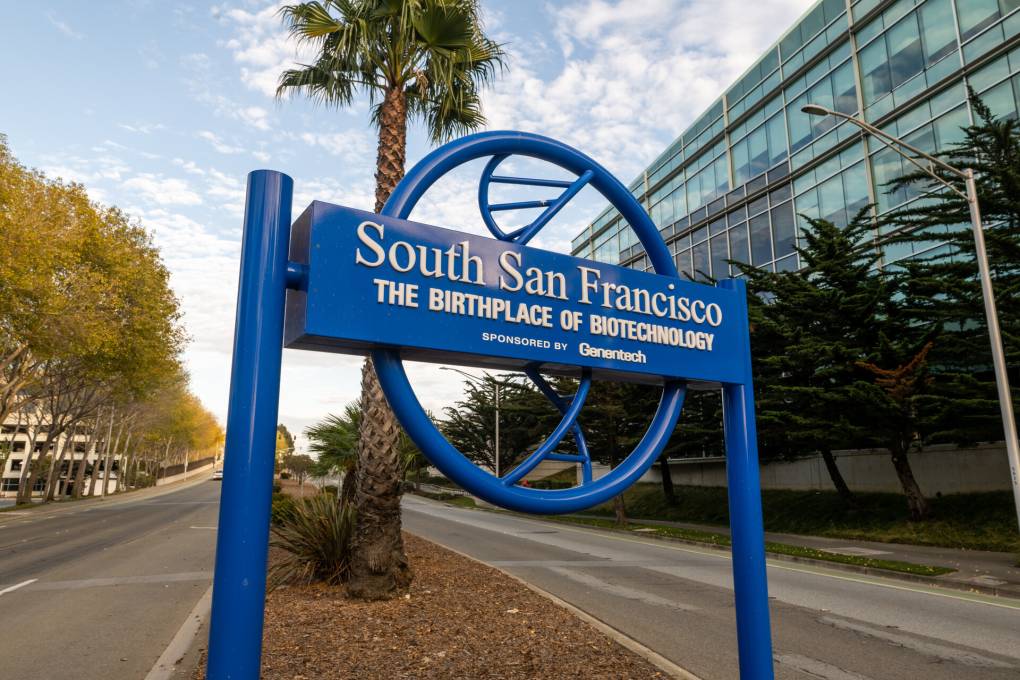
"caption": "A sign for South San Francisco, 'The Birthplace of Biotechnology,' on Oyster Point Boulevard.",
"description": null,
"title": "RS60253_045_KQED_Biotechnology_11172022-qut",
"credit": "Beth LaBerge/KQED",
"status": "inherit",
"altTag": "A blue sign for South San Francisco, 'The Birthplace of Biotechnology,' against a blue sky and a palm tree with an office building in the background",
"isLoading": false,
"fetchFailed": false
},
"news_11930289": {
"type": "attachments",
"id": "news_11930289",
"meta": {
"index": "attachments_1716263798",
"site": "news",
"id": "11930289",
"found": true
},
"parent": 11930288,
"imgSizes": {
"twentyfourteen-full-width": {
"file": "https://ww2.kqed.org/app/uploads/sites/10/2022/10/ap19336075061345_custom-ecd134a2baf7b127acb6250a90b7ecf294a0cfbe-1038x576.jpg",
"width": 1038,
"mimeType": "image/jpeg",
"height": 576
},
"thumbnail": {
"file": "https://ww2.kqed.org/app/uploads/sites/10/2022/10/ap19336075061345_custom-ecd134a2baf7b127acb6250a90b7ecf294a0cfbe-160x107.jpg",
"width": 160,
"mimeType": "image/jpeg",
"height": 107
},
"post-thumbnail": {
"file": "https://ww2.kqed.org/app/uploads/sites/10/2022/10/ap19336075061345_custom-ecd134a2baf7b127acb6250a90b7ecf294a0cfbe-672x372.jpg",
"width": 672,
"mimeType": "image/jpeg",
"height": 372
},
"kqedFullSize": {
"file": "https://ww2.kqed.org/app/uploads/sites/10/2022/10/ap19336075061345_custom-ecd134a2baf7b127acb6250a90b7ecf294a0cfbe.jpg",
"width": 2200,
"height": 1465
},
"2048x2048": {
"file": "https://ww2.kqed.org/app/uploads/sites/10/2022/10/ap19336075061345_custom-ecd134a2baf7b127acb6250a90b7ecf294a0cfbe-2048x1364.jpg",
"width": 2048,
"mimeType": "image/jpeg",
"height": 1364
},
"large": {
"file": "https://ww2.kqed.org/app/uploads/sites/10/2022/10/ap19336075061345_custom-ecd134a2baf7b127acb6250a90b7ecf294a0cfbe-1020x679.jpg",
"width": 1020,
"mimeType": "image/jpeg",
"height": 679
},
"1536x1536": {
"file": "https://ww2.kqed.org/app/uploads/sites/10/2022/10/ap19336075061345_custom-ecd134a2baf7b127acb6250a90b7ecf294a0cfbe-1536x1023.jpg",
"width": 1536,
"mimeType": "image/jpeg",
"height": 1023
},
"full-width": {
"file": "https://ww2.kqed.org/app/uploads/sites/10/2022/10/ap19336075061345_custom-ecd134a2baf7b127acb6250a90b7ecf294a0cfbe-1920x1279.jpg",
"width": 1920,
"mimeType": "image/jpeg",
"height": 1279
},
"medium": {
"file": "https://ww2.kqed.org/app/uploads/sites/10/2022/10/ap19336075061345_custom-ecd134a2baf7b127acb6250a90b7ecf294a0cfbe-800x533.jpg",
"width": 800,
"mimeType": "image/jpeg",
"height": 533
}
},
"publishDate": 1666897153,
"modified": 1666897732,
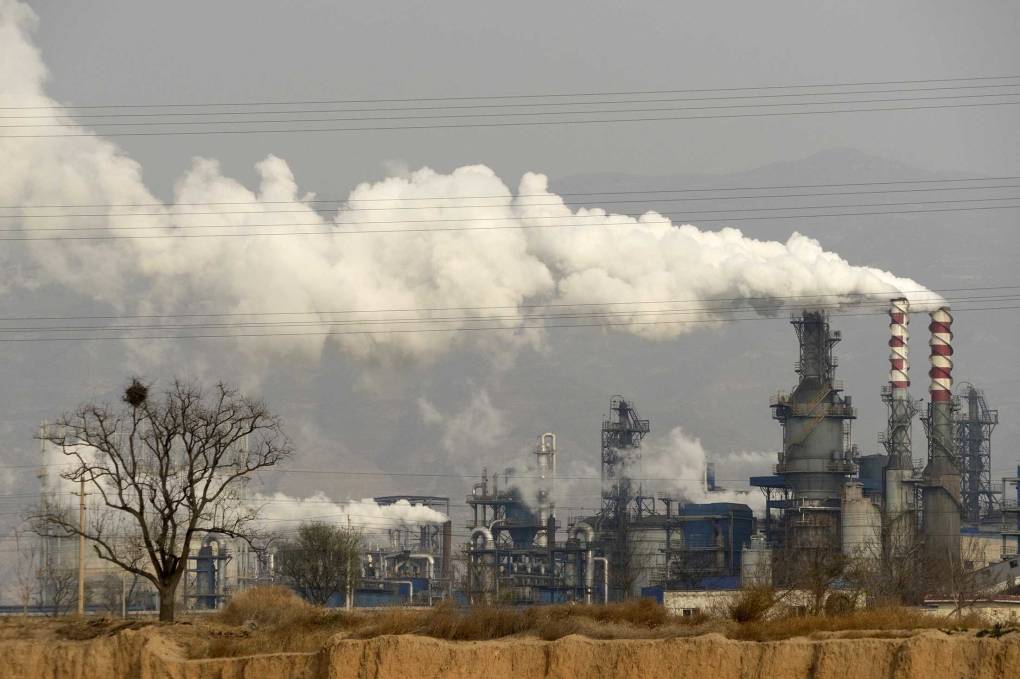
"caption": "Smoke and steam rise from a coal processing plant in Hejin in central China's Shanxi Province in November, 2019.",
"description": "CORRECTS TO REMOVE THE REFERENCES TO CARBON BLACK AND STEEL MANUFACTURING - In this Nov. 28, 2019 file photo, smoke and steam rise from a coal processing plant in Hejin in central China's Shanxi Province. As world leaders gather in Madrid to discuss how to slow the warming of the planet, a spotlight is falling on China, the top emitter of greenhouse gases. China burns about half the coal used globally each year. Yet it's also the leading market for solar panels, wind turbines and electric vehicles. (AP Photo/Olivia Zhang)",
"title": "Coal power has resurged since the pandemic, like at this coal processing plant in China's Shanxi Province, but research shows it should be phased out by 2030 to avoid extreme climate change.",
"credit": "AP Photo/Olivia Zhang",
"status": "inherit",
"altTag": "A coal power plant spewing smoke and steam.",
"isLoading": false,
"fetchFailed": false
},
"news_11827883": {
"type": "attachments",
"id": "news_11827883",
"meta": {
"index": "attachments_1716263798",
"site": "news",
"id": "11827883",
"found": true
},
"parent": 11827882,
"imgSizes": {
"apple_news_ca_landscape_5_5": {
"file": "https://ww2.kqed.org/app/uploads/sites/10/2020/07/microrclimates-1044x783.jpg",
"width": 1044,
"mimeType": "image/jpeg",
"height": 783
},
"apple_news_ca_square_4_0": {
"file": "https://ww2.kqed.org/app/uploads/sites/10/2020/07/microrclimates-470x470.jpg",
"width": 470,
"mimeType": "image/jpeg",
"height": 470
},
"twentyfourteen-full-width": {
"file": "https://ww2.kqed.org/app/uploads/sites/10/2020/07/microrclimates-1038x576.jpg",
"width": 1038,
"mimeType": "image/jpeg",
"height": 576
},
"thumbnail": {
"file": "https://ww2.kqed.org/app/uploads/sites/10/2020/07/microrclimates-160x89.jpg",
"width": 160,
"mimeType": "image/jpeg",
"height": 89
},
"post-thumbnail": {
"file": "https://ww2.kqed.org/app/uploads/sites/10/2020/07/microrclimates-672x372.jpg",
"width": 672,
"mimeType": "image/jpeg",
"height": 372
},
"kqedFullSize": {
"file": "https://ww2.kqed.org/app/uploads/sites/10/2020/07/microrclimates.jpg",
"width": 1940,
"height": 1080
},
"apple_news_ca_landscape_4_7": {
"file": "https://ww2.kqed.org/app/uploads/sites/10/2020/07/microrclimates-632x474.jpg",
"width": 632,
"mimeType": "image/jpeg",
"height": 474
},
"large": {
"file": "https://ww2.kqed.org/app/uploads/sites/10/2020/07/microrclimates-1020x568.jpg",
"width": 1020,
"mimeType": "image/jpeg",
"height": 568
},
"apple_news_ca_landscape_4_0": {
"file": "https://ww2.kqed.org/app/uploads/sites/10/2020/07/microrclimates-536x402.jpg",
"width": 536,
"mimeType": "image/jpeg",
"height": 402
},
"apple_news_ca_portrait_12_9": {
"file": "https://ww2.kqed.org/app/uploads/sites/10/2020/07/microrclimates-1122x1080.jpg",
"width": 1122,
"mimeType": "image/jpeg",
"height": 1080
},
"medium": {
"file": "https://ww2.kqed.org/app/uploads/sites/10/2020/07/microrclimates-800x445.jpg",
"width": 800,
"mimeType": "image/jpeg",
"height": 445
},
"apple_news_ca_portrait_4_0": {
"file": "https://ww2.kqed.org/app/uploads/sites/10/2020/07/microrclimates-354x472.jpg",
"width": 354,
"mimeType": "image/jpeg",
"height": 472
},
"apple_news_ca_portrait_9_7": {
"file": "https://ww2.kqed.org/app/uploads/sites/10/2020/07/microrclimates-840x1080.jpg",
"width": 840,
"mimeType": "image/jpeg",
"height": 1080
},
"apple_news_ca_landscape_12_9": {
"file": "https://ww2.kqed.org/app/uploads/sites/10/2020/07/microrclimates-1832x1080.jpg",
"width": 1832,
"mimeType": "image/jpeg",
"height": 1080
},
"apple_news_ca_square_9_7": {
"file": "https://ww2.kqed.org/app/uploads/sites/10/2020/07/microrclimates-1104x1080.jpg",
"width": 1104,
"mimeType": "image/jpeg",
"height": 1080
},
"1536x1536": {
"file": "https://ww2.kqed.org/app/uploads/sites/10/2020/07/microrclimates-1536x855.jpg",
"width": 1536,
"mimeType": "image/jpeg",
"height": 855
},
"apple_news_ca_portrait_4_7": {
"file": "https://ww2.kqed.org/app/uploads/sites/10/2020/07/microrclimates-414x552.jpg",
"width": 414,
"mimeType": "image/jpeg",
"height": 552
},
"apple_news_ca_square_12_9": {
"file": "https://ww2.kqed.org/app/uploads/sites/10/2020/07/microrclimates-1472x1080.jpg",
"width": 1472,
"mimeType": "image/jpeg",
"height": 1080
},
"apple_news_ca_portrait_5_5": {
"file": "https://ww2.kqed.org/app/uploads/sites/10/2020/07/microrclimates-687x916.jpg",
"width": 687,
"mimeType": "image/jpeg",
"height": 916
},
"full-width": {
"file": "https://ww2.kqed.org/app/uploads/sites/10/2020/07/microrclimates-1920x1069.jpg",
"width": 1920,
"mimeType": "image/jpeg",
"height": 1069
},
"apple_news_ca_square_4_7": {
"file": "https://ww2.kqed.org/app/uploads/sites/10/2020/07/microrclimates-550x550.jpg",
"width": 550,
"mimeType": "image/jpeg",
"height": 550
},
"apple_news_ca_landscape_9_7": {
"file": "https://ww2.kqed.org/app/uploads/sites/10/2020/07/microrclimates-1376x1032.jpg",
"width": 1376,
"mimeType": "image/jpeg",
"height": 1032
},
"apple_news_ca_square_5_5": {
"file": "https://ww2.kqed.org/app/uploads/sites/10/2020/07/microrclimates-912x912.jpg",
"width": 912,
"mimeType": "image/jpeg",
"height": 912
}
},
"publishDate": 1594226441,
"modified": 1604626878,
"caption": "Yerba Buena Island and San Francisco captured from the Berkeley Hills. ",
"description": null,
"title": "microrclimates",
"credit": "Melinda Young Stuart/\u003ca href=\"https://www.flickr.com/photos/melystu/45804314885/in/photolist-2cMz61Z-2j3rGgH-KsuGSt-2eRkebk-274sh8m-2g9uxxY-MMmSD9-2j3rFTi-xhBawK-255ikev-Fz7Gz6-DvUxWQ-HwL9mh-TD6CXk-2j3he1R-2hrhaDc-22tWEgY-2iFqVWw-2jaAJzc-GM7SX6-Xo99xh-s5gTtm-2buf1F3-2iwtsmb-2eHG1j7-Yn9Lqq-2gzqiqy-Lu7Rto-2apeUvm-JuuPP3-24pv78b-rFJYFW-2gbZeNf-Co56s4-PoG2G6-CFTKqt-ABrH9m-XP2H8Y-Gjwkqu-QVUyje-27JVYeN-xJf28m-PwZtnw-pu6FH6-s6FR7c-2iEA84v-2gah3pa-qTDFoL-2g4oHbc-e28R8X\">Flickr\u003c/a>",
"status": "inherit",
"isLoading": false,
"fetchFailed": false
},
"news_11925053": {
"type": "attachments",
"id": "news_11925053",
"meta": {
"index": "attachments_1716263798",
"site": "news",
"id": "11925053",
"found": true
},
"parent": 11924900,
"imgSizes": {
"twentyfourteen-full-width": {
"file": "https://ww2.kqed.org/app/uploads/sites/10/2022/09/9A11810D-0E40-4235-BAF5-CB5EDA92B21A-1038x576.jpg",
"width": 1038,
"mimeType": "image/jpeg",
"height": 576
},
"thumbnail": {
"file": "https://ww2.kqed.org/app/uploads/sites/10/2022/09/9A11810D-0E40-4235-BAF5-CB5EDA92B21A-160x107.jpg",
"width": 160,
"mimeType": "image/jpeg",
"height": 107
},
"post-thumbnail": {
"file": "https://ww2.kqed.org/app/uploads/sites/10/2022/09/9A11810D-0E40-4235-BAF5-CB5EDA92B21A-672x372.jpg",
"width": 672,
"mimeType": "image/jpeg",
"height": 372
},
"kqedFullSize": {
"file": "https://ww2.kqed.org/app/uploads/sites/10/2022/09/9A11810D-0E40-4235-BAF5-CB5EDA92B21A.jpg",
"width": 1620,
"height": 1080
},
"large": {
"file": "https://ww2.kqed.org/app/uploads/sites/10/2022/09/9A11810D-0E40-4235-BAF5-CB5EDA92B21A-1020x680.jpg",
"width": 1020,
"mimeType": "image/jpeg",
"height": 680
},
"1536x1536": {
"file": "https://ww2.kqed.org/app/uploads/sites/10/2022/09/9A11810D-0E40-4235-BAF5-CB5EDA92B21A-1536x1024.jpg",
"width": 1536,
"mimeType": "image/jpeg",
"height": 1024
},
"medium": {
"file": "https://ww2.kqed.org/app/uploads/sites/10/2022/09/9A11810D-0E40-4235-BAF5-CB5EDA92B21A-800x533.jpg",
"width": 800,
"mimeType": "image/jpeg",
"height": 533
}
},
"publishDate": 1662679873,
"modified": 1662680126,
"caption": "Steve Cordero and his son Julius, 5, soak themselves in a sprinkler at Meadow Homes Park in Concord, where temperatures reached 108 degrees, on Sept. 8, 2022. \n",
"description": null,
"title": "9A11810D-0E40-4235-BAF5-CB5EDA92B21A",
"credit": "Beth LaBerge/KQED",
"status": "inherit",
"altTag": "A man and a boy stand in a sprinkler at a park.",
"isLoading": false,
"fetchFailed": false
},
"news_11924255": {
"type": "attachments",
"id": "news_11924255",
"meta": {
"index": "attachments_1716263798",
"site": "news",
"id": "11924255",
"found": true
},
"parent": 11924244,
"imgSizes": {
"twentyfourteen-full-width": {
"file": "https://ww2.kqed.org/app/uploads/sites/10/2022/08/RS3237_heatwavepower220120813-1038x576.jpg",
"width": 1038,
"mimeType": "image/jpeg",
"height": 576
},
"thumbnail": {
"file": "https://ww2.kqed.org/app/uploads/sites/10/2022/08/RS3237_heatwavepower220120813-160x109.jpg",
"width": 160,
"mimeType": "image/jpeg",
"height": 109
},
"post-thumbnail": {
"file": "https://ww2.kqed.org/app/uploads/sites/10/2022/08/RS3237_heatwavepower220120813-672x372.jpg",
"width": 672,
"mimeType": "image/jpeg",
"height": 372
},
"kqedFullSize": {
"file": "https://ww2.kqed.org/app/uploads/sites/10/2022/08/RS3237_heatwavepower220120813-scaled.jpg",
"width": 2560,
"height": 1746
},
"2048x2048": {
"file": "https://ww2.kqed.org/app/uploads/sites/10/2022/08/RS3237_heatwavepower220120813-2048x1397.jpg",
"width": 2048,
"mimeType": "image/jpeg",
"height": 1397
},
"large": {
"file": "https://ww2.kqed.org/app/uploads/sites/10/2022/08/RS3237_heatwavepower220120813-1020x696.jpg",
"width": 1020,
"mimeType": "image/jpeg",
"height": 696
},
"1536x1536": {
"file": "https://ww2.kqed.org/app/uploads/sites/10/2022/08/RS3237_heatwavepower220120813-1536x1048.jpg",
"width": 1536,
"mimeType": "image/jpeg",
"height": 1048
},
"full-width": {
"file": "https://ww2.kqed.org/app/uploads/sites/10/2022/08/RS3237_heatwavepower220120813-1920x1309.jpg",
"width": 1920,
"mimeType": "image/jpeg",
"height": 1309
},
"medium": {
"file": "https://ww2.kqed.org/app/uploads/sites/10/2022/08/RS3237_heatwavepower220120813-800x546.jpg",
"width": 800,
"mimeType": "image/jpeg",
"height": 546
}
},
"publishDate": 1661972199,
"modified": 1661981009,
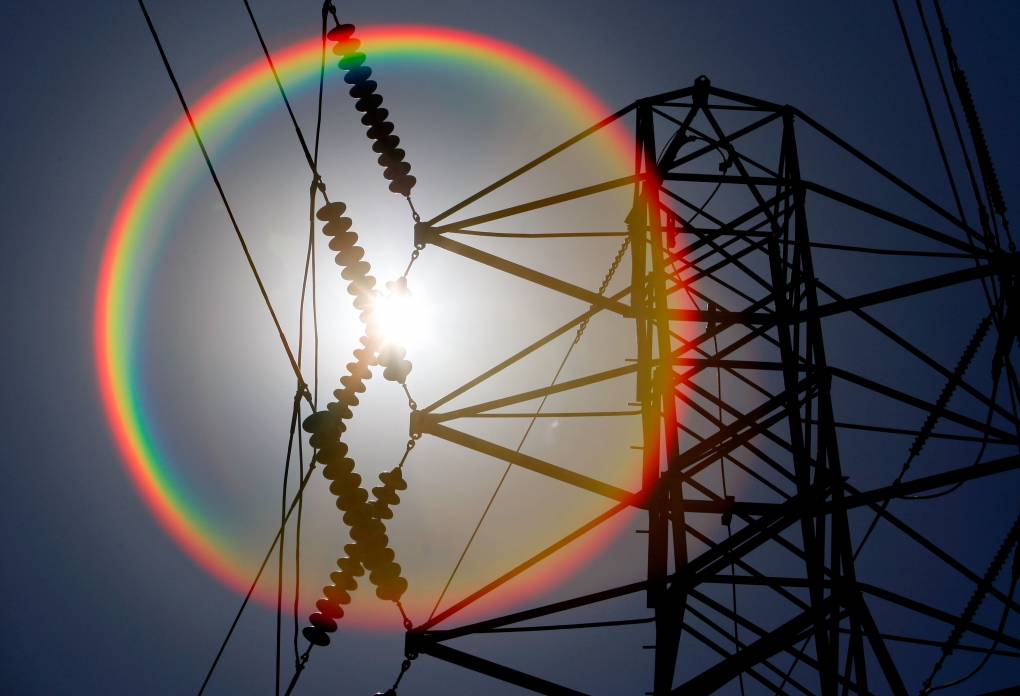
"caption": "The sun shines over towers carrying electrical lines in South San Francisco. With temperatures over 100 degrees expected in many parts of the state, the California Independent System Operator, which manages most of the state's electricity grid, is expecting energy shortages and to call for voluntary conservation.",
"description": "The sun shines over towers carrying electrical lines in South San Francisco. With temperatures over 100 degrees expected in many parts of the state, the California Independent System Operator, which manages most of the California electricity grid, is expecting energy shortages and to call for voluntary conservation.",
"title": "heat electricity grid",
"credit": "Justin Sullivan/Getty Images",
"status": "inherit",
"altTag": "A rainbow around a bright sun shines through an electricity tower and heavy-duty power lines.",
"isLoading": false,
"fetchFailed": false
},
"news_11666474": {
"type": "attachments",
"id": "news_11666474",
"meta": {
"index": "attachments_1716263798",
"site": "news",
"id": "11666474",
"found": true
},
"parent": 0,
"imgSizes": {
"small": {
"file": "https://ww2.kqed.org/app/uploads/sites/10/2018/05/RushHour-520x390.jpg",
"width": 520,
"mimeType": "image/jpeg",
"height": 390
},
"twentyfourteen-full-width": {
"file": "https://ww2.kqed.org/app/uploads/sites/10/2018/05/RushHour-1000x576.jpg",
"width": 1000,
"mimeType": "image/jpeg",
"height": 576
},
"thumbnail": {
"file": "https://ww2.kqed.org/app/uploads/sites/10/2018/05/RushHour-160x120.jpg",
"width": 160,
"mimeType": "image/jpeg",
"height": 120
},
"fd-sm": {
"file": "https://ww2.kqed.org/app/uploads/sites/10/2018/05/RushHour-960x720.jpg",
"width": 960,
"mimeType": "image/jpeg",
"height": 720
},
"post-thumbnail": {
"file": "https://ww2.kqed.org/app/uploads/sites/10/2018/05/RushHour-672x372.jpg",
"width": 672,
"mimeType": "image/jpeg",
"height": 372
},
"xsmall": {
"file": "https://ww2.kqed.org/app/uploads/sites/10/2018/05/RushHour-375x281.jpg",
"width": 375,
"mimeType": "image/jpeg",
"height": 281
},
"kqedFullSize": {
"file": "https://ww2.kqed.org/app/uploads/sites/10/2018/05/RushHour.jpg",
"width": 1000,
"height": 750
},
"guest-author-50": {
"file": "https://ww2.kqed.org/app/uploads/sites/10/2018/05/RushHour-50x50.jpg",
"width": 50,
"mimeType": "image/jpeg",
"height": 50
},
"guest-author-96": {
"file": "https://ww2.kqed.org/app/uploads/sites/10/2018/05/RushHour-96x96.jpg",
"width": 96,
"mimeType": "image/jpeg",
"height": 96
},
"medium": {
"file": "https://ww2.kqed.org/app/uploads/sites/10/2018/05/RushHour-800x600.jpg",
"width": 800,
"mimeType": "image/jpeg",
"height": 600
},
"guest-author-64": {
"file": "https://ww2.kqed.org/app/uploads/sites/10/2018/05/RushHour-64x64.jpg",
"width": 64,
"mimeType": "image/jpeg",
"height": 64
},
"guest-author-32": {
"file": "https://ww2.kqed.org/app/uploads/sites/10/2018/05/RushHour-32x32.jpg",
"width": 32,
"mimeType": "image/jpeg",
"height": 32
},
"detail": {
"file": "https://ww2.kqed.org/app/uploads/sites/10/2018/05/RushHour-150x150.jpg",
"width": 150,
"mimeType": "image/jpeg",
"height": 150
},
"guest-author-128": {
"file": "https://ww2.kqed.org/app/uploads/sites/10/2018/05/RushHour-128x128.jpg",
"width": 128,
"mimeType": "image/jpeg",
"height": 128
},
"xxsmall": {
"file": "https://ww2.kqed.org/app/uploads/sites/10/2018/05/RushHour-240x180.jpg",
"width": 240,
"mimeType": "image/jpeg",
"height": 180
}
},
"publishDate": 1525457697,
"modified": 1525459205,
"caption": "On Oct. 13, 2017, during the North Bay fires, cars slow during rush hour traffic on Highway 280 in Cupertino. Haze from the fires is visible in the air. ",
"description": "On Oct. 13, 2017, during the North Bay fires, cars slow during rush hour traffic on Highway 280 in Cupertino. Haze from the fires is visible in the air. ",
"title": "Rush Hour on Highway 280",
"credit": "Isha Salian/Peninsula Press",
"status": "inherit",
"isLoading": false,
"fetchFailed": false
},
"news_11922557": {
"type": "attachments",
"id": "news_11922557",
"meta": {
"index": "attachments_1716263798",
"site": "news",
"id": "11922557",
"found": true
},
"parent": 11922513,
"imgSizes": {
"twentyfourteen-full-width": {
"file": "https://ww2.kqed.org/app/uploads/sites/10/2022/08/LEAD-IMAGE-DSCF2173-1038x576.jpg",
"width": 1038,
"mimeType": "image/jpeg",
"height": 576
},
"thumbnail": {
"file": "https://ww2.kqed.org/app/uploads/sites/10/2022/08/LEAD-IMAGE-DSCF2173-160x107.jpg",
"width": 160,
"mimeType": "image/jpeg",
"height": 107
},
"post-thumbnail": {
"file": "https://ww2.kqed.org/app/uploads/sites/10/2022/08/LEAD-IMAGE-DSCF2173-672x372.jpg",
"width": 672,
"mimeType": "image/jpeg",
"height": 372
},
"kqedFullSize": {
"file": "https://ww2.kqed.org/app/uploads/sites/10/2022/08/LEAD-IMAGE-DSCF2173.jpg",
"width": 2000,
"height": 1333
},
"large": {
"file": "https://ww2.kqed.org/app/uploads/sites/10/2022/08/LEAD-IMAGE-DSCF2173-1020x680.jpg",
"width": 1020,
"mimeType": "image/jpeg",
"height": 680
},
"1536x1536": {
"file": "https://ww2.kqed.org/app/uploads/sites/10/2022/08/LEAD-IMAGE-DSCF2173-1536x1024.jpg",
"width": 1536,
"mimeType": "image/jpeg",
"height": 1024
},
"full-width": {
"file": "https://ww2.kqed.org/app/uploads/sites/10/2022/08/LEAD-IMAGE-DSCF2173-1920x1280.jpg",
"width": 1920,
"mimeType": "image/jpeg",
"height": 1280
},
"medium": {
"file": "https://ww2.kqed.org/app/uploads/sites/10/2022/08/LEAD-IMAGE-DSCF2173-800x533.jpg",
"width": 800,
"mimeType": "image/jpeg",
"height": 533
}
},
"publishDate": 1660595863,
"modified": 1660681509,
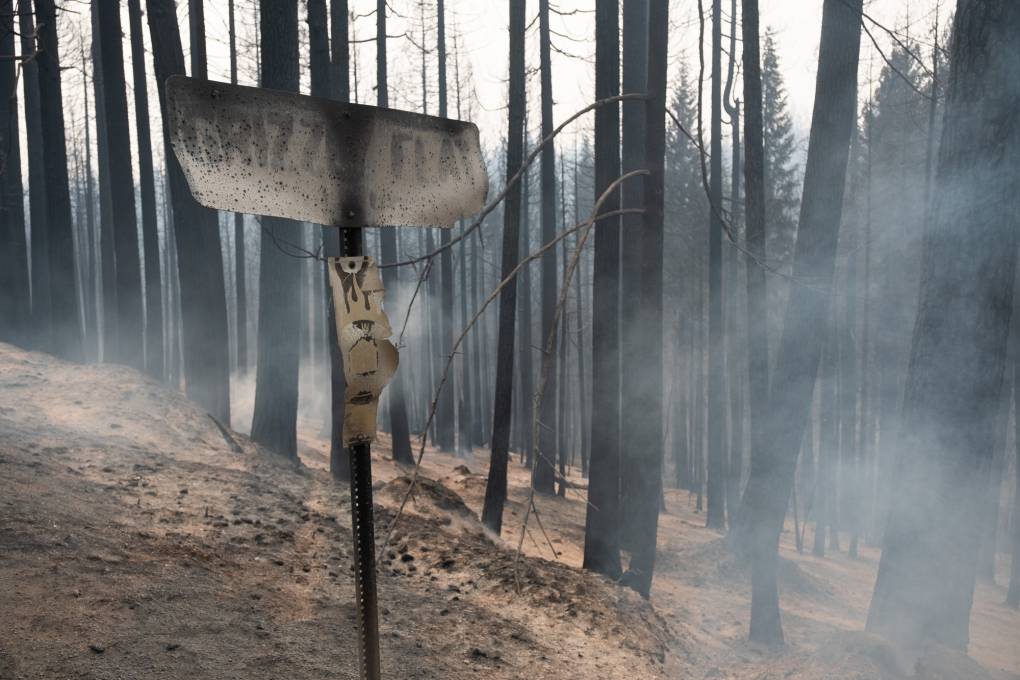
"caption": "A burned sign greets travelers in Grizzly Flat, Aug. 17, 2021. ",
"description": "A burned sign greets travelers in Grizzly Flat, Calif. Tuesday, August 17, 2021. ",
"title": "Grizzly Flat",
"credit": "Andrew Nixon/CapRadio",
"status": "inherit",
"altTag": "Tall, bare, burned tree trunks rise from an ashy forest floor as white smoke drifts through the trees. In the left foreground, a metal sign burnt white with black spots reads Grizzly Flat.",
"isLoading": false,
"fetchFailed": false
},
"news_11921965": {
"type": "attachments",
"id": "news_11921965",
"meta": {
"index": "attachments_1716263798",
"site": "news",
"id": "11921965",
"found": true
},
"parent": 11921614,
"imgSizes": {
"twentyfourteen-full-width": {
"file": "https://ww2.kqed.org/app/uploads/sites/10/2022/08/GettyImages-479949115-1038x576.jpg",
"width": 1038,
"mimeType": "image/jpeg",
"height": 576
},
"thumbnail": {
"file": "https://ww2.kqed.org/app/uploads/sites/10/2022/08/GettyImages-479949115-160x110.jpg",
"width": 160,
"mimeType": "image/jpeg",
"height": 110
},
"post-thumbnail": {
"file": "https://ww2.kqed.org/app/uploads/sites/10/2022/08/GettyImages-479949115-672x372.jpg",
"width": 672,
"mimeType": "image/jpeg",
"height": 372
},
"kqedFullSize": {
"file": "https://ww2.kqed.org/app/uploads/sites/10/2022/08/GettyImages-479949115-scaled.jpg",
"width": 2560,
"height": 1765
},
"2048x2048": {
"file": "https://ww2.kqed.org/app/uploads/sites/10/2022/08/GettyImages-479949115-2048x1412.jpg",
"width": 2048,
"mimeType": "image/jpeg",
"height": 1412
},
"large": {
"file": "https://ww2.kqed.org/app/uploads/sites/10/2022/08/GettyImages-479949115-1020x703.jpg",
"width": 1020,
"mimeType": "image/jpeg",
"height": 703
},
"1536x1536": {
"file": "https://ww2.kqed.org/app/uploads/sites/10/2022/08/GettyImages-479949115-1536x1059.jpg",
"width": 1536,
"mimeType": "image/jpeg",
"height": 1059
},
"full-width": {
"file": "https://ww2.kqed.org/app/uploads/sites/10/2022/08/GettyImages-479949115-1920x1324.jpg",
"width": 1920,
"mimeType": "image/jpeg",
"height": 1324
},
"medium": {
"file": "https://ww2.kqed.org/app/uploads/sites/10/2022/08/GettyImages-479949115-800x551.jpg",
"width": 800,
"mimeType": "image/jpeg",
"height": 551
}
},
"publishDate": 1659985610,
"modified": 1659995891,
"caption": "Drought-tolerant succulents and palms are displayed during the 29th annual San Francisco Flower and Garden Show at the San Mateo County Event Center in March 2014.",
"description": "Drought-tolerant succulents and palms are displayed during the 29th annual San Francisco Flower and Garden Show at the San Mateo County Event Center in March, 2014.",
"title": "drought tolerant low water garden",
"credit": "Justin Sullivan/Getty Images",
"status": "inherit",
"altTag": "Spikey, fan-shaped dark green leaves fill the foreground, with wavy glass structures in red and light blue behind the plant. Behind that is a large bamboo plant.",
"isLoading": false,
"fetchFailed": false
},
"news_11921439": {
"type": "attachments",
"id": "news_11921439",
"meta": {
"index": "attachments_1716263798",
"site": "news",
"id": "11921439",
"found": true
},
"parent": 11921363,
"imgSizes": {
"twentyfourteen-full-width": {
"file": "https://ww2.kqed.org/app/uploads/sites/10/2022/08/GettyImages-1411282837-1038x576.jpg",
"width": 1038,
"mimeType": "image/jpeg",
"height": 576
},
"thumbnail": {
"file": "https://ww2.kqed.org/app/uploads/sites/10/2022/08/GettyImages-1411282837-160x105.jpg",
"width": 160,
"mimeType": "image/jpeg",
"height": 105
},
"post-thumbnail": {
"file": "https://ww2.kqed.org/app/uploads/sites/10/2022/08/GettyImages-1411282837-672x372.jpg",
"width": 672,
"mimeType": "image/jpeg",
"height": 372
},
"kqedFullSize": {
"file": "https://ww2.kqed.org/app/uploads/sites/10/2022/08/GettyImages-1411282837-scaled.jpg",
"width": 2560,
"height": 1683
},
"2048x2048": {
"file": "https://ww2.kqed.org/app/uploads/sites/10/2022/08/GettyImages-1411282837-2048x1347.jpg",
"width": 2048,
"mimeType": "image/jpeg",
"height": 1347
},
"large": {
"file": "https://ww2.kqed.org/app/uploads/sites/10/2022/08/GettyImages-1411282837-1020x671.jpg",
"width": 1020,
"mimeType": "image/jpeg",
"height": 671
},
"1536x1536": {
"file": "https://ww2.kqed.org/app/uploads/sites/10/2022/08/GettyImages-1411282837-1536x1010.jpg",
"width": 1536,
"mimeType": "image/jpeg",
"height": 1010
},
"full-width": {
"file": "https://ww2.kqed.org/app/uploads/sites/10/2022/08/GettyImages-1411282837-1920x1263.jpg",
"width": 1920,
"mimeType": "image/jpeg",
"height": 1263
},
"medium": {
"file": "https://ww2.kqed.org/app/uploads/sites/10/2022/08/GettyImages-1411282837-800x526.jpg",
"width": 800,
"mimeType": "image/jpeg",
"height": 526
}
},
"publishDate": 1659556982,
"modified": 1659567453,
"caption": "Los Angeles Department of Water and Power (LADWP) water conservation specialist Damon Ayala makes notes in July 2022 while inspecting a sprinkler system, which is operating in violation of the water conservation ordinance. The Bay Area led the state in water conservation in June, with a 12.6% cut compared to June last year.",
"description": "Los Angeles Department of Water and Power (LADWP) water conservation specialist Damon Ayala makes notes in July 2022 while inspecting a sprinkler system, which is operating in violation of the water conservation ordinance. The Bay Area led the state in water conservation in June, with a 12.6% cut compared to June last year.",
"title": "Los Angeles Deploys \"Water Police\" To Search For Water Restriction Violations",
"credit": "Mario Tama/Getty Images",
"status": "inherit",
"altTag": "A bald man with light skin and a close-cropped silver beard makes notes on a tablet. He's wearing a blue short-sleeved shirt with Los Angeles Department of Water and Power embroidered in white. Behind the man is blurred green grass and a tree trunk.",
"isLoading": false,
"fetchFailed": false
},
"news_11920715": {
"type": "attachments",
"id": "news_11920715",
"meta": {
"index": "attachments_1716263798",
"site": "news",
"id": "11920715",
"found": true
},
"parent": 11920714,
"imgSizes": {
"twentyfourteen-full-width": {
"file": "https://ww2.kqed.org/app/uploads/sites/10/2022/07/ap22074669160101_wide-8033a7fafc90be24c6478af644a7f553c6e4da97-1038x576.jpg",
"width": 1038,
"mimeType": "image/jpeg",
"height": 576
},
"thumbnail": {
"file": "https://ww2.kqed.org/app/uploads/sites/10/2022/07/ap22074669160101_wide-8033a7fafc90be24c6478af644a7f553c6e4da97-160x90.jpg",
"width": 160,
"mimeType": "image/jpeg",
"height": 90
},
"post-thumbnail": {
"file": "https://ww2.kqed.org/app/uploads/sites/10/2022/07/ap22074669160101_wide-8033a7fafc90be24c6478af644a7f553c6e4da97-672x372.jpg",
"width": 672,
"mimeType": "image/jpeg",
"height": 372
},
"kqedFullSize": {
"file": "https://ww2.kqed.org/app/uploads/sites/10/2022/07/ap22074669160101_wide-8033a7fafc90be24c6478af644a7f553c6e4da97-scaled.jpg",
"width": 2560,
"height": 1440
},
"2048x2048": {
"file": "https://ww2.kqed.org/app/uploads/sites/10/2022/07/ap22074669160101_wide-8033a7fafc90be24c6478af644a7f553c6e4da97-2048x1152.jpg",
"width": 2048,
"mimeType": "image/jpeg",
"height": 1152
},
"large": {
"file": "https://ww2.kqed.org/app/uploads/sites/10/2022/07/ap22074669160101_wide-8033a7fafc90be24c6478af644a7f553c6e4da97-1020x574.jpg",
"width": 1020,
"mimeType": "image/jpeg",
"height": 574
},
"1536x1536": {
"file": "https://ww2.kqed.org/app/uploads/sites/10/2022/07/ap22074669160101_wide-8033a7fafc90be24c6478af644a7f553c6e4da97-1536x864.jpg",
"width": 1536,
"mimeType": "image/jpeg",
"height": 864
},
"full-width": {
"file": "https://ww2.kqed.org/app/uploads/sites/10/2022/07/ap22074669160101_wide-8033a7fafc90be24c6478af644a7f553c6e4da97-1920x1080.jpg",
"width": 1920,
"mimeType": "image/jpeg",
"height": 1080
},
"medium": {
"file": "https://ww2.kqed.org/app/uploads/sites/10/2022/07/ap22074669160101_wide-8033a7fafc90be24c6478af644a7f553c6e4da97-800x450.jpg",
"width": 800,
"mimeType": "image/jpeg",
"height": 450
}
},
"publishDate": 1659027449,
"modified": 1659027531,
"caption": "Sen. Joe Manchin, D-W.Va., talks with Senate Majority Leader Chuck Schumer of N.Y., before an event in the Indian Treaty Room in the Eisenhower Executive Office Building on the White House Campus in Washington, Tuesday, March 15, 2022.",
"description": "Sen. Joe Manchin, D-W.Va., talks with Senate Majority Leader Chuck Schumer of N.Y., before an event in the Indian Treaty Room in the Eisenhower Executive Office Building on the White House Campus in Washington, Tuesday, March 15, 2022. (AP Photo/Patrick Semansky)",
"title": "Sen. Joe Manchin, D-W.Va., talks with Senate Majority Leader Chuck Schumer of N.Y., on March 15, 2022.",
"credit": "Patrick Semansky/AP Photo",
"status": "inherit",
"altTag": "Two men in suits have their backs turned looking at each other.",
"isLoading": false,
"fetchFailed": false
},
"news_11920156": {
"type": "attachments",
"id": "news_11920156",
"meta": {
"index": "attachments_1716263798",
"site": "news",
"id": "11920156",
"found": true
},
"parent": 11920130,
"imgSizes": {
"twentyfourteen-full-width": {
"file": "https://ww2.kqed.org/app/uploads/sites/10/2022/07/IMG_0343-1038x576.jpg",
"width": 1038,
"mimeType": "image/jpeg",
"height": 576
},
"thumbnail": {
"file": "https://ww2.kqed.org/app/uploads/sites/10/2022/07/IMG_0343-160x90.jpg",
"width": 160,
"mimeType": "image/jpeg",
"height": 90
},
"post-thumbnail": {
"file": "https://ww2.kqed.org/app/uploads/sites/10/2022/07/IMG_0343-672x372.jpg",
"width": 672,
"mimeType": "image/jpeg",
"height": 372
},
"kqedFullSize": {
"file": "https://ww2.kqed.org/app/uploads/sites/10/2022/07/IMG_0343.jpg",
"width": 1600,
"height": 900
},
"large": {
"file": "https://ww2.kqed.org/app/uploads/sites/10/2022/07/IMG_0343-1020x574.jpg",
"width": 1020,
"mimeType": "image/jpeg",
"height": 574
},
"1536x1536": {
"file": "https://ww2.kqed.org/app/uploads/sites/10/2022/07/IMG_0343-1536x864.jpg",
"width": 1536,
"mimeType": "image/jpeg",
"height": 864
},
"medium": {
"file": "https://ww2.kqed.org/app/uploads/sites/10/2022/07/IMG_0343-800x450.jpg",
"width": 800,
"mimeType": "image/jpeg",
"height": 450
}
},
"publishDate": 1658442304,
"modified": 1658530252,
"caption": "Paola Hoffman marches in the streets of Los Angeles during a 24-hour Youth Climate Strike on Sept 24-25, 2021. The strike was organized by Youth Climate Strike LA, Fridays for Future and UprootTheSystem.",
"description": "Paola Hoffman marches in the streets of Los Angeles during a 24-hour Youth Climate Strike on Sept 24-25, 2001. The strike was organized by Fridays for Future and UprootTheSystem.",
"title": "Paola Hoffman",
"credit": "Caleigh Wells",
"status": "inherit",
"altTag": "A woman with white skin and dark hair speaks loudly through a bullhorn. She's wearing a white t-shirt and an orange traffic safety vest. Young people holding signs supporting climate action march to the sides and behind her. The signs read \"Green New Deal\" and \"No Climate No Deal.\" The young people are of multiple races and wearing covid protection masks.",
"isLoading": false,
"fetchFailed": false
},
"news_11919011": {
"type": "attachments",
"id": "news_11919011",
"meta": {
"index": "attachments_1716263798",
"site": "news",
"id": "11919011",
"found": true
},
"parent": 11919000,
"imgSizes": {
"twentyfourteen-full-width": {
"file": "https://ww2.kqed.org/app/uploads/sites/10/2022/07/RS57069_IMG_8524-qut-1038x576.jpg",
"width": 1038,
"mimeType": "image/jpeg",
"height": 576
},
"thumbnail": {
"file": "https://ww2.kqed.org/app/uploads/sites/10/2022/07/RS57069_IMG_8524-qut-160x120.jpg",
"width": 160,
"mimeType": "image/jpeg",
"height": 120
},
"post-thumbnail": {
"file": "https://ww2.kqed.org/app/uploads/sites/10/2022/07/RS57069_IMG_8524-qut-672x372.jpg",
"width": 672,
"mimeType": "image/jpeg",
"height": 372
},
"kqedFullSize": {
"file": "https://ww2.kqed.org/app/uploads/sites/10/2022/07/RS57069_IMG_8524-qut.jpg",
"width": 1920,
"height": 1440
},
"large": {
"file": "https://ww2.kqed.org/app/uploads/sites/10/2022/07/RS57069_IMG_8524-qut-1020x765.jpg",
"width": 1020,
"mimeType": "image/jpeg",
"height": 765
},
"1536x1536": {
"file": "https://ww2.kqed.org/app/uploads/sites/10/2022/07/RS57069_IMG_8524-qut-1536x1152.jpg",
"width": 1536,
"mimeType": "image/jpeg",
"height": 1152
},
"medium": {
"file": "https://ww2.kqed.org/app/uploads/sites/10/2022/07/RS57069_IMG_8524-qut-800x600.jpg",
"width": 800,
"mimeType": "image/jpeg",
"height": 600
}
},
"publishDate": 1657236932,
"modified": 1657312496,
"caption": "On his organic orchard in Ojai in May 2022, Jim Churchill picks the last of the season's Pixies.",
"description": "On his organic orchard in Ojai, in May 2022, Jim Churchill picks the last of the season’s Pixies.",
"title": "Ojai Pixies",
"credit": "Lisa Morehouse/KQED",
"status": "inherit",
"altTag": "A man with pale skin stands on a metal ladder picking tangerines from a bright green tree. His left hand holds a tangerine and his right hand tucks into a canvas bag hanging from his shoulder. He's wearing a purple and aqua striped hoodie and a cream ballcap.",
"isLoading": false,
"fetchFailed": false
}
},
"audioPlayerReducer": {
"postId": "stream_live",
"isPaused": true,
"isPlaying": false,
"pfsActive": false,
"pledgeModalIsOpen": true,
"playerDrawerIsOpen": false,
"liveAudioPlayStartedAt": 0,
"liveAudioPlayContext": ""
},
"authorsReducer": {
"byline_news_11930288": {
"type": "authors",
"id": "byline_news_11930288",
"meta": {
"override": true
},
"slug": "byline_news_11930288",
"name": "Lauren Sommer",
"isLoading": false
},
"byline_news_11827882": {
"type": "authors",
"id": "byline_news_11827882",
"meta": {
"override": true
},
"slug": "byline_news_11827882",
"name": "Daniel Potter",
"isLoading": false
},
"byline_news_11924900": {
"type": "authors",
"id": "byline_news_11924900",
"meta": {
"override": true
},
"slug": "byline_news_11924900",
"name": "Laura Klivens and Katrin Snow",
"isLoading": false
},
"byline_news_11924244": {
"type": "authors",
"id": "byline_news_11924244",
"meta": {
"override": true
},
"slug": "byline_news_11924244",
"name": "John Antczak\u003cbr>The Associated Press",
"isLoading": false
},
"byline_news_11922513": {
"type": "authors",
"id": "byline_news_11922513",
"meta": {
"override": true
},
"slug": "byline_news_11922513",
"name": "Scott Rodd (CapRadio), George LeVines (The California Newsroom), Emily Zentner (CapRadio)",
"isLoading": false
},
"byline_news_11921614": {
"type": "authors",
"id": "byline_news_11921614",
"meta": {
"override": true
},
"slug": "byline_news_11921614",
"name": "Mina Kim and Katrin Snow",
"isLoading": false
},
"byline_news_11921363": {
"type": "authors",
"id": "byline_news_11921363",
"meta": {
"override": true
},
"slug": "byline_news_11921363",
"name": "KQED News Staff and Wires",
"isLoading": false
},
"byline_news_11920714": {
"type": "authors",
"id": "byline_news_11920714",
"meta": {
"override": true
},
"slug": "byline_news_11920714",
"name": "Kelsey Snell",
"isLoading": false
},
"byline_news_11920130": {
"type": "authors",
"id": "byline_news_11920130",
"meta": {
"override": true
},
"slug": "byline_news_11920130",
"name": "Caleigh Wells, KCRW",
"isLoading": false
},
"byline_news_11919000": {
"type": "authors",
"id": "byline_news_11919000",
"meta": {
"override": true
},
"slug": "byline_news_11919000",
"name": "Lisa Morehouse",
"isLoading": false
},
"dkatayama": {
"type": "authors",
"id": "7240",
"meta": {
"index": "authors_1716337520",
"id": "7240",
"found": true
},
"name": "Devin Katayama",
"firstName": "Devin",
"lastName": "Katayama",
"slug": "dkatayama",
"email": "dkatayama@kqed.org",
"display_author_email": true,
"staff_mastheads": [
"news"
],
"title": "Editor of Talent and Development",
"bio": "Devin Katayama is former Editor of Talent and Development for KQED. He supported our internship program and on-call staff by looking for equitable opportunities to improve the newsroom.\r\n\r\nHe previously hosted The Bay and American Suburb podcasts from KQED News. Prior to returning to the Bay Area in 2015, Devin was the education reporter for WFPL in Louisville and worked as a producer with radio stations in Chicago and Portland, OR. His work has appeared on NPR’s \u003cem>Morning Edition, All Things Considered, The Takeaway\u003c/em> and \u003cem>Here and Now.\u003c/em>\r\n\r\nDevin earned his MA in Journalism from Columbia College Chicago, where he was a Follett Fellow and the recipient of the 2011 Studs Terkel Community Media Workshop Scholarship for his story on Chicago's homeless youth. He won WBUR's 2014 Daniel Schorr award and a regional RTNDA Edward R. Murrow Award for his documentary \"At Risk\" that looked at issues facing some of Louisville's students. Devin has also received numerous local awards from the Associated Press and the Society of Professional Journalists.",
"avatar": "https://secure.gravatar.com/avatar/d0d2978a31002fb2de107921a8e18405?s=600&d=blank&r=g",
"twitter": "RadioDevin",
"facebook": null,
"instagram": null,
"linkedin": null,
"sites": [
{
"site": "arts",
"roles": []
},
{
"site": "news",
"roles": [
"author"
]
},
{
"site": "stateofhealth",
"roles": [
"author"
]
},
{
"site": "forum",
"roles": [
"editor"
]
},
{
"site": "perspectives",
"roles": [
"editor"
]
}
],
"headData": {
"title": "Devin Katayama | KQED",
"description": "Editor of Talent and Development",
"ogImgSrc": "https://secure.gravatar.com/avatar/d0d2978a31002fb2de107921a8e18405?s=600&d=blank&r=g",
"twImgSrc": "https://secure.gravatar.com/avatar/d0d2978a31002fb2de107921a8e18405?s=600&d=blank&r=g"
},
"isLoading": false,
"link": "/author/dkatayama"
},
"lklivans": {
"type": "authors",
"id": "8648",
"meta": {
"index": "authors_1716337520",
"id": "8648",
"found": true
},
"name": "Laura Klivans",
"firstName": "Laura",
"lastName": "Klivans",
"slug": "lklivans",
"email": "lklivans@kqed.org",
"display_author_email": true,
"staff_mastheads": [
"news",
"science"
],
"title": "Reporter",
"bio": "Laura Klivans is an award-winning science reporter for KQED News, where she covers climate change with an eye on both groundbreaking progress and gaps in action. She is the former host of KQED's blockbuster video series about tiny, amazing animals, \u003cem>Deep Look\u003c/em>. Her work reaches national audiences through NPR, \u003cem>Here & Now, \u003c/em>PRI, and other major outlets. \r\n\r\nLaura’s won five Northern California Area Emmy Awards for Deep Look and First Place in the Greater Bay Area Journalism Awards for a podcast exploring how one Oakland neighborhood teamed up to reduce planet-heating pollution.\r\n\r\nBeyond her reporting, she hosts and moderates events. In the past, she taught audio storytelling at the UC Berkeley Graduate School of Journalism, led international education programs, worked with immigrants and refugees along the Thai-Burmese border, taught high schoolers sex ed, and was an actress. \r\n\r\nShe's a former UC Berkeley Human Rights Fellow, USC Center for Health Journalism's California Fellow and Coro Fellow in Public Affairs. Laura has a master’s in journalism from UC Berkeley, a master’s in education from Harvard, and an undergraduate degree from Northwestern University.\r\n\r\nShe loves trying to riddle the meaning out of vanity license plates.",
"avatar": "https://secure.gravatar.com/avatar/2d2ecd1550a494cc10ad4a503406965585902124739e775a9b3817eebf1d88be?s=600&d=blank&r=g",
"twitter": "lauraklivans",
"bluesky": null,
"facebook": null,
"instagram": null,
"linkedin": null,
"sites": [
{
"site": "news",
"roles": [
"editor"
]
},
{
"site": "stateofhealth",
"roles": [
"contributor",
"editor"
]
},
{
"site": "science",
"roles": [
"editor"
]
},
{
"site": "forum",
"roles": [
"editor"
]
}
],
"headData": {
"title": "Laura Klivans | KQED",
"description": "Reporter",
"ogImgSrc": "https://secure.gravatar.com/avatar/2d2ecd1550a494cc10ad4a503406965585902124739e775a9b3817eebf1d88be?s=600&d=blank&r=g",
"twImgSrc": "https://secure.gravatar.com/avatar/2d2ecd1550a494cc10ad4a503406965585902124739e775a9b3817eebf1d88be?s=600&d=blank&r=g"
},
"isLoading": false,
"link": "/author/lklivans"
},
"ecruzguevarra": {
"type": "authors",
"id": "8654",
"meta": {
"index": "authors_1716337520",
"id": "8654",
"found": true
},
"name": "Ericka Cruz Guevarra",
"firstName": "Ericka",
"lastName": "Cruz Guevarra",
"slug": "ecruzguevarra",
"email": "ecruzguevarra@kqed.org",
"display_author_email": true,
"staff_mastheads": [
"news"
],
"title": "Producer, The Bay Podcast",
"bio": "Ericka Cruz Guevarra is host of \u003ca href=\"https://www.kqed.org/podcasts/thebay\">\u003cem>The Bay\u003c/em>\u003c/a> podcast at KQED. Before host, she was the show’s producer. Her work in that capacity includes a three-part reported series on policing in Vallejo, which won a 2020 excellence in journalism award from the Society of Professional Journalists. Ericka has worked as a breaking news reporter at Oregon Public Broadcasting, helped produce the Code Switch podcast, and was KQED’s inaugural Raul Ramirez Diversity Fund intern. She’s also an alumna of NPR’s Next Generation Radio program. Send her an email if you have strong feelings about whether Fairfield and Suisun City are the Bay. Ericka is represented by SAG-AFTRA.",
"avatar": "https://secure.gravatar.com/avatar/accefc1de4bafc7e234b69bcb9b6f6536c130fd84709bc3069ef11a78787e1bb?s=600&d=blank&r=g",
"twitter": "NotoriousECG",
"bluesky": null,
"facebook": null,
"instagram": null,
"linkedin": null,
"sites": [
{
"site": "arts",
"roles": [
"subscriber"
]
},
{
"site": "news",
"roles": [
"editor",
"manage_categories"
]
},
{
"site": "futureofyou",
"roles": [
"subscriber"
]
},
{
"site": "stateofhealth",
"roles": [
"subscriber"
]
},
{
"site": "science",
"roles": [
"editor"
]
},
{
"site": "forum",
"roles": [
"subscriber"
]
}
],
"headData": {
"title": "Ericka Cruz Guevarra | KQED",
"description": "Producer, The Bay Podcast",
"ogImgSrc": "https://secure.gravatar.com/avatar/accefc1de4bafc7e234b69bcb9b6f6536c130fd84709bc3069ef11a78787e1bb?s=600&d=blank&r=g",
"twImgSrc": "https://secure.gravatar.com/avatar/accefc1de4bafc7e234b69bcb9b6f6536c130fd84709bc3069ef11a78787e1bb?s=600&d=blank&r=g"
},
"isLoading": false,
"link": "/author/ecruzguevarra"
},
"lesleymcclurg": {
"type": "authors",
"id": "11229",
"meta": {
"index": "authors_1716337520",
"id": "11229",
"found": true
},
"name": "Lesley McClurg",
"firstName": "Lesley",
"lastName": "McClurg",
"slug": "lesleymcclurg",
"email": "lmcclurg@KQED.org",
"display_author_email": false,
"staff_mastheads": [
"news",
"science"
],
"title": "KQED Health Correspondent",
"bio": "Lesley McClurg is a health correspondent and fill-in host whose work is regularly rebroadcast on NPR and PBS programs. She’s earned multiple regional Emmy awards, a national and a regional Edward R. Murrow award, and was named Best Beat Reporter by the Association of Health Care Journalists. The Society of Professional Journalists has recognized her work several times, and the Society of Environmental Journalists spotlighted her coverage of California’s historic drought.\r\n\r\nBefore joining KQED in 2016, Lesley covered food and sustainability for Capital Public Radio, environmental issues for Colorado Public Radio, and reported for KUOW and KCTS 9 in Seattle. Away from the newsroom, she loves skiing with her daughter, mountain biking with her partner, and playing with Ollie, the family’s goldendoodle. On deadline, she runs almost entirely on chocolate chips.\r\n\r\n ",
"avatar": "https://secure.gravatar.com/avatar/bab49e972ea10c774fe0f5e29dba1722b158f7c0d58a360923d1389d380b2978?s=600&d=blank&r=g",
"twitter": "lesleywmcclurg",
"bluesky": null,
"facebook": null,
"instagram": null,
"linkedin": null,
"sites": [
{
"site": "arts",
"roles": [
"author"
]
},
{
"site": "news",
"roles": [
"editor"
]
},
{
"site": "futureofyou",
"roles": [
"editor"
]
},
{
"site": "stateofhealth",
"roles": [
"author"
]
},
{
"site": "science",
"roles": [
"editor"
]
},
{
"site": "quest",
"roles": [
"subscriber"
]
},
{
"site": "forum",
"roles": [
"administrator"
]
},
{
"site": "liveblog",
"roles": [
"author"
]
}
],
"headData": {
"title": "Lesley McClurg | KQED",
"description": "KQED Health Correspondent",
"ogImgSrc": "https://secure.gravatar.com/avatar/bab49e972ea10c774fe0f5e29dba1722b158f7c0d58a360923d1389d380b2978?s=600&d=blank&r=g",
"twImgSrc": "https://secure.gravatar.com/avatar/bab49e972ea10c774fe0f5e29dba1722b158f7c0d58a360923d1389d380b2978?s=600&d=blank&r=g"
},
"isLoading": false,
"link": "/author/lesleymcclurg"
},
"kevinstark": {
"type": "authors",
"id": "11608",
"meta": {
"index": "authors_1716337520",
"id": "11608",
"found": true
},
"name": "Kevin Stark",
"firstName": "Kevin",
"lastName": "Stark",
"slug": "kevinstark",
"email": "kstark@kqed.org",
"display_author_email": true,
"staff_mastheads": [
"science"
],
"title": "Senior Editor",
"bio": "Kevin is a senior editor for KQED Science, managing the station's health and climate desks. His journalism career began in the Pacific Northwest, and he later became a lead reporter for the San Francisco Public Press. His work has appeared in Pacific Standard magazine, the Energy News Network, the Center for Investigative Reporting's Reveal and WBEZ in Chicago. Kevin joined KQED in 2019, and has covered issues related to energy, wildfire, climate change and the environment.",
"avatar": "https://secure.gravatar.com/avatar/365aaa4b597d3a8374f67504ff0facd323d7906e8eb4be0a7efd2427408e802c?s=600&d=blank&r=g",
"twitter": "starkkev",
"bluesky": null,
"facebook": null,
"instagram": null,
"linkedin": null,
"sites": [
{
"site": "",
"roles": [
"editor"
]
},
{
"site": "news",
"roles": [
"editor"
]
},
{
"site": "science",
"roles": [
"administrator"
]
}
],
"headData": {
"title": "Kevin Stark | KQED",
"description": "Senior Editor",
"ogImgSrc": "https://secure.gravatar.com/avatar/365aaa4b597d3a8374f67504ff0facd323d7906e8eb4be0a7efd2427408e802c?s=600&d=blank&r=g",
"twImgSrc": "https://secure.gravatar.com/avatar/365aaa4b597d3a8374f67504ff0facd323d7906e8eb4be0a7efd2427408e802c?s=600&d=blank&r=g"
},
"isLoading": false,
"link": "/author/kevinstark"
},
"amontecillo": {
"type": "authors",
"id": "11649",
"meta": {
"index": "authors_1716337520",
"id": "11649",
"found": true
},
"name": "Alan Montecillo",
"firstName": "Alan",
"lastName": "Montecillo",
"slug": "amontecillo",
"email": "amontecillo@kqed.org",
"display_author_email": false,
"staff_mastheads": [
"news"
],
"title": "KQED Contributor",
"bio": "Alan Montecillo is the senior editor of \u003cem>\u003ca href=\"http://kqed.org/thebay\">The Bay\u003c/a>, \u003c/em> KQED's local news podcast. Before moving to the Bay Area, he worked as a senior talk show producer for WILL in Champaign-Urbana, Illinois and at Oregon Public Broadcasting in Portland, Oregon. He has won journalism awards from the Society of Professional Journalists Northern California, the Public Media Journalists Association, The Signal Awards, and has also received a regional Edward R. Murrow award. Alan is a Filipino American from Hong Kong and a graduate of Reed College.",
"avatar": "https://secure.gravatar.com/avatar/268f53a2066899ea9efdd8a5900218b17c822d9862cbc9326cccec53ef41d349?s=600&d=blank&r=g",
"twitter": "alanmontecillo",
"bluesky": null,
"facebook": null,
"instagram": null,
"linkedin": null,
"sites": [
{
"site": "",
"roles": [
"editor"
]
},
{
"site": "news",
"roles": [
"editor",
"manage_categories"
]
}
],
"headData": {
"title": "Alan Montecillo | KQED",
"description": "KQED Contributor",
"ogImgSrc": "https://secure.gravatar.com/avatar/268f53a2066899ea9efdd8a5900218b17c822d9862cbc9326cccec53ef41d349?s=600&d=blank&r=g",
"twImgSrc": "https://secure.gravatar.com/avatar/268f53a2066899ea9efdd8a5900218b17c822d9862cbc9326cccec53ef41d349?s=600&d=blank&r=g"
},
"isLoading": false,
"link": "/author/amontecillo"
},
"mesquinca": {
"type": "authors",
"id": "11802",
"meta": {
"index": "authors_1716337520",
"id": "11802",
"found": true
},
"name": "Maria Esquinca",
"firstName": "Maria",
"lastName": "Esquinca",
"slug": "mesquinca",
"email": "mesquinca@kqed.org",
"display_author_email": false,
"staff_mastheads": [],
"title": "Producer, The Bay",
"bio": "María Esquinca is a producer of The Bay. Before that, she was a New York Women’s Foundation IGNITE Fellow at Latino USA. She worked at Radio Bilingue where she covered the San Joaquin Valley. Maria has interned at WLRN, News 21, The New York Times Student Journalism Institute and at Crain’s Detroit Business as a Dow Jones News Fund Business Reporting Intern. She is an MFA graduate from the University of Miami. In 2017, she graduated from the Walter Cronkite School of Journalism and Mass Communication with a Master of Mass Communication. A fronteriza, she was born in Ciudad Juárez, Chihuahua, Mexico and grew up in El Paso, Texas.",
"avatar": "https://secure.gravatar.com/avatar/77cedba18aae91da775038ba06dcd8d0?s=600&d=blank&r=g",
"twitter": "@m_esquinca",
"facebook": null,
"instagram": null,
"linkedin": null,
"sites": [
{
"site": "news",
"roles": []
}
],
"headData": {
"title": "Maria Esquinca | KQED",
"description": "Producer, The Bay",
"ogImgSrc": "https://secure.gravatar.com/avatar/77cedba18aae91da775038ba06dcd8d0?s=600&d=blank&r=g",
"twImgSrc": "https://secure.gravatar.com/avatar/77cedba18aae91da775038ba06dcd8d0?s=600&d=blank&r=g"
},
"isLoading": false,
"link": "/author/mesquinca"
},
"srodriguez": {
"type": "authors",
"id": "11852",
"meta": {
"index": "authors_1716337520",
"id": "11852",
"found": true
},
"name": "Steph Rodriguez",
"firstName": "Steph",
"lastName": "Rodriguez",
"slug": "srodriguez",
"email": "srodriguez@KQED.org",
"display_author_email": true,
"staff_mastheads": [
"news"
],
"title": "KQED Contributor",
"bio": "Steph Rodriguez is an award-winning editor and journalist who specializes in writing stories about food and music, arts and culture. She’s currently a Digital Editor for KQED News in San Francisco. Her past professional experience includes Food Editor for SFGATE as well as Managing Editor and Dining Editor for the Sacramento News & Review. She has roots in Bakersfield and Sacramento California and currently lives in Oakland with her family.",
"avatar": "https://secure.gravatar.com/avatar/5220c101baf7d495ca871563de9b8653e5863afdbd5f55ea5db0dda0732db3a2?s=600&d=blank&r=g",
"twitter": "wordstospill",
"bluesky": null,
"facebook": null,
"instagram": null,
"linkedin": null,
"sites": [
{
"site": "",
"roles": [
"administrator"
]
},
{
"site": "arts",
"roles": [
"administrator"
]
},
{
"site": "news",
"roles": [
"administrator"
]
},
{
"site": "science",
"roles": [
"administrator"
]
}
],
"headData": {
"title": "Steph Rodriguez | KQED",
"description": "KQED Contributor",
"ogImgSrc": "https://secure.gravatar.com/avatar/5220c101baf7d495ca871563de9b8653e5863afdbd5f55ea5db0dda0732db3a2?s=600&d=blank&r=g",
"twImgSrc": "https://secure.gravatar.com/avatar/5220c101baf7d495ca871563de9b8653e5863afdbd5f55ea5db0dda0732db3a2?s=600&d=blank&r=g"
},
"isLoading": false,
"link": "/author/srodriguez"
}
},
"pagesReducer": {
"news_tag_climate": {
"type": "terms",
"id": "news_19204",
"meta": {
"index": "terms_1716263798",
"site": "news",
"id": "19204",
"score": 7.059354
},
"featImg": null,
"name": "climate",
"description": null,
"taxonomy": "tag",
"headData": {
"twImgId": null,
"twTitle": null,
"ogTitle": null,
"ogImgId": null,
"twDescription": null,
"description": null,
"title": "climate Archives | KQED News",
"ogDescription": null
},
"ttid": 19221,
"slug": "climate",
"isLoading": false,
"title": "climate",
"pageMeta": {
"site": "news",
"WpPageTemplate": "page-topic-editorial",
"currentPage": 26
},
"blocks": [
{
"blockName": "kqed/post-list",
"attrs": {
"layout": "cardArticle2",
"query": "posts/news?tag=climate",
"seeMore": false,
"paginated": true,
"page": 26
}
},
{
"blockName": "kqed/ad"
}
]
}
},
"pfsSessionReducer": {},
"postsReducer": {
"stream_live": {
"type": "live",
"id": "stream_live",
"audioUrl": "https://streams.kqed.org/kqedradio",
"title": "Live Stream",
"excerpt": "Live Stream information currently unavailable.",
"link": "/radio",
"featImg": "",
"label": {
"name": "KQED Live",
"link": "/"
}
},
"stream_kqedNewscast": {
"type": "posts",
"id": "stream_kqedNewscast",
"audioUrl": "https://www.kqed.org/.stream/anon/radio/RDnews/newscast.mp3?_=1",
"title": "KQED Newscast",
"featImg": "",
"label": {
"name": "88.5 FM",
"link": "/"
}
},
"news_11943901": {
"type": "posts",
"id": "news_11943901",
"meta": {
"index": "posts_1716263798",
"site": "news",
"id": "11943901",
"score": null,
"sort": [
1679144405000
]
},
"guestAuthors": [],
"slug": "it-was-like-a-hurricane-silicon-valley-bank-failure-sends-bio-climate-tech-industries-scrambling-for-new-funding",
"title": "'It Was Like a Hurricane': Silicon Valley Bank Failure Sends Biotech, Climate Tech Industries Scrambling for New Funding",
"publishDate": 1679144405,
"format": "standard",
"headTitle": "‘It Was Like a Hurricane’: Silicon Valley Bank Failure Sends Biotech, Climate Tech Industries Scrambling for New Funding | KQED",
"labelTerm": {
"site": "news"
},
"content": "\u003cp>Nkarta Therapeutics, among a throng of \u003ca href=\"https://www.kqed.org/news/11933882/beyond-vaccines-biotech-is-booming-in-the-bay-area-despite-a-cooling-economy\">biotech companies in South San Francisco\u003c/a>, had $350 million in deposits and assets in Silicon Valley Bank.\u003c/p>\n\u003cp>But last Friday, after the bank failed, it suddenly had no access to those funds, said Paul Hastings, the company’s CEO.\u003c/p>\n\u003cp>[aside label=\"More California Coverage\" tag=\"silicon-valley\"]\u003c/p>\n\u003cp>“Oh, my goodness. It was like a hurricane of thoughts about what’s going to happen here,” he said.\u003c/p>\n\u003cp>Hastings said another bank that works with SVB was able to wire him money on Monday, just in time for Nkarta to make payroll the next day.\u003c/p>\n\u003cp>Nearly half of the country’s biotech and climate-technology companies, many of them headquartered in the Bay Area, banked with Silicon Valley Bank. Last year, SVB committed to investing at least $5 billion in the clean-tech industry.\u003c/p>\n\u003cp>But even as the FDIC quickly stepped in to guarantee deposits following the bank’s collapse, many companies have been scrambling to find new banks, open accounts and reorganize payroll systems.\u003c/p>\n\u003cp>Although Rob Chess, chair of Nektar, was deeply relieved the government stepped in, he pointed to another big problem many former SVB clients will undoubtedly face.\u003c/p>\n\u003cp>[ad fullwidth]\u003c/p>\n\u003cp>“Who are we going to negotiate with? Silicon Valley was both the most sophisticated and, frankly, the easiest to deal with, and they were the leaders of the field. So it removes a capital source for many companies,” Chess said.\u003c/p>\n\u003cp>To his point, SVB was widely known for incubating ambitious climate and biotech start-ups, and was a valuable resource for new companies looking for a bank willing to invest in innovative and somewhat risky ventures.\u003c/p>\n\u003cp>[pullquote size=\"medium\" align=\"right\" citation=\"Rob Chess, chair, Nektar Therapeutics\"]‘Who are we going to negotiate with? Silicon Valley was both the most sophisticated and, frankly, the easiest to deal with, and they were the leaders of the field.’[/pullquote]\u003c/p>\n\u003cp>Peter Reinhardt, CEO of Charm Industrial, a carbon-removal company, said his company had millions of dollars in cash deposits at SVB, in addition to checking, savings and other accounts.\u003c/p>\n\u003cp>Reinhardt noted that although most SVB clients with remaining deposits in the bank were essentially “made whole by the FDIC,” it’s still unclear how SVB plans to address companies with large lines of debt offered by the bank in an effort to help start-ups build their assets.\u003c/p>\n\u003cp>“I think there’s some concern that it could have a ripple effect for any companies that are really reliant on these more complicated products than just deposits,” Reinhardt said. “I do think it’s probably more likely to affect hardware and climate-tech companies than software companies.”\u003c/p>\n\u003cp>He added that about 60% of community solar projects across the U.S. banked with SVB, and it remains unclear how those projects will be affected.\u003c/p>\n\u003cp>For Ryan Panchadsaram, an advisor at Kleiner Perkins, a major Silicon Valley venture capital fund that invests in climate-tech companies, SVB’s collapse means existing banks will have to fill the void when it comes to funding early stage companies that have unique ideas.\u003c/p>\n\u003cp>“Will [banks] help finance them? How do you give them a bit of venture debt to do the risky thing?” he said. “I think that’s what we’re all going to have to see together.”\u003c/p>\n\u003cp>\u003c/p>\n",
"blocks": [],
"excerpt": "After Silicon Valley Bank's public collapse, many biotech and climate-technology companies are rushing to open new bank accounts and source funding.",
"status": "publish",
"parent": 0,
"modified": 1740181950,
"stats": {
"hasAudio": false,
"hasVideo": false,
"hasChartOrMap": false,
"iframeSrcs": [],
"hasGoogleForm": false,
"hasGallery": false,
"hasHearkenModule": false,
"hasPolis": false,
"paragraphCount": 19,
"wordCount": 574
},
"headData": {
"title": "'It Was Like a Hurricane': Silicon Valley Bank Failure Sends Biotech, Climate Tech Industries Scrambling for New Funding | KQED",
"description": "Silicon Valley Bank's collapse leaves many Bay Area bio- and climate technology companies scrambling to open accounts, reorganize payroll systems.",
"ogTitle": "",
"ogDescription": "",
"ogImgId": "",
"twTitle": "",
"twDescription": "",
"twImgId": "",
"socialDescription": "Silicon Valley Bank's collapse leaves many Bay Area bio- and climate technology companies scrambling to open accounts, reorganize payroll systems.",
"schema": {
"@context": "https://schema.org",
"@type": "NewsArticle",
"headline": "'It Was Like a Hurricane': Silicon Valley Bank Failure Sends Biotech, Climate Tech Industries Scrambling for New Funding",
"datePublished": "2023-03-18T06:00:05-07:00",
"dateModified": "2025-02-21T15:52:30-08:00",
"image": "https://cdn.kqed.org/wp-content/uploads/2020/02/KQED-OG-Image@1x.png",
"isAccessibleForFree": "True",
"publisher": {
"@type": "NewsMediaOrganization",
"@id": "https://www.kqed.org/#organization",
"name": "KQED",
"logo": "https://cdn.kqed.org/wp-content/uploads/2020/02/KQED-OG-Image@1x.png",
"url": "https://www.kqed.org",
"sameAs": [
"https://www.facebook.com/KQED",
"https://twitter.com/KQED",
"https://www.instagram.com/kqed/",
"https://www.tiktok.com/@kqedofficial",
"https://www.linkedin.com/company/kqed",
"https://www.youtube.com/channel/UCeC0IOo7i1P_61zVUWbJ4nw"
]
}
}
},
"sticky": false,
"excludeFromSiteSearch": "Include",
"showOnAuthorArchivePages": "No",
"articleAge": "0",
"path": "/news/11943901/it-was-like-a-hurricane-silicon-valley-bank-failure-sends-bio-climate-tech-industries-scrambling-for-new-funding",
"audioTrackLength": null,
"parsedContent": [
{
"type": "contentString",
"content": "\u003cdiv class=\"post-body\">\u003cp>\u003cp>Nkarta Therapeutics, among a throng of \u003ca href=\"https://www.kqed.org/news/11933882/beyond-vaccines-biotech-is-booming-in-the-bay-area-despite-a-cooling-economy\">biotech companies in South San Francisco\u003c/a>, had $350 million in deposits and assets in Silicon Valley Bank.\u003c/p>\n\u003cp>But last Friday, after the bank failed, it suddenly had no access to those funds, said Paul Hastings, the company’s CEO.\u003c/p>\n\u003cp>\u003c/p>\u003c/div>",
"attributes": {
"named": {},
"numeric": []
}
},
{
"type": "component",
"content": "",
"name": "aside",
"attributes": {
"named": {
"label": "More California Coverage ",
"tag": "silicon-valley"
},
"numeric": []
}
},
{
"type": "contentString",
"content": "\u003cdiv class=\"post-body\">\u003cp>\u003c/p>\n\u003cp>“Oh, my goodness. It was like a hurricane of thoughts about what’s going to happen here,” he said.\u003c/p>\n\u003cp>Hastings said another bank that works with SVB was able to wire him money on Monday, just in time for Nkarta to make payroll the next day.\u003c/p>\n\u003cp>Nearly half of the country’s biotech and climate-technology companies, many of them headquartered in the Bay Area, banked with Silicon Valley Bank. Last year, SVB committed to investing at least $5 billion in the clean-tech industry.\u003c/p>\n\u003cp>But even as the FDIC quickly stepped in to guarantee deposits following the bank’s collapse, many companies have been scrambling to find new banks, open accounts and reorganize payroll systems.\u003c/p>\n\u003cp>Although Rob Chess, chair of Nektar, was deeply relieved the government stepped in, he pointed to another big problem many former SVB clients will undoubtedly face.\u003c/p>\n\u003cp>\u003c/p>\u003c/div>",
"attributes": {
"named": {},
"numeric": []
}
},
{
"type": "component",
"content": "",
"name": "ad",
"attributes": {
"named": {
"label": "fullwidth"
},
"numeric": [
"fullwidth"
]
}
},
{
"type": "contentString",
"content": "\u003cdiv class=\"post-body\">\u003cp>\u003c/p>\n\u003cp>“Who are we going to negotiate with? Silicon Valley was both the most sophisticated and, frankly, the easiest to deal with, and they were the leaders of the field. So it removes a capital source for many companies,” Chess said.\u003c/p>\n\u003cp>To his point, SVB was widely known for incubating ambitious climate and biotech start-ups, and was a valuable resource for new companies looking for a bank willing to invest in innovative and somewhat risky ventures.\u003c/p>\n\u003cp>\u003c/p>\u003c/div>",
"attributes": {
"named": {},
"numeric": []
}
},
{
"type": "component",
"content": "‘Who are we going to negotiate with? Silicon Valley was both the most sophisticated and, frankly, the easiest to deal with, and they were the leaders of the field.’",
"name": "pullquote",
"attributes": {
"named": {
"size": "medium",
"align": "right",
"citation": "Rob Chess, chair, Nektar Therapeutics",
"label": ""
},
"numeric": []
}
},
{
"type": "contentString",
"content": "\u003cdiv class=\"post-body\">\u003cp>\u003c/p>\n\u003cp>Peter Reinhardt, CEO of Charm Industrial, a carbon-removal company, said his company had millions of dollars in cash deposits at SVB, in addition to checking, savings and other accounts.\u003c/p>\n\u003cp>Reinhardt noted that although most SVB clients with remaining deposits in the bank were essentially “made whole by the FDIC,” it’s still unclear how SVB plans to address companies with large lines of debt offered by the bank in an effort to help start-ups build their assets.\u003c/p>\n\u003cp>“I think there’s some concern that it could have a ripple effect for any companies that are really reliant on these more complicated products than just deposits,” Reinhardt said. “I do think it’s probably more likely to affect hardware and climate-tech companies than software companies.”\u003c/p>\n\u003cp>He added that about 60% of community solar projects across the U.S. banked with SVB, and it remains unclear how those projects will be affected.\u003c/p>\n\u003cp>For Ryan Panchadsaram, an advisor at Kleiner Perkins, a major Silicon Valley venture capital fund that invests in climate-tech companies, SVB’s collapse means existing banks will have to fill the void when it comes to funding early stage companies that have unique ideas.\u003c/p>\n\u003cp>“Will [banks] help finance them? How do you give them a bit of venture debt to do the risky thing?” he said. “I think that’s what we’re all going to have to see together.”\u003c/p>\n\u003cp>\u003c/p>\n\u003c/div>\u003c/p>",
"attributes": {
"named": {},
"numeric": []
}
}
],
"link": "/news/11943901/it-was-like-a-hurricane-silicon-valley-bank-failure-sends-bio-climate-tech-industries-scrambling-for-new-funding",
"authors": [
"11229",
"8648",
"11852"
],
"categories": [
"news_31795",
"news_34165",
"news_1758",
"news_19906",
"news_8",
"news_356",
"news_248"
],
"tags": [
"news_69",
"news_18538",
"news_19204",
"news_18545",
"news_1631"
],
"featImg": "news_11933918",
"label": "news"
},
"news_11930288": {
"type": "posts",
"id": "news_11930288",
"meta": {
"index": "posts_1716263798",
"site": "news",
"id": "11930288",
"score": null,
"sort": [
1666897978000
]
},
"guestAuthors": [],
"slug": "heres-how-far-behind-the-world-is-on-reining-in-climate-change",
"title": "Here's How Far Behind the World Is on Reining in Climate Change",
"publishDate": 1666897978,
"format": "standard",
"headTitle": "Here’s How Far Behind the World Is on Reining in Climate Change | KQED",
"labelTerm": {
"term": 253,
"site": "news"
},
"content": "\u003cp>World leaders will begin climate talks in Egypt in a little over a week, and tensions are expected to run high in the negotiations to reduce heat-trapping emissions.\u003c/p>\n\u003cp>Now, new research shows the world has already fallen drastically behind in adopting the changes needed to avoid a future with even more extreme storms, heat waves and floods.\u003c/p>\n\u003cp>Collectively, countries have promised to reduce heat-trapping emissions by about 3% by 2030, compared to 2020 levels. That’s far from the 45% drop that’s needed, according to a new report from the United Nations Environment Program.\u003c/p>\n\u003cp>Cutting emissions nearly in half by the end of the decade would put the world on track to limiting warming to 2.7 degrees Fahrenheit (1.5 degrees Celsius) by 2100. But at the current pace of emissions, the planet would heat up by 5 degrees Fahrenheit, leading to \u003ca href=\"https://www.npr.org/2021/11/08/1052198840/1-5-degrees-warming-climate-change\">more deadly heat waves and storms and the flooding of coastal cities due to polar ice melt\u003c/a>. \u003c/p>\n\u003cp>At last year’s climate summit in Glasgow, Scotland, world \u003ca href=\"https://www.npr.org/2021/11/13/1055542738/cop26-climate-summit-final-decision\">leaders agreed to strengthen their commitments\u003c/a> to cut emissions rapidly. But as of late September, only 24 out of 193 countries submitted more ambitious climate goals, according to a recent \u003ca href=\"https://unfccc.int/news/climate-plans-remain-insufficient-more-ambitious-action-needed-now\">report by another UN body\u003c/a>, the United Nations Framework Convention on Climate Change (UNFCCC). \u003c/p>\n\u003cp>[ad fullwidth]\u003c/p>\n\u003cp>Expectations are low that countries will make new, bolder pledges at the upcoming climate meeting in Egypt. The war in Ukraine and inflation are drawing governments’ focus, and climate talks have been frozen in recent months between the two largest emitters, the United States and China.\u003c/p>\n\u003ch2>\u003cstrong>Emissions are still rising but they need to fall 45% by 2030\u003c/strong>\u003c/h2>\n\u003cp>At the 2015 Paris climate summit, world leaders agreed that limiting climate change to 1.5 degrees Celsius was a critical target. Extreme hurricanes, floods and heat waves could displace billions of people around the globe, making their lives and livelihoods untenable where they reside now.\u003c/p>\n\u003cp>Still, the new UN report shows that current climate pledges, known as Nationally Determined Contributions (NDCs), are substantially short of that goal.\u003c/p>\n\u003cp>In reality, most countries are already falling behind on their pledges. After a short dip during the pandemic, emissions are on the rise again and are expected to keep rising through 2030. In 2021, emissions from burning coal reached their highest levels in history, \u003ca href=\"https://www.iea.org/news/global-co2-emissions-rebounded-to-their-highest-level-in-history-in-2021\">largely driven by China\u003c/a>.\u003c/p>\n\u003cp>[aside label=\"related coverage\" tag=\"climate-change\"]Strengthening national pledges is on the agenda for discussion at the upcoming COP27 talks in Egypt, but major emitters aren’t expected to make dramatically larger commitments. The European Union announced it could update its climate goals only \u003ca href=\"https://www.consilium.europa.eu/en/press/press-releases/2022/10/24/council-sets-out-eu-position-for-un-climate-summit-in-sharm-el-sheikh-cop27/\">after the negotiations are complete\u003c/a>.\u003c/p>\n\u003cp>Last year, the US committed to \u003ca href=\"https://www.whitehouse.gov/briefing-room/statements-releases/2021/04/22/fact-sheet-president-biden-sets-2030-greenhouse-gas-pollution-reduction-target-aimed-at-creating-good-paying-union-jobs-and-securing-u-s-leadership-on-clean-energy-technologies/\">reducing emissions 50-52% by 2030\u003c/a>, a goal that was bolstered recently by the passage of the Inflation Reduction Act, which provides billions of dollars for electric cars and more efficient buildings and homes. The administration has not signaled that it’s considering a stronger target. \u003c/p>\n\u003cp>“We want the COP to make sure that everybody understands we’re doing the things necessary to keep 1.5 degrees alive,” US special climate envoy John Kerry said this week. “We need to have the NDCs, not just of developed countries, but developing countries around the world, need to step up and put in their NDCs because everybody needs to do their part here.”\u003c/p>\n\u003ch2>\u003cstrong>The transition from fossil fuels to renewables isn’t fast enough\u003c/strong>\u003c/h2>\n\u003cp>The world’s largest emitter, China, will continue to increase its greenhouse gas emissions until 2030 under its national plan. India, the third-largest source of emissions, is planning to do the same. \u003c/p>\n\u003cp>While both countries are rolling out significant amounts of renewable energy, they’re still building new coal-fired power plants, too. At last year’s summit, the two countries joined others in \u003ca href=\"https://www.npr.org/2021/11/13/1055542738/cop26-climate-summit-final-decision\">pushing back against policies\u003c/a> that would phase out the use of coal, arguing that developing economies have the right to use it as richer nations have done.\u003c/p>\n\u003cp>With the cost of solar and wind often cheaper than building new fossil fuel power plants, renewable energy has grown by leaps and bounds. From 2019 to 2021, solar grew by 47%. But the transition to cleaner energy sources needs to speed up six times faster, according to a \u003ca href=\"https://www.wri.org/research/state-climate-action-2022\">new report\u003c/a> from a number of climate think tanks, including the World Resources Institute. \u003c/p>\n\u003cp>Action is lagging on many other fronts, too. The report found the rate of deforestation needs to slow down by 2.5 times. Electric cars need to be adopted five times faster than they are now.\u003c/p>\n\u003cp>\u003c/p>\n\u003cp>“We’ve never known more about the climate crisis, and we’ve never known more about what we need to do about it and how,” says Claire Fyson of Climate Analytics. “This global report card about climate action makes clear that we’re not moving fast enough.” \u003c/p>\n\u003cdiv class=\"fullattribution\">Copyright 2022 NPR. To see more, visit https://www.npr.org.\u003cimg decoding=\"async\" src=\"https://www.google-analytics.com/__utm.gif?utmac=UA-5828686-4&utmdt=Here%27s+how+far+behind+the+world+is+on+reining+in+climate+change&utme=8(APIKey)9(MDAxOTAwOTE4MDEyMTkxMDAzNjczZDljZA004)\">\u003c/div>\n\n",
"blocks": [],
"excerpt": "The world is set to start crucial climate change negotiations soon. To avoid extreme warming, nations have to make deep cuts in heat-trapping emissions, fast. ",
"status": "publish",
"parent": 0,
"modified": 1727905266,
"stats": {
"hasAudio": false,
"hasVideo": false,
"hasChartOrMap": false,
"iframeSrcs": [],
"hasGoogleForm": false,
"hasGallery": false,
"hasHearkenModule": false,
"hasPolis": false,
"paragraphCount": 19,
"wordCount": 842
},
"headData": {
"title": "Here's How Far Behind the World Is on Reining in Climate Change | KQED",
"description": "The world is set to start crucial climate change negotiations soon. To avoid extreme warming, nations have to make deep cuts in heat-trapping emissions, fast. ",
"ogTitle": "",
"ogDescription": "",
"ogImgId": "",
"twTitle": "",
"twDescription": "",
"twImgId": "",
"schema": {
"@context": "https://schema.org",
"@type": "NewsArticle",
"headline": "Here's How Far Behind the World Is on Reining in Climate Change",
"datePublished": "2022-10-27T12:12:58-07:00",
"dateModified": "2024-10-02T14:41:06-07:00",
"image": "https://cdn.kqed.org/wp-content/uploads/2020/02/KQED-OG-Image@1x.png",
"isAccessibleForFree": "True",
"publisher": {
"@type": "NewsMediaOrganization",
"@id": "https://www.kqed.org/#organization",
"name": "KQED",
"logo": "https://cdn.kqed.org/wp-content/uploads/2020/02/KQED-OG-Image@1x.png",
"url": "https://www.kqed.org",
"sameAs": [
"https://www.facebook.com/KQED",
"https://twitter.com/KQED",
"https://www.instagram.com/kqed/",
"https://www.tiktok.com/@kqedofficial",
"https://www.linkedin.com/company/kqed",
"https://www.youtube.com/channel/UCeC0IOo7i1P_61zVUWbJ4nw"
]
}
}
},
"sticky": false,
"nprImageCredit": "Olivia Zhang",
"nprByline": "Lauren Sommer",
"nprImageAgency": "AP",
"nprStoryId": "1131687504",
"nprApiLink": "http://api.npr.org/query?id=1131687504&apiKey=MDAxOTAwOTE4MDEyMTkxMDAzNjczZDljZA004",
"nprHtmlLink": "https://www.npr.org/2022/10/27/1131687504/heres-how-far-behind-the-world-is-on-reining-in-climate-change?ft=nprml&f=1131687504",
"nprRetrievedStory": "1",
"nprPubDate": "Thu, 27 Oct 2022 08:06:00 -0400",
"nprStoryDate": "Thu, 27 Oct 2022 08:06:11 -0400",
"nprLastModifiedDate": "Thu, 27 Oct 2022 08:06:11 -0400",
"excludeFromSiteSearch": "Include",
"showOnAuthorArchivePages": "No",
"path": "/news/11930288/heres-how-far-behind-the-world-is-on-reining-in-climate-change",
"audioTrackLength": null,
"parsedContent": [
{
"type": "contentString",
"content": "\u003cdiv class=\"post-body\">\u003cp>\u003cp>World leaders will begin climate talks in Egypt in a little over a week, and tensions are expected to run high in the negotiations to reduce heat-trapping emissions.\u003c/p>\n\u003cp>Now, new research shows the world has already fallen drastically behind in adopting the changes needed to avoid a future with even more extreme storms, heat waves and floods.\u003c/p>\n\u003cp>Collectively, countries have promised to reduce heat-trapping emissions by about 3% by 2030, compared to 2020 levels. That’s far from the 45% drop that’s needed, according to a new report from the United Nations Environment Program.\u003c/p>\n\u003cp>Cutting emissions nearly in half by the end of the decade would put the world on track to limiting warming to 2.7 degrees Fahrenheit (1.5 degrees Celsius) by 2100. But at the current pace of emissions, the planet would heat up by 5 degrees Fahrenheit, leading to \u003ca href=\"https://www.npr.org/2021/11/08/1052198840/1-5-degrees-warming-climate-change\">more deadly heat waves and storms and the flooding of coastal cities due to polar ice melt\u003c/a>. \u003c/p>\n\u003cp>At last year’s climate summit in Glasgow, Scotland, world \u003ca href=\"https://www.npr.org/2021/11/13/1055542738/cop26-climate-summit-final-decision\">leaders agreed to strengthen their commitments\u003c/a> to cut emissions rapidly. But as of late September, only 24 out of 193 countries submitted more ambitious climate goals, according to a recent \u003ca href=\"https://unfccc.int/news/climate-plans-remain-insufficient-more-ambitious-action-needed-now\">report by another UN body\u003c/a>, the United Nations Framework Convention on Climate Change (UNFCCC). \u003c/p>\n\u003cp>\u003c/p>\u003c/div>",
"attributes": {
"named": {},
"numeric": []
}
},
{
"type": "component",
"content": "",
"name": "ad",
"attributes": {
"named": {
"label": "fullwidth"
},
"numeric": [
"fullwidth"
]
}
},
{
"type": "contentString",
"content": "\u003cdiv class=\"post-body\">\u003cp>\u003c/p>\n\u003cp>Expectations are low that countries will make new, bolder pledges at the upcoming climate meeting in Egypt. The war in Ukraine and inflation are drawing governments’ focus, and climate talks have been frozen in recent months between the two largest emitters, the United States and China.\u003c/p>\n\u003ch2>\u003cstrong>Emissions are still rising but they need to fall 45% by 2030\u003c/strong>\u003c/h2>\n\u003cp>At the 2015 Paris climate summit, world leaders agreed that limiting climate change to 1.5 degrees Celsius was a critical target. Extreme hurricanes, floods and heat waves could displace billions of people around the globe, making their lives and livelihoods untenable where they reside now.\u003c/p>\n\u003cp>Still, the new UN report shows that current climate pledges, known as Nationally Determined Contributions (NDCs), are substantially short of that goal.\u003c/p>\n\u003cp>In reality, most countries are already falling behind on their pledges. After a short dip during the pandemic, emissions are on the rise again and are expected to keep rising through 2030. In 2021, emissions from burning coal reached their highest levels in history, \u003ca href=\"https://www.iea.org/news/global-co2-emissions-rebounded-to-their-highest-level-in-history-in-2021\">largely driven by China\u003c/a>.\u003c/p>\n\u003cp>\u003c/p>\u003c/div>",
"attributes": {
"named": {},
"numeric": []
}
},
{
"type": "component",
"content": "",
"name": "aside",
"attributes": {
"named": {
"label": "related coverage ",
"tag": "climate-change"
},
"numeric": []
}
},
{
"type": "contentString",
"content": "\u003cdiv class=\"post-body\">\u003cp>Strengthening national pledges is on the agenda for discussion at the upcoming COP27 talks in Egypt, but major emitters aren’t expected to make dramatically larger commitments. The European Union announced it could update its climate goals only \u003ca href=\"https://www.consilium.europa.eu/en/press/press-releases/2022/10/24/council-sets-out-eu-position-for-un-climate-summit-in-sharm-el-sheikh-cop27/\">after the negotiations are complete\u003c/a>.\u003c/p>\n\u003cp>Last year, the US committed to \u003ca href=\"https://www.whitehouse.gov/briefing-room/statements-releases/2021/04/22/fact-sheet-president-biden-sets-2030-greenhouse-gas-pollution-reduction-target-aimed-at-creating-good-paying-union-jobs-and-securing-u-s-leadership-on-clean-energy-technologies/\">reducing emissions 50-52% by 2030\u003c/a>, a goal that was bolstered recently by the passage of the Inflation Reduction Act, which provides billions of dollars for electric cars and more efficient buildings and homes. The administration has not signaled that it’s considering a stronger target. \u003c/p>\n\u003cp>“We want the COP to make sure that everybody understands we’re doing the things necessary to keep 1.5 degrees alive,” US special climate envoy John Kerry said this week. “We need to have the NDCs, not just of developed countries, but developing countries around the world, need to step up and put in their NDCs because everybody needs to do their part here.”\u003c/p>\n\u003ch2>\u003cstrong>The transition from fossil fuels to renewables isn’t fast enough\u003c/strong>\u003c/h2>\n\u003cp>The world’s largest emitter, China, will continue to increase its greenhouse gas emissions until 2030 under its national plan. India, the third-largest source of emissions, is planning to do the same. \u003c/p>\n\u003cp>While both countries are rolling out significant amounts of renewable energy, they’re still building new coal-fired power plants, too. At last year’s summit, the two countries joined others in \u003ca href=\"https://www.npr.org/2021/11/13/1055542738/cop26-climate-summit-final-decision\">pushing back against policies\u003c/a> that would phase out the use of coal, arguing that developing economies have the right to use it as richer nations have done.\u003c/p>\n\u003cp>With the cost of solar and wind often cheaper than building new fossil fuel power plants, renewable energy has grown by leaps and bounds. From 2019 to 2021, solar grew by 47%. But the transition to cleaner energy sources needs to speed up six times faster, according to a \u003ca href=\"https://www.wri.org/research/state-climate-action-2022\">new report\u003c/a> from a number of climate think tanks, including the World Resources Institute. \u003c/p>\n\u003cp>Action is lagging on many other fronts, too. The report found the rate of deforestation needs to slow down by 2.5 times. Electric cars need to be adopted five times faster than they are now.\u003c/p>\n\u003cp>\u003c/p>\n\u003cp>“We’ve never known more about the climate crisis, and we’ve never known more about what we need to do about it and how,” says Claire Fyson of Climate Analytics. “This global report card about climate action makes clear that we’re not moving fast enough.” \u003c/p>\n\u003cdiv class=\"fullattribution\">Copyright 2022 NPR. To see more, visit https://www.npr.org.\u003cimg decoding=\"async\" src=\"https://www.google-analytics.com/__utm.gif?utmac=UA-5828686-4&utmdt=Here%27s+how+far+behind+the+world+is+on+reining+in+climate+change&utme=8(APIKey)9(MDAxOTAwOTE4MDEyMTkxMDAzNjczZDljZA004)\">\u003c/div>\n\n\u003c/div>\u003c/p>",
"attributes": {
"named": {},
"numeric": []
}
}
],
"link": "/news/11930288/heres-how-far-behind-the-world-is-on-reining-in-climate-change",
"authors": [
"byline_news_11930288"
],
"categories": [
"news_34165",
"news_19906",
"news_8"
],
"tags": [
"news_19204",
"news_255",
"news_6253",
"news_30247",
"news_18305"
],
"affiliates": [
"news_253"
],
"featImg": "news_11930289",
"label": "news_253"
},
"news_11827882": {
"type": "posts",
"id": "news_11827882",
"meta": {
"index": "posts_1716263798",
"site": "news",
"id": "11827882",
"score": null,
"sort": [
1665655212000
]
},
"guestAuthors": [],
"slug": "why-does-the-bay-area-have-so-many-microclimates",
"title": "Why Does The Bay Area Have So Many Microclimates?",
"publishDate": 1665655212,
"format": "standard",
"headTitle": "Why Does The Bay Area Have So Many Microclimates? | KQED",
"labelTerm": {
"term": 33523,
"site": "news"
},
"content": "\u003cp>\u003ca href=\"https://bit.ly/3EY8NgW\">\u003cem>Read a transcript of this episode here\u003c/em>\u003c/a>\u003c/p>\n\u003cp>It bewilders Bay Area newcomers — at least, the ones who show up wearing sandals and sunglasses and quickly find themselves shopping for a sweatshirt. But as any local will attest, here you can enjoy clear skies and mild temperatures the same day you experience whipping winds and clammy fog, often just a few short miles apart. Microclimates are everywhere.\u003c/p>\n\u003cp>[baycuriouspodcastinfo]\u003c/p>\n\u003cp>That got Bay Curious listener Scott wondering: “Bay area microclimates! Why are there so many? Where are they? How do they differ?”\u003c/p>\n\u003cp>We’ll get to all of that, as well as another listener question to do with weather, but first let’s define the word microclimate. Casually, it refers to the phenomenon of sometimes vastly different weather in what feels like adjacent zip codes, like how it’s routinely foggy in San Francisco’s Richmond District, while a few miles away the Mission enjoys sunshine.\u003c/p>\n\u003cp>[ad fullwidth]\u003c/p>\n\u003cp>But this usage of the term “microclimate” isn’t the most scientific, says Andrew Oliphant, who studies micrometeorology as a professor in the department of Geography and Environment at San Francisco State University.\u003c/p>\n\u003cp>“When we talk about microclimates of the Bay Area, we’re actually a little bit beyond the traditional scales of micro,” Oliphant says. A proper microclimate might range from less than a city block up to about half a mile. So when denizens of the Bay Area bemoan its microclimates, “we’re really talking more neighborhood-to-neighborhood scale.”\u003c/p>\n\u003cp>And these many variations don’t lend themselves to neat lines on a map. They’re more like fine gradations, making it tough for experts to pinpoint how many microclimates there are in the Bay Area.\u003c/p>\n\u003cp>\u003cstrong>So why so much variation?\u003c/strong>\u003c/p>\n\u003cfigure id=\"attachment_11827885\" class=\"wp-caption aligncenter\" style=\"max-width: 640px\">\u003cimg loading=\"lazy\" decoding=\"async\" class=\"size-large wp-image-11827885\" src=\"https://ww2.kqed.org/app/uploads/sites/10/2020/07/2A-DP-Bay-view-1020x653.jpg\" alt=\"View of San Francisco from Cesar Chavez Park in Berkeley.\" width=\"640\" height=\"410\" srcset=\"https://cdn.kqed.org/wp-content/uploads/sites/10/2020/07/2A-DP-Bay-view-1020x653.jpg 1020w, https://cdn.kqed.org/wp-content/uploads/sites/10/2020/07/2A-DP-Bay-view-800x512.jpg 800w, https://cdn.kqed.org/wp-content/uploads/sites/10/2020/07/2A-DP-Bay-view-160x102.jpg 160w, https://cdn.kqed.org/wp-content/uploads/sites/10/2020/07/2A-DP-Bay-view-1536x984.jpg 1536w, https://cdn.kqed.org/wp-content/uploads/sites/10/2020/07/2A-DP-Bay-view-2048x1311.jpg 2048w, https://cdn.kqed.org/wp-content/uploads/sites/10/2020/07/2A-DP-Bay-view-1920x1229.jpg 1920w\" sizes=\"(max-width: 640px) 100vw, 640px\">\u003cfigcaption class=\"wp-caption-text\">Because it’s surrounded on three sides by water, San Francisco tends to enjoy relatively mild temperatures, but that benefit diminishes further inland, leading to disparate microclimates. \u003ccite>(Daniel Potter/KQED)\u003c/cite>\u003c/figcaption>\u003c/figure>\n\u003cp>There are a few reasons for our variable conditions, says Darrel Hess, who is the author of a physical geography textbook, as well as an instructor at City College of San Francisco.\u003c/p>\n\u003cp>“One is our location next to the water,” he says. San Francisco, with water to its north, east and west, rarely gets much hotter or cooler than the ocean. The further inland you get, the less of that benefit you enjoy.\u003c/p>\n\u003cp>“As you go over each ridge in the coast ranges, as you move away from the ocean, the weather and climate becomes increasingly continental — in other words, you have less ocean influence,” Hess says. That’s why a city like Livermore, some 20 miles east of the Bay, can get downright hot in summer and chilly in winter.\u003c/p>\n\u003cp>Terrain is also a factor, as when a summer fog seeps from the ocean toward lower elevations around the Bay Area.\u003c/p>\n\u003cblockquote class=\"twitter-tweet\">\n\u003cp dir=\"ltr\" lang=\"en\">One of the most beautiful pics of San Francisco I’ve ever seen, taken tonight by Renata Miller. \u003ca href=\"https://t.co/P4zIgBcAHx\">pic.twitter.com/P4zIgBcAHx\u003c/a>\u003c/p>\n\u003cp>— Steve Silberman (@stevesilberman) \u003ca href=\"https://twitter.com/stevesilberman/status/1158602313470107650?ref_src=twsrc%5Etfw\">August 6, 2019\u003c/a>\u003c/p>\u003c/blockquote>\n\u003cp>“Almost always it comes in first right through the Golden Gate. That’s the only sea-level opening in the coast ranges,” Hess says.\u003c/p>\n\u003cp>And the same is true for rain. When a winter storm makes its way east from the ocean, mountains in the storm’s path are sure to get drenched, while the sheltered places behind them, not so much. The windward side of the Santa Cruz mountains might soak up several inches of rainfall while, further east, San Jose gets just a fraction of that.\u003c/p>\n\u003cp>“We say San Jose’s in the rain shadow,” Hess says.\u003c/p>\n\u003cp>\u003cstrong>Hot city, weird weather?\u003c/strong>\u003c/p>\n\u003cp>Our second question on weather came from Yvine, who asked, “Does the urban heat island have any influence on San Francisco Bay’s weather process?”\u003c/p>\n\u003cp>Urban heat islands are sprawling cityscapes with lots of asphalt and not much greenery. They get and stay hotter on bright days, because buildings and parking lots tend to hold more heat from the sun than vegetation. And they can indeed affect the weather, at least in some places.\u003c/p>\n\u003cp>For instance, in Houston, Texas, a thunderstorm might be right on the edge of happening if the air gets just a little hotter. If the only place that’s quite hot enough is an urban heat island, a sudden storm could pop up just in that spot.\u003c/p>\n\u003cp>But does this happen in the Bay Area?\u003c/p>\n\u003cp>https://www.youtube.com/watch?v=UCblqHZgNKo\u003c/p>\n\u003cp>It turns out, San Francisco isn’t a great example of an urban heat island. Being surrounded on three sides by water limits the requisite sprawl. But Oliphant says you can feel the difference it makes in a place like Golden Gate Park, where some days it might be seven degrees cooler than the surrounding neighborhoods.\u003c/p>\n\u003cp>And the effect may be more pronounced in other parts of the Bay Area, like Oakland and the South Bay, says Daniel Swain, a climate scientist with joint affiliations with UCLA, the National Center for Atmospheric Research and The Nature Conservancy of California.\u003c/p>\n\u003cp>Swain doubts heat islands affect the weather here much, but as someone who models the complex atmosphere, he says even small nudges can have surprising impacts, “so I would never say never.”\u003c/p>\n\u003cp>\u003cstrong>Wind tunnels and fog tendrils\u003c/strong>\u003c/p>\n\u003cp>San Francisco’s built environment may also affect the weather, says Swain. He points to how wind is channeled between the growing number of tall buildings downtown.\u003c/p>\n\u003cp>“You have wind blowing through these man-made canyons and tunnels, and then that causes the air near the surface to mix a lot with the air from above the surface,” he says.\u003c/p>\n\u003cp>That mixing has decent potential to influence the weather, at least slightly. As a thick fog creeps from the Financial District toward the Bay, it might just be enough to change which way a few tendrils of fog are headed next.\u003c/p>\n\u003cp>\u003c/p>\n\u003cp>[baycuriousquestion]\u003c/p>\n\n",
"blocks": [],
"excerpt": "Bay Area microclimates, which stem from the proximity to water and coastal terrain, can lead to dramatic weather variations. Always bring a layer! ",
"status": "publish",
"parent": 0,
"modified": 1727905270,
"stats": {
"hasAudio": false,
"hasVideo": true,
"hasChartOrMap": false,
"iframeSrcs": [],
"hasGoogleForm": false,
"hasGallery": false,
"hasHearkenModule": true,
"hasPolis": false,
"paragraphCount": 32,
"wordCount": 1019
},
"headData": {
"title": "Why Does The Bay Area Have So Many Microclimates? | KQED",
"description": "Bay Area microclimates, which stem from the proximity to water and coastal terrain, can lead to dramatic weather variations. Always bring a layer! ",
"ogTitle": "",
"ogDescription": "",
"ogImgId": "",
"twTitle": "",
"twDescription": "",
"twImgId": "",
"schema": {
"@context": "https://schema.org",
"@type": "NewsArticle",
"headline": "Why Does The Bay Area Have So Many Microclimates?",
"datePublished": "2022-10-13T03:00:12-07:00",
"dateModified": "2024-10-02T14:41:10-07:00",
"image": "https://cdn.kqed.org/wp-content/uploads/2020/02/KQED-OG-Image@1x.png",
"isAccessibleForFree": "True",
"publisher": {
"@type": "NewsMediaOrganization",
"@id": "https://www.kqed.org/#organization",
"name": "KQED",
"logo": "https://cdn.kqed.org/wp-content/uploads/2020/02/KQED-OG-Image@1x.png",
"url": "https://www.kqed.org",
"sameAs": [
"https://www.facebook.com/KQED",
"https://twitter.com/KQED",
"https://www.instagram.com/kqed/",
"https://www.tiktok.com/@kqedofficial",
"https://www.linkedin.com/company/kqed",
"https://www.youtube.com/channel/UCeC0IOo7i1P_61zVUWbJ4nw"
]
}
}
},
"audioUrl": "https://dcs.megaphone.fm/KQINC3486967745.mp3?key=4388cc4970eaab72bb28db3b3ce08d41",
"sticky": false,
"nprByline": "Daniel Potter",
"excludeFromSiteSearch": "Include",
"showOnAuthorArchivePages": "No",
"path": "/news/11827882/why-does-the-bay-area-have-so-many-microclimates",
"audioTrackLength": null,
"parsedContent": [
{
"type": "contentString",
"content": "\u003cdiv class=\"post-body\">\u003cp>\u003cp>\u003ca href=\"https://bit.ly/3EY8NgW\">\u003cem>Read a transcript of this episode here\u003c/em>\u003c/a>\u003c/p>\n\u003cp>It bewilders Bay Area newcomers — at least, the ones who show up wearing sandals and sunglasses and quickly find themselves shopping for a sweatshirt. But as any local will attest, here you can enjoy clear skies and mild temperatures the same day you experience whipping winds and clammy fog, often just a few short miles apart. Microclimates are everywhere.\u003c/p>\n\u003cp>\u003c/p>\u003cp>\u003caside class=\"alignleft utils-parseShortcode-shortcodes-__bayCuriousPodcastShortcode__bayCurious\">\u003cimg src=https://cdn.kqed.org/wp-content/uploads/2023/02/bayCuriousLogo.png alt=\"Bay Curious Podcast\" loading=\"lazy\" />\n \u003ca href=\"/news/series/baycurious\">Bay Curious\u003c/a> is a podcast that answers your questions about the Bay Area.\n Subscribe on \u003ca href=\"https://itunes.apple.com/us/podcast/bay-curious/id1172473406\" target=\"_blank\" rel=\"noopener noreferrer\">Apple Podcasts\u003c/a>,\n \u003ca href=\"http://www.npr.org/podcasts/500557090/bay-curious\" target=\"_blank\" rel=\"noopener noreferrer\">NPR One\u003c/a> or your favorite podcast platform.\u003c/aside>\u003c/p>\u003cp>\u003c/p>\n\u003cp>That got Bay Curious listener Scott wondering: “Bay area microclimates! Why are there so many? Where are they? How do they differ?”\u003c/p>\n\u003cp>We’ll get to all of that, as well as another listener question to do with weather, but first let’s define the word microclimate. Casually, it refers to the phenomenon of sometimes vastly different weather in what feels like adjacent zip codes, like how it’s routinely foggy in San Francisco’s Richmond District, while a few miles away the Mission enjoys sunshine.\u003c/p>\n\u003cp>\u003c/p>\u003c/div>",
"attributes": {
"named": {},
"numeric": []
}
},
{
"type": "component",
"content": "",
"name": "ad",
"attributes": {
"named": {
"label": "fullwidth"
},
"numeric": [
"fullwidth"
]
}
},
{
"type": "contentString",
"content": "\u003cdiv class=\"post-body\">\u003cp>\u003c/p>\n\u003cp>But this usage of the term “microclimate” isn’t the most scientific, says Andrew Oliphant, who studies micrometeorology as a professor in the department of Geography and Environment at San Francisco State University.\u003c/p>\n\u003cp>“When we talk about microclimates of the Bay Area, we’re actually a little bit beyond the traditional scales of micro,” Oliphant says. A proper microclimate might range from less than a city block up to about half a mile. So when denizens of the Bay Area bemoan its microclimates, “we’re really talking more neighborhood-to-neighborhood scale.”\u003c/p>\n\u003cp>And these many variations don’t lend themselves to neat lines on a map. They’re more like fine gradations, making it tough for experts to pinpoint how many microclimates there are in the Bay Area.\u003c/p>\n\u003cp>\u003cstrong>So why so much variation?\u003c/strong>\u003c/p>\n\u003cfigure id=\"attachment_11827885\" class=\"wp-caption aligncenter\" style=\"max-width: 640px\">\u003cimg loading=\"lazy\" decoding=\"async\" class=\"size-large wp-image-11827885\" src=\"https://ww2.kqed.org/app/uploads/sites/10/2020/07/2A-DP-Bay-view-1020x653.jpg\" alt=\"View of San Francisco from Cesar Chavez Park in Berkeley.\" width=\"640\" height=\"410\" srcset=\"https://cdn.kqed.org/wp-content/uploads/sites/10/2020/07/2A-DP-Bay-view-1020x653.jpg 1020w, https://cdn.kqed.org/wp-content/uploads/sites/10/2020/07/2A-DP-Bay-view-800x512.jpg 800w, https://cdn.kqed.org/wp-content/uploads/sites/10/2020/07/2A-DP-Bay-view-160x102.jpg 160w, https://cdn.kqed.org/wp-content/uploads/sites/10/2020/07/2A-DP-Bay-view-1536x984.jpg 1536w, https://cdn.kqed.org/wp-content/uploads/sites/10/2020/07/2A-DP-Bay-view-2048x1311.jpg 2048w, https://cdn.kqed.org/wp-content/uploads/sites/10/2020/07/2A-DP-Bay-view-1920x1229.jpg 1920w\" sizes=\"(max-width: 640px) 100vw, 640px\">\u003cfigcaption class=\"wp-caption-text\">Because it’s surrounded on three sides by water, San Francisco tends to enjoy relatively mild temperatures, but that benefit diminishes further inland, leading to disparate microclimates. \u003ccite>(Daniel Potter/KQED)\u003c/cite>\u003c/figcaption>\u003c/figure>\n\u003cp>There are a few reasons for our variable conditions, says Darrel Hess, who is the author of a physical geography textbook, as well as an instructor at City College of San Francisco.\u003c/p>\n\u003cp>“One is our location next to the water,” he says. San Francisco, with water to its north, east and west, rarely gets much hotter or cooler than the ocean. The further inland you get, the less of that benefit you enjoy.\u003c/p>\n\u003cp>“As you go over each ridge in the coast ranges, as you move away from the ocean, the weather and climate becomes increasingly continental — in other words, you have less ocean influence,” Hess says. That’s why a city like Livermore, some 20 miles east of the Bay, can get downright hot in summer and chilly in winter.\u003c/p>\n\u003cp>Terrain is also a factor, as when a summer fog seeps from the ocean toward lower elevations around the Bay Area.\u003c/p>\n\u003cblockquote class=\"twitter-tweet\">\n\u003cp dir=\"ltr\" lang=\"en\">One of the most beautiful pics of San Francisco I’ve ever seen, taken tonight by Renata Miller. \u003ca href=\"https://t.co/P4zIgBcAHx\">pic.twitter.com/P4zIgBcAHx\u003c/a>\u003c/p>\n\u003cp>— Steve Silberman (@stevesilberman) \u003ca href=\"https://twitter.com/stevesilberman/status/1158602313470107650?ref_src=twsrc%5Etfw\">August 6, 2019\u003c/a>\u003c/p>\u003c/blockquote>\n\u003cp>“Almost always it comes in first right through the Golden Gate. That’s the only sea-level opening in the coast ranges,” Hess says.\u003c/p>\n\u003cp>And the same is true for rain. When a winter storm makes its way east from the ocean, mountains in the storm’s path are sure to get drenched, while the sheltered places behind them, not so much. The windward side of the Santa Cruz mountains might soak up several inches of rainfall while, further east, San Jose gets just a fraction of that.\u003c/p>\n\u003cp>“We say San Jose’s in the rain shadow,” Hess says.\u003c/p>\n\u003cp>\u003cstrong>Hot city, weird weather?\u003c/strong>\u003c/p>\n\u003cp>Our second question on weather came from Yvine, who asked, “Does the urban heat island have any influence on San Francisco Bay’s weather process?”\u003c/p>\n\u003cp>Urban heat islands are sprawling cityscapes with lots of asphalt and not much greenery. They get and stay hotter on bright days, because buildings and parking lots tend to hold more heat from the sun than vegetation. And they can indeed affect the weather, at least in some places.\u003c/p>\n\u003cp>For instance, in Houston, Texas, a thunderstorm might be right on the edge of happening if the air gets just a little hotter. If the only place that’s quite hot enough is an urban heat island, a sudden storm could pop up just in that spot.\u003c/p>\n\u003cp>But does this happen in the Bay Area?\u003c/p>\u003c/p>\u003cp>\u003cspan class='utils-parseShortcode-shortcodes-__youtubeShortcode__embedYoutube'>\n \u003cspan class='utils-parseShortcode-shortcodes-__youtubeShortcode__embedYoutubeInside'>\n \u003ciframe\n loading='lazy'\n class='utils-parseShortcode-shortcodes-__youtubeShortcode__youtubePlayer'\n type='text/html'\n src='//www.youtube.com/embed/UCblqHZgNKo'\n title='//www.youtube.com/embed/UCblqHZgNKo'\n allowfullscreen='true'\n style='border:0;'>\u003c/iframe>\n \u003c/span>\n \u003c/span>\u003c/p>\u003cp>\u003cp>It turns out, San Francisco isn’t a great example of an urban heat island. Being surrounded on three sides by water limits the requisite sprawl. But Oliphant says you can feel the difference it makes in a place like Golden Gate Park, where some days it might be seven degrees cooler than the surrounding neighborhoods.\u003c/p>\n\u003cp>And the effect may be more pronounced in other parts of the Bay Area, like Oakland and the South Bay, says Daniel Swain, a climate scientist with joint affiliations with UCLA, the National Center for Atmospheric Research and The Nature Conservancy of California.\u003c/p>\n\u003cp>Swain doubts heat islands affect the weather here much, but as someone who models the complex atmosphere, he says even small nudges can have surprising impacts, “so I would never say never.”\u003c/p>\n\u003cp>\u003cstrong>Wind tunnels and fog tendrils\u003c/strong>\u003c/p>\n\u003cp>San Francisco’s built environment may also affect the weather, says Swain. He points to how wind is channeled between the growing number of tall buildings downtown.\u003c/p>\n\u003cp>“You have wind blowing through these man-made canyons and tunnels, and then that causes the air near the surface to mix a lot with the air from above the surface,” he says.\u003c/p>\n\u003cp>That mixing has decent potential to influence the weather, at least slightly. As a thick fog creeps from the Financial District toward the Bay, it might just be enough to change which way a few tendrils of fog are headed next.\u003c/p>\n\u003cp>\u003c/p>\n\u003cp>\u003c/p>\u003c/div>",
"attributes": {
"named": {},
"numeric": []
}
},
{
"type": "component",
"content": "",
"name": "baycuriousquestion",
"attributes": {
"named": {
"label": ""
},
"numeric": []
}
},
{
"type": "contentString",
"content": "\u003cdiv class=\"post-body\">\u003cp>\u003c/p>\n\n\u003c/div>\u003c/p>",
"attributes": {
"named": {},
"numeric": []
}
}
],
"link": "/news/11827882/why-does-the-bay-area-have-so-many-microclimates",
"authors": [
"byline_news_11827882"
],
"programs": [
"news_28779",
"news_34552",
"news_33523"
],
"series": [
"news_17986"
],
"categories": [
"news_34165",
"news_33520",
"news_356"
],
"tags": [
"news_19204",
"news_3"
],
"featImg": "news_11827883",
"label": "news_33523"
},
"news_11924900": {
"type": "posts",
"id": "news_11924900",
"meta": {
"index": "posts_1716263798",
"site": "news",
"id": "11924900",
"score": null,
"sort": [
1662593050000
]
},
"guestAuthors": [],
"slug": "what-the-climate-crisis-has-to-do-with-this-heat-wave-and-what-you-can-do-about-it",
"title": "What the Climate Crisis Has to Do With This Heat Wave — and What You Can Do About It",
"publishDate": 1662593050,
"format": "standard",
"headTitle": "What the Climate Crisis Has to Do With This Heat Wave — and What You Can Do About It | KQED",
"labelTerm": {
"site": "news"
},
"content": "\u003cp>The heat wave suffocating the Bay Area is likely the longest and hottest here in more than a hundred years, and the climate emergency is making extreme heat events like this a regular part of our lives.\u003c/p>\n\u003cp>During the peak of this heat wave, all-time-high records were shattered across the Bay Area — 116 degrees Fahrenheit in Sacramento, 115 degrees in Santa Rosa and 109 degrees in San José.\u003c/p>\n\u003cp>KQED’s Brian Watt talked with KQED climate reporter Laura Klivans about why the heat is so intense, and what people can do to address the climate crisis and protect themselves from heat illness.\u003c/p>\n\u003cp>\u003cem>This interview has been edited for length and clarity.\u003c/em>\u003c/p>\n\u003cfigure id=\"attachment_11925056\" class=\"wp-caption alignnone\" style=\"max-width: 800px\">\u003ca href=\"https://ww2.kqed.org/app/uploads/sites/10/2022/09/34C9C63C-E5C8-47AF-972D-0858B80F0788.jpg\">\u003cimg loading=\"lazy\" decoding=\"async\" class=\"size-medium wp-image-11925056\" src=\"https://ww2.kqed.org/app/uploads/sites/10/2022/09/34C9C63C-E5C8-47AF-972D-0858B80F0788-800x533.jpg\" alt=\"Two people walk down a street carrying white and white-and-blue umbrellas.\" width=\"800\" height=\"533\" srcset=\"https://cdn.kqed.org/wp-content/uploads/sites/10/2022/09/34C9C63C-E5C8-47AF-972D-0858B80F0788-800x533.jpg 800w, https://cdn.kqed.org/wp-content/uploads/sites/10/2022/09/34C9C63C-E5C8-47AF-972D-0858B80F0788-1020x680.jpg 1020w, https://cdn.kqed.org/wp-content/uploads/sites/10/2022/09/34C9C63C-E5C8-47AF-972D-0858B80F0788-160x107.jpg 160w, https://cdn.kqed.org/wp-content/uploads/sites/10/2022/09/34C9C63C-E5C8-47AF-972D-0858B80F0788-1536x1024.jpg 1536w, https://cdn.kqed.org/wp-content/uploads/sites/10/2022/09/34C9C63C-E5C8-47AF-972D-0858B80F0788.jpg 1620w\" sizes=\"(max-width: 800px) 100vw, 800px\">\u003c/a>\u003cfigcaption class=\"wp-caption-text\">Parents picking up their children from a school in Concord hoist umbrellas to shield themselves from the sun, as the afternoon temperature climbed to 108 degrees, on Sept. 8, 2022. \u003ccite>(Beth LaBerge/KQED)\u003c/cite>\u003c/figcaption>\u003c/figure>\n\u003cp>\u003cstrong>BRIAN WATT: \u003c/strong>\u003cb>This intensity and duration — is that something we can attribute to climate change?\u003c/b>\u003c/p>\n\u003cp>\u003cstrong>LAURA KLIVANS:\u003c/strong> It is. Climate scientists say there is no question this heat wave is linked to the climate crisis, which makes heat waves hotter and longer.\u003c/p>\n\u003cp>[aside postID='science_1979812']Global warming also makes extreme heat waves more frequent and larger spatially — meaning they span a greater area. More than 45 million people across six states were under heat advisories on Monday. \u003cspan style=\"font-weight: 400\">And that has implications for our power grid. Because many more people are cranking their air-conditioning, California can’t rely as much on buying power from its neighboring states.\u003c/span>\u003c/p>\n\u003cp>\u003cstrong>What can Californians expect in coming summers?\u003c/strong>\u003c/p>\n\u003cp>What we see now is just a preview. Things will get worse because humans are still burning fossil fuels, still adding carbon to the atmosphere.\u003c/p>\n\u003cp>But here’s the thing. We decide how bad that is. The more people who acknowledge this crisis and take steps to stop the burning of fossil fuels, the better for all of us — people, plants, animals. We decide.\u003c/p>\n\u003cp>\u003cspan style=\"font-weight: 400\">[aside label='Climate Change and You' hero='https://ww2.kqed.org/app/uploads/sites/35/2021/10/RS52222_20053211553_b881fb31f1_5k-qut.jpg' link1='https://www.kqed.org/climateaction/,What You Can Do' link2='https://www.kqed.org/science/1977314/climate-change-is-here-its-bad-heres-what-you-can-do/,Do I Go Big or Go Small?']\u003c/span>\u003c/p>\n\u003cp>We can take actions like demanding more climate policies are passed, and even individual things like installing renewable energy, or swapping out old appliances like gas stoves for electric ones.\u003c/p>\n\u003cp>\u003cstrong>Coming back to these next few days, serious relief isn’t likely until this weekend.\u003c/strong>\u003c/p>\n\u003cp>Right. And this is dangerous to people’s health. While a string of 90- to 100-degree days is common for someone living in places like Arizona, even temperatures in the high 80s can be life-threatening for Bay Area residents, who are not acclimated to it. A human body takes two weeks to acclimate to a change in temperature, so by the time the heat wave ends, we haven’t had time to adjust to the higher temperature.\u003c/p>\n\u003cp>Ordinarily, cool temperatures at night would allow our bodies to recover from the daytime heat. But in many parts of the Bay Area — in fact, the state — nighttime temperatures aren’t as low as they once were. When people’s bodies can’t cool down at night, the internal heat builds up day after day.\u003c/p>\n\u003cfigure id=\"attachment_11925068\" class=\"wp-caption alignnone\" style=\"max-width: 800px\">\u003ca href=\"https://ww2.kqed.org/app/uploads/sites/10/2022/09/3F4B9405-BDE1-4B30-BE06-C17F7CD15FC1.jpg\">\u003cimg loading=\"lazy\" decoding=\"async\" class=\"size-medium wp-image-11925068\" src=\"https://ww2.kqed.org/app/uploads/sites/10/2022/09/3F4B9405-BDE1-4B30-BE06-C17F7CD15FC1-800x534.jpg\" alt=\"\" width=\"800\" height=\"534\" srcset=\"https://cdn.kqed.org/wp-content/uploads/sites/10/2022/09/3F4B9405-BDE1-4B30-BE06-C17F7CD15FC1-800x534.jpg 800w, https://cdn.kqed.org/wp-content/uploads/sites/10/2022/09/3F4B9405-BDE1-4B30-BE06-C17F7CD15FC1-1020x680.jpg 1020w, https://cdn.kqed.org/wp-content/uploads/sites/10/2022/09/3F4B9405-BDE1-4B30-BE06-C17F7CD15FC1-160x107.jpg 160w, https://cdn.kqed.org/wp-content/uploads/sites/10/2022/09/3F4B9405-BDE1-4B30-BE06-C17F7CD15FC1-1536x1024.jpg 1536w, https://cdn.kqed.org/wp-content/uploads/sites/10/2022/09/3F4B9405-BDE1-4B30-BE06-C17F7CD15FC1.jpg 1558w\" sizes=\"(max-width: 800px) 100vw, 800px\">\u003c/a>\u003cfigcaption class=\"wp-caption-text\">A family buys ice cream after school in Concord on Sept. 8, 2022, as the temperature soared to 108 degrees. \u003ccite>(Beth LaBerge/KQED)\u003c/cite>\u003c/figcaption>\u003c/figure>\n\u003cp>\u003cstrong>So when should you seek medical attention?\u003c/strong>\u003c/p>\n\u003cp>If you think you or someone else may have heatstroke. That’s when your body can no longer cool itself off. Signs of heatstroke are hot, dry skin, high body temperatures, confusion or a throbbing headache.\u003c/p>\n\u003cp>[aside postID='news_11878134']Also be wary of heat exhaustion — that’s less serious and you don’t need to call the doctor, but it can become heatstroke if you don’t cool down. Warning signs are heavy sweating, cramps or a headache.\u003c/p>\n\u003cp>\u003cstrong>What can we do to take care of ourselves and others?\u003c/strong>\u003c/p>\n\u003cp>\u003ca href=\"https://www.weather.gov/safety/heat-during\">There are a lot of things you can do:\u003c/a>\u003c/p>\n\u003cul>\n\u003cli style=\"font-weight: 400\">\u003cspan style=\"font-weight: 400\">Drink lots of water.\u003c/span>\u003c/li>\n\u003cli style=\"font-weight: 400\">\u003cspan style=\"font-weight: 400\">Check on your neighbors — seriously, that can save someone’s life. If you know of someone living solo — especially if they are older — knock on their door. Or have their phone number so you can check on them. \u003c/span>\u003c/li>\n\u003cli style=\"font-weight: 400\">\u003cspan style=\"font-weight: 400\">Take cool baths and showers or throw a cold, wet towel around your neck.\u003c/span>\u003c/li>\n\u003cli style=\"font-weight: 400\">\u003cspan style=\"font-weight: 400\">Avoid exerting yourself.\u003c/span>\u003c/li>\n\u003cli style=\"font-weight: 400\">\u003cspan style=\"font-weight: 400\">Use air-conditioning or a heat pump, which is a more efficient tool to cool your home. Keep your shades closed when it’s sunny.\u003c/span>\u003c/li>\n\u003cli style=\"font-weight: 400\">\u003cspan style=\"font-weight: 400\">\u003ca href=\"https://www.kqed.org/news/11924833/where-can-i-find-a-cooling-center-near-me-in-the-bay-area\">Go to a cooling center.\u003c/a> \u003c/span>\u003c/li>\n\u003cli style=\"font-weight: 400\">\u003cspan style=\"font-weight: 400\">Last, and this is extremely important, don’t leave kids or \u003ca href=\"https://www.avma.org/resources-tools/pet-owners/petcare/pets-vehicles\">pets in your car\u003c/a>.\u003c/span>\u003c/li>\n\u003c/ul>\n\u003cp>[ad fullwidth]\u003c/p>\n\u003cp>\u003c/p>\n",
"blocks": [],
"excerpt": "The historic and record-setting heat wave out West continues today and will likely last a few more days. Look for highs in the 80s and 90s near the Bay and over 100 inland.",
"status": "publish",
"parent": 0,
"modified": 1727905273,
"stats": {
"hasAudio": false,
"hasVideo": false,
"hasChartOrMap": false,
"iframeSrcs": [],
"hasGoogleForm": false,
"hasGallery": false,
"hasHearkenModule": false,
"hasPolis": false,
"paragraphCount": 22,
"wordCount": 821
},
"headData": {
"title": "What the Climate Crisis Has to Do With This Heat Wave — and What You Can Do About It | KQED",
"description": "The historic and record-setting heat wave out West continues today and will likely last a few more days. Look for highs in the 80s and 90s near the Bay and over 100 inland.",
"ogTitle": "",
"ogDescription": "",
"ogImgId": "",
"twTitle": "",
"twDescription": "",
"twImgId": "",
"schema": {
"@context": "https://schema.org",
"@type": "NewsArticle",
"headline": "What the Climate Crisis Has to Do With This Heat Wave — and What You Can Do About It",
"datePublished": "2022-09-07T16:24:10-07:00",
"dateModified": "2024-10-02T14:41:13-07:00",
"image": "https://cdn.kqed.org/wp-content/uploads/2020/02/KQED-OG-Image@1x.png",
"isAccessibleForFree": "True",
"publisher": {
"@type": "NewsMediaOrganization",
"@id": "https://www.kqed.org/#organization",
"name": "KQED",
"logo": "https://cdn.kqed.org/wp-content/uploads/2020/02/KQED-OG-Image@1x.png",
"url": "https://www.kqed.org",
"sameAs": [
"https://www.facebook.com/KQED",
"https://twitter.com/KQED",
"https://www.instagram.com/kqed/",
"https://www.tiktok.com/@kqedofficial",
"https://www.linkedin.com/company/kqed",
"https://www.youtube.com/channel/UCeC0IOo7i1P_61zVUWbJ4nw"
]
}
}
},
"sticky": false,
"nprByline": "Laura Klivens and Katrin Snow",
"excludeFromSiteSearch": "Include",
"showOnAuthorArchivePages": "Yes",
"path": "/news/11924900/what-the-climate-crisis-has-to-do-with-this-heat-wave-and-what-you-can-do-about-it",
"audioTrackLength": null,
"parsedContent": [
{
"type": "contentString",
"content": "\u003cdiv class=\"post-body\">\u003cp>\u003cp>The heat wave suffocating the Bay Area is likely the longest and hottest here in more than a hundred years, and the climate emergency is making extreme heat events like this a regular part of our lives.\u003c/p>\n\u003cp>During the peak of this heat wave, all-time-high records were shattered across the Bay Area — 116 degrees Fahrenheit in Sacramento, 115 degrees in Santa Rosa and 109 degrees in San José.\u003c/p>\n\u003cp>KQED’s Brian Watt talked with KQED climate reporter Laura Klivans about why the heat is so intense, and what people can do to address the climate crisis and protect themselves from heat illness.\u003c/p>\n\u003cp>\u003cem>This interview has been edited for length and clarity.\u003c/em>\u003c/p>\n\u003cfigure id=\"attachment_11925056\" class=\"wp-caption alignnone\" style=\"max-width: 800px\">\u003ca href=\"https://ww2.kqed.org/app/uploads/sites/10/2022/09/34C9C63C-E5C8-47AF-972D-0858B80F0788.jpg\">\u003cimg loading=\"lazy\" decoding=\"async\" class=\"size-medium wp-image-11925056\" src=\"https://ww2.kqed.org/app/uploads/sites/10/2022/09/34C9C63C-E5C8-47AF-972D-0858B80F0788-800x533.jpg\" alt=\"Two people walk down a street carrying white and white-and-blue umbrellas.\" width=\"800\" height=\"533\" srcset=\"https://cdn.kqed.org/wp-content/uploads/sites/10/2022/09/34C9C63C-E5C8-47AF-972D-0858B80F0788-800x533.jpg 800w, https://cdn.kqed.org/wp-content/uploads/sites/10/2022/09/34C9C63C-E5C8-47AF-972D-0858B80F0788-1020x680.jpg 1020w, https://cdn.kqed.org/wp-content/uploads/sites/10/2022/09/34C9C63C-E5C8-47AF-972D-0858B80F0788-160x107.jpg 160w, https://cdn.kqed.org/wp-content/uploads/sites/10/2022/09/34C9C63C-E5C8-47AF-972D-0858B80F0788-1536x1024.jpg 1536w, https://cdn.kqed.org/wp-content/uploads/sites/10/2022/09/34C9C63C-E5C8-47AF-972D-0858B80F0788.jpg 1620w\" sizes=\"(max-width: 800px) 100vw, 800px\">\u003c/a>\u003cfigcaption class=\"wp-caption-text\">Parents picking up their children from a school in Concord hoist umbrellas to shield themselves from the sun, as the afternoon temperature climbed to 108 degrees, on Sept. 8, 2022. \u003ccite>(Beth LaBerge/KQED)\u003c/cite>\u003c/figcaption>\u003c/figure>\n\u003cp>\u003cstrong>BRIAN WATT: \u003c/strong>\u003cb>This intensity and duration — is that something we can attribute to climate change?\u003c/b>\u003c/p>\n\u003cp>\u003cstrong>LAURA KLIVANS:\u003c/strong> It is. Climate scientists say there is no question this heat wave is linked to the climate crisis, which makes heat waves hotter and longer.\u003c/p>\n\u003cp>\u003c/p>\u003c/div>",
"attributes": {
"named": {},
"numeric": []
}
},
{
"type": "component",
"content": "",
"name": "aside",
"attributes": {
"named": {
"postid": "science_1979812",
"label": ""
},
"numeric": []
}
},
{
"type": "contentString",
"content": "\u003cdiv class=\"post-body\">\u003cp>Global warming also makes extreme heat waves more frequent and larger spatially — meaning they span a greater area. More than 45 million people across six states were under heat advisories on Monday. \u003cspan style=\"font-weight: 400\">And that has implications for our power grid. Because many more people are cranking their air-conditioning, California can’t rely as much on buying power from its neighboring states.\u003c/span>\u003c/p>\n\u003cp>\u003cstrong>What can Californians expect in coming summers?\u003c/strong>\u003c/p>\n\u003cp>What we see now is just a preview. Things will get worse because humans are still burning fossil fuels, still adding carbon to the atmosphere.\u003c/p>\n\u003cp>But here’s the thing. We decide how bad that is. The more people who acknowledge this crisis and take steps to stop the burning of fossil fuels, the better for all of us — people, plants, animals. We decide.\u003c/p>\n\u003cp>\u003cspan style=\"font-weight: 400\">\u003c/p>\u003c/div>",
"attributes": {
"named": {},
"numeric": []
}
},
{
"type": "component",
"content": "",
"name": "aside",
"attributes": {
"named": {
"label": "Climate Change and You ",
"hero": "https://ww2.kqed.org/app/uploads/sites/35/2021/10/RS52222_20053211553_b881fb31f1_5k-qut.jpg",
"link1": "https://www.kqed.org/climateaction/,What You Can Do",
"link2": "https://www.kqed.org/science/1977314/climate-change-is-here-its-bad-heres-what-you-can-do/,Do I Go Big or Go Small?"
},
"numeric": []
}
},
{
"type": "contentString",
"content": "\u003cdiv class=\"post-body\">\u003cp>\u003c/span>\u003c/p>\n\u003cp>We can take actions like demanding more climate policies are passed, and even individual things like installing renewable energy, or swapping out old appliances like gas stoves for electric ones.\u003c/p>\n\u003cp>\u003cstrong>Coming back to these next few days, serious relief isn’t likely until this weekend.\u003c/strong>\u003c/p>\n\u003cp>Right. And this is dangerous to people’s health. While a string of 90- to 100-degree days is common for someone living in places like Arizona, even temperatures in the high 80s can be life-threatening for Bay Area residents, who are not acclimated to it. A human body takes two weeks to acclimate to a change in temperature, so by the time the heat wave ends, we haven’t had time to adjust to the higher temperature.\u003c/p>\n\u003cp>Ordinarily, cool temperatures at night would allow our bodies to recover from the daytime heat. But in many parts of the Bay Area — in fact, the state — nighttime temperatures aren’t as low as they once were. When people’s bodies can’t cool down at night, the internal heat builds up day after day.\u003c/p>\n\u003cfigure id=\"attachment_11925068\" class=\"wp-caption alignnone\" style=\"max-width: 800px\">\u003ca href=\"https://ww2.kqed.org/app/uploads/sites/10/2022/09/3F4B9405-BDE1-4B30-BE06-C17F7CD15FC1.jpg\">\u003cimg loading=\"lazy\" decoding=\"async\" class=\"size-medium wp-image-11925068\" src=\"https://ww2.kqed.org/app/uploads/sites/10/2022/09/3F4B9405-BDE1-4B30-BE06-C17F7CD15FC1-800x534.jpg\" alt=\"\" width=\"800\" height=\"534\" srcset=\"https://cdn.kqed.org/wp-content/uploads/sites/10/2022/09/3F4B9405-BDE1-4B30-BE06-C17F7CD15FC1-800x534.jpg 800w, https://cdn.kqed.org/wp-content/uploads/sites/10/2022/09/3F4B9405-BDE1-4B30-BE06-C17F7CD15FC1-1020x680.jpg 1020w, https://cdn.kqed.org/wp-content/uploads/sites/10/2022/09/3F4B9405-BDE1-4B30-BE06-C17F7CD15FC1-160x107.jpg 160w, https://cdn.kqed.org/wp-content/uploads/sites/10/2022/09/3F4B9405-BDE1-4B30-BE06-C17F7CD15FC1-1536x1024.jpg 1536w, https://cdn.kqed.org/wp-content/uploads/sites/10/2022/09/3F4B9405-BDE1-4B30-BE06-C17F7CD15FC1.jpg 1558w\" sizes=\"(max-width: 800px) 100vw, 800px\">\u003c/a>\u003cfigcaption class=\"wp-caption-text\">A family buys ice cream after school in Concord on Sept. 8, 2022, as the temperature soared to 108 degrees. \u003ccite>(Beth LaBerge/KQED)\u003c/cite>\u003c/figcaption>\u003c/figure>\n\u003cp>\u003cstrong>So when should you seek medical attention?\u003c/strong>\u003c/p>\n\u003cp>If you think you or someone else may have heatstroke. That’s when your body can no longer cool itself off. Signs of heatstroke are hot, dry skin, high body temperatures, confusion or a throbbing headache.\u003c/p>\n\u003cp>\u003c/p>\u003c/div>",
"attributes": {
"named": {},
"numeric": []
}
},
{
"type": "component",
"content": "",
"name": "aside",
"attributes": {
"named": {
"postid": "news_11878134",
"label": ""
},
"numeric": []
}
},
{
"type": "contentString",
"content": "\u003cdiv class=\"post-body\">\u003cp>Also be wary of heat exhaustion — that’s less serious and you don’t need to call the doctor, but it can become heatstroke if you don’t cool down. Warning signs are heavy sweating, cramps or a headache.\u003c/p>\n\u003cp>\u003cstrong>What can we do to take care of ourselves and others?\u003c/strong>\u003c/p>\n\u003cp>\u003ca href=\"https://www.weather.gov/safety/heat-during\">There are a lot of things you can do:\u003c/a>\u003c/p>\n\u003cul>\n\u003cli style=\"font-weight: 400\">\u003cspan style=\"font-weight: 400\">Drink lots of water.\u003c/span>\u003c/li>\n\u003cli style=\"font-weight: 400\">\u003cspan style=\"font-weight: 400\">Check on your neighbors — seriously, that can save someone’s life. If you know of someone living solo — especially if they are older — knock on their door. Or have their phone number so you can check on them. \u003c/span>\u003c/li>\n\u003cli style=\"font-weight: 400\">\u003cspan style=\"font-weight: 400\">Take cool baths and showers or throw a cold, wet towel around your neck.\u003c/span>\u003c/li>\n\u003cli style=\"font-weight: 400\">\u003cspan style=\"font-weight: 400\">Avoid exerting yourself.\u003c/span>\u003c/li>\n\u003cli style=\"font-weight: 400\">\u003cspan style=\"font-weight: 400\">Use air-conditioning or a heat pump, which is a more efficient tool to cool your home. Keep your shades closed when it’s sunny.\u003c/span>\u003c/li>\n\u003cli style=\"font-weight: 400\">\u003cspan style=\"font-weight: 400\">\u003ca href=\"https://www.kqed.org/news/11924833/where-can-i-find-a-cooling-center-near-me-in-the-bay-area\">Go to a cooling center.\u003c/a> \u003c/span>\u003c/li>\n\u003cli style=\"font-weight: 400\">\u003cspan style=\"font-weight: 400\">Last, and this is extremely important, don’t leave kids or \u003ca href=\"https://www.avma.org/resources-tools/pet-owners/petcare/pets-vehicles\">pets in your car\u003c/a>.\u003c/span>\u003c/li>\n\u003c/ul>\n\u003cp>\u003c/p>\u003c/div>",
"attributes": {
"named": {},
"numeric": []
}
},
{
"type": "component",
"content": "",
"name": "ad",
"attributes": {
"named": {
"label": "fullwidth"
},
"numeric": [
"fullwidth"
]
}
},
{
"type": "contentString",
"content": "\u003cdiv class=\"post-body\">\u003cp>\u003c/p>\n\u003cp>\u003c/p>\n\u003c/div>\u003c/p>",
"attributes": {
"named": {},
"numeric": []
}
}
],
"link": "/news/11924900/what-the-climate-crisis-has-to-do-with-this-heat-wave-and-what-you-can-do-about-it",
"authors": [
"byline_news_11924900"
],
"categories": [
"news_34165",
"news_8"
],
"tags": [
"news_26437",
"news_19204",
"news_27626",
"news_2929",
"news_21199"
],
"featImg": "news_11925053",
"label": "news"
},
"news_11924244": {
"type": "posts",
"id": "news_11924244",
"meta": {
"index": "posts_1716263798",
"site": "news",
"id": "11924244",
"score": null,
"sort": [
1661976144000
]
},
"guestAuthors": [],
"slug": "excessive-heat-warning-means-dangerous-conditions-possible-electricity-shortages",
"title": "California Weather: 'Excessive Heat Warning' Means Dangerous Conditions, Possible Electricity Shortages",
"publishDate": 1661976144,
"format": "standard",
"headTitle": "California Weather: ‘Excessive Heat Warning’ Means Dangerous Conditions, Possible Electricity Shortages | KQED",
"labelTerm": {},
"content": "\u003cp>Operators of California’s power grid expect to issue calls for voluntary conservation of electricity during a prolonged heat wave building over the West and warned there could be energy shortages if conditions worsen.\u003c/p>\n\u003cp>The National Weather Service on Wednesday issued an excessive heat warning for the Bay Area beginning Saturday morning and lasting through Tuesday.\u003c/p>\n\u003cp>[pullquote size='medium' citation='National Weather Service']‘The big weather story this week will be a prolonged and possibly record heat wave building across much of the Western U.S.’[/pullquote]The excessive heat warning begins today for all of Southern California and northward into the Central Valley.\u003c/p>\n\u003cp>Temperatures could shoot past 100 degrees in the Bay Area and 110 degrees in the Central Valley on Sunday and Monday.\u003c/p>\n\u003cp>This level of heat can be particularly dangerous for people who work outdoors, or who don’t have adequate cooling in their homes. For people in the Bay Area, who aren’t adjusted to living with high heat, even temperatures in the high 80s can be dangerous to health.\u003c/p>\n\u003cp>[aside postID='news_11878134']The climate emergency has also made nights warmer than they used to be, meaning people don’t cool down as readily during sleep. So heat continues to build up in their bodies day after day as temperatures rise.\u003c/p>\n\u003cp>Elderly people are particularly vulnerable to heat illness; they tend not to notice thirst as quickly, and their bodies don’t sweat as readily as younger people’s bodies do, reducing their ability to cool off.\u003c/p>\n\u003cp>[aside postID='science_1932692']The California Independent System Operator said in a statement that it was taking measures to bring all available energy resources online, including issuing an order restricting maintenance from noon to 10 p.m. daily through September 6.\u003c/p>\n\u003cp>The peak load for electricity demand in California is projected to exceed 48,000 megawatts on Monday, the highest of the year, the grid operator said.\u003c/p>\n\u003cp>Calls for voluntary conservation, known as Flex Alerts, urge consumers to reduce use of electricity from 4 p.m. to 9 p.m., when there is most stress on the grid and solar energy production is declining.\u003c/p>\n\u003cp>“The power grid operator expects to call on Californians for voluntary energy conservation via Flex alerts over the long weekend,” the statement said.\u003c/p>\n\u003cp>The primary ways to reduce household energy use are to raise thermostat temperatures, avoid using major appliances and electric car chargers, and turning off lights.\u003c/p>\n\u003cp>“If weather or grid conditions worsen, the ISO may issue a series of emergency notifications to access additional resources and prepare market participants and the public for potential energy shortages and the need to conserve,” Cal ISO said.\u003c/p>\n\u003cp>[aside postID=science_1975640]The heat wave arrived amid concern about California’s power grid. In August 2020, a record heat wave caused a surge in power use for air-conditioning that overtaxed the grid. That caused two consecutive nights of rolling blackouts, affecting hundreds of thousands of residential and business customers.\u003c/p>\n\u003cp>Gov. Gavin Newsom has proposed extending the life of the state’s last operating nuclear power plant by five years to maintain reliable power supplies in the climate change era. The proposal would keep Pacific Gas and Electric’s Diablo Canyon Power Plant running beyond a scheduled closing by 2025.\u003c/p>\n\u003cp>Forecasters, meanwhile, warned of triple-digit temperatures with little overnight relief, as well as elevated risk of wildfires in much of the West.\u003c/p>\n\u003cp>“The big weather story this week will be a prolonged and possibly record heat wave building across much of the Western U.S. associated with a strong upper level ridge,” the National Weather Service wrote.\u003c/p>\n\u003cp>[ad fullwidth]\u003c/p>\n\u003cp>\u003c/p>\n",
"blocks": [],
"excerpt": "California officials say they expect to ask for voluntary electricity conservation during a prolonged heat wave that could produce record temperatures.",
"status": "publish",
"parent": 0,
"modified": 1727905277,
"stats": {
"hasAudio": false,
"hasVideo": false,
"hasChartOrMap": false,
"iframeSrcs": [],
"hasGoogleForm": false,
"hasGallery": false,
"hasHearkenModule": false,
"hasPolis": false,
"paragraphCount": 19,
"wordCount": 619
},
"headData": {
"title": "California Weather: 'Excessive Heat Warning' Means Dangerous Conditions, Possible Electricity Shortages | KQED",
"description": "California officials say they expect to ask for voluntary electricity conservation during a prolonged heat wave that could produce record temperatures.",
"ogTitle": "",
"ogDescription": "",
"ogImgId": "",
"twTitle": "",
"twDescription": "",
"twImgId": "",
"schema": {
"@context": "https://schema.org",
"@type": "NewsArticle",
"headline": "California Weather: 'Excessive Heat Warning' Means Dangerous Conditions, Possible Electricity Shortages",
"datePublished": "2022-08-31T13:02:24-07:00",
"dateModified": "2024-10-02T14:41:17-07:00",
"image": "https://cdn.kqed.org/wp-content/uploads/2020/02/KQED-OG-Image@1x.png",
"isAccessibleForFree": "True",
"publisher": {
"@type": "NewsMediaOrganization",
"@id": "https://www.kqed.org/#organization",
"name": "KQED",
"logo": "https://cdn.kqed.org/wp-content/uploads/2020/02/KQED-OG-Image@1x.png",
"url": "https://www.kqed.org",
"sameAs": [
"https://www.facebook.com/KQED",
"https://twitter.com/KQED",
"https://www.instagram.com/kqed/",
"https://www.tiktok.com/@kqedofficial",
"https://www.linkedin.com/company/kqed",
"https://www.youtube.com/channel/UCeC0IOo7i1P_61zVUWbJ4nw"
]
}
}
},
"source": "News",
"sticky": false,
"nprByline": "John Antczak\u003cbr>The Associated Press",
"excludeFromSiteSearch": "Include",
"showOnAuthorArchivePages": "No",
"path": "/news/11924244/excessive-heat-warning-means-dangerous-conditions-possible-electricity-shortages",
"audioTrackLength": null,
"parsedContent": [
{
"type": "contentString",
"content": "\u003cdiv class=\"post-body\">\u003cp>\u003cp>Operators of California’s power grid expect to issue calls for voluntary conservation of electricity during a prolonged heat wave building over the West and warned there could be energy shortages if conditions worsen.\u003c/p>\n\u003cp>The National Weather Service on Wednesday issued an excessive heat warning for the Bay Area beginning Saturday morning and lasting through Tuesday.\u003c/p>\n\u003cp>\u003c/p>\u003c/div>",
"attributes": {
"named": {},
"numeric": []
}
},
{
"type": "component",
"content": "‘The big weather story this week will be a prolonged and possibly record heat wave building across much of the Western U.S.’",
"name": "pullquote",
"attributes": {
"named": {
"size": "medium",
"citation": "National Weather Service",
"label": ""
},
"numeric": []
}
},
{
"type": "contentString",
"content": "\u003cdiv class=\"post-body\">\u003cp>The excessive heat warning begins today for all of Southern California and northward into the Central Valley.\u003c/p>\n\u003cp>Temperatures could shoot past 100 degrees in the Bay Area and 110 degrees in the Central Valley on Sunday and Monday.\u003c/p>\n\u003cp>This level of heat can be particularly dangerous for people who work outdoors, or who don’t have adequate cooling in their homes. For people in the Bay Area, who aren’t adjusted to living with high heat, even temperatures in the high 80s can be dangerous to health.\u003c/p>\n\u003cp>\u003c/p>\u003c/div>",
"attributes": {
"named": {},
"numeric": []
}
},
{
"type": "component",
"content": "",
"name": "aside",
"attributes": {
"named": {
"postid": "news_11878134",
"label": ""
},
"numeric": []
}
},
{
"type": "contentString",
"content": "\u003cdiv class=\"post-body\">\u003cp>The climate emergency has also made nights warmer than they used to be, meaning people don’t cool down as readily during sleep. So heat continues to build up in their bodies day after day as temperatures rise.\u003c/p>\n\u003cp>Elderly people are particularly vulnerable to heat illness; they tend not to notice thirst as quickly, and their bodies don’t sweat as readily as younger people’s bodies do, reducing their ability to cool off.\u003c/p>\n\u003cp>\u003c/p>\u003c/div>",
"attributes": {
"named": {},
"numeric": []
}
},
{
"type": "component",
"content": "",
"name": "aside",
"attributes": {
"named": {
"postid": "science_1932692",
"label": ""
},
"numeric": []
}
},
{
"type": "contentString",
"content": "\u003cdiv class=\"post-body\">\u003cp>The California Independent System Operator said in a statement that it was taking measures to bring all available energy resources online, including issuing an order restricting maintenance from noon to 10 p.m. daily through September 6.\u003c/p>\n\u003cp>The peak load for electricity demand in California is projected to exceed 48,000 megawatts on Monday, the highest of the year, the grid operator said.\u003c/p>\n\u003cp>Calls for voluntary conservation, known as Flex Alerts, urge consumers to reduce use of electricity from 4 p.m. to 9 p.m., when there is most stress on the grid and solar energy production is declining.\u003c/p>\n\u003cp>“The power grid operator expects to call on Californians for voluntary energy conservation via Flex alerts over the long weekend,” the statement said.\u003c/p>\n\u003cp>The primary ways to reduce household energy use are to raise thermostat temperatures, avoid using major appliances and electric car chargers, and turning off lights.\u003c/p>\n\u003cp>“If weather or grid conditions worsen, the ISO may issue a series of emergency notifications to access additional resources and prepare market participants and the public for potential energy shortages and the need to conserve,” Cal ISO said.\u003c/p>\n\u003cp>\u003c/p>\u003c/div>",
"attributes": {
"named": {},
"numeric": []
}
},
{
"type": "component",
"content": "",
"name": "aside",
"attributes": {
"named": {
"postid": "science_1975640",
"label": ""
},
"numeric": []
}
},
{
"type": "contentString",
"content": "\u003cdiv class=\"post-body\">\u003cp>The heat wave arrived amid concern about California’s power grid. In August 2020, a record heat wave caused a surge in power use for air-conditioning that overtaxed the grid. That caused two consecutive nights of rolling blackouts, affecting hundreds of thousands of residential and business customers.\u003c/p>\n\u003cp>Gov. Gavin Newsom has proposed extending the life of the state’s last operating nuclear power plant by five years to maintain reliable power supplies in the climate change era. The proposal would keep Pacific Gas and Electric’s Diablo Canyon Power Plant running beyond a scheduled closing by 2025.\u003c/p>\n\u003cp>Forecasters, meanwhile, warned of triple-digit temperatures with little overnight relief, as well as elevated risk of wildfires in much of the West.\u003c/p>\n\u003cp>“The big weather story this week will be a prolonged and possibly record heat wave building across much of the Western U.S. associated with a strong upper level ridge,” the National Weather Service wrote.\u003c/p>\n\u003cp>\u003c/p>\u003c/div>",
"attributes": {
"named": {},
"numeric": []
}
},
{
"type": "component",
"content": "",
"name": "ad",
"attributes": {
"named": {
"label": "fullwidth"
},
"numeric": [
"fullwidth"
]
}
},
{
"type": "contentString",
"content": "\u003cdiv class=\"post-body\">\u003cp>\u003c/p>\n\u003cp>\u003c/p>\n\u003c/div>\u003c/p>",
"attributes": {
"named": {},
"numeric": []
}
}
],
"link": "/news/11924244/excessive-heat-warning-means-dangerous-conditions-possible-electricity-shortages",
"authors": [
"byline_news_11924244"
],
"categories": [
"news_34165",
"news_457",
"news_8",
"news_356"
],
"tags": [
"news_19204",
"news_28199",
"news_2929",
"news_31551",
"news_18578"
],
"featImg": "news_11924255",
"label": "source_news_11924244"
},
"news_11923625": {
"type": "posts",
"id": "news_11923625",
"meta": {
"index": "posts_1716263798",
"site": "news",
"id": "11923625",
"score": null,
"sort": [
1661508001000
]
},
"guestAuthors": [],
"slug": "california-will-phase-out-new-gas-powered-cars-by-2035",
"title": "California Will Phase Out New Gas-Powered Cars by 2035",
"publishDate": 1661508001,
"format": "audio",
"headTitle": "California Will Phase Out New Gas-Powered Cars by 2035 | KQED",
"labelTerm": {},
"content": "\u003cp>\u003cspan style=\"font-weight: 400\">It’s official: by 2035, California will end the sale of new gas-powered vehicles. State air regulators approved the plan yesterday, but it started back in 2020 when Gov. Gavin Newsom first presented the idea through an executive order. \u003c/span>So how big of a dent could this make in addressing the climate crisis?\u003c/p>\n\u003cp>\u003cb>Guest: \u003c/b>\u003cspan style=\"font-weight: 400\">\u003ca href=\"https://twitter.com/StarkKev\">Kevin Stark\u003c/a>, KQED climate editor\u003c/span>\u003c/p>\n\u003cp>\u003ca href=\"https://bit.ly/3dZPhFB\">\u003cem>Read the transcript\u003c/em>\u003c/a>\u003c/p>\n\u003cp>\u003ca href=\"https://www.kqed.org/news/11839533/gov-newsom-wants-to-ban-gas-powered-car-sales-by-2035-is-this-a-big-deal\">\u003ci>\u003cspan style=\"font-weight: 400\">This episode first aired on Sept. 25, 2020.\u003c/span>\u003c/i>\u003c/a>\u003c/p>\n\u003cdiv class=\"c-message_kit__gutter\">\n\u003cdiv class=\"c-message_kit__gutter__right\" role=\"presentation\" data-qa=\"message_content\">\n\u003cdiv class=\"c-message_kit__blocks c-message_kit__blocks--rich_text\">\n\u003cdiv class=\"c-message__message_blocks c-message__message_blocks--rich_text\" data-qa=\"message-text\">\n\u003cdiv class=\"p-block_kit_renderer\" data-qa=\"block-kit-renderer\">\n\u003cdiv class=\"p-block_kit_renderer__block_wrapper p-block_kit_renderer__block_wrapper--first\">\n\u003cdiv class=\"p-rich_text_block\" dir=\"auto\">\n\u003cdiv class=\"p-rich_text_section\">\n\u003c!-- iframe plugin v.4.3 wordpress.org/plugins/iframe/ -->\u003cbr>\n\u003ciframe frameborder=\"“0”\" scrolling=\"“no”\" src class=\"c-link\" href=\"https://playlist.megaphone.fm/?e=KQINC5001740342\" target=\"_blank\" rel=\"noopener noreferrer\" data-stringify-link=\"https://playlist.megaphone.fm?e=KQINC5001740342\" data-sk=\"tooltip_parent\" width=\"“100%“/iframe\" height=\"500\">\u003c/iframe>\n\u003c/div>\n\u003c/div>\n\u003c/div>\n\u003c/div>\n\u003c/div>\n\u003c/div>\n\u003c/div>\n\u003c/div>\n\u003cdiv class=\"c-message_actions__container c-message__actions\" role=\"group\">\n\u003cdiv class=\"c-message_actions__group\" role=\"group\" aria-label=\"Message shortcuts\" data-qa=\"message-actions\">\u003c/div>\n\u003c/div>\n\u003cp>\u003cstrong>Links:\u003c/strong>\u003c/p>\n\u003cul>\n\u003cli style=\"font-weight: 400\">\n\u003cp class=\"entry-title \">\u003ca href=\"https://calmatters.org/environment/2022/08/electric-cars-california-to-phase-out-gas-cars/\">\u003cstrong>Electric day in California: State phases out sales of gas cars\u003c/strong>\u003c/a>\u003c/p>\n\u003c/li>\n\u003cli>\n\u003cp class=\"routes-Site-routes-Post-components-Post-components-PostTitle-___PostTitle__title\">\u003ca href=\"https://www.kqed.org/news/11923540/california-poised-to-phase-out-sale-of-new-gas-powered-cars\">\u003cstrong>California Moves to Phase Out Sale of New Gas-Powered Cars and Light Trucks by 2035\u003c/strong>\u003c/a>\u003c/p>\n\u003c/li>\n\u003c/ul>\n\u003cp>\u003cem>Your support makes KQED podcasts possible. You can show your love by going to \u003ca class=\"c-link\" href=\"https://kqed.org/donate/podcasts\" target=\"_blank\" rel=\"noopener noreferrer\" data-stringify-link=\"https://kqed.org/donate/podcasts\" data-sk=\"tooltip_parent\" data-remove-tab-index=\"true\">https://kqed.org/donate/podcasts.\u003c/a>\u003c/em>\u003cbr style=\"font-weight: 400\">\u003cbr style=\"font-weight: 400\">\u003c/p>\n\u003cp>[ad fullwidth]\u003c/p>\u003cp>\u003c/p>\n",
"blocks": [],
"excerpt": null,
"status": "publish",
"parent": 0,
"modified": 1727905279,
"stats": {
"hasAudio": false,
"hasVideo": false,
"hasChartOrMap": false,
"iframeSrcs": [],
"hasGoogleForm": false,
"hasGallery": false,
"hasHearkenModule": false,
"hasPolis": false,
"paragraphCount": 8,
"wordCount": 123
},
"headData": {
"title": "California Will Phase Out New Gas-Powered Cars by 2035 | KQED",
"description": "It’s official: by 2035, California will end the sale of new gas-powered vehicles. State air regulators approved the plan yesterday, but it started back in 2020 when Gov. Gavin Newsom first presented the idea through an executive order. So how big of a dent could this make in addressing the climate crisis? Guest: Kevin Stark, KQED climate editor Read the transcript This episode first aired on Sept. 25, 2020. Links: Electric day in California: State phases out sales of gas cars California Moves to Phase Out Sale of New Gas-Powered Cars and Light Trucks by 2035 Your support makes KQED podcasts",
"ogTitle": "",
"ogDescription": "",
"ogImgId": "",
"twTitle": "",
"twDescription": "",
"twImgId": "",
"schema": {
"@context": "https://schema.org",
"@type": "NewsArticle",
"headline": "California Will Phase Out New Gas-Powered Cars by 2035",
"datePublished": "2022-08-26T03:00:01-07:00",
"dateModified": "2024-10-02T14:41:19-07:00",
"image": "https://cdn.kqed.org/wp-content/uploads/2020/02/KQED-OG-Image@1x.png",
"isAccessibleForFree": "True",
"publisher": {
"@type": "NewsMediaOrganization",
"@id": "https://www.kqed.org/#organization",
"name": "KQED",
"logo": "https://cdn.kqed.org/wp-content/uploads/2020/02/KQED-OG-Image@1x.png",
"url": "https://www.kqed.org",
"sameAs": [
"https://www.facebook.com/KQED",
"https://twitter.com/KQED",
"https://www.instagram.com/kqed/",
"https://www.tiktok.com/@kqedofficial",
"https://www.linkedin.com/company/kqed",
"https://www.youtube.com/channel/UCeC0IOo7i1P_61zVUWbJ4nw"
]
}
}
},
"source": "The Bay",
"sourceUrl": "https://www.kqed.org/podcasts/thebay",
"audioUrl": "https://www.podtrac.com/pts/redirect.mp3/traffic.megaphone.fm/KQINC5001740342.mp3",
"sticky": false,
"excludeFromSiteSearch": "Include",
"path": "/news/11923625/california-will-phase-out-new-gas-powered-cars-by-2035",
"audioTrackLength": null,
"parsedContent": [
{
"type": "contentString",
"content": "\u003cdiv class=\"post-body\">\u003cp>\u003cp>\u003cspan style=\"font-weight: 400\">It’s official: by 2035, California will end the sale of new gas-powered vehicles. State air regulators approved the plan yesterday, but it started back in 2020 when Gov. Gavin Newsom first presented the idea through an executive order. \u003c/span>So how big of a dent could this make in addressing the climate crisis?\u003c/p>\n\u003cp>\u003cb>Guest: \u003c/b>\u003cspan style=\"font-weight: 400\">\u003ca href=\"https://twitter.com/StarkKev\">Kevin Stark\u003c/a>, KQED climate editor\u003c/span>\u003c/p>\n\u003cp>\u003ca href=\"https://bit.ly/3dZPhFB\">\u003cem>Read the transcript\u003c/em>\u003c/a>\u003c/p>\n\u003cp>\u003ca href=\"https://www.kqed.org/news/11839533/gov-newsom-wants-to-ban-gas-powered-car-sales-by-2035-is-this-a-big-deal\">\u003ci>\u003cspan style=\"font-weight: 400\">This episode first aired on Sept. 25, 2020.\u003c/span>\u003c/i>\u003c/a>\u003c/p>\n\u003cdiv class=\"c-message_kit__gutter\">\n\u003cdiv class=\"c-message_kit__gutter__right\" role=\"presentation\" data-qa=\"message_content\">\n\u003cdiv class=\"c-message_kit__blocks c-message_kit__blocks--rich_text\">\n\u003cdiv class=\"c-message__message_blocks c-message__message_blocks--rich_text\" data-qa=\"message-text\">\n\u003cdiv class=\"p-block_kit_renderer\" data-qa=\"block-kit-renderer\">\n\u003cdiv class=\"p-block_kit_renderer__block_wrapper p-block_kit_renderer__block_wrapper--first\">\n\u003cdiv class=\"p-rich_text_block\" dir=\"auto\">\n\u003cdiv class=\"p-rich_text_section\">\n\u003c!-- iframe plugin v.4.3 wordpress.org/plugins/iframe/ -->\u003cbr>\n\u003ciframe frameborder=\"“0”\" scrolling=\"“no”\" src class=\"c-link\" href=\"https://playlist.megaphone.fm/?e=KQINC5001740342\" target=\"_blank\" rel=\"noopener noreferrer\" data-stringify-link=\"https://playlist.megaphone.fm?e=KQINC5001740342\" data-sk=\"tooltip_parent\" width=\"“100%“/iframe\" height=\"500\">\u003c/iframe>\n\u003c/div>\n\u003c/div>\n\u003c/div>\n\u003c/div>\n\u003c/div>\n\u003c/div>\n\u003c/div>\n\u003c/div>\n\u003cdiv class=\"c-message_actions__container c-message__actions\" role=\"group\">\n\u003cdiv class=\"c-message_actions__group\" role=\"group\" aria-label=\"Message shortcuts\" data-qa=\"message-actions\">\u003c/div>\n\u003c/div>\n\u003cp>\u003cstrong>Links:\u003c/strong>\u003c/p>\n\u003cul>\n\u003cli style=\"font-weight: 400\">\n\u003cp class=\"entry-title \">\u003ca href=\"https://calmatters.org/environment/2022/08/electric-cars-california-to-phase-out-gas-cars/\">\u003cstrong>Electric day in California: State phases out sales of gas cars\u003c/strong>\u003c/a>\u003c/p>\n\u003c/li>\n\u003cli>\n\u003cp class=\"routes-Site-routes-Post-components-Post-components-PostTitle-___PostTitle__title\">\u003ca href=\"https://www.kqed.org/news/11923540/california-poised-to-phase-out-sale-of-new-gas-powered-cars\">\u003cstrong>California Moves to Phase Out Sale of New Gas-Powered Cars and Light Trucks by 2035\u003c/strong>\u003c/a>\u003c/p>\n\u003c/li>\n\u003c/ul>\n\u003cp>\u003cem>Your support makes KQED podcasts possible. You can show your love by going to \u003ca class=\"c-link\" href=\"https://kqed.org/donate/podcasts\" target=\"_blank\" rel=\"noopener noreferrer\" data-stringify-link=\"https://kqed.org/donate/podcasts\" data-sk=\"tooltip_parent\" data-remove-tab-index=\"true\">https://kqed.org/donate/podcasts.\u003c/a>\u003c/em>\u003cbr style=\"font-weight: 400\">\u003cbr style=\"font-weight: 400\">\u003c/p>\n\u003cp>\u003c/p>\u003c/div>",
"attributes": {
"named": {},
"numeric": []
}
},
{
"type": "component",
"content": "",
"name": "ad",
"attributes": {
"named": {
"label": "fullwidth"
},
"numeric": [
"fullwidth"
]
}
},
{
"type": "contentString",
"content": "\u003cdiv class=\"post-body\">\u003cp>\u003c/p>\u003cp>\u003c/p>\n\u003c/div>\u003c/p>",
"attributes": {
"named": {},
"numeric": []
}
}
],
"link": "/news/11923625/california-will-phase-out-new-gas-powered-cars-by-2035",
"authors": [
"8654",
"7240",
"11608",
"11802",
"11649"
],
"programs": [
"news_28779"
],
"categories": [
"news_34165",
"news_8",
"news_33520"
],
"tags": [
"news_19204",
"news_22457",
"news_22598"
],
"featImg": "news_11666474",
"label": "source_news_11923625"
},
"news_11922513": {
"type": "posts",
"id": "news_11922513",
"meta": {
"index": "posts_1716263798",
"site": "news",
"id": "11922513",
"score": null,
"sort": [
1660656669000
]
},
"guestAuthors": [],
"slug": "stalled-u-s-forest-service-project-could-have-protected-california-town-from-caldor-fire-destruction",
"title": "Stalled US Forest Service Project Could Have Protected California Town From Caldor Fire Destruction",
"publishDate": 1660656669,
"format": "standard",
"headTitle": "Stalled US Forest Service Project Could Have Protected California Town From Caldor Fire Destruction | KQED",
"labelTerm": {},
"content": "\u003cp>Before the Caldor Fire sparked one year ago this week — before its 150-foot flames devoured century-old ponderosa pines in California’s Sierra Nevada, and before it destroyed more than 400 of the 600 homes in Grizzly Flats — Mark Almer had a plan.\u003c/p>\n\u003cp>The 60-year-old retired fire inspector had spent over a decade fireproofing his Grizzly Flats home, trading wood deck boards for composite material and replacing traditional siding with a protective cement shell.\u003c/p>\n\u003cp>“Hardening the home is huge,” he said. “But it’s just one piece of the puzzle.”\u003c/p>\n\u003cp>Almer had an even bigger plan to protect his community.\u003c/p>\n\u003cp>For more than a decade, he’s led the Grizzly Flats Fire Safe Council, a group of two-dozen volunteers that raised money for wildfire mitigation projects, educated the town’s roughly 1,400 residents about defensible space and regularly gathered local, state and federal fire officials to help improve their fire response plan.\u003c/p>\n\u003cp>The Caldor Fire would be the council’s ultimate test.\u003c/p>\n\u003cfigure id=\"attachment_11922564\" class=\"wp-caption aligncenter\" style=\"max-width: 800px\">\u003ca href=\"https://ww2.kqed.org/app/uploads/sites/10/2022/08/ALMERBQ3A8396.jpg\">\u003cimg loading=\"lazy\" decoding=\"async\" class=\"size-medium wp-image-11922564\" src=\"https://ww2.kqed.org/app/uploads/sites/10/2022/08/ALMERBQ3A8396-800x534.jpg\" alt='A man with pale skin wearing a light sage t-shirt and SF Giants ball cap stands in front of a light blue home with white painted wood railing and steps leading to the front door. A round logo on his shirt reads \"hashtag Grizzly Flats Strong\" over an image of trees and a mountain.' width=\"800\" height=\"534\" srcset=\"https://cdn.kqed.org/wp-content/uploads/sites/10/2022/08/ALMERBQ3A8396-800x534.jpg 800w, https://cdn.kqed.org/wp-content/uploads/sites/10/2022/08/ALMERBQ3A8396-1020x680.jpg 1020w, https://cdn.kqed.org/wp-content/uploads/sites/10/2022/08/ALMERBQ3A8396-160x107.jpg 160w, https://cdn.kqed.org/wp-content/uploads/sites/10/2022/08/ALMERBQ3A8396-1536x1025.jpg 1536w, https://cdn.kqed.org/wp-content/uploads/sites/10/2022/08/ALMERBQ3A8396-1920x1281.jpg 1920w, https://cdn.kqed.org/wp-content/uploads/sites/10/2022/08/ALMERBQ3A8396.jpg 2000w\" sizes=\"(max-width: 800px) 100vw, 800px\">\u003c/a>\u003cfigcaption class=\"wp-caption-text\">Mark Almer poses outside his Grizzly Flats home on Thursday, Aug. 4, 2022. \u003ccite>(Andrew Nixon/CapRadio)\u003c/cite>\u003c/figcaption>\u003c/figure>\n\u003cp>On August 16, 2021, two days after the fire ignited, gusty winds pushed the flames out like billowing sails, spreading across thousands of acres overloaded with shrubs and trees in the neighboring Eldorado National Forest.\u003c/p>\n\u003cp>Almer and his wife didn’t grab much on their way out the door. Their six cats, corralled into six crates, took up most of the car space.\u003c/p>\n\u003cp>He was more concerned about making sure everyone else in the community got out safely. Before the official evacuation order came, Almer called his next door neighbor, Victor Diaz.\u003c/p>\n\u003cp>“I thought we still had time,” Diaz said in a recent interview.\u003c/p>\n\u003cp>But Almer’s voice indicated otherwise. An even-keeled speaker with a clean vocabulary, Almer barked his warning with a rare four-letter word that Diaz declined to repeat.\u003c/p>\n\u003cp>“You need to get the beep out,” Diaz recalled.\u003c/p>\n\u003cfigure id=\"attachment_11922598\" class=\"wp-caption aligncenter\" style=\"max-width: 800px\">\u003ca href=\"https://ww2.kqed.org/app/uploads/sites/10/2022/08/Flames-Photo-scaled.jpeg\">\u003cimg loading=\"lazy\" decoding=\"async\" class=\"size-medium wp-image-11922598\" src=\"https://ww2.kqed.org/app/uploads/sites/10/2022/08/Flames-Photo-800x600.jpeg\" alt=\"Dark orange and red glow through the silhouette of burnt trees and branches. Yellow and white flames are visible on a distant ridge through the forest, with white hotspots in the foreground.\" width=\"800\" height=\"600\" srcset=\"https://cdn.kqed.org/wp-content/uploads/sites/10/2022/08/Flames-Photo-800x600.jpeg 800w, https://cdn.kqed.org/wp-content/uploads/sites/10/2022/08/Flames-Photo-1020x765.jpeg 1020w, https://cdn.kqed.org/wp-content/uploads/sites/10/2022/08/Flames-Photo-160x120.jpeg 160w, https://cdn.kqed.org/wp-content/uploads/sites/10/2022/08/Flames-Photo-1536x1152.jpeg 1536w, https://cdn.kqed.org/wp-content/uploads/sites/10/2022/08/Flames-Photo-2048x1536.jpeg 2048w, https://cdn.kqed.org/wp-content/uploads/sites/10/2022/08/Flames-Photo-1920x1440.jpeg 1920w\" sizes=\"(max-width: 800px) 100vw, 800px\">\u003c/a>\u003cfigcaption class=\"wp-caption-text\">The Caldor Fire burns south of Grizzly Flats on Aug. 15, 2021. \u003ccite>(Courtesy Eric Henton)\u003c/cite>\u003c/figcaption>\u003c/figure>\n\u003cp>Diaz, his wife, their six kids and the family dog raced down Grizzly Flat Road in a two-car caravan, leaving behind the fire’s red glow and the home they’d never see again.\u003c/p>\n\u003cp>Many residents knew this day might come. At a community meeting in the early 2000s, the U.S. Forest Service, with chilling foresight, had warned that a wildfire mirroring the Caldor Fire’s burn progression could easily wipe Grizzly Flats off the map.\u003c/p>\n\u003cp>In the years that followed, the Forest Service took steps to prevent such a catastrophe. But a nine-month investigation by CapRadio and The California Newsroom, a public media collaboration, found that the Forest Service’s plan to protect Grizzly Flats fell far short:\u003c/p>\n\u003cul>\n\u003cli>After the community meeting, the Forest Service took a decade to announce a comprehensive 15,000-acre forest management and fire mitigation plan, called the Trestle Forest Health Project. It aimed to “reduce the threat of large high intensity wildfire and threats to Grizzly Flat[s]” and other nearby landowners by removing excess brush and vegetation that fuel increasingly devastating wildfires, according to project documents.\u003c/li>\n\u003cli>The Forest Service originally committed to finishing the Trestle Project by 2020 — a year before the Caldor Fire would later ignite. Due to a complex web of regulatory delays, logistical challenges and resource shortages, the agency pushed back the completion date to as late as 2032 — three decades after its initial warning to Grizzly Flats.\u003c/li>\n\u003cli>The Forest Service’s data overstated Trestle Project accomplishments, claiming the agency completed work on at least 24% of the project before the Caldor Fire. \u003ca href=\"https://www.capradio.org/grizzly-flats-methodology\">Original analysis of corrected Forest Service data provided by the agency shows only 14% completion\u003c/a>. The agency confirmed the inaccurate information had been online for more than a month; it updated its database less than a week before publication of this story.\u003c/li>\n\u003cli>The corrected data also suggests that in the decade-and-a-half leading up to the Caldor Fire, the Forest Service completed 15,000 acres of fuel reduction work within a five-mile buffer around Grizzly Flats — coincidentally, the same number of planned acres in the Trestle Project. However, the actual coverage of that work was limited to 5,800 acres because of the agency’s decades-long and highly criticized practice of counting repeat treatments on the same parcel. Furthermore, the majority of that work occurred several miles from the town’s border.\u003c/li>\n\u003cli>The Forest Service failed to complete sections of the Trestle Project along the southern border of Grizzly Flats, identified as “first priority” due to the area’s susceptibility to wildfire. Instead, the agency prioritized removing trees — often far from the town’s borders and not a part of the “first priority” area — that generate revenue.\u003c/li>\n\u003cli>Despite more than five requests, the Forest Service failed to provide complete data on its national wildland fire management budget, citing a recent data transfer in which it lost some information from the past two decades. The agency also could not provide similar budget information at the regional and forest level, saying numerous changes to the budget structure and process over the last 20 years made retrieving the data especially difficult and would render any analysis “incomparable.”\u003c/li>\n\u003c/ul>\n\u003cp>\u003c!-- iframe plugin v.4.3 wordpress.org/plugins/iframe/ -->\u003cbr>\n\u003ciframe loading=\"lazy\" src=\"https://projects.capradio.org/grizzly-flats-forest-management\" style=\"border: 0px #FFFFFF none;\" name=\"myiFrame\" scrolling=\"no\" marginheight=\"0px\" marginwidth=\"0px\" allowfullscreen width=\"100%\" height=\"700px\" class=\"iframe-class\" frameborder=\"0\">\u003c/iframe>\u003c/p>\n\u003cp>Agency leaders say a slew of hurdles stood in the way of the project’s completion: limited funding, pushback from environmentalists and fewer opportunities to complete essential prescribed burns due to staff shortages and climate change.\u003c/p>\n\u003cp>“I am committed to doing everything I possibly can to mitigate [wildfire risks] on our landscapes,” said Forest Service Chief Randy Moore in an interview.\u003c/p>\n\u003cp>When asked if his agency bears any responsibility for the devastation in Grizzly Flats as a result of the stalled Trestle Project, he cited financial constraints.\u003c/p>\n\u003cp>“I mean, do[es] anybody bear any responsibility for not having the budget to do the work that we need to do?”\u003c/p>\n\u003cp>\u003ca href=\"https://www.fs.usda.gov/detailfull/r5/home/?cid=stelprdb5289758&width=full\">The Eldorado National Forest falls under the Forest Service’s Pacific Southwest Region\u003c/a>, which Moore led from 2007 to July 2021, when he was appointed chief by President Joe Biden’s administration. He assumed office just a few weeks before the Caldor Fire ignited. Moore declined multiple opportunities to say whether completing the Trestle Project would have resulted in a different outcome in Grizzly Flats.\u003c/p>\n\u003cfigure id=\"attachment_11922570\" class=\"wp-caption alignright\" style=\"max-width: 800px\">\u003ca href=\"https://ww2.kqed.org/app/uploads/sites/10/2022/08/MOORE51419974631_abd86cdfe9_o-scaled-e1660598505892.jpg\">\u003cimg loading=\"lazy\" decoding=\"async\" class=\"size-medium wp-image-11922570\" src=\"https://ww2.kqed.org/app/uploads/sites/10/2022/08/MOORE51419974631_abd86cdfe9_o-scaled-e1660598505892-800x752.jpg\" alt=\"An image of a man with coffee skin and short-cropped hair, wearing a black uniform with a forest service patch on the arm, in front of an American flag and a U.S. Forest Service flag. The first service flag is dark green with an orange logo .\" width=\"800\" height=\"752\" srcset=\"https://cdn.kqed.org/wp-content/uploads/sites/10/2022/08/MOORE51419974631_abd86cdfe9_o-scaled-e1660598505892-800x752.jpg 800w, https://cdn.kqed.org/wp-content/uploads/sites/10/2022/08/MOORE51419974631_abd86cdfe9_o-scaled-e1660598505892-1020x959.jpg 1020w, https://cdn.kqed.org/wp-content/uploads/sites/10/2022/08/MOORE51419974631_abd86cdfe9_o-scaled-e1660598505892-160x150.jpg 160w, https://cdn.kqed.org/wp-content/uploads/sites/10/2022/08/MOORE51419974631_abd86cdfe9_o-scaled-e1660598505892-1536x1445.jpg 1536w, https://cdn.kqed.org/wp-content/uploads/sites/10/2022/08/MOORE51419974631_abd86cdfe9_o-scaled-e1660598505892-1920x1806.jpg 1920w, https://cdn.kqed.org/wp-content/uploads/sites/10/2022/08/MOORE51419974631_abd86cdfe9_o-scaled-e1660598505892.jpg 2048w\" sizes=\"(max-width: 800px) 100vw, 800px\">\u003c/a>\u003cfigcaption class=\"wp-caption-text\">United States Department of Agriculture Forest Service Chief Randy Moore on Aug. 25, 2021. \u003ccite>(Tom Witham/USDA)\u003c/cite>\u003c/figcaption>\u003c/figure>\n\u003cp>“I’m not really sure why we keep talking about that question,” he said.\u003c/p>\n\u003cp>After reviewing this investigation’s findings, a dozen sources — including wildfire experts, career firefighters, former Forest Service officials and residents — said they believe Grizzly Flats would have stood a better chance of surviving the Caldor Fire if the Trestle Project had been completed.\u003c/p>\n\u003cp>Among the sources was one of the project’s key architects, former Eldorado National Forest District Ranger Duane Nelson.\u003c/p>\n\u003cp>“There would have been a very high probability that Grizzly Flats would not have burned in the Caldor Fire” if the Forest Service completed the Trestle Project, Nelson, 67, said in an interview. “It could’ve meant survival.”\u003c/p>\n\u003ch2>\u003cstrong>An early warning\u003c/strong>\u003c/h2>\n\u003cp>On a chilly day this past March, Almer sat in his idling white Toyota Tundra pickup next to where the Grizzly Flats Community Church once stood. The small yellow chapel bordered by white picket fencing had vanished, along with most of the community, in the Caldor Fire’s wake. From the driver’s seat, Almer observed rows of charred metal chairs facing an absent pulpit.\u003c/p>\n\u003cp>“It’s kind of eerie,” he remarked, “as if they were still ready to accept parishioners.”\u003c/p>\n\u003cfigure id=\"attachment_11922572\" class=\"wp-caption aligncenter\" style=\"max-width: 800px\">\u003ca href=\"https://ww2.kqed.org/app/uploads/sites/10/2022/08/Community-Church-After-Fire-scaled.jpg\">\u003cimg loading=\"lazy\" decoding=\"async\" class=\"size-medium wp-image-11922572\" src=\"https://ww2.kqed.org/app/uploads/sites/10/2022/08/Community-Church-After-Fire-800x360.jpg\" alt=\"A burnt tree trunk lies crossways over the image on a forest floor white with ash. In the background, tall burnt tree trunks and branches spread across the image.\" width=\"800\" height=\"360\" srcset=\"https://cdn.kqed.org/wp-content/uploads/sites/10/2022/08/Community-Church-After-Fire-800x360.jpg 800w, https://cdn.kqed.org/wp-content/uploads/sites/10/2022/08/Community-Church-After-Fire-1020x459.jpg 1020w, https://cdn.kqed.org/wp-content/uploads/sites/10/2022/08/Community-Church-After-Fire-160x72.jpg 160w, https://cdn.kqed.org/wp-content/uploads/sites/10/2022/08/Community-Church-After-Fire-1536x692.jpg 1536w, https://cdn.kqed.org/wp-content/uploads/sites/10/2022/08/Community-Church-After-Fire-2048x922.jpg 2048w, https://cdn.kqed.org/wp-content/uploads/sites/10/2022/08/Community-Church-After-Fire-1920x865.jpg 1920w\" sizes=\"(max-width: 800px) 100vw, 800px\">\u003c/a>\u003cfigcaption class=\"wp-caption-text\">The remains of the Grizzly Flats Community Church after the Caldor Fire, Sept. 2021. \u003ccite>(Courtesy Bill Brown)\u003c/cite>\u003c/figcaption>\u003c/figure>\n\u003cp>The church is where local Forest Service officials, in the early 2000s, held their town meeting to warn residents about wildfires. Grizzly Flats is surrounded on three sides by the Eldorado National Forest; the agency acknowledged that a devastating fire would likely rip across federal land before reaching town. Using a PowerPoint to show fire modeling scenarios, they gamed out all the ways Grizzly Flats could go up in smoke.\u003c/p>\n\u003cp>“It was important for us to start talking to people and make sure that they had the information that we had about what our models were showing,” said Kathy Hardy, a former district ranger who attended the meeting.\u003c/p>\n\u003cp>One scenario showed what would happen if the fire started a few miles south of town in the Eldorado National Forest, close to where the Caldor Fire would ignite years later.\u003c/p>\n\u003cp>“The modeling said that it would take out Grizzly Flats within about 24 hours,” Almer recently recalled. “Well, 20 years later, that’s pretty much exactly what happened.”\u003c/p>\n\u003cp>The Forest Service has not provided records related to the meeting in response to a Freedom of Information Act request filed in December 2021.\u003c/p>\n\u003cp>As Forest Service officials flipped through presentation slides, residents shifted uncomfortably in their metal chairs. This was a town that had just installed its first all-way stop sign. The Grizzly Pines School had recently earned a Distinguished School Award from the California Department of Education despite having only 36 students. The place, in many ways, was idyllic — so remotely located and so small that it had no grocery store, no gas station, no diner, not even a local bar. Now, the Forest Service was telling them, with data to back it up, that their town and their lives sat in Mother Nature’s crosshairs.\u003c/p>\n\u003cdiv class=\"mceTemp\">\u003c/div>\n\u003cfigure id=\"attachment_11922588\" class=\"wp-caption aligncenter\" style=\"max-width: 800px\">\u003ca href=\"https://ww2.kqed.org/app/uploads/sites/10/2022/08/WALTERTYLERDSCF2225.jpg\">\u003cimg loading=\"lazy\" decoding=\"async\" class=\"size-medium wp-image-11922588\" src=\"https://ww2.kqed.org/app/uploads/sites/10/2022/08/WALTERTYLERDSCF2225-800x533.jpg\" alt=\"A huge heap of burnt metal, pipes and ashy detritus fill the foreground, with a pocket of flames still burning. In the background is the metal scaffolding of a children's playground with slide and swingset. In the far left background are some ashy green trees.\" width=\"800\" height=\"533\" srcset=\"https://cdn.kqed.org/wp-content/uploads/sites/10/2022/08/WALTERTYLERDSCF2225-800x533.jpg 800w, https://cdn.kqed.org/wp-content/uploads/sites/10/2022/08/WALTERTYLERDSCF2225-1020x680.jpg 1020w, https://cdn.kqed.org/wp-content/uploads/sites/10/2022/08/WALTERTYLERDSCF2225-160x107.jpg 160w, https://cdn.kqed.org/wp-content/uploads/sites/10/2022/08/WALTERTYLERDSCF2225-1536x1024.jpg 1536w, https://cdn.kqed.org/wp-content/uploads/sites/10/2022/08/WALTERTYLERDSCF2225-1920x1280.jpg 1920w, https://cdn.kqed.org/wp-content/uploads/sites/10/2022/08/WALTERTYLERDSCF2225.jpg 2000w\" sizes=\"(max-width: 800px) 100vw, 800px\">\u003c/a>\u003cfigcaption class=\"wp-caption-text\">A gas leak burns the day after the Caldor Fire hit Walter Tyler Elementary School in Grizzly Flats, Aug. 17, 2021. \u003ccite>(Andrew Nixon/CapRadio)\u003c/cite>\u003c/figcaption>\u003c/figure>\n\u003ch2>\u003cstrong>Two fire plans, two timelines\u003c/strong>\u003c/h2>\n\u003cp>Grizzly Flats wasn’t the only town in peril. For years, the federal government had been wringing its hands over the nation’s growing wildfire crisis. \u003ca href=\"https://www.nifc.gov/fire-information/statistics/wildfires\">In 2000, wildfires burned over 7 million acres across the country\u003c/a> — a stunning total at the time, and a harbinger for even worse years to come.\u003c/p>\n\u003cp>In response, the U.S. Department of Agriculture and Department of the Interior — the agencies that managed much of the land that had been scorched — developed a \u003ca href=\"https://www.fs.fed.us/database/budgetoffice/NFP_final32601.pdf\">National Fire Plan\u003c/a>. It emphasized forest management and fuel reduction as key preventive measures. Methods traditionally used by the federal government include commercial thinning (cutting some trees to be sold as timber or wood pellets), removing brush with heavy machinery (a process known as mastication), and prescribed burning (intentionally setting lower-intensity fires that benefit the landscape).\u003c/p>\n\u003cp>To figure out where to put its resources, the Forest Service — which operates under the USDA — helped compile \u003ca href=\"https://www.federalregister.gov/documents/2001/08/17/01-20592/urban-wildland-interface-communities-within-the-vicinity-of-federal-lands-that-are-at-high-risk-from#citation-1-p43384\">a list of communities nationwide at “high risk from wildfire.”\u003c/a> It included thousands of communities, identified primarily for being in the “wildland-urban interface” or WUI, a term used to describe the intersection of developed land and the natural environment.\u003c/p>\n\u003cp>Buried on the list was “Grizzly Flat.”\u003c/p>\n\u003cp>(The town, throughout history, has been referred to as “Grizzly Flat” and “Grizzly Flats.” The latter is more common.)\u003c/p>\n\u003cp>Shortly after the Forest Service’s cautionary meeting at the local church, Almer and two-dozen other residents formed the Grizzly Flats Fire Safe Council. They set up an informational phone line, installed a nine-foot community bulletin board at the post office and started an adopt-a-hydrant program, which got residents to shovel out hydrants after snowstorms.\u003c/p>\n\u003cfigure id=\"attachment_11922590\" class=\"wp-caption alignright\" style=\"max-width: 800px\">\u003ca href=\"https://ww2.kqed.org/app/uploads/sites/10/2022/08/GFFSC-BBQ-2018.jpeg\">\u003cimg loading=\"lazy\" decoding=\"async\" class=\"size-medium wp-image-11922590\" src=\"https://ww2.kqed.org/app/uploads/sites/10/2022/08/GFFSC-BBQ-2018-800x533.jpeg\" alt=\"People sit eating and talking at long tables covered with red or orange tablecloths. Strings of lights are overhead, with dark green trees in the background. Vases of fresh orange, yellow and white flowers adorn the tables.\" width=\"800\" height=\"533\" srcset=\"https://cdn.kqed.org/wp-content/uploads/sites/10/2022/08/GFFSC-BBQ-2018-800x533.jpeg 800w, https://cdn.kqed.org/wp-content/uploads/sites/10/2022/08/GFFSC-BBQ-2018-1020x680.jpeg 1020w, https://cdn.kqed.org/wp-content/uploads/sites/10/2022/08/GFFSC-BBQ-2018-160x107.jpeg 160w, https://cdn.kqed.org/wp-content/uploads/sites/10/2022/08/GFFSC-BBQ-2018-1536x1024.jpeg 1536w, https://cdn.kqed.org/wp-content/uploads/sites/10/2022/08/GFFSC-BBQ-2018.jpeg 1824w\" sizes=\"(max-width: 800px) 100vw, 800px\">\u003c/a>\u003cfigcaption class=\"wp-caption-text\">The Grizzly Flats Fire Safe Council holds its 14th annual barbecue, July 21, 2018. \u003ccite>(Courtesy Grizzly Flats Fire Safe Council)\u003c/cite>\u003c/figcaption>\u003c/figure>\n\u003cp>The council served as an essential community thread in the simple quilt of Grizzly Flats.\u003c/p>\n\u003cp>“There was no government, there was no mayor,” said Kathy Melvin, 78, who joined the council in 2007. “There was just the fire safe council, the church and the school. Everything kind of revolved around those entities because we didn’t have anything else.”\u003c/p>\n\u003cp>Within a couple years of its founding, the council commissioned its own community wildfire protection plan. The 74-page document laid out plans to clear evacuation routes and assist residents with defensible space around homes.\u003c/p>\n\u003cp>It also proposed a series of fuel-reduction projects, including an ambitious “shaded fuel break” in the shape of a horseshoe around Grizzly Flats. Shaded fuel breaks remove ground vegetation to reduce wildfire intensity and provide a staging area for firefighters. The horseshoe covered the east, north and west sides of town; the community was banking on the Forest Service to tackle fuel reduction work along the southern border to complete the protective buffer.\u003c/p>\n\u003cfigure id=\"attachment_11922589\" class=\"wp-caption alignleft\" style=\"max-width: 631px\">\u003ca href=\"https://ww2.kqed.org/app/uploads/sites/10/2022/08/2006-GFFSC-shaded-fuel-break-plan.png\">\u003cimg loading=\"lazy\" decoding=\"async\" class=\"size-full wp-image-11922589\" src=\"https://ww2.kqed.org/app/uploads/sites/10/2022/08/2006-GFFSC-shaded-fuel-break-plan.png\" alt=\"\" width=\"631\" height=\"466\" srcset=\"https://cdn.kqed.org/wp-content/uploads/sites/10/2022/08/2006-GFFSC-shaded-fuel-break-plan.png 631w, https://cdn.kqed.org/wp-content/uploads/sites/10/2022/08/2006-GFFSC-shaded-fuel-break-plan-160x118.png 160w\" sizes=\"(max-width: 631px) 100vw, 631px\">\u003c/a>\u003cfigcaption class=\"wp-caption-text\">A 2006 map of the Grizzly Flats Fire Safe Council’s planned fuel breaks around three sides of the community. \u003ccite>(Courtesy Grizzly Flats Fire Safe Council)\u003c/cite>\u003c/figcaption>\u003c/figure>\n\u003cp>The plan would cost millions of dollars, and the council raised money however it could. An area couple hosted 150 people at their home for a wine tasting under paper lanterns and summer stars. The council held annual barbecues. What money it couldn’t raise, it made up for with grants.\u003c/p>\n\u003cp>The efforts paid off. Over the next 15 years, the fire safe council cleared more than 1,500 acres of fire-prone vegetation around town, completing almost all of the horseshoe fuel break at a cost of nearly $2 million. \u003ca href=\"https://www.iafc.org/press-releases/press-release/partnership-announces-2018-wildfire-mitigation-awardees\">The council even earned national recognition for its productivity and wildfire mitigation work\u003c/a>.\u003c/p>\n\u003cp>\u003ca href=\"https://ww2.kqed.org/app/uploads/sites/10/2022/08/GFFSC-BBQ-2018.jpeg\"> \u003c/a>Meanwhile, most of the Forest Service land to the south of Grizzly Flats remained dense and overgrown — a reminder to residents that their community was dangerously exposed.\u003c/p>\n\u003ch2>\u003cstrong>‘Big, hairy, audacious goal’\u003c/strong>\u003c/h2>\n\u003cp>As a district ranger in the Eldorado National Forest, Duane Nelson started each day with a clean, pressed uniform and aimed to clock out with dirty shirtsleeves and muddy boots.\u003c/p>\n\u003cp>“I wasn’t going to just be a ranger sitting in the office behind a computer all the time,” he said. “I made a promise to myself that I would be out looking at projects, checking up on crews or going by fire stations.”[pullquote size='small' align='left' citation='Duane Nelson, former district ranger, Eldorado National Forest']‘We needed to reverse this massive fuels accumulation that had developed over 100 years of overly aggressive fire suppression.’[/pullquote]His 38-year career in the Forest Service can be traced to a childhood vacation to the Rocky Mountains. Sitting in the back of his family’s faux wood-paneled Ford Country Squire, he watched hours of hypnotic prairielands roll by. All of a sudden, purple mountaintops pierced the horizon, surrounded by timber canyons.\u003c/p>\n\u003cp>“It’s an image that’s been in my head ever since,” he said.\u003c/p>\n\u003cp>Nelson earned a degree in forestry and left his Midwest roots behind, preferring the mountains and conifer forests of Northern California.\u003c/p>\n\u003cp>When he took over as the Eldorado National Forest’s Placerville District Ranger in 2007, he didn’t like what he saw. The majority of his district was dense, dry and prone to catastrophic wildfires — especially around Grizzly Flats.\u003c/p>\n\u003cp>A few years before Nelson arrived, the district had thinned and burned 1,000 acres to the south of Grizzly Flats, including areas along the town’s southern border. But other fuel reduction efforts were scattered and piecemeal, often deep in woods and miles from town.\u003c/p>\n\u003cp>So Nelson devised what he called a “big, hairy, audacious goal.” He wanted to reduce forest congestion across his entire district.\u003c/p>\n\u003cfigure id=\"attachment_11922592\" class=\"wp-caption aligncenter\" style=\"max-width: 800px\">\u003ca href=\"https://ww2.kqed.org/app/uploads/sites/10/2022/08/Nelson_2.jpg\">\u003cimg loading=\"lazy\" decoding=\"async\" class=\"size-medium wp-image-11922592\" src=\"https://ww2.kqed.org/app/uploads/sites/10/2022/08/Nelson_2-800x600.jpg\" alt=\"A man with pale skin wearing a white hardhat, yellow shirt and black pants stands on a cleared area of soil and green grasses, with trees and white smoke in the background. He carries a map and wears a pack at the small of his back and a walkie talkie in front.\" width=\"800\" height=\"600\" srcset=\"https://cdn.kqed.org/wp-content/uploads/sites/10/2022/08/Nelson_2-800x600.jpg 800w, https://cdn.kqed.org/wp-content/uploads/sites/10/2022/08/Nelson_2-1020x765.jpg 1020w, https://cdn.kqed.org/wp-content/uploads/sites/10/2022/08/Nelson_2-160x120.jpg 160w, https://cdn.kqed.org/wp-content/uploads/sites/10/2022/08/Nelson_2.jpg 1280w\" sizes=\"(max-width: 800px) 100vw, 800px\">\u003c/a>\u003cfigcaption class=\"wp-caption-text\">Duane Nelson, former Placerville district ranger, during an annual live fire training in the late 2000s near Grizzly Flats. \u003ccite>(Courtesy Duane Nelson)\u003c/cite>\u003c/figcaption>\u003c/figure>\n\u003cp>To do that, he said, “We needed to reverse this massive fuels accumulation that had developed over 100 years of overly aggressive fire suppression.”\u003c/p>\n\u003cp>Before the advent of modern firefighting, naturally occurring fires served the important role of balancing ecosystems and preventing the accumulation of fuels. For millennia, indigenous communities set fire to forests and wildlands for a variety of reasons, including hunting and cultural practices, which also kept the land in check. But according to fire ecologists and historians, the federal government’s century-long practice of snuffing out every wildfire, instead of letting them perform their natural role on the landscape, has left forests overloaded. Combined with hotter, drier conditions caused by climate change, the heavy fuel loads are spurring bigger, more destructive blazes.\u003c/p>\n\u003cp>Nelson helped devise the Trestle Project as a big step toward his goal. It would create a miles-wide fuel reduction buffer east and south of Grizzly Flats.\u003c/p>\n\u003cp>When the Forest Service finally announced the project in 2013, the agency sent a letter to residents describing 16,000 acres of planned work. (A miscalculation led to the document overstating the work by nearly 1,000 acres. The actual number was just over 15,000.) It laid out an expeditious — and optimistic — timeline. The analysis was supposed to take about a year, with the forest management work scheduled to wrap up by 2020.\u003c/p>\n\u003cp>Almost immediately the project encountered an onslaught of hurdles and delays.\u003c/p>\n\u003cp>“It’s sad to think about what could have been,” said Michael Wara, a \u003ca href=\"https://twitter.com/MichaelWWara/status/1541784173047709696?s=20&t=NPO1IzD-aF1yaQXcj4-mFg\">climate policy expert at Stanford University who recently toured Grizzly Flats\u003c/a>. “[If] all this work was done by 2020, Grizzly Flats might still be there.”\u003c/p>\n\u003cfigure id=\"attachment_11922636\" class=\"wp-caption aligncenter\" style=\"max-width: 800px\">\u003ca href=\"https://ww2.kqed.org/app/uploads/sites/10/2022/08/GATEDSCF2157.jpg\">\u003cimg loading=\"lazy\" decoding=\"async\" class=\"size-medium wp-image-11922636\" src=\"https://ww2.kqed.org/app/uploads/sites/10/2022/08/GATEDSCF2157-800x533.jpg\" alt=\"Thick stands of burnt trees with ashen branches line a red dirt road. A metal gate bars the road. White smoke hangs in the air. \" width=\"800\" height=\"533\" srcset=\"https://cdn.kqed.org/wp-content/uploads/sites/10/2022/08/GATEDSCF2157-800x533.jpg 800w, https://cdn.kqed.org/wp-content/uploads/sites/10/2022/08/GATEDSCF2157-1020x680.jpg 1020w, https://cdn.kqed.org/wp-content/uploads/sites/10/2022/08/GATEDSCF2157-160x107.jpg 160w, https://cdn.kqed.org/wp-content/uploads/sites/10/2022/08/GATEDSCF2157-1536x1024.jpg 1536w, https://cdn.kqed.org/wp-content/uploads/sites/10/2022/08/GATEDSCF2157-1920x1280.jpg 1920w, https://cdn.kqed.org/wp-content/uploads/sites/10/2022/08/GATEDSCF2157.jpg 2000w\" sizes=\"(max-width: 800px) 100vw, 800px\">\u003c/a>\u003cfigcaption class=\"wp-caption-text\">Grizzly Flats, Aug. 17, 2021. \u003ccite>(Andrew Nixon/CapRadio)\u003c/cite>\u003c/figcaption>\u003c/figure>\n\u003ch2>\u003cstrong>‘We don’t have that kind of time any longer’\u003c/strong>\u003c/h2>\n\u003cp>One of the most aggressive objections to the Trestle Project came from Chad Hanson, co-founder of the John Muir Project, a nonprofit that aims to protect biodiversity in national forests and fiercely opposes tree removal. One of Hanson’s primary concerns was the spotted owl, which is designated as “threatened” under the Endangered Species Act.\u003c/p>\n\u003cp>In a written objection to the Forest Service in 2015, Hanson argued the Trestle Project would “pose a serious and unacceptable threat to owl populations on the Eldorado National Forest.”\u003c/p>\n\u003cp>Elsewhere, \u003ca href=\"https://www.nytimes.com/2022/07/30/opinion/california-wildfires-oak-fire-yosemite-sequoias.html\">Hanson has argued that commercial tree removal could exacerbate wildfire intensity\u003c/a>. Leading fire scientists have publicly pushed back against a number of Hanson’s claims; \u003ca href=\"https://www.sacbee.com/news/california/fires/article254957722.html\">one expert even called his positions “self-serving garbage.”\u003c/a>\u003c/p>\n\u003cp>The project’s 296-page environmental impact statement devoted dozens of pages to analyzing potential impacts on the spotted owl. The report also invited public comment that demanded thoroughly researched responses from the Forest Service. The agency developed alternative maps, taking into account spotted owls and sensitive species of frog and trout.\u003c/p>\n\u003cp>The Forest Service also put out other reports, including \u003ca href=\"https://www.documentcloud.org/documents/22131479-fuels-and-fire-analysis-trestle-forest-health-project\">one that identified a likely ignition point very close to where the Caldor Fire would later start\u003c/a>.\u003c/p>\n\u003cp>As the Forest Service spun out reams of paperwork, Almer reminded the agency that Grizzly Flats remained woefully exposed to wildfires that were growing more severe every year.\u003c/p>\n\u003cp>“The most aggressive treatment of the [Trestle Project’s] fire fuels is critical to preventing the ‘loss of our community,’” wrote Almer in a 2015 public comment about the project on behalf of the Grizzly Flats Fire Safe Council. “Everything that can be done, must be done.”\u003c/p>\n\u003cp>He followed up this plea with a 2017 letter addressed to Randy Moore, who at the time led the agency’s Pacific Southwest Region.\u003c/p>\n\u003cfigure id=\"attachment_11922594\" class=\"wp-caption alignright\" style=\"max-width: 800px\">\u003ca href=\"https://ww2.kqed.org/app/uploads/sites/10/2022/08/Almer-letter-to-Moore-with-page-tear.png\">\u003cimg loading=\"lazy\" decoding=\"async\" class=\"size-medium wp-image-11922594\" src=\"https://ww2.kqed.org/app/uploads/sites/10/2022/08/Almer-letter-to-Moore-with-page-tear-800x491.png\" alt=\"\" width=\"800\" height=\"491\" srcset=\"https://cdn.kqed.org/wp-content/uploads/sites/10/2022/08/Almer-letter-to-Moore-with-page-tear-800x491.png 800w, https://cdn.kqed.org/wp-content/uploads/sites/10/2022/08/Almer-letter-to-Moore-with-page-tear-160x98.png 160w, https://cdn.kqed.org/wp-content/uploads/sites/10/2022/08/Almer-letter-to-Moore-with-page-tear.png 822w\" sizes=\"(max-width: 800px) 100vw, 800px\">\u003c/a>\u003cfigcaption class=\"wp-caption-text\">Mark Almer sent a letter to then-regional forester Randy Moore, imploring the Forest Service to quickly and thoroughly tackle the Trestle Project in order to protect Grizzly Flats, May 12, 2017. \u003ccite>(US Forest Service)\u003c/cite>\u003c/figcaption>\u003c/figure>\n\u003cp>“Maximum treatment must be given to the defense and threat zones abutting Grizzly Flats … to prevent spot fires from a wildland fire igniting homes within the community,” Almer wrote in his letter.\u003c/p>\n\u003cp>In an interview, Moore said he did not recall the letter from Almer. The threat Grizzly Flats faced “is not unique,” he said. “I can tell you that that’s going to be common for a number of communities all across the West.”\u003c/p>\n\u003cp>The Forest Service acknowledges that its regulatory approval process for desperately needed forest management projects can be a slog. But trying to streamline it is a delicate balance.\u003c/p>\n\u003cp>As Scot Rogers, the current Placerville district ranger, said in an interview, it’s essential that “the American public has an opportunity to engage in the management of their lands.” But, he added, “That doesn’t necessarily mean that we need to get lost in a sea of analysis and unable to actually execute these projects — because we don’t have that kind of time any longer.”\u003c/p>\n\u003cp>The Trestle Project wasn’t approved until late 2017, more than four years after its announcement and more than a decade after the agency called the initial meeting at the church.\u003c/p>\n\u003cp>But by that time Duane Nelson, one of the project’s main architects, was gone. Burnout had set in, exacerbated by persistent staffing shortages. Sleepless nights left his nerves shot.\u003c/p>\n\u003cp>“If it’s hot, dry and windy, rangers don’t sleep,” he said.\u003c/p>\n\u003cp>Nelson retired in early 2017, a year before he’d originally planned. Before submitting his notice, he took a drive through his district, following the backroads that bisected dense tree stands. He wanted to see the condition of the forest before making his official decision. Driving through the Trestle Project area, he envisioned the southern border of Grizzly Flats cleared of brush and returned to something like its natural condition after prescribed burning.\u003c/p>\n\u003cp>“We had done a lot of good things,” he said, reflecting on his retirement. “But there was still a lot of work that needed to be done.”\u003c/p>\n\u003ch2>\u003cstrong>Stalled out\u003c/strong>\u003c/h2>\n\u003cp>Over the next four years, the Forest Service completed only a fraction of the Trestle Project.\u003c/p>\n\u003cp>It called for fuel reduction across more than 15,000 acres of land around Grizzly Flats, but completed work on just over 2,000 of those acres.\u003c/p>\n\u003cfigure id=\"attachment_11922595\" class=\"wp-caption aligncenter\" style=\"max-width: 800px\">\u003ca href=\"https://ww2.kqed.org/app/uploads/sites/10/2022/08/CELLBQ3A8103.jpg\">\u003cimg loading=\"lazy\" decoding=\"async\" class=\"size-medium wp-image-11922595\" src=\"https://ww2.kqed.org/app/uploads/sites/10/2022/08/CELLBQ3A8103-800x534.jpg\" alt=\"A cell phone tower is disguised as a tree with green branches of the same length sticking out on all sides. It's the only thing in the landscape that isn't charred and blackened. \" width=\"800\" height=\"534\" srcset=\"https://cdn.kqed.org/wp-content/uploads/sites/10/2022/08/CELLBQ3A8103-800x534.jpg 800w, https://cdn.kqed.org/wp-content/uploads/sites/10/2022/08/CELLBQ3A8103-1020x680.jpg 1020w, https://cdn.kqed.org/wp-content/uploads/sites/10/2022/08/CELLBQ3A8103-160x107.jpg 160w, https://cdn.kqed.org/wp-content/uploads/sites/10/2022/08/CELLBQ3A8103-1536x1025.jpg 1536w, https://cdn.kqed.org/wp-content/uploads/sites/10/2022/08/CELLBQ3A8103-1920x1281.jpg 1920w, https://cdn.kqed.org/wp-content/uploads/sites/10/2022/08/CELLBQ3A8103.jpg 2000w\" sizes=\"(max-width: 800px) 100vw, 800px\">\u003c/a>\u003cfigcaption class=\"wp-caption-text\">A cellphone tower disguised as a tree is the only green ‘tree’ near the center of Grizzly Flats, Aug. 4, 2022. \u003ccite>(Andrew Nixon/CapRadio)\u003c/cite>\u003c/figcaption>\u003c/figure>\n\u003cp>Prescribed fire, considered crucial by fire scientists, was nowhere to be found. The project called for more than 10,000 acres of intentional low-intensity fire, but the agency only completed 136 acres of “pile burns,” the process of collecting and burning logs and vegetation that is widely considered much less impactful.\u003c/p>\n\u003cp>The agency instead prioritized commercial tree thinning, which generates revenue that offsets costs.\u003c/p>\n\u003cp>Generally, commercial thinning and other treatments designed to reduce fuel loads are a necessary precursor to prescribed fires, according to Rogers.\u003c/p>\n\u003cp>“Largely, we’re not going to be able to put fire on the ground before that work is completed,” he said.\u003c/p>\n\u003cp>But Trestle Project reports and Forest Service data show the vast majority of the planned prescribed fire was intended as the first treatment.\u003c/p>\n\u003cp>Wildfire researchers and former Forest Service officials say it’s disappointing the agency would focus on commercial thinning over other forms of treatment.\u003c/p>\n\u003cp>“The evidence that commercial thinning really reduces risk is not that good,” said Wara, the Stanford climate policy expert. “If you thin and then burn in an area, then you get dramatic risk reduction.”\u003c/p>\n\u003cp>Meanwhile, areas adjacent to the community that the Forest Service identified as “first priority” were left untouched and overgrown. One stands out: The highly overgrown — and highly combustible — southern border, which would have dovetailed with the buffer zone that Mark Almer and the Grizzly Flats Fire Safe Council worked on for over a decade.\u003c/p>\n\u003cp>“The part that didn’t get treated was the part we should have been most worried about,” said Hugh Safford, who spent two decades as the Forest Service’s senior ecologist in California before retiring in late 2021.\u003c/p>\n\u003cp>The steep, dense and dry south-facing terrain made it one of the more complicated parts of the project, but also the most essential, Safford noted.\u003c/p>\n\u003cfigure id=\"attachment_11922580\" class=\"wp-caption aligncenter\" style=\"max-width: 800px\">\u003ca href=\"https://ww2.kqed.org/app/uploads/sites/10/2022/08/Flames-Photo-2-scaled.jpeg\">\u003cimg loading=\"lazy\" decoding=\"async\" class=\"size-medium wp-image-11922580\" src=\"https://ww2.kqed.org/app/uploads/sites/10/2022/08/Flames-Photo-2-800x600.jpeg\" alt=\"White-yellow flames and an orange sky show through shadows of burnt trees. The flames and colors and reflected in a stream to the lower left of the image. A dark embankment is in the center right of the image.\" width=\"800\" height=\"600\" srcset=\"https://cdn.kqed.org/wp-content/uploads/sites/10/2022/08/Flames-Photo-2-800x600.jpeg 800w, https://cdn.kqed.org/wp-content/uploads/sites/10/2022/08/Flames-Photo-2-1020x765.jpeg 1020w, https://cdn.kqed.org/wp-content/uploads/sites/10/2022/08/Flames-Photo-2-160x120.jpeg 160w, https://cdn.kqed.org/wp-content/uploads/sites/10/2022/08/Flames-Photo-2-1536x1152.jpeg 1536w, https://cdn.kqed.org/wp-content/uploads/sites/10/2022/08/Flames-Photo-2-2048x1536.jpeg 2048w, https://cdn.kqed.org/wp-content/uploads/sites/10/2022/08/Flames-Photo-2-1920x1440.jpeg 1920w\" sizes=\"(max-width: 800px) 100vw, 800px\">\u003c/a>\u003cfigcaption class=\"wp-caption-text\">The Caldor Fire burns south of Grizzly Flats on Aug. 15, 2021. \u003ccite>(Courtesy Eric Henton)\u003c/cite>\u003c/figcaption>\u003c/figure>\n\u003cp>Melvin, the longtime fire safe council member, lived on the south end of Grizzly Flats and shared a property line with the Forest Service for nearly four decades. Her house was among the first in town to face the Caldor Fire’s wrath.\u003c/p>\n\u003cp>She took defensible space seriously, clearing shrubs “down to the dirt” before every fire season. By contrast, she said, the nearby Forest Service land remained overgrown with trees, brush and highly flammable mountain misery shrubs.\u003c/p>\n\u003cp>Melvin kept her expectations about the Trestle Project in check.\u003c/p>\n\u003cp>“The history of the Forest Service, in the time that we lived there, was that everything took forever,” she said. “I wish they had done more.”\u003c/p>\n\u003ch2>\u003cstrong>No money, no mitigation\u003c/strong>\u003c/h2>\n\u003cp>In a series of interviews, Forest Service officials offered an array of reasons why efforts like the Trestle Project face delays and are sometimes not completed.\u003c/p>\n\u003cp>At the top of the list: money.\u003c/p>\n\u003cp>“Let’s not make any bones about this,” said Chief Moore in an interview. “We do not have the funding to do the level of work that needs to be done out there.”\u003c/p>\n\u003cp>Compared to the soaring costs of preparing for and fighting wildfire, spending on hazardous fuels reduction has barely increased over the last 15 years when adjusted for inflation, according to incomplete data provided by the agency.\u003c/p>\n\u003cp>That doesn’t mean all projects struggle to secure funding. From 2008 to 2019, a partnership of private organizations and government agencies, including the Forest Service, pulled together $150 million and \u003ca href=\"https://tahoe.ca.gov/wp-content/uploads/sites/257/2019/08/Lake-Tahoe-Basin-Forest-Action-Plan.pdf\">tackled 57,000 acres of fuel reduction around Lake Tahoe, not far from Grizzly Flats\u003c/a>.\u003c/p>\n\u003cp>Chief Moore \u003ca href=\"https://www.youtube.com/watch?v=wYttPaT6a0U\">lauded those efforts around Tahoe during testimony before Congress in March\u003c/a>.\u003c/p>\n\u003cp>\u003c!-- iframe plugin v.4.3 wordpress.org/plugins/iframe/ -->\u003cbr>\n\u003ciframe loading=\"lazy\" width=\"800\" height=\"530\" src=\"https://www.c-span.org/video/standalone/?518626-1/house-hearing-wildfire-management\" allowfullscreen=\"allowfullscreen\" frameborder=\"0\" scrolling=\"yes\" class=\"iframe-class\">\u003c/iframe>\u003c/p>\n\u003cp>“Last year, the Caldor Fire in California blew right through scattered small treatments on the Eldorado National Forest,” he testified, “then hit an area of treatment at-scale on the Lake Tahoe Basin Management Unit.”\u003c/p>\n\u003cp>The work, he said, allowed firefighters to engage with the Caldor Fire and keep it “from burning into South Lake Tahoe.”\u003c/p>\n\u003cp>The Forest Service repeatedly declined to — or could not — provide basic budget information for the agency’s nationwide wildfire management work, the Pacific Southwest Region and the Eldorado National Forest. The agency also could not provide funding information related to the Trestle Project.\u003c/p>\n\u003cp>In December, CapRadio and the California Newsroom filed a FOIA request for detailed budget information from the Eldorado National Forest, which remains pending.\u003c/p>\n\u003cp>Forest Service officials described the process of securing funding for specific projects as fluid and sometimes unpredictable.\u003c/p>\n\u003cp>“[The] budget is not a one-and-done thing,” said Erin Uloth, Acting Deputy Director of Strategic Planning, Budget, and Accountability for the agency. “It’s a very ongoing, constantly shifting, evolving thing.”\u003c/p>\n\u003cp>And since Congress routinely delays funding to the agency — doling out money on an interim basis as politicians in Washington clash over the federal budget — it’s not always clear how much will be available for individual national forests.\u003c/p>\n\u003cp>The Forest Service conceded as much in Trestle Project documents: “With several other large-scale projects occurring on the [Eldorado National] Forest, it is unlikely that funding for this project will be prioritized over funding for other projects.”\u003c/p>\n\u003cp>The Forest Service estimated timber sales would have covered about 80% of the $1.3 million cost for commercial tree thinning.\u003c/p>\n\u003cp>The real challenge is funding prescribed fires. Setting controlled burns under the Trestle Project would have cost about $3 million, according to project documents.\u003c/p>\n\u003cp>The \u003ca href=\"https://www.fs.usda.gov/sites/default/files/WCS-CommunicationAid.pdf\">bipartisan infrastructure law signed last year sets aside roughly $3 billion\u003c/a> over five years for restoring ecosystems and fuels reduction. Chief Moore called it “a shot in the arm” for future forest management projects, but said more money is required to tackle the work needed across the Western U.S. The Inflation Reduction Act plans to provide $1.8 billion to the Forest Service for hazardous fuels reduction projects.\u003c/p>\n\u003cp>The money can’t come soon enough.\u003c/p>\n\u003cp>As former district ranger Nelson put it, the agency’s inability to get work done isn’t isolated to the Trestle Project and Grizzly Flats. Across the increasingly dry and fire-prone West, he said, the Forest Service has “over-promised and under-delivered on fire mitigation — work that could have changed fire behavior on these landscapes.”\u003c/p>\n\u003ch2>\u003cstrong>Climate and crews\u003c/strong>\u003c/h2>\n\u003cp>Forest Service employees call them “Goldilocks days” — the brief window when weather, moisture levels, personnel demands and air quality all line up so prescribed burns can be done safely. Those days are becoming increasingly rare as hotter temperatures, severe drought and erratic weather patterns become facts of everyday life.\u003c/p>\n\u003cp>Rogers, the current Placerville district ranger, said his unit had a prescribed burn planned for spring of 2021, months before the Caldor Fire ignited.\u003c/p>\n\u003cp>“We had to cancel because conditions just weren’t quite right,” he said. “The historic drought conditions really cannot be overstated.”\u003c/p>\n\u003cp>Even Goldilocks days come with an asterisk. Concerns over escaped prescribed fires have also stymied plans. \u003ca href=\"https://www.fs.usda.gov/inside-fs/leadership/chiefs-desk-reviewing-our-prescribed-fire-program\">Less than 1% of prescribed burns get out of control\u003c/a>, according to the Forest Service. But the ones that do can be devastating, creating PR nightmares and souring public support for this increasingly essential method of fuel reduction. Most recently, \u003ca href=\"https://www.nytimes.com/2022/06/21/us/new-mexico-wildfire-forest-service.html\">the Calf Canyon/Hermits Peak Fire in New Mexico, which destroyed hundreds of homes\u003c/a>, started after two Forest Service prescribed fires escaped.\u003c/p>\n\u003cp>Prescribed burns run amok can cause risk-aversion within the agency — from district rangers all the way to the top. Forest Service Chief Moore announced \u003ca href=\"https://www.fs.usda.gov/news/releases/statement-forest-service-chief-randy-moore-announcing-pause-prescribed-fire\">separate agency-wide prescribed burn suspensions this year\u003c/a> and \u003ca href=\"https://www.npr.org/2021/08/09/1026137249/with-extreme-fires-burning-forest-service-stops-good-fires-too\">last year\u003c/a>. Before Moore stepped in as chief, the \u003ca href=\"https://www.reuters.com/article/us-health-coronavirus-usa-wildfires/trump-administration-halts-wildfire-prevention-tool-in-california-over-coronavirus-idUSKCN21X1HD\">Trump administration had suspended the practice in California\u003c/a> in 2020.\u003c/p>\n\u003cp>Moore said this year’s pause only impacted “about 10%” of the agency’s planned prescribed burns, since most are done in the fall and early spring. But \u003ca href=\"https://www.npr.org/2022/07/03/1108748259/ecologists-wildfire-plans-climate-change\">many prescribed-fire experts say\u003c/a> the \u003ca href=\"https://twitter.com/lenyaqd/status/1528010302834413568?s=20&t=qpZlp7ORP7OLoyaWJ6nZow\">move is a dangerous step backward\u003c/a>.\u003c/p>\n\u003cp>Then there’s the staffing problem. Setting and managing a prescribed fire requires a lot of personnel. Longer and more extreme fire seasons mean crews ping-pong from district to district and fire to fire, often remaining on the frontlines for weeks at a time with no break. That prevents them from managing prescribed burns and tackling other vegetation reduction projects in their home districts.\u003c/p>\n\u003cp>The Forest Service struggles to retain staff due to the untenable stress of working extreme fires and stagnant pay. President Biden vowed to improve firefighter wages, but \u003ca href=\"https://www.npr.org/2022/06/11/1103982837/federal-firefighters-waiting-for-pay-raises-they-hope-will-help-fill-their-ranks\">getting money to people on the frontlines has been a slow process\u003c/a>. After a time-consuming analysis of which regions struggled most with high vacancy rates, \u003ca href=\"https://www.usda.gov/sites/default/files/documents/interagency-faqs.pdf\">the federal government concluded\u003c/a> “it is difficult to recruit or retain wildland firefighters in every geographic area.”\u003c/p>\n\u003cp>Lawmakers and labor unions are pushing the Forest Service to get the money out the door quickly.\u003c/p>\n\u003cp>“Employees are living in their trucks, vans, hammocks, or are ‘couch-surfing’ while working for the Forest Service,” wrote Randy Erwin, National President of the National Federation of Federal Employees, \u003ca href=\"https://www.usda.gov/sites/default/files/documents/interagency-faqs.pdf\">in a recent letter to the heads of the USDA and the Forest Service\u003c/a>. “This is most often not by choice but out of necessity.”\u003c/p>\n\u003ch2>\u003cstrong>‘We did our job’\u003c/strong>\u003c/h2>\n\u003cp>The day after Grizzly Flats burned, in August of 2021, former district ranger Duane Nelson had a call to make.\u003c/p>\n\u003cp>He had moved to southwestern Colorado after retiring from the Forest Service. He watched from afar as the Caldor Fire barreled through the Trestle Project area, leveled Grizzly Flats and then took off across the Eldorado National Forest.\u003c/p>\n\u003cp>“It was hugely frustrating,” he said. “My entire ranger district basically burned up.”\u003c/p>\n\u003cp>Frustration quickly gave way to anguish. Standing in a grocery store parking lot as shopping carts rattled by, Nelson dialed a close friend he hadn’t seen in years — Mark Almer.\u003c/p>\n\u003cp>“All I could say to him before I started crying was, ‘Mark, I’m so sorry,’” Nelson said. “Because I felt like we had not done all that we had hoped.”\u003c/p>\n\u003cp>The two men had worked for years toward the same goal — protecting Grizzly Flats — on opposite sides of the Forest Service boundary.\u003c/p>\n\u003cfigure id=\"attachment_11922603\" class=\"wp-caption aligncenter\" style=\"max-width: 800px\">\u003ca href=\"https://ww2.kqed.org/app/uploads/sites/10/2022/08/POSTOFFICEBQ3A8073.jpg\">\u003cimg loading=\"lazy\" decoding=\"async\" class=\"size-medium wp-image-11922603\" src=\"https://ww2.kqed.org/app/uploads/sites/10/2022/08/POSTOFFICEBQ3A8073-800x534.jpg\" alt=\"An American flag flies atop a sliver pole at the corner of a cement pad covered by burnt and rusted metal. A row of burnt trees are in the background. \" width=\"800\" height=\"534\" srcset=\"https://cdn.kqed.org/wp-content/uploads/sites/10/2022/08/POSTOFFICEBQ3A8073-800x534.jpg 800w, https://cdn.kqed.org/wp-content/uploads/sites/10/2022/08/POSTOFFICEBQ3A8073-1020x680.jpg 1020w, https://cdn.kqed.org/wp-content/uploads/sites/10/2022/08/POSTOFFICEBQ3A8073-160x107.jpg 160w, https://cdn.kqed.org/wp-content/uploads/sites/10/2022/08/POSTOFFICEBQ3A8073-1536x1025.jpg 1536w, https://cdn.kqed.org/wp-content/uploads/sites/10/2022/08/POSTOFFICEBQ3A8073-1920x1281.jpg 1920w, https://cdn.kqed.org/wp-content/uploads/sites/10/2022/08/POSTOFFICEBQ3A8073.jpg 2000w\" sizes=\"(max-width: 800px) 100vw, 800px\">\u003c/a>\u003cfigcaption class=\"wp-caption-text\">Nearly a year after the Caldor Fire, the Grizzly Flats Post Office remains a rubble pile, Aug. 4, 2022. \u003ccite>(Andrew Nixon/CapRadio)\u003c/cite>\u003c/figcaption>\u003c/figure>\n\u003cp>Nelson said he’s still processing the tragedy of the Caldor Fire.\u003c/p>\n\u003cp>“I’m not going to say I felt guilt,” he said. “We had done a lot of work trying to make that area as resilient to fire as possible. But what I did feel was remorse.”\u003c/p>\n\u003cp>Almer placed no blame on Nelson or the Forest Service for the devastation of the Caldor Fire. He gave them credit for at least drawing up a plan to protect the community, even if the Trestle Project fell years behind schedule.\u003c/p>\n\u003cp>“We’re neighbors, and neighbors take care of each other,” he said. “But sometimes, the best intentions don’t happen quickly.”\u003c/p>\n\u003cp>While the fire safe council’s efforts didn’t prevent the Caldor Fire from destroying most of Grizzly Flats, Almer views their work as a success.\u003c/p>\n\u003cp>“If everybody got out of here alive, then we did our job,” said Almer, noting that residents safely evacuated along routes cleared by the council. “People can rebuild — people can replace their stuff. But you can’t replace somebody’s life.”\u003c/p>\n\u003cp>Wara, the Stanford climate policy expert, marveled at the council’s dedication and handiwork after a recent trip to Grizzly Flats.\u003c/p>\n\u003cp>“I was driving those roads and said, how did no one get killed in this fire?” he recalled. “How is it that everyone got out? And the answer is, the community invested.”\u003c/p>\n\u003cfigure id=\"attachment_11922604\" class=\"wp-caption alignleft\" style=\"max-width: 480px\">\u003ca href=\"https://ww2.kqed.org/app/uploads/sites/10/2022/08/EVACUTATIONNOTEPHOTOIMG_6314-e1660605153170.jpg\">\u003cimg loading=\"lazy\" decoding=\"async\" class=\"size-full wp-image-11922604\" src=\"https://ww2.kqed.org/app/uploads/sites/10/2022/08/EVACUTATIONNOTEPHOTOIMG_6314-e1660605153170.jpg\" alt='A white piece of paper taped on a door reads: \"Evacuated 8-16, 22:18 hours.' width=\"480\" height=\"390\" srcset=\"https://cdn.kqed.org/wp-content/uploads/sites/10/2022/08/EVACUTATIONNOTEPHOTOIMG_6314-e1660605153170.jpg 480w, https://cdn.kqed.org/wp-content/uploads/sites/10/2022/08/EVACUTATIONNOTEPHOTOIMG_6314-e1660605153170-160x130.jpg 160w\" sizes=\"(max-width: 480px) 100vw, 480px\">\u003c/a>\u003cfigcaption class=\"wp-caption-text\">A note Mark Almer left taped to the front door of his home on Aug. 16, 2021. \u003ccite>(Courtesy Mark Almer)\u003c/cite>\u003c/figcaption>\u003c/figure>\n\u003cp>Almer’s home survived a flurry of embers, some the size of baseballs. He spent 12 weeks in a Sacramento hotel with his wife and six cats, waiting to return to a barely recognizable neighborhood.\u003c/p>\n\u003cp>Others in the community, including residents who lost everything in the fire, are more critical of the Forest Service. In interviews, some laid blame at the agency’s feet.\u003c/p>\n\u003cp>“They did predict it, and they knew it was going to happen,” said Grant Ingram, a retired firefighter who now owns a fire-mapping business. The local fire district commissioned him to examine what happened before, during and after the Caldor Fire.\u003c/p>\n\u003cp>“If it’s predictable,” he added, “it’s preventable.”\u003c/p>\n\u003ch2>\u003cstrong>Uncertain future\u003c/strong>\u003c/h2>\n\u003cp>Today, Grizzly Flats is stuck in a negotiation between devastation and recovery. One of the only green trees left in town isn’t a tree at all. It’s a rehabbed cell tower, covered with fake green boughs, across the street from where the Community Church once stood. The tower’s vibrant color contrasts with the remaining real trees, all of them burned like a forest of spent match sticks.\u003c/p>\n\u003cp>Up the road, a confused twister of scorched mail carts and collapsed P.O. boxes is all that’s left of the post office. An American flag flies above the rubble. In the parking lot, a couple of charred four-by-fours support a blackened crossbeam — the only remnants of the community bulletin board built by the Grizzly Flats Fire Safe Council over a decade ago.\u003c/p>\n\u003cp>While a few wood frames have gone up where homes once stood, it’s unclear how many Caldor Fire survivors will return to Grizzly Flats. Many are looking at homes elsewhere, ready for a new beginning.\u003c/p>\n\u003cp>Kathy Melvin, the longtime fire safe council member, lost her home. She recently purchased a new one in the suburbs of Sacramento. She’s holding onto her land in Grizzly Flats, maybe for her children to rebuild one day.\u003c/p>\n\u003cfigure id=\"attachment_11922635\" class=\"wp-caption aligncenter\" style=\"max-width: 800px\">\u003ca href=\"https://ww2.kqed.org/app/uploads/sites/10/2022/08/DIAZBQ3A8301.jpg\">\u003cimg loading=\"lazy\" decoding=\"async\" class=\"size-medium wp-image-11922635\" src=\"https://ww2.kqed.org/app/uploads/sites/10/2022/08/DIAZBQ3A8301-800x534.jpg\" alt=\"A man with light skin, black hair and a black beard sits on the foundation of a home being built. He's sitting in a doorway, framed walls rising beside him. He's wearing a blue short-sleeved shirt with narrow white stripes and blue jeans. \" width=\"800\" height=\"534\" srcset=\"https://cdn.kqed.org/wp-content/uploads/sites/10/2022/08/DIAZBQ3A8301-800x534.jpg 800w, https://cdn.kqed.org/wp-content/uploads/sites/10/2022/08/DIAZBQ3A8301-1020x680.jpg 1020w, https://cdn.kqed.org/wp-content/uploads/sites/10/2022/08/DIAZBQ3A8301-160x107.jpg 160w, https://cdn.kqed.org/wp-content/uploads/sites/10/2022/08/DIAZBQ3A8301-1536x1025.jpg 1536w, https://cdn.kqed.org/wp-content/uploads/sites/10/2022/08/DIAZBQ3A8301-1920x1281.jpg 1920w, https://cdn.kqed.org/wp-content/uploads/sites/10/2022/08/DIAZBQ3A8301.jpg 2000w\" sizes=\"(max-width: 800px) 100vw, 800px\">\u003c/a>\u003cfigcaption class=\"wp-caption-text\">Victor Diaz sits on the foundation of the new home he is building to replace his home lost in the Caldor Fire, Aug. 4, 2022. \u003ccite>(Andrew Nixon/CapRadio)\u003c/cite>\u003c/figcaption>\u003c/figure>\n\u003cp>Victor Diaz, who escaped with his wife and six kids after Almer called and told him to evacuate, also lost his house. The entire family has been living in an RV since winter, next to where their new home is being built.\u003c/p>\n\u003cfigure id=\"attachment_11922611\" class=\"wp-caption aligncenter\" style=\"max-width: 800px\">\u003ca href=\"https://ww2.kqed.org/app/uploads/sites/10/2022/08/DIAZFAMILYBQ3A8203.jpg\">\u003cimg loading=\"lazy\" decoding=\"async\" class=\"size-medium wp-image-11922611\" src=\"https://ww2.kqed.org/app/uploads/sites/10/2022/08/DIAZFAMILYBQ3A8203-800x534.jpg\" alt=\"A man and his wife with their six children and in front of an RV where they live. The family has light brown skin and dark hair. The children range in age from 5 to 11. They wear jeans with t-shirts in blue, white, or pink.\" width=\"800\" height=\"534\" srcset=\"https://cdn.kqed.org/wp-content/uploads/sites/10/2022/08/DIAZFAMILYBQ3A8203-800x534.jpg 800w, https://cdn.kqed.org/wp-content/uploads/sites/10/2022/08/DIAZFAMILYBQ3A8203-1020x680.jpg 1020w, https://cdn.kqed.org/wp-content/uploads/sites/10/2022/08/DIAZFAMILYBQ3A8203-160x107.jpg 160w, https://cdn.kqed.org/wp-content/uploads/sites/10/2022/08/DIAZFAMILYBQ3A8203-1536x1025.jpg 1536w, https://cdn.kqed.org/wp-content/uploads/sites/10/2022/08/DIAZFAMILYBQ3A8203-1920x1281.jpg 1920w, https://cdn.kqed.org/wp-content/uploads/sites/10/2022/08/DIAZFAMILYBQ3A8203.jpg 2000w\" sizes=\"(max-width: 800px) 100vw, 800px\">\u003c/a>\u003cfigcaption class=\"wp-caption-text\">Victor Diaz and his wife, Safiro, pose with their children (left to right), Anna, 5; Gabriel, 6; Esteban, 8; Adaia, 13; Daila, 11; and Sofia, 2, outside their RV they all share as a home, Aug. 4, 2022. \u003ccite>(Andrew Nixon/CapRadio)\u003c/cite>\u003c/figcaption>\u003c/figure>\n\u003cp>On a warm afternoon in late July, Almer stood on his fire-resilient deck and talked about a bright future for his town — even if it’s a distant one. He’s continuing to lead the fire safe council. And he’s optimistic that Grizzly Flats will eventually get a new community center; \u003ca href=\"https://eldoradocf.org\">the nonprofit El Dorado Community Foundation\u003c/a> has already raised at least a quarter million dollars toward the effort.\u003c/p>\n\u003cp>“The community will never look the way it did before the fire in our lifetime,” he said. “We know that the community will come back — how quickly and in what form, we’re not quite sure.”\u003c/p>\n\u003cfigure id=\"attachment_11922612\" class=\"wp-caption aligncenter\" style=\"max-width: 800px\">\u003ca href=\"https://ww2.kqed.org/app/uploads/sites/10/2022/08/REBUILTBQ3A8440.jpg\">\u003cimg loading=\"lazy\" decoding=\"async\" class=\"size-medium wp-image-11922612\" src=\"https://ww2.kqed.org/app/uploads/sites/10/2022/08/REBUILTBQ3A8440-800x534.jpg\" alt=\"A view through a window from inside a home being built. The view shows a tent in the foreground and a trailer in the background, with burnt trees and patches of green growing from the burnt ground.\" width=\"800\" height=\"534\" srcset=\"https://cdn.kqed.org/wp-content/uploads/sites/10/2022/08/REBUILTBQ3A8440-800x534.jpg 800w, https://cdn.kqed.org/wp-content/uploads/sites/10/2022/08/REBUILTBQ3A8440-1020x680.jpg 1020w, https://cdn.kqed.org/wp-content/uploads/sites/10/2022/08/REBUILTBQ3A8440-160x107.jpg 160w, https://cdn.kqed.org/wp-content/uploads/sites/10/2022/08/REBUILTBQ3A8440-1536x1025.jpg 1536w, https://cdn.kqed.org/wp-content/uploads/sites/10/2022/08/REBUILTBQ3A8440-1920x1281.jpg 1920w, https://cdn.kqed.org/wp-content/uploads/sites/10/2022/08/REBUILTBQ3A8440.jpg 2000w\" sizes=\"(max-width: 800px) 100vw, 800px\">\u003c/a>\u003cfigcaption class=\"wp-caption-text\">A tent and RV can be seen from a home being rebuilt after the Caldor Fire, Aug. 4, 2022. \u003ccite>(Andrew Nixon/CapRadio)\u003c/cite>\u003c/figcaption>\u003c/figure>\n\u003cp>Almer has already started the rebuilding process, fixing the things within his reach. He replaced the wood fence along his property that burned in the fire and the storage unit that holds cords of wood.\u003c/p>\n\u003cp>But some things he won’t replace. Pointing down at his deck, he called attention to several dark spots caused by scorching embers.\u003c/p>\n\u003cp>“We have spare pieces of decking,” he said. “I haven’t wanted to change it out, because it’s a reminder how fortunate we are.”\u003c/p>\n\u003cp>\u003cem>The California Newsroom is a collaboration of California public radio stations, NPR and CalMatters.\u003c/em>\u003c/p>\n\u003cp>[ad fullwidth]\u003c/p>\n\u003cp>[ad floatright]\u003c/p>\n",
"blocks": [],
"excerpt": "A nine-month investigation by CapRadio and The California Newsroom, a public media collaboration, found that the Forest Service's plan to protect Grizzly Flats fell far short.\r\n",
"status": "publish",
"parent": 0,
"modified": 1727905285,
"stats": {
"hasAudio": false,
"hasVideo": false,
"hasChartOrMap": true,
"iframeSrcs": [
"https://projects.capradio.org/grizzly-flats-forest-management"
],
"hasGoogleForm": false,
"hasGallery": false,
"hasHearkenModule": false,
"hasPolis": false,
"paragraphCount": 152,
"wordCount": 6542
},
"headData": {
"title": "Stalled US Forest Service Project Could Have Protected California Town From Caldor Fire Destruction | KQED",
"description": "A nine-month investigation by CapRadio and The California Newsroom, a public media collaboration, found that the Forest Service's plan to protect Grizzly Flats fell far short.\r\n",
"ogTitle": "",
"ogDescription": "",
"ogImgId": "",
"twTitle": "",
"twDescription": "",
"twImgId": "",
"schema": {
"@context": "https://schema.org",
"@type": "NewsArticle",
"headline": "Stalled US Forest Service Project Could Have Protected California Town From Caldor Fire Destruction",
"datePublished": "2022-08-16T06:31:09-07:00",
"dateModified": "2024-10-02T14:41:25-07:00",
"image": "https://cdn.kqed.org/wp-content/uploads/2020/02/KQED-OG-Image@1x.png",
"isAccessibleForFree": "True",
"publisher": {
"@type": "NewsMediaOrganization",
"@id": "https://www.kqed.org/#organization",
"name": "KQED",
"logo": "https://cdn.kqed.org/wp-content/uploads/2020/02/KQED-OG-Image@1x.png",
"url": "https://www.kqed.org",
"sameAs": [
"https://www.facebook.com/KQED",
"https://twitter.com/KQED",
"https://www.instagram.com/kqed/",
"https://www.tiktok.com/@kqedofficial",
"https://www.linkedin.com/company/kqed",
"https://www.youtube.com/channel/UCeC0IOo7i1P_61zVUWbJ4nw"
]
}
}
},
"source": "The California Newsroom",
"audioUrl": "https://traffic.omny.fm/d/clips/0af137ef-751e-4b19-a055-aaef00d2d578/ffca7e9f-6831-41c5-bcaf-aaef00f5a073/395e3012-dfe2-4291-a915-aef3010941b8/audio.mp3",
"sticky": false,
"nprByline": "Scott Rodd (CapRadio), George LeVines (The California Newsroom), Emily Zentner (CapRadio)",
"excludeFromSiteSearch": "Include",
"showOnAuthorArchivePages": "No",
"path": "/news/11922513/stalled-u-s-forest-service-project-could-have-protected-california-town-from-caldor-fire-destruction",
"audioTrackLength": null,
"parsedContent": [
{
"type": "contentString",
"content": "\u003cdiv class=\"post-body\">\u003cp>\u003cp>Before the Caldor Fire sparked one year ago this week — before its 150-foot flames devoured century-old ponderosa pines in California’s Sierra Nevada, and before it destroyed more than 400 of the 600 homes in Grizzly Flats — Mark Almer had a plan.\u003c/p>\n\u003cp>The 60-year-old retired fire inspector had spent over a decade fireproofing his Grizzly Flats home, trading wood deck boards for composite material and replacing traditional siding with a protective cement shell.\u003c/p>\n\u003cp>“Hardening the home is huge,” he said. “But it’s just one piece of the puzzle.”\u003c/p>\n\u003cp>Almer had an even bigger plan to protect his community.\u003c/p>\n\u003cp>For more than a decade, he’s led the Grizzly Flats Fire Safe Council, a group of two-dozen volunteers that raised money for wildfire mitigation projects, educated the town’s roughly 1,400 residents about defensible space and regularly gathered local, state and federal fire officials to help improve their fire response plan.\u003c/p>\n\u003cp>The Caldor Fire would be the council’s ultimate test.\u003c/p>\n\u003cfigure id=\"attachment_11922564\" class=\"wp-caption aligncenter\" style=\"max-width: 800px\">\u003ca href=\"https://ww2.kqed.org/app/uploads/sites/10/2022/08/ALMERBQ3A8396.jpg\">\u003cimg loading=\"lazy\" decoding=\"async\" class=\"size-medium wp-image-11922564\" src=\"https://ww2.kqed.org/app/uploads/sites/10/2022/08/ALMERBQ3A8396-800x534.jpg\" alt='A man with pale skin wearing a light sage t-shirt and SF Giants ball cap stands in front of a light blue home with white painted wood railing and steps leading to the front door. A round logo on his shirt reads \"hashtag Grizzly Flats Strong\" over an image of trees and a mountain.' width=\"800\" height=\"534\" srcset=\"https://cdn.kqed.org/wp-content/uploads/sites/10/2022/08/ALMERBQ3A8396-800x534.jpg 800w, https://cdn.kqed.org/wp-content/uploads/sites/10/2022/08/ALMERBQ3A8396-1020x680.jpg 1020w, https://cdn.kqed.org/wp-content/uploads/sites/10/2022/08/ALMERBQ3A8396-160x107.jpg 160w, https://cdn.kqed.org/wp-content/uploads/sites/10/2022/08/ALMERBQ3A8396-1536x1025.jpg 1536w, https://cdn.kqed.org/wp-content/uploads/sites/10/2022/08/ALMERBQ3A8396-1920x1281.jpg 1920w, https://cdn.kqed.org/wp-content/uploads/sites/10/2022/08/ALMERBQ3A8396.jpg 2000w\" sizes=\"(max-width: 800px) 100vw, 800px\">\u003c/a>\u003cfigcaption class=\"wp-caption-text\">Mark Almer poses outside his Grizzly Flats home on Thursday, Aug. 4, 2022. \u003ccite>(Andrew Nixon/CapRadio)\u003c/cite>\u003c/figcaption>\u003c/figure>\n\u003cp>On August 16, 2021, two days after the fire ignited, gusty winds pushed the flames out like billowing sails, spreading across thousands of acres overloaded with shrubs and trees in the neighboring Eldorado National Forest.\u003c/p>\n\u003cp>Almer and his wife didn’t grab much on their way out the door. Their six cats, corralled into six crates, took up most of the car space.\u003c/p>\n\u003cp>He was more concerned about making sure everyone else in the community got out safely. Before the official evacuation order came, Almer called his next door neighbor, Victor Diaz.\u003c/p>\n\u003cp>“I thought we still had time,” Diaz said in a recent interview.\u003c/p>\n\u003cp>But Almer’s voice indicated otherwise. An even-keeled speaker with a clean vocabulary, Almer barked his warning with a rare four-letter word that Diaz declined to repeat.\u003c/p>\n\u003cp>“You need to get the beep out,” Diaz recalled.\u003c/p>\n\u003cfigure id=\"attachment_11922598\" class=\"wp-caption aligncenter\" style=\"max-width: 800px\">\u003ca href=\"https://ww2.kqed.org/app/uploads/sites/10/2022/08/Flames-Photo-scaled.jpeg\">\u003cimg loading=\"lazy\" decoding=\"async\" class=\"size-medium wp-image-11922598\" src=\"https://ww2.kqed.org/app/uploads/sites/10/2022/08/Flames-Photo-800x600.jpeg\" alt=\"Dark orange and red glow through the silhouette of burnt trees and branches. Yellow and white flames are visible on a distant ridge through the forest, with white hotspots in the foreground.\" width=\"800\" height=\"600\" srcset=\"https://cdn.kqed.org/wp-content/uploads/sites/10/2022/08/Flames-Photo-800x600.jpeg 800w, https://cdn.kqed.org/wp-content/uploads/sites/10/2022/08/Flames-Photo-1020x765.jpeg 1020w, https://cdn.kqed.org/wp-content/uploads/sites/10/2022/08/Flames-Photo-160x120.jpeg 160w, https://cdn.kqed.org/wp-content/uploads/sites/10/2022/08/Flames-Photo-1536x1152.jpeg 1536w, https://cdn.kqed.org/wp-content/uploads/sites/10/2022/08/Flames-Photo-2048x1536.jpeg 2048w, https://cdn.kqed.org/wp-content/uploads/sites/10/2022/08/Flames-Photo-1920x1440.jpeg 1920w\" sizes=\"(max-width: 800px) 100vw, 800px\">\u003c/a>\u003cfigcaption class=\"wp-caption-text\">The Caldor Fire burns south of Grizzly Flats on Aug. 15, 2021. \u003ccite>(Courtesy Eric Henton)\u003c/cite>\u003c/figcaption>\u003c/figure>\n\u003cp>Diaz, his wife, their six kids and the family dog raced down Grizzly Flat Road in a two-car caravan, leaving behind the fire’s red glow and the home they’d never see again.\u003c/p>\n\u003cp>Many residents knew this day might come. At a community meeting in the early 2000s, the U.S. Forest Service, with chilling foresight, had warned that a wildfire mirroring the Caldor Fire’s burn progression could easily wipe Grizzly Flats off the map.\u003c/p>\n\u003cp>In the years that followed, the Forest Service took steps to prevent such a catastrophe. But a nine-month investigation by CapRadio and The California Newsroom, a public media collaboration, found that the Forest Service’s plan to protect Grizzly Flats fell far short:\u003c/p>\n\u003cul>\n\u003cli>After the community meeting, the Forest Service took a decade to announce a comprehensive 15,000-acre forest management and fire mitigation plan, called the Trestle Forest Health Project. It aimed to “reduce the threat of large high intensity wildfire and threats to Grizzly Flat[s]” and other nearby landowners by removing excess brush and vegetation that fuel increasingly devastating wildfires, according to project documents.\u003c/li>\n\u003cli>The Forest Service originally committed to finishing the Trestle Project by 2020 — a year before the Caldor Fire would later ignite. Due to a complex web of regulatory delays, logistical challenges and resource shortages, the agency pushed back the completion date to as late as 2032 — three decades after its initial warning to Grizzly Flats.\u003c/li>\n\u003cli>The Forest Service’s data overstated Trestle Project accomplishments, claiming the agency completed work on at least 24% of the project before the Caldor Fire. \u003ca href=\"https://www.capradio.org/grizzly-flats-methodology\">Original analysis of corrected Forest Service data provided by the agency shows only 14% completion\u003c/a>. The agency confirmed the inaccurate information had been online for more than a month; it updated its database less than a week before publication of this story.\u003c/li>\n\u003cli>The corrected data also suggests that in the decade-and-a-half leading up to the Caldor Fire, the Forest Service completed 15,000 acres of fuel reduction work within a five-mile buffer around Grizzly Flats — coincidentally, the same number of planned acres in the Trestle Project. However, the actual coverage of that work was limited to 5,800 acres because of the agency’s decades-long and highly criticized practice of counting repeat treatments on the same parcel. Furthermore, the majority of that work occurred several miles from the town’s border.\u003c/li>\n\u003cli>The Forest Service failed to complete sections of the Trestle Project along the southern border of Grizzly Flats, identified as “first priority” due to the area’s susceptibility to wildfire. Instead, the agency prioritized removing trees — often far from the town’s borders and not a part of the “first priority” area — that generate revenue.\u003c/li>\n\u003cli>Despite more than five requests, the Forest Service failed to provide complete data on its national wildland fire management budget, citing a recent data transfer in which it lost some information from the past two decades. The agency also could not provide similar budget information at the regional and forest level, saying numerous changes to the budget structure and process over the last 20 years made retrieving the data especially difficult and would render any analysis “incomparable.”\u003c/li>\n\u003c/ul>\n\u003cp>\u003c!-- iframe plugin v.4.3 wordpress.org/plugins/iframe/ -->\u003cbr>\n\u003ciframe loading=\"lazy\" src=\"https://projects.capradio.org/grizzly-flats-forest-management\" style=\"border: 0px #FFFFFF none;\" name=\"myiFrame\" scrolling=\"no\" marginheight=\"0px\" marginwidth=\"0px\" allowfullscreen width=\"100%\" height=\"700px\" class=\"iframe-class\" frameborder=\"0\">\u003c/iframe>\u003c/p>\n\u003cp>Agency leaders say a slew of hurdles stood in the way of the project’s completion: limited funding, pushback from environmentalists and fewer opportunities to complete essential prescribed burns due to staff shortages and climate change.\u003c/p>\n\u003cp>“I am committed to doing everything I possibly can to mitigate [wildfire risks] on our landscapes,” said Forest Service Chief Randy Moore in an interview.\u003c/p>\n\u003cp>When asked if his agency bears any responsibility for the devastation in Grizzly Flats as a result of the stalled Trestle Project, he cited financial constraints.\u003c/p>\n\u003cp>“I mean, do[es] anybody bear any responsibility for not having the budget to do the work that we need to do?”\u003c/p>\n\u003cp>\u003ca href=\"https://www.fs.usda.gov/detailfull/r5/home/?cid=stelprdb5289758&width=full\">The Eldorado National Forest falls under the Forest Service’s Pacific Southwest Region\u003c/a>, which Moore led from 2007 to July 2021, when he was appointed chief by President Joe Biden’s administration. He assumed office just a few weeks before the Caldor Fire ignited. Moore declined multiple opportunities to say whether completing the Trestle Project would have resulted in a different outcome in Grizzly Flats.\u003c/p>\n\u003cfigure id=\"attachment_11922570\" class=\"wp-caption alignright\" style=\"max-width: 800px\">\u003ca href=\"https://ww2.kqed.org/app/uploads/sites/10/2022/08/MOORE51419974631_abd86cdfe9_o-scaled-e1660598505892.jpg\">\u003cimg loading=\"lazy\" decoding=\"async\" class=\"size-medium wp-image-11922570\" src=\"https://ww2.kqed.org/app/uploads/sites/10/2022/08/MOORE51419974631_abd86cdfe9_o-scaled-e1660598505892-800x752.jpg\" alt=\"An image of a man with coffee skin and short-cropped hair, wearing a black uniform with a forest service patch on the arm, in front of an American flag and a U.S. Forest Service flag. The first service flag is dark green with an orange logo .\" width=\"800\" height=\"752\" srcset=\"https://cdn.kqed.org/wp-content/uploads/sites/10/2022/08/MOORE51419974631_abd86cdfe9_o-scaled-e1660598505892-800x752.jpg 800w, https://cdn.kqed.org/wp-content/uploads/sites/10/2022/08/MOORE51419974631_abd86cdfe9_o-scaled-e1660598505892-1020x959.jpg 1020w, https://cdn.kqed.org/wp-content/uploads/sites/10/2022/08/MOORE51419974631_abd86cdfe9_o-scaled-e1660598505892-160x150.jpg 160w, https://cdn.kqed.org/wp-content/uploads/sites/10/2022/08/MOORE51419974631_abd86cdfe9_o-scaled-e1660598505892-1536x1445.jpg 1536w, https://cdn.kqed.org/wp-content/uploads/sites/10/2022/08/MOORE51419974631_abd86cdfe9_o-scaled-e1660598505892-1920x1806.jpg 1920w, https://cdn.kqed.org/wp-content/uploads/sites/10/2022/08/MOORE51419974631_abd86cdfe9_o-scaled-e1660598505892.jpg 2048w\" sizes=\"(max-width: 800px) 100vw, 800px\">\u003c/a>\u003cfigcaption class=\"wp-caption-text\">United States Department of Agriculture Forest Service Chief Randy Moore on Aug. 25, 2021. \u003ccite>(Tom Witham/USDA)\u003c/cite>\u003c/figcaption>\u003c/figure>\n\u003cp>“I’m not really sure why we keep talking about that question,” he said.\u003c/p>\n\u003cp>After reviewing this investigation’s findings, a dozen sources — including wildfire experts, career firefighters, former Forest Service officials and residents — said they believe Grizzly Flats would have stood a better chance of surviving the Caldor Fire if the Trestle Project had been completed.\u003c/p>\n\u003cp>Among the sources was one of the project’s key architects, former Eldorado National Forest District Ranger Duane Nelson.\u003c/p>\n\u003cp>“There would have been a very high probability that Grizzly Flats would not have burned in the Caldor Fire” if the Forest Service completed the Trestle Project, Nelson, 67, said in an interview. “It could’ve meant survival.”\u003c/p>\n\u003ch2>\u003cstrong>An early warning\u003c/strong>\u003c/h2>\n\u003cp>On a chilly day this past March, Almer sat in his idling white Toyota Tundra pickup next to where the Grizzly Flats Community Church once stood. The small yellow chapel bordered by white picket fencing had vanished, along with most of the community, in the Caldor Fire’s wake. From the driver’s seat, Almer observed rows of charred metal chairs facing an absent pulpit.\u003c/p>\n\u003cp>“It’s kind of eerie,” he remarked, “as if they were still ready to accept parishioners.”\u003c/p>\n\u003cfigure id=\"attachment_11922572\" class=\"wp-caption aligncenter\" style=\"max-width: 800px\">\u003ca href=\"https://ww2.kqed.org/app/uploads/sites/10/2022/08/Community-Church-After-Fire-scaled.jpg\">\u003cimg loading=\"lazy\" decoding=\"async\" class=\"size-medium wp-image-11922572\" src=\"https://ww2.kqed.org/app/uploads/sites/10/2022/08/Community-Church-After-Fire-800x360.jpg\" alt=\"A burnt tree trunk lies crossways over the image on a forest floor white with ash. In the background, tall burnt tree trunks and branches spread across the image.\" width=\"800\" height=\"360\" srcset=\"https://cdn.kqed.org/wp-content/uploads/sites/10/2022/08/Community-Church-After-Fire-800x360.jpg 800w, https://cdn.kqed.org/wp-content/uploads/sites/10/2022/08/Community-Church-After-Fire-1020x459.jpg 1020w, https://cdn.kqed.org/wp-content/uploads/sites/10/2022/08/Community-Church-After-Fire-160x72.jpg 160w, https://cdn.kqed.org/wp-content/uploads/sites/10/2022/08/Community-Church-After-Fire-1536x692.jpg 1536w, https://cdn.kqed.org/wp-content/uploads/sites/10/2022/08/Community-Church-After-Fire-2048x922.jpg 2048w, https://cdn.kqed.org/wp-content/uploads/sites/10/2022/08/Community-Church-After-Fire-1920x865.jpg 1920w\" sizes=\"(max-width: 800px) 100vw, 800px\">\u003c/a>\u003cfigcaption class=\"wp-caption-text\">The remains of the Grizzly Flats Community Church after the Caldor Fire, Sept. 2021. \u003ccite>(Courtesy Bill Brown)\u003c/cite>\u003c/figcaption>\u003c/figure>\n\u003cp>The church is where local Forest Service officials, in the early 2000s, held their town meeting to warn residents about wildfires. Grizzly Flats is surrounded on three sides by the Eldorado National Forest; the agency acknowledged that a devastating fire would likely rip across federal land before reaching town. Using a PowerPoint to show fire modeling scenarios, they gamed out all the ways Grizzly Flats could go up in smoke.\u003c/p>\n\u003cp>“It was important for us to start talking to people and make sure that they had the information that we had about what our models were showing,” said Kathy Hardy, a former district ranger who attended the meeting.\u003c/p>\n\u003cp>One scenario showed what would happen if the fire started a few miles south of town in the Eldorado National Forest, close to where the Caldor Fire would ignite years later.\u003c/p>\n\u003cp>“The modeling said that it would take out Grizzly Flats within about 24 hours,” Almer recently recalled. “Well, 20 years later, that’s pretty much exactly what happened.”\u003c/p>\n\u003cp>The Forest Service has not provided records related to the meeting in response to a Freedom of Information Act request filed in December 2021.\u003c/p>\n\u003cp>As Forest Service officials flipped through presentation slides, residents shifted uncomfortably in their metal chairs. This was a town that had just installed its first all-way stop sign. The Grizzly Pines School had recently earned a Distinguished School Award from the California Department of Education despite having only 36 students. The place, in many ways, was idyllic — so remotely located and so small that it had no grocery store, no gas station, no diner, not even a local bar. Now, the Forest Service was telling them, with data to back it up, that their town and their lives sat in Mother Nature’s crosshairs.\u003c/p>\n\u003cdiv class=\"mceTemp\">\u003c/div>\n\u003cfigure id=\"attachment_11922588\" class=\"wp-caption aligncenter\" style=\"max-width: 800px\">\u003ca href=\"https://ww2.kqed.org/app/uploads/sites/10/2022/08/WALTERTYLERDSCF2225.jpg\">\u003cimg loading=\"lazy\" decoding=\"async\" class=\"size-medium wp-image-11922588\" src=\"https://ww2.kqed.org/app/uploads/sites/10/2022/08/WALTERTYLERDSCF2225-800x533.jpg\" alt=\"A huge heap of burnt metal, pipes and ashy detritus fill the foreground, with a pocket of flames still burning. In the background is the metal scaffolding of a children's playground with slide and swingset. In the far left background are some ashy green trees.\" width=\"800\" height=\"533\" srcset=\"https://cdn.kqed.org/wp-content/uploads/sites/10/2022/08/WALTERTYLERDSCF2225-800x533.jpg 800w, https://cdn.kqed.org/wp-content/uploads/sites/10/2022/08/WALTERTYLERDSCF2225-1020x680.jpg 1020w, https://cdn.kqed.org/wp-content/uploads/sites/10/2022/08/WALTERTYLERDSCF2225-160x107.jpg 160w, https://cdn.kqed.org/wp-content/uploads/sites/10/2022/08/WALTERTYLERDSCF2225-1536x1024.jpg 1536w, https://cdn.kqed.org/wp-content/uploads/sites/10/2022/08/WALTERTYLERDSCF2225-1920x1280.jpg 1920w, https://cdn.kqed.org/wp-content/uploads/sites/10/2022/08/WALTERTYLERDSCF2225.jpg 2000w\" sizes=\"(max-width: 800px) 100vw, 800px\">\u003c/a>\u003cfigcaption class=\"wp-caption-text\">A gas leak burns the day after the Caldor Fire hit Walter Tyler Elementary School in Grizzly Flats, Aug. 17, 2021. \u003ccite>(Andrew Nixon/CapRadio)\u003c/cite>\u003c/figcaption>\u003c/figure>\n\u003ch2>\u003cstrong>Two fire plans, two timelines\u003c/strong>\u003c/h2>\n\u003cp>Grizzly Flats wasn’t the only town in peril. For years, the federal government had been wringing its hands over the nation’s growing wildfire crisis. \u003ca href=\"https://www.nifc.gov/fire-information/statistics/wildfires\">In 2000, wildfires burned over 7 million acres across the country\u003c/a> — a stunning total at the time, and a harbinger for even worse years to come.\u003c/p>\n\u003cp>In response, the U.S. Department of Agriculture and Department of the Interior — the agencies that managed much of the land that had been scorched — developed a \u003ca href=\"https://www.fs.fed.us/database/budgetoffice/NFP_final32601.pdf\">National Fire Plan\u003c/a>. It emphasized forest management and fuel reduction as key preventive measures. Methods traditionally used by the federal government include commercial thinning (cutting some trees to be sold as timber or wood pellets), removing brush with heavy machinery (a process known as mastication), and prescribed burning (intentionally setting lower-intensity fires that benefit the landscape).\u003c/p>\n\u003cp>To figure out where to put its resources, the Forest Service — which operates under the USDA — helped compile \u003ca href=\"https://www.federalregister.gov/documents/2001/08/17/01-20592/urban-wildland-interface-communities-within-the-vicinity-of-federal-lands-that-are-at-high-risk-from#citation-1-p43384\">a list of communities nationwide at “high risk from wildfire.”\u003c/a> It included thousands of communities, identified primarily for being in the “wildland-urban interface” or WUI, a term used to describe the intersection of developed land and the natural environment.\u003c/p>\n\u003cp>Buried on the list was “Grizzly Flat.”\u003c/p>\n\u003cp>(The town, throughout history, has been referred to as “Grizzly Flat” and “Grizzly Flats.” The latter is more common.)\u003c/p>\n\u003cp>Shortly after the Forest Service’s cautionary meeting at the local church, Almer and two-dozen other residents formed the Grizzly Flats Fire Safe Council. They set up an informational phone line, installed a nine-foot community bulletin board at the post office and started an adopt-a-hydrant program, which got residents to shovel out hydrants after snowstorms.\u003c/p>\n\u003cfigure id=\"attachment_11922590\" class=\"wp-caption alignright\" style=\"max-width: 800px\">\u003ca href=\"https://ww2.kqed.org/app/uploads/sites/10/2022/08/GFFSC-BBQ-2018.jpeg\">\u003cimg loading=\"lazy\" decoding=\"async\" class=\"size-medium wp-image-11922590\" src=\"https://ww2.kqed.org/app/uploads/sites/10/2022/08/GFFSC-BBQ-2018-800x533.jpeg\" alt=\"People sit eating and talking at long tables covered with red or orange tablecloths. Strings of lights are overhead, with dark green trees in the background. Vases of fresh orange, yellow and white flowers adorn the tables.\" width=\"800\" height=\"533\" srcset=\"https://cdn.kqed.org/wp-content/uploads/sites/10/2022/08/GFFSC-BBQ-2018-800x533.jpeg 800w, https://cdn.kqed.org/wp-content/uploads/sites/10/2022/08/GFFSC-BBQ-2018-1020x680.jpeg 1020w, https://cdn.kqed.org/wp-content/uploads/sites/10/2022/08/GFFSC-BBQ-2018-160x107.jpeg 160w, https://cdn.kqed.org/wp-content/uploads/sites/10/2022/08/GFFSC-BBQ-2018-1536x1024.jpeg 1536w, https://cdn.kqed.org/wp-content/uploads/sites/10/2022/08/GFFSC-BBQ-2018.jpeg 1824w\" sizes=\"(max-width: 800px) 100vw, 800px\">\u003c/a>\u003cfigcaption class=\"wp-caption-text\">The Grizzly Flats Fire Safe Council holds its 14th annual barbecue, July 21, 2018. \u003ccite>(Courtesy Grizzly Flats Fire Safe Council)\u003c/cite>\u003c/figcaption>\u003c/figure>\n\u003cp>The council served as an essential community thread in the simple quilt of Grizzly Flats.\u003c/p>\n\u003cp>“There was no government, there was no mayor,” said Kathy Melvin, 78, who joined the council in 2007. “There was just the fire safe council, the church and the school. Everything kind of revolved around those entities because we didn’t have anything else.”\u003c/p>\n\u003cp>Within a couple years of its founding, the council commissioned its own community wildfire protection plan. The 74-page document laid out plans to clear evacuation routes and assist residents with defensible space around homes.\u003c/p>\n\u003cp>It also proposed a series of fuel-reduction projects, including an ambitious “shaded fuel break” in the shape of a horseshoe around Grizzly Flats. Shaded fuel breaks remove ground vegetation to reduce wildfire intensity and provide a staging area for firefighters. The horseshoe covered the east, north and west sides of town; the community was banking on the Forest Service to tackle fuel reduction work along the southern border to complete the protective buffer.\u003c/p>\n\u003cfigure id=\"attachment_11922589\" class=\"wp-caption alignleft\" style=\"max-width: 631px\">\u003ca href=\"https://ww2.kqed.org/app/uploads/sites/10/2022/08/2006-GFFSC-shaded-fuel-break-plan.png\">\u003cimg loading=\"lazy\" decoding=\"async\" class=\"size-full wp-image-11922589\" src=\"https://ww2.kqed.org/app/uploads/sites/10/2022/08/2006-GFFSC-shaded-fuel-break-plan.png\" alt=\"\" width=\"631\" height=\"466\" srcset=\"https://cdn.kqed.org/wp-content/uploads/sites/10/2022/08/2006-GFFSC-shaded-fuel-break-plan.png 631w, https://cdn.kqed.org/wp-content/uploads/sites/10/2022/08/2006-GFFSC-shaded-fuel-break-plan-160x118.png 160w\" sizes=\"(max-width: 631px) 100vw, 631px\">\u003c/a>\u003cfigcaption class=\"wp-caption-text\">A 2006 map of the Grizzly Flats Fire Safe Council’s planned fuel breaks around three sides of the community. \u003ccite>(Courtesy Grizzly Flats Fire Safe Council)\u003c/cite>\u003c/figcaption>\u003c/figure>\n\u003cp>The plan would cost millions of dollars, and the council raised money however it could. An area couple hosted 150 people at their home for a wine tasting under paper lanterns and summer stars. The council held annual barbecues. What money it couldn’t raise, it made up for with grants.\u003c/p>\n\u003cp>The efforts paid off. Over the next 15 years, the fire safe council cleared more than 1,500 acres of fire-prone vegetation around town, completing almost all of the horseshoe fuel break at a cost of nearly $2 million. \u003ca href=\"https://www.iafc.org/press-releases/press-release/partnership-announces-2018-wildfire-mitigation-awardees\">The council even earned national recognition for its productivity and wildfire mitigation work\u003c/a>.\u003c/p>\n\u003cp>\u003ca href=\"https://ww2.kqed.org/app/uploads/sites/10/2022/08/GFFSC-BBQ-2018.jpeg\"> \u003c/a>Meanwhile, most of the Forest Service land to the south of Grizzly Flats remained dense and overgrown — a reminder to residents that their community was dangerously exposed.\u003c/p>\n\u003ch2>\u003cstrong>‘Big, hairy, audacious goal’\u003c/strong>\u003c/h2>\n\u003cp>As a district ranger in the Eldorado National Forest, Duane Nelson started each day with a clean, pressed uniform and aimed to clock out with dirty shirtsleeves and muddy boots.\u003c/p>\n\u003cp>“I wasn’t going to just be a ranger sitting in the office behind a computer all the time,” he said. “I made a promise to myself that I would be out looking at projects, checking up on crews or going by fire stations.”\u003c/p>\u003c/div>",
"attributes": {
"named": {},
"numeric": []
}
},
{
"type": "component",
"content": "‘We needed to reverse this massive fuels accumulation that had developed over 100 years of overly aggressive fire suppression.’",
"name": "pullquote",
"attributes": {
"named": {
"size": "small",
"align": "left",
"citation": "Duane Nelson, former district ranger, Eldorado National Forest",
"label": ""
},
"numeric": []
}
},
{
"type": "contentString",
"content": "\u003cdiv class=\"post-body\">\u003cp>His 38-year career in the Forest Service can be traced to a childhood vacation to the Rocky Mountains. Sitting in the back of his family’s faux wood-paneled Ford Country Squire, he watched hours of hypnotic prairielands roll by. All of a sudden, purple mountaintops pierced the horizon, surrounded by timber canyons.\u003c/p>\n\u003cp>“It’s an image that’s been in my head ever since,” he said.\u003c/p>\n\u003cp>Nelson earned a degree in forestry and left his Midwest roots behind, preferring the mountains and conifer forests of Northern California.\u003c/p>\n\u003cp>When he took over as the Eldorado National Forest’s Placerville District Ranger in 2007, he didn’t like what he saw. The majority of his district was dense, dry and prone to catastrophic wildfires — especially around Grizzly Flats.\u003c/p>\n\u003cp>A few years before Nelson arrived, the district had thinned and burned 1,000 acres to the south of Grizzly Flats, including areas along the town’s southern border. But other fuel reduction efforts were scattered and piecemeal, often deep in woods and miles from town.\u003c/p>\n\u003cp>So Nelson devised what he called a “big, hairy, audacious goal.” He wanted to reduce forest congestion across his entire district.\u003c/p>\n\u003cfigure id=\"attachment_11922592\" class=\"wp-caption aligncenter\" style=\"max-width: 800px\">\u003ca href=\"https://ww2.kqed.org/app/uploads/sites/10/2022/08/Nelson_2.jpg\">\u003cimg loading=\"lazy\" decoding=\"async\" class=\"size-medium wp-image-11922592\" src=\"https://ww2.kqed.org/app/uploads/sites/10/2022/08/Nelson_2-800x600.jpg\" alt=\"A man with pale skin wearing a white hardhat, yellow shirt and black pants stands on a cleared area of soil and green grasses, with trees and white smoke in the background. He carries a map and wears a pack at the small of his back and a walkie talkie in front.\" width=\"800\" height=\"600\" srcset=\"https://cdn.kqed.org/wp-content/uploads/sites/10/2022/08/Nelson_2-800x600.jpg 800w, https://cdn.kqed.org/wp-content/uploads/sites/10/2022/08/Nelson_2-1020x765.jpg 1020w, https://cdn.kqed.org/wp-content/uploads/sites/10/2022/08/Nelson_2-160x120.jpg 160w, https://cdn.kqed.org/wp-content/uploads/sites/10/2022/08/Nelson_2.jpg 1280w\" sizes=\"(max-width: 800px) 100vw, 800px\">\u003c/a>\u003cfigcaption class=\"wp-caption-text\">Duane Nelson, former Placerville district ranger, during an annual live fire training in the late 2000s near Grizzly Flats. \u003ccite>(Courtesy Duane Nelson)\u003c/cite>\u003c/figcaption>\u003c/figure>\n\u003cp>To do that, he said, “We needed to reverse this massive fuels accumulation that had developed over 100 years of overly aggressive fire suppression.”\u003c/p>\n\u003cp>Before the advent of modern firefighting, naturally occurring fires served the important role of balancing ecosystems and preventing the accumulation of fuels. For millennia, indigenous communities set fire to forests and wildlands for a variety of reasons, including hunting and cultural practices, which also kept the land in check. But according to fire ecologists and historians, the federal government’s century-long practice of snuffing out every wildfire, instead of letting them perform their natural role on the landscape, has left forests overloaded. Combined with hotter, drier conditions caused by climate change, the heavy fuel loads are spurring bigger, more destructive blazes.\u003c/p>\n\u003cp>Nelson helped devise the Trestle Project as a big step toward his goal. It would create a miles-wide fuel reduction buffer east and south of Grizzly Flats.\u003c/p>\n\u003cp>When the Forest Service finally announced the project in 2013, the agency sent a letter to residents describing 16,000 acres of planned work. (A miscalculation led to the document overstating the work by nearly 1,000 acres. The actual number was just over 15,000.) It laid out an expeditious — and optimistic — timeline. The analysis was supposed to take about a year, with the forest management work scheduled to wrap up by 2020.\u003c/p>\n\u003cp>Almost immediately the project encountered an onslaught of hurdles and delays.\u003c/p>\n\u003cp>“It’s sad to think about what could have been,” said Michael Wara, a \u003ca href=\"https://twitter.com/MichaelWWara/status/1541784173047709696?s=20&t=NPO1IzD-aF1yaQXcj4-mFg\">climate policy expert at Stanford University who recently toured Grizzly Flats\u003c/a>. “[If] all this work was done by 2020, Grizzly Flats might still be there.”\u003c/p>\n\u003cfigure id=\"attachment_11922636\" class=\"wp-caption aligncenter\" style=\"max-width: 800px\">\u003ca href=\"https://ww2.kqed.org/app/uploads/sites/10/2022/08/GATEDSCF2157.jpg\">\u003cimg loading=\"lazy\" decoding=\"async\" class=\"size-medium wp-image-11922636\" src=\"https://ww2.kqed.org/app/uploads/sites/10/2022/08/GATEDSCF2157-800x533.jpg\" alt=\"Thick stands of burnt trees with ashen branches line a red dirt road. A metal gate bars the road. White smoke hangs in the air. \" width=\"800\" height=\"533\" srcset=\"https://cdn.kqed.org/wp-content/uploads/sites/10/2022/08/GATEDSCF2157-800x533.jpg 800w, https://cdn.kqed.org/wp-content/uploads/sites/10/2022/08/GATEDSCF2157-1020x680.jpg 1020w, https://cdn.kqed.org/wp-content/uploads/sites/10/2022/08/GATEDSCF2157-160x107.jpg 160w, https://cdn.kqed.org/wp-content/uploads/sites/10/2022/08/GATEDSCF2157-1536x1024.jpg 1536w, https://cdn.kqed.org/wp-content/uploads/sites/10/2022/08/GATEDSCF2157-1920x1280.jpg 1920w, https://cdn.kqed.org/wp-content/uploads/sites/10/2022/08/GATEDSCF2157.jpg 2000w\" sizes=\"(max-width: 800px) 100vw, 800px\">\u003c/a>\u003cfigcaption class=\"wp-caption-text\">Grizzly Flats, Aug. 17, 2021. \u003ccite>(Andrew Nixon/CapRadio)\u003c/cite>\u003c/figcaption>\u003c/figure>\n\u003ch2>\u003cstrong>‘We don’t have that kind of time any longer’\u003c/strong>\u003c/h2>\n\u003cp>One of the most aggressive objections to the Trestle Project came from Chad Hanson, co-founder of the John Muir Project, a nonprofit that aims to protect biodiversity in national forests and fiercely opposes tree removal. One of Hanson’s primary concerns was the spotted owl, which is designated as “threatened” under the Endangered Species Act.\u003c/p>\n\u003cp>In a written objection to the Forest Service in 2015, Hanson argued the Trestle Project would “pose a serious and unacceptable threat to owl populations on the Eldorado National Forest.”\u003c/p>\n\u003cp>Elsewhere, \u003ca href=\"https://www.nytimes.com/2022/07/30/opinion/california-wildfires-oak-fire-yosemite-sequoias.html\">Hanson has argued that commercial tree removal could exacerbate wildfire intensity\u003c/a>. Leading fire scientists have publicly pushed back against a number of Hanson’s claims; \u003ca href=\"https://www.sacbee.com/news/california/fires/article254957722.html\">one expert even called his positions “self-serving garbage.”\u003c/a>\u003c/p>\n\u003cp>The project’s 296-page environmental impact statement devoted dozens of pages to analyzing potential impacts on the spotted owl. The report also invited public comment that demanded thoroughly researched responses from the Forest Service. The agency developed alternative maps, taking into account spotted owls and sensitive species of frog and trout.\u003c/p>\n\u003cp>The Forest Service also put out other reports, including \u003ca href=\"https://www.documentcloud.org/documents/22131479-fuels-and-fire-analysis-trestle-forest-health-project\">one that identified a likely ignition point very close to where the Caldor Fire would later start\u003c/a>.\u003c/p>\n\u003cp>As the Forest Service spun out reams of paperwork, Almer reminded the agency that Grizzly Flats remained woefully exposed to wildfires that were growing more severe every year.\u003c/p>\n\u003cp>“The most aggressive treatment of the [Trestle Project’s] fire fuels is critical to preventing the ‘loss of our community,’” wrote Almer in a 2015 public comment about the project on behalf of the Grizzly Flats Fire Safe Council. “Everything that can be done, must be done.”\u003c/p>\n\u003cp>He followed up this plea with a 2017 letter addressed to Randy Moore, who at the time led the agency’s Pacific Southwest Region.\u003c/p>\n\u003cfigure id=\"attachment_11922594\" class=\"wp-caption alignright\" style=\"max-width: 800px\">\u003ca href=\"https://ww2.kqed.org/app/uploads/sites/10/2022/08/Almer-letter-to-Moore-with-page-tear.png\">\u003cimg loading=\"lazy\" decoding=\"async\" class=\"size-medium wp-image-11922594\" src=\"https://ww2.kqed.org/app/uploads/sites/10/2022/08/Almer-letter-to-Moore-with-page-tear-800x491.png\" alt=\"\" width=\"800\" height=\"491\" srcset=\"https://cdn.kqed.org/wp-content/uploads/sites/10/2022/08/Almer-letter-to-Moore-with-page-tear-800x491.png 800w, https://cdn.kqed.org/wp-content/uploads/sites/10/2022/08/Almer-letter-to-Moore-with-page-tear-160x98.png 160w, https://cdn.kqed.org/wp-content/uploads/sites/10/2022/08/Almer-letter-to-Moore-with-page-tear.png 822w\" sizes=\"(max-width: 800px) 100vw, 800px\">\u003c/a>\u003cfigcaption class=\"wp-caption-text\">Mark Almer sent a letter to then-regional forester Randy Moore, imploring the Forest Service to quickly and thoroughly tackle the Trestle Project in order to protect Grizzly Flats, May 12, 2017. \u003ccite>(US Forest Service)\u003c/cite>\u003c/figcaption>\u003c/figure>\n\u003cp>“Maximum treatment must be given to the defense and threat zones abutting Grizzly Flats … to prevent spot fires from a wildland fire igniting homes within the community,” Almer wrote in his letter.\u003c/p>\n\u003cp>In an interview, Moore said he did not recall the letter from Almer. The threat Grizzly Flats faced “is not unique,” he said. “I can tell you that that’s going to be common for a number of communities all across the West.”\u003c/p>\n\u003cp>The Forest Service acknowledges that its regulatory approval process for desperately needed forest management projects can be a slog. But trying to streamline it is a delicate balance.\u003c/p>\n\u003cp>As Scot Rogers, the current Placerville district ranger, said in an interview, it’s essential that “the American public has an opportunity to engage in the management of their lands.” But, he added, “That doesn’t necessarily mean that we need to get lost in a sea of analysis and unable to actually execute these projects — because we don’t have that kind of time any longer.”\u003c/p>\n\u003cp>The Trestle Project wasn’t approved until late 2017, more than four years after its announcement and more than a decade after the agency called the initial meeting at the church.\u003c/p>\n\u003cp>But by that time Duane Nelson, one of the project’s main architects, was gone. Burnout had set in, exacerbated by persistent staffing shortages. Sleepless nights left his nerves shot.\u003c/p>\n\u003cp>“If it’s hot, dry and windy, rangers don’t sleep,” he said.\u003c/p>\n\u003cp>Nelson retired in early 2017, a year before he’d originally planned. Before submitting his notice, he took a drive through his district, following the backroads that bisected dense tree stands. He wanted to see the condition of the forest before making his official decision. Driving through the Trestle Project area, he envisioned the southern border of Grizzly Flats cleared of brush and returned to something like its natural condition after prescribed burning.\u003c/p>\n\u003cp>“We had done a lot of good things,” he said, reflecting on his retirement. “But there was still a lot of work that needed to be done.”\u003c/p>\n\u003ch2>\u003cstrong>Stalled out\u003c/strong>\u003c/h2>\n\u003cp>Over the next four years, the Forest Service completed only a fraction of the Trestle Project.\u003c/p>\n\u003cp>It called for fuel reduction across more than 15,000 acres of land around Grizzly Flats, but completed work on just over 2,000 of those acres.\u003c/p>\n\u003cfigure id=\"attachment_11922595\" class=\"wp-caption aligncenter\" style=\"max-width: 800px\">\u003ca href=\"https://ww2.kqed.org/app/uploads/sites/10/2022/08/CELLBQ3A8103.jpg\">\u003cimg loading=\"lazy\" decoding=\"async\" class=\"size-medium wp-image-11922595\" src=\"https://ww2.kqed.org/app/uploads/sites/10/2022/08/CELLBQ3A8103-800x534.jpg\" alt=\"A cell phone tower is disguised as a tree with green branches of the same length sticking out on all sides. It's the only thing in the landscape that isn't charred and blackened. \" width=\"800\" height=\"534\" srcset=\"https://cdn.kqed.org/wp-content/uploads/sites/10/2022/08/CELLBQ3A8103-800x534.jpg 800w, https://cdn.kqed.org/wp-content/uploads/sites/10/2022/08/CELLBQ3A8103-1020x680.jpg 1020w, https://cdn.kqed.org/wp-content/uploads/sites/10/2022/08/CELLBQ3A8103-160x107.jpg 160w, https://cdn.kqed.org/wp-content/uploads/sites/10/2022/08/CELLBQ3A8103-1536x1025.jpg 1536w, https://cdn.kqed.org/wp-content/uploads/sites/10/2022/08/CELLBQ3A8103-1920x1281.jpg 1920w, https://cdn.kqed.org/wp-content/uploads/sites/10/2022/08/CELLBQ3A8103.jpg 2000w\" sizes=\"(max-width: 800px) 100vw, 800px\">\u003c/a>\u003cfigcaption class=\"wp-caption-text\">A cellphone tower disguised as a tree is the only green ‘tree’ near the center of Grizzly Flats, Aug. 4, 2022. \u003ccite>(Andrew Nixon/CapRadio)\u003c/cite>\u003c/figcaption>\u003c/figure>\n\u003cp>Prescribed fire, considered crucial by fire scientists, was nowhere to be found. The project called for more than 10,000 acres of intentional low-intensity fire, but the agency only completed 136 acres of “pile burns,” the process of collecting and burning logs and vegetation that is widely considered much less impactful.\u003c/p>\n\u003cp>The agency instead prioritized commercial tree thinning, which generates revenue that offsets costs.\u003c/p>\n\u003cp>Generally, commercial thinning and other treatments designed to reduce fuel loads are a necessary precursor to prescribed fires, according to Rogers.\u003c/p>\n\u003cp>“Largely, we’re not going to be able to put fire on the ground before that work is completed,” he said.\u003c/p>\n\u003cp>But Trestle Project reports and Forest Service data show the vast majority of the planned prescribed fire was intended as the first treatment.\u003c/p>\n\u003cp>Wildfire researchers and former Forest Service officials say it’s disappointing the agency would focus on commercial thinning over other forms of treatment.\u003c/p>\n\u003cp>“The evidence that commercial thinning really reduces risk is not that good,” said Wara, the Stanford climate policy expert. “If you thin and then burn in an area, then you get dramatic risk reduction.”\u003c/p>\n\u003cp>Meanwhile, areas adjacent to the community that the Forest Service identified as “first priority” were left untouched and overgrown. One stands out: The highly overgrown — and highly combustible — southern border, which would have dovetailed with the buffer zone that Mark Almer and the Grizzly Flats Fire Safe Council worked on for over a decade.\u003c/p>\n\u003cp>“The part that didn’t get treated was the part we should have been most worried about,” said Hugh Safford, who spent two decades as the Forest Service’s senior ecologist in California before retiring in late 2021.\u003c/p>\n\u003cp>The steep, dense and dry south-facing terrain made it one of the more complicated parts of the project, but also the most essential, Safford noted.\u003c/p>\n\u003cfigure id=\"attachment_11922580\" class=\"wp-caption aligncenter\" style=\"max-width: 800px\">\u003ca href=\"https://ww2.kqed.org/app/uploads/sites/10/2022/08/Flames-Photo-2-scaled.jpeg\">\u003cimg loading=\"lazy\" decoding=\"async\" class=\"size-medium wp-image-11922580\" src=\"https://ww2.kqed.org/app/uploads/sites/10/2022/08/Flames-Photo-2-800x600.jpeg\" alt=\"White-yellow flames and an orange sky show through shadows of burnt trees. The flames and colors and reflected in a stream to the lower left of the image. A dark embankment is in the center right of the image.\" width=\"800\" height=\"600\" srcset=\"https://cdn.kqed.org/wp-content/uploads/sites/10/2022/08/Flames-Photo-2-800x600.jpeg 800w, https://cdn.kqed.org/wp-content/uploads/sites/10/2022/08/Flames-Photo-2-1020x765.jpeg 1020w, https://cdn.kqed.org/wp-content/uploads/sites/10/2022/08/Flames-Photo-2-160x120.jpeg 160w, https://cdn.kqed.org/wp-content/uploads/sites/10/2022/08/Flames-Photo-2-1536x1152.jpeg 1536w, https://cdn.kqed.org/wp-content/uploads/sites/10/2022/08/Flames-Photo-2-2048x1536.jpeg 2048w, https://cdn.kqed.org/wp-content/uploads/sites/10/2022/08/Flames-Photo-2-1920x1440.jpeg 1920w\" sizes=\"(max-width: 800px) 100vw, 800px\">\u003c/a>\u003cfigcaption class=\"wp-caption-text\">The Caldor Fire burns south of Grizzly Flats on Aug. 15, 2021. \u003ccite>(Courtesy Eric Henton)\u003c/cite>\u003c/figcaption>\u003c/figure>\n\u003cp>Melvin, the longtime fire safe council member, lived on the south end of Grizzly Flats and shared a property line with the Forest Service for nearly four decades. Her house was among the first in town to face the Caldor Fire’s wrath.\u003c/p>\n\u003cp>She took defensible space seriously, clearing shrubs “down to the dirt” before every fire season. By contrast, she said, the nearby Forest Service land remained overgrown with trees, brush and highly flammable mountain misery shrubs.\u003c/p>\n\u003cp>Melvin kept her expectations about the Trestle Project in check.\u003c/p>\n\u003cp>“The history of the Forest Service, in the time that we lived there, was that everything took forever,” she said. “I wish they had done more.”\u003c/p>\n\u003ch2>\u003cstrong>No money, no mitigation\u003c/strong>\u003c/h2>\n\u003cp>In a series of interviews, Forest Service officials offered an array of reasons why efforts like the Trestle Project face delays and are sometimes not completed.\u003c/p>\n\u003cp>At the top of the list: money.\u003c/p>\n\u003cp>“Let’s not make any bones about this,” said Chief Moore in an interview. “We do not have the funding to do the level of work that needs to be done out there.”\u003c/p>\n\u003cp>Compared to the soaring costs of preparing for and fighting wildfire, spending on hazardous fuels reduction has barely increased over the last 15 years when adjusted for inflation, according to incomplete data provided by the agency.\u003c/p>\n\u003cp>That doesn’t mean all projects struggle to secure funding. From 2008 to 2019, a partnership of private organizations and government agencies, including the Forest Service, pulled together $150 million and \u003ca href=\"https://tahoe.ca.gov/wp-content/uploads/sites/257/2019/08/Lake-Tahoe-Basin-Forest-Action-Plan.pdf\">tackled 57,000 acres of fuel reduction around Lake Tahoe, not far from Grizzly Flats\u003c/a>.\u003c/p>\n\u003cp>Chief Moore \u003ca href=\"https://www.youtube.com/watch?v=wYttPaT6a0U\">lauded those efforts around Tahoe during testimony before Congress in March\u003c/a>.\u003c/p>\n\u003cp>\u003c!-- iframe plugin v.4.3 wordpress.org/plugins/iframe/ -->\u003cbr>\n\u003ciframe loading=\"lazy\" width=\"800\" height=\"530\" src=\"https://www.c-span.org/video/standalone/?518626-1/house-hearing-wildfire-management\" allowfullscreen=\"allowfullscreen\" frameborder=\"0\" scrolling=\"yes\" class=\"iframe-class\">\u003c/iframe>\u003c/p>\n\u003cp>“Last year, the Caldor Fire in California blew right through scattered small treatments on the Eldorado National Forest,” he testified, “then hit an area of treatment at-scale on the Lake Tahoe Basin Management Unit.”\u003c/p>\n\u003cp>The work, he said, allowed firefighters to engage with the Caldor Fire and keep it “from burning into South Lake Tahoe.”\u003c/p>\n\u003cp>The Forest Service repeatedly declined to — or could not — provide basic budget information for the agency’s nationwide wildfire management work, the Pacific Southwest Region and the Eldorado National Forest. The agency also could not provide funding information related to the Trestle Project.\u003c/p>\n\u003cp>In December, CapRadio and the California Newsroom filed a FOIA request for detailed budget information from the Eldorado National Forest, which remains pending.\u003c/p>\n\u003cp>Forest Service officials described the process of securing funding for specific projects as fluid and sometimes unpredictable.\u003c/p>\n\u003cp>“[The] budget is not a one-and-done thing,” said Erin Uloth, Acting Deputy Director of Strategic Planning, Budget, and Accountability for the agency. “It’s a very ongoing, constantly shifting, evolving thing.”\u003c/p>\n\u003cp>And since Congress routinely delays funding to the agency — doling out money on an interim basis as politicians in Washington clash over the federal budget — it’s not always clear how much will be available for individual national forests.\u003c/p>\n\u003cp>The Forest Service conceded as much in Trestle Project documents: “With several other large-scale projects occurring on the [Eldorado National] Forest, it is unlikely that funding for this project will be prioritized over funding for other projects.”\u003c/p>\n\u003cp>The Forest Service estimated timber sales would have covered about 80% of the $1.3 million cost for commercial tree thinning.\u003c/p>\n\u003cp>The real challenge is funding prescribed fires. Setting controlled burns under the Trestle Project would have cost about $3 million, according to project documents.\u003c/p>\n\u003cp>The \u003ca href=\"https://www.fs.usda.gov/sites/default/files/WCS-CommunicationAid.pdf\">bipartisan infrastructure law signed last year sets aside roughly $3 billion\u003c/a> over five years for restoring ecosystems and fuels reduction. Chief Moore called it “a shot in the arm” for future forest management projects, but said more money is required to tackle the work needed across the Western U.S. The Inflation Reduction Act plans to provide $1.8 billion to the Forest Service for hazardous fuels reduction projects.\u003c/p>\n\u003cp>The money can’t come soon enough.\u003c/p>\n\u003cp>As former district ranger Nelson put it, the agency’s inability to get work done isn’t isolated to the Trestle Project and Grizzly Flats. Across the increasingly dry and fire-prone West, he said, the Forest Service has “over-promised and under-delivered on fire mitigation — work that could have changed fire behavior on these landscapes.”\u003c/p>\n\u003ch2>\u003cstrong>Climate and crews\u003c/strong>\u003c/h2>\n\u003cp>Forest Service employees call them “Goldilocks days” — the brief window when weather, moisture levels, personnel demands and air quality all line up so prescribed burns can be done safely. Those days are becoming increasingly rare as hotter temperatures, severe drought and erratic weather patterns become facts of everyday life.\u003c/p>\n\u003cp>Rogers, the current Placerville district ranger, said his unit had a prescribed burn planned for spring of 2021, months before the Caldor Fire ignited.\u003c/p>\n\u003cp>“We had to cancel because conditions just weren’t quite right,” he said. “The historic drought conditions really cannot be overstated.”\u003c/p>\n\u003cp>Even Goldilocks days come with an asterisk. Concerns over escaped prescribed fires have also stymied plans. \u003ca href=\"https://www.fs.usda.gov/inside-fs/leadership/chiefs-desk-reviewing-our-prescribed-fire-program\">Less than 1% of prescribed burns get out of control\u003c/a>, according to the Forest Service. But the ones that do can be devastating, creating PR nightmares and souring public support for this increasingly essential method of fuel reduction. Most recently, \u003ca href=\"https://www.nytimes.com/2022/06/21/us/new-mexico-wildfire-forest-service.html\">the Calf Canyon/Hermits Peak Fire in New Mexico, which destroyed hundreds of homes\u003c/a>, started after two Forest Service prescribed fires escaped.\u003c/p>\n\u003cp>Prescribed burns run amok can cause risk-aversion within the agency — from district rangers all the way to the top. Forest Service Chief Moore announced \u003ca href=\"https://www.fs.usda.gov/news/releases/statement-forest-service-chief-randy-moore-announcing-pause-prescribed-fire\">separate agency-wide prescribed burn suspensions this year\u003c/a> and \u003ca href=\"https://www.npr.org/2021/08/09/1026137249/with-extreme-fires-burning-forest-service-stops-good-fires-too\">last year\u003c/a>. Before Moore stepped in as chief, the \u003ca href=\"https://www.reuters.com/article/us-health-coronavirus-usa-wildfires/trump-administration-halts-wildfire-prevention-tool-in-california-over-coronavirus-idUSKCN21X1HD\">Trump administration had suspended the practice in California\u003c/a> in 2020.\u003c/p>\n\u003cp>Moore said this year’s pause only impacted “about 10%” of the agency’s planned prescribed burns, since most are done in the fall and early spring. But \u003ca href=\"https://www.npr.org/2022/07/03/1108748259/ecologists-wildfire-plans-climate-change\">many prescribed-fire experts say\u003c/a> the \u003ca href=\"https://twitter.com/lenyaqd/status/1528010302834413568?s=20&t=qpZlp7ORP7OLoyaWJ6nZow\">move is a dangerous step backward\u003c/a>.\u003c/p>\n\u003cp>Then there’s the staffing problem. Setting and managing a prescribed fire requires a lot of personnel. Longer and more extreme fire seasons mean crews ping-pong from district to district and fire to fire, often remaining on the frontlines for weeks at a time with no break. That prevents them from managing prescribed burns and tackling other vegetation reduction projects in their home districts.\u003c/p>\n\u003cp>The Forest Service struggles to retain staff due to the untenable stress of working extreme fires and stagnant pay. President Biden vowed to improve firefighter wages, but \u003ca href=\"https://www.npr.org/2022/06/11/1103982837/federal-firefighters-waiting-for-pay-raises-they-hope-will-help-fill-their-ranks\">getting money to people on the frontlines has been a slow process\u003c/a>. After a time-consuming analysis of which regions struggled most with high vacancy rates, \u003ca href=\"https://www.usda.gov/sites/default/files/documents/interagency-faqs.pdf\">the federal government concluded\u003c/a> “it is difficult to recruit or retain wildland firefighters in every geographic area.”\u003c/p>\n\u003cp>Lawmakers and labor unions are pushing the Forest Service to get the money out the door quickly.\u003c/p>\n\u003cp>“Employees are living in their trucks, vans, hammocks, or are ‘couch-surfing’ while working for the Forest Service,” wrote Randy Erwin, National President of the National Federation of Federal Employees, \u003ca href=\"https://www.usda.gov/sites/default/files/documents/interagency-faqs.pdf\">in a recent letter to the heads of the USDA and the Forest Service\u003c/a>. “This is most often not by choice but out of necessity.”\u003c/p>\n\u003ch2>\u003cstrong>‘We did our job’\u003c/strong>\u003c/h2>\n\u003cp>The day after Grizzly Flats burned, in August of 2021, former district ranger Duane Nelson had a call to make.\u003c/p>\n\u003cp>He had moved to southwestern Colorado after retiring from the Forest Service. He watched from afar as the Caldor Fire barreled through the Trestle Project area, leveled Grizzly Flats and then took off across the Eldorado National Forest.\u003c/p>\n\u003cp>“It was hugely frustrating,” he said. “My entire ranger district basically burned up.”\u003c/p>\n\u003cp>Frustration quickly gave way to anguish. Standing in a grocery store parking lot as shopping carts rattled by, Nelson dialed a close friend he hadn’t seen in years — Mark Almer.\u003c/p>\n\u003cp>“All I could say to him before I started crying was, ‘Mark, I’m so sorry,’” Nelson said. “Because I felt like we had not done all that we had hoped.”\u003c/p>\n\u003cp>The two men had worked for years toward the same goal — protecting Grizzly Flats — on opposite sides of the Forest Service boundary.\u003c/p>\n\u003cfigure id=\"attachment_11922603\" class=\"wp-caption aligncenter\" style=\"max-width: 800px\">\u003ca href=\"https://ww2.kqed.org/app/uploads/sites/10/2022/08/POSTOFFICEBQ3A8073.jpg\">\u003cimg loading=\"lazy\" decoding=\"async\" class=\"size-medium wp-image-11922603\" src=\"https://ww2.kqed.org/app/uploads/sites/10/2022/08/POSTOFFICEBQ3A8073-800x534.jpg\" alt=\"An American flag flies atop a sliver pole at the corner of a cement pad covered by burnt and rusted metal. A row of burnt trees are in the background. \" width=\"800\" height=\"534\" srcset=\"https://cdn.kqed.org/wp-content/uploads/sites/10/2022/08/POSTOFFICEBQ3A8073-800x534.jpg 800w, https://cdn.kqed.org/wp-content/uploads/sites/10/2022/08/POSTOFFICEBQ3A8073-1020x680.jpg 1020w, https://cdn.kqed.org/wp-content/uploads/sites/10/2022/08/POSTOFFICEBQ3A8073-160x107.jpg 160w, https://cdn.kqed.org/wp-content/uploads/sites/10/2022/08/POSTOFFICEBQ3A8073-1536x1025.jpg 1536w, https://cdn.kqed.org/wp-content/uploads/sites/10/2022/08/POSTOFFICEBQ3A8073-1920x1281.jpg 1920w, https://cdn.kqed.org/wp-content/uploads/sites/10/2022/08/POSTOFFICEBQ3A8073.jpg 2000w\" sizes=\"(max-width: 800px) 100vw, 800px\">\u003c/a>\u003cfigcaption class=\"wp-caption-text\">Nearly a year after the Caldor Fire, the Grizzly Flats Post Office remains a rubble pile, Aug. 4, 2022. \u003ccite>(Andrew Nixon/CapRadio)\u003c/cite>\u003c/figcaption>\u003c/figure>\n\u003cp>Nelson said he’s still processing the tragedy of the Caldor Fire.\u003c/p>\n\u003cp>“I’m not going to say I felt guilt,” he said. “We had done a lot of work trying to make that area as resilient to fire as possible. But what I did feel was remorse.”\u003c/p>\n\u003cp>Almer placed no blame on Nelson or the Forest Service for the devastation of the Caldor Fire. He gave them credit for at least drawing up a plan to protect the community, even if the Trestle Project fell years behind schedule.\u003c/p>\n\u003cp>“We’re neighbors, and neighbors take care of each other,” he said. “But sometimes, the best intentions don’t happen quickly.”\u003c/p>\n\u003cp>While the fire safe council’s efforts didn’t prevent the Caldor Fire from destroying most of Grizzly Flats, Almer views their work as a success.\u003c/p>\n\u003cp>“If everybody got out of here alive, then we did our job,” said Almer, noting that residents safely evacuated along routes cleared by the council. “People can rebuild — people can replace their stuff. But you can’t replace somebody’s life.”\u003c/p>\n\u003cp>Wara, the Stanford climate policy expert, marveled at the council’s dedication and handiwork after a recent trip to Grizzly Flats.\u003c/p>\n\u003cp>“I was driving those roads and said, how did no one get killed in this fire?” he recalled. “How is it that everyone got out? And the answer is, the community invested.”\u003c/p>\n\u003cfigure id=\"attachment_11922604\" class=\"wp-caption alignleft\" style=\"max-width: 480px\">\u003ca href=\"https://ww2.kqed.org/app/uploads/sites/10/2022/08/EVACUTATIONNOTEPHOTOIMG_6314-e1660605153170.jpg\">\u003cimg loading=\"lazy\" decoding=\"async\" class=\"size-full wp-image-11922604\" src=\"https://ww2.kqed.org/app/uploads/sites/10/2022/08/EVACUTATIONNOTEPHOTOIMG_6314-e1660605153170.jpg\" alt='A white piece of paper taped on a door reads: \"Evacuated 8-16, 22:18 hours.' width=\"480\" height=\"390\" srcset=\"https://cdn.kqed.org/wp-content/uploads/sites/10/2022/08/EVACUTATIONNOTEPHOTOIMG_6314-e1660605153170.jpg 480w, https://cdn.kqed.org/wp-content/uploads/sites/10/2022/08/EVACUTATIONNOTEPHOTOIMG_6314-e1660605153170-160x130.jpg 160w\" sizes=\"(max-width: 480px) 100vw, 480px\">\u003c/a>\u003cfigcaption class=\"wp-caption-text\">A note Mark Almer left taped to the front door of his home on Aug. 16, 2021. \u003ccite>(Courtesy Mark Almer)\u003c/cite>\u003c/figcaption>\u003c/figure>\n\u003cp>Almer’s home survived a flurry of embers, some the size of baseballs. He spent 12 weeks in a Sacramento hotel with his wife and six cats, waiting to return to a barely recognizable neighborhood.\u003c/p>\n\u003cp>Others in the community, including residents who lost everything in the fire, are more critical of the Forest Service. In interviews, some laid blame at the agency’s feet.\u003c/p>\n\u003cp>“They did predict it, and they knew it was going to happen,” said Grant Ingram, a retired firefighter who now owns a fire-mapping business. The local fire district commissioned him to examine what happened before, during and after the Caldor Fire.\u003c/p>\n\u003cp>“If it’s predictable,” he added, “it’s preventable.”\u003c/p>\n\u003ch2>\u003cstrong>Uncertain future\u003c/strong>\u003c/h2>\n\u003cp>Today, Grizzly Flats is stuck in a negotiation between devastation and recovery. One of the only green trees left in town isn’t a tree at all. It’s a rehabbed cell tower, covered with fake green boughs, across the street from where the Community Church once stood. The tower’s vibrant color contrasts with the remaining real trees, all of them burned like a forest of spent match sticks.\u003c/p>\n\u003cp>Up the road, a confused twister of scorched mail carts and collapsed P.O. boxes is all that’s left of the post office. An American flag flies above the rubble. In the parking lot, a couple of charred four-by-fours support a blackened crossbeam — the only remnants of the community bulletin board built by the Grizzly Flats Fire Safe Council over a decade ago.\u003c/p>\n\u003cp>While a few wood frames have gone up where homes once stood, it’s unclear how many Caldor Fire survivors will return to Grizzly Flats. Many are looking at homes elsewhere, ready for a new beginning.\u003c/p>\n\u003cp>Kathy Melvin, the longtime fire safe council member, lost her home. She recently purchased a new one in the suburbs of Sacramento. She’s holding onto her land in Grizzly Flats, maybe for her children to rebuild one day.\u003c/p>\n\u003cfigure id=\"attachment_11922635\" class=\"wp-caption aligncenter\" style=\"max-width: 800px\">\u003ca href=\"https://ww2.kqed.org/app/uploads/sites/10/2022/08/DIAZBQ3A8301.jpg\">\u003cimg loading=\"lazy\" decoding=\"async\" class=\"size-medium wp-image-11922635\" src=\"https://ww2.kqed.org/app/uploads/sites/10/2022/08/DIAZBQ3A8301-800x534.jpg\" alt=\"A man with light skin, black hair and a black beard sits on the foundation of a home being built. He's sitting in a doorway, framed walls rising beside him. He's wearing a blue short-sleeved shirt with narrow white stripes and blue jeans. \" width=\"800\" height=\"534\" srcset=\"https://cdn.kqed.org/wp-content/uploads/sites/10/2022/08/DIAZBQ3A8301-800x534.jpg 800w, https://cdn.kqed.org/wp-content/uploads/sites/10/2022/08/DIAZBQ3A8301-1020x680.jpg 1020w, https://cdn.kqed.org/wp-content/uploads/sites/10/2022/08/DIAZBQ3A8301-160x107.jpg 160w, https://cdn.kqed.org/wp-content/uploads/sites/10/2022/08/DIAZBQ3A8301-1536x1025.jpg 1536w, https://cdn.kqed.org/wp-content/uploads/sites/10/2022/08/DIAZBQ3A8301-1920x1281.jpg 1920w, https://cdn.kqed.org/wp-content/uploads/sites/10/2022/08/DIAZBQ3A8301.jpg 2000w\" sizes=\"(max-width: 800px) 100vw, 800px\">\u003c/a>\u003cfigcaption class=\"wp-caption-text\">Victor Diaz sits on the foundation of the new home he is building to replace his home lost in the Caldor Fire, Aug. 4, 2022. \u003ccite>(Andrew Nixon/CapRadio)\u003c/cite>\u003c/figcaption>\u003c/figure>\n\u003cp>Victor Diaz, who escaped with his wife and six kids after Almer called and told him to evacuate, also lost his house. The entire family has been living in an RV since winter, next to where their new home is being built.\u003c/p>\n\u003cfigure id=\"attachment_11922611\" class=\"wp-caption aligncenter\" style=\"max-width: 800px\">\u003ca href=\"https://ww2.kqed.org/app/uploads/sites/10/2022/08/DIAZFAMILYBQ3A8203.jpg\">\u003cimg loading=\"lazy\" decoding=\"async\" class=\"size-medium wp-image-11922611\" src=\"https://ww2.kqed.org/app/uploads/sites/10/2022/08/DIAZFAMILYBQ3A8203-800x534.jpg\" alt=\"A man and his wife with their six children and in front of an RV where they live. The family has light brown skin and dark hair. The children range in age from 5 to 11. They wear jeans with t-shirts in blue, white, or pink.\" width=\"800\" height=\"534\" srcset=\"https://cdn.kqed.org/wp-content/uploads/sites/10/2022/08/DIAZFAMILYBQ3A8203-800x534.jpg 800w, https://cdn.kqed.org/wp-content/uploads/sites/10/2022/08/DIAZFAMILYBQ3A8203-1020x680.jpg 1020w, https://cdn.kqed.org/wp-content/uploads/sites/10/2022/08/DIAZFAMILYBQ3A8203-160x107.jpg 160w, https://cdn.kqed.org/wp-content/uploads/sites/10/2022/08/DIAZFAMILYBQ3A8203-1536x1025.jpg 1536w, https://cdn.kqed.org/wp-content/uploads/sites/10/2022/08/DIAZFAMILYBQ3A8203-1920x1281.jpg 1920w, https://cdn.kqed.org/wp-content/uploads/sites/10/2022/08/DIAZFAMILYBQ3A8203.jpg 2000w\" sizes=\"(max-width: 800px) 100vw, 800px\">\u003c/a>\u003cfigcaption class=\"wp-caption-text\">Victor Diaz and his wife, Safiro, pose with their children (left to right), Anna, 5; Gabriel, 6; Esteban, 8; Adaia, 13; Daila, 11; and Sofia, 2, outside their RV they all share as a home, Aug. 4, 2022. \u003ccite>(Andrew Nixon/CapRadio)\u003c/cite>\u003c/figcaption>\u003c/figure>\n\u003cp>On a warm afternoon in late July, Almer stood on his fire-resilient deck and talked about a bright future for his town — even if it’s a distant one. He’s continuing to lead the fire safe council. And he’s optimistic that Grizzly Flats will eventually get a new community center; \u003ca href=\"https://eldoradocf.org\">the nonprofit El Dorado Community Foundation\u003c/a> has already raised at least a quarter million dollars toward the effort.\u003c/p>\n\u003cp>“The community will never look the way it did before the fire in our lifetime,” he said. “We know that the community will come back — how quickly and in what form, we’re not quite sure.”\u003c/p>\n\u003cfigure id=\"attachment_11922612\" class=\"wp-caption aligncenter\" style=\"max-width: 800px\">\u003ca href=\"https://ww2.kqed.org/app/uploads/sites/10/2022/08/REBUILTBQ3A8440.jpg\">\u003cimg loading=\"lazy\" decoding=\"async\" class=\"size-medium wp-image-11922612\" src=\"https://ww2.kqed.org/app/uploads/sites/10/2022/08/REBUILTBQ3A8440-800x534.jpg\" alt=\"A view through a window from inside a home being built. The view shows a tent in the foreground and a trailer in the background, with burnt trees and patches of green growing from the burnt ground.\" width=\"800\" height=\"534\" srcset=\"https://cdn.kqed.org/wp-content/uploads/sites/10/2022/08/REBUILTBQ3A8440-800x534.jpg 800w, https://cdn.kqed.org/wp-content/uploads/sites/10/2022/08/REBUILTBQ3A8440-1020x680.jpg 1020w, https://cdn.kqed.org/wp-content/uploads/sites/10/2022/08/REBUILTBQ3A8440-160x107.jpg 160w, https://cdn.kqed.org/wp-content/uploads/sites/10/2022/08/REBUILTBQ3A8440-1536x1025.jpg 1536w, https://cdn.kqed.org/wp-content/uploads/sites/10/2022/08/REBUILTBQ3A8440-1920x1281.jpg 1920w, https://cdn.kqed.org/wp-content/uploads/sites/10/2022/08/REBUILTBQ3A8440.jpg 2000w\" sizes=\"(max-width: 800px) 100vw, 800px\">\u003c/a>\u003cfigcaption class=\"wp-caption-text\">A tent and RV can be seen from a home being rebuilt after the Caldor Fire, Aug. 4, 2022. \u003ccite>(Andrew Nixon/CapRadio)\u003c/cite>\u003c/figcaption>\u003c/figure>\n\u003cp>Almer has already started the rebuilding process, fixing the things within his reach. He replaced the wood fence along his property that burned in the fire and the storage unit that holds cords of wood.\u003c/p>\n\u003cp>But some things he won’t replace. Pointing down at his deck, he called attention to several dark spots caused by scorching embers.\u003c/p>\n\u003cp>“We have spare pieces of decking,” he said. “I haven’t wanted to change it out, because it’s a reminder how fortunate we are.”\u003c/p>\n\u003cp>\u003cem>The California Newsroom is a collaboration of California public radio stations, NPR and CalMatters.\u003c/em>\u003c/p>\n\u003cp>\u003c/p>\u003c/div>",
"attributes": {
"named": {},
"numeric": []
}
},
{
"type": "component",
"content": "",
"name": "ad",
"attributes": {
"named": {
"label": "fullwidth"
},
"numeric": [
"fullwidth"
]
}
},
{
"type": "contentString",
"content": "\u003cdiv class=\"post-body\">\u003cp>\u003c/p>\n\u003cp>\u003c/p>\u003c/div>",
"attributes": {
"named": {},
"numeric": []
}
},
{
"type": "component",
"content": "",
"name": "ad",
"attributes": {
"named": {
"label": "floatright"
},
"numeric": [
"floatright"
]
}
},
{
"type": "contentString",
"content": "\u003cdiv class=\"post-body\">\u003cp>\u003c/p>\n\u003c/div>\u003c/p>",
"attributes": {
"named": {},
"numeric": []
}
}
],
"link": "/news/11922513/stalled-u-s-forest-service-project-could-have-protected-california-town-from-caldor-fire-destruction",
"authors": [
"byline_news_11922513"
],
"programs": [
"news_72"
],
"categories": [
"news_34165",
"news_19906",
"news_8",
"news_33520",
"news_356"
],
"tags": [
"news_29842",
"news_18538",
"news_19204",
"news_28199",
"news_27775",
"news_25000",
"news_4463"
],
"featImg": "news_11922557",
"label": "source_news_11922513"
},
"news_11921614": {
"type": "posts",
"id": "news_11921614",
"meta": {
"index": "posts_1716263798",
"site": "news",
"id": "11921614",
"score": null,
"sort": [
1660000149000
]
},
"guestAuthors": [],
"slug": "creating-a-drought-tolerant-california-garden-how-to-replace-your-thirsty-lawn-with-lush-plants-and-grasses",
"title": "Creating a Drought-Tolerant California Garden: How to Replace Your Thirsty Lawn With Lush Plants and Grasses",
"publishDate": 1660000149,
"format": "standard",
"headTitle": "Creating a Drought-Tolerant California Garden: How to Replace Your Thirsty Lawn With Lush Plants and Grasses | KQED",
"labelTerm": {
"site": "news"
},
"content": "\u003cp>Skip to:\u003c/p>\n\u003cul>\n\u003cli>\u003cstrong>\u003ca href=\"#begin\">How do I begin?\u003c/a>\u003c/strong>\u003c/li>\n\u003cli>\u003cstrong>\u003ca href=\"#cost\">How much will this cost?\u003c/a>\u003c/strong>\u003c/li>\n\u003cli>\u003cstrong>\u003ca href=\"#plants\">What plants are best for low-water landscaping?\u003c/a>\u003c/strong>\u003c/li>\n\u003cli>\u003cstrong>\u003ca href=\"#care\">How do I care for my low-water garden?\u003c/a>\u003c/strong>\u003c/li>\n\u003c/ul>\n\u003cp>The megadrought California is enduring right now \u003ca href=\"https://www.nature.com/articles/s41558-022-01290-z.epdf\">is the worst in more than a millennium\u003c/a>.\u003c/p>\n\u003cp>In the last two decades, we have only sporadically \u003cem>not\u003c/em> been in a state of drought, and the first three months of 2022 were the driest on record. Now, \u003ca href=\"https://droughtmonitor.unl.edu/CurrentMap/StateDroughtMonitor.aspx?CA\">nearly every inch of California is experiencing severe or extreme drought, or even worse\u003c/a>: A thick, donut-shaped ring in the Central Valley is in an exceptional drought\u003cspan style=\"font-weight: 400\"> — \u003c/span>the highest drought designation the U.S. Drought Monitor gives.\u003c/p>\n\u003cp>Most residents, though, have not been moved to replace their lawns by the kinds of stark facts that seem only to lead to more restrictions. But what if moving to a low-water landscape meant more butterflies, more birds, and a startling array of colors and textures? Since about half of all residential water use goes to landscape irrigation, that’s a good place to look first to make some significant cuts in your water use, and your water bill.\u003c/p>\n\u003cp>So, what are the best ways to begin? And are there other benefits to low-water landscaping besides the obvious?\u003c/p>\n\u003cp>KQED Forum spoke with three experts about how to get started and what to do:\u003c/p>\n\u003cul>\n\u003cli>\u003cstrong>Flora Grubb\u003c/strong>, owner of \u003ca href=\"https://www.floragrubb.com\">Flora Grubb Gardens\u003c/a> in San Francisco\u003c/li>\n\u003cli>\u003cstrong>Shawn Maestretti\u003c/strong>, founder and principal of the landscape architectural design firm \u003ca href=\"https://studio-petrichor.com\">Studio Petrichor\u003c/a>\u003c/li>\n\u003cli>\u003cstrong>Caitlin Hernández\u003c/strong>, LA Explained reporter with KPCC-\u003ca href=\"https://laist.com\">LAist\u003c/a>\u003c/li>\n\u003c/ul>\n\u003cfigure id=\"attachment_11921968\" class=\"wp-caption alignright\" style=\"max-width: 800px\">\u003ca href=\"https://ww2.kqed.org/app/uploads/sites/10/2022/08/GettyImages-1241966859-scaled.jpg\">\u003cimg loading=\"lazy\" decoding=\"async\" class=\"size-medium wp-image-11921968\" src=\"https://ww2.kqed.org/app/uploads/sites/10/2022/08/GettyImages-1241966859-800x533.jpg\" alt=\"A close-up shot of bright orange poppies, filling the image, with blurred greenery in the background. \" width=\"800\" height=\"533\" srcset=\"https://cdn.kqed.org/wp-content/uploads/sites/10/2022/08/GettyImages-1241966859-800x533.jpg 800w, https://cdn.kqed.org/wp-content/uploads/sites/10/2022/08/GettyImages-1241966859-1020x680.jpg 1020w, https://cdn.kqed.org/wp-content/uploads/sites/10/2022/08/GettyImages-1241966859-160x107.jpg 160w, https://cdn.kqed.org/wp-content/uploads/sites/10/2022/08/GettyImages-1241966859-1536x1024.jpg 1536w, https://cdn.kqed.org/wp-content/uploads/sites/10/2022/08/GettyImages-1241966859-2048x1366.jpg 2048w, https://cdn.kqed.org/wp-content/uploads/sites/10/2022/08/GettyImages-1241966859-1920x1280.jpg 1920w\" sizes=\"(max-width: 800px) 100vw, 800px\">\u003c/a>\u003cfigcaption class=\"wp-caption-text\">California poppies are a colorful feature in a regenerative front yard garden that has replaced a typical grass lawn, in Los Angeles in July 2022. Authorities are encouraging residents to replace their lawns with water-wise gardens that require very little irrigation by using native and non-native drought-tolerant plants coupled with terraforming that captures rainwater, to save water amid California’s historic drought. \u003ccite>(Robyn Beck/AFP via Getty Images)\u003c/cite>\u003c/figcaption>\u003c/figure>\n\u003ch2>\u003cstrong>\u003ca id=\"begin\">\u003c/a>How and where do I begin?\u003c/strong>\u003c/h2>\n\u003cp>First you want to build healthy soil, but you don’t actually have to take out your grass to do that. Instead, you can cover it up. Shawn Maestretti recommends what he calls “lasagna mulching.” Think of ordinary cardboard as the pasta and mulch as the cheese, and layer the cardboard and mulch right over the grass — using recycled moving boxes, for example, rather than ones with waxed or brightly colored cardboard.\u003c/p>\n\u003cp>This part doesn’t need to cost a lot, Maestretti notes. Cardboard, of course, can be free; you can look for leftover moving boxes on sites like Craigslist and Buy Nothing, and sometimes you can find free mulch there, too. Some cities offer free mulch.\u003c/p>\n\u003cp>“Overlapping that cardboard and layers of thick mulch help to prevent that grass from growing back and it starts to build healthy soil,” Maestretti says. “That’s a place to start.”\u003c/p>\n\u003cp>Flora Grubb says the method for removing the lawn can depend on how large it is. Using a flat shovel to remove the grass may not be too much work for a small area.\u003c/p>\n\u003cp>\u003cspan data-pm-slice='1 1 [\"paragraph-wrapper\",null,\"paragraph\",{\"id\":\"p26-0\"}]'>“I hopped on the YouTube to take a look,” she said, “and there are some great suggestions of DIY ways to remove a medium-sized lawn.”\u003c/span>\u003c/p>\n\u003cp>\u003cstrong>What about using chemicals to get rid of the grass?\u003c/strong>\u003c/p>\n\u003cp>Nope. For one thing, the chemicals may not be safe for children, pets or adults, says Grubb. They also work against one of the main things you’re trying to do, which is build healthy soil.\u003c/p>\n\u003cp>\u003cstrong>It’s too much work. What about just using fake grass?\u003c/strong>\u003c/p>\n\u003cp>That would be another nope. A lot of chemicals go into producing fake grass, so it also won’t build healthy soil. Then, there’s the heat. Synthetic turf increases the heat-island effect, Maestretti says, and with a gravel layer underneath it, water won’t get into the soil.\u003c/p>\n\u003cp>“We want life,” he said. “We want to support life.”\u003c/p>\n\u003ch2>\u003cstrong>\u003ca id=\"cost\">\u003c/a>How much will this cost?\u003c/strong>\u003c/h2>\n\u003cp>Major landscape overhauls can be expensive, depending on the size of your yard and how much you spend on plants, says Caitlin Hernández. In her recent story, “\u003ca href=\"https://laist.com/news/climate-environment/la-removing-grass-turf-lawn-drought-native-plants-rebate\">How to Swap Out Your Thirsty Lawn With Drought-Friendly Plants\u003c/a>,” Hernández describes the rebate programs some water districts offer. For example, some pay $2 to $4 per square foot to trade out your lawn.\u003c/p>\n\u003cp>[aside postID='news_11887053']“And there are rebate programs that will also even help you with converting your sprinklers to something like drip irrigation or a rain-capture system,” Hernández said. “So we always recommend, if you’re in a position to be able to afford an investment like this type of project, they’re great to do because you’re going to get paid back to do it.”\u003c/p>\n\u003cp>If you’re a renter, you can also petition your landlord and let them know about the residential rebates that could be available.\u003c/p>\n\u003ch2>\u003cstrong>\u003ca id=\"plants\">\u003c/a>What plants are best for low-water landscaping?\u003c/strong>\u003c/h2>\n\u003cp>People used to think a low-water garden could only be made of cactus and stone, notes Flora Grubb, and that may be what you want, but if not, your garden can look as richly alive and unique as any garden.\u003c/p>\n\u003cp>[aside postID='science_20544']“I think that when we’re talking about using less water in the landscape, it’s just important to dispel the myth that it has to look any one way,” she said. “What we want is for people to have landscapes in their lives that they love.”\u003c/p>\n\u003cp>You might want to go golden, or choose a wide range of colors, or you might want a lot of green, Grubb says. You might also choose plants from other parts of the globe that are as dry, or drier, than California.\u003c/p>\n\u003cp>“We have plants with big, lush, green leaves that use significantly less water,” Grubb said. “We have plants with really abundant flowers that use less water and, of course, plants that wildlife love.”\u003c/p>\n\u003cp>Gardeners who’ve made the switch say they have flowers that bloom year-round; they have more wildlife, more bees, birds, squirrels, and maybe small lizards if they’re in your area.\u003c/p>\n\u003cp>Most local nurseries can tell you which low-water plants will do well in your area, Hernández says. You can also \u003ca href=\"https://calscape.org\">scope around for California native plants on websites like Calscape\u003c/a>, she adds, where you can search for plants by attributes like height or how much water they require.\u003c/p>\n\u003cp>“In my experience,” she said, “maybe the most useful is looking at by ZIP code. So you can pop in your ZIP code and see what’s growing locally near you.”\u003c/p>\n\u003cp>But Hernández says it’s still worth checking with your local plant nursery, because some plants in databases like this may not grow as easily in the climate that California is developing today.\u003c/p>\n\u003cp>\u003cstrong>What about my trees?\u003c/strong>\u003c/p>\n\u003cp>Both the experts and people who have already traded out their lawns agree that trees can be worth preserving. Trees give you shade and cool in the summer, and, if you have deciduous trees, they mulch the landscape naturally when they drop their leaves, making more healthy soil.\u003c/p>\n\u003cp>“The more we can support the carbon in the soil — leaves, mulch and organic materials in the soil — that increases our water-holding capacity,” said Maestretti.\u003c/p>\n\u003cp>In winter, the bare branches let more light in, and offer more passive solar heating in your home. It takes a lot of resources to grow a tree, so it can be worth making sure they don’t die by watering them at least minimally during the summer.\u003c/p>\n\u003ch2>\u003cstrong>\u003ca id=\"care\">\u003c/a>How do I care for my low-water garden?\u003c/strong>\u003c/h2>\n\u003cp>You will need some amount of water, say Grubb and Maestretti. Some people hand-water, or you can look into whether your water district offers rebates for installing drip irrigation or rain barrels. One popular method, as drought has worsened, has been to install gray water systems, where residents can divert sink and shower water and use it to water their gardens.\u003c/p>\n\u003cfigure id=\"attachment_11921967\" class=\"wp-caption alignright\" style=\"max-width: 800px\">\u003ca href=\"https://ww2.kqed.org/app/uploads/sites/10/2022/08/GettyImages-479949111-scaled.jpg\">\u003cimg loading=\"lazy\" decoding=\"async\" class=\"size-medium wp-image-11921967\" src=\"https://ww2.kqed.org/app/uploads/sites/10/2022/08/GettyImages-479949111-800x534.jpg\" alt=\"Large succulents with broad, flat, silver leaves blend with tall, delicate yellow flowers. Behind the plantings is a tall garden gnome carved from wood.\" width=\"800\" height=\"534\" srcset=\"https://cdn.kqed.org/wp-content/uploads/sites/10/2022/08/GettyImages-479949111-800x534.jpg 800w, https://cdn.kqed.org/wp-content/uploads/sites/10/2022/08/GettyImages-479949111-1020x680.jpg 1020w, https://cdn.kqed.org/wp-content/uploads/sites/10/2022/08/GettyImages-479949111-160x107.jpg 160w, https://cdn.kqed.org/wp-content/uploads/sites/10/2022/08/GettyImages-479949111-1536x1025.jpg 1536w, https://cdn.kqed.org/wp-content/uploads/sites/10/2022/08/GettyImages-479949111-2048x1366.jpg 2048w, https://cdn.kqed.org/wp-content/uploads/sites/10/2022/08/GettyImages-479949111-1920x1281.jpg 1920w\" sizes=\"(max-width: 800px) 100vw, 800px\">\u003c/a>\u003cfigcaption class=\"wp-caption-text\">Drought-tolerant succulents are displayed during the 29th annual San Francisco Flower and Garden Show at the San Mateo County Event Center in March 2014. \u003ccite>(Justin Sullivan/Getty Images)\u003c/cite>\u003c/figcaption>\u003c/figure>\n\u003cp>A tip sheet from the UC Master Gardener Program of Contra Costa County advises that \u003ca href=\"https://ccmg.ucanr.edu/files/289340.pdf\">gray water should be added to gardens with drip irrigation, and never with sprinklers\u003c/a>. It can also be used on food crops, as long as the edible part of the plant does not come in contact with the soil. Lettuces are out, and staked tomatoes are in, at least for the tomatoes higher up on the vines.\u003c/p>\n\u003cp>Maestretti says one more important thing to note about gray water, is that it typically has a high salt content.\u003c/p>\n\u003cp>“Salt in the soil, or sodium in the soil, that sometimes comes with reclaimed water can restrict roots from being able to take up water, and our trees need water,” he said. “So being mindful of where you’re using gray water and what kind of gray water you’re using would be something I would explore.”\u003c/p>\n\u003cp>\u003ca href=\"https://ecologycenter.org/wp-content/uploads/2013/06/greywater.cleaning.pdf\">Soaps and cleaning products that are plant-friendly\u003c/a> will generally be biodegradable and free of salts, boron and chlorine bleach.\u003c/p>\n\u003cp>\u003cstrong>My water goes downhill and won’t stay in my garden.\u003c/strong>\u003c/p>\n\u003cp>This is a common problem, since many lawns were designed on purpose with a downward slope to prevent flooding in heavy rains and to funnel water to the street and stormwater drains. Hernández says when you design your low-water garden, you can create your own small water sinks to keep rain on site.\u003c/p>\n\u003cp>“This is an excellent opportunity for you to kind of dig out what they call concaves,” she said, “where you want to make a small bowl-shaped dip, where it actually retains water better than a standard lawn because it’s shaped to keep it in.”\u003c/p>\n\u003cp>\u003cstrong>Can I stop weeds from growing in my garden?\u003c/strong>\u003c/p>\n\u003cp>Well, no. Weeds are going to grow when their seeds drop onto the soil from above, or grow up from below, says Grubb. All gardens need some amount of care, and some amount of weed-pulling.\u003c/p>\n\u003cp class=\"tr-paragraph\" data-pm-slice='2 2 [\"paragraph-wrapper\",null]'>\u003cspan data-pm-slice='1 1 [\"paragraph-wrapper\",null,\"paragraph\",{\"id\":\"p67-0\"}]'>And this relationship of being with the land is important, says Maestretti. No matter how well-designed and how beautiful, the success and sustainability of your garden depends on your relationship to it. \u003c/span>\u003c/p>\n\u003cp>[ad fullwidth]\u003c/p>\n\u003cp>[ad floatright]\u003c/p>\n",
"blocks": [],
"excerpt": "A drought-resistant garden can cut your water bill and be filled with flowers, butterflies and birds. Here are tips from experts on how to start.",
"status": "publish",
"parent": 0,
"modified": 1727905288,
"stats": {
"hasAudio": false,
"hasVideo": false,
"hasChartOrMap": false,
"iframeSrcs": [],
"hasGoogleForm": false,
"hasGallery": false,
"hasHearkenModule": false,
"hasPolis": false,
"paragraphCount": 43,
"wordCount": 1809
},
"headData": {
"title": "Creating a Drought-Tolerant California Garden: How to Replace Your Thirsty Lawn With Lush Plants and Grasses | KQED",
"description": "A drought-resistant garden can cut your water bill and be filled with flowers, butterflies and birds. Here are tips from experts on how to start.",
"ogTitle": "",
"ogDescription": "",
"ogImgId": "",
"twTitle": "",
"twDescription": "",
"twImgId": "",
"schema": {
"@context": "https://schema.org",
"@type": "NewsArticle",
"headline": "Creating a Drought-Tolerant California Garden: How to Replace Your Thirsty Lawn With Lush Plants and Grasses",
"datePublished": "2022-08-08T16:09:09-07:00",
"dateModified": "2024-10-02T14:41:28-07:00",
"image": "https://cdn.kqed.org/wp-content/uploads/2020/02/KQED-OG-Image@1x.png",
"isAccessibleForFree": "True",
"publisher": {
"@type": "NewsMediaOrganization",
"@id": "https://www.kqed.org/#organization",
"name": "KQED",
"logo": "https://cdn.kqed.org/wp-content/uploads/2020/02/KQED-OG-Image@1x.png",
"url": "https://www.kqed.org",
"sameAs": [
"https://www.facebook.com/KQED",
"https://twitter.com/KQED",
"https://www.instagram.com/kqed/",
"https://www.tiktok.com/@kqedofficial",
"https://www.linkedin.com/company/kqed",
"https://www.youtube.com/channel/UCeC0IOo7i1P_61zVUWbJ4nw"
]
}
}
},
"sticky": false,
"nprByline": "Mina Kim and Katrin Snow",
"excludeFromSiteSearch": "Include",
"showOnAuthorArchivePages": "No",
"path": "/news/11921614/creating-a-drought-tolerant-california-garden-how-to-replace-your-thirsty-lawn-with-lush-plants-and-grasses",
"audioTrackLength": null,
"parsedContent": [
{
"type": "contentString",
"content": "\u003cdiv class=\"post-body\">\u003cp>\u003cp>Skip to:\u003c/p>\n\u003cul>\n\u003cli>\u003cstrong>\u003ca href=\"#begin\">How do I begin?\u003c/a>\u003c/strong>\u003c/li>\n\u003cli>\u003cstrong>\u003ca href=\"#cost\">How much will this cost?\u003c/a>\u003c/strong>\u003c/li>\n\u003cli>\u003cstrong>\u003ca href=\"#plants\">What plants are best for low-water landscaping?\u003c/a>\u003c/strong>\u003c/li>\n\u003cli>\u003cstrong>\u003ca href=\"#care\">How do I care for my low-water garden?\u003c/a>\u003c/strong>\u003c/li>\n\u003c/ul>\n\u003cp>The megadrought California is enduring right now \u003ca href=\"https://www.nature.com/articles/s41558-022-01290-z.epdf\">is the worst in more than a millennium\u003c/a>.\u003c/p>\n\u003cp>In the last two decades, we have only sporadically \u003cem>not\u003c/em> been in a state of drought, and the first three months of 2022 were the driest on record. Now, \u003ca href=\"https://droughtmonitor.unl.edu/CurrentMap/StateDroughtMonitor.aspx?CA\">nearly every inch of California is experiencing severe or extreme drought, or even worse\u003c/a>: A thick, donut-shaped ring in the Central Valley is in an exceptional drought\u003cspan style=\"font-weight: 400\"> — \u003c/span>the highest drought designation the U.S. Drought Monitor gives.\u003c/p>\n\u003cp>Most residents, though, have not been moved to replace their lawns by the kinds of stark facts that seem only to lead to more restrictions. But what if moving to a low-water landscape meant more butterflies, more birds, and a startling array of colors and textures? Since about half of all residential water use goes to landscape irrigation, that’s a good place to look first to make some significant cuts in your water use, and your water bill.\u003c/p>\n\u003cp>So, what are the best ways to begin? And are there other benefits to low-water landscaping besides the obvious?\u003c/p>\n\u003cp>KQED Forum spoke with three experts about how to get started and what to do:\u003c/p>\n\u003cul>\n\u003cli>\u003cstrong>Flora Grubb\u003c/strong>, owner of \u003ca href=\"https://www.floragrubb.com\">Flora Grubb Gardens\u003c/a> in San Francisco\u003c/li>\n\u003cli>\u003cstrong>Shawn Maestretti\u003c/strong>, founder and principal of the landscape architectural design firm \u003ca href=\"https://studio-petrichor.com\">Studio Petrichor\u003c/a>\u003c/li>\n\u003cli>\u003cstrong>Caitlin Hernández\u003c/strong>, LA Explained reporter with KPCC-\u003ca href=\"https://laist.com\">LAist\u003c/a>\u003c/li>\n\u003c/ul>\n\u003cfigure id=\"attachment_11921968\" class=\"wp-caption alignright\" style=\"max-width: 800px\">\u003ca href=\"https://ww2.kqed.org/app/uploads/sites/10/2022/08/GettyImages-1241966859-scaled.jpg\">\u003cimg loading=\"lazy\" decoding=\"async\" class=\"size-medium wp-image-11921968\" src=\"https://ww2.kqed.org/app/uploads/sites/10/2022/08/GettyImages-1241966859-800x533.jpg\" alt=\"A close-up shot of bright orange poppies, filling the image, with blurred greenery in the background. \" width=\"800\" height=\"533\" srcset=\"https://cdn.kqed.org/wp-content/uploads/sites/10/2022/08/GettyImages-1241966859-800x533.jpg 800w, https://cdn.kqed.org/wp-content/uploads/sites/10/2022/08/GettyImages-1241966859-1020x680.jpg 1020w, https://cdn.kqed.org/wp-content/uploads/sites/10/2022/08/GettyImages-1241966859-160x107.jpg 160w, https://cdn.kqed.org/wp-content/uploads/sites/10/2022/08/GettyImages-1241966859-1536x1024.jpg 1536w, https://cdn.kqed.org/wp-content/uploads/sites/10/2022/08/GettyImages-1241966859-2048x1366.jpg 2048w, https://cdn.kqed.org/wp-content/uploads/sites/10/2022/08/GettyImages-1241966859-1920x1280.jpg 1920w\" sizes=\"(max-width: 800px) 100vw, 800px\">\u003c/a>\u003cfigcaption class=\"wp-caption-text\">California poppies are a colorful feature in a regenerative front yard garden that has replaced a typical grass lawn, in Los Angeles in July 2022. Authorities are encouraging residents to replace their lawns with water-wise gardens that require very little irrigation by using native and non-native drought-tolerant plants coupled with terraforming that captures rainwater, to save water amid California’s historic drought. \u003ccite>(Robyn Beck/AFP via Getty Images)\u003c/cite>\u003c/figcaption>\u003c/figure>\n\u003ch2>\u003cstrong>\u003ca id=\"begin\">\u003c/a>How and where do I begin?\u003c/strong>\u003c/h2>\n\u003cp>First you want to build healthy soil, but you don’t actually have to take out your grass to do that. Instead, you can cover it up. Shawn Maestretti recommends what he calls “lasagna mulching.” Think of ordinary cardboard as the pasta and mulch as the cheese, and layer the cardboard and mulch right over the grass — using recycled moving boxes, for example, rather than ones with waxed or brightly colored cardboard.\u003c/p>\n\u003cp>This part doesn’t need to cost a lot, Maestretti notes. Cardboard, of course, can be free; you can look for leftover moving boxes on sites like Craigslist and Buy Nothing, and sometimes you can find free mulch there, too. Some cities offer free mulch.\u003c/p>\n\u003cp>“Overlapping that cardboard and layers of thick mulch help to prevent that grass from growing back and it starts to build healthy soil,” Maestretti says. “That’s a place to start.”\u003c/p>\n\u003cp>Flora Grubb says the method for removing the lawn can depend on how large it is. Using a flat shovel to remove the grass may not be too much work for a small area.\u003c/p>\n\u003cp>\u003cspan data-pm-slice='1 1 [\"paragraph-wrapper\",null,\"paragraph\",{\"id\":\"p26-0\"}]'>“I hopped on the YouTube to take a look,” she said, “and there are some great suggestions of DIY ways to remove a medium-sized lawn.”\u003c/span>\u003c/p>\n\u003cp>\u003cstrong>What about using chemicals to get rid of the grass?\u003c/strong>\u003c/p>\n\u003cp>Nope. For one thing, the chemicals may not be safe for children, pets or adults, says Grubb. They also work against one of the main things you’re trying to do, which is build healthy soil.\u003c/p>\n\u003cp>\u003cstrong>It’s too much work. What about just using fake grass?\u003c/strong>\u003c/p>\n\u003cp>That would be another nope. A lot of chemicals go into producing fake grass, so it also won’t build healthy soil. Then, there’s the heat. Synthetic turf increases the heat-island effect, Maestretti says, and with a gravel layer underneath it, water won’t get into the soil.\u003c/p>\n\u003cp>“We want life,” he said. “We want to support life.”\u003c/p>\n\u003ch2>\u003cstrong>\u003ca id=\"cost\">\u003c/a>How much will this cost?\u003c/strong>\u003c/h2>\n\u003cp>Major landscape overhauls can be expensive, depending on the size of your yard and how much you spend on plants, says Caitlin Hernández. In her recent story, “\u003ca href=\"https://laist.com/news/climate-environment/la-removing-grass-turf-lawn-drought-native-plants-rebate\">How to Swap Out Your Thirsty Lawn With Drought-Friendly Plants\u003c/a>,” Hernández describes the rebate programs some water districts offer. For example, some pay $2 to $4 per square foot to trade out your lawn.\u003c/p>\n\u003cp>\u003c/p>\u003c/div>",
"attributes": {
"named": {},
"numeric": []
}
},
{
"type": "component",
"content": "",
"name": "aside",
"attributes": {
"named": {
"postid": "news_11887053",
"label": ""
},
"numeric": []
}
},
{
"type": "contentString",
"content": "\u003cdiv class=\"post-body\">\u003cp>“And there are rebate programs that will also even help you with converting your sprinklers to something like drip irrigation or a rain-capture system,” Hernández said. “So we always recommend, if you’re in a position to be able to afford an investment like this type of project, they’re great to do because you’re going to get paid back to do it.”\u003c/p>\n\u003cp>If you’re a renter, you can also petition your landlord and let them know about the residential rebates that could be available.\u003c/p>\n\u003ch2>\u003cstrong>\u003ca id=\"plants\">\u003c/a>What plants are best for low-water landscaping?\u003c/strong>\u003c/h2>\n\u003cp>People used to think a low-water garden could only be made of cactus and stone, notes Flora Grubb, and that may be what you want, but if not, your garden can look as richly alive and unique as any garden.\u003c/p>\n\u003cp>\u003c/p>\u003c/div>",
"attributes": {
"named": {},
"numeric": []
}
},
{
"type": "component",
"content": "",
"name": "aside",
"attributes": {
"named": {
"postid": "science_20544",
"label": ""
},
"numeric": []
}
},
{
"type": "contentString",
"content": "\u003cdiv class=\"post-body\">\u003cp>“I think that when we’re talking about using less water in the landscape, it’s just important to dispel the myth that it has to look any one way,” she said. “What we want is for people to have landscapes in their lives that they love.”\u003c/p>\n\u003cp>You might want to go golden, or choose a wide range of colors, or you might want a lot of green, Grubb says. You might also choose plants from other parts of the globe that are as dry, or drier, than California.\u003c/p>\n\u003cp>“We have plants with big, lush, green leaves that use significantly less water,” Grubb said. “We have plants with really abundant flowers that use less water and, of course, plants that wildlife love.”\u003c/p>\n\u003cp>Gardeners who’ve made the switch say they have flowers that bloom year-round; they have more wildlife, more bees, birds, squirrels, and maybe small lizards if they’re in your area.\u003c/p>\n\u003cp>Most local nurseries can tell you which low-water plants will do well in your area, Hernández says. You can also \u003ca href=\"https://calscape.org\">scope around for California native plants on websites like Calscape\u003c/a>, she adds, where you can search for plants by attributes like height or how much water they require.\u003c/p>\n\u003cp>“In my experience,” she said, “maybe the most useful is looking at by ZIP code. So you can pop in your ZIP code and see what’s growing locally near you.”\u003c/p>\n\u003cp>But Hernández says it’s still worth checking with your local plant nursery, because some plants in databases like this may not grow as easily in the climate that California is developing today.\u003c/p>\n\u003cp>\u003cstrong>What about my trees?\u003c/strong>\u003c/p>\n\u003cp>Both the experts and people who have already traded out their lawns agree that trees can be worth preserving. Trees give you shade and cool in the summer, and, if you have deciduous trees, they mulch the landscape naturally when they drop their leaves, making more healthy soil.\u003c/p>\n\u003cp>“The more we can support the carbon in the soil — leaves, mulch and organic materials in the soil — that increases our water-holding capacity,” said Maestretti.\u003c/p>\n\u003cp>In winter, the bare branches let more light in, and offer more passive solar heating in your home. It takes a lot of resources to grow a tree, so it can be worth making sure they don’t die by watering them at least minimally during the summer.\u003c/p>\n\u003ch2>\u003cstrong>\u003ca id=\"care\">\u003c/a>How do I care for my low-water garden?\u003c/strong>\u003c/h2>\n\u003cp>You will need some amount of water, say Grubb and Maestretti. Some people hand-water, or you can look into whether your water district offers rebates for installing drip irrigation or rain barrels. One popular method, as drought has worsened, has been to install gray water systems, where residents can divert sink and shower water and use it to water their gardens.\u003c/p>\n\u003cfigure id=\"attachment_11921967\" class=\"wp-caption alignright\" style=\"max-width: 800px\">\u003ca href=\"https://ww2.kqed.org/app/uploads/sites/10/2022/08/GettyImages-479949111-scaled.jpg\">\u003cimg loading=\"lazy\" decoding=\"async\" class=\"size-medium wp-image-11921967\" src=\"https://ww2.kqed.org/app/uploads/sites/10/2022/08/GettyImages-479949111-800x534.jpg\" alt=\"Large succulents with broad, flat, silver leaves blend with tall, delicate yellow flowers. Behind the plantings is a tall garden gnome carved from wood.\" width=\"800\" height=\"534\" srcset=\"https://cdn.kqed.org/wp-content/uploads/sites/10/2022/08/GettyImages-479949111-800x534.jpg 800w, https://cdn.kqed.org/wp-content/uploads/sites/10/2022/08/GettyImages-479949111-1020x680.jpg 1020w, https://cdn.kqed.org/wp-content/uploads/sites/10/2022/08/GettyImages-479949111-160x107.jpg 160w, https://cdn.kqed.org/wp-content/uploads/sites/10/2022/08/GettyImages-479949111-1536x1025.jpg 1536w, https://cdn.kqed.org/wp-content/uploads/sites/10/2022/08/GettyImages-479949111-2048x1366.jpg 2048w, https://cdn.kqed.org/wp-content/uploads/sites/10/2022/08/GettyImages-479949111-1920x1281.jpg 1920w\" sizes=\"(max-width: 800px) 100vw, 800px\">\u003c/a>\u003cfigcaption class=\"wp-caption-text\">Drought-tolerant succulents are displayed during the 29th annual San Francisco Flower and Garden Show at the San Mateo County Event Center in March 2014. \u003ccite>(Justin Sullivan/Getty Images)\u003c/cite>\u003c/figcaption>\u003c/figure>\n\u003cp>A tip sheet from the UC Master Gardener Program of Contra Costa County advises that \u003ca href=\"https://ccmg.ucanr.edu/files/289340.pdf\">gray water should be added to gardens with drip irrigation, and never with sprinklers\u003c/a>. It can also be used on food crops, as long as the edible part of the plant does not come in contact with the soil. Lettuces are out, and staked tomatoes are in, at least for the tomatoes higher up on the vines.\u003c/p>\n\u003cp>Maestretti says one more important thing to note about gray water, is that it typically has a high salt content.\u003c/p>\n\u003cp>“Salt in the soil, or sodium in the soil, that sometimes comes with reclaimed water can restrict roots from being able to take up water, and our trees need water,” he said. “So being mindful of where you’re using gray water and what kind of gray water you’re using would be something I would explore.”\u003c/p>\n\u003cp>\u003ca href=\"https://ecologycenter.org/wp-content/uploads/2013/06/greywater.cleaning.pdf\">Soaps and cleaning products that are plant-friendly\u003c/a> will generally be biodegradable and free of salts, boron and chlorine bleach.\u003c/p>\n\u003cp>\u003cstrong>My water goes downhill and won’t stay in my garden.\u003c/strong>\u003c/p>\n\u003cp>This is a common problem, since many lawns were designed on purpose with a downward slope to prevent flooding in heavy rains and to funnel water to the street and stormwater drains. Hernández says when you design your low-water garden, you can create your own small water sinks to keep rain on site.\u003c/p>\n\u003cp>“This is an excellent opportunity for you to kind of dig out what they call concaves,” she said, “where you want to make a small bowl-shaped dip, where it actually retains water better than a standard lawn because it’s shaped to keep it in.”\u003c/p>\n\u003cp>\u003cstrong>Can I stop weeds from growing in my garden?\u003c/strong>\u003c/p>\n\u003cp>Well, no. Weeds are going to grow when their seeds drop onto the soil from above, or grow up from below, says Grubb. All gardens need some amount of care, and some amount of weed-pulling.\u003c/p>\n\u003cp class=\"tr-paragraph\" data-pm-slice='2 2 [\"paragraph-wrapper\",null]'>\u003cspan data-pm-slice='1 1 [\"paragraph-wrapper\",null,\"paragraph\",{\"id\":\"p67-0\"}]'>And this relationship of being with the land is important, says Maestretti. No matter how well-designed and how beautiful, the success and sustainability of your garden depends on your relationship to it. \u003c/span>\u003c/p>\n\u003cp>\u003c/p>\u003c/div>",
"attributes": {
"named": {},
"numeric": []
}
},
{
"type": "component",
"content": "",
"name": "ad",
"attributes": {
"named": {
"label": "fullwidth"
},
"numeric": [
"fullwidth"
]
}
},
{
"type": "contentString",
"content": "\u003cdiv class=\"post-body\">\u003cp>\u003c/p>\n\u003cp>\u003c/p>\u003c/div>",
"attributes": {
"named": {},
"numeric": []
}
},
{
"type": "component",
"content": "",
"name": "ad",
"attributes": {
"named": {
"label": "floatright"
},
"numeric": [
"floatright"
]
}
},
{
"type": "contentString",
"content": "\u003cdiv class=\"post-body\">\u003cp>\u003c/p>\n\u003c/div>\u003c/p>",
"attributes": {
"named": {},
"numeric": []
}
}
],
"link": "/news/11921614/creating-a-drought-tolerant-california-garden-how-to-replace-your-thirsty-lawn-with-lush-plants-and-grasses",
"authors": [
"byline_news_11921614"
],
"categories": [
"news_34165",
"news_19906",
"news_8",
"news_356"
],
"tags": [
"news_19204",
"news_20023"
],
"featImg": "news_11921965",
"label": "news"
},
"news_11921363": {
"type": "posts",
"id": "news_11921363",
"meta": {
"index": "posts_1716263798",
"site": "news",
"id": "11921363",
"score": null,
"sort": [
1659558855000
]
},
"guestAuthors": [],
"slug": "bay-area-leads-state-in-latest-water-conservation-numbers",
"title": "Bay Area Leads State in Latest Water Conservation Numbers",
"publishDate": 1659558855,
"format": "standard",
"headTitle": "Bay Area Leads State in Latest Water Conservation Numbers | KQED",
"labelTerm": {
"site": "news"
},
"content": "\u003cp>The latest statewide water conservation numbers are improving, having more than doubled from May to June, and the Bay Area is leading the way.\u003c/p>\n\u003cp>In June, statewide water consumption dropped by 7.6% compared to June 2020, whereas in May, Californians reduced water use by just 3.1%, according to a report from the State Water Resources Control Board on Tuesday.\u003c/p>\n\u003cp>“The second round of the drought emergency regulations took effect at the end of May and the numbers seem to indicate we’re seeing some positive impacts from that,” said Marielle Pinheiro, a data specialist with the Water Board’s Office of Research, Planning and Performance.\u003c/p>\n\u003cp>[pullquote size='medium' citation='Dave Eggerton Association of California Water Agencies']‘I think the numbers are definitely heading in the right direction.’[/pullquote]The emergency regulations require all of the state’s 436 urban water suppliers to implement Water Shortage Contingency Plans, which vary from supplier to supplier but can include things like incentives for conservation and for replacing water-intensive landscaping as well as fines or additional charges for overconsuming water.\u003c/p>\n\u003cp>For example, the East Bay Municipal Utility District (EBMUD), which delivers drinking water to 1.4 million customers in Alameda and Contra Costa counties, mandated a 10% water-use reduction, tightened restrictions on outdoor water use and reinstated its Excessive Use Penalty Ordinance, which includes fines of $2 for every 748 gallons of water used above a 1,646-gallon threshold, among other things.\u003c/p>\n\u003cp>The district says it has recorded water-use reductions of 6% in May, 12% in June and 16% in July, compared to those months two years ago.\u003c/p>\n\u003cp>“Customer savings figures are moving in the right direction, but we know we must do more,” said EBMUD General Manager Clifford Chan in a news release Tuesday.\u003c/p>\n\u003cp>“EBMUD asks its customers to continue to conserve, and if they are able, make more changes to make long-term impacts to their water use habits,” Chan said.\u003c/p>\n\u003cp>[aside tag=water,drought label='Related Coverage']Also in June, the Water Board banned the use of potable water on “decorative or non-functional grass” at commercial, industrial and institutional properties across the state.\u003c/p>\n\u003cp>“I think the numbers are definitely heading in the right direction,” said Dave Eggerton, executive director of the Association of California Water Agencies.\u003c/p>\n\u003cp>“It’s positive and only getting better,” said Eggerton, whose association represents hundreds of water systems that collectively deliver about 90% of the state’s water to residential and commercial users.\u003c/p>\n\u003cp>Water Board chairman E. Joaquin Esquivel said June’s conservation numbers are heartening since they come on the heels of two months, March and April, when statewide water-use numbers rose by 18.7% and 17.8% respectively.\u003c/p>\n\u003cp>“What is important to see is that turnaround,” Esquivel said. “We did pass in late May our regs; all water agencies are now at Level 2 of their Water Shortage Contingency Plan and we began banning the irrigation of non-functional turf.”\u003c/p>\n\u003cp>In June, all of the state’s 10 hydrologic regions reported a decrease in water use\u003cspan style=\"font-weight: 400\"> — \u003c/span>the Bay Area heading up the list with 12.6%, followed by the North Coast and San Joaquin River regions with a bit over 10% each.\u003c/p>\n\u003cp>Marin County residents saved the most at 24.7% in May. Napa and Sonoma counties also beat Gov. Gavin Newsom’s targeted 15% conservation goal.\u003c/p>\n\u003cp>San Francisco and Solano lagged behind, each at only around 5% savings.\u003c/p>\n\u003cp>[ad fullwidth]The South Coast region, which includes Los Angeles and San Diego and is home to more than 55% of the state’s population, recorded a nearly 6% drop in water use.\u003c/p>\n\u003cp>From July 2021 to June 2022, the state’s cumulative water use dropped by 2.7% compared to 2020, well below the governor’s conservation goal.\u003c/p>\n\u003cp>“We met with the governor recently and he made it very clear that he wants to see this happen,” Eggerton said. “It’s a critical part of our response to the drought.”\u003c/p>\n\u003cp>Eggerton also said the state needs to continue investing in water storage and delivery systems in order to build resiliency in the face of ongoing temperature rise and precipitation declines.\u003c/p>\n\u003cp>“We really need to capture as much (water) as we can when we do have wet years so we’re in a better position to deal with the challenges we have now,” he said.\u003c/p>\n\u003cp>\u003cem>KQED’s Kevin Stark and Bay City News contributed to this report. \u003c/em>\u003c/p>\n\u003cp>\u003c/p>\n",
"blocks": [],
"excerpt": " Californians are conserving more water than before but are still well shy of meeting the state’s conservation target.",
"status": "publish",
"parent": 0,
"modified": 1727905291,
"stats": {
"hasAudio": false,
"hasVideo": false,
"hasChartOrMap": false,
"iframeSrcs": [],
"hasGoogleForm": false,
"hasGallery": false,
"hasHearkenModule": false,
"hasPolis": false,
"paragraphCount": 23,
"wordCount": 780
},
"headData": {
"title": "Bay Area Leads State in Latest Water Conservation Numbers | KQED",
"description": " Californians are conserving more water than before but are still well shy of meeting the state’s conservation target.",
"ogTitle": "",
"ogDescription": "",
"ogImgId": "",
"twTitle": "",
"twDescription": "",
"twImgId": "",
"schema": {
"@context": "https://schema.org",
"@type": "NewsArticle",
"headline": "Bay Area Leads State in Latest Water Conservation Numbers",
"datePublished": "2022-08-03T13:34:15-07:00",
"dateModified": "2024-10-02T14:41:31-07:00",
"image": "https://cdn.kqed.org/wp-content/uploads/2020/02/KQED-OG-Image@1x.png",
"isAccessibleForFree": "True",
"publisher": {
"@type": "NewsMediaOrganization",
"@id": "https://www.kqed.org/#organization",
"name": "KQED",
"logo": "https://cdn.kqed.org/wp-content/uploads/2020/02/KQED-OG-Image@1x.png",
"url": "https://www.kqed.org",
"sameAs": [
"https://www.facebook.com/KQED",
"https://twitter.com/KQED",
"https://www.instagram.com/kqed/",
"https://www.tiktok.com/@kqedofficial",
"https://www.linkedin.com/company/kqed",
"https://www.youtube.com/channel/UCeC0IOo7i1P_61zVUWbJ4nw"
]
}
}
},
"sticky": false,
"nprByline": "KQED News Staff and Wires",
"excludeFromSiteSearch": "Include",
"showOnAuthorArchivePages": "No",
"path": "/news/11921363/bay-area-leads-state-in-latest-water-conservation-numbers",
"audioTrackLength": null,
"parsedContent": [
{
"type": "contentString",
"content": "\u003cdiv class=\"post-body\">\u003cp>\u003cp>The latest statewide water conservation numbers are improving, having more than doubled from May to June, and the Bay Area is leading the way.\u003c/p>\n\u003cp>In June, statewide water consumption dropped by 7.6% compared to June 2020, whereas in May, Californians reduced water use by just 3.1%, according to a report from the State Water Resources Control Board on Tuesday.\u003c/p>\n\u003cp>“The second round of the drought emergency regulations took effect at the end of May and the numbers seem to indicate we’re seeing some positive impacts from that,” said Marielle Pinheiro, a data specialist with the Water Board’s Office of Research, Planning and Performance.\u003c/p>\n\u003cp>\u003c/p>\u003c/div>",
"attributes": {
"named": {},
"numeric": []
}
},
{
"type": "component",
"content": "‘I think the numbers are definitely heading in the right direction.’",
"name": "pullquote",
"attributes": {
"named": {
"size": "medium",
"citation": "Dave Eggerton Association of California Water Agencies",
"label": ""
},
"numeric": []
}
},
{
"type": "contentString",
"content": "\u003cdiv class=\"post-body\">\u003cp>The emergency regulations require all of the state’s 436 urban water suppliers to implement Water Shortage Contingency Plans, which vary from supplier to supplier but can include things like incentives for conservation and for replacing water-intensive landscaping as well as fines or additional charges for overconsuming water.\u003c/p>\n\u003cp>For example, the East Bay Municipal Utility District (EBMUD), which delivers drinking water to 1.4 million customers in Alameda and Contra Costa counties, mandated a 10% water-use reduction, tightened restrictions on outdoor water use and reinstated its Excessive Use Penalty Ordinance, which includes fines of $2 for every 748 gallons of water used above a 1,646-gallon threshold, among other things.\u003c/p>\n\u003cp>The district says it has recorded water-use reductions of 6% in May, 12% in June and 16% in July, compared to those months two years ago.\u003c/p>\n\u003cp>“Customer savings figures are moving in the right direction, but we know we must do more,” said EBMUD General Manager Clifford Chan in a news release Tuesday.\u003c/p>\n\u003cp>“EBMUD asks its customers to continue to conserve, and if they are able, make more changes to make long-term impacts to their water use habits,” Chan said.\u003c/p>\n\u003cp>\u003c/p>\u003c/div>",
"attributes": {
"named": {},
"numeric": []
}
},
{
"type": "component",
"content": "",
"name": "aside",
"attributes": {
"named": {
"tag": "water,drought",
"label": "Related Coverage "
},
"numeric": []
}
},
{
"type": "contentString",
"content": "\u003cdiv class=\"post-body\">\u003cp>Also in June, the Water Board banned the use of potable water on “decorative or non-functional grass” at commercial, industrial and institutional properties across the state.\u003c/p>\n\u003cp>“I think the numbers are definitely heading in the right direction,” said Dave Eggerton, executive director of the Association of California Water Agencies.\u003c/p>\n\u003cp>“It’s positive and only getting better,” said Eggerton, whose association represents hundreds of water systems that collectively deliver about 90% of the state’s water to residential and commercial users.\u003c/p>\n\u003cp>Water Board chairman E. Joaquin Esquivel said June’s conservation numbers are heartening since they come on the heels of two months, March and April, when statewide water-use numbers rose by 18.7% and 17.8% respectively.\u003c/p>\n\u003cp>“What is important to see is that turnaround,” Esquivel said. “We did pass in late May our regs; all water agencies are now at Level 2 of their Water Shortage Contingency Plan and we began banning the irrigation of non-functional turf.”\u003c/p>\n\u003cp>In June, all of the state’s 10 hydrologic regions reported a decrease in water use\u003cspan style=\"font-weight: 400\"> — \u003c/span>the Bay Area heading up the list with 12.6%, followed by the North Coast and San Joaquin River regions with a bit over 10% each.\u003c/p>\n\u003cp>Marin County residents saved the most at 24.7% in May. Napa and Sonoma counties also beat Gov. Gavin Newsom’s targeted 15% conservation goal.\u003c/p>\n\u003cp>San Francisco and Solano lagged behind, each at only around 5% savings.\u003c/p>\n\u003cp>\u003c/p>\u003c/div>",
"attributes": {
"named": {},
"numeric": []
}
},
{
"type": "component",
"content": "",
"name": "ad",
"attributes": {
"named": {
"label": "fullwidth"
},
"numeric": [
"fullwidth"
]
}
},
{
"type": "contentString",
"content": "\u003cdiv class=\"post-body\">\u003cp>The South Coast region, which includes Los Angeles and San Diego and is home to more than 55% of the state’s population, recorded a nearly 6% drop in water use.\u003c/p>\n\u003cp>From July 2021 to June 2022, the state’s cumulative water use dropped by 2.7% compared to 2020, well below the governor’s conservation goal.\u003c/p>\n\u003cp>“We met with the governor recently and he made it very clear that he wants to see this happen,” Eggerton said. “It’s a critical part of our response to the drought.”\u003c/p>\n\u003cp>Eggerton also said the state needs to continue investing in water storage and delivery systems in order to build resiliency in the face of ongoing temperature rise and precipitation declines.\u003c/p>\n\u003cp>“We really need to capture as much (water) as we can when we do have wet years so we’re in a better position to deal with the challenges we have now,” he said.\u003c/p>\n\u003cp>\u003cem>KQED’s Kevin Stark and Bay City News contributed to this report. \u003c/em>\u003c/p>\n\u003cp>\u003c/p>\n\u003c/div>\u003c/p>",
"attributes": {
"named": {},
"numeric": []
}
}
],
"link": "/news/11921363/bay-area-leads-state-in-latest-water-conservation-numbers",
"authors": [
"byline_news_11921363"
],
"categories": [
"news_34165",
"news_19906",
"news_8",
"news_356"
],
"tags": [
"news_31711",
"news_1386",
"news_19204",
"news_21074",
"news_17601",
"news_16"
],
"featImg": "news_11921439",
"label": "news"
},
"news_11920714": {
"type": "posts",
"id": "news_11920714",
"meta": {
"index": "posts_1716263798",
"site": "news",
"id": "11920714",
"score": null,
"sort": [
1659027780000
]
},
"guestAuthors": [],
"slug": "after-spiking-earlier-talks-manchin-agrees-to-a-new-deal-on-climate-and-taxes",
"title": "After Spiking Earlier Talks, Manchin Agrees to a New Deal on Climate and Taxes",
"publishDate": 1659027780,
"format": "standard",
"headTitle": "After Spiking Earlier Talks, Manchin Agrees to a New Deal on Climate and Taxes | KQED",
"labelTerm": {
"term": 253,
"site": "news"
},
"content": "\u003cdiv class=\"storyMajorUpdateDate\">\u003cstrong>Updated July 27, 2022 at 9:00 PM ET\u003c/strong>\u003c/div>\n\u003cp>Senate Majority Leader Chuck Schumer, D-N.Y., and Sen. Joe Manchin, D-W.Va., have released preliminary details of a bill to address climate change, taxes, health care and inflation.\u003c/p>\n\u003cp>The agreement is a major reversal for Democrats, who had narrowed their ambitions for the package to address looming lapses in the Affordable Care Act and changes to prescription drug prices after Manchin raised concerns over approving more spending during record inflation.\u003c/p>\n\u003cp>“\u003ca href=\"https://www.npr.org/2022/07/15/1111675233/manchin-rejects-climate-and-tax-provisions-in-democrats-spending-package\">After many months of negotiations\u003c/a>, we have finalized legislative text that will invest approximately $300 billion in Deficit Reduction and $369.75 billion in \u003ca href=\"https://www.democrats.senate.gov/imo/media/doc/summary_of_the_energy_security_and_climate_change_investments_in_the_inflation_reduction_act_of_2022.pdf\">Energy Security and Climate Change\u003c/a> programs over the next 10 years,” the senators said in a joint statement. “The investments will be fully paid for by closing tax loopholes on wealthy individuals and corporations.”\u003c/p>\n\u003cp>The legislation — called the \u003ca href=\"https://urldefense.com/v3/__https:/www.democrats.senate.gov/inflation-reduction-act-one-page-summary__;!!Iwwt!T_erBxxpsxo0-Hmp8mN0_yyTMtr1hHNdwOqioGHm_BFtSoENMuYlN1rZvJA_mG15UD3A3FfsnoGpEzSZAONcKbXVivzI8w%24\">Inflation Reduction Act of 2022\u003c/a> — would also continue expansions to the Affordable Care Act that passed during the pandemic through 2025 and allow Medicare to pursue \u003ca href=\"https://urldefense.com/v3/__https:/www.democrats.senate.gov/topline-messages-for-senate-prescription-drug-pricing-reforms_fy22-budget-reconciliation__;!!Iwwt!T_erBxxpsxo0-Hmp8mN0_yyTMtr1hHNdwOqioGHm_BFtSoENMuYlN1rZvJA_mG15UD3A3FfsnoGpEzSZAONcKbWWL0vaEQ%24\">lower drug costs\u003c/a> by negotiating directly with drug companies. Democrats say the plan \u003ca href=\"https://urldefense.com/v3/__https:/www.democrats.senate.gov/summary-closing-tax-loopholes-in-the-inflation-reduction-act-of-2022__;!!Iwwt!T_erBxxpsxo0-Hmp8mN0_yyTMtr1hHNdwOqioGHm_BFtSoENMuYlN1rZvJA_mG15UD3A3FfsnoGpEzSZAONcKbXlchQO-A%24\">avoids any new taxes\u003c/a> on families making $400,000 or less and does not include any new taxes on small businesses.\u003c/p>\n\u003cp>Read the bill \u003ca href=\"https://www.democrats.senate.gov/imo/media/doc/inflation_reduction_act_of_2022.pdf\">here\u003c/a>.\u003c/p>\n\u003cp>[ad fullwidth]\u003c/p>\n\u003cp>The new agreement aims to “reduce carbon emissions by roughly 40% by 2030” and address inflation while also reducing the deficit, according to documents released by Schumer and Manchin. Schumer planned to submit the bill to the Senate parliamentarian for review on Wednesday night in order to start votes on the bill next week. Democrats plan to pass the bill using the budget process known as reconciliation to avoid a Republican filibuster, provided the legislation has unanimous support among Senate Democrats.\u003c/p>\n\u003cp>[aside label=\"related coverage\" tag=\"climate-change\"]Manchin and Schumer say they have also reached an agreement with House Speaker Nancy Pelosi, D-Calif., and President Biden to pass a permitting reform bill by the end of the year, with the goal of easing permits for domestic energy production and transmission.\u003c/p>\n\u003cp>The agreement is a significant expansion of the very narrow bill Democrats had hoped to pass through reconciliation before the midterm elections, though it still falls far short of the broader Build Back Better plan they began negotiating last year. That proposal initially included massive domestic spending to address climate, taxes, health care and social programs.\u003c/p>\n\u003cp>Manchin became the leading voice of opposition to major spending as inflation concerns grew in the country. He was able to single-handedly drive the talks because Democrats need unanimous support to pass the bill in the evenly divided Senate.\u003c/p>\n\u003cp>The agreement comes hours after the Senate passed a major bipartisan bill to expand domestic production of critical semiconductor chips that have been in short supply, leading to delays in the delivery of new cars and supply chain issues for smartphones, computers and medical equipment. Senate Minority Leader Mitch McConnell, R-Ky., had threatened to block the semiconductor bill, known as CHIPS, if Democrats continued to pursue climate and tax legislation.\u003c/p>\n\u003cp>\u003ca href=\"https://www.npr.org/2022/07/26/1113470753/chip-production-semiconductor-senate\">Finalizing the CHIPS bill\u003c/a> paved the way for Democrats to reach a deal without the threat of losing support for the semiconductor bill they viewed as a critical economic and political achievement.\u003c/p>\n\u003cp>The next step will be for the Senate parliamentarian to assess whether the proposals meet strict Senate budget rules that govern the reconciliation process. Once that is done, it will go through a vote-a-rama, a process that would serve to circumvent the 60-vote threshold that bills normally must cross in order to be passed. The House must then pass a similar bill before Biden signs it into law.\u003c/p>\n\u003cp>In a statement after the deal was announced, Biden praised it as “the action the American people have been waiting for.”\u003c/p>\n\u003cp>\u003c/p>\n\u003cp>“This addresses the problems of today — high health care costs and overall inflation — as well as investments in our energy security for the future,” he said.\u003c/p>\n\u003cdiv class=\"fullattribution\">Copyright 2022 NPR. To see more, visit https://www.npr.org.\u003cimg decoding=\"async\" src=\"https://www.google-analytics.com/__utm.gif?utmac=UA-5828686-4&utmdt=After+spiking+earlier+talks%2C+Manchin+agrees+to+a+new+deal+on+climate+and+taxes&utme=8(APIKey)9(MDAxOTAwOTE4MDEyMTkxMDAzNjczZDljZA004)\">\u003c/div>\n\n",
"blocks": [],
"excerpt": "The agreement is a major reversal for Democrats who had narrowed their ambitions for the package to addressing looming lapses in the Affordable Care Act and changes to prescription drug prices.",
"status": "publish",
"parent": 0,
"modified": 1738186453,
"stats": {
"hasAudio": false,
"hasVideo": false,
"hasChartOrMap": false,
"iframeSrcs": [],
"hasGoogleForm": false,
"hasGallery": false,
"hasHearkenModule": false,
"hasPolis": false,
"paragraphCount": 16,
"wordCount": 684
},
"headData": {
"title": "After Spiking Earlier Talks, Manchin Agrees to a New Deal on Climate and Taxes | KQED",
"description": "The agreement is a major reversal for Democrats who had narrowed their ambitions for the package to addressing looming lapses in the Affordable Care Act and changes to prescription drug prices.",
"ogTitle": "",
"ogDescription": "",
"ogImgId": "",
"twTitle": "",
"twDescription": "",
"twImgId": "",
"schema": {
"@context": "https://schema.org",
"@type": "NewsArticle",
"headline": "After Spiking Earlier Talks, Manchin Agrees to a New Deal on Climate and Taxes",
"datePublished": "2022-07-28T10:03:00-07:00",
"dateModified": "2025-01-29T13:34:13-08:00",
"image": "https://cdn.kqed.org/wp-content/uploads/2020/02/KQED-OG-Image@1x.png",
"isAccessibleForFree": "True",
"publisher": {
"@type": "NewsMediaOrganization",
"@id": "https://www.kqed.org/#organization",
"name": "KQED",
"logo": "https://cdn.kqed.org/wp-content/uploads/2020/02/KQED-OG-Image@1x.png",
"url": "https://www.kqed.org",
"sameAs": [
"https://www.facebook.com/KQED",
"https://twitter.com/KQED",
"https://www.instagram.com/kqed/",
"https://www.tiktok.com/@kqedofficial",
"https://www.linkedin.com/company/kqed",
"https://www.youtube.com/channel/UCeC0IOo7i1P_61zVUWbJ4nw"
]
}
}
},
"sticky": false,
"nprImageCredit": "Patrick Semansky",
"nprByline": "Kelsey Snell",
"nprImageAgency": "AP",
"nprStoryId": "1114108340",
"nprApiLink": "http://api.npr.org/query?id=1114108340&apiKey=MDAxOTAwOTE4MDEyMTkxMDAzNjczZDljZA004",
"nprHtmlLink": "https://www.npr.org/2022/07/27/1114108340/manchin-deal-inflation-reduction-act?ft=nprml&f=1114108340",
"nprRetrievedStory": "1",
"nprPubDate": "Thu, 28 Jul 2022 12:56:00 -0400",
"nprStoryDate": "Wed, 27 Jul 2022 17:27:00 -0400",
"nprLastModifiedDate": "Thu, 28 Jul 2022 12:56:41 -0400",
"nprAudio": "https://ondemand.npr.org/anon.npr-mp3/npr/atc/2022/07/20220727_atc_dems_revive_climate_and_tax_deal.mp3?orgId=1&topicId=1014&d=226&p=2&story=1114108340&ft=nprml&f=1114108340",
"nprAudioM3u": "http://api.npr.org/m3u/11114167227-e5e34f.m3u?orgId=1&topicId=1014&d=226&p=2&story=1114108340&ft=nprml&f=1114108340",
"excludeFromSiteSearch": "Include",
"showOnAuthorArchivePages": "No",
"path": "/news/11920714/after-spiking-earlier-talks-manchin-agrees-to-a-new-deal-on-climate-and-taxes",
"audioUrl": "https://ondemand.npr.org/anon.npr-mp3/npr/atc/2022/07/20220727_atc_dems_revive_climate_and_tax_deal.mp3?orgId=1&topicId=1014&d=226&p=2&story=1114108340&ft=nprml&f=1114108340",
"audioTrackLength": null,
"parsedContent": [
{
"type": "contentString",
"content": "\u003cdiv class=\"post-body\">\u003cp>\u003cdiv class=\"storyMajorUpdateDate\">\u003cstrong>Updated July 27, 2022 at 9:00 PM ET\u003c/strong>\u003c/div>\n\u003cp>Senate Majority Leader Chuck Schumer, D-N.Y., and Sen. Joe Manchin, D-W.Va., have released preliminary details of a bill to address climate change, taxes, health care and inflation.\u003c/p>\n\u003cp>The agreement is a major reversal for Democrats, who had narrowed their ambitions for the package to address looming lapses in the Affordable Care Act and changes to prescription drug prices after Manchin raised concerns over approving more spending during record inflation.\u003c/p>\n\u003cp>“\u003ca href=\"https://www.npr.org/2022/07/15/1111675233/manchin-rejects-climate-and-tax-provisions-in-democrats-spending-package\">After many months of negotiations\u003c/a>, we have finalized legislative text that will invest approximately $300 billion in Deficit Reduction and $369.75 billion in \u003ca href=\"https://www.democrats.senate.gov/imo/media/doc/summary_of_the_energy_security_and_climate_change_investments_in_the_inflation_reduction_act_of_2022.pdf\">Energy Security and Climate Change\u003c/a> programs over the next 10 years,” the senators said in a joint statement. “The investments will be fully paid for by closing tax loopholes on wealthy individuals and corporations.”\u003c/p>\n\u003cp>The legislation — called the \u003ca href=\"https://urldefense.com/v3/__https:/www.democrats.senate.gov/inflation-reduction-act-one-page-summary__;!!Iwwt!T_erBxxpsxo0-Hmp8mN0_yyTMtr1hHNdwOqioGHm_BFtSoENMuYlN1rZvJA_mG15UD3A3FfsnoGpEzSZAONcKbXVivzI8w%24\">Inflation Reduction Act of 2022\u003c/a> — would also continue expansions to the Affordable Care Act that passed during the pandemic through 2025 and allow Medicare to pursue \u003ca href=\"https://urldefense.com/v3/__https:/www.democrats.senate.gov/topline-messages-for-senate-prescription-drug-pricing-reforms_fy22-budget-reconciliation__;!!Iwwt!T_erBxxpsxo0-Hmp8mN0_yyTMtr1hHNdwOqioGHm_BFtSoENMuYlN1rZvJA_mG15UD3A3FfsnoGpEzSZAONcKbWWL0vaEQ%24\">lower drug costs\u003c/a> by negotiating directly with drug companies. Democrats say the plan \u003ca href=\"https://urldefense.com/v3/__https:/www.democrats.senate.gov/summary-closing-tax-loopholes-in-the-inflation-reduction-act-of-2022__;!!Iwwt!T_erBxxpsxo0-Hmp8mN0_yyTMtr1hHNdwOqioGHm_BFtSoENMuYlN1rZvJA_mG15UD3A3FfsnoGpEzSZAONcKbXlchQO-A%24\">avoids any new taxes\u003c/a> on families making $400,000 or less and does not include any new taxes on small businesses.\u003c/p>\n\u003cp>Read the bill \u003ca href=\"https://www.democrats.senate.gov/imo/media/doc/inflation_reduction_act_of_2022.pdf\">here\u003c/a>.\u003c/p>\n\u003cp>\u003c/p>\u003c/div>",
"attributes": {
"named": {},
"numeric": []
}
},
{
"type": "component",
"content": "",
"name": "ad",
"attributes": {
"named": {
"label": "fullwidth"
},
"numeric": [
"fullwidth"
]
}
},
{
"type": "contentString",
"content": "\u003cdiv class=\"post-body\">\u003cp>\u003c/p>\n\u003cp>The new agreement aims to “reduce carbon emissions by roughly 40% by 2030” and address inflation while also reducing the deficit, according to documents released by Schumer and Manchin. Schumer planned to submit the bill to the Senate parliamentarian for review on Wednesday night in order to start votes on the bill next week. Democrats plan to pass the bill using the budget process known as reconciliation to avoid a Republican filibuster, provided the legislation has unanimous support among Senate Democrats.\u003c/p>\n\u003cp>\u003c/p>\u003c/div>",
"attributes": {
"named": {},
"numeric": []
}
},
{
"type": "component",
"content": "",
"name": "aside",
"attributes": {
"named": {
"label": "related coverage ",
"tag": "climate-change"
},
"numeric": []
}
},
{
"type": "contentString",
"content": "\u003cdiv class=\"post-body\">\u003cp>Manchin and Schumer say they have also reached an agreement with House Speaker Nancy Pelosi, D-Calif., and President Biden to pass a permitting reform bill by the end of the year, with the goal of easing permits for domestic energy production and transmission.\u003c/p>\n\u003cp>The agreement is a significant expansion of the very narrow bill Democrats had hoped to pass through reconciliation before the midterm elections, though it still falls far short of the broader Build Back Better plan they began negotiating last year. That proposal initially included massive domestic spending to address climate, taxes, health care and social programs.\u003c/p>\n\u003cp>Manchin became the leading voice of opposition to major spending as inflation concerns grew in the country. He was able to single-handedly drive the talks because Democrats need unanimous support to pass the bill in the evenly divided Senate.\u003c/p>\n\u003cp>The agreement comes hours after the Senate passed a major bipartisan bill to expand domestic production of critical semiconductor chips that have been in short supply, leading to delays in the delivery of new cars and supply chain issues for smartphones, computers and medical equipment. Senate Minority Leader Mitch McConnell, R-Ky., had threatened to block the semiconductor bill, known as CHIPS, if Democrats continued to pursue climate and tax legislation.\u003c/p>\n\u003cp>\u003ca href=\"https://www.npr.org/2022/07/26/1113470753/chip-production-semiconductor-senate\">Finalizing the CHIPS bill\u003c/a> paved the way for Democrats to reach a deal without the threat of losing support for the semiconductor bill they viewed as a critical economic and political achievement.\u003c/p>\n\u003cp>The next step will be for the Senate parliamentarian to assess whether the proposals meet strict Senate budget rules that govern the reconciliation process. Once that is done, it will go through a vote-a-rama, a process that would serve to circumvent the 60-vote threshold that bills normally must cross in order to be passed. The House must then pass a similar bill before Biden signs it into law.\u003c/p>\n\u003cp>In a statement after the deal was announced, Biden praised it as “the action the American people have been waiting for.”\u003c/p>\n\u003cp>\u003c/p>\n\u003cp>“This addresses the problems of today — high health care costs and overall inflation — as well as investments in our energy security for the future,” he said.\u003c/p>\n\u003cdiv class=\"fullattribution\">Copyright 2022 NPR. To see more, visit https://www.npr.org.\u003cimg decoding=\"async\" src=\"https://www.google-analytics.com/__utm.gif?utmac=UA-5828686-4&utmdt=After+spiking+earlier+talks%2C+Manchin+agrees+to+a+new+deal+on+climate+and+taxes&utme=8(APIKey)9(MDAxOTAwOTE4MDEyMTkxMDAzNjczZDljZA004)\">\u003c/div>\n\n\u003c/div>\u003c/p>",
"attributes": {
"named": {},
"numeric": []
}
}
],
"link": "/news/11920714/after-spiking-earlier-talks-manchin-agrees-to-a-new-deal-on-climate-and-taxes",
"authors": [
"byline_news_11920714"
],
"categories": [
"news_34165",
"news_8"
],
"tags": [
"news_23716",
"news_19204",
"news_27626",
"news_18543",
"news_30877",
"news_423"
],
"affiliates": [
"news_253"
],
"featImg": "news_11920715",
"label": "news_253"
},
"news_11920130": {
"type": "posts",
"id": "news_11920130",
"meta": {
"index": "posts_1716263798",
"site": "news",
"id": "11920130",
"score": null,
"sort": [
1658524556000
]
},
"guestAuthors": [],
"slug": "how-to-save-the-future-audio-diaries-from-a-high-school-climate-leader",
"title": "How to Save the Future: Audio Diaries From a High School Climate Leader",
"publishDate": 1658524556,
"format": "standard",
"headTitle": "How to Save the Future: Audio Diaries From a High School Climate Leader | KQED",
"labelTerm": {},
"content": "\u003cp>Young people in the generation known as Gen-Z \u003ca href=\"https://www2.deloitte.com/content/dam/Deloitte/global/Documents/2021-deloitte-global-millennial-survey-report.pdf\">consider climate change to be the biggest challenge we’re facing\u003c/a>. Gen-Z being people born between 1996 and 2012, it may explain why many environmental protests are often led by people who aren’t old enough to vote.\u003c/p>\n\u003cp>Paola Hoffman is one of those leaders. She volunteers with a group called \u003ca href=\"https://www.instagram.com/ycstrikela/?hl=en\">Youth Climate Strike Los Angeles\u003c/a>. For months, she kept an audio diary and shared her experiences. In those months she wrote speeches for protests and spoke on a youth summit climate change panel. She also testified before the state legislature about \u003ca href=\"https://leginfo.legislature.ca.gov/faces/billTextClient.xhtml?bill_id=202120220SB1173\">SB 1173\u003c/a>, which would require that two of the state and nation’s largest public pension funds divest from fossil fuels. That was in her free time, when she wasn’t keeping up with her school work as a senior at \u003ca href=\"https://www.archer.org/\">The Archer School for Girls\u003c/a>, or leading the second violins in her school orchestra. And she did it all while carrying the weight of the world on her shoulders.\u003c/p>\n\u003cp>\u003cem>These entries have been edited for clarity and brevity.\u003c/em>\u003c/p>\n\u003ch2>\u003cstrong>April 4\u003c/strong>\u003c/h2>\n\u003cp>Hi, it’s Paola, today is Monday, April 4, and it’s 1:14pm. I was just playing guitar and then figured I should probably check in. Yeah, so I’ve been pretty busy this weekend, mostly with a mix of personal deadlines and Youth Climate strike LA work.\u003c/p>\n\u003cp>Today, there will be the Monday meeting for the \u003ca href=\"https://aper.assembly.ca.gov/\">Senate Retirement Committee\u003c/a>, around 3pm. And they’re going to have a hearing on SB 1173. And we’re trying to get people to call in because, like I said, we have people who are impacted, and the people who are trying to shut down this bill, which, if this doesn’t pass, if the Senate Retirement Committee doesn’t go through with this, the bill halts again. We’ve made so much progress with it, so we really can’t afford to lose this momentum. So I guess I’m preparing to do some calling in, and calling all my friends and getting them to call in. And I’m kind of nervous.\u003c/p>\n\u003ch2>\u003cstrong>April 12\u003c/strong>\u003c/h2>\n\u003cp>Well, my miniature break was fun while it lasted. I’m back home from my trip out of town to check out college. And now that I have officially made my enrollment, we have to go right back to work. I’m currently in my room at my desk. I have brought my food upstairs so I can work on finishing up our endorsement graphics while I eat because I want to get this done as fast as possible. Then I also have to record two videos. We’re still working to get SB 1173, through as many different Senate hearings as we can. Next Tuesday is the next one. We have the \u003ca href=\"https://sjud.senate.ca.gov/\">Judiciary Committee\u003c/a> that’s meeting.\u003c/p>\n\u003cp>[ad fullwidth]\u003c/p>\n\u003cp>[The opposition] did not think we were going to get through the last committee. The bill is supposed to die there. And they had people calling in, they had people showing up, but we had more. But the issue is, they have money. And they have time. And they can have meetings with senators and meetings with politicians. And we have none of that. We have people, but that’s not enough.\u003c/p>\n\u003cp>Hopefully I won’t be up too late, but it’s already nine. You know, fun times. But honestly we’re doing important things, so I don’t even mind so long as I have time to get my schoolwork done as well…or not. That’ll come second.\u003c/p>\n\u003cfigure id=\"attachment_11920206\" class=\"wp-caption aligncenter\" style=\"max-width: 800px\">\u003ca href=\"https://ww2.kqed.org/app/uploads/sites/10/2022/07/IMG_0342.jpg\">\u003cimg loading=\"lazy\" decoding=\"async\" class=\"size-medium wp-image-11920206\" src=\"https://ww2.kqed.org/app/uploads/sites/10/2022/07/IMG_0342-800x533.jpg\" alt=\"Young people carry a banner in a climate march reading, "Governor Newsom: It's your last chance to choose: Our Future or Fossil Fuels. Behind the banner is a crowd of young people wearing covid masks and carrying signs. At the front, Paola Hoffman speaks through a bullhorn. There are green trees on either side of the road and a glassy building on the left with an American flag in front of it.\" width=\"800\" height=\"533\" srcset=\"https://cdn.kqed.org/wp-content/uploads/sites/10/2022/07/IMG_0342-800x533.jpg 800w, https://cdn.kqed.org/wp-content/uploads/sites/10/2022/07/IMG_0342-1020x680.jpg 1020w, https://cdn.kqed.org/wp-content/uploads/sites/10/2022/07/IMG_0342-160x107.jpg 160w, https://cdn.kqed.org/wp-content/uploads/sites/10/2022/07/IMG_0342.jpg 1500w\" sizes=\"(max-width: 800px) 100vw, 800px\">\u003c/a>\u003cfigcaption class=\"wp-caption-text\">Young people in Los Angeles march in a global 24-hour Youth Climate Strike on Sept 24-25, 2001. Paola Hoffman later spoke at a rally following the march.\u003c/figcaption>\u003c/figure>\n\u003ch2>\u003cstrong>April 21\u003c/strong>\u003c/h2>\n\u003cp>I am currently working on writing a speech. Tomorrow is Earth Day, or \u003ca href=\"https://www.earthcrisisdayla.org/about\">Earth Crisis Day\u003c/a>, as we have been preparing for. I’m gonna be talking about greenwashing [disinformation distributed by organizations to inflate environmental initiatives or present themselves as more environmentally conscious than they are]. Because it’s insidious. And a lot of what the UCLA protest is talking about is getting the UC system to divest and actually make changes that will actually do something.\u003c/p>\n\u003cp>My orchestra at school is in tech week currently, and I’m the section leader. So as much as I want to skip my actual school – I’m willing to skip my actual school to protest – I also have responsibility to my orchestra. So I’m going to have a very long day, and the next day I have my prom. I’m going with a bunch of friends; we’re really excited. Because despite all of this, I’m somehow still a high-schooler. And it’s my senior prom. That’s crazy.\u003c/p>\n\u003ch2>\u003cstrong>Earth Crisis Day\u003c/strong>\u003c/h2>\n\u003cp>I feel really good. There’s a good kind of tired after these kinds of events because you’re exhausted, but you feel like maybe there’s a chance that, this time, things will go better.\u003c/p>\n\u003cp>I’m really sad that I’m not going to be in the LA area anymore, especially now I feel like I’ve created such a close bond. I’m going to go to Houston. I’m going to go to Rice University. I’m currently dedicated to study astrophysics, but sometimes I feel guilty about it, because how am I going into the sciences, but not the science that we need right now to save the Earth? And then I think about how depressing that is because you tell kids to chase their dreams. And I’m sitting here feeling bad because I want to do that.\u003c/p>\n\u003cp>I also have to be realistic.\u003c/p>\n\u003ch2>\u003cstrong>June 8\u003c/strong>\u003c/h2>\n\u003cp>I just woke up from a dream where the world ended.\u003c/p>\n\u003cp>It started with the coastal cities and then it spread. I was on one of the last planes, and there was a little boy on the intercom, just telling us about our failure, telling us about how we were supposed to act. And here we were at the end. Then I woke up and I came downstairs. And I saw an article on \u003ca href=\"https://www.nytimes.com/2022/06/07/climate/salt-lake-city-climate-disaster.html\">The New York Times on the front page that says environmental nuclear bomb as the Great Salt Lake dries up\u003c/a>.\u003c/p>\n\u003cp>So yeah, that’s a fun way to start my day.\u003c/p>\n\u003cp>I was trying to think what might have caused the nightmare. And all I can think about is we just had elections, the primary elections in LA. And last I went to sleep, I had checked to see \u003ca href=\"https://results.lavote.gov/#year=2022&election=4269\">what the results were looking like\u003c/a>. And a lot of the progressive candidates, the candidates that I’ve had the honor of just being able to work with, so many of them were not in the lead. It kind of felt like a punch in the gut. Because I know these people, and I know how dedicated they are and how driven they are and how they actually care about me, you know? And then I went to sleep and I saw the world ending.\u003c/p>\n\u003cp>I guess I have some good news. I recently spoke on the Changeist panel. \u003ca href=\"https://www.changeist.org/summit\">They were holding a summit over three days\u003c/a>. And we got to talk about the urgency of the climate crisis and provide information and tips. And I said, “We find the strength to keep going by doing things in groups. We find the strength to keep going by doing things together. We find the strength to keep going when we realize that we’re not the only people in this fight.”\u003c/p>\n\u003cp>That’s what gives us the strength to keep going even when we have nightmares about the world ending. It’s the thought that there’s other people by our side who are just as passionate about making sure it doesn’t.\u003c/p>\n\u003ch2>\u003cstrong>June 21\u003c/strong>\u003c/h2>\n\u003cp>Hi, this is Paola. I am so angry right now. I don’t even know what to do with it.\u003c/p>\n\u003cp>\u003ca href=\"https://legiscan.com/CA/bill/SB1173/2021\">Our bill [SB1173] is dead\u003c/a>.\u003c/p>\n\u003cp>We didn’t get voted down, no. We still have tons of support, the support of 10 unions, five cities, three government offices, six local political party groups, over 100 organizations. We have the support of thousands of calls, nearly 20,000 letters, dozens of meetings with legislators all advocating for SB 1173. We have the support of everyone except \u003ca href=\"https://a09.asmdc.org/\">Assemblymember Jim Cooper\u003c/a>, who’s the Chair of the \u003ca href=\"https://aper.assembly.ca.gov/\">Assembly Committee on Public Employment and Retirement\u003c/a>, who has just pulled the bill. So the bill will not be heard in the committee. It will not be voted on. Instead, he vetoed it, essentially.\u003c/p>\n\u003cp>You know, you see people marching in the streets and you think with that many people, surely, surely we can get something done.\u003c/p>\n\u003cp>It’s hard to feel happy about what you’ve done. You just feel so small. I’m really tired of feeling small.\u003c/p>\n\u003ch2>\u003cstrong>Graduation\u003c/strong>\u003c/h2>\n\u003cp>[ad floatright]\u003c/p>\n\u003cp>I am officially a high school graduate. Our school does a few things for graduating. We have a few events at school before we have the main ceremony with our family. And one of them, they give awards out to some members of the graduating class. And I got an award this year. I won it for my work with both \u003ca href=\"https://www.teenline.org/\">Teen Line [a teen-to-teen crisis hotline]\u003c/a> and Youth Climate Strike Los Angeles. That was pretty incredible. It’s weird to get recognition for things, especially after all those years I’ve been to Archer seeing other students get these kinds of awards and graduate, and it’s surreal to graduate in general. Just being on that stage singing our graduation song, hearing our names get called, walking across. I’ve gone to The Archer School for Girls for six years. So it’s very hard to say goodbye. But we did it and I am off to college next.\u003c/p>\n\n",
"blocks": [],
"excerpt": "Paola Hoffman speaks candidly about the ups and downs of being a Gen-Z climate leader with a statewide profile and also a high school student prepping for her graduation.",
"status": "publish",
"parent": 0,
"modified": 1727905297,
"stats": {
"hasAudio": false,
"hasVideo": false,
"hasChartOrMap": false,
"iframeSrcs": [],
"hasGoogleForm": false,
"hasGallery": false,
"hasHearkenModule": false,
"hasPolis": false,
"paragraphCount": 27,
"wordCount": 1720
},
"headData": {
"title": "How to Save the Future: Audio Diaries From a High School Climate Leader | KQED",
"description": "Paola Hoffman speaks candidly about the ups and downs of being a Gen-Z climate leader with a statewide profile and also a high school student prepping for her graduation.",
"ogTitle": "",
"ogDescription": "",
"ogImgId": "",
"twTitle": "",
"twDescription": "",
"twImgId": "",
"schema": {
"@context": "https://schema.org",
"@type": "NewsArticle",
"headline": "How to Save the Future: Audio Diaries From a High School Climate Leader",
"datePublished": "2022-07-22T14:15:56-07:00",
"dateModified": "2024-10-02T14:41:37-07:00",
"image": "https://cdn.kqed.org/wp-content/uploads/2020/02/KQED-OG-Image@1x.png",
"isAccessibleForFree": "True",
"publisher": {
"@type": "NewsMediaOrganization",
"@id": "https://www.kqed.org/#organization",
"name": "KQED",
"logo": "https://cdn.kqed.org/wp-content/uploads/2020/02/KQED-OG-Image@1x.png",
"url": "https://www.kqed.org",
"sameAs": [
"https://www.facebook.com/KQED",
"https://twitter.com/KQED",
"https://www.instagram.com/kqed/",
"https://www.tiktok.com/@kqedofficial",
"https://www.linkedin.com/company/kqed",
"https://www.youtube.com/channel/UCeC0IOo7i1P_61zVUWbJ4nw"
]
}
}
},
"source": "California Report Magazine",
"sticky": false,
"nprByline": "Caleigh Wells, KCRW",
"excludeFromSiteSearch": "Include",
"showOnAuthorArchivePages": "No",
"path": "/news/11920130/how-to-save-the-future-audio-diaries-from-a-high-school-climate-leader",
"audioTrackLength": null,
"parsedContent": [
{
"type": "contentString",
"content": "\u003cdiv class=\"post-body\">\u003cp>\u003cp>Young people in the generation known as Gen-Z \u003ca href=\"https://www2.deloitte.com/content/dam/Deloitte/global/Documents/2021-deloitte-global-millennial-survey-report.pdf\">consider climate change to be the biggest challenge we’re facing\u003c/a>. Gen-Z being people born between 1996 and 2012, it may explain why many environmental protests are often led by people who aren’t old enough to vote.\u003c/p>\n\u003cp>Paola Hoffman is one of those leaders. She volunteers with a group called \u003ca href=\"https://www.instagram.com/ycstrikela/?hl=en\">Youth Climate Strike Los Angeles\u003c/a>. For months, she kept an audio diary and shared her experiences. In those months she wrote speeches for protests and spoke on a youth summit climate change panel. She also testified before the state legislature about \u003ca href=\"https://leginfo.legislature.ca.gov/faces/billTextClient.xhtml?bill_id=202120220SB1173\">SB 1173\u003c/a>, which would require that two of the state and nation’s largest public pension funds divest from fossil fuels. That was in her free time, when she wasn’t keeping up with her school work as a senior at \u003ca href=\"https://www.archer.org/\">The Archer School for Girls\u003c/a>, or leading the second violins in her school orchestra. And she did it all while carrying the weight of the world on her shoulders.\u003c/p>\n\u003cp>\u003cem>These entries have been edited for clarity and brevity.\u003c/em>\u003c/p>\n\u003ch2>\u003cstrong>April 4\u003c/strong>\u003c/h2>\n\u003cp>Hi, it’s Paola, today is Monday, April 4, and it’s 1:14pm. I was just playing guitar and then figured I should probably check in. Yeah, so I’ve been pretty busy this weekend, mostly with a mix of personal deadlines and Youth Climate strike LA work.\u003c/p>\n\u003cp>Today, there will be the Monday meeting for the \u003ca href=\"https://aper.assembly.ca.gov/\">Senate Retirement Committee\u003c/a>, around 3pm. And they’re going to have a hearing on SB 1173. And we’re trying to get people to call in because, like I said, we have people who are impacted, and the people who are trying to shut down this bill, which, if this doesn’t pass, if the Senate Retirement Committee doesn’t go through with this, the bill halts again. We’ve made so much progress with it, so we really can’t afford to lose this momentum. So I guess I’m preparing to do some calling in, and calling all my friends and getting them to call in. And I’m kind of nervous.\u003c/p>\n\u003ch2>\u003cstrong>April 12\u003c/strong>\u003c/h2>\n\u003cp>Well, my miniature break was fun while it lasted. I’m back home from my trip out of town to check out college. And now that I have officially made my enrollment, we have to go right back to work. I’m currently in my room at my desk. I have brought my food upstairs so I can work on finishing up our endorsement graphics while I eat because I want to get this done as fast as possible. Then I also have to record two videos. We’re still working to get SB 1173, through as many different Senate hearings as we can. Next Tuesday is the next one. We have the \u003ca href=\"https://sjud.senate.ca.gov/\">Judiciary Committee\u003c/a> that’s meeting.\u003c/p>\n\u003cp>\u003c/p>\u003c/div>",
"attributes": {
"named": {},
"numeric": []
}
},
{
"type": "component",
"content": "",
"name": "ad",
"attributes": {
"named": {
"label": "fullwidth"
},
"numeric": [
"fullwidth"
]
}
},
{
"type": "contentString",
"content": "\u003cdiv class=\"post-body\">\u003cp>\u003c/p>\n\u003cp>[The opposition] did not think we were going to get through the last committee. The bill is supposed to die there. And they had people calling in, they had people showing up, but we had more. But the issue is, they have money. And they have time. And they can have meetings with senators and meetings with politicians. And we have none of that. We have people, but that’s not enough.\u003c/p>\n\u003cp>Hopefully I won’t be up too late, but it’s already nine. You know, fun times. But honestly we’re doing important things, so I don’t even mind so long as I have time to get my schoolwork done as well…or not. That’ll come second.\u003c/p>\n\u003cfigure id=\"attachment_11920206\" class=\"wp-caption aligncenter\" style=\"max-width: 800px\">\u003ca href=\"https://ww2.kqed.org/app/uploads/sites/10/2022/07/IMG_0342.jpg\">\u003cimg loading=\"lazy\" decoding=\"async\" class=\"size-medium wp-image-11920206\" src=\"https://ww2.kqed.org/app/uploads/sites/10/2022/07/IMG_0342-800x533.jpg\" alt=\"Young people carry a banner in a climate march reading, "Governor Newsom: It's your last chance to choose: Our Future or Fossil Fuels. Behind the banner is a crowd of young people wearing covid masks and carrying signs. At the front, Paola Hoffman speaks through a bullhorn. There are green trees on either side of the road and a glassy building on the left with an American flag in front of it.\" width=\"800\" height=\"533\" srcset=\"https://cdn.kqed.org/wp-content/uploads/sites/10/2022/07/IMG_0342-800x533.jpg 800w, https://cdn.kqed.org/wp-content/uploads/sites/10/2022/07/IMG_0342-1020x680.jpg 1020w, https://cdn.kqed.org/wp-content/uploads/sites/10/2022/07/IMG_0342-160x107.jpg 160w, https://cdn.kqed.org/wp-content/uploads/sites/10/2022/07/IMG_0342.jpg 1500w\" sizes=\"(max-width: 800px) 100vw, 800px\">\u003c/a>\u003cfigcaption class=\"wp-caption-text\">Young people in Los Angeles march in a global 24-hour Youth Climate Strike on Sept 24-25, 2001. Paola Hoffman later spoke at a rally following the march.\u003c/figcaption>\u003c/figure>\n\u003ch2>\u003cstrong>April 21\u003c/strong>\u003c/h2>\n\u003cp>I am currently working on writing a speech. Tomorrow is Earth Day, or \u003ca href=\"https://www.earthcrisisdayla.org/about\">Earth Crisis Day\u003c/a>, as we have been preparing for. I’m gonna be talking about greenwashing [disinformation distributed by organizations to inflate environmental initiatives or present themselves as more environmentally conscious than they are]. Because it’s insidious. And a lot of what the UCLA protest is talking about is getting the UC system to divest and actually make changes that will actually do something.\u003c/p>\n\u003cp>My orchestra at school is in tech week currently, and I’m the section leader. So as much as I want to skip my actual school – I’m willing to skip my actual school to protest – I also have responsibility to my orchestra. So I’m going to have a very long day, and the next day I have my prom. I’m going with a bunch of friends; we’re really excited. Because despite all of this, I’m somehow still a high-schooler. And it’s my senior prom. That’s crazy.\u003c/p>\n\u003ch2>\u003cstrong>Earth Crisis Day\u003c/strong>\u003c/h2>\n\u003cp>I feel really good. There’s a good kind of tired after these kinds of events because you’re exhausted, but you feel like maybe there’s a chance that, this time, things will go better.\u003c/p>\n\u003cp>I’m really sad that I’m not going to be in the LA area anymore, especially now I feel like I’ve created such a close bond. I’m going to go to Houston. I’m going to go to Rice University. I’m currently dedicated to study astrophysics, but sometimes I feel guilty about it, because how am I going into the sciences, but not the science that we need right now to save the Earth? And then I think about how depressing that is because you tell kids to chase their dreams. And I’m sitting here feeling bad because I want to do that.\u003c/p>\n\u003cp>I also have to be realistic.\u003c/p>\n\u003ch2>\u003cstrong>June 8\u003c/strong>\u003c/h2>\n\u003cp>I just woke up from a dream where the world ended.\u003c/p>\n\u003cp>It started with the coastal cities and then it spread. I was on one of the last planes, and there was a little boy on the intercom, just telling us about our failure, telling us about how we were supposed to act. And here we were at the end. Then I woke up and I came downstairs. And I saw an article on \u003ca href=\"https://www.nytimes.com/2022/06/07/climate/salt-lake-city-climate-disaster.html\">The New York Times on the front page that says environmental nuclear bomb as the Great Salt Lake dries up\u003c/a>.\u003c/p>\n\u003cp>So yeah, that’s a fun way to start my day.\u003c/p>\n\u003cp>I was trying to think what might have caused the nightmare. And all I can think about is we just had elections, the primary elections in LA. And last I went to sleep, I had checked to see \u003ca href=\"https://results.lavote.gov/#year=2022&election=4269\">what the results were looking like\u003c/a>. And a lot of the progressive candidates, the candidates that I’ve had the honor of just being able to work with, so many of them were not in the lead. It kind of felt like a punch in the gut. Because I know these people, and I know how dedicated they are and how driven they are and how they actually care about me, you know? And then I went to sleep and I saw the world ending.\u003c/p>\n\u003cp>I guess I have some good news. I recently spoke on the Changeist panel. \u003ca href=\"https://www.changeist.org/summit\">They were holding a summit over three days\u003c/a>. And we got to talk about the urgency of the climate crisis and provide information and tips. And I said, “We find the strength to keep going by doing things in groups. We find the strength to keep going by doing things together. We find the strength to keep going when we realize that we’re not the only people in this fight.”\u003c/p>\n\u003cp>That’s what gives us the strength to keep going even when we have nightmares about the world ending. It’s the thought that there’s other people by our side who are just as passionate about making sure it doesn’t.\u003c/p>\n\u003ch2>\u003cstrong>June 21\u003c/strong>\u003c/h2>\n\u003cp>Hi, this is Paola. I am so angry right now. I don’t even know what to do with it.\u003c/p>\n\u003cp>\u003ca href=\"https://legiscan.com/CA/bill/SB1173/2021\">Our bill [SB1173] is dead\u003c/a>.\u003c/p>\n\u003cp>We didn’t get voted down, no. We still have tons of support, the support of 10 unions, five cities, three government offices, six local political party groups, over 100 organizations. We have the support of thousands of calls, nearly 20,000 letters, dozens of meetings with legislators all advocating for SB 1173. We have the support of everyone except \u003ca href=\"https://a09.asmdc.org/\">Assemblymember Jim Cooper\u003c/a>, who’s the Chair of the \u003ca href=\"https://aper.assembly.ca.gov/\">Assembly Committee on Public Employment and Retirement\u003c/a>, who has just pulled the bill. So the bill will not be heard in the committee. It will not be voted on. Instead, he vetoed it, essentially.\u003c/p>\n\u003cp>You know, you see people marching in the streets and you think with that many people, surely, surely we can get something done.\u003c/p>\n\u003cp>It’s hard to feel happy about what you’ve done. You just feel so small. I’m really tired of feeling small.\u003c/p>\n\u003ch2>\u003cstrong>Graduation\u003c/strong>\u003c/h2>\n\u003cp>\u003c/p>\u003c/div>",
"attributes": {
"named": {},
"numeric": []
}
},
{
"type": "component",
"content": "",
"name": "ad",
"attributes": {
"named": {
"label": "floatright"
},
"numeric": [
"floatright"
]
}
},
{
"type": "contentString",
"content": "\u003cdiv class=\"post-body\">\u003cp>\u003c/p>\n\u003cp>I am officially a high school graduate. Our school does a few things for graduating. We have a few events at school before we have the main ceremony with our family. And one of them, they give awards out to some members of the graduating class. And I got an award this year. I won it for my work with both \u003ca href=\"https://www.teenline.org/\">Teen Line [a teen-to-teen crisis hotline]\u003c/a> and Youth Climate Strike Los Angeles. That was pretty incredible. It’s weird to get recognition for things, especially after all those years I’ve been to Archer seeing other students get these kinds of awards and graduate, and it’s surreal to graduate in general. Just being on that stage singing our graduation song, hearing our names get called, walking across. I’ve gone to The Archer School for Girls for six years. So it’s very hard to say goodbye. But we did it and I am off to college next.\u003c/p>\n\n\u003c/div>\u003c/p>",
"attributes": {
"named": {},
"numeric": []
}
}
],
"link": "/news/11920130/how-to-save-the-future-audio-diaries-from-a-high-school-climate-leader",
"authors": [
"byline_news_11920130"
],
"categories": [
"news_34165",
"news_19906",
"news_28250",
"news_8",
"news_356"
],
"tags": [
"news_19204",
"news_255",
"news_30162",
"news_2027"
],
"featImg": "news_11920156",
"label": "source_news_11920130"
},
"news_11919000": {
"type": "posts",
"id": "news_11919000",
"meta": {
"index": "posts_1716263798",
"site": "news",
"id": "11919000",
"score": null,
"sort": [
1657325799000
]
},
"guestAuthors": [],
"slug": "ojais-famous-pixie-tangerine-struggles-to-survive-wildfires-and-a-hot-real-estate-market",
"title": "Ojai's Famous Pixie Tangerine Struggles to Survive Wildfires and a Hot Real Estate Market",
"publishDate": 1657325799,
"format": "standard",
"headTitle": "Ojai’s Famous Pixie Tangerine Struggles to Survive Wildfires and a Hot Real Estate Market | KQED",
"labelTerm": {},
"content": "\u003cp>Ojai’s main street is charming, boasting tile roofs and Spanish-revival architecture. On weekends, crowds of the bohemian chic spill out of restaurants, boutiques and art galleries in the picturesque Ventura County valley ringed by mountains.\u003c/p>\n\u003cp>“Starting in the 1800s, people who could afford to would come out from the East and winter here,” explained long-time resident Tony Thacher. The town has hosted a tennis tournament since the 1880s and a music festival since the 1940s, and has drawn seekers to its spiritual centers and schools for over a century.\u003c/p>\n\u003cp>“It served as a getaway for people from LA and Hollywood over the years,” Thacher explained.\u003c/p>\n\u003cp>Ojai also drew farmers, like Thacher. The town is surrounded by orchards, some olive and avocado but mostly citrus. It’s iconic among citrus lovers, known for producing high-quality Valencia oranges originally, and more recently the Ojai Pixie tangerine.\u003c/p>\n\u003cp>[pullquote size='medium' citation='Tony Thacher, Ojai farmer']‘Pixie is one of those varieties we have a bit of lore about in Ojai.’[/pullquote]The valley’s climate has been ideal for citrus, but it’s changing — getting windier, drier and hotter. A recent study showed that \u003ca href=\"https://achangeinthewind.com/2022/04/17/ventura-county-heats-faster-than-lower-48/?fbclid=IwAR0NCw9mKIttIJXothZxv5NNqLpOpAsU_E_pXaRYqpUvFGfWxVbE1r6xdyg\">Ventura County’s temperature has warmed more in the last 125 years than any other county’s in the lower 48 states\u003c/a>.\u003c/p>\n\u003cp>Fire and drought have caused some Ojai growers to take out orchards; farmers estimate working farmland has shrunk at least 15% over the last decade. Ventura County officials are concerned enough that they’re partnering with the local Farm Bureau and The Nature Conservancy to \u003ca href=\"https://www.ventura.org/agricultural-commissioner/salc-grant/\">evaluate threatened farmland in Ojai and across the county\u003c/a>.\u003c/p>\n\u003cp>Some farmers are questioning whether agriculture even has a future in the Ojai Valley.\u003c/p>\n\u003ch2>\u003cstrong>The Ojai Pixie\u003c/strong>\u003c/h2>\n\u003cp>The fruit this valley is best known for is the Ojai Pixie.\u003c/p>\n\u003cfigure id=\"attachment_11919007\" class=\"wp-caption aligncenter\" style=\"max-width: 800px\">\u003ca href=\"https://ww2.kqed.org/app/uploads/sites/10/2022/07/RS57079_RS57068_DSC02769-qut.jpg\">\u003cimg loading=\"lazy\" decoding=\"async\" class=\"wp-image-11919007 size-medium\" src=\"https://ww2.kqed.org/app/uploads/sites/10/2022/07/RS57079_RS57068_DSC02769-qut-800x533.jpg\" alt=\"A man wearing a blue short sleeved shirt, a gray ballcap and a white cloth mask reaches his right hand to pull tangerines into a basket. There are wooden bins of tangerines off to his right, and tangerine boxes on a shelf over the bins. The tangerines are bright orange.\" width=\"800\" height=\"533\" srcset=\"https://cdn.kqed.org/wp-content/uploads/sites/10/2022/07/RS57079_RS57068_DSC02769-qut-800x533.jpg 800w, https://cdn.kqed.org/wp-content/uploads/sites/10/2022/07/RS57079_RS57068_DSC02769-qut-1020x680.jpg 1020w, https://cdn.kqed.org/wp-content/uploads/sites/10/2022/07/RS57079_RS57068_DSC02769-qut-160x107.jpg 160w, https://cdn.kqed.org/wp-content/uploads/sites/10/2022/07/RS57079_RS57068_DSC02769-qut-1536x1024.jpg 1536w, https://cdn.kqed.org/wp-content/uploads/sites/10/2022/07/RS57079_RS57068_DSC02769-qut.jpg 1920w\" sizes=\"auto, (max-width: 800px) 100vw, 800px\">\u003c/a>\u003cfigcaption class=\"wp-caption-text\">Tony Ayala sorts tangerines by size in May 2022, preparing for the weekend’s farmers markets. The former fire battalion chief says he’s seen significant changes in Ojai Valley’s weather, as the snow season has dwindled. \u003ccite>(Lisa Morehouse/KQED)\u003c/cite>\u003c/figcaption>\u003c/figure>\n\u003cp>“\u003ca href=\"https://achangeinthewind.com/2021/12/04/will-the-ojai-pixie-survive/\">Pixie is one of those varieties we have a bit of lore about in Ojai,\u003c/a>” explained Thacher, who’s a longtime farmer in the valley.\u003c/p>\n\u003cp>Thacher’s wife’s family began growing citrus in the Ojai Valley in the late 1800s, and its descendants operate Friend’s Ranches on 65 acres. They grow avocados and a few other crops, but the bulk of their crop is citrus — more than 50 varieties of oranges, lemons, grapefruit and tangerines.\u003c/p>\n\u003cp>Thacher and his wife, Anne Friend, quit their academic lives to work for her family’s farm when a 1969 flood washed out the original packinghouse. The Pixie was an experimental variety of tangerine developed by scientists at the University of California, Riverside — small, seedless and easy to peel. The folks at Friend’s Ranches had planted some but, by the early ‘80s, had just two productive trees.\u003c/p>\n\u003cp>“I realized early on, when our children were small, they were just cleaning the bottoms of those trees as far as they could reach,” Thacher recalled. “It looked like feral pigs had gone through the orchard. There was no fruit, but there were peels. So that’s kind of a wake-up call for a farmer.”\u003c/p>\n\u003cp>Across the valley, Jim Churchill, who spent much of his childhood in Ojai, had only started farming avocados a few years earlier. “I didn’t know anything about agriculture, but I grew up walking through the orange groves, and I know what a ripe citrus tastes like,” he said.\u003c/p>\n\u003cp>Churchill recalled visiting Friend’s Ranches one day. “I pulled something out of a bin, and I peeled it and put it in my mouth and I said, ‘Tony, what is this?’”\u003c/p>\n\u003cp>It was a Pixie.\u003c/p>\n\u003cp>“And I just thought, ‘This is what I’m going to grow,’” Churchill said.\u003c/p>\n\u003cfigure id=\"attachment_11919006\" class=\"wp-caption aligncenter\" style=\"max-width: 800px\">\u003ca href=\"https://ww2.kqed.org/app/uploads/sites/10/2022/07/RS57078_RS57065_DSC02742-qut.jpg\">\u003cimg loading=\"lazy\" decoding=\"async\" class=\"wp-image-11919006 size-medium\" src=\"https://ww2.kqed.org/app/uploads/sites/10/2022/07/RS57078_RS57065_DSC02742-qut-800x533.jpg\" alt=\"A large man with pink skin and white hair sits in an office, wearing dark-rimmed glasses, a black and white plaid shirt and a dark green canvas jacket with a leather collar. The office shows a calendar and other papers tacked to a wood-paneled wall, and piles of full file folders on a table. Tall windows let in light from a skylight in the room beyond.\" width=\"800\" height=\"533\" srcset=\"https://cdn.kqed.org/wp-content/uploads/sites/10/2022/07/RS57078_RS57065_DSC02742-qut-800x533.jpg 800w, https://cdn.kqed.org/wp-content/uploads/sites/10/2022/07/RS57078_RS57065_DSC02742-qut-1020x680.jpg 1020w, https://cdn.kqed.org/wp-content/uploads/sites/10/2022/07/RS57078_RS57065_DSC02742-qut-160x107.jpg 160w, https://cdn.kqed.org/wp-content/uploads/sites/10/2022/07/RS57078_RS57065_DSC02742-qut-1536x1024.jpg 1536w, https://cdn.kqed.org/wp-content/uploads/sites/10/2022/07/RS57078_RS57065_DSC02742-qut.jpg 1920w\" sizes=\"auto, (max-width: 800px) 100vw, 800px\">\u003c/a>\u003cfigcaption class=\"wp-caption-text\">Longtime grower Tony Thacher sits in the Friend’s Ranches packinghouse office in May 2022. He says he’s not sure whether agriculture in Ojai can survive the pressures of climate change and population growth. \u003ccite>(Lisa Morehouse/KQED)\u003c/cite>\u003c/figcaption>\u003c/figure>\n\u003cp>Churchill planted some Pixies, and Thacher planted more. Eventually, with a few other farmers, they started the \u003ca href=\"http://www.ojaipixies.com/\">Ojai Pixie Growers Association\u003c/a>.\u003c/p>\n\u003cp>Commercial success took time, though. Churchill reached out to markets across the state, but couldn’t find customers. He wasn’t sure his farm was going to make it. Things finally changed in the late ’80s when \u003ca href=\"https://www.montereymarket.com/history.html\">Monterey Market\u003c/a> in Berkeley, 350 miles north, took a chance on the fruit, and the pastry chef for a groundbreaking restaurant got a taste. Churchill’s voice cracked when he recalled the story.\u003c/p>\n\u003cp>“I could never talk about this without crying,” he said. “Lindsey Shere was the founding pastry chef at \u003ca href=\"https://www.chezpanisse.com/1/\">Chez Panisse\u003c/a>, and she took Pixies and put them on the menu. And … then we were OK.”\u003c/p>\n\u003cp>Pixies gained credibility. Now, nearly 40 years later, Ojai Valley farmers ship up to 2 million pounds of Pixies all across the country each year.\u003c/p>\n\u003ch2>\u003cstrong>The many costs of fire\u003c/strong>\u003c/h2>\n\u003cp>Tony Ayala helps run the operation at Friend’s Ranches. His wife, Emily, is Tony and Anne Thacher’s daughter. At their packinghouse, he classified fruit by size, getting ready for the weekend farmers markets. His hands were busy sorting tangerines as he talked about changes in Ojai’s weather.\u003c/p>\n\u003cp>“Back in the late ’60s and early ’70s, every year there would be snow in these mountains, and there would be snow for weeks on end,” said Ayala. “Now, if it snows, it lasts maybe until noon, if that.”\u003c/p>\n\u003cp>The biggest difference for him was something he witnessed over the course of his first career, the 25 years he spent as a firefighter and battalion chief. “The winter was the time to get a lot of training done. You didn’t have to worry about fire,” he said. But the Thomas Fire, in 2017, started on December 3. “That’s one of the biggest fires we’ve had. In December!”\u003c/p>\n\u003cfigure id=\"attachment_11919009\" class=\"wp-caption aligncenter\" style=\"max-width: 640px\">\u003ca href=\"https://ww2.kqed.org/app/uploads/sites/10/2022/07/RS28573_IMG_2834-qut.jpg\">\u003cimg loading=\"lazy\" decoding=\"async\" class=\"wp-image-11919009 size-full\" src=\"https://ww2.kqed.org/app/uploads/sites/10/2022/07/RS28573_IMG_2834-qut.jpg\" alt=\"Thick golden yellow smoke clogs the sky over a dark mountain in the background, where a line of fire is visible in the distance. In the middle distance and foreground is the main street of a town, framed on the left and right by dark green trees and white buildings. On the right is a tall building with a tower. On the left are low buildings. The middle of the picture shows cars moving in both directions with headlights on.\" width=\"640\" height=\"480\" srcset=\"https://cdn.kqed.org/wp-content/uploads/sites/10/2022/07/RS28573_IMG_2834-qut.jpg 640w, https://cdn.kqed.org/wp-content/uploads/sites/10/2022/07/RS28573_IMG_2834-qut-160x120.jpg 160w\" sizes=\"auto, (max-width: 640px) 100vw, 640px\">\u003c/a>\u003cfigcaption class=\"wp-caption-text\">Downtown Ojai was blanketed in smoke during the December wildfires, including the Thomas Fire, that raged in Santa Barbara and Ventura counties in December 2017. \u003ccite>(Stephanie O'Neill)\u003c/cite>\u003c/figcaption>\u003c/figure>\n\u003cp>\u003ca href=\"https://www.vcstar.com/story/money/business/2018/01/23/over-170-million-damage-sustained-ventura-countys-agricultural-industry-thomas-fire-according-data-p/1055678001/\">The Thomas Fire caused an estimated $170 million in damages\u003c/a> to Ventura County’s agriculture industries. At Friend’s Ranches, flames came right over the metal building housing the packing machinery. They lost 3.5 acres of tangerines and avocados, but Ayala considers himself lucky.\u003c/p>\n\u003cp>“Citrus trees don’t carry fire very well, and this whole valley is citrus,” he said. “That’s what basically saved us.”\u003c/p>\n\u003cp>But, Ayala explained, the impact of the Thomas Fire continued even after the flames were extinguished. “The smoke was here for so long that it did affect the trees,” he said. Fruit was covered in layers of ash, and gasses in the smoke made fruit mature faster and drop. Much of it was ruined. Tony’s wife, Emily Thacher Ayala, tried to sell some at a discount at a farmers market. As a joke, she labeled some completely burned fruit as “Thomas Fire Specialty Tangerines.”\u003c/p>\n\u003cp>Tony Ayala walked outside the packinghouse to point out another way fire can hurt crops: erosion. When a hillside burns, there is nothing to hold the soil in place. After the Thomas Fire, a big rain started a slide, and mud buried the trunks of more than an acre of trees. “We lost a bunch of trees down there because it gets up so high, it just kills them,” he said.\u003c/p>\n\u003cp>[pullquote size='medium' citation='Jim Churchill, Ojai farmer']‘People have been abandoning orchards because they don’t pay. And also new people are buying them who aren’t farmers.’[/pullquote]The problems didn’t stop there. Ash and fine silt hardened in the bottoms of creeks, and stopped water from percolating down into the soil and recharging the aquifer that many farms here rely on for irrigation.\u003c/p>\n\u003cp>Then there was the impact on infrastructure. Water lines burned, plastic irrigation lines melted, power lines fell. “We didn’t have power here for weeks,” Ayala recalled. They lost coolers full of juice and had to borrow a heavy-duty generator to run a pump to irrigate their thirsty trees.\u003c/p>\n\u003cp>“Because that’s a must. They’re not going to wait,” he said.\u003c/p>\n\u003ch2>Managing a crisis worse than fire\u003c/h2>\n\u003cp>At his 15-acre organic orchard, Jim Churchill was up on a ladder, picking the last of the season’s Pixies. Those tiny tangerines, along with Kishu tangerines and avocados, make up the bulk of his crops; he’s also experimenting with a fruit called oroblanco, a cross between a pomelo and a grapefruit.\u003c/p>\n\u003cp>With wildfire and other signs of climate change affecting this valley, drought is Churchill’s primary worry. “All the water that anybody has in the Ojai Valley, whether it’s from their own well, from Lake Casitas [the local reservoir] or one of the little mutual water companies, it all comes from the sky,” he said.\u003c/p>\n\u003cp>Because of drought conditions, farmers who rely on Lake Casitas for water have faced restrictions since the 1980s; recently, most have had to cut back 30% from their 2012-2013 usage. But orchards are different from row crops — such as strawberries or lettuce — that are planted each year. It takes three to four years before a tangerine or avocado tree will bear fruit a farmer can sell. So farmers take a big financial hit when they have to rip out their trees.\u003c/p>\n\u003cp>Churchill said some of his neighbors have dug up sections of their orchards to use less water. Friend’s Ranches removed Valencias and didn’t replant some of their orchard after the Thomas Fire. Their total acreage is down 15% compared to what they were farming before the drought and the Thomas Fire.\u003c/p>\n\u003cp>Churchill said he’s tried to avoid drastic measures. “We didn’t do wholesale removal, but we took out some trees, things that just weren’t productive, or things that died we didn’t replace,” he said.\u003c/p>\n\u003cp>[pullquote size='medium' citation='Jim Churchill, Ojai farmer']‘I am reluctant to sell the land to the people that could buy it from me. And I haven’t got a solution for that.’[/pullquote]For the past 20 years, Churchill’s also been mulching, building nutrients in his soil and keeping trees cool in the heat. An orchard with a bare floor absorbs more heat from the sun than one covered in mulch. “And it’s good for runoff. We don’t have any runoff from this farm,” he explained.\u003c/p>\n\u003cp>Churchill uses water-saving mini-sprinklers and even installed monitors throughout his orchard to measure exactly how much moisture leaves are releasing into the air.\u003c/p>\n\u003cp>“When it tells me that an inch of water has been drawn down from a particular irrigation block, then I apply an inch of water,” he said.\u003c/p>\n\u003cp>Avocado trees basically shut down if the temperature goes above 95 or 100 degrees. One nearby farmer, Helen McGrath, said that during a heat wave, avocados trees dropped so much fruit it sounded like rain. Churchill and his partner obsess over the weather, and irrigate ahead of a heat spike to keep trees cooler.\u003c/p>\n\u003cp>They check each irrigation line for problems every time they turn one on, “looking for blockages and leaks, because there’s always something,” Churchill said. “A coyote will grab a hose, or some crud gets in a line. We are very careful.”\u003c/p>\n\u003ch2>\u003cstrong>Housing hot spot\u003c/strong>\u003c/h2>\n\u003cp>Churchill drove through a valley, pointing out another farmer’s orchard full of dead or dying trees. “He just turned off the water,” Churchill said of the farmer who owns the land. “Wasn’t worth it to him.”\u003c/p>\n\u003cp>Churchill stopped at a vista point overlooking the Ojai Valley, with the Topatopa Mountains in the far distance. From here, he sees what an out-of-towner can’t. “Look at that dead patch in that olive orchard,” he explained. Then he pointed to another area next to a grove of Valencia oranges and said, “They just took that orchard out. People have been abandoning orchards because they don’t pay. And also new people are buying them who aren’t farmers.”\u003c/p>\n\u003cp>Ojai is a hot spot in more ways than one. Temperatures are rising, yes, and so are real estate prices. This valley has been a destination for decades. But now, Churchill said, the influx of newcomers is unlike anything he’s ever seen.\u003c/p>\n\u003cp>“In the last three or four years, everybody wants to live in Ojai, it seems like,” he said.\u003c/p>\n\u003cp>It’s people with a lot of money, from industries like tech and entertainment. “They’re buying 10 acres, so all of a sudden, they have a whole bunch of lemons or a whole bunch of oranges,” he said.\u003c/p>\n\u003cp>Having more wealthy people move into the region, Churchill said, puts pressure on a community like Ojai.\u003c/p>\n\u003cp>“It raises the price for people that live here. If you own property, you’re fine. And if you don’t own property, you just can’t afford to live here anymore,” he said. “So the texture and flavor of the town is very different than it has been. I know this is happening all over the United States, but it’s particularly intense here.”\u003c/p>\n\u003cp>That puts Churchill in a funny situation. He’s 75, and his orchard is on land that’s probably worth a lot. “I have money as long as I keep working. And I am reluctant to sell the land to the people that could buy it from me. And I haven’t got a solution for that,” he said.\u003c/p>\n\u003cp>Neither does his old friend Tony Thacher. He’s 81.\u003c/p>\n\u003cp>“You know, being an old man, I’m reasonably pessimistic that agriculture may not survive in Ojai,” he said.\u003c/p>\n\u003cp>Thacher sees the irony in what he said next.\u003c/p>\n\u003cp>“We sold one piece of property. What did we do with that money? Well, we went and bought two rental units,” he said with a sad laugh, noting that it was money that didn’t go back into farming in the Ojai Valley.\u003c/p>\n\u003cp>\u003cem>This piece was produced in collaboration with the \u003ca href=\"https://thefern.org/\">Food and Environment Reporting Network\u003c/a>, a nonprofit, investigative news organization.\u003c/em>\u003c/p>\n\u003cp>[ad fullwidth]\u003c/p>\n\u003cp>[ad floatright]\u003c/p>\n",
"blocks": [],
"excerpt": "The Pixie tangerine burst into Bay Area grocery stores and restaurants in the 1980s. Now farmers wonder whether they can keep their orchards going, with drought, wildfires and development pressure in Ojai.",
"status": "publish",
"parent": 0,
"modified": 1765232730,
"stats": {
"hasAudio": false,
"hasVideo": false,
"hasChartOrMap": false,
"iframeSrcs": [],
"hasGoogleForm": false,
"hasGallery": false,
"hasHearkenModule": false,
"hasPolis": false,
"paragraphCount": 55,
"wordCount": 2540
},
"headData": {
"title": "Ojai's Famous Pixie Tangerine Struggles to Survive Wildfires and a Hot Real Estate Market | KQED",
"description": "The Pixie tangerine burst into Bay Area grocery stores and restaurants in the 1980s. Now farmers wonder whether they can keep their orchards going, with drought, wildfires and development pressure in Ojai.",
"ogTitle": "",
"ogDescription": "",
"ogImgId": "",
"twTitle": "",
"twDescription": "",
"twImgId": "",
"schema": {
"@context": "https://schema.org",
"@type": "NewsArticle",
"headline": "Ojai's Famous Pixie Tangerine Struggles to Survive Wildfires and a Hot Real Estate Market",
"datePublished": "2022-07-08T17:16:39-07:00",
"dateModified": "2025-12-08T14:25:30-08:00",
"image": "https://cdn.kqed.org/wp-content/uploads/2020/02/KQED-OG-Image@1x.png",
"isAccessibleForFree": "True",
"publisher": {
"@type": "NewsMediaOrganization",
"@id": "https://www.kqed.org/#organization",
"name": "KQED",
"logo": "https://cdn.kqed.org/wp-content/uploads/2020/02/KQED-OG-Image@1x.png",
"url": "https://www.kqed.org",
"sameAs": [
"https://www.facebook.com/KQED",
"https://twitter.com/KQED",
"https://www.instagram.com/kqed/",
"https://www.tiktok.com/@kqedofficial",
"https://www.linkedin.com/company/kqed",
"https://www.youtube.com/channel/UCeC0IOo7i1P_61zVUWbJ4nw"
]
}
}
},
"primaryCategory": {
"termId": 8,
"slug": "news",
"name": "News"
},
"source": "Food",
"audioUrl": "https://traffic.omny.fm/d/clips/0af137ef-751e-4b19-a055-aaef00d2d578/ffca7e9f-6831-41c5-bcaf-aaef00f5a073/99f7667a-4319-4d14-bdad-aecc010d36ef/audio.mp3",
"sticky": false,
"nprByline": "Lisa Morehouse",
"templateType": "standard",
"featuredImageType": "standard",
"excludeFromSiteSearch": "Include",
"showOnAuthorArchivePages": "No",
"articleAge": "0",
"path": "/news/11919000/ojais-famous-pixie-tangerine-struggles-to-survive-wildfires-and-a-hot-real-estate-market",
"audioTrackLength": null,
"parsedContent": [
{
"type": "contentString",
"content": "\u003cdiv class=\"post-body\">\u003cp>\u003cp>Ojai’s main street is charming, boasting tile roofs and Spanish-revival architecture. On weekends, crowds of the bohemian chic spill out of restaurants, boutiques and art galleries in the picturesque Ventura County valley ringed by mountains.\u003c/p>\n\u003cp>“Starting in the 1800s, people who could afford to would come out from the East and winter here,” explained long-time resident Tony Thacher. The town has hosted a tennis tournament since the 1880s and a music festival since the 1940s, and has drawn seekers to its spiritual centers and schools for over a century.\u003c/p>\n\u003cp>“It served as a getaway for people from LA and Hollywood over the years,” Thacher explained.\u003c/p>\n\u003cp>Ojai also drew farmers, like Thacher. The town is surrounded by orchards, some olive and avocado but mostly citrus. It’s iconic among citrus lovers, known for producing high-quality Valencia oranges originally, and more recently the Ojai Pixie tangerine.\u003c/p>\n\u003cp>\u003c/p>\u003c/div>",
"attributes": {
"named": {},
"numeric": []
}
},
{
"type": "component",
"content": "‘Pixie is one of those varieties we have a bit of lore about in Ojai.’",
"name": "pullquote",
"attributes": {
"named": {
"size": "medium",
"citation": "Tony Thacher, Ojai farmer",
"label": ""
},
"numeric": []
}
},
{
"type": "contentString",
"content": "\u003cdiv class=\"post-body\">\u003cp>The valley’s climate has been ideal for citrus, but it’s changing — getting windier, drier and hotter. A recent study showed that \u003ca href=\"https://achangeinthewind.com/2022/04/17/ventura-county-heats-faster-than-lower-48/?fbclid=IwAR0NCw9mKIttIJXothZxv5NNqLpOpAsU_E_pXaRYqpUvFGfWxVbE1r6xdyg\">Ventura County’s temperature has warmed more in the last 125 years than any other county’s in the lower 48 states\u003c/a>.\u003c/p>\n\u003cp>Fire and drought have caused some Ojai growers to take out orchards; farmers estimate working farmland has shrunk at least 15% over the last decade. Ventura County officials are concerned enough that they’re partnering with the local Farm Bureau and The Nature Conservancy to \u003ca href=\"https://www.ventura.org/agricultural-commissioner/salc-grant/\">evaluate threatened farmland in Ojai and across the county\u003c/a>.\u003c/p>\n\u003cp>Some farmers are questioning whether agriculture even has a future in the Ojai Valley.\u003c/p>\n\u003ch2>\u003cstrong>The Ojai Pixie\u003c/strong>\u003c/h2>\n\u003cp>The fruit this valley is best known for is the Ojai Pixie.\u003c/p>\n\u003cfigure id=\"attachment_11919007\" class=\"wp-caption aligncenter\" style=\"max-width: 800px\">\u003ca href=\"https://ww2.kqed.org/app/uploads/sites/10/2022/07/RS57079_RS57068_DSC02769-qut.jpg\">\u003cimg loading=\"lazy\" decoding=\"async\" class=\"wp-image-11919007 size-medium\" src=\"https://ww2.kqed.org/app/uploads/sites/10/2022/07/RS57079_RS57068_DSC02769-qut-800x533.jpg\" alt=\"A man wearing a blue short sleeved shirt, a gray ballcap and a white cloth mask reaches his right hand to pull tangerines into a basket. There are wooden bins of tangerines off to his right, and tangerine boxes on a shelf over the bins. The tangerines are bright orange.\" width=\"800\" height=\"533\" srcset=\"https://cdn.kqed.org/wp-content/uploads/sites/10/2022/07/RS57079_RS57068_DSC02769-qut-800x533.jpg 800w, https://cdn.kqed.org/wp-content/uploads/sites/10/2022/07/RS57079_RS57068_DSC02769-qut-1020x680.jpg 1020w, https://cdn.kqed.org/wp-content/uploads/sites/10/2022/07/RS57079_RS57068_DSC02769-qut-160x107.jpg 160w, https://cdn.kqed.org/wp-content/uploads/sites/10/2022/07/RS57079_RS57068_DSC02769-qut-1536x1024.jpg 1536w, https://cdn.kqed.org/wp-content/uploads/sites/10/2022/07/RS57079_RS57068_DSC02769-qut.jpg 1920w\" sizes=\"auto, (max-width: 800px) 100vw, 800px\">\u003c/a>\u003cfigcaption class=\"wp-caption-text\">Tony Ayala sorts tangerines by size in May 2022, preparing for the weekend’s farmers markets. The former fire battalion chief says he’s seen significant changes in Ojai Valley’s weather, as the snow season has dwindled. \u003ccite>(Lisa Morehouse/KQED)\u003c/cite>\u003c/figcaption>\u003c/figure>\n\u003cp>“\u003ca href=\"https://achangeinthewind.com/2021/12/04/will-the-ojai-pixie-survive/\">Pixie is one of those varieties we have a bit of lore about in Ojai,\u003c/a>” explained Thacher, who’s a longtime farmer in the valley.\u003c/p>\n\u003cp>Thacher’s wife’s family began growing citrus in the Ojai Valley in the late 1800s, and its descendants operate Friend’s Ranches on 65 acres. They grow avocados and a few other crops, but the bulk of their crop is citrus — more than 50 varieties of oranges, lemons, grapefruit and tangerines.\u003c/p>\n\u003cp>Thacher and his wife, Anne Friend, quit their academic lives to work for her family’s farm when a 1969 flood washed out the original packinghouse. The Pixie was an experimental variety of tangerine developed by scientists at the University of California, Riverside — small, seedless and easy to peel. The folks at Friend’s Ranches had planted some but, by the early ‘80s, had just two productive trees.\u003c/p>\n\u003cp>“I realized early on, when our children were small, they were just cleaning the bottoms of those trees as far as they could reach,” Thacher recalled. “It looked like feral pigs had gone through the orchard. There was no fruit, but there were peels. So that’s kind of a wake-up call for a farmer.”\u003c/p>\n\u003cp>Across the valley, Jim Churchill, who spent much of his childhood in Ojai, had only started farming avocados a few years earlier. “I didn’t know anything about agriculture, but I grew up walking through the orange groves, and I know what a ripe citrus tastes like,” he said.\u003c/p>\n\u003cp>Churchill recalled visiting Friend’s Ranches one day. “I pulled something out of a bin, and I peeled it and put it in my mouth and I said, ‘Tony, what is this?’”\u003c/p>\n\u003cp>It was a Pixie.\u003c/p>\n\u003cp>“And I just thought, ‘This is what I’m going to grow,’” Churchill said.\u003c/p>\n\u003cfigure id=\"attachment_11919006\" class=\"wp-caption aligncenter\" style=\"max-width: 800px\">\u003ca href=\"https://ww2.kqed.org/app/uploads/sites/10/2022/07/RS57078_RS57065_DSC02742-qut.jpg\">\u003cimg loading=\"lazy\" decoding=\"async\" class=\"wp-image-11919006 size-medium\" src=\"https://ww2.kqed.org/app/uploads/sites/10/2022/07/RS57078_RS57065_DSC02742-qut-800x533.jpg\" alt=\"A large man with pink skin and white hair sits in an office, wearing dark-rimmed glasses, a black and white plaid shirt and a dark green canvas jacket with a leather collar. The office shows a calendar and other papers tacked to a wood-paneled wall, and piles of full file folders on a table. Tall windows let in light from a skylight in the room beyond.\" width=\"800\" height=\"533\" srcset=\"https://cdn.kqed.org/wp-content/uploads/sites/10/2022/07/RS57078_RS57065_DSC02742-qut-800x533.jpg 800w, https://cdn.kqed.org/wp-content/uploads/sites/10/2022/07/RS57078_RS57065_DSC02742-qut-1020x680.jpg 1020w, https://cdn.kqed.org/wp-content/uploads/sites/10/2022/07/RS57078_RS57065_DSC02742-qut-160x107.jpg 160w, https://cdn.kqed.org/wp-content/uploads/sites/10/2022/07/RS57078_RS57065_DSC02742-qut-1536x1024.jpg 1536w, https://cdn.kqed.org/wp-content/uploads/sites/10/2022/07/RS57078_RS57065_DSC02742-qut.jpg 1920w\" sizes=\"auto, (max-width: 800px) 100vw, 800px\">\u003c/a>\u003cfigcaption class=\"wp-caption-text\">Longtime grower Tony Thacher sits in the Friend’s Ranches packinghouse office in May 2022. He says he’s not sure whether agriculture in Ojai can survive the pressures of climate change and population growth. \u003ccite>(Lisa Morehouse/KQED)\u003c/cite>\u003c/figcaption>\u003c/figure>\n\u003cp>Churchill planted some Pixies, and Thacher planted more. Eventually, with a few other farmers, they started the \u003ca href=\"http://www.ojaipixies.com/\">Ojai Pixie Growers Association\u003c/a>.\u003c/p>\n\u003cp>Commercial success took time, though. Churchill reached out to markets across the state, but couldn’t find customers. He wasn’t sure his farm was going to make it. Things finally changed in the late ’80s when \u003ca href=\"https://www.montereymarket.com/history.html\">Monterey Market\u003c/a> in Berkeley, 350 miles north, took a chance on the fruit, and the pastry chef for a groundbreaking restaurant got a taste. Churchill’s voice cracked when he recalled the story.\u003c/p>\n\u003cp>“I could never talk about this without crying,” he said. “Lindsey Shere was the founding pastry chef at \u003ca href=\"https://www.chezpanisse.com/1/\">Chez Panisse\u003c/a>, and she took Pixies and put them on the menu. And … then we were OK.”\u003c/p>\n\u003cp>Pixies gained credibility. Now, nearly 40 years later, Ojai Valley farmers ship up to 2 million pounds of Pixies all across the country each year.\u003c/p>\n\u003ch2>\u003cstrong>The many costs of fire\u003c/strong>\u003c/h2>\n\u003cp>Tony Ayala helps run the operation at Friend’s Ranches. His wife, Emily, is Tony and Anne Thacher’s daughter. At their packinghouse, he classified fruit by size, getting ready for the weekend farmers markets. His hands were busy sorting tangerines as he talked about changes in Ojai’s weather.\u003c/p>\n\u003cp>“Back in the late ’60s and early ’70s, every year there would be snow in these mountains, and there would be snow for weeks on end,” said Ayala. “Now, if it snows, it lasts maybe until noon, if that.”\u003c/p>\n\u003cp>The biggest difference for him was something he witnessed over the course of his first career, the 25 years he spent as a firefighter and battalion chief. “The winter was the time to get a lot of training done. You didn’t have to worry about fire,” he said. But the Thomas Fire, in 2017, started on December 3. “That’s one of the biggest fires we’ve had. In December!”\u003c/p>\n\u003cfigure id=\"attachment_11919009\" class=\"wp-caption aligncenter\" style=\"max-width: 640px\">\u003ca href=\"https://ww2.kqed.org/app/uploads/sites/10/2022/07/RS28573_IMG_2834-qut.jpg\">\u003cimg loading=\"lazy\" decoding=\"async\" class=\"wp-image-11919009 size-full\" src=\"https://ww2.kqed.org/app/uploads/sites/10/2022/07/RS28573_IMG_2834-qut.jpg\" alt=\"Thick golden yellow smoke clogs the sky over a dark mountain in the background, where a line of fire is visible in the distance. In the middle distance and foreground is the main street of a town, framed on the left and right by dark green trees and white buildings. On the right is a tall building with a tower. On the left are low buildings. The middle of the picture shows cars moving in both directions with headlights on.\" width=\"640\" height=\"480\" srcset=\"https://cdn.kqed.org/wp-content/uploads/sites/10/2022/07/RS28573_IMG_2834-qut.jpg 640w, https://cdn.kqed.org/wp-content/uploads/sites/10/2022/07/RS28573_IMG_2834-qut-160x120.jpg 160w\" sizes=\"auto, (max-width: 640px) 100vw, 640px\">\u003c/a>\u003cfigcaption class=\"wp-caption-text\">Downtown Ojai was blanketed in smoke during the December wildfires, including the Thomas Fire, that raged in Santa Barbara and Ventura counties in December 2017. \u003ccite>(Stephanie O'Neill)\u003c/cite>\u003c/figcaption>\u003c/figure>\n\u003cp>\u003ca href=\"https://www.vcstar.com/story/money/business/2018/01/23/over-170-million-damage-sustained-ventura-countys-agricultural-industry-thomas-fire-according-data-p/1055678001/\">The Thomas Fire caused an estimated $170 million in damages\u003c/a> to Ventura County’s agriculture industries. At Friend’s Ranches, flames came right over the metal building housing the packing machinery. They lost 3.5 acres of tangerines and avocados, but Ayala considers himself lucky.\u003c/p>\n\u003cp>“Citrus trees don’t carry fire very well, and this whole valley is citrus,” he said. “That’s what basically saved us.”\u003c/p>\n\u003cp>But, Ayala explained, the impact of the Thomas Fire continued even after the flames were extinguished. “The smoke was here for so long that it did affect the trees,” he said. Fruit was covered in layers of ash, and gasses in the smoke made fruit mature faster and drop. Much of it was ruined. Tony’s wife, Emily Thacher Ayala, tried to sell some at a discount at a farmers market. As a joke, she labeled some completely burned fruit as “Thomas Fire Specialty Tangerines.”\u003c/p>\n\u003cp>Tony Ayala walked outside the packinghouse to point out another way fire can hurt crops: erosion. When a hillside burns, there is nothing to hold the soil in place. After the Thomas Fire, a big rain started a slide, and mud buried the trunks of more than an acre of trees. “We lost a bunch of trees down there because it gets up so high, it just kills them,” he said.\u003c/p>\n\u003cp>\u003c/p>\u003c/div>",
"attributes": {
"named": {},
"numeric": []
}
},
{
"type": "component",
"content": "‘People have been abandoning orchards because they don’t pay. And also new people are buying them who aren’t farmers.’",
"name": "pullquote",
"attributes": {
"named": {
"size": "medium",
"citation": "Jim Churchill, Ojai farmer",
"label": ""
},
"numeric": []
}
},
{
"type": "contentString",
"content": "\u003cdiv class=\"post-body\">\u003cp>The problems didn’t stop there. Ash and fine silt hardened in the bottoms of creeks, and stopped water from percolating down into the soil and recharging the aquifer that many farms here rely on for irrigation.\u003c/p>\n\u003cp>Then there was the impact on infrastructure. Water lines burned, plastic irrigation lines melted, power lines fell. “We didn’t have power here for weeks,” Ayala recalled. They lost coolers full of juice and had to borrow a heavy-duty generator to run a pump to irrigate their thirsty trees.\u003c/p>\n\u003cp>“Because that’s a must. They’re not going to wait,” he said.\u003c/p>\n\u003ch2>Managing a crisis worse than fire\u003c/h2>\n\u003cp>At his 15-acre organic orchard, Jim Churchill was up on a ladder, picking the last of the season’s Pixies. Those tiny tangerines, along with Kishu tangerines and avocados, make up the bulk of his crops; he’s also experimenting with a fruit called oroblanco, a cross between a pomelo and a grapefruit.\u003c/p>\n\u003cp>With wildfire and other signs of climate change affecting this valley, drought is Churchill’s primary worry. “All the water that anybody has in the Ojai Valley, whether it’s from their own well, from Lake Casitas [the local reservoir] or one of the little mutual water companies, it all comes from the sky,” he said.\u003c/p>\n\u003cp>Because of drought conditions, farmers who rely on Lake Casitas for water have faced restrictions since the 1980s; recently, most have had to cut back 30% from their 2012-2013 usage. But orchards are different from row crops — such as strawberries or lettuce — that are planted each year. It takes three to four years before a tangerine or avocado tree will bear fruit a farmer can sell. So farmers take a big financial hit when they have to rip out their trees.\u003c/p>\n\u003cp>Churchill said some of his neighbors have dug up sections of their orchards to use less water. Friend’s Ranches removed Valencias and didn’t replant some of their orchard after the Thomas Fire. Their total acreage is down 15% compared to what they were farming before the drought and the Thomas Fire.\u003c/p>\n\u003cp>Churchill said he’s tried to avoid drastic measures. “We didn’t do wholesale removal, but we took out some trees, things that just weren’t productive, or things that died we didn’t replace,” he said.\u003c/p>\n\u003cp>\u003c/p>\u003c/div>",
"attributes": {
"named": {},
"numeric": []
}
},
{
"type": "component",
"content": "‘I am reluctant to sell the land to the people that could buy it from me. And I haven’t got a solution for that.’",
"name": "pullquote",
"attributes": {
"named": {
"size": "medium",
"citation": "Jim Churchill, Ojai farmer",
"label": ""
},
"numeric": []
}
},
{
"type": "contentString",
"content": "\u003cdiv class=\"post-body\">\u003cp>For the past 20 years, Churchill’s also been mulching, building nutrients in his soil and keeping trees cool in the heat. An orchard with a bare floor absorbs more heat from the sun than one covered in mulch. “And it’s good for runoff. We don’t have any runoff from this farm,” he explained.\u003c/p>\n\u003cp>Churchill uses water-saving mini-sprinklers and even installed monitors throughout his orchard to measure exactly how much moisture leaves are releasing into the air.\u003c/p>\n\u003cp>“When it tells me that an inch of water has been drawn down from a particular irrigation block, then I apply an inch of water,” he said.\u003c/p>\n\u003cp>Avocado trees basically shut down if the temperature goes above 95 or 100 degrees. One nearby farmer, Helen McGrath, said that during a heat wave, avocados trees dropped so much fruit it sounded like rain. Churchill and his partner obsess over the weather, and irrigate ahead of a heat spike to keep trees cooler.\u003c/p>\n\u003cp>They check each irrigation line for problems every time they turn one on, “looking for blockages and leaks, because there’s always something,” Churchill said. “A coyote will grab a hose, or some crud gets in a line. We are very careful.”\u003c/p>\n\u003ch2>\u003cstrong>Housing hot spot\u003c/strong>\u003c/h2>\n\u003cp>Churchill drove through a valley, pointing out another farmer’s orchard full of dead or dying trees. “He just turned off the water,” Churchill said of the farmer who owns the land. “Wasn’t worth it to him.”\u003c/p>\n\u003cp>Churchill stopped at a vista point overlooking the Ojai Valley, with the Topatopa Mountains in the far distance. From here, he sees what an out-of-towner can’t. “Look at that dead patch in that olive orchard,” he explained. Then he pointed to another area next to a grove of Valencia oranges and said, “They just took that orchard out. People have been abandoning orchards because they don’t pay. And also new people are buying them who aren’t farmers.”\u003c/p>\n\u003cp>Ojai is a hot spot in more ways than one. Temperatures are rising, yes, and so are real estate prices. This valley has been a destination for decades. But now, Churchill said, the influx of newcomers is unlike anything he’s ever seen.\u003c/p>\n\u003cp>“In the last three or four years, everybody wants to live in Ojai, it seems like,” he said.\u003c/p>\n\u003cp>It’s people with a lot of money, from industries like tech and entertainment. “They’re buying 10 acres, so all of a sudden, they have a whole bunch of lemons or a whole bunch of oranges,” he said.\u003c/p>\n\u003cp>Having more wealthy people move into the region, Churchill said, puts pressure on a community like Ojai.\u003c/p>\n\u003cp>“It raises the price for people that live here. If you own property, you’re fine. And if you don’t own property, you just can’t afford to live here anymore,” he said. “So the texture and flavor of the town is very different than it has been. I know this is happening all over the United States, but it’s particularly intense here.”\u003c/p>\n\u003cp>That puts Churchill in a funny situation. He’s 75, and his orchard is on land that’s probably worth a lot. “I have money as long as I keep working. And I am reluctant to sell the land to the people that could buy it from me. And I haven’t got a solution for that,” he said.\u003c/p>\n\u003cp>Neither does his old friend Tony Thacher. He’s 81.\u003c/p>\n\u003cp>“You know, being an old man, I’m reasonably pessimistic that agriculture may not survive in Ojai,” he said.\u003c/p>\n\u003cp>Thacher sees the irony in what he said next.\u003c/p>\n\u003cp>“We sold one piece of property. What did we do with that money? Well, we went and bought two rental units,” he said with a sad laugh, noting that it was money that didn’t go back into farming in the Ojai Valley.\u003c/p>\n\u003cp>\u003cem>This piece was produced in collaboration with the \u003ca href=\"https://thefern.org/\">Food and Environment Reporting Network\u003c/a>, a nonprofit, investigative news organization.\u003c/em>\u003c/p>\n\u003cp>\u003c/p>\u003c/div>",
"attributes": {
"named": {},
"numeric": []
}
},
{
"type": "component",
"content": "",
"name": "ad",
"attributes": {
"named": {
"label": "fullwidth"
},
"numeric": [
"fullwidth"
]
}
},
{
"type": "contentString",
"content": "\u003cdiv class=\"post-body\">\u003cp>\u003c/p>\n\u003cp>\u003c/p>\u003c/div>",
"attributes": {
"named": {},
"numeric": []
}
},
{
"type": "component",
"content": "",
"name": "ad",
"attributes": {
"named": {
"label": "floatright"
},
"numeric": [
"floatright"
]
}
},
{
"type": "contentString",
"content": "\u003cdiv class=\"post-body\">\u003cp>\u003c/p>\n\u003c/div>\u003c/p>",
"attributes": {
"named": {},
"numeric": []
}
}
],
"link": "/news/11919000/ojais-famous-pixie-tangerine-struggles-to-survive-wildfires-and-a-hot-real-estate-market",
"authors": [
"byline_news_11919000"
],
"series": [
"news_17045"
],
"categories": [
"news_34165",
"news_24114",
"news_8",
"news_356"
],
"tags": [
"news_4092",
"news_19204",
"news_28199"
],
"featImg": "news_11919011",
"label": "source_news_11919000"
}
},
"podcastsReducer": {
"isFetching": false,
"fetchFailed": false,
"hasFetched": false,
"podcasts": {}
},
"radioProgramsReducer": {
"isFetching": false,
"fetchFailed": false,
"hasFetched": false,
"radioPrograms": {}
},
"radioSearchSegmentsReducer": {},
"programsReducer": {
"all-things-considered": {
"id": "all-things-considered",
"title": "All Things Considered",
"info": "Every weekday, \u003cem>All Things Considered\u003c/em> hosts Robert Siegel, Audie Cornish, Ari Shapiro, and Kelly McEvers present the program's trademark mix of news, interviews, commentaries, reviews, and offbeat features. Michel Martin hosts on the weekends.",
"airtime": "MON-FRI 1pm-2pm, 4:30pm-6:30pm\u003cbr />SAT-SUN 5pm-6pm",
"imageSrc": "https://cdn.kqed.org/wp-content/uploads/2024/04/All-Things-Considered-Podcast-Tile-360x360-1.jpg",
"officialWebsiteLink": "https://www.npr.org/programs/all-things-considered/",
"meta": {
"site": "news",
"source": "npr"
},
"link": "/radio/program/all-things-considered"
},
"american-suburb-podcast": {
"id": "american-suburb-podcast",
"title": "American Suburb: The Podcast",
"tagline": "The flip side of gentrification, told through one town",
"info": "Gentrification is changing cities across America, forcing people from neighborhoods they have long called home. Call them the displaced. Now those priced out of the Bay Area are looking for a better life in an unlikely place. American Suburb follows this migration to one California town along the Delta, 45 miles from San Francisco. But is this once sleepy suburb ready for them?",
"imageSrc": "https://cdn.kqed.org/wp-content/uploads/2024/04/American-Suburb-Podcast-Tile-703x703-1.jpg",
"officialWebsiteLink": "/news/series/american-suburb-podcast",
"meta": {
"site": "news",
"source": "kqed",
"order": 19
},
"link": "/news/series/american-suburb-podcast/",
"subscribe": {
"npr": "https://rpb3r.app.goo.gl/RBrW",
"apple": "https://itunes.apple.com/WebObjects/MZStore.woa/wa/viewPodcast?mt=2&id=1287748328",
"tuneIn": "https://tunein.com/radio/American-Suburb-p1086805/",
"rss": "https://ww2.kqed.org/news/series/american-suburb-podcast/feed/podcast",
"google": "https://podcasts.google.com/feed/aHR0cHM6Ly9mZWVkcy5tZWdhcGhvbmUuZm0vS1FJTkMzMDExODgxNjA5"
}
},
"baycurious": {
"id": "baycurious",
"title": "Bay Curious",
"tagline": "Exploring the Bay Area, one question at a time",
"info": "KQED’s new podcast, Bay Curious, gets to the bottom of the mysteries — both profound and peculiar — that give the Bay Area its unique identity. And we’ll do it with your help! You ask the questions. You decide what Bay Curious investigates. And you join us on the journey to find the answers.",
"imageSrc": "https://cdn.kqed.org/wp-content/uploads/2024/04/Bay-Curious-Podcast-Tile-703x703-1.jpg",
"imageAlt": "KQED Bay Curious",
"officialWebsiteLink": "/news/series/baycurious",
"meta": {
"site": "news",
"source": "kqed",
"order": 3
},
"link": "/podcasts/baycurious",
"subscribe": {
"apple": "https://podcasts.apple.com/us/podcast/bay-curious/id1172473406",
"npr": "https://www.npr.org/podcasts/500557090/bay-curious",
"rss": "https://ww2.kqed.org/news/category/bay-curious-podcast/feed/podcast",
"amazon": "https://music.amazon.com/podcasts/9a90d476-aa04-455d-9a4c-0871ed6216d4/bay-curious",
"stitcher": "https://www.stitcher.com/podcast/kqed/bay-curious",
"spotify": "https://open.spotify.com/show/6O76IdmhixfijmhTZLIJ8k"
}
},
"bbc-world-service": {
"id": "bbc-world-service",
"title": "BBC World Service",
"info": "The day's top stories from BBC News compiled twice daily in the week, once at weekends.",
"airtime": "MON-FRI 9pm-10pm, TUE-FRI 1am-2am",
"imageSrc": "https://cdn.kqed.org/wp-content/uploads/2024/04/BBC-World-Service-Podcast-Tile-360x360-1.jpg",
"officialWebsiteLink": "https://www.bbc.co.uk/sounds/play/live:bbc_world_service",
"meta": {
"site": "news",
"source": "BBC World Service"
},
"link": "/radio/program/bbc-world-service",
"subscribe": {
"apple": "https://itunes.apple.com/us/podcast/global-news-podcast/id135067274?mt=2",
"tuneIn": "https://tunein.com/radio/BBC-World-Service-p455581/",
"rss": "https://podcasts.files.bbci.co.uk/p02nq0gn.rss"
}
},
"californiareport": {
"id": "californiareport",
"title": "The California Report",
"tagline": "California, day by day",
"info": "KQED’s statewide radio news program providing daily coverage of issues, trends and public policy decisions.",
"imageSrc": "https://cdn.kqed.org/wp-content/uploads/2024/04/The-California-Report-Podcast-Tile-703x703-1.jpg",
"imageAlt": "KQED The California Report",
"officialWebsiteLink": "/californiareport",
"meta": {
"site": "news",
"source": "kqed",
"order": 8
},
"link": "/californiareport",
"subscribe": {
"apple": "https://podcasts.apple.com/us/podcast/kqeds-the-california-report/id79681292",
"amazon": "https://music.amazon.com/podcasts/26099305-72af-4542-9dde-ac1807fe36d5/kqed-s-the-california-report",
"npr": "https://www.npr.org/podcasts/432285393/the-california-report",
"stitcher": "https://www.stitcher.com/podcast/kqedfm-kqeds-the-california-report-podcast-8838",
"rss": "https://ww2.kqed.org/news/tag/tcram/feed/podcast"
}
},
"californiareportmagazine": {
"id": "californiareportmagazine",
"title": "The California Report Magazine",
"tagline": "Your state, your stories",
"info": "Every week, The California Report Magazine takes you on a road trip for the ears: to visit the places and meet the people who make California unique. The in-depth storytelling podcast from the California Report.",
"airtime": "FRI 4:30pm-5pm, 6:30pm-7pm, 11pm-11:30pm",
"imageSrc": "https://cdn.kqed.org/wp-content/uploads/2024/04/The-California-Report-Magazine-Podcast-Tile-703x703-1.jpg",
"imageAlt": "KQED The California Report Magazine",
"officialWebsiteLink": "/californiareportmagazine",
"meta": {
"site": "news",
"source": "kqed",
"order": 10
},
"link": "/californiareportmagazine",
"subscribe": {
"apple": "https://podcasts.apple.com/us/podcast/the-california-report-magazine/id1314750545",
"google": "https://podcasts.google.com/feed/aHR0cHM6Ly9mZWVkcy5tZWdhcGhvbmUuZm0vS1FJTkM3NjkwNjk1OTAz",
"npr": "https://www.npr.org/podcasts/564733126/the-california-report-magazine",
"stitcher": "https://www.stitcher.com/podcast/kqed/the-california-report-magazine",
"rss": "https://ww2.kqed.org/news/tag/tcrmag/feed/podcast"
}
},
"city-arts": {
"id": "city-arts",
"title": "City Arts & Lectures",
"info": "A one-hour radio program to hear celebrated writers, artists and thinkers address contemporary ideas and values, often discussing the creative process. Please note: tapes or transcripts are not available",
"imageSrc": "https://ww2.kqed.org/radio/wp-content/uploads/sites/50/2018/05/cityartsandlecture-300x300.jpg",
"officialWebsiteLink": "https://www.cityarts.net/",
"airtime": "SUN 1pm-2pm, TUE 10pm, WED 1am",
"meta": {
"site": "news",
"source": "City Arts & Lectures"
},
"link": "https://www.cityarts.net",
"subscribe": {
"tuneIn": "https://tunein.com/radio/City-Arts-and-Lectures-p692/",
"rss": "https://www.cityarts.net/feed/"
}
},
"closealltabs": {
"id": "closealltabs",
"title": "Close All Tabs",
"tagline": "Your irreverent guide to the trends redefining our world",
"info": "Close All Tabs breaks down how digital culture shapes our world through thoughtful insights and irreverent humor.",
"imageSrc": "https://cdn.kqed.org/wp-content/uploads/2025/02/CAT_2_Tile-scaled.jpg",
"imageAlt": "KQED Close All Tabs",
"officialWebsiteLink": "/podcasts/closealltabs",
"meta": {
"site": "news",
"source": "kqed",
"order": 1
},
"link": "/podcasts/closealltabs",
"subscribe": {
"apple": "https://podcasts.apple.com/us/podcast/close-all-tabs/id214663465",
"rss": "https://feeds.megaphone.fm/KQINC6993880386",
"amazon": "https://music.amazon.com/podcasts/92d9d4ac-67a3-4eed-b10a-fb45d45b1ef2/close-all-tabs",
"spotify": "https://open.spotify.com/show/6LAJFHnGK1pYXYzv6SIol6?si=deb0cae19813417c"
}
},
"code-switch-life-kit": {
"id": "code-switch-life-kit",
"title": "Code Switch / Life Kit",
"info": "\u003cem>Code Switch\u003c/em>, which listeners will hear in the first part of the hour, has fearless and much-needed conversations about race. Hosted by journalists of color, the show tackles the subject of race head-on, exploring how it impacts every part of society — from politics and pop culture to history, sports and more.\u003cbr />\u003cbr />\u003cem>Life Kit\u003c/em>, which will be in the second part of the hour, guides you through spaces and feelings no one prepares you for — from finances to mental health, from workplace microaggressions to imposter syndrome, from relationships to parenting. The show features experts with real world experience and shares their knowledge. Because everyone needs a little help being human.\u003cbr />\u003cbr />\u003ca href=\"https://www.npr.org/podcasts/510312/codeswitch\">\u003cem>Code Switch\u003c/em> offical site and podcast\u003c/a>\u003cbr />\u003ca href=\"https://www.npr.org/lifekit\">\u003cem>Life Kit\u003c/em> offical site and podcast\u003c/a>\u003cbr />",
"airtime": "SUN 9pm-10pm",
"imageSrc": "https://cdn.kqed.org/wp-content/uploads/2024/04/Code-Switch-Life-Kit-Podcast-Tile-360x360-1.jpg",
"meta": {
"site": "radio",
"source": "npr"
},
"link": "/radio/program/code-switch-life-kit",
"subscribe": {
"apple": "https://podcasts.apple.com/podcast/1112190608?mt=2&at=11l79Y&ct=nprdirectory",
"google": "https://podcasts.google.com/feed/aHR0cHM6Ly93d3cubnByLm9yZy9yc3MvcG9kY2FzdC5waHA_aWQ9NTEwMzEy",
"spotify": "https://open.spotify.com/show/3bExJ9JQpkwNhoHvaIIuyV",
"rss": "https://feeds.npr.org/510312/podcast.xml"
}
},
"commonwealth-club": {
"id": "commonwealth-club",
"title": "Commonwealth Club of California Podcast",
"info": "The Commonwealth Club of California is the nation's oldest and largest public affairs forum. As a non-partisan forum, The Club brings to the public airwaves diverse viewpoints on important topics. The Club's weekly radio broadcast - the oldest in the U.S., dating back to 1924 - is carried across the nation on public radio stations and is now podcasting. Our website archive features audio of our recent programs, as well as selected speeches from our long and distinguished history. This podcast feed is usually updated twice a week and is always un-edited.",
"airtime": "THU 10pm, FRI 1am",
"imageSrc": "https://cdn.kqed.org/wp-content/uploads/2024/04/Commonwealth-Club-Podcast-Tile-360x360-1.jpg",
"officialWebsiteLink": "https://www.commonwealthclub.org/podcasts",
"meta": {
"site": "news",
"source": "Commonwealth Club of California"
},
"link": "/radio/program/commonwealth-club",
"subscribe": {
"apple": "https://itunes.apple.com/us/podcast/commonwealth-club-of-california-podcast/id976334034?mt=2",
"google": "https://podcasts.google.com/feed/aHR0cDovL3d3dy5jb21tb253ZWFsdGhjbHViLm9yZy9hdWRpby9wb2RjYXN0L3dlZWtseS54bWw",
"tuneIn": "https://tunein.com/radio/Commonwealth-Club-of-California-p1060/"
}
},
"forum": {
"id": "forum",
"title": "Forum",
"tagline": "The conversation starts here",
"info": "KQED’s live call-in program discussing local, state, national and international issues, as well as in-depth interviews.",
"airtime": "MON-FRI 9am-11am, 10pm-11pm",
"imageSrc": "https://cdn.kqed.org/wp-content/uploads/2024/04/Forum-Podcast-Tile-703x703-1.jpg",
"imageAlt": "KQED Forum with Mina Kim and Alexis Madrigal",
"officialWebsiteLink": "/forum",
"meta": {
"site": "news",
"source": "kqed",
"order": 9
},
"link": "/forum",
"subscribe": {
"apple": "https://podcasts.apple.com/us/podcast/kqeds-forum/id73329719",
"google": "https://podcasts.google.com/feed/aHR0cHM6Ly9mZWVkcy5tZWdhcGhvbmUuZm0vS1FJTkM5NTU3MzgxNjMz",
"npr": "https://www.npr.org/podcasts/432307980/forum",
"stitcher": "https://www.stitcher.com/podcast/kqedfm-kqeds-forum-podcast",
"rss": "https://feeds.megaphone.fm/KQINC9557381633"
}
},
"freakonomics-radio": {
"id": "freakonomics-radio",
"title": "Freakonomics Radio",
"info": "Freakonomics Radio is a one-hour award-winning podcast and public-radio project hosted by Stephen Dubner, with co-author Steve Levitt as a regular guest. It is produced in partnership with WNYC.",
"imageSrc": "https://ww2.kqed.org/news/wp-content/uploads/sites/10/2018/05/freakonomicsRadio.png",
"officialWebsiteLink": "http://freakonomics.com/",
"airtime": "SUN 1am-2am, SAT 3pm-4pm",
"meta": {
"site": "radio",
"source": "WNYC"
},
"link": "/radio/program/freakonomics-radio",
"subscribe": {
"npr": "https://rpb3r.app.goo.gl/4s8b",
"apple": "https://itunes.apple.com/us/podcast/freakonomics-radio/id354668519",
"tuneIn": "https://tunein.com/podcasts/WNYC-Podcasts/Freakonomics-Radio-p272293/",
"rss": "https://feeds.feedburner.com/freakonomicsradio"
}
},
"fresh-air": {
"id": "fresh-air",
"title": "Fresh Air",
"info": "Hosted by Terry Gross, \u003cem>Fresh Air from WHYY\u003c/em> is the Peabody Award-winning weekday magazine of contemporary arts and issues. One of public radio's most popular programs, Fresh Air features intimate conversations with today's biggest luminaries.",
"airtime": "MON-FRI 7pm-8pm",
"imageSrc": "https://cdn.kqed.org/wp-content/uploads/2024/04/Fresh-Air-Podcast-Tile-360x360-1.jpg",
"officialWebsiteLink": "https://www.npr.org/programs/fresh-air/",
"meta": {
"site": "radio",
"source": "npr"
},
"link": "/radio/program/fresh-air",
"subscribe": {
"npr": "https://rpb3r.app.goo.gl/4s8b",
"apple": "https://itunes.apple.com/WebObjects/MZStore.woa/wa/viewPodcast?s=143441&mt=2&id=214089682&at=11l79Y&ct=nprdirectory",
"tuneIn": "https://tunein.com/radio/Fresh-Air-p17/",
"rss": "https://feeds.npr.org/381444908/podcast.xml"
}
},
"here-and-now": {
"id": "here-and-now",
"title": "Here & Now",
"info": "A live production of NPR and WBUR Boston, in collaboration with stations across the country, Here & Now reflects the fluid world of news as it's happening in the middle of the day, with timely, in-depth news, interviews and conversation. Hosted by Robin Young, Jeremy Hobson and Tonya Mosley.",
"airtime": "MON-THU 11am-12pm",
"imageSrc": "https://cdn.kqed.org/wp-content/uploads/2024/04/Here-And-Now-Podcast-Tile-360x360-1.jpg",
"officialWebsiteLink": "http://www.wbur.org/hereandnow",
"meta": {
"site": "news",
"source": "npr"
},
"link": "/radio/program/here-and-now",
"subsdcribe": {
"apple": "https://itunes.apple.com/WebObjects/MZStore.woa/wa/viewPodcast?mt=2&id=426698661",
"tuneIn": "https://tunein.com/radio/Here--Now-p211/",
"rss": "https://feeds.npr.org/510051/podcast.xml"
}
},
"hidden-brain": {
"id": "hidden-brain",
"title": "Hidden Brain",
"info": "Shankar Vedantam uses science and storytelling to reveal the unconscious patterns that drive human behavior, shape our choices and direct our relationships.",
"imageSrc": "https://ww2.kqed.org/radio/wp-content/uploads/sites/50/2018/05/hiddenbrain.jpg",
"officialWebsiteLink": "https://www.npr.org/series/423302056/hidden-brain",
"airtime": "SUN 7pm-8pm",
"meta": {
"site": "news",
"source": "NPR"
},
"link": "/radio/program/hidden-brain",
"subscribe": {
"apple": "https://itunes.apple.com/us/podcast/hidden-brain/id1028908750?mt=2",
"tuneIn": "https://tunein.com/podcasts/Science-Podcasts/Hidden-Brain-p787503/",
"rss": "https://feeds.npr.org/510308/podcast.xml"
}
},
"how-i-built-this": {
"id": "how-i-built-this",
"title": "How I Built This with Guy Raz",
"info": "Guy Raz dives into the stories behind some of the world's best known companies. How I Built This weaves a narrative journey about innovators, entrepreneurs and idealists—and the movements they built.",
"imageSrc": "https://ww2.kqed.org/news/wp-content/uploads/sites/10/2018/05/howIBuiltThis.png",
"officialWebsiteLink": "https://www.npr.org/podcasts/510313/how-i-built-this",
"airtime": "SUN 7:30pm-8pm",
"meta": {
"site": "news",
"source": "npr"
},
"link": "/radio/program/how-i-built-this",
"subscribe": {
"npr": "https://rpb3r.app.goo.gl/3zxy",
"apple": "https://itunes.apple.com/us/podcast/how-i-built-this-with-guy-raz/id1150510297?mt=2",
"tuneIn": "https://tunein.com/podcasts/Arts--Culture-Podcasts/How-I-Built-This-p910896/",
"rss": "https://feeds.npr.org/510313/podcast.xml"
}
},
"hyphenacion": {
"id": "hyphenacion",
"title": "Hyphenación",
"tagline": "Where conversation and cultura meet",
"info": "What kind of no sabo word is Hyphenación? For us, it’s about living within a hyphenation. Like being a third-gen Mexican-American from the Texas border now living that Bay Area Chicano life. Like Xorje! Each week we bring together a couple of hyphenated Latinos to talk all about personal life choices: family, careers, relationships, belonging … everything is on the table. ",
"imageSrc": "https://cdn.kqed.org/wp-content/uploads/2025/03/Hyphenacion_FinalAssets_PodcastTile.png",
"imageAlt": "KQED Hyphenación",
"officialWebsiteLink": "/podcasts/hyphenacion",
"meta": {
"site": "news",
"source": "kqed",
"order": 15
},
"link": "/podcasts/hyphenacion",
"subscribe": {
"apple": "https://podcasts.apple.com/us/podcast/hyphenaci%C3%B3n/id1191591838",
"spotify": "https://open.spotify.com/show/2p3Fifq96nw9BPcmFdIq0o?si=39209f7b25774f38",
"youtube": "https://www.youtube.com/c/kqedarts",
"amazon": "https://music.amazon.com/podcasts/6c3dd23c-93fb-4aab-97ba-1725fa6315f1/hyphenaci%C3%B3n",
"rss": "https://feeds.megaphone.fm/KQINC2275451163"
}
},
"jerrybrown": {
"id": "jerrybrown",
"title": "The Political Mind of Jerry Brown",
"tagline": "Lessons from a lifetime in politics",
"info": "The Political Mind of Jerry Brown brings listeners the wisdom of the former Governor, Mayor, and presidential candidate. Scott Shafer interviewed Brown for more than 40 hours, covering the former governor's life and half-century in the political game – and Brown has some lessons he'd like to share. ",
"imageSrc": "https://cdn.kqed.org/wp-content/uploads/2024/04/The-Political-Mind-of-Jerry-Brown-Podcast-Tile-703x703-1.jpg",
"imageAlt": "KQED The Political Mind of Jerry Brown",
"officialWebsiteLink": "/podcasts/jerrybrown",
"meta": {
"site": "news",
"source": "kqed",
"order": 18
},
"link": "/podcasts/jerrybrown",
"subscribe": {
"npr": "https://www.npr.org/podcasts/790253322/the-political-mind-of-jerry-brown",
"apple": "https://itunes.apple.com/us/podcast/id1492194549",
"rss": "https://ww2.kqed.org/news/series/jerrybrown/feed/podcast/",
"tuneIn": "http://tun.in/pjGcK",
"stitcher": "https://www.stitcher.com/podcast/kqed/the-political-mind-of-jerry-brown",
"spotify": "https://open.spotify.com/show/54C1dmuyFyKMFttY6X2j6r?si=K8SgRCoISNK6ZbjpXrX5-w",
"amazon": "https://music.amazon.com/podcasts/44420f75-3b0e-4301-ab3b-16da6b09e543/the-political-mind-of-jerry-brown"
}
},
"latino-usa": {
"id": "latino-usa",
"title": "Latino USA",
"airtime": "MON 1am-2am, SUN 6pm-7pm",
"info": "Latino USA, the radio journal of news and culture, is the only national, English-language radio program produced from a Latino perspective.",
"imageSrc": "https://ww2.kqed.org/radio/wp-content/uploads/sites/50/2018/04/latinoUsa.jpg",
"officialWebsiteLink": "http://latinousa.org/",
"meta": {
"site": "news",
"source": "npr"
},
"link": "/radio/program/latino-usa",
"subscribe": {
"npr": "https://rpb3r.app.goo.gl/xtTd",
"apple": "https://itunes.apple.com/WebObjects/MZStore.woa/wa/viewPodcast?s=143441&mt=2&id=79681317&at=11l79Y&ct=nprdirectory",
"tuneIn": "https://tunein.com/radio/Latino-USA-p621/",
"rss": "https://feeds.npr.org/510016/podcast.xml"
}
},
"marketplace": {
"id": "marketplace",
"title": "Marketplace",
"info": "Our flagship program, helmed by Kai Ryssdal, examines what the day in money delivered, through stories, conversations, newsworthy numbers and more. Updated Monday through Friday at about 3:30 p.m. PT.",
"airtime": "MON-FRI 4pm-4:30pm, MON-WED 6:30pm-7pm",
"imageSrc": "https://cdn.kqed.org/wp-content/uploads/2024/04/Marketplace-Podcast-Tile-360x360-1.jpg",
"officialWebsiteLink": "https://www.marketplace.org/",
"meta": {
"site": "news",
"source": "American Public Media"
},
"link": "/radio/program/marketplace",
"subscribe": {
"apple": "https://itunes.apple.com/WebObjects/MZStore.woa/wa/viewPodcast?s=143441&mt=2&id=201853034&at=11l79Y&ct=nprdirectory",
"tuneIn": "https://tunein.com/radio/APM-Marketplace-p88/",
"rss": "https://feeds.publicradio.org/public_feeds/marketplace-pm/rss/rss"
}
},
"masters-of-scale": {
"id": "masters-of-scale",
"title": "Masters of Scale",
"info": "Masters of Scale is an original podcast in which LinkedIn co-founder and Greylock Partner Reid Hoffman sets out to describe and prove theories that explain how great entrepreneurs take their companies from zero to a gazillion in ingenious fashion.",
"airtime": "Every other Wednesday June 12 through October 16 at 8pm (repeats Thursdays at 2am)",
"imageSrc": "https://cdn.kqed.org/wp-content/uploads/2024/04/Masters-of-Scale-Podcast-Tile-360x360-1.jpg",
"officialWebsiteLink": "https://mastersofscale.com/",
"meta": {
"site": "radio",
"source": "WaitWhat"
},
"link": "/radio/program/masters-of-scale",
"subscribe": {
"apple": "http://mastersofscale.app.link/",
"rss": "https://rss.art19.com/masters-of-scale"
}
},
"mindshift": {
"id": "mindshift",
"title": "MindShift",
"tagline": "A podcast about the future of learning and how we raise our kids",
"info": "The MindShift podcast explores the innovations in education that are shaping how kids learn. Hosts Ki Sung and Katrina Schwartz introduce listeners to educators, researchers, parents and students who are developing effective ways to improve how kids learn. We cover topics like how fed-up administrators are developing surprising tactics to deal with classroom disruptions; how listening to podcasts are helping kids develop reading skills; the consequences of overparenting; and why interdisciplinary learning can engage students on all ends of the traditional achievement spectrum. This podcast is part of the MindShift education site, a division of KQED News. KQED is an NPR/PBS member station based in San Francisco. You can also visit the MindShift website for episodes and supplemental blog posts or tweet us \u003ca href=\"https://twitter.com/MindShiftKQED\">@MindShiftKQED\u003c/a> or visit us at \u003ca href=\"/mindshift\">MindShift.KQED.org\u003c/a>",
"imageSrc": "https://cdn.kqed.org/wp-content/uploads/2024/04/Mindshift-Podcast-Tile-703x703-1.jpg",
"imageAlt": "KQED MindShift: How We Will Learn",
"officialWebsiteLink": "/mindshift/",
"meta": {
"site": "news",
"source": "kqed",
"order": 12
},
"link": "/podcasts/mindshift",
"subscribe": {
"apple": "https://podcasts.apple.com/us/podcast/mindshift-podcast/id1078765985",
"google": "https://podcasts.google.com/feed/aHR0cHM6Ly9mZWVkcy5tZWdhcGhvbmUuZm0vS1FJTkM1NzY0NjAwNDI5",
"npr": "https://www.npr.org/podcasts/464615685/mind-shift-podcast",
"stitcher": "https://www.stitcher.com/podcast/kqed/stories-teachers-share",
"spotify": "https://open.spotify.com/show/0MxSpNYZKNprFLCl7eEtyx"
}
},
"morning-edition": {
"id": "morning-edition",
"title": "Morning Edition",
"info": "\u003cem>Morning Edition\u003c/em> takes listeners around the country and the world with multi-faceted stories and commentaries every weekday. Hosts Steve Inskeep, David Greene and Rachel Martin bring you the latest breaking news and features to prepare you for the day.",
"airtime": "MON-FRI 3am-9am",
"imageSrc": "https://cdn.kqed.org/wp-content/uploads/2024/04/Morning-Edition-Podcast-Tile-360x360-1.jpg",
"officialWebsiteLink": "https://www.npr.org/programs/morning-edition/",
"meta": {
"site": "news",
"source": "npr"
},
"link": "/radio/program/morning-edition"
},
"onourwatch": {
"id": "onourwatch",
"title": "On Our Watch",
"tagline": "Deeply-reported investigative journalism",
"info": "For decades, the process for how police police themselves has been inconsistent – if not opaque. In some states, like California, these proceedings were completely hidden. After a new police transparency law unsealed scores of internal affairs files, our reporters set out to examine these cases and the shadow world of police discipline. On Our Watch brings listeners into the rooms where officers are questioned and witnesses are interrogated to find out who this system is really protecting. Is it the officers, or the public they've sworn to serve?",
"imageSrc": "https://cdn.kqed.org/wp-content/uploads/2024/04/On-Our-Watch-Podcast-Tile-703x703-1.jpg",
"imageAlt": "On Our Watch from NPR and KQED",
"officialWebsiteLink": "/podcasts/onourwatch",
"meta": {
"site": "news",
"source": "kqed",
"order": 11
},
"link": "/podcasts/onourwatch",
"subscribe": {
"apple": "https://podcasts.apple.com/podcast/id1567098962",
"google": "https://podcasts.google.com/feed/aHR0cHM6Ly9mZWVkcy5ucHIub3JnLzUxMDM2MC9wb2RjYXN0LnhtbD9zYz1nb29nbGVwb2RjYXN0cw",
"npr": "https://rpb3r.app.goo.gl/onourwatch",
"spotify": "https://open.spotify.com/show/0OLWoyizopu6tY1XiuX70x",
"tuneIn": "https://tunein.com/radio/On-Our-Watch-p1436229/",
"stitcher": "https://www.stitcher.com/show/on-our-watch",
"rss": "https://feeds.npr.org/510360/podcast.xml"
}
},
"on-the-media": {
"id": "on-the-media",
"title": "On The Media",
"info": "Our weekly podcast explores how the media 'sausage' is made, casts an incisive eye on fluctuations in the marketplace of ideas, and examines threats to the freedom of information and expression in America and abroad. For one hour a week, the show tries to lift the veil from the process of \"making media,\" especially news media, because it's through that lens that we see the world and the world sees us",
"airtime": "SUN 2pm-3pm, MON 12am-1am",
"imageSrc": "https://ww2.kqed.org/radio/wp-content/uploads/sites/50/2018/04/onTheMedia.png",
"officialWebsiteLink": "https://www.wnycstudios.org/shows/otm",
"meta": {
"site": "news",
"source": "wnyc"
},
"link": "/radio/program/on-the-media",
"subscribe": {
"apple": "https://itunes.apple.com/us/podcast/on-the-media/id73330715?mt=2",
"tuneIn": "https://tunein.com/radio/On-the-Media-p69/",
"rss": "http://feeds.wnyc.org/onthemedia"
}
},
"pbs-newshour": {
"id": "pbs-newshour",
"title": "PBS NewsHour",
"info": "Analysis, background reports and updates from the PBS NewsHour putting today's news in context.",
"airtime": "MON-FRI 3pm-4pm",
"imageSrc": "https://cdn.kqed.org/wp-content/uploads/2024/04/PBS-News-Hour-Podcast-Tile-360x360-1.jpg",
"officialWebsiteLink": "https://www.pbs.org/newshour/",
"meta": {
"site": "news",
"source": "pbs"
},
"link": "/radio/program/pbs-newshour",
"subscribe": {
"apple": "https://itunes.apple.com/us/podcast/pbs-newshour-full-show/id394432287?mt=2",
"tuneIn": "https://tunein.com/radio/PBS-NewsHour---Full-Show-p425698/",
"rss": "https://www.pbs.org/newshour/feeds/rss/podcasts/show"
}
},
"perspectives": {
"id": "perspectives",
"title": "Perspectives",
"tagline": "KQED's series of daily listener commentaries since 1991",
"info": "KQED's series of daily listener commentaries since 1991.",
"imageSrc": "https://cdn.kqed.org/wp-content/uploads/2025/01/Perspectives_Tile_Final.jpg",
"imageAlt": "KQED Perspectives",
"officialWebsiteLink": "/perspectives/",
"meta": {
"site": "radio",
"source": "kqed",
"order": 14
},
"link": "/perspectives",
"subscribe": {
"apple": "https://podcasts.apple.com/us/podcast/id73801135",
"npr": "https://www.npr.org/podcasts/432309616/perspectives",
"rss": "https://ww2.kqed.org/perspectives/category/perspectives/feed/",
"google": "https://podcasts.google.com/feed/aHR0cHM6Ly93dzIua3FlZC5vcmcvcGVyc3BlY3RpdmVzL2NhdGVnb3J5L3BlcnNwZWN0aXZlcy9mZWVkLw"
}
},
"planet-money": {
"id": "planet-money",
"title": "Planet Money",
"info": "The economy explained. Imagine you could call up a friend and say, Meet me at the bar and tell me what's going on with the economy. Now imagine that's actually a fun evening.",
"airtime": "SUN 3pm-4pm",
"imageSrc": "https://ww2.kqed.org/radio/wp-content/uploads/sites/50/2018/04/planetmoney.jpg",
"officialWebsiteLink": "https://www.npr.org/sections/money/",
"meta": {
"site": "news",
"source": "npr"
},
"link": "/radio/program/planet-money",
"subscribe": {
"npr": "https://rpb3r.app.goo.gl/M4f5",
"apple": "https://itunes.apple.com/us/podcast/planet-money/id290783428?mt=2",
"tuneIn": "https://tunein.com/podcasts/Business--Economics-Podcasts/Planet-Money-p164680/",
"rss": "https://feeds.npr.org/510289/podcast.xml"
}
},
"politicalbreakdown": {
"id": "politicalbreakdown",
"title": "Political Breakdown",
"tagline": "Politics from a personal perspective",
"info": "Political Breakdown is a new series that explores the political intersection of California and the nation. Each week hosts Scott Shafer and Marisa Lagos are joined with a new special guest to unpack politics -- with personality — and offer an insider’s glimpse at how politics happens.",
"airtime": "THU 6:30pm-7pm",
"imageSrc": "https://cdn.kqed.org/wp-content/uploads/2024/04/Political-Breakdown-2024-Podcast-Tile-703x703-1.jpg",
"imageAlt": "KQED Political Breakdown",
"officialWebsiteLink": "/podcasts/politicalbreakdown",
"meta": {
"site": "radio",
"source": "kqed",
"order": 5
},
"link": "/podcasts/politicalbreakdown",
"subscribe": {
"apple": "https://podcasts.apple.com/us/podcast/political-breakdown/id1327641087",
"amazon": "https://music.amazon.com/podcasts/e0c2d153-ad36-4c8d-901d-f1da6a724824/political-breakdown",
"npr": "https://www.npr.org/podcasts/572155894/political-breakdown",
"stitcher": "https://www.stitcher.com/podcast/kqed/political-breakdown",
"spotify": "https://open.spotify.com/show/07RVyIjIdk2WDuVehvBMoN",
"rss": "https://ww2.kqed.org/news/tag/political-breakdown/feed/podcast"
}
},
"possible": {
"id": "possible",
"title": "Possible",
"info": "Possible is hosted by entrepreneur Reid Hoffman and writer Aria Finger. Together in Possible, Hoffman and Finger lead enlightening discussions about building a brighter collective future. The show features interviews with visionary guests like Trevor Noah, Sam Altman and Janette Sadik-Khan. Possible paints an optimistic portrait of the world we can create through science, policy, business, art and our shared humanity. It asks: What if everything goes right for once? How can we get there? Each episode also includes a short fiction story generated by advanced AI GPT-4, serving as a thought-provoking springboard to speculate how humanity could leverage technology for good.",
"airtime": "SUN 2pm",
"imageSrc": "https://cdn.kqed.org/wp-content/uploads/2024/04/Possible-Podcast-Tile-360x360-1.jpg",
"officialWebsiteLink": "https://www.possible.fm/",
"meta": {
"site": "news",
"source": "Possible"
},
"link": "/radio/program/possible",
"subscribe": {
"apple": "https://podcasts.apple.com/us/podcast/possible/id1677184070",
"spotify": "https://open.spotify.com/show/730YpdUSNlMyPQwNnyjp4k"
}
},
"pri-the-world": {
"id": "pri-the-world",
"title": "PRI's The World: Latest Edition",
"info": "Each weekday, host Marco Werman and his team of producers bring you the world's most interesting stories in an hour of radio that reminds us just how small our planet really is.",
"airtime": "MON-FRI 2pm-3pm",
"imageSrc": "https://cdn.kqed.org/wp-content/uploads/2024/04/The-World-Podcast-Tile-360x360-1.jpg",
"officialWebsiteLink": "https://www.pri.org/programs/the-world",
"meta": {
"site": "news",
"source": "PRI"
},
"link": "/radio/program/pri-the-world",
"subscribe": {
"apple": "https://itunes.apple.com/us/podcast/pris-the-world-latest-edition/id278196007?mt=2",
"tuneIn": "https://tunein.com/podcasts/News--Politics-Podcasts/PRIs-The-World-p24/",
"rss": "http://feeds.feedburner.com/pri/theworld"
}
},
"radiolab": {
"id": "radiolab",
"title": "Radiolab",
"info": "A two-time Peabody Award-winner, Radiolab is an investigation told through sounds and stories, and centered around one big idea. In the Radiolab world, information sounds like music and science and culture collide. Hosted by Jad Abumrad and Robert Krulwich, the show is designed for listeners who demand skepticism, but appreciate wonder. WNYC Studios is the producer of other leading podcasts including Freakonomics Radio, Death, Sex & Money, On the Media and many more.",
"airtime": "SUN 12am-1am, SAT 2pm-3pm",
"imageSrc": "https://ww2.kqed.org/radio/wp-content/uploads/sites/50/2018/04/radiolab1400.png",
"officialWebsiteLink": "https://www.wnycstudios.org/shows/radiolab/",
"meta": {
"site": "science",
"source": "WNYC"
},
"link": "/radio/program/radiolab",
"subscribe": {
"apple": "https://itunes.apple.com/us/podcast/radiolab/id152249110?mt=2",
"tuneIn": "https://tunein.com/radio/RadioLab-p68032/",
"rss": "https://feeds.wnyc.org/radiolab"
}
},
"reveal": {
"id": "reveal",
"title": "Reveal",
"info": "Created by The Center for Investigative Reporting and PRX, Reveal is public radios first one-hour weekly radio show and podcast dedicated to investigative reporting. Credible, fact based and without a partisan agenda, Reveal combines the power and artistry of driveway moment storytelling with data-rich reporting on critically important issues. The result is stories that inform and inspire, arming our listeners with information to right injustices, hold the powerful accountable and improve lives.Reveal is hosted by Al Letson and showcases the award-winning work of CIR and newsrooms large and small across the nation. In a radio and podcast market crowded with choices, Reveal focuses on important and often surprising stories that illuminate the world for our listeners.",
"airtime": "SAT 4pm-5pm",
"imageSrc": "https://ww2.kqed.org/radio/wp-content/uploads/sites/50/2018/04/reveal300px.png",
"officialWebsiteLink": "https://www.revealnews.org/episodes/",
"meta": {
"site": "news",
"source": "npr"
},
"link": "/radio/program/reveal",
"subscribe": {
"apple": "https://itunes.apple.com/us/podcast/reveal/id886009669",
"tuneIn": "https://tunein.com/radio/Reveal-p679597/",
"rss": "http://feeds.revealradio.org/revealpodcast"
}
},
"rightnowish": {
"id": "rightnowish",
"title": "Rightnowish",
"tagline": "Art is where you find it",
"info": "Rightnowish digs into life in the Bay Area right now… ish. Journalist Pendarvis Harshaw takes us to galleries painted on the sides of liquor stores in West Oakland. We'll dance in warehouses in the Bayview, make smoothies with kids in South Berkeley, and listen to classical music in a 1984 Cutlass Supreme in Richmond. Every week, Pen talks to movers and shakers about how the Bay Area shapes what they create, and how they shape the place we call home.",
"imageSrc": "https://cdn.kqed.org/wp-content/uploads/2024/04/Rightnowish-Podcast-Tile-500x500-1.jpg",
"imageAlt": "KQED Rightnowish with Pendarvis Harshaw",
"officialWebsiteLink": "/podcasts/rightnowish",
"meta": {
"site": "arts",
"source": "kqed",
"order": 16
},
"link": "/podcasts/rightnowish",
"subscribe": {
"npr": "https://www.npr.org/podcasts/721590300/rightnowish",
"rss": "https://ww2.kqed.org/arts/programs/rightnowish/feed/podcast",
"apple": "https://podcasts.apple.com/us/podcast/rightnowish/id1482187648",
"stitcher": "https://www.stitcher.com/podcast/kqed/rightnowish",
"google": "https://podcasts.google.com/feed/aHR0cHM6Ly9mZWVkcy5tZWdhcGhvbmUuZm0vS1FJTkMxMjU5MTY3NDc4",
"spotify": "https://open.spotify.com/show/7kEJuafTzTVan7B78ttz1I"
}
},
"science-friday": {
"id": "science-friday",
"title": "Science Friday",
"info": "Science Friday is a weekly science talk show, broadcast live over public radio stations nationwide. Each week, the show focuses on science topics that are in the news and tries to bring an educated, balanced discussion to bear on the scientific issues at hand. Panels of expert guests join host Ira Flatow, a veteran science journalist, to discuss science and to take questions from listeners during the call-in portion of the program.",
"airtime": "FRI 11am-1pm",
"imageSrc": "https://cdn.kqed.org/wp-content/uploads/2024/04/Science-Friday-Podcast-Tile-360x360-1.jpg",
"officialWebsiteLink": "https://www.wnycstudios.org/shows/science-friday",
"meta": {
"site": "news",
"source": "npr"
},
"link": "/radio/program/science-friday",
"subscribe": {
"apple": "https://itunes.apple.com/WebObjects/MZStore.woa/wa/viewPodcast?s=143441&mt=2&id=73329284&at=11l79Y&ct=nprdirectory",
"tuneIn": "https://tunein.com/radio/Science-Friday-p394/",
"rss": "http://feeds.wnyc.org/science-friday"
}
},
"snap-judgment": {
"id": "snap-judgment",
"title": "Snap Judgment",
"tagline": "Real stories with killer beats",
"info": "The Snap Judgment radio show and podcast mixes real stories with killer beats to produce cinematic, dramatic radio. Snap's musical brand of storytelling dares listeners to see the world through the eyes of another. This is storytelling... with a BEAT!! Snap first aired on public radio stations nationwide in July 2010. Today, Snap Judgment airs on over 450 public radio stations and is brought to the airwaves by KQED & PRX.",
"airtime": "SAT 1pm-2pm, 9pm-10pm",
"imageSrc": "https://cdn.kqed.org/wp-content/uploads/2024/05/Snap-Judgment-Podcast-Tile-703x703-1.jpg",
"imageAlt": "KQED Snap Judgment",
"officialWebsiteLink": "https://snapjudgment.org",
"meta": {
"site": "arts",
"source": "kqed",
"order": 4
},
"link": "https://snapjudgment.org",
"subscribe": {
"apple": "https://podcasts.apple.com/us/podcast/snap-judgment/id283657561",
"npr": "https://www.npr.org/podcasts/449018144/snap-judgment",
"stitcher": "https://www.pandora.com/podcast/snap-judgment/PC:241?source=stitcher-sunset",
"spotify": "https://open.spotify.com/show/3Cct7ZWmxHNAtLgBTqjC5v",
"rss": "https://snap.feed.snapjudgment.org/"
}
},
"soldout": {
"id": "soldout",
"title": "SOLD OUT: Rethinking Housing in America",
"tagline": "A new future for housing",
"info": "Sold Out: Rethinking Housing in America",
"imageSrc": "https://cdn.kqed.org/wp-content/uploads/2024/04/Sold-Out-Podcast-Tile-703x703-1.jpg",
"imageAlt": "KQED Sold Out: Rethinking Housing in America",
"officialWebsiteLink": "/podcasts/soldout",
"meta": {
"site": "news",
"source": "kqed",
"order": 13
},
"link": "/podcasts/soldout",
"subscribe": {
"npr": "https://www.npr.org/podcasts/911586047/s-o-l-d-o-u-t-a-new-future-for-housing",
"apple": "https://podcasts.apple.com/us/podcast/introducing-sold-out-rethinking-housing-in-america/id1531354937",
"rss": "https://feeds.megaphone.fm/soldout",
"spotify": "https://open.spotify.com/show/38dTBSk2ISFoPiyYNoKn1X",
"stitcher": "https://www.stitcher.com/podcast/kqed/sold-out-rethinking-housing-in-america",
"tunein": "https://tunein.com/radio/SOLD-OUT-Rethinking-Housing-in-America-p1365871/"
}
},
"spooked": {
"id": "spooked",
"title": "Spooked",
"tagline": "True-life supernatural stories",
"info": "",
"imageSrc": "https://cdn.kqed.org/wp-content/uploads/2024/10/Spooked-Podcast-Tile-703x703-1.jpg",
"imageAlt": "KQED Spooked",
"officialWebsiteLink": "https://spookedpodcast.org/",
"meta": {
"site": "news",
"source": "kqed",
"order": 7
},
"link": "https://spookedpodcast.org/",
"subscribe": {
"apple": "https://podcasts.apple.com/us/podcast/spooked/id1279361017",
"npr": "https://www.npr.org/podcasts/549547848/snap-judgment-presents-spooked",
"spotify": "https://open.spotify.com/show/76571Rfl3m7PLJQZKQIGCT",
"rss": "https://feeds.simplecast.com/TBotaapn"
}
},
"tech-nation": {
"id": "tech-nation",
"title": "Tech Nation Radio Podcast",
"info": "Tech Nation is a weekly public radio program, hosted by Dr. Moira Gunn. Founded in 1993, it has grown from a simple interview show to a multi-faceted production, featuring conversations with noted technology and science leaders, and a weekly science and technology-related commentary.",
"airtime": "FRI 10pm",
"imageSrc": "https://cdn.kqed.org/wp-content/uploads/2024/04/Tech-Nation-Radio-Podcast-Tile-360x360-1.jpg",
"officialWebsiteLink": "http://technation.podomatic.com/",
"meta": {
"site": "science",
"source": "Tech Nation Media"
},
"link": "/radio/program/tech-nation",
"subscribe": {
"rss": "https://technation.podomatic.com/rss2.xml"
}
},
"ted-radio-hour": {
"id": "ted-radio-hour",
"title": "TED Radio Hour",
"info": "The TED Radio Hour is a journey through fascinating ideas, astonishing inventions, fresh approaches to old problems, and new ways to think and create.",
"airtime": "SUN 3pm-4pm, SAT 10pm-11pm",
"imageSrc": "https://ww2.kqed.org/radio/wp-content/uploads/sites/50/2018/04/tedRadioHour.jpg",
"officialWebsiteLink": "https://www.npr.org/programs/ted-radio-hour/?showDate=2018-06-22",
"meta": {
"site": "news",
"source": "npr"
},
"link": "/radio/program/ted-radio-hour",
"subscribe": {
"npr": "https://rpb3r.app.goo.gl/8vsS",
"apple": "https://itunes.apple.com/WebObjects/MZStore.woa/wa/viewPodcast?s=143441&mt=2&id=523121474&at=11l79Y&ct=nprdirectory",
"tuneIn": "https://tunein.com/radio/TED-Radio-Hour-p418021/",
"rss": "https://feeds.npr.org/510298/podcast.xml"
}
},
"thebay": {
"id": "thebay",
"title": "The Bay",
"tagline": "Local news to keep you rooted",
"info": "Host Devin Katayama walks you through the biggest story of the day with reporters and newsmakers.",
"imageSrc": "https://cdn.kqed.org/wp-content/uploads/2024/04/The-Bay-Podcast-Tile-703x703-1.jpg",
"imageAlt": "KQED The Bay",
"officialWebsiteLink": "/podcasts/thebay",
"meta": {
"site": "radio",
"source": "kqed",
"order": 2
},
"link": "/podcasts/thebay",
"subscribe": {
"apple": "https://podcasts.apple.com/us/podcast/the-bay/id1350043452",
"amazon": "https://music.amazon.com/podcasts/d800ea4c-7a2c-42f2-b861-edaf78a5db0b/the-bay",
"npr": "https://www.npr.org/podcasts/586725995/the-bay",
"stitcher": "https://www.stitcher.com/podcast/kqed/the-bay",
"spotify": "https://open.spotify.com/show/4BIKBKIujizLHlIlBNaAqQ",
"rss": "https://feeds.megaphone.fm/KQINC8259786327"
}
},
"thelatest": {
"id": "thelatest",
"title": "The Latest",
"tagline": "Trusted local news in real time",
"info": "",
"imageSrc": "https://cdn.kqed.org/wp-content/uploads/2025/05/The-Latest-2025-Podcast-Tile-703x703-1.jpg",
"imageAlt": "KQED The Latest",
"officialWebsiteLink": "/thelatest",
"meta": {
"site": "news",
"source": "kqed",
"order": 6
},
"link": "/thelatest",
"subscribe": {
"apple": "https://podcasts.apple.com/us/podcast/the-latest-from-kqed/id1197721799",
"npr": "https://www.npr.org/podcasts/1257949365/the-latest-from-k-q-e-d",
"spotify": "https://open.spotify.com/show/5KIIXMgM9GTi5AepwOYvIZ?si=bd3053fec7244dba",
"rss": "https://feeds.megaphone.fm/KQINC9137121918"
}
},
"theleap": {
"id": "theleap",
"title": "The Leap",
"tagline": "What if you closed your eyes, and jumped?",
"info": "Stories about people making dramatic, risky changes, told by award-winning public radio reporter Judy Campbell.",
"imageSrc": "https://cdn.kqed.org/wp-content/uploads/2024/04/The-Leap-Podcast-Tile-703x703-1.jpg",
"imageAlt": "KQED The Leap",
"officialWebsiteLink": "/podcasts/theleap",
"meta": {
"site": "news",
"source": "kqed",
"order": 17
},
"link": "/podcasts/theleap",
"subscribe": {
"apple": "https://podcasts.apple.com/us/podcast/the-leap/id1046668171",
"npr": "https://www.npr.org/podcasts/447248267/the-leap",
"stitcher": "https://www.stitcher.com/podcast/kqed/the-leap",
"spotify": "https://open.spotify.com/show/3sSlVHHzU0ytLwuGs1SD1U",
"rss": "https://ww2.kqed.org/news/programs/the-leap/feed/podcast"
}
},
"the-moth-radio-hour": {
"id": "the-moth-radio-hour",
"title": "The Moth Radio Hour",
"info": "Since its launch in 1997, The Moth has presented thousands of true stories, told live and without notes, to standing-room-only crowds worldwide. Moth storytellers stand alone, under a spotlight, with only a microphone and a roomful of strangers. The storyteller and the audience embark on a high-wire act of shared experience which is both terrifying and exhilarating. Since 2008, The Moth podcast has featured many of our favorite stories told live on Moth stages around the country. For information on all of our programs and live events, visit themoth.org.",
"airtime": "SAT 8pm-9pm and SUN 11am-12pm",
"imageSrc": "https://ww2.kqed.org/radio/wp-content/uploads/sites/50/2018/04/theMoth.jpg",
"officialWebsiteLink": "https://themoth.org/",
"meta": {
"site": "arts",
"source": "prx"
},
"link": "/radio/program/the-moth-radio-hour",
"subscribe": {
"apple": "https://itunes.apple.com/us/podcast/the-moth-podcast/id275699983?mt=2",
"tuneIn": "https://tunein.com/radio/The-Moth-p273888/",
"rss": "http://feeds.themoth.org/themothpodcast"
}
},
"the-new-yorker-radio-hour": {
"id": "the-new-yorker-radio-hour",
"title": "The New Yorker Radio Hour",
"info": "The New Yorker Radio Hour is a weekly program presented by the magazine's editor, David Remnick, and produced by WNYC Studios and The New Yorker. Each episode features a diverse mix of interviews, profiles, storytelling, and an occasional burst of humor inspired by the magazine, and shaped by its writers, artists, and editors. This isn't a radio version of a magazine, but something all its own, reflecting the rich possibilities of audio storytelling and conversation. Theme music for the show was composed and performed by Merrill Garbus of tUnE-YArDs.",
"airtime": "SAT 10am-11am",
"imageSrc": "https://cdn.kqed.org/wp-content/uploads/2024/04/The-New-Yorker-Podcast-Tile-360x360-1.jpg",
"officialWebsiteLink": "https://www.wnycstudios.org/shows/tnyradiohour",
"meta": {
"site": "arts",
"source": "WNYC"
},
"link": "/radio/program/the-new-yorker-radio-hour",
"subscribe": {
"apple": "https://itunes.apple.com/us/podcast/id1050430296",
"tuneIn": "https://tunein.com/podcasts/WNYC-Podcasts/New-Yorker-Radio-Hour-p803804/",
"rss": "https://feeds.feedburner.com/newyorkerradiohour"
}
},
"the-sam-sanders-show": {
"id": "the-sam-sanders-show",
"title": "The Sam Sanders Show",
"info": "One of public radio's most dynamic voices, Sam Sanders helped launch The NPR Politics Podcast and hosted NPR's hit show It's Been A Minute. Now, the award-winning host returns with something brand new, The Sam Sanders Show. Every week, Sam Sanders and friends dig into the culture that shapes our lives: what's driving the biggest trends, how artists really think, and even the memes you can't stop scrolling past. Sam is beloved for his way of unpacking the world and bringing you up close to fresh currents and engaging conversations. The Sam Sanders Show is smart, funny and always a good time.",
"airtime": "FRI 12-1pm AND SAT 11am-12pm",
"imageSrc": "https://cdn.kqed.org/wp-content/uploads/2025/11/The-Sam-Sanders-Show-Podcast-Tile-400x400-1.jpg",
"officialWebsiteLink": "https://www.kcrw.com/shows/the-sam-sanders-show/latest",
"meta": {
"site": "arts",
"source": "KCRW"
},
"link": "https://www.kcrw.com/shows/the-sam-sanders-show/latest",
"subscribe": {
"rss": "https://feed.cdnstream1.com/zjb/feed/download/ac/28/59/ac28594c-e1d0-4231-8728-61865cdc80e8.xml"
}
},
"the-splendid-table": {
"id": "the-splendid-table",
"title": "The Splendid Table",
"info": "\u003cem>The Splendid Table\u003c/em> hosts our nation's conversations about cooking, sustainability and food culture.",
"imageSrc": "https://cdn.kqed.org/wp-content/uploads/2024/04/The-Splendid-Table-Podcast-Tile-360x360-1.jpg",
"officialWebsiteLink": "https://www.splendidtable.org/",
"airtime": "SUN 10-11 pm",
"meta": {
"site": "radio",
"source": "npr"
},
"link": "/radio/program/the-splendid-table"
},
"this-american-life": {
"id": "this-american-life",
"title": "This American Life",
"info": "This American Life is a weekly public radio show, heard by 2.2 million people on more than 500 stations. Another 2.5 million people download the weekly podcast. It is hosted by Ira Glass, produced in collaboration with Chicago Public Media, delivered to stations by PRX The Public Radio Exchange, and has won all of the major broadcasting awards.",
"airtime": "SAT 12pm-1pm, 7pm-8pm",
"imageSrc": "https://ww2.kqed.org/radio/wp-content/uploads/sites/50/2018/04/thisAmericanLife.png",
"officialWebsiteLink": "https://www.thisamericanlife.org/",
"meta": {
"site": "news",
"source": "wbez"
},
"link": "/radio/program/this-american-life",
"subscribe": {
"apple": "https://itunes.apple.com/WebObjects/MZStore.woa/wa/viewPodcast?s=143441&mt=2&id=201671138&at=11l79Y&ct=nprdirectory",
"rss": "https://www.thisamericanlife.org/podcast/rss.xml"
}
},
"tinydeskradio": {
"id": "tinydeskradio",
"title": "Tiny Desk Radio",
"info": "We're bringing the best of Tiny Desk to the airwaves, only on public radio.",
"airtime": "SUN 8pm and SAT 9pm",
"imageSrc": "https://cdn.kqed.org/wp-content/uploads/2025/04/300x300-For-Member-Station-Logo-Tiny-Desk-Radio-@2x.png",
"officialWebsiteLink": "https://www.npr.org/series/g-s1-52030/tiny-desk-radio",
"meta": {
"site": "news",
"source": "npr"
},
"link": "/radio/program/tinydeskradio",
"subscribe": {
"rss": "https://feeds.npr.org/g-s1-52030/rss.xml"
}
},
"wait-wait-dont-tell-me": {
"id": "wait-wait-dont-tell-me",
"title": "Wait Wait... Don't Tell Me!",
"info": "Peter Sagal and Bill Kurtis host the weekly NPR News quiz show alongside some of the best and brightest news and entertainment personalities.",
"airtime": "SUN 10am-11am, SAT 11am-12pm, SAT 6pm-7pm",
"imageSrc": "https://cdn.kqed.org/wp-content/uploads/2024/04/Wait-Wait-Podcast-Tile-300x300-1.jpg",
"officialWebsiteLink": "https://www.npr.org/programs/wait-wait-dont-tell-me/",
"meta": {
"site": "news",
"source": "npr"
},
"link": "/radio/program/wait-wait-dont-tell-me",
"subscribe": {
"npr": "https://rpb3r.app.goo.gl/Xogv",
"apple": "https://itunes.apple.com/WebObjects/MZStore.woa/wa/viewPodcast?s=143441&mt=2&id=121493804&at=11l79Y&ct=nprdirectory",
"tuneIn": "https://tunein.com/radio/Wait-Wait-Dont-Tell-Me-p46/",
"rss": "https://feeds.npr.org/344098539/podcast.xml"
}
},
"weekend-edition-saturday": {
"id": "weekend-edition-saturday",
"title": "Weekend Edition Saturday",
"info": "Weekend Edition Saturday wraps up the week's news and offers a mix of analysis and features on a wide range of topics, including arts, sports, entertainment, and human interest stories. The two-hour program is hosted by NPR's Peabody Award-winning Scott Simon.",
"airtime": "SAT 5am-10am",
"imageSrc": "https://cdn.kqed.org/wp-content/uploads/2024/04/Weekend-Edition-Podcast-Tile-360x360-1.jpg",
"officialWebsiteLink": "https://www.npr.org/programs/weekend-edition-saturday/",
"meta": {
"site": "news",
"source": "npr"
},
"link": "/radio/program/weekend-edition-saturday"
},
"weekend-edition-sunday": {
"id": "weekend-edition-sunday",
"title": "Weekend Edition Sunday",
"info": "Weekend Edition Sunday features interviews with newsmakers, artists, scientists, politicians, musicians, writers, theologians and historians. The program has covered news events from Nelson Mandela's 1990 release from a South African prison to the capture of Saddam Hussein.",
"airtime": "SUN 5am-10am",
"imageSrc": "https://cdn.kqed.org/wp-content/uploads/2024/04/Weekend-Edition-Podcast-Tile-360x360-1.jpg",
"officialWebsiteLink": "https://www.npr.org/programs/weekend-edition-sunday/",
"meta": {
"site": "news",
"source": "npr"
},
"link": "/radio/program/weekend-edition-sunday"
}
},
"racesReducer": {},
"racesGenElectionReducer": {},
"racesGenElection2026Reducer": {},
"radioSchedulesReducer": {},
"listsReducer": {
"posts/news?tag=climate": {
"isFetching": false,
"latestQuery": {
"from": 300,
"size": 12
},
"vitalsOnly": false,
"totalRequested": 12,
"isLoading": false,
"isLoadingMore": true,
"total": {
"value": 362,
"relation": "eq"
},
"items": [
"news_11943901",
"news_11930288",
"news_11827882",
"news_11924900",
"news_11924244",
"news_11923625",
"news_11922513",
"news_11921614",
"news_11921363",
"news_11920714",
"news_11920130",
"news_11919000"
],
"complete": true
}
},
"recallGuideReducer": {
"intros": {},
"policy": {},
"candidates": {}
},
"savedArticleReducer": {
"articles": [],
"status": {}
},
"newslettersReducer": {
"isFetching": false,
"fetchFailed": false,
"hasFetched": false,
"newsletters": {},
"isSubscribing": false,
"isUnsubscribing": false,
"subscribedNewsletters": {}
},
"termsReducer": {
"about": {
"name": "About",
"type": "terms",
"id": "about",
"slug": "about",
"link": "/about",
"taxonomy": "site"
},
"arts": {
"name": "Arts & Culture",
"grouping": [
"arts",
"pop",
"trulyca"
],
"description": "KQED Arts provides daily in-depth coverage of the Bay Area's music, art, film, performing arts, literature and arts news, as well as cultural commentary and criticism.",
"type": "terms",
"id": "arts",
"slug": "arts",
"link": "/arts",
"taxonomy": "site"
},
"artschool": {
"name": "Art School",
"parent": "arts",
"type": "terms",
"id": "artschool",
"slug": "artschool",
"link": "/artschool",
"taxonomy": "site"
},
"bayareabites": {
"name": "KQED food",
"grouping": [
"food",
"bayareabites",
"checkplease"
],
"parent": "food",
"type": "terms",
"id": "bayareabites",
"slug": "bayareabites",
"link": "/food",
"taxonomy": "site"
},
"bayareahiphop": {
"name": "Bay Area Hiphop",
"type": "terms",
"id": "bayareahiphop",
"slug": "bayareahiphop",
"link": "/bayareahiphop",
"taxonomy": "site"
},
"campaign21": {
"name": "Campaign 21",
"type": "terms",
"id": "campaign21",
"slug": "campaign21",
"link": "/campaign21",
"taxonomy": "site"
},
"careers": {
"name": "Careers",
"type": "terms",
"id": "careers",
"slug": "careers",
"link": "/careers",
"taxonomy": "site"
},
"checkplease": {
"name": "KQED food",
"grouping": [
"food",
"bayareabites",
"checkplease"
],
"parent": "food",
"type": "terms",
"id": "checkplease",
"slug": "checkplease",
"link": "/food",
"taxonomy": "site"
},
"education": {
"name": "Education",
"grouping": [
"education"
],
"type": "terms",
"id": "education",
"slug": "education",
"link": "/education",
"taxonomy": "site"
},
"elections": {
"name": "Elections",
"type": "terms",
"id": "elections",
"slug": "elections",
"link": "/elections",
"taxonomy": "site"
},
"events": {
"name": "Events",
"type": "terms",
"id": "events",
"slug": "events",
"link": "/events",
"taxonomy": "site"
},
"event": {
"name": "Event",
"alias": "events",
"type": "terms",
"id": "event",
"slug": "event",
"link": "/event",
"taxonomy": "site"
},
"filmschoolshorts": {
"name": "Film School Shorts",
"type": "terms",
"id": "filmschoolshorts",
"slug": "filmschoolshorts",
"link": "/filmschoolshorts",
"taxonomy": "site"
},
"food": {
"name": "KQED food",
"grouping": [
"food",
"bayareabites",
"checkplease"
],
"type": "terms",
"id": "food",
"slug": "food",
"link": "/food",
"taxonomy": "site"
},
"forum": {
"name": "Forum",
"relatedContentQuery": "posts/forum?",
"parent": "news",
"type": "terms",
"id": "forum",
"slug": "forum",
"link": "/forum",
"taxonomy": "site"
},
"futureofyou": {
"name": "Future of You",
"grouping": [
"science",
"futureofyou"
],
"parent": "science",
"type": "terms",
"id": "futureofyou",
"slug": "futureofyou",
"link": "/futureofyou",
"taxonomy": "site"
},
"jpepinheart": {
"name": "KQED food",
"relatedContentQuery": "posts/food,bayareabites,checkplease",
"parent": "food",
"type": "terms",
"id": "jpepinheart",
"slug": "jpepinheart",
"link": "/food",
"taxonomy": "site"
},
"liveblog": {
"name": "Live Blog",
"type": "terms",
"id": "liveblog",
"slug": "liveblog",
"link": "/liveblog",
"taxonomy": "site"
},
"livetv": {
"name": "Live TV",
"parent": "tv",
"type": "terms",
"id": "livetv",
"slug": "livetv",
"link": "/livetv",
"taxonomy": "site"
},
"lowdown": {
"name": "The Lowdown",
"relatedContentQuery": "posts/lowdown?",
"parent": "news",
"type": "terms",
"id": "lowdown",
"slug": "lowdown",
"link": "/lowdown",
"taxonomy": "site"
},
"mindshift": {
"name": "Mindshift",
"parent": "news",
"description": "MindShift explores the future of education by highlighting the innovative – and sometimes counterintuitive – ways educators and parents are helping all children succeed.",
"type": "terms",
"id": "mindshift",
"slug": "mindshift",
"link": "/mindshift",
"taxonomy": "site"
},
"news": {
"name": "News",
"grouping": [
"news",
"forum"
],
"type": "terms",
"id": "news",
"slug": "news",
"link": "/news",
"taxonomy": "site"
},
"newsletters": {
"name": "newsletters",
"type": "terms",
"id": "newsletters",
"slug": "newsletters",
"link": "/newsletters",
"taxonomy": "site"
},
"perspectives": {
"name": "Perspectives",
"parent": "radio",
"type": "terms",
"id": "perspectives",
"slug": "perspectives",
"link": "/perspectives",
"taxonomy": "site"
},
"podcasts": {
"name": "Podcasts",
"type": "terms",
"id": "podcasts",
"slug": "podcasts",
"link": "/podcasts",
"taxonomy": "site"
},
"pop": {
"name": "Pop",
"parent": "arts",
"type": "terms",
"id": "pop",
"slug": "pop",
"link": "/pop",
"taxonomy": "site"
},
"pressroom": {
"name": "Pressroom",
"type": "terms",
"id": "pressroom",
"slug": "pressroom",
"link": "/pressroom",
"taxonomy": "site"
},
"quest": {
"name": "Quest",
"parent": "science",
"type": "terms",
"id": "quest",
"slug": "quest",
"link": "/quest",
"taxonomy": "site"
},
"radio": {
"name": "Radio",
"grouping": [
"forum",
"perspectives"
],
"description": "Listen to KQED Public Radio – home of Forum and The California Report – on 88.5 FM in San Francisco, 89.3 FM in Sacramento, 88.3 FM in Santa Rosa and 88.1 FM in Martinez.",
"type": "terms",
"id": "radio",
"slug": "radio",
"link": "/radio",
"taxonomy": "site"
},
"root": {
"name": "KQED",
"image": "https://ww2.kqed.org/app/uploads/2020/02/KQED-OG-Image@1x.png",
"imageWidth": 1200,
"imageHeight": 630,
"headData": {
"title": "KQED | News, Radio, Podcasts, TV | Public Media for Northern California",
"description": "KQED provides public radio, television, and independent reporting on issues that matter to the Bay Area. We’re the NPR and PBS member station for Northern California."
},
"type": "terms",
"id": "root",
"slug": "root",
"link": "/root",
"taxonomy": "site"
},
"science": {
"name": "Science",
"grouping": [
"science",
"futureofyou"
],
"description": "KQED Science brings you award-winning science and environment coverage from the Bay Area and beyond.",
"type": "terms",
"id": "science",
"slug": "science",
"link": "/science",
"taxonomy": "site"
},
"stateofhealth": {
"name": "State of Health",
"parent": "science",
"type": "terms",
"id": "stateofhealth",
"slug": "stateofhealth",
"link": "/stateofhealth",
"taxonomy": "site"
},
"support": {
"name": "Support",
"type": "terms",
"id": "support",
"slug": "support",
"link": "/support",
"taxonomy": "site"
},
"thedolist": {
"name": "The Do List",
"parent": "arts",
"type": "terms",
"id": "thedolist",
"slug": "thedolist",
"link": "/thedolist",
"taxonomy": "site"
},
"trulyca": {
"name": "Truly CA",
"grouping": [
"arts",
"pop",
"trulyca"
],
"parent": "arts",
"type": "terms",
"id": "trulyca",
"slug": "trulyca",
"link": "/trulyca",
"taxonomy": "site"
},
"tv": {
"name": "TV",
"type": "terms",
"id": "tv",
"slug": "tv",
"link": "/tv",
"taxonomy": "site"
},
"voterguide": {
"name": "Voter Guide",
"parent": "elections",
"alias": "elections",
"type": "terms",
"id": "voterguide",
"slug": "voterguide",
"link": "/voterguide",
"taxonomy": "site"
},
"guiaelectoral": {
"name": "Guia Electoral",
"parent": "elections",
"alias": "elections",
"type": "terms",
"id": "guiaelectoral",
"slug": "guiaelectoral",
"link": "/guiaelectoral",
"taxonomy": "site"
},
"news_tag_climate": {
"isLoading": true
},
"news_19204": {
"type": "terms",
"id": "news_19204",
"meta": {
"index": "terms_1716263798",
"site": "news",
"id": "19204",
"found": true
},
"relationships": {},
"featImg": null,
"name": "climate",
"description": null,
"taxonomy": "tag",
"headData": {
"twImgId": null,
"twTitle": null,
"ogTitle": null,
"ogImgId": null,
"twDescription": null,
"description": null,
"title": "climate Archives | KQED News",
"ogDescription": null
},
"ttid": 19221,
"slug": "climate",
"isLoading": false,
"link": "/news/tag/climate"
},
"source_news_11924244": {
"type": "terms",
"id": "source_news_11924244",
"meta": {
"override": true
},
"name": "News",
"isLoading": false
},
"source_news_11923625": {
"type": "terms",
"id": "source_news_11923625",
"meta": {
"override": true
},
"name": "The Bay",
"link": "https://www.kqed.org/podcasts/thebay",
"isLoading": false
},
"source_news_11922513": {
"type": "terms",
"id": "source_news_11922513",
"meta": {
"override": true
},
"name": "The California Newsroom",
"isLoading": false
},
"source_news_11920130": {
"type": "terms",
"id": "source_news_11920130",
"meta": {
"override": true
},
"name": "California Report Magazine",
"isLoading": false
},
"source_news_11919000": {
"type": "terms",
"id": "source_news_11919000",
"meta": {
"override": true
},
"name": "Food",
"isLoading": false
},
"news_31795": {
"type": "terms",
"id": "news_31795",
"meta": {
"index": "terms_1716263798",
"site": "news",
"id": "31795",
"found": true
},
"relationships": {},
"featImg": null,
"name": "California",
"description": null,
"taxonomy": "category",
"headData": {
"twImgId": null,
"twTitle": null,
"ogTitle": null,
"ogImgId": null,
"twDescription": null,
"description": null,
"title": "California Archives | KQED News",
"ogDescription": null
},
"ttid": 31812,
"slug": "california",
"isLoading": false,
"link": "/news/category/california"
},
"news_34165": {
"type": "terms",
"id": "news_34165",
"meta": {
"index": "terms_1716263798",
"site": "news",
"id": "34165",
"found": true
},
"relationships": {},
"name": "Climate",
"slug": "climate",
"taxonomy": "category",
"description": null,
"featImg": null,
"headData": {
"title": "Climate Archives | KQED News",
"description": null,
"ogTitle": null,
"ogDescription": null,
"ogImgId": null,
"twTitle": null,
"twDescription": null,
"twImgId": null
},
"ttid": 34182,
"isLoading": false,
"link": "/news/category/climate"
},
"news_1758": {
"type": "terms",
"id": "news_1758",
"meta": {
"index": "terms_1716263798",
"site": "news",
"id": "1758",
"found": true
},
"relationships": {},
"featImg": null,
"name": "Economy",
"description": null,
"taxonomy": "category",
"headData": {
"twImgId": null,
"twTitle": null,
"ogTitle": null,
"ogImgId": null,
"twDescription": null,
"description": "Full coverage of the economy",
"title": "Economy Archives | KQED News",
"ogDescription": null
},
"ttid": 2648,
"slug": "economy",
"isLoading": false,
"link": "/news/category/economy"
},
"news_19906": {
"type": "terms",
"id": "news_19906",
"meta": {
"index": "terms_1716263798",
"site": "news",
"id": "19906",
"found": true
},
"relationships": {},
"featImg": null,
"name": "Environment",
"description": null,
"taxonomy": "category",
"headData": {
"twImgId": null,
"twTitle": null,
"ogTitle": null,
"ogImgId": null,
"twDescription": null,
"description": null,
"title": "Environment Archives | KQED News",
"ogDescription": null
},
"ttid": 19923,
"slug": "environment",
"isLoading": false,
"link": "/news/category/environment"
},
"news_8": {
"type": "terms",
"id": "news_8",
"meta": {
"index": "terms_1716263798",
"site": "news",
"id": "8",
"found": true
},
"relationships": {},
"featImg": null,
"name": "News",
"description": null,
"taxonomy": "category",
"headData": {
"twImgId": null,
"twTitle": null,
"ogTitle": null,
"ogImgId": null,
"twDescription": null,
"description": null,
"title": "News Archives | KQED News",
"ogDescription": null
},
"ttid": 8,
"slug": "news",
"isLoading": false,
"link": "/news/category/news"
},
"news_356": {
"type": "terms",
"id": "news_356",
"meta": {
"index": "terms_1716263798",
"site": "news",
"id": "356",
"found": true
},
"relationships": {},
"featImg": null,
"name": "Science",
"description": null,
"taxonomy": "category",
"headData": {
"twImgId": null,
"twTitle": null,
"ogTitle": null,
"ogImgId": null,
"twDescription": null,
"description": null,
"title": "Science Archives | KQED News",
"ogDescription": null
},
"ttid": 364,
"slug": "science",
"isLoading": false,
"link": "/news/category/science"
},
"news_248": {
"type": "terms",
"id": "news_248",
"meta": {
"index": "terms_1716263798",
"site": "news",
"id": "248",
"found": true
},
"relationships": {},
"featImg": null,
"name": "Technology",
"description": null,
"taxonomy": "category",
"headData": {
"twImgId": null,
"twTitle": null,
"ogTitle": null,
"ogImgId": null,
"twDescription": null,
"description": null,
"title": "Technology Archives | KQED News",
"ogDescription": null
},
"ttid": 256,
"slug": "technology",
"isLoading": false,
"link": "/news/category/technology"
},
"news_69": {
"type": "terms",
"id": "news_69",
"meta": {
"index": "terms_1716263798",
"site": "news",
"id": "69",
"found": true
},
"relationships": {},
"name": "Banks",
"slug": "banks",
"taxonomy": "tag",
"description": null,
"featImg": null,
"headData": {
"title": "Banks | KQED News",
"description": null,
"ogTitle": null,
"ogDescription": null,
"ogImgId": null,
"twTitle": null,
"twDescription": null,
"twImgId": null
},
"ttid": 70,
"isLoading": false,
"link": "/news/tag/banks"
},
"news_18538": {
"type": "terms",
"id": "news_18538",
"meta": {
"index": "terms_1716263798",
"site": "news",
"id": "18538",
"found": true
},
"relationships": {},
"featImg": null,
"name": "California",
"description": null,
"taxonomy": "tag",
"headData": {
"twImgId": null,
"twTitle": null,
"ogTitle": null,
"ogImgId": null,
"twDescription": null,
"description": null,
"title": "California Archives | KQED News",
"ogDescription": null
},
"ttid": 31,
"slug": "california",
"isLoading": false,
"link": "/news/tag/california"
},
"news_18545": {
"type": "terms",
"id": "news_18545",
"meta": {
"index": "terms_1716263798",
"site": "news",
"id": "18545",
"found": true
},
"relationships": {},
"featImg": null,
"name": "Economy",
"description": null,
"taxonomy": "tag",
"headData": {
"twImgId": null,
"twTitle": null,
"ogTitle": null,
"ogImgId": null,
"twDescription": null,
"description": null,
"title": "Economy Archives | KQED News",
"ogDescription": null
},
"ttid": 1771,
"slug": "economy",
"isLoading": false,
"link": "/news/tag/economy"
},
"news_1631": {
"type": "terms",
"id": "news_1631",
"meta": {
"index": "terms_1716263798",
"site": "news",
"id": "1631",
"found": true
},
"relationships": {},
"name": "Technology",
"slug": "technology",
"taxonomy": "tag",
"description": null,
"featImg": null,
"headData": {
"title": "Technology | KQED News",
"description": null,
"ogTitle": null,
"ogDescription": null,
"ogImgId": null,
"twTitle": null,
"twDescription": null,
"twImgId": null
},
"ttid": 1643,
"isLoading": false,
"link": "/news/tag/technology"
},
"news_255": {
"type": "terms",
"id": "news_255",
"meta": {
"index": "terms_1716263798",
"site": "news",
"id": "255",
"found": true
},
"relationships": {},
"featImg": null,
"name": "climate change",
"description": null,
"taxonomy": "tag",
"headData": {
"twImgId": null,
"twTitle": null,
"ogTitle": null,
"ogImgId": null,
"twDescription": null,
"description": null,
"title": "climate change Archives | KQED News",
"ogDescription": null
},
"ttid": 263,
"slug": "climate-change",
"isLoading": false,
"link": "/news/tag/climate-change"
},
"news_6253": {
"type": "terms",
"id": "news_6253",
"meta": {
"index": "terms_1716263798",
"site": "news",
"id": "6253",
"found": true
},
"relationships": {},
"featImg": null,
"name": "coal",
"description": null,
"taxonomy": "tag",
"headData": {
"twImgId": null,
"twTitle": null,
"ogTitle": null,
"ogImgId": null,
"twDescription": null,
"description": null,
"title": "coal Archives | KQED News",
"ogDescription": null
},
"ttid": 6277,
"slug": "coal",
"isLoading": false,
"link": "/news/tag/coal"
},
"news_30247": {
"type": "terms",
"id": "news_30247",
"meta": {
"index": "terms_1716263798",
"site": "news",
"id": "30247",
"found": true
},
"relationships": {},
"featImg": null,
"name": "fossil fuels",
"description": null,
"taxonomy": "tag",
"headData": {
"twImgId": null,
"twTitle": null,
"ogTitle": null,
"ogImgId": null,
"twDescription": null,
"description": null,
"title": "fossil fuels Archives | KQED News",
"ogDescription": null
},
"ttid": 30264,
"slug": "fossil-fuels",
"isLoading": false,
"link": "/news/tag/fossil-fuels"
},
"news_18305": {
"type": "terms",
"id": "news_18305",
"meta": {
"index": "terms_1716263798",
"site": "news",
"id": "18305",
"found": true
},
"relationships": {},
"featImg": null,
"name": "Renewable Energy",
"description": null,
"taxonomy": "tag",
"headData": {
"twImgId": null,
"twTitle": null,
"ogTitle": null,
"ogImgId": null,
"twDescription": null,
"description": null,
"title": "Renewable Energy Archives | KQED News",
"ogDescription": null
},
"ttid": 18339,
"slug": "renewable-energy",
"isLoading": false,
"link": "/news/tag/renewable-energy"
},
"news_253": {
"type": "terms",
"id": "news_253",
"meta": {
"index": "terms_1716263798",
"site": "news",
"id": "253",
"found": true
},
"relationships": {},
"featImg": null,
"name": "NPR",
"description": null,
"taxonomy": "affiliate",
"headData": {
"twImgId": null,
"twTitle": null,
"ogTitle": null,
"ogImgId": null,
"twDescription": null,
"description": "KQED is the NPR station for the Bay Area, providing award-winning news, programming, and community engagement.",
"title": "NPR Archives - Get the Latest News and Reports from California | KQED",
"ogDescription": null
},
"ttid": 7083,
"slug": "npr",
"isLoading": false,
"link": "/news/affiliate/npr"
},
"news_28779": {
"type": "terms",
"id": "news_28779",
"meta": {
"index": "terms_1716263798",
"site": "news",
"id": "28779",
"found": true
},
"relationships": {},
"featImg": null,
"name": "The Bay",
"description": null,
"taxonomy": "program",
"headData": {
"twImgId": null,
"twTitle": null,
"ogTitle": null,
"ogImgId": null,
"twDescription": null,
"description": "The Bay is a daily news and culture program from KQED that covers the latest headlines, trends, and stories that matter to the Bay Area.",
"title": "The Bay Area Archives | KQED",
"ogDescription": null
},
"ttid": 28796,
"slug": "the-bay",
"isLoading": false,
"link": "/news/program/the-bay"
},
"news_34552": {
"type": "terms",
"id": "news_34552",
"meta": {
"index": "terms_1716263798",
"site": "news",
"id": "34552",
"found": true
},
"relationships": {},
"name": "baycurious",
"slug": "baycurious",
"taxonomy": "program",
"description": null,
"featImg": null,
"headData": {
"title": "baycurious | KQED News",
"description": null,
"ogTitle": null,
"ogDescription": null,
"ogImgId": null,
"twTitle": null,
"twDescription": null,
"twImgId": null
},
"ttid": 34569,
"isLoading": false,
"link": "/news/program/baycurious"
},
"news_33523": {
"type": "terms",
"id": "news_33523",
"meta": {
"index": "terms_1716263798",
"site": "news",
"id": "33523",
"found": true
},
"relationships": {},
"featImg": null,
"name": "Bay Curious",
"description": null,
"taxonomy": "program",
"headData": {
"twImgId": null,
"twTitle": null,
"ogTitle": null,
"ogImgId": null,
"twDescription": null,
"description": null,
"title": "Bay Curious Archives | KQED News",
"ogDescription": null
},
"ttid": 33540,
"slug": "bay-curious",
"isLoading": false,
"link": "/news/program/bay-curious"
},
"news_17986": {
"type": "terms",
"id": "news_17986",
"meta": {
"index": "terms_1716263798",
"site": "news",
"id": "17986",
"found": true
},
"relationships": {},
"featImg": "https://ww2.kqed.org/app/uploads/sites/10/2016/11/BayCuriousLogoFinal01-e1493662037229.png",
"name": "Bay Curious",
"description": "\u003ch2>A podcast exploring the Bay Area one question at a time\u003c/h2>\r\n\r\n\u003caside>\r\n\u003cdiv style=\"width: 100%; padding-right: 20px;\">\r\n\r\nKQED’s \u003cstrong>Bay Curious\u003c/strong> gets to the bottom of the mysteries — both profound and peculiar — that give the Bay Area its unique identity. And we’ll do it with your help! You ask the questions. You decide what Bay Curious investigates. And you join us on the journey to find the answers.\r\n\u003cbr />\r\n\u003cspan class=\"alignleft\">\u003ca href=\"https://itunes.apple.com/us/podcast/id1172473406\">\u003cimg width=\"75px\" src=\"https://ww2.kqed.org/news/wp-content/uploads/sites/10/2016/11/DownloadOniTunes_100x100.png\">\u003c/a> \u003ca href=\"https://goo.gl/app/playmusic?ibi=com.google.PlayMusic&isi=691797987&ius=googleplaymusic&link=https://play.google.com/music/m/Ipi2mc5aqfen4nr2daayiziiyuy?t%3DBay_Curious\">\u003cimg width=\"75px\" src=\"https://ww2.kqed.org/news/wp-content/uploads/sites/10/2016/11/Google_Play_100x100.png\">\u003c/a>\u003c/span>\u003c/div>\r\n\u003c/aside> \r\n\u003ch2>What's your question?\u003c/h2>\r\n\u003cdiv id=\"huxq6\" class=\"curiosity-module\" data-pym-src=\"//modules.wearehearken.com/kqed/curiosity_modules/133\">\u003c/div>\r\n\u003cscript src=\"//assets.wearehearken.com/production/thirdparty/p.m.js\">\u003c/script>\r\n\u003ch2>Bay Curious monthly newsletter\u003c/h2>\r\nWe're launching it soon! \u003ca href=\"https://docs.google.com/forms/d/e/1FAIpQLSdEtzbyNbSQkRHCCAkKhoGiAl3Bd0zWxhk0ZseJ1KH_o_ZDjQ/viewform\" target=\"_blank\">Sign up\u003c/a> so you don't miss it when it drops.\r\n",
"taxonomy": "series",
"headData": {
"twImgId": null,
"twTitle": null,
"ogTitle": null,
"ogImgId": null,
"twDescription": null,
"description": "A podcast exploring the Bay Area one question at a time KQED’s Bay Curious gets to the bottom of the mysteries — both profound and peculiar — that give the Bay Area its unique identity. And we’ll do it with your help! You ask the questions. You decide what Bay Curious investigates. And you join us on the journey to find the answers. What's your question? Bay Curious monthly newsletter We're launching it soon! Sign up so you don't miss it when it drops.",
"title": "Bay Curious Archives | KQED News",
"ogDescription": null
},
"ttid": 18020,
"slug": "baycurious",
"isLoading": false,
"link": "/news/series/baycurious"
},
"news_33520": {
"type": "terms",
"id": "news_33520",
"meta": {
"index": "terms_1716263798",
"site": "news",
"id": "33520",
"found": true
},
"relationships": {},
"featImg": null,
"name": "Podcast",
"description": null,
"taxonomy": "category",
"headData": {
"twImgId": null,
"twTitle": null,
"ogTitle": null,
"ogImgId": null,
"twDescription": null,
"description": null,
"title": "Podcast Archives | KQED News",
"ogDescription": null
},
"ttid": 33537,
"slug": "podcast",
"isLoading": false,
"link": "/news/category/podcast"
},
"news_3": {
"type": "terms",
"id": "news_3",
"meta": {
"index": "terms_1716263798",
"site": "news",
"id": "3",
"found": true
},
"relationships": {},
"featImg": null,
"name": "weather",
"description": null,
"taxonomy": "tag",
"headData": {
"twImgId": null,
"twTitle": null,
"ogTitle": null,
"ogImgId": null,
"twDescription": null,
"description": null,
"title": "weather Archives | KQED News",
"ogDescription": null
},
"ttid": 3,
"slug": "weather",
"isLoading": false,
"link": "/news/tag/weather"
},
"news_26437": {
"type": "terms",
"id": "news_26437",
"meta": {
"index": "terms_1716263798",
"site": "news",
"id": "26437",
"found": true
},
"relationships": {},
"featImg": null,
"name": "Brian Watt",
"description": null,
"taxonomy": "tag",
"headData": {
"twImgId": null,
"twTitle": null,
"ogTitle": null,
"ogImgId": null,
"twDescription": null,
"description": null,
"title": "Brian Watt Archives | KQED News",
"ogDescription": null
},
"ttid": 26454,
"slug": "brian-watt",
"isLoading": false,
"link": "/news/tag/brian-watt"
},
"news_27626": {
"type": "terms",
"id": "news_27626",
"meta": {
"index": "terms_1716263798",
"site": "news",
"id": "27626",
"found": true
},
"relationships": {},
"featImg": null,
"name": "featured-news",
"description": null,
"taxonomy": "tag",
"headData": {
"twImgId": null,
"twTitle": null,
"ogTitle": null,
"ogImgId": null,
"twDescription": null,
"description": null,
"title": "featured-news Archives | KQED News",
"ogDescription": null
},
"ttid": 27643,
"slug": "featured-news",
"isLoading": false,
"link": "/news/tag/featured-news"
},
"news_2929": {
"type": "terms",
"id": "news_2929",
"meta": {
"index": "terms_1716263798",
"site": "news",
"id": "2929",
"found": true
},
"relationships": {},
"featImg": null,
"name": "heat",
"description": null,
"taxonomy": "tag",
"headData": {
"twImgId": null,
"twTitle": null,
"ogTitle": null,
"ogImgId": null,
"twDescription": null,
"description": null,
"title": "heat Archives | KQED News",
"ogDescription": null
},
"ttid": 2947,
"slug": "heat",
"isLoading": false,
"link": "/news/tag/heat"
},
"news_21199": {
"type": "terms",
"id": "news_21199",
"meta": {
"index": "terms_1716263798",
"site": "news",
"id": "21199",
"found": true
},
"relationships": {},
"featImg": null,
"name": "Laura Klivans",
"description": null,
"taxonomy": "tag",
"headData": {
"twImgId": null,
"twTitle": null,
"ogTitle": null,
"ogImgId": null,
"twDescription": null,
"description": null,
"title": "Laura Klivans Archives | KQED News",
"ogDescription": null
},
"ttid": 21216,
"slug": "laura-klivans",
"isLoading": false,
"link": "/news/tag/laura-klivans"
},
"news_457": {
"type": "terms",
"id": "news_457",
"meta": {
"index": "terms_1716263798",
"site": "news",
"id": "457",
"found": true
},
"relationships": {},
"featImg": null,
"name": "Health",
"description": null,
"taxonomy": "category",
"headData": {
"twImgId": null,
"twTitle": null,
"ogTitle": null,
"ogImgId": null,
"twDescription": null,
"description": null,
"title": "Health Archives | KQED News",
"ogDescription": null
},
"ttid": 16998,
"slug": "health",
"isLoading": false,
"link": "/news/category/health"
},
"news_28199": {
"type": "terms",
"id": "news_28199",
"meta": {
"index": "terms_1716263798",
"site": "news",
"id": "28199",
"found": true
},
"relationships": {},
"featImg": null,
"name": "featured-science",
"description": null,
"taxonomy": "tag",
"headData": {
"twImgId": null,
"twTitle": null,
"ogTitle": null,
"ogImgId": null,
"twDescription": null,
"description": null,
"title": "featured-science Archives | KQED News",
"ogDescription": null
},
"ttid": 28216,
"slug": "featured-science",
"isLoading": false,
"link": "/news/tag/featured-science"
},
"news_31551": {
"type": "terms",
"id": "news_31551",
"meta": {
"index": "terms_1716263798",
"site": "news",
"id": "31551",
"found": true
},
"relationships": {},
"featImg": null,
"name": "heat illness",
"description": null,
"taxonomy": "tag",
"headData": {
"twImgId": null,
"twTitle": null,
"ogTitle": null,
"ogImgId": null,
"twDescription": null,
"description": null,
"title": "heat illness Archives | KQED News",
"ogDescription": null
},
"ttid": 31568,
"slug": "heat-illness",
"isLoading": false,
"link": "/news/tag/heat-illness"
},
"news_18578": {
"type": "terms",
"id": "news_18578",
"meta": {
"index": "terms_1716263798",
"site": "news",
"id": "18578",
"found": true
},
"relationships": {},
"featImg": null,
"name": "heat wave",
"description": null,
"taxonomy": "tag",
"headData": {
"twImgId": null,
"twTitle": null,
"ogTitle": null,
"ogImgId": null,
"twDescription": null,
"description": null,
"title": "heat wave Archives | KQED News",
"ogDescription": null
},
"ttid": 18595,
"slug": "heat-wave",
"isLoading": false,
"link": "/news/tag/heat-wave"
},
"news_22457": {
"type": "terms",
"id": "news_22457",
"meta": {
"index": "terms_1716263798",
"site": "news",
"id": "22457",
"found": true
},
"relationships": {},
"featImg": null,
"name": "electric cars",
"description": null,
"taxonomy": "tag",
"headData": {
"twImgId": null,
"twTitle": null,
"ogTitle": null,
"ogImgId": null,
"twDescription": null,
"description": null,
"title": "electric cars Archives | KQED News",
"ogDescription": null
},
"ttid": 22474,
"slug": "electric-cars",
"isLoading": false,
"link": "/news/tag/electric-cars"
},
"news_22598": {
"type": "terms",
"id": "news_22598",
"meta": {
"index": "terms_1716263798",
"site": "news",
"id": "22598",
"found": true
},
"relationships": {},
"featImg": null,
"name": "The Bay",
"description": "\u003cimg class=\"alignnone size-medium wp-image-11638190\" src=\"https://ww2.kqed.org/news/wp-content/uploads/sites/10/2018/02/TheBay_1200x6301.png\" alt=\"\" />\r\n\u003cbr/>\r\n\r\nEvery good story starts local. So that’s where we start. \u003ci>The Bay\u003c/i> is storytelling for daily news. KQED host Devin Katayama talks with reporters to help us make sense of what’s happening in the Bay Area. One story. One conversation. One idea.\r\n\r\n\u003cstrong>Subscribe to The Bay:\u003c/strong>\r\n\r\n\u003ca href=\"https://itunes.apple.com/us/podcast/the-bay/id1350043452?mt=2\">\u003cimg src=\"https://ww2.kqed.org/news/wp-content/uploads/sites/10/2018/01/Listen_on_Apple_Podcasts_sRGB_US-e1515635079510.png\" />\u003c/a>",
"taxonomy": "tag",
"headData": {
"twImgId": null,
"twTitle": null,
"ogTitle": null,
"ogImgId": null,
"twDescription": null,
"description": "Every good story starts local. So that’s where we start. The Bay is storytelling for daily news. KQED host Devin Katayama talks with reporters to help us make sense of what’s happening in the Bay Area. One story. One conversation. One idea. Subscribe to The Bay:",
"title": "The Bay Archives | KQED News",
"ogDescription": null
},
"ttid": 22615,
"slug": "the-bay",
"isLoading": false,
"link": "/news/tag/the-bay"
},
"news_72": {
"type": "terms",
"id": "news_72",
"meta": {
"index": "terms_1716263798",
"site": "news",
"id": "72",
"found": true
},
"relationships": {},
"featImg": "https://ww2.kqed.org/app/uploads/sites/10/2014/10/TCR-2-Logo-Web-Banners-03.png",
"name": "The California Report",
"description": null,
"taxonomy": "program",
"headData": {
"twImgId": null,
"twTitle": null,
"ogTitle": null,
"ogImgId": null,
"twDescription": null,
"description": null,
"title": "The California Report Archives | KQED News",
"ogDescription": null
},
"ttid": 6969,
"slug": "the-california-report",
"isLoading": false,
"link": "/news/program/the-california-report"
},
"news_29842": {
"type": "terms",
"id": "news_29842",
"meta": {
"index": "terms_1716263798",
"site": "news",
"id": "29842",
"found": true
},
"relationships": {},
"featImg": null,
"name": "caldor fire",
"description": null,
"taxonomy": "tag",
"headData": {
"twImgId": null,
"twTitle": null,
"ogTitle": null,
"ogImgId": null,
"twDescription": null,
"description": null,
"title": "caldor fire Archives | KQED News",
"ogDescription": null
},
"ttid": 29859,
"slug": "caldor-fire",
"isLoading": false,
"link": "/news/tag/caldor-fire"
},
"news_27775": {
"type": "terms",
"id": "news_27775",
"meta": {
"index": "terms_1716263798",
"site": "news",
"id": "27775",
"found": true
},
"relationships": {},
"featImg": null,
"name": "kqed en español",
"description": null,
"taxonomy": "tag",
"headData": {
"twImgId": null,
"twTitle": null,
"ogTitle": null,
"ogImgId": null,
"twDescription": null,
"description": null,
"title": "kqed en español Archives | KQED News",
"ogDescription": null
},
"ttid": 27792,
"slug": "kqed-en-espanol",
"isLoading": false,
"link": "/news/tag/kqed-en-espanol"
},
"news_25000": {
"type": "terms",
"id": "news_25000",
"meta": {
"index": "terms_1716263798",
"site": "news",
"id": "25000",
"found": true
},
"relationships": {},
"featImg": null,
"name": "us forest service",
"description": null,
"taxonomy": "tag",
"headData": {
"twImgId": null,
"twTitle": null,
"ogTitle": null,
"ogImgId": null,
"twDescription": null,
"description": null,
"title": "us forest service Archives | KQED News",
"ogDescription": null
},
"ttid": 25017,
"slug": "us-forest-service",
"isLoading": false,
"link": "/news/tag/us-forest-service"
},
"news_4463": {
"type": "terms",
"id": "news_4463",
"meta": {
"index": "terms_1716263798",
"site": "news",
"id": "4463",
"found": true
},
"relationships": {},
"featImg": null,
"name": "wildfires",
"description": null,
"taxonomy": "tag",
"headData": {
"twImgId": null,
"twTitle": null,
"ogTitle": null,
"ogImgId": null,
"twDescription": null,
"description": null,
"title": "wildfires Archives | KQED News",
"ogDescription": null
},
"ttid": 4482,
"slug": "wildfires",
"isLoading": false,
"link": "/news/tag/wildfires"
},
"news_20023": {
"type": "terms",
"id": "news_20023",
"meta": {
"index": "terms_1716263798",
"site": "news",
"id": "20023",
"found": true
},
"relationships": {},
"featImg": null,
"name": "environment",
"description": null,
"taxonomy": "tag",
"headData": {
"twImgId": null,
"twTitle": null,
"ogTitle": null,
"ogImgId": null,
"twDescription": null,
"description": null,
"title": "environment Archives | KQED News",
"ogDescription": null
},
"ttid": 20040,
"slug": "environment",
"isLoading": false,
"link": "/news/tag/environment"
},
"news_31711": {
"type": "terms",
"id": "news_31711",
"meta": {
"index": "terms_1716263798",
"site": "news",
"id": "31711",
"found": true
},
"relationships": {},
"name": "#water",
"slug": "water",
"taxonomy": "tag",
"description": null,
"featImg": null,
"headData": {
"title": "#water | KQED News",
"description": null,
"ogTitle": null,
"ogDescription": null,
"ogImgId": null,
"twTitle": null,
"twDescription": null,
"twImgId": null
},
"ttid": 31728,
"isLoading": false,
"link": "/news/tag/water"
},
"news_1386": {
"type": "terms",
"id": "news_1386",
"meta": {
"index": "terms_1716263798",
"site": "news",
"id": "1386",
"found": true
},
"relationships": {},
"featImg": null,
"name": "Bay Area",
"description": null,
"taxonomy": "tag",
"headData": {
"twImgId": null,
"twTitle": null,
"ogTitle": null,
"ogImgId": null,
"twDescription": null,
"description": null,
"title": "Bay Area Archives | KQED News",
"ogDescription": null
},
"ttid": 1398,
"slug": "bay-area",
"isLoading": false,
"link": "/news/tag/bay-area"
},
"news_21074": {
"type": "terms",
"id": "news_21074",
"meta": {
"index": "terms_1716263798",
"site": "news",
"id": "21074",
"found": true
},
"relationships": {},
"featImg": null,
"name": "Conservation",
"description": null,
"taxonomy": "tag",
"headData": {
"twImgId": null,
"twTitle": null,
"ogTitle": null,
"ogImgId": null,
"twDescription": null,
"description": null,
"title": "Conservation Archives | KQED News",
"ogDescription": null
},
"ttid": 21091,
"slug": "conservation",
"isLoading": false,
"link": "/news/tag/conservation"
},
"news_17601": {
"type": "terms",
"id": "news_17601",
"meta": {
"index": "terms_1716263798",
"site": "news",
"id": "17601",
"found": true
},
"relationships": {},
"featImg": null,
"name": "Drought",
"description": null,
"taxonomy": "tag",
"headData": {
"twImgId": null,
"twTitle": null,
"ogTitle": null,
"ogImgId": null,
"twDescription": null,
"description": null,
"title": "Drought Archives | KQED News",
"ogDescription": null
},
"ttid": 17635,
"slug": "drought",
"isLoading": false,
"link": "/news/tag/drought"
},
"news_16": {
"type": "terms",
"id": "news_16",
"meta": {
"index": "terms_1716263798",
"site": "news",
"id": "16",
"found": true
},
"relationships": {},
"featImg": null,
"name": "Gavin Newsom",
"description": null,
"taxonomy": "tag",
"headData": {
"twImgId": null,
"twTitle": null,
"ogTitle": null,
"ogImgId": null,
"twDescription": null,
"description": null,
"title": "Gavin Newsom Archives | KQED News",
"ogDescription": null
},
"ttid": 16,
"slug": "gavin-newsom",
"isLoading": false,
"link": "/news/tag/gavin-newsom"
},
"news_23716": {
"type": "terms",
"id": "news_23716",
"meta": {
"index": "terms_1716263798",
"site": "news",
"id": "23716",
"found": true
},
"relationships": {},
"featImg": null,
"name": "carbon emissions",
"description": null,
"taxonomy": "tag",
"headData": {
"twImgId": null,
"twTitle": null,
"ogTitle": null,
"ogImgId": null,
"twDescription": null,
"description": null,
"title": "carbon emissions Archives | KQED News",
"ogDescription": null
},
"ttid": 23733,
"slug": "carbon-emissions",
"isLoading": false,
"link": "/news/tag/carbon-emissions"
},
"news_18543": {
"type": "terms",
"id": "news_18543",
"meta": {
"index": "terms_1716263798",
"site": "news",
"id": "18543",
"found": true
},
"relationships": {},
"featImg": null,
"name": "Health",
"description": null,
"taxonomy": "tag",
"headData": {
"twImgId": null,
"twTitle": null,
"ogTitle": null,
"ogImgId": null,
"twDescription": null,
"description": null,
"title": "Health Archives | KQED News",
"ogDescription": null
},
"ttid": 466,
"slug": "health",
"isLoading": false,
"link": "/news/tag/health"
},
"news_30877": {
"type": "terms",
"id": "news_30877",
"meta": {
"index": "terms_1716263798",
"site": "news",
"id": "30877",
"found": true
},
"relationships": {},
"featImg": null,
"name": "inflation",
"description": null,
"taxonomy": "tag",
"headData": {
"twImgId": null,
"twTitle": null,
"ogTitle": null,
"ogImgId": null,
"twDescription": null,
"description": null,
"title": "inflation Archives | KQED News",
"ogDescription": null
},
"ttid": 30894,
"slug": "inflation",
"isLoading": false,
"link": "/news/tag/inflation"
},
"news_423": {
"type": "terms",
"id": "news_423",
"meta": {
"index": "terms_1716263798",
"site": "news",
"id": "423",
"found": true
},
"relationships": {},
"featImg": null,
"name": "taxes",
"description": null,
"taxonomy": "tag",
"headData": {
"twImgId": null,
"twTitle": null,
"ogTitle": null,
"ogImgId": null,
"twDescription": null,
"description": null,
"title": "taxes Archives | KQED News",
"ogDescription": null
},
"ttid": 432,
"slug": "taxes",
"isLoading": false,
"link": "/news/tag/taxes"
},
"news_28250": {
"type": "terms",
"id": "news_28250",
"meta": {
"index": "terms_1716263798",
"site": "news",
"id": "28250",
"found": true
},
"relationships": {},
"featImg": null,
"name": "Local",
"description": null,
"taxonomy": "category",
"headData": {
"twImgId": null,
"twTitle": null,
"ogTitle": null,
"ogImgId": null,
"twDescription": null,
"description": null,
"title": "Local Archives | KQED News",
"ogDescription": null
},
"ttid": 28267,
"slug": "local",
"isLoading": false,
"link": "/news/category/local"
},
"news_30162": {
"type": "terms",
"id": "news_30162",
"meta": {
"index": "terms_1716263798",
"site": "news",
"id": "30162",
"found": true
},
"relationships": {},
"featImg": null,
"name": "The California Report Magazine",
"description": null,
"taxonomy": "tag",
"headData": {
"twImgId": null,
"twTitle": null,
"ogTitle": null,
"ogImgId": null,
"twDescription": null,
"description": null,
"title": "The California Report Magazine Archives | KQED News",
"ogDescription": null
},
"ttid": 30179,
"slug": "the-california-report-magazine",
"isLoading": false,
"link": "/news/tag/the-california-report-magazine"
},
"news_2027": {
"type": "terms",
"id": "news_2027",
"meta": {
"index": "terms_1716263798",
"site": "news",
"id": "2027",
"found": true
},
"relationships": {},
"featImg": null,
"name": "voting",
"description": null,
"taxonomy": "tag",
"headData": {
"twImgId": null,
"twTitle": null,
"ogTitle": null,
"ogImgId": null,
"twDescription": null,
"description": null,
"title": "voting Archives | KQED News",
"ogDescription": null
},
"ttid": 2042,
"slug": "voting",
"isLoading": false,
"link": "/news/tag/voting"
},
"news_17045": {
"type": "terms",
"id": "news_17045",
"meta": {
"index": "terms_1716263798",
"site": "news",
"id": "17045",
"found": true
},
"relationships": {},
"featImg": null,
"name": "California Foodways",
"description": "\u003ca href=\"http://www.californiafoodways.com/\" target=\"_blank\">California Foodways\u003c/a> is a series by independent producer Lisa Morehouse. She's traveling county by county reporting on people and places at the intersection of food, culture, history and economy.\r\n\r\nFollow the series on \u003ca href=\"https://www.facebook.com/californiafoodways\">Facebook\u003c/a> and Twitter \u003ca href=\"https://twitter.com/cafoodways\">@cafoodways.\r\n\u003c/a>\r\n\u003cem>Funded in part by \u003ca href=\"http://www.calhum.org/\">Cal Humanities\u003c/a>.\u003c/em>",
"taxonomy": "series",
"headData": {
"twImgId": null,
"twTitle": null,
"ogTitle": null,
"ogImgId": null,
"twDescription": null,
"description": "California Foodways is a series by independent producer Lisa Morehouse. She's traveling county by county reporting on people and places at the intersection of food, culture, history and economy. Follow the series on Facebook and Twitter @cafoodways. Funded in part by Cal Humanities.",
"title": "California Foodways Archives | KQED News",
"ogDescription": null
},
"ttid": 17073,
"slug": "california-foodways",
"isLoading": false,
"link": "/news/series/california-foodways"
},
"news_24114": {
"type": "terms",
"id": "news_24114",
"meta": {
"index": "terms_1716263798",
"site": "news",
"id": "24114",
"found": true
},
"relationships": {},
"featImg": null,
"name": "Food",
"description": null,
"taxonomy": "category",
"headData": {
"twImgId": null,
"twTitle": null,
"ogTitle": null,
"ogImgId": null,
"twDescription": null,
"description": null,
"title": "Food Archives | KQED News",
"ogDescription": null
},
"ttid": 24131,
"slug": "food",
"isLoading": false,
"link": "/news/category/food"
},
"news_4092": {
"type": "terms",
"id": "news_4092",
"meta": {
"index": "terms_1716263798",
"site": "news",
"id": "4092",
"found": true
},
"relationships": {},
"featImg": null,
"name": "agriculture",
"description": null,
"taxonomy": "tag",
"headData": {
"twImgId": null,
"twTitle": null,
"ogTitle": null,
"ogImgId": null,
"twDescription": null,
"description": null,
"title": "agriculture Archives | KQED News",
"ogDescription": null
},
"ttid": 4111,
"slug": "agriculture-2",
"isLoading": false,
"link": "/news/tag/agriculture-2"
}
},
"userPermissionsReducer": {
"wpLoggedIn": false
},
"eventsReducer": {},
"fssReducer": {},
"tvDailyScheduleReducer": {},
"tvWeeklyScheduleReducer": {},
"tvPrimetimeScheduleReducer": {},
"tvMonthlyScheduleReducer": {},
"userAccountReducer": {
"user": {
"email": null,
"emailStatus": "EMAIL_UNVALIDATED",
"loggedStatus": "LOGGED_OUT",
"loggingChecked": false,
"articles": [],
"firstName": null,
"lastName": null,
"phoneNumber": null,
"fetchingMembership": false,
"membershipError": false,
"memberships": [
{
"id": null,
"startDate": null,
"firstName": null,
"lastName": null,
"familyNumber": null,
"memberNumber": null,
"memberSince": null,
"expirationDate": null,
"pfsEligible": false,
"isSustaining": false,
"membershipLevel": "Prospect",
"membershipStatus": "Non Member",
"lastGiftDate": null,
"renewalDate": null,
"lastDonationAmount": null
}
]
},
"authModal": {
"isOpen": false,
"view": "LANDING_VIEW"
},
"error": null
},
"youthMediaReducer": {},
"checkPleaseReducer": {
"filterData": {
"region": {
"key": "Restaurant Region",
"filters": [
"Any Region"
]
},
"cuisine": {
"key": "Restaurant Cuisine",
"filters": [
"Any Cuisine"
]
}
},
"restaurantDataById": {},
"restaurantIdsSorted": [],
"error": null
},
"userAgentReducer": {
"userAgent": "Mozilla/5.0 AppleWebKit/537.36 (KHTML, like Gecko; compatible; ClaudeBot/1.0; +claudebot@anthropic.com)",
"isBot": true
},
"requestOutcomesReducer": {
"notFound": []
}
}