window.__IS_SSR__=true
window.__INITIAL_STATE__={
"attachmentsReducer": {
"audio_0": {
"type": "attachments",
"id": "audio_0",
"imgSizes": {
"kqedFullSize": {
"file": "https://ww2.kqed.org/news/wp-content/themes/KQED-unified/img/audio_bgs/background0.jpg"
}
}
},
"audio_1": {
"type": "attachments",
"id": "audio_1",
"imgSizes": {
"kqedFullSize": {
"file": "https://ww2.kqed.org/news/wp-content/themes/KQED-unified/img/audio_bgs/background1.jpg"
}
}
},
"audio_2": {
"type": "attachments",
"id": "audio_2",
"imgSizes": {
"kqedFullSize": {
"file": "https://ww2.kqed.org/news/wp-content/themes/KQED-unified/img/audio_bgs/background2.jpg"
}
}
},
"audio_3": {
"type": "attachments",
"id": "audio_3",
"imgSizes": {
"kqedFullSize": {
"file": "https://ww2.kqed.org/news/wp-content/themes/KQED-unified/img/audio_bgs/background3.jpg"
}
}
},
"audio_4": {
"type": "attachments",
"id": "audio_4",
"imgSizes": {
"kqedFullSize": {
"file": "https://ww2.kqed.org/news/wp-content/themes/KQED-unified/img/audio_bgs/background4.jpg"
}
}
},
"placeholder": {
"type": "attachments",
"id": "placeholder",
"imgSizes": {
"thumbnail": {
"file": "https://cdn.kqed.org/wp-content/uploads/2024/12/KQED-Default-Image-816638274-2000x1333-1-160x107.jpg",
"width": 160,
"height": 107,
"mimeType": "image/jpeg"
},
"medium": {
"file": "https://cdn.kqed.org/wp-content/uploads/2024/12/KQED-Default-Image-816638274-2000x1333-1-800x533.jpg",
"width": 800,
"height": 533,
"mimeType": "image/jpeg"
},
"medium_large": {
"file": "https://cdn.kqed.org/wp-content/uploads/2024/12/KQED-Default-Image-816638274-2000x1333-1-768x512.jpg",
"width": 768,
"height": 512,
"mimeType": "image/jpeg"
},
"large": {
"file": "https://cdn.kqed.org/wp-content/uploads/2024/12/KQED-Default-Image-816638274-2000x1333-1-1020x680.jpg",
"width": 1020,
"height": 680,
"mimeType": "image/jpeg"
},
"1536x1536": {
"file": "https://cdn.kqed.org/wp-content/uploads/2024/12/KQED-Default-Image-816638274-2000x1333-1-1536x1024.jpg",
"width": 1536,
"height": 1024,
"mimeType": "image/jpeg"
},
"fd-lrg": {
"file": "https://cdn.kqed.org/wp-content/uploads/2024/12/KQED-Default-Image-816638274-2000x1333-1-1536x1024.jpg",
"width": 1536,
"height": 1024,
"mimeType": "image/jpeg"
},
"fd-med": {
"file": "https://cdn.kqed.org/wp-content/uploads/2024/12/KQED-Default-Image-816638274-2000x1333-1-1020x680.jpg",
"width": 1020,
"height": 680,
"mimeType": "image/jpeg"
},
"fd-sm": {
"file": "https://cdn.kqed.org/wp-content/uploads/2024/12/KQED-Default-Image-816638274-2000x1333-1-800x533.jpg",
"width": 800,
"height": 533,
"mimeType": "image/jpeg"
},
"post-thumbnail": {
"file": "https://cdn.kqed.org/wp-content/uploads/2024/12/KQED-Default-Image-816638274-2000x1333-1-672x372.jpg",
"width": 672,
"height": 372,
"mimeType": "image/jpeg"
},
"twentyfourteen-full-width": {
"file": "https://cdn.kqed.org/wp-content/uploads/2024/12/KQED-Default-Image-816638274-2000x1333-1-1038x576.jpg",
"width": 1038,
"height": 576,
"mimeType": "image/jpeg"
},
"xxsmall": {
"file": "https://cdn.kqed.org/wp-content/uploads/2024/12/KQED-Default-Image-816638274-2000x1333-1-160x107.jpg",
"width": 160,
"height": 107,
"mimeType": "image/jpeg"
},
"xsmall": {
"file": "https://cdn.kqed.org/wp-content/uploads/2024/12/KQED-Default-Image-816638274-2000x1333-1-672x372.jpg",
"width": 672,
"height": 372,
"mimeType": "image/jpeg"
},
"small": {
"file": "https://cdn.kqed.org/wp-content/uploads/2024/12/KQED-Default-Image-816638274-2000x1333-1-672x372.jpg",
"width": 672,
"height": 372,
"mimeType": "image/jpeg"
},
"xlarge": {
"file": "https://cdn.kqed.org/wp-content/uploads/2024/12/KQED-Default-Image-816638274-2000x1333-1-1020x680.jpg",
"width": 1020,
"height": 680,
"mimeType": "image/jpeg"
},
"full-width": {
"file": "https://cdn.kqed.org/wp-content/uploads/2024/12/KQED-Default-Image-816638274-2000x1333-1-1920x1280.jpg",
"width": 1920,
"height": 1280,
"mimeType": "image/jpeg"
},
"guest-author-32": {
"file": "https://cdn.kqed.org/wp-content/uploads/2025/01/KQED-Default-Image-816638274-1333x1333-1-160x160.jpg",
"width": 32,
"height": 32,
"mimeType": "image/jpeg"
},
"guest-author-50": {
"file": "https://cdn.kqed.org/wp-content/uploads/2025/01/KQED-Default-Image-816638274-1333x1333-1-160x160.jpg",
"width": 50,
"height": 50,
"mimeType": "image/jpeg"
},
"guest-author-64": {
"file": "https://cdn.kqed.org/wp-content/uploads/2025/01/KQED-Default-Image-816638274-1333x1333-1-160x160.jpg",
"width": 64,
"height": 64,
"mimeType": "image/jpeg"
},
"guest-author-96": {
"file": "https://cdn.kqed.org/wp-content/uploads/2025/01/KQED-Default-Image-816638274-1333x1333-1-160x160.jpg",
"width": 96,
"height": 96,
"mimeType": "image/jpeg"
},
"guest-author-128": {
"file": "https://cdn.kqed.org/wp-content/uploads/2025/01/KQED-Default-Image-816638274-1333x1333-1-160x160.jpg",
"width": 128,
"height": 128,
"mimeType": "image/jpeg"
},
"detail": {
"file": "https://cdn.kqed.org/wp-content/uploads/2025/01/KQED-Default-Image-816638274-1333x1333-1-160x160.jpg",
"width": 160,
"height": 160,
"mimeType": "image/jpeg"
},
"kqedFullSize": {
"file": "https://cdn.kqed.org/wp-content/uploads/2024/12/KQED-Default-Image-816638274-2000x1333-1.jpg",
"width": 2000,
"height": 1333
}
}
},
"news_12015605": {
"type": "attachments",
"id": "news_12015605",
"meta": {
"index": "attachments_1716263798",
"site": "news",
"id": "12015605",
"found": true
},
"title": "241122-StormHitsBayArea-10-BL",
"publishDate": 1732310310,
"status": "inherit",
"parent": 0,
"modified": 1738258421,
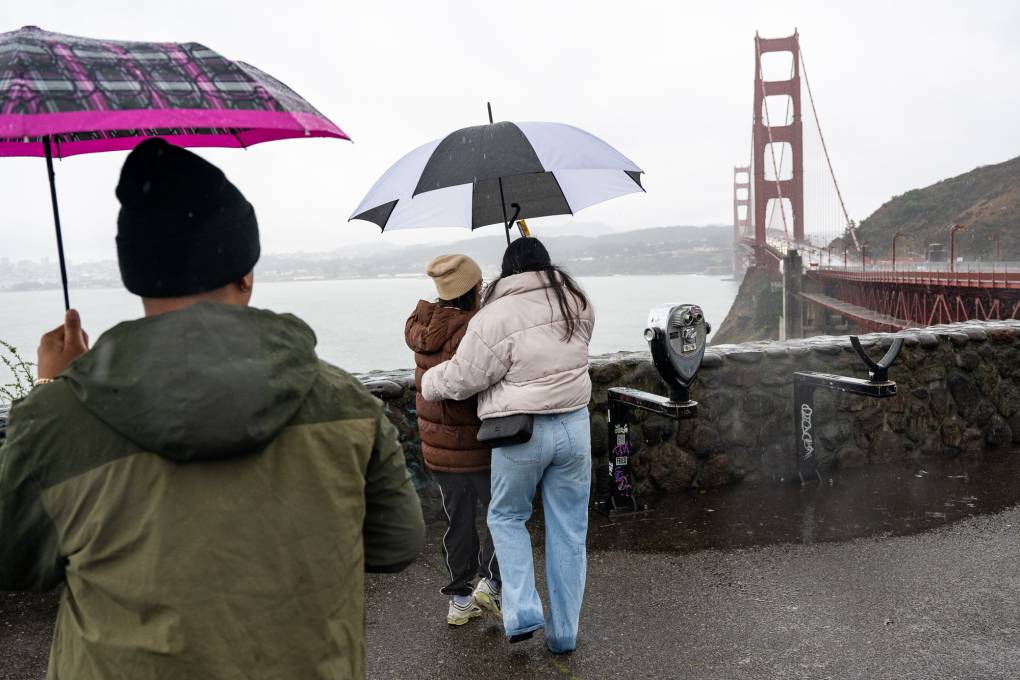
"caption": "(From left) Matthew Macale, Jasmin Macaraeg and Keizha Macale take photos at the Vista Point overlook near Golden Gate Bridge north of San Francisco on Nov. 22, 2024. Rain is coming to Northern California starting as early as Thursday night, with days of wet weather expected through the weekend and into next week.",
"credit": "Beth LaBerge/KQED",
"altTag": null,
"description": null,
"imgSizes": {
"medium": {
"file": "https://cdn.kqed.org/wp-content/uploads/sites/10/2024/11/241122-StormHitsBayArea-10-BL-800x533.jpg",
"width": 800,
"height": 533,
"mimeType": "image/jpeg"
},
"large": {
"file": "https://cdn.kqed.org/wp-content/uploads/sites/10/2024/11/241122-StormHitsBayArea-10-BL-1020x680.jpg",
"width": 1020,
"height": 680,
"mimeType": "image/jpeg"
},
"thumbnail": {
"file": "https://cdn.kqed.org/wp-content/uploads/sites/10/2024/11/241122-StormHitsBayArea-10-BL-160x107.jpg",
"width": 160,
"height": 107,
"mimeType": "image/jpeg"
},
"1536x1536": {
"file": "https://cdn.kqed.org/wp-content/uploads/sites/10/2024/11/241122-StormHitsBayArea-10-BL-1536x1024.jpg",
"width": 1536,
"height": 1024,
"mimeType": "image/jpeg"
},
"post-thumbnail": {
"file": "https://cdn.kqed.org/wp-content/uploads/sites/10/2024/11/241122-StormHitsBayArea-10-BL-672x372.jpg",
"width": 672,
"height": 372,
"mimeType": "image/jpeg"
},
"twentyfourteen-full-width": {
"file": "https://cdn.kqed.org/wp-content/uploads/sites/10/2024/11/241122-StormHitsBayArea-10-BL-1038x576.jpg",
"width": 1038,
"height": 576,
"mimeType": "image/jpeg"
},
"full-width": {
"file": "https://cdn.kqed.org/wp-content/uploads/sites/10/2024/11/241122-StormHitsBayArea-10-BL-1920x1280.jpg",
"width": 1920,
"height": 1280,
"mimeType": "image/jpeg"
},
"kqedFullSize": {
"file": "https://cdn.kqed.org/wp-content/uploads/sites/10/2024/11/241122-StormHitsBayArea-10-BL.jpg",
"width": 2000,
"height": 1333
}
},
"isLoading": false,
"fetchFailed": false
},
"news_12024285": {
"type": "attachments",
"id": "news_12024285",
"meta": {
"index": "attachments_1716263798",
"site": "news",
"id": "12024285",
"found": true
},
"title": "250120-YouthClimateProtest-09-BL_qed",
"publishDate": 1738024232,
"status": "inherit",
"parent": 12023983,
"modified": 1738024326,
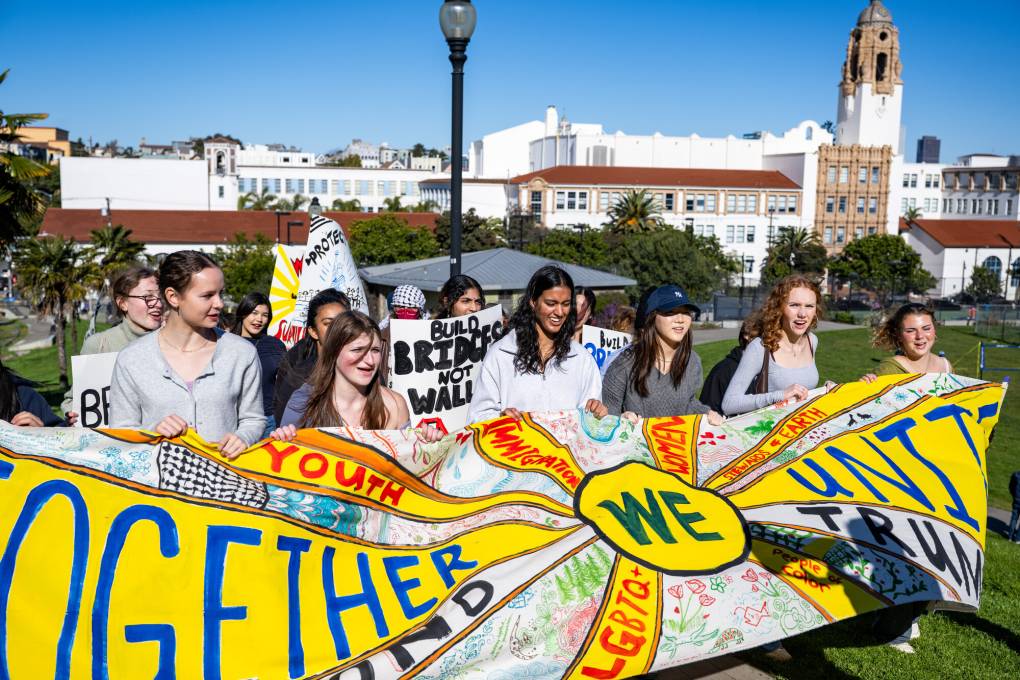
"caption": "Members of the Bay Area Youth Climate Summit hold a climate rally and march at Dolores Park in San Francisco on Monday, Jan. 20, 2025, to coincide with Donald Trump’s inauguration. Amid national policy shifts on climate change, San Francisco State University will be the first major public university to require students to take a course on climate justice.\n",
"credit": "Beth LaBerge/KQED",
"altTag": null,
"description": null,
"imgSizes": {
"medium": {
"file": "https://cdn.kqed.org/wp-content/uploads/sites/10/2025/01/250120-YouthClimateProtest-09-BL_qed-800x533.jpg",
"width": 800,
"height": 533,
"mimeType": "image/jpeg"
},
"large": {
"file": "https://cdn.kqed.org/wp-content/uploads/sites/10/2025/01/250120-YouthClimateProtest-09-BL_qed-1020x680.jpg",
"width": 1020,
"height": 680,
"mimeType": "image/jpeg"
},
"thumbnail": {
"file": "https://cdn.kqed.org/wp-content/uploads/sites/10/2025/01/250120-YouthClimateProtest-09-BL_qed-160x107.jpg",
"width": 160,
"height": 107,
"mimeType": "image/jpeg"
},
"1536x1536": {
"file": "https://cdn.kqed.org/wp-content/uploads/sites/10/2025/01/250120-YouthClimateProtest-09-BL_qed-1536x1024.jpg",
"width": 1536,
"height": 1024,
"mimeType": "image/jpeg"
},
"post-thumbnail": {
"file": "https://cdn.kqed.org/wp-content/uploads/sites/10/2025/01/250120-YouthClimateProtest-09-BL_qed-672x372.jpg",
"width": 672,
"height": 372,
"mimeType": "image/jpeg"
},
"twentyfourteen-full-width": {
"file": "https://cdn.kqed.org/wp-content/uploads/sites/10/2025/01/250120-YouthClimateProtest-09-BL_qed-1038x576.jpg",
"width": 1038,
"height": 576,
"mimeType": "image/jpeg"
},
"full-width": {
"file": "https://cdn.kqed.org/wp-content/uploads/sites/10/2025/01/250120-YouthClimateProtest-09-BL_qed-1920x1280.jpg",
"width": 1920,
"height": 1280,
"mimeType": "image/jpeg"
},
"kqedFullSize": {
"file": "https://cdn.kqed.org/wp-content/uploads/sites/10/2025/01/250120-YouthClimateProtest-09-BL_qed.jpg",
"width": 2000,
"height": 1333
}
},
"isLoading": false,
"fetchFailed": false
},
"news_12021200": {
"type": "attachments",
"id": "news_12021200",
"meta": {
"index": "attachments_1716263798",
"site": "news",
"id": "12021200",
"found": true
},
"title": "240109-CAWindStorm-038",
"publishDate": 1736456599,
"status": "inherit",
"parent": 0,
"modified": 1736456756,
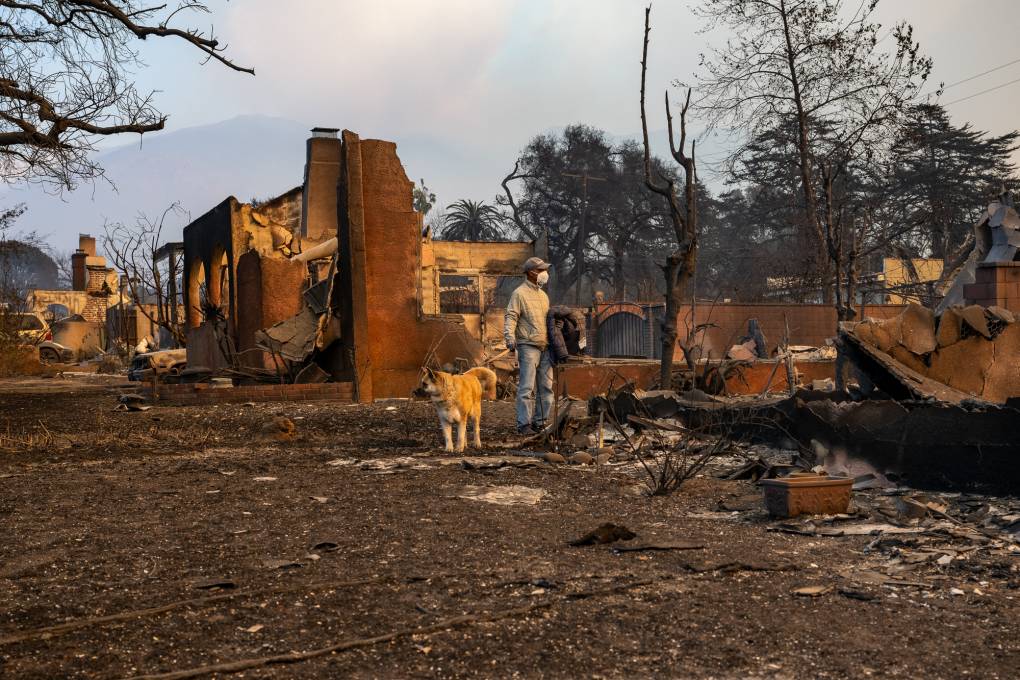
"caption": "Altadena resident Herb Wilson, 67, walks with his dog, Rosie, to survey the home he shares with his wife, Loyda, after it was destroyed in the Eaton Fire northeast of Los Angeles, California, on Thursday, Jan. 9, 2025. The couple was on vacation in Hawaii when the fire broke out, so they could not retrieve any belongings.",
"credit": "Beth LaBerge/KQED",
"altTag": null,
"description": null,
"imgSizes": {
"medium": {
"file": "https://cdn.kqed.org/wp-content/uploads/sites/10/2025/01/240109-CAWindStorm-038-800x533.jpg",
"width": 800,
"height": 533,
"mimeType": "image/jpeg"
},
"large": {
"file": "https://cdn.kqed.org/wp-content/uploads/sites/10/2025/01/240109-CAWindStorm-038-1020x680.jpg",
"width": 1020,
"height": 680,
"mimeType": "image/jpeg"
},
"thumbnail": {
"file": "https://cdn.kqed.org/wp-content/uploads/sites/10/2025/01/240109-CAWindStorm-038-160x107.jpg",
"width": 160,
"height": 107,
"mimeType": "image/jpeg"
},
"1536x1536": {
"file": "https://cdn.kqed.org/wp-content/uploads/sites/10/2025/01/240109-CAWindStorm-038-1536x1024.jpg",
"width": 1536,
"height": 1024,
"mimeType": "image/jpeg"
},
"post-thumbnail": {
"file": "https://cdn.kqed.org/wp-content/uploads/sites/10/2025/01/240109-CAWindStorm-038-672x372.jpg",
"width": 672,
"height": 372,
"mimeType": "image/jpeg"
},
"twentyfourteen-full-width": {
"file": "https://cdn.kqed.org/wp-content/uploads/sites/10/2025/01/240109-CAWindStorm-038-1038x576.jpg",
"width": 1038,
"height": 576,
"mimeType": "image/jpeg"
},
"full-width": {
"file": "https://cdn.kqed.org/wp-content/uploads/sites/10/2025/01/240109-CAWindStorm-038-1920x1280.jpg",
"width": 1920,
"height": 1280,
"mimeType": "image/jpeg"
},
"kqedFullSize": {
"file": "https://cdn.kqed.org/wp-content/uploads/sites/10/2025/01/240109-CAWindStorm-038.jpg",
"width": 2000,
"height": 1333
}
},
"isLoading": false,
"fetchFailed": false
},
"news_12022877": {
"type": "attachments",
"id": "news_12022877",
"meta": {
"index": "attachments_1716263798",
"site": "news",
"id": "12022877",
"found": true
},
"title": "Moss Landing Power Plant Fire in California",
"publishDate": 1737156650,
"status": "inherit",
"parent": 12022725,
"modified": 1737156728,
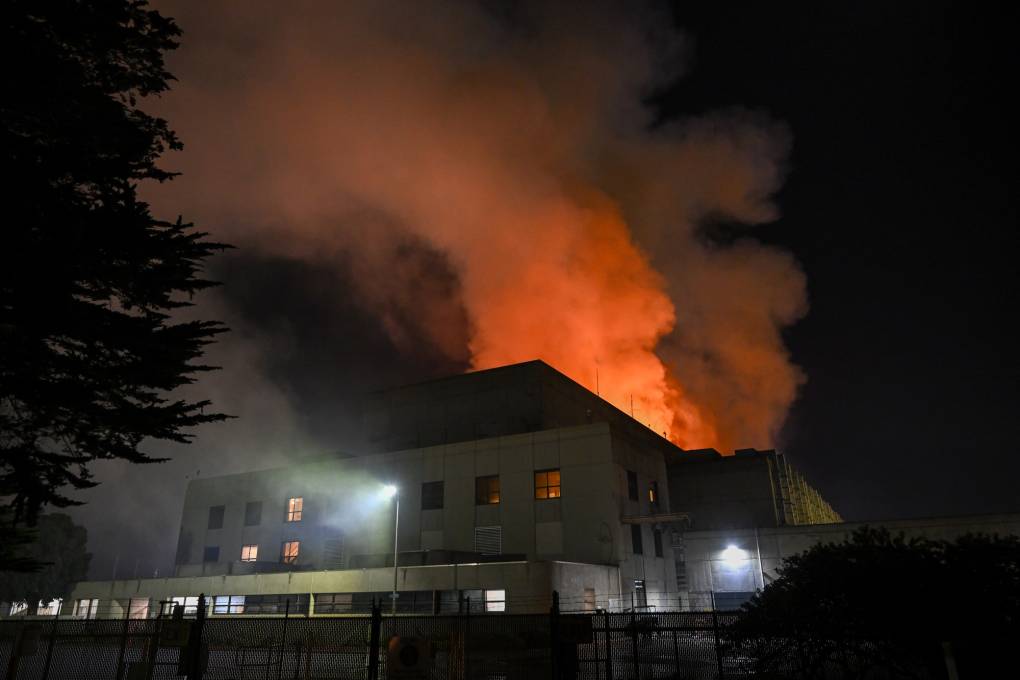
"caption": "A view of flames at Moss Landing Power Plant located on Pacific Coast Highway in Monterey Bay, California, on Jan. 16, 2025. ",
"credit": "Tayfun Coskun/Anadolu via Getty Images",
"altTag": null,
"description": null,
"imgSizes": {
"medium": {
"file": "https://cdn.kqed.org/wp-content/uploads/sites/10/2025/01/MossLandingGetty-800x533.jpg",
"width": 800,
"height": 533,
"mimeType": "image/jpeg"
},
"large": {
"file": "https://cdn.kqed.org/wp-content/uploads/sites/10/2025/01/MossLandingGetty-1020x680.jpg",
"width": 1020,
"height": 680,
"mimeType": "image/jpeg"
},
"thumbnail": {
"file": "https://cdn.kqed.org/wp-content/uploads/sites/10/2025/01/MossLandingGetty-160x107.jpg",
"width": 160,
"height": 107,
"mimeType": "image/jpeg"
},
"1536x1536": {
"file": "https://cdn.kqed.org/wp-content/uploads/sites/10/2025/01/MossLandingGetty-1536x1024.jpg",
"width": 1536,
"height": 1024,
"mimeType": "image/jpeg"
},
"post-thumbnail": {
"file": "https://cdn.kqed.org/wp-content/uploads/sites/10/2025/01/MossLandingGetty-672x372.jpg",
"width": 672,
"height": 372,
"mimeType": "image/jpeg"
},
"twentyfourteen-full-width": {
"file": "https://cdn.kqed.org/wp-content/uploads/sites/10/2025/01/MossLandingGetty-1038x576.jpg",
"width": 1038,
"height": 576,
"mimeType": "image/jpeg"
},
"full-width": {
"file": "https://cdn.kqed.org/wp-content/uploads/sites/10/2025/01/MossLandingGetty-1920x1280.jpg",
"width": 1920,
"height": 1280,
"mimeType": "image/jpeg"
},
"kqedFullSize": {
"file": "https://cdn.kqed.org/wp-content/uploads/sites/10/2025/01/MossLandingGetty.jpg",
"width": 2000,
"height": 1333
}
},
"isLoading": false,
"fetchFailed": false
},
"news_12022580": {
"type": "attachments",
"id": "news_12022580",
"meta": {
"index": "attachments_1716263798",
"site": "news",
"id": "12022580",
"found": true
},
"title": "California Wildfires",
"publishDate": 1737054400,
"status": "inherit",
"parent": 12022532,
"modified": 1737747375,
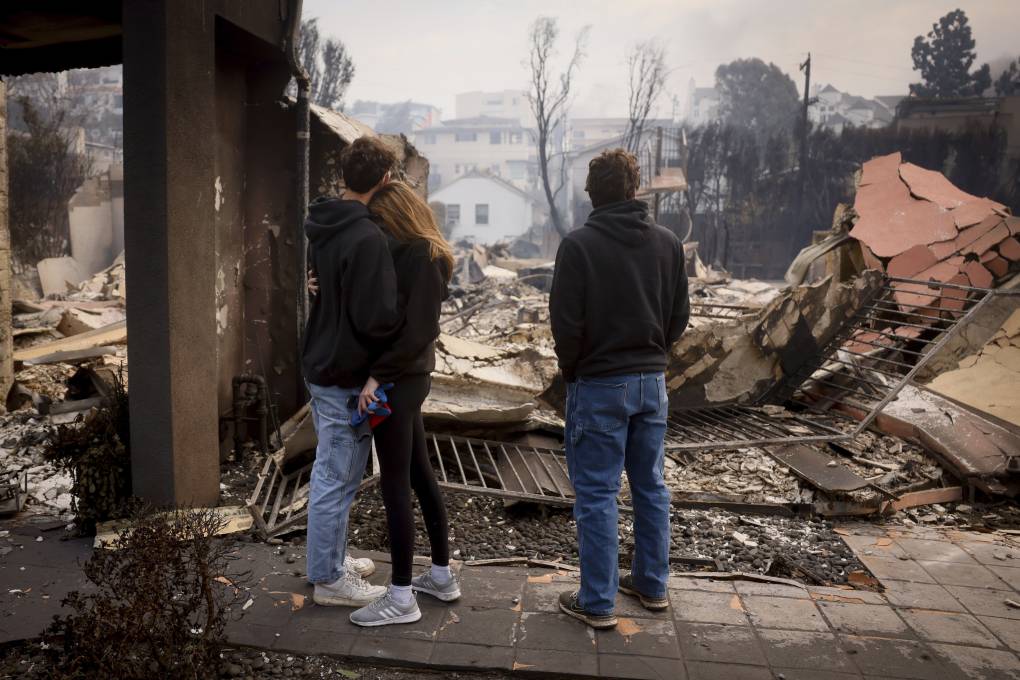
"caption": "Residents embrace in front of a fire-ravaged property after the Palisades Fire swept through the Pacific Palisades neighborhood of Los Angeles on Wednesday, Jan. 8, 2025. ",
"credit": "Etienne Laurent/AP Photo",
"altTag": null,
"description": null,
"imgSizes": {
"medium": {
"file": "https://cdn.kqed.org/wp-content/uploads/sites/10/2025/01/AP25016124878838-800x533.jpg",
"width": 800,
"height": 533,
"mimeType": "image/jpeg"
},
"large": {
"file": "https://cdn.kqed.org/wp-content/uploads/sites/10/2025/01/AP25016124878838-1020x680.jpg",
"width": 1020,
"height": 680,
"mimeType": "image/jpeg"
},
"thumbnail": {
"file": "https://cdn.kqed.org/wp-content/uploads/sites/10/2025/01/AP25016124878838-160x107.jpg",
"width": 160,
"height": 107,
"mimeType": "image/jpeg"
},
"1536x1536": {
"file": "https://cdn.kqed.org/wp-content/uploads/sites/10/2025/01/AP25016124878838-1536x1024.jpg",
"width": 1536,
"height": 1024,
"mimeType": "image/jpeg"
},
"2048x2048": {
"file": "https://cdn.kqed.org/wp-content/uploads/sites/10/2025/01/AP25016124878838-2048x1365.jpg",
"width": 2048,
"height": 1365,
"mimeType": "image/jpeg"
},
"post-thumbnail": {
"file": "https://cdn.kqed.org/wp-content/uploads/sites/10/2025/01/AP25016124878838-672x372.jpg",
"width": 672,
"height": 372,
"mimeType": "image/jpeg"
},
"twentyfourteen-full-width": {
"file": "https://cdn.kqed.org/wp-content/uploads/sites/10/2025/01/AP25016124878838-1038x576.jpg",
"width": 1038,
"height": 576,
"mimeType": "image/jpeg"
},
"full-width": {
"file": "https://cdn.kqed.org/wp-content/uploads/sites/10/2025/01/AP25016124878838-1920x1280.jpg",
"width": 1920,
"height": 1280,
"mimeType": "image/jpeg"
},
"kqedFullSize": {
"file": "https://cdn.kqed.org/wp-content/uploads/sites/10/2025/01/AP25016124878838-scaled-e1737665727227.jpg",
"width": 2000,
"height": 1334
}
},
"isLoading": false,
"fetchFailed": false
},
"news_11985184": {
"type": "attachments",
"id": "news_11985184",
"meta": {
"index": "attachments_1716263798",
"site": "news",
"id": "11985184",
"found": true
},
"parent": 11985188,
"imgSizes": {
"twentyfourteen-full-width": {
"file": "https://cdn.kqed.org/wp-content/uploads/sites/10/2024/05/Chumash-Sanctuary-05-KQED-1038x576.jpg",
"width": 1038,
"mimeType": "image/jpeg",
"height": 576
},
"thumbnail": {
"file": "https://cdn.kqed.org/wp-content/uploads/sites/10/2024/05/Chumash-Sanctuary-05-KQED-160x120.jpg",
"width": 160,
"mimeType": "image/jpeg",
"height": 120
},
"post-thumbnail": {
"file": "https://cdn.kqed.org/wp-content/uploads/sites/10/2024/05/Chumash-Sanctuary-05-KQED-672x372.jpg",
"width": 672,
"mimeType": "image/jpeg",
"height": 372
},
"kqedFullSize": {
"file": "https://cdn.kqed.org/wp-content/uploads/sites/10/2024/05/Chumash-Sanctuary-05-KQED.jpg",
"width": 2000,
"height": 1500
},
"large": {
"file": "https://cdn.kqed.org/wp-content/uploads/sites/10/2024/05/Chumash-Sanctuary-05-KQED-1020x765.jpg",
"width": 1020,
"mimeType": "image/jpeg",
"height": 765
},
"1536x1536": {
"file": "https://cdn.kqed.org/wp-content/uploads/sites/10/2024/05/Chumash-Sanctuary-05-KQED-1536x1152.jpg",
"width": 1536,
"mimeType": "image/jpeg",
"height": 1152
},
"full-width": {
"file": "https://cdn.kqed.org/wp-content/uploads/sites/10/2024/05/Chumash-Sanctuary-05-KQED-1920x1440.jpg",
"width": 1920,
"mimeType": "image/jpeg",
"height": 1440
},
"medium": {
"file": "https://cdn.kqed.org/wp-content/uploads/sites/10/2024/05/Chumash-Sanctuary-05-KQED-800x600.jpg",
"width": 800,
"mimeType": "image/jpeg",
"height": 600
}
},
"publishDate": 1715102482,
"modified": 1715108998,
"caption": "Morro Bay may be left out of the Chumash Heritage National Marine Sanctuary due to concerns over offshore wind development.",
"description": null,
"title": "Chumash Sanctuary-05-KQED",
"credit": "Benjamin Purper/KQED",
"status": "inherit",
"altTag": null,
"isLoading": false,
"fetchFailed": false
},
"news_12020469": {
"type": "attachments",
"id": "news_12020469",
"meta": {
"index": "attachments_1716263798",
"site": "news",
"id": "12020469",
"found": true
},
"title": "California Budget",
"publishDate": 1736201641,
"status": "inherit",
"parent": 12020389,
"modified": 1736205557,
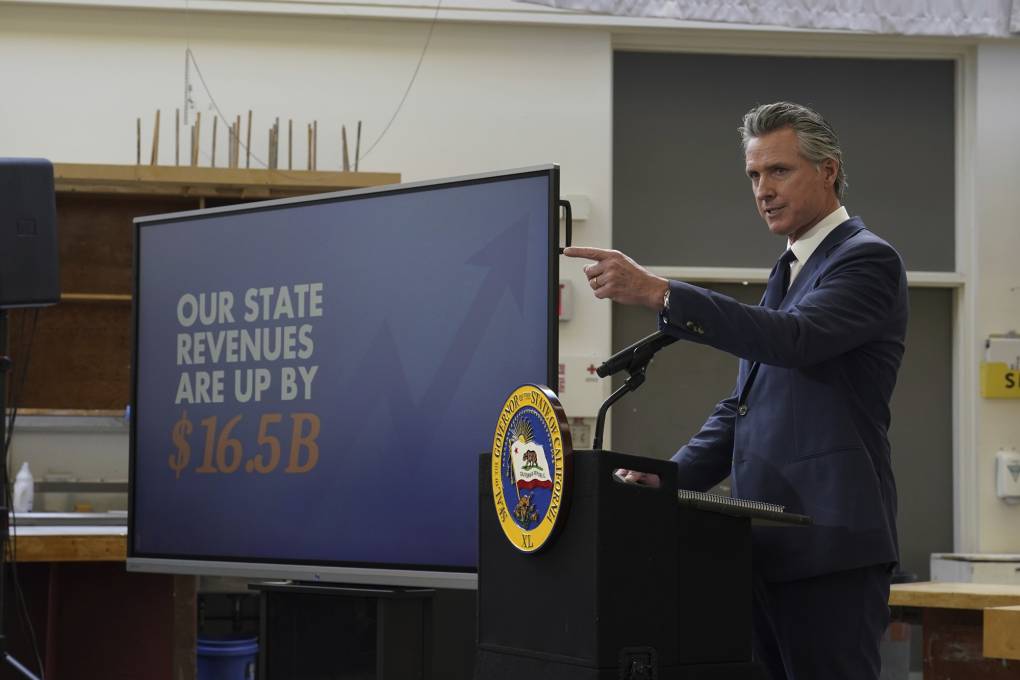
"caption": "Gov. Gavin Newsom delivers a briefing of his proposed 2025–26 state budget at California State University, Stanislaus, in Turlock on Jan. 6, 2025.",
"credit": "Rich Pedroncelli/AP Photo",
"altTag": null,
"description": null,
"imgSizes": {
"medium": {
"file": "https://cdn.kqed.org/wp-content/uploads/sites/10/2025/01/GavinNewsomCABudget2025AP-800x533.jpg",
"width": 800,
"height": 533,
"mimeType": "image/jpeg"
},
"large": {
"file": "https://cdn.kqed.org/wp-content/uploads/sites/10/2025/01/GavinNewsomCABudget2025AP-1020x680.jpg",
"width": 1020,
"height": 680,
"mimeType": "image/jpeg"
},
"thumbnail": {
"file": "https://cdn.kqed.org/wp-content/uploads/sites/10/2025/01/GavinNewsomCABudget2025AP-160x107.jpg",
"width": 160,
"height": 107,
"mimeType": "image/jpeg"
},
"1536x1536": {
"file": "https://cdn.kqed.org/wp-content/uploads/sites/10/2025/01/GavinNewsomCABudget2025AP-1536x1024.jpg",
"width": 1536,
"height": 1024,
"mimeType": "image/jpeg"
},
"post-thumbnail": {
"file": "https://cdn.kqed.org/wp-content/uploads/sites/10/2025/01/GavinNewsomCABudget2025AP-672x372.jpg",
"width": 672,
"height": 372,
"mimeType": "image/jpeg"
},
"twentyfourteen-full-width": {
"file": "https://cdn.kqed.org/wp-content/uploads/sites/10/2025/01/GavinNewsomCABudget2025AP-1038x576.jpg",
"width": 1038,
"height": 576,
"mimeType": "image/jpeg"
},
"full-width": {
"file": "https://cdn.kqed.org/wp-content/uploads/sites/10/2025/01/GavinNewsomCABudget2025AP-1920x1280.jpg",
"width": 1920,
"height": 1280,
"mimeType": "image/jpeg"
},
"kqedFullSize": {
"file": "https://cdn.kqed.org/wp-content/uploads/sites/10/2025/01/GavinNewsomCABudget2025AP.jpg",
"width": 2000,
"height": 1333
}
},
"isLoading": false,
"fetchFailed": false
},
"news_12022707": {
"type": "attachments",
"id": "news_12022707",
"meta": {
"index": "attachments_1716263798",
"site": "news",
"id": "12022707",
"found": true
},
"title": "240116-OaklandHillsHouseFire-30",
"publishDate": 1737114651,
"status": "inherit",
"parent": 0,
"modified": 1737115498,
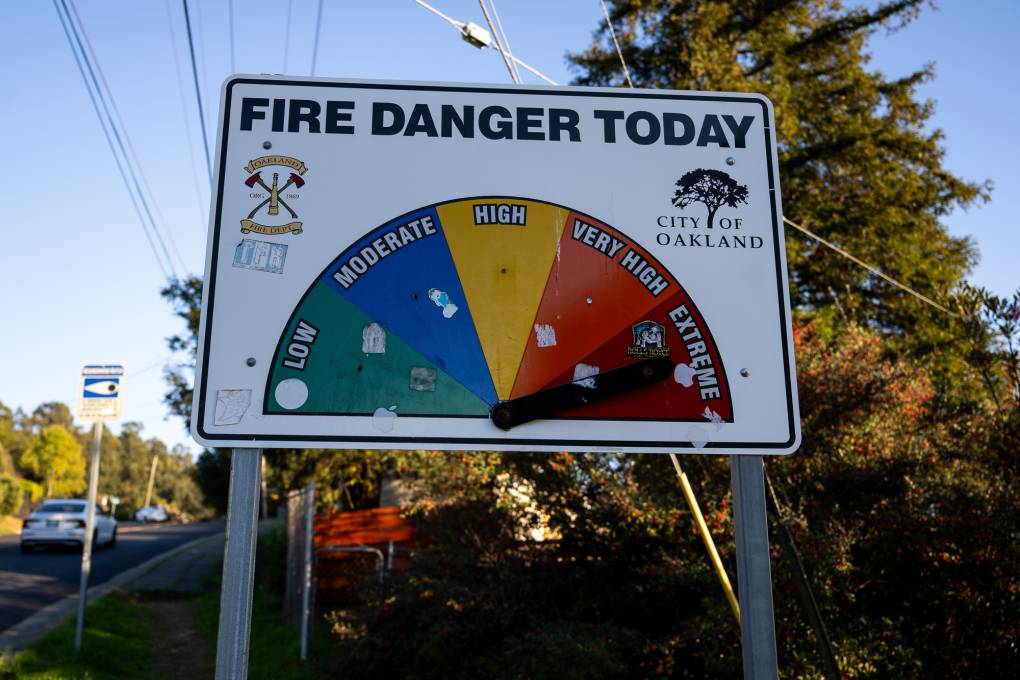
"caption": "A fire danger sign is marked as ‘extreme’ in the Oakland Hills neighborhood of Oakland on Jan. 16, 2025.",
"credit": "Beth LaBerge/KQED",
"altTag": null,
"description": null,
"imgSizes": {
"medium": {
"file": "https://cdn.kqed.org/wp-content/uploads/sites/10/2025/01/240116-OaklandHillsHouseFire-30-800x533.jpg",
"width": 800,
"height": 533,
"mimeType": "image/jpeg"
},
"large": {
"file": "https://cdn.kqed.org/wp-content/uploads/sites/10/2025/01/240116-OaklandHillsHouseFire-30-1020x680.jpg",
"width": 1020,
"height": 680,
"mimeType": "image/jpeg"
},
"thumbnail": {
"file": "https://cdn.kqed.org/wp-content/uploads/sites/10/2025/01/240116-OaklandHillsHouseFire-30-160x107.jpg",
"width": 160,
"height": 107,
"mimeType": "image/jpeg"
},
"1536x1536": {
"file": "https://cdn.kqed.org/wp-content/uploads/sites/10/2025/01/240116-OaklandHillsHouseFire-30-1536x1024.jpg",
"width": 1536,
"height": 1024,
"mimeType": "image/jpeg"
},
"post-thumbnail": {
"file": "https://cdn.kqed.org/wp-content/uploads/sites/10/2025/01/240116-OaklandHillsHouseFire-30-672x372.jpg",
"width": 672,
"height": 372,
"mimeType": "image/jpeg"
},
"twentyfourteen-full-width": {
"file": "https://cdn.kqed.org/wp-content/uploads/sites/10/2025/01/240116-OaklandHillsHouseFire-30-1038x576.jpg",
"width": 1038,
"height": 576,
"mimeType": "image/jpeg"
},
"full-width": {
"file": "https://cdn.kqed.org/wp-content/uploads/sites/10/2025/01/240116-OaklandHillsHouseFire-30-1920x1280.jpg",
"width": 1920,
"height": 1280,
"mimeType": "image/jpeg"
},
"kqedFullSize": {
"file": "https://cdn.kqed.org/wp-content/uploads/sites/10/2025/01/240116-OaklandHillsHouseFire-30.jpg",
"width": 2000,
"height": 1333
}
},
"isLoading": false,
"fetchFailed": false
},
"news_12023285": {
"type": "attachments",
"id": "news_12023285",
"meta": {
"index": "attachments_1716263798",
"site": "news",
"id": "12023285",
"found": true
},
"title": "Aerial Photos of California's Delta",
"publishDate": 1737488226,
"status": "inherit",
"parent": 12023248,
"modified": 1737502464,
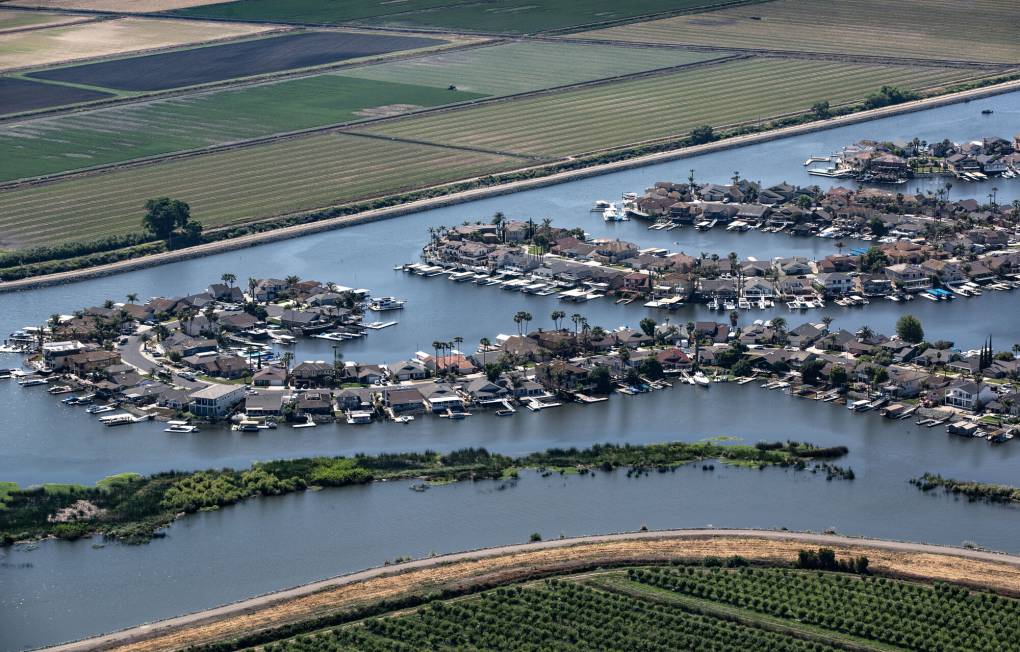
"caption": "Discovery Bay, a waterfront community of 15,000 people built on a network of man-made dikes and surrounded by freshwater, on May 22, 2023, in California. The Sacramento San Joaquin River Delta, or California Delta, is an expansive inland river delta and estuary in Northern California at the western edge of the Central Valley created by the confluence of the Sacramento and San Joaquin rivers. The Delta is just east of where the rivers enter Suisun Bay, which flows into San Francisco Bay, then the Pacific Ocean via San Pablo Bay.",
"credit": "George Rose/Getty Images",
"altTag": null,
"description": null,
"imgSizes": {
"medium": {
"file": "https://cdn.kqed.org/wp-content/uploads/sites/10/2025/01/GettyImages-1495481816_qed-800x511.jpg",
"width": 800,
"height": 511,
"mimeType": "image/jpeg"
},
"large": {
"file": "https://cdn.kqed.org/wp-content/uploads/sites/10/2025/01/GettyImages-1495481816_qed-1020x652.jpg",
"width": 1020,
"height": 652,
"mimeType": "image/jpeg"
},
"thumbnail": {
"file": "https://cdn.kqed.org/wp-content/uploads/sites/10/2025/01/GettyImages-1495481816_qed-160x102.jpg",
"width": 160,
"height": 102,
"mimeType": "image/jpeg"
},
"1536x1536": {
"file": "https://cdn.kqed.org/wp-content/uploads/sites/10/2025/01/GettyImages-1495481816_qed-1536x982.jpg",
"width": 1536,
"height": 982,
"mimeType": "image/jpeg"
},
"post-thumbnail": {
"file": "https://cdn.kqed.org/wp-content/uploads/sites/10/2025/01/GettyImages-1495481816_qed-672x372.jpg",
"width": 672,
"height": 372,
"mimeType": "image/jpeg"
},
"twentyfourteen-full-width": {
"file": "https://cdn.kqed.org/wp-content/uploads/sites/10/2025/01/GettyImages-1495481816_qed-1038x576.jpg",
"width": 1038,
"height": 576,
"mimeType": "image/jpeg"
},
"full-width": {
"file": "https://cdn.kqed.org/wp-content/uploads/sites/10/2025/01/GettyImages-1495481816_qed-1920x1227.jpg",
"width": 1920,
"height": 1227,
"mimeType": "image/jpeg"
},
"kqedFullSize": {
"file": "https://cdn.kqed.org/wp-content/uploads/sites/10/2025/01/GettyImages-1495481816_qed.jpg",
"width": 2000,
"height": 1278
}
},
"isLoading": false,
"fetchFailed": false
},
"news_12015609": {
"type": "attachments",
"id": "news_12015609",
"meta": {
"index": "attachments_1716263798",
"site": "news",
"id": "12015609",
"found": true
},
"title": "241122-StormHitsBayArea-25-BL",
"publishDate": 1732310395,
"status": "inherit",
"parent": 0,
"modified": 1732311763,
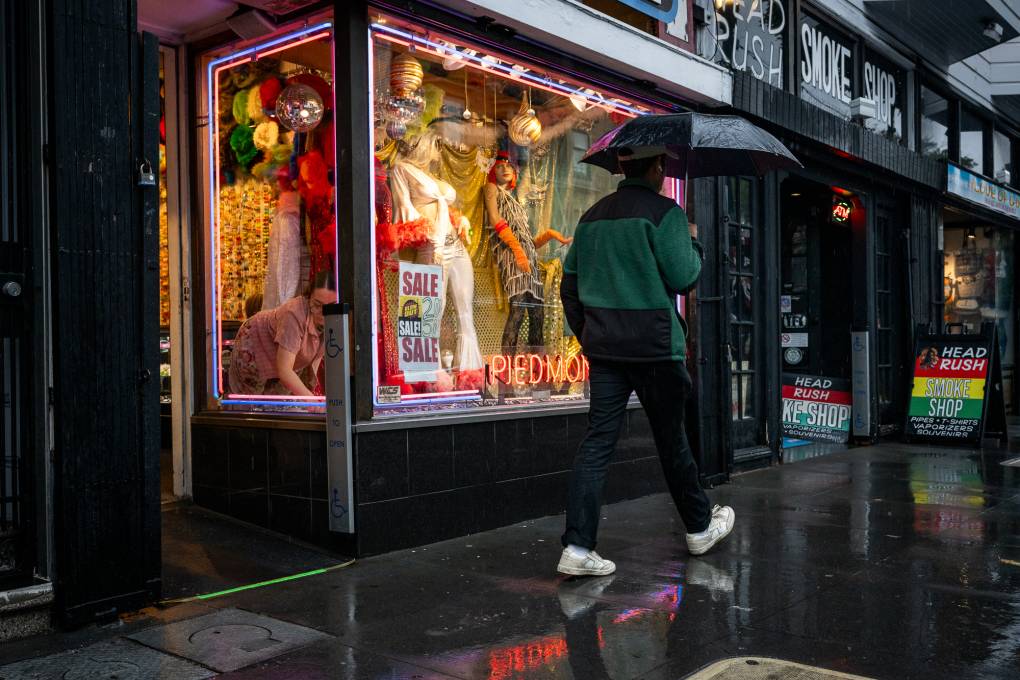
"caption": "A person walks on Haight Street in the rain in San Francisco on Nov. 22, 2024, during a storm bringing heavy rain and strong winds to the Bay Area.",
"credit": "Beth LaBerge/KQED",
"altTag": null,
"description": null,
"imgSizes": {
"medium": {
"file": "https://cdn.kqed.org/wp-content/uploads/sites/10/2024/11/241122-StormHitsBayArea-25-BL-800x533.jpg",
"width": 800,
"height": 533,
"mimeType": "image/jpeg"
},
"large": {
"file": "https://cdn.kqed.org/wp-content/uploads/sites/10/2024/11/241122-StormHitsBayArea-25-BL-1020x680.jpg",
"width": 1020,
"height": 680,
"mimeType": "image/jpeg"
},
"thumbnail": {
"file": "https://cdn.kqed.org/wp-content/uploads/sites/10/2024/11/241122-StormHitsBayArea-25-BL-160x107.jpg",
"width": 160,
"height": 107,
"mimeType": "image/jpeg"
},
"1536x1536": {
"file": "https://cdn.kqed.org/wp-content/uploads/sites/10/2024/11/241122-StormHitsBayArea-25-BL-1536x1024.jpg",
"width": 1536,
"height": 1024,
"mimeType": "image/jpeg"
},
"post-thumbnail": {
"file": "https://cdn.kqed.org/wp-content/uploads/sites/10/2024/11/241122-StormHitsBayArea-25-BL-672x372.jpg",
"width": 672,
"height": 372,
"mimeType": "image/jpeg"
},
"twentyfourteen-full-width": {
"file": "https://cdn.kqed.org/wp-content/uploads/sites/10/2024/11/241122-StormHitsBayArea-25-BL-1038x576.jpg",
"width": 1038,
"height": 576,
"mimeType": "image/jpeg"
},
"full-width": {
"file": "https://cdn.kqed.org/wp-content/uploads/sites/10/2024/11/241122-StormHitsBayArea-25-BL-1920x1280.jpg",
"width": 1920,
"height": 1280,
"mimeType": "image/jpeg"
},
"kqedFullSize": {
"file": "https://cdn.kqed.org/wp-content/uploads/sites/10/2024/11/241122-StormHitsBayArea-25-BL.jpg",
"width": 2000,
"height": 1333
}
},
"isLoading": false,
"fetchFailed": false
},
"news_12023151": {
"type": "attachments",
"id": "news_12023151",
"meta": {
"index": "attachments_1716263798",
"site": "news",
"id": "12023151",
"found": true
},
"title": "250120-YouthClimateProtest-06-BL",
"publishDate": 1737408212,
"status": "inherit",
"parent": 0,
"modified": 1737408340,
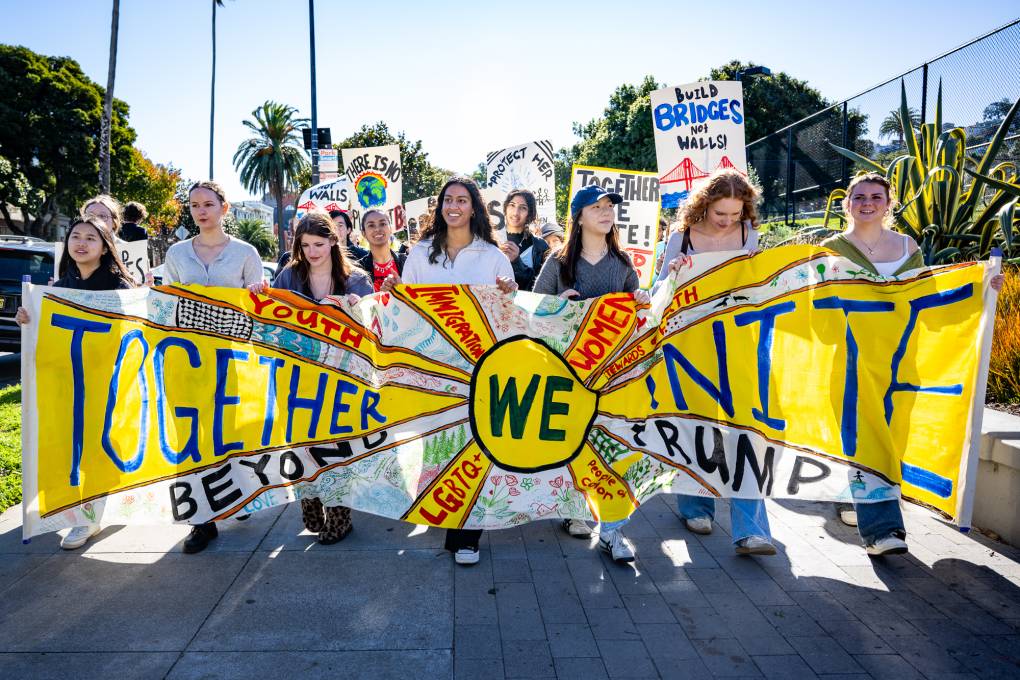
"caption": "Members of the Bay Area Youth Climate Summit hold a climate rally and march at Dolores Park in San Francisco on Monday, Jan. 20, 2025, to coincide with Donald Trump’s inauguration.",
"credit": "Beth LaBerge/KQED",
"altTag": null,
"description": null,
"imgSizes": {
"medium": {
"file": "https://cdn.kqed.org/wp-content/uploads/sites/10/2025/01/250120-YouthClimateProtest-06-BL-800x533.jpg",
"width": 800,
"height": 533,
"mimeType": "image/jpeg"
},
"large": {
"file": "https://cdn.kqed.org/wp-content/uploads/sites/10/2025/01/250120-YouthClimateProtest-06-BL-1020x680.jpg",
"width": 1020,
"height": 680,
"mimeType": "image/jpeg"
},
"thumbnail": {
"file": "https://cdn.kqed.org/wp-content/uploads/sites/10/2025/01/250120-YouthClimateProtest-06-BL-160x107.jpg",
"width": 160,
"height": 107,
"mimeType": "image/jpeg"
},
"1536x1536": {
"file": "https://cdn.kqed.org/wp-content/uploads/sites/10/2025/01/250120-YouthClimateProtest-06-BL-1536x1024.jpg",
"width": 1536,
"height": 1024,
"mimeType": "image/jpeg"
},
"post-thumbnail": {
"file": "https://cdn.kqed.org/wp-content/uploads/sites/10/2025/01/250120-YouthClimateProtest-06-BL-672x372.jpg",
"width": 672,
"height": 372,
"mimeType": "image/jpeg"
},
"twentyfourteen-full-width": {
"file": "https://cdn.kqed.org/wp-content/uploads/sites/10/2025/01/250120-YouthClimateProtest-06-BL-1038x576.jpg",
"width": 1038,
"height": 576,
"mimeType": "image/jpeg"
},
"full-width": {
"file": "https://cdn.kqed.org/wp-content/uploads/sites/10/2025/01/250120-YouthClimateProtest-06-BL-1920x1280.jpg",
"width": 1920,
"height": 1280,
"mimeType": "image/jpeg"
},
"kqedFullSize": {
"file": "https://cdn.kqed.org/wp-content/uploads/sites/10/2025/01/250120-YouthClimateProtest-06-BL.jpg",
"width": 2000,
"height": 1333
}
},
"isLoading": false,
"fetchFailed": false
},
"news_12022720": {
"type": "attachments",
"id": "news_12022720",
"meta": {
"index": "attachments_1716263798",
"site": "news",
"id": "12022720",
"found": true
},
"title": "ReligiousCenterFire1",
"publishDate": 1737135043,
"status": "inherit",
"parent": 0,
"modified": 1737140373,
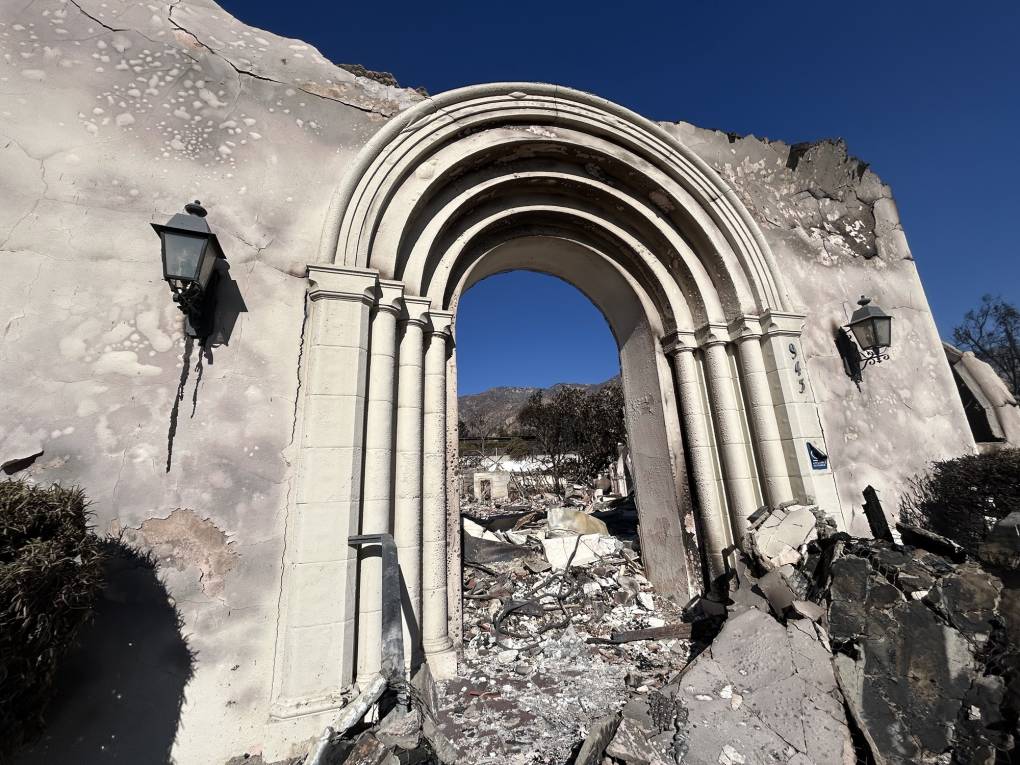
"caption": "The Altadena Community Church sits completely destroyed by the Eaton Fire on Jan. 14, 2025, leaving only the front wall standing.",
"credit": "Ezra David Romero/KQED",
"altTag": "A front archway to a tan church stands amongst the charred rubble of a burned church.",
"description": null,
"imgSizes": {
"medium": {
"file": "https://cdn.kqed.org/wp-content/uploads/sites/10/2025/01/ReligiousCenterFire1-800x600.jpg",
"width": 800,
"height": 600,
"mimeType": "image/jpeg"
},
"large": {
"file": "https://cdn.kqed.org/wp-content/uploads/sites/10/2025/01/ReligiousCenterFire1-1020x765.jpg",
"width": 1020,
"height": 765,
"mimeType": "image/jpeg"
},
"thumbnail": {
"file": "https://cdn.kqed.org/wp-content/uploads/sites/10/2025/01/ReligiousCenterFire1-160x120.jpg",
"width": 160,
"height": 120,
"mimeType": "image/jpeg"
},
"1536x1536": {
"file": "https://cdn.kqed.org/wp-content/uploads/sites/10/2025/01/ReligiousCenterFire1-1536x1152.jpg",
"width": 1536,
"height": 1152,
"mimeType": "image/jpeg"
},
"post-thumbnail": {
"file": "https://cdn.kqed.org/wp-content/uploads/sites/10/2025/01/ReligiousCenterFire1-672x372.jpg",
"width": 672,
"height": 372,
"mimeType": "image/jpeg"
},
"twentyfourteen-full-width": {
"file": "https://cdn.kqed.org/wp-content/uploads/sites/10/2025/01/ReligiousCenterFire1-1038x576.jpg",
"width": 1038,
"height": 576,
"mimeType": "image/jpeg"
},
"full-width": {
"file": "https://cdn.kqed.org/wp-content/uploads/sites/10/2025/01/ReligiousCenterFire1-1920x1440.jpg",
"width": 1920,
"height": 1440,
"mimeType": "image/jpeg"
},
"kqedFullSize": {
"file": "https://cdn.kqed.org/wp-content/uploads/sites/10/2025/01/ReligiousCenterFire1.jpg",
"width": 2000,
"height": 1500
}
},
"isLoading": false,
"fetchFailed": false
}
},
"audioPlayerReducer": {
"postId": "stream_live",
"isPaused": true,
"isPlaying": false,
"pfsActive": false,
"pledgeModalIsOpen": true,
"playerDrawerIsOpen": false,
"liveAudioPlayStartedAt": 0,
"liveAudioPlayContext": ""
},
"authorsReducer": {
"gmarzorati": {
"type": "authors",
"id": "227",
"meta": {
"index": "authors_1716337520",
"id": "227",
"found": true
},
"name": "Guy Marzorati",
"firstName": "Guy",
"lastName": "Marzorati",
"slug": "gmarzorati",
"email": "gmarzorati@KQED.org",
"display_author_email": true,
"staff_mastheads": [
"news"
],
"title": "Correspondent",
"bio": "Guy Marzorati is a correspondent on KQED's California Politics and Government Desk, based in San Jose. A graduate of Santa Clara University, Guy joined KQED in 2013. He reports on state and local politics and produces KQED's digital voter guide.",
"avatar": "https://secure.gravatar.com/avatar/e7038b8dbfd55b104369b76b1cd0b9de?s=600&d=blank&r=g",
"twitter": "guymarzorati",
"facebook": null,
"instagram": null,
"linkedin": null,
"sites": [
{
"site": "",
"roles": [
"editor"
]
},
{
"site": "news",
"roles": [
"editor"
]
},
{
"site": "science",
"roles": [
"editor"
]
},
{
"site": "forum",
"roles": [
"editor"
]
},
{
"site": "elections",
"roles": [
"editor"
]
},
{
"site": "liveblog",
"roles": [
"editor"
]
}
],
"headData": {
"title": "Guy Marzorati | KQED",
"description": "Correspondent",
"ogImgSrc": "https://secure.gravatar.com/avatar/e7038b8dbfd55b104369b76b1cd0b9de?s=600&d=blank&r=g",
"twImgSrc": "https://secure.gravatar.com/avatar/e7038b8dbfd55b104369b76b1cd0b9de?s=600&d=blank&r=g"
},
"isLoading": false,
"link": "/author/gmarzorati"
},
"mlagos": {
"type": "authors",
"id": "3239",
"meta": {
"index": "authors_1716337520",
"id": "3239",
"found": true
},
"name": "Marisa Lagos",
"firstName": "Marisa",
"lastName": "Lagos",
"slug": "mlagos",
"email": "mlagos@kqed.org",
"display_author_email": false,
"staff_mastheads": [
"news"
],
"title": "KQED Contributor",
"bio": "Marisa Lagos is a correspondent for KQED’s California Politics and Government Desk and co-hosts the award-winning show and podcast, Political Breakdown. At KQED, Lagos also conducts reporting, analysis and investigations into state, local and national politics for radio, TV, online and onstage. In 2022, she and co-host, Scott Shafer, moderated the only gubernatorial debate in California. In 2020, the \u003ci>Washington Post\u003c/i> named her one of the top political journalists in California; she was nominated for a Peabody and won several other awards for her work investigating the 2017 California wildfires. She has worked at the \u003ci>San Francisco Chronicle\u003c/i>, \u003ci>San Francisco Examiner\u003c/i> and \u003ci>Los Angeles Times\u003c/i>. A UC Santa Barbara graduate, she lives in San Francisco with her two sons and husband.",
"avatar": "https://secure.gravatar.com/avatar/a261a0d3696fc066871ef96b85b5e7d2?s=600&d=blank&r=g",
"twitter": "@mlagos",
"facebook": null,
"instagram": null,
"linkedin": null,
"sites": [
{
"site": "arts",
"roles": [
"author"
]
},
{
"site": "news",
"roles": [
"editor"
]
},
{
"site": "science",
"roles": [
"editor"
]
},
{
"site": "forum",
"roles": [
"author"
]
},
{
"site": "liveblog",
"roles": [
"author"
]
}
],
"headData": {
"title": "Marisa Lagos | KQED",
"description": "KQED Contributor",
"ogImgSrc": "https://secure.gravatar.com/avatar/a261a0d3696fc066871ef96b85b5e7d2?s=600&d=blank&r=g",
"twImgSrc": "https://secure.gravatar.com/avatar/a261a0d3696fc066871ef96b85b5e7d2?s=600&d=blank&r=g"
},
"isLoading": false,
"link": "/author/mlagos"
},
"dventon": {
"type": "authors",
"id": "11088",
"meta": {
"index": "authors_1716337520",
"id": "11088",
"found": true
},
"name": "Danielle Venton",
"firstName": "Danielle",
"lastName": "Venton",
"slug": "dventon",
"email": "dventon@kqed.org",
"display_author_email": true,
"staff_mastheads": [
"science"
],
"title": "Science reporter",
"bio": "Danielle Venton is a reporter for KQED Science. She covers wildfires, space and oceans (though she is prone to sea sickness).\r\n\r\nBefore joining KQED in 2015, Danielle was a staff reporter at KRCB in Sonoma County and a freelancer. She studied science communication at UC Santa Cruz and formerly worked at CERN in Geneva, Switzerland where she wrote about computing. She lives in Sonoma County and enjoys backpacking.",
"avatar": "https://secure.gravatar.com/avatar/37b292b5c40c8d93959c4f48d73b5286f41b7abd8588277e941905a3ed4c801c?s=600&d=blank&r=g",
"twitter": "DanielleVenton",
"bluesky": null,
"facebook": null,
"instagram": null,
"linkedin": null,
"sites": [
{
"site": "arts",
"roles": [
"contributor"
]
},
{
"site": "news",
"roles": [
"editor"
]
},
{
"site": "futureofyou",
"roles": [
"editor"
]
},
{
"site": "science",
"roles": [
"editor"
]
},
{
"site": "liveblog",
"roles": [
"contributor"
]
}
],
"headData": {
"title": "Danielle Venton | KQED",
"description": "Science reporter",
"ogImgSrc": "https://secure.gravatar.com/avatar/37b292b5c40c8d93959c4f48d73b5286f41b7abd8588277e941905a3ed4c801c?s=600&d=blank&r=g",
"twImgSrc": "https://secure.gravatar.com/avatar/37b292b5c40c8d93959c4f48d73b5286f41b7abd8588277e941905a3ed4c801c?s=600&d=blank&r=g"
},
"isLoading": false,
"link": "/author/dventon"
},
"kevinstark": {
"type": "authors",
"id": "11608",
"meta": {
"index": "authors_1716337520",
"id": "11608",
"found": true
},
"name": "Kevin Stark",
"firstName": "Kevin",
"lastName": "Stark",
"slug": "kevinstark",
"email": "kstark@kqed.org",
"display_author_email": true,
"staff_mastheads": [
"science"
],
"title": "Senior Editor",
"bio": "Kevin is a senior editor for KQED Science, managing the station's health and climate desks. His journalism career began in the Pacific Northwest, and he later became a lead reporter for the San Francisco Public Press. His work has appeared in Pacific Standard magazine, the Energy News Network, the Center for Investigative Reporting's Reveal and WBEZ in Chicago. Kevin joined KQED in 2019, and has covered issues related to energy, wildfire, climate change and the environment.",
"avatar": "https://secure.gravatar.com/avatar/365aaa4b597d3a8374f67504ff0facd323d7906e8eb4be0a7efd2427408e802c?s=600&d=blank&r=g",
"twitter": "starkkev",
"bluesky": null,
"facebook": null,
"instagram": null,
"linkedin": null,
"sites": [
{
"site": "",
"roles": [
"editor"
]
},
{
"site": "news",
"roles": [
"editor"
]
},
{
"site": "science",
"roles": [
"administrator"
]
}
],
"headData": {
"title": "Kevin Stark | KQED",
"description": "Senior Editor",
"ogImgSrc": "https://secure.gravatar.com/avatar/365aaa4b597d3a8374f67504ff0facd323d7906e8eb4be0a7efd2427408e802c?s=600&d=blank&r=g",
"twImgSrc": "https://secure.gravatar.com/avatar/365aaa4b597d3a8374f67504ff0facd323d7906e8eb4be0a7efd2427408e802c?s=600&d=blank&r=g"
},
"isLoading": false,
"link": "/author/kevinstark"
},
"eromero": {
"type": "authors",
"id": "11746",
"meta": {
"index": "authors_1716337520",
"id": "11746",
"found": true
},
"name": "Ezra David Romero",
"firstName": "Ezra David",
"lastName": "Romero",
"slug": "eromero",
"email": "eromero@kqed.org",
"display_author_email": true,
"staff_mastheads": [
"news",
"science"
],
"title": "Climate Reporter",
"bio": "Ezra David Romero is a climate reporter for KQED News. He covers the absence and excess of water in the Bay Area — think sea level rise, flooding and drought. For nearly a decade he’s covered how warming temperatures are altering the lives of Californians. He’s reported on farmers worried their pistachio trees aren’t getting enough sleep, families desperate for water, scientists studying dying giant sequoias, and alongside firefighters containing wildfires. His work has appeared on local stations across California and nationally on public radio shows like Morning Edition, Here and Now, All Things Considered and Science Friday. ",
"avatar": "https://secure.gravatar.com/avatar/c76404d287c10ed40224227551ac36e24352c7306f106632caf6fead76f8801f?s=600&d=blank&r=g",
"twitter": "ezraromero",
"bluesky": null,
"facebook": null,
"instagram": null,
"linkedin": null,
"sites": [
{
"site": "arts",
"roles": [
"editor"
]
},
{
"site": "news",
"roles": [
"editor"
]
},
{
"site": "science",
"roles": [
"editor"
]
},
{
"site": "liveblog",
"roles": [
"author"
]
}
],
"headData": {
"title": "Ezra David Romero | KQED",
"description": "Climate Reporter",
"ogImgSrc": "https://secure.gravatar.com/avatar/c76404d287c10ed40224227551ac36e24352c7306f106632caf6fead76f8801f?s=600&d=blank&r=g",
"twImgSrc": "https://secure.gravatar.com/avatar/c76404d287c10ed40224227551ac36e24352c7306f106632caf6fead76f8801f?s=600&d=blank&r=g"
},
"isLoading": false,
"link": "/author/eromero"
},
"jlara": {
"type": "authors",
"id": "11761",
"meta": {
"index": "authors_1716337520",
"id": "11761",
"found": true
},
"name": "Juan Carlos Lara",
"firstName": "Juan Carlos",
"lastName": "Lara",
"slug": "jlara",
"email": "jlara@kqed.org",
"display_author_email": false,
"staff_mastheads": [],
"title": "KQED Contributor",
"bio": null,
"avatar": "https://secure.gravatar.com/avatar/19e2052b9b05657c5ff2af2121846e9c?s=600&d=blank&r=g",
"twitter": null,
"facebook": null,
"instagram": null,
"linkedin": null,
"sites": [
{
"site": "arts",
"roles": [
"editor"
]
},
{
"site": "news",
"roles": [
"editor"
]
},
{
"site": "forum",
"roles": [
"editor"
]
},
{
"site": "liveblog",
"roles": [
"contributor"
]
}
],
"headData": {
"title": "Juan Carlos Lara | KQED",
"description": "KQED Contributor",
"ogImgSrc": "https://secure.gravatar.com/avatar/19e2052b9b05657c5ff2af2121846e9c?s=600&d=blank&r=g",
"twImgSrc": "https://secure.gravatar.com/avatar/19e2052b9b05657c5ff2af2121846e9c?s=600&d=blank&r=g"
},
"isLoading": false,
"link": "/author/jlara"
},
"kdebenedetti": {
"type": "authors",
"id": "11913",
"meta": {
"index": "authors_1716337520",
"id": "11913",
"found": true
},
"name": "Katie DeBenedetti",
"firstName": "Katie",
"lastName": "DeBenedetti",
"slug": "kdebenedetti",
"email": "kdebenedetti@kqed.org",
"display_author_email": false,
"staff_mastheads": [
"news",
"science"
],
"title": "KQED Contributor",
"bio": "Katie DeBenedetti is a digital reporter covering daily news for the Express Desk. Prior to joining KQED as a culture reporting intern in January 2024, she covered education and city government for the Napa Valley Register.",
"avatar": "https://secure.gravatar.com/avatar/6e31073cb8f7e4214ab03f42771d0f45?s=600&d=blank&r=g",
"twitter": null,
"facebook": null,
"instagram": null,
"linkedin": null,
"sites": [
{
"site": "news",
"roles": [
"author"
]
},
{
"site": "science",
"roles": [
"author"
]
},
{
"site": "liveblog",
"roles": [
"author"
]
}
],
"headData": {
"title": "Katie DeBenedetti | KQED",
"description": "KQED Contributor",
"ogImgSrc": "https://secure.gravatar.com/avatar/6e31073cb8f7e4214ab03f42771d0f45?s=600&d=blank&r=g",
"twImgSrc": "https://secure.gravatar.com/avatar/6e31073cb8f7e4214ab03f42771d0f45?s=600&d=blank&r=g"
},
"isLoading": false,
"link": "/author/kdebenedetti"
}
},
"pagesReducer": {
"news_tag_climate": {
"type": "terms",
"id": "news_19204",
"meta": {
"index": "terms_1716263798",
"site": "news",
"id": "19204",
"score": 7.059374
},
"featImg": null,
"name": "climate",
"description": null,
"taxonomy": "tag",
"headData": {
"twImgId": null,
"twTitle": null,
"ogTitle": null,
"ogImgId": null,
"twDescription": null,
"description": null,
"title": "climate Archives | KQED News",
"ogDescription": null
},
"ttid": 19221,
"slug": "climate",
"isLoading": false,
"title": "climate",
"pageMeta": {
"site": "news",
"WpPageTemplate": "page-topic-editorial",
"currentPage": 17
},
"blocks": [
{
"blockName": "kqed/post-list",
"attrs": {
"layout": "cardArticle2",
"query": "posts/news?tag=climate",
"seeMore": false,
"paginated": true,
"page": 17
}
},
{
"blockName": "kqed/ad"
}
]
}
},
"pfsSessionReducer": {},
"postsReducer": {
"stream_live": {
"type": "live",
"id": "stream_live",
"audioUrl": "https://streams.kqed.org/kqedradio",
"title": "Live Stream",
"excerpt": "Live Stream information currently unavailable.",
"link": "/radio",
"featImg": "",
"label": {
"name": "KQED Live",
"link": "/"
}
},
"stream_kqedNewscast": {
"type": "posts",
"id": "stream_kqedNewscast",
"audioUrl": "https://www.kqed.org/.stream/anon/radio/RDnews/newscast.mp3?_=1",
"title": "KQED Newscast",
"featImg": "",
"label": {
"name": "88.5 FM",
"link": "/"
}
},
"news_12024774": {
"type": "posts",
"id": "news_12024774",
"meta": {
"index": "posts_1716263798",
"site": "news",
"id": "12024774",
"score": null,
"sort": [
1738262912000
]
},
"guestAuthors": [],
"slug": "bay-areas-dry-january-ending-with-pair-atmospheric-river-storms",
"title": "Bay Area’s Dry January Is Ending With a Pair of Atmospheric River Storms",
"publishDate": 1738262912,
"format": "standard",
"headTitle": "Bay Area’s Dry January Is Ending With a Pair of Atmospheric River Storms | KQED",
"labelTerm": {
"site": "news"
},
"content": "\u003cp>The Bay Area’s dry spell is coming to an end as soon as Thursday night, with \u003ca href=\"https://www.kqed.org/news/12024274/bay-area-weather-rain-likely-to-return-friday-along-with-sierra-snow\">days of wet weather\u003c/a> expected through the weekend and into next week.\u003c/p>\n\u003cp>According to the \u003ca href=\"https://www.kqed.org/news/tag/national-weather-service\">National Weather Service\u003c/a>, two atmospheric river-fueled storms are set to pass through the region over the next six days, first bringing moderate to heavy rain to the North Bay and San Francisco areas by Friday morning, then extending farther south into Santa Cruz and Monterey next week.\u003c/p>\n\u003cp>“We’re just seeing an overall pattern change from the persistent ridging over the West Coast that kept us dry for so long,” said Joe Merchant, a weather service meteorologist. “We’re seeing a shift in that pattern back to a much more unsettled pattern across our area. As a result, we’re seeing storms, instead of being steered around our area to the north, they’re able to move inland farther south across our area.”\u003c/p>\n\u003cp>[ad fullwidth]\u003c/p>\n\u003cp>The first of the disturbances is set to hit the Bay Area on Thursday night or early Friday morning, coming from the Pacific Northwest. The North Bay, San Francisco and East Bay will be hit by spurts of moderate to heavy rainfall through the weekend, totaling about 4 to 6 inches in the north and between 2 and 3 elsewhere. San José could see 1 to 3 inches as well.\u003c/p>\n\u003cp>After a short reprieve late in the weekend, a second atmospheric river bringing more rain to the whole Bay Area will hit Monday through at least mid-week.\u003c/p>\n\u003cfigure id=\"attachment_12018588\" class=\"wp-caption aligncenter\" style=\"max-width: 2000px\">\u003cimg loading=\"lazy\" decoding=\"async\" class=\"wp-image-12018588 size-full\" src=\"https://cdn.kqed.org/wp-content/uploads/sites/10/2024/12/20241216_SFStormCleanup_GC-42.jpg\" alt=\"\" width=\"2000\" height=\"1333\" srcset=\"https://cdn.kqed.org/wp-content/uploads/sites/10/2024/12/20241216_SFStormCleanup_GC-42.jpg 2000w, https://cdn.kqed.org/wp-content/uploads/sites/10/2024/12/20241216_SFStormCleanup_GC-42-800x533.jpg 800w, https://cdn.kqed.org/wp-content/uploads/sites/10/2024/12/20241216_SFStormCleanup_GC-42-1020x680.jpg 1020w, https://cdn.kqed.org/wp-content/uploads/sites/10/2024/12/20241216_SFStormCleanup_GC-42-160x107.jpg 160w, https://cdn.kqed.org/wp-content/uploads/sites/10/2024/12/20241216_SFStormCleanup_GC-42-1536x1024.jpg 1536w, https://cdn.kqed.org/wp-content/uploads/sites/10/2024/12/20241216_SFStormCleanup_GC-42-1920x1280.jpg 1920w\" sizes=\"auto, (max-width: 2000px) 100vw, 2000px\">\u003cfigcaption class=\"wp-caption-text\">Dean Levy and his 1-year-old son, Owen, look at fallen Eucalyptus trees caused by last weekend’s storm, which brought heavy rain and wind, in the Outer Richmond neighborhood of Golden Gate Park, in San Francisco on Dec. 16, 2024. \u003ccite>(Gina Castro/KQED)\u003c/cite>\u003c/figcaption>\u003c/figure>\n\u003cp>Sunday will be less rainy, Merchant said, though there could still be spotty showers before heavy rain resumes with the workweek. So far, high winds don’t appear to be a concern throughout the storms, but as the days go on, he said the risk of local flooding will increase.\u003c/p>\n\u003cp>“The first round may not bring enough moderate to heavy rain for flooding concerns, but once we start piling up day after day of half-inch rain over a six-hour time period, flooding is going to ultimately be a concern,” Merchant said. “By the end of the week and into the beginning of next week, we’re not sure exactly where that will occur yet, but especially in the North Bay, we are expecting to see some issues with swollen rivers and streams.”\u003c/p>\n\u003cp>https://twitter.com/NWSBayArea/status/1885015839214391390\u003c/p>\n\u003cp>The timing of rainfall in the Bay Area this weekend is still coming into focus, Merchant said, adding that people should check local forecasts for updates in the next few days, especially in flood-prone areas.\u003c/p>\n\u003cp>It isn’t clear whether the wet week will usher in a rainy February, but he said the weather pattern in the Bay Area is certainly shifting that direction.\u003c/p>\n\u003cp>[aside postID=news_12023983 hero='https://cdn.kqed.org/wp-content/uploads/sites/10/2025/01/250120-YouthClimateProtest-09-BL_qed-1020x680.jpg']\u003c/p>\n\u003cp>“We’re pretty confident that our entire region, through the [end of the] extended forecast, is going to get some meaningful rainfall,” he told KQED. “Right now, we’re still not exactly sure on the timing of when those periods of moderate to heavy rain will occur.”\u003c/p>\n\u003cp>The series of storms is good news for skiers and snowboarders, as snowfall totals in the Sierra could hit double digits by Wednesday.\u003c/p>\n\u003cp>The National Weather Service is predicting up to a 70% chance of more than 4 inches of snow in Donner Pass before Saturday night, and at the top peaks of the Tahoe-area mountains, there is at least an 80% chance of 12 to 24 inches of snow during the second storm early next week.\u003c/p>\n\u003cp>Southern California could also see some much-needed rain during the second atmospheric river as it continues to recover from the deadly Palisades and Eaton fires.\u003c/p>\n\u003cp>\u003c/p>\n",
"blocks": [],
"excerpt": "Rain is coming to Northern California starting as early as Thursday night, with days of wet weather expected through the weekend and into next week.",
"status": "publish",
"parent": 0,
"modified": 1738265850,
"stats": {
"hasAudio": false,
"hasVideo": false,
"hasChartOrMap": false,
"iframeSrcs": [],
"hasGoogleForm": false,
"hasGallery": false,
"hasHearkenModule": false,
"hasPolis": false,
"paragraphCount": 16,
"wordCount": 702
},
"headData": {
"title": "Bay Area’s Dry January Is Ending With a Pair of Atmospheric River Storms | KQED",
"description": "Rain is coming to Northern California starting as early as Thursday night, with days of wet weather expected through the weekend and into next week.",
"ogTitle": "",
"ogDescription": "",
"ogImgId": "",
"twTitle": "",
"twDescription": "",
"twImgId": "",
"schema": {
"@context": "https://schema.org",
"@type": "NewsArticle",
"headline": "Bay Area’s Dry January Is Ending With a Pair of Atmospheric River Storms",
"datePublished": "2025-01-30T10:48:32-08:00",
"dateModified": "2025-01-30T11:37:30-08:00",
"image": "https://cdn.kqed.org/wp-content/uploads/2020/02/KQED-OG-Image@1x.png",
"isAccessibleForFree": "True",
"publisher": {
"@type": "NewsMediaOrganization",
"@id": "https://www.kqed.org/#organization",
"name": "KQED",
"logo": "https://cdn.kqed.org/wp-content/uploads/2020/02/KQED-OG-Image@1x.png",
"url": "https://www.kqed.org",
"sameAs": [
"https://www.facebook.com/KQED",
"https://twitter.com/KQED",
"https://www.instagram.com/kqed/",
"https://www.tiktok.com/@kqedofficial",
"https://www.linkedin.com/company/kqed",
"https://www.youtube.com/channel/UCeC0IOo7i1P_61zVUWbJ4nw"
]
}
}
},
"sticky": false,
"nprStoryId": "kqed-12024774",
"excludeFromSiteSearch": "Include",
"articleAge": "0",
"path": "/news/12024774/bay-areas-dry-january-ending-with-pair-atmospheric-river-storms",
"audioTrackLength": null,
"parsedContent": [
{
"type": "contentString",
"content": "\u003cdiv class=\"post-body\">\u003cp>\u003cp>The Bay Area’s dry spell is coming to an end as soon as Thursday night, with \u003ca href=\"https://www.kqed.org/news/12024274/bay-area-weather-rain-likely-to-return-friday-along-with-sierra-snow\">days of wet weather\u003c/a> expected through the weekend and into next week.\u003c/p>\n\u003cp>According to the \u003ca href=\"https://www.kqed.org/news/tag/national-weather-service\">National Weather Service\u003c/a>, two atmospheric river-fueled storms are set to pass through the region over the next six days, first bringing moderate to heavy rain to the North Bay and San Francisco areas by Friday morning, then extending farther south into Santa Cruz and Monterey next week.\u003c/p>\n\u003cp>“We’re just seeing an overall pattern change from the persistent ridging over the West Coast that kept us dry for so long,” said Joe Merchant, a weather service meteorologist. “We’re seeing a shift in that pattern back to a much more unsettled pattern across our area. As a result, we’re seeing storms, instead of being steered around our area to the north, they’re able to move inland farther south across our area.”\u003c/p>\n\u003cp>\u003c/p>\u003c/div>",
"attributes": {
"named": {},
"numeric": []
}
},
{
"type": "component",
"content": "",
"name": "ad",
"attributes": {
"named": {
"label": "fullwidth"
},
"numeric": [
"fullwidth"
]
}
},
{
"type": "contentString",
"content": "\u003cdiv class=\"post-body\">\u003cp>\u003c/p>\n\u003cp>The first of the disturbances is set to hit the Bay Area on Thursday night or early Friday morning, coming from the Pacific Northwest. The North Bay, San Francisco and East Bay will be hit by spurts of moderate to heavy rainfall through the weekend, totaling about 4 to 6 inches in the north and between 2 and 3 elsewhere. San José could see 1 to 3 inches as well.\u003c/p>\n\u003cp>After a short reprieve late in the weekend, a second atmospheric river bringing more rain to the whole Bay Area will hit Monday through at least mid-week.\u003c/p>\n\u003cfigure id=\"attachment_12018588\" class=\"wp-caption aligncenter\" style=\"max-width: 2000px\">\u003cimg loading=\"lazy\" decoding=\"async\" class=\"wp-image-12018588 size-full\" src=\"https://cdn.kqed.org/wp-content/uploads/sites/10/2024/12/20241216_SFStormCleanup_GC-42.jpg\" alt=\"\" width=\"2000\" height=\"1333\" srcset=\"https://cdn.kqed.org/wp-content/uploads/sites/10/2024/12/20241216_SFStormCleanup_GC-42.jpg 2000w, https://cdn.kqed.org/wp-content/uploads/sites/10/2024/12/20241216_SFStormCleanup_GC-42-800x533.jpg 800w, https://cdn.kqed.org/wp-content/uploads/sites/10/2024/12/20241216_SFStormCleanup_GC-42-1020x680.jpg 1020w, https://cdn.kqed.org/wp-content/uploads/sites/10/2024/12/20241216_SFStormCleanup_GC-42-160x107.jpg 160w, https://cdn.kqed.org/wp-content/uploads/sites/10/2024/12/20241216_SFStormCleanup_GC-42-1536x1024.jpg 1536w, https://cdn.kqed.org/wp-content/uploads/sites/10/2024/12/20241216_SFStormCleanup_GC-42-1920x1280.jpg 1920w\" sizes=\"auto, (max-width: 2000px) 100vw, 2000px\">\u003cfigcaption class=\"wp-caption-text\">Dean Levy and his 1-year-old son, Owen, look at fallen Eucalyptus trees caused by last weekend’s storm, which brought heavy rain and wind, in the Outer Richmond neighborhood of Golden Gate Park, in San Francisco on Dec. 16, 2024. \u003ccite>(Gina Castro/KQED)\u003c/cite>\u003c/figcaption>\u003c/figure>\n\u003cp>Sunday will be less rainy, Merchant said, though there could still be spotty showers before heavy rain resumes with the workweek. So far, high winds don’t appear to be a concern throughout the storms, but as the days go on, he said the risk of local flooding will increase.\u003c/p>\n\u003cp>“The first round may not bring enough moderate to heavy rain for flooding concerns, but once we start piling up day after day of half-inch rain over a six-hour time period, flooding is going to ultimately be a concern,” Merchant said. “By the end of the week and into the beginning of next week, we’re not sure exactly where that will occur yet, but especially in the North Bay, we are expecting to see some issues with swollen rivers and streams.”\u003c/p>\u003c/p>\u003c/div>",
"attributes": {
"named": {},
"numeric": []
}
},
{
"type": "component",
"content": "",
"name": "singleTwitterStatus",
"attributes": {
"named": {
"id": "1885015839214391390"
},
"numeric": []
}
},
{
"type": "contentString",
"content": "\u003cdiv class=\"post-body\">\u003cp>\n\u003cp>The timing of rainfall in the Bay Area this weekend is still coming into focus, Merchant said, adding that people should check local forecasts for updates in the next few days, especially in flood-prone areas.\u003c/p>\n\u003cp>It isn’t clear whether the wet week will usher in a rainy February, but he said the weather pattern in the Bay Area is certainly shifting that direction.\u003c/p>\n\u003cp>\u003c/p>\u003c/div>",
"attributes": {
"named": {},
"numeric": []
}
},
{
"type": "component",
"content": "",
"name": "aside",
"attributes": {
"named": {
"postid": "news_12023983",
"hero": "https://cdn.kqed.org/wp-content/uploads/sites/10/2025/01/250120-YouthClimateProtest-09-BL_qed-1020x680.jpg",
"label": ""
},
"numeric": []
}
},
{
"type": "contentString",
"content": "\u003cdiv class=\"post-body\">\u003cp>\u003c/p>\n\u003cp>“We’re pretty confident that our entire region, through the [end of the] extended forecast, is going to get some meaningful rainfall,” he told KQED. “Right now, we’re still not exactly sure on the timing of when those periods of moderate to heavy rain will occur.”\u003c/p>\n\u003cp>The series of storms is good news for skiers and snowboarders, as snowfall totals in the Sierra could hit double digits by Wednesday.\u003c/p>\n\u003cp>The National Weather Service is predicting up to a 70% chance of more than 4 inches of snow in Donner Pass before Saturday night, and at the top peaks of the Tahoe-area mountains, there is at least an 80% chance of 12 to 24 inches of snow during the second storm early next week.\u003c/p>\n\u003cp>Southern California could also see some much-needed rain during the second atmospheric river as it continues to recover from the deadly Palisades and Eaton fires.\u003c/p>\n\u003cp>\u003c/p>\n\u003c/div>\u003c/p>",
"attributes": {
"named": {},
"numeric": []
}
}
],
"link": "/news/12024774/bay-areas-dry-january-ending-with-pair-atmospheric-river-storms",
"authors": [
"11913"
],
"categories": [
"news_31795",
"news_34165",
"news_8"
],
"tags": [
"news_20061",
"news_1386",
"news_129",
"news_23064",
"news_19204",
"news_255",
"news_27626",
"news_28199",
"news_34054",
"news_30125",
"news_38",
"news_18541",
"news_3"
],
"featImg": "news_12015605",
"label": "news"
},
"news_12023983": {
"type": "posts",
"id": "news_12023983",
"meta": {
"index": "posts_1716263798",
"site": "news",
"id": "12023983",
"score": null,
"sort": [
1738065639000
]
},
"guestAuthors": [],
"slug": "sf-state-1st-to-require-climate-justice-course-all-students",
"title": "SF State Will Be 1st to Require Climate Justice Course for All Students",
"publishDate": 1738065639,
"format": "standard",
"headTitle": "SF State Will Be 1st to Require Climate Justice Course for All Students | KQED",
"labelTerm": {
"site": "news"
},
"content": "\u003cp>\u003ca href=\"https://www.kqed.org/news/tag/san-francisco-state-university\">San Francisco State University\u003c/a> will be the first major public university in the United States to require students to complete coursework on climate justice, not just climate change, officials announced Tuesday.\u003c/p>\n\u003cp>The university amended its undergraduate environmental sustainability graduation requirement to include climate change and climate justice, which means incoming students, as soon as fall 2026, will need to take a course in climate justice before they graduate.\u003c/p>\n\u003cp>“Our students’ lives are already being impacted by climate change, and so we think it’s part of our responsibility as a university to prepare students for that,” said Autumn Thoyre, co-director of the university’s \u003ca href=\"https://url.us.m.mimecastprotect.com/s/F8GiCn5zDjC3826JCNiVSJ3iog?domain=urldefense.com\">Climate HQ\u003c/a>, a hub to support climate-themed work on campus.\u003c/p>\n\u003cp>[ad fullwidth]\u003c/p>\n\u003cp>The university defines climate justice as focusing on “the unequal impacts of climate change on marginalized and underserved populations and how frontline communities are often leaders in developing just climate solutions.”\u003c/p>\n\u003cp>Thoyre said universities have a responsibility to prepare students for a world altered by human-caused climate change brought on by the burning of fossil fuels globally. That can be done, she said, by teaching students the historical and “current systems of oppression and privilege, for example, around race, class and gender, and how those systems impact how climate change plays out and how we should address it.”\u003c/p>\n\u003cfigure id=\"attachment_12016343\" class=\"wp-caption aligncenter\" style=\"max-width: 2000px\">\u003cimg loading=\"lazy\" decoding=\"async\" class=\"size-full wp-image-12016343\" src=\"https://cdn.kqed.org/wp-content/uploads/sites/10/2024/12/20230822-SFSU-45-JY_qed.jpg\" alt=\"\" width=\"2000\" height=\"1333\" srcset=\"https://cdn.kqed.org/wp-content/uploads/sites/10/2024/12/20230822-SFSU-45-JY_qed.jpg 2000w, https://cdn.kqed.org/wp-content/uploads/sites/10/2024/12/20230822-SFSU-45-JY_qed-800x533.jpg 800w, https://cdn.kqed.org/wp-content/uploads/sites/10/2024/12/20230822-SFSU-45-JY_qed-1020x680.jpg 1020w, https://cdn.kqed.org/wp-content/uploads/sites/10/2024/12/20230822-SFSU-45-JY_qed-160x107.jpg 160w, https://cdn.kqed.org/wp-content/uploads/sites/10/2024/12/20230822-SFSU-45-JY_qed-1536x1024.jpg 1536w, https://cdn.kqed.org/wp-content/uploads/sites/10/2024/12/20230822-SFSU-45-JY_qed-1920x1280.jpg 1920w\" sizes=\"auto, (max-width: 2000px) 100vw, 2000px\">\u003cfigcaption class=\"wp-caption-text\">A group of runners passes through San Francisco State University in San Francisco, California, on Aug. 22, 2023. \u003ccite>(Juliana Yamada/KQED)\u003c/cite>\u003c/figcaption>\u003c/figure>\n\u003cp>The university aims to recertify more than 100 courses that could qualify for the environmental requirement to include a climate justice element. The requirement would likely be embedded in usual STEM courses but could also include English, ethnic studies, history or humanities courses.\u003c/p>\n\u003cp>“We’re recognizing that all jobs are climate change jobs in the future,” Thoyre said. “Climate change is an all hands on deck crisis that requires understanding and solutions from all different disciplines and sectors of society.”\u003c/p>\n\u003cp>The exact start year of the new requirement is still yet to be determined, and students who are already enrolled will not need to change course.\u003c/p>\n\u003cp>[aside postID=news_12024206 hero='https://cdn.kqed.org/wp-content/uploads/sites/10/2025/01/240109-CAWindStorm-038-1020x680.jpg']\u003c/p>\n\u003cp>The decision comes at a pivotal moment in American history. For the second time, the Trump administration is \u003ca href=\"https://www.npr.org/2025/01/21/nx-s1-5266207/trump-paris-agreement-biden-climate-change\">withdrawing from the Paris Agreement\u003c/a>, under which countries worldwide agreed to cut greenhouse gas emissions to curb the worst effects of climate change.\u003c/p>\n\u003cp>Thoyre sees the new requirement as part of local resistance to federal climate-denying policies.\u003c/p>\n\u003cp>“Local-scale change is a first step towards something bigger,” she said. “We’re not going to make good progress at the federal level in the United States for the next four years, so we’ll likely have a backslide. But so much of climate change innovation regarding policy movements and education systems is happening at a more local level.”\u003c/p>\n\u003cp>Isaac Barajas, a junior studying industrial design at the university, said that although he believes President Trump is already “doing horrible things for the environment,” he also has trust in local climate activism.\u003c/p>\n\u003cp>“There’s a lot of local people willing to show activism for it, and I think these classes might invoke more rallies and more people to get involved with it over the next four years,” he said.\u003c/p>\n\u003cp>Barajas said he would have loved to take a course in climate justice because young people face a barrage of climate misinformation online.\u003c/p>\n\u003cp>“I have fallen into the trap of believing things that weren’t real,” he said. “This climate justice requirement will allow more students to be socially aware and be more informed because there’s a lot of misinformation out there.”\u003c/p>\n\u003cp>Barajas, who grew up in the Salinas area, said he is well aware of the effects of climate change — droughts, deluges, and extreme rainfall — because his family and community have witnessed them in real time.\u003c/p>\n\u003cp>“Climate change is going to come for all of us,” he said. “If we don’t act now, it’s just going to catch up to us until we really won’t have a place to call home anymore.”\u003c/p>\n\u003cp>\u003c/p>\n",
"blocks": [],
"excerpt": "Amid national policy shifts on climate change, San Francisco State University will be the first major public university to require students to take a course on climate justice.",
"status": "publish",
"parent": 0,
"modified": 1738091158,
"stats": {
"hasAudio": false,
"hasVideo": false,
"hasChartOrMap": false,
"iframeSrcs": [],
"hasGoogleForm": false,
"hasGallery": false,
"hasHearkenModule": false,
"hasPolis": false,
"paragraphCount": 20,
"wordCount": 727
},
"headData": {
"title": "SF State Will Be 1st to Require Climate Justice Course for All Students | KQED",
"description": "Amid national policy shifts on climate change, San Francisco State University will be the first major public university to require students to take a course on climate justice.",
"ogTitle": "",
"ogDescription": "",
"ogImgId": "",
"twTitle": "",
"twDescription": "",
"twImgId": "",
"schema": {
"@context": "https://schema.org",
"@type": "NewsArticle",
"headline": "SF State Will Be 1st to Require Climate Justice Course for All Students",
"datePublished": "2025-01-28T04:00:39-08:00",
"dateModified": "2025-01-28T11:05:58-08:00",
"image": "https://cdn.kqed.org/wp-content/uploads/2020/02/KQED-OG-Image@1x.png",
"isAccessibleForFree": "True",
"publisher": {
"@type": "NewsMediaOrganization",
"@id": "https://www.kqed.org/#organization",
"name": "KQED",
"logo": "https://cdn.kqed.org/wp-content/uploads/2020/02/KQED-OG-Image@1x.png",
"url": "https://www.kqed.org",
"sameAs": [
"https://www.facebook.com/KQED",
"https://twitter.com/KQED",
"https://www.instagram.com/kqed/",
"https://www.tiktok.com/@kqedofficial",
"https://www.linkedin.com/company/kqed",
"https://www.youtube.com/channel/UCeC0IOo7i1P_61zVUWbJ4nw"
]
}
}
},
"sticky": false,
"nprStoryId": "kqed-12023983",
"excludeFromSiteSearch": "Include",
"articleAge": "0",
"path": "/news/12023983/sf-state-1st-to-require-climate-justice-course-all-students",
"audioTrackLength": null,
"parsedContent": [
{
"type": "contentString",
"content": "\u003cdiv class=\"post-body\">\u003cp>\u003cp>\u003ca href=\"https://www.kqed.org/news/tag/san-francisco-state-university\">San Francisco State University\u003c/a> will be the first major public university in the United States to require students to complete coursework on climate justice, not just climate change, officials announced Tuesday.\u003c/p>\n\u003cp>The university amended its undergraduate environmental sustainability graduation requirement to include climate change and climate justice, which means incoming students, as soon as fall 2026, will need to take a course in climate justice before they graduate.\u003c/p>\n\u003cp>“Our students’ lives are already being impacted by climate change, and so we think it’s part of our responsibility as a university to prepare students for that,” said Autumn Thoyre, co-director of the university’s \u003ca href=\"https://url.us.m.mimecastprotect.com/s/F8GiCn5zDjC3826JCNiVSJ3iog?domain=urldefense.com\">Climate HQ\u003c/a>, a hub to support climate-themed work on campus.\u003c/p>\n\u003cp>\u003c/p>\u003c/div>",
"attributes": {
"named": {},
"numeric": []
}
},
{
"type": "component",
"content": "",
"name": "ad",
"attributes": {
"named": {
"label": "fullwidth"
},
"numeric": [
"fullwidth"
]
}
},
{
"type": "contentString",
"content": "\u003cdiv class=\"post-body\">\u003cp>\u003c/p>\n\u003cp>The university defines climate justice as focusing on “the unequal impacts of climate change on marginalized and underserved populations and how frontline communities are often leaders in developing just climate solutions.”\u003c/p>\n\u003cp>Thoyre said universities have a responsibility to prepare students for a world altered by human-caused climate change brought on by the burning of fossil fuels globally. That can be done, she said, by teaching students the historical and “current systems of oppression and privilege, for example, around race, class and gender, and how those systems impact how climate change plays out and how we should address it.”\u003c/p>\n\u003cfigure id=\"attachment_12016343\" class=\"wp-caption aligncenter\" style=\"max-width: 2000px\">\u003cimg loading=\"lazy\" decoding=\"async\" class=\"size-full wp-image-12016343\" src=\"https://cdn.kqed.org/wp-content/uploads/sites/10/2024/12/20230822-SFSU-45-JY_qed.jpg\" alt=\"\" width=\"2000\" height=\"1333\" srcset=\"https://cdn.kqed.org/wp-content/uploads/sites/10/2024/12/20230822-SFSU-45-JY_qed.jpg 2000w, https://cdn.kqed.org/wp-content/uploads/sites/10/2024/12/20230822-SFSU-45-JY_qed-800x533.jpg 800w, https://cdn.kqed.org/wp-content/uploads/sites/10/2024/12/20230822-SFSU-45-JY_qed-1020x680.jpg 1020w, https://cdn.kqed.org/wp-content/uploads/sites/10/2024/12/20230822-SFSU-45-JY_qed-160x107.jpg 160w, https://cdn.kqed.org/wp-content/uploads/sites/10/2024/12/20230822-SFSU-45-JY_qed-1536x1024.jpg 1536w, https://cdn.kqed.org/wp-content/uploads/sites/10/2024/12/20230822-SFSU-45-JY_qed-1920x1280.jpg 1920w\" sizes=\"auto, (max-width: 2000px) 100vw, 2000px\">\u003cfigcaption class=\"wp-caption-text\">A group of runners passes through San Francisco State University in San Francisco, California, on Aug. 22, 2023. \u003ccite>(Juliana Yamada/KQED)\u003c/cite>\u003c/figcaption>\u003c/figure>\n\u003cp>The university aims to recertify more than 100 courses that could qualify for the environmental requirement to include a climate justice element. The requirement would likely be embedded in usual STEM courses but could also include English, ethnic studies, history or humanities courses.\u003c/p>\n\u003cp>“We’re recognizing that all jobs are climate change jobs in the future,” Thoyre said. “Climate change is an all hands on deck crisis that requires understanding and solutions from all different disciplines and sectors of society.”\u003c/p>\n\u003cp>The exact start year of the new requirement is still yet to be determined, and students who are already enrolled will not need to change course.\u003c/p>\n\u003cp>\u003c/p>\u003c/div>",
"attributes": {
"named": {},
"numeric": []
}
},
{
"type": "component",
"content": "",
"name": "aside",
"attributes": {
"named": {
"postid": "news_12024206",
"hero": "https://cdn.kqed.org/wp-content/uploads/sites/10/2025/01/240109-CAWindStorm-038-1020x680.jpg",
"label": ""
},
"numeric": []
}
},
{
"type": "contentString",
"content": "\u003cdiv class=\"post-body\">\u003cp>\u003c/p>\n\u003cp>The decision comes at a pivotal moment in American history. For the second time, the Trump administration is \u003ca href=\"https://www.npr.org/2025/01/21/nx-s1-5266207/trump-paris-agreement-biden-climate-change\">withdrawing from the Paris Agreement\u003c/a>, under which countries worldwide agreed to cut greenhouse gas emissions to curb the worst effects of climate change.\u003c/p>\n\u003cp>Thoyre sees the new requirement as part of local resistance to federal climate-denying policies.\u003c/p>\n\u003cp>“Local-scale change is a first step towards something bigger,” she said. “We’re not going to make good progress at the federal level in the United States for the next four years, so we’ll likely have a backslide. But so much of climate change innovation regarding policy movements and education systems is happening at a more local level.”\u003c/p>\n\u003cp>Isaac Barajas, a junior studying industrial design at the university, said that although he believes President Trump is already “doing horrible things for the environment,” he also has trust in local climate activism.\u003c/p>\n\u003cp>“There’s a lot of local people willing to show activism for it, and I think these classes might invoke more rallies and more people to get involved with it over the next four years,” he said.\u003c/p>\n\u003cp>Barajas said he would have loved to take a course in climate justice because young people face a barrage of climate misinformation online.\u003c/p>\n\u003cp>“I have fallen into the trap of believing things that weren’t real,” he said. “This climate justice requirement will allow more students to be socially aware and be more informed because there’s a lot of misinformation out there.”\u003c/p>\n\u003cp>Barajas, who grew up in the Salinas area, said he is well aware of the effects of climate change — droughts, deluges, and extreme rainfall — because his family and community have witnessed them in real time.\u003c/p>\n\u003cp>“Climate change is going to come for all of us,” he said. “If we don’t act now, it’s just going to catch up to us until we really won’t have a place to call home anymore.”\u003c/p>\n\u003cp>\u003c/p>\n\u003c/div>\u003c/p>",
"attributes": {
"named": {},
"numeric": []
}
}
],
"link": "/news/12023983/sf-state-1st-to-require-climate-justice-course-all-students",
"authors": [
"11746"
],
"categories": [
"news_34165",
"news_18540",
"news_8"
],
"tags": [
"news_19204",
"news_255",
"news_31001",
"news_34912",
"news_20013",
"news_20023",
"news_27626",
"news_28199",
"news_2200"
],
"featImg": "news_12024285",
"label": "news"
},
"news_12024206": {
"type": "posts",
"id": "news_12024206",
"meta": {
"index": "posts_1716263798",
"site": "news",
"id": "12024206",
"score": null,
"sort": [
1738020210000
]
},
"guestAuthors": [],
"slug": "fire-survivors-insurers-could-sue-big-oil-climate-disasters-under-california-bill",
"title": "Fire Survivors, Insurers Could Sue Big Oil for Climate Disasters Under California Bill",
"publishDate": 1738020210,
"format": "standard",
"headTitle": "Fire Survivors, Insurers Could Sue Big Oil for Climate Disasters Under California Bill | KQED",
"labelTerm": {
"site": "news"
},
"content": "\u003cp>As climate disasters grow more frequent and costlier, a bill introduced Monday by two California state senators in the wake of the \u003ca href=\"https://www.kqed.org/news/12023814/california-approves-2-5-billion-fire-relief-plan-ahead-of-trumps-pacific-palisades-visit\">devastating Los Angeles fires\u003c/a> seeks to make the industry driving climate change start to pay for it.\u003c/p>\n\u003cp>Senate Bill 222, by Sens. Scott Wiener (D–San Francisco) and Sasha Renée Pérez (D–Pasadena), would allow people who’ve suffered losses in climate disasters to seek damages in court from fossil fuel companies that have done business in California and accuses them of suppressing climate science for decades. It would also allow insurance companies to seek damages from oil and gas companies.\u003c/p>\n\u003cp>The aim, Wiener said, is to allow insurers to recoup losses from climate disasters without having to rely solely on raising rates. “So that those increased costs that insurance companies are facing aren’t only passed along to policyholders,” Wiener said, “but that the fossil fuel companies are also helping.”\u003c/p>\n\u003cp>[ad fullwidth]\u003c/p>\n\u003cp>Consumers and governments generally bear the expense of climate disasters. Fossil fuel giants such as ExxonMobil, meanwhile, have been accused of casting doubt on the effects of human-caused climate change despite having internal research that showed otherwise.\u003c/p>\n\u003cp>“This is an industry that has known that its product was fueling climate change and was going to lead to these disasters,” Wiener said at a Monday press conference. “They sat on that science, \u003ca href=\"https://www.npr.org/2023/01/12/1148376084/exxon-climate-predictions-were-accurate-decades-ago-still-it-sowed-doubt%5d\">they suppressed it\u003c/a>. And then the fossil fuel industry for decades has played a huge role in incapacitating government policymakers from taking the steps that need to be taken to transition away from fossil fuels and towards a clean energy economy.”\u003c/p>\n\u003cfigure id=\"attachment_12010450\" class=\"wp-caption aligncenter\" style=\"max-width: 2000px\">\u003cimg loading=\"lazy\" decoding=\"async\" class=\"size-full wp-image-12010450\" src=\"https://cdn.kqed.org/wp-content/uploads/sites/10/2024/10/241021-SFUSD-BREED-STATE-PRESSER-MD-09-KQED.jpg\" alt=\"\" width=\"2000\" height=\"1333\" srcset=\"https://cdn.kqed.org/wp-content/uploads/sites/10/2024/10/241021-SFUSD-BREED-STATE-PRESSER-MD-09-KQED.jpg 2000w, https://cdn.kqed.org/wp-content/uploads/sites/10/2024/10/241021-SFUSD-BREED-STATE-PRESSER-MD-09-KQED-800x533.jpg 800w, https://cdn.kqed.org/wp-content/uploads/sites/10/2024/10/241021-SFUSD-BREED-STATE-PRESSER-MD-09-KQED-1020x680.jpg 1020w, https://cdn.kqed.org/wp-content/uploads/sites/10/2024/10/241021-SFUSD-BREED-STATE-PRESSER-MD-09-KQED-160x107.jpg 160w, https://cdn.kqed.org/wp-content/uploads/sites/10/2024/10/241021-SFUSD-BREED-STATE-PRESSER-MD-09-KQED-1536x1024.jpg 1536w, https://cdn.kqed.org/wp-content/uploads/sites/10/2024/10/241021-SFUSD-BREED-STATE-PRESSER-MD-09-KQED-1920x1280.jpg 1920w\" sizes=\"auto, (max-width: 2000px) 100vw, 2000px\">\u003cfigcaption class=\"wp-caption-text\">State Sen. Scott Wiener speaks at a press event in front of the SFUSD offices in San Francisco on Oct. 21, 2024. \u003ccite>(Martin do Nascimento/KQED)\u003c/cite>\u003c/figcaption>\u003c/figure>\n\u003cp>The third aspect of the bill is that it opens the possibility that the California FAIR plan, the state’s insurer of last resort, could also sue for damages. The bill calls for an evaluation of whether it makes financial sense for the FAIR plan to do so. If it does, the state’s insurer of last resort will be required to.\u003c/p>\n\u003cp>The FAIR plan, which will be especially strained by its \u003ca href=\"https://www.kqed.org/news/12021019/la-fires-threaten-california-insurance-market-stability-housing-costs\">financial exposure in the area of the Palisades Fire\u003c/a>, is in danger of running out of money. If it does, California policyholders will be chipping in to replenish it.\u003c/p>\n\u003cp>“The oil industry should be part of that solution as well,” Wiener said.\u003c/p>\n\u003cp>There are a number of lawsuits against the fossil fuel industry currently in courts, but they have been so far typically brought by state officials, including officials from Hawaii suing over increased fire risk. Allowing citizens and businesses to seek damages would be a new step.\u003c/p>\n\u003cp>[aside postID=news_12023129 hero='https://cdn.kqed.org/wp-content/uploads/sites/10/2025/01/240116-OaklandHillsHouseFire-30-1020x680.jpg']\u003c/p>\n\u003cp>“This gives consumers a fair shot at getting true accountability for these crises. To improve insurance affordability and availability, we must make fossil fuel companies pay their fair share,” said Consumer Federation of California executive director Robert Herrell, who supports the bill. “This will help level the playing field between consumers and the raw exercise of corporate power that they’re facing.”\u003c/p>\n\u003cp>While insurance companies are accustomed to being able to sue utility companies whose equipment causes wildfires, such as the more than $10 billion PG&E paid to settle claims from the Camp Fire that destroyed Paradise, they have yet to go after fossil fuel companies.\u003c/p>\n\u003cp>Insurance companies, including State Farm, have \u003ca href=\"https://www.wsj.com/us-news/climate-environment/the-two-big-insurers-still-betting-on-fossil-fuels-fa31bb15\">many billions of dollars\u003c/a> invested in fossil fuels (collectively, an estimated \u003ca href=\"https://www.insurancebusinessmag.com/us/news/environmental/insurers-still-have-over-half-a-trillion-invested-in-fossil-fuels-458310.aspx\">half a trillion\u003c/a>).\u003c/p>\n\u003cp>The fossil fuel industry is slamming the proposed bill.\u003c/p>\n\u003cp>“It is a shame that Sen. Scott Wiener and Sen. Sasha Renée Pérez see the Los Angeles fires as nothing more than a political opportunity. We need real solutions to help victims in the wake of this tragedy, not theatrics,” Western States Petroleum Association CEO Catherine Reheis-Boyd said in a statement.\u003c/p>\n\u003cp>“Every day, consumers, including Sen. Wiener, rely on and choose to use gasoline-powered cars and purchase products made from fossil fuels. Our economy depends on oil and gas even as California looks to reduce its carbon footprint,” Reheis-Boyd said. “The vulnerabilities in the existing oil and gas infrastructure must be addressed. Otherwise, technical realities will get in the way of aspirational goals if left ignored.”\u003c/p>\n\u003cp>Last week, in an \u003ca href=\"https://www.nytimes.com/2025/01/22/opinion/los-angeles-wildfires-insurance.html\">opinion piece in \u003cem>The New York Times\u003c/em>\u003c/a>, former California Insurance Commissioner Dave Jones said big oil companies should foot the bill for these disasters.\u003c/p>\n\u003cp>“As the former insurance commissioner of California, I can confirm that private insurance companies cannot continue to provide coverage at anything approaching affordable rates in the face of increasing climate-driven disasters,” Jones wrote. “States, cities and regulators urgently need to hold the oil and gas industry accountable for the devastation that fossil fuels cause.”\u003c/p>\n\u003cp>\u003c/p>\n",
"blocks": [],
"excerpt": "The proposal, introduced in the wake of the L.A. fires, would allow people and insurers who have suffered losses in climate disasters to seek damages in court from fossil fuel companies.",
"status": "publish",
"parent": 0,
"modified": 1738022612,
"stats": {
"hasAudio": false,
"hasVideo": false,
"hasChartOrMap": false,
"iframeSrcs": [],
"hasGoogleForm": false,
"hasGallery": false,
"hasHearkenModule": false,
"hasPolis": false,
"paragraphCount": 20,
"wordCount": 852
},
"headData": {
"title": "Fire Survivors, Insurers Could Sue Big Oil for Climate Disasters Under California Bill | KQED",
"description": "The proposal, introduced in the wake of the L.A. fires, would allow people and insurers who have suffered losses in climate disasters to seek damages in court from fossil fuel companies.",
"ogTitle": "",
"ogDescription": "",
"ogImgId": "",
"twTitle": "",
"twDescription": "",
"twImgId": "",
"schema": {
"@context": "https://schema.org",
"@type": "NewsArticle",
"headline": "Fire Survivors, Insurers Could Sue Big Oil for Climate Disasters Under California Bill",
"datePublished": "2025-01-27T15:23:30-08:00",
"dateModified": "2025-01-27T16:03:32-08:00",
"image": "https://cdn.kqed.org/wp-content/uploads/2020/02/KQED-OG-Image@1x.png",
"isAccessibleForFree": "True",
"publisher": {
"@type": "NewsMediaOrganization",
"@id": "https://www.kqed.org/#organization",
"name": "KQED",
"logo": "https://cdn.kqed.org/wp-content/uploads/2020/02/KQED-OG-Image@1x.png",
"url": "https://www.kqed.org",
"sameAs": [
"https://www.facebook.com/KQED",
"https://twitter.com/KQED",
"https://www.instagram.com/kqed/",
"https://www.tiktok.com/@kqedofficial",
"https://www.linkedin.com/company/kqed",
"https://www.youtube.com/channel/UCeC0IOo7i1P_61zVUWbJ4nw"
]
}
}
},
"sticky": false,
"nprStoryId": "kqed-12024206",
"excludeFromSiteSearch": "Include",
"articleAge": "0",
"path": "/news/12024206/fire-survivors-insurers-could-sue-big-oil-climate-disasters-under-california-bill",
"audioTrackLength": null,
"parsedContent": [
{
"type": "contentString",
"content": "\u003cdiv class=\"post-body\">\u003cp>\u003cp>As climate disasters grow more frequent and costlier, a bill introduced Monday by two California state senators in the wake of the \u003ca href=\"https://www.kqed.org/news/12023814/california-approves-2-5-billion-fire-relief-plan-ahead-of-trumps-pacific-palisades-visit\">devastating Los Angeles fires\u003c/a> seeks to make the industry driving climate change start to pay for it.\u003c/p>\n\u003cp>Senate Bill 222, by Sens. Scott Wiener (D–San Francisco) and Sasha Renée Pérez (D–Pasadena), would allow people who’ve suffered losses in climate disasters to seek damages in court from fossil fuel companies that have done business in California and accuses them of suppressing climate science for decades. It would also allow insurance companies to seek damages from oil and gas companies.\u003c/p>\n\u003cp>The aim, Wiener said, is to allow insurers to recoup losses from climate disasters without having to rely solely on raising rates. “So that those increased costs that insurance companies are facing aren’t only passed along to policyholders,” Wiener said, “but that the fossil fuel companies are also helping.”\u003c/p>\n\u003cp>\u003c/p>\u003c/div>",
"attributes": {
"named": {},
"numeric": []
}
},
{
"type": "component",
"content": "",
"name": "ad",
"attributes": {
"named": {
"label": "fullwidth"
},
"numeric": [
"fullwidth"
]
}
},
{
"type": "contentString",
"content": "\u003cdiv class=\"post-body\">\u003cp>\u003c/p>\n\u003cp>Consumers and governments generally bear the expense of climate disasters. Fossil fuel giants such as ExxonMobil, meanwhile, have been accused of casting doubt on the effects of human-caused climate change despite having internal research that showed otherwise.\u003c/p>\n\u003cp>“This is an industry that has known that its product was fueling climate change and was going to lead to these disasters,” Wiener said at a Monday press conference. “They sat on that science, \u003ca href=\"https://www.npr.org/2023/01/12/1148376084/exxon-climate-predictions-were-accurate-decades-ago-still-it-sowed-doubt%5d\">they suppressed it\u003c/a>. And then the fossil fuel industry for decades has played a huge role in incapacitating government policymakers from taking the steps that need to be taken to transition away from fossil fuels and towards a clean energy economy.”\u003c/p>\n\u003cfigure id=\"attachment_12010450\" class=\"wp-caption aligncenter\" style=\"max-width: 2000px\">\u003cimg loading=\"lazy\" decoding=\"async\" class=\"size-full wp-image-12010450\" src=\"https://cdn.kqed.org/wp-content/uploads/sites/10/2024/10/241021-SFUSD-BREED-STATE-PRESSER-MD-09-KQED.jpg\" alt=\"\" width=\"2000\" height=\"1333\" srcset=\"https://cdn.kqed.org/wp-content/uploads/sites/10/2024/10/241021-SFUSD-BREED-STATE-PRESSER-MD-09-KQED.jpg 2000w, https://cdn.kqed.org/wp-content/uploads/sites/10/2024/10/241021-SFUSD-BREED-STATE-PRESSER-MD-09-KQED-800x533.jpg 800w, https://cdn.kqed.org/wp-content/uploads/sites/10/2024/10/241021-SFUSD-BREED-STATE-PRESSER-MD-09-KQED-1020x680.jpg 1020w, https://cdn.kqed.org/wp-content/uploads/sites/10/2024/10/241021-SFUSD-BREED-STATE-PRESSER-MD-09-KQED-160x107.jpg 160w, https://cdn.kqed.org/wp-content/uploads/sites/10/2024/10/241021-SFUSD-BREED-STATE-PRESSER-MD-09-KQED-1536x1024.jpg 1536w, https://cdn.kqed.org/wp-content/uploads/sites/10/2024/10/241021-SFUSD-BREED-STATE-PRESSER-MD-09-KQED-1920x1280.jpg 1920w\" sizes=\"auto, (max-width: 2000px) 100vw, 2000px\">\u003cfigcaption class=\"wp-caption-text\">State Sen. Scott Wiener speaks at a press event in front of the SFUSD offices in San Francisco on Oct. 21, 2024. \u003ccite>(Martin do Nascimento/KQED)\u003c/cite>\u003c/figcaption>\u003c/figure>\n\u003cp>The third aspect of the bill is that it opens the possibility that the California FAIR plan, the state’s insurer of last resort, could also sue for damages. The bill calls for an evaluation of whether it makes financial sense for the FAIR plan to do so. If it does, the state’s insurer of last resort will be required to.\u003c/p>\n\u003cp>The FAIR plan, which will be especially strained by its \u003ca href=\"https://www.kqed.org/news/12021019/la-fires-threaten-california-insurance-market-stability-housing-costs\">financial exposure in the area of the Palisades Fire\u003c/a>, is in danger of running out of money. If it does, California policyholders will be chipping in to replenish it.\u003c/p>\n\u003cp>“The oil industry should be part of that solution as well,” Wiener said.\u003c/p>\n\u003cp>There are a number of lawsuits against the fossil fuel industry currently in courts, but they have been so far typically brought by state officials, including officials from Hawaii suing over increased fire risk. Allowing citizens and businesses to seek damages would be a new step.\u003c/p>\n\u003cp>\u003c/p>\u003c/div>",
"attributes": {
"named": {},
"numeric": []
}
},
{
"type": "component",
"content": "",
"name": "aside",
"attributes": {
"named": {
"postid": "news_12023129",
"hero": "https://cdn.kqed.org/wp-content/uploads/sites/10/2025/01/240116-OaklandHillsHouseFire-30-1020x680.jpg",
"label": ""
},
"numeric": []
}
},
{
"type": "contentString",
"content": "\u003cdiv class=\"post-body\">\u003cp>\u003c/p>\n\u003cp>“This gives consumers a fair shot at getting true accountability for these crises. To improve insurance affordability and availability, we must make fossil fuel companies pay their fair share,” said Consumer Federation of California executive director Robert Herrell, who supports the bill. “This will help level the playing field between consumers and the raw exercise of corporate power that they’re facing.”\u003c/p>\n\u003cp>While insurance companies are accustomed to being able to sue utility companies whose equipment causes wildfires, such as the more than $10 billion PG&E paid to settle claims from the Camp Fire that destroyed Paradise, they have yet to go after fossil fuel companies.\u003c/p>\n\u003cp>Insurance companies, including State Farm, have \u003ca href=\"https://www.wsj.com/us-news/climate-environment/the-two-big-insurers-still-betting-on-fossil-fuels-fa31bb15\">many billions of dollars\u003c/a> invested in fossil fuels (collectively, an estimated \u003ca href=\"https://www.insurancebusinessmag.com/us/news/environmental/insurers-still-have-over-half-a-trillion-invested-in-fossil-fuels-458310.aspx\">half a trillion\u003c/a>).\u003c/p>\n\u003cp>The fossil fuel industry is slamming the proposed bill.\u003c/p>\n\u003cp>“It is a shame that Sen. Scott Wiener and Sen. Sasha Renée Pérez see the Los Angeles fires as nothing more than a political opportunity. We need real solutions to help victims in the wake of this tragedy, not theatrics,” Western States Petroleum Association CEO Catherine Reheis-Boyd said in a statement.\u003c/p>\n\u003cp>“Every day, consumers, including Sen. Wiener, rely on and choose to use gasoline-powered cars and purchase products made from fossil fuels. Our economy depends on oil and gas even as California looks to reduce its carbon footprint,” Reheis-Boyd said. “The vulnerabilities in the existing oil and gas infrastructure must be addressed. Otherwise, technical realities will get in the way of aspirational goals if left ignored.”\u003c/p>\n\u003cp>Last week, in an \u003ca href=\"https://www.nytimes.com/2025/01/22/opinion/los-angeles-wildfires-insurance.html\">opinion piece in \u003cem>The New York Times\u003c/em>\u003c/a>, former California Insurance Commissioner Dave Jones said big oil companies should foot the bill for these disasters.\u003c/p>\n\u003cp>“As the former insurance commissioner of California, I can confirm that private insurance companies cannot continue to provide coverage at anything approaching affordable rates in the face of increasing climate-driven disasters,” Jones wrote. “States, cities and regulators urgently need to hold the oil and gas industry accountable for the devastation that fossil fuels cause.”\u003c/p>\n\u003cp>\u003c/p>\n\u003c/div>\u003c/p>",
"attributes": {
"named": {},
"numeric": []
}
}
],
"link": "/news/12024206/fire-survivors-insurers-could-sue-big-oil-climate-disasters-under-california-bill",
"authors": [
"11088"
],
"categories": [
"news_31795",
"news_34165",
"news_6266",
"news_8"
],
"tags": [
"news_18538",
"news_19204",
"news_255",
"news_28199",
"news_34178",
"news_881",
"news_38",
"news_1217",
"news_4463"
],
"featImg": "news_12021200",
"label": "news"
},
"news_12023562": {
"type": "posts",
"id": "news_12023562",
"meta": {
"index": "posts_1716263798",
"site": "news",
"id": "12023562",
"score": null,
"sort": [
1737753850000
]
},
"guestAuthors": [],
"slug": "after-huge-monterey-county-battery-fire-locals-describe-headaches-nausea-and-a-taste-of-metal",
"title": "After Huge Monterey County Battery Fire, Locals Describe Headaches, Nausea and a Taste of Metal",
"publishDate": 1737753850,
"format": "standard",
"headTitle": "After Huge Monterey County Battery Fire, Locals Describe Headaches, Nausea and a Taste of Metal | KQED",
"labelTerm": {
"site": "news"
},
"content": "\u003cp>Hazy skies, a rank, perhaps acidic smell in the air, and a lingering taste of metal. Later — headaches, sore throats and nausea.\u003c/p>\n\u003cp>Residents in the Monterey and Santa Cruz areas have reported such health issues in the wake of \u003ca href=\"https://www.kqed.org/news/12022725/massive-fire-monterey-county-battery-plant-spews-toxic-smoke-forces-evacuations\">last week’s massive fire at a Monterey County energy storage facility\u003c/a>, fearing they are related. Authorities have said they didn’t detect toxins in the smoke, but some experts worry the test results aren’t giving the full picture — and now state and local officials will be conducting further testing.\u003c/p>\n\u003cp>Eva Faste said she was outside her home in the Santa Cruz Mountains with her dogs when she first started getting a headache and a sore throat.\u003c/p>\n\u003cp>She didn’t think much of it until that night when her phone buzzed with an alert about a battery storage facility that had caught fire roughly 25 miles away in Moss Landing.\u003c/p>\n\u003cp>“I woke up the following morning, my nose was bleeding, and since then, I’ve been feeling worse every day,” Faste said. Her sore throat, along with stomach problems and low energy, have persisted into this week, even though the fire has since died out.\u003c/p>\n\u003cp>[ad fullwidth]\u003c/p>\n\u003cp>The Jan. 16 fire started at what is reportedly the largest lithium battery storage facility in the world, with over 100,000 batteries used to store solar power and other forms of electricity to help supply the grid. The flames raged for hours, igniting the batteries stored within the facility and sending a dark plume of smoke high into the air until 80% of the building and its contents were consumed.\u003c/p>\n\u003cp>Lithium battery fires are notoriously difficult to extinguish and, as is often the case, emergency responders decided to let the fire burn itself out.\u003c/p>\n\u003cp>Since then, a Facebook group about possible fire-related symptoms has ballooned to more than 2,000 members. People have mentioned, along with Faste’s symptoms, a metallic taste in their mouth and a persistent smell in the air.\u003c/p>\n\u003cp>One person who spoke at Tuesday’s Monterey County Board of Supervisors meeting compared the sensation to what they experienced while receiving chemotherapy.\u003c/p>\n\u003cp>“I live in Prunedale. I have never had a metallic taste in my mouth before,” Heather Griffin said. “Yes, there are people who burn fires in their fireplaces; we do, too. But I’ve never had a metallic taste.”\u003c/p>\n\u003cp>The day after the fire began, the U.S. Environmental Protection Agency began monitoring the air for small particulate matter and hydrogen fluoride, a highly toxic gas emitted by lithium-ion battery fires. Officials set up nine nearby monitoring stations and did not detect harmful levels of either pollutant, the agency said, adding that the sensors for hydrogen fluoride can also detect other compounds.[aside postID=news_12023814 hero='https://cdn.kqed.org/wp-content/uploads/sites/10/2025/01/AP25016124878838-scaled-e1737665727227.jpg']\u003c/p>\n\u003cp>“To be conservative and most protective of public health, our operations assumed anything we were detecting was hydrogen fluoride, which is the most harmful of these mineral acid gases,” the EPA said in a statement. “And, as noted before, no hydrogen fluoride exceeding health standards was detected.”\u003c/p>\n\u003cp>A contractor hired by Vistra simultaneously tested for most of the same compounds and received similar results.\u003c/p>\n\u003cp>However, experts said sensors are unlikely to pick up hydrogen fluoride once the main smoke plume has died down.\u003c/p>\n\u003cp>“These chemistries dictate to us that those compounds are not going to last for a very long time in the air,” said Michael Polkabla, the principal industrial hygienist with BioMax Environmental, a consulting firm specializing in hazardous materials and industrial hygiene. “So it’s really irrelevant to measure hydrogen fluoride hours after the plume passes because it’s going to be gone.”\u003c/p>\n\u003cp>And although the full list of specific elements within Vistra’s batteries is not publicly known, Polkabla has a few other pollutants he’s concerned about.\u003c/p>\n\u003cp>“The metals — lithium, nickel, magnesium, cobalt are kind of the big four that would be produced and could have settled. These all have individual toxicities associated with them,” Polkabla said.\u003c/p>\n\u003cfigure id=\"attachment_12022726\" class=\"wp-caption alignnone\" style=\"max-width: 2000px\">\u003ca href=\"https://cdn.kqed.org/wp-content/uploads/sites/10/2025/01/MossLandingFire1.jpg\">\u003cimg loading=\"lazy\" decoding=\"async\" class=\"size-full wp-image-12022726\" src=\"https://cdn.kqed.org/wp-content/uploads/sites/10/2025/01/MossLandingFire1.jpg\" alt=\"\" width=\"2000\" height=\"1333\" srcset=\"https://cdn.kqed.org/wp-content/uploads/sites/10/2025/01/MossLandingFire1.jpg 2000w, https://cdn.kqed.org/wp-content/uploads/sites/10/2025/01/MossLandingFire1-800x533.jpg 800w, https://cdn.kqed.org/wp-content/uploads/sites/10/2025/01/MossLandingFire1-1020x680.jpg 1020w, https://cdn.kqed.org/wp-content/uploads/sites/10/2025/01/MossLandingFire1-160x107.jpg 160w, https://cdn.kqed.org/wp-content/uploads/sites/10/2025/01/MossLandingFire1-1536x1024.jpg 1536w, https://cdn.kqed.org/wp-content/uploads/sites/10/2025/01/MossLandingFire1-1920x1280.jpg 1920w\" sizes=\"auto, (max-width: 2000px) 100vw, 2000px\">\u003c/a>\u003cfigcaption class=\"wp-caption-text\">A fire burns at Moss Landing Power Plant on Thursday, Jan. 16, 2025. \u003ccite>(Courtesy Iman-Floyd Carroll)\u003c/cite>\u003c/figcaption>\u003c/figure>\n\u003cp>Dustin Mulvaney, an environmental studies professor at San José State University, agreed, adding that a more comprehensive test would have required sending a drone into the smoke plume to test hydrogen fluoride there. He, like Polkabla, also worries about the other pollutants that the fire could have let off.\u003c/p>\n\u003cp>“You may think of a fire as a big chemical reactor doing an uncontrolled chemical reaction,” Mulvaney said. “So it’s actually the fire itself is sometimes manufacturing pollutants.”\u003c/p>\n\u003cp>He added that the smoke plume could have carried some heat-resistant materials like metals or PFAS, also known as forever chemicals, because they take a very long time to break down.\u003c/p>\n\u003cp>“I think the public that’s experiencing these symptoms is going to want to know what they were actually exposed to,” Mulvaney said. “And I don’t think that those EPA sensors are telling the full story of what was in that plume.”\u003c/p>\n\u003cp>The EPA clarified that it did initially test for other compounds, including carbon monoxide and ammonia, then transitioned to focusing on particulate matter and hydrogen fluoride because they “are the two contaminants of concern from a battery fire that would pose a potential immediate health risk through inhalation.”\u003c/p>\n\u003cp>On Jan. 20, four days after the fire started, the EPA ended its monitoring.\u003c/p>\n\u003cp>With the fire now over, Mulvaney and Polkabla both said that the best way to learn about the pollutants that were dispersed is to test soil and water samples both at the facility and in neighboring regions — including environmentally significant areas like Monterey Bay and the Elkhorn Slough.\u003c/p>\n\u003cp>“Those particles are not necessarily going away unless they’re removed,” Polkabla said. “If they’re a hazard, we need to identify what it is and have a protocol for how to remove that.”\u003c/p>\n\u003cp>During a Wednesday press briefing, Vistra’s Senior Director of Community Affairs, Brad Watson, said the company might test the soil “if there are indications around the site that there might be some compounds or constituents that we think need to be tested.”\u003c/p>\n\u003cp>Monterey County officials used similarly indefinite language during the meeting, but by Thursday afternoon, Supervisor Glenn Church announced that local and state officials plan to do both water and soil testing.\u003c/p>\n\u003cp>“I think there’s been a lot of concerns from folks and in this area of what is really out there. So we’re looking into that,” Church said.[aside postID=news_12022420 hero='https://cdn.kqed.org/wp-content/uploads/sites/10/2025/01/240116-OaklandHillsHouseFire-22.jpg']\u003c/p>\n\u003cp>The county Health Department said late Thursday that local and state partners will work together on collecting samples of water, debris and dust at the Vistra facility and in nearby areas, though they have not yet determined a timeline. Additional water and soil testing will follow, county representatives said.\u003c/p>\n\u003cp>Health officials added that residents who may have found residue from the fires on their property are urged to use caution when cleaning up.\u003c/p>\n\u003cp>In the meantime, some continue to worry about what they are potentially being exposed to.\u003c/p>\n\u003cp>Faste and her husband are considering leaving the area for a while in the hopes that her symptoms will diminish once she’s farther from the site of the fire.\u003c/p>\n\u003cp>“We’re debating what to do, you know? We live here. I have a disability, so it’s really hard for me to go places. I’m in a wheelchair most of the time, so it’s complicated,” Faste said.\u003c/p>\n\u003cp>The couple will likely book a short-term rental or stay with family for about a week and then reevaluate. Although the move won’t be easy, Faste said she has a compromised immune system and worries she’ll get worse if they stay.\u003c/p>\n\u003cp>“We kind of moved in the mountains to be in the clean air,” she said. “So it’s kind of sad that we will have to leave because the air is not good.”\u003c/p>\n\u003cp>[ad floatright]\u003c/p>\n",
"blocks": [],
"excerpt": "A week after the fire at a Moss Landing energy storage facility, official tests so far haven’t shown toxins, but some experts worry the results aren’t giving the full picture.",
"status": "publish",
"parent": 0,
"modified": 1737825459,
"stats": {
"hasAudio": false,
"hasVideo": false,
"hasChartOrMap": false,
"iframeSrcs": [],
"hasGoogleForm": false,
"hasGallery": false,
"hasHearkenModule": false,
"hasPolis": false,
"paragraphCount": 37,
"wordCount": 1423
},
"headData": {
"title": "After Huge Monterey County Battery Fire, Locals Describe Headaches, Nausea and a Taste of Metal | KQED",
"description": "A week after the fire at a Moss Landing energy storage facility, official tests so far haven’t shown toxins, but some experts worry the results aren’t giving the full picture.",
"ogTitle": "",
"ogDescription": "",
"ogImgId": "",
"twTitle": "",
"twDescription": "",
"twImgId": "",
"schema": {
"@context": "https://schema.org",
"@type": "NewsArticle",
"headline": "After Huge Monterey County Battery Fire, Locals Describe Headaches, Nausea and a Taste of Metal",
"datePublished": "2025-01-24T13:24:10-08:00",
"dateModified": "2025-01-25T09:17:39-08:00",
"image": "https://cdn.kqed.org/wp-content/uploads/2020/02/KQED-OG-Image@1x.png",
"isAccessibleForFree": "True",
"publisher": {
"@type": "NewsMediaOrganization",
"@id": "https://www.kqed.org/#organization",
"name": "KQED",
"logo": "https://cdn.kqed.org/wp-content/uploads/2020/02/KQED-OG-Image@1x.png",
"url": "https://www.kqed.org",
"sameAs": [
"https://www.facebook.com/KQED",
"https://twitter.com/KQED",
"https://www.instagram.com/kqed/",
"https://www.tiktok.com/@kqedofficial",
"https://www.linkedin.com/company/kqed",
"https://www.youtube.com/channel/UCeC0IOo7i1P_61zVUWbJ4nw"
]
}
}
},
"sticky": false,
"nprStoryId": "kqed-12023562",
"excludeFromSiteSearch": "Include",
"articleAge": "0",
"path": "/news/12023562/after-huge-monterey-county-battery-fire-locals-describe-headaches-nausea-and-a-taste-of-metal",
"audioTrackLength": null,
"parsedContent": [
{
"type": "contentString",
"content": "\u003cdiv class=\"post-body\">\u003cp>\u003cp>Hazy skies, a rank, perhaps acidic smell in the air, and a lingering taste of metal. Later — headaches, sore throats and nausea.\u003c/p>\n\u003cp>Residents in the Monterey and Santa Cruz areas have reported such health issues in the wake of \u003ca href=\"https://www.kqed.org/news/12022725/massive-fire-monterey-county-battery-plant-spews-toxic-smoke-forces-evacuations\">last week’s massive fire at a Monterey County energy storage facility\u003c/a>, fearing they are related. Authorities have said they didn’t detect toxins in the smoke, but some experts worry the test results aren’t giving the full picture — and now state and local officials will be conducting further testing.\u003c/p>\n\u003cp>Eva Faste said she was outside her home in the Santa Cruz Mountains with her dogs when she first started getting a headache and a sore throat.\u003c/p>\n\u003cp>She didn’t think much of it until that night when her phone buzzed with an alert about a battery storage facility that had caught fire roughly 25 miles away in Moss Landing.\u003c/p>\n\u003cp>“I woke up the following morning, my nose was bleeding, and since then, I’ve been feeling worse every day,” Faste said. Her sore throat, along with stomach problems and low energy, have persisted into this week, even though the fire has since died out.\u003c/p>\n\u003cp>\u003c/p>\u003c/div>",
"attributes": {
"named": {},
"numeric": []
}
},
{
"type": "component",
"content": "",
"name": "ad",
"attributes": {
"named": {
"label": "fullwidth"
},
"numeric": [
"fullwidth"
]
}
},
{
"type": "contentString",
"content": "\u003cdiv class=\"post-body\">\u003cp>\u003c/p>\n\u003cp>The Jan. 16 fire started at what is reportedly the largest lithium battery storage facility in the world, with over 100,000 batteries used to store solar power and other forms of electricity to help supply the grid. The flames raged for hours, igniting the batteries stored within the facility and sending a dark plume of smoke high into the air until 80% of the building and its contents were consumed.\u003c/p>\n\u003cp>Lithium battery fires are notoriously difficult to extinguish and, as is often the case, emergency responders decided to let the fire burn itself out.\u003c/p>\n\u003cp>Since then, a Facebook group about possible fire-related symptoms has ballooned to more than 2,000 members. People have mentioned, along with Faste’s symptoms, a metallic taste in their mouth and a persistent smell in the air.\u003c/p>\n\u003cp>One person who spoke at Tuesday’s Monterey County Board of Supervisors meeting compared the sensation to what they experienced while receiving chemotherapy.\u003c/p>\n\u003cp>“I live in Prunedale. I have never had a metallic taste in my mouth before,” Heather Griffin said. “Yes, there are people who burn fires in their fireplaces; we do, too. But I’ve never had a metallic taste.”\u003c/p>\n\u003cp>The day after the fire began, the U.S. Environmental Protection Agency began monitoring the air for small particulate matter and hydrogen fluoride, a highly toxic gas emitted by lithium-ion battery fires. Officials set up nine nearby monitoring stations and did not detect harmful levels of either pollutant, the agency said, adding that the sensors for hydrogen fluoride can also detect other compounds.\u003c/p>\u003c/div>",
"attributes": {
"named": {},
"numeric": []
}
},
{
"type": "component",
"content": "",
"name": "aside",
"attributes": {
"named": {
"postid": "news_12023814",
"hero": "https://cdn.kqed.org/wp-content/uploads/sites/10/2025/01/AP25016124878838-scaled-e1737665727227.jpg",
"label": ""
},
"numeric": []
}
},
{
"type": "contentString",
"content": "\u003cdiv class=\"post-body\">\u003cp>\u003c/p>\n\u003cp>“To be conservative and most protective of public health, our operations assumed anything we were detecting was hydrogen fluoride, which is the most harmful of these mineral acid gases,” the EPA said in a statement. “And, as noted before, no hydrogen fluoride exceeding health standards was detected.”\u003c/p>\n\u003cp>A contractor hired by Vistra simultaneously tested for most of the same compounds and received similar results.\u003c/p>\n\u003cp>However, experts said sensors are unlikely to pick up hydrogen fluoride once the main smoke plume has died down.\u003c/p>\n\u003cp>“These chemistries dictate to us that those compounds are not going to last for a very long time in the air,” said Michael Polkabla, the principal industrial hygienist with BioMax Environmental, a consulting firm specializing in hazardous materials and industrial hygiene. “So it’s really irrelevant to measure hydrogen fluoride hours after the plume passes because it’s going to be gone.”\u003c/p>\n\u003cp>And although the full list of specific elements within Vistra’s batteries is not publicly known, Polkabla has a few other pollutants he’s concerned about.\u003c/p>\n\u003cp>“The metals — lithium, nickel, magnesium, cobalt are kind of the big four that would be produced and could have settled. These all have individual toxicities associated with them,” Polkabla said.\u003c/p>\n\u003cfigure id=\"attachment_12022726\" class=\"wp-caption alignnone\" style=\"max-width: 2000px\">\u003ca href=\"https://cdn.kqed.org/wp-content/uploads/sites/10/2025/01/MossLandingFire1.jpg\">\u003cimg loading=\"lazy\" decoding=\"async\" class=\"size-full wp-image-12022726\" src=\"https://cdn.kqed.org/wp-content/uploads/sites/10/2025/01/MossLandingFire1.jpg\" alt=\"\" width=\"2000\" height=\"1333\" srcset=\"https://cdn.kqed.org/wp-content/uploads/sites/10/2025/01/MossLandingFire1.jpg 2000w, https://cdn.kqed.org/wp-content/uploads/sites/10/2025/01/MossLandingFire1-800x533.jpg 800w, https://cdn.kqed.org/wp-content/uploads/sites/10/2025/01/MossLandingFire1-1020x680.jpg 1020w, https://cdn.kqed.org/wp-content/uploads/sites/10/2025/01/MossLandingFire1-160x107.jpg 160w, https://cdn.kqed.org/wp-content/uploads/sites/10/2025/01/MossLandingFire1-1536x1024.jpg 1536w, https://cdn.kqed.org/wp-content/uploads/sites/10/2025/01/MossLandingFire1-1920x1280.jpg 1920w\" sizes=\"auto, (max-width: 2000px) 100vw, 2000px\">\u003c/a>\u003cfigcaption class=\"wp-caption-text\">A fire burns at Moss Landing Power Plant on Thursday, Jan. 16, 2025. \u003ccite>(Courtesy Iman-Floyd Carroll)\u003c/cite>\u003c/figcaption>\u003c/figure>\n\u003cp>Dustin Mulvaney, an environmental studies professor at San José State University, agreed, adding that a more comprehensive test would have required sending a drone into the smoke plume to test hydrogen fluoride there. He, like Polkabla, also worries about the other pollutants that the fire could have let off.\u003c/p>\n\u003cp>“You may think of a fire as a big chemical reactor doing an uncontrolled chemical reaction,” Mulvaney said. “So it’s actually the fire itself is sometimes manufacturing pollutants.”\u003c/p>\n\u003cp>He added that the smoke plume could have carried some heat-resistant materials like metals or PFAS, also known as forever chemicals, because they take a very long time to break down.\u003c/p>\n\u003cp>“I think the public that’s experiencing these symptoms is going to want to know what they were actually exposed to,” Mulvaney said. “And I don’t think that those EPA sensors are telling the full story of what was in that plume.”\u003c/p>\n\u003cp>The EPA clarified that it did initially test for other compounds, including carbon monoxide and ammonia, then transitioned to focusing on particulate matter and hydrogen fluoride because they “are the two contaminants of concern from a battery fire that would pose a potential immediate health risk through inhalation.”\u003c/p>\n\u003cp>On Jan. 20, four days after the fire started, the EPA ended its monitoring.\u003c/p>\n\u003cp>With the fire now over, Mulvaney and Polkabla both said that the best way to learn about the pollutants that were dispersed is to test soil and water samples both at the facility and in neighboring regions — including environmentally significant areas like Monterey Bay and the Elkhorn Slough.\u003c/p>\n\u003cp>“Those particles are not necessarily going away unless they’re removed,” Polkabla said. “If they’re a hazard, we need to identify what it is and have a protocol for how to remove that.”\u003c/p>\n\u003cp>During a Wednesday press briefing, Vistra’s Senior Director of Community Affairs, Brad Watson, said the company might test the soil “if there are indications around the site that there might be some compounds or constituents that we think need to be tested.”\u003c/p>\n\u003cp>Monterey County officials used similarly indefinite language during the meeting, but by Thursday afternoon, Supervisor Glenn Church announced that local and state officials plan to do both water and soil testing.\u003c/p>\n\u003cp>“I think there’s been a lot of concerns from folks and in this area of what is really out there. So we’re looking into that,” Church said.\u003c/p>\u003c/div>",
"attributes": {
"named": {},
"numeric": []
}
},
{
"type": "component",
"content": "",
"name": "aside",
"attributes": {
"named": {
"postid": "news_12022420",
"hero": "https://cdn.kqed.org/wp-content/uploads/sites/10/2025/01/240116-OaklandHillsHouseFire-22.jpg",
"label": ""
},
"numeric": []
}
},
{
"type": "contentString",
"content": "\u003cdiv class=\"post-body\">\u003cp>\u003c/p>\n\u003cp>The county Health Department said late Thursday that local and state partners will work together on collecting samples of water, debris and dust at the Vistra facility and in nearby areas, though they have not yet determined a timeline. Additional water and soil testing will follow, county representatives said.\u003c/p>\n\u003cp>Health officials added that residents who may have found residue from the fires on their property are urged to use caution when cleaning up.\u003c/p>\n\u003cp>In the meantime, some continue to worry about what they are potentially being exposed to.\u003c/p>\n\u003cp>Faste and her husband are considering leaving the area for a while in the hopes that her symptoms will diminish once she’s farther from the site of the fire.\u003c/p>\n\u003cp>“We’re debating what to do, you know? We live here. I have a disability, so it’s really hard for me to go places. I’m in a wheelchair most of the time, so it’s complicated,” Faste said.\u003c/p>\n\u003cp>The couple will likely book a short-term rental or stay with family for about a week and then reevaluate. Although the move won’t be easy, Faste said she has a compromised immune system and worries she’ll get worse if they stay.\u003c/p>\n\u003cp>“We kind of moved in the mountains to be in the clean air,” she said. “So it’s kind of sad that we will have to leave because the air is not good.”\u003c/p>\n\u003cp>\u003c/p>\u003c/div>",
"attributes": {
"named": {},
"numeric": []
}
},
{
"type": "component",
"content": "",
"name": "ad",
"attributes": {
"named": {
"label": "floatright"
},
"numeric": [
"floatright"
]
}
},
{
"type": "contentString",
"content": "\u003cdiv class=\"post-body\">\u003cp>\u003c/p>\n\u003c/div>\u003c/p>",
"attributes": {
"named": {},
"numeric": []
}
}
],
"link": "/news/12023562/after-huge-monterey-county-battery-fire-locals-describe-headaches-nausea-and-a-taste-of-metal",
"authors": [
"11761"
],
"categories": [
"news_31795",
"news_34165",
"news_8"
],
"tags": [
"news_2036",
"news_18538",
"news_25135",
"news_19204",
"news_255",
"news_31830",
"news_27626",
"news_4084",
"news_2920"
],
"featImg": "news_12022877",
"label": "news"
},
"news_12023814": {
"type": "posts",
"id": "news_12023814",
"meta": {
"index": "posts_1716263798",
"site": "news",
"id": "12023814",
"score": null,
"sort": [
1737735212000
]
},
"guestAuthors": [],
"slug": "california-approves-2-5-billion-fire-relief-plan-ahead-of-trumps-pacific-palisades-visit",
"title": "California Approves $2.5 Billion Fire Relief Plan Ahead of Trump’s Pacific Palisades Visit",
"publishDate": 1737735212,
"format": "standard",
"headTitle": "California Approves $2.5 Billion Fire Relief Plan Ahead of Trump’s Pacific Palisades Visit | KQED",
"labelTerm": {
"term": 72,
"site": "news"
},
"content": "\u003cp>\u003cstrong>\u003cem>Updated at 11 a.m.\u003c/em>\u003c/strong>\u003c/p>\n\u003cp>Gov. Gavin Newsom signed a plan to \u003ca href=\"https://www.kqed.org/news/12023677/california-legislature-moves-toward-approving-aid-for-wildfire-recovery-and-legal-battles\">provide $2.5 billion in relief\u003c/a> to communities damaged by the Los Angeles fires ahead of President Donald Trump’s Friday tour of the Pacific Palisades.\u003c/p>\n\u003cp>“This money will be made available immediately,” Newsom said Thursday. “We want to get these dollars out in real-time, so there’s no anxiety and stress associated with that.”\u003c/p>\n\u003cp>Newsom and fellow Democrats in California continue to search for the right balance between collaboration and confrontation with the new president, who has repeatedly threatened to condition federal reimbursement on major changes to the state’s water system.\u003c/p>\n\u003cp>After approving bipartisan fire relief funding, the state Senate passed a more controversial proposal to \u003ca href=\"https://www.kqed.org/news/12023345/california-legislatures-special-session-fire-aid-trump-lawsuits-faces-1st-test\">finance legal battles against the federal government\u003c/a>, potentially including disputes over federal disaster aid.\u003c/p>\n\u003cp>“I’m here for the long haul, to support the president where we can, to defend our values where we must, to have the backs of diverse communities,” Newsom said. “At the same time, we work together on critical issues.”\u003c/p>\n\u003cp>[ad fullwidth]\u003c/p>\n\u003cp>Former President Joe Biden, in one of his final acts in office, pledged federal support for the next three months. But since the fires broke out earlier this month, Trump has \u003ca href=\"https://www.kqed.org/news/12021435/trumps-misinformation-la-fires-fuels-concerns-over-future-disaster-aid-california\">repeatedly insulted Newsom\u003c/a> and falsely blamed the fires on unrelated state water policy, including in a Wednesday interview with Fox News.\u003c/p>\n\u003cp>Though Newsom said he had not had any direct contact with Trump in advance of his visit, the governor expressed confidence that federal aid would not be delayed. On Friday morning, his office confirmed that Newsom would meet Trump on the tarmac when he arrives in California. Los Angeles Mayor Karen Bass and other elected officials will join Trump for a fire briefing after his Pacific Palisades tour this afternoon.\u003c/p>\n\u003cp>Trump’s threats to condition aid have already split Republicans, with some GOP House members from swing districts in California saying they \u003ca href=\"https://apnews.com/article/california-wildfires-conditional-aid-washington-trump-johnson-12c779b96e04d564802d4d06348aa0fc\">oppose attaching strings\u003c/a> when families are displaced and suffering.\u003c/p>\n\u003cp>The bills passed in Sacramento this week were part of a special session that Newsom initially called in the wake of the election to fund potential legal challenges against the Trump administration. In a special session, debate is limited to topics picked by the governor — and any bills signed can take effect more quickly. Newsom \u003ca href=\"https://www.kqed.org/news/12021941/newsom-expands-special-session-speed-up-los-angeles-wildfire-relief-funds\">expanded the session\u003c/a> last week to include proposals related to fire response.\u003c/p>\n\u003cp>The relief bills Newsom signed passed both the Assembly and Senate without opposition. The money can be spent in a variety of ways, including on hazardous waste removal, shelter for evacuees and preparation for compounding disasters such as mudslides.\u003c/p>\n\u003cp>“While we’ve made progress, there’s still a significant journey ahead as we transition from containment to recovery,” said state Sen. Sasha Renée Pérez, who represents Altadena, which was heavily damaged by the Eaton Fire. “As we begin that process, I’m also appreciative that this bill is supporting the cleanup efforts regarding air quality, water and other environmental testing.”\u003c/p>\n\u003cfigure id=\"attachment_12021950\" class=\"wp-caption aligncenter\" style=\"max-width: 2000px\">\u003cimg loading=\"lazy\" decoding=\"async\" class=\"size-full wp-image-12021950\" src=\"https://cdn.kqed.org/wp-content/uploads/sites/10/2025/01/GavinNewsomSpecialSessionGetty.jpg\" alt=\"\" width=\"2000\" height=\"1415\" srcset=\"https://cdn.kqed.org/wp-content/uploads/sites/10/2025/01/GavinNewsomSpecialSessionGetty.jpg 2000w, https://cdn.kqed.org/wp-content/uploads/sites/10/2025/01/GavinNewsomSpecialSessionGetty-800x566.jpg 800w, https://cdn.kqed.org/wp-content/uploads/sites/10/2025/01/GavinNewsomSpecialSessionGetty-1020x722.jpg 1020w, https://cdn.kqed.org/wp-content/uploads/sites/10/2025/01/GavinNewsomSpecialSessionGetty-160x113.jpg 160w, https://cdn.kqed.org/wp-content/uploads/sites/10/2025/01/GavinNewsomSpecialSessionGetty-1536x1087.jpg 1536w, https://cdn.kqed.org/wp-content/uploads/sites/10/2025/01/GavinNewsomSpecialSessionGetty-1920x1358.jpg 1920w\" sizes=\"auto, (max-width: 2000px) 100vw, 2000px\">\u003cfigcaption class=\"wp-caption-text\">Los Angeles Mayor Karen Bass joins Gov. Gavin Newsom, left, and State Sen. Alex Padilla while surveying damage during the Palisades Fire on Wednesday, Jan. 8, 2025, in Pacific Palisades, California. \u003ccite>(Jeff Gritchen/MediaNews Group/Orange County Register via Getty Images)\u003c/cite>\u003c/figcaption>\u003c/figure>\n\u003cp>But Trump — as well as House Speaker Mike Johnson and other Republicans in Congress — have repeatedly said that they want to \u003ca href=\"https://www.kqed.org/news/12022111/republican-leaders-push-conditions-disaster-relief-california-wildfire-victims\">condition federal help\u003c/a> on changes to California policies. \u003cem>Politico\u003c/em> reported that there have been \u003ca href=\"https://www.politico.com/news/2025/01/13/house-republicans-trump-wildfire-aid-00197766\">internal GOP discussions\u003c/a> about linking fire aid to an increase in the national debt limit in order to garner Democratic support for a bill that will not pass with just Republicans. House Minority Leader Hakeem Jeffries said Thursday that Democrats would \u003ca href=\"https://www.politico.com/live-updates/2025/01/23/congress/dems-fire-aid-debt-limit-00200221\">not support that plan\u003c/a>.\u003c/p>\n\u003cp>Beyond the debt limit, it’s not exactly clear what sort of conditions Republicans are considering. Trump has repeatedly made false claims that firefighters were unable to battle the Los Angeles blazes because Newsom declined to send more water south from the Sacramento-San Joaquin Delta. Los Angeles is not currently facing a water shortage.[aside postID=news_12021435 hero='https://cdn.kqed.org/wp-content/uploads/sites/10/2025/01/GettyImages-2192441530.jpg']\u003c/p>\n\u003cp>But that’s not what California Republican lawmakers have been pushing: Policy reforms introduced by state GOP legislators are more focused on increasing controlled burns and other wildfire prevention by suspending environmental laws. And some Republican Congress members who represent swing districts have flatly rejected any conditions on aid, including Orange County Republican Rep. Young Kim.\u003c/p>\n\u003cp>“When natural disaster hits your communities, it is not partisan, it is not a blue or red issue — we are talking about life and death,” Kim said in an \u003ca href=\"https://x.com/RepYoungKim/status/1881887004566114314\">interview\u003c/a> on \u003cem>Fox 11 Los Angeles\u003c/em>. “We are talking about communities that are hurting, so there shouldn’t be any conditions other than making sure we bring the resources and aid as soon as possible to our communities.”\u003c/p>\n\u003cp>California Democrats agree.\u003c/p>\n\u003cp>Rep. George Whitesides, who just flipped a Los Angeles swing district, called the idea of conditioning aid “absolutely unacceptable and really quite offensive.”\u003c/p>\n\u003cp>“To say to these people, because of politics, we need to slow down or reduce the aid of the type that we have given to North Carolina and Louisiana and Florida?” he said. “We need to get these people help in a huge amount as fast as we can.”\u003c/p>\n\u003cp>While Democrats are standing united on that issue, debate on Thursday over the Trump-related legal aid was more contentious in the state Capitol. The plan consisted of two bills: one to set aside $25 million for the state Department of Justice, which filed its first suit this week against Trump’s bid to end birthright citizenship, and another to earmark $25 million for nonprofits to represent Californians facing detention or deportation.\u003c/p>\n\u003cp>“These are the people that take care of our kids, that work in the fields, that do the landscaping, that work in a number of different industries, whether it’s construction or hospitality,” said state Sen. Anna Caballero (D–Merced). “How are we going to get things done?”\u003c/p>\n\u003cp>Republicans were joined in their opposition to the first proposal by Sen. Melissa Hurtado, a Democrat whose Central Valley district voted for Trump by nine points in November.\u003c/p>\n\u003cp>“I feel, personally, that ‘Trump-proofing’ is a missed opportunity to urge the president for meaningful change,” Hurtado said. “We should be working with the president to ensure that public safety deportations are targeted, protecting communities from genuine threats while safeguarding the dignity and rights of hardworking immigrants.”[aside postID=news_12016037 hero='https://cdn.kqed.org/wp-content/uploads/sites/10/2019/03/Immigration_Court-qut.jpg']\u003c/p>\n\u003cp>Echoing arguments made by Trump’s top immigration officials, Hurtado and Republicans in the state Senate criticized California’s sanctuary policy, arguing it endangers immigrant communities.\u003c/p>\n\u003cp>The state’s sanctuary law \u003ca href=\"https://www.kqed.org/news/12016037/california-is-a-sanctuary-state-how-much-protection-will-that-give-immigrants-from-trumps-deportation-plans\">restricts local and state law enforcement\u003c/a> from using their resources to enforce immigration law, though it doesn’t entirely bar state cooperation with immigration officials, particularly if an immigrant has a criminal conviction. For example, state prison officials have turned thousands of immigrants over to federal immigration authorities in recent years after they completed a state prison sentence.\u003c/p>\n\u003cp>Still, sanctuary opponents argue that if state and local police aren’t allowed to work more closely with immigration agents, raids will be pushed into the broader community and result in more people who do not have criminal records being deported.\u003c/p>\n\u003cp>Trump has made clear he opposes sanctuary policies and wants to punish cities and states that have them.\u003c/p>\n\u003cp>“We’re trying to get rid of them, and we’re trying to end them,” he said on Fox News this week.\u003c/p>\n\u003cp>Asked if he’d cut off federal funds to sanctuary jurisdictions entirely, the president responded, “I might have to do that.”\u003c/p>\n\u003cp>[ad floatright]\u003c/p>\n",
"blocks": [],
"excerpt": "Amid threats to withhold federal disaster aid to California, President Donald Trump will tour the Pacific Palisades this afternoon.",
"status": "publish",
"parent": 0,
"modified": 1737748382,
"stats": {
"hasAudio": false,
"hasVideo": false,
"hasChartOrMap": false,
"iframeSrcs": [],
"hasGoogleForm": false,
"hasGallery": false,
"hasHearkenModule": false,
"hasPolis": false,
"paragraphCount": 31,
"wordCount": 1362
},
"headData": {
"title": "California Approves $2.5 Billion Fire Relief Plan Ahead of Trump’s Pacific Palisades Visit | KQED",
"description": "Amid threats to withhold federal disaster aid to California, President Donald Trump will tour the Pacific Palisades this afternoon.",
"ogTitle": "",
"ogDescription": "",
"ogImgId": "",
"twTitle": "",
"twDescription": "",
"twImgId": "",
"schema": {
"@context": "https://schema.org",
"@type": "NewsArticle",
"headline": "California Approves $2.5 Billion Fire Relief Plan Ahead of Trump’s Pacific Palisades Visit",
"datePublished": "2025-01-24T08:13:32-08:00",
"dateModified": "2025-01-24T11:53:02-08:00",
"image": "https://cdn.kqed.org/wp-content/uploads/2020/02/KQED-OG-Image@1x.png",
"isAccessibleForFree": "True",
"publisher": {
"@type": "NewsMediaOrganization",
"@id": "https://www.kqed.org/#organization",
"name": "KQED",
"logo": "https://cdn.kqed.org/wp-content/uploads/2020/02/KQED-OG-Image@1x.png",
"url": "https://www.kqed.org",
"sameAs": [
"https://www.facebook.com/KQED",
"https://twitter.com/KQED",
"https://www.instagram.com/kqed/",
"https://www.tiktok.com/@kqedofficial",
"https://www.linkedin.com/company/kqed",
"https://www.youtube.com/channel/UCeC0IOo7i1P_61zVUWbJ4nw"
]
}
}
},
"audioUrl": "https://traffic.omny.fm/d/clips/0af137ef-751e-4b19-a055-aaef00d2d578/ffca7e9f-6831-41c5-bcaf-aaef00f5a073/564e0a11-fb81-4805-801f-b26f01135b1d/audio.mp3",
"sticky": false,
"nprStoryId": "kqed-12023814",
"excludeFromSiteSearch": "Include",
"articleAge": "0",
"path": "/news/12023814/california-approves-2-5-billion-fire-relief-plan-ahead-of-trumps-pacific-palisades-visit",
"audioTrackLength": null,
"parsedContent": [
{
"type": "contentString",
"content": "\u003cdiv class=\"post-body\">\u003cp>\u003cp>\u003cstrong>\u003cem>Updated at 11 a.m.\u003c/em>\u003c/strong>\u003c/p>\n\u003cp>Gov. Gavin Newsom signed a plan to \u003ca href=\"https://www.kqed.org/news/12023677/california-legislature-moves-toward-approving-aid-for-wildfire-recovery-and-legal-battles\">provide $2.5 billion in relief\u003c/a> to communities damaged by the Los Angeles fires ahead of President Donald Trump’s Friday tour of the Pacific Palisades.\u003c/p>\n\u003cp>“This money will be made available immediately,” Newsom said Thursday. “We want to get these dollars out in real-time, so there’s no anxiety and stress associated with that.”\u003c/p>\n\u003cp>Newsom and fellow Democrats in California continue to search for the right balance between collaboration and confrontation with the new president, who has repeatedly threatened to condition federal reimbursement on major changes to the state’s water system.\u003c/p>\n\u003cp>After approving bipartisan fire relief funding, the state Senate passed a more controversial proposal to \u003ca href=\"https://www.kqed.org/news/12023345/california-legislatures-special-session-fire-aid-trump-lawsuits-faces-1st-test\">finance legal battles against the federal government\u003c/a>, potentially including disputes over federal disaster aid.\u003c/p>\n\u003cp>“I’m here for the long haul, to support the president where we can, to defend our values where we must, to have the backs of diverse communities,” Newsom said. “At the same time, we work together on critical issues.”\u003c/p>\n\u003cp>\u003c/p>\u003c/div>",
"attributes": {
"named": {},
"numeric": []
}
},
{
"type": "component",
"content": "",
"name": "ad",
"attributes": {
"named": {
"label": "fullwidth"
},
"numeric": [
"fullwidth"
]
}
},
{
"type": "contentString",
"content": "\u003cdiv class=\"post-body\">\u003cp>\u003c/p>\n\u003cp>Former President Joe Biden, in one of his final acts in office, pledged federal support for the next three months. But since the fires broke out earlier this month, Trump has \u003ca href=\"https://www.kqed.org/news/12021435/trumps-misinformation-la-fires-fuels-concerns-over-future-disaster-aid-california\">repeatedly insulted Newsom\u003c/a> and falsely blamed the fires on unrelated state water policy, including in a Wednesday interview with Fox News.\u003c/p>\n\u003cp>Though Newsom said he had not had any direct contact with Trump in advance of his visit, the governor expressed confidence that federal aid would not be delayed. On Friday morning, his office confirmed that Newsom would meet Trump on the tarmac when he arrives in California. Los Angeles Mayor Karen Bass and other elected officials will join Trump for a fire briefing after his Pacific Palisades tour this afternoon.\u003c/p>\n\u003cp>Trump’s threats to condition aid have already split Republicans, with some GOP House members from swing districts in California saying they \u003ca href=\"https://apnews.com/article/california-wildfires-conditional-aid-washington-trump-johnson-12c779b96e04d564802d4d06348aa0fc\">oppose attaching strings\u003c/a> when families are displaced and suffering.\u003c/p>\n\u003cp>The bills passed in Sacramento this week were part of a special session that Newsom initially called in the wake of the election to fund potential legal challenges against the Trump administration. In a special session, debate is limited to topics picked by the governor — and any bills signed can take effect more quickly. Newsom \u003ca href=\"https://www.kqed.org/news/12021941/newsom-expands-special-session-speed-up-los-angeles-wildfire-relief-funds\">expanded the session\u003c/a> last week to include proposals related to fire response.\u003c/p>\n\u003cp>The relief bills Newsom signed passed both the Assembly and Senate without opposition. The money can be spent in a variety of ways, including on hazardous waste removal, shelter for evacuees and preparation for compounding disasters such as mudslides.\u003c/p>\n\u003cp>“While we’ve made progress, there’s still a significant journey ahead as we transition from containment to recovery,” said state Sen. Sasha Renée Pérez, who represents Altadena, which was heavily damaged by the Eaton Fire. “As we begin that process, I’m also appreciative that this bill is supporting the cleanup efforts regarding air quality, water and other environmental testing.”\u003c/p>\n\u003cfigure id=\"attachment_12021950\" class=\"wp-caption aligncenter\" style=\"max-width: 2000px\">\u003cimg loading=\"lazy\" decoding=\"async\" class=\"size-full wp-image-12021950\" src=\"https://cdn.kqed.org/wp-content/uploads/sites/10/2025/01/GavinNewsomSpecialSessionGetty.jpg\" alt=\"\" width=\"2000\" height=\"1415\" srcset=\"https://cdn.kqed.org/wp-content/uploads/sites/10/2025/01/GavinNewsomSpecialSessionGetty.jpg 2000w, https://cdn.kqed.org/wp-content/uploads/sites/10/2025/01/GavinNewsomSpecialSessionGetty-800x566.jpg 800w, https://cdn.kqed.org/wp-content/uploads/sites/10/2025/01/GavinNewsomSpecialSessionGetty-1020x722.jpg 1020w, https://cdn.kqed.org/wp-content/uploads/sites/10/2025/01/GavinNewsomSpecialSessionGetty-160x113.jpg 160w, https://cdn.kqed.org/wp-content/uploads/sites/10/2025/01/GavinNewsomSpecialSessionGetty-1536x1087.jpg 1536w, https://cdn.kqed.org/wp-content/uploads/sites/10/2025/01/GavinNewsomSpecialSessionGetty-1920x1358.jpg 1920w\" sizes=\"auto, (max-width: 2000px) 100vw, 2000px\">\u003cfigcaption class=\"wp-caption-text\">Los Angeles Mayor Karen Bass joins Gov. Gavin Newsom, left, and State Sen. Alex Padilla while surveying damage during the Palisades Fire on Wednesday, Jan. 8, 2025, in Pacific Palisades, California. \u003ccite>(Jeff Gritchen/MediaNews Group/Orange County Register via Getty Images)\u003c/cite>\u003c/figcaption>\u003c/figure>\n\u003cp>But Trump — as well as House Speaker Mike Johnson and other Republicans in Congress — have repeatedly said that they want to \u003ca href=\"https://www.kqed.org/news/12022111/republican-leaders-push-conditions-disaster-relief-california-wildfire-victims\">condition federal help\u003c/a> on changes to California policies. \u003cem>Politico\u003c/em> reported that there have been \u003ca href=\"https://www.politico.com/news/2025/01/13/house-republicans-trump-wildfire-aid-00197766\">internal GOP discussions\u003c/a> about linking fire aid to an increase in the national debt limit in order to garner Democratic support for a bill that will not pass with just Republicans. House Minority Leader Hakeem Jeffries said Thursday that Democrats would \u003ca href=\"https://www.politico.com/live-updates/2025/01/23/congress/dems-fire-aid-debt-limit-00200221\">not support that plan\u003c/a>.\u003c/p>\n\u003cp>Beyond the debt limit, it’s not exactly clear what sort of conditions Republicans are considering. Trump has repeatedly made false claims that firefighters were unable to battle the Los Angeles blazes because Newsom declined to send more water south from the Sacramento-San Joaquin Delta. Los Angeles is not currently facing a water shortage.\u003c/p>\u003c/div>",
"attributes": {
"named": {},
"numeric": []
}
},
{
"type": "component",
"content": "",
"name": "aside",
"attributes": {
"named": {
"postid": "news_12021435",
"hero": "https://cdn.kqed.org/wp-content/uploads/sites/10/2025/01/GettyImages-2192441530.jpg",
"label": ""
},
"numeric": []
}
},
{
"type": "contentString",
"content": "\u003cdiv class=\"post-body\">\u003cp>\u003c/p>\n\u003cp>But that’s not what California Republican lawmakers have been pushing: Policy reforms introduced by state GOP legislators are more focused on increasing controlled burns and other wildfire prevention by suspending environmental laws. And some Republican Congress members who represent swing districts have flatly rejected any conditions on aid, including Orange County Republican Rep. Young Kim.\u003c/p>\n\u003cp>“When natural disaster hits your communities, it is not partisan, it is not a blue or red issue — we are talking about life and death,” Kim said in an \u003ca href=\"https://x.com/RepYoungKim/status/1881887004566114314\">interview\u003c/a> on \u003cem>Fox 11 Los Angeles\u003c/em>. “We are talking about communities that are hurting, so there shouldn’t be any conditions other than making sure we bring the resources and aid as soon as possible to our communities.”\u003c/p>\n\u003cp>California Democrats agree.\u003c/p>\n\u003cp>Rep. George Whitesides, who just flipped a Los Angeles swing district, called the idea of conditioning aid “absolutely unacceptable and really quite offensive.”\u003c/p>\n\u003cp>“To say to these people, because of politics, we need to slow down or reduce the aid of the type that we have given to North Carolina and Louisiana and Florida?” he said. “We need to get these people help in a huge amount as fast as we can.”\u003c/p>\n\u003cp>While Democrats are standing united on that issue, debate on Thursday over the Trump-related legal aid was more contentious in the state Capitol. The plan consisted of two bills: one to set aside $25 million for the state Department of Justice, which filed its first suit this week against Trump’s bid to end birthright citizenship, and another to earmark $25 million for nonprofits to represent Californians facing detention or deportation.\u003c/p>\n\u003cp>“These are the people that take care of our kids, that work in the fields, that do the landscaping, that work in a number of different industries, whether it’s construction or hospitality,” said state Sen. Anna Caballero (D–Merced). “How are we going to get things done?”\u003c/p>\n\u003cp>Republicans were joined in their opposition to the first proposal by Sen. Melissa Hurtado, a Democrat whose Central Valley district voted for Trump by nine points in November.\u003c/p>\n\u003cp>“I feel, personally, that ‘Trump-proofing’ is a missed opportunity to urge the president for meaningful change,” Hurtado said. “We should be working with the president to ensure that public safety deportations are targeted, protecting communities from genuine threats while safeguarding the dignity and rights of hardworking immigrants.”\u003c/p>\u003c/div>",
"attributes": {
"named": {},
"numeric": []
}
},
{
"type": "component",
"content": "",
"name": "aside",
"attributes": {
"named": {
"postid": "news_12016037",
"hero": "https://cdn.kqed.org/wp-content/uploads/sites/10/2019/03/Immigration_Court-qut.jpg",
"label": ""
},
"numeric": []
}
},
{
"type": "contentString",
"content": "\u003cdiv class=\"post-body\">\u003cp>\u003c/p>\n\u003cp>Echoing arguments made by Trump’s top immigration officials, Hurtado and Republicans in the state Senate criticized California’s sanctuary policy, arguing it endangers immigrant communities.\u003c/p>\n\u003cp>The state’s sanctuary law \u003ca href=\"https://www.kqed.org/news/12016037/california-is-a-sanctuary-state-how-much-protection-will-that-give-immigrants-from-trumps-deportation-plans\">restricts local and state law enforcement\u003c/a> from using their resources to enforce immigration law, though it doesn’t entirely bar state cooperation with immigration officials, particularly if an immigrant has a criminal conviction. For example, state prison officials have turned thousands of immigrants over to federal immigration authorities in recent years after they completed a state prison sentence.\u003c/p>\n\u003cp>Still, sanctuary opponents argue that if state and local police aren’t allowed to work more closely with immigration agents, raids will be pushed into the broader community and result in more people who do not have criminal records being deported.\u003c/p>\n\u003cp>Trump has made clear he opposes sanctuary policies and wants to punish cities and states that have them.\u003c/p>\n\u003cp>“We’re trying to get rid of them, and we’re trying to end them,” he said on Fox News this week.\u003c/p>\n\u003cp>Asked if he’d cut off federal funds to sanctuary jurisdictions entirely, the president responded, “I might have to do that.”\u003c/p>\n\u003cp>\u003c/p>\u003c/div>",
"attributes": {
"named": {},
"numeric": []
}
},
{
"type": "component",
"content": "",
"name": "ad",
"attributes": {
"named": {
"label": "floatright"
},
"numeric": [
"floatright"
]
}
},
{
"type": "contentString",
"content": "\u003cdiv class=\"post-body\">\u003cp>\u003c/p>\n\u003c/div>\u003c/p>",
"attributes": {
"named": {},
"numeric": []
}
}
],
"link": "/news/12023814/california-approves-2-5-billion-fire-relief-plan-ahead-of-trumps-pacific-palisades-visit",
"authors": [
"3239",
"227"
],
"programs": [
"news_72"
],
"categories": [
"news_31795",
"news_34165",
"news_8",
"news_13"
],
"tags": [
"news_18538",
"news_19204",
"news_255",
"news_1323",
"news_34377",
"news_16",
"news_881",
"news_4463"
],
"featImg": "news_12022580",
"label": "news_72"
},
"news_12023702": {
"type": "posts",
"id": "news_12023702",
"meta": {
"index": "posts_1716263798",
"site": "news",
"id": "12023702",
"score": null,
"sort": [
1737727230000
]
},
"guestAuthors": [],
"slug": "what-does-trumps-wind-power-pause-mean-for-californias-floating-turbines",
"title": "What Does Trump’s Wind Power Pause Mean for California’s Floating Turbines?",
"publishDate": 1737727230,
"format": "standard",
"headTitle": "What Does Trump’s Wind Power Pause Mean for California’s Floating Turbines? | KQED",
"labelTerm": {
"site": "news"
},
"content": "\u003cp>On his first day back in office, President \u003ca href=\"https://www.kqed.org/news/tag/donald-trump\">Donald Trump\u003c/a> ordered the federal government to temporarily halt approvals of new wind farms and reexamine existing leases.\u003c/p>\n\u003cp>“We’re not going to do the wind thing,” Trump said to a cheering crowd at the Capital One Arena in Washington on Monday. “Big ugly windmills, they ruin your neighborhood,” he said, spinning his hand in a circle and whistling.\u003c/p>\n\u003cp>The sweeping freeze could chill an industry \u003ca href=\"https://www.kqed.org/news/11922377/new-climate-bill-could-mean-big-investments-in-green-energy\">flush with investment cash\u003c/a> from the Biden administration’s Inflation Reduction Act, halt new leasing on federal lands and waters and block permits for wind farms across the country.\u003c/p>\n\u003cp>[ad fullwidth]\u003c/p>\n\u003cp>The order doesn’t pause work on wind farms with existing leases, but it does direct officials to find ways of “terminating or amending” these projects, of which there are currently five in the waters miles off the coast of California.\u003c/p>\n\u003cp>Developers plan to \u003ca href=\"https://www.kqed.org/news/12010502/whats-next-for-californias-offshore-wind-industry\">construct massive clusters of turbines\u003c/a> attached to floating platforms — two near Humboldt Bay and three farther south, off Morro Bay. There are also plans to transform 80 acres of waterfront land in Humboldt meant to be a hub for offshore wind operators and their ships.\u003c/p>\n\u003cfigure id=\"attachment_12023914\" class=\"wp-caption aligncenter\" style=\"max-width: 1920px\">\u003cimg loading=\"lazy\" decoding=\"async\" class=\"size-full wp-image-12023914\" src=\"https://cdn.kqed.org/wp-content/uploads/sites/10/2025/01/CaliforniaWindFarmLeases.jpg\" alt=\"\" width=\"1920\" height=\"1080\" srcset=\"https://cdn.kqed.org/wp-content/uploads/sites/10/2025/01/CaliforniaWindFarmLeases.jpg 1920w, https://cdn.kqed.org/wp-content/uploads/sites/10/2025/01/CaliforniaWindFarmLeases-800x450.jpg 800w, https://cdn.kqed.org/wp-content/uploads/sites/10/2025/01/CaliforniaWindFarmLeases-1020x574.jpg 1020w, https://cdn.kqed.org/wp-content/uploads/sites/10/2025/01/CaliforniaWindFarmLeases-160x90.jpg 160w, https://cdn.kqed.org/wp-content/uploads/sites/10/2025/01/CaliforniaWindFarmLeases-1536x864.jpg 1536w\" sizes=\"auto, (max-width: 1920px) 100vw, 1920px\">\u003cfigcaption class=\"wp-caption-text\">The floating platforms would be located about 20 miles off of the California coast. \u003ccite>(KQED/Climate Central)\u003c/cite>\u003c/figcaption>\u003c/figure>\n\u003cp>Were the Trump administration to try to claw back leases for California’s offshore wind farms, the state would no doubt sue.\u003c/p>\n\u003cp>Trump tried to rip up numerous environmental plans and policies during his first term, and California initiated many multi-state challenges to these efforts — and often won.\u003c/p>\n\u003cp>Already, public and private money has poured into the ambitious plan for floating wind power off the state. California’s first-ever wind auction went for $757 million. Last year, the Humboldt Bay Harbor, Recreation and Conservation District\u003ca href=\"https://huffman.house.gov/media-center/press-releases/huffman-delivers-over-426-million-federal-investment-for-humboldt-bay-offshore-wind-farms\"> received $426.7 million\u003c/a> in money approved by Congress and intended to build and maintain offshore wind infrastructure.\u003c/p>\n\u003cp>Rep. Jared Huffman (D–San Rafael), ranking member of the House Natural Resources Committee, co-signed \u003ca href=\"https://seec.house.gov/sites/evo-subsites/seec.house.gov/files/evo-media-document/Letter%20Opposing%20Trump%20Day-One%20Environment%20Rollbacks_FINAL.pdf\">a letter\u003c/a> addressed to President Trump on Tuesday blasting the wind order and others that the House Democrats said put “polluters over people.”\u003c/p>\n\u003cfigure id=\"attachment_11991765\" class=\"wp-caption aligncenter\" style=\"max-width: 2000px\">\u003cimg loading=\"lazy\" decoding=\"async\" class=\"size-full wp-image-11991765\" src=\"https://cdn.kqed.org/wp-content/uploads/sites/10/2024/06/240624-JARED-HUFFMAN-ON-OB-03-KQED.jpg\" alt=\"\" width=\"2000\" height=\"1333\" srcset=\"https://cdn.kqed.org/wp-content/uploads/sites/10/2024/06/240624-JARED-HUFFMAN-ON-OB-03-KQED.jpg 2000w, https://cdn.kqed.org/wp-content/uploads/sites/10/2024/06/240624-JARED-HUFFMAN-ON-OB-03-KQED-800x533.jpg 800w, https://cdn.kqed.org/wp-content/uploads/sites/10/2024/06/240624-JARED-HUFFMAN-ON-OB-03-KQED-1020x680.jpg 1020w, https://cdn.kqed.org/wp-content/uploads/sites/10/2024/06/240624-JARED-HUFFMAN-ON-OB-03-KQED-160x107.jpg 160w, https://cdn.kqed.org/wp-content/uploads/sites/10/2024/06/240624-JARED-HUFFMAN-ON-OB-03-KQED-1536x1024.jpg 1536w, https://cdn.kqed.org/wp-content/uploads/sites/10/2024/06/240624-JARED-HUFFMAN-ON-OB-03-KQED-1920x1280.jpg 1920w\" sizes=\"auto, (max-width: 2000px) 100vw, 2000px\">\u003cfigcaption class=\"wp-caption-text\">North Bay Congressman Jared Huffman at KQED in San Francisco on June 24, 2024. \u003ccite>(Martin do Nascimento/KQED)\u003c/cite>\u003c/figcaption>\u003c/figure>\n\u003cp>More than 50 gigawatts of offshore wind energy are currently in development in U.S. waters, the letter said. “Halting these projects will eliminate thousands of good paying jobs and cut off an important source of energy when the grid is already straining to meet new demand.”\u003c/p>\n\u003cp>California’s clean energy targets are among the most ambitious in the world. In order to hit them, it must build renewable generating capacity faster than ever before — and the robust offshore wind projects are central to those efforts.\u003c/p>\n\u003cp>It wants to see 5 gigawatts of offshore wind capacity installed by 2030, which would be roughly equivalent to the output of eight or 10 natural gas power plants. The goal quadruples by 2045.\u003c/p>\n\u003cp>[aside postID=science_1981061 hero='https://ww2.kqed.org/app/uploads/sites/35/2022/12/RS61699_GettyImages-976086950-qut-1020x679.jpg']\u003c/p>\n\u003cp>The best wind potential in the country, if not the world, is off \u003ca href=\"https://www.kqed.org/science/1981061/california-jobs-boom-anticipated-following-offshore-wind-auction\">the Northern California and Southern Oregon coast\u003c/a>. Without offshore wind, it would technically be possible for the U.S. to reach “net zero” by 2050, but it would be more expensive than tapping into what is right off the coast of California, according to researchers with Princeton’s \u003ca href=\"https://netzeroamerica.princeton.edu/?explorer=pathway&state=national&table=e-positive&limit=200\">Net-Zero America project\u003c/a>.\u003c/p>\n\u003cp>Environmentalists bemoaned Trump’s order. Offshore wind is a reliable source of energy that could lower the cost of power for families and reduce toxic air and water pollution caused by dirty fossil fuels, they said. It is “essential to California’s transition to responsible, clean energy,” said Julia Rose Manriquez Dowell, a Sierra Club senior campaign organizer, in a statement.\u003c/p>\n\u003cp>“Instead of prolonging our energy dependence on harmful methane gas plants — as Trump is doing now — we need to be building out ports and turbines, creating a clean energy economy along our coast that boosts jobs and the health of our communities,” Dowell said.\u003c/p>\n\u003cp>Offshore wind industry groups took a different tack, arguing that floating wind turbines are a vast domestic resource that could be central to the Trump administration’s plans for what it has called “energy dominance.”\u003c/p>\n\u003cp>“A national energy emergency requires us to unleash all necessary sources of American energy — including offshore wind,” said Hillary Bright, executive director of Turn Forward, in a statement.\u003c/p>\n\u003cp>\u003c/p>\n",
"blocks": [],
"excerpt": "President Trump issued a sweeping executive order on his first day back in office, halting federal approvals of new wind farms and directing officials to look for ways to find ways to get rid of existing offshore wind leases.",
"status": "publish",
"parent": 0,
"modified": 1737733093,
"stats": {
"hasAudio": false,
"hasVideo": false,
"hasChartOrMap": false,
"iframeSrcs": [],
"hasGoogleForm": false,
"hasGallery": false,
"hasHearkenModule": false,
"hasPolis": false,
"paragraphCount": 20,
"wordCount": 782
},
"headData": {
"title": "What Does Trump’s Wind Power Pause Mean for California’s Floating Turbines? | KQED",
"description": "President Trump issued a sweeping executive order on his first day back in office, halting federal approvals of new wind farms and directing officials to look for ways to find ways to get rid of existing offshore wind leases.",
"ogTitle": "",
"ogDescription": "",
"ogImgId": "",
"twTitle": "",
"twDescription": "",
"twImgId": "",
"schema": {
"@context": "https://schema.org",
"@type": "NewsArticle",
"headline": "What Does Trump’s Wind Power Pause Mean for California’s Floating Turbines?",
"datePublished": "2025-01-24T06:00:30-08:00",
"dateModified": "2025-01-24T07:38:13-08:00",
"image": "https://cdn.kqed.org/wp-content/uploads/2020/02/KQED-OG-Image@1x.png",
"isAccessibleForFree": "True",
"publisher": {
"@type": "NewsMediaOrganization",
"@id": "https://www.kqed.org/#organization",
"name": "KQED",
"logo": "https://cdn.kqed.org/wp-content/uploads/2020/02/KQED-OG-Image@1x.png",
"url": "https://www.kqed.org",
"sameAs": [
"https://www.facebook.com/KQED",
"https://twitter.com/KQED",
"https://www.instagram.com/kqed/",
"https://www.tiktok.com/@kqedofficial",
"https://www.linkedin.com/company/kqed",
"https://www.youtube.com/channel/UCeC0IOo7i1P_61zVUWbJ4nw"
]
}
}
},
"sticky": false,
"excludeFromSiteSearch": "Include",
"articleAge": "0",
"path": "/news/12023702/what-does-trumps-wind-power-pause-mean-for-californias-floating-turbines",
"audioTrackLength": null,
"parsedContent": [
{
"type": "contentString",
"content": "\u003cdiv class=\"post-body\">\u003cp>\u003cp>On his first day back in office, President \u003ca href=\"https://www.kqed.org/news/tag/donald-trump\">Donald Trump\u003c/a> ordered the federal government to temporarily halt approvals of new wind farms and reexamine existing leases.\u003c/p>\n\u003cp>“We’re not going to do the wind thing,” Trump said to a cheering crowd at the Capital One Arena in Washington on Monday. “Big ugly windmills, they ruin your neighborhood,” he said, spinning his hand in a circle and whistling.\u003c/p>\n\u003cp>The sweeping freeze could chill an industry \u003ca href=\"https://www.kqed.org/news/11922377/new-climate-bill-could-mean-big-investments-in-green-energy\">flush with investment cash\u003c/a> from the Biden administration’s Inflation Reduction Act, halt new leasing on federal lands and waters and block permits for wind farms across the country.\u003c/p>\n\u003cp>\u003c/p>\u003c/div>",
"attributes": {
"named": {},
"numeric": []
}
},
{
"type": "component",
"content": "",
"name": "ad",
"attributes": {
"named": {
"label": "fullwidth"
},
"numeric": [
"fullwidth"
]
}
},
{
"type": "contentString",
"content": "\u003cdiv class=\"post-body\">\u003cp>\u003c/p>\n\u003cp>The order doesn’t pause work on wind farms with existing leases, but it does direct officials to find ways of “terminating or amending” these projects, of which there are currently five in the waters miles off the coast of California.\u003c/p>\n\u003cp>Developers plan to \u003ca href=\"https://www.kqed.org/news/12010502/whats-next-for-californias-offshore-wind-industry\">construct massive clusters of turbines\u003c/a> attached to floating platforms — two near Humboldt Bay and three farther south, off Morro Bay. There are also plans to transform 80 acres of waterfront land in Humboldt meant to be a hub for offshore wind operators and their ships.\u003c/p>\n\u003cfigure id=\"attachment_12023914\" class=\"wp-caption aligncenter\" style=\"max-width: 1920px\">\u003cimg loading=\"lazy\" decoding=\"async\" class=\"size-full wp-image-12023914\" src=\"https://cdn.kqed.org/wp-content/uploads/sites/10/2025/01/CaliforniaWindFarmLeases.jpg\" alt=\"\" width=\"1920\" height=\"1080\" srcset=\"https://cdn.kqed.org/wp-content/uploads/sites/10/2025/01/CaliforniaWindFarmLeases.jpg 1920w, https://cdn.kqed.org/wp-content/uploads/sites/10/2025/01/CaliforniaWindFarmLeases-800x450.jpg 800w, https://cdn.kqed.org/wp-content/uploads/sites/10/2025/01/CaliforniaWindFarmLeases-1020x574.jpg 1020w, https://cdn.kqed.org/wp-content/uploads/sites/10/2025/01/CaliforniaWindFarmLeases-160x90.jpg 160w, https://cdn.kqed.org/wp-content/uploads/sites/10/2025/01/CaliforniaWindFarmLeases-1536x864.jpg 1536w\" sizes=\"auto, (max-width: 1920px) 100vw, 1920px\">\u003cfigcaption class=\"wp-caption-text\">The floating platforms would be located about 20 miles off of the California coast. \u003ccite>(KQED/Climate Central)\u003c/cite>\u003c/figcaption>\u003c/figure>\n\u003cp>Were the Trump administration to try to claw back leases for California’s offshore wind farms, the state would no doubt sue.\u003c/p>\n\u003cp>Trump tried to rip up numerous environmental plans and policies during his first term, and California initiated many multi-state challenges to these efforts — and often won.\u003c/p>\n\u003cp>Already, public and private money has poured into the ambitious plan for floating wind power off the state. California’s first-ever wind auction went for $757 million. Last year, the Humboldt Bay Harbor, Recreation and Conservation District\u003ca href=\"https://huffman.house.gov/media-center/press-releases/huffman-delivers-over-426-million-federal-investment-for-humboldt-bay-offshore-wind-farms\"> received $426.7 million\u003c/a> in money approved by Congress and intended to build and maintain offshore wind infrastructure.\u003c/p>\n\u003cp>Rep. Jared Huffman (D–San Rafael), ranking member of the House Natural Resources Committee, co-signed \u003ca href=\"https://seec.house.gov/sites/evo-subsites/seec.house.gov/files/evo-media-document/Letter%20Opposing%20Trump%20Day-One%20Environment%20Rollbacks_FINAL.pdf\">a letter\u003c/a> addressed to President Trump on Tuesday blasting the wind order and others that the House Democrats said put “polluters over people.”\u003c/p>\n\u003cfigure id=\"attachment_11991765\" class=\"wp-caption aligncenter\" style=\"max-width: 2000px\">\u003cimg loading=\"lazy\" decoding=\"async\" class=\"size-full wp-image-11991765\" src=\"https://cdn.kqed.org/wp-content/uploads/sites/10/2024/06/240624-JARED-HUFFMAN-ON-OB-03-KQED.jpg\" alt=\"\" width=\"2000\" height=\"1333\" srcset=\"https://cdn.kqed.org/wp-content/uploads/sites/10/2024/06/240624-JARED-HUFFMAN-ON-OB-03-KQED.jpg 2000w, https://cdn.kqed.org/wp-content/uploads/sites/10/2024/06/240624-JARED-HUFFMAN-ON-OB-03-KQED-800x533.jpg 800w, https://cdn.kqed.org/wp-content/uploads/sites/10/2024/06/240624-JARED-HUFFMAN-ON-OB-03-KQED-1020x680.jpg 1020w, https://cdn.kqed.org/wp-content/uploads/sites/10/2024/06/240624-JARED-HUFFMAN-ON-OB-03-KQED-160x107.jpg 160w, https://cdn.kqed.org/wp-content/uploads/sites/10/2024/06/240624-JARED-HUFFMAN-ON-OB-03-KQED-1536x1024.jpg 1536w, https://cdn.kqed.org/wp-content/uploads/sites/10/2024/06/240624-JARED-HUFFMAN-ON-OB-03-KQED-1920x1280.jpg 1920w\" sizes=\"auto, (max-width: 2000px) 100vw, 2000px\">\u003cfigcaption class=\"wp-caption-text\">North Bay Congressman Jared Huffman at KQED in San Francisco on June 24, 2024. \u003ccite>(Martin do Nascimento/KQED)\u003c/cite>\u003c/figcaption>\u003c/figure>\n\u003cp>More than 50 gigawatts of offshore wind energy are currently in development in U.S. waters, the letter said. “Halting these projects will eliminate thousands of good paying jobs and cut off an important source of energy when the grid is already straining to meet new demand.”\u003c/p>\n\u003cp>California’s clean energy targets are among the most ambitious in the world. In order to hit them, it must build renewable generating capacity faster than ever before — and the robust offshore wind projects are central to those efforts.\u003c/p>\n\u003cp>It wants to see 5 gigawatts of offshore wind capacity installed by 2030, which would be roughly equivalent to the output of eight or 10 natural gas power plants. The goal quadruples by 2045.\u003c/p>\n\u003cp>\u003c/p>\u003c/div>",
"attributes": {
"named": {},
"numeric": []
}
},
{
"type": "component",
"content": "",
"name": "aside",
"attributes": {
"named": {
"postid": "science_1981061",
"hero": "https://ww2.kqed.org/app/uploads/sites/35/2022/12/RS61699_GettyImages-976086950-qut-1020x679.jpg",
"label": ""
},
"numeric": []
}
},
{
"type": "contentString",
"content": "\u003cdiv class=\"post-body\">\u003cp>\u003c/p>\n\u003cp>The best wind potential in the country, if not the world, is off \u003ca href=\"https://www.kqed.org/science/1981061/california-jobs-boom-anticipated-following-offshore-wind-auction\">the Northern California and Southern Oregon coast\u003c/a>. Without offshore wind, it would technically be possible for the U.S. to reach “net zero” by 2050, but it would be more expensive than tapping into what is right off the coast of California, according to researchers with Princeton’s \u003ca href=\"https://netzeroamerica.princeton.edu/?explorer=pathway&state=national&table=e-positive&limit=200\">Net-Zero America project\u003c/a>.\u003c/p>\n\u003cp>Environmentalists bemoaned Trump’s order. Offshore wind is a reliable source of energy that could lower the cost of power for families and reduce toxic air and water pollution caused by dirty fossil fuels, they said. It is “essential to California’s transition to responsible, clean energy,” said Julia Rose Manriquez Dowell, a Sierra Club senior campaign organizer, in a statement.\u003c/p>\n\u003cp>“Instead of prolonging our energy dependence on harmful methane gas plants — as Trump is doing now — we need to be building out ports and turbines, creating a clean energy economy along our coast that boosts jobs and the health of our communities,” Dowell said.\u003c/p>\n\u003cp>Offshore wind industry groups took a different tack, arguing that floating wind turbines are a vast domestic resource that could be central to the Trump administration’s plans for what it has called “energy dominance.”\u003c/p>\n\u003cp>“A national energy emergency requires us to unleash all necessary sources of American energy — including offshore wind,” said Hillary Bright, executive director of Turn Forward, in a statement.\u003c/p>\n\u003cp>\u003c/p>\n\u003c/div>\u003c/p>",
"attributes": {
"named": {},
"numeric": []
}
}
],
"link": "/news/12023702/what-does-trumps-wind-power-pause-mean-for-californias-floating-turbines",
"authors": [
"11608"
],
"categories": [
"news_31795",
"news_34165",
"news_8",
"news_356"
],
"tags": [
"news_18538",
"news_23064",
"news_19204",
"news_255",
"news_1323",
"news_34377",
"news_28199",
"news_34207",
"news_5923",
"news_34703",
"news_17968",
"news_29509"
],
"featImg": "news_11985184",
"label": "news"
},
"news_12023677": {
"type": "posts",
"id": "news_12023677",
"meta": {
"index": "posts_1716263798",
"site": "news",
"id": "12023677",
"score": null,
"sort": [
1737644405000
]
},
"guestAuthors": [],
"slug": "california-legislature-moves-toward-approving-aid-for-wildfire-recovery-and-legal-battles",
"title": "California Legislature Moves Toward Approving Aid for Wildfire Recovery and Legal Battles",
"publishDate": 1737644405,
"format": "standard",
"headTitle": "California Legislature Moves Toward Approving Aid for Wildfire Recovery and Legal Battles | KQED",
"labelTerm": {
"site": "news"
},
"content": "\u003cp>California’s Legislature took the first steps on Wednesday toward approving \u003ca href=\"https://www.kqed.org/news/12021941/newsom-expands-special-session-speed-up-los-angeles-wildfire-relief-funds\">accelerated funding to assist with wildfire recovery in Los Angeles\u003c/a> and prepare the state for court battles with the Trump administration.\u003c/p>\n\u003cp>The Senate Budget Committee approved four bills as \u003ca href=\"https://www.kqed.org/news/12016294/california-democrats-prepare-for-trump-vow-renewed-focus-affordability\">part of a special session\u003c/a> called by \u003ca href=\"https://www.kqed.org/news/tag/gavin-newsom\">Gov. Gavin Newsom\u003c/a>, a move that allows proposals approved by the Legislature to be fast-tracked into law. The bills allocate $2.5 billion for emergency response and disaster recovery after the fires and $50 million to fund lawyers working for the state and nonprofits for potential lawsuits against the federal government.\u003c/p>\n\u003cp>“This budget move is largely to protect our most vulnerable community members across the board,” said Sen. Aisha Wahab, D-Hayward. “Whether we’re talking about immigration, whether we’re talking about defending the rights we currently have, and going above and beyond for the victims who are currently dealing with some of these crises.”\u003c/p>\n\u003cp>[ad fullwidth]\u003c/p>\n\u003cp>Newsom initially called the special session in November to \u003ca href=\"https://www.kqed.org/news/12013395/newsom-calls-special-session-prepare-california-legal-fight-against-trump\">budget for lawsuits\u003c/a> against the federal government. Last week, he expanded the session to include proposals related to the fires in Pacific Palisades and Altadena that have killed more than two dozen people and destroyed thousands of homes and businesses.\u003c/p>\n\u003cp>The Trump-related legislation passed on a party-line vote, with the committee’s two Republican members in opposition.\u003c/p>\n\u003cp>Half of the legal aid money — $25 million — will go to the state’s Department of Justice for anticipated lawsuits against the White House. On Tuesday, Attorney General Rob Bonta filed the first — a lawsuit challenging Trump’s executive action to \u003ca href=\"https://www.kqed.org/news/12023126/california-leaders-to-sue-trump-over-birthright-citizenship-border-policies\">end birthright citizenship\u003c/a> for children born in the U.S. to parents who are not citizens or permanent residents.\u003c/p>\n\u003cp>A second bill would set aside $25 million for nonprofit legal service providers to defend Californians at risk of deportation or detention as a result of federal action.\u003c/p>\n\u003cp>“These dollars — although we would love to have triple the amount, quadruple the amount — will go a long way,” said Sen. Lena Gonzalez, D–Long Beach.[aside postID=news_12023129 hero='https://cdn.kqed.org/wp-content/uploads/sites/10/2025/01/240116-OaklandHillsHouseFire-30.jpg']\u003c/p>\n\u003cp>Members of both parties rallied around the fire aid legislation, which passed the Senate Budget committee on a unanimous vote.\u003c/p>\n\u003cp>The plan negotiated by Newsom and legislative leaders would allocate $2.5 billion for sheltering evacuees and preventing post-fire disasters like debris flow and flooding. Under a federal emergency declaration signed by former President Joe Biden, much of the cost could be reimbursed by the federal government.\u003c/p>\n\u003cp>“Given the scale of the devastation, it will be a massive undertaking to rebuild these communities,” Assembly Budget Committee Chair Jesse Gabriel (D–Encino) said at an informational hearing on Wednesday morning to discuss the contours of the wildfire relief. “So today, we are acting with urgency to deliver emergency aid, but this is only the first of many actions that will be required.”\u003c/p>\n\u003cp>Both bills debated on Wednesday will draw from reserves set aside in the budget that the Legislature approved last June. Gabriel said the full Assembly would consider the bills on Thursday.\u003c/p>\n\u003cp>“I think we have a very unique time in history right now to make some massive changes on how we deal with these types of incidents,” said Assembly Budget Committee Vice Chair Heath Flora, R–Ripon. “I’m encouraged by the conversations, I’m encouraged by the bipartisanship, I’m encouraged by calling this extraordinary session on this issue.”\u003c/p>\n\u003cp>\u003c/p>\n",
"blocks": [],
"excerpt": "The state Assembly and Senate held the first hearings of a special legislative session called by Gov. Gavin Newsom, a move that allows proposals approved by the Legislature to be fast-tracked into law.",
"status": "publish",
"parent": 0,
"modified": 1738179919,
"stats": {
"hasAudio": false,
"hasVideo": false,
"hasChartOrMap": false,
"iframeSrcs": [],
"hasGoogleForm": false,
"hasGallery": false,
"hasHearkenModule": false,
"hasPolis": false,
"paragraphCount": 15,
"wordCount": 610
},
"headData": {
"title": "California Legislature Moves Toward Approving Aid for Wildfire Recovery and Legal Battles | KQED",
"description": "The state Assembly and Senate held the first hearings of a special legislative session called by Gov. Gavin Newsom, a move that allows proposals approved by the Legislature to be fast-tracked into law.",
"ogTitle": "",
"ogDescription": "",
"ogImgId": "",
"twTitle": "",
"twDescription": "",
"twImgId": "",
"schema": {
"@context": "https://schema.org",
"@type": "NewsArticle",
"headline": "California Legislature Moves Toward Approving Aid for Wildfire Recovery and Legal Battles",
"datePublished": "2025-01-23T07:00:05-08:00",
"dateModified": "2025-01-29T11:45:19-08:00",
"image": "https://cdn.kqed.org/wp-content/uploads/2020/02/KQED-OG-Image@1x.png",
"isAccessibleForFree": "True",
"publisher": {
"@type": "NewsMediaOrganization",
"@id": "https://www.kqed.org/#organization",
"name": "KQED",
"logo": "https://cdn.kqed.org/wp-content/uploads/2020/02/KQED-OG-Image@1x.png",
"url": "https://www.kqed.org",
"sameAs": [
"https://www.facebook.com/KQED",
"https://twitter.com/KQED",
"https://www.instagram.com/kqed/",
"https://www.tiktok.com/@kqedofficial",
"https://www.linkedin.com/company/kqed",
"https://www.youtube.com/channel/UCeC0IOo7i1P_61zVUWbJ4nw"
]
}
}
},
"sticky": false,
"nprStoryId": "kqed-12023677",
"excludeFromSiteSearch": "Include",
"articleAge": "0",
"path": "/news/12023677/california-legislature-moves-toward-approving-aid-for-wildfire-recovery-and-legal-battles",
"audioTrackLength": null,
"parsedContent": [
{
"type": "contentString",
"content": "\u003cdiv class=\"post-body\">\u003cp>\u003cp>California’s Legislature took the first steps on Wednesday toward approving \u003ca href=\"https://www.kqed.org/news/12021941/newsom-expands-special-session-speed-up-los-angeles-wildfire-relief-funds\">accelerated funding to assist with wildfire recovery in Los Angeles\u003c/a> and prepare the state for court battles with the Trump administration.\u003c/p>\n\u003cp>The Senate Budget Committee approved four bills as \u003ca href=\"https://www.kqed.org/news/12016294/california-democrats-prepare-for-trump-vow-renewed-focus-affordability\">part of a special session\u003c/a> called by \u003ca href=\"https://www.kqed.org/news/tag/gavin-newsom\">Gov. Gavin Newsom\u003c/a>, a move that allows proposals approved by the Legislature to be fast-tracked into law. The bills allocate $2.5 billion for emergency response and disaster recovery after the fires and $50 million to fund lawyers working for the state and nonprofits for potential lawsuits against the federal government.\u003c/p>\n\u003cp>“This budget move is largely to protect our most vulnerable community members across the board,” said Sen. Aisha Wahab, D-Hayward. “Whether we’re talking about immigration, whether we’re talking about defending the rights we currently have, and going above and beyond for the victims who are currently dealing with some of these crises.”\u003c/p>\n\u003cp>\u003c/p>\u003c/div>",
"attributes": {
"named": {},
"numeric": []
}
},
{
"type": "component",
"content": "",
"name": "ad",
"attributes": {
"named": {
"label": "fullwidth"
},
"numeric": [
"fullwidth"
]
}
},
{
"type": "contentString",
"content": "\u003cdiv class=\"post-body\">\u003cp>\u003c/p>\n\u003cp>Newsom initially called the special session in November to \u003ca href=\"https://www.kqed.org/news/12013395/newsom-calls-special-session-prepare-california-legal-fight-against-trump\">budget for lawsuits\u003c/a> against the federal government. Last week, he expanded the session to include proposals related to the fires in Pacific Palisades and Altadena that have killed more than two dozen people and destroyed thousands of homes and businesses.\u003c/p>\n\u003cp>The Trump-related legislation passed on a party-line vote, with the committee’s two Republican members in opposition.\u003c/p>\n\u003cp>Half of the legal aid money — $25 million — will go to the state’s Department of Justice for anticipated lawsuits against the White House. On Tuesday, Attorney General Rob Bonta filed the first — a lawsuit challenging Trump’s executive action to \u003ca href=\"https://www.kqed.org/news/12023126/california-leaders-to-sue-trump-over-birthright-citizenship-border-policies\">end birthright citizenship\u003c/a> for children born in the U.S. to parents who are not citizens or permanent residents.\u003c/p>\n\u003cp>A second bill would set aside $25 million for nonprofit legal service providers to defend Californians at risk of deportation or detention as a result of federal action.\u003c/p>\n\u003cp>“These dollars — although we would love to have triple the amount, quadruple the amount — will go a long way,” said Sen. Lena Gonzalez, D–Long Beach.\u003c/p>\u003c/div>",
"attributes": {
"named": {},
"numeric": []
}
},
{
"type": "component",
"content": "",
"name": "aside",
"attributes": {
"named": {
"postid": "news_12023129",
"hero": "https://cdn.kqed.org/wp-content/uploads/sites/10/2025/01/240116-OaklandHillsHouseFire-30.jpg",
"label": ""
},
"numeric": []
}
},
{
"type": "contentString",
"content": "\u003cdiv class=\"post-body\">\u003cp>\u003c/p>\n\u003cp>Members of both parties rallied around the fire aid legislation, which passed the Senate Budget committee on a unanimous vote.\u003c/p>\n\u003cp>The plan negotiated by Newsom and legislative leaders would allocate $2.5 billion for sheltering evacuees and preventing post-fire disasters like debris flow and flooding. Under a federal emergency declaration signed by former President Joe Biden, much of the cost could be reimbursed by the federal government.\u003c/p>\n\u003cp>“Given the scale of the devastation, it will be a massive undertaking to rebuild these communities,” Assembly Budget Committee Chair Jesse Gabriel (D–Encino) said at an informational hearing on Wednesday morning to discuss the contours of the wildfire relief. “So today, we are acting with urgency to deliver emergency aid, but this is only the first of many actions that will be required.”\u003c/p>\n\u003cp>Both bills debated on Wednesday will draw from reserves set aside in the budget that the Legislature approved last June. Gabriel said the full Assembly would consider the bills on Thursday.\u003c/p>\n\u003cp>“I think we have a very unique time in history right now to make some massive changes on how we deal with these types of incidents,” said Assembly Budget Committee Vice Chair Heath Flora, R–Ripon. “I’m encouraged by the conversations, I’m encouraged by the bipartisanship, I’m encouraged by calling this extraordinary session on this issue.”\u003c/p>\n\u003cp>\u003c/p>\n\u003c/div>\u003c/p>",
"attributes": {
"named": {},
"numeric": []
}
}
],
"link": "/news/12023677/california-legislature-moves-toward-approving-aid-for-wildfire-recovery-and-legal-battles",
"authors": [
"227"
],
"categories": [
"news_31795",
"news_34165",
"news_8"
],
"tags": [
"news_19204",
"news_255",
"news_1323",
"news_16",
"news_17968"
],
"featImg": "news_12020469",
"label": "news"
},
"news_12023129": {
"type": "posts",
"id": "news_12023129",
"meta": {
"index": "posts_1716263798",
"site": "news",
"id": "12023129",
"score": null,
"sort": [
1737633615000
]
},
"guestAuthors": [],
"slug": "how-climate-change-complicating-california-democrats-affordability-agenda",
"title": "How Climate Change Is Complicating California Democrats’ Affordability Agenda",
"publishDate": 1737633615,
"format": "standard",
"headTitle": "How Climate Change Is Complicating California Democrats’ Affordability Agenda | KQED",
"labelTerm": {
"site": "news"
},
"content": "\u003cp>California Democrats, humbled by losses in the November election, returned to the capitol this year resolving to narrow their focus on \u003ca href=\"https://www.kqed.org/news/12016294/california-democrats-prepare-for-trump-vow-renewed-focus-affordability\">bringing down the cost of living\u003c/a>.\u003c/p>\n\u003cp>As the \u003ca href=\"https://www.kqed.org/news/tag/wildfire\">Southern California wildfires\u003c/a> have made tragically apparent, those goals are running headlong into the impacts of extreme weather brought on by climate change.\u003c/p>\n\u003cp>Thousands of homes and businesses have burned, further sapping the housing supply and leaving victims with costly rebuilds. The state’s shaky \u003ca href=\"https://www.kqed.org/news/12021019/la-fires-threaten-california-insurance-market-stability-housing-costs\">home insurance market\u003c/a> now must absorb record losses, likely resulting in higher premiums for all policyholders.\u003c/p>\n\u003cp>[ad fullwidth]\u003c/p>\n\u003cp>Meanwhile, residential energy costs, already the second-highest in the nation, seem destined to rise further as utilities pass along the expense of reducing their own fire risk.\u003c/p>\n\u003cp>“The more disasters that happen, the more insurance costs rise. And the more that existing housing is destroyed, we have to build even more in order to respond to the need,” said Moira Birss, an Oakland-based senior fellow with the Climate and Community Institute. “So climate change is definitely making things a lot harder.”\u003c/p>\n\u003cfigure id=\"attachment_12023445\" class=\"wp-caption aligncenter\" style=\"max-width: 2000px\">\u003cimg loading=\"lazy\" decoding=\"async\" class=\"size-full wp-image-12023445\" src=\"https://cdn.kqed.org/wp-content/uploads/sites/10/2025/01/240109-CAWindStorm-075_qed.jpg\" alt=\"\" width=\"2000\" height=\"1333\" srcset=\"https://cdn.kqed.org/wp-content/uploads/sites/10/2025/01/240109-CAWindStorm-075_qed.jpg 2000w, https://cdn.kqed.org/wp-content/uploads/sites/10/2025/01/240109-CAWindStorm-075_qed-800x533.jpg 800w, https://cdn.kqed.org/wp-content/uploads/sites/10/2025/01/240109-CAWindStorm-075_qed-1020x680.jpg 1020w, https://cdn.kqed.org/wp-content/uploads/sites/10/2025/01/240109-CAWindStorm-075_qed-160x107.jpg 160w, https://cdn.kqed.org/wp-content/uploads/sites/10/2025/01/240109-CAWindStorm-075_qed-1536x1024.jpg 1536w, https://cdn.kqed.org/wp-content/uploads/sites/10/2025/01/240109-CAWindStorm-075_qed-1920x1280.jpg 1920w\" sizes=\"auto, (max-width: 2000px) 100vw, 2000px\">\u003cfigcaption class=\"wp-caption-text\">The remains of a house in Altadena, California, after the Eaton Fire swept through the area northeast of Los Angeles, California, on Thursday, Jan. 9, 2025. \u003ccite>(Beth LaBerge/KQED)\u003c/cite>\u003c/figcaption>\u003c/figure>\n\u003cp>The state appears to have reached an inflection point. Californians, already grappling with expensive housing and years of inflation, are being hit simultaneously with the costs of slowing global warming and the price of living on an overheated planet. This conundrum is forcing state leaders to consider whether more of the state’s climate spending should be used to ease the hit on Californians’ wallets.\u003c/p>\n\u003cp>California has led global efforts to combat climate change, which scientists say is driving unprecedented fires, storms and heat waves. Tough restrictions on pollution and unmatched investments in clean energy and electric vehicles allowed California to meet early benchmarks for \u003ca href=\"https://www.kqed.org/science/1927229/california-meets-key-climate-change-goal-early\">reducing greenhouse gas emissions\u003c/a>. While researchers warn that the \u003ca href=\"https://www.kqed.org/science/1979603/california-overhauls-its-sea-level-rise-plan-as-climate-change-reshapes-coastal-life\">consequences of inaction\u003c/a> will saddle residents with exorbitant costs in the future, many of California’s climate initiatives come with added costs at the gas pump or on their electricity bills, at a time when prices have risen across the economy.\u003c/p>\n\u003cp>In the lead-up to the election, prices and jobs \u003ca href=\"https://www.ppic.org/publication/ppic-statewide-survey-californians-and-their-government-october-2024/\">topped the list of concerns for Californians\u003c/a>. While Democrats maintained supermajorities in both houses of the Legislature, Republicans flipped two seats in the state Assembly and one in the state Senate.\u003c/p>\n\u003cp>On the \u003ca href=\"https://www.kqed.org/news/12016294/california-democrats-prepare-for-trump-vow-renewed-focus-affordability\">first day of the new legislative session in December\u003c/a>, Assembly Speaker Robert Rivas (D-Hollister), urged his caucus to “consider every bill through the lens of Californians who are anxious about affordability.”\u003c/p>\n\u003cfigure id=\"attachment_11979470\" class=\"wp-caption aligncenter\" style=\"max-width: 2000px\">\u003cimg loading=\"lazy\" decoding=\"async\" class=\"size-full wp-image-11979470\" src=\"https://cdn.kqed.org/wp-content/uploads/sites/10/2024/03/240314-SPEAKER-RIVAS-PB-MD-10-KQED.jpg\" alt=\"\" width=\"2000\" height=\"1333\" srcset=\"https://cdn.kqed.org/wp-content/uploads/sites/10/2024/03/240314-SPEAKER-RIVAS-PB-MD-10-KQED.jpg 2000w, https://cdn.kqed.org/wp-content/uploads/sites/10/2024/03/240314-SPEAKER-RIVAS-PB-MD-10-KQED-800x533.jpg 800w, https://cdn.kqed.org/wp-content/uploads/sites/10/2024/03/240314-SPEAKER-RIVAS-PB-MD-10-KQED-1020x680.jpg 1020w, https://cdn.kqed.org/wp-content/uploads/sites/10/2024/03/240314-SPEAKER-RIVAS-PB-MD-10-KQED-160x107.jpg 160w, https://cdn.kqed.org/wp-content/uploads/sites/10/2024/03/240314-SPEAKER-RIVAS-PB-MD-10-KQED-1536x1024.jpg 1536w, https://cdn.kqed.org/wp-content/uploads/sites/10/2024/03/240314-SPEAKER-RIVAS-PB-MD-10-KQED-1920x1280.jpg 1920w\" sizes=\"auto, (max-width: 2000px) 100vw, 2000px\">\u003cfigcaption class=\"wp-caption-text\">Speaker of the California State Assembly Robert Rivas on the State Capitol grounds in Sacramento on March 14, 2024. \u003ccite>(Martin do Nascimento/KQED)\u003c/cite>\u003c/figcaption>\u003c/figure>\n\u003cp>“Specifically, we must focus on building more housing and lowering energy costs,” he said.\u003c/p>\n\u003cp>According to private-sector estimates, the Los Angeles fires will be the costliest in American history, \u003ca href=\"https://www.kqed.org/news/12022375/many-in-pacific-palisades-were-not-wealthy-after-fire-can-they-rebuild\">leaving thousands of homeowners to navigate a lengthy rebuild\u003c/a> in neighborhoods where demand for contractors and construction materials will be overwhelming. Others without insurance could be forced to sell and simply walk away from their previous lives.\u003c/p>\n\u003cp>Federal and state leaders have mobilized resources to assist with the recovery. Gov. \u003ca href=\"https://www.kqed.org/news/12021941/newsom-expands-special-session-speed-up-los-angeles-wildfire-relief-funds\">Gavin Newsom and legislative leaders proposed $2.5 billion\u003c/a> in addition to federal funding, along with \u003ca href=\"https://www.kqed.org/news/12022146/california-fast-tracks-wildfire-recovery-eases-key-building-regulations-temporarily\">streamlined rules for rebuilding homes\u003c/a>. California Insurance Commissioner Ricardo Lara has blocked insurance companies from not renewing policies in the fire zone for one year.\u003c/p>\n\u003cp>But the hit to the insurance market will spread far beyond the fire lines. The rising threat of wildfire, along with the escalating costs of construction, have already led insurance companies such as State Farm, Allstate and Nationwide to \u003ca href=\"https://www.kqed.org/science/1985175/insurance-in-california-is-changing-heres-how-it-may-affect-you\">reduce or eliminate coverage in the state\u003c/a>. To draw those companies back into California’s teetering market, Lara agreed to allow the insurers to raise premiums on homeowners more easily — a move they are likely to make to cover the losses incurred in Los Angeles.\u003c/p>\n\u003cfigure id=\"attachment_10914233\" class=\"wp-caption aligncenter\" style=\"max-width: 1920px\">\u003cimg loading=\"lazy\" decoding=\"async\" class=\"size-full wp-image-10914233\" src=\"https://cdn.kqed.org/wp-content/uploads/sites/10/2016/03/dave-jones.png\" alt=\"\" width=\"1920\" height=\"1222\" srcset=\"https://cdn.kqed.org/wp-content/uploads/sites/10/2016/03/dave-jones.png 1920w, https://cdn.kqed.org/wp-content/uploads/sites/10/2016/03/dave-jones-400x255.png 400w, https://cdn.kqed.org/wp-content/uploads/sites/10/2016/03/dave-jones-800x509.png 800w, https://cdn.kqed.org/wp-content/uploads/sites/10/2016/03/dave-jones-1180x751.png 1180w, https://cdn.kqed.org/wp-content/uploads/sites/10/2016/03/dave-jones-960x611.png 960w\" sizes=\"auto, (max-width: 1920px) 100vw, 1920px\">\u003cfigcaption class=\"wp-caption-text\">Former California Insurance Commissioner Dave Jones. \u003ccite>( Courtesy of California Department of Insurance)\u003c/cite>\u003c/figcaption>\u003c/figure>\n\u003cp>“Rates were already going to go up as a result of the regulatory changes,” Dave Jones, California’s former insurance commissioner, \u003ca href=\"https://www.kqed.org/forum/2010101908485/l-a-fires-place-enormous-pressure-on-insurance-industry\">told KQED’s \u003cem>Forum\u003c/em>\u003c/a>. “They’re going to go up even higher as a result of the experience of these wildfires.”\u003c/p>\n\u003cp>Jones added the state may need to step in and provide subsidies for premiums — basically Obamacare for home insurance.\u003c/p>\n\u003cp>“Given what’s happening vis-à-vis climate change and our failure to transition [away from] fossil fuels, it’s only going to get worse,” Jones said. “And I don’t think we’re going to rate-increase or modify regulations out of this problem.”\u003c/p>\n\u003cp>The home energy market has become ground zero for some of the toughest choices pitting economic equity against emission reductions. The state has placed ambitious mandates on utilities such as Pacific Gas & Electric, San Diego Gas & Electric and Southern California Edison to \u003ca href=\"https://www.kqed.org/science/1985611/is-california-still-on-track-to-meet-its-goal-of-100-clean-power-by-2045\">generate more of their power from renewable sources\u003c/a>, which has raised the cost of electricity. Additionally, the utilities are scrambling to prevent their aging power lines from continuing to spark wildfires — and they’ve added the costs of infrastructure upgrades to energy bills.\u003c/p>\n\u003cp>When state regulators decided to spread electricity costs more equitably among ratepayers — by \u003ca href=\"https://www.kqed.org/news/11935425/california-votes-to-lower-incentives-for-rooftop-solar-panels-to-evenly-spread-overall-energy-costs\">reducing payments to rooftop solar users\u003c/a> in 2022 and approving an \u003ca href=\"https://www.kqed.org/forum/2010101905607/california-puc-considers-new-fixed-charge-for-electricity\">income-based fixed charge on monthly power bills\u003c/a> last year — they were met with outrage from some environmentalists who argued the changes would remove the incentive for users to conserve energy.\u003c/p>\n\u003cfigure id=\"attachment_12021876\" class=\"wp-caption aligncenter\" style=\"max-width: 2000px\">\u003cimg loading=\"lazy\" decoding=\"async\" class=\"size-full wp-image-12021876\" src=\"https://cdn.kqed.org/wp-content/uploads/sites/10/2025/01/SCELawsuitAP.jpg\" alt=\"\" width=\"2000\" height=\"1333\" srcset=\"https://cdn.kqed.org/wp-content/uploads/sites/10/2025/01/SCELawsuitAP.jpg 2000w, https://cdn.kqed.org/wp-content/uploads/sites/10/2025/01/SCELawsuitAP-800x533.jpg 800w, https://cdn.kqed.org/wp-content/uploads/sites/10/2025/01/SCELawsuitAP-1020x680.jpg 1020w, https://cdn.kqed.org/wp-content/uploads/sites/10/2025/01/SCELawsuitAP-160x107.jpg 160w, https://cdn.kqed.org/wp-content/uploads/sites/10/2025/01/SCELawsuitAP-1536x1024.jpg 1536w, https://cdn.kqed.org/wp-content/uploads/sites/10/2025/01/SCELawsuitAP-1920x1280.jpg 1920w\" sizes=\"auto, (max-width: 2000px) 100vw, 2000px\">\u003cfigcaption class=\"wp-caption-text\">Southern California Edison workers service a utility pole in the aftermath of the Eaton Fire on Jan. 12, 2025, in Altadena, California. \u003ccite>(Ethan Swope/AP Photo)\u003c/cite>\u003c/figcaption>\u003c/figure>\n\u003cp>In a \u003ca href=\"https://lao.ca.gov/Publications/Detail/4950\">report released last month\u003c/a>, the state’s Legislative Analyst’s Office warned that more tradeoffs are ahead.\u003c/p>\n\u003cp>“The Legislature likely will confront difficult decisions about how to approach electricity rates in order to best support its varied goals, including balancing the desires to both mitigate and adapt to climate change as well as preserve affordability,” the report read.\u003c/p>\n\u003cp>Taken together, the impacts of a warming planet and efforts to slow that warming will add more costs for Californians in the short-term, at a time when residents already feel burdened by the price of housing and groceries.\u003c/p>\n\u003cp>“The conventional wisdom over the years, when the economies were strong and the state budget was strong, was to pass [climate-related] costs on to the consumer,” said former state Sen. Bill Dodd, a Democrat who represented Napa and Sonoma during the \u003ca href=\"https://www.kqed.org/science/tag/north-bay-fires\">2017 North Bay fires\u003c/a>.\u003c/p>\n\u003cp>Dodd said the election revealed a political version of “price elasticity” — that is, how sensitive voters are to price increases.\u003c/p>\n\u003cfigure id=\"attachment_12023451\" class=\"wp-caption aligncenter\" style=\"max-width: 1999px\">\u003cimg loading=\"lazy\" decoding=\"async\" class=\"wp-image-12023451 size-full\" src=\"https://cdn.kqed.org/wp-content/uploads/sites/10/2025/01/20170515_StateCapitol_Sen_BIllDodd_credit_BertJohnson-1_qed.jpg\" alt=\"\" width=\"1999\" height=\"1333\" srcset=\"https://cdn.kqed.org/wp-content/uploads/sites/10/2025/01/20170515_StateCapitol_Sen_BIllDodd_credit_BertJohnson-1_qed.jpg 1999w, https://cdn.kqed.org/wp-content/uploads/sites/10/2025/01/20170515_StateCapitol_Sen_BIllDodd_credit_BertJohnson-1_qed-800x533.jpg 800w, https://cdn.kqed.org/wp-content/uploads/sites/10/2025/01/20170515_StateCapitol_Sen_BIllDodd_credit_BertJohnson-1_qed-1020x680.jpg 1020w, https://cdn.kqed.org/wp-content/uploads/sites/10/2025/01/20170515_StateCapitol_Sen_BIllDodd_credit_BertJohnson-1_qed-160x107.jpg 160w, https://cdn.kqed.org/wp-content/uploads/sites/10/2025/01/20170515_StateCapitol_Sen_BIllDodd_credit_BertJohnson-1_qed-1536x1024.jpg 1536w, https://cdn.kqed.org/wp-content/uploads/sites/10/2025/01/20170515_StateCapitol_Sen_BIllDodd_credit_BertJohnson-1_qed-1920x1280.jpg 1920w\" sizes=\"auto, (max-width: 1999px) 100vw, 1999px\">\u003cfigcaption class=\"wp-caption-text\">California state Sen. Bill Dodd in Sacramento on May 15, 2017. \u003ccite>(Bert Johnson/KQED)\u003c/cite>\u003c/figcaption>\u003c/figure>\n\u003cp>“So if [reducing emissions] is going to be a major policy in the state — and it should be — well, the state is going to have to prioritize in its budget ways of getting these things done without tacking it on the bills,” he said.\u003c/p>\n\u003cp>Many Democrats remain confident that programs to reduce greenhouse gas emissions do not need to be sacrificed at the altar of affordability.\u003c/p>\n\u003cp>“We’re able to walk and chew gum at the same time,” state Sen. Catherine Blakespear (D-Encinitas) said. “We can focus on the climate crisis, which is a multiyear, and really, a multidecade effort, and also focus on the affordability crisis.”\u003c/p>\n\u003cp>[aside postID=news_12023248 hero='https://cdn.kqed.org/wp-content/uploads/sites/10/2025/01/GettyImages-1495481816_qed-1020x652.jpg']\u003c/p>\n\u003cp>The Legislature’s best opportunity to navigate those twin crises may come this year when members of the Assembly and Senate could begin negotiations with Newsom to renew \u003ca href=\"https://www.kqed.org/news/11573588/california-lawmakers-approve-plan-to-extend-cap-and-trade-system\">California’s landmark climate program\u003c/a>, known as cap-and-trade.\u003c/p>\n\u003cp>The program sets a limit on the amount of planet-warming greenhouse gasses that can be emitted each year and then holds auctions where refineries, power plants and factories bid for the ability to pollute.\u003c/p>\n\u003cp>Blakespear, who chairs the Senate’s Environmental Quality Committee, pointed to the importance of existing programs like the California Climate Credit, which uses \u003ca href=\"https://www.kqed.org/news/11810853/you-could-receive-a-63-credit-on-your-april-utility-bill\">revenue from the cap-and-trade auctions\u003c/a> to pay down the costs of Californians’ energy bills.\u003c/p>\n\u003cp>“It’s not well recognized what it is and people don’t recognize it as a rebate that’s coming back to them,” Blakespear said. “So it’s really important that when the state does these things, that we communicate with people what’s happening.”\u003c/p>\n\u003cp>But far more cap-and-trade dollars are invested into efforts to further reduce carbon emissions, such as \u003ca href=\"https://www.kqed.org/news/tag/california-high-speed-rail\">constructing a high-speed rail system\u003c/a>, improving buses and trains and building more housing near transit.\u003c/p>\n\u003cfigure id=\"attachment_11922992\" class=\"wp-caption aligncenter\" style=\"max-width: 1920px\">\u003cimg loading=\"lazy\" decoding=\"async\" class=\"wp-image-11922992 size-full\" src=\"https://cdn.kqed.org/wp-content/uploads/sites/10/2022/08/RS46694_009_Sacramento_InaugurationDay_01202021-qut.jpg\" alt=\"\" width=\"1920\" height=\"1280\" srcset=\"https://cdn.kqed.org/wp-content/uploads/sites/10/2022/08/RS46694_009_Sacramento_InaugurationDay_01202021-qut.jpg 1920w, https://cdn.kqed.org/wp-content/uploads/sites/10/2022/08/RS46694_009_Sacramento_InaugurationDay_01202021-qut-800x533.jpg 800w, https://cdn.kqed.org/wp-content/uploads/sites/10/2022/08/RS46694_009_Sacramento_InaugurationDay_01202021-qut-1020x680.jpg 1020w, https://cdn.kqed.org/wp-content/uploads/sites/10/2022/08/RS46694_009_Sacramento_InaugurationDay_01202021-qut-160x107.jpg 160w, https://cdn.kqed.org/wp-content/uploads/sites/10/2022/08/RS46694_009_Sacramento_InaugurationDay_01202021-qut-1536x1024.jpg 1536w\" sizes=\"auto, (max-width: 1920px) 100vw, 1920px\">\u003cfigcaption class=\"wp-caption-text\">The California Legislature wraps up its two-year legislative session on Aug. 31, 2022. \u003ccite>(Beth LaBerge/KQED)\u003c/cite>\u003c/figcaption>\u003c/figure>\n\u003cp>Some Democrats in the Legislature are eyeing more of that money for immediate financial relief for Californians.\u003c/p>\n\u003cp>A \u003ca href=\"https://climatechangepolicies.legislature.ca.gov/sites/climatechangepolicies.legislature.ca.gov/files/FINAL_JLCCCP%20How%20Can%20California%20Climate%20Policies%20Ensure%20Affordability%20While%20Achieving%20Jobs%20and%20Justice.pdf\">report\u003c/a> last year from members of the Democrat-led Joint Legislative Committee on Climate Change Policies urged colleagues to consider using more cap-and-trade revenue to help residents pay their energy bills. Raising the price of carbon and putting the new money into programs like the California Climate Credit, they argued, could chop $350 a year from the average household’s energy bill.\u003c/p>\n\u003cp>“Delivering climate solutions at scale that actually reduce household energy-related expenses has never been more critical,” the authors wrote.\u003c/p>\n\u003cp>At stake is whether California leaders can maintain global leadership in reducing carbon emissions while easing the energy transitions for residents — and whether Newsom and the Legislature will be forced to prioritize spending more of the state’s limited dollars ensuring Californians are not crushed by the costs of a warming planet.\u003c/p>\n\u003cp>[ad floatright]\u003c/p>\n",
"blocks": [],
"excerpt": "Rising housing, energy and insurance costs could force Gov. Gavin Newsom and the Legislature to spend more money helping Californians live on a warming planet. ",
"status": "publish",
"parent": 0,
"modified": 1737743851,
"stats": {
"hasAudio": false,
"hasVideo": false,
"hasChartOrMap": false,
"iframeSrcs": [],
"hasGoogleForm": false,
"hasGallery": false,
"hasHearkenModule": false,
"hasPolis": false,
"paragraphCount": 38,
"wordCount": 1688
},
"headData": {
"title": "How Climate Change Is Complicating California Democrats’ Affordability Agenda | KQED",
"description": "Rising housing, energy and insurance costs could force Gov. Gavin Newsom and the Legislature to spend more money helping Californians live on a warming planet. ",
"ogTitle": "",
"ogDescription": "",
"ogImgId": "",
"twTitle": "",
"twDescription": "",
"twImgId": "",
"schema": {
"@context": "https://schema.org",
"@type": "NewsArticle",
"headline": "How Climate Change Is Complicating California Democrats’ Affordability Agenda",
"datePublished": "2025-01-23T04:00:15-08:00",
"dateModified": "2025-01-24T10:37:31-08:00",
"image": "https://cdn.kqed.org/wp-content/uploads/2020/02/KQED-OG-Image@1x.png",
"isAccessibleForFree": "True",
"publisher": {
"@type": "NewsMediaOrganization",
"@id": "https://www.kqed.org/#organization",
"name": "KQED",
"logo": "https://cdn.kqed.org/wp-content/uploads/2020/02/KQED-OG-Image@1x.png",
"url": "https://www.kqed.org",
"sameAs": [
"https://www.facebook.com/KQED",
"https://twitter.com/KQED",
"https://www.instagram.com/kqed/",
"https://www.tiktok.com/@kqedofficial",
"https://www.linkedin.com/company/kqed",
"https://www.youtube.com/channel/UCeC0IOo7i1P_61zVUWbJ4nw"
]
}
}
},
"audioUrl": "https://traffic.omny.fm/d/clips/0af137ef-751e-4b19-a055-aaef00d2d578/ffca7e9f-6831-41c5-bcaf-aaef00f5a073/cb36e360-9804-495c-83e8-b26f0113bfce/audio.mp3",
"sticky": false,
"nprStoryId": "kqed-12023129",
"excludeFromSiteSearch": "Include",
"articleAge": "0",
"path": "/news/12023129/how-climate-change-complicating-california-democrats-affordability-agenda",
"audioTrackLength": null,
"parsedContent": [
{
"type": "contentString",
"content": "\u003cdiv class=\"post-body\">\u003cp>\u003cp>California Democrats, humbled by losses in the November election, returned to the capitol this year resolving to narrow their focus on \u003ca href=\"https://www.kqed.org/news/12016294/california-democrats-prepare-for-trump-vow-renewed-focus-affordability\">bringing down the cost of living\u003c/a>.\u003c/p>\n\u003cp>As the \u003ca href=\"https://www.kqed.org/news/tag/wildfire\">Southern California wildfires\u003c/a> have made tragically apparent, those goals are running headlong into the impacts of extreme weather brought on by climate change.\u003c/p>\n\u003cp>Thousands of homes and businesses have burned, further sapping the housing supply and leaving victims with costly rebuilds. The state’s shaky \u003ca href=\"https://www.kqed.org/news/12021019/la-fires-threaten-california-insurance-market-stability-housing-costs\">home insurance market\u003c/a> now must absorb record losses, likely resulting in higher premiums for all policyholders.\u003c/p>\n\u003cp>\u003c/p>\u003c/div>",
"attributes": {
"named": {},
"numeric": []
}
},
{
"type": "component",
"content": "",
"name": "ad",
"attributes": {
"named": {
"label": "fullwidth"
},
"numeric": [
"fullwidth"
]
}
},
{
"type": "contentString",
"content": "\u003cdiv class=\"post-body\">\u003cp>\u003c/p>\n\u003cp>Meanwhile, residential energy costs, already the second-highest in the nation, seem destined to rise further as utilities pass along the expense of reducing their own fire risk.\u003c/p>\n\u003cp>“The more disasters that happen, the more insurance costs rise. And the more that existing housing is destroyed, we have to build even more in order to respond to the need,” said Moira Birss, an Oakland-based senior fellow with the Climate and Community Institute. “So climate change is definitely making things a lot harder.”\u003c/p>\n\u003cfigure id=\"attachment_12023445\" class=\"wp-caption aligncenter\" style=\"max-width: 2000px\">\u003cimg loading=\"lazy\" decoding=\"async\" class=\"size-full wp-image-12023445\" src=\"https://cdn.kqed.org/wp-content/uploads/sites/10/2025/01/240109-CAWindStorm-075_qed.jpg\" alt=\"\" width=\"2000\" height=\"1333\" srcset=\"https://cdn.kqed.org/wp-content/uploads/sites/10/2025/01/240109-CAWindStorm-075_qed.jpg 2000w, https://cdn.kqed.org/wp-content/uploads/sites/10/2025/01/240109-CAWindStorm-075_qed-800x533.jpg 800w, https://cdn.kqed.org/wp-content/uploads/sites/10/2025/01/240109-CAWindStorm-075_qed-1020x680.jpg 1020w, https://cdn.kqed.org/wp-content/uploads/sites/10/2025/01/240109-CAWindStorm-075_qed-160x107.jpg 160w, https://cdn.kqed.org/wp-content/uploads/sites/10/2025/01/240109-CAWindStorm-075_qed-1536x1024.jpg 1536w, https://cdn.kqed.org/wp-content/uploads/sites/10/2025/01/240109-CAWindStorm-075_qed-1920x1280.jpg 1920w\" sizes=\"auto, (max-width: 2000px) 100vw, 2000px\">\u003cfigcaption class=\"wp-caption-text\">The remains of a house in Altadena, California, after the Eaton Fire swept through the area northeast of Los Angeles, California, on Thursday, Jan. 9, 2025. \u003ccite>(Beth LaBerge/KQED)\u003c/cite>\u003c/figcaption>\u003c/figure>\n\u003cp>The state appears to have reached an inflection point. Californians, already grappling with expensive housing and years of inflation, are being hit simultaneously with the costs of slowing global warming and the price of living on an overheated planet. This conundrum is forcing state leaders to consider whether more of the state’s climate spending should be used to ease the hit on Californians’ wallets.\u003c/p>\n\u003cp>California has led global efforts to combat climate change, which scientists say is driving unprecedented fires, storms and heat waves. Tough restrictions on pollution and unmatched investments in clean energy and electric vehicles allowed California to meet early benchmarks for \u003ca href=\"https://www.kqed.org/science/1927229/california-meets-key-climate-change-goal-early\">reducing greenhouse gas emissions\u003c/a>. While researchers warn that the \u003ca href=\"https://www.kqed.org/science/1979603/california-overhauls-its-sea-level-rise-plan-as-climate-change-reshapes-coastal-life\">consequences of inaction\u003c/a> will saddle residents with exorbitant costs in the future, many of California’s climate initiatives come with added costs at the gas pump or on their electricity bills, at a time when prices have risen across the economy.\u003c/p>\n\u003cp>In the lead-up to the election, prices and jobs \u003ca href=\"https://www.ppic.org/publication/ppic-statewide-survey-californians-and-their-government-october-2024/\">topped the list of concerns for Californians\u003c/a>. While Democrats maintained supermajorities in both houses of the Legislature, Republicans flipped two seats in the state Assembly and one in the state Senate.\u003c/p>\n\u003cp>On the \u003ca href=\"https://www.kqed.org/news/12016294/california-democrats-prepare-for-trump-vow-renewed-focus-affordability\">first day of the new legislative session in December\u003c/a>, Assembly Speaker Robert Rivas (D-Hollister), urged his caucus to “consider every bill through the lens of Californians who are anxious about affordability.”\u003c/p>\n\u003cfigure id=\"attachment_11979470\" class=\"wp-caption aligncenter\" style=\"max-width: 2000px\">\u003cimg loading=\"lazy\" decoding=\"async\" class=\"size-full wp-image-11979470\" src=\"https://cdn.kqed.org/wp-content/uploads/sites/10/2024/03/240314-SPEAKER-RIVAS-PB-MD-10-KQED.jpg\" alt=\"\" width=\"2000\" height=\"1333\" srcset=\"https://cdn.kqed.org/wp-content/uploads/sites/10/2024/03/240314-SPEAKER-RIVAS-PB-MD-10-KQED.jpg 2000w, https://cdn.kqed.org/wp-content/uploads/sites/10/2024/03/240314-SPEAKER-RIVAS-PB-MD-10-KQED-800x533.jpg 800w, https://cdn.kqed.org/wp-content/uploads/sites/10/2024/03/240314-SPEAKER-RIVAS-PB-MD-10-KQED-1020x680.jpg 1020w, https://cdn.kqed.org/wp-content/uploads/sites/10/2024/03/240314-SPEAKER-RIVAS-PB-MD-10-KQED-160x107.jpg 160w, https://cdn.kqed.org/wp-content/uploads/sites/10/2024/03/240314-SPEAKER-RIVAS-PB-MD-10-KQED-1536x1024.jpg 1536w, https://cdn.kqed.org/wp-content/uploads/sites/10/2024/03/240314-SPEAKER-RIVAS-PB-MD-10-KQED-1920x1280.jpg 1920w\" sizes=\"auto, (max-width: 2000px) 100vw, 2000px\">\u003cfigcaption class=\"wp-caption-text\">Speaker of the California State Assembly Robert Rivas on the State Capitol grounds in Sacramento on March 14, 2024. \u003ccite>(Martin do Nascimento/KQED)\u003c/cite>\u003c/figcaption>\u003c/figure>\n\u003cp>“Specifically, we must focus on building more housing and lowering energy costs,” he said.\u003c/p>\n\u003cp>According to private-sector estimates, the Los Angeles fires will be the costliest in American history, \u003ca href=\"https://www.kqed.org/news/12022375/many-in-pacific-palisades-were-not-wealthy-after-fire-can-they-rebuild\">leaving thousands of homeowners to navigate a lengthy rebuild\u003c/a> in neighborhoods where demand for contractors and construction materials will be overwhelming. Others without insurance could be forced to sell and simply walk away from their previous lives.\u003c/p>\n\u003cp>Federal and state leaders have mobilized resources to assist with the recovery. Gov. \u003ca href=\"https://www.kqed.org/news/12021941/newsom-expands-special-session-speed-up-los-angeles-wildfire-relief-funds\">Gavin Newsom and legislative leaders proposed $2.5 billion\u003c/a> in addition to federal funding, along with \u003ca href=\"https://www.kqed.org/news/12022146/california-fast-tracks-wildfire-recovery-eases-key-building-regulations-temporarily\">streamlined rules for rebuilding homes\u003c/a>. California Insurance Commissioner Ricardo Lara has blocked insurance companies from not renewing policies in the fire zone for one year.\u003c/p>\n\u003cp>But the hit to the insurance market will spread far beyond the fire lines. The rising threat of wildfire, along with the escalating costs of construction, have already led insurance companies such as State Farm, Allstate and Nationwide to \u003ca href=\"https://www.kqed.org/science/1985175/insurance-in-california-is-changing-heres-how-it-may-affect-you\">reduce or eliminate coverage in the state\u003c/a>. To draw those companies back into California’s teetering market, Lara agreed to allow the insurers to raise premiums on homeowners more easily — a move they are likely to make to cover the losses incurred in Los Angeles.\u003c/p>\n\u003cfigure id=\"attachment_10914233\" class=\"wp-caption aligncenter\" style=\"max-width: 1920px\">\u003cimg loading=\"lazy\" decoding=\"async\" class=\"size-full wp-image-10914233\" src=\"https://cdn.kqed.org/wp-content/uploads/sites/10/2016/03/dave-jones.png\" alt=\"\" width=\"1920\" height=\"1222\" srcset=\"https://cdn.kqed.org/wp-content/uploads/sites/10/2016/03/dave-jones.png 1920w, https://cdn.kqed.org/wp-content/uploads/sites/10/2016/03/dave-jones-400x255.png 400w, https://cdn.kqed.org/wp-content/uploads/sites/10/2016/03/dave-jones-800x509.png 800w, https://cdn.kqed.org/wp-content/uploads/sites/10/2016/03/dave-jones-1180x751.png 1180w, https://cdn.kqed.org/wp-content/uploads/sites/10/2016/03/dave-jones-960x611.png 960w\" sizes=\"auto, (max-width: 1920px) 100vw, 1920px\">\u003cfigcaption class=\"wp-caption-text\">Former California Insurance Commissioner Dave Jones. \u003ccite>( Courtesy of California Department of Insurance)\u003c/cite>\u003c/figcaption>\u003c/figure>\n\u003cp>“Rates were already going to go up as a result of the regulatory changes,” Dave Jones, California’s former insurance commissioner, \u003ca href=\"https://www.kqed.org/forum/2010101908485/l-a-fires-place-enormous-pressure-on-insurance-industry\">told KQED’s \u003cem>Forum\u003c/em>\u003c/a>. “They’re going to go up even higher as a result of the experience of these wildfires.”\u003c/p>\n\u003cp>Jones added the state may need to step in and provide subsidies for premiums — basically Obamacare for home insurance.\u003c/p>\n\u003cp>“Given what’s happening vis-à-vis climate change and our failure to transition [away from] fossil fuels, it’s only going to get worse,” Jones said. “And I don’t think we’re going to rate-increase or modify regulations out of this problem.”\u003c/p>\n\u003cp>The home energy market has become ground zero for some of the toughest choices pitting economic equity against emission reductions. The state has placed ambitious mandates on utilities such as Pacific Gas & Electric, San Diego Gas & Electric and Southern California Edison to \u003ca href=\"https://www.kqed.org/science/1985611/is-california-still-on-track-to-meet-its-goal-of-100-clean-power-by-2045\">generate more of their power from renewable sources\u003c/a>, which has raised the cost of electricity. Additionally, the utilities are scrambling to prevent their aging power lines from continuing to spark wildfires — and they’ve added the costs of infrastructure upgrades to energy bills.\u003c/p>\n\u003cp>When state regulators decided to spread electricity costs more equitably among ratepayers — by \u003ca href=\"https://www.kqed.org/news/11935425/california-votes-to-lower-incentives-for-rooftop-solar-panels-to-evenly-spread-overall-energy-costs\">reducing payments to rooftop solar users\u003c/a> in 2022 and approving an \u003ca href=\"https://www.kqed.org/forum/2010101905607/california-puc-considers-new-fixed-charge-for-electricity\">income-based fixed charge on monthly power bills\u003c/a> last year — they were met with outrage from some environmentalists who argued the changes would remove the incentive for users to conserve energy.\u003c/p>\n\u003cfigure id=\"attachment_12021876\" class=\"wp-caption aligncenter\" style=\"max-width: 2000px\">\u003cimg loading=\"lazy\" decoding=\"async\" class=\"size-full wp-image-12021876\" src=\"https://cdn.kqed.org/wp-content/uploads/sites/10/2025/01/SCELawsuitAP.jpg\" alt=\"\" width=\"2000\" height=\"1333\" srcset=\"https://cdn.kqed.org/wp-content/uploads/sites/10/2025/01/SCELawsuitAP.jpg 2000w, https://cdn.kqed.org/wp-content/uploads/sites/10/2025/01/SCELawsuitAP-800x533.jpg 800w, https://cdn.kqed.org/wp-content/uploads/sites/10/2025/01/SCELawsuitAP-1020x680.jpg 1020w, https://cdn.kqed.org/wp-content/uploads/sites/10/2025/01/SCELawsuitAP-160x107.jpg 160w, https://cdn.kqed.org/wp-content/uploads/sites/10/2025/01/SCELawsuitAP-1536x1024.jpg 1536w, https://cdn.kqed.org/wp-content/uploads/sites/10/2025/01/SCELawsuitAP-1920x1280.jpg 1920w\" sizes=\"auto, (max-width: 2000px) 100vw, 2000px\">\u003cfigcaption class=\"wp-caption-text\">Southern California Edison workers service a utility pole in the aftermath of the Eaton Fire on Jan. 12, 2025, in Altadena, California. \u003ccite>(Ethan Swope/AP Photo)\u003c/cite>\u003c/figcaption>\u003c/figure>\n\u003cp>In a \u003ca href=\"https://lao.ca.gov/Publications/Detail/4950\">report released last month\u003c/a>, the state’s Legislative Analyst’s Office warned that more tradeoffs are ahead.\u003c/p>\n\u003cp>“The Legislature likely will confront difficult decisions about how to approach electricity rates in order to best support its varied goals, including balancing the desires to both mitigate and adapt to climate change as well as preserve affordability,” the report read.\u003c/p>\n\u003cp>Taken together, the impacts of a warming planet and efforts to slow that warming will add more costs for Californians in the short-term, at a time when residents already feel burdened by the price of housing and groceries.\u003c/p>\n\u003cp>“The conventional wisdom over the years, when the economies were strong and the state budget was strong, was to pass [climate-related] costs on to the consumer,” said former state Sen. Bill Dodd, a Democrat who represented Napa and Sonoma during the \u003ca href=\"https://www.kqed.org/science/tag/north-bay-fires\">2017 North Bay fires\u003c/a>.\u003c/p>\n\u003cp>Dodd said the election revealed a political version of “price elasticity” — that is, how sensitive voters are to price increases.\u003c/p>\n\u003cfigure id=\"attachment_12023451\" class=\"wp-caption aligncenter\" style=\"max-width: 1999px\">\u003cimg loading=\"lazy\" decoding=\"async\" class=\"wp-image-12023451 size-full\" src=\"https://cdn.kqed.org/wp-content/uploads/sites/10/2025/01/20170515_StateCapitol_Sen_BIllDodd_credit_BertJohnson-1_qed.jpg\" alt=\"\" width=\"1999\" height=\"1333\" srcset=\"https://cdn.kqed.org/wp-content/uploads/sites/10/2025/01/20170515_StateCapitol_Sen_BIllDodd_credit_BertJohnson-1_qed.jpg 1999w, https://cdn.kqed.org/wp-content/uploads/sites/10/2025/01/20170515_StateCapitol_Sen_BIllDodd_credit_BertJohnson-1_qed-800x533.jpg 800w, https://cdn.kqed.org/wp-content/uploads/sites/10/2025/01/20170515_StateCapitol_Sen_BIllDodd_credit_BertJohnson-1_qed-1020x680.jpg 1020w, https://cdn.kqed.org/wp-content/uploads/sites/10/2025/01/20170515_StateCapitol_Sen_BIllDodd_credit_BertJohnson-1_qed-160x107.jpg 160w, https://cdn.kqed.org/wp-content/uploads/sites/10/2025/01/20170515_StateCapitol_Sen_BIllDodd_credit_BertJohnson-1_qed-1536x1024.jpg 1536w, https://cdn.kqed.org/wp-content/uploads/sites/10/2025/01/20170515_StateCapitol_Sen_BIllDodd_credit_BertJohnson-1_qed-1920x1280.jpg 1920w\" sizes=\"auto, (max-width: 1999px) 100vw, 1999px\">\u003cfigcaption class=\"wp-caption-text\">California state Sen. Bill Dodd in Sacramento on May 15, 2017. \u003ccite>(Bert Johnson/KQED)\u003c/cite>\u003c/figcaption>\u003c/figure>\n\u003cp>“So if [reducing emissions] is going to be a major policy in the state — and it should be — well, the state is going to have to prioritize in its budget ways of getting these things done without tacking it on the bills,” he said.\u003c/p>\n\u003cp>Many Democrats remain confident that programs to reduce greenhouse gas emissions do not need to be sacrificed at the altar of affordability.\u003c/p>\n\u003cp>“We’re able to walk and chew gum at the same time,” state Sen. Catherine Blakespear (D-Encinitas) said. “We can focus on the climate crisis, which is a multiyear, and really, a multidecade effort, and also focus on the affordability crisis.”\u003c/p>\n\u003cp>\u003c/p>\u003c/div>",
"attributes": {
"named": {},
"numeric": []
}
},
{
"type": "component",
"content": "",
"name": "aside",
"attributes": {
"named": {
"postid": "news_12023248",
"hero": "https://cdn.kqed.org/wp-content/uploads/sites/10/2025/01/GettyImages-1495481816_qed-1020x652.jpg",
"label": ""
},
"numeric": []
}
},
{
"type": "contentString",
"content": "\u003cdiv class=\"post-body\">\u003cp>\u003c/p>\n\u003cp>The Legislature’s best opportunity to navigate those twin crises may come this year when members of the Assembly and Senate could begin negotiations with Newsom to renew \u003ca href=\"https://www.kqed.org/news/11573588/california-lawmakers-approve-plan-to-extend-cap-and-trade-system\">California’s landmark climate program\u003c/a>, known as cap-and-trade.\u003c/p>\n\u003cp>The program sets a limit on the amount of planet-warming greenhouse gasses that can be emitted each year and then holds auctions where refineries, power plants and factories bid for the ability to pollute.\u003c/p>\n\u003cp>Blakespear, who chairs the Senate’s Environmental Quality Committee, pointed to the importance of existing programs like the California Climate Credit, which uses \u003ca href=\"https://www.kqed.org/news/11810853/you-could-receive-a-63-credit-on-your-april-utility-bill\">revenue from the cap-and-trade auctions\u003c/a> to pay down the costs of Californians’ energy bills.\u003c/p>\n\u003cp>“It’s not well recognized what it is and people don’t recognize it as a rebate that’s coming back to them,” Blakespear said. “So it’s really important that when the state does these things, that we communicate with people what’s happening.”\u003c/p>\n\u003cp>But far more cap-and-trade dollars are invested into efforts to further reduce carbon emissions, such as \u003ca href=\"https://www.kqed.org/news/tag/california-high-speed-rail\">constructing a high-speed rail system\u003c/a>, improving buses and trains and building more housing near transit.\u003c/p>\n\u003cfigure id=\"attachment_11922992\" class=\"wp-caption aligncenter\" style=\"max-width: 1920px\">\u003cimg loading=\"lazy\" decoding=\"async\" class=\"wp-image-11922992 size-full\" src=\"https://cdn.kqed.org/wp-content/uploads/sites/10/2022/08/RS46694_009_Sacramento_InaugurationDay_01202021-qut.jpg\" alt=\"\" width=\"1920\" height=\"1280\" srcset=\"https://cdn.kqed.org/wp-content/uploads/sites/10/2022/08/RS46694_009_Sacramento_InaugurationDay_01202021-qut.jpg 1920w, https://cdn.kqed.org/wp-content/uploads/sites/10/2022/08/RS46694_009_Sacramento_InaugurationDay_01202021-qut-800x533.jpg 800w, https://cdn.kqed.org/wp-content/uploads/sites/10/2022/08/RS46694_009_Sacramento_InaugurationDay_01202021-qut-1020x680.jpg 1020w, https://cdn.kqed.org/wp-content/uploads/sites/10/2022/08/RS46694_009_Sacramento_InaugurationDay_01202021-qut-160x107.jpg 160w, https://cdn.kqed.org/wp-content/uploads/sites/10/2022/08/RS46694_009_Sacramento_InaugurationDay_01202021-qut-1536x1024.jpg 1536w\" sizes=\"auto, (max-width: 1920px) 100vw, 1920px\">\u003cfigcaption class=\"wp-caption-text\">The California Legislature wraps up its two-year legislative session on Aug. 31, 2022. \u003ccite>(Beth LaBerge/KQED)\u003c/cite>\u003c/figcaption>\u003c/figure>\n\u003cp>Some Democrats in the Legislature are eyeing more of that money for immediate financial relief for Californians.\u003c/p>\n\u003cp>A \u003ca href=\"https://climatechangepolicies.legislature.ca.gov/sites/climatechangepolicies.legislature.ca.gov/files/FINAL_JLCCCP%20How%20Can%20California%20Climate%20Policies%20Ensure%20Affordability%20While%20Achieving%20Jobs%20and%20Justice.pdf\">report\u003c/a> last year from members of the Democrat-led Joint Legislative Committee on Climate Change Policies urged colleagues to consider using more cap-and-trade revenue to help residents pay their energy bills. Raising the price of carbon and putting the new money into programs like the California Climate Credit, they argued, could chop $350 a year from the average household’s energy bill.\u003c/p>\n\u003cp>“Delivering climate solutions at scale that actually reduce household energy-related expenses has never been more critical,” the authors wrote.\u003c/p>\n\u003cp>At stake is whether California leaders can maintain global leadership in reducing carbon emissions while easing the energy transitions for residents — and whether Newsom and the Legislature will be forced to prioritize spending more of the state’s limited dollars ensuring Californians are not crushed by the costs of a warming planet.\u003c/p>\n\u003cp>\u003c/p>\u003c/div>",
"attributes": {
"named": {},
"numeric": []
}
},
{
"type": "component",
"content": "",
"name": "ad",
"attributes": {
"named": {
"label": "floatright"
},
"numeric": [
"floatright"
]
}
},
{
"type": "contentString",
"content": "\u003cdiv class=\"post-body\">\u003cp>\u003c/p>\n\u003c/div>\u003c/p>",
"attributes": {
"named": {},
"numeric": []
}
}
],
"link": "/news/12023129/how-climate-change-complicating-california-democrats-affordability-agenda",
"authors": [
"227"
],
"categories": [
"news_31795",
"news_34165",
"news_8",
"news_13",
"news_356"
],
"tags": [
"news_18538",
"news_19204",
"news_255",
"news_1323",
"news_27626",
"news_34377",
"news_28199",
"news_16",
"news_17968",
"news_4463"
],
"featImg": "news_12022707",
"label": "news"
},
"news_12023248": {
"type": "posts",
"id": "news_12023248",
"meta": {
"index": "posts_1716263798",
"site": "news",
"id": "12023248",
"score": null,
"sort": [
1737501525000
]
},
"guestAuthors": [],
"slug": "trump-again-wades-into-california-water-use-fight-drawing-skepticism-from-experts",
"title": "Trump Again Wades Into California Water Use Fight, Drawing Skepticism From Experts",
"publishDate": 1737501525,
"format": "standard",
"headTitle": "Trump Again Wades Into California Water Use Fight, Drawing Skepticism From Experts | KQED",
"labelTerm": {
"site": "news"
},
"content": "\u003cp>Buried in a slew of executive actions President \u003ca href=\"https://www.kqed.org/news/tag/donald-trump\">Donald Trump\u003c/a> issued on his first day in office was a memo directing his administration to find ways to reroute more water from Northern California’s Sacramento-San Joaquin Delta to the rest of the state.\u003c/p>\n\u003cp>It’s a sign that Trump, from the outset of his second term, plans to reignite a battle over California water policy. However, experts called the 254-word action thin and centered in political posturing, and said it highlights misinformation about water use in the Golden State.\u003c/p>\n\u003cp>In \u003ca href=\"https://www.whitehouse.gov/presidential-actions/2025/01/putting-people-over-fish-stopping-radical-environmentalism-to-provide-water-to-southern-california/\">his executive action\u003c/a>, titled “Putting People over Fish: Stopping Radical Environmentalism to Provide Water to Southern California,” Trump describes actions taken by the state during his first term that he said halted his administration from moving more water south “allegedly in protection of the Delta smelt and other species of fish.” He accuses California of “wastefully” allowing water to flow into the Pacific Ocean and points to recent wildfires in Southern California as an example of why the region needs more water from the state’s north.\u003c/p>\n\u003cp>[ad fullwidth]\u003c/p>\n\u003cp>Jay Lund, a professor of civil and environmental engineering at UC Davis, said the action is about Trump needing to “complain about California, and this gives him a reason without much reason.”\u003c/p>\n\u003cp>“A lot of these water fights that play out at the federal level are like food fights in a cafeteria,” he said. “Not a lot of good, productive thinking or action comes out of them.”\u003c/p>\n\u003ch2>Is California wasting water?\u003c/h2>\n\u003cp>Trump asserts that an “enormous” amount of water from \u003ca href=\"https://www.kqed.org/news/12020122/northern-california-snowpack-much-stronger-start-than-last-year\">Northern California snowmelt\u003c/a> and rivers “flows wastefully into the Pacific Ocean,” but Lund said the outflow plays an important role in the tidal ecosystem.\u003c/p>\n\u003cp>“The biggest reason that we have water flowing to the ocean is to keep the delta fresh enough so that we can export water to the south,” Lund said. “We need to have some water flowing out to keep the salt out. Otherwise, we’d pump salty water to the farms and the cities.”\u003c/p>\n\u003cfigure id=\"attachment_12023287\" class=\"wp-caption aligncenter\" style=\"max-width: 1999px\">\u003cimg loading=\"lazy\" decoding=\"async\" class=\"size-full wp-image-12023287\" src=\"https://cdn.kqed.org/wp-content/uploads/sites/10/2025/01/SacramentoDelta-17_qed.jpg\" alt=\"\" width=\"1999\" height=\"1333\" srcset=\"https://cdn.kqed.org/wp-content/uploads/sites/10/2025/01/SacramentoDelta-17_qed.jpg 1999w, https://cdn.kqed.org/wp-content/uploads/sites/10/2025/01/SacramentoDelta-17_qed-800x533.jpg 800w, https://cdn.kqed.org/wp-content/uploads/sites/10/2025/01/SacramentoDelta-17_qed-1020x680.jpg 1020w, https://cdn.kqed.org/wp-content/uploads/sites/10/2025/01/SacramentoDelta-17_qed-160x107.jpg 160w, https://cdn.kqed.org/wp-content/uploads/sites/10/2025/01/SacramentoDelta-17_qed-1536x1024.jpg 1536w, https://cdn.kqed.org/wp-content/uploads/sites/10/2025/01/SacramentoDelta-17_qed-1920x1280.jpg 1920w\" sizes=\"auto, (max-width: 1999px) 100vw, 1999px\">\u003cfigcaption class=\"wp-caption-text\">The Rio Vista Bridge spanning the Sacramento River in California on the afternoon of Friday, Sept. 10, 2021. The area is part of the Sacramento-San Joaquin Delta, which is the hub of California’s water supply, supplying fresh water to two-thirds of the state’s population and millions of acres of farmland. \u003ccite>(Joyce Tsai/KQED)\u003c/cite>\u003c/figcaption>\u003c/figure>\n\u003cp>The majority of the outflows occur during the wrong time of year when storms inundate the system, he said, and the state doesn’t have the infrastructure to capture it — nor is it always cost-effective to build such infrastructure. Lund also noted that 80% of human water use in California is for agriculture, with the remaining 20% going to cities.\u003c/p>\n\u003cp>Karrigan Börk, UC Davis law professor and interim director of the Center for Watershed Sciences, said that even if the Trump administration ends up wanting to get rid of environmental protections altogether, there’d be very little water left over for other uses.\u003c/p>\n\u003cp>“It would only free up maybe 12% more water on average and way less water during really dry years because those dry years require so much [water] to keep the delta fresh,” Börk said.\u003c/p>\n\u003ch2>Helping Southern California with wildfires\u003c/h2>\n\u003cp>Trump’s action also says that “the recent deadly and historically destructive wildfires in Southern California underscore why the State of California needs a reliable water supply.”\u003c/p>\n\u003cp>But Lund said the water shortages firefighters faced in Southern California had nothing to do with a lack of supply moving from north to south.\u003c/p>\n\u003cfigure id=\"attachment_12021265\" class=\"wp-caption aligncenter\" style=\"max-width: 2000px\">\u003cimg loading=\"lazy\" decoding=\"async\" class=\"size-full wp-image-12021265\" src=\"https://cdn.kqed.org/wp-content/uploads/sites/10/2025/01/240109-CAWindStorm-051.jpg\" alt=\"\" width=\"2000\" height=\"1333\" srcset=\"https://cdn.kqed.org/wp-content/uploads/sites/10/2025/01/240109-CAWindStorm-051.jpg 2000w, https://cdn.kqed.org/wp-content/uploads/sites/10/2025/01/240109-CAWindStorm-051-800x533.jpg 800w, https://cdn.kqed.org/wp-content/uploads/sites/10/2025/01/240109-CAWindStorm-051-1020x680.jpg 1020w, https://cdn.kqed.org/wp-content/uploads/sites/10/2025/01/240109-CAWindStorm-051-160x107.jpg 160w, https://cdn.kqed.org/wp-content/uploads/sites/10/2025/01/240109-CAWindStorm-051-1536x1024.jpg 1536w, https://cdn.kqed.org/wp-content/uploads/sites/10/2025/01/240109-CAWindStorm-051-1920x1280.jpg 1920w\" sizes=\"auto, (max-width: 2000px) 100vw, 2000px\">\u003cfigcaption class=\"wp-caption-text\">A sign from the Lincoln Avenue Water Company reminds all to conserve water in downtown Altadena after the Eaton Fire swept through the area northeast of Los Angeles, California, on Thursday, Jan. 9, 2025. \u003ccite>(Beth LaBerge/KQED)\u003c/cite>\u003c/figcaption>\u003c/figure>\n\u003cp>Southern California as a whole had enough water to fight the blazes, but he said there wasn’t enough water in local storage because the fires required “a huge rate” of water use — and with up to 100 mph winds driving flames through areas that hadn’t seen rain since spring, virtually no water system would have been able to keep up.\u003c/p>\n\u003cp>“There was enough water in storage in Southern California to drown all the acres of fire in more than 20 feet of water,” he said. “The fires were intense over a very large area for several days at a time. That’s just way more than most any conceivable local water storage would be able to deliver.”\u003c/p>\n\u003cp>Although some of the burned areas are likely connected to water systems that get some of their water from Northern California, Lund said, “the pipes are small relative to the huge rate that you need for water delivery when fighting fires of that size.”\u003c/p>\n\u003cp>Börk compared the situation to everyone in a household taking a shower simultaneously, leaving too little hot water to go around.\u003c/p>\n\u003cp>“It’s not that there’s no water coming to your house; it’s that the system in your house isn’t set up to supply three showers at once,” he said. “California, and especially L.A., had the water they needed. They just didn’t have the plumbing to distribute it to the people who are fighting fires fast enough.”\u003c/p>\n\u003ch2>Locked up in litigation\u003c/h2>\n\u003cp>The action mentions that during Trump’s first term, \u003ca href=\"https://www.kqed.org/science/1957355/its-finally-on-california-files-lawsuit-to-block-trump-administration-water-rules\">California sued\u003c/a> to stop his “administration from implementing improvements to California’s water infrastructure.” Trump’s plan, he said, would have “allowed enormous amounts of water” to flow south from Northern California.\u003c/p>\n\u003cp>[aside postID=news_12021128 hero='https://cdn.kqed.org/wp-content/uploads/sites/10/2025/01/CAWildfireNewsomTrumpAP-1020x680.jpg']\u003c/p>\n\u003cp>The state argued that the federal government’s plan for delta operations would harm the ecosystem and native California fish species such as the delta smelt.\u003c/p>\n\u003cp>This time around, legal action is likely to again tie up Trump’s plans. According to the executive action, the secretaries of Commerce and the Interior have three months to report to the president on any progress made and provide recommendations.\u003c/p>\n\u003cp>But Börk said he’d be astonished if the administration came up with anything substantive in that timeframe.\u003c/p>\n\u003cp>“I’d be pretty surprised if they could do that in less than a couple of years,” he said.\u003c/p>\n\u003cp>Trump’s plans last time took about four years to develop and were immediately locked up in litigation, Börk said. He expects any new plans to “end up in court again.”\u003c/p>\n\u003cp>[ad floatright]\u003c/p>\n",
"blocks": [],
"excerpt": "One of President Trump’s first actions this week tasked his administration with rerouting more water from Northern California. Water experts call the action thin and say some of it isn’t factual.",
"status": "publish",
"parent": 0,
"modified": 1737505705,
"stats": {
"hasAudio": false,
"hasVideo": false,
"hasChartOrMap": false,
"iframeSrcs": [],
"hasGoogleForm": false,
"hasGallery": false,
"hasHearkenModule": false,
"hasPolis": false,
"paragraphCount": 26,
"wordCount": 1154
},
"headData": {
"title": "Trump Again Wades Into California Water Use Fight, Drawing Skepticism From Experts | KQED",
"description": "One of President Trump’s first actions this week tasked his administration with rerouting more water from Northern California. Water experts call the action thin and say some of it isn’t factual.",
"ogTitle": "",
"ogDescription": "",
"ogImgId": "",
"twTitle": "",
"twDescription": "",
"twImgId": "",
"schema": {
"@context": "https://schema.org",
"@type": "NewsArticle",
"headline": "Trump Again Wades Into California Water Use Fight, Drawing Skepticism From Experts",
"datePublished": "2025-01-21T15:18:45-08:00",
"dateModified": "2025-01-21T16:28:25-08:00",
"image": "https://cdn.kqed.org/wp-content/uploads/2020/02/KQED-OG-Image@1x.png",
"isAccessibleForFree": "True",
"publisher": {
"@type": "NewsMediaOrganization",
"@id": "https://www.kqed.org/#organization",
"name": "KQED",
"logo": "https://cdn.kqed.org/wp-content/uploads/2020/02/KQED-OG-Image@1x.png",
"url": "https://www.kqed.org",
"sameAs": [
"https://www.facebook.com/KQED",
"https://twitter.com/KQED",
"https://www.instagram.com/kqed/",
"https://www.tiktok.com/@kqedofficial",
"https://www.linkedin.com/company/kqed",
"https://www.youtube.com/channel/UCeC0IOo7i1P_61zVUWbJ4nw"
]
}
}
},
"sticky": false,
"nprStoryId": "kqed-12023248",
"excludeFromSiteSearch": "Include",
"articleAge": "0",
"path": "/news/12023248/trump-again-wades-into-california-water-use-fight-drawing-skepticism-from-experts",
"audioTrackLength": null,
"parsedContent": [
{
"type": "contentString",
"content": "\u003cdiv class=\"post-body\">\u003cp>\u003cp>Buried in a slew of executive actions President \u003ca href=\"https://www.kqed.org/news/tag/donald-trump\">Donald Trump\u003c/a> issued on his first day in office was a memo directing his administration to find ways to reroute more water from Northern California’s Sacramento-San Joaquin Delta to the rest of the state.\u003c/p>\n\u003cp>It’s a sign that Trump, from the outset of his second term, plans to reignite a battle over California water policy. However, experts called the 254-word action thin and centered in political posturing, and said it highlights misinformation about water use in the Golden State.\u003c/p>\n\u003cp>In \u003ca href=\"https://www.whitehouse.gov/presidential-actions/2025/01/putting-people-over-fish-stopping-radical-environmentalism-to-provide-water-to-southern-california/\">his executive action\u003c/a>, titled “Putting People over Fish: Stopping Radical Environmentalism to Provide Water to Southern California,” Trump describes actions taken by the state during his first term that he said halted his administration from moving more water south “allegedly in protection of the Delta smelt and other species of fish.” He accuses California of “wastefully” allowing water to flow into the Pacific Ocean and points to recent wildfires in Southern California as an example of why the region needs more water from the state’s north.\u003c/p>\n\u003cp>\u003c/p>\u003c/div>",
"attributes": {
"named": {},
"numeric": []
}
},
{
"type": "component",
"content": "",
"name": "ad",
"attributes": {
"named": {
"label": "fullwidth"
},
"numeric": [
"fullwidth"
]
}
},
{
"type": "contentString",
"content": "\u003cdiv class=\"post-body\">\u003cp>\u003c/p>\n\u003cp>Jay Lund, a professor of civil and environmental engineering at UC Davis, said the action is about Trump needing to “complain about California, and this gives him a reason without much reason.”\u003c/p>\n\u003cp>“A lot of these water fights that play out at the federal level are like food fights in a cafeteria,” he said. “Not a lot of good, productive thinking or action comes out of them.”\u003c/p>\n\u003ch2>Is California wasting water?\u003c/h2>\n\u003cp>Trump asserts that an “enormous” amount of water from \u003ca href=\"https://www.kqed.org/news/12020122/northern-california-snowpack-much-stronger-start-than-last-year\">Northern California snowmelt\u003c/a> and rivers “flows wastefully into the Pacific Ocean,” but Lund said the outflow plays an important role in the tidal ecosystem.\u003c/p>\n\u003cp>“The biggest reason that we have water flowing to the ocean is to keep the delta fresh enough so that we can export water to the south,” Lund said. “We need to have some water flowing out to keep the salt out. Otherwise, we’d pump salty water to the farms and the cities.”\u003c/p>\n\u003cfigure id=\"attachment_12023287\" class=\"wp-caption aligncenter\" style=\"max-width: 1999px\">\u003cimg loading=\"lazy\" decoding=\"async\" class=\"size-full wp-image-12023287\" src=\"https://cdn.kqed.org/wp-content/uploads/sites/10/2025/01/SacramentoDelta-17_qed.jpg\" alt=\"\" width=\"1999\" height=\"1333\" srcset=\"https://cdn.kqed.org/wp-content/uploads/sites/10/2025/01/SacramentoDelta-17_qed.jpg 1999w, https://cdn.kqed.org/wp-content/uploads/sites/10/2025/01/SacramentoDelta-17_qed-800x533.jpg 800w, https://cdn.kqed.org/wp-content/uploads/sites/10/2025/01/SacramentoDelta-17_qed-1020x680.jpg 1020w, https://cdn.kqed.org/wp-content/uploads/sites/10/2025/01/SacramentoDelta-17_qed-160x107.jpg 160w, https://cdn.kqed.org/wp-content/uploads/sites/10/2025/01/SacramentoDelta-17_qed-1536x1024.jpg 1536w, https://cdn.kqed.org/wp-content/uploads/sites/10/2025/01/SacramentoDelta-17_qed-1920x1280.jpg 1920w\" sizes=\"auto, (max-width: 1999px) 100vw, 1999px\">\u003cfigcaption class=\"wp-caption-text\">The Rio Vista Bridge spanning the Sacramento River in California on the afternoon of Friday, Sept. 10, 2021. The area is part of the Sacramento-San Joaquin Delta, which is the hub of California’s water supply, supplying fresh water to two-thirds of the state’s population and millions of acres of farmland. \u003ccite>(Joyce Tsai/KQED)\u003c/cite>\u003c/figcaption>\u003c/figure>\n\u003cp>The majority of the outflows occur during the wrong time of year when storms inundate the system, he said, and the state doesn’t have the infrastructure to capture it — nor is it always cost-effective to build such infrastructure. Lund also noted that 80% of human water use in California is for agriculture, with the remaining 20% going to cities.\u003c/p>\n\u003cp>Karrigan Börk, UC Davis law professor and interim director of the Center for Watershed Sciences, said that even if the Trump administration ends up wanting to get rid of environmental protections altogether, there’d be very little water left over for other uses.\u003c/p>\n\u003cp>“It would only free up maybe 12% more water on average and way less water during really dry years because those dry years require so much [water] to keep the delta fresh,” Börk said.\u003c/p>\n\u003ch2>Helping Southern California with wildfires\u003c/h2>\n\u003cp>Trump’s action also says that “the recent deadly and historically destructive wildfires in Southern California underscore why the State of California needs a reliable water supply.”\u003c/p>\n\u003cp>But Lund said the water shortages firefighters faced in Southern California had nothing to do with a lack of supply moving from north to south.\u003c/p>\n\u003cfigure id=\"attachment_12021265\" class=\"wp-caption aligncenter\" style=\"max-width: 2000px\">\u003cimg loading=\"lazy\" decoding=\"async\" class=\"size-full wp-image-12021265\" src=\"https://cdn.kqed.org/wp-content/uploads/sites/10/2025/01/240109-CAWindStorm-051.jpg\" alt=\"\" width=\"2000\" height=\"1333\" srcset=\"https://cdn.kqed.org/wp-content/uploads/sites/10/2025/01/240109-CAWindStorm-051.jpg 2000w, https://cdn.kqed.org/wp-content/uploads/sites/10/2025/01/240109-CAWindStorm-051-800x533.jpg 800w, https://cdn.kqed.org/wp-content/uploads/sites/10/2025/01/240109-CAWindStorm-051-1020x680.jpg 1020w, https://cdn.kqed.org/wp-content/uploads/sites/10/2025/01/240109-CAWindStorm-051-160x107.jpg 160w, https://cdn.kqed.org/wp-content/uploads/sites/10/2025/01/240109-CAWindStorm-051-1536x1024.jpg 1536w, https://cdn.kqed.org/wp-content/uploads/sites/10/2025/01/240109-CAWindStorm-051-1920x1280.jpg 1920w\" sizes=\"auto, (max-width: 2000px) 100vw, 2000px\">\u003cfigcaption class=\"wp-caption-text\">A sign from the Lincoln Avenue Water Company reminds all to conserve water in downtown Altadena after the Eaton Fire swept through the area northeast of Los Angeles, California, on Thursday, Jan. 9, 2025. \u003ccite>(Beth LaBerge/KQED)\u003c/cite>\u003c/figcaption>\u003c/figure>\n\u003cp>Southern California as a whole had enough water to fight the blazes, but he said there wasn’t enough water in local storage because the fires required “a huge rate” of water use — and with up to 100 mph winds driving flames through areas that hadn’t seen rain since spring, virtually no water system would have been able to keep up.\u003c/p>\n\u003cp>“There was enough water in storage in Southern California to drown all the acres of fire in more than 20 feet of water,” he said. “The fires were intense over a very large area for several days at a time. That’s just way more than most any conceivable local water storage would be able to deliver.”\u003c/p>\n\u003cp>Although some of the burned areas are likely connected to water systems that get some of their water from Northern California, Lund said, “the pipes are small relative to the huge rate that you need for water delivery when fighting fires of that size.”\u003c/p>\n\u003cp>Börk compared the situation to everyone in a household taking a shower simultaneously, leaving too little hot water to go around.\u003c/p>\n\u003cp>“It’s not that there’s no water coming to your house; it’s that the system in your house isn’t set up to supply three showers at once,” he said. “California, and especially L.A., had the water they needed. They just didn’t have the plumbing to distribute it to the people who are fighting fires fast enough.”\u003c/p>\n\u003ch2>Locked up in litigation\u003c/h2>\n\u003cp>The action mentions that during Trump’s first term, \u003ca href=\"https://www.kqed.org/science/1957355/its-finally-on-california-files-lawsuit-to-block-trump-administration-water-rules\">California sued\u003c/a> to stop his “administration from implementing improvements to California’s water infrastructure.” Trump’s plan, he said, would have “allowed enormous amounts of water” to flow south from Northern California.\u003c/p>\n\u003cp>\u003c/p>\u003c/div>",
"attributes": {
"named": {},
"numeric": []
}
},
{
"type": "component",
"content": "",
"name": "aside",
"attributes": {
"named": {
"postid": "news_12021128",
"hero": "https://cdn.kqed.org/wp-content/uploads/sites/10/2025/01/CAWildfireNewsomTrumpAP-1020x680.jpg",
"label": ""
},
"numeric": []
}
},
{
"type": "contentString",
"content": "\u003cdiv class=\"post-body\">\u003cp>\u003c/p>\n\u003cp>The state argued that the federal government’s plan for delta operations would harm the ecosystem and native California fish species such as the delta smelt.\u003c/p>\n\u003cp>This time around, legal action is likely to again tie up Trump’s plans. According to the executive action, the secretaries of Commerce and the Interior have three months to report to the president on any progress made and provide recommendations.\u003c/p>\n\u003cp>But Börk said he’d be astonished if the administration came up with anything substantive in that timeframe.\u003c/p>\n\u003cp>“I’d be pretty surprised if they could do that in less than a couple of years,” he said.\u003c/p>\n\u003cp>Trump’s plans last time took about four years to develop and were immediately locked up in litigation, Börk said. He expects any new plans to “end up in court again.”\u003c/p>\n\u003cp>\u003c/p>\u003c/div>",
"attributes": {
"named": {},
"numeric": []
}
},
{
"type": "component",
"content": "",
"name": "ad",
"attributes": {
"named": {
"label": "floatright"
},
"numeric": [
"floatright"
]
}
},
{
"type": "contentString",
"content": "\u003cdiv class=\"post-body\">\u003cp>\u003c/p>\n\u003c/div>\u003c/p>",
"attributes": {
"named": {},
"numeric": []
}
}
],
"link": "/news/12023248/trump-again-wades-into-california-water-use-fight-drawing-skepticism-from-experts",
"authors": [
"11746"
],
"categories": [
"news_31795",
"news_34165",
"news_8"
],
"tags": [
"news_18538",
"news_6179",
"news_20447",
"news_19204",
"news_255",
"news_1323",
"news_20466",
"news_27626",
"news_28199",
"news_2513",
"news_6653"
],
"featImg": "news_12023285",
"label": "news"
},
"news_12023238": {
"type": "posts",
"id": "news_12023238",
"meta": {
"index": "posts_1716263798",
"site": "news",
"id": "12023238",
"score": null,
"sort": [
1737487270000
]
},
"guestAuthors": [],
"slug": "after-weeks-without-rain-california-forecast-takes-turn-dont-expect-much",
"title": "After Weeks Without Rain, California Forecast Takes a Turn. But Don’t Expect Much",
"publishDate": 1737487270,
"format": "standard",
"headTitle": "After Weeks Without Rain, California Forecast Takes a Turn. But Don’t Expect Much | KQED",
"labelTerm": {
"site": "news"
},
"content": "\u003cp>After weeks of dry weather, there’s a chance rain could return to the Bay Area this weekend, but don’t expect a storm.\u003c/p>\n\u003cp>Northern California’s current dry spell, which has lasted nearly three weeks through the heart of the rainy season, is expected to continue at least through Friday when a weather system on the horizon could offer some reprieve. Meanwhile, Southern California is hoping for any amount of rain to ease \u003ca href=\"https://www.kqed.org/science/1995420/climate-scientists-warn-of-growing-whiplash-effect-on-weather-patterns\">dangerously dry conditions\u003c/a> there.\u003c/p>\n\u003cp>On Thursday night, there will be a disturbance over the Pacific Northwest similar to those that have created \u003ca href=\"https://www.kqed.org/news/12020521/winds-raise-extreme-fire-risk-in-southern-california-but-bay-area-is-spared-by-rain\">strong offshore winds throughout California\u003c/a> in recent weeks. Whether this one could bring rain instead depends on how far over the water the storm moves as it reaches California, according to National Weather Service meteorologist Dalton Behringer.\u003c/p>\n\u003cp>[ad fullwidth]\u003c/p>\n\u003cp>“The further west [the storm] moves, the higher chance of rain, and the further inland it stays, the lower chance of rain and actually the higher chance that we see offshore winds,” he said.\u003c/p>\n\u003cp>The chance of rain is “slim,” Behringer said, and any rainfall is not expected to be very significant. If people around the Bay Area do see rain, it likely won’t be anything more than a few light showers.\u003c/p>\n\u003cfigure id=\"attachment_12015185\" class=\"wp-caption aligncenter\" style=\"max-width: 2000px\">\u003cimg loading=\"lazy\" decoding=\"async\" class=\"size-full wp-image-12015185\" src=\"https://cdn.kqed.org/wp-content/uploads/sites/10/2024/11/241120-StormHitsBayArea-05-BL.jpg\" alt=\"\" width=\"2000\" height=\"1333\" srcset=\"https://cdn.kqed.org/wp-content/uploads/sites/10/2024/11/241120-StormHitsBayArea-05-BL.jpg 2000w, https://cdn.kqed.org/wp-content/uploads/sites/10/2024/11/241120-StormHitsBayArea-05-BL-800x533.jpg 800w, https://cdn.kqed.org/wp-content/uploads/sites/10/2024/11/241120-StormHitsBayArea-05-BL-1020x680.jpg 1020w, https://cdn.kqed.org/wp-content/uploads/sites/10/2024/11/241120-StormHitsBayArea-05-BL-160x107.jpg 160w, https://cdn.kqed.org/wp-content/uploads/sites/10/2024/11/241120-StormHitsBayArea-05-BL-1536x1024.jpg 1536w, https://cdn.kqed.org/wp-content/uploads/sites/10/2024/11/241120-StormHitsBayArea-05-BL-1920x1280.jpg 1920w\" sizes=\"auto, (max-width: 2000px) 100vw, 2000px\">\u003cfigcaption class=\"wp-caption-text\">A person walks in the rain near the Embarcadero in San Francisco on Nov. 20, 2024. \u003ccite>(Beth LaBerge/KQED)\u003c/cite>\u003c/figcaption>\u003c/figure>\n\u003cp>Farther north, Lake Tahoe could see \u003ca href=\"https://www.kqed.org/news/12020122/northern-california-snowpack-much-stronger-start-than-last-year\">fresh snow for the first time since early January\u003c/a>, with chances for snow showers between 30%–50% and 60%–70% around various parts of the Sierra.\u003c/p>\n\u003cp>Southern California, meanwhile, could see its third rainfall of the season after weeks of extreme fire danger amid a historically dry winter.\u003c/p>\n\u003cp>Ventura and Los Angeles counties have again been on high alert Monday and Tuesday as the latest in a string of destructive Santa Ana windstorms blows through.\u003c/p>\n\u003cp>[aside postID=news_12023122 hero='https://cdn.kqed.org/wp-content/uploads/sites/10/2025/01/250120-YouthClimateProtest-06-BL-1020x680.jpg']\u003c/p>\n\u003cp>Dangerous wind conditions are expected to continue through Friday, threatening to worsen the \u003ca href=\"https://www.kqed.org/news/12022988/workers-now-begin-massive-cleanup-after-la-fires-can-the-state-keep-them-safe\">Palisades and Eaton fires\u003c/a> as fire crews work to contain them — or quickly spread any new blazes that might start.\u003c/p>\n\u003cp>The winds gusting through the state since early January have been so much more damaging in Los Angeles and its surroundings because of the dry vegetation there. While the Bay Area was poured on in November and December, parts of Southern California plunged into drought.\u003c/p>\n\u003cp>According to the National Weather Service, there’s a good chance of showers in Los Angeles on Saturday night, bringing a small but welcome amount of rain — a quarter-inch to a half-inch — in most areas. Less welcome is a slight chance of thunderstorms with the rainfall, which NWS officials say would increase the threat of mud and debris flows in and below recently burned areas.\u003c/p>\n\u003cp>Unfortunately, this weekend’s forecast doesn’t appear to be a signal that rain is here to stay, Behringer said. The event looks like a “one-off” in the rest of January’s forecast in the Bay Area at least, but there is a chance that shifting weather patterns in February could bring more rainy days.\u003c/p>\n\u003cp>“It does look like we go through a bit of a pattern change,” he told KQED. “Whether or not we move into a much wetter period is still kind of up for question, but it at least looks like we’re moving into a more active period in February.”\u003c/p>\n\u003cp>\u003c/p>\n",
"blocks": [],
"excerpt": "Northern California’s current dry spell, which has lasted nearly three weeks, could end this weekend. Southern California, meanwhile, has had a historically dry winter.",
"status": "publish",
"parent": 0,
"modified": 1737489151,
"stats": {
"hasAudio": false,
"hasVideo": false,
"hasChartOrMap": false,
"iframeSrcs": [],
"hasGoogleForm": false,
"hasGallery": false,
"hasHearkenModule": false,
"hasPolis": false,
"paragraphCount": 16,
"wordCount": 603
},
"headData": {
"title": "After Weeks Without Rain, California Forecast Takes a Turn. But Don’t Expect Much | KQED",
"description": "Northern California’s current dry spell, which has lasted nearly three weeks, could end this weekend. Southern California, meanwhile, has had a historically dry winter.",
"ogTitle": "",
"ogDescription": "",
"ogImgId": "",
"twTitle": "",
"twDescription": "",
"twImgId": "",
"schema": {
"@context": "https://schema.org",
"@type": "NewsArticle",
"headline": "After Weeks Without Rain, California Forecast Takes a Turn. But Don’t Expect Much",
"datePublished": "2025-01-21T11:21:10-08:00",
"dateModified": "2025-01-21T11:52:31-08:00",
"image": "https://cdn.kqed.org/wp-content/uploads/2020/02/KQED-OG-Image@1x.png",
"isAccessibleForFree": "True",
"publisher": {
"@type": "NewsMediaOrganization",
"@id": "https://www.kqed.org/#organization",
"name": "KQED",
"logo": "https://cdn.kqed.org/wp-content/uploads/2020/02/KQED-OG-Image@1x.png",
"url": "https://www.kqed.org",
"sameAs": [
"https://www.facebook.com/KQED",
"https://twitter.com/KQED",
"https://www.instagram.com/kqed/",
"https://www.tiktok.com/@kqedofficial",
"https://www.linkedin.com/company/kqed",
"https://www.youtube.com/channel/UCeC0IOo7i1P_61zVUWbJ4nw"
]
}
}
},
"sticky": false,
"nprStoryId": "kqed-12023238",
"excludeFromSiteSearch": "Include",
"articleAge": "0",
"path": "/news/12023238/after-weeks-without-rain-california-forecast-takes-turn-dont-expect-much",
"audioTrackLength": null,
"parsedContent": [
{
"type": "contentString",
"content": "\u003cdiv class=\"post-body\">\u003cp>\u003cp>After weeks of dry weather, there’s a chance rain could return to the Bay Area this weekend, but don’t expect a storm.\u003c/p>\n\u003cp>Northern California’s current dry spell, which has lasted nearly three weeks through the heart of the rainy season, is expected to continue at least through Friday when a weather system on the horizon could offer some reprieve. Meanwhile, Southern California is hoping for any amount of rain to ease \u003ca href=\"https://www.kqed.org/science/1995420/climate-scientists-warn-of-growing-whiplash-effect-on-weather-patterns\">dangerously dry conditions\u003c/a> there.\u003c/p>\n\u003cp>On Thursday night, there will be a disturbance over the Pacific Northwest similar to those that have created \u003ca href=\"https://www.kqed.org/news/12020521/winds-raise-extreme-fire-risk-in-southern-california-but-bay-area-is-spared-by-rain\">strong offshore winds throughout California\u003c/a> in recent weeks. Whether this one could bring rain instead depends on how far over the water the storm moves as it reaches California, according to National Weather Service meteorologist Dalton Behringer.\u003c/p>\n\u003cp>\u003c/p>\u003c/div>",
"attributes": {
"named": {},
"numeric": []
}
},
{
"type": "component",
"content": "",
"name": "ad",
"attributes": {
"named": {
"label": "fullwidth"
},
"numeric": [
"fullwidth"
]
}
},
{
"type": "contentString",
"content": "\u003cdiv class=\"post-body\">\u003cp>\u003c/p>\n\u003cp>“The further west [the storm] moves, the higher chance of rain, and the further inland it stays, the lower chance of rain and actually the higher chance that we see offshore winds,” he said.\u003c/p>\n\u003cp>The chance of rain is “slim,” Behringer said, and any rainfall is not expected to be very significant. If people around the Bay Area do see rain, it likely won’t be anything more than a few light showers.\u003c/p>\n\u003cfigure id=\"attachment_12015185\" class=\"wp-caption aligncenter\" style=\"max-width: 2000px\">\u003cimg loading=\"lazy\" decoding=\"async\" class=\"size-full wp-image-12015185\" src=\"https://cdn.kqed.org/wp-content/uploads/sites/10/2024/11/241120-StormHitsBayArea-05-BL.jpg\" alt=\"\" width=\"2000\" height=\"1333\" srcset=\"https://cdn.kqed.org/wp-content/uploads/sites/10/2024/11/241120-StormHitsBayArea-05-BL.jpg 2000w, https://cdn.kqed.org/wp-content/uploads/sites/10/2024/11/241120-StormHitsBayArea-05-BL-800x533.jpg 800w, https://cdn.kqed.org/wp-content/uploads/sites/10/2024/11/241120-StormHitsBayArea-05-BL-1020x680.jpg 1020w, https://cdn.kqed.org/wp-content/uploads/sites/10/2024/11/241120-StormHitsBayArea-05-BL-160x107.jpg 160w, https://cdn.kqed.org/wp-content/uploads/sites/10/2024/11/241120-StormHitsBayArea-05-BL-1536x1024.jpg 1536w, https://cdn.kqed.org/wp-content/uploads/sites/10/2024/11/241120-StormHitsBayArea-05-BL-1920x1280.jpg 1920w\" sizes=\"auto, (max-width: 2000px) 100vw, 2000px\">\u003cfigcaption class=\"wp-caption-text\">A person walks in the rain near the Embarcadero in San Francisco on Nov. 20, 2024. \u003ccite>(Beth LaBerge/KQED)\u003c/cite>\u003c/figcaption>\u003c/figure>\n\u003cp>Farther north, Lake Tahoe could see \u003ca href=\"https://www.kqed.org/news/12020122/northern-california-snowpack-much-stronger-start-than-last-year\">fresh snow for the first time since early January\u003c/a>, with chances for snow showers between 30%–50% and 60%–70% around various parts of the Sierra.\u003c/p>\n\u003cp>Southern California, meanwhile, could see its third rainfall of the season after weeks of extreme fire danger amid a historically dry winter.\u003c/p>\n\u003cp>Ventura and Los Angeles counties have again been on high alert Monday and Tuesday as the latest in a string of destructive Santa Ana windstorms blows through.\u003c/p>\n\u003cp>\u003c/p>\u003c/div>",
"attributes": {
"named": {},
"numeric": []
}
},
{
"type": "component",
"content": "",
"name": "aside",
"attributes": {
"named": {
"postid": "news_12023122",
"hero": "https://cdn.kqed.org/wp-content/uploads/sites/10/2025/01/250120-YouthClimateProtest-06-BL-1020x680.jpg",
"label": ""
},
"numeric": []
}
},
{
"type": "contentString",
"content": "\u003cdiv class=\"post-body\">\u003cp>\u003c/p>\n\u003cp>Dangerous wind conditions are expected to continue through Friday, threatening to worsen the \u003ca href=\"https://www.kqed.org/news/12022988/workers-now-begin-massive-cleanup-after-la-fires-can-the-state-keep-them-safe\">Palisades and Eaton fires\u003c/a> as fire crews work to contain them — or quickly spread any new blazes that might start.\u003c/p>\n\u003cp>The winds gusting through the state since early January have been so much more damaging in Los Angeles and its surroundings because of the dry vegetation there. While the Bay Area was poured on in November and December, parts of Southern California plunged into drought.\u003c/p>\n\u003cp>According to the National Weather Service, there’s a good chance of showers in Los Angeles on Saturday night, bringing a small but welcome amount of rain — a quarter-inch to a half-inch — in most areas. Less welcome is a slight chance of thunderstorms with the rainfall, which NWS officials say would increase the threat of mud and debris flows in and below recently burned areas.\u003c/p>\n\u003cp>Unfortunately, this weekend’s forecast doesn’t appear to be a signal that rain is here to stay, Behringer said. The event looks like a “one-off” in the rest of January’s forecast in the Bay Area at least, but there is a chance that shifting weather patterns in February could bring more rainy days.\u003c/p>\n\u003cp>“It does look like we go through a bit of a pattern change,” he told KQED. “Whether or not we move into a much wetter period is still kind of up for question, but it at least looks like we’re moving into a more active period in February.”\u003c/p>\n\u003cp>\u003c/p>\n\u003c/div>\u003c/p>",
"attributes": {
"named": {},
"numeric": []
}
}
],
"link": "/news/12023238/after-weeks-without-rain-california-forecast-takes-turn-dont-expect-much",
"authors": [
"11913"
],
"categories": [
"news_31795",
"news_34165",
"news_8"
],
"tags": [
"news_1386",
"news_18538",
"news_23064",
"news_19204",
"news_18352",
"news_21238",
"news_465",
"news_38",
"news_18355",
"news_4463"
],
"featImg": "news_12015609",
"label": "news"
},
"news_12023122": {
"type": "posts",
"id": "news_12023122",
"meta": {
"index": "posts_1716263798",
"site": "news",
"id": "12023122",
"score": null,
"sort": [
1737409947000
]
},
"guestAuthors": [],
"slug": "bay-area-youth-climate-protesters-brace-for-4-more-years-trump-resistance",
"title": "Bay Area Youth Climate Protesters Brace for 4 More Years of Trump Resistance",
"publishDate": 1737409947,
"format": "standard",
"headTitle": "Bay Area Youth Climate Protesters Brace for 4 More Years of Trump Resistance | KQED",
"labelTerm": {
"site": "news"
},
"content": "\u003cp>\u003cem>Updated 3:21 p.m. Monday\u003c/em>\u003c/p>\n\u003cp>Among dozens of teenagers who had taken over a corner of Mission Dolores Park on Monday morning, Aishani Garg, co-chair of the Bay Area Youth Climate Summit, painted sun rays on a mural that read, “Together we unite beyond Trump.”\u003c/p>\n\u003cp>The scene in San Francisco — where the teens painted posters, fastened colorful patches onto each others’ jackets and mingled in the sunshine — seemed far from \u003ca href=\"https://www.kqed.org/news/tag/donald-trump\">President Trump\u003c/a>’s Washington inaugural address, during which he promised to roll back the Green New Deal and other \u003ca href=\"https://www.npr.org/2025/01/20/nx-s1-5268653/energy-emergency-trump-oil-evs\">Biden administration climate policies\u003c/a>.\u003c/p>\n\u003cp>But the 17-year-old Garg, who co-coordinated the Youth Climate Summit rally, said the demonstration was an act of resistance against the president, whose Inauguration Day coincided with Martin Luther King Jr. Day this year. The day felt “contradictory” to her and co-chair McKinley Greenberg, Garg said, but it also inspired them to foster a strong Bay Area youth community that can come together over the next four years.\u003c/p>\n\u003cp>[ad fullwidth]\u003c/p>\n\u003cp>“We kind of have to accept that Trump is president now, but we still have power in our own hands to create solidarity,” said Greenberg, 18. “You can already see it starting. Everyone’s meeting each other for the first time because this was all organized over Zoom, and it’s really cool to see everyone working together on some art.”\u003c/p>\n\u003cp>Roughly 75 teens traveled from all over the Bay Area to attend the rally, which featured youth poets, speakers and, of course, pizza. They chatted and exchanged phone numbers, connected over the other youth advocacy groups they were a part of, and marched around the park together, holding posters and chanting, “The people united will never be defeated.”\u003c/p>\n\u003cfigure id=\"attachment_12023145\" class=\"wp-caption aligncenter\" style=\"max-width: 2000px\">\u003cimg loading=\"lazy\" decoding=\"async\" class=\"size-full wp-image-12023145\" src=\"https://cdn.kqed.org/wp-content/uploads/sites/10/2025/01/YouthClimateProtest1.jpg\" alt=\"\" width=\"2000\" height=\"1333\" srcset=\"https://cdn.kqed.org/wp-content/uploads/sites/10/2025/01/YouthClimateProtest1.jpg 2000w, https://cdn.kqed.org/wp-content/uploads/sites/10/2025/01/YouthClimateProtest1-800x533.jpg 800w, https://cdn.kqed.org/wp-content/uploads/sites/10/2025/01/YouthClimateProtest1-1020x680.jpg 1020w, https://cdn.kqed.org/wp-content/uploads/sites/10/2025/01/YouthClimateProtest1-160x107.jpg 160w, https://cdn.kqed.org/wp-content/uploads/sites/10/2025/01/YouthClimateProtest1-1536x1024.jpg 1536w, https://cdn.kqed.org/wp-content/uploads/sites/10/2025/01/YouthClimateProtest1-1920x1280.jpg 1920w\" sizes=\"auto, (max-width: 2000px) 100vw, 2000px\">\u003cfigcaption class=\"wp-caption-text\">McKinley Greenberg, 18, and Aishani Garg, 17, paint signs at Dolores Park in San Francisco on Jan. 20, 2025. \u003ccite>(Ezra David Romero/KQED)\u003c/cite>\u003c/figcaption>\u003c/figure>\n\u003cp>Zoe Seims, who also works with BAYCS, became involved with various local climate advocacy groups after a day many San Franciscans remember well — when the sky \u003ca href=\"https://www.kqed.org/science/1969409/no-you-didnt-wake-up-to-the-apocalypse-wildfire-smoke-turns-bay-area-sky-orange-and-dark\">turned an ominous dark orange\u003c/a> from wildfire smoke.\u003c/p>\n\u003cp>Seims, who was in eighth grade in September 2020, remembers that morning as a “wake-up call.”\u003c/p>\n\u003cp>“I felt like there were other people that were more knowledgeable and more motivated than I was that would contribute,” she told KQED. “I realized that after that day that I actually needed to be part of it, because if everyone has that mentality, then nothing’s going to happen.”\u003c/p>\n\u003cfigure id=\"attachment_12023154\" class=\"wp-caption aligncenter\" style=\"max-width: 2000px\">\u003cimg loading=\"lazy\" decoding=\"async\" class=\"size-full wp-image-12023154\" src=\"https://cdn.kqed.org/wp-content/uploads/sites/10/2025/01/250120-YouthClimateProtest-10-BL.jpg\" alt=\"\" width=\"2000\" height=\"1333\" srcset=\"https://cdn.kqed.org/wp-content/uploads/sites/10/2025/01/250120-YouthClimateProtest-10-BL.jpg 2000w, https://cdn.kqed.org/wp-content/uploads/sites/10/2025/01/250120-YouthClimateProtest-10-BL-800x533.jpg 800w, https://cdn.kqed.org/wp-content/uploads/sites/10/2025/01/250120-YouthClimateProtest-10-BL-1020x680.jpg 1020w, https://cdn.kqed.org/wp-content/uploads/sites/10/2025/01/250120-YouthClimateProtest-10-BL-160x107.jpg 160w, https://cdn.kqed.org/wp-content/uploads/sites/10/2025/01/250120-YouthClimateProtest-10-BL-1536x1024.jpg 1536w, https://cdn.kqed.org/wp-content/uploads/sites/10/2025/01/250120-YouthClimateProtest-10-BL-1920x1280.jpg 1920w\" sizes=\"auto, (max-width: 2000px) 100vw, 2000px\">\u003cfigcaption class=\"wp-caption-text\">Violet (left), 17, and Alex, 18, students at San Mateo High School, march with members of the Bay Area Youth Climate Summit during a climate rally at Dolores Park in San Francisco on Monday, Jan. 20, 2025, to coincide with Donald Trump’s inauguration. \u003ccite>(Beth LaBerge/KQED)\u003c/cite>\u003c/figcaption>\u003c/figure>\n\u003cp>The November election left her fearful and frustrated, and made many youth activists feel somewhat hopeless, she said. Like most of the attendees at Monday’s event, Seims, 16, wasn’t eligible to vote in the last election.\u003c/p>\n\u003cp>She’s channeled her feelings into advocacy efforts, forming a club that teaches kids about carbon sequestration, the process of capturing carbon dioxide from the atmosphere, and joining the Say No to PFAS Movement, which advocates against the \u003ca href=\"https://www.kqed.org/news/12004572/how-a-california-county-got-pfas-out-of-its-drinking-water\">synthetic “forever chemicals”\u003c/a> linked with severe health risks, and showing up to rallies like Monday’s.\u003c/p>\n\u003cp>[aside postID=news_12023109 hero='https://cdn.kqed.org/wp-content/uploads/sites/10/2025/01/SchiffLofgrenCheneyAP-1020x680.jpg']\u003c/p>\n\u003cp>“On day one, it does feel a little bit hopeless, but it’s also, I think [it’s] a time that could really bring out a lot of great movements, too,” she said.\u003c/p>\n\u003cp>Trump is \u003ca href=\"https://www.npr.org/2025/01/20/g-s1-43698/trump-inauguration-executive-orders-2025-day-1\">expected to declare\u003c/a> a “national energy emergency” on Monday that would reduce the red tape and regulations on U.S. energy companies. The move would repeal what his team has called the “electric vehicle mandate,” referring to policies President Biden passed promoting the transition from gas to electric cars. There is not currently any federal legislation that restricts gas-powered vehicles.\u003c/p>\n\u003cp>Like most Democrats and environmental activists, the young protesters \u003ca href=\"https://www.kqed.org/science/1995140/bay-area-environmentalists-criticize-trumps-pick-lead-epa\">expressed worry about Lee Zeldin\u003c/a>, Trump’s pick to lead the Environmental Protection Agency, who has been criticized for his ties to the U.S. oil industry and voting record rejecting most environmental legislation as a former member of Congress.\u003c/p>\n\u003cp>“It’s terrifying,” Garg said, considering the next four years. “We’re going to see a lot of the improvement and progress that we made during this past administration being rolled back, and it’s hard when you have so many people in power who are paid off or just don’t believe in the science that’s in front of you and don’t really pay attention to your futures.”\u003c/p>\n\u003cp>She hopes that in 2028, she’ll get to cast her first vote for a candidate that aligns with her climate values.\u003c/p>\n\u003cp>\u003cem>Jan. 20: A previous version of this story misattributed two quotes by Aishani Garg and McKinley Greenberg to the other. The story has been edited to correct the error.\u003c/em>\u003c/p>\n\u003cp>\u003c/p>\n",
"blocks": [],
"excerpt": "At San Francisco’s Mission Dolores Park, dozens of teenagers gathered in solidarity on President Trump’s Inauguration Day for the Bay Area Youth Climate Summit rally.",
"status": "publish",
"parent": 0,
"modified": 1737415326,
"stats": {
"hasAudio": false,
"hasVideo": false,
"hasChartOrMap": false,
"iframeSrcs": [],
"hasGoogleForm": false,
"hasGallery": false,
"hasHearkenModule": false,
"hasPolis": false,
"paragraphCount": 20,
"wordCount": 887
},
"headData": {
"title": "Bay Area Youth Climate Protesters Brace for 4 More Years of Trump Resistance | KQED",
"description": "At San Francisco’s Mission Dolores Park, dozens of teenagers gathered in solidarity on President Trump’s Inauguration Day for the Bay Area Youth Climate Summit rally.",
"ogTitle": "",
"ogDescription": "",
"ogImgId": "",
"twTitle": "",
"twDescription": "",
"twImgId": "",
"schema": {
"@context": "https://schema.org",
"@type": "NewsArticle",
"headline": "Bay Area Youth Climate Protesters Brace for 4 More Years of Trump Resistance",
"datePublished": "2025-01-20T13:52:27-08:00",
"dateModified": "2025-01-20T15:22:06-08:00",
"image": "https://cdn.kqed.org/wp-content/uploads/2020/02/KQED-OG-Image@1x.png",
"isAccessibleForFree": "True",
"publisher": {
"@type": "NewsMediaOrganization",
"@id": "https://www.kqed.org/#organization",
"name": "KQED",
"logo": "https://cdn.kqed.org/wp-content/uploads/2020/02/KQED-OG-Image@1x.png",
"url": "https://www.kqed.org",
"sameAs": [
"https://www.facebook.com/KQED",
"https://twitter.com/KQED",
"https://www.instagram.com/kqed/",
"https://www.tiktok.com/@kqedofficial",
"https://www.linkedin.com/company/kqed",
"https://www.youtube.com/channel/UCeC0IOo7i1P_61zVUWbJ4nw"
]
}
}
},
"sticky": false,
"nprStoryId": "kqed-12023122",
"excludeFromSiteSearch": "Include",
"articleAge": "0",
"path": "/news/12023122/bay-area-youth-climate-protesters-brace-for-4-more-years-trump-resistance",
"audioTrackLength": null,
"parsedContent": [
{
"type": "contentString",
"content": "\u003cdiv class=\"post-body\">\u003cp>\u003cp>\u003cem>Updated 3:21 p.m. Monday\u003c/em>\u003c/p>\n\u003cp>Among dozens of teenagers who had taken over a corner of Mission Dolores Park on Monday morning, Aishani Garg, co-chair of the Bay Area Youth Climate Summit, painted sun rays on a mural that read, “Together we unite beyond Trump.”\u003c/p>\n\u003cp>The scene in San Francisco — where the teens painted posters, fastened colorful patches onto each others’ jackets and mingled in the sunshine — seemed far from \u003ca href=\"https://www.kqed.org/news/tag/donald-trump\">President Trump\u003c/a>’s Washington inaugural address, during which he promised to roll back the Green New Deal and other \u003ca href=\"https://www.npr.org/2025/01/20/nx-s1-5268653/energy-emergency-trump-oil-evs\">Biden administration climate policies\u003c/a>.\u003c/p>\n\u003cp>But the 17-year-old Garg, who co-coordinated the Youth Climate Summit rally, said the demonstration was an act of resistance against the president, whose Inauguration Day coincided with Martin Luther King Jr. Day this year. The day felt “contradictory” to her and co-chair McKinley Greenberg, Garg said, but it also inspired them to foster a strong Bay Area youth community that can come together over the next four years.\u003c/p>\n\u003cp>\u003c/p>\u003c/div>",
"attributes": {
"named": {},
"numeric": []
}
},
{
"type": "component",
"content": "",
"name": "ad",
"attributes": {
"named": {
"label": "fullwidth"
},
"numeric": [
"fullwidth"
]
}
},
{
"type": "contentString",
"content": "\u003cdiv class=\"post-body\">\u003cp>\u003c/p>\n\u003cp>“We kind of have to accept that Trump is president now, but we still have power in our own hands to create solidarity,” said Greenberg, 18. “You can already see it starting. Everyone’s meeting each other for the first time because this was all organized over Zoom, and it’s really cool to see everyone working together on some art.”\u003c/p>\n\u003cp>Roughly 75 teens traveled from all over the Bay Area to attend the rally, which featured youth poets, speakers and, of course, pizza. They chatted and exchanged phone numbers, connected over the other youth advocacy groups they were a part of, and marched around the park together, holding posters and chanting, “The people united will never be defeated.”\u003c/p>\n\u003cfigure id=\"attachment_12023145\" class=\"wp-caption aligncenter\" style=\"max-width: 2000px\">\u003cimg loading=\"lazy\" decoding=\"async\" class=\"size-full wp-image-12023145\" src=\"https://cdn.kqed.org/wp-content/uploads/sites/10/2025/01/YouthClimateProtest1.jpg\" alt=\"\" width=\"2000\" height=\"1333\" srcset=\"https://cdn.kqed.org/wp-content/uploads/sites/10/2025/01/YouthClimateProtest1.jpg 2000w, https://cdn.kqed.org/wp-content/uploads/sites/10/2025/01/YouthClimateProtest1-800x533.jpg 800w, https://cdn.kqed.org/wp-content/uploads/sites/10/2025/01/YouthClimateProtest1-1020x680.jpg 1020w, https://cdn.kqed.org/wp-content/uploads/sites/10/2025/01/YouthClimateProtest1-160x107.jpg 160w, https://cdn.kqed.org/wp-content/uploads/sites/10/2025/01/YouthClimateProtest1-1536x1024.jpg 1536w, https://cdn.kqed.org/wp-content/uploads/sites/10/2025/01/YouthClimateProtest1-1920x1280.jpg 1920w\" sizes=\"auto, (max-width: 2000px) 100vw, 2000px\">\u003cfigcaption class=\"wp-caption-text\">McKinley Greenberg, 18, and Aishani Garg, 17, paint signs at Dolores Park in San Francisco on Jan. 20, 2025. \u003ccite>(Ezra David Romero/KQED)\u003c/cite>\u003c/figcaption>\u003c/figure>\n\u003cp>Zoe Seims, who also works with BAYCS, became involved with various local climate advocacy groups after a day many San Franciscans remember well — when the sky \u003ca href=\"https://www.kqed.org/science/1969409/no-you-didnt-wake-up-to-the-apocalypse-wildfire-smoke-turns-bay-area-sky-orange-and-dark\">turned an ominous dark orange\u003c/a> from wildfire smoke.\u003c/p>\n\u003cp>Seims, who was in eighth grade in September 2020, remembers that morning as a “wake-up call.”\u003c/p>\n\u003cp>“I felt like there were other people that were more knowledgeable and more motivated than I was that would contribute,” she told KQED. “I realized that after that day that I actually needed to be part of it, because if everyone has that mentality, then nothing’s going to happen.”\u003c/p>\n\u003cfigure id=\"attachment_12023154\" class=\"wp-caption aligncenter\" style=\"max-width: 2000px\">\u003cimg loading=\"lazy\" decoding=\"async\" class=\"size-full wp-image-12023154\" src=\"https://cdn.kqed.org/wp-content/uploads/sites/10/2025/01/250120-YouthClimateProtest-10-BL.jpg\" alt=\"\" width=\"2000\" height=\"1333\" srcset=\"https://cdn.kqed.org/wp-content/uploads/sites/10/2025/01/250120-YouthClimateProtest-10-BL.jpg 2000w, https://cdn.kqed.org/wp-content/uploads/sites/10/2025/01/250120-YouthClimateProtest-10-BL-800x533.jpg 800w, https://cdn.kqed.org/wp-content/uploads/sites/10/2025/01/250120-YouthClimateProtest-10-BL-1020x680.jpg 1020w, https://cdn.kqed.org/wp-content/uploads/sites/10/2025/01/250120-YouthClimateProtest-10-BL-160x107.jpg 160w, https://cdn.kqed.org/wp-content/uploads/sites/10/2025/01/250120-YouthClimateProtest-10-BL-1536x1024.jpg 1536w, https://cdn.kqed.org/wp-content/uploads/sites/10/2025/01/250120-YouthClimateProtest-10-BL-1920x1280.jpg 1920w\" sizes=\"auto, (max-width: 2000px) 100vw, 2000px\">\u003cfigcaption class=\"wp-caption-text\">Violet (left), 17, and Alex, 18, students at San Mateo High School, march with members of the Bay Area Youth Climate Summit during a climate rally at Dolores Park in San Francisco on Monday, Jan. 20, 2025, to coincide with Donald Trump’s inauguration. \u003ccite>(Beth LaBerge/KQED)\u003c/cite>\u003c/figcaption>\u003c/figure>\n\u003cp>The November election left her fearful and frustrated, and made many youth activists feel somewhat hopeless, she said. Like most of the attendees at Monday’s event, Seims, 16, wasn’t eligible to vote in the last election.\u003c/p>\n\u003cp>She’s channeled her feelings into advocacy efforts, forming a club that teaches kids about carbon sequestration, the process of capturing carbon dioxide from the atmosphere, and joining the Say No to PFAS Movement, which advocates against the \u003ca href=\"https://www.kqed.org/news/12004572/how-a-california-county-got-pfas-out-of-its-drinking-water\">synthetic “forever chemicals”\u003c/a> linked with severe health risks, and showing up to rallies like Monday’s.\u003c/p>\n\u003cp>\u003c/p>\u003c/div>",
"attributes": {
"named": {},
"numeric": []
}
},
{
"type": "component",
"content": "",
"name": "aside",
"attributes": {
"named": {
"postid": "news_12023109",
"hero": "https://cdn.kqed.org/wp-content/uploads/sites/10/2025/01/SchiffLofgrenCheneyAP-1020x680.jpg",
"label": ""
},
"numeric": []
}
},
{
"type": "contentString",
"content": "\u003cdiv class=\"post-body\">\u003cp>\u003c/p>\n\u003cp>“On day one, it does feel a little bit hopeless, but it’s also, I think [it’s] a time that could really bring out a lot of great movements, too,” she said.\u003c/p>\n\u003cp>Trump is \u003ca href=\"https://www.npr.org/2025/01/20/g-s1-43698/trump-inauguration-executive-orders-2025-day-1\">expected to declare\u003c/a> a “national energy emergency” on Monday that would reduce the red tape and regulations on U.S. energy companies. The move would repeal what his team has called the “electric vehicle mandate,” referring to policies President Biden passed promoting the transition from gas to electric cars. There is not currently any federal legislation that restricts gas-powered vehicles.\u003c/p>\n\u003cp>Like most Democrats and environmental activists, the young protesters \u003ca href=\"https://www.kqed.org/science/1995140/bay-area-environmentalists-criticize-trumps-pick-lead-epa\">expressed worry about Lee Zeldin\u003c/a>, Trump’s pick to lead the Environmental Protection Agency, who has been criticized for his ties to the U.S. oil industry and voting record rejecting most environmental legislation as a former member of Congress.\u003c/p>\n\u003cp>“It’s terrifying,” Garg said, considering the next four years. “We’re going to see a lot of the improvement and progress that we made during this past administration being rolled back, and it’s hard when you have so many people in power who are paid off or just don’t believe in the science that’s in front of you and don’t really pay attention to your futures.”\u003c/p>\n\u003cp>She hopes that in 2028, she’ll get to cast her first vote for a candidate that aligns with her climate values.\u003c/p>\n\u003cp>\u003cem>Jan. 20: A previous version of this story misattributed two quotes by Aishani Garg and McKinley Greenberg to the other. The story has been edited to correct the error.\u003c/em>\u003c/p>\n\u003cp>\u003c/p>\n\u003c/div>\u003c/p>",
"attributes": {
"named": {},
"numeric": []
}
}
],
"link": "/news/12023122/bay-area-youth-climate-protesters-brace-for-4-more-years-trump-resistance",
"authors": [
"11913",
"11746"
],
"categories": [
"news_34165",
"news_28250",
"news_8"
],
"tags": [
"news_18538",
"news_19204",
"news_255",
"news_1323",
"news_20023",
"news_27626",
"news_34377",
"news_28199",
"news_17968",
"news_29111",
"news_745",
"news_98"
],
"featImg": "news_12023151",
"label": "news"
},
"news_12022718": {
"type": "posts",
"id": "news_12022718",
"meta": {
"index": "posts_1716263798",
"site": "news",
"id": "12022718",
"score": null,
"sort": [
1737298819000
]
},
"guestAuthors": [],
"slug": "altadena-rallies-to-rebuild-burned-spiritual-centers",
"title": "Scorched Sanctuaries: Altadena Rallies to Rebuild Burned Spiritual Centers",
"publishDate": 1737298819,
"format": "standard",
"headTitle": "Scorched Sanctuaries: Altadena Rallies to Rebuild Burned Spiritual Centers | KQED",
"labelTerm": {
"site": "news"
},
"content": "\u003cp>The Southern California \u003ca href=\"https://www.kqed.org/wildfires\">wildfires\u003c/a> didn’t just leave torched homes and businesses in ruin. They also consumed spiritual centers.\u003c/p>\n\u003cp>At least three houses of worship — Altadena Community Church, Pasadena Jewish Temple and Center and Masjid Al-Taqwa — burned in the Eaton Fire, destroying irreplaceable artifacts. The congregations are left with a major loss, but their leaders said they have felt an outpouring of generosity from the larger community, spurring hopes of rebuilding.\u003c/p>\n\u003cp>On Jan. 7, the fire ignited in Eaton Canyon in the San Gabriel Mountains before swiftly moving toward urban areas such as Altadena and Pasadena, burning more than \u003ca href=\"https://www.fire.ca.gov/incidents/2025/1/7/eaton-fire\">14,000 acres and destroying more than 7,000 structures\u003c/a>. The cause of the blaze is under investigation.\u003c/p>\n\u003cp>[ad fullwidth]\u003c/p>\n\u003cp>Paul Tellström, Altadena Community Church’s pastor, lives a few blocks from the fire evacuation line in Pasadena. Embers landed on the church, igniting the fire that consumed all but the arches and front wall.\u003c/p>\n\u003cp>All that was left of the front door was the frame, which looked as if it were a window to a magnificent view of the San Gabriel mountains. Half of the front wall of what used to be a cream-colored church, now charred black, fell on top of Tellström’s old office. The word “church,” outlined in metal, is the only word that remains of an otherwise obliterated welcome sign.\u003c/p>\n\u003cfigure id=\"attachment_12022722\" class=\"wp-caption aligncenter\" style=\"max-width: 2000px\">\u003cimg loading=\"lazy\" decoding=\"async\" class=\"size-full wp-image-12022722\" src=\"https://cdn.kqed.org/wp-content/uploads/sites/10/2025/01/ReligiousCenterFire3.jpg\" alt=\"The word 'CHURCH' in metal on a wall laying on top of a pile of debris.\" width=\"2000\" height=\"1500\" srcset=\"https://cdn.kqed.org/wp-content/uploads/sites/10/2025/01/ReligiousCenterFire3.jpg 2000w, https://cdn.kqed.org/wp-content/uploads/sites/10/2025/01/ReligiousCenterFire3-800x600.jpg 800w, https://cdn.kqed.org/wp-content/uploads/sites/10/2025/01/ReligiousCenterFire3-1020x765.jpg 1020w, https://cdn.kqed.org/wp-content/uploads/sites/10/2025/01/ReligiousCenterFire3-160x120.jpg 160w, https://cdn.kqed.org/wp-content/uploads/sites/10/2025/01/ReligiousCenterFire3-1536x1152.jpg 1536w, https://cdn.kqed.org/wp-content/uploads/sites/10/2025/01/ReligiousCenterFire3-1920x1440.jpg 1920w\" sizes=\"auto, (max-width: 2000px) 100vw, 2000px\">\u003cfigcaption class=\"wp-caption-text\">Altadena Community Church was completely destroyed by the Eaton Fire that ignited on Jan. 7, 2025. \u003ccite>(Ezra David Romero/KQED)\u003c/cite>\u003c/figcaption>\u003c/figure>\n\u003cp>Tellström has not been back to visit yet, but he said he hopes a clavichord — a stringed keyboard instrument he and his dad constructed many years ago — survived the fire.\u003c/p>\n\u003cp>“It was played for the first time in public on Christmas Eve,” he said.\u003c/p>\n\u003cp>The building was constructed in the late 1940s. Tellström said the congregation of about 60 is just beginning the hard conversation about whether or not to rebuild. They’re proud of being an openly queer-affirming church, and he said they refuse to see their message of acceptance incinerated by the flames.\u003c/p>\n\u003cp>“I will honor whatever they want to do,” said Tellström, who retires next month. “Churches are shrinking across America right now. They’re harder to maintain. On the other hand, [our congregation] loves what they stand for.”\u003c/p>\n\u003cfigure id=\"attachment_12022832\" class=\"wp-caption aligncenter\" style=\"max-width: 2000px\">\u003cimg loading=\"lazy\" decoding=\"async\" class=\"size-full wp-image-12022832\" src=\"https://cdn.kqed.org/wp-content/uploads/sites/10/2025/01/ReligiousCenterFirePasadenaJewishTempleGetty.jpg\" alt=\"\" width=\"2000\" height=\"1315\" srcset=\"https://cdn.kqed.org/wp-content/uploads/sites/10/2025/01/ReligiousCenterFirePasadenaJewishTempleGetty.jpg 2000w, https://cdn.kqed.org/wp-content/uploads/sites/10/2025/01/ReligiousCenterFirePasadenaJewishTempleGetty-800x526.jpg 800w, https://cdn.kqed.org/wp-content/uploads/sites/10/2025/01/ReligiousCenterFirePasadenaJewishTempleGetty-1020x671.jpg 1020w, https://cdn.kqed.org/wp-content/uploads/sites/10/2025/01/ReligiousCenterFirePasadenaJewishTempleGetty-160x105.jpg 160w, https://cdn.kqed.org/wp-content/uploads/sites/10/2025/01/ReligiousCenterFirePasadenaJewishTempleGetty-1536x1010.jpg 1536w, https://cdn.kqed.org/wp-content/uploads/sites/10/2025/01/ReligiousCenterFirePasadenaJewishTempleGetty-1920x1262.jpg 1920w\" sizes=\"auto, (max-width: 2000px) 100vw, 2000px\">\u003cfigcaption class=\"wp-caption-text\">The Pasadena Jewish Temple & Center burns during the Eaton fire in Pasadena, California, on Jan. 7, 2025. \u003ccite>(Josh Edelson/AFP via Getty Images)\u003c/cite>\u003c/figcaption>\u003c/figure>\n\u003cp>A few miles from the church, the Pasadena Jewish Temple and Center was also consumed by the Eaton Fire. Rabbi Jill Gold Wright said the temple, which was older than a century, boasts a large congregation with around 450 families. She was at the synagogue before the flames engulfed the church on Jan. 7, a night she described as harrowing.\u003c/p>\n\u003cp>Embers violently flared across the property as volunteers scrambled to determine what to save. The smoke was so thick inside the synagogue they could only rescue 11 Torah scrolls.\u003c/p>\n\u003cp>“There was no more time for them to rescue anything else,” Gold Wright said. “So they got into their cars with the Torah scrolls and drove away, and then our synagogue was on fire.”\u003c/p>\n\u003cp>She said at least one scroll dates back to the 17th century. Nine scrolls will be held indefinitely in the Huntington Library’s archives. The synagogue kept two for when the congregation gathers to worship online and at temporary venues. Gold Wright said at least 22 families lost their homes, and she is unsure if the congregation will decide to rebuild at the same site.\u003c/p>\n\u003cp>“I’m holding the grief and the loss and also holding a real confidence that the community will thrive and that we will stay together,” she said. “That is a very Jewish thing — to hold two seemingly opposing but actually very human experiences at the same time.”\u003c/p>\n\u003cfigure id=\"attachment_12022829\" class=\"wp-caption aligncenter\" style=\"max-width: 2000px\">\u003cimg loading=\"lazy\" decoding=\"async\" class=\"size-full wp-image-12022829\" src=\"https://cdn.kqed.org/wp-content/uploads/sites/10/2025/01/ReligiousCenterFireMosqueGetty.jpg\" alt=\"\" width=\"2000\" height=\"1333\" srcset=\"https://cdn.kqed.org/wp-content/uploads/sites/10/2025/01/ReligiousCenterFireMosqueGetty.jpg 2000w, https://cdn.kqed.org/wp-content/uploads/sites/10/2025/01/ReligiousCenterFireMosqueGetty-800x533.jpg 800w, https://cdn.kqed.org/wp-content/uploads/sites/10/2025/01/ReligiousCenterFireMosqueGetty-1020x680.jpg 1020w, https://cdn.kqed.org/wp-content/uploads/sites/10/2025/01/ReligiousCenterFireMosqueGetty-160x107.jpg 160w, https://cdn.kqed.org/wp-content/uploads/sites/10/2025/01/ReligiousCenterFireMosqueGetty-1536x1024.jpg 1536w, https://cdn.kqed.org/wp-content/uploads/sites/10/2025/01/ReligiousCenterFireMosqueGetty-1920x1280.jpg 1920w\" sizes=\"auto, (max-width: 2000px) 100vw, 2000px\">\u003cfigcaption class=\"wp-caption-text\">A worker with Southern California Edison walks through the ruins of the Masjid Al-Taqwa that was destroyed in the Eaton fire at 2183 N. Lake Avenue in Altadena on Jan. 15, 2025. \u003ccite>(Genaro Molina/Los Angeles Times via Getty Images)\u003c/cite>\u003c/figcaption>\u003c/figure>\n\u003cp>Masjid Al-Taqwa, the only mosque serving the area, was founded around 40 years ago by African-American Muslims, according to former Imam Jihad Saafir, who has been speaking to the media on the mosque’s behalf.\u003c/p>\n\u003cp>“This beautiful masjid that was beloved to us for years burnt down, and it broke all of our hearts,” he said, referring to the mosque in Arabic.\u003c/p>\n\u003cp>One of the mosque’s board members lost their home and business, while another’s home is the only house left standing on its block. Saafir said the community hopes to rebuild, but they need time to heal before making a decision.\u003c/p>\n\u003cp>[aside postID=news_12022146 hero='https://cdn.kqed.org/wp-content/uploads/sites/10/2025/01/240109-CAWindStorm-056-1020x680.jpg']\u003c/p>\n\u003cp>“This is a setback for a beautiful comeback, but we leave that up to the creator,” he said. “The future is looking bright even though we didn’t know what to think.”\u003c/p>\n\u003cp>He’s aware that rebuilding on the same site could mean a repeat of a future fire, and he is cognizant that \u003ca href=\"https://www.kqed.org/science/1995420/climate-scientists-warn-of-growing-whiplash-effect-on-weather-patterns\">human-caused climate change\u003c/a> led to the dry conditions that caused the fire to burn out of control. However, he is unsure where else to rebuild. Like the other congregations in this story, the mosque is seeking financial donations.\u003c/p>\n\u003cp>“The beautiful part is that the day we found out it burned, we started a \u003ca href=\"https://www.launchgood.com/v4/campaign/help_restore_our_beloved_masjid_in_altadena\">GoFundMe and a LaunchGood\u003c/a>,” he said. “We’re almost at a million dollars.”\u003c/p>\n\u003cp>Altadena Community Church is \u003ca href=\"https://altadenaucc.org/\">collecting donations through its website\u003c/a>. Pasadena Jewish Temple and Center has raised almost $150,000 of a \u003ca href=\"https://www.gofundme.com/f/help-pjtc-rebuild-after-the-eaton-canyon-fire\">$500,000 goal on GoFundMe\u003c/a>. Gold Wright said the temple is “raising funds more immediately for our families who have been impacted.”\u003c/p>\n\u003cp>All three leaders said that even though their physical buildings are gone, the spiritual home that remains within the heart of the community is still very much alive.\u003c/p>\n\u003cp>“The building is not the church,” Tellström said. “The people — that’s the church.”\u003c/p>\n\u003cp>\u003c/p>\n",
"blocks": [],
"excerpt": "The Southern California blazes left churches, temples and mosques in ash and debris, leaving congregations without spiritual homes.",
"status": "publish",
"parent": 0,
"modified": 1737314949,
"stats": {
"hasAudio": false,
"hasVideo": false,
"hasChartOrMap": false,
"iframeSrcs": [],
"hasGoogleForm": false,
"hasGallery": false,
"hasHearkenModule": false,
"hasPolis": false,
"paragraphCount": 26,
"wordCount": 1075
},
"headData": {
"title": "Scorched Sanctuaries: Altadena Rallies to Rebuild Burned Spiritual Centers | KQED",
"description": "The Southern California blazes left churches, temples and mosques in ash and debris, leaving congregations without spiritual homes.",
"ogTitle": "",
"ogDescription": "",
"ogImgId": "",
"twTitle": "",
"twDescription": "",
"twImgId": "",
"schema": {
"@context": "https://schema.org",
"@type": "NewsArticle",
"headline": "Scorched Sanctuaries: Altadena Rallies to Rebuild Burned Spiritual Centers",
"datePublished": "2025-01-19T07:00:19-08:00",
"dateModified": "2025-01-19T11:29:09-08:00",
"image": "https://cdn.kqed.org/wp-content/uploads/2020/02/KQED-OG-Image@1x.png",
"isAccessibleForFree": "True",
"publisher": {
"@type": "NewsMediaOrganization",
"@id": "https://www.kqed.org/#organization",
"name": "KQED",
"logo": "https://cdn.kqed.org/wp-content/uploads/2020/02/KQED-OG-Image@1x.png",
"url": "https://www.kqed.org",
"sameAs": [
"https://www.facebook.com/KQED",
"https://twitter.com/KQED",
"https://www.instagram.com/kqed/",
"https://www.tiktok.com/@kqedofficial",
"https://www.linkedin.com/company/kqed",
"https://www.youtube.com/channel/UCeC0IOo7i1P_61zVUWbJ4nw"
]
}
}
},
"audioUrl": "https://traffic.omny.fm/d/clips/0af137ef-751e-4b19-a055-aaef00d2d578/ffca7e9f-6831-41c5-bcaf-aaef00f5a073/624fcaee-bbf5-4cd9-8a14-b26801188391/audio.mp3",
"sticky": false,
"nprStoryId": "kqed-12022718",
"excludeFromSiteSearch": "Include",
"articleAge": "0",
"path": "/news/12022718/altadena-rallies-to-rebuild-burned-spiritual-centers",
"audioTrackLength": null,
"parsedContent": [
{
"type": "contentString",
"content": "\u003cdiv class=\"post-body\">\u003cp>\u003cp>The Southern California \u003ca href=\"https://www.kqed.org/wildfires\">wildfires\u003c/a> didn’t just leave torched homes and businesses in ruin. They also consumed spiritual centers.\u003c/p>\n\u003cp>At least three houses of worship — Altadena Community Church, Pasadena Jewish Temple and Center and Masjid Al-Taqwa — burned in the Eaton Fire, destroying irreplaceable artifacts. The congregations are left with a major loss, but their leaders said they have felt an outpouring of generosity from the larger community, spurring hopes of rebuilding.\u003c/p>\n\u003cp>On Jan. 7, the fire ignited in Eaton Canyon in the San Gabriel Mountains before swiftly moving toward urban areas such as Altadena and Pasadena, burning more than \u003ca href=\"https://www.fire.ca.gov/incidents/2025/1/7/eaton-fire\">14,000 acres and destroying more than 7,000 structures\u003c/a>. The cause of the blaze is under investigation.\u003c/p>\n\u003cp>\u003c/p>\u003c/div>",
"attributes": {
"named": {},
"numeric": []
}
},
{
"type": "component",
"content": "",
"name": "ad",
"attributes": {
"named": {
"label": "fullwidth"
},
"numeric": [
"fullwidth"
]
}
},
{
"type": "contentString",
"content": "\u003cdiv class=\"post-body\">\u003cp>\u003c/p>\n\u003cp>Paul Tellström, Altadena Community Church’s pastor, lives a few blocks from the fire evacuation line in Pasadena. Embers landed on the church, igniting the fire that consumed all but the arches and front wall.\u003c/p>\n\u003cp>All that was left of the front door was the frame, which looked as if it were a window to a magnificent view of the San Gabriel mountains. Half of the front wall of what used to be a cream-colored church, now charred black, fell on top of Tellström’s old office. The word “church,” outlined in metal, is the only word that remains of an otherwise obliterated welcome sign.\u003c/p>\n\u003cfigure id=\"attachment_12022722\" class=\"wp-caption aligncenter\" style=\"max-width: 2000px\">\u003cimg loading=\"lazy\" decoding=\"async\" class=\"size-full wp-image-12022722\" src=\"https://cdn.kqed.org/wp-content/uploads/sites/10/2025/01/ReligiousCenterFire3.jpg\" alt=\"The word 'CHURCH' in metal on a wall laying on top of a pile of debris.\" width=\"2000\" height=\"1500\" srcset=\"https://cdn.kqed.org/wp-content/uploads/sites/10/2025/01/ReligiousCenterFire3.jpg 2000w, https://cdn.kqed.org/wp-content/uploads/sites/10/2025/01/ReligiousCenterFire3-800x600.jpg 800w, https://cdn.kqed.org/wp-content/uploads/sites/10/2025/01/ReligiousCenterFire3-1020x765.jpg 1020w, https://cdn.kqed.org/wp-content/uploads/sites/10/2025/01/ReligiousCenterFire3-160x120.jpg 160w, https://cdn.kqed.org/wp-content/uploads/sites/10/2025/01/ReligiousCenterFire3-1536x1152.jpg 1536w, https://cdn.kqed.org/wp-content/uploads/sites/10/2025/01/ReligiousCenterFire3-1920x1440.jpg 1920w\" sizes=\"auto, (max-width: 2000px) 100vw, 2000px\">\u003cfigcaption class=\"wp-caption-text\">Altadena Community Church was completely destroyed by the Eaton Fire that ignited on Jan. 7, 2025. \u003ccite>(Ezra David Romero/KQED)\u003c/cite>\u003c/figcaption>\u003c/figure>\n\u003cp>Tellström has not been back to visit yet, but he said he hopes a clavichord — a stringed keyboard instrument he and his dad constructed many years ago — survived the fire.\u003c/p>\n\u003cp>“It was played for the first time in public on Christmas Eve,” he said.\u003c/p>\n\u003cp>The building was constructed in the late 1940s. Tellström said the congregation of about 60 is just beginning the hard conversation about whether or not to rebuild. They’re proud of being an openly queer-affirming church, and he said they refuse to see their message of acceptance incinerated by the flames.\u003c/p>\n\u003cp>“I will honor whatever they want to do,” said Tellström, who retires next month. “Churches are shrinking across America right now. They’re harder to maintain. On the other hand, [our congregation] loves what they stand for.”\u003c/p>\n\u003cfigure id=\"attachment_12022832\" class=\"wp-caption aligncenter\" style=\"max-width: 2000px\">\u003cimg loading=\"lazy\" decoding=\"async\" class=\"size-full wp-image-12022832\" src=\"https://cdn.kqed.org/wp-content/uploads/sites/10/2025/01/ReligiousCenterFirePasadenaJewishTempleGetty.jpg\" alt=\"\" width=\"2000\" height=\"1315\" srcset=\"https://cdn.kqed.org/wp-content/uploads/sites/10/2025/01/ReligiousCenterFirePasadenaJewishTempleGetty.jpg 2000w, https://cdn.kqed.org/wp-content/uploads/sites/10/2025/01/ReligiousCenterFirePasadenaJewishTempleGetty-800x526.jpg 800w, https://cdn.kqed.org/wp-content/uploads/sites/10/2025/01/ReligiousCenterFirePasadenaJewishTempleGetty-1020x671.jpg 1020w, https://cdn.kqed.org/wp-content/uploads/sites/10/2025/01/ReligiousCenterFirePasadenaJewishTempleGetty-160x105.jpg 160w, https://cdn.kqed.org/wp-content/uploads/sites/10/2025/01/ReligiousCenterFirePasadenaJewishTempleGetty-1536x1010.jpg 1536w, https://cdn.kqed.org/wp-content/uploads/sites/10/2025/01/ReligiousCenterFirePasadenaJewishTempleGetty-1920x1262.jpg 1920w\" sizes=\"auto, (max-width: 2000px) 100vw, 2000px\">\u003cfigcaption class=\"wp-caption-text\">The Pasadena Jewish Temple & Center burns during the Eaton fire in Pasadena, California, on Jan. 7, 2025. \u003ccite>(Josh Edelson/AFP via Getty Images)\u003c/cite>\u003c/figcaption>\u003c/figure>\n\u003cp>A few miles from the church, the Pasadena Jewish Temple and Center was also consumed by the Eaton Fire. Rabbi Jill Gold Wright said the temple, which was older than a century, boasts a large congregation with around 450 families. She was at the synagogue before the flames engulfed the church on Jan. 7, a night she described as harrowing.\u003c/p>\n\u003cp>Embers violently flared across the property as volunteers scrambled to determine what to save. The smoke was so thick inside the synagogue they could only rescue 11 Torah scrolls.\u003c/p>\n\u003cp>“There was no more time for them to rescue anything else,” Gold Wright said. “So they got into their cars with the Torah scrolls and drove away, and then our synagogue was on fire.”\u003c/p>\n\u003cp>She said at least one scroll dates back to the 17th century. Nine scrolls will be held indefinitely in the Huntington Library’s archives. The synagogue kept two for when the congregation gathers to worship online and at temporary venues. Gold Wright said at least 22 families lost their homes, and she is unsure if the congregation will decide to rebuild at the same site.\u003c/p>\n\u003cp>“I’m holding the grief and the loss and also holding a real confidence that the community will thrive and that we will stay together,” she said. “That is a very Jewish thing — to hold two seemingly opposing but actually very human experiences at the same time.”\u003c/p>\n\u003cfigure id=\"attachment_12022829\" class=\"wp-caption aligncenter\" style=\"max-width: 2000px\">\u003cimg loading=\"lazy\" decoding=\"async\" class=\"size-full wp-image-12022829\" src=\"https://cdn.kqed.org/wp-content/uploads/sites/10/2025/01/ReligiousCenterFireMosqueGetty.jpg\" alt=\"\" width=\"2000\" height=\"1333\" srcset=\"https://cdn.kqed.org/wp-content/uploads/sites/10/2025/01/ReligiousCenterFireMosqueGetty.jpg 2000w, https://cdn.kqed.org/wp-content/uploads/sites/10/2025/01/ReligiousCenterFireMosqueGetty-800x533.jpg 800w, https://cdn.kqed.org/wp-content/uploads/sites/10/2025/01/ReligiousCenterFireMosqueGetty-1020x680.jpg 1020w, https://cdn.kqed.org/wp-content/uploads/sites/10/2025/01/ReligiousCenterFireMosqueGetty-160x107.jpg 160w, https://cdn.kqed.org/wp-content/uploads/sites/10/2025/01/ReligiousCenterFireMosqueGetty-1536x1024.jpg 1536w, https://cdn.kqed.org/wp-content/uploads/sites/10/2025/01/ReligiousCenterFireMosqueGetty-1920x1280.jpg 1920w\" sizes=\"auto, (max-width: 2000px) 100vw, 2000px\">\u003cfigcaption class=\"wp-caption-text\">A worker with Southern California Edison walks through the ruins of the Masjid Al-Taqwa that was destroyed in the Eaton fire at 2183 N. Lake Avenue in Altadena on Jan. 15, 2025. \u003ccite>(Genaro Molina/Los Angeles Times via Getty Images)\u003c/cite>\u003c/figcaption>\u003c/figure>\n\u003cp>Masjid Al-Taqwa, the only mosque serving the area, was founded around 40 years ago by African-American Muslims, according to former Imam Jihad Saafir, who has been speaking to the media on the mosque’s behalf.\u003c/p>\n\u003cp>“This beautiful masjid that was beloved to us for years burnt down, and it broke all of our hearts,” he said, referring to the mosque in Arabic.\u003c/p>\n\u003cp>One of the mosque’s board members lost their home and business, while another’s home is the only house left standing on its block. Saafir said the community hopes to rebuild, but they need time to heal before making a decision.\u003c/p>\n\u003cp>\u003c/p>\u003c/div>",
"attributes": {
"named": {},
"numeric": []
}
},
{
"type": "component",
"content": "",
"name": "aside",
"attributes": {
"named": {
"postid": "news_12022146",
"hero": "https://cdn.kqed.org/wp-content/uploads/sites/10/2025/01/240109-CAWindStorm-056-1020x680.jpg",
"label": ""
},
"numeric": []
}
},
{
"type": "contentString",
"content": "\u003cdiv class=\"post-body\">\u003cp>\u003c/p>\n\u003cp>“This is a setback for a beautiful comeback, but we leave that up to the creator,” he said. “The future is looking bright even though we didn’t know what to think.”\u003c/p>\n\u003cp>He’s aware that rebuilding on the same site could mean a repeat of a future fire, and he is cognizant that \u003ca href=\"https://www.kqed.org/science/1995420/climate-scientists-warn-of-growing-whiplash-effect-on-weather-patterns\">human-caused climate change\u003c/a> led to the dry conditions that caused the fire to burn out of control. However, he is unsure where else to rebuild. Like the other congregations in this story, the mosque is seeking financial donations.\u003c/p>\n\u003cp>“The beautiful part is that the day we found out it burned, we started a \u003ca href=\"https://www.launchgood.com/v4/campaign/help_restore_our_beloved_masjid_in_altadena\">GoFundMe and a LaunchGood\u003c/a>,” he said. “We’re almost at a million dollars.”\u003c/p>\n\u003cp>Altadena Community Church is \u003ca href=\"https://altadenaucc.org/\">collecting donations through its website\u003c/a>. Pasadena Jewish Temple and Center has raised almost $150,000 of a \u003ca href=\"https://www.gofundme.com/f/help-pjtc-rebuild-after-the-eaton-canyon-fire\">$500,000 goal on GoFundMe\u003c/a>. Gold Wright said the temple is “raising funds more immediately for our families who have been impacted.”\u003c/p>\n\u003cp>All three leaders said that even though their physical buildings are gone, the spiritual home that remains within the heart of the community is still very much alive.\u003c/p>\n\u003cp>“The building is not the church,” Tellström said. “The people — that’s the church.”\u003c/p>\n\u003cp>\u003c/p>\n\u003c/div>\u003c/p>",
"attributes": {
"named": {},
"numeric": []
}
}
],
"link": "/news/12022718/altadena-rallies-to-rebuild-burned-spiritual-centers",
"authors": [
"11746"
],
"categories": [
"news_31795",
"news_34165",
"news_8"
],
"tags": [
"news_18538",
"news_21641",
"news_19204",
"news_255",
"news_27626",
"news_28199",
"news_4",
"news_21238",
"news_881",
"news_856",
"news_4463"
],
"featImg": "news_12022720",
"label": "news"
}
},
"podcastsReducer": {
"isFetching": false,
"fetchFailed": false,
"hasFetched": false,
"podcasts": {}
},
"radioProgramsReducer": {
"isFetching": false,
"fetchFailed": false,
"hasFetched": false,
"radioPrograms": {}
},
"radioSearchSegmentsReducer": {},
"programsReducer": {
"all-things-considered": {
"id": "all-things-considered",
"title": "All Things Considered",
"info": "Every weekday, \u003cem>All Things Considered\u003c/em> hosts Robert Siegel, Audie Cornish, Ari Shapiro, and Kelly McEvers present the program's trademark mix of news, interviews, commentaries, reviews, and offbeat features. Michel Martin hosts on the weekends.",
"airtime": "MON-FRI 1pm-2pm, 4:30pm-6:30pm\u003cbr />SAT-SUN 5pm-6pm",
"imageSrc": "https://cdn.kqed.org/wp-content/uploads/2024/04/All-Things-Considered-Podcast-Tile-360x360-1.jpg",
"officialWebsiteLink": "https://www.npr.org/programs/all-things-considered/",
"meta": {
"site": "news",
"source": "npr"
},
"link": "/radio/program/all-things-considered"
},
"american-suburb-podcast": {
"id": "american-suburb-podcast",
"title": "American Suburb: The Podcast",
"tagline": "The flip side of gentrification, told through one town",
"info": "Gentrification is changing cities across America, forcing people from neighborhoods they have long called home. Call them the displaced. Now those priced out of the Bay Area are looking for a better life in an unlikely place. American Suburb follows this migration to one California town along the Delta, 45 miles from San Francisco. But is this once sleepy suburb ready for them?",
"imageSrc": "https://cdn.kqed.org/wp-content/uploads/2024/04/American-Suburb-Podcast-Tile-703x703-1.jpg",
"officialWebsiteLink": "/news/series/american-suburb-podcast",
"meta": {
"site": "news",
"source": "kqed",
"order": 19
},
"link": "/news/series/american-suburb-podcast/",
"subscribe": {
"npr": "https://rpb3r.app.goo.gl/RBrW",
"apple": "https://itunes.apple.com/WebObjects/MZStore.woa/wa/viewPodcast?mt=2&id=1287748328",
"tuneIn": "https://tunein.com/radio/American-Suburb-p1086805/",
"rss": "https://ww2.kqed.org/news/series/american-suburb-podcast/feed/podcast",
"google": "https://podcasts.google.com/feed/aHR0cHM6Ly9mZWVkcy5tZWdhcGhvbmUuZm0vS1FJTkMzMDExODgxNjA5"
}
},
"baycurious": {
"id": "baycurious",
"title": "Bay Curious",
"tagline": "Exploring the Bay Area, one question at a time",
"info": "KQED’s new podcast, Bay Curious, gets to the bottom of the mysteries — both profound and peculiar — that give the Bay Area its unique identity. And we’ll do it with your help! You ask the questions. You decide what Bay Curious investigates. And you join us on the journey to find the answers.",
"imageSrc": "https://cdn.kqed.org/wp-content/uploads/2024/04/Bay-Curious-Podcast-Tile-703x703-1.jpg",
"imageAlt": "KQED Bay Curious",
"officialWebsiteLink": "/news/series/baycurious",
"meta": {
"site": "news",
"source": "kqed",
"order": 3
},
"link": "/podcasts/baycurious",
"subscribe": {
"apple": "https://podcasts.apple.com/us/podcast/bay-curious/id1172473406",
"npr": "https://www.npr.org/podcasts/500557090/bay-curious",
"rss": "https://ww2.kqed.org/news/category/bay-curious-podcast/feed/podcast",
"amazon": "https://music.amazon.com/podcasts/9a90d476-aa04-455d-9a4c-0871ed6216d4/bay-curious",
"stitcher": "https://www.stitcher.com/podcast/kqed/bay-curious",
"spotify": "https://open.spotify.com/show/6O76IdmhixfijmhTZLIJ8k"
}
},
"bbc-world-service": {
"id": "bbc-world-service",
"title": "BBC World Service",
"info": "The day's top stories from BBC News compiled twice daily in the week, once at weekends.",
"airtime": "MON-FRI 9pm-10pm, TUE-FRI 1am-2am",
"imageSrc": "https://cdn.kqed.org/wp-content/uploads/2024/04/BBC-World-Service-Podcast-Tile-360x360-1.jpg",
"officialWebsiteLink": "https://www.bbc.co.uk/sounds/play/live:bbc_world_service",
"meta": {
"site": "news",
"source": "BBC World Service"
},
"link": "/radio/program/bbc-world-service",
"subscribe": {
"apple": "https://itunes.apple.com/us/podcast/global-news-podcast/id135067274?mt=2",
"tuneIn": "https://tunein.com/radio/BBC-World-Service-p455581/",
"rss": "https://podcasts.files.bbci.co.uk/p02nq0gn.rss"
}
},
"californiareport": {
"id": "californiareport",
"title": "The California Report",
"tagline": "California, day by day",
"info": "KQED’s statewide radio news program providing daily coverage of issues, trends and public policy decisions.",
"imageSrc": "https://cdn.kqed.org/wp-content/uploads/2024/04/The-California-Report-Podcast-Tile-703x703-1.jpg",
"imageAlt": "KQED The California Report",
"officialWebsiteLink": "/californiareport",
"meta": {
"site": "news",
"source": "kqed",
"order": 8
},
"link": "/californiareport",
"subscribe": {
"apple": "https://podcasts.apple.com/us/podcast/kqeds-the-california-report/id79681292",
"amazon": "https://music.amazon.com/podcasts/26099305-72af-4542-9dde-ac1807fe36d5/kqed-s-the-california-report",
"npr": "https://www.npr.org/podcasts/432285393/the-california-report",
"stitcher": "https://www.stitcher.com/podcast/kqedfm-kqeds-the-california-report-podcast-8838",
"rss": "https://ww2.kqed.org/news/tag/tcram/feed/podcast"
}
},
"californiareportmagazine": {
"id": "californiareportmagazine",
"title": "The California Report Magazine",
"tagline": "Your state, your stories",
"info": "Every week, The California Report Magazine takes you on a road trip for the ears: to visit the places and meet the people who make California unique. The in-depth storytelling podcast from the California Report.",
"airtime": "FRI 4:30pm-5pm, 6:30pm-7pm, 11pm-11:30pm",
"imageSrc": "https://cdn.kqed.org/wp-content/uploads/2024/04/The-California-Report-Magazine-Podcast-Tile-703x703-1.jpg",
"imageAlt": "KQED The California Report Magazine",
"officialWebsiteLink": "/californiareportmagazine",
"meta": {
"site": "news",
"source": "kqed",
"order": 10
},
"link": "/californiareportmagazine",
"subscribe": {
"apple": "https://podcasts.apple.com/us/podcast/the-california-report-magazine/id1314750545",
"google": "https://podcasts.google.com/feed/aHR0cHM6Ly9mZWVkcy5tZWdhcGhvbmUuZm0vS1FJTkM3NjkwNjk1OTAz",
"npr": "https://www.npr.org/podcasts/564733126/the-california-report-magazine",
"stitcher": "https://www.stitcher.com/podcast/kqed/the-california-report-magazine",
"rss": "https://ww2.kqed.org/news/tag/tcrmag/feed/podcast"
}
},
"city-arts": {
"id": "city-arts",
"title": "City Arts & Lectures",
"info": "A one-hour radio program to hear celebrated writers, artists and thinkers address contemporary ideas and values, often discussing the creative process. Please note: tapes or transcripts are not available",
"imageSrc": "https://ww2.kqed.org/radio/wp-content/uploads/sites/50/2018/05/cityartsandlecture-300x300.jpg",
"officialWebsiteLink": "https://www.cityarts.net/",
"airtime": "SUN 1pm-2pm, TUE 10pm, WED 1am",
"meta": {
"site": "news",
"source": "City Arts & Lectures"
},
"link": "https://www.cityarts.net",
"subscribe": {
"tuneIn": "https://tunein.com/radio/City-Arts-and-Lectures-p692/",
"rss": "https://www.cityarts.net/feed/"
}
},
"closealltabs": {
"id": "closealltabs",
"title": "Close All Tabs",
"tagline": "Your irreverent guide to the trends redefining our world",
"info": "Close All Tabs breaks down how digital culture shapes our world through thoughtful insights and irreverent humor.",
"imageSrc": "https://cdn.kqed.org/wp-content/uploads/2025/02/CAT_2_Tile-scaled.jpg",
"imageAlt": "KQED Close All Tabs",
"officialWebsiteLink": "/podcasts/closealltabs",
"meta": {
"site": "news",
"source": "kqed",
"order": 1
},
"link": "/podcasts/closealltabs",
"subscribe": {
"apple": "https://podcasts.apple.com/us/podcast/close-all-tabs/id214663465",
"rss": "https://feeds.megaphone.fm/KQINC6993880386",
"amazon": "https://music.amazon.com/podcasts/92d9d4ac-67a3-4eed-b10a-fb45d45b1ef2/close-all-tabs",
"spotify": "https://open.spotify.com/show/6LAJFHnGK1pYXYzv6SIol6?si=deb0cae19813417c"
}
},
"code-switch-life-kit": {
"id": "code-switch-life-kit",
"title": "Code Switch / Life Kit",
"info": "\u003cem>Code Switch\u003c/em>, which listeners will hear in the first part of the hour, has fearless and much-needed conversations about race. Hosted by journalists of color, the show tackles the subject of race head-on, exploring how it impacts every part of society — from politics and pop culture to history, sports and more.\u003cbr />\u003cbr />\u003cem>Life Kit\u003c/em>, which will be in the second part of the hour, guides you through spaces and feelings no one prepares you for — from finances to mental health, from workplace microaggressions to imposter syndrome, from relationships to parenting. The show features experts with real world experience and shares their knowledge. Because everyone needs a little help being human.\u003cbr />\u003cbr />\u003ca href=\"https://www.npr.org/podcasts/510312/codeswitch\">\u003cem>Code Switch\u003c/em> offical site and podcast\u003c/a>\u003cbr />\u003ca href=\"https://www.npr.org/lifekit\">\u003cem>Life Kit\u003c/em> offical site and podcast\u003c/a>\u003cbr />",
"airtime": "SUN 9pm-10pm",
"imageSrc": "https://cdn.kqed.org/wp-content/uploads/2024/04/Code-Switch-Life-Kit-Podcast-Tile-360x360-1.jpg",
"meta": {
"site": "radio",
"source": "npr"
},
"link": "/radio/program/code-switch-life-kit",
"subscribe": {
"apple": "https://podcasts.apple.com/podcast/1112190608?mt=2&at=11l79Y&ct=nprdirectory",
"google": "https://podcasts.google.com/feed/aHR0cHM6Ly93d3cubnByLm9yZy9yc3MvcG9kY2FzdC5waHA_aWQ9NTEwMzEy",
"spotify": "https://open.spotify.com/show/3bExJ9JQpkwNhoHvaIIuyV",
"rss": "https://feeds.npr.org/510312/podcast.xml"
}
},
"commonwealth-club": {
"id": "commonwealth-club",
"title": "Commonwealth Club of California Podcast",
"info": "The Commonwealth Club of California is the nation's oldest and largest public affairs forum. As a non-partisan forum, The Club brings to the public airwaves diverse viewpoints on important topics. The Club's weekly radio broadcast - the oldest in the U.S., dating back to 1924 - is carried across the nation on public radio stations and is now podcasting. Our website archive features audio of our recent programs, as well as selected speeches from our long and distinguished history. This podcast feed is usually updated twice a week and is always un-edited.",
"airtime": "THU 10pm, FRI 1am",
"imageSrc": "https://cdn.kqed.org/wp-content/uploads/2024/04/Commonwealth-Club-Podcast-Tile-360x360-1.jpg",
"officialWebsiteLink": "https://www.commonwealthclub.org/podcasts",
"meta": {
"site": "news",
"source": "Commonwealth Club of California"
},
"link": "/radio/program/commonwealth-club",
"subscribe": {
"apple": "https://itunes.apple.com/us/podcast/commonwealth-club-of-california-podcast/id976334034?mt=2",
"google": "https://podcasts.google.com/feed/aHR0cDovL3d3dy5jb21tb253ZWFsdGhjbHViLm9yZy9hdWRpby9wb2RjYXN0L3dlZWtseS54bWw",
"tuneIn": "https://tunein.com/radio/Commonwealth-Club-of-California-p1060/"
}
},
"forum": {
"id": "forum",
"title": "Forum",
"tagline": "The conversation starts here",
"info": "KQED’s live call-in program discussing local, state, national and international issues, as well as in-depth interviews.",
"airtime": "MON-FRI 9am-11am, 10pm-11pm",
"imageSrc": "https://cdn.kqed.org/wp-content/uploads/2024/04/Forum-Podcast-Tile-703x703-1.jpg",
"imageAlt": "KQED Forum with Mina Kim and Alexis Madrigal",
"officialWebsiteLink": "/forum",
"meta": {
"site": "news",
"source": "kqed",
"order": 9
},
"link": "/forum",
"subscribe": {
"apple": "https://podcasts.apple.com/us/podcast/kqeds-forum/id73329719",
"google": "https://podcasts.google.com/feed/aHR0cHM6Ly9mZWVkcy5tZWdhcGhvbmUuZm0vS1FJTkM5NTU3MzgxNjMz",
"npr": "https://www.npr.org/podcasts/432307980/forum",
"stitcher": "https://www.stitcher.com/podcast/kqedfm-kqeds-forum-podcast",
"rss": "https://feeds.megaphone.fm/KQINC9557381633"
}
},
"freakonomics-radio": {
"id": "freakonomics-radio",
"title": "Freakonomics Radio",
"info": "Freakonomics Radio is a one-hour award-winning podcast and public-radio project hosted by Stephen Dubner, with co-author Steve Levitt as a regular guest. It is produced in partnership with WNYC.",
"imageSrc": "https://ww2.kqed.org/news/wp-content/uploads/sites/10/2018/05/freakonomicsRadio.png",
"officialWebsiteLink": "http://freakonomics.com/",
"airtime": "SUN 1am-2am, SAT 3pm-4pm",
"meta": {
"site": "radio",
"source": "WNYC"
},
"link": "/radio/program/freakonomics-radio",
"subscribe": {
"npr": "https://rpb3r.app.goo.gl/4s8b",
"apple": "https://itunes.apple.com/us/podcast/freakonomics-radio/id354668519",
"tuneIn": "https://tunein.com/podcasts/WNYC-Podcasts/Freakonomics-Radio-p272293/",
"rss": "https://feeds.feedburner.com/freakonomicsradio"
}
},
"fresh-air": {
"id": "fresh-air",
"title": "Fresh Air",
"info": "Hosted by Terry Gross, \u003cem>Fresh Air from WHYY\u003c/em> is the Peabody Award-winning weekday magazine of contemporary arts and issues. One of public radio's most popular programs, Fresh Air features intimate conversations with today's biggest luminaries.",
"airtime": "MON-FRI 7pm-8pm",
"imageSrc": "https://cdn.kqed.org/wp-content/uploads/2024/04/Fresh-Air-Podcast-Tile-360x360-1.jpg",
"officialWebsiteLink": "https://www.npr.org/programs/fresh-air/",
"meta": {
"site": "radio",
"source": "npr"
},
"link": "/radio/program/fresh-air",
"subscribe": {
"npr": "https://rpb3r.app.goo.gl/4s8b",
"apple": "https://itunes.apple.com/WebObjects/MZStore.woa/wa/viewPodcast?s=143441&mt=2&id=214089682&at=11l79Y&ct=nprdirectory",
"tuneIn": "https://tunein.com/radio/Fresh-Air-p17/",
"rss": "https://feeds.npr.org/381444908/podcast.xml"
}
},
"here-and-now": {
"id": "here-and-now",
"title": "Here & Now",
"info": "A live production of NPR and WBUR Boston, in collaboration with stations across the country, Here & Now reflects the fluid world of news as it's happening in the middle of the day, with timely, in-depth news, interviews and conversation. Hosted by Robin Young, Jeremy Hobson and Tonya Mosley.",
"airtime": "MON-THU 11am-12pm",
"imageSrc": "https://cdn.kqed.org/wp-content/uploads/2024/04/Here-And-Now-Podcast-Tile-360x360-1.jpg",
"officialWebsiteLink": "http://www.wbur.org/hereandnow",
"meta": {
"site": "news",
"source": "npr"
},
"link": "/radio/program/here-and-now",
"subsdcribe": {
"apple": "https://itunes.apple.com/WebObjects/MZStore.woa/wa/viewPodcast?mt=2&id=426698661",
"tuneIn": "https://tunein.com/radio/Here--Now-p211/",
"rss": "https://feeds.npr.org/510051/podcast.xml"
}
},
"hidden-brain": {
"id": "hidden-brain",
"title": "Hidden Brain",
"info": "Shankar Vedantam uses science and storytelling to reveal the unconscious patterns that drive human behavior, shape our choices and direct our relationships.",
"imageSrc": "https://ww2.kqed.org/radio/wp-content/uploads/sites/50/2018/05/hiddenbrain.jpg",
"officialWebsiteLink": "https://www.npr.org/series/423302056/hidden-brain",
"airtime": "SUN 7pm-8pm",
"meta": {
"site": "news",
"source": "NPR"
},
"link": "/radio/program/hidden-brain",
"subscribe": {
"apple": "https://itunes.apple.com/us/podcast/hidden-brain/id1028908750?mt=2",
"tuneIn": "https://tunein.com/podcasts/Science-Podcasts/Hidden-Brain-p787503/",
"rss": "https://feeds.npr.org/510308/podcast.xml"
}
},
"how-i-built-this": {
"id": "how-i-built-this",
"title": "How I Built This with Guy Raz",
"info": "Guy Raz dives into the stories behind some of the world's best known companies. How I Built This weaves a narrative journey about innovators, entrepreneurs and idealists—and the movements they built.",
"imageSrc": "https://ww2.kqed.org/news/wp-content/uploads/sites/10/2018/05/howIBuiltThis.png",
"officialWebsiteLink": "https://www.npr.org/podcasts/510313/how-i-built-this",
"airtime": "SUN 7:30pm-8pm",
"meta": {
"site": "news",
"source": "npr"
},
"link": "/radio/program/how-i-built-this",
"subscribe": {
"npr": "https://rpb3r.app.goo.gl/3zxy",
"apple": "https://itunes.apple.com/us/podcast/how-i-built-this-with-guy-raz/id1150510297?mt=2",
"tuneIn": "https://tunein.com/podcasts/Arts--Culture-Podcasts/How-I-Built-This-p910896/",
"rss": "https://feeds.npr.org/510313/podcast.xml"
}
},
"hyphenacion": {
"id": "hyphenacion",
"title": "Hyphenación",
"tagline": "Where conversation and cultura meet",
"info": "What kind of no sabo word is Hyphenación? For us, it’s about living within a hyphenation. Like being a third-gen Mexican-American from the Texas border now living that Bay Area Chicano life. Like Xorje! Each week we bring together a couple of hyphenated Latinos to talk all about personal life choices: family, careers, relationships, belonging … everything is on the table. ",
"imageSrc": "https://cdn.kqed.org/wp-content/uploads/2025/03/Hyphenacion_FinalAssets_PodcastTile.png",
"imageAlt": "KQED Hyphenación",
"officialWebsiteLink": "/podcasts/hyphenacion",
"meta": {
"site": "news",
"source": "kqed",
"order": 15
},
"link": "/podcasts/hyphenacion",
"subscribe": {
"apple": "https://podcasts.apple.com/us/podcast/hyphenaci%C3%B3n/id1191591838",
"spotify": "https://open.spotify.com/show/2p3Fifq96nw9BPcmFdIq0o?si=39209f7b25774f38",
"youtube": "https://www.youtube.com/c/kqedarts",
"amazon": "https://music.amazon.com/podcasts/6c3dd23c-93fb-4aab-97ba-1725fa6315f1/hyphenaci%C3%B3n",
"rss": "https://feeds.megaphone.fm/KQINC2275451163"
}
},
"jerrybrown": {
"id": "jerrybrown",
"title": "The Political Mind of Jerry Brown",
"tagline": "Lessons from a lifetime in politics",
"info": "The Political Mind of Jerry Brown brings listeners the wisdom of the former Governor, Mayor, and presidential candidate. Scott Shafer interviewed Brown for more than 40 hours, covering the former governor's life and half-century in the political game – and Brown has some lessons he'd like to share. ",
"imageSrc": "https://cdn.kqed.org/wp-content/uploads/2024/04/The-Political-Mind-of-Jerry-Brown-Podcast-Tile-703x703-1.jpg",
"imageAlt": "KQED The Political Mind of Jerry Brown",
"officialWebsiteLink": "/podcasts/jerrybrown",
"meta": {
"site": "news",
"source": "kqed",
"order": 18
},
"link": "/podcasts/jerrybrown",
"subscribe": {
"npr": "https://www.npr.org/podcasts/790253322/the-political-mind-of-jerry-brown",
"apple": "https://itunes.apple.com/us/podcast/id1492194549",
"rss": "https://ww2.kqed.org/news/series/jerrybrown/feed/podcast/",
"tuneIn": "http://tun.in/pjGcK",
"stitcher": "https://www.stitcher.com/podcast/kqed/the-political-mind-of-jerry-brown",
"spotify": "https://open.spotify.com/show/54C1dmuyFyKMFttY6X2j6r?si=K8SgRCoISNK6ZbjpXrX5-w",
"amazon": "https://music.amazon.com/podcasts/44420f75-3b0e-4301-ab3b-16da6b09e543/the-political-mind-of-jerry-brown"
}
},
"latino-usa": {
"id": "latino-usa",
"title": "Latino USA",
"airtime": "MON 1am-2am, SUN 6pm-7pm",
"info": "Latino USA, the radio journal of news and culture, is the only national, English-language radio program produced from a Latino perspective.",
"imageSrc": "https://ww2.kqed.org/radio/wp-content/uploads/sites/50/2018/04/latinoUsa.jpg",
"officialWebsiteLink": "http://latinousa.org/",
"meta": {
"site": "news",
"source": "npr"
},
"link": "/radio/program/latino-usa",
"subscribe": {
"npr": "https://rpb3r.app.goo.gl/xtTd",
"apple": "https://itunes.apple.com/WebObjects/MZStore.woa/wa/viewPodcast?s=143441&mt=2&id=79681317&at=11l79Y&ct=nprdirectory",
"tuneIn": "https://tunein.com/radio/Latino-USA-p621/",
"rss": "https://feeds.npr.org/510016/podcast.xml"
}
},
"marketplace": {
"id": "marketplace",
"title": "Marketplace",
"info": "Our flagship program, helmed by Kai Ryssdal, examines what the day in money delivered, through stories, conversations, newsworthy numbers and more. Updated Monday through Friday at about 3:30 p.m. PT.",
"airtime": "MON-FRI 4pm-4:30pm, MON-WED 6:30pm-7pm",
"imageSrc": "https://cdn.kqed.org/wp-content/uploads/2024/04/Marketplace-Podcast-Tile-360x360-1.jpg",
"officialWebsiteLink": "https://www.marketplace.org/",
"meta": {
"site": "news",
"source": "American Public Media"
},
"link": "/radio/program/marketplace",
"subscribe": {
"apple": "https://itunes.apple.com/WebObjects/MZStore.woa/wa/viewPodcast?s=143441&mt=2&id=201853034&at=11l79Y&ct=nprdirectory",
"tuneIn": "https://tunein.com/radio/APM-Marketplace-p88/",
"rss": "https://feeds.publicradio.org/public_feeds/marketplace-pm/rss/rss"
}
},
"masters-of-scale": {
"id": "masters-of-scale",
"title": "Masters of Scale",
"info": "Masters of Scale is an original podcast in which LinkedIn co-founder and Greylock Partner Reid Hoffman sets out to describe and prove theories that explain how great entrepreneurs take their companies from zero to a gazillion in ingenious fashion.",
"airtime": "Every other Wednesday June 12 through October 16 at 8pm (repeats Thursdays at 2am)",
"imageSrc": "https://cdn.kqed.org/wp-content/uploads/2024/04/Masters-of-Scale-Podcast-Tile-360x360-1.jpg",
"officialWebsiteLink": "https://mastersofscale.com/",
"meta": {
"site": "radio",
"source": "WaitWhat"
},
"link": "/radio/program/masters-of-scale",
"subscribe": {
"apple": "http://mastersofscale.app.link/",
"rss": "https://rss.art19.com/masters-of-scale"
}
},
"mindshift": {
"id": "mindshift",
"title": "MindShift",
"tagline": "A podcast about the future of learning and how we raise our kids",
"info": "The MindShift podcast explores the innovations in education that are shaping how kids learn. Hosts Ki Sung and Katrina Schwartz introduce listeners to educators, researchers, parents and students who are developing effective ways to improve how kids learn. We cover topics like how fed-up administrators are developing surprising tactics to deal with classroom disruptions; how listening to podcasts are helping kids develop reading skills; the consequences of overparenting; and why interdisciplinary learning can engage students on all ends of the traditional achievement spectrum. This podcast is part of the MindShift education site, a division of KQED News. KQED is an NPR/PBS member station based in San Francisco. You can also visit the MindShift website for episodes and supplemental blog posts or tweet us \u003ca href=\"https://twitter.com/MindShiftKQED\">@MindShiftKQED\u003c/a> or visit us at \u003ca href=\"/mindshift\">MindShift.KQED.org\u003c/a>",
"imageSrc": "https://cdn.kqed.org/wp-content/uploads/2024/04/Mindshift-Podcast-Tile-703x703-1.jpg",
"imageAlt": "KQED MindShift: How We Will Learn",
"officialWebsiteLink": "/mindshift/",
"meta": {
"site": "news",
"source": "kqed",
"order": 12
},
"link": "/podcasts/mindshift",
"subscribe": {
"apple": "https://podcasts.apple.com/us/podcast/mindshift-podcast/id1078765985",
"google": "https://podcasts.google.com/feed/aHR0cHM6Ly9mZWVkcy5tZWdhcGhvbmUuZm0vS1FJTkM1NzY0NjAwNDI5",
"npr": "https://www.npr.org/podcasts/464615685/mind-shift-podcast",
"stitcher": "https://www.stitcher.com/podcast/kqed/stories-teachers-share",
"spotify": "https://open.spotify.com/show/0MxSpNYZKNprFLCl7eEtyx"
}
},
"morning-edition": {
"id": "morning-edition",
"title": "Morning Edition",
"info": "\u003cem>Morning Edition\u003c/em> takes listeners around the country and the world with multi-faceted stories and commentaries every weekday. Hosts Steve Inskeep, David Greene and Rachel Martin bring you the latest breaking news and features to prepare you for the day.",
"airtime": "MON-FRI 3am-9am",
"imageSrc": "https://cdn.kqed.org/wp-content/uploads/2024/04/Morning-Edition-Podcast-Tile-360x360-1.jpg",
"officialWebsiteLink": "https://www.npr.org/programs/morning-edition/",
"meta": {
"site": "news",
"source": "npr"
},
"link": "/radio/program/morning-edition"
},
"onourwatch": {
"id": "onourwatch",
"title": "On Our Watch",
"tagline": "Deeply-reported investigative journalism",
"info": "For decades, the process for how police police themselves has been inconsistent – if not opaque. In some states, like California, these proceedings were completely hidden. After a new police transparency law unsealed scores of internal affairs files, our reporters set out to examine these cases and the shadow world of police discipline. On Our Watch brings listeners into the rooms where officers are questioned and witnesses are interrogated to find out who this system is really protecting. Is it the officers, or the public they've sworn to serve?",
"imageSrc": "https://cdn.kqed.org/wp-content/uploads/2024/04/On-Our-Watch-Podcast-Tile-703x703-1.jpg",
"imageAlt": "On Our Watch from NPR and KQED",
"officialWebsiteLink": "/podcasts/onourwatch",
"meta": {
"site": "news",
"source": "kqed",
"order": 11
},
"link": "/podcasts/onourwatch",
"subscribe": {
"apple": "https://podcasts.apple.com/podcast/id1567098962",
"google": "https://podcasts.google.com/feed/aHR0cHM6Ly9mZWVkcy5ucHIub3JnLzUxMDM2MC9wb2RjYXN0LnhtbD9zYz1nb29nbGVwb2RjYXN0cw",
"npr": "https://rpb3r.app.goo.gl/onourwatch",
"spotify": "https://open.spotify.com/show/0OLWoyizopu6tY1XiuX70x",
"tuneIn": "https://tunein.com/radio/On-Our-Watch-p1436229/",
"stitcher": "https://www.stitcher.com/show/on-our-watch",
"rss": "https://feeds.npr.org/510360/podcast.xml"
}
},
"on-the-media": {
"id": "on-the-media",
"title": "On The Media",
"info": "Our weekly podcast explores how the media 'sausage' is made, casts an incisive eye on fluctuations in the marketplace of ideas, and examines threats to the freedom of information and expression in America and abroad. For one hour a week, the show tries to lift the veil from the process of \"making media,\" especially news media, because it's through that lens that we see the world and the world sees us",
"airtime": "SUN 2pm-3pm, MON 12am-1am",
"imageSrc": "https://ww2.kqed.org/radio/wp-content/uploads/sites/50/2018/04/onTheMedia.png",
"officialWebsiteLink": "https://www.wnycstudios.org/shows/otm",
"meta": {
"site": "news",
"source": "wnyc"
},
"link": "/radio/program/on-the-media",
"subscribe": {
"apple": "https://itunes.apple.com/us/podcast/on-the-media/id73330715?mt=2",
"tuneIn": "https://tunein.com/radio/On-the-Media-p69/",
"rss": "http://feeds.wnyc.org/onthemedia"
}
},
"pbs-newshour": {
"id": "pbs-newshour",
"title": "PBS NewsHour",
"info": "Analysis, background reports and updates from the PBS NewsHour putting today's news in context.",
"airtime": "MON-FRI 3pm-4pm",
"imageSrc": "https://cdn.kqed.org/wp-content/uploads/2024/04/PBS-News-Hour-Podcast-Tile-360x360-1.jpg",
"officialWebsiteLink": "https://www.pbs.org/newshour/",
"meta": {
"site": "news",
"source": "pbs"
},
"link": "/radio/program/pbs-newshour",
"subscribe": {
"apple": "https://itunes.apple.com/us/podcast/pbs-newshour-full-show/id394432287?mt=2",
"tuneIn": "https://tunein.com/radio/PBS-NewsHour---Full-Show-p425698/",
"rss": "https://www.pbs.org/newshour/feeds/rss/podcasts/show"
}
},
"perspectives": {
"id": "perspectives",
"title": "Perspectives",
"tagline": "KQED's series of daily listener commentaries since 1991",
"info": "KQED's series of daily listener commentaries since 1991.",
"imageSrc": "https://cdn.kqed.org/wp-content/uploads/2025/01/Perspectives_Tile_Final.jpg",
"imageAlt": "KQED Perspectives",
"officialWebsiteLink": "/perspectives/",
"meta": {
"site": "radio",
"source": "kqed",
"order": 14
},
"link": "/perspectives",
"subscribe": {
"apple": "https://podcasts.apple.com/us/podcast/id73801135",
"npr": "https://www.npr.org/podcasts/432309616/perspectives",
"rss": "https://ww2.kqed.org/perspectives/category/perspectives/feed/",
"google": "https://podcasts.google.com/feed/aHR0cHM6Ly93dzIua3FlZC5vcmcvcGVyc3BlY3RpdmVzL2NhdGVnb3J5L3BlcnNwZWN0aXZlcy9mZWVkLw"
}
},
"planet-money": {
"id": "planet-money",
"title": "Planet Money",
"info": "The economy explained. Imagine you could call up a friend and say, Meet me at the bar and tell me what's going on with the economy. Now imagine that's actually a fun evening.",
"airtime": "SUN 3pm-4pm",
"imageSrc": "https://ww2.kqed.org/radio/wp-content/uploads/sites/50/2018/04/planetmoney.jpg",
"officialWebsiteLink": "https://www.npr.org/sections/money/",
"meta": {
"site": "news",
"source": "npr"
},
"link": "/radio/program/planet-money",
"subscribe": {
"npr": "https://rpb3r.app.goo.gl/M4f5",
"apple": "https://itunes.apple.com/us/podcast/planet-money/id290783428?mt=2",
"tuneIn": "https://tunein.com/podcasts/Business--Economics-Podcasts/Planet-Money-p164680/",
"rss": "https://feeds.npr.org/510289/podcast.xml"
}
},
"politicalbreakdown": {
"id": "politicalbreakdown",
"title": "Political Breakdown",
"tagline": "Politics from a personal perspective",
"info": "Political Breakdown is a new series that explores the political intersection of California and the nation. Each week hosts Scott Shafer and Marisa Lagos are joined with a new special guest to unpack politics -- with personality — and offer an insider’s glimpse at how politics happens.",
"airtime": "THU 6:30pm-7pm",
"imageSrc": "https://cdn.kqed.org/wp-content/uploads/2024/04/Political-Breakdown-2024-Podcast-Tile-703x703-1.jpg",
"imageAlt": "KQED Political Breakdown",
"officialWebsiteLink": "/podcasts/politicalbreakdown",
"meta": {
"site": "radio",
"source": "kqed",
"order": 5
},
"link": "/podcasts/politicalbreakdown",
"subscribe": {
"apple": "https://podcasts.apple.com/us/podcast/political-breakdown/id1327641087",
"amazon": "https://music.amazon.com/podcasts/e0c2d153-ad36-4c8d-901d-f1da6a724824/political-breakdown",
"npr": "https://www.npr.org/podcasts/572155894/political-breakdown",
"stitcher": "https://www.stitcher.com/podcast/kqed/political-breakdown",
"spotify": "https://open.spotify.com/show/07RVyIjIdk2WDuVehvBMoN",
"rss": "https://ww2.kqed.org/news/tag/political-breakdown/feed/podcast"
}
},
"possible": {
"id": "possible",
"title": "Possible",
"info": "Possible is hosted by entrepreneur Reid Hoffman and writer Aria Finger. Together in Possible, Hoffman and Finger lead enlightening discussions about building a brighter collective future. The show features interviews with visionary guests like Trevor Noah, Sam Altman and Janette Sadik-Khan. Possible paints an optimistic portrait of the world we can create through science, policy, business, art and our shared humanity. It asks: What if everything goes right for once? How can we get there? Each episode also includes a short fiction story generated by advanced AI GPT-4, serving as a thought-provoking springboard to speculate how humanity could leverage technology for good.",
"airtime": "SUN 2pm",
"imageSrc": "https://cdn.kqed.org/wp-content/uploads/2024/04/Possible-Podcast-Tile-360x360-1.jpg",
"officialWebsiteLink": "https://www.possible.fm/",
"meta": {
"site": "news",
"source": "Possible"
},
"link": "/radio/program/possible",
"subscribe": {
"apple": "https://podcasts.apple.com/us/podcast/possible/id1677184070",
"spotify": "https://open.spotify.com/show/730YpdUSNlMyPQwNnyjp4k"
}
},
"pri-the-world": {
"id": "pri-the-world",
"title": "PRI's The World: Latest Edition",
"info": "Each weekday, host Marco Werman and his team of producers bring you the world's most interesting stories in an hour of radio that reminds us just how small our planet really is.",
"airtime": "MON-FRI 2pm-3pm",
"imageSrc": "https://cdn.kqed.org/wp-content/uploads/2024/04/The-World-Podcast-Tile-360x360-1.jpg",
"officialWebsiteLink": "https://www.pri.org/programs/the-world",
"meta": {
"site": "news",
"source": "PRI"
},
"link": "/radio/program/pri-the-world",
"subscribe": {
"apple": "https://itunes.apple.com/us/podcast/pris-the-world-latest-edition/id278196007?mt=2",
"tuneIn": "https://tunein.com/podcasts/News--Politics-Podcasts/PRIs-The-World-p24/",
"rss": "http://feeds.feedburner.com/pri/theworld"
}
},
"radiolab": {
"id": "radiolab",
"title": "Radiolab",
"info": "A two-time Peabody Award-winner, Radiolab is an investigation told through sounds and stories, and centered around one big idea. In the Radiolab world, information sounds like music and science and culture collide. Hosted by Jad Abumrad and Robert Krulwich, the show is designed for listeners who demand skepticism, but appreciate wonder. WNYC Studios is the producer of other leading podcasts including Freakonomics Radio, Death, Sex & Money, On the Media and many more.",
"airtime": "SUN 12am-1am, SAT 2pm-3pm",
"imageSrc": "https://ww2.kqed.org/radio/wp-content/uploads/sites/50/2018/04/radiolab1400.png",
"officialWebsiteLink": "https://www.wnycstudios.org/shows/radiolab/",
"meta": {
"site": "science",
"source": "WNYC"
},
"link": "/radio/program/radiolab",
"subscribe": {
"apple": "https://itunes.apple.com/us/podcast/radiolab/id152249110?mt=2",
"tuneIn": "https://tunein.com/radio/RadioLab-p68032/",
"rss": "https://feeds.wnyc.org/radiolab"
}
},
"reveal": {
"id": "reveal",
"title": "Reveal",
"info": "Created by The Center for Investigative Reporting and PRX, Reveal is public radios first one-hour weekly radio show and podcast dedicated to investigative reporting. Credible, fact based and without a partisan agenda, Reveal combines the power and artistry of driveway moment storytelling with data-rich reporting on critically important issues. The result is stories that inform and inspire, arming our listeners with information to right injustices, hold the powerful accountable and improve lives.Reveal is hosted by Al Letson and showcases the award-winning work of CIR and newsrooms large and small across the nation. In a radio and podcast market crowded with choices, Reveal focuses on important and often surprising stories that illuminate the world for our listeners.",
"airtime": "SAT 4pm-5pm",
"imageSrc": "https://ww2.kqed.org/radio/wp-content/uploads/sites/50/2018/04/reveal300px.png",
"officialWebsiteLink": "https://www.revealnews.org/episodes/",
"meta": {
"site": "news",
"source": "npr"
},
"link": "/radio/program/reveal",
"subscribe": {
"apple": "https://itunes.apple.com/us/podcast/reveal/id886009669",
"tuneIn": "https://tunein.com/radio/Reveal-p679597/",
"rss": "http://feeds.revealradio.org/revealpodcast"
}
},
"rightnowish": {
"id": "rightnowish",
"title": "Rightnowish",
"tagline": "Art is where you find it",
"info": "Rightnowish digs into life in the Bay Area right now… ish. Journalist Pendarvis Harshaw takes us to galleries painted on the sides of liquor stores in West Oakland. We'll dance in warehouses in the Bayview, make smoothies with kids in South Berkeley, and listen to classical music in a 1984 Cutlass Supreme in Richmond. Every week, Pen talks to movers and shakers about how the Bay Area shapes what they create, and how they shape the place we call home.",
"imageSrc": "https://cdn.kqed.org/wp-content/uploads/2024/04/Rightnowish-Podcast-Tile-500x500-1.jpg",
"imageAlt": "KQED Rightnowish with Pendarvis Harshaw",
"officialWebsiteLink": "/podcasts/rightnowish",
"meta": {
"site": "arts",
"source": "kqed",
"order": 16
},
"link": "/podcasts/rightnowish",
"subscribe": {
"npr": "https://www.npr.org/podcasts/721590300/rightnowish",
"rss": "https://ww2.kqed.org/arts/programs/rightnowish/feed/podcast",
"apple": "https://podcasts.apple.com/us/podcast/rightnowish/id1482187648",
"stitcher": "https://www.stitcher.com/podcast/kqed/rightnowish",
"google": "https://podcasts.google.com/feed/aHR0cHM6Ly9mZWVkcy5tZWdhcGhvbmUuZm0vS1FJTkMxMjU5MTY3NDc4",
"spotify": "https://open.spotify.com/show/7kEJuafTzTVan7B78ttz1I"
}
},
"science-friday": {
"id": "science-friday",
"title": "Science Friday",
"info": "Science Friday is a weekly science talk show, broadcast live over public radio stations nationwide. Each week, the show focuses on science topics that are in the news and tries to bring an educated, balanced discussion to bear on the scientific issues at hand. Panels of expert guests join host Ira Flatow, a veteran science journalist, to discuss science and to take questions from listeners during the call-in portion of the program.",
"airtime": "FRI 11am-1pm",
"imageSrc": "https://cdn.kqed.org/wp-content/uploads/2024/04/Science-Friday-Podcast-Tile-360x360-1.jpg",
"officialWebsiteLink": "https://www.wnycstudios.org/shows/science-friday",
"meta": {
"site": "news",
"source": "npr"
},
"link": "/radio/program/science-friday",
"subscribe": {
"apple": "https://itunes.apple.com/WebObjects/MZStore.woa/wa/viewPodcast?s=143441&mt=2&id=73329284&at=11l79Y&ct=nprdirectory",
"tuneIn": "https://tunein.com/radio/Science-Friday-p394/",
"rss": "http://feeds.wnyc.org/science-friday"
}
},
"snap-judgment": {
"id": "snap-judgment",
"title": "Snap Judgment",
"tagline": "Real stories with killer beats",
"info": "The Snap Judgment radio show and podcast mixes real stories with killer beats to produce cinematic, dramatic radio. Snap's musical brand of storytelling dares listeners to see the world through the eyes of another. This is storytelling... with a BEAT!! Snap first aired on public radio stations nationwide in July 2010. Today, Snap Judgment airs on over 450 public radio stations and is brought to the airwaves by KQED & PRX.",
"airtime": "SAT 1pm-2pm, 9pm-10pm",
"imageSrc": "https://cdn.kqed.org/wp-content/uploads/2024/05/Snap-Judgment-Podcast-Tile-703x703-1.jpg",
"imageAlt": "KQED Snap Judgment",
"officialWebsiteLink": "https://snapjudgment.org",
"meta": {
"site": "arts",
"source": "kqed",
"order": 4
},
"link": "https://snapjudgment.org",
"subscribe": {
"apple": "https://podcasts.apple.com/us/podcast/snap-judgment/id283657561",
"npr": "https://www.npr.org/podcasts/449018144/snap-judgment",
"stitcher": "https://www.pandora.com/podcast/snap-judgment/PC:241?source=stitcher-sunset",
"spotify": "https://open.spotify.com/show/3Cct7ZWmxHNAtLgBTqjC5v",
"rss": "https://snap.feed.snapjudgment.org/"
}
},
"soldout": {
"id": "soldout",
"title": "SOLD OUT: Rethinking Housing in America",
"tagline": "A new future for housing",
"info": "Sold Out: Rethinking Housing in America",
"imageSrc": "https://cdn.kqed.org/wp-content/uploads/2024/04/Sold-Out-Podcast-Tile-703x703-1.jpg",
"imageAlt": "KQED Sold Out: Rethinking Housing in America",
"officialWebsiteLink": "/podcasts/soldout",
"meta": {
"site": "news",
"source": "kqed",
"order": 13
},
"link": "/podcasts/soldout",
"subscribe": {
"npr": "https://www.npr.org/podcasts/911586047/s-o-l-d-o-u-t-a-new-future-for-housing",
"apple": "https://podcasts.apple.com/us/podcast/introducing-sold-out-rethinking-housing-in-america/id1531354937",
"rss": "https://feeds.megaphone.fm/soldout",
"spotify": "https://open.spotify.com/show/38dTBSk2ISFoPiyYNoKn1X",
"stitcher": "https://www.stitcher.com/podcast/kqed/sold-out-rethinking-housing-in-america",
"tunein": "https://tunein.com/radio/SOLD-OUT-Rethinking-Housing-in-America-p1365871/"
}
},
"spooked": {
"id": "spooked",
"title": "Spooked",
"tagline": "True-life supernatural stories",
"info": "",
"imageSrc": "https://cdn.kqed.org/wp-content/uploads/2024/10/Spooked-Podcast-Tile-703x703-1.jpg",
"imageAlt": "KQED Spooked",
"officialWebsiteLink": "https://spookedpodcast.org/",
"meta": {
"site": "news",
"source": "kqed",
"order": 7
},
"link": "https://spookedpodcast.org/",
"subscribe": {
"apple": "https://podcasts.apple.com/us/podcast/spooked/id1279361017",
"npr": "https://www.npr.org/podcasts/549547848/snap-judgment-presents-spooked",
"spotify": "https://open.spotify.com/show/76571Rfl3m7PLJQZKQIGCT",
"rss": "https://feeds.simplecast.com/TBotaapn"
}
},
"tech-nation": {
"id": "tech-nation",
"title": "Tech Nation Radio Podcast",
"info": "Tech Nation is a weekly public radio program, hosted by Dr. Moira Gunn. Founded in 1993, it has grown from a simple interview show to a multi-faceted production, featuring conversations with noted technology and science leaders, and a weekly science and technology-related commentary.",
"airtime": "FRI 10pm",
"imageSrc": "https://cdn.kqed.org/wp-content/uploads/2024/04/Tech-Nation-Radio-Podcast-Tile-360x360-1.jpg",
"officialWebsiteLink": "http://technation.podomatic.com/",
"meta": {
"site": "science",
"source": "Tech Nation Media"
},
"link": "/radio/program/tech-nation",
"subscribe": {
"rss": "https://technation.podomatic.com/rss2.xml"
}
},
"ted-radio-hour": {
"id": "ted-radio-hour",
"title": "TED Radio Hour",
"info": "The TED Radio Hour is a journey through fascinating ideas, astonishing inventions, fresh approaches to old problems, and new ways to think and create.",
"airtime": "SUN 3pm-4pm, SAT 10pm-11pm",
"imageSrc": "https://ww2.kqed.org/radio/wp-content/uploads/sites/50/2018/04/tedRadioHour.jpg",
"officialWebsiteLink": "https://www.npr.org/programs/ted-radio-hour/?showDate=2018-06-22",
"meta": {
"site": "news",
"source": "npr"
},
"link": "/radio/program/ted-radio-hour",
"subscribe": {
"npr": "https://rpb3r.app.goo.gl/8vsS",
"apple": "https://itunes.apple.com/WebObjects/MZStore.woa/wa/viewPodcast?s=143441&mt=2&id=523121474&at=11l79Y&ct=nprdirectory",
"tuneIn": "https://tunein.com/radio/TED-Radio-Hour-p418021/",
"rss": "https://feeds.npr.org/510298/podcast.xml"
}
},
"thebay": {
"id": "thebay",
"title": "The Bay",
"tagline": "Local news to keep you rooted",
"info": "Host Devin Katayama walks you through the biggest story of the day with reporters and newsmakers.",
"imageSrc": "https://cdn.kqed.org/wp-content/uploads/2024/04/The-Bay-Podcast-Tile-703x703-1.jpg",
"imageAlt": "KQED The Bay",
"officialWebsiteLink": "/podcasts/thebay",
"meta": {
"site": "radio",
"source": "kqed",
"order": 2
},
"link": "/podcasts/thebay",
"subscribe": {
"apple": "https://podcasts.apple.com/us/podcast/the-bay/id1350043452",
"amazon": "https://music.amazon.com/podcasts/d800ea4c-7a2c-42f2-b861-edaf78a5db0b/the-bay",
"npr": "https://www.npr.org/podcasts/586725995/the-bay",
"stitcher": "https://www.stitcher.com/podcast/kqed/the-bay",
"spotify": "https://open.spotify.com/show/4BIKBKIujizLHlIlBNaAqQ",
"rss": "https://feeds.megaphone.fm/KQINC8259786327"
}
},
"thelatest": {
"id": "thelatest",
"title": "The Latest",
"tagline": "Trusted local news in real time",
"info": "",
"imageSrc": "https://cdn.kqed.org/wp-content/uploads/2025/05/The-Latest-2025-Podcast-Tile-703x703-1.jpg",
"imageAlt": "KQED The Latest",
"officialWebsiteLink": "/thelatest",
"meta": {
"site": "news",
"source": "kqed",
"order": 6
},
"link": "/thelatest",
"subscribe": {
"apple": "https://podcasts.apple.com/us/podcast/the-latest-from-kqed/id1197721799",
"npr": "https://www.npr.org/podcasts/1257949365/the-latest-from-k-q-e-d",
"spotify": "https://open.spotify.com/show/5KIIXMgM9GTi5AepwOYvIZ?si=bd3053fec7244dba",
"rss": "https://feeds.megaphone.fm/KQINC9137121918"
}
},
"theleap": {
"id": "theleap",
"title": "The Leap",
"tagline": "What if you closed your eyes, and jumped?",
"info": "Stories about people making dramatic, risky changes, told by award-winning public radio reporter Judy Campbell.",
"imageSrc": "https://cdn.kqed.org/wp-content/uploads/2024/04/The-Leap-Podcast-Tile-703x703-1.jpg",
"imageAlt": "KQED The Leap",
"officialWebsiteLink": "/podcasts/theleap",
"meta": {
"site": "news",
"source": "kqed",
"order": 17
},
"link": "/podcasts/theleap",
"subscribe": {
"apple": "https://podcasts.apple.com/us/podcast/the-leap/id1046668171",
"npr": "https://www.npr.org/podcasts/447248267/the-leap",
"stitcher": "https://www.stitcher.com/podcast/kqed/the-leap",
"spotify": "https://open.spotify.com/show/3sSlVHHzU0ytLwuGs1SD1U",
"rss": "https://ww2.kqed.org/news/programs/the-leap/feed/podcast"
}
},
"the-moth-radio-hour": {
"id": "the-moth-radio-hour",
"title": "The Moth Radio Hour",
"info": "Since its launch in 1997, The Moth has presented thousands of true stories, told live and without notes, to standing-room-only crowds worldwide. Moth storytellers stand alone, under a spotlight, with only a microphone and a roomful of strangers. The storyteller and the audience embark on a high-wire act of shared experience which is both terrifying and exhilarating. Since 2008, The Moth podcast has featured many of our favorite stories told live on Moth stages around the country. For information on all of our programs and live events, visit themoth.org.",
"airtime": "SAT 8pm-9pm and SUN 11am-12pm",
"imageSrc": "https://ww2.kqed.org/radio/wp-content/uploads/sites/50/2018/04/theMoth.jpg",
"officialWebsiteLink": "https://themoth.org/",
"meta": {
"site": "arts",
"source": "prx"
},
"link": "/radio/program/the-moth-radio-hour",
"subscribe": {
"apple": "https://itunes.apple.com/us/podcast/the-moth-podcast/id275699983?mt=2",
"tuneIn": "https://tunein.com/radio/The-Moth-p273888/",
"rss": "http://feeds.themoth.org/themothpodcast"
}
},
"the-new-yorker-radio-hour": {
"id": "the-new-yorker-radio-hour",
"title": "The New Yorker Radio Hour",
"info": "The New Yorker Radio Hour is a weekly program presented by the magazine's editor, David Remnick, and produced by WNYC Studios and The New Yorker. Each episode features a diverse mix of interviews, profiles, storytelling, and an occasional burst of humor inspired by the magazine, and shaped by its writers, artists, and editors. This isn't a radio version of a magazine, but something all its own, reflecting the rich possibilities of audio storytelling and conversation. Theme music for the show was composed and performed by Merrill Garbus of tUnE-YArDs.",
"airtime": "SAT 10am-11am",
"imageSrc": "https://cdn.kqed.org/wp-content/uploads/2024/04/The-New-Yorker-Podcast-Tile-360x360-1.jpg",
"officialWebsiteLink": "https://www.wnycstudios.org/shows/tnyradiohour",
"meta": {
"site": "arts",
"source": "WNYC"
},
"link": "/radio/program/the-new-yorker-radio-hour",
"subscribe": {
"apple": "https://itunes.apple.com/us/podcast/id1050430296",
"tuneIn": "https://tunein.com/podcasts/WNYC-Podcasts/New-Yorker-Radio-Hour-p803804/",
"rss": "https://feeds.feedburner.com/newyorkerradiohour"
}
},
"the-sam-sanders-show": {
"id": "the-sam-sanders-show",
"title": "The Sam Sanders Show",
"info": "One of public radio's most dynamic voices, Sam Sanders helped launch The NPR Politics Podcast and hosted NPR's hit show It's Been A Minute. Now, the award-winning host returns with something brand new, The Sam Sanders Show. Every week, Sam Sanders and friends dig into the culture that shapes our lives: what's driving the biggest trends, how artists really think, and even the memes you can't stop scrolling past. Sam is beloved for his way of unpacking the world and bringing you up close to fresh currents and engaging conversations. The Sam Sanders Show is smart, funny and always a good time.",
"airtime": "FRI 12-1pm AND SAT 11am-12pm",
"imageSrc": "https://cdn.kqed.org/wp-content/uploads/2025/11/The-Sam-Sanders-Show-Podcast-Tile-400x400-1.jpg",
"officialWebsiteLink": "https://www.kcrw.com/shows/the-sam-sanders-show/latest",
"meta": {
"site": "arts",
"source": "KCRW"
},
"link": "https://www.kcrw.com/shows/the-sam-sanders-show/latest",
"subscribe": {
"rss": "https://feed.cdnstream1.com/zjb/feed/download/ac/28/59/ac28594c-e1d0-4231-8728-61865cdc80e8.xml"
}
},
"the-splendid-table": {
"id": "the-splendid-table",
"title": "The Splendid Table",
"info": "\u003cem>The Splendid Table\u003c/em> hosts our nation's conversations about cooking, sustainability and food culture.",
"imageSrc": "https://cdn.kqed.org/wp-content/uploads/2024/04/The-Splendid-Table-Podcast-Tile-360x360-1.jpg",
"officialWebsiteLink": "https://www.splendidtable.org/",
"airtime": "SUN 10-11 pm",
"meta": {
"site": "radio",
"source": "npr"
},
"link": "/radio/program/the-splendid-table"
},
"this-american-life": {
"id": "this-american-life",
"title": "This American Life",
"info": "This American Life is a weekly public radio show, heard by 2.2 million people on more than 500 stations. Another 2.5 million people download the weekly podcast. It is hosted by Ira Glass, produced in collaboration with Chicago Public Media, delivered to stations by PRX The Public Radio Exchange, and has won all of the major broadcasting awards.",
"airtime": "SAT 12pm-1pm, 7pm-8pm",
"imageSrc": "https://ww2.kqed.org/radio/wp-content/uploads/sites/50/2018/04/thisAmericanLife.png",
"officialWebsiteLink": "https://www.thisamericanlife.org/",
"meta": {
"site": "news",
"source": "wbez"
},
"link": "/radio/program/this-american-life",
"subscribe": {
"apple": "https://itunes.apple.com/WebObjects/MZStore.woa/wa/viewPodcast?s=143441&mt=2&id=201671138&at=11l79Y&ct=nprdirectory",
"rss": "https://www.thisamericanlife.org/podcast/rss.xml"
}
},
"tinydeskradio": {
"id": "tinydeskradio",
"title": "Tiny Desk Radio",
"info": "We're bringing the best of Tiny Desk to the airwaves, only on public radio.",
"airtime": "SUN 8pm and SAT 9pm",
"imageSrc": "https://cdn.kqed.org/wp-content/uploads/2025/04/300x300-For-Member-Station-Logo-Tiny-Desk-Radio-@2x.png",
"officialWebsiteLink": "https://www.npr.org/series/g-s1-52030/tiny-desk-radio",
"meta": {
"site": "news",
"source": "npr"
},
"link": "/radio/program/tinydeskradio",
"subscribe": {
"rss": "https://feeds.npr.org/g-s1-52030/rss.xml"
}
},
"wait-wait-dont-tell-me": {
"id": "wait-wait-dont-tell-me",
"title": "Wait Wait... Don't Tell Me!",
"info": "Peter Sagal and Bill Kurtis host the weekly NPR News quiz show alongside some of the best and brightest news and entertainment personalities.",
"airtime": "SUN 10am-11am, SAT 11am-12pm, SAT 6pm-7pm",
"imageSrc": "https://cdn.kqed.org/wp-content/uploads/2024/04/Wait-Wait-Podcast-Tile-300x300-1.jpg",
"officialWebsiteLink": "https://www.npr.org/programs/wait-wait-dont-tell-me/",
"meta": {
"site": "news",
"source": "npr"
},
"link": "/radio/program/wait-wait-dont-tell-me",
"subscribe": {
"npr": "https://rpb3r.app.goo.gl/Xogv",
"apple": "https://itunes.apple.com/WebObjects/MZStore.woa/wa/viewPodcast?s=143441&mt=2&id=121493804&at=11l79Y&ct=nprdirectory",
"tuneIn": "https://tunein.com/radio/Wait-Wait-Dont-Tell-Me-p46/",
"rss": "https://feeds.npr.org/344098539/podcast.xml"
}
},
"weekend-edition-saturday": {
"id": "weekend-edition-saturday",
"title": "Weekend Edition Saturday",
"info": "Weekend Edition Saturday wraps up the week's news and offers a mix of analysis and features on a wide range of topics, including arts, sports, entertainment, and human interest stories. The two-hour program is hosted by NPR's Peabody Award-winning Scott Simon.",
"airtime": "SAT 5am-10am",
"imageSrc": "https://cdn.kqed.org/wp-content/uploads/2024/04/Weekend-Edition-Podcast-Tile-360x360-1.jpg",
"officialWebsiteLink": "https://www.npr.org/programs/weekend-edition-saturday/",
"meta": {
"site": "news",
"source": "npr"
},
"link": "/radio/program/weekend-edition-saturday"
},
"weekend-edition-sunday": {
"id": "weekend-edition-sunday",
"title": "Weekend Edition Sunday",
"info": "Weekend Edition Sunday features interviews with newsmakers, artists, scientists, politicians, musicians, writers, theologians and historians. The program has covered news events from Nelson Mandela's 1990 release from a South African prison to the capture of Saddam Hussein.",
"airtime": "SUN 5am-10am",
"imageSrc": "https://cdn.kqed.org/wp-content/uploads/2024/04/Weekend-Edition-Podcast-Tile-360x360-1.jpg",
"officialWebsiteLink": "https://www.npr.org/programs/weekend-edition-sunday/",
"meta": {
"site": "news",
"source": "npr"
},
"link": "/radio/program/weekend-edition-sunday"
}
},
"racesReducer": {},
"racesGenElectionReducer": {},
"racesGenElection2026Reducer": {},
"radioSchedulesReducer": {},
"listsReducer": {
"posts/news?tag=climate": {
"isFetching": false,
"latestQuery": {
"from": 192,
"size": 12
},
"vitalsOnly": false,
"totalRequested": 12,
"isLoading": false,
"isLoadingMore": true,
"total": {
"value": 362,
"relation": "eq"
},
"items": [
"news_12024774",
"news_12023983",
"news_12024206",
"news_12023562",
"news_12023814",
"news_12023702",
"news_12023677",
"news_12023129",
"news_12023248",
"news_12023238",
"news_12023122",
"news_12022718"
],
"complete": true
}
},
"recallGuideReducer": {
"intros": {},
"policy": {},
"candidates": {}
},
"savedArticleReducer": {
"articles": [],
"status": {}
},
"newslettersReducer": {
"isFetching": false,
"fetchFailed": false,
"hasFetched": false,
"newsletters": {},
"isSubscribing": false,
"isUnsubscribing": false,
"subscribedNewsletters": {}
},
"termsReducer": {
"about": {
"name": "About",
"type": "terms",
"id": "about",
"slug": "about",
"link": "/about",
"taxonomy": "site"
},
"arts": {
"name": "Arts & Culture",
"grouping": [
"arts",
"pop",
"trulyca"
],
"description": "KQED Arts provides daily in-depth coverage of the Bay Area's music, art, film, performing arts, literature and arts news, as well as cultural commentary and criticism.",
"type": "terms",
"id": "arts",
"slug": "arts",
"link": "/arts",
"taxonomy": "site"
},
"artschool": {
"name": "Art School",
"parent": "arts",
"type": "terms",
"id": "artschool",
"slug": "artschool",
"link": "/artschool",
"taxonomy": "site"
},
"bayareabites": {
"name": "KQED food",
"grouping": [
"food",
"bayareabites",
"checkplease"
],
"parent": "food",
"type": "terms",
"id": "bayareabites",
"slug": "bayareabites",
"link": "/food",
"taxonomy": "site"
},
"bayareahiphop": {
"name": "Bay Area Hiphop",
"type": "terms",
"id": "bayareahiphop",
"slug": "bayareahiphop",
"link": "/bayareahiphop",
"taxonomy": "site"
},
"campaign21": {
"name": "Campaign 21",
"type": "terms",
"id": "campaign21",
"slug": "campaign21",
"link": "/campaign21",
"taxonomy": "site"
},
"careers": {
"name": "Careers",
"type": "terms",
"id": "careers",
"slug": "careers",
"link": "/careers",
"taxonomy": "site"
},
"checkplease": {
"name": "KQED food",
"grouping": [
"food",
"bayareabites",
"checkplease"
],
"parent": "food",
"type": "terms",
"id": "checkplease",
"slug": "checkplease",
"link": "/food",
"taxonomy": "site"
},
"education": {
"name": "Education",
"grouping": [
"education"
],
"type": "terms",
"id": "education",
"slug": "education",
"link": "/education",
"taxonomy": "site"
},
"elections": {
"name": "Elections",
"type": "terms",
"id": "elections",
"slug": "elections",
"link": "/elections",
"taxonomy": "site"
},
"events": {
"name": "Events",
"type": "terms",
"id": "events",
"slug": "events",
"link": "/events",
"taxonomy": "site"
},
"event": {
"name": "Event",
"alias": "events",
"type": "terms",
"id": "event",
"slug": "event",
"link": "/event",
"taxonomy": "site"
},
"filmschoolshorts": {
"name": "Film School Shorts",
"type": "terms",
"id": "filmschoolshorts",
"slug": "filmschoolshorts",
"link": "/filmschoolshorts",
"taxonomy": "site"
},
"food": {
"name": "KQED food",
"grouping": [
"food",
"bayareabites",
"checkplease"
],
"type": "terms",
"id": "food",
"slug": "food",
"link": "/food",
"taxonomy": "site"
},
"forum": {
"name": "Forum",
"relatedContentQuery": "posts/forum?",
"parent": "news",
"type": "terms",
"id": "forum",
"slug": "forum",
"link": "/forum",
"taxonomy": "site"
},
"futureofyou": {
"name": "Future of You",
"grouping": [
"science",
"futureofyou"
],
"parent": "science",
"type": "terms",
"id": "futureofyou",
"slug": "futureofyou",
"link": "/futureofyou",
"taxonomy": "site"
},
"jpepinheart": {
"name": "KQED food",
"relatedContentQuery": "posts/food,bayareabites,checkplease",
"parent": "food",
"type": "terms",
"id": "jpepinheart",
"slug": "jpepinheart",
"link": "/food",
"taxonomy": "site"
},
"liveblog": {
"name": "Live Blog",
"type": "terms",
"id": "liveblog",
"slug": "liveblog",
"link": "/liveblog",
"taxonomy": "site"
},
"livetv": {
"name": "Live TV",
"parent": "tv",
"type": "terms",
"id": "livetv",
"slug": "livetv",
"link": "/livetv",
"taxonomy": "site"
},
"lowdown": {
"name": "The Lowdown",
"relatedContentQuery": "posts/lowdown?",
"parent": "news",
"type": "terms",
"id": "lowdown",
"slug": "lowdown",
"link": "/lowdown",
"taxonomy": "site"
},
"mindshift": {
"name": "Mindshift",
"parent": "news",
"description": "MindShift explores the future of education by highlighting the innovative – and sometimes counterintuitive – ways educators and parents are helping all children succeed.",
"type": "terms",
"id": "mindshift",
"slug": "mindshift",
"link": "/mindshift",
"taxonomy": "site"
},
"news": {
"name": "News",
"grouping": [
"news",
"forum"
],
"type": "terms",
"id": "news",
"slug": "news",
"link": "/news",
"taxonomy": "site"
},
"newsletters": {
"name": "newsletters",
"type": "terms",
"id": "newsletters",
"slug": "newsletters",
"link": "/newsletters",
"taxonomy": "site"
},
"perspectives": {
"name": "Perspectives",
"parent": "radio",
"type": "terms",
"id": "perspectives",
"slug": "perspectives",
"link": "/perspectives",
"taxonomy": "site"
},
"podcasts": {
"name": "Podcasts",
"type": "terms",
"id": "podcasts",
"slug": "podcasts",
"link": "/podcasts",
"taxonomy": "site"
},
"pop": {
"name": "Pop",
"parent": "arts",
"type": "terms",
"id": "pop",
"slug": "pop",
"link": "/pop",
"taxonomy": "site"
},
"pressroom": {
"name": "Pressroom",
"type": "terms",
"id": "pressroom",
"slug": "pressroom",
"link": "/pressroom",
"taxonomy": "site"
},
"quest": {
"name": "Quest",
"parent": "science",
"type": "terms",
"id": "quest",
"slug": "quest",
"link": "/quest",
"taxonomy": "site"
},
"radio": {
"name": "Radio",
"grouping": [
"forum",
"perspectives"
],
"description": "Listen to KQED Public Radio – home of Forum and The California Report – on 88.5 FM in San Francisco, 89.3 FM in Sacramento, 88.3 FM in Santa Rosa and 88.1 FM in Martinez.",
"type": "terms",
"id": "radio",
"slug": "radio",
"link": "/radio",
"taxonomy": "site"
},
"root": {
"name": "KQED",
"image": "https://ww2.kqed.org/app/uploads/2020/02/KQED-OG-Image@1x.png",
"imageWidth": 1200,
"imageHeight": 630,
"headData": {
"title": "KQED | News, Radio, Podcasts, TV | Public Media for Northern California",
"description": "KQED provides public radio, television, and independent reporting on issues that matter to the Bay Area. We’re the NPR and PBS member station for Northern California."
},
"type": "terms",
"id": "root",
"slug": "root",
"link": "/root",
"taxonomy": "site"
},
"science": {
"name": "Science",
"grouping": [
"science",
"futureofyou"
],
"description": "KQED Science brings you award-winning science and environment coverage from the Bay Area and beyond.",
"type": "terms",
"id": "science",
"slug": "science",
"link": "/science",
"taxonomy": "site"
},
"stateofhealth": {
"name": "State of Health",
"parent": "science",
"type": "terms",
"id": "stateofhealth",
"slug": "stateofhealth",
"link": "/stateofhealth",
"taxonomy": "site"
},
"support": {
"name": "Support",
"type": "terms",
"id": "support",
"slug": "support",
"link": "/support",
"taxonomy": "site"
},
"thedolist": {
"name": "The Do List",
"parent": "arts",
"type": "terms",
"id": "thedolist",
"slug": "thedolist",
"link": "/thedolist",
"taxonomy": "site"
},
"trulyca": {
"name": "Truly CA",
"grouping": [
"arts",
"pop",
"trulyca"
],
"parent": "arts",
"type": "terms",
"id": "trulyca",
"slug": "trulyca",
"link": "/trulyca",
"taxonomy": "site"
},
"tv": {
"name": "TV",
"type": "terms",
"id": "tv",
"slug": "tv",
"link": "/tv",
"taxonomy": "site"
},
"voterguide": {
"name": "Voter Guide",
"parent": "elections",
"alias": "elections",
"type": "terms",
"id": "voterguide",
"slug": "voterguide",
"link": "/voterguide",
"taxonomy": "site"
},
"guiaelectoral": {
"name": "Guia Electoral",
"parent": "elections",
"alias": "elections",
"type": "terms",
"id": "guiaelectoral",
"slug": "guiaelectoral",
"link": "/guiaelectoral",
"taxonomy": "site"
},
"news_tag_climate": {
"isLoading": true
},
"news_19204": {
"type": "terms",
"id": "news_19204",
"meta": {
"index": "terms_1716263798",
"site": "news",
"id": "19204",
"found": true
},
"relationships": {},
"featImg": null,
"name": "climate",
"description": null,
"taxonomy": "tag",
"headData": {
"twImgId": null,
"twTitle": null,
"ogTitle": null,
"ogImgId": null,
"twDescription": null,
"description": null,
"title": "climate Archives | KQED News",
"ogDescription": null
},
"ttid": 19221,
"slug": "climate",
"isLoading": false,
"link": "/news/tag/climate"
},
"news_31795": {
"type": "terms",
"id": "news_31795",
"meta": {
"index": "terms_1716263798",
"site": "news",
"id": "31795",
"found": true
},
"relationships": {},
"featImg": null,
"name": "California",
"description": null,
"taxonomy": "category",
"headData": {
"twImgId": null,
"twTitle": null,
"ogTitle": null,
"ogImgId": null,
"twDescription": null,
"description": null,
"title": "California Archives | KQED News",
"ogDescription": null
},
"ttid": 31812,
"slug": "california",
"isLoading": false,
"link": "/news/category/california"
},
"news_34165": {
"type": "terms",
"id": "news_34165",
"meta": {
"index": "terms_1716263798",
"site": "news",
"id": "34165",
"found": true
},
"relationships": {},
"name": "Climate",
"slug": "climate",
"taxonomy": "category",
"description": null,
"featImg": null,
"headData": {
"title": "Climate Archives | KQED News",
"description": null,
"ogTitle": null,
"ogDescription": null,
"ogImgId": null,
"twTitle": null,
"twDescription": null,
"twImgId": null
},
"ttid": 34182,
"isLoading": false,
"link": "/news/category/climate"
},
"news_8": {
"type": "terms",
"id": "news_8",
"meta": {
"index": "terms_1716263798",
"site": "news",
"id": "8",
"found": true
},
"relationships": {},
"featImg": null,
"name": "News",
"description": null,
"taxonomy": "category",
"headData": {
"twImgId": null,
"twTitle": null,
"ogTitle": null,
"ogImgId": null,
"twDescription": null,
"description": null,
"title": "News Archives | KQED News",
"ogDescription": null
},
"ttid": 8,
"slug": "news",
"isLoading": false,
"link": "/news/category/news"
},
"news_20061": {
"type": "terms",
"id": "news_20061",
"meta": {
"index": "terms_1716263798",
"site": "news",
"id": "20061",
"found": true
},
"relationships": {},
"featImg": null,
"name": "Atmospheric River",
"description": null,
"taxonomy": "tag",
"headData": {
"twImgId": null,
"twTitle": null,
"ogTitle": null,
"ogImgId": null,
"twDescription": null,
"description": null,
"title": "Atmospheric River Archives | KQED News",
"ogDescription": null
},
"ttid": 20078,
"slug": "atmospheric-river",
"isLoading": false,
"link": "/news/tag/atmospheric-river"
},
"news_1386": {
"type": "terms",
"id": "news_1386",
"meta": {
"index": "terms_1716263798",
"site": "news",
"id": "1386",
"found": true
},
"relationships": {},
"featImg": null,
"name": "Bay Area",
"description": null,
"taxonomy": "tag",
"headData": {
"twImgId": null,
"twTitle": null,
"ogTitle": null,
"ogImgId": null,
"twDescription": null,
"description": null,
"title": "Bay Area Archives | KQED News",
"ogDescription": null
},
"ttid": 1398,
"slug": "bay-area",
"isLoading": false,
"link": "/news/tag/bay-area"
},
"news_129": {
"type": "terms",
"id": "news_129",
"meta": {
"index": "terms_1716263798",
"site": "news",
"id": "129",
"found": true
},
"relationships": {},
"featImg": null,
"name": "Berkeley",
"description": null,
"taxonomy": "tag",
"headData": {
"twImgId": null,
"twTitle": null,
"ogTitle": null,
"ogImgId": null,
"twDescription": null,
"description": null,
"title": "Berkeley Archives | KQED News",
"ogDescription": null
},
"ttid": 133,
"slug": "berkeley",
"isLoading": false,
"link": "/news/tag/berkeley"
},
"news_23064": {
"type": "terms",
"id": "news_23064",
"meta": {
"index": "terms_1716263798",
"site": "news",
"id": "23064",
"found": true
},
"relationships": {},
"featImg": null,
"name": "California weather",
"description": null,
"taxonomy": "tag",
"headData": {
"twImgId": null,
"twTitle": null,
"ogTitle": null,
"ogImgId": null,
"twDescription": null,
"description": null,
"title": "California weather Archives | KQED News",
"ogDescription": null
},
"ttid": 23081,
"slug": "california-weather",
"isLoading": false,
"link": "/news/tag/california-weather"
},
"news_255": {
"type": "terms",
"id": "news_255",
"meta": {
"index": "terms_1716263798",
"site": "news",
"id": "255",
"found": true
},
"relationships": {},
"featImg": null,
"name": "climate change",
"description": null,
"taxonomy": "tag",
"headData": {
"twImgId": null,
"twTitle": null,
"ogTitle": null,
"ogImgId": null,
"twDescription": null,
"description": null,
"title": "climate change Archives | KQED News",
"ogDescription": null
},
"ttid": 263,
"slug": "climate-change",
"isLoading": false,
"link": "/news/tag/climate-change"
},
"news_27626": {
"type": "terms",
"id": "news_27626",
"meta": {
"index": "terms_1716263798",
"site": "news",
"id": "27626",
"found": true
},
"relationships": {},
"featImg": null,
"name": "featured-news",
"description": null,
"taxonomy": "tag",
"headData": {
"twImgId": null,
"twTitle": null,
"ogTitle": null,
"ogImgId": null,
"twDescription": null,
"description": null,
"title": "featured-news Archives | KQED News",
"ogDescription": null
},
"ttid": 27643,
"slug": "featured-news",
"isLoading": false,
"link": "/news/tag/featured-news"
},
"news_28199": {
"type": "terms",
"id": "news_28199",
"meta": {
"index": "terms_1716263798",
"site": "news",
"id": "28199",
"found": true
},
"relationships": {},
"featImg": null,
"name": "featured-science",
"description": null,
"taxonomy": "tag",
"headData": {
"twImgId": null,
"twTitle": null,
"ogTitle": null,
"ogImgId": null,
"twDescription": null,
"description": null,
"title": "featured-science Archives | KQED News",
"ogDescription": null
},
"ttid": 28216,
"slug": "featured-science",
"isLoading": false,
"link": "/news/tag/featured-science"
},
"news_34054": {
"type": "terms",
"id": "news_34054",
"meta": {
"index": "terms_1716263798",
"site": "news",
"id": "34054",
"found": true
},
"relationships": {},
"featImg": null,
"name": "oakland",
"description": null,
"taxonomy": "tag",
"headData": {
"twImgId": null,
"twTitle": null,
"ogTitle": null,
"ogImgId": null,
"twDescription": null,
"description": null,
"title": "oakland Archives | KQED News",
"ogDescription": null
},
"ttid": 34071,
"slug": "oakland",
"isLoading": false,
"link": "/news/tag/oakland"
},
"news_30125": {
"type": "terms",
"id": "news_30125",
"meta": {
"index": "terms_1716263798",
"site": "news",
"id": "30125",
"found": true
},
"relationships": {},
"featImg": null,
"name": "rain storm",
"description": null,
"taxonomy": "tag",
"headData": {
"twImgId": null,
"twTitle": null,
"ogTitle": null,
"ogImgId": null,
"twDescription": null,
"description": null,
"title": "rain storm Archives | KQED News",
"ogDescription": null
},
"ttid": 30142,
"slug": "rain-storm",
"isLoading": false,
"link": "/news/tag/rain-storm"
},
"news_38": {
"type": "terms",
"id": "news_38",
"meta": {
"index": "terms_1716263798",
"site": "news",
"id": "38",
"found": true
},
"relationships": {},
"featImg": null,
"name": "San Francisco",
"description": null,
"taxonomy": "tag",
"headData": {
"twImgId": null,
"twTitle": null,
"ogTitle": null,
"ogImgId": null,
"twDescription": null,
"description": null,
"title": "San Francisco Archives | KQED News",
"ogDescription": null
},
"ttid": 58,
"slug": "san-francisco",
"isLoading": false,
"link": "/news/tag/san-francisco"
},
"news_18541": {
"type": "terms",
"id": "news_18541",
"meta": {
"index": "terms_1716263798",
"site": "news",
"id": "18541",
"found": true
},
"relationships": {},
"featImg": null,
"name": "San Jose",
"description": null,
"taxonomy": "tag",
"headData": {
"twImgId": null,
"twTitle": null,
"ogTitle": null,
"ogImgId": null,
"twDescription": null,
"description": null,
"title": "San Jose Archives | KQED News",
"ogDescription": null
},
"ttid": 91,
"slug": "san-jose",
"isLoading": false,
"link": "/news/tag/san-jose"
},
"news_3": {
"type": "terms",
"id": "news_3",
"meta": {
"index": "terms_1716263798",
"site": "news",
"id": "3",
"found": true
},
"relationships": {},
"featImg": null,
"name": "weather",
"description": null,
"taxonomy": "tag",
"headData": {
"twImgId": null,
"twTitle": null,
"ogTitle": null,
"ogImgId": null,
"twDescription": null,
"description": null,
"title": "weather Archives | KQED News",
"ogDescription": null
},
"ttid": 3,
"slug": "weather",
"isLoading": false,
"link": "/news/tag/weather"
},
"news_33738": {
"type": "terms",
"id": "news_33738",
"meta": {
"index": "terms_1716263798",
"site": "news",
"id": "33738",
"found": true
},
"relationships": {},
"featImg": null,
"name": "California",
"description": null,
"taxonomy": "interest",
"headData": {
"twImgId": null,
"twTitle": null,
"ogTitle": null,
"ogImgId": null,
"twDescription": null,
"description": null,
"title": "California Archives | KQED News",
"ogDescription": null
},
"ttid": 33755,
"slug": "california",
"isLoading": false,
"link": "/news/interest/california"
},
"news_33750": {
"type": "terms",
"id": "news_33750",
"meta": {
"index": "terms_1716263798",
"site": "news",
"id": "33750",
"found": true
},
"relationships": {},
"featImg": null,
"name": "Climate",
"description": null,
"taxonomy": "interest",
"headData": {
"twImgId": null,
"twTitle": null,
"ogTitle": null,
"ogImgId": null,
"twDescription": null,
"description": null,
"title": "Climate Archives | KQED News",
"ogDescription": null
},
"ttid": 33767,
"slug": "climate",
"isLoading": false,
"link": "/news/interest/climate"
},
"news_33733": {
"type": "terms",
"id": "news_33733",
"meta": {
"index": "terms_1716263798",
"site": "news",
"id": "33733",
"found": true
},
"relationships": {},
"featImg": null,
"name": "News",
"description": null,
"taxonomy": "interest",
"headData": {
"twImgId": null,
"twTitle": null,
"ogTitle": null,
"ogImgId": null,
"twDescription": null,
"description": null,
"title": "News Archives | KQED News",
"ogDescription": null
},
"ttid": 33750,
"slug": "news",
"isLoading": false,
"link": "/news/interest/news"
},
"news_18540": {
"type": "terms",
"id": "news_18540",
"meta": {
"index": "terms_1716263798",
"site": "news",
"id": "18540",
"found": true
},
"relationships": {},
"featImg": null,
"name": "Education",
"description": null,
"taxonomy": "category",
"headData": {
"twImgId": null,
"twTitle": null,
"ogTitle": null,
"ogImgId": null,
"twDescription": null,
"description": null,
"title": "Education Archives | KQED News",
"ogDescription": null
},
"ttid": 2595,
"slug": "education",
"isLoading": false,
"link": "/news/category/education"
},
"news_31001": {
"type": "terms",
"id": "news_31001",
"meta": {
"index": "terms_1716263798",
"site": "news",
"id": "31001",
"found": true
},
"relationships": {},
"featImg": null,
"name": "climate justice",
"description": null,
"taxonomy": "tag",
"headData": {
"twImgId": null,
"twTitle": null,
"ogTitle": null,
"ogImgId": null,
"twDescription": null,
"description": null,
"title": "climate justice Archives | KQED News",
"ogDescription": null
},
"ttid": 31018,
"slug": "climate-justice",
"isLoading": false,
"link": "/news/tag/climate-justice"
},
"news_34912": {
"type": "terms",
"id": "news_34912",
"meta": {
"index": "terms_1716263798",
"site": "news",
"id": "34912",
"found": true
},
"relationships": {},
"name": "curriculum",
"slug": "curriculum",
"taxonomy": "tag",
"description": null,
"featImg": null,
"headData": {
"title": "curriculum | KQED News",
"description": null,
"ogTitle": null,
"ogDescription": null,
"ogImgId": null,
"twTitle": null,
"twDescription": null,
"twImgId": null
},
"ttid": 34929,
"isLoading": false,
"link": "/news/tag/curriculum"
},
"news_20013": {
"type": "terms",
"id": "news_20013",
"meta": {
"index": "terms_1716263798",
"site": "news",
"id": "20013",
"found": true
},
"relationships": {},
"featImg": null,
"name": "education",
"description": null,
"taxonomy": "tag",
"headData": {
"twImgId": null,
"twTitle": null,
"ogTitle": null,
"ogImgId": null,
"twDescription": null,
"description": null,
"title": "education Archives | KQED News",
"ogDescription": null
},
"ttid": 20030,
"slug": "education",
"isLoading": false,
"link": "/news/tag/education"
},
"news_20023": {
"type": "terms",
"id": "news_20023",
"meta": {
"index": "terms_1716263798",
"site": "news",
"id": "20023",
"found": true
},
"relationships": {},
"featImg": null,
"name": "environment",
"description": null,
"taxonomy": "tag",
"headData": {
"twImgId": null,
"twTitle": null,
"ogTitle": null,
"ogImgId": null,
"twDescription": null,
"description": null,
"title": "environment Archives | KQED News",
"ogDescription": null
},
"ttid": 20040,
"slug": "environment",
"isLoading": false,
"link": "/news/tag/environment"
},
"news_2200": {
"type": "terms",
"id": "news_2200",
"meta": {
"index": "terms_1716263798",
"site": "news",
"id": "2200",
"found": true
},
"relationships": {},
"featImg": null,
"name": "San Francisco State University",
"description": null,
"taxonomy": "tag",
"headData": {
"twImgId": null,
"twTitle": null,
"ogTitle": null,
"ogImgId": null,
"twDescription": null,
"description": null,
"title": "San Francisco State University Archives | KQED News",
"ogDescription": null
},
"ttid": 2215,
"slug": "san-francisco-state-university",
"isLoading": false,
"link": "/news/tag/san-francisco-state-university"
},
"news_33746": {
"type": "terms",
"id": "news_33746",
"meta": {
"index": "terms_1716263798",
"site": "news",
"id": "33746",
"found": true
},
"relationships": {},
"featImg": null,
"name": "Education",
"description": null,
"taxonomy": "interest",
"headData": {
"twImgId": null,
"twTitle": null,
"ogTitle": null,
"ogImgId": null,
"twDescription": null,
"description": null,
"title": "Education Archives | KQED News",
"ogDescription": null
},
"ttid": 33763,
"slug": "education",
"isLoading": false,
"link": "/news/interest/education"
},
"news_6266": {
"type": "terms",
"id": "news_6266",
"meta": {
"index": "terms_1716263798",
"site": "news",
"id": "6266",
"found": true
},
"relationships": {},
"featImg": null,
"name": "Housing",
"description": null,
"taxonomy": "category",
"headData": {
"twImgId": null,
"twTitle": null,
"ogTitle": null,
"ogImgId": null,
"twDescription": null,
"description": null,
"title": "Housing Archives | KQED News",
"ogDescription": null
},
"ttid": 6290,
"slug": "housing",
"isLoading": false,
"link": "/news/category/housing"
},
"news_18538": {
"type": "terms",
"id": "news_18538",
"meta": {
"index": "terms_1716263798",
"site": "news",
"id": "18538",
"found": true
},
"relationships": {},
"featImg": null,
"name": "California",
"description": null,
"taxonomy": "tag",
"headData": {
"twImgId": null,
"twTitle": null,
"ogTitle": null,
"ogImgId": null,
"twDescription": null,
"description": null,
"title": "California Archives | KQED News",
"ogDescription": null
},
"ttid": 31,
"slug": "california",
"isLoading": false,
"link": "/news/tag/california"
},
"news_34178": {
"type": "terms",
"id": "news_34178",
"meta": {
"index": "terms_1716263798",
"site": "news",
"id": "34178",
"found": true
},
"relationships": {},
"name": "home insurance",
"slug": "home-insurance",
"taxonomy": "tag",
"description": null,
"featImg": null,
"headData": {
"title": "home insurance Archives | KQED News",
"description": null,
"ogTitle": null,
"ogDescription": null,
"ogImgId": null,
"twTitle": null,
"twDescription": null,
"twImgId": null
},
"ttid": 34195,
"isLoading": false,
"link": "/news/tag/home-insurance"
},
"news_881": {
"type": "terms",
"id": "news_881",
"meta": {
"index": "terms_1716263798",
"site": "news",
"id": "881",
"found": true
},
"relationships": {},
"featImg": null,
"name": "Natural Disasters",
"description": null,
"taxonomy": "tag",
"headData": {
"twImgId": null,
"twTitle": null,
"ogTitle": null,
"ogImgId": null,
"twDescription": null,
"description": null,
"title": "Natural Disasters Archives | KQED News",
"ogDescription": null
},
"ttid": 891,
"slug": "natural-disasters",
"isLoading": false,
"link": "/news/tag/natural-disasters"
},
"news_1217": {
"type": "terms",
"id": "news_1217",
"meta": {
"index": "terms_1716263798",
"site": "news",
"id": "1217",
"found": true
},
"relationships": {},
"featImg": null,
"name": "Scott Wiener",
"description": null,
"taxonomy": "tag",
"headData": {
"twImgId": null,
"twTitle": null,
"ogTitle": null,
"ogImgId": null,
"twDescription": null,
"description": null,
"title": "Scott Wiener Archives | KQED News",
"ogDescription": null
},
"ttid": 1229,
"slug": "scott-wiener",
"isLoading": false,
"link": "/news/tag/scott-wiener"
},
"news_4463": {
"type": "terms",
"id": "news_4463",
"meta": {
"index": "terms_1716263798",
"site": "news",
"id": "4463",
"found": true
},
"relationships": {},
"featImg": null,
"name": "wildfires",
"description": null,
"taxonomy": "tag",
"headData": {
"twImgId": null,
"twTitle": null,
"ogTitle": null,
"ogImgId": null,
"twDescription": null,
"description": null,
"title": "wildfires Archives | KQED News",
"ogDescription": null
},
"ttid": 4482,
"slug": "wildfires",
"isLoading": false,
"link": "/news/tag/wildfires"
},
"news_33739": {
"type": "terms",
"id": "news_33739",
"meta": {
"index": "terms_1716263798",
"site": "news",
"id": "33739",
"found": true
},
"relationships": {},
"featImg": null,
"name": "Housing",
"description": null,
"taxonomy": "interest",
"headData": {
"twImgId": null,
"twTitle": null,
"ogTitle": null,
"ogImgId": null,
"twDescription": null,
"description": null,
"title": "Housing Archives | KQED News",
"ogDescription": null
},
"ttid": 33756,
"slug": "housing",
"isLoading": false,
"link": "/news/interest/housing"
},
"news_2036": {
"type": "terms",
"id": "news_2036",
"meta": {
"index": "terms_1716263798",
"site": "news",
"id": "2036",
"found": true
},
"relationships": {},
"featImg": null,
"name": "air pollution",
"description": null,
"taxonomy": "tag",
"headData": {
"twImgId": null,
"twTitle": null,
"ogTitle": null,
"ogImgId": null,
"twDescription": null,
"description": null,
"title": "air pollution Archives | KQED News",
"ogDescription": null
},
"ttid": 2051,
"slug": "air-pollution",
"isLoading": false,
"link": "/news/tag/air-pollution"
},
"news_25135": {
"type": "terms",
"id": "news_25135",
"meta": {
"index": "terms_1716263798",
"site": "news",
"id": "25135",
"found": true
},
"relationships": {},
"featImg": null,
"name": "California fires",
"description": null,
"taxonomy": "tag",
"headData": {
"twImgId": null,
"twTitle": null,
"ogTitle": null,
"ogImgId": null,
"twDescription": null,
"description": null,
"title": "California fires Archives | KQED News",
"ogDescription": null
},
"ttid": 25152,
"slug": "california-fires",
"isLoading": false,
"link": "/news/tag/california-fires"
},
"news_31830": {
"type": "terms",
"id": "news_31830",
"meta": {
"index": "terms_1716263798",
"site": "news",
"id": "31830",
"found": true
},
"relationships": {},
"featImg": null,
"name": "environmental pollution",
"description": null,
"taxonomy": "tag",
"headData": {
"twImgId": null,
"twTitle": null,
"ogTitle": null,
"ogImgId": null,
"twDescription": null,
"description": null,
"title": "environmental pollution Archives | KQED News",
"ogDescription": null
},
"ttid": 31847,
"slug": "environmental-pollution",
"isLoading": false,
"link": "/news/tag/environmental-pollution"
},
"news_4084": {
"type": "terms",
"id": "news_4084",
"meta": {
"index": "terms_1716263798",
"site": "news",
"id": "4084",
"found": true
},
"relationships": {},
"featImg": null,
"name": "Monterey County",
"description": null,
"taxonomy": "tag",
"headData": {
"twImgId": null,
"twTitle": null,
"ogTitle": null,
"ogImgId": null,
"twDescription": null,
"description": null,
"title": "Monterey County Archives | KQED News",
"ogDescription": null
},
"ttid": 4103,
"slug": "monterey-county",
"isLoading": false,
"link": "/news/tag/monterey-county"
},
"news_2920": {
"type": "terms",
"id": "news_2920",
"meta": {
"index": "terms_1716263798",
"site": "news",
"id": "2920",
"found": true
},
"relationships": {},
"featImg": null,
"name": "pollution",
"description": null,
"taxonomy": "tag",
"headData": {
"twImgId": null,
"twTitle": null,
"ogTitle": null,
"ogImgId": null,
"twDescription": null,
"description": null,
"title": "pollution Archives | KQED News",
"ogDescription": null
},
"ttid": 2938,
"slug": "pollution",
"isLoading": false,
"link": "/news/tag/pollution"
},
"news_72": {
"type": "terms",
"id": "news_72",
"meta": {
"index": "terms_1716263798",
"site": "news",
"id": "72",
"found": true
},
"relationships": {},
"featImg": "https://ww2.kqed.org/app/uploads/sites/10/2014/10/TCR-2-Logo-Web-Banners-03.png",
"name": "The California Report",
"description": null,
"taxonomy": "program",
"headData": {
"twImgId": null,
"twTitle": null,
"ogTitle": null,
"ogImgId": null,
"twDescription": null,
"description": null,
"title": "The California Report Archives | KQED News",
"ogDescription": null
},
"ttid": 6969,
"slug": "the-california-report",
"isLoading": false,
"link": "/news/program/the-california-report"
},
"news_13": {
"type": "terms",
"id": "news_13",
"meta": {
"index": "terms_1716263798",
"site": "news",
"id": "13",
"found": true
},
"relationships": {},
"name": "Politics",
"slug": "politics",
"taxonomy": "category",
"description": null,
"featImg": null,
"headData": {
"title": "Politics | KQED News",
"description": null,
"ogTitle": null,
"ogDescription": null,
"ogImgId": null,
"twTitle": null,
"twDescription": null,
"twImgId": null
},
"ttid": 13,
"isLoading": false,
"link": "/news/category/politics"
},
"news_1323": {
"type": "terms",
"id": "news_1323",
"meta": {
"index": "terms_1716263798",
"site": "news",
"id": "1323",
"found": true
},
"relationships": {},
"featImg": null,
"name": "Donald Trump",
"description": null,
"taxonomy": "tag",
"headData": {
"twImgId": null,
"twTitle": null,
"ogTitle": null,
"ogImgId": null,
"twDescription": null,
"description": null,
"title": "Donald Trump Archives | KQED News",
"ogDescription": null
},
"ttid": 1335,
"slug": "donald-trump",
"isLoading": false,
"link": "/news/tag/donald-trump"
},
"news_34377": {
"type": "terms",
"id": "news_34377",
"meta": {
"index": "terms_1716263798",
"site": "news",
"id": "34377",
"found": true
},
"relationships": {},
"name": "featured-politics",
"slug": "featured-politics",
"taxonomy": "tag",
"description": null,
"featImg": null,
"headData": {
"title": "featured-politics Archives | KQED News",
"description": null,
"ogTitle": null,
"ogDescription": null,
"ogImgId": null,
"twTitle": null,
"twDescription": null,
"twImgId": null
},
"ttid": 34394,
"isLoading": false,
"link": "/news/tag/featured-politics"
},
"news_16": {
"type": "terms",
"id": "news_16",
"meta": {
"index": "terms_1716263798",
"site": "news",
"id": "16",
"found": true
},
"relationships": {},
"featImg": null,
"name": "Gavin Newsom",
"description": null,
"taxonomy": "tag",
"headData": {
"twImgId": null,
"twTitle": null,
"ogTitle": null,
"ogImgId": null,
"twDescription": null,
"description": null,
"title": "Gavin Newsom Archives | KQED News",
"ogDescription": null
},
"ttid": 16,
"slug": "gavin-newsom",
"isLoading": false,
"link": "/news/tag/gavin-newsom"
},
"news_33734": {
"type": "terms",
"id": "news_33734",
"meta": {
"index": "terms_1716263798",
"site": "news",
"id": "33734",
"found": true
},
"relationships": {},
"featImg": null,
"name": "Local Politics",
"description": null,
"taxonomy": "interest",
"headData": {
"twImgId": null,
"twTitle": null,
"ogTitle": null,
"ogImgId": null,
"twDescription": null,
"description": null,
"title": "Local Politics Archives | KQED News",
"ogDescription": null
},
"ttid": 33751,
"slug": "local-politics",
"isLoading": false,
"link": "/news/interest/local-politics"
},
"news_356": {
"type": "terms",
"id": "news_356",
"meta": {
"index": "terms_1716263798",
"site": "news",
"id": "356",
"found": true
},
"relationships": {},
"featImg": null,
"name": "Science",
"description": null,
"taxonomy": "category",
"headData": {
"twImgId": null,
"twTitle": null,
"ogTitle": null,
"ogImgId": null,
"twDescription": null,
"description": null,
"title": "Science Archives | KQED News",
"ogDescription": null
},
"ttid": 364,
"slug": "science",
"isLoading": false,
"link": "/news/category/science"
},
"news_34207": {
"type": "terms",
"id": "news_34207",
"meta": {
"index": "terms_1716263798",
"site": "news",
"id": "34207",
"found": true
},
"relationships": {},
"name": "Humboldt",
"slug": "humboldt",
"taxonomy": "tag",
"description": null,
"featImg": null,
"headData": {
"title": "Humboldt Archives | KQED News",
"description": null,
"ogTitle": null,
"ogDescription": null,
"ogImgId": null,
"twTitle": null,
"twDescription": null,
"twImgId": null
},
"ttid": 34224,
"isLoading": false,
"link": "/news/tag/humboldt"
},
"news_5923": {
"type": "terms",
"id": "news_5923",
"meta": {
"index": "terms_1716263798",
"site": "news",
"id": "5923",
"found": true
},
"relationships": {},
"featImg": null,
"name": "Humboldt County",
"description": null,
"taxonomy": "tag",
"headData": {
"twImgId": null,
"twTitle": null,
"ogTitle": null,
"ogImgId": null,
"twDescription": null,
"description": null,
"title": "Humboldt County Archives | KQED News",
"ogDescription": null
},
"ttid": 5947,
"slug": "humboldt-county",
"isLoading": false,
"link": "/news/tag/humboldt-county"
},
"news_34703": {
"type": "terms",
"id": "news_34703",
"meta": {
"index": "terms_1716263798",
"site": "news",
"id": "34703",
"found": true
},
"relationships": {},
"name": "offshore wind",
"slug": "offshore-wind",
"taxonomy": "tag",
"description": null,
"featImg": null,
"headData": {
"title": "offshore wind | KQED News",
"description": null,
"ogTitle": null,
"ogDescription": null,
"ogImgId": null,
"twTitle": null,
"twDescription": null,
"twImgId": null
},
"ttid": 34720,
"isLoading": false,
"link": "/news/tag/offshore-wind"
},
"news_17968": {
"type": "terms",
"id": "news_17968",
"meta": {
"index": "terms_1716263798",
"site": "news",
"id": "17968",
"found": true
},
"relationships": {},
"name": "Politics",
"slug": "politics",
"taxonomy": "tag",
"description": null,
"featImg": null,
"headData": {
"title": "Politics | KQED News",
"description": null,
"ogTitle": null,
"ogDescription": null,
"ogImgId": null,
"twTitle": null,
"twDescription": null,
"twImgId": null
},
"ttid": 18002,
"isLoading": false,
"link": "/news/tag/politics"
},
"news_29509": {
"type": "terms",
"id": "news_29509",
"meta": {
"index": "terms_1716263798",
"site": "news",
"id": "29509",
"found": true
},
"relationships": {},
"featImg": null,
"name": "wind turbines",
"description": null,
"taxonomy": "tag",
"headData": {
"twImgId": null,
"twTitle": null,
"ogTitle": null,
"ogImgId": null,
"twDescription": null,
"description": null,
"title": "wind turbines Archives | KQED News",
"ogDescription": null
},
"ttid": 29526,
"slug": "wind-turbines",
"isLoading": false,
"link": "/news/tag/wind-turbines"
},
"news_6179": {
"type": "terms",
"id": "news_6179",
"meta": {
"index": "terms_1716263798",
"site": "news",
"id": "6179",
"found": true
},
"relationships": {},
"featImg": null,
"name": "california delta",
"description": null,
"taxonomy": "tag",
"headData": {
"twImgId": null,
"twTitle": null,
"ogTitle": null,
"ogImgId": null,
"twDescription": null,
"description": null,
"title": "california delta Archives | KQED News",
"ogDescription": null
},
"ttid": 6203,
"slug": "california-delta",
"isLoading": false,
"link": "/news/tag/california-delta"
},
"news_20447": {
"type": "terms",
"id": "news_20447",
"meta": {
"index": "terms_1716263798",
"site": "news",
"id": "20447",
"found": true
},
"relationships": {},
"featImg": null,
"name": "California water",
"description": null,
"taxonomy": "tag",
"headData": {
"twImgId": null,
"twTitle": null,
"ogTitle": null,
"ogImgId": null,
"twDescription": null,
"description": null,
"title": "California water Archives | KQED News",
"ogDescription": null
},
"ttid": 20464,
"slug": "california-water",
"isLoading": false,
"link": "/news/tag/california-water"
},
"news_20466": {
"type": "terms",
"id": "news_20466",
"meta": {
"index": "terms_1716263798",
"site": "news",
"id": "20466",
"found": true
},
"relationships": {},
"featImg": null,
"name": "Executive Order",
"description": null,
"taxonomy": "tag",
"headData": {
"twImgId": null,
"twTitle": null,
"ogTitle": null,
"ogImgId": null,
"twDescription": null,
"description": null,
"title": "Executive Order Archives | KQED News",
"ogDescription": null
},
"ttid": 20483,
"slug": "executive-order",
"isLoading": false,
"link": "/news/tag/executive-order"
},
"news_2513": {
"type": "terms",
"id": "news_2513",
"meta": {
"index": "terms_1716263798",
"site": "news",
"id": "2513",
"found": true
},
"relationships": {},
"featImg": null,
"name": "Sacramento-San Joaquin Delta",
"description": null,
"taxonomy": "tag",
"headData": {
"twImgId": null,
"twTitle": null,
"ogTitle": null,
"ogImgId": null,
"twDescription": null,
"description": null,
"title": "Sacramento-San Joaquin Delta Archives | KQED News",
"ogDescription": null
},
"ttid": 2528,
"slug": "sacramento-san-joaquin-delta",
"isLoading": false,
"link": "/news/tag/sacramento-san-joaquin-delta"
},
"news_6653": {
"type": "terms",
"id": "news_6653",
"meta": {
"index": "terms_1716263798",
"site": "news",
"id": "6653",
"found": true
},
"relationships": {},
"featImg": null,
"name": "Sacramento-San Joaquin River Delta",
"description": null,
"taxonomy": "tag",
"headData": {
"twImgId": null,
"twTitle": null,
"ogTitle": null,
"ogImgId": null,
"twDescription": null,
"description": null,
"title": "Sacramento-San Joaquin River Delta Archives | KQED News",
"ogDescription": null
},
"ttid": 6677,
"slug": "sacramento-san-joaquin-river-delta",
"isLoading": false,
"link": "/news/tag/sacramento-san-joaquin-river-delta"
},
"news_18352": {
"type": "terms",
"id": "news_18352",
"meta": {
"index": "terms_1716263798",
"site": "news",
"id": "18352",
"found": true
},
"relationships": {},
"featImg": null,
"name": "East Bay",
"description": null,
"taxonomy": "tag",
"headData": {
"twImgId": null,
"twTitle": null,
"ogTitle": null,
"ogImgId": null,
"twDescription": null,
"description": null,
"title": "East Bay Archives | KQED News",
"ogDescription": null
},
"ttid": 18386,
"slug": "east-bay",
"isLoading": false,
"link": "/news/tag/east-bay"
},
"news_21238": {
"type": "terms",
"id": "news_21238",
"meta": {
"index": "terms_1716263798",
"site": "news",
"id": "21238",
"found": true
},
"relationships": {},
"featImg": null,
"name": "Los Angeles County",
"description": null,
"taxonomy": "tag",
"headData": {
"twImgId": null,
"twTitle": null,
"ogTitle": null,
"ogImgId": null,
"twDescription": null,
"description": null,
"title": "Los Angeles County Archives | KQED News",
"ogDescription": null
},
"ttid": 21255,
"slug": "los-angeles-county",
"isLoading": false,
"link": "/news/tag/los-angeles-county"
},
"news_465": {
"type": "terms",
"id": "news_465",
"meta": {
"index": "terms_1716263798",
"site": "news",
"id": "465",
"found": true
},
"relationships": {},
"featImg": null,
"name": "rain",
"description": null,
"taxonomy": "tag",
"headData": {
"twImgId": null,
"twTitle": null,
"ogTitle": null,
"ogImgId": null,
"twDescription": null,
"description": null,
"title": "rain Archives | KQED News",
"ogDescription": null
},
"ttid": 474,
"slug": "rain",
"isLoading": false,
"link": "/news/tag/rain"
},
"news_18355": {
"type": "terms",
"id": "news_18355",
"meta": {
"index": "terms_1716263798",
"site": "news",
"id": "18355",
"found": true
},
"relationships": {},
"featImg": null,
"name": "Southern California",
"description": null,
"taxonomy": "tag",
"headData": {
"twImgId": null,
"twTitle": null,
"ogTitle": null,
"ogImgId": null,
"twDescription": null,
"description": null,
"title": "Southern California Archives | KQED News",
"ogDescription": null
},
"ttid": 18389,
"slug": "southern-california",
"isLoading": false,
"link": "/news/tag/southern-california"
},
"news_28250": {
"type": "terms",
"id": "news_28250",
"meta": {
"index": "terms_1716263798",
"site": "news",
"id": "28250",
"found": true
},
"relationships": {},
"featImg": null,
"name": "Local",
"description": null,
"taxonomy": "category",
"headData": {
"twImgId": null,
"twTitle": null,
"ogTitle": null,
"ogImgId": null,
"twDescription": null,
"description": null,
"title": "Local Archives | KQED News",
"ogDescription": null
},
"ttid": 28267,
"slug": "local",
"isLoading": false,
"link": "/news/category/local"
},
"news_29111": {
"type": "terms",
"id": "news_29111",
"meta": {
"index": "terms_1716263798",
"site": "news",
"id": "29111",
"found": true
},
"relationships": {},
"name": "Presidential Election",
"slug": "presidential-election",
"taxonomy": "tag",
"description": null,
"featImg": null,
"headData": {
"title": "Presidential Election Archives | KQED News",
"description": null,
"ogTitle": null,
"ogDescription": null,
"ogImgId": null,
"twTitle": null,
"twDescription": null,
"twImgId": null
},
"ttid": 29128,
"isLoading": false,
"link": "/news/tag/presidential-election"
},
"news_745": {
"type": "terms",
"id": "news_745",
"meta": {
"index": "terms_1716263798",
"site": "news",
"id": "745",
"found": true
},
"relationships": {},
"featImg": null,
"name": "protests",
"description": null,
"taxonomy": "tag",
"headData": {
"twImgId": null,
"twTitle": null,
"ogTitle": null,
"ogImgId": null,
"twDescription": null,
"description": null,
"title": "protests Archives | KQED News",
"ogDescription": null
},
"ttid": 754,
"slug": "protests",
"isLoading": false,
"link": "/news/tag/protests"
},
"news_98": {
"type": "terms",
"id": "news_98",
"meta": {
"index": "terms_1716263798",
"site": "news",
"id": "98",
"found": true
},
"relationships": {},
"featImg": null,
"name": "Youth",
"description": null,
"taxonomy": "tag",
"headData": {
"twImgId": null,
"twTitle": null,
"ogTitle": null,
"ogImgId": null,
"twDescription": null,
"description": null,
"title": "Youth Archives | KQED News",
"ogDescription": null
},
"ttid": 101,
"slug": "youth",
"isLoading": false,
"link": "/news/tag/youth"
},
"news_33729": {
"type": "terms",
"id": "news_33729",
"meta": {
"index": "terms_1716263798",
"site": "news",
"id": "33729",
"found": true
},
"relationships": {},
"featImg": null,
"name": "San Francisco",
"description": null,
"taxonomy": "interest",
"headData": {
"twImgId": null,
"twTitle": null,
"ogTitle": null,
"ogImgId": null,
"twDescription": null,
"description": null,
"title": "San Francisco Archives | KQED News",
"ogDescription": null
},
"ttid": 33746,
"slug": "san-francisco",
"isLoading": false,
"link": "/news/interest/san-francisco"
},
"news_21641": {
"type": "terms",
"id": "news_21641",
"meta": {
"index": "terms_1716263798",
"site": "news",
"id": "21641",
"found": true
},
"relationships": {},
"featImg": null,
"name": "churches",
"description": null,
"taxonomy": "tag",
"headData": {
"twImgId": null,
"twTitle": null,
"ogTitle": null,
"ogImgId": null,
"twDescription": null,
"description": null,
"title": "churches Archives | KQED News",
"ogDescription": null
},
"ttid": 21658,
"slug": "churches",
"isLoading": false,
"link": "/news/tag/churches"
},
"news_4": {
"type": "terms",
"id": "news_4",
"meta": {
"index": "terms_1716263798",
"site": "news",
"id": "4",
"found": true
},
"relationships": {},
"featImg": null,
"name": "los angeles",
"description": null,
"taxonomy": "tag",
"headData": {
"twImgId": null,
"twTitle": null,
"ogTitle": null,
"ogImgId": null,
"twDescription": null,
"description": null,
"title": "los angeles Archives | KQED News",
"ogDescription": null
},
"ttid": 4,
"slug": "los-angeles",
"isLoading": false,
"link": "/news/tag/los-angeles"
},
"news_856": {
"type": "terms",
"id": "news_856",
"meta": {
"index": "terms_1716263798",
"site": "news",
"id": "856",
"found": true
},
"relationships": {},
"featImg": null,
"name": "Religion",
"description": null,
"taxonomy": "tag",
"headData": {
"twImgId": null,
"twTitle": null,
"ogTitle": null,
"ogImgId": null,
"twDescription": null,
"description": null,
"title": "Religion Archives | KQED News",
"ogDescription": null
},
"ttid": 866,
"slug": "religion",
"isLoading": false,
"link": "/news/tag/religion"
}
},
"userPermissionsReducer": {
"wpLoggedIn": false
},
"eventsReducer": {},
"fssReducer": {},
"tvDailyScheduleReducer": {},
"tvWeeklyScheduleReducer": {},
"tvPrimetimeScheduleReducer": {},
"tvMonthlyScheduleReducer": {},
"userAccountReducer": {
"user": {
"email": null,
"emailStatus": "EMAIL_UNVALIDATED",
"loggedStatus": "LOGGED_OUT",
"loggingChecked": false,
"articles": [],
"firstName": null,
"lastName": null,
"phoneNumber": null,
"fetchingMembership": false,
"membershipError": false,
"memberships": [
{
"id": null,
"startDate": null,
"firstName": null,
"lastName": null,
"familyNumber": null,
"memberNumber": null,
"memberSince": null,
"expirationDate": null,
"pfsEligible": false,
"isSustaining": false,
"membershipLevel": "Prospect",
"membershipStatus": "Non Member",
"lastGiftDate": null,
"renewalDate": null,
"lastDonationAmount": null
}
]
},
"authModal": {
"isOpen": false,
"view": "LANDING_VIEW"
},
"error": null
},
"youthMediaReducer": {},
"checkPleaseReducer": {
"filterData": {
"region": {
"key": "Restaurant Region",
"filters": [
"Any Region"
]
},
"cuisine": {
"key": "Restaurant Cuisine",
"filters": [
"Any Cuisine"
]
}
},
"restaurantDataById": {},
"restaurantIdsSorted": [],
"error": null
},
"userAgentReducer": {
"userAgent": "Mozilla/5.0 AppleWebKit/537.36 (KHTML, like Gecko; compatible; ClaudeBot/1.0; +claudebot@anthropic.com)",
"isBot": true
},
"requestOutcomesReducer": {
"notFound": []
}
}