window.__IS_SSR__=true
window.__INITIAL_STATE__={
"attachmentsReducer": {
"audio_0": {
"type": "attachments",
"id": "audio_0",
"imgSizes": {
"kqedFullSize": {
"file": "https://ww2.kqed.org/news/wp-content/themes/KQED-unified/img/audio_bgs/background0.jpg"
}
}
},
"audio_1": {
"type": "attachments",
"id": "audio_1",
"imgSizes": {
"kqedFullSize": {
"file": "https://ww2.kqed.org/news/wp-content/themes/KQED-unified/img/audio_bgs/background1.jpg"
}
}
},
"audio_2": {
"type": "attachments",
"id": "audio_2",
"imgSizes": {
"kqedFullSize": {
"file": "https://ww2.kqed.org/news/wp-content/themes/KQED-unified/img/audio_bgs/background2.jpg"
}
}
},
"audio_3": {
"type": "attachments",
"id": "audio_3",
"imgSizes": {
"kqedFullSize": {
"file": "https://ww2.kqed.org/news/wp-content/themes/KQED-unified/img/audio_bgs/background3.jpg"
}
}
},
"audio_4": {
"type": "attachments",
"id": "audio_4",
"imgSizes": {
"kqedFullSize": {
"file": "https://ww2.kqed.org/news/wp-content/themes/KQED-unified/img/audio_bgs/background4.jpg"
}
}
},
"placeholder": {
"type": "attachments",
"id": "placeholder",
"imgSizes": {
"thumbnail": {
"file": "https://cdn.kqed.org/wp-content/uploads/2024/12/KQED-Default-Image-816638274-2000x1333-1-160x107.jpg",
"width": 160,
"height": 107,
"mimeType": "image/jpeg"
},
"medium": {
"file": "https://cdn.kqed.org/wp-content/uploads/2024/12/KQED-Default-Image-816638274-2000x1333-1-800x533.jpg",
"width": 800,
"height": 533,
"mimeType": "image/jpeg"
},
"medium_large": {
"file": "https://cdn.kqed.org/wp-content/uploads/2024/12/KQED-Default-Image-816638274-2000x1333-1-768x512.jpg",
"width": 768,
"height": 512,
"mimeType": "image/jpeg"
},
"large": {
"file": "https://cdn.kqed.org/wp-content/uploads/2024/12/KQED-Default-Image-816638274-2000x1333-1-1020x680.jpg",
"width": 1020,
"height": 680,
"mimeType": "image/jpeg"
},
"1536x1536": {
"file": "https://cdn.kqed.org/wp-content/uploads/2024/12/KQED-Default-Image-816638274-2000x1333-1-1536x1024.jpg",
"width": 1536,
"height": 1024,
"mimeType": "image/jpeg"
},
"fd-lrg": {
"file": "https://cdn.kqed.org/wp-content/uploads/2024/12/KQED-Default-Image-816638274-2000x1333-1-1536x1024.jpg",
"width": 1536,
"height": 1024,
"mimeType": "image/jpeg"
},
"fd-med": {
"file": "https://cdn.kqed.org/wp-content/uploads/2024/12/KQED-Default-Image-816638274-2000x1333-1-1020x680.jpg",
"width": 1020,
"height": 680,
"mimeType": "image/jpeg"
},
"fd-sm": {
"file": "https://cdn.kqed.org/wp-content/uploads/2024/12/KQED-Default-Image-816638274-2000x1333-1-800x533.jpg",
"width": 800,
"height": 533,
"mimeType": "image/jpeg"
},
"post-thumbnail": {
"file": "https://cdn.kqed.org/wp-content/uploads/2024/12/KQED-Default-Image-816638274-2000x1333-1-672x372.jpg",
"width": 672,
"height": 372,
"mimeType": "image/jpeg"
},
"twentyfourteen-full-width": {
"file": "https://cdn.kqed.org/wp-content/uploads/2024/12/KQED-Default-Image-816638274-2000x1333-1-1038x576.jpg",
"width": 1038,
"height": 576,
"mimeType": "image/jpeg"
},
"xxsmall": {
"file": "https://cdn.kqed.org/wp-content/uploads/2024/12/KQED-Default-Image-816638274-2000x1333-1-160x107.jpg",
"width": 160,
"height": 107,
"mimeType": "image/jpeg"
},
"xsmall": {
"file": "https://cdn.kqed.org/wp-content/uploads/2024/12/KQED-Default-Image-816638274-2000x1333-1-672x372.jpg",
"width": 672,
"height": 372,
"mimeType": "image/jpeg"
},
"small": {
"file": "https://cdn.kqed.org/wp-content/uploads/2024/12/KQED-Default-Image-816638274-2000x1333-1-672x372.jpg",
"width": 672,
"height": 372,
"mimeType": "image/jpeg"
},
"xlarge": {
"file": "https://cdn.kqed.org/wp-content/uploads/2024/12/KQED-Default-Image-816638274-2000x1333-1-1020x680.jpg",
"width": 1020,
"height": 680,
"mimeType": "image/jpeg"
},
"full-width": {
"file": "https://cdn.kqed.org/wp-content/uploads/2024/12/KQED-Default-Image-816638274-2000x1333-1-1920x1280.jpg",
"width": 1920,
"height": 1280,
"mimeType": "image/jpeg"
},
"guest-author-32": {
"file": "https://cdn.kqed.org/wp-content/uploads/2025/01/KQED-Default-Image-816638274-1333x1333-1-160x160.jpg",
"width": 32,
"height": 32,
"mimeType": "image/jpeg"
},
"guest-author-50": {
"file": "https://cdn.kqed.org/wp-content/uploads/2025/01/KQED-Default-Image-816638274-1333x1333-1-160x160.jpg",
"width": 50,
"height": 50,
"mimeType": "image/jpeg"
},
"guest-author-64": {
"file": "https://cdn.kqed.org/wp-content/uploads/2025/01/KQED-Default-Image-816638274-1333x1333-1-160x160.jpg",
"width": 64,
"height": 64,
"mimeType": "image/jpeg"
},
"guest-author-96": {
"file": "https://cdn.kqed.org/wp-content/uploads/2025/01/KQED-Default-Image-816638274-1333x1333-1-160x160.jpg",
"width": 96,
"height": 96,
"mimeType": "image/jpeg"
},
"guest-author-128": {
"file": "https://cdn.kqed.org/wp-content/uploads/2025/01/KQED-Default-Image-816638274-1333x1333-1-160x160.jpg",
"width": 128,
"height": 128,
"mimeType": "image/jpeg"
},
"detail": {
"file": "https://cdn.kqed.org/wp-content/uploads/2025/01/KQED-Default-Image-816638274-1333x1333-1-160x160.jpg",
"width": 160,
"height": 160,
"mimeType": "image/jpeg"
},
"kqedFullSize": {
"file": "https://cdn.kqed.org/wp-content/uploads/2024/12/KQED-Default-Image-816638274-2000x1333-1.jpg",
"width": 2000,
"height": 1333
}
}
},
"news_12020173": {
"type": "attachments",
"id": "news_12020173",
"meta": {
"index": "attachments_1716263798",
"site": "news",
"id": "12020173",
"found": true
},
"title": "NS1_9754",
"publishDate": 1735853829,
"status": "inherit",
"parent": 12029075,
"modified": 1740767452,
"caption": "California Department of Water Resources staff members conduct the first media snow survey of the 2025 season in the Sierra Nevada in El Dorado County, Jan. 2, 2025. California is set to have a near-average Sierra Nevada snowpack, and at least three more storms this season will likely give it a necessary boost. ",
"credit": "Courtesy Nick Shockey/California Department of Water Resources",
"altTag": null,
"description": null,
"imgSizes": {
"medium": {
"file": "https://cdn.kqed.org/wp-content/uploads/sites/10/2025/01/NS1_9754-800x485.jpg",
"width": 800,
"height": 485,
"mimeType": "image/jpeg"
},
"large": {
"file": "https://cdn.kqed.org/wp-content/uploads/sites/10/2025/01/NS1_9754-1020x619.jpg",
"width": 1020,
"height": 619,
"mimeType": "image/jpeg"
},
"thumbnail": {
"file": "https://cdn.kqed.org/wp-content/uploads/sites/10/2025/01/NS1_9754-160x97.jpg",
"width": 160,
"height": 97,
"mimeType": "image/jpeg"
},
"1536x1536": {
"file": "https://cdn.kqed.org/wp-content/uploads/sites/10/2025/01/NS1_9754-1536x932.jpg",
"width": 1536,
"height": 932,
"mimeType": "image/jpeg"
},
"post-thumbnail": {
"file": "https://cdn.kqed.org/wp-content/uploads/sites/10/2025/01/NS1_9754-672x372.jpg",
"width": 672,
"height": 372,
"mimeType": "image/jpeg"
},
"twentyfourteen-full-width": {
"file": "https://cdn.kqed.org/wp-content/uploads/sites/10/2025/01/NS1_9754-1038x576.jpg",
"width": 1038,
"height": 576,
"mimeType": "image/jpeg"
},
"full-width": {
"file": "https://cdn.kqed.org/wp-content/uploads/sites/10/2025/01/NS1_9754-1920x1164.jpg",
"width": 1920,
"height": 1164,
"mimeType": "image/jpeg"
},
"kqedFullSize": {
"file": "https://cdn.kqed.org/wp-content/uploads/sites/10/2025/01/NS1_9754.jpg",
"width": 2000,
"height": 1213
}
},
"isLoading": false,
"fetchFailed": false
},
"news_12027934": {
"type": "attachments",
"id": "news_12027934",
"meta": {
"index": "attachments_1716263798",
"site": "news",
"id": "12027934",
"found": true
},
"title": "California Wildfires Utilities",
"publishDate": 1740088951,
"status": "inherit",
"parent": 12027878,
"modified": 1740089015,
"caption": "A Pacific Gas & Electric truck drives past a PG&E entrance in Daly City, California, on Sept. 24, 2019.",
"credit": "Jeff Chiu/AP Photo",
"altTag": null,
"description": null,
"imgSizes": {
"medium": {
"file": "https://cdn.kqed.org/wp-content/uploads/sites/10/2025/02/PGEAP-800x516.jpg",
"width": 800,
"height": 516,
"mimeType": "image/jpeg"
},
"large": {
"file": "https://cdn.kqed.org/wp-content/uploads/sites/10/2025/02/PGEAP-1020x657.jpg",
"width": 1020,
"height": 657,
"mimeType": "image/jpeg"
},
"thumbnail": {
"file": "https://cdn.kqed.org/wp-content/uploads/sites/10/2025/02/PGEAP-160x103.jpg",
"width": 160,
"height": 103,
"mimeType": "image/jpeg"
},
"1536x1536": {
"file": "https://cdn.kqed.org/wp-content/uploads/sites/10/2025/02/PGEAP-1536x990.jpg",
"width": 1536,
"height": 990,
"mimeType": "image/jpeg"
},
"post-thumbnail": {
"file": "https://cdn.kqed.org/wp-content/uploads/sites/10/2025/02/PGEAP-672x372.jpg",
"width": 672,
"height": 372,
"mimeType": "image/jpeg"
},
"twentyfourteen-full-width": {
"file": "https://cdn.kqed.org/wp-content/uploads/sites/10/2025/02/PGEAP-1038x576.jpg",
"width": 1038,
"height": 576,
"mimeType": "image/jpeg"
},
"full-width": {
"file": "https://cdn.kqed.org/wp-content/uploads/sites/10/2025/02/PGEAP-1920x1237.jpg",
"width": 1920,
"height": 1237,
"mimeType": "image/jpeg"
},
"kqedFullSize": {
"file": "https://cdn.kqed.org/wp-content/uploads/sites/10/2025/02/PGEAP.jpg",
"width": 2000,
"height": 1289
}
},
"isLoading": false,
"fetchFailed": false
},
"news_12027542": {
"type": "attachments",
"id": "news_12027542",
"meta": {
"index": "attachments_1716263798",
"site": "news",
"id": "12027542",
"found": true
},
"title": "BayFarmShoreline_001_qed",
"publishDate": 1739905533,
"status": "inherit",
"parent": 12027540,
"modified": 1740005805,
"caption": "Homes lining the shoreline trail of Bay Farm Island in Alameda, California, on Aug. 16, 2021. Climate change activists worry that homes along Shoreline Park will be flooded out from rising sea levels in the next several decades if more is not done to reverse climate change's damaging effects. ",
"credit": "Joyce Tsai/KQED",
"altTag": null,
"description": null,
"imgSizes": {
"medium": {
"file": "https://cdn.kqed.org/wp-content/uploads/sites/10/2025/02/BayFarmShoreline_001_qed-800x533.jpg",
"width": 800,
"height": 533,
"mimeType": "image/jpeg"
},
"large": {
"file": "https://cdn.kqed.org/wp-content/uploads/sites/10/2025/02/BayFarmShoreline_001_qed-1020x680.jpg",
"width": 1020,
"height": 680,
"mimeType": "image/jpeg"
},
"thumbnail": {
"file": "https://cdn.kqed.org/wp-content/uploads/sites/10/2025/02/BayFarmShoreline_001_qed-160x107.jpg",
"width": 160,
"height": 107,
"mimeType": "image/jpeg"
},
"1536x1536": {
"file": "https://cdn.kqed.org/wp-content/uploads/sites/10/2025/02/BayFarmShoreline_001_qed-1536x1024.jpg",
"width": 1536,
"height": 1024,
"mimeType": "image/jpeg"
},
"post-thumbnail": {
"file": "https://cdn.kqed.org/wp-content/uploads/sites/10/2025/02/BayFarmShoreline_001_qed-672x372.jpg",
"width": 672,
"height": 372,
"mimeType": "image/jpeg"
},
"twentyfourteen-full-width": {
"file": "https://cdn.kqed.org/wp-content/uploads/sites/10/2025/02/BayFarmShoreline_001_qed-1038x576.jpg",
"width": 1038,
"height": 576,
"mimeType": "image/jpeg"
},
"full-width": {
"file": "https://cdn.kqed.org/wp-content/uploads/sites/10/2025/02/BayFarmShoreline_001_qed-1920x1280.jpg",
"width": 1920,
"height": 1280,
"mimeType": "image/jpeg"
},
"kqedFullSize": {
"file": "https://cdn.kqed.org/wp-content/uploads/sites/10/2025/02/BayFarmShoreline_001_qed.jpg",
"width": 2000,
"height": 1333
}
},
"isLoading": false,
"fetchFailed": false
},
"news_12026952": {
"type": "attachments",
"id": "news_12026952",
"meta": {
"index": "attachments_1716263798",
"site": "news",
"id": "12026952",
"found": true
},
"title": "250212-ELKHORNSLOUGH-29-BL-KQED",
"publishDate": 1739477227,
"status": "inherit",
"parent": 0,
"modified": 1739478001,
"caption": "Charlie Endris (left), a Geographic Information Systems (GIS) spatial analyst, and Ivano Aiello (right), a professor and department chair at Moss Landing Marine Laboratories, test the soil for metal levels in Elkhorn Slough near the Moss Landing Power Plant in Moss Landing on Feb. 12, 2025. The power plant was the site of a battery fire on Jan. 16, 2025.",
"credit": "Beth LaBerge/KQED",
"altTag": null,
"description": null,
"imgSizes": {
"medium": {
"file": "https://cdn.kqed.org/wp-content/uploads/sites/10/2025/02/250212-ELKHORNSLOUGH-29-BL-KQED-800x533.jpg",
"width": 800,
"height": 533,
"mimeType": "image/jpeg"
},
"large": {
"file": "https://cdn.kqed.org/wp-content/uploads/sites/10/2025/02/250212-ELKHORNSLOUGH-29-BL-KQED-1020x680.jpg",
"width": 1020,
"height": 680,
"mimeType": "image/jpeg"
},
"thumbnail": {
"file": "https://cdn.kqed.org/wp-content/uploads/sites/10/2025/02/250212-ELKHORNSLOUGH-29-BL-KQED-160x107.jpg",
"width": 160,
"height": 107,
"mimeType": "image/jpeg"
},
"1536x1536": {
"file": "https://cdn.kqed.org/wp-content/uploads/sites/10/2025/02/250212-ELKHORNSLOUGH-29-BL-KQED-1536x1024.jpg",
"width": 1536,
"height": 1024,
"mimeType": "image/jpeg"
},
"post-thumbnail": {
"file": "https://cdn.kqed.org/wp-content/uploads/sites/10/2025/02/250212-ELKHORNSLOUGH-29-BL-KQED-672x372.jpg",
"width": 672,
"height": 372,
"mimeType": "image/jpeg"
},
"twentyfourteen-full-width": {
"file": "https://cdn.kqed.org/wp-content/uploads/sites/10/2025/02/250212-ELKHORNSLOUGH-29-BL-KQED-1038x576.jpg",
"width": 1038,
"height": 576,
"mimeType": "image/jpeg"
},
"full-width": {
"file": "https://cdn.kqed.org/wp-content/uploads/sites/10/2025/02/250212-ELKHORNSLOUGH-29-BL-KQED-1920x1280.jpg",
"width": 1920,
"height": 1280,
"mimeType": "image/jpeg"
},
"kqedFullSize": {
"file": "https://cdn.kqed.org/wp-content/uploads/sites/10/2025/02/250212-ELKHORNSLOUGH-29-BL-KQED.jpg",
"width": 2000,
"height": 1333
}
},
"isLoading": false,
"fetchFailed": false
},
"news_12026888": {
"type": "attachments",
"id": "news_12026888",
"meta": {
"index": "attachments_1716263798",
"site": "news",
"id": "12026888",
"found": true
},
"title": "20241122_NorcalStorm_GC-12_qed (1)",
"publishDate": 1739467889,
"status": "inherit",
"parent": 12026874,
"modified": 1739467901,
"caption": "A car left stranded on Rohnert Park Expressway after heavy rainfall flooded the street, during an atmospheric river storm affecting the Bay Area, on Nov. 22, 2024.",
"credit": "Gina Castro/KQED",
"altTag": null,
"description": null,
"imgSizes": {
"medium": {
"file": "https://cdn.kqed.org/wp-content/uploads/sites/10/2025/02/20241122_NorcalStorm_GC-12_qed-1-800x533.jpg",
"width": 800,
"height": 533,
"mimeType": "image/jpeg"
},
"large": {
"file": "https://cdn.kqed.org/wp-content/uploads/sites/10/2025/02/20241122_NorcalStorm_GC-12_qed-1-1020x680.jpg",
"width": 1020,
"height": 680,
"mimeType": "image/jpeg"
},
"thumbnail": {
"file": "https://cdn.kqed.org/wp-content/uploads/sites/10/2025/02/20241122_NorcalStorm_GC-12_qed-1-160x107.jpg",
"width": 160,
"height": 107,
"mimeType": "image/jpeg"
},
"1536x1536": {
"file": "https://cdn.kqed.org/wp-content/uploads/sites/10/2025/02/20241122_NorcalStorm_GC-12_qed-1-1536x1024.jpg",
"width": 1536,
"height": 1024,
"mimeType": "image/jpeg"
},
"post-thumbnail": {
"file": "https://cdn.kqed.org/wp-content/uploads/sites/10/2025/02/20241122_NorcalStorm_GC-12_qed-1-672x372.jpg",
"width": 672,
"height": 372,
"mimeType": "image/jpeg"
},
"twentyfourteen-full-width": {
"file": "https://cdn.kqed.org/wp-content/uploads/sites/10/2025/02/20241122_NorcalStorm_GC-12_qed-1-1038x576.jpg",
"width": 1038,
"height": 576,
"mimeType": "image/jpeg"
},
"full-width": {
"file": "https://cdn.kqed.org/wp-content/uploads/sites/10/2025/02/20241122_NorcalStorm_GC-12_qed-1-1920x1280.jpg",
"width": 1920,
"height": 1280,
"mimeType": "image/jpeg"
},
"kqedFullSize": {
"file": "https://cdn.kqed.org/wp-content/uploads/sites/10/2025/02/20241122_NorcalStorm_GC-12_qed-1.jpg",
"width": 2000,
"height": 1333
}
},
"isLoading": false,
"fetchFailed": false
},
"news_12025691": {
"type": "attachments",
"id": "news_12025691",
"meta": {
"index": "attachments_1716263798",
"site": "news",
"id": "12025691",
"found": true
},
"title": "250204-RainStorm-03-BL",
"publishDate": 1738711533,
"status": "inherit",
"parent": 0,
"modified": 1738711588,
"caption": "Pedestrians carry umbrellas while walking on Mission Street during a storm in San Francisco on Feb. 4, 2025.",
"credit": "Beth LaBerge/KQED",
"altTag": null,
"description": null,
"imgSizes": {
"medium": {
"file": "https://cdn.kqed.org/wp-content/uploads/sites/10/2025/02/250204-RainStorm-03-BL-800x533.jpg",
"width": 800,
"height": 533,
"mimeType": "image/jpeg"
},
"large": {
"file": "https://cdn.kqed.org/wp-content/uploads/sites/10/2025/02/250204-RainStorm-03-BL-1020x680.jpg",
"width": 1020,
"height": 680,
"mimeType": "image/jpeg"
},
"thumbnail": {
"file": "https://cdn.kqed.org/wp-content/uploads/sites/10/2025/02/250204-RainStorm-03-BL-160x107.jpg",
"width": 160,
"height": 107,
"mimeType": "image/jpeg"
},
"1536x1536": {
"file": "https://cdn.kqed.org/wp-content/uploads/sites/10/2025/02/250204-RainStorm-03-BL-1536x1024.jpg",
"width": 1536,
"height": 1024,
"mimeType": "image/jpeg"
},
"2048x2048": {
"file": "https://cdn.kqed.org/wp-content/uploads/sites/10/2025/02/250204-RainStorm-03-BL-2048x1365.jpg",
"width": 2048,
"height": 1365,
"mimeType": "image/jpeg"
},
"post-thumbnail": {
"file": "https://cdn.kqed.org/wp-content/uploads/sites/10/2025/02/250204-RainStorm-03-BL-672x372.jpg",
"width": 672,
"height": 372,
"mimeType": "image/jpeg"
},
"twentyfourteen-full-width": {
"file": "https://cdn.kqed.org/wp-content/uploads/sites/10/2025/02/250204-RainStorm-03-BL-1038x576.jpg",
"width": 1038,
"height": 576,
"mimeType": "image/jpeg"
},
"full-width": {
"file": "https://cdn.kqed.org/wp-content/uploads/sites/10/2025/02/250204-RainStorm-03-BL-1920x1280.jpg",
"width": 1920,
"height": 1280,
"mimeType": "image/jpeg"
},
"kqedFullSize": {
"file": "https://cdn.kqed.org/wp-content/uploads/sites/10/2025/02/250204-RainStorm-03-BL-scaled-e1738861911353.jpg",
"width": 2000,
"height": 1334
}
},
"isLoading": false,
"fetchFailed": false
},
"news_12025967": {
"type": "attachments",
"id": "news_12025967",
"meta": {
"index": "attachments_1716263798",
"site": "news",
"id": "12025967",
"found": true
},
"title": "476376313_1040974078062352_1809273546543627556_n",
"publishDate": 1738865125,
"status": "inherit",
"parent": 0,
"modified": 1738868172,
"caption": "A photo of Hall Road, Santa Rosa, California, posted to the Sonoma County Sheriff's Facebook page on Feb. 6, 2025.",
"credit": "Courtesy of Sonoma County Sherif",
"altTag": null,
"description": null,
"imgSizes": {
"medium": {
"file": "https://cdn.kqed.org/wp-content/uploads/sites/10/2025/02/476376313_1040974078062352_1809273546543627556_n-800x429.jpg",
"width": 800,
"height": 429,
"mimeType": "image/jpeg"
},
"large": {
"file": "https://cdn.kqed.org/wp-content/uploads/sites/10/2025/02/476376313_1040974078062352_1809273546543627556_n-1020x547.jpg",
"width": 1020,
"height": 547,
"mimeType": "image/jpeg"
},
"thumbnail": {
"file": "https://cdn.kqed.org/wp-content/uploads/sites/10/2025/02/476376313_1040974078062352_1809273546543627556_n-160x86.jpg",
"width": 160,
"height": 86,
"mimeType": "image/jpeg"
},
"1536x1536": {
"file": "https://cdn.kqed.org/wp-content/uploads/sites/10/2025/02/476376313_1040974078062352_1809273546543627556_n-1536x824.jpg",
"width": 1536,
"height": 824,
"mimeType": "image/jpeg"
},
"post-thumbnail": {
"file": "https://cdn.kqed.org/wp-content/uploads/sites/10/2025/02/476376313_1040974078062352_1809273546543627556_n-672x372.jpg",
"width": 672,
"height": 372,
"mimeType": "image/jpeg"
},
"twentyfourteen-full-width": {
"file": "https://cdn.kqed.org/wp-content/uploads/sites/10/2025/02/476376313_1040974078062352_1809273546543627556_n-1038x576.jpg",
"width": 1038,
"height": 576,
"mimeType": "image/jpeg"
},
"full-width": {
"file": "https://cdn.kqed.org/wp-content/uploads/sites/10/2025/02/476376313_1040974078062352_1809273546543627556_n-1920x1030.jpg",
"width": 1920,
"height": 1030,
"mimeType": "image/jpeg"
},
"kqedFullSize": {
"file": "https://cdn.kqed.org/wp-content/uploads/sites/10/2025/02/476376313_1040974078062352_1809273546543627556_n.jpg",
"width": 2000,
"height": 1073
}
},
"isLoading": false,
"fetchFailed": false
},
"news_12025688": {
"type": "attachments",
"id": "news_12025688",
"meta": {
"index": "attachments_1716263798",
"site": "news",
"id": "12025688",
"found": true
},
"title": "250204-RainStorm-01-BL",
"publishDate": 1738711489,
"status": "inherit",
"parent": 0,
"modified": 1738711597,
"caption": "Rain gathers on the windshield of a trolley car during a storm in San Francisco on Feb. 4, 2025.",
"credit": "Beth LaBerge/KQED",
"altTag": null,
"description": null,
"imgSizes": {
"medium": {
"file": "https://cdn.kqed.org/wp-content/uploads/sites/10/2025/02/250204-RainStorm-01-BL-800x533.jpg",
"width": 800,
"height": 533,
"mimeType": "image/jpeg"
},
"large": {
"file": "https://cdn.kqed.org/wp-content/uploads/sites/10/2025/02/250204-RainStorm-01-BL-1020x680.jpg",
"width": 1020,
"height": 680,
"mimeType": "image/jpeg"
},
"thumbnail": {
"file": "https://cdn.kqed.org/wp-content/uploads/sites/10/2025/02/250204-RainStorm-01-BL-160x107.jpg",
"width": 160,
"height": 107,
"mimeType": "image/jpeg"
},
"1536x1536": {
"file": "https://cdn.kqed.org/wp-content/uploads/sites/10/2025/02/250204-RainStorm-01-BL-1536x1024.jpg",
"width": 1536,
"height": 1024,
"mimeType": "image/jpeg"
},
"2048x2048": {
"file": "https://cdn.kqed.org/wp-content/uploads/sites/10/2025/02/250204-RainStorm-01-BL-2048x1365.jpg",
"width": 2048,
"height": 1365,
"mimeType": "image/jpeg"
},
"post-thumbnail": {
"file": "https://cdn.kqed.org/wp-content/uploads/sites/10/2025/02/250204-RainStorm-01-BL-672x372.jpg",
"width": 672,
"height": 372,
"mimeType": "image/jpeg"
},
"twentyfourteen-full-width": {
"file": "https://cdn.kqed.org/wp-content/uploads/sites/10/2025/02/250204-RainStorm-01-BL-1038x576.jpg",
"width": 1038,
"height": 576,
"mimeType": "image/jpeg"
},
"full-width": {
"file": "https://cdn.kqed.org/wp-content/uploads/sites/10/2025/02/250204-RainStorm-01-BL-1920x1280.jpg",
"width": 1920,
"height": 1280,
"mimeType": "image/jpeg"
},
"kqedFullSize": {
"file": "https://cdn.kqed.org/wp-content/uploads/sites/10/2025/02/250204-RainStorm-01-BL-scaled-e1738779197636.jpg",
"width": 2000,
"height": 1334
}
},
"isLoading": false,
"fetchFailed": false
},
"news_12025578": {
"type": "attachments",
"id": "news_12025578",
"meta": {
"index": "attachments_1716263798",
"site": "news",
"id": "12025578",
"found": true
},
"title": "Russian River flooding-15_qed",
"publishDate": 1738691741,
"status": "inherit",
"parent": 12025572,
"modified": 1767836141,
"caption": "A man looks out at the flooding Russian River in Healdsburg on Feb. 27, 2019. An atmospheric river previously expected only to cause minor flooding this week has prompted flood advisories across the Bay Area. The massive system could bring thunderstorms and even a weak tornado.",
"credit": "Adam Grossberg/KQED",
"altTag": null,
"description": null,
"imgSizes": {
"medium": {
"file": "https://cdn.kqed.org/wp-content/uploads/sites/10/2025/02/Russian-River-flooding-15_qed-800x533.jpg",
"width": 800,
"height": 533,
"mimeType": "image/jpeg"
},
"large": {
"file": "https://cdn.kqed.org/wp-content/uploads/sites/10/2025/02/Russian-River-flooding-15_qed-1020x680.jpg",
"width": 1020,
"height": 680,
"mimeType": "image/jpeg"
},
"thumbnail": {
"file": "https://cdn.kqed.org/wp-content/uploads/sites/10/2025/02/Russian-River-flooding-15_qed-160x107.jpg",
"width": 160,
"height": 107,
"mimeType": "image/jpeg"
},
"1536x1536": {
"file": "https://cdn.kqed.org/wp-content/uploads/sites/10/2025/02/Russian-River-flooding-15_qed-1536x1024.jpg",
"width": 1536,
"height": 1024,
"mimeType": "image/jpeg"
},
"post-thumbnail": {
"file": "https://cdn.kqed.org/wp-content/uploads/sites/10/2025/02/Russian-River-flooding-15_qed-672x372.jpg",
"width": 672,
"height": 372,
"mimeType": "image/jpeg"
},
"twentyfourteen-full-width": {
"file": "https://cdn.kqed.org/wp-content/uploads/sites/10/2025/02/Russian-River-flooding-15_qed-1038x576.jpg",
"width": 1038,
"height": 576,
"mimeType": "image/jpeg"
},
"full-width": {
"file": "https://cdn.kqed.org/wp-content/uploads/sites/10/2025/02/Russian-River-flooding-15_qed-1920x1280.jpg",
"width": 1920,
"height": 1280,
"mimeType": "image/jpeg"
},
"kqedFullSize": {
"file": "https://cdn.kqed.org/wp-content/uploads/sites/10/2025/02/Russian-River-flooding-15_qed.jpg",
"width": 2000,
"height": 1333
}
},
"isLoading": false,
"fetchFailed": false
},
"news_11992401": {
"type": "attachments",
"id": "news_11992401",
"meta": {
"index": "attachments_1716263798",
"site": "news",
"id": "11992401",
"found": true
},
"title": "Statefarm Raises California Homeowners Insurance Rate By 20 Percent",
"publishDate": 1719602110,
"status": "inherit",
"parent": 11992399,
"modified": 1738616690,
"caption": "A sign is posted in front of a State Farm insurance office on Jan. 3, 2024, in Berkeley, California.",
"credit": "Justin Sullivan/Getty Images",
"altTag": null,
"description": null,
"imgSizes": {
"medium": {
"file": "https://cdn.kqed.org/wp-content/uploads/sites/10/2024/06/StateFarmInsuranceCalifornia01-800x533.jpg",
"width": 800,
"height": 533,
"mimeType": "image/jpeg"
},
"large": {
"file": "https://cdn.kqed.org/wp-content/uploads/sites/10/2024/06/StateFarmInsuranceCalifornia01-1020x680.jpg",
"width": 1020,
"height": 680,
"mimeType": "image/jpeg"
},
"thumbnail": {
"file": "https://cdn.kqed.org/wp-content/uploads/sites/10/2024/06/StateFarmInsuranceCalifornia01-160x107.jpg",
"width": 160,
"height": 107,
"mimeType": "image/jpeg"
},
"1536x1536": {
"file": "https://cdn.kqed.org/wp-content/uploads/sites/10/2024/06/StateFarmInsuranceCalifornia01-1536x1024.jpg",
"width": 1536,
"height": 1024,
"mimeType": "image/jpeg"
},
"post-thumbnail": {
"file": "https://cdn.kqed.org/wp-content/uploads/sites/10/2024/06/StateFarmInsuranceCalifornia01-672x372.jpg",
"width": 672,
"height": 372,
"mimeType": "image/jpeg"
},
"twentyfourteen-full-width": {
"file": "https://cdn.kqed.org/wp-content/uploads/sites/10/2024/06/StateFarmInsuranceCalifornia01-1038x576.jpg",
"width": 1038,
"height": 576,
"mimeType": "image/jpeg"
},
"full-width": {
"file": "https://cdn.kqed.org/wp-content/uploads/sites/10/2024/06/StateFarmInsuranceCalifornia01-1920x1280.jpg",
"width": 1920,
"height": 1280,
"mimeType": "image/jpeg"
},
"kqedFullSize": {
"file": "https://cdn.kqed.org/wp-content/uploads/sites/10/2024/06/StateFarmInsuranceCalifornia01.jpg",
"width": 2000,
"height": 1333
}
},
"isLoading": false,
"fetchFailed": false
},
"news_12015604": {
"type": "attachments",
"id": "news_12015604",
"meta": {
"index": "attachments_1716263798",
"site": "news",
"id": "12015604",
"found": true
},
"title": "241122-StormHitsBayArea-06-BL",
"publishDate": 1732310299,
"status": "inherit",
"parent": 0,
"modified": 1738615970,
"caption": "A sign says, \"Possible Flooding\" in Marin City on Nov. 22, 2024, during a storm bringing heavy rain and strong winds to the Bay Area.",
"credit": "Beth LaBerge/KQED",
"altTag": null,
"description": null,
"imgSizes": {
"medium": {
"file": "https://cdn.kqed.org/wp-content/uploads/sites/10/2024/11/241122-StormHitsBayArea-06-BL-800x533.jpg",
"width": 800,
"height": 533,
"mimeType": "image/jpeg"
},
"large": {
"file": "https://cdn.kqed.org/wp-content/uploads/sites/10/2024/11/241122-StormHitsBayArea-06-BL-1020x680.jpg",
"width": 1020,
"height": 680,
"mimeType": "image/jpeg"
},
"thumbnail": {
"file": "https://cdn.kqed.org/wp-content/uploads/sites/10/2024/11/241122-StormHitsBayArea-06-BL-160x107.jpg",
"width": 160,
"height": 107,
"mimeType": "image/jpeg"
},
"1536x1536": {
"file": "https://cdn.kqed.org/wp-content/uploads/sites/10/2024/11/241122-StormHitsBayArea-06-BL-1536x1024.jpg",
"width": 1536,
"height": 1024,
"mimeType": "image/jpeg"
},
"post-thumbnail": {
"file": "https://cdn.kqed.org/wp-content/uploads/sites/10/2024/11/241122-StormHitsBayArea-06-BL-672x372.jpg",
"width": 672,
"height": 372,
"mimeType": "image/jpeg"
},
"twentyfourteen-full-width": {
"file": "https://cdn.kqed.org/wp-content/uploads/sites/10/2024/11/241122-StormHitsBayArea-06-BL-1038x576.jpg",
"width": 1038,
"height": 576,
"mimeType": "image/jpeg"
},
"full-width": {
"file": "https://cdn.kqed.org/wp-content/uploads/sites/10/2024/11/241122-StormHitsBayArea-06-BL-1920x1280.jpg",
"width": 1920,
"height": 1280,
"mimeType": "image/jpeg"
},
"kqedFullSize": {
"file": "https://cdn.kqed.org/wp-content/uploads/sites/10/2024/11/241122-StormHitsBayArea-06-BL.jpg",
"width": 2000,
"height": 1333
}
},
"isLoading": false,
"fetchFailed": false
},
"news_12020771": {
"type": "attachments",
"id": "news_12020771",
"meta": {
"index": "attachments_1716263798",
"site": "news",
"id": "12020771",
"found": true
},
"title": "112124_Santa-Rosa-Flooding_AP_CM_01 copy",
"publishDate": 1736359626,
"status": "inherit",
"parent": 12020768,
"modified": 1736359712,
"caption": "A pedestrian walks along a flooded street during a storm in Santa Rosa on Nov. 21, 2024.",
"credit": "Jeff Chiu/AP Photo",
"altTag": "A person in full rain gear walks through a flooded street with trees and some traffic signs in the background, and reflected off the water. It is not raining.",
"description": null,
"imgSizes": {
"medium": {
"file": "https://cdn.kqed.org/wp-content/uploads/sites/10/2025/01/112124_Santa-Rosa-Flooding_AP_CM_01-copy-800x533.jpg",
"width": 800,
"height": 533,
"mimeType": "image/jpeg"
},
"large": {
"file": "https://cdn.kqed.org/wp-content/uploads/sites/10/2025/01/112124_Santa-Rosa-Flooding_AP_CM_01-copy-1020x680.jpg",
"width": 1020,
"height": 680,
"mimeType": "image/jpeg"
},
"thumbnail": {
"file": "https://cdn.kqed.org/wp-content/uploads/sites/10/2025/01/112124_Santa-Rosa-Flooding_AP_CM_01-copy-160x107.jpg",
"width": 160,
"height": 107,
"mimeType": "image/jpeg"
},
"1536x1536": {
"file": "https://cdn.kqed.org/wp-content/uploads/sites/10/2025/01/112124_Santa-Rosa-Flooding_AP_CM_01-copy-1536x1024.jpg",
"width": 1536,
"height": 1024,
"mimeType": "image/jpeg"
},
"post-thumbnail": {
"file": "https://cdn.kqed.org/wp-content/uploads/sites/10/2025/01/112124_Santa-Rosa-Flooding_AP_CM_01-copy-672x372.jpg",
"width": 672,
"height": 372,
"mimeType": "image/jpeg"
},
"twentyfourteen-full-width": {
"file": "https://cdn.kqed.org/wp-content/uploads/sites/10/2025/01/112124_Santa-Rosa-Flooding_AP_CM_01-copy-1038x576.jpg",
"width": 1038,
"height": 576,
"mimeType": "image/jpeg"
},
"full-width": {
"file": "https://cdn.kqed.org/wp-content/uploads/sites/10/2025/01/112124_Santa-Rosa-Flooding_AP_CM_01-copy-1920x1280.jpg",
"width": 1920,
"height": 1280,
"mimeType": "image/jpeg"
},
"kqedFullSize": {
"file": "https://cdn.kqed.org/wp-content/uploads/sites/10/2025/01/112124_Santa-Rosa-Flooding_AP_CM_01-copy.jpg",
"width": 2000,
"height": 1333
}
},
"isLoading": false,
"fetchFailed": false
}
},
"audioPlayerReducer": {
"postId": "stream_live",
"isPaused": true,
"isPlaying": false,
"pfsActive": false,
"pledgeModalIsOpen": true,
"playerDrawerIsOpen": false,
"liveAudioPlayStartedAt": 0,
"liveAudioPlayContext": ""
},
"authorsReducer": {
"byline_news_12026524": {
"type": "authors",
"id": "byline_news_12026524",
"meta": {
"override": true
},
"slug": "byline_news_12026524",
"name": "Anna FitzGerald Guth",
"isLoading": false
},
"gmarzorati": {
"type": "authors",
"id": "227",
"meta": {
"index": "authors_1716337520",
"id": "227",
"found": true
},
"name": "Guy Marzorati",
"firstName": "Guy",
"lastName": "Marzorati",
"slug": "gmarzorati",
"email": "gmarzorati@KQED.org",
"display_author_email": true,
"staff_mastheads": [
"news"
],
"title": "Correspondent",
"bio": "Guy Marzorati is a correspondent on KQED's California Politics and Government Desk, based in San Jose. A graduate of Santa Clara University, Guy joined KQED in 2013. He reports on state and local politics and produces KQED's digital voter guide.",
"avatar": "https://secure.gravatar.com/avatar/e7038b8dbfd55b104369b76b1cd0b9de?s=600&d=blank&r=g",
"twitter": "guymarzorati",
"facebook": null,
"instagram": null,
"linkedin": null,
"sites": [
{
"site": "",
"roles": [
"editor"
]
},
{
"site": "news",
"roles": [
"editor"
]
},
{
"site": "science",
"roles": [
"editor"
]
},
{
"site": "forum",
"roles": [
"editor"
]
},
{
"site": "elections",
"roles": [
"editor"
]
},
{
"site": "liveblog",
"roles": [
"editor"
]
}
],
"headData": {
"title": "Guy Marzorati | KQED",
"description": "Correspondent",
"ogImgSrc": "https://secure.gravatar.com/avatar/e7038b8dbfd55b104369b76b1cd0b9de?s=600&d=blank&r=g",
"twImgSrc": "https://secure.gravatar.com/avatar/e7038b8dbfd55b104369b76b1cd0b9de?s=600&d=blank&r=g"
},
"isLoading": false,
"link": "/author/gmarzorati"
},
"kevinstark": {
"type": "authors",
"id": "11608",
"meta": {
"index": "authors_1716337520",
"id": "11608",
"found": true
},
"name": "Kevin Stark",
"firstName": "Kevin",
"lastName": "Stark",
"slug": "kevinstark",
"email": "kstark@kqed.org",
"display_author_email": true,
"staff_mastheads": [
"science"
],
"title": "Senior Editor",
"bio": "Kevin is a senior editor for KQED Science, managing the station's health and climate desks. His journalism career began in the Pacific Northwest, and he later became a lead reporter for the San Francisco Public Press. His work has appeared in Pacific Standard magazine, the Energy News Network, the Center for Investigative Reporting's Reveal and WBEZ in Chicago. Kevin joined KQED in 2019, and has covered issues related to energy, wildfire, climate change and the environment.",
"avatar": "https://secure.gravatar.com/avatar/365aaa4b597d3a8374f67504ff0facd323d7906e8eb4be0a7efd2427408e802c?s=600&d=blank&r=g",
"twitter": "starkkev",
"bluesky": null,
"facebook": null,
"instagram": null,
"linkedin": null,
"sites": [
{
"site": "",
"roles": [
"editor"
]
},
{
"site": "news",
"roles": [
"editor"
]
},
{
"site": "science",
"roles": [
"administrator"
]
}
],
"headData": {
"title": "Kevin Stark | KQED",
"description": "Senior Editor",
"ogImgSrc": "https://secure.gravatar.com/avatar/365aaa4b597d3a8374f67504ff0facd323d7906e8eb4be0a7efd2427408e802c?s=600&d=blank&r=g",
"twImgSrc": "https://secure.gravatar.com/avatar/365aaa4b597d3a8374f67504ff0facd323d7906e8eb4be0a7efd2427408e802c?s=600&d=blank&r=g"
},
"isLoading": false,
"link": "/author/kevinstark"
},
"eromero": {
"type": "authors",
"id": "11746",
"meta": {
"index": "authors_1716337520",
"id": "11746",
"found": true
},
"name": "Ezra David Romero",
"firstName": "Ezra David",
"lastName": "Romero",
"slug": "eromero",
"email": "eromero@kqed.org",
"display_author_email": true,
"staff_mastheads": [
"news",
"science"
],
"title": "Climate Reporter",
"bio": "Ezra David Romero is a climate reporter for KQED News. He covers the absence and excess of water in the Bay Area — think sea level rise, flooding and drought. For nearly a decade he’s covered how warming temperatures are altering the lives of Californians. He’s reported on farmers worried their pistachio trees aren’t getting enough sleep, families desperate for water, scientists studying dying giant sequoias, and alongside firefighters containing wildfires. His work has appeared on local stations across California and nationally on public radio shows like Morning Edition, Here and Now, All Things Considered and Science Friday. ",
"avatar": "https://secure.gravatar.com/avatar/c76404d287c10ed40224227551ac36e24352c7306f106632caf6fead76f8801f?s=600&d=blank&r=g",
"twitter": "ezraromero",
"bluesky": null,
"facebook": null,
"instagram": null,
"linkedin": null,
"sites": [
{
"site": "arts",
"roles": [
"editor"
]
},
{
"site": "news",
"roles": [
"editor"
]
},
{
"site": "science",
"roles": [
"editor"
]
},
{
"site": "liveblog",
"roles": [
"author"
]
}
],
"headData": {
"title": "Ezra David Romero | KQED",
"description": "Climate Reporter",
"ogImgSrc": "https://secure.gravatar.com/avatar/c76404d287c10ed40224227551ac36e24352c7306f106632caf6fead76f8801f?s=600&d=blank&r=g",
"twImgSrc": "https://secure.gravatar.com/avatar/c76404d287c10ed40224227551ac36e24352c7306f106632caf6fead76f8801f?s=600&d=blank&r=g"
},
"isLoading": false,
"link": "/author/eromero"
},
"kmonahan": {
"type": "authors",
"id": "11842",
"meta": {
"index": "authors_1716337520",
"id": "11842",
"found": true
},
"name": "Katherine Monahan",
"firstName": "Katherine",
"lastName": "Monahan",
"slug": "kmonahan",
"email": "kmonahan@kqed.org",
"display_author_email": true,
"staff_mastheads": [],
"title": "Reporter / Sound Engineer",
"bio": "I cover state and local news. I’m also a sound engineer at the station, mixing stories and running live broadcasts. I link to source materials so that readers can draw their own conclusions, and seek comment from a range of perspectives, including from people directly affected by events. Awards received include from the Society of Professional Journalists, Northern California chapter and the Alaska Press Club. I speak multiple languages and have reported and engineered in the Bay Area, Alaska, West Africa and Latin America.",
"avatar": "https://secure.gravatar.com/avatar/ff257b3a5da88893781a3d3266904b2d2f91c7f0e1bbf728f61f5fb81b74a669?s=600&d=blank&r=g",
"twitter": null,
"bluesky": null,
"facebook": null,
"instagram": null,
"linkedin": null,
"sites": [
{
"site": "news",
"roles": [
"editor"
]
},
{
"site": "science",
"roles": [
"contributor"
]
}
],
"headData": {
"title": "Katherine Monahan | KQED",
"description": "Reporter / Sound Engineer",
"ogImgSrc": "https://secure.gravatar.com/avatar/ff257b3a5da88893781a3d3266904b2d2f91c7f0e1bbf728f61f5fb81b74a669?s=600&d=blank&r=g",
"twImgSrc": "https://secure.gravatar.com/avatar/ff257b3a5da88893781a3d3266904b2d2f91c7f0e1bbf728f61f5fb81b74a669?s=600&d=blank&r=g"
},
"isLoading": false,
"link": "/author/kmonahan"
},
"jservantez": {
"type": "authors",
"id": "11909",
"meta": {
"index": "authors_1716337520",
"id": "11909",
"found": true
},
"name": "Jared Servantez",
"firstName": "Jared",
"lastName": "Servantez",
"slug": "jservantez",
"email": "jservantez@kqed.org",
"display_author_email": true,
"staff_mastheads": [
"news"
],
"title": "KQED Contributor",
"bio": "Jared Servantez is the editor of KQED's Express Desk, leading the newsroom's online breaking news operation. He most recently worked for the Los Angeles Times, where he served as a breaking news editor, the Metro Desk's night editor, and a copy editor. Jared is a graduate of the USC Annenberg School for Communication and Journalism.",
"avatar": "https://secure.gravatar.com/avatar/f0e317c67bb498c3f077f033d1cc79e62f3bc1303fa20a14e8880d31fbe7e01e?s=600&d=blank&r=g",
"twitter": "jservantez",
"bluesky": null,
"facebook": null,
"instagram": null,
"linkedin": null,
"sites": [
{
"site": "news",
"roles": [
"editor"
]
},
{
"site": "science",
"roles": [
"editor",
"author"
]
},
{
"site": "liveblog",
"roles": [
"editor"
]
}
],
"headData": {
"title": "Jared Servantez | KQED",
"description": "KQED Contributor",
"ogImgSrc": "https://secure.gravatar.com/avatar/f0e317c67bb498c3f077f033d1cc79e62f3bc1303fa20a14e8880d31fbe7e01e?s=600&d=blank&r=g",
"twImgSrc": "https://secure.gravatar.com/avatar/f0e317c67bb498c3f077f033d1cc79e62f3bc1303fa20a14e8880d31fbe7e01e?s=600&d=blank&r=g"
},
"isLoading": false,
"link": "/author/jservantez"
},
"kdebenedetti": {
"type": "authors",
"id": "11913",
"meta": {
"index": "authors_1716337520",
"id": "11913",
"found": true
},
"name": "Katie DeBenedetti",
"firstName": "Katie",
"lastName": "DeBenedetti",
"slug": "kdebenedetti",
"email": "kdebenedetti@kqed.org",
"display_author_email": false,
"staff_mastheads": [
"news",
"science"
],
"title": "KQED Contributor",
"bio": "Katie DeBenedetti is a digital reporter covering daily news for the Express Desk. Prior to joining KQED as a culture reporting intern in January 2024, she covered education and city government for the Napa Valley Register.",
"avatar": "https://secure.gravatar.com/avatar/6e31073cb8f7e4214ab03f42771d0f45?s=600&d=blank&r=g",
"twitter": null,
"facebook": null,
"instagram": null,
"linkedin": null,
"sites": [
{
"site": "news",
"roles": [
"author"
]
},
{
"site": "science",
"roles": [
"author"
]
},
{
"site": "liveblog",
"roles": [
"author"
]
}
],
"headData": {
"title": "Katie DeBenedetti | KQED",
"description": "KQED Contributor",
"ogImgSrc": "https://secure.gravatar.com/avatar/6e31073cb8f7e4214ab03f42771d0f45?s=600&d=blank&r=g",
"twImgSrc": "https://secure.gravatar.com/avatar/6e31073cb8f7e4214ab03f42771d0f45?s=600&d=blank&r=g"
},
"isLoading": false,
"link": "/author/kdebenedetti"
}
},
"pagesReducer": {
"news_tag_climate-change": {
"type": "terms",
"id": "news_255",
"meta": {
"index": "terms_1716263798",
"site": "news",
"id": "255",
"score": 7.9464717
},
"featImg": null,
"name": "climate change",
"description": null,
"taxonomy": "tag",
"headData": {
"twImgId": null,
"twTitle": null,
"ogTitle": null,
"ogImgId": null,
"twDescription": null,
"description": null,
"title": "climate change Archives | KQED News",
"ogDescription": null
},
"ttid": 263,
"slug": "climate-change",
"isLoading": false,
"title": "climate change",
"pageMeta": {
"site": "news",
"WpPageTemplate": "page-topic-editorial",
"currentPage": 9
},
"blocks": [
{
"blockName": "kqed/post-list",
"attrs": {
"layout": "cardArticle2",
"query": "posts/news?tag=climate-change",
"seeMore": false,
"paginated": true,
"page": 9
}
},
{
"blockName": "kqed/ad"
}
]
}
},
"pfsSessionReducer": {},
"postsReducer": {
"stream_live": {
"type": "live",
"id": "stream_live",
"audioUrl": "https://streams.kqed.org/kqedradio",
"title": "Live Stream",
"excerpt": "Live Stream information currently unavailable.",
"link": "/radio",
"featImg": "",
"label": {
"name": "KQED Live",
"link": "/"
}
},
"stream_kqedNewscast": {
"type": "posts",
"id": "stream_kqedNewscast",
"audioUrl": "https://www.kqed.org/.stream/anon/radio/RDnews/newscast.mp3?_=1",
"title": "KQED Newscast",
"featImg": "",
"label": {
"name": "88.5 FM",
"link": "/"
}
},
"news_12029075": {
"type": "posts",
"id": "news_12029075",
"meta": {
"index": "posts_1716263798",
"site": "news",
"id": "12029075",
"score": null,
"sort": [
1740751247000
]
},
"guestAuthors": [],
"slug": "california-snowpack-rebounds-amid-a-wobbly-winter-with-more-storms-on-the-way",
"title": "California Snowpack Rebounds Amid a Wobbly Winter, With More Storms On the Way",
"publishDate": 1740751247,
"format": "standard",
"headTitle": "California Snowpack Rebounds Amid a Wobbly Winter, With More Storms On the Way | KQED",
"labelTerm": {
"site": "news"
},
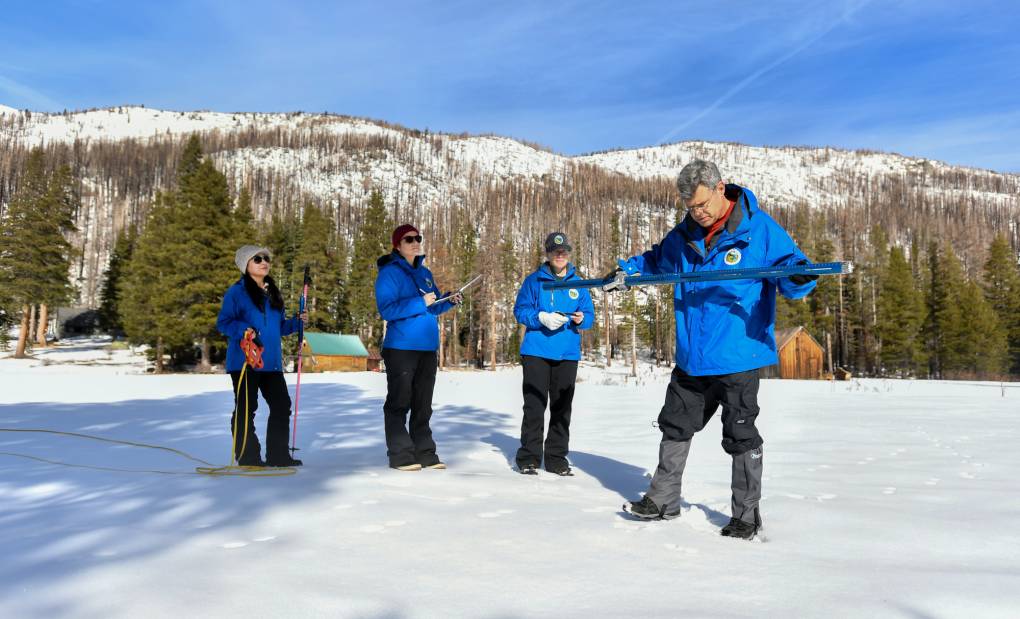
"content": "\u003cp>Across the Sierra Nevada, this winter has been \u003ca href=\"https://www.kqed.org/news/12020122/northern-california-snowpack-much-stronger-start-than-last-year\">a tale of ups and downs\u003c/a>, wets and dry and cold and warm temperatures. Now, the snowpack looks to be back on track for a normal year, with more storms on the way.\u003c/p>\n\u003cp>The mountain range received an early-season dusting in August, several feet of snow in December, a relatively dry January and several storms in February. With less than a month of winter left, the Sierra snowpack is at \u003ca href=\"https://cdec.water.ca.gov/snowapp/sweq.action\">73% of the April 1 average\u003c/a>, which is closely watched by water managers to understand how much they can rely on snowmelt to recharge watersheds and reservoirs for the remainder of the year.\u003c/p>\n\u003cp>“We’re roughly at average again, which is really good news,” said Andrew Schwartz, lead scientist at the UC Berkeley \u003ca href=\"https://www.kqed.org/science/1995954/at-hidden-tahoe-lab-scientists-learn-the-art-of-measuring-snow\">Central Sierra Snow Lab\u003c/a>. “Most, if not all, of our really big water storage reservoirs are above capacity at this point. To have an average snowpack to help maintain those levels is fantastic.”\u003c/p>\n\u003cp>[ad fullwidth]\u003c/p>\n\u003cp>The Northern Sierra snowpack is slightly above average, the Central Sierra is slightly below average and the Southern Sierra is below average. Luckily, forecasters expect the snowpack to grow over the next month as multiple cold storms bring beneficial snow to the region.\u003c/p>\n\u003cp>Three storms are already setting themselves up to hit the Sierra Nevada with up to 8 inches of snow starting Saturday, said Courtney Carpenter, warning coordination meteorologist with the National Weather Service’s Sacramento office.\u003c/p>\n\u003cfigure id=\"attachment_12025363\" class=\"wp-caption alignnone\" style=\"max-width: 1600px\">\u003ca href=\"https://cdn.kqed.org/wp-content/uploads/sites/10/2025/02/20250116_Snow-School_DMB_04857.jpg\">\u003cimg loading=\"lazy\" decoding=\"async\" class=\"size-full wp-image-12025363\" src=\"https://cdn.kqed.org/wp-content/uploads/sites/10/2025/02/20250116_Snow-School_DMB_04857.jpg\" alt=\"\" width=\"1600\" height=\"2000\" srcset=\"https://cdn.kqed.org/wp-content/uploads/sites/10/2025/02/20250116_Snow-School_DMB_04857.jpg 1600w, https://cdn.kqed.org/wp-content/uploads/sites/10/2025/02/20250116_Snow-School_DMB_04857-800x1000.jpg 800w, https://cdn.kqed.org/wp-content/uploads/sites/10/2025/02/20250116_Snow-School_DMB_04857-1020x1275.jpg 1020w, https://cdn.kqed.org/wp-content/uploads/sites/10/2025/02/20250116_Snow-School_DMB_04857-160x200.jpg 160w, https://cdn.kqed.org/wp-content/uploads/sites/10/2025/02/20250116_Snow-School_DMB_04857-1229x1536.jpg 1229w\" sizes=\"auto, (max-width: 1600px) 100vw, 1600px\">\u003c/a>\u003cfigcaption class=\"wp-caption-text\">Andrew Schwartz, director of the University of California Berkeley’s Central Sierra Snow Lab, holds a decades-old print out of snow measurements at the University of California, Berkeley’s Central Sierra Snow Lab, based in Soda Springs in the Sierras near Donner Summit, Jan. 16, 2025. \u003ccite>(David M. Barreda/KQED)\u003c/cite>\u003c/figcaption>\u003c/figure>\n\u003cp>Carpenter said that so far, the storms will be on the colder side, hopefully avoiding high-elevation rain that could melt some of the existing snowpack like several warm storms did earlier this season.\u003c/p>\n\u003cp>Anne Heggli, a mountain hydrometeorologist with the Desert Research Institute who studies rain-on-snow events, said there were several such storms in December and a large one from the end of January into early February. But the good news is that most were minor.\u003c/p>\n\u003cp>“The majority of the rain-on-snow events aren’t actively melting the snowpack, but those big rain-on-snow events, the ones that we remember, do melt the snowpack,” she said.\u003c/p>\n\u003cp>The larger issue with more rain than snow earlier in the year is that it can limit how much is stored in reservoirs. That’s because operators have to make the hard call to let the excess water go to make room for likely more precipitation with so much of the wet season still ahead.\u003c/p>\n\u003cp>Jeffrey Mount and Greg Gartrell of the Public Policy Institute of California \u003ca href=\"https://www.ppic.org/blog/how-februarys-atmospheric-rivers-affected-californias-water-supply/\">wrote about this in a recent blog post\u003c/a>, noting most of February’s precipitation fell on the northern part of the state into reservoirs above “their historic averages thanks to two preceding wet years.”\u003c/p>\n\u003cp>“Dam operators had no choice but to let the water go to make space for possible future floods,” they wrote. “And they let go a lot of water.”\u003c/p>\n\u003cp>[aside postID=science_1995954 hero='https://cdn.kqed.org/wp-content/uploads/sites/35/2025/02/20250116_Snow-School_DMB_01450-1020x680.jpg']\u003c/p>\n\u003cp>From Feb. 1 to Feb. 18, Shasta Lake and Lake Oroville operators released more than 2 million acre-feet of water — enough to supply 6 million homes for a year, Mount and Gartrell noted.\u003c/p>\n\u003cp>Long-term trends, partly due to human-caused climate change, indicate that the coming decades will bring increasing rain-on-snow events that hurt the snowpack. Heggli said the Sierra could reach a “low- to no-snow future within the next 35 to 60 years.”\u003c/p>\n\u003cp>This year, the real worry is that winter or early spring heat waves could melt the snowpack prematurely, as they did in recent years, Schwartz said.\u003c/p>\n\u003cp>“If we get into April and we’re 10 degrees above average or 15 degrees above average, then we’re going to melt out really quick,” he said. “Then the worry turns to impacts on the ecosystem and fire danger.”\u003c/p>\n\u003cp>Noah Molotch, a hydrologist at the Institute of Arctic and Alpine Research and NASA’s Jet Propulsion Laboratory, said he’s waiting to see what happens over the next month as he and his team prepare snow accumulation data using a mix of satellite imagery, radar, climate modeling and on-the-ground observations.\u003c/p>\n\u003cp>“When I look at the complete picture for this particular winter, the story is that it is relatively dry, but it is not catastrophically dry,” he said.\u003c/p>\n\u003cp>Molotoch said the average snowpack and relatively full reservoirs at this point are a good sign for this year’s water supply. Still, he recognizes that hot weather or warm rain could drastically alter the April 1 snowpack amount.\u003c/p>\n\u003cp>“If we don’t get a lot more snowfall between now and April 1, the April 1 percent of average could be much lower,” he said. “We might end up at like 50% of average.”\u003c/p>\n\u003cp>\u003c/p>\n",
"blocks": [],
"excerpt": "At this point, California is set to have a near-average Sierra Nevada snowpack, and at least three more storms this season will likely give it a necessary boost. ",
"status": "publish",
"parent": 0,
"modified": 1740768185,
"stats": {
"hasAudio": false,
"hasVideo": false,
"hasChartOrMap": false,
"iframeSrcs": [],
"hasGoogleForm": false,
"hasGallery": false,
"hasHearkenModule": false,
"hasPolis": false,
"paragraphCount": 22,
"wordCount": 892
},
"headData": {
"title": "California Snowpack Rebounds Amid a Wobbly Winter, With More Storms On the Way | KQED",
"description": "At this point, California is set to have a near-average Sierra Nevada snowpack, and at least three more storms this season will likely give it a necessary boost. ",
"ogTitle": "",
"ogDescription": "",
"ogImgId": "",
"twTitle": "",
"twDescription": "",
"twImgId": "",
"schema": {
"@context": "https://schema.org",
"@type": "NewsArticle",
"headline": "California Snowpack Rebounds Amid a Wobbly Winter, With More Storms On the Way",
"datePublished": "2025-02-28T06:00:47-08:00",
"dateModified": "2025-02-28T10:43:05-08:00",
"image": "https://cdn.kqed.org/wp-content/uploads/2020/02/KQED-OG-Image@1x.png",
"isAccessibleForFree": "True",
"publisher": {
"@type": "NewsMediaOrganization",
"@id": "https://www.kqed.org/#organization",
"name": "KQED",
"logo": "https://cdn.kqed.org/wp-content/uploads/2020/02/KQED-OG-Image@1x.png",
"url": "https://www.kqed.org",
"sameAs": [
"https://www.facebook.com/KQED",
"https://twitter.com/KQED",
"https://www.instagram.com/kqed/",
"https://www.tiktok.com/@kqedofficial",
"https://www.linkedin.com/company/kqed",
"https://www.youtube.com/channel/UCeC0IOo7i1P_61zVUWbJ4nw"
]
}
}
},
"sticky": false,
"nprStoryId": "kqed-12029075",
"templateType": "standard",
"featuredImageType": "standard",
"excludeFromSiteSearch": "Include",
"articleAge": "0",
"path": "/news/12029075/california-snowpack-rebounds-amid-a-wobbly-winter-with-more-storms-on-the-way",
"audioTrackLength": null,
"parsedContent": [
{
"type": "contentString",
"content": "\u003cdiv class=\"post-body\">\u003cp>\u003cp>Across the Sierra Nevada, this winter has been \u003ca href=\"https://www.kqed.org/news/12020122/northern-california-snowpack-much-stronger-start-than-last-year\">a tale of ups and downs\u003c/a>, wets and dry and cold and warm temperatures. Now, the snowpack looks to be back on track for a normal year, with more storms on the way.\u003c/p>\n\u003cp>The mountain range received an early-season dusting in August, several feet of snow in December, a relatively dry January and several storms in February. With less than a month of winter left, the Sierra snowpack is at \u003ca href=\"https://cdec.water.ca.gov/snowapp/sweq.action\">73% of the April 1 average\u003c/a>, which is closely watched by water managers to understand how much they can rely on snowmelt to recharge watersheds and reservoirs for the remainder of the year.\u003c/p>\n\u003cp>“We’re roughly at average again, which is really good news,” said Andrew Schwartz, lead scientist at the UC Berkeley \u003ca href=\"https://www.kqed.org/science/1995954/at-hidden-tahoe-lab-scientists-learn-the-art-of-measuring-snow\">Central Sierra Snow Lab\u003c/a>. “Most, if not all, of our really big water storage reservoirs are above capacity at this point. To have an average snowpack to help maintain those levels is fantastic.”\u003c/p>\n\u003cp>\u003c/p>\u003c/div>",
"attributes": {
"named": {},
"numeric": []
}
},
{
"type": "component",
"content": "",
"name": "ad",
"attributes": {
"named": {
"label": "fullwidth"
},
"numeric": [
"fullwidth"
]
}
},
{
"type": "contentString",
"content": "\u003cdiv class=\"post-body\">\u003cp>\u003c/p>\n\u003cp>The Northern Sierra snowpack is slightly above average, the Central Sierra is slightly below average and the Southern Sierra is below average. Luckily, forecasters expect the snowpack to grow over the next month as multiple cold storms bring beneficial snow to the region.\u003c/p>\n\u003cp>Three storms are already setting themselves up to hit the Sierra Nevada with up to 8 inches of snow starting Saturday, said Courtney Carpenter, warning coordination meteorologist with the National Weather Service’s Sacramento office.\u003c/p>\n\u003cfigure id=\"attachment_12025363\" class=\"wp-caption alignnone\" style=\"max-width: 1600px\">\u003ca href=\"https://cdn.kqed.org/wp-content/uploads/sites/10/2025/02/20250116_Snow-School_DMB_04857.jpg\">\u003cimg loading=\"lazy\" decoding=\"async\" class=\"size-full wp-image-12025363\" src=\"https://cdn.kqed.org/wp-content/uploads/sites/10/2025/02/20250116_Snow-School_DMB_04857.jpg\" alt=\"\" width=\"1600\" height=\"2000\" srcset=\"https://cdn.kqed.org/wp-content/uploads/sites/10/2025/02/20250116_Snow-School_DMB_04857.jpg 1600w, https://cdn.kqed.org/wp-content/uploads/sites/10/2025/02/20250116_Snow-School_DMB_04857-800x1000.jpg 800w, https://cdn.kqed.org/wp-content/uploads/sites/10/2025/02/20250116_Snow-School_DMB_04857-1020x1275.jpg 1020w, https://cdn.kqed.org/wp-content/uploads/sites/10/2025/02/20250116_Snow-School_DMB_04857-160x200.jpg 160w, https://cdn.kqed.org/wp-content/uploads/sites/10/2025/02/20250116_Snow-School_DMB_04857-1229x1536.jpg 1229w\" sizes=\"auto, (max-width: 1600px) 100vw, 1600px\">\u003c/a>\u003cfigcaption class=\"wp-caption-text\">Andrew Schwartz, director of the University of California Berkeley’s Central Sierra Snow Lab, holds a decades-old print out of snow measurements at the University of California, Berkeley’s Central Sierra Snow Lab, based in Soda Springs in the Sierras near Donner Summit, Jan. 16, 2025. \u003ccite>(David M. Barreda/KQED)\u003c/cite>\u003c/figcaption>\u003c/figure>\n\u003cp>Carpenter said that so far, the storms will be on the colder side, hopefully avoiding high-elevation rain that could melt some of the existing snowpack like several warm storms did earlier this season.\u003c/p>\n\u003cp>Anne Heggli, a mountain hydrometeorologist with the Desert Research Institute who studies rain-on-snow events, said there were several such storms in December and a large one from the end of January into early February. But the good news is that most were minor.\u003c/p>\n\u003cp>“The majority of the rain-on-snow events aren’t actively melting the snowpack, but those big rain-on-snow events, the ones that we remember, do melt the snowpack,” she said.\u003c/p>\n\u003cp>The larger issue with more rain than snow earlier in the year is that it can limit how much is stored in reservoirs. That’s because operators have to make the hard call to let the excess water go to make room for likely more precipitation with so much of the wet season still ahead.\u003c/p>\n\u003cp>Jeffrey Mount and Greg Gartrell of the Public Policy Institute of California \u003ca href=\"https://www.ppic.org/blog/how-februarys-atmospheric-rivers-affected-californias-water-supply/\">wrote about this in a recent blog post\u003c/a>, noting most of February’s precipitation fell on the northern part of the state into reservoirs above “their historic averages thanks to two preceding wet years.”\u003c/p>\n\u003cp>“Dam operators had no choice but to let the water go to make space for possible future floods,” they wrote. “And they let go a lot of water.”\u003c/p>\n\u003cp>\u003c/p>\u003c/div>",
"attributes": {
"named": {},
"numeric": []
}
},
{
"type": "component",
"content": "",
"name": "aside",
"attributes": {
"named": {
"postid": "science_1995954",
"hero": "https://cdn.kqed.org/wp-content/uploads/sites/35/2025/02/20250116_Snow-School_DMB_01450-1020x680.jpg",
"label": ""
},
"numeric": []
}
},
{
"type": "contentString",
"content": "\u003cdiv class=\"post-body\">\u003cp>\u003c/p>\n\u003cp>From Feb. 1 to Feb. 18, Shasta Lake and Lake Oroville operators released more than 2 million acre-feet of water — enough to supply 6 million homes for a year, Mount and Gartrell noted.\u003c/p>\n\u003cp>Long-term trends, partly due to human-caused climate change, indicate that the coming decades will bring increasing rain-on-snow events that hurt the snowpack. Heggli said the Sierra could reach a “low- to no-snow future within the next 35 to 60 years.”\u003c/p>\n\u003cp>This year, the real worry is that winter or early spring heat waves could melt the snowpack prematurely, as they did in recent years, Schwartz said.\u003c/p>\n\u003cp>“If we get into April and we’re 10 degrees above average or 15 degrees above average, then we’re going to melt out really quick,” he said. “Then the worry turns to impacts on the ecosystem and fire danger.”\u003c/p>\n\u003cp>Noah Molotch, a hydrologist at the Institute of Arctic and Alpine Research and NASA’s Jet Propulsion Laboratory, said he’s waiting to see what happens over the next month as he and his team prepare snow accumulation data using a mix of satellite imagery, radar, climate modeling and on-the-ground observations.\u003c/p>\n\u003cp>“When I look at the complete picture for this particular winter, the story is that it is relatively dry, but it is not catastrophically dry,” he said.\u003c/p>\n\u003cp>Molotoch said the average snowpack and relatively full reservoirs at this point are a good sign for this year’s water supply. Still, he recognizes that hot weather or warm rain could drastically alter the April 1 snowpack amount.\u003c/p>\n\u003cp>“If we don’t get a lot more snowfall between now and April 1, the April 1 percent of average could be much lower,” he said. “We might end up at like 50% of average.”\u003c/p>\n\u003cp>\u003c/p>\n\u003c/div>\u003c/p>",
"attributes": {
"named": {},
"numeric": []
}
}
],
"link": "/news/12029075/california-snowpack-rebounds-amid-a-wobbly-winter-with-more-storms-on-the-way",
"authors": [
"11746"
],
"categories": [
"news_34165",
"news_8",
"news_356"
],
"tags": [
"news_18538",
"news_19204",
"news_255",
"news_17996",
"news_3187",
"news_466"
],
"featImg": "news_12020173",
"label": "news"
},
"news_12027878": {
"type": "posts",
"id": "news_12027878",
"meta": {
"index": "posts_1716263798",
"site": "news",
"id": "12027878",
"score": null,
"sort": [
1740089518000
]
},
"guestAuthors": [],
"slug": "california-lawmakers-aim-lower-electricity-bills-but-theyll-face-tough-choices",
"title": "California Lawmakers Aim to Lower Electricity Bills, but They’ll Face Tough Choices",
"publishDate": 1740089518,
"format": "standard",
"headTitle": "California Lawmakers Aim to Lower Electricity Bills, but They’ll Face Tough Choices | KQED",
"labelTerm": {
"site": "news"
},
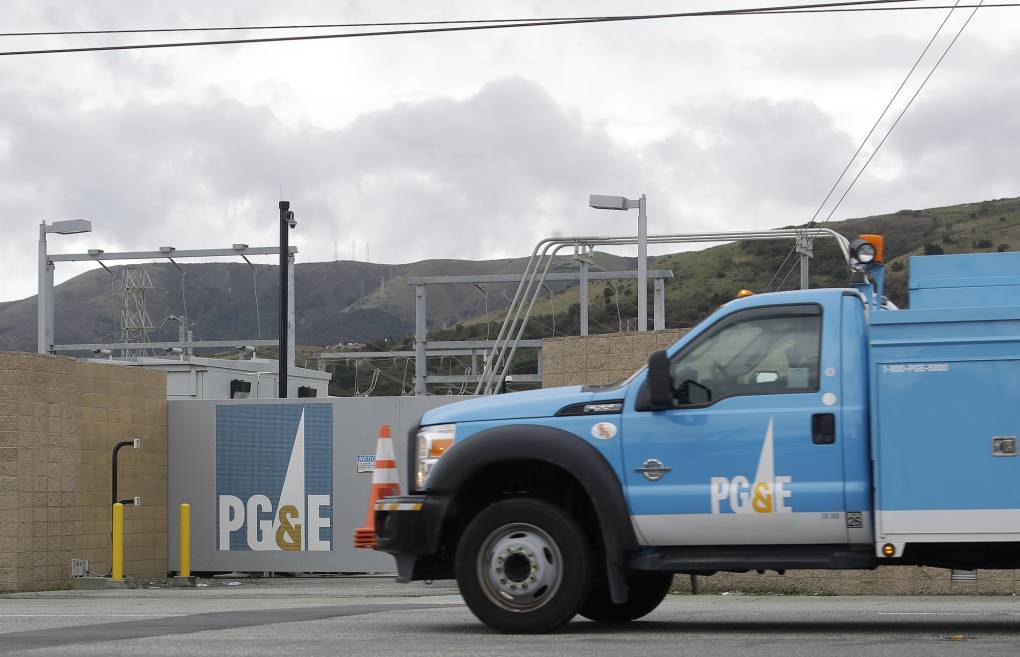
"content": "\u003cp>State lawmakers are rolling out legislation to curb energy prices in California, \u003ca href=\"https://www.kqed.org/news/12020600/californians-pay-hefty-fee-electricity-rates-likely-keep-increasing\">hoping to ease the pain of residents who are paying the second-highest\u003c/a> electricity rates in the nation.\u003c/p>\n\u003cp>Some of the new proposals take aim at the state’s investor-owned utilities, such as PG&E and Southern California Edison, by seeking to blunt rate increases.\u003c/p>\n\u003cp>However, state regulators and industry analysts \u003ca href=\"https://www.kqed.org/forum/2010101905607/california-puc-considers-new-fixed-charge-for-electricity\">said lawmakers might have to make tough choices\u003c/a> to reduce costs for consumers — such as ending energy-saving subsidies for some residents and paying for more utility costs out of the state budget.\u003c/p>\n\u003cp>[ad fullwidth]\u003c/p>\n\u003cp>Democratic leaders in the Legislature made lowering utility bills a \u003ca href=\"https://www.kqed.org/news/12016294/california-democrats-prepare-for-trump-vow-renewed-focus-affordability\">top priority following the November election\u003c/a> when broad frustrations with prices fueled Republican gains. But \u003ca href=\"https://www.kqed.org/news/12023129/how-climate-change-complicating-california-democrats-affordability-agenda\">that task has been complicated by climate change\u003c/a>: Increases in electricity rates have been driven in large part by utility spending to prevent increasingly intense wildfires and also by the state’s push to decarbonize its energy sector.\u003c/p>\n\u003cp>“Affordability is really one of the biggest issues for Californians right now and utility bills — we constantly hear complaints about how they just seem to continue to rise,” Assemblymember Jacqui Irwin (D–Thousand Oaks) said.\u003c/p>\n\u003cfigure id=\"attachment_12021876\" class=\"wp-caption aligncenter\" style=\"max-width: 2000px\">\u003cimg loading=\"lazy\" decoding=\"async\" class=\"size-full wp-image-12021876\" src=\"https://cdn.kqed.org/wp-content/uploads/sites/10/2025/01/SCELawsuitAP.jpg\" alt=\"\" width=\"2000\" height=\"1333\" srcset=\"https://cdn.kqed.org/wp-content/uploads/sites/10/2025/01/SCELawsuitAP.jpg 2000w, https://cdn.kqed.org/wp-content/uploads/sites/10/2025/01/SCELawsuitAP-800x533.jpg 800w, https://cdn.kqed.org/wp-content/uploads/sites/10/2025/01/SCELawsuitAP-1020x680.jpg 1020w, https://cdn.kqed.org/wp-content/uploads/sites/10/2025/01/SCELawsuitAP-160x107.jpg 160w, https://cdn.kqed.org/wp-content/uploads/sites/10/2025/01/SCELawsuitAP-1536x1024.jpg 1536w, https://cdn.kqed.org/wp-content/uploads/sites/10/2025/01/SCELawsuitAP-1920x1280.jpg 1920w\" sizes=\"auto, (max-width: 2000px) 100vw, 2000px\">\u003cfigcaption class=\"wp-caption-text\">Southern California Edison workers service a utility pole in the aftermath of the Eaton Fire on Jan. 12, 2025, in Altadena, California. \u003ccite>(Ethan Swope/AP Photo)\u003c/cite>\u003c/figcaption>\u003c/figure>\n\u003cp>Assembly Bill 745, written by Irwin, would give the California Public Utilities Commission greater oversight over proposals by utility companies to upgrade transmission lines.\u003c/p>\n\u003cp>“We think it’s very important that the PUC looks at every one of these projects and [asks] ‘Is the cost appropriate?’” Irwin said.\u003c/p>\n\u003cp>At an informational hearing of the Senate Energy, Utilities and Communications Committee on Wednesday, CPUC President Alice Reynolds said the effects of a warming planet have made their way onto power bills — most notably with utilities passing along the cost of preventing their equipment from sparking wildfires.\u003c/p>\n\u003cp>As a result, Reynolds said, “What we’re asking for here is the ratepayers to pay for climate change impacts.”\u003c/p>\n\u003cp>Sen. Aisha Wahab (D–Hayward) grilled Reynolds and faulted the CPUC for allowing multiple utility price increases in the last year. A \u003ca href=\"https://lao.ca.gov/reports/2025/4950/Residential-Electricity-Rates-010725.pdf\">report by the Legislative Analyst’s Office (PDF)\u003c/a> last month found that average residential electricity rates rose 47% between 2019 and 2023 — far outpacing inflation.[aside postID=news_12027864 hero='https://cdn.kqed.org/wp-content/uploads/sites/10/2025/02/DSC_1576_qed-1-1020x676.jpg']Wahab introduced Senate Bill 332, which would cap utility rate hikes at the Consumer Price Index, a measure of the cost-of-living increase.\u003c/p>\n\u003cp>“Ratepayers are not a bank,” Wahab said. “I’m deeply disappointed in the fact that ratepayers are being treated like an endless bucket of money because they are not.”\u003c/p>\n\u003cp>Assembly Bill 286, from Republican Leader James Gallagher (R–East Nicolaus), would place a mandate on the CPUC to lower electricity rates by at least 30%.\u003c/p>\n\u003cp>Carla Peterman, PG&E’s executive vice president of corporate affairs, told lawmakers that the price increases are simply a result of the utility fulfilling demands from the Legislature to reduce wildfire risk, such as by spending $1.8 billion a year on trimming trees near power lines.\u003c/p>\n\u003cp>And Reynolds suggested that efforts to limit rate increases could run into legal hurdles because utilities are allowed to make a profit on their infrastructure investments.\u003c/p>\n\u003cfigure id=\"attachment_11833753\" class=\"wp-caption aligncenter\" style=\"max-width: 1920px\">\u003cimg loading=\"lazy\" decoding=\"async\" class=\"size-full wp-image-11833753\" src=\"https://cdn.kqed.org/wp-content/uploads/sites/10/2020/08/PGE-Subcontractors-Inspect.jpg\" alt=\"PG&E subcontractors assess vegetation at risk for catching fire near Paradise, Calif. on Nov. 13, 2018, five days after a PG&E transmission line sparked the Camp Fire, the deadliest and most destructive wildfire in modern California history. The blaze leveled the town of Paradise and killed 85 people.\" width=\"1920\" height=\"1280\" srcset=\"https://cdn.kqed.org/wp-content/uploads/sites/10/2020/08/PGE-Subcontractors-Inspect.jpg 1920w, https://cdn.kqed.org/wp-content/uploads/sites/10/2020/08/PGE-Subcontractors-Inspect-800x533.jpg 800w, https://cdn.kqed.org/wp-content/uploads/sites/10/2020/08/PGE-Subcontractors-Inspect-1020x680.jpg 1020w, https://cdn.kqed.org/wp-content/uploads/sites/10/2020/08/PGE-Subcontractors-Inspect-160x107.jpg 160w, https://cdn.kqed.org/wp-content/uploads/sites/10/2020/08/PGE-Subcontractors-Inspect-1536x1024.jpg 1536w\" sizes=\"auto, (max-width: 1920px) 100vw, 1920px\">\u003cfigcaption class=\"wp-caption-text\">PG&E subcontractors assess vegetation at risk for catching fire near Paradise, California, on Nov. 13, 2018, five days after a PG&E transmission line sparked the Camp Fire, the deadliest and most destructive wildfire in modern California history. The blaze leveled the town of Paradise and killed 85 people. \u003ccite>(Anne Wernikoff/KQED)\u003c/cite>\u003c/figcaption>\u003c/figure>\n\u003cp>“We are governed by the case law that requires us to allow [utilities] to have a reasonable rate of return to attract investment in the system,” Reynolds said.\u003c/p>\n\u003cp>At the Senate hearing, a panel that included analysts along with advocates for ratepayers, solar panel companies and large commercial energy users pointed lawmakers toward tougher tradeoffs.\u003c/p>\n\u003cp>Those included limiting subsidies for residents with solar panels, especially \u003ca href=\"https://www.kqed.org/news/11935425/california-votes-to-lower-incentives-for-rooftop-solar-panels-to-evenly-spread-overall-energy-costs\">longtime solar customers who receive credits from utility companies\u003c/a> for the excess energy they don’t use.\u003c/p>\n\u003cp>Changes to solar benefits have drawn opposition in the past from lawmakers representing suburban neighborhoods where solar adoption is more widespread. Solar advocates at the hearing argued that it would be unfair for the state to punish homeowners who are helping decarbonize the electricity grid after encouraging them to take on costly solar installation.[aside postID=news_12026172 hero='https://cdn.kqed.org/wp-content/uploads/sites/10/2025/01/MossLandingFire1-1020x680.jpg']But the grid costs that solar users save on are being passed along to customers without solar panels — an annual cost shift of $8.5 billion, said Linda Serizawa, director of the state’s Public Advocates Office.\u003c/p>\n\u003cp>“Rooftop solar is beneficial and it is key to advancing our energy and climate goals,” Serizawa said. “However, because of the way the incentives are designed … [they] are being funded by households without solar.”\u003c/p>\n\u003cp>Other panelists at the hearing urged lawmakers to use existing state revenue to pay down the cost of electricity bills. The state currently raises billions of dollars every year through its cap-and-trade system, \u003ca href=\"https://www.kqed.org/news/11573588/california-lawmakers-approve-plan-to-extend-cap-and-trade-system\">which charges industries for the ability\u003c/a> to pollute.\u003c/p>\n\u003cp>Some of that revenue is returned to utility ratepayers, but far more is spent on building a high-speed rail system and funding affordable housing. And the utility rebate, known as the California Climate Credit, is sent to every customer, regardless of income.\u003c/p>\n\u003cp>“We have been funding our clean energy goals and our decarbonization transition basically by making electricity more expensive,” said Mohit Chhabra, senior analyst for the Natural Resources Defense Council. “It would be better to use levies on polluting fuels, like revenue from cap-and-trade, to fund the clean energy transition.”\u003c/p>\n\u003cp>While the cap-and-trade system is not set to expire until 2030, legislators could reauthorize the program this year and debate any changes in how to spend program revenue.\u003c/p>\n\u003cp>The energy-related bills announced by lawmakers ahead of Friday’s bill-introduction deadline will need to clear the Assembly or Senate — wherever they originated — by June 6.\u003c/p>\n\u003cp>\u003c/p>\n",
"blocks": [],
"excerpt": "Lawmakers on both sides of the aisle proposed cutting or capping rates charged by PG&E and other utilities, but analysts suggest tougher choices lie ahead. ",
"status": "publish",
"parent": 0,
"modified": 1740433144,
"stats": {
"hasAudio": false,
"hasVideo": false,
"hasChartOrMap": false,
"iframeSrcs": [],
"hasGoogleForm": false,
"hasGallery": false,
"hasHearkenModule": false,
"hasPolis": false,
"paragraphCount": 26,
"wordCount": 1078
},
"headData": {
"title": "California Lawmakers Aim to Lower Electricity Bills, but They’ll Face Tough Choices | KQED",
"description": "Lawmakers on both sides of the aisle proposed cutting or capping rates charged by PG&E and other utilities, but analysts suggest tougher choices lie ahead. ",
"ogTitle": "",
"ogDescription": "",
"ogImgId": "",
"twTitle": "",
"twDescription": "",
"twImgId": "",
"schema": {
"@context": "https://schema.org",
"@type": "NewsArticle",
"headline": "California Lawmakers Aim to Lower Electricity Bills, but They’ll Face Tough Choices",
"datePublished": "2025-02-20T14:11:58-08:00",
"dateModified": "2025-02-24T13:39:04-08:00",
"image": "https://cdn.kqed.org/wp-content/uploads/2020/02/KQED-OG-Image@1x.png",
"isAccessibleForFree": "True",
"publisher": {
"@type": "NewsMediaOrganization",
"@id": "https://www.kqed.org/#organization",
"name": "KQED",
"logo": "https://cdn.kqed.org/wp-content/uploads/2020/02/KQED-OG-Image@1x.png",
"url": "https://www.kqed.org",
"sameAs": [
"https://www.facebook.com/KQED",
"https://twitter.com/KQED",
"https://www.instagram.com/kqed/",
"https://www.tiktok.com/@kqedofficial",
"https://www.linkedin.com/company/kqed",
"https://www.youtube.com/channel/UCeC0IOo7i1P_61zVUWbJ4nw"
]
}
}
},
"sticky": false,
"nprStoryId": "kqed-12027878",
"excludeFromSiteSearch": "Include",
"articleAge": "0",
"path": "/news/12027878/california-lawmakers-aim-lower-electricity-bills-but-theyll-face-tough-choices",
"audioTrackLength": null,
"parsedContent": [
{
"type": "contentString",
"content": "\u003cdiv class=\"post-body\">\u003cp>\u003cp>State lawmakers are rolling out legislation to curb energy prices in California, \u003ca href=\"https://www.kqed.org/news/12020600/californians-pay-hefty-fee-electricity-rates-likely-keep-increasing\">hoping to ease the pain of residents who are paying the second-highest\u003c/a> electricity rates in the nation.\u003c/p>\n\u003cp>Some of the new proposals take aim at the state’s investor-owned utilities, such as PG&E and Southern California Edison, by seeking to blunt rate increases.\u003c/p>\n\u003cp>However, state regulators and industry analysts \u003ca href=\"https://www.kqed.org/forum/2010101905607/california-puc-considers-new-fixed-charge-for-electricity\">said lawmakers might have to make tough choices\u003c/a> to reduce costs for consumers — such as ending energy-saving subsidies for some residents and paying for more utility costs out of the state budget.\u003c/p>\n\u003cp>\u003c/p>\u003c/div>",
"attributes": {
"named": {},
"numeric": []
}
},
{
"type": "component",
"content": "",
"name": "ad",
"attributes": {
"named": {
"label": "fullwidth"
},
"numeric": [
"fullwidth"
]
}
},
{
"type": "contentString",
"content": "\u003cdiv class=\"post-body\">\u003cp>\u003c/p>\n\u003cp>Democratic leaders in the Legislature made lowering utility bills a \u003ca href=\"https://www.kqed.org/news/12016294/california-democrats-prepare-for-trump-vow-renewed-focus-affordability\">top priority following the November election\u003c/a> when broad frustrations with prices fueled Republican gains. But \u003ca href=\"https://www.kqed.org/news/12023129/how-climate-change-complicating-california-democrats-affordability-agenda\">that task has been complicated by climate change\u003c/a>: Increases in electricity rates have been driven in large part by utility spending to prevent increasingly intense wildfires and also by the state’s push to decarbonize its energy sector.\u003c/p>\n\u003cp>“Affordability is really one of the biggest issues for Californians right now and utility bills — we constantly hear complaints about how they just seem to continue to rise,” Assemblymember Jacqui Irwin (D–Thousand Oaks) said.\u003c/p>\n\u003cfigure id=\"attachment_12021876\" class=\"wp-caption aligncenter\" style=\"max-width: 2000px\">\u003cimg loading=\"lazy\" decoding=\"async\" class=\"size-full wp-image-12021876\" src=\"https://cdn.kqed.org/wp-content/uploads/sites/10/2025/01/SCELawsuitAP.jpg\" alt=\"\" width=\"2000\" height=\"1333\" srcset=\"https://cdn.kqed.org/wp-content/uploads/sites/10/2025/01/SCELawsuitAP.jpg 2000w, https://cdn.kqed.org/wp-content/uploads/sites/10/2025/01/SCELawsuitAP-800x533.jpg 800w, https://cdn.kqed.org/wp-content/uploads/sites/10/2025/01/SCELawsuitAP-1020x680.jpg 1020w, https://cdn.kqed.org/wp-content/uploads/sites/10/2025/01/SCELawsuitAP-160x107.jpg 160w, https://cdn.kqed.org/wp-content/uploads/sites/10/2025/01/SCELawsuitAP-1536x1024.jpg 1536w, https://cdn.kqed.org/wp-content/uploads/sites/10/2025/01/SCELawsuitAP-1920x1280.jpg 1920w\" sizes=\"auto, (max-width: 2000px) 100vw, 2000px\">\u003cfigcaption class=\"wp-caption-text\">Southern California Edison workers service a utility pole in the aftermath of the Eaton Fire on Jan. 12, 2025, in Altadena, California. \u003ccite>(Ethan Swope/AP Photo)\u003c/cite>\u003c/figcaption>\u003c/figure>\n\u003cp>Assembly Bill 745, written by Irwin, would give the California Public Utilities Commission greater oversight over proposals by utility companies to upgrade transmission lines.\u003c/p>\n\u003cp>“We think it’s very important that the PUC looks at every one of these projects and [asks] ‘Is the cost appropriate?’” Irwin said.\u003c/p>\n\u003cp>At an informational hearing of the Senate Energy, Utilities and Communications Committee on Wednesday, CPUC President Alice Reynolds said the effects of a warming planet have made their way onto power bills — most notably with utilities passing along the cost of preventing their equipment from sparking wildfires.\u003c/p>\n\u003cp>As a result, Reynolds said, “What we’re asking for here is the ratepayers to pay for climate change impacts.”\u003c/p>\n\u003cp>Sen. Aisha Wahab (D–Hayward) grilled Reynolds and faulted the CPUC for allowing multiple utility price increases in the last year. A \u003ca href=\"https://lao.ca.gov/reports/2025/4950/Residential-Electricity-Rates-010725.pdf\">report by the Legislative Analyst’s Office (PDF)\u003c/a> last month found that average residential electricity rates rose 47% between 2019 and 2023 — far outpacing inflation.\u003c/p>\u003c/div>",
"attributes": {
"named": {},
"numeric": []
}
},
{
"type": "component",
"content": "",
"name": "aside",
"attributes": {
"named": {
"postid": "news_12027864",
"hero": "https://cdn.kqed.org/wp-content/uploads/sites/10/2025/02/DSC_1576_qed-1-1020x676.jpg",
"label": ""
},
"numeric": []
}
},
{
"type": "contentString",
"content": "\u003cdiv class=\"post-body\">\u003cp>Wahab introduced Senate Bill 332, which would cap utility rate hikes at the Consumer Price Index, a measure of the cost-of-living increase.\u003c/p>\n\u003cp>“Ratepayers are not a bank,” Wahab said. “I’m deeply disappointed in the fact that ratepayers are being treated like an endless bucket of money because they are not.”\u003c/p>\n\u003cp>Assembly Bill 286, from Republican Leader James Gallagher (R–East Nicolaus), would place a mandate on the CPUC to lower electricity rates by at least 30%.\u003c/p>\n\u003cp>Carla Peterman, PG&E’s executive vice president of corporate affairs, told lawmakers that the price increases are simply a result of the utility fulfilling demands from the Legislature to reduce wildfire risk, such as by spending $1.8 billion a year on trimming trees near power lines.\u003c/p>\n\u003cp>And Reynolds suggested that efforts to limit rate increases could run into legal hurdles because utilities are allowed to make a profit on their infrastructure investments.\u003c/p>\n\u003cfigure id=\"attachment_11833753\" class=\"wp-caption aligncenter\" style=\"max-width: 1920px\">\u003cimg loading=\"lazy\" decoding=\"async\" class=\"size-full wp-image-11833753\" src=\"https://cdn.kqed.org/wp-content/uploads/sites/10/2020/08/PGE-Subcontractors-Inspect.jpg\" alt=\"PG&E subcontractors assess vegetation at risk for catching fire near Paradise, Calif. on Nov. 13, 2018, five days after a PG&E transmission line sparked the Camp Fire, the deadliest and most destructive wildfire in modern California history. The blaze leveled the town of Paradise and killed 85 people.\" width=\"1920\" height=\"1280\" srcset=\"https://cdn.kqed.org/wp-content/uploads/sites/10/2020/08/PGE-Subcontractors-Inspect.jpg 1920w, https://cdn.kqed.org/wp-content/uploads/sites/10/2020/08/PGE-Subcontractors-Inspect-800x533.jpg 800w, https://cdn.kqed.org/wp-content/uploads/sites/10/2020/08/PGE-Subcontractors-Inspect-1020x680.jpg 1020w, https://cdn.kqed.org/wp-content/uploads/sites/10/2020/08/PGE-Subcontractors-Inspect-160x107.jpg 160w, https://cdn.kqed.org/wp-content/uploads/sites/10/2020/08/PGE-Subcontractors-Inspect-1536x1024.jpg 1536w\" sizes=\"auto, (max-width: 1920px) 100vw, 1920px\">\u003cfigcaption class=\"wp-caption-text\">PG&E subcontractors assess vegetation at risk for catching fire near Paradise, California, on Nov. 13, 2018, five days after a PG&E transmission line sparked the Camp Fire, the deadliest and most destructive wildfire in modern California history. The blaze leveled the town of Paradise and killed 85 people. \u003ccite>(Anne Wernikoff/KQED)\u003c/cite>\u003c/figcaption>\u003c/figure>\n\u003cp>“We are governed by the case law that requires us to allow [utilities] to have a reasonable rate of return to attract investment in the system,” Reynolds said.\u003c/p>\n\u003cp>At the Senate hearing, a panel that included analysts along with advocates for ratepayers, solar panel companies and large commercial energy users pointed lawmakers toward tougher tradeoffs.\u003c/p>\n\u003cp>Those included limiting subsidies for residents with solar panels, especially \u003ca href=\"https://www.kqed.org/news/11935425/california-votes-to-lower-incentives-for-rooftop-solar-panels-to-evenly-spread-overall-energy-costs\">longtime solar customers who receive credits from utility companies\u003c/a> for the excess energy they don’t use.\u003c/p>\n\u003cp>Changes to solar benefits have drawn opposition in the past from lawmakers representing suburban neighborhoods where solar adoption is more widespread. Solar advocates at the hearing argued that it would be unfair for the state to punish homeowners who are helping decarbonize the electricity grid after encouraging them to take on costly solar installation.\u003c/p>\u003c/div>",
"attributes": {
"named": {},
"numeric": []
}
},
{
"type": "component",
"content": "",
"name": "aside",
"attributes": {
"named": {
"postid": "news_12026172",
"hero": "https://cdn.kqed.org/wp-content/uploads/sites/10/2025/01/MossLandingFire1-1020x680.jpg",
"label": ""
},
"numeric": []
}
},
{
"type": "contentString",
"content": "\u003cdiv class=\"post-body\">\u003cp>But the grid costs that solar users save on are being passed along to customers without solar panels — an annual cost shift of $8.5 billion, said Linda Serizawa, director of the state’s Public Advocates Office.\u003c/p>\n\u003cp>“Rooftop solar is beneficial and it is key to advancing our energy and climate goals,” Serizawa said. “However, because of the way the incentives are designed … [they] are being funded by households without solar.”\u003c/p>\n\u003cp>Other panelists at the hearing urged lawmakers to use existing state revenue to pay down the cost of electricity bills. The state currently raises billions of dollars every year through its cap-and-trade system, \u003ca href=\"https://www.kqed.org/news/11573588/california-lawmakers-approve-plan-to-extend-cap-and-trade-system\">which charges industries for the ability\u003c/a> to pollute.\u003c/p>\n\u003cp>Some of that revenue is returned to utility ratepayers, but far more is spent on building a high-speed rail system and funding affordable housing. And the utility rebate, known as the California Climate Credit, is sent to every customer, regardless of income.\u003c/p>\n\u003cp>“We have been funding our clean energy goals and our decarbonization transition basically by making electricity more expensive,” said Mohit Chhabra, senior analyst for the Natural Resources Defense Council. “It would be better to use levies on polluting fuels, like revenue from cap-and-trade, to fund the clean energy transition.”\u003c/p>\n\u003cp>While the cap-and-trade system is not set to expire until 2030, legislators could reauthorize the program this year and debate any changes in how to spend program revenue.\u003c/p>\n\u003cp>The energy-related bills announced by lawmakers ahead of Friday’s bill-introduction deadline will need to clear the Assembly or Senate — wherever they originated — by June 6.\u003c/p>\n\u003cp>\u003c/p>\n\u003c/div>\u003c/p>",
"attributes": {
"named": {},
"numeric": []
}
}
],
"link": "/news/12027878/california-lawmakers-aim-lower-electricity-bills-but-theyll-face-tough-choices",
"authors": [
"227"
],
"categories": [
"news_34165",
"news_8",
"news_13"
],
"tags": [
"news_18538",
"news_2704",
"news_19204",
"news_255",
"news_34354",
"news_21973",
"news_25539",
"news_17968",
"news_22228"
],
"featImg": "news_12027934",
"label": "news"
},
"news_12027540": {
"type": "posts",
"id": "news_12027540",
"meta": {
"index": "posts_1716263798",
"site": "news",
"id": "12027540",
"score": null,
"sort": [
1740004328000
]
},
"guestAuthors": [],
"slug": "land-sinking-fast-around-bay-area-worsening-effects-sea-level-rise",
"title": "Land Is Sinking Fast Around the Bay Area, Worsening the Effects of Sea Level Rise",
"publishDate": 1740004328,
"format": "standard",
"headTitle": "Land Is Sinking Fast Around the Bay Area, Worsening the Effects of Sea Level Rise | KQED",
"labelTerm": {
"site": "news"
},
"content": "\u003cp>The land at multiple spots along California’s iconic coastline is sinking at startling rates, compounding the flooding risks posed by future \u003ca href=\"https://www.kqed.org/news/12018004/how-three-coastal-cities-are-tackling-sea-level-rise\">sea level rise\u003c/a> from Humboldt Bay to San Diego, according to a \u003ca href=\"https://www.jpl.nasa.gov/news/nasa-led-study-pinpoints-areas-sinking-rising-along-california-coast/\">new study\u003c/a> led by scientists at NASA’s Jet Propulsion Laboratory.\u003c/p>\n\u003cp>The speed of the land sinking, or subsidence, helps show that \u003ca href=\"https://www.kqed.org/science/1973624/maps-see-which-bay-area-locations-are-at-risk-from-rising-seas\">regional estimates\u003c/a> “largely underestimate” sea level rise in parts of the San Francisco Bay Area and Los Angeles. That adds a new layer of complication for cities along the 800-plus miles of coastline preparing for \u003ca href=\"https://www.kqed.org/news/12018103/king-tides-foreshadow-far-wetter-future-sf-shoreline\">a far wetter future\u003c/a>, while some are already dealing with flooding from climate-fueled storms and king tides.\u003c/p>\n\u003cp>Using satellite imagery, the scientists found that land along San Francisco Bay in San Rafael, Corte Madera, Foster City and Alameda’s Bay Farm Island is subsiding more than 0.4 inches a year. When considering the subsidence rate, local sea levels could rise by more than double the regional estimate by 2050.\u003c/p>\n\u003cp>[ad fullwidth]\u003c/p>\n\u003cp>“Areas might be affected by the rising water much sooner than we anticipate, and that brings by itself increased flooding and tidal inundation,” said Marin Govorcin, the study’s lead author and a NASA remote sensing scientist in Southern California. “All of this can affect people on a daily basis.”\u003c/p>\n\u003cp>Since the 1880s, the Pacific Ocean has risen by about 8 inches along the West Coast. However, state scientists predict that in the worst-case scenario, the bay will rise more than a foot by 2050 and more than 6 feet by the end of the century.\u003c/p>\n\u003cfigure id=\"attachment_12027543\" class=\"wp-caption aligncenter\" style=\"max-width: 1999px\">\u003cimg loading=\"lazy\" decoding=\"async\" class=\"size-full wp-image-12027543\" src=\"https://cdn.kqed.org/wp-content/uploads/sites/10/2025/02/BayFarmShoreline_002_qed.jpg\" alt=\"\" width=\"1999\" height=\"1333\" srcset=\"https://cdn.kqed.org/wp-content/uploads/sites/10/2025/02/BayFarmShoreline_002_qed.jpg 1999w, https://cdn.kqed.org/wp-content/uploads/sites/10/2025/02/BayFarmShoreline_002_qed-800x533.jpg 800w, https://cdn.kqed.org/wp-content/uploads/sites/10/2025/02/BayFarmShoreline_002_qed-1020x680.jpg 1020w, https://cdn.kqed.org/wp-content/uploads/sites/10/2025/02/BayFarmShoreline_002_qed-160x107.jpg 160w, https://cdn.kqed.org/wp-content/uploads/sites/10/2025/02/BayFarmShoreline_002_qed-1536x1024.jpg 1536w, https://cdn.kqed.org/wp-content/uploads/sites/10/2025/02/BayFarmShoreline_002_qed-1920x1280.jpg 1920w\" sizes=\"auto, (max-width: 1999px) 100vw, 1999px\">\u003cfigcaption class=\"wp-caption-text\">A parent and child riding a bicycle were among the many families enjoying the shoreline views along Bay Farm Island’s Shoreline Trail in Alameda, California, on Aug. 16, 2021. \u003ccite>(Joyce Tsai/KQED)\u003c/cite>\u003c/figcaption>\u003c/figure>\n\u003cp>The new study shows how vertical land movement can be unpredictable in its scope and pace due to human-caused factors, like groundwater pumping, and natural ones, like tectonic activity. The researchers analyzed satellite observations from 2015 to 2023 to capture land movement by inch, suggesting that their estimates of vertical land motion plus sea level rise are more accurate than current models, which are based on tide gauge measurements.\u003c/p>\n\u003cp>Govorcin blames human activity for some of the subsidence. In the Bay Area, he said areas where cities \u003ca href=\"https://www.kqed.org/news/11799297/large-parts-of-the-bay-area-are-built-on-fill-why-and-where\">reclaimed parts of the bay\u003c/a> are especially vulnerable to sinking land and, in turn, future sea level rise.\u003c/p>\n\u003cp>“In many parts of the world, like the reclaimed ground beneath San Francisco, the land is moving down faster than the sea itself is going up,” Govorcin said.[aside postID=news_12018103 hero='https://cdn.kqed.org/wp-content/uploads/sites/10/2024/12/241213-PortFlood-24-1020x679.jpg']Not all of coastal California is sinking. For example, the researchers found areas including Santa Barbara and Long Beach are rising due to human activity, such as recharging groundwater basins and injecting fluid into the ground near oil and gas wells.\u003c/p>\n\u003cp>“We anticipate this land movement could lead to potential structural instability in our critical infrastructure,” Govorcin said. “We can see all of that from a satellite, and we can use that to inform the local authorities.”\u003c/p>\n\u003cp>According to the study, infrastructure such as San Francisco International Airport could see nearly a foot of sea level rise by 2050.\u003c/p>\n\u003cp>“What this says is that our situation in relation to flooding is worse than we thought,” said Kristina Hill, a UC Berkeley professor and a leading sea level rise scientist who was not involved in the study. “The region’s economy depends on the airports, so we’ll need to continue to focus on how to adapt those airports to these new conditions.”\u003c/p>\n\u003cp>Of all the subsidence hot spots the researchers highlighted, Hill was most worried about the North Bay city of San Rafael, where she visited during \u003ca href=\"https://www.kqed.org/news/12014611/king-tide-back-bay-area-heres-what-you-can-expect\">a king tide\u003c/a> in December and saw bay water rushing down the streets.\u003c/p>\n\u003cfigure id=\"attachment_12027545\" class=\"wp-caption aligncenter\" style=\"max-width: 2000px\">\u003cimg loading=\"lazy\" decoding=\"async\" class=\"size-full wp-image-12027545\" src=\"https://cdn.kqed.org/wp-content/uploads/sites/10/2025/02/240822-FosterCityFile-10-BL_qed.jpg\" alt=\"\" width=\"2000\" height=\"1333\" srcset=\"https://cdn.kqed.org/wp-content/uploads/sites/10/2025/02/240822-FosterCityFile-10-BL_qed.jpg 2000w, https://cdn.kqed.org/wp-content/uploads/sites/10/2025/02/240822-FosterCityFile-10-BL_qed-800x533.jpg 800w, https://cdn.kqed.org/wp-content/uploads/sites/10/2025/02/240822-FosterCityFile-10-BL_qed-1020x680.jpg 1020w, https://cdn.kqed.org/wp-content/uploads/sites/10/2025/02/240822-FosterCityFile-10-BL_qed-160x107.jpg 160w, https://cdn.kqed.org/wp-content/uploads/sites/10/2025/02/240822-FosterCityFile-10-BL_qed-1536x1024.jpg 1536w, https://cdn.kqed.org/wp-content/uploads/sites/10/2025/02/240822-FosterCityFile-10-BL_qed-1920x1280.jpg 1920w\" sizes=\"auto, (max-width: 2000px) 100vw, 2000px\">\u003cfigcaption class=\"wp-caption-text\">Houses line the Foster City Lagoon in Foster City on Aug. 22, 2024. \u003ccite>(Beth LaBerge/KQED)\u003c/cite>\u003c/figcaption>\u003c/figure>\n\u003cp>“It’s a game of inches there, and to talk about a third of a meter or more of sea level rise, that indicates to me that San Rafael is going to be the first to need very serious interventions in the region,” she said.\u003c/p>\n\u003cp>Hill said Bay Area sea level rise planners should “develop San Rafael as a test case for how cities are going to adapt” because it is ground zero for rising tides in the region. The city’s Canal neighborhood — home to many low-income Latinx families — is one of the areas at the highest risk of sea level rise in Marin County.\u003c/p>\n\u003cp>“It’s got a lot of people living in it who are very sensitive to disruption,” she said. “It seems like something that the whole region should start looking at. How can we protect San Rafael, and can we develop strategies that we can use in other parts of the Bay Area as well?”\u003c/p>\n\u003cp>[aside postID=news_12016813 hero='https://cdn.kqed.org/wp-content/uploads/sites/10/2024/12/170111_KingTide_bhs14-1020x680.jpg']\u003c/p>\n\u003cp>The researchers also discovered land sinking around Point Reyes and the Russian River Valley but at lower rates.\u003c/p>\n\u003cp>One caveat to the study is that the researchers don’t model future subsidence, said Rylan Gervase, director of legislative and external affairs for the Bay Conservation and Development Commission, which released the area’s \u003ca href=\"https://www.kqed.org/news/12016813/bay-area-now-has-first-ever-regional-sea-level-rise-plan\">first regional sea level rise plan\u003c/a> in December.\u003c/p>\n\u003cp>“We’re going to see a wide range of impacts; everything from highways along the bay shore to San Francisco Airport is going to be impacted,” he said. “The study does give us a good picture of what subsidences occurred in the past up until the present, but that doesn’t necessarily mean that the rate of subsidence is going to be constant.”\u003c/p>\n\u003cp>The commission’s regional plan advises cities and counties to consider subsidence when developing state-mandated sea level rise adaptation plans.\u003c/p>\n\u003cp>Dana Brechwald, the commission’s assistant planning director for climate adaptation, said staff had built the study’s methodology into their planning efforts and added that the continued data would only strengthen local plans. But she noted that cities and counties most affected by subsidence will likely need to take greater measures to plan for even more sea level rise than originally expected — which could include larger levees or infrastructure projects and solutions for inland flooding.\u003c/p>\n\u003cp>“This will increase the level of protection required because it amplifies the flooding,” she said. “It may change where flooding comes from or the extent of the flooding depending on where subsidence occurs.”\u003c/p>\n\u003cp>[ad floatright]\u003c/p>\n",
"blocks": [],
"excerpt": "Several spots on the California coast are subsiding at startling rates, compounding the flooding risks posed by future sea level rise, according to a new study.",
"status": "publish",
"parent": 0,
"modified": 1740080054,
"stats": {
"hasAudio": false,
"hasVideo": false,
"hasChartOrMap": false,
"iframeSrcs": [],
"hasGoogleForm": false,
"hasGallery": false,
"hasHearkenModule": false,
"hasPolis": false,
"paragraphCount": 24,
"wordCount": 1151
},
"headData": {
"title": "Land Is Sinking Fast Around the Bay Area, Worsening the Effects of Sea Level Rise | KQED",
"description": "Several spots on the California coast are subsiding at startling rates, compounding the flooding risks posed by future sea level rise, according to a new study.",
"ogTitle": "",
"ogDescription": "",
"ogImgId": "",
"twTitle": "",
"twDescription": "",
"twImgId": "",
"schema": {
"@context": "https://schema.org",
"@type": "NewsArticle",
"headline": "Land Is Sinking Fast Around the Bay Area, Worsening the Effects of Sea Level Rise",
"datePublished": "2025-02-19T14:32:08-08:00",
"dateModified": "2025-02-20T11:34:14-08:00",
"image": "https://cdn.kqed.org/wp-content/uploads/2020/02/KQED-OG-Image@1x.png",
"isAccessibleForFree": "True",
"publisher": {
"@type": "NewsMediaOrganization",
"@id": "https://www.kqed.org/#organization",
"name": "KQED",
"logo": "https://cdn.kqed.org/wp-content/uploads/2020/02/KQED-OG-Image@1x.png",
"url": "https://www.kqed.org",
"sameAs": [
"https://www.facebook.com/KQED",
"https://twitter.com/KQED",
"https://www.instagram.com/kqed/",
"https://www.tiktok.com/@kqedofficial",
"https://www.linkedin.com/company/kqed",
"https://www.youtube.com/channel/UCeC0IOo7i1P_61zVUWbJ4nw"
]
}
}
},
"audioUrl": "https://traffic.omny.fm/d/clips/0af137ef-751e-4b19-a055-aaef00d2d578/ffca7e9f-6831-41c5-bcaf-aaef00f5a073/64f5c04a-3c4f-4e24-9278-b28a012c500b/audio.mp3",
"sticky": false,
"nprStoryId": "kqed-12027540",
"excludeFromSiteSearch": "Include",
"articleAge": "0",
"path": "/news/12027540/land-sinking-fast-around-bay-area-worsening-effects-sea-level-rise",
"audioTrackLength": null,
"parsedContent": [
{
"type": "contentString",
"content": "\u003cdiv class=\"post-body\">\u003cp>\u003cp>The land at multiple spots along California’s iconic coastline is sinking at startling rates, compounding the flooding risks posed by future \u003ca href=\"https://www.kqed.org/news/12018004/how-three-coastal-cities-are-tackling-sea-level-rise\">sea level rise\u003c/a> from Humboldt Bay to San Diego, according to a \u003ca href=\"https://www.jpl.nasa.gov/news/nasa-led-study-pinpoints-areas-sinking-rising-along-california-coast/\">new study\u003c/a> led by scientists at NASA’s Jet Propulsion Laboratory.\u003c/p>\n\u003cp>The speed of the land sinking, or subsidence, helps show that \u003ca href=\"https://www.kqed.org/science/1973624/maps-see-which-bay-area-locations-are-at-risk-from-rising-seas\">regional estimates\u003c/a> “largely underestimate” sea level rise in parts of the San Francisco Bay Area and Los Angeles. That adds a new layer of complication for cities along the 800-plus miles of coastline preparing for \u003ca href=\"https://www.kqed.org/news/12018103/king-tides-foreshadow-far-wetter-future-sf-shoreline\">a far wetter future\u003c/a>, while some are already dealing with flooding from climate-fueled storms and king tides.\u003c/p>\n\u003cp>Using satellite imagery, the scientists found that land along San Francisco Bay in San Rafael, Corte Madera, Foster City and Alameda’s Bay Farm Island is subsiding more than 0.4 inches a year. When considering the subsidence rate, local sea levels could rise by more than double the regional estimate by 2050.\u003c/p>\n\u003cp>\u003c/p>\u003c/div>",
"attributes": {
"named": {},
"numeric": []
}
},
{
"type": "component",
"content": "",
"name": "ad",
"attributes": {
"named": {
"label": "fullwidth"
},
"numeric": [
"fullwidth"
]
}
},
{
"type": "contentString",
"content": "\u003cdiv class=\"post-body\">\u003cp>\u003c/p>\n\u003cp>“Areas might be affected by the rising water much sooner than we anticipate, and that brings by itself increased flooding and tidal inundation,” said Marin Govorcin, the study’s lead author and a NASA remote sensing scientist in Southern California. “All of this can affect people on a daily basis.”\u003c/p>\n\u003cp>Since the 1880s, the Pacific Ocean has risen by about 8 inches along the West Coast. However, state scientists predict that in the worst-case scenario, the bay will rise more than a foot by 2050 and more than 6 feet by the end of the century.\u003c/p>\n\u003cfigure id=\"attachment_12027543\" class=\"wp-caption aligncenter\" style=\"max-width: 1999px\">\u003cimg loading=\"lazy\" decoding=\"async\" class=\"size-full wp-image-12027543\" src=\"https://cdn.kqed.org/wp-content/uploads/sites/10/2025/02/BayFarmShoreline_002_qed.jpg\" alt=\"\" width=\"1999\" height=\"1333\" srcset=\"https://cdn.kqed.org/wp-content/uploads/sites/10/2025/02/BayFarmShoreline_002_qed.jpg 1999w, https://cdn.kqed.org/wp-content/uploads/sites/10/2025/02/BayFarmShoreline_002_qed-800x533.jpg 800w, https://cdn.kqed.org/wp-content/uploads/sites/10/2025/02/BayFarmShoreline_002_qed-1020x680.jpg 1020w, https://cdn.kqed.org/wp-content/uploads/sites/10/2025/02/BayFarmShoreline_002_qed-160x107.jpg 160w, https://cdn.kqed.org/wp-content/uploads/sites/10/2025/02/BayFarmShoreline_002_qed-1536x1024.jpg 1536w, https://cdn.kqed.org/wp-content/uploads/sites/10/2025/02/BayFarmShoreline_002_qed-1920x1280.jpg 1920w\" sizes=\"auto, (max-width: 1999px) 100vw, 1999px\">\u003cfigcaption class=\"wp-caption-text\">A parent and child riding a bicycle were among the many families enjoying the shoreline views along Bay Farm Island’s Shoreline Trail in Alameda, California, on Aug. 16, 2021. \u003ccite>(Joyce Tsai/KQED)\u003c/cite>\u003c/figcaption>\u003c/figure>\n\u003cp>The new study shows how vertical land movement can be unpredictable in its scope and pace due to human-caused factors, like groundwater pumping, and natural ones, like tectonic activity. The researchers analyzed satellite observations from 2015 to 2023 to capture land movement by inch, suggesting that their estimates of vertical land motion plus sea level rise are more accurate than current models, which are based on tide gauge measurements.\u003c/p>\n\u003cp>Govorcin blames human activity for some of the subsidence. In the Bay Area, he said areas where cities \u003ca href=\"https://www.kqed.org/news/11799297/large-parts-of-the-bay-area-are-built-on-fill-why-and-where\">reclaimed parts of the bay\u003c/a> are especially vulnerable to sinking land and, in turn, future sea level rise.\u003c/p>\n\u003cp>“In many parts of the world, like the reclaimed ground beneath San Francisco, the land is moving down faster than the sea itself is going up,” Govorcin said.\u003c/p>\u003c/div>",
"attributes": {
"named": {},
"numeric": []
}
},
{
"type": "component",
"content": "",
"name": "aside",
"attributes": {
"named": {
"postid": "news_12018103",
"hero": "https://cdn.kqed.org/wp-content/uploads/sites/10/2024/12/241213-PortFlood-24-1020x679.jpg",
"label": ""
},
"numeric": []
}
},
{
"type": "contentString",
"content": "\u003cdiv class=\"post-body\">\u003cp>Not all of coastal California is sinking. For example, the researchers found areas including Santa Barbara and Long Beach are rising due to human activity, such as recharging groundwater basins and injecting fluid into the ground near oil and gas wells.\u003c/p>\n\u003cp>“We anticipate this land movement could lead to potential structural instability in our critical infrastructure,” Govorcin said. “We can see all of that from a satellite, and we can use that to inform the local authorities.”\u003c/p>\n\u003cp>According to the study, infrastructure such as San Francisco International Airport could see nearly a foot of sea level rise by 2050.\u003c/p>\n\u003cp>“What this says is that our situation in relation to flooding is worse than we thought,” said Kristina Hill, a UC Berkeley professor and a leading sea level rise scientist who was not involved in the study. “The region’s economy depends on the airports, so we’ll need to continue to focus on how to adapt those airports to these new conditions.”\u003c/p>\n\u003cp>Of all the subsidence hot spots the researchers highlighted, Hill was most worried about the North Bay city of San Rafael, where she visited during \u003ca href=\"https://www.kqed.org/news/12014611/king-tide-back-bay-area-heres-what-you-can-expect\">a king tide\u003c/a> in December and saw bay water rushing down the streets.\u003c/p>\n\u003cfigure id=\"attachment_12027545\" class=\"wp-caption aligncenter\" style=\"max-width: 2000px\">\u003cimg loading=\"lazy\" decoding=\"async\" class=\"size-full wp-image-12027545\" src=\"https://cdn.kqed.org/wp-content/uploads/sites/10/2025/02/240822-FosterCityFile-10-BL_qed.jpg\" alt=\"\" width=\"2000\" height=\"1333\" srcset=\"https://cdn.kqed.org/wp-content/uploads/sites/10/2025/02/240822-FosterCityFile-10-BL_qed.jpg 2000w, https://cdn.kqed.org/wp-content/uploads/sites/10/2025/02/240822-FosterCityFile-10-BL_qed-800x533.jpg 800w, https://cdn.kqed.org/wp-content/uploads/sites/10/2025/02/240822-FosterCityFile-10-BL_qed-1020x680.jpg 1020w, https://cdn.kqed.org/wp-content/uploads/sites/10/2025/02/240822-FosterCityFile-10-BL_qed-160x107.jpg 160w, https://cdn.kqed.org/wp-content/uploads/sites/10/2025/02/240822-FosterCityFile-10-BL_qed-1536x1024.jpg 1536w, https://cdn.kqed.org/wp-content/uploads/sites/10/2025/02/240822-FosterCityFile-10-BL_qed-1920x1280.jpg 1920w\" sizes=\"auto, (max-width: 2000px) 100vw, 2000px\">\u003cfigcaption class=\"wp-caption-text\">Houses line the Foster City Lagoon in Foster City on Aug. 22, 2024. \u003ccite>(Beth LaBerge/KQED)\u003c/cite>\u003c/figcaption>\u003c/figure>\n\u003cp>“It’s a game of inches there, and to talk about a third of a meter or more of sea level rise, that indicates to me that San Rafael is going to be the first to need very serious interventions in the region,” she said.\u003c/p>\n\u003cp>Hill said Bay Area sea level rise planners should “develop San Rafael as a test case for how cities are going to adapt” because it is ground zero for rising tides in the region. The city’s Canal neighborhood — home to many low-income Latinx families — is one of the areas at the highest risk of sea level rise in Marin County.\u003c/p>\n\u003cp>“It’s got a lot of people living in it who are very sensitive to disruption,” she said. “It seems like something that the whole region should start looking at. How can we protect San Rafael, and can we develop strategies that we can use in other parts of the Bay Area as well?”\u003c/p>\n\u003cp>\u003c/p>\u003c/div>",
"attributes": {
"named": {},
"numeric": []
}
},
{
"type": "component",
"content": "",
"name": "aside",
"attributes": {
"named": {
"postid": "news_12016813",
"hero": "https://cdn.kqed.org/wp-content/uploads/sites/10/2024/12/170111_KingTide_bhs14-1020x680.jpg",
"label": ""
},
"numeric": []
}
},
{
"type": "contentString",
"content": "\u003cdiv class=\"post-body\">\u003cp>\u003c/p>\n\u003cp>The researchers also discovered land sinking around Point Reyes and the Russian River Valley but at lower rates.\u003c/p>\n\u003cp>One caveat to the study is that the researchers don’t model future subsidence, said Rylan Gervase, director of legislative and external affairs for the Bay Conservation and Development Commission, which released the area’s \u003ca href=\"https://www.kqed.org/news/12016813/bay-area-now-has-first-ever-regional-sea-level-rise-plan\">first regional sea level rise plan\u003c/a> in December.\u003c/p>\n\u003cp>“We’re going to see a wide range of impacts; everything from highways along the bay shore to San Francisco Airport is going to be impacted,” he said. “The study does give us a good picture of what subsidences occurred in the past up until the present, but that doesn’t necessarily mean that the rate of subsidence is going to be constant.”\u003c/p>\n\u003cp>The commission’s regional plan advises cities and counties to consider subsidence when developing state-mandated sea level rise adaptation plans.\u003c/p>\n\u003cp>Dana Brechwald, the commission’s assistant planning director for climate adaptation, said staff had built the study’s methodology into their planning efforts and added that the continued data would only strengthen local plans. But she noted that cities and counties most affected by subsidence will likely need to take greater measures to plan for even more sea level rise than originally expected — which could include larger levees or infrastructure projects and solutions for inland flooding.\u003c/p>\n\u003cp>“This will increase the level of protection required because it amplifies the flooding,” she said. “It may change where flooding comes from or the extent of the flooding depending on where subsidence occurs.”\u003c/p>\n\u003cp>\u003c/p>\u003c/div>",
"attributes": {
"named": {},
"numeric": []
}
},
{
"type": "component",
"content": "",
"name": "ad",
"attributes": {
"named": {
"label": "floatright"
},
"numeric": [
"floatright"
]
}
},
{
"type": "contentString",
"content": "\u003cdiv class=\"post-body\">\u003cp>\u003c/p>\n\u003c/div>\u003c/p>",
"attributes": {
"named": {},
"numeric": []
}
}
],
"link": "/news/12027540/land-sinking-fast-around-bay-area-worsening-effects-sea-level-rise",
"authors": [
"11746"
],
"categories": [
"news_31795",
"news_34165",
"news_8"
],
"tags": [
"news_260",
"news_1386",
"news_18538",
"news_34076",
"news_19204",
"news_255",
"news_20023",
"news_27626",
"news_28199",
"news_355",
"news_2630",
"news_2181"
],
"featImg": "news_12027542",
"label": "news"
},
"news_12026477": {
"type": "posts",
"id": "news_12026477",
"meta": {
"index": "posts_1716263798",
"site": "news",
"id": "12026477",
"score": null,
"sort": [
1739547045000
]
},
"guestAuthors": [],
"slug": "after-toxic-monterey-battery-fire-scientists-keep-watch-over-sensitive-ecosystem",
"title": "After Toxic Monterey Battery Fire, These Scientists Watch Over a Fragile Ecosystem",
"publishDate": 1739547045,
"format": "standard",
"headTitle": "After Toxic Monterey Battery Fire, These Scientists Watch Over a Fragile Ecosystem | KQED",
"labelTerm": {
"site": "news"
},
"content": "\u003cp>A fluffy otter pup floats alone on the surface of Elkhorn Slough, waiting for its mother to return from a dive. It squeals in agitation, then quiets as she surfaces, holding a fat innkeeper worm in each paw.\u003c/p>\n\u003cp>The worms “basically just look like a giant hotdog,” said Isabella Rose, a naturalist with the Elkhorn Slough Safari boat tour operator. “And the otters really like to eat them.”\u003c/p>\n\u003cp>The southern sea otter is one of 16 threatened and endangered species that make their home in the slough, a protected wetland in the center of the Monterey Bay coast. It’s right next to the site where, last month, a 100-foot \u003ca href=\"https://www.kqed.org/news/12022725/massive-fire-monterey-county-battery-plant-spews-toxic-smoke-forces-evacuations\">plume of fire\u003c/a> destroyed one of the biggest battery storage sites in the world.\u003c/p>\n\u003cp>[ad fullwidth]\u003c/p>\n\u003cp>The cause of the fire at the Vistra Energy Storage Facility is still unknown. And so are its consequences for the sensitive ecosystem.\u003c/p>\n\u003cp>Ivano Aiello, professor and chair at Moss Landing Marine Labs, has found \u003ca href=\"https://www.kqed.org/news/12024233/monterey-county-battery-fire-linked-surge-heavy-metals-nature-reserves-soil\">nanoparticles of manganese, cobalt and nickel\u003c/a> in the soil of Elkhorn Slough, in some locations at levels 1,000 times greater than before the fire.\u003c/p>\n\u003cfigure id=\"attachment_12026963\" class=\"wp-caption aligncenter\" style=\"max-width: 2500px\">\u003cimg loading=\"lazy\" decoding=\"async\" class=\"size-full wp-image-12026963\" src=\"https://cdn.kqed.org/wp-content/uploads/sites/10/2025/02/250212-ELKHORNSLOUGH-BL-KQED-DIPTYCH-2-KQED.jpg\" alt=\"\" width=\"2500\" height=\"833\" srcset=\"https://cdn.kqed.org/wp-content/uploads/sites/10/2025/02/250212-ELKHORNSLOUGH-BL-KQED-DIPTYCH-2-KQED.jpg 2500w, https://cdn.kqed.org/wp-content/uploads/sites/10/2025/02/250212-ELKHORNSLOUGH-BL-KQED-DIPTYCH-2-KQED-800x267.jpg 800w, https://cdn.kqed.org/wp-content/uploads/sites/10/2025/02/250212-ELKHORNSLOUGH-BL-KQED-DIPTYCH-2-KQED-1020x340.jpg 1020w, https://cdn.kqed.org/wp-content/uploads/sites/10/2025/02/250212-ELKHORNSLOUGH-BL-KQED-DIPTYCH-2-KQED-160x53.jpg 160w, https://cdn.kqed.org/wp-content/uploads/sites/10/2025/02/250212-ELKHORNSLOUGH-BL-KQED-DIPTYCH-2-KQED-1536x512.jpg 1536w, https://cdn.kqed.org/wp-content/uploads/sites/10/2025/02/250212-ELKHORNSLOUGH-BL-KQED-DIPTYCH-2-KQED-2048x682.jpg 2048w, https://cdn.kqed.org/wp-content/uploads/sites/10/2025/02/250212-ELKHORNSLOUGH-BL-KQED-DIPTYCH-2-KQED-1920x640.jpg 1920w\" sizes=\"auto, (max-width: 2500px) 100vw, 2500px\">\u003cfigcaption class=\"wp-caption-text\">Charlie Endris (left), a Geographic Information Systems (GIS) spatial analyst, and Ivano Aiello (right), a professor and department chair at Moss Landing Marine Laboratories, test the soil for metal levels in Elkhorn Slough near the Moss Landing Power Plant in Moss Landing on Feb. 12, 2025. \u003ccite>(Beth LaBerge/KQED)\u003c/cite>\u003c/figcaption>\u003c/figure>\n\u003cp>“They weren’t there [before],” said Aiello, who has been monitoring the soil at the slough for over a decade. “It’s that simple. I’ve never measured those metals in such high concentrations.”\u003c/p>\n\u003cp>Aiello is now working with a team of scientists to check whether the heavy metals, found in the lithium-ion batteries that burned, are moving through the tidal ecosystem.\u003c/p>\n\u003cp>“Some of it might actually move through the soil as the water percolates,” he said, “and potentially enter the food web.”\u003c/p>\n\u003cp>[aside postID=news_12024233 hero='https://cdn.kqed.org/wp-content/uploads/sites/10/2025/01/ElkhornSlough-1020x765.jpg']\u003c/p>\n\u003cp>The animals in Elkhorn Slough have so far shown no changes in behavior or numbers. But scientists are monitoring to see whether the metals, for example, could make their way into those fat innkeeper worms, which feed at the bottom of the slough. And from there, into the otters.\u003c/p>\n\u003cp>Professor Dustin Mulvaney of San José State University, who researches the environmental impacts of batteries, pointed out that the heavy metals might also affect the local Amah Mutsun tribe, who have \u003ca href=\"https://caseagrant.ucsd.edu/news/wild-olympia-baby-oysters-are-back-elkhorn-slough\">restored oysters\u003c/a> to Elkhorn Slough.\u003c/p>\n\u003cp>“One concern I would have is for the Amah Mutsun,” Mulvaney said, “if they’re going to be eating those Olympia oysters at some point.”\u003c/p>\n\u003cp>A group of Moss Landing residents is \u003ca href=\"https://www.kqed.org/news/12026172/lawsuit-blames-pge-vistra-for-toxic-fire-at-monterey-battery-storage-facility\">suing\u003c/a> three energy companies — Vistra Corp., which runs the facility, PG&E, which draws power from it, and LG Energy Solution, which installed the batteries — saying they experienced dizziness, skin irritation and other health symptoms after the fire. They say the Texas-based Vistra should have taken better safety precautions in the energy storage facility, which is somewhat of an outlier in that it was built inside an old gas power plant and the type of battery it used is becoming less common.\u003c/p>\n\u003cp>Vistra declined a request for an interview but said in a \u003ca href=\"https://www.mosslandingresponse.com/?utm_medium=search&utm_source=google&utm_campaign=mosslanding&utm_content=search%20&gad_source=1&gclid=CjwKCAiAtYy9BhBcEiwANWQQL7QN5Xht5x6Rl79llduONWebZAg9H-Nwvkle_J_hBsvDBCzJkf1IpRoCAosQAvD_BwE\">statement\u003c/a> that it’s monitoring the air and that no hazardous levels have been detected.\u003c/p>\n\u003cfigure id=\"attachment_12026949\" class=\"wp-caption aligncenter\" style=\"max-width: 2000px\">\u003cimg loading=\"lazy\" decoding=\"async\" class=\"size-full wp-image-12026949\" src=\"https://cdn.kqed.org/wp-content/uploads/sites/10/2025/02/250212-ELKHORNSLOUGH-16-BL-KQED.jpg\" alt=\"\" width=\"2000\" height=\"1333\" srcset=\"https://cdn.kqed.org/wp-content/uploads/sites/10/2025/02/250212-ELKHORNSLOUGH-16-BL-KQED.jpg 2000w, https://cdn.kqed.org/wp-content/uploads/sites/10/2025/02/250212-ELKHORNSLOUGH-16-BL-KQED-800x533.jpg 800w, https://cdn.kqed.org/wp-content/uploads/sites/10/2025/02/250212-ELKHORNSLOUGH-16-BL-KQED-1020x680.jpg 1020w, https://cdn.kqed.org/wp-content/uploads/sites/10/2025/02/250212-ELKHORNSLOUGH-16-BL-KQED-160x107.jpg 160w, https://cdn.kqed.org/wp-content/uploads/sites/10/2025/02/250212-ELKHORNSLOUGH-16-BL-KQED-1536x1024.jpg 1536w, https://cdn.kqed.org/wp-content/uploads/sites/10/2025/02/250212-ELKHORNSLOUGH-16-BL-KQED-1920x1280.jpg 1920w\" sizes=\"auto, (max-width: 2000px) 100vw, 2000px\">\u003cfigcaption class=\"wp-caption-text\">The Moss Landing Power Plant, the site of a battery fire on Jan. 16, in Moss Landing on Feb. 12, 2025. The power plant is a natural gas-fired power station with a large battery storage facility. \u003ccite>(Beth LaBerge/KQED)\u003c/cite>\u003c/figcaption>\u003c/figure>\n\u003cp>The California Public Utilities Commission is investigating the cause of the fire and has issued new \u003ca href=\"https://www.cpuc.ca.gov/news-and-updates/all-news/cpuc-issues-proposal-to-enhance-safety-of-battery-energy-storage-facilities\">proposed safety standards\u003c/a> for battery storage facilities.\u003c/p>\n\u003cp>“Batteries and fires have been a known issue,” Mulvaney said. “Our regulation and our ability to think through the impacts of new technology are sometimes a little bit behind the technology itself.”\u003c/p>\n\u003cp>Aiello and other scientists are continuing to collect and analyze samples from Elkhorn Slough and release \u003ca href=\"https://www.readymontereycounty.org/emergency/2025-moss-landing-vistra-power-plant-fire\">data\u003c/a> as it becomes available.\u003c/p>\n\u003cp>”We need to learn as much as possible,” Aiello said. “It’s an opportunity for society to learn more about whether this type of technology is the way we want to go.”\u003c/p>\n\u003cp>\u003c/p>\n",
"blocks": [],
"excerpt": "The flames have died down at the Moss Landing battery storage plant in Monterey County after a massive fire last month. However, the environmental impacts may be just beginning. ",
"status": "publish",
"parent": 0,
"modified": 1739500234,
"stats": {
"hasAudio": false,
"hasVideo": false,
"hasChartOrMap": false,
"iframeSrcs": [],
"hasGoogleForm": false,
"hasGallery": false,
"hasHearkenModule": false,
"hasPolis": false,
"paragraphCount": 20,
"wordCount": 747
},
"headData": {
"title": "After Toxic Monterey Battery Fire, These Scientists Watch Over a Fragile Ecosystem | KQED",
"description": "The flames have died down at the Moss Landing battery storage plant in Monterey County after a massive fire last month. However, the environmental impacts may be just beginning. ",
"ogTitle": "",
"ogDescription": "",
"ogImgId": "",
"twTitle": "",
"twDescription": "",
"twImgId": "",
"schema": {
"@context": "https://schema.org",
"@type": "NewsArticle",
"headline": "After Toxic Monterey Battery Fire, These Scientists Watch Over a Fragile Ecosystem",
"datePublished": "2025-02-14T07:30:45-08:00",
"dateModified": "2025-02-13T18:30:34-08:00",
"image": "https://cdn.kqed.org/wp-content/uploads/2020/02/KQED-OG-Image@1x.png",
"isAccessibleForFree": "True",
"publisher": {
"@type": "NewsMediaOrganization",
"@id": "https://www.kqed.org/#organization",
"name": "KQED",
"logo": "https://cdn.kqed.org/wp-content/uploads/2020/02/KQED-OG-Image@1x.png",
"url": "https://www.kqed.org",
"sameAs": [
"https://www.facebook.com/KQED",
"https://twitter.com/KQED",
"https://www.instagram.com/kqed/",
"https://www.tiktok.com/@kqedofficial",
"https://www.linkedin.com/company/kqed",
"https://www.youtube.com/channel/UCeC0IOo7i1P_61zVUWbJ4nw"
]
}
}
},
"audioUrl": "https://traffic.omny.fm/d/clips/0af137ef-751e-4b19-a055-aaef00d2d578/ffca7e9f-6831-41c5-bcaf-aaef00f5a073/df4e055b-1e58-492f-bbb0-b28101144d90/audio.mp3",
"sticky": false,
"excludeFromSiteSearch": "Include",
"articleAge": "0",
"path": "/news/12026477/after-toxic-monterey-battery-fire-scientists-keep-watch-over-sensitive-ecosystem",
"audioTrackLength": null,
"parsedContent": [
{
"type": "contentString",
"content": "\u003cdiv class=\"post-body\">\u003cp>\u003cp>A fluffy otter pup floats alone on the surface of Elkhorn Slough, waiting for its mother to return from a dive. It squeals in agitation, then quiets as she surfaces, holding a fat innkeeper worm in each paw.\u003c/p>\n\u003cp>The worms “basically just look like a giant hotdog,” said Isabella Rose, a naturalist with the Elkhorn Slough Safari boat tour operator. “And the otters really like to eat them.”\u003c/p>\n\u003cp>The southern sea otter is one of 16 threatened and endangered species that make their home in the slough, a protected wetland in the center of the Monterey Bay coast. It’s right next to the site where, last month, a 100-foot \u003ca href=\"https://www.kqed.org/news/12022725/massive-fire-monterey-county-battery-plant-spews-toxic-smoke-forces-evacuations\">plume of fire\u003c/a> destroyed one of the biggest battery storage sites in the world.\u003c/p>\n\u003cp>\u003c/p>\u003c/div>",
"attributes": {
"named": {},
"numeric": []
}
},
{
"type": "component",
"content": "",
"name": "ad",
"attributes": {
"named": {
"label": "fullwidth"
},
"numeric": [
"fullwidth"
]
}
},
{
"type": "contentString",
"content": "\u003cdiv class=\"post-body\">\u003cp>\u003c/p>\n\u003cp>The cause of the fire at the Vistra Energy Storage Facility is still unknown. And so are its consequences for the sensitive ecosystem.\u003c/p>\n\u003cp>Ivano Aiello, professor and chair at Moss Landing Marine Labs, has found \u003ca href=\"https://www.kqed.org/news/12024233/monterey-county-battery-fire-linked-surge-heavy-metals-nature-reserves-soil\">nanoparticles of manganese, cobalt and nickel\u003c/a> in the soil of Elkhorn Slough, in some locations at levels 1,000 times greater than before the fire.\u003c/p>\n\u003cfigure id=\"attachment_12026963\" class=\"wp-caption aligncenter\" style=\"max-width: 2500px\">\u003cimg loading=\"lazy\" decoding=\"async\" class=\"size-full wp-image-12026963\" src=\"https://cdn.kqed.org/wp-content/uploads/sites/10/2025/02/250212-ELKHORNSLOUGH-BL-KQED-DIPTYCH-2-KQED.jpg\" alt=\"\" width=\"2500\" height=\"833\" srcset=\"https://cdn.kqed.org/wp-content/uploads/sites/10/2025/02/250212-ELKHORNSLOUGH-BL-KQED-DIPTYCH-2-KQED.jpg 2500w, https://cdn.kqed.org/wp-content/uploads/sites/10/2025/02/250212-ELKHORNSLOUGH-BL-KQED-DIPTYCH-2-KQED-800x267.jpg 800w, https://cdn.kqed.org/wp-content/uploads/sites/10/2025/02/250212-ELKHORNSLOUGH-BL-KQED-DIPTYCH-2-KQED-1020x340.jpg 1020w, https://cdn.kqed.org/wp-content/uploads/sites/10/2025/02/250212-ELKHORNSLOUGH-BL-KQED-DIPTYCH-2-KQED-160x53.jpg 160w, https://cdn.kqed.org/wp-content/uploads/sites/10/2025/02/250212-ELKHORNSLOUGH-BL-KQED-DIPTYCH-2-KQED-1536x512.jpg 1536w, https://cdn.kqed.org/wp-content/uploads/sites/10/2025/02/250212-ELKHORNSLOUGH-BL-KQED-DIPTYCH-2-KQED-2048x682.jpg 2048w, https://cdn.kqed.org/wp-content/uploads/sites/10/2025/02/250212-ELKHORNSLOUGH-BL-KQED-DIPTYCH-2-KQED-1920x640.jpg 1920w\" sizes=\"auto, (max-width: 2500px) 100vw, 2500px\">\u003cfigcaption class=\"wp-caption-text\">Charlie Endris (left), a Geographic Information Systems (GIS) spatial analyst, and Ivano Aiello (right), a professor and department chair at Moss Landing Marine Laboratories, test the soil for metal levels in Elkhorn Slough near the Moss Landing Power Plant in Moss Landing on Feb. 12, 2025. \u003ccite>(Beth LaBerge/KQED)\u003c/cite>\u003c/figcaption>\u003c/figure>\n\u003cp>“They weren’t there [before],” said Aiello, who has been monitoring the soil at the slough for over a decade. “It’s that simple. I’ve never measured those metals in such high concentrations.”\u003c/p>\n\u003cp>Aiello is now working with a team of scientists to check whether the heavy metals, found in the lithium-ion batteries that burned, are moving through the tidal ecosystem.\u003c/p>\n\u003cp>“Some of it might actually move through the soil as the water percolates,” he said, “and potentially enter the food web.”\u003c/p>\n\u003cp>\u003c/p>\u003c/div>",
"attributes": {
"named": {},
"numeric": []
}
},
{
"type": "component",
"content": "",
"name": "aside",
"attributes": {
"named": {
"postid": "news_12024233",
"hero": "https://cdn.kqed.org/wp-content/uploads/sites/10/2025/01/ElkhornSlough-1020x765.jpg",
"label": ""
},
"numeric": []
}
},
{
"type": "contentString",
"content": "\u003cdiv class=\"post-body\">\u003cp>\u003c/p>\n\u003cp>The animals in Elkhorn Slough have so far shown no changes in behavior or numbers. But scientists are monitoring to see whether the metals, for example, could make their way into those fat innkeeper worms, which feed at the bottom of the slough. And from there, into the otters.\u003c/p>\n\u003cp>Professor Dustin Mulvaney of San José State University, who researches the environmental impacts of batteries, pointed out that the heavy metals might also affect the local Amah Mutsun tribe, who have \u003ca href=\"https://caseagrant.ucsd.edu/news/wild-olympia-baby-oysters-are-back-elkhorn-slough\">restored oysters\u003c/a> to Elkhorn Slough.\u003c/p>\n\u003cp>“One concern I would have is for the Amah Mutsun,” Mulvaney said, “if they’re going to be eating those Olympia oysters at some point.”\u003c/p>\n\u003cp>A group of Moss Landing residents is \u003ca href=\"https://www.kqed.org/news/12026172/lawsuit-blames-pge-vistra-for-toxic-fire-at-monterey-battery-storage-facility\">suing\u003c/a> three energy companies — Vistra Corp., which runs the facility, PG&E, which draws power from it, and LG Energy Solution, which installed the batteries — saying they experienced dizziness, skin irritation and other health symptoms after the fire. They say the Texas-based Vistra should have taken better safety precautions in the energy storage facility, which is somewhat of an outlier in that it was built inside an old gas power plant and the type of battery it used is becoming less common.\u003c/p>\n\u003cp>Vistra declined a request for an interview but said in a \u003ca href=\"https://www.mosslandingresponse.com/?utm_medium=search&utm_source=google&utm_campaign=mosslanding&utm_content=search%20&gad_source=1&gclid=CjwKCAiAtYy9BhBcEiwANWQQL7QN5Xht5x6Rl79llduONWebZAg9H-Nwvkle_J_hBsvDBCzJkf1IpRoCAosQAvD_BwE\">statement\u003c/a> that it’s monitoring the air and that no hazardous levels have been detected.\u003c/p>\n\u003cfigure id=\"attachment_12026949\" class=\"wp-caption aligncenter\" style=\"max-width: 2000px\">\u003cimg loading=\"lazy\" decoding=\"async\" class=\"size-full wp-image-12026949\" src=\"https://cdn.kqed.org/wp-content/uploads/sites/10/2025/02/250212-ELKHORNSLOUGH-16-BL-KQED.jpg\" alt=\"\" width=\"2000\" height=\"1333\" srcset=\"https://cdn.kqed.org/wp-content/uploads/sites/10/2025/02/250212-ELKHORNSLOUGH-16-BL-KQED.jpg 2000w, https://cdn.kqed.org/wp-content/uploads/sites/10/2025/02/250212-ELKHORNSLOUGH-16-BL-KQED-800x533.jpg 800w, https://cdn.kqed.org/wp-content/uploads/sites/10/2025/02/250212-ELKHORNSLOUGH-16-BL-KQED-1020x680.jpg 1020w, https://cdn.kqed.org/wp-content/uploads/sites/10/2025/02/250212-ELKHORNSLOUGH-16-BL-KQED-160x107.jpg 160w, https://cdn.kqed.org/wp-content/uploads/sites/10/2025/02/250212-ELKHORNSLOUGH-16-BL-KQED-1536x1024.jpg 1536w, https://cdn.kqed.org/wp-content/uploads/sites/10/2025/02/250212-ELKHORNSLOUGH-16-BL-KQED-1920x1280.jpg 1920w\" sizes=\"auto, (max-width: 2000px) 100vw, 2000px\">\u003cfigcaption class=\"wp-caption-text\">The Moss Landing Power Plant, the site of a battery fire on Jan. 16, in Moss Landing on Feb. 12, 2025. The power plant is a natural gas-fired power station with a large battery storage facility. \u003ccite>(Beth LaBerge/KQED)\u003c/cite>\u003c/figcaption>\u003c/figure>\n\u003cp>The California Public Utilities Commission is investigating the cause of the fire and has issued new \u003ca href=\"https://www.cpuc.ca.gov/news-and-updates/all-news/cpuc-issues-proposal-to-enhance-safety-of-battery-energy-storage-facilities\">proposed safety standards\u003c/a> for battery storage facilities.\u003c/p>\n\u003cp>“Batteries and fires have been a known issue,” Mulvaney said. “Our regulation and our ability to think through the impacts of new technology are sometimes a little bit behind the technology itself.”\u003c/p>\n\u003cp>Aiello and other scientists are continuing to collect and analyze samples from Elkhorn Slough and release \u003ca href=\"https://www.readymontereycounty.org/emergency/2025-moss-landing-vistra-power-plant-fire\">data\u003c/a> as it becomes available.\u003c/p>\n\u003cp>”We need to learn as much as possible,” Aiello said. “It’s an opportunity for society to learn more about whether this type of technology is the way we want to go.”\u003c/p>\n\u003cp>\u003c/p>\n\u003c/div>\u003c/p>",
"attributes": {
"named": {},
"numeric": []
}
}
],
"link": "/news/12026477/after-toxic-monterey-battery-fire-scientists-keep-watch-over-sensitive-ecosystem",
"authors": [
"11842"
],
"categories": [
"news_34165",
"news_19906",
"news_8"
],
"tags": [
"news_18538",
"news_19204",
"news_255",
"news_20023",
"news_31830",
"news_28199",
"news_4462",
"news_35007"
],
"featImg": "news_12026952",
"label": "news"
},
"news_12026874": {
"type": "posts",
"id": "news_12026874",
"meta": {
"index": "posts_1716263798",
"site": "news",
"id": "12026874",
"score": null,
"sort": [
1739480901000
]
},
"guestAuthors": [],
"slug": "bay-area-heavy-rain-flooding-landslides-thousands-without-power",
"title": "Bay Area Hit by Heavy Rain, Flooding and Landslides; Thousands Without Power",
"publishDate": 1739480901,
"format": "standard",
"headTitle": "Bay Area Hit by Heavy Rain, Flooding and Landslides; Thousands Without Power | KQED",
"labelTerm": {
"site": "news"
},
"content": "\u003cp>\u003cem>Updated 4:34 p.m. Thursday\u003c/em>\u003c/p>\n\u003cp>Heavy rain fell across the Bay Area Thursday morning and afternoon as \u003ca href=\"https://www.kqed.org/news/12026803/one-of-the-years-strongest-storms-is-about-to-hit-the-bay-area\">one of the strongest atmospheric river storms of the year\u003c/a> hit California, causing highway flooding, power outages and a few landslides.\u003c/p>\n\u003cp>The National Weather Service says the Santa Cruz Mountains have been hit the hardest, leading to a rare flash flood warning for parts of that region, and a minor flood watch for most of the Bay Area remains until Sunday as the rain recedes. But flood advisories are in effect for most of the Bay Area through 5:30 p.m.\u003c/p>\n\u003cp>“We’ve heard numerous reports of flooding from the East Bay, Santa Cruz Mountains and the North Bay,” said Rachel Kennedy, a meteorologist with the weather service’s Bay Area office. “There have been several landslides, but from here on out, we should see rain rates decrease.”\u003c/p>\n\u003cp>[ad fullwidth]\u003c/p>\n\u003cp>As many as 10,000 PG&E customers \u003ca href=\"https://www.kqed.org/science/1950931/map-pge-power-outages\">are without power\u003c/a>, with the majority in the South Bay. One man was killed in an early morning crash west of Santa Cruz, but it was not immediately certain whether the rain was a factor.\u003c/p>\n\u003cp>Dylan Flynn, a meteorologist with the weather service’s Bay Area office, said the worst of the storm was expected before 10 a.m., though the \u003ca href=\"https://www.kqed.org/news/12025860/trump-orders-and-atmospheric-rivers-how-prepared-are-californias-levees\">atmospheric river\u003c/a> will bring moderate to heavy rainfall and wind gusts over 50 mph across the Bay Area through Friday morning.\u003c/p>\n\u003cp>https://twitter.com/nwsbayarea/status/1890074097117536551?s=46&t=8L9OHVE58oUXKjH2wCBDtA\u003c/p>\n\u003cp>Between 1 and 3 inches of rain have fallen over the region so far. By the time the storm passes, the North Bay could receive up to 4 inches of rain, the Bay Area up to 3 inches and the Santa Cruz Mountains up to 6 inches.\u003c/p>\n\u003cp>“It’s pumping tropical moisture through the atmosphere directly at us; It’s like a fire hose,” Flynn said. “In terms of rainfall rates, this is about as heavy as it gets for us for atmospheric rivers. The only good news is that principal impacts only lasted about 12 hours.”\u003c/p>\n\u003cp>Arrival flights are experiencing delays at San Francisco International Airport by more than an hour because of winds, according to FlightAware. The website reports departures are delayed by nearly an hour and a half. Inbound flights are delayed at the origin by more than two hours due to the wind.\u003c/p>\n\u003cp>The storm has knocked over trees from Marin to Santa Cruz, including a large tree blocking Skyline Boulevard at Brandy Rock Way in Oakland’s Ridgemont neighborhood, according to an X post by the Oakland Fire Department.\u003c/p>\n\u003cp>https://twitter.com/OaklandFireLive/status/1890140306768871698\u003c/p>\n\u003cp>Multiple roads are closed across Sonoma County and on major highways across the region near Oakland, San Mateo, Sunnyvale, Redwood City, Hercules, Vallejo, South San Francisco, San Carlos, Emeryville and Castro Valley, according to the Metropolitan Transportation Commission.\u003c/p>\n\u003cp>“Highways are sort of the canary in the coal mine of where we start to see flooding in the typical places and how flooding is likely to become more widespread from there,” Kennedy said.\u003c/p>\n\u003cp>Evacuation orders have been lifted across Santa Cruz County. Evacuation orders covered Felton Grove residents living near the San Lorenzo River, as well as residents near Watsonville because of rising water levels in two local creeks: Corralitos and Salsipuedes.\u003c/p>\n\u003cp>Santa Cruz County posted a video on Facebook showing the Corralitos Creek overflowing with brown, muddy water.\u003c/p>\n\u003cp>https://twitter.com/CHPscrz/status/1890091906086105334\u003c/p>\n\u003cp>In Soquel, Main Street above Bates Creek was closed due to a tree down with fallen wires, and a landslide and flooding shut down San Jose Road. Some roads were also closed in Watsonville and Interlaken, according to the county.\u003c/p>\n\u003cp>Israel Murillo, public information officer for the California Highway Patrol office in Santa Cruz, said that as the atmospheric river pounds the region, all available officers are working and gearing up for anything else the storm brings.\u003c/p>\n\u003cp>“We had a vehicle that got stuck in the middle of the roadway because that individual chose to drive across flooded roads,” he said.\u003c/p>\n\u003cp>He also said a man was killed around 4:20 a.m. on State Route 1 and Scaroni Road when he was hit by a truck. Murillo said he can’t at this point attribute the death to the rain, but it happened during the storm.\u003c/p>\n\u003cp>The National Weather Service is paying close attention to any notable rise in streams and major rivers, with the Russian River at Guerneville and the San Lorenzo River having the highest chances of going into flood stage. “San Lorenzo is of particular concern given the rain so far and how flashy that basin is. The river gauge is already reporting a sharp rise,” meteorologists wrote in the weather service’s morning forecast discussion.\u003c/p>\n\u003cp>Stanford climate scientist Noah Diffenbaugh said this atmospheric river mirrors a more significant trend.\u003c/p>\n\u003cp>[aside postID=science_1996145 hero='https://cdn.kqed.org/wp-content/uploads/sites/35/2025/02/250210-SurferSewage-05-BL-1020x680.jpg']\u003c/p>\n\u003cp>“There’s a trend towards the atmospheric river storms that make landfall getting warmer,” he said. “They’ll tend to produce more rainfall than snow, which creates runoff right away.”\u003c/p>\n\u003cp>All that water is spilling into roadways, which is causing traffic issues, especially in the North Bay, said Sgt. Andrew Barclay, public information officer with the California Highway Patrol Golden Gate Division.\u003c/p>\n\u003cp>“We’re seeing flooding, we’re seeing debris, and we are seeing people that are driving too fast in those conditions that are losing control and spinning out,” he said.\u003c/p>\n\u003cp>In San Francisco, the weather service wrote in its most recent flood advisory that “downtown is the most likely place to experience minor flooding” and that on Thursday afternoon, “flooding may transpire, mainly in areas of hilly terrain.”\u003c/p>\n\u003cp>The weather service forecasts high surf with waves up 45 to feet through Saturday and has issued a flood watch through Saturday evening for the entire Bay Area and Central Coast, except for regions south of Hollister. Heavy rainfall may also continue to cause landslides.\u003c/p>\n\u003cp>“While the rain and wind grabs everybody’s attention, the most deadly weather we have here in the Bay Area is high surf and people getting swept out to sea,” Flynn said.\u003c/p>\n\u003cp>Flynn said scattered showers will pick up Thursday afternoon with a chance of thunderstorms, but the rain will be spottier than what happened overnight.\u003c/p>\n\u003cp>“By Friday afternoon, the sun will make a triumphant return, and the rain will stop,” he said.\u003c/p>\n\u003cp>Meteorologists expect a weaker storm to move through the region Sunday, with light rain focused on the North Bay. Forecasters wrote that the long-range discussion for the rest of the month is “split, but the majority of solutions point to a much drier second half of February as our roller-coaster rainy season continues.”\u003c/p>\n\u003cp>\u003c!-- iframe plugin v.4.3 wordpress.org/plugins/iframe/ -->\u003cbr>\n\u003ciframe loading=\"lazy\" src=\"https://kqednews.maps.arcgis.com/apps/instant/basic/index.html?appid=a04a97b02e764b5e94905acaaecf2edc\" width=\"1000\" height=\"600\" frameborder=\"0\" style=\"border:0\" scrolling=\"yes\" class=\"iframe-class\">\u003c/iframe>\u003c/p>\n\u003cp>[ad floatright]\u003c/p>\n",
"blocks": [],
"excerpt": "A strong storm hitting California has caused highway flooding, power outages and a few landslides across the Bay Area, with the Santa Cruz Mountains hit the hardest.",
"status": "publish",
"parent": 0,
"modified": 1739493309,
"stats": {
"hasAudio": false,
"hasVideo": false,
"hasChartOrMap": true,
"iframeSrcs": [
"https://kqednews.maps.arcgis.com/apps/instant/basic/index.html"
],
"hasGoogleForm": false,
"hasGallery": false,
"hasHearkenModule": false,
"hasPolis": false,
"paragraphCount": 33,
"wordCount": 1178
},
"headData": {
"title": "Bay Area Hit by Heavy Rain, Flooding and Landslides; Thousands Without Power | KQED",
"description": "A strong storm hitting California has caused highway flooding, power outages and a few landslides across the Bay Area, with the Santa Cruz Mountains hit the hardest.",
"ogTitle": "",
"ogDescription": "",
"ogImgId": "",
"twTitle": "",
"twDescription": "",
"twImgId": "",
"schema": {
"@context": "https://schema.org",
"@type": "NewsArticle",
"headline": "Bay Area Hit by Heavy Rain, Flooding and Landslides; Thousands Without Power",
"datePublished": "2025-02-13T13:08:21-08:00",
"dateModified": "2025-02-13T16:35:09-08:00",
"image": "https://cdn.kqed.org/wp-content/uploads/2020/02/KQED-OG-Image@1x.png",
"isAccessibleForFree": "True",
"publisher": {
"@type": "NewsMediaOrganization",
"@id": "https://www.kqed.org/#organization",
"name": "KQED",
"logo": "https://cdn.kqed.org/wp-content/uploads/2020/02/KQED-OG-Image@1x.png",
"url": "https://www.kqed.org",
"sameAs": [
"https://www.facebook.com/KQED",
"https://twitter.com/KQED",
"https://www.instagram.com/kqed/",
"https://www.tiktok.com/@kqedofficial",
"https://www.linkedin.com/company/kqed",
"https://www.youtube.com/channel/UCeC0IOo7i1P_61zVUWbJ4nw"
]
}
}
},
"sticky": false,
"nprStoryId": "kqed-12026874",
"excludeFromSiteSearch": "Include",
"articleAge": "0",
"path": "/news/12026874/bay-area-heavy-rain-flooding-landslides-thousands-without-power",
"audioTrackLength": null,
"parsedContent": [
{
"type": "contentString",
"content": "\u003cdiv class=\"post-body\">\u003cp>\u003cp>\u003cem>Updated 4:34 p.m. Thursday\u003c/em>\u003c/p>\n\u003cp>Heavy rain fell across the Bay Area Thursday morning and afternoon as \u003ca href=\"https://www.kqed.org/news/12026803/one-of-the-years-strongest-storms-is-about-to-hit-the-bay-area\">one of the strongest atmospheric river storms of the year\u003c/a> hit California, causing highway flooding, power outages and a few landslides.\u003c/p>\n\u003cp>The National Weather Service says the Santa Cruz Mountains have been hit the hardest, leading to a rare flash flood warning for parts of that region, and a minor flood watch for most of the Bay Area remains until Sunday as the rain recedes. But flood advisories are in effect for most of the Bay Area through 5:30 p.m.\u003c/p>\n\u003cp>“We’ve heard numerous reports of flooding from the East Bay, Santa Cruz Mountains and the North Bay,” said Rachel Kennedy, a meteorologist with the weather service’s Bay Area office. “There have been several landslides, but from here on out, we should see rain rates decrease.”\u003c/p>\n\u003cp>\u003c/p>\u003c/div>",
"attributes": {
"named": {},
"numeric": []
}
},
{
"type": "component",
"content": "",
"name": "ad",
"attributes": {
"named": {
"label": "fullwidth"
},
"numeric": [
"fullwidth"
]
}
},
{
"type": "contentString",
"content": "\u003cdiv class=\"post-body\">\u003cp>\u003c/p>\n\u003cp>As many as 10,000 PG&E customers \u003ca href=\"https://www.kqed.org/science/1950931/map-pge-power-outages\">are without power\u003c/a>, with the majority in the South Bay. One man was killed in an early morning crash west of Santa Cruz, but it was not immediately certain whether the rain was a factor.\u003c/p>\n\u003cp>Dylan Flynn, a meteorologist with the weather service’s Bay Area office, said the worst of the storm was expected before 10 a.m., though the \u003ca href=\"https://www.kqed.org/news/12025860/trump-orders-and-atmospheric-rivers-how-prepared-are-californias-levees\">atmospheric river\u003c/a> will bring moderate to heavy rainfall and wind gusts over 50 mph across the Bay Area through Friday morning.\u003c/p>\u003c/p>\u003c/div>",
"attributes": {
"named": {},
"numeric": []
}
},
{
"type": "component",
"content": "",
"name": "singleTwitterStatus",
"attributes": {
"named": {
"id": "1890074097117536551"
},
"numeric": []
}
},
{
"type": "contentString",
"content": "\u003cdiv class=\"post-body\">\u003cp>\n\u003cp>Between 1 and 3 inches of rain have fallen over the region so far. By the time the storm passes, the North Bay could receive up to 4 inches of rain, the Bay Area up to 3 inches and the Santa Cruz Mountains up to 6 inches.\u003c/p>\n\u003cp>“It’s pumping tropical moisture through the atmosphere directly at us; It’s like a fire hose,” Flynn said. “In terms of rainfall rates, this is about as heavy as it gets for us for atmospheric rivers. The only good news is that principal impacts only lasted about 12 hours.”\u003c/p>\n\u003cp>Arrival flights are experiencing delays at San Francisco International Airport by more than an hour because of winds, according to FlightAware. The website reports departures are delayed by nearly an hour and a half. Inbound flights are delayed at the origin by more than two hours due to the wind.\u003c/p>\n\u003cp>The storm has knocked over trees from Marin to Santa Cruz, including a large tree blocking Skyline Boulevard at Brandy Rock Way in Oakland’s Ridgemont neighborhood, according to an X post by the Oakland Fire Department.\u003c/p>\u003c/p>\u003c/div>",
"attributes": {
"named": {},
"numeric": []
}
},
{
"type": "component",
"content": "",
"name": "singleTwitterStatus",
"attributes": {
"named": {
"id": "1890140306768871698"
},
"numeric": []
}
},
{
"type": "contentString",
"content": "\u003cdiv class=\"post-body\">\u003cp>\n\u003cp>Multiple roads are closed across Sonoma County and on major highways across the region near Oakland, San Mateo, Sunnyvale, Redwood City, Hercules, Vallejo, South San Francisco, San Carlos, Emeryville and Castro Valley, according to the Metropolitan Transportation Commission.\u003c/p>\n\u003cp>“Highways are sort of the canary in the coal mine of where we start to see flooding in the typical places and how flooding is likely to become more widespread from there,” Kennedy said.\u003c/p>\n\u003cp>Evacuation orders have been lifted across Santa Cruz County. Evacuation orders covered Felton Grove residents living near the San Lorenzo River, as well as residents near Watsonville because of rising water levels in two local creeks: Corralitos and Salsipuedes.\u003c/p>\n\u003cp>Santa Cruz County posted a video on Facebook showing the Corralitos Creek overflowing with brown, muddy water.\u003c/p>\u003c/p>\u003c/div>",
"attributes": {
"named": {},
"numeric": []
}
},
{
"type": "component",
"content": "",
"name": "singleTwitterStatus",
"attributes": {
"named": {
"id": "1890091906086105334"
},
"numeric": []
}
},
{
"type": "contentString",
"content": "\u003cdiv class=\"post-body\">\u003cp>\n\u003cp>In Soquel, Main Street above Bates Creek was closed due to a tree down with fallen wires, and a landslide and flooding shut down San Jose Road. Some roads were also closed in Watsonville and Interlaken, according to the county.\u003c/p>\n\u003cp>Israel Murillo, public information officer for the California Highway Patrol office in Santa Cruz, said that as the atmospheric river pounds the region, all available officers are working and gearing up for anything else the storm brings.\u003c/p>\n\u003cp>“We had a vehicle that got stuck in the middle of the roadway because that individual chose to drive across flooded roads,” he said.\u003c/p>\n\u003cp>He also said a man was killed around 4:20 a.m. on State Route 1 and Scaroni Road when he was hit by a truck. Murillo said he can’t at this point attribute the death to the rain, but it happened during the storm.\u003c/p>\n\u003cp>The National Weather Service is paying close attention to any notable rise in streams and major rivers, with the Russian River at Guerneville and the San Lorenzo River having the highest chances of going into flood stage. “San Lorenzo is of particular concern given the rain so far and how flashy that basin is. The river gauge is already reporting a sharp rise,” meteorologists wrote in the weather service’s morning forecast discussion.\u003c/p>\n\u003cp>Stanford climate scientist Noah Diffenbaugh said this atmospheric river mirrors a more significant trend.\u003c/p>\n\u003cp>\u003c/p>\u003c/div>",
"attributes": {
"named": {},
"numeric": []
}
},
{
"type": "component",
"content": "",
"name": "aside",
"attributes": {
"named": {
"postid": "science_1996145",
"hero": "https://cdn.kqed.org/wp-content/uploads/sites/35/2025/02/250210-SurferSewage-05-BL-1020x680.jpg",
"label": ""
},
"numeric": []
}
},
{
"type": "contentString",
"content": "\u003cdiv class=\"post-body\">\u003cp>\u003c/p>\n\u003cp>“There’s a trend towards the atmospheric river storms that make landfall getting warmer,” he said. “They’ll tend to produce more rainfall than snow, which creates runoff right away.”\u003c/p>\n\u003cp>All that water is spilling into roadways, which is causing traffic issues, especially in the North Bay, said Sgt. Andrew Barclay, public information officer with the California Highway Patrol Golden Gate Division.\u003c/p>\n\u003cp>“We’re seeing flooding, we’re seeing debris, and we are seeing people that are driving too fast in those conditions that are losing control and spinning out,” he said.\u003c/p>\n\u003cp>In San Francisco, the weather service wrote in its most recent flood advisory that “downtown is the most likely place to experience minor flooding” and that on Thursday afternoon, “flooding may transpire, mainly in areas of hilly terrain.”\u003c/p>\n\u003cp>The weather service forecasts high surf with waves up 45 to feet through Saturday and has issued a flood watch through Saturday evening for the entire Bay Area and Central Coast, except for regions south of Hollister. Heavy rainfall may also continue to cause landslides.\u003c/p>\n\u003cp>“While the rain and wind grabs everybody’s attention, the most deadly weather we have here in the Bay Area is high surf and people getting swept out to sea,” Flynn said.\u003c/p>\n\u003cp>Flynn said scattered showers will pick up Thursday afternoon with a chance of thunderstorms, but the rain will be spottier than what happened overnight.\u003c/p>\n\u003cp>“By Friday afternoon, the sun will make a triumphant return, and the rain will stop,” he said.\u003c/p>\n\u003cp>Meteorologists expect a weaker storm to move through the region Sunday, with light rain focused on the North Bay. Forecasters wrote that the long-range discussion for the rest of the month is “split, but the majority of solutions point to a much drier second half of February as our roller-coaster rainy season continues.”\u003c/p>\n\u003cp>\u003c!-- iframe plugin v.4.3 wordpress.org/plugins/iframe/ -->\u003cbr>\n\u003ciframe loading=\"lazy\" src=\"https://kqednews.maps.arcgis.com/apps/instant/basic/index.html?appid=a04a97b02e764b5e94905acaaecf2edc\" width=\"1000\" height=\"600\" frameborder=\"0\" style=\"border:0\" scrolling=\"yes\" class=\"iframe-class\">\u003c/iframe>\u003c/p>\n\u003cp>\u003c/p>\u003c/div>",
"attributes": {
"named": {},
"numeric": []
}
},
{
"type": "component",
"content": "",
"name": "ad",
"attributes": {
"named": {
"label": "floatright"
},
"numeric": [
"floatright"
]
}
},
{
"type": "contentString",
"content": "\u003cdiv class=\"post-body\">\u003cp>\u003c/p>\n\u003c/div>\u003c/p>",
"attributes": {
"named": {},
"numeric": []
}
}
],
"link": "/news/12026874/bay-area-heavy-rain-flooding-landslides-thousands-without-power",
"authors": [
"11746"
],
"categories": [
"news_31795",
"news_34165",
"news_8"
],
"tags": [
"news_20061",
"news_1386",
"news_34945",
"news_19204",
"news_255",
"news_28199",
"news_3431",
"news_465",
"news_30125",
"news_3"
],
"featImg": "news_12026888",
"label": "news"
},
"news_12026524": {
"type": "posts",
"id": "news_12026524",
"meta": {
"index": "posts_1716263798",
"site": "news",
"id": "12026524",
"score": null,
"sort": [
1739275215000
]
},
"guestAuthors": [],
"slug": "california-rain-return-with-one-of-years-strongest-storms-on-the-way",
"title": "California Rain to Return With 1 of Year’s Strongest Storms on the Way",
"publishDate": 1739275215,
"format": "standard",
"headTitle": "California Rain to Return With 1 of Year’s Strongest Storms on the Way | KQED",
"labelTerm": {
"site": "news"
},
"content": "\u003cp>After some days of sunshine, the \u003ca href=\"https://www.kqed.org/news/12025965/storm-linked-2-sonoma-county-deaths-another-round-rain-hits-bay-area\">rains could return\u003c/a> Tuesday night. The week’s first storm will likely drop showers across the Bay Area before a second, much stronger atmospheric river hits late Wednesday through Friday.\u003c/p>\n\u003cp>The \u003ca href=\"https://www.kqed.org/science/1935067/rivers-in-the-sky-what-you-need-to-know-about-atmospheric-river-storms\">atmospheric river\u003c/a> is forecast to peak on Thursday, bringing high wind speeds and at least a couple of inches of rain to most areas. While heavy storms this winter have been concentrated in the North Bay, this one will also stretch farther south and reach most of the state.\u003c/p>\n\u003cp>“This is going to be probably one of the strongest events that we’ve seen outside of the North Bay so far this year,” said Dalton Behringer, a meteorologist for the National Weather Service. “Heavy rain and gusty wind is the main story here.”\u003c/p>\n\u003cp>[ad fullwidth]\u003c/p>\n\u003cp>The first, lighter storm this week will dampen soils — which are already saturated in many regions — and increase the flooding potential of the incoming atmospheric river.\u003c/p>\n\u003cp>The National Weather Service in San Francisco expects some shallow landslides as well as flooding in urban areas and small streams across the region. There’s also a chance that the rains could cause flash flooding and overtop the banks of large rivers. Wind gusts from the southwest could reach 30 mph on Thursday and up to double that in the mountains, threatening tree damage and power outages.\u003c/p>\n\u003cp>[aside postID=news_12026172 hero='https://cdn.kqed.org/wp-content/uploads/sites/10/2025/01/MossLandingFire1-1020x680.jpg']\u003c/p>\n\u003cp>The Santa Cruz and Santa Lucia mountains could see as much as 8 inches of rain before the end of the week. The Tahoe area has a projected 12 to 15 inches of snow, with even more expected on the highest peaks.\u003c/p>\n\u003cp>Southern Californians are also bracing for the greatest impacts of this same storm on Thursday. There, the projected rainfall threatens to cause landslides around areas with fresh wildfire burn scars.\u003c/p>\n\u003cp>Behringer warns residents not to be fooled by any break between storm systems this week.\u003c/p>\n\u003cp>“A lot of people are going to see the rain stop on Wednesday,” Behringer said. “But just keep in mind, the [storm] on Thursday is coming on [its] heels.”\u003c/p>\n\u003cp>The National Weather Service forecaster who wrote this week’s report for San Francisco added a personal note. The forecaster, a local high school track coach on the side, plans for the team to run through most of the rain but to certainly cancel practice on Thursday.\u003c/p>\n\u003cp>Saturday looks dry, but the rain could return as soon as Sunday.\u003c/p>\n\u003cp>\u003c/p>\n",
"blocks": [],
"excerpt": "The week’s first storm will likely drop showers across the Bay Area on Tuesday night before a second, much stronger atmospheric river hits late Wednesday through Friday.",
"status": "publish",
"parent": 0,
"modified": 1739233106,
"stats": {
"hasAudio": false,
"hasVideo": false,
"hasChartOrMap": false,
"iframeSrcs": [],
"hasGoogleForm": false,
"hasGallery": false,
"hasHearkenModule": false,
"hasPolis": false,
"paragraphCount": 14,
"wordCount": 433
},
"headData": {
"title": "California Rain to Return With 1 of Year’s Strongest Storms on the Way | KQED",
"description": "The week’s first storm will likely drop showers across the Bay Area on Tuesday night before a second, much stronger atmospheric river hits late Wednesday through Friday.",
"ogTitle": "",
"ogDescription": "",
"ogImgId": "",
"twTitle": "",
"twDescription": "",
"twImgId": "",
"schema": {
"@context": "https://schema.org",
"@type": "NewsArticle",
"headline": "California Rain to Return With 1 of Year’s Strongest Storms on the Way",
"datePublished": "2025-02-11T04:00:15-08:00",
"dateModified": "2025-02-10T16:18:26-08:00",
"image": "https://cdn.kqed.org/wp-content/uploads/2020/02/KQED-OG-Image@1x.png",
"isAccessibleForFree": "True",
"publisher": {
"@type": "NewsMediaOrganization",
"@id": "https://www.kqed.org/#organization",
"name": "KQED",
"logo": "https://cdn.kqed.org/wp-content/uploads/2020/02/KQED-OG-Image@1x.png",
"url": "https://www.kqed.org",
"sameAs": [
"https://www.facebook.com/KQED",
"https://twitter.com/KQED",
"https://www.instagram.com/kqed/",
"https://www.tiktok.com/@kqedofficial",
"https://www.linkedin.com/company/kqed",
"https://www.youtube.com/channel/UCeC0IOo7i1P_61zVUWbJ4nw"
]
}
}
},
"sticky": false,
"nprByline": "Anna FitzGerald Guth",
"excludeFromSiteSearch": "Include",
"showOnAuthorArchivePages": "No",
"articleAge": "0",
"path": "/news/12026524/california-rain-return-with-one-of-years-strongest-storms-on-the-way",
"audioTrackLength": null,
"parsedContent": [
{
"type": "contentString",
"content": "\u003cdiv class=\"post-body\">\u003cp>\u003cp>After some days of sunshine, the \u003ca href=\"https://www.kqed.org/news/12025965/storm-linked-2-sonoma-county-deaths-another-round-rain-hits-bay-area\">rains could return\u003c/a> Tuesday night. The week’s first storm will likely drop showers across the Bay Area before a second, much stronger atmospheric river hits late Wednesday through Friday.\u003c/p>\n\u003cp>The \u003ca href=\"https://www.kqed.org/science/1935067/rivers-in-the-sky-what-you-need-to-know-about-atmospheric-river-storms\">atmospheric river\u003c/a> is forecast to peak on Thursday, bringing high wind speeds and at least a couple of inches of rain to most areas. While heavy storms this winter have been concentrated in the North Bay, this one will also stretch farther south and reach most of the state.\u003c/p>\n\u003cp>“This is going to be probably one of the strongest events that we’ve seen outside of the North Bay so far this year,” said Dalton Behringer, a meteorologist for the National Weather Service. “Heavy rain and gusty wind is the main story here.”\u003c/p>\n\u003cp>\u003c/p>\u003c/div>",
"attributes": {
"named": {},
"numeric": []
}
},
{
"type": "component",
"content": "",
"name": "ad",
"attributes": {
"named": {
"label": "fullwidth"
},
"numeric": [
"fullwidth"
]
}
},
{
"type": "contentString",
"content": "\u003cdiv class=\"post-body\">\u003cp>\u003c/p>\n\u003cp>The first, lighter storm this week will dampen soils — which are already saturated in many regions — and increase the flooding potential of the incoming atmospheric river.\u003c/p>\n\u003cp>The National Weather Service in San Francisco expects some shallow landslides as well as flooding in urban areas and small streams across the region. There’s also a chance that the rains could cause flash flooding and overtop the banks of large rivers. Wind gusts from the southwest could reach 30 mph on Thursday and up to double that in the mountains, threatening tree damage and power outages.\u003c/p>\n\u003cp>\u003c/p>\u003c/div>",
"attributes": {
"named": {},
"numeric": []
}
},
{
"type": "component",
"content": "",
"name": "aside",
"attributes": {
"named": {
"postid": "news_12026172",
"hero": "https://cdn.kqed.org/wp-content/uploads/sites/10/2025/01/MossLandingFire1-1020x680.jpg",
"label": ""
},
"numeric": []
}
},
{
"type": "contentString",
"content": "\u003cdiv class=\"post-body\">\u003cp>\u003c/p>\n\u003cp>The Santa Cruz and Santa Lucia mountains could see as much as 8 inches of rain before the end of the week. The Tahoe area has a projected 12 to 15 inches of snow, with even more expected on the highest peaks.\u003c/p>\n\u003cp>Southern Californians are also bracing for the greatest impacts of this same storm on Thursday. There, the projected rainfall threatens to cause landslides around areas with fresh wildfire burn scars.\u003c/p>\n\u003cp>Behringer warns residents not to be fooled by any break between storm systems this week.\u003c/p>\n\u003cp>“A lot of people are going to see the rain stop on Wednesday,” Behringer said. “But just keep in mind, the [storm] on Thursday is coming on [its] heels.”\u003c/p>\n\u003cp>The National Weather Service forecaster who wrote this week’s report for San Francisco added a personal note. The forecaster, a local high school track coach on the side, plans for the team to run through most of the rain but to certainly cancel practice on Thursday.\u003c/p>\n\u003cp>Saturday looks dry, but the rain could return as soon as Sunday.\u003c/p>\n\u003cp>\u003c/p>\n\u003c/div>\u003c/p>",
"attributes": {
"named": {},
"numeric": []
}
}
],
"link": "/news/12026524/california-rain-return-with-one-of-years-strongest-storms-on-the-way",
"authors": [
"byline_news_12026524"
],
"categories": [
"news_8"
],
"tags": [
"news_20061",
"news_1386",
"news_19204",
"news_255",
"news_28199",
"news_30125",
"news_38",
"news_3"
],
"featImg": "news_12025691",
"label": "news"
},
"news_12025965": {
"type": "posts",
"id": "news_12025965",
"meta": {
"index": "posts_1716263798",
"site": "news",
"id": "12025965",
"score": null,
"sort": [
1738867124000
]
},
"guestAuthors": [],
"slug": "storm-linked-2-sonoma-county-deaths-another-round-rain-hits-bay-area",
"title": "Storm Linked to 2 Sonoma County Deaths as Another Round of Rain Hits Bay Area",
"publishDate": 1738867124,
"format": "standard",
"headTitle": "Storm Linked to 2 Sonoma County Deaths as Another Round of Rain Hits Bay Area | KQED",
"labelTerm": {
"site": "news"
},
"content": "\u003cp>Two storm-related deaths were reported in Sonoma County in the last 24 hours \u003ca href=\"https://www.kqed.org/news/12025777/north-bay-rivers-flood-after-storm-little-time-prepare-next-round-rain\">as rivers swelled\u003c/a> and another round of rain moved in, authorities said Thursday morning.\u003c/p>\n\u003cp>Around 4:40 p.m. Wednesday, deputies and firefighters responded to a report of a person dead in a culvert on the 7700 block of Franz Valley Road in Santa Rosa, the Sonoma County Sheriff’s Office \u003ca href=\"https://www.facebook.com/sonomasheriff/posts/pfbid0351U5AezHNj91ZMQU55zmPQBHKN4Jjp1Tk7w41iqeG73JZ6YooS51FS3mW7G9mCcal\">said in a social media post\u003c/a>. Fire personnel from the Northern Sonoma County Fire District removed his body.\u003c/p>\n\u003cp>Around 7 a.m. Thursday, deputies working with firefighters and the California National Guard recovered another body from the 5800 block of Hall Road in Santa Rosa.\u003c/p>\n\u003cp>[ad fullwidth]\u003c/p>\n\u003cp>Neither man’s identity was released pending notification of family.\u003c/p>\n\u003cp>The deaths were reported as another round of showers began to soak the Bay Area on Thursday, raising the risk of further flooding and landslides, particularly in the North Bay, where all schools in the Guerneville School District remained closed, and some homes in Santa Rosa and nearby areas were evacuated Wednesday.\u003c/p>\n\u003cp>After the Russian River and a few central Sonoma County creeks reached moderate flood levels on Wednesday morning, the Russian River at Guerneville had receded to the lower end of the minor flood zone when the rain began around 7 a.m. Thursday, according to the National Oceanic and Atmospheric Administration.\u003c/p>\n\u003cfigure id=\"attachment_11723283\" class=\"wp-caption aligncenter\" style=\"max-width: 1920px\">\u003cimg loading=\"lazy\" decoding=\"async\" class=\"size-full wp-image-11723283\" src=\"https://cdn.kqed.org/wp-content/uploads/sites/10/2019/02/GettyImages-631415386-e1549313950719.jpg\" alt=\"\" width=\"1920\" height=\"1280\">\u003cfigcaption class=\"wp-caption-text\">Cars drive on a flooded road in Guerneville in January 2017. The Russian River town is just downstream from Venado, a site in the northern Sonoma County hills that is one of the rainiest locations in California. On Tuesday, at least one school in Guerneville closed because of the storm, and Sonoma County alerted residents in multiple RV parks along the Russian River and creeks that flow into the waterway that flooding may occur. \u003ccite>(Justin Sullivan/Getty Images)\u003c/cite>\u003c/figcaption>\u003c/figure>\n\u003cp>Water levels are expected to continue to decrease throughout the day since the North Bay — which was hit hardest by the previous two storms — is expected to get just about an inch of rain while the East Bay and San Francisco pick up about a half-inch.\u003c/p>\n\u003cp>The storm won’t rival those \u003ca href=\"https://www.kqed.org/news/12025572/storm-stalls-over-bay-area-raising-risk-flooding-potential-tornado-warning\">earlier in the week\u003c/a>, but it could bring another inch or a few of rainfall and gusty winds up to 55 miles per hour as it sweeps over Northern California throughout the day.\u003c/p>\n\u003cp>[aside postID=news_12025777 hero='https://cdn.kqed.org/wp-content/uploads/sites/10/2025/02/250204-RainStorm-01-BL-1020x680.jpg']\u003c/p>\n\u003cp>The \u003ca href=\"https://www.kqed.org/news/tag/national-weather-service\">National Weather Service\u003c/a> is forecasting consistent precipitation throughout the day, trailing off late Thursday night. While showers should be moderate, meteorologist Roger Gass said there’s a slight thunderstorm risk in the afternoon.\u003c/p>\n\u003cp>“I would say there’s anywhere from 10%–15% [chance], so not very significant, but I wouldn’t rule out a rumble of thunder here and there,” he told KQED.\u003c/p>\n\u003cp>The South Bay could see the highest rainfall totals from Thursday’s storm.\u003c/p>\n\u003cp>“The biggest winners are going to be in the Santa Cruz Mountains and the Santa Lucia range, where we could see up to about 4 to 4 ½ inches,” Gass said. “In the Santa Cruz mountains, anywhere from 2 to 3 [inches].”\u003c/p>\n\u003cp>Winds could reach up to 50 mph at lower elevations, picking up in the afternoon and evening, and stronger gusts could hit higher elevation areas.\u003c/p>\n\u003cp>The weekend forecast looks clear, and there’s a 90%–100% chance of fresh snow in the Sierra for the ski-bound.\u003c/p>\n\u003cp>Next week, the National Weather Service expects a return of rain and unsettled conditions, which could last through most of the work week.\u003c/p>\n\u003cp>\u003c/p>\n",
"blocks": [],
"excerpt": "Two storm-related deaths were reported around Santa Rosa in the last 24 hours as rivers swelled and another round of rain moved in, authorities said Thursday morning.",
"status": "publish",
"parent": 0,
"modified": 1738868660,
"stats": {
"hasAudio": false,
"hasVideo": false,
"hasChartOrMap": false,
"iframeSrcs": [],
"hasGoogleForm": false,
"hasGallery": false,
"hasHearkenModule": false,
"hasPolis": false,
"paragraphCount": 18,
"wordCount": 617
},
"headData": {
"title": "Storm Linked to 2 Sonoma County Deaths as Another Round of Rain Hits Bay Area | KQED",
"description": "Two storm-related deaths were reported around Santa Rosa in the last 24 hours as rivers swelled and another round of rain moved in, authorities said Thursday morning.",
"ogTitle": "",
"ogDescription": "",
"ogImgId": "",
"twTitle": "",
"twDescription": "",
"twImgId": "",
"schema": {
"@context": "https://schema.org",
"@type": "NewsArticle",
"headline": "Storm Linked to 2 Sonoma County Deaths as Another Round of Rain Hits Bay Area",
"datePublished": "2025-02-06T10:38:44-08:00",
"dateModified": "2025-02-06T11:04:20-08:00",
"image": "https://cdn.kqed.org/wp-content/uploads/2020/02/KQED-OG-Image@1x.png",
"isAccessibleForFree": "True",
"publisher": {
"@type": "NewsMediaOrganization",
"@id": "https://www.kqed.org/#organization",
"name": "KQED",
"logo": "https://cdn.kqed.org/wp-content/uploads/2020/02/KQED-OG-Image@1x.png",
"url": "https://www.kqed.org",
"sameAs": [
"https://www.facebook.com/KQED",
"https://twitter.com/KQED",
"https://www.instagram.com/kqed/",
"https://www.tiktok.com/@kqedofficial",
"https://www.linkedin.com/company/kqed",
"https://www.youtube.com/channel/UCeC0IOo7i1P_61zVUWbJ4nw"
]
}
}
},
"sticky": false,
"nprStoryId": "kqed-12025965",
"excludeFromSiteSearch": "Include",
"articleAge": "0",
"path": "/news/12025965/storm-linked-2-sonoma-county-deaths-another-round-rain-hits-bay-area",
"audioTrackLength": null,
"parsedContent": [
{
"type": "contentString",
"content": "\u003cdiv class=\"post-body\">\u003cp>\u003cp>Two storm-related deaths were reported in Sonoma County in the last 24 hours \u003ca href=\"https://www.kqed.org/news/12025777/north-bay-rivers-flood-after-storm-little-time-prepare-next-round-rain\">as rivers swelled\u003c/a> and another round of rain moved in, authorities said Thursday morning.\u003c/p>\n\u003cp>Around 4:40 p.m. Wednesday, deputies and firefighters responded to a report of a person dead in a culvert on the 7700 block of Franz Valley Road in Santa Rosa, the Sonoma County Sheriff’s Office \u003ca href=\"https://www.facebook.com/sonomasheriff/posts/pfbid0351U5AezHNj91ZMQU55zmPQBHKN4Jjp1Tk7w41iqeG73JZ6YooS51FS3mW7G9mCcal\">said in a social media post\u003c/a>. Fire personnel from the Northern Sonoma County Fire District removed his body.\u003c/p>\n\u003cp>Around 7 a.m. Thursday, deputies working with firefighters and the California National Guard recovered another body from the 5800 block of Hall Road in Santa Rosa.\u003c/p>\n\u003cp>\u003c/p>\u003c/div>",
"attributes": {
"named": {},
"numeric": []
}
},
{
"type": "component",
"content": "",
"name": "ad",
"attributes": {
"named": {
"label": "fullwidth"
},
"numeric": [
"fullwidth"
]
}
},
{
"type": "contentString",
"content": "\u003cdiv class=\"post-body\">\u003cp>\u003c/p>\n\u003cp>Neither man’s identity was released pending notification of family.\u003c/p>\n\u003cp>The deaths were reported as another round of showers began to soak the Bay Area on Thursday, raising the risk of further flooding and landslides, particularly in the North Bay, where all schools in the Guerneville School District remained closed, and some homes in Santa Rosa and nearby areas were evacuated Wednesday.\u003c/p>\n\u003cp>After the Russian River and a few central Sonoma County creeks reached moderate flood levels on Wednesday morning, the Russian River at Guerneville had receded to the lower end of the minor flood zone when the rain began around 7 a.m. Thursday, according to the National Oceanic and Atmospheric Administration.\u003c/p>\n\u003cfigure id=\"attachment_11723283\" class=\"wp-caption aligncenter\" style=\"max-width: 1920px\">\u003cimg loading=\"lazy\" decoding=\"async\" class=\"size-full wp-image-11723283\" src=\"https://cdn.kqed.org/wp-content/uploads/sites/10/2019/02/GettyImages-631415386-e1549313950719.jpg\" alt=\"\" width=\"1920\" height=\"1280\">\u003cfigcaption class=\"wp-caption-text\">Cars drive on a flooded road in Guerneville in January 2017. The Russian River town is just downstream from Venado, a site in the northern Sonoma County hills that is one of the rainiest locations in California. On Tuesday, at least one school in Guerneville closed because of the storm, and Sonoma County alerted residents in multiple RV parks along the Russian River and creeks that flow into the waterway that flooding may occur. \u003ccite>(Justin Sullivan/Getty Images)\u003c/cite>\u003c/figcaption>\u003c/figure>\n\u003cp>Water levels are expected to continue to decrease throughout the day since the North Bay — which was hit hardest by the previous two storms — is expected to get just about an inch of rain while the East Bay and San Francisco pick up about a half-inch.\u003c/p>\n\u003cp>The storm won’t rival those \u003ca href=\"https://www.kqed.org/news/12025572/storm-stalls-over-bay-area-raising-risk-flooding-potential-tornado-warning\">earlier in the week\u003c/a>, but it could bring another inch or a few of rainfall and gusty winds up to 55 miles per hour as it sweeps over Northern California throughout the day.\u003c/p>\n\u003cp>\u003c/p>\u003c/div>",
"attributes": {
"named": {},
"numeric": []
}
},
{
"type": "component",
"content": "",
"name": "aside",
"attributes": {
"named": {
"postid": "news_12025777",
"hero": "https://cdn.kqed.org/wp-content/uploads/sites/10/2025/02/250204-RainStorm-01-BL-1020x680.jpg",
"label": ""
},
"numeric": []
}
},
{
"type": "contentString",
"content": "\u003cdiv class=\"post-body\">\u003cp>\u003c/p>\n\u003cp>The \u003ca href=\"https://www.kqed.org/news/tag/national-weather-service\">National Weather Service\u003c/a> is forecasting consistent precipitation throughout the day, trailing off late Thursday night. While showers should be moderate, meteorologist Roger Gass said there’s a slight thunderstorm risk in the afternoon.\u003c/p>\n\u003cp>“I would say there’s anywhere from 10%–15% [chance], so not very significant, but I wouldn’t rule out a rumble of thunder here and there,” he told KQED.\u003c/p>\n\u003cp>The South Bay could see the highest rainfall totals from Thursday’s storm.\u003c/p>\n\u003cp>“The biggest winners are going to be in the Santa Cruz Mountains and the Santa Lucia range, where we could see up to about 4 to 4 ½ inches,” Gass said. “In the Santa Cruz mountains, anywhere from 2 to 3 [inches].”\u003c/p>\n\u003cp>Winds could reach up to 50 mph at lower elevations, picking up in the afternoon and evening, and stronger gusts could hit higher elevation areas.\u003c/p>\n\u003cp>The weekend forecast looks clear, and there’s a 90%–100% chance of fresh snow in the Sierra for the ski-bound.\u003c/p>\n\u003cp>Next week, the National Weather Service expects a return of rain and unsettled conditions, which could last through most of the work week.\u003c/p>\n\u003cp>\u003c/p>\n\u003c/div>\u003c/p>",
"attributes": {
"named": {},
"numeric": []
}
}
],
"link": "/news/12025965/storm-linked-2-sonoma-county-deaths-another-round-rain-hits-bay-area",
"authors": [
"11913",
"11909"
],
"categories": [
"news_31795",
"news_34165",
"news_8"
],
"tags": [
"news_20061",
"news_1386",
"news_34945",
"news_18538",
"news_19204",
"news_255",
"news_27626",
"news_3431",
"news_3729",
"news_30125",
"news_4981"
],
"featImg": "news_12025967",
"label": "news"
},
"news_12025777": {
"type": "posts",
"id": "news_12025777",
"meta": {
"index": "posts_1716263798",
"site": "news",
"id": "12025777",
"score": null,
"sort": [
1738790178000
]
},
"guestAuthors": [],
"slug": "north-bay-rivers-flood-after-storm-little-time-prepare-next-round-rain",
"title": "After Storm Floods Parts of North Bay, There’s Little Time to Prepare for More Rain",
"publishDate": 1738790178,
"format": "standard",
"headTitle": "After Storm Floods Parts of North Bay, There’s Little Time to Prepare for More Rain | KQED",
"labelTerm": {
"site": "news"
},
"content": "\u003cp>\u003cem>Updated 1:16 p.m. Wednesday\u003c/em>\u003c/p>\n\u003cp>The Russian River and other North Bay waterways have reached flood stages after \u003ca href=\"https://www.kqed.org/news/12025572/storm-stalls-over-bay-area-raising-risk-flooding-potential-tornado-warning\">Tuesday’s atmospheric river-fueled storm\u003c/a>, prompting evacuation orders and threatening many low-lying areas of Sonoma County.\u003c/p>\n\u003cp>Although Wednesday will bring a break from the rain, the rivers have been swollen after hours of downpour. According to the \u003ca href=\"https://www.kqed.org/news/tag/national-weather-service\">National Weather Service\u003c/a>, another wave of showers on Thursday could worsen the flooding and mudslide risk as days of wet weather wear on.\u003c/p>\n\u003cp>“Today is a lull or a break in the rainfall,” said Crystal Oudit, a meteorologist with the weather service’s Bay Area office. “The concern is that Thursday going into Friday, we’re going to get another push for rain, and because the soil’s already saturated, that can increase the risk of floods again.”\u003c/p>\n\u003cp>[ad fullwidth]\u003c/p>\n\u003cp>As of Wednesday morning, the Russian River at Guerneville had reached moderate flood levels, cresting at just over 36 feet around 8 a.m. It is expected to recede out of flood stage by the evening, but Oudit said a flood warning will remain in effect until Thursday morning.\u003c/p>\n\u003cp>Flood risk spurred evacuations of many trailer park communities along the banks of the lower Russian River near Guerneville and Healdsburg on Tuesday night. Sonoma County Supervisor Lynda Hopkins said the trailer parks and some apartments on both sides of the river around the unincorporated community can flood when the river hits 32 to 34 feet and was caught somewhat off guard by the evacuation order.\u003c/p>\n\u003cfigure id=\"attachment_11723283\" class=\"wp-caption aligncenter\" style=\"max-width: 1920px\">\u003cimg loading=\"lazy\" decoding=\"async\" class=\"size-full wp-image-11723283\" src=\"https://cdn.kqed.org/wp-content/uploads/sites/10/2019/02/GettyImages-631415386-e1549313950719.jpg\" alt=\"\" width=\"1920\" height=\"1280\">\u003cfigcaption class=\"wp-caption-text\">Cars drive on a flooded road in Guerneville in January 2017. The Russian River town is just downstream from Venado, a site in the northern Sonoma County hills that is one of the rainiest locations in California. On Tuesday, at least one school in Guerneville closed because of the storm, and Sonoma County alerted residents in multiple RV parks along the Russian River and creeks that flow into the waterway that flooding may occur. \u003ccite>(Justin Sullivan/Getty Images)\u003c/cite>\u003c/figcaption>\u003c/figure>\n\u003cp>She said historically, the National Oceanic and Atmospheric Administration overestimates flood risk and then reduces down, but has done the opposite before Sonoma’s last few major storms.\u003c/p>\n\u003cp>“That was, unfortunately, what happened yesterday was what [was expected to be] barely a flood actually wound up being a moderate flood stage for us in the lower Russian River,” she told KQED.\u003c/p>\n\u003cp>Steve Osborne, who lives off of residential Drake Road in Guerneville, said that even though houses in his area aren’t taking on water, they have been trapped by floodwaters since late Tuesday afternoon.\u003c/p>\n\u003cp>He said that when there’s a storm, it’s not uncommon for everyone who lives along the dead-end residential street, which has about a dozen offshoots, to get stuck because of an especially low spot as the road hits the on-ramp to the bridge that crosses the Russian River. It was sitting in about four feet of water midday Wednesday.\u003c/p>\n\u003cp>[aside postID=news_12025572 hero='https://cdn.kqed.org/wp-content/uploads/sites/10/2025/02/Russian-River-flooding-15_qed-1020x680.jpg']\u003c/p>\n\u003cp>“This is the only road out from all of the homes out here,” Osborne told KQED. He said that there isn’t much he thinks can be done to alleviate the issue, since it would require a lot of real estate and expensive renovation to lift the low-lying part of the road enough to avoid flood risk.\u003c/p>\n\u003cp>“Even when Guerneville itself isn’t impacted, this road will close because [it’s] at such a low point,” he said.\u003c/p>\n\u003cp>Osborne expects the flooding to go down enough to cross the road by Wednesday night, but if there are any showers in the afternoon, it could mean at least another day of being flooded in.\u003c/p>\n\u003cp>Creeks throughout central Sonoma County also reached moderate flood levels early Wednesday. Green Valley Creek at Martinelli Road and Colgan Creek near Sebastopol are both expected to follow a similar receding trend as the Russian River, but the risk remains high at Mark West Creek near Mirabel Heights, which is projected to crest above major flood levels. It had reached 65 feet as of 7:45 a.m., according to NWS observations.\u003c/p>\n\u003cp>In Napa, flood risk downtown at the Napa River was downgraded Wednesday morning after an earlier forecast projected major flooding risk. It hovered around 23.5 feet.\u003c/p>\n\u003cp>The flood gates on McKinstry Street near downtown’s Oxbow Market were closed by the Napa County Flood District and the city on Tuesday.\u003c/p>\n\u003cp>County spokesperson Linda Weinreich said that street teams were assessing mudslides that began overnight near Moore Creek Park in St. Helena and on Redwood Road near Oak Knoll and were trying to clear downed trees while there’s a break in the rain.\u003c/p>\n\u003cp>Since the forecast “shows that the rains are returning tomorrow — things, of course, could change — but it’s a good time to get sandbags,” she said. “And we want people also to sign up for emergency notifications.”\u003c/p>\n\u003cp>The return of rain on Thursday could bring downtown 1.5 inches more rainfall to Sonoma and Napa counties, according to Oudit. Gusty winds could knock down more trees and power lines, and more showers could exacerbate current road flooding and ponding near buildings.\u003c/p>\n\u003cp>“The challenge is that there’s not enough time to actually do anything,” Hopkins said. “I think that we’re all going to be waiting on pins and needles to see if that damage spreads.”\u003c/p>\n\u003cp>Resources for Sonoma County evacuees and people who experienced flooding will be available at the West County Services Center, known to locals as the Bank of America building in downtown Guerneville, in the coming days.\u003c/p>\n\u003cp>After the storm clears later this week, Hopkins said the county will look at how to better prepare for future storms. Her office has been working on safety and evacuation procedures with parks, trying to secure contracts with towing companies ahead of time, and looking for ways to give people longer warning windows.\u003c/p>\n\u003cp>The Forestville Youth Park, where many evacuees fled Tuesday, quickly reached capacity, so the county also opened its Guerneville park-and-ride for trailers. Hopkins said during greater floods, though, that location would be underwater.\u003c/p>\n\u003cp>“We also have to be careful if suddenly flood estimates are jumping up by a number of feet, then we run the risk of putting people in a place that could actually flood as well,” she said.\u003c/p>\n\u003cp>Mudslides, like a large one that damaged roads and carried an unoccupied home into the river in Forestville on Tuesday afternoon, are more challenging to prepare for.\u003c/p>\n\u003cp>“The reality is that we have a lot of homes that were built along old logging roads on extraordinarily steep slopes right next to the Russian River, which is one of the most powerful, sort of flashiest rivers,” Hopkins said. “When all of that water starts coming down, it can rise very, very quickly and have a tremendous amount of force. There’s not a whole lot that we can do.”\u003c/p>\n\u003cp>Hopkins said efforts will also shift to assessing damage and beginning eexpensive repairs — like to a road that fell into the Russian River during Tuesday’s mudslide — that need to be done before fire season in the spring.\u003c/p>\n\u003cp>“Those are critical evacuation routes during fire season and those kinds of projects — that kind of permitting — takes a really long time to actually get through,” she told KQED. “One of our biggest challenges is how can we deal with the flood damage in time to prepare for a wildfire season?”\u003c/p>\n\u003cp>[ad floatright]\u003c/p>\n",
"blocks": [],
"excerpt": "The Russian River and other waterways in Sonoma and Napa counties have been swollen by the atmospheric river-fueled storm, prompting evacuation orders and threatening low-lying areas.",
"status": "publish",
"parent": 0,
"modified": 1738790192,
"stats": {
"hasAudio": false,
"hasVideo": false,
"hasChartOrMap": false,
"iframeSrcs": [],
"hasGoogleForm": false,
"hasGallery": false,
"hasHearkenModule": false,
"hasPolis": false,
"paragraphCount": 31,
"wordCount": 1307
},
"headData": {
"title": "After Storm Floods Parts of North Bay, There’s Little Time to Prepare for More Rain | KQED",
"description": "The Russian River and other waterways in Sonoma and Napa counties have been swollen by the atmospheric river-fueled storm, prompting evacuation orders and threatening low-lying areas.",
"ogTitle": "",
"ogDescription": "",
"ogImgId": "",
"twTitle": "",
"twDescription": "",
"twImgId": "",
"schema": {
"@context": "https://schema.org",
"@type": "NewsArticle",
"headline": "After Storm Floods Parts of North Bay, There’s Little Time to Prepare for More Rain",
"datePublished": "2025-02-05T13:16:18-08:00",
"dateModified": "2025-02-05T13:16:32-08:00",
"image": "https://cdn.kqed.org/wp-content/uploads/2020/02/KQED-OG-Image@1x.png",
"isAccessibleForFree": "True",
"publisher": {
"@type": "NewsMediaOrganization",
"@id": "https://www.kqed.org/#organization",
"name": "KQED",
"logo": "https://cdn.kqed.org/wp-content/uploads/2020/02/KQED-OG-Image@1x.png",
"url": "https://www.kqed.org",
"sameAs": [
"https://www.facebook.com/KQED",
"https://twitter.com/KQED",
"https://www.instagram.com/kqed/",
"https://www.tiktok.com/@kqedofficial",
"https://www.linkedin.com/company/kqed",
"https://www.youtube.com/channel/UCeC0IOo7i1P_61zVUWbJ4nw"
]
}
}
},
"sticky": false,
"nprStoryId": "kqed-12025777",
"excludeFromSiteSearch": "Include",
"articleAge": "0",
"path": "/news/12025777/north-bay-rivers-flood-after-storm-little-time-prepare-next-round-rain",
"audioTrackLength": null,
"parsedContent": [
{
"type": "contentString",
"content": "\u003cdiv class=\"post-body\">\u003cp>\u003cp>\u003cem>Updated 1:16 p.m. Wednesday\u003c/em>\u003c/p>\n\u003cp>The Russian River and other North Bay waterways have reached flood stages after \u003ca href=\"https://www.kqed.org/news/12025572/storm-stalls-over-bay-area-raising-risk-flooding-potential-tornado-warning\">Tuesday’s atmospheric river-fueled storm\u003c/a>, prompting evacuation orders and threatening many low-lying areas of Sonoma County.\u003c/p>\n\u003cp>Although Wednesday will bring a break from the rain, the rivers have been swollen after hours of downpour. According to the \u003ca href=\"https://www.kqed.org/news/tag/national-weather-service\">National Weather Service\u003c/a>, another wave of showers on Thursday could worsen the flooding and mudslide risk as days of wet weather wear on.\u003c/p>\n\u003cp>“Today is a lull or a break in the rainfall,” said Crystal Oudit, a meteorologist with the weather service’s Bay Area office. “The concern is that Thursday going into Friday, we’re going to get another push for rain, and because the soil’s already saturated, that can increase the risk of floods again.”\u003c/p>\n\u003cp>\u003c/p>\u003c/div>",
"attributes": {
"named": {},
"numeric": []
}
},
{
"type": "component",
"content": "",
"name": "ad",
"attributes": {
"named": {
"label": "fullwidth"
},
"numeric": [
"fullwidth"
]
}
},
{
"type": "contentString",
"content": "\u003cdiv class=\"post-body\">\u003cp>\u003c/p>\n\u003cp>As of Wednesday morning, the Russian River at Guerneville had reached moderate flood levels, cresting at just over 36 feet around 8 a.m. It is expected to recede out of flood stage by the evening, but Oudit said a flood warning will remain in effect until Thursday morning.\u003c/p>\n\u003cp>Flood risk spurred evacuations of many trailer park communities along the banks of the lower Russian River near Guerneville and Healdsburg on Tuesday night. Sonoma County Supervisor Lynda Hopkins said the trailer parks and some apartments on both sides of the river around the unincorporated community can flood when the river hits 32 to 34 feet and was caught somewhat off guard by the evacuation order.\u003c/p>\n\u003cfigure id=\"attachment_11723283\" class=\"wp-caption aligncenter\" style=\"max-width: 1920px\">\u003cimg loading=\"lazy\" decoding=\"async\" class=\"size-full wp-image-11723283\" src=\"https://cdn.kqed.org/wp-content/uploads/sites/10/2019/02/GettyImages-631415386-e1549313950719.jpg\" alt=\"\" width=\"1920\" height=\"1280\">\u003cfigcaption class=\"wp-caption-text\">Cars drive on a flooded road in Guerneville in January 2017. The Russian River town is just downstream from Venado, a site in the northern Sonoma County hills that is one of the rainiest locations in California. On Tuesday, at least one school in Guerneville closed because of the storm, and Sonoma County alerted residents in multiple RV parks along the Russian River and creeks that flow into the waterway that flooding may occur. \u003ccite>(Justin Sullivan/Getty Images)\u003c/cite>\u003c/figcaption>\u003c/figure>\n\u003cp>She said historically, the National Oceanic and Atmospheric Administration overestimates flood risk and then reduces down, but has done the opposite before Sonoma’s last few major storms.\u003c/p>\n\u003cp>“That was, unfortunately, what happened yesterday was what [was expected to be] barely a flood actually wound up being a moderate flood stage for us in the lower Russian River,” she told KQED.\u003c/p>\n\u003cp>Steve Osborne, who lives off of residential Drake Road in Guerneville, said that even though houses in his area aren’t taking on water, they have been trapped by floodwaters since late Tuesday afternoon.\u003c/p>\n\u003cp>He said that when there’s a storm, it’s not uncommon for everyone who lives along the dead-end residential street, which has about a dozen offshoots, to get stuck because of an especially low spot as the road hits the on-ramp to the bridge that crosses the Russian River. It was sitting in about four feet of water midday Wednesday.\u003c/p>\n\u003cp>\u003c/p>\u003c/div>",
"attributes": {
"named": {},
"numeric": []
}
},
{
"type": "component",
"content": "",
"name": "aside",
"attributes": {
"named": {
"postid": "news_12025572",
"hero": "https://cdn.kqed.org/wp-content/uploads/sites/10/2025/02/Russian-River-flooding-15_qed-1020x680.jpg",
"label": ""
},
"numeric": []
}
},
{
"type": "contentString",
"content": "\u003cdiv class=\"post-body\">\u003cp>\u003c/p>\n\u003cp>“This is the only road out from all of the homes out here,” Osborne told KQED. He said that there isn’t much he thinks can be done to alleviate the issue, since it would require a lot of real estate and expensive renovation to lift the low-lying part of the road enough to avoid flood risk.\u003c/p>\n\u003cp>“Even when Guerneville itself isn’t impacted, this road will close because [it’s] at such a low point,” he said.\u003c/p>\n\u003cp>Osborne expects the flooding to go down enough to cross the road by Wednesday night, but if there are any showers in the afternoon, it could mean at least another day of being flooded in.\u003c/p>\n\u003cp>Creeks throughout central Sonoma County also reached moderate flood levels early Wednesday. Green Valley Creek at Martinelli Road and Colgan Creek near Sebastopol are both expected to follow a similar receding trend as the Russian River, but the risk remains high at Mark West Creek near Mirabel Heights, which is projected to crest above major flood levels. It had reached 65 feet as of 7:45 a.m., according to NWS observations.\u003c/p>\n\u003cp>In Napa, flood risk downtown at the Napa River was downgraded Wednesday morning after an earlier forecast projected major flooding risk. It hovered around 23.5 feet.\u003c/p>\n\u003cp>The flood gates on McKinstry Street near downtown’s Oxbow Market were closed by the Napa County Flood District and the city on Tuesday.\u003c/p>\n\u003cp>County spokesperson Linda Weinreich said that street teams were assessing mudslides that began overnight near Moore Creek Park in St. Helena and on Redwood Road near Oak Knoll and were trying to clear downed trees while there’s a break in the rain.\u003c/p>\n\u003cp>Since the forecast “shows that the rains are returning tomorrow — things, of course, could change — but it’s a good time to get sandbags,” she said. “And we want people also to sign up for emergency notifications.”\u003c/p>\n\u003cp>The return of rain on Thursday could bring downtown 1.5 inches more rainfall to Sonoma and Napa counties, according to Oudit. Gusty winds could knock down more trees and power lines, and more showers could exacerbate current road flooding and ponding near buildings.\u003c/p>\n\u003cp>“The challenge is that there’s not enough time to actually do anything,” Hopkins said. “I think that we’re all going to be waiting on pins and needles to see if that damage spreads.”\u003c/p>\n\u003cp>Resources for Sonoma County evacuees and people who experienced flooding will be available at the West County Services Center, known to locals as the Bank of America building in downtown Guerneville, in the coming days.\u003c/p>\n\u003cp>After the storm clears later this week, Hopkins said the county will look at how to better prepare for future storms. Her office has been working on safety and evacuation procedures with parks, trying to secure contracts with towing companies ahead of time, and looking for ways to give people longer warning windows.\u003c/p>\n\u003cp>The Forestville Youth Park, where many evacuees fled Tuesday, quickly reached capacity, so the county also opened its Guerneville park-and-ride for trailers. Hopkins said during greater floods, though, that location would be underwater.\u003c/p>\n\u003cp>“We also have to be careful if suddenly flood estimates are jumping up by a number of feet, then we run the risk of putting people in a place that could actually flood as well,” she said.\u003c/p>\n\u003cp>Mudslides, like a large one that damaged roads and carried an unoccupied home into the river in Forestville on Tuesday afternoon, are more challenging to prepare for.\u003c/p>\n\u003cp>“The reality is that we have a lot of homes that were built along old logging roads on extraordinarily steep slopes right next to the Russian River, which is one of the most powerful, sort of flashiest rivers,” Hopkins said. “When all of that water starts coming down, it can rise very, very quickly and have a tremendous amount of force. There’s not a whole lot that we can do.”\u003c/p>\n\u003cp>Hopkins said efforts will also shift to assessing damage and beginning eexpensive repairs — like to a road that fell into the Russian River during Tuesday’s mudslide — that need to be done before fire season in the spring.\u003c/p>\n\u003cp>“Those are critical evacuation routes during fire season and those kinds of projects — that kind of permitting — takes a really long time to actually get through,” she told KQED. “One of our biggest challenges is how can we deal with the flood damage in time to prepare for a wildfire season?”\u003c/p>\n\u003cp>\u003c/p>\u003c/div>",
"attributes": {
"named": {},
"numeric": []
}
},
{
"type": "component",
"content": "",
"name": "ad",
"attributes": {
"named": {
"label": "floatright"
},
"numeric": [
"floatright"
]
}
},
{
"type": "contentString",
"content": "\u003cdiv class=\"post-body\">\u003cp>\u003c/p>\n\u003c/div>\u003c/p>",
"attributes": {
"named": {},
"numeric": []
}
}
],
"link": "/news/12025777/north-bay-rivers-flood-after-storm-little-time-prepare-next-round-rain",
"authors": [
"11913"
],
"categories": [
"news_31795",
"news_34165",
"news_8"
],
"tags": [
"news_20061",
"news_1386",
"news_34945",
"news_19204",
"news_255",
"news_18352",
"news_3729",
"news_6615",
"news_30125",
"news_25105",
"news_38",
"news_4981",
"news_21285"
],
"featImg": "news_12025688",
"label": "news"
},
"news_12025572": {
"type": "posts",
"id": "news_12025572",
"meta": {
"index": "posts_1716263798",
"site": "news",
"id": "12025572",
"score": null,
"sort": [
1738714903000
]
},
"guestAuthors": [],
"slug": "storm-stalls-over-bay-area-raising-risk-flooding-potential-tornado-warning",
"title": "Heavy Rain Picks Up as Storm Stalls Over Bay Area, Causing Flooding and Mudslides",
"publishDate": 1738714903,
"format": "standard",
"headTitle": "Heavy Rain Picks Up as Storm Stalls Over Bay Area, Causing Flooding and Mudslides | KQED",
"labelTerm": {
"site": "news"
},
"content": "\u003cp>\u003cstrong>Update, 4:20 p.m. Tuesday: \u003c/strong>A second \u003ca href=\"https://www.kqed.org/news/tag/atmospheric-river\">atmospheric river\u003c/a> is drenching the already-soaked Bay Area, compounding last weekend’s heavy rainfall. Relief is expected by tonight.\u003c/p>\n\u003cp>“We are going to see the Bay Area really clear out just after sunset, and it will be out of our region by around midnight,” said Brayden Murdock, a meteorologist at the weather service’s Bay Area office.\u003c/p>\n\u003cp>San Francisco and San Mateo counties are under a \u003ca href=\"https://forecast.weather.gov/showsigwx.php?warnzone=CAZ006&warncounty=CAC075&firewxzone=CAZ006&local_place1=San%20Francisco%20CA&product1=Flood+Advisory&lat=37.775&lon=-122.418\">flood advisory\u003c/a> until 5:15 p.m. for minor flooding in low-lying areas.\u003c/p>\n\u003cp>[ad fullwidth]\u003c/p>\n\u003cp>Over the past 24 hours, up to 2 inches of rain has fallen on the San Francisco region, and up to 1.5 inches are expected this afternoon. The weather service expects flooding in San Francisco, Daly City, San Mateo, Redwood City, Palo Alto, South San Francisco, San Bruno, Pacifica, Menlo Park, Foster City, Burlingame, San Carlos, East Palo Alto, Belmont, Millbrae, Half Moon Bay, Hillsborough, Atherton, Woodside and Highlands-Baywood Park.\u003c/p>\n\u003cp>Several roads in Marin County are closed due to flooding or landslides, including Shoreline Highway from Keyes Creek to Tomales, Levee Road from Shoreline Highway to Bear Valley Road, Platform Bridge-Sir Francis Drake Boulevard to Point Reyes and Petaluma Road, Shoreline Highway from Point Reyes to Olema Road.\u003c/p>\n\u003cp>In the past four days, Mount Tamalpais has soaked up over 16 inches of rain. Occidental saw nearly 15 inches, Santa Rosa as much as 6.5 inches and San Francisco and Oakland recorded about 3 inches, while San José received less than half an inch so far.\u003c/p>\n\u003cp>https://twitter.com/NWSBayArea/status/1886901056518676856\u003c/p>\n\u003cp>“Mount Tam has been kind of our big winner so far,” Murdock said.\u003c/p>\n\u003cp>A third system will sweep through the region on Thursday, but Murdock said it won’t bring rainfall as intense as previous storms.\u003c/p>\n\u003cp>“Out of what we’ve seen so far, this is going to be the lesser of these three surges in terms of rainfall,” Murdock said. “On Thursday, rain is not looking to be as heavy as what we’re currently seeing.”\u003c/p>\n\u003cp>Thursday’s storm will be colder, but flooding remains a concern after days of heavy rain. Coastal mountains could see .25 to 1 inch of rainfall before drier weather returns this weekend.\u003c/p>\n\u003cp>“It’s going to cool down, and we might see a little bit of snow up in the mountains, but it’s going to be a lot of rain on top of already saturated soils,” said Brian Garcia, warning coordination meteorologist with weather service’s Bay Area office.\u003c/p>\n\u003cp>\u003cstrong>Update, 2:49 p.m.:\u003c/strong> Tuesday’s heaviest rain is hitting Sonoma and Marin counties as the Bay Area’s second atmospheric river in a week intensifies with thunderstorms, and extreme precipitation is expected to cause flooding across the North Bay.\u003c/p>\n\u003cp>A \u003ca href=\"https://forecast.weather.gov/showsigwx.php?warnzone=CAZ506&warncounty=CAC097&firewxzone=CAZ506&local_place1=Sonoma%20CA&product1=Flood+Advisory&lat=38.2919&lon=-122.457\">flood advisory is in effect until 4:45 p.m.\u003c/a> due to excessive rainfall in parts of Sonoma and Marin counties, according to the National Weather Service.\u003c/p>\n\u003cp>The agency predicts rapid river and stream rises will cause minor flooding in the region, partly due to a “\u003ca href=\"https://forecast.weather.gov/wwamap/wwatxtget.php?cwa=MTR&wwa=severe%20thunderstorm%20warning\">line of thunderstorms\u003c/a> from 7 miles south of Dillon Beach to 34 miles southwest of Point Reyes Station, including Tomales Bay and Stinson Beach,” forecasters wrote in a severe weather statement that was extended to 3 p.m.\u003c/p>\n\u003cp>The Sonoma County Sheriff’s Office said \u003ca href=\"https://www.facebook.com/sonomasheriff/posts/pfbid028iwS3GhaoKeCVaFyBA9zRAWMbFGnsPfZ7sguU5gDUezNRLr1Q3LMe95W7zKsFMsJl\">authorities responded to a mudslide\u003c/a> in Forestville that carried an unoccupied home into the Russian River around 12:30 p.m. Deputies and firefighters evacuated homes in the area.\u003c/p>\n\u003cp>Forecasters note that up to 5 inches of rain have already fallen over the past day, and the atmospheric river will drop up to 1.5 more inches of precipitation, resulting in flooding at Point Reyes Station, San Geronimo, Tomales, Dillon Beach, Stinson Beach, Muir Beach, Tamalpais-Homestead Valley, Inverness, Lagunitas-Forest Knolls, Woodacre and Bolinas. Residents can expect water on roadways and overflowing drainages.\u003c/p>\n\u003cp>https://twitter.com/NWSBayArea/status/1886901642957885911\u003c/p>\n\u003cp>Meteorologists expect wind gusts of up to 70 mph will create “considerable tree damage” as well as damage to “homes, roofs and outbuildings.” Other places impacted include San Rafael, Novato, Mill Valley, San Anselmo, Larkspur, Corte Madera, Tiburon, Fairfax, Sausalito, San Geronimo, Lucas, Valley-Marinwood, Stinson Beach, Kentfield, Strawberry, Ross and Belvedere.\u003c/p>\n\u003cp>“Anyone outdoors should move to shelter inside a well-built structure and stay away from windows,” forecasters wrote. “Torrential rainfall is also occurring with these storms and may lead to flash flooding. Do not drive your vehicle through flooded roadways.”\u003c/p>\n\u003cp>\u003cstrong>Update, 12:31 p.m.:\u003c/strong> The National Weather Service issued \u003ca href=\"https://alerts.weather.gov/id/urn:oid:2.49.0.1.840.0.faeab45e8c181b1b234a7cd515e1624d9d1b50cc.001.1\">a flood advisory due to excessive rainfall\u003c/a> in southeast Marin County until 4 p.m. Tuesday.\u003c/p>\n\u003cp>“Overflowing poor drainage areas have already caused minor flooding in the advisory area. Between 2 and 6 inches of rain have fallen,” forecasters wrote in the advisory.\u003c/p>\n\u003cp>As a result, the agency expects minor flooding in low-lying and poor drainage areas, as well as water over roadways. Bolinas Road is \u003ca href=\"https://publicworks.marincounty.gov/\">closed\u003c/a> from Azalea Hill to Highway 1 in West Marin due to debris on the roadway. Platform Bridge Road is closed to Sir Francis Drake Boulevard in West Marin due to localized flooding.\u003c/p>\n\u003cp>Parts of Marin County have received up to 5 inches of rain over the last 24 hours, and forecasters are still expecting a few inches more in the next three to six hours, said Brian Garcia, warning coordination meteorologist with the weather service’s Bay Area office.\u003c/p>\n\u003cp>The weather service wrote locations that “will experience flooding” include San Rafael to Novato, Mill Valley, San Anselmo, Larkspur, Corte Madera, Tiburon, Fairfax, Sausalito, Kentfield, Lucas Valley-Marinwood, Strawberry, Tamalpais-Homestead, Tamalpais-Homestead Valley, Ross, Belvedere and Santa Venetia.\u003c/p>\n\u003cp>Garcia said wind and rain will reach their peak in the North Bay on Tuesday afternoon and “then drag down south across the Bay Area.”\u003c/p>\n\u003cp>“The highest impacts are along the coast and the coastal ranges down across the Bay Area, probably through commute time,” he said.\u003c/p>\n\u003cfigure id=\"attachment_11893623\" class=\"wp-caption aligncenter\" style=\"max-width: 1920px\">\u003cimg loading=\"lazy\" decoding=\"async\" class=\"size-full wp-image-11893623\" src=\"https://cdn.kqed.org/wp-content/uploads/sites/10/2021/10/GettyImages-1348762271-scaled-e1635193290513.jpg\" alt='The \"Road Closed\" sign floats on a sea of brown water. A man holding a plastic bag wades through ankle-deep water beyond it.' width=\"1920\" height=\"1278\">\u003cfigcaption class=\"wp-caption-text\">A “road closed” sign floats on a flooded street in San Rafael, California, on Oct. 24, 2021. \u003ccite>(Justin Sullivan/Getty Images)\u003c/cite>\u003c/figcaption>\u003c/figure>\n\u003cp>\u003cstrong>Original story, 10:15 a.m.: \u003c/strong>Tuesday morning’s \u003ca href=\"https://www.kqed.org/news/12025352/atmospheric-rivers-deliver-strong-bay-area-rain-sierra-snow\">atmospheric river\u003c/a> storm has stalled over the Bay Area and could be stronger than was initially forecast, prompting flood advisories and bringing a chance of thunderstorms, strong winds and potentially a tornado warning.\u003c/p>\n\u003cp>The storm was previously expected only to cause minor flooding. Now, flood-inducing rain is forecast to affect the entire region for the rest of Tuesday, with the North Bay receiving the most. Waterways, including the Russian River, are expected to reach flood stage, according to the \u003ca href=\"https://www.kqed.org/news/tag/national-weather-service\">National Weather Service\u003c/a>. A flood watch remains for the entire Bay Area through Wednesday at 4 a.m., and a wind advisory is in effect for much of the region.\u003c/p>\n\u003cp>“It’s kind of quasistalling wobbling between Mendocino and Marin,” said Brian Garcia, warning coordination meteorologist for the weather service’s Bay Area office, of the storm. “Stay informed today, especially if you are driving. It’s going to be dangerous.”\u003c/p>\n\u003cp>The potential for a “landfalling waterspout or weak tornado can not be ruled out,” according to the weather service’s morning memo.\u003c/p>\n\u003cp>“It’s definitely a non-zero chance that we could get a spin up in the North Bay and down through the peninsula,” Garcia said.\u003c/p>\n\u003cp>Garcia said San Francisco could also experience severe thunderstorm warnings, potential flash flood warnings and an “outsized” chance of a small tornado warning.\u003c/p>\n\u003cfigure id=\"attachment_11970045\" class=\"wp-caption aligncenter\" style=\"max-width: 1920px\">\u003cimg loading=\"lazy\" decoding=\"async\" class=\"size-full wp-image-11970045\" src=\"https://cdn.kqed.org/wp-content/uploads/sites/10/2023/12/022_KQED_StormSanFrancisco_01102023-qut.jpg\" alt=\"Two people stand in deep water working with long tools in an urban setting.\" width=\"1920\" height=\"1280\" srcset=\"https://cdn.kqed.org/wp-content/uploads/sites/10/2023/12/022_KQED_StormSanFrancisco_01102023-qut.jpg 1920w, https://cdn.kqed.org/wp-content/uploads/sites/10/2023/12/022_KQED_StormSanFrancisco_01102023-qut-800x533.jpg 800w, https://cdn.kqed.org/wp-content/uploads/sites/10/2023/12/022_KQED_StormSanFrancisco_01102023-qut-1020x680.jpg 1020w, https://cdn.kqed.org/wp-content/uploads/sites/10/2023/12/022_KQED_StormSanFrancisco_01102023-qut-160x107.jpg 160w, https://cdn.kqed.org/wp-content/uploads/sites/10/2023/12/022_KQED_StormSanFrancisco_01102023-qut-1536x1024.jpg 1536w\" sizes=\"auto, (max-width: 1920px) 100vw, 1920px\">\u003cfigcaption class=\"wp-caption-text\">Two Mission District residents work to open a clogged drain on Mission and 21st streets in San Francisco on Jan. 10, 2023. \u003ccite>(Beth LaBerge/KQED)\u003c/cite>\u003c/figcaption>\u003c/figure>\n\u003cp>“This is one of those times where the people in the city really need to pay attention to what’s going on outside before venturing out because they could be putting themselves in harm’s way,” he said.\u003c/p>\n\u003cp>Jan Null, a certified consulting meteorologist at Golden Gate Weather Services, said the stormy weather somewhat mirrors November’s record-breaking storm, “where Interstate 80 seems to be a real sharp dividing line with the heavier activity.”\u003c/p>\n\u003cp>“It’s in those areas, especially the coastal mountains, where we could see some isolated thunderstorms,” he added.\u003c/p>\n\u003cp>[aside postID=news_12025352 hero='https://cdn.kqed.org/wp-content/uploads/sites/10/2024/11/241122-StormHitsBayArea-06-BL-1020x680.jpg']\u003c/p>\n\u003cp>Null said the storm has brought 60 mph winds to places like Mount Tamalpais and could bring equally strong winds again on Tuesday.\u003c/p>\n\u003cp>“We’re seeing one of those surges of energy now, and we’re going to see another one later on this afternoon with a bit of a lull sort of in the midday period,” he said.\u003c/p>\n\u003cp>San Francisco could see a little over 3 inches of rain, and parts of the North Bay have already received double-digit totals, Null said.\u003c/p>\n\u003cp>Green Valley Creek at Martinelli Road in Sonoma County has reached a moderate flood stage, and a flood warning is in effect for central Sonoma County. The Russian River at Guerneville and the Napa River at St. Helena could reach a minor flood stage either late Tuesday or early Wednesday. The weather service issued a flood warning for the Russian River for late Tuesday evening until further notice.\u003c/p>\n\u003cp>At least \u003ca href=\"https://www.guernevilleschool.org/\">one school in Guerneville\u003c/a> is closed because of the storm, and Sonoma County has alerted residents in multiple RV parks along the Russian River and creeks that flow into the waterway that flooding may occur, said Sam Wallis, deputy director of emergency management for Sonoma County.\u003c/p>\n\u003cfigure id=\"attachment_11723283\" class=\"wp-caption aligncenter\" style=\"max-width: 1920px\">\u003cimg loading=\"lazy\" decoding=\"async\" class=\"size-full wp-image-11723283\" src=\"https://cdn.kqed.org/wp-content/uploads/sites/10/2019/02/GettyImages-631415386-e1549313950719.jpg\" alt=\"\" width=\"1920\" height=\"1280\">\u003cfigcaption class=\"wp-caption-text\">Cars drive on a flooded road in Guerneville in January 2017. The Russian River town is just downstream from Venado, a site in the northern Sonoma County hills that is one of the rainiest locations in California. On Tuesday, at least one school in Guerneville closed because of the storm, and Sonoma County has alerted residents in multiple RV parks along the Russian River and creeks that flow into the waterway that flooding may occur. \u003ccite>(Justin Sullivan/Getty Images)\u003c/cite>\u003c/figcaption>\u003c/figure>\n\u003cp>“We’re in the process of alerting them and letting them know that they’ve got an issue and should move to higher ground,” Wallis said. “Because we’ve had a relatively wet winter, we are beginning to see downed trees and some landslides.”\u003c/p>\n\u003cp>Wallis said portions of at least two roads in Sonoma County — Cavedale Road and Porter Creek Road — are \u003ca href=\"https://roadclosures-sonomacounty.hub.arcgis.com/\">closed due to flooding and minor landslides\u003c/a>.\u003c/p>\n\u003cp>After the November storm that \u003ca href=\"https://www.kqed.org/news/12016676/intense-california-storm-caused-2-6-million-damage-sonoma-county\">wreaked havoc on Sonoma County\u003c/a>, killing at least two people, Wallis said the county is paying close attention to how the two atmospheric rivers develop this week.\u003c/p>\n\u003cp>“One of the things we learned in November is that the situation can change drastically and quickly,” he said. “We are watching this very carefully. We’ve already seen a change, but it’s not in the same category as the November floods.”\u003c/p>\n\u003cp>Meteorologists expect Tuesday’s storm to lose momentum overnight before a short reprieve on Wednesday. On Thursday, another atmospheric storm, although smaller, will pummel the region.\u003c/p>\n\u003cp>“Anything that falls on Thursday is just going to be pure runoff,” Garcia said. “So we could go into flood much easier.”\u003c/p>\n\u003cp>[ad floatright]\u003c/p>\n",
"blocks": [],
"excerpt": "An atmospheric river previously expected to cause only minor flooding pounded the Bay Area on Tuesday with heavy rain, thunderstorms and strong winds.",
"status": "publish",
"parent": 0,
"modified": 1738716024,
"stats": {
"hasAudio": false,
"hasVideo": false,
"hasChartOrMap": false,
"iframeSrcs": [],
"hasGoogleForm": false,
"hasGallery": false,
"hasHearkenModule": false,
"hasPolis": false,
"paragraphCount": 48,
"wordCount": 1949
},
"headData": {
"title": "Heavy Rain Picks Up as Storm Stalls Over Bay Area, Causing Flooding and Mudslides | KQED",
"description": "An atmospheric river previously expected to cause only minor flooding pounded the Bay Area on Tuesday with heavy rain, thunderstorms and strong winds.",
"ogTitle": "",
"ogDescription": "",
"ogImgId": "",
"twTitle": "",
"twDescription": "",
"twImgId": "",
"schema": {
"@context": "https://schema.org",
"@type": "NewsArticle",
"headline": "Heavy Rain Picks Up as Storm Stalls Over Bay Area, Causing Flooding and Mudslides",
"datePublished": "2025-02-04T16:21:43-08:00",
"dateModified": "2025-02-04T16:40:24-08:00",
"image": "https://cdn.kqed.org/wp-content/uploads/2020/02/KQED-OG-Image@1x.png",
"isAccessibleForFree": "True",
"publisher": {
"@type": "NewsMediaOrganization",
"@id": "https://www.kqed.org/#organization",
"name": "KQED",
"logo": "https://cdn.kqed.org/wp-content/uploads/2020/02/KQED-OG-Image@1x.png",
"url": "https://www.kqed.org",
"sameAs": [
"https://www.facebook.com/KQED",
"https://twitter.com/KQED",
"https://www.instagram.com/kqed/",
"https://www.tiktok.com/@kqedofficial",
"https://www.linkedin.com/company/kqed",
"https://www.youtube.com/channel/UCeC0IOo7i1P_61zVUWbJ4nw"
]
}
}
},
"audioUrl": "https://traffic.omny.fm/d/clips/0af137ef-751e-4b19-a055-aaef00d2d578/ffca7e9f-6831-41c5-bcaf-aaef00f5a073/83acda0b-6f99-4e1e-b462-b27a01126b0e/audio.mp3",
"sticky": false,
"nprStoryId": "kqed-12025572",
"excludeFromSiteSearch": "Include",
"articleAge": "0",
"path": "/news/12025572/storm-stalls-over-bay-area-raising-risk-flooding-potential-tornado-warning",
"audioTrackLength": null,
"parsedContent": [
{
"type": "contentString",
"content": "\u003cdiv class=\"post-body\">\u003cp>\u003cp>\u003cstrong>Update, 4:20 p.m. Tuesday: \u003c/strong>A second \u003ca href=\"https://www.kqed.org/news/tag/atmospheric-river\">atmospheric river\u003c/a> is drenching the already-soaked Bay Area, compounding last weekend’s heavy rainfall. Relief is expected by tonight.\u003c/p>\n\u003cp>“We are going to see the Bay Area really clear out just after sunset, and it will be out of our region by around midnight,” said Brayden Murdock, a meteorologist at the weather service’s Bay Area office.\u003c/p>\n\u003cp>San Francisco and San Mateo counties are under a \u003ca href=\"https://forecast.weather.gov/showsigwx.php?warnzone=CAZ006&warncounty=CAC075&firewxzone=CAZ006&local_place1=San%20Francisco%20CA&product1=Flood+Advisory&lat=37.775&lon=-122.418\">flood advisory\u003c/a> until 5:15 p.m. for minor flooding in low-lying areas.\u003c/p>\n\u003cp>\u003c/p>\u003c/div>",
"attributes": {
"named": {},
"numeric": []
}
},
{
"type": "component",
"content": "",
"name": "ad",
"attributes": {
"named": {
"label": "fullwidth"
},
"numeric": [
"fullwidth"
]
}
},
{
"type": "contentString",
"content": "\u003cdiv class=\"post-body\">\u003cp>\u003c/p>\n\u003cp>Over the past 24 hours, up to 2 inches of rain has fallen on the San Francisco region, and up to 1.5 inches are expected this afternoon. The weather service expects flooding in San Francisco, Daly City, San Mateo, Redwood City, Palo Alto, South San Francisco, San Bruno, Pacifica, Menlo Park, Foster City, Burlingame, San Carlos, East Palo Alto, Belmont, Millbrae, Half Moon Bay, Hillsborough, Atherton, Woodside and Highlands-Baywood Park.\u003c/p>\n\u003cp>Several roads in Marin County are closed due to flooding or landslides, including Shoreline Highway from Keyes Creek to Tomales, Levee Road from Shoreline Highway to Bear Valley Road, Platform Bridge-Sir Francis Drake Boulevard to Point Reyes and Petaluma Road, Shoreline Highway from Point Reyes to Olema Road.\u003c/p>\n\u003cp>In the past four days, Mount Tamalpais has soaked up over 16 inches of rain. Occidental saw nearly 15 inches, Santa Rosa as much as 6.5 inches and San Francisco and Oakland recorded about 3 inches, while San José received less than half an inch so far.\u003c/p>\u003c/p>\u003c/div>",
"attributes": {
"named": {},
"numeric": []
}
},
{
"type": "component",
"content": "",
"name": "singleTwitterStatus",
"attributes": {
"named": {
"id": "1886901056518676856"
},
"numeric": []
}
},
{
"type": "contentString",
"content": "\u003cdiv class=\"post-body\">\u003cp>\n\u003cp>“Mount Tam has been kind of our big winner so far,” Murdock said.\u003c/p>\n\u003cp>A third system will sweep through the region on Thursday, but Murdock said it won’t bring rainfall as intense as previous storms.\u003c/p>\n\u003cp>“Out of what we’ve seen so far, this is going to be the lesser of these three surges in terms of rainfall,” Murdock said. “On Thursday, rain is not looking to be as heavy as what we’re currently seeing.”\u003c/p>\n\u003cp>Thursday’s storm will be colder, but flooding remains a concern after days of heavy rain. Coastal mountains could see .25 to 1 inch of rainfall before drier weather returns this weekend.\u003c/p>\n\u003cp>“It’s going to cool down, and we might see a little bit of snow up in the mountains, but it’s going to be a lot of rain on top of already saturated soils,” said Brian Garcia, warning coordination meteorologist with weather service’s Bay Area office.\u003c/p>\n\u003cp>\u003cstrong>Update, 2:49 p.m.:\u003c/strong> Tuesday’s heaviest rain is hitting Sonoma and Marin counties as the Bay Area’s second atmospheric river in a week intensifies with thunderstorms, and extreme precipitation is expected to cause flooding across the North Bay.\u003c/p>\n\u003cp>A \u003ca href=\"https://forecast.weather.gov/showsigwx.php?warnzone=CAZ506&warncounty=CAC097&firewxzone=CAZ506&local_place1=Sonoma%20CA&product1=Flood+Advisory&lat=38.2919&lon=-122.457\">flood advisory is in effect until 4:45 p.m.\u003c/a> due to excessive rainfall in parts of Sonoma and Marin counties, according to the National Weather Service.\u003c/p>\n\u003cp>The agency predicts rapid river and stream rises will cause minor flooding in the region, partly due to a “\u003ca href=\"https://forecast.weather.gov/wwamap/wwatxtget.php?cwa=MTR&wwa=severe%20thunderstorm%20warning\">line of thunderstorms\u003c/a> from 7 miles south of Dillon Beach to 34 miles southwest of Point Reyes Station, including Tomales Bay and Stinson Beach,” forecasters wrote in a severe weather statement that was extended to 3 p.m.\u003c/p>\n\u003cp>The Sonoma County Sheriff’s Office said \u003ca href=\"https://www.facebook.com/sonomasheriff/posts/pfbid028iwS3GhaoKeCVaFyBA9zRAWMbFGnsPfZ7sguU5gDUezNRLr1Q3LMe95W7zKsFMsJl\">authorities responded to a mudslide\u003c/a> in Forestville that carried an unoccupied home into the Russian River around 12:30 p.m. Deputies and firefighters evacuated homes in the area.\u003c/p>\n\u003cp>Forecasters note that up to 5 inches of rain have already fallen over the past day, and the atmospheric river will drop up to 1.5 more inches of precipitation, resulting in flooding at Point Reyes Station, San Geronimo, Tomales, Dillon Beach, Stinson Beach, Muir Beach, Tamalpais-Homestead Valley, Inverness, Lagunitas-Forest Knolls, Woodacre and Bolinas. Residents can expect water on roadways and overflowing drainages.\u003c/p>\u003c/p>\u003c/div>",
"attributes": {
"named": {},
"numeric": []
}
},
{
"type": "component",
"content": "",
"name": "singleTwitterStatus",
"attributes": {
"named": {
"id": "1886901642957885911"
},
"numeric": []
}
},
{
"type": "contentString",
"content": "\u003cdiv class=\"post-body\">\u003cp>\n\u003cp>Meteorologists expect wind gusts of up to 70 mph will create “considerable tree damage” as well as damage to “homes, roofs and outbuildings.” Other places impacted include San Rafael, Novato, Mill Valley, San Anselmo, Larkspur, Corte Madera, Tiburon, Fairfax, Sausalito, San Geronimo, Lucas, Valley-Marinwood, Stinson Beach, Kentfield, Strawberry, Ross and Belvedere.\u003c/p>\n\u003cp>“Anyone outdoors should move to shelter inside a well-built structure and stay away from windows,” forecasters wrote. “Torrential rainfall is also occurring with these storms and may lead to flash flooding. Do not drive your vehicle through flooded roadways.”\u003c/p>\n\u003cp>\u003cstrong>Update, 12:31 p.m.:\u003c/strong> The National Weather Service issued \u003ca href=\"https://alerts.weather.gov/id/urn:oid:2.49.0.1.840.0.faeab45e8c181b1b234a7cd515e1624d9d1b50cc.001.1\">a flood advisory due to excessive rainfall\u003c/a> in southeast Marin County until 4 p.m. Tuesday.\u003c/p>\n\u003cp>“Overflowing poor drainage areas have already caused minor flooding in the advisory area. Between 2 and 6 inches of rain have fallen,” forecasters wrote in the advisory.\u003c/p>\n\u003cp>As a result, the agency expects minor flooding in low-lying and poor drainage areas, as well as water over roadways. Bolinas Road is \u003ca href=\"https://publicworks.marincounty.gov/\">closed\u003c/a> from Azalea Hill to Highway 1 in West Marin due to debris on the roadway. Platform Bridge Road is closed to Sir Francis Drake Boulevard in West Marin due to localized flooding.\u003c/p>\n\u003cp>Parts of Marin County have received up to 5 inches of rain over the last 24 hours, and forecasters are still expecting a few inches more in the next three to six hours, said Brian Garcia, warning coordination meteorologist with the weather service’s Bay Area office.\u003c/p>\n\u003cp>The weather service wrote locations that “will experience flooding” include San Rafael to Novato, Mill Valley, San Anselmo, Larkspur, Corte Madera, Tiburon, Fairfax, Sausalito, Kentfield, Lucas Valley-Marinwood, Strawberry, Tamalpais-Homestead, Tamalpais-Homestead Valley, Ross, Belvedere and Santa Venetia.\u003c/p>\n\u003cp>Garcia said wind and rain will reach their peak in the North Bay on Tuesday afternoon and “then drag down south across the Bay Area.”\u003c/p>\n\u003cp>“The highest impacts are along the coast and the coastal ranges down across the Bay Area, probably through commute time,” he said.\u003c/p>\n\u003cfigure id=\"attachment_11893623\" class=\"wp-caption aligncenter\" style=\"max-width: 1920px\">\u003cimg loading=\"lazy\" decoding=\"async\" class=\"size-full wp-image-11893623\" src=\"https://cdn.kqed.org/wp-content/uploads/sites/10/2021/10/GettyImages-1348762271-scaled-e1635193290513.jpg\" alt='The \"Road Closed\" sign floats on a sea of brown water. A man holding a plastic bag wades through ankle-deep water beyond it.' width=\"1920\" height=\"1278\">\u003cfigcaption class=\"wp-caption-text\">A “road closed” sign floats on a flooded street in San Rafael, California, on Oct. 24, 2021. \u003ccite>(Justin Sullivan/Getty Images)\u003c/cite>\u003c/figcaption>\u003c/figure>\n\u003cp>\u003cstrong>Original story, 10:15 a.m.: \u003c/strong>Tuesday morning’s \u003ca href=\"https://www.kqed.org/news/12025352/atmospheric-rivers-deliver-strong-bay-area-rain-sierra-snow\">atmospheric river\u003c/a> storm has stalled over the Bay Area and could be stronger than was initially forecast, prompting flood advisories and bringing a chance of thunderstorms, strong winds and potentially a tornado warning.\u003c/p>\n\u003cp>The storm was previously expected only to cause minor flooding. Now, flood-inducing rain is forecast to affect the entire region for the rest of Tuesday, with the North Bay receiving the most. Waterways, including the Russian River, are expected to reach flood stage, according to the \u003ca href=\"https://www.kqed.org/news/tag/national-weather-service\">National Weather Service\u003c/a>. A flood watch remains for the entire Bay Area through Wednesday at 4 a.m., and a wind advisory is in effect for much of the region.\u003c/p>\n\u003cp>“It’s kind of quasistalling wobbling between Mendocino and Marin,” said Brian Garcia, warning coordination meteorologist for the weather service’s Bay Area office, of the storm. “Stay informed today, especially if you are driving. It’s going to be dangerous.”\u003c/p>\n\u003cp>The potential for a “landfalling waterspout or weak tornado can not be ruled out,” according to the weather service’s morning memo.\u003c/p>\n\u003cp>“It’s definitely a non-zero chance that we could get a spin up in the North Bay and down through the peninsula,” Garcia said.\u003c/p>\n\u003cp>Garcia said San Francisco could also experience severe thunderstorm warnings, potential flash flood warnings and an “outsized” chance of a small tornado warning.\u003c/p>\n\u003cfigure id=\"attachment_11970045\" class=\"wp-caption aligncenter\" style=\"max-width: 1920px\">\u003cimg loading=\"lazy\" decoding=\"async\" class=\"size-full wp-image-11970045\" src=\"https://cdn.kqed.org/wp-content/uploads/sites/10/2023/12/022_KQED_StormSanFrancisco_01102023-qut.jpg\" alt=\"Two people stand in deep water working with long tools in an urban setting.\" width=\"1920\" height=\"1280\" srcset=\"https://cdn.kqed.org/wp-content/uploads/sites/10/2023/12/022_KQED_StormSanFrancisco_01102023-qut.jpg 1920w, https://cdn.kqed.org/wp-content/uploads/sites/10/2023/12/022_KQED_StormSanFrancisco_01102023-qut-800x533.jpg 800w, https://cdn.kqed.org/wp-content/uploads/sites/10/2023/12/022_KQED_StormSanFrancisco_01102023-qut-1020x680.jpg 1020w, https://cdn.kqed.org/wp-content/uploads/sites/10/2023/12/022_KQED_StormSanFrancisco_01102023-qut-160x107.jpg 160w, https://cdn.kqed.org/wp-content/uploads/sites/10/2023/12/022_KQED_StormSanFrancisco_01102023-qut-1536x1024.jpg 1536w\" sizes=\"auto, (max-width: 1920px) 100vw, 1920px\">\u003cfigcaption class=\"wp-caption-text\">Two Mission District residents work to open a clogged drain on Mission and 21st streets in San Francisco on Jan. 10, 2023. \u003ccite>(Beth LaBerge/KQED)\u003c/cite>\u003c/figcaption>\u003c/figure>\n\u003cp>“This is one of those times where the people in the city really need to pay attention to what’s going on outside before venturing out because they could be putting themselves in harm’s way,” he said.\u003c/p>\n\u003cp>Jan Null, a certified consulting meteorologist at Golden Gate Weather Services, said the stormy weather somewhat mirrors November’s record-breaking storm, “where Interstate 80 seems to be a real sharp dividing line with the heavier activity.”\u003c/p>\n\u003cp>“It’s in those areas, especially the coastal mountains, where we could see some isolated thunderstorms,” he added.\u003c/p>\n\u003cp>\u003c/p>\u003c/div>",
"attributes": {
"named": {},
"numeric": []
}
},
{
"type": "component",
"content": "",
"name": "aside",
"attributes": {
"named": {
"postid": "news_12025352",
"hero": "https://cdn.kqed.org/wp-content/uploads/sites/10/2024/11/241122-StormHitsBayArea-06-BL-1020x680.jpg",
"label": ""
},
"numeric": []
}
},
{
"type": "contentString",
"content": "\u003cdiv class=\"post-body\">\u003cp>\u003c/p>\n\u003cp>Null said the storm has brought 60 mph winds to places like Mount Tamalpais and could bring equally strong winds again on Tuesday.\u003c/p>\n\u003cp>“We’re seeing one of those surges of energy now, and we’re going to see another one later on this afternoon with a bit of a lull sort of in the midday period,” he said.\u003c/p>\n\u003cp>San Francisco could see a little over 3 inches of rain, and parts of the North Bay have already received double-digit totals, Null said.\u003c/p>\n\u003cp>Green Valley Creek at Martinelli Road in Sonoma County has reached a moderate flood stage, and a flood warning is in effect for central Sonoma County. The Russian River at Guerneville and the Napa River at St. Helena could reach a minor flood stage either late Tuesday or early Wednesday. The weather service issued a flood warning for the Russian River for late Tuesday evening until further notice.\u003c/p>\n\u003cp>At least \u003ca href=\"https://www.guernevilleschool.org/\">one school in Guerneville\u003c/a> is closed because of the storm, and Sonoma County has alerted residents in multiple RV parks along the Russian River and creeks that flow into the waterway that flooding may occur, said Sam Wallis, deputy director of emergency management for Sonoma County.\u003c/p>\n\u003cfigure id=\"attachment_11723283\" class=\"wp-caption aligncenter\" style=\"max-width: 1920px\">\u003cimg loading=\"lazy\" decoding=\"async\" class=\"size-full wp-image-11723283\" src=\"https://cdn.kqed.org/wp-content/uploads/sites/10/2019/02/GettyImages-631415386-e1549313950719.jpg\" alt=\"\" width=\"1920\" height=\"1280\">\u003cfigcaption class=\"wp-caption-text\">Cars drive on a flooded road in Guerneville in January 2017. The Russian River town is just downstream from Venado, a site in the northern Sonoma County hills that is one of the rainiest locations in California. On Tuesday, at least one school in Guerneville closed because of the storm, and Sonoma County has alerted residents in multiple RV parks along the Russian River and creeks that flow into the waterway that flooding may occur. \u003ccite>(Justin Sullivan/Getty Images)\u003c/cite>\u003c/figcaption>\u003c/figure>\n\u003cp>“We’re in the process of alerting them and letting them know that they’ve got an issue and should move to higher ground,” Wallis said. “Because we’ve had a relatively wet winter, we are beginning to see downed trees and some landslides.”\u003c/p>\n\u003cp>Wallis said portions of at least two roads in Sonoma County — Cavedale Road and Porter Creek Road — are \u003ca href=\"https://roadclosures-sonomacounty.hub.arcgis.com/\">closed due to flooding and minor landslides\u003c/a>.\u003c/p>\n\u003cp>After the November storm that \u003ca href=\"https://www.kqed.org/news/12016676/intense-california-storm-caused-2-6-million-damage-sonoma-county\">wreaked havoc on Sonoma County\u003c/a>, killing at least two people, Wallis said the county is paying close attention to how the two atmospheric rivers develop this week.\u003c/p>\n\u003cp>“One of the things we learned in November is that the situation can change drastically and quickly,” he said. “We are watching this very carefully. We’ve already seen a change, but it’s not in the same category as the November floods.”\u003c/p>\n\u003cp>Meteorologists expect Tuesday’s storm to lose momentum overnight before a short reprieve on Wednesday. On Thursday, another atmospheric storm, although smaller, will pummel the region.\u003c/p>\n\u003cp>“Anything that falls on Thursday is just going to be pure runoff,” Garcia said. “So we could go into flood much easier.”\u003c/p>\n\u003cp>\u003c/p>\u003c/div>",
"attributes": {
"named": {},
"numeric": []
}
},
{
"type": "component",
"content": "",
"name": "ad",
"attributes": {
"named": {
"label": "floatright"
},
"numeric": [
"floatright"
]
}
},
{
"type": "contentString",
"content": "\u003cdiv class=\"post-body\">\u003cp>\u003c/p>\n\u003c/div>\u003c/p>",
"attributes": {
"named": {},
"numeric": []
}
}
],
"link": "/news/12025572/storm-stalls-over-bay-area-raising-risk-flooding-potential-tornado-warning",
"authors": [
"11746"
],
"categories": [
"news_31795",
"news_34165",
"news_8"
],
"tags": [
"news_20061",
"news_1386",
"news_34945",
"news_18538",
"news_19204",
"news_255",
"news_18352",
"news_27626",
"news_28199",
"news_6615",
"news_30125",
"news_38",
"news_21285",
"news_3"
],
"featImg": "news_12025578",
"label": "news"
},
"news_12025436": {
"type": "posts",
"id": "news_12025436",
"meta": {
"index": "posts_1716263798",
"site": "news",
"id": "12025436",
"score": null,
"sort": [
1738620378000
]
},
"guestAuthors": [],
"slug": "state-farm-seeks-emergency-rate-hike-california-after-la-fires",
"title": "State Farm Seeks Emergency Rate Hike in California After LA Fires",
"publishDate": 1738620378,
"format": "standard",
"headTitle": "State Farm Seeks Emergency Rate Hike in California After LA Fires | KQED",
"labelTerm": {
"site": "news"
},
"content": "\u003cp>\u003cem>Updated 4:30 p.m. Monday\u003c/em>\u003c/p>\n\u003cp>State Farm is asking California regulators to approve a significant emergency rate hike, saying it is needed to avert a “dire situation for our customers and the insurance market in the state” accelerated by the \u003ca href=\"https://www.kqed.org/news/12025125/advice-to-those-recovering-from-wildfire-from-northern-californians-whove-been-there\">disastrous wildfires across Southern California\u003c/a>.\u003c/p>\n\u003cp>The company, California’s largest insurance group, requested “urgent assistance” in a letter to Insurance Commissioner Ricardo Lara on Monday asking for the following average rate hikes to be effective May 1, 2025:\u003c/p>\n\u003cul>\n\u003cli>22% increase in homeowners insurance\u003c/li>\n\u003cli>15% increase in condominium owners insurance\u003c/li>\n\u003cli>38% increase in renters insurance\u003c/li>\n\u003c/ul>\n\u003cp>[ad fullwidth]\u003c/p>\n\u003cp>State Farm General, the company’s California subsidiary, holds millions of policies and represents more than a million homeowners in the state.\u003c/p>\n\u003cp>Last June, the company sought \u003ca href=\"https://www.kqed.org/news/11992399/state-farm-seeks-enormous-rate-increases-in-california-to-prevent-insolvency\">a series of major rate increases to prevent insolvency\u003c/a>, which called its financial stability into doubt amid an ongoing \u003ca href=\"https://www.kqed.org/science/1992401/homeowners-insurance-market-stretched-even-thinner-as-2-more-companies-leave-california\">crisis in the state’s insurance market\u003c/a>.\u003c/p>\n\u003cfigure id=\"attachment_12022616\" class=\"wp-caption aligncenter\" style=\"max-width: 2000px\">\u003cimg loading=\"lazy\" decoding=\"async\" class=\"size-full wp-image-12022616\" src=\"https://cdn.kqed.org/wp-content/uploads/sites/10/2025/01/011525-California-Wildfires-MT-AP-CM-01-copy.jpg\" alt=\"\" width=\"2000\" height=\"1334\" srcset=\"https://cdn.kqed.org/wp-content/uploads/sites/10/2025/01/011525-California-Wildfires-MT-AP-CM-01-copy.jpg 2000w, https://cdn.kqed.org/wp-content/uploads/sites/10/2025/01/011525-California-Wildfires-MT-AP-CM-01-copy-800x534.jpg 800w, https://cdn.kqed.org/wp-content/uploads/sites/10/2025/01/011525-California-Wildfires-MT-AP-CM-01-copy-1020x680.jpg 1020w, https://cdn.kqed.org/wp-content/uploads/sites/10/2025/01/011525-California-Wildfires-MT-AP-CM-01-copy-160x107.jpg 160w, https://cdn.kqed.org/wp-content/uploads/sites/10/2025/01/011525-California-Wildfires-MT-AP-CM-01-copy-1536x1025.jpg 1536w, https://cdn.kqed.org/wp-content/uploads/sites/10/2025/01/011525-California-Wildfires-MT-AP-CM-01-copy-1920x1281.jpg 1920w\" sizes=\"auto, (max-width: 2000px) 100vw, 2000px\">\u003cfigcaption class=\"wp-caption-text\">The devastation from the Palisades Fire is seen from the air in the Pacific Palisades neighborhood of Los Angeles on Jan. 9, 2025. \u003ccite>(Mark J. Terrill/AP Photo)\u003c/cite>\u003c/figcaption>\u003c/figure>\n\u003cp>While regulators are still investigating those requests, which would raise rates an average of 30% for homeowners insurance and 52% for renters insurance, Monday’s letter asked the state to take quick action on an “emergency interim approval.”\u003c/p>\n\u003cp>“State Farm General’s rate filings raise serious questions about its financial condition,” Gabriel Sanchez, California Department of Insurance press secretary, said in a statement.\u003c/p>\n\u003cp>[aside postID=news_12025352 hero='https://cdn.kqed.org/wp-content/uploads/sites/10/2024/11/241122-StormHitsBayArea-06-BL-1020x680.jpg']\u003c/p>\n\u003cp>More than 1 in 5 homeowners have State Farm insurance in California, and that share has been growing in recent years, said Michael Wara, a climate and energy expert at Stanford University.\u003c/p>\n\u003cp>“State Farm isn’t very healthy financially because it has been really trying to stay in the California market and even grow in the California market as opposed to doing what most of the other companies have done, which is to shrink,” he told KQED.\u003c/p>\n\u003cp>“The financial health of State Farm is very significant, particularly to people in the fire footprint who now have claims to file,” Wara added.\u003c/p>\n\u003cp>Thousands of State Farm employees have assisted victims of the L.A. fires, the company said, processing nearly 8,700 claims and paying out more than $1 billion to customers.\u003c/p>\n\u003cp>“We know we will ultimately pay out significantly more, as these fires will collectively be the costliest in the history of the company,” the State Farm letter said, noting that its reinsurance — basically insurance for insurance companies — will assist it in paying out claims.\u003c/p>\n\u003cp>Nevertheless, the costs of these fires will further deplete its capital.\u003c/p>\n\u003cp>“Last year, one rating agency downgraded SFG and, with further capital deterioration as a result of the fires, additional downgrades could follow,” the letter said. “If that were to happen, customers with a mortgage might not be able to use State Farm General insurance as collateral backing for their mortgage.”\u003c/p>\n\u003cp>“Given State Farm’s obligations to policyholders who lost homes in the L.A. wildfires [and] their large share of the overall California market — if they provide data to the state Department of Insurance to substantiate their claim to have paid out their entire surplus already — it’s likely there will be some level of a negotiated emergency increase approval,” said Amy Bach, executive director of United Policyholders, a San Francisco-based nonprofit that advocates for insurance consumers.\u003c/p>\n\u003cp>\u003c/p>\n",
"blocks": [],
"excerpt": "State Farm said its request to California regulators is needed to avert a “dire situation,” raising serious questions about the insurance company’s financial condition.",
"status": "publish",
"parent": 0,
"modified": 1738695035,
"stats": {
"hasAudio": false,
"hasVideo": false,
"hasChartOrMap": false,
"iframeSrcs": [],
"hasGoogleForm": false,
"hasGallery": false,
"hasHearkenModule": false,
"hasPolis": false,
"paragraphCount": 18,
"wordCount": 608
},
"headData": {
"title": "State Farm Seeks Emergency Rate Hike in California After LA Fires | KQED",
"description": "State Farm said its request to California regulators is needed to avert a “dire situation,” raising serious questions about the insurance company’s financial condition.",
"ogTitle": "",
"ogDescription": "",
"ogImgId": "",
"twTitle": "",
"twDescription": "",
"twImgId": "",
"schema": {
"@context": "https://schema.org",
"@type": "NewsArticle",
"headline": "State Farm Seeks Emergency Rate Hike in California After LA Fires",
"datePublished": "2025-02-03T14:06:18-08:00",
"dateModified": "2025-02-04T10:50:35-08:00",
"image": "https://cdn.kqed.org/wp-content/uploads/2020/02/KQED-OG-Image@1x.png",
"isAccessibleForFree": "True",
"publisher": {
"@type": "NewsMediaOrganization",
"@id": "https://www.kqed.org/#organization",
"name": "KQED",
"logo": "https://cdn.kqed.org/wp-content/uploads/2020/02/KQED-OG-Image@1x.png",
"url": "https://www.kqed.org",
"sameAs": [
"https://www.facebook.com/KQED",
"https://twitter.com/KQED",
"https://www.instagram.com/kqed/",
"https://www.tiktok.com/@kqedofficial",
"https://www.linkedin.com/company/kqed",
"https://www.youtube.com/channel/UCeC0IOo7i1P_61zVUWbJ4nw"
]
}
}
},
"audioUrl": "https://traffic.omny.fm/d/clips/0af137ef-751e-4b19-a055-aaef00d2d578/ffca7e9f-6831-41c5-bcaf-aaef00f5a073/7dc24810-a0ea-44bb-aff3-b27a010ef2f5/audio.mp3",
"sticky": false,
"nprStoryId": "kqed-12025436",
"excludeFromSiteSearch": "Include",
"articleAge": "0",
"path": "/news/12025436/state-farm-seeks-emergency-rate-hike-california-after-la-fires",
"audioTrackLength": null,
"parsedContent": [
{
"type": "contentString",
"content": "\u003cdiv class=\"post-body\">\u003cp>\u003cp>\u003cem>Updated 4:30 p.m. Monday\u003c/em>\u003c/p>\n\u003cp>State Farm is asking California regulators to approve a significant emergency rate hike, saying it is needed to avert a “dire situation for our customers and the insurance market in the state” accelerated by the \u003ca href=\"https://www.kqed.org/news/12025125/advice-to-those-recovering-from-wildfire-from-northern-californians-whove-been-there\">disastrous wildfires across Southern California\u003c/a>.\u003c/p>\n\u003cp>The company, California’s largest insurance group, requested “urgent assistance” in a letter to Insurance Commissioner Ricardo Lara on Monday asking for the following average rate hikes to be effective May 1, 2025:\u003c/p>\n\u003cul>\n\u003cli>22% increase in homeowners insurance\u003c/li>\n\u003cli>15% increase in condominium owners insurance\u003c/li>\n\u003cli>38% increase in renters insurance\u003c/li>\n\u003c/ul>\n\u003cp>\u003c/p>\u003c/div>",
"attributes": {
"named": {},
"numeric": []
}
},
{
"type": "component",
"content": "",
"name": "ad",
"attributes": {
"named": {
"label": "fullwidth"
},
"numeric": [
"fullwidth"
]
}
},
{
"type": "contentString",
"content": "\u003cdiv class=\"post-body\">\u003cp>\u003c/p>\n\u003cp>State Farm General, the company’s California subsidiary, holds millions of policies and represents more than a million homeowners in the state.\u003c/p>\n\u003cp>Last June, the company sought \u003ca href=\"https://www.kqed.org/news/11992399/state-farm-seeks-enormous-rate-increases-in-california-to-prevent-insolvency\">a series of major rate increases to prevent insolvency\u003c/a>, which called its financial stability into doubt amid an ongoing \u003ca href=\"https://www.kqed.org/science/1992401/homeowners-insurance-market-stretched-even-thinner-as-2-more-companies-leave-california\">crisis in the state’s insurance market\u003c/a>.\u003c/p>\n\u003cfigure id=\"attachment_12022616\" class=\"wp-caption aligncenter\" style=\"max-width: 2000px\">\u003cimg loading=\"lazy\" decoding=\"async\" class=\"size-full wp-image-12022616\" src=\"https://cdn.kqed.org/wp-content/uploads/sites/10/2025/01/011525-California-Wildfires-MT-AP-CM-01-copy.jpg\" alt=\"\" width=\"2000\" height=\"1334\" srcset=\"https://cdn.kqed.org/wp-content/uploads/sites/10/2025/01/011525-California-Wildfires-MT-AP-CM-01-copy.jpg 2000w, https://cdn.kqed.org/wp-content/uploads/sites/10/2025/01/011525-California-Wildfires-MT-AP-CM-01-copy-800x534.jpg 800w, https://cdn.kqed.org/wp-content/uploads/sites/10/2025/01/011525-California-Wildfires-MT-AP-CM-01-copy-1020x680.jpg 1020w, https://cdn.kqed.org/wp-content/uploads/sites/10/2025/01/011525-California-Wildfires-MT-AP-CM-01-copy-160x107.jpg 160w, https://cdn.kqed.org/wp-content/uploads/sites/10/2025/01/011525-California-Wildfires-MT-AP-CM-01-copy-1536x1025.jpg 1536w, https://cdn.kqed.org/wp-content/uploads/sites/10/2025/01/011525-California-Wildfires-MT-AP-CM-01-copy-1920x1281.jpg 1920w\" sizes=\"auto, (max-width: 2000px) 100vw, 2000px\">\u003cfigcaption class=\"wp-caption-text\">The devastation from the Palisades Fire is seen from the air in the Pacific Palisades neighborhood of Los Angeles on Jan. 9, 2025. \u003ccite>(Mark J. Terrill/AP Photo)\u003c/cite>\u003c/figcaption>\u003c/figure>\n\u003cp>While regulators are still investigating those requests, which would raise rates an average of 30% for homeowners insurance and 52% for renters insurance, Monday’s letter asked the state to take quick action on an “emergency interim approval.”\u003c/p>\n\u003cp>“State Farm General’s rate filings raise serious questions about its financial condition,” Gabriel Sanchez, California Department of Insurance press secretary, said in a statement.\u003c/p>\n\u003cp>\u003c/p>\u003c/div>",
"attributes": {
"named": {},
"numeric": []
}
},
{
"type": "component",
"content": "",
"name": "aside",
"attributes": {
"named": {
"postid": "news_12025352",
"hero": "https://cdn.kqed.org/wp-content/uploads/sites/10/2024/11/241122-StormHitsBayArea-06-BL-1020x680.jpg",
"label": ""
},
"numeric": []
}
},
{
"type": "contentString",
"content": "\u003cdiv class=\"post-body\">\u003cp>\u003c/p>\n\u003cp>More than 1 in 5 homeowners have State Farm insurance in California, and that share has been growing in recent years, said Michael Wara, a climate and energy expert at Stanford University.\u003c/p>\n\u003cp>“State Farm isn’t very healthy financially because it has been really trying to stay in the California market and even grow in the California market as opposed to doing what most of the other companies have done, which is to shrink,” he told KQED.\u003c/p>\n\u003cp>“The financial health of State Farm is very significant, particularly to people in the fire footprint who now have claims to file,” Wara added.\u003c/p>\n\u003cp>Thousands of State Farm employees have assisted victims of the L.A. fires, the company said, processing nearly 8,700 claims and paying out more than $1 billion to customers.\u003c/p>\n\u003cp>“We know we will ultimately pay out significantly more, as these fires will collectively be the costliest in the history of the company,” the State Farm letter said, noting that its reinsurance — basically insurance for insurance companies — will assist it in paying out claims.\u003c/p>\n\u003cp>Nevertheless, the costs of these fires will further deplete its capital.\u003c/p>\n\u003cp>“Last year, one rating agency downgraded SFG and, with further capital deterioration as a result of the fires, additional downgrades could follow,” the letter said. “If that were to happen, customers with a mortgage might not be able to use State Farm General insurance as collateral backing for their mortgage.”\u003c/p>\n\u003cp>“Given State Farm’s obligations to policyholders who lost homes in the L.A. wildfires [and] their large share of the overall California market — if they provide data to the state Department of Insurance to substantiate their claim to have paid out their entire surplus already — it’s likely there will be some level of a negotiated emergency increase approval,” said Amy Bach, executive director of United Policyholders, a San Francisco-based nonprofit that advocates for insurance consumers.\u003c/p>\n\u003cp>\u003c/p>\n\u003c/div>\u003c/p>",
"attributes": {
"named": {},
"numeric": []
}
}
],
"link": "/news/12025436/state-farm-seeks-emergency-rate-hike-california-after-la-fires",
"authors": [
"11608"
],
"categories": [
"news_31795",
"news_34165",
"news_6266",
"news_8"
],
"tags": [
"news_3921",
"news_18538",
"news_19204",
"news_255",
"news_28199",
"news_34178",
"news_1775",
"news_881",
"news_4463"
],
"featImg": "news_11992401",
"label": "news"
},
"news_12025352": {
"type": "posts",
"id": "news_12025352",
"meta": {
"index": "posts_1716263798",
"site": "news",
"id": "12025352",
"score": null,
"sort": [
1738616481000
]
},
"guestAuthors": [],
"slug": "atmospheric-rivers-deliver-strong-bay-area-rain-sierra-snow",
"title": "Atmospheric Rivers to Deliver ‘One-Two Punch’ of Strong Bay Area Rain, Sierra Snow",
"publishDate": 1738616481,
"format": "standard",
"headTitle": "Atmospheric Rivers to Deliver ‘One-Two Punch’ of Strong Bay Area Rain, Sierra Snow | KQED",
"labelTerm": {
"site": "news"
},
"content": "\u003cp>\u003cem>Updated 1:25 p.m. Monday\u003c/em>\u003c/p>\n\u003cp>After days of wet weather, two more \u003ca href=\"https://www.kqed.org/news/12025049/bay-area-flood-watch-as-atmospheric-rivers-bring-heavy-rain-and-rising-river-levels\">atmospheric rivers\u003c/a> are forecast to drop heavy rain on Northern California this week, increasing flood potential in the Bay Area starting Monday and blanketing the Sierra Nevada with several feet of snow.\u003c/p>\n\u003cp>Meteorologists expect the first storm to deliver two rounds of rain starting Monday afternoon and potentially stalling over the Bay Area on Tuesday morning. The \u003ca href=\"https://www.kqed.org/news/tag/national-weather-service\">National Weather Service\u003c/a> has issued a flood watch from 4 p.m. Monday to 4 a.m. Wednesday and a flood advisory is also in effect until 8:45 p.m. Monday for the area west of Santa Rosa.\u003c/p>\n\u003cp>There’s a 15% chance that excessive rainfall could cause flash flooding in the North Bay and a 5% chance for the rest of the Bay Area.\u003c/p>\n\u003cp>[ad fullwidth]\u003c/p>\n\u003cp>“Now that the soils are saturated from this weekend’s rain event, we will probably get some flooding on roadway systems,” said Ryan Walbrun, a meteorologist with the weather service’s Bay Area office.\u003c/p>\n\u003cp>The storm could bring gusts up to 50 mph at higher elevations and along the coast, especially around Marin and the San Francisco peninsula. The weather service’s morning memo suggests the winds will “be more isolated in nature” and “short-lived.”\u003c/p>\n\u003cfigure id=\"attachment_12016881\" class=\"wp-caption aligncenter\" style=\"max-width: 2000px\">\u003cimg loading=\"lazy\" decoding=\"async\" class=\"size-full wp-image-12016881\" src=\"https://cdn.kqed.org/wp-content/uploads/sites/10/2024/12/20241205-Tsunami-JY-001.jpg\" alt=\"People look out over the ocean.\" width=\"2000\" height=\"1332\" srcset=\"https://cdn.kqed.org/wp-content/uploads/sites/10/2024/12/20241205-Tsunami-JY-001.jpg 2000w, https://cdn.kqed.org/wp-content/uploads/sites/10/2024/12/20241205-Tsunami-JY-001-800x533.jpg 800w, https://cdn.kqed.org/wp-content/uploads/sites/10/2024/12/20241205-Tsunami-JY-001-1020x679.jpg 1020w, https://cdn.kqed.org/wp-content/uploads/sites/10/2024/12/20241205-Tsunami-JY-001-160x107.jpg 160w, https://cdn.kqed.org/wp-content/uploads/sites/10/2024/12/20241205-Tsunami-JY-001-1536x1023.jpg 1536w, https://cdn.kqed.org/wp-content/uploads/sites/10/2024/12/20241205-Tsunami-JY-001-1920x1279.jpg 1920w\" sizes=\"auto, (max-width: 2000px) 100vw, 2000px\">\u003cfigcaption class=\"wp-caption-text\">People watch for a tsunami at Ocean Beach in San Francisco on Thursday, Dec. 5, 2024. \u003ccite>(Juliana Yamada/KQED)\u003c/cite>\u003c/figcaption>\u003c/figure>\n\u003cp>“It looks like the winds are going to be strongest in [locations like] Ocean Beach in San Francisco along the Great Highway all the way down south through Santa Cruz and Monterey,” Walbrun said. “Those places would be most prone to power outages.”\u003c/p>\n\u003cp>The next atmospheric river is expected to bring a weaker storm by Thursday and Friday before drier conditions return this weekend.\u003c/p>\n\u003cp>Forecasters said the North Bay could receive as much as 6 inches of rain by the end of the week, and the rest of the Bay Area could expect up to 4 inches. The highest elevations in Sonoma County and Santa Cruz mountain areas could see up to 10 inches of rain in locations like Venado north of Guerneville.\u003c/p>\n\u003cp>[aside postID=news_12023983 hero='https://cdn.kqed.org/wp-content/uploads/sites/10/2025/01/250120-YouthClimateProtest-09-BL_qed-1020x680.jpg']\u003c/p>\n\u003cp>“The biggest risk right now would probably be in the North Bay in places that are typically pretty flood-prone,” Walbrun said. “The atmospheric river will spend more time over the North Bay, but the system is not nearly as wet or strong as the November event,” which caused record-breaking flooding in parts of Sonoma County.\u003c/p>\n\u003cp>Will Powers, fire inspector for the city of Santa Rosa, said the city is prepared with sandbags for residents in low-lying areas, but the larger concern is downed trees.\u003c/p>\n\u003cp>“With the soil saturation that we’ve had, the big worry is with the wind coming in and downed trees,” Powers said. “As of right now, we’re not worried about major flooding, but more nuisance flooding and stuff like that.”\u003c/p>\n\u003cp>Anyone who lives in a flood-prone area should prepare to take action in case flooding occurs, Walbrun said. The weather service is monitoring several waterways that could reach flood thresholds this week: the Russian River, the Napa River, the San Lorenzo River, the Laguna de Santa Rosa, and Mark West Creek.\u003c/p>\n\u003cp>“Right now, they aren’t forecast to go into flood stages because I don’t think the rain rates are there,” Walbrun said.\u003c/p>\n\u003ch2>‘A one-two punch of winter weather’\u003c/h2>\n\u003cp>Forecasters say the cold systems will also bring rain and moderate to heavy snow across the Sierra Nevada.\u003c/p>\n\u003cp>“We’re expecting a one-two punch of winter weather,” said Matthew Chyba, a meteorologist with the weather service’s Reno office. “If you’re \u003ca href=\"https://www.kqed.org/news/11937204/lake-tahoe-weather-forecast-road-conditions-snow-chains\">traveling to the Tahoe area\u003c/a>, Wednesday might be your best bet, or wait until the weekend.”\u003c/p>\n\u003cfigure id=\"attachment_12018143\" class=\"wp-caption aligncenter\" style=\"max-width: 2000px\">\u003cimg loading=\"lazy\" decoding=\"async\" class=\"size-full wp-image-12018143\" src=\"https://cdn.kqed.org/wp-content/uploads/sites/10/2024/12/SouthLakeTahoeHeavenlySkiGetty.jpg\" alt=\"\" width=\"2000\" height=\"1333\" srcset=\"https://cdn.kqed.org/wp-content/uploads/sites/10/2024/12/SouthLakeTahoeHeavenlySkiGetty.jpg 2000w, https://cdn.kqed.org/wp-content/uploads/sites/10/2024/12/SouthLakeTahoeHeavenlySkiGetty-800x533.jpg 800w, https://cdn.kqed.org/wp-content/uploads/sites/10/2024/12/SouthLakeTahoeHeavenlySkiGetty-1020x680.jpg 1020w, https://cdn.kqed.org/wp-content/uploads/sites/10/2024/12/SouthLakeTahoeHeavenlySkiGetty-160x107.jpg 160w, https://cdn.kqed.org/wp-content/uploads/sites/10/2024/12/SouthLakeTahoeHeavenlySkiGetty-1536x1024.jpg 1536w, https://cdn.kqed.org/wp-content/uploads/sites/10/2024/12/SouthLakeTahoeHeavenlySkiGetty-1920x1280.jpg 1920w\" sizes=\"auto, (max-width: 2000px) 100vw, 2000px\">\u003cfigcaption class=\"wp-caption-text\">A view of Heavenly gondola of Heavenly ski resort in South Lake Tahoe, California, on Jan. 14, 2024. \u003ccite>(Tayfun Coskun/Anadolu via Getty Images)\u003c/cite>\u003c/figcaption>\u003c/figure>\n\u003cp>The highest peaks in the Sierra Nevada could see up to 5 feet of snow by the end of the week. The National Weather Service has issued winter storm warnings for the Sierra Nevada from Shasta County to Tahoe. The warnings vary slightly, but most start Monday at 10 a.m. and last through Wednesday at 10 p.m.\u003c/p>\n\u003cp>“We are expecting near whiteout conditions, and we are highly discouraging travel during the time of the warning,” said Sara Purdue, a meteorologist at the weather service’s Sacramento office.\u003c/p>\n\u003cp>After around a month without snow, ski resorts like Palisades Tahoe are ecstatic about the back-to-back storms. Maddy Condon, senior communications specialist at Palisades Tahoe, said nearly 4 feet of snow could fall on the resort west of Lake Tahoe.\u003c/p>\n\u003cp>“It was a bit like Groundhog Day here in January,” Condon said. “It’s a playground out there. So when fresh snow comes, all the features and everything you can usually ride changes, creating a different experience every time. That’s why it’s always so fun to have dynamic weather come in.”\u003c/p>\n\u003cp>Forecasters expect a drying-out period this weekend but said there are signals that the second half of February could return to wet weather.\u003c/p>\n\u003cp>“Towards the end of the month, we could get more storms, which is what we expect in February, especially \u003ca href=\"https://www.kqed.org/news/12024774/bay-areas-dry-january-ending-with-pair-atmospheric-river-storms\">after a very dry January\u003c/a>,” Walbrun said. “We’re at the point where we want to get a little bit of rain here, too.”\u003c/p>\n\u003cp>\u003c/p>\n",
"blocks": [],
"excerpt": "After days of wet weather, two more atmospheric rivers are forecast to drop heavy rain on Northern California this week, increasing flood potential and bringing snow to the mountains.",
"status": "publish",
"parent": 0,
"modified": 1738618065,
"stats": {
"hasAudio": false,
"hasVideo": false,
"hasChartOrMap": false,
"iframeSrcs": [],
"hasGoogleForm": false,
"hasGallery": false,
"hasHearkenModule": false,
"hasPolis": false,
"paragraphCount": 25,
"wordCount": 973
},
"headData": {
"title": "Atmospheric Rivers to Deliver ‘One-Two Punch’ of Strong Bay Area Rain, Sierra Snow | KQED",
"description": "After days of wet weather, two more atmospheric rivers are forecast to drop heavy rain on Northern California this week, increasing flood potential and bringing snow to the mountains.",
"ogTitle": "",
"ogDescription": "",
"ogImgId": "",
"twTitle": "",
"twDescription": "",
"twImgId": "",
"schema": {
"@context": "https://schema.org",
"@type": "NewsArticle",
"headline": "Atmospheric Rivers to Deliver ‘One-Two Punch’ of Strong Bay Area Rain, Sierra Snow",
"datePublished": "2025-02-03T13:01:21-08:00",
"dateModified": "2025-02-03T13:27:45-08:00",
"image": "https://cdn.kqed.org/wp-content/uploads/2020/02/KQED-OG-Image@1x.png",
"isAccessibleForFree": "True",
"publisher": {
"@type": "NewsMediaOrganization",
"@id": "https://www.kqed.org/#organization",
"name": "KQED",
"logo": "https://cdn.kqed.org/wp-content/uploads/2020/02/KQED-OG-Image@1x.png",
"url": "https://www.kqed.org",
"sameAs": [
"https://www.facebook.com/KQED",
"https://twitter.com/KQED",
"https://www.instagram.com/kqed/",
"https://www.tiktok.com/@kqedofficial",
"https://www.linkedin.com/company/kqed",
"https://www.youtube.com/channel/UCeC0IOo7i1P_61zVUWbJ4nw"
]
}
}
},
"sticky": false,
"nprStoryId": "kqed-12025352",
"excludeFromSiteSearch": "Include",
"articleAge": "0",
"path": "/news/12025352/atmospheric-rivers-deliver-strong-bay-area-rain-sierra-snow",
"audioTrackLength": null,
"parsedContent": [
{
"type": "contentString",
"content": "\u003cdiv class=\"post-body\">\u003cp>\u003cp>\u003cem>Updated 1:25 p.m. Monday\u003c/em>\u003c/p>\n\u003cp>After days of wet weather, two more \u003ca href=\"https://www.kqed.org/news/12025049/bay-area-flood-watch-as-atmospheric-rivers-bring-heavy-rain-and-rising-river-levels\">atmospheric rivers\u003c/a> are forecast to drop heavy rain on Northern California this week, increasing flood potential in the Bay Area starting Monday and blanketing the Sierra Nevada with several feet of snow.\u003c/p>\n\u003cp>Meteorologists expect the first storm to deliver two rounds of rain starting Monday afternoon and potentially stalling over the Bay Area on Tuesday morning. The \u003ca href=\"https://www.kqed.org/news/tag/national-weather-service\">National Weather Service\u003c/a> has issued a flood watch from 4 p.m. Monday to 4 a.m. Wednesday and a flood advisory is also in effect until 8:45 p.m. Monday for the area west of Santa Rosa.\u003c/p>\n\u003cp>There’s a 15% chance that excessive rainfall could cause flash flooding in the North Bay and a 5% chance for the rest of the Bay Area.\u003c/p>\n\u003cp>\u003c/p>\u003c/div>",
"attributes": {
"named": {},
"numeric": []
}
},
{
"type": "component",
"content": "",
"name": "ad",
"attributes": {
"named": {
"label": "fullwidth"
},
"numeric": [
"fullwidth"
]
}
},
{
"type": "contentString",
"content": "\u003cdiv class=\"post-body\">\u003cp>\u003c/p>\n\u003cp>“Now that the soils are saturated from this weekend’s rain event, we will probably get some flooding on roadway systems,” said Ryan Walbrun, a meteorologist with the weather service’s Bay Area office.\u003c/p>\n\u003cp>The storm could bring gusts up to 50 mph at higher elevations and along the coast, especially around Marin and the San Francisco peninsula. The weather service’s morning memo suggests the winds will “be more isolated in nature” and “short-lived.”\u003c/p>\n\u003cfigure id=\"attachment_12016881\" class=\"wp-caption aligncenter\" style=\"max-width: 2000px\">\u003cimg loading=\"lazy\" decoding=\"async\" class=\"size-full wp-image-12016881\" src=\"https://cdn.kqed.org/wp-content/uploads/sites/10/2024/12/20241205-Tsunami-JY-001.jpg\" alt=\"People look out over the ocean.\" width=\"2000\" height=\"1332\" srcset=\"https://cdn.kqed.org/wp-content/uploads/sites/10/2024/12/20241205-Tsunami-JY-001.jpg 2000w, https://cdn.kqed.org/wp-content/uploads/sites/10/2024/12/20241205-Tsunami-JY-001-800x533.jpg 800w, https://cdn.kqed.org/wp-content/uploads/sites/10/2024/12/20241205-Tsunami-JY-001-1020x679.jpg 1020w, https://cdn.kqed.org/wp-content/uploads/sites/10/2024/12/20241205-Tsunami-JY-001-160x107.jpg 160w, https://cdn.kqed.org/wp-content/uploads/sites/10/2024/12/20241205-Tsunami-JY-001-1536x1023.jpg 1536w, https://cdn.kqed.org/wp-content/uploads/sites/10/2024/12/20241205-Tsunami-JY-001-1920x1279.jpg 1920w\" sizes=\"auto, (max-width: 2000px) 100vw, 2000px\">\u003cfigcaption class=\"wp-caption-text\">People watch for a tsunami at Ocean Beach in San Francisco on Thursday, Dec. 5, 2024. \u003ccite>(Juliana Yamada/KQED)\u003c/cite>\u003c/figcaption>\u003c/figure>\n\u003cp>“It looks like the winds are going to be strongest in [locations like] Ocean Beach in San Francisco along the Great Highway all the way down south through Santa Cruz and Monterey,” Walbrun said. “Those places would be most prone to power outages.”\u003c/p>\n\u003cp>The next atmospheric river is expected to bring a weaker storm by Thursday and Friday before drier conditions return this weekend.\u003c/p>\n\u003cp>Forecasters said the North Bay could receive as much as 6 inches of rain by the end of the week, and the rest of the Bay Area could expect up to 4 inches. The highest elevations in Sonoma County and Santa Cruz mountain areas could see up to 10 inches of rain in locations like Venado north of Guerneville.\u003c/p>\n\u003cp>\u003c/p>\u003c/div>",
"attributes": {
"named": {},
"numeric": []
}
},
{
"type": "component",
"content": "",
"name": "aside",
"attributes": {
"named": {
"postid": "news_12023983",
"hero": "https://cdn.kqed.org/wp-content/uploads/sites/10/2025/01/250120-YouthClimateProtest-09-BL_qed-1020x680.jpg",
"label": ""
},
"numeric": []
}
},
{
"type": "contentString",
"content": "\u003cdiv class=\"post-body\">\u003cp>\u003c/p>\n\u003cp>“The biggest risk right now would probably be in the North Bay in places that are typically pretty flood-prone,” Walbrun said. “The atmospheric river will spend more time over the North Bay, but the system is not nearly as wet or strong as the November event,” which caused record-breaking flooding in parts of Sonoma County.\u003c/p>\n\u003cp>Will Powers, fire inspector for the city of Santa Rosa, said the city is prepared with sandbags for residents in low-lying areas, but the larger concern is downed trees.\u003c/p>\n\u003cp>“With the soil saturation that we’ve had, the big worry is with the wind coming in and downed trees,” Powers said. “As of right now, we’re not worried about major flooding, but more nuisance flooding and stuff like that.”\u003c/p>\n\u003cp>Anyone who lives in a flood-prone area should prepare to take action in case flooding occurs, Walbrun said. The weather service is monitoring several waterways that could reach flood thresholds this week: the Russian River, the Napa River, the San Lorenzo River, the Laguna de Santa Rosa, and Mark West Creek.\u003c/p>\n\u003cp>“Right now, they aren’t forecast to go into flood stages because I don’t think the rain rates are there,” Walbrun said.\u003c/p>\n\u003ch2>‘A one-two punch of winter weather’\u003c/h2>\n\u003cp>Forecasters say the cold systems will also bring rain and moderate to heavy snow across the Sierra Nevada.\u003c/p>\n\u003cp>“We’re expecting a one-two punch of winter weather,” said Matthew Chyba, a meteorologist with the weather service’s Reno office. “If you’re \u003ca href=\"https://www.kqed.org/news/11937204/lake-tahoe-weather-forecast-road-conditions-snow-chains\">traveling to the Tahoe area\u003c/a>, Wednesday might be your best bet, or wait until the weekend.”\u003c/p>\n\u003cfigure id=\"attachment_12018143\" class=\"wp-caption aligncenter\" style=\"max-width: 2000px\">\u003cimg loading=\"lazy\" decoding=\"async\" class=\"size-full wp-image-12018143\" src=\"https://cdn.kqed.org/wp-content/uploads/sites/10/2024/12/SouthLakeTahoeHeavenlySkiGetty.jpg\" alt=\"\" width=\"2000\" height=\"1333\" srcset=\"https://cdn.kqed.org/wp-content/uploads/sites/10/2024/12/SouthLakeTahoeHeavenlySkiGetty.jpg 2000w, https://cdn.kqed.org/wp-content/uploads/sites/10/2024/12/SouthLakeTahoeHeavenlySkiGetty-800x533.jpg 800w, https://cdn.kqed.org/wp-content/uploads/sites/10/2024/12/SouthLakeTahoeHeavenlySkiGetty-1020x680.jpg 1020w, https://cdn.kqed.org/wp-content/uploads/sites/10/2024/12/SouthLakeTahoeHeavenlySkiGetty-160x107.jpg 160w, https://cdn.kqed.org/wp-content/uploads/sites/10/2024/12/SouthLakeTahoeHeavenlySkiGetty-1536x1024.jpg 1536w, https://cdn.kqed.org/wp-content/uploads/sites/10/2024/12/SouthLakeTahoeHeavenlySkiGetty-1920x1280.jpg 1920w\" sizes=\"auto, (max-width: 2000px) 100vw, 2000px\">\u003cfigcaption class=\"wp-caption-text\">A view of Heavenly gondola of Heavenly ski resort in South Lake Tahoe, California, on Jan. 14, 2024. \u003ccite>(Tayfun Coskun/Anadolu via Getty Images)\u003c/cite>\u003c/figcaption>\u003c/figure>\n\u003cp>The highest peaks in the Sierra Nevada could see up to 5 feet of snow by the end of the week. The National Weather Service has issued winter storm warnings for the Sierra Nevada from Shasta County to Tahoe. The warnings vary slightly, but most start Monday at 10 a.m. and last through Wednesday at 10 p.m.\u003c/p>\n\u003cp>“We are expecting near whiteout conditions, and we are highly discouraging travel during the time of the warning,” said Sara Purdue, a meteorologist at the weather service’s Sacramento office.\u003c/p>\n\u003cp>After around a month without snow, ski resorts like Palisades Tahoe are ecstatic about the back-to-back storms. Maddy Condon, senior communications specialist at Palisades Tahoe, said nearly 4 feet of snow could fall on the resort west of Lake Tahoe.\u003c/p>\n\u003cp>“It was a bit like Groundhog Day here in January,” Condon said. “It’s a playground out there. So when fresh snow comes, all the features and everything you can usually ride changes, creating a different experience every time. That’s why it’s always so fun to have dynamic weather come in.”\u003c/p>\n\u003cp>Forecasters expect a drying-out period this weekend but said there are signals that the second half of February could return to wet weather.\u003c/p>\n\u003cp>“Towards the end of the month, we could get more storms, which is what we expect in February, especially \u003ca href=\"https://www.kqed.org/news/12024774/bay-areas-dry-january-ending-with-pair-atmospheric-river-storms\">after a very dry January\u003c/a>,” Walbrun said. “We’re at the point where we want to get a little bit of rain here, too.”\u003c/p>\n\u003cp>\u003c/p>\n\u003c/div>\u003c/p>",
"attributes": {
"named": {},
"numeric": []
}
}
],
"link": "/news/12025352/atmospheric-rivers-deliver-strong-bay-area-rain-sierra-snow",
"authors": [
"11746"
],
"categories": [
"news_31795",
"news_34165",
"news_8",
"news_356"
],
"tags": [
"news_20061",
"news_1386",
"news_34945",
"news_18538",
"news_19204",
"news_255",
"news_27626",
"news_28199",
"news_3431",
"news_30125",
"news_3"
],
"featImg": "news_12015604",
"label": "news"
},
"news_12025049": {
"type": "posts",
"id": "news_12025049",
"meta": {
"index": "posts_1716263798",
"site": "news",
"id": "12025049",
"score": null,
"sort": [
1738352735000
]
},
"guestAuthors": [],
"slug": "bay-area-flood-watch-as-atmospheric-rivers-bring-heavy-rain-and-rising-river-levels",
"title": "Bay Area Flood Watch as Atmospheric Rivers Bring Heavy Rain and Rising River Levels",
"publishDate": 1738352735,
"format": "standard",
"headTitle": "Bay Area Flood Watch as Atmospheric Rivers Bring Heavy Rain and Rising River Levels | KQED",
"labelTerm": {
"site": "news"
},
"content": "\u003cp>The entire Bay Area — from Santa Rosa to San José — is under flood watch until 10 p.m. Sunday as the first of \u003ca href=\"https://www.kqed.org/news/12024774/bay-areas-dry-january-ending-with-pair-atmospheric-river-storms\">two atmospheric rivers\u003c/a> sweeps through the region, the National Weather Service’s Bay Area office warns.\u003c/p>\n\u003cp>The good news is that initial flooding concerns remain low for the first few days of rain as the dry month prior will help buffer the impact of the upcoming rain.\u003c/p>\n\u003cp>Flooding concerns escalate later this weekend and into next week, as consecutive days of heavy rain could bring up to 8 inches to the North Bay, 5 inches to San Francisco and 2 inches to the South Bay.\u003c/p>\n\u003cp>[ad fullwidth]\u003c/p>\n\u003cp>The weather service is closely monitoring North Bay rivers and streams, where the highest flood risk exists due to heavy rainfall, while the rest of the Bay Area faces potential nuisance flooding.\u003c/p>\n\u003cp>“We’re not looking much in the way of flash flood conditions, but we are looking at more long-term flooding issues,” said Brayden Murdock, a meteorologist with the weather service’s Bay Area office. “That could be road closures, situations where you need to turn around, don’t drown because of some of these really low-lying spots.”\u003c/p>\n\u003cp>Friday’s storm originating from the Gulf of Alaska is merging with a Pacific system, intensifying into an atmospheric river. By Sunday, the system may weaken, primarily impacting the North Bay.\u003c/p>\n\u003cp>[aside postID=news_12023983 hero='https://cdn.kqed.org/wp-content/uploads/sites/10/2025/01/250120-YouthClimateProtest-09-BL_qed.jpg']\u003c/p>\n\u003cp>“It’s kind of a saving grace that this one is moving around and we can spread those rainfall amounts around the region versus it staying in one spot and accumulating big time for just a few areas,” he said.\u003c/p>\n\u003cp>Forecasters predict the heaviest showers on Saturday, with a 15% chance of excessive rainfall in the North Bay and San Francisco. As the moisture plume shifts north on Sunday, lighter rain is expected, focusing on the North Bay. A third round of moderate showers arrives on Monday, bringing the potential for excessive rainfall in the northern region as another system moves through.\u003c/p>\n\u003cp>By Tuesday, the entire region faces a widespread “marginal” risk of excessive rainfall, accompanied by cold nighttime lows and strong winds. The weather service warns this combination could pose issues for residents “without adequate heat or shelter mid to late next week.”\u003c/p>\n\u003cp>“It’s going to be much more of a marathon than a sprint as far as the rain comes through,” Murdock said. “But over eight days, those rainfall numbers add up. The fact that this will be prolonged could cause additional issues later.”\u003c/p>\n\u003cp>Paul Lowenthal, division chief fire marshal for the Santa Rosa Fire Department, doesn’t anticipate the extreme flooding seen in November when at least \u003ca href=\"https://www.kqed.org/news/12015534/bay-area-record-breaking-rainfall-deluge-surprises-forecasters\">two people died in Sonoma County\u003c/a> during a record-breaking storm. As the atmospheric river strikes next week, however, Lowenthal said the greatest flooding risk will emerge then.\u003c/p>\n\u003cfigure id=\"attachment_12015556\" class=\"wp-caption alignnone\" style=\"max-width: 2000px\">\u003ca href=\"https://cdn.kqed.org/wp-content/uploads/sites/10/2024/11/SantaRosaStormGetty.jpg\">\u003cimg loading=\"lazy\" decoding=\"async\" class=\"size-full wp-image-12015556\" src=\"https://cdn.kqed.org/wp-content/uploads/sites/10/2024/11/SantaRosaStormGetty.jpg\" alt=\"\" width=\"2000\" height=\"1334\" srcset=\"https://cdn.kqed.org/wp-content/uploads/sites/10/2024/11/SantaRosaStormGetty.jpg 2000w, https://cdn.kqed.org/wp-content/uploads/sites/10/2024/11/SantaRosaStormGetty-800x534.jpg 800w, https://cdn.kqed.org/wp-content/uploads/sites/10/2024/11/SantaRosaStormGetty-1020x680.jpg 1020w, https://cdn.kqed.org/wp-content/uploads/sites/10/2024/11/SantaRosaStormGetty-160x107.jpg 160w, https://cdn.kqed.org/wp-content/uploads/sites/10/2024/11/SantaRosaStormGetty-1536x1025.jpg 1536w, https://cdn.kqed.org/wp-content/uploads/sites/10/2024/11/SantaRosaStormGetty-1920x1281.jpg 1920w\" sizes=\"auto, (max-width: 2000px) 100vw, 2000px\">\u003c/a>\u003cfigcaption class=\"wp-caption-text\">Santa Rosa firefighters monitor flooding from Piner Creek with a stalled car still sitting in the water in the driveway to the Sutter North Bay Medical Plaza in Santa Rosa, California, on Thursday, Nov. 21, 2024. \u003ccite>(Alvin A.H. Jornada/San Francisco Chronicle via Getty Images)\u003c/cite>\u003c/figcaption>\u003c/figure>\n\u003cp>“There’s always potential for events like last November when we get back-to-back systems with heavy rainfall,” he said. “Fortunately, the soils aren’t completely saturated like they were during our last storm, but we anticipate a lot of localized nuisance flooding at a minimum.”\u003c/p>\n\u003cp>Lowenthal said North Bay residents should prepare by clearing gutters of debris, surveying their properties for risks and paying close attention to trees as winds pick up next week.\u003c/p>\n\u003cp>“A lot of the excessive runoff will end up likely causing rapid rises of our streams and creeks,” he said.\u003c/p>\n\u003cp>Andrea Rodriguez, communications manager for Sonoma Water, agrees that smaller streams and urban areas are at a higher risk of flooding, but “due to how dry the past month has been, flooding is not expected on the Russian River this weekend.”\u003c/p>\n\u003cp>While January was unusually dry compared to the past two years, Murdock predicts a wetter February. He advised that it’s still too early to determine if the storm door will remain open for the rest of winter.\u003c/p>\n\u003cp>But, at least, “it’s open for this week,” he said.\u003c/p>\n\u003cp>\u003c/p>\n",
"blocks": [],
"excerpt": "The entire Bay Area — from Santa Rosa to San José — is under a flood watch through Sunday evening as the first of two atmospheric rivers move over the region.",
"status": "publish",
"parent": 0,
"modified": 1738793638,
"stats": {
"hasAudio": false,
"hasVideo": false,
"hasChartOrMap": false,
"iframeSrcs": [],
"hasGoogleForm": false,
"hasGallery": false,
"hasHearkenModule": false,
"hasPolis": false,
"paragraphCount": 20,
"wordCount": 762
},
"headData": {
"title": "Bay Area Flood Watch as Atmospheric Rivers Bring Heavy Rain and Rising River Levels | KQED",
"description": "The entire Bay Area — from Santa Rosa to San José — is under a flood watch through Sunday evening as the first of two atmospheric rivers move over the region.",
"ogTitle": "",
"ogDescription": "",
"ogImgId": "",
"twTitle": "",
"twDescription": "",
"twImgId": "",
"schema": {
"@context": "https://schema.org",
"@type": "NewsArticle",
"headline": "Bay Area Flood Watch as Atmospheric Rivers Bring Heavy Rain and Rising River Levels",
"datePublished": "2025-01-31T11:45:35-08:00",
"dateModified": "2025-02-05T14:13:58-08:00",
"image": "https://cdn.kqed.org/wp-content/uploads/2020/02/KQED-OG-Image@1x.png",
"isAccessibleForFree": "True",
"publisher": {
"@type": "NewsMediaOrganization",
"@id": "https://www.kqed.org/#organization",
"name": "KQED",
"logo": "https://cdn.kqed.org/wp-content/uploads/2020/02/KQED-OG-Image@1x.png",
"url": "https://www.kqed.org",
"sameAs": [
"https://www.facebook.com/KQED",
"https://twitter.com/KQED",
"https://www.instagram.com/kqed/",
"https://www.tiktok.com/@kqedofficial",
"https://www.linkedin.com/company/kqed",
"https://www.youtube.com/channel/UCeC0IOo7i1P_61zVUWbJ4nw"
]
}
}
},
"sticky": false,
"nprStoryId": "kqed-12025049",
"excludeFromSiteSearch": "Include",
"articleAge": "0",
"path": "/news/12025049/bay-area-flood-watch-as-atmospheric-rivers-bring-heavy-rain-and-rising-river-levels",
"audioTrackLength": null,
"parsedContent": [
{
"type": "contentString",
"content": "\u003cdiv class=\"post-body\">\u003cp>\u003cp>The entire Bay Area — from Santa Rosa to San José — is under flood watch until 10 p.m. Sunday as the first of \u003ca href=\"https://www.kqed.org/news/12024774/bay-areas-dry-january-ending-with-pair-atmospheric-river-storms\">two atmospheric rivers\u003c/a> sweeps through the region, the National Weather Service’s Bay Area office warns.\u003c/p>\n\u003cp>The good news is that initial flooding concerns remain low for the first few days of rain as the dry month prior will help buffer the impact of the upcoming rain.\u003c/p>\n\u003cp>Flooding concerns escalate later this weekend and into next week, as consecutive days of heavy rain could bring up to 8 inches to the North Bay, 5 inches to San Francisco and 2 inches to the South Bay.\u003c/p>\n\u003cp>\u003c/p>\u003c/div>",
"attributes": {
"named": {},
"numeric": []
}
},
{
"type": "component",
"content": "",
"name": "ad",
"attributes": {
"named": {
"label": "fullwidth"
},
"numeric": [
"fullwidth"
]
}
},
{
"type": "contentString",
"content": "\u003cdiv class=\"post-body\">\u003cp>\u003c/p>\n\u003cp>The weather service is closely monitoring North Bay rivers and streams, where the highest flood risk exists due to heavy rainfall, while the rest of the Bay Area faces potential nuisance flooding.\u003c/p>\n\u003cp>“We’re not looking much in the way of flash flood conditions, but we are looking at more long-term flooding issues,” said Brayden Murdock, a meteorologist with the weather service’s Bay Area office. “That could be road closures, situations where you need to turn around, don’t drown because of some of these really low-lying spots.”\u003c/p>\n\u003cp>Friday’s storm originating from the Gulf of Alaska is merging with a Pacific system, intensifying into an atmospheric river. By Sunday, the system may weaken, primarily impacting the North Bay.\u003c/p>\n\u003cp>\u003c/p>\u003c/div>",
"attributes": {
"named": {},
"numeric": []
}
},
{
"type": "component",
"content": "",
"name": "aside",
"attributes": {
"named": {
"postid": "news_12023983",
"hero": "https://cdn.kqed.org/wp-content/uploads/sites/10/2025/01/250120-YouthClimateProtest-09-BL_qed.jpg",
"label": ""
},
"numeric": []
}
},
{
"type": "contentString",
"content": "\u003cdiv class=\"post-body\">\u003cp>\u003c/p>\n\u003cp>“It’s kind of a saving grace that this one is moving around and we can spread those rainfall amounts around the region versus it staying in one spot and accumulating big time for just a few areas,” he said.\u003c/p>\n\u003cp>Forecasters predict the heaviest showers on Saturday, with a 15% chance of excessive rainfall in the North Bay and San Francisco. As the moisture plume shifts north on Sunday, lighter rain is expected, focusing on the North Bay. A third round of moderate showers arrives on Monday, bringing the potential for excessive rainfall in the northern region as another system moves through.\u003c/p>\n\u003cp>By Tuesday, the entire region faces a widespread “marginal” risk of excessive rainfall, accompanied by cold nighttime lows and strong winds. The weather service warns this combination could pose issues for residents “without adequate heat or shelter mid to late next week.”\u003c/p>\n\u003cp>“It’s going to be much more of a marathon than a sprint as far as the rain comes through,” Murdock said. “But over eight days, those rainfall numbers add up. The fact that this will be prolonged could cause additional issues later.”\u003c/p>\n\u003cp>Paul Lowenthal, division chief fire marshal for the Santa Rosa Fire Department, doesn’t anticipate the extreme flooding seen in November when at least \u003ca href=\"https://www.kqed.org/news/12015534/bay-area-record-breaking-rainfall-deluge-surprises-forecasters\">two people died in Sonoma County\u003c/a> during a record-breaking storm. As the atmospheric river strikes next week, however, Lowenthal said the greatest flooding risk will emerge then.\u003c/p>\n\u003cfigure id=\"attachment_12015556\" class=\"wp-caption alignnone\" style=\"max-width: 2000px\">\u003ca href=\"https://cdn.kqed.org/wp-content/uploads/sites/10/2024/11/SantaRosaStormGetty.jpg\">\u003cimg loading=\"lazy\" decoding=\"async\" class=\"size-full wp-image-12015556\" src=\"https://cdn.kqed.org/wp-content/uploads/sites/10/2024/11/SantaRosaStormGetty.jpg\" alt=\"\" width=\"2000\" height=\"1334\" srcset=\"https://cdn.kqed.org/wp-content/uploads/sites/10/2024/11/SantaRosaStormGetty.jpg 2000w, https://cdn.kqed.org/wp-content/uploads/sites/10/2024/11/SantaRosaStormGetty-800x534.jpg 800w, https://cdn.kqed.org/wp-content/uploads/sites/10/2024/11/SantaRosaStormGetty-1020x680.jpg 1020w, https://cdn.kqed.org/wp-content/uploads/sites/10/2024/11/SantaRosaStormGetty-160x107.jpg 160w, https://cdn.kqed.org/wp-content/uploads/sites/10/2024/11/SantaRosaStormGetty-1536x1025.jpg 1536w, https://cdn.kqed.org/wp-content/uploads/sites/10/2024/11/SantaRosaStormGetty-1920x1281.jpg 1920w\" sizes=\"auto, (max-width: 2000px) 100vw, 2000px\">\u003c/a>\u003cfigcaption class=\"wp-caption-text\">Santa Rosa firefighters monitor flooding from Piner Creek with a stalled car still sitting in the water in the driveway to the Sutter North Bay Medical Plaza in Santa Rosa, California, on Thursday, Nov. 21, 2024. \u003ccite>(Alvin A.H. Jornada/San Francisco Chronicle via Getty Images)\u003c/cite>\u003c/figcaption>\u003c/figure>\n\u003cp>“There’s always potential for events like last November when we get back-to-back systems with heavy rainfall,” he said. “Fortunately, the soils aren’t completely saturated like they were during our last storm, but we anticipate a lot of localized nuisance flooding at a minimum.”\u003c/p>\n\u003cp>Lowenthal said North Bay residents should prepare by clearing gutters of debris, surveying their properties for risks and paying close attention to trees as winds pick up next week.\u003c/p>\n\u003cp>“A lot of the excessive runoff will end up likely causing rapid rises of our streams and creeks,” he said.\u003c/p>\n\u003cp>Andrea Rodriguez, communications manager for Sonoma Water, agrees that smaller streams and urban areas are at a higher risk of flooding, but “due to how dry the past month has been, flooding is not expected on the Russian River this weekend.”\u003c/p>\n\u003cp>While January was unusually dry compared to the past two years, Murdock predicts a wetter February. He advised that it’s still too early to determine if the storm door will remain open for the rest of winter.\u003c/p>\n\u003cp>But, at least, “it’s open for this week,” he said.\u003c/p>\n\u003cp>\u003c/p>\n\u003c/div>\u003c/p>",
"attributes": {
"named": {},
"numeric": []
}
}
],
"link": "/news/12025049/bay-area-flood-watch-as-atmospheric-rivers-bring-heavy-rain-and-rising-river-levels",
"authors": [
"11746"
],
"categories": [
"news_34165",
"news_8"
],
"tags": [
"news_20061",
"news_34945",
"news_18538",
"news_255",
"news_20023",
"news_28199",
"news_3431",
"news_6615",
"news_465",
"news_4981"
],
"featImg": "news_12020771",
"label": "news"
}
},
"podcastsReducer": {
"isFetching": false,
"fetchFailed": false,
"hasFetched": false,
"podcasts": {}
},
"radioProgramsReducer": {
"isFetching": false,
"fetchFailed": false,
"hasFetched": false,
"radioPrograms": {}
},
"radioSearchSegmentsReducer": {},
"programsReducer": {
"all-things-considered": {
"id": "all-things-considered",
"title": "All Things Considered",
"info": "Every weekday, \u003cem>All Things Considered\u003c/em> hosts Robert Siegel, Audie Cornish, Ari Shapiro, and Kelly McEvers present the program's trademark mix of news, interviews, commentaries, reviews, and offbeat features. Michel Martin hosts on the weekends.",
"airtime": "MON-FRI 1pm-2pm, 4:30pm-6:30pm\u003cbr />SAT-SUN 5pm-6pm",
"imageSrc": "https://cdn.kqed.org/wp-content/uploads/2024/04/All-Things-Considered-Podcast-Tile-360x360-1.jpg",
"officialWebsiteLink": "https://www.npr.org/programs/all-things-considered/",
"meta": {
"site": "news",
"source": "npr"
},
"link": "/radio/program/all-things-considered"
},
"american-suburb-podcast": {
"id": "american-suburb-podcast",
"title": "American Suburb: The Podcast",
"tagline": "The flip side of gentrification, told through one town",
"info": "Gentrification is changing cities across America, forcing people from neighborhoods they have long called home. Call them the displaced. Now those priced out of the Bay Area are looking for a better life in an unlikely place. American Suburb follows this migration to one California town along the Delta, 45 miles from San Francisco. But is this once sleepy suburb ready for them?",
"imageSrc": "https://cdn.kqed.org/wp-content/uploads/2024/04/American-Suburb-Podcast-Tile-703x703-1.jpg",
"officialWebsiteLink": "/news/series/american-suburb-podcast",
"meta": {
"site": "news",
"source": "kqed",
"order": 19
},
"link": "/news/series/american-suburb-podcast/",
"subscribe": {
"npr": "https://rpb3r.app.goo.gl/RBrW",
"apple": "https://itunes.apple.com/WebObjects/MZStore.woa/wa/viewPodcast?mt=2&id=1287748328",
"tuneIn": "https://tunein.com/radio/American-Suburb-p1086805/",
"rss": "https://ww2.kqed.org/news/series/american-suburb-podcast/feed/podcast",
"google": "https://podcasts.google.com/feed/aHR0cHM6Ly9mZWVkcy5tZWdhcGhvbmUuZm0vS1FJTkMzMDExODgxNjA5"
}
},
"baycurious": {
"id": "baycurious",
"title": "Bay Curious",
"tagline": "Exploring the Bay Area, one question at a time",
"info": "KQED’s new podcast, Bay Curious, gets to the bottom of the mysteries — both profound and peculiar — that give the Bay Area its unique identity. And we’ll do it with your help! You ask the questions. You decide what Bay Curious investigates. And you join us on the journey to find the answers.",
"imageSrc": "https://cdn.kqed.org/wp-content/uploads/2024/04/Bay-Curious-Podcast-Tile-703x703-1.jpg",
"imageAlt": "KQED Bay Curious",
"officialWebsiteLink": "/news/series/baycurious",
"meta": {
"site": "news",
"source": "kqed",
"order": 3
},
"link": "/podcasts/baycurious",
"subscribe": {
"apple": "https://podcasts.apple.com/us/podcast/bay-curious/id1172473406",
"npr": "https://www.npr.org/podcasts/500557090/bay-curious",
"rss": "https://ww2.kqed.org/news/category/bay-curious-podcast/feed/podcast",
"amazon": "https://music.amazon.com/podcasts/9a90d476-aa04-455d-9a4c-0871ed6216d4/bay-curious",
"stitcher": "https://www.stitcher.com/podcast/kqed/bay-curious",
"spotify": "https://open.spotify.com/show/6O76IdmhixfijmhTZLIJ8k"
}
},
"bbc-world-service": {
"id": "bbc-world-service",
"title": "BBC World Service",
"info": "The day's top stories from BBC News compiled twice daily in the week, once at weekends.",
"airtime": "MON-FRI 9pm-10pm, TUE-FRI 1am-2am",
"imageSrc": "https://cdn.kqed.org/wp-content/uploads/2024/04/BBC-World-Service-Podcast-Tile-360x360-1.jpg",
"officialWebsiteLink": "https://www.bbc.co.uk/sounds/play/live:bbc_world_service",
"meta": {
"site": "news",
"source": "BBC World Service"
},
"link": "/radio/program/bbc-world-service",
"subscribe": {
"apple": "https://itunes.apple.com/us/podcast/global-news-podcast/id135067274?mt=2",
"tuneIn": "https://tunein.com/radio/BBC-World-Service-p455581/",
"rss": "https://podcasts.files.bbci.co.uk/p02nq0gn.rss"
}
},
"californiareport": {
"id": "californiareport",
"title": "The California Report",
"tagline": "California, day by day",
"info": "KQED’s statewide radio news program providing daily coverage of issues, trends and public policy decisions.",
"imageSrc": "https://cdn.kqed.org/wp-content/uploads/2024/04/The-California-Report-Podcast-Tile-703x703-1.jpg",
"imageAlt": "KQED The California Report",
"officialWebsiteLink": "/californiareport",
"meta": {
"site": "news",
"source": "kqed",
"order": 8
},
"link": "/californiareport",
"subscribe": {
"apple": "https://podcasts.apple.com/us/podcast/kqeds-the-california-report/id79681292",
"amazon": "https://music.amazon.com/podcasts/26099305-72af-4542-9dde-ac1807fe36d5/kqed-s-the-california-report",
"npr": "https://www.npr.org/podcasts/432285393/the-california-report",
"stitcher": "https://www.stitcher.com/podcast/kqedfm-kqeds-the-california-report-podcast-8838",
"rss": "https://ww2.kqed.org/news/tag/tcram/feed/podcast"
}
},
"californiareportmagazine": {
"id": "californiareportmagazine",
"title": "The California Report Magazine",
"tagline": "Your state, your stories",
"info": "Every week, The California Report Magazine takes you on a road trip for the ears: to visit the places and meet the people who make California unique. The in-depth storytelling podcast from the California Report.",
"airtime": "FRI 4:30pm-5pm, 6:30pm-7pm, 11pm-11:30pm",
"imageSrc": "https://cdn.kqed.org/wp-content/uploads/2024/04/The-California-Report-Magazine-Podcast-Tile-703x703-1.jpg",
"imageAlt": "KQED The California Report Magazine",
"officialWebsiteLink": "/californiareportmagazine",
"meta": {
"site": "news",
"source": "kqed",
"order": 10
},
"link": "/californiareportmagazine",
"subscribe": {
"apple": "https://podcasts.apple.com/us/podcast/the-california-report-magazine/id1314750545",
"google": "https://podcasts.google.com/feed/aHR0cHM6Ly9mZWVkcy5tZWdhcGhvbmUuZm0vS1FJTkM3NjkwNjk1OTAz",
"npr": "https://www.npr.org/podcasts/564733126/the-california-report-magazine",
"stitcher": "https://www.stitcher.com/podcast/kqed/the-california-report-magazine",
"rss": "https://ww2.kqed.org/news/tag/tcrmag/feed/podcast"
}
},
"city-arts": {
"id": "city-arts",
"title": "City Arts & Lectures",
"info": "A one-hour radio program to hear celebrated writers, artists and thinkers address contemporary ideas and values, often discussing the creative process. Please note: tapes or transcripts are not available",
"imageSrc": "https://ww2.kqed.org/radio/wp-content/uploads/sites/50/2018/05/cityartsandlecture-300x300.jpg",
"officialWebsiteLink": "https://www.cityarts.net/",
"airtime": "SUN 1pm-2pm, TUE 10pm, WED 1am",
"meta": {
"site": "news",
"source": "City Arts & Lectures"
},
"link": "https://www.cityarts.net",
"subscribe": {
"tuneIn": "https://tunein.com/radio/City-Arts-and-Lectures-p692/",
"rss": "https://www.cityarts.net/feed/"
}
},
"closealltabs": {
"id": "closealltabs",
"title": "Close All Tabs",
"tagline": "Your irreverent guide to the trends redefining our world",
"info": "Close All Tabs breaks down how digital culture shapes our world through thoughtful insights and irreverent humor.",
"imageSrc": "https://cdn.kqed.org/wp-content/uploads/2025/02/CAT_2_Tile-scaled.jpg",
"imageAlt": "KQED Close All Tabs",
"officialWebsiteLink": "/podcasts/closealltabs",
"meta": {
"site": "news",
"source": "kqed",
"order": 1
},
"link": "/podcasts/closealltabs",
"subscribe": {
"apple": "https://podcasts.apple.com/us/podcast/close-all-tabs/id214663465",
"rss": "https://feeds.megaphone.fm/KQINC6993880386",
"amazon": "https://music.amazon.com/podcasts/92d9d4ac-67a3-4eed-b10a-fb45d45b1ef2/close-all-tabs",
"spotify": "https://open.spotify.com/show/6LAJFHnGK1pYXYzv6SIol6?si=deb0cae19813417c"
}
},
"code-switch-life-kit": {
"id": "code-switch-life-kit",
"title": "Code Switch / Life Kit",
"info": "\u003cem>Code Switch\u003c/em>, which listeners will hear in the first part of the hour, has fearless and much-needed conversations about race. Hosted by journalists of color, the show tackles the subject of race head-on, exploring how it impacts every part of society — from politics and pop culture to history, sports and more.\u003cbr />\u003cbr />\u003cem>Life Kit\u003c/em>, which will be in the second part of the hour, guides you through spaces and feelings no one prepares you for — from finances to mental health, from workplace microaggressions to imposter syndrome, from relationships to parenting. The show features experts with real world experience and shares their knowledge. Because everyone needs a little help being human.\u003cbr />\u003cbr />\u003ca href=\"https://www.npr.org/podcasts/510312/codeswitch\">\u003cem>Code Switch\u003c/em> offical site and podcast\u003c/a>\u003cbr />\u003ca href=\"https://www.npr.org/lifekit\">\u003cem>Life Kit\u003c/em> offical site and podcast\u003c/a>\u003cbr />",
"airtime": "SUN 9pm-10pm",
"imageSrc": "https://cdn.kqed.org/wp-content/uploads/2024/04/Code-Switch-Life-Kit-Podcast-Tile-360x360-1.jpg",
"meta": {
"site": "radio",
"source": "npr"
},
"link": "/radio/program/code-switch-life-kit",
"subscribe": {
"apple": "https://podcasts.apple.com/podcast/1112190608?mt=2&at=11l79Y&ct=nprdirectory",
"google": "https://podcasts.google.com/feed/aHR0cHM6Ly93d3cubnByLm9yZy9yc3MvcG9kY2FzdC5waHA_aWQ9NTEwMzEy",
"spotify": "https://open.spotify.com/show/3bExJ9JQpkwNhoHvaIIuyV",
"rss": "https://feeds.npr.org/510312/podcast.xml"
}
},
"commonwealth-club": {
"id": "commonwealth-club",
"title": "Commonwealth Club of California Podcast",
"info": "The Commonwealth Club of California is the nation's oldest and largest public affairs forum. As a non-partisan forum, The Club brings to the public airwaves diverse viewpoints on important topics. The Club's weekly radio broadcast - the oldest in the U.S., dating back to 1924 - is carried across the nation on public radio stations and is now podcasting. Our website archive features audio of our recent programs, as well as selected speeches from our long and distinguished history. This podcast feed is usually updated twice a week and is always un-edited.",
"airtime": "THU 10pm, FRI 1am",
"imageSrc": "https://cdn.kqed.org/wp-content/uploads/2024/04/Commonwealth-Club-Podcast-Tile-360x360-1.jpg",
"officialWebsiteLink": "https://www.commonwealthclub.org/podcasts",
"meta": {
"site": "news",
"source": "Commonwealth Club of California"
},
"link": "/radio/program/commonwealth-club",
"subscribe": {
"apple": "https://itunes.apple.com/us/podcast/commonwealth-club-of-california-podcast/id976334034?mt=2",
"google": "https://podcasts.google.com/feed/aHR0cDovL3d3dy5jb21tb253ZWFsdGhjbHViLm9yZy9hdWRpby9wb2RjYXN0L3dlZWtseS54bWw",
"tuneIn": "https://tunein.com/radio/Commonwealth-Club-of-California-p1060/"
}
},
"forum": {
"id": "forum",
"title": "Forum",
"tagline": "The conversation starts here",
"info": "KQED’s live call-in program discussing local, state, national and international issues, as well as in-depth interviews.",
"airtime": "MON-FRI 9am-11am, 10pm-11pm",
"imageSrc": "https://cdn.kqed.org/wp-content/uploads/2024/04/Forum-Podcast-Tile-703x703-1.jpg",
"imageAlt": "KQED Forum with Mina Kim and Alexis Madrigal",
"officialWebsiteLink": "/forum",
"meta": {
"site": "news",
"source": "kqed",
"order": 9
},
"link": "/forum",
"subscribe": {
"apple": "https://podcasts.apple.com/us/podcast/kqeds-forum/id73329719",
"google": "https://podcasts.google.com/feed/aHR0cHM6Ly9mZWVkcy5tZWdhcGhvbmUuZm0vS1FJTkM5NTU3MzgxNjMz",
"npr": "https://www.npr.org/podcasts/432307980/forum",
"stitcher": "https://www.stitcher.com/podcast/kqedfm-kqeds-forum-podcast",
"rss": "https://feeds.megaphone.fm/KQINC9557381633"
}
},
"freakonomics-radio": {
"id": "freakonomics-radio",
"title": "Freakonomics Radio",
"info": "Freakonomics Radio is a one-hour award-winning podcast and public-radio project hosted by Stephen Dubner, with co-author Steve Levitt as a regular guest. It is produced in partnership with WNYC.",
"imageSrc": "https://ww2.kqed.org/news/wp-content/uploads/sites/10/2018/05/freakonomicsRadio.png",
"officialWebsiteLink": "http://freakonomics.com/",
"airtime": "SUN 1am-2am, SAT 3pm-4pm",
"meta": {
"site": "radio",
"source": "WNYC"
},
"link": "/radio/program/freakonomics-radio",
"subscribe": {
"npr": "https://rpb3r.app.goo.gl/4s8b",
"apple": "https://itunes.apple.com/us/podcast/freakonomics-radio/id354668519",
"tuneIn": "https://tunein.com/podcasts/WNYC-Podcasts/Freakonomics-Radio-p272293/",
"rss": "https://feeds.feedburner.com/freakonomicsradio"
}
},
"fresh-air": {
"id": "fresh-air",
"title": "Fresh Air",
"info": "Hosted by Terry Gross, \u003cem>Fresh Air from WHYY\u003c/em> is the Peabody Award-winning weekday magazine of contemporary arts and issues. One of public radio's most popular programs, Fresh Air features intimate conversations with today's biggest luminaries.",
"airtime": "MON-FRI 7pm-8pm",
"imageSrc": "https://cdn.kqed.org/wp-content/uploads/2024/04/Fresh-Air-Podcast-Tile-360x360-1.jpg",
"officialWebsiteLink": "https://www.npr.org/programs/fresh-air/",
"meta": {
"site": "radio",
"source": "npr"
},
"link": "/radio/program/fresh-air",
"subscribe": {
"npr": "https://rpb3r.app.goo.gl/4s8b",
"apple": "https://itunes.apple.com/WebObjects/MZStore.woa/wa/viewPodcast?s=143441&mt=2&id=214089682&at=11l79Y&ct=nprdirectory",
"tuneIn": "https://tunein.com/radio/Fresh-Air-p17/",
"rss": "https://feeds.npr.org/381444908/podcast.xml"
}
},
"here-and-now": {
"id": "here-and-now",
"title": "Here & Now",
"info": "A live production of NPR and WBUR Boston, in collaboration with stations across the country, Here & Now reflects the fluid world of news as it's happening in the middle of the day, with timely, in-depth news, interviews and conversation. Hosted by Robin Young, Jeremy Hobson and Tonya Mosley.",
"airtime": "MON-THU 11am-12pm",
"imageSrc": "https://cdn.kqed.org/wp-content/uploads/2024/04/Here-And-Now-Podcast-Tile-360x360-1.jpg",
"officialWebsiteLink": "http://www.wbur.org/hereandnow",
"meta": {
"site": "news",
"source": "npr"
},
"link": "/radio/program/here-and-now",
"subsdcribe": {
"apple": "https://itunes.apple.com/WebObjects/MZStore.woa/wa/viewPodcast?mt=2&id=426698661",
"tuneIn": "https://tunein.com/radio/Here--Now-p211/",
"rss": "https://feeds.npr.org/510051/podcast.xml"
}
},
"hidden-brain": {
"id": "hidden-brain",
"title": "Hidden Brain",
"info": "Shankar Vedantam uses science and storytelling to reveal the unconscious patterns that drive human behavior, shape our choices and direct our relationships.",
"imageSrc": "https://ww2.kqed.org/radio/wp-content/uploads/sites/50/2018/05/hiddenbrain.jpg",
"officialWebsiteLink": "https://www.npr.org/series/423302056/hidden-brain",
"airtime": "SUN 7pm-8pm",
"meta": {
"site": "news",
"source": "NPR"
},
"link": "/radio/program/hidden-brain",
"subscribe": {
"apple": "https://itunes.apple.com/us/podcast/hidden-brain/id1028908750?mt=2",
"tuneIn": "https://tunein.com/podcasts/Science-Podcasts/Hidden-Brain-p787503/",
"rss": "https://feeds.npr.org/510308/podcast.xml"
}
},
"how-i-built-this": {
"id": "how-i-built-this",
"title": "How I Built This with Guy Raz",
"info": "Guy Raz dives into the stories behind some of the world's best known companies. How I Built This weaves a narrative journey about innovators, entrepreneurs and idealists—and the movements they built.",
"imageSrc": "https://ww2.kqed.org/news/wp-content/uploads/sites/10/2018/05/howIBuiltThis.png",
"officialWebsiteLink": "https://www.npr.org/podcasts/510313/how-i-built-this",
"airtime": "SUN 7:30pm-8pm",
"meta": {
"site": "news",
"source": "npr"
},
"link": "/radio/program/how-i-built-this",
"subscribe": {
"npr": "https://rpb3r.app.goo.gl/3zxy",
"apple": "https://itunes.apple.com/us/podcast/how-i-built-this-with-guy-raz/id1150510297?mt=2",
"tuneIn": "https://tunein.com/podcasts/Arts--Culture-Podcasts/How-I-Built-This-p910896/",
"rss": "https://feeds.npr.org/510313/podcast.xml"
}
},
"hyphenacion": {
"id": "hyphenacion",
"title": "Hyphenación",
"tagline": "Where conversation and cultura meet",
"info": "What kind of no sabo word is Hyphenación? For us, it’s about living within a hyphenation. Like being a third-gen Mexican-American from the Texas border now living that Bay Area Chicano life. Like Xorje! Each week we bring together a couple of hyphenated Latinos to talk all about personal life choices: family, careers, relationships, belonging … everything is on the table. ",
"imageSrc": "https://cdn.kqed.org/wp-content/uploads/2025/03/Hyphenacion_FinalAssets_PodcastTile.png",
"imageAlt": "KQED Hyphenación",
"officialWebsiteLink": "/podcasts/hyphenacion",
"meta": {
"site": "news",
"source": "kqed",
"order": 15
},
"link": "/podcasts/hyphenacion",
"subscribe": {
"apple": "https://podcasts.apple.com/us/podcast/hyphenaci%C3%B3n/id1191591838",
"spotify": "https://open.spotify.com/show/2p3Fifq96nw9BPcmFdIq0o?si=39209f7b25774f38",
"youtube": "https://www.youtube.com/c/kqedarts",
"amazon": "https://music.amazon.com/podcasts/6c3dd23c-93fb-4aab-97ba-1725fa6315f1/hyphenaci%C3%B3n",
"rss": "https://feeds.megaphone.fm/KQINC2275451163"
}
},
"jerrybrown": {
"id": "jerrybrown",
"title": "The Political Mind of Jerry Brown",
"tagline": "Lessons from a lifetime in politics",
"info": "The Political Mind of Jerry Brown brings listeners the wisdom of the former Governor, Mayor, and presidential candidate. Scott Shafer interviewed Brown for more than 40 hours, covering the former governor's life and half-century in the political game – and Brown has some lessons he'd like to share. ",
"imageSrc": "https://cdn.kqed.org/wp-content/uploads/2024/04/The-Political-Mind-of-Jerry-Brown-Podcast-Tile-703x703-1.jpg",
"imageAlt": "KQED The Political Mind of Jerry Brown",
"officialWebsiteLink": "/podcasts/jerrybrown",
"meta": {
"site": "news",
"source": "kqed",
"order": 18
},
"link": "/podcasts/jerrybrown",
"subscribe": {
"npr": "https://www.npr.org/podcasts/790253322/the-political-mind-of-jerry-brown",
"apple": "https://itunes.apple.com/us/podcast/id1492194549",
"rss": "https://ww2.kqed.org/news/series/jerrybrown/feed/podcast/",
"tuneIn": "http://tun.in/pjGcK",
"stitcher": "https://www.stitcher.com/podcast/kqed/the-political-mind-of-jerry-brown",
"spotify": "https://open.spotify.com/show/54C1dmuyFyKMFttY6X2j6r?si=K8SgRCoISNK6ZbjpXrX5-w",
"amazon": "https://music.amazon.com/podcasts/44420f75-3b0e-4301-ab3b-16da6b09e543/the-political-mind-of-jerry-brown"
}
},
"latino-usa": {
"id": "latino-usa",
"title": "Latino USA",
"airtime": "MON 1am-2am, SUN 6pm-7pm",
"info": "Latino USA, the radio journal of news and culture, is the only national, English-language radio program produced from a Latino perspective.",
"imageSrc": "https://ww2.kqed.org/radio/wp-content/uploads/sites/50/2018/04/latinoUsa.jpg",
"officialWebsiteLink": "http://latinousa.org/",
"meta": {
"site": "news",
"source": "npr"
},
"link": "/radio/program/latino-usa",
"subscribe": {
"npr": "https://rpb3r.app.goo.gl/xtTd",
"apple": "https://itunes.apple.com/WebObjects/MZStore.woa/wa/viewPodcast?s=143441&mt=2&id=79681317&at=11l79Y&ct=nprdirectory",
"tuneIn": "https://tunein.com/radio/Latino-USA-p621/",
"rss": "https://feeds.npr.org/510016/podcast.xml"
}
},
"marketplace": {
"id": "marketplace",
"title": "Marketplace",
"info": "Our flagship program, helmed by Kai Ryssdal, examines what the day in money delivered, through stories, conversations, newsworthy numbers and more. Updated Monday through Friday at about 3:30 p.m. PT.",
"airtime": "MON-FRI 4pm-4:30pm, MON-WED 6:30pm-7pm",
"imageSrc": "https://cdn.kqed.org/wp-content/uploads/2024/04/Marketplace-Podcast-Tile-360x360-1.jpg",
"officialWebsiteLink": "https://www.marketplace.org/",
"meta": {
"site": "news",
"source": "American Public Media"
},
"link": "/radio/program/marketplace",
"subscribe": {
"apple": "https://itunes.apple.com/WebObjects/MZStore.woa/wa/viewPodcast?s=143441&mt=2&id=201853034&at=11l79Y&ct=nprdirectory",
"tuneIn": "https://tunein.com/radio/APM-Marketplace-p88/",
"rss": "https://feeds.publicradio.org/public_feeds/marketplace-pm/rss/rss"
}
},
"masters-of-scale": {
"id": "masters-of-scale",
"title": "Masters of Scale",
"info": "Masters of Scale is an original podcast in which LinkedIn co-founder and Greylock Partner Reid Hoffman sets out to describe and prove theories that explain how great entrepreneurs take their companies from zero to a gazillion in ingenious fashion.",
"airtime": "Every other Wednesday June 12 through October 16 at 8pm (repeats Thursdays at 2am)",
"imageSrc": "https://cdn.kqed.org/wp-content/uploads/2024/04/Masters-of-Scale-Podcast-Tile-360x360-1.jpg",
"officialWebsiteLink": "https://mastersofscale.com/",
"meta": {
"site": "radio",
"source": "WaitWhat"
},
"link": "/radio/program/masters-of-scale",
"subscribe": {
"apple": "http://mastersofscale.app.link/",
"rss": "https://rss.art19.com/masters-of-scale"
}
},
"mindshift": {
"id": "mindshift",
"title": "MindShift",
"tagline": "A podcast about the future of learning and how we raise our kids",
"info": "The MindShift podcast explores the innovations in education that are shaping how kids learn. Hosts Ki Sung and Katrina Schwartz introduce listeners to educators, researchers, parents and students who are developing effective ways to improve how kids learn. We cover topics like how fed-up administrators are developing surprising tactics to deal with classroom disruptions; how listening to podcasts are helping kids develop reading skills; the consequences of overparenting; and why interdisciplinary learning can engage students on all ends of the traditional achievement spectrum. This podcast is part of the MindShift education site, a division of KQED News. KQED is an NPR/PBS member station based in San Francisco. You can also visit the MindShift website for episodes and supplemental blog posts or tweet us \u003ca href=\"https://twitter.com/MindShiftKQED\">@MindShiftKQED\u003c/a> or visit us at \u003ca href=\"/mindshift\">MindShift.KQED.org\u003c/a>",
"imageSrc": "https://cdn.kqed.org/wp-content/uploads/2024/04/Mindshift-Podcast-Tile-703x703-1.jpg",
"imageAlt": "KQED MindShift: How We Will Learn",
"officialWebsiteLink": "/mindshift/",
"meta": {
"site": "news",
"source": "kqed",
"order": 12
},
"link": "/podcasts/mindshift",
"subscribe": {
"apple": "https://podcasts.apple.com/us/podcast/mindshift-podcast/id1078765985",
"google": "https://podcasts.google.com/feed/aHR0cHM6Ly9mZWVkcy5tZWdhcGhvbmUuZm0vS1FJTkM1NzY0NjAwNDI5",
"npr": "https://www.npr.org/podcasts/464615685/mind-shift-podcast",
"stitcher": "https://www.stitcher.com/podcast/kqed/stories-teachers-share",
"spotify": "https://open.spotify.com/show/0MxSpNYZKNprFLCl7eEtyx"
}
},
"morning-edition": {
"id": "morning-edition",
"title": "Morning Edition",
"info": "\u003cem>Morning Edition\u003c/em> takes listeners around the country and the world with multi-faceted stories and commentaries every weekday. Hosts Steve Inskeep, David Greene and Rachel Martin bring you the latest breaking news and features to prepare you for the day.",
"airtime": "MON-FRI 3am-9am",
"imageSrc": "https://cdn.kqed.org/wp-content/uploads/2024/04/Morning-Edition-Podcast-Tile-360x360-1.jpg",
"officialWebsiteLink": "https://www.npr.org/programs/morning-edition/",
"meta": {
"site": "news",
"source": "npr"
},
"link": "/radio/program/morning-edition"
},
"onourwatch": {
"id": "onourwatch",
"title": "On Our Watch",
"tagline": "Deeply-reported investigative journalism",
"info": "For decades, the process for how police police themselves has been inconsistent – if not opaque. In some states, like California, these proceedings were completely hidden. After a new police transparency law unsealed scores of internal affairs files, our reporters set out to examine these cases and the shadow world of police discipline. On Our Watch brings listeners into the rooms where officers are questioned and witnesses are interrogated to find out who this system is really protecting. Is it the officers, or the public they've sworn to serve?",
"imageSrc": "https://cdn.kqed.org/wp-content/uploads/2024/04/On-Our-Watch-Podcast-Tile-703x703-1.jpg",
"imageAlt": "On Our Watch from NPR and KQED",
"officialWebsiteLink": "/podcasts/onourwatch",
"meta": {
"site": "news",
"source": "kqed",
"order": 11
},
"link": "/podcasts/onourwatch",
"subscribe": {
"apple": "https://podcasts.apple.com/podcast/id1567098962",
"google": "https://podcasts.google.com/feed/aHR0cHM6Ly9mZWVkcy5ucHIub3JnLzUxMDM2MC9wb2RjYXN0LnhtbD9zYz1nb29nbGVwb2RjYXN0cw",
"npr": "https://rpb3r.app.goo.gl/onourwatch",
"spotify": "https://open.spotify.com/show/0OLWoyizopu6tY1XiuX70x",
"tuneIn": "https://tunein.com/radio/On-Our-Watch-p1436229/",
"stitcher": "https://www.stitcher.com/show/on-our-watch",
"rss": "https://feeds.npr.org/510360/podcast.xml"
}
},
"on-the-media": {
"id": "on-the-media",
"title": "On The Media",
"info": "Our weekly podcast explores how the media 'sausage' is made, casts an incisive eye on fluctuations in the marketplace of ideas, and examines threats to the freedom of information and expression in America and abroad. For one hour a week, the show tries to lift the veil from the process of \"making media,\" especially news media, because it's through that lens that we see the world and the world sees us",
"airtime": "SUN 2pm-3pm, MON 12am-1am",
"imageSrc": "https://ww2.kqed.org/radio/wp-content/uploads/sites/50/2018/04/onTheMedia.png",
"officialWebsiteLink": "https://www.wnycstudios.org/shows/otm",
"meta": {
"site": "news",
"source": "wnyc"
},
"link": "/radio/program/on-the-media",
"subscribe": {
"apple": "https://itunes.apple.com/us/podcast/on-the-media/id73330715?mt=2",
"tuneIn": "https://tunein.com/radio/On-the-Media-p69/",
"rss": "http://feeds.wnyc.org/onthemedia"
}
},
"pbs-newshour": {
"id": "pbs-newshour",
"title": "PBS NewsHour",
"info": "Analysis, background reports and updates from the PBS NewsHour putting today's news in context.",
"airtime": "MON-FRI 3pm-4pm",
"imageSrc": "https://cdn.kqed.org/wp-content/uploads/2024/04/PBS-News-Hour-Podcast-Tile-360x360-1.jpg",
"officialWebsiteLink": "https://www.pbs.org/newshour/",
"meta": {
"site": "news",
"source": "pbs"
},
"link": "/radio/program/pbs-newshour",
"subscribe": {
"apple": "https://itunes.apple.com/us/podcast/pbs-newshour-full-show/id394432287?mt=2",
"tuneIn": "https://tunein.com/radio/PBS-NewsHour---Full-Show-p425698/",
"rss": "https://www.pbs.org/newshour/feeds/rss/podcasts/show"
}
},
"perspectives": {
"id": "perspectives",
"title": "Perspectives",
"tagline": "KQED's series of daily listener commentaries since 1991",
"info": "KQED's series of daily listener commentaries since 1991.",
"imageSrc": "https://cdn.kqed.org/wp-content/uploads/2025/01/Perspectives_Tile_Final.jpg",
"imageAlt": "KQED Perspectives",
"officialWebsiteLink": "/perspectives/",
"meta": {
"site": "radio",
"source": "kqed",
"order": 14
},
"link": "/perspectives",
"subscribe": {
"apple": "https://podcasts.apple.com/us/podcast/id73801135",
"npr": "https://www.npr.org/podcasts/432309616/perspectives",
"rss": "https://ww2.kqed.org/perspectives/category/perspectives/feed/",
"google": "https://podcasts.google.com/feed/aHR0cHM6Ly93dzIua3FlZC5vcmcvcGVyc3BlY3RpdmVzL2NhdGVnb3J5L3BlcnNwZWN0aXZlcy9mZWVkLw"
}
},
"planet-money": {
"id": "planet-money",
"title": "Planet Money",
"info": "The economy explained. Imagine you could call up a friend and say, Meet me at the bar and tell me what's going on with the economy. Now imagine that's actually a fun evening.",
"airtime": "SUN 3pm-4pm",
"imageSrc": "https://ww2.kqed.org/radio/wp-content/uploads/sites/50/2018/04/planetmoney.jpg",
"officialWebsiteLink": "https://www.npr.org/sections/money/",
"meta": {
"site": "news",
"source": "npr"
},
"link": "/radio/program/planet-money",
"subscribe": {
"npr": "https://rpb3r.app.goo.gl/M4f5",
"apple": "https://itunes.apple.com/us/podcast/planet-money/id290783428?mt=2",
"tuneIn": "https://tunein.com/podcasts/Business--Economics-Podcasts/Planet-Money-p164680/",
"rss": "https://feeds.npr.org/510289/podcast.xml"
}
},
"politicalbreakdown": {
"id": "politicalbreakdown",
"title": "Political Breakdown",
"tagline": "Politics from a personal perspective",
"info": "Political Breakdown is a new series that explores the political intersection of California and the nation. Each week hosts Scott Shafer and Marisa Lagos are joined with a new special guest to unpack politics -- with personality — and offer an insider’s glimpse at how politics happens.",
"airtime": "THU 6:30pm-7pm",
"imageSrc": "https://cdn.kqed.org/wp-content/uploads/2024/04/Political-Breakdown-2024-Podcast-Tile-703x703-1.jpg",
"imageAlt": "KQED Political Breakdown",
"officialWebsiteLink": "/podcasts/politicalbreakdown",
"meta": {
"site": "radio",
"source": "kqed",
"order": 5
},
"link": "/podcasts/politicalbreakdown",
"subscribe": {
"apple": "https://podcasts.apple.com/us/podcast/political-breakdown/id1327641087",
"amazon": "https://music.amazon.com/podcasts/e0c2d153-ad36-4c8d-901d-f1da6a724824/political-breakdown",
"npr": "https://www.npr.org/podcasts/572155894/political-breakdown",
"stitcher": "https://www.stitcher.com/podcast/kqed/political-breakdown",
"spotify": "https://open.spotify.com/show/07RVyIjIdk2WDuVehvBMoN",
"rss": "https://ww2.kqed.org/news/tag/political-breakdown/feed/podcast"
}
},
"possible": {
"id": "possible",
"title": "Possible",
"info": "Possible is hosted by entrepreneur Reid Hoffman and writer Aria Finger. Together in Possible, Hoffman and Finger lead enlightening discussions about building a brighter collective future. The show features interviews with visionary guests like Trevor Noah, Sam Altman and Janette Sadik-Khan. Possible paints an optimistic portrait of the world we can create through science, policy, business, art and our shared humanity. It asks: What if everything goes right for once? How can we get there? Each episode also includes a short fiction story generated by advanced AI GPT-4, serving as a thought-provoking springboard to speculate how humanity could leverage technology for good.",
"airtime": "SUN 2pm",
"imageSrc": "https://cdn.kqed.org/wp-content/uploads/2024/04/Possible-Podcast-Tile-360x360-1.jpg",
"officialWebsiteLink": "https://www.possible.fm/",
"meta": {
"site": "news",
"source": "Possible"
},
"link": "/radio/program/possible",
"subscribe": {
"apple": "https://podcasts.apple.com/us/podcast/possible/id1677184070",
"spotify": "https://open.spotify.com/show/730YpdUSNlMyPQwNnyjp4k"
}
},
"pri-the-world": {
"id": "pri-the-world",
"title": "PRI's The World: Latest Edition",
"info": "Each weekday, host Marco Werman and his team of producers bring you the world's most interesting stories in an hour of radio that reminds us just how small our planet really is.",
"airtime": "MON-FRI 2pm-3pm",
"imageSrc": "https://cdn.kqed.org/wp-content/uploads/2024/04/The-World-Podcast-Tile-360x360-1.jpg",
"officialWebsiteLink": "https://www.pri.org/programs/the-world",
"meta": {
"site": "news",
"source": "PRI"
},
"link": "/radio/program/pri-the-world",
"subscribe": {
"apple": "https://itunes.apple.com/us/podcast/pris-the-world-latest-edition/id278196007?mt=2",
"tuneIn": "https://tunein.com/podcasts/News--Politics-Podcasts/PRIs-The-World-p24/",
"rss": "http://feeds.feedburner.com/pri/theworld"
}
},
"radiolab": {
"id": "radiolab",
"title": "Radiolab",
"info": "A two-time Peabody Award-winner, Radiolab is an investigation told through sounds and stories, and centered around one big idea. In the Radiolab world, information sounds like music and science and culture collide. Hosted by Jad Abumrad and Robert Krulwich, the show is designed for listeners who demand skepticism, but appreciate wonder. WNYC Studios is the producer of other leading podcasts including Freakonomics Radio, Death, Sex & Money, On the Media and many more.",
"airtime": "SUN 12am-1am, SAT 2pm-3pm",
"imageSrc": "https://ww2.kqed.org/radio/wp-content/uploads/sites/50/2018/04/radiolab1400.png",
"officialWebsiteLink": "https://www.wnycstudios.org/shows/radiolab/",
"meta": {
"site": "science",
"source": "WNYC"
},
"link": "/radio/program/radiolab",
"subscribe": {
"apple": "https://itunes.apple.com/us/podcast/radiolab/id152249110?mt=2",
"tuneIn": "https://tunein.com/radio/RadioLab-p68032/",
"rss": "https://feeds.wnyc.org/radiolab"
}
},
"reveal": {
"id": "reveal",
"title": "Reveal",
"info": "Created by The Center for Investigative Reporting and PRX, Reveal is public radios first one-hour weekly radio show and podcast dedicated to investigative reporting. Credible, fact based and without a partisan agenda, Reveal combines the power and artistry of driveway moment storytelling with data-rich reporting on critically important issues. The result is stories that inform and inspire, arming our listeners with information to right injustices, hold the powerful accountable and improve lives.Reveal is hosted by Al Letson and showcases the award-winning work of CIR and newsrooms large and small across the nation. In a radio and podcast market crowded with choices, Reveal focuses on important and often surprising stories that illuminate the world for our listeners.",
"airtime": "SAT 4pm-5pm",
"imageSrc": "https://ww2.kqed.org/radio/wp-content/uploads/sites/50/2018/04/reveal300px.png",
"officialWebsiteLink": "https://www.revealnews.org/episodes/",
"meta": {
"site": "news",
"source": "npr"
},
"link": "/radio/program/reveal",
"subscribe": {
"apple": "https://itunes.apple.com/us/podcast/reveal/id886009669",
"tuneIn": "https://tunein.com/radio/Reveal-p679597/",
"rss": "http://feeds.revealradio.org/revealpodcast"
}
},
"rightnowish": {
"id": "rightnowish",
"title": "Rightnowish",
"tagline": "Art is where you find it",
"info": "Rightnowish digs into life in the Bay Area right now… ish. Journalist Pendarvis Harshaw takes us to galleries painted on the sides of liquor stores in West Oakland. We'll dance in warehouses in the Bayview, make smoothies with kids in South Berkeley, and listen to classical music in a 1984 Cutlass Supreme in Richmond. Every week, Pen talks to movers and shakers about how the Bay Area shapes what they create, and how they shape the place we call home.",
"imageSrc": "https://cdn.kqed.org/wp-content/uploads/2024/04/Rightnowish-Podcast-Tile-500x500-1.jpg",
"imageAlt": "KQED Rightnowish with Pendarvis Harshaw",
"officialWebsiteLink": "/podcasts/rightnowish",
"meta": {
"site": "arts",
"source": "kqed",
"order": 16
},
"link": "/podcasts/rightnowish",
"subscribe": {
"npr": "https://www.npr.org/podcasts/721590300/rightnowish",
"rss": "https://ww2.kqed.org/arts/programs/rightnowish/feed/podcast",
"apple": "https://podcasts.apple.com/us/podcast/rightnowish/id1482187648",
"stitcher": "https://www.stitcher.com/podcast/kqed/rightnowish",
"google": "https://podcasts.google.com/feed/aHR0cHM6Ly9mZWVkcy5tZWdhcGhvbmUuZm0vS1FJTkMxMjU5MTY3NDc4",
"spotify": "https://open.spotify.com/show/7kEJuafTzTVan7B78ttz1I"
}
},
"science-friday": {
"id": "science-friday",
"title": "Science Friday",
"info": "Science Friday is a weekly science talk show, broadcast live over public radio stations nationwide. Each week, the show focuses on science topics that are in the news and tries to bring an educated, balanced discussion to bear on the scientific issues at hand. Panels of expert guests join host Ira Flatow, a veteran science journalist, to discuss science and to take questions from listeners during the call-in portion of the program.",
"airtime": "FRI 11am-1pm",
"imageSrc": "https://cdn.kqed.org/wp-content/uploads/2024/04/Science-Friday-Podcast-Tile-360x360-1.jpg",
"officialWebsiteLink": "https://www.wnycstudios.org/shows/science-friday",
"meta": {
"site": "news",
"source": "npr"
},
"link": "/radio/program/science-friday",
"subscribe": {
"apple": "https://itunes.apple.com/WebObjects/MZStore.woa/wa/viewPodcast?s=143441&mt=2&id=73329284&at=11l79Y&ct=nprdirectory",
"tuneIn": "https://tunein.com/radio/Science-Friday-p394/",
"rss": "http://feeds.wnyc.org/science-friday"
}
},
"snap-judgment": {
"id": "snap-judgment",
"title": "Snap Judgment",
"tagline": "Real stories with killer beats",
"info": "The Snap Judgment radio show and podcast mixes real stories with killer beats to produce cinematic, dramatic radio. Snap's musical brand of storytelling dares listeners to see the world through the eyes of another. This is storytelling... with a BEAT!! Snap first aired on public radio stations nationwide in July 2010. Today, Snap Judgment airs on over 450 public radio stations and is brought to the airwaves by KQED & PRX.",
"airtime": "SAT 1pm-2pm, 9pm-10pm",
"imageSrc": "https://cdn.kqed.org/wp-content/uploads/2024/05/Snap-Judgment-Podcast-Tile-703x703-1.jpg",
"imageAlt": "KQED Snap Judgment",
"officialWebsiteLink": "https://snapjudgment.org",
"meta": {
"site": "arts",
"source": "kqed",
"order": 4
},
"link": "https://snapjudgment.org",
"subscribe": {
"apple": "https://podcasts.apple.com/us/podcast/snap-judgment/id283657561",
"npr": "https://www.npr.org/podcasts/449018144/snap-judgment",
"stitcher": "https://www.pandora.com/podcast/snap-judgment/PC:241?source=stitcher-sunset",
"spotify": "https://open.spotify.com/show/3Cct7ZWmxHNAtLgBTqjC5v",
"rss": "https://snap.feed.snapjudgment.org/"
}
},
"soldout": {
"id": "soldout",
"title": "SOLD OUT: Rethinking Housing in America",
"tagline": "A new future for housing",
"info": "Sold Out: Rethinking Housing in America",
"imageSrc": "https://cdn.kqed.org/wp-content/uploads/2024/04/Sold-Out-Podcast-Tile-703x703-1.jpg",
"imageAlt": "KQED Sold Out: Rethinking Housing in America",
"officialWebsiteLink": "/podcasts/soldout",
"meta": {
"site": "news",
"source": "kqed",
"order": 13
},
"link": "/podcasts/soldout",
"subscribe": {
"npr": "https://www.npr.org/podcasts/911586047/s-o-l-d-o-u-t-a-new-future-for-housing",
"apple": "https://podcasts.apple.com/us/podcast/introducing-sold-out-rethinking-housing-in-america/id1531354937",
"rss": "https://feeds.megaphone.fm/soldout",
"spotify": "https://open.spotify.com/show/38dTBSk2ISFoPiyYNoKn1X",
"stitcher": "https://www.stitcher.com/podcast/kqed/sold-out-rethinking-housing-in-america",
"tunein": "https://tunein.com/radio/SOLD-OUT-Rethinking-Housing-in-America-p1365871/"
}
},
"spooked": {
"id": "spooked",
"title": "Spooked",
"tagline": "True-life supernatural stories",
"info": "",
"imageSrc": "https://cdn.kqed.org/wp-content/uploads/2024/10/Spooked-Podcast-Tile-703x703-1.jpg",
"imageAlt": "KQED Spooked",
"officialWebsiteLink": "https://spookedpodcast.org/",
"meta": {
"site": "news",
"source": "kqed",
"order": 7
},
"link": "https://spookedpodcast.org/",
"subscribe": {
"apple": "https://podcasts.apple.com/us/podcast/spooked/id1279361017",
"npr": "https://www.npr.org/podcasts/549547848/snap-judgment-presents-spooked",
"spotify": "https://open.spotify.com/show/76571Rfl3m7PLJQZKQIGCT",
"rss": "https://feeds.simplecast.com/TBotaapn"
}
},
"tech-nation": {
"id": "tech-nation",
"title": "Tech Nation Radio Podcast",
"info": "Tech Nation is a weekly public radio program, hosted by Dr. Moira Gunn. Founded in 1993, it has grown from a simple interview show to a multi-faceted production, featuring conversations with noted technology and science leaders, and a weekly science and technology-related commentary.",
"airtime": "FRI 10pm",
"imageSrc": "https://cdn.kqed.org/wp-content/uploads/2024/04/Tech-Nation-Radio-Podcast-Tile-360x360-1.jpg",
"officialWebsiteLink": "http://technation.podomatic.com/",
"meta": {
"site": "science",
"source": "Tech Nation Media"
},
"link": "/radio/program/tech-nation",
"subscribe": {
"rss": "https://technation.podomatic.com/rss2.xml"
}
},
"ted-radio-hour": {
"id": "ted-radio-hour",
"title": "TED Radio Hour",
"info": "The TED Radio Hour is a journey through fascinating ideas, astonishing inventions, fresh approaches to old problems, and new ways to think and create.",
"airtime": "SUN 3pm-4pm, SAT 10pm-11pm",
"imageSrc": "https://ww2.kqed.org/radio/wp-content/uploads/sites/50/2018/04/tedRadioHour.jpg",
"officialWebsiteLink": "https://www.npr.org/programs/ted-radio-hour/?showDate=2018-06-22",
"meta": {
"site": "news",
"source": "npr"
},
"link": "/radio/program/ted-radio-hour",
"subscribe": {
"npr": "https://rpb3r.app.goo.gl/8vsS",
"apple": "https://itunes.apple.com/WebObjects/MZStore.woa/wa/viewPodcast?s=143441&mt=2&id=523121474&at=11l79Y&ct=nprdirectory",
"tuneIn": "https://tunein.com/radio/TED-Radio-Hour-p418021/",
"rss": "https://feeds.npr.org/510298/podcast.xml"
}
},
"thebay": {
"id": "thebay",
"title": "The Bay",
"tagline": "Local news to keep you rooted",
"info": "Host Devin Katayama walks you through the biggest story of the day with reporters and newsmakers.",
"imageSrc": "https://cdn.kqed.org/wp-content/uploads/2024/04/The-Bay-Podcast-Tile-703x703-1.jpg",
"imageAlt": "KQED The Bay",
"officialWebsiteLink": "/podcasts/thebay",
"meta": {
"site": "radio",
"source": "kqed",
"order": 2
},
"link": "/podcasts/thebay",
"subscribe": {
"apple": "https://podcasts.apple.com/us/podcast/the-bay/id1350043452",
"amazon": "https://music.amazon.com/podcasts/d800ea4c-7a2c-42f2-b861-edaf78a5db0b/the-bay",
"npr": "https://www.npr.org/podcasts/586725995/the-bay",
"stitcher": "https://www.stitcher.com/podcast/kqed/the-bay",
"spotify": "https://open.spotify.com/show/4BIKBKIujizLHlIlBNaAqQ",
"rss": "https://feeds.megaphone.fm/KQINC8259786327"
}
},
"thelatest": {
"id": "thelatest",
"title": "The Latest",
"tagline": "Trusted local news in real time",
"info": "",
"imageSrc": "https://cdn.kqed.org/wp-content/uploads/2025/05/The-Latest-2025-Podcast-Tile-703x703-1.jpg",
"imageAlt": "KQED The Latest",
"officialWebsiteLink": "/thelatest",
"meta": {
"site": "news",
"source": "kqed",
"order": 6
},
"link": "/thelatest",
"subscribe": {
"apple": "https://podcasts.apple.com/us/podcast/the-latest-from-kqed/id1197721799",
"npr": "https://www.npr.org/podcasts/1257949365/the-latest-from-k-q-e-d",
"spotify": "https://open.spotify.com/show/5KIIXMgM9GTi5AepwOYvIZ?si=bd3053fec7244dba",
"rss": "https://feeds.megaphone.fm/KQINC9137121918"
}
},
"theleap": {
"id": "theleap",
"title": "The Leap",
"tagline": "What if you closed your eyes, and jumped?",
"info": "Stories about people making dramatic, risky changes, told by award-winning public radio reporter Judy Campbell.",
"imageSrc": "https://cdn.kqed.org/wp-content/uploads/2024/04/The-Leap-Podcast-Tile-703x703-1.jpg",
"imageAlt": "KQED The Leap",
"officialWebsiteLink": "/podcasts/theleap",
"meta": {
"site": "news",
"source": "kqed",
"order": 17
},
"link": "/podcasts/theleap",
"subscribe": {
"apple": "https://podcasts.apple.com/us/podcast/the-leap/id1046668171",
"npr": "https://www.npr.org/podcasts/447248267/the-leap",
"stitcher": "https://www.stitcher.com/podcast/kqed/the-leap",
"spotify": "https://open.spotify.com/show/3sSlVHHzU0ytLwuGs1SD1U",
"rss": "https://ww2.kqed.org/news/programs/the-leap/feed/podcast"
}
},
"the-moth-radio-hour": {
"id": "the-moth-radio-hour",
"title": "The Moth Radio Hour",
"info": "Since its launch in 1997, The Moth has presented thousands of true stories, told live and without notes, to standing-room-only crowds worldwide. Moth storytellers stand alone, under a spotlight, with only a microphone and a roomful of strangers. The storyteller and the audience embark on a high-wire act of shared experience which is both terrifying and exhilarating. Since 2008, The Moth podcast has featured many of our favorite stories told live on Moth stages around the country. For information on all of our programs and live events, visit themoth.org.",
"airtime": "SAT 8pm-9pm and SUN 11am-12pm",
"imageSrc": "https://ww2.kqed.org/radio/wp-content/uploads/sites/50/2018/04/theMoth.jpg",
"officialWebsiteLink": "https://themoth.org/",
"meta": {
"site": "arts",
"source": "prx"
},
"link": "/radio/program/the-moth-radio-hour",
"subscribe": {
"apple": "https://itunes.apple.com/us/podcast/the-moth-podcast/id275699983?mt=2",
"tuneIn": "https://tunein.com/radio/The-Moth-p273888/",
"rss": "http://feeds.themoth.org/themothpodcast"
}
},
"the-new-yorker-radio-hour": {
"id": "the-new-yorker-radio-hour",
"title": "The New Yorker Radio Hour",
"info": "The New Yorker Radio Hour is a weekly program presented by the magazine's editor, David Remnick, and produced by WNYC Studios and The New Yorker. Each episode features a diverse mix of interviews, profiles, storytelling, and an occasional burst of humor inspired by the magazine, and shaped by its writers, artists, and editors. This isn't a radio version of a magazine, but something all its own, reflecting the rich possibilities of audio storytelling and conversation. Theme music for the show was composed and performed by Merrill Garbus of tUnE-YArDs.",
"airtime": "SAT 10am-11am",
"imageSrc": "https://cdn.kqed.org/wp-content/uploads/2024/04/The-New-Yorker-Podcast-Tile-360x360-1.jpg",
"officialWebsiteLink": "https://www.wnycstudios.org/shows/tnyradiohour",
"meta": {
"site": "arts",
"source": "WNYC"
},
"link": "/radio/program/the-new-yorker-radio-hour",
"subscribe": {
"apple": "https://itunes.apple.com/us/podcast/id1050430296",
"tuneIn": "https://tunein.com/podcasts/WNYC-Podcasts/New-Yorker-Radio-Hour-p803804/",
"rss": "https://feeds.feedburner.com/newyorkerradiohour"
}
},
"the-sam-sanders-show": {
"id": "the-sam-sanders-show",
"title": "The Sam Sanders Show",
"info": "One of public radio's most dynamic voices, Sam Sanders helped launch The NPR Politics Podcast and hosted NPR's hit show It's Been A Minute. Now, the award-winning host returns with something brand new, The Sam Sanders Show. Every week, Sam Sanders and friends dig into the culture that shapes our lives: what's driving the biggest trends, how artists really think, and even the memes you can't stop scrolling past. Sam is beloved for his way of unpacking the world and bringing you up close to fresh currents and engaging conversations. The Sam Sanders Show is smart, funny and always a good time.",
"airtime": "FRI 12-1pm AND SAT 11am-12pm",
"imageSrc": "https://cdn.kqed.org/wp-content/uploads/2025/11/The-Sam-Sanders-Show-Podcast-Tile-400x400-1.jpg",
"officialWebsiteLink": "https://www.kcrw.com/shows/the-sam-sanders-show/latest",
"meta": {
"site": "arts",
"source": "KCRW"
},
"link": "https://www.kcrw.com/shows/the-sam-sanders-show/latest",
"subscribe": {
"rss": "https://feed.cdnstream1.com/zjb/feed/download/ac/28/59/ac28594c-e1d0-4231-8728-61865cdc80e8.xml"
}
},
"the-splendid-table": {
"id": "the-splendid-table",
"title": "The Splendid Table",
"info": "\u003cem>The Splendid Table\u003c/em> hosts our nation's conversations about cooking, sustainability and food culture.",
"imageSrc": "https://cdn.kqed.org/wp-content/uploads/2024/04/The-Splendid-Table-Podcast-Tile-360x360-1.jpg",
"officialWebsiteLink": "https://www.splendidtable.org/",
"airtime": "SUN 10-11 pm",
"meta": {
"site": "radio",
"source": "npr"
},
"link": "/radio/program/the-splendid-table"
},
"this-american-life": {
"id": "this-american-life",
"title": "This American Life",
"info": "This American Life is a weekly public radio show, heard by 2.2 million people on more than 500 stations. Another 2.5 million people download the weekly podcast. It is hosted by Ira Glass, produced in collaboration with Chicago Public Media, delivered to stations by PRX The Public Radio Exchange, and has won all of the major broadcasting awards.",
"airtime": "SAT 12pm-1pm, 7pm-8pm",
"imageSrc": "https://ww2.kqed.org/radio/wp-content/uploads/sites/50/2018/04/thisAmericanLife.png",
"officialWebsiteLink": "https://www.thisamericanlife.org/",
"meta": {
"site": "news",
"source": "wbez"
},
"link": "/radio/program/this-american-life",
"subscribe": {
"apple": "https://itunes.apple.com/WebObjects/MZStore.woa/wa/viewPodcast?s=143441&mt=2&id=201671138&at=11l79Y&ct=nprdirectory",
"rss": "https://www.thisamericanlife.org/podcast/rss.xml"
}
},
"tinydeskradio": {
"id": "tinydeskradio",
"title": "Tiny Desk Radio",
"info": "We're bringing the best of Tiny Desk to the airwaves, only on public radio.",
"airtime": "SUN 8pm and SAT 9pm",
"imageSrc": "https://cdn.kqed.org/wp-content/uploads/2025/04/300x300-For-Member-Station-Logo-Tiny-Desk-Radio-@2x.png",
"officialWebsiteLink": "https://www.npr.org/series/g-s1-52030/tiny-desk-radio",
"meta": {
"site": "news",
"source": "npr"
},
"link": "/radio/program/tinydeskradio",
"subscribe": {
"rss": "https://feeds.npr.org/g-s1-52030/rss.xml"
}
},
"wait-wait-dont-tell-me": {
"id": "wait-wait-dont-tell-me",
"title": "Wait Wait... Don't Tell Me!",
"info": "Peter Sagal and Bill Kurtis host the weekly NPR News quiz show alongside some of the best and brightest news and entertainment personalities.",
"airtime": "SUN 10am-11am, SAT 11am-12pm, SAT 6pm-7pm",
"imageSrc": "https://cdn.kqed.org/wp-content/uploads/2024/04/Wait-Wait-Podcast-Tile-300x300-1.jpg",
"officialWebsiteLink": "https://www.npr.org/programs/wait-wait-dont-tell-me/",
"meta": {
"site": "news",
"source": "npr"
},
"link": "/radio/program/wait-wait-dont-tell-me",
"subscribe": {
"npr": "https://rpb3r.app.goo.gl/Xogv",
"apple": "https://itunes.apple.com/WebObjects/MZStore.woa/wa/viewPodcast?s=143441&mt=2&id=121493804&at=11l79Y&ct=nprdirectory",
"tuneIn": "https://tunein.com/radio/Wait-Wait-Dont-Tell-Me-p46/",
"rss": "https://feeds.npr.org/344098539/podcast.xml"
}
},
"weekend-edition-saturday": {
"id": "weekend-edition-saturday",
"title": "Weekend Edition Saturday",
"info": "Weekend Edition Saturday wraps up the week's news and offers a mix of analysis and features on a wide range of topics, including arts, sports, entertainment, and human interest stories. The two-hour program is hosted by NPR's Peabody Award-winning Scott Simon.",
"airtime": "SAT 5am-10am",
"imageSrc": "https://cdn.kqed.org/wp-content/uploads/2024/04/Weekend-Edition-Podcast-Tile-360x360-1.jpg",
"officialWebsiteLink": "https://www.npr.org/programs/weekend-edition-saturday/",
"meta": {
"site": "news",
"source": "npr"
},
"link": "/radio/program/weekend-edition-saturday"
},
"weekend-edition-sunday": {
"id": "weekend-edition-sunday",
"title": "Weekend Edition Sunday",
"info": "Weekend Edition Sunday features interviews with newsmakers, artists, scientists, politicians, musicians, writers, theologians and historians. The program has covered news events from Nelson Mandela's 1990 release from a South African prison to the capture of Saddam Hussein.",
"airtime": "SUN 5am-10am",
"imageSrc": "https://cdn.kqed.org/wp-content/uploads/2024/04/Weekend-Edition-Podcast-Tile-360x360-1.jpg",
"officialWebsiteLink": "https://www.npr.org/programs/weekend-edition-sunday/",
"meta": {
"site": "news",
"source": "npr"
},
"link": "/radio/program/weekend-edition-sunday"
}
},
"racesReducer": {},
"racesGenElectionReducer": {},
"racesGenElection2026Reducer": {},
"radioSchedulesReducer": {},
"listsReducer": {
"posts/news?tag=climate-change": {
"isFetching": false,
"latestQuery": {
"from": 96,
"size": 12
},
"vitalsOnly": false,
"totalRequested": 12,
"isLoading": false,
"isLoadingMore": true,
"total": {
"value": 578,
"relation": "eq"
},
"items": [
"news_12029075",
"news_12027878",
"news_12027540",
"news_12026477",
"news_12026874",
"news_12026524",
"news_12025965",
"news_12025777",
"news_12025572",
"news_12025436",
"news_12025352",
"news_12025049"
],
"complete": true
}
},
"recallGuideReducer": {
"intros": {},
"policy": {},
"candidates": {}
},
"savedArticleReducer": {
"articles": [],
"status": {}
},
"newslettersReducer": {
"isFetching": false,
"fetchFailed": false,
"hasFetched": false,
"newsletters": {},
"isSubscribing": false,
"isUnsubscribing": false,
"subscribedNewsletters": {}
},
"termsReducer": {
"about": {
"name": "About",
"type": "terms",
"id": "about",
"slug": "about",
"link": "/about",
"taxonomy": "site"
},
"arts": {
"name": "Arts & Culture",
"grouping": [
"arts",
"pop",
"trulyca"
],
"description": "KQED Arts provides daily in-depth coverage of the Bay Area's music, art, film, performing arts, literature and arts news, as well as cultural commentary and criticism.",
"type": "terms",
"id": "arts",
"slug": "arts",
"link": "/arts",
"taxonomy": "site"
},
"artschool": {
"name": "Art School",
"parent": "arts",
"type": "terms",
"id": "artschool",
"slug": "artschool",
"link": "/artschool",
"taxonomy": "site"
},
"bayareabites": {
"name": "KQED food",
"grouping": [
"food",
"bayareabites",
"checkplease"
],
"parent": "food",
"type": "terms",
"id": "bayareabites",
"slug": "bayareabites",
"link": "/food",
"taxonomy": "site"
},
"bayareahiphop": {
"name": "Bay Area Hiphop",
"type": "terms",
"id": "bayareahiphop",
"slug": "bayareahiphop",
"link": "/bayareahiphop",
"taxonomy": "site"
},
"campaign21": {
"name": "Campaign 21",
"type": "terms",
"id": "campaign21",
"slug": "campaign21",
"link": "/campaign21",
"taxonomy": "site"
},
"careers": {
"name": "Careers",
"type": "terms",
"id": "careers",
"slug": "careers",
"link": "/careers",
"taxonomy": "site"
},
"checkplease": {
"name": "KQED food",
"grouping": [
"food",
"bayareabites",
"checkplease"
],
"parent": "food",
"type": "terms",
"id": "checkplease",
"slug": "checkplease",
"link": "/food",
"taxonomy": "site"
},
"education": {
"name": "Education",
"grouping": [
"education"
],
"type": "terms",
"id": "education",
"slug": "education",
"link": "/education",
"taxonomy": "site"
},
"elections": {
"name": "Elections",
"type": "terms",
"id": "elections",
"slug": "elections",
"link": "/elections",
"taxonomy": "site"
},
"events": {
"name": "Events",
"type": "terms",
"id": "events",
"slug": "events",
"link": "/events",
"taxonomy": "site"
},
"event": {
"name": "Event",
"alias": "events",
"type": "terms",
"id": "event",
"slug": "event",
"link": "/event",
"taxonomy": "site"
},
"filmschoolshorts": {
"name": "Film School Shorts",
"type": "terms",
"id": "filmschoolshorts",
"slug": "filmschoolshorts",
"link": "/filmschoolshorts",
"taxonomy": "site"
},
"food": {
"name": "KQED food",
"grouping": [
"food",
"bayareabites",
"checkplease"
],
"type": "terms",
"id": "food",
"slug": "food",
"link": "/food",
"taxonomy": "site"
},
"forum": {
"name": "Forum",
"relatedContentQuery": "posts/forum?",
"parent": "news",
"type": "terms",
"id": "forum",
"slug": "forum",
"link": "/forum",
"taxonomy": "site"
},
"futureofyou": {
"name": "Future of You",
"grouping": [
"science",
"futureofyou"
],
"parent": "science",
"type": "terms",
"id": "futureofyou",
"slug": "futureofyou",
"link": "/futureofyou",
"taxonomy": "site"
},
"jpepinheart": {
"name": "KQED food",
"relatedContentQuery": "posts/food,bayareabites,checkplease",
"parent": "food",
"type": "terms",
"id": "jpepinheart",
"slug": "jpepinheart",
"link": "/food",
"taxonomy": "site"
},
"liveblog": {
"name": "Live Blog",
"type": "terms",
"id": "liveblog",
"slug": "liveblog",
"link": "/liveblog",
"taxonomy": "site"
},
"livetv": {
"name": "Live TV",
"parent": "tv",
"type": "terms",
"id": "livetv",
"slug": "livetv",
"link": "/livetv",
"taxonomy": "site"
},
"lowdown": {
"name": "The Lowdown",
"relatedContentQuery": "posts/lowdown?",
"parent": "news",
"type": "terms",
"id": "lowdown",
"slug": "lowdown",
"link": "/lowdown",
"taxonomy": "site"
},
"mindshift": {
"name": "Mindshift",
"parent": "news",
"description": "MindShift explores the future of education by highlighting the innovative – and sometimes counterintuitive – ways educators and parents are helping all children succeed.",
"type": "terms",
"id": "mindshift",
"slug": "mindshift",
"link": "/mindshift",
"taxonomy": "site"
},
"news": {
"name": "News",
"grouping": [
"news",
"forum"
],
"type": "terms",
"id": "news",
"slug": "news",
"link": "/news",
"taxonomy": "site"
},
"newsletters": {
"name": "newsletters",
"type": "terms",
"id": "newsletters",
"slug": "newsletters",
"link": "/newsletters",
"taxonomy": "site"
},
"perspectives": {
"name": "Perspectives",
"parent": "radio",
"type": "terms",
"id": "perspectives",
"slug": "perspectives",
"link": "/perspectives",
"taxonomy": "site"
},
"podcasts": {
"name": "Podcasts",
"type": "terms",
"id": "podcasts",
"slug": "podcasts",
"link": "/podcasts",
"taxonomy": "site"
},
"pop": {
"name": "Pop",
"parent": "arts",
"type": "terms",
"id": "pop",
"slug": "pop",
"link": "/pop",
"taxonomy": "site"
},
"pressroom": {
"name": "Pressroom",
"type": "terms",
"id": "pressroom",
"slug": "pressroom",
"link": "/pressroom",
"taxonomy": "site"
},
"quest": {
"name": "Quest",
"parent": "science",
"type": "terms",
"id": "quest",
"slug": "quest",
"link": "/quest",
"taxonomy": "site"
},
"radio": {
"name": "Radio",
"grouping": [
"forum",
"perspectives"
],
"description": "Listen to KQED Public Radio – home of Forum and The California Report – on 88.5 FM in San Francisco, 89.3 FM in Sacramento, 88.3 FM in Santa Rosa and 88.1 FM in Martinez.",
"type": "terms",
"id": "radio",
"slug": "radio",
"link": "/radio",
"taxonomy": "site"
},
"root": {
"name": "KQED",
"image": "https://ww2.kqed.org/app/uploads/2020/02/KQED-OG-Image@1x.png",
"imageWidth": 1200,
"imageHeight": 630,
"headData": {
"title": "KQED | News, Radio, Podcasts, TV | Public Media for Northern California",
"description": "KQED provides public radio, television, and independent reporting on issues that matter to the Bay Area. We’re the NPR and PBS member station for Northern California."
},
"type": "terms",
"id": "root",
"slug": "root",
"link": "/root",
"taxonomy": "site"
},
"science": {
"name": "Science",
"grouping": [
"science",
"futureofyou"
],
"description": "KQED Science brings you award-winning science and environment coverage from the Bay Area and beyond.",
"type": "terms",
"id": "science",
"slug": "science",
"link": "/science",
"taxonomy": "site"
},
"stateofhealth": {
"name": "State of Health",
"parent": "science",
"type": "terms",
"id": "stateofhealth",
"slug": "stateofhealth",
"link": "/stateofhealth",
"taxonomy": "site"
},
"support": {
"name": "Support",
"type": "terms",
"id": "support",
"slug": "support",
"link": "/support",
"taxonomy": "site"
},
"thedolist": {
"name": "The Do List",
"parent": "arts",
"type": "terms",
"id": "thedolist",
"slug": "thedolist",
"link": "/thedolist",
"taxonomy": "site"
},
"trulyca": {
"name": "Truly CA",
"grouping": [
"arts",
"pop",
"trulyca"
],
"parent": "arts",
"type": "terms",
"id": "trulyca",
"slug": "trulyca",
"link": "/trulyca",
"taxonomy": "site"
},
"tv": {
"name": "TV",
"type": "terms",
"id": "tv",
"slug": "tv",
"link": "/tv",
"taxonomy": "site"
},
"voterguide": {
"name": "Voter Guide",
"parent": "elections",
"alias": "elections",
"type": "terms",
"id": "voterguide",
"slug": "voterguide",
"link": "/voterguide",
"taxonomy": "site"
},
"guiaelectoral": {
"name": "Guia Electoral",
"parent": "elections",
"alias": "elections",
"type": "terms",
"id": "guiaelectoral",
"slug": "guiaelectoral",
"link": "/guiaelectoral",
"taxonomy": "site"
},
"news_tag_climate-change": {
"isLoading": true
},
"news_255": {
"type": "terms",
"id": "news_255",
"meta": {
"index": "terms_1716263798",
"site": "news",
"id": "255",
"found": true
},
"relationships": {},
"featImg": null,
"name": "climate change",
"description": null,
"taxonomy": "tag",
"headData": {
"twImgId": null,
"twTitle": null,
"ogTitle": null,
"ogImgId": null,
"twDescription": null,
"description": null,
"title": "climate change Archives | KQED News",
"ogDescription": null
},
"ttid": 263,
"slug": "climate-change",
"isLoading": false,
"link": "/news/tag/climate-change"
},
"news_34165": {
"type": "terms",
"id": "news_34165",
"meta": {
"index": "terms_1716263798",
"site": "news",
"id": "34165",
"found": true
},
"relationships": {},
"name": "Climate",
"slug": "climate",
"taxonomy": "category",
"description": null,
"featImg": null,
"headData": {
"title": "Climate Archives | KQED News",
"description": null,
"ogTitle": null,
"ogDescription": null,
"ogImgId": null,
"twTitle": null,
"twDescription": null,
"twImgId": null
},
"ttid": 34182,
"isLoading": false,
"link": "/news/category/climate"
},
"news_8": {
"type": "terms",
"id": "news_8",
"meta": {
"index": "terms_1716263798",
"site": "news",
"id": "8",
"found": true
},
"relationships": {},
"featImg": null,
"name": "News",
"description": null,
"taxonomy": "category",
"headData": {
"twImgId": null,
"twTitle": null,
"ogTitle": null,
"ogImgId": null,
"twDescription": null,
"description": null,
"title": "News Archives | KQED News",
"ogDescription": null
},
"ttid": 8,
"slug": "news",
"isLoading": false,
"link": "/news/category/news"
},
"news_356": {
"type": "terms",
"id": "news_356",
"meta": {
"index": "terms_1716263798",
"site": "news",
"id": "356",
"found": true
},
"relationships": {},
"featImg": null,
"name": "Science",
"description": null,
"taxonomy": "category",
"headData": {
"twImgId": null,
"twTitle": null,
"ogTitle": null,
"ogImgId": null,
"twDescription": null,
"description": null,
"title": "Science Archives | KQED News",
"ogDescription": null
},
"ttid": 364,
"slug": "science",
"isLoading": false,
"link": "/news/category/science"
},
"news_18538": {
"type": "terms",
"id": "news_18538",
"meta": {
"index": "terms_1716263798",
"site": "news",
"id": "18538",
"found": true
},
"relationships": {},
"featImg": null,
"name": "California",
"description": null,
"taxonomy": "tag",
"headData": {
"twImgId": null,
"twTitle": null,
"ogTitle": null,
"ogImgId": null,
"twDescription": null,
"description": null,
"title": "California Archives | KQED News",
"ogDescription": null
},
"ttid": 31,
"slug": "california",
"isLoading": false,
"link": "/news/tag/california"
},
"news_19204": {
"type": "terms",
"id": "news_19204",
"meta": {
"index": "terms_1716263798",
"site": "news",
"id": "19204",
"found": true
},
"relationships": {},
"featImg": null,
"name": "climate",
"description": null,
"taxonomy": "tag",
"headData": {
"twImgId": null,
"twTitle": null,
"ogTitle": null,
"ogImgId": null,
"twDescription": null,
"description": null,
"title": "climate Archives | KQED News",
"ogDescription": null
},
"ttid": 19221,
"slug": "climate",
"isLoading": false,
"link": "/news/tag/climate"
},
"news_17996": {
"type": "terms",
"id": "news_17996",
"meta": {
"index": "terms_1716263798",
"site": "news",
"id": "17996",
"found": true
},
"relationships": {},
"featImg": null,
"name": "News",
"description": null,
"taxonomy": "tag",
"headData": {
"twImgId": null,
"twTitle": null,
"ogTitle": null,
"ogImgId": null,
"twDescription": null,
"description": null,
"title": "News Archives | KQED News",
"ogDescription": null
},
"ttid": 18030,
"slug": "news",
"isLoading": false,
"link": "/news/tag/news"
},
"news_3187": {
"type": "terms",
"id": "news_3187",
"meta": {
"index": "terms_1716263798",
"site": "news",
"id": "3187",
"found": true
},
"relationships": {},
"featImg": null,
"name": "science",
"description": null,
"taxonomy": "tag",
"headData": {
"twImgId": null,
"twTitle": null,
"ogTitle": null,
"ogImgId": null,
"twDescription": null,
"description": null,
"title": "science Archives | KQED News",
"ogDescription": null
},
"ttid": 3205,
"slug": "science-2",
"isLoading": false,
"link": "/news/tag/science-2"
},
"news_466": {
"type": "terms",
"id": "news_466",
"meta": {
"index": "terms_1716263798",
"site": "news",
"id": "466",
"found": true
},
"relationships": {},
"featImg": null,
"name": "snow",
"description": null,
"taxonomy": "tag",
"headData": {
"twImgId": null,
"twTitle": null,
"ogTitle": null,
"ogImgId": null,
"twDescription": null,
"description": null,
"title": "snow Archives | KQED News",
"ogDescription": null
},
"ttid": 475,
"slug": "snow",
"isLoading": false,
"link": "/news/tag/snow"
},
"news_33750": {
"type": "terms",
"id": "news_33750",
"meta": {
"index": "terms_1716263798",
"site": "news",
"id": "33750",
"found": true
},
"relationships": {},
"featImg": null,
"name": "Climate",
"description": null,
"taxonomy": "interest",
"headData": {
"twImgId": null,
"twTitle": null,
"ogTitle": null,
"ogImgId": null,
"twDescription": null,
"description": null,
"title": "Climate Archives | KQED News",
"ogDescription": null
},
"ttid": 33767,
"slug": "climate",
"isLoading": false,
"link": "/news/interest/climate"
},
"news_33733": {
"type": "terms",
"id": "news_33733",
"meta": {
"index": "terms_1716263798",
"site": "news",
"id": "33733",
"found": true
},
"relationships": {},
"featImg": null,
"name": "News",
"description": null,
"taxonomy": "interest",
"headData": {
"twImgId": null,
"twTitle": null,
"ogTitle": null,
"ogImgId": null,
"twDescription": null,
"description": null,
"title": "News Archives | KQED News",
"ogDescription": null
},
"ttid": 33750,
"slug": "news",
"isLoading": false,
"link": "/news/interest/news"
},
"news_33737": {
"type": "terms",
"id": "news_33737",
"meta": {
"index": "terms_1716263798",
"site": "news",
"id": "33737",
"found": true
},
"relationships": {},
"featImg": null,
"name": "Science",
"description": null,
"taxonomy": "interest",
"headData": {
"twImgId": null,
"twTitle": null,
"ogTitle": null,
"ogImgId": null,
"twDescription": null,
"description": null,
"title": "Science Archives | KQED News",
"ogDescription": null
},
"ttid": 33754,
"slug": "science",
"isLoading": false,
"link": "/news/interest/science"
},
"news_13": {
"type": "terms",
"id": "news_13",
"meta": {
"index": "terms_1716263798",
"site": "news",
"id": "13",
"found": true
},
"relationships": {},
"name": "Politics",
"slug": "politics",
"taxonomy": "category",
"description": null,
"featImg": null,
"headData": {
"title": "Politics | KQED News",
"description": null,
"ogTitle": null,
"ogDescription": null,
"ogImgId": null,
"twTitle": null,
"twDescription": null,
"twImgId": null
},
"ttid": 13,
"isLoading": false,
"link": "/news/category/politics"
},
"news_2704": {
"type": "terms",
"id": "news_2704",
"meta": {
"index": "terms_1716263798",
"site": "news",
"id": "2704",
"found": true
},
"relationships": {},
"featImg": null,
"name": "California Legislature",
"description": null,
"taxonomy": "tag",
"headData": {
"twImgId": null,
"twTitle": null,
"ogTitle": null,
"ogImgId": null,
"twDescription": null,
"description": null,
"title": "California Legislature Archives | KQED News",
"ogDescription": null
},
"ttid": 2722,
"slug": "california-legislature",
"isLoading": false,
"link": "/news/tag/california-legislature"
},
"news_34354": {
"type": "terms",
"id": "news_34354",
"meta": {
"index": "terms_1716263798",
"site": "news",
"id": "34354",
"found": true
},
"relationships": {},
"name": "Electricity bill",
"slug": "electricity-bill",
"taxonomy": "tag",
"description": null,
"featImg": null,
"headData": {
"title": "Electricity bill Archives | KQED News",
"description": null,
"ogTitle": null,
"ogDescription": null,
"ogImgId": null,
"twTitle": null,
"twDescription": null,
"twImgId": null
},
"ttid": 34371,
"isLoading": false,
"link": "/news/tag/electricity-bill"
},
"news_21973": {
"type": "terms",
"id": "news_21973",
"meta": {
"index": "terms_1716263798",
"site": "news",
"id": "21973",
"found": true
},
"relationships": {},
"featImg": null,
"name": "energy",
"description": null,
"taxonomy": "tag",
"headData": {
"twImgId": null,
"twTitle": null,
"ogTitle": null,
"ogImgId": null,
"twDescription": null,
"description": null,
"title": "energy Archives | KQED News",
"ogDescription": null
},
"ttid": 21990,
"slug": "energy",
"isLoading": false,
"link": "/news/tag/energy"
},
"news_25539": {
"type": "terms",
"id": "news_25539",
"meta": {
"index": "terms_1716263798",
"site": "news",
"id": "25539",
"found": true
},
"relationships": {},
"featImg": null,
"name": "Pacific Gas & Electric",
"description": null,
"taxonomy": "tag",
"headData": {
"twImgId": null,
"twTitle": null,
"ogTitle": null,
"ogImgId": null,
"twDescription": null,
"description": null,
"title": "Pacific Gas & Electric Archives | KQED News",
"ogDescription": null
},
"ttid": 25556,
"slug": "pacific-gas-electric",
"isLoading": false,
"link": "/news/tag/pacific-gas-electric"
},
"news_17968": {
"type": "terms",
"id": "news_17968",
"meta": {
"index": "terms_1716263798",
"site": "news",
"id": "17968",
"found": true
},
"relationships": {},
"name": "Politics",
"slug": "politics",
"taxonomy": "tag",
"description": null,
"featImg": null,
"headData": {
"title": "Politics | KQED News",
"description": null,
"ogTitle": null,
"ogDescription": null,
"ogImgId": null,
"twTitle": null,
"twDescription": null,
"twImgId": null
},
"ttid": 18002,
"isLoading": false,
"link": "/news/tag/politics"
},
"news_22228": {
"type": "terms",
"id": "news_22228",
"meta": {
"index": "terms_1716263798",
"site": "news",
"id": "22228",
"found": true
},
"relationships": {},
"featImg": null,
"name": "Southern California Edison",
"description": null,
"taxonomy": "tag",
"headData": {
"twImgId": null,
"twTitle": null,
"ogTitle": null,
"ogImgId": null,
"twDescription": null,
"description": null,
"title": "Southern California Edison Archives | KQED News",
"ogDescription": null
},
"ttid": 22245,
"slug": "southern-california-edison",
"isLoading": false,
"link": "/news/tag/southern-california-edison"
},
"news_33734": {
"type": "terms",
"id": "news_33734",
"meta": {
"index": "terms_1716263798",
"site": "news",
"id": "33734",
"found": true
},
"relationships": {},
"featImg": null,
"name": "Local Politics",
"description": null,
"taxonomy": "interest",
"headData": {
"twImgId": null,
"twTitle": null,
"ogTitle": null,
"ogImgId": null,
"twDescription": null,
"description": null,
"title": "Local Politics Archives | KQED News",
"ogDescription": null
},
"ttid": 33751,
"slug": "local-politics",
"isLoading": false,
"link": "/news/interest/local-politics"
},
"news_31795": {
"type": "terms",
"id": "news_31795",
"meta": {
"index": "terms_1716263798",
"site": "news",
"id": "31795",
"found": true
},
"relationships": {},
"featImg": null,
"name": "California",
"description": null,
"taxonomy": "category",
"headData": {
"twImgId": null,
"twTitle": null,
"ogTitle": null,
"ogImgId": null,
"twDescription": null,
"description": null,
"title": "California Archives | KQED News",
"ogDescription": null
},
"ttid": 31812,
"slug": "california",
"isLoading": false,
"link": "/news/category/california"
},
"news_260": {
"type": "terms",
"id": "news_260",
"meta": {
"index": "terms_1716263798",
"site": "news",
"id": "260",
"found": true
},
"relationships": {},
"featImg": null,
"name": "Alameda County",
"description": null,
"taxonomy": "tag",
"headData": {
"twImgId": null,
"twTitle": null,
"ogTitle": null,
"ogImgId": null,
"twDescription": null,
"description": null,
"title": "Alameda County Archives | KQED News",
"ogDescription": null
},
"ttid": 268,
"slug": "alameda-county",
"isLoading": false,
"link": "/news/tag/alameda-county"
},
"news_1386": {
"type": "terms",
"id": "news_1386",
"meta": {
"index": "terms_1716263798",
"site": "news",
"id": "1386",
"found": true
},
"relationships": {},
"featImg": null,
"name": "Bay Area",
"description": null,
"taxonomy": "tag",
"headData": {
"twImgId": null,
"twTitle": null,
"ogTitle": null,
"ogImgId": null,
"twDescription": null,
"description": null,
"title": "Bay Area Archives | KQED News",
"ogDescription": null
},
"ttid": 1398,
"slug": "bay-area",
"isLoading": false,
"link": "/news/tag/bay-area"
},
"news_34076": {
"type": "terms",
"id": "news_34076",
"meta": {
"index": "terms_1716263798",
"site": "news",
"id": "34076",
"found": true
},
"relationships": {},
"featImg": null,
"name": "California coast",
"description": null,
"taxonomy": "tag",
"headData": {
"twImgId": null,
"twTitle": null,
"ogTitle": null,
"ogImgId": null,
"twDescription": null,
"description": null,
"title": "California coast Archives | KQED News",
"ogDescription": null
},
"ttid": 34093,
"slug": "california-coast",
"isLoading": false,
"link": "/news/tag/california-coast"
},
"news_20023": {
"type": "terms",
"id": "news_20023",
"meta": {
"index": "terms_1716263798",
"site": "news",
"id": "20023",
"found": true
},
"relationships": {},
"featImg": null,
"name": "environment",
"description": null,
"taxonomy": "tag",
"headData": {
"twImgId": null,
"twTitle": null,
"ogTitle": null,
"ogImgId": null,
"twDescription": null,
"description": null,
"title": "environment Archives | KQED News",
"ogDescription": null
},
"ttid": 20040,
"slug": "environment",
"isLoading": false,
"link": "/news/tag/environment"
},
"news_27626": {
"type": "terms",
"id": "news_27626",
"meta": {
"index": "terms_1716263798",
"site": "news",
"id": "27626",
"found": true
},
"relationships": {},
"featImg": null,
"name": "featured-news",
"description": null,
"taxonomy": "tag",
"headData": {
"twImgId": null,
"twTitle": null,
"ogTitle": null,
"ogImgId": null,
"twDescription": null,
"description": null,
"title": "featured-news Archives | KQED News",
"ogDescription": null
},
"ttid": 27643,
"slug": "featured-news",
"isLoading": false,
"link": "/news/tag/featured-news"
},
"news_28199": {
"type": "terms",
"id": "news_28199",
"meta": {
"index": "terms_1716263798",
"site": "news",
"id": "28199",
"found": true
},
"relationships": {},
"featImg": null,
"name": "featured-science",
"description": null,
"taxonomy": "tag",
"headData": {
"twImgId": null,
"twTitle": null,
"ogTitle": null,
"ogImgId": null,
"twDescription": null,
"description": null,
"title": "featured-science Archives | KQED News",
"ogDescription": null
},
"ttid": 28216,
"slug": "featured-science",
"isLoading": false,
"link": "/news/tag/featured-science"
},
"news_355": {
"type": "terms",
"id": "news_355",
"meta": {
"index": "terms_1716263798",
"site": "news",
"id": "355",
"found": true
},
"relationships": {},
"featImg": null,
"name": "NASA",
"description": null,
"taxonomy": "tag",
"headData": {
"twImgId": null,
"twTitle": null,
"ogTitle": null,
"ogImgId": null,
"twDescription": null,
"description": null,
"title": "NASA Archives | KQED News",
"ogDescription": null
},
"ttid": 363,
"slug": "nasa",
"isLoading": false,
"link": "/news/tag/nasa"
},
"news_2630": {
"type": "terms",
"id": "news_2630",
"meta": {
"index": "terms_1716263798",
"site": "news",
"id": "2630",
"found": true
},
"relationships": {},
"featImg": null,
"name": "sea level",
"description": null,
"taxonomy": "tag",
"headData": {
"twImgId": null,
"twTitle": null,
"ogTitle": null,
"ogImgId": null,
"twDescription": null,
"description": null,
"title": "sea level Archives | KQED News",
"ogDescription": null
},
"ttid": 2646,
"slug": "sea-level",
"isLoading": false,
"link": "/news/tag/sea-level"
},
"news_2181": {
"type": "terms",
"id": "news_2181",
"meta": {
"index": "terms_1716263798",
"site": "news",
"id": "2181",
"found": true
},
"relationships": {},
"featImg": null,
"name": "sea-level rise",
"description": null,
"taxonomy": "tag",
"headData": {
"twImgId": null,
"twTitle": null,
"ogTitle": null,
"ogImgId": null,
"twDescription": null,
"description": null,
"title": "sea-level rise Archives | KQED News",
"ogDescription": null
},
"ttid": 2196,
"slug": "sea-level-rise",
"isLoading": false,
"link": "/news/tag/sea-level-rise"
},
"news_33738": {
"type": "terms",
"id": "news_33738",
"meta": {
"index": "terms_1716263798",
"site": "news",
"id": "33738",
"found": true
},
"relationships": {},
"featImg": null,
"name": "California",
"description": null,
"taxonomy": "interest",
"headData": {
"twImgId": null,
"twTitle": null,
"ogTitle": null,
"ogImgId": null,
"twDescription": null,
"description": null,
"title": "California Archives | KQED News",
"ogDescription": null
},
"ttid": 33755,
"slug": "california",
"isLoading": false,
"link": "/news/interest/california"
},
"news_19906": {
"type": "terms",
"id": "news_19906",
"meta": {
"index": "terms_1716263798",
"site": "news",
"id": "19906",
"found": true
},
"relationships": {},
"featImg": null,
"name": "Environment",
"description": null,
"taxonomy": "category",
"headData": {
"twImgId": null,
"twTitle": null,
"ogTitle": null,
"ogImgId": null,
"twDescription": null,
"description": null,
"title": "Environment Archives | KQED News",
"ogDescription": null
},
"ttid": 19923,
"slug": "environment",
"isLoading": false,
"link": "/news/category/environment"
},
"news_31830": {
"type": "terms",
"id": "news_31830",
"meta": {
"index": "terms_1716263798",
"site": "news",
"id": "31830",
"found": true
},
"relationships": {},
"featImg": null,
"name": "environmental pollution",
"description": null,
"taxonomy": "tag",
"headData": {
"twImgId": null,
"twTitle": null,
"ogTitle": null,
"ogImgId": null,
"twDescription": null,
"description": null,
"title": "environmental pollution Archives | KQED News",
"ogDescription": null
},
"ttid": 31847,
"slug": "environmental-pollution",
"isLoading": false,
"link": "/news/tag/environmental-pollution"
},
"news_4462": {
"type": "terms",
"id": "news_4462",
"meta": {
"index": "terms_1716263798",
"site": "news",
"id": "4462",
"found": true
},
"relationships": {},
"featImg": null,
"name": "fires",
"description": null,
"taxonomy": "tag",
"headData": {
"twImgId": null,
"twTitle": null,
"ogTitle": null,
"ogImgId": null,
"twDescription": null,
"description": null,
"title": "fires Archives | KQED News",
"ogDescription": null
},
"ttid": 4481,
"slug": "fires",
"isLoading": false,
"link": "/news/tag/fires"
},
"news_35007": {
"type": "terms",
"id": "news_35007",
"meta": {
"index": "terms_1716263798",
"site": "news",
"id": "35007",
"found": true
},
"relationships": {},
"name": "Moss Landing",
"slug": "moss-landing",
"taxonomy": "tag",
"description": null,
"featImg": null,
"headData": {
"title": "Moss Landing | KQED News",
"description": null,
"ogTitle": null,
"ogDescription": null,
"ogImgId": null,
"twTitle": null,
"twDescription": null,
"twImgId": null
},
"ttid": 35024,
"isLoading": false,
"link": "/news/tag/moss-landing"
},
"news_20061": {
"type": "terms",
"id": "news_20061",
"meta": {
"index": "terms_1716263798",
"site": "news",
"id": "20061",
"found": true
},
"relationships": {},
"featImg": null,
"name": "Atmospheric River",
"description": null,
"taxonomy": "tag",
"headData": {
"twImgId": null,
"twTitle": null,
"ogTitle": null,
"ogImgId": null,
"twDescription": null,
"description": null,
"title": "Atmospheric River Archives | KQED News",
"ogDescription": null
},
"ttid": 20078,
"slug": "atmospheric-river",
"isLoading": false,
"link": "/news/tag/atmospheric-river"
},
"news_34945": {
"type": "terms",
"id": "news_34945",
"meta": {
"index": "terms_1716263798",
"site": "news",
"id": "34945",
"found": true
},
"relationships": {},
"name": "bay area weather",
"slug": "bay-area-weather",
"taxonomy": "tag",
"description": null,
"featImg": null,
"headData": {
"title": "bay area weather | KQED News",
"description": null,
"ogTitle": null,
"ogDescription": null,
"ogImgId": null,
"twTitle": null,
"twDescription": null,
"twImgId": null
},
"ttid": 34962,
"isLoading": false,
"link": "/news/tag/bay-area-weather"
},
"news_3431": {
"type": "terms",
"id": "news_3431",
"meta": {
"index": "terms_1716263798",
"site": "news",
"id": "3431",
"found": true
},
"relationships": {},
"name": "Flooding",
"slug": "flooding",
"taxonomy": "tag",
"description": null,
"featImg": null,
"headData": {
"title": "Flooding | KQED News",
"description": null,
"ogTitle": null,
"ogDescription": null,
"ogImgId": null,
"twTitle": null,
"twDescription": null,
"twImgId": null
},
"ttid": 3449,
"isLoading": false,
"link": "/news/tag/flooding"
},
"news_465": {
"type": "terms",
"id": "news_465",
"meta": {
"index": "terms_1716263798",
"site": "news",
"id": "465",
"found": true
},
"relationships": {},
"featImg": null,
"name": "rain",
"description": null,
"taxonomy": "tag",
"headData": {
"twImgId": null,
"twTitle": null,
"ogTitle": null,
"ogImgId": null,
"twDescription": null,
"description": null,
"title": "rain Archives | KQED News",
"ogDescription": null
},
"ttid": 474,
"slug": "rain",
"isLoading": false,
"link": "/news/tag/rain"
},
"news_30125": {
"type": "terms",
"id": "news_30125",
"meta": {
"index": "terms_1716263798",
"site": "news",
"id": "30125",
"found": true
},
"relationships": {},
"featImg": null,
"name": "rain storm",
"description": null,
"taxonomy": "tag",
"headData": {
"twImgId": null,
"twTitle": null,
"ogTitle": null,
"ogImgId": null,
"twDescription": null,
"description": null,
"title": "rain storm Archives | KQED News",
"ogDescription": null
},
"ttid": 30142,
"slug": "rain-storm",
"isLoading": false,
"link": "/news/tag/rain-storm"
},
"news_3": {
"type": "terms",
"id": "news_3",
"meta": {
"index": "terms_1716263798",
"site": "news",
"id": "3",
"found": true
},
"relationships": {},
"featImg": null,
"name": "weather",
"description": null,
"taxonomy": "tag",
"headData": {
"twImgId": null,
"twTitle": null,
"ogTitle": null,
"ogImgId": null,
"twDescription": null,
"description": null,
"title": "weather Archives | KQED News",
"ogDescription": null
},
"ttid": 3,
"slug": "weather",
"isLoading": false,
"link": "/news/tag/weather"
},
"news_38": {
"type": "terms",
"id": "news_38",
"meta": {
"index": "terms_1716263798",
"site": "news",
"id": "38",
"found": true
},
"relationships": {},
"featImg": null,
"name": "San Francisco",
"description": null,
"taxonomy": "tag",
"headData": {
"twImgId": null,
"twTitle": null,
"ogTitle": null,
"ogImgId": null,
"twDescription": null,
"description": null,
"title": "San Francisco Archives | KQED News",
"ogDescription": null
},
"ttid": 58,
"slug": "san-francisco",
"isLoading": false,
"link": "/news/tag/san-francisco"
},
"news_3729": {
"type": "terms",
"id": "news_3729",
"meta": {
"index": "terms_1716263798",
"site": "news",
"id": "3729",
"found": true
},
"relationships": {},
"featImg": null,
"name": "Marin County",
"description": null,
"taxonomy": "tag",
"headData": {
"twImgId": null,
"twTitle": null,
"ogTitle": null,
"ogImgId": null,
"twDescription": null,
"description": null,
"title": "Marin County Archives | KQED News",
"ogDescription": null
},
"ttid": 3747,
"slug": "marin-county",
"isLoading": false,
"link": "/news/tag/marin-county"
},
"news_4981": {
"type": "terms",
"id": "news_4981",
"meta": {
"index": "terms_1716263798",
"site": "news",
"id": "4981",
"found": true
},
"relationships": {},
"featImg": null,
"name": "Sonoma County",
"description": null,
"taxonomy": "tag",
"headData": {
"twImgId": null,
"twTitle": null,
"ogTitle": null,
"ogImgId": null,
"twDescription": null,
"description": null,
"title": "Sonoma County Archives | KQED News",
"ogDescription": null
},
"ttid": 5000,
"slug": "sonoma-county",
"isLoading": false,
"link": "/news/tag/sonoma-county"
},
"news_18352": {
"type": "terms",
"id": "news_18352",
"meta": {
"index": "terms_1716263798",
"site": "news",
"id": "18352",
"found": true
},
"relationships": {},
"featImg": null,
"name": "East Bay",
"description": null,
"taxonomy": "tag",
"headData": {
"twImgId": null,
"twTitle": null,
"ogTitle": null,
"ogImgId": null,
"twDescription": null,
"description": null,
"title": "East Bay Archives | KQED News",
"ogDescription": null
},
"ttid": 18386,
"slug": "east-bay",
"isLoading": false,
"link": "/news/tag/east-bay"
},
"news_6615": {
"type": "terms",
"id": "news_6615",
"meta": {
"index": "terms_1716263798",
"site": "news",
"id": "6615",
"found": true
},
"relationships": {},
"featImg": null,
"name": "North Bay",
"description": null,
"taxonomy": "tag",
"headData": {
"twImgId": null,
"twTitle": null,
"ogTitle": null,
"ogImgId": null,
"twDescription": null,
"description": null,
"title": "North Bay Archives | KQED News",
"ogDescription": null
},
"ttid": 6639,
"slug": "north-bay",
"isLoading": false,
"link": "/news/tag/north-bay"
},
"news_25105": {
"type": "terms",
"id": "news_25105",
"meta": {
"index": "terms_1716263798",
"site": "news",
"id": "25105",
"found": true
},
"relationships": {},
"featImg": null,
"name": "Russian River",
"description": null,
"taxonomy": "tag",
"headData": {
"twImgId": null,
"twTitle": null,
"ogTitle": null,
"ogImgId": null,
"twDescription": null,
"description": null,
"title": "Russian River Archives | KQED News",
"ogDescription": null
},
"ttid": 25122,
"slug": "russian-river",
"isLoading": false,
"link": "/news/tag/russian-river"
},
"news_21285": {
"type": "terms",
"id": "news_21285",
"meta": {
"index": "terms_1716263798",
"site": "news",
"id": "21285",
"found": true
},
"relationships": {},
"featImg": null,
"name": "South Bay",
"description": null,
"taxonomy": "tag",
"headData": {
"twImgId": null,
"twTitle": null,
"ogTitle": null,
"ogImgId": null,
"twDescription": null,
"description": null,
"title": "South Bay Archives | KQED News",
"ogDescription": null
},
"ttid": 21302,
"slug": "south-bay",
"isLoading": false,
"link": "/news/tag/south-bay"
},
"news_6266": {
"type": "terms",
"id": "news_6266",
"meta": {
"index": "terms_1716263798",
"site": "news",
"id": "6266",
"found": true
},
"relationships": {},
"featImg": null,
"name": "Housing",
"description": null,
"taxonomy": "category",
"headData": {
"twImgId": null,
"twTitle": null,
"ogTitle": null,
"ogImgId": null,
"twDescription": null,
"description": null,
"title": "Housing Archives | KQED News",
"ogDescription": null
},
"ttid": 6290,
"slug": "housing",
"isLoading": false,
"link": "/news/category/housing"
},
"news_3921": {
"type": "terms",
"id": "news_3921",
"meta": {
"index": "terms_1716263798",
"site": "news",
"id": "3921",
"found": true
},
"relationships": {},
"featImg": null,
"name": "affordable housing",
"description": null,
"taxonomy": "tag",
"headData": {
"twImgId": null,
"twTitle": null,
"ogTitle": null,
"ogImgId": null,
"twDescription": null,
"description": null,
"title": "affordable housing Archives | KQED News",
"ogDescription": null
},
"ttid": 3940,
"slug": "affordable-housing",
"isLoading": false,
"link": "/news/tag/affordable-housing"
},
"news_34178": {
"type": "terms",
"id": "news_34178",
"meta": {
"index": "terms_1716263798",
"site": "news",
"id": "34178",
"found": true
},
"relationships": {},
"name": "home insurance",
"slug": "home-insurance",
"taxonomy": "tag",
"description": null,
"featImg": null,
"headData": {
"title": "home insurance Archives | KQED News",
"description": null,
"ogTitle": null,
"ogDescription": null,
"ogImgId": null,
"twTitle": null,
"twDescription": null,
"twImgId": null
},
"ttid": 34195,
"isLoading": false,
"link": "/news/tag/home-insurance"
},
"news_1775": {
"type": "terms",
"id": "news_1775",
"meta": {
"index": "terms_1716263798",
"site": "news",
"id": "1775",
"found": true
},
"relationships": {},
"featImg": null,
"name": "housing",
"description": null,
"taxonomy": "tag",
"headData": {
"twImgId": null,
"twTitle": null,
"ogTitle": null,
"ogImgId": null,
"twDescription": null,
"description": null,
"title": "housing Archives | KQED News",
"ogDescription": null
},
"ttid": 1790,
"slug": "housing",
"isLoading": false,
"link": "/news/tag/housing"
},
"news_881": {
"type": "terms",
"id": "news_881",
"meta": {
"index": "terms_1716263798",
"site": "news",
"id": "881",
"found": true
},
"relationships": {},
"featImg": null,
"name": "Natural Disasters",
"description": null,
"taxonomy": "tag",
"headData": {
"twImgId": null,
"twTitle": null,
"ogTitle": null,
"ogImgId": null,
"twDescription": null,
"description": null,
"title": "Natural Disasters Archives | KQED News",
"ogDescription": null
},
"ttid": 891,
"slug": "natural-disasters",
"isLoading": false,
"link": "/news/tag/natural-disasters"
},
"news_4463": {
"type": "terms",
"id": "news_4463",
"meta": {
"index": "terms_1716263798",
"site": "news",
"id": "4463",
"found": true
},
"relationships": {},
"featImg": null,
"name": "wildfires",
"description": null,
"taxonomy": "tag",
"headData": {
"twImgId": null,
"twTitle": null,
"ogTitle": null,
"ogImgId": null,
"twDescription": null,
"description": null,
"title": "wildfires Archives | KQED News",
"ogDescription": null
},
"ttid": 4482,
"slug": "wildfires",
"isLoading": false,
"link": "/news/tag/wildfires"
},
"news_33739": {
"type": "terms",
"id": "news_33739",
"meta": {
"index": "terms_1716263798",
"site": "news",
"id": "33739",
"found": true
},
"relationships": {},
"featImg": null,
"name": "Housing",
"description": null,
"taxonomy": "interest",
"headData": {
"twImgId": null,
"twTitle": null,
"ogTitle": null,
"ogImgId": null,
"twDescription": null,
"description": null,
"title": "Housing Archives | KQED News",
"ogDescription": null
},
"ttid": 33756,
"slug": "housing",
"isLoading": false,
"link": "/news/interest/housing"
},
"news_33743": {
"type": "terms",
"id": "news_33743",
"meta": {
"index": "terms_1716263798",
"site": "news",
"id": "33743",
"found": true
},
"relationships": {},
"featImg": null,
"name": "North Bay",
"description": null,
"taxonomy": "interest",
"headData": {
"twImgId": null,
"twTitle": null,
"ogTitle": null,
"ogImgId": null,
"twDescription": null,
"description": null,
"title": "North Bay Archives | KQED News",
"ogDescription": null
},
"ttid": 33760,
"slug": "north-bay",
"isLoading": false,
"link": "/news/interest/north-bay"
}
},
"userPermissionsReducer": {
"wpLoggedIn": false
},
"eventsReducer": {},
"fssReducer": {},
"tvDailyScheduleReducer": {},
"tvWeeklyScheduleReducer": {},
"tvPrimetimeScheduleReducer": {},
"tvMonthlyScheduleReducer": {},
"userAccountReducer": {
"user": {
"email": null,
"emailStatus": "EMAIL_UNVALIDATED",
"loggedStatus": "LOGGED_OUT",
"loggingChecked": false,
"articles": [],
"firstName": null,
"lastName": null,
"phoneNumber": null,
"fetchingMembership": false,
"membershipError": false,
"memberships": [
{
"id": null,
"startDate": null,
"firstName": null,
"lastName": null,
"familyNumber": null,
"memberNumber": null,
"memberSince": null,
"expirationDate": null,
"pfsEligible": false,
"isSustaining": false,
"membershipLevel": "Prospect",
"membershipStatus": "Non Member",
"lastGiftDate": null,
"renewalDate": null,
"lastDonationAmount": null
}
]
},
"authModal": {
"isOpen": false,
"view": "LANDING_VIEW"
},
"error": null
},
"youthMediaReducer": {},
"checkPleaseReducer": {
"filterData": {
"region": {
"key": "Restaurant Region",
"filters": [
"Any Region"
]
},
"cuisine": {
"key": "Restaurant Cuisine",
"filters": [
"Any Cuisine"
]
}
},
"restaurantDataById": {},
"restaurantIdsSorted": [],
"error": null
},
"userAgentReducer": {
"userAgent": "Mozilla/5.0 AppleWebKit/537.36 (KHTML, like Gecko; compatible; ClaudeBot/1.0; +claudebot@anthropic.com)",
"isBot": true
},
"requestOutcomesReducer": {
"notFound": []
}
}