window.__IS_SSR__=true
window.__INITIAL_STATE__={
"attachmentsReducer": {
"audio_0": {
"type": "attachments",
"id": "audio_0",
"imgSizes": {
"kqedFullSize": {
"file": "https://ww2.kqed.org/news/wp-content/themes/KQED-unified/img/audio_bgs/background0.jpg"
}
}
},
"audio_1": {
"type": "attachments",
"id": "audio_1",
"imgSizes": {
"kqedFullSize": {
"file": "https://ww2.kqed.org/news/wp-content/themes/KQED-unified/img/audio_bgs/background1.jpg"
}
}
},
"audio_2": {
"type": "attachments",
"id": "audio_2",
"imgSizes": {
"kqedFullSize": {
"file": "https://ww2.kqed.org/news/wp-content/themes/KQED-unified/img/audio_bgs/background2.jpg"
}
}
},
"audio_3": {
"type": "attachments",
"id": "audio_3",
"imgSizes": {
"kqedFullSize": {
"file": "https://ww2.kqed.org/news/wp-content/themes/KQED-unified/img/audio_bgs/background3.jpg"
}
}
},
"audio_4": {
"type": "attachments",
"id": "audio_4",
"imgSizes": {
"kqedFullSize": {
"file": "https://ww2.kqed.org/news/wp-content/themes/KQED-unified/img/audio_bgs/background4.jpg"
}
}
},
"placeholder": {
"type": "attachments",
"id": "placeholder",
"imgSizes": {
"thumbnail": {
"file": "https://cdn.kqed.org/wp-content/uploads/2024/12/KQED-Default-Image-816638274-2000x1333-1-160x107.jpg",
"width": 160,
"height": 107,
"mimeType": "image/jpeg"
},
"medium": {
"file": "https://cdn.kqed.org/wp-content/uploads/2024/12/KQED-Default-Image-816638274-2000x1333-1-800x533.jpg",
"width": 800,
"height": 533,
"mimeType": "image/jpeg"
},
"medium_large": {
"file": "https://cdn.kqed.org/wp-content/uploads/2024/12/KQED-Default-Image-816638274-2000x1333-1-768x512.jpg",
"width": 768,
"height": 512,
"mimeType": "image/jpeg"
},
"large": {
"file": "https://cdn.kqed.org/wp-content/uploads/2024/12/KQED-Default-Image-816638274-2000x1333-1-1020x680.jpg",
"width": 1020,
"height": 680,
"mimeType": "image/jpeg"
},
"1536x1536": {
"file": "https://cdn.kqed.org/wp-content/uploads/2024/12/KQED-Default-Image-816638274-2000x1333-1-1536x1024.jpg",
"width": 1536,
"height": 1024,
"mimeType": "image/jpeg"
},
"fd-lrg": {
"file": "https://cdn.kqed.org/wp-content/uploads/2024/12/KQED-Default-Image-816638274-2000x1333-1-1536x1024.jpg",
"width": 1536,
"height": 1024,
"mimeType": "image/jpeg"
},
"fd-med": {
"file": "https://cdn.kqed.org/wp-content/uploads/2024/12/KQED-Default-Image-816638274-2000x1333-1-1020x680.jpg",
"width": 1020,
"height": 680,
"mimeType": "image/jpeg"
},
"fd-sm": {
"file": "https://cdn.kqed.org/wp-content/uploads/2024/12/KQED-Default-Image-816638274-2000x1333-1-800x533.jpg",
"width": 800,
"height": 533,
"mimeType": "image/jpeg"
},
"post-thumbnail": {
"file": "https://cdn.kqed.org/wp-content/uploads/2024/12/KQED-Default-Image-816638274-2000x1333-1-672x372.jpg",
"width": 672,
"height": 372,
"mimeType": "image/jpeg"
},
"twentyfourteen-full-width": {
"file": "https://cdn.kqed.org/wp-content/uploads/2024/12/KQED-Default-Image-816638274-2000x1333-1-1038x576.jpg",
"width": 1038,
"height": 576,
"mimeType": "image/jpeg"
},
"xxsmall": {
"file": "https://cdn.kqed.org/wp-content/uploads/2024/12/KQED-Default-Image-816638274-2000x1333-1-160x107.jpg",
"width": 160,
"height": 107,
"mimeType": "image/jpeg"
},
"xsmall": {
"file": "https://cdn.kqed.org/wp-content/uploads/2024/12/KQED-Default-Image-816638274-2000x1333-1-672x372.jpg",
"width": 672,
"height": 372,
"mimeType": "image/jpeg"
},
"small": {
"file": "https://cdn.kqed.org/wp-content/uploads/2024/12/KQED-Default-Image-816638274-2000x1333-1-672x372.jpg",
"width": 672,
"height": 372,
"mimeType": "image/jpeg"
},
"xlarge": {
"file": "https://cdn.kqed.org/wp-content/uploads/2024/12/KQED-Default-Image-816638274-2000x1333-1-1020x680.jpg",
"width": 1020,
"height": 680,
"mimeType": "image/jpeg"
},
"full-width": {
"file": "https://cdn.kqed.org/wp-content/uploads/2024/12/KQED-Default-Image-816638274-2000x1333-1-1920x1280.jpg",
"width": 1920,
"height": 1280,
"mimeType": "image/jpeg"
},
"guest-author-32": {
"file": "https://cdn.kqed.org/wp-content/uploads/2025/01/KQED-Default-Image-816638274-1333x1333-1-160x160.jpg",
"width": 32,
"height": 32,
"mimeType": "image/jpeg"
},
"guest-author-50": {
"file": "https://cdn.kqed.org/wp-content/uploads/2025/01/KQED-Default-Image-816638274-1333x1333-1-160x160.jpg",
"width": 50,
"height": 50,
"mimeType": "image/jpeg"
},
"guest-author-64": {
"file": "https://cdn.kqed.org/wp-content/uploads/2025/01/KQED-Default-Image-816638274-1333x1333-1-160x160.jpg",
"width": 64,
"height": 64,
"mimeType": "image/jpeg"
},
"guest-author-96": {
"file": "https://cdn.kqed.org/wp-content/uploads/2025/01/KQED-Default-Image-816638274-1333x1333-1-160x160.jpg",
"width": 96,
"height": 96,
"mimeType": "image/jpeg"
},
"guest-author-128": {
"file": "https://cdn.kqed.org/wp-content/uploads/2025/01/KQED-Default-Image-816638274-1333x1333-1-160x160.jpg",
"width": 128,
"height": 128,
"mimeType": "image/jpeg"
},
"detail": {
"file": "https://cdn.kqed.org/wp-content/uploads/2025/01/KQED-Default-Image-816638274-1333x1333-1-160x160.jpg",
"width": 160,
"height": 160,
"mimeType": "image/jpeg"
},
"kqedFullSize": {
"file": "https://cdn.kqed.org/wp-content/uploads/2024/12/KQED-Default-Image-816638274-2000x1333-1.jpg",
"width": 2000,
"height": 1333
}
}
},
"news_11927366": {
"type": "attachments",
"id": "news_11927366",
"meta": {
"index": "attachments_1716263798",
"site": "news",
"id": "11927366",
"found": true
},
"parent": 11927319,
"imgSizes": {
"twentyfourteen-full-width": {
"file": "https://ww2.kqed.org/app/uploads/sites/10/2022/09/GettyImages-1310855027-1-1024x576.jpg",
"width": 1024,
"mimeType": "image/jpeg",
"height": 576
},
"thumbnail": {
"file": "https://ww2.kqed.org/app/uploads/sites/10/2022/09/GettyImages-1310855027-1-160x107.jpg",
"width": 160,
"mimeType": "image/jpeg",
"height": 107
},
"post-thumbnail": {
"file": "https://ww2.kqed.org/app/uploads/sites/10/2022/09/GettyImages-1310855027-1-672x372.jpg",
"width": 672,
"mimeType": "image/jpeg",
"height": 372
},
"kqedFullSize": {
"file": "https://ww2.kqed.org/app/uploads/sites/10/2022/09/GettyImages-1310855027-1.jpg",
"width": 1024,
"height": 683
},
"large": {
"file": "https://ww2.kqed.org/app/uploads/sites/10/2022/09/GettyImages-1310855027-1-1020x680.jpg",
"width": 1020,
"mimeType": "image/jpeg",
"height": 680
},
"medium": {
"file": "https://ww2.kqed.org/app/uploads/sites/10/2022/09/GettyImages-1310855027-1-800x534.jpg",
"width": 800,
"mimeType": "image/jpeg",
"height": 534
}
},
"publishDate": 1664574932,
"modified": 1664576230,
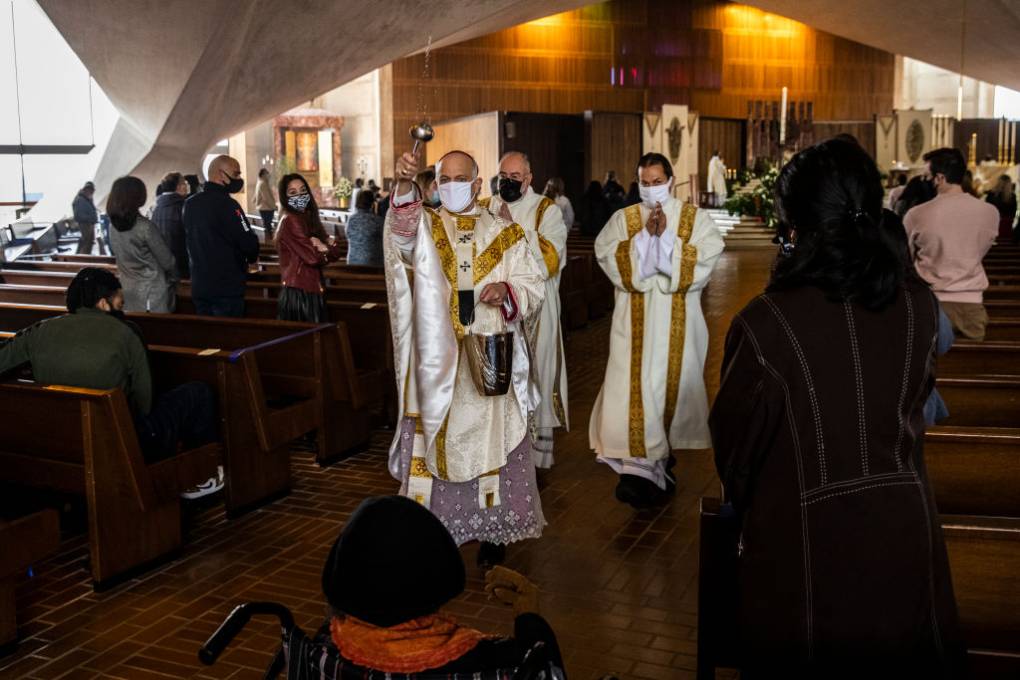
"caption": "Archbishop Salvatore Cordileone (center) sprinkles holy water onto attendees during an in-church Easter mass celebration at Cathedral of Saint Mary of the Assumption in San Francisco, on Sunday, April 4, 2021. Advocates for victims of clergy sexual abuse have urged the archbishop to release the names of priests credibly accused with sexual abuse.",
"description": null,
"title": "SFChronicleVirusChurchServices",
"credit": "Stephen Lam/The San Francisco Chronicle via Getty Images",
"status": "inherit",
"altTag": "a scene inside a church with the archbishop of San Francisco sprinkling holy water on church attendees",
"isLoading": false,
"fetchFailed": false
},
"news_11812082": {
"type": "attachments",
"id": "news_11812082",
"meta": {
"index": "attachments_1716263798",
"site": "news",
"id": "11812082",
"found": true
},
"parent": 11812070,
"imgSizes": {
"apple_news_ca_landscape_5_5": {
"file": "https://ww2.kqed.org/app/uploads/sites/10/2020/04/1920_GettyImages-1209713767-1044x783.jpg",
"width": 1044,
"mimeType": "image/jpeg",
"height": 783
},
"apple_news_ca_square_4_0": {
"file": "https://ww2.kqed.org/app/uploads/sites/10/2020/04/1920_GettyImages-1209713767-470x470.jpg",
"width": 470,
"mimeType": "image/jpeg",
"height": 470
},
"twentyfourteen-full-width": {
"file": "https://ww2.kqed.org/app/uploads/sites/10/2020/04/1920_GettyImages-1209713767-1038x576.jpg",
"width": 1038,
"mimeType": "image/jpeg",
"height": 576
},
"thumbnail": {
"file": "https://ww2.kqed.org/app/uploads/sites/10/2020/04/1920_GettyImages-1209713767-160x107.jpg",
"width": 160,
"mimeType": "image/jpeg",
"height": 107
},
"post-thumbnail": {
"file": "https://ww2.kqed.org/app/uploads/sites/10/2020/04/1920_GettyImages-1209713767-672x372.jpg",
"width": 672,
"mimeType": "image/jpeg",
"height": 372
},
"kqedFullSize": {
"file": "https://ww2.kqed.org/app/uploads/sites/10/2020/04/1920_GettyImages-1209713767.jpg",
"width": 1920,
"height": 1280
},
"apple_news_ca_landscape_4_7": {
"file": "https://ww2.kqed.org/app/uploads/sites/10/2020/04/1920_GettyImages-1209713767-632x474.jpg",
"width": 632,
"mimeType": "image/jpeg",
"height": 474
},
"large": {
"file": "https://ww2.kqed.org/app/uploads/sites/10/2020/04/1920_GettyImages-1209713767-1020x680.jpg",
"width": 1020,
"mimeType": "image/jpeg",
"height": 680
},
"apple_news_ca_landscape_4_0": {
"file": "https://ww2.kqed.org/app/uploads/sites/10/2020/04/1920_GettyImages-1209713767-536x402.jpg",
"width": 536,
"mimeType": "image/jpeg",
"height": 402
},
"apple_news_ca_portrait_12_9": {
"file": "https://ww2.kqed.org/app/uploads/sites/10/2020/04/1920_GettyImages-1209713767-1122x1280.jpg",
"width": 1122,
"mimeType": "image/jpeg",
"height": 1280
},
"medium": {
"file": "https://ww2.kqed.org/app/uploads/sites/10/2020/04/1920_GettyImages-1209713767-800x533.jpg",
"width": 800,
"mimeType": "image/jpeg",
"height": 533
},
"apple_news_ca_portrait_4_0": {
"file": "https://ww2.kqed.org/app/uploads/sites/10/2020/04/1920_GettyImages-1209713767-354x472.jpg",
"width": 354,
"mimeType": "image/jpeg",
"height": 472
},
"apple_news_ca_portrait_9_7": {
"file": "https://ww2.kqed.org/app/uploads/sites/10/2020/04/1920_GettyImages-1209713767-840x1120.jpg",
"width": 840,
"mimeType": "image/jpeg",
"height": 1120
},
"apple_news_ca_landscape_12_9": {
"file": "https://ww2.kqed.org/app/uploads/sites/10/2020/04/1920_GettyImages-1209713767-1832x1280.jpg",
"width": 1832,
"mimeType": "image/jpeg",
"height": 1280
},
"apple_news_ca_square_9_7": {
"file": "https://ww2.kqed.org/app/uploads/sites/10/2020/04/1920_GettyImages-1209713767-1104x1104.jpg",
"width": 1104,
"mimeType": "image/jpeg",
"height": 1104
},
"apple_news_ca_portrait_4_7": {
"file": "https://ww2.kqed.org/app/uploads/sites/10/2020/04/1920_GettyImages-1209713767-414x552.jpg",
"width": 414,
"mimeType": "image/jpeg",
"height": 552
},
"apple_news_ca_square_12_9": {
"file": "https://ww2.kqed.org/app/uploads/sites/10/2020/04/1920_GettyImages-1209713767-1472x1280.jpg",
"width": 1472,
"mimeType": "image/jpeg",
"height": 1280
},
"apple_news_ca_portrait_5_5": {
"file": "https://ww2.kqed.org/app/uploads/sites/10/2020/04/1920_GettyImages-1209713767-687x916.jpg",
"width": 687,
"mimeType": "image/jpeg",
"height": 916
},
"full-width": {
"file": "https://ww2.kqed.org/app/uploads/sites/10/2020/04/1920_GettyImages-1209713767-1920x1280.jpg",
"width": 1920,
"mimeType": "image/jpeg",
"height": 1280
},
"apple_news_ca_square_4_7": {
"file": "https://ww2.kqed.org/app/uploads/sites/10/2020/04/1920_GettyImages-1209713767-550x550.jpg",
"width": 550,
"mimeType": "image/jpeg",
"height": 550
},
"apple_news_ca_landscape_9_7": {
"file": "https://ww2.kqed.org/app/uploads/sites/10/2020/04/1920_GettyImages-1209713767-1376x1032.jpg",
"width": 1376,
"mimeType": "image/jpeg",
"height": 1032
},
"apple_news_ca_square_5_5": {
"file": "https://ww2.kqed.org/app/uploads/sites/10/2020/04/1920_GettyImages-1209713767-912x912.jpg",
"width": 912,
"mimeType": "image/jpeg",
"height": 912
}
},
"publishDate": 1586736283,
"modified": 1586736443,
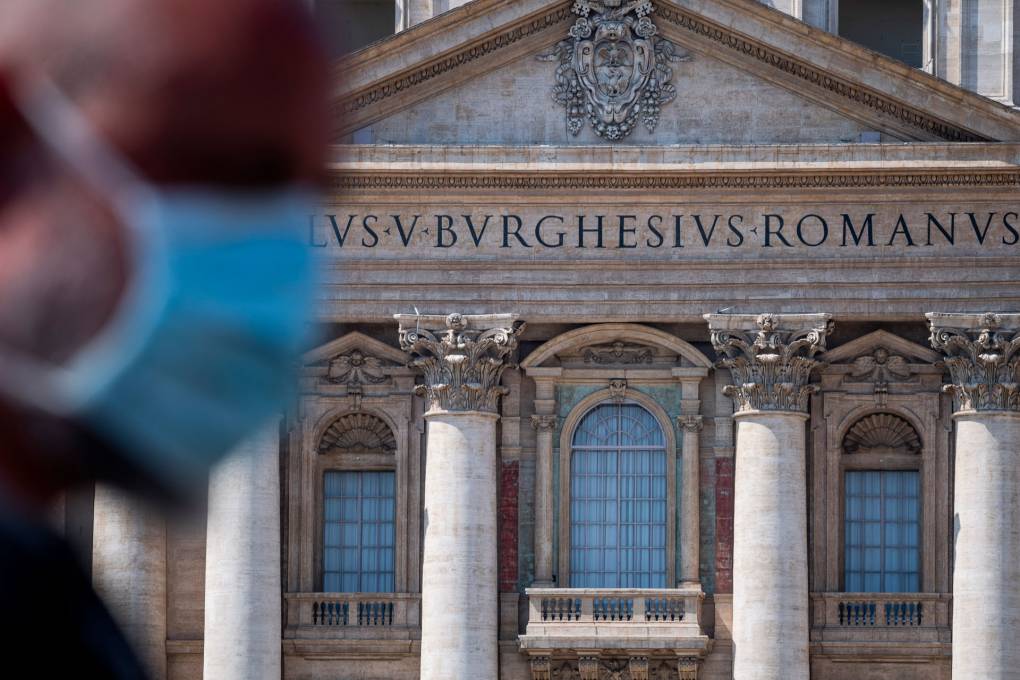
"caption": "A journalist wearing a protective face mask works while Pope Francis celebrates the Easter Mass inside the empty St. Peter's Basilica during the Coronavirus emergency, on April 12, 2020 in Vatican City, Vatican. ",
"description": null,
"title": "1920_GettyImages-1209713767",
"credit": " Antonio Masiello/Getty Images",
"status": "inherit",
"isLoading": false,
"fetchFailed": false
},
"news_11745186": {
"type": "attachments",
"id": "news_11745186",
"meta": {
"index": "attachments_1716263798",
"site": "news",
"id": "11745186",
"found": true
},
"parent": 11745151,
"imgSizes": {
"apple_news_ca_landscape_5_5": {
"file": "https://ww2.kqed.org/app/uploads/sites/10/2019/05/RS32725_GettyImages-73464053-qut-1180x816-1044x783.jpg",
"width": 1044,
"mimeType": "image/jpeg",
"height": 783
},
"apple_news_ca_square_4_0": {
"file": "https://ww2.kqed.org/app/uploads/sites/10/2019/05/RS32725_GettyImages-73464053-qut-1180x816-470x470.jpg",
"width": 470,
"mimeType": "image/jpeg",
"height": 470
},
"twentyfourteen-full-width": {
"file": "https://ww2.kqed.org/app/uploads/sites/10/2019/05/RS32725_GettyImages-73464053-qut-1180x816-1038x576.jpg",
"width": 1038,
"mimeType": "image/jpeg",
"height": 576
},
"thumbnail": {
"file": "https://ww2.kqed.org/app/uploads/sites/10/2019/05/RS32725_GettyImages-73464053-qut-1180x816-160x111.jpg",
"width": 160,
"mimeType": "image/jpeg",
"height": 111
},
"post-thumbnail": {
"file": "https://ww2.kqed.org/app/uploads/sites/10/2019/05/RS32725_GettyImages-73464053-qut-1180x816-672x372.jpg",
"width": 672,
"mimeType": "image/jpeg",
"height": 372
},
"kqedFullSize": {
"file": "https://ww2.kqed.org/app/uploads/sites/10/2019/05/RS32725_GettyImages-73464053-qut-1180x816.jpg",
"width": 1180,
"height": 816
},
"apple_news_ca_landscape_4_7": {
"file": "https://ww2.kqed.org/app/uploads/sites/10/2019/05/RS32725_GettyImages-73464053-qut-1180x816-632x474.jpg",
"width": 632,
"mimeType": "image/jpeg",
"height": 474
},
"large": {
"file": "https://ww2.kqed.org/app/uploads/sites/10/2019/05/RS32725_GettyImages-73464053-qut-1180x816-1020x705.jpg",
"width": 1020,
"mimeType": "image/jpeg",
"height": 705
},
"apple_news_ca_landscape_4_0": {
"file": "https://ww2.kqed.org/app/uploads/sites/10/2019/05/RS32725_GettyImages-73464053-qut-1180x816-536x402.jpg",
"width": 536,
"mimeType": "image/jpeg",
"height": 402
},
"apple_news_ca_portrait_12_9": {
"file": "https://ww2.kqed.org/app/uploads/sites/10/2019/05/RS32725_GettyImages-73464053-qut-1180x816-1122x816.jpg",
"width": 1122,
"mimeType": "image/jpeg",
"height": 816
},
"medium": {
"file": "https://ww2.kqed.org/app/uploads/sites/10/2019/05/RS32725_GettyImages-73464053-qut-1180x816-800x553.jpg",
"width": 800,
"mimeType": "image/jpeg",
"height": 553
},
"apple_news_ca_portrait_4_0": {
"file": "https://ww2.kqed.org/app/uploads/sites/10/2019/05/RS32725_GettyImages-73464053-qut-1180x816-354x472.jpg",
"width": 354,
"mimeType": "image/jpeg",
"height": 472
},
"apple_news_ca_portrait_9_7": {
"file": "https://ww2.kqed.org/app/uploads/sites/10/2019/05/RS32725_GettyImages-73464053-qut-1180x816-840x816.jpg",
"width": 840,
"mimeType": "image/jpeg",
"height": 816
},
"apple_news_ca_square_9_7": {
"file": "https://ww2.kqed.org/app/uploads/sites/10/2019/05/RS32725_GettyImages-73464053-qut-1180x816-1104x816.jpg",
"width": 1104,
"mimeType": "image/jpeg",
"height": 816
},
"apple_news_ca_portrait_4_7": {
"file": "https://ww2.kqed.org/app/uploads/sites/10/2019/05/RS32725_GettyImages-73464053-qut-1180x816-414x552.jpg",
"width": 414,
"mimeType": "image/jpeg",
"height": 552
},
"apple_news_ca_portrait_5_5": {
"file": "https://ww2.kqed.org/app/uploads/sites/10/2019/05/RS32725_GettyImages-73464053-qut-1180x816-687x816.jpg",
"width": 687,
"mimeType": "image/jpeg",
"height": 816
},
"apple_news_ca_square_4_7": {
"file": "https://ww2.kqed.org/app/uploads/sites/10/2019/05/RS32725_GettyImages-73464053-qut-1180x816-550x550.jpg",
"width": 550,
"mimeType": "image/jpeg",
"height": 550
},
"apple_news_ca_square_5_5": {
"file": "https://ww2.kqed.org/app/uploads/sites/10/2019/05/RS32725_GettyImages-73464053-qut-1180x816-912x816.jpg",
"width": 912,
"mimeType": "image/jpeg",
"height": 816
}
},
"publishDate": 1557076969,
"modified": 1557076994,
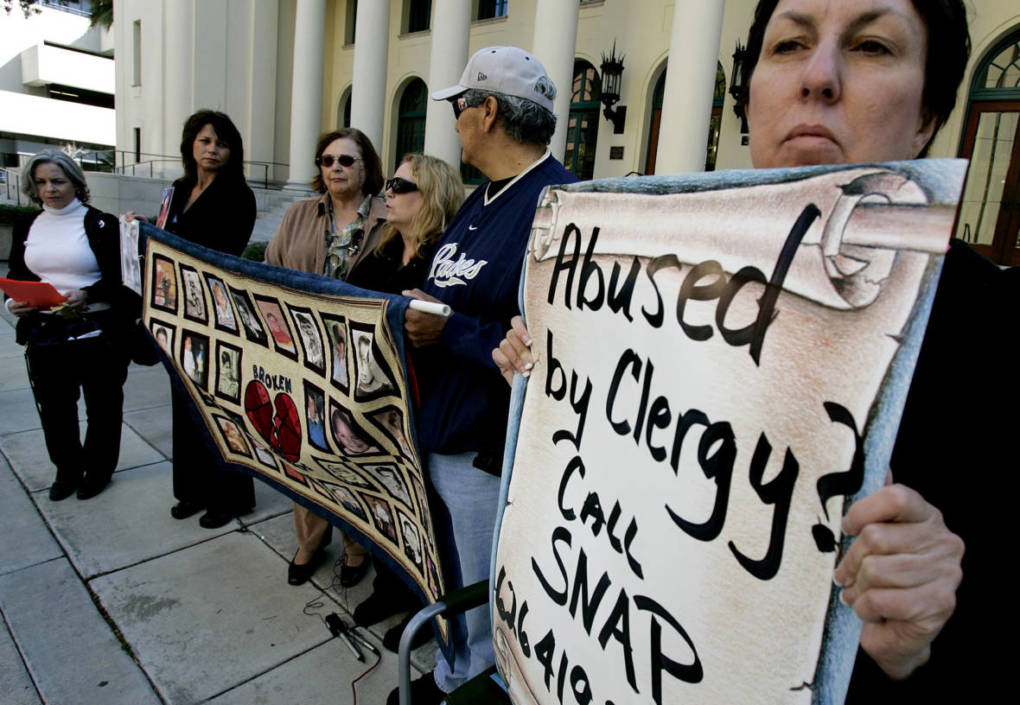
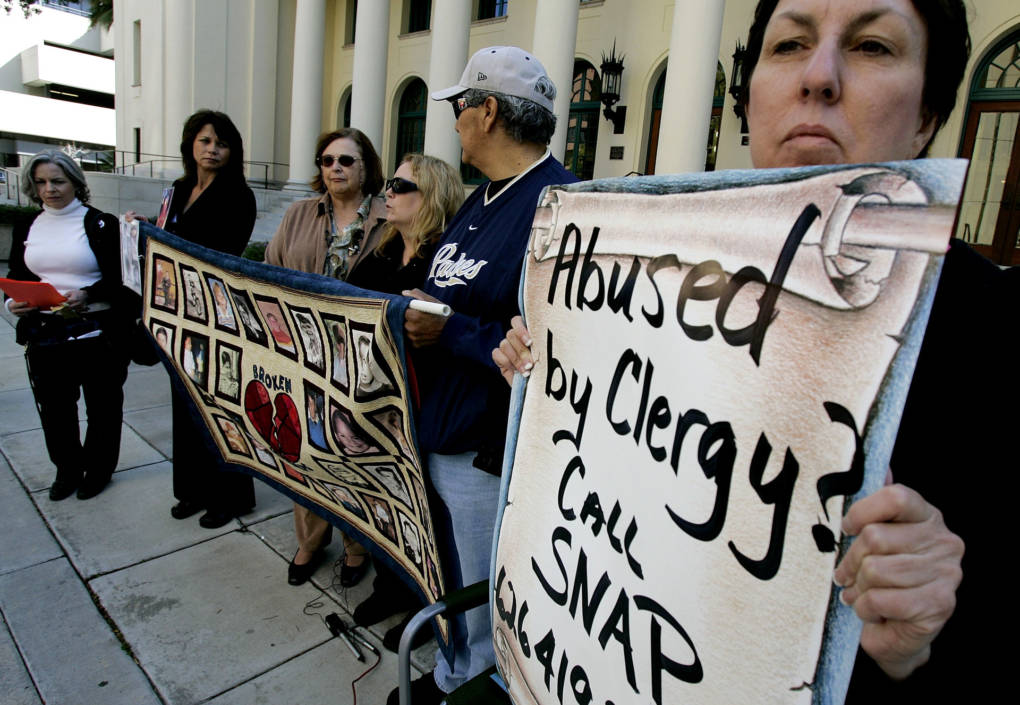
"caption": "SAN DIEGO - MARCH 1: Protestors and alleged sexual abuse victims stand outside of The Jacob Weinburg Couthouse during a vigil to bring attention to victims of sexual abuse by religious leaders within the Catholic church on March 1, 2007 in San Diego, California. The San Diego Catholic Diocese has filed for Chapter 11 protection due to lawsuits alleging the sexual abuse of children by priests that dates back decades. ",
"description": null,
"title": "Abuse Victims Protest San Diego Diocese Bankruptcy",
"credit": "Sandy Huffaker/Getty Images",
"status": "inherit",
"isLoading": false,
"fetchFailed": false
},
"news_11744393": {
"type": "attachments",
"id": "news_11744393",
"meta": {
"index": "attachments_1716263798",
"site": "news",
"id": "11744393",
"found": true
},
"parent": 11744376,
"imgSizes": {
"twentyfourteen-full-width": {
"file": "https://ww2.kqed.org/app/uploads/sites/10/2019/05/img_4828-1038x576.jpg",
"width": 1038,
"mimeType": "image/jpeg",
"height": 576
},
"thumbnail": {
"file": "https://ww2.kqed.org/app/uploads/sites/10/2019/05/img_4828-160x107.jpg",
"width": 160,
"mimeType": "image/jpeg",
"height": 107
},
"post-thumbnail": {
"file": "https://ww2.kqed.org/app/uploads/sites/10/2019/05/img_4828-672x372.jpg",
"width": 672,
"mimeType": "image/jpeg",
"height": 372
},
"kqedFullSize": {
"file": "https://ww2.kqed.org/app/uploads/sites/10/2019/05/img_4828.jpg",
"width": 2048,
"height": 1365
},
"large": {
"file": "https://ww2.kqed.org/app/uploads/sites/10/2019/05/img_4828-1020x680.jpg",
"width": 1020,
"mimeType": "image/jpeg",
"height": 680
},
"complete_open_graph": {
"file": "https://ww2.kqed.org/app/uploads/sites/10/2019/05/img_4828-1200x800.jpg",
"width": 1200,
"mimeType": "image/jpeg",
"height": 800
},
"full-width": {
"file": "https://ww2.kqed.org/app/uploads/sites/10/2019/05/img_4828-1920x1280.jpg",
"width": 1920,
"mimeType": "image/jpeg",
"height": 1280
},
"medium": {
"file": "https://ww2.kqed.org/app/uploads/sites/10/2019/05/img_4828-800x533.jpg",
"width": 800,
"mimeType": "image/jpeg",
"height": 533
}
},
"publishDate": 1556755435,
"modified": 1556755506,
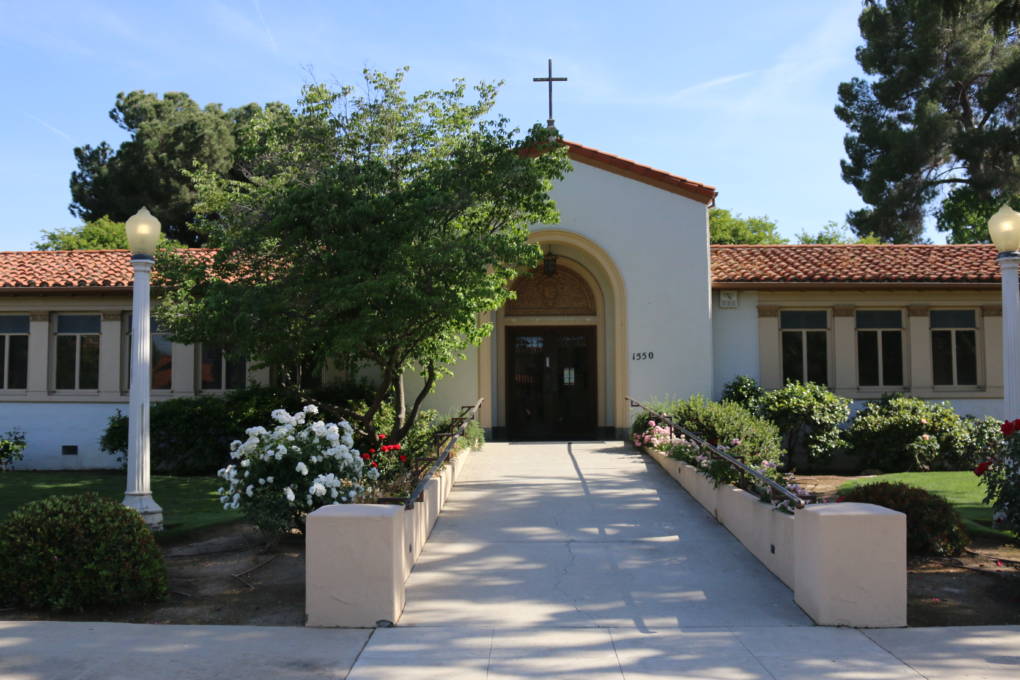
"caption": "The Catholic Diocese of Fresno announced in February 2019 it would conduct an independent review of clergy files dating back to 1922 and release a list of priests accused of sexual misconduct.",
"description": "The Catholic Diocese of Fresno announced in February 2019 it would conduct an independent review of clergy files dating back to 1922 and release a list of priests accused of sexual misconduct\n",
"title": "Catholic-Diocese-Fresno-Sexual-Abuse-Allegation",
"credit": "Alex Hall/KQED",
"status": "inherit",
"isLoading": false,
"fetchFailed": false
},
"news_11736964": {
"type": "attachments",
"id": "news_11736964",
"meta": {
"index": "attachments_1716263798",
"site": "news",
"id": "11736964",
"found": true
},
"parent": 11736922,
"imgSizes": {
"post-thumbnail": {
"file": "https://ww2.kqed.org/app/uploads/sites/10/2019/03/RS36295_alt_848-672x372.jpg",
"width": 672,
"mimeType": "image/jpeg",
"height": 372
},
"kqedFullSize": {
"file": "https://ww2.kqed.org/app/uploads/sites/10/2019/03/RS36295_alt_848-e1554160802125.jpg",
"width": 1920,
"height": 1319
},
"guest-author-50": {
"file": "https://ww2.kqed.org/app/uploads/sites/10/2019/03/RS36295_alt_848-50x50.jpg",
"width": 50,
"mimeType": "image/jpeg",
"height": 50
},
"guest-author-96": {
"file": "https://ww2.kqed.org/app/uploads/sites/10/2019/03/RS36295_alt_848-96x96.jpg",
"width": 96,
"mimeType": "image/jpeg",
"height": 96
},
"apple_news_ca_portrait_12_9": {
"file": "https://ww2.kqed.org/app/uploads/sites/10/2019/03/RS36295_alt_848-1122x1496.jpg",
"width": 1122,
"mimeType": "image/jpeg",
"height": 1496
},
"medium": {
"file": "https://ww2.kqed.org/app/uploads/sites/10/2019/03/RS36295_alt_848-800x549.jpg",
"width": 800,
"mimeType": "image/jpeg",
"height": 549
},
"guest-author-32": {
"file": "https://ww2.kqed.org/app/uploads/sites/10/2019/03/RS36295_alt_848-32x32.jpg",
"width": 32,
"mimeType": "image/jpeg",
"height": 32
},
"apple_news_ca_portrait_9_7": {
"file": "https://ww2.kqed.org/app/uploads/sites/10/2019/03/RS36295_alt_848-840x1120.jpg",
"width": 840,
"mimeType": "image/jpeg",
"height": 1120
},
"apple_news_ca_square_9_7": {
"file": "https://ww2.kqed.org/app/uploads/sites/10/2019/03/RS36295_alt_848-1104x1104.jpg",
"width": 1104,
"mimeType": "image/jpeg",
"height": 1104
},
"apple_news_ca_portrait_4_7": {
"file": "https://ww2.kqed.org/app/uploads/sites/10/2019/03/RS36295_alt_848-414x552.jpg",
"width": 414,
"mimeType": "image/jpeg",
"height": 552
},
"apple_news_ca_square_12_9": {
"file": "https://ww2.kqed.org/app/uploads/sites/10/2019/03/RS36295_alt_848-1472x1472.jpg",
"width": 1472,
"mimeType": "image/jpeg",
"height": 1472
},
"apple_news_ca_portrait_5_5": {
"file": "https://ww2.kqed.org/app/uploads/sites/10/2019/03/RS36295_alt_848-687x916.jpg",
"width": 687,
"mimeType": "image/jpeg",
"height": 916
},
"apple_news_ca_square_4_7": {
"file": "https://ww2.kqed.org/app/uploads/sites/10/2019/03/RS36295_alt_848-550x550.jpg",
"width": 550,
"mimeType": "image/jpeg",
"height": 550
},
"apple_news_ca_square_5_5": {
"file": "https://ww2.kqed.org/app/uploads/sites/10/2019/03/RS36295_alt_848-912x912.jpg",
"width": 912,
"mimeType": "image/jpeg",
"height": 912
},
"apple_news_ca_landscape_5_5": {
"file": "https://ww2.kqed.org/app/uploads/sites/10/2019/03/RS36295_alt_848-1044x783.jpg",
"width": 1044,
"mimeType": "image/jpeg",
"height": 783
},
"apple_news_ca_square_4_0": {
"file": "https://ww2.kqed.org/app/uploads/sites/10/2019/03/RS36295_alt_848-470x470.jpg",
"width": 470,
"mimeType": "image/jpeg",
"height": 470
},
"twentyfourteen-full-width": {
"file": "https://ww2.kqed.org/app/uploads/sites/10/2019/03/RS36295_alt_848-1038x576.jpg",
"width": 1038,
"mimeType": "image/jpeg",
"height": 576
},
"thumbnail": {
"file": "https://ww2.kqed.org/app/uploads/sites/10/2019/03/RS36295_alt_848-160x110.jpg",
"width": 160,
"mimeType": "image/jpeg",
"height": 110
},
"apple_news_ca_landscape_4_7": {
"file": "https://ww2.kqed.org/app/uploads/sites/10/2019/03/RS36295_alt_848-632x474.jpg",
"width": 632,
"mimeType": "image/jpeg",
"height": 474
},
"large": {
"file": "https://ww2.kqed.org/app/uploads/sites/10/2019/03/RS36295_alt_848-1020x701.jpg",
"width": 1020,
"mimeType": "image/jpeg",
"height": 701
},
"complete_open_graph": {
"file": "https://ww2.kqed.org/app/uploads/sites/10/2019/03/RS36295_alt_848-1200x824.jpg",
"width": 1200,
"mimeType": "image/jpeg",
"height": 824
},
"apple_news_ca_landscape_4_0": {
"file": "https://ww2.kqed.org/app/uploads/sites/10/2019/03/RS36295_alt_848-536x402.jpg",
"width": 536,
"mimeType": "image/jpeg",
"height": 402
},
"guest-author-64": {
"file": "https://ww2.kqed.org/app/uploads/sites/10/2019/03/RS36295_alt_848-64x64.jpg",
"width": 64,
"mimeType": "image/jpeg",
"height": 64
},
"apple_news_ca_portrait_4_0": {
"file": "https://ww2.kqed.org/app/uploads/sites/10/2019/03/RS36295_alt_848-354x472.jpg",
"width": 354,
"mimeType": "image/jpeg",
"height": 472
},
"apple_news_ca_landscape_12_9": {
"file": "https://ww2.kqed.org/app/uploads/sites/10/2019/03/RS36295_alt_848-1832x1374.jpg",
"width": 1832,
"mimeType": "image/jpeg",
"height": 1374
},
"full-width": {
"file": "https://ww2.kqed.org/app/uploads/sites/10/2019/03/RS36295_alt_848-1920x1319.jpg",
"width": 1920,
"mimeType": "image/jpeg",
"height": 1319
},
"guest-author-128": {
"file": "https://ww2.kqed.org/app/uploads/sites/10/2019/03/RS36295_alt_848-128x128.jpg",
"width": 128,
"mimeType": "image/jpeg",
"height": 128
},
"apple_news_ca_landscape_9_7": {
"file": "https://ww2.kqed.org/app/uploads/sites/10/2019/03/RS36295_alt_848-1376x1032.jpg",
"width": 1376,
"mimeType": "image/jpeg",
"height": 1032
}
},
"publishDate": 1554087697,
"modified": 1554160795,
"caption": "Rev. James Matthews, known as \"Father Jay\" to a generation of Oakland Catholics, died on March 30, 2019. He was 70 years old.",
"description": "Rev. James Matthews, known as 'Father Jay' to a generation of Oakland Catholics, died on March 30, 2019. He was 70 years old.",
"title": "RS36295_alt_848",
"credit": "Catholic Voice",
"status": "inherit",
"isLoading": false,
"fetchFailed": false
},
"news_11710785": {
"type": "attachments",
"id": "news_11710785",
"meta": {
"index": "attachments_1716263798",
"site": "news",
"id": "11710785",
"found": true
},
"parent": 11710781,
"imgSizes": {
"twentyfourteen-full-width": {
"file": "https://ww2.kqed.org/app/uploads/sites/10/2018/12/GettyImages-160488429-e1544210347530-1038x576.jpg",
"width": 1038,
"mimeType": "image/jpeg",
"height": 576
},
"thumbnail": {
"file": "https://ww2.kqed.org/app/uploads/sites/10/2018/12/GettyImages-160488429-e1544210347530-160x93.jpg",
"width": 160,
"mimeType": "image/jpeg",
"height": 93
},
"post-thumbnail": {
"file": "https://ww2.kqed.org/app/uploads/sites/10/2018/12/GettyImages-160488429-e1544210347530-672x372.jpg",
"width": 672,
"mimeType": "image/jpeg",
"height": 372
},
"kqedFullSize": {
"file": "https://ww2.kqed.org/app/uploads/sites/10/2018/12/GettyImages-160488429-e1544210347530.jpg",
"width": 1920,
"height": 1121
},
"large": {
"file": "https://ww2.kqed.org/app/uploads/sites/10/2018/12/GettyImages-160488429-e1544210347530-1020x596.jpg",
"width": 1020,
"mimeType": "image/jpeg",
"height": 596
},
"complete_open_graph": {
"file": "https://ww2.kqed.org/app/uploads/sites/10/2018/12/GettyImages-160488429-e1544210347530-1200x701.jpg",
"width": 1200,
"mimeType": "image/jpeg",
"height": 701
},
"guest-author-50": {
"file": "https://ww2.kqed.org/app/uploads/sites/10/2018/12/GettyImages-160488429-e1544210347530-50x50.jpg",
"width": 50,
"mimeType": "image/jpeg",
"height": 50
},
"guest-author-96": {
"file": "https://ww2.kqed.org/app/uploads/sites/10/2018/12/GettyImages-160488429-e1544210347530-96x96.jpg",
"width": 96,
"mimeType": "image/jpeg",
"height": 96
},
"medium": {
"file": "https://ww2.kqed.org/app/uploads/sites/10/2018/12/GettyImages-160488429-e1544210347530-800x467.jpg",
"width": 800,
"mimeType": "image/jpeg",
"height": 467
},
"guest-author-64": {
"file": "https://ww2.kqed.org/app/uploads/sites/10/2018/12/GettyImages-160488429-e1544210347530-64x64.jpg",
"width": 64,
"mimeType": "image/jpeg",
"height": 64
},
"guest-author-32": {
"file": "https://ww2.kqed.org/app/uploads/sites/10/2018/12/GettyImages-160488429-e1544210347530-32x32.jpg",
"width": 32,
"mimeType": "image/jpeg",
"height": 32
},
"full-width": {
"file": "https://ww2.kqed.org/app/uploads/sites/10/2018/12/GettyImages-160488429-e1544210347530-1920x1121.jpg",
"width": 1920,
"mimeType": "image/jpeg",
"height": 1121
},
"detail": {
"file": "https://ww2.kqed.org/app/uploads/sites/10/2018/12/GettyImages-160488429-e1544210347530-150x150.jpg",
"width": 150,
"mimeType": "image/jpeg",
"height": 150
},
"guest-author-128": {
"file": "https://ww2.kqed.org/app/uploads/sites/10/2018/12/GettyImages-160488429-e1544210347530-128x128.jpg",
"width": 128,
"mimeType": "image/jpeg",
"height": 128
}
},
"publishDate": 1544210286,
"modified": 1544217276,
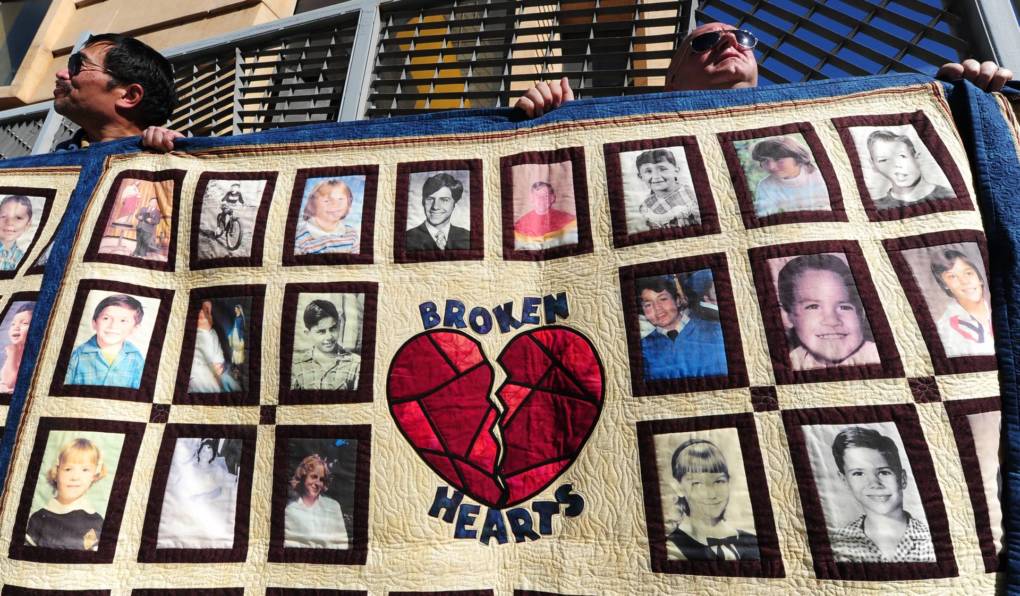
"caption": "Abuse victim Jorgen Olsen (R) and supporter Glenn Gorospa (L) hold quilts bearing portraits of abused children while gathered outside the Cathedral of Our Lady of the Angels in Los Angeles on February 1, 2013. The Archdiocese of Los Angeles updated its tally of accused priests for the first time in a decade on Dec. 6, 2018.",
"description": "Abuse victim Jorgen Olsen (R) and supporter Glenn Gorospa (L) hold quilts bearing portraits of abused children while gathered outside the Cathedral of Our Lady of the Angels in Los Angeles on February 1, 2013. The Archdiocese of Los Angeles updated its tally of accused priests for the first time in a decade on Dec. 6, 2018.",
"title": "US-RELIGION-CATHOLIC-ABUSE",
"credit": "Frederic J. Brown/AFP/Getty Images",
"status": "inherit",
"isLoading": false,
"fetchFailed": false
},
"news_11700100": {
"type": "attachments",
"id": "news_11700100",
"meta": {
"index": "attachments_1716263798",
"site": "news",
"id": "11700100",
"found": true
},
"parent": 11699763,
"imgSizes": {
"small": {
"file": "https://ww2.kqed.org/app/uploads/sites/10/2018/10/5DCC2BBD-509D-4155-B63A-3087640D406C-e1540005227822-520x379.jpeg",
"width": 520,
"mimeType": "image/jpeg",
"height": 379
},
"twentyfourteen-full-width": {
"file": "https://ww2.kqed.org/app/uploads/sites/10/2018/10/5DCC2BBD-509D-4155-B63A-3087640D406C-628x576.jpeg",
"width": 628,
"mimeType": "image/jpeg",
"height": 576
},
"thumbnail": {
"file": "https://ww2.kqed.org/app/uploads/sites/10/2018/10/5DCC2BBD-509D-4155-B63A-3087640D406C-e1540005227822-160x117.jpeg",
"width": 160,
"mimeType": "image/jpeg",
"height": 117
},
"post-thumbnail": {
"file": "https://ww2.kqed.org/app/uploads/sites/10/2018/10/5DCC2BBD-509D-4155-B63A-3087640D406C-e1540005227822-621x372.jpeg",
"width": 621,
"mimeType": "image/jpeg",
"height": 372
},
"xsmall": {
"file": "https://ww2.kqed.org/app/uploads/sites/10/2018/10/5DCC2BBD-509D-4155-B63A-3087640D406C-e1540005227822-375x274.jpeg",
"width": 375,
"mimeType": "image/jpeg",
"height": 274
},
"kqedFullSize": {
"file": "https://ww2.kqed.org/app/uploads/sites/10/2018/10/5DCC2BBD-509D-4155-B63A-3087640D406C-e1540005227822.jpeg",
"width": 621,
"height": 453
},
"guest-author-50": {
"file": "https://ww2.kqed.org/app/uploads/sites/10/2018/10/5DCC2BBD-509D-4155-B63A-3087640D406C-e1540005227822-50x50.jpeg",
"width": 50,
"mimeType": "image/jpeg",
"height": 50
},
"guest-author-96": {
"file": "https://ww2.kqed.org/app/uploads/sites/10/2018/10/5DCC2BBD-509D-4155-B63A-3087640D406C-e1540005227822-96x96.jpeg",
"width": 96,
"mimeType": "image/jpeg",
"height": 96
},
"guest-author-64": {
"file": "https://ww2.kqed.org/app/uploads/sites/10/2018/10/5DCC2BBD-509D-4155-B63A-3087640D406C-e1540005227822-64x64.jpeg",
"width": 64,
"mimeType": "image/jpeg",
"height": 64
},
"guest-author-32": {
"file": "https://ww2.kqed.org/app/uploads/sites/10/2018/10/5DCC2BBD-509D-4155-B63A-3087640D406C-e1540005227822-32x32.jpeg",
"width": 32,
"mimeType": "image/jpeg",
"height": 32
},
"detail": {
"file": "https://ww2.kqed.org/app/uploads/sites/10/2018/10/5DCC2BBD-509D-4155-B63A-3087640D406C-e1540005227822-150x150.jpeg",
"width": 150,
"mimeType": "image/jpeg",
"height": 150
},
"guest-author-128": {
"file": "https://ww2.kqed.org/app/uploads/sites/10/2018/10/5DCC2BBD-509D-4155-B63A-3087640D406C-e1540005227822-128x128.jpeg",
"width": 128,
"mimeType": "image/jpeg",
"height": 128
},
"xxsmall": {
"file": "https://ww2.kqed.org/app/uploads/sites/10/2018/10/5DCC2BBD-509D-4155-B63A-3087640D406C-e1540005227822-240x175.jpeg",
"width": 240,
"mimeType": "image/jpeg",
"height": 175
}
},
"publishDate": 1539996254,
"modified": 1540004885,
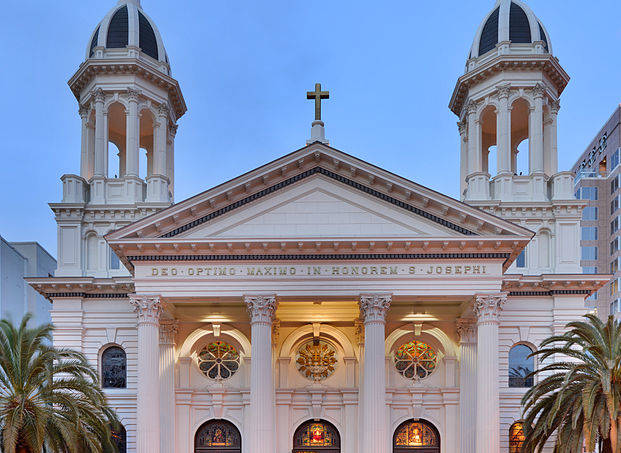
"caption": "Cathedral Basilica of St. Joseph in San Jose.",
"description": null,
"title": "5DCC2BBD-509D-4155-B63A-3087640D406C",
"credit": "\u003ca href=\"https://en.wikipedia.org/wiki/Cathedral_Basilica_of_St._Joseph_(San_Jose)#/media/File:StJosephDusk.jpg\" target=\"_blank\">David Leigh Ellis/Wikipedia\u003c/a>",
"status": "inherit",
"isLoading": false,
"fetchFailed": false
},
"news_11690798": {
"type": "attachments",
"id": "news_11690798",
"meta": {
"index": "attachments_1716263798",
"site": "news",
"id": "11690798",
"found": true
},
"parent": 11690749,
"imgSizes": {
"small": {
"file": "https://ww2.kqed.org/app/uploads/sites/10/2018/09/RS32725_GettyImages-73464053-qut-520x359.jpg",
"width": 520,
"mimeType": "image/jpeg",
"height": 359
},
"twentyfourteen-full-width": {
"file": "https://ww2.kqed.org/app/uploads/sites/10/2018/09/RS32725_GettyImages-73464053-qut-1038x576.jpg",
"width": 1038,
"mimeType": "image/jpeg",
"height": 576
},
"thumbnail": {
"file": "https://ww2.kqed.org/app/uploads/sites/10/2018/09/RS32725_GettyImages-73464053-qut-160x111.jpg",
"width": 160,
"mimeType": "image/jpeg",
"height": 111
},
"fd-sm": {
"file": "https://ww2.kqed.org/app/uploads/sites/10/2018/09/RS32725_GettyImages-73464053-qut-960x664.jpg",
"width": 960,
"mimeType": "image/jpeg",
"height": 664
},
"post-thumbnail": {
"file": "https://ww2.kqed.org/app/uploads/sites/10/2018/09/RS32725_GettyImages-73464053-qut-672x372.jpg",
"width": 672,
"mimeType": "image/jpeg",
"height": 372
},
"xsmall": {
"file": "https://ww2.kqed.org/app/uploads/sites/10/2018/09/RS32725_GettyImages-73464053-qut-375x259.jpg",
"width": 375,
"mimeType": "image/jpeg",
"height": 259
},
"kqedFullSize": {
"file": "https://ww2.kqed.org/app/uploads/sites/10/2018/09/RS32725_GettyImages-73464053-qut.jpg",
"width": 1920,
"height": 1327
},
"large": {
"file": "https://ww2.kqed.org/app/uploads/sites/10/2018/09/RS32725_GettyImages-73464053-qut-1020x705.jpg",
"width": 1020,
"mimeType": "image/jpeg",
"height": 705
},
"xlarge": {
"file": "https://ww2.kqed.org/app/uploads/sites/10/2018/09/RS32725_GettyImages-73464053-qut-1180x816.jpg",
"width": 1180,
"mimeType": "image/jpeg",
"height": 816
},
"complete_open_graph": {
"file": "https://ww2.kqed.org/app/uploads/sites/10/2018/09/RS32725_GettyImages-73464053-qut-1200x829.jpg",
"width": 1200,
"mimeType": "image/jpeg",
"height": 829
},
"guest-author-50": {
"file": "https://ww2.kqed.org/app/uploads/sites/10/2018/09/RS32725_GettyImages-73464053-qut-50x50.jpg",
"width": 50,
"mimeType": "image/jpeg",
"height": 50
},
"guest-author-96": {
"file": "https://ww2.kqed.org/app/uploads/sites/10/2018/09/RS32725_GettyImages-73464053-qut-96x96.jpg",
"width": 96,
"mimeType": "image/jpeg",
"height": 96
},
"medium": {
"file": "https://ww2.kqed.org/app/uploads/sites/10/2018/09/RS32725_GettyImages-73464053-qut-800x553.jpg",
"width": 800,
"mimeType": "image/jpeg",
"height": 553
},
"guest-author-64": {
"file": "https://ww2.kqed.org/app/uploads/sites/10/2018/09/RS32725_GettyImages-73464053-qut-64x64.jpg",
"width": 64,
"mimeType": "image/jpeg",
"height": 64
},
"guest-author-32": {
"file": "https://ww2.kqed.org/app/uploads/sites/10/2018/09/RS32725_GettyImages-73464053-qut-32x32.jpg",
"width": 32,
"mimeType": "image/jpeg",
"height": 32
},
"fd-lrg": {
"file": "https://ww2.kqed.org/app/uploads/sites/10/2018/09/RS32725_GettyImages-73464053-qut-1920x1327.jpg",
"width": 1920,
"mimeType": "image/jpeg",
"height": 1327
},
"fd-med": {
"file": "https://ww2.kqed.org/app/uploads/sites/10/2018/09/RS32725_GettyImages-73464053-qut-1180x816.jpg",
"width": 1180,
"mimeType": "image/jpeg",
"height": 816
},
"full-width": {
"file": "https://ww2.kqed.org/app/uploads/sites/10/2018/09/RS32725_GettyImages-73464053-qut-1920x1327.jpg",
"width": 1920,
"mimeType": "image/jpeg",
"height": 1327
},
"detail": {
"file": "https://ww2.kqed.org/app/uploads/sites/10/2018/09/RS32725_GettyImages-73464053-qut-150x150.jpg",
"width": 150,
"mimeType": "image/jpeg",
"height": 150
},
"guest-author-128": {
"file": "https://ww2.kqed.org/app/uploads/sites/10/2018/09/RS32725_GettyImages-73464053-qut-128x128.jpg",
"width": 128,
"mimeType": "image/jpeg",
"height": 128
},
"xxsmall": {
"file": "https://ww2.kqed.org/app/uploads/sites/10/2018/09/RS32725_GettyImages-73464053-qut-240x166.jpg",
"width": 240,
"mimeType": "image/jpeg",
"height": 166
}
},
"publishDate": 1536251101,
"modified": 1536251295,
"caption": "Protesters and alleged sexual abuse victims stand outside of The Jacob Weinburg Couthouse during a vigil to bring attention to victims of sexual abuse by religious leaders within the Catholic Church on March 1, 2007 in San Diego, California. Following an explosive report detailing clergy abuse in Pennsylvania, the Roman Catholic Diocese of San Diego has confirmed that it is conducting an internal file review going back more than 50 years and plans to publish previously unreleased names of priests accused of misconduct.",
"description": "Protesters and alleged sexual abuse victims stand outside of The Jacob Weinburg Couthouse during a vigil to bring attention to victims of sexual abuse by religious leaders within the Catholic Church on March 1, 2007 in San Diego, California. Following an explosive report detailing clergy abuse in Pennsylvania, the Roman Catholic Diocese of San Diego has confirmed that it is conducting an internal file review going back more than 50 years and plans to publish previously unreleased names of priests accused of misconduct.",
"title": "Abuse Victims Protest San Diego Diocese Bankruptcy",
"credit": "Sandy Huffaker/Getty Images",
"status": "inherit",
"isLoading": false,
"fetchFailed": false
},
"news_11635245": {
"type": "attachments",
"id": "news_11635245",
"meta": {
"index": "attachments_1716263798",
"site": "news",
"id": "11635245",
"found": true
},
"parent": 11635244,
"imgSizes": {
"small": {
"file": "https://ww2.kqed.org/app/uploads/sites/10/2017/12/nuns1-520x362.jpg",
"width": 520,
"mimeType": "image/jpeg",
"height": 362
},
"twentyfourteen-full-width": {
"file": "https://ww2.kqed.org/app/uploads/sites/10/2017/12/nuns1-926x576.jpg",
"width": 926,
"mimeType": "image/jpeg",
"height": 576
},
"thumbnail": {
"file": "https://ww2.kqed.org/app/uploads/sites/10/2017/12/nuns1-160x111.jpg",
"width": 160,
"mimeType": "image/jpeg",
"height": 111
},
"post-thumbnail": {
"file": "https://ww2.kqed.org/app/uploads/sites/10/2017/12/nuns1-672x372.jpg",
"width": 672,
"mimeType": "image/jpeg",
"height": 372
},
"xsmall": {
"file": "https://ww2.kqed.org/app/uploads/sites/10/2017/12/nuns1-375x261.jpg",
"width": 375,
"mimeType": "image/jpeg",
"height": 261
},
"kqedFullSize": {
"file": "https://ww2.kqed.org/app/uploads/sites/10/2017/12/nuns1.jpg",
"width": 926,
"height": 644
},
"guest-author-50": {
"file": "https://ww2.kqed.org/app/uploads/sites/10/2017/12/nuns1-50x50.jpg",
"width": 50,
"mimeType": "image/jpeg",
"height": 50
},
"guest-author-96": {
"file": "https://ww2.kqed.org/app/uploads/sites/10/2017/12/nuns1-96x96.jpg",
"width": 96,
"mimeType": "image/jpeg",
"height": 96
},
"medium": {
"file": "https://ww2.kqed.org/app/uploads/sites/10/2017/12/nuns1-800x556.jpg",
"width": 800,
"mimeType": "image/jpeg",
"height": 556
},
"guest-author-64": {
"file": "https://ww2.kqed.org/app/uploads/sites/10/2017/12/nuns1-64x64.jpg",
"width": 64,
"mimeType": "image/jpeg",
"height": 64
},
"guest-author-32": {
"file": "https://ww2.kqed.org/app/uploads/sites/10/2017/12/nuns1-32x32.jpg",
"width": 32,
"mimeType": "image/jpeg",
"height": 32
},
"detail": {
"file": "https://ww2.kqed.org/app/uploads/sites/10/2017/12/nuns1-150x150.jpg",
"width": 150,
"mimeType": "image/jpeg",
"height": 150
},
"guest-author-128": {
"file": "https://ww2.kqed.org/app/uploads/sites/10/2017/12/nuns1-128x128.jpg",
"width": 128,
"mimeType": "image/jpeg",
"height": 128
},
"xxsmall": {
"file": "https://ww2.kqed.org/app/uploads/sites/10/2017/12/nuns1-240x167.jpg",
"width": 240,
"mimeType": "image/jpeg",
"height": 167
}
},
"publishDate": 1512586303,
"modified": 1512769321,
"caption": "Immaculate Heart College Art Department c. 1955.",
"description": "Immaculate Heart College Art Department c. 1955.",
"title": "nuns1",
"credit": "Photograph by Fred Swartz. \u003ca class=\"source\" href=\"http://corita.org/\">Courtesy of the Corita Art Center, Immaculate Heart Community, Los Angeles",
"status": "inherit",
"isLoading": false,
"fetchFailed": false
},
"news_11621269": {
"type": "attachments",
"id": "news_11621269",
"meta": {
"index": "attachments_1716263798",
"site": "news",
"id": "11621269",
"found": true
},
"parent": 11621122,
"imgSizes": {
"small": {
"file": "https://ww2.kqed.org/app/uploads/sites/10/2017/10/RS27183_IMG_3292-2-qut-520x293.jpg",
"width": 520,
"mimeType": "image/jpeg",
"height": 293
},
"twentyfourteen-full-width": {
"file": "https://ww2.kqed.org/app/uploads/sites/10/2017/10/RS27183_IMG_3292-2-qut-1038x576.jpg",
"width": 1038,
"mimeType": "image/jpeg",
"height": 576
},
"thumbnail": {
"file": "https://ww2.kqed.org/app/uploads/sites/10/2017/10/RS27183_IMG_3292-2-qut-160x90.jpg",
"width": 160,
"mimeType": "image/jpeg",
"height": 90
},
"fd-sm": {
"file": "https://ww2.kqed.org/app/uploads/sites/10/2017/10/RS27183_IMG_3292-2-qut-960x540.jpg",
"width": 960,
"mimeType": "image/jpeg",
"height": 540
},
"post-thumbnail": {
"file": "https://ww2.kqed.org/app/uploads/sites/10/2017/10/RS27183_IMG_3292-2-qut-672x372.jpg",
"width": 672,
"mimeType": "image/jpeg",
"height": 372
},
"xsmall": {
"file": "https://ww2.kqed.org/app/uploads/sites/10/2017/10/RS27183_IMG_3292-2-qut-375x211.jpg",
"width": 375,
"mimeType": "image/jpeg",
"height": 211
},
"kqedFullSize": {
"file": "https://ww2.kqed.org/app/uploads/sites/10/2017/10/RS27183_IMG_3292-2-qut.jpg",
"width": 1920,
"height": 1080
},
"large": {
"file": "https://ww2.kqed.org/app/uploads/sites/10/2017/10/RS27183_IMG_3292-2-qut-1020x574.jpg",
"width": 1020,
"mimeType": "image/jpeg",
"height": 574
},
"xlarge": {
"file": "https://ww2.kqed.org/app/uploads/sites/10/2017/10/RS27183_IMG_3292-2-qut-1180x664.jpg",
"width": 1180,
"mimeType": "image/jpeg",
"height": 664
},
"guest-author-50": {
"file": "https://ww2.kqed.org/app/uploads/sites/10/2017/10/RS27183_IMG_3292-2-qut-50x50.jpg",
"width": 50,
"mimeType": "image/jpeg",
"height": 50
},
"guest-author-96": {
"file": "https://ww2.kqed.org/app/uploads/sites/10/2017/10/RS27183_IMG_3292-2-qut-96x96.jpg",
"width": 96,
"mimeType": "image/jpeg",
"height": 96
},
"medium": {
"file": "https://ww2.kqed.org/app/uploads/sites/10/2017/10/RS27183_IMG_3292-2-qut-800x450.jpg",
"width": 800,
"mimeType": "image/jpeg",
"height": 450
},
"guest-author-64": {
"file": "https://ww2.kqed.org/app/uploads/sites/10/2017/10/RS27183_IMG_3292-2-qut-64x64.jpg",
"width": 64,
"mimeType": "image/jpeg",
"height": 64
},
"guest-author-32": {
"file": "https://ww2.kqed.org/app/uploads/sites/10/2017/10/RS27183_IMG_3292-2-qut-32x32.jpg",
"width": 32,
"mimeType": "image/jpeg",
"height": 32
},
"fd-lrg": {
"file": "https://ww2.kqed.org/app/uploads/sites/10/2017/10/RS27183_IMG_3292-2-qut-1920x1080.jpg",
"width": 1920,
"mimeType": "image/jpeg",
"height": 1080
},
"fd-med": {
"file": "https://ww2.kqed.org/app/uploads/sites/10/2017/10/RS27183_IMG_3292-2-qut-1180x664.jpg",
"width": 1180,
"mimeType": "image/jpeg",
"height": 664
},
"full-width": {
"file": "https://ww2.kqed.org/app/uploads/sites/10/2017/10/RS27183_IMG_3292-2-qut-1920x1080.jpg",
"width": 1920,
"mimeType": "image/jpeg",
"height": 1080
},
"detail": {
"file": "https://ww2.kqed.org/app/uploads/sites/10/2017/10/RS27183_IMG_3292-2-qut-150x150.jpg",
"width": 150,
"mimeType": "image/jpeg",
"height": 150
},
"guest-author-128": {
"file": "https://ww2.kqed.org/app/uploads/sites/10/2017/10/RS27183_IMG_3292-2-qut-128x128.jpg",
"width": 128,
"mimeType": "image/jpeg",
"height": 128
},
"xxsmall": {
"file": "https://ww2.kqed.org/app/uploads/sites/10/2017/10/RS27183_IMG_3292-2-qut-240x135.jpg",
"width": 240,
"mimeType": "image/jpeg",
"height": 135
}
},
"publishDate": 1507237153,
"modified": 1509584316,
"caption": "Mission Santa Clara was originally built in 1777. This is the 1928 restoration, located on the grounds of what is now Santa Clara University. This is the only Spanish-era mission in the San Francisco Bay Area remotely proximate to a street called El Camino Real. ",
"description": "Mission Santa Clara was originally built in 1777. This is the 1928 restoration, located on the grounds of what is now Santa Clara University. This is the only Spanish era mission in the San Francisco Bay Area remotely proximate to a street called El Camino Real. ",
"title": "RS27183_IMG_3292 2-qut",
"credit": "Rachael Myrow/KQED",
"status": "inherit",
"isLoading": false,
"fetchFailed": false
},
"news_11618576": {
"type": "attachments",
"id": "news_11618576",
"meta": {
"index": "attachments_1716263798",
"site": "news",
"id": "11618576",
"found": true
},
"parent": 11618155,
"imgSizes": {
"small": {
"file": "https://ww2.kqed.org/app/uploads/sites/10/2017/09/placita-praying-520x390.jpg",
"width": 520,
"mimeType": "image/jpeg",
"height": 390
},
"twentyfourteen-full-width": {
"file": "https://ww2.kqed.org/app/uploads/sites/10/2017/09/placita-praying-1038x576.jpg",
"width": 1038,
"mimeType": "image/jpeg",
"height": 576
},
"thumbnail": {
"file": "https://ww2.kqed.org/app/uploads/sites/10/2017/09/placita-praying-160x120.jpg",
"width": 160,
"mimeType": "image/jpeg",
"height": 120
},
"fd-sm": {
"file": "https://ww2.kqed.org/app/uploads/sites/10/2017/09/placita-praying-960x720.jpg",
"width": 960,
"mimeType": "image/jpeg",
"height": 720
},
"post-thumbnail": {
"file": "https://ww2.kqed.org/app/uploads/sites/10/2017/09/placita-praying-672x372.jpg",
"width": 672,
"mimeType": "image/jpeg",
"height": 372
},
"xsmall": {
"file": "https://ww2.kqed.org/app/uploads/sites/10/2017/09/placita-praying-375x281.jpg",
"width": 375,
"mimeType": "image/jpeg",
"height": 281
},
"kqedFullSize": {
"file": "https://ww2.kqed.org/app/uploads/sites/10/2017/09/placita-praying.jpg",
"width": 1920,
"height": 1440
},
"large": {
"file": "https://ww2.kqed.org/app/uploads/sites/10/2017/09/placita-praying-1020x765.jpg",
"width": 1020,
"mimeType": "image/jpeg",
"height": 765
},
"xlarge": {
"file": "https://ww2.kqed.org/app/uploads/sites/10/2017/09/placita-praying-1180x885.jpg",
"width": 1180,
"mimeType": "image/jpeg",
"height": 885
},
"guest-author-50": {
"file": "https://ww2.kqed.org/app/uploads/sites/10/2017/09/placita-praying-50x50.jpg",
"width": 50,
"mimeType": "image/jpeg",
"height": 50
},
"guest-author-96": {
"file": "https://ww2.kqed.org/app/uploads/sites/10/2017/09/placita-praying-96x96.jpg",
"width": 96,
"mimeType": "image/jpeg",
"height": 96
},
"medium": {
"file": "https://ww2.kqed.org/app/uploads/sites/10/2017/09/placita-praying-800x600.jpg",
"width": 800,
"mimeType": "image/jpeg",
"height": 600
},
"guest-author-64": {
"file": "https://ww2.kqed.org/app/uploads/sites/10/2017/09/placita-praying-64x64.jpg",
"width": 64,
"mimeType": "image/jpeg",
"height": 64
},
"guest-author-32": {
"file": "https://ww2.kqed.org/app/uploads/sites/10/2017/09/placita-praying-32x32.jpg",
"width": 32,
"mimeType": "image/jpeg",
"height": 32
},
"fd-lrg": {
"file": "https://ww2.kqed.org/app/uploads/sites/10/2017/09/placita-praying-1920x1440.jpg",
"width": 1920,
"mimeType": "image/jpeg",
"height": 1440
},
"fd-med": {
"file": "https://ww2.kqed.org/app/uploads/sites/10/2017/09/placita-praying-1180x885.jpg",
"width": 1180,
"mimeType": "image/jpeg",
"height": 885
},
"full-width": {
"file": "https://ww2.kqed.org/app/uploads/sites/10/2017/09/placita-praying-1920x1440.jpg",
"width": 1920,
"mimeType": "image/jpeg",
"height": 1440
},
"detail": {
"file": "https://ww2.kqed.org/app/uploads/sites/10/2017/09/placita-praying-150x150.jpg",
"width": 150,
"mimeType": "image/jpeg",
"height": 150
},
"guest-author-128": {
"file": "https://ww2.kqed.org/app/uploads/sites/10/2017/09/placita-praying-128x128.jpg",
"width": 128,
"mimeType": "image/jpeg",
"height": 128
},
"xxsmall": {
"file": "https://ww2.kqed.org/app/uploads/sites/10/2017/09/placita-praying-240x180.jpg",
"width": 240,
"mimeType": "image/jpeg",
"height": 180
}
},
"publishDate": 1506107315,
"modified": 1506107383,
"caption": "L.A.’s historic Our Lady Queen of Angels church, is commemorating victims of the Mexico earthquake with several days of church service dedications, vigils and fundraising.",
"description": null,
"title": "placita praying",
"credit": "Steven CUevas / KQED",
"status": "inherit",
"isLoading": false,
"fetchFailed": false
},
"news_137514": {
"type": "attachments",
"id": "news_137514",
"meta": {
"index": "attachments_1716263798",
"site": "news",
"id": "137514",
"found": true
},
"parent": 137511,
"imgSizes": {
"kqedFullSize": {
"file": "https://ww2.kqed.org/app/uploads/sites/10/2014/05/Madeline-chapel.jpg",
"width": 1280,
"height": 900
}
},
"publishDate": 1401405597,
"modified": 1401405597,
"caption": null,
"description": null,
"title": "Madeline-chapel",
"credit": null,
"status": "inherit",
"isLoading": false,
"fetchFailed": false
}
},
"audioPlayerReducer": {
"postId": "stream_live",
"isPaused": true,
"isPlaying": false,
"pfsActive": false,
"pledgeModalIsOpen": true,
"playerDrawerIsOpen": false,
"liveAudioPlayStartedAt": 0,
"liveAudioPlayContext": ""
},
"authorsReducer": {
"byline_news_11927319": {
"type": "authors",
"id": "byline_news_11927319",
"meta": {
"override": true
},
"slug": "byline_news_11927319",
"name": "Haven Daley and Brian Melley\u003cbr>The Associated Press",
"isLoading": false
},
"byline_news_11812070": {
"type": "authors",
"id": "byline_news_11812070",
"meta": {
"override": true
},
"slug": "byline_news_11812070",
"name": "Matthew S. Schwartz",
"isLoading": false
},
"byline_news_11745151": {
"type": "authors",
"id": "byline_news_11745151",
"meta": {
"override": true
},
"slug": "byline_news_11745151",
"name": "\u003cstrong>Shia Levitt, Vianey Alderete Contreras, KQED Staff\u003c/strong>",
"isLoading": false
},
"byline_news_11710781": {
"type": "authors",
"id": "byline_news_11710781",
"meta": {
"override": true
},
"slug": "byline_news_11710781",
"name": "Associated Press",
"isLoading": false
},
"byline_news_11635244": {
"type": "authors",
"id": "byline_news_11635244",
"meta": {
"override": true
},
"slug": "byline_news_11635244",
"name": "\u003cstrong>\u003ca href=\"https://theconversation.com/profiles/diane-winston-333585\">Diane Winston\u003c/a>\u003c/strong>\u003cbr />University of Southern California, Annenberg School for \u003ca href=\"https://theconversation.com\">The Conversation\u003c/a>",
"isLoading": false
},
"katrinaschwartz": {
"type": "authors",
"id": "234",
"meta": {
"index": "authors_1716337520",
"id": "234",
"found": true
},
"name": "Katrina Schwartz",
"firstName": "Katrina",
"lastName": "Schwartz",
"slug": "katrinaschwartz",
"email": "kschwartz@kqed.org",
"display_author_email": false,
"staff_mastheads": [
"news"
],
"title": "Producer",
"bio": "Katrina Schwartz is a journalist based in San Francisco. She's worked at KPCC public radio in LA and has reported on air and online for KQED since 2010. She covered how teaching and learning is changing for MindShift between 2012 and 2020. She is the co-host of the MindShift podcast and now produces KQED's Bay Curious podcast.",
"avatar": "https://secure.gravatar.com/avatar/edb4ee79070447a018538c9aae6eeecf28786515b8a0c30e43b6b7dce5aa44c8?s=600&d=blank&r=g",
"twitter": "kschwart",
"bluesky": null,
"facebook": null,
"instagram": null,
"linkedin": null,
"sites": [
{
"site": "",
"roles": [
"editor"
]
},
{
"site": "news",
"roles": [
"editor"
]
},
{
"site": "mindshift",
"roles": [
"administrator"
]
},
{
"site": "stateofhealth",
"roles": [
"author"
]
},
{
"site": "science",
"roles": [
"editor"
]
}
],
"headData": {
"title": "Katrina Schwartz | KQED",
"description": "Producer",
"ogImgSrc": "https://secure.gravatar.com/avatar/edb4ee79070447a018538c9aae6eeecf28786515b8a0c30e43b6b7dce5aa44c8?s=600&d=blank&r=g",
"twImgSrc": "https://secure.gravatar.com/avatar/edb4ee79070447a018538c9aae6eeecf28786515b8a0c30e43b6b7dce5aa44c8?s=600&d=blank&r=g"
},
"isLoading": false,
"link": "/author/katrinaschwartz"
},
"pollystryker": {
"type": "authors",
"id": "250",
"meta": {
"index": "authors_1716337520",
"id": "250",
"found": true
},
"name": "Polly Stryker",
"firstName": "Polly",
"lastName": "Stryker",
"slug": "pollystryker",
"email": "pstryker@kqed.org",
"display_author_email": false,
"staff_mastheads": [
"science"
],
"title": "Editor",
"bio": "Polly Stryker is a former editor for KQED's Science desk. She and reporter/host Rachael Myrow produced the KQED podcast, \u003ca href=\"http://www.npr.org/podcasts/448072249/love-in-the-digital-age\">Love in the Digital Age\u003c/a>.\r\n\r\nPolly has worked for a variety of news and public affairs programs, including most recently as editor of \u003cem>The California Report\u003c/em>. She also edited \u003ca href=\"https://ww2.kqed.org/news/programs/the-california-report\" target=\"_blank\" rel=\"noopener noreferrer\">\u003cem>The California Report'\u003c/em>s\u003c/a> \u003ca href=\"http://www.californiareport.org/healthdialogues/\" target=\"_blank\" rel=\"noopener noreferrer\">“Health Dialogues.”\u003c/a> Before that, she was a producer on \u003cem>\u003ca href=\"http://www.scpr.org/programs/airtalk/\" target=\"_blank\" rel=\"noopener noreferrer\">AirTalk\u003c/a>\u003c/em> with Larry Mantle on \u003ca href=\"http://www.scpr.org/\" target=\"_blank\" rel=\"noopener noreferrer\">KPCC\u003c/a> radio, and \u003cem>\u003ca href=\"http://www.kpbs.org/news/midday-edition/\">These Days\u003c/a>\u003c/em> on KPBS. Polly’s work has won awards from the Radio and Television News Directors Association of Northern California, the Society of Professional Journalists (Southern California and Northern California chapters), the Radio and Television News Association. She's also won a Taste Award.\r\n\r\nShe considers herself to be a citizen of the world, having grown up in Cairo before coming to the United States. Polly speaks Arabic and can say, \"I’d like a martini, please\" in Swahili.",
"avatar": "https://secure.gravatar.com/avatar/5012854a99868cb15a517a876d88f736?s=600&d=blank&r=g",
"twitter": null,
"facebook": null,
"instagram": null,
"linkedin": null,
"sites": [
{
"site": "",
"roles": [
"editor"
]
},
{
"site": "arts",
"roles": [
"administrator"
]
},
{
"site": "news",
"roles": [
"subscriber"
]
},
{
"site": "stateofhealth",
"roles": [
"author"
]
},
{
"site": "science",
"roles": [
"editor"
]
},
{
"site": "forum",
"roles": [
"editor"
]
}
],
"headData": {
"title": "Polly Stryker | KQED",
"description": "Editor",
"ogImgSrc": "https://secure.gravatar.com/avatar/5012854a99868cb15a517a876d88f736?s=600&d=blank&r=g",
"twImgSrc": "https://secure.gravatar.com/avatar/5012854a99868cb15a517a876d88f736?s=600&d=blank&r=g"
},
"isLoading": false,
"link": "/author/pollystryker"
},
"rachael-myrow": {
"type": "authors",
"id": "251",
"meta": {
"index": "authors_1716337520",
"id": "251",
"found": true
},
"name": "Rachael Myrow",
"firstName": "Rachael",
"lastName": "Myrow",
"slug": "rachael-myrow",
"email": "rmyrow@kqed.org",
"display_author_email": true,
"staff_mastheads": [
"news"
],
"title": "Senior Editor of KQED's Silicon Valley News Desk",
"bio": "• I write and edit stories about how Silicon Valley power and policies shape everyday life in California. I’m also passionate about making Bay Area history and culture more accessible to a broad public. • I’ve been a journalist for most of my life, starting in high school with The Franklin Press in Los Angeles, where I grew up. While earning my first degree in English at UC Berkeley, I got my start in public radio at KALX-FM. After completing a second degree in journalism at Cal, I landed my first professional job at Marketplace, then moved on to KPCC (now LAist), and then KQED, where I hosted The California Report for more than seven years. • My reporting has appeared on NPR, The World, WBUR’s \u003ci>Here & Now\u003c/i>, and the BBC. I also guest host for KQED’s \u003ci>Forum\u003c/i>, as well as the Commonwealth Club in San Francisco. • I speak periodically on media, democracy and technology issues, and do voiceover work for documentaries and educational video projects. • Outside of the studio, you'll find me hiking Bay Area trails and whipping up Insta-ready meals in my kitchen. • I do not accept gifts, money, or favors from anyone connected to my reporting, I don't pay people for information, and I do not support or donate to political causes. • I strive to treat the people I report on with fairness, honesty, and respect. I also recognize there are often multiple sides to a story and work to verify information through multiple sources and documentation. If I get something wrong, I correct it.",
"avatar": "https://secure.gravatar.com/avatar/3ed8a3c5f26025e4a805ba634cda8cd764906b97438a6d9ce216b044e340da4e?s=600&d=blank&r=g",
"twitter": "rachaelmyrow",
"bluesky": null,
"facebook": null,
"instagram": null,
"linkedin": "https://www.linkedin.com/in/rachaelmyrow/",
"sites": [
{
"site": "arts",
"roles": [
"administrator"
]
},
{
"site": "news",
"roles": [
"edit_others_posts",
"editor"
]
},
{
"site": "futureofyou",
"roles": [
"editor"
]
},
{
"site": "bayareabites",
"roles": [
"editor"
]
},
{
"site": "stateofhealth",
"roles": [
"editor"
]
},
{
"site": "science",
"roles": [
"editor"
]
},
{
"site": "food",
"roles": [
"editor"
]
},
{
"site": "forum",
"roles": [
"editor"
]
},
{
"site": "liveblog",
"roles": [
"author"
]
}
],
"headData": {
"title": "Rachael Myrow | KQED",
"description": "Senior Editor of KQED's Silicon Valley News Desk",
"ogImgSrc": "https://secure.gravatar.com/avatar/3ed8a3c5f26025e4a805ba634cda8cd764906b97438a6d9ce216b044e340da4e?s=600&d=blank&r=g",
"twImgSrc": "https://secure.gravatar.com/avatar/3ed8a3c5f26025e4a805ba634cda8cd764906b97438a6d9ce216b044e340da4e?s=600&d=blank&r=g"
},
"isLoading": false,
"link": "/author/rachael-myrow"
},
"matthewgreen": {
"type": "authors",
"id": "1263",
"meta": {
"index": "authors_1716337520",
"id": "1263",
"found": true
},
"name": "Matthew Green",
"firstName": "Matthew",
"lastName": "Green",
"slug": "matthewgreen",
"email": "mgreen@kqed.org",
"display_author_email": false,
"staff_mastheads": [],
"title": "KQED Editor/Reporter",
"bio": "Matthew Green is a digital media producer for KQED News. He previously produced \u003ca href=\"http://www.kqed.org/lowdown\">The Lowdown\u003c/a>, KQED’s multimedia news education blog. Matthew's written for numerous Bay Area publications, including the Oakland Tribune and San Francisco Chronicle. He also taught journalism classes at Fremont High School in East Oakland.\r\n\r\nEmail: mgreen@kqed.org; Twitter: @MGreenKQED",
"avatar": "https://secure.gravatar.com/avatar/3bf498d1267ca02c8494f33d8cfc575e?s=600&d=blank&r=g",
"twitter": "MGreenKQED",
"facebook": null,
"instagram": null,
"linkedin": null,
"sites": [
{
"site": "news",
"roles": []
},
{
"site": "lowdown",
"roles": []
},
{
"site": "science",
"roles": []
},
{
"site": "education",
"roles": []
},
{
"site": "quest",
"roles": []
},
{
"site": "liveblog",
"roles": []
}
],
"headData": {
"title": "Matthew Green | KQED",
"description": "KQED Editor/Reporter",
"ogImgSrc": "https://secure.gravatar.com/avatar/3bf498d1267ca02c8494f33d8cfc575e?s=600&d=blank&r=g",
"twImgSrc": "https://secure.gravatar.com/avatar/3bf498d1267ca02c8494f33d8cfc575e?s=600&d=blank&r=g"
},
"isLoading": false,
"link": "/author/matthewgreen"
},
"scuevas": {
"type": "authors",
"id": "2600",
"meta": {
"index": "authors_1716337520",
"id": "2600",
"found": true
},
"name": "Steven Cuevas",
"firstName": "Steven",
"lastName": "Cuevas",
"slug": "scuevas",
"email": "scuevas@kqed.org",
"display_author_email": false,
"staff_mastheads": [],
"title": "KQED Contributor",
"bio": "Steven is a former Los Angeles bureau chief for The California Report.\r\n\r\nHe reports on an array of issues across the Southland, from immigration and regional politics to religion, the performing arts and pop culture.\r\n\r\nPrior to joining KQED in 2012, Steven covered Inland southern California for KPCC in Pasadena. He also helped establish the first newsroom at \u003ca href=\"http://kut.org/\">KUT\u003c/a> in Austin, Texas where he was a general assignment reporter.\r\n\r\nSteven has received numerous awards for his reporting including an RTNDA Edward R. Murrow Award for investigative reporting in addition to awards from the LA Press Club, the Associated Press and the Society for Professional Journalists.\r\n\r\nSteven grew up in and around San Francisco and now lives in Pasadena just a short jog from the foot of the San Gabriel Mountains.",
"avatar": "https://secure.gravatar.com/avatar/2d253580794f8e026100fae05cfabbbd4889b4fe15146146cacb82a01974c538?s=600&d=blank&r=g",
"twitter": null,
"bluesky": null,
"facebook": null,
"instagram": null,
"linkedin": null,
"sites": [
{
"site": "news",
"roles": [
"subscriber"
]
}
],
"headData": {
"title": "Steven Cuevas | KQED",
"description": "KQED Contributor",
"ogImgSrc": "https://secure.gravatar.com/avatar/2d253580794f8e026100fae05cfabbbd4889b4fe15146146cacb82a01974c538?s=600&d=blank&r=g",
"twImgSrc": "https://secure.gravatar.com/avatar/2d253580794f8e026100fae05cfabbbd4889b4fe15146146cacb82a01974c538?s=600&d=blank&r=g"
},
"isLoading": false,
"link": "/author/scuevas"
},
"rlevi": {
"type": "authors",
"id": "11260",
"meta": {
"index": "authors_1716337520",
"id": "11260",
"found": true
},
"name": "Ryan Levi",
"firstName": "Ryan",
"lastName": "Levi",
"slug": "rlevi",
"email": "rlevi@KQED.org",
"display_author_email": false,
"staff_mastheads": [],
"title": "KQED Contributor",
"bio": "Ryan Levi was a reporter and podcast producer at KQED News from 2016-2019. He worked on \u003ca href=\"https://www.kqed.org/news/series/baycurious\">Bay Curious\u003c/a>, \u003ca href=\"https://www.kqed.org/news/tag/the-bay/\">The Bay, \u003c/a>and \u003ca href=\"https://podcasts.apple.com/us/podcast/the-california-report-magazine/id1314750545\">The California Report Magazine\u003c/a>, as well as hosting and producing the weekly \u003ca href=\"https://www.kqed.org/news/program/qedup/\">Q'ed Up podcast. \u003c/a>He also helped inaugurate KQED's weekend news coverage in 2017 as one of two original digital producers. Ryan holds degrees in multimedia journalism and Spanish from the University of Missouri.",
"avatar": "https://secure.gravatar.com/avatar/4cb2ddd028ac8807d1adf09609c5555d?s=600&d=blank&r=g",
"twitter": "ryan_levi",
"facebook": null,
"instagram": null,
"linkedin": null,
"sites": [
{
"site": "arts",
"roles": [
"editor"
]
},
{
"site": "news",
"roles": [
"subscriber"
]
},
{
"site": "stateofhealth",
"roles": [
"editor"
]
},
{
"site": "science",
"roles": [
"editor"
]
},
{
"site": "forum",
"roles": [
"administrator"
]
},
{
"site": "perspectives",
"roles": [
"administrator"
]
}
],
"headData": {
"title": "Ryan Levi | KQED",
"description": "KQED Contributor",
"ogImgSrc": "https://secure.gravatar.com/avatar/4cb2ddd028ac8807d1adf09609c5555d?s=600&d=blank&r=g",
"twImgSrc": "https://secure.gravatar.com/avatar/4cb2ddd028ac8807d1adf09609c5555d?s=600&d=blank&r=g"
},
"isLoading": false,
"link": "/author/rlevi"
},
"ahall": {
"type": "authors",
"id": "11490",
"meta": {
"index": "authors_1716337520",
"id": "11490",
"found": true
},
"name": "Alex Hall",
"firstName": "Alex",
"lastName": "Hall",
"slug": "ahall",
"email": "ahall@kqed.org",
"display_author_email": false,
"staff_mastheads": [
"news"
],
"title": "KQED Enterprise & Accountability Reporter",
"bio": "Alex Hall is KQED's Enterprise and Accountability Reporter. She previously covered the Central Valley for five years from KQED's bureau in Fresno. Before joining KQED, Alex was an investigative reporting fellow at Wisconsin Public Radio and the Wisconsin Center for Investigative Journalism. She has also worked as a bilingual producer for NPR's investigative unit and freelance video producer for Reuters TV on the Latin America desk. She got her start in journalism in South America, where she worked as a radio producer and Spanish-English translator for CNN Chile. Her documentary and investigation into the series of deadly COVID-19 outbreaks at Foster Farms won a national Edward R. Murrow award and was named an Investigative Reporters & Editors award finalist. Alex's reporting for Reveal on the Wisconsin dairy industry's reliance on undocumented immigrant labor was made into a film, Los Lecheros, which won a regional Edward R. Murrow award for best news documentary.",
"avatar": "https://secure.gravatar.com/avatar/04c28ad4a7caa7ac2ef39c655c4030c993a3f331481d1da4799bb76ea85b9afa?s=600&d=blank&r=g",
"twitter": "@chalexhall",
"bluesky": null,
"facebook": null,
"instagram": null,
"linkedin": null,
"sites": [
{
"site": "news",
"roles": [
"editor"
]
},
{
"site": "liveblog",
"roles": [
"author"
]
}
],
"headData": {
"title": "Alex Hall | KQED",
"description": "KQED Enterprise & Accountability Reporter",
"ogImgSrc": "https://secure.gravatar.com/avatar/04c28ad4a7caa7ac2ef39c655c4030c993a3f331481d1da4799bb76ea85b9afa?s=600&d=blank&r=g",
"twImgSrc": "https://secure.gravatar.com/avatar/04c28ad4a7caa7ac2ef39c655c4030c993a3f331481d1da4799bb76ea85b9afa?s=600&d=blank&r=g"
},
"isLoading": false,
"link": "/author/ahall"
}
},
"pagesReducer": {
"news_tag_catholic-church": {
"type": "terms",
"id": "news_1177",
"meta": {
"index": "terms_1716263798",
"site": "news",
"id": "1177",
"score": 9.893782
},
"featImg": null,
"name": "Catholic Church",
"description": null,
"taxonomy": "tag",
"headData": {
"twImgId": null,
"twTitle": null,
"ogTitle": null,
"ogImgId": null,
"twDescription": null,
"description": null,
"title": "Catholic Church Archives | KQED News",
"ogDescription": null
},
"ttid": 1188,
"slug": "catholic-church",
"isLoading": false,
"title": "Catholic Church",
"pageMeta": {
"site": "news",
"WpPageTemplate": "page-topic-editorial",
"currentPage": 2
},
"blocks": [
{
"blockName": "kqed/post-list",
"attrs": {
"layout": "cardArticle2",
"query": "posts/news?tag=catholic-church",
"seeMore": false,
"paginated": true,
"page": 2
}
},
{
"blockName": "kqed/ad"
}
]
}
},
"pfsSessionReducer": {},
"postsReducer": {
"stream_live": {
"type": "live",
"id": "stream_live",
"audioUrl": "https://streams.kqed.org/kqedradio",
"title": "Live Stream",
"excerpt": "Live Stream information currently unavailable.",
"link": "/radio",
"featImg": "",
"label": {
"name": "KQED Live",
"link": "/"
}
},
"stream_kqedNewscast": {
"type": "posts",
"id": "stream_kqedNewscast",
"audioUrl": "https://www.kqed.org/.stream/anon/radio/RDnews/newscast.mp3?_=1",
"title": "KQED Newscast",
"featImg": "",
"label": {
"name": "88.5 FM",
"link": "/"
}
},
"news_11927319": {
"type": "posts",
"id": "news_11927319",
"meta": {
"index": "posts_1716263798",
"site": "news",
"id": "11927319",
"score": null,
"sort": [
1664577684000
]
},
"guestAuthors": [],
"slug": "advocates-deliver-list-of-more-than-300-allegedly-abusive-priests-to-sf-archbishop",
"title": "Advocates Deliver List of More Than 300 Allegedly Abusive Priests to SF Archbishop",
"publishDate": 1664577684,
"format": "standard",
"headTitle": "Advocates Deliver List of More Than 300 Allegedly Abusive Priests to SF Archbishop | KQED",
"labelTerm": {
"site": "news"
},
"content": "\u003cp>Advocates for victims of clergy sexual abuse published \u003ca class=\"c-link\" href=\"http://chrome-extension//efaidnbmnnnibpcajpcglclefindmkaj/https://assets.nationbuilder.com/snap/pages/11958/attachments/original/1663596454/UPDATED_San_Francisco_Archdiocese_Accused_List.pdf?1663596454\" target=\"_blank\" rel=\"noopener noreferrer\" data-stringify-link=\"http://chrome-extension://efaidnbmnnnibpcajpcglclefindmkaj/https://assets.nationbuilder.com/snap/pages/11958/attachments/original/1663596454/UPDATED_San_Francisco_Archdiocese_Accused_List.pdf?1663596454\" data-sk=\"tooltip_parent\" data-remove-tab-index=\"true\">a list of more than 300 publicly accused abusers affiliated with the San Francisco Archdiocese\u003c/a> and on Thursday urged the Roman Catholic archbishop to release his “secret” files on credibly accused priests.\u003c/p>\n\u003cp>The Survivors Network of those Abused by Priests took aim at Archbishop Salvatore Cordileone for being one 15 U.S. bishops — representing fewer than 10% of all dioceses — not to publicly name abusive clerics.\u003c/p>\n\u003cp>[aside label=\"Related Stories\" postID=\"news_11825276,news_11699763\"]“Every bishop is his own king and they can do what they want with these lists. About 158 bishops in the United States have released lists over the past three or four years,” said Dan McNevin of SNAP, a church abuse survivor. “But the archbishop of San Francisco will not publish a list. And so we think it’s really important to get this list out, to get it published, to update it, to provide information to victims and their families.”\u003c/p>\n\u003cp>In the absence of Archbishop Cordileone releasing names, SNAP created the list of priests whom they consider credibly accused of sex abuse from news reports and lawsuits. If such a list had existed in the 1960s, McNevin told KQED, his father wouldn’t have sent him to the parish where McNevin was ultimately abused: He says the priest who assaulted him had a documented history of abuse.\u003c/p>\n\u003cp>An archdiocese spokesperson declined to answer emailed questions about why the archbishop hasn’t released a list of priests or whether he would reconsider doing so.\u003c/p>\n\u003cp>[ad fullwidth]\u003c/p>\n\u003cp>In a statement, the archdiocese said it reports sexual abuse allegations to authorities, an independent review board and parishes. Lawsuits are addressed in court.\u003c/p>\n\u003cp>“Such allegations are treated very seriously to protect the victims and the vulnerable and to insure justice for all involved,” the statement said. “Other than allegations that are … not credible, investigations are initiated for any claims received. Any priest under investigation is prohibited from exercising public ministry.”\u003c/p>\n\u003cp>All but 15 dioceses in the U.S. have either posted their own lists of credibly accused priests or, in the case of Colorado dioceses, provided names to that state’s attorney general that were subsequently published, according to the advocacy and research group Bishop-Accountability.org. The group’s list doesn’t include eparchies, the Eastern Catholic equivalent to dioceses. Twenty-nine provinces of religious orders also have published lists.\u003c/p>\n\u003cp>But the releases vary widely in quality, said Terry McKiernan, president of Bishop-Accountability.org. Some include the priest’s full assignment histories, photos and other details, while others don’t. And not every diocese provides cross-references for when a priest of one diocese worked in another.\u003c/p>\n\u003cp>“They’re all over the map,” McKiernan said.\u003c/p>\n\u003cp>As inconsistent as the lists are, they have provided many names not otherwise known publicly, and most dioceses in other countries have not followed suit.\u003c/p>\n\u003cp>The first lists were published two decades ago, and often dioceses release lists in response to outside events, such as a criminal investigation, McKiernan said. The last major surge of releases followed the 2018 Pennsylvania grand jury investigation into six dioceses.\u003c/p>\n\u003cp>Dioceses releasing the names of abusers can be healing for those who survived the abuse, McKiernan said.\u003c/p>\n\u003cp>“It is one thing when Bishop-Accountability puts something out, but if a bishop does it, it’s tantamount to an admission,” McKiernan said. “Survivors have told me when it’s actually acknowledged by the institution itself, it makes a difference.”\u003c/p>\n\u003cp>SNAP said it gathered the names of the 312 men associated with the San Francisco archdiocese over decades from lawsuits and investigations that were publicly disclosed. The vast majority were priests, about 10% were brothers and about five were laypersons.\u003c/p>\n\u003cp>All but about 30 or 40 of the men on the list have previously been named by other dioceses. Because abusers were often shuffled among dioceses, a SNAP spokesperson said it was important to name all of them so parishioners or parents of children educated by them in the San Francisco Bay Area are aware they had been accused.\u003c/p>\n\u003cp>“It’s rare that they only have one victim,” said Mike McDonnell, SNAP’s communications manager. “Wherever they go, we fear their predilections travel with them.”\u003c/p>\n\u003cp>In California, a three-year “revival window” that removed the statute of limitations in child sexual abuse cases — allowing adults to file lawsuits against their abusers no matter how long ago the abuse occurred — expires this year.\u003c/p>\n\u003cp>\u003c/p>\n\u003cp>\u003cem>KQED’s Sara Hossaini contributed reporting. \u003c/em>\u003c/p>\n\n",
"blocks": [],
"excerpt": "The group Survivors Network of those Abused by Priests produced the list in order the Roman Catholic archbishop of San Francisco to release his own 'secret' files on credibly accused clergy. The archdiocese is one of only 15 in the US that has not publicly named abusive priests.",
"status": "publish",
"parent": 0,
"modified": 1721119840,
"stats": {
"hasAudio": false,
"hasVideo": false,
"hasChartOrMap": false,
"iframeSrcs": [],
"hasGoogleForm": false,
"hasGallery": false,
"hasHearkenModule": false,
"hasPolis": false,
"paragraphCount": 21,
"wordCount": 790
},
"headData": {
"title": "Advocates Deliver List of More Than 300 Allegedly Abusive Priests to SF Archbishop | KQED",
"description": "The group Survivors Network of those Abused by Priests produced the list in order the Roman Catholic archbishop of San Francisco to release his own 'secret' files on credibly accused clergy. The archdiocese is one of only 15 in the US that has not publicly named abusive priests.",
"ogTitle": "",
"ogDescription": "",
"ogImgId": "",
"twTitle": "",
"twDescription": "",
"twImgId": "",
"schema": {
"@context": "https://schema.org",
"@type": "NewsArticle",
"headline": "Advocates Deliver List of More Than 300 Allegedly Abusive Priests to SF Archbishop",
"datePublished": "2022-09-30T15:41:24-07:00",
"dateModified": "2024-07-16T01:50:40-07:00",
"image": "https://cdn.kqed.org/wp-content/uploads/2020/02/KQED-OG-Image@1x.png",
"isAccessibleForFree": "True",
"publisher": {
"@type": "NewsMediaOrganization",
"@id": "https://www.kqed.org/#organization",
"name": "KQED",
"logo": "https://cdn.kqed.org/wp-content/uploads/2020/02/KQED-OG-Image@1x.png",
"url": "https://www.kqed.org",
"sameAs": [
"https://www.facebook.com/KQED",
"https://twitter.com/KQED",
"https://www.instagram.com/kqed/",
"https://www.tiktok.com/@kqedofficial",
"https://www.linkedin.com/company/kqed",
"https://www.youtube.com/channel/UCeC0IOo7i1P_61zVUWbJ4nw"
]
}
}
},
"sticky": false,
"nprByline": "Haven Daley and Brian Melley\u003cbr>The Associated Press",
"excludeFromSiteSearch": "Include",
"showOnAuthorArchivePages": "No",
"path": "/news/11927319/advocates-deliver-list-of-more-than-300-allegedly-abusive-priests-to-sf-archbishop",
"audioTrackLength": null,
"parsedContent": [
{
"type": "contentString",
"content": "\u003cdiv class=\"post-body\">\u003cp>\u003cp>Advocates for victims of clergy sexual abuse published \u003ca class=\"c-link\" href=\"http://chrome-extension//efaidnbmnnnibpcajpcglclefindmkaj/https://assets.nationbuilder.com/snap/pages/11958/attachments/original/1663596454/UPDATED_San_Francisco_Archdiocese_Accused_List.pdf?1663596454\" target=\"_blank\" rel=\"noopener noreferrer\" data-stringify-link=\"http://chrome-extension://efaidnbmnnnibpcajpcglclefindmkaj/https://assets.nationbuilder.com/snap/pages/11958/attachments/original/1663596454/UPDATED_San_Francisco_Archdiocese_Accused_List.pdf?1663596454\" data-sk=\"tooltip_parent\" data-remove-tab-index=\"true\">a list of more than 300 publicly accused abusers affiliated with the San Francisco Archdiocese\u003c/a> and on Thursday urged the Roman Catholic archbishop to release his “secret” files on credibly accused priests.\u003c/p>\n\u003cp>The Survivors Network of those Abused by Priests took aim at Archbishop Salvatore Cordileone for being one 15 U.S. bishops — representing fewer than 10% of all dioceses — not to publicly name abusive clerics.\u003c/p>\n\u003cp>\u003c/p>\u003c/div>",
"attributes": {
"named": {},
"numeric": []
}
},
{
"type": "component",
"content": "",
"name": "aside",
"attributes": {
"named": {
"label": "Related Stories ",
"postid": "news_11825276,news_11699763"
},
"numeric": []
}
},
{
"type": "contentString",
"content": "\u003cdiv class=\"post-body\">\u003cp>“Every bishop is his own king and they can do what they want with these lists. About 158 bishops in the United States have released lists over the past three or four years,” said Dan McNevin of SNAP, a church abuse survivor. “But the archbishop of San Francisco will not publish a list. And so we think it’s really important to get this list out, to get it published, to update it, to provide information to victims and their families.”\u003c/p>\n\u003cp>In the absence of Archbishop Cordileone releasing names, SNAP created the list of priests whom they consider credibly accused of sex abuse from news reports and lawsuits. If such a list had existed in the 1960s, McNevin told KQED, his father wouldn’t have sent him to the parish where McNevin was ultimately abused: He says the priest who assaulted him had a documented history of abuse.\u003c/p>\n\u003cp>An archdiocese spokesperson declined to answer emailed questions about why the archbishop hasn’t released a list of priests or whether he would reconsider doing so.\u003c/p>\n\u003cp>\u003c/p>\u003c/div>",
"attributes": {
"named": {},
"numeric": []
}
},
{
"type": "component",
"content": "",
"name": "ad",
"attributes": {
"named": {
"label": "fullwidth"
},
"numeric": [
"fullwidth"
]
}
},
{
"type": "contentString",
"content": "\u003cdiv class=\"post-body\">\u003cp>\u003c/p>\n\u003cp>In a statement, the archdiocese said it reports sexual abuse allegations to authorities, an independent review board and parishes. Lawsuits are addressed in court.\u003c/p>\n\u003cp>“Such allegations are treated very seriously to protect the victims and the vulnerable and to insure justice for all involved,” the statement said. “Other than allegations that are … not credible, investigations are initiated for any claims received. Any priest under investigation is prohibited from exercising public ministry.”\u003c/p>\n\u003cp>All but 15 dioceses in the U.S. have either posted their own lists of credibly accused priests or, in the case of Colorado dioceses, provided names to that state’s attorney general that were subsequently published, according to the advocacy and research group Bishop-Accountability.org. The group’s list doesn’t include eparchies, the Eastern Catholic equivalent to dioceses. Twenty-nine provinces of religious orders also have published lists.\u003c/p>\n\u003cp>But the releases vary widely in quality, said Terry McKiernan, president of Bishop-Accountability.org. Some include the priest’s full assignment histories, photos and other details, while others don’t. And not every diocese provides cross-references for when a priest of one diocese worked in another.\u003c/p>\n\u003cp>“They’re all over the map,” McKiernan said.\u003c/p>\n\u003cp>As inconsistent as the lists are, they have provided many names not otherwise known publicly, and most dioceses in other countries have not followed suit.\u003c/p>\n\u003cp>The first lists were published two decades ago, and often dioceses release lists in response to outside events, such as a criminal investigation, McKiernan said. The last major surge of releases followed the 2018 Pennsylvania grand jury investigation into six dioceses.\u003c/p>\n\u003cp>Dioceses releasing the names of abusers can be healing for those who survived the abuse, McKiernan said.\u003c/p>\n\u003cp>“It is one thing when Bishop-Accountability puts something out, but if a bishop does it, it’s tantamount to an admission,” McKiernan said. “Survivors have told me when it’s actually acknowledged by the institution itself, it makes a difference.”\u003c/p>\n\u003cp>SNAP said it gathered the names of the 312 men associated with the San Francisco archdiocese over decades from lawsuits and investigations that were publicly disclosed. The vast majority were priests, about 10% were brothers and about five were laypersons.\u003c/p>\n\u003cp>All but about 30 or 40 of the men on the list have previously been named by other dioceses. Because abusers were often shuffled among dioceses, a SNAP spokesperson said it was important to name all of them so parishioners or parents of children educated by them in the San Francisco Bay Area are aware they had been accused.\u003c/p>\n\u003cp>“It’s rare that they only have one victim,” said Mike McDonnell, SNAP’s communications manager. “Wherever they go, we fear their predilections travel with them.”\u003c/p>\n\u003cp>In California, a three-year “revival window” that removed the statute of limitations in child sexual abuse cases — allowing adults to file lawsuits against their abusers no matter how long ago the abuse occurred — expires this year.\u003c/p>\n\u003cp>\u003c/p>\n\u003cp>\u003cem>KQED’s Sara Hossaini contributed reporting. \u003c/em>\u003c/p>\n\n\u003c/div>\u003c/p>",
"attributes": {
"named": {},
"numeric": []
}
}
],
"link": "/news/11927319/advocates-deliver-list-of-more-than-300-allegedly-abusive-priests-to-sf-archbishop",
"authors": [
"byline_news_11927319"
],
"categories": [
"news_8"
],
"tags": [
"news_1177",
"news_25609",
"news_856",
"news_2439"
],
"featImg": "news_11927366",
"label": "news"
},
"news_11812070": {
"type": "posts",
"id": "news_11812070",
"meta": {
"index": "posts_1716263798",
"site": "news",
"id": "11812070",
"score": null,
"sort": [
1586736666000
]
},
"parent": 0,
"labelTerm": {},
"blocks": [],
"publishDate": 1586736666,
"format": "standard",
"disqusTitle": "Pope Francis Praises the 'Contagion of Hope' in Easter Message",
"title": "Pope Francis Praises the 'Contagion of Hope' in Easter Message",
"headTitle": "NPR | KQED News",
"content": "\u003cp>In a nearly empty St. Peter's Basilica, Pope Francis celebrated Easter in virtual solitude on Sunday, calling for the world to come together in the face of the coronavirus pandemic.\u003c/p>\n\u003cp>The world is \"oppressed by a pandemic severely testing our whole human family,\" Francis said, according to a translation provided by the Vatican. In the midst of that suffering, Francis said, the message that Christ has risen is \"the contagion of hope.\"\u003c/p>\n\u003cp>[pullquote size=\"medium\" align=\"right\" citation=\"Pope Francis\"]'May Jesus, our Passover, grant strength and hope to doctors and nurses, who everywhere offer a witness of care and love for our neighbors, to the point of exhaustion and not infrequently at the expense of their own health.'[/pullquote]\u003c/p>\n\u003cp>\"For many, this is an Easter of solitude lived amid the sorrow and hardship that the pandemic is causing, from physical suffering to economic difficulties,\" Francis said. \"May Jesus, our Passover, grant strength and hope to doctors and nurses, who everywhere offer a witness of care and love for our neighbors, to the point of exhaustion and not infrequently at the expense of their own health.\"\u003c/p>\n\u003cp>The surreal service, which was streamed live to millions around the world, echoed similar ceremonies throughout the world, held in front of empty pews as congregants stayed home and watched over the internet.\u003c/p>\n\u003cp>[ad fullwidth]\u003c/p>\n\u003cp>Francis implored political leaders to relax international sanctions, which he said harm citizens who rely on support from their governments. Francis called for nations to reduce — or even forgive — the poorest countries' debts. And he asked for an \"immediate global ceasefire\" for all nations engaged in conflicts.\u003c/p>\n\u003cp>[aside label='Related Coverage' tag='coronavirus']Francis likened the current adversity to the hardship Europe faced rebuilding after World War II.\u003c/p>\n\u003cp>\u003c/p>\n\u003cp>\"This continent was able to rise again, thanks to a concrete spirit of solidarity that enabled it to overcome the rivalries of the past,\" Francis said. \"It is more urgent than ever, especially in the present circumstances, that these rivalries do not regain force, but that all recognize themselves as part of a single family and support one another.\"\u003c/p>\n\n",
"disqusIdentifier": "11812070 https://ww2.kqed.org/news/?p=11812070",
"disqusUrl": "https://ww2.kqed.org/news/2020/04/12/pope-francis-praises-the-contagion-of-hope-in-easter-message/",
"stats": {
"hasVideo": false,
"hasChartOrMap": false,
"hasAudio": false,
"hasPolis": false,
"wordCount": 351,
"hasGoogleForm": false,
"hasGallery": false,
"hasHearkenModule": false,
"iframeSrcs": [],
"paragraphCount": 10
},
"modified": 1586816207,
"excerpt": "Pope Francis celebrated Easter Sunday in a service streamed live to millions. It echoed similar ceremonies throughout the world, held in front of empty pews as congregants stayed home and watched over the internet.",
"headData": {
"twImgId": "",
"twTitle": "",
"ogTitle": "",
"ogImgId": "",
"twDescription": "",
"description": "Pope Francis celebrated Easter Sunday in a service streamed live to millions. It echoed similar ceremonies throughout the world, held in front of empty pews as congregants stayed home and watched over the internet.",
"title": "Pope Francis Praises the 'Contagion of Hope' in Easter Message | KQED",
"ogDescription": "",
"schema": {
"@context": "https://schema.org",
"@type": "NewsArticle",
"headline": "Pope Francis Praises the 'Contagion of Hope' in Easter Message",
"datePublished": "2020-04-12T17:11:06-07:00",
"dateModified": "2020-04-13T15:16:47-07:00",
"image": "https://cdn.kqed.org/wp-content/uploads/2020/02/KQED-OG-Image@1x.png",
"isAccessibleForFree": "True",
"publisher": {
"@type": "NewsMediaOrganization",
"@id": "https://www.kqed.org/#organization",
"name": "KQED",
"logo": "https://cdn.kqed.org/wp-content/uploads/2020/02/KQED-OG-Image@1x.png",
"url": "https://www.kqed.org",
"sameAs": [
"https://www.facebook.com/KQED",
"https://twitter.com/KQED",
"https://www.instagram.com/kqed/",
"https://www.tiktok.com/@kqedofficial",
"https://www.linkedin.com/company/kqed",
"https://www.youtube.com/channel/UCeC0IOo7i1P_61zVUWbJ4nw"
]
}
}
},
"guestAuthors": [],
"slug": "pope-francis-praises-the-contagion-of-hope-in-easter-message",
"status": "publish",
"sourceUrl": "https://www.kqed.org/arts/affiliate/npr",
"nprByline": "Matthew S. Schwartz",
"source": "NPR",
"path": "/news/11812070/pope-francis-praises-the-contagion-of-hope-in-easter-message",
"audioTrackLength": null,
"parsedContent": [
{
"type": "contentString",
"content": "\u003cdiv class=\"post-body\">\u003cp>\u003cp>In a nearly empty St. Peter's Basilica, Pope Francis celebrated Easter in virtual solitude on Sunday, calling for the world to come together in the face of the coronavirus pandemic.\u003c/p>\n\u003cp>The world is \"oppressed by a pandemic severely testing our whole human family,\" Francis said, according to a translation provided by the Vatican. In the midst of that suffering, Francis said, the message that Christ has risen is \"the contagion of hope.\"\u003c/p>\n\u003cp>\u003c/p>\u003c/div>",
"attributes": {
"named": {},
"numeric": []
}
},
{
"type": "component",
"content": "'May Jesus, our Passover, grant strength and hope to doctors and nurses, who everywhere offer a witness of care and love for our neighbors, to the point of exhaustion and not infrequently at the expense of their own health.'",
"name": "pullquote",
"attributes": {
"named": {
"size": "medium",
"align": "right",
"citation": "Pope Francis",
"label": ""
},
"numeric": []
}
},
{
"type": "contentString",
"content": "\u003cdiv class=\"post-body\">\u003cp>\u003c/p>\n\u003cp>\"For many, this is an Easter of solitude lived amid the sorrow and hardship that the pandemic is causing, from physical suffering to economic difficulties,\" Francis said. \"May Jesus, our Passover, grant strength and hope to doctors and nurses, who everywhere offer a witness of care and love for our neighbors, to the point of exhaustion and not infrequently at the expense of their own health.\"\u003c/p>\n\u003cp>The surreal service, which was streamed live to millions around the world, echoed similar ceremonies throughout the world, held in front of empty pews as congregants stayed home and watched over the internet.\u003c/p>\n\u003cp>\u003c/p>\u003c/div>",
"attributes": {
"named": {},
"numeric": []
}
},
{
"type": "component",
"content": "",
"name": "ad",
"attributes": {
"named": {
"label": "fullwidth"
},
"numeric": [
"fullwidth"
]
}
},
{
"type": "contentString",
"content": "\u003cdiv class=\"post-body\">\u003cp>\u003c/p>\n\u003cp>Francis implored political leaders to relax international sanctions, which he said harm citizens who rely on support from their governments. Francis called for nations to reduce — or even forgive — the poorest countries' debts. And he asked for an \"immediate global ceasefire\" for all nations engaged in conflicts.\u003c/p>\n\u003cp>\u003c/p>\u003c/div>",
"attributes": {
"named": {},
"numeric": []
}
},
{
"type": "component",
"content": "",
"name": "aside",
"attributes": {
"named": {
"label": "Related Coverage ",
"tag": "coronavirus"
},
"numeric": []
}
},
{
"type": "contentString",
"content": "\u003cdiv class=\"post-body\">\u003cp>Francis likened the current adversity to the hardship Europe faced rebuilding after World War II.\u003c/p>\n\u003cp>\u003c/p>\n\u003cp>\"This continent was able to rise again, thanks to a concrete spirit of solidarity that enabled it to overcome the rivalries of the past,\" Francis said. \"It is more urgent than ever, especially in the present circumstances, that these rivalries do not regain force, but that all recognize themselves as part of a single family and support one another.\"\u003c/p>\n\n\u003c/div>\u003c/p>",
"attributes": {
"named": {},
"numeric": []
}
}
],
"link": "/news/11812070/pope-francis-praises-the-contagion-of-hope-in-easter-message",
"authors": [
"byline_news_11812070"
],
"categories": [
"news_8"
],
"tags": [
"news_1177",
"news_27350",
"news_27626",
"news_856"
],
"affiliates": [
"news_253"
],
"featImg": "news_11812082",
"label": "source_news_11812070"
},
"news_11745151": {
"type": "posts",
"id": "news_11745151",
"meta": {
"index": "posts_1716263798",
"site": "news",
"id": "11745151",
"score": null,
"sort": [
1557086781000
]
},
"guestAuthors": [],
"slug": "california-attorney-general-to-review-how-states-roman-catholic-dioceses-report-child-sexual-abuse-allegations",
"title": "California Attorney General to Review How State's Roman Catholic Dioceses Report Child Sexual Abuse Allegations",
"publishDate": 1557086781,
"format": "audio",
"headTitle": "California Attorney General to Review How State’s Roman Catholic Dioceses Report Child Sexual Abuse Allegations | KQED",
"labelTerm": {
"term": 72,
"site": "news"
},
"content": "\u003cp>In a long awaited move, California Attorney General Xavier Becerra will review how the state’s Roman Catholic dioceses handled \u003ca href=\"https://www.kqed.org/news/11744376/prosecutors-to-audit-fresno-catholic-diocese-files-for-potential-sex-abuse-cases\" target=\"_blank\" rel=\"noopener\">allegations\u003c/a> of child sexual abuse.\u003c/p>\n\u003cp>The Attorney General sent \u003ca href=\"https://ww2.kqed.org/news/wp-content/uploads/sites/10/2019/05/NR-Bishop-Soto-Statement-on-CA-AG-Document-Request.pdf\" target=\"_blank\" rel=\"noopener\">letters\u003c/a> to the state’s 12 Catholic dioceses on Thursday. In the letter, Becerra said his office will review whether the archdiocese adequately reported allegations of sexual misconduct as required by state law. Becerra asked the dioceses to preserve all records relating to child sexual abuse, including those in “secret archives.”\u003c/p>\n\u003cp>[aside tag='sexual-abuse-by-priests' label='Catholic clerical sex abuse crisis']\u003c/p>\n\u003cp>Joey Piscitelli, from the Survivors Network of those Abused by Priests (\u003ca href=\"http://www.snapnetwork.org/\" target=\"_blank\" rel=\"noopener\">SNAP\u003c/a>), welcomes the Attorney General’s action. He says asking the diocese to self-report, which has been the protocol until now, hasn’t been working.\u003c/p>\n\u003cp>“That’s why it’s necessary for the Attorney General to take these steps, so they can be investigated more,” Piscitelli said.\u003c/p>\n\u003cp>Piscitelli says he and other survivors had a meeting with Becerra and district attorneys across the state last fall. He said they were looking for information on bishops who may have covered up sexual abuse allegations. Becerra’s office confirmed the meeting but not the details of it.\u003c/p>\n\u003cp>The State Attorney General’s action comes on the heels of a similar action taken by district attorneys in the Central Valley. At least seven county district attorney offices have banded together to \u003ca href=\"https://www.kqed.org/news/11744376/prosecutors-to-audit-fresno-catholic-diocese-files-for-potential-sex-abuse-cases\" target=\"_blank\" rel=\"noopener\">audit\u003c/a> the Catholic Diocese of Fresno’s archive.\u003c/p>\n\u003cp>[ad fullwidth]\u003c/p>\n\u003cp>In March, the Fresno Dioceses said it would \u003ca href=\"https://dioceseoffresno.org/stories/diocese-of-fresno-moves-forward-with-first-phase-of-independent-review/\">review its records\u003c/a> for cases of possible sexual abuse. In a bid to be more transparent, the dioceses hired \u003ca href=\"https://www.americamagazine.org/faith/2018/09/18/former-fbi-agent-who-led-2002-child-protection-efforts-says-bishops-cant-police\" target=\"_blank\" rel=\"noopener\">Dr. Kathleen McChesney\u003c/a>, CEO of Kinsale Management Consulting, to conduct an independent audit of its records.\u003c/p>\n\u003cp>The Fresno Diocese said it hired McChesney “to ensure that this task is objectively completed in a timely manner.”\u003c/p>\n\u003cp>Dr. McChesney is a former FBI Executive Assistant Director. According to her \u003ca href=\"https://www.linkedin.com/in/kathleen-mcchesney-33439414\" target=\"_blank\" rel=\"noopener\">LinkedIn profile\u003c/a>, she also worked at the US Conference of Catholic Bishops in the early 2000s, where she served as executive director of the Office of Child and Youth Protection.\u003c/p>\n\u003cp>[aside tag='fresno' label='More on Fresno']\u003c/p>\n\u003cp>District attorneys remain skeptical of how transparent the process will be. Madera County DA Sally Moreno, who took office in January, said she sped up the timeline to review church records, after recent allegations were made against a longtime Bakersfield priest Monsignor Craig Harrison.\u003c/p>\n\u003cp>In April, two men\u003ca href=\"https://www.fresnobee.com/news/local/article229812029.html\"> accused Harrison of sexual misconduct\u003c/a> when they were teenagers in the 1980s and 1990s.\u003c/p>\n\u003cp>Harrison served as pastor at St. Francis of Assisi Catholic Church in Bakersfield for nearly two decades. He is also the chaplain for the Bakersfield Police Department and Kern County Sheriff’s Office.\u003c/p>\n\u003cp>According to a diocese press release, one man said Harrison had inappropriately touched him when he was between 14 and 16 years old. \u003ca href=\"https://ewscripps.brightspotcdn.com/53/ff/38eede904c468a0bab9d713de3ee/press-release-19-0003160-1.pdf\">According to police\u003c/a>, the abuse allegedly occurred in Firebaugh, where Harrison worked as a priest from 1992-1999.\u003c/p>\n\u003cp>Also in April, Father Hector David Mendoza-Vela, the pastor of Corpus Christi Parish in Fremont,\u003ca href=\"https://www.kqed.org/news/11736849/fremont-priest-arrested-accused-of-30-counts-of-child-sexual-abuse\" target=\"_blank\" rel=\"noopener\"> told police\u003c/a> that he touched the genitals of a teenage boy over his pants at least 20 times over an 18-month period.\u003c/p>\n\u003cp>At the moment, Becerra’s request for church records is voluntary. But Piscitelli hopes that if the churches do not comply, the state Attorney General will subpoena the documents.\u003c/p>\n\u003cp>“Then we’ll see the true magnitude of what was going on in California,” he said.\u003c/p>\n\u003cp>\u003cem>KQED reporters Polly Stryker, Alexandra Hall, and Sara Hossaini contributed information for this story.\u003c/em>\u003c/p>\n\u003cp> \u003c/p>\n\u003cp>\u003c/p>\n",
"blocks": [],
"excerpt": "The voluntary request says his office will review if the archdiocese adequately reported allegations of sexual misconduct as required by state law.",
"status": "publish",
"parent": 0,
"modified": 1721120502,
"stats": {
"hasAudio": false,
"hasVideo": false,
"hasChartOrMap": false,
"iframeSrcs": [],
"hasGoogleForm": false,
"hasGallery": false,
"hasHearkenModule": false,
"hasPolis": false,
"paragraphCount": 21,
"wordCount": 616
},
"headData": {
"title": "California Attorney General to Review How State's Roman Catholic Dioceses Report Child Sexual Abuse Allegations | KQED",
"description": "The voluntary request says his office will review if the archdiocese adequately reported allegations of sexual misconduct as required by state law.",
"ogTitle": "",
"ogDescription": "",
"ogImgId": "",
"twTitle": "",
"twDescription": "",
"twImgId": "",
"schema": {
"@context": "https://schema.org",
"@type": "NewsArticle",
"headline": "California Attorney General to Review How State's Roman Catholic Dioceses Report Child Sexual Abuse Allegations",
"datePublished": "2019-05-05T13:06:21-07:00",
"dateModified": "2024-07-16T02:01:42-07:00",
"image": "https://cdn.kqed.org/wp-content/uploads/2020/02/KQED-OG-Image@1x.png",
"isAccessibleForFree": "True",
"publisher": {
"@type": "NewsMediaOrganization",
"@id": "https://www.kqed.org/#organization",
"name": "KQED",
"logo": "https://cdn.kqed.org/wp-content/uploads/2020/02/KQED-OG-Image@1x.png",
"url": "https://www.kqed.org",
"sameAs": [
"https://www.facebook.com/KQED",
"https://twitter.com/KQED",
"https://www.instagram.com/kqed/",
"https://www.tiktok.com/@kqedofficial",
"https://www.linkedin.com/company/kqed",
"https://www.youtube.com/channel/UCeC0IOo7i1P_61zVUWbJ4nw"
]
}
}
},
"audioUrl": "https://www.kqed.org/.stream/anon/radio/tcr/2019/05/AudioforCatholicChurchAbuse1.mp3",
"sticky": false,
"nprByline": "\u003cstrong>Shia Levitt, Vianey Alderete Contreras, KQED Staff\u003c/strong>",
"audioTrackLength": 84,
"path": "/news/11745151/california-attorney-general-to-review-how-states-roman-catholic-dioceses-report-child-sexual-abuse-allegations",
"parsedContent": [
{
"type": "contentString",
"content": "\u003cdiv class=\"post-body\">\u003cp>\u003cp>In a long awaited move, California Attorney General Xavier Becerra will review how the state’s Roman Catholic dioceses handled \u003ca href=\"https://www.kqed.org/news/11744376/prosecutors-to-audit-fresno-catholic-diocese-files-for-potential-sex-abuse-cases\" target=\"_blank\" rel=\"noopener\">allegations\u003c/a> of child sexual abuse.\u003c/p>\n\u003cp>The Attorney General sent \u003ca href=\"https://ww2.kqed.org/news/wp-content/uploads/sites/10/2019/05/NR-Bishop-Soto-Statement-on-CA-AG-Document-Request.pdf\" target=\"_blank\" rel=\"noopener\">letters\u003c/a> to the state’s 12 Catholic dioceses on Thursday. In the letter, Becerra said his office will review whether the archdiocese adequately reported allegations of sexual misconduct as required by state law. Becerra asked the dioceses to preserve all records relating to child sexual abuse, including those in “secret archives.”\u003c/p>\n\u003cp>\u003c/p>\u003c/div>",
"attributes": {
"named": {},
"numeric": []
}
},
{
"type": "component",
"content": "",
"name": "aside",
"attributes": {
"named": {
"tag": "sexual-abuse-by-priests",
"label": "Catholic clerical sex abuse crisis "
},
"numeric": []
}
},
{
"type": "contentString",
"content": "\u003cdiv class=\"post-body\">\u003cp>\u003c/p>\n\u003cp>Joey Piscitelli, from the Survivors Network of those Abused by Priests (\u003ca href=\"http://www.snapnetwork.org/\" target=\"_blank\" rel=\"noopener\">SNAP\u003c/a>), welcomes the Attorney General’s action. He says asking the diocese to self-report, which has been the protocol until now, hasn’t been working.\u003c/p>\n\u003cp>“That’s why it’s necessary for the Attorney General to take these steps, so they can be investigated more,” Piscitelli said.\u003c/p>\n\u003cp>Piscitelli says he and other survivors had a meeting with Becerra and district attorneys across the state last fall. He said they were looking for information on bishops who may have covered up sexual abuse allegations. Becerra’s office confirmed the meeting but not the details of it.\u003c/p>\n\u003cp>The State Attorney General’s action comes on the heels of a similar action taken by district attorneys in the Central Valley. At least seven county district attorney offices have banded together to \u003ca href=\"https://www.kqed.org/news/11744376/prosecutors-to-audit-fresno-catholic-diocese-files-for-potential-sex-abuse-cases\" target=\"_blank\" rel=\"noopener\">audit\u003c/a> the Catholic Diocese of Fresno’s archive.\u003c/p>\n\u003cp>\u003c/p>\u003c/div>",
"attributes": {
"named": {},
"numeric": []
}
},
{
"type": "component",
"content": "",
"name": "ad",
"attributes": {
"named": {
"label": "fullwidth"
},
"numeric": [
"fullwidth"
]
}
},
{
"type": "contentString",
"content": "\u003cdiv class=\"post-body\">\u003cp>\u003c/p>\n\u003cp>In March, the Fresno Dioceses said it would \u003ca href=\"https://dioceseoffresno.org/stories/diocese-of-fresno-moves-forward-with-first-phase-of-independent-review/\">review its records\u003c/a> for cases of possible sexual abuse. In a bid to be more transparent, the dioceses hired \u003ca href=\"https://www.americamagazine.org/faith/2018/09/18/former-fbi-agent-who-led-2002-child-protection-efforts-says-bishops-cant-police\" target=\"_blank\" rel=\"noopener\">Dr. Kathleen McChesney\u003c/a>, CEO of Kinsale Management Consulting, to conduct an independent audit of its records.\u003c/p>\n\u003cp>The Fresno Diocese said it hired McChesney “to ensure that this task is objectively completed in a timely manner.”\u003c/p>\n\u003cp>Dr. McChesney is a former FBI Executive Assistant Director. According to her \u003ca href=\"https://www.linkedin.com/in/kathleen-mcchesney-33439414\" target=\"_blank\" rel=\"noopener\">LinkedIn profile\u003c/a>, she also worked at the US Conference of Catholic Bishops in the early 2000s, where she served as executive director of the Office of Child and Youth Protection.\u003c/p>\n\u003cp>\u003c/p>\u003c/div>",
"attributes": {
"named": {},
"numeric": []
}
},
{
"type": "component",
"content": "",
"name": "aside",
"attributes": {
"named": {
"tag": "fresno",
"label": "More on Fresno "
},
"numeric": []
}
},
{
"type": "contentString",
"content": "\u003cdiv class=\"post-body\">\u003cp>\u003c/p>\n\u003cp>District attorneys remain skeptical of how transparent the process will be. Madera County DA Sally Moreno, who took office in January, said she sped up the timeline to review church records, after recent allegations were made against a longtime Bakersfield priest Monsignor Craig Harrison.\u003c/p>\n\u003cp>In April, two men\u003ca href=\"https://www.fresnobee.com/news/local/article229812029.html\"> accused Harrison of sexual misconduct\u003c/a> when they were teenagers in the 1980s and 1990s.\u003c/p>\n\u003cp>Harrison served as pastor at St. Francis of Assisi Catholic Church in Bakersfield for nearly two decades. He is also the chaplain for the Bakersfield Police Department and Kern County Sheriff’s Office.\u003c/p>\n\u003cp>According to a diocese press release, one man said Harrison had inappropriately touched him when he was between 14 and 16 years old. \u003ca href=\"https://ewscripps.brightspotcdn.com/53/ff/38eede904c468a0bab9d713de3ee/press-release-19-0003160-1.pdf\">According to police\u003c/a>, the abuse allegedly occurred in Firebaugh, where Harrison worked as a priest from 1992-1999.\u003c/p>\n\u003cp>Also in April, Father Hector David Mendoza-Vela, the pastor of Corpus Christi Parish in Fremont,\u003ca href=\"https://www.kqed.org/news/11736849/fremont-priest-arrested-accused-of-30-counts-of-child-sexual-abuse\" target=\"_blank\" rel=\"noopener\"> told police\u003c/a> that he touched the genitals of a teenage boy over his pants at least 20 times over an 18-month period.\u003c/p>\n\u003cp>At the moment, Becerra’s request for church records is voluntary. But Piscitelli hopes that if the churches do not comply, the state Attorney General will subpoena the documents.\u003c/p>\n\u003cp>“Then we’ll see the true magnitude of what was going on in California,” he said.\u003c/p>\n\u003cp>\u003cem>KQED reporters Polly Stryker, Alexandra Hall, and Sara Hossaini contributed information for this story.\u003c/em>\u003c/p>\n\u003cp> \u003c/p>\n\u003cp>\u003c/p>\n\u003c/div>\u003c/p>",
"attributes": {
"named": {},
"numeric": []
}
}
],
"link": "/news/11745151/california-attorney-general-to-review-how-states-roman-catholic-dioceses-report-child-sexual-abuse-allegations",
"authors": [
"byline_news_11745151"
],
"programs": [
"news_72"
],
"categories": [
"news_6188",
"news_8"
],
"tags": [
"news_1177",
"news_37",
"news_24079",
"news_1527"
],
"featImg": "news_11745186",
"label": "news_72"
},
"news_11744376": {
"type": "posts",
"id": "news_11744376",
"meta": {
"index": "posts_1716263798",
"site": "news",
"id": "11744376",
"score": null,
"sort": [
1556757042000
]
},
"parent": 0,
"labelTerm": {
"site": "news",
"term": 72
},
"blocks": [],
"publishDate": 1556757042,
"format": "standard",
"disqusTitle": "Prosecutors to Audit Fresno Catholic Diocese Files for Potential Sex Abuse Cases",
"title": "Prosecutors to Audit Fresno Catholic Diocese Files for Potential Sex Abuse Cases",
"headTitle": "The California Report | KQED News",
"content": "\u003cp>\u003cspan style=\"font-weight: 400\">District attorney offices throughout the Central Valley are banding together to audit the Catholic Diocese of Fresno’s review of its own records for cases of possible sexual abuse, according to Madera County District Attorney Sally Moreno. \u003c/span>\u003c/p>\n\u003cp>At least seven counties, including Fresno and Kern, have agreed to review files or receive cases for prosecution in their jurisdictions. Moreno told KQED about the prosecutors' plan late Tuesday.\u003c/p>\n\u003cp>Earlier this year the Fresno Diocese announced it would conduct an \u003ca href=\"https://dioceseoffresno.org/stories/diocese-of-fresno-moves-forward-with-first-phase-of-independent-review/\">independent review\u003c/a> of clergy files dating back to 1922 and release a list of priests accused of sexual misconduct, an effort that other Catholic dioceses around the country have made in recent months.\u003c/p>\n\u003cp>The diocese hired former FBI Executive Assistant Director Kathleen McChesney, of Kinsale Management Consulting, to go through the diocesan records.\u003c/p>\n\u003cp>Moreno said she aims to make her own determination about whether the review is handled properly. Prosecutors from her office will identify records that could be handed over to law enforcement and cases that can still be prosecuted under the state’s statute of limitations. Those that involve priests who are currently active in the community will be a high priority, Moreno said.\u003c/p>\n\u003cp>[ad fullwidth]\u003c/p>\n\u003cp>“The Catholic Church as a whole, they don’t have — at this point — credibility to carry forward this kind of an investigation on their own,” Moreno said. “I think they understand that they need help demonstrating that they’re being transparent. And if they’re not being transparent, then we’re there to expose that.”\u003c/p>\n\u003cp>[aside tag=\"catholic-church-sexual-abuse\" label=\"Related Coverage\"]\u003c/p>\n\u003cp>So far, district attorneys’ offices in Merced and Mariposa counties have also agreed to participate, Moreno said. The Catholic Diocese of Fresno covers eight counties and extends to the Nevada state line.\u003c/p>\n\u003cp>“(Moreno) asked me if I’d be interested and I said definitely. I’m definitely interested,” said Mariposa County District Attorney Walter Wall. “\u003cspan style=\"font-weight: 400\">The church as an entity has not been the best watchdog of itself. I think it's important the elected officials who are accountable to the public look at those records and draw their own conclusions for the benefit of the public.\" \u003c/span>\u003c/p>\n\u003cp>District attorneys from Kern, Tulare and Inyo counties said they would not personally review files but would assist in investigating and prosecuting cases that might surface during the course of the audit, which will be led by Moreno’s office.\u003c/p>\n\u003ch2>Recent accusations against Bakersfield priest added urgency\u003c/h2>\n\u003cp>Moreno, who is Catholic, said she had the idea for the audit soon after taking office in January. She accelerated plans to begin the review this summer because of allegations made recently against a longtime Bakersfield priest, Monsignor Craig Harrison.\u003c/p>\n\u003cp>In April, \u003ca href=\"https://www.fresnobee.com/news/local/article229812029.html\">two men accused\u003c/a> Harrison of sexual misconduct when they were teenagers in the 1980s and ‘90s.\u003c/p>\n\u003cp>Harrison has served as pastor at St. Francis of Assisi Catholic Church in Bakersfield for nearly two decades. He is also the chaplain for the Bakersfield Police Department and Kern County Sheriff’s Office.\u003c/p>\n\u003cp>According to a diocese press release, one man told diocese staff that Harrison had inappropriately touched him when he was between 14 and 16 years old. \u003ca href=\"https://ewscripps.brightspotcdn.com/53/ff/38eede904c468a0bab9d713de3ee/press-release-19-0003160-1.pdf\">According to police\u003c/a>, the abuse allegedly occurred in Firebaugh, where Harrison worked as a priest from 1992-1999.\u003c/p>\n\u003cp>The allegations were first reported to church officials on April 12. The diocese waited until April 15 to report the allegations to the Firebaugh Police Department. The Survivors Network of Those Abused by Priests (\u003ca href=\"http://www.snapnetwork.org/\">SNAP\u003c/a>) criticized the diocese for \u003ca href=\"http://www.snapnetwork.org/snap_extremely_troubled_by_reporting_delay_in_the_diocese_of_fresno_apr19\">waiting three days\u003c/a> to contact law enforcement.\u003c/p>\n\u003cp>“The police stations are open 24/7 and the phones always work,” Dan McNevin of SNAP California said. “All it required was for the bishop to pick the phone up and call police and say, ‘We’ve got a report, it just came in. We are discharging our mandatory duty to report.’ He didn’t do that. It took three days.”\u003c/p>\n\u003cp>McNevin said SNAP would call on the Fresno County District Attorney’s Office to investigate why the diocese waited an entire weekend to contact law enforcement.\u003c/p>\n\u003cp>“The trouble with these reports going to the bishop before reporting to police,” McNevin said, “is that the time that it takes to do that reporting is time when evidence can be destroyed, when witnesses can be tampered with.”\u003c/p>\n\u003cp>Several days later, a second man came forward with allegations against Harrison. This time, diocese staff directed the alleged victim to make a report to police directly. A lieutenant with the Merced Police Department, the agency currently investigating the case, confirmed that a 46-year-old man accused Harrison of engaging in sexual misconduct when the man was a teenager in Merced in the late 1980s.\u003c/p>\n\u003cp>Harrison worked as a priest in Merced from 1987 to 1989 at Our Lady of Mercy, St. Patrick’s and Sacred Heart Catholic churches, according to the Fresno Diocese.\u003c/p>\n\u003cp>The Fresno Sheriff’s Office said Harrison was questioned about other cases in 1997 and 1998, but they were not sexually related and were found to be unsubstantiated, a spokesman said.\u003c/p>\n\u003cp>The Diocese of Fresno said it is cooperating with law enforcement and notifying other churches where Harrison has worked. According to the diocese, Harrison also worked in Mojave from 1991 to 1992 and in Bakersfield again from 1989 to 1991.\u003c/p>\n\u003cp>“When something like this happens, people ask: What’s being done?” Moreno said. “I just know that if the Diocese of Fresno comes out and says, ‘Hey we audited, and everything’s cool!’ people are gonna say, ‘Oh, no way. You can’t audit yourself.’ So we’re here to say we’re here and we’re checking it over.”\u003c/p>\n\u003cp>Harrison’s attorney, Kyle J. Humphrey, said his client was innocent, and that the diocese has kept him in the dark about the allegations and the investigation.\u003c/p>\n\u003cp>“What is there to investigate?” Humphrey asked. “Someone comes forward 25 or 30 years in time and says something happened, but we don’t know that it did.\u003c/p>\n\u003cp>“It's possible people misremember things,” Humphrey said. “And it’s also possible that people need attention, that they have mental challenges, that they have addiction issues, that they’ve just had horrible lives and they have an opportunity to damage others and they get some satisfaction from it.”\u003c/p>\n\u003cp>When asked if Harrison has ever been accused of sexual misconduct, aside from the most recent allegations, Humphrey said he hadn’t heard of any allegations that would require him to have any involvement.\u003c/p>\n\u003cp>A group of Bakersfield parishioners organized a prayer vigil to show support for Harrison after the most recent allegations were made public.\u003c/p>\n\u003cp>\u003ca href=\"https://www.fresnobee.com/news/local/article229812029.html\">The Fresno Bee\u003c/a> reported that Harrison is the fifth priest in the Fresno Catholic Diocese to be investigated and placed on paid leave due to allegations of sexual and other misconduct in recent months.\u003c/p>\n\u003cp>“I can’t think of another diocese the size of Fresno that has five men being investigated simultaneously in 2019,” McNevin said. “Oakland right now has two. Santa Rosa doesn’t have any. L.A. has a couple. L.A. is five times the size of Fresno. So there’s something very abnormal about the numbers in Fresno.”\u003c/p>\n\u003cp>McNevin said he was encouraged by news of the Central Valley prosecutors’ audit.\u003c/p>\n\u003cp>“Bishops have been hiding those who did the abuse,” said McNevin. “You can’t get to the root until you get into the files.”\u003c/p>\n\u003cp>[ad floatright]\u003c/p>\n\u003cp>“I worked for several years as a sexual assault prosecutor. I know what we can prove and I know what we can’t,” McNevin added. “If it’s there and we can prove it, we’re gonna prove it. And if it’s not, then we’re gonna say, ‘It’s not there, and we’ve looked.’ ”\u003c/p>\n\n",
"disqusIdentifier": "11744376 https://ww2.kqed.org/news/?p=11744376",
"disqusUrl": "https://ww2.kqed.org/news/2019/05/01/prosecutors-to-audit-fresno-catholic-diocese-files-for-potential-sex-abuse-cases/",
"stats": {
"hasVideo": false,
"hasChartOrMap": false,
"hasAudio": false,
"hasPolis": false,
"wordCount": 1376,
"hasGoogleForm": false,
"hasGallery": false,
"hasHearkenModule": false,
"iframeSrcs": [],
"paragraphCount": 35
},
"modified": 1593122752,
"excerpt": "Amid recent allegations against a longtime Bakersfield priest, Central Valley district attorneys will audit Catholic diocese records. ",
"headData": {
"twImgId": "",
"twTitle": "",
"ogTitle": "",
"ogImgId": "",
"twDescription": "",
"description": "Amid recent allegations against a longtime Bakersfield priest, Central Valley district attorneys will audit Catholic diocese records. ",
"title": "Prosecutors to Audit Fresno Catholic Diocese Files for Potential Sex Abuse Cases | KQED",
"ogDescription": "",
"schema": {
"@context": "https://schema.org",
"@type": "NewsArticle",
"headline": "Prosecutors to Audit Fresno Catholic Diocese Files for Potential Sex Abuse Cases",
"datePublished": "2019-05-01T17:30:42-07:00",
"dateModified": "2020-06-25T15:05:52-07:00",
"image": "https://cdn.kqed.org/wp-content/uploads/2020/02/KQED-OG-Image@1x.png",
"isAccessibleForFree": "True",
"publisher": {
"@type": "NewsMediaOrganization",
"@id": "https://www.kqed.org/#organization",
"name": "KQED",
"logo": "https://cdn.kqed.org/wp-content/uploads/2020/02/KQED-OG-Image@1x.png",
"url": "https://www.kqed.org",
"sameAs": [
"https://www.facebook.com/KQED",
"https://twitter.com/KQED",
"https://www.instagram.com/kqed/",
"https://www.tiktok.com/@kqedofficial",
"https://www.linkedin.com/company/kqed",
"https://www.youtube.com/channel/UCeC0IOo7i1P_61zVUWbJ4nw"
]
}
}
},
"guestAuthors": [],
"slug": "prosecutors-to-audit-fresno-catholic-diocese-files-for-potential-sex-abuse-cases",
"status": "publish",
"templateType": "standard",
"featuredImageType": "standard",
"path": "/news/11744376/prosecutors-to-audit-fresno-catholic-diocese-files-for-potential-sex-abuse-cases",
"audioTrackLength": null,
"parsedContent": [
{
"type": "contentString",
"content": "\u003cdiv class=\"post-body\">\u003cp>\u003cp>\u003cspan style=\"font-weight: 400\">District attorney offices throughout the Central Valley are banding together to audit the Catholic Diocese of Fresno’s review of its own records for cases of possible sexual abuse, according to Madera County District Attorney Sally Moreno. \u003c/span>\u003c/p>\n\u003cp>At least seven counties, including Fresno and Kern, have agreed to review files or receive cases for prosecution in their jurisdictions. Moreno told KQED about the prosecutors' plan late Tuesday.\u003c/p>\n\u003cp>Earlier this year the Fresno Diocese announced it would conduct an \u003ca href=\"https://dioceseoffresno.org/stories/diocese-of-fresno-moves-forward-with-first-phase-of-independent-review/\">independent review\u003c/a> of clergy files dating back to 1922 and release a list of priests accused of sexual misconduct, an effort that other Catholic dioceses around the country have made in recent months.\u003c/p>\n\u003cp>The diocese hired former FBI Executive Assistant Director Kathleen McChesney, of Kinsale Management Consulting, to go through the diocesan records.\u003c/p>\n\u003cp>Moreno said she aims to make her own determination about whether the review is handled properly. Prosecutors from her office will identify records that could be handed over to law enforcement and cases that can still be prosecuted under the state’s statute of limitations. Those that involve priests who are currently active in the community will be a high priority, Moreno said.\u003c/p>\n\u003cp>\u003c/p>\u003c/div>",
"attributes": {
"named": {},
"numeric": []
}
},
{
"type": "component",
"content": "",
"name": "ad",
"attributes": {
"named": {
"label": "fullwidth"
},
"numeric": [
"fullwidth"
]
}
},
{
"type": "contentString",
"content": "\u003cdiv class=\"post-body\">\u003cp>\u003c/p>\n\u003cp>“The Catholic Church as a whole, they don’t have — at this point — credibility to carry forward this kind of an investigation on their own,” Moreno said. “I think they understand that they need help demonstrating that they’re being transparent. And if they’re not being transparent, then we’re there to expose that.”\u003c/p>\n\u003cp>\u003c/p>\u003c/div>",
"attributes": {
"named": {},
"numeric": []
}
},
{
"type": "component",
"content": "",
"name": "aside",
"attributes": {
"named": {
"tag": "catholic-church-sexual-abuse",
"label": "Related Coverage "
},
"numeric": []
}
},
{
"type": "contentString",
"content": "\u003cdiv class=\"post-body\">\u003cp>\u003c/p>\n\u003cp>So far, district attorneys’ offices in Merced and Mariposa counties have also agreed to participate, Moreno said. The Catholic Diocese of Fresno covers eight counties and extends to the Nevada state line.\u003c/p>\n\u003cp>“(Moreno) asked me if I’d be interested and I said definitely. I’m definitely interested,” said Mariposa County District Attorney Walter Wall. “\u003cspan style=\"font-weight: 400\">The church as an entity has not been the best watchdog of itself. I think it's important the elected officials who are accountable to the public look at those records and draw their own conclusions for the benefit of the public.\" \u003c/span>\u003c/p>\n\u003cp>District attorneys from Kern, Tulare and Inyo counties said they would not personally review files but would assist in investigating and prosecuting cases that might surface during the course of the audit, which will be led by Moreno’s office.\u003c/p>\n\u003ch2>Recent accusations against Bakersfield priest added urgency\u003c/h2>\n\u003cp>Moreno, who is Catholic, said she had the idea for the audit soon after taking office in January. She accelerated plans to begin the review this summer because of allegations made recently against a longtime Bakersfield priest, Monsignor Craig Harrison.\u003c/p>\n\u003cp>In April, \u003ca href=\"https://www.fresnobee.com/news/local/article229812029.html\">two men accused\u003c/a> Harrison of sexual misconduct when they were teenagers in the 1980s and ‘90s.\u003c/p>\n\u003cp>Harrison has served as pastor at St. Francis of Assisi Catholic Church in Bakersfield for nearly two decades. He is also the chaplain for the Bakersfield Police Department and Kern County Sheriff’s Office.\u003c/p>\n\u003cp>According to a diocese press release, one man told diocese staff that Harrison had inappropriately touched him when he was between 14 and 16 years old. \u003ca href=\"https://ewscripps.brightspotcdn.com/53/ff/38eede904c468a0bab9d713de3ee/press-release-19-0003160-1.pdf\">According to police\u003c/a>, the abuse allegedly occurred in Firebaugh, where Harrison worked as a priest from 1992-1999.\u003c/p>\n\u003cp>The allegations were first reported to church officials on April 12. The diocese waited until April 15 to report the allegations to the Firebaugh Police Department. The Survivors Network of Those Abused by Priests (\u003ca href=\"http://www.snapnetwork.org/\">SNAP\u003c/a>) criticized the diocese for \u003ca href=\"http://www.snapnetwork.org/snap_extremely_troubled_by_reporting_delay_in_the_diocese_of_fresno_apr19\">waiting three days\u003c/a> to contact law enforcement.\u003c/p>\n\u003cp>“The police stations are open 24/7 and the phones always work,” Dan McNevin of SNAP California said. “All it required was for the bishop to pick the phone up and call police and say, ‘We’ve got a report, it just came in. We are discharging our mandatory duty to report.’ He didn’t do that. It took three days.”\u003c/p>\n\u003cp>McNevin said SNAP would call on the Fresno County District Attorney’s Office to investigate why the diocese waited an entire weekend to contact law enforcement.\u003c/p>\n\u003cp>“The trouble with these reports going to the bishop before reporting to police,” McNevin said, “is that the time that it takes to do that reporting is time when evidence can be destroyed, when witnesses can be tampered with.”\u003c/p>\n\u003cp>Several days later, a second man came forward with allegations against Harrison. This time, diocese staff directed the alleged victim to make a report to police directly. A lieutenant with the Merced Police Department, the agency currently investigating the case, confirmed that a 46-year-old man accused Harrison of engaging in sexual misconduct when the man was a teenager in Merced in the late 1980s.\u003c/p>\n\u003cp>Harrison worked as a priest in Merced from 1987 to 1989 at Our Lady of Mercy, St. Patrick’s and Sacred Heart Catholic churches, according to the Fresno Diocese.\u003c/p>\n\u003cp>The Fresno Sheriff’s Office said Harrison was questioned about other cases in 1997 and 1998, but they were not sexually related and were found to be unsubstantiated, a spokesman said.\u003c/p>\n\u003cp>The Diocese of Fresno said it is cooperating with law enforcement and notifying other churches where Harrison has worked. According to the diocese, Harrison also worked in Mojave from 1991 to 1992 and in Bakersfield again from 1989 to 1991.\u003c/p>\n\u003cp>“When something like this happens, people ask: What’s being done?” Moreno said. “I just know that if the Diocese of Fresno comes out and says, ‘Hey we audited, and everything’s cool!’ people are gonna say, ‘Oh, no way. You can’t audit yourself.’ So we’re here to say we’re here and we’re checking it over.”\u003c/p>\n\u003cp>Harrison’s attorney, Kyle J. Humphrey, said his client was innocent, and that the diocese has kept him in the dark about the allegations and the investigation.\u003c/p>\n\u003cp>“What is there to investigate?” Humphrey asked. “Someone comes forward 25 or 30 years in time and says something happened, but we don’t know that it did.\u003c/p>\n\u003cp>“It's possible people misremember things,” Humphrey said. “And it’s also possible that people need attention, that they have mental challenges, that they have addiction issues, that they’ve just had horrible lives and they have an opportunity to damage others and they get some satisfaction from it.”\u003c/p>\n\u003cp>When asked if Harrison has ever been accused of sexual misconduct, aside from the most recent allegations, Humphrey said he hadn’t heard of any allegations that would require him to have any involvement.\u003c/p>\n\u003cp>A group of Bakersfield parishioners organized a prayer vigil to show support for Harrison after the most recent allegations were made public.\u003c/p>\n\u003cp>\u003ca href=\"https://www.fresnobee.com/news/local/article229812029.html\">The Fresno Bee\u003c/a> reported that Harrison is the fifth priest in the Fresno Catholic Diocese to be investigated and placed on paid leave due to allegations of sexual and other misconduct in recent months.\u003c/p>\n\u003cp>“I can’t think of another diocese the size of Fresno that has five men being investigated simultaneously in 2019,” McNevin said. “Oakland right now has two. Santa Rosa doesn’t have any. L.A. has a couple. L.A. is five times the size of Fresno. So there’s something very abnormal about the numbers in Fresno.”\u003c/p>\n\u003cp>McNevin said he was encouraged by news of the Central Valley prosecutors’ audit.\u003c/p>\n\u003cp>“Bishops have been hiding those who did the abuse,” said McNevin. “You can’t get to the root until you get into the files.”\u003c/p>\n\u003cp>\u003c/p>\u003c/div>",
"attributes": {
"named": {},
"numeric": []
}
},
{
"type": "component",
"content": "",
"name": "ad",
"attributes": {
"named": {
"label": "floatright"
},
"numeric": [
"floatright"
]
}
},
{
"type": "contentString",
"content": "\u003cdiv class=\"post-body\">\u003cp>\u003c/p>\n\u003cp>“I worked for several years as a sexual assault prosecutor. I know what we can prove and I know what we can’t,” McNevin added. “If it’s there and we can prove it, we’re gonna prove it. And if it’s not, then we’re gonna say, ‘It’s not there, and we’ve looked.’ ”\u003c/p>\n\n\u003c/div>\u003c/p>",
"attributes": {
"named": {},
"numeric": []
}
}
],
"link": "/news/11744376/prosecutors-to-audit-fresno-catholic-diocese-files-for-potential-sex-abuse-cases",
"authors": [
"11490"
],
"programs": [
"news_72"
],
"categories": [
"news_6188",
"news_8"
],
"tags": [
"news_1177",
"news_25609",
"news_2700",
"news_24079"
],
"featImg": "news_11744393",
"label": "news_72"
},
"news_11736922": {
"type": "posts",
"id": "news_11736922",
"meta": {
"index": "posts_1716263798",
"site": "news",
"id": "11736922",
"score": null,
"sort": [
1554086132000
]
},
"parent": 0,
"labelTerm": {
"site": "news"
},
"blocks": [],
"publishDate": 1554086132,
"format": "standard",
"disqusTitle": "'He Was Always There': Oakland's 'Father Jay' Matthews Dies at 70",
"title": "'He Was Always There': Oakland's 'Father Jay' Matthews Dies at 70",
"headTitle": "KQED News",
"content": "\u003cp>Rev. James Matthews, a longtime leader in the Oakland Catholic community, died suddenly on Saturday night of an apparent heart attack. He was 70 years old.\u003c/p>\n\u003cp>According to church officials, Matthews was found unresponsive at the Cathedral of Christ the Light around 7 p.m. and taken to Alta Bates Summit hospital. A church spokeswoman did not know if he died at the hospital or before arriving.\u003c/p>\n\u003cp>Known as \"Father Jay,\" Matthews had served as the rector of the cathedral — the seat of Diocese of Oakland — since 2015. But it was his 26 years as pastor at the predominantly African American St. Benedict Catholic Church in East Oakland that cemented his reputation as one of the city's religious and community leaders.\u003c/p>\n\u003cp>\"He was Mr. Oakland,\" said Rev. Jayson Landeza, who knew Matthews for 30 years and succeeded him as pastor at St. Benedict. \"He had a real sense of the pulse of East Oakland and particularly the African American religious community.\"\u003c/p>\n\u003cp>Matthews was born in Berkeley and raised in East Oakland in the same parish that he would one day lead for more than a quarter century. He graduated from Skyline High School in Oakland before entering the seminary in 1966. In 1974, he became the first African American to be ordained in Northern California.\u003c/p>\n\u003cp>[ad fullwidth]\u003c/p>\n\u003cp>Landeza said Matthews was known for being a constant presence in the lives of his parishioners and someone who was willing to bend the rules of strict Catholic doctrine if someone needed him.\u003c/p>\n\u003cp>\"You could count on Jay, and you didn't have to be a Christian or St. Benedict,\" he said. \"Jay was a part of all these people's lives, and when people asked for his presence, he was always there.\"\u003c/p>\n\u003cp>That included Bay Area Rep. Barbara Lee, who said she and Matthews were personal friends.\u003c/p>\n\u003cp>https://twitter.com/RepBarbaraLee/status/1112361184047431686\u003c/p>\n\u003cp>\"And like for so many, he was there for me in good times and bad times,\" Lee said in a statement. \"Father Jay lived a life of both faith and works – a life of love in service to others. We will miss his great wisdom. His passing is a loss for our entire community.\"\u003c/p>\n\u003cp>Landeza said that in a time when Catholic priests are often in the news for \u003ca href=\"https://www.kqed.org/news/11736849/fremont-priest-arrested-accused-of-30-counts-of-child-sexual-abuse\" rel=\"noopener\" target=\"_blank\">sexual misconduct\u003c/a>, Matthews represented the best of the priesthood.\u003c/p>\n\u003cp>\"To give generously, lovingly and unconditionally, and to do that with a sense of service. That was Jay,\" he said.\u003c/p>\n\u003cp>Even after being elevated to rector — one of the top positions in the diocese — Matthews remained connected to St. Benedict, regularly stopping by. Landeza said Matthews' high position in the church was a point of pride for his East Oakland parish.\u003c/p>\n\u003cp>\u003c/p>\n\u003cp>\"For him to be recognized in that sense, people felt a sense of accomplishment,\" Landeza said. \"Here's one of our own who made it.\"\u003c/p>\n\n",
"disqusIdentifier": "11736922 https://ww2.kqed.org/news/?p=11736922",
"disqusUrl": "https://ww2.kqed.org/news/2019/03/31/he-was-always-there-oaklands-father-jay-matthews-dies-at-70/",
"stats": {
"hasVideo": false,
"hasChartOrMap": false,
"hasAudio": false,
"hasPolis": false,
"wordCount": 481,
"hasGoogleForm": false,
"hasGallery": false,
"hasHearkenModule": false,
"iframeSrcs": [],
"paragraphCount": 15
},
"modified": 1554160763,
"excerpt": "Matthews' 26 years as pastor at St. Benedict Catholic Church in East Oakland cemented his reputation as one of the city's religious and community leaders.",
"headData": {
"twImgId": "",
"twTitle": "",
"ogTitle": "",
"ogImgId": "",
"twDescription": "",
"description": "Matthews' 26 years as pastor at St. Benedict Catholic Church in East Oakland cemented his reputation as one of the city's religious and community leaders.",
"title": "'He Was Always There': Oakland's 'Father Jay' Matthews Dies at 70 | KQED",
"ogDescription": "",
"schema": {
"@context": "https://schema.org",
"@type": "NewsArticle",
"headline": "'He Was Always There': Oakland's 'Father Jay' Matthews Dies at 70",
"datePublished": "2019-03-31T19:35:32-07:00",
"dateModified": "2019-04-01T16:19:23-07:00",
"image": "https://cdn.kqed.org/wp-content/uploads/2020/02/KQED-OG-Image@1x.png",
"isAccessibleForFree": "True",
"publisher": {
"@type": "NewsMediaOrganization",
"@id": "https://www.kqed.org/#organization",
"name": "KQED",
"logo": "https://cdn.kqed.org/wp-content/uploads/2020/02/KQED-OG-Image@1x.png",
"url": "https://www.kqed.org",
"sameAs": [
"https://www.facebook.com/KQED",
"https://twitter.com/KQED",
"https://www.instagram.com/kqed/",
"https://www.tiktok.com/@kqedofficial",
"https://www.linkedin.com/company/kqed",
"https://www.youtube.com/channel/UCeC0IOo7i1P_61zVUWbJ4nw"
]
}
}
},
"guestAuthors": [],
"slug": "he-was-always-there-oaklands-father-jay-matthews-dies-at-70",
"status": "publish",
"path": "/news/11736922/he-was-always-there-oaklands-father-jay-matthews-dies-at-70",
"audioTrackLength": null,
"parsedContent": [
{
"type": "contentString",
"content": "\u003cdiv class=\"post-body\">\u003cp>\u003cp>Rev. James Matthews, a longtime leader in the Oakland Catholic community, died suddenly on Saturday night of an apparent heart attack. He was 70 years old.\u003c/p>\n\u003cp>According to church officials, Matthews was found unresponsive at the Cathedral of Christ the Light around 7 p.m. and taken to Alta Bates Summit hospital. A church spokeswoman did not know if he died at the hospital or before arriving.\u003c/p>\n\u003cp>Known as \"Father Jay,\" Matthews had served as the rector of the cathedral — the seat of Diocese of Oakland — since 2015. But it was his 26 years as pastor at the predominantly African American St. Benedict Catholic Church in East Oakland that cemented his reputation as one of the city's religious and community leaders.\u003c/p>\n\u003cp>\"He was Mr. Oakland,\" said Rev. Jayson Landeza, who knew Matthews for 30 years and succeeded him as pastor at St. Benedict. \"He had a real sense of the pulse of East Oakland and particularly the African American religious community.\"\u003c/p>\n\u003cp>Matthews was born in Berkeley and raised in East Oakland in the same parish that he would one day lead for more than a quarter century. He graduated from Skyline High School in Oakland before entering the seminary in 1966. In 1974, he became the first African American to be ordained in Northern California.\u003c/p>\n\u003cp>\u003c/p>\u003c/div>",
"attributes": {
"named": {},
"numeric": []
}
},
{
"type": "component",
"content": "",
"name": "ad",
"attributes": {
"named": {
"label": "fullwidth"
},
"numeric": [
"fullwidth"
]
}
},
{
"type": "contentString",
"content": "\u003cdiv class=\"post-body\">\u003cp>\u003c/p>\n\u003cp>Landeza said Matthews was known for being a constant presence in the lives of his parishioners and someone who was willing to bend the rules of strict Catholic doctrine if someone needed him.\u003c/p>\n\u003cp>\"You could count on Jay, and you didn't have to be a Christian or St. Benedict,\" he said. \"Jay was a part of all these people's lives, and when people asked for his presence, he was always there.\"\u003c/p>\n\u003cp>That included Bay Area Rep. Barbara Lee, who said she and Matthews were personal friends.\u003c/p>\u003c/p>\u003c/div>",
"attributes": {
"named": {},
"numeric": []
}
},
{
"type": "component",
"content": "",
"name": "singleTwitterStatus",
"attributes": {
"named": {
"id": "1112361184047431686"
},
"numeric": []
}
},
{
"type": "contentString",
"content": "\u003cdiv class=\"post-body\">\u003cp>\n\u003cp>\"And like for so many, he was there for me in good times and bad times,\" Lee said in a statement. \"Father Jay lived a life of both faith and works – a life of love in service to others. We will miss his great wisdom. His passing is a loss for our entire community.\"\u003c/p>\n\u003cp>Landeza said that in a time when Catholic priests are often in the news for \u003ca href=\"https://www.kqed.org/news/11736849/fremont-priest-arrested-accused-of-30-counts-of-child-sexual-abuse\" rel=\"noopener\" target=\"_blank\">sexual misconduct\u003c/a>, Matthews represented the best of the priesthood.\u003c/p>\n\u003cp>\"To give generously, lovingly and unconditionally, and to do that with a sense of service. That was Jay,\" he said.\u003c/p>\n\u003cp>Even after being elevated to rector — one of the top positions in the diocese — Matthews remained connected to St. Benedict, regularly stopping by. Landeza said Matthews' high position in the church was a point of pride for his East Oakland parish.\u003c/p>\n\u003cp>\u003c/p>\n\u003cp>\"For him to be recognized in that sense, people felt a sense of accomplishment,\" Landeza said. \"Here's one of our own who made it.\"\u003c/p>\n\n\u003c/div>\u003c/p>",
"attributes": {
"named": {},
"numeric": []
}
}
],
"link": "/news/11736922/he-was-always-there-oaklands-father-jay-matthews-dies-at-70",
"authors": [
"11260"
],
"categories": [
"news_8"
],
"tags": [
"news_1177",
"news_19542",
"news_4361",
"news_856"
],
"featImg": "news_11736964",
"label": "news"
},
"news_11710781": {
"type": "posts",
"id": "news_11710781",
"meta": {
"index": "posts_1716263798",
"site": "news",
"id": "11710781",
"score": null,
"sort": [
1544217523000
]
},
"guestAuthors": [],
"slug": "dozens-more-california-priests-accused-of-child-sex-abuse",
"title": "Dozens More California Priests Accused of Child Sex Abuse",
"publishDate": 1544217523,
"format": "audio",
"headTitle": "Dozens More California Priests Accused of Child Sex Abuse | KQED",
"labelTerm": {
"term": 72,
"site": "news"
},
"content": "\u003cp>Dozens more Catholic priests who served in Southern California have been accused of sexually abusing children, including one incident that happened last year, according to two reports issued Thursday.\u003c/p>\n\u003cp>Advocates for survivors of child sex abuse compiled a list of 72 priests they say served in the Diocese of Orange and have been accused of abuse. That’s many more than the 14 such clerics listed by the diocese in 2016.\u003c/p>\n\u003caside class=\"alignright\">\n\u003ch3>\u003ca href=\"https://www.kqed.org/news/11696384/problem-priests-were-moved-around-including-to-the-bay-area\">Problem Priests Were Moved Around, Including to the Bay Area\u003c/a>\u003c/h3>\n\u003cfigure>\u003ca href=\"https://www.kqed.org/news/11696384/problem-priests-were-moved-around-including-to-the-bay-area\">\u003cimg decoding=\"async\" src=\"https://ww2.kqed.org/news/wp-content/uploads/sites/10/2018/10/EmensSpeaks-1180x736.jpg\" alt=\"\">\u003c/a>\u003c/figure>\n\u003c/aside>\n\u003cp>The Archdiocese of Los Angeles on Thursday updated its tally of accused priests for the first time in a decade, adding 54 more for a total of 323 clerics accused in such incidents.\u003c/p>\n\u003cp>The moves come as advocates demand more transparency and push to hold church officials accountable for child sex abuse cases in counties in California and elsewhere — even when the incidents are too old to bring criminal charges or to sue.\u003c/p>\n\u003cp>Mike Reck, an attorney for Jeff Anderson & Associates, said the law firm compiled its list using publicly available information, including criminal cases, lawsuits and press statements. He said the firm doesn’t know the whereabouts of nearly half of these priests, who may or may not still be alive.\u003c/p>\n\u003cp>[ad fullwidth]\u003c/p>\n\u003cp>“We implore the diocese to do better and to do more, because the survivors deserve more and deserve better,” Reck told reporters. His law firm is suing 11 of California’s 12 dioceses to release the names of all accused priests.\u003c/p>\n\u003cp>The Diocese of Orange said in a statement that the firm was trying to relitigate old claims and the church takes any accusations of abuse “extraordinarily seriously.” The diocese issued a report in 2016 saying 14 clergy accused of abuse were removed from ministry.\u003c/p>\n\u003cp>“Files are being examined and as appropriate the diocese will update the list as warranted,” the statement said.\u003c/p>\n\u003caside class=\"alignright\">\n\u003ch3>\u003ca href=\"https://www.kqed.org/news/11693177/san-diego-diocese-kept-writing-letters-of-recommendation-for-priest-accused-of-abuse\">San Diego Diocese Kept Writing Letters of Recommendation for Priest Accused of Abuse\u003c/a>\u003c/h3>\n\u003cfigure>\u003ca href=\"https://www.kqed.org/news/11693177/san-diego-diocese-kept-writing-letters-of-recommendation-for-priest-accused-of-abuse\">\u003cimg decoding=\"async\" src=\"https://ww2.kqed.org/news/wp-content/uploads/sites/10/2018/09/AbuseProtestSanDiego-1180x787.jpg\" alt=\"\">\u003c/a>\u003c/figure>\n\u003c/aside>\n\u003cp>The Archdiocese of Los Angeles covers the counties of Los Angeles, Ventura and Santa Barbara. Most of the priests added to its list were accused in incidents that date back more than a decade; three are accused of incidents occurring since then, said Adrian Marquez Alarcon, a spokeswoman for the archdiocese.\u003c/p>\n\u003cp>The archdiocese said it will be updating its list of accused priests regularly going forward.\u003c/p>\n\u003cp>Many of the priests are now dead, and some of the alleged incidents took place in the 1950s and 1960s. Some clerics came to the Los Angeles area from other countries, including Mexico and the Philippines, and later left.\u003c/p>\n\u003cp>\u003c/p>\n",
"blocks": [],
"excerpt": "The Archdiocese of Los Angeles updated its tally of accused priests for the first time in a decade, adding 54 more names for a total of 323 clerics accused.",
"status": "publish",
"parent": 0,
"modified": 1721112127,
"stats": {
"hasAudio": false,
"hasVideo": false,
"hasChartOrMap": false,
"iframeSrcs": [],
"hasGoogleForm": false,
"hasGallery": false,
"hasHearkenModule": false,
"hasPolis": false,
"paragraphCount": 13,
"wordCount": 438
},
"headData": {
"title": "Dozens More California Priests Accused of Child Sex Abuse | KQED",
"description": "The Archdiocese of Los Angeles updated its tally of accused priests for the first time in a decade, adding 54 more names for a total of 323 clerics accused.",
"ogTitle": "",
"ogDescription": "",
"ogImgId": "",
"twTitle": "",
"twDescription": "",
"twImgId": "",
"schema": {
"@context": "https://schema.org",
"@type": "NewsArticle",
"headline": "Dozens More California Priests Accused of Child Sex Abuse",
"datePublished": "2018-12-07T13:18:43-08:00",
"dateModified": "2024-07-15T23:42:07-07:00",
"image": "https://cdn.kqed.org/wp-content/uploads/2020/02/KQED-OG-Image@1x.png",
"isAccessibleForFree": "True",
"publisher": {
"@type": "NewsMediaOrganization",
"@id": "https://www.kqed.org/#organization",
"name": "KQED",
"logo": "https://cdn.kqed.org/wp-content/uploads/2020/02/KQED-OG-Image@1x.png",
"url": "https://www.kqed.org",
"sameAs": [
"https://www.facebook.com/KQED",
"https://twitter.com/KQED",
"https://www.instagram.com/kqed/",
"https://www.tiktok.com/@kqedofficial",
"https://www.linkedin.com/company/kqed",
"https://www.youtube.com/channel/UCeC0IOo7i1P_61zVUWbJ4nw"
]
}
}
},
"audioUrl": "https://www.kqed.org/.stream/anon/radio/tcr/2018/12/Archdiocese.mp3",
"sticky": false,
"nprByline": "Associated Press",
"audioTrackLength": 124,
"path": "/news/11710781/dozens-more-california-priests-accused-of-child-sex-abuse",
"audioDuration": 127000,
"parsedContent": [
{
"type": "contentString",
"content": "\u003cdiv class=\"post-body\">\u003cp>\u003cp>Dozens more Catholic priests who served in Southern California have been accused of sexually abusing children, including one incident that happened last year, according to two reports issued Thursday.\u003c/p>\n\u003cp>Advocates for survivors of child sex abuse compiled a list of 72 priests they say served in the Diocese of Orange and have been accused of abuse. That’s many more than the 14 such clerics listed by the diocese in 2016.\u003c/p>\n\u003caside class=\"alignright\">\n\u003ch3>\u003ca href=\"https://www.kqed.org/news/11696384/problem-priests-were-moved-around-including-to-the-bay-area\">Problem Priests Were Moved Around, Including to the Bay Area\u003c/a>\u003c/h3>\n\u003cfigure>\u003ca href=\"https://www.kqed.org/news/11696384/problem-priests-were-moved-around-including-to-the-bay-area\">\u003cimg decoding=\"async\" src=\"https://ww2.kqed.org/news/wp-content/uploads/sites/10/2018/10/EmensSpeaks-1180x736.jpg\" alt=\"\">\u003c/a>\u003c/figure>\n\u003c/aside>\n\u003cp>The Archdiocese of Los Angeles on Thursday updated its tally of accused priests for the first time in a decade, adding 54 more for a total of 323 clerics accused in such incidents.\u003c/p>\n\u003cp>The moves come as advocates demand more transparency and push to hold church officials accountable for child sex abuse cases in counties in California and elsewhere — even when the incidents are too old to bring criminal charges or to sue.\u003c/p>\n\u003cp>Mike Reck, an attorney for Jeff Anderson & Associates, said the law firm compiled its list using publicly available information, including criminal cases, lawsuits and press statements. He said the firm doesn’t know the whereabouts of nearly half of these priests, who may or may not still be alive.\u003c/p>\n\u003cp>\u003c/p>\u003c/div>",
"attributes": {
"named": {},
"numeric": []
}
},
{
"type": "component",
"content": "",
"name": "ad",
"attributes": {
"named": {
"label": "fullwidth"
},
"numeric": [
"fullwidth"
]
}
},
{
"type": "contentString",
"content": "\u003cdiv class=\"post-body\">\u003cp>\u003c/p>\n\u003cp>“We implore the diocese to do better and to do more, because the survivors deserve more and deserve better,” Reck told reporters. His law firm is suing 11 of California’s 12 dioceses to release the names of all accused priests.\u003c/p>\n\u003cp>The Diocese of Orange said in a statement that the firm was trying to relitigate old claims and the church takes any accusations of abuse “extraordinarily seriously.” The diocese issued a report in 2016 saying 14 clergy accused of abuse were removed from ministry.\u003c/p>\n\u003cp>“Files are being examined and as appropriate the diocese will update the list as warranted,” the statement said.\u003c/p>\n\u003caside class=\"alignright\">\n\u003ch3>\u003ca href=\"https://www.kqed.org/news/11693177/san-diego-diocese-kept-writing-letters-of-recommendation-for-priest-accused-of-abuse\">San Diego Diocese Kept Writing Letters of Recommendation for Priest Accused of Abuse\u003c/a>\u003c/h3>\n\u003cfigure>\u003ca href=\"https://www.kqed.org/news/11693177/san-diego-diocese-kept-writing-letters-of-recommendation-for-priest-accused-of-abuse\">\u003cimg decoding=\"async\" src=\"https://ww2.kqed.org/news/wp-content/uploads/sites/10/2018/09/AbuseProtestSanDiego-1180x787.jpg\" alt=\"\">\u003c/a>\u003c/figure>\n\u003c/aside>\n\u003cp>The Archdiocese of Los Angeles covers the counties of Los Angeles, Ventura and Santa Barbara. Most of the priests added to its list were accused in incidents that date back more than a decade; three are accused of incidents occurring since then, said Adrian Marquez Alarcon, a spokeswoman for the archdiocese.\u003c/p>\n\u003cp>The archdiocese said it will be updating its list of accused priests regularly going forward.\u003c/p>\n\u003cp>Many of the priests are now dead, and some of the alleged incidents took place in the 1950s and 1960s. Some clerics came to the Los Angeles area from other countries, including Mexico and the Philippines, and later left.\u003c/p>\n\u003cp>\u003c/p>\n\u003c/div>\u003c/p>",
"attributes": {
"named": {},
"numeric": []
}
}
],
"link": "/news/11710781/dozens-more-california-priests-accused-of-child-sex-abuse",
"authors": [
"byline_news_11710781"
],
"programs": [
"news_72"
],
"categories": [
"news_6188",
"news_8"
],
"tags": [
"news_1177",
"news_25609",
"news_856",
"news_2700",
"news_24079"
],
"featImg": "news_11710785",
"label": "news_72"
},
"news_11699763": {
"type": "posts",
"id": "news_11699763",
"meta": {
"index": "posts_1716263798",
"site": "news",
"id": "11699763",
"score": null,
"sort": [
1539911536000
]
},
"parent": 0,
"labelTerm": {
"site": "news",
"term": 72
},
"blocks": [],
"publishDate": 1539911536,
"format": "standard",
"disqusTitle": "San Jose Diocese Names 15 Clergy Accused of Child Sexual Abuse, But Critics Say the List Falls Short",
"title": "San Jose Diocese Names 15 Clergy Accused of Child Sexual Abuse, But Critics Say the List Falls Short",
"headTitle": "The California Report | KQED News",
"content": "\u003cp>The Diocese of San Jose \u003ca href=\"https://www.dsj.org/wp-content/uploads/2018/10/List-Final-Format-English.pdf\" target=\"_blank\" rel=\"noopener\">released the names\u003c/a> Thursday of 15 clergy who have been credibly accused of sexually abusing children.\u003c/p>\n\u003cp>“I express my deepest apologies for the actions of those who were in positions of authority and who violated that sacred trust by abusing children,” the San Jose Bishop Patrick McGrath said in \u003ca href=\"https://www.dsj.org/ministries/protecting-gods-children/clergy-disclosure-list/\" target=\"_blank\" rel=\"noopener\">a statement\u003c/a> Thursday. “The sexual abuse of children and young people is an appalling crime and a sin.”\u003c/p>\n\u003cp>Ten of the clergy on the list are deceased. The remaining five have been permanently banned from the ministry, according to the diocese.\u003c/p>\n\u003cp>The release of names comes amid renewed scrutiny of the Roman Catholic Church's long-running sexual abuse scandals sparked by a recent \u003ca href=\"http://www2.philly.com/philly/news/catholic-church-clergy-sex-abuse-read-the-full-grand-jury-report-20180814.html\">Pennsylvania grand jury report\u003c/a>.\u003c/p>\n\u003cp>\u003ca href=\"https://www.nytimes.com/2018/08/14/us/catholic-church-sex-abuse-pennsylvania.html\">The report was released in August\u003c/a> and is considered to be one of the most comprehensive investigations of church sexual abuse in the U.S. The Pennsylvania grand jury found that allegations went back some 70 years and called out more than 300 priests, some of whom are now at the highest levels of leadership.\u003c/p>\n\u003cp>[ad fullwidth]\u003c/p>\n\u003cp>\u003c!-- iframe plugin v.4.3 wordpress.org/plugins/iframe/ -->\u003cbr>\n\u003ciframe src=\"https://www.documentcloud.org/documents/5011653-List-Final-Format-English.html\" width=\"100%\" height=\"500\" scrolling=\"yes\" class=\"iframe-class\" frameborder=\"0\">\u003c/iframe>\u003c/p>\n\u003cp>In response, dioceses across California have made an effort to reassure parishioners that the church is taking proactive measures. Earlier this month, the \u003ca href=\"https://www.sbdiocese.org/documents/latestnews/Priest-List.pdf\">Diocese of San Bernardino\u003c/a>, which is east of Los Angeles, released the names of 34 priests who have been credibly accused of child sexual abuse. The bishop of the Diocese of Oakland, Michael C. Barber, \u003ca href=\"https://www.catholicvoiceoakland.org/2018/10-08/frontpage1.htm\">wrote in a blog post\u003c/a> he will follow suit within about 45 days.\u003c/p>\n\u003cp>McGrath had announced his plans to disclose the names in August. The release of those names followed four \u003ca href=\"https://www.mercurynews.com/2018/09/22/horrified-parishioners-blast-san-jose-diocese-catholic-church-over-sexual-abuse-allegations/\" target=\"_blank\" rel=\"noopener\">listening sessions\u003c/a> McGrath held with parishioners throughout the diocese.\u003c/p>\n\u003cp>Published in English, Spanish and Vietnamese, the list includes where each priest worked, the allegations made against them and when the claims were reported to the diocese. The dates on the reports range from 1976 to 2018. For several of the priests listed, there were multiple allegations over extended periods of time.\u003c/p>\n\u003cp>\"We have attempted to make this list as accurate and complete as possible,\" McGrath said in the statement. An independent audit of priest personnel files will start next month, he added.\u003c/p>\n\u003cp>\"Should additional credible allegations surface during the investigation, those names will be added to the list that I am providing today,\" McGrath said.\u003c/p>\n\u003cp>The release is a clear sign of the diocese's effort to reassure its parishioners that it is taking proactive measures.\u003c/p>\n\u003cp>In San Francisco, Archbishop Salvatore Cordileone has also recently held listening sessions at parishes and is leaning towards releasing a list, too, said communications director Mike Brown.\u003c/p>\n\u003cp>\"Our vigilance, training and prevention efforts are ongoing and we continually seek to improve them,\" Brown \u003ca href=\"https://www.mercurynews.com/2018/10/18/san-jose-diocese-to-name-accused-priests-today/\">told the San Jose Mercury News\u003c/a>. \"There can no longer be a culture of secrecy in the church, but one of transparency and accountability.\"\u003c/p>\n\u003cp>Among victims' support groups, however, reactions to the disclosure were mixed.\u003c/p>\n\u003cp>\"I applaud the list and like the fact it includes the places where the accused priests worked,\" said Tim Stier, a former priest and longtime activist pushing for church reform. He noted that the San Jose diocese has responded more proactively than others.\u003c/p>\n\u003cp>\"That will help victims who have never come forward to remember and possibly come forward,\" Stier added.\u003c/p>\n\u003cp>But he expressed doubt that much would change unless the church addressed the root of the problem, in what he described as the current \"all-male, pseudo-celibate, secretive, hierarchical culture.\"\u003c/p>\n\u003cp>\"As long as that system remains in place, abuse will continue,\" Stier said.\u003c/p>\n\u003cp>Joey Piscitelli, who heads the regional Survivors Network of those Abused by Priests (SNAP), called the diocese's decision a \"calculated first step.\" Releasing the names, he said, is an attempt to \"show they're being good and upfront and forthright, when in fact I think they're trying to beat investigations by the state to the punch.\"\u003c/p>\n\u003cp>He also said the list falls blatantly short, noting that it leaves out a number of well-known offenders, including Jesuit priests in San Jose who have been accused or sued.\u003c/p>\n\u003cp>\"Just off the top of my head, I can think of four names that they left off the list,\" Piscitelli said, referring to one of the overlooked priests as a \"notorious pedophile.\"\u003c/p>\n\u003cp>He called the release \"the tip of the iceberg.\"\u003c/p>\n\u003cp>\u003c/p>\n\u003cp>\"It is some kind of attempt to give names, but they do leave names out, and I think that's intentional and I think if they were more forthright, they would list all the names,\" Piscitelli said.\u003c/p>\n\n",
"disqusIdentifier": "11699763 https://ww2.kqed.org/news/?p=11699763",
"disqusUrl": "https://ww2.kqed.org/news/2018/10/18/san-jose-diocese-names-15-priests-accused-of-child-sexual-abuse-but-critics-say-the-list-falls-short/",
"stats": {
"hasVideo": false,
"hasChartOrMap": false,
"hasAudio": false,
"hasPolis": false,
"wordCount": 768,
"hasGoogleForm": false,
"hasGallery": false,
"hasHearkenModule": false,
"iframeSrcs": [],
"paragraphCount": 26
},
"modified": 1556913201,
"excerpt": "The release comes amid renewed scrutiny of sex scandals in the Roman Catholic Church.",
"headData": {
"twImgId": "",
"twTitle": "",
"ogTitle": "",
"ogImgId": "",
"twDescription": "",
"description": "The release comes amid renewed scrutiny of sex scandals in the Roman Catholic Church.",
"title": "San Jose Diocese Names 15 Clergy Accused of Child Sexual Abuse, But Critics Say the List Falls Short | KQED",
"ogDescription": "",
"schema": {
"@context": "https://schema.org",
"@type": "NewsArticle",
"headline": "San Jose Diocese Names 15 Clergy Accused of Child Sexual Abuse, But Critics Say the List Falls Short",
"datePublished": "2018-10-18T18:12:16-07:00",
"dateModified": "2019-05-03T12:53:21-07:00",
"image": "https://cdn.kqed.org/wp-content/uploads/2020/02/KQED-OG-Image@1x.png",
"isAccessibleForFree": "True",
"publisher": {
"@type": "NewsMediaOrganization",
"@id": "https://www.kqed.org/#organization",
"name": "KQED",
"logo": "https://cdn.kqed.org/wp-content/uploads/2020/02/KQED-OG-Image@1x.png",
"url": "https://www.kqed.org",
"sameAs": [
"https://www.facebook.com/KQED",
"https://twitter.com/KQED",
"https://www.instagram.com/kqed/",
"https://www.tiktok.com/@kqedofficial",
"https://www.linkedin.com/company/kqed",
"https://www.youtube.com/channel/UCeC0IOo7i1P_61zVUWbJ4nw"
]
}
}
},
"guestAuthors": [],
"slug": "san-jose-diocese-names-15-priests-accused-of-child-sexual-abuse-but-critics-say-the-list-falls-short",
"status": "publish",
"path": "/news/11699763/san-jose-diocese-names-15-priests-accused-of-child-sexual-abuse-but-critics-say-the-list-falls-short",
"audioTrackLength": null,
"parsedContent": [
{
"type": "contentString",
"content": "\u003cdiv class=\"post-body\">\u003cp>\u003cp>The Diocese of San Jose \u003ca href=\"https://www.dsj.org/wp-content/uploads/2018/10/List-Final-Format-English.pdf\" target=\"_blank\" rel=\"noopener\">released the names\u003c/a> Thursday of 15 clergy who have been credibly accused of sexually abusing children.\u003c/p>\n\u003cp>“I express my deepest apologies for the actions of those who were in positions of authority and who violated that sacred trust by abusing children,” the San Jose Bishop Patrick McGrath said in \u003ca href=\"https://www.dsj.org/ministries/protecting-gods-children/clergy-disclosure-list/\" target=\"_blank\" rel=\"noopener\">a statement\u003c/a> Thursday. “The sexual abuse of children and young people is an appalling crime and a sin.”\u003c/p>\n\u003cp>Ten of the clergy on the list are deceased. The remaining five have been permanently banned from the ministry, according to the diocese.\u003c/p>\n\u003cp>The release of names comes amid renewed scrutiny of the Roman Catholic Church's long-running sexual abuse scandals sparked by a recent \u003ca href=\"http://www2.philly.com/philly/news/catholic-church-clergy-sex-abuse-read-the-full-grand-jury-report-20180814.html\">Pennsylvania grand jury report\u003c/a>.\u003c/p>\n\u003cp>\u003ca href=\"https://www.nytimes.com/2018/08/14/us/catholic-church-sex-abuse-pennsylvania.html\">The report was released in August\u003c/a> and is considered to be one of the most comprehensive investigations of church sexual abuse in the U.S. The Pennsylvania grand jury found that allegations went back some 70 years and called out more than 300 priests, some of whom are now at the highest levels of leadership.\u003c/p>\n\u003cp>\u003c/p>\u003c/div>",
"attributes": {
"named": {},
"numeric": []
}
},
{
"type": "component",
"content": "",
"name": "ad",
"attributes": {
"named": {
"label": "fullwidth"
},
"numeric": [
"fullwidth"
]
}
},
{
"type": "contentString",
"content": "\u003cdiv class=\"post-body\">\u003cp>\u003c/p>\n\u003cp>\u003c!-- iframe plugin v.4.3 wordpress.org/plugins/iframe/ -->\u003cbr>\n\u003ciframe src=\"https://www.documentcloud.org/documents/5011653-List-Final-Format-English.html\" width=\"100%\" height=\"500\" scrolling=\"yes\" class=\"iframe-class\" frameborder=\"0\">\u003c/iframe>\u003c/p>\n\u003cp>In response, dioceses across California have made an effort to reassure parishioners that the church is taking proactive measures. Earlier this month, the \u003ca href=\"https://www.sbdiocese.org/documents/latestnews/Priest-List.pdf\">Diocese of San Bernardino\u003c/a>, which is east of Los Angeles, released the names of 34 priests who have been credibly accused of child sexual abuse. The bishop of the Diocese of Oakland, Michael C. Barber, \u003ca href=\"https://www.catholicvoiceoakland.org/2018/10-08/frontpage1.htm\">wrote in a blog post\u003c/a> he will follow suit within about 45 days.\u003c/p>\n\u003cp>McGrath had announced his plans to disclose the names in August. The release of those names followed four \u003ca href=\"https://www.mercurynews.com/2018/09/22/horrified-parishioners-blast-san-jose-diocese-catholic-church-over-sexual-abuse-allegations/\" target=\"_blank\" rel=\"noopener\">listening sessions\u003c/a> McGrath held with parishioners throughout the diocese.\u003c/p>\n\u003cp>Published in English, Spanish and Vietnamese, the list includes where each priest worked, the allegations made against them and when the claims were reported to the diocese. The dates on the reports range from 1976 to 2018. For several of the priests listed, there were multiple allegations over extended periods of time.\u003c/p>\n\u003cp>\"We have attempted to make this list as accurate and complete as possible,\" McGrath said in the statement. An independent audit of priest personnel files will start next month, he added.\u003c/p>\n\u003cp>\"Should additional credible allegations surface during the investigation, those names will be added to the list that I am providing today,\" McGrath said.\u003c/p>\n\u003cp>The release is a clear sign of the diocese's effort to reassure its parishioners that it is taking proactive measures.\u003c/p>\n\u003cp>In San Francisco, Archbishop Salvatore Cordileone has also recently held listening sessions at parishes and is leaning towards releasing a list, too, said communications director Mike Brown.\u003c/p>\n\u003cp>\"Our vigilance, training and prevention efforts are ongoing and we continually seek to improve them,\" Brown \u003ca href=\"https://www.mercurynews.com/2018/10/18/san-jose-diocese-to-name-accused-priests-today/\">told the San Jose Mercury News\u003c/a>. \"There can no longer be a culture of secrecy in the church, but one of transparency and accountability.\"\u003c/p>\n\u003cp>Among victims' support groups, however, reactions to the disclosure were mixed.\u003c/p>\n\u003cp>\"I applaud the list and like the fact it includes the places where the accused priests worked,\" said Tim Stier, a former priest and longtime activist pushing for church reform. He noted that the San Jose diocese has responded more proactively than others.\u003c/p>\n\u003cp>\"That will help victims who have never come forward to remember and possibly come forward,\" Stier added.\u003c/p>\n\u003cp>But he expressed doubt that much would change unless the church addressed the root of the problem, in what he described as the current \"all-male, pseudo-celibate, secretive, hierarchical culture.\"\u003c/p>\n\u003cp>\"As long as that system remains in place, abuse will continue,\" Stier said.\u003c/p>\n\u003cp>Joey Piscitelli, who heads the regional Survivors Network of those Abused by Priests (SNAP), called the diocese's decision a \"calculated first step.\" Releasing the names, he said, is an attempt to \"show they're being good and upfront and forthright, when in fact I think they're trying to beat investigations by the state to the punch.\"\u003c/p>\n\u003cp>He also said the list falls blatantly short, noting that it leaves out a number of well-known offenders, including Jesuit priests in San Jose who have been accused or sued.\u003c/p>\n\u003cp>\"Just off the top of my head, I can think of four names that they left off the list,\" Piscitelli said, referring to one of the overlooked priests as a \"notorious pedophile.\"\u003c/p>\n\u003cp>He called the release \"the tip of the iceberg.\"\u003c/p>\n\u003cp>\u003c/p>\n\u003cp>\"It is some kind of attempt to give names, but they do leave names out, and I think that's intentional and I think if they were more forthright, they would list all the names,\" Piscitelli said.\u003c/p>\n\n\u003c/div>\u003c/p>",
"attributes": {
"named": {},
"numeric": []
}
}
],
"link": "/news/11699763/san-jose-diocese-names-15-priests-accused-of-child-sexual-abuse-but-critics-say-the-list-falls-short",
"authors": [
"1263"
],
"programs": [
"news_72"
],
"categories": [
"news_8"
],
"tags": [
"news_1177",
"news_25609",
"news_5559",
"news_2700"
],
"featImg": "news_11700100",
"label": "news_72"
},
"news_11690749": {
"type": "posts",
"id": "news_11690749",
"meta": {
"index": "posts_1716263798",
"site": "news",
"id": "11690749",
"score": null,
"sort": [
1536251427000
]
},
"parent": 0,
"labelTerm": {
"site": "news",
"term": 72
},
"blocks": [],
"publishDate": 1536251427,
"format": "audio",
"disqusTitle": "San Diego Diocese Plans to Publish Names of Accused Priests Following Pennsylvania Priest Report",
"title": "San Diego Diocese Plans to Publish Names of Accused Priests Following Pennsylvania Priest Report",
"headTitle": "The California Report | KQED News",
"content": "\u003cp>\u003cem>This story includes a clarification and new interview. \u003c/em>\u003c/p>\n\u003cp>\u003cem>Updated 12:13 Saturday \u003c/em>\u003c/p>\n\u003cp>The shocking investigation into \u003ca href=\"https://www.nytimes.com/2018/08/14/us/catholic-priests-pennsylvania-church-jury.html\" target=\"_blank\" rel=\"noopener\">clergy abuse in Pennsylvania\u003c/a> has led states and dioceses around the country to once again confront the extent of sex abuse in their own ranks. In California, the Roman Catholic Diocese of San Diego has confirmed that it is conducting an internal file review going back more than 50 years.\u003c/p>\n\u003cp>After the Pennsylvania \u003ca href=\"http://media-downloads.pacourts.us/InterimRedactedReportandResponses.pdf?cb=42148\" target=\"_blank\" rel=\"noopener\">grand jury report\u003c/a> revealed instances of sexual abuse by more than 300 priests over a period of 70 years, Kevin Eckery, spokesman for the San Diego diocese, says it plans to publish a handful of names of priests that have not before been made public on the \u003ca href=\"https://www.sdcatholic.org/\">dioceses' web site\u003c/a>. Eckery says most of the data on this has been public for years, listed on the watchdog site \u003ca href=\"http://bishop-accountability.org/priestdb/PriestDBbydiocese.html#CA\">Bishop-Accountability.org\u003c/a>\u003c/p>\n\u003cp>The review is looking for names of priests — not yet made public — who have faced accusations of sexual misconduct with a minor, deemed credible by the San Diego diocese.\u003c/p>\n\u003cp>[ad fullwidth]\u003c/p>\n\u003cp>The list will include the names, status (e.g., retired) and the parishes where the priests served. These names will be in addition to the 46 names already made public from the San Diego diocese on the online internet archive and watchdog group \u003ca href=\"http://bishop-accountability.org/priestdb/PriestDBbydiocese.html#CA\">Bishop-Accountability.org \u003c/a>\u003c/p>\n\u003cp>According to Terence McKiernan, the founder of Bishop-Accountability.org, his site also includes a \u003ca href=\"http://www.bishop-accountability.org/usccb/natureandscope/dioceses/sandiegoca.htm\">page\u003c/a> with a larger number of priests -- 60 -- based on the San Diego diocese' own \u003ca href=\"http://www.bishop-accountability.org/usccb/natureandscope/dioceses/reports/sandiegoca-rpt.pdf\">2004 count\u003c/a> of 42 priests with substantiated claims, 4 that were found to be falsely accused in 2004, and 14 with unsubstantiated claims. McKiernan says he includes the larger number of 60 on his site, because 14 years is a long time ago. He says new information may have come to light, and new victims may have stepped forward since 2004.\u003c/p>\n\u003cp>In 2002, California changed the statute of limitations for reporting sexual abuse by priests. In the one year the change was in effect, hundreds of plaintiffs filed suit, eventually costing the Catholic Church in California more than $1 billion in settlements.\u003c/p>\n\u003cp>Some of the larger payments included from the \u003ca href=\"https://www.theguardian.com/world/2007/jul/16/religion.usa\" target=\"_blank\" rel=\"noopener\">Archdiocese of Los Angeles\u003c/a>, which agreed to pay $660 million to settle claims of sexual abuse in 2007. That same year, the \u003ca href=\"http://www.latimes.com/local/lanow/la-me-ln-sd-diocese-settlement-20170910-story.html\" target=\"_blank\" rel=\"noopener\">Roman Catholic Diocese of San Diego\u003c/a> agreed to pay nearly $200 million to settle similar lawsuits.\u003c/p>\n\u003cp>Eckery said the San Diego diocese is conducting the review because of media pressure. Eckery says most of the names to be published soon will likely be of priests who are now deceased. He adds that there are no priests currently in the San Diego ministry with active complaints against them.\u003c/p>\n\u003cp>\u003c/p>\n\u003cp>He wouldn't comment on whether he knows if any other California diocese will also be conducting file reviews.\u003c/p>\n\n",
"disqusIdentifier": "11690749 https://ww2.kqed.org/news/?p=11690749",
"disqusUrl": "https://ww2.kqed.org/news/2018/09/06/san-diego-diocese-plans-to-publish-names-of-accused-priests-following-pennsylvania-priest-report/",
"stats": {
"hasVideo": false,
"hasChartOrMap": false,
"hasAudio": false,
"hasPolis": false,
"wordCount": 476,
"hasGoogleForm": false,
"hasGallery": false,
"hasHearkenModule": false,
"iframeSrcs": [],
"paragraphCount": 13
},
"modified": 1556913218,
"excerpt": "Kevin Eckery, spokesman for the San Diego diocese, says it plans to publish a handful of names of priests that have not before been made public.",
"headData": {
"twImgId": "",
"twTitle": "",
"ogTitle": "",
"ogImgId": "",
"twDescription": "",
"description": "Kevin Eckery, spokesman for the San Diego diocese, says it plans to publish a handful of names of priests that have not before been made public.",
"title": "San Diego Diocese Plans to Publish Names of Accused Priests Following Pennsylvania Priest Report | KQED",
"ogDescription": "",
"schema": {
"@context": "https://schema.org",
"@type": "NewsArticle",
"headline": "San Diego Diocese Plans to Publish Names of Accused Priests Following Pennsylvania Priest Report",
"datePublished": "2018-09-06T09:30:27-07:00",
"dateModified": "2019-05-03T12:53:38-07:00",
"image": "https://cdn.kqed.org/wp-content/uploads/2020/02/KQED-OG-Image@1x.png",
"isAccessibleForFree": "True",
"publisher": {
"@type": "NewsMediaOrganization",
"@id": "https://www.kqed.org/#organization",
"name": "KQED",
"logo": "https://cdn.kqed.org/wp-content/uploads/2020/02/KQED-OG-Image@1x.png",
"url": "https://www.kqed.org",
"sameAs": [
"https://www.facebook.com/KQED",
"https://twitter.com/KQED",
"https://www.instagram.com/kqed/",
"https://www.tiktok.com/@kqedofficial",
"https://www.linkedin.com/company/kqed",
"https://www.youtube.com/channel/UCeC0IOo7i1P_61zVUWbJ4nw"
]
}
}
},
"guestAuthors": [],
"slug": "san-diego-diocese-plans-to-publish-names-of-accused-priests-following-pennsylvania-priest-report",
"status": "publish",
"audioUrl": "https://www.kqed.org/.stream/anon/radio/tcr/2018/09/StrykerSanDiegoDioceseTCRAM180907.mp3",
"audioTrackLength": 102,
"path": "/news/11690749/san-diego-diocese-plans-to-publish-names-of-accused-priests-following-pennsylvania-priest-report",
"audioDuration": 116000,
"parsedContent": [
{
"type": "contentString",
"content": "\u003cdiv class=\"post-body\">\u003cp>\u003cp>\u003cem>This story includes a clarification and new interview. \u003c/em>\u003c/p>\n\u003cp>\u003cem>Updated 12:13 Saturday \u003c/em>\u003c/p>\n\u003cp>The shocking investigation into \u003ca href=\"https://www.nytimes.com/2018/08/14/us/catholic-priests-pennsylvania-church-jury.html\" target=\"_blank\" rel=\"noopener\">clergy abuse in Pennsylvania\u003c/a> has led states and dioceses around the country to once again confront the extent of sex abuse in their own ranks. In California, the Roman Catholic Diocese of San Diego has confirmed that it is conducting an internal file review going back more than 50 years.\u003c/p>\n\u003cp>After the Pennsylvania \u003ca href=\"http://media-downloads.pacourts.us/InterimRedactedReportandResponses.pdf?cb=42148\" target=\"_blank\" rel=\"noopener\">grand jury report\u003c/a> revealed instances of sexual abuse by more than 300 priests over a period of 70 years, Kevin Eckery, spokesman for the San Diego diocese, says it plans to publish a handful of names of priests that have not before been made public on the \u003ca href=\"https://www.sdcatholic.org/\">dioceses' web site\u003c/a>. Eckery says most of the data on this has been public for years, listed on the watchdog site \u003ca href=\"http://bishop-accountability.org/priestdb/PriestDBbydiocese.html#CA\">Bishop-Accountability.org\u003c/a>\u003c/p>\n\u003cp>The review is looking for names of priests — not yet made public — who have faced accusations of sexual misconduct with a minor, deemed credible by the San Diego diocese.\u003c/p>\n\u003cp>\u003c/p>\u003c/div>",
"attributes": {
"named": {},
"numeric": []
}
},
{
"type": "component",
"content": "",
"name": "ad",
"attributes": {
"named": {
"label": "fullwidth"
},
"numeric": [
"fullwidth"
]
}
},
{
"type": "contentString",
"content": "\u003cdiv class=\"post-body\">\u003cp>\u003c/p>\n\u003cp>The list will include the names, status (e.g., retired) and the parishes where the priests served. These names will be in addition to the 46 names already made public from the San Diego diocese on the online internet archive and watchdog group \u003ca href=\"http://bishop-accountability.org/priestdb/PriestDBbydiocese.html#CA\">Bishop-Accountability.org \u003c/a>\u003c/p>\n\u003cp>According to Terence McKiernan, the founder of Bishop-Accountability.org, his site also includes a \u003ca href=\"http://www.bishop-accountability.org/usccb/natureandscope/dioceses/sandiegoca.htm\">page\u003c/a> with a larger number of priests -- 60 -- based on the San Diego diocese' own \u003ca href=\"http://www.bishop-accountability.org/usccb/natureandscope/dioceses/reports/sandiegoca-rpt.pdf\">2004 count\u003c/a> of 42 priests with substantiated claims, 4 that were found to be falsely accused in 2004, and 14 with unsubstantiated claims. McKiernan says he includes the larger number of 60 on his site, because 14 years is a long time ago. He says new information may have come to light, and new victims may have stepped forward since 2004.\u003c/p>\n\u003cp>In 2002, California changed the statute of limitations for reporting sexual abuse by priests. In the one year the change was in effect, hundreds of plaintiffs filed suit, eventually costing the Catholic Church in California more than $1 billion in settlements.\u003c/p>\n\u003cp>Some of the larger payments included from the \u003ca href=\"https://www.theguardian.com/world/2007/jul/16/religion.usa\" target=\"_blank\" rel=\"noopener\">Archdiocese of Los Angeles\u003c/a>, which agreed to pay $660 million to settle claims of sexual abuse in 2007. That same year, the \u003ca href=\"http://www.latimes.com/local/lanow/la-me-ln-sd-diocese-settlement-20170910-story.html\" target=\"_blank\" rel=\"noopener\">Roman Catholic Diocese of San Diego\u003c/a> agreed to pay nearly $200 million to settle similar lawsuits.\u003c/p>\n\u003cp>Eckery said the San Diego diocese is conducting the review because of media pressure. Eckery says most of the names to be published soon will likely be of priests who are now deceased. He adds that there are no priests currently in the San Diego ministry with active complaints against them.\u003c/p>\n\u003cp>\u003c/p>\n\u003cp>He wouldn't comment on whether he knows if any other California diocese will also be conducting file reviews.\u003c/p>\n\n\u003c/div>\u003c/p>",
"attributes": {
"named": {},
"numeric": []
}
}
],
"link": "/news/11690749/san-diego-diocese-plans-to-publish-names-of-accused-priests-following-pennsylvania-priest-report",
"authors": [
"250"
],
"programs": [
"news_72"
],
"categories": [
"news_6188",
"news_8"
],
"tags": [
"news_1177",
"news_25609",
"news_24079",
"news_22992",
"news_17041"
],
"featImg": "news_11690798",
"label": "news_72"
},
"news_11635244": {
"type": "posts",
"id": "news_11635244",
"meta": {
"index": "posts_1716263798",
"site": "news",
"id": "11635244",
"score": null,
"sort": [
1512837026000
]
},
"parent": 0,
"labelTerm": {
"site": "news",
"term": 72
},
"blocks": [],
"publishDate": 1512837026,
"format": "standard",
"disqusTitle": "How a Group of California Nuns Challenged the Catholic Church",
"title": "How a Group of California Nuns Challenged the Catholic Church",
"headTitle": "The California Dream | The California Report | KQED News",
"content": "\u003cp>\u003cem>\u003ca href=\"https://theconversation.com/profiles/diane-winston-333585\">Diane Winston\u003c/a> is associate professor and Knight Center chair in media & religion at \u003cem>\u003ca href=\"http://theconversation.com/institutions/university-of-southern-california-annenberg-school-for-communication-and-journalism-2771\">USC Annenberg\u003c/a>.\u003c/em>\u003c/em>\u003c/p>\n\u003cp>California in the 1960s was the epicenter for spiritual experimentation. \u003ca href=\"http://pluralism.org/religions/hinduism/hinduism-in-america/the-rush-of-gurus/\" target=\"_blank\" rel=\"noopener\">Indian gurus\u003c/a> and \u003ca href=\"https://global.oup.com/academic/product/mystics-and-messiahs-9780195127447?cc=us&lang=en&\" target=\"_blank\" rel=\"noopener\">New Age prophets\u003c/a>, \u003ca href=\"https://theconversation.com/jesus-people-a-movement-born-from-the-summer-of-love-82421\" target=\"_blank\" rel=\"noopener\">Jesus freaks\u003c/a> and Scientologists all found followings in the Golden State.\u003c/p>\n\u003cp>But among those looking for personal and social transformation, the unlikeliest seekers may have been a small community of Roman Catholic religious: \u003ca href=\"https://litpress.org/Products/2770/Witness-To-Integrity\" target=\"_blank\" rel=\"noopener\">the Immaculate Heart Sisters\u003c/a>.\u003c/p>\n\u003cp>Theirs was, as I discovered in my research on the order, a compelling spiritual saga, culminating in a showdown with the Catholic hierarchy. The story of that conflict spotlights the impact of the California Dream on a church in transition.\u003c/p>\n\u003ch2>Who Were the Immaculate Heart Sisters?\u003c/h2>\n\u003cp>The Daughters of the Immaculate Heart of Mary was founded in Spain in 1848. Twenty-three years later, at the invitation of the bishop of California, \u003ca href=\"http://www.paulistpress.com/Products/4959-9/take-heart.aspx\" target=\"_blank\" rel=\"noopener\">10 sisters came to the United States\u003c/a>.\u003c/p>\n\u003cp>[ad fullwidth]\u003c/p>\n\u003cp>Initially, the nuns worked with the poor, but pivoted later to education. In 1886, they began teaching in Los Angeles. Over the next several decades, they staffed Catholic schools, started a convent, and founded a high school and a college. The college, though, closed in 1981 due to financial problems.\u003c/p>\n\u003cp>In 1924, the order separated from Spain. The women renamed themselves the California Institute of the Sisters of the Most Holy and Immaculate Heart of the Blessed Virgin Mary.\u003c/p>\n\u003cp>The “new” order flourished: By the 1960s, it had 600 members, most of whom were teachers. And by 1967 almost 200 sisters worked in Los Angeles’ Catholic schools. More served in their own order’s educational institutions.\u003c/p>\n\u003cp>Led by broad-minded mother superiors, their order and their college were \u003ca href=\"https://muse.jhu.edu/article/474982\" target=\"_blank\" rel=\"noopener\">intellectually rigorous and open to diverse perspectives\u003c/a>. They welcomed female speakers such as \u003ca href=\"https://www.harpercollins.com/9780060617516/the-long-loneliness\" target=\"_blank\" rel=\"noopener\">social activist Dorothy Day\u003c/a> to campus as well as Protestant, Jewish and even Hindu religious leaders.\u003c/p>\n\u003ch2>Changes in Rome\u003c/h2>\n\u003cp>Meanwhile, change was stirring at the Vatican, the center of world Catholicism. In 1959, \u003ca href=\"https://www.penguin.com.au/books/journal-of-a-soul-9780385497541\" target=\"_blank\" rel=\"noopener\">Pope John XXIII\u003c/a> had invited Roman Catholic leaders to discuss the role of the church in the modern world. From 1962 to 1965, this Second Vatican Council debated Catholicism’s future. Centuries had passed with little change in church teaching, ritual, community life and world view. But now the council would, in the words of the pope, “open the windows and let in the fresh air.”\u003c/p>\n\u003cp>Catholic leaders reviewed everything from interreligious dialogue to the \u003ca href=\"http://www.vatican.va/archive/hist_councils/ii_vatican_council/index.htm\" target=\"_blank\" rel=\"noopener\">role of the church in the modern world\u003c/a>. They even updated the traditional \u003ca href=\"https://theconversation.com/why-pope-francis-is-reviving-a-long-tradition-of-local-variations-in-catholic-services-83942\" target=\"_blank\" rel=\"noopener\">liturgy.\u003c/a> The language changed from Latin to the vernacular, priests faced the people and popular music was welcomed into Mass.\u003c/p>\n\u003cp>The debate over Vatican II’s achievements \u003ca href=\"http://blogs.reuters.com/faithworld/2012/10/11/fifty-years-on-catholics-still-debate-the-meaning-of-vatican-ii/\" target=\"_blank\" rel=\"noopener\">continues today\u003c/a>. At the time, many Catholics were excited by the innovations, but others preferred the church as it was. They were not eager to see the council’s intentions put into practice.\u003c/p>\n\u003cp>Among these conservatives was \u003ca href=\"https://muse.jhu.edu/article/442135/pdf\" target=\"_blank\" rel=\"noopener\">James Francis Cardinal McIntyre of Los Angeles\u003c/a>.\u003c/p>\n\u003ch2>Challenging the Church Hierarchy\u003c/h2>\n\u003cp>Following the recommendations of the Second Vatican Council, the Immaculate Heart Sisters decided to review and renew their religious life. In 1963, the sisters began a multiyear study of their spiritual practice, community structure and mission. They met regularly to talk and pray about the future of their order.\u003c/p>\n\u003cp>\u003ca href=\"http://www.nytimes.com/2011/10/19/us/anita-caspary-95-nun-who-led-breakaway-from-church-dies.html\" target=\"_blank\" rel=\"noopener\">According to Anita Caspary,\u003c/a> the order’s head at the time, the nuns were inspired by the Second Vatican Council; the spirit of the times (that is, the 1960s); and the growth of diverse populations that were roiling Southern California.\u003c/p>\n\u003cp>\u003ca href=\"https://litpress.org/Products/2770/Witness-To-Integrity\" target=\"_blank\" rel=\"noopener\">She later wrote\u003c/a> that in this “historic moment of faith and freedom,” the community saw itself as “part of the women’s struggle for equal status in the mid-20th century.”\u003c/p>\n\u003cp>Many of the council’s directives did indeed reflect cultural shifts, such as reaching out to the modern secular world that had inspired the sisters. But the women also were inspired by trends closer to home. For example, Caspary and her community were intrigued by \u003ca href=\"https://www.harpercollins.com/9780061834769/encountering-america\" target=\"_blank\" rel=\"noopener\">humanistic psychology\u003c/a>, the psychological school that emphasized personal growth and fulfillment and which had a \u003ca href=\"https://books.google.com/books/about/The_Upstart_Spring.html?id=_pOl3_rrr18C\" target=\"_blank\" rel=\"noopener\">significant West Coast following\u003c/a>.\u003c/p>\n\u003cp>Until the 1960s, the women had followed church rules that governed their religious as well as personal lives. Now, rather than assume that they all needed to pray, study or meditate in the same way or at the same time, they \u003ca href=\"https://litpress.org/Products/2770/Witness-To-Integrity\" target=\"_blank\" rel=\"noopener\">encouraged individual experimentation\u003c/a>. When they did worship together, they wanted the freedom to decide when, where and how to do so.\u003c/p>\n\u003cp>Likewise, the sisters sought relief from church mandates that controlled their daily activities, ranging from what they wore and what time they went to bed to which books they were allowed to read.\u003c/p>\n\u003cp>\u003cimg class=\"aligncenter size-full wp-image-11635246\" src=\"https://ww2.kqed.org/news/wp-content/uploads/sites/10/2017/12/nuns2.jpg\" alt=\"\" width=\"754\" height=\"496\" srcset=\"https://ww2.kqed.org/app/uploads/sites/10/2017/12/nuns2.jpg 754w, https://ww2.kqed.org/app/uploads/sites/10/2017/12/nuns2-160x105.jpg 160w, https://ww2.kqed.org/app/uploads/sites/10/2017/12/nuns2-240x158.jpg 240w, https://ww2.kqed.org/app/uploads/sites/10/2017/12/nuns2-375x247.jpg 375w, https://ww2.kqed.org/app/uploads/sites/10/2017/12/nuns2-520x342.jpg 520w\" sizes=\"(max-width: 754px) 100vw, 754px\">\u003c/p>\n\u003cp>On Oct. 14, 1967, the sisters celebrated what they called Promulgation Day, the announcement of plans for their order’s renewal. A new vision for their lives and their work, the document, for example, said that sisters who taught in religious schools would be allowed to pursue teaching credentials and graduate degrees to professionalize their work. Those who did not feel the call to teach could find other careers.\u003c/p>\n\u003cp>Additionally, each sister could choose the length, time and type of her individual prayer, and group prayer would be shaped by the community. They no longer had to seek permission from the mother superior for the small decisions of daily life. They would be free to set their bedtimes, see a doctor or make a quick trip to the store.\u003c/p>\n\u003ch2>Opposition to the Sisters\u003c/h2>\n\u003cp>Two days later, on Oct. 16, a delegation of six sisters \u003ca href=\"https://litpress.org/Products/2770/Witness-To-Integrity\" target=\"_blank\" rel=\"noopener\">sat in the office of Los Angeles’ Cardinal McIntyre\u003c/a>. Furious with the sisters’ plans for renewal, he first asked about their dress: Did they indeed intend to wear street clothes to their classrooms? Caspary said they might, and an angry McIntyre ended the meeting.\u003c/p>\n\u003cp>Even when the cardinal’s men persuaded him to continue the conversation, he refused to accept the order’s plan for renewal. Instead, he berated their defiance and doubted their commitment to religious life. As of June 1968, he told them, they would no longer teach in the city’s Catholic schools.\u003c/p>\n\u003cp>Over the next six months, the sisters and the cardinal \u003ca href=\"https://litpress.org/Products/2770/Witness-To-Integrity\" target=\"_blank\" rel=\"noopener\">presented formal cases\u003c/a> to emissaries from the Vatican. Each side also sought support from church colleagues and from the court of public opinion. Unfortunately, many newspapers played up the conflict as if the entire fight hinged on whether or not the sisters wore their traditional habits or street clothes.\u003c/p>\n\u003cp>By spring, the message was clear: The Vatican would support the cardinal. According to official pronouncements, the women’s experimentation went too far. They had not, in other words, worked within the guidelines of the male hierarchy.\u003c/p>\n\u003cp>Rather than give up their vision for religious renewal, however, 350 of the order’s 400 sisters began planning a new lay community outside the church.\u003c/p>\n\u003ch2>A New Vision\u003c/h2>\n\u003cp>By the start of 1970, many of the Immaculate Heart Sisters had decided to renounce their vows and \u003ca href=\"https://www.immaculateheartcommunity.org\" target=\"_blank\" rel=\"noopener\">reorganize as a lay community\u003c/a>. The new group, the Immaculate Heart Community, was open to lay people as well as clergy, men as well as women.\u003c/p>\n\u003cp>In the intervening years, most of the innovations that the sisters sought -- including professionalizing standards, experimenting with community worship and giving sisters control of their daily activities -- were adopted by Catholics across the country.\u003c/p>\n\u003cp>The Immaculate Heart Sisters drew on their time and place to create a new vision of religious community. Their sources ranged from the reforms of the Second Vatican Council to the writings of California’s humanist psychologists. They also included women’s liberation, the anti-war movement and the countercultural wave that rolled outside their convent door.\u003c/p>\n\u003cp>\u003cimg src=\"https://counter.theconversation.com/content/83944/count.gif?distributor=republish-lightbox-basic\" alt=\"The Conversation\" width=\"1\" height=\"1\">The California Dream and its promise of new possibilities was central to the spiritual journey of the Immaculate Heart Sisters. It continues to inspire a new generations of seekers in and out of the church.\u003c/p>\n\u003cp>\u003cem>This article originally appeared in \u003ca href=\"http://theconversation.com\" target=\"_blank\" rel=\"noopener\">The Conversation\u003c/a>, a publication that features academics writing about their research and ideas for the public. KQED and The Conversation are partners in the \u003ca href=\"https://ww2.kqed.org/news/series/californiadream/\" target=\"_blank\" rel=\"noopener\">California Dream\u003c/a> project, a collaboration looking at the Golden State's promise, whether we are achieving it, and the future of California.\u003c/em>\u003c/p>\n\u003cp>\u003cem>\u003ca href=\"https://www.kqed.org/news/series/californiadream/\" target=\"_blank\" rel=\"noopener\">The California Dream series\u003c/a> is a statewide media collaboration of CALmatters, KPBS, KPCC, KQED and Capital Public Radio with support from the Corporation for Public Broadcasting, the James Irvine Foundation and the College Futures Foundation.\u003c/em>\u003c/p>\n\u003cp>[ad floatright]\u003c/p>\n\u003cp>\u003cimg class=\"aligncenter size-medium wp-image-11660142\" src=\"https://ww2.kqed.org/news/wp-content/uploads/sites/10/2018/04/CADreamBanner-800x219.jpg\" alt=\"\" width=\"800\" height=\"219\" srcset=\"https://ww2.kqed.org/app/uploads/sites/10/2018/04/CADreamBanner-800x219.jpg 800w, https://ww2.kqed.org/app/uploads/sites/10/2018/04/CADreamBanner-160x44.jpg 160w, https://ww2.kqed.org/app/uploads/sites/10/2018/04/CADreamBanner-1020x280.jpg 1020w, https://ww2.kqed.org/app/uploads/sites/10/2018/04/CADreamBanner-1180x324.jpg 1180w, https://ww2.kqed.org/app/uploads/sites/10/2018/04/CADreamBanner-960x263.jpg 960w, https://ww2.kqed.org/app/uploads/sites/10/2018/04/CADreamBanner-240x66.jpg 240w, https://ww2.kqed.org/app/uploads/sites/10/2018/04/CADreamBanner-375x103.jpg 375w, https://ww2.kqed.org/app/uploads/sites/10/2018/04/CADreamBanner-520x143.jpg 520w, https://ww2.kqed.org/app/uploads/sites/10/2018/04/CADreamBanner.jpg 1867w\" sizes=\"(max-width: 800px) 100vw, 800px\">\u003c/p>\n\n",
"disqusIdentifier": "11635244 https://ww2.kqed.org/news/?p=11635244",
"disqusUrl": "https://ww2.kqed.org/news/2017/12/09/how-a-group-of-california-nuns-challenged-the-catholic-church/",
"stats": {
"hasVideo": false,
"hasChartOrMap": false,
"hasAudio": false,
"hasPolis": false,
"wordCount": 1415,
"hasGoogleForm": false,
"hasGallery": false,
"hasHearkenModule": false,
"iframeSrcs": [],
"paragraphCount": 36
},
"modified": 1523647039,
"excerpt": "Among those looking for personal and social transformation in the '60s, the unlikeliest seekers may have been a small community of Roman Catholic religious: the Immaculate Heart Sisters.",
"headData": {
"twImgId": "",
"twTitle": "",
"ogTitle": "",
"ogImgId": "",
"twDescription": "",
"description": "Among those looking for personal and social transformation in the '60s, the unlikeliest seekers may have been a small community of Roman Catholic religious: the Immaculate Heart Sisters.",
"title": "How a Group of California Nuns Challenged the Catholic Church | KQED",
"ogDescription": "",
"schema": {
"@context": "https://schema.org",
"@type": "NewsArticle",
"headline": "How a Group of California Nuns Challenged the Catholic Church",
"datePublished": "2017-12-09T08:30:26-08:00",
"dateModified": "2018-04-13T12:17:19-07:00",
"image": "https://cdn.kqed.org/wp-content/uploads/2020/02/KQED-OG-Image@1x.png",
"isAccessibleForFree": "True",
"publisher": {
"@type": "NewsMediaOrganization",
"@id": "https://www.kqed.org/#organization",
"name": "KQED",
"logo": "https://cdn.kqed.org/wp-content/uploads/2020/02/KQED-OG-Image@1x.png",
"url": "https://www.kqed.org",
"sameAs": [
"https://www.facebook.com/KQED",
"https://twitter.com/KQED",
"https://www.instagram.com/kqed/",
"https://www.tiktok.com/@kqedofficial",
"https://www.linkedin.com/company/kqed",
"https://www.youtube.com/channel/UCeC0IOo7i1P_61zVUWbJ4nw"
]
}
}
},
"guestAuthors": [],
"slug": "how-a-group-of-california-nuns-challenged-the-catholic-church",
"status": "publish",
"nprByline": "\u003cstrong>\u003ca href=\"https://theconversation.com/profiles/diane-winston-333585\">Diane Winston\u003c/a>\u003c/strong>\u003cbr />University of Southern California, Annenberg School for \u003ca href=\"https://theconversation.com\">The Conversation\u003c/a>",
"path": "/news/11635244/how-a-group-of-california-nuns-challenged-the-catholic-church",
"audioTrackLength": null,
"parsedContent": [
{
"type": "contentString",
"content": "\u003cdiv class=\"post-body\">\u003cp>\u003cp>\u003cem>\u003ca href=\"https://theconversation.com/profiles/diane-winston-333585\">Diane Winston\u003c/a> is associate professor and Knight Center chair in media & religion at \u003cem>\u003ca href=\"http://theconversation.com/institutions/university-of-southern-california-annenberg-school-for-communication-and-journalism-2771\">USC Annenberg\u003c/a>.\u003c/em>\u003c/em>\u003c/p>\n\u003cp>California in the 1960s was the epicenter for spiritual experimentation. \u003ca href=\"http://pluralism.org/religions/hinduism/hinduism-in-america/the-rush-of-gurus/\" target=\"_blank\" rel=\"noopener\">Indian gurus\u003c/a> and \u003ca href=\"https://global.oup.com/academic/product/mystics-and-messiahs-9780195127447?cc=us&lang=en&\" target=\"_blank\" rel=\"noopener\">New Age prophets\u003c/a>, \u003ca href=\"https://theconversation.com/jesus-people-a-movement-born-from-the-summer-of-love-82421\" target=\"_blank\" rel=\"noopener\">Jesus freaks\u003c/a> and Scientologists all found followings in the Golden State.\u003c/p>\n\u003cp>But among those looking for personal and social transformation, the unlikeliest seekers may have been a small community of Roman Catholic religious: \u003ca href=\"https://litpress.org/Products/2770/Witness-To-Integrity\" target=\"_blank\" rel=\"noopener\">the Immaculate Heart Sisters\u003c/a>.\u003c/p>\n\u003cp>Theirs was, as I discovered in my research on the order, a compelling spiritual saga, culminating in a showdown with the Catholic hierarchy. The story of that conflict spotlights the impact of the California Dream on a church in transition.\u003c/p>\n\u003ch2>Who Were the Immaculate Heart Sisters?\u003c/h2>\n\u003cp>The Daughters of the Immaculate Heart of Mary was founded in Spain in 1848. Twenty-three years later, at the invitation of the bishop of California, \u003ca href=\"http://www.paulistpress.com/Products/4959-9/take-heart.aspx\" target=\"_blank\" rel=\"noopener\">10 sisters came to the United States\u003c/a>.\u003c/p>\n\u003cp>\u003c/p>\u003c/div>",
"attributes": {
"named": {},
"numeric": []
}
},
{
"type": "component",
"content": "",
"name": "ad",
"attributes": {
"named": {
"label": "fullwidth"
},
"numeric": [
"fullwidth"
]
}
},
{
"type": "contentString",
"content": "\u003cdiv class=\"post-body\">\u003cp>\u003c/p>\n\u003cp>Initially, the nuns worked with the poor, but pivoted later to education. In 1886, they began teaching in Los Angeles. Over the next several decades, they staffed Catholic schools, started a convent, and founded a high school and a college. The college, though, closed in 1981 due to financial problems.\u003c/p>\n\u003cp>In 1924, the order separated from Spain. The women renamed themselves the California Institute of the Sisters of the Most Holy and Immaculate Heart of the Blessed Virgin Mary.\u003c/p>\n\u003cp>The “new” order flourished: By the 1960s, it had 600 members, most of whom were teachers. And by 1967 almost 200 sisters worked in Los Angeles’ Catholic schools. More served in their own order’s educational institutions.\u003c/p>\n\u003cp>Led by broad-minded mother superiors, their order and their college were \u003ca href=\"https://muse.jhu.edu/article/474982\" target=\"_blank\" rel=\"noopener\">intellectually rigorous and open to diverse perspectives\u003c/a>. They welcomed female speakers such as \u003ca href=\"https://www.harpercollins.com/9780060617516/the-long-loneliness\" target=\"_blank\" rel=\"noopener\">social activist Dorothy Day\u003c/a> to campus as well as Protestant, Jewish and even Hindu religious leaders.\u003c/p>\n\u003ch2>Changes in Rome\u003c/h2>\n\u003cp>Meanwhile, change was stirring at the Vatican, the center of world Catholicism. In 1959, \u003ca href=\"https://www.penguin.com.au/books/journal-of-a-soul-9780385497541\" target=\"_blank\" rel=\"noopener\">Pope John XXIII\u003c/a> had invited Roman Catholic leaders to discuss the role of the church in the modern world. From 1962 to 1965, this Second Vatican Council debated Catholicism’s future. Centuries had passed with little change in church teaching, ritual, community life and world view. But now the council would, in the words of the pope, “open the windows and let in the fresh air.”\u003c/p>\n\u003cp>Catholic leaders reviewed everything from interreligious dialogue to the \u003ca href=\"http://www.vatican.va/archive/hist_councils/ii_vatican_council/index.htm\" target=\"_blank\" rel=\"noopener\">role of the church in the modern world\u003c/a>. They even updated the traditional \u003ca href=\"https://theconversation.com/why-pope-francis-is-reviving-a-long-tradition-of-local-variations-in-catholic-services-83942\" target=\"_blank\" rel=\"noopener\">liturgy.\u003c/a> The language changed from Latin to the vernacular, priests faced the people and popular music was welcomed into Mass.\u003c/p>\n\u003cp>The debate over Vatican II’s achievements \u003ca href=\"http://blogs.reuters.com/faithworld/2012/10/11/fifty-years-on-catholics-still-debate-the-meaning-of-vatican-ii/\" target=\"_blank\" rel=\"noopener\">continues today\u003c/a>. At the time, many Catholics were excited by the innovations, but others preferred the church as it was. They were not eager to see the council’s intentions put into practice.\u003c/p>\n\u003cp>Among these conservatives was \u003ca href=\"https://muse.jhu.edu/article/442135/pdf\" target=\"_blank\" rel=\"noopener\">James Francis Cardinal McIntyre of Los Angeles\u003c/a>.\u003c/p>\n\u003ch2>Challenging the Church Hierarchy\u003c/h2>\n\u003cp>Following the recommendations of the Second Vatican Council, the Immaculate Heart Sisters decided to review and renew their religious life. In 1963, the sisters began a multiyear study of their spiritual practice, community structure and mission. They met regularly to talk and pray about the future of their order.\u003c/p>\n\u003cp>\u003ca href=\"http://www.nytimes.com/2011/10/19/us/anita-caspary-95-nun-who-led-breakaway-from-church-dies.html\" target=\"_blank\" rel=\"noopener\">According to Anita Caspary,\u003c/a> the order’s head at the time, the nuns were inspired by the Second Vatican Council; the spirit of the times (that is, the 1960s); and the growth of diverse populations that were roiling Southern California.\u003c/p>\n\u003cp>\u003ca href=\"https://litpress.org/Products/2770/Witness-To-Integrity\" target=\"_blank\" rel=\"noopener\">She later wrote\u003c/a> that in this “historic moment of faith and freedom,” the community saw itself as “part of the women’s struggle for equal status in the mid-20th century.”\u003c/p>\n\u003cp>Many of the council’s directives did indeed reflect cultural shifts, such as reaching out to the modern secular world that had inspired the sisters. But the women also were inspired by trends closer to home. For example, Caspary and her community were intrigued by \u003ca href=\"https://www.harpercollins.com/9780061834769/encountering-america\" target=\"_blank\" rel=\"noopener\">humanistic psychology\u003c/a>, the psychological school that emphasized personal growth and fulfillment and which had a \u003ca href=\"https://books.google.com/books/about/The_Upstart_Spring.html?id=_pOl3_rrr18C\" target=\"_blank\" rel=\"noopener\">significant West Coast following\u003c/a>.\u003c/p>\n\u003cp>Until the 1960s, the women had followed church rules that governed their religious as well as personal lives. Now, rather than assume that they all needed to pray, study or meditate in the same way or at the same time, they \u003ca href=\"https://litpress.org/Products/2770/Witness-To-Integrity\" target=\"_blank\" rel=\"noopener\">encouraged individual experimentation\u003c/a>. When they did worship together, they wanted the freedom to decide when, where and how to do so.\u003c/p>\n\u003cp>Likewise, the sisters sought relief from church mandates that controlled their daily activities, ranging from what they wore and what time they went to bed to which books they were allowed to read.\u003c/p>\n\u003cp>\u003cimg class=\"aligncenter size-full wp-image-11635246\" src=\"https://ww2.kqed.org/news/wp-content/uploads/sites/10/2017/12/nuns2.jpg\" alt=\"\" width=\"754\" height=\"496\" srcset=\"https://ww2.kqed.org/app/uploads/sites/10/2017/12/nuns2.jpg 754w, https://ww2.kqed.org/app/uploads/sites/10/2017/12/nuns2-160x105.jpg 160w, https://ww2.kqed.org/app/uploads/sites/10/2017/12/nuns2-240x158.jpg 240w, https://ww2.kqed.org/app/uploads/sites/10/2017/12/nuns2-375x247.jpg 375w, https://ww2.kqed.org/app/uploads/sites/10/2017/12/nuns2-520x342.jpg 520w\" sizes=\"(max-width: 754px) 100vw, 754px\">\u003c/p>\n\u003cp>On Oct. 14, 1967, the sisters celebrated what they called Promulgation Day, the announcement of plans for their order’s renewal. A new vision for their lives and their work, the document, for example, said that sisters who taught in religious schools would be allowed to pursue teaching credentials and graduate degrees to professionalize their work. Those who did not feel the call to teach could find other careers.\u003c/p>\n\u003cp>Additionally, each sister could choose the length, time and type of her individual prayer, and group prayer would be shaped by the community. They no longer had to seek permission from the mother superior for the small decisions of daily life. They would be free to set their bedtimes, see a doctor or make a quick trip to the store.\u003c/p>\n\u003ch2>Opposition to the Sisters\u003c/h2>\n\u003cp>Two days later, on Oct. 16, a delegation of six sisters \u003ca href=\"https://litpress.org/Products/2770/Witness-To-Integrity\" target=\"_blank\" rel=\"noopener\">sat in the office of Los Angeles’ Cardinal McIntyre\u003c/a>. Furious with the sisters’ plans for renewal, he first asked about their dress: Did they indeed intend to wear street clothes to their classrooms? Caspary said they might, and an angry McIntyre ended the meeting.\u003c/p>\n\u003cp>Even when the cardinal’s men persuaded him to continue the conversation, he refused to accept the order’s plan for renewal. Instead, he berated their defiance and doubted their commitment to religious life. As of June 1968, he told them, they would no longer teach in the city’s Catholic schools.\u003c/p>\n\u003cp>Over the next six months, the sisters and the cardinal \u003ca href=\"https://litpress.org/Products/2770/Witness-To-Integrity\" target=\"_blank\" rel=\"noopener\">presented formal cases\u003c/a> to emissaries from the Vatican. Each side also sought support from church colleagues and from the court of public opinion. Unfortunately, many newspapers played up the conflict as if the entire fight hinged on whether or not the sisters wore their traditional habits or street clothes.\u003c/p>\n\u003cp>By spring, the message was clear: The Vatican would support the cardinal. According to official pronouncements, the women’s experimentation went too far. They had not, in other words, worked within the guidelines of the male hierarchy.\u003c/p>\n\u003cp>Rather than give up their vision for religious renewal, however, 350 of the order’s 400 sisters began planning a new lay community outside the church.\u003c/p>\n\u003ch2>A New Vision\u003c/h2>\n\u003cp>By the start of 1970, many of the Immaculate Heart Sisters had decided to renounce their vows and \u003ca href=\"https://www.immaculateheartcommunity.org\" target=\"_blank\" rel=\"noopener\">reorganize as a lay community\u003c/a>. The new group, the Immaculate Heart Community, was open to lay people as well as clergy, men as well as women.\u003c/p>\n\u003cp>In the intervening years, most of the innovations that the sisters sought -- including professionalizing standards, experimenting with community worship and giving sisters control of their daily activities -- were adopted by Catholics across the country.\u003c/p>\n\u003cp>The Immaculate Heart Sisters drew on their time and place to create a new vision of religious community. Their sources ranged from the reforms of the Second Vatican Council to the writings of California’s humanist psychologists. They also included women’s liberation, the anti-war movement and the countercultural wave that rolled outside their convent door.\u003c/p>\n\u003cp>\u003cimg src=\"https://counter.theconversation.com/content/83944/count.gif?distributor=republish-lightbox-basic\" alt=\"The Conversation\" width=\"1\" height=\"1\">The California Dream and its promise of new possibilities was central to the spiritual journey of the Immaculate Heart Sisters. It continues to inspire a new generations of seekers in and out of the church.\u003c/p>\n\u003cp>\u003cem>This article originally appeared in \u003ca href=\"http://theconversation.com\" target=\"_blank\" rel=\"noopener\">The Conversation\u003c/a>, a publication that features academics writing about their research and ideas for the public. KQED and The Conversation are partners in the \u003ca href=\"https://ww2.kqed.org/news/series/californiadream/\" target=\"_blank\" rel=\"noopener\">California Dream\u003c/a> project, a collaboration looking at the Golden State's promise, whether we are achieving it, and the future of California.\u003c/em>\u003c/p>\n\u003cp>\u003cem>\u003ca href=\"https://www.kqed.org/news/series/californiadream/\" target=\"_blank\" rel=\"noopener\">The California Dream series\u003c/a> is a statewide media collaboration of CALmatters, KPBS, KPCC, KQED and Capital Public Radio with support from the Corporation for Public Broadcasting, the James Irvine Foundation and the College Futures Foundation.\u003c/em>\u003c/p>\n\u003cp>\u003c/p>\u003c/div>",
"attributes": {
"named": {},
"numeric": []
}
},
{
"type": "component",
"content": "",
"name": "ad",
"attributes": {
"named": {
"label": "floatright"
},
"numeric": [
"floatright"
]
}
},
{
"type": "contentString",
"content": "\u003cdiv class=\"post-body\">\u003cp>\u003c/p>\n\u003cp>\u003cimg class=\"aligncenter size-medium wp-image-11660142\" src=\"https://ww2.kqed.org/news/wp-content/uploads/sites/10/2018/04/CADreamBanner-800x219.jpg\" alt=\"\" width=\"800\" height=\"219\" srcset=\"https://ww2.kqed.org/app/uploads/sites/10/2018/04/CADreamBanner-800x219.jpg 800w, https://ww2.kqed.org/app/uploads/sites/10/2018/04/CADreamBanner-160x44.jpg 160w, https://ww2.kqed.org/app/uploads/sites/10/2018/04/CADreamBanner-1020x280.jpg 1020w, https://ww2.kqed.org/app/uploads/sites/10/2018/04/CADreamBanner-1180x324.jpg 1180w, https://ww2.kqed.org/app/uploads/sites/10/2018/04/CADreamBanner-960x263.jpg 960w, https://ww2.kqed.org/app/uploads/sites/10/2018/04/CADreamBanner-240x66.jpg 240w, https://ww2.kqed.org/app/uploads/sites/10/2018/04/CADreamBanner-375x103.jpg 375w, https://ww2.kqed.org/app/uploads/sites/10/2018/04/CADreamBanner-520x143.jpg 520w, https://ww2.kqed.org/app/uploads/sites/10/2018/04/CADreamBanner.jpg 1867w\" sizes=\"(max-width: 800px) 100vw, 800px\">\u003c/p>\n\n\u003c/div>\u003c/p>",
"attributes": {
"named": {},
"numeric": []
}
}
],
"link": "/news/11635244/how-a-group-of-california-nuns-challenged-the-catholic-church",
"authors": [
"byline_news_11635244"
],
"programs": [
"news_6944",
"news_72"
],
"series": [
"news_21879"
],
"categories": [
"news_8"
],
"tags": [
"news_1177",
"news_856",
"news_17286"
],
"featImg": "news_11635245",
"label": "news_72"
},
"news_11621122": {
"type": "posts",
"id": "news_11621122",
"meta": {
"index": "posts_1716263798",
"site": "news",
"id": "11621122",
"score": null,
"sort": [
1509616843000
]
},
"parent": 0,
"labelTerm": {
"site": "news",
"term": 33523
},
"blocks": [],
"publishDate": 1509616843,
"format": "video",
"title": "El Camino Not-So-Real: The True Story of the 'Ancient Road'",
"headTitle": "El Camino Not-So-Real: The True Story of the ‘Ancient Road’ | KQED",
"content": "\u003cp>El Camino Real — originally part of 101 — runs the length of the Peninsula between San Francisco and San Jose. Its very name implies a regal history. Translated from the Spanish, it means “The King’s Highway.”\u003c/p>\n\u003cp>Legend has it that El Camino Real in Silicon Valley is part of the historic Mission Trail, an ancient road that connects the Spanish missions, which stretch like a string of pearls along the California coast.\u003c/p>\n\u003cp>But is that true?\u003c/p>\n\u003cp>[audio src=\"https://www.kqed.org/.stream/anon/radio/bay-curious/2017/11/ElCaminoNotSoRealpodcastmastered.mp3\" Image=\"https://ww2.kqed.org/news/wp-content/uploads/sites/10/2017/10/RS27183_IMG_3292-2-qut.jpg\" Title=\"LISTEN: El Camino Not-So-Real: The True Story of the 'Ancient Road'\" program=\"Bay Curious\"]\u003c/p>\n\u003cp>Debbie Torrey of Campbell asked Bay Curious the question “What can you find about The El Camino Real history?”\u003c/p>\n\u003cp>[ad fullwidth]\u003c/p>\n\u003cp>We met up with American History professor\u003ca href=\"https://www.scu.edu/cas/history/faculty-and-staff/robert-m-senkewicz/\" target=\"_blank\" rel=\"noopener\"> Robert Senkewicz\u003c/a> of Santa Clara University, which happens to host one of the Bay Area’s five Spanish missions, \u003ca href=\"https://www.scu.edu/missionchurch/\" target=\"_blank\" rel=\"noopener\">Mission Santa Clara\u003c/a>.\u003c/p>\n\u003cfigure id=\"attachment_11621270\" class=\"wp-caption aligncenter\" style=\"max-width: 800px\">\u003cimg decoding=\"async\" loading=\"lazy\" class=\"size-medium wp-image-11621270\" src=\"https://ww2.kqed.org/news/wp-content/uploads/sites/10/2017/10/RS27184_IMG_3295-2-qut-800x450.jpg\" alt=\"Debbie Torrey of Campbell grew up in the San Francisco Bay Area. In fourth grade, she received a heavily abbreviated and overly rosy history of Spanish era California. \" width=\"800\" height=\"450\" srcset=\"https://ww2.kqed.org/app/uploads/sites/10/2017/10/RS27184_IMG_3295-2-qut-800x450.jpg 800w, https://ww2.kqed.org/app/uploads/sites/10/2017/10/RS27184_IMG_3295-2-qut-160x90.jpg 160w, https://ww2.kqed.org/app/uploads/sites/10/2017/10/RS27184_IMG_3295-2-qut-1020x573.jpg 1020w, https://ww2.kqed.org/app/uploads/sites/10/2017/10/RS27184_IMG_3295-2-qut.jpg 1920w, https://ww2.kqed.org/app/uploads/sites/10/2017/10/RS27184_IMG_3295-2-qut-1180x663.jpg 1180w, https://ww2.kqed.org/app/uploads/sites/10/2017/10/RS27184_IMG_3295-2-qut-960x540.jpg 960w, https://ww2.kqed.org/app/uploads/sites/10/2017/10/RS27184_IMG_3295-2-qut-240x135.jpg 240w, https://ww2.kqed.org/app/uploads/sites/10/2017/10/RS27184_IMG_3295-2-qut-375x211.jpg 375w, https://ww2.kqed.org/app/uploads/sites/10/2017/10/RS27184_IMG_3295-2-qut-520x292.jpg 520w\" sizes=\"(max-width: 800px) 100vw, 800px\">\u003cfigcaption class=\"wp-caption-text\">Debbie Torrey of Campbell grew up in the San Francisco Bay Area. In fourth grade, she received a heavily abbreviated and overly rosy history of Spanish-era California. \u003ccite>(Rachael Myrow/KQED)\u003c/cite>\u003c/figcaption>\u003c/figure>\n\u003cp>There, Senkewicz began to unravel a series of falsehoods that have been “common wisdom,” starting with the surprising truth that there were many El Camino Reals all over the land that Spain used to control in the New World, from 1769 to 1821.\u003c/p>\n\u003cp>“Technically, all of this belonged to the King of Spain,” Senkewicz says, and many major roads would have been called El Camino Real.\u003c/p>\n\u003cp>Then he makes a left turn I was not expecting.\u003c/p>\n\u003cp>[baycuriouspodcastinfo]\u003c/p>\n\u003cp>“What happened in terms of the El Camino Real has more to do with Southern California than it does with Northern California,” Senkewicz says. “By about the 1870s, you get more and more Anglos, Americans, coming into Southern California. And the Anglo population really increases with the arrival of the railroads in Los Angeles in the 1880s.”\u003c/p>\n\u003cp>In America, there’s a rich tradition of just-got-here-yesterday people concocting romantic origin myths, and a number of influential Southern Californians wanted one of their own. They looked around and saw crumbling Spanish missions: 21 of them, from the Mexican border all the way north to Sonoma.\u003c/p>\n\u003cfigure id=\"attachment_11621283\" class=\"wp-caption aligncenter\" style=\"max-width: 800px\">\u003cimg decoding=\"async\" loading=\"lazy\" class=\"size-medium wp-image-11621283\" src=\"https://ww2.kqed.org/news/wp-content/uploads/sites/10/2017/10/RS27185_IMG_3301-2-qut-800x450.jpg\" alt=\"Professor Robert Senkewicz of Santa Clara University in Mission Santa Clara. Originally built in 1777, this mission was restored in 1822 and again in 1928.\" width=\"800\" height=\"450\" srcset=\"https://ww2.kqed.org/app/uploads/sites/10/2017/10/RS27185_IMG_3301-2-qut-800x450.jpg 800w, https://ww2.kqed.org/app/uploads/sites/10/2017/10/RS27185_IMG_3301-2-qut-160x90.jpg 160w, https://ww2.kqed.org/app/uploads/sites/10/2017/10/RS27185_IMG_3301-2-qut-1020x574.jpg 1020w, https://ww2.kqed.org/app/uploads/sites/10/2017/10/RS27185_IMG_3301-2-qut.jpg 1920w, https://ww2.kqed.org/app/uploads/sites/10/2017/10/RS27185_IMG_3301-2-qut-1180x664.jpg 1180w, https://ww2.kqed.org/app/uploads/sites/10/2017/10/RS27185_IMG_3301-2-qut-960x540.jpg 960w, https://ww2.kqed.org/app/uploads/sites/10/2017/10/RS27185_IMG_3301-2-qut-240x135.jpg 240w, https://ww2.kqed.org/app/uploads/sites/10/2017/10/RS27185_IMG_3301-2-qut-375x211.jpg 375w, https://ww2.kqed.org/app/uploads/sites/10/2017/10/RS27185_IMG_3301-2-qut-520x293.jpg 520w\" sizes=\"(max-width: 800px) 100vw, 800px\">\u003cfigcaption class=\"wp-caption-text\">Professor Robert Senkewicz of Santa Clara University in Mission Santa Clara. Originally built in 1777, this mission was restored in 1822 and again in 1928. \u003ccite>(Rachael Myrow/KQED)\u003c/cite>\u003c/figcaption>\u003c/figure>\n\u003cp>“The mission past that they construct was a fantasy past: heroic missionaries, happy, contented Indians, fandangos all over the place,” Senkewicz says.\u003c/p>\n\u003cp>Of course, what was really going on here was the enslavement of local tribespeople, who were reeling under the impact of European diseases, forced religious conversion and the destruction of their entire way of life.\u003c/p>\n\u003cp>Not that our question asker Debbie Torrey — or I — learned much of this in the fourth grade, which is when a lot of California schoolchildren study the subject.\u003c/p>\n\u003cp>“You’re right,” Torrey says. “They did glamorize it, thinking it was all wonderful.”\u003c/p>\n\u003cp>There were a number of ways the Spanish were given credit for things they didn’t do.\u003c/p>\n\u003cp>“Often enough you read in textbooks that they blazed trails,” Senkewicz says. “They didn’t blaze trails. They followed trails that had already been developed by indigenous people up and down the California coast.”\u003c/p>\n\u003cp>[baycuriousbug]\u003c/p>\n\u003cp>But at the turn of the 20th century, as Phoebe S. Kropp details in her excellent book, \u003ca href=\"https://books.google.com/books/about/California_Vieja.html?id=TYW7u_wDsHUC\">“California\u003c/a>\u003ca href=\"https://books.google.com/books/about/California_Vieja.html?id=TYW7u_wDsHUC\"> Vieja,”\u003c/a> few people wanted \u003ci>that\u003c/i> version of history. They wanted something fun, happy and exotic. Groups like the Landmarks Club, led by the Los Angeles historian Charles Lummis, and the Native Daughters of the Golden West pushed to reframe a collection of dirt roads into a “rediscovered” king’s highway.\u003c/p>\n\u003cp>In many ways, they were inspired by works of fiction like Helen Hunt Jackson’s 1884 novel, “Ramona.” Although Jackson meant to expose the mistreatment of the “Mission Indians,” the book fed the public’s desire for a romanticized vision of Spanish California.\u003c/p>\n\u003cfigure id=\"attachment_11621286\" class=\"wp-caption aligncenter\" style=\"max-width: 800px\">\u003cimg decoding=\"async\" loading=\"lazy\" class=\"wp-image-11621286 size-medium\" src=\"https://ww2.kqed.org/news/wp-content/uploads/sites/10/2017/10/RS27186_IMG_3334-2-qut-800x450.jpg\" alt=\"Mission San Jose in Fremont once controlled a huge expanse of what we now know as the East Bay. An on-site museum tells the story of how the mission fulfilled its purpose of securing Spain's claim to the land and compelling local native peoples to convert to the Spanish way of life.\" width=\"800\" height=\"450\" srcset=\"https://ww2.kqed.org/app/uploads/sites/10/2017/10/RS27186_IMG_3334-2-qut-800x450.jpg 800w, https://ww2.kqed.org/app/uploads/sites/10/2017/10/RS27186_IMG_3334-2-qut-160x90.jpg 160w, https://ww2.kqed.org/app/uploads/sites/10/2017/10/RS27186_IMG_3334-2-qut-1020x574.jpg 1020w, https://ww2.kqed.org/app/uploads/sites/10/2017/10/RS27186_IMG_3334-2-qut.jpg 1920w, https://ww2.kqed.org/app/uploads/sites/10/2017/10/RS27186_IMG_3334-2-qut-1180x664.jpg 1180w, https://ww2.kqed.org/app/uploads/sites/10/2017/10/RS27186_IMG_3334-2-qut-960x540.jpg 960w, https://ww2.kqed.org/app/uploads/sites/10/2017/10/RS27186_IMG_3334-2-qut-240x135.jpg 240w, https://ww2.kqed.org/app/uploads/sites/10/2017/10/RS27186_IMG_3334-2-qut-375x211.jpg 375w, https://ww2.kqed.org/app/uploads/sites/10/2017/10/RS27186_IMG_3334-2-qut-520x293.jpg 520w\" sizes=\"(max-width: 800px) 100vw, 800px\">\u003cfigcaption class=\"wp-caption-text\">Mission San Jose in Fremont once controlled a huge expanse of what we now know as the East Bay. An on-site museum tells the story of how the mission fulfilled its purpose of securing Spain’s claim to the land and compelling local native peoples to convert to the Spanish way of life. \u003ccite>(Rachael Myrow/KQED)\u003c/cite>\u003c/figcaption>\u003c/figure>\n\u003cp>The myth spread further when the Automobile Club of Southern California decided that this fantasy past was a great way of getting people to buy and drive automobiles.\u003c/p>\n\u003cp>“They begin to push the notion that there was one central road, which they named the El Camino Real, that connected the missions. They began to push the notion that the missions were located a day’s journey from each other,” Senkewicz says. “Which kind of, when you kind of think about it, makes them motels, rather than what they actually were: agents of assimilation of the native peoples.”\u003c/p>\n\u003cp>If you think about it, the walk between Mission Dolores in San Francisco and Mission Santa Clara would make for a really long day.\u003c/p>\n\u003cfigure id=\"attachment_11621296\" class=\"wp-caption alignright\" style=\"max-width: 200px\">\u003cimg decoding=\"async\" loading=\"lazy\" class=\"wp-image-11621296\" src=\"https://ww2.kqed.org/news/wp-content/uploads/sites/10/2017/10/RS27187_default-qut-160x428.jpg\" alt=\"This 1915 map from the Automobile Club of Southern California is one of three maps designed to show Spanish-era missions laid out as an appealing road trip, each a day's journey from each other. \" width=\"200\" height=\"535\" srcset=\"https://ww2.kqed.org/app/uploads/sites/10/2017/10/RS27187_default-qut-160x428.jpg 160w, https://ww2.kqed.org/app/uploads/sites/10/2017/10/RS27187_default-qut-800x2138.jpg 800w, https://ww2.kqed.org/app/uploads/sites/10/2017/10/RS27187_default-qut-960x2566.jpg 960w, https://ww2.kqed.org/app/uploads/sites/10/2017/10/RS27187_default-qut-240x642.jpg 240w, https://ww2.kqed.org/app/uploads/sites/10/2017/10/RS27187_default-qut-375x1002.jpg 375w, https://ww2.kqed.org/app/uploads/sites/10/2017/10/RS27187_default-qut-520x1390.jpg 520w, https://ww2.kqed.org/app/uploads/sites/10/2017/10/RS27187_default-qut.jpg 1000w\" sizes=\"(max-width: 200px) 100vw, 200px\">\u003cfigcaption class=\"wp-caption-text\">This 1915 map from the Automobile Club of Southern California is one of three maps designed to show Spanish-era missions laid out as an appealing road trip, each a day’s journey from each other. \u003ccite>(Photo: Courtesy of Stanford University's Warren Heckrotte Map Collection)\u003c/cite>\u003c/figcaption>\u003c/figure>\n\u003cp>Also, look at this 1915 map from the Automobile Club of Southern California. Once you get north of Central California, it becomes much less clear how Bay Area missions are one day’s drive apart. (Also, the mapmaker got the name of the mission in modern-day Fremont wrong. It’s \u003ca href=\"http://www.missionsanjose.org/history.html\" target=\"_blank\" rel=\"noopener\">Mission San Jose\u003c/a>.)\u003c/p>\n\u003cp>So why did Northern California play along with this Southern California fantasy? Senkewicz says the concept caught on with wealthy Californians like Jane Stanford, wife of the railroad baron Leland Stanford, and prominent Catholics like San Francisco Mayor James Phelan. They wanted the Spanish missions restored to something like their former glory.\u003c/p>\n\u003cp>“A lot of them were really in sad shape,” Senkewicz says. “If you look at pictures from the 1860s and the 1870s, the missions are crumbling!”\u003c/p>\n\u003cp>Consider this: If the Spanish Revival movement had not happened, we might be looking at a string of ruins along the California coast.\u003c/p>\n\u003cp>Years ago, Debbie Torrey took her kids on a multi-mission tour, but told them a lot of stuff that turns out to be bunk.\u003c/p>\n\u003cp>Now she plans to take her grandkids. They’ll get the truth.\u003c/p>\n\u003cp>\u003cem>Special thanks to the Philharmonia Baroque Orchestra for use of \u003ci>the last movement, Grave–Tempo di Fandango, of \u003c/i>\u003c/em>\u003ci>Boccherini’s String Quintet in D major, G 341. It was recorded in 2005, with Jordi Savall conducting and Tanya Tomkins playing the cello solo.\u003c/i>\u003c/p>\n\u003cp>[ad floatright]\u003c/p>\n\u003cp>[baycuriousquestion]\u003c/p>\n\n",
"stats": {
"hasVideo": false,
"hasChartOrMap": false,
"hasAudio": true,
"hasPolis": false,
"wordCount": 1212,
"hasGoogleForm": false,
"hasGallery": false,
"hasHearkenModule": true,
"iframeSrcs": [],
"paragraphCount": 33
},
"modified": 1700597394,
"excerpt": "Legend has it that El Camino Real is an ancient road that connects the Spanish missions. But is it true?",
"headData": {
"twImgId": "",
"twTitle": "",
"ogTitle": "",
"ogImgId": "",
"twDescription": "",
"description": "Legend has it that El Camino Real is an ancient road that connects the Spanish missions. But is it true?",
"title": "El Camino Not-So-Real: The True Story of the 'Ancient Road' | KQED",
"ogDescription": "",
"schema": {
"@context": "https://schema.org",
"@type": "NewsArticle",
"headline": "El Camino Not-So-Real: The True Story of the 'Ancient Road'",
"datePublished": "2017-11-02T03:00:43-07:00",
"dateModified": "2023-11-21T12:09:54-08:00",
"image": "https://cdn.kqed.org/wp-content/uploads/2020/02/KQED-OG-Image@1x.png",
"isAccessibleForFree": "True",
"publisher": {
"@type": "NewsMediaOrganization",
"@id": "https://www.kqed.org/#organization",
"name": "KQED",
"logo": "https://cdn.kqed.org/wp-content/uploads/2020/02/KQED-OG-Image@1x.png",
"url": "https://www.kqed.org",
"sameAs": [
"https://www.facebook.com/KQED",
"https://twitter.com/KQED",
"https://www.instagram.com/kqed/",
"https://www.tiktok.com/@kqedofficial",
"https://www.linkedin.com/company/kqed",
"https://www.youtube.com/channel/UCeC0IOo7i1P_61zVUWbJ4nw"
]
}
}
},
"guestAuthors": [],
"slug": "el-camino-not-so-real-the-true-story-of-the-ancient-road",
"status": "publish",
"videoEmbed": "https://www.youtube.com/watch?time_continue=5&v=ntvWwsaUSQc",
"audioUrl": "https://www.kqed.org/.stream/anon/radio/bay-curious/2017/11/ElCaminoNotSoRealpodcastmastered.mp3",
"path": "/news/11621122/el-camino-not-so-real-the-true-story-of-the-ancient-road",
"audioDuration": 520000,
"audioTrackLength": null,
"parsedContent": [
{
"type": "contentString",
"content": "\u003cdiv class=\"post-body\">\u003cp>\u003cp>El Camino Real — originally part of 101 — runs the length of the Peninsula between San Francisco and San Jose. Its very name implies a regal history. Translated from the Spanish, it means “The King’s Highway.”\u003c/p>\n\u003cp>Legend has it that El Camino Real in Silicon Valley is part of the historic Mission Trail, an ancient road that connects the Spanish missions, which stretch like a string of pearls along the California coast.\u003c/p>\n\u003cp>But is that true?\u003c/p>\n\u003cp>\u003c/p>\u003c/div>",
"attributes": {
"named": {},
"numeric": []
}
},
{
"type": "component",
"content": "",
"name": "audio",
"attributes": {
"named": {
"src": "https://www.kqed.org/.stream/anon/radio/bay-curious/2017/11/ElCaminoNotSoRealpodcastmastered.mp3",
"image": "https://ww2.kqed.org/news/wp-content/uploads/sites/10/2017/10/RS27183_IMG_3292-2-qut.jpg",
"title": "LISTEN: El Camino Not-So-Real: The True Story of the 'Ancient Road'",
"program": "Bay Curious",
"label": ""
},
"numeric": []
}
},
{
"type": "contentString",
"content": "\u003cdiv class=\"post-body\">\u003cp>\u003c/p>\n\u003cp>Debbie Torrey of Campbell asked Bay Curious the question “What can you find about The El Camino Real history?”\u003c/p>\n\u003cp>\u003c/p>\u003c/div>",
"attributes": {
"named": {},
"numeric": []
}
},
{
"type": "component",
"content": "",
"name": "ad",
"attributes": {
"named": {
"label": "fullwidth"
},
"numeric": [
"fullwidth"
]
}
},
{
"type": "contentString",
"content": "\u003cdiv class=\"post-body\">\u003cp>\u003c/p>\n\u003cp>We met up with American History professor\u003ca href=\"https://www.scu.edu/cas/history/faculty-and-staff/robert-m-senkewicz/\" target=\"_blank\" rel=\"noopener\"> Robert Senkewicz\u003c/a> of Santa Clara University, which happens to host one of the Bay Area’s five Spanish missions, \u003ca href=\"https://www.scu.edu/missionchurch/\" target=\"_blank\" rel=\"noopener\">Mission Santa Clara\u003c/a>.\u003c/p>\n\u003cfigure id=\"attachment_11621270\" class=\"wp-caption aligncenter\" style=\"max-width: 800px\">\u003cimg decoding=\"async\" loading=\"lazy\" class=\"size-medium wp-image-11621270\" src=\"https://ww2.kqed.org/news/wp-content/uploads/sites/10/2017/10/RS27184_IMG_3295-2-qut-800x450.jpg\" alt=\"Debbie Torrey of Campbell grew up in the San Francisco Bay Area. In fourth grade, she received a heavily abbreviated and overly rosy history of Spanish era California. \" width=\"800\" height=\"450\" srcset=\"https://ww2.kqed.org/app/uploads/sites/10/2017/10/RS27184_IMG_3295-2-qut-800x450.jpg 800w, https://ww2.kqed.org/app/uploads/sites/10/2017/10/RS27184_IMG_3295-2-qut-160x90.jpg 160w, https://ww2.kqed.org/app/uploads/sites/10/2017/10/RS27184_IMG_3295-2-qut-1020x573.jpg 1020w, https://ww2.kqed.org/app/uploads/sites/10/2017/10/RS27184_IMG_3295-2-qut.jpg 1920w, https://ww2.kqed.org/app/uploads/sites/10/2017/10/RS27184_IMG_3295-2-qut-1180x663.jpg 1180w, https://ww2.kqed.org/app/uploads/sites/10/2017/10/RS27184_IMG_3295-2-qut-960x540.jpg 960w, https://ww2.kqed.org/app/uploads/sites/10/2017/10/RS27184_IMG_3295-2-qut-240x135.jpg 240w, https://ww2.kqed.org/app/uploads/sites/10/2017/10/RS27184_IMG_3295-2-qut-375x211.jpg 375w, https://ww2.kqed.org/app/uploads/sites/10/2017/10/RS27184_IMG_3295-2-qut-520x292.jpg 520w\" sizes=\"(max-width: 800px) 100vw, 800px\">\u003cfigcaption class=\"wp-caption-text\">Debbie Torrey of Campbell grew up in the San Francisco Bay Area. In fourth grade, she received a heavily abbreviated and overly rosy history of Spanish-era California. \u003ccite>(Rachael Myrow/KQED)\u003c/cite>\u003c/figcaption>\u003c/figure>\n\u003cp>There, Senkewicz began to unravel a series of falsehoods that have been “common wisdom,” starting with the surprising truth that there were many El Camino Reals all over the land that Spain used to control in the New World, from 1769 to 1821.\u003c/p>\n\u003cp>“Technically, all of this belonged to the King of Spain,” Senkewicz says, and many major roads would have been called El Camino Real.\u003c/p>\n\u003cp>Then he makes a left turn I was not expecting.\u003c/p>\n\u003cp>\u003c/p>\u003cp>\u003caside class=\"alignleft utils-parseShortcode-shortcodes-__bayCuriousPodcastShortcode__bayCurious\">\u003cimg src=https://cdn.kqed.org/wp-content/uploads/2023/02/bayCuriousLogo.png alt=\"Bay Curious Podcast\" loading=\"lazy\" />\n \u003ca href=\"/news/series/baycurious\">Bay Curious\u003c/a> is a podcast that answers your questions about the Bay Area.\n Subscribe on \u003ca href=\"https://itunes.apple.com/us/podcast/bay-curious/id1172473406\" target=\"_blank\" rel=\"noopener noreferrer\">Apple Podcasts\u003c/a>,\n \u003ca href=\"http://www.npr.org/podcasts/500557090/bay-curious\" target=\"_blank\" rel=\"noopener noreferrer\">NPR One\u003c/a> or your favorite podcast platform.\u003c/aside>\u003c/p>\u003cp>\u003c/p>\n\u003cp>“What happened in terms of the El Camino Real has more to do with Southern California than it does with Northern California,” Senkewicz says. “By about the 1870s, you get more and more Anglos, Americans, coming into Southern California. And the Anglo population really increases with the arrival of the railroads in Los Angeles in the 1880s.”\u003c/p>\n\u003cp>In America, there’s a rich tradition of just-got-here-yesterday people concocting romantic origin myths, and a number of influential Southern Californians wanted one of their own. They looked around and saw crumbling Spanish missions: 21 of them, from the Mexican border all the way north to Sonoma.\u003c/p>\n\u003cfigure id=\"attachment_11621283\" class=\"wp-caption aligncenter\" style=\"max-width: 800px\">\u003cimg decoding=\"async\" loading=\"lazy\" class=\"size-medium wp-image-11621283\" src=\"https://ww2.kqed.org/news/wp-content/uploads/sites/10/2017/10/RS27185_IMG_3301-2-qut-800x450.jpg\" alt=\"Professor Robert Senkewicz of Santa Clara University in Mission Santa Clara. Originally built in 1777, this mission was restored in 1822 and again in 1928.\" width=\"800\" height=\"450\" srcset=\"https://ww2.kqed.org/app/uploads/sites/10/2017/10/RS27185_IMG_3301-2-qut-800x450.jpg 800w, https://ww2.kqed.org/app/uploads/sites/10/2017/10/RS27185_IMG_3301-2-qut-160x90.jpg 160w, https://ww2.kqed.org/app/uploads/sites/10/2017/10/RS27185_IMG_3301-2-qut-1020x574.jpg 1020w, https://ww2.kqed.org/app/uploads/sites/10/2017/10/RS27185_IMG_3301-2-qut.jpg 1920w, https://ww2.kqed.org/app/uploads/sites/10/2017/10/RS27185_IMG_3301-2-qut-1180x664.jpg 1180w, https://ww2.kqed.org/app/uploads/sites/10/2017/10/RS27185_IMG_3301-2-qut-960x540.jpg 960w, https://ww2.kqed.org/app/uploads/sites/10/2017/10/RS27185_IMG_3301-2-qut-240x135.jpg 240w, https://ww2.kqed.org/app/uploads/sites/10/2017/10/RS27185_IMG_3301-2-qut-375x211.jpg 375w, https://ww2.kqed.org/app/uploads/sites/10/2017/10/RS27185_IMG_3301-2-qut-520x293.jpg 520w\" sizes=\"(max-width: 800px) 100vw, 800px\">\u003cfigcaption class=\"wp-caption-text\">Professor Robert Senkewicz of Santa Clara University in Mission Santa Clara. Originally built in 1777, this mission was restored in 1822 and again in 1928. \u003ccite>(Rachael Myrow/KQED)\u003c/cite>\u003c/figcaption>\u003c/figure>\n\u003cp>“The mission past that they construct was a fantasy past: heroic missionaries, happy, contented Indians, fandangos all over the place,” Senkewicz says.\u003c/p>\n\u003cp>Of course, what was really going on here was the enslavement of local tribespeople, who were reeling under the impact of European diseases, forced religious conversion and the destruction of their entire way of life.\u003c/p>\n\u003cp>Not that our question asker Debbie Torrey — or I — learned much of this in the fourth grade, which is when a lot of California schoolchildren study the subject.\u003c/p>\n\u003cp>“You’re right,” Torrey says. “They did glamorize it, thinking it was all wonderful.”\u003c/p>\n\u003cp>There were a number of ways the Spanish were given credit for things they didn’t do.\u003c/p>\n\u003cp>“Often enough you read in textbooks that they blazed trails,” Senkewicz says. “They didn’t blaze trails. They followed trails that had already been developed by indigenous people up and down the California coast.”\u003c/p>\n\u003cp>\u003c/p>\u003cp>\u003caside class=\"alignleft utils-parseShortcode-shortcodes-__bayCuriousPodcastShortcode__bayCurious\">\u003cimg src=https://cdn.kqed.org/wp-content/uploads/2023/02/bayCuriousLogo.png alt=\"Bay Curious Podcast\" loading=\"lazy\" />\n What do you wonder about the Bay Area, its culture or people that you want KQED to investigate?\n \u003ca href=\"/news/series/baycurious\">Ask Bay Curious.\u003c/a>\u003c/aside>\u003c/p>\u003cp>\u003c/p>\n\u003cp>But at the turn of the 20th century, as Phoebe S. Kropp details in her excellent book, \u003ca href=\"https://books.google.com/books/about/California_Vieja.html?id=TYW7u_wDsHUC\">“California\u003c/a>\u003ca href=\"https://books.google.com/books/about/California_Vieja.html?id=TYW7u_wDsHUC\"> Vieja,”\u003c/a> few people wanted \u003ci>that\u003c/i> version of history. They wanted something fun, happy and exotic. Groups like the Landmarks Club, led by the Los Angeles historian Charles Lummis, and the Native Daughters of the Golden West pushed to reframe a collection of dirt roads into a “rediscovered” king’s highway.\u003c/p>\n\u003cp>In many ways, they were inspired by works of fiction like Helen Hunt Jackson’s 1884 novel, “Ramona.” Although Jackson meant to expose the mistreatment of the “Mission Indians,” the book fed the public’s desire for a romanticized vision of Spanish California.\u003c/p>\n\u003cfigure id=\"attachment_11621286\" class=\"wp-caption aligncenter\" style=\"max-width: 800px\">\u003cimg decoding=\"async\" loading=\"lazy\" class=\"wp-image-11621286 size-medium\" src=\"https://ww2.kqed.org/news/wp-content/uploads/sites/10/2017/10/RS27186_IMG_3334-2-qut-800x450.jpg\" alt=\"Mission San Jose in Fremont once controlled a huge expanse of what we now know as the East Bay. An on-site museum tells the story of how the mission fulfilled its purpose of securing Spain's claim to the land and compelling local native peoples to convert to the Spanish way of life.\" width=\"800\" height=\"450\" srcset=\"https://ww2.kqed.org/app/uploads/sites/10/2017/10/RS27186_IMG_3334-2-qut-800x450.jpg 800w, https://ww2.kqed.org/app/uploads/sites/10/2017/10/RS27186_IMG_3334-2-qut-160x90.jpg 160w, https://ww2.kqed.org/app/uploads/sites/10/2017/10/RS27186_IMG_3334-2-qut-1020x574.jpg 1020w, https://ww2.kqed.org/app/uploads/sites/10/2017/10/RS27186_IMG_3334-2-qut.jpg 1920w, https://ww2.kqed.org/app/uploads/sites/10/2017/10/RS27186_IMG_3334-2-qut-1180x664.jpg 1180w, https://ww2.kqed.org/app/uploads/sites/10/2017/10/RS27186_IMG_3334-2-qut-960x540.jpg 960w, https://ww2.kqed.org/app/uploads/sites/10/2017/10/RS27186_IMG_3334-2-qut-240x135.jpg 240w, https://ww2.kqed.org/app/uploads/sites/10/2017/10/RS27186_IMG_3334-2-qut-375x211.jpg 375w, https://ww2.kqed.org/app/uploads/sites/10/2017/10/RS27186_IMG_3334-2-qut-520x293.jpg 520w\" sizes=\"(max-width: 800px) 100vw, 800px\">\u003cfigcaption class=\"wp-caption-text\">Mission San Jose in Fremont once controlled a huge expanse of what we now know as the East Bay. An on-site museum tells the story of how the mission fulfilled its purpose of securing Spain’s claim to the land and compelling local native peoples to convert to the Spanish way of life. \u003ccite>(Rachael Myrow/KQED)\u003c/cite>\u003c/figcaption>\u003c/figure>\n\u003cp>The myth spread further when the Automobile Club of Southern California decided that this fantasy past was a great way of getting people to buy and drive automobiles.\u003c/p>\n\u003cp>“They begin to push the notion that there was one central road, which they named the El Camino Real, that connected the missions. They began to push the notion that the missions were located a day’s journey from each other,” Senkewicz says. “Which kind of, when you kind of think about it, makes them motels, rather than what they actually were: agents of assimilation of the native peoples.”\u003c/p>\n\u003cp>If you think about it, the walk between Mission Dolores in San Francisco and Mission Santa Clara would make for a really long day.\u003c/p>\n\u003cfigure id=\"attachment_11621296\" class=\"wp-caption alignright\" style=\"max-width: 200px\">\u003cimg decoding=\"async\" loading=\"lazy\" class=\"wp-image-11621296\" src=\"https://ww2.kqed.org/news/wp-content/uploads/sites/10/2017/10/RS27187_default-qut-160x428.jpg\" alt=\"This 1915 map from the Automobile Club of Southern California is one of three maps designed to show Spanish-era missions laid out as an appealing road trip, each a day's journey from each other. \" width=\"200\" height=\"535\" srcset=\"https://ww2.kqed.org/app/uploads/sites/10/2017/10/RS27187_default-qut-160x428.jpg 160w, https://ww2.kqed.org/app/uploads/sites/10/2017/10/RS27187_default-qut-800x2138.jpg 800w, https://ww2.kqed.org/app/uploads/sites/10/2017/10/RS27187_default-qut-960x2566.jpg 960w, https://ww2.kqed.org/app/uploads/sites/10/2017/10/RS27187_default-qut-240x642.jpg 240w, https://ww2.kqed.org/app/uploads/sites/10/2017/10/RS27187_default-qut-375x1002.jpg 375w, https://ww2.kqed.org/app/uploads/sites/10/2017/10/RS27187_default-qut-520x1390.jpg 520w, https://ww2.kqed.org/app/uploads/sites/10/2017/10/RS27187_default-qut.jpg 1000w\" sizes=\"(max-width: 200px) 100vw, 200px\">\u003cfigcaption class=\"wp-caption-text\">This 1915 map from the Automobile Club of Southern California is one of three maps designed to show Spanish-era missions laid out as an appealing road trip, each a day’s journey from each other. \u003ccite>(Photo: Courtesy of Stanford University's Warren Heckrotte Map Collection)\u003c/cite>\u003c/figcaption>\u003c/figure>\n\u003cp>Also, look at this 1915 map from the Automobile Club of Southern California. Once you get north of Central California, it becomes much less clear how Bay Area missions are one day’s drive apart. (Also, the mapmaker got the name of the mission in modern-day Fremont wrong. It’s \u003ca href=\"http://www.missionsanjose.org/history.html\" target=\"_blank\" rel=\"noopener\">Mission San Jose\u003c/a>.)\u003c/p>\n\u003cp>So why did Northern California play along with this Southern California fantasy? Senkewicz says the concept caught on with wealthy Californians like Jane Stanford, wife of the railroad baron Leland Stanford, and prominent Catholics like San Francisco Mayor James Phelan. They wanted the Spanish missions restored to something like their former glory.\u003c/p>\n\u003cp>“A lot of them were really in sad shape,” Senkewicz says. “If you look at pictures from the 1860s and the 1870s, the missions are crumbling!”\u003c/p>\n\u003cp>Consider this: If the Spanish Revival movement had not happened, we might be looking at a string of ruins along the California coast.\u003c/p>\n\u003cp>Years ago, Debbie Torrey took her kids on a multi-mission tour, but told them a lot of stuff that turns out to be bunk.\u003c/p>\n\u003cp>Now she plans to take her grandkids. They’ll get the truth.\u003c/p>\n\u003cp>\u003cem>Special thanks to the Philharmonia Baroque Orchestra for use of \u003ci>the last movement, Grave–Tempo di Fandango, of \u003c/i>\u003c/em>\u003ci>Boccherini’s String Quintet in D major, G 341. It was recorded in 2005, with Jordi Savall conducting and Tanya Tomkins playing the cello solo.\u003c/i>\u003c/p>\n\u003cp>\u003c/p>\u003c/div>",
"attributes": {
"named": {},
"numeric": []
}
},
{
"type": "component",
"content": "",
"name": "ad",
"attributes": {
"named": {
"label": "floatright"
},
"numeric": [
"floatright"
]
}
},
{
"type": "contentString",
"content": "\u003cdiv class=\"post-body\">\u003cp>\u003c/p>\n\u003cp>\u003c/p>\u003c/div>",
"attributes": {
"named": {},
"numeric": []
}
},
{
"type": "component",
"content": "",
"name": "baycuriousquestion",
"attributes": {
"named": {
"label": ""
},
"numeric": []
}
},
{
"type": "contentString",
"content": "\u003cdiv class=\"post-body\">\u003cp>\u003c/p>\n\n\u003c/div>\u003c/p>",
"attributes": {
"named": {},
"numeric": []
}
}
],
"link": "/news/11621122/el-camino-not-so-real-the-true-story-of-the-ancient-road",
"authors": [
"251"
],
"programs": [
"news_6944",
"news_33523"
],
"series": [
"news_17986"
],
"categories": [
"news_223",
"news_33520"
],
"tags": [
"news_23201",
"news_1177",
"news_150"
],
"featImg": "news_11621269",
"label": "news_33523"
},
"news_11618155": {
"type": "posts",
"id": "news_11618155",
"meta": {
"index": "posts_1716263798",
"site": "news",
"id": "11618155",
"score": null,
"sort": [
1506103214000
]
},
"guestAuthors": [],
"slug": "l-a-s-oldest-roman-catholic-church-mobilizes-mexico-earthquake-relief-effort",
"title": "L.A.'s Oldest Roman Catholic Church Mobilizes Mexico Earthquake Relief Effort",
"publishDate": 1506103214,
"format": "audio",
"headTitle": "L.A.’s Oldest Roman Catholic Church Mobilizes Mexico Earthquake Relief Effort | KQED",
"labelTerm": {
"term": 72,
"site": "news"
},
"content": "\u003cp>As search teams continue to \u003ca href=\"http://www.npr.org/sections/thetwo-way/2017/09/20/552306866/mexico-combs-rubble-for-survivors-after-earthquake-kills-more-than-200\" target=\"_blank\" rel=\"noopener noreferrer\">dig through mountains of rubble and ruin\u003c/a> in the aftermath of this week’s deadly Mexico earthquake, Mexican president Enrique Peña Nieto has declared three days of national mourning.\u003c/p>\n\u003cp>In Los Angeles, the grief runs deep throughout the city’s sprawling \u003ca href=\"http://www.la-archdiocese.org/Pages/default.aspx\" target=\"_blank\" rel=\"noopener noreferrer\">Roman Catholic Archdiocese\u003c/a>.\u003c/p>\n\u003cp>L.A.’s historic \u003ca href=\"http://laplacita.org/\" target=\"_blank\" rel=\"noopener noreferrer\">Our Lady Queen of Angels\u003c/a> church, known as La Placita, is considered the spiritual cradle of Catholicism in the city.\u003c/p>\n\u003cfigure id=\"attachment_11618235\" class=\"wp-caption alignright\" style=\"max-width: 800px\">\u003cimg loading=\"lazy\" decoding=\"async\" class=\"size-medium wp-image-11618235\" src=\"https://ww2.kqed.org/news/wp-content/uploads/sites/10/2017/09/ChurchMain-800x494.jpg\" alt=\"L.A.’s historic Our Lady Queen of Angels church.\" width=\"800\" height=\"494\" srcset=\"https://cdn.kqed.org/wp-content/uploads/sites/10/2017/09/ChurchMain-800x494.jpg 800w, https://cdn.kqed.org/wp-content/uploads/sites/10/2017/09/ChurchMain-160x99.jpg 160w, https://cdn.kqed.org/wp-content/uploads/sites/10/2017/09/ChurchMain-1020x630.jpg 1020w, https://cdn.kqed.org/wp-content/uploads/sites/10/2017/09/ChurchMain.jpg 1920w, https://cdn.kqed.org/wp-content/uploads/sites/10/2017/09/ChurchMain-1180x728.jpg 1180w, https://cdn.kqed.org/wp-content/uploads/sites/10/2017/09/ChurchMain-960x593.jpg 960w, https://cdn.kqed.org/wp-content/uploads/sites/10/2017/09/ChurchMain-240x148.jpg 240w, https://cdn.kqed.org/wp-content/uploads/sites/10/2017/09/ChurchMain-375x231.jpg 375w, https://cdn.kqed.org/wp-content/uploads/sites/10/2017/09/ChurchMain-520x321.jpg 520w\" sizes=\"(max-width: 800px) 100vw, 800px\">\u003cfigcaption class=\"wp-caption-text\">L.A.’s historic Our Lady Queen of Angels church. \u003ccite>(Steven Cuevas/KQED)\u003c/cite>\u003c/figcaption>\u003c/figure>\n\u003cp>The church and adjacent Spanish Mission-style buildings on the edge of Chinatown date back to the late 18th century and the predominantly Latino congregation and clergy have deep ties to Mexico. All daily church services are in Spanish.\u003c/p>\n\u003cp>[contextly_sidebar id=”6le9wQS7b5C8cCJn5wZV7yxXLa9zBLkH”]\u003c/p>\n\u003cp>“The archdiocese has 284 parishes and this is the first one, founded back in 1781,” says the Rev. Luis Estrada Rivera, an associate pastor at the church.\u003c/p>\n\u003cp>[ad fullwidth]\u003c/p>\n\u003cp>La Placita is commemorating victims of the Mexico earthquake with several days of church service dedications, vigils and fundraising.\u003c/p>\n\u003cp>“We will do special Masses for the rest of this week and through the weekend and perhaps even on into next week,” says Estrada Rivera.\u003c/p>\n\u003cp>A small crowd of worshipers gathered inside the ornate downtown church on Thursday night. Together their voices unified in hymns, could fill the heavens.\u003c/p>\n\u003cfigure id=\"attachment_11618581\" class=\"wp-caption alignleft\" style=\"max-width: 800px\">\u003cimg loading=\"lazy\" decoding=\"async\" class=\"size-medium wp-image-11618581\" src=\"https://ww2.kqed.org/news/wp-content/uploads/sites/10/2017/09/PLACITA-mass-fr-back-800x600.jpg\" alt=\"\" width=\"800\" height=\"600\" srcset=\"https://cdn.kqed.org/wp-content/uploads/sites/10/2017/09/PLACITA-mass-fr-back-800x600.jpg 800w, https://cdn.kqed.org/wp-content/uploads/sites/10/2017/09/PLACITA-mass-fr-back-160x120.jpg 160w, https://cdn.kqed.org/wp-content/uploads/sites/10/2017/09/PLACITA-mass-fr-back-1020x765.jpg 1020w, https://cdn.kqed.org/wp-content/uploads/sites/10/2017/09/PLACITA-mass-fr-back.jpg 1920w, https://cdn.kqed.org/wp-content/uploads/sites/10/2017/09/PLACITA-mass-fr-back-1180x885.jpg 1180w, https://cdn.kqed.org/wp-content/uploads/sites/10/2017/09/PLACITA-mass-fr-back-960x720.jpg 960w, https://cdn.kqed.org/wp-content/uploads/sites/10/2017/09/PLACITA-mass-fr-back-240x180.jpg 240w, https://cdn.kqed.org/wp-content/uploads/sites/10/2017/09/PLACITA-mass-fr-back-375x281.jpg 375w, https://cdn.kqed.org/wp-content/uploads/sites/10/2017/09/PLACITA-mass-fr-back-520x390.jpg 520w\" sizes=\"(max-width: 800px) 100vw, 800px\">\u003cfigcaption class=\"wp-caption-text\">Victims, survivors, the spirit of Mexico itself were mourned for and celebrated in song and prayer during a two hour evening Mass and vigil Thursday night at L.A.’s historic Our Lady Queen of Angels church. \u003ccite>(Steven Cuevas / KQED)\u003c/cite>\u003c/figcaption>\u003c/figure>\n\u003cp>Victims, survivors, the spirit of Mexico itself were mourned for and celebrated in song and prayer during a two hour evening Mass and vigil.\u003c/p>\n\u003cp>Outside the church, Galilea Camposano lit a candle at a shrine for the Virgin of Guadalupe.\u003c/p>\n\u003cp>“Every week, I’ve (come) to bring the candles and cry and I ask ‘help me please, the situation is bad, you know,’” says Camposano.\u003c/p>\n\u003cp>Camposano says a prayer to the Virgin helps get her through life’s every day travails, this week especially.\u003c/p>\n\u003cp>She left the Cuernavaca area 29 years age as a teenager. She’s only returned once. The region was hit hard. Her sister is still there, other family and friends too so Thursday night’s prayers were special\u003c/p>\n\u003cp>“I pray for them for the people,” says Camposano. “I was in front of the Virgin of Guadalupe, and my heart is broken because my city, you know? My people,” she adds, her voice trailing off.\u003c/p>\n\u003cfigure id=\"attachment_11618240\" class=\"wp-caption alignleft\" style=\"max-width: 800px\">\u003cimg loading=\"lazy\" decoding=\"async\" class=\"size-medium wp-image-11618240\" src=\"https://ww2.kqed.org/news/wp-content/uploads/sites/10/2017/09/ReinaMural-800x406.jpg\" alt=\"The immense Our Lady of Guadalupe mural at L.A.’s historic Our Lady Queen of Angels church.\" width=\"800\" height=\"406\" srcset=\"https://cdn.kqed.org/wp-content/uploads/sites/10/2017/09/ReinaMural-800x406.jpg 800w, https://cdn.kqed.org/wp-content/uploads/sites/10/2017/09/ReinaMural-160x81.jpg 160w, https://cdn.kqed.org/wp-content/uploads/sites/10/2017/09/ReinaMural-1020x517.jpg 1020w, https://cdn.kqed.org/wp-content/uploads/sites/10/2017/09/ReinaMural.jpg 1920w, https://cdn.kqed.org/wp-content/uploads/sites/10/2017/09/ReinaMural-1180x599.jpg 1180w, https://cdn.kqed.org/wp-content/uploads/sites/10/2017/09/ReinaMural-960x487.jpg 960w, https://cdn.kqed.org/wp-content/uploads/sites/10/2017/09/ReinaMural-240x122.jpg 240w, https://cdn.kqed.org/wp-content/uploads/sites/10/2017/09/ReinaMural-375x190.jpg 375w, https://cdn.kqed.org/wp-content/uploads/sites/10/2017/09/ReinaMural-520x264.jpg 520w\" sizes=\"(max-width: 800px) 100vw, 800px\">\u003cfigcaption class=\"wp-caption-text\">The immense Our Lady of Guadalupe mural at L.A.’s historic Our Lady Queen of Angels church. \u003ccite>(Steven Cuevas/KQED)\u003c/cite>\u003c/figcaption>\u003c/figure>\n\u003cp>Many parishioners, even some from Guatemala and El Salvador, said they have no family in areas rocked by the earthquake. Yet they came to pray for their Mexican sisters and brothers. At a time like this said one woman , “We’re all Mexican, we’re all one.”\u003c/p>\n\u003cp>“I see a lot of unity and I see a lot of devotion in the families that we have here,” says the Rev. Luis Estrada Rivera. “They come with open hearts willing to pray, willing to do anything for our brothers and sisters who got devastated in this earthquake.”\u003c/p>\n\u003cp>Church employee Medea Lopez has family on the edge of Mexico City. They’re safe, but without power. Water is being trucked in. The family home is standing. But the store her relatives work in is badly damaged, so they don’t know how they’ll earn money.\u003c/p>\n\u003cp>Asked what her family and their neighbors need most?\u003c/p>\n\u003cp>“Oración,” says Lopez in Spanish.\u003c/p>\n\u003cp>“Oracion y ayuda monetaria.”\u003c/p>\n\u003cp>Prayers and financial help.\u003c/p>\n\u003cp>The Archdiocese of Los Angeles has not finalized a formal earthquake relief effort, but a spokeswoman says individual churches are already directing efforts of their own.\u003c/p>\n\u003cfigure id=\"attachment_11618201\" class=\"wp-caption aligncenter\" style=\"max-width: 800px\">\u003cimg loading=\"lazy\" decoding=\"async\" class=\"wp-image-11618201 size-medium\" src=\"https://ww2.kqed.org/news/wp-content/uploads/sites/10/2017/09/LA-PLACITA-pastors-1-800x586.jpg\" alt=\"\" width=\"800\" height=\"586\" srcset=\"https://cdn.kqed.org/wp-content/uploads/sites/10/2017/09/LA-PLACITA-pastors-1-800x586.jpg 800w, https://cdn.kqed.org/wp-content/uploads/sites/10/2017/09/LA-PLACITA-pastors-1-160x117.jpg 160w, https://cdn.kqed.org/wp-content/uploads/sites/10/2017/09/LA-PLACITA-pastors-1-1020x748.jpg 1020w, https://cdn.kqed.org/wp-content/uploads/sites/10/2017/09/LA-PLACITA-pastors-1-1180x865.jpg 1180w, https://cdn.kqed.org/wp-content/uploads/sites/10/2017/09/LA-PLACITA-pastors-1-960x704.jpg 960w, https://cdn.kqed.org/wp-content/uploads/sites/10/2017/09/LA-PLACITA-pastors-1-240x176.jpg 240w, https://cdn.kqed.org/wp-content/uploads/sites/10/2017/09/LA-PLACITA-pastors-1-375x275.jpg 375w, https://cdn.kqed.org/wp-content/uploads/sites/10/2017/09/LA-PLACITA-pastors-1-520x381.jpg 520w, https://cdn.kqed.org/wp-content/uploads/sites/10/2017/09/LA-PLACITA-pastors-1.jpg 1228w\" sizes=\"(max-width: 800px) 100vw, 800px\">\u003cfigcaption class=\"wp-caption-text\">The Rev. Arturo Corral (r) and associate pastor the Rev. Luis Estrada Rivera (l) of Our Lady Queen of Angels church in Los Angeles are helping their Latino congregation cope after a massive earthquake in Mexico. \u003ccite>(Roman Catholic Archdiocese of Los Angeles)\u003c/cite>\u003c/figcaption>\u003c/figure>\n\u003cp>Estrada Rivera says they collected about $7,000 during last Sunday’s services. That and future collections will now be steered to earthquake relief.\u003c/p>\n\u003cp>“And right after I finish with you, I’m going to go to the bank and do the wire transaction. It will go to Mexico,” he says.\u003c/p>\n\u003cp>The church has also been collecting money for victims of the massive earthquake that rumbled across parts of southern Mexico two weeks ago.\u003c/p>\n\u003cp>“We can pray for them and we can unite in prayer, but we need to help our brothers and sisters who are in need financially,” he says.\u003c/p>\n\u003cp>\u003c/p>\n\u003cp>\u003cem>This post has been updated.\u003c/em>\u003c/p>\n\n",
"blocks": [],
"excerpt": "'I see a lot of unity in the families that we have here. They come with open hearts... willing to do anything for our brothers and sisters who got devastated in this earthquake,' says the Rev. Luis Estrada Rivera.",
"status": "publish",
"parent": 0,
"modified": 1721112250,
"stats": {
"hasAudio": false,
"hasVideo": false,
"hasChartOrMap": false,
"iframeSrcs": [],
"hasGoogleForm": false,
"hasGallery": false,
"hasHearkenModule": false,
"hasPolis": false,
"paragraphCount": 30,
"wordCount": 845
},
"headData": {
"title": "L.A.'s Oldest Roman Catholic Church Mobilizes Mexico Earthquake Relief Effort | KQED",
"description": "'I see a lot of unity in the families that we have here. They come with open hearts... willing to do anything for our brothers and sisters who got devastated in this earthquake,' says the Rev. Luis Estrada Rivera.",
"ogTitle": "",
"ogDescription": "",
"ogImgId": "",
"twTitle": "",
"twDescription": "",
"twImgId": "",
"schema": {
"@context": "https://schema.org",
"@type": "NewsArticle",
"headline": "L.A.'s Oldest Roman Catholic Church Mobilizes Mexico Earthquake Relief Effort",
"datePublished": "2017-09-22T11:00:14-07:00",
"dateModified": "2024-07-15T23:44:10-07:00",
"image": "https://cdn.kqed.org/wp-content/uploads/2020/02/KQED-OG-Image@1x.png",
"isAccessibleForFree": "True",
"publisher": {
"@type": "NewsMediaOrganization",
"@id": "https://www.kqed.org/#organization",
"name": "KQED",
"logo": "https://cdn.kqed.org/wp-content/uploads/2020/02/KQED-OG-Image@1x.png",
"url": "https://www.kqed.org",
"sameAs": [
"https://www.facebook.com/KQED",
"https://twitter.com/KQED",
"https://www.instagram.com/kqed/",
"https://www.tiktok.com/@kqedofficial",
"https://www.linkedin.com/company/kqed",
"https://www.youtube.com/channel/UCeC0IOo7i1P_61zVUWbJ4nw"
]
}
}
},
"audioUrl": "https://www.kqed.org/.stream/anon/radio/tcr/2017/09/20170922tcrcuevasmexicoquakemass.mp3",
"sticky": false,
"path": "/news/11618155/l-a-s-oldest-roman-catholic-church-mobilizes-mexico-earthquake-relief-effort",
"audioDuration": null,
"audioTrackLength": null,
"parsedContent": [
{
"type": "contentString",
"content": "\u003cdiv class=\"post-body\">\u003cp>\u003cp>As search teams continue to \u003ca href=\"http://www.npr.org/sections/thetwo-way/2017/09/20/552306866/mexico-combs-rubble-for-survivors-after-earthquake-kills-more-than-200\" target=\"_blank\" rel=\"noopener noreferrer\">dig through mountains of rubble and ruin\u003c/a> in the aftermath of this week’s deadly Mexico earthquake, Mexican president Enrique Peña Nieto has declared three days of national mourning.\u003c/p>\n\u003cp>In Los Angeles, the grief runs deep throughout the city’s sprawling \u003ca href=\"http://www.la-archdiocese.org/Pages/default.aspx\" target=\"_blank\" rel=\"noopener noreferrer\">Roman Catholic Archdiocese\u003c/a>.\u003c/p>\n\u003cp>L.A.’s historic \u003ca href=\"http://laplacita.org/\" target=\"_blank\" rel=\"noopener noreferrer\">Our Lady Queen of Angels\u003c/a> church, known as La Placita, is considered the spiritual cradle of Catholicism in the city.\u003c/p>\n\u003cfigure id=\"attachment_11618235\" class=\"wp-caption alignright\" style=\"max-width: 800px\">\u003cimg loading=\"lazy\" decoding=\"async\" class=\"size-medium wp-image-11618235\" src=\"https://ww2.kqed.org/news/wp-content/uploads/sites/10/2017/09/ChurchMain-800x494.jpg\" alt=\"L.A.’s historic Our Lady Queen of Angels church.\" width=\"800\" height=\"494\" srcset=\"https://cdn.kqed.org/wp-content/uploads/sites/10/2017/09/ChurchMain-800x494.jpg 800w, https://cdn.kqed.org/wp-content/uploads/sites/10/2017/09/ChurchMain-160x99.jpg 160w, https://cdn.kqed.org/wp-content/uploads/sites/10/2017/09/ChurchMain-1020x630.jpg 1020w, https://cdn.kqed.org/wp-content/uploads/sites/10/2017/09/ChurchMain.jpg 1920w, https://cdn.kqed.org/wp-content/uploads/sites/10/2017/09/ChurchMain-1180x728.jpg 1180w, https://cdn.kqed.org/wp-content/uploads/sites/10/2017/09/ChurchMain-960x593.jpg 960w, https://cdn.kqed.org/wp-content/uploads/sites/10/2017/09/ChurchMain-240x148.jpg 240w, https://cdn.kqed.org/wp-content/uploads/sites/10/2017/09/ChurchMain-375x231.jpg 375w, https://cdn.kqed.org/wp-content/uploads/sites/10/2017/09/ChurchMain-520x321.jpg 520w\" sizes=\"(max-width: 800px) 100vw, 800px\">\u003cfigcaption class=\"wp-caption-text\">L.A.’s historic Our Lady Queen of Angels church. \u003ccite>(Steven Cuevas/KQED)\u003c/cite>\u003c/figcaption>\u003c/figure>\n\u003cp>The church and adjacent Spanish Mission-style buildings on the edge of Chinatown date back to the late 18th century and the predominantly Latino congregation and clergy have deep ties to Mexico. All daily church services are in Spanish.\u003c/p>\n\u003cp>\u003c/p>\u003cp>\u003c/p>\u003cp>\u003c/p>\n\u003cp>“The archdiocese has 284 parishes and this is the first one, founded back in 1781,” says the Rev. Luis Estrada Rivera, an associate pastor at the church.\u003c/p>\n\u003cp>\u003c/p>\u003c/div>",
"attributes": {
"named": {},
"numeric": []
}
},
{
"type": "component",
"content": "",
"name": "ad",
"attributes": {
"named": {
"label": "fullwidth"
},
"numeric": [
"fullwidth"
]
}
},
{
"type": "contentString",
"content": "\u003cdiv class=\"post-body\">\u003cp>\u003c/p>\n\u003cp>La Placita is commemorating victims of the Mexico earthquake with several days of church service dedications, vigils and fundraising.\u003c/p>\n\u003cp>“We will do special Masses for the rest of this week and through the weekend and perhaps even on into next week,” says Estrada Rivera.\u003c/p>\n\u003cp>A small crowd of worshipers gathered inside the ornate downtown church on Thursday night. Together their voices unified in hymns, could fill the heavens.\u003c/p>\n\u003cfigure id=\"attachment_11618581\" class=\"wp-caption alignleft\" style=\"max-width: 800px\">\u003cimg loading=\"lazy\" decoding=\"async\" class=\"size-medium wp-image-11618581\" src=\"https://ww2.kqed.org/news/wp-content/uploads/sites/10/2017/09/PLACITA-mass-fr-back-800x600.jpg\" alt=\"\" width=\"800\" height=\"600\" srcset=\"https://cdn.kqed.org/wp-content/uploads/sites/10/2017/09/PLACITA-mass-fr-back-800x600.jpg 800w, https://cdn.kqed.org/wp-content/uploads/sites/10/2017/09/PLACITA-mass-fr-back-160x120.jpg 160w, https://cdn.kqed.org/wp-content/uploads/sites/10/2017/09/PLACITA-mass-fr-back-1020x765.jpg 1020w, https://cdn.kqed.org/wp-content/uploads/sites/10/2017/09/PLACITA-mass-fr-back.jpg 1920w, https://cdn.kqed.org/wp-content/uploads/sites/10/2017/09/PLACITA-mass-fr-back-1180x885.jpg 1180w, https://cdn.kqed.org/wp-content/uploads/sites/10/2017/09/PLACITA-mass-fr-back-960x720.jpg 960w, https://cdn.kqed.org/wp-content/uploads/sites/10/2017/09/PLACITA-mass-fr-back-240x180.jpg 240w, https://cdn.kqed.org/wp-content/uploads/sites/10/2017/09/PLACITA-mass-fr-back-375x281.jpg 375w, https://cdn.kqed.org/wp-content/uploads/sites/10/2017/09/PLACITA-mass-fr-back-520x390.jpg 520w\" sizes=\"(max-width: 800px) 100vw, 800px\">\u003cfigcaption class=\"wp-caption-text\">Victims, survivors, the spirit of Mexico itself were mourned for and celebrated in song and prayer during a two hour evening Mass and vigil Thursday night at L.A.’s historic Our Lady Queen of Angels church. \u003ccite>(Steven Cuevas / KQED)\u003c/cite>\u003c/figcaption>\u003c/figure>\n\u003cp>Victims, survivors, the spirit of Mexico itself were mourned for and celebrated in song and prayer during a two hour evening Mass and vigil.\u003c/p>\n\u003cp>Outside the church, Galilea Camposano lit a candle at a shrine for the Virgin of Guadalupe.\u003c/p>\n\u003cp>“Every week, I’ve (come) to bring the candles and cry and I ask ‘help me please, the situation is bad, you know,’” says Camposano.\u003c/p>\n\u003cp>Camposano says a prayer to the Virgin helps get her through life’s every day travails, this week especially.\u003c/p>\n\u003cp>She left the Cuernavaca area 29 years age as a teenager. She’s only returned once. The region was hit hard. Her sister is still there, other family and friends too so Thursday night’s prayers were special\u003c/p>\n\u003cp>“I pray for them for the people,” says Camposano. “I was in front of the Virgin of Guadalupe, and my heart is broken because my city, you know? My people,” she adds, her voice trailing off.\u003c/p>\n\u003cfigure id=\"attachment_11618240\" class=\"wp-caption alignleft\" style=\"max-width: 800px\">\u003cimg loading=\"lazy\" decoding=\"async\" class=\"size-medium wp-image-11618240\" src=\"https://ww2.kqed.org/news/wp-content/uploads/sites/10/2017/09/ReinaMural-800x406.jpg\" alt=\"The immense Our Lady of Guadalupe mural at L.A.’s historic Our Lady Queen of Angels church.\" width=\"800\" height=\"406\" srcset=\"https://cdn.kqed.org/wp-content/uploads/sites/10/2017/09/ReinaMural-800x406.jpg 800w, https://cdn.kqed.org/wp-content/uploads/sites/10/2017/09/ReinaMural-160x81.jpg 160w, https://cdn.kqed.org/wp-content/uploads/sites/10/2017/09/ReinaMural-1020x517.jpg 1020w, https://cdn.kqed.org/wp-content/uploads/sites/10/2017/09/ReinaMural.jpg 1920w, https://cdn.kqed.org/wp-content/uploads/sites/10/2017/09/ReinaMural-1180x599.jpg 1180w, https://cdn.kqed.org/wp-content/uploads/sites/10/2017/09/ReinaMural-960x487.jpg 960w, https://cdn.kqed.org/wp-content/uploads/sites/10/2017/09/ReinaMural-240x122.jpg 240w, https://cdn.kqed.org/wp-content/uploads/sites/10/2017/09/ReinaMural-375x190.jpg 375w, https://cdn.kqed.org/wp-content/uploads/sites/10/2017/09/ReinaMural-520x264.jpg 520w\" sizes=\"(max-width: 800px) 100vw, 800px\">\u003cfigcaption class=\"wp-caption-text\">The immense Our Lady of Guadalupe mural at L.A.’s historic Our Lady Queen of Angels church. \u003ccite>(Steven Cuevas/KQED)\u003c/cite>\u003c/figcaption>\u003c/figure>\n\u003cp>Many parishioners, even some from Guatemala and El Salvador, said they have no family in areas rocked by the earthquake. Yet they came to pray for their Mexican sisters and brothers. At a time like this said one woman , “We’re all Mexican, we’re all one.”\u003c/p>\n\u003cp>“I see a lot of unity and I see a lot of devotion in the families that we have here,” says the Rev. Luis Estrada Rivera. “They come with open hearts willing to pray, willing to do anything for our brothers and sisters who got devastated in this earthquake.”\u003c/p>\n\u003cp>Church employee Medea Lopez has family on the edge of Mexico City. They’re safe, but without power. Water is being trucked in. The family home is standing. But the store her relatives work in is badly damaged, so they don’t know how they’ll earn money.\u003c/p>\n\u003cp>Asked what her family and their neighbors need most?\u003c/p>\n\u003cp>“Oración,” says Lopez in Spanish.\u003c/p>\n\u003cp>“Oracion y ayuda monetaria.”\u003c/p>\n\u003cp>Prayers and financial help.\u003c/p>\n\u003cp>The Archdiocese of Los Angeles has not finalized a formal earthquake relief effort, but a spokeswoman says individual churches are already directing efforts of their own.\u003c/p>\n\u003cfigure id=\"attachment_11618201\" class=\"wp-caption aligncenter\" style=\"max-width: 800px\">\u003cimg loading=\"lazy\" decoding=\"async\" class=\"wp-image-11618201 size-medium\" src=\"https://ww2.kqed.org/news/wp-content/uploads/sites/10/2017/09/LA-PLACITA-pastors-1-800x586.jpg\" alt=\"\" width=\"800\" height=\"586\" srcset=\"https://cdn.kqed.org/wp-content/uploads/sites/10/2017/09/LA-PLACITA-pastors-1-800x586.jpg 800w, https://cdn.kqed.org/wp-content/uploads/sites/10/2017/09/LA-PLACITA-pastors-1-160x117.jpg 160w, https://cdn.kqed.org/wp-content/uploads/sites/10/2017/09/LA-PLACITA-pastors-1-1020x748.jpg 1020w, https://cdn.kqed.org/wp-content/uploads/sites/10/2017/09/LA-PLACITA-pastors-1-1180x865.jpg 1180w, https://cdn.kqed.org/wp-content/uploads/sites/10/2017/09/LA-PLACITA-pastors-1-960x704.jpg 960w, https://cdn.kqed.org/wp-content/uploads/sites/10/2017/09/LA-PLACITA-pastors-1-240x176.jpg 240w, https://cdn.kqed.org/wp-content/uploads/sites/10/2017/09/LA-PLACITA-pastors-1-375x275.jpg 375w, https://cdn.kqed.org/wp-content/uploads/sites/10/2017/09/LA-PLACITA-pastors-1-520x381.jpg 520w, https://cdn.kqed.org/wp-content/uploads/sites/10/2017/09/LA-PLACITA-pastors-1.jpg 1228w\" sizes=\"(max-width: 800px) 100vw, 800px\">\u003cfigcaption class=\"wp-caption-text\">The Rev. Arturo Corral (r) and associate pastor the Rev. Luis Estrada Rivera (l) of Our Lady Queen of Angels church in Los Angeles are helping their Latino congregation cope after a massive earthquake in Mexico. \u003ccite>(Roman Catholic Archdiocese of Los Angeles)\u003c/cite>\u003c/figcaption>\u003c/figure>\n\u003cp>Estrada Rivera says they collected about $7,000 during last Sunday’s services. That and future collections will now be steered to earthquake relief.\u003c/p>\n\u003cp>“And right after I finish with you, I’m going to go to the bank and do the wire transaction. It will go to Mexico,” he says.\u003c/p>\n\u003cp>The church has also been collecting money for victims of the massive earthquake that rumbled across parts of southern Mexico two weeks ago.\u003c/p>\n\u003cp>“We can pray for them and we can unite in prayer, but we need to help our brothers and sisters who are in need financially,” he says.\u003c/p>\n\u003cp>\u003c/p>\n\u003cp>\u003cem>This post has been updated.\u003c/em>\u003c/p>\n\n\u003c/div>\u003c/p>",
"attributes": {
"named": {},
"numeric": []
}
}
],
"link": "/news/11618155/l-a-s-oldest-roman-catholic-church-mobilizes-mexico-earthquake-relief-effort",
"authors": [
"2600"
],
"programs": [
"news_72"
],
"categories": [
"news_8"
],
"tags": [
"news_1177",
"news_21641",
"news_1012",
"news_20023",
"news_4",
"news_2403",
"news_856",
"news_17286"
],
"featImg": "news_11618576",
"label": "news_72"
},
"news_137511": {
"type": "posts",
"id": "news_137511",
"meta": {
"index": "posts_1716263798",
"site": "news",
"id": "137511",
"score": null,
"sort": [
1401469783000
]
},
"guestAuthors": [],
"slug": "news-pix-california-mourns-santa-barbara-students-and-maya-angelou",
"title": "News Pix: California Mourns Santa Barbara Students and Maya Angelou",
"publishDate": 1401469783,
"format": "aside",
"headTitle": "News Pix: California Mourns Santa Barbara Students and Maya Angelou | KQED",
"labelTerm": {
"term": 6944,
"site": "news"
},
"content": "\u003cp>\u003ca href=\"http://ww2.kqed.org/news/wp-content/uploads/sites/10/2014/05/fire-near-yosemite.jpg\">\u003cimg loading=\"lazy\" decoding=\"async\" class=\"aligncenter size-medium wp-image-137513\" src=\"http://ww2.kqed.org/news/wp-content/uploads/sites/10/2014/05/fire-near-yosemite-640x450.jpg\" alt=\"fire-near-yosemite\" width=\"640\" height=\"450\">\u003c/a>\u003cbr>\nThe \u003ca href=\"http://ww2.kqed.org/news/2014/05/27/firefighters-race-to-contain-blaze-burning-west-of-yosemite\" target=\"_blank\" rel=\"noopener\">Hunters Fire has burned\u003c/a> close to 700 acres in the Sierra foothills northwest of the town of Mariposa and west of Yosemite. Cal Fire is steadily containing the blaze, but in the process the agency says eight firefighters have been injured, including one crew member who suffered significant injuries in a chainsaw accident. At some points throughout the week, as many as 900 firefighters were on the lines. (Carol Barrentez via Twitter)\u003c/p>\n\u003cp>\u003ca href=\"http://ww2.kqed.org/news/wp-content/uploads/sites/10/2014/05/IslaVista.jpg\">\u003cimg loading=\"lazy\" decoding=\"async\" class=\"aligncenter size-medium wp-image-137515\" src=\"http://ww2.kqed.org/news/wp-content/uploads/sites/10/2014/05/IslaVista-640x449.jpg\" alt=\"US-CRIME-SHOOTING-SCHOOL\" width=\"640\" height=\"449\">\u003c/a>\u003cbr>\nA \u003ca href=\"http://ww2.kqed.org/news/2014/05/26/stabbing-victims-in-isla-vista-killings-were-from-san-jose-fremont/\" target=\"_blank\" rel=\"noopener\">deadly shooting spree in Isla Vista\u003c/a>, a student community close to UC Santa Barbara, left seven people dead, including the alleged killer. The three victims stabbed to death in the gunman’s apartment were all from the Bay Area. (Robyn Beck/Getty Images)\u003c/p>\n\u003cp>\u003ca href=\"http://ww2.kqed.org/news/wp-content/uploads/sites/10/2014/05/UCB-vigil.jpg\">\u003cimg loading=\"lazy\" decoding=\"async\" class=\"aligncenter size-medium wp-image-137612\" src=\"http://ww2.kqed.org/news/wp-content/uploads/sites/10/2014/05/UCB-vigil-640x450.jpg\" alt=\"UCB-vigil\" width=\"640\" height=\"450\">\u003c/a>\u003cbr>\nCal students hold candles at a May 28 memorial for those slain in Isla Vista. The entire UC system mourned the tragedy this week. (D.H. Parks/\u003ca href=\"http://www.berkeleyside.com/\" target=\"_blank\" rel=\"noopener\">Berkeleyside\u003c/a>)\u003c/p>\n\u003cp>\u003ca href=\"http://ww2.kqed.org/news/wp-content/uploads/sites/10/2014/05/MayaAngelou.jpg\">\u003cimg loading=\"lazy\" decoding=\"async\" class=\"aligncenter size-medium wp-image-137516\" src=\"http://ww2.kqed.org/news/wp-content/uploads/sites/10/2014/05/MayaAngelou-640x450.jpg\" alt=\"Maya Angelou Visits The Schomburg Center For Research In Black Culture\" width=\"640\" height=\"450\">\u003c/a>\u003cbr>\nWriter, political activist, poet and performer \u003ca href=\"http://ww2.kqed.org/news/2014/05/28/maya-angelou-in-san-francisco\" target=\"_blank\" rel=\"noopener\">Maya Angelou died Wednesday\u003c/a>, May 28, at the age of 86. Although loved and admired by many across the country, Angelou made a special impact on San Francisco. At the age of 16 she was one of the first African-American streetcar conductors. (Neilson Barnard/Getty Images)\u003c/p>\n\u003cp>\u003ca href=\"http://ww2.kqed.org/news/wp-content/uploads/sites/10/2014/05/womens-building.jpg\">\u003cimg loading=\"lazy\" decoding=\"async\" class=\"aligncenter size-medium wp-image-137614\" src=\"http://ww2.kqed.org/news/wp-content/uploads/sites/10/2014/05/womens-building-640x450.jpg\" alt=\"women's-building\" width=\"640\" height=\"450\">\u003c/a>\u003cbr>\nThe Women’s Building on 18th Street in the Mission District is \u003ca href=\"http://missionlocal.org/2014/05/womens-building-turns-35/\" target=\"_blank\" rel=\"noopener\">celebrating 35 years of women’s organizing and empowerment\u003c/a>. Owned and operated by women as a space to come together around the issues that affect them, the building has long been a safe space from discrimination and violence. The eye-catching iconic mural adorning the facade is called MaestraPeace and was painted by a group of female muralists 20 years ago. (Mark Rabine/\u003ca href=\"http://missionlocal.org/\" target=\"_blank\" rel=\"noopener\">Mission Local\u003c/a>)\u003c/p>\n\u003cp>[ad fullwidth]\u003c/p>\n\u003cp>\u003c/p>\n\u003cp>\u003ca href=\"http://ww2.kqed.org/news/wp-content/uploads/sites/10/2014/05/Madeline-chapel.jpg\">\u003cimg loading=\"lazy\" decoding=\"async\" class=\"aligncenter size-medium wp-image-137514\" src=\"http://ww2.kqed.org/news/wp-content/uploads/sites/10/2014/05/Madeline-chapel-640x450.jpg\" alt=\"Madeline-chapel\" width=\"640\" height=\"450\">\u003c/a>\u003cbr>\nControversial new language in the contracts of teachers who work at schools that come under the jurisdiction of the Oakland Diocese has provoked an outcry in the East Bay Catholic education community. The \u003ca href=\"http://www.berkeleyside.com/2014/05/27/bishop-controversy/\" target=\"_blank\" rel=\"noopener\">contract asks teachers to pledge\u003c/a> to conform to church teachings outside the workplace, and is seen by many as targeting non-heterosexual teachers. The move has prompted some teachers to resign, rather than sign the contract, which, the diocese says, is mandatory. (Natalie Orenstein/\u003ca href=\"http://www.berkeleyside.com/\" target=\"_blank\" rel=\"noopener\">Berkeleyside\u003c/a>)\u003c/p>\n\n",
"blocks": [],
"excerpt": "The news in photos from around the Bay Area.",
"status": "publish",
"parent": 0,
"modified": 1721107184,
"stats": {
"hasAudio": false,
"hasVideo": false,
"hasChartOrMap": false,
"iframeSrcs": [],
"hasGoogleForm": false,
"hasGallery": false,
"hasHearkenModule": false,
"hasPolis": false,
"paragraphCount": 8,
"wordCount": 358
},
"headData": {
"title": "News Pix: California Mourns Santa Barbara Students and Maya Angelou | KQED",
"description": "The news in photos from around the Bay Area.",
"ogTitle": "",
"ogDescription": "",
"ogImgId": "",
"twTitle": "",
"twDescription": "",
"twImgId": "",
"schema": {
"@context": "https://schema.org",
"@type": "NewsArticle",
"headline": "News Pix: California Mourns Santa Barbara Students and Maya Angelou",
"datePublished": "2014-05-30T10:09:43-07:00",
"dateModified": "2024-07-15T22:19:44-07:00",
"image": "https://cdn.kqed.org/wp-content/uploads/2020/02/KQED-OG-Image@1x.png",
"isAccessibleForFree": "True",
"publisher": {
"@type": "NewsMediaOrganization",
"@id": "https://www.kqed.org/#organization",
"name": "KQED",
"logo": "https://cdn.kqed.org/wp-content/uploads/2020/02/KQED-OG-Image@1x.png",
"url": "https://www.kqed.org",
"sameAs": [
"https://www.facebook.com/KQED",
"https://twitter.com/KQED",
"https://www.instagram.com/kqed/",
"https://www.tiktok.com/@kqedofficial",
"https://www.linkedin.com/company/kqed",
"https://www.youtube.com/channel/UCeC0IOo7i1P_61zVUWbJ4nw"
]
}
}
},
"sticky": false,
"customPermalink": "news-pix-yosemite-fire-Isla-Vista-Maya-Angelou/",
"path": "/news/137511/news-pix-california-mourns-santa-barbara-students-and-maya-angelou",
"audioTrackLength": null,
"parsedContent": [
{
"type": "contentString",
"content": "\u003cdiv class=\"post-body\">\u003cp>\u003cp>\u003ca href=\"http://ww2.kqed.org/news/wp-content/uploads/sites/10/2014/05/fire-near-yosemite.jpg\">\u003cimg loading=\"lazy\" decoding=\"async\" class=\"aligncenter size-medium wp-image-137513\" src=\"http://ww2.kqed.org/news/wp-content/uploads/sites/10/2014/05/fire-near-yosemite-640x450.jpg\" alt=\"fire-near-yosemite\" width=\"640\" height=\"450\">\u003c/a>\u003cbr>\nThe \u003ca href=\"http://ww2.kqed.org/news/2014/05/27/firefighters-race-to-contain-blaze-burning-west-of-yosemite\" target=\"_blank\" rel=\"noopener\">Hunters Fire has burned\u003c/a> close to 700 acres in the Sierra foothills northwest of the town of Mariposa and west of Yosemite. Cal Fire is steadily containing the blaze, but in the process the agency says eight firefighters have been injured, including one crew member who suffered significant injuries in a chainsaw accident. At some points throughout the week, as many as 900 firefighters were on the lines. (Carol Barrentez via Twitter)\u003c/p>\n\u003cp>\u003ca href=\"http://ww2.kqed.org/news/wp-content/uploads/sites/10/2014/05/IslaVista.jpg\">\u003cimg loading=\"lazy\" decoding=\"async\" class=\"aligncenter size-medium wp-image-137515\" src=\"http://ww2.kqed.org/news/wp-content/uploads/sites/10/2014/05/IslaVista-640x449.jpg\" alt=\"US-CRIME-SHOOTING-SCHOOL\" width=\"640\" height=\"449\">\u003c/a>\u003cbr>\nA \u003ca href=\"http://ww2.kqed.org/news/2014/05/26/stabbing-victims-in-isla-vista-killings-were-from-san-jose-fremont/\" target=\"_blank\" rel=\"noopener\">deadly shooting spree in Isla Vista\u003c/a>, a student community close to UC Santa Barbara, left seven people dead, including the alleged killer. The three victims stabbed to death in the gunman’s apartment were all from the Bay Area. (Robyn Beck/Getty Images)\u003c/p>\n\u003cp>\u003ca href=\"http://ww2.kqed.org/news/wp-content/uploads/sites/10/2014/05/UCB-vigil.jpg\">\u003cimg loading=\"lazy\" decoding=\"async\" class=\"aligncenter size-medium wp-image-137612\" src=\"http://ww2.kqed.org/news/wp-content/uploads/sites/10/2014/05/UCB-vigil-640x450.jpg\" alt=\"UCB-vigil\" width=\"640\" height=\"450\">\u003c/a>\u003cbr>\nCal students hold candles at a May 28 memorial for those slain in Isla Vista. The entire UC system mourned the tragedy this week. (D.H. Parks/\u003ca href=\"http://www.berkeleyside.com/\" target=\"_blank\" rel=\"noopener\">Berkeleyside\u003c/a>)\u003c/p>\n\u003cp>\u003ca href=\"http://ww2.kqed.org/news/wp-content/uploads/sites/10/2014/05/MayaAngelou.jpg\">\u003cimg loading=\"lazy\" decoding=\"async\" class=\"aligncenter size-medium wp-image-137516\" src=\"http://ww2.kqed.org/news/wp-content/uploads/sites/10/2014/05/MayaAngelou-640x450.jpg\" alt=\"Maya Angelou Visits The Schomburg Center For Research In Black Culture\" width=\"640\" height=\"450\">\u003c/a>\u003cbr>\nWriter, political activist, poet and performer \u003ca href=\"http://ww2.kqed.org/news/2014/05/28/maya-angelou-in-san-francisco\" target=\"_blank\" rel=\"noopener\">Maya Angelou died Wednesday\u003c/a>, May 28, at the age of 86. Although loved and admired by many across the country, Angelou made a special impact on San Francisco. At the age of 16 she was one of the first African-American streetcar conductors. (Neilson Barnard/Getty Images)\u003c/p>\n\u003cp>\u003ca href=\"http://ww2.kqed.org/news/wp-content/uploads/sites/10/2014/05/womens-building.jpg\">\u003cimg loading=\"lazy\" decoding=\"async\" class=\"aligncenter size-medium wp-image-137614\" src=\"http://ww2.kqed.org/news/wp-content/uploads/sites/10/2014/05/womens-building-640x450.jpg\" alt=\"women's-building\" width=\"640\" height=\"450\">\u003c/a>\u003cbr>\nThe Women’s Building on 18th Street in the Mission District is \u003ca href=\"http://missionlocal.org/2014/05/womens-building-turns-35/\" target=\"_blank\" rel=\"noopener\">celebrating 35 years of women’s organizing and empowerment\u003c/a>. Owned and operated by women as a space to come together around the issues that affect them, the building has long been a safe space from discrimination and violence. The eye-catching iconic mural adorning the facade is called MaestraPeace and was painted by a group of female muralists 20 years ago. (Mark Rabine/\u003ca href=\"http://missionlocal.org/\" target=\"_blank\" rel=\"noopener\">Mission Local\u003c/a>)\u003c/p>\n\u003cp>\u003c/p>\u003c/div>",
"attributes": {
"named": {},
"numeric": []
}
},
{
"type": "component",
"content": "",
"name": "ad",
"attributes": {
"named": {
"label": "fullwidth"
},
"numeric": [
"fullwidth"
]
}
},
{
"type": "contentString",
"content": "\u003cdiv class=\"post-body\">\u003cp>\u003c/p>\n\u003cp>\u003c/p>\n\u003cp>\u003ca href=\"http://ww2.kqed.org/news/wp-content/uploads/sites/10/2014/05/Madeline-chapel.jpg\">\u003cimg loading=\"lazy\" decoding=\"async\" class=\"aligncenter size-medium wp-image-137514\" src=\"http://ww2.kqed.org/news/wp-content/uploads/sites/10/2014/05/Madeline-chapel-640x450.jpg\" alt=\"Madeline-chapel\" width=\"640\" height=\"450\">\u003c/a>\u003cbr>\nControversial new language in the contracts of teachers who work at schools that come under the jurisdiction of the Oakland Diocese has provoked an outcry in the East Bay Catholic education community. The \u003ca href=\"http://www.berkeleyside.com/2014/05/27/bishop-controversy/\" target=\"_blank\" rel=\"noopener\">contract asks teachers to pledge\u003c/a> to conform to church teachings outside the workplace, and is seen by many as targeting non-heterosexual teachers. The move has prompted some teachers to resign, rather than sign the contract, which, the diocese says, is mandatory. (Natalie Orenstein/\u003ca href=\"http://www.berkeleyside.com/\" target=\"_blank\" rel=\"noopener\">Berkeleyside\u003c/a>)\u003c/p>\n\n\u003c/div>\u003c/p>",
"attributes": {
"named": {},
"numeric": []
}
}
],
"link": "/news/137511/news-pix-california-mourns-santa-barbara-students-and-maya-angelou",
"authors": [
"234"
],
"programs": [
"news_6944"
],
"categories": [
"news_8"
],
"tags": [
"news_1177",
"news_212",
"news_6384"
],
"featImg": "news_137514",
"label": "news_6944"
}
},
"podcastsReducer": {
"isFetching": false,
"fetchFailed": false,
"hasFetched": false,
"podcasts": {}
},
"radioProgramsReducer": {
"isFetching": false,
"fetchFailed": false,
"hasFetched": false,
"radioPrograms": {}
},
"radioSearchSegmentsReducer": {},
"programsReducer": {
"all-things-considered": {
"id": "all-things-considered",
"title": "All Things Considered",
"info": "Every weekday, \u003cem>All Things Considered\u003c/em> hosts Robert Siegel, Audie Cornish, Ari Shapiro, and Kelly McEvers present the program's trademark mix of news, interviews, commentaries, reviews, and offbeat features. Michel Martin hosts on the weekends.",
"airtime": "MON-FRI 1pm-2pm, 4:30pm-6:30pm\u003cbr />SAT-SUN 5pm-6pm",
"imageSrc": "https://cdn.kqed.org/wp-content/uploads/2024/04/All-Things-Considered-Podcast-Tile-360x360-1.jpg",
"officialWebsiteLink": "https://www.npr.org/programs/all-things-considered/",
"meta": {
"site": "news",
"source": "npr"
},
"link": "/radio/program/all-things-considered"
},
"american-suburb-podcast": {
"id": "american-suburb-podcast",
"title": "American Suburb: The Podcast",
"tagline": "The flip side of gentrification, told through one town",
"info": "Gentrification is changing cities across America, forcing people from neighborhoods they have long called home. Call them the displaced. Now those priced out of the Bay Area are looking for a better life in an unlikely place. American Suburb follows this migration to one California town along the Delta, 45 miles from San Francisco. But is this once sleepy suburb ready for them?",
"imageSrc": "https://cdn.kqed.org/wp-content/uploads/2024/04/American-Suburb-Podcast-Tile-703x703-1.jpg",
"officialWebsiteLink": "/news/series/american-suburb-podcast",
"meta": {
"site": "news",
"source": "kqed",
"order": 19
},
"link": "/news/series/american-suburb-podcast/",
"subscribe": {
"npr": "https://rpb3r.app.goo.gl/RBrW",
"apple": "https://itunes.apple.com/WebObjects/MZStore.woa/wa/viewPodcast?mt=2&id=1287748328",
"tuneIn": "https://tunein.com/radio/American-Suburb-p1086805/",
"rss": "https://ww2.kqed.org/news/series/american-suburb-podcast/feed/podcast",
"google": "https://podcasts.google.com/feed/aHR0cHM6Ly9mZWVkcy5tZWdhcGhvbmUuZm0vS1FJTkMzMDExODgxNjA5"
}
},
"baycurious": {
"id": "baycurious",
"title": "Bay Curious",
"tagline": "Exploring the Bay Area, one question at a time",
"info": "KQED’s new podcast, Bay Curious, gets to the bottom of the mysteries — both profound and peculiar — that give the Bay Area its unique identity. And we’ll do it with your help! You ask the questions. You decide what Bay Curious investigates. And you join us on the journey to find the answers.",
"imageSrc": "https://cdn.kqed.org/wp-content/uploads/2024/04/Bay-Curious-Podcast-Tile-703x703-1.jpg",
"imageAlt": "KQED Bay Curious",
"officialWebsiteLink": "/news/series/baycurious",
"meta": {
"site": "news",
"source": "kqed",
"order": 3
},
"link": "/podcasts/baycurious",
"subscribe": {
"apple": "https://podcasts.apple.com/us/podcast/bay-curious/id1172473406",
"npr": "https://www.npr.org/podcasts/500557090/bay-curious",
"rss": "https://ww2.kqed.org/news/category/bay-curious-podcast/feed/podcast",
"amazon": "https://music.amazon.com/podcasts/9a90d476-aa04-455d-9a4c-0871ed6216d4/bay-curious",
"stitcher": "https://www.stitcher.com/podcast/kqed/bay-curious",
"spotify": "https://open.spotify.com/show/6O76IdmhixfijmhTZLIJ8k"
}
},
"bbc-world-service": {
"id": "bbc-world-service",
"title": "BBC World Service",
"info": "The day's top stories from BBC News compiled twice daily in the week, once at weekends.",
"airtime": "MON-FRI 9pm-10pm, TUE-FRI 1am-2am",
"imageSrc": "https://cdn.kqed.org/wp-content/uploads/2024/04/BBC-World-Service-Podcast-Tile-360x360-1.jpg",
"officialWebsiteLink": "https://www.bbc.co.uk/sounds/play/live:bbc_world_service",
"meta": {
"site": "news",
"source": "BBC World Service"
},
"link": "/radio/program/bbc-world-service",
"subscribe": {
"apple": "https://itunes.apple.com/us/podcast/global-news-podcast/id135067274?mt=2",
"tuneIn": "https://tunein.com/radio/BBC-World-Service-p455581/",
"rss": "https://podcasts.files.bbci.co.uk/p02nq0gn.rss"
}
},
"californiareport": {
"id": "californiareport",
"title": "The California Report",
"tagline": "California, day by day",
"info": "KQED’s statewide radio news program providing daily coverage of issues, trends and public policy decisions.",
"imageSrc": "https://cdn.kqed.org/wp-content/uploads/2024/04/The-California-Report-Podcast-Tile-703x703-1.jpg",
"imageAlt": "KQED The California Report",
"officialWebsiteLink": "/californiareport",
"meta": {
"site": "news",
"source": "kqed",
"order": 8
},
"link": "/californiareport",
"subscribe": {
"apple": "https://podcasts.apple.com/us/podcast/kqeds-the-california-report/id79681292",
"amazon": "https://music.amazon.com/podcasts/26099305-72af-4542-9dde-ac1807fe36d5/kqed-s-the-california-report",
"npr": "https://www.npr.org/podcasts/432285393/the-california-report",
"stitcher": "https://www.stitcher.com/podcast/kqedfm-kqeds-the-california-report-podcast-8838",
"rss": "https://ww2.kqed.org/news/tag/tcram/feed/podcast"
}
},
"californiareportmagazine": {
"id": "californiareportmagazine",
"title": "The California Report Magazine",
"tagline": "Your state, your stories",
"info": "Every week, The California Report Magazine takes you on a road trip for the ears: to visit the places and meet the people who make California unique. The in-depth storytelling podcast from the California Report.",
"airtime": "FRI 4:30pm-5pm, 6:30pm-7pm, 11pm-11:30pm",
"imageSrc": "https://cdn.kqed.org/wp-content/uploads/2024/04/The-California-Report-Magazine-Podcast-Tile-703x703-1.jpg",
"imageAlt": "KQED The California Report Magazine",
"officialWebsiteLink": "/californiareportmagazine",
"meta": {
"site": "news",
"source": "kqed",
"order": 10
},
"link": "/californiareportmagazine",
"subscribe": {
"apple": "https://podcasts.apple.com/us/podcast/the-california-report-magazine/id1314750545",
"google": "https://podcasts.google.com/feed/aHR0cHM6Ly9mZWVkcy5tZWdhcGhvbmUuZm0vS1FJTkM3NjkwNjk1OTAz",
"npr": "https://www.npr.org/podcasts/564733126/the-california-report-magazine",
"stitcher": "https://www.stitcher.com/podcast/kqed/the-california-report-magazine",
"rss": "https://ww2.kqed.org/news/tag/tcrmag/feed/podcast"
}
},
"city-arts": {
"id": "city-arts",
"title": "City Arts & Lectures",
"info": "A one-hour radio program to hear celebrated writers, artists and thinkers address contemporary ideas and values, often discussing the creative process. Please note: tapes or transcripts are not available",
"imageSrc": "https://ww2.kqed.org/radio/wp-content/uploads/sites/50/2018/05/cityartsandlecture-300x300.jpg",
"officialWebsiteLink": "https://www.cityarts.net/",
"airtime": "SUN 1pm-2pm, TUE 10pm, WED 1am",
"meta": {
"site": "news",
"source": "City Arts & Lectures"
},
"link": "https://www.cityarts.net",
"subscribe": {
"tuneIn": "https://tunein.com/radio/City-Arts-and-Lectures-p692/",
"rss": "https://www.cityarts.net/feed/"
}
},
"closealltabs": {
"id": "closealltabs",
"title": "Close All Tabs",
"tagline": "Your irreverent guide to the trends redefining our world",
"info": "Close All Tabs breaks down how digital culture shapes our world through thoughtful insights and irreverent humor.",
"imageSrc": "https://cdn.kqed.org/wp-content/uploads/2025/02/CAT_2_Tile-scaled.jpg",
"imageAlt": "KQED Close All Tabs",
"officialWebsiteLink": "/podcasts/closealltabs",
"meta": {
"site": "news",
"source": "kqed",
"order": 1
},
"link": "/podcasts/closealltabs",
"subscribe": {
"apple": "https://podcasts.apple.com/us/podcast/close-all-tabs/id214663465",
"rss": "https://feeds.megaphone.fm/KQINC6993880386",
"amazon": "https://music.amazon.com/podcasts/92d9d4ac-67a3-4eed-b10a-fb45d45b1ef2/close-all-tabs",
"spotify": "https://open.spotify.com/show/6LAJFHnGK1pYXYzv6SIol6?si=deb0cae19813417c"
}
},
"code-switch-life-kit": {
"id": "code-switch-life-kit",
"title": "Code Switch / Life Kit",
"info": "\u003cem>Code Switch\u003c/em>, which listeners will hear in the first part of the hour, has fearless and much-needed conversations about race. Hosted by journalists of color, the show tackles the subject of race head-on, exploring how it impacts every part of society — from politics and pop culture to history, sports and more.\u003cbr />\u003cbr />\u003cem>Life Kit\u003c/em>, which will be in the second part of the hour, guides you through spaces and feelings no one prepares you for — from finances to mental health, from workplace microaggressions to imposter syndrome, from relationships to parenting. The show features experts with real world experience and shares their knowledge. Because everyone needs a little help being human.\u003cbr />\u003cbr />\u003ca href=\"https://www.npr.org/podcasts/510312/codeswitch\">\u003cem>Code Switch\u003c/em> offical site and podcast\u003c/a>\u003cbr />\u003ca href=\"https://www.npr.org/lifekit\">\u003cem>Life Kit\u003c/em> offical site and podcast\u003c/a>\u003cbr />",
"airtime": "SUN 9pm-10pm",
"imageSrc": "https://cdn.kqed.org/wp-content/uploads/2024/04/Code-Switch-Life-Kit-Podcast-Tile-360x360-1.jpg",
"meta": {
"site": "radio",
"source": "npr"
},
"link": "/radio/program/code-switch-life-kit",
"subscribe": {
"apple": "https://podcasts.apple.com/podcast/1112190608?mt=2&at=11l79Y&ct=nprdirectory",
"google": "https://podcasts.google.com/feed/aHR0cHM6Ly93d3cubnByLm9yZy9yc3MvcG9kY2FzdC5waHA_aWQ9NTEwMzEy",
"spotify": "https://open.spotify.com/show/3bExJ9JQpkwNhoHvaIIuyV",
"rss": "https://feeds.npr.org/510312/podcast.xml"
}
},
"commonwealth-club": {
"id": "commonwealth-club",
"title": "Commonwealth Club of California Podcast",
"info": "The Commonwealth Club of California is the nation's oldest and largest public affairs forum. As a non-partisan forum, The Club brings to the public airwaves diverse viewpoints on important topics. The Club's weekly radio broadcast - the oldest in the U.S., dating back to 1924 - is carried across the nation on public radio stations and is now podcasting. Our website archive features audio of our recent programs, as well as selected speeches from our long and distinguished history. This podcast feed is usually updated twice a week and is always un-edited.",
"airtime": "THU 10pm, FRI 1am",
"imageSrc": "https://cdn.kqed.org/wp-content/uploads/2024/04/Commonwealth-Club-Podcast-Tile-360x360-1.jpg",
"officialWebsiteLink": "https://www.commonwealthclub.org/podcasts",
"meta": {
"site": "news",
"source": "Commonwealth Club of California"
},
"link": "/radio/program/commonwealth-club",
"subscribe": {
"apple": "https://itunes.apple.com/us/podcast/commonwealth-club-of-california-podcast/id976334034?mt=2",
"google": "https://podcasts.google.com/feed/aHR0cDovL3d3dy5jb21tb253ZWFsdGhjbHViLm9yZy9hdWRpby9wb2RjYXN0L3dlZWtseS54bWw",
"tuneIn": "https://tunein.com/radio/Commonwealth-Club-of-California-p1060/"
}
},
"forum": {
"id": "forum",
"title": "Forum",
"tagline": "The conversation starts here",
"info": "KQED’s live call-in program discussing local, state, national and international issues, as well as in-depth interviews.",
"airtime": "MON-FRI 9am-11am, 10pm-11pm",
"imageSrc": "https://cdn.kqed.org/wp-content/uploads/2024/04/Forum-Podcast-Tile-703x703-1.jpg",
"imageAlt": "KQED Forum with Mina Kim and Alexis Madrigal",
"officialWebsiteLink": "/forum",
"meta": {
"site": "news",
"source": "kqed",
"order": 9
},
"link": "/forum",
"subscribe": {
"apple": "https://podcasts.apple.com/us/podcast/kqeds-forum/id73329719",
"google": "https://podcasts.google.com/feed/aHR0cHM6Ly9mZWVkcy5tZWdhcGhvbmUuZm0vS1FJTkM5NTU3MzgxNjMz",
"npr": "https://www.npr.org/podcasts/432307980/forum",
"stitcher": "https://www.stitcher.com/podcast/kqedfm-kqeds-forum-podcast",
"rss": "https://feeds.megaphone.fm/KQINC9557381633"
}
},
"freakonomics-radio": {
"id": "freakonomics-radio",
"title": "Freakonomics Radio",
"info": "Freakonomics Radio is a one-hour award-winning podcast and public-radio project hosted by Stephen Dubner, with co-author Steve Levitt as a regular guest. It is produced in partnership with WNYC.",
"imageSrc": "https://ww2.kqed.org/news/wp-content/uploads/sites/10/2018/05/freakonomicsRadio.png",
"officialWebsiteLink": "http://freakonomics.com/",
"airtime": "SUN 1am-2am, SAT 3pm-4pm",
"meta": {
"site": "radio",
"source": "WNYC"
},
"link": "/radio/program/freakonomics-radio",
"subscribe": {
"npr": "https://rpb3r.app.goo.gl/4s8b",
"apple": "https://itunes.apple.com/us/podcast/freakonomics-radio/id354668519",
"tuneIn": "https://tunein.com/podcasts/WNYC-Podcasts/Freakonomics-Radio-p272293/",
"rss": "https://feeds.feedburner.com/freakonomicsradio"
}
},
"fresh-air": {
"id": "fresh-air",
"title": "Fresh Air",
"info": "Hosted by Terry Gross, \u003cem>Fresh Air from WHYY\u003c/em> is the Peabody Award-winning weekday magazine of contemporary arts and issues. One of public radio's most popular programs, Fresh Air features intimate conversations with today's biggest luminaries.",
"airtime": "MON-FRI 7pm-8pm",
"imageSrc": "https://cdn.kqed.org/wp-content/uploads/2024/04/Fresh-Air-Podcast-Tile-360x360-1.jpg",
"officialWebsiteLink": "https://www.npr.org/programs/fresh-air/",
"meta": {
"site": "radio",
"source": "npr"
},
"link": "/radio/program/fresh-air",
"subscribe": {
"npr": "https://rpb3r.app.goo.gl/4s8b",
"apple": "https://itunes.apple.com/WebObjects/MZStore.woa/wa/viewPodcast?s=143441&mt=2&id=214089682&at=11l79Y&ct=nprdirectory",
"tuneIn": "https://tunein.com/radio/Fresh-Air-p17/",
"rss": "https://feeds.npr.org/381444908/podcast.xml"
}
},
"here-and-now": {
"id": "here-and-now",
"title": "Here & Now",
"info": "A live production of NPR and WBUR Boston, in collaboration with stations across the country, Here & Now reflects the fluid world of news as it's happening in the middle of the day, with timely, in-depth news, interviews and conversation. Hosted by Robin Young, Jeremy Hobson and Tonya Mosley.",
"airtime": "MON-THU 11am-12pm",
"imageSrc": "https://cdn.kqed.org/wp-content/uploads/2024/04/Here-And-Now-Podcast-Tile-360x360-1.jpg",
"officialWebsiteLink": "http://www.wbur.org/hereandnow",
"meta": {
"site": "news",
"source": "npr"
},
"link": "/radio/program/here-and-now",
"subsdcribe": {
"apple": "https://itunes.apple.com/WebObjects/MZStore.woa/wa/viewPodcast?mt=2&id=426698661",
"tuneIn": "https://tunein.com/radio/Here--Now-p211/",
"rss": "https://feeds.npr.org/510051/podcast.xml"
}
},
"hidden-brain": {
"id": "hidden-brain",
"title": "Hidden Brain",
"info": "Shankar Vedantam uses science and storytelling to reveal the unconscious patterns that drive human behavior, shape our choices and direct our relationships.",
"imageSrc": "https://ww2.kqed.org/radio/wp-content/uploads/sites/50/2018/05/hiddenbrain.jpg",
"officialWebsiteLink": "https://www.npr.org/series/423302056/hidden-brain",
"airtime": "SUN 7pm-8pm",
"meta": {
"site": "news",
"source": "NPR"
},
"link": "/radio/program/hidden-brain",
"subscribe": {
"apple": "https://itunes.apple.com/us/podcast/hidden-brain/id1028908750?mt=2",
"tuneIn": "https://tunein.com/podcasts/Science-Podcasts/Hidden-Brain-p787503/",
"rss": "https://feeds.npr.org/510308/podcast.xml"
}
},
"how-i-built-this": {
"id": "how-i-built-this",
"title": "How I Built This with Guy Raz",
"info": "Guy Raz dives into the stories behind some of the world's best known companies. How I Built This weaves a narrative journey about innovators, entrepreneurs and idealists—and the movements they built.",
"imageSrc": "https://ww2.kqed.org/news/wp-content/uploads/sites/10/2018/05/howIBuiltThis.png",
"officialWebsiteLink": "https://www.npr.org/podcasts/510313/how-i-built-this",
"airtime": "SUN 7:30pm-8pm",
"meta": {
"site": "news",
"source": "npr"
},
"link": "/radio/program/how-i-built-this",
"subscribe": {
"npr": "https://rpb3r.app.goo.gl/3zxy",
"apple": "https://itunes.apple.com/us/podcast/how-i-built-this-with-guy-raz/id1150510297?mt=2",
"tuneIn": "https://tunein.com/podcasts/Arts--Culture-Podcasts/How-I-Built-This-p910896/",
"rss": "https://feeds.npr.org/510313/podcast.xml"
}
},
"hyphenacion": {
"id": "hyphenacion",
"title": "Hyphenación",
"tagline": "Where conversation and cultura meet",
"info": "What kind of no sabo word is Hyphenación? For us, it’s about living within a hyphenation. Like being a third-gen Mexican-American from the Texas border now living that Bay Area Chicano life. Like Xorje! Each week we bring together a couple of hyphenated Latinos to talk all about personal life choices: family, careers, relationships, belonging … everything is on the table. ",
"imageSrc": "https://cdn.kqed.org/wp-content/uploads/2025/03/Hyphenacion_FinalAssets_PodcastTile.png",
"imageAlt": "KQED Hyphenación",
"officialWebsiteLink": "/podcasts/hyphenacion",
"meta": {
"site": "news",
"source": "kqed",
"order": 15
},
"link": "/podcasts/hyphenacion",
"subscribe": {
"apple": "https://podcasts.apple.com/us/podcast/hyphenaci%C3%B3n/id1191591838",
"spotify": "https://open.spotify.com/show/2p3Fifq96nw9BPcmFdIq0o?si=39209f7b25774f38",
"youtube": "https://www.youtube.com/c/kqedarts",
"amazon": "https://music.amazon.com/podcasts/6c3dd23c-93fb-4aab-97ba-1725fa6315f1/hyphenaci%C3%B3n",
"rss": "https://feeds.megaphone.fm/KQINC2275451163"
}
},
"jerrybrown": {
"id": "jerrybrown",
"title": "The Political Mind of Jerry Brown",
"tagline": "Lessons from a lifetime in politics",
"info": "The Political Mind of Jerry Brown brings listeners the wisdom of the former Governor, Mayor, and presidential candidate. Scott Shafer interviewed Brown for more than 40 hours, covering the former governor's life and half-century in the political game – and Brown has some lessons he'd like to share. ",
"imageSrc": "https://cdn.kqed.org/wp-content/uploads/2024/04/The-Political-Mind-of-Jerry-Brown-Podcast-Tile-703x703-1.jpg",
"imageAlt": "KQED The Political Mind of Jerry Brown",
"officialWebsiteLink": "/podcasts/jerrybrown",
"meta": {
"site": "news",
"source": "kqed",
"order": 18
},
"link": "/podcasts/jerrybrown",
"subscribe": {
"npr": "https://www.npr.org/podcasts/790253322/the-political-mind-of-jerry-brown",
"apple": "https://itunes.apple.com/us/podcast/id1492194549",
"rss": "https://ww2.kqed.org/news/series/jerrybrown/feed/podcast/",
"tuneIn": "http://tun.in/pjGcK",
"stitcher": "https://www.stitcher.com/podcast/kqed/the-political-mind-of-jerry-brown",
"spotify": "https://open.spotify.com/show/54C1dmuyFyKMFttY6X2j6r?si=K8SgRCoISNK6ZbjpXrX5-w",
"amazon": "https://music.amazon.com/podcasts/44420f75-3b0e-4301-ab3b-16da6b09e543/the-political-mind-of-jerry-brown"
}
},
"latino-usa": {
"id": "latino-usa",
"title": "Latino USA",
"airtime": "MON 1am-2am, SUN 6pm-7pm",
"info": "Latino USA, the radio journal of news and culture, is the only national, English-language radio program produced from a Latino perspective.",
"imageSrc": "https://ww2.kqed.org/radio/wp-content/uploads/sites/50/2018/04/latinoUsa.jpg",
"officialWebsiteLink": "http://latinousa.org/",
"meta": {
"site": "news",
"source": "npr"
},
"link": "/radio/program/latino-usa",
"subscribe": {
"npr": "https://rpb3r.app.goo.gl/xtTd",
"apple": "https://itunes.apple.com/WebObjects/MZStore.woa/wa/viewPodcast?s=143441&mt=2&id=79681317&at=11l79Y&ct=nprdirectory",
"tuneIn": "https://tunein.com/radio/Latino-USA-p621/",
"rss": "https://feeds.npr.org/510016/podcast.xml"
}
},
"marketplace": {
"id": "marketplace",
"title": "Marketplace",
"info": "Our flagship program, helmed by Kai Ryssdal, examines what the day in money delivered, through stories, conversations, newsworthy numbers and more. Updated Monday through Friday at about 3:30 p.m. PT.",
"airtime": "MON-FRI 4pm-4:30pm, MON-WED 6:30pm-7pm",
"imageSrc": "https://cdn.kqed.org/wp-content/uploads/2024/04/Marketplace-Podcast-Tile-360x360-1.jpg",
"officialWebsiteLink": "https://www.marketplace.org/",
"meta": {
"site": "news",
"source": "American Public Media"
},
"link": "/radio/program/marketplace",
"subscribe": {
"apple": "https://itunes.apple.com/WebObjects/MZStore.woa/wa/viewPodcast?s=143441&mt=2&id=201853034&at=11l79Y&ct=nprdirectory",
"tuneIn": "https://tunein.com/radio/APM-Marketplace-p88/",
"rss": "https://feeds.publicradio.org/public_feeds/marketplace-pm/rss/rss"
}
},
"masters-of-scale": {
"id": "masters-of-scale",
"title": "Masters of Scale",
"info": "Masters of Scale is an original podcast in which LinkedIn co-founder and Greylock Partner Reid Hoffman sets out to describe and prove theories that explain how great entrepreneurs take their companies from zero to a gazillion in ingenious fashion.",
"airtime": "Every other Wednesday June 12 through October 16 at 8pm (repeats Thursdays at 2am)",
"imageSrc": "https://cdn.kqed.org/wp-content/uploads/2024/04/Masters-of-Scale-Podcast-Tile-360x360-1.jpg",
"officialWebsiteLink": "https://mastersofscale.com/",
"meta": {
"site": "radio",
"source": "WaitWhat"
},
"link": "/radio/program/masters-of-scale",
"subscribe": {
"apple": "http://mastersofscale.app.link/",
"rss": "https://rss.art19.com/masters-of-scale"
}
},
"mindshift": {
"id": "mindshift",
"title": "MindShift",
"tagline": "A podcast about the future of learning and how we raise our kids",
"info": "The MindShift podcast explores the innovations in education that are shaping how kids learn. Hosts Ki Sung and Katrina Schwartz introduce listeners to educators, researchers, parents and students who are developing effective ways to improve how kids learn. We cover topics like how fed-up administrators are developing surprising tactics to deal with classroom disruptions; how listening to podcasts are helping kids develop reading skills; the consequences of overparenting; and why interdisciplinary learning can engage students on all ends of the traditional achievement spectrum. This podcast is part of the MindShift education site, a division of KQED News. KQED is an NPR/PBS member station based in San Francisco. You can also visit the MindShift website for episodes and supplemental blog posts or tweet us \u003ca href=\"https://twitter.com/MindShiftKQED\">@MindShiftKQED\u003c/a> or visit us at \u003ca href=\"/mindshift\">MindShift.KQED.org\u003c/a>",
"imageSrc": "https://cdn.kqed.org/wp-content/uploads/2024/04/Mindshift-Podcast-Tile-703x703-1.jpg",
"imageAlt": "KQED MindShift: How We Will Learn",
"officialWebsiteLink": "/mindshift/",
"meta": {
"site": "news",
"source": "kqed",
"order": 12
},
"link": "/podcasts/mindshift",
"subscribe": {
"apple": "https://podcasts.apple.com/us/podcast/mindshift-podcast/id1078765985",
"google": "https://podcasts.google.com/feed/aHR0cHM6Ly9mZWVkcy5tZWdhcGhvbmUuZm0vS1FJTkM1NzY0NjAwNDI5",
"npr": "https://www.npr.org/podcasts/464615685/mind-shift-podcast",
"stitcher": "https://www.stitcher.com/podcast/kqed/stories-teachers-share",
"spotify": "https://open.spotify.com/show/0MxSpNYZKNprFLCl7eEtyx"
}
},
"morning-edition": {
"id": "morning-edition",
"title": "Morning Edition",
"info": "\u003cem>Morning Edition\u003c/em> takes listeners around the country and the world with multi-faceted stories and commentaries every weekday. Hosts Steve Inskeep, David Greene and Rachel Martin bring you the latest breaking news and features to prepare you for the day.",
"airtime": "MON-FRI 3am-9am",
"imageSrc": "https://cdn.kqed.org/wp-content/uploads/2024/04/Morning-Edition-Podcast-Tile-360x360-1.jpg",
"officialWebsiteLink": "https://www.npr.org/programs/morning-edition/",
"meta": {
"site": "news",
"source": "npr"
},
"link": "/radio/program/morning-edition"
},
"onourwatch": {
"id": "onourwatch",
"title": "On Our Watch",
"tagline": "Deeply-reported investigative journalism",
"info": "For decades, the process for how police police themselves has been inconsistent – if not opaque. In some states, like California, these proceedings were completely hidden. After a new police transparency law unsealed scores of internal affairs files, our reporters set out to examine these cases and the shadow world of police discipline. On Our Watch brings listeners into the rooms where officers are questioned and witnesses are interrogated to find out who this system is really protecting. Is it the officers, or the public they've sworn to serve?",
"imageSrc": "https://cdn.kqed.org/wp-content/uploads/2024/04/On-Our-Watch-Podcast-Tile-703x703-1.jpg",
"imageAlt": "On Our Watch from NPR and KQED",
"officialWebsiteLink": "/podcasts/onourwatch",
"meta": {
"site": "news",
"source": "kqed",
"order": 11
},
"link": "/podcasts/onourwatch",
"subscribe": {
"apple": "https://podcasts.apple.com/podcast/id1567098962",
"google": "https://podcasts.google.com/feed/aHR0cHM6Ly9mZWVkcy5ucHIub3JnLzUxMDM2MC9wb2RjYXN0LnhtbD9zYz1nb29nbGVwb2RjYXN0cw",
"npr": "https://rpb3r.app.goo.gl/onourwatch",
"spotify": "https://open.spotify.com/show/0OLWoyizopu6tY1XiuX70x",
"tuneIn": "https://tunein.com/radio/On-Our-Watch-p1436229/",
"stitcher": "https://www.stitcher.com/show/on-our-watch",
"rss": "https://feeds.npr.org/510360/podcast.xml"
}
},
"on-the-media": {
"id": "on-the-media",
"title": "On The Media",
"info": "Our weekly podcast explores how the media 'sausage' is made, casts an incisive eye on fluctuations in the marketplace of ideas, and examines threats to the freedom of information and expression in America and abroad. For one hour a week, the show tries to lift the veil from the process of \"making media,\" especially news media, because it's through that lens that we see the world and the world sees us",
"airtime": "SUN 2pm-3pm, MON 12am-1am",
"imageSrc": "https://ww2.kqed.org/radio/wp-content/uploads/sites/50/2018/04/onTheMedia.png",
"officialWebsiteLink": "https://www.wnycstudios.org/shows/otm",
"meta": {
"site": "news",
"source": "wnyc"
},
"link": "/radio/program/on-the-media",
"subscribe": {
"apple": "https://itunes.apple.com/us/podcast/on-the-media/id73330715?mt=2",
"tuneIn": "https://tunein.com/radio/On-the-Media-p69/",
"rss": "http://feeds.wnyc.org/onthemedia"
}
},
"pbs-newshour": {
"id": "pbs-newshour",
"title": "PBS NewsHour",
"info": "Analysis, background reports and updates from the PBS NewsHour putting today's news in context.",
"airtime": "MON-FRI 3pm-4pm",
"imageSrc": "https://cdn.kqed.org/wp-content/uploads/2024/04/PBS-News-Hour-Podcast-Tile-360x360-1.jpg",
"officialWebsiteLink": "https://www.pbs.org/newshour/",
"meta": {
"site": "news",
"source": "pbs"
},
"link": "/radio/program/pbs-newshour",
"subscribe": {
"apple": "https://itunes.apple.com/us/podcast/pbs-newshour-full-show/id394432287?mt=2",
"tuneIn": "https://tunein.com/radio/PBS-NewsHour---Full-Show-p425698/",
"rss": "https://www.pbs.org/newshour/feeds/rss/podcasts/show"
}
},
"perspectives": {
"id": "perspectives",
"title": "Perspectives",
"tagline": "KQED's series of daily listener commentaries since 1991",
"info": "KQED's series of daily listener commentaries since 1991.",
"imageSrc": "https://cdn.kqed.org/wp-content/uploads/2025/01/Perspectives_Tile_Final.jpg",
"imageAlt": "KQED Perspectives",
"officialWebsiteLink": "/perspectives/",
"meta": {
"site": "radio",
"source": "kqed",
"order": 14
},
"link": "/perspectives",
"subscribe": {
"apple": "https://podcasts.apple.com/us/podcast/id73801135",
"npr": "https://www.npr.org/podcasts/432309616/perspectives",
"rss": "https://ww2.kqed.org/perspectives/category/perspectives/feed/",
"google": "https://podcasts.google.com/feed/aHR0cHM6Ly93dzIua3FlZC5vcmcvcGVyc3BlY3RpdmVzL2NhdGVnb3J5L3BlcnNwZWN0aXZlcy9mZWVkLw"
}
},
"planet-money": {
"id": "planet-money",
"title": "Planet Money",
"info": "The economy explained. Imagine you could call up a friend and say, Meet me at the bar and tell me what's going on with the economy. Now imagine that's actually a fun evening.",
"airtime": "SUN 3pm-4pm",
"imageSrc": "https://ww2.kqed.org/radio/wp-content/uploads/sites/50/2018/04/planetmoney.jpg",
"officialWebsiteLink": "https://www.npr.org/sections/money/",
"meta": {
"site": "news",
"source": "npr"
},
"link": "/radio/program/planet-money",
"subscribe": {
"npr": "https://rpb3r.app.goo.gl/M4f5",
"apple": "https://itunes.apple.com/us/podcast/planet-money/id290783428?mt=2",
"tuneIn": "https://tunein.com/podcasts/Business--Economics-Podcasts/Planet-Money-p164680/",
"rss": "https://feeds.npr.org/510289/podcast.xml"
}
},
"politicalbreakdown": {
"id": "politicalbreakdown",
"title": "Political Breakdown",
"tagline": "Politics from a personal perspective",
"info": "Political Breakdown is a new series that explores the political intersection of California and the nation. Each week hosts Scott Shafer and Marisa Lagos are joined with a new special guest to unpack politics -- with personality — and offer an insider’s glimpse at how politics happens.",
"airtime": "THU 6:30pm-7pm",
"imageSrc": "https://cdn.kqed.org/wp-content/uploads/2024/04/Political-Breakdown-2024-Podcast-Tile-703x703-1.jpg",
"imageAlt": "KQED Political Breakdown",
"officialWebsiteLink": "/podcasts/politicalbreakdown",
"meta": {
"site": "radio",
"source": "kqed",
"order": 5
},
"link": "/podcasts/politicalbreakdown",
"subscribe": {
"apple": "https://podcasts.apple.com/us/podcast/political-breakdown/id1327641087",
"amazon": "https://music.amazon.com/podcasts/e0c2d153-ad36-4c8d-901d-f1da6a724824/political-breakdown",
"npr": "https://www.npr.org/podcasts/572155894/political-breakdown",
"stitcher": "https://www.stitcher.com/podcast/kqed/political-breakdown",
"spotify": "https://open.spotify.com/show/07RVyIjIdk2WDuVehvBMoN",
"rss": "https://ww2.kqed.org/news/tag/political-breakdown/feed/podcast"
}
},
"possible": {
"id": "possible",
"title": "Possible",
"info": "Possible is hosted by entrepreneur Reid Hoffman and writer Aria Finger. Together in Possible, Hoffman and Finger lead enlightening discussions about building a brighter collective future. The show features interviews with visionary guests like Trevor Noah, Sam Altman and Janette Sadik-Khan. Possible paints an optimistic portrait of the world we can create through science, policy, business, art and our shared humanity. It asks: What if everything goes right for once? How can we get there? Each episode also includes a short fiction story generated by advanced AI GPT-4, serving as a thought-provoking springboard to speculate how humanity could leverage technology for good.",
"airtime": "SUN 2pm",
"imageSrc": "https://cdn.kqed.org/wp-content/uploads/2024/04/Possible-Podcast-Tile-360x360-1.jpg",
"officialWebsiteLink": "https://www.possible.fm/",
"meta": {
"site": "news",
"source": "Possible"
},
"link": "/radio/program/possible",
"subscribe": {
"apple": "https://podcasts.apple.com/us/podcast/possible/id1677184070",
"spotify": "https://open.spotify.com/show/730YpdUSNlMyPQwNnyjp4k"
}
},
"pri-the-world": {
"id": "pri-the-world",
"title": "PRI's The World: Latest Edition",
"info": "Each weekday, host Marco Werman and his team of producers bring you the world's most interesting stories in an hour of radio that reminds us just how small our planet really is.",
"airtime": "MON-FRI 2pm-3pm",
"imageSrc": "https://cdn.kqed.org/wp-content/uploads/2024/04/The-World-Podcast-Tile-360x360-1.jpg",
"officialWebsiteLink": "https://www.pri.org/programs/the-world",
"meta": {
"site": "news",
"source": "PRI"
},
"link": "/radio/program/pri-the-world",
"subscribe": {
"apple": "https://itunes.apple.com/us/podcast/pris-the-world-latest-edition/id278196007?mt=2",
"tuneIn": "https://tunein.com/podcasts/News--Politics-Podcasts/PRIs-The-World-p24/",
"rss": "http://feeds.feedburner.com/pri/theworld"
}
},
"radiolab": {
"id": "radiolab",
"title": "Radiolab",
"info": "A two-time Peabody Award-winner, Radiolab is an investigation told through sounds and stories, and centered around one big idea. In the Radiolab world, information sounds like music and science and culture collide. Hosted by Jad Abumrad and Robert Krulwich, the show is designed for listeners who demand skepticism, but appreciate wonder. WNYC Studios is the producer of other leading podcasts including Freakonomics Radio, Death, Sex & Money, On the Media and many more.",
"airtime": "SUN 12am-1am, SAT 2pm-3pm",
"imageSrc": "https://ww2.kqed.org/radio/wp-content/uploads/sites/50/2018/04/radiolab1400.png",
"officialWebsiteLink": "https://www.wnycstudios.org/shows/radiolab/",
"meta": {
"site": "science",
"source": "WNYC"
},
"link": "/radio/program/radiolab",
"subscribe": {
"apple": "https://itunes.apple.com/us/podcast/radiolab/id152249110?mt=2",
"tuneIn": "https://tunein.com/radio/RadioLab-p68032/",
"rss": "https://feeds.wnyc.org/radiolab"
}
},
"reveal": {
"id": "reveal",
"title": "Reveal",
"info": "Created by The Center for Investigative Reporting and PRX, Reveal is public radios first one-hour weekly radio show and podcast dedicated to investigative reporting. Credible, fact based and without a partisan agenda, Reveal combines the power and artistry of driveway moment storytelling with data-rich reporting on critically important issues. The result is stories that inform and inspire, arming our listeners with information to right injustices, hold the powerful accountable and improve lives.Reveal is hosted by Al Letson and showcases the award-winning work of CIR and newsrooms large and small across the nation. In a radio and podcast market crowded with choices, Reveal focuses on important and often surprising stories that illuminate the world for our listeners.",
"airtime": "SAT 4pm-5pm",
"imageSrc": "https://ww2.kqed.org/radio/wp-content/uploads/sites/50/2018/04/reveal300px.png",
"officialWebsiteLink": "https://www.revealnews.org/episodes/",
"meta": {
"site": "news",
"source": "npr"
},
"link": "/radio/program/reveal",
"subscribe": {
"apple": "https://itunes.apple.com/us/podcast/reveal/id886009669",
"tuneIn": "https://tunein.com/radio/Reveal-p679597/",
"rss": "http://feeds.revealradio.org/revealpodcast"
}
},
"rightnowish": {
"id": "rightnowish",
"title": "Rightnowish",
"tagline": "Art is where you find it",
"info": "Rightnowish digs into life in the Bay Area right now… ish. Journalist Pendarvis Harshaw takes us to galleries painted on the sides of liquor stores in West Oakland. We'll dance in warehouses in the Bayview, make smoothies with kids in South Berkeley, and listen to classical music in a 1984 Cutlass Supreme in Richmond. Every week, Pen talks to movers and shakers about how the Bay Area shapes what they create, and how they shape the place we call home.",
"imageSrc": "https://cdn.kqed.org/wp-content/uploads/2024/04/Rightnowish-Podcast-Tile-500x500-1.jpg",
"imageAlt": "KQED Rightnowish with Pendarvis Harshaw",
"officialWebsiteLink": "/podcasts/rightnowish",
"meta": {
"site": "arts",
"source": "kqed",
"order": 16
},
"link": "/podcasts/rightnowish",
"subscribe": {
"npr": "https://www.npr.org/podcasts/721590300/rightnowish",
"rss": "https://ww2.kqed.org/arts/programs/rightnowish/feed/podcast",
"apple": "https://podcasts.apple.com/us/podcast/rightnowish/id1482187648",
"stitcher": "https://www.stitcher.com/podcast/kqed/rightnowish",
"google": "https://podcasts.google.com/feed/aHR0cHM6Ly9mZWVkcy5tZWdhcGhvbmUuZm0vS1FJTkMxMjU5MTY3NDc4",
"spotify": "https://open.spotify.com/show/7kEJuafTzTVan7B78ttz1I"
}
},
"science-friday": {
"id": "science-friday",
"title": "Science Friday",
"info": "Science Friday is a weekly science talk show, broadcast live over public radio stations nationwide. Each week, the show focuses on science topics that are in the news and tries to bring an educated, balanced discussion to bear on the scientific issues at hand. Panels of expert guests join host Ira Flatow, a veteran science journalist, to discuss science and to take questions from listeners during the call-in portion of the program.",
"airtime": "FRI 11am-1pm",
"imageSrc": "https://cdn.kqed.org/wp-content/uploads/2024/04/Science-Friday-Podcast-Tile-360x360-1.jpg",
"officialWebsiteLink": "https://www.wnycstudios.org/shows/science-friday",
"meta": {
"site": "news",
"source": "npr"
},
"link": "/radio/program/science-friday",
"subscribe": {
"apple": "https://itunes.apple.com/WebObjects/MZStore.woa/wa/viewPodcast?s=143441&mt=2&id=73329284&at=11l79Y&ct=nprdirectory",
"tuneIn": "https://tunein.com/radio/Science-Friday-p394/",
"rss": "http://feeds.wnyc.org/science-friday"
}
},
"snap-judgment": {
"id": "snap-judgment",
"title": "Snap Judgment",
"tagline": "Real stories with killer beats",
"info": "The Snap Judgment radio show and podcast mixes real stories with killer beats to produce cinematic, dramatic radio. Snap's musical brand of storytelling dares listeners to see the world through the eyes of another. This is storytelling... with a BEAT!! Snap first aired on public radio stations nationwide in July 2010. Today, Snap Judgment airs on over 450 public radio stations and is brought to the airwaves by KQED & PRX.",
"airtime": "SAT 1pm-2pm, 9pm-10pm",
"imageSrc": "https://cdn.kqed.org/wp-content/uploads/2024/05/Snap-Judgment-Podcast-Tile-703x703-1.jpg",
"imageAlt": "KQED Snap Judgment",
"officialWebsiteLink": "https://snapjudgment.org",
"meta": {
"site": "arts",
"source": "kqed",
"order": 4
},
"link": "https://snapjudgment.org",
"subscribe": {
"apple": "https://podcasts.apple.com/us/podcast/snap-judgment/id283657561",
"npr": "https://www.npr.org/podcasts/449018144/snap-judgment",
"stitcher": "https://www.pandora.com/podcast/snap-judgment/PC:241?source=stitcher-sunset",
"spotify": "https://open.spotify.com/show/3Cct7ZWmxHNAtLgBTqjC5v",
"rss": "https://snap.feed.snapjudgment.org/"
}
},
"soldout": {
"id": "soldout",
"title": "SOLD OUT: Rethinking Housing in America",
"tagline": "A new future for housing",
"info": "Sold Out: Rethinking Housing in America",
"imageSrc": "https://cdn.kqed.org/wp-content/uploads/2024/04/Sold-Out-Podcast-Tile-703x703-1.jpg",
"imageAlt": "KQED Sold Out: Rethinking Housing in America",
"officialWebsiteLink": "/podcasts/soldout",
"meta": {
"site": "news",
"source": "kqed",
"order": 13
},
"link": "/podcasts/soldout",
"subscribe": {
"npr": "https://www.npr.org/podcasts/911586047/s-o-l-d-o-u-t-a-new-future-for-housing",
"apple": "https://podcasts.apple.com/us/podcast/introducing-sold-out-rethinking-housing-in-america/id1531354937",
"rss": "https://feeds.megaphone.fm/soldout",
"spotify": "https://open.spotify.com/show/38dTBSk2ISFoPiyYNoKn1X",
"stitcher": "https://www.stitcher.com/podcast/kqed/sold-out-rethinking-housing-in-america",
"tunein": "https://tunein.com/radio/SOLD-OUT-Rethinking-Housing-in-America-p1365871/"
}
},
"spooked": {
"id": "spooked",
"title": "Spooked",
"tagline": "True-life supernatural stories",
"info": "",
"imageSrc": "https://cdn.kqed.org/wp-content/uploads/2024/10/Spooked-Podcast-Tile-703x703-1.jpg",
"imageAlt": "KQED Spooked",
"officialWebsiteLink": "https://spookedpodcast.org/",
"meta": {
"site": "news",
"source": "kqed",
"order": 7
},
"link": "https://spookedpodcast.org/",
"subscribe": {
"apple": "https://podcasts.apple.com/us/podcast/spooked/id1279361017",
"npr": "https://www.npr.org/podcasts/549547848/snap-judgment-presents-spooked",
"spotify": "https://open.spotify.com/show/76571Rfl3m7PLJQZKQIGCT",
"rss": "https://feeds.simplecast.com/TBotaapn"
}
},
"tech-nation": {
"id": "tech-nation",
"title": "Tech Nation Radio Podcast",
"info": "Tech Nation is a weekly public radio program, hosted by Dr. Moira Gunn. Founded in 1993, it has grown from a simple interview show to a multi-faceted production, featuring conversations with noted technology and science leaders, and a weekly science and technology-related commentary.",
"airtime": "FRI 10pm",
"imageSrc": "https://cdn.kqed.org/wp-content/uploads/2024/04/Tech-Nation-Radio-Podcast-Tile-360x360-1.jpg",
"officialWebsiteLink": "http://technation.podomatic.com/",
"meta": {
"site": "science",
"source": "Tech Nation Media"
},
"link": "/radio/program/tech-nation",
"subscribe": {
"rss": "https://technation.podomatic.com/rss2.xml"
}
},
"ted-radio-hour": {
"id": "ted-radio-hour",
"title": "TED Radio Hour",
"info": "The TED Radio Hour is a journey through fascinating ideas, astonishing inventions, fresh approaches to old problems, and new ways to think and create.",
"airtime": "SUN 3pm-4pm, SAT 10pm-11pm",
"imageSrc": "https://ww2.kqed.org/radio/wp-content/uploads/sites/50/2018/04/tedRadioHour.jpg",
"officialWebsiteLink": "https://www.npr.org/programs/ted-radio-hour/?showDate=2018-06-22",
"meta": {
"site": "news",
"source": "npr"
},
"link": "/radio/program/ted-radio-hour",
"subscribe": {
"npr": "https://rpb3r.app.goo.gl/8vsS",
"apple": "https://itunes.apple.com/WebObjects/MZStore.woa/wa/viewPodcast?s=143441&mt=2&id=523121474&at=11l79Y&ct=nprdirectory",
"tuneIn": "https://tunein.com/radio/TED-Radio-Hour-p418021/",
"rss": "https://feeds.npr.org/510298/podcast.xml"
}
},
"thebay": {
"id": "thebay",
"title": "The Bay",
"tagline": "Local news to keep you rooted",
"info": "Host Devin Katayama walks you through the biggest story of the day with reporters and newsmakers.",
"imageSrc": "https://cdn.kqed.org/wp-content/uploads/2024/04/The-Bay-Podcast-Tile-703x703-1.jpg",
"imageAlt": "KQED The Bay",
"officialWebsiteLink": "/podcasts/thebay",
"meta": {
"site": "radio",
"source": "kqed",
"order": 2
},
"link": "/podcasts/thebay",
"subscribe": {
"apple": "https://podcasts.apple.com/us/podcast/the-bay/id1350043452",
"amazon": "https://music.amazon.com/podcasts/d800ea4c-7a2c-42f2-b861-edaf78a5db0b/the-bay",
"npr": "https://www.npr.org/podcasts/586725995/the-bay",
"stitcher": "https://www.stitcher.com/podcast/kqed/the-bay",
"spotify": "https://open.spotify.com/show/4BIKBKIujizLHlIlBNaAqQ",
"rss": "https://feeds.megaphone.fm/KQINC8259786327"
}
},
"thelatest": {
"id": "thelatest",
"title": "The Latest",
"tagline": "Trusted local news in real time",
"info": "",
"imageSrc": "https://cdn.kqed.org/wp-content/uploads/2025/05/The-Latest-2025-Podcast-Tile-703x703-1.jpg",
"imageAlt": "KQED The Latest",
"officialWebsiteLink": "/thelatest",
"meta": {
"site": "news",
"source": "kqed",
"order": 6
},
"link": "/thelatest",
"subscribe": {
"apple": "https://podcasts.apple.com/us/podcast/the-latest-from-kqed/id1197721799",
"npr": "https://www.npr.org/podcasts/1257949365/the-latest-from-k-q-e-d",
"spotify": "https://open.spotify.com/show/5KIIXMgM9GTi5AepwOYvIZ?si=bd3053fec7244dba",
"rss": "https://feeds.megaphone.fm/KQINC9137121918"
}
},
"theleap": {
"id": "theleap",
"title": "The Leap",
"tagline": "What if you closed your eyes, and jumped?",
"info": "Stories about people making dramatic, risky changes, told by award-winning public radio reporter Judy Campbell.",
"imageSrc": "https://cdn.kqed.org/wp-content/uploads/2024/04/The-Leap-Podcast-Tile-703x703-1.jpg",
"imageAlt": "KQED The Leap",
"officialWebsiteLink": "/podcasts/theleap",
"meta": {
"site": "news",
"source": "kqed",
"order": 17
},
"link": "/podcasts/theleap",
"subscribe": {
"apple": "https://podcasts.apple.com/us/podcast/the-leap/id1046668171",
"npr": "https://www.npr.org/podcasts/447248267/the-leap",
"stitcher": "https://www.stitcher.com/podcast/kqed/the-leap",
"spotify": "https://open.spotify.com/show/3sSlVHHzU0ytLwuGs1SD1U",
"rss": "https://ww2.kqed.org/news/programs/the-leap/feed/podcast"
}
},
"the-moth-radio-hour": {
"id": "the-moth-radio-hour",
"title": "The Moth Radio Hour",
"info": "Since its launch in 1997, The Moth has presented thousands of true stories, told live and without notes, to standing-room-only crowds worldwide. Moth storytellers stand alone, under a spotlight, with only a microphone and a roomful of strangers. The storyteller and the audience embark on a high-wire act of shared experience which is both terrifying and exhilarating. Since 2008, The Moth podcast has featured many of our favorite stories told live on Moth stages around the country. For information on all of our programs and live events, visit themoth.org.",
"airtime": "SAT 8pm-9pm and SUN 11am-12pm",
"imageSrc": "https://ww2.kqed.org/radio/wp-content/uploads/sites/50/2018/04/theMoth.jpg",
"officialWebsiteLink": "https://themoth.org/",
"meta": {
"site": "arts",
"source": "prx"
},
"link": "/radio/program/the-moth-radio-hour",
"subscribe": {
"apple": "https://itunes.apple.com/us/podcast/the-moth-podcast/id275699983?mt=2",
"tuneIn": "https://tunein.com/radio/The-Moth-p273888/",
"rss": "http://feeds.themoth.org/themothpodcast"
}
},
"the-new-yorker-radio-hour": {
"id": "the-new-yorker-radio-hour",
"title": "The New Yorker Radio Hour",
"info": "The New Yorker Radio Hour is a weekly program presented by the magazine's editor, David Remnick, and produced by WNYC Studios and The New Yorker. Each episode features a diverse mix of interviews, profiles, storytelling, and an occasional burst of humor inspired by the magazine, and shaped by its writers, artists, and editors. This isn't a radio version of a magazine, but something all its own, reflecting the rich possibilities of audio storytelling and conversation. Theme music for the show was composed and performed by Merrill Garbus of tUnE-YArDs.",
"airtime": "SAT 10am-11am",
"imageSrc": "https://cdn.kqed.org/wp-content/uploads/2024/04/The-New-Yorker-Podcast-Tile-360x360-1.jpg",
"officialWebsiteLink": "https://www.wnycstudios.org/shows/tnyradiohour",
"meta": {
"site": "arts",
"source": "WNYC"
},
"link": "/radio/program/the-new-yorker-radio-hour",
"subscribe": {
"apple": "https://itunes.apple.com/us/podcast/id1050430296",
"tuneIn": "https://tunein.com/podcasts/WNYC-Podcasts/New-Yorker-Radio-Hour-p803804/",
"rss": "https://feeds.feedburner.com/newyorkerradiohour"
}
},
"the-sam-sanders-show": {
"id": "the-sam-sanders-show",
"title": "The Sam Sanders Show",
"info": "One of public radio's most dynamic voices, Sam Sanders helped launch The NPR Politics Podcast and hosted NPR's hit show It's Been A Minute. Now, the award-winning host returns with something brand new, The Sam Sanders Show. Every week, Sam Sanders and friends dig into the culture that shapes our lives: what's driving the biggest trends, how artists really think, and even the memes you can't stop scrolling past. Sam is beloved for his way of unpacking the world and bringing you up close to fresh currents and engaging conversations. The Sam Sanders Show is smart, funny and always a good time.",
"airtime": "FRI 12-1pm AND SAT 11am-12pm",
"imageSrc": "https://cdn.kqed.org/wp-content/uploads/2025/11/The-Sam-Sanders-Show-Podcast-Tile-400x400-1.jpg",
"officialWebsiteLink": "https://www.kcrw.com/shows/the-sam-sanders-show/latest",
"meta": {
"site": "arts",
"source": "KCRW"
},
"link": "https://www.kcrw.com/shows/the-sam-sanders-show/latest",
"subscribe": {
"rss": "https://feed.cdnstream1.com/zjb/feed/download/ac/28/59/ac28594c-e1d0-4231-8728-61865cdc80e8.xml"
}
},
"the-splendid-table": {
"id": "the-splendid-table",
"title": "The Splendid Table",
"info": "\u003cem>The Splendid Table\u003c/em> hosts our nation's conversations about cooking, sustainability and food culture.",
"imageSrc": "https://cdn.kqed.org/wp-content/uploads/2024/04/The-Splendid-Table-Podcast-Tile-360x360-1.jpg",
"officialWebsiteLink": "https://www.splendidtable.org/",
"airtime": "SUN 10-11 pm",
"meta": {
"site": "radio",
"source": "npr"
},
"link": "/radio/program/the-splendid-table"
},
"this-american-life": {
"id": "this-american-life",
"title": "This American Life",
"info": "This American Life is a weekly public radio show, heard by 2.2 million people on more than 500 stations. Another 2.5 million people download the weekly podcast. It is hosted by Ira Glass, produced in collaboration with Chicago Public Media, delivered to stations by PRX The Public Radio Exchange, and has won all of the major broadcasting awards.",
"airtime": "SAT 12pm-1pm, 7pm-8pm",
"imageSrc": "https://ww2.kqed.org/radio/wp-content/uploads/sites/50/2018/04/thisAmericanLife.png",
"officialWebsiteLink": "https://www.thisamericanlife.org/",
"meta": {
"site": "news",
"source": "wbez"
},
"link": "/radio/program/this-american-life",
"subscribe": {
"apple": "https://itunes.apple.com/WebObjects/MZStore.woa/wa/viewPodcast?s=143441&mt=2&id=201671138&at=11l79Y&ct=nprdirectory",
"rss": "https://www.thisamericanlife.org/podcast/rss.xml"
}
},
"tinydeskradio": {
"id": "tinydeskradio",
"title": "Tiny Desk Radio",
"info": "We're bringing the best of Tiny Desk to the airwaves, only on public radio.",
"airtime": "SUN 8pm and SAT 9pm",
"imageSrc": "https://cdn.kqed.org/wp-content/uploads/2025/04/300x300-For-Member-Station-Logo-Tiny-Desk-Radio-@2x.png",
"officialWebsiteLink": "https://www.npr.org/series/g-s1-52030/tiny-desk-radio",
"meta": {
"site": "news",
"source": "npr"
},
"link": "/radio/program/tinydeskradio",
"subscribe": {
"rss": "https://feeds.npr.org/g-s1-52030/rss.xml"
}
},
"wait-wait-dont-tell-me": {
"id": "wait-wait-dont-tell-me",
"title": "Wait Wait... Don't Tell Me!",
"info": "Peter Sagal and Bill Kurtis host the weekly NPR News quiz show alongside some of the best and brightest news and entertainment personalities.",
"airtime": "SUN 10am-11am, SAT 11am-12pm, SAT 6pm-7pm",
"imageSrc": "https://cdn.kqed.org/wp-content/uploads/2024/04/Wait-Wait-Podcast-Tile-300x300-1.jpg",
"officialWebsiteLink": "https://www.npr.org/programs/wait-wait-dont-tell-me/",
"meta": {
"site": "news",
"source": "npr"
},
"link": "/radio/program/wait-wait-dont-tell-me",
"subscribe": {
"npr": "https://rpb3r.app.goo.gl/Xogv",
"apple": "https://itunes.apple.com/WebObjects/MZStore.woa/wa/viewPodcast?s=143441&mt=2&id=121493804&at=11l79Y&ct=nprdirectory",
"tuneIn": "https://tunein.com/radio/Wait-Wait-Dont-Tell-Me-p46/",
"rss": "https://feeds.npr.org/344098539/podcast.xml"
}
},
"weekend-edition-saturday": {
"id": "weekend-edition-saturday",
"title": "Weekend Edition Saturday",
"info": "Weekend Edition Saturday wraps up the week's news and offers a mix of analysis and features on a wide range of topics, including arts, sports, entertainment, and human interest stories. The two-hour program is hosted by NPR's Peabody Award-winning Scott Simon.",
"airtime": "SAT 5am-10am",
"imageSrc": "https://cdn.kqed.org/wp-content/uploads/2024/04/Weekend-Edition-Podcast-Tile-360x360-1.jpg",
"officialWebsiteLink": "https://www.npr.org/programs/weekend-edition-saturday/",
"meta": {
"site": "news",
"source": "npr"
},
"link": "/radio/program/weekend-edition-saturday"
},
"weekend-edition-sunday": {
"id": "weekend-edition-sunday",
"title": "Weekend Edition Sunday",
"info": "Weekend Edition Sunday features interviews with newsmakers, artists, scientists, politicians, musicians, writers, theologians and historians. The program has covered news events from Nelson Mandela's 1990 release from a South African prison to the capture of Saddam Hussein.",
"airtime": "SUN 5am-10am",
"imageSrc": "https://cdn.kqed.org/wp-content/uploads/2024/04/Weekend-Edition-Podcast-Tile-360x360-1.jpg",
"officialWebsiteLink": "https://www.npr.org/programs/weekend-edition-sunday/",
"meta": {
"site": "news",
"source": "npr"
},
"link": "/radio/program/weekend-edition-sunday"
}
},
"racesReducer": {},
"racesGenElectionReducer": {},
"racesGenElection2026Reducer": {},
"racesGenElection2026PresidentialReducer": {},
"radioSchedulesReducer": {},
"listsReducer": {
"posts/news?tag=catholic-church": {
"isFetching": false,
"latestQuery": {
"from": 12,
"size": 12
},
"vitalsOnly": false,
"totalRequested": 12,
"isLoading": false,
"isLoadingMore": true,
"total": {
"value": 28,
"relation": "eq"
},
"items": [
"news_11927319",
"news_11812070",
"news_11745151",
"news_11744376",
"news_11736922",
"news_11710781",
"news_11699763",
"news_11690749",
"news_11635244",
"news_11621122",
"news_11618155",
"news_137511"
],
"complete": true
}
},
"recallGuideReducer": {
"intros": {},
"policy": {},
"candidates": {}
},
"savedArticleReducer": {
"articles": [],
"status": {}
},
"newslettersReducer": {
"isFetching": false,
"fetchFailed": false,
"hasFetched": false,
"newsletters": {},
"isSubscribing": false,
"isUnsubscribing": false,
"subscribedNewsletters": {}
},
"termsReducer": {
"about": {
"name": "About",
"type": "terms",
"id": "about",
"slug": "about",
"link": "/about",
"taxonomy": "site"
},
"arts": {
"name": "Arts & Culture",
"grouping": [
"arts",
"pop",
"trulyca"
],
"description": "KQED Arts provides daily in-depth coverage of the Bay Area's music, art, film, performing arts, literature and arts news, as well as cultural commentary and criticism.",
"type": "terms",
"id": "arts",
"slug": "arts",
"link": "/arts",
"taxonomy": "site"
},
"artschool": {
"name": "Art School",
"parent": "arts",
"type": "terms",
"id": "artschool",
"slug": "artschool",
"link": "/artschool",
"taxonomy": "site"
},
"bayareabites": {
"name": "KQED food",
"grouping": [
"food",
"bayareabites",
"checkplease"
],
"parent": "food",
"type": "terms",
"id": "bayareabites",
"slug": "bayareabites",
"link": "/food",
"taxonomy": "site"
},
"bayareahiphop": {
"name": "Bay Area Hiphop",
"type": "terms",
"id": "bayareahiphop",
"slug": "bayareahiphop",
"link": "/bayareahiphop",
"taxonomy": "site"
},
"campaign21": {
"name": "Campaign 21",
"type": "terms",
"id": "campaign21",
"slug": "campaign21",
"link": "/campaign21",
"taxonomy": "site"
},
"careers": {
"name": "Careers",
"type": "terms",
"id": "careers",
"slug": "careers",
"link": "/careers",
"taxonomy": "site"
},
"checkplease": {
"name": "KQED food",
"grouping": [
"food",
"bayareabites",
"checkplease"
],
"parent": "food",
"type": "terms",
"id": "checkplease",
"slug": "checkplease",
"link": "/food",
"taxonomy": "site"
},
"education": {
"name": "Education",
"grouping": [
"education"
],
"type": "terms",
"id": "education",
"slug": "education",
"link": "/education",
"taxonomy": "site"
},
"elections": {
"name": "Elections",
"type": "terms",
"id": "elections",
"slug": "elections",
"link": "/elections",
"taxonomy": "site"
},
"events": {
"name": "Events",
"type": "terms",
"id": "events",
"slug": "events",
"link": "/events",
"taxonomy": "site"
},
"event": {
"name": "Event",
"alias": "events",
"type": "terms",
"id": "event",
"slug": "event",
"link": "/event",
"taxonomy": "site"
},
"filmschoolshorts": {
"name": "Film School Shorts",
"type": "terms",
"id": "filmschoolshorts",
"slug": "filmschoolshorts",
"link": "/filmschoolshorts",
"taxonomy": "site"
},
"food": {
"name": "KQED food",
"grouping": [
"food",
"bayareabites",
"checkplease"
],
"type": "terms",
"id": "food",
"slug": "food",
"link": "/food",
"taxonomy": "site"
},
"forum": {
"name": "Forum",
"relatedContentQuery": "posts/forum?",
"parent": "news",
"type": "terms",
"id": "forum",
"slug": "forum",
"link": "/forum",
"taxonomy": "site"
},
"futureofyou": {
"name": "Future of You",
"grouping": [
"science",
"futureofyou"
],
"parent": "science",
"type": "terms",
"id": "futureofyou",
"slug": "futureofyou",
"link": "/futureofyou",
"taxonomy": "site"
},
"jpepinheart": {
"name": "KQED food",
"relatedContentQuery": "posts/food,bayareabites,checkplease",
"parent": "food",
"type": "terms",
"id": "jpepinheart",
"slug": "jpepinheart",
"link": "/food",
"taxonomy": "site"
},
"liveblog": {
"name": "Live Blog",
"type": "terms",
"id": "liveblog",
"slug": "liveblog",
"link": "/liveblog",
"taxonomy": "site"
},
"livetv": {
"name": "Live TV",
"parent": "tv",
"type": "terms",
"id": "livetv",
"slug": "livetv",
"link": "/livetv",
"taxonomy": "site"
},
"lowdown": {
"name": "The Lowdown",
"relatedContentQuery": "posts/lowdown?",
"parent": "news",
"type": "terms",
"id": "lowdown",
"slug": "lowdown",
"link": "/lowdown",
"taxonomy": "site"
},
"mindshift": {
"name": "Mindshift",
"parent": "news",
"description": "MindShift explores the future of education by highlighting the innovative – and sometimes counterintuitive – ways educators and parents are helping all children succeed.",
"type": "terms",
"id": "mindshift",
"slug": "mindshift",
"link": "/mindshift",
"taxonomy": "site"
},
"news": {
"name": "News",
"grouping": [
"news",
"forum"
],
"type": "terms",
"id": "news",
"slug": "news",
"link": "/news",
"taxonomy": "site"
},
"newsletters": {
"name": "newsletters",
"type": "terms",
"id": "newsletters",
"slug": "newsletters",
"link": "/newsletters",
"taxonomy": "site"
},
"perspectives": {
"name": "Perspectives",
"parent": "radio",
"type": "terms",
"id": "perspectives",
"slug": "perspectives",
"link": "/perspectives",
"taxonomy": "site"
},
"podcasts": {
"name": "Podcasts",
"type": "terms",
"id": "podcasts",
"slug": "podcasts",
"link": "/podcasts",
"taxonomy": "site"
},
"pop": {
"name": "Pop",
"parent": "arts",
"type": "terms",
"id": "pop",
"slug": "pop",
"link": "/pop",
"taxonomy": "site"
},
"pressroom": {
"name": "Pressroom",
"type": "terms",
"id": "pressroom",
"slug": "pressroom",
"link": "/pressroom",
"taxonomy": "site"
},
"quest": {
"name": "Quest",
"parent": "science",
"type": "terms",
"id": "quest",
"slug": "quest",
"link": "/quest",
"taxonomy": "site"
},
"radio": {
"name": "Radio",
"grouping": [
"forum",
"perspectives"
],
"description": "Listen to KQED Public Radio – home of Forum and The California Report – on 88.5 FM in San Francisco, 89.3 FM in Sacramento, 88.3 FM in Santa Rosa and 88.1 FM in Martinez.",
"type": "terms",
"id": "radio",
"slug": "radio",
"link": "/radio",
"taxonomy": "site"
},
"root": {
"name": "KQED",
"image": "https://ww2.kqed.org/app/uploads/2020/02/KQED-OG-Image@1x.png",
"imageWidth": 1200,
"imageHeight": 630,
"headData": {
"title": "KQED | News, Radio, Podcasts, TV | Public Media for Northern California",
"description": "KQED provides public radio, television, and independent reporting on issues that matter to the Bay Area. We’re the NPR and PBS member station for Northern California."
},
"type": "terms",
"id": "root",
"slug": "root",
"link": "/root",
"taxonomy": "site"
},
"science": {
"name": "Science",
"grouping": [
"science",
"futureofyou"
],
"description": "KQED Science brings you award-winning science and environment coverage from the Bay Area and beyond.",
"type": "terms",
"id": "science",
"slug": "science",
"link": "/science",
"taxonomy": "site"
},
"stateofhealth": {
"name": "State of Health",
"parent": "science",
"type": "terms",
"id": "stateofhealth",
"slug": "stateofhealth",
"link": "/stateofhealth",
"taxonomy": "site"
},
"support": {
"name": "Support",
"type": "terms",
"id": "support",
"slug": "support",
"link": "/support",
"taxonomy": "site"
},
"thedolist": {
"name": "The Do List",
"parent": "arts",
"type": "terms",
"id": "thedolist",
"slug": "thedolist",
"link": "/thedolist",
"taxonomy": "site"
},
"trulyca": {
"name": "Truly CA",
"grouping": [
"arts",
"pop",
"trulyca"
],
"parent": "arts",
"type": "terms",
"id": "trulyca",
"slug": "trulyca",
"link": "/trulyca",
"taxonomy": "site"
},
"tv": {
"name": "TV",
"type": "terms",
"id": "tv",
"slug": "tv",
"link": "/tv",
"taxonomy": "site"
},
"voterguide": {
"name": "Voter Guide",
"parent": "elections",
"alias": "elections",
"type": "terms",
"id": "voterguide",
"slug": "voterguide",
"link": "/voterguide",
"taxonomy": "site"
},
"guiaelectoral": {
"name": "Guia Electoral",
"parent": "elections",
"alias": "elections",
"type": "terms",
"id": "guiaelectoral",
"slug": "guiaelectoral",
"link": "/guiaelectoral",
"taxonomy": "site"
},
"news_tag_catholic-church": {
"isLoading": true
},
"news_1177": {
"type": "terms",
"id": "news_1177",
"meta": {
"index": "terms_1716263798",
"site": "news",
"id": "1177",
"found": true
},
"relationships": {},
"featImg": null,
"name": "Catholic Church",
"description": null,
"taxonomy": "tag",
"headData": {
"twImgId": null,
"twTitle": null,
"ogTitle": null,
"ogImgId": null,
"twDescription": null,
"description": null,
"title": "Catholic Church Archives | KQED News",
"ogDescription": null
},
"ttid": 1188,
"slug": "catholic-church",
"isLoading": false,
"link": "/news/tag/catholic-church"
},
"source_news_11812070": {
"type": "terms",
"id": "source_news_11812070",
"meta": {
"override": true
},
"name": "NPR",
"link": "https://www.kqed.org/arts/affiliate/npr",
"isLoading": false
},
"news_8": {
"type": "terms",
"id": "news_8",
"meta": {
"index": "terms_1716263798",
"site": "news",
"id": "8",
"found": true
},
"relationships": {},
"featImg": null,
"name": "News",
"description": null,
"taxonomy": "category",
"headData": {
"twImgId": null,
"twTitle": null,
"ogTitle": null,
"ogImgId": null,
"twDescription": null,
"description": null,
"title": "News Archives | KQED News",
"ogDescription": null
},
"ttid": 8,
"slug": "news",
"isLoading": false,
"link": "/news/category/news"
},
"news_25609": {
"type": "terms",
"id": "news_25609",
"meta": {
"index": "terms_1716263798",
"site": "news",
"id": "25609",
"found": true
},
"relationships": {},
"featImg": null,
"name": "Catholic Church sexual abuse",
"description": null,
"taxonomy": "tag",
"headData": {
"twImgId": null,
"twTitle": null,
"ogTitle": null,
"ogImgId": null,
"twDescription": null,
"description": null,
"title": "Catholic Church sexual abuse Archives | KQED News",
"ogDescription": null
},
"ttid": 25626,
"slug": "catholic-church-sexual-abuse",
"isLoading": false,
"link": "/news/tag/catholic-church-sexual-abuse"
},
"news_856": {
"type": "terms",
"id": "news_856",
"meta": {
"index": "terms_1716263798",
"site": "news",
"id": "856",
"found": true
},
"relationships": {},
"featImg": null,
"name": "Religion",
"description": null,
"taxonomy": "tag",
"headData": {
"twImgId": null,
"twTitle": null,
"ogTitle": null,
"ogImgId": null,
"twDescription": null,
"description": null,
"title": "Religion Archives | KQED News",
"ogDescription": null
},
"ttid": 866,
"slug": "religion",
"isLoading": false,
"link": "/news/tag/religion"
},
"news_2439": {
"type": "terms",
"id": "news_2439",
"meta": {
"index": "terms_1716263798",
"site": "news",
"id": "2439",
"found": true
},
"relationships": {},
"featImg": null,
"name": "San Francisco Archdiocese",
"description": null,
"taxonomy": "tag",
"headData": {
"twImgId": null,
"twTitle": null,
"ogTitle": null,
"ogImgId": null,
"twDescription": null,
"description": null,
"title": "San Francisco Archdiocese Archives | KQED News",
"ogDescription": null
},
"ttid": 2454,
"slug": "san-francisco-archdiocese",
"isLoading": false,
"link": "/news/tag/san-francisco-archdiocese"
},
"news_27350": {
"type": "terms",
"id": "news_27350",
"meta": {
"index": "terms_1716263798",
"site": "news",
"id": "27350",
"found": true
},
"relationships": {},
"featImg": null,
"name": "coronavirus",
"description": null,
"taxonomy": "tag",
"headData": {
"twImgId": null,
"twTitle": null,
"ogTitle": null,
"ogImgId": null,
"twDescription": null,
"description": null,
"title": "coronavirus Archives | KQED News",
"ogDescription": null
},
"ttid": 27367,
"slug": "coronavirus",
"isLoading": false,
"link": "/news/tag/coronavirus"
},
"news_27626": {
"type": "terms",
"id": "news_27626",
"meta": {
"index": "terms_1716263798",
"site": "news",
"id": "27626",
"found": true
},
"relationships": {},
"featImg": null,
"name": "featured-news",
"description": null,
"taxonomy": "tag",
"headData": {
"twImgId": null,
"twTitle": null,
"ogTitle": null,
"ogImgId": null,
"twDescription": null,
"description": null,
"title": "featured-news Archives | KQED News",
"ogDescription": null
},
"ttid": 27643,
"slug": "featured-news",
"isLoading": false,
"link": "/news/tag/featured-news"
},
"news_253": {
"type": "terms",
"id": "news_253",
"meta": {
"index": "terms_1716263798",
"site": "news",
"id": "253",
"found": true
},
"relationships": {},
"featImg": null,
"name": "NPR",
"description": null,
"taxonomy": "affiliate",
"headData": {
"twImgId": null,
"twTitle": null,
"ogTitle": null,
"ogImgId": null,
"twDescription": null,
"description": "KQED is the NPR station for the Bay Area, providing award-winning news, programming, and community engagement.",
"title": "NPR Archives - Get the Latest News and Reports from California | KQED",
"ogDescription": null
},
"ttid": 7083,
"slug": "npr",
"isLoading": false,
"link": "/news/affiliate/npr"
},
"news_72": {
"type": "terms",
"id": "news_72",
"meta": {
"index": "terms_1716263798",
"site": "news",
"id": "72",
"found": true
},
"relationships": {},
"featImg": "https://ww2.kqed.org/app/uploads/sites/10/2014/10/TCR-2-Logo-Web-Banners-03.png",
"name": "The California Report",
"description": null,
"taxonomy": "program",
"headData": {
"twImgId": null,
"twTitle": null,
"ogTitle": null,
"ogImgId": null,
"twDescription": null,
"description": null,
"title": "The California Report Archives | KQED News",
"ogDescription": null
},
"ttid": 6969,
"slug": "the-california-report",
"isLoading": false,
"link": "/news/program/the-california-report"
},
"news_6188": {
"type": "terms",
"id": "news_6188",
"meta": {
"index": "terms_1716263798",
"site": "news",
"id": "6188",
"found": true
},
"relationships": {},
"featImg": null,
"name": "Law and Justice",
"description": null,
"taxonomy": "category",
"headData": {
"twImgId": null,
"twTitle": null,
"ogTitle": null,
"ogImgId": null,
"twDescription": null,
"description": null,
"title": "Law and Justice Archives | KQED News",
"ogDescription": null
},
"ttid": 6212,
"slug": "law-and-justice",
"isLoading": false,
"link": "/news/category/law-and-justice"
},
"news_37": {
"type": "terms",
"id": "news_37",
"meta": {
"index": "terms_1716263798",
"site": "news",
"id": "37",
"found": true
},
"relationships": {},
"featImg": null,
"name": "Fresno",
"description": null,
"taxonomy": "tag",
"headData": {
"twImgId": null,
"twTitle": null,
"ogTitle": null,
"ogImgId": null,
"twDescription": null,
"description": null,
"title": "Fresno Archives | KQED News",
"ogDescription": null
},
"ttid": 37,
"slug": "fresno",
"isLoading": false,
"link": "/news/tag/fresno"
},
"news_24079": {
"type": "terms",
"id": "news_24079",
"meta": {
"index": "terms_1716263798",
"site": "news",
"id": "24079",
"found": true
},
"relationships": {},
"featImg": null,
"name": "sexual abuse by priests",
"description": null,
"taxonomy": "tag",
"headData": {
"twImgId": null,
"twTitle": null,
"ogTitle": null,
"ogImgId": null,
"twDescription": null,
"description": null,
"title": "sexual abuse by priests Archives | KQED News",
"ogDescription": null
},
"ttid": 24096,
"slug": "sexual-abuse-by-priests",
"isLoading": false,
"link": "/news/tag/sexual-abuse-by-priests"
},
"news_1527": {
"type": "terms",
"id": "news_1527",
"meta": {
"index": "terms_1716263798",
"site": "news",
"id": "1527",
"found": true
},
"relationships": {},
"featImg": null,
"name": "sexual assault",
"description": null,
"taxonomy": "tag",
"headData": {
"twImgId": null,
"twTitle": null,
"ogTitle": null,
"ogImgId": null,
"twDescription": null,
"description": null,
"title": "sexual assault Archives | KQED News",
"ogDescription": null
},
"ttid": 1539,
"slug": "sexual-assault",
"isLoading": false,
"link": "/news/tag/sexual-assault"
},
"news_2700": {
"type": "terms",
"id": "news_2700",
"meta": {
"index": "terms_1716263798",
"site": "news",
"id": "2700",
"found": true
},
"relationships": {},
"featImg": null,
"name": "sexual abuse",
"description": null,
"taxonomy": "tag",
"headData": {
"twImgId": null,
"twTitle": null,
"ogTitle": null,
"ogImgId": null,
"twDescription": null,
"description": null,
"title": "sexual abuse Archives | KQED News",
"ogDescription": null
},
"ttid": 2718,
"slug": "sexual-abuse",
"isLoading": false,
"link": "/news/tag/sexual-abuse"
},
"news_19542": {
"type": "terms",
"id": "news_19542",
"meta": {
"index": "terms_1716263798",
"site": "news",
"id": "19542",
"found": true
},
"relationships": {},
"featImg": null,
"name": "featured",
"description": null,
"taxonomy": "tag",
"headData": {
"twImgId": null,
"twTitle": null,
"ogTitle": null,
"ogImgId": null,
"twDescription": null,
"description": null,
"title": "featured Archives | KQED News",
"ogDescription": null
},
"ttid": 19559,
"slug": "featured",
"isLoading": false,
"link": "/news/tag/featured"
},
"news_4361": {
"type": "terms",
"id": "news_4361",
"meta": {
"index": "terms_1716263798",
"site": "news",
"id": "4361",
"found": true
},
"relationships": {},
"featImg": null,
"name": "Oakland diocese",
"description": null,
"taxonomy": "tag",
"headData": {
"twImgId": null,
"twTitle": null,
"ogTitle": null,
"ogImgId": null,
"twDescription": null,
"description": null,
"title": "Oakland diocese Archives | KQED News",
"ogDescription": null
},
"ttid": 4380,
"slug": "oakland-diocese",
"isLoading": false,
"link": "/news/tag/oakland-diocese"
},
"news_5559": {
"type": "terms",
"id": "news_5559",
"meta": {
"index": "terms_1716263798",
"site": "news",
"id": "5559",
"found": true
},
"relationships": {},
"featImg": null,
"name": "child abuse",
"description": null,
"taxonomy": "tag",
"headData": {
"twImgId": null,
"twTitle": null,
"ogTitle": null,
"ogImgId": null,
"twDescription": null,
"description": null,
"title": "child abuse Archives | KQED News",
"ogDescription": null
},
"ttid": 5582,
"slug": "child-abuse",
"isLoading": false,
"link": "/news/tag/child-abuse"
},
"news_22992": {
"type": "terms",
"id": "news_22992",
"meta": {
"index": "terms_1716263798",
"site": "news",
"id": "22992",
"found": true
},
"relationships": {},
"featImg": null,
"name": "snap",
"description": null,
"taxonomy": "tag",
"headData": {
"twImgId": null,
"twTitle": null,
"ogTitle": null,
"ogImgId": null,
"twDescription": null,
"description": null,
"title": "snap Archives | KQED News",
"ogDescription": null
},
"ttid": 23009,
"slug": "snap",
"isLoading": false,
"link": "/news/tag/snap"
},
"news_17041": {
"type": "terms",
"id": "news_17041",
"meta": {
"index": "terms_1716263798",
"site": "news",
"id": "17041",
"found": true
},
"relationships": {},
"featImg": null,
"name": "the-california-report-featured",
"description": null,
"taxonomy": "tag",
"headData": {
"twImgId": null,
"twTitle": null,
"ogTitle": null,
"ogImgId": null,
"twDescription": null,
"description": null,
"title": "the-california-report-featured Archives | KQED News",
"ogDescription": null
},
"ttid": 17067,
"slug": "the-california-report-featured",
"isLoading": false,
"link": "/news/tag/the-california-report-featured"
},
"news_6944": {
"type": "terms",
"id": "news_6944",
"meta": {
"index": "terms_1716263798",
"site": "news",
"id": "6944",
"found": true
},
"relationships": {},
"featImg": "https://ww2.kqed.org/app/uploads/sites/10/2014/10/News-Fix-Logo-Web-Banners-04.png",
"name": "News Fix",
"description": null,
"taxonomy": "program",
"headData": {
"twImgId": null,
"twTitle": null,
"ogTitle": null,
"ogImgId": null,
"twDescription": null,
"description": "The News Fix is a daily news podcast from KQED that breaks down the latest headlines and provides in-depth analysis of the stories that matter to the Bay Area.",
"title": "News Fix - Daily Dose of Bay Area News | KQED",
"ogDescription": null
},
"ttid": 6968,
"slug": "news-fix",
"isLoading": false,
"link": "/news/program/news-fix"
},
"news_21879": {
"type": "terms",
"id": "news_21879",
"meta": {
"index": "terms_1716263798",
"site": "news",
"id": "21879",
"found": true
},
"relationships": {},
"featImg": "https://ww2.kqed.org/app/uploads/sites/10/2017/10/interstate-1920x1080-tight-crop.jpg",
"name": "The California Dream",
"description": "\u003ch1>The California Dream\u003c/h1>\r\nYou became a Californian because someone in your family believed in a dream. A strong public education. The promise of a job. The weather. (Ahhh, the weather.) In its long history, the California Dream has meant different things to different people. Today, the state’s identity is in marked contrast to the rest of the country. The dream may still be alive, but it’s challenged at every corner.\r\n\r\nWhat does it mean today?\r\n\r\nKQED and mission-driven media organizations around the state will explore the California Dream starting this year. Reporters and producers will tell the personal stories and discuss the ideas that make up the history, future and current state of the California Dream.\r\n\r\nIs the dream still attainable for most people who live here? \u003ca href=\"https://www.kqed.org/news/11671006/what-was-your-familys-california-dream\">\u003cstrong>Tell us your California Dream story\u003c/strong>\u003c/a>.\r\n\r\n\u003ca href=\"https://www.kqed.org/news/11671006/what-was-your-familys-california-dream\">\u003cimg class=\"aligncenter size-medium wp-image-11660152\" src=\"https://ww2.kqed.org/news/wp-content/uploads/sites/10/2018/04/CADreamBanner-1-800x219.jpg\" alt=\"\" width=\"800\" height=\"219\" />\u003c/a>",
"taxonomy": "series",
"headData": {
"twImgId": null,
"twTitle": null,
"ogTitle": null,
"ogImgId": null,
"twDescription": null,
"description": "The California Dream You became a Californian because someone in your family believed in a dream. A strong public education. The promise of a job. The weather. (Ahhh, the weather.) In its long history, the California Dream has meant different things to different people. Today, the state’s identity is in marked contrast to the rest of the country. The dream may still be alive, but it’s challenged at every corner. What does it mean today? KQED and mission-driven media organizations around the state will explore the California Dream starting this year. Reporters and producers will tell the personal stories and discuss the ideas that make up the history, future and current state of the California Dream. Is the dream still attainable for most people who live here? Tell us your California Dream story.",
"title": "The California Dream Archives | KQED News",
"ogDescription": null
},
"ttid": 21896,
"slug": "californiadream",
"isLoading": false,
"link": "/news/series/californiadream"
},
"news_17286": {
"type": "terms",
"id": "news_17286",
"meta": {
"index": "terms_1716263798",
"site": "news",
"id": "17286",
"found": true
},
"relationships": {},
"featImg": null,
"name": "tcr",
"description": null,
"taxonomy": "tag",
"headData": {
"twImgId": null,
"twTitle": null,
"ogTitle": null,
"ogImgId": null,
"twDescription": null,
"description": null,
"title": "tcr Archives | KQED News",
"ogDescription": null
},
"ttid": 17318,
"slug": "tcr",
"isLoading": false,
"link": "/news/tag/tcr"
},
"news_33523": {
"type": "terms",
"id": "news_33523",
"meta": {
"index": "terms_1716263798",
"site": "news",
"id": "33523",
"found": true
},
"relationships": {},
"featImg": null,
"name": "Bay Curious",
"description": null,
"taxonomy": "program",
"headData": {
"twImgId": null,
"twTitle": null,
"ogTitle": null,
"ogImgId": null,
"twDescription": null,
"description": null,
"title": "Bay Curious Archives | KQED News",
"ogDescription": null
},
"ttid": 33540,
"slug": "bay-curious",
"isLoading": false,
"link": "/news/program/bay-curious"
},
"news_17986": {
"type": "terms",
"id": "news_17986",
"meta": {
"index": "terms_1716263798",
"site": "news",
"id": "17986",
"found": true
},
"relationships": {},
"featImg": "https://ww2.kqed.org/app/uploads/sites/10/2016/11/BayCuriousLogoFinal01-e1493662037229.png",
"name": "Bay Curious",
"description": "\u003ch2>A podcast exploring the Bay Area one question at a time\u003c/h2>\r\n\r\n\u003caside>\r\n\u003cdiv style=\"width: 100%; padding-right: 20px;\">\r\n\r\nKQED’s \u003cstrong>Bay Curious\u003c/strong> gets to the bottom of the mysteries — both profound and peculiar — that give the Bay Area its unique identity. And we’ll do it with your help! You ask the questions. You decide what Bay Curious investigates. And you join us on the journey to find the answers.\r\n\u003cbr />\r\n\u003cspan class=\"alignleft\">\u003ca href=\"https://itunes.apple.com/us/podcast/id1172473406\">\u003cimg width=\"75px\" src=\"https://ww2.kqed.org/news/wp-content/uploads/sites/10/2016/11/DownloadOniTunes_100x100.png\">\u003c/a> \u003ca href=\"https://goo.gl/app/playmusic?ibi=com.google.PlayMusic&isi=691797987&ius=googleplaymusic&link=https://play.google.com/music/m/Ipi2mc5aqfen4nr2daayiziiyuy?t%3DBay_Curious\">\u003cimg width=\"75px\" src=\"https://ww2.kqed.org/news/wp-content/uploads/sites/10/2016/11/Google_Play_100x100.png\">\u003c/a>\u003c/span>\u003c/div>\r\n\u003c/aside> \r\n\u003ch2>What's your question?\u003c/h2>\r\n\u003cdiv id=\"huxq6\" class=\"curiosity-module\" data-pym-src=\"//modules.wearehearken.com/kqed/curiosity_modules/133\">\u003c/div>\r\n\u003cscript src=\"//assets.wearehearken.com/production/thirdparty/p.m.js\">\u003c/script>\r\n\u003ch2>Bay Curious monthly newsletter\u003c/h2>\r\nWe're launching it soon! \u003ca href=\"https://docs.google.com/forms/d/e/1FAIpQLSdEtzbyNbSQkRHCCAkKhoGiAl3Bd0zWxhk0ZseJ1KH_o_ZDjQ/viewform\" target=\"_blank\">Sign up\u003c/a> so you don't miss it when it drops.\r\n",
"taxonomy": "series",
"headData": {
"twImgId": null,
"twTitle": null,
"ogTitle": null,
"ogImgId": null,
"twDescription": null,
"description": "A podcast exploring the Bay Area one question at a time KQED’s Bay Curious gets to the bottom of the mysteries — both profound and peculiar — that give the Bay Area its unique identity. And we’ll do it with your help! You ask the questions. You decide what Bay Curious investigates. And you join us on the journey to find the answers. What's your question? Bay Curious monthly newsletter We're launching it soon! Sign up so you don't miss it when it drops.",
"title": "Bay Curious Archives | KQED News",
"ogDescription": null
},
"ttid": 18020,
"slug": "baycurious",
"isLoading": false,
"link": "/news/series/baycurious"
},
"news_223": {
"type": "terms",
"id": "news_223",
"meta": {
"index": "terms_1716263798",
"site": "news",
"id": "223",
"found": true
},
"relationships": {},
"featImg": null,
"name": "Arts and Culture",
"description": null,
"taxonomy": "category",
"headData": {
"twImgId": null,
"twTitle": null,
"ogTitle": null,
"ogImgId": null,
"twDescription": null,
"description": null,
"title": "Arts and Culture Archives | KQED News",
"ogDescription": null
},
"ttid": 231,
"slug": "arts-and-culture",
"isLoading": false,
"link": "/news/category/arts-and-culture"
},
"news_33520": {
"type": "terms",
"id": "news_33520",
"meta": {
"index": "terms_1716263798",
"site": "news",
"id": "33520",
"found": true
},
"relationships": {},
"featImg": null,
"name": "Podcast",
"description": null,
"taxonomy": "category",
"headData": {
"twImgId": null,
"twTitle": null,
"ogTitle": null,
"ogImgId": null,
"twDescription": null,
"description": null,
"title": "Podcast Archives | KQED News",
"ogDescription": null
},
"ttid": 33537,
"slug": "podcast",
"isLoading": false,
"link": "/news/category/podcast"
},
"news_23201": {
"type": "terms",
"id": "news_23201",
"meta": {
"index": "terms_1716263798",
"site": "news",
"id": "23201",
"found": true
},
"relationships": {},
"featImg": null,
"name": "Bay Curious Video",
"description": null,
"taxonomy": "tag",
"headData": {
"twImgId": null,
"twTitle": null,
"ogTitle": null,
"ogImgId": null,
"twDescription": null,
"description": null,
"title": "Bay Curious Video Archives | KQED News",
"ogDescription": null
},
"ttid": 23218,
"slug": "bay-curious-video",
"isLoading": false,
"link": "/news/tag/bay-curious-video"
},
"news_150": {
"type": "terms",
"id": "news_150",
"meta": {
"index": "terms_1716263798",
"site": "news",
"id": "150",
"found": true
},
"relationships": {},
"featImg": null,
"name": "video",
"description": null,
"taxonomy": "tag",
"headData": {
"twImgId": null,
"twTitle": null,
"ogTitle": null,
"ogImgId": null,
"twDescription": null,
"description": null,
"title": "video Archives | KQED News",
"ogDescription": null
},
"ttid": 157,
"slug": "video",
"isLoading": false,
"link": "/news/tag/video"
},
"news_21641": {
"type": "terms",
"id": "news_21641",
"meta": {
"index": "terms_1716263798",
"site": "news",
"id": "21641",
"found": true
},
"relationships": {},
"featImg": null,
"name": "churches",
"description": null,
"taxonomy": "tag",
"headData": {
"twImgId": null,
"twTitle": null,
"ogTitle": null,
"ogImgId": null,
"twDescription": null,
"description": null,
"title": "churches Archives | KQED News",
"ogDescription": null
},
"ttid": 21658,
"slug": "churches",
"isLoading": false,
"link": "/news/tag/churches"
},
"news_1012": {
"type": "terms",
"id": "news_1012",
"meta": {
"index": "terms_1716263798",
"site": "news",
"id": "1012",
"found": true
},
"relationships": {},
"featImg": null,
"name": "earthquake",
"description": null,
"taxonomy": "tag",
"headData": {
"twImgId": null,
"twTitle": null,
"ogTitle": null,
"ogImgId": null,
"twDescription": null,
"description": null,
"title": "earthquake Archives | KQED News",
"ogDescription": null
},
"ttid": 1022,
"slug": "earthquake",
"isLoading": false,
"link": "/news/tag/earthquake"
},
"news_20023": {
"type": "terms",
"id": "news_20023",
"meta": {
"index": "terms_1716263798",
"site": "news",
"id": "20023",
"found": true
},
"relationships": {},
"featImg": null,
"name": "environment",
"description": null,
"taxonomy": "tag",
"headData": {
"twImgId": null,
"twTitle": null,
"ogTitle": null,
"ogImgId": null,
"twDescription": null,
"description": null,
"title": "environment Archives | KQED News",
"ogDescription": null
},
"ttid": 20040,
"slug": "environment",
"isLoading": false,
"link": "/news/tag/environment"
},
"news_4": {
"type": "terms",
"id": "news_4",
"meta": {
"index": "terms_1716263798",
"site": "news",
"id": "4",
"found": true
},
"relationships": {},
"featImg": null,
"name": "los angeles",
"description": null,
"taxonomy": "tag",
"headData": {
"twImgId": null,
"twTitle": null,
"ogTitle": null,
"ogImgId": null,
"twDescription": null,
"description": null,
"title": "los angeles Archives | KQED News",
"ogDescription": null
},
"ttid": 4,
"slug": "los-angeles",
"isLoading": false,
"link": "/news/tag/los-angeles"
},
"news_2403": {
"type": "terms",
"id": "news_2403",
"meta": {
"index": "terms_1716263798",
"site": "news",
"id": "2403",
"found": true
},
"relationships": {},
"featImg": null,
"name": "Mexico",
"description": null,
"taxonomy": "tag",
"headData": {
"twImgId": null,
"twTitle": null,
"ogTitle": null,
"ogImgId": null,
"twDescription": null,
"description": null,
"title": "Mexico Archives | KQED News",
"ogDescription": null
},
"ttid": 2418,
"slug": "mexico",
"isLoading": false,
"link": "/news/tag/mexico"
},
"news_212": {
"type": "terms",
"id": "news_212",
"meta": {
"index": "terms_1716263798",
"site": "news",
"id": "212",
"found": true
},
"relationships": {},
"featImg": null,
"name": "Fire",
"description": null,
"taxonomy": "tag",
"headData": {
"twImgId": null,
"twTitle": null,
"ogTitle": null,
"ogImgId": null,
"twDescription": null,
"description": null,
"title": "Fire Archives | KQED News",
"ogDescription": null
},
"ttid": 220,
"slug": "fire",
"isLoading": false,
"link": "/news/tag/fire"
},
"news_6384": {
"type": "terms",
"id": "news_6384",
"meta": {
"index": "terms_1716263798",
"site": "news",
"id": "6384",
"found": true
},
"relationships": {},
"featImg": null,
"name": "Maya Angelou",
"description": null,
"taxonomy": "tag",
"headData": {
"twImgId": null,
"twTitle": null,
"ogTitle": null,
"ogImgId": null,
"twDescription": null,
"description": null,
"title": "Maya Angelou Archives | KQED News",
"ogDescription": null
},
"ttid": 6408,
"slug": "maya-angelou",
"isLoading": false,
"link": "/news/tag/maya-angelou"
}
},
"userPermissionsReducer": {
"wpLoggedIn": false
},
"eventsReducer": {},
"fssReducer": {},
"tvDailyScheduleReducer": {},
"tvWeeklyScheduleReducer": {},
"tvPrimetimeScheduleReducer": {},
"tvMonthlyScheduleReducer": {},
"userAccountReducer": {
"user": {
"email": null,
"emailStatus": "EMAIL_UNVALIDATED",
"loggedStatus": "LOGGED_OUT",
"loggingChecked": false,
"articles": [],
"firstName": null,
"lastName": null,
"phoneNumber": null,
"fetchingMembership": false,
"membershipError": false,
"memberships": [
{
"id": null,
"startDate": null,
"firstName": null,
"lastName": null,
"familyNumber": null,
"memberNumber": null,
"memberSince": null,
"expirationDate": null,
"pfsEligible": false,
"isSustaining": false,
"membershipLevel": "Prospect",
"membershipStatus": "Non Member",
"lastGiftDate": null,
"renewalDate": null,
"lastDonationAmount": null
}
]
},
"authModal": {
"isOpen": false,
"view": "LANDING_VIEW"
},
"error": null
},
"youthMediaReducer": {},
"checkPleaseReducer": {
"filterData": {
"region": {
"key": "Restaurant Region",
"filters": [
"Any Region"
]
},
"cuisine": {
"key": "Restaurant Cuisine",
"filters": [
"Any Cuisine"
]
}
},
"restaurantDataById": {},
"restaurantIdsSorted": [],
"error": null
},
"userAgentReducer": {
"userAgent": "Mozilla/5.0 AppleWebKit/537.36 (KHTML, like Gecko; compatible; ClaudeBot/1.0; +claudebot@anthropic.com)",
"isBot": true
},
"requestOutcomesReducer": {
"notFound": []
}
}