window.__IS_SSR__=true
window.__INITIAL_STATE__={
"attachmentsReducer": {
"audio_0": {
"type": "attachments",
"id": "audio_0",
"imgSizes": {
"kqedFullSize": {
"file": "https://ww2.kqed.org/news/wp-content/themes/KQED-unified/img/audio_bgs/background0.jpg"
}
}
},
"audio_1": {
"type": "attachments",
"id": "audio_1",
"imgSizes": {
"kqedFullSize": {
"file": "https://ww2.kqed.org/news/wp-content/themes/KQED-unified/img/audio_bgs/background1.jpg"
}
}
},
"audio_2": {
"type": "attachments",
"id": "audio_2",
"imgSizes": {
"kqedFullSize": {
"file": "https://ww2.kqed.org/news/wp-content/themes/KQED-unified/img/audio_bgs/background2.jpg"
}
}
},
"audio_3": {
"type": "attachments",
"id": "audio_3",
"imgSizes": {
"kqedFullSize": {
"file": "https://ww2.kqed.org/news/wp-content/themes/KQED-unified/img/audio_bgs/background3.jpg"
}
}
},
"audio_4": {
"type": "attachments",
"id": "audio_4",
"imgSizes": {
"kqedFullSize": {
"file": "https://ww2.kqed.org/news/wp-content/themes/KQED-unified/img/audio_bgs/background4.jpg"
}
}
},
"placeholder": {
"type": "attachments",
"id": "placeholder",
"imgSizes": {
"thumbnail": {
"file": "https://cdn.kqed.org/wp-content/uploads/2024/12/KQED-Default-Image-816638274-2000x1333-1-160x107.jpg",
"width": 160,
"height": 107,
"mimeType": "image/jpeg"
},
"medium": {
"file": "https://cdn.kqed.org/wp-content/uploads/2024/12/KQED-Default-Image-816638274-2000x1333-1-800x533.jpg",
"width": 800,
"height": 533,
"mimeType": "image/jpeg"
},
"medium_large": {
"file": "https://cdn.kqed.org/wp-content/uploads/2024/12/KQED-Default-Image-816638274-2000x1333-1-768x512.jpg",
"width": 768,
"height": 512,
"mimeType": "image/jpeg"
},
"large": {
"file": "https://cdn.kqed.org/wp-content/uploads/2024/12/KQED-Default-Image-816638274-2000x1333-1-1020x680.jpg",
"width": 1020,
"height": 680,
"mimeType": "image/jpeg"
},
"1536x1536": {
"file": "https://cdn.kqed.org/wp-content/uploads/2024/12/KQED-Default-Image-816638274-2000x1333-1-1536x1024.jpg",
"width": 1536,
"height": 1024,
"mimeType": "image/jpeg"
},
"fd-lrg": {
"file": "https://cdn.kqed.org/wp-content/uploads/2024/12/KQED-Default-Image-816638274-2000x1333-1-1536x1024.jpg",
"width": 1536,
"height": 1024,
"mimeType": "image/jpeg"
},
"fd-med": {
"file": "https://cdn.kqed.org/wp-content/uploads/2024/12/KQED-Default-Image-816638274-2000x1333-1-1020x680.jpg",
"width": 1020,
"height": 680,
"mimeType": "image/jpeg"
},
"fd-sm": {
"file": "https://cdn.kqed.org/wp-content/uploads/2024/12/KQED-Default-Image-816638274-2000x1333-1-800x533.jpg",
"width": 800,
"height": 533,
"mimeType": "image/jpeg"
},
"post-thumbnail": {
"file": "https://cdn.kqed.org/wp-content/uploads/2024/12/KQED-Default-Image-816638274-2000x1333-1-672x372.jpg",
"width": 672,
"height": 372,
"mimeType": "image/jpeg"
},
"twentyfourteen-full-width": {
"file": "https://cdn.kqed.org/wp-content/uploads/2024/12/KQED-Default-Image-816638274-2000x1333-1-1038x576.jpg",
"width": 1038,
"height": 576,
"mimeType": "image/jpeg"
},
"xxsmall": {
"file": "https://cdn.kqed.org/wp-content/uploads/2024/12/KQED-Default-Image-816638274-2000x1333-1-160x107.jpg",
"width": 160,
"height": 107,
"mimeType": "image/jpeg"
},
"xsmall": {
"file": "https://cdn.kqed.org/wp-content/uploads/2024/12/KQED-Default-Image-816638274-2000x1333-1-672x372.jpg",
"width": 672,
"height": 372,
"mimeType": "image/jpeg"
},
"small": {
"file": "https://cdn.kqed.org/wp-content/uploads/2024/12/KQED-Default-Image-816638274-2000x1333-1-672x372.jpg",
"width": 672,
"height": 372,
"mimeType": "image/jpeg"
},
"xlarge": {
"file": "https://cdn.kqed.org/wp-content/uploads/2024/12/KQED-Default-Image-816638274-2000x1333-1-1020x680.jpg",
"width": 1020,
"height": 680,
"mimeType": "image/jpeg"
},
"full-width": {
"file": "https://cdn.kqed.org/wp-content/uploads/2024/12/KQED-Default-Image-816638274-2000x1333-1-1920x1280.jpg",
"width": 1920,
"height": 1280,
"mimeType": "image/jpeg"
},
"guest-author-32": {
"file": "https://cdn.kqed.org/wp-content/uploads/2025/01/KQED-Default-Image-816638274-1333x1333-1-160x160.jpg",
"width": 32,
"height": 32,
"mimeType": "image/jpeg"
},
"guest-author-50": {
"file": "https://cdn.kqed.org/wp-content/uploads/2025/01/KQED-Default-Image-816638274-1333x1333-1-160x160.jpg",
"width": 50,
"height": 50,
"mimeType": "image/jpeg"
},
"guest-author-64": {
"file": "https://cdn.kqed.org/wp-content/uploads/2025/01/KQED-Default-Image-816638274-1333x1333-1-160x160.jpg",
"width": 64,
"height": 64,
"mimeType": "image/jpeg"
},
"guest-author-96": {
"file": "https://cdn.kqed.org/wp-content/uploads/2025/01/KQED-Default-Image-816638274-1333x1333-1-160x160.jpg",
"width": 96,
"height": 96,
"mimeType": "image/jpeg"
},
"guest-author-128": {
"file": "https://cdn.kqed.org/wp-content/uploads/2025/01/KQED-Default-Image-816638274-1333x1333-1-160x160.jpg",
"width": 128,
"height": 128,
"mimeType": "image/jpeg"
},
"detail": {
"file": "https://cdn.kqed.org/wp-content/uploads/2025/01/KQED-Default-Image-816638274-1333x1333-1-160x160.jpg",
"width": 160,
"height": 160,
"mimeType": "image/jpeg"
},
"kqedFullSize": {
"file": "https://cdn.kqed.org/wp-content/uploads/2024/12/KQED-Default-Image-816638274-2000x1333-1.jpg",
"width": 2000,
"height": 1333
}
}
},
"news_12058589": {
"type": "attachments",
"id": "news_12058589",
"meta": {
"index": "attachments_1716263798",
"site": "news",
"id": "12058589",
"found": true
},
"title": "IMG_1173",
"publishDate": 1759518161,
"status": "inherit",
"parent": 12058586,
"modified": 1759518178,
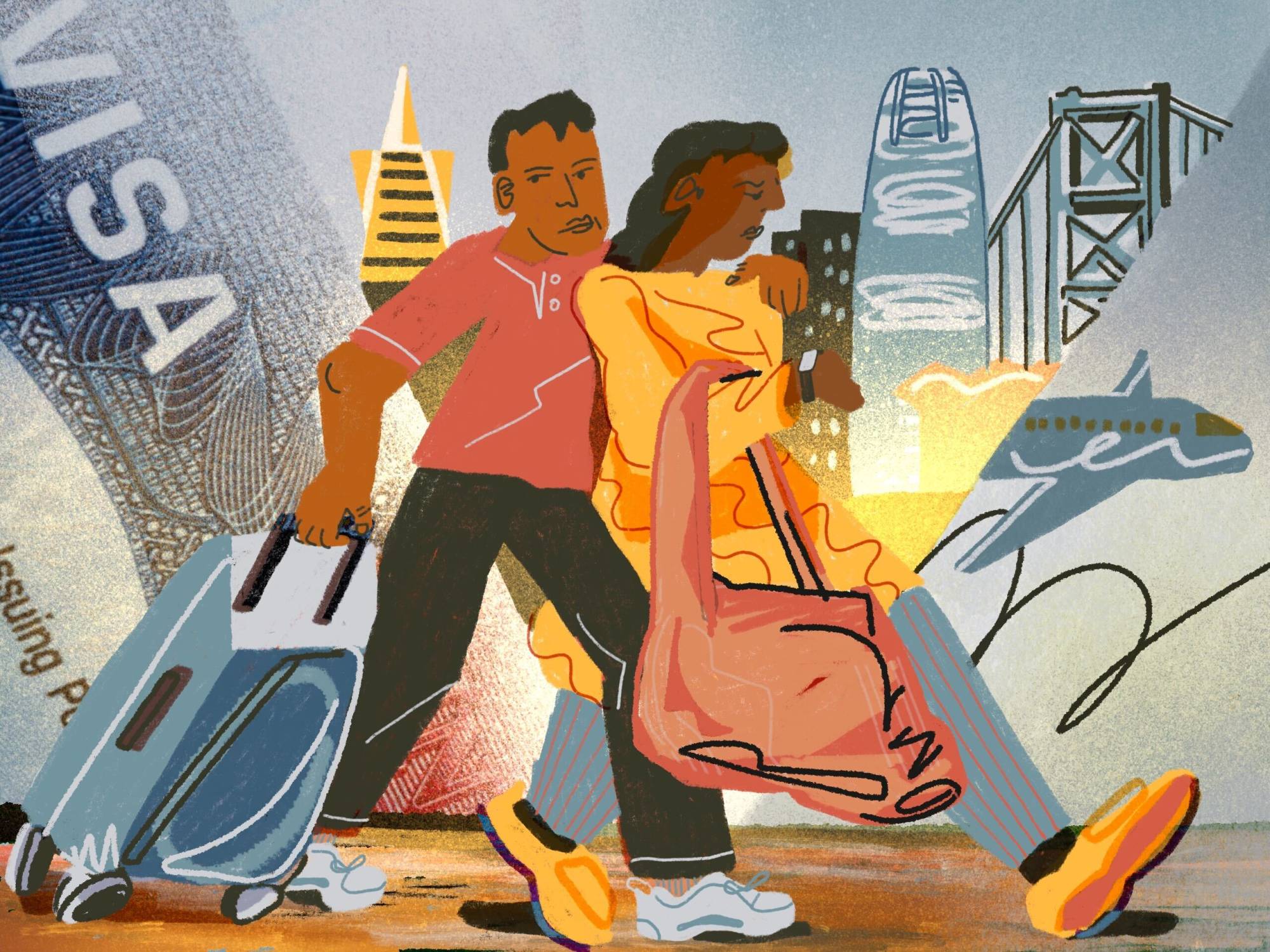
"caption": "The Trump administration’s recent H1-B visa changes have rattled thousands of foreign professionals who live in the Bay Area, leaving them to ask hard questions about their future. ",
"credit": "Anna Vignet/KQED",
"altTag": null,
"description": null,
"imgSizes": {
"medium": {
"file": "https://cdn.kqed.org/wp-content/uploads/sites/10/2025/10/IMG_1173-2000x1500.jpg",
"width": 2000,
"height": 1500,
"mimeType": "image/jpeg"
},
"large": {
"file": "https://cdn.kqed.org/wp-content/uploads/sites/10/2025/10/IMG_1173-2000x1500.jpg",
"width": 2000,
"height": 1500,
"mimeType": "image/jpeg"
},
"thumbnail": {
"file": "https://cdn.kqed.org/wp-content/uploads/sites/10/2025/10/IMG_1173-160x120.jpg",
"width": 160,
"height": 120,
"mimeType": "image/jpeg"
},
"1536x1536": {
"file": "https://cdn.kqed.org/wp-content/uploads/sites/10/2025/10/IMG_1173-1536x1152.jpg",
"width": 1536,
"height": 1152,
"mimeType": "image/jpeg"
},
"2048x2048": {
"file": "https://cdn.kqed.org/wp-content/uploads/sites/10/2025/10/IMG_1173-2048x1536.jpg",
"width": 2048,
"height": 1536,
"mimeType": "image/jpeg"
},
"post-thumbnail": {
"file": "https://cdn.kqed.org/wp-content/uploads/sites/10/2025/10/IMG_1173-672x372.jpg",
"width": 672,
"height": 372,
"mimeType": "image/jpeg"
},
"twentyfourteen-full-width": {
"file": "https://cdn.kqed.org/wp-content/uploads/sites/10/2025/10/IMG_1173-1038x576.jpg",
"width": 1038,
"height": 576,
"mimeType": "image/jpeg"
},
"full-width": {
"file": "https://cdn.kqed.org/wp-content/uploads/sites/10/2025/10/IMG_1173-2000x1500.jpg",
"width": 2000,
"height": 1500,
"mimeType": "image/jpeg"
},
"kqedFullSize": {
"file": "https://cdn.kqed.org/wp-content/uploads/sites/10/2025/10/IMG_1173.jpg",
"width": 2560,
"height": 1920
}
},
"isLoading": false,
"fetchFailed": false
},
"news_12053767": {
"type": "attachments",
"id": "news_12053767",
"meta": {
"index": "attachments_1716263798",
"site": "news",
"id": "12053767",
"found": true
},
"title": "IMG_1139",
"publishDate": 1756231247,
"status": "inherit",
"parent": 12053754,
"modified": 1756231283,
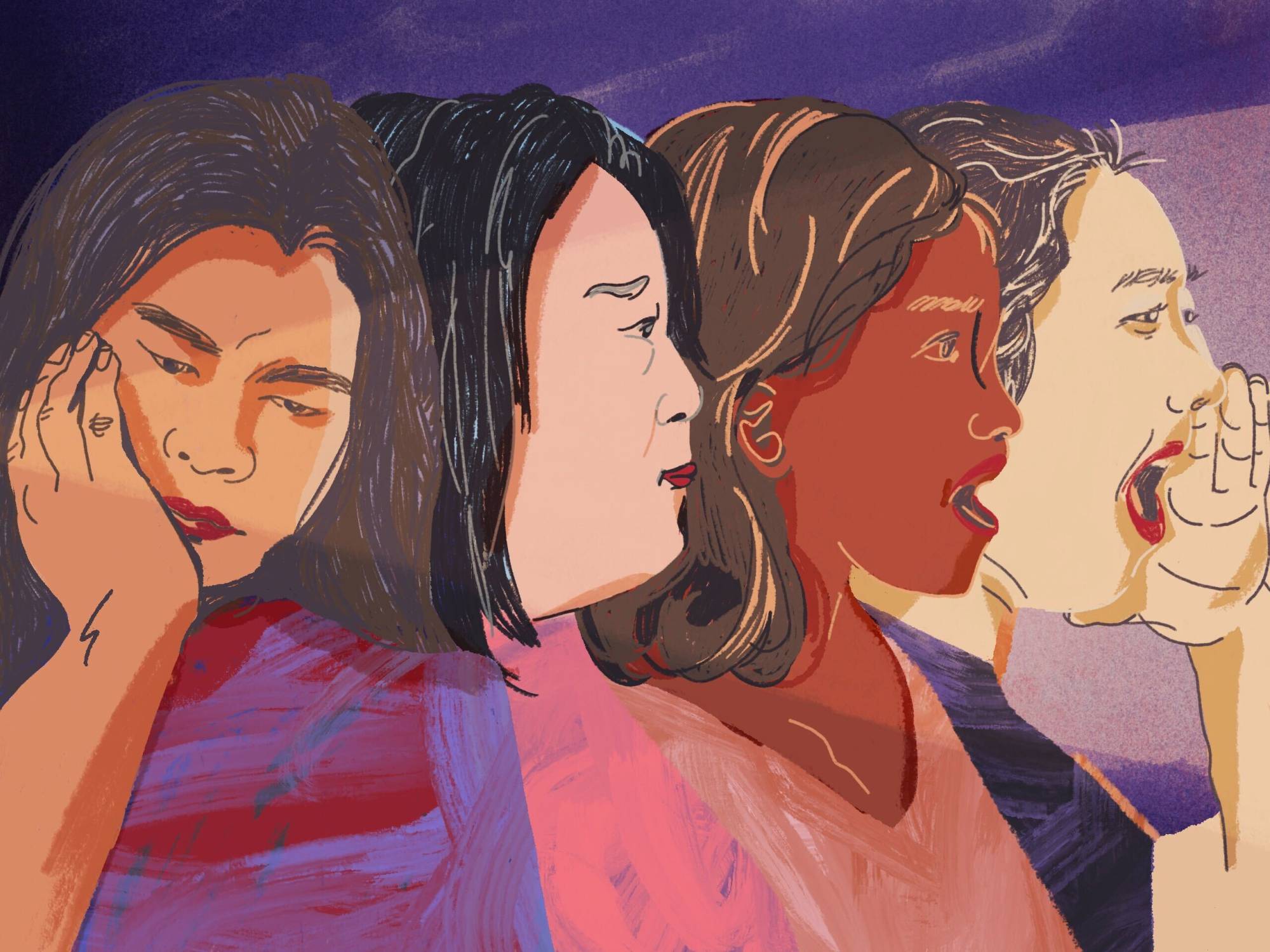
"caption": "Many Black survivors of domestic violence face silence and systemic barriers. Advocates are creating paths to safety and healing beyond police and prisons.",
"credit": "Illustration by Anna Vignet/KQED",
"altTag": null,
"description": null,
"imgSizes": {
"medium": {
"file": "https://cdn.kqed.org/wp-content/uploads/sites/10/2025/08/IMG_1139-2000x1500.jpg",
"width": 2000,
"height": 1500,
"mimeType": "image/jpeg"
},
"large": {
"file": "https://cdn.kqed.org/wp-content/uploads/sites/10/2025/08/IMG_1139-2000x1500.jpg",
"width": 2000,
"height": 1500,
"mimeType": "image/jpeg"
},
"thumbnail": {
"file": "https://cdn.kqed.org/wp-content/uploads/sites/10/2025/08/IMG_1139-160x120.jpg",
"width": 160,
"height": 120,
"mimeType": "image/jpeg"
},
"1536x1536": {
"file": "https://cdn.kqed.org/wp-content/uploads/sites/10/2025/08/IMG_1139-1536x1152.jpg",
"width": 1536,
"height": 1152,
"mimeType": "image/jpeg"
},
"2048x2048": {
"file": "https://cdn.kqed.org/wp-content/uploads/sites/10/2025/08/IMG_1139-2048x1536.jpg",
"width": 2048,
"height": 1536,
"mimeType": "image/jpeg"
},
"post-thumbnail": {
"file": "https://cdn.kqed.org/wp-content/uploads/sites/10/2025/08/IMG_1139-672x372.jpg",
"width": 672,
"height": 372,
"mimeType": "image/jpeg"
},
"twentyfourteen-full-width": {
"file": "https://cdn.kqed.org/wp-content/uploads/sites/10/2025/08/IMG_1139-1038x576.jpg",
"width": 1038,
"height": 576,
"mimeType": "image/jpeg"
},
"full-width": {
"file": "https://cdn.kqed.org/wp-content/uploads/sites/10/2025/08/IMG_1139-2000x1500.jpg",
"width": 2000,
"height": 1500,
"mimeType": "image/jpeg"
},
"kqedFullSize": {
"file": "https://cdn.kqed.org/wp-content/uploads/sites/10/2025/08/IMG_1139.jpg",
"width": 2560,
"height": 1920
}
},
"isLoading": false,
"fetchFailed": false
},
"news_12059877": {
"type": "attachments",
"id": "news_12059877",
"meta": {
"index": "attachments_1716263798",
"site": "news",
"id": "12059877",
"found": true
},
"title": "251014-ANTIFAROUNDTABLEFOLO-03-BL-KQED",
"publishDate": 1760467761,
"status": "inherit",
"parent": 0,
"modified": 1760467820,
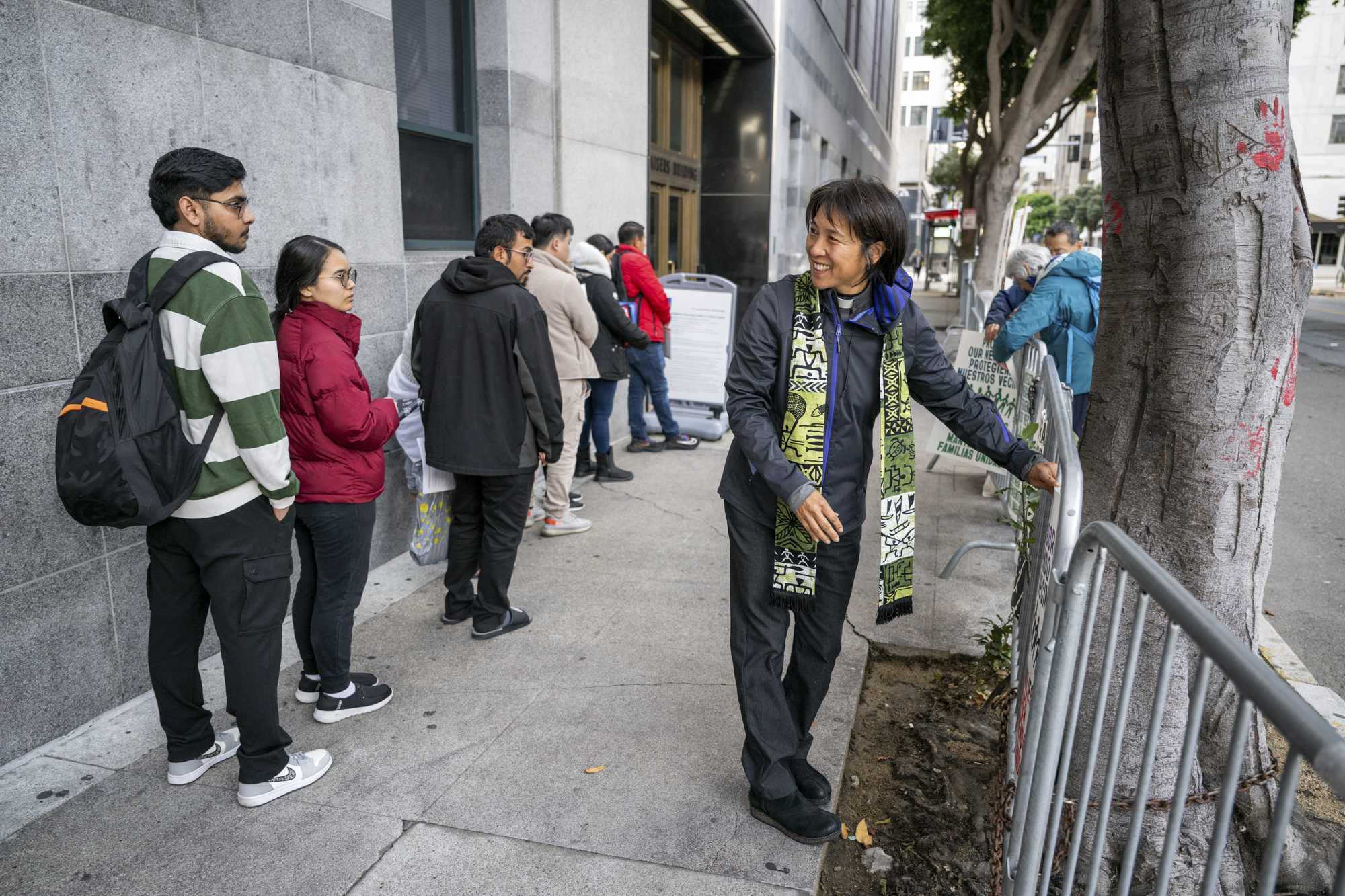
"caption": "Rev. Deborah Lee speaks with people in line outside the ICE Field Office in downtown San Francisco on Oct. 14, 2025, as they wait for scheduled check-ins and immigration-related appointments.",
"credit": "Beth LaBerge/KQED",
"altTag": null,
"description": null,
"imgSizes": {
"thumbnail": {
"file": "https://cdn.kqed.org/wp-content/uploads/sites/10/2025/10/251014-ANTIFAROUNDTABLEFOLO-03-BL-KQED-160x107.jpg",
"width": 160,
"height": 107,
"mimeType": "image/jpeg"
},
"1536x1536": {
"file": "https://cdn.kqed.org/wp-content/uploads/sites/10/2025/10/251014-ANTIFAROUNDTABLEFOLO-03-BL-KQED-1536x1024.jpg",
"width": 1536,
"height": 1024,
"mimeType": "image/jpeg"
},
"post-thumbnail": {
"file": "https://cdn.kqed.org/wp-content/uploads/sites/10/2025/10/251014-ANTIFAROUNDTABLEFOLO-03-BL-KQED-672x372.jpg",
"width": 672,
"height": 372,
"mimeType": "image/jpeg"
},
"twentyfourteen-full-width": {
"file": "https://cdn.kqed.org/wp-content/uploads/sites/10/2025/10/251014-ANTIFAROUNDTABLEFOLO-03-BL-KQED-1038x576.jpg",
"width": 1038,
"height": 576,
"mimeType": "image/jpeg"
},
"kqedFullSize": {
"file": "https://cdn.kqed.org/wp-content/uploads/sites/10/2025/10/251014-ANTIFAROUNDTABLEFOLO-03-BL-KQED.jpg",
"width": 2000,
"height": 1333
}
},
"isLoading": false,
"fetchFailed": false
},
"news_12059965": {
"type": "attachments",
"id": "news_12059965",
"meta": {
"index": "attachments_1716263798",
"site": "news",
"id": "12059965",
"found": true
},
"title": "Jello Biafra of the Dead Kennedys performing at the Mabuhay Gardens",
"publishDate": 1760545185,
"status": "inherit",
"parent": 12059962,
"modified": 1760545241,
"caption": "Jello Biafra of the Dead Kennedys performing at the Mabuhay Gardens in San Francisco in 1983.\n",
"credit": "Courtesy of Greg Gaar, San Francisco History Center, San Francisco Public Library",
"altTag": null,
"description": null,
"imgSizes": {
"thumbnail": {
"file": "https://cdn.kqed.org/wp-content/uploads/sites/10/2025/10/Jello-Biafra-of-the-Dead-Kennedys-performing-at-the-Mabuhay-Gardens--160x119.jpg",
"width": 160,
"height": 119,
"mimeType": "image/jpeg"
},
"post-thumbnail": {
"file": "https://cdn.kqed.org/wp-content/uploads/sites/10/2025/10/Jello-Biafra-of-the-Dead-Kennedys-performing-at-the-Mabuhay-Gardens--672x372.jpg",
"width": 672,
"height": 372,
"mimeType": "image/jpeg"
},
"twentyfourteen-full-width": {
"file": "https://cdn.kqed.org/wp-content/uploads/sites/10/2025/10/Jello-Biafra-of-the-Dead-Kennedys-performing-at-the-Mabuhay-Gardens--927x576.jpg",
"width": 927,
"height": 576,
"mimeType": "image/jpeg"
},
"kqedFullSize": {
"file": "https://cdn.kqed.org/wp-content/uploads/sites/10/2025/10/Jello-Biafra-of-the-Dead-Kennedys-performing-at-the-Mabuhay-Gardens-.jpg",
"width": 927,
"height": 688
}
},
"isLoading": false,
"fetchFailed": false
},
"news_12052354": {
"type": "attachments",
"id": "news_12052354",
"meta": {
"index": "attachments_1716263798",
"site": "news",
"id": "12052354",
"found": true
},
"title": "250804-CALIFORNIAFOREVERSUISUNCITY-53-KQED",
"publishDate": 1755277845,
"status": "inherit",
"parent": 12059985,
"modified": 1760555312,
"caption": "An aerial view of the Suisun Slough in Suisun City, Solano County, on Aug. 4, 2025.",
"credit": "Beth LaBerge/KQED",
"altTag": null,
"description": null,
"imgSizes": {
"thumbnail": {
"file": "https://cdn.kqed.org/wp-content/uploads/sites/10/2025/08/250804-CALIFORNIAFOREVERSUISUNCITY-53-KQED-160x107.jpg",
"width": 160,
"height": 107,
"mimeType": "image/jpeg"
},
"1536x1536": {
"file": "https://cdn.kqed.org/wp-content/uploads/sites/10/2025/08/250804-CALIFORNIAFOREVERSUISUNCITY-53-KQED-1536x1025.jpg",
"width": 1536,
"height": 1025,
"mimeType": "image/jpeg"
},
"post-thumbnail": {
"file": "https://cdn.kqed.org/wp-content/uploads/sites/10/2025/08/250804-CALIFORNIAFOREVERSUISUNCITY-53-KQED-672x372.jpg",
"width": 672,
"height": 372,
"mimeType": "image/jpeg"
},
"twentyfourteen-full-width": {
"file": "https://cdn.kqed.org/wp-content/uploads/sites/10/2025/08/250804-CALIFORNIAFOREVERSUISUNCITY-53-KQED-1038x576.jpg",
"width": 1038,
"height": 576,
"mimeType": "image/jpeg"
},
"kqedFullSize": {
"file": "https://cdn.kqed.org/wp-content/uploads/sites/10/2025/08/250804-CALIFORNIAFOREVERSUISUNCITY-53-KQED.jpg",
"width": 2000,
"height": 1334
}
},
"isLoading": false,
"fetchFailed": false
},
"news_12051700": {
"type": "attachments",
"id": "news_12051700",
"meta": {
"index": "attachments_1716263798",
"site": "news",
"id": "12051700",
"found": true
},
"title": "Election 2026 Redistricting",
"publishDate": 1754931212,
"status": "inherit",
"parent": 12051699,
"modified": 1760555699,
"caption": "Accompanied by California and Texas lawmakers, California Gov. Gavin Newsom speaks in support of the Texas Democratic lawmakers for their nearly weeklong walkout to block a vote on a congressional redistricting plan sought by President Donald Trump, during a news conference in Sacramento, California, on Friday, Aug. 8, 2025.",
"credit": "AP Photo/Rich Pedroncelli",
"altTag": null,
"description": null,
"imgSizes": {
"medium": {
"file": "https://cdn.kqed.org/wp-content/uploads/sites/10/2025/08/AP25221029877312-2000x1333.jpg",
"width": 2000,
"height": 1333,
"mimeType": "image/jpeg"
},
"large": {
"file": "https://cdn.kqed.org/wp-content/uploads/sites/10/2025/08/AP25221029877312-2000x1333.jpg",
"width": 2000,
"height": 1333,
"mimeType": "image/jpeg"
},
"thumbnail": {
"file": "https://cdn.kqed.org/wp-content/uploads/sites/10/2025/08/AP25221029877312-160x107.jpg",
"width": 160,
"height": 107,
"mimeType": "image/jpeg"
},
"1536x1536": {
"file": "https://cdn.kqed.org/wp-content/uploads/sites/10/2025/08/AP25221029877312-1536x1024.jpg",
"width": 1536,
"height": 1024,
"mimeType": "image/jpeg"
},
"2048x2048": {
"file": "https://cdn.kqed.org/wp-content/uploads/sites/10/2025/08/AP25221029877312-2048x1365.jpg",
"width": 2048,
"height": 1365,
"mimeType": "image/jpeg"
},
"post-thumbnail": {
"file": "https://cdn.kqed.org/wp-content/uploads/sites/10/2025/08/AP25221029877312-672x372.jpg",
"width": 672,
"height": 372,
"mimeType": "image/jpeg"
},
"twentyfourteen-full-width": {
"file": "https://cdn.kqed.org/wp-content/uploads/sites/10/2025/08/AP25221029877312-1038x576.jpg",
"width": 1038,
"height": 576,
"mimeType": "image/jpeg"
},
"full-width": {
"file": "https://cdn.kqed.org/wp-content/uploads/sites/10/2025/08/AP25221029877312-2000x1333.jpg",
"width": 2000,
"height": 1333,
"mimeType": "image/jpeg"
},
"kqedFullSize": {
"file": "https://cdn.kqed.org/wp-content/uploads/sites/10/2025/08/AP25221029877312-scaled-e1760554140189.jpg",
"width": 2000,
"height": 1333
}
},
"isLoading": false,
"fetchFailed": false
},
"news_12053360": {
"type": "attachments",
"id": "news_12053360",
"meta": {
"index": "attachments_1716263798",
"site": "news",
"id": "12053360",
"found": true
},
"title": "IMG_1137",
"publishDate": 1755891061,
"status": "inherit",
"parent": 12053210,
"modified": 1755891254,
"caption": "Survivors of domestic violence often face silence, stigma and complex cultural pressures, yet advocacy and support networks are helping break the cycle of abuse.",
"credit": "Illustration by Anna Vignet/KQED",
"altTag": null,
"description": null,
"imgSizes": {
"medium": {
"file": "https://cdn.kqed.org/wp-content/uploads/sites/10/2025/08/IMG_1137-2000x1500.jpg",
"width": 2000,
"height": 1500,
"mimeType": "image/jpeg"
},
"large": {
"file": "https://cdn.kqed.org/wp-content/uploads/sites/10/2025/08/IMG_1137-2000x1500.jpg",
"width": 2000,
"height": 1500,
"mimeType": "image/jpeg"
},
"thumbnail": {
"file": "https://cdn.kqed.org/wp-content/uploads/sites/10/2025/08/IMG_1137-160x120.jpg",
"width": 160,
"height": 120,
"mimeType": "image/jpeg"
},
"1536x1536": {
"file": "https://cdn.kqed.org/wp-content/uploads/sites/10/2025/08/IMG_1137-1536x1152.jpg",
"width": 1536,
"height": 1152,
"mimeType": "image/jpeg"
},
"2048x2048": {
"file": "https://cdn.kqed.org/wp-content/uploads/sites/10/2025/08/IMG_1137-2048x1536.jpg",
"width": 2048,
"height": 1536,
"mimeType": "image/jpeg"
},
"post-thumbnail": {
"file": "https://cdn.kqed.org/wp-content/uploads/sites/10/2025/08/IMG_1137-672x372.jpg",
"width": 672,
"height": 372,
"mimeType": "image/jpeg"
},
"twentyfourteen-full-width": {
"file": "https://cdn.kqed.org/wp-content/uploads/sites/10/2025/08/IMG_1137-1038x576.jpg",
"width": 1038,
"height": 576,
"mimeType": "image/jpeg"
},
"full-width": {
"file": "https://cdn.kqed.org/wp-content/uploads/sites/10/2025/08/IMG_1137-2000x1500.jpg",
"width": 2000,
"height": 1500,
"mimeType": "image/jpeg"
},
"kqedFullSize": {
"file": "https://cdn.kqed.org/wp-content/uploads/sites/10/2025/08/IMG_1137.jpg",
"width": 2560,
"height": 1920
}
},
"isLoading": false,
"fetchFailed": false
},
"news_12059852": {
"type": "attachments",
"id": "news_12059852",
"meta": {
"index": "attachments_1716263798",
"site": "news",
"id": "12059852",
"found": true
},
"title": "251014-KAISER STRIKE START-MD-03-KQED-1",
"publishDate": 1760463524,
"status": "inherit",
"parent": 0,
"modified": 1768609829,
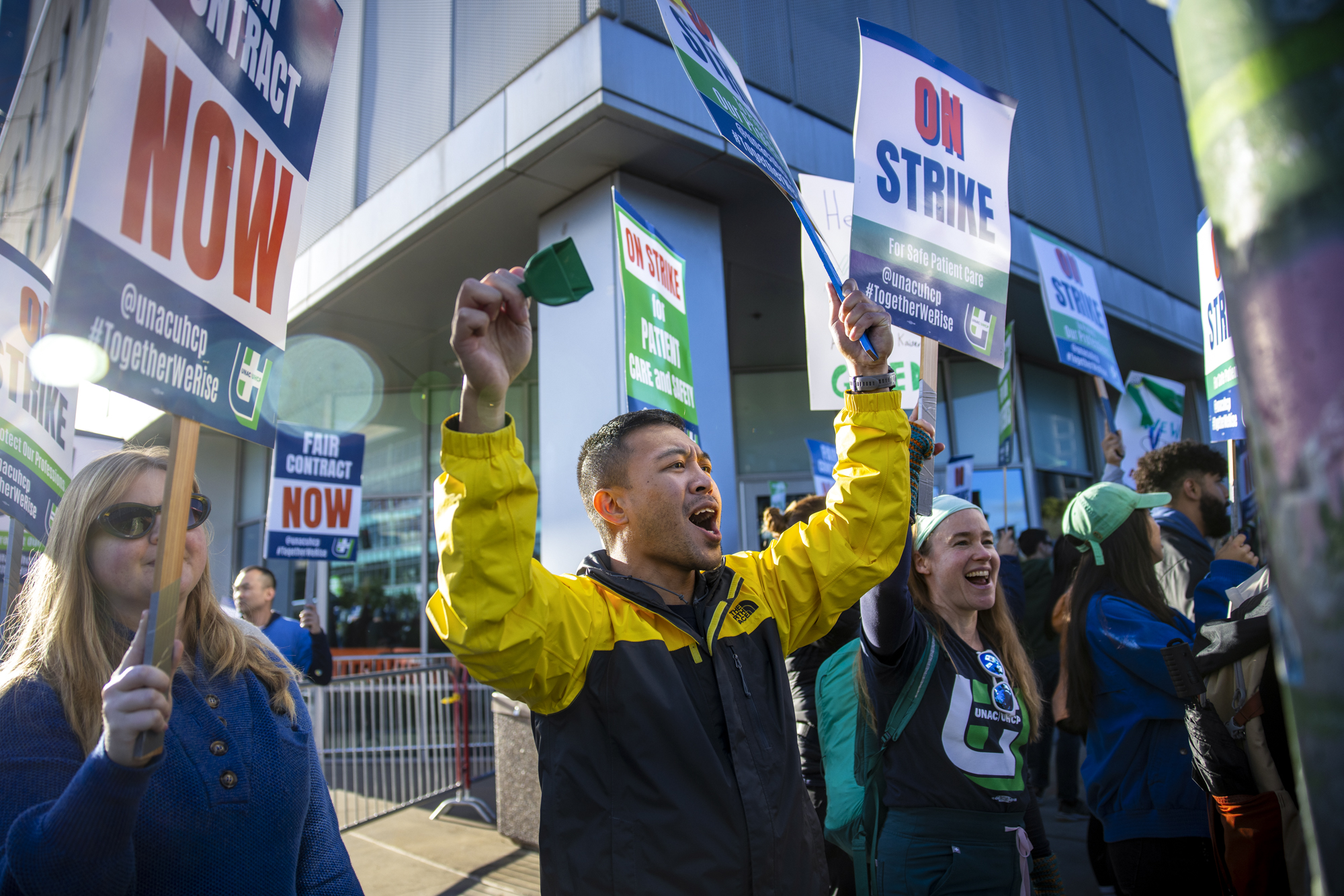
"caption": "Workers strike outside of the Kaiser Permanente Oakland Medical Center in Oakland on Oct. 14, 2025.",
"credit": "Martin do Nascimento/KQED",
"altTag": null,
"description": null,
"imgSizes": {
"thumbnail": {
"file": "https://cdn.kqed.org/wp-content/uploads/sites/10/2025/10/251014-KAISER-STRIKE-START-MD-03-KQED-1-160x107.jpg",
"width": 160,
"height": 107,
"mimeType": "image/jpeg"
},
"1536x1536": {
"file": "https://cdn.kqed.org/wp-content/uploads/sites/10/2025/10/251014-KAISER-STRIKE-START-MD-03-KQED-1-1536x1025.jpg",
"width": 1536,
"height": 1025,
"mimeType": "image/jpeg"
},
"post-thumbnail": {
"file": "https://cdn.kqed.org/wp-content/uploads/sites/10/2025/10/251014-KAISER-STRIKE-START-MD-03-KQED-1-672x372.jpg",
"width": 672,
"height": 372,
"mimeType": "image/jpeg"
},
"twentyfourteen-full-width": {
"file": "https://cdn.kqed.org/wp-content/uploads/sites/10/2025/10/251014-KAISER-STRIKE-START-MD-03-KQED-1-1038x576.jpg",
"width": 1038,
"height": 576,
"mimeType": "image/jpeg"
},
"kqedFullSize": {
"file": "https://cdn.kqed.org/wp-content/uploads/sites/10/2025/10/251014-KAISER-STRIKE-START-MD-03-KQED-1.jpg",
"width": 2000,
"height": 1334
}
},
"isLoading": false,
"fetchFailed": false
},
"news_12053829": {
"type": "attachments",
"id": "news_12053829",
"meta": {
"index": "attachments_1716263798",
"site": "news",
"id": "12053829",
"found": true
},
"title": "250806-HOLOCAUSTREPARATIONS-06-KQED",
"publishDate": 1756247730,
"status": "inherit",
"parent": 12056999,
"modified": 1758581516,
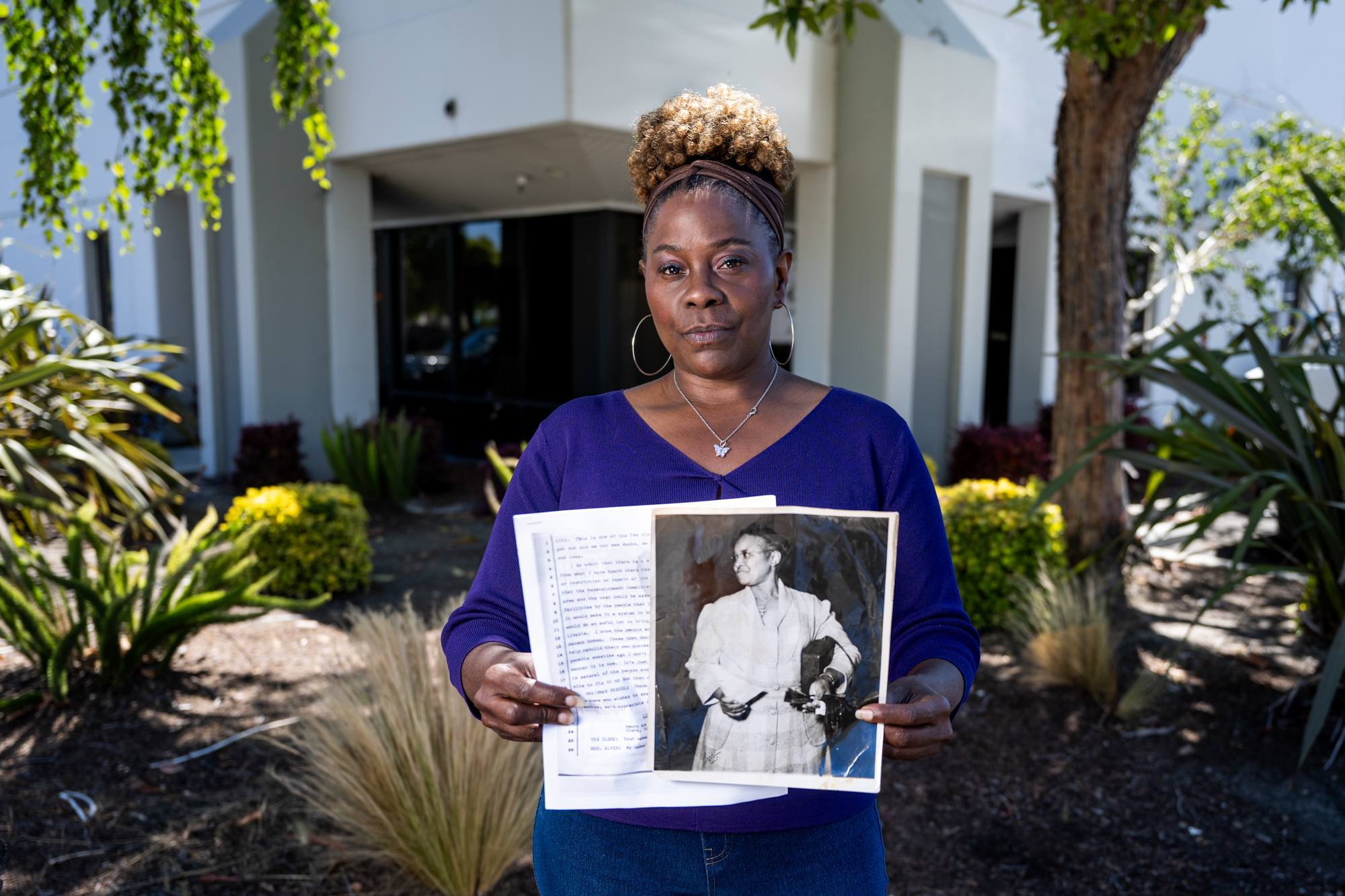
"caption": "Francesca Thomas, a Hayward native and great-granddaughter of Leona Alves, owner of Ideal Dining, a restaurant and nightclub in Russell City, holds a photograph of her great-grandmother and a copy of her testimony near the former site of Russell City in Hayward on Aug. 6, 2025. She is involved in efforts to preserve the community’s history through the Russell City Reparative Justice Project.",
"credit": "Beth LaBerge/KQED",
"altTag": null,
"description": null,
"imgSizes": {
"thumbnail": {
"file": "https://cdn.kqed.org/wp-content/uploads/sites/10/2025/08/250806-HOLOCAUSTREPARATIONS-06-KQED-160x107.jpg",
"width": 160,
"height": 107,
"mimeType": "image/jpeg"
},
"1536x1536": {
"file": "https://cdn.kqed.org/wp-content/uploads/sites/10/2025/08/250806-HOLOCAUSTREPARATIONS-06-KQED-1536x1024.jpg",
"width": 1536,
"height": 1024,
"mimeType": "image/jpeg"
},
"post-thumbnail": {
"file": "https://cdn.kqed.org/wp-content/uploads/sites/10/2025/08/250806-HOLOCAUSTREPARATIONS-06-KQED-672x372.jpg",
"width": 672,
"height": 372,
"mimeType": "image/jpeg"
},
"twentyfourteen-full-width": {
"file": "https://cdn.kqed.org/wp-content/uploads/sites/10/2025/08/250806-HOLOCAUSTREPARATIONS-06-KQED-1038x576.jpg",
"width": 1038,
"height": 576,
"mimeType": "image/jpeg"
},
"kqedFullSize": {
"file": "https://cdn.kqed.org/wp-content/uploads/sites/10/2025/08/250806-HOLOCAUSTREPARATIONS-06-KQED.jpg",
"width": 2000,
"height": 1333
}
},
"isLoading": false,
"fetchFailed": false
},
"news_12051437": {
"type": "attachments",
"id": "news_12051437",
"meta": {
"index": "attachments_1716263798",
"site": "news",
"id": "12051437",
"found": true
},
"title": "GavinNewsomAISF1",
"publishDate": 1754670249,
"status": "inherit",
"parent": 12051433,
"modified": 1754670737,
"caption": "On the rooftop of Google’s San Francisco offices on Aug. 7, 2025, Gov. Gavin Newsom announced a major statewide partnership with Google, Microsoft, IBM and Adobe to expand generative AI education — including training programs, certifications and internships — across California’s high schools, community colleges and Cal State universities.",
"credit": "Courtesy of the Office of the Governor",
"altTag": null,
"description": null,
"imgSizes": {
"thumbnail": {
"file": "https://cdn.kqed.org/wp-content/uploads/sites/10/2025/08/GavinNewsomAISF1-160x107.jpg",
"width": 160,
"height": 107,
"mimeType": "image/jpeg"
},
"1536x1536": {
"file": "https://cdn.kqed.org/wp-content/uploads/sites/10/2025/08/GavinNewsomAISF1-1536x1024.jpg",
"width": 1536,
"height": 1024,
"mimeType": "image/jpeg"
},
"post-thumbnail": {
"file": "https://cdn.kqed.org/wp-content/uploads/sites/10/2025/08/GavinNewsomAISF1-672x372.jpg",
"width": 672,
"height": 372,
"mimeType": "image/jpeg"
},
"twentyfourteen-full-width": {
"file": "https://cdn.kqed.org/wp-content/uploads/sites/10/2025/08/GavinNewsomAISF1-1038x576.jpg",
"width": 1038,
"height": 576,
"mimeType": "image/jpeg"
},
"kqedFullSize": {
"file": "https://cdn.kqed.org/wp-content/uploads/sites/10/2025/08/GavinNewsomAISF1.jpg",
"width": 2000,
"height": 1333
}
},
"isLoading": false,
"fetchFailed": false
},
"news_12059791": {
"type": "attachments",
"id": "news_12059791",
"meta": {
"index": "attachments_1716263798",
"site": "news",
"id": "12059791",
"found": true
},
"title": "Activists In Los Angeles Hold Rally In Honor Of George Floyd",
"publishDate": 1760398603,
"status": "inherit",
"parent": 12059600,
"modified": 1760402655,
"caption": "A protester displays a sign reading \"Reparations Now!\" during a rally billed as a Day of Resistance held in honor of George Floyd on May 21, 2025, in Los Angeles, California.",
"credit": "Mario Tama/Getty Images",
"altTag": null,
"description": null,
"imgSizes": {
"thumbnail": {
"file": "https://cdn.kqed.org/wp-content/uploads/sites/10/2025/10/CaliforniaReparationsGetty-160x107.jpg",
"width": 160,
"height": 107,
"mimeType": "image/jpeg"
},
"1536x1536": {
"file": "https://cdn.kqed.org/wp-content/uploads/sites/10/2025/10/CaliforniaReparationsGetty-1536x1024.jpg",
"width": 1536,
"height": 1024,
"mimeType": "image/jpeg"
},
"post-thumbnail": {
"file": "https://cdn.kqed.org/wp-content/uploads/sites/10/2025/10/CaliforniaReparationsGetty-672x372.jpg",
"width": 672,
"height": 372,
"mimeType": "image/jpeg"
},
"twentyfourteen-full-width": {
"file": "https://cdn.kqed.org/wp-content/uploads/sites/10/2025/10/CaliforniaReparationsGetty-1038x576.jpg",
"width": 1038,
"height": 576,
"mimeType": "image/jpeg"
},
"kqedFullSize": {
"file": "https://cdn.kqed.org/wp-content/uploads/sites/10/2025/10/CaliforniaReparationsGetty.jpg",
"width": 2000,
"height": 1333
}
},
"isLoading": false,
"fetchFailed": false
},
"news_12059629": {
"type": "attachments",
"id": "news_12059629",
"meta": {
"index": "attachments_1716263798",
"site": "news",
"id": "12059629",
"found": true
},
"title": "251008_ENDOF10_-9-KQED",
"publishDate": 1760356671,
"status": "inherit",
"parent": 0,
"modified": 1760356793,
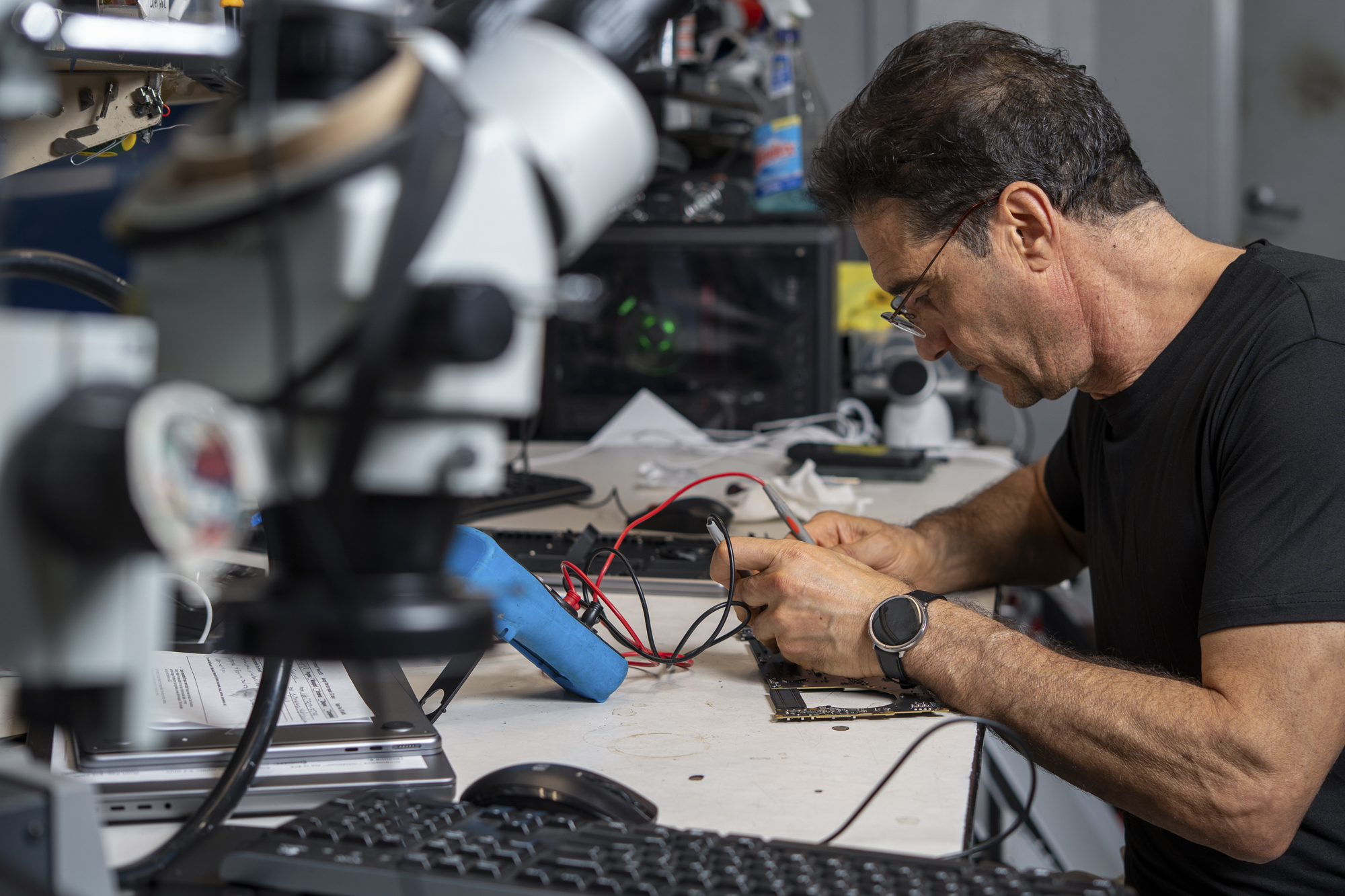
"caption": "Del Jaljaa works on a laptop motherboard at his repair bench in San Francisco on Oct. 8, 2025. Right to Repair advocates warn that Microsoft’s move away from Windows 10 could create mountains of electronic waste.",
"credit": "Gustavo Hernandez/KQED",
"altTag": null,
"description": null,
"imgSizes": {
"thumbnail": {
"file": "https://cdn.kqed.org/wp-content/uploads/sites/10/2025/10/251008_ENDOF10_-9-KQED-160x107.jpg",
"width": 160,
"height": 107,
"mimeType": "image/jpeg"
},
"1536x1536": {
"file": "https://cdn.kqed.org/wp-content/uploads/sites/10/2025/10/251008_ENDOF10_-9-KQED-1536x1024.jpg",
"width": 1536,
"height": 1024,
"mimeType": "image/jpeg"
},
"post-thumbnail": {
"file": "https://cdn.kqed.org/wp-content/uploads/sites/10/2025/10/251008_ENDOF10_-9-KQED-672x372.jpg",
"width": 672,
"height": 372,
"mimeType": "image/jpeg"
},
"twentyfourteen-full-width": {
"file": "https://cdn.kqed.org/wp-content/uploads/sites/10/2025/10/251008_ENDOF10_-9-KQED-1038x576.jpg",
"width": 1038,
"height": 576,
"mimeType": "image/jpeg"
},
"kqedFullSize": {
"file": "https://cdn.kqed.org/wp-content/uploads/sites/10/2025/10/251008_ENDOF10_-9-KQED.jpg",
"width": 2000,
"height": 1333
}
},
"isLoading": false,
"fetchFailed": false
}
},
"audioPlayerReducer": {
"postId": "stream_live",
"isPaused": true,
"isPlaying": false,
"pfsActive": false,
"pledgeModalIsOpen": true,
"playerDrawerIsOpen": false,
"liveAudioPlayStartedAt": 0,
"liveAudioPlayContext": ""
},
"authorsReducer": {
"gmarzorati": {
"type": "authors",
"id": "227",
"meta": {
"index": "authors_1716337520",
"id": "227",
"found": true
},
"name": "Guy Marzorati",
"firstName": "Guy",
"lastName": "Marzorati",
"slug": "gmarzorati",
"email": "gmarzorati@KQED.org",
"display_author_email": true,
"staff_mastheads": [
"news"
],
"title": "Correspondent",
"bio": "Guy Marzorati is a correspondent on KQED's California Politics and Government Desk, based in San Jose. A graduate of Santa Clara University, Guy joined KQED in 2013. He reports on state and local politics and produces KQED's digital voter guide.",
"avatar": "https://secure.gravatar.com/avatar/e7038b8dbfd55b104369b76b1cd0b9de?s=600&d=blank&r=g",
"twitter": "guymarzorati",
"facebook": null,
"instagram": null,
"linkedin": null,
"sites": [
{
"site": "",
"roles": [
"editor"
]
},
{
"site": "news",
"roles": [
"editor"
]
},
{
"site": "science",
"roles": [
"editor"
]
},
{
"site": "forum",
"roles": [
"editor"
]
},
{
"site": "elections",
"roles": [
"editor"
]
},
{
"site": "liveblog",
"roles": [
"editor"
]
}
],
"headData": {
"title": "Guy Marzorati | KQED",
"description": "Correspondent",
"ogImgSrc": "https://secure.gravatar.com/avatar/e7038b8dbfd55b104369b76b1cd0b9de?s=600&d=blank&r=g",
"twImgSrc": "https://secure.gravatar.com/avatar/e7038b8dbfd55b104369b76b1cd0b9de?s=600&d=blank&r=g"
},
"isLoading": false,
"link": "/author/gmarzorati"
},
"kqed": {
"type": "authors",
"id": "236",
"meta": {
"index": "authors_1716337520",
"id": "236",
"found": true
},
"name": "KQED News Staff",
"firstName": "KQED News Staff",
"lastName": null,
"slug": "kqed",
"email": "faq@kqed.org",
"display_author_email": false,
"staff_mastheads": [],
"title": null,
"bio": null,
"avatar": "https://secure.gravatar.com/avatar/ef0e801a68c4c54afa9180db14084167?s=600&d=blank&r=g",
"twitter": null,
"facebook": null,
"instagram": null,
"linkedin": null,
"sites": [
{
"site": "arts",
"roles": [
"contributor"
]
},
{
"site": "news",
"roles": [
"editor"
]
},
{
"site": "futureofyou",
"roles": [
"author"
]
}
],
"headData": {
"title": "KQED News Staff | KQED",
"description": null,
"ogImgSrc": "https://secure.gravatar.com/avatar/ef0e801a68c4c54afa9180db14084167?s=600&d=blank&r=g",
"twImgSrc": "https://secure.gravatar.com/avatar/ef0e801a68c4c54afa9180db14084167?s=600&d=blank&r=g"
},
"isLoading": false,
"link": "/author/kqed"
},
"rachael-myrow": {
"type": "authors",
"id": "251",
"meta": {
"index": "authors_1716337520",
"id": "251",
"found": true
},
"name": "Rachael Myrow",
"firstName": "Rachael",
"lastName": "Myrow",
"slug": "rachael-myrow",
"email": "rmyrow@kqed.org",
"display_author_email": true,
"staff_mastheads": [
"news"
],
"title": "Senior Editor of KQED's Silicon Valley News Desk",
"bio": "• I write and edit stories about how Silicon Valley power and policies shape everyday life in California. I’m also passionate about making Bay Area history and culture more accessible to a broad public. • I’ve been a journalist for most of my life, starting in high school with The Franklin Press in Los Angeles, where I grew up. While earning my first degree in English at UC Berkeley, I got my start in public radio at KALX-FM. After completing a second degree in journalism at Cal, I landed my first professional job at Marketplace, then moved on to KPCC (now LAist), and then KQED, where I hosted The California Report for more than seven years. • My reporting has appeared on NPR, The World, WBUR’s \u003ci>Here & Now\u003c/i>, and the BBC. I also guest host for KQED’s \u003ci>Forum\u003c/i>, as well as the Commonwealth Club in San Francisco. • I speak periodically on media, democracy and technology issues, and do voiceover work for documentaries and educational video projects. • Outside of the studio, you'll find me hiking Bay Area trails and whipping up Insta-ready meals in my kitchen. • I do not accept gifts, money, or favors from anyone connected to my reporting, I don't pay people for information, and I do not support or donate to political causes. • I strive to treat the people I report on with fairness, honesty, and respect. I also recognize there are often multiple sides to a story and work to verify information through multiple sources and documentation. If I get something wrong, I correct it.",
"avatar": "https://secure.gravatar.com/avatar/87bf8cb5874e045cdff430523a6d48b1?s=600&d=blank&r=g",
"twitter": "rachaelmyrow",
"facebook": null,
"instagram": null,
"linkedin": "https://www.linkedin.com/in/rachaelmyrow/",
"sites": [
{
"site": "arts",
"roles": [
"administrator"
]
},
{
"site": "news",
"roles": [
"edit_others_posts",
"editor"
]
},
{
"site": "futureofyou",
"roles": [
"editor"
]
},
{
"site": "bayareabites",
"roles": [
"editor"
]
},
{
"site": "stateofhealth",
"roles": [
"editor"
]
},
{
"site": "science",
"roles": [
"editor"
]
},
{
"site": "food",
"roles": [
"editor"
]
},
{
"site": "forum",
"roles": [
"editor"
]
},
{
"site": "liveblog",
"roles": [
"author"
]
}
],
"headData": {
"title": "Rachael Myrow | KQED",
"description": "Senior Editor of KQED's Silicon Valley News Desk",
"ogImgSrc": "https://secure.gravatar.com/avatar/87bf8cb5874e045cdff430523a6d48b1?s=600&d=blank&r=g",
"twImgSrc": "https://secure.gravatar.com/avatar/87bf8cb5874e045cdff430523a6d48b1?s=600&d=blank&r=g"
},
"isLoading": false,
"link": "/author/rachael-myrow"
},
"mlagos": {
"type": "authors",
"id": "3239",
"meta": {
"index": "authors_1716337520",
"id": "3239",
"found": true
},
"name": "Marisa Lagos",
"firstName": "Marisa",
"lastName": "Lagos",
"slug": "mlagos",
"email": "mlagos@kqed.org",
"display_author_email": false,
"staff_mastheads": [
"news"
],
"title": "KQED Contributor",
"bio": "Marisa Lagos is a correspondent for KQED’s California Politics and Government Desk and co-hosts the award-winning show and podcast, Political Breakdown. At KQED, Lagos also conducts reporting, analysis and investigations into state, local and national politics for radio, TV, online and onstage. In 2022, she and co-host, Scott Shafer, moderated the only gubernatorial debate in California. In 2020, the \u003ci>Washington Post\u003c/i> named her one of the top political journalists in California; she was nominated for a Peabody and won several other awards for her work investigating the 2017 California wildfires. She has worked at the \u003ci>San Francisco Chronicle\u003c/i>, \u003ci>San Francisco Examiner\u003c/i> and \u003ci>Los Angeles Times\u003c/i>. A UC Santa Barbara graduate, she lives in San Francisco with her two sons and husband.",
"avatar": "https://secure.gravatar.com/avatar/a261a0d3696fc066871ef96b85b5e7d2?s=600&d=blank&r=g",
"twitter": "@mlagos",
"facebook": null,
"instagram": null,
"linkedin": null,
"sites": [
{
"site": "arts",
"roles": [
"author"
]
},
{
"site": "news",
"roles": [
"editor"
]
},
{
"site": "science",
"roles": [
"editor"
]
},
{
"site": "forum",
"roles": [
"author"
]
},
{
"site": "liveblog",
"roles": [
"author"
]
}
],
"headData": {
"title": "Marisa Lagos | KQED",
"description": "KQED Contributor",
"ogImgSrc": "https://secure.gravatar.com/avatar/a261a0d3696fc066871ef96b85b5e7d2?s=600&d=blank&r=g",
"twImgSrc": "https://secure.gravatar.com/avatar/a261a0d3696fc066871ef96b85b5e7d2?s=600&d=blank&r=g"
},
"isLoading": false,
"link": "/author/mlagos"
},
"fjhabvala": {
"type": "authors",
"id": "8659",
"meta": {
"index": "authors_1716337520",
"id": "8659",
"found": true
},
"name": "Farida Jhabvala Romero",
"firstName": "Farida",
"lastName": "Jhabvala Romero",
"slug": "fjhabvala",
"email": "fjhabvala@kqed.org",
"display_author_email": true,
"staff_mastheads": [
"news"
],
"title": "KQED Contributor",
"bio": "\u003cspan style=\"font-weight: 400;\">Farida Jhabvala Romero is a Labor Correspondent for KQED. She previously covered immigration. Farida was \u003ca href=\"https://www.ccnma.org/2022-most-influential-latina-journalists\">named\u003c/a> one of the 10 Most Influential Latina Journalists in California in 2022 by the California Chicano News Media Association. Her work has won awards from the Society of Professional Journalists (Northern California), as well as a national and regional Edward M. Murrow Award for the collaborative reporting projects “Dangerous Air” and “Graying California.” \u003c/span>\u003cspan style=\"font-weight: 400;\">Before joining KQED, Farida worked as a producer at Radio Bilingüe, a national public radio network. Farida earned her master’s degree in journalism from Stanford University.\u003c/span>",
"avatar": "https://secure.gravatar.com/avatar/c3ab27c5554b67b478f80971e515aa02?s=600&d=blank&r=g",
"twitter": "FaridaJhabvala",
"facebook": null,
"instagram": null,
"linkedin": "https://www.linkedin.com/in/faridajhabvala/",
"sites": [
{
"site": "news",
"roles": [
"editor"
]
},
{
"site": "stateofhealth",
"roles": [
"author"
]
}
],
"headData": {
"title": "Farida Jhabvala Romero | KQED",
"description": "KQED Contributor",
"ogImgSrc": "https://secure.gravatar.com/avatar/c3ab27c5554b67b478f80971e515aa02?s=600&d=blank&r=g",
"twImgSrc": "https://secure.gravatar.com/avatar/c3ab27c5554b67b478f80971e515aa02?s=600&d=blank&r=g"
},
"isLoading": false,
"link": "/author/fjhabvala"
},
"abandlamudi": {
"type": "authors",
"id": "11672",
"meta": {
"index": "authors_1716337520",
"id": "11672",
"found": true
},
"name": "Adhiti Bandlamudi",
"firstName": "Adhiti",
"lastName": "Bandlamudi",
"slug": "abandlamudi",
"email": "abandlamudi@kqed.org",
"display_author_email": false,
"staff_mastheads": [
"news"
],
"title": "KQED Housing Reporter",
"bio": "Adhiti Bandlamudi reports for KQED's Housing desk. She focuses on how housing gets built across the Bay Area. Before joining KQED in 2020, she reported for WUNC in Durham, North Carolina, WABE in Atlanta, Georgia and Capital Public Radio in Sacramento. In 2017, she was awarded a Kroc Fellowship at NPR where she reported on everything from sprinkles to the Golden State Killer's arrest. When she's not reporting, she's baking new recipes in her kitchen or watching movies with friends and family. She's originally from Georgia and has strong opinions about Great British Bake Off.",
"avatar": "https://secure.gravatar.com/avatar/868129c8b257bb99a3500e2c86a65400?s=600&d=mm&r=g",
"twitter": "oddity_adhiti",
"facebook": null,
"instagram": null,
"linkedin": null,
"sites": [
{
"site": "arts",
"roles": [
"author"
]
},
{
"site": "news",
"roles": [
"editor"
]
},
{
"site": "liveblog",
"roles": [
"author"
]
}
],
"headData": {
"title": "Adhiti Bandlamudi | KQED",
"description": "KQED Housing Reporter",
"ogImgSrc": "https://secure.gravatar.com/avatar/868129c8b257bb99a3500e2c86a65400?s=600&d=mm&r=g",
"twImgSrc": "https://secure.gravatar.com/avatar/868129c8b257bb99a3500e2c86a65400?s=600&d=mm&r=g"
},
"isLoading": false,
"link": "/author/abandlamudi"
},
"afinney": {
"type": "authors",
"id": "11772",
"meta": {
"index": "authors_1716337520",
"id": "11772",
"found": true
},
"name": "Annelise Finney",
"firstName": "Annelise",
"lastName": "Finney",
"slug": "afinney",
"email": "afinney@kqed.org",
"display_author_email": true,
"staff_mastheads": [
"news"
],
"title": "Reporter",
"bio": "Annelise reports on reparations in California and East Bay politics. She co-produced the Sunday Music Drop, a limited-term radio series featuring Bay Area musicians that aired between Sept 2022 and Oct 2024. She joined KQED in 2021 as a general assignment reporter and is an alumna of KALW's Audio Academy. She was born and raised in the East Bay. She is currently away from KQED completing a year-long reporting project in Berlin, Germany as a Alexander Von Humboldt German Chancellor Fellow.",
"avatar": "https://secure.gravatar.com/avatar/5fded66cae47704cdfc5021cde0f3aa4?s=600&d=blank&r=g",
"twitter": null,
"facebook": null,
"instagram": null,
"linkedin": null,
"sites": [
{
"site": "news",
"roles": [
"editor"
]
},
{
"site": "liveblog",
"roles": [
"author"
]
}
],
"headData": {
"title": "Annelise Finney | KQED",
"description": "Reporter",
"ogImgSrc": "https://secure.gravatar.com/avatar/5fded66cae47704cdfc5021cde0f3aa4?s=600&d=blank&r=g",
"twImgSrc": "https://secure.gravatar.com/avatar/5fded66cae47704cdfc5021cde0f3aa4?s=600&d=blank&r=g"
},
"isLoading": false,
"link": "/author/afinney"
},
"adahlstromeckman": {
"type": "authors",
"id": "11785",
"meta": {
"index": "authors_1716337520",
"id": "11785",
"found": true
},
"name": "Azul Dahlstrom-Eckman",
"firstName": "Azul",
"lastName": "Dahlstrom-Eckman",
"slug": "adahlstromeckman",
"email": "adahlstrom-eckman@kqed.org",
"display_author_email": true,
"staff_mastheads": [],
"title": "Reporter",
"bio": "Azul is a reporter for KQED focusing on transportation and features. He joined KQED in 2021 as an alumna of KALW's Audio Academy radio journalism training program.",
"avatar": "https://secure.gravatar.com/avatar/9cb750298435add7815a777f55bf1f46845c1386bb8452555c60a7b820b5aba3?s=600&d=blank&r=g",
"twitter": "@zuliemann",
"bluesky": "@azul415.bsky.social",
"facebook": null,
"instagram": null,
"linkedin": null,
"sites": [
{
"site": "arts",
"roles": [
"editor"
]
},
{
"site": "news",
"roles": [
"editor"
]
},
{
"site": "science",
"roles": [
"editor"
]
},
{
"site": "liveblog",
"roles": [
"author"
]
}
],
"headData": {
"title": "Azul Dahlstrom-Eckman | KQED",
"description": "Reporter",
"ogImgSrc": "https://secure.gravatar.com/avatar/9cb750298435add7815a777f55bf1f46845c1386bb8452555c60a7b820b5aba3?s=600&d=blank&r=g",
"twImgSrc": "https://secure.gravatar.com/avatar/9cb750298435add7815a777f55bf1f46845c1386bb8452555c60a7b820b5aba3?s=600&d=blank&r=g"
},
"isLoading": false,
"link": "/author/adahlstromeckman"
},
"kdebenedetti": {
"type": "authors",
"id": "11913",
"meta": {
"index": "authors_1716337520",
"id": "11913",
"found": true
},
"name": "Katie DeBenedetti",
"firstName": "Katie",
"lastName": "DeBenedetti",
"slug": "kdebenedetti",
"email": "kdebenedetti@kqed.org",
"display_author_email": false,
"staff_mastheads": [
"news",
"science"
],
"title": "KQED Contributor",
"bio": "Katie DeBenedetti is a digital reporter covering daily news for the Express Desk. Prior to joining KQED as a culture reporting intern in January 2024, she covered education and city government for the Napa Valley Register.",
"avatar": "https://secure.gravatar.com/avatar/6e31073cb8f7e4214ab03f42771d0f45?s=600&d=blank&r=g",
"twitter": null,
"facebook": null,
"instagram": null,
"linkedin": null,
"sites": [
{
"site": "news",
"roles": [
"author"
]
},
{
"site": "science",
"roles": [
"author"
]
},
{
"site": "liveblog",
"roles": [
"author"
]
}
],
"headData": {
"title": "Katie DeBenedetti | KQED",
"description": "KQED Contributor",
"ogImgSrc": "https://secure.gravatar.com/avatar/6e31073cb8f7e4214ab03f42771d0f45?s=600&d=blank&r=g",
"twImgSrc": "https://secure.gravatar.com/avatar/6e31073cb8f7e4214ab03f42771d0f45?s=600&d=blank&r=g"
},
"isLoading": false,
"link": "/author/kdebenedetti"
},
"slim": {
"type": "authors",
"id": "11920",
"meta": {
"index": "authors_1716337520",
"id": "11920",
"found": true
},
"name": "Samantha Lim",
"firstName": "Samantha",
"lastName": "Lim",
"slug": "slim",
"email": "slim@KQED.org",
"display_author_email": false,
"staff_mastheads": [],
"title": "KQED Contributor",
"bio": null,
"avatar": "https://secure.gravatar.com/avatar/82e592e6c15fe1a04d385e8ad0fb0b4e?s=600&d=blank&r=g",
"twitter": null,
"facebook": null,
"instagram": null,
"linkedin": null,
"sites": [
{
"site": "news",
"roles": []
}
],
"headData": {
"title": "Samantha Lim | KQED",
"description": "KQED Contributor",
"ogImgSrc": "https://secure.gravatar.com/avatar/82e592e6c15fe1a04d385e8ad0fb0b4e?s=600&d=blank&r=g",
"twImgSrc": "https://secure.gravatar.com/avatar/82e592e6c15fe1a04d385e8ad0fb0b4e?s=600&d=blank&r=g"
},
"isLoading": false,
"link": "/author/slim"
}
},
"pagesReducer": {
"news_tag_california": {
"type": "terms",
"id": "news_18538",
"meta": {
"index": "terms_1716263798",
"site": "news",
"id": "18538",
"score": 6.8456693
},
"featImg": null,
"name": "California",
"description": null,
"taxonomy": "tag",
"headData": {
"twImgId": null,
"twTitle": null,
"ogTitle": null,
"ogImgId": null,
"twDescription": null,
"description": null,
"title": "California Archives | KQED News",
"ogDescription": null
},
"ttid": 31,
"slug": "california",
"isLoading": false,
"title": "California",
"pageMeta": {
"site": "news",
"WpPageTemplate": "page-topic-editorial",
"currentPage": 50
},
"blocks": [
{
"blockName": "kqed/post-list",
"attrs": {
"layout": "cardArticle2",
"query": "posts/news?tag=california",
"seeMore": false,
"paginated": true,
"page": 50
}
},
{
"blockName": "kqed/ad"
}
]
}
},
"pfsSessionReducer": {},
"postsReducer": {
"stream_live": {
"type": "live",
"id": "stream_live",
"audioUrl": "https://streams.kqed.org/kqedradio",
"title": "Live Stream",
"excerpt": "Live Stream information currently unavailable.",
"link": "/radio",
"featImg": "",
"label": {
"name": "KQED Live",
"link": "/"
}
},
"stream_kqedNewscast": {
"type": "posts",
"id": "stream_kqedNewscast",
"audioUrl": "https://www.kqed.org/.stream/anon/radio/RDnews/newscast.mp3?_=1",
"title": "KQED Newscast",
"featImg": "",
"label": {
"name": "88.5 FM",
"link": "/"
}
},
"news_12058586": {
"type": "posts",
"id": "news_12058586",
"meta": {
"index": "posts_1716263798",
"site": "news",
"id": "12058586",
"score": null,
"sort": [
1760631172000
]
},
"guestAuthors": [],
"slug": "silicon-valley-dreams-at-risk-current-h-1bs-sidestep-trumps-100k-fee-for-now",
"title": "H-1B Workers Fear Uncertainty After Trump Imposes $100,000 Visa Petition Fee",
"publishDate": 1760631172,
"format": "audio",
"headTitle": "H-1B Workers Fear Uncertainty After Trump Imposes $100,000 Visa Petition Fee | KQED",
"labelTerm": {
"site": "news"
},
"content": "\u003cp>The 31-year-old South Bay software engineer was driving home from the office a couple of weeks ago, when a friend called him with the news. President Donald Trump had \u003ca href=\"https://www.kqed.org/news/12057742/h1b-visa-executive-order-trump-green-card-citizenship-september-19\">suddenly announced\u003c/a> his administration would be slapping a $100,000 fee on companies petitioning for H-1B visas, \u003ca href=\"https://www.whitehouse.gov/presidential-actions/2025/09/restriction-on-entry-of-certain-nonimmigrant-workers/\">effective within a few days\u003c/a>.\u003c/p>\n\u003cp>Standing behind Trump in the Oval Office, Commerce Secretary Howard Lutnick seemed to say the fee\u003ca href=\"https://x.com/RapidResponse47/status/1969155493701571049\"> would apply annually\u003c/a> to all H-1B holders. Employers scrambled to alert staff abroad to return immediately, before Press Secretary Karoline Leavitt\u003ca href=\"https://x.com/PressSec/status/1969495900478488745\"> walked the chaos back on the social media platform X\u003c/a>: “This is NOT an annual fee. It’s a one-time fee that applies only to the petition.”\u003c/p>\n\u003cp>But given the mercurial nature of this president and the chaotic nature of this announcement, there’s no telling if or when the policy will change. Silicon Valley has been well and truly rattled, especially the hundreds of thousands of foreign professionals who\u003ca href=\"https://www.kqed.org/news/11707255/what-silicon-valley-could-lose-if-trump-revokes-h-1b-spousal-work-visas\"> rely on the program\u003c/a> to live and work in the San Francisco Bay Area.\u003c/p>\n\u003cp>[ad fullwidth]\u003c/p>\n\u003cp>“You cannot buy a house. You cannot raise a family if there is an uncertainty,” said the software engineer, who requested anonymity because of fears his immigration status could be jeopardized. “I don’t want to be here till the age of 40 or 45, and then this happens, and I have to leave. I won’t be in a situation to restart my career.”\u003c/p>\n\u003cp>He has been thinking a lot about risk and how it affects his life plan ever since he arrived in San Jose five and a half years ago on an H-1B visa sponsored by his employer. “Like they say, if you want to become an actor, move to L.A. So if you want to be a great software engineer, probably S.F. and the Valley is where you should be. And yeah, here I am, exploring it.”\u003c/p>\n\u003cfigure id=\"attachment_11848802\" class=\"wp-caption aligncenter\" style=\"max-width: 1920px\">\u003ca href=\"https://cdn.kqed.org/wp-content/uploads/sites/10/2020/11/iStock-1130785257_1_1920x.jpg\">\u003cimg loading=\"lazy\" decoding=\"async\" class=\"size-full wp-image-11848802\" src=\"https://cdn.kqed.org/wp-content/uploads/sites/10/2020/11/iStock-1130785257_1_1920x.jpg\" alt=\"Biometric passport with visa stamp for United States\" width=\"1920\" height=\"1281\" srcset=\"https://cdn.kqed.org/wp-content/uploads/sites/10/2020/11/iStock-1130785257_1_1920x.jpg 1920w, https://cdn.kqed.org/wp-content/uploads/sites/10/2020/11/iStock-1130785257_1_1920x-800x534.jpg 800w, https://cdn.kqed.org/wp-content/uploads/sites/10/2020/11/iStock-1130785257_1_1920x-1020x681.jpg 1020w, https://cdn.kqed.org/wp-content/uploads/sites/10/2020/11/iStock-1130785257_1_1920x-160x107.jpg 160w, https://cdn.kqed.org/wp-content/uploads/sites/10/2020/11/iStock-1130785257_1_1920x-1536x1025.jpg 1536w\" sizes=\"auto, (max-width: 1920px) 100vw, 1920px\">\u003c/a>\u003cfigcaption class=\"wp-caption-text\">An H1=B visa issued Nov. 25, 2020. Hundreds of thousands of foreign professionals rely on the program to live and work in the San Francisco Bay Area. \u003ccite>(iStock)\u003c/cite>\u003c/figcaption>\u003c/figure>\n\u003cp>Truth be told, his excitement to experience Silicon Valley culture cooled soon after he arrived in the Bay Area. First came the COVID-19 pandemic, which put a crimp in the social vibe he was hoping to experience, as meetups and conferences were canceled.\u003c/p>\n\u003cp>Then came the\u003ca href=\"https://www.kqed.org/news/11933511/mass-bay-area-tech-layoffs-thrust-thousands-of-h-1b-visa-holders-into-frantic-job-hunt\"> mass layoffs\u003c/a> in tech, starting in late 2022. He’d moved between companies since he first arrived here, but decided to return to the relatively stable retail giant that sponsored him to begin with, mindful that H-1B visa holders have\u003ca href=\"https://www.kqed.org/news/11933923/a-frantic-job-hunt-for-h-1b-visa-holders-in-tech\"> up to 60 days\u003c/a> to find new employers to sponsor them if they’re laid off.\u003c/p>\n\u003cp>The Mumbai native applied for a green card, but knew he was unlikely to receive it\u003ca href=\"https://www.kqed.org/news/11707158/indian-entrepreneurs-with-no-green-cards-pursue-silicon-valley-dreams-elsewhere\"> during his lifetime\u003c/a>. That said, the federal government has updated immigration policy to acknowledge the backlog. The \u003ca href=\"https://www.congress.gov/committee-report/106th-congress/senate-report/260/1\">American Competitiveness in the 21st Century Act\u003c/a> allows for H-1B holders who’ve applied for a green card to \u003ca href=\"https://www.uscis.gov/policy-manual/volume-7-part-e-chapter-5\">maintain their legal status\u003c/a> while they wait. Even before Donald Trump became president again in 2025, the queue for Indian nationals waiting on an employment-based green card had grown impossibly long, due to antiquated caps and increased demand.\u003c/p>\n\u003cp>So when he first met his wife a couple of years ago, he made sure to ask her on the first date whether she saw herself moving back to India to take care of parents and start a family, as he did. She, too, is on an H-1B visa.\u003c/p>\n\u003cp>They recently had friends over, and when the talk turned to the visa situation, it struck him that their social circle is filled with people who’ve already given up on the United States, before the latest upset. “They just want some certainty. They cannot predict their future and life based on a visa, which is unpredictable, and it can get revoked anytime,” he said.[aside postID=news_12057742 hero='https://cdn.kqed.org/wp-content/uploads/sites/10/2025/09/GettyImages-2236329361-2000x1333.jpg']Since the H-1B program was introduced as part of the\u003ca href=\"https://www.congress.gov/bill/101st-congress/senate-bill/358\"> Immigration Act of 1990\u003c/a>, the visa has been the primary pathway for Silicon Valley companies to take advantage of foreign talent. Microsoft’s Satya Nadella, Tesla’s Elon Musk, Arista Networks’ Jayshree Ullal and former eBay President Jeffrey Skoll all began their careers on H-1B visas. Meta, Apple, Google, LinkedIn, Cisco and Nvidia are the \u003ca href=\"https://jointventure.org/publications/institute-publications/329-our-shared-economy/2771-acute-local-impacts-silicon-valley-s-concentrated-exposure-to-h-1b-policy\">biggest users in the Bay Area\u003c/a> today. If the region’s employers filed the same \u003ca href=\"https://www.uscis.gov/tools/reports-and-studies/h-1b-employer-data-hub\">number of new petitions as last fiscal year\u003c/a> — about 7,660 applications — the bill would come to roughly $766 million in fees alone, according to \u003ca href=\"https://jointventure.org/publications/institute-publications/329-our-shared-economy/2771-acute-local-impacts-silicon-valley-s-concentrated-exposure-to-h-1b-policy\">Joint Venture Silicon Valley\u003c/a>.\u003c/p>\n\u003cp>In a wide-ranging\u003ca href=\"https://youtu.be/blqIZGXWUpU?si=1qvLcRBkN8QzSaEq&t=2622\"> conversation last year\u003c/a> with the four chatty investor-bros who host the “All In” podcast — three of whom were born overseas — then-presidential candidate Trump promised to import more of the best and brightest. “It’s so sad when we lose people from Harvard, MIT, the greatest schools, and lesser schools that are phenomenal also,” Trump said. In his next administration, he said, any foreign student who completes even a two-year degree in the U.S. would get a green card. “You need brilliant people,” he insisted. The co-hosts or “besties,” as they call themselves, agreed.\u003c/p>\n\u003cp>Compare that with the opening line of the White House\u003ca href=\"https://www.whitehouse.gov/presidential-actions/2025/09/restriction-on-entry-of-certain-nonimmigrant-workers/\"> proclamation\u003c/a> two weeks ago that levied a broadside at U.S. immigration policy for the last 35 years. “The H-1B nonimmigrant visa program was created to bring temporary workers into the United States to perform additive, high-skilled functions, but it has been deliberately exploited to replace, rather than supplement, American workers with lower-paid, lower-skilled labor.”\u003c/p>\n\u003cp>“Many of my clients are senior technology executives who have lived here for 20 years,” said Sophie Alcorn, who runs\u003ca href=\"https://www.alcorn.law/\"> Alcorn Immigration Law\u003c/a> in Mountain View and writes about immigration for\u003ca href=\"https://techcrunch.com/2022/11/07/dear-sophie-how-can-i-stay-in-the-us-if-ive-been-laid-off/\"> TechCrunch\u003c/a>. She’s talking about clients still on H-1B visas, still waiting on a green card.\u003c/p>\n\u003cp>Alcorn called Trump’s proclamation a “huge affront” to people like her clients, who have diligently played by the complicated and confusing rules the federal government has laid out. “They have advanced degrees from U.S. colleges and universities that they forked out full tuition for. They have spouses. They have U.S. citizen children who were born here. They own homes. They volunteer in the PTA. They donate. They pay taxes.”\u003c/p>\n\u003cp>Already, the Trump administration has been challenged in court over the latest changes to the H-1B program. The lawsuit, filed in federal court in the Northern District of California on Friday, was brought by a coalition led by recruitment firm Global Nurse Force. The coalition argues President Trump does not have the power to unilaterally impose a hefty immigration fee without the approval of Congress, and that the sudden regulatory changes violate the Administrative Procedure Act.\u003c/p>\n\u003cp>Alcorn is not surprised. “Immigration lawyers are scratching our heads. We’re trying to figure out exactly what we can do, what we cannot do,” she said. “We don’t even know how we would have our clients pay the $100,000. When will there be a temporary restraining order? Because that could just simply pause all of this for the foreseeable future,” Alcorn said.[aside postID=news_12058090 hero='https://cdn.kqed.org/wp-content/uploads/sites/10/2025/09/GettyImages-2236330121-2000x1333.jpg']Concern about the growth of H-1B visa abuse is bipartisan, however. Employers as varied as\u003ca href=\"https://insider.govtech.com/california/news/jury-finds-discrimination-in-h-1b-visa-tech-worker-case?utm_source=chatgpt.com\"> Cognizant\u003c/a>,\u003ca href=\"https://www.hollywoodreporter.com/business/business-news/disney-defends-lawsuit-immigrants-replacing-894469/?utm_source=chatgpt.com\"> Disney\u003c/a> and\u003ca href=\"https://www.judiciary.senate.gov/imo/media/doc/02-25-16%20Hira%20Testimony.pdf?utm_source=chatgpt.com\"> Southern California Edison\u003c/a> have been accused of taking advantage of foreign workers, using them as a cheaper and more compliant labor force. Cognizant was found liable in 2024 in a jury verdict.\u003c/p>\n\u003cp>High-tech firms have long pushed for a relaxation of the H-1B visa cap, \u003ca href=\"https://www.americanimmigrationcouncil.org/research/h1b-visa-program-fact-sheet\">85,000 annually since 2006\u003c/a>. Between fiscal years 2017 and 2022, more than 380,000 H-1B petitions were approved in the San Francisco Bay Area alone, according to the\u003ca href=\"https://www.americanimmigrationcouncil.org/fact-sheet/h1b-visa-program-fact-sheet/#:~:text=Since%20the%20category%20was%20created,H%2D1B%20Registration%20Process\"> American Immigration Council.\u003c/a>\u003c/p>\n\u003cp>“This is a crisis that has been 35 years in the making that a competent Congress would have addressed long ago,” John Miano, a former tech worker who became an attorney to sue over the H-1B program, wrote KQED. “The United States Congress is the only national legislature in the world that has voted to make it explicitly legal to replace citizens with foreign workers.”\u003c/p>\n\u003cp>Even those who hold the H-1B visas acknowledge there’s plenty of room for improvement to guard against the established abuses of the program. The South Bay software engineer said he agrees with Trump’s intentions, but not his methods.\u003c/p>\n\u003cp>“The way he tries executing it is so wrong that cannot be justified, because this process was there in place,” he said. “So you cannot just flip it overnight,” without upending the lives of millions of people.\u003c/p>\n\u003cp>Additionally, he noted that the changes are not expected to force companies, which typically pay much of the cost of an H-1B visa, to hire more Americans. Immigration experts and visa holders alike say multinational corporations are likely to replace H-1B visa holders with more workers overseas, at one of their foreign offices.\u003c/p>\n\u003cp>As for H-1B visa holders, there’s a menu of options. Their current employer might invite them to transfer to one of those far-flung offices. They might move to a country like Canada, China\u003ca href=\"https://x.com/AmbAckermann/status/1970450472642482473\"> or Germany\u003c/a>, which are inviting distressed visa holders with open arms.\u003c/p>\n\u003cp>The software engineer, already planning his return to India, might get a job with an American company there, maybe with his current employer, which has a significant presence in the country, albeit in cities other than his hometown. But even if he has to take a less desirable job, even if he has to take a job that pays less, he accepts that might be the cost of doing what he always planned to do eventually: return home.\u003c/p>\n\u003cp>\u003cem>KQED’s \u003c/em>\u003ca href=\"https://www.kqed.org/author/abandlamudi\">\u003cem>Adhiti Bandlamudi\u003c/em>\u003c/a>\u003cem> contributed to this report.\u003c/em>\u003c/p>\n\u003cp>[ad floatright]\u003c/p>\n",
"blocks": [],
"excerpt": "The Trump administration’s recent H1-B visa changes have rattled thousands of foreign professionals who live in the Bay Area, leaving them to ask hard questions about their future. ",
"status": "publish",
"parent": 0,
"modified": 1760647803,
"stats": {
"hasAudio": false,
"hasVideo": false,
"hasChartOrMap": false,
"iframeSrcs": [],
"hasGoogleForm": false,
"hasGallery": false,
"hasHearkenModule": false,
"hasPolis": false,
"paragraphCount": 26,
"wordCount": 1742
},
"headData": {
"title": "H-1B Workers Fear Uncertainty After Trump Imposes $100,000 Visa Petition Fee | KQED",
"description": "The Trump administration’s recent H1-B visa changes have rattled thousands of foreign professionals who live in the Bay Area, leaving them to ask hard questions about their future. ",
"ogTitle": "",
"ogDescription": "",
"ogImgId": "",
"twTitle": "",
"twDescription": "",
"twImgId": "",
"schema": {
"@context": "https://schema.org",
"@type": "NewsArticle",
"headline": "H-1B Workers Fear Uncertainty After Trump Imposes $100,000 Visa Petition Fee",
"datePublished": "2025-10-16T09:12:52-07:00",
"dateModified": "2025-10-16T13:50:03-07:00",
"image": "https://cdn.kqed.org/wp-content/uploads/2020/02/KQED-OG-Image@1x.png",
"isAccessibleForFree": "True",
"publisher": {
"@type": "NewsMediaOrganization",
"@id": "https://www.kqed.org/#organization",
"name": "KQED",
"logo": "https://cdn.kqed.org/wp-content/uploads/2020/02/KQED-OG-Image@1x.png",
"url": "https://www.kqed.org",
"sameAs": [
"https://www.facebook.com/KQED",
"https://twitter.com/KQED",
"https://www.instagram.com/kqed/",
"https://www.tiktok.com/@kqedofficial",
"https://www.linkedin.com/company/kqed",
"https://www.youtube.com/channel/UCeC0IOo7i1P_61zVUWbJ4nw"
]
}
}
},
"primaryCategory": {
"termId": 1169,
"slug": "immigration",
"name": "Immigration"
},
"audioUrl": "https://traffic.omny.fm/d/clips/0af137ef-751e-4b19-a055-aaef00d2d578/ffca7e9f-6831-4[…]f-aaef00f5a073/2f6a6a3e-1cf0-4c6d-a891-b37801151a4a/audio.mp3",
"sticky": false,
"nprStoryId": "kqed-12058586",
"templateType": "standard",
"featuredImageType": "standard",
"excludeFromSiteSearch": "Include",
"articleAge": "0",
"path": "/news/12058586/silicon-valley-dreams-at-risk-current-h-1bs-sidestep-trumps-100k-fee-for-now",
"audioTrackLength": null,
"parsedContent": [
{
"type": "contentString",
"content": "\u003cdiv class=\"post-body\">\u003cp>\u003cp>The 31-year-old South Bay software engineer was driving home from the office a couple of weeks ago, when a friend called him with the news. President Donald Trump had \u003ca href=\"https://www.kqed.org/news/12057742/h1b-visa-executive-order-trump-green-card-citizenship-september-19\">suddenly announced\u003c/a> his administration would be slapping a $100,000 fee on companies petitioning for H-1B visas, \u003ca href=\"https://www.whitehouse.gov/presidential-actions/2025/09/restriction-on-entry-of-certain-nonimmigrant-workers/\">effective within a few days\u003c/a>.\u003c/p>\n\u003cp>Standing behind Trump in the Oval Office, Commerce Secretary Howard Lutnick seemed to say the fee\u003ca href=\"https://x.com/RapidResponse47/status/1969155493701571049\"> would apply annually\u003c/a> to all H-1B holders. Employers scrambled to alert staff abroad to return immediately, before Press Secretary Karoline Leavitt\u003ca href=\"https://x.com/PressSec/status/1969495900478488745\"> walked the chaos back on the social media platform X\u003c/a>: “This is NOT an annual fee. It’s a one-time fee that applies only to the petition.”\u003c/p>\n\u003cp>But given the mercurial nature of this president and the chaotic nature of this announcement, there’s no telling if or when the policy will change. Silicon Valley has been well and truly rattled, especially the hundreds of thousands of foreign professionals who\u003ca href=\"https://www.kqed.org/news/11707255/what-silicon-valley-could-lose-if-trump-revokes-h-1b-spousal-work-visas\"> rely on the program\u003c/a> to live and work in the San Francisco Bay Area.\u003c/p>\n\u003cp>\u003c/p>\u003c/div>",
"attributes": {
"named": {},
"numeric": []
}
},
{
"type": "component",
"content": "",
"name": "ad",
"attributes": {
"named": {
"label": "fullwidth"
},
"numeric": [
"fullwidth"
]
}
},
{
"type": "contentString",
"content": "\u003cdiv class=\"post-body\">\u003cp>\u003c/p>\n\u003cp>“You cannot buy a house. You cannot raise a family if there is an uncertainty,” said the software engineer, who requested anonymity because of fears his immigration status could be jeopardized. “I don’t want to be here till the age of 40 or 45, and then this happens, and I have to leave. I won’t be in a situation to restart my career.”\u003c/p>\n\u003cp>He has been thinking a lot about risk and how it affects his life plan ever since he arrived in San Jose five and a half years ago on an H-1B visa sponsored by his employer. “Like they say, if you want to become an actor, move to L.A. So if you want to be a great software engineer, probably S.F. and the Valley is where you should be. And yeah, here I am, exploring it.”\u003c/p>\n\u003cfigure id=\"attachment_11848802\" class=\"wp-caption aligncenter\" style=\"max-width: 1920px\">\u003ca href=\"https://cdn.kqed.org/wp-content/uploads/sites/10/2020/11/iStock-1130785257_1_1920x.jpg\">\u003cimg loading=\"lazy\" decoding=\"async\" class=\"size-full wp-image-11848802\" src=\"https://cdn.kqed.org/wp-content/uploads/sites/10/2020/11/iStock-1130785257_1_1920x.jpg\" alt=\"Biometric passport with visa stamp for United States\" width=\"1920\" height=\"1281\" srcset=\"https://cdn.kqed.org/wp-content/uploads/sites/10/2020/11/iStock-1130785257_1_1920x.jpg 1920w, https://cdn.kqed.org/wp-content/uploads/sites/10/2020/11/iStock-1130785257_1_1920x-800x534.jpg 800w, https://cdn.kqed.org/wp-content/uploads/sites/10/2020/11/iStock-1130785257_1_1920x-1020x681.jpg 1020w, https://cdn.kqed.org/wp-content/uploads/sites/10/2020/11/iStock-1130785257_1_1920x-160x107.jpg 160w, https://cdn.kqed.org/wp-content/uploads/sites/10/2020/11/iStock-1130785257_1_1920x-1536x1025.jpg 1536w\" sizes=\"auto, (max-width: 1920px) 100vw, 1920px\">\u003c/a>\u003cfigcaption class=\"wp-caption-text\">An H1=B visa issued Nov. 25, 2020. Hundreds of thousands of foreign professionals rely on the program to live and work in the San Francisco Bay Area. \u003ccite>(iStock)\u003c/cite>\u003c/figcaption>\u003c/figure>\n\u003cp>Truth be told, his excitement to experience Silicon Valley culture cooled soon after he arrived in the Bay Area. First came the COVID-19 pandemic, which put a crimp in the social vibe he was hoping to experience, as meetups and conferences were canceled.\u003c/p>\n\u003cp>Then came the\u003ca href=\"https://www.kqed.org/news/11933511/mass-bay-area-tech-layoffs-thrust-thousands-of-h-1b-visa-holders-into-frantic-job-hunt\"> mass layoffs\u003c/a> in tech, starting in late 2022. He’d moved between companies since he first arrived here, but decided to return to the relatively stable retail giant that sponsored him to begin with, mindful that H-1B visa holders have\u003ca href=\"https://www.kqed.org/news/11933923/a-frantic-job-hunt-for-h-1b-visa-holders-in-tech\"> up to 60 days\u003c/a> to find new employers to sponsor them if they’re laid off.\u003c/p>\n\u003cp>The Mumbai native applied for a green card, but knew he was unlikely to receive it\u003ca href=\"https://www.kqed.org/news/11707158/indian-entrepreneurs-with-no-green-cards-pursue-silicon-valley-dreams-elsewhere\"> during his lifetime\u003c/a>. That said, the federal government has updated immigration policy to acknowledge the backlog. The \u003ca href=\"https://www.congress.gov/committee-report/106th-congress/senate-report/260/1\">American Competitiveness in the 21st Century Act\u003c/a> allows for H-1B holders who’ve applied for a green card to \u003ca href=\"https://www.uscis.gov/policy-manual/volume-7-part-e-chapter-5\">maintain their legal status\u003c/a> while they wait. Even before Donald Trump became president again in 2025, the queue for Indian nationals waiting on an employment-based green card had grown impossibly long, due to antiquated caps and increased demand.\u003c/p>\n\u003cp>So when he first met his wife a couple of years ago, he made sure to ask her on the first date whether she saw herself moving back to India to take care of parents and start a family, as he did. She, too, is on an H-1B visa.\u003c/p>\n\u003cp>They recently had friends over, and when the talk turned to the visa situation, it struck him that their social circle is filled with people who’ve already given up on the United States, before the latest upset. “They just want some certainty. They cannot predict their future and life based on a visa, which is unpredictable, and it can get revoked anytime,” he said.\u003c/p>\u003c/div>",
"attributes": {
"named": {},
"numeric": []
}
},
{
"type": "component",
"content": "",
"name": "aside",
"attributes": {
"named": {
"postid": "news_12057742",
"hero": "https://cdn.kqed.org/wp-content/uploads/sites/10/2025/09/GettyImages-2236329361-2000x1333.jpg",
"label": ""
},
"numeric": []
}
},
{
"type": "contentString",
"content": "\u003cdiv class=\"post-body\">\u003cp>Since the H-1B program was introduced as part of the\u003ca href=\"https://www.congress.gov/bill/101st-congress/senate-bill/358\"> Immigration Act of 1990\u003c/a>, the visa has been the primary pathway for Silicon Valley companies to take advantage of foreign talent. Microsoft’s Satya Nadella, Tesla’s Elon Musk, Arista Networks’ Jayshree Ullal and former eBay President Jeffrey Skoll all began their careers on H-1B visas. Meta, Apple, Google, LinkedIn, Cisco and Nvidia are the \u003ca href=\"https://jointventure.org/publications/institute-publications/329-our-shared-economy/2771-acute-local-impacts-silicon-valley-s-concentrated-exposure-to-h-1b-policy\">biggest users in the Bay Area\u003c/a> today. If the region’s employers filed the same \u003ca href=\"https://www.uscis.gov/tools/reports-and-studies/h-1b-employer-data-hub\">number of new petitions as last fiscal year\u003c/a> — about 7,660 applications — the bill would come to roughly $766 million in fees alone, according to \u003ca href=\"https://jointventure.org/publications/institute-publications/329-our-shared-economy/2771-acute-local-impacts-silicon-valley-s-concentrated-exposure-to-h-1b-policy\">Joint Venture Silicon Valley\u003c/a>.\u003c/p>\n\u003cp>In a wide-ranging\u003ca href=\"https://youtu.be/blqIZGXWUpU?si=1qvLcRBkN8QzSaEq&t=2622\"> conversation last year\u003c/a> with the four chatty investor-bros who host the “All In” podcast — three of whom were born overseas — then-presidential candidate Trump promised to import more of the best and brightest. “It’s so sad when we lose people from Harvard, MIT, the greatest schools, and lesser schools that are phenomenal also,” Trump said. In his next administration, he said, any foreign student who completes even a two-year degree in the U.S. would get a green card. “You need brilliant people,” he insisted. The co-hosts or “besties,” as they call themselves, agreed.\u003c/p>\n\u003cp>Compare that with the opening line of the White House\u003ca href=\"https://www.whitehouse.gov/presidential-actions/2025/09/restriction-on-entry-of-certain-nonimmigrant-workers/\"> proclamation\u003c/a> two weeks ago that levied a broadside at U.S. immigration policy for the last 35 years. “The H-1B nonimmigrant visa program was created to bring temporary workers into the United States to perform additive, high-skilled functions, but it has been deliberately exploited to replace, rather than supplement, American workers with lower-paid, lower-skilled labor.”\u003c/p>\n\u003cp>“Many of my clients are senior technology executives who have lived here for 20 years,” said Sophie Alcorn, who runs\u003ca href=\"https://www.alcorn.law/\"> Alcorn Immigration Law\u003c/a> in Mountain View and writes about immigration for\u003ca href=\"https://techcrunch.com/2022/11/07/dear-sophie-how-can-i-stay-in-the-us-if-ive-been-laid-off/\"> TechCrunch\u003c/a>. She’s talking about clients still on H-1B visas, still waiting on a green card.\u003c/p>\n\u003cp>Alcorn called Trump’s proclamation a “huge affront” to people like her clients, who have diligently played by the complicated and confusing rules the federal government has laid out. “They have advanced degrees from U.S. colleges and universities that they forked out full tuition for. They have spouses. They have U.S. citizen children who were born here. They own homes. They volunteer in the PTA. They donate. They pay taxes.”\u003c/p>\n\u003cp>Already, the Trump administration has been challenged in court over the latest changes to the H-1B program. The lawsuit, filed in federal court in the Northern District of California on Friday, was brought by a coalition led by recruitment firm Global Nurse Force. The coalition argues President Trump does not have the power to unilaterally impose a hefty immigration fee without the approval of Congress, and that the sudden regulatory changes violate the Administrative Procedure Act.\u003c/p>\n\u003cp>Alcorn is not surprised. “Immigration lawyers are scratching our heads. We’re trying to figure out exactly what we can do, what we cannot do,” she said. “We don’t even know how we would have our clients pay the $100,000. When will there be a temporary restraining order? Because that could just simply pause all of this for the foreseeable future,” Alcorn said.\u003c/p>\u003c/div>",
"attributes": {
"named": {},
"numeric": []
}
},
{
"type": "component",
"content": "",
"name": "aside",
"attributes": {
"named": {
"postid": "news_12058090",
"hero": "https://cdn.kqed.org/wp-content/uploads/sites/10/2025/09/GettyImages-2236330121-2000x1333.jpg",
"label": ""
},
"numeric": []
}
},
{
"type": "contentString",
"content": "\u003cdiv class=\"post-body\">\u003cp>Concern about the growth of H-1B visa abuse is bipartisan, however. Employers as varied as\u003ca href=\"https://insider.govtech.com/california/news/jury-finds-discrimination-in-h-1b-visa-tech-worker-case?utm_source=chatgpt.com\"> Cognizant\u003c/a>,\u003ca href=\"https://www.hollywoodreporter.com/business/business-news/disney-defends-lawsuit-immigrants-replacing-894469/?utm_source=chatgpt.com\"> Disney\u003c/a> and\u003ca href=\"https://www.judiciary.senate.gov/imo/media/doc/02-25-16%20Hira%20Testimony.pdf?utm_source=chatgpt.com\"> Southern California Edison\u003c/a> have been accused of taking advantage of foreign workers, using them as a cheaper and more compliant labor force. Cognizant was found liable in 2024 in a jury verdict.\u003c/p>\n\u003cp>High-tech firms have long pushed for a relaxation of the H-1B visa cap, \u003ca href=\"https://www.americanimmigrationcouncil.org/research/h1b-visa-program-fact-sheet\">85,000 annually since 2006\u003c/a>. Between fiscal years 2017 and 2022, more than 380,000 H-1B petitions were approved in the San Francisco Bay Area alone, according to the\u003ca href=\"https://www.americanimmigrationcouncil.org/fact-sheet/h1b-visa-program-fact-sheet/#:~:text=Since%20the%20category%20was%20created,H%2D1B%20Registration%20Process\"> American Immigration Council.\u003c/a>\u003c/p>\n\u003cp>“This is a crisis that has been 35 years in the making that a competent Congress would have addressed long ago,” John Miano, a former tech worker who became an attorney to sue over the H-1B program, wrote KQED. “The United States Congress is the only national legislature in the world that has voted to make it explicitly legal to replace citizens with foreign workers.”\u003c/p>\n\u003cp>Even those who hold the H-1B visas acknowledge there’s plenty of room for improvement to guard against the established abuses of the program. The South Bay software engineer said he agrees with Trump’s intentions, but not his methods.\u003c/p>\n\u003cp>“The way he tries executing it is so wrong that cannot be justified, because this process was there in place,” he said. “So you cannot just flip it overnight,” without upending the lives of millions of people.\u003c/p>\n\u003cp>Additionally, he noted that the changes are not expected to force companies, which typically pay much of the cost of an H-1B visa, to hire more Americans. Immigration experts and visa holders alike say multinational corporations are likely to replace H-1B visa holders with more workers overseas, at one of their foreign offices.\u003c/p>\n\u003cp>As for H-1B visa holders, there’s a menu of options. Their current employer might invite them to transfer to one of those far-flung offices. They might move to a country like Canada, China\u003ca href=\"https://x.com/AmbAckermann/status/1970450472642482473\"> or Germany\u003c/a>, which are inviting distressed visa holders with open arms.\u003c/p>\n\u003cp>The software engineer, already planning his return to India, might get a job with an American company there, maybe with his current employer, which has a significant presence in the country, albeit in cities other than his hometown. But even if he has to take a less desirable job, even if he has to take a job that pays less, he accepts that might be the cost of doing what he always planned to do eventually: return home.\u003c/p>\n\u003cp>\u003cem>KQED’s \u003c/em>\u003ca href=\"https://www.kqed.org/author/abandlamudi\">\u003cem>Adhiti Bandlamudi\u003c/em>\u003c/a>\u003cem> contributed to this report.\u003c/em>\u003c/p>\n\u003cp>\u003c/p>\u003c/div>",
"attributes": {
"named": {},
"numeric": []
}
},
{
"type": "component",
"content": "",
"name": "ad",
"attributes": {
"named": {
"label": "floatright"
},
"numeric": [
"floatright"
]
}
},
{
"type": "contentString",
"content": "\u003cdiv class=\"post-body\">\u003cp>\u003c/p>\n\u003c/div>\u003c/p>",
"attributes": {
"named": {},
"numeric": []
}
}
],
"link": "/news/12058586/silicon-valley-dreams-at-risk-current-h-1bs-sidestep-trumps-100k-fee-for-now",
"authors": [
"251"
],
"categories": [
"news_31795",
"news_1169",
"news_34551",
"news_8",
"news_248"
],
"tags": [
"news_1386",
"news_18538",
"news_1323",
"news_28145",
"news_20202",
"news_19904",
"news_1631"
],
"featImg": "news_12058589",
"label": "news"
},
"news_12053754": {
"type": "posts",
"id": "news_12053754",
"meta": {
"index": "posts_1716263798",
"site": "news",
"id": "12053754",
"score": null,
"sort": [
1760630451000
]
},
"guestAuthors": [],
"slug": "shame-keeps-women-silent-bay-area-advocates-rethink-help-for-domestic-violence-survivors",
"title": "‘Shame Keeps Women Silent’: Bay Area Advocates Rethink Help for Domestic Violence Survivors",
"publishDate": 1760630451,
"format": "standard",
"headTitle": "‘Shame Keeps Women Silent’: Bay Area Advocates Rethink Help for Domestic Violence Survivors | KQED",
"labelTerm": {
"site": "news"
},
"content": "\u003cp>\u003cem>Warning: This story contains graphic descriptions of violent domestic abuse. \u003c/em>\u003c/p>\n\u003cp>It started subtly, with sharp words wrapped in irritation, jealousy cloaked as concern. He called her names when they argued, chipping away at her confidence. He slowly isolated her from friends and family — the people who loved her — until his voice was \u003ca href=\"https://www.kqed.org/news/12053210/in-the-face-of-abuse-she-chose-survival-and-now-helps-others-do-the-same\">the only one she could hear\u003c/a>.\u003c/p>\n\u003cp>Then it escalated — harsh words gave way to slaps across the face and punches. He apologized. She forgave him. Then it happened again. And again. And again.\u003c/p>\n\u003cp>\u003ca href=\"https://www.catbrooks.org/\">Cat Brooks\u003c/a> remembers the night her husband knocked her to the floor of their Las Vegas home, enraged that she had come home late from a rehearsal. Curled on the floor, blood streaming from her face, her body marked with bruises, she stayed hunched as she heard him call the police.\u003c/p>\n\u003cp>[ad fullwidth]\u003c/p>\n\u003cp>He told the officers that she had been the one to attack him, Brooks said. As he spoke on the phone, blood seeped into the fabric of her clothes.\u003c/p>\n\u003cp>When the officers arrived, they separated and interviewed both. He showed them scratches on his face, and she was labeled the “primary aggressor.” Despite her injuries, Brooks was arrested and taken into custody. She was only released when her husband arrived to take her home. She was a Black woman. He was a white man.\u003c/p>\n\u003cp>In Black and brown communities, survivors of domestic violence often face layered barriers to seeking help — from mistrust of law enforcement to fear of criminalization and cultural stigma. Across the Bay Area, advocates are offering non-carceral alternatives, meeting survivors where they are with trauma-informed care, culturally sensitive support and paths to healing that don’t rely on police or punitive systems.\u003c/p>\n\u003cfigure id=\"attachment_12053052\" class=\"wp-caption aligncenter\" style=\"max-width: 1999px\">\u003cimg loading=\"lazy\" decoding=\"async\" class=\"size-full wp-image-12053052\" src=\"https://cdn.kqed.org/wp-content/uploads/sites/10/2025/08/250730-DVProjectBlackCommunity-01_qed.jpg\" alt=\"\" width=\"1999\" height=\"1333\" srcset=\"https://cdn.kqed.org/wp-content/uploads/sites/10/2025/08/250730-DVProjectBlackCommunity-01_qed.jpg 1999w, https://cdn.kqed.org/wp-content/uploads/sites/10/2025/08/250730-DVProjectBlackCommunity-01_qed-160x107.jpg 160w, https://cdn.kqed.org/wp-content/uploads/sites/10/2025/08/250730-DVProjectBlackCommunity-01_qed-1536x1024.jpg 1536w\" sizes=\"auto, (max-width: 1999px) 100vw, 1999px\">\u003cfigcaption class=\"wp-caption-text\">Cat Brooks stands outside of the Anti Police Terror Project offices in Oakland on July 30, 2025. \u003ccite>(Beth LaBerge/KQED)\u003c/cite>\u003c/figcaption>\u003c/figure>\n\u003cp>October is Domestic Violence Awareness Month — a time to center survivors’ voices and highlight the advocates and organizations building safer, more responsive communities. Across the Bay Area, that work continues year-round, led by people who believe healing and accountability can exist outside punishment and shame.\u003c/p>\n\u003cp>According to the National Intimate Partner and Sexual Violence Survey from 2016 and 2017, 53.6% of Black women and 57.6% of Black men in the state reported experiencing some form of violence or stalking by an intimate partner. The actual number may be much higher due to underreporting, organizers said.\u003c/p>\n\u003cp>When survivors feel unsafe reaching out to law enforcement or social workers, it often means choosing between the “lesser of two evils,” Brooks, a \u003ca href=\"https://www.kqed.org/arts/tag/cat-brooks\">prominent \u003c/a>community \u003ca href=\"https://www.kqed.org/news/tag/cat-brooks\">activist\u003c/a> who was 18 at the time of her marriage, said.\u003c/p>\n\u003cp>“The stories are repeatedly the same,” she said. Survivors she’s spoken with say, “I don’t call the police, because I don’t want to go to jail. I don’t call the cops because I don’t want them to kill my partner. I don’t call the police, because I don’t want to lose my children.”\u003c/p>\n\u003cp>“We know we can’t rely on police or prisons to keep us safe,” Brooks continued, adding that most of the survivors she’s spoken with are just looking for ways to stop the violence.[aside postID=news_12053210 hero='https://cdn.kqed.org/wp-content/uploads/sites/10/2025/08/IMG_1137-2000x1500.jpg']Paméla Michelle Tate, executive director of the San Francisco nonprofit Black Women Revolt Against Domestic Violence, said many clients hesitate to share their experiences because their mistrust of the system is greater than their fear of the abuser.\u003c/p>\n\u003cp>Survivors fear that reporting partners or family members to police or social services could lead to their own arrest, Tate said, with some risking criminalization by the very systems meant to help them. They may also be concerned about what law enforcement could do to their partner.\u003c/p>\n\u003cp>The situation becomes more complicated when survivors rely on their abusers for financial support or when children are involved, she noted.\u003c/p>\n\u003cp>Lois Corrin was 36 and heavily pregnant with her daughter when her husband abandoned her. After going into preterm labor and enduring a difficult birth, she was bedridden for months in their Piedmont home, barely able to fend for herself. Her family and friends lived across the country, and she stayed silent, hoping her marriage would survive.\u003c/p>\n\u003cp>When her husband returned, the situation worsened. The house where Corrin was raising her daughter was in shambles — mold grew on the walls, the roof leaked — and he refused to help while she cared for their child. She had nowhere else to go.\u003c/p>\n\u003cp>Now 71, Corrin said it took her a long time to realize her husband’s behavior was abusive.\u003c/p>\n\u003cfigure id=\"attachment_12053782\" class=\"wp-caption aligncenter\" style=\"max-width: 2000px\">\u003cimg loading=\"lazy\" decoding=\"async\" class=\"wp-image-12053782 size-full\" src=\"https://cdn.kqed.org/wp-content/uploads/sites/10/2025/08/WomanClaspsHandsGetty.jpg\" alt=\"\" width=\"2000\" height=\"1333\" srcset=\"https://cdn.kqed.org/wp-content/uploads/sites/10/2025/08/WomanClaspsHandsGetty.jpg 2000w, https://cdn.kqed.org/wp-content/uploads/sites/10/2025/08/WomanClaspsHandsGetty-160x107.jpg 160w, https://cdn.kqed.org/wp-content/uploads/sites/10/2025/08/WomanClaspsHandsGetty-1536x1024.jpg 1536w\" sizes=\"auto, (max-width: 2000px) 100vw, 2000px\">\u003cfigcaption class=\"wp-caption-text\">Many clients hesitate to share their experiences because their mistrust of the system is greater than their fear of the abuser. \u003ccite>(Jacob Wackerhausen/Getty Images)\u003c/cite>\u003c/figcaption>\u003c/figure>\n\u003cp>“I made a decision not to make it public because I was hoping that the relationship could continue and go back to what it originally was,” she said. “That’s not what happened. I just kept it to myself, and eventually people realized he wasn’t there.”\u003c/p>\n\u003cp>It was financial abuse, Corrin said, but she didn’t know whom she could trust without risking herself or her child. Economic abuse is a form of domestic violence.\u003c/p>\n\u003cp>Traditional social service providers are mandated reporters, legally obligated to report any child endangerment, Tate said. If a survivor reports domestic violence and children were present to witness the abuse, there’s a chance the children could be removed.\u003c/p>\n\u003cp>Instead of taking the risk, some survivors would choose to stay silent, hoping the abuse would stop or the person causing harm would leave, she said. Fear of social ostracization and judgment from the community also discourages survivors from seeking help, Tate said. Although awareness of domestic violence has grown, pressure remains for those living through abuse to keep their experiences quiet.\u003c/p>\n\u003cp>According to Tate, some survivors are discouraged from sharing what is considered a personal matter with neighbors and family outside the home, adhering to a “no snitch rule,” she said.\u003c/p>\n\u003cp>Tunisia Owens, a policy expert and organizer in Oakland, said it can be difficult for survivors to speak out if they feel their community won’t support them. She pointed to church leaders who encourage women to submit to their husbands or reject divorce, which can isolate survivors. Owens also noted that Black men experiencing domestic violence often stay silent out of fear and shame.\u003c/p>\n\u003cp>“People are oftentimes reluctant to get out of relationships that are abusive or violent because they have been conditioned to believe that you have to stay till death do us part,” she said.\u003c/p>\n\u003ch2>An alternative approach\u003c/h2>\n\u003cp>In the Bay Area, several nonprofit organizations are offering survivors non-carceral alternatives to address domestic violence.\u003c/p>\n\u003cp>Colzaria Henderson, executive director of the San José-based nonprofit Next Door Solutions to Domestic Violence, said the organization operates entirely outside of “the system.” Next Door Solutions does not provide information to law enforcement or child welfare agencies, and its staff are not mandated reporters, she said.\u003c/p>\n\u003cp>“Next Door Solutions is an option for folks that do not want to call law enforcement,” Henderson said. “Most of the survivors we serve are in Black and brown communities, communities of color. They can receive services and safety planning, and we can even help them get a restraining order outside of the criminal justice system.”\u003c/p>\n\u003cfigure id=\"attachment_12017718\" class=\"wp-caption aligncenter\" style=\"max-width: 2000px\">\u003cimg loading=\"lazy\" decoding=\"async\" class=\"wp-image-12017718 size-full\" src=\"https://cdn.kqed.org/wp-content/uploads/sites/10/2024/12/DomesticViolenceGetty.jpg\" alt=\"\" width=\"2000\" height=\"1332\" srcset=\"https://cdn.kqed.org/wp-content/uploads/sites/10/2024/12/DomesticViolenceGetty.jpg 2000w, https://cdn.kqed.org/wp-content/uploads/sites/10/2024/12/DomesticViolenceGetty-800x533.jpg 800w, https://cdn.kqed.org/wp-content/uploads/sites/10/2024/12/DomesticViolenceGetty-1020x679.jpg 1020w, https://cdn.kqed.org/wp-content/uploads/sites/10/2024/12/DomesticViolenceGetty-160x107.jpg 160w, https://cdn.kqed.org/wp-content/uploads/sites/10/2024/12/DomesticViolenceGetty-1536x1023.jpg 1536w, https://cdn.kqed.org/wp-content/uploads/sites/10/2024/12/DomesticViolenceGetty-1920x1279.jpg 1920w\" sizes=\"auto, (max-width: 2000px) 100vw, 2000px\">\u003cfigcaption class=\"wp-caption-text\">“Systems aren’t always built for Black and brown folks. They’re not built specifically for them to succeed … Those pieces are incredibly important as we think about how people access resources and what that might look like with cultural responsiveness,” said Colzaria Henderson, executive director of the San José-based nonprofit Next Door Solutions to Domestic Violence. \u003ccite>(In Pictures Ltd./Corbis via Getty Images)\u003c/cite>\u003c/figcaption>\u003c/figure>\n\u003cp>Without trusted organizations that engage in community outreach for people wary of involving police, immigration services or child welfare, more survivors may choose to stay with their abusers, she warned.\u003c/p>\n\u003cp>Henderson said the nonprofit provides wraparound services — from shelter and financial assistance to healing groups and childcare — and works with partners across Santa Clara County and the Bay Area to connect survivors with the support best suited to their needs.\u003c/p>\n\u003cp>“We’re an organization that is really community centered,” she added. “Systems aren’t always built for Black and brown folks. They’re not built specifically for them to succeed … Those pieces are incredibly important as we think about how people access resources and what that might look like with cultural responsiveness.”[aside postID=news_12045032 hero='https://cdn.kqed.org/wp-content/uploads/sites/10/2025/06/IMG_1050-2000x1500.jpg']At the Family Violence Law Center in Alameda County, survivors can access free legal services, divorce clinics and other programs. With employees serving as domestic violence counselors and lawyers, attorney-client privilege protects survivors’ privacy, barring the organization from disclosing information without their consent.\u003c/p>\n\u003cp>Owens, policy and advocacy manager at the Family Violence Law Center, said the center also works to educate young people on healthy relationships and the causes of domestic violence.\u003c/p>\n\u003cp>Research on adverse childhood experiences shows that children who face early trauma, such as abuse at home, are 80% more likely to experience future abuse and 60% more likely to cause harm, Owens said. Teaching young people to process emotions through open communication and healing is key to stopping cycles of violence.\u003c/p>\n\u003cp>“The importance of modeling appropriate behaviors and conflict resolution and healthy relationships for young people is so that they can replicate that and spread the word,” she said. “There are things that we have to normalize like consent, having conversations, asking for permission, seeing each other as equals.”\u003c/p>\n\u003cp>Jordan Thierry, a filmmaker and consultant for the Alliance for Boys and Men of Color, said entrenched patriarchal norms can also perpetuate violence in Black communities and homes.\u003c/p>\n\u003cp>“A lot of the messaging [young Black men and boys] are being fed is that you have to subjugate others,” Thierry said. “We’re really trying to broaden their perspective and their notion of what it means to be a man. You can still feel whole and powerful and confident and free and liberated while not having to cause harm or put yourself above anyone else.”\u003c/p>\n\u003cfigure id=\"attachment_11808346\" class=\"wp-caption aligncenter\" style=\"max-width: 1920px\">\u003cimg loading=\"lazy\" decoding=\"async\" class=\"wp-image-11808346 size-full\" src=\"https://cdn.kqed.org/wp-content/uploads/sites/10/2020/03/004_KQED_DomesticAbuse_StagedPhoto_03232020_9827.jpg\" alt=\"\" width=\"1920\" height=\"1280\" srcset=\"https://cdn.kqed.org/wp-content/uploads/sites/10/2020/03/004_KQED_DomesticAbuse_StagedPhoto_03232020_9827.jpg 1920w, https://cdn.kqed.org/wp-content/uploads/sites/10/2020/03/004_KQED_DomesticAbuse_StagedPhoto_03232020_9827-160x107.jpg 160w, https://cdn.kqed.org/wp-content/uploads/sites/10/2020/03/004_KQED_DomesticAbuse_StagedPhoto_03232020_9827-800x533.jpg 800w, https://cdn.kqed.org/wp-content/uploads/sites/10/2020/03/004_KQED_DomesticAbuse_StagedPhoto_03232020_9827-1020x680.jpg 1020w\" sizes=\"auto, (max-width: 1920px) 100vw, 1920px\">\u003cfigcaption class=\"wp-caption-text\">“We shame women as if it’s their fault. We shame them as if they were stupid for staying or for not knowing that he was violent. I want to break the cycle, because shame kills women. Shame keeps women from talking. Shame prevents them from reaching out for help,” said Cat Brooks, co-founder of the Anti Police-Terror Project. \u003ccite>(Beth LaBerge/KQED)\u003c/cite>\u003c/figcaption>\u003c/figure>\n\u003cp>Thierry said much of the work he and his colleagues do centers on educating the public about cycles of harm. For people who have been incarcerated or endured state violence, he said, the trauma can often manifest in ways that cause harm to others.\u003c/p>\n\u003cp>After Brooks remarried in 2017, she said she also experienced abuse from her second husband.\u003c/p>\n\u003cp>Her partner was a Black man who immigrated from the Caribbean, and the violence emerged during times when he struggled with unemployment. Brooks said there is never justification for abuse, but she noted there should also be more avenues for people of color to process their pain.\u003c/p>\n\u003cp>“He’s not my enemy,” she said, referring to her second husband. “I’m talking to both survivors of harm and causers of harm. You have nothing to be ashamed of. The mandate is that you get help for yourself, that you interrupt the cycle of violence.”\u003c/p>\n\u003cp>Part of addressing the issue of domestic violence in Black communities and families, Thierry said, involves understanding the historical context and the specific traumas and systemic barriers that Black men, boys and women have faced — and continue to navigate today.\u003c/p>\n\u003cp>“For the last few generations of my family, there has been state violence, the violence of poverty,” he said. “Whenever we’re talking about intimate partner violence that is happening in Black communities, it’s important to acknowledge the historic role that our systems have had in perpetrating harm.”\u003c/p>\n\u003ch2>Moving forward\u003c/h2>\n\u003cp>While the domestic violence charges against Brooks were eventually dropped, the trauma and shame lingered for years. Brooks, whose mother was a frontline activist in the movement to end domestic violence, said she struggled in silence long after leaving her former husband.\u003c/p>\n\u003cp>“The fact that my mother was who she was almost made it worse,” she said. “I’m supposed to know better. I was supposed to leave. I was never supposed to be in that situation in the first place.”\u003c/p>\n\u003cfigure id=\"attachment_12053786\" class=\"wp-caption aligncenter\" style=\"max-width: 2000px\">\u003cimg loading=\"lazy\" decoding=\"async\" class=\"size-full wp-image-12053786\" src=\"https://cdn.kqed.org/wp-content/uploads/sites/10/2025/08/020_Oakland_MLKCarCaravan_01182021_qed.jpg\" alt=\"\" width=\"2000\" height=\"1331\" srcset=\"https://cdn.kqed.org/wp-content/uploads/sites/10/2025/08/020_Oakland_MLKCarCaravan_01182021_qed.jpg 2000w, https://cdn.kqed.org/wp-content/uploads/sites/10/2025/08/020_Oakland_MLKCarCaravan_01182021_qed-160x106.jpg 160w, https://cdn.kqed.org/wp-content/uploads/sites/10/2025/08/020_Oakland_MLKCarCaravan_01182021_qed-1536x1022.jpg 1536w\" sizes=\"auto, (max-width: 2000px) 100vw, 2000px\">\u003cfigcaption class=\"wp-caption-text\">Cat Brooks, co-founder of Anti Police-Terror Project, speaks before a Martin Luther King Day car caravan leaves Middle Harbor Shoreline Park near the Port of Oakland on Jan. 18, 2021. \u003ccite>(Beth LaBerge/KQED)\u003c/cite>\u003c/figcaption>\u003c/figure>\n\u003cp>After leaving Las Vegas, Brooks made her way to Oakland. In 2010, she co-founded the Anti Police-Terror Project to address police violence in Black communities. Through her advocacy work — and the support she found in the men and women around her — she began to heal from the trauma of her first marriage and the abuse that occurred in her second marriage.\u003c/p>\n\u003cp>Addressing domestic violence became a cornerstone of her organization’s on-the-ground work, Brooks said. Early outreach by the Anti Police-Terror Project focused on connecting with survivors in the community and offering safe, supportive spaces to speak openly about their trauma — without involving law enforcement or other agencies.\u003c/p>\n\u003cp>The most important part is making sure survivors have agency, Brooks added. Whether someone is ready to leave the person causing harm or just beginning to take the first steps toward healing, the priority is ensuring they feel safe, supported and in control of their choices.\u003c/p>\n\u003cp>“We shame women as if it’s their fault. We shame them as if they were stupid for staying or for not knowing that he was violent,” Brooks said. “I want to break the cycle, because shame kills women. Shame keeps women from talking. Shame prevents them from reaching out for help.”\u003c/p>\n\u003cp>\u003cstrong>\u003cem>Editor’s note:\u003c/em>\u003c/strong>\u003cem> This \u003c/em>\u003cem>is the second of a two-part series that \u003c/em>\u003cem>is supported by the USC Annenberg Center for Health Journalism’s California Health Equity Fellowship. \u003c/em>\u003ca href=\"https://www.kqed.org/news/12053210/in-the-face-of-abuse-she-chose-survival-and-now-helps-others-do-the-same\">\u003cem>Read part one here\u003c/em>\u003c/a>\u003cem>. If you or someone you love needs immediate assistance addressing domestic violence, call the National Domestic Violence Hotline at 800-799-7233.\u003c/em>\u003c/p>\n\u003cp>[ad floatright]\u003c/p>\n",
"blocks": [],
"excerpt": "Bay Area nonprofits are building alternatives to police response in domestic violence cases, offering wraparound services and support to Black and Brown communities.",
"status": "publish",
"parent": 0,
"modified": 1760630493,
"stats": {
"hasAudio": false,
"hasVideo": false,
"hasChartOrMap": false,
"iframeSrcs": [],
"hasGoogleForm": false,
"hasGallery": false,
"hasHearkenModule": false,
"hasPolis": false,
"paragraphCount": 50,
"wordCount": 2504
},
"headData": {
"title": "‘Shame Keeps Women Silent’: Bay Area Advocates Rethink Help for Domestic Violence Survivors | KQED",
"description": "Bay Area nonprofits are building alternatives to police response in domestic violence cases, offering wraparound services and support to Black and Brown communities.",
"ogTitle": "",
"ogDescription": "",
"ogImgId": "",
"twTitle": "",
"twDescription": "",
"twImgId": "",
"schema": {
"@context": "https://schema.org",
"@type": "NewsArticle",
"headline": "‘Shame Keeps Women Silent’: Bay Area Advocates Rethink Help for Domestic Violence Survivors",
"datePublished": "2025-10-16T09:00:51-07:00",
"dateModified": "2025-10-16T09:01:33-07:00",
"image": "https://cdn.kqed.org/wp-content/uploads/2020/02/KQED-OG-Image@1x.png",
"isAccessibleForFree": "True",
"publisher": {
"@type": "NewsMediaOrganization",
"@id": "https://www.kqed.org/#organization",
"name": "KQED",
"logo": "https://cdn.kqed.org/wp-content/uploads/2020/02/KQED-OG-Image@1x.png",
"url": "https://www.kqed.org",
"sameAs": [
"https://www.facebook.com/KQED",
"https://twitter.com/KQED",
"https://www.instagram.com/kqed/",
"https://www.tiktok.com/@kqedofficial",
"https://www.linkedin.com/company/kqed",
"https://www.youtube.com/channel/UCeC0IOo7i1P_61zVUWbJ4nw"
]
}
}
},
"primaryCategory": {
"termId": 457,
"slug": "health",
"name": "Health"
},
"sticky": false,
"nprStoryId": "kqed-12053754",
"templateType": "standard",
"featuredImageType": "standard",
"excludeFromSiteSearch": "Include",
"articleAge": "0",
"path": "/news/12053754/shame-keeps-women-silent-bay-area-advocates-rethink-help-for-domestic-violence-survivors",
"audioTrackLength": null,
"parsedContent": [
{
"type": "contentString",
"content": "\u003cdiv class=\"post-body\">\u003cp>\u003cp>\u003cem>Warning: This story contains graphic descriptions of violent domestic abuse. \u003c/em>\u003c/p>\n\u003cp>It started subtly, with sharp words wrapped in irritation, jealousy cloaked as concern. He called her names when they argued, chipping away at her confidence. He slowly isolated her from friends and family — the people who loved her — until his voice was \u003ca href=\"https://www.kqed.org/news/12053210/in-the-face-of-abuse-she-chose-survival-and-now-helps-others-do-the-same\">the only one she could hear\u003c/a>.\u003c/p>\n\u003cp>Then it escalated — harsh words gave way to slaps across the face and punches. He apologized. She forgave him. Then it happened again. And again. And again.\u003c/p>\n\u003cp>\u003ca href=\"https://www.catbrooks.org/\">Cat Brooks\u003c/a> remembers the night her husband knocked her to the floor of their Las Vegas home, enraged that she had come home late from a rehearsal. Curled on the floor, blood streaming from her face, her body marked with bruises, she stayed hunched as she heard him call the police.\u003c/p>\n\u003cp>\u003c/p>\u003c/div>",
"attributes": {
"named": {},
"numeric": []
}
},
{
"type": "component",
"content": "",
"name": "ad",
"attributes": {
"named": {
"label": "fullwidth"
},
"numeric": [
"fullwidth"
]
}
},
{
"type": "contentString",
"content": "\u003cdiv class=\"post-body\">\u003cp>\u003c/p>\n\u003cp>He told the officers that she had been the one to attack him, Brooks said. As he spoke on the phone, blood seeped into the fabric of her clothes.\u003c/p>\n\u003cp>When the officers arrived, they separated and interviewed both. He showed them scratches on his face, and she was labeled the “primary aggressor.” Despite her injuries, Brooks was arrested and taken into custody. She was only released when her husband arrived to take her home. She was a Black woman. He was a white man.\u003c/p>\n\u003cp>In Black and brown communities, survivors of domestic violence often face layered barriers to seeking help — from mistrust of law enforcement to fear of criminalization and cultural stigma. Across the Bay Area, advocates are offering non-carceral alternatives, meeting survivors where they are with trauma-informed care, culturally sensitive support and paths to healing that don’t rely on police or punitive systems.\u003c/p>\n\u003cfigure id=\"attachment_12053052\" class=\"wp-caption aligncenter\" style=\"max-width: 1999px\">\u003cimg loading=\"lazy\" decoding=\"async\" class=\"size-full wp-image-12053052\" src=\"https://cdn.kqed.org/wp-content/uploads/sites/10/2025/08/250730-DVProjectBlackCommunity-01_qed.jpg\" alt=\"\" width=\"1999\" height=\"1333\" srcset=\"https://cdn.kqed.org/wp-content/uploads/sites/10/2025/08/250730-DVProjectBlackCommunity-01_qed.jpg 1999w, https://cdn.kqed.org/wp-content/uploads/sites/10/2025/08/250730-DVProjectBlackCommunity-01_qed-160x107.jpg 160w, https://cdn.kqed.org/wp-content/uploads/sites/10/2025/08/250730-DVProjectBlackCommunity-01_qed-1536x1024.jpg 1536w\" sizes=\"auto, (max-width: 1999px) 100vw, 1999px\">\u003cfigcaption class=\"wp-caption-text\">Cat Brooks stands outside of the Anti Police Terror Project offices in Oakland on July 30, 2025. \u003ccite>(Beth LaBerge/KQED)\u003c/cite>\u003c/figcaption>\u003c/figure>\n\u003cp>October is Domestic Violence Awareness Month — a time to center survivors’ voices and highlight the advocates and organizations building safer, more responsive communities. Across the Bay Area, that work continues year-round, led by people who believe healing and accountability can exist outside punishment and shame.\u003c/p>\n\u003cp>According to the National Intimate Partner and Sexual Violence Survey from 2016 and 2017, 53.6% of Black women and 57.6% of Black men in the state reported experiencing some form of violence or stalking by an intimate partner. The actual number may be much higher due to underreporting, organizers said.\u003c/p>\n\u003cp>When survivors feel unsafe reaching out to law enforcement or social workers, it often means choosing between the “lesser of two evils,” Brooks, a \u003ca href=\"https://www.kqed.org/arts/tag/cat-brooks\">prominent \u003c/a>community \u003ca href=\"https://www.kqed.org/news/tag/cat-brooks\">activist\u003c/a> who was 18 at the time of her marriage, said.\u003c/p>\n\u003cp>“The stories are repeatedly the same,” she said. Survivors she’s spoken with say, “I don’t call the police, because I don’t want to go to jail. I don’t call the cops because I don’t want them to kill my partner. I don’t call the police, because I don’t want to lose my children.”\u003c/p>\n\u003cp>“We know we can’t rely on police or prisons to keep us safe,” Brooks continued, adding that most of the survivors she’s spoken with are just looking for ways to stop the violence.\u003c/p>\u003c/div>",
"attributes": {
"named": {},
"numeric": []
}
},
{
"type": "component",
"content": "",
"name": "aside",
"attributes": {
"named": {
"postid": "news_12053210",
"hero": "https://cdn.kqed.org/wp-content/uploads/sites/10/2025/08/IMG_1137-2000x1500.jpg",
"label": ""
},
"numeric": []
}
},
{
"type": "contentString",
"content": "\u003cdiv class=\"post-body\">\u003cp>Paméla Michelle Tate, executive director of the San Francisco nonprofit Black Women Revolt Against Domestic Violence, said many clients hesitate to share their experiences because their mistrust of the system is greater than their fear of the abuser.\u003c/p>\n\u003cp>Survivors fear that reporting partners or family members to police or social services could lead to their own arrest, Tate said, with some risking criminalization by the very systems meant to help them. They may also be concerned about what law enforcement could do to their partner.\u003c/p>\n\u003cp>The situation becomes more complicated when survivors rely on their abusers for financial support or when children are involved, she noted.\u003c/p>\n\u003cp>Lois Corrin was 36 and heavily pregnant with her daughter when her husband abandoned her. After going into preterm labor and enduring a difficult birth, she was bedridden for months in their Piedmont home, barely able to fend for herself. Her family and friends lived across the country, and she stayed silent, hoping her marriage would survive.\u003c/p>\n\u003cp>When her husband returned, the situation worsened. The house where Corrin was raising her daughter was in shambles — mold grew on the walls, the roof leaked — and he refused to help while she cared for their child. She had nowhere else to go.\u003c/p>\n\u003cp>Now 71, Corrin said it took her a long time to realize her husband’s behavior was abusive.\u003c/p>\n\u003cfigure id=\"attachment_12053782\" class=\"wp-caption aligncenter\" style=\"max-width: 2000px\">\u003cimg loading=\"lazy\" decoding=\"async\" class=\"wp-image-12053782 size-full\" src=\"https://cdn.kqed.org/wp-content/uploads/sites/10/2025/08/WomanClaspsHandsGetty.jpg\" alt=\"\" width=\"2000\" height=\"1333\" srcset=\"https://cdn.kqed.org/wp-content/uploads/sites/10/2025/08/WomanClaspsHandsGetty.jpg 2000w, https://cdn.kqed.org/wp-content/uploads/sites/10/2025/08/WomanClaspsHandsGetty-160x107.jpg 160w, https://cdn.kqed.org/wp-content/uploads/sites/10/2025/08/WomanClaspsHandsGetty-1536x1024.jpg 1536w\" sizes=\"auto, (max-width: 2000px) 100vw, 2000px\">\u003cfigcaption class=\"wp-caption-text\">Many clients hesitate to share their experiences because their mistrust of the system is greater than their fear of the abuser. \u003ccite>(Jacob Wackerhausen/Getty Images)\u003c/cite>\u003c/figcaption>\u003c/figure>\n\u003cp>“I made a decision not to make it public because I was hoping that the relationship could continue and go back to what it originally was,” she said. “That’s not what happened. I just kept it to myself, and eventually people realized he wasn’t there.”\u003c/p>\n\u003cp>It was financial abuse, Corrin said, but she didn’t know whom she could trust without risking herself or her child. Economic abuse is a form of domestic violence.\u003c/p>\n\u003cp>Traditional social service providers are mandated reporters, legally obligated to report any child endangerment, Tate said. If a survivor reports domestic violence and children were present to witness the abuse, there’s a chance the children could be removed.\u003c/p>\n\u003cp>Instead of taking the risk, some survivors would choose to stay silent, hoping the abuse would stop or the person causing harm would leave, she said. Fear of social ostracization and judgment from the community also discourages survivors from seeking help, Tate said. Although awareness of domestic violence has grown, pressure remains for those living through abuse to keep their experiences quiet.\u003c/p>\n\u003cp>According to Tate, some survivors are discouraged from sharing what is considered a personal matter with neighbors and family outside the home, adhering to a “no snitch rule,” she said.\u003c/p>\n\u003cp>Tunisia Owens, a policy expert and organizer in Oakland, said it can be difficult for survivors to speak out if they feel their community won’t support them. She pointed to church leaders who encourage women to submit to their husbands or reject divorce, which can isolate survivors. Owens also noted that Black men experiencing domestic violence often stay silent out of fear and shame.\u003c/p>\n\u003cp>“People are oftentimes reluctant to get out of relationships that are abusive or violent because they have been conditioned to believe that you have to stay till death do us part,” she said.\u003c/p>\n\u003ch2>An alternative approach\u003c/h2>\n\u003cp>In the Bay Area, several nonprofit organizations are offering survivors non-carceral alternatives to address domestic violence.\u003c/p>\n\u003cp>Colzaria Henderson, executive director of the San José-based nonprofit Next Door Solutions to Domestic Violence, said the organization operates entirely outside of “the system.” Next Door Solutions does not provide information to law enforcement or child welfare agencies, and its staff are not mandated reporters, she said.\u003c/p>\n\u003cp>“Next Door Solutions is an option for folks that do not want to call law enforcement,” Henderson said. “Most of the survivors we serve are in Black and brown communities, communities of color. They can receive services and safety planning, and we can even help them get a restraining order outside of the criminal justice system.”\u003c/p>\n\u003cfigure id=\"attachment_12017718\" class=\"wp-caption aligncenter\" style=\"max-width: 2000px\">\u003cimg loading=\"lazy\" decoding=\"async\" class=\"wp-image-12017718 size-full\" src=\"https://cdn.kqed.org/wp-content/uploads/sites/10/2024/12/DomesticViolenceGetty.jpg\" alt=\"\" width=\"2000\" height=\"1332\" srcset=\"https://cdn.kqed.org/wp-content/uploads/sites/10/2024/12/DomesticViolenceGetty.jpg 2000w, https://cdn.kqed.org/wp-content/uploads/sites/10/2024/12/DomesticViolenceGetty-800x533.jpg 800w, https://cdn.kqed.org/wp-content/uploads/sites/10/2024/12/DomesticViolenceGetty-1020x679.jpg 1020w, https://cdn.kqed.org/wp-content/uploads/sites/10/2024/12/DomesticViolenceGetty-160x107.jpg 160w, https://cdn.kqed.org/wp-content/uploads/sites/10/2024/12/DomesticViolenceGetty-1536x1023.jpg 1536w, https://cdn.kqed.org/wp-content/uploads/sites/10/2024/12/DomesticViolenceGetty-1920x1279.jpg 1920w\" sizes=\"auto, (max-width: 2000px) 100vw, 2000px\">\u003cfigcaption class=\"wp-caption-text\">“Systems aren’t always built for Black and brown folks. They’re not built specifically for them to succeed … Those pieces are incredibly important as we think about how people access resources and what that might look like with cultural responsiveness,” said Colzaria Henderson, executive director of the San José-based nonprofit Next Door Solutions to Domestic Violence. \u003ccite>(In Pictures Ltd./Corbis via Getty Images)\u003c/cite>\u003c/figcaption>\u003c/figure>\n\u003cp>Without trusted organizations that engage in community outreach for people wary of involving police, immigration services or child welfare, more survivors may choose to stay with their abusers, she warned.\u003c/p>\n\u003cp>Henderson said the nonprofit provides wraparound services — from shelter and financial assistance to healing groups and childcare — and works with partners across Santa Clara County and the Bay Area to connect survivors with the support best suited to their needs.\u003c/p>\n\u003cp>“We’re an organization that is really community centered,” she added. “Systems aren’t always built for Black and brown folks. They’re not built specifically for them to succeed … Those pieces are incredibly important as we think about how people access resources and what that might look like with cultural responsiveness.”\u003c/p>\u003c/div>",
"attributes": {
"named": {},
"numeric": []
}
},
{
"type": "component",
"content": "",
"name": "aside",
"attributes": {
"named": {
"postid": "news_12045032",
"hero": "https://cdn.kqed.org/wp-content/uploads/sites/10/2025/06/IMG_1050-2000x1500.jpg",
"label": ""
},
"numeric": []
}
},
{
"type": "contentString",
"content": "\u003cdiv class=\"post-body\">\u003cp>At the Family Violence Law Center in Alameda County, survivors can access free legal services, divorce clinics and other programs. With employees serving as domestic violence counselors and lawyers, attorney-client privilege protects survivors’ privacy, barring the organization from disclosing information without their consent.\u003c/p>\n\u003cp>Owens, policy and advocacy manager at the Family Violence Law Center, said the center also works to educate young people on healthy relationships and the causes of domestic violence.\u003c/p>\n\u003cp>Research on adverse childhood experiences shows that children who face early trauma, such as abuse at home, are 80% more likely to experience future abuse and 60% more likely to cause harm, Owens said. Teaching young people to process emotions through open communication and healing is key to stopping cycles of violence.\u003c/p>\n\u003cp>“The importance of modeling appropriate behaviors and conflict resolution and healthy relationships for young people is so that they can replicate that and spread the word,” she said. “There are things that we have to normalize like consent, having conversations, asking for permission, seeing each other as equals.”\u003c/p>\n\u003cp>Jordan Thierry, a filmmaker and consultant for the Alliance for Boys and Men of Color, said entrenched patriarchal norms can also perpetuate violence in Black communities and homes.\u003c/p>\n\u003cp>“A lot of the messaging [young Black men and boys] are being fed is that you have to subjugate others,” Thierry said. “We’re really trying to broaden their perspective and their notion of what it means to be a man. You can still feel whole and powerful and confident and free and liberated while not having to cause harm or put yourself above anyone else.”\u003c/p>\n\u003cfigure id=\"attachment_11808346\" class=\"wp-caption aligncenter\" style=\"max-width: 1920px\">\u003cimg loading=\"lazy\" decoding=\"async\" class=\"wp-image-11808346 size-full\" src=\"https://cdn.kqed.org/wp-content/uploads/sites/10/2020/03/004_KQED_DomesticAbuse_StagedPhoto_03232020_9827.jpg\" alt=\"\" width=\"1920\" height=\"1280\" srcset=\"https://cdn.kqed.org/wp-content/uploads/sites/10/2020/03/004_KQED_DomesticAbuse_StagedPhoto_03232020_9827.jpg 1920w, https://cdn.kqed.org/wp-content/uploads/sites/10/2020/03/004_KQED_DomesticAbuse_StagedPhoto_03232020_9827-160x107.jpg 160w, https://cdn.kqed.org/wp-content/uploads/sites/10/2020/03/004_KQED_DomesticAbuse_StagedPhoto_03232020_9827-800x533.jpg 800w, https://cdn.kqed.org/wp-content/uploads/sites/10/2020/03/004_KQED_DomesticAbuse_StagedPhoto_03232020_9827-1020x680.jpg 1020w\" sizes=\"auto, (max-width: 1920px) 100vw, 1920px\">\u003cfigcaption class=\"wp-caption-text\">“We shame women as if it’s their fault. We shame them as if they were stupid for staying or for not knowing that he was violent. I want to break the cycle, because shame kills women. Shame keeps women from talking. Shame prevents them from reaching out for help,” said Cat Brooks, co-founder of the Anti Police-Terror Project. \u003ccite>(Beth LaBerge/KQED)\u003c/cite>\u003c/figcaption>\u003c/figure>\n\u003cp>Thierry said much of the work he and his colleagues do centers on educating the public about cycles of harm. For people who have been incarcerated or endured state violence, he said, the trauma can often manifest in ways that cause harm to others.\u003c/p>\n\u003cp>After Brooks remarried in 2017, she said she also experienced abuse from her second husband.\u003c/p>\n\u003cp>Her partner was a Black man who immigrated from the Caribbean, and the violence emerged during times when he struggled with unemployment. Brooks said there is never justification for abuse, but she noted there should also be more avenues for people of color to process their pain.\u003c/p>\n\u003cp>“He’s not my enemy,” she said, referring to her second husband. “I’m talking to both survivors of harm and causers of harm. You have nothing to be ashamed of. The mandate is that you get help for yourself, that you interrupt the cycle of violence.”\u003c/p>\n\u003cp>Part of addressing the issue of domestic violence in Black communities and families, Thierry said, involves understanding the historical context and the specific traumas and systemic barriers that Black men, boys and women have faced — and continue to navigate today.\u003c/p>\n\u003cp>“For the last few generations of my family, there has been state violence, the violence of poverty,” he said. “Whenever we’re talking about intimate partner violence that is happening in Black communities, it’s important to acknowledge the historic role that our systems have had in perpetrating harm.”\u003c/p>\n\u003ch2>Moving forward\u003c/h2>\n\u003cp>While the domestic violence charges against Brooks were eventually dropped, the trauma and shame lingered for years. Brooks, whose mother was a frontline activist in the movement to end domestic violence, said she struggled in silence long after leaving her former husband.\u003c/p>\n\u003cp>“The fact that my mother was who she was almost made it worse,” she said. “I’m supposed to know better. I was supposed to leave. I was never supposed to be in that situation in the first place.”\u003c/p>\n\u003cfigure id=\"attachment_12053786\" class=\"wp-caption aligncenter\" style=\"max-width: 2000px\">\u003cimg loading=\"lazy\" decoding=\"async\" class=\"size-full wp-image-12053786\" src=\"https://cdn.kqed.org/wp-content/uploads/sites/10/2025/08/020_Oakland_MLKCarCaravan_01182021_qed.jpg\" alt=\"\" width=\"2000\" height=\"1331\" srcset=\"https://cdn.kqed.org/wp-content/uploads/sites/10/2025/08/020_Oakland_MLKCarCaravan_01182021_qed.jpg 2000w, https://cdn.kqed.org/wp-content/uploads/sites/10/2025/08/020_Oakland_MLKCarCaravan_01182021_qed-160x106.jpg 160w, https://cdn.kqed.org/wp-content/uploads/sites/10/2025/08/020_Oakland_MLKCarCaravan_01182021_qed-1536x1022.jpg 1536w\" sizes=\"auto, (max-width: 2000px) 100vw, 2000px\">\u003cfigcaption class=\"wp-caption-text\">Cat Brooks, co-founder of Anti Police-Terror Project, speaks before a Martin Luther King Day car caravan leaves Middle Harbor Shoreline Park near the Port of Oakland on Jan. 18, 2021. \u003ccite>(Beth LaBerge/KQED)\u003c/cite>\u003c/figcaption>\u003c/figure>\n\u003cp>After leaving Las Vegas, Brooks made her way to Oakland. In 2010, she co-founded the Anti Police-Terror Project to address police violence in Black communities. Through her advocacy work — and the support she found in the men and women around her — she began to heal from the trauma of her first marriage and the abuse that occurred in her second marriage.\u003c/p>\n\u003cp>Addressing domestic violence became a cornerstone of her organization’s on-the-ground work, Brooks said. Early outreach by the Anti Police-Terror Project focused on connecting with survivors in the community and offering safe, supportive spaces to speak openly about their trauma — without involving law enforcement or other agencies.\u003c/p>\n\u003cp>The most important part is making sure survivors have agency, Brooks added. Whether someone is ready to leave the person causing harm or just beginning to take the first steps toward healing, the priority is ensuring they feel safe, supported and in control of their choices.\u003c/p>\n\u003cp>“We shame women as if it’s their fault. We shame them as if they were stupid for staying or for not knowing that he was violent,” Brooks said. “I want to break the cycle, because shame kills women. Shame keeps women from talking. Shame prevents them from reaching out for help.”\u003c/p>\n\u003cp>\u003cstrong>\u003cem>Editor’s note:\u003c/em>\u003c/strong>\u003cem> This \u003c/em>\u003cem>is the second of a two-part series that \u003c/em>\u003cem>is supported by the USC Annenberg Center for Health Journalism’s California Health Equity Fellowship. \u003c/em>\u003ca href=\"https://www.kqed.org/news/12053210/in-the-face-of-abuse-she-chose-survival-and-now-helps-others-do-the-same\">\u003cem>Read part one here\u003c/em>\u003c/a>\u003cem>. If you or someone you love needs immediate assistance addressing domestic violence, call the National Domestic Violence Hotline at 800-799-7233.\u003c/em>\u003c/p>\n\u003cp>\u003c/p>\u003c/div>",
"attributes": {
"named": {},
"numeric": []
}
},
{
"type": "component",
"content": "",
"name": "ad",
"attributes": {
"named": {
"label": "floatright"
},
"numeric": [
"floatright"
]
}
},
{
"type": "contentString",
"content": "\u003cdiv class=\"post-body\">\u003cp>\u003c/p>\n\u003c/div>\u003c/p>",
"attributes": {
"named": {},
"numeric": []
}
}
],
"link": "/news/12053754/shame-keeps-women-silent-bay-area-advocates-rethink-help-for-domestic-violence-survivors",
"authors": [
"11920"
],
"categories": [
"news_34167",
"news_457",
"news_28250",
"news_8"
],
"tags": [
"news_1386",
"news_30678",
"news_18538",
"news_17725",
"news_18283",
"news_17759",
"news_27626",
"news_18142",
"news_2109",
"news_34054",
"news_18077"
],
"featImg": "news_12053767",
"label": "news"
},
"news_12059840": {
"type": "posts",
"id": "news_12059840",
"meta": {
"index": "posts_1716263798",
"site": "news",
"id": "12059840",
"score": null,
"sort": [
1760619638000
]
},
"guestAuthors": [],
"slug": "trump-says-anti-ice-protests-are-a-campaign-of-violence-reality-looks-far-different",
"title": "Trump Says Anti-ICE Protests Are a ‘Campaign of Violence.’ Reality Looks Far Different",
"publishDate": 1760619638,
"format": "standard",
"headTitle": "Trump Says Anti-ICE Protests Are a ‘Campaign of Violence.’ Reality Looks Far Different | KQED",
"labelTerm": {
"site": "news"
},
"content": "\u003cp>Just after 8 a.m. Tuesday, a mother balancing her young child and stacks of paperwork in her arms walked upstream of the growing line outside San Francisco’s \u003ca href=\"https://www.kqed.org/news/12057093/bay-area-lawmaker-inspects-ice-detention-facility-in-sf-after-reports-of-mistreatment\">Immigration and Customs Enforcement office\u003c/a> on Sansome Street.\u003c/p>\n\u003cp>As she rewrapped the blanket around her daughter’s shoulders, hiking her onto her hip, a slew of immigration check-in forms flew from her hands.\u003c/p>\n\u003cp>Russell Jeung, who is part of an interfaith coalition that stations outside the office a few days a week, rushed over to collect the splayed paperwork as he called to her: “You’re out?”\u003c/p>\n\u003cp>[ad fullwidth]\u003c/p>\n\u003cp>“Yes, yes,” the woman’s husband said eagerly from a few feet behind.\u003c/p>\n\u003cp>The family laughed and cheered with Jeung, relief evident on all of their faces.\u003c/p>\n\u003cp>“They were waiting to check in and were able to check in without having to go inside,” Jeung said. “That’s the best-case scenario. They have another maybe year to wait for a hearing.”\u003c/p>\n\u003cfigure id=\"attachment_12059876\" class=\"wp-caption aligncenter\" style=\"max-width: 2000px\">\u003cimg loading=\"lazy\" decoding=\"async\" class=\"size-full wp-image-12059876\" src=\"https://cdn.kqed.org/wp-content/uploads/sites/10/2025/10/251014-ANTIFAROUNDTABLEFOLO-02-BL-KQED.jpg\" alt=\"\" width=\"2000\" height=\"1333\" srcset=\"https://cdn.kqed.org/wp-content/uploads/sites/10/2025/10/251014-ANTIFAROUNDTABLEFOLO-02-BL-KQED.jpg 2000w, https://cdn.kqed.org/wp-content/uploads/sites/10/2025/10/251014-ANTIFAROUNDTABLEFOLO-02-BL-KQED-160x107.jpg 160w, https://cdn.kqed.org/wp-content/uploads/sites/10/2025/10/251014-ANTIFAROUNDTABLEFOLO-02-BL-KQED-1536x1024.jpg 1536w\" sizes=\"auto, (max-width: 2000px) 100vw, 2000px\">\u003cfigcaption class=\"wp-caption-text\">Members of the Interfaith Movement for Human Integrity hang signs outside the ICE Field Office in downtown San Francisco on Oct. 14, 2025, as people wait for scheduled check-ins and immigration-related appointments. \u003ccite>(Beth LaBerge/KQED)\u003c/cite>\u003c/figcaption>\u003c/figure>\n\u003cp>For months, Jeung has joined faith leaders and congregants early on Tuesday mornings outside the downtown San Francisco ICE office, where they hope to stand as “sacred witness” as an increasing number of asylum seekers and immigrants appearing for routine check-in appointments are detained.\u003c/p>\n\u003cp>It’s a far cry from the violent anarchy President Donald Trump described when discussing growing anti-ICE movements in cities across the country, including Portland, Ore., Chicago and Los Angeles, where he’s \u003ca href=\"https://www.kqed.org/news/12058799/trumps-national-guard-moves-are-part-of-a-dangerous-plan-california-ag-warns\">deployed National Guard troops\u003c/a>.\u003c/p>\n\u003cp>“Far-left extremists have been carrying out a campaign of violence against ICE agents and other officials charged with enforcing federal law,” he said during a \u003ca href=\"https://www.whitehouse.gov/videos/antifa-roundtable/\">discussion with right-wing media\u003c/a>, dubbed the “Antifa Roundtable,” last week. “In Chicago, anarchists have surveilled at least four local ICE facilities and posted diagrams of the buildings online. … And in Portland, Oregon, antifa thugs have repeatedly attacked our officers and laid siege to federal property in an attempt to violently stop the execution of federal law.”[aside postID=news_12059728 hero='https://cdn.kqed.org/wp-content/uploads/sites/10/2025/10/MarcBenioffGetty.jpg']On Wednesday, city officials and Democratic representatives \u003ca href=\"https://www.kqed.org/news/12060033/trump-calls-out-san-francisco-as-next-target-for-national-guard-deployment\">slammed Trump’s latest threats\u003c/a> to add San Francisco to that list, with state Sen. Scott Wiener calling the guard deployments an “authoritarian crackdown.”\u003c/p>\n\u003cp>Outside the downtown ICE office, the Interfaith Movement for Human Integrity has a standing presence on Tuesdays, Wednesdays and Thursdays to pray, sing hymns and serve hot coffee and pastries from the streetside of a chain of metal barricades lining the sidewalk.\u003c/p>\n\u003cp>Along with nonprofits and community organizations and a group of autonomous protesters, IMHI volunteers have been gathering outside the office and immigration court a half-mile away multiple times per week since May, when immigration officials began unprecedented detentions of immigrants who were summoned to court or ICE field offices for mandatory asylum hearings or check-in appointments.\u003c/p>\n\u003cp>A few violent altercations between federal officials and protesters marked the summer.\u003c/p>\n\u003cp>The immigration court shut down early one day in June after throngs of protesters rallied outside, and in July, one activist was \u003ca href=\"https://www.kqed.org/news/12047397/ice-officers-drive-through-protesters-trying-to-stop-arrest-at-sf-immigration-court\">sent flying from the side of a car\u003c/a> driven by ICE officers after a group attempted to block it from leaving with a man detained inside the building.\u003c/p>\n\u003cfigure id=\"attachment_12059881\" class=\"wp-caption aligncenter\" style=\"max-width: 2000px\">\u003cimg loading=\"lazy\" decoding=\"async\" class=\"size-full wp-image-12059881\" src=\"https://cdn.kqed.org/wp-content/uploads/sites/10/2025/10/251014-ANTIFAROUNDTABLEFOLO-16-BL-KQED.jpg\" alt=\"\" width=\"2000\" height=\"1333\" srcset=\"https://cdn.kqed.org/wp-content/uploads/sites/10/2025/10/251014-ANTIFAROUNDTABLEFOLO-16-BL-KQED.jpg 2000w, https://cdn.kqed.org/wp-content/uploads/sites/10/2025/10/251014-ANTIFAROUNDTABLEFOLO-16-BL-KQED-160x107.jpg 160w, https://cdn.kqed.org/wp-content/uploads/sites/10/2025/10/251014-ANTIFAROUNDTABLEFOLO-16-BL-KQED-1536x1024.jpg 1536w\" sizes=\"auto, (max-width: 2000px) 100vw, 2000px\">\u003cfigcaption class=\"wp-caption-text\">Cindy McPherson, with the Interfaith Movement For Human Integrity, hugs a friend outside the ICE Field Office in downtown San Francisco on Oct. 14, 2025, as people wait for scheduled check-ins and immigration-related appointments. \u003ccite>(Beth LaBerge/KQED)\u003c/cite>\u003c/figcaption>\u003c/figure>\n\u003cp>More recently, protesters trailed ICE officials on foot from the courthouse to the field office after a person was detained following their hearing. During the standoff, one U.S. citizen was arrested after slashing the tires on an ICE vehicle, while another was pepper-sprayed unprompted alongside a journalist \u003ca href=\"https://www.kqed.org/news/12052975/federal-officers-detain-protester-after-clash-outside-san-francisco-ice-office\">reporting on the altercation\u003c/a>.\u003c/p>\n\u003cp>But most mornings, like Tuesday, are calm.\u003c/p>\n\u003cp>As the line of immigrants grew along most of Sansome Street, Jeung and the Rev. Deborah Lee, who heads IMHI, spoke with terrified families, offered prayers of safety and took down asylum seekers’ alien registration numbers and emergency contact information to be passed along to the city’s Rapid Response Network. If they don’t come out of an appointment, the \u003ca href=\"https://www.kqed.org/news/12049326/as-ice-operations-expand-how-are-immigrant-allies-responding\">group of immigrant rights organizations\u003c/a> connects them to legal representation.\u003c/p>\n\u003cp>The volunteers greeted and stood with people they recognized, like a grandfather who two weeks ago was instructed to return to his appointment that morning “with documents so we can deport you,” Lee said.\u003c/p>\n\u003cfigure id=\"attachment_12059879\" class=\"wp-caption aligncenter\" style=\"max-width: 2000px\">\u003cimg loading=\"lazy\" decoding=\"async\" class=\"size-full wp-image-12059879\" src=\"https://cdn.kqed.org/wp-content/uploads/sites/10/2025/10/251014-ANTIFAROUNDTABLEFOLO-13-BL-KQED.jpg\" alt=\"\" width=\"2000\" height=\"1333\" srcset=\"https://cdn.kqed.org/wp-content/uploads/sites/10/2025/10/251014-ANTIFAROUNDTABLEFOLO-13-BL-KQED.jpg 2000w, https://cdn.kqed.org/wp-content/uploads/sites/10/2025/10/251014-ANTIFAROUNDTABLEFOLO-13-BL-KQED-160x107.jpg 160w, https://cdn.kqed.org/wp-content/uploads/sites/10/2025/10/251014-ANTIFAROUNDTABLEFOLO-13-BL-KQED-1536x1024.jpg 1536w\" sizes=\"auto, (max-width: 2000px) 100vw, 2000px\">\u003cfigcaption class=\"wp-caption-text\">Rev. Deborah Lee (center left) and members of the Interfaith Movement for Human Integrity gather for a prayer outside the ICE Field Office in downtown San Francisco on Oct. 14, 2025. \u003ccite>(Beth LaBerge/KQED)\u003c/cite>\u003c/figcaption>\u003c/figure>\n\u003cp>“He could get deported to a country that he hasn’t been in since he was 3 years old,” she told KQED. The man was born in Laos but has been in California with his family for 40 years.\u003c/p>\n\u003cp>“For decades, he’s been here in the Bay Area and contributing,” Lee said. “Our economy needs him, our community needs him, his family needs him — and probably we could say the same thing about every single person in this line.”\u003c/p>\n\u003cp>He and three others were detained on Tuesday, Lee told KQED.\u003c/p>\n\u003cp>Across downtown, half a dozen protesters stood outside the multi-use building that houses San Francisco’s immigration court, where they gather on Tuesdays, Wednesdays and Thursdays.\u003c/p>\n\u003cp>A few were set up behind a fold-out table covered in legal resource flyers and red, pocket-sized \u003ca href=\"https://www.kqed.org/news/12025647/what-to-do-if-you-encounter-ice\">“Know Your Rights”\u003c/a> cards that contain translated scripts immigrants are encouraged to use if they encounter ICE.\u003c/p>\n\u003cfigure id=\"attachment_12059883\" class=\"wp-caption aligncenter\" style=\"max-width: 2000px\">\u003cimg loading=\"lazy\" decoding=\"async\" class=\"size-full wp-image-12059883\" src=\"https://cdn.kqed.org/wp-content/uploads/sites/10/2025/10/251014-ANTIFAROUNDTABLEFOLO-20-BL-KQED.jpg\" alt=\"\" width=\"2000\" height=\"1333\" srcset=\"https://cdn.kqed.org/wp-content/uploads/sites/10/2025/10/251014-ANTIFAROUNDTABLEFOLO-20-BL-KQED.jpg 2000w, https://cdn.kqed.org/wp-content/uploads/sites/10/2025/10/251014-ANTIFAROUNDTABLEFOLO-20-BL-KQED-160x107.jpg 160w, https://cdn.kqed.org/wp-content/uploads/sites/10/2025/10/251014-ANTIFAROUNDTABLEFOLO-20-BL-KQED-1536x1024.jpg 1536w\" sizes=\"auto, (max-width: 2000px) 100vw, 2000px\">\u003cfigcaption class=\"wp-caption-text\">Ernesto Reyes holds a sign outside the San Francisco Immigration Court in downtown San Francisco on Oct. 14, 2025. \u003ccite>(Beth LaBerge/KQED)\u003c/cite>\u003c/figcaption>\u003c/figure>\n\u003cp>Once a week, the cohort is joined by a troupe of clowns who put on a show mocking immigration officials. Other days, artists sketch chalk drawings on the sidewalks and bands play music.\u003c/p>\n\u003cp>The group also stations a few people just outside the building’s entrance to offer interpretation and accompaniment to anyone headed to court.\u003c/p>\n\u003cp>“It’s not all like militarized confrontation as the federal government would have you believe,” said Ernesto Reyes, 27, who’s been joining the protests weekly since June.\u003c/p>\n\u003cp>“We’re just helping immigrants out by accompanying them and helping them not feel so alone,” they told KQED. As a Spanish speaker, Reyes said they can help immigrants navigate to the right room and explain what’s happening during the proceedings.\u003c/p>\n\u003cfigure id=\"attachment_12059882\" class=\"wp-caption aligncenter\" style=\"max-width: 2000px\">\u003cimg loading=\"lazy\" decoding=\"async\" class=\"size-full wp-image-12059882\" src=\"https://cdn.kqed.org/wp-content/uploads/sites/10/2025/10/251014-ANTIFAROUNDTABLEFOLO-19-BL-KQED.jpg\" alt=\"\" width=\"2000\" height=\"1333\" srcset=\"https://cdn.kqed.org/wp-content/uploads/sites/10/2025/10/251014-ANTIFAROUNDTABLEFOLO-19-BL-KQED.jpg 2000w, https://cdn.kqed.org/wp-content/uploads/sites/10/2025/10/251014-ANTIFAROUNDTABLEFOLO-19-BL-KQED-160x107.jpg 160w, https://cdn.kqed.org/wp-content/uploads/sites/10/2025/10/251014-ANTIFAROUNDTABLEFOLO-19-BL-KQED-1536x1024.jpg 1536w\" sizes=\"auto, (max-width: 2000px) 100vw, 2000px\">\u003cfigcaption class=\"wp-caption-text\">People line up outside the ICE Field Office in downtown San Francisco on Oct. 14, 2025, for scheduled check-ins and immigration-related appointments. \u003ccite>(Beth LaBerge/KQED)\u003c/cite>\u003c/figcaption>\u003c/figure>\n\u003cp>If the person being escorted is detained, they also coordinate with the Rapid Response Network. Even if no one is accompanying a person who is arrested, protesters often try to write down the person’s name or a phone number to call on their behalf as immigration officials escort them from the building.\u003c/p>\n\u003cp>Reyes credits the protest movement’s presence — and the standoffs with ICE officers on the street — with slowing the pace of enforcement actions at the courthouse. There hasn’t been a detention, they said, in nearly two months.\u003c/p>\n\u003cp>“The people here make it so much harder and make it cost so much more money for them to do it. And every time that happens, they get more and more discouraged,” Reyes told KQED.\u003c/p>\n\u003cp>Still, they said, protesters are preparing for increased ICE and federal law enforcement presence. During a press conference with FBI Director Kash Patel on Wednesday, Trump called San Francisco “a mess” and said he had encouraged his administration to look at it for future federal law enforcement interventions.\u003c/p>\n\u003cfigure id=\"attachment_12059878\" class=\"wp-caption aligncenter\" style=\"max-width: 2000px\">\u003cimg loading=\"lazy\" decoding=\"async\" class=\"size-full wp-image-12059878\" src=\"https://cdn.kqed.org/wp-content/uploads/sites/10/2025/10/251014-ANTIFAROUNDTABLEFOLO-09-BL-KQED.jpg\" alt=\"\" width=\"2000\" height=\"1333\" srcset=\"https://cdn.kqed.org/wp-content/uploads/sites/10/2025/10/251014-ANTIFAROUNDTABLEFOLO-09-BL-KQED.jpg 2000w, https://cdn.kqed.org/wp-content/uploads/sites/10/2025/10/251014-ANTIFAROUNDTABLEFOLO-09-BL-KQED-160x107.jpg 160w, https://cdn.kqed.org/wp-content/uploads/sites/10/2025/10/251014-ANTIFAROUNDTABLEFOLO-09-BL-KQED-1536x1024.jpg 1536w\" sizes=\"auto, (max-width: 2000px) 100vw, 2000px\">\u003cfigcaption class=\"wp-caption-text\">Rev. Deborah Lee (center left) and members of the Interfaith Movement for Human Integrity gather to share intentions outside the ICE Field Office in downtown San Francisco on Oct. 14, 2025. \u003ccite>(Beth LaBerge/KQED)\u003c/cite>\u003c/figcaption>\u003c/figure>\n\u003cp>In recent days, \u003ca href=\"https://x.com/elonmusk/status/1977277765415321926\">billionaire Elon Musk\u003c/a> and \u003ca href=\"https://www.kqed.org/news/12059728/salesforce-ceo-marc-benioff-sf-mayor-scrap-event-after-national-guard-comment\">Salesforce CEO Marc Benioff\u003c/a> joined in with calls for federal troops, raising alarms about acute safety concerns in the city.\u003c/p>\n\u003cp>Both Reyes and Lee said even if federal forces are deployed, they’ll keep showing up.\u003c/p>\n\u003cp>“All those mischaracterizations that are being leveled are a way to scare people from bearing witness,” Lee said. “They want to keep people away from these areas; they want people to stop being good neighbors, stop showing love and care.\u003c/p>\n\u003cp>“I’m not surprised, but it’s a set of lies.”\u003c/p>\n\u003cp>[ad floatright]\u003c/p>\n",
"blocks": [],
"excerpt": "For months, interfaith leaders and activists have been a steady presence outside San Francisco’s ICE office. It’s a far cry from the “antifa” violence described by President Trump.",
"status": "publish",
"parent": 0,
"modified": 1760573805,
"stats": {
"hasAudio": false,
"hasVideo": false,
"hasChartOrMap": false,
"iframeSrcs": [],
"hasGoogleForm": false,
"hasGallery": false,
"hasHearkenModule": false,
"hasPolis": false,
"paragraphCount": 36,
"wordCount": 1515
},
"headData": {
"title": "Trump Says Anti-ICE Protests Are a ‘Campaign of Violence.’ Reality Looks Far Different | KQED",
"description": "For months, interfaith leaders and activists have been a steady presence outside San Francisco’s ICE office. It’s a far cry from the “antifa” violence described by President Trump.",
"ogTitle": "",
"ogDescription": "",
"ogImgId": "",
"twTitle": "",
"twDescription": "",
"twImgId": "",
"schema": {
"@context": "https://schema.org",
"@type": "NewsArticle",
"headline": "Trump Says Anti-ICE Protests Are a ‘Campaign of Violence.’ Reality Looks Far Different",
"datePublished": "2025-10-16T06:00:38-07:00",
"dateModified": "2025-10-15T17:16:45-07:00",
"image": "https://cdn.kqed.org/wp-content/uploads/2020/02/KQED-OG-Image@1x.png",
"isAccessibleForFree": "True",
"publisher": {
"@type": "NewsMediaOrganization",
"@id": "https://www.kqed.org/#organization",
"name": "KQED",
"logo": "https://cdn.kqed.org/wp-content/uploads/2020/02/KQED-OG-Image@1x.png",
"url": "https://www.kqed.org",
"sameAs": [
"https://www.facebook.com/KQED",
"https://twitter.com/KQED",
"https://www.instagram.com/kqed/",
"https://www.tiktok.com/@kqedofficial",
"https://www.linkedin.com/company/kqed",
"https://www.youtube.com/channel/UCeC0IOo7i1P_61zVUWbJ4nw"
]
}
}
},
"primaryCategory": {
"termId": 13,
"slug": "politics",
"name": "Politics"
},
"sticky": false,
"templateType": "standard",
"featuredImageType": "standard",
"excludeFromSiteSearch": "Include",
"articleAge": "0",
"path": "/news/12059840/trump-says-anti-ice-protests-are-a-campaign-of-violence-reality-looks-far-different",
"audioTrackLength": null,
"parsedContent": [
{
"type": "contentString",
"content": "\u003cdiv class=\"post-body\">\u003cp>\u003cp>Just after 8 a.m. Tuesday, a mother balancing her young child and stacks of paperwork in her arms walked upstream of the growing line outside San Francisco’s \u003ca href=\"https://www.kqed.org/news/12057093/bay-area-lawmaker-inspects-ice-detention-facility-in-sf-after-reports-of-mistreatment\">Immigration and Customs Enforcement office\u003c/a> on Sansome Street.\u003c/p>\n\u003cp>As she rewrapped the blanket around her daughter’s shoulders, hiking her onto her hip, a slew of immigration check-in forms flew from her hands.\u003c/p>\n\u003cp>Russell Jeung, who is part of an interfaith coalition that stations outside the office a few days a week, rushed over to collect the splayed paperwork as he called to her: “You’re out?”\u003c/p>\n\u003cp>\u003c/p>\u003c/div>",
"attributes": {
"named": {},
"numeric": []
}
},
{
"type": "component",
"content": "",
"name": "ad",
"attributes": {
"named": {
"label": "fullwidth"
},
"numeric": [
"fullwidth"
]
}
},
{
"type": "contentString",
"content": "\u003cdiv class=\"post-body\">\u003cp>\u003c/p>\n\u003cp>“Yes, yes,” the woman’s husband said eagerly from a few feet behind.\u003c/p>\n\u003cp>The family laughed and cheered with Jeung, relief evident on all of their faces.\u003c/p>\n\u003cp>“They were waiting to check in and were able to check in without having to go inside,” Jeung said. “That’s the best-case scenario. They have another maybe year to wait for a hearing.”\u003c/p>\n\u003cfigure id=\"attachment_12059876\" class=\"wp-caption aligncenter\" style=\"max-width: 2000px\">\u003cimg loading=\"lazy\" decoding=\"async\" class=\"size-full wp-image-12059876\" src=\"https://cdn.kqed.org/wp-content/uploads/sites/10/2025/10/251014-ANTIFAROUNDTABLEFOLO-02-BL-KQED.jpg\" alt=\"\" width=\"2000\" height=\"1333\" srcset=\"https://cdn.kqed.org/wp-content/uploads/sites/10/2025/10/251014-ANTIFAROUNDTABLEFOLO-02-BL-KQED.jpg 2000w, https://cdn.kqed.org/wp-content/uploads/sites/10/2025/10/251014-ANTIFAROUNDTABLEFOLO-02-BL-KQED-160x107.jpg 160w, https://cdn.kqed.org/wp-content/uploads/sites/10/2025/10/251014-ANTIFAROUNDTABLEFOLO-02-BL-KQED-1536x1024.jpg 1536w\" sizes=\"auto, (max-width: 2000px) 100vw, 2000px\">\u003cfigcaption class=\"wp-caption-text\">Members of the Interfaith Movement for Human Integrity hang signs outside the ICE Field Office in downtown San Francisco on Oct. 14, 2025, as people wait for scheduled check-ins and immigration-related appointments. \u003ccite>(Beth LaBerge/KQED)\u003c/cite>\u003c/figcaption>\u003c/figure>\n\u003cp>For months, Jeung has joined faith leaders and congregants early on Tuesday mornings outside the downtown San Francisco ICE office, where they hope to stand as “sacred witness” as an increasing number of asylum seekers and immigrants appearing for routine check-in appointments are detained.\u003c/p>\n\u003cp>It’s a far cry from the violent anarchy President Donald Trump described when discussing growing anti-ICE movements in cities across the country, including Portland, Ore., Chicago and Los Angeles, where he’s \u003ca href=\"https://www.kqed.org/news/12058799/trumps-national-guard-moves-are-part-of-a-dangerous-plan-california-ag-warns\">deployed National Guard troops\u003c/a>.\u003c/p>\n\u003cp>“Far-left extremists have been carrying out a campaign of violence against ICE agents and other officials charged with enforcing federal law,” he said during a \u003ca href=\"https://www.whitehouse.gov/videos/antifa-roundtable/\">discussion with right-wing media\u003c/a>, dubbed the “Antifa Roundtable,” last week. “In Chicago, anarchists have surveilled at least four local ICE facilities and posted diagrams of the buildings online. … And in Portland, Oregon, antifa thugs have repeatedly attacked our officers and laid siege to federal property in an attempt to violently stop the execution of federal law.”\u003c/p>\u003c/div>",
"attributes": {
"named": {},
"numeric": []
}
},
{
"type": "component",
"content": "",
"name": "aside",
"attributes": {
"named": {
"postid": "news_12059728",
"hero": "https://cdn.kqed.org/wp-content/uploads/sites/10/2025/10/MarcBenioffGetty.jpg",
"label": ""
},
"numeric": []
}
},
{
"type": "contentString",
"content": "\u003cdiv class=\"post-body\">\u003cp>On Wednesday, city officials and Democratic representatives \u003ca href=\"https://www.kqed.org/news/12060033/trump-calls-out-san-francisco-as-next-target-for-national-guard-deployment\">slammed Trump’s latest threats\u003c/a> to add San Francisco to that list, with state Sen. Scott Wiener calling the guard deployments an “authoritarian crackdown.”\u003c/p>\n\u003cp>Outside the downtown ICE office, the Interfaith Movement for Human Integrity has a standing presence on Tuesdays, Wednesdays and Thursdays to pray, sing hymns and serve hot coffee and pastries from the streetside of a chain of metal barricades lining the sidewalk.\u003c/p>\n\u003cp>Along with nonprofits and community organizations and a group of autonomous protesters, IMHI volunteers have been gathering outside the office and immigration court a half-mile away multiple times per week since May, when immigration officials began unprecedented detentions of immigrants who were summoned to court or ICE field offices for mandatory asylum hearings or check-in appointments.\u003c/p>\n\u003cp>A few violent altercations between federal officials and protesters marked the summer.\u003c/p>\n\u003cp>The immigration court shut down early one day in June after throngs of protesters rallied outside, and in July, one activist was \u003ca href=\"https://www.kqed.org/news/12047397/ice-officers-drive-through-protesters-trying-to-stop-arrest-at-sf-immigration-court\">sent flying from the side of a car\u003c/a> driven by ICE officers after a group attempted to block it from leaving with a man detained inside the building.\u003c/p>\n\u003cfigure id=\"attachment_12059881\" class=\"wp-caption aligncenter\" style=\"max-width: 2000px\">\u003cimg loading=\"lazy\" decoding=\"async\" class=\"size-full wp-image-12059881\" src=\"https://cdn.kqed.org/wp-content/uploads/sites/10/2025/10/251014-ANTIFAROUNDTABLEFOLO-16-BL-KQED.jpg\" alt=\"\" width=\"2000\" height=\"1333\" srcset=\"https://cdn.kqed.org/wp-content/uploads/sites/10/2025/10/251014-ANTIFAROUNDTABLEFOLO-16-BL-KQED.jpg 2000w, https://cdn.kqed.org/wp-content/uploads/sites/10/2025/10/251014-ANTIFAROUNDTABLEFOLO-16-BL-KQED-160x107.jpg 160w, https://cdn.kqed.org/wp-content/uploads/sites/10/2025/10/251014-ANTIFAROUNDTABLEFOLO-16-BL-KQED-1536x1024.jpg 1536w\" sizes=\"auto, (max-width: 2000px) 100vw, 2000px\">\u003cfigcaption class=\"wp-caption-text\">Cindy McPherson, with the Interfaith Movement For Human Integrity, hugs a friend outside the ICE Field Office in downtown San Francisco on Oct. 14, 2025, as people wait for scheduled check-ins and immigration-related appointments. \u003ccite>(Beth LaBerge/KQED)\u003c/cite>\u003c/figcaption>\u003c/figure>\n\u003cp>More recently, protesters trailed ICE officials on foot from the courthouse to the field office after a person was detained following their hearing. During the standoff, one U.S. citizen was arrested after slashing the tires on an ICE vehicle, while another was pepper-sprayed unprompted alongside a journalist \u003ca href=\"https://www.kqed.org/news/12052975/federal-officers-detain-protester-after-clash-outside-san-francisco-ice-office\">reporting on the altercation\u003c/a>.\u003c/p>\n\u003cp>But most mornings, like Tuesday, are calm.\u003c/p>\n\u003cp>As the line of immigrants grew along most of Sansome Street, Jeung and the Rev. Deborah Lee, who heads IMHI, spoke with terrified families, offered prayers of safety and took down asylum seekers’ alien registration numbers and emergency contact information to be passed along to the city’s Rapid Response Network. If they don’t come out of an appointment, the \u003ca href=\"https://www.kqed.org/news/12049326/as-ice-operations-expand-how-are-immigrant-allies-responding\">group of immigrant rights organizations\u003c/a> connects them to legal representation.\u003c/p>\n\u003cp>The volunteers greeted and stood with people they recognized, like a grandfather who two weeks ago was instructed to return to his appointment that morning “with documents so we can deport you,” Lee said.\u003c/p>\n\u003cfigure id=\"attachment_12059879\" class=\"wp-caption aligncenter\" style=\"max-width: 2000px\">\u003cimg loading=\"lazy\" decoding=\"async\" class=\"size-full wp-image-12059879\" src=\"https://cdn.kqed.org/wp-content/uploads/sites/10/2025/10/251014-ANTIFAROUNDTABLEFOLO-13-BL-KQED.jpg\" alt=\"\" width=\"2000\" height=\"1333\" srcset=\"https://cdn.kqed.org/wp-content/uploads/sites/10/2025/10/251014-ANTIFAROUNDTABLEFOLO-13-BL-KQED.jpg 2000w, https://cdn.kqed.org/wp-content/uploads/sites/10/2025/10/251014-ANTIFAROUNDTABLEFOLO-13-BL-KQED-160x107.jpg 160w, https://cdn.kqed.org/wp-content/uploads/sites/10/2025/10/251014-ANTIFAROUNDTABLEFOLO-13-BL-KQED-1536x1024.jpg 1536w\" sizes=\"auto, (max-width: 2000px) 100vw, 2000px\">\u003cfigcaption class=\"wp-caption-text\">Rev. Deborah Lee (center left) and members of the Interfaith Movement for Human Integrity gather for a prayer outside the ICE Field Office in downtown San Francisco on Oct. 14, 2025. \u003ccite>(Beth LaBerge/KQED)\u003c/cite>\u003c/figcaption>\u003c/figure>\n\u003cp>“He could get deported to a country that he hasn’t been in since he was 3 years old,” she told KQED. The man was born in Laos but has been in California with his family for 40 years.\u003c/p>\n\u003cp>“For decades, he’s been here in the Bay Area and contributing,” Lee said. “Our economy needs him, our community needs him, his family needs him — and probably we could say the same thing about every single person in this line.”\u003c/p>\n\u003cp>He and three others were detained on Tuesday, Lee told KQED.\u003c/p>\n\u003cp>Across downtown, half a dozen protesters stood outside the multi-use building that houses San Francisco’s immigration court, where they gather on Tuesdays, Wednesdays and Thursdays.\u003c/p>\n\u003cp>A few were set up behind a fold-out table covered in legal resource flyers and red, pocket-sized \u003ca href=\"https://www.kqed.org/news/12025647/what-to-do-if-you-encounter-ice\">“Know Your Rights”\u003c/a> cards that contain translated scripts immigrants are encouraged to use if they encounter ICE.\u003c/p>\n\u003cfigure id=\"attachment_12059883\" class=\"wp-caption aligncenter\" style=\"max-width: 2000px\">\u003cimg loading=\"lazy\" decoding=\"async\" class=\"size-full wp-image-12059883\" src=\"https://cdn.kqed.org/wp-content/uploads/sites/10/2025/10/251014-ANTIFAROUNDTABLEFOLO-20-BL-KQED.jpg\" alt=\"\" width=\"2000\" height=\"1333\" srcset=\"https://cdn.kqed.org/wp-content/uploads/sites/10/2025/10/251014-ANTIFAROUNDTABLEFOLO-20-BL-KQED.jpg 2000w, https://cdn.kqed.org/wp-content/uploads/sites/10/2025/10/251014-ANTIFAROUNDTABLEFOLO-20-BL-KQED-160x107.jpg 160w, https://cdn.kqed.org/wp-content/uploads/sites/10/2025/10/251014-ANTIFAROUNDTABLEFOLO-20-BL-KQED-1536x1024.jpg 1536w\" sizes=\"auto, (max-width: 2000px) 100vw, 2000px\">\u003cfigcaption class=\"wp-caption-text\">Ernesto Reyes holds a sign outside the San Francisco Immigration Court in downtown San Francisco on Oct. 14, 2025. \u003ccite>(Beth LaBerge/KQED)\u003c/cite>\u003c/figcaption>\u003c/figure>\n\u003cp>Once a week, the cohort is joined by a troupe of clowns who put on a show mocking immigration officials. Other days, artists sketch chalk drawings on the sidewalks and bands play music.\u003c/p>\n\u003cp>The group also stations a few people just outside the building’s entrance to offer interpretation and accompaniment to anyone headed to court.\u003c/p>\n\u003cp>“It’s not all like militarized confrontation as the federal government would have you believe,” said Ernesto Reyes, 27, who’s been joining the protests weekly since June.\u003c/p>\n\u003cp>“We’re just helping immigrants out by accompanying them and helping them not feel so alone,” they told KQED. As a Spanish speaker, Reyes said they can help immigrants navigate to the right room and explain what’s happening during the proceedings.\u003c/p>\n\u003cfigure id=\"attachment_12059882\" class=\"wp-caption aligncenter\" style=\"max-width: 2000px\">\u003cimg loading=\"lazy\" decoding=\"async\" class=\"size-full wp-image-12059882\" src=\"https://cdn.kqed.org/wp-content/uploads/sites/10/2025/10/251014-ANTIFAROUNDTABLEFOLO-19-BL-KQED.jpg\" alt=\"\" width=\"2000\" height=\"1333\" srcset=\"https://cdn.kqed.org/wp-content/uploads/sites/10/2025/10/251014-ANTIFAROUNDTABLEFOLO-19-BL-KQED.jpg 2000w, https://cdn.kqed.org/wp-content/uploads/sites/10/2025/10/251014-ANTIFAROUNDTABLEFOLO-19-BL-KQED-160x107.jpg 160w, https://cdn.kqed.org/wp-content/uploads/sites/10/2025/10/251014-ANTIFAROUNDTABLEFOLO-19-BL-KQED-1536x1024.jpg 1536w\" sizes=\"auto, (max-width: 2000px) 100vw, 2000px\">\u003cfigcaption class=\"wp-caption-text\">People line up outside the ICE Field Office in downtown San Francisco on Oct. 14, 2025, for scheduled check-ins and immigration-related appointments. \u003ccite>(Beth LaBerge/KQED)\u003c/cite>\u003c/figcaption>\u003c/figure>\n\u003cp>If the person being escorted is detained, they also coordinate with the Rapid Response Network. Even if no one is accompanying a person who is arrested, protesters often try to write down the person’s name or a phone number to call on their behalf as immigration officials escort them from the building.\u003c/p>\n\u003cp>Reyes credits the protest movement’s presence — and the standoffs with ICE officers on the street — with slowing the pace of enforcement actions at the courthouse. There hasn’t been a detention, they said, in nearly two months.\u003c/p>\n\u003cp>“The people here make it so much harder and make it cost so much more money for them to do it. And every time that happens, they get more and more discouraged,” Reyes told KQED.\u003c/p>\n\u003cp>Still, they said, protesters are preparing for increased ICE and federal law enforcement presence. During a press conference with FBI Director Kash Patel on Wednesday, Trump called San Francisco “a mess” and said he had encouraged his administration to look at it for future federal law enforcement interventions.\u003c/p>\n\u003cfigure id=\"attachment_12059878\" class=\"wp-caption aligncenter\" style=\"max-width: 2000px\">\u003cimg loading=\"lazy\" decoding=\"async\" class=\"size-full wp-image-12059878\" src=\"https://cdn.kqed.org/wp-content/uploads/sites/10/2025/10/251014-ANTIFAROUNDTABLEFOLO-09-BL-KQED.jpg\" alt=\"\" width=\"2000\" height=\"1333\" srcset=\"https://cdn.kqed.org/wp-content/uploads/sites/10/2025/10/251014-ANTIFAROUNDTABLEFOLO-09-BL-KQED.jpg 2000w, https://cdn.kqed.org/wp-content/uploads/sites/10/2025/10/251014-ANTIFAROUNDTABLEFOLO-09-BL-KQED-160x107.jpg 160w, https://cdn.kqed.org/wp-content/uploads/sites/10/2025/10/251014-ANTIFAROUNDTABLEFOLO-09-BL-KQED-1536x1024.jpg 1536w\" sizes=\"auto, (max-width: 2000px) 100vw, 2000px\">\u003cfigcaption class=\"wp-caption-text\">Rev. Deborah Lee (center left) and members of the Interfaith Movement for Human Integrity gather to share intentions outside the ICE Field Office in downtown San Francisco on Oct. 14, 2025. \u003ccite>(Beth LaBerge/KQED)\u003c/cite>\u003c/figcaption>\u003c/figure>\n\u003cp>In recent days, \u003ca href=\"https://x.com/elonmusk/status/1977277765415321926\">billionaire Elon Musk\u003c/a> and \u003ca href=\"https://www.kqed.org/news/12059728/salesforce-ceo-marc-benioff-sf-mayor-scrap-event-after-national-guard-comment\">Salesforce CEO Marc Benioff\u003c/a> joined in with calls for federal troops, raising alarms about acute safety concerns in the city.\u003c/p>\n\u003cp>Both Reyes and Lee said even if federal forces are deployed, they’ll keep showing up.\u003c/p>\n\u003cp>“All those mischaracterizations that are being leveled are a way to scare people from bearing witness,” Lee said. “They want to keep people away from these areas; they want people to stop being good neighbors, stop showing love and care.\u003c/p>\n\u003cp>“I’m not surprised, but it’s a set of lies.”\u003c/p>\n\u003cp>\u003c/p>\u003c/div>",
"attributes": {
"named": {},
"numeric": []
}
},
{
"type": "component",
"content": "",
"name": "ad",
"attributes": {
"named": {
"label": "floatright"
},
"numeric": [
"floatright"
]
}
},
{
"type": "contentString",
"content": "\u003cdiv class=\"post-body\">\u003cp>\u003c/p>\n\u003c/div>\u003c/p>",
"attributes": {
"named": {},
"numeric": []
}
}
],
"link": "/news/12059840/trump-says-anti-ice-protests-are-a-campaign-of-violence-reality-looks-far-different",
"authors": [
"11913"
],
"categories": [
"news_31795",
"news_28250",
"news_8",
"news_13"
],
"tags": [
"news_21450",
"news_1386",
"news_18538",
"news_1323",
"news_27626",
"news_34377",
"news_35606",
"news_20202",
"news_17968",
"news_38",
"news_20529"
],
"featImg": "news_12059877",
"label": "news"
},
"news_12059962": {
"type": "posts",
"id": "news_12059962",
"meta": {
"index": "posts_1716263798",
"site": "news",
"id": "12059962",
"score": null,
"sort": [
1760608857000
]
},
"guestAuthors": [],
"slug": "the-return-of-mabuhay-gardens-the-punk-club-that-changed-san-francisco",
"title": "The Return of Mabuhay Gardens: The Punk Club That Changed San Francisco",
"publishDate": 1760608857,
"format": "standard",
"headTitle": "The Return of Mabuhay Gardens: The Punk Club That Changed San Francisco | KQED",
"labelTerm": {},
"content": "\u003cp>\u003ca href=\"#episode-transcript\">\u003ci>View the full episode transcript.\u003c/i>\u003c/a>\u003c/p>\n\u003cp>Few places are as legendary in San Francisco’s punk scene as Mabuhay Gardens.\u003c/p>\n\u003cp>Located on Broadway, at the edge of North Beach and Chinatown, it was ground zero for the city’s emerging punk movement in the late 1970s.\u003c/p>\n\u003cp>The hybrid Filipino restaurant and music venue hosted bands like the Avengers and the Dead Kennedys — even punk rock icon Patti Smith took the stage.\u003c/p>\n\u003cp>[ad fullwidth]\u003c/p>\n\u003cp>When it closed in 1987, much of the city’s punk history seemed to fade with it. \u003ca href=\"https://www.kqed.org/arts/13980619/mabuhay-gardens-reopening-sf-punk-club-north-beach\">But nearly 40 years later, a group of investors and enthusiasts is working to bring the so-called “Fab Mab” back to life.\u003c/a> We dig into the history and legacy of Mabuhay Gardens.\u003c/p>\n\u003cp>\u003cb>Katrina Schwartz: \u003c/b>\u003cspan style=\"font-weight: 400\">There are few places as revered in the San Francisco punk music scene as a place called Mabuhay Gardens.\u003c/span>\u003c/p>\n\u003cfigure id=\"attachment_12060034\" class=\"wp-caption aligncenter\" style=\"max-width: 1000px\">\u003ca href=\"https://cdn.kqed.org/wp-content/uploads/sites/10/2025/10/Punk-band-with-Zippy-Pinhead-performing-at-Mabuhay-Gardens-includes-Vince-Deranged-of-Animal-Things-in-the-audience.jpg\">\u003cimg loading=\"lazy\" decoding=\"async\" class=\"size-full wp-image-12060034\" src=\"https://cdn.kqed.org/wp-content/uploads/sites/10/2025/10/Punk-band-with-Zippy-Pinhead-performing-at-Mabuhay-Gardens-includes-Vince-Deranged-of-Animal-Things-in-the-audience.jpg\" alt=\"\" width=\"1000\" height=\"670\" srcset=\"https://cdn.kqed.org/wp-content/uploads/sites/10/2025/10/Punk-band-with-Zippy-Pinhead-performing-at-Mabuhay-Gardens-includes-Vince-Deranged-of-Animal-Things-in-the-audience.jpg 1000w, https://cdn.kqed.org/wp-content/uploads/sites/10/2025/10/Punk-band-with-Zippy-Pinhead-performing-at-Mabuhay-Gardens-includes-Vince-Deranged-of-Animal-Things-in-the-audience-160x107.jpg 160w\" sizes=\"auto, (max-width: 1000px) 100vw, 1000px\">\u003c/a>\u003cfigcaption class=\"wp-caption-text\">Punk band with Zippy Pinhead performing at Mabuhay Gardens; includes Vince Deranged of Animal Things in the audience, 1978. \u003ccite>(Courtesy of Mindaugis Bagdon, San Francisco Punk Archive, San Francisco History Center, San Francisco Public Library)\u003c/cite>\u003c/figcaption>\u003c/figure>\n\u003cp>\u003cb>V Vale:\u003c/b>\u003cspan style=\"font-weight: 400\"> To play, you need a place, be it where you live, the street, a venue. For unrestricted play, you need an unrestricted playground. Dirk Dirksen envisioned the Fab Mab just as such a playground. Without him and the Mab, there might not have been the great punk scene in the late 1970s in San Francisco. The San Francisco punk scene was fun. I miss it.\u003c/span>\u003c/p>\n\u003cp>\u003cb>Katrina Schwartz:\u003c/b>\u003cspan style=\"font-weight: 400\"> Located on Broadway, right on the edge of North Beach and Chinatown, Mabuhay Gardens, actually a nightclub, was ground zero for a nascent punk scene in late 1970s San Francisco. Bands like the Avengers, Dead Kennedys, The Nuns, and Patti Smith played there.\u003c/span>\u003c/p>\n\u003cp>[baycuriousquestion]\u003c/p>\n\u003cp>\u003cb>Announcer:\u003c/b>\u003cspan style=\"font-weight: 400\"> It’s gonna part for a woman. I think Patti died. I’m gonna get her for this. \u003c/span>\u003c/p>\n\u003cp>\u003cb>Katrina Schwartz:\u003c/b>\u003cspan style=\"font-weight: 400\"> Originally a Filipino supper club, Mabuhay Gardens was part of the small but vibrant community known as Manilatown. Redevelopment, gentrification, and other factors in the late 1970s forced many of the Filipino residents of Manilatown out. They moved to other neighborhoods or out of the city entirely. But Mabuhay Gardens remained and took on a surprising new life as a punk club.\u003c/span>\u003c/p>\n\u003cp>\u003cb>Audio from Mabuhay Gardens:\u003c/b>\u003cspan style=\"font-weight: 400\"> Are you ready for some breakdancing right now?\u003c/span>\u003c/p>\n\u003cp>\u003cb>Katrina Schwartz:\u003c/b>\u003cspan style=\"font-weight: 400\"> I’m Katrina Schwartz, and you’re listening to Bay Curious. Today on the show, we’re transporting you back to the epicenter of San Francisco’s ’70s punk scene. And we’ll learn why Mabuhay Gardens was such an important place to so many people. Stay with us.\u003c/span>\u003c/p>\n\u003cp>\u003ci>\u003cspan style=\"font-weight: 400\">Sponsor message\u003c/span>\u003c/i>\u003c/p>\n\u003cp>\u003cb>Katrina Schwartz: \u003c/b>\u003cspan style=\"font-weight: 400\">Legendary punk music venue Mabuhay Gardens, known to fans as the Fab Mab, has been closed since 1987. But it reopened this month to great fanfare from local music lovers. To understand what this place meant to San Francisco’s punk scene, we’re immersing you in 1970s North Beach. Producer Brandi Howell brings us this story, which first aired on the \u003c/span>\u003ca href=\"https://play.prx.org/listen?ge=prx_98_b3e69dbd-c23d-498a-9e79-6ea56ec10ad7&uf=https%3A%2F%2Ffeeds.fugitivewaves.org%2Ffugitivewaves\">\u003cspan style=\"font-weight: 400\">Kitchen Sisters Presents podcast.[baycuriouspodcastinfo]\u003c/span>\u003c/a>\u003c/p>\n\u003cp>\u003cb>Penelope Houston:\u003c/b>\u003cspan style=\"font-weight: 400\"> The Mabuhay was not your average rock club.\u003c/span>\u003c/p>\n\u003cp>\u003cb>Denise Demise Dunne: \u003c/b>\u003cspan style=\"font-weight: 400\">Here was this little club all of a sudden attracting the energy.\u003c/span>\u003c/p>\n\u003cp>\u003cb>Ron Greco: \u003c/b>\u003cspan style=\"font-weight: 400\">The Dills, Negative Trend, The Avengers…\u003c/span>\u003c/p>\n\u003cp>\u003cb>Denise Demise Dunne: \u003c/b>\u003cspan style=\"font-weight: 400\">So, of course, you are going to say, “Oh, what is going on over there?”\u003c/span>\u003c/p>\n\u003cp>\u003cb>Penelope Houston: \u003c/b>\u003cspan style=\"font-weight: 400\">More and more people started coming to town. The Ramones played there. Blondie played there. It just became the punk mecca.\u003c/span>\u003c/p>\n\u003cp>\u003cb>Ron Greco: \u003c/b>\u003cspan style=\"font-weight: 400\">When I was real young, I would go by and see this place. It was there for years.\u003c/span>\u003c/p>\n\u003cp>\u003cspan style=\"font-weight: 400\">The music itself was nothing really developed yet in the very beginning. It was just a supper club. People would do the Mabuhay dance and stuff like that. \u003c/span>\u003c/p>\n\u003cp>\u003cb>Denise Demise Dunne:\u003c/b>\u003cspan style=\"font-weight: 400\"> Dirk was helping Ness with the Amapola show. Amapola was this Filipino night club singer, and she was popular within the Filipino community and had a TV show on Channel 26 and a number of characters from The Mab had performed there. My name is Denise Demise Dunne. I was Dirk’s assistant at the very beginning of The Mab.\u003c/span>\u003c/p>\n\u003cp>\u003cb>V Vale:\u003c/b>\u003cspan style=\"font-weight: 400\"> Hi, welcome to The Counter Culture Hour. I’m your host, V Vale, and I published starting in ‘77 Search and Destroy, the punk publication chronicling the rise of the punk rock cultural revolution. My guest tonight is Dirk Dirksen, the impresario of The Mabuhay Gardens.\u003c/span>\u003c/p>\n\u003cp>\u003cb>Dirk Dirksen: \u003c/b>\u003cspan style=\"font-weight: 400\">We were open for 10 years, did 3,600 plus concerts. \u003c/span>\u003c/p>\n\u003cp>\u003cb>V Vale:\u003c/b>\u003cspan style=\"font-weight: 400\"> The thing was at the time, things were so conservative that no club wanted anything to do with punk rock until Dirk Dirksen showed up and made The Mabuhay Gardens available.\u003c/span>\u003c/p>\n\u003cp>\u003cb>Dirk Dirksen: \u003c/b>\u003cspan style=\"font-weight: 400\">Ness downstairs at The Mabuhay was having a tough go of it, so I came in and said, Look — how about if you give us Monday nights because that is your dark night. Let me try that, and I will guarantee you $175 a night at the bar. I didn’t have $175 at the time, but I figured there are enough people I know that if I say, “Hey, c’mon down,” and if they each drink two beers, we’ll meet the guarantee. And within a very short time, we were grossing more on the Monday than he was grossing on the weekend with name Filipino acts.\u003c/span>\u003c/p>\n\u003cp>\u003cb>Mindy Bagdon:\u003c/b>\u003cspan style=\"font-weight: 400\"> My name is Mindy Bagdon. My film’s name is “Louder Faster Shorter”. At one point on Mondays, which was a dead period on the Broadway strip, Dirk convinced Ness Aquino, who owned the club, to let him put on different acts. Little by little, it went from sort of vaudevillian variety acts to where The Nuns, who were one of the first groups to play there, apparently, they went up to Dirk and they found out this venue was available and they said, Well, can we put on a show? And I remember I was walking up Grant Avenue and Vale’s then girlfriend was coming down, and proceeding me was the drummer for The Nuns and he was handing out flyers. \u003c/span>\u003c/p>\n\u003cp>\u003cb>V Vale:\u003c/b>\u003cspan style=\"font-weight: 400\"> My girlfriend who looked like a rocker — I guess I looked like one too, you know with platform shoes and spiked hair and all that junk, just superficial style — my girlfriend was walking down the street and a really short guy said, Hey…feel like coming to our band’s debut at The Mabuhay Gardens, which none of us had heard of because it was Filipino. I’ll put you on the guest list! Those are the magic words for any so-called real punk rocker. So we went, and then the rest is history.\u003c/span>\u003c/p>\n\u003cp>\u003cb>Mindy Bagdon:\u003c/b>\u003cspan style=\"font-weight: 400\"> The first time we went to The Mabuhay, there were more people on stage than there were in the audience, because it hadn’t gotten around. But within two weeks, it was packed. I mean, word got around town. Don’t forget this is before the internet, before smartphones; it was literally person-to-person or on the telephone or snail mail to say this venue was doing this. And like I said, within two weeks, it was jammed. The joke was Bruce Conner, the famous artist, said — You’d be watching a band and you said, well, I can do this too. So you’d go home and learn at least one chord on your bass and you’d get on the stand and you were the audience one week and now you are on the stage.\u003c/span>\u003c/p>\n\u003cp>\u003cb>Kathy Peck: \u003c/b>\u003cspan style=\"font-weight: 400\">I’m Kathy Peck, bass player for The Contractions and the co-founder and executive director of H.E.A.R., Hearing Education Awareness for Rockers. I came here with Don Peck and he was playing drums with Mary Monday. She actually started the punk scene at The Mabuhay Gardens. She was like the first one. There were other people that played there, but she was the one that really…she was amazing.\u003c/span>\u003c/p>\n\u003cp>\u003cb>Kathy Peck:\u003c/b>\u003cspan style=\"font-weight: 400\"> She came from a dancer background, but she was really punk. She was just wild! And I would hear stuff at The Mab and see it being played. I loved the music. I got inspired by Mary, and I had a bass — a Hofner Beatle bass. I was learning to play. I was self-taught. Yeah, it was really exciting. People were like, they call it pogo-ing or whatever, slam dancing. It was like very crowded and electrifying.\u003c/span>\u003c/p>\n\u003cp>\u003cb>Denise Demise Dunne:\u003c/b>\u003cspan style=\"font-weight: 400\"> Dirk at that point asked me to be his assistant, and it was like, Yeah, but I can’t type. Because I basically avoided typing because as a female you get pigeoned-holed into being someone’s assistant. And he said, Well, you don’t have to type that much, and you get to do a lot of things around there.\u003c/span>\u003c/p>\n\u003cp>\u003cb>John Seabury: \u003c/b>\u003cspan style=\"font-weight: 400\">Pretty often during the evening, he would be wearing what looks like the Groucho Marx nose with the glasses and eyebrows, except this one had a dildo instead of a nose. \u003c/span>\u003c/p>\n\u003cp>\u003cb>Denise Demise Dunne:\u003c/b>\u003cspan style=\"font-weight: 400\"> Mustache, glasses, a bit overweight. I remember the beige jacket, the beret on his hair, and the poodle in his arms. The was the first time I met Dirk.\u003c/span>\u003c/p>\n\u003cp>\u003cb>John Seabury:\u003c/b>\u003cspan style=\"font-weight: 400\"> At the end of the evenings, of course, he’d come out on stage and tell everyone to get out, which no one is ever paying attention to. So he had a real police whistle which he would blow as hard as he could through the PA til people would leave. His favorite line was “We can’t make any more money off you, so get out!” I’m John Seabury. I started out playing in a band, Psychotic Pineapple, back in the ’70s, and I’m a graphic artist. I did all of the graphics for the band. \u003c/span>\u003c/p>\n\u003cp>\u003cb>Ron Greco:\u003c/b>\u003cspan style=\"font-weight: 400\"> I went to this nightclub called The Night Break, I guess you go downstairs on Columbus. This guy walks up to me. This big eye ball T-shirt and this big chicken hawk hair, red flaming hair, and he looks at me and says, Do you play guitar? And I say yeah. And so we talk for a little bit, and within 30 days, we each get Marshall stacks. That’s how quick it was. Zoom, zoom, zoom. Before we were Crime, we were the Space Invaders. Ron Greco, Ron “The Ripper” Greco. I had a Gibson Ripper Bass and everybody goes — Man, you rip a lot! Ripper!\u003c/span>\u003c/p>\n\u003cp>\u003cb>Denise Demise Dunne:\u003c/b>\u003cspan style=\"font-weight: 400\"> I took the job and would come in and help him go through all the paperwork. Listen to some of the demo tapes of the bands that came in. Get their press announcement, like Devo. I still remember it saying, Achtung, De-Revolution has begun!\u003c/span>\u003cspan style=\"font-weight: 400\"> \u003c/span>\u003c/p>\n\u003cp>\u003cb>Ron Greco:\u003c/b>\u003cspan style=\"font-weight: 400\"> I got the band members together and said, Let’s walk in and talk to the owner. We had a good time there talking to him, and so we arranged a show to play.\u003c/span>\u003c/p>\n\u003cp>\u003cb>Penelope Houston:\u003c/b>\u003cspan style=\"font-weight: 400\"> In 1977, I moved down to San Francisco to go to the Art Institute in North Beach. And after I got there, I started to see these posters around town for this band called Crime. And they were really intriguing posters and they weren’t like anything I’d ever seen. They were at a club called The Mabuhay. I was 19 at the time, but they let people in 18 or older, but they let people in because it was also a Filipino restaurant, so they were able to let minors in. My name is Penelope Houston, I’m in a band called The Avengers. We started in 1977. That was my first band. I’d been going to these shows and ran into Danny Furious, who ended up being The Avengers drummer. He had a friend in Los Angeles, Greg Ingraham, and he brought Greg to SF to be in a band with him. Danny had rented part of a warehouse out in Dogpatch, and they had a PA set up for their rehearsals. I was staying over there one day, hanging out, and everybody was gone, and I put on some records and started singing through the PA. I just fell in love with the power of amplification. I was like, this is so awesome. I’m so loud, and then when they got back, I said, I’m going to be your singer.\u003c/span>\u003c/p>\n\u003cp>\u003cb>Liz Keim:\u003c/b>\u003cspan style=\"font-weight: 400\"> When I found the club, I felt at home. I could be exactly who I was and still be part of it. I was freed. My name is Liz Keim and along with Karen Merchant, we created the film, In The Red. It’s a punk document of the late 1970s, mostly filmed at The Mab. For the last 40 years, I’ve also been working at the Exploratorium. I’ve been the director of the Cinema Arts program, and I’m one of the senior curators. \u003c/span>\u003c/p>\n\u003cp>\u003cb>Denise Demise Dunne:\u003c/b>\u003cspan style=\"font-weight: 400\"> Oh, it was fabulous. There were people that came in for the first time to explore and they were still looking hippie. Then there were folks who had taken on the persona. Leather jacket, jeans, black pants, ripped T-shirts. You’d walk down the corridor, and there were all these little crevices with people hanging out there. \u003c/span>\u003c/p>\n\u003cp>\u003cb>Liz Keim:\u003c/b>\u003cspan style=\"font-weight: 400\"> You’re a night creature, looking for that place to be that feels like home.\u003c/span>\u003cspan style=\"font-weight: 400\"> \u003c/span>\u003c/p>\n\u003cp>\u003cb>Denise Demise Dunne:\u003c/b>\u003cspan style=\"font-weight: 400\"> I was one of those creatures cuz you’re just kind of there and you’re watching. \u003c/span>\u003c/p>\n\u003cp>\u003cb>Liz Keim:\u003c/b>\u003cspan style=\"font-weight: 400\"> I went up to UC Davis to study art and that was a kind of isolating experience, when I came back into San Francisco I was looking for an intimacy in some ways. Looking for those smaller landscapes. I started filming. I prefer observing and critically assessing where I’m at, and I was drawn to the experimental film genre, so I wasn’t looking for something that followed a bell-curve narrative or, you know, was scripted outside of any experience I was living in. So for me, it was just capturing a kind of way of being in San Francisco. There were all kinds of relationships that didn’t have to feel permanent, where you didn’t have to have names, there was just something about a recognition.\u003c/span>\u003c/p>\n\u003cp>\u003cb>Denise Demise Dunne:\u003c/b>\u003cspan style=\"font-weight: 400\"> There was just this excitement. There was the energy back to that word. \u003c/span>\u003c/p>\n\u003cp>\u003cb>Liz Keim:\u003c/b>\u003cspan style=\"font-weight: 400\"> It was about being in the mosh pit. It was about hanging on to someone I didn’t know just for counterbalance, and it was fine because my counterbalance was as into me as a counterbalance as I was into him or her as a counterbalance. You didn’t have to talk. You know, in some ways, we just talked through our bodies. Maybe The Mab was an analog experience for me. \u003c/span>\u003c/p>\n\u003cp>\u003cb>Denise Demise Dunne: \u003c/b>\u003cspan style=\"font-weight: 400\">I was at KSAN at that point, and Lou Reed came in for an interview; he was playing at the Old Waldorf. And he brought this guy in with him, and the DJ didn’t want to deal with him and said, Well, show him around. So we are talking and I’m showing him around and I’m telling this guy about The Mab and what’s going on cuz Lou has his show and I said, Oh, I’ll take you there. You know, and this was Jim Carroll. \u003c/span>\u003c/p>\n\u003cp>\u003cb>John Seabury:\u003c/b>\u003cspan style=\"font-weight: 400\"> Once we got in the Mabuhay, Dirk was really good to us. He had the sense of humor, he kind of got us. So sometimes he would have us open for someone really inappropriate, like the Jim Carroll Band or somebody like that, just because he was being perverse about it. We opened for Jim Carroll twice. And the second time word was out that Patti Smith was in town playing the old Waldorf and she is probably going to show up and jam. So the Mabuhay was double-packed that night. \u003c/span>\u003c/p>\n\u003cp>\u003cb>Denise Demise Dunne: \u003c/b>\u003cspan style=\"font-weight: 400\">Patti Smith, Patti Smith, Patti Smith!\u003c/span>\u003cspan style=\"font-weight: 400\"> \u003c/span>\u003c/p>\n\u003cp>\u003cb>John Seabury:\u003c/b>\u003cspan style=\"font-weight: 400\"> After the set, we were backstage and Dirk comes up and goes, Hey, you know, Patti Smith is coming. We were like, Yeah yeah, we heard. Well, she needs to borrow a guitar and we were like — No! Because we know she is going to break the guitar.\u003c/span>\u003c/p>\n\u003cp>\u003cb>Denise Demise Dunne:\u003c/b>\u003cspan style=\"font-weight: 400\"> When Patti played the Mab, it was mesmerizing. \u003c/span>\u003c/p>\n\u003cp>\u003cb>John Seabury:\u003c/b>\u003cspan style=\"font-weight: 400\"> Of course, most of the players in the scene at the time would have run home and gotten a guitar just to give to her to smash. Dirk goes off, and he comes back 10 minutes later and goes, Please guys, please….really, just one guitar for Patti. And we were like, No — forget it! So the band was on and Patti did show up, and it was really mobbed and all I could see of the band was the tops of their heads and then I just see the guitar overhead going smash, smash, smash and that was it. And it’s probably in a museum somewhere now. \u003c/span>\u003c/p>\n\u003cp>\u003cb>Denise Demise Dunne:\u003c/b>\u003cspan style=\"font-weight: 400\"> It was awestruck. Like, wow! I mean, these are stupid words to come up with because it was just there and here’s this persona mixing this punk with poetry. It was like, yeah, this is it. This is just taking it to a whole different level. Because there were so many levels. There was the fun part, there was the political part, and here is the poetry — here is the art. \u003c/span>\u003c/p>\n\u003cp>\u003cb>Liz Keim:\u003c/b>\u003cspan style=\"font-weight: 400\"> Hanging outside was like the preamble or whatever. You got your sense of whether it was going to be crowded and what the energy was like. You didn’t just rush in. It was a lingering. The kind of slow meander and then you would hope to just squeeze in and get by admissions. And maybe having enough money for a beer.\u003c/span>\u003c/p>\n\u003cp>\u003cb>Mindy Bagdon:\u003c/b>\u003cspan style=\"font-weight: 400\"> Early on, people would throw beer bottles at the stage and that was very dangerous. So they actually thought maybe we will put a screen up between the band and the audience but that didn’t sound like a good idea. So then he got the idea, Ah ha — I’m going to make 55-gallon drums of popcorn!\u003c/span>\u003c/p>\n\u003cp>\u003cb>V Vale:\u003c/b>\u003cspan style=\"font-weight: 400\"> All the super salty popcorn you could eat. I realize later the theory is that this makes you buy drinks. \u003c/span>\u003c/p>\n\u003cp>\u003cb>John Seabury:\u003c/b>\u003cspan style=\"font-weight: 400\"> Free popcorn on the tables. It was really old popcorn and it wasn’t for eating — it was for throwing at the bands.\u003c/span>\u003c/p>\n\u003cp>\u003cb>Penelope Houston:\u003c/b>\u003cspan style=\"font-weight: 400\"> There would be this big mess of popcorn and jumbled chairs and tables knocked over and it was kind of like a disaster zone.\u003c/span>\u003c/p>\n\u003cp>\u003cb>Denise Demise Dunne:\u003c/b>\u003cspan style=\"font-weight: 400\"> I remember being in my house and all of a sudden just having this paradigm shift. The music was playing and all of a sudden, WHAP! Like — reality is not the same anymore. All of a sudden something woke up inside of me. I didn’t even know what it was called at that time, but it was like, Oh, something — something just changed here.\u003c/span>\u003c/p>\n\u003cp>\u003cb>Liz Keim: \u003c/b>\u003cspan style=\"font-weight: 400\">Not having much money, it was like, how to get into these places without it. You could sometimes climb in through the front window at The Mab and one time someone came and grabbed me and said, Dirk wants to talk to you in his office. So he goes, You don’t think I see you sneaking in all of the time! You know, no more of that. But it didn’t stop you. It was part of the culture. We were there to just get it however we could.\u003c/span>\u003c/p>\n\u003cp>\u003cb>Penelope Houston:\u003c/b>\u003cspan style=\"font-weight: 400\"> The first show we played at The Mab, we had been asked two weeks before if we would play this show — an after-party for The Nuns. Between when we heard about the gig and when we played it, we went to LA and were visiting with friends of mine from Seattle, The Screamers. Tomata du Plenty and Tommy Gear. And I remember Tommy and Tomato saying to me, Oh, you can’t do cover songs. You guys need to write your own songs. So we got back from LA and we had about a week to go and were like, all right, let’s write some original songs. So we sat down and wrote “Car Crash”, “I Believe in Me”, “Teenage Rebel” — maybe six songs, original songs, in that week. Then, when we got up to play our first time on a real stage in front of a real audience — for me anyway — and someone had written the setlist wrong and so the guitar player was playing a different song from the bass player and the drummer. And when the music started, I was like, Oh my god. Oh my god. I can’t do this. I don’t even know what song this is. It just sounds like a big mish-mash. I can’t remember the lyrics and I was so confused and we stopped playing a few seconds later and was like what? What song are we playing? And then they figured it out, and we started playing the same song and I was like, All right, OK. Here’s how it goes and I can actually do this. But for 10 long seconds there, I thought, Oh, it’s all gone out of my head. I can’t do this. This is a nightmare. So then we just piled through the set and some people who were there were like, that was really amazing. And we were like, Oh my god. That was such a car crash. Jan. 14, 1978, we’d been invited to support the [Sex] Pistols. We got there and the place was absolutely sold out. Between 5-and-6,000 people. The biggest show The Sex Pistols ever played and like 10 times bigger than the biggest show we’d ever played. So when The Nuns were up there performing the stage got covered in things people were throwing, and spit, it was just pretty rough. So we walked out after they were done to take our place on stage and the first thing that happened to me was I slipped on the stage because there was so much spit. And I almost hit the ground but I kind of caught myself and made my way carefully to my microphone. There is a video of the whole night. And you can see how when we start we were a little frightened and shaky and scared. And then as are set progressed we just got more and more confident and got stronger til at the end we were feeling pretty awesome. It was crazy because there were so many people there and they were all mashed together. People were getting squeezed out of the audience like pimples. And passed overhead like they were passing out. You’d look out at the sea of faces and see someone you knew and make eye contact with them and a second later they would disappear into the crowd. So it was intense, especially for us. We were used to seeing a lot of our friends right up front singing along with us and this was like a huge number of people who had never seen punk before and were there for the spectacle. You know, the circus. A lot of people out there, it was a pretty intense experience. I think the throwing of things increased when the Sex Pistols got out there because Johnny Rotten egged them on. Someone threw a camera on stage. He was like, Oh, thank you. Like he was really egging them on to throw stuff. It started out terrifying for us and ended up feeling very good. There were rumors that Sid’s bass was not even plugged in for that set. And I guess I would have to go back and listen to it to see if I could tell, but I think the band was pretty used to making their way through the set without counting on him. \u003c/span>\u003c/p>\n\u003cp>\u003cb>Janet Clyde:\u003c/b>\u003cspan style=\"font-weight: 400\"> I’m Janet Clyde. I am one of the owners of Vesuvio Cafe in North Beach. I moved here in 1978 when I was 21. I got my first job in San Francisco at The Mabuhay Gardens. I knew how to waitress, I knew how to cocktail, and so it was basically pick up a tray. Dirk right there, he would be at the front, insulting people — What are you wearing, rat fur? He was just the funniest guy. Never took himself or anybody too seriously. And really good to the bands, like really good. You’d come in and it was this long, rectangular room with a low ceiling. Dark, cave-like — really dark — barebones, tables and chairs, bar in the back. You’d walk in and in the front a stage that was only a few feet high. And there was a back seating area that was raised a little bit. \u003c/span>\u003c/p>\n\u003cp>\u003cb>V Vale:\u003c/b>\u003cspan style=\"font-weight: 400\"> After they removed all of the tables and chairs and seating and all that junk then a lot more people could fit in. Legally, you could maybe cram in 200 people. The most crowded night I remember was some show with both Iggy, Blondie, and David Bowie were there in the audience. And somehow everyone found out about it, and that was the most crowded I’ve ever seen The Mabuhay.\u003c/span>\u003c/p>\n\u003cp>\u003cb>Janet Clyde: \u003c/b>\u003cspan style=\"font-weight: 400\">We’d go in at 10. There would be no one there at 10 at night, nobody there. But by 11–11:30 it would be packed! And I saw 999, Lene Lovich — I mean, more people than I can count — SVT! It was so much fun, so much fun! Two people stand out — waiting on Bill Graham, who terrified me — and waiting on The Clash, who also terrified me! The Clash, though, when Joe Strummer is asking you for a beer and you are just like, OK, and giving you money and you are trying to think about how to make change for this. Like, my brain has just disappeared. It was amazing! He gave me a $50 bill for the beers. I gave him back like $150 in change. I just could not count — I could not think! And the manager, I will never forget, he just took the money out of Strummer’s hand, put the money back into my hand. And then like you would with a child, counted back the change. Like, how much are the beers? They are this…OK then…here’s $12, $13, $14, $15, $20, $30, $50, boom. I will never forget that, it was the funniest thing. \u003c/span>\u003c/p>\n\u003cp>\u003cb>Kathy Peck:\u003c/b>\u003cspan style=\"font-weight: 400\"> Well, what happened was Dirksen started to do some gigs upstairs at the On Broadway. That was pretty successful for a while.\u003c/span>\u003c/p>\n\u003cp>\u003cb>Denise Demise Dunne: \u003c/b>\u003cspan style=\"font-weight: 400\">This was when MTV was coming in, so there was a whole new chapter.\u003c/span>\u003cspan style=\"font-weight: 400\"> \u003c/span>\u003c/p>\n\u003cp>\u003cb>Kathy Peck:\u003c/b>\u003cspan style=\"font-weight: 400\"> When the big earthquake and the freeway collapsed, that really cut people off from coming there really quickly.\u003c/span>\u003c/p>\n\u003cp>\u003cb>Janet Clyde:\u003c/b>\u003cspan style=\"font-weight: 400\"> I left The Mabuhay after a few years, and time changed on Broadway and they moved the clubs off Broadway.\u003c/span>\u003cspan style=\"font-weight: 400\"> \u003c/span>\u003c/p>\n\u003cp>\u003cb>Mindy Bagdon:\u003c/b>\u003cspan style=\"font-weight: 400\"> Venues like [924] Gilman Street in Berkeley developed around that time.\u003c/span>\u003c/p>\n\u003cp>\u003cb>Janet Clyde:\u003c/b>\u003cspan style=\"font-weight: 400\"> I don’t really know what it was like at the very end. I think it just got harder, it just got harder for them. And you know, the scene just changed. And so do we, so do we.\u003c/span>\u003c/p>\n\u003cp>\u003cspan style=\"font-weight: 400\">\u003cbr>\n\u003c/span>\u003cb>Mindy Bagdon:\u003c/b>\u003cspan style=\"font-weight: 400\"> If it wasn’t for Dirk, punk rock would have started in San Francisco at some point or other anyway, but Dirk really facilitated its rise. He understood what was happening, you know, and he knew how to let it be free.\u003c/span>\u003cspan style=\"font-weight: 400\"> \u003c/span>\u003c/p>\n\u003cp>\u003cb>Liz Keim: \u003c/b>\u003cspan style=\"font-weight: 400\">It felt intimate to me. I just remember being excited. And that’s a good place to be sometimes when you are that young. Longing and driven — wanting to be nowhere else — and then also just wanting to go crazy, in whatever way that was. \u003c/span>\u003c/p>\n\u003cp>\u003cb>Mindy Bagdon: \u003c/b>\u003cspan style=\"font-weight: 400\">In America, when you get to a certain age, you’re suddenly told by the urban environment, What are you doing there pogo-ing? You are 45 years old, you should be at the PTA meeting. You have to want to find out something about your life to go to these scenes. I have a Philippine friend and it turns out that “Mabuhay” means “welcome”. And it also means “good life”. So it’s funny in that context because that’s what really happened at The Mabuhay, you know. You were welcome — and it was a good life! When Dirk died, I called Bruce (Conner) and told him because the three of us were going to make a film about the totality of the punk scene in San Francisco. That died with both Bruce and Dirk dying. It was very sad for me. I have not recovered from that to this day because Bruce was a very creative artist and Dirk had every connection necessary in the world.\u003c/span>\u003c/p>\n\u003cp>\u003cb>Kathy Peck:\u003c/b>\u003cspan style=\"font-weight: 400\"> I think a lot of people and musicians and artists and everyone contributed. It was a community, even though it was a misfit community. Dirksen was like an entertainer really, definitely the emcee. He was the ringmaster. I had seen that they had named a street in North Beach after the Beat people, so I thought — Well, punk rock man. It was amazing that the punk rockers got a street named. It was right on Broadway and Rowland, like, who is going to get that done with no money? I wanted it to be Dirk Dirksen Alley. Joel Selvin from the [San Francisco] Chronicle helped. It’s a historic plaque. It’s in the ground right in the alley, so they can’t really ever take it out. It talks about Dirk and Ness and The Mabuhay Gardens. It says, Shut up, you animals! He’d be thrilled.\u003c/span>\u003c/p>\n\u003cp>\u003cb>Dirk Dirksen:\u003c/b>\u003cspan style=\"font-weight: 400\"> You have approximately 290 seconds in which to absorb our Filipino family supper club in the…\u003c/span>\u003c/p>\n\u003cp>\u003cb>Katrina Schwartz:\u003c/b>\u003cspan style=\"font-weight: 400\"> That was Kitchen Sisters producer Brandi Howell. The reopening of the Fab Mab is still in its early stages, so stay tuned for more shows at the venue. Special thanks to Denise Demise Dunne, Liz Keim, Penelope Houston, Ron Greco, John Seabury, V Vale, Janet Clyde, and Kathy Peck. The archival interview with Dirk Dirksen is from Vale’s Vale’s RE/Search Conversations 13. Production support from Mary Franklin Harvin. Bay Curious is produced at Member Supported KQED in San Francisco. Our show is made in San Francisco at member-supported KQED. Bay Curious is made by Gabriela Glueck, Christopher Beale and me, Katrina Schwartz. With extra support from Maha Sanad, Katie Sprenger, Jen Chien, Ethan Toven-Lindsey and everyone on team KQED.\u003c/span>\u003c/p>\n\u003cp>[ad floatright]\u003c/p>\n",
"blocks": [],
"excerpt": "Few institutions in San Francisco are as crucial to punk as Mabuhay Gardens. A group of dedicated investors, nightlife veterans and North Beach neighbors is trying to bring the venue back. \r\n",
"status": "publish",
"parent": 0,
"modified": 1760559459,
"stats": {
"hasAudio": false,
"hasVideo": false,
"hasChartOrMap": false,
"iframeSrcs": [],
"hasGoogleForm": false,
"hasGallery": false,
"hasHearkenModule": true,
"hasPolis": false,
"paragraphCount": 79,
"wordCount": 5359
},
"headData": {
"title": "The Return of Mabuhay Gardens: The Punk Club That Changed San Francisco | KQED",
"description": "Few institutions in San Francisco are as crucial to punk as Mabuhay Gardens. A group of dedicated investors, nightlife veterans and North Beach neighbors is trying to bring the venue back. \r\n",
"ogTitle": "",
"ogDescription": "",
"ogImgId": "",
"twTitle": "",
"twDescription": "",
"twImgId": "",
"schema": {
"@context": "https://schema.org",
"@type": "NewsArticle",
"headline": "The Return of Mabuhay Gardens: The Punk Club That Changed San Francisco",
"datePublished": "2025-10-16T03:00:57-07:00",
"dateModified": "2025-10-15T13:17:39-07:00",
"image": "https://cdn.kqed.org/wp-content/uploads/2020/02/KQED-OG-Image@1x.png",
"isAccessibleForFree": "True",
"publisher": {
"@type": "NewsMediaOrganization",
"@id": "https://www.kqed.org/#organization",
"name": "KQED",
"logo": "https://cdn.kqed.org/wp-content/uploads/2020/02/KQED-OG-Image@1x.png",
"url": "https://www.kqed.org",
"sameAs": [
"https://www.facebook.com/KQED",
"https://twitter.com/KQED",
"https://www.instagram.com/kqed/",
"https://www.tiktok.com/@kqedofficial",
"https://www.linkedin.com/company/kqed",
"https://www.youtube.com/channel/UCeC0IOo7i1P_61zVUWbJ4nw"
]
}
}
},
"primaryCategory": {
"termId": 33520,
"slug": "podcast",
"name": "Podcast"
},
"source": "Bay Curious",
"sourceUrl": "https://www.kqed.org/podcasts/baycurious",
"audioUrl": "https://dcs-spotify.megaphone.fm/KQINC3261017849.mp3?key=8c2c1cb9be2012e8618f05c38530964d[…]97&timetoken=1760488741_6A88893AD32D74E69FE2D100E9840D48",
"sticky": false,
"templateType": "standard",
"featuredImageType": "standard",
"excludeFromSiteSearch": "Include",
"articleAge": "0",
"path": "/news/12059962/the-return-of-mabuhay-gardens-the-punk-club-that-changed-san-francisco",
"audioTrackLength": null,
"parsedContent": [
{
"type": "contentString",
"content": "\u003cdiv class=\"post-body\">\u003cp>\u003cp>\u003ca href=\"#episode-transcript\">\u003ci>View the full episode transcript.\u003c/i>\u003c/a>\u003c/p>\n\u003cp>Few places are as legendary in San Francisco’s punk scene as Mabuhay Gardens.\u003c/p>\n\u003cp>Located on Broadway, at the edge of North Beach and Chinatown, it was ground zero for the city’s emerging punk movement in the late 1970s.\u003c/p>\n\u003cp>The hybrid Filipino restaurant and music venue hosted bands like the Avengers and the Dead Kennedys — even punk rock icon Patti Smith took the stage.\u003c/p>\n\u003cp>\u003c/p>\u003c/div>",
"attributes": {
"named": {},
"numeric": []
}
},
{
"type": "component",
"content": "",
"name": "ad",
"attributes": {
"named": {
"label": "fullwidth"
},
"numeric": [
"fullwidth"
]
}
},
{
"type": "contentString",
"content": "\u003cdiv class=\"post-body\">\u003cp>\u003c/p>\n\u003cp>When it closed in 1987, much of the city’s punk history seemed to fade with it. \u003ca href=\"https://www.kqed.org/arts/13980619/mabuhay-gardens-reopening-sf-punk-club-north-beach\">But nearly 40 years later, a group of investors and enthusiasts is working to bring the so-called “Fab Mab” back to life.\u003c/a> We dig into the history and legacy of Mabuhay Gardens.\u003c/p>\n\u003cp>\u003cb>Katrina Schwartz: \u003c/b>\u003cspan style=\"font-weight: 400\">There are few places as revered in the San Francisco punk music scene as a place called Mabuhay Gardens.\u003c/span>\u003c/p>\n\u003cfigure id=\"attachment_12060034\" class=\"wp-caption aligncenter\" style=\"max-width: 1000px\">\u003ca href=\"https://cdn.kqed.org/wp-content/uploads/sites/10/2025/10/Punk-band-with-Zippy-Pinhead-performing-at-Mabuhay-Gardens-includes-Vince-Deranged-of-Animal-Things-in-the-audience.jpg\">\u003cimg loading=\"lazy\" decoding=\"async\" class=\"size-full wp-image-12060034\" src=\"https://cdn.kqed.org/wp-content/uploads/sites/10/2025/10/Punk-band-with-Zippy-Pinhead-performing-at-Mabuhay-Gardens-includes-Vince-Deranged-of-Animal-Things-in-the-audience.jpg\" alt=\"\" width=\"1000\" height=\"670\" srcset=\"https://cdn.kqed.org/wp-content/uploads/sites/10/2025/10/Punk-band-with-Zippy-Pinhead-performing-at-Mabuhay-Gardens-includes-Vince-Deranged-of-Animal-Things-in-the-audience.jpg 1000w, https://cdn.kqed.org/wp-content/uploads/sites/10/2025/10/Punk-band-with-Zippy-Pinhead-performing-at-Mabuhay-Gardens-includes-Vince-Deranged-of-Animal-Things-in-the-audience-160x107.jpg 160w\" sizes=\"auto, (max-width: 1000px) 100vw, 1000px\">\u003c/a>\u003cfigcaption class=\"wp-caption-text\">Punk band with Zippy Pinhead performing at Mabuhay Gardens; includes Vince Deranged of Animal Things in the audience, 1978. \u003ccite>(Courtesy of Mindaugis Bagdon, San Francisco Punk Archive, San Francisco History Center, San Francisco Public Library)\u003c/cite>\u003c/figcaption>\u003c/figure>\n\u003cp>\u003cb>V Vale:\u003c/b>\u003cspan style=\"font-weight: 400\"> To play, you need a place, be it where you live, the street, a venue. For unrestricted play, you need an unrestricted playground. Dirk Dirksen envisioned the Fab Mab just as such a playground. Without him and the Mab, there might not have been the great punk scene in the late 1970s in San Francisco. The San Francisco punk scene was fun. I miss it.\u003c/span>\u003c/p>\n\u003cp>\u003cb>Katrina Schwartz:\u003c/b>\u003cspan style=\"font-weight: 400\"> Located on Broadway, right on the edge of North Beach and Chinatown, Mabuhay Gardens, actually a nightclub, was ground zero for a nascent punk scene in late 1970s San Francisco. Bands like the Avengers, Dead Kennedys, The Nuns, and Patti Smith played there.\u003c/span>\u003c/p>\n\u003cp>\u003c/p>\u003c/div>",
"attributes": {
"named": {},
"numeric": []
}
},
{
"type": "component",
"content": "",
"name": "baycuriousquestion",
"attributes": {
"named": {
"label": ""
},
"numeric": []
}
},
{
"type": "contentString",
"content": "\u003cdiv class=\"post-body\">\u003cp>\u003c/p>\n\u003cp>\u003cb>Announcer:\u003c/b>\u003cspan style=\"font-weight: 400\"> It’s gonna part for a woman. I think Patti died. I’m gonna get her for this. \u003c/span>\u003c/p>\n\u003cp>\u003cb>Katrina Schwartz:\u003c/b>\u003cspan style=\"font-weight: 400\"> Originally a Filipino supper club, Mabuhay Gardens was part of the small but vibrant community known as Manilatown. Redevelopment, gentrification, and other factors in the late 1970s forced many of the Filipino residents of Manilatown out. They moved to other neighborhoods or out of the city entirely. But Mabuhay Gardens remained and took on a surprising new life as a punk club.\u003c/span>\u003c/p>\n\u003cp>\u003cb>Audio from Mabuhay Gardens:\u003c/b>\u003cspan style=\"font-weight: 400\"> Are you ready for some breakdancing right now?\u003c/span>\u003c/p>\n\u003cp>\u003cb>Katrina Schwartz:\u003c/b>\u003cspan style=\"font-weight: 400\"> I’m Katrina Schwartz, and you’re listening to Bay Curious. Today on the show, we’re transporting you back to the epicenter of San Francisco’s ’70s punk scene. And we’ll learn why Mabuhay Gardens was such an important place to so many people. Stay with us.\u003c/span>\u003c/p>\n\u003cp>\u003ci>\u003cspan style=\"font-weight: 400\">Sponsor message\u003c/span>\u003c/i>\u003c/p>\n\u003cp>\u003cb>Katrina Schwartz: \u003c/b>\u003cspan style=\"font-weight: 400\">Legendary punk music venue Mabuhay Gardens, known to fans as the Fab Mab, has been closed since 1987. But it reopened this month to great fanfare from local music lovers. To understand what this place meant to San Francisco’s punk scene, we’re immersing you in 1970s North Beach. Producer Brandi Howell brings us this story, which first aired on the \u003c/span>\u003ca href=\"https://play.prx.org/listen?ge=prx_98_b3e69dbd-c23d-498a-9e79-6ea56ec10ad7&uf=https%3A%2F%2Ffeeds.fugitivewaves.org%2Ffugitivewaves\">\u003cspan style=\"font-weight: 400\">Kitchen Sisters Presents podcast.\u003c/p>\u003cp>\u003caside class=\"alignleft utils-parseShortcode-shortcodes-__bayCuriousPodcastShortcode__bayCurious\">\u003cimg src=https://cdn.kqed.org/wp-content/uploads/2023/02/bayCuriousLogo.png alt=\"Bay Curious Podcast\" loading=\"lazy\" />\n \u003ca href=\"/news/series/baycurious\">Bay Curious\u003c/a> is a podcast that answers your questions about the Bay Area.\n Subscribe on \u003ca href=\"https://itunes.apple.com/us/podcast/bay-curious/id1172473406\" target=\"_blank\" rel=\"noopener noreferrer\">Apple Podcasts\u003c/a>,\n \u003ca href=\"http://www.npr.org/podcasts/500557090/bay-curious\" target=\"_blank\" rel=\"noopener noreferrer\">NPR One\u003c/a> or your favorite podcast platform.\u003c/aside>\u003c/p>\u003cp>\u003c/span>\u003c/a>\u003c/p>\n\u003cp>\u003cb>Penelope Houston:\u003c/b>\u003cspan style=\"font-weight: 400\"> The Mabuhay was not your average rock club.\u003c/span>\u003c/p>\n\u003cp>\u003cb>Denise Demise Dunne: \u003c/b>\u003cspan style=\"font-weight: 400\">Here was this little club all of a sudden attracting the energy.\u003c/span>\u003c/p>\n\u003cp>\u003cb>Ron Greco: \u003c/b>\u003cspan style=\"font-weight: 400\">The Dills, Negative Trend, The Avengers…\u003c/span>\u003c/p>\n\u003cp>\u003cb>Denise Demise Dunne: \u003c/b>\u003cspan style=\"font-weight: 400\">So, of course, you are going to say, “Oh, what is going on over there?”\u003c/span>\u003c/p>\n\u003cp>\u003cb>Penelope Houston: \u003c/b>\u003cspan style=\"font-weight: 400\">More and more people started coming to town. The Ramones played there. Blondie played there. It just became the punk mecca.\u003c/span>\u003c/p>\n\u003cp>\u003cb>Ron Greco: \u003c/b>\u003cspan style=\"font-weight: 400\">When I was real young, I would go by and see this place. It was there for years.\u003c/span>\u003c/p>\n\u003cp>\u003cspan style=\"font-weight: 400\">The music itself was nothing really developed yet in the very beginning. It was just a supper club. People would do the Mabuhay dance and stuff like that. \u003c/span>\u003c/p>\n\u003cp>\u003cb>Denise Demise Dunne:\u003c/b>\u003cspan style=\"font-weight: 400\"> Dirk was helping Ness with the Amapola show. Amapola was this Filipino night club singer, and she was popular within the Filipino community and had a TV show on Channel 26 and a number of characters from The Mab had performed there. My name is Denise Demise Dunne. I was Dirk’s assistant at the very beginning of The Mab.\u003c/span>\u003c/p>\n\u003cp>\u003cb>V Vale:\u003c/b>\u003cspan style=\"font-weight: 400\"> Hi, welcome to The Counter Culture Hour. I’m your host, V Vale, and I published starting in ‘77 Search and Destroy, the punk publication chronicling the rise of the punk rock cultural revolution. My guest tonight is Dirk Dirksen, the impresario of The Mabuhay Gardens.\u003c/span>\u003c/p>\n\u003cp>\u003cb>Dirk Dirksen: \u003c/b>\u003cspan style=\"font-weight: 400\">We were open for 10 years, did 3,600 plus concerts. \u003c/span>\u003c/p>\n\u003cp>\u003cb>V Vale:\u003c/b>\u003cspan style=\"font-weight: 400\"> The thing was at the time, things were so conservative that no club wanted anything to do with punk rock until Dirk Dirksen showed up and made The Mabuhay Gardens available.\u003c/span>\u003c/p>\n\u003cp>\u003cb>Dirk Dirksen: \u003c/b>\u003cspan style=\"font-weight: 400\">Ness downstairs at The Mabuhay was having a tough go of it, so I came in and said, Look — how about if you give us Monday nights because that is your dark night. Let me try that, and I will guarantee you $175 a night at the bar. I didn’t have $175 at the time, but I figured there are enough people I know that if I say, “Hey, c’mon down,” and if they each drink two beers, we’ll meet the guarantee. And within a very short time, we were grossing more on the Monday than he was grossing on the weekend with name Filipino acts.\u003c/span>\u003c/p>\n\u003cp>\u003cb>Mindy Bagdon:\u003c/b>\u003cspan style=\"font-weight: 400\"> My name is Mindy Bagdon. My film’s name is “Louder Faster Shorter”. At one point on Mondays, which was a dead period on the Broadway strip, Dirk convinced Ness Aquino, who owned the club, to let him put on different acts. Little by little, it went from sort of vaudevillian variety acts to where The Nuns, who were one of the first groups to play there, apparently, they went up to Dirk and they found out this venue was available and they said, Well, can we put on a show? And I remember I was walking up Grant Avenue and Vale’s then girlfriend was coming down, and proceeding me was the drummer for The Nuns and he was handing out flyers. \u003c/span>\u003c/p>\n\u003cp>\u003cb>V Vale:\u003c/b>\u003cspan style=\"font-weight: 400\"> My girlfriend who looked like a rocker — I guess I looked like one too, you know with platform shoes and spiked hair and all that junk, just superficial style — my girlfriend was walking down the street and a really short guy said, Hey…feel like coming to our band’s debut at The Mabuhay Gardens, which none of us had heard of because it was Filipino. I’ll put you on the guest list! Those are the magic words for any so-called real punk rocker. So we went, and then the rest is history.\u003c/span>\u003c/p>\n\u003cp>\u003cb>Mindy Bagdon:\u003c/b>\u003cspan style=\"font-weight: 400\"> The first time we went to The Mabuhay, there were more people on stage than there were in the audience, because it hadn’t gotten around. But within two weeks, it was packed. I mean, word got around town. Don’t forget this is before the internet, before smartphones; it was literally person-to-person or on the telephone or snail mail to say this venue was doing this. And like I said, within two weeks, it was jammed. The joke was Bruce Conner, the famous artist, said — You’d be watching a band and you said, well, I can do this too. So you’d go home and learn at least one chord on your bass and you’d get on the stand and you were the audience one week and now you are on the stage.\u003c/span>\u003c/p>\n\u003cp>\u003cb>Kathy Peck: \u003c/b>\u003cspan style=\"font-weight: 400\">I’m Kathy Peck, bass player for The Contractions and the co-founder and executive director of H.E.A.R., Hearing Education Awareness for Rockers. I came here with Don Peck and he was playing drums with Mary Monday. She actually started the punk scene at The Mabuhay Gardens. She was like the first one. There were other people that played there, but she was the one that really…she was amazing.\u003c/span>\u003c/p>\n\u003cp>\u003cb>Kathy Peck:\u003c/b>\u003cspan style=\"font-weight: 400\"> She came from a dancer background, but she was really punk. She was just wild! And I would hear stuff at The Mab and see it being played. I loved the music. I got inspired by Mary, and I had a bass — a Hofner Beatle bass. I was learning to play. I was self-taught. Yeah, it was really exciting. People were like, they call it pogo-ing or whatever, slam dancing. It was like very crowded and electrifying.\u003c/span>\u003c/p>\n\u003cp>\u003cb>Denise Demise Dunne:\u003c/b>\u003cspan style=\"font-weight: 400\"> Dirk at that point asked me to be his assistant, and it was like, Yeah, but I can’t type. Because I basically avoided typing because as a female you get pigeoned-holed into being someone’s assistant. And he said, Well, you don’t have to type that much, and you get to do a lot of things around there.\u003c/span>\u003c/p>\n\u003cp>\u003cb>John Seabury: \u003c/b>\u003cspan style=\"font-weight: 400\">Pretty often during the evening, he would be wearing what looks like the Groucho Marx nose with the glasses and eyebrows, except this one had a dildo instead of a nose. \u003c/span>\u003c/p>\n\u003cp>\u003cb>Denise Demise Dunne:\u003c/b>\u003cspan style=\"font-weight: 400\"> Mustache, glasses, a bit overweight. I remember the beige jacket, the beret on his hair, and the poodle in his arms. The was the first time I met Dirk.\u003c/span>\u003c/p>\n\u003cp>\u003cb>John Seabury:\u003c/b>\u003cspan style=\"font-weight: 400\"> At the end of the evenings, of course, he’d come out on stage and tell everyone to get out, which no one is ever paying attention to. So he had a real police whistle which he would blow as hard as he could through the PA til people would leave. His favorite line was “We can’t make any more money off you, so get out!” I’m John Seabury. I started out playing in a band, Psychotic Pineapple, back in the ’70s, and I’m a graphic artist. I did all of the graphics for the band. \u003c/span>\u003c/p>\n\u003cp>\u003cb>Ron Greco:\u003c/b>\u003cspan style=\"font-weight: 400\"> I went to this nightclub called The Night Break, I guess you go downstairs on Columbus. This guy walks up to me. This big eye ball T-shirt and this big chicken hawk hair, red flaming hair, and he looks at me and says, Do you play guitar? And I say yeah. And so we talk for a little bit, and within 30 days, we each get Marshall stacks. That’s how quick it was. Zoom, zoom, zoom. Before we were Crime, we were the Space Invaders. Ron Greco, Ron “The Ripper” Greco. I had a Gibson Ripper Bass and everybody goes — Man, you rip a lot! Ripper!\u003c/span>\u003c/p>\n\u003cp>\u003cb>Denise Demise Dunne:\u003c/b>\u003cspan style=\"font-weight: 400\"> I took the job and would come in and help him go through all the paperwork. Listen to some of the demo tapes of the bands that came in. Get their press announcement, like Devo. I still remember it saying, Achtung, De-Revolution has begun!\u003c/span>\u003cspan style=\"font-weight: 400\"> \u003c/span>\u003c/p>\n\u003cp>\u003cb>Ron Greco:\u003c/b>\u003cspan style=\"font-weight: 400\"> I got the band members together and said, Let’s walk in and talk to the owner. We had a good time there talking to him, and so we arranged a show to play.\u003c/span>\u003c/p>\n\u003cp>\u003cb>Penelope Houston:\u003c/b>\u003cspan style=\"font-weight: 400\"> In 1977, I moved down to San Francisco to go to the Art Institute in North Beach. And after I got there, I started to see these posters around town for this band called Crime. And they were really intriguing posters and they weren’t like anything I’d ever seen. They were at a club called The Mabuhay. I was 19 at the time, but they let people in 18 or older, but they let people in because it was also a Filipino restaurant, so they were able to let minors in. My name is Penelope Houston, I’m in a band called The Avengers. We started in 1977. That was my first band. I’d been going to these shows and ran into Danny Furious, who ended up being The Avengers drummer. He had a friend in Los Angeles, Greg Ingraham, and he brought Greg to SF to be in a band with him. Danny had rented part of a warehouse out in Dogpatch, and they had a PA set up for their rehearsals. I was staying over there one day, hanging out, and everybody was gone, and I put on some records and started singing through the PA. I just fell in love with the power of amplification. I was like, this is so awesome. I’m so loud, and then when they got back, I said, I’m going to be your singer.\u003c/span>\u003c/p>\n\u003cp>\u003cb>Liz Keim:\u003c/b>\u003cspan style=\"font-weight: 400\"> When I found the club, I felt at home. I could be exactly who I was and still be part of it. I was freed. My name is Liz Keim and along with Karen Merchant, we created the film, In The Red. It’s a punk document of the late 1970s, mostly filmed at The Mab. For the last 40 years, I’ve also been working at the Exploratorium. I’ve been the director of the Cinema Arts program, and I’m one of the senior curators. \u003c/span>\u003c/p>\n\u003cp>\u003cb>Denise Demise Dunne:\u003c/b>\u003cspan style=\"font-weight: 400\"> Oh, it was fabulous. There were people that came in for the first time to explore and they were still looking hippie. Then there were folks who had taken on the persona. Leather jacket, jeans, black pants, ripped T-shirts. You’d walk down the corridor, and there were all these little crevices with people hanging out there. \u003c/span>\u003c/p>\n\u003cp>\u003cb>Liz Keim:\u003c/b>\u003cspan style=\"font-weight: 400\"> You’re a night creature, looking for that place to be that feels like home.\u003c/span>\u003cspan style=\"font-weight: 400\"> \u003c/span>\u003c/p>\n\u003cp>\u003cb>Denise Demise Dunne:\u003c/b>\u003cspan style=\"font-weight: 400\"> I was one of those creatures cuz you’re just kind of there and you’re watching. \u003c/span>\u003c/p>\n\u003cp>\u003cb>Liz Keim:\u003c/b>\u003cspan style=\"font-weight: 400\"> I went up to UC Davis to study art and that was a kind of isolating experience, when I came back into San Francisco I was looking for an intimacy in some ways. Looking for those smaller landscapes. I started filming. I prefer observing and critically assessing where I’m at, and I was drawn to the experimental film genre, so I wasn’t looking for something that followed a bell-curve narrative or, you know, was scripted outside of any experience I was living in. So for me, it was just capturing a kind of way of being in San Francisco. There were all kinds of relationships that didn’t have to feel permanent, where you didn’t have to have names, there was just something about a recognition.\u003c/span>\u003c/p>\n\u003cp>\u003cb>Denise Demise Dunne:\u003c/b>\u003cspan style=\"font-weight: 400\"> There was just this excitement. There was the energy back to that word. \u003c/span>\u003c/p>\n\u003cp>\u003cb>Liz Keim:\u003c/b>\u003cspan style=\"font-weight: 400\"> It was about being in the mosh pit. It was about hanging on to someone I didn’t know just for counterbalance, and it was fine because my counterbalance was as into me as a counterbalance as I was into him or her as a counterbalance. You didn’t have to talk. You know, in some ways, we just talked through our bodies. Maybe The Mab was an analog experience for me. \u003c/span>\u003c/p>\n\u003cp>\u003cb>Denise Demise Dunne: \u003c/b>\u003cspan style=\"font-weight: 400\">I was at KSAN at that point, and Lou Reed came in for an interview; he was playing at the Old Waldorf. And he brought this guy in with him, and the DJ didn’t want to deal with him and said, Well, show him around. So we are talking and I’m showing him around and I’m telling this guy about The Mab and what’s going on cuz Lou has his show and I said, Oh, I’ll take you there. You know, and this was Jim Carroll. \u003c/span>\u003c/p>\n\u003cp>\u003cb>John Seabury:\u003c/b>\u003cspan style=\"font-weight: 400\"> Once we got in the Mabuhay, Dirk was really good to us. He had the sense of humor, he kind of got us. So sometimes he would have us open for someone really inappropriate, like the Jim Carroll Band or somebody like that, just because he was being perverse about it. We opened for Jim Carroll twice. And the second time word was out that Patti Smith was in town playing the old Waldorf and she is probably going to show up and jam. So the Mabuhay was double-packed that night. \u003c/span>\u003c/p>\n\u003cp>\u003cb>Denise Demise Dunne: \u003c/b>\u003cspan style=\"font-weight: 400\">Patti Smith, Patti Smith, Patti Smith!\u003c/span>\u003cspan style=\"font-weight: 400\"> \u003c/span>\u003c/p>\n\u003cp>\u003cb>John Seabury:\u003c/b>\u003cspan style=\"font-weight: 400\"> After the set, we were backstage and Dirk comes up and goes, Hey, you know, Patti Smith is coming. We were like, Yeah yeah, we heard. Well, she needs to borrow a guitar and we were like — No! Because we know she is going to break the guitar.\u003c/span>\u003c/p>\n\u003cp>\u003cb>Denise Demise Dunne:\u003c/b>\u003cspan style=\"font-weight: 400\"> When Patti played the Mab, it was mesmerizing. \u003c/span>\u003c/p>\n\u003cp>\u003cb>John Seabury:\u003c/b>\u003cspan style=\"font-weight: 400\"> Of course, most of the players in the scene at the time would have run home and gotten a guitar just to give to her to smash. Dirk goes off, and he comes back 10 minutes later and goes, Please guys, please….really, just one guitar for Patti. And we were like, No — forget it! So the band was on and Patti did show up, and it was really mobbed and all I could see of the band was the tops of their heads and then I just see the guitar overhead going smash, smash, smash and that was it. And it’s probably in a museum somewhere now. \u003c/span>\u003c/p>\n\u003cp>\u003cb>Denise Demise Dunne:\u003c/b>\u003cspan style=\"font-weight: 400\"> It was awestruck. Like, wow! I mean, these are stupid words to come up with because it was just there and here’s this persona mixing this punk with poetry. It was like, yeah, this is it. This is just taking it to a whole different level. Because there were so many levels. There was the fun part, there was the political part, and here is the poetry — here is the art. \u003c/span>\u003c/p>\n\u003cp>\u003cb>Liz Keim:\u003c/b>\u003cspan style=\"font-weight: 400\"> Hanging outside was like the preamble or whatever. You got your sense of whether it was going to be crowded and what the energy was like. You didn’t just rush in. It was a lingering. The kind of slow meander and then you would hope to just squeeze in and get by admissions. And maybe having enough money for a beer.\u003c/span>\u003c/p>\n\u003cp>\u003cb>Mindy Bagdon:\u003c/b>\u003cspan style=\"font-weight: 400\"> Early on, people would throw beer bottles at the stage and that was very dangerous. So they actually thought maybe we will put a screen up between the band and the audience but that didn’t sound like a good idea. So then he got the idea, Ah ha — I’m going to make 55-gallon drums of popcorn!\u003c/span>\u003c/p>\n\u003cp>\u003cb>V Vale:\u003c/b>\u003cspan style=\"font-weight: 400\"> All the super salty popcorn you could eat. I realize later the theory is that this makes you buy drinks. \u003c/span>\u003c/p>\n\u003cp>\u003cb>John Seabury:\u003c/b>\u003cspan style=\"font-weight: 400\"> Free popcorn on the tables. It was really old popcorn and it wasn’t for eating — it was for throwing at the bands.\u003c/span>\u003c/p>\n\u003cp>\u003cb>Penelope Houston:\u003c/b>\u003cspan style=\"font-weight: 400\"> There would be this big mess of popcorn and jumbled chairs and tables knocked over and it was kind of like a disaster zone.\u003c/span>\u003c/p>\n\u003cp>\u003cb>Denise Demise Dunne:\u003c/b>\u003cspan style=\"font-weight: 400\"> I remember being in my house and all of a sudden just having this paradigm shift. The music was playing and all of a sudden, WHAP! Like — reality is not the same anymore. All of a sudden something woke up inside of me. I didn’t even know what it was called at that time, but it was like, Oh, something — something just changed here.\u003c/span>\u003c/p>\n\u003cp>\u003cb>Liz Keim: \u003c/b>\u003cspan style=\"font-weight: 400\">Not having much money, it was like, how to get into these places without it. You could sometimes climb in through the front window at The Mab and one time someone came and grabbed me and said, Dirk wants to talk to you in his office. So he goes, You don’t think I see you sneaking in all of the time! You know, no more of that. But it didn’t stop you. It was part of the culture. We were there to just get it however we could.\u003c/span>\u003c/p>\n\u003cp>\u003cb>Penelope Houston:\u003c/b>\u003cspan style=\"font-weight: 400\"> The first show we played at The Mab, we had been asked two weeks before if we would play this show — an after-party for The Nuns. Between when we heard about the gig and when we played it, we went to LA and were visiting with friends of mine from Seattle, The Screamers. Tomata du Plenty and Tommy Gear. And I remember Tommy and Tomato saying to me, Oh, you can’t do cover songs. You guys need to write your own songs. So we got back from LA and we had about a week to go and were like, all right, let’s write some original songs. So we sat down and wrote “Car Crash”, “I Believe in Me”, “Teenage Rebel” — maybe six songs, original songs, in that week. Then, when we got up to play our first time on a real stage in front of a real audience — for me anyway — and someone had written the setlist wrong and so the guitar player was playing a different song from the bass player and the drummer. And when the music started, I was like, Oh my god. Oh my god. I can’t do this. I don’t even know what song this is. It just sounds like a big mish-mash. I can’t remember the lyrics and I was so confused and we stopped playing a few seconds later and was like what? What song are we playing? And then they figured it out, and we started playing the same song and I was like, All right, OK. Here’s how it goes and I can actually do this. But for 10 long seconds there, I thought, Oh, it’s all gone out of my head. I can’t do this. This is a nightmare. So then we just piled through the set and some people who were there were like, that was really amazing. And we were like, Oh my god. That was such a car crash. Jan. 14, 1978, we’d been invited to support the [Sex] Pistols. We got there and the place was absolutely sold out. Between 5-and-6,000 people. The biggest show The Sex Pistols ever played and like 10 times bigger than the biggest show we’d ever played. So when The Nuns were up there performing the stage got covered in things people were throwing, and spit, it was just pretty rough. So we walked out after they were done to take our place on stage and the first thing that happened to me was I slipped on the stage because there was so much spit. And I almost hit the ground but I kind of caught myself and made my way carefully to my microphone. There is a video of the whole night. And you can see how when we start we were a little frightened and shaky and scared. And then as are set progressed we just got more and more confident and got stronger til at the end we were feeling pretty awesome. It was crazy because there were so many people there and they were all mashed together. People were getting squeezed out of the audience like pimples. And passed overhead like they were passing out. You’d look out at the sea of faces and see someone you knew and make eye contact with them and a second later they would disappear into the crowd. So it was intense, especially for us. We were used to seeing a lot of our friends right up front singing along with us and this was like a huge number of people who had never seen punk before and were there for the spectacle. You know, the circus. A lot of people out there, it was a pretty intense experience. I think the throwing of things increased when the Sex Pistols got out there because Johnny Rotten egged them on. Someone threw a camera on stage. He was like, Oh, thank you. Like he was really egging them on to throw stuff. It started out terrifying for us and ended up feeling very good. There were rumors that Sid’s bass was not even plugged in for that set. And I guess I would have to go back and listen to it to see if I could tell, but I think the band was pretty used to making their way through the set without counting on him. \u003c/span>\u003c/p>\n\u003cp>\u003cb>Janet Clyde:\u003c/b>\u003cspan style=\"font-weight: 400\"> I’m Janet Clyde. I am one of the owners of Vesuvio Cafe in North Beach. I moved here in 1978 when I was 21. I got my first job in San Francisco at The Mabuhay Gardens. I knew how to waitress, I knew how to cocktail, and so it was basically pick up a tray. Dirk right there, he would be at the front, insulting people — What are you wearing, rat fur? He was just the funniest guy. Never took himself or anybody too seriously. And really good to the bands, like really good. You’d come in and it was this long, rectangular room with a low ceiling. Dark, cave-like — really dark — barebones, tables and chairs, bar in the back. You’d walk in and in the front a stage that was only a few feet high. And there was a back seating area that was raised a little bit. \u003c/span>\u003c/p>\n\u003cp>\u003cb>V Vale:\u003c/b>\u003cspan style=\"font-weight: 400\"> After they removed all of the tables and chairs and seating and all that junk then a lot more people could fit in. Legally, you could maybe cram in 200 people. The most crowded night I remember was some show with both Iggy, Blondie, and David Bowie were there in the audience. And somehow everyone found out about it, and that was the most crowded I’ve ever seen The Mabuhay.\u003c/span>\u003c/p>\n\u003cp>\u003cb>Janet Clyde: \u003c/b>\u003cspan style=\"font-weight: 400\">We’d go in at 10. There would be no one there at 10 at night, nobody there. But by 11–11:30 it would be packed! And I saw 999, Lene Lovich — I mean, more people than I can count — SVT! It was so much fun, so much fun! Two people stand out — waiting on Bill Graham, who terrified me — and waiting on The Clash, who also terrified me! The Clash, though, when Joe Strummer is asking you for a beer and you are just like, OK, and giving you money and you are trying to think about how to make change for this. Like, my brain has just disappeared. It was amazing! He gave me a $50 bill for the beers. I gave him back like $150 in change. I just could not count — I could not think! And the manager, I will never forget, he just took the money out of Strummer’s hand, put the money back into my hand. And then like you would with a child, counted back the change. Like, how much are the beers? They are this…OK then…here’s $12, $13, $14, $15, $20, $30, $50, boom. I will never forget that, it was the funniest thing. \u003c/span>\u003c/p>\n\u003cp>\u003cb>Kathy Peck:\u003c/b>\u003cspan style=\"font-weight: 400\"> Well, what happened was Dirksen started to do some gigs upstairs at the On Broadway. That was pretty successful for a while.\u003c/span>\u003c/p>\n\u003cp>\u003cb>Denise Demise Dunne: \u003c/b>\u003cspan style=\"font-weight: 400\">This was when MTV was coming in, so there was a whole new chapter.\u003c/span>\u003cspan style=\"font-weight: 400\"> \u003c/span>\u003c/p>\n\u003cp>\u003cb>Kathy Peck:\u003c/b>\u003cspan style=\"font-weight: 400\"> When the big earthquake and the freeway collapsed, that really cut people off from coming there really quickly.\u003c/span>\u003c/p>\n\u003cp>\u003cb>Janet Clyde:\u003c/b>\u003cspan style=\"font-weight: 400\"> I left The Mabuhay after a few years, and time changed on Broadway and they moved the clubs off Broadway.\u003c/span>\u003cspan style=\"font-weight: 400\"> \u003c/span>\u003c/p>\n\u003cp>\u003cb>Mindy Bagdon:\u003c/b>\u003cspan style=\"font-weight: 400\"> Venues like [924] Gilman Street in Berkeley developed around that time.\u003c/span>\u003c/p>\n\u003cp>\u003cb>Janet Clyde:\u003c/b>\u003cspan style=\"font-weight: 400\"> I don’t really know what it was like at the very end. I think it just got harder, it just got harder for them. And you know, the scene just changed. And so do we, so do we.\u003c/span>\u003c/p>\n\u003cp>\u003cspan style=\"font-weight: 400\">\u003cbr>\n\u003c/span>\u003cb>Mindy Bagdon:\u003c/b>\u003cspan style=\"font-weight: 400\"> If it wasn’t for Dirk, punk rock would have started in San Francisco at some point or other anyway, but Dirk really facilitated its rise. He understood what was happening, you know, and he knew how to let it be free.\u003c/span>\u003cspan style=\"font-weight: 400\"> \u003c/span>\u003c/p>\n\u003cp>\u003cb>Liz Keim: \u003c/b>\u003cspan style=\"font-weight: 400\">It felt intimate to me. I just remember being excited. And that’s a good place to be sometimes when you are that young. Longing and driven — wanting to be nowhere else — and then also just wanting to go crazy, in whatever way that was. \u003c/span>\u003c/p>\n\u003cp>\u003cb>Mindy Bagdon: \u003c/b>\u003cspan style=\"font-weight: 400\">In America, when you get to a certain age, you’re suddenly told by the urban environment, What are you doing there pogo-ing? You are 45 years old, you should be at the PTA meeting. You have to want to find out something about your life to go to these scenes. I have a Philippine friend and it turns out that “Mabuhay” means “welcome”. And it also means “good life”. So it’s funny in that context because that’s what really happened at The Mabuhay, you know. You were welcome — and it was a good life! When Dirk died, I called Bruce (Conner) and told him because the three of us were going to make a film about the totality of the punk scene in San Francisco. That died with both Bruce and Dirk dying. It was very sad for me. I have not recovered from that to this day because Bruce was a very creative artist and Dirk had every connection necessary in the world.\u003c/span>\u003c/p>\n\u003cp>\u003cb>Kathy Peck:\u003c/b>\u003cspan style=\"font-weight: 400\"> I think a lot of people and musicians and artists and everyone contributed. It was a community, even though it was a misfit community. Dirksen was like an entertainer really, definitely the emcee. He was the ringmaster. I had seen that they had named a street in North Beach after the Beat people, so I thought — Well, punk rock man. It was amazing that the punk rockers got a street named. It was right on Broadway and Rowland, like, who is going to get that done with no money? I wanted it to be Dirk Dirksen Alley. Joel Selvin from the [San Francisco] Chronicle helped. It’s a historic plaque. It’s in the ground right in the alley, so they can’t really ever take it out. It talks about Dirk and Ness and The Mabuhay Gardens. It says, Shut up, you animals! He’d be thrilled.\u003c/span>\u003c/p>\n\u003cp>\u003cb>Dirk Dirksen:\u003c/b>\u003cspan style=\"font-weight: 400\"> You have approximately 290 seconds in which to absorb our Filipino family supper club in the…\u003c/span>\u003c/p>\n\u003cp>\u003cb>Katrina Schwartz:\u003c/b>\u003cspan style=\"font-weight: 400\"> That was Kitchen Sisters producer Brandi Howell. The reopening of the Fab Mab is still in its early stages, so stay tuned for more shows at the venue. Special thanks to Denise Demise Dunne, Liz Keim, Penelope Houston, Ron Greco, John Seabury, V Vale, Janet Clyde, and Kathy Peck. The archival interview with Dirk Dirksen is from Vale’s Vale’s RE/Search Conversations 13. Production support from Mary Franklin Harvin. Bay Curious is produced at Member Supported KQED in San Francisco. Our show is made in San Francisco at member-supported KQED. Bay Curious is made by Gabriela Glueck, Christopher Beale and me, Katrina Schwartz. With extra support from Maha Sanad, Katie Sprenger, Jen Chien, Ethan Toven-Lindsey and everyone on team KQED.\u003c/span>\u003c/p>\n\u003cp>\u003c/p>\u003c/div>",
"attributes": {
"named": {},
"numeric": []
}
},
{
"type": "component",
"content": "",
"name": "ad",
"attributes": {
"named": {
"label": "floatright"
},
"numeric": [
"floatright"
]
}
},
{
"type": "contentString",
"content": "\u003cdiv class=\"post-body\">\u003cp>\u003c/p>\n\u003c/div>\u003c/p>",
"attributes": {
"named": {},
"numeric": []
}
}
],
"link": "/news/12059962/the-return-of-mabuhay-gardens-the-punk-club-that-changed-san-francisco",
"authors": [
"236"
],
"programs": [
"news_33523",
"news_34552",
"news_28779"
],
"series": [
"news_17986"
],
"categories": [
"news_28250",
"news_8",
"news_33520"
],
"tags": [
"news_18426",
"news_18538",
"news_28426",
"news_35924",
"news_38"
],
"featImg": "news_12059965",
"label": "source_news_12059962"
},
"news_12059985": {
"type": "posts",
"id": "news_12059985",
"meta": {
"index": "posts_1716263798",
"site": "news",
"id": "12059985",
"score": null,
"sort": [
1760555463000
]
},
"guestAuthors": [],
"slug": "california-forever-clears-first-hurdle-in-suisun-city-annexation",
"title": "California Forever Clears First Hurdle in Suisun City Annexation",
"publishDate": 1760555463,
"format": "standard",
"headTitle": "California Forever Clears First Hurdle in Suisun City Annexation | KQED",
"labelTerm": {
"site": "news"
},
"content": "\u003cp>\u003ca href=\"https://www.kqed.org/news/tag/california-forever\">California Forever\u003c/a>’s proposed mega-development has crossed its first hurdle in its bid for \u003ca href=\"https://www.kqed.org/news/12043295/suisun-city-proposes-annexing-most-of-california-forevers-new-city\">annexation\u003c/a> by Suisun City. After receiving the company’s development application earlier this month, City Manager Bret Prebula said Tuesday he and other officials deemed it complete.\u003c/p>\n\u003cp>Now, city staff will prepare for the next step in the \u003ca href=\"https://www.kqed.org/news/12040357/2-solano-cities-could-annex-some-california-forevers-land-heres-how\">lengthy annexation process\u003c/a>: the environmental impact report.\u003c/p>\n\u003cp>“We’ve been having really high-level conversations with [California Forever] about our interests with jobs and housing and transportation and the need to have open space,” Prebula said \u003ca href=\"https://x.com/SuisunCity/status/1978155118785610144\">in a video posted on the social media platform X\u003c/a>. “They’ve really listened, and we expect this continued dialog and negotiation as the project evolves.”\u003c/p>\n\u003cp>[ad fullwidth]\u003c/p>\n\u003cp>The announcement means California Forever likely won’t bring its plan before voters, as it \u003ca href=\"https://www.kqed.org/news/11996747/california-forever-pulls-bid-to-build-new-city-from-this-years-ballot\">initially proposed last year\u003c/a>.\u003c/p>\n\u003cp>When it was first introduced, residents received the proposal with mixed reactions. \u003ca href=\"https://www.kqed.org/news/11996888/after-ballot-measure-for-new-city-is-delayed-solano-residents-breathe-a-sigh-of-relief\">Some were excited\u003c/a> at the prospect of more jobs and homes, while \u003ca href=\"https://www.kqed.org/news/11996536/farmers-are-divided-over-california-forevers-plan-in-solano-county\">others remained skeptical\u003c/a> about the company’s intentions and the project’s viability. Many were confused as to why California Forever wanted to build a new city, instead of developing a project within an existing one.\u003c/p>\n\u003cfigure id=\"attachment_12060008\" class=\"wp-caption aligncenter\" style=\"max-width: 2000px\">\u003cimg loading=\"lazy\" decoding=\"async\" class=\"size-full wp-image-12060008\" src=\"https://cdn.kqed.org/wp-content/uploads/sites/10/2025/10/250513-CaliforniaForeverAnnexExplainer-17-BL_qed.jpg\" alt=\"\" width=\"2000\" height=\"1333\" srcset=\"https://cdn.kqed.org/wp-content/uploads/sites/10/2025/10/250513-CaliforniaForeverAnnexExplainer-17-BL_qed.jpg 2000w, https://cdn.kqed.org/wp-content/uploads/sites/10/2025/10/250513-CaliforniaForeverAnnexExplainer-17-BL_qed-160x107.jpg 160w, https://cdn.kqed.org/wp-content/uploads/sites/10/2025/10/250513-CaliforniaForeverAnnexExplainer-17-BL_qed-1536x1024.jpg 1536w\" sizes=\"auto, (max-width: 2000px) 100vw, 2000px\">\u003cfigcaption class=\"wp-caption-text\">The intersection of Highway 12 and Highway 113 in Solano County outside of Suisun City on May 13, 2025. \u003ccite>(Beth LaBerge/KQED)\u003c/cite>\u003c/figcaption>\u003c/figure>\n\u003cp>In an \u003ca href=\"https://x.com/jansramek/status/1978161081928572975\">X thread\u003c/a> posted Tuesday, CEO Jan Sramek said the Suisun Expansion Plan would solve those problems by connecting the original 2024 plan to an existing city.\u003c/p>\n\u003cp>“Last year, the community was clear — ‘We like the plan, but in Solano County, “what is urban shall be municipal,” — so make this an extension of an existing city, not a new community,’” Sramek said in his post. “Suisun City stepped up and proposed building the city as part of the Suisun Expansion Project. They’re now on the way to becoming California’s best example of the Abundance Agenda.”\u003c/p>\n\u003cp>The company’s application remains largely similar to its original plan, but instead of the project becoming a new city in unincorporated Solano County, the mega-development could now be located largely within Suisun City, if city and county leaders eventually approve the annexation deal. Rio Vista leaders have also expressed interest in annexing a portion of California Forever’s plan, but those details have yet to be publicly unveiled.[aside postID=news_12043295 hero='https://cdn.kqed.org/wp-content/uploads/sites/10/2025/06/250513-CaliforniaForeverAnnexExplainer-38-BL_qed.jpg']\u003ca href=\"https://www.kqed.org/news/12031818/another-solano-county-city-wants-annex-some-california-forevers-land\">Suisun City leaders\u003c/a> have said they are exploring annexation to grow the city’s tax base and solve a structural deficit. \u003ca href=\"https://www.kqed.org/news/12029950/rio-vista-explores-annexing-some-california-forevers-land\">Officials in Rio Vista\u003c/a> also want to expand their tax base, but aim to preserve the city’s character as a quaint, river-side town.\u003c/p>\n\u003cp>\u003ca href=\"https://www.suisun.com/files/sharedassets/suisuncity/v/1/training/resources/images/michaels-images/documents/cover-letter.pdf\">The project\u003c/a> would be built in two phases: Over 20 years, the company would focus on development west of Highway 113 and would build 65,217 new homes, the majority of its advanced manufacturing park called the “\u003ca href=\"https://www.kqed.org/news/12048321/california-forever-wants-to-build-a-manufacturing-town\">Solano Foundry\u003c/a>,” along with a downtown and entertainment district. In its application, California Forever anticipates that the first phase would be able to support around 150,000 people.\u003c/p>\n\u003cp>Later, around 2050, the company would start development east of the highway and fully build out the community, which could eventually support 400,000 people.\u003c/p>\n\u003cp>Sramek called it “the next great American city.”\u003c/p>\n\u003cp>“The Suisun Expansion Plan is a story of a small city that is dreaming big and tackling some of California’s biggest challenges head on,” he said \u003ca href=\"https://x.com/jansramek/status/1978161120889442519\">in the X post\u003c/a>. “It’s something that should be applauded and is worthy of the greatest support from people who care about abundance, urbanism and housing.”\u003c/p>\n\u003cp>Now that the application is complete, Prebula said he will spend the next month holding meetings with staff and Suisun City officials to start an environmental impact report, and eventually, the public will be able to read and comment on it.\u003c/p>\n\u003cp>\u003c/p>\n",
"blocks": [],
"excerpt": "Suisun City leaders announced Tuesday they approved the company’s official application for a controversial mega-development, which could become part of their city.",
"status": "publish",
"parent": 0,
"modified": 1760558153,
"stats": {
"hasAudio": false,
"hasVideo": false,
"hasChartOrMap": false,
"iframeSrcs": [],
"hasGoogleForm": false,
"hasGallery": false,
"hasHearkenModule": false,
"hasPolis": false,
"paragraphCount": 15,
"wordCount": 682
},
"headData": {
"title": "California Forever Clears First Hurdle in Suisun City Annexation | KQED",
"description": "Suisun City leaders announced Tuesday they approved the company’s official application for a controversial mega-development, which could become part of their city.",
"ogTitle": "",
"ogDescription": "",
"ogImgId": "",
"twTitle": "",
"twDescription": "",
"twImgId": "",
"schema": {
"@context": "https://schema.org",
"@type": "NewsArticle",
"headline": "California Forever Clears First Hurdle in Suisun City Annexation",
"datePublished": "2025-10-15T12:11:03-07:00",
"dateModified": "2025-10-15T12:55:53-07:00",
"image": "https://cdn.kqed.org/wp-content/uploads/2020/02/KQED-OG-Image@1x.png",
"isAccessibleForFree": "True",
"publisher": {
"@type": "NewsMediaOrganization",
"@id": "https://www.kqed.org/#organization",
"name": "KQED",
"logo": "https://cdn.kqed.org/wp-content/uploads/2020/02/KQED-OG-Image@1x.png",
"url": "https://www.kqed.org",
"sameAs": [
"https://www.facebook.com/KQED",
"https://twitter.com/KQED",
"https://www.instagram.com/kqed/",
"https://www.tiktok.com/@kqedofficial",
"https://www.linkedin.com/company/kqed",
"https://www.youtube.com/channel/UCeC0IOo7i1P_61zVUWbJ4nw"
]
}
}
},
"primaryCategory": {
"termId": 6266,
"slug": "housing",
"name": "Housing"
},
"sticky": false,
"nprStoryId": "kqed-12059985",
"templateType": "standard",
"featuredImageType": "standard",
"excludeFromSiteSearch": "Include",
"articleAge": "0",
"path": "/news/12059985/california-forever-clears-first-hurdle-in-suisun-city-annexation",
"audioTrackLength": null,
"parsedContent": [
{
"type": "contentString",
"content": "\u003cdiv class=\"post-body\">\u003cp>\u003cp>\u003ca href=\"https://www.kqed.org/news/tag/california-forever\">California Forever\u003c/a>’s proposed mega-development has crossed its first hurdle in its bid for \u003ca href=\"https://www.kqed.org/news/12043295/suisun-city-proposes-annexing-most-of-california-forevers-new-city\">annexation\u003c/a> by Suisun City. After receiving the company’s development application earlier this month, City Manager Bret Prebula said Tuesday he and other officials deemed it complete.\u003c/p>\n\u003cp>Now, city staff will prepare for the next step in the \u003ca href=\"https://www.kqed.org/news/12040357/2-solano-cities-could-annex-some-california-forevers-land-heres-how\">lengthy annexation process\u003c/a>: the environmental impact report.\u003c/p>\n\u003cp>“We’ve been having really high-level conversations with [California Forever] about our interests with jobs and housing and transportation and the need to have open space,” Prebula said \u003ca href=\"https://x.com/SuisunCity/status/1978155118785610144\">in a video posted on the social media platform X\u003c/a>. “They’ve really listened, and we expect this continued dialog and negotiation as the project evolves.”\u003c/p>\n\u003cp>\u003c/p>\u003c/div>",
"attributes": {
"named": {},
"numeric": []
}
},
{
"type": "component",
"content": "",
"name": "ad",
"attributes": {
"named": {
"label": "fullwidth"
},
"numeric": [
"fullwidth"
]
}
},
{
"type": "contentString",
"content": "\u003cdiv class=\"post-body\">\u003cp>\u003c/p>\n\u003cp>The announcement means California Forever likely won’t bring its plan before voters, as it \u003ca href=\"https://www.kqed.org/news/11996747/california-forever-pulls-bid-to-build-new-city-from-this-years-ballot\">initially proposed last year\u003c/a>.\u003c/p>\n\u003cp>When it was first introduced, residents received the proposal with mixed reactions. \u003ca href=\"https://www.kqed.org/news/11996888/after-ballot-measure-for-new-city-is-delayed-solano-residents-breathe-a-sigh-of-relief\">Some were excited\u003c/a> at the prospect of more jobs and homes, while \u003ca href=\"https://www.kqed.org/news/11996536/farmers-are-divided-over-california-forevers-plan-in-solano-county\">others remained skeptical\u003c/a> about the company’s intentions and the project’s viability. Many were confused as to why California Forever wanted to build a new city, instead of developing a project within an existing one.\u003c/p>\n\u003cfigure id=\"attachment_12060008\" class=\"wp-caption aligncenter\" style=\"max-width: 2000px\">\u003cimg loading=\"lazy\" decoding=\"async\" class=\"size-full wp-image-12060008\" src=\"https://cdn.kqed.org/wp-content/uploads/sites/10/2025/10/250513-CaliforniaForeverAnnexExplainer-17-BL_qed.jpg\" alt=\"\" width=\"2000\" height=\"1333\" srcset=\"https://cdn.kqed.org/wp-content/uploads/sites/10/2025/10/250513-CaliforniaForeverAnnexExplainer-17-BL_qed.jpg 2000w, https://cdn.kqed.org/wp-content/uploads/sites/10/2025/10/250513-CaliforniaForeverAnnexExplainer-17-BL_qed-160x107.jpg 160w, https://cdn.kqed.org/wp-content/uploads/sites/10/2025/10/250513-CaliforniaForeverAnnexExplainer-17-BL_qed-1536x1024.jpg 1536w\" sizes=\"auto, (max-width: 2000px) 100vw, 2000px\">\u003cfigcaption class=\"wp-caption-text\">The intersection of Highway 12 and Highway 113 in Solano County outside of Suisun City on May 13, 2025. \u003ccite>(Beth LaBerge/KQED)\u003c/cite>\u003c/figcaption>\u003c/figure>\n\u003cp>In an \u003ca href=\"https://x.com/jansramek/status/1978161081928572975\">X thread\u003c/a> posted Tuesday, CEO Jan Sramek said the Suisun Expansion Plan would solve those problems by connecting the original 2024 plan to an existing city.\u003c/p>\n\u003cp>“Last year, the community was clear — ‘We like the plan, but in Solano County, “what is urban shall be municipal,” — so make this an extension of an existing city, not a new community,’” Sramek said in his post. “Suisun City stepped up and proposed building the city as part of the Suisun Expansion Project. They’re now on the way to becoming California’s best example of the Abundance Agenda.”\u003c/p>\n\u003cp>The company’s application remains largely similar to its original plan, but instead of the project becoming a new city in unincorporated Solano County, the mega-development could now be located largely within Suisun City, if city and county leaders eventually approve the annexation deal. Rio Vista leaders have also expressed interest in annexing a portion of California Forever’s plan, but those details have yet to be publicly unveiled.\u003c/p>\u003c/div>",
"attributes": {
"named": {},
"numeric": []
}
},
{
"type": "component",
"content": "",
"name": "aside",
"attributes": {
"named": {
"postid": "news_12043295",
"hero": "https://cdn.kqed.org/wp-content/uploads/sites/10/2025/06/250513-CaliforniaForeverAnnexExplainer-38-BL_qed.jpg",
"label": ""
},
"numeric": []
}
},
{
"type": "contentString",
"content": "\u003cdiv class=\"post-body\">\u003cp>\u003ca href=\"https://www.kqed.org/news/12031818/another-solano-county-city-wants-annex-some-california-forevers-land\">Suisun City leaders\u003c/a> have said they are exploring annexation to grow the city’s tax base and solve a structural deficit. \u003ca href=\"https://www.kqed.org/news/12029950/rio-vista-explores-annexing-some-california-forevers-land\">Officials in Rio Vista\u003c/a> also want to expand their tax base, but aim to preserve the city’s character as a quaint, river-side town.\u003c/p>\n\u003cp>\u003ca href=\"https://www.suisun.com/files/sharedassets/suisuncity/v/1/training/resources/images/michaels-images/documents/cover-letter.pdf\">The project\u003c/a> would be built in two phases: Over 20 years, the company would focus on development west of Highway 113 and would build 65,217 new homes, the majority of its advanced manufacturing park called the “\u003ca href=\"https://www.kqed.org/news/12048321/california-forever-wants-to-build-a-manufacturing-town\">Solano Foundry\u003c/a>,” along with a downtown and entertainment district. In its application, California Forever anticipates that the first phase would be able to support around 150,000 people.\u003c/p>\n\u003cp>Later, around 2050, the company would start development east of the highway and fully build out the community, which could eventually support 400,000 people.\u003c/p>\n\u003cp>Sramek called it “the next great American city.”\u003c/p>\n\u003cp>“The Suisun Expansion Plan is a story of a small city that is dreaming big and tackling some of California’s biggest challenges head on,” he said \u003ca href=\"https://x.com/jansramek/status/1978161120889442519\">in the X post\u003c/a>. “It’s something that should be applauded and is worthy of the greatest support from people who care about abundance, urbanism and housing.”\u003c/p>\n\u003cp>Now that the application is complete, Prebula said he will spend the next month holding meetings with staff and Suisun City officials to start an environmental impact report, and eventually, the public will be able to read and comment on it.\u003c/p>\n\u003cp>\u003c/p>\n\u003c/div>\u003c/p>",
"attributes": {
"named": {},
"numeric": []
}
}
],
"link": "/news/12059985/california-forever-clears-first-hurdle-in-suisun-city-annexation",
"authors": [
"11672"
],
"categories": [
"news_31795",
"news_6266",
"news_8"
],
"tags": [
"news_3921",
"news_1386",
"news_18538",
"news_33689",
"news_1775"
],
"featImg": "news_12052354",
"label": "news"
},
"news_12059996": {
"type": "posts",
"id": "news_12059996",
"meta": {
"index": "posts_1716263798",
"site": "news",
"id": "12059996",
"score": null,
"sort": [
1760554271000
]
},
"guestAuthors": [],
"slug": "california-joins-breakaway-public-health-alliance-in-rebuke-of-extremists-at-cdc",
"title": "California Joins Breakaway Public Health Alliance in Rebuke of ‘Extremists’ at CDC",
"publishDate": 1760554271,
"format": "standard",
"headTitle": "California Joins Breakaway Public Health Alliance in Rebuke of ‘Extremists’ at CDC | KQED",
"labelTerm": {
"site": "news"
},
"content": "\u003cp>California is joining 13 other states to create an alliance aimed at coordinating public health, Gov. \u003ca href=\"https://www.kqed.org/news/tag/gavin-newsom\">Gavin Newsom\u003c/a> announced Wednesday in a direct rebuke of the Trump administration and Health Secretary Robert F. Kennedy Jr.’s dramatic overhaul of the nation’s public health systems.\u003c/p>\n\u003cp>The move comes as public health experts grow increasingly concerned about Kennedy’s transformation of the Centers for Disease Control and Prevention, where he’s \u003ca href=\"https://www.kqed.org/news/12054282/its-been-a-week-of-chaos-at-the-cdc-here-are-5-things-to-know\">fired top officials\u003c/a>, \u003ca href=\"https://www.kqed.org/news/12051152/health-experts-alarmed-by-rfk-jr-s-frightening-cuts-to-mrna-vaccine-funding\">slashed research funding\u003c/a>, changed \u003ca href=\"https://www.kqed.org/news/12056934/rfk-jr-s-vaccine-panel-backs-away-from-plan-to-require-an-rx-for-a-covid-shot\">vaccine recommendations\u003c/a> and gutted the leadership of a key \u003ca href=\"https://www.kqed.org/forum/2010101910276/rfk-jr-stacks-key-federal-immunization-committee-with-vaccine-skeptics\">federal immunization committee\u003c/a> and replaced them with novices.\u003c/p>\n\u003cp>[ad fullwidth]\u003c/p>\n\u003cp>Newsom also noted the deep health care cuts President Trump and congressional Republicans have made this year in announcing the new alliance.\u003c/p>\n\u003cp>“The American people deserve a public health system that puts science before politics,” Newsom said in a statement. “As extremists try to weaponize the CDC and spread misinformation, we’re stepping up to coordinate across states, protect communities, and ensure decisions are driven by data, facts, and the health of the American people.”[aside postID=news_12059875 hero='https://cdn.kqed.org/wp-content/uploads/sites/10/2025/10/251014-JESSICAALTMANPB-04-BL-KQED.jpg']The new partnership is meant to coordinate public health leadership to improve communication, share information and position states to respond quickly to new threats. It includes the governors of Washington, Oregon, Hawaii, Colorado, Illinois, Massachusetts, New York, New Jersey, Connecticut, Rhode Island, Delaware, Maryland and North Carolina, plus the U.S. territory of Guam.\u003c/p>\n\u003cp>It comes just weeks after Gov. Gavin Newsom also announced California would \u003ca href=\"https://www.kqed.org/news/12054491/in-rebuke-of-rfk-jr-the-west-coast-unites-on-vaccine-policy\">band together with Oregon and Washington\u003c/a> to issue vaccine recommendations \u003ca href=\"https://www.kqed.org/news/12056289/california-law-sets-states-own-vaccine-schedules-deepening-rift-with-cdc\">separate from the federal government’s\u003c/a>. That move came in response to the Trump administration’s \u003ca href=\"https://www.kqed.org/news/12056934/rfk-jr-s-vaccine-panel-backs-away-from-plan-to-require-an-rx-for-a-covid-shot\">inconsistent guidance\u003c/a> on vaccines.\u003c/p>\n\u003cp>Newsom called the new Governors Public Health Alliance, a nonpartisan hub, though all the participating governors are Democrats.\u003c/p>\n\u003cp>But he said the alliance is being financially supported by GovAct, a nonpartisan, nonprofit initiative whose advisory board includes both Democratic and Republican former governors.\u003c/p>\n\u003cp>\u003c/p>\n",
"blocks": [],
"excerpt": "Gov. Gavin Newsom and 14 other Democratic governors are banding together as experts grow increasingly concerned about the transformation of the nation’s public health system.",
"status": "publish",
"parent": 0,
"modified": 1760556041,
"stats": {
"hasAudio": false,
"hasVideo": false,
"hasChartOrMap": false,
"iframeSrcs": [],
"hasGoogleForm": false,
"hasGallery": false,
"hasHearkenModule": false,
"hasPolis": false,
"paragraphCount": 9,
"wordCount": 342
},
"headData": {
"title": "California Joins Breakaway Public Health Alliance in Rebuke of ‘Extremists’ at CDC | KQED",
"description": "Gov. Gavin Newsom and 14 other Democratic governors are banding together as experts grow increasingly concerned about the transformation of the nation’s public health system.",
"ogTitle": "",
"ogDescription": "",
"ogImgId": "",
"twTitle": "",
"twDescription": "",
"twImgId": "",
"schema": {
"@context": "https://schema.org",
"@type": "NewsArticle",
"headline": "California Joins Breakaway Public Health Alliance in Rebuke of ‘Extremists’ at CDC",
"datePublished": "2025-10-15T11:51:11-07:00",
"dateModified": "2025-10-15T12:20:41-07:00",
"image": "https://cdn.kqed.org/wp-content/uploads/2020/02/KQED-OG-Image@1x.png",
"isAccessibleForFree": "True",
"publisher": {
"@type": "NewsMediaOrganization",
"@id": "https://www.kqed.org/#organization",
"name": "KQED",
"logo": "https://cdn.kqed.org/wp-content/uploads/2020/02/KQED-OG-Image@1x.png",
"url": "https://www.kqed.org",
"sameAs": [
"https://www.facebook.com/KQED",
"https://twitter.com/KQED",
"https://www.instagram.com/kqed/",
"https://www.tiktok.com/@kqedofficial",
"https://www.linkedin.com/company/kqed",
"https://www.youtube.com/channel/UCeC0IOo7i1P_61zVUWbJ4nw"
]
}
}
},
"primaryCategory": {
"termId": 13,
"slug": "politics",
"name": "Politics"
},
"sticky": false,
"nprStoryId": "kqed-12059996",
"templateType": "standard",
"featuredImageType": "standard",
"excludeFromSiteSearch": "Include",
"articleAge": "0",
"path": "/news/12059996/california-joins-breakaway-public-health-alliance-in-rebuke-of-extremists-at-cdc",
"audioTrackLength": null,
"parsedContent": [
{
"type": "contentString",
"content": "\u003cdiv class=\"post-body\">\u003cp>\u003cp>California is joining 13 other states to create an alliance aimed at coordinating public health, Gov. \u003ca href=\"https://www.kqed.org/news/tag/gavin-newsom\">Gavin Newsom\u003c/a> announced Wednesday in a direct rebuke of the Trump administration and Health Secretary Robert F. Kennedy Jr.’s dramatic overhaul of the nation’s public health systems.\u003c/p>\n\u003cp>The move comes as public health experts grow increasingly concerned about Kennedy’s transformation of the Centers for Disease Control and Prevention, where he’s \u003ca href=\"https://www.kqed.org/news/12054282/its-been-a-week-of-chaos-at-the-cdc-here-are-5-things-to-know\">fired top officials\u003c/a>, \u003ca href=\"https://www.kqed.org/news/12051152/health-experts-alarmed-by-rfk-jr-s-frightening-cuts-to-mrna-vaccine-funding\">slashed research funding\u003c/a>, changed \u003ca href=\"https://www.kqed.org/news/12056934/rfk-jr-s-vaccine-panel-backs-away-from-plan-to-require-an-rx-for-a-covid-shot\">vaccine recommendations\u003c/a> and gutted the leadership of a key \u003ca href=\"https://www.kqed.org/forum/2010101910276/rfk-jr-stacks-key-federal-immunization-committee-with-vaccine-skeptics\">federal immunization committee\u003c/a> and replaced them with novices.\u003c/p>\n\u003cp>\u003c/p>\u003c/div>",
"attributes": {
"named": {},
"numeric": []
}
},
{
"type": "component",
"content": "",
"name": "ad",
"attributes": {
"named": {
"label": "fullwidth"
},
"numeric": [
"fullwidth"
]
}
},
{
"type": "contentString",
"content": "\u003cdiv class=\"post-body\">\u003cp>\u003c/p>\n\u003cp>Newsom also noted the deep health care cuts President Trump and congressional Republicans have made this year in announcing the new alliance.\u003c/p>\n\u003cp>“The American people deserve a public health system that puts science before politics,” Newsom said in a statement. “As extremists try to weaponize the CDC and spread misinformation, we’re stepping up to coordinate across states, protect communities, and ensure decisions are driven by data, facts, and the health of the American people.”\u003c/p>\u003c/div>",
"attributes": {
"named": {},
"numeric": []
}
},
{
"type": "component",
"content": "",
"name": "aside",
"attributes": {
"named": {
"postid": "news_12059875",
"hero": "https://cdn.kqed.org/wp-content/uploads/sites/10/2025/10/251014-JESSICAALTMANPB-04-BL-KQED.jpg",
"label": ""
},
"numeric": []
}
},
{
"type": "contentString",
"content": "\u003cdiv class=\"post-body\">\u003cp>The new partnership is meant to coordinate public health leadership to improve communication, share information and position states to respond quickly to new threats. It includes the governors of Washington, Oregon, Hawaii, Colorado, Illinois, Massachusetts, New York, New Jersey, Connecticut, Rhode Island, Delaware, Maryland and North Carolina, plus the U.S. territory of Guam.\u003c/p>\n\u003cp>It comes just weeks after Gov. Gavin Newsom also announced California would \u003ca href=\"https://www.kqed.org/news/12054491/in-rebuke-of-rfk-jr-the-west-coast-unites-on-vaccine-policy\">band together with Oregon and Washington\u003c/a> to issue vaccine recommendations \u003ca href=\"https://www.kqed.org/news/12056289/california-law-sets-states-own-vaccine-schedules-deepening-rift-with-cdc\">separate from the federal government’s\u003c/a>. That move came in response to the Trump administration’s \u003ca href=\"https://www.kqed.org/news/12056934/rfk-jr-s-vaccine-panel-backs-away-from-plan-to-require-an-rx-for-a-covid-shot\">inconsistent guidance\u003c/a> on vaccines.\u003c/p>\n\u003cp>Newsom called the new Governors Public Health Alliance, a nonpartisan hub, though all the participating governors are Democrats.\u003c/p>\n\u003cp>But he said the alliance is being financially supported by GovAct, a nonpartisan, nonprofit initiative whose advisory board includes both Democratic and Republican former governors.\u003c/p>\n\u003cp>\u003c/p>\n\u003c/div>\u003c/p>",
"attributes": {
"named": {},
"numeric": []
}
}
],
"link": "/news/12059996/california-joins-breakaway-public-health-alliance-in-rebuke-of-extremists-at-cdc",
"authors": [
"3239"
],
"categories": [
"news_31795",
"news_457",
"news_8",
"news_13"
],
"tags": [
"news_18538",
"news_34377",
"news_16",
"news_18543",
"news_35118",
"news_17968"
],
"featImg": "news_12051700",
"label": "news"
},
"news_12053210": {
"type": "posts",
"id": "news_12053210",
"meta": {
"index": "posts_1716263798",
"site": "news",
"id": "12053210",
"score": null,
"sort": [
1760543942000
]
},
"guestAuthors": [],
"slug": "in-the-face-of-abuse-she-chose-survival-and-now-helps-others-do-the-same",
"title": "In the Face of Abuse, She Chose Survival — and Now Helps Others Do the Same",
"publishDate": 1760543942,
"format": "standard",
"headTitle": "In the Face of Abuse, She Chose Survival — and Now Helps Others Do the Same | KQED",
"labelTerm": {
"site": "news"
},
"content": "\u003cp>\u003cem>Warning: This story contains graphic descriptions of violent domestic abuse.\u003c/em>\u003c/p>\n\u003cp>Jagbir Kang was soundly asleep next to her 4-month-old son when she was jolted awake by violent banging on her bedroom door in Fremont. She scooped her baby into her arms just as her husband forced his way in.\u003c/p>\n\u003cp>Earlier that night, Kang had called the police to report a family disturbance — \u003ca href=\"https://www.kqed.org/news/12043890/your-voice-matters-help-kqed-report-on-domestic-violence-in-the-bay-area\">her husband had hit her\u003c/a>. When officers arrived, they asked whether she wanted to press charges. Kang said no. They asked her if she needed a place to stay for the night, away from her husband. Again, she said no.\u003c/p>\n\u003cp>Kang, who was 28 and had been married for two years, said she had no intention of leaving. All she wanted was for the abuse to stop.\u003c/p>\n\u003cp>[ad fullwidth]\u003c/p>\n\u003cp>Domestic violence often goes unspoken in Asian communities, where stigma, family dynamics, immigration status and lack of culturally responsive services can make it especially difficult to seek help. Survivors like Kang say those layered pressures — along with the fear of losing family, support systems or legal status — kept them silent for years.\u003c/p>\n\u003cp>October is Domestic Violence Awareness Month — a time to center survivors’ voices and highlight the advocates and organizations building safer, more responsive communities. Across the Bay Area, that work continues year-round, led by people who believe healing and accountability can exist outside punishment and shame.\u003c/p>\n\u003cp>But a growing network of advocates and organizations are working to break through that silence and build support systems that meet survivors where they are.\u003c/p>\n\u003cp>Kang remembers her husband taking a fistful of her hair and slamming her head repeatedly against the wall. Bruises blossomed across her face, and the trauma caused temporary blindness in her left eye. Even as she screamed that she couldn’t see, he kept hitting her. When he wrapped his hands around her throat, Kang feared he wouldn’t stop until she was dead.\u003c/p>\n\u003cfigure id=\"attachment_12049967\" class=\"wp-caption aligncenter\" style=\"max-width: 2000px\">\u003cimg loading=\"lazy\" decoding=\"async\" class=\"size-full wp-image-12049967\" src=\"https://cdn.kqed.org/wp-content/uploads/sites/10/2025/07/250725-DV-Project-Asian-Community-MD-09.jpg\" alt=\"\" width=\"2000\" height=\"1334\" srcset=\"https://cdn.kqed.org/wp-content/uploads/sites/10/2025/07/250725-DV-Project-Asian-Community-MD-09.jpg 2000w, https://cdn.kqed.org/wp-content/uploads/sites/10/2025/07/250725-DV-Project-Asian-Community-MD-09-160x107.jpg 160w, https://cdn.kqed.org/wp-content/uploads/sites/10/2025/07/250725-DV-Project-Asian-Community-MD-09-1536x1025.jpg 1536w\" sizes=\"auto, (max-width: 2000px) 100vw, 2000px\">\u003cfigcaption class=\"wp-caption-text\">Jagbir Kang at her home in Fremont on July 25, 2025. \u003ccite>(Martin do Nascimento/KQED)\u003c/cite>\u003c/figcaption>\u003c/figure>\n\u003cp>“It seemed like it was never-ending,” she said.\u003c/p>\n\u003cp>Kang, now 46, met her husband through an arranged introduction by her parents in March 2006. They married a few months later. The emotional and verbal abuse began almost immediately, Kang told KQED. By the time their son was born, it had escalated to physical violence. Kang said her husband never hurt their children, but they witnessed the verbal and emotional abuse.\u003c/p>\n\u003cp>She stayed with him for 13 years.\u003c/p>\n\u003cp>The day after the 2008 assault, when she spoke with doctors, she said she’d fallen on a hike. When her friends asked if she was OK, she reassured them that she was fine. She held onto hope that things would change — even when, deep down, she knew they would not.\u003c/p>\n\u003cp>It wasn’t until she was diagnosed with cancer that she decided to leave.\u003c/p>\n\u003cp>“I’m a very optimistic person, and I felt that he would change now that I’m diagnosed with an illness,” she said. “Actually, the abuse became worse after that, and I decided I couldn’t do it anymore … I worried about money and losing children, but then I was like, it’s OK.\u003c/p>\n\u003cp>“It’s still better, because I’ll be alive for my children. Otherwise, I’d be dead.”\u003c/p>\n\u003cp>For some Asian survivors, the decision to leave an abusive spouse or family member is fraught with fear — of community rejection, of losing immigration status or of being unable to access culturally competent services. [aside postID=news_12017701 hero='https://cdn.kqed.org/wp-content/uploads/sites/10/2024/12/DomesticViolenceGetty-1020x679.jpg']According to the Asian Pacific Institute on Gender-Based Violence, up to 55% of Asian women reported experiencing some form of intimate violence in their lifetimes. The rates vary across ethnic groups — Vietnamese, Indian, Chinese, Korean and others — but experts agree that underreporting is common and the true numbers are likely higher.\u003c/p>\n\u003cp>Mallika Kaur, director of the \u003ca href=\"https://www.law.berkeley.edu/experiential/domestic-violence-law-field-placement/\">Domestic Violence & Gender-Based Violence Practicum\u003c/a> at Berkeley Law, said that cultural expectations play a major role in keeping survivors silent.\u003c/p>\n\u003cp>Traditional gender norms can make it difficult for communities and families to engage in conversations about gender violence. If a woman has been repeatedly taught to follow her husband, she may feel uncertain about what will happen if she chooses to leave, Kaur said, adding that the fear and uncertainty caused by patriarchal standards is something survivors experience outside of Asian communities as well.\u003c/p>\n\u003cp>Kaur, who is also executive director of the Sikh Family Center, an organization focused on addressing gender-based violence nationwide, said survivors also fear backlash from their communities. For people whose entire support system is grounded in a tight-knit cultural or religious community, the risk of alienation is high.\u003c/p>\n\u003cp>“[Survivors] may not see a way of detangling themselves from their abusive partner without losing all sense of community,” Kaur said. “It can determine whether or not they’re going to speak about the abuse, seek separation or even distance themselves from the abusive party.”\u003c/p>\n\u003cp>After she left her husband, Kang said she felt shunned by people she once considered friends and family. In many South Asian communities, divorce carries a heavy stigma — not just for the individual, but for the entire family.\u003c/p>\n\u003cfigure id=\"attachment_12049965\" class=\"wp-caption aligncenter\" style=\"max-width: 2000px\">\u003cimg loading=\"lazy\" decoding=\"async\" class=\"size-full wp-image-12049965\" src=\"https://cdn.kqed.org/wp-content/uploads/sites/10/2025/07/250725-DV-PROJECT-ASIAN-COMMUNITIES-MD-02-KQED.jpg\" alt=\"\" width=\"2000\" height=\"1334\" srcset=\"https://cdn.kqed.org/wp-content/uploads/sites/10/2025/07/250725-DV-PROJECT-ASIAN-COMMUNITIES-MD-02-KQED.jpg 2000w, https://cdn.kqed.org/wp-content/uploads/sites/10/2025/07/250725-DV-PROJECT-ASIAN-COMMUNITIES-MD-02-KQED-160x107.jpg 160w, https://cdn.kqed.org/wp-content/uploads/sites/10/2025/07/250725-DV-PROJECT-ASIAN-COMMUNITIES-MD-02-KQED-1536x1025.jpg 1536w\" sizes=\"auto, (max-width: 2000px) 100vw, 2000px\">\u003cfigcaption class=\"wp-caption-text\">Jagbir Kang washes the dishes at her home in Fremont on July 25, 2025. \u003ccite>(Martin do Nascimento/KQED)\u003c/cite>\u003c/figcaption>\u003c/figure>\n\u003cp>“People didn’t want me around,” Kang said. “They didn’t know what I was going through. I didn’t know what the cycle of abuse is. When I learned that this is the abuse cycle and that it’s going to repeat … I would tell my people. Nobody would listen. They don’t believe you.”\u003c/p>\n\u003cp>Abuse in Asian families isn’t always limited to partners.\u003c/p>\n\u003cp>According to a study by the \u003ca href=\"https://urldefense.com/v3/__https:/www.pewresearch.org/fact-tank/2018/04/05/a-record-64-million-americans-live-in-multigenerational-households/__;!!PIZeeW5wscynRQ!4zqR5oIOzB74vlPDWu0qAyoaIenZnvvH_6FmvZYl_zicNEe0XVsM-1q1xqPQl4l1tc8%24\">Pew Research Center\u003c/a>, 29% of Asian Americans lived in multigenerational households in 2016 — more so than any other ethnic group. Kaur said that in a country that emphasizes individualism, the dynamics of collectivist family structures are often misunderstood.\u003c/p>\n\u003cp>“We need to think beyond partner violence in these communities. In-law violence is something people at times cannot fully wrap their heads around,” she said. “Even if they don’t live in the same home, the family structure can often be so that these hooks and their say about what should or shouldn’t happen carries a lot of weight and determines somebody’s full lived reality in a marriage.”\u003c/p>\n\u003cp>Soon after Kang married, her in-laws moved in. She described her father-in-law as narcissistic and dangerous. Their presence, she said, made the abuse worse, and it only escalated after her mother-in-law died.\u003c/p>\n\u003cp>In some families, elders and community members can step in and provide support to survivors. In others, the presence of more relatives simply adds to the trauma.\u003c/p>\n\u003cp>Immigration status and financial instability also pose significant challenges. Shailaja Dixit, executive director of Narika, a Bay Area nonprofit that serves South Asian survivors, said many immigrant survivors are vulnerable because they rely on their abusers to manage documents or visas.\u003c/p>\n\u003cp>In other cases, a woman’s finances are controlled entirely by their husband. Some are forbidden to work. Others may work but not have access to their own wages, Dixit said. If the survivor chooses to leave, they risk falling into poverty or being left without any income.\u003c/p>\n\u003cp>“Not everybody is in a position to leave,” Dixit said.\u003c/p>\n\u003ch2>When culture meets care\u003c/h2>\n\u003cp>Saara Ahmed, a spokesperson for the \u003ca href=\"https://www.kqed.org/news/12045032/she-left-her-abuser-now-the-shelter-that-helped-her-is-losing-federal-funds-under-trump\">Asian Women’s Shelter\u003c/a> in San Francisco, said more needs to be done to create accessible, culturally responsive support systems for Asian survivors.\u003c/p>\n\u003cp>Each community and individual has different needs and traditional service providers are not always equipped to provide care in a survivor’s native language or to understand their cultural context, Ahmed said.\u003c/p>\n\u003cp>“It can be really difficult [for survivors] to access things like shelter and support and services when there is, in addition to the kind of existing taboos and stigmas that domestic violence survivors face, those added barriers of cultural understanding and language needs,” she said.\u003c/p>\n\u003cfigure id=\"attachment_12049968\" class=\"wp-caption aligncenter\" style=\"max-width: 2000px\">\u003cimg loading=\"lazy\" decoding=\"async\" class=\"size-full wp-image-12049968\" src=\"https://cdn.kqed.org/wp-content/uploads/sites/10/2025/07/250725-DV-PROJECT-ASIAN-COMMUNITY-MD-10-KQED.jpg\" alt=\"\" width=\"2000\" height=\"1334\" srcset=\"https://cdn.kqed.org/wp-content/uploads/sites/10/2025/07/250725-DV-PROJECT-ASIAN-COMMUNITY-MD-10-KQED.jpg 2000w, https://cdn.kqed.org/wp-content/uploads/sites/10/2025/07/250725-DV-PROJECT-ASIAN-COMMUNITY-MD-10-KQED-160x107.jpg 160w, https://cdn.kqed.org/wp-content/uploads/sites/10/2025/07/250725-DV-PROJECT-ASIAN-COMMUNITY-MD-10-KQED-1536x1025.jpg 1536w\" sizes=\"auto, (max-width: 2000px) 100vw, 2000px\">\u003cfigcaption class=\"wp-caption-text\">Jagbir Kang at her home in Fremont on July 25, 2025. \u003ccite>(Martin do Nascimento/KQED)\u003c/cite>\u003c/figcaption>\u003c/figure>\n\u003cp>The Asian Women’s Shelter was created in direct response to the gap in critical services for survivors, she said. In addition to providing clients with emergency housing, legal assistance, trauma counseling and financial assistance, the organization provides thousands of hours of language-specific case management each year.\u003c/p>\n\u003cp>Services are available in over 40 different languages, including Cantonese, Korean, Arabic, Indonesian, Khmer, Punjabi and Tagalog. The shelter also runs two outreach programs focused on Arab and Korean survivors who have experienced domestic violence or human trafficking.\u003c/p>\n\u003cp>Ahmed said the nonprofit is also engaged in outreach efforts to spread awareness about domestic abuse and other forms of gender-based violence through community events and partnerships. There are a lot of misunderstandings when it comes to domestic violence, she said, and part of the solution is teaching people about the different forms abuse can take and what the long-term repercussions are.\u003c/p>\n\u003cp>The shelter is part of the San Francisco Domestic Violence Consortium, a network of local service agencies.\u003c/p>\n\u003cp>“It’s important to have flexible models that make room for the uniqueness and individual needs of survivors,” she said. “Survivors face a lot of stigma, victim blaming and kind of overall societal and cultural misunderstandings and misrepresentations.”[aside postID=news_12045032 hero='https://cdn.kqed.org/wp-content/uploads/sites/10/2025/06/IMG_1050-2000x1500.jpg']Narika offers wraparound services as well, including shelter, transportation, financial counseling and legal aid, Dixit said. The organization also provides support groups Monday through Friday, giving survivors the opportunity to find community with others who have similar experiences. Dixit said Narika served more than 900 survivors last year and 500 since January.\u003c/p>\n\u003cp>She emphasized that even within South Asian communities, experiences vary widely. Within the South Asian diaspora, there are dozens of microcultures and ethnic groups, Dixit said. While domestic violence occurs in every community, each one experiences it differently and has a different understanding of what it looks like.\u003c/p>\n\u003cp>“I feel like one of the biggest things an organization can do is be hyper local, settle into the community and be willing to listen and spend time with survivors and community,” she said.\u003c/p>\n\u003cp>Kaur said it’s important to recognize the role that a person’s community can play in finding culturally sensitive solutions to combat abuse. She noted that the “cultural dog whistle” — the idea that certain forms of violence occur only in select communities and stem from their cultural beliefs and practices — can be counterproductive.\u003c/p>\n\u003cp>It overlooks the possibility that community members themselves may be the best defense against violence, especially when external entities such as law enforcement can also perpetuate harm, she said.\u003c/p>\n\u003cp>“It can sometimes be a first preference for survivors,” Kaur said. “Many survivors will talk about approaching somebody in the community, whether that be elders, in-laws, a mutual relative … How those people react can be really essential to the survivor’s sense of what’s happening to them.”\u003c/p>\n\u003ch2>Reclaiming life, rewriting legacy\u003c/h2>\n\u003cp>Kang’s healing has been long, but she now describes it as empowering. She turned to meditation, yoga and other forms of self-healing. She confided in close friends and family. She leaned into their love.\u003c/p>\n\u003cp>“I did a lot of things to recover. I basically held onto anything that I could at the time,” Kang shared, her voice filled with mirth. “It’s like pulling. You’re drowning, and you want to not drown.”\u003c/p>\n\u003cp>When she looks at her two sons, Kang said she is filled with pride at how far she’s come on her journey. Part of her growth was learning that violence is intergenerational, she added. Leaving her husband, she said, was the first step in breaking the cycle of intergenerational violence. She is alive because of her decision to separate herself from the abuse and choose healing, a process she documented in her book on post-traumatic growth titled, \u003cem>Blooming Through the Cracks\u003c/em>.\u003c/p>\n\u003cfigure id=\"attachment_12049966\" class=\"wp-caption aligncenter\" style=\"max-width: 2000px\">\u003cimg loading=\"lazy\" decoding=\"async\" class=\"size-full wp-image-12049966\" src=\"https://cdn.kqed.org/wp-content/uploads/sites/10/2025/07/250725-DV-PROJECT-ASIAN-COMMUNITIES-MD-03-KQED.jpg\" alt=\"\" width=\"2000\" height=\"1334\" srcset=\"https://cdn.kqed.org/wp-content/uploads/sites/10/2025/07/250725-DV-PROJECT-ASIAN-COMMUNITIES-MD-03-KQED.jpg 2000w, https://cdn.kqed.org/wp-content/uploads/sites/10/2025/07/250725-DV-PROJECT-ASIAN-COMMUNITIES-MD-03-KQED-160x107.jpg 160w, https://cdn.kqed.org/wp-content/uploads/sites/10/2025/07/250725-DV-PROJECT-ASIAN-COMMUNITIES-MD-03-KQED-1536x1025.jpg 1536w\" sizes=\"auto, (max-width: 2000px) 100vw, 2000px\">\u003cfigcaption class=\"wp-caption-text\">Jagbir Kang holds her book at her home in Fremont on July 25, 2025. \u003ccite>(Martin do Nascimento/KQED)\u003c/cite>\u003c/figcaption>\u003c/figure>\n\u003cp>Kang said she was fortunate to have a strong support system at the time of her divorce. She also had U.S. citizenship, a good job and a home she owned. She acknowledged that not all survivors are in the same position.\u003c/p>\n\u003cp>After Kang’s separation, she received master’s degrees in psychology and counseling, respectively, from Harvard Extension School and Palo Alto University. In addition to her full-time role as a senior director of product management at tech company Cloudera, Kang also works as a therapist at a psychiatric hospital where she helps other survivors of domestic violence.\u003c/p>\n\u003cp>“I tell [survivors], ‘Your challenges are different from mine. My challenges were different from yours,’” she said. “If you’re a survivor, I cannot tell you that the same thing will happen to you as it happened to me … If you decide to stay, you can stay. We will do safety planning.”\u003c/p>\n\u003cp>“I will never stop advocating,” Kang continued. “I will never stop talking about this.”\u003c/p>\n\u003cp>\u003cstrong>\u003cem>Editor’s note: \u003c/em>\u003c/strong>\u003cem>This is the first in a two-part series\u003c/em> \u003cem>that\u003c/em>\u003cem> is supported by the USC Annenberg Center for Health Journalism’s California Health Equity Fellowship. If you or someone you love needs immediate assistance addressing domestic violence, call the National Domestic Violence Hotline at 800-799-7233.\u003c/em>\u003c/p>\n\u003cp>[ad floatright]\u003c/p>\n",
"blocks": [],
"excerpt": "In the Bay Area, advocates are working to expand culturally responsive resources for Asian survivors of domestic violence facing unique barriers to safety and support.",
"status": "publish",
"parent": 0,
"modified": 1760543951,
"stats": {
"hasAudio": false,
"hasVideo": false,
"hasChartOrMap": false,
"iframeSrcs": [],
"hasGoogleForm": false,
"hasGallery": false,
"hasHearkenModule": false,
"hasPolis": false,
"paragraphCount": 53,
"wordCount": 2356
},
"headData": {
"title": "In the Face of Abuse, She Chose Survival — and Now Helps Others Do the Same | KQED",
"description": "In the Bay Area, advocates are working to expand culturally responsive resources for Asian survivors of domestic violence facing unique barriers to safety and support.",
"ogTitle": "",
"ogDescription": "",
"ogImgId": "",
"twTitle": "",
"twDescription": "",
"twImgId": "",
"schema": {
"@context": "https://schema.org",
"@type": "NewsArticle",
"headline": "In the Face of Abuse, She Chose Survival — and Now Helps Others Do the Same",
"datePublished": "2025-10-15T08:59:02-07:00",
"dateModified": "2025-10-15T08:59:11-07:00",
"image": "https://cdn.kqed.org/wp-content/uploads/2020/02/KQED-OG-Image@1x.png",
"isAccessibleForFree": "True",
"publisher": {
"@type": "NewsMediaOrganization",
"@id": "https://www.kqed.org/#organization",
"name": "KQED",
"logo": "https://cdn.kqed.org/wp-content/uploads/2020/02/KQED-OG-Image@1x.png",
"url": "https://www.kqed.org",
"sameAs": [
"https://www.facebook.com/KQED",
"https://twitter.com/KQED",
"https://www.instagram.com/kqed/",
"https://www.tiktok.com/@kqedofficial",
"https://www.linkedin.com/company/kqed",
"https://www.youtube.com/channel/UCeC0IOo7i1P_61zVUWbJ4nw"
]
}
}
},
"primaryCategory": {
"termId": 457,
"slug": "health",
"name": "Health"
},
"sticky": false,
"nprStoryId": "kqed-12053210",
"templateType": "standard",
"featuredImageType": "standard",
"excludeFromSiteSearch": "Include",
"articleAge": "0",
"path": "/news/12053210/in-the-face-of-abuse-she-chose-survival-and-now-helps-others-do-the-same",
"audioTrackLength": null,
"parsedContent": [
{
"type": "contentString",
"content": "\u003cdiv class=\"post-body\">\u003cp>\u003cp>\u003cem>Warning: This story contains graphic descriptions of violent domestic abuse.\u003c/em>\u003c/p>\n\u003cp>Jagbir Kang was soundly asleep next to her 4-month-old son when she was jolted awake by violent banging on her bedroom door in Fremont. She scooped her baby into her arms just as her husband forced his way in.\u003c/p>\n\u003cp>Earlier that night, Kang had called the police to report a family disturbance — \u003ca href=\"https://www.kqed.org/news/12043890/your-voice-matters-help-kqed-report-on-domestic-violence-in-the-bay-area\">her husband had hit her\u003c/a>. When officers arrived, they asked whether she wanted to press charges. Kang said no. They asked her if she needed a place to stay for the night, away from her husband. Again, she said no.\u003c/p>\n\u003cp>Kang, who was 28 and had been married for two years, said she had no intention of leaving. All she wanted was for the abuse to stop.\u003c/p>\n\u003cp>\u003c/p>\u003c/div>",
"attributes": {
"named": {},
"numeric": []
}
},
{
"type": "component",
"content": "",
"name": "ad",
"attributes": {
"named": {
"label": "fullwidth"
},
"numeric": [
"fullwidth"
]
}
},
{
"type": "contentString",
"content": "\u003cdiv class=\"post-body\">\u003cp>\u003c/p>\n\u003cp>Domestic violence often goes unspoken in Asian communities, where stigma, family dynamics, immigration status and lack of culturally responsive services can make it especially difficult to seek help. Survivors like Kang say those layered pressures — along with the fear of losing family, support systems or legal status — kept them silent for years.\u003c/p>\n\u003cp>October is Domestic Violence Awareness Month — a time to center survivors’ voices and highlight the advocates and organizations building safer, more responsive communities. Across the Bay Area, that work continues year-round, led by people who believe healing and accountability can exist outside punishment and shame.\u003c/p>\n\u003cp>But a growing network of advocates and organizations are working to break through that silence and build support systems that meet survivors where they are.\u003c/p>\n\u003cp>Kang remembers her husband taking a fistful of her hair and slamming her head repeatedly against the wall. Bruises blossomed across her face, and the trauma caused temporary blindness in her left eye. Even as she screamed that she couldn’t see, he kept hitting her. When he wrapped his hands around her throat, Kang feared he wouldn’t stop until she was dead.\u003c/p>\n\u003cfigure id=\"attachment_12049967\" class=\"wp-caption aligncenter\" style=\"max-width: 2000px\">\u003cimg loading=\"lazy\" decoding=\"async\" class=\"size-full wp-image-12049967\" src=\"https://cdn.kqed.org/wp-content/uploads/sites/10/2025/07/250725-DV-Project-Asian-Community-MD-09.jpg\" alt=\"\" width=\"2000\" height=\"1334\" srcset=\"https://cdn.kqed.org/wp-content/uploads/sites/10/2025/07/250725-DV-Project-Asian-Community-MD-09.jpg 2000w, https://cdn.kqed.org/wp-content/uploads/sites/10/2025/07/250725-DV-Project-Asian-Community-MD-09-160x107.jpg 160w, https://cdn.kqed.org/wp-content/uploads/sites/10/2025/07/250725-DV-Project-Asian-Community-MD-09-1536x1025.jpg 1536w\" sizes=\"auto, (max-width: 2000px) 100vw, 2000px\">\u003cfigcaption class=\"wp-caption-text\">Jagbir Kang at her home in Fremont on July 25, 2025. \u003ccite>(Martin do Nascimento/KQED)\u003c/cite>\u003c/figcaption>\u003c/figure>\n\u003cp>“It seemed like it was never-ending,” she said.\u003c/p>\n\u003cp>Kang, now 46, met her husband through an arranged introduction by her parents in March 2006. They married a few months later. The emotional and verbal abuse began almost immediately, Kang told KQED. By the time their son was born, it had escalated to physical violence. Kang said her husband never hurt their children, but they witnessed the verbal and emotional abuse.\u003c/p>\n\u003cp>She stayed with him for 13 years.\u003c/p>\n\u003cp>The day after the 2008 assault, when she spoke with doctors, she said she’d fallen on a hike. When her friends asked if she was OK, she reassured them that she was fine. She held onto hope that things would change — even when, deep down, she knew they would not.\u003c/p>\n\u003cp>It wasn’t until she was diagnosed with cancer that she decided to leave.\u003c/p>\n\u003cp>“I’m a very optimistic person, and I felt that he would change now that I’m diagnosed with an illness,” she said. “Actually, the abuse became worse after that, and I decided I couldn’t do it anymore … I worried about money and losing children, but then I was like, it’s OK.\u003c/p>\n\u003cp>“It’s still better, because I’ll be alive for my children. Otherwise, I’d be dead.”\u003c/p>\n\u003cp>For some Asian survivors, the decision to leave an abusive spouse or family member is fraught with fear — of community rejection, of losing immigration status or of being unable to access culturally competent services. \u003c/p>\u003c/div>",
"attributes": {
"named": {},
"numeric": []
}
},
{
"type": "component",
"content": "",
"name": "aside",
"attributes": {
"named": {
"postid": "news_12017701",
"hero": "https://cdn.kqed.org/wp-content/uploads/sites/10/2024/12/DomesticViolenceGetty-1020x679.jpg",
"label": ""
},
"numeric": []
}
},
{
"type": "contentString",
"content": "\u003cdiv class=\"post-body\">\u003cp>According to the Asian Pacific Institute on Gender-Based Violence, up to 55% of Asian women reported experiencing some form of intimate violence in their lifetimes. The rates vary across ethnic groups — Vietnamese, Indian, Chinese, Korean and others — but experts agree that underreporting is common and the true numbers are likely higher.\u003c/p>\n\u003cp>Mallika Kaur, director of the \u003ca href=\"https://www.law.berkeley.edu/experiential/domestic-violence-law-field-placement/\">Domestic Violence & Gender-Based Violence Practicum\u003c/a> at Berkeley Law, said that cultural expectations play a major role in keeping survivors silent.\u003c/p>\n\u003cp>Traditional gender norms can make it difficult for communities and families to engage in conversations about gender violence. If a woman has been repeatedly taught to follow her husband, she may feel uncertain about what will happen if she chooses to leave, Kaur said, adding that the fear and uncertainty caused by patriarchal standards is something survivors experience outside of Asian communities as well.\u003c/p>\n\u003cp>Kaur, who is also executive director of the Sikh Family Center, an organization focused on addressing gender-based violence nationwide, said survivors also fear backlash from their communities. For people whose entire support system is grounded in a tight-knit cultural or religious community, the risk of alienation is high.\u003c/p>\n\u003cp>“[Survivors] may not see a way of detangling themselves from their abusive partner without losing all sense of community,” Kaur said. “It can determine whether or not they’re going to speak about the abuse, seek separation or even distance themselves from the abusive party.”\u003c/p>\n\u003cp>After she left her husband, Kang said she felt shunned by people she once considered friends and family. In many South Asian communities, divorce carries a heavy stigma — not just for the individual, but for the entire family.\u003c/p>\n\u003cfigure id=\"attachment_12049965\" class=\"wp-caption aligncenter\" style=\"max-width: 2000px\">\u003cimg loading=\"lazy\" decoding=\"async\" class=\"size-full wp-image-12049965\" src=\"https://cdn.kqed.org/wp-content/uploads/sites/10/2025/07/250725-DV-PROJECT-ASIAN-COMMUNITIES-MD-02-KQED.jpg\" alt=\"\" width=\"2000\" height=\"1334\" srcset=\"https://cdn.kqed.org/wp-content/uploads/sites/10/2025/07/250725-DV-PROJECT-ASIAN-COMMUNITIES-MD-02-KQED.jpg 2000w, https://cdn.kqed.org/wp-content/uploads/sites/10/2025/07/250725-DV-PROJECT-ASIAN-COMMUNITIES-MD-02-KQED-160x107.jpg 160w, https://cdn.kqed.org/wp-content/uploads/sites/10/2025/07/250725-DV-PROJECT-ASIAN-COMMUNITIES-MD-02-KQED-1536x1025.jpg 1536w\" sizes=\"auto, (max-width: 2000px) 100vw, 2000px\">\u003cfigcaption class=\"wp-caption-text\">Jagbir Kang washes the dishes at her home in Fremont on July 25, 2025. \u003ccite>(Martin do Nascimento/KQED)\u003c/cite>\u003c/figcaption>\u003c/figure>\n\u003cp>“People didn’t want me around,” Kang said. “They didn’t know what I was going through. I didn’t know what the cycle of abuse is. When I learned that this is the abuse cycle and that it’s going to repeat … I would tell my people. Nobody would listen. They don’t believe you.”\u003c/p>\n\u003cp>Abuse in Asian families isn’t always limited to partners.\u003c/p>\n\u003cp>According to a study by the \u003ca href=\"https://urldefense.com/v3/__https:/www.pewresearch.org/fact-tank/2018/04/05/a-record-64-million-americans-live-in-multigenerational-households/__;!!PIZeeW5wscynRQ!4zqR5oIOzB74vlPDWu0qAyoaIenZnvvH_6FmvZYl_zicNEe0XVsM-1q1xqPQl4l1tc8%24\">Pew Research Center\u003c/a>, 29% of Asian Americans lived in multigenerational households in 2016 — more so than any other ethnic group. Kaur said that in a country that emphasizes individualism, the dynamics of collectivist family structures are often misunderstood.\u003c/p>\n\u003cp>“We need to think beyond partner violence in these communities. In-law violence is something people at times cannot fully wrap their heads around,” she said. “Even if they don’t live in the same home, the family structure can often be so that these hooks and their say about what should or shouldn’t happen carries a lot of weight and determines somebody’s full lived reality in a marriage.”\u003c/p>\n\u003cp>Soon after Kang married, her in-laws moved in. She described her father-in-law as narcissistic and dangerous. Their presence, she said, made the abuse worse, and it only escalated after her mother-in-law died.\u003c/p>\n\u003cp>In some families, elders and community members can step in and provide support to survivors. In others, the presence of more relatives simply adds to the trauma.\u003c/p>\n\u003cp>Immigration status and financial instability also pose significant challenges. Shailaja Dixit, executive director of Narika, a Bay Area nonprofit that serves South Asian survivors, said many immigrant survivors are vulnerable because they rely on their abusers to manage documents or visas.\u003c/p>\n\u003cp>In other cases, a woman’s finances are controlled entirely by their husband. Some are forbidden to work. Others may work but not have access to their own wages, Dixit said. If the survivor chooses to leave, they risk falling into poverty or being left without any income.\u003c/p>\n\u003cp>“Not everybody is in a position to leave,” Dixit said.\u003c/p>\n\u003ch2>When culture meets care\u003c/h2>\n\u003cp>Saara Ahmed, a spokesperson for the \u003ca href=\"https://www.kqed.org/news/12045032/she-left-her-abuser-now-the-shelter-that-helped-her-is-losing-federal-funds-under-trump\">Asian Women’s Shelter\u003c/a> in San Francisco, said more needs to be done to create accessible, culturally responsive support systems for Asian survivors.\u003c/p>\n\u003cp>Each community and individual has different needs and traditional service providers are not always equipped to provide care in a survivor’s native language or to understand their cultural context, Ahmed said.\u003c/p>\n\u003cp>“It can be really difficult [for survivors] to access things like shelter and support and services when there is, in addition to the kind of existing taboos and stigmas that domestic violence survivors face, those added barriers of cultural understanding and language needs,” she said.\u003c/p>\n\u003cfigure id=\"attachment_12049968\" class=\"wp-caption aligncenter\" style=\"max-width: 2000px\">\u003cimg loading=\"lazy\" decoding=\"async\" class=\"size-full wp-image-12049968\" src=\"https://cdn.kqed.org/wp-content/uploads/sites/10/2025/07/250725-DV-PROJECT-ASIAN-COMMUNITY-MD-10-KQED.jpg\" alt=\"\" width=\"2000\" height=\"1334\" srcset=\"https://cdn.kqed.org/wp-content/uploads/sites/10/2025/07/250725-DV-PROJECT-ASIAN-COMMUNITY-MD-10-KQED.jpg 2000w, https://cdn.kqed.org/wp-content/uploads/sites/10/2025/07/250725-DV-PROJECT-ASIAN-COMMUNITY-MD-10-KQED-160x107.jpg 160w, https://cdn.kqed.org/wp-content/uploads/sites/10/2025/07/250725-DV-PROJECT-ASIAN-COMMUNITY-MD-10-KQED-1536x1025.jpg 1536w\" sizes=\"auto, (max-width: 2000px) 100vw, 2000px\">\u003cfigcaption class=\"wp-caption-text\">Jagbir Kang at her home in Fremont on July 25, 2025. \u003ccite>(Martin do Nascimento/KQED)\u003c/cite>\u003c/figcaption>\u003c/figure>\n\u003cp>The Asian Women’s Shelter was created in direct response to the gap in critical services for survivors, she said. In addition to providing clients with emergency housing, legal assistance, trauma counseling and financial assistance, the organization provides thousands of hours of language-specific case management each year.\u003c/p>\n\u003cp>Services are available in over 40 different languages, including Cantonese, Korean, Arabic, Indonesian, Khmer, Punjabi and Tagalog. The shelter also runs two outreach programs focused on Arab and Korean survivors who have experienced domestic violence or human trafficking.\u003c/p>\n\u003cp>Ahmed said the nonprofit is also engaged in outreach efforts to spread awareness about domestic abuse and other forms of gender-based violence through community events and partnerships. There are a lot of misunderstandings when it comes to domestic violence, she said, and part of the solution is teaching people about the different forms abuse can take and what the long-term repercussions are.\u003c/p>\n\u003cp>The shelter is part of the San Francisco Domestic Violence Consortium, a network of local service agencies.\u003c/p>\n\u003cp>“It’s important to have flexible models that make room for the uniqueness and individual needs of survivors,” she said. “Survivors face a lot of stigma, victim blaming and kind of overall societal and cultural misunderstandings and misrepresentations.”\u003c/p>\u003c/div>",
"attributes": {
"named": {},
"numeric": []
}
},
{
"type": "component",
"content": "",
"name": "aside",
"attributes": {
"named": {
"postid": "news_12045032",
"hero": "https://cdn.kqed.org/wp-content/uploads/sites/10/2025/06/IMG_1050-2000x1500.jpg",
"label": ""
},
"numeric": []
}
},
{
"type": "contentString",
"content": "\u003cdiv class=\"post-body\">\u003cp>Narika offers wraparound services as well, including shelter, transportation, financial counseling and legal aid, Dixit said. The organization also provides support groups Monday through Friday, giving survivors the opportunity to find community with others who have similar experiences. Dixit said Narika served more than 900 survivors last year and 500 since January.\u003c/p>\n\u003cp>She emphasized that even within South Asian communities, experiences vary widely. Within the South Asian diaspora, there are dozens of microcultures and ethnic groups, Dixit said. While domestic violence occurs in every community, each one experiences it differently and has a different understanding of what it looks like.\u003c/p>\n\u003cp>“I feel like one of the biggest things an organization can do is be hyper local, settle into the community and be willing to listen and spend time with survivors and community,” she said.\u003c/p>\n\u003cp>Kaur said it’s important to recognize the role that a person’s community can play in finding culturally sensitive solutions to combat abuse. She noted that the “cultural dog whistle” — the idea that certain forms of violence occur only in select communities and stem from their cultural beliefs and practices — can be counterproductive.\u003c/p>\n\u003cp>It overlooks the possibility that community members themselves may be the best defense against violence, especially when external entities such as law enforcement can also perpetuate harm, she said.\u003c/p>\n\u003cp>“It can sometimes be a first preference for survivors,” Kaur said. “Many survivors will talk about approaching somebody in the community, whether that be elders, in-laws, a mutual relative … How those people react can be really essential to the survivor’s sense of what’s happening to them.”\u003c/p>\n\u003ch2>Reclaiming life, rewriting legacy\u003c/h2>\n\u003cp>Kang’s healing has been long, but she now describes it as empowering. She turned to meditation, yoga and other forms of self-healing. She confided in close friends and family. She leaned into their love.\u003c/p>\n\u003cp>“I did a lot of things to recover. I basically held onto anything that I could at the time,” Kang shared, her voice filled with mirth. “It’s like pulling. You’re drowning, and you want to not drown.”\u003c/p>\n\u003cp>When she looks at her two sons, Kang said she is filled with pride at how far she’s come on her journey. Part of her growth was learning that violence is intergenerational, she added. Leaving her husband, she said, was the first step in breaking the cycle of intergenerational violence. She is alive because of her decision to separate herself from the abuse and choose healing, a process she documented in her book on post-traumatic growth titled, \u003cem>Blooming Through the Cracks\u003c/em>.\u003c/p>\n\u003cfigure id=\"attachment_12049966\" class=\"wp-caption aligncenter\" style=\"max-width: 2000px\">\u003cimg loading=\"lazy\" decoding=\"async\" class=\"size-full wp-image-12049966\" src=\"https://cdn.kqed.org/wp-content/uploads/sites/10/2025/07/250725-DV-PROJECT-ASIAN-COMMUNITIES-MD-03-KQED.jpg\" alt=\"\" width=\"2000\" height=\"1334\" srcset=\"https://cdn.kqed.org/wp-content/uploads/sites/10/2025/07/250725-DV-PROJECT-ASIAN-COMMUNITIES-MD-03-KQED.jpg 2000w, https://cdn.kqed.org/wp-content/uploads/sites/10/2025/07/250725-DV-PROJECT-ASIAN-COMMUNITIES-MD-03-KQED-160x107.jpg 160w, https://cdn.kqed.org/wp-content/uploads/sites/10/2025/07/250725-DV-PROJECT-ASIAN-COMMUNITIES-MD-03-KQED-1536x1025.jpg 1536w\" sizes=\"auto, (max-width: 2000px) 100vw, 2000px\">\u003cfigcaption class=\"wp-caption-text\">Jagbir Kang holds her book at her home in Fremont on July 25, 2025. \u003ccite>(Martin do Nascimento/KQED)\u003c/cite>\u003c/figcaption>\u003c/figure>\n\u003cp>Kang said she was fortunate to have a strong support system at the time of her divorce. She also had U.S. citizenship, a good job and a home she owned. She acknowledged that not all survivors are in the same position.\u003c/p>\n\u003cp>After Kang’s separation, she received master’s degrees in psychology and counseling, respectively, from Harvard Extension School and Palo Alto University. In addition to her full-time role as a senior director of product management at tech company Cloudera, Kang also works as a therapist at a psychiatric hospital where she helps other survivors of domestic violence.\u003c/p>\n\u003cp>“I tell [survivors], ‘Your challenges are different from mine. My challenges were different from yours,’” she said. “If you’re a survivor, I cannot tell you that the same thing will happen to you as it happened to me … If you decide to stay, you can stay. We will do safety planning.”\u003c/p>\n\u003cp>“I will never stop advocating,” Kang continued. “I will never stop talking about this.”\u003c/p>\n\u003cp>\u003cstrong>\u003cem>Editor’s note: \u003c/em>\u003c/strong>\u003cem>This is the first in a two-part series\u003c/em> \u003cem>that\u003c/em>\u003cem> is supported by the USC Annenberg Center for Health Journalism’s California Health Equity Fellowship. If you or someone you love needs immediate assistance addressing domestic violence, call the National Domestic Violence Hotline at 800-799-7233.\u003c/em>\u003c/p>\n\u003cp>\u003c/p>\u003c/div>",
"attributes": {
"named": {},
"numeric": []
}
},
{
"type": "component",
"content": "",
"name": "ad",
"attributes": {
"named": {
"label": "floatright"
},
"numeric": [
"floatright"
]
}
},
{
"type": "contentString",
"content": "\u003cdiv class=\"post-body\">\u003cp>\u003c/p>\n\u003c/div>\u003c/p>",
"attributes": {
"named": {},
"numeric": []
}
}
],
"link": "/news/12053210/in-the-face-of-abuse-she-chose-survival-and-now-helps-others-do-the-same",
"authors": [
"11920"
],
"categories": [
"news_457",
"news_8"
],
"tags": [
"news_24788",
"news_20075",
"news_1386",
"news_18538",
"news_18283",
"news_17759",
"news_27626",
"news_18543",
"news_2109",
"news_34997",
"news_18077"
],
"featImg": "news_12053360",
"label": "news"
},
"news_12059890": {
"type": "posts",
"id": "news_12059890",
"meta": {
"index": "posts_1716263798",
"site": "news",
"id": "12059890",
"score": null,
"sort": [
1760482419000
]
},
"guestAuthors": [],
"slug": "kaiser-strike-hits-several-bay-area-locations-as-thousands-walk-off-the-job",
"title": "Kaiser Strike Hits Several Bay Area Locations as Thousands Walk Off the Job",
"publishDate": 1760482419,
"format": "standard",
"headTitle": "Kaiser Strike Hits Several Bay Area Locations as Thousands Walk Off the Job | KQED",
"labelTerm": {
"site": "news"
},
"content": "\u003cp>\u003ca href=\"https://www.kqed.org/news/tag/kaiser-permanente\">Kaiser Permanente\u003c/a> employees picketed outside several Bay Area locations on Tuesday, joining tens of thousands across multiple states in kicking off a planned \u003ca href=\"https://www.kqed.org/news/12059551/california-kaiser-health-care-workers-reaching-breaking-point-set-to-strike-next-week\">five-day strike\u003c/a> at the nonprofit health care organization.\u003c/p>\n\u003cp>Up to 46,000 workers represented by an alliance of unions plan to join picket lines throughout the week, demanding higher wages and increased staffing levels. The work stoppage, which is expected to end Sunday morning, could disrupt operations at hospitals, clinics and medical offices in California, Hawaii and Oregon.\u003c/p>\n\u003cp>The workers say soaring inflation has outpaced their wages, hurting retention rates and patient care.\u003c/p>\n\u003cp>[ad fullwidth]\u003c/p>\n\u003cp>“We’re just wanting better patient care, better patient access. Also, we’re asking for [them to] pay us fairly,” said Lore Vanden Heuvel, a physical therapist based in Antioch.\u003c/p>\n\u003cp>Kaiser, which said it has already offered a “generous” wage hike, has been negotiating a new national contract since May with the Alliance of Healthcare Unions, a network of 23 unions that represent nearly 61,000 Kaiser employees. Some affiliated unions, including in the Bay Area, have been bargaining with the employer for longer, though not all of the unions involved in the ongoing contract negotiations are striking.\u003c/p>\n\u003cfigure id=\"attachment_12059851\" class=\"wp-caption aligncenter\" style=\"max-width: 2000px\">\u003cimg loading=\"lazy\" decoding=\"async\" class=\"size-full wp-image-12059851\" src=\"https://cdn.kqed.org/wp-content/uploads/sites/10/2025/10/251014-KAISER-STRIKE-START-MD-07-KQED.jpg\" alt=\"\" width=\"2000\" height=\"1334\" srcset=\"https://cdn.kqed.org/wp-content/uploads/sites/10/2025/10/251014-KAISER-STRIKE-START-MD-07-KQED.jpg 2000w, https://cdn.kqed.org/wp-content/uploads/sites/10/2025/10/251014-KAISER-STRIKE-START-MD-07-KQED-160x107.jpg 160w, https://cdn.kqed.org/wp-content/uploads/sites/10/2025/10/251014-KAISER-STRIKE-START-MD-07-KQED-1536x1025.jpg 1536w\" sizes=\"auto, (max-width: 2000px) 100vw, 2000px\">\u003cfigcaption class=\"wp-caption-text\">Lore Vandenheuvel and other workers strike outside of the Kaiser Permanente Oakland Medical Center in Oakland on Oct. 14, 2025. \u003ccite>(Martin do Nascimento/KQED)\u003c/cite>\u003c/figcaption>\u003c/figure>\n\u003cp>“The strike is designed to disrupt the lives of our patients — the very people we are all here to serve,” Kaiser \u003ca href=\"https://about.kaiserpermanente.org/who-we-are/labor-relations/alliance-national-bargaining/media-statements/our-statement-on-the-alliance-of-health-care-unions-strike\">said in a statement on Monday\u003c/a>, adding that the Oakland-based organization is prepared to maintain services for its patients, including about 8 million in California, by onboarding thousands of temporary nurses, clinicians and staff and reassigning others who have volunteered to work at strike locations.\u003c/p>\n\u003cp>Kaiser hospitals and most medical offices will remain open, but some appointments are being shifted to virtual settings. Certain elective surgeries and procedures could be rescheduled.\u003c/p>\n\u003cp>“For months, we’ve been preparing contingency plans to ensure our members will continue to receive safe, high-quality care,” Kaiser said. “We remain committed to an agreement that balances fair pay with affordable care.”[aside postID=news_12059551 hero='https://cdn.kqed.org/wp-content/uploads/sites/10/2024/04/240422-NursesAI-29-BL-1020x680.jpg']Compensation has been a major sticking point in the negotiations between the Alliance of Healthcare Unions and Kaiser.\u003c/p>\n\u003cp>The alliance in May proposed a 38% wage increase over four years, though it has since lowered its ask to 25%. Kaiser’s most recent offer includes a 21.5% raise over four years, which it said builds on an already competitive pay scale. The proposal would improve health plans and retiree benefits for employees, according to Lionel Sims, the vice president of human resources for Kaiser Permanente in Northern California.\u003c/p>\n\u003cp>But union leaders say Kaiser’s offer does not sufficiently compensate for the much smaller raises workers agreed to during the COVID-19 pandemic, when Kaiser said it was struggling financially.\u003c/p>\n\u003cp>At the same time, Kaiser negotiated higher raises with other unions, according to Brian Mason, the representation director for one of the striking unions, the United Nurses Associations of California/Union of Health Care Professionals.\u003c/p>\n\u003cp>UNAC/UHCP, which represents about 31,000 registered nurses, pharmacists, physician assistants and other health care professionals largely based in California, said its members need larger pay bumps to catch up.\u003c/p>\n\u003cfigure id=\"attachment_12059848\" class=\"wp-caption aligncenter\" style=\"max-width: 2000px\">\u003cimg loading=\"lazy\" decoding=\"async\" class=\"size-full wp-image-12059848\" src=\"https://cdn.kqed.org/wp-content/uploads/sites/10/2025/10/251014-KAISER-STRIKE-START-MD-04-KQED.jpg\" alt=\"\" width=\"2000\" height=\"1334\" srcset=\"https://cdn.kqed.org/wp-content/uploads/sites/10/2025/10/251014-KAISER-STRIKE-START-MD-04-KQED.jpg 2000w, https://cdn.kqed.org/wp-content/uploads/sites/10/2025/10/251014-KAISER-STRIKE-START-MD-04-KQED-160x107.jpg 160w, https://cdn.kqed.org/wp-content/uploads/sites/10/2025/10/251014-KAISER-STRIKE-START-MD-04-KQED-1536x1025.jpg 1536w\" sizes=\"auto, (max-width: 2000px) 100vw, 2000px\">\u003cfigcaption class=\"wp-caption-text\">Workers strike outside of the Kaiser Permanente Oakland Medical Center in Oakland on Oct. 14, 2025. \u003ccite>(Martin do Nascimento/KQED)\u003c/cite>\u003c/figcaption>\u003c/figure>\n\u003cp>“They left us behind,” Mason said. “Now it’s our time. These are health care professionals who come to work every day who are committed to their patients and they’re out fighting for what they deserve.”\u003c/p>\n\u003cp>The alliance is also concerned that Kaiser’s proposal would actually cut some health benefits and pensions for some groups of workers, including physicians assistants, nurse anesthetists and midwives.\u003c/p>\n\u003cp>Without a significant increase in compensation, the unions said, Kaiser medical centers will continue to be understaffed.\u003c/p>\n\u003cp>“We’re lacking staffing left and right in all different disciplines and inpatient and outpatient everywhere,” Vanden Heuvel told KQED.\u003c/p>\n\u003cp>Jeff Cathcart, a certified registered nurse anesthetist who has been with Kaiser for 20 years, said that anesthetists have been bargaining for a contract for most of the two years since they unionized. In that time, they’ve lost more than 100 of their 400 CRNAs, he added.\u003c/p>\n\u003cp>“They’re leaving for better working conditions, an average increase in pay of about 25%,” Cathcart said. “When we have that problem with retention and recruitment, that leads to access to care issues for our patients. And that’s really what we’re out here fighting for.”\u003c/p>\n\u003cfigure id=\"attachment_12059850\" class=\"wp-caption aligncenter\" style=\"max-width: 2000px\">\u003cimg loading=\"lazy\" decoding=\"async\" class=\"size-full wp-image-12059850\" src=\"https://cdn.kqed.org/wp-content/uploads/sites/10/2025/10/251014-KAISER-STRIKE-START-MD-06-KQED.jpg\" alt=\"\" width=\"2000\" height=\"1334\" srcset=\"https://cdn.kqed.org/wp-content/uploads/sites/10/2025/10/251014-KAISER-STRIKE-START-MD-06-KQED.jpg 2000w, https://cdn.kqed.org/wp-content/uploads/sites/10/2025/10/251014-KAISER-STRIKE-START-MD-06-KQED-160x107.jpg 160w, https://cdn.kqed.org/wp-content/uploads/sites/10/2025/10/251014-KAISER-STRIKE-START-MD-06-KQED-1536x1025.jpg 1536w\" sizes=\"auto, (max-width: 2000px) 100vw, 2000px\">\u003cfigcaption class=\"wp-caption-text\">Arezou Mansourian leads workers in chanting as they strike outside of the Kaiser Permanente Oakland Medical Center in Oakland on Oct. 14, 2025. \u003ccite>(Martin do Nascimento/KQED)\u003c/cite>\u003c/figcaption>\u003c/figure>\n\u003cp>The short staffing is leading to burnout and hurting patient care by delaying appointment wait times, said Arezou Mansourian, who has worked as a physician assistant in orthopedics at Kaiser in Walnut Creek, Dublin and Antioch for 16 years.\u003c/p>\n\u003cp>“If you break your wrist, you’re going to have to wait one to two weeks to see us,” she told KQED. “Things like dermatology have six-month waits … you try to go in and even get your eyes checked, it’s three months; a colonoscopy, three to six months in most areas.”\u003c/p>\n\u003cp>“If you’re a post-op patient and need to be seen weekly, and your therapist has to tell you, ‘Sorry, I’m booking out for four weeks,’ that’s not really the best of care,” Vanden Heuvel added.\u003c/p>\n\u003cp>Kaiser has maintained that it meets or exceeds required state staffing levels.\u003c/p>\n\u003cp>Sims, the VP of human resources, said the unions’ focus on negotiating higher pay is disingenuous.\u003c/p>\n\u003cfigure id=\"attachment_12059845\" class=\"wp-caption aligncenter\" style=\"max-width: 2000px\">\u003cimg loading=\"lazy\" decoding=\"async\" class=\"size-full wp-image-12059845\" src=\"https://cdn.kqed.org/wp-content/uploads/sites/10/2025/10/251014-KAISER-STRIKE-START-MD-01-KQED.jpg\" alt=\"\" width=\"2000\" height=\"1333\" srcset=\"https://cdn.kqed.org/wp-content/uploads/sites/10/2025/10/251014-KAISER-STRIKE-START-MD-01-KQED.jpg 2000w, https://cdn.kqed.org/wp-content/uploads/sites/10/2025/10/251014-KAISER-STRIKE-START-MD-01-KQED-160x107.jpg 160w, https://cdn.kqed.org/wp-content/uploads/sites/10/2025/10/251014-KAISER-STRIKE-START-MD-01-KQED-1536x1024.jpg 1536w\" sizes=\"auto, (max-width: 2000px) 100vw, 2000px\">\u003cfigcaption class=\"wp-caption-text\">Workers strike outside of the Kaiser Permanente Oakland Medical Center in Oakland on Oct. 14, 2025. \u003ccite>(Martin do Nascimento/KQED)\u003c/cite>\u003c/figcaption>\u003c/figure>\n\u003cp>“They say their goal is to protect patients by ensuring better care and staffing, but the real issue is wages,” he told KQED last week in a statement. “Their claims about Kaiser Permanente’s quality and staffing don’t reflect the facts.”\u003c/p>\n\u003cp>Instead, Kaiser argues that offering a raise any higher than the 21.5% in its current proposal would force it to increase rates and potentially push people to “make the difficult choice to go without coverage.”\u003c/p>\n\u003cp>The union alliance said Kaiser maintains significant financial reserves, mostly accumulated during the pandemic, and posted higher operating revenue and income in the first half of 2025 than the same period last year.\u003c/p>\n\u003cp>Mason also pointed to the employer’s recent expansion into new states, \u003ca href=\"https://www.prnewswire.com/news-releases/kaiser-permanente-launches-in-nevada-in-2026-302552906.html\">partnering with Renown Health\u003c/a> in Nevada and purchasing medical groups on the East Coast.\u003c/p>\n\u003cp>“It’s kind of hard to feel sorry for Kaiser when they say they have to raise rates [while] they’re out buying new medical groups,” he said. “They’re sitting on a lot of money and that’s all profit that is made off the backs of the health care professionals who are currently on strike right now … that is a result of the work that they do.”\u003c/p>\n\u003cp>[ad floatright]\u003c/p>\n",
"blocks": [],
"excerpt": "Up to 46,000 Kaiser Permanente workers represented by an alliance of unions across multiple states plan to join picket lines over wages and staffing levels.",
"status": "publish",
"parent": 0,
"modified": 1760554779,
"stats": {
"hasAudio": false,
"hasVideo": false,
"hasChartOrMap": false,
"iframeSrcs": [],
"hasGoogleForm": false,
"hasGallery": false,
"hasHearkenModule": false,
"hasPolis": false,
"paragraphCount": 30,
"wordCount": 1255
},
"headData": {
"title": "Kaiser Strike Hits Several Bay Area Locations as Thousands Walk Off the Job | KQED",
"description": "Up to 46,000 Kaiser Permanente workers represented by an alliance of unions across multiple states plan to join picket lines over wages and staffing levels.",
"ogTitle": "",
"ogDescription": "",
"ogImgId": "",
"twTitle": "",
"twDescription": "",
"twImgId": "",
"schema": {
"@context": "https://schema.org",
"@type": "NewsArticle",
"headline": "Kaiser Strike Hits Several Bay Area Locations as Thousands Walk Off the Job",
"datePublished": "2025-10-14T15:53:39-07:00",
"dateModified": "2025-10-15T11:59:39-07:00",
"image": "https://cdn.kqed.org/wp-content/uploads/2020/02/KQED-OG-Image@1x.png",
"isAccessibleForFree": "True",
"publisher": {
"@type": "NewsMediaOrganization",
"@id": "https://www.kqed.org/#organization",
"name": "KQED",
"logo": "https://cdn.kqed.org/wp-content/uploads/2020/02/KQED-OG-Image@1x.png",
"url": "https://www.kqed.org",
"sameAs": [
"https://www.facebook.com/KQED",
"https://twitter.com/KQED",
"https://www.instagram.com/kqed/",
"https://www.tiktok.com/@kqedofficial",
"https://www.linkedin.com/company/kqed",
"https://www.youtube.com/channel/UCeC0IOo7i1P_61zVUWbJ4nw"
]
}
}
},
"primaryCategory": {
"termId": 34551,
"slug": "labor",
"name": "Labor"
},
"audioUrl": "https://traffic.omny.fm/d/clips/0af137ef-751e-4b19-a055-aaef00d2d578/ffca7e9f-6831-41c5-bcaf-aaef00f5a073/a5e02189-ed9e-49b1-bed8-b377010c91ff/audio.mp3",
"sticky": false,
"nprStoryId": "kqed-12059890",
"templateType": "standard",
"featuredImageType": "standard",
"excludeFromSiteSearch": "Include",
"articleAge": "0",
"path": "/news/12059890/kaiser-strike-hits-several-bay-area-locations-as-thousands-walk-off-the-job",
"audioTrackLength": null,
"parsedContent": [
{
"type": "contentString",
"content": "\u003cdiv class=\"post-body\">\u003cp>\u003cp>\u003ca href=\"https://www.kqed.org/news/tag/kaiser-permanente\">Kaiser Permanente\u003c/a> employees picketed outside several Bay Area locations on Tuesday, joining tens of thousands across multiple states in kicking off a planned \u003ca href=\"https://www.kqed.org/news/12059551/california-kaiser-health-care-workers-reaching-breaking-point-set-to-strike-next-week\">five-day strike\u003c/a> at the nonprofit health care organization.\u003c/p>\n\u003cp>Up to 46,000 workers represented by an alliance of unions plan to join picket lines throughout the week, demanding higher wages and increased staffing levels. The work stoppage, which is expected to end Sunday morning, could disrupt operations at hospitals, clinics and medical offices in California, Hawaii and Oregon.\u003c/p>\n\u003cp>The workers say soaring inflation has outpaced their wages, hurting retention rates and patient care.\u003c/p>\n\u003cp>\u003c/p>\u003c/div>",
"attributes": {
"named": {},
"numeric": []
}
},
{
"type": "component",
"content": "",
"name": "ad",
"attributes": {
"named": {
"label": "fullwidth"
},
"numeric": [
"fullwidth"
]
}
},
{
"type": "contentString",
"content": "\u003cdiv class=\"post-body\">\u003cp>\u003c/p>\n\u003cp>“We’re just wanting better patient care, better patient access. Also, we’re asking for [them to] pay us fairly,” said Lore Vanden Heuvel, a physical therapist based in Antioch.\u003c/p>\n\u003cp>Kaiser, which said it has already offered a “generous” wage hike, has been negotiating a new national contract since May with the Alliance of Healthcare Unions, a network of 23 unions that represent nearly 61,000 Kaiser employees. Some affiliated unions, including in the Bay Area, have been bargaining with the employer for longer, though not all of the unions involved in the ongoing contract negotiations are striking.\u003c/p>\n\u003cfigure id=\"attachment_12059851\" class=\"wp-caption aligncenter\" style=\"max-width: 2000px\">\u003cimg loading=\"lazy\" decoding=\"async\" class=\"size-full wp-image-12059851\" src=\"https://cdn.kqed.org/wp-content/uploads/sites/10/2025/10/251014-KAISER-STRIKE-START-MD-07-KQED.jpg\" alt=\"\" width=\"2000\" height=\"1334\" srcset=\"https://cdn.kqed.org/wp-content/uploads/sites/10/2025/10/251014-KAISER-STRIKE-START-MD-07-KQED.jpg 2000w, https://cdn.kqed.org/wp-content/uploads/sites/10/2025/10/251014-KAISER-STRIKE-START-MD-07-KQED-160x107.jpg 160w, https://cdn.kqed.org/wp-content/uploads/sites/10/2025/10/251014-KAISER-STRIKE-START-MD-07-KQED-1536x1025.jpg 1536w\" sizes=\"auto, (max-width: 2000px) 100vw, 2000px\">\u003cfigcaption class=\"wp-caption-text\">Lore Vandenheuvel and other workers strike outside of the Kaiser Permanente Oakland Medical Center in Oakland on Oct. 14, 2025. \u003ccite>(Martin do Nascimento/KQED)\u003c/cite>\u003c/figcaption>\u003c/figure>\n\u003cp>“The strike is designed to disrupt the lives of our patients — the very people we are all here to serve,” Kaiser \u003ca href=\"https://about.kaiserpermanente.org/who-we-are/labor-relations/alliance-national-bargaining/media-statements/our-statement-on-the-alliance-of-health-care-unions-strike\">said in a statement on Monday\u003c/a>, adding that the Oakland-based organization is prepared to maintain services for its patients, including about 8 million in California, by onboarding thousands of temporary nurses, clinicians and staff and reassigning others who have volunteered to work at strike locations.\u003c/p>\n\u003cp>Kaiser hospitals and most medical offices will remain open, but some appointments are being shifted to virtual settings. Certain elective surgeries and procedures could be rescheduled.\u003c/p>\n\u003cp>“For months, we’ve been preparing contingency plans to ensure our members will continue to receive safe, high-quality care,” Kaiser said. “We remain committed to an agreement that balances fair pay with affordable care.”\u003c/p>\u003c/div>",
"attributes": {
"named": {},
"numeric": []
}
},
{
"type": "component",
"content": "",
"name": "aside",
"attributes": {
"named": {
"postid": "news_12059551",
"hero": "https://cdn.kqed.org/wp-content/uploads/sites/10/2024/04/240422-NursesAI-29-BL-1020x680.jpg",
"label": ""
},
"numeric": []
}
},
{
"type": "contentString",
"content": "\u003cdiv class=\"post-body\">\u003cp>Compensation has been a major sticking point in the negotiations between the Alliance of Healthcare Unions and Kaiser.\u003c/p>\n\u003cp>The alliance in May proposed a 38% wage increase over four years, though it has since lowered its ask to 25%. Kaiser’s most recent offer includes a 21.5% raise over four years, which it said builds on an already competitive pay scale. The proposal would improve health plans and retiree benefits for employees, according to Lionel Sims, the vice president of human resources for Kaiser Permanente in Northern California.\u003c/p>\n\u003cp>But union leaders say Kaiser’s offer does not sufficiently compensate for the much smaller raises workers agreed to during the COVID-19 pandemic, when Kaiser said it was struggling financially.\u003c/p>\n\u003cp>At the same time, Kaiser negotiated higher raises with other unions, according to Brian Mason, the representation director for one of the striking unions, the United Nurses Associations of California/Union of Health Care Professionals.\u003c/p>\n\u003cp>UNAC/UHCP, which represents about 31,000 registered nurses, pharmacists, physician assistants and other health care professionals largely based in California, said its members need larger pay bumps to catch up.\u003c/p>\n\u003cfigure id=\"attachment_12059848\" class=\"wp-caption aligncenter\" style=\"max-width: 2000px\">\u003cimg loading=\"lazy\" decoding=\"async\" class=\"size-full wp-image-12059848\" src=\"https://cdn.kqed.org/wp-content/uploads/sites/10/2025/10/251014-KAISER-STRIKE-START-MD-04-KQED.jpg\" alt=\"\" width=\"2000\" height=\"1334\" srcset=\"https://cdn.kqed.org/wp-content/uploads/sites/10/2025/10/251014-KAISER-STRIKE-START-MD-04-KQED.jpg 2000w, https://cdn.kqed.org/wp-content/uploads/sites/10/2025/10/251014-KAISER-STRIKE-START-MD-04-KQED-160x107.jpg 160w, https://cdn.kqed.org/wp-content/uploads/sites/10/2025/10/251014-KAISER-STRIKE-START-MD-04-KQED-1536x1025.jpg 1536w\" sizes=\"auto, (max-width: 2000px) 100vw, 2000px\">\u003cfigcaption class=\"wp-caption-text\">Workers strike outside of the Kaiser Permanente Oakland Medical Center in Oakland on Oct. 14, 2025. \u003ccite>(Martin do Nascimento/KQED)\u003c/cite>\u003c/figcaption>\u003c/figure>\n\u003cp>“They left us behind,” Mason said. “Now it’s our time. These are health care professionals who come to work every day who are committed to their patients and they’re out fighting for what they deserve.”\u003c/p>\n\u003cp>The alliance is also concerned that Kaiser’s proposal would actually cut some health benefits and pensions for some groups of workers, including physicians assistants, nurse anesthetists and midwives.\u003c/p>\n\u003cp>Without a significant increase in compensation, the unions said, Kaiser medical centers will continue to be understaffed.\u003c/p>\n\u003cp>“We’re lacking staffing left and right in all different disciplines and inpatient and outpatient everywhere,” Vanden Heuvel told KQED.\u003c/p>\n\u003cp>Jeff Cathcart, a certified registered nurse anesthetist who has been with Kaiser for 20 years, said that anesthetists have been bargaining for a contract for most of the two years since they unionized. In that time, they’ve lost more than 100 of their 400 CRNAs, he added.\u003c/p>\n\u003cp>“They’re leaving for better working conditions, an average increase in pay of about 25%,” Cathcart said. “When we have that problem with retention and recruitment, that leads to access to care issues for our patients. And that’s really what we’re out here fighting for.”\u003c/p>\n\u003cfigure id=\"attachment_12059850\" class=\"wp-caption aligncenter\" style=\"max-width: 2000px\">\u003cimg loading=\"lazy\" decoding=\"async\" class=\"size-full wp-image-12059850\" src=\"https://cdn.kqed.org/wp-content/uploads/sites/10/2025/10/251014-KAISER-STRIKE-START-MD-06-KQED.jpg\" alt=\"\" width=\"2000\" height=\"1334\" srcset=\"https://cdn.kqed.org/wp-content/uploads/sites/10/2025/10/251014-KAISER-STRIKE-START-MD-06-KQED.jpg 2000w, https://cdn.kqed.org/wp-content/uploads/sites/10/2025/10/251014-KAISER-STRIKE-START-MD-06-KQED-160x107.jpg 160w, https://cdn.kqed.org/wp-content/uploads/sites/10/2025/10/251014-KAISER-STRIKE-START-MD-06-KQED-1536x1025.jpg 1536w\" sizes=\"auto, (max-width: 2000px) 100vw, 2000px\">\u003cfigcaption class=\"wp-caption-text\">Arezou Mansourian leads workers in chanting as they strike outside of the Kaiser Permanente Oakland Medical Center in Oakland on Oct. 14, 2025. \u003ccite>(Martin do Nascimento/KQED)\u003c/cite>\u003c/figcaption>\u003c/figure>\n\u003cp>The short staffing is leading to burnout and hurting patient care by delaying appointment wait times, said Arezou Mansourian, who has worked as a physician assistant in orthopedics at Kaiser in Walnut Creek, Dublin and Antioch for 16 years.\u003c/p>\n\u003cp>“If you break your wrist, you’re going to have to wait one to two weeks to see us,” she told KQED. “Things like dermatology have six-month waits … you try to go in and even get your eyes checked, it’s three months; a colonoscopy, three to six months in most areas.”\u003c/p>\n\u003cp>“If you’re a post-op patient and need to be seen weekly, and your therapist has to tell you, ‘Sorry, I’m booking out for four weeks,’ that’s not really the best of care,” Vanden Heuvel added.\u003c/p>\n\u003cp>Kaiser has maintained that it meets or exceeds required state staffing levels.\u003c/p>\n\u003cp>Sims, the VP of human resources, said the unions’ focus on negotiating higher pay is disingenuous.\u003c/p>\n\u003cfigure id=\"attachment_12059845\" class=\"wp-caption aligncenter\" style=\"max-width: 2000px\">\u003cimg loading=\"lazy\" decoding=\"async\" class=\"size-full wp-image-12059845\" src=\"https://cdn.kqed.org/wp-content/uploads/sites/10/2025/10/251014-KAISER-STRIKE-START-MD-01-KQED.jpg\" alt=\"\" width=\"2000\" height=\"1333\" srcset=\"https://cdn.kqed.org/wp-content/uploads/sites/10/2025/10/251014-KAISER-STRIKE-START-MD-01-KQED.jpg 2000w, https://cdn.kqed.org/wp-content/uploads/sites/10/2025/10/251014-KAISER-STRIKE-START-MD-01-KQED-160x107.jpg 160w, https://cdn.kqed.org/wp-content/uploads/sites/10/2025/10/251014-KAISER-STRIKE-START-MD-01-KQED-1536x1024.jpg 1536w\" sizes=\"auto, (max-width: 2000px) 100vw, 2000px\">\u003cfigcaption class=\"wp-caption-text\">Workers strike outside of the Kaiser Permanente Oakland Medical Center in Oakland on Oct. 14, 2025. \u003ccite>(Martin do Nascimento/KQED)\u003c/cite>\u003c/figcaption>\u003c/figure>\n\u003cp>“They say their goal is to protect patients by ensuring better care and staffing, but the real issue is wages,” he told KQED last week in a statement. “Their claims about Kaiser Permanente’s quality and staffing don’t reflect the facts.”\u003c/p>\n\u003cp>Instead, Kaiser argues that offering a raise any higher than the 21.5% in its current proposal would force it to increase rates and potentially push people to “make the difficult choice to go without coverage.”\u003c/p>\n\u003cp>The union alliance said Kaiser maintains significant financial reserves, mostly accumulated during the pandemic, and posted higher operating revenue and income in the first half of 2025 than the same period last year.\u003c/p>\n\u003cp>Mason also pointed to the employer’s recent expansion into new states, \u003ca href=\"https://www.prnewswire.com/news-releases/kaiser-permanente-launches-in-nevada-in-2026-302552906.html\">partnering with Renown Health\u003c/a> in Nevada and purchasing medical groups on the East Coast.\u003c/p>\n\u003cp>“It’s kind of hard to feel sorry for Kaiser when they say they have to raise rates [while] they’re out buying new medical groups,” he said. “They’re sitting on a lot of money and that’s all profit that is made off the backs of the health care professionals who are currently on strike right now … that is a result of the work that they do.”\u003c/p>\n\u003cp>\u003c/p>\u003c/div>",
"attributes": {
"named": {},
"numeric": []
}
},
{
"type": "component",
"content": "",
"name": "ad",
"attributes": {
"named": {
"label": "floatright"
},
"numeric": [
"floatright"
]
}
},
{
"type": "contentString",
"content": "\u003cdiv class=\"post-body\">\u003cp>\u003c/p>\n\u003c/div>\u003c/p>",
"attributes": {
"named": {},
"numeric": []
}
}
],
"link": "/news/12059890/kaiser-strike-hits-several-bay-area-locations-as-thousands-walk-off-the-job",
"authors": [
"8659",
"11913"
],
"categories": [
"news_31795",
"news_457",
"news_34551",
"news_28250",
"news_8"
],
"tags": [
"news_1386",
"news_18538",
"news_18543",
"news_35118",
"news_21790",
"news_421",
"news_33310",
"news_19904",
"news_24590",
"news_34054"
],
"featImg": "news_12059852",
"label": "news"
},
"news_12056999": {
"type": "posts",
"id": "news_12056999",
"meta": {
"index": "posts_1716263798",
"site": "news",
"id": "12056999",
"score": null,
"sort": [
1760460453000
]
},
"guestAuthors": [],
"slug": "california-is-considering-returning-stolen-land-heres-how-it-played-out-in-germany",
"title": "California Rejected a Bill to Return Stolen Land. Here's Why It Worked in Germany",
"publishDate": 1760460453,
"format": "standard",
"headTitle": "California Rejected a Bill to Return Stolen Land. Here’s Why It Worked in Germany | KQED",
"labelTerm": {
"term": 26731,
"site": "news"
},
"content": "\u003cp>On a recent afternoon, Francesca Thomas walked along the edge of the San Francisco Bay in Hayward, trying to picture where \u003ca href=\"https://www.kqed.org/news/11922175/remembering-russell-city-a-thriving-east-bay-town-razed-by-racist-government\">Russell City\u003c/a> once stood.\u003c/p>\n\u003cp>The community was demolished before Thomas, 57, was born, but she grew up hearing stories from relatives who lived there.\u003c/p>\n\u003cp>In the 1930s, Thomas’ great-great-grandmother, Leona Alves, was one of the few Black women who owned and operated a business in Russell City — a restaurant called Ideal Dining. Like the city’s residents, the clientele were mostly Black, Latino and poor white families boxed out of other Bay Area neighborhoods by redlining and the cost of living.\u003c/p>\n\u003cp>[ad fullwidth]\u003c/p>\n\u003cp>White linen tablecloths and bouquets of fresh-cut flowers adorned the tables; at night, one end of the small dining room became a \u003ca href=\"https://www.youtube.com/watch?v=ADo9-YAflaQ\">stage for musicians\u003c/a>.\u003c/p>\n\u003cp>On some evenings, Thomas said her mom and aunt — then just kids and not allowed into the restaurant at night — would slip into the dining room and hide under the tables to watch the performances.\u003c/p>\n\u003cfigure id=\"attachment_12057118\" class=\"wp-caption aligncenter\" style=\"max-width: 2000px\">\u003ca href=\"https://cdn.kqed.org/wp-content/uploads/sites/10/2025/09/LIVE-MUSIC-AT-IDEAL-DINING-KQED.jpg\">\u003cimg loading=\"lazy\" decoding=\"async\" class=\"size-full wp-image-12057118\" src=\"https://cdn.kqed.org/wp-content/uploads/sites/10/2025/09/LIVE-MUSIC-AT-IDEAL-DINING-KQED.jpg\" alt=\"\" width=\"2000\" height=\"1223\" srcset=\"https://cdn.kqed.org/wp-content/uploads/sites/10/2025/09/LIVE-MUSIC-AT-IDEAL-DINING-KQED.jpg 2000w, https://cdn.kqed.org/wp-content/uploads/sites/10/2025/09/LIVE-MUSIC-AT-IDEAL-DINING-KQED-160x98.jpg 160w, https://cdn.kqed.org/wp-content/uploads/sites/10/2025/09/LIVE-MUSIC-AT-IDEAL-DINING-KQED-1536x939.jpg 1536w\" sizes=\"auto, (max-width: 2000px) 100vw, 2000px\">\u003c/a>\u003cfigcaption class=\"wp-caption-text\">Musicians performing at Ideal Dining, a restaurant owned by Leona Alves in Russell City. \u003ccite>(Courtesy of Francesca Thomas)\u003c/cite>\u003c/figcaption>\u003c/figure>\n\u003cp>“My aunt says that L.C. Robinson was her favorite artist to listen to,” she said, referring to the Texan-turned-Californian blues legend.\u003c/p>\n\u003cp>In 1963, Alameda County leveled Russell City’s 24 city blocks using federal urban renewal funds and \u003ca href=\"https://www.kqed.org/news/11999415/california-reparations-bill-for-racist-land-seizures-advances-to-newsoms-desk\">eminent domain laws\u003c/a>, which allow the government to force the sale of private property to make way for infrastructure projects that, they say, serve the public good. The move displaced more than 1,000 people, including Thomas’ family.\u003c/p>\n\u003cp>Last week, the Legislature approved Assembly Bill 62, which would have allowed people who lost homes and businesses through discriminatory uses of eminent domain to seek compensation — a first-in-the-nation attempt at reparations for this kind of displacement.\u003c/p>\n\u003cp>On Oct. 13, Gov. Gavin Newsom vetoed AB 62, \u003ca href=\"https://www.kqed.org/news/12059600/newsom-vetoes-stall-californias-reparations-push-for-black-descendants\">among several other proposed laws that would have advanced\u003c/a> the cause of reparations for Black descendants of enslaved people. The bill would have allowed people who lost property through the racist use of eminent domain laws to apply for compensation from the state. In his veto statement, Newsom said the plan was too expensive and complicated to implement.\u003c/p>\n\u003cp>Supporters of California’s reparations movement point to Germany’s decades-long programs for Holocaust survivors as proof that restitution, though imperfect, can restore a measure of dignity and wealth to families torn apart by state-sanctioned injustice.\u003c/p>\n\u003ch2>Racially Motivated Eminent Domain\u003c/h2>\n\u003cp>In 2021, the city of Hayward made a \u003ca href=\"https://www.kqed.org/news/11897843/decades-after-cultural-genocide-residents-of-a-bulldozed-community-get-apology-from-hayward\">formal apology\u003c/a> to former residents, acknowledging that the destruction of Russell City — like \u003ca href=\"https://www.kqed.org/news/11825401/how-urban-renewal-decimated-the-fillmore-district-and-took-jazz-with-it\">the destruction of the Fillmore\u003c/a> District across the Bay in San Francisco — was part of a nationwide \u003ca href=\"https://www.nationalgeographic.com/history/article/urban-renewal-projects-maps-united-states\">pattern \u003c/a>of uprooting communities of color.\u003c/p>\n\u003cp>\u003ca href=\"https://calmatters.digitaldemocracy.org/bills/ca_202520260ab62\">AB 62\u003c/a> would have been the first law in the United States to create a pathway to reparations for victims of these practices. \u003ca href=\"https://www.kqed.org/news/11999415/california-reparations-bill-for-racist-land-seizures-advances-to-newsoms-desk\">Newsom vetoed a similar bill\u003c/a> last year over design flaws.[aside postID=news_12049197 hero='https://cdn.kqed.org/wp-content/uploads/sites/10/2021/12/IMG_2829-1020x765.jpg']The law stems from a series of recommendations made by the \u003ca href=\"https://www.kqed.org/news/11953025/reparations-task-forces-final-report-covers-much-more-than-money\">California reparations task force\u003c/a>, designed to end and redress the legacy of anti-Black policies throughout the state’s history.\u003c/p>\n\u003cp>Last year, California’s Legislative Black Caucus introduced a package of 14 priority reparations bills. Six were enacted, including \u003ca href=\"https://www.kqed.org/news/12006819/california-to-issue-apology-for-slavery-as-newsom-signs-reparations-bills\">an official apology\u003c/a> to address the role of California officials who promoted slavery at the state’s founding and for persisting racial disparities.\u003c/p>\n\u003cp>On Oct. 13, however, Newsom vetoed a handful of bills advancing the cause of reparations for Black Californians, dealing the latest blow to the movement to atone for state-inflicted harms from slavery to the present day. This included a series of bills that would give public universities the option to prioritize descendants of enslaved people for admission and would expand access to homebuyer loans and professional licenses.\u003c/p>\n\u003cp>The vetoes come days after reparations advocates were encouraged by Newsom’s approval of Senate Bill 518, which created a new state agency to oversee restitution for descendants of enslaved people. The law, authored by state Sen. Akilah Weber Pierson, D-San Diego, establishes a bureau within the Civil Rights Department that will verify eligibility, process claims and recommend how the state might deliver tangible repair.\u003c/p>\n\u003cp>California’s reparations plan is the first of its kind in the nation, but it builds on global precedents. One of the oldest is Germany’s reparations programs for survivors of the Holocaust and their descendants. \u003c/p>\n\u003cfigure id=\"attachment_12053828\" class=\"wp-caption aligncenter\" style=\"max-width: 2000px\">\u003ca href=\"https://cdn.kqed.org/wp-content/uploads/sites/10/2025/08/250806-HOLOCAUSTREPARATIONS-04-KQED.jpg\">\u003cimg loading=\"lazy\" decoding=\"async\" class=\"size-full wp-image-12053828\" src=\"https://cdn.kqed.org/wp-content/uploads/sites/10/2025/08/250806-HOLOCAUSTREPARATIONS-04-KQED.jpg\" alt=\"\" width=\"2000\" height=\"1333\" srcset=\"https://cdn.kqed.org/wp-content/uploads/sites/10/2025/08/250806-HOLOCAUSTREPARATIONS-04-KQED.jpg 2000w, https://cdn.kqed.org/wp-content/uploads/sites/10/2025/08/250806-HOLOCAUSTREPARATIONS-04-KQED-160x107.jpg 160w, https://cdn.kqed.org/wp-content/uploads/sites/10/2025/08/250806-HOLOCAUSTREPARATIONS-04-KQED-1536x1024.jpg 1536w\" sizes=\"auto, (max-width: 2000px) 100vw, 2000px\">\u003c/a>\u003cfigcaption class=\"wp-caption-text\">Francesca Thomas, a Hayward native and great-granddaughter of Leona Alves, owner of Ideal Dining, a restaurant and nightclub in Russell City, holds a photograph of five generations of her family, from her mother to great-great-great-grandmother, in Hayward on Aug. 6, 2025. She is involved in efforts to preserve the community’s history through the Russell City Reparative Justice Project. \u003ccite>(Beth LaBerge/KQED)\u003c/cite>\u003c/figcaption>\u003c/figure>\n\u003cp>“What German Holocaust reparations started,” said Thomas Craemer, a German political scientist who advised the California task force, “was to serve as a historical precedent for systematically addressing past atrocities and to say that a government is responsible for its actions or what actions it allows.”\u003c/p>\n\u003cp>As California lawmakers consider reparations policies for the second year in a row, KQED spoke with Bay Area residents who received reparations for the Holocaust to hear what the German programs meant to them and what similar proposals in California could mean for us.\u003c/p>\n\u003ch2>‘It could have been lost to history’\u003c/h2>\n\u003cp>On a recent rainy afternoon in Berlin, Sam Hollenbach, 27, sat by the front windows of Cafe Quitte in the city’s Kreuzberg neighborhood. Hollenbach said he’s not much of an art guy but, as he scrolled through photos of lithograph prints on his phone, he had to admit: his great-great-grandfather, Max Rosenfeld, had good taste.\u003c/p>\n\u003cp>The prints are a series of monochromatic maritime scenes that once belonged to Rosenfeld, a German Jew and art collector. They remind Hollenbach of his early childhood, living on a boat in the San Francisco Bay.\u003c/p>\n\u003cfigure id=\"attachment_12057122\" class=\"wp-caption aligncenter\" style=\"max-width: 2000px\">\u003ca href=\"https://cdn.kqed.org/wp-content/uploads/sites/10/2025/09/250922-HOLOCAUST-REPARATIONS-DIPTYCH-1-KQED.jpg\">\u003cimg loading=\"lazy\" decoding=\"async\" class=\"size-full wp-image-12057122\" src=\"https://cdn.kqed.org/wp-content/uploads/sites/10/2025/09/250922-HOLOCAUST-REPARATIONS-DIPTYCH-1-KQED.jpg\" alt=\"\" width=\"2000\" height=\"724\" srcset=\"https://cdn.kqed.org/wp-content/uploads/sites/10/2025/09/250922-HOLOCAUST-REPARATIONS-DIPTYCH-1-KQED.jpg 2000w, https://cdn.kqed.org/wp-content/uploads/sites/10/2025/09/250922-HOLOCAUST-REPARATIONS-DIPTYCH-1-KQED-160x58.jpg 160w, https://cdn.kqed.org/wp-content/uploads/sites/10/2025/09/250922-HOLOCAUST-REPARATIONS-DIPTYCH-1-KQED-1536x556.jpg 1536w\" sizes=\"auto, (max-width: 2000px) 100vw, 2000px\">\u003c/a>\u003cfigcaption class=\"wp-caption-text\">During the Holocaust, 23 lithographs by the German-Uruguayan artist Carlos Grethe, among other works of art, were taken from Max Rosenfeld. Recently, the Stuttgart Art Museum displayed the pieces in an exhibit about post-WWII art restitution, then returned the prints to Rosenfeld’s descendants in Oakland. \u003ccite>(Courtesy of Sam Hollenbach)\u003c/cite>\u003c/figcaption>\u003c/figure>\n\u003cp>“To see this is what my great-great-grandfather liked and collected?” said Hollenbach, who never met Rosenfeld. “It’s funny to see that appreciation passed down.”\u003c/p>\n\u003cp>During the Holocaust, Rosenfeld’s children, Sam’s great-grandparents, fled to the U.S. Rosenfeld chose initially to stay behind, and eventually, the Nazis arrested him. According to what his family has been able to uncover, Rosenfeld became sick and died in Nazi custody. His art collection was lost.\u003c/p>\n\u003cp>Now, the art is slowly making its way to the house in Oakland where Hollenbach grew up.\u003c/p>\n\u003cp>It began with an email.\u003c/p>\n\u003cp>“I almost didn’t even open it,” Jill Hollenbach, Sam’s mother, said over Zoom.\u003c/p>\n\u003cp>Jill Hollenbach, Rosenfeld’s great-granddaughter, grew up in Los Angeles. She remembers hearing the story of her family’s escape from Germany: her grandparents pretending to leave on a short business trip; her mother, a baby, hidden in a laundry basket.\u003c/p>\n\u003cp>“When I was a young kid and other kids were having nightmares about monsters,” Jill Hollenbach, 60, said, “I was having nightmares about Nazis.”\u003c/p>\n\u003cfigure id=\"attachment_12053832\" class=\"wp-caption aligncenter\" style=\"max-width: 2000px\">\u003ca href=\"https://cdn.kqed.org/wp-content/uploads/sites/10/2025/08/250821-HOLOCAUSTREPARATIONS-12-KQED.jpg\">\u003cimg loading=\"lazy\" decoding=\"async\" class=\"size-full wp-image-12053832\" src=\"https://cdn.kqed.org/wp-content/uploads/sites/10/2025/08/250821-HOLOCAUSTREPARATIONS-12-KQED.jpg\" alt=\"\" width=\"2000\" height=\"1333\" srcset=\"https://cdn.kqed.org/wp-content/uploads/sites/10/2025/08/250821-HOLOCAUSTREPARATIONS-12-KQED.jpg 2000w, https://cdn.kqed.org/wp-content/uploads/sites/10/2025/08/250821-HOLOCAUSTREPARATIONS-12-KQED-160x107.jpg 160w, https://cdn.kqed.org/wp-content/uploads/sites/10/2025/08/250821-HOLOCAUSTREPARATIONS-12-KQED-1536x1024.jpg 1536w\" sizes=\"auto, (max-width: 2000px) 100vw, 2000px\">\u003c/a>\u003cfigcaption class=\"wp-caption-text\">Jill Hollenbach holds a portrait of her great-grandfather by an artist whose work he collected at her home in Oakland on Aug. 21, 2025. The pieces were returned to her family by the German government as part of post-World War II restitution efforts to restore property stolen from Jewish families during the Holocaust. \u003ccite>(Beth LaBerge/KQED)\u003c/cite>\u003c/figcaption>\u003c/figure>\n\u003cp>Even after she’d grown out of childhood fears, she remained wary of the country her grandparents fled. When she met Germans, she couldn’t help but wonder about \u003cem>their\u003c/em> grandparents: “Were they smashing out my grandparents’ windows? Were they ratting them out to the SS?”\u003c/p>\n\u003cp>“The language was the language of people I loved very much. The food is the food [that] people I loved very much made for me,” said Jill Hollenbach, who was close with her German-born grandparents.\u003c/p>\n\u003cp>In 2021, Hollenbach heard from a cousin that she could apply for German citizenship through a special program for descendants of Holocaust survivors. She began to fill out applications for herself and her two kids. As part of the process, she had to prove her lineage — similar to what the California reparations plan proposes for people hoping to claim benefits earmarked for the descendants of enslaved Africans.\u003c/p>\n\u003cp>“I reconnected to the idea of the fact that this is our country — my family’s history is in Germany,” she said. “Why shouldn’t we be German citizens? I felt like we were reclaiming something that should have been ours.”[aside postID=news_12046328 hero='https://cdn.kqed.org/wp-content/uploads/sites/10/2023/05/RS58685_DSC01673-qut-1020x680.jpg']The email that arrived later that year gave her additional reason to believe Germany today might be different from the place her family fled.\u003c/p>\n\u003cp>The message was from an art historian working in a public museum in Stuttgart and read: “Are you the granddaughter or great-granddaughter of Max Rosenfeld? We have some \u003ca href=\"https://www.kunstmuseum-stuttgart.de/en/provenance-research\">artwork\u003c/a> that we think belonged to him.”\u003c/p>\n\u003cp>There are hundreds of state-employed researchers examining the origin of art in German collections. If found to be ill-gotten, they facilitate the art’s return to its rightful owners.\u003c/p>\n\u003cp>After reaching Hollenbach, the Stuttgart Art Museum began sending Rosenfeld’s art to Oakland. The first pieces arrived this year.\u003c/p>\n\u003cp>To Sam Hollenbach, who is using his new German citizenship to live in Berlin, the return of his great-great-grandfather’s art shows some Germans are dedicated to a meaningful effort to, where possible, do right by the families that lost property during the Holocaust.\u003c/p>\n\u003cp>“There’s no reason that they needed to return that to us. We had no idea that these art pieces existed … It could have just been lost to history,” Hollenbach said. “But the fact that there was such an effort made to return these pieces goes a long way to make me, now someone who has returned to Germany, feel comfortable being here.”\u003c/p>\n\u003cdiv class=\"mceTemp\">\u003c/div>\n\u003cfigure id=\"attachment_12057119\" class=\"wp-caption aligncenter\" style=\"max-width: 2000px\">\u003ca href=\"https://cdn.kqed.org/wp-content/uploads/sites/10/2025/09/SAM-H_2-KQED.jpg\">\u003cimg loading=\"lazy\" decoding=\"async\" class=\"size-full wp-image-12057119\" src=\"https://cdn.kqed.org/wp-content/uploads/sites/10/2025/09/SAM-H_2-KQED.jpg\" alt=\"\" width=\"2000\" height=\"1333\" srcset=\"https://cdn.kqed.org/wp-content/uploads/sites/10/2025/09/SAM-H_2-KQED.jpg 2000w, https://cdn.kqed.org/wp-content/uploads/sites/10/2025/09/SAM-H_2-KQED-160x107.jpg 160w, https://cdn.kqed.org/wp-content/uploads/sites/10/2025/09/SAM-H_2-KQED-1536x1024.jpg 1536w\" sizes=\"auto, (max-width: 2000px) 100vw, 2000px\">\u003c/a>\u003cfigcaption class=\"wp-caption-text\">Sam Hollenbach, born and raised in Oakland poses for a portrait in Cafe Quitte in Berlin, Germany on June 10, 2025. \u003ccite>(Annelise Finney/KQED)\u003c/cite>\u003c/figcaption>\u003c/figure>\n\u003cp>When Hollenbach thinks about California’s reparations plan, he worries about a possible backlash to some of the recommendations, especially as the Trump administration condemns diversity, equity and inclusion initiatives. But generally, he’s supportive of the state’s efforts to atone for its past racist policies.\u003c/p>\n\u003cp>“There’s no way to undo what happened,” he said. “You can at least kind of ease the pain for the people who were affected by it, and at some point, that’s the best you can do. I hope that we can do more of that in the U.S. in general. I’m glad to hear California is leading the charge.”\u003c/p>\n\u003ch2>“To make good again”\u003c/h2>\n\u003cp>The art return and renaturalization initiatives that the Hollenbachs benefit from are part of a larger commitment Germany made after World War II to address the damage the Holocaust wrought on individual lives.\u003c/p>\n\u003cp>At the time, post-war Germany sought distance from the Nazis, Israel needed funds to absorb Holocaust refugees, and Jewish groups abroad pushed for financial support. The three interests converged.[aside postID=news_12044638 hero='https://cdn.kqed.org/wp-content/uploads/sites/10/2025/06/12m-Reparations-1.jpg']The resulting compensation agreements, signed in 1952, became key pillars of what in Germany is known as \u003cem>Wiedergutmachung\u003c/em>, or “to make good again.” Since then, the German government has created more than a \u003ca href=\"https://www.archivportal-d.de/content/themenportale/wiedergutmachung/geschichte\">dozen \u003c/a>compensation programs paying out more than $90 billion to Holocaust survivors and their spouses.\u003c/p>\n\u003cp>Some of those payments are lump sums meant to address specific harms — such as being subjected to slave labor for German businesses or mistreated as a prisoner of war — and others are ongoing monthly pensions.\u003c/p>\n\u003cp>In addition to compensation, restitution laws, including changes to German property law, have allowed for the return of art, businesses and homes stolen by the Nazis or sold under pressure.\u003c/p>\n\u003cp>Thousands of stolen artworks and cultural objects have been \u003ca href=\"https://kulturgutverluste.de/en\">returned\u003c/a>. Still, researchers at the Jerusalem Center for Security and Foreign Affairs say \u003ca href=\"https://jcpa.org/article/restitution-of-holocaust-era-assets-promises-and-reality/\">less than 20%\u003c/a> of assets stolen from Jewish owners by the Nazis and their collaborators have been returned. The return of homes has proven complicated.\u003c/p>\n\u003cp>In San Anselmo, California, Elissa Eckman knows this firsthand.\u003c/p>\n\u003ch2>“It was our house, my grandmother’s house”\u003c/h2>\n\u003cp>Growing up, Eckman, the mother of KQED reporter Azul Dahlstrom-Eckman, was often one of the few Jewish kids in her schools.\u003c/p>\n\u003cp>“I used to get bullied for being a Jew in Oregon, in Utah, and even in Illinois, where we lived,” said Eckman, 77.\u003c/p>\n\u003cfigure id=\"attachment_12053835\" class=\"wp-caption aligncenter\" style=\"max-width: 2000px\">\u003ca href=\"https://cdn.kqed.org/wp-content/uploads/sites/10/2025/08/250826-HOLOCAUSTREPARATIONS-09-BL-KQED.jpg\">\u003cimg loading=\"lazy\" decoding=\"async\" class=\"size-full wp-image-12053835\" src=\"https://cdn.kqed.org/wp-content/uploads/sites/10/2025/08/250826-HOLOCAUSTREPARATIONS-09-BL-KQED.jpg\" alt=\"\" width=\"2000\" height=\"1333\" srcset=\"https://cdn.kqed.org/wp-content/uploads/sites/10/2025/08/250826-HOLOCAUSTREPARATIONS-09-BL-KQED.jpg 2000w, https://cdn.kqed.org/wp-content/uploads/sites/10/2025/08/250826-HOLOCAUSTREPARATIONS-09-BL-KQED-160x107.jpg 160w, https://cdn.kqed.org/wp-content/uploads/sites/10/2025/08/250826-HOLOCAUSTREPARATIONS-09-BL-KQED-1536x1024.jpg 1536w\" sizes=\"auto, (max-width: 2000px) 100vw, 2000px\">\u003c/a>\u003cfigcaption class=\"wp-caption-text\">Elissa Eckman looks through family photos at her home in San Anselmo on Aug. 26, 2025. Her family had a home in Eisenach, Germany, which was taken from them during the Holocaust and later returned through post-World War II restitution. \u003ccite>(Beth LaBerge/KQED)\u003c/cite>\u003c/figcaption>\u003c/figure>\n\u003cp>Before the Holocaust, Eckman’s grandmother, Renata Eckmann, lived in the central German town of Eisenach, Germany, in a three-story home. Her husband ran a department store on one of the city’s main drags. The name Eckmann was emblazoned in bold letters above the shop’s second-floor windows.\u003c/p>\n\u003cp>As the Nazis rose to power in the 1930s, Renata’s children left for the U.S. When they arrived, they dropped the second N from their last name. Renata stayed, was arrested, and, along with the other Jewish residents of Eisenach, was imprisoned at \u003ca href=\"https://encyclopedia.ushmm.org/content/en/article/theresienstadt\">Theresienstadt\u003c/a>, a concentration camp in what was then Nazi-occupied Czechoslovakia.\u003c/p>\n\u003cp>At the war’s end, she was one of the few survivors. By then, her home was in the hands of new owners. She made her way to the U.S. to join her children.\u003c/p>\n\u003cp>When Renata heard of the start of restitution programs, she filed a claim with the German government to get her house back. But it was complicated.\u003c/p>\n\u003cp>“My grandmother supposedly sold the house to some German people, and they owned the house. So that became the issue. Who owned the house?” Eckman recalled.\u003c/p>\n\u003cp>The ensuing court battle wound on for decades, outlasting Renata. After her death, Elissa, then a young public defender in the Bay Area, sought out a German lawyer to take up the case.[aside postID=news_12036599 hero='https://cdn.kqed.org/wp-content/uploads/sites/10/2025/04/250409-LIVERMORE-BLACK-LAND-MD-10-KQED-1-1020x680.jpg']“I felt that I was fighting the Nazis, so to speak,” Eckman said. “This was a wrong that needed to be righted, and it had to be done. I was going to make sure that we got that house back.”\u003c/p>\n\u003cp>In 1994, a German court ruled that the Nazis pressured Renata to sell the home for less than it was worth. It returned the home to the family. Her descendants sold the house and split the money; Eckman said she received about $30,000.\u003c/p>\n\u003cp>“It was nice to have the money because I didn’t have a lot of money,” she said, laughing. “But it wasn’t about the money.”\u003c/p>\n\u003cp>In retrospect, Eckman said the long and complicated process of getting her grandmother’s house back reveals some of the messiness of trying to make things right.\u003c/p>\n\u003cp>Germany’s programs were and are controversial. Some people were left out, and the claim review processes have been criticized as being overly burdensome and demeaning to victims. Property return, in particular, is considered by some to be woefully incomplete.\u003c/p>\n\u003cp>Germany’s reparations commitments also include material and political support for Israel, which has come under increased scrutiny as UN officials and some Holocaust scholars accuse Israel of committing an ongoing genocide in Gaza. Over the last two years, Germans protesting their government’s support for Israel have \u003ca href=\"https://www.dw.com/en/germany-dozens-injured-at-berlin-pro-palestinian-protest/a-72568069\">staged street demonstrations\u003c/a> and \u003ca href=\"https://www.youtube.com/watch?v=9Txy6MnoEDE\">campus occupations\u003c/a> in Berlin, prompting crackdowns.\u003c/p>\n\u003cfigure id=\"attachment_12053833\" class=\"wp-caption aligncenter\" style=\"max-width: 2000px\">\u003ca href=\"https://cdn.kqed.org/wp-content/uploads/sites/10/2025/08/250826-HOLOCAUSTREPARATIONS-06-BL-KQED.jpg\">\u003cimg loading=\"lazy\" decoding=\"async\" class=\"size-full wp-image-12053833\" src=\"https://cdn.kqed.org/wp-content/uploads/sites/10/2025/08/250826-HOLOCAUSTREPARATIONS-06-BL-KQED.jpg\" alt=\"\" width=\"2000\" height=\"1333\" srcset=\"https://cdn.kqed.org/wp-content/uploads/sites/10/2025/08/250826-HOLOCAUSTREPARATIONS-06-BL-KQED.jpg 2000w, https://cdn.kqed.org/wp-content/uploads/sites/10/2025/08/250826-HOLOCAUSTREPARATIONS-06-BL-KQED-160x107.jpg 160w, https://cdn.kqed.org/wp-content/uploads/sites/10/2025/08/250826-HOLOCAUSTREPARATIONS-06-BL-KQED-1536x1024.jpg 1536w\" sizes=\"auto, (max-width: 2000px) 100vw, 2000px\">\u003c/a>\u003cfigcaption class=\"wp-caption-text\">Elissa Eckman holds a photo of her family home in Eisenach, Germany, at her home in San Anselmo on Aug. 26, 2025. The house had been taken from her family during the Holocaust and was later returned through post-World War II restitution. \u003ccite>(Beth LaBerge/KQED)\u003c/cite>\u003c/figcaption>\u003c/figure>\n\u003cp>Even the word \u003cem>Wiedergutmachung\u003c/em> has drawn condemnation for its implication that the murder of six million Jews, the mass theft and displacement of families and years of forced labor during the Holocaust could ever be “made good again.”\u003c/p>\n\u003cp>Eckman said she’d like to see Germany’s property return processes streamlined but thinks the general idea could be applied to other places, including in California: “I think that if people can establish that they had property that was taken from them, they should get it back.”\u003c/p>\n\u003ch2>Russell City\u003c/h2>\n\u003cp>While there are meaningful differences between the theft of Jewish property during the Holocaust and American slavery’s legacy of anti-Black policies, Germany’s Holocaust reparations programs still offer valuable lessons about reconciliation and repair, however imperfect.[aside postID=news_12033789 hero='https://cdn.kqed.org/wp-content/uploads/sites/10/2025/03/250324-WongKimArk-02-BL_qed-1020x680.jpg']Thomas said she finds herself imagining what Russell City would have been like — if Alameda County and Hayward hadn’t destroyed it.\u003c/p>\n\u003cp>“I think many people would still be here getting the benefit of that generational wealth,” Thomas said. “I think it would have been a thriving community if they had just been given a chance.”\u003c/p>\n\u003cp>After the neighborhood was bulldozed, Alameda County sold the area for $2.4 million to a developer.\u003c/p>\n\u003cp>“In an eminent domain situation, normally you have land that is put to public use, like a freeway, like a school,” Thomas said. “When I look around and see that it’s just an industrial park — that you removed people from their businesses and their homes to create an industrial park? I’m sorry, it just makes me ill.”\u003c/p>\n\u003cp>This summer, Alameda County and Hayward created a $1 million \u003ca href=\"https://www.kqed.org/news/12048684/alameda-county-set-to-approve-reparations-fund-for-displaced-russell-city-residents#:~:text=Aisha%20Knowles'%20father%20grew%20up%20in%20a,1960s%2C%20forcibly%20displacing%20more%20than%201%2C000%20people.\">Russell City Redress Fund\u003c/a>, which it said will make direct payments to living former Russell City residents who had property seized.\u003c/p>\n\u003cp>\u003ca href=\"https://www.hayward-ca.gov/russell-city-reparative-justice-project\">The city of Hayward\u003c/a> said the money isn’t compensation or tied to property value, but a way to acknowledge the lasting harm from Russell City’s destruction.\u003c/p>\n\u003cfigure id=\"attachment_12053827\" class=\"wp-caption aligncenter\" style=\"max-width: 2000px\">\u003ca href=\"https://cdn.kqed.org/wp-content/uploads/sites/10/2025/08/250806-HOLOCAUSTREPARATIONS-02-KQED.jpg\">\u003cimg loading=\"lazy\" decoding=\"async\" class=\"size-full wp-image-12053827\" src=\"https://cdn.kqed.org/wp-content/uploads/sites/10/2025/08/250806-HOLOCAUSTREPARATIONS-02-KQED.jpg\" alt=\"\" width=\"2000\" height=\"1333\" srcset=\"https://cdn.kqed.org/wp-content/uploads/sites/10/2025/08/250806-HOLOCAUSTREPARATIONS-02-KQED.jpg 2000w, https://cdn.kqed.org/wp-content/uploads/sites/10/2025/08/250806-HOLOCAUSTREPARATIONS-02-KQED-160x107.jpg 160w, https://cdn.kqed.org/wp-content/uploads/sites/10/2025/08/250806-HOLOCAUSTREPARATIONS-02-KQED-1536x1024.jpg 1536w\" sizes=\"auto, (max-width: 2000px) 100vw, 2000px\">\u003c/a>\u003cfigcaption class=\"wp-caption-text\">Francesca Thomas, a native of Hayward and great‑granddaughter of Leona Alves, who owned Ideal Dining and Miss Alves, a restaurant and club, in Russell City, holds a historic photo from the city in Hayward on Aug. 6, 2025. \u003ccite>(Beth LaBerge/KQED)\u003c/cite>\u003c/figcaption>\u003c/figure>\n\u003cp>Thomas said local efforts like this are a step in the right direction. Her four surviving relatives, who are former residents of Russell City, are planning to apply.\u003c/p>\n\u003cp>Until then, Thomas said it’s inspiring to hear that some Californians have already benefited from property return laws, even if they come from another country.\u003c/p>\n\u003cp>“It’s not a matter of taking a particular model and copying it,” Thomas said of Germany’s efforts. “It would be a matter of taking a particular model and improving on it, right? And taking into account what we’ve experienced in our own country, to do so.”\u003c/p>\n\u003cp>[ad floatright]\u003c/p>\n",
"blocks": [],
"excerpt": "KQED spoke with Bay Area residents who benefitted from similar programs in Germany, designed to provide reparations for the Holocaust. ",
"status": "publish",
"parent": 0,
"modified": 1760461354,
"stats": {
"hasAudio": false,
"hasVideo": false,
"hasChartOrMap": false,
"iframeSrcs": [],
"hasGoogleForm": false,
"hasGallery": false,
"hasHearkenModule": false,
"hasPolis": false,
"paragraphCount": 70,
"wordCount": 3380
},
"headData": {
"title": "California Rejected a Bill to Return Stolen Land. Here's Why It Worked in Germany | KQED",
"description": "KQED spoke with Bay Area residents who benefitted from similar programs in Germany, designed to provide reparations for the Holocaust. ",
"ogTitle": "",
"ogDescription": "",
"ogImgId": "",
"twTitle": "",
"twDescription": "",
"twImgId": "",
"schema": {
"@context": "https://schema.org",
"@type": "NewsArticle",
"headline": "California Rejected a Bill to Return Stolen Land. Here's Why It Worked in Germany",
"datePublished": "2025-10-14T09:47:33-07:00",
"dateModified": "2025-10-14T10:02:34-07:00",
"image": "https://cdn.kqed.org/wp-content/uploads/2020/02/KQED-OG-Image@1x.png",
"isAccessibleForFree": "True",
"publisher": {
"@type": "NewsMediaOrganization",
"@id": "https://www.kqed.org/#organization",
"name": "KQED",
"logo": "https://cdn.kqed.org/wp-content/uploads/2020/02/KQED-OG-Image@1x.png",
"url": "https://www.kqed.org",
"sameAs": [
"https://www.facebook.com/KQED",
"https://twitter.com/KQED",
"https://www.instagram.com/kqed/",
"https://www.tiktok.com/@kqedofficial",
"https://www.linkedin.com/company/kqed",
"https://www.youtube.com/channel/UCeC0IOo7i1P_61zVUWbJ4nw"
]
}
}
},
"primaryCategory": {
"termId": 34199,
"slug": "reparations",
"name": "Reparations"
},
"audioUrl": "https://traffic.omny.fm/d/clips/0af137ef-751e-4b19-a055-aaef00d2d578/ffca7e9f-6831-41c5-bcaf-aaef00f5a073/36430146-62f5-43d8-be8b-b35b0170f2df/audio.mp3",
"sticky": false,
"WpOldSlug": "the-eaton-fire-hit-caltech-scientists-close-to-home-now-theyre-studying-the-toxic-aftermath-2",
"nprStoryId": "kqed-12056999",
"templateType": "standard",
"featuredImageType": "standard",
"excludeFromSiteSearch": "Include",
"showOnAuthorArchivePages": "No",
"articleAge": "0",
"path": "/news/12056999/california-is-considering-returning-stolen-land-heres-how-it-played-out-in-germany",
"audioTrackLength": null,
"parsedContent": [
{
"type": "contentString",
"content": "\u003cdiv class=\"post-body\">\u003cp>\u003cp>On a recent afternoon, Francesca Thomas walked along the edge of the San Francisco Bay in Hayward, trying to picture where \u003ca href=\"https://www.kqed.org/news/11922175/remembering-russell-city-a-thriving-east-bay-town-razed-by-racist-government\">Russell City\u003c/a> once stood.\u003c/p>\n\u003cp>The community was demolished before Thomas, 57, was born, but she grew up hearing stories from relatives who lived there.\u003c/p>\n\u003cp>In the 1930s, Thomas’ great-great-grandmother, Leona Alves, was one of the few Black women who owned and operated a business in Russell City — a restaurant called Ideal Dining. Like the city’s residents, the clientele were mostly Black, Latino and poor white families boxed out of other Bay Area neighborhoods by redlining and the cost of living.\u003c/p>\n\u003cp>\u003c/p>\u003c/div>",
"attributes": {
"named": {},
"numeric": []
}
},
{
"type": "component",
"content": "",
"name": "ad",
"attributes": {
"named": {
"label": "fullwidth"
},
"numeric": [
"fullwidth"
]
}
},
{
"type": "contentString",
"content": "\u003cdiv class=\"post-body\">\u003cp>\u003c/p>\n\u003cp>White linen tablecloths and bouquets of fresh-cut flowers adorned the tables; at night, one end of the small dining room became a \u003ca href=\"https://www.youtube.com/watch?v=ADo9-YAflaQ\">stage for musicians\u003c/a>.\u003c/p>\n\u003cp>On some evenings, Thomas said her mom and aunt — then just kids and not allowed into the restaurant at night — would slip into the dining room and hide under the tables to watch the performances.\u003c/p>\n\u003cfigure id=\"attachment_12057118\" class=\"wp-caption aligncenter\" style=\"max-width: 2000px\">\u003ca href=\"https://cdn.kqed.org/wp-content/uploads/sites/10/2025/09/LIVE-MUSIC-AT-IDEAL-DINING-KQED.jpg\">\u003cimg loading=\"lazy\" decoding=\"async\" class=\"size-full wp-image-12057118\" src=\"https://cdn.kqed.org/wp-content/uploads/sites/10/2025/09/LIVE-MUSIC-AT-IDEAL-DINING-KQED.jpg\" alt=\"\" width=\"2000\" height=\"1223\" srcset=\"https://cdn.kqed.org/wp-content/uploads/sites/10/2025/09/LIVE-MUSIC-AT-IDEAL-DINING-KQED.jpg 2000w, https://cdn.kqed.org/wp-content/uploads/sites/10/2025/09/LIVE-MUSIC-AT-IDEAL-DINING-KQED-160x98.jpg 160w, https://cdn.kqed.org/wp-content/uploads/sites/10/2025/09/LIVE-MUSIC-AT-IDEAL-DINING-KQED-1536x939.jpg 1536w\" sizes=\"auto, (max-width: 2000px) 100vw, 2000px\">\u003c/a>\u003cfigcaption class=\"wp-caption-text\">Musicians performing at Ideal Dining, a restaurant owned by Leona Alves in Russell City. \u003ccite>(Courtesy of Francesca Thomas)\u003c/cite>\u003c/figcaption>\u003c/figure>\n\u003cp>“My aunt says that L.C. Robinson was her favorite artist to listen to,” she said, referring to the Texan-turned-Californian blues legend.\u003c/p>\n\u003cp>In 1963, Alameda County leveled Russell City’s 24 city blocks using federal urban renewal funds and \u003ca href=\"https://www.kqed.org/news/11999415/california-reparations-bill-for-racist-land-seizures-advances-to-newsoms-desk\">eminent domain laws\u003c/a>, which allow the government to force the sale of private property to make way for infrastructure projects that, they say, serve the public good. The move displaced more than 1,000 people, including Thomas’ family.\u003c/p>\n\u003cp>Last week, the Legislature approved Assembly Bill 62, which would have allowed people who lost homes and businesses through discriminatory uses of eminent domain to seek compensation — a first-in-the-nation attempt at reparations for this kind of displacement.\u003c/p>\n\u003cp>On Oct. 13, Gov. Gavin Newsom vetoed AB 62, \u003ca href=\"https://www.kqed.org/news/12059600/newsom-vetoes-stall-californias-reparations-push-for-black-descendants\">among several other proposed laws that would have advanced\u003c/a> the cause of reparations for Black descendants of enslaved people. The bill would have allowed people who lost property through the racist use of eminent domain laws to apply for compensation from the state. In his veto statement, Newsom said the plan was too expensive and complicated to implement.\u003c/p>\n\u003cp>Supporters of California’s reparations movement point to Germany’s decades-long programs for Holocaust survivors as proof that restitution, though imperfect, can restore a measure of dignity and wealth to families torn apart by state-sanctioned injustice.\u003c/p>\n\u003ch2>Racially Motivated Eminent Domain\u003c/h2>\n\u003cp>In 2021, the city of Hayward made a \u003ca href=\"https://www.kqed.org/news/11897843/decades-after-cultural-genocide-residents-of-a-bulldozed-community-get-apology-from-hayward\">formal apology\u003c/a> to former residents, acknowledging that the destruction of Russell City — like \u003ca href=\"https://www.kqed.org/news/11825401/how-urban-renewal-decimated-the-fillmore-district-and-took-jazz-with-it\">the destruction of the Fillmore\u003c/a> District across the Bay in San Francisco — was part of a nationwide \u003ca href=\"https://www.nationalgeographic.com/history/article/urban-renewal-projects-maps-united-states\">pattern \u003c/a>of uprooting communities of color.\u003c/p>\n\u003cp>\u003ca href=\"https://calmatters.digitaldemocracy.org/bills/ca_202520260ab62\">AB 62\u003c/a> would have been the first law in the United States to create a pathway to reparations for victims of these practices. \u003ca href=\"https://www.kqed.org/news/11999415/california-reparations-bill-for-racist-land-seizures-advances-to-newsoms-desk\">Newsom vetoed a similar bill\u003c/a> last year over design flaws.\u003c/p>\u003c/div>",
"attributes": {
"named": {},
"numeric": []
}
},
{
"type": "component",
"content": "",
"name": "aside",
"attributes": {
"named": {
"postid": "news_12049197",
"hero": "https://cdn.kqed.org/wp-content/uploads/sites/10/2021/12/IMG_2829-1020x765.jpg",
"label": ""
},
"numeric": []
}
},
{
"type": "contentString",
"content": "\u003cdiv class=\"post-body\">\u003cp>The law stems from a series of recommendations made by the \u003ca href=\"https://www.kqed.org/news/11953025/reparations-task-forces-final-report-covers-much-more-than-money\">California reparations task force\u003c/a>, designed to end and redress the legacy of anti-Black policies throughout the state’s history.\u003c/p>\n\u003cp>Last year, California’s Legislative Black Caucus introduced a package of 14 priority reparations bills. Six were enacted, including \u003ca href=\"https://www.kqed.org/news/12006819/california-to-issue-apology-for-slavery-as-newsom-signs-reparations-bills\">an official apology\u003c/a> to address the role of California officials who promoted slavery at the state’s founding and for persisting racial disparities.\u003c/p>\n\u003cp>On Oct. 13, however, Newsom vetoed a handful of bills advancing the cause of reparations for Black Californians, dealing the latest blow to the movement to atone for state-inflicted harms from slavery to the present day. This included a series of bills that would give public universities the option to prioritize descendants of enslaved people for admission and would expand access to homebuyer loans and professional licenses.\u003c/p>\n\u003cp>The vetoes come days after reparations advocates were encouraged by Newsom’s approval of Senate Bill 518, which created a new state agency to oversee restitution for descendants of enslaved people. The law, authored by state Sen. Akilah Weber Pierson, D-San Diego, establishes a bureau within the Civil Rights Department that will verify eligibility, process claims and recommend how the state might deliver tangible repair.\u003c/p>\n\u003cp>California’s reparations plan is the first of its kind in the nation, but it builds on global precedents. One of the oldest is Germany’s reparations programs for survivors of the Holocaust and their descendants. \u003c/p>\n\u003cfigure id=\"attachment_12053828\" class=\"wp-caption aligncenter\" style=\"max-width: 2000px\">\u003ca href=\"https://cdn.kqed.org/wp-content/uploads/sites/10/2025/08/250806-HOLOCAUSTREPARATIONS-04-KQED.jpg\">\u003cimg loading=\"lazy\" decoding=\"async\" class=\"size-full wp-image-12053828\" src=\"https://cdn.kqed.org/wp-content/uploads/sites/10/2025/08/250806-HOLOCAUSTREPARATIONS-04-KQED.jpg\" alt=\"\" width=\"2000\" height=\"1333\" srcset=\"https://cdn.kqed.org/wp-content/uploads/sites/10/2025/08/250806-HOLOCAUSTREPARATIONS-04-KQED.jpg 2000w, https://cdn.kqed.org/wp-content/uploads/sites/10/2025/08/250806-HOLOCAUSTREPARATIONS-04-KQED-160x107.jpg 160w, https://cdn.kqed.org/wp-content/uploads/sites/10/2025/08/250806-HOLOCAUSTREPARATIONS-04-KQED-1536x1024.jpg 1536w\" sizes=\"auto, (max-width: 2000px) 100vw, 2000px\">\u003c/a>\u003cfigcaption class=\"wp-caption-text\">Francesca Thomas, a Hayward native and great-granddaughter of Leona Alves, owner of Ideal Dining, a restaurant and nightclub in Russell City, holds a photograph of five generations of her family, from her mother to great-great-great-grandmother, in Hayward on Aug. 6, 2025. She is involved in efforts to preserve the community’s history through the Russell City Reparative Justice Project. \u003ccite>(Beth LaBerge/KQED)\u003c/cite>\u003c/figcaption>\u003c/figure>\n\u003cp>“What German Holocaust reparations started,” said Thomas Craemer, a German political scientist who advised the California task force, “was to serve as a historical precedent for systematically addressing past atrocities and to say that a government is responsible for its actions or what actions it allows.”\u003c/p>\n\u003cp>As California lawmakers consider reparations policies for the second year in a row, KQED spoke with Bay Area residents who received reparations for the Holocaust to hear what the German programs meant to them and what similar proposals in California could mean for us.\u003c/p>\n\u003ch2>‘It could have been lost to history’\u003c/h2>\n\u003cp>On a recent rainy afternoon in Berlin, Sam Hollenbach, 27, sat by the front windows of Cafe Quitte in the city’s Kreuzberg neighborhood. Hollenbach said he’s not much of an art guy but, as he scrolled through photos of lithograph prints on his phone, he had to admit: his great-great-grandfather, Max Rosenfeld, had good taste.\u003c/p>\n\u003cp>The prints are a series of monochromatic maritime scenes that once belonged to Rosenfeld, a German Jew and art collector. They remind Hollenbach of his early childhood, living on a boat in the San Francisco Bay.\u003c/p>\n\u003cfigure id=\"attachment_12057122\" class=\"wp-caption aligncenter\" style=\"max-width: 2000px\">\u003ca href=\"https://cdn.kqed.org/wp-content/uploads/sites/10/2025/09/250922-HOLOCAUST-REPARATIONS-DIPTYCH-1-KQED.jpg\">\u003cimg loading=\"lazy\" decoding=\"async\" class=\"size-full wp-image-12057122\" src=\"https://cdn.kqed.org/wp-content/uploads/sites/10/2025/09/250922-HOLOCAUST-REPARATIONS-DIPTYCH-1-KQED.jpg\" alt=\"\" width=\"2000\" height=\"724\" srcset=\"https://cdn.kqed.org/wp-content/uploads/sites/10/2025/09/250922-HOLOCAUST-REPARATIONS-DIPTYCH-1-KQED.jpg 2000w, https://cdn.kqed.org/wp-content/uploads/sites/10/2025/09/250922-HOLOCAUST-REPARATIONS-DIPTYCH-1-KQED-160x58.jpg 160w, https://cdn.kqed.org/wp-content/uploads/sites/10/2025/09/250922-HOLOCAUST-REPARATIONS-DIPTYCH-1-KQED-1536x556.jpg 1536w\" sizes=\"auto, (max-width: 2000px) 100vw, 2000px\">\u003c/a>\u003cfigcaption class=\"wp-caption-text\">During the Holocaust, 23 lithographs by the German-Uruguayan artist Carlos Grethe, among other works of art, were taken from Max Rosenfeld. Recently, the Stuttgart Art Museum displayed the pieces in an exhibit about post-WWII art restitution, then returned the prints to Rosenfeld’s descendants in Oakland. \u003ccite>(Courtesy of Sam Hollenbach)\u003c/cite>\u003c/figcaption>\u003c/figure>\n\u003cp>“To see this is what my great-great-grandfather liked and collected?” said Hollenbach, who never met Rosenfeld. “It’s funny to see that appreciation passed down.”\u003c/p>\n\u003cp>During the Holocaust, Rosenfeld’s children, Sam’s great-grandparents, fled to the U.S. Rosenfeld chose initially to stay behind, and eventually, the Nazis arrested him. According to what his family has been able to uncover, Rosenfeld became sick and died in Nazi custody. His art collection was lost.\u003c/p>\n\u003cp>Now, the art is slowly making its way to the house in Oakland where Hollenbach grew up.\u003c/p>\n\u003cp>It began with an email.\u003c/p>\n\u003cp>“I almost didn’t even open it,” Jill Hollenbach, Sam’s mother, said over Zoom.\u003c/p>\n\u003cp>Jill Hollenbach, Rosenfeld’s great-granddaughter, grew up in Los Angeles. She remembers hearing the story of her family’s escape from Germany: her grandparents pretending to leave on a short business trip; her mother, a baby, hidden in a laundry basket.\u003c/p>\n\u003cp>“When I was a young kid and other kids were having nightmares about monsters,” Jill Hollenbach, 60, said, “I was having nightmares about Nazis.”\u003c/p>\n\u003cfigure id=\"attachment_12053832\" class=\"wp-caption aligncenter\" style=\"max-width: 2000px\">\u003ca href=\"https://cdn.kqed.org/wp-content/uploads/sites/10/2025/08/250821-HOLOCAUSTREPARATIONS-12-KQED.jpg\">\u003cimg loading=\"lazy\" decoding=\"async\" class=\"size-full wp-image-12053832\" src=\"https://cdn.kqed.org/wp-content/uploads/sites/10/2025/08/250821-HOLOCAUSTREPARATIONS-12-KQED.jpg\" alt=\"\" width=\"2000\" height=\"1333\" srcset=\"https://cdn.kqed.org/wp-content/uploads/sites/10/2025/08/250821-HOLOCAUSTREPARATIONS-12-KQED.jpg 2000w, https://cdn.kqed.org/wp-content/uploads/sites/10/2025/08/250821-HOLOCAUSTREPARATIONS-12-KQED-160x107.jpg 160w, https://cdn.kqed.org/wp-content/uploads/sites/10/2025/08/250821-HOLOCAUSTREPARATIONS-12-KQED-1536x1024.jpg 1536w\" sizes=\"auto, (max-width: 2000px) 100vw, 2000px\">\u003c/a>\u003cfigcaption class=\"wp-caption-text\">Jill Hollenbach holds a portrait of her great-grandfather by an artist whose work he collected at her home in Oakland on Aug. 21, 2025. The pieces were returned to her family by the German government as part of post-World War II restitution efforts to restore property stolen from Jewish families during the Holocaust. \u003ccite>(Beth LaBerge/KQED)\u003c/cite>\u003c/figcaption>\u003c/figure>\n\u003cp>Even after she’d grown out of childhood fears, she remained wary of the country her grandparents fled. When she met Germans, she couldn’t help but wonder about \u003cem>their\u003c/em> grandparents: “Were they smashing out my grandparents’ windows? Were they ratting them out to the SS?”\u003c/p>\n\u003cp>“The language was the language of people I loved very much. The food is the food [that] people I loved very much made for me,” said Jill Hollenbach, who was close with her German-born grandparents.\u003c/p>\n\u003cp>In 2021, Hollenbach heard from a cousin that she could apply for German citizenship through a special program for descendants of Holocaust survivors. She began to fill out applications for herself and her two kids. As part of the process, she had to prove her lineage — similar to what the California reparations plan proposes for people hoping to claim benefits earmarked for the descendants of enslaved Africans.\u003c/p>\n\u003cp>“I reconnected to the idea of the fact that this is our country — my family’s history is in Germany,” she said. “Why shouldn’t we be German citizens? I felt like we were reclaiming something that should have been ours.”\u003c/p>\u003c/div>",
"attributes": {
"named": {},
"numeric": []
}
},
{
"type": "component",
"content": "",
"name": "aside",
"attributes": {
"named": {
"postid": "news_12046328",
"hero": "https://cdn.kqed.org/wp-content/uploads/sites/10/2023/05/RS58685_DSC01673-qut-1020x680.jpg",
"label": ""
},
"numeric": []
}
},
{
"type": "contentString",
"content": "\u003cdiv class=\"post-body\">\u003cp>The email that arrived later that year gave her additional reason to believe Germany today might be different from the place her family fled.\u003c/p>\n\u003cp>The message was from an art historian working in a public museum in Stuttgart and read: “Are you the granddaughter or great-granddaughter of Max Rosenfeld? We have some \u003ca href=\"https://www.kunstmuseum-stuttgart.de/en/provenance-research\">artwork\u003c/a> that we think belonged to him.”\u003c/p>\n\u003cp>There are hundreds of state-employed researchers examining the origin of art in German collections. If found to be ill-gotten, they facilitate the art’s return to its rightful owners.\u003c/p>\n\u003cp>After reaching Hollenbach, the Stuttgart Art Museum began sending Rosenfeld’s art to Oakland. The first pieces arrived this year.\u003c/p>\n\u003cp>To Sam Hollenbach, who is using his new German citizenship to live in Berlin, the return of his great-great-grandfather’s art shows some Germans are dedicated to a meaningful effort to, where possible, do right by the families that lost property during the Holocaust.\u003c/p>\n\u003cp>“There’s no reason that they needed to return that to us. We had no idea that these art pieces existed … It could have just been lost to history,” Hollenbach said. “But the fact that there was such an effort made to return these pieces goes a long way to make me, now someone who has returned to Germany, feel comfortable being here.”\u003c/p>\n\u003cdiv class=\"mceTemp\">\u003c/div>\n\u003cfigure id=\"attachment_12057119\" class=\"wp-caption aligncenter\" style=\"max-width: 2000px\">\u003ca href=\"https://cdn.kqed.org/wp-content/uploads/sites/10/2025/09/SAM-H_2-KQED.jpg\">\u003cimg loading=\"lazy\" decoding=\"async\" class=\"size-full wp-image-12057119\" src=\"https://cdn.kqed.org/wp-content/uploads/sites/10/2025/09/SAM-H_2-KQED.jpg\" alt=\"\" width=\"2000\" height=\"1333\" srcset=\"https://cdn.kqed.org/wp-content/uploads/sites/10/2025/09/SAM-H_2-KQED.jpg 2000w, https://cdn.kqed.org/wp-content/uploads/sites/10/2025/09/SAM-H_2-KQED-160x107.jpg 160w, https://cdn.kqed.org/wp-content/uploads/sites/10/2025/09/SAM-H_2-KQED-1536x1024.jpg 1536w\" sizes=\"auto, (max-width: 2000px) 100vw, 2000px\">\u003c/a>\u003cfigcaption class=\"wp-caption-text\">Sam Hollenbach, born and raised in Oakland poses for a portrait in Cafe Quitte in Berlin, Germany on June 10, 2025. \u003ccite>(Annelise Finney/KQED)\u003c/cite>\u003c/figcaption>\u003c/figure>\n\u003cp>When Hollenbach thinks about California’s reparations plan, he worries about a possible backlash to some of the recommendations, especially as the Trump administration condemns diversity, equity and inclusion initiatives. But generally, he’s supportive of the state’s efforts to atone for its past racist policies.\u003c/p>\n\u003cp>“There’s no way to undo what happened,” he said. “You can at least kind of ease the pain for the people who were affected by it, and at some point, that’s the best you can do. I hope that we can do more of that in the U.S. in general. I’m glad to hear California is leading the charge.”\u003c/p>\n\u003ch2>“To make good again”\u003c/h2>\n\u003cp>The art return and renaturalization initiatives that the Hollenbachs benefit from are part of a larger commitment Germany made after World War II to address the damage the Holocaust wrought on individual lives.\u003c/p>\n\u003cp>At the time, post-war Germany sought distance from the Nazis, Israel needed funds to absorb Holocaust refugees, and Jewish groups abroad pushed for financial support. The three interests converged.\u003c/p>\u003c/div>",
"attributes": {
"named": {},
"numeric": []
}
},
{
"type": "component",
"content": "",
"name": "aside",
"attributes": {
"named": {
"postid": "news_12044638",
"hero": "https://cdn.kqed.org/wp-content/uploads/sites/10/2025/06/12m-Reparations-1.jpg",
"label": ""
},
"numeric": []
}
},
{
"type": "contentString",
"content": "\u003cdiv class=\"post-body\">\u003cp>The resulting compensation agreements, signed in 1952, became key pillars of what in Germany is known as \u003cem>Wiedergutmachung\u003c/em>, or “to make good again.” Since then, the German government has created more than a \u003ca href=\"https://www.archivportal-d.de/content/themenportale/wiedergutmachung/geschichte\">dozen \u003c/a>compensation programs paying out more than $90 billion to Holocaust survivors and their spouses.\u003c/p>\n\u003cp>Some of those payments are lump sums meant to address specific harms — such as being subjected to slave labor for German businesses or mistreated as a prisoner of war — and others are ongoing monthly pensions.\u003c/p>\n\u003cp>In addition to compensation, restitution laws, including changes to German property law, have allowed for the return of art, businesses and homes stolen by the Nazis or sold under pressure.\u003c/p>\n\u003cp>Thousands of stolen artworks and cultural objects have been \u003ca href=\"https://kulturgutverluste.de/en\">returned\u003c/a>. Still, researchers at the Jerusalem Center for Security and Foreign Affairs say \u003ca href=\"https://jcpa.org/article/restitution-of-holocaust-era-assets-promises-and-reality/\">less than 20%\u003c/a> of assets stolen from Jewish owners by the Nazis and their collaborators have been returned. The return of homes has proven complicated.\u003c/p>\n\u003cp>In San Anselmo, California, Elissa Eckman knows this firsthand.\u003c/p>\n\u003ch2>“It was our house, my grandmother’s house”\u003c/h2>\n\u003cp>Growing up, Eckman, the mother of KQED reporter Azul Dahlstrom-Eckman, was often one of the few Jewish kids in her schools.\u003c/p>\n\u003cp>“I used to get bullied for being a Jew in Oregon, in Utah, and even in Illinois, where we lived,” said Eckman, 77.\u003c/p>\n\u003cfigure id=\"attachment_12053835\" class=\"wp-caption aligncenter\" style=\"max-width: 2000px\">\u003ca href=\"https://cdn.kqed.org/wp-content/uploads/sites/10/2025/08/250826-HOLOCAUSTREPARATIONS-09-BL-KQED.jpg\">\u003cimg loading=\"lazy\" decoding=\"async\" class=\"size-full wp-image-12053835\" src=\"https://cdn.kqed.org/wp-content/uploads/sites/10/2025/08/250826-HOLOCAUSTREPARATIONS-09-BL-KQED.jpg\" alt=\"\" width=\"2000\" height=\"1333\" srcset=\"https://cdn.kqed.org/wp-content/uploads/sites/10/2025/08/250826-HOLOCAUSTREPARATIONS-09-BL-KQED.jpg 2000w, https://cdn.kqed.org/wp-content/uploads/sites/10/2025/08/250826-HOLOCAUSTREPARATIONS-09-BL-KQED-160x107.jpg 160w, https://cdn.kqed.org/wp-content/uploads/sites/10/2025/08/250826-HOLOCAUSTREPARATIONS-09-BL-KQED-1536x1024.jpg 1536w\" sizes=\"auto, (max-width: 2000px) 100vw, 2000px\">\u003c/a>\u003cfigcaption class=\"wp-caption-text\">Elissa Eckman looks through family photos at her home in San Anselmo on Aug. 26, 2025. Her family had a home in Eisenach, Germany, which was taken from them during the Holocaust and later returned through post-World War II restitution. \u003ccite>(Beth LaBerge/KQED)\u003c/cite>\u003c/figcaption>\u003c/figure>\n\u003cp>Before the Holocaust, Eckman’s grandmother, Renata Eckmann, lived in the central German town of Eisenach, Germany, in a three-story home. Her husband ran a department store on one of the city’s main drags. The name Eckmann was emblazoned in bold letters above the shop’s second-floor windows.\u003c/p>\n\u003cp>As the Nazis rose to power in the 1930s, Renata’s children left for the U.S. When they arrived, they dropped the second N from their last name. Renata stayed, was arrested, and, along with the other Jewish residents of Eisenach, was imprisoned at \u003ca href=\"https://encyclopedia.ushmm.org/content/en/article/theresienstadt\">Theresienstadt\u003c/a>, a concentration camp in what was then Nazi-occupied Czechoslovakia.\u003c/p>\n\u003cp>At the war’s end, she was one of the few survivors. By then, her home was in the hands of new owners. She made her way to the U.S. to join her children.\u003c/p>\n\u003cp>When Renata heard of the start of restitution programs, she filed a claim with the German government to get her house back. But it was complicated.\u003c/p>\n\u003cp>“My grandmother supposedly sold the house to some German people, and they owned the house. So that became the issue. Who owned the house?” Eckman recalled.\u003c/p>\n\u003cp>The ensuing court battle wound on for decades, outlasting Renata. After her death, Elissa, then a young public defender in the Bay Area, sought out a German lawyer to take up the case.\u003c/p>\u003c/div>",
"attributes": {
"named": {},
"numeric": []
}
},
{
"type": "component",
"content": "",
"name": "aside",
"attributes": {
"named": {
"postid": "news_12036599",
"hero": "https://cdn.kqed.org/wp-content/uploads/sites/10/2025/04/250409-LIVERMORE-BLACK-LAND-MD-10-KQED-1-1020x680.jpg",
"label": ""
},
"numeric": []
}
},
{
"type": "contentString",
"content": "\u003cdiv class=\"post-body\">\u003cp>“I felt that I was fighting the Nazis, so to speak,” Eckman said. “This was a wrong that needed to be righted, and it had to be done. I was going to make sure that we got that house back.”\u003c/p>\n\u003cp>In 1994, a German court ruled that the Nazis pressured Renata to sell the home for less than it was worth. It returned the home to the family. Her descendants sold the house and split the money; Eckman said she received about $30,000.\u003c/p>\n\u003cp>“It was nice to have the money because I didn’t have a lot of money,” she said, laughing. “But it wasn’t about the money.”\u003c/p>\n\u003cp>In retrospect, Eckman said the long and complicated process of getting her grandmother’s house back reveals some of the messiness of trying to make things right.\u003c/p>\n\u003cp>Germany’s programs were and are controversial. Some people were left out, and the claim review processes have been criticized as being overly burdensome and demeaning to victims. Property return, in particular, is considered by some to be woefully incomplete.\u003c/p>\n\u003cp>Germany’s reparations commitments also include material and political support for Israel, which has come under increased scrutiny as UN officials and some Holocaust scholars accuse Israel of committing an ongoing genocide in Gaza. Over the last two years, Germans protesting their government’s support for Israel have \u003ca href=\"https://www.dw.com/en/germany-dozens-injured-at-berlin-pro-palestinian-protest/a-72568069\">staged street demonstrations\u003c/a> and \u003ca href=\"https://www.youtube.com/watch?v=9Txy6MnoEDE\">campus occupations\u003c/a> in Berlin, prompting crackdowns.\u003c/p>\n\u003cfigure id=\"attachment_12053833\" class=\"wp-caption aligncenter\" style=\"max-width: 2000px\">\u003ca href=\"https://cdn.kqed.org/wp-content/uploads/sites/10/2025/08/250826-HOLOCAUSTREPARATIONS-06-BL-KQED.jpg\">\u003cimg loading=\"lazy\" decoding=\"async\" class=\"size-full wp-image-12053833\" src=\"https://cdn.kqed.org/wp-content/uploads/sites/10/2025/08/250826-HOLOCAUSTREPARATIONS-06-BL-KQED.jpg\" alt=\"\" width=\"2000\" height=\"1333\" srcset=\"https://cdn.kqed.org/wp-content/uploads/sites/10/2025/08/250826-HOLOCAUSTREPARATIONS-06-BL-KQED.jpg 2000w, https://cdn.kqed.org/wp-content/uploads/sites/10/2025/08/250826-HOLOCAUSTREPARATIONS-06-BL-KQED-160x107.jpg 160w, https://cdn.kqed.org/wp-content/uploads/sites/10/2025/08/250826-HOLOCAUSTREPARATIONS-06-BL-KQED-1536x1024.jpg 1536w\" sizes=\"auto, (max-width: 2000px) 100vw, 2000px\">\u003c/a>\u003cfigcaption class=\"wp-caption-text\">Elissa Eckman holds a photo of her family home in Eisenach, Germany, at her home in San Anselmo on Aug. 26, 2025. The house had been taken from her family during the Holocaust and was later returned through post-World War II restitution. \u003ccite>(Beth LaBerge/KQED)\u003c/cite>\u003c/figcaption>\u003c/figure>\n\u003cp>Even the word \u003cem>Wiedergutmachung\u003c/em> has drawn condemnation for its implication that the murder of six million Jews, the mass theft and displacement of families and years of forced labor during the Holocaust could ever be “made good again.”\u003c/p>\n\u003cp>Eckman said she’d like to see Germany’s property return processes streamlined but thinks the general idea could be applied to other places, including in California: “I think that if people can establish that they had property that was taken from them, they should get it back.”\u003c/p>\n\u003ch2>Russell City\u003c/h2>\n\u003cp>While there are meaningful differences between the theft of Jewish property during the Holocaust and American slavery’s legacy of anti-Black policies, Germany’s Holocaust reparations programs still offer valuable lessons about reconciliation and repair, however imperfect.\u003c/p>\u003c/div>",
"attributes": {
"named": {},
"numeric": []
}
},
{
"type": "component",
"content": "",
"name": "aside",
"attributes": {
"named": {
"postid": "news_12033789",
"hero": "https://cdn.kqed.org/wp-content/uploads/sites/10/2025/03/250324-WongKimArk-02-BL_qed-1020x680.jpg",
"label": ""
},
"numeric": []
}
},
{
"type": "contentString",
"content": "\u003cdiv class=\"post-body\">\u003cp>Thomas said she finds herself imagining what Russell City would have been like — if Alameda County and Hayward hadn’t destroyed it.\u003c/p>\n\u003cp>“I think many people would still be here getting the benefit of that generational wealth,” Thomas said. “I think it would have been a thriving community if they had just been given a chance.”\u003c/p>\n\u003cp>After the neighborhood was bulldozed, Alameda County sold the area for $2.4 million to a developer.\u003c/p>\n\u003cp>“In an eminent domain situation, normally you have land that is put to public use, like a freeway, like a school,” Thomas said. “When I look around and see that it’s just an industrial park — that you removed people from their businesses and their homes to create an industrial park? I’m sorry, it just makes me ill.”\u003c/p>\n\u003cp>This summer, Alameda County and Hayward created a $1 million \u003ca href=\"https://www.kqed.org/news/12048684/alameda-county-set-to-approve-reparations-fund-for-displaced-russell-city-residents#:~:text=Aisha%20Knowles'%20father%20grew%20up%20in%20a,1960s%2C%20forcibly%20displacing%20more%20than%201%2C000%20people.\">Russell City Redress Fund\u003c/a>, which it said will make direct payments to living former Russell City residents who had property seized.\u003c/p>\n\u003cp>\u003ca href=\"https://www.hayward-ca.gov/russell-city-reparative-justice-project\">The city of Hayward\u003c/a> said the money isn’t compensation or tied to property value, but a way to acknowledge the lasting harm from Russell City’s destruction.\u003c/p>\n\u003cfigure id=\"attachment_12053827\" class=\"wp-caption aligncenter\" style=\"max-width: 2000px\">\u003ca href=\"https://cdn.kqed.org/wp-content/uploads/sites/10/2025/08/250806-HOLOCAUSTREPARATIONS-02-KQED.jpg\">\u003cimg loading=\"lazy\" decoding=\"async\" class=\"size-full wp-image-12053827\" src=\"https://cdn.kqed.org/wp-content/uploads/sites/10/2025/08/250806-HOLOCAUSTREPARATIONS-02-KQED.jpg\" alt=\"\" width=\"2000\" height=\"1333\" srcset=\"https://cdn.kqed.org/wp-content/uploads/sites/10/2025/08/250806-HOLOCAUSTREPARATIONS-02-KQED.jpg 2000w, https://cdn.kqed.org/wp-content/uploads/sites/10/2025/08/250806-HOLOCAUSTREPARATIONS-02-KQED-160x107.jpg 160w, https://cdn.kqed.org/wp-content/uploads/sites/10/2025/08/250806-HOLOCAUSTREPARATIONS-02-KQED-1536x1024.jpg 1536w\" sizes=\"auto, (max-width: 2000px) 100vw, 2000px\">\u003c/a>\u003cfigcaption class=\"wp-caption-text\">Francesca Thomas, a native of Hayward and great‑granddaughter of Leona Alves, who owned Ideal Dining and Miss Alves, a restaurant and club, in Russell City, holds a historic photo from the city in Hayward on Aug. 6, 2025. \u003ccite>(Beth LaBerge/KQED)\u003c/cite>\u003c/figcaption>\u003c/figure>\n\u003cp>Thomas said local efforts like this are a step in the right direction. Her four surviving relatives, who are former residents of Russell City, are planning to apply.\u003c/p>\n\u003cp>Until then, Thomas said it’s inspiring to hear that some Californians have already benefited from property return laws, even if they come from another country.\u003c/p>\n\u003cp>“It’s not a matter of taking a particular model and copying it,” Thomas said of Germany’s efforts. “It would be a matter of taking a particular model and improving on it, right? And taking into account what we’ve experienced in our own country, to do so.”\u003c/p>\n\u003cp>\u003c/p>\u003c/div>",
"attributes": {
"named": {},
"numeric": []
}
},
{
"type": "component",
"content": "",
"name": "ad",
"attributes": {
"named": {
"label": "floatright"
},
"numeric": [
"floatright"
]
}
},
{
"type": "contentString",
"content": "\u003cdiv class=\"post-body\">\u003cp>\u003c/p>\n\u003c/div>\u003c/p>",
"attributes": {
"named": {},
"numeric": []
}
}
],
"link": "/news/12056999/california-is-considering-returning-stolen-land-heres-how-it-played-out-in-germany",
"authors": [
"11772"
],
"programs": [
"news_72",
"news_26731"
],
"categories": [
"news_31795",
"news_8",
"news_33520",
"news_34199",
"news_34018"
],
"tags": [
"news_30656",
"news_18538",
"news_30345",
"news_33935",
"news_34512",
"news_17996",
"news_30343",
"news_30320",
"news_20851",
"news_30162"
],
"featImg": "news_12053829",
"label": "news_26731"
},
"news_12059714": {
"type": "posts",
"id": "news_12059714",
"meta": {
"index": "posts_1716263798",
"site": "news",
"id": "12059714",
"score": null,
"sort": [
1760460055000
]
},
"guestAuthors": [],
"slug": "newsom-vetoes-most-watched-childrens-ai-bill-signs-16-others-targeting-tech",
"title": "Newsom Vetoes Most-Watched Children's AI Bill, Signs 16 Others Targeting Tech",
"publishDate": 1760460055,
"format": "audio",
"headTitle": "Newsom Vetoes Most-Watched Children’s AI Bill, Signs 16 Others Targeting Tech | KQED",
"labelTerm": {
"site": "news"
},
"content": "\u003cp>California Gov. \u003ca href=\"https://www.kqed.org/news/tag/gavin-newsom\">Gavin Newsom\u003c/a> vetoed legislation that would have prohibited developers from offering companion AI chatbots for children unless the companies can promise the software won’t encourage harmful behavior.\u003c/p>\n\u003cp>Sacramento players across the political spectrum watched the legislation closely, with advocates issuing press releases, open letters and \u003ca href=\"https://www.kqed.org/news/12038154/kids-talking-ai-companion-chatbots-stanford-researchers-say-thats-bad-idea\">research reports\u003c/a> in hopes of swaying California’s tech-friendly governor.\u003c/p>\n\u003cp>In his \u003ca href=\"https://www.gov.ca.gov/wp-content/uploads/2025/10/AB-1064-Veto.pdf\">veto message\u003c/a> published Monday, Newsom wrote that AB-1064 could lead to a total ban on minors using conversational AI tools. “AI is already shaping the world, and it is imperative that adolescents learn how to safely interact with AI systems,” Newsom wrote.\u003c/p>\n\u003cp>[ad fullwidth]\u003c/p>\n\u003cp>“We’re sorely disappointed to see Governor Newsom side with Big Tech over the more than 150 families who have suffered the most unimaginable loss: the passing of their child, encouraged by companion AI,” Assemblymember Rebecca Bauer-Kahan of Orinda, the bill’s author, wrote in a statement, noting the bill was sponsored by Common Sense Media, California Attorney General Rob Bonta, and more than 20 organizations.\u003c/p>\n\u003cp>“These AI companies know the risks their products pose. They’ve made purposeful design decisions that put kids in harm’s way, creating chatbots that form dangerous emotional bonds with vulnerable young people,” she added.\u003c/p>\n\u003cfigure id=\"attachment_11917730\" class=\"wp-caption aligncenter\" style=\"max-width: 1920px\">\u003cimg loading=\"lazy\" decoding=\"async\" class=\"size-full wp-image-11917730\" src=\"https://cdn.kqed.org/wp-content/uploads/sites/10/2022/06/RS56739_IMG_4228-qut.jpg\" alt=\"\" width=\"1920\" height=\"1440\" srcset=\"https://cdn.kqed.org/wp-content/uploads/sites/10/2022/06/RS56739_IMG_4228-qut.jpg 1920w, https://cdn.kqed.org/wp-content/uploads/sites/10/2022/06/RS56739_IMG_4228-qut-800x600.jpg 800w, https://cdn.kqed.org/wp-content/uploads/sites/10/2022/06/RS56739_IMG_4228-qut-1020x765.jpg 1020w, https://cdn.kqed.org/wp-content/uploads/sites/10/2022/06/RS56739_IMG_4228-qut-160x120.jpg 160w, https://cdn.kqed.org/wp-content/uploads/sites/10/2022/06/RS56739_IMG_4228-qut-1536x1152.jpg 1536w\" sizes=\"auto, (max-width: 1920px) 100vw, 1920px\">\u003cfigcaption class=\"wp-caption-text\">Assemblywoman Rebecca Bauer-Kahan, D-Orinda, on Political Breakdown. \u003ccite>(Guy Marzorati/KQED)\u003c/cite>\u003c/figcaption>\u003c/figure>\n\u003cp>“We’ve seen suicides lately. We’ve seen all sorts of mental health disruptions caused by AI companions. That said, the fight is just beginning,” Common Sense Media CEO Jim Steyer told KQED. “California is clearly leading the way in the United States and globally on these issues, and the next year or two are going to be absolutely critical in defining regulations, guardrails and a common sense future for the big tech industry.”\u003c/p>\n\u003cp>The trade group TechNet lobbied heavily against the bill, \u003ca href=\"https://www.technet.org/the-impact-of-ca-ab-1064/\">running ads\u003c/a> that warned that Bauer-Kahan’s bill could deny children access to critical tools they need to succeed.\u003c/p>\n\u003cp>“We appreciate Governor Newsom’s thoughtful consideration and ultimate veto of this proposed legislation,” wrote Robert Boykin, TechNet’s Executive Director for California and the Southwest. “While TechNet shares the goal of AB 1064, the bill fails to meet its stated objectives while threatening students’ access to valuable AI-driven learning tools, potentially life-saving medical treatments, crisis response interventions, safety mechanisms, and other valuable AI technologies.”[aside postID=news_12059209 hero='https://cdn.kqed.org/wp-content/uploads/sites/10/2025/10/251008_ENDOF10_-9-KQED.jpg']The host of AI-related bills that made it to Newsom’s desk this legislative session presented him with a political \u003ca href=\"https://www.kqed.org/news/12052617/newsoms-tightrope-walk-between-ai-regulation-and-silicon-valley-cash\">balancing act\u003c/a>, as he eyes a \u003ca href=\"https://www.kqed.org/news/12043766/newsom-tries-to-find-political-footing-in-clash-with-trump\">run for the White House\u003c/a>. Many of the bills were opposed by trade associations heavily bankrolled by Silicon Valley, and California is home to \u003ca href=\"https://www.forbes.com/lists/ai50/\">32 of the 50 top AI companies\u003c/a> worldwide.\u003c/p>\n\u003cp>As if anticipating the blowback from child safety advocates, Newsom’s office released \u003ca href=\"https://www.gov.ca.gov/2025/10/13/governor-newsom-signs-bills-to-further-strengthen-californias-leadership-in-protecting-children-online/\">a list of 16 AI bills\u003c/a> he approved this session, some focused on children. “California has long stood as a bold leader in protecting children from the danger of emerging technology,” the statement read.\u003c/p>\n\u003cp>On the list: SB 243 by Sen. Steve Padilla, D-San Diego, which placed softer limits on AI chatbots for kids. Advocacy groups, including Common Sense Media and \u003ca href=\"https://techoversight.org/wp-content/uploads/2025/09/SB-243-Remove-Support.pdf\">Tech Oversight California\u003c/a>, pulled their support from the bill in mid-September, arguing industry-friendly amendments weakened it and could establish a “dangerous” precedent for other states and countries taking California’s lead on AI regulation.\u003c/p>\n\u003cp>In a similar vein, Newsom signed an \u003ca href=\"https://www.kqed.org/news/12058013/newsom-signs-california-ai-transparency-bill-tailored-to-meet-tech-industry-tastes\">industry-friendly version\u003c/a> of SB-53 by Sen. Scott Wiener (D-San Francisco), after his original effort became target No. 1 for Silicon Valley lobbyists\u003ca href=\"https://www.kqed.org/news/12007323/can-california-still-lead-on-ai-regulation-following-newsoms-veto-of-ai-safety-bill\"> last legislative session\u003c/a> and died on Newsom’s desk.\u003c/p>\n\u003cp>But not all the bills Newsom signed this legislation session lack teeth.\u003c/p>\n\u003cp>AB 621, for instance, expands the ability of deepfake pornography victims to sue anyone who creates, digitally alters, or distributes a sexually explicit image or video in which they appear to engage in sexual conduct without their consent. The expanded private right of action is considered a notable strength when most other AI bills rely on regulatory enforcement, penalties, or agency reporting to sway business practices.\u003c/p>\n\u003cp>Steyer said he was happy to see Newsom’s signature on AB 56, which supporters say will require first-in-the-nation warning labels on social media, similar to what California has mandated on packaging for alcohol and cigarettes.\u003c/p>\n\u003cp>“It’s clear that Gov. Newsom, and also the first partner, Jennifer Siebel Newsom, who’s heavily involved in all this legislation, have listened to parents, and advocacy groups around the state,” Steyer said.\u003c/p>\n\u003cp>\u003c/p>\n",
"blocks": [],
"excerpt": "The legislation would have restricted children’s access to AI chatbots, but Newsom sided with the tech industry, saying it would have led to a total ban on some AI tools for adolescents.",
"status": "publish",
"parent": 0,
"modified": 1760654510,
"stats": {
"hasAudio": false,
"hasVideo": false,
"hasChartOrMap": false,
"iframeSrcs": [],
"hasGoogleForm": false,
"hasGallery": false,
"hasHearkenModule": false,
"hasPolis": false,
"paragraphCount": 17,
"wordCount": 810
},
"headData": {
"title": "Newsom Vetoes Most-Watched Children's AI Bill, Signs 16 Others Targeting Tech | KQED",
"description": "The legislation would have restricted children’s access to AI chatbots, but Newsom sided with the tech industry, saying it would have led to a total ban on some AI tools for adolescents.",
"ogTitle": "",
"ogDescription": "",
"ogImgId": "",
"twTitle": "",
"twDescription": "",
"twImgId": "",
"schema": {
"@context": "https://schema.org",
"@type": "NewsArticle",
"headline": "Newsom Vetoes Most-Watched Children's AI Bill, Signs 16 Others Targeting Tech",
"datePublished": "2025-10-14T09:40:55-07:00",
"dateModified": "2025-10-16T15:41:50-07:00",
"image": "https://cdn.kqed.org/wp-content/uploads/2020/02/KQED-OG-Image@1x.png",
"isAccessibleForFree": "True",
"publisher": {
"@type": "NewsMediaOrganization",
"@id": "https://www.kqed.org/#organization",
"name": "KQED",
"logo": "https://cdn.kqed.org/wp-content/uploads/2020/02/KQED-OG-Image@1x.png",
"url": "https://www.kqed.org",
"sameAs": [
"https://www.facebook.com/KQED",
"https://twitter.com/KQED",
"https://www.instagram.com/kqed/",
"https://www.tiktok.com/@kqedofficial",
"https://www.linkedin.com/company/kqed",
"https://www.youtube.com/channel/UCeC0IOo7i1P_61zVUWbJ4nw"
]
}
}
},
"primaryCategory": {
"termId": 13,
"slug": "politics",
"name": "Politics"
},
"audioUrl": "https://traffic.omny.fm/d/clips/0af137ef-751e-4b19-a055-aaef00d2d578/ffca7e9f-6831-4[…]f-aaef00f5a073/0c260676-5389-476a-a2ae-b377000ac4db/audio.mp3",
"sticky": false,
"nprStoryId": "kqed-12059714",
"templateType": "standard",
"featuredImageType": "standard",
"excludeFromSiteSearch": "Include",
"articleAge": "0",
"path": "/news/12059714/newsom-vetoes-most-watched-childrens-ai-bill-signs-16-others-targeting-tech",
"audioTrackLength": null,
"parsedContent": [
{
"type": "contentString",
"content": "\u003cdiv class=\"post-body\">\u003cp>\u003cp>California Gov. \u003ca href=\"https://www.kqed.org/news/tag/gavin-newsom\">Gavin Newsom\u003c/a> vetoed legislation that would have prohibited developers from offering companion AI chatbots for children unless the companies can promise the software won’t encourage harmful behavior.\u003c/p>\n\u003cp>Sacramento players across the political spectrum watched the legislation closely, with advocates issuing press releases, open letters and \u003ca href=\"https://www.kqed.org/news/12038154/kids-talking-ai-companion-chatbots-stanford-researchers-say-thats-bad-idea\">research reports\u003c/a> in hopes of swaying California’s tech-friendly governor.\u003c/p>\n\u003cp>In his \u003ca href=\"https://www.gov.ca.gov/wp-content/uploads/2025/10/AB-1064-Veto.pdf\">veto message\u003c/a> published Monday, Newsom wrote that AB-1064 could lead to a total ban on minors using conversational AI tools. “AI is already shaping the world, and it is imperative that adolescents learn how to safely interact with AI systems,” Newsom wrote.\u003c/p>\n\u003cp>\u003c/p>\u003c/div>",
"attributes": {
"named": {},
"numeric": []
}
},
{
"type": "component",
"content": "",
"name": "ad",
"attributes": {
"named": {
"label": "fullwidth"
},
"numeric": [
"fullwidth"
]
}
},
{
"type": "contentString",
"content": "\u003cdiv class=\"post-body\">\u003cp>\u003c/p>\n\u003cp>“We’re sorely disappointed to see Governor Newsom side with Big Tech over the more than 150 families who have suffered the most unimaginable loss: the passing of their child, encouraged by companion AI,” Assemblymember Rebecca Bauer-Kahan of Orinda, the bill’s author, wrote in a statement, noting the bill was sponsored by Common Sense Media, California Attorney General Rob Bonta, and more than 20 organizations.\u003c/p>\n\u003cp>“These AI companies know the risks their products pose. They’ve made purposeful design decisions that put kids in harm’s way, creating chatbots that form dangerous emotional bonds with vulnerable young people,” she added.\u003c/p>\n\u003cfigure id=\"attachment_11917730\" class=\"wp-caption aligncenter\" style=\"max-width: 1920px\">\u003cimg loading=\"lazy\" decoding=\"async\" class=\"size-full wp-image-11917730\" src=\"https://cdn.kqed.org/wp-content/uploads/sites/10/2022/06/RS56739_IMG_4228-qut.jpg\" alt=\"\" width=\"1920\" height=\"1440\" srcset=\"https://cdn.kqed.org/wp-content/uploads/sites/10/2022/06/RS56739_IMG_4228-qut.jpg 1920w, https://cdn.kqed.org/wp-content/uploads/sites/10/2022/06/RS56739_IMG_4228-qut-800x600.jpg 800w, https://cdn.kqed.org/wp-content/uploads/sites/10/2022/06/RS56739_IMG_4228-qut-1020x765.jpg 1020w, https://cdn.kqed.org/wp-content/uploads/sites/10/2022/06/RS56739_IMG_4228-qut-160x120.jpg 160w, https://cdn.kqed.org/wp-content/uploads/sites/10/2022/06/RS56739_IMG_4228-qut-1536x1152.jpg 1536w\" sizes=\"auto, (max-width: 1920px) 100vw, 1920px\">\u003cfigcaption class=\"wp-caption-text\">Assemblywoman Rebecca Bauer-Kahan, D-Orinda, on Political Breakdown. \u003ccite>(Guy Marzorati/KQED)\u003c/cite>\u003c/figcaption>\u003c/figure>\n\u003cp>“We’ve seen suicides lately. We’ve seen all sorts of mental health disruptions caused by AI companions. That said, the fight is just beginning,” Common Sense Media CEO Jim Steyer told KQED. “California is clearly leading the way in the United States and globally on these issues, and the next year or two are going to be absolutely critical in defining regulations, guardrails and a common sense future for the big tech industry.”\u003c/p>\n\u003cp>The trade group TechNet lobbied heavily against the bill, \u003ca href=\"https://www.technet.org/the-impact-of-ca-ab-1064/\">running ads\u003c/a> that warned that Bauer-Kahan’s bill could deny children access to critical tools they need to succeed.\u003c/p>\n\u003cp>“We appreciate Governor Newsom’s thoughtful consideration and ultimate veto of this proposed legislation,” wrote Robert Boykin, TechNet’s Executive Director for California and the Southwest. “While TechNet shares the goal of AB 1064, the bill fails to meet its stated objectives while threatening students’ access to valuable AI-driven learning tools, potentially life-saving medical treatments, crisis response interventions, safety mechanisms, and other valuable AI technologies.”\u003c/p>\u003c/div>",
"attributes": {
"named": {},
"numeric": []
}
},
{
"type": "component",
"content": "",
"name": "aside",
"attributes": {
"named": {
"postid": "news_12059209",
"hero": "https://cdn.kqed.org/wp-content/uploads/sites/10/2025/10/251008_ENDOF10_-9-KQED.jpg",
"label": ""
},
"numeric": []
}
},
{
"type": "contentString",
"content": "\u003cdiv class=\"post-body\">\u003cp>The host of AI-related bills that made it to Newsom’s desk this legislative session presented him with a political \u003ca href=\"https://www.kqed.org/news/12052617/newsoms-tightrope-walk-between-ai-regulation-and-silicon-valley-cash\">balancing act\u003c/a>, as he eyes a \u003ca href=\"https://www.kqed.org/news/12043766/newsom-tries-to-find-political-footing-in-clash-with-trump\">run for the White House\u003c/a>. Many of the bills were opposed by trade associations heavily bankrolled by Silicon Valley, and California is home to \u003ca href=\"https://www.forbes.com/lists/ai50/\">32 of the 50 top AI companies\u003c/a> worldwide.\u003c/p>\n\u003cp>As if anticipating the blowback from child safety advocates, Newsom’s office released \u003ca href=\"https://www.gov.ca.gov/2025/10/13/governor-newsom-signs-bills-to-further-strengthen-californias-leadership-in-protecting-children-online/\">a list of 16 AI bills\u003c/a> he approved this session, some focused on children. “California has long stood as a bold leader in protecting children from the danger of emerging technology,” the statement read.\u003c/p>\n\u003cp>On the list: SB 243 by Sen. Steve Padilla, D-San Diego, which placed softer limits on AI chatbots for kids. Advocacy groups, including Common Sense Media and \u003ca href=\"https://techoversight.org/wp-content/uploads/2025/09/SB-243-Remove-Support.pdf\">Tech Oversight California\u003c/a>, pulled their support from the bill in mid-September, arguing industry-friendly amendments weakened it and could establish a “dangerous” precedent for other states and countries taking California’s lead on AI regulation.\u003c/p>\n\u003cp>In a similar vein, Newsom signed an \u003ca href=\"https://www.kqed.org/news/12058013/newsom-signs-california-ai-transparency-bill-tailored-to-meet-tech-industry-tastes\">industry-friendly version\u003c/a> of SB-53 by Sen. Scott Wiener (D-San Francisco), after his original effort became target No. 1 for Silicon Valley lobbyists\u003ca href=\"https://www.kqed.org/news/12007323/can-california-still-lead-on-ai-regulation-following-newsoms-veto-of-ai-safety-bill\"> last legislative session\u003c/a> and died on Newsom’s desk.\u003c/p>\n\u003cp>But not all the bills Newsom signed this legislation session lack teeth.\u003c/p>\n\u003cp>AB 621, for instance, expands the ability of deepfake pornography victims to sue anyone who creates, digitally alters, or distributes a sexually explicit image or video in which they appear to engage in sexual conduct without their consent. The expanded private right of action is considered a notable strength when most other AI bills rely on regulatory enforcement, penalties, or agency reporting to sway business practices.\u003c/p>\n\u003cp>Steyer said he was happy to see Newsom’s signature on AB 56, which supporters say will require first-in-the-nation warning labels on social media, similar to what California has mandated on packaging for alcohol and cigarettes.\u003c/p>\n\u003cp>“It’s clear that Gov. Newsom, and also the first partner, Jennifer Siebel Newsom, who’s heavily involved in all this legislation, have listened to parents, and advocacy groups around the state,” Steyer said.\u003c/p>\n\u003cp>\u003c/p>\n\u003c/div>\u003c/p>",
"attributes": {
"named": {},
"numeric": []
}
}
],
"link": "/news/12059714/newsom-vetoes-most-watched-childrens-ai-bill-signs-16-others-targeting-tech",
"authors": [
"251"
],
"categories": [
"news_31795",
"news_8",
"news_13",
"news_248"
],
"tags": [
"news_25184",
"news_32664",
"news_34755",
"news_18538",
"news_22307",
"news_32668",
"news_30826",
"news_16",
"news_34532",
"news_34586",
"news_21285",
"news_1631",
"news_20385"
],
"featImg": "news_12051437",
"label": "news"
},
"news_12059600": {
"type": "posts",
"id": "news_12059600",
"meta": {
"index": "posts_1716263798",
"site": "news",
"id": "12059600",
"score": null,
"sort": [
1760401944000
]
},
"guestAuthors": [],
"slug": "newsom-vetoes-stall-californias-reparations-push-for-black-descendants",
"title": "Newsom Vetoes Undercut Reparations Gains for Black Descendants in California",
"publishDate": 1760401944,
"format": "standard",
"headTitle": "Newsom Vetoes Undercut Reparations Gains for Black Descendants in California | KQED",
"labelTerm": {},
"content": "\u003cp>Gov. Gavin Newsom vetoed a handful of bills advancing the cause of \u003ca href=\"https://www.kqed.org/news/12027903/california-lawmakers-target-historical-harm-to-black-residents-in-latest-bill-push\">reparations for Black Californians\u003c/a> on Monday, dealing the latest blow to a first-of-its-kind movement to atone for state-inflicted harms from slavery to the present day.\u003c/p>\n\u003cp>Newsom rejected bills that would have \u003ca href=\"https://www.kqed.org/forum/2010101910326/checking-in-on-californias-reparations-effort\">allowed the \u003c/a>descendants of enslaved people to receive preference in university admissions, business licenses and loans for first-time homebuyers.\u003c/p>\n\u003cp>“The Governor’s veto is more than disappointing,” Assemblymember Isaac Bryan, D-Los Angeles, who wrote the college admissions bill, said in a statement. “While the Trump Administration threatens our institutions of higher learning and attacks the foundations of diversity and inclusivity, now is not the time to shy away from the fight to protect students who have descended from legacies of harm and exclusion.”\u003c/p>\n\u003cp>[ad fullwidth]\u003c/p>\n\u003cp>In a series of veto messages, the governor argued the bills were either unworkable, unnecessary or legally suspect.\u003c/p>\n\u003cp>The measures were among several reparations-related bills advanced this year by the California Legislative Black Caucus, following a shift in strategy to focus on \u003ca href=\"https://www.kqed.org/news/12046328/lineage-not-race-californias-strategy-to-advance-equity-for-descendants-of-slavery\">descendants of enslaved\u003c/a> people rather than race-based programs — an approach designed to withstand mounting legal challenges.\u003c/p>\n\u003cp>Proposition 209, passed by voters in 1996, banned affirmative action in public institutions. And in 2023, the U.S. Supreme Court effectively ended affirmative action in college admissions, a decision that reinforced the legal hurdles facing California’s reparations efforts.\u003c/p>\n\u003cfigure id=\"attachment_12054634\" class=\"wp-caption aligncenter\" style=\"max-width: 2000px\">\u003cimg loading=\"lazy\" decoding=\"async\" class=\"size-full wp-image-12054634\" src=\"https://cdn.kqed.org/wp-content/uploads/sites/10/2025/09/GavinNewsomAP.jpg\" alt=\"\" width=\"2000\" height=\"1333\" srcset=\"https://cdn.kqed.org/wp-content/uploads/sites/10/2025/09/GavinNewsomAP.jpg 2000w, https://cdn.kqed.org/wp-content/uploads/sites/10/2025/09/GavinNewsomAP-160x107.jpg 160w, https://cdn.kqed.org/wp-content/uploads/sites/10/2025/09/GavinNewsomAP-1536x1024.jpg 1536w\" sizes=\"auto, (max-width: 2000px) 100vw, 2000px\">\u003cfigcaption class=\"wp-caption-text\">Gov. Gavin Newsom at a press conference to discuss the measures to redraw the state’s Congressional districts and put new maps before voters in a special election, in Sacramento, California, on Aug. 21, 2025. \u003ccite>(Rich Pedroncelli/AP Photo)\u003c/cite>\u003c/figcaption>\u003c/figure>\n\u003cp>Newsom said California universities did not need Bryan’s bill, Assembly Bill 7, to prioritize applicants who were descendants of slaves.\u003c/p>\n\u003cp>“I encourage the institutions referenced in this bill to review and determine how, when, and if this type of preference can be adopted,” Newsom wrote.\u003c/p>\n\u003cp>The governor was more skeptical of the idea behind Assembly Bill 57, which would have set aside 10% of funds in the California Dream for All Program for descendants of enslaved people. The program provides down-payment assistance for first-time home buyers. Newsom instead vowed to set aside money in the state’s home-buying program for residents in low-income census tracts.[aside postID=news_12044638 hero='https://cdn.kqed.org/wp-content/uploads/sites/10/2025/06/12m-Reparations-1.jpg']“Creating an ancestry-based set-aside presents legal risks that could jeopardize [The California Housing Finance Agency’s] access to federal mortgage markets that are critical to providing housing assistance for thousands of Californians each year,” Newsom wrote.\u003c/p>\n\u003cp>Newsom vetoed two other reparations bills on Monday. \u003ca href=\"https://www.kqed.org/news/12056446/what-california-can-learn-from-germanys-holocaust-reparations-program\">Assembly Bill 62\u003c/a> would have allowed residents who lost property through racially motivated eminent domain to petition the state for compensation. And Assembly bill 742 would have expedited the applications for descendants seeking professional licenses needed for professions including architects, barbers and dental hygienists. Newsom said both bills would strain state resources — and added that prioritizing more residents for expedited licenses would diminish the benefit for populations that are already fast-tracked, including military spouses and refugees.\u003c/p>\n\u003cp>The vetoes come days after reparations advocates were encouraged by Newsom’s approval of \u003ca href=\"https://leginfo.legislature.ca.gov/faces/billNavClient.xhtml?bill_id=202520260SB518\">Senate Bill 518\u003c/a>, which created a new state agency to oversee restitution for descendants of enslaved people.\u003c/p>\n\u003cp>The law, authored by state Sen. Akilah Weber Pierson, D-San Diego, establishes a bureau within the Civil Rights Department that will verify eligibility, process claims and recommend how the state might deliver tangible repair.\u003c/p>\n\u003cfigure id=\"attachment_12037638\" class=\"wp-caption aligncenter\" style=\"max-width: 2000px\">\u003cimg loading=\"lazy\" decoding=\"async\" class=\"size-full wp-image-12037638\" src=\"https://cdn.kqed.org/wp-content/uploads/sites/10/2025/04/011_Oakland_ReparationsMarch_10162021_qed.jpg\" alt=\"\" width=\"2000\" height=\"1333\" srcset=\"https://cdn.kqed.org/wp-content/uploads/sites/10/2025/04/011_Oakland_ReparationsMarch_10162021_qed.jpg 2000w, https://cdn.kqed.org/wp-content/uploads/sites/10/2025/04/011_Oakland_ReparationsMarch_10162021_qed-800x533.jpg 800w, https://cdn.kqed.org/wp-content/uploads/sites/10/2025/04/011_Oakland_ReparationsMarch_10162021_qed-1020x680.jpg 1020w, https://cdn.kqed.org/wp-content/uploads/sites/10/2025/04/011_Oakland_ReparationsMarch_10162021_qed-160x107.jpg 160w, https://cdn.kqed.org/wp-content/uploads/sites/10/2025/04/011_Oakland_ReparationsMarch_10162021_qed-1536x1024.jpg 1536w, https://cdn.kqed.org/wp-content/uploads/sites/10/2025/04/011_Oakland_ReparationsMarch_10162021_qed-1920x1280.jpg 1920w\" sizes=\"auto, (max-width: 2000px) 100vw, 2000px\">\u003cfigcaption class=\"wp-caption-text\">Demonstrators march in support of reparations for African people in Oakland on Oct. 16, 2021, organized by the Uhuru Movement. \u003ccite>(Beth LaBerge/KQED)\u003c/cite>\u003c/figcaption>\u003c/figure>\n\u003cp>The new bureau will formalize a process for verifying lineage and implementing future reparations programs. But the law’s immediate impact is limited; it will require the governor and Legislature to allocate funding before the bureau can begin operations.\u003c/p>\n\u003cp>Newsom highlighted the legislation during a recent appearance on the podcast \u003cem>Higher Learning with Van Lathan and Rachel Lindsay.\u003c/em> “I signed a bill two days ago with the Black Caucus as it relates to creating a new office to address these systemic issues,” he said.\u003c/p>\n\u003cp>The Alliance for Reparations, Reconciliation, and Truth praised the governor’s action, calling SB 518 a crucial step toward the vision outlined by the state’s Reparations Task Force.\u003c/p>\n\u003cp>“Reparations are not just about addressing historical slavery; they also focus on the ongoing harms and unfair practices that Black people continue to experience today in education, healthcare, housing and employment,” said Dr. Cheryl Grills, an ARRT leader and former task force member. “Gov. Newsom is helping California right its wrongs and continue laying the groundwork for a fair and equitable future and healing for everyone.”[aside postID=news_11948198 hero='https://ww2.kqed.org/app/uploads/sites/10/2023/05/Rep-Episode-2_Thumbnail_1-1020x574.png']Lisa Holder, an ARRT leader, former task force member and president of the Equal Justice Society, said the bill reflects the power of broad coalitions.\u003c/p>\n\u003cp>“We’re proud to have played a critical role in the passage of this bill,” she said. “Amid deep divisions, our coalition is advancing a cross-racial alliance that places reparations at the heart of a shared vision for a resilient, multicultural democracy. Truth-telling and collective healing are essential steps toward reconciliation.”\u003c/p>\n\u003cp>California’s current reparations proposals \u003ca href=\"https://www.kqed.org/news/11916026/no-the-reparations-task-force-report-isnt-a-watershed-moment-action-will-be\">stem from recommendations\u003c/a> made by the state’s Reparations Task Force in a 2023 report. That 1,100-page document detailed how California lawmakers and institutions advanced the cause of slavery in the state’s early days and discriminated against Black residents in the decades that followed. The task force was created in 2020 when Newsom signed \u003ca href=\"https://oag.ca.gov/ab3121\">Assembly Bill 3121\u003c/a>, following a wave of national activism after the murder of George Floyd.\u003c/p>\n\u003cp>Since then, Newsom’s enthusiasm for the task force’s full slate of recommendations has cooled. While he has supported symbolic measures, like a formal state apology for slavery and systemic racism, he has resisted the idea of providing cash payments to eligible descendants, arguing that reparations must involve more than direct checks.\u003c/p>\n\u003cp>Last year’s legislative session ended in frustration for many advocates after disagreements within the Black Caucus and late amendments requested by Newsom derailed a proposal to create a similar agency. The governor later vetoed a bill to \u003ca href=\"https://www.kqed.org/news/11999415/california-reparations-\">compensate victims of racially motivated property seizures\u003c/a>, saying there was no state entity to manage such a program.\u003c/p>\n\u003cp>Those setbacks \u003ca href=\"https://www.kqed.org/news/12002804/centerpiece-reparations-bill-derailed-by-newsoms-late-request-heres-why\">galvanized activists\u003c/a>. At the close of the 2024 session, more than 8,500 letters were delivered to Newsom urging him to support a slate of reparations bills. The caucus responded this year with its “Road to Repair” agenda — a rebranded package of measures that avoided the politically charged term “reparations.”\u003c/p>\n\u003cp>For now, advocates say California’s new agency represents a foundation — not a finish line. Its future depends on funding, legislation and political will. Still, for the first time, the state has a structure in place to make good on its promises. As Holder put it, “We cannot move forward as one human family until we confront the harm, acknowledge the debt and take tangible action to repair what has been done.”\u003c/p>\n\u003cp>\u003cem>KQED’s \u003c/em>\u003ca href=\"https://www.kqed.org/author/otaylor\">\u003cem>Otis R. Taylor Jr.\u003c/em>\u003c/a>\u003cem> contributed to this report\u003c/em>.\u003c/p>\n\u003cp>[ad floatright]\u003c/p>\n",
"blocks": [],
"excerpt": "Gov. Gavin Newsom vetoed several reparations bills that would have given descendants of enslaved people preferences in college admissions, housing and business programs.",
"status": "publish",
"parent": 0,
"modified": 1760563321,
"stats": {
"hasAudio": false,
"hasVideo": false,
"hasChartOrMap": false,
"iframeSrcs": [],
"hasGoogleForm": false,
"hasGallery": false,
"hasHearkenModule": false,
"hasPolis": false,
"paragraphCount": 25,
"wordCount": 1259
},
"headData": {
"title": "Newsom Vetoes Undercut Reparations Gains for Black Descendants in California | KQED",
"description": "Gov. Gavin Newsom vetoed several reparations bills that would have given descendants of enslaved people preferences in college admissions, housing and business programs.",
"ogTitle": "",
"ogDescription": "",
"ogImgId": "",
"twTitle": "",
"twDescription": "",
"twImgId": "",
"schema": {
"@context": "https://schema.org",
"@type": "NewsArticle",
"headline": "Newsom Vetoes Undercut Reparations Gains for Black Descendants in California",
"datePublished": "2025-10-13T17:32:24-07:00",
"dateModified": "2025-10-15T14:22:01-07:00",
"image": "https://cdn.kqed.org/wp-content/uploads/2020/02/KQED-OG-Image@1x.png",
"isAccessibleForFree": "True",
"publisher": {
"@type": "NewsMediaOrganization",
"@id": "https://www.kqed.org/#organization",
"name": "KQED",
"logo": "https://cdn.kqed.org/wp-content/uploads/2020/02/KQED-OG-Image@1x.png",
"url": "https://www.kqed.org",
"sameAs": [
"https://www.facebook.com/KQED",
"https://twitter.com/KQED",
"https://www.instagram.com/kqed/",
"https://www.tiktok.com/@kqedofficial",
"https://www.linkedin.com/company/kqed",
"https://www.youtube.com/channel/UCeC0IOo7i1P_61zVUWbJ4nw"
]
}
}
},
"primaryCategory": {
"termId": 34199,
"slug": "reparations",
"name": "Reparations"
},
"source": "Reparations",
"sticky": false,
"nprStoryId": "kqed-12059600",
"templateType": "standard",
"featuredImageType": "standard",
"excludeFromSiteSearch": "Include",
"articleAge": "0",
"path": "/news/12059600/newsom-vetoes-stall-californias-reparations-push-for-black-descendants",
"audioTrackLength": null,
"parsedContent": [
{
"type": "contentString",
"content": "\u003cdiv class=\"post-body\">\u003cp>\u003cp>Gov. Gavin Newsom vetoed a handful of bills advancing the cause of \u003ca href=\"https://www.kqed.org/news/12027903/california-lawmakers-target-historical-harm-to-black-residents-in-latest-bill-push\">reparations for Black Californians\u003c/a> on Monday, dealing the latest blow to a first-of-its-kind movement to atone for state-inflicted harms from slavery to the present day.\u003c/p>\n\u003cp>Newsom rejected bills that would have \u003ca href=\"https://www.kqed.org/forum/2010101910326/checking-in-on-californias-reparations-effort\">allowed the \u003c/a>descendants of enslaved people to receive preference in university admissions, business licenses and loans for first-time homebuyers.\u003c/p>\n\u003cp>“The Governor’s veto is more than disappointing,” Assemblymember Isaac Bryan, D-Los Angeles, who wrote the college admissions bill, said in a statement. “While the Trump Administration threatens our institutions of higher learning and attacks the foundations of diversity and inclusivity, now is not the time to shy away from the fight to protect students who have descended from legacies of harm and exclusion.”\u003c/p>\n\u003cp>\u003c/p>\u003c/div>",
"attributes": {
"named": {},
"numeric": []
}
},
{
"type": "component",
"content": "",
"name": "ad",
"attributes": {
"named": {
"label": "fullwidth"
},
"numeric": [
"fullwidth"
]
}
},
{
"type": "contentString",
"content": "\u003cdiv class=\"post-body\">\u003cp>\u003c/p>\n\u003cp>In a series of veto messages, the governor argued the bills were either unworkable, unnecessary or legally suspect.\u003c/p>\n\u003cp>The measures were among several reparations-related bills advanced this year by the California Legislative Black Caucus, following a shift in strategy to focus on \u003ca href=\"https://www.kqed.org/news/12046328/lineage-not-race-californias-strategy-to-advance-equity-for-descendants-of-slavery\">descendants of enslaved\u003c/a> people rather than race-based programs — an approach designed to withstand mounting legal challenges.\u003c/p>\n\u003cp>Proposition 209, passed by voters in 1996, banned affirmative action in public institutions. And in 2023, the U.S. Supreme Court effectively ended affirmative action in college admissions, a decision that reinforced the legal hurdles facing California’s reparations efforts.\u003c/p>\n\u003cfigure id=\"attachment_12054634\" class=\"wp-caption aligncenter\" style=\"max-width: 2000px\">\u003cimg loading=\"lazy\" decoding=\"async\" class=\"size-full wp-image-12054634\" src=\"https://cdn.kqed.org/wp-content/uploads/sites/10/2025/09/GavinNewsomAP.jpg\" alt=\"\" width=\"2000\" height=\"1333\" srcset=\"https://cdn.kqed.org/wp-content/uploads/sites/10/2025/09/GavinNewsomAP.jpg 2000w, https://cdn.kqed.org/wp-content/uploads/sites/10/2025/09/GavinNewsomAP-160x107.jpg 160w, https://cdn.kqed.org/wp-content/uploads/sites/10/2025/09/GavinNewsomAP-1536x1024.jpg 1536w\" sizes=\"auto, (max-width: 2000px) 100vw, 2000px\">\u003cfigcaption class=\"wp-caption-text\">Gov. Gavin Newsom at a press conference to discuss the measures to redraw the state’s Congressional districts and put new maps before voters in a special election, in Sacramento, California, on Aug. 21, 2025. \u003ccite>(Rich Pedroncelli/AP Photo)\u003c/cite>\u003c/figcaption>\u003c/figure>\n\u003cp>Newsom said California universities did not need Bryan’s bill, Assembly Bill 7, to prioritize applicants who were descendants of slaves.\u003c/p>\n\u003cp>“I encourage the institutions referenced in this bill to review and determine how, when, and if this type of preference can be adopted,” Newsom wrote.\u003c/p>\n\u003cp>The governor was more skeptical of the idea behind Assembly Bill 57, which would have set aside 10% of funds in the California Dream for All Program for descendants of enslaved people. The program provides down-payment assistance for first-time home buyers. Newsom instead vowed to set aside money in the state’s home-buying program for residents in low-income census tracts.\u003c/p>\u003c/div>",
"attributes": {
"named": {},
"numeric": []
}
},
{
"type": "component",
"content": "",
"name": "aside",
"attributes": {
"named": {
"postid": "news_12044638",
"hero": "https://cdn.kqed.org/wp-content/uploads/sites/10/2025/06/12m-Reparations-1.jpg",
"label": ""
},
"numeric": []
}
},
{
"type": "contentString",
"content": "\u003cdiv class=\"post-body\">\u003cp>“Creating an ancestry-based set-aside presents legal risks that could jeopardize [The California Housing Finance Agency’s] access to federal mortgage markets that are critical to providing housing assistance for thousands of Californians each year,” Newsom wrote.\u003c/p>\n\u003cp>Newsom vetoed two other reparations bills on Monday. \u003ca href=\"https://www.kqed.org/news/12056446/what-california-can-learn-from-germanys-holocaust-reparations-program\">Assembly Bill 62\u003c/a> would have allowed residents who lost property through racially motivated eminent domain to petition the state for compensation. And Assembly bill 742 would have expedited the applications for descendants seeking professional licenses needed for professions including architects, barbers and dental hygienists. Newsom said both bills would strain state resources — and added that prioritizing more residents for expedited licenses would diminish the benefit for populations that are already fast-tracked, including military spouses and refugees.\u003c/p>\n\u003cp>The vetoes come days after reparations advocates were encouraged by Newsom’s approval of \u003ca href=\"https://leginfo.legislature.ca.gov/faces/billNavClient.xhtml?bill_id=202520260SB518\">Senate Bill 518\u003c/a>, which created a new state agency to oversee restitution for descendants of enslaved people.\u003c/p>\n\u003cp>The law, authored by state Sen. Akilah Weber Pierson, D-San Diego, establishes a bureau within the Civil Rights Department that will verify eligibility, process claims and recommend how the state might deliver tangible repair.\u003c/p>\n\u003cfigure id=\"attachment_12037638\" class=\"wp-caption aligncenter\" style=\"max-width: 2000px\">\u003cimg loading=\"lazy\" decoding=\"async\" class=\"size-full wp-image-12037638\" src=\"https://cdn.kqed.org/wp-content/uploads/sites/10/2025/04/011_Oakland_ReparationsMarch_10162021_qed.jpg\" alt=\"\" width=\"2000\" height=\"1333\" srcset=\"https://cdn.kqed.org/wp-content/uploads/sites/10/2025/04/011_Oakland_ReparationsMarch_10162021_qed.jpg 2000w, https://cdn.kqed.org/wp-content/uploads/sites/10/2025/04/011_Oakland_ReparationsMarch_10162021_qed-800x533.jpg 800w, https://cdn.kqed.org/wp-content/uploads/sites/10/2025/04/011_Oakland_ReparationsMarch_10162021_qed-1020x680.jpg 1020w, https://cdn.kqed.org/wp-content/uploads/sites/10/2025/04/011_Oakland_ReparationsMarch_10162021_qed-160x107.jpg 160w, https://cdn.kqed.org/wp-content/uploads/sites/10/2025/04/011_Oakland_ReparationsMarch_10162021_qed-1536x1024.jpg 1536w, https://cdn.kqed.org/wp-content/uploads/sites/10/2025/04/011_Oakland_ReparationsMarch_10162021_qed-1920x1280.jpg 1920w\" sizes=\"auto, (max-width: 2000px) 100vw, 2000px\">\u003cfigcaption class=\"wp-caption-text\">Demonstrators march in support of reparations for African people in Oakland on Oct. 16, 2021, organized by the Uhuru Movement. \u003ccite>(Beth LaBerge/KQED)\u003c/cite>\u003c/figcaption>\u003c/figure>\n\u003cp>The new bureau will formalize a process for verifying lineage and implementing future reparations programs. But the law’s immediate impact is limited; it will require the governor and Legislature to allocate funding before the bureau can begin operations.\u003c/p>\n\u003cp>Newsom highlighted the legislation during a recent appearance on the podcast \u003cem>Higher Learning with Van Lathan and Rachel Lindsay.\u003c/em> “I signed a bill two days ago with the Black Caucus as it relates to creating a new office to address these systemic issues,” he said.\u003c/p>\n\u003cp>The Alliance for Reparations, Reconciliation, and Truth praised the governor’s action, calling SB 518 a crucial step toward the vision outlined by the state’s Reparations Task Force.\u003c/p>\n\u003cp>“Reparations are not just about addressing historical slavery; they also focus on the ongoing harms and unfair practices that Black people continue to experience today in education, healthcare, housing and employment,” said Dr. Cheryl Grills, an ARRT leader and former task force member. “Gov. Newsom is helping California right its wrongs and continue laying the groundwork for a fair and equitable future and healing for everyone.”\u003c/p>\u003c/div>",
"attributes": {
"named": {},
"numeric": []
}
},
{
"type": "component",
"content": "",
"name": "aside",
"attributes": {
"named": {
"postid": "news_11948198",
"hero": "https://ww2.kqed.org/app/uploads/sites/10/2023/05/Rep-Episode-2_Thumbnail_1-1020x574.png",
"label": ""
},
"numeric": []
}
},
{
"type": "contentString",
"content": "\u003cdiv class=\"post-body\">\u003cp>Lisa Holder, an ARRT leader, former task force member and president of the Equal Justice Society, said the bill reflects the power of broad coalitions.\u003c/p>\n\u003cp>“We’re proud to have played a critical role in the passage of this bill,” she said. “Amid deep divisions, our coalition is advancing a cross-racial alliance that places reparations at the heart of a shared vision for a resilient, multicultural democracy. Truth-telling and collective healing are essential steps toward reconciliation.”\u003c/p>\n\u003cp>California’s current reparations proposals \u003ca href=\"https://www.kqed.org/news/11916026/no-the-reparations-task-force-report-isnt-a-watershed-moment-action-will-be\">stem from recommendations\u003c/a> made by the state’s Reparations Task Force in a 2023 report. That 1,100-page document detailed how California lawmakers and institutions advanced the cause of slavery in the state’s early days and discriminated against Black residents in the decades that followed. The task force was created in 2020 when Newsom signed \u003ca href=\"https://oag.ca.gov/ab3121\">Assembly Bill 3121\u003c/a>, following a wave of national activism after the murder of George Floyd.\u003c/p>\n\u003cp>Since then, Newsom’s enthusiasm for the task force’s full slate of recommendations has cooled. While he has supported symbolic measures, like a formal state apology for slavery and systemic racism, he has resisted the idea of providing cash payments to eligible descendants, arguing that reparations must involve more than direct checks.\u003c/p>\n\u003cp>Last year’s legislative session ended in frustration for many advocates after disagreements within the Black Caucus and late amendments requested by Newsom derailed a proposal to create a similar agency. The governor later vetoed a bill to \u003ca href=\"https://www.kqed.org/news/11999415/california-reparations-\">compensate victims of racially motivated property seizures\u003c/a>, saying there was no state entity to manage such a program.\u003c/p>\n\u003cp>Those setbacks \u003ca href=\"https://www.kqed.org/news/12002804/centerpiece-reparations-bill-derailed-by-newsoms-late-request-heres-why\">galvanized activists\u003c/a>. At the close of the 2024 session, more than 8,500 letters were delivered to Newsom urging him to support a slate of reparations bills. The caucus responded this year with its “Road to Repair” agenda — a rebranded package of measures that avoided the politically charged term “reparations.”\u003c/p>\n\u003cp>For now, advocates say California’s new agency represents a foundation — not a finish line. Its future depends on funding, legislation and political will. Still, for the first time, the state has a structure in place to make good on its promises. As Holder put it, “We cannot move forward as one human family until we confront the harm, acknowledge the debt and take tangible action to repair what has been done.”\u003c/p>\n\u003cp>\u003cem>KQED’s \u003c/em>\u003ca href=\"https://www.kqed.org/author/otaylor\">\u003cem>Otis R. Taylor Jr.\u003c/em>\u003c/a>\u003cem> contributed to this report\u003c/em>.\u003c/p>\n\u003cp>\u003c/p>\u003c/div>",
"attributes": {
"named": {},
"numeric": []
}
},
{
"type": "component",
"content": "",
"name": "ad",
"attributes": {
"named": {
"label": "floatright"
},
"numeric": [
"floatright"
]
}
},
{
"type": "contentString",
"content": "\u003cdiv class=\"post-body\">\u003cp>\u003c/p>\n\u003c/div>\u003c/p>",
"attributes": {
"named": {},
"numeric": []
}
}
],
"link": "/news/12059600/newsom-vetoes-stall-californias-reparations-push-for-black-descendants",
"authors": [
"227"
],
"categories": [
"news_31795",
"news_8",
"news_13",
"news_34199"
],
"tags": [
"news_18538",
"news_30652",
"news_1323",
"news_33935",
"news_27626",
"news_34377",
"news_34512",
"news_16",
"news_17968",
"news_2923"
],
"featImg": "news_12059791",
"label": "source_news_12059600"
},
"news_12059209": {
"type": "posts",
"id": "news_12059209",
"meta": {
"index": "posts_1716263798",
"site": "news",
"id": "12059209",
"score": null,
"sort": [
1760380882000
]
},
"guestAuthors": [],
"slug": "repair-advocates-tell-microsoft-stop-the-end-of-windows-10",
"title": "Repair Advocates Tell Microsoft: Stop the ‘End of Windows 10’",
"publishDate": 1760380882,
"format": "standard",
"headTitle": "Repair Advocates Tell Microsoft: Stop the ‘End of Windows 10’ | KQED",
"labelTerm": {
"site": "news"
},
"content": "\u003cp>Earlier this year, Peter Volin, 78, logged onto his computer at his home in Albany to find an \u003ca href=\"https://support.microsoft.com/en-us/windows/windows-10-support-ends-on-october-14-2025-2ca8b313-1946-43d3-b55c-2b95b107f281\">email\u003c/a> from \u003ca href=\"https://www.kqed.org/news/tag/microsoft\">Microsoft\u003c/a> that he described as “irritating.”\u003c/p>\n\u003cp>It informed him that his trusty personal computer, which he used for word processing, editing photos and keeping in touch with friends, would soon no longer receive free, automatic updates from Microsoft. His computer’s operating system was running Windows 10, and he needed to upgrade to the new version, Windows 11, to continue receiving support.\u003c/p>\n\u003cp>Volin asked his local computer repair service to help with the upgrade, and that’s when he got the bad news. His computer didn’t meet the hardware requirements to upgrade to Windows 11, and he would have to get a new computer.\u003c/p>\n\u003cp>[ad fullwidth]\u003c/p>\n\u003cp>Volin said he spent around $1,500 to purchase a new machine and hire a repair service to transfer over his files and install his preferred programs.\u003c/p>\n\u003cp>“That’s an expense I could have put off for another couple of years,” he said. “ I had a computer that was really filling all my needs.”\u003c/p>\n\u003cp>As Microsoft is set to end free, automatic updates for Windows 10 on Tuesday, consumer advocacy organizations expect hundreds of millions of computer users, like Volin, will ditch their old machines in order to stay current with Microsoft’s latest software.\u003c/p>\n\u003cfigure id=\"attachment_12059631\" class=\"wp-caption aligncenter\" style=\"max-width: 2000px\">\u003cimg loading=\"lazy\" decoding=\"async\" class=\"size-full wp-image-12059631\" src=\"https://cdn.kqed.org/wp-content/uploads/sites/10/2025/10/251010_ENDOF10_-7-KQED.jpg\" alt=\"\" width=\"2000\" height=\"1333\" srcset=\"https://cdn.kqed.org/wp-content/uploads/sites/10/2025/10/251010_ENDOF10_-7-KQED.jpg 2000w, https://cdn.kqed.org/wp-content/uploads/sites/10/2025/10/251010_ENDOF10_-7-KQED-160x107.jpg 160w, https://cdn.kqed.org/wp-content/uploads/sites/10/2025/10/251010_ENDOF10_-7-KQED-1536x1024.jpg 1536w\" sizes=\"auto, (max-width: 2000px) 100vw, 2000px\">\u003cfigcaption class=\"wp-caption-text\">Peter Volin in his home office in Albany on Oct. 10, 2025. \u003ccite>(Gustavo Hernandez/KQED)\u003c/cite>\u003c/figcaption>\u003c/figure>\n\u003cp>\u003ca href=\"https://www.kqed.org/news/11976367/bay-areas-fix-it-culture-thrives-as-right-to-repair-law-takes-effect-soon\">Right to repair\u003c/a> advocates, however, are calling on the company to reverse the move, saying it will lead to millions of computers being thrown away and leave those who don’t upgrade vulnerable to security threats.\u003c/p>\n\u003cp>Microsoft rolled out Windows 10 over 10 years ago, and it’s still widely popular, with around 35% of all Windows users still running the operating system, according to \u003ca href=\"https://gs.statcounter.com/windows-version-market-share/desktop/worldwide\">StatCounter\u003c/a>, a web analytics service. Still, the company announced in 2023 that Windows 10’s days were numbered.\u003c/p>\n\u003cp>End of support means that while Windows 10 computers will continue to function, Microsoft will no longer offer free technical support, software updates or security fixes to its users.[aside postID=news_12049605 hero='https://cdn.kqed.org/wp-content/uploads/sites/10/2025/07/240202-FixitClinic-KSM-07_qed.jpg']Microsoft \u003ca href=\"https://support.microsoft.com/en-us/windows/windows-10-support-ends-on-october-14-2025-2ca8b313-1946-43d3-b55c-2b95b107f281\">calls \u003c/a>Windows 11 “a more modern, secure, and highly efficient computing experience,” and users have reported 62% fewer security incidents with Windows 11 than Windows 10.\u003c/p>\n\u003cp>Those with computers that meet hardware eligibility requirements can upgrade to Windows 11 for free. Microsoft is also offering an “extended security update” program, where Windows 10 users can purchase continued support through Oct.13, 2026.\u003c/p>\n\u003cp>Jenn Engstrom, the state director of the California Public Interest Research Group, called the “end of 10” a “lose-lose-lose” situation.\u003c/p>\n\u003cp>“It’s bad for consumers. It’s bad for security, and it’s bad for the environment,” she said.\u003c/p>\n\u003cp>According to Engstrom, it’s estimated that up to 400 million Windows 10 users worldwide have computers that lack the hardware to upgrade to Windows 11. In a letter to Microsoft CEO Satya Nadella calling on the company to continue free, automatic updates for Windows 10, CALPIRG and other organizations warned this could be the “single biggest jump in junked computers ever.”\u003c/p>\n\u003cfigure id=\"attachment_12059630\" class=\"wp-caption aligncenter\" style=\"max-width: 2000px\">\u003cimg loading=\"lazy\" decoding=\"async\" class=\"size-full wp-image-12059630\" src=\"https://cdn.kqed.org/wp-content/uploads/sites/10/2025/10/251008_ENDOF10_-11-KQED.jpg\" alt=\"\" width=\"2000\" height=\"1331\" srcset=\"https://cdn.kqed.org/wp-content/uploads/sites/10/2025/10/251008_ENDOF10_-11-KQED.jpg 2000w, https://cdn.kqed.org/wp-content/uploads/sites/10/2025/10/251008_ENDOF10_-11-KQED-160x106.jpg 160w, https://cdn.kqed.org/wp-content/uploads/sites/10/2025/10/251008_ENDOF10_-11-KQED-1536x1022.jpg 1536w\" sizes=\"auto, (max-width: 2000px) 100vw, 2000px\">\u003cfigcaption class=\"wp-caption-text\">Del Jaljaa works on a laptop motherboard at his repair bench in San Francisco on Oct. 8, 2025. Right to Repair advocates warn that Microsoft’s move away from Windows 10 could create mountains of electronic waste. \u003ccite>(Gustavo Hernandez/KQED)\u003c/cite>\u003c/figcaption>\u003c/figure>\n\u003cp>“When Microsoft stops providing security updates for Windows 10, those computers will either be insecure and unsafe to keep using, or else turn into junk and get thrown out. Less than a \u003ca href=\"https://www.who.int/news-room/fact-sheets/detail/electronic-waste-(e-waste)\">quarter \u003c/a>of electronic waste is recycled, so most of those computers will end up in landfills,” the \u003ca href=\"https://pirg.org/take-action/tell-microsoft-to-extend-free-support-for-windows-10/\">letter\u003c/a> stated.\u003c/p>\n\u003cp>Past campaigns to pressure Microsoft into continuing support have been successful. In 2024, Microsoft extended Windows 10 security updates to schools in the United States for three years after a \u003ca href=\"https://pirg.org/articles/why-microsoft-extended-windows-10-support-for-schools-for-1/\">campaign \u003c/a>by consumer advocates. Pressure from a \u003ca href=\"https://www.euroconsumers.org/wp-content/uploads/2025/09/Euroconsumers_vs_Microsoft_092025.pdf\">European consumer advocacy group\u003c/a> has also led Microsoft to offer free automatic updates for the next year to Windows 10 users in the \u003ca href=\"https://ec.europa.eu/eurostat/statistics-explained/index.php?title=Glossary:European_Economic_Area_(EEA)\">European Economic Area\u003c/a>.\u003c/p>\n\u003cp>“ We think that when people buy a device, they should be able to use it as long as they possibly can,” Engstrom said.\u003c/p>\n\u003cp>KQED reached out to Microsoft, but a spokesperson declined to comment. The company has also not responded to calls by CALPIRG and other organizations to extend free, automatic Windows 10 support in the United States.\u003c/p>\n\u003cp>Del Jaljaa, the owner of San Francisco Computer Repair on the edge of the city’s Mission District, said he has seen a steady drumbeat of clients over the past few months coming in seeking help with their upgrade.\u003c/p>\n\u003cfigure id=\"attachment_12059693\" class=\"wp-caption aligncenter\" style=\"max-width: 2000px\">\u003cimg loading=\"lazy\" decoding=\"async\" class=\"size-full wp-image-12059693\" src=\"https://cdn.kqed.org/wp-content/uploads/sites/10/2025/10/251008_Endof10_-6_qed.jpg\" alt=\"\" width=\"2000\" height=\"1333\" srcset=\"https://cdn.kqed.org/wp-content/uploads/sites/10/2025/10/251008_Endof10_-6_qed.jpg 2000w, https://cdn.kqed.org/wp-content/uploads/sites/10/2025/10/251008_Endof10_-6_qed-160x107.jpg 160w, https://cdn.kqed.org/wp-content/uploads/sites/10/2025/10/251008_Endof10_-6_qed-1536x1024.jpg 1536w\" sizes=\"auto, (max-width: 2000px) 100vw, 2000px\">\u003cfigcaption class=\"wp-caption-text\">Computer hardware boxes line the wall of San Francisco Computer Repair as owner Del Jaljaa poses for a portrait in his shop on Oct. 8, 2025. \u003ccite>(Gustavo Hernandez/KQED)\u003c/cite>\u003c/figcaption>\u003c/figure>\n\u003cp>“ I don’t know why they’re ending [Windows 10],” Jaljaa said. “It seems from the working perspective that it does the same thing [as Windows 11].”\u003c/p>\n\u003cp>Jaljaa said he has been telling his customers not to panic, and that if they want to keep using Windows 10, they can get by with a good antivirus software.\u003c/p>\n\u003cp>“ But those computers, they’re getting old too. They might just be forced to get a new computer,” Jaljaa said.\u003c/p>\n\u003cp>Other groups in the right to repair movement have started an End of 10 initiative, which provides tools and help to Windows 10 users to convert their computer to a \u003ca href=\"https://endof10.org/\">Linux operating system\u003c/a> to keep it working securely.\u003c/p>\n\u003cp>But some information technology professionals, like Vladimir Galant, see the “end of 10” as a normal part of the technology lifecycle.\u003c/p>\n\u003cp>”Sometimes you have to replace outdated hardware. I don’t see a real concern here,” said Galant, owner of 911 PC Help in San Francisco, which provides outsourced IT departments for small businesses in the Bay Area. “The majority of our clients understand the necessity to upgrade, because if something happens security-wise, they can go down for a long time, and that’s what we’re trying to avoid.”\u003c/p>\n\u003cp>\u003c/p>\n",
"blocks": [],
"excerpt": "Microsoft is set to end automatic, free updates for Windows 10 users on Tuesday, potentially rendering millions of computers increasingly obsolete. ",
"status": "publish",
"parent": 0,
"modified": 1760382827,
"stats": {
"hasAudio": false,
"hasVideo": false,
"hasChartOrMap": false,
"iframeSrcs": [],
"hasGoogleForm": false,
"hasGallery": false,
"hasHearkenModule": false,
"hasPolis": false,
"paragraphCount": 26,
"wordCount": 1079
},
"headData": {
"title": "Repair Advocates Tell Microsoft: Stop the ‘End of Windows 10’ | KQED",
"description": "Microsoft is set to end automatic, free updates for Windows 10 users on Tuesday, potentially rendering millions of computers increasingly obsolete. ",
"ogTitle": "",
"ogDescription": "",
"ogImgId": "",
"twTitle": "",
"twDescription": "",
"twImgId": "",
"schema": {
"@context": "https://schema.org",
"@type": "NewsArticle",
"headline": "Repair Advocates Tell Microsoft: Stop the ‘End of Windows 10’",
"datePublished": "2025-10-13T11:41:22-07:00",
"dateModified": "2025-10-13T12:13:47-07:00",
"image": "https://cdn.kqed.org/wp-content/uploads/2020/02/KQED-OG-Image@1x.png",
"isAccessibleForFree": "True",
"publisher": {
"@type": "NewsMediaOrganization",
"@id": "https://www.kqed.org/#organization",
"name": "KQED",
"logo": "https://cdn.kqed.org/wp-content/uploads/2020/02/KQED-OG-Image@1x.png",
"url": "https://www.kqed.org",
"sameAs": [
"https://www.facebook.com/KQED",
"https://twitter.com/KQED",
"https://www.instagram.com/kqed/",
"https://www.tiktok.com/@kqedofficial",
"https://www.linkedin.com/company/kqed",
"https://www.youtube.com/channel/UCeC0IOo7i1P_61zVUWbJ4nw"
]
}
}
},
"primaryCategory": {
"termId": 248,
"slug": "technology",
"name": "Technology"
},
"audioUrl": "https://traffic.omny.fm/d/clips/0af137ef-751e-4b19-a055-aaef00d2d578/ffca7e9f-6831-41c5-bcaf-aaef00f5a073/615ecd39-25f4-4904-9df2-b3750114709f/audio.mp3",
"sticky": false,
"nprStoryId": "kqed-12059209",
"templateType": "standard",
"featuredImageType": "standard",
"excludeFromSiteSearch": "Include",
"articleAge": "0",
"path": "/news/12059209/repair-advocates-tell-microsoft-stop-the-end-of-windows-10",
"audioTrackLength": null,
"parsedContent": [
{
"type": "contentString",
"content": "\u003cdiv class=\"post-body\">\u003cp>\u003cp>Earlier this year, Peter Volin, 78, logged onto his computer at his home in Albany to find an \u003ca href=\"https://support.microsoft.com/en-us/windows/windows-10-support-ends-on-october-14-2025-2ca8b313-1946-43d3-b55c-2b95b107f281\">email\u003c/a> from \u003ca href=\"https://www.kqed.org/news/tag/microsoft\">Microsoft\u003c/a> that he described as “irritating.”\u003c/p>\n\u003cp>It informed him that his trusty personal computer, which he used for word processing, editing photos and keeping in touch with friends, would soon no longer receive free, automatic updates from Microsoft. His computer’s operating system was running Windows 10, and he needed to upgrade to the new version, Windows 11, to continue receiving support.\u003c/p>\n\u003cp>Volin asked his local computer repair service to help with the upgrade, and that’s when he got the bad news. His computer didn’t meet the hardware requirements to upgrade to Windows 11, and he would have to get a new computer.\u003c/p>\n\u003cp>\u003c/p>\u003c/div>",
"attributes": {
"named": {},
"numeric": []
}
},
{
"type": "component",
"content": "",
"name": "ad",
"attributes": {
"named": {
"label": "fullwidth"
},
"numeric": [
"fullwidth"
]
}
},
{
"type": "contentString",
"content": "\u003cdiv class=\"post-body\">\u003cp>\u003c/p>\n\u003cp>Volin said he spent around $1,500 to purchase a new machine and hire a repair service to transfer over his files and install his preferred programs.\u003c/p>\n\u003cp>“That’s an expense I could have put off for another couple of years,” he said. “ I had a computer that was really filling all my needs.”\u003c/p>\n\u003cp>As Microsoft is set to end free, automatic updates for Windows 10 on Tuesday, consumer advocacy organizations expect hundreds of millions of computer users, like Volin, will ditch their old machines in order to stay current with Microsoft’s latest software.\u003c/p>\n\u003cfigure id=\"attachment_12059631\" class=\"wp-caption aligncenter\" style=\"max-width: 2000px\">\u003cimg loading=\"lazy\" decoding=\"async\" class=\"size-full wp-image-12059631\" src=\"https://cdn.kqed.org/wp-content/uploads/sites/10/2025/10/251010_ENDOF10_-7-KQED.jpg\" alt=\"\" width=\"2000\" height=\"1333\" srcset=\"https://cdn.kqed.org/wp-content/uploads/sites/10/2025/10/251010_ENDOF10_-7-KQED.jpg 2000w, https://cdn.kqed.org/wp-content/uploads/sites/10/2025/10/251010_ENDOF10_-7-KQED-160x107.jpg 160w, https://cdn.kqed.org/wp-content/uploads/sites/10/2025/10/251010_ENDOF10_-7-KQED-1536x1024.jpg 1536w\" sizes=\"auto, (max-width: 2000px) 100vw, 2000px\">\u003cfigcaption class=\"wp-caption-text\">Peter Volin in his home office in Albany on Oct. 10, 2025. \u003ccite>(Gustavo Hernandez/KQED)\u003c/cite>\u003c/figcaption>\u003c/figure>\n\u003cp>\u003ca href=\"https://www.kqed.org/news/11976367/bay-areas-fix-it-culture-thrives-as-right-to-repair-law-takes-effect-soon\">Right to repair\u003c/a> advocates, however, are calling on the company to reverse the move, saying it will lead to millions of computers being thrown away and leave those who don’t upgrade vulnerable to security threats.\u003c/p>\n\u003cp>Microsoft rolled out Windows 10 over 10 years ago, and it’s still widely popular, with around 35% of all Windows users still running the operating system, according to \u003ca href=\"https://gs.statcounter.com/windows-version-market-share/desktop/worldwide\">StatCounter\u003c/a>, a web analytics service. Still, the company announced in 2023 that Windows 10’s days were numbered.\u003c/p>\n\u003cp>End of support means that while Windows 10 computers will continue to function, Microsoft will no longer offer free technical support, software updates or security fixes to its users.\u003c/p>\u003c/div>",
"attributes": {
"named": {},
"numeric": []
}
},
{
"type": "component",
"content": "",
"name": "aside",
"attributes": {
"named": {
"postid": "news_12049605",
"hero": "https://cdn.kqed.org/wp-content/uploads/sites/10/2025/07/240202-FixitClinic-KSM-07_qed.jpg",
"label": ""
},
"numeric": []
}
},
{
"type": "contentString",
"content": "\u003cdiv class=\"post-body\">\u003cp>Microsoft \u003ca href=\"https://support.microsoft.com/en-us/windows/windows-10-support-ends-on-october-14-2025-2ca8b313-1946-43d3-b55c-2b95b107f281\">calls \u003c/a>Windows 11 “a more modern, secure, and highly efficient computing experience,” and users have reported 62% fewer security incidents with Windows 11 than Windows 10.\u003c/p>\n\u003cp>Those with computers that meet hardware eligibility requirements can upgrade to Windows 11 for free. Microsoft is also offering an “extended security update” program, where Windows 10 users can purchase continued support through Oct.13, 2026.\u003c/p>\n\u003cp>Jenn Engstrom, the state director of the California Public Interest Research Group, called the “end of 10” a “lose-lose-lose” situation.\u003c/p>\n\u003cp>“It’s bad for consumers. It’s bad for security, and it’s bad for the environment,” she said.\u003c/p>\n\u003cp>According to Engstrom, it’s estimated that up to 400 million Windows 10 users worldwide have computers that lack the hardware to upgrade to Windows 11. In a letter to Microsoft CEO Satya Nadella calling on the company to continue free, automatic updates for Windows 10, CALPIRG and other organizations warned this could be the “single biggest jump in junked computers ever.”\u003c/p>\n\u003cfigure id=\"attachment_12059630\" class=\"wp-caption aligncenter\" style=\"max-width: 2000px\">\u003cimg loading=\"lazy\" decoding=\"async\" class=\"size-full wp-image-12059630\" src=\"https://cdn.kqed.org/wp-content/uploads/sites/10/2025/10/251008_ENDOF10_-11-KQED.jpg\" alt=\"\" width=\"2000\" height=\"1331\" srcset=\"https://cdn.kqed.org/wp-content/uploads/sites/10/2025/10/251008_ENDOF10_-11-KQED.jpg 2000w, https://cdn.kqed.org/wp-content/uploads/sites/10/2025/10/251008_ENDOF10_-11-KQED-160x106.jpg 160w, https://cdn.kqed.org/wp-content/uploads/sites/10/2025/10/251008_ENDOF10_-11-KQED-1536x1022.jpg 1536w\" sizes=\"auto, (max-width: 2000px) 100vw, 2000px\">\u003cfigcaption class=\"wp-caption-text\">Del Jaljaa works on a laptop motherboard at his repair bench in San Francisco on Oct. 8, 2025. Right to Repair advocates warn that Microsoft’s move away from Windows 10 could create mountains of electronic waste. \u003ccite>(Gustavo Hernandez/KQED)\u003c/cite>\u003c/figcaption>\u003c/figure>\n\u003cp>“When Microsoft stops providing security updates for Windows 10, those computers will either be insecure and unsafe to keep using, or else turn into junk and get thrown out. Less than a \u003ca href=\"https://www.who.int/news-room/fact-sheets/detail/electronic-waste-(e-waste)\">quarter \u003c/a>of electronic waste is recycled, so most of those computers will end up in landfills,” the \u003ca href=\"https://pirg.org/take-action/tell-microsoft-to-extend-free-support-for-windows-10/\">letter\u003c/a> stated.\u003c/p>\n\u003cp>Past campaigns to pressure Microsoft into continuing support have been successful. In 2024, Microsoft extended Windows 10 security updates to schools in the United States for three years after a \u003ca href=\"https://pirg.org/articles/why-microsoft-extended-windows-10-support-for-schools-for-1/\">campaign \u003c/a>by consumer advocates. Pressure from a \u003ca href=\"https://www.euroconsumers.org/wp-content/uploads/2025/09/Euroconsumers_vs_Microsoft_092025.pdf\">European consumer advocacy group\u003c/a> has also led Microsoft to offer free automatic updates for the next year to Windows 10 users in the \u003ca href=\"https://ec.europa.eu/eurostat/statistics-explained/index.php?title=Glossary:European_Economic_Area_(EEA)\">European Economic Area\u003c/a>.\u003c/p>\n\u003cp>“ We think that when people buy a device, they should be able to use it as long as they possibly can,” Engstrom said.\u003c/p>\n\u003cp>KQED reached out to Microsoft, but a spokesperson declined to comment. The company has also not responded to calls by CALPIRG and other organizations to extend free, automatic Windows 10 support in the United States.\u003c/p>\n\u003cp>Del Jaljaa, the owner of San Francisco Computer Repair on the edge of the city’s Mission District, said he has seen a steady drumbeat of clients over the past few months coming in seeking help with their upgrade.\u003c/p>\n\u003cfigure id=\"attachment_12059693\" class=\"wp-caption aligncenter\" style=\"max-width: 2000px\">\u003cimg loading=\"lazy\" decoding=\"async\" class=\"size-full wp-image-12059693\" src=\"https://cdn.kqed.org/wp-content/uploads/sites/10/2025/10/251008_Endof10_-6_qed.jpg\" alt=\"\" width=\"2000\" height=\"1333\" srcset=\"https://cdn.kqed.org/wp-content/uploads/sites/10/2025/10/251008_Endof10_-6_qed.jpg 2000w, https://cdn.kqed.org/wp-content/uploads/sites/10/2025/10/251008_Endof10_-6_qed-160x107.jpg 160w, https://cdn.kqed.org/wp-content/uploads/sites/10/2025/10/251008_Endof10_-6_qed-1536x1024.jpg 1536w\" sizes=\"auto, (max-width: 2000px) 100vw, 2000px\">\u003cfigcaption class=\"wp-caption-text\">Computer hardware boxes line the wall of San Francisco Computer Repair as owner Del Jaljaa poses for a portrait in his shop on Oct. 8, 2025. \u003ccite>(Gustavo Hernandez/KQED)\u003c/cite>\u003c/figcaption>\u003c/figure>\n\u003cp>“ I don’t know why they’re ending [Windows 10],” Jaljaa said. “It seems from the working perspective that it does the same thing [as Windows 11].”\u003c/p>\n\u003cp>Jaljaa said he has been telling his customers not to panic, and that if they want to keep using Windows 10, they can get by with a good antivirus software.\u003c/p>\n\u003cp>“ But those computers, they’re getting old too. They might just be forced to get a new computer,” Jaljaa said.\u003c/p>\n\u003cp>Other groups in the right to repair movement have started an End of 10 initiative, which provides tools and help to Windows 10 users to convert their computer to a \u003ca href=\"https://endof10.org/\">Linux operating system\u003c/a> to keep it working securely.\u003c/p>\n\u003cp>But some information technology professionals, like Vladimir Galant, see the “end of 10” as a normal part of the technology lifecycle.\u003c/p>\n\u003cp>”Sometimes you have to replace outdated hardware. I don’t see a real concern here,” said Galant, owner of 911 PC Help in San Francisco, which provides outsourced IT departments for small businesses in the Bay Area. “The majority of our clients understand the necessity to upgrade, because if something happens security-wise, they can go down for a long time, and that’s what we’re trying to avoid.”\u003c/p>\n\u003cp>\u003c/p>\n\u003c/div>\u003c/p>",
"attributes": {
"named": {},
"numeric": []
}
}
],
"link": "/news/12059209/repair-advocates-tell-microsoft-stop-the-end-of-windows-10",
"authors": [
"11785"
],
"categories": [
"news_31795",
"news_8",
"news_248"
],
"tags": [
"news_1386",
"news_18538",
"news_27626",
"news_3952",
"news_34506",
"news_38",
"news_1631"
],
"featImg": "news_12059629",
"label": "news"
}
},
"podcastsReducer": {
"isFetching": false,
"fetchFailed": false,
"hasFetched": false,
"podcasts": {}
},
"radioProgramsReducer": {
"isFetching": false,
"fetchFailed": false,
"hasFetched": false,
"radioPrograms": {}
},
"programsReducer": {
"all-things-considered": {
"id": "all-things-considered",
"title": "All Things Considered",
"info": "Every weekday, \u003cem>All Things Considered\u003c/em> hosts Robert Siegel, Audie Cornish, Ari Shapiro, and Kelly McEvers present the program's trademark mix of news, interviews, commentaries, reviews, and offbeat features. Michel Martin hosts on the weekends.",
"airtime": "MON-FRI 1pm-2pm, 4:30pm-6:30pm\u003cbr />SAT-SUN 5pm-6pm",
"imageSrc": "https://cdn.kqed.org/wp-content/uploads/2024/04/All-Things-Considered-Podcast-Tile-360x360-1.jpg",
"officialWebsiteLink": "https://www.npr.org/programs/all-things-considered/",
"meta": {
"site": "news",
"source": "npr"
},
"link": "/radio/program/all-things-considered"
},
"american-suburb-podcast": {
"id": "american-suburb-podcast",
"title": "American Suburb: The Podcast",
"tagline": "The flip side of gentrification, told through one town",
"info": "Gentrification is changing cities across America, forcing people from neighborhoods they have long called home. Call them the displaced. Now those priced out of the Bay Area are looking for a better life in an unlikely place. American Suburb follows this migration to one California town along the Delta, 45 miles from San Francisco. But is this once sleepy suburb ready for them?",
"imageSrc": "https://cdn.kqed.org/wp-content/uploads/2024/04/American-Suburb-Podcast-Tile-703x703-1.jpg",
"officialWebsiteLink": "/news/series/american-suburb-podcast",
"meta": {
"site": "news",
"source": "kqed",
"order": 19
},
"link": "/news/series/american-suburb-podcast/",
"subscribe": {
"npr": "https://rpb3r.app.goo.gl/RBrW",
"apple": "https://itunes.apple.com/WebObjects/MZStore.woa/wa/viewPodcast?mt=2&id=1287748328",
"tuneIn": "https://tunein.com/radio/American-Suburb-p1086805/",
"rss": "https://ww2.kqed.org/news/series/american-suburb-podcast/feed/podcast",
"google": "https://podcasts.google.com/feed/aHR0cHM6Ly9mZWVkcy5tZWdhcGhvbmUuZm0vS1FJTkMzMDExODgxNjA5"
}
},
"baycurious": {
"id": "baycurious",
"title": "Bay Curious",
"tagline": "Exploring the Bay Area, one question at a time",
"info": "KQED’s new podcast, Bay Curious, gets to the bottom of the mysteries — both profound and peculiar — that give the Bay Area its unique identity. And we’ll do it with your help! You ask the questions. You decide what Bay Curious investigates. And you join us on the journey to find the answers.",
"imageSrc": "https://cdn.kqed.org/wp-content/uploads/2024/04/Bay-Curious-Podcast-Tile-703x703-1.jpg",
"imageAlt": "KQED Bay Curious",
"officialWebsiteLink": "/news/series/baycurious",
"meta": {
"site": "news",
"source": "kqed",
"order": 3
},
"link": "/podcasts/baycurious",
"subscribe": {
"apple": "https://podcasts.apple.com/us/podcast/bay-curious/id1172473406",
"npr": "https://www.npr.org/podcasts/500557090/bay-curious",
"rss": "https://ww2.kqed.org/news/category/bay-curious-podcast/feed/podcast",
"amazon": "https://music.amazon.com/podcasts/9a90d476-aa04-455d-9a4c-0871ed6216d4/bay-curious",
"stitcher": "https://www.stitcher.com/podcast/kqed/bay-curious",
"spotify": "https://open.spotify.com/show/6O76IdmhixfijmhTZLIJ8k"
}
},
"bbc-world-service": {
"id": "bbc-world-service",
"title": "BBC World Service",
"info": "The day's top stories from BBC News compiled twice daily in the week, once at weekends.",
"airtime": "MON-FRI 9pm-10pm, TUE-FRI 1am-2am",
"imageSrc": "https://cdn.kqed.org/wp-content/uploads/2024/04/BBC-World-Service-Podcast-Tile-360x360-1.jpg",
"officialWebsiteLink": "https://www.bbc.co.uk/sounds/play/live:bbc_world_service",
"meta": {
"site": "news",
"source": "BBC World Service"
},
"link": "/radio/program/bbc-world-service",
"subscribe": {
"apple": "https://itunes.apple.com/us/podcast/global-news-podcast/id135067274?mt=2",
"tuneIn": "https://tunein.com/radio/BBC-World-Service-p455581/",
"rss": "https://podcasts.files.bbci.co.uk/p02nq0gn.rss"
}
},
"californiareport": {
"id": "californiareport",
"title": "The California Report",
"tagline": "California, day by day",
"info": "KQED’s statewide radio news program providing daily coverage of issues, trends and public policy decisions.",
"imageSrc": "https://cdn.kqed.org/wp-content/uploads/2024/04/The-California-Report-Podcast-Tile-703x703-1.jpg",
"imageAlt": "KQED The California Report",
"officialWebsiteLink": "/californiareport",
"meta": {
"site": "news",
"source": "kqed",
"order": 8
},
"link": "/californiareport",
"subscribe": {
"apple": "https://podcasts.apple.com/us/podcast/kqeds-the-california-report/id79681292",
"amazon": "https://music.amazon.com/podcasts/26099305-72af-4542-9dde-ac1807fe36d5/kqed-s-the-california-report",
"npr": "https://www.npr.org/podcasts/432285393/the-california-report",
"stitcher": "https://www.stitcher.com/podcast/kqedfm-kqeds-the-california-report-podcast-8838",
"rss": "https://ww2.kqed.org/news/tag/tcram/feed/podcast"
}
},
"californiareportmagazine": {
"id": "californiareportmagazine",
"title": "The California Report Magazine",
"tagline": "Your state, your stories",
"info": "Every week, The California Report Magazine takes you on a road trip for the ears: to visit the places and meet the people who make California unique. The in-depth storytelling podcast from the California Report.",
"airtime": "FRI 4:30pm-5pm, 6:30pm-7pm, 11pm-11:30pm",
"imageSrc": "https://cdn.kqed.org/wp-content/uploads/2024/04/The-California-Report-Magazine-Podcast-Tile-703x703-1.jpg",
"imageAlt": "KQED The California Report Magazine",
"officialWebsiteLink": "/californiareportmagazine",
"meta": {
"site": "news",
"source": "kqed",
"order": 10
},
"link": "/californiareportmagazine",
"subscribe": {
"apple": "https://podcasts.apple.com/us/podcast/the-california-report-magazine/id1314750545",
"google": "https://podcasts.google.com/feed/aHR0cHM6Ly9mZWVkcy5tZWdhcGhvbmUuZm0vS1FJTkM3NjkwNjk1OTAz",
"npr": "https://www.npr.org/podcasts/564733126/the-california-report-magazine",
"stitcher": "https://www.stitcher.com/podcast/kqed/the-california-report-magazine",
"rss": "https://ww2.kqed.org/news/tag/tcrmag/feed/podcast"
}
},
"city-arts": {
"id": "city-arts",
"title": "City Arts & Lectures",
"info": "A one-hour radio program to hear celebrated writers, artists and thinkers address contemporary ideas and values, often discussing the creative process. Please note: tapes or transcripts are not available",
"imageSrc": "https://ww2.kqed.org/radio/wp-content/uploads/sites/50/2018/05/cityartsandlecture-300x300.jpg",
"officialWebsiteLink": "https://www.cityarts.net/",
"airtime": "SUN 1pm-2pm, TUE 10pm, WED 1am",
"meta": {
"site": "news",
"source": "City Arts & Lectures"
},
"link": "https://www.cityarts.net",
"subscribe": {
"tuneIn": "https://tunein.com/radio/City-Arts-and-Lectures-p692/",
"rss": "https://www.cityarts.net/feed/"
}
},
"closealltabs": {
"id": "closealltabs",
"title": "Close All Tabs",
"tagline": "Your irreverent guide to the trends redefining our world",
"info": "Close All Tabs breaks down how digital culture shapes our world through thoughtful insights and irreverent humor.",
"imageSrc": "https://cdn.kqed.org/wp-content/uploads/2025/02/CAT_2_Tile-scaled.jpg",
"imageAlt": "KQED Close All Tabs",
"officialWebsiteLink": "/podcasts/closealltabs",
"meta": {
"site": "news",
"source": "kqed",
"order": 1
},
"link": "/podcasts/closealltabs",
"subscribe": {
"apple": "https://podcasts.apple.com/us/podcast/close-all-tabs/id214663465",
"rss": "https://feeds.megaphone.fm/KQINC6993880386",
"amazon": "https://music.amazon.com/podcasts/92d9d4ac-67a3-4eed-b10a-fb45d45b1ef2/close-all-tabs",
"spotify": "https://open.spotify.com/show/6LAJFHnGK1pYXYzv6SIol6?si=deb0cae19813417c"
}
},
"code-switch-life-kit": {
"id": "code-switch-life-kit",
"title": "Code Switch / Life Kit",
"info": "\u003cem>Code Switch\u003c/em>, which listeners will hear in the first part of the hour, has fearless and much-needed conversations about race. Hosted by journalists of color, the show tackles the subject of race head-on, exploring how it impacts every part of society — from politics and pop culture to history, sports and more.\u003cbr />\u003cbr />\u003cem>Life Kit\u003c/em>, which will be in the second part of the hour, guides you through spaces and feelings no one prepares you for — from finances to mental health, from workplace microaggressions to imposter syndrome, from relationships to parenting. The show features experts with real world experience and shares their knowledge. Because everyone needs a little help being human.\u003cbr />\u003cbr />\u003ca href=\"https://www.npr.org/podcasts/510312/codeswitch\">\u003cem>Code Switch\u003c/em> offical site and podcast\u003c/a>\u003cbr />\u003ca href=\"https://www.npr.org/lifekit\">\u003cem>Life Kit\u003c/em> offical site and podcast\u003c/a>\u003cbr />",
"airtime": "SUN 9pm-10pm",
"imageSrc": "https://cdn.kqed.org/wp-content/uploads/2024/04/Code-Switch-Life-Kit-Podcast-Tile-360x360-1.jpg",
"meta": {
"site": "radio",
"source": "npr"
},
"link": "/radio/program/code-switch-life-kit",
"subscribe": {
"apple": "https://podcasts.apple.com/podcast/1112190608?mt=2&at=11l79Y&ct=nprdirectory",
"google": "https://podcasts.google.com/feed/aHR0cHM6Ly93d3cubnByLm9yZy9yc3MvcG9kY2FzdC5waHA_aWQ9NTEwMzEy",
"spotify": "https://open.spotify.com/show/3bExJ9JQpkwNhoHvaIIuyV",
"rss": "https://feeds.npr.org/510312/podcast.xml"
}
},
"commonwealth-club": {
"id": "commonwealth-club",
"title": "Commonwealth Club of California Podcast",
"info": "The Commonwealth Club of California is the nation's oldest and largest public affairs forum. As a non-partisan forum, The Club brings to the public airwaves diverse viewpoints on important topics. The Club's weekly radio broadcast - the oldest in the U.S., dating back to 1924 - is carried across the nation on public radio stations and is now podcasting. Our website archive features audio of our recent programs, as well as selected speeches from our long and distinguished history. This podcast feed is usually updated twice a week and is always un-edited.",
"airtime": "THU 10pm, FRI 1am",
"imageSrc": "https://cdn.kqed.org/wp-content/uploads/2024/04/Commonwealth-Club-Podcast-Tile-360x360-1.jpg",
"officialWebsiteLink": "https://www.commonwealthclub.org/podcasts",
"meta": {
"site": "news",
"source": "Commonwealth Club of California"
},
"link": "/radio/program/commonwealth-club",
"subscribe": {
"apple": "https://itunes.apple.com/us/podcast/commonwealth-club-of-california-podcast/id976334034?mt=2",
"google": "https://podcasts.google.com/feed/aHR0cDovL3d3dy5jb21tb253ZWFsdGhjbHViLm9yZy9hdWRpby9wb2RjYXN0L3dlZWtseS54bWw",
"tuneIn": "https://tunein.com/radio/Commonwealth-Club-of-California-p1060/"
}
},
"forum": {
"id": "forum",
"title": "Forum",
"tagline": "The conversation starts here",
"info": "KQED’s live call-in program discussing local, state, national and international issues, as well as in-depth interviews.",
"airtime": "MON-FRI 9am-11am, 10pm-11pm",
"imageSrc": "https://cdn.kqed.org/wp-content/uploads/2024/04/Forum-Podcast-Tile-703x703-1.jpg",
"imageAlt": "KQED Forum with Mina Kim and Alexis Madrigal",
"officialWebsiteLink": "/forum",
"meta": {
"site": "news",
"source": "kqed",
"order": 9
},
"link": "/forum",
"subscribe": {
"apple": "https://podcasts.apple.com/us/podcast/kqeds-forum/id73329719",
"google": "https://podcasts.google.com/feed/aHR0cHM6Ly9mZWVkcy5tZWdhcGhvbmUuZm0vS1FJTkM5NTU3MzgxNjMz",
"npr": "https://www.npr.org/podcasts/432307980/forum",
"stitcher": "https://www.stitcher.com/podcast/kqedfm-kqeds-forum-podcast",
"rss": "https://feeds.megaphone.fm/KQINC9557381633"
}
},
"freakonomics-radio": {
"id": "freakonomics-radio",
"title": "Freakonomics Radio",
"info": "Freakonomics Radio is a one-hour award-winning podcast and public-radio project hosted by Stephen Dubner, with co-author Steve Levitt as a regular guest. It is produced in partnership with WNYC.",
"imageSrc": "https://ww2.kqed.org/news/wp-content/uploads/sites/10/2018/05/freakonomicsRadio.png",
"officialWebsiteLink": "http://freakonomics.com/",
"airtime": "SUN 1am-2am, SAT 3pm-4pm",
"meta": {
"site": "radio",
"source": "WNYC"
},
"link": "/radio/program/freakonomics-radio",
"subscribe": {
"npr": "https://rpb3r.app.goo.gl/4s8b",
"apple": "https://itunes.apple.com/us/podcast/freakonomics-radio/id354668519",
"tuneIn": "https://tunein.com/podcasts/WNYC-Podcasts/Freakonomics-Radio-p272293/",
"rss": "https://feeds.feedburner.com/freakonomicsradio"
}
},
"fresh-air": {
"id": "fresh-air",
"title": "Fresh Air",
"info": "Hosted by Terry Gross, \u003cem>Fresh Air from WHYY\u003c/em> is the Peabody Award-winning weekday magazine of contemporary arts and issues. One of public radio's most popular programs, Fresh Air features intimate conversations with today's biggest luminaries.",
"airtime": "MON-FRI 7pm-8pm",
"imageSrc": "https://cdn.kqed.org/wp-content/uploads/2024/04/Fresh-Air-Podcast-Tile-360x360-1.jpg",
"officialWebsiteLink": "https://www.npr.org/programs/fresh-air/",
"meta": {
"site": "radio",
"source": "npr"
},
"link": "/radio/program/fresh-air",
"subscribe": {
"npr": "https://rpb3r.app.goo.gl/4s8b",
"apple": "https://itunes.apple.com/WebObjects/MZStore.woa/wa/viewPodcast?s=143441&mt=2&id=214089682&at=11l79Y&ct=nprdirectory",
"tuneIn": "https://tunein.com/radio/Fresh-Air-p17/",
"rss": "https://feeds.npr.org/381444908/podcast.xml"
}
},
"here-and-now": {
"id": "here-and-now",
"title": "Here & Now",
"info": "A live production of NPR and WBUR Boston, in collaboration with stations across the country, Here & Now reflects the fluid world of news as it's happening in the middle of the day, with timely, in-depth news, interviews and conversation. Hosted by Robin Young, Jeremy Hobson and Tonya Mosley.",
"airtime": "MON-THU 11am-12pm",
"imageSrc": "https://cdn.kqed.org/wp-content/uploads/2024/04/Here-And-Now-Podcast-Tile-360x360-1.jpg",
"officialWebsiteLink": "http://www.wbur.org/hereandnow",
"meta": {
"site": "news",
"source": "npr"
},
"link": "/radio/program/here-and-now",
"subsdcribe": {
"apple": "https://itunes.apple.com/WebObjects/MZStore.woa/wa/viewPodcast?mt=2&id=426698661",
"tuneIn": "https://tunein.com/radio/Here--Now-p211/",
"rss": "https://feeds.npr.org/510051/podcast.xml"
}
},
"hidden-brain": {
"id": "hidden-brain",
"title": "Hidden Brain",
"info": "Shankar Vedantam uses science and storytelling to reveal the unconscious patterns that drive human behavior, shape our choices and direct our relationships.",
"imageSrc": "https://ww2.kqed.org/radio/wp-content/uploads/sites/50/2018/05/hiddenbrain.jpg",
"officialWebsiteLink": "https://www.npr.org/series/423302056/hidden-brain",
"airtime": "SUN 7pm-8pm",
"meta": {
"site": "news",
"source": "NPR"
},
"link": "/radio/program/hidden-brain",
"subscribe": {
"apple": "https://itunes.apple.com/us/podcast/hidden-brain/id1028908750?mt=2",
"tuneIn": "https://tunein.com/podcasts/Science-Podcasts/Hidden-Brain-p787503/",
"rss": "https://feeds.npr.org/510308/podcast.xml"
}
},
"how-i-built-this": {
"id": "how-i-built-this",
"title": "How I Built This with Guy Raz",
"info": "Guy Raz dives into the stories behind some of the world's best known companies. How I Built This weaves a narrative journey about innovators, entrepreneurs and idealists—and the movements they built.",
"imageSrc": "https://ww2.kqed.org/news/wp-content/uploads/sites/10/2018/05/howIBuiltThis.png",
"officialWebsiteLink": "https://www.npr.org/podcasts/510313/how-i-built-this",
"airtime": "SUN 7:30pm-8pm",
"meta": {
"site": "news",
"source": "npr"
},
"link": "/radio/program/how-i-built-this",
"subscribe": {
"npr": "https://rpb3r.app.goo.gl/3zxy",
"apple": "https://itunes.apple.com/us/podcast/how-i-built-this-with-guy-raz/id1150510297?mt=2",
"tuneIn": "https://tunein.com/podcasts/Arts--Culture-Podcasts/How-I-Built-This-p910896/",
"rss": "https://feeds.npr.org/510313/podcast.xml"
}
},
"hyphenacion": {
"id": "hyphenacion",
"title": "Hyphenación",
"tagline": "Where conversation and cultura meet",
"info": "What kind of no sabo word is Hyphenación? For us, it’s about living within a hyphenation. Like being a third-gen Mexican-American from the Texas border now living that Bay Area Chicano life. Like Xorje! Each week we bring together a couple of hyphenated Latinos to talk all about personal life choices: family, careers, relationships, belonging … everything is on the table. ",
"imageSrc": "https://cdn.kqed.org/wp-content/uploads/2025/03/Hyphenacion_FinalAssets_PodcastTile.png",
"imageAlt": "KQED Hyphenación",
"officialWebsiteLink": "/podcasts/hyphenacion",
"meta": {
"site": "news",
"source": "kqed",
"order": 15
},
"link": "/podcasts/hyphenacion",
"subscribe": {
"apple": "https://podcasts.apple.com/us/podcast/hyphenaci%C3%B3n/id1191591838",
"spotify": "https://open.spotify.com/show/2p3Fifq96nw9BPcmFdIq0o?si=39209f7b25774f38",
"youtube": "https://www.youtube.com/c/kqedarts",
"amazon": "https://music.amazon.com/podcasts/6c3dd23c-93fb-4aab-97ba-1725fa6315f1/hyphenaci%C3%B3n",
"rss": "https://feeds.megaphone.fm/KQINC2275451163"
}
},
"jerrybrown": {
"id": "jerrybrown",
"title": "The Political Mind of Jerry Brown",
"tagline": "Lessons from a lifetime in politics",
"info": "The Political Mind of Jerry Brown brings listeners the wisdom of the former Governor, Mayor, and presidential candidate. Scott Shafer interviewed Brown for more than 40 hours, covering the former governor's life and half-century in the political game – and Brown has some lessons he'd like to share. ",
"imageSrc": "https://cdn.kqed.org/wp-content/uploads/2024/04/The-Political-Mind-of-Jerry-Brown-Podcast-Tile-703x703-1.jpg",
"imageAlt": "KQED The Political Mind of Jerry Brown",
"officialWebsiteLink": "/podcasts/jerrybrown",
"meta": {
"site": "news",
"source": "kqed",
"order": 18
},
"link": "/podcasts/jerrybrown",
"subscribe": {
"npr": "https://www.npr.org/podcasts/790253322/the-political-mind-of-jerry-brown",
"apple": "https://itunes.apple.com/us/podcast/id1492194549",
"rss": "https://ww2.kqed.org/news/series/jerrybrown/feed/podcast/",
"tuneIn": "http://tun.in/pjGcK",
"stitcher": "https://www.stitcher.com/podcast/kqed/the-political-mind-of-jerry-brown",
"spotify": "https://open.spotify.com/show/54C1dmuyFyKMFttY6X2j6r?si=K8SgRCoISNK6ZbjpXrX5-w",
"amazon": "https://music.amazon.com/podcasts/44420f75-3b0e-4301-ab3b-16da6b09e543/the-political-mind-of-jerry-brown"
}
},
"latino-usa": {
"id": "latino-usa",
"title": "Latino USA",
"airtime": "MON 1am-2am, SUN 6pm-7pm",
"info": "Latino USA, the radio journal of news and culture, is the only national, English-language radio program produced from a Latino perspective.",
"imageSrc": "https://ww2.kqed.org/radio/wp-content/uploads/sites/50/2018/04/latinoUsa.jpg",
"officialWebsiteLink": "http://latinousa.org/",
"meta": {
"site": "news",
"source": "npr"
},
"link": "/radio/program/latino-usa",
"subscribe": {
"npr": "https://rpb3r.app.goo.gl/xtTd",
"apple": "https://itunes.apple.com/WebObjects/MZStore.woa/wa/viewPodcast?s=143441&mt=2&id=79681317&at=11l79Y&ct=nprdirectory",
"tuneIn": "https://tunein.com/radio/Latino-USA-p621/",
"rss": "https://feeds.npr.org/510016/podcast.xml"
}
},
"marketplace": {
"id": "marketplace",
"title": "Marketplace",
"info": "Our flagship program, helmed by Kai Ryssdal, examines what the day in money delivered, through stories, conversations, newsworthy numbers and more. Updated Monday through Friday at about 3:30 p.m. PT.",
"airtime": "MON-FRI 4pm-4:30pm, MON-WED 6:30pm-7pm",
"imageSrc": "https://cdn.kqed.org/wp-content/uploads/2024/04/Marketplace-Podcast-Tile-360x360-1.jpg",
"officialWebsiteLink": "https://www.marketplace.org/",
"meta": {
"site": "news",
"source": "American Public Media"
},
"link": "/radio/program/marketplace",
"subscribe": {
"apple": "https://itunes.apple.com/WebObjects/MZStore.woa/wa/viewPodcast?s=143441&mt=2&id=201853034&at=11l79Y&ct=nprdirectory",
"tuneIn": "https://tunein.com/radio/APM-Marketplace-p88/",
"rss": "https://feeds.publicradio.org/public_feeds/marketplace-pm/rss/rss"
}
},
"masters-of-scale": {
"id": "masters-of-scale",
"title": "Masters of Scale",
"info": "Masters of Scale is an original podcast in which LinkedIn co-founder and Greylock Partner Reid Hoffman sets out to describe and prove theories that explain how great entrepreneurs take their companies from zero to a gazillion in ingenious fashion.",
"airtime": "Every other Wednesday June 12 through October 16 at 8pm (repeats Thursdays at 2am)",
"imageSrc": "https://cdn.kqed.org/wp-content/uploads/2024/04/Masters-of-Scale-Podcast-Tile-360x360-1.jpg",
"officialWebsiteLink": "https://mastersofscale.com/",
"meta": {
"site": "radio",
"source": "WaitWhat"
},
"link": "/radio/program/masters-of-scale",
"subscribe": {
"apple": "http://mastersofscale.app.link/",
"rss": "https://rss.art19.com/masters-of-scale"
}
},
"mindshift": {
"id": "mindshift",
"title": "MindShift",
"tagline": "A podcast about the future of learning and how we raise our kids",
"info": "The MindShift podcast explores the innovations in education that are shaping how kids learn. Hosts Ki Sung and Katrina Schwartz introduce listeners to educators, researchers, parents and students who are developing effective ways to improve how kids learn. We cover topics like how fed-up administrators are developing surprising tactics to deal with classroom disruptions; how listening to podcasts are helping kids develop reading skills; the consequences of overparenting; and why interdisciplinary learning can engage students on all ends of the traditional achievement spectrum. This podcast is part of the MindShift education site, a division of KQED News. KQED is an NPR/PBS member station based in San Francisco. You can also visit the MindShift website for episodes and supplemental blog posts or tweet us \u003ca href=\"https://twitter.com/MindShiftKQED\">@MindShiftKQED\u003c/a> or visit us at \u003ca href=\"/mindshift\">MindShift.KQED.org\u003c/a>",
"imageSrc": "https://cdn.kqed.org/wp-content/uploads/2024/04/Mindshift-Podcast-Tile-703x703-1.jpg",
"imageAlt": "KQED MindShift: How We Will Learn",
"officialWebsiteLink": "/mindshift/",
"meta": {
"site": "news",
"source": "kqed",
"order": 12
},
"link": "/podcasts/mindshift",
"subscribe": {
"apple": "https://podcasts.apple.com/us/podcast/mindshift-podcast/id1078765985",
"google": "https://podcasts.google.com/feed/aHR0cHM6Ly9mZWVkcy5tZWdhcGhvbmUuZm0vS1FJTkM1NzY0NjAwNDI5",
"npr": "https://www.npr.org/podcasts/464615685/mind-shift-podcast",
"stitcher": "https://www.stitcher.com/podcast/kqed/stories-teachers-share",
"spotify": "https://open.spotify.com/show/0MxSpNYZKNprFLCl7eEtyx"
}
},
"morning-edition": {
"id": "morning-edition",
"title": "Morning Edition",
"info": "\u003cem>Morning Edition\u003c/em> takes listeners around the country and the world with multi-faceted stories and commentaries every weekday. Hosts Steve Inskeep, David Greene and Rachel Martin bring you the latest breaking news and features to prepare you for the day.",
"airtime": "MON-FRI 3am-9am",
"imageSrc": "https://cdn.kqed.org/wp-content/uploads/2024/04/Morning-Edition-Podcast-Tile-360x360-1.jpg",
"officialWebsiteLink": "https://www.npr.org/programs/morning-edition/",
"meta": {
"site": "news",
"source": "npr"
},
"link": "/radio/program/morning-edition"
},
"onourwatch": {
"id": "onourwatch",
"title": "On Our Watch",
"tagline": "Deeply-reported investigative journalism",
"info": "For decades, the process for how police police themselves has been inconsistent – if not opaque. In some states, like California, these proceedings were completely hidden. After a new police transparency law unsealed scores of internal affairs files, our reporters set out to examine these cases and the shadow world of police discipline. On Our Watch brings listeners into the rooms where officers are questioned and witnesses are interrogated to find out who this system is really protecting. Is it the officers, or the public they've sworn to serve?",
"imageSrc": "https://cdn.kqed.org/wp-content/uploads/2024/04/On-Our-Watch-Podcast-Tile-703x703-1.jpg",
"imageAlt": "On Our Watch from NPR and KQED",
"officialWebsiteLink": "/podcasts/onourwatch",
"meta": {
"site": "news",
"source": "kqed",
"order": 11
},
"link": "/podcasts/onourwatch",
"subscribe": {
"apple": "https://podcasts.apple.com/podcast/id1567098962",
"google": "https://podcasts.google.com/feed/aHR0cHM6Ly9mZWVkcy5ucHIub3JnLzUxMDM2MC9wb2RjYXN0LnhtbD9zYz1nb29nbGVwb2RjYXN0cw",
"npr": "https://rpb3r.app.goo.gl/onourwatch",
"spotify": "https://open.spotify.com/show/0OLWoyizopu6tY1XiuX70x",
"tuneIn": "https://tunein.com/radio/On-Our-Watch-p1436229/",
"stitcher": "https://www.stitcher.com/show/on-our-watch",
"rss": "https://feeds.npr.org/510360/podcast.xml"
}
},
"on-the-media": {
"id": "on-the-media",
"title": "On The Media",
"info": "Our weekly podcast explores how the media 'sausage' is made, casts an incisive eye on fluctuations in the marketplace of ideas, and examines threats to the freedom of information and expression in America and abroad. For one hour a week, the show tries to lift the veil from the process of \"making media,\" especially news media, because it's through that lens that we see the world and the world sees us",
"airtime": "SUN 2pm-3pm, MON 12am-1am",
"imageSrc": "https://ww2.kqed.org/radio/wp-content/uploads/sites/50/2018/04/onTheMedia.png",
"officialWebsiteLink": "https://www.wnycstudios.org/shows/otm",
"meta": {
"site": "news",
"source": "wnyc"
},
"link": "/radio/program/on-the-media",
"subscribe": {
"apple": "https://itunes.apple.com/us/podcast/on-the-media/id73330715?mt=2",
"tuneIn": "https://tunein.com/radio/On-the-Media-p69/",
"rss": "http://feeds.wnyc.org/onthemedia"
}
},
"pbs-newshour": {
"id": "pbs-newshour",
"title": "PBS NewsHour",
"info": "Analysis, background reports and updates from the PBS NewsHour putting today's news in context.",
"airtime": "MON-FRI 3pm-4pm",
"imageSrc": "https://cdn.kqed.org/wp-content/uploads/2024/04/PBS-News-Hour-Podcast-Tile-360x360-1.jpg",
"officialWebsiteLink": "https://www.pbs.org/newshour/",
"meta": {
"site": "news",
"source": "pbs"
},
"link": "/radio/program/pbs-newshour",
"subscribe": {
"apple": "https://itunes.apple.com/us/podcast/pbs-newshour-full-show/id394432287?mt=2",
"tuneIn": "https://tunein.com/radio/PBS-NewsHour---Full-Show-p425698/",
"rss": "https://www.pbs.org/newshour/feeds/rss/podcasts/show"
}
},
"perspectives": {
"id": "perspectives",
"title": "Perspectives",
"tagline": "KQED's series of daily listener commentaries since 1991",
"info": "KQED's series of daily listener commentaries since 1991.",
"imageSrc": "https://cdn.kqed.org/wp-content/uploads/2025/01/Perspectives_Tile_Final.jpg",
"imageAlt": "KQED Perspectives",
"officialWebsiteLink": "/perspectives/",
"meta": {
"site": "radio",
"source": "kqed",
"order": 14
},
"link": "/perspectives",
"subscribe": {
"apple": "https://podcasts.apple.com/us/podcast/id73801135",
"npr": "https://www.npr.org/podcasts/432309616/perspectives",
"rss": "https://ww2.kqed.org/perspectives/category/perspectives/feed/",
"google": "https://podcasts.google.com/feed/aHR0cHM6Ly93dzIua3FlZC5vcmcvcGVyc3BlY3RpdmVzL2NhdGVnb3J5L3BlcnNwZWN0aXZlcy9mZWVkLw"
}
},
"planet-money": {
"id": "planet-money",
"title": "Planet Money",
"info": "The economy explained. Imagine you could call up a friend and say, Meet me at the bar and tell me what's going on with the economy. Now imagine that's actually a fun evening.",
"airtime": "SUN 3pm-4pm",
"imageSrc": "https://ww2.kqed.org/radio/wp-content/uploads/sites/50/2018/04/planetmoney.jpg",
"officialWebsiteLink": "https://www.npr.org/sections/money/",
"meta": {
"site": "news",
"source": "npr"
},
"link": "/radio/program/planet-money",
"subscribe": {
"npr": "https://rpb3r.app.goo.gl/M4f5",
"apple": "https://itunes.apple.com/us/podcast/planet-money/id290783428?mt=2",
"tuneIn": "https://tunein.com/podcasts/Business--Economics-Podcasts/Planet-Money-p164680/",
"rss": "https://feeds.npr.org/510289/podcast.xml"
}
},
"politicalbreakdown": {
"id": "politicalbreakdown",
"title": "Political Breakdown",
"tagline": "Politics from a personal perspective",
"info": "Political Breakdown is a new series that explores the political intersection of California and the nation. Each week hosts Scott Shafer and Marisa Lagos are joined with a new special guest to unpack politics -- with personality — and offer an insider’s glimpse at how politics happens.",
"airtime": "THU 6:30pm-7pm",
"imageSrc": "https://cdn.kqed.org/wp-content/uploads/2024/04/Political-Breakdown-2024-Podcast-Tile-703x703-1.jpg",
"imageAlt": "KQED Political Breakdown",
"officialWebsiteLink": "/podcasts/politicalbreakdown",
"meta": {
"site": "radio",
"source": "kqed",
"order": 5
},
"link": "/podcasts/politicalbreakdown",
"subscribe": {
"apple": "https://podcasts.apple.com/us/podcast/political-breakdown/id1327641087",
"amazon": "https://music.amazon.com/podcasts/e0c2d153-ad36-4c8d-901d-f1da6a724824/political-breakdown",
"npr": "https://www.npr.org/podcasts/572155894/political-breakdown",
"stitcher": "https://www.stitcher.com/podcast/kqed/political-breakdown",
"spotify": "https://open.spotify.com/show/07RVyIjIdk2WDuVehvBMoN",
"rss": "https://ww2.kqed.org/news/tag/political-breakdown/feed/podcast"
}
},
"possible": {
"id": "possible",
"title": "Possible",
"info": "Possible is hosted by entrepreneur Reid Hoffman and writer Aria Finger. Together in Possible, Hoffman and Finger lead enlightening discussions about building a brighter collective future. The show features interviews with visionary guests like Trevor Noah, Sam Altman and Janette Sadik-Khan. Possible paints an optimistic portrait of the world we can create through science, policy, business, art and our shared humanity. It asks: What if everything goes right for once? How can we get there? Each episode also includes a short fiction story generated by advanced AI GPT-4, serving as a thought-provoking springboard to speculate how humanity could leverage technology for good.",
"airtime": "SUN 2pm",
"imageSrc": "https://cdn.kqed.org/wp-content/uploads/2024/04/Possible-Podcast-Tile-360x360-1.jpg",
"officialWebsiteLink": "https://www.possible.fm/",
"meta": {
"site": "news",
"source": "Possible"
},
"link": "/radio/program/possible",
"subscribe": {
"apple": "https://podcasts.apple.com/us/podcast/possible/id1677184070",
"spotify": "https://open.spotify.com/show/730YpdUSNlMyPQwNnyjp4k"
}
},
"pri-the-world": {
"id": "pri-the-world",
"title": "PRI's The World: Latest Edition",
"info": "Each weekday, host Marco Werman and his team of producers bring you the world's most interesting stories in an hour of radio that reminds us just how small our planet really is.",
"airtime": "MON-FRI 2pm-3pm",
"imageSrc": "https://cdn.kqed.org/wp-content/uploads/2024/04/The-World-Podcast-Tile-360x360-1.jpg",
"officialWebsiteLink": "https://www.pri.org/programs/the-world",
"meta": {
"site": "news",
"source": "PRI"
},
"link": "/radio/program/pri-the-world",
"subscribe": {
"apple": "https://itunes.apple.com/us/podcast/pris-the-world-latest-edition/id278196007?mt=2",
"tuneIn": "https://tunein.com/podcasts/News--Politics-Podcasts/PRIs-The-World-p24/",
"rss": "http://feeds.feedburner.com/pri/theworld"
}
},
"radiolab": {
"id": "radiolab",
"title": "Radiolab",
"info": "A two-time Peabody Award-winner, Radiolab is an investigation told through sounds and stories, and centered around one big idea. In the Radiolab world, information sounds like music and science and culture collide. Hosted by Jad Abumrad and Robert Krulwich, the show is designed for listeners who demand skepticism, but appreciate wonder. WNYC Studios is the producer of other leading podcasts including Freakonomics Radio, Death, Sex & Money, On the Media and many more.",
"airtime": "SUN 12am-1am, SAT 2pm-3pm",
"imageSrc": "https://ww2.kqed.org/radio/wp-content/uploads/sites/50/2018/04/radiolab1400.png",
"officialWebsiteLink": "https://www.wnycstudios.org/shows/radiolab/",
"meta": {
"site": "science",
"source": "WNYC"
},
"link": "/radio/program/radiolab",
"subscribe": {
"apple": "https://itunes.apple.com/us/podcast/radiolab/id152249110?mt=2",
"tuneIn": "https://tunein.com/radio/RadioLab-p68032/",
"rss": "https://feeds.wnyc.org/radiolab"
}
},
"reveal": {
"id": "reveal",
"title": "Reveal",
"info": "Created by The Center for Investigative Reporting and PRX, Reveal is public radios first one-hour weekly radio show and podcast dedicated to investigative reporting. Credible, fact based and without a partisan agenda, Reveal combines the power and artistry of driveway moment storytelling with data-rich reporting on critically important issues. The result is stories that inform and inspire, arming our listeners with information to right injustices, hold the powerful accountable and improve lives.Reveal is hosted by Al Letson and showcases the award-winning work of CIR and newsrooms large and small across the nation. In a radio and podcast market crowded with choices, Reveal focuses on important and often surprising stories that illuminate the world for our listeners.",
"airtime": "SAT 4pm-5pm",
"imageSrc": "https://ww2.kqed.org/radio/wp-content/uploads/sites/50/2018/04/reveal300px.png",
"officialWebsiteLink": "https://www.revealnews.org/episodes/",
"meta": {
"site": "news",
"source": "npr"
},
"link": "/radio/program/reveal",
"subscribe": {
"apple": "https://itunes.apple.com/us/podcast/reveal/id886009669",
"tuneIn": "https://tunein.com/radio/Reveal-p679597/",
"rss": "http://feeds.revealradio.org/revealpodcast"
}
},
"rightnowish": {
"id": "rightnowish",
"title": "Rightnowish",
"tagline": "Art is where you find it",
"info": "Rightnowish digs into life in the Bay Area right now… ish. Journalist Pendarvis Harshaw takes us to galleries painted on the sides of liquor stores in West Oakland. We'll dance in warehouses in the Bayview, make smoothies with kids in South Berkeley, and listen to classical music in a 1984 Cutlass Supreme in Richmond. Every week, Pen talks to movers and shakers about how the Bay Area shapes what they create, and how they shape the place we call home.",
"imageSrc": "https://cdn.kqed.org/wp-content/uploads/2024/04/Rightnowish-Podcast-Tile-500x500-1.jpg",
"imageAlt": "KQED Rightnowish with Pendarvis Harshaw",
"officialWebsiteLink": "/podcasts/rightnowish",
"meta": {
"site": "arts",
"source": "kqed",
"order": 16
},
"link": "/podcasts/rightnowish",
"subscribe": {
"npr": "https://www.npr.org/podcasts/721590300/rightnowish",
"rss": "https://ww2.kqed.org/arts/programs/rightnowish/feed/podcast",
"apple": "https://podcasts.apple.com/us/podcast/rightnowish/id1482187648",
"stitcher": "https://www.stitcher.com/podcast/kqed/rightnowish",
"google": "https://podcasts.google.com/feed/aHR0cHM6Ly9mZWVkcy5tZWdhcGhvbmUuZm0vS1FJTkMxMjU5MTY3NDc4",
"spotify": "https://open.spotify.com/show/7kEJuafTzTVan7B78ttz1I"
}
},
"science-friday": {
"id": "science-friday",
"title": "Science Friday",
"info": "Science Friday is a weekly science talk show, broadcast live over public radio stations nationwide. Each week, the show focuses on science topics that are in the news and tries to bring an educated, balanced discussion to bear on the scientific issues at hand. Panels of expert guests join host Ira Flatow, a veteran science journalist, to discuss science and to take questions from listeners during the call-in portion of the program.",
"airtime": "FRI 11am-1pm",
"imageSrc": "https://cdn.kqed.org/wp-content/uploads/2024/04/Science-Friday-Podcast-Tile-360x360-1.jpg",
"officialWebsiteLink": "https://www.wnycstudios.org/shows/science-friday",
"meta": {
"site": "news",
"source": "npr"
},
"link": "/radio/program/science-friday",
"subscribe": {
"apple": "https://itunes.apple.com/WebObjects/MZStore.woa/wa/viewPodcast?s=143441&mt=2&id=73329284&at=11l79Y&ct=nprdirectory",
"tuneIn": "https://tunein.com/radio/Science-Friday-p394/",
"rss": "http://feeds.wnyc.org/science-friday"
}
},
"snap-judgment": {
"id": "snap-judgment",
"title": "Snap Judgment",
"tagline": "Real stories with killer beats",
"info": "The Snap Judgment radio show and podcast mixes real stories with killer beats to produce cinematic, dramatic radio. Snap's musical brand of storytelling dares listeners to see the world through the eyes of another. This is storytelling... with a BEAT!! Snap first aired on public radio stations nationwide in July 2010. Today, Snap Judgment airs on over 450 public radio stations and is brought to the airwaves by KQED & PRX.",
"airtime": "SAT 1pm-2pm, 9pm-10pm",
"imageSrc": "https://cdn.kqed.org/wp-content/uploads/2024/05/Snap-Judgment-Podcast-Tile-703x703-1.jpg",
"imageAlt": "KQED Snap Judgment",
"officialWebsiteLink": "https://snapjudgment.org",
"meta": {
"site": "arts",
"source": "kqed",
"order": 4
},
"link": "https://snapjudgment.org",
"subscribe": {
"apple": "https://podcasts.apple.com/us/podcast/snap-judgment/id283657561",
"npr": "https://www.npr.org/podcasts/449018144/snap-judgment",
"stitcher": "https://www.pandora.com/podcast/snap-judgment/PC:241?source=stitcher-sunset",
"spotify": "https://open.spotify.com/show/3Cct7ZWmxHNAtLgBTqjC5v",
"rss": "https://snap.feed.snapjudgment.org/"
}
},
"soldout": {
"id": "soldout",
"title": "SOLD OUT: Rethinking Housing in America",
"tagline": "A new future for housing",
"info": "Sold Out: Rethinking Housing in America",
"imageSrc": "https://cdn.kqed.org/wp-content/uploads/2024/04/Sold-Out-Podcast-Tile-703x703-1.jpg",
"imageAlt": "KQED Sold Out: Rethinking Housing in America",
"officialWebsiteLink": "/podcasts/soldout",
"meta": {
"site": "news",
"source": "kqed",
"order": 13
},
"link": "/podcasts/soldout",
"subscribe": {
"npr": "https://www.npr.org/podcasts/911586047/s-o-l-d-o-u-t-a-new-future-for-housing",
"apple": "https://podcasts.apple.com/us/podcast/introducing-sold-out-rethinking-housing-in-america/id1531354937",
"rss": "https://feeds.megaphone.fm/soldout",
"spotify": "https://open.spotify.com/show/38dTBSk2ISFoPiyYNoKn1X",
"stitcher": "https://www.stitcher.com/podcast/kqed/sold-out-rethinking-housing-in-america",
"tunein": "https://tunein.com/radio/SOLD-OUT-Rethinking-Housing-in-America-p1365871/"
}
},
"spooked": {
"id": "spooked",
"title": "Spooked",
"tagline": "True-life supernatural stories",
"info": "",
"imageSrc": "https://cdn.kqed.org/wp-content/uploads/2024/10/Spooked-Podcast-Tile-703x703-1.jpg",
"imageAlt": "KQED Spooked",
"officialWebsiteLink": "https://spookedpodcast.org/",
"meta": {
"site": "news",
"source": "kqed",
"order": 7
},
"link": "https://spookedpodcast.org/",
"subscribe": {
"apple": "https://podcasts.apple.com/us/podcast/spooked/id1279361017",
"npr": "https://www.npr.org/podcasts/549547848/snap-judgment-presents-spooked",
"spotify": "https://open.spotify.com/show/76571Rfl3m7PLJQZKQIGCT",
"rss": "https://feeds.simplecast.com/TBotaapn"
}
},
"tech-nation": {
"id": "tech-nation",
"title": "Tech Nation Radio Podcast",
"info": "Tech Nation is a weekly public radio program, hosted by Dr. Moira Gunn. Founded in 1993, it has grown from a simple interview show to a multi-faceted production, featuring conversations with noted technology and science leaders, and a weekly science and technology-related commentary.",
"airtime": "FRI 10pm",
"imageSrc": "https://cdn.kqed.org/wp-content/uploads/2024/04/Tech-Nation-Radio-Podcast-Tile-360x360-1.jpg",
"officialWebsiteLink": "http://technation.podomatic.com/",
"meta": {
"site": "science",
"source": "Tech Nation Media"
},
"link": "/radio/program/tech-nation",
"subscribe": {
"rss": "https://technation.podomatic.com/rss2.xml"
}
},
"ted-radio-hour": {
"id": "ted-radio-hour",
"title": "TED Radio Hour",
"info": "The TED Radio Hour is a journey through fascinating ideas, astonishing inventions, fresh approaches to old problems, and new ways to think and create.",
"airtime": "SUN 3pm-4pm, SAT 10pm-11pm",
"imageSrc": "https://ww2.kqed.org/radio/wp-content/uploads/sites/50/2018/04/tedRadioHour.jpg",
"officialWebsiteLink": "https://www.npr.org/programs/ted-radio-hour/?showDate=2018-06-22",
"meta": {
"site": "news",
"source": "npr"
},
"link": "/radio/program/ted-radio-hour",
"subscribe": {
"npr": "https://rpb3r.app.goo.gl/8vsS",
"apple": "https://itunes.apple.com/WebObjects/MZStore.woa/wa/viewPodcast?s=143441&mt=2&id=523121474&at=11l79Y&ct=nprdirectory",
"tuneIn": "https://tunein.com/radio/TED-Radio-Hour-p418021/",
"rss": "https://feeds.npr.org/510298/podcast.xml"
}
},
"thebay": {
"id": "thebay",
"title": "The Bay",
"tagline": "Local news to keep you rooted",
"info": "Host Devin Katayama walks you through the biggest story of the day with reporters and newsmakers.",
"imageSrc": "https://cdn.kqed.org/wp-content/uploads/2024/04/The-Bay-Podcast-Tile-703x703-1.jpg",
"imageAlt": "KQED The Bay",
"officialWebsiteLink": "/podcasts/thebay",
"meta": {
"site": "radio",
"source": "kqed",
"order": 2
},
"link": "/podcasts/thebay",
"subscribe": {
"apple": "https://podcasts.apple.com/us/podcast/the-bay/id1350043452",
"amazon": "https://music.amazon.com/podcasts/d800ea4c-7a2c-42f2-b861-edaf78a5db0b/the-bay",
"npr": "https://www.npr.org/podcasts/586725995/the-bay",
"stitcher": "https://www.stitcher.com/podcast/kqed/the-bay",
"spotify": "https://open.spotify.com/show/4BIKBKIujizLHlIlBNaAqQ",
"rss": "https://feeds.megaphone.fm/KQINC8259786327"
}
},
"thelatest": {
"id": "thelatest",
"title": "The Latest",
"tagline": "Trusted local news in real time",
"info": "",
"imageSrc": "https://cdn.kqed.org/wp-content/uploads/2025/05/The-Latest-2025-Podcast-Tile-703x703-1.jpg",
"imageAlt": "KQED The Latest",
"officialWebsiteLink": "/thelatest",
"meta": {
"site": "news",
"source": "kqed",
"order": 6
},
"link": "/thelatest",
"subscribe": {
"apple": "https://podcasts.apple.com/us/podcast/the-latest-from-kqed/id1197721799",
"npr": "https://www.npr.org/podcasts/1257949365/the-latest-from-k-q-e-d",
"spotify": "https://open.spotify.com/show/5KIIXMgM9GTi5AepwOYvIZ?si=bd3053fec7244dba",
"rss": "https://feeds.megaphone.fm/KQINC9137121918"
}
},
"theleap": {
"id": "theleap",
"title": "The Leap",
"tagline": "What if you closed your eyes, and jumped?",
"info": "Stories about people making dramatic, risky changes, told by award-winning public radio reporter Judy Campbell.",
"imageSrc": "https://cdn.kqed.org/wp-content/uploads/2024/04/The-Leap-Podcast-Tile-703x703-1.jpg",
"imageAlt": "KQED The Leap",
"officialWebsiteLink": "/podcasts/theleap",
"meta": {
"site": "news",
"source": "kqed",
"order": 17
},
"link": "/podcasts/theleap",
"subscribe": {
"apple": "https://podcasts.apple.com/us/podcast/the-leap/id1046668171",
"npr": "https://www.npr.org/podcasts/447248267/the-leap",
"stitcher": "https://www.stitcher.com/podcast/kqed/the-leap",
"spotify": "https://open.spotify.com/show/3sSlVHHzU0ytLwuGs1SD1U",
"rss": "https://ww2.kqed.org/news/programs/the-leap/feed/podcast"
}
},
"the-moth-radio-hour": {
"id": "the-moth-radio-hour",
"title": "The Moth Radio Hour",
"info": "Since its launch in 1997, The Moth has presented thousands of true stories, told live and without notes, to standing-room-only crowds worldwide. Moth storytellers stand alone, under a spotlight, with only a microphone and a roomful of strangers. The storyteller and the audience embark on a high-wire act of shared experience which is both terrifying and exhilarating. Since 2008, The Moth podcast has featured many of our favorite stories told live on Moth stages around the country. For information on all of our programs and live events, visit themoth.org.",
"airtime": "SAT 8pm-9pm and SUN 11am-12pm",
"imageSrc": "https://ww2.kqed.org/radio/wp-content/uploads/sites/50/2018/04/theMoth.jpg",
"officialWebsiteLink": "https://themoth.org/",
"meta": {
"site": "arts",
"source": "prx"
},
"link": "/radio/program/the-moth-radio-hour",
"subscribe": {
"apple": "https://itunes.apple.com/us/podcast/the-moth-podcast/id275699983?mt=2",
"tuneIn": "https://tunein.com/radio/The-Moth-p273888/",
"rss": "http://feeds.themoth.org/themothpodcast"
}
},
"the-new-yorker-radio-hour": {
"id": "the-new-yorker-radio-hour",
"title": "The New Yorker Radio Hour",
"info": "The New Yorker Radio Hour is a weekly program presented by the magazine's editor, David Remnick, and produced by WNYC Studios and The New Yorker. Each episode features a diverse mix of interviews, profiles, storytelling, and an occasional burst of humor inspired by the magazine, and shaped by its writers, artists, and editors. This isn't a radio version of a magazine, but something all its own, reflecting the rich possibilities of audio storytelling and conversation. Theme music for the show was composed and performed by Merrill Garbus of tUnE-YArDs.",
"airtime": "SAT 10am-11am",
"imageSrc": "https://cdn.kqed.org/wp-content/uploads/2024/04/The-New-Yorker-Podcast-Tile-360x360-1.jpg",
"officialWebsiteLink": "https://www.wnycstudios.org/shows/tnyradiohour",
"meta": {
"site": "arts",
"source": "WNYC"
},
"link": "/radio/program/the-new-yorker-radio-hour",
"subscribe": {
"apple": "https://itunes.apple.com/us/podcast/id1050430296",
"tuneIn": "https://tunein.com/podcasts/WNYC-Podcasts/New-Yorker-Radio-Hour-p803804/",
"rss": "https://feeds.feedburner.com/newyorkerradiohour"
}
},
"the-sam-sanders-show": {
"id": "the-sam-sanders-show",
"title": "The Sam Sanders Show",
"info": "One of public radio's most dynamic voices, Sam Sanders helped launch The NPR Politics Podcast and hosted NPR's hit show It's Been A Minute. Now, the award-winning host returns with something brand new, The Sam Sanders Show. Every week, Sam Sanders and friends dig into the culture that shapes our lives: what's driving the biggest trends, how artists really think, and even the memes you can't stop scrolling past. Sam is beloved for his way of unpacking the world and bringing you up close to fresh currents and engaging conversations. The Sam Sanders Show is smart, funny and always a good time.",
"airtime": "FRI 12-1pm AND SAT 11am-12pm",
"imageSrc": "https://cdn.kqed.org/wp-content/uploads/2025/11/The-Sam-Sanders-Show-Podcast-Tile-400x400-1.jpg",
"officialWebsiteLink": "https://www.kcrw.com/shows/the-sam-sanders-show/latest",
"meta": {
"site": "arts",
"source": "KCRW"
},
"link": "https://www.kcrw.com/shows/the-sam-sanders-show/latest",
"subscribe": {
"rss": "https://feed.cdnstream1.com/zjb/feed/download/ac/28/59/ac28594c-e1d0-4231-8728-61865cdc80e8.xml"
}
},
"the-splendid-table": {
"id": "the-splendid-table",
"title": "The Splendid Table",
"info": "\u003cem>The Splendid Table\u003c/em> hosts our nation's conversations about cooking, sustainability and food culture.",
"imageSrc": "https://cdn.kqed.org/wp-content/uploads/2024/04/The-Splendid-Table-Podcast-Tile-360x360-1.jpg",
"officialWebsiteLink": "https://www.splendidtable.org/",
"airtime": "SUN 10-11 pm",
"meta": {
"site": "radio",
"source": "npr"
},
"link": "/radio/program/the-splendid-table"
},
"this-american-life": {
"id": "this-american-life",
"title": "This American Life",
"info": "This American Life is a weekly public radio show, heard by 2.2 million people on more than 500 stations. Another 2.5 million people download the weekly podcast. It is hosted by Ira Glass, produced in collaboration with Chicago Public Media, delivered to stations by PRX The Public Radio Exchange, and has won all of the major broadcasting awards.",
"airtime": "SAT 12pm-1pm, 7pm-8pm",
"imageSrc": "https://ww2.kqed.org/radio/wp-content/uploads/sites/50/2018/04/thisAmericanLife.png",
"officialWebsiteLink": "https://www.thisamericanlife.org/",
"meta": {
"site": "news",
"source": "wbez"
},
"link": "/radio/program/this-american-life",
"subscribe": {
"apple": "https://itunes.apple.com/WebObjects/MZStore.woa/wa/viewPodcast?s=143441&mt=2&id=201671138&at=11l79Y&ct=nprdirectory",
"rss": "https://www.thisamericanlife.org/podcast/rss.xml"
}
},
"tinydeskradio": {
"id": "tinydeskradio",
"title": "Tiny Desk Radio",
"info": "We're bringing the best of Tiny Desk to the airwaves, only on public radio.",
"airtime": "SUN 8pm and SAT 9pm",
"imageSrc": "https://cdn.kqed.org/wp-content/uploads/2025/04/300x300-For-Member-Station-Logo-Tiny-Desk-Radio-@2x.png",
"officialWebsiteLink": "https://www.npr.org/series/g-s1-52030/tiny-desk-radio",
"meta": {
"site": "news",
"source": "npr"
},
"link": "/radio/program/tinydeskradio",
"subscribe": {
"rss": "https://feeds.npr.org/g-s1-52030/rss.xml"
}
},
"wait-wait-dont-tell-me": {
"id": "wait-wait-dont-tell-me",
"title": "Wait Wait... Don't Tell Me!",
"info": "Peter Sagal and Bill Kurtis host the weekly NPR News quiz show alongside some of the best and brightest news and entertainment personalities.",
"airtime": "SUN 10am-11am, SAT 11am-12pm, SAT 6pm-7pm",
"imageSrc": "https://cdn.kqed.org/wp-content/uploads/2024/04/Wait-Wait-Podcast-Tile-300x300-1.jpg",
"officialWebsiteLink": "https://www.npr.org/programs/wait-wait-dont-tell-me/",
"meta": {
"site": "news",
"source": "npr"
},
"link": "/radio/program/wait-wait-dont-tell-me",
"subscribe": {
"npr": "https://rpb3r.app.goo.gl/Xogv",
"apple": "https://itunes.apple.com/WebObjects/MZStore.woa/wa/viewPodcast?s=143441&mt=2&id=121493804&at=11l79Y&ct=nprdirectory",
"tuneIn": "https://tunein.com/radio/Wait-Wait-Dont-Tell-Me-p46/",
"rss": "https://feeds.npr.org/344098539/podcast.xml"
}
},
"weekend-edition-saturday": {
"id": "weekend-edition-saturday",
"title": "Weekend Edition Saturday",
"info": "Weekend Edition Saturday wraps up the week's news and offers a mix of analysis and features on a wide range of topics, including arts, sports, entertainment, and human interest stories. The two-hour program is hosted by NPR's Peabody Award-winning Scott Simon.",
"airtime": "SAT 5am-10am",
"imageSrc": "https://cdn.kqed.org/wp-content/uploads/2024/04/Weekend-Edition-Podcast-Tile-360x360-1.jpg",
"officialWebsiteLink": "https://www.npr.org/programs/weekend-edition-saturday/",
"meta": {
"site": "news",
"source": "npr"
},
"link": "/radio/program/weekend-edition-saturday"
},
"weekend-edition-sunday": {
"id": "weekend-edition-sunday",
"title": "Weekend Edition Sunday",
"info": "Weekend Edition Sunday features interviews with newsmakers, artists, scientists, politicians, musicians, writers, theologians and historians. The program has covered news events from Nelson Mandela's 1990 release from a South African prison to the capture of Saddam Hussein.",
"airtime": "SUN 5am-10am",
"imageSrc": "https://cdn.kqed.org/wp-content/uploads/2024/04/Weekend-Edition-Podcast-Tile-360x360-1.jpg",
"officialWebsiteLink": "https://www.npr.org/programs/weekend-edition-sunday/",
"meta": {
"site": "news",
"source": "npr"
},
"link": "/radio/program/weekend-edition-sunday"
}
},
"racesReducer": {},
"racesGenElectionReducer": {},
"racesGenElection2026Reducer": {},
"radioSchedulesReducer": {},
"listsReducer": {
"posts/news?tag=california": {
"isFetching": false,
"latestQuery": {
"from": 588,
"size": 12
},
"vitalsOnly": false,
"totalRequested": 12,
"isLoading": false,
"isLoadingMore": true,
"total": {
"value": 2770,
"relation": "eq"
},
"items": [
"news_12058586",
"news_12053754",
"news_12059840",
"news_12059962",
"news_12059985",
"news_12059996",
"news_12053210",
"news_12059890",
"news_12056999",
"news_12059714",
"news_12059600",
"news_12059209"
],
"complete": true
}
},
"recallGuideReducer": {
"intros": {},
"policy": {},
"candidates": {}
},
"savedArticleReducer": {
"articles": [],
"status": {}
},
"newslettersReducer": {
"isFetching": false,
"fetchFailed": false,
"hasFetched": false,
"newsletters": {},
"isSubscribing": false,
"isUnsubscribing": false,
"subscribedNewsletters": {}
},
"termsReducer": {
"about": {
"name": "About",
"type": "terms",
"id": "about",
"slug": "about",
"link": "/about",
"taxonomy": "site"
},
"arts": {
"name": "Arts & Culture",
"grouping": [
"arts",
"pop",
"trulyca"
],
"description": "KQED Arts provides daily in-depth coverage of the Bay Area's music, art, film, performing arts, literature and arts news, as well as cultural commentary and criticism.",
"type": "terms",
"id": "arts",
"slug": "arts",
"link": "/arts",
"taxonomy": "site"
},
"artschool": {
"name": "Art School",
"parent": "arts",
"type": "terms",
"id": "artschool",
"slug": "artschool",
"link": "/artschool",
"taxonomy": "site"
},
"bayareabites": {
"name": "KQED food",
"grouping": [
"food",
"bayareabites",
"checkplease"
],
"parent": "food",
"type": "terms",
"id": "bayareabites",
"slug": "bayareabites",
"link": "/food",
"taxonomy": "site"
},
"bayareahiphop": {
"name": "Bay Area Hiphop",
"type": "terms",
"id": "bayareahiphop",
"slug": "bayareahiphop",
"link": "/bayareahiphop",
"taxonomy": "site"
},
"campaign21": {
"name": "Campaign 21",
"type": "terms",
"id": "campaign21",
"slug": "campaign21",
"link": "/campaign21",
"taxonomy": "site"
},
"careers": {
"name": "Careers",
"type": "terms",
"id": "careers",
"slug": "careers",
"link": "/careers",
"taxonomy": "site"
},
"checkplease": {
"name": "KQED food",
"grouping": [
"food",
"bayareabites",
"checkplease"
],
"parent": "food",
"type": "terms",
"id": "checkplease",
"slug": "checkplease",
"link": "/food",
"taxonomy": "site"
},
"education": {
"name": "Education",
"grouping": [
"education"
],
"type": "terms",
"id": "education",
"slug": "education",
"link": "/education",
"taxonomy": "site"
},
"elections": {
"name": "Elections",
"type": "terms",
"id": "elections",
"slug": "elections",
"link": "/elections",
"taxonomy": "site"
},
"events": {
"name": "Events",
"type": "terms",
"id": "events",
"slug": "events",
"link": "/events",
"taxonomy": "site"
},
"event": {
"name": "Event",
"alias": "events",
"type": "terms",
"id": "event",
"slug": "event",
"link": "/event",
"taxonomy": "site"
},
"filmschoolshorts": {
"name": "Film School Shorts",
"type": "terms",
"id": "filmschoolshorts",
"slug": "filmschoolshorts",
"link": "/filmschoolshorts",
"taxonomy": "site"
},
"food": {
"name": "KQED food",
"grouping": [
"food",
"bayareabites",
"checkplease"
],
"type": "terms",
"id": "food",
"slug": "food",
"link": "/food",
"taxonomy": "site"
},
"forum": {
"name": "Forum",
"relatedContentQuery": "posts/forum?",
"parent": "news",
"type": "terms",
"id": "forum",
"slug": "forum",
"link": "/forum",
"taxonomy": "site"
},
"futureofyou": {
"name": "Future of You",
"grouping": [
"science",
"futureofyou"
],
"parent": "science",
"type": "terms",
"id": "futureofyou",
"slug": "futureofyou",
"link": "/futureofyou",
"taxonomy": "site"
},
"jpepinheart": {
"name": "KQED food",
"relatedContentQuery": "posts/food,bayareabites,checkplease",
"parent": "food",
"type": "terms",
"id": "jpepinheart",
"slug": "jpepinheart",
"link": "/food",
"taxonomy": "site"
},
"liveblog": {
"name": "Live Blog",
"type": "terms",
"id": "liveblog",
"slug": "liveblog",
"link": "/liveblog",
"taxonomy": "site"
},
"livetv": {
"name": "Live TV",
"parent": "tv",
"type": "terms",
"id": "livetv",
"slug": "livetv",
"link": "/livetv",
"taxonomy": "site"
},
"lowdown": {
"name": "The Lowdown",
"relatedContentQuery": "posts/lowdown?",
"parent": "news",
"type": "terms",
"id": "lowdown",
"slug": "lowdown",
"link": "/lowdown",
"taxonomy": "site"
},
"mindshift": {
"name": "Mindshift",
"parent": "news",
"description": "MindShift explores the future of education by highlighting the innovative – and sometimes counterintuitive – ways educators and parents are helping all children succeed.",
"type": "terms",
"id": "mindshift",
"slug": "mindshift",
"link": "/mindshift",
"taxonomy": "site"
},
"news": {
"name": "News",
"grouping": [
"news",
"forum"
],
"type": "terms",
"id": "news",
"slug": "news",
"link": "/news",
"taxonomy": "site"
},
"newsletters": {
"name": "newsletters",
"type": "terms",
"id": "newsletters",
"slug": "newsletters",
"link": "/newsletters",
"taxonomy": "site"
},
"perspectives": {
"name": "Perspectives",
"parent": "radio",
"type": "terms",
"id": "perspectives",
"slug": "perspectives",
"link": "/perspectives",
"taxonomy": "site"
},
"podcasts": {
"name": "Podcasts",
"type": "terms",
"id": "podcasts",
"slug": "podcasts",
"link": "/podcasts",
"taxonomy": "site"
},
"pop": {
"name": "Pop",
"parent": "arts",
"type": "terms",
"id": "pop",
"slug": "pop",
"link": "/pop",
"taxonomy": "site"
},
"pressroom": {
"name": "Pressroom",
"type": "terms",
"id": "pressroom",
"slug": "pressroom",
"link": "/pressroom",
"taxonomy": "site"
},
"quest": {
"name": "Quest",
"parent": "science",
"type": "terms",
"id": "quest",
"slug": "quest",
"link": "/quest",
"taxonomy": "site"
},
"radio": {
"name": "Radio",
"grouping": [
"forum",
"perspectives"
],
"description": "Listen to KQED Public Radio – home of Forum and The California Report – on 88.5 FM in San Francisco, 89.3 FM in Sacramento, 88.3 FM in Santa Rosa and 88.1 FM in Martinez.",
"type": "terms",
"id": "radio",
"slug": "radio",
"link": "/radio",
"taxonomy": "site"
},
"root": {
"name": "KQED",
"image": "https://ww2.kqed.org/app/uploads/2020/02/KQED-OG-Image@1x.png",
"imageWidth": 1200,
"imageHeight": 630,
"headData": {
"title": "KQED | News, Radio, Podcasts, TV | Public Media for Northern California",
"description": "KQED provides public radio, television, and independent reporting on issues that matter to the Bay Area. We’re the NPR and PBS member station for Northern California."
},
"type": "terms",
"id": "root",
"slug": "root",
"link": "/root",
"taxonomy": "site"
},
"science": {
"name": "Science",
"grouping": [
"science",
"futureofyou"
],
"description": "KQED Science brings you award-winning science and environment coverage from the Bay Area and beyond.",
"type": "terms",
"id": "science",
"slug": "science",
"link": "/science",
"taxonomy": "site"
},
"stateofhealth": {
"name": "State of Health",
"parent": "science",
"type": "terms",
"id": "stateofhealth",
"slug": "stateofhealth",
"link": "/stateofhealth",
"taxonomy": "site"
},
"support": {
"name": "Support",
"type": "terms",
"id": "support",
"slug": "support",
"link": "/support",
"taxonomy": "site"
},
"thedolist": {
"name": "The Do List",
"parent": "arts",
"type": "terms",
"id": "thedolist",
"slug": "thedolist",
"link": "/thedolist",
"taxonomy": "site"
},
"trulyca": {
"name": "Truly CA",
"grouping": [
"arts",
"pop",
"trulyca"
],
"parent": "arts",
"type": "terms",
"id": "trulyca",
"slug": "trulyca",
"link": "/trulyca",
"taxonomy": "site"
},
"tv": {
"name": "TV",
"type": "terms",
"id": "tv",
"slug": "tv",
"link": "/tv",
"taxonomy": "site"
},
"voterguide": {
"name": "Voter Guide",
"parent": "elections",
"alias": "elections",
"type": "terms",
"id": "voterguide",
"slug": "voterguide",
"link": "/voterguide",
"taxonomy": "site"
},
"guiaelectoral": {
"name": "Guia Electoral",
"parent": "elections",
"alias": "elections",
"type": "terms",
"id": "guiaelectoral",
"slug": "guiaelectoral",
"link": "/guiaelectoral",
"taxonomy": "site"
},
"news_tag_california": {
"isLoading": true
},
"news_18538": {
"type": "terms",
"id": "news_18538",
"meta": {
"index": "terms_1716263798",
"site": "news",
"id": "18538",
"found": true
},
"relationships": {},
"featImg": null,
"name": "California",
"description": null,
"taxonomy": "tag",
"headData": {
"twImgId": null,
"twTitle": null,
"ogTitle": null,
"ogImgId": null,
"twDescription": null,
"description": null,
"title": "California Archives | KQED News",
"ogDescription": null
},
"ttid": 31,
"slug": "california",
"isLoading": false,
"link": "/news/tag/california"
},
"source_news_12059962": {
"type": "terms",
"id": "source_news_12059962",
"meta": {
"override": true
},
"name": "Bay Curious",
"link": "https://www.kqed.org/podcasts/baycurious",
"isLoading": false
},
"source_news_12059600": {
"type": "terms",
"id": "source_news_12059600",
"meta": {
"override": true
},
"name": "Reparations",
"isLoading": false
},
"news_31795": {
"type": "terms",
"id": "news_31795",
"meta": {
"index": "terms_1716263798",
"site": "news",
"id": "31795",
"found": true
},
"relationships": {},
"featImg": null,
"name": "California",
"description": null,
"taxonomy": "category",
"headData": {
"twImgId": null,
"twTitle": null,
"ogTitle": null,
"ogImgId": null,
"twDescription": null,
"description": null,
"title": "California Archives | KQED News",
"ogDescription": null
},
"ttid": 31812,
"slug": "california",
"isLoading": false,
"link": "/news/category/california"
},
"news_1169": {
"type": "terms",
"id": "news_1169",
"meta": {
"index": "terms_1716263798",
"site": "news",
"id": "1169",
"found": true
},
"relationships": {},
"featImg": null,
"name": "Immigration",
"description": null,
"taxonomy": "category",
"headData": {
"twImgId": null,
"twTitle": null,
"ogTitle": null,
"ogImgId": null,
"twDescription": null,
"description": null,
"title": "Immigration Archives | KQED News",
"ogDescription": null
},
"ttid": 1180,
"slug": "immigration",
"isLoading": false,
"link": "/news/category/immigration"
},
"news_34551": {
"type": "terms",
"id": "news_34551",
"meta": {
"index": "terms_1716263798",
"site": "news",
"id": "34551",
"found": true
},
"relationships": {},
"name": "Labor",
"slug": "labor",
"taxonomy": "category",
"description": "We examine worker safety, workplace regulation, employment trends and union organizing.",
"featImg": null,
"headData": {
"title": "Labor | KQED News",
"description": "We examine worker safety, workplace regulation, employment trends and union organizing.",
"ogTitle": null,
"ogDescription": null,
"ogImgId": null,
"twTitle": null,
"twDescription": null,
"twImgId": null
},
"ttid": 34568,
"isLoading": false,
"link": "/news/category/labor"
},
"news_8": {
"type": "terms",
"id": "news_8",
"meta": {
"index": "terms_1716263798",
"site": "news",
"id": "8",
"found": true
},
"relationships": {},
"featImg": null,
"name": "News",
"description": null,
"taxonomy": "category",
"headData": {
"twImgId": null,
"twTitle": null,
"ogTitle": null,
"ogImgId": null,
"twDescription": null,
"description": null,
"title": "News Archives | KQED News",
"ogDescription": null
},
"ttid": 8,
"slug": "news",
"isLoading": false,
"link": "/news/category/news"
},
"news_248": {
"type": "terms",
"id": "news_248",
"meta": {
"index": "terms_1716263798",
"site": "news",
"id": "248",
"found": true
},
"relationships": {},
"featImg": null,
"name": "Technology",
"description": null,
"taxonomy": "category",
"headData": {
"twImgId": null,
"twTitle": null,
"ogTitle": null,
"ogImgId": null,
"twDescription": null,
"description": null,
"title": "Technology Archives | KQED News",
"ogDescription": null
},
"ttid": 256,
"slug": "technology",
"isLoading": false,
"link": "/news/category/technology"
},
"news_1386": {
"type": "terms",
"id": "news_1386",
"meta": {
"index": "terms_1716263798",
"site": "news",
"id": "1386",
"found": true
},
"relationships": {},
"featImg": null,
"name": "Bay Area",
"description": null,
"taxonomy": "tag",
"headData": {
"twImgId": null,
"twTitle": null,
"ogTitle": null,
"ogImgId": null,
"twDescription": null,
"description": null,
"title": "Bay Area Archives | KQED News",
"ogDescription": null
},
"ttid": 1398,
"slug": "bay-area",
"isLoading": false,
"link": "/news/tag/bay-area"
},
"news_1323": {
"type": "terms",
"id": "news_1323",
"meta": {
"index": "terms_1716263798",
"site": "news",
"id": "1323",
"found": true
},
"relationships": {},
"featImg": null,
"name": "Donald Trump",
"description": null,
"taxonomy": "tag",
"headData": {
"twImgId": null,
"twTitle": null,
"ogTitle": null,
"ogImgId": null,
"twDescription": null,
"description": null,
"title": "Donald Trump Archives | KQED News",
"ogDescription": null
},
"ttid": 1335,
"slug": "donald-trump",
"isLoading": false,
"link": "/news/tag/donald-trump"
},
"news_28145": {
"type": "terms",
"id": "news_28145",
"meta": {
"index": "terms_1716263798",
"site": "news",
"id": "28145",
"found": true
},
"relationships": {},
"featImg": null,
"name": "H1B visas",
"description": null,
"taxonomy": "tag",
"headData": {
"twImgId": null,
"twTitle": null,
"ogTitle": null,
"ogImgId": null,
"twDescription": null,
"description": null,
"title": "H1B visas Archives | KQED News",
"ogDescription": null
},
"ttid": 28162,
"slug": "h1b-visas",
"isLoading": false,
"link": "/news/tag/h1b-visas"
},
"news_20202": {
"type": "terms",
"id": "news_20202",
"meta": {
"index": "terms_1716263798",
"site": "news",
"id": "20202",
"found": true
},
"relationships": {},
"featImg": null,
"name": "immigration",
"description": null,
"taxonomy": "tag",
"headData": {
"twImgId": null,
"twTitle": null,
"ogTitle": null,
"ogImgId": null,
"twDescription": null,
"description": null,
"title": "immigration Archives | KQED News",
"ogDescription": null
},
"ttid": 20219,
"slug": "immigration",
"isLoading": false,
"link": "/news/tag/immigration"
},
"news_19904": {
"type": "terms",
"id": "news_19904",
"meta": {
"index": "terms_1716263798",
"site": "news",
"id": "19904",
"found": true
},
"relationships": {},
"name": "Labor",
"slug": "labor",
"taxonomy": "tag",
"description": null,
"featImg": null,
"headData": {
"title": "Labor | KQED News",
"description": null,
"ogTitle": null,
"ogDescription": null,
"ogImgId": null,
"twTitle": null,
"twDescription": null,
"twImgId": null
},
"ttid": 19921,
"isLoading": false,
"link": "/news/tag/labor"
},
"news_1631": {
"type": "terms",
"id": "news_1631",
"meta": {
"index": "terms_1716263798",
"site": "news",
"id": "1631",
"found": true
},
"relationships": {},
"name": "Technology",
"slug": "technology",
"taxonomy": "tag",
"description": null,
"featImg": null,
"headData": {
"title": "Technology | KQED News",
"description": null,
"ogTitle": null,
"ogDescription": null,
"ogImgId": null,
"twTitle": null,
"twDescription": null,
"twImgId": null
},
"ttid": 1643,
"isLoading": false,
"link": "/news/tag/technology"
},
"news_33738": {
"type": "terms",
"id": "news_33738",
"meta": {
"index": "terms_1716263798",
"site": "news",
"id": "33738",
"found": true
},
"relationships": {},
"featImg": null,
"name": "California",
"description": null,
"taxonomy": "interest",
"headData": {
"twImgId": null,
"twTitle": null,
"ogTitle": null,
"ogImgId": null,
"twDescription": null,
"description": null,
"title": "California Archives | KQED News",
"ogDescription": null
},
"ttid": 33755,
"slug": "california",
"isLoading": false,
"link": "/news/interest/california"
},
"news_33748": {
"type": "terms",
"id": "news_33748",
"meta": {
"index": "terms_1716263798",
"site": "news",
"id": "33748",
"found": true
},
"relationships": {},
"featImg": null,
"name": "Immigration",
"description": null,
"taxonomy": "interest",
"headData": {
"twImgId": null,
"twTitle": null,
"ogTitle": null,
"ogImgId": null,
"twDescription": null,
"description": null,
"title": "Immigration Archives | KQED News",
"ogDescription": null
},
"ttid": 33765,
"slug": "immigration",
"isLoading": false,
"link": "/news/interest/immigration"
},
"news_33733": {
"type": "terms",
"id": "news_33733",
"meta": {
"index": "terms_1716263798",
"site": "news",
"id": "33733",
"found": true
},
"relationships": {},
"featImg": null,
"name": "News",
"description": null,
"taxonomy": "interest",
"headData": {
"twImgId": null,
"twTitle": null,
"ogTitle": null,
"ogImgId": null,
"twDescription": null,
"description": null,
"title": "News Archives | KQED News",
"ogDescription": null
},
"ttid": 33750,
"slug": "news",
"isLoading": false,
"link": "/news/interest/news"
},
"news_34167": {
"type": "terms",
"id": "news_34167",
"meta": {
"index": "terms_1716263798",
"site": "news",
"id": "34167",
"found": true
},
"relationships": {},
"name": "Criminal Justice",
"slug": "criminal-justice",
"taxonomy": "category",
"description": null,
"featImg": null,
"headData": {
"title": "Criminal Justice Archives | KQED News",
"description": null,
"ogTitle": null,
"ogDescription": null,
"ogImgId": null,
"twTitle": null,
"twDescription": null,
"twImgId": null
},
"ttid": 34184,
"isLoading": false,
"link": "/news/category/criminal-justice"
},
"news_457": {
"type": "terms",
"id": "news_457",
"meta": {
"index": "terms_1716263798",
"site": "news",
"id": "457",
"found": true
},
"relationships": {},
"featImg": null,
"name": "Health",
"description": null,
"taxonomy": "category",
"headData": {
"twImgId": null,
"twTitle": null,
"ogTitle": null,
"ogImgId": null,
"twDescription": null,
"description": null,
"title": "Health Archives | KQED News",
"ogDescription": null
},
"ttid": 16998,
"slug": "health",
"isLoading": false,
"link": "/news/category/health"
},
"news_28250": {
"type": "terms",
"id": "news_28250",
"meta": {
"index": "terms_1716263798",
"site": "news",
"id": "28250",
"found": true
},
"relationships": {},
"featImg": null,
"name": "Local",
"description": null,
"taxonomy": "category",
"headData": {
"twImgId": null,
"twTitle": null,
"ogTitle": null,
"ogImgId": null,
"twDescription": null,
"description": null,
"title": "Local Archives | KQED News",
"ogDescription": null
},
"ttid": 28267,
"slug": "local",
"isLoading": false,
"link": "/news/category/local"
},
"news_30678": {
"type": "terms",
"id": "news_30678",
"meta": {
"index": "terms_1716263798",
"site": "news",
"id": "30678",
"found": true
},
"relationships": {},
"featImg": null,
"name": "Black women",
"description": null,
"taxonomy": "tag",
"headData": {
"twImgId": null,
"twTitle": null,
"ogTitle": null,
"ogImgId": null,
"twDescription": null,
"description": null,
"title": "Black women Archives | KQED News",
"ogDescription": null
},
"ttid": 30695,
"slug": "black-women",
"isLoading": false,
"link": "/news/tag/black-women"
},
"news_17725": {
"type": "terms",
"id": "news_17725",
"meta": {
"index": "terms_1716263798",
"site": "news",
"id": "17725",
"found": true
},
"relationships": {},
"featImg": null,
"name": "criminal justice",
"description": null,
"taxonomy": "tag",
"headData": {
"twImgId": null,
"twTitle": null,
"ogTitle": null,
"ogImgId": null,
"twDescription": null,
"description": null,
"title": "criminal justice Archives | KQED News",
"ogDescription": null
},
"ttid": 17759,
"slug": "criminal-justice",
"isLoading": false,
"link": "/news/tag/criminal-justice"
},
"news_18283": {
"type": "terms",
"id": "news_18283",
"meta": {
"index": "terms_1716263798",
"site": "news",
"id": "18283",
"found": true
},
"relationships": {},
"featImg": null,
"name": "domestic abuse",
"description": null,
"taxonomy": "tag",
"headData": {
"twImgId": null,
"twTitle": null,
"ogTitle": null,
"ogImgId": null,
"twDescription": null,
"description": null,
"title": "domestic abuse Archives | KQED News",
"ogDescription": null
},
"ttid": 18317,
"slug": "domestic-abuse",
"isLoading": false,
"link": "/news/tag/domestic-abuse"
},
"news_17759": {
"type": "terms",
"id": "news_17759",
"meta": {
"index": "terms_1716263798",
"site": "news",
"id": "17759",
"found": true
},
"relationships": {},
"featImg": null,
"name": "domestic violence",
"description": null,
"taxonomy": "tag",
"headData": {
"twImgId": null,
"twTitle": null,
"ogTitle": null,
"ogImgId": null,
"twDescription": null,
"description": null,
"title": "domestic violence Archives | KQED News",
"ogDescription": null
},
"ttid": 17793,
"slug": "domestic-violence",
"isLoading": false,
"link": "/news/tag/domestic-violence"
},
"news_27626": {
"type": "terms",
"id": "news_27626",
"meta": {
"index": "terms_1716263798",
"site": "news",
"id": "27626",
"found": true
},
"relationships": {},
"featImg": null,
"name": "featured-news",
"description": null,
"taxonomy": "tag",
"headData": {
"twImgId": null,
"twTitle": null,
"ogTitle": null,
"ogImgId": null,
"twDescription": null,
"description": null,
"title": "featured-news Archives | KQED News",
"ogDescription": null
},
"ttid": 27643,
"slug": "featured-news",
"isLoading": false,
"link": "/news/tag/featured-news"
},
"news_18142": {
"type": "terms",
"id": "news_18142",
"meta": {
"index": "terms_1716263798",
"site": "news",
"id": "18142",
"found": true
},
"relationships": {},
"featImg": null,
"name": "Latinos",
"description": null,
"taxonomy": "tag",
"headData": {
"twImgId": null,
"twTitle": null,
"ogTitle": null,
"ogImgId": null,
"twDescription": null,
"description": null,
"title": "Latinos Archives | KQED News",
"ogDescription": null
},
"ttid": 18176,
"slug": "latinos",
"isLoading": false,
"link": "/news/tag/latinos"
},
"news_2109": {
"type": "terms",
"id": "news_2109",
"meta": {
"index": "terms_1716263798",
"site": "news",
"id": "2109",
"found": true
},
"relationships": {},
"featImg": null,
"name": "mental health",
"description": null,
"taxonomy": "tag",
"headData": {
"twImgId": null,
"twTitle": null,
"ogTitle": null,
"ogImgId": null,
"twDescription": null,
"description": null,
"title": "mental health Archives | KQED News",
"ogDescription": null
},
"ttid": 2124,
"slug": "mental-health",
"isLoading": false,
"link": "/news/tag/mental-health"
},
"news_34054": {
"type": "terms",
"id": "news_34054",
"meta": {
"index": "terms_1716263798",
"site": "news",
"id": "34054",
"found": true
},
"relationships": {},
"featImg": null,
"name": "oakland",
"description": null,
"taxonomy": "tag",
"headData": {
"twImgId": null,
"twTitle": null,
"ogTitle": null,
"ogImgId": null,
"twDescription": null,
"description": null,
"title": "oakland Archives | KQED News",
"ogDescription": null
},
"ttid": 34071,
"slug": "oakland",
"isLoading": false,
"link": "/news/tag/oakland"
},
"news_18077": {
"type": "terms",
"id": "news_18077",
"meta": {
"index": "terms_1716263798",
"site": "news",
"id": "18077",
"found": true
},
"relationships": {},
"featImg": null,
"name": "Women's Health",
"description": null,
"taxonomy": "tag",
"headData": {
"twImgId": null,
"twTitle": null,
"ogTitle": null,
"ogImgId": null,
"twDescription": null,
"description": null,
"title": "Women's Health Archives | KQED News",
"ogDescription": null
},
"ttid": 18111,
"slug": "womens-health",
"isLoading": false,
"link": "/news/tag/womens-health"
},
"news_33745": {
"type": "terms",
"id": "news_33745",
"meta": {
"index": "terms_1716263798",
"site": "news",
"id": "33745",
"found": true
},
"relationships": {},
"featImg": null,
"name": "Criminal Justice",
"description": null,
"taxonomy": "interest",
"headData": {
"twImgId": null,
"twTitle": null,
"ogTitle": null,
"ogImgId": null,
"twDescription": null,
"description": null,
"title": "Criminal Justice Archives | KQED News",
"ogDescription": null
},
"ttid": 33762,
"slug": "criminal-justice",
"isLoading": false,
"link": "/news/interest/criminal-justice"
},
"news_13": {
"type": "terms",
"id": "news_13",
"meta": {
"index": "terms_1716263798",
"site": "news",
"id": "13",
"found": true
},
"relationships": {},
"name": "Politics",
"slug": "politics",
"taxonomy": "category",
"description": null,
"featImg": null,
"headData": {
"title": "Politics | KQED News",
"description": null,
"ogTitle": null,
"ogDescription": null,
"ogImgId": null,
"twTitle": null,
"twDescription": null,
"twImgId": null
},
"ttid": 13,
"isLoading": false,
"link": "/news/category/politics"
},
"news_21450": {
"type": "terms",
"id": "news_21450",
"meta": {
"index": "terms_1716263798",
"site": "news",
"id": "21450",
"found": true
},
"relationships": {},
"name": "antifa",
"slug": "antifa",
"taxonomy": "tag",
"description": null,
"featImg": null,
"headData": {
"title": "antifa | KQED News",
"description": null,
"ogTitle": null,
"ogDescription": null,
"ogImgId": null,
"twTitle": null,
"twDescription": null,
"twImgId": null,
"metaRobotsNoIndex": "noindex"
},
"ttid": 21467,
"isLoading": false,
"link": "/news/tag/antifa"
},
"news_34377": {
"type": "terms",
"id": "news_34377",
"meta": {
"index": "terms_1716263798",
"site": "news",
"id": "34377",
"found": true
},
"relationships": {},
"name": "featured-politics",
"slug": "featured-politics",
"taxonomy": "tag",
"description": null,
"featImg": null,
"headData": {
"title": "featured-politics Archives | KQED News",
"description": null,
"ogTitle": null,
"ogDescription": null,
"ogImgId": null,
"twTitle": null,
"twDescription": null,
"twImgId": null
},
"ttid": 34394,
"isLoading": false,
"link": "/news/tag/featured-politics"
},
"news_35606": {
"type": "terms",
"id": "news_35606",
"meta": {
"index": "terms_1716263798",
"site": "news",
"id": "35606",
"found": true
},
"relationships": {},
"name": "ICE raids",
"slug": "ice-raids",
"taxonomy": "tag",
"description": null,
"featImg": null,
"headData": {
"title": "ICE raids | KQED News",
"description": null,
"ogTitle": null,
"ogDescription": null,
"ogImgId": null,
"twTitle": null,
"twDescription": null,
"twImgId": null
},
"ttid": 35623,
"isLoading": false,
"link": "/news/tag/ice-raids"
},
"news_17968": {
"type": "terms",
"id": "news_17968",
"meta": {
"index": "terms_1716263798",
"site": "news",
"id": "17968",
"found": true
},
"relationships": {},
"name": "Politics",
"slug": "politics",
"taxonomy": "tag",
"description": null,
"featImg": null,
"headData": {
"title": "Politics | KQED News",
"description": null,
"ogTitle": null,
"ogDescription": null,
"ogImgId": null,
"twTitle": null,
"twDescription": null,
"twImgId": null
},
"ttid": 18002,
"isLoading": false,
"link": "/news/tag/politics"
},
"news_38": {
"type": "terms",
"id": "news_38",
"meta": {
"index": "terms_1716263798",
"site": "news",
"id": "38",
"found": true
},
"relationships": {},
"featImg": null,
"name": "San Francisco",
"description": null,
"taxonomy": "tag",
"headData": {
"twImgId": null,
"twTitle": null,
"ogTitle": null,
"ogImgId": null,
"twDescription": null,
"description": null,
"title": "San Francisco Archives | KQED News",
"ogDescription": null
},
"ttid": 58,
"slug": "san-francisco",
"isLoading": false,
"link": "/news/tag/san-francisco"
},
"news_20529": {
"type": "terms",
"id": "news_20529",
"meta": {
"index": "terms_1716263798",
"site": "news",
"id": "20529",
"found": true
},
"relationships": {},
"featImg": null,
"name": "U.S. Immigration and Customs Enforcement",
"description": null,
"taxonomy": "tag",
"headData": {
"twImgId": null,
"twTitle": null,
"ogTitle": null,
"ogImgId": null,
"twDescription": null,
"description": null,
"title": "U.S. Immigration and Customs Enforcement Archives | KQED News",
"ogDescription": null
},
"ttid": 20546,
"slug": "u-s-immigration-and-customs-enforcement",
"isLoading": false,
"link": "/news/tag/u-s-immigration-and-customs-enforcement"
},
"news_33734": {
"type": "terms",
"id": "news_33734",
"meta": {
"index": "terms_1716263798",
"site": "news",
"id": "33734",
"found": true
},
"relationships": {},
"featImg": null,
"name": "Local Politics",
"description": null,
"taxonomy": "interest",
"headData": {
"twImgId": null,
"twTitle": null,
"ogTitle": null,
"ogImgId": null,
"twDescription": null,
"description": null,
"title": "Local Politics Archives | KQED News",
"ogDescription": null
},
"ttid": 33751,
"slug": "local-politics",
"isLoading": false,
"link": "/news/interest/local-politics"
},
"news_33523": {
"type": "terms",
"id": "news_33523",
"meta": {
"index": "terms_1716263798",
"site": "news",
"id": "33523",
"found": true
},
"relationships": {},
"featImg": null,
"name": "Bay Curious",
"description": null,
"taxonomy": "program",
"headData": {
"twImgId": null,
"twTitle": null,
"ogTitle": null,
"ogImgId": null,
"twDescription": null,
"description": null,
"title": "Bay Curious Archives | KQED News",
"ogDescription": null
},
"ttid": 33540,
"slug": "bay-curious",
"isLoading": false,
"link": "/news/program/bay-curious"
},
"news_34552": {
"type": "terms",
"id": "news_34552",
"meta": {
"index": "terms_1716263798",
"site": "news",
"id": "34552",
"found": true
},
"relationships": {},
"name": "baycurious",
"slug": "baycurious",
"taxonomy": "program",
"description": null,
"featImg": null,
"headData": {
"title": "baycurious | KQED News",
"description": null,
"ogTitle": null,
"ogDescription": null,
"ogImgId": null,
"twTitle": null,
"twDescription": null,
"twImgId": null
},
"ttid": 34569,
"isLoading": false,
"link": "/news/program/baycurious"
},
"news_28779": {
"type": "terms",
"id": "news_28779",
"meta": {
"index": "terms_1716263798",
"site": "news",
"id": "28779",
"found": true
},
"relationships": {},
"featImg": null,
"name": "The Bay",
"description": null,
"taxonomy": "program",
"headData": {
"twImgId": null,
"twTitle": null,
"ogTitle": null,
"ogImgId": null,
"twDescription": null,
"description": "The Bay is a daily news and culture program from KQED that covers the latest headlines, trends, and stories that matter to the Bay Area.",
"title": "The Bay Area Archives | KQED",
"ogDescription": null
},
"ttid": 28796,
"slug": "the-bay",
"isLoading": false,
"link": "/news/program/the-bay"
},
"news_17986": {
"type": "terms",
"id": "news_17986",
"meta": {
"index": "terms_1716263798",
"site": "news",
"id": "17986",
"found": true
},
"relationships": {},
"featImg": "https://ww2.kqed.org/app/uploads/sites/10/2016/11/BayCuriousLogoFinal01-e1493662037229.png",
"name": "Bay Curious",
"description": "\u003ch2>A podcast exploring the Bay Area one question at a time\u003c/h2>\r\n\r\n\u003caside>\r\n\u003cdiv style=\"width: 100%; padding-right: 20px;\">\r\n\r\nKQED’s \u003cstrong>Bay Curious\u003c/strong> gets to the bottom of the mysteries — both profound and peculiar — that give the Bay Area its unique identity. And we’ll do it with your help! You ask the questions. You decide what Bay Curious investigates. And you join us on the journey to find the answers.\r\n\u003cbr />\r\n\u003cspan class=\"alignleft\">\u003ca href=\"https://itunes.apple.com/us/podcast/id1172473406\">\u003cimg width=\"75px\" src=\"https://ww2.kqed.org/news/wp-content/uploads/sites/10/2016/11/DownloadOniTunes_100x100.png\">\u003c/a> \u003ca href=\"https://goo.gl/app/playmusic?ibi=com.google.PlayMusic&isi=691797987&ius=googleplaymusic&link=https://play.google.com/music/m/Ipi2mc5aqfen4nr2daayiziiyuy?t%3DBay_Curious\">\u003cimg width=\"75px\" src=\"https://ww2.kqed.org/news/wp-content/uploads/sites/10/2016/11/Google_Play_100x100.png\">\u003c/a>\u003c/span>\u003c/div>\r\n\u003c/aside> \r\n\u003ch2>What's your question?\u003c/h2>\r\n\u003cdiv id=\"huxq6\" class=\"curiosity-module\" data-pym-src=\"//modules.wearehearken.com/kqed/curiosity_modules/133\">\u003c/div>\r\n\u003cscript src=\"//assets.wearehearken.com/production/thirdparty/p.m.js\">\u003c/script>\r\n\u003ch2>Bay Curious monthly newsletter\u003c/h2>\r\nWe're launching it soon! \u003ca href=\"https://docs.google.com/forms/d/e/1FAIpQLSdEtzbyNbSQkRHCCAkKhoGiAl3Bd0zWxhk0ZseJ1KH_o_ZDjQ/viewform\" target=\"_blank\">Sign up\u003c/a> so you don't miss it when it drops.\r\n",
"taxonomy": "series",
"headData": {
"twImgId": null,
"twTitle": null,
"ogTitle": null,
"ogImgId": null,
"twDescription": null,
"description": "A podcast exploring the Bay Area one question at a time KQED’s Bay Curious gets to the bottom of the mysteries — both profound and peculiar — that give the Bay Area its unique identity. And we’ll do it with your help! You ask the questions. You decide what Bay Curious investigates. And you join us on the journey to find the answers. What's your question? Bay Curious monthly newsletter We're launching it soon! Sign up so you don't miss it when it drops.",
"title": "Bay Curious Archives | KQED News",
"ogDescription": null
},
"ttid": 18020,
"slug": "baycurious",
"isLoading": false,
"link": "/news/series/baycurious"
},
"news_33520": {
"type": "terms",
"id": "news_33520",
"meta": {
"index": "terms_1716263798",
"site": "news",
"id": "33520",
"found": true
},
"relationships": {},
"featImg": null,
"name": "Podcast",
"description": null,
"taxonomy": "category",
"headData": {
"twImgId": null,
"twTitle": null,
"ogTitle": null,
"ogImgId": null,
"twDescription": null,
"description": null,
"title": "Podcast Archives | KQED News",
"ogDescription": null
},
"ttid": 33537,
"slug": "podcast",
"isLoading": false,
"link": "/news/category/podcast"
},
"news_18426": {
"type": "terms",
"id": "news_18426",
"meta": {
"index": "terms_1716263798",
"site": "news",
"id": "18426",
"found": true
},
"relationships": {},
"featImg": null,
"name": "Bay Curious",
"description": null,
"taxonomy": "tag",
"headData": {
"twImgId": null,
"twTitle": null,
"ogTitle": null,
"ogImgId": null,
"twDescription": null,
"description": null,
"title": "Bay Curious Archives | KQED News",
"ogDescription": null
},
"ttid": 18460,
"slug": "bay-curious",
"isLoading": false,
"link": "/news/tag/bay-curious"
},
"news_28426": {
"type": "terms",
"id": "news_28426",
"meta": {
"index": "terms_1716263798",
"site": "news",
"id": "28426",
"found": true
},
"relationships": {},
"featImg": null,
"name": "podcast",
"description": null,
"taxonomy": "tag",
"headData": {
"twImgId": null,
"twTitle": null,
"ogTitle": null,
"ogImgId": null,
"twDescription": null,
"description": null,
"title": "podcast Archives | KQED News",
"ogDescription": null
},
"ttid": 28443,
"slug": "podcast",
"isLoading": false,
"link": "/news/tag/podcast"
},
"news_35924": {
"type": "terms",
"id": "news_35924",
"meta": {
"index": "terms_1716263798",
"site": "news",
"id": "35924",
"found": true
},
"relationships": {},
"name": "punk",
"slug": "punk",
"taxonomy": "tag",
"description": null,
"featImg": null,
"headData": {
"title": "punk | KQED News",
"description": null,
"ogTitle": null,
"ogDescription": null,
"ogImgId": null,
"twTitle": null,
"twDescription": null,
"twImgId": null
},
"ttid": 35941,
"isLoading": false,
"link": "/news/tag/punk"
},
"news_33750": {
"type": "terms",
"id": "news_33750",
"meta": {
"index": "terms_1716263798",
"site": "news",
"id": "33750",
"found": true
},
"relationships": {},
"featImg": null,
"name": "Climate",
"description": null,
"taxonomy": "interest",
"headData": {
"twImgId": null,
"twTitle": null,
"ogTitle": null,
"ogImgId": null,
"twDescription": null,
"description": null,
"title": "Climate Archives | KQED News",
"ogDescription": null
},
"ttid": 33767,
"slug": "climate",
"isLoading": false,
"link": "/news/interest/climate"
},
"news_33737": {
"type": "terms",
"id": "news_33737",
"meta": {
"index": "terms_1716263798",
"site": "news",
"id": "33737",
"found": true
},
"relationships": {},
"featImg": null,
"name": "Science",
"description": null,
"taxonomy": "interest",
"headData": {
"twImgId": null,
"twTitle": null,
"ogTitle": null,
"ogImgId": null,
"twDescription": null,
"description": null,
"title": "Science Archives | KQED News",
"ogDescription": null
},
"ttid": 33754,
"slug": "science",
"isLoading": false,
"link": "/news/interest/science"
},
"news_6266": {
"type": "terms",
"id": "news_6266",
"meta": {
"index": "terms_1716263798",
"site": "news",
"id": "6266",
"found": true
},
"relationships": {},
"featImg": null,
"name": "Housing",
"description": null,
"taxonomy": "category",
"headData": {
"twImgId": null,
"twTitle": null,
"ogTitle": null,
"ogImgId": null,
"twDescription": null,
"description": null,
"title": "Housing Archives | KQED News",
"ogDescription": null
},
"ttid": 6290,
"slug": "housing",
"isLoading": false,
"link": "/news/category/housing"
},
"news_3921": {
"type": "terms",
"id": "news_3921",
"meta": {
"index": "terms_1716263798",
"site": "news",
"id": "3921",
"found": true
},
"relationships": {},
"featImg": null,
"name": "affordable housing",
"description": null,
"taxonomy": "tag",
"headData": {
"twImgId": null,
"twTitle": null,
"ogTitle": null,
"ogImgId": null,
"twDescription": null,
"description": null,
"title": "affordable housing Archives | KQED News",
"ogDescription": null
},
"ttid": 3940,
"slug": "affordable-housing",
"isLoading": false,
"link": "/news/tag/affordable-housing"
},
"news_33689": {
"type": "terms",
"id": "news_33689",
"meta": {
"index": "terms_1716263798",
"site": "news",
"id": "33689",
"found": true
},
"relationships": {},
"featImg": null,
"name": "california forever",
"description": null,
"taxonomy": "tag",
"headData": {
"twImgId": null,
"twTitle": null,
"ogTitle": null,
"ogImgId": null,
"twDescription": null,
"description": null,
"title": "california forever Archives | KQED News",
"ogDescription": null
},
"ttid": 33706,
"slug": "california-forever",
"isLoading": false,
"link": "/news/tag/california-forever"
},
"news_1775": {
"type": "terms",
"id": "news_1775",
"meta": {
"index": "terms_1716263798",
"site": "news",
"id": "1775",
"found": true
},
"relationships": {},
"featImg": null,
"name": "housing",
"description": null,
"taxonomy": "tag",
"headData": {
"twImgId": null,
"twTitle": null,
"ogTitle": null,
"ogImgId": null,
"twDescription": null,
"description": null,
"title": "housing Archives | KQED News",
"ogDescription": null
},
"ttid": 1790,
"slug": "housing",
"isLoading": false,
"link": "/news/tag/housing"
},
"news_33739": {
"type": "terms",
"id": "news_33739",
"meta": {
"index": "terms_1716263798",
"site": "news",
"id": "33739",
"found": true
},
"relationships": {},
"featImg": null,
"name": "Housing",
"description": null,
"taxonomy": "interest",
"headData": {
"twImgId": null,
"twTitle": null,
"ogTitle": null,
"ogImgId": null,
"twDescription": null,
"description": null,
"title": "Housing Archives | KQED News",
"ogDescription": null
},
"ttid": 33756,
"slug": "housing",
"isLoading": false,
"link": "/news/interest/housing"
},
"news_16": {
"type": "terms",
"id": "news_16",
"meta": {
"index": "terms_1716263798",
"site": "news",
"id": "16",
"found": true
},
"relationships": {},
"featImg": null,
"name": "Gavin Newsom",
"description": null,
"taxonomy": "tag",
"headData": {
"twImgId": null,
"twTitle": null,
"ogTitle": null,
"ogImgId": null,
"twDescription": null,
"description": null,
"title": "Gavin Newsom Archives | KQED News",
"ogDescription": null
},
"ttid": 16,
"slug": "gavin-newsom",
"isLoading": false,
"link": "/news/tag/gavin-newsom"
},
"news_18543": {
"type": "terms",
"id": "news_18543",
"meta": {
"index": "terms_1716263798",
"site": "news",
"id": "18543",
"found": true
},
"relationships": {},
"featImg": null,
"name": "Health",
"description": null,
"taxonomy": "tag",
"headData": {
"twImgId": null,
"twTitle": null,
"ogTitle": null,
"ogImgId": null,
"twDescription": null,
"description": null,
"title": "Health Archives | KQED News",
"ogDescription": null
},
"ttid": 466,
"slug": "health",
"isLoading": false,
"link": "/news/tag/health"
},
"news_35118": {
"type": "terms",
"id": "news_35118",
"meta": {
"index": "terms_1716263798",
"site": "news",
"id": "35118",
"found": true
},
"relationships": {},
"name": "health care",
"slug": "health-care",
"taxonomy": "tag",
"description": null,
"featImg": null,
"headData": {
"title": "health care | KQED News",
"description": null,
"ogTitle": null,
"ogDescription": null,
"ogImgId": null,
"twTitle": null,
"twDescription": null,
"twImgId": null
},
"ttid": 35135,
"isLoading": false,
"link": "/news/tag/health-care"
},
"news_24788": {
"type": "terms",
"id": "news_24788",
"meta": {
"index": "terms_1716263798",
"site": "news",
"id": "24788",
"found": true
},
"relationships": {},
"featImg": null,
"name": "Asian American",
"description": null,
"taxonomy": "tag",
"headData": {
"twImgId": null,
"twTitle": null,
"ogTitle": null,
"ogImgId": null,
"twDescription": null,
"description": null,
"title": "Asian American Archives | KQED News",
"ogDescription": null
},
"ttid": 24805,
"slug": "asian-american",
"isLoading": false,
"link": "/news/tag/asian-american"
},
"news_20075": {
"type": "terms",
"id": "news_20075",
"meta": {
"index": "terms_1716263798",
"site": "news",
"id": "20075",
"found": true
},
"relationships": {},
"featImg": null,
"name": "asian americans",
"description": null,
"taxonomy": "tag",
"headData": {
"twImgId": null,
"twTitle": null,
"ogTitle": null,
"ogImgId": null,
"twDescription": null,
"description": null,
"title": "asian americans Archives | KQED News",
"ogDescription": null
},
"ttid": 20092,
"slug": "asian-americans",
"isLoading": false,
"link": "/news/tag/asian-americans"
},
"news_34997": {
"type": "terms",
"id": "news_34997",
"meta": {
"index": "terms_1716263798",
"site": "news",
"id": "34997",
"found": true
},
"relationships": {},
"name": "survivors",
"slug": "survivors",
"taxonomy": "tag",
"description": null,
"featImg": null,
"headData": {
"title": "survivors | KQED News",
"description": null,
"ogTitle": null,
"ogDescription": null,
"ogImgId": null,
"twTitle": null,
"twDescription": null,
"twImgId": null
},
"ttid": 35014,
"isLoading": false,
"link": "/news/tag/survivors"
},
"news_33747": {
"type": "terms",
"id": "news_33747",
"meta": {
"index": "terms_1716263798",
"site": "news",
"id": "33747",
"found": true
},
"relationships": {},
"featImg": null,
"name": "Health",
"description": null,
"taxonomy": "interest",
"headData": {
"twImgId": null,
"twTitle": null,
"ogTitle": null,
"ogImgId": null,
"twDescription": null,
"description": null,
"title": "Health Archives | KQED News",
"ogDescription": null
},
"ttid": 33764,
"slug": "health",
"isLoading": false,
"link": "/news/interest/health"
},
"news_21790": {
"type": "terms",
"id": "news_21790",
"meta": {
"index": "terms_1716263798",
"site": "news",
"id": "21790",
"found": true
},
"relationships": {},
"featImg": null,
"name": "Kaiser",
"description": null,
"taxonomy": "tag",
"headData": {
"twImgId": null,
"twTitle": null,
"ogTitle": null,
"ogImgId": null,
"twDescription": null,
"description": null,
"title": "Kaiser Archives | KQED News",
"ogDescription": null
},
"ttid": 21807,
"slug": "kaiser",
"isLoading": false,
"link": "/news/tag/kaiser"
},
"news_421": {
"type": "terms",
"id": "news_421",
"meta": {
"index": "terms_1716263798",
"site": "news",
"id": "421",
"found": true
},
"relationships": {},
"featImg": null,
"name": "Kaiser Permanente",
"description": null,
"taxonomy": "tag",
"headData": {
"twImgId": null,
"twTitle": null,
"ogTitle": null,
"ogImgId": null,
"twDescription": null,
"description": null,
"title": "Kaiser Permanente Archives | KQED News",
"ogDescription": null
},
"ttid": 430,
"slug": "kaiser-permanente",
"isLoading": false,
"link": "/news/tag/kaiser-permanente"
},
"news_33310": {
"type": "terms",
"id": "news_33310",
"meta": {
"index": "terms_1716263798",
"site": "news",
"id": "33310",
"found": true
},
"relationships": {},
"name": "kaiser workers",
"slug": "kaiser-workers",
"taxonomy": "tag",
"description": null,
"featImg": null,
"headData": {
"title": "kaiser workers | KQED News",
"description": null,
"ogTitle": null,
"ogDescription": null,
"ogImgId": null,
"twTitle": null,
"twDescription": null,
"twImgId": null,
"metaRobotsNoIndex": "noindex"
},
"ttid": 33327,
"isLoading": false,
"link": "/news/tag/kaiser-workers"
},
"news_24590": {
"type": "terms",
"id": "news_24590",
"meta": {
"index": "terms_1716263798",
"site": "news",
"id": "24590",
"found": true
},
"relationships": {},
"featImg": null,
"name": "labor strikes",
"description": null,
"taxonomy": "tag",
"headData": {
"twImgId": null,
"twTitle": null,
"ogTitle": null,
"ogImgId": null,
"twDescription": null,
"description": null,
"title": "labor strikes Archives | KQED News",
"ogDescription": null
},
"ttid": 24607,
"slug": "labor-strikes",
"isLoading": false,
"link": "/news/tag/labor-strikes"
},
"news_33730": {
"type": "terms",
"id": "news_33730",
"meta": {
"index": "terms_1716263798",
"site": "news",
"id": "33730",
"found": true
},
"relationships": {},
"featImg": null,
"name": "Oakland",
"description": null,
"taxonomy": "interest",
"headData": {
"twImgId": null,
"twTitle": null,
"ogTitle": null,
"ogImgId": null,
"twDescription": null,
"description": null,
"title": "Oakland Archives | KQED News",
"ogDescription": null
},
"ttid": 33747,
"slug": "oakland",
"isLoading": false,
"link": "/news/interest/oakland"
},
"news_72": {
"type": "terms",
"id": "news_72",
"meta": {
"index": "terms_1716263798",
"site": "news",
"id": "72",
"found": true
},
"relationships": {},
"featImg": "https://ww2.kqed.org/app/uploads/sites/10/2014/10/TCR-2-Logo-Web-Banners-03.png",
"name": "The California Report",
"description": null,
"taxonomy": "program",
"headData": {
"twImgId": null,
"twTitle": null,
"ogTitle": null,
"ogImgId": null,
"twDescription": null,
"description": null,
"title": "The California Report Archives | KQED News",
"ogDescription": null
},
"ttid": 6969,
"slug": "the-california-report",
"isLoading": false,
"link": "/news/program/the-california-report"
},
"news_26731": {
"type": "terms",
"id": "news_26731",
"meta": {
"index": "terms_1716263798",
"site": "news",
"id": "26731",
"found": true
},
"relationships": {},
"featImg": null,
"name": "The California Report Magazine",
"description": null,
"taxonomy": "program",
"headData": {
"twImgId": null,
"twTitle": null,
"ogTitle": null,
"ogImgId": null,
"twDescription": null,
"description": null,
"title": "The California Report Magazine Archives | KQED News",
"ogDescription": null
},
"ttid": 26748,
"slug": "the-california-report-magazine",
"isLoading": false,
"link": "/news/program/the-california-report-magazine"
},
"news_34199": {
"type": "terms",
"id": "news_34199",
"meta": {
"index": "terms_1716263798",
"site": "news",
"id": "34199",
"found": true
},
"relationships": {},
"name": "Reparations",
"slug": "reparations",
"taxonomy": "category",
"description": null,
"featImg": null,
"headData": {
"title": "Reparations Archives | KQED News",
"description": null,
"ogTitle": null,
"ogDescription": null,
"ogImgId": null,
"twTitle": null,
"twDescription": null,
"twImgId": null
},
"ttid": 34216,
"isLoading": false,
"link": "/news/category/reparations"
},
"news_34018": {
"type": "terms",
"id": "news_34018",
"meta": {
"index": "terms_1716263798",
"site": "news",
"id": "34018",
"found": true
},
"relationships": {},
"featImg": null,
"name": "tcr",
"description": null,
"taxonomy": "category",
"headData": {
"twImgId": null,
"twTitle": null,
"ogTitle": null,
"ogImgId": null,
"twDescription": null,
"description": null,
"title": "tcr Archives | KQED News",
"ogDescription": null
},
"ttid": 34035,
"slug": "tcr",
"isLoading": false,
"link": "/news/category/tcr"
},
"news_30656": {
"type": "terms",
"id": "news_30656",
"meta": {
"index": "terms_1716263798",
"site": "news",
"id": "30656",
"found": true
},
"relationships": {},
"featImg": null,
"name": "African American reparations",
"description": null,
"taxonomy": "tag",
"headData": {
"twImgId": null,
"twTitle": null,
"ogTitle": null,
"ogImgId": null,
"twDescription": null,
"description": null,
"title": "African American reparations Archives | KQED News",
"ogDescription": null
},
"ttid": 30673,
"slug": "african-american-reparations",
"isLoading": false,
"link": "/news/tag/african-american-reparations"
},
"news_30345": {
"type": "terms",
"id": "news_30345",
"meta": {
"index": "terms_1716263798",
"site": "news",
"id": "30345",
"found": true
},
"relationships": {},
"featImg": null,
"name": "California reparations task force",
"description": null,
"taxonomy": "tag",
"headData": {
"twImgId": null,
"twTitle": null,
"ogTitle": null,
"ogImgId": null,
"twDescription": null,
"description": null,
"title": "California reparations task force Archives | KQED News",
"ogDescription": null
},
"ttid": 30362,
"slug": "california-reparations-task-force",
"isLoading": false,
"link": "/news/tag/california-reparations-task-force"
},
"news_33935": {
"type": "terms",
"id": "news_33935",
"meta": {
"index": "terms_1716263798",
"site": "news",
"id": "33935",
"found": true
},
"relationships": {},
"featImg": null,
"name": "featured-california-reparations",
"description": null,
"taxonomy": "tag",
"headData": {
"twImgId": null,
"twTitle": null,
"ogTitle": null,
"ogImgId": null,
"twDescription": null,
"description": null,
"title": "featured-california-reparations Archives | KQED News",
"ogDescription": null
},
"ttid": 33952,
"slug": "featured-california-reparations",
"isLoading": false,
"link": "/news/tag/featured-california-reparations"
},
"news_34512": {
"type": "terms",
"id": "news_34512",
"meta": {
"index": "terms_1716263798",
"site": "news",
"id": "34512",
"found": true
},
"relationships": {},
"name": "featured-reparations",
"slug": "featured-reparations",
"taxonomy": "tag",
"description": null,
"featImg": null,
"headData": {
"title": "featured-reparations | KQED News",
"description": null,
"ogTitle": null,
"ogDescription": null,
"ogImgId": null,
"twTitle": null,
"twDescription": null,
"twImgId": null
},
"ttid": 34529,
"isLoading": false,
"link": "/news/tag/featured-reparations"
},
"news_17996": {
"type": "terms",
"id": "news_17996",
"meta": {
"index": "terms_1716263798",
"site": "news",
"id": "17996",
"found": true
},
"relationships": {},
"featImg": null,
"name": "News",
"description": null,
"taxonomy": "tag",
"headData": {
"twImgId": null,
"twTitle": null,
"ogTitle": null,
"ogImgId": null,
"twDescription": null,
"description": null,
"title": "News Archives | KQED News",
"ogDescription": null
},
"ttid": 18030,
"slug": "news",
"isLoading": false,
"link": "/news/tag/news"
},
"news_30343": {
"type": "terms",
"id": "news_30343",
"meta": {
"index": "terms_1716263798",
"site": "news",
"id": "30343",
"found": true
},
"relationships": {},
"featImg": null,
"name": "reparations task force",
"description": null,
"taxonomy": "tag",
"headData": {
"twImgId": null,
"twTitle": null,
"ogTitle": null,
"ogImgId": null,
"twDescription": null,
"description": null,
"title": "reparations task force Archives | KQED News",
"ogDescription": null
},
"ttid": 30360,
"slug": "reparations-task-force",
"isLoading": false,
"link": "/news/tag/reparations-task-force"
},
"news_30320": {
"type": "terms",
"id": "news_30320",
"meta": {
"index": "terms_1716263798",
"site": "news",
"id": "30320",
"found": true
},
"relationships": {},
"featImg": null,
"name": "Russell City",
"description": null,
"taxonomy": "tag",
"headData": {
"twImgId": null,
"twTitle": null,
"ogTitle": null,
"ogImgId": null,
"twDescription": null,
"description": null,
"title": "Russell City Archives | KQED News",
"ogDescription": null
},
"ttid": 30337,
"slug": "russell-city",
"isLoading": false,
"link": "/news/tag/russell-city"
},
"news_20851": {
"type": "terms",
"id": "news_20851",
"meta": {
"index": "terms_1716263798",
"site": "news",
"id": "20851",
"found": true
},
"relationships": {},
"featImg": null,
"name": "The California Report",
"description": null,
"taxonomy": "tag",
"headData": {
"twImgId": null,
"twTitle": null,
"ogTitle": null,
"ogImgId": null,
"twDescription": null,
"description": null,
"title": "The California Report Archives | KQED News",
"ogDescription": null
},
"ttid": 20868,
"slug": "the-california-report",
"isLoading": false,
"link": "/news/tag/the-california-report"
},
"news_30162": {
"type": "terms",
"id": "news_30162",
"meta": {
"index": "terms_1716263798",
"site": "news",
"id": "30162",
"found": true
},
"relationships": {},
"featImg": null,
"name": "The California Report Magazine",
"description": null,
"taxonomy": "tag",
"headData": {
"twImgId": null,
"twTitle": null,
"ogTitle": null,
"ogImgId": null,
"twDescription": null,
"description": null,
"title": "The California Report Magazine Archives | KQED News",
"ogDescription": null
},
"ttid": 30179,
"slug": "the-california-report-magazine",
"isLoading": false,
"link": "/news/tag/the-california-report-magazine"
},
"news_33736": {
"type": "terms",
"id": "news_33736",
"meta": {
"index": "terms_1716263798",
"site": "news",
"id": "33736",
"found": true
},
"relationships": {},
"featImg": null,
"name": "Arts and Culture",
"description": null,
"taxonomy": "interest",
"headData": {
"twImgId": null,
"twTitle": null,
"ogTitle": null,
"ogImgId": null,
"twDescription": null,
"description": null,
"title": "Arts and Culture Archives | KQED News",
"ogDescription": null
},
"ttid": 33753,
"slug": "arts-and-culture",
"isLoading": false,
"link": "/news/interest/arts-and-culture"
},
"news_25184": {
"type": "terms",
"id": "news_25184",
"meta": {
"index": "terms_1716263798",
"site": "news",
"id": "25184",
"found": true
},
"relationships": {},
"featImg": null,
"name": "AI",
"description": null,
"taxonomy": "tag",
"headData": {
"twImgId": null,
"twTitle": null,
"ogTitle": null,
"ogImgId": null,
"twDescription": null,
"description": null,
"title": "AI Archives | KQED News",
"ogDescription": null
},
"ttid": 25201,
"slug": "ai",
"isLoading": false,
"link": "/news/tag/ai"
},
"news_32664": {
"type": "terms",
"id": "news_32664",
"meta": {
"index": "terms_1716263798",
"site": "news",
"id": "32664",
"found": true
},
"relationships": {},
"name": "AI software",
"slug": "ai-software",
"taxonomy": "tag",
"description": null,
"featImg": null,
"headData": {
"title": "AI software | KQED News",
"description": null,
"ogTitle": null,
"ogDescription": null,
"ogImgId": null,
"twTitle": null,
"twDescription": null,
"twImgId": null
},
"ttid": 32681,
"isLoading": false,
"link": "/news/tag/ai-software"
},
"news_34755": {
"type": "terms",
"id": "news_34755",
"meta": {
"index": "terms_1716263798",
"site": "news",
"id": "34755",
"found": true
},
"relationships": {},
"name": "artificial intelligence",
"slug": "artificial-intelligence",
"taxonomy": "tag",
"description": null,
"featImg": null,
"headData": {
"title": "artificial intelligence | KQED News",
"description": null,
"ogTitle": null,
"ogDescription": null,
"ogImgId": null,
"twTitle": null,
"twDescription": null,
"twImgId": null
},
"ttid": 34772,
"isLoading": false,
"link": "/news/tag/artificial-intelligence"
},
"news_22307": {
"type": "terms",
"id": "news_22307",
"meta": {
"index": "terms_1716263798",
"site": "news",
"id": "22307",
"found": true
},
"relationships": {},
"featImg": null,
"name": "california laws",
"description": null,
"taxonomy": "tag",
"headData": {
"twImgId": null,
"twTitle": null,
"ogTitle": null,
"ogImgId": null,
"twDescription": null,
"description": null,
"title": "california laws Archives | KQED News",
"ogDescription": null
},
"ttid": 22324,
"slug": "california-laws",
"isLoading": false,
"link": "/news/tag/california-laws"
},
"news_32668": {
"type": "terms",
"id": "news_32668",
"meta": {
"index": "terms_1716263798",
"site": "news",
"id": "32668",
"found": true
},
"relationships": {},
"featImg": null,
"name": "ChatGPT",
"description": null,
"taxonomy": "tag",
"headData": {
"twImgId": null,
"twTitle": null,
"ogTitle": null,
"ogImgId": null,
"twDescription": null,
"description": null,
"title": "ChatGPT Archives | KQED News",
"ogDescription": null
},
"ttid": 32685,
"slug": "chatgpt",
"isLoading": false,
"link": "/news/tag/chatgpt"
},
"news_30826": {
"type": "terms",
"id": "news_30826",
"meta": {
"index": "terms_1716263798",
"site": "news",
"id": "30826",
"found": true
},
"relationships": {},
"featImg": null,
"name": "children's mental health",
"description": null,
"taxonomy": "tag",
"headData": {
"twImgId": null,
"twTitle": null,
"ogTitle": null,
"ogImgId": null,
"twDescription": null,
"description": null,
"title": "children's mental health Archives | KQED News",
"ogDescription": null
},
"ttid": 30843,
"slug": "childrens-mental-health",
"isLoading": false,
"link": "/news/tag/childrens-mental-health"
},
"news_34532": {
"type": "terms",
"id": "news_34532",
"meta": {
"index": "terms_1716263798",
"site": "news",
"id": "34532",
"found": true
},
"relationships": {},
"name": "new bills",
"slug": "new-bills",
"taxonomy": "tag",
"description": null,
"featImg": null,
"headData": {
"title": "new bills | KQED News",
"description": null,
"ogTitle": null,
"ogDescription": null,
"ogImgId": null,
"twTitle": null,
"twDescription": null,
"twImgId": null,
"metaRobotsNoIndex": "noindex"
},
"ttid": 34549,
"isLoading": false,
"link": "/news/tag/new-bills"
},
"news_34586": {
"type": "terms",
"id": "news_34586",
"meta": {
"index": "terms_1716263798",
"site": "news",
"id": "34586",
"found": true
},
"relationships": {},
"name": "Silicon Valley",
"slug": "silicon-valley",
"taxonomy": "tag",
"description": null,
"featImg": null,
"headData": {
"title": "Silicon Valley | KQED News",
"description": null,
"ogTitle": null,
"ogDescription": null,
"ogImgId": null,
"twTitle": null,
"twDescription": null,
"twImgId": null
},
"ttid": 34603,
"isLoading": false,
"link": "/news/tag/silicon-valley"
},
"news_21285": {
"type": "terms",
"id": "news_21285",
"meta": {
"index": "terms_1716263798",
"site": "news",
"id": "21285",
"found": true
},
"relationships": {},
"featImg": null,
"name": "South Bay",
"description": null,
"taxonomy": "tag",
"headData": {
"twImgId": null,
"twTitle": null,
"ogTitle": null,
"ogImgId": null,
"twDescription": null,
"description": null,
"title": "South Bay Archives | KQED News",
"ogDescription": null
},
"ttid": 21302,
"slug": "south-bay",
"isLoading": false,
"link": "/news/tag/south-bay"
},
"news_20385": {
"type": "terms",
"id": "news_20385",
"meta": {
"index": "terms_1716263798",
"site": "news",
"id": "20385",
"found": true
},
"relationships": {},
"featImg": null,
"name": "teens",
"description": null,
"taxonomy": "tag",
"headData": {
"twImgId": null,
"twTitle": null,
"ogTitle": null,
"ogImgId": null,
"twDescription": null,
"description": null,
"title": "teens Archives | KQED News",
"ogDescription": null
},
"ttid": 20402,
"slug": "teens",
"isLoading": false,
"link": "/news/tag/teens"
},
"news_33731": {
"type": "terms",
"id": "news_33731",
"meta": {
"index": "terms_1716263798",
"site": "news",
"id": "33731",
"found": true
},
"relationships": {},
"featImg": null,
"name": "South Bay",
"description": null,
"taxonomy": "interest",
"headData": {
"twImgId": null,
"twTitle": null,
"ogTitle": null,
"ogImgId": null,
"twDescription": null,
"description": null,
"title": "South Bay Archives | KQED News",
"ogDescription": null
},
"ttid": 33748,
"slug": "south-bay",
"isLoading": false,
"link": "/news/interest/south-bay"
},
"news_33732": {
"type": "terms",
"id": "news_33732",
"meta": {
"index": "terms_1716263798",
"site": "news",
"id": "33732",
"found": true
},
"relationships": {},
"featImg": null,
"name": "Technology",
"description": null,
"taxonomy": "interest",
"headData": {
"twImgId": null,
"twTitle": null,
"ogTitle": null,
"ogImgId": null,
"twDescription": null,
"description": null,
"title": "Technology Archives | KQED News",
"ogDescription": null
},
"ttid": 33749,
"slug": "technology",
"isLoading": false,
"link": "/news/interest/technology"
},
"news_30652": {
"type": "terms",
"id": "news_30652",
"meta": {
"index": "terms_1716263798",
"site": "news",
"id": "30652",
"found": true
},
"relationships": {},
"featImg": null,
"name": "california-reparations",
"description": null,
"taxonomy": "tag",
"headData": {
"twImgId": null,
"twTitle": null,
"ogTitle": null,
"ogImgId": null,
"twDescription": null,
"description": null,
"title": "california-reparations Archives | KQED News",
"ogDescription": null
},
"ttid": 30669,
"slug": "california-reparations",
"isLoading": false,
"link": "/news/tag/california-reparations"
},
"news_2923": {
"type": "terms",
"id": "news_2923",
"meta": {
"index": "terms_1716263798",
"site": "news",
"id": "2923",
"found": true
},
"relationships": {},
"featImg": null,
"name": "reparations",
"description": null,
"taxonomy": "tag",
"headData": {
"twImgId": null,
"twTitle": null,
"ogTitle": null,
"ogImgId": null,
"twDescription": null,
"description": null,
"title": "reparations Archives | KQED News",
"ogDescription": null
},
"ttid": 2941,
"slug": "reparations",
"isLoading": false,
"link": "/news/tag/reparations"
},
"news_3952": {
"type": "terms",
"id": "news_3952",
"meta": {
"index": "terms_1716263798",
"site": "news",
"id": "3952",
"found": true
},
"relationships": {},
"featImg": null,
"name": "Microsoft",
"description": null,
"taxonomy": "tag",
"headData": {
"twImgId": null,
"twTitle": null,
"ogTitle": null,
"ogImgId": null,
"twDescription": null,
"description": null,
"title": "Microsoft Archives | KQED News",
"ogDescription": null
},
"ttid": 3971,
"slug": "microsoft",
"isLoading": false,
"link": "/news/tag/microsoft"
},
"news_34506": {
"type": "terms",
"id": "news_34506",
"meta": {
"index": "terms_1716263798",
"site": "news",
"id": "34506",
"found": true
},
"relationships": {},
"name": "right to repair",
"slug": "right-to-repair",
"taxonomy": "tag",
"description": null,
"featImg": null,
"headData": {
"title": "right to repair | KQED News",
"description": null,
"ogTitle": null,
"ogDescription": null,
"ogImgId": null,
"twTitle": null,
"twDescription": null,
"twImgId": null,
"metaRobotsNoIndex": "noindex"
},
"ttid": 34523,
"isLoading": false,
"link": "/news/tag/right-to-repair"
}
},
"userPermissionsReducer": {
"wpLoggedIn": false
},
"eventsReducer": {},
"fssReducer": {},
"tvDailyScheduleReducer": {},
"tvWeeklyScheduleReducer": {},
"tvPrimetimeScheduleReducer": {},
"tvMonthlyScheduleReducer": {},
"userAccountReducer": {
"user": {
"email": null,
"emailStatus": "EMAIL_UNVALIDATED",
"loggedStatus": "LOGGED_OUT",
"loggingChecked": false,
"articles": [],
"firstName": null,
"lastName": null,
"phoneNumber": null,
"fetchingMembership": false,
"membershipError": false,
"memberships": [
{
"id": null,
"startDate": null,
"firstName": null,
"lastName": null,
"familyNumber": null,
"memberNumber": null,
"memberSince": null,
"expirationDate": null,
"pfsEligible": false,
"isSustaining": false,
"membershipLevel": "Prospect",
"membershipStatus": "Non Member",
"lastGiftDate": null,
"renewalDate": null,
"lastDonationAmount": null
}
]
},
"authModal": {
"isOpen": false,
"view": "LANDING_VIEW"
},
"error": null
},
"youthMediaReducer": {},
"checkPleaseReducer": {
"filterData": {
"region": {
"key": "Restaurant Region",
"filters": [
"Any Region"
]
},
"cuisine": {
"key": "Restaurant Cuisine",
"filters": [
"Any Cuisine"
]
}
},
"restaurantDataById": {},
"restaurantIdsSorted": [],
"error": null
},
"userAgentReducer": {
"userAgent": "Mozilla/5.0 AppleWebKit/537.36 (KHTML, like Gecko; compatible; ClaudeBot/1.0; +claudebot@anthropic.com)",
"isBot": true
}
}