window.__IS_SSR__=true
window.__INITIAL_STATE__={
"attachmentsReducer": {
"audio_0": {
"type": "attachments",
"id": "audio_0",
"imgSizes": {
"kqedFullSize": {
"file": "https://ww2.kqed.org/news/wp-content/themes/KQED-unified/img/audio_bgs/background0.jpg"
}
}
},
"audio_1": {
"type": "attachments",
"id": "audio_1",
"imgSizes": {
"kqedFullSize": {
"file": "https://ww2.kqed.org/news/wp-content/themes/KQED-unified/img/audio_bgs/background1.jpg"
}
}
},
"audio_2": {
"type": "attachments",
"id": "audio_2",
"imgSizes": {
"kqedFullSize": {
"file": "https://ww2.kqed.org/news/wp-content/themes/KQED-unified/img/audio_bgs/background2.jpg"
}
}
},
"audio_3": {
"type": "attachments",
"id": "audio_3",
"imgSizes": {
"kqedFullSize": {
"file": "https://ww2.kqed.org/news/wp-content/themes/KQED-unified/img/audio_bgs/background3.jpg"
}
}
},
"audio_4": {
"type": "attachments",
"id": "audio_4",
"imgSizes": {
"kqedFullSize": {
"file": "https://ww2.kqed.org/news/wp-content/themes/KQED-unified/img/audio_bgs/background4.jpg"
}
}
},
"placeholder": {
"type": "attachments",
"id": "placeholder",
"imgSizes": {
"thumbnail": {
"file": "https://cdn.kqed.org/wp-content/uploads/2024/12/KQED-Default-Image-816638274-2000x1333-1-160x107.jpg",
"width": 160,
"height": 107,
"mimeType": "image/jpeg"
},
"medium": {
"file": "https://cdn.kqed.org/wp-content/uploads/2024/12/KQED-Default-Image-816638274-2000x1333-1-800x533.jpg",
"width": 800,
"height": 533,
"mimeType": "image/jpeg"
},
"medium_large": {
"file": "https://cdn.kqed.org/wp-content/uploads/2024/12/KQED-Default-Image-816638274-2000x1333-1-768x512.jpg",
"width": 768,
"height": 512,
"mimeType": "image/jpeg"
},
"large": {
"file": "https://cdn.kqed.org/wp-content/uploads/2024/12/KQED-Default-Image-816638274-2000x1333-1-1020x680.jpg",
"width": 1020,
"height": 680,
"mimeType": "image/jpeg"
},
"1536x1536": {
"file": "https://cdn.kqed.org/wp-content/uploads/2024/12/KQED-Default-Image-816638274-2000x1333-1-1536x1024.jpg",
"width": 1536,
"height": 1024,
"mimeType": "image/jpeg"
},
"fd-lrg": {
"file": "https://cdn.kqed.org/wp-content/uploads/2024/12/KQED-Default-Image-816638274-2000x1333-1-1536x1024.jpg",
"width": 1536,
"height": 1024,
"mimeType": "image/jpeg"
},
"fd-med": {
"file": "https://cdn.kqed.org/wp-content/uploads/2024/12/KQED-Default-Image-816638274-2000x1333-1-1020x680.jpg",
"width": 1020,
"height": 680,
"mimeType": "image/jpeg"
},
"fd-sm": {
"file": "https://cdn.kqed.org/wp-content/uploads/2024/12/KQED-Default-Image-816638274-2000x1333-1-800x533.jpg",
"width": 800,
"height": 533,
"mimeType": "image/jpeg"
},
"post-thumbnail": {
"file": "https://cdn.kqed.org/wp-content/uploads/2024/12/KQED-Default-Image-816638274-2000x1333-1-672x372.jpg",
"width": 672,
"height": 372,
"mimeType": "image/jpeg"
},
"twentyfourteen-full-width": {
"file": "https://cdn.kqed.org/wp-content/uploads/2024/12/KQED-Default-Image-816638274-2000x1333-1-1038x576.jpg",
"width": 1038,
"height": 576,
"mimeType": "image/jpeg"
},
"xxsmall": {
"file": "https://cdn.kqed.org/wp-content/uploads/2024/12/KQED-Default-Image-816638274-2000x1333-1-160x107.jpg",
"width": 160,
"height": 107,
"mimeType": "image/jpeg"
},
"xsmall": {
"file": "https://cdn.kqed.org/wp-content/uploads/2024/12/KQED-Default-Image-816638274-2000x1333-1-672x372.jpg",
"width": 672,
"height": 372,
"mimeType": "image/jpeg"
},
"small": {
"file": "https://cdn.kqed.org/wp-content/uploads/2024/12/KQED-Default-Image-816638274-2000x1333-1-672x372.jpg",
"width": 672,
"height": 372,
"mimeType": "image/jpeg"
},
"xlarge": {
"file": "https://cdn.kqed.org/wp-content/uploads/2024/12/KQED-Default-Image-816638274-2000x1333-1-1020x680.jpg",
"width": 1020,
"height": 680,
"mimeType": "image/jpeg"
},
"full-width": {
"file": "https://cdn.kqed.org/wp-content/uploads/2024/12/KQED-Default-Image-816638274-2000x1333-1-1920x1280.jpg",
"width": 1920,
"height": 1280,
"mimeType": "image/jpeg"
},
"guest-author-32": {
"file": "https://cdn.kqed.org/wp-content/uploads/2025/01/KQED-Default-Image-816638274-1333x1333-1-160x160.jpg",
"width": 32,
"height": 32,
"mimeType": "image/jpeg"
},
"guest-author-50": {
"file": "https://cdn.kqed.org/wp-content/uploads/2025/01/KQED-Default-Image-816638274-1333x1333-1-160x160.jpg",
"width": 50,
"height": 50,
"mimeType": "image/jpeg"
},
"guest-author-64": {
"file": "https://cdn.kqed.org/wp-content/uploads/2025/01/KQED-Default-Image-816638274-1333x1333-1-160x160.jpg",
"width": 64,
"height": 64,
"mimeType": "image/jpeg"
},
"guest-author-96": {
"file": "https://cdn.kqed.org/wp-content/uploads/2025/01/KQED-Default-Image-816638274-1333x1333-1-160x160.jpg",
"width": 96,
"height": 96,
"mimeType": "image/jpeg"
},
"guest-author-128": {
"file": "https://cdn.kqed.org/wp-content/uploads/2025/01/KQED-Default-Image-816638274-1333x1333-1-160x160.jpg",
"width": 128,
"height": 128,
"mimeType": "image/jpeg"
},
"detail": {
"file": "https://cdn.kqed.org/wp-content/uploads/2025/01/KQED-Default-Image-816638274-1333x1333-1-160x160.jpg",
"width": 160,
"height": 160,
"mimeType": "image/jpeg"
},
"kqedFullSize": {
"file": "https://cdn.kqed.org/wp-content/uploads/2024/12/KQED-Default-Image-816638274-2000x1333-1.jpg",
"width": 2000,
"height": 1333
}
}
},
"news_12067916": {
"type": "attachments",
"id": "news_12067916",
"meta": {
"index": "attachments_1716263798",
"site": "news",
"id": "12067916",
"found": true
},
"title": "MigrantDayKQED",
"publishDate": 1766104573,
"status": "inherit",
"parent": 12067803,
"modified": 1766107014,
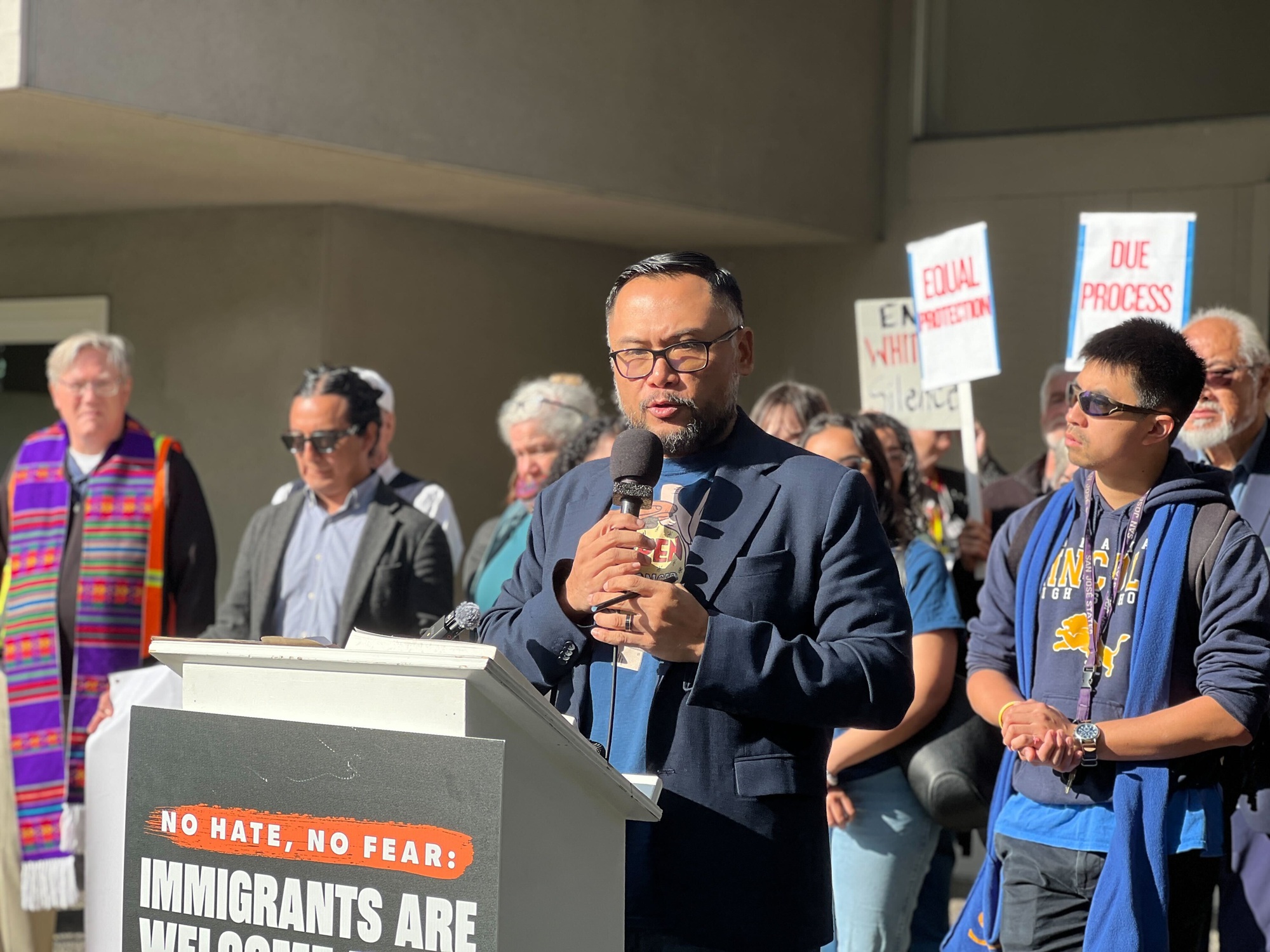
"caption": "Services, Immigrant Rights & Education Network’s Executive Director Huy Tran speaks during a International Migrants Day press conference on Dec. 18, 2025. ",
"credit": "Ayah Ali-Ahmad/KQED",
"altTag": null,
"description": null,
"imgSizes": {
"thumbnail": {
"file": "https://cdn.kqed.org/wp-content/uploads/sites/10/2025/12/MigrantDayKQED-160x120.jpg",
"width": 160,
"height": 120,
"mimeType": "image/jpeg"
},
"1536x1536": {
"file": "https://cdn.kqed.org/wp-content/uploads/sites/10/2025/12/MigrantDayKQED-1536x1152.jpg",
"width": 1536,
"height": 1152,
"mimeType": "image/jpeg"
},
"post-thumbnail": {
"file": "https://cdn.kqed.org/wp-content/uploads/sites/10/2025/12/MigrantDayKQED-672x372.jpg",
"width": 672,
"height": 372,
"mimeType": "image/jpeg"
},
"twentyfourteen-full-width": {
"file": "https://cdn.kqed.org/wp-content/uploads/sites/10/2025/12/MigrantDayKQED-1038x576.jpg",
"width": 1038,
"height": 576,
"mimeType": "image/jpeg"
},
"npr-cds-wide": {
"file": "https://cdn.kqed.org/wp-content/uploads/sites/10/2025/12/MigrantDayKQED-1200x675.jpg",
"width": 1200,
"height": 675,
"mimeType": "image/jpeg"
},
"kqedFullSize": {
"file": "https://cdn.kqed.org/wp-content/uploads/sites/10/2025/12/MigrantDayKQED.jpg",
"width": 2000,
"height": 1500
}
},
"isLoading": false,
"fetchFailed": false
},
"news_12067934": {
"type": "attachments",
"id": "news_12067934",
"meta": {
"index": "attachments_1716263798",
"site": "news",
"id": "12067934",
"found": true
},
"title": "251218-PELOSIS SEAT-MD-01",
"publishDate": 1766106311,
"status": "inherit",
"parent": 12074494,
"modified": 1772047853,
"caption": "(From left) San Francisco Supervisor Connie Chan, Saikat Chakrabarti and State Senator Scott Wiener. ",
"credit": "Martin do Nascimento/KQED; Beth LaBerge/KQED",
"altTag": null,
"description": null,
"imgSizes": {
"thumbnail": {
"file": "https://cdn.kqed.org/wp-content/uploads/sites/10/2025/12/251218-PELOSIS-SEAT-MD-01-160x107.jpg",
"width": 160,
"height": 107,
"mimeType": "image/jpeg"
},
"1536x1536": {
"file": "https://cdn.kqed.org/wp-content/uploads/sites/10/2025/12/251218-PELOSIS-SEAT-MD-01-1536x1025.jpg",
"width": 1536,
"height": 1025,
"mimeType": "image/jpeg"
},
"post-thumbnail": {
"file": "https://cdn.kqed.org/wp-content/uploads/sites/10/2025/12/251218-PELOSIS-SEAT-MD-01-672x372.jpg",
"width": 672,
"height": 372,
"mimeType": "image/jpeg"
},
"twentyfourteen-full-width": {
"file": "https://cdn.kqed.org/wp-content/uploads/sites/10/2025/12/251218-PELOSIS-SEAT-MD-01-1038x576.jpg",
"width": 1038,
"height": 576,
"mimeType": "image/jpeg"
},
"npr-cds-wide": {
"file": "https://cdn.kqed.org/wp-content/uploads/sites/10/2025/12/251218-PELOSIS-SEAT-MD-01-1200x675.jpg",
"width": 1200,
"height": 675,
"mimeType": "image/jpeg"
},
"kqedFullSize": {
"file": "https://cdn.kqed.org/wp-content/uploads/sites/10/2025/12/251218-PELOSIS-SEAT-MD-01.jpg",
"width": 2000,
"height": 1334
}
},
"isLoading": false,
"fetchFailed": false
},
"news_12067898": {
"type": "attachments",
"id": "news_12067898",
"meta": {
"index": "attachments_1716263798",
"site": "news",
"id": "12067898",
"found": true
},
"title": "Migrants At The US-Mexico Border",
"publishDate": 1766101184,
"status": "inherit",
"parent": 12067561,
"modified": 1766102644,
"caption": "The U.S. Border Patrol processes migrants near the Jacumba Hot Springs after crossing the US-Mexico border on June 13, 2024, in San Diego, California. ",
"credit": "Qian Weizhong/VCG via Getty Images",
"altTag": null,
"description": null,
"imgSizes": {
"thumbnail": {
"file": "https://cdn.kqed.org/wp-content/uploads/sites/10/2025/12/MexicoBorderChildrenGetty-160x107.jpg",
"width": 160,
"height": 107,
"mimeType": "image/jpeg"
},
"1536x1536": {
"file": "https://cdn.kqed.org/wp-content/uploads/sites/10/2025/12/MexicoBorderChildrenGetty-1536x1024.jpg",
"width": 1536,
"height": 1024,
"mimeType": "image/jpeg"
},
"post-thumbnail": {
"file": "https://cdn.kqed.org/wp-content/uploads/sites/10/2025/12/MexicoBorderChildrenGetty-672x372.jpg",
"width": 672,
"height": 372,
"mimeType": "image/jpeg"
},
"twentyfourteen-full-width": {
"file": "https://cdn.kqed.org/wp-content/uploads/sites/10/2025/12/MexicoBorderChildrenGetty-1038x576.jpg",
"width": 1038,
"height": 576,
"mimeType": "image/jpeg"
},
"npr-cds-wide": {
"file": "https://cdn.kqed.org/wp-content/uploads/sites/10/2025/12/MexicoBorderChildrenGetty-1200x675.jpg",
"width": 1200,
"height": 675,
"mimeType": "image/jpeg"
},
"kqedFullSize": {
"file": "https://cdn.kqed.org/wp-content/uploads/sites/10/2025/12/MexicoBorderChildrenGetty.jpg",
"width": 2000,
"height": 1333
}
},
"isLoading": false,
"fetchFailed": false
},
"news_12066777": {
"type": "attachments",
"id": "news_12066777",
"meta": {
"index": "attachments_1716263798",
"site": "news",
"id": "12066777",
"found": true
},
"title": "251210-License-Plate Readers-01-KQED",
"publishDate": 1765483809,
"status": "inherit",
"parent": 12074467,
"modified": 1772045309,
"caption": "Law enforcement agencies are deploying vehicle-tracking networks with settings that can make local data nationally searchable, opening the door to federal access even in cities that consider themselves sanctuaries for immigrants and others targeted by the Trump administration.",
"credit": "Courtesy of Flock Safety",
"altTag": null,
"description": null,
"imgSizes": {
"thumbnail": {
"file": "https://cdn.kqed.org/wp-content/uploads/sites/10/2025/12/251210-License-Plate-Readers-01-KQED-160x107.jpg",
"width": 160,
"height": 107,
"mimeType": "image/jpeg"
},
"post-thumbnail": {
"file": "https://cdn.kqed.org/wp-content/uploads/sites/10/2025/12/251210-License-Plate-Readers-01-KQED-672x372.jpg",
"width": 672,
"height": 372,
"mimeType": "image/jpeg"
},
"twentyfourteen-full-width": {
"file": "https://cdn.kqed.org/wp-content/uploads/sites/10/2025/12/251210-License-Plate-Readers-01-KQED-1038x576.jpg",
"width": 1038,
"height": 576,
"mimeType": "image/jpeg"
},
"npr-cds-wide": {
"file": "https://cdn.kqed.org/wp-content/uploads/sites/10/2025/12/251210-License-Plate-Readers-01-KQED-1200x675.jpg",
"width": 1200,
"height": 675,
"mimeType": "image/jpeg"
},
"kqedFullSize": {
"file": "https://cdn.kqed.org/wp-content/uploads/sites/10/2025/12/251210-License-Plate-Readers-01-KQED.jpg",
"width": 1279,
"height": 853
}
},
"isLoading": false,
"fetchFailed": false
},
"news_12067644": {
"type": "attachments",
"id": "news_12067644",
"meta": {
"index": "attachments_1716263798",
"site": "news",
"id": "12067644",
"found": true
},
"title": "Consumer Prices Continue To Rise",
"publishDate": 1766009520,
"status": "inherit",
"parent": 12067581,
"modified": 1766009579,
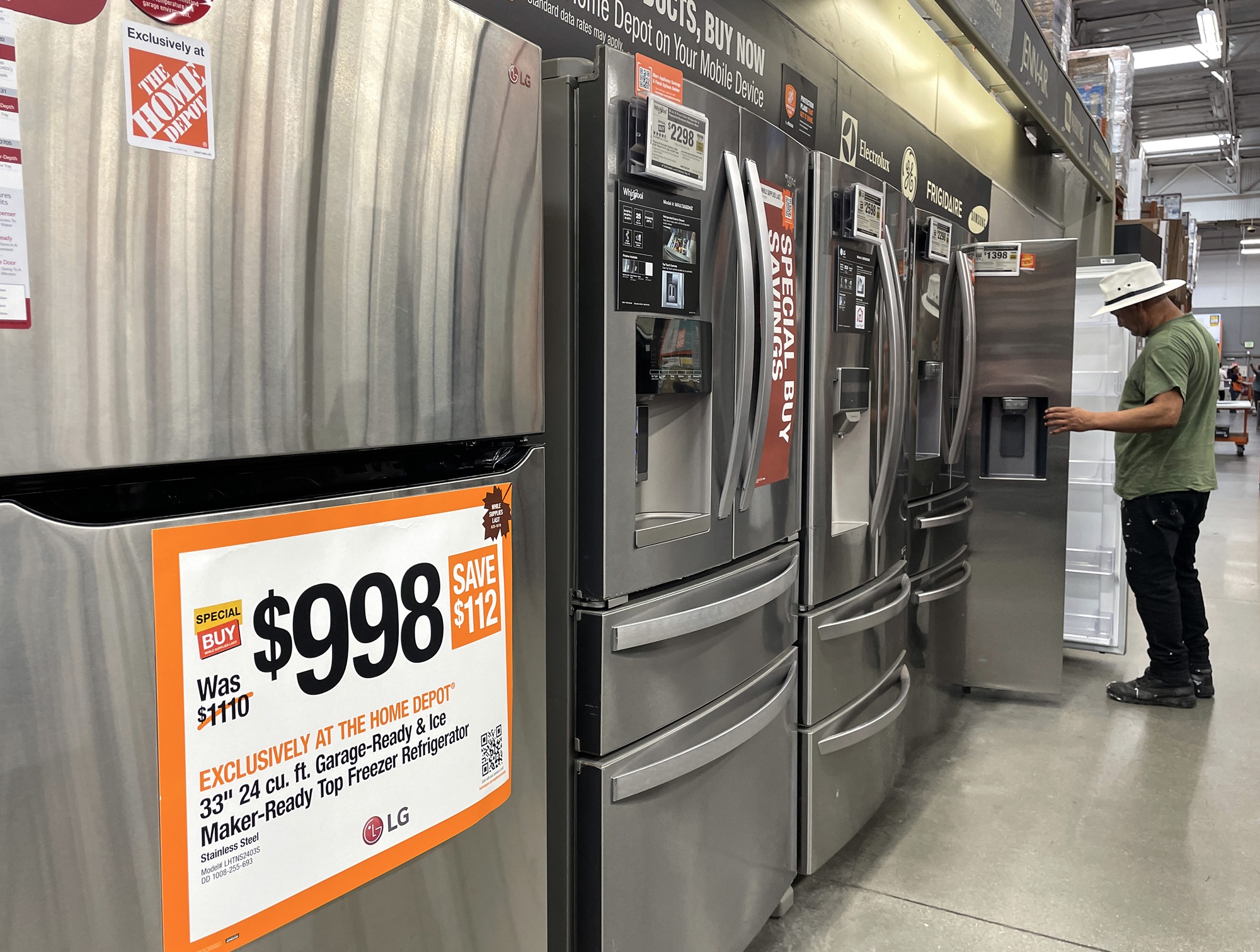
"caption": "A person views a refrigerator in a Home Depot store on Sept. 13, 2022, in Huntington Park, California. ",
"credit": "Mario Tama/Getty Images",
"altTag": null,
"description": null,
"imgSizes": {
"thumbnail": {
"file": "https://cdn.kqed.org/wp-content/uploads/sites/10/2025/12/RefrigeratorsGetty-160x121.jpg",
"width": 160,
"height": 121,
"mimeType": "image/jpeg"
},
"1536x1536": {
"file": "https://cdn.kqed.org/wp-content/uploads/sites/10/2025/12/RefrigeratorsGetty-1536x1160.jpg",
"width": 1536,
"height": 1160,
"mimeType": "image/jpeg"
},
"post-thumbnail": {
"file": "https://cdn.kqed.org/wp-content/uploads/sites/10/2025/12/RefrigeratorsGetty-672x372.jpg",
"width": 672,
"height": 372,
"mimeType": "image/jpeg"
},
"twentyfourteen-full-width": {
"file": "https://cdn.kqed.org/wp-content/uploads/sites/10/2025/12/RefrigeratorsGetty-1038x576.jpg",
"width": 1038,
"height": 576,
"mimeType": "image/jpeg"
},
"npr-cds-wide": {
"file": "https://cdn.kqed.org/wp-content/uploads/sites/10/2025/12/RefrigeratorsGetty-1200x675.jpg",
"width": 1200,
"height": 675,
"mimeType": "image/jpeg"
},
"kqedFullSize": {
"file": "https://cdn.kqed.org/wp-content/uploads/sites/10/2025/12/RefrigeratorsGetty.jpg",
"width": 2000,
"height": 1511
}
},
"isLoading": false,
"fetchFailed": false
},
"news_11990987": {
"type": "attachments",
"id": "news_11990987",
"meta": {
"index": "attachments_1716263798",
"site": "news",
"id": "11990987",
"found": true
},
"title": "240408-FCIDublin-017-BL_qut (1)",
"publishDate": 1718748119,
"status": "inherit",
"parent": 11990979,
"modified": 1718748232,
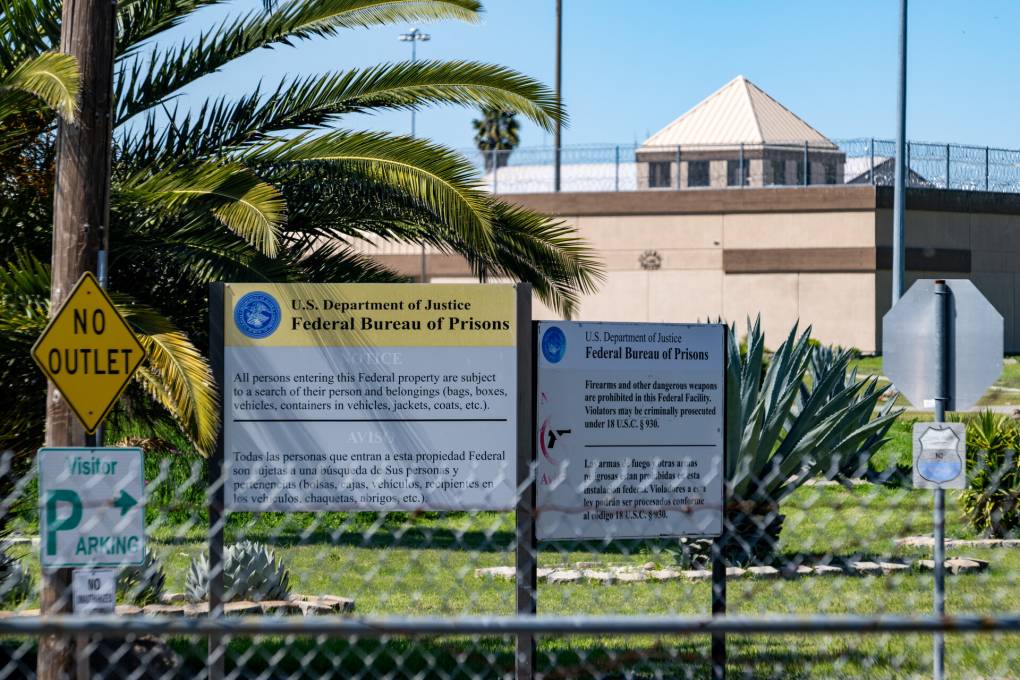
"caption": "The Federal Bureau of Prisons abruptly shut down FCI Dublin in April.",
"credit": "Beth LaBerge/KQED",
"altTag": null,
"description": null,
"imgSizes": {
"medium": {
"file": "https://cdn.kqed.org/wp-content/uploads/sites/10/2024/06/240408-FCIDublin-017-BL_qut-1-800x533.jpg",
"width": 800,
"height": 533,
"mimeType": "image/jpeg"
},
"large": {
"file": "https://cdn.kqed.org/wp-content/uploads/sites/10/2024/06/240408-FCIDublin-017-BL_qut-1-1020x680.jpg",
"width": 1020,
"height": 680,
"mimeType": "image/jpeg"
},
"thumbnail": {
"file": "https://cdn.kqed.org/wp-content/uploads/sites/10/2024/06/240408-FCIDublin-017-BL_qut-1-160x107.jpg",
"width": 160,
"height": 107,
"mimeType": "image/jpeg"
},
"1536x1536": {
"file": "https://cdn.kqed.org/wp-content/uploads/sites/10/2024/06/240408-FCIDublin-017-BL_qut-1-1536x1024.jpg",
"width": 1536,
"height": 1024,
"mimeType": "image/jpeg"
},
"post-thumbnail": {
"file": "https://cdn.kqed.org/wp-content/uploads/sites/10/2024/06/240408-FCIDublin-017-BL_qut-1-672x372.jpg",
"width": 672,
"height": 372,
"mimeType": "image/jpeg"
},
"twentyfourteen-full-width": {
"file": "https://cdn.kqed.org/wp-content/uploads/sites/10/2024/06/240408-FCIDublin-017-BL_qut-1-1038x576.jpg",
"width": 1038,
"height": 576,
"mimeType": "image/jpeg"
},
"kqedFullSize": {
"file": "https://cdn.kqed.org/wp-content/uploads/sites/10/2024/06/240408-FCIDublin-017-BL_qut-1.jpg",
"width": 1920,
"height": 1280
}
},
"isLoading": false,
"fetchFailed": false
},
"news_12067537": {
"type": "attachments",
"id": "news_12067537",
"meta": {
"index": "attachments_1716263798",
"site": "news",
"id": "12067537",
"found": true
},
"title": "20251216_REVOKE OF COMMERCIAL DRIVERS LICENSES_DECEMBER_GH-5-KQED",
"publishDate": 1765991719,
"status": "inherit",
"parent": 0,
"modified": 1766015725,
"caption": "Amarjit Singh stands beside his truck on Dec. 16, 2025, in Livermore. Singh is among thousands of immigrant drivers whose commercial licenses the state planned to revoke after federal pressure. ",
"credit": "Gustavo Hernandez/KQED",
"altTag": null,
"description": null,
"imgSizes": {
"thumbnail": {
"file": "https://cdn.kqed.org/wp-content/uploads/sites/10/2025/12/20251216_REVOKE-OF-COMMERCIAL-DRIVERS-LICENSES_DECEMBER_GH-5-KQED-160x107.jpg",
"width": 160,
"height": 107,
"mimeType": "image/jpeg"
},
"1536x1536": {
"file": "https://cdn.kqed.org/wp-content/uploads/sites/10/2025/12/20251216_REVOKE-OF-COMMERCIAL-DRIVERS-LICENSES_DECEMBER_GH-5-KQED-1536x1024.jpg",
"width": 1536,
"height": 1024,
"mimeType": "image/jpeg"
},
"post-thumbnail": {
"file": "https://cdn.kqed.org/wp-content/uploads/sites/10/2025/12/20251216_REVOKE-OF-COMMERCIAL-DRIVERS-LICENSES_DECEMBER_GH-5-KQED-672x372.jpg",
"width": 672,
"height": 372,
"mimeType": "image/jpeg"
},
"twentyfourteen-full-width": {
"file": "https://cdn.kqed.org/wp-content/uploads/sites/10/2025/12/20251216_REVOKE-OF-COMMERCIAL-DRIVERS-LICENSES_DECEMBER_GH-5-KQED-1038x576.jpg",
"width": 1038,
"height": 576,
"mimeType": "image/jpeg"
},
"npr-cds-wide": {
"file": "https://cdn.kqed.org/wp-content/uploads/sites/10/2025/12/20251216_REVOKE-OF-COMMERCIAL-DRIVERS-LICENSES_DECEMBER_GH-5-KQED-1200x675.jpg",
"width": 1200,
"height": 675,
"mimeType": "image/jpeg"
},
"kqedFullSize": {
"file": "https://cdn.kqed.org/wp-content/uploads/sites/10/2025/12/20251216_REVOKE-OF-COMMERCIAL-DRIVERS-LICENSES_DECEMBER_GH-5-KQED.jpg",
"width": 2000,
"height": 1333
}
},
"isLoading": false,
"fetchFailed": false
},
"news_12067211": {
"type": "attachments",
"id": "news_12067211",
"meta": {
"index": "attachments_1716263798",
"site": "news",
"id": "12067211",
"found": true
},
"title": "Getting Married: Happy Couple Married on Christmas",
"publishDate": 1765830528,
"status": "inherit",
"parent": 12067194,
"modified": 1765830566,
"caption": "\"A natural, real couple getting married during Christmas, surrounded by friends and family.\"",
"credit": "Jason Doiy/Getty Images",
"altTag": null,
"description": null,
"imgSizes": {
"thumbnail": {
"file": "https://cdn.kqed.org/wp-content/uploads/sites/10/2025/12/WeddingsGetty2-160x107.jpg",
"width": 160,
"height": 107,
"mimeType": "image/jpeg"
},
"1536x1536": {
"file": "https://cdn.kqed.org/wp-content/uploads/sites/10/2025/12/WeddingsGetty2-1536x1024.jpg",
"width": 1536,
"height": 1024,
"mimeType": "image/jpeg"
},
"post-thumbnail": {
"file": "https://cdn.kqed.org/wp-content/uploads/sites/10/2025/12/WeddingsGetty2-672x372.jpg",
"width": 672,
"height": 372,
"mimeType": "image/jpeg"
},
"twentyfourteen-full-width": {
"file": "https://cdn.kqed.org/wp-content/uploads/sites/10/2025/12/WeddingsGetty2-1038x576.jpg",
"width": 1038,
"height": 576,
"mimeType": "image/jpeg"
},
"npr-cds-wide": {
"file": "https://cdn.kqed.org/wp-content/uploads/sites/10/2025/12/WeddingsGetty2-1200x675.jpg",
"width": 1200,
"height": 675,
"mimeType": "image/jpeg"
},
"kqedFullSize": {
"file": "https://cdn.kqed.org/wp-content/uploads/sites/10/2025/12/WeddingsGetty2.jpg",
"width": 2000,
"height": 1333
}
},
"isLoading": false,
"fetchFailed": false
},
"news_12007683": {
"type": "attachments",
"id": "news_12007683",
"meta": {
"index": "attachments_1716263798",
"site": "news",
"id": "12007683",
"found": true
},
"title": "Empty classroom at elementary school!",
"publishDate": 1727974066,
"status": "inherit",
"parent": 12007681,
"modified": 1727974159,
"caption": "Santa Clara County Superintendent of Schools, Mary Ann Dewan, was dismissed during an overnight Board of Education meeting.",
"credit": "Getty Images",
"altTag": null,
"description": null,
"imgSizes": {
"medium": {
"file": "https://cdn.kqed.org/wp-content/uploads/sites/10/2024/10/GettyImages-1792528853-800x534.jpg",
"width": 800,
"height": 534,
"mimeType": "image/jpeg"
},
"large": {
"file": "https://cdn.kqed.org/wp-content/uploads/sites/10/2024/10/GettyImages-1792528853-1020x680.jpg",
"width": 1020,
"height": 680,
"mimeType": "image/jpeg"
},
"thumbnail": {
"file": "https://cdn.kqed.org/wp-content/uploads/sites/10/2024/10/GettyImages-1792528853-160x107.jpg",
"width": 160,
"height": 107,
"mimeType": "image/jpeg"
},
"1536x1536": {
"file": "https://cdn.kqed.org/wp-content/uploads/sites/10/2024/10/GettyImages-1792528853-1536x1025.jpg",
"width": 1536,
"height": 1025,
"mimeType": "image/jpeg"
},
"post-thumbnail": {
"file": "https://cdn.kqed.org/wp-content/uploads/sites/10/2024/10/GettyImages-1792528853-672x372.jpg",
"width": 672,
"height": 372,
"mimeType": "image/jpeg"
},
"twentyfourteen-full-width": {
"file": "https://cdn.kqed.org/wp-content/uploads/sites/10/2024/10/GettyImages-1792528853-1038x576.jpg",
"width": 1038,
"height": 576,
"mimeType": "image/jpeg"
},
"full-width": {
"file": "https://cdn.kqed.org/wp-content/uploads/sites/10/2024/10/GettyImages-1792528853-1920x1281.jpg",
"width": 1920,
"height": 1281,
"mimeType": "image/jpeg"
},
"kqedFullSize": {
"file": "https://cdn.kqed.org/wp-content/uploads/sites/10/2024/10/GettyImages-1792528853.jpg",
"width": 2000,
"height": 1334
}
},
"isLoading": false,
"fetchFailed": false
},
"news_12067146": {
"type": "attachments",
"id": "news_12067146",
"meta": {
"index": "attachments_1716263798",
"site": "news",
"id": "12067146",
"found": true
},
"title": "Alyssa and Merwin Moss are married in San Francisco City Hall on Oct. 28, 2025.",
"publishDate": 1765825180,
"status": "inherit",
"parent": 12067114,
"modified": 1765825232,
"caption": "Alyssa and Merwin Moss are married in San Francisco City Hall on Oct. 28, 2025.",
"credit": "Martin do Nascimento/KQED",
"altTag": null,
"description": null,
"imgSizes": {
"thumbnail": {
"file": "https://cdn.kqed.org/wp-content/uploads/sites/10/2025/12/251029-SWIFT-SHOWGIRL-MD-03-KQED_qed-160x107.jpg",
"width": 160,
"height": 107,
"mimeType": "image/jpeg"
},
"1536x1536": {
"file": "https://cdn.kqed.org/wp-content/uploads/sites/10/2025/12/251029-SWIFT-SHOWGIRL-MD-03-KQED_qed-1536x1024.jpg",
"width": 1536,
"height": 1024,
"mimeType": "image/jpeg"
},
"post-thumbnail": {
"file": "https://cdn.kqed.org/wp-content/uploads/sites/10/2025/12/251029-SWIFT-SHOWGIRL-MD-03-KQED_qed-672x372.jpg",
"width": 672,
"height": 372,
"mimeType": "image/jpeg"
},
"twentyfourteen-full-width": {
"file": "https://cdn.kqed.org/wp-content/uploads/sites/10/2025/12/251029-SWIFT-SHOWGIRL-MD-03-KQED_qed-1038x576.jpg",
"width": 1038,
"height": 576,
"mimeType": "image/jpeg"
},
"npr-cds-wide": {
"file": "https://cdn.kqed.org/wp-content/uploads/sites/10/2025/12/251029-SWIFT-SHOWGIRL-MD-03-KQED_qed-1200x675.jpg",
"width": 1200,
"height": 675,
"mimeType": "image/jpeg"
},
"kqedFullSize": {
"file": "https://cdn.kqed.org/wp-content/uploads/sites/10/2025/12/251029-SWIFT-SHOWGIRL-MD-03-KQED_qed.jpg",
"width": 1999,
"height": 1333
}
},
"isLoading": false,
"fetchFailed": false
},
"news_12067103": {
"type": "attachments",
"id": "news_12067103",
"meta": {
"index": "attachments_1716263798",
"site": "news",
"id": "12067103",
"found": true
},
"title": "IMG_6628",
"publishDate": 1765820279,
"status": "inherit",
"parent": 12067098,
"modified": 1765933964,
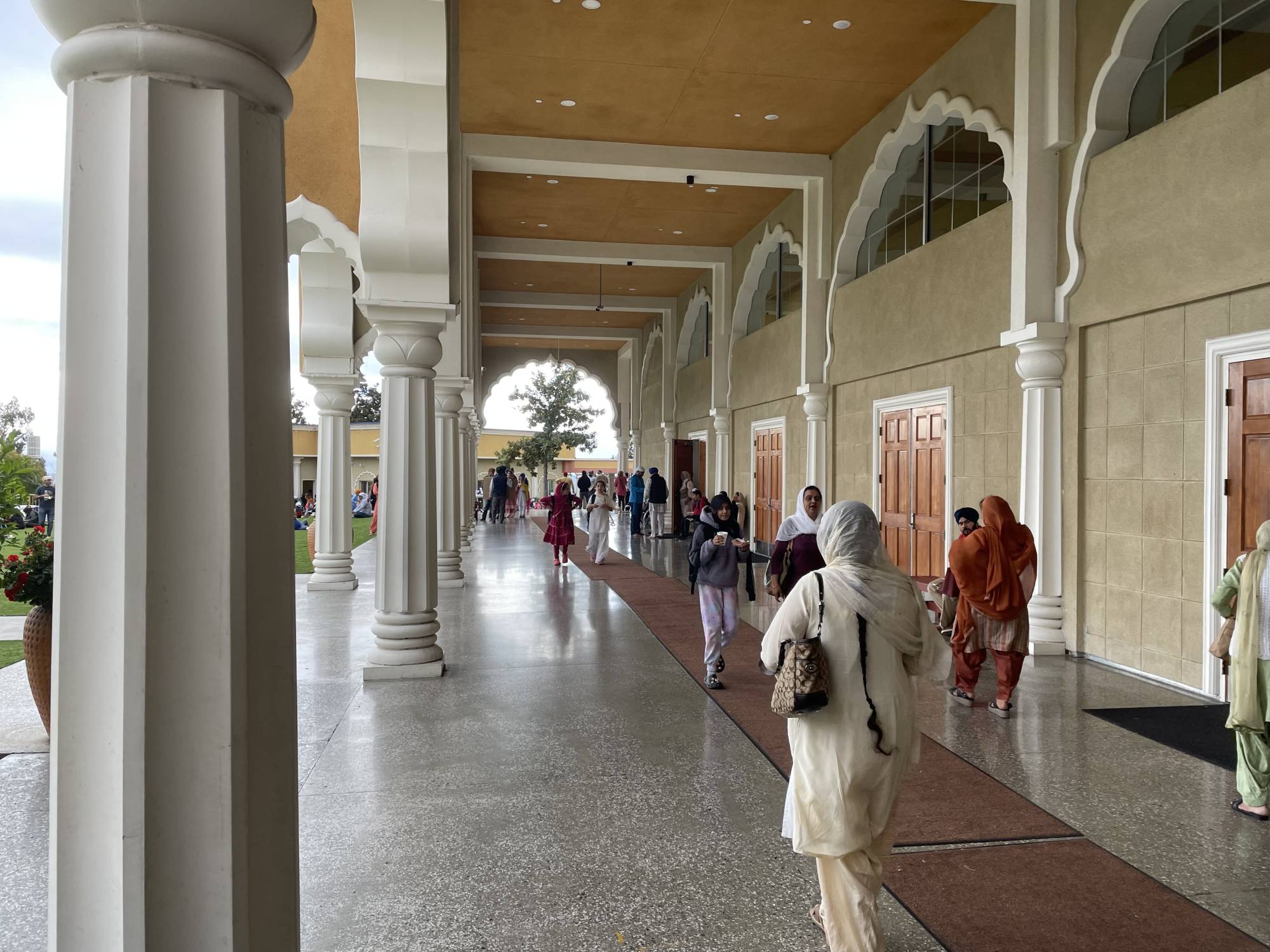
"caption": "In between prayer, congregants make their way to langar — the community kitchen where free meals are served throughout the day at the San José Gurdwara.",
"credit": "Courtesy of Tanay Gokhale",
"altTag": null,
"description": null,
"imgSizes": {
"medium": {
"file": "https://cdn.kqed.org/wp-content/uploads/sites/10/2025/12/IMG_6628-2000x1500.jpg",
"width": 2000,
"height": 1500,
"mimeType": "image/jpeg"
},
"large": {
"file": "https://cdn.kqed.org/wp-content/uploads/sites/10/2025/12/IMG_6628-2000x1500.jpg",
"width": 2000,
"height": 1500,
"mimeType": "image/jpeg"
},
"thumbnail": {
"file": "https://cdn.kqed.org/wp-content/uploads/sites/10/2025/12/IMG_6628-160x120.jpg",
"width": 160,
"height": 120,
"mimeType": "image/jpeg"
},
"1536x1536": {
"file": "https://cdn.kqed.org/wp-content/uploads/sites/10/2025/12/IMG_6628-1536x1152.jpg",
"width": 1536,
"height": 1152,
"mimeType": "image/jpeg"
},
"2048x2048": {
"file": "https://cdn.kqed.org/wp-content/uploads/sites/10/2025/12/IMG_6628-2048x1536.jpg",
"width": 2048,
"height": 1536,
"mimeType": "image/jpeg"
},
"post-thumbnail": {
"file": "https://cdn.kqed.org/wp-content/uploads/sites/10/2025/12/IMG_6628-672x372.jpg",
"width": 672,
"height": 372,
"mimeType": "image/jpeg"
},
"twentyfourteen-full-width": {
"file": "https://cdn.kqed.org/wp-content/uploads/sites/10/2025/12/IMG_6628-1038x576.jpg",
"width": 1038,
"height": 576,
"mimeType": "image/jpeg"
},
"full-width": {
"file": "https://cdn.kqed.org/wp-content/uploads/sites/10/2025/12/IMG_6628-2000x1500.jpg",
"width": 2000,
"height": 1500,
"mimeType": "image/jpeg"
},
"npr-cds-wide": {
"file": "https://cdn.kqed.org/wp-content/uploads/sites/10/2025/12/IMG_6628-1200x675.jpg",
"width": 1200,
"height": 675,
"mimeType": "image/jpeg"
},
"kqedFullSize": {
"file": "https://cdn.kqed.org/wp-content/uploads/sites/10/2025/12/IMG_6628-scaled-e1765820322626.jpg",
"width": 2000,
"height": 1500
}
},
"isLoading": false,
"fetchFailed": false
},
"news_12067172": {
"type": "attachments",
"id": "news_12067172",
"meta": {
"index": "attachments_1716263798",
"site": "news",
"id": "12067172",
"found": true
},
"title": "Workers grind and polish stone for countertops 3",
"publishDate": 1765828944,
"status": "inherit",
"parent": 12067166,
"modified": 1765829003,
"caption": "A stone countertop fabricator wears a mask to help protect against airborne particles, which can contribute to silicosis, at a shop on Oct. 31, 2023, in Sun Valley, California.",
"credit": "Brian van der Brug/Los Angeles Times via Getty Images",
"altTag": null,
"description": null,
"imgSizes": {
"thumbnail": {
"file": "https://cdn.kqed.org/wp-content/uploads/sites/10/2025/12/StoneworkerGetty1-160x107.jpg",
"width": 160,
"height": 107,
"mimeType": "image/jpeg"
},
"1536x1536": {
"file": "https://cdn.kqed.org/wp-content/uploads/sites/10/2025/12/StoneworkerGetty1-1536x1025.jpg",
"width": 1536,
"height": 1025,
"mimeType": "image/jpeg"
},
"post-thumbnail": {
"file": "https://cdn.kqed.org/wp-content/uploads/sites/10/2025/12/StoneworkerGetty1-672x372.jpg",
"width": 672,
"height": 372,
"mimeType": "image/jpeg"
},
"twentyfourteen-full-width": {
"file": "https://cdn.kqed.org/wp-content/uploads/sites/10/2025/12/StoneworkerGetty1-1038x576.jpg",
"width": 1038,
"height": 576,
"mimeType": "image/jpeg"
},
"npr-cds-wide": {
"file": "https://cdn.kqed.org/wp-content/uploads/sites/10/2025/12/StoneworkerGetty1-1200x675.jpg",
"width": 1200,
"height": 675,
"mimeType": "image/jpeg"
},
"kqedFullSize": {
"file": "https://cdn.kqed.org/wp-content/uploads/sites/10/2025/12/StoneworkerGetty1.jpg",
"width": 2000,
"height": 1334
}
},
"isLoading": false,
"fetchFailed": false
}
},
"audioPlayerReducer": {
"postId": "stream_live",
"isPaused": true,
"isPlaying": false,
"pfsActive": false,
"pledgeModalIsOpen": true,
"playerDrawerIsOpen": false,
"liveAudioPlayStartedAt": 0,
"liveAudioPlayContext": ""
},
"authorsReducer": {
"byline_news_12067561": {
"type": "authors",
"id": "byline_news_12067561",
"meta": {
"override": true
},
"slug": "byline_news_12067561",
"name": "Mark Betancourt, The California Newsroom",
"isLoading": false
},
"rachael-myrow": {
"type": "authors",
"id": "251",
"meta": {
"index": "authors_1716337520",
"id": "251",
"found": true
},
"name": "Rachael Myrow",
"firstName": "Rachael",
"lastName": "Myrow",
"slug": "rachael-myrow",
"email": "rmyrow@kqed.org",
"display_author_email": true,
"staff_mastheads": [
"news"
],
"title": "Senior Editor of KQED's Silicon Valley News Desk",
"bio": "• I write and edit stories about how Silicon Valley power and policies shape everyday life in California. I’m also passionate about making Bay Area history and culture more accessible to a broad public. • I’ve been a journalist for most of my life, starting in high school with The Franklin Press in Los Angeles, where I grew up. While earning my first degree in English at UC Berkeley, I got my start in public radio at KALX-FM. After completing a second degree in journalism at Cal, I landed my first professional job at Marketplace, then moved on to KPCC (now LAist), and then KQED, where I hosted The California Report for more than seven years. • My reporting has appeared on NPR, The World, WBUR’s \u003ci>Here & Now\u003c/i>, and the BBC. I also guest host for KQED’s \u003ci>Forum\u003c/i>, as well as the Commonwealth Club in San Francisco. • I speak periodically on media, democracy and technology issues, and do voiceover work for documentaries and educational video projects. • Outside of the studio, you'll find me hiking Bay Area trails and whipping up Insta-ready meals in my kitchen. • I do not accept gifts, money, or favors from anyone connected to my reporting, I don't pay people for information, and I do not support or donate to political causes. • I strive to treat the people I report on with fairness, honesty, and respect. I also recognize there are often multiple sides to a story and work to verify information through multiple sources and documentation. If I get something wrong, I correct it.",
"avatar": "https://secure.gravatar.com/avatar/87bf8cb5874e045cdff430523a6d48b1?s=600&d=blank&r=g",
"twitter": "rachaelmyrow",
"facebook": null,
"instagram": null,
"linkedin": "https://www.linkedin.com/in/rachaelmyrow/",
"sites": [
{
"site": "arts",
"roles": [
"administrator"
]
},
{
"site": "news",
"roles": [
"edit_others_posts",
"editor"
]
},
{
"site": "futureofyou",
"roles": [
"editor"
]
},
{
"site": "bayareabites",
"roles": [
"editor"
]
},
{
"site": "stateofhealth",
"roles": [
"editor"
]
},
{
"site": "science",
"roles": [
"editor"
]
},
{
"site": "food",
"roles": [
"editor"
]
},
{
"site": "forum",
"roles": [
"editor"
]
},
{
"site": "liveblog",
"roles": [
"author"
]
}
],
"headData": {
"title": "Rachael Myrow | KQED",
"description": "Senior Editor of KQED's Silicon Valley News Desk",
"ogImgSrc": "https://secure.gravatar.com/avatar/87bf8cb5874e045cdff430523a6d48b1?s=600&d=blank&r=g",
"twImgSrc": "https://secure.gravatar.com/avatar/87bf8cb5874e045cdff430523a6d48b1?s=600&d=blank&r=g"
},
"isLoading": false,
"link": "/author/rachael-myrow"
},
"scottshafer": {
"type": "authors",
"id": "255",
"meta": {
"index": "authors_1716337520",
"id": "255",
"found": true
},
"name": "Scott Shafer",
"firstName": "Scott",
"lastName": "Shafer",
"slug": "scottshafer",
"email": "sshafer@kqed.org",
"display_author_email": false,
"staff_mastheads": [
"news"
],
"title": "KQED Contributor",
"bio": "Scott Shafer is a senior editor with the KQED Politics and Government desk. He is co-host of Political Breakdown, the award-winning radio show and podcast with a personal take on the world of politics. Scott came to KQED in 1998 to host the statewide\u003cem> California Report\u003c/em>. Prior to that he had extended stints in politics and government\u003cem>.\u003c/em> He uses that inside experience at KQED in his, reporting, hosting and analysis for the politics desk. Scott collaborated \u003cem>Political Breakdown a\u003c/em>nd on \u003cem>The Political Mind of Jerry Brown, \u003c/em>an eight-part series about the life and extraordinary political career of the former governor. For fun, he plays water polo with the San Francisco Tsunami.",
"avatar": "https://secure.gravatar.com/avatar/a62ebae45b79d7aed1a39a0e3bf68104?s=600&d=blank&r=g",
"twitter": "scottshafer",
"bluesky": null,
"facebook": null,
"instagram": null,
"linkedin": null,
"sites": [
{
"site": "news",
"roles": [
"editor"
]
},
{
"site": "stateofhealth",
"roles": [
"author"
]
},
{
"site": "science",
"roles": [
"author"
]
},
{
"site": "forum",
"roles": [
"subscriber"
]
},
{
"site": "liveblog",
"roles": [
"author"
]
}
],
"headData": {
"title": "Scott Shafer | KQED",
"description": "KQED Contributor",
"ogImgSrc": "https://secure.gravatar.com/avatar/a62ebae45b79d7aed1a39a0e3bf68104?s=600&d=blank&r=g",
"twImgSrc": "https://secure.gravatar.com/avatar/a62ebae45b79d7aed1a39a0e3bf68104?s=600&d=blank&r=g"
},
"isLoading": false,
"link": "/author/scottshafer"
},
"tychehendricks": {
"type": "authors",
"id": "259",
"meta": {
"index": "authors_1716337520",
"id": "259",
"found": true
},
"name": "Tyche Hendricks",
"firstName": "Tyche",
"lastName": "Hendricks",
"slug": "tychehendricks",
"email": "thendricks@kqed.org",
"display_author_email": true,
"staff_mastheads": [
"news"
],
"title": "KQED Senior Editor, Immigration",
"bio": "\u003cspan style=\"font-weight: 400;\">Tyche Hendricks is KQED’s senior editor for immigration, leading coverage of the policy and politics that affect California’s immigrant communities. Her work for KQED’s radio and online audiences is also carried on NPR and other national outlets. She has been recognized with awards from the Radio and Television News Directors Association, the Society for Professional Journalists; the Education Writers Association; the Best of the West and the National Federation of Community Broadcasters. Before joining KQED in 2010, Tyche spent more than a dozen years as a newspaper reporter, notably at the \u003c/span>\u003ci>\u003cspan style=\"font-weight: 400;\">San Francisco Chronicle\u003c/span>\u003c/i>\u003cspan style=\"font-weight: 400;\">. At different times she has covered criminal justice, government and politics and urban planning. Tyche has taught in the MFA Creative Writing program at the University of San Francisco and at UC Berkeley’s Graduate School of Journalism, where she was co-director of a national immigration symposium for professional journalists. She is the author of \u003c/span>\u003ci>\u003cspan style=\"font-weight: 400;\">The Wind Doesn't Need a Passport: Stories from the U.S.-Mexico Borderlands\u003c/span>\u003c/i>\u003cspan style=\"font-weight: 400;\"> (University of California Press). \u003c/span>",
"avatar": "https://secure.gravatar.com/avatar/b8ee458e2731c2d43df86882ce17267e?s=600&d=blank&r=g",
"twitter": "tychehendricks",
"facebook": null,
"instagram": null,
"linkedin": null,
"sites": [
{
"site": "news",
"roles": [
"editor"
]
},
{
"site": "stateofhealth",
"roles": [
"editor"
]
}
],
"headData": {
"title": "Tyche Hendricks | KQED",
"description": "KQED Senior Editor, Immigration",
"ogImgSrc": "https://secure.gravatar.com/avatar/b8ee458e2731c2d43df86882ce17267e?s=600&d=blank&r=g",
"twImgSrc": "https://secure.gravatar.com/avatar/b8ee458e2731c2d43df86882ce17267e?s=600&d=blank&r=g"
},
"isLoading": false,
"link": "/author/tychehendricks"
},
"shossaini": {
"type": "authors",
"id": "3214",
"meta": {
"index": "authors_1716337520",
"id": "3214",
"found": true
},
"name": "Sara Hossaini",
"firstName": "Sara",
"lastName": "Hossaini",
"slug": "shossaini",
"email": "shossaini@kqed.org",
"display_author_email": true,
"staff_mastheads": [
"news"
],
"title": "KQED Reporter",
"bio": "Sara Hossaini came to general assignment reporting at KQED in 2013 after two winters reporting at Wyoming Public Radio. She holds a bachelor's degree in broadcast journalism from the University of Nebraska-Lincoln. Her radio romance began after a bitter breakup with documentary film (Ok, maybe it's still complicated). Her first simultaneous jobs in San Francisco were as Associate Producer on a PBS film series through the Center for Asian American Media and as a butler. She likes to trot, plot and make things with her hands.",
"avatar": "https://secure.gravatar.com/avatar/060e9f56b9554e17942e89f413242774?s=600&d=blank&r=g",
"twitter": "mshossaini",
"facebook": null,
"instagram": null,
"linkedin": null,
"sites": [
{
"site": "news",
"roles": [
"author"
]
},
{
"site": "stateofhealth",
"roles": [
"author"
]
}
],
"headData": {
"title": "Sara Hossaini | KQED",
"description": "KQED Reporter",
"ogImgSrc": "https://secure.gravatar.com/avatar/060e9f56b9554e17942e89f413242774?s=600&d=blank&r=g",
"twImgSrc": "https://secure.gravatar.com/avatar/060e9f56b9554e17942e89f413242774?s=600&d=blank&r=g"
},
"isLoading": false,
"link": "/author/shossaini"
},
"fjhabvala": {
"type": "authors",
"id": "8659",
"meta": {
"index": "authors_1716337520",
"id": "8659",
"found": true
},
"name": "Farida Jhabvala Romero",
"firstName": "Farida",
"lastName": "Jhabvala Romero",
"slug": "fjhabvala",
"email": "fjhabvala@kqed.org",
"display_author_email": true,
"staff_mastheads": [
"news"
],
"title": "KQED Contributor",
"bio": "\u003cspan style=\"font-weight: 400;\">Farida Jhabvala Romero is a Labor Correspondent for KQED. She previously covered immigration. Farida was \u003ca href=\"https://www.ccnma.org/2022-most-influential-latina-journalists\">named\u003c/a> one of the 10 Most Influential Latina Journalists in California in 2022 by the California Chicano News Media Association. Her work has won awards from the Society of Professional Journalists (Northern California), as well as a national and regional Edward M. Murrow Award for the collaborative reporting projects “Dangerous Air” and “Graying California.” \u003c/span>\u003cspan style=\"font-weight: 400;\">Before joining KQED, Farida worked as a producer at Radio Bilingüe, a national public radio network. Farida earned her master’s degree in journalism from Stanford University.\u003c/span>",
"avatar": "https://secure.gravatar.com/avatar/c3ab27c5554b67b478f80971e515aa02?s=600&d=blank&r=g",
"twitter": "FaridaJhabvala",
"facebook": null,
"instagram": null,
"linkedin": "https://www.linkedin.com/in/faridajhabvala/",
"sites": [
{
"site": "news",
"roles": [
"editor"
]
},
{
"site": "stateofhealth",
"roles": [
"author"
]
}
],
"headData": {
"title": "Farida Jhabvala Romero | KQED",
"description": "KQED Contributor",
"ogImgSrc": "https://secure.gravatar.com/avatar/c3ab27c5554b67b478f80971e515aa02?s=600&d=blank&r=g",
"twImgSrc": "https://secure.gravatar.com/avatar/c3ab27c5554b67b478f80971e515aa02?s=600&d=blank&r=g"
},
"isLoading": false,
"link": "/author/fjhabvala"
},
"ccabreralomeli": {
"type": "authors",
"id": "11708",
"meta": {
"index": "authors_1716337520",
"id": "11708",
"found": true
},
"name": "Carlos Cabrera-Lomelí",
"firstName": "Carlos",
"lastName": "Cabrera-Lomelí",
"slug": "ccabreralomeli",
"email": "ccabreralomeli@KQED.org",
"display_author_email": true,
"staff_mastheads": [
"news"
],
"title": "Community Reporter",
"bio": "Carlos Cabrera-Lomelí is a community reporter with KQED's digital engagement team. He also reports and co-produces for KQED's bilingual news hub KQED en Español. He grew up in San Francisco's Mission District and has previously worked with Univision, 48 Hills and REFORMA in Mexico City.",
"avatar": "https://secure.gravatar.com/avatar/c309be9665e484f887b818c89e273ecc673004f426f36b24d00a4d813a2e0518?s=600&d=blank&r=g",
"twitter": "@LomeliCabrera",
"bluesky": null,
"facebook": null,
"instagram": null,
"linkedin": null,
"sites": [
{
"site": "arts",
"roles": [
"editor"
]
},
{
"site": "news",
"roles": [
"editor"
]
},
{
"site": "about",
"roles": [
"editor"
]
},
{
"site": "science",
"roles": [
"editor"
]
},
{
"site": "perspectives",
"roles": [
"editor"
]
},
{
"site": "elections",
"roles": [
"editor"
]
},
{
"site": "liveblog",
"roles": [
"contributor"
]
}
],
"headData": {
"title": "Carlos Cabrera-Lomelí | KQED",
"description": "Community Reporter",
"ogImgSrc": "https://secure.gravatar.com/avatar/c309be9665e484f887b818c89e273ecc673004f426f36b24d00a4d813a2e0518?s=600&d=blank&r=g",
"twImgSrc": "https://secure.gravatar.com/avatar/c309be9665e484f887b818c89e273ecc673004f426f36b24d00a4d813a2e0518?s=600&d=blank&r=g"
},
"isLoading": false,
"link": "/author/ccabreralomeli"
},
"nkhan": {
"type": "authors",
"id": "11867",
"meta": {
"index": "authors_1716337520",
"id": "11867",
"found": true
},
"name": "Nisa Khan",
"firstName": "Nisa",
"lastName": "Khan",
"slug": "nkhan",
"email": "nkhan@kqed.org",
"display_author_email": false,
"staff_mastheads": [],
"title": "KQED Contributor",
"bio": "Nisa Khan is a reporter for KQED's Audience News Desk. She was formerly a data reporter at Michigan Radio. She earned a Bachelor of Science in Information from the University of Michigan and a Master of Arts in Communication from Stanford University.",
"avatar": "https://secure.gravatar.com/avatar/a3bf1efcfbe7658d13a434cc54d0b2e3?s=600&d=blank&r=g",
"twitter": "mnisakhan",
"bluesky": null,
"facebook": null,
"instagram": null,
"linkedin": null,
"sites": [
{
"site": "arts",
"roles": [
"editor"
]
},
{
"site": "news",
"roles": [
"editor"
]
},
{
"site": "science",
"roles": [
"editor",
"author"
]
},
{
"site": "forum",
"roles": [
"editor"
]
},
{
"site": "liveblog",
"roles": [
"contributor"
]
}
],
"headData": {
"title": "Nisa Khan | KQED",
"description": "KQED Contributor",
"ogImgSrc": "https://secure.gravatar.com/avatar/a3bf1efcfbe7658d13a434cc54d0b2e3?s=600&d=blank&r=g",
"twImgSrc": "https://secure.gravatar.com/avatar/a3bf1efcfbe7658d13a434cc54d0b2e3?s=600&d=blank&r=g"
},
"isLoading": false,
"link": "/author/nkhan"
},
"sprabha": {
"type": "authors",
"id": "11976",
"meta": {
"index": "authors_1716337520",
"id": "11976",
"found": true
},
"name": "Srishti Prabha",
"firstName": "Srishti",
"lastName": "Prabha",
"slug": "sprabha",
"email": "sprabha@KQED.org",
"display_author_email": false,
"staff_mastheads": [],
"title": "KQED Contributor",
"bio": null,
"avatar": "https://secure.gravatar.com/avatar/cc4d8ef770090714faad7e1d24857f806d09340456c5734167b9a6361b175d7d?s=600&d=blank&r=g",
"twitter": null,
"bluesky": null,
"facebook": null,
"instagram": null,
"linkedin": null,
"sites": [
{
"site": "news",
"roles": [
"editor"
]
}
],
"headData": {
"title": "Srishti Prabha | KQED",
"description": "KQED Contributor",
"ogImgSrc": "https://secure.gravatar.com/avatar/cc4d8ef770090714faad7e1d24857f806d09340456c5734167b9a6361b175d7d?s=600&d=blank&r=g",
"twImgSrc": "https://secure.gravatar.com/avatar/cc4d8ef770090714faad7e1d24857f806d09340456c5734167b9a6361b175d7d?s=600&d=blank&r=g"
},
"isLoading": false,
"link": "/author/sprabha"
},
"aaliahmad": {
"type": "authors",
"id": "11986",
"meta": {
"index": "authors_1716337520",
"id": "11986",
"found": true
},
"name": "Ayah Ali-Ahmad",
"firstName": "Ayah",
"lastName": "Ali-Ahmad",
"slug": "aaliahmad",
"email": "aaliahmad@KQED.org",
"display_author_email": false,
"staff_mastheads": [],
"title": "KQED Contributor",
"bio": null,
"avatar": "https://secure.gravatar.com/avatar/7f340465c69a2c816f6c07000137a3ee?s=600&d=blank&r=g",
"twitter": "ayahaliahmad",
"bluesky": null,
"facebook": null,
"instagram": null,
"linkedin": null,
"sites": [
{
"site": "news",
"roles": [
"author"
]
}
],
"headData": {
"title": "Ayah Ali-Ahmad | KQED",
"description": "KQED Contributor",
"ogImgSrc": "https://secure.gravatar.com/avatar/7f340465c69a2c816f6c07000137a3ee?s=600&d=blank&r=g",
"twImgSrc": "https://secure.gravatar.com/avatar/7f340465c69a2c816f6c07000137a3ee?s=600&d=blank&r=g"
},
"isLoading": false,
"link": "/author/aaliahmad"
}
},
"pagesReducer": {
"news_tag_california": {
"type": "terms",
"id": "news_18538",
"meta": {
"index": "terms_1716263798",
"site": "news",
"id": "18538",
"score": 6.8450828
},
"featImg": null,
"name": "California",
"description": null,
"taxonomy": "tag",
"headData": {
"twImgId": null,
"twTitle": null,
"ogTitle": null,
"ogImgId": null,
"twDescription": null,
"description": null,
"title": "California Archives | KQED News",
"ogDescription": null
},
"ttid": 31,
"slug": "california",
"isLoading": false,
"title": "California",
"pageMeta": {
"site": "news",
"WpPageTemplate": "page-topic-editorial",
"currentPage": 37
},
"blocks": [
{
"blockName": "kqed/post-list",
"attrs": {
"layout": "cardArticle2",
"query": "posts/news?tag=california",
"seeMore": false,
"paginated": true,
"page": 37
}
},
{
"blockName": "kqed/ad"
}
]
}
},
"pfsSessionReducer": {},
"postsReducer": {
"stream_live": {
"type": "live",
"id": "stream_live",
"audioUrl": "https://streams.kqed.org/kqedradio",
"title": "Live Stream",
"excerpt": "Live Stream information currently unavailable.",
"link": "/radio",
"featImg": "",
"label": {
"name": "KQED Live",
"link": "/"
}
},
"stream_kqedNewscast": {
"type": "posts",
"id": "stream_kqedNewscast",
"audioUrl": "https://www.kqed.org/.stream/anon/radio/RDnews/newscast.mp3?_=1",
"title": "KQED Newscast",
"featImg": "",
"label": {
"name": "88.5 FM",
"link": "/"
}
},
"news_12067803": {
"type": "posts",
"id": "news_12067803",
"meta": {
"index": "posts_1716263798",
"site": "news",
"id": "12067803",
"score": null,
"sort": [
1766160018000
]
},
"guestAuthors": [],
"slug": "san-jose-activists-march-on-international-migrants-day-at-a-time-of-unprecedented-threats",
"title": "San José Activists March on International Migrants Day, at a Time of Unprecedented Threats",
"publishDate": 1766160018,
"format": "standard",
"headTitle": "San José Activists March on International Migrants Day, at a Time of Unprecedented Threats | KQED",
"labelTerm": {
"site": "news"
},
"content": "\u003cp>In commemoration of International Migrants Day, dozens of faith leaders, activists and residents marched through \u003ca href=\"https://www.kqed.org/news/tag/san-jose\">San José\u003c/a> on Thursday to protest the Trump administration’s immigration policies and pressure the city to bolster investments in \u003ca href=\"https://www.kqed.org/news/tag/immigration\">immigration\u003c/a> legal services.\u003c/p>\n\u003cp>Participants from the nonprofit Services, Immigrant Rights & Education Network and the multi-faith group PACT reenacted “La Posada,” a Latin American tradition dramatizing a scene in the Bible where Mary and Joseph seek shelter but are repeatedly turned away — a metaphor for the U.S.’s treatment of asylum seekers today, advocates said.\u003c/p>\n\u003cp>Joanna Becerra, a community leader with Amigos de Guadalupe, spoke through an interpreter about the critical need for legal representation. She cited the administration’s expanded funding for enforcement — an estimated $\u003ca href=\"https://www.kqed.org/forum/2010101910650/ices-budget-just-tripled-whats-next\">170 billion federal budget for ICE\u003c/a> — as a direct threat to families in the South Bay.\u003c/p>\n\u003cp>[ad fullwidth]\u003c/p>\n\u003cp>“The Trump administration has put together a massive machine to deport millions of people,” Becerra said. “When people facing deportation have access to legal representation, they have a way better chance at a positive outcome.”\u003c/p>\n\u003cp>The coalition, which includes the South Bay Labor Council and Amigos de Guadalupe, is demanding that the San José City Council allocate an additional $500,000 toward the legal defense of immigrant communities. This would bring the city’s total commitment to roughly $1.5 million for legal services and rapid response networks.\u003c/p>\n\u003cfigure id=\"attachment_12060896\" class=\"wp-caption aligncenter\" style=\"max-width: 2000px\">\u003cimg loading=\"lazy\" decoding=\"async\" class=\"size-full wp-image-12060896\" src=\"https://cdn.kqed.org/wp-content/uploads/sites/10/2025/10/PeterOrtizKQED.jpg\" alt=\"\" width=\"2000\" height=\"1505\" srcset=\"https://cdn.kqed.org/wp-content/uploads/sites/10/2025/10/PeterOrtizKQED.jpg 2000w, https://cdn.kqed.org/wp-content/uploads/sites/10/2025/10/PeterOrtizKQED-160x120.jpg 160w, https://cdn.kqed.org/wp-content/uploads/sites/10/2025/10/PeterOrtizKQED-1536x1156.jpg 1536w\" sizes=\"auto, (max-width: 2000px) 100vw, 2000px\">\u003cfigcaption class=\"wp-caption-text\">District 5 San José City Councilmember Peter Ortiz speaks during a protest against ICE in South San José on June 6, 2025. \u003ccite>(Joseph Geha/KQED)\u003c/cite>\u003c/figcaption>\u003c/figure>\n\u003cp>The push follows similar moves in neighboring \u003ca href=\"https://www.kqed.org/news/12059894/alameda-county-approves-3-5-million-to-scale-up-immigrant-defense-amid-ice-surge\">Alameda County\u003c/a> and \u003ca href=\"https://www.kqed.org/news/12061844/after-trump-surge-scare-sf-supervisors-race-to-fund-immigrant-legal-defense\">San Francisco\u003c/a>, where officials recently increased their own funding for immigrant legal defense in anticipation of federal policy changes.\u003c/p>\n\u003cp>With President Donald Trump’s mass deportation program recently expanding to include attacks on naturalized citizens and challenges to birthright citizenship in the Supreme Court, San José leaders are racing to fortify local protections.\u003c/p>\n\u003cp>The council moved forward with measures to establish “\u003ca href=\"https://www.kqed.org/news/12060893/south-bay-leaders-aim-to-create-ice-free-zones\">ICE-free zones\u003c/a>” on city property—barring federal agents from using city parking lots or facilities for operations—and \u003ca href=\"https://www.kqed.org/news/12058155/san-jose-city-council-supports-ice-mask-ban-after-plainclothes-arrest\">banned federal immigration officers\u003c/a> from concealing their identities with \u003ca href=\"https://www.kqed.org/news/12059900/san-jose-could-soon-ban-ice-from-wearing-masks\">masks\u003c/a>.\u003c/p>\n\u003cp>“We’re on the offense,” said San José Councilmember Peter Ortiz, who led both of those initiatives, and who joined the march. “I was watching what happened in Chicago and Los Angeles … so I took those test cases and started doing what those legislators were doing.”[aside postID=news_12066314 hero='https://cdn.kqed.org/wp-content/uploads/sites/10/2025/12/251203-SJPRIESTIMMIGRATION00043_TV-KQED.jpg']Ortiz acknowledged that the city faces a budget shortfall, meaning difficult choices lie ahead during the mid-year budget review. He stressed that funding legal defense might require cuts to other programs or outreach to philanthropy, but argued inaction is not an option.\u003c/p>\n\u003cp>The threat of raids has already rippled through the local economy in East San José, Ortiz said. La Perla Taqueria, a small business in his district, recently announced it would close. He attributed the struggle, in part, to a drop in clientele as fear grips the neighborhood.\u003c/p>\n\u003cp>“I’ve spoken to businesses who have seen a 40%-50% decrease in their customers,” Ortiz said. “They’re scared to go to their local restaurants … and it’s impacting our entire ecosystem.”\u003c/p>\n\u003cp>The march made strategic stops to deliver their demands, including at the office of U.S. Rep. Zoe Lofgren (D-San José). While \u003ca href=\"https://www.kqed.org/news/12066314/as-immigration-enforcement-escalates-how-one-south-bay-priest-is-pushing-back\">Father Jon Pedigo\u003c/a>, executive director of PACT, praised Lofgren as a longstanding ally in Congress, the group asked federal lawmakers to act with greater urgency.\u003c/p>\n\u003cp>Pedigo noted that while the Posada is traditionally a celebration of hope, the mood this year has shifted toward vigilance against rising “intolerance” and “white Christian nationalism.”\u003c/p>\n\u003cp>“We see the light getting darker,” Pedigo said. “We’re knocking on doors. Not just asking, but demanding a response for justice for immigrants.”\u003c/p>\n\u003cfigure id=\"attachment_12066050\" class=\"wp-caption aligncenter\" style=\"max-width: 2000px\">\u003cimg loading=\"lazy\" decoding=\"async\" class=\"wp-image-12066050 size-full\" src=\"https://cdn.kqed.org/wp-content/uploads/sites/10/2025/12/251203-SJPRIESTIMMIGRATION00002_TV-KQED.jpg\" alt=\"\" width=\"2000\" height=\"1333\" srcset=\"https://cdn.kqed.org/wp-content/uploads/sites/10/2025/12/251203-SJPRIESTIMMIGRATION00002_TV-KQED.jpg 2000w, https://cdn.kqed.org/wp-content/uploads/sites/10/2025/12/251203-SJPRIESTIMMIGRATION00002_TV-KQED-160x107.jpg 160w, https://cdn.kqed.org/wp-content/uploads/sites/10/2025/12/251203-SJPRIESTIMMIGRATION00002_TV-KQED-1536x1024.jpg 1536w\" sizes=\"auto, (max-width: 2000px) 100vw, 2000px\">\u003cfigcaption class=\"wp-caption-text\">A mural decorates the exterior of Our Lady of Guadalupe Church, where Father Jon Pedigo has worked as a priest in San José on Dec. 3, 2025. Father Pedigo, who worked with immigrant communities affected by ICE raids and deportations, left his full-time job as a priest to be a full-time organizer. \u003ccite>(Tâm Vũ/KQED)\u003c/cite>\u003c/figcaption>\u003c/figure>\n\u003cp>The coalition’s demands also highlighted the intersection of immigration status and housing, calling for services that specifically include unhoused residents in their planning.\u003c/p>\n\u003cp>Paul Fong of the South Bay Labor Council emphasized that the fight for immigrant rights is inextricably linked to labor rights in the region.\u003c/p>\n\u003cp>“Our unions are negotiating right now for strong contracts, fair wages and safe working conditions,” Fong said. “The work succeeds when the broader community stands with us, especially as immigrant workers are targeted and exploited to weaken labor standards for everyone.”\u003c/p>\n\u003cp>Speaking to the crowd, Huy Tran, SIREN’s executive director, reflected on his own family’s journey as refugees from Vietnam.\u003c/p>\n\u003cp>“I knew that all of us came here for the same reasons: Safety. Security. Stability,” Tran said. “We are as American as anybody else in this country. No document or decree can take that from us.”\u003c/p>\n\u003cp>The demonstration in San José coincided with similar actions in Fresno and 25 other cities across the U.S. as part of a national mobilization by the Fair Immigration Reform Movement.\u003c/p>\n\u003cp>\u003c/p>\n",
"blocks": [],
"excerpt": "“Inaction” in the face of threats to the city’s immigrant community “is not an option,” San José city Councilmember Pete Ortiz said.",
"status": "publish",
"parent": 0,
"modified": 1766165270,
"stats": {
"hasAudio": false,
"hasVideo": false,
"hasChartOrMap": false,
"iframeSrcs": [],
"hasGoogleForm": false,
"hasGallery": false,
"hasHearkenModule": false,
"hasPolis": false,
"paragraphCount": 22,
"wordCount": 940
},
"headData": {
"title": "San José Activists March on International Migrants Day, at a Time of Unprecedented Threats | KQED",
"description": "“Inaction” in the face of threats to the city’s immigrant community “is not an option,” San José city Councilmember Pete Ortiz said.",
"ogTitle": "",
"ogDescription": "",
"ogImgId": "",
"twTitle": "",
"twDescription": "",
"twImgId": "",
"schema": {
"@context": "https://schema.org",
"@type": "NewsArticle",
"headline": "San José Activists March on International Migrants Day, at a Time of Unprecedented Threats",
"datePublished": "2025-12-19T08:00:18-08:00",
"dateModified": "2025-12-19T09:27:50-08:00",
"image": "https://cdn.kqed.org/wp-content/uploads/2020/02/KQED-OG-Image@1x.png",
"isAccessibleForFree": "True",
"publisher": {
"@type": "NewsMediaOrganization",
"@id": "https://www.kqed.org/#organization",
"name": "KQED",
"logo": "https://cdn.kqed.org/wp-content/uploads/2020/02/KQED-OG-Image@1x.png",
"url": "https://www.kqed.org",
"sameAs": [
"https://www.facebook.com/KQED",
"https://twitter.com/KQED",
"https://www.instagram.com/kqed/",
"https://www.tiktok.com/@kqedofficial",
"https://www.linkedin.com/company/kqed",
"https://www.youtube.com/channel/UCeC0IOo7i1P_61zVUWbJ4nw"
]
}
}
},
"primaryCategory": {
"termId": 1169,
"slug": "immigration",
"name": "Immigration"
},
"audioUrl": "https://traffic.omny.fm/d/clips/0af137ef-751e-4b19-a055-aaef00d2d578/ffca7e9f-6831-41c5-bcaf-aaef00f5a073/232caada-dc05-48e6-8699-b3b8011e204f/audio.mp3",
"sticky": false,
"nprStoryId": "kqed-12067803",
"templateType": "standard",
"featuredImageType": "standard",
"excludeFromSiteSearch": "Include",
"articleAge": "0",
"path": "/news/12067803/san-jose-activists-march-on-international-migrants-day-at-a-time-of-unprecedented-threats",
"audioTrackLength": null,
"parsedContent": [
{
"type": "contentString",
"content": "\u003cdiv class=\"post-body\">\u003cp>\u003cp>In commemoration of International Migrants Day, dozens of faith leaders, activists and residents marched through \u003ca href=\"https://www.kqed.org/news/tag/san-jose\">San José\u003c/a> on Thursday to protest the Trump administration’s immigration policies and pressure the city to bolster investments in \u003ca href=\"https://www.kqed.org/news/tag/immigration\">immigration\u003c/a> legal services.\u003c/p>\n\u003cp>Participants from the nonprofit Services, Immigrant Rights & Education Network and the multi-faith group PACT reenacted “La Posada,” a Latin American tradition dramatizing a scene in the Bible where Mary and Joseph seek shelter but are repeatedly turned away — a metaphor for the U.S.’s treatment of asylum seekers today, advocates said.\u003c/p>\n\u003cp>Joanna Becerra, a community leader with Amigos de Guadalupe, spoke through an interpreter about the critical need for legal representation. She cited the administration’s expanded funding for enforcement — an estimated $\u003ca href=\"https://www.kqed.org/forum/2010101910650/ices-budget-just-tripled-whats-next\">170 billion federal budget for ICE\u003c/a> — as a direct threat to families in the South Bay.\u003c/p>\n\u003cp>\u003c/p>\u003c/div>",
"attributes": {
"named": {},
"numeric": []
}
},
{
"type": "component",
"content": "",
"name": "ad",
"attributes": {
"named": {
"label": "fullwidth"
},
"numeric": [
"fullwidth"
]
}
},
{
"type": "contentString",
"content": "\u003cdiv class=\"post-body\">\u003cp>\u003c/p>\n\u003cp>“The Trump administration has put together a massive machine to deport millions of people,” Becerra said. “When people facing deportation have access to legal representation, they have a way better chance at a positive outcome.”\u003c/p>\n\u003cp>The coalition, which includes the South Bay Labor Council and Amigos de Guadalupe, is demanding that the San José City Council allocate an additional $500,000 toward the legal defense of immigrant communities. This would bring the city’s total commitment to roughly $1.5 million for legal services and rapid response networks.\u003c/p>\n\u003cfigure id=\"attachment_12060896\" class=\"wp-caption aligncenter\" style=\"max-width: 2000px\">\u003cimg loading=\"lazy\" decoding=\"async\" class=\"size-full wp-image-12060896\" src=\"https://cdn.kqed.org/wp-content/uploads/sites/10/2025/10/PeterOrtizKQED.jpg\" alt=\"\" width=\"2000\" height=\"1505\" srcset=\"https://cdn.kqed.org/wp-content/uploads/sites/10/2025/10/PeterOrtizKQED.jpg 2000w, https://cdn.kqed.org/wp-content/uploads/sites/10/2025/10/PeterOrtizKQED-160x120.jpg 160w, https://cdn.kqed.org/wp-content/uploads/sites/10/2025/10/PeterOrtizKQED-1536x1156.jpg 1536w\" sizes=\"auto, (max-width: 2000px) 100vw, 2000px\">\u003cfigcaption class=\"wp-caption-text\">District 5 San José City Councilmember Peter Ortiz speaks during a protest against ICE in South San José on June 6, 2025. \u003ccite>(Joseph Geha/KQED)\u003c/cite>\u003c/figcaption>\u003c/figure>\n\u003cp>The push follows similar moves in neighboring \u003ca href=\"https://www.kqed.org/news/12059894/alameda-county-approves-3-5-million-to-scale-up-immigrant-defense-amid-ice-surge\">Alameda County\u003c/a> and \u003ca href=\"https://www.kqed.org/news/12061844/after-trump-surge-scare-sf-supervisors-race-to-fund-immigrant-legal-defense\">San Francisco\u003c/a>, where officials recently increased their own funding for immigrant legal defense in anticipation of federal policy changes.\u003c/p>\n\u003cp>With President Donald Trump’s mass deportation program recently expanding to include attacks on naturalized citizens and challenges to birthright citizenship in the Supreme Court, San José leaders are racing to fortify local protections.\u003c/p>\n\u003cp>The council moved forward with measures to establish “\u003ca href=\"https://www.kqed.org/news/12060893/south-bay-leaders-aim-to-create-ice-free-zones\">ICE-free zones\u003c/a>” on city property—barring federal agents from using city parking lots or facilities for operations—and \u003ca href=\"https://www.kqed.org/news/12058155/san-jose-city-council-supports-ice-mask-ban-after-plainclothes-arrest\">banned federal immigration officers\u003c/a> from concealing their identities with \u003ca href=\"https://www.kqed.org/news/12059900/san-jose-could-soon-ban-ice-from-wearing-masks\">masks\u003c/a>.\u003c/p>\n\u003cp>“We’re on the offense,” said San José Councilmember Peter Ortiz, who led both of those initiatives, and who joined the march. “I was watching what happened in Chicago and Los Angeles … so I took those test cases and started doing what those legislators were doing.”\u003c/p>\u003c/div>",
"attributes": {
"named": {},
"numeric": []
}
},
{
"type": "component",
"content": "",
"name": "aside",
"attributes": {
"named": {
"postid": "news_12066314",
"hero": "https://cdn.kqed.org/wp-content/uploads/sites/10/2025/12/251203-SJPRIESTIMMIGRATION00043_TV-KQED.jpg",
"label": ""
},
"numeric": []
}
},
{
"type": "contentString",
"content": "\u003cdiv class=\"post-body\">\u003cp>Ortiz acknowledged that the city faces a budget shortfall, meaning difficult choices lie ahead during the mid-year budget review. He stressed that funding legal defense might require cuts to other programs or outreach to philanthropy, but argued inaction is not an option.\u003c/p>\n\u003cp>The threat of raids has already rippled through the local economy in East San José, Ortiz said. La Perla Taqueria, a small business in his district, recently announced it would close. He attributed the struggle, in part, to a drop in clientele as fear grips the neighborhood.\u003c/p>\n\u003cp>“I’ve spoken to businesses who have seen a 40%-50% decrease in their customers,” Ortiz said. “They’re scared to go to their local restaurants … and it’s impacting our entire ecosystem.”\u003c/p>\n\u003cp>The march made strategic stops to deliver their demands, including at the office of U.S. Rep. Zoe Lofgren (D-San José). While \u003ca href=\"https://www.kqed.org/news/12066314/as-immigration-enforcement-escalates-how-one-south-bay-priest-is-pushing-back\">Father Jon Pedigo\u003c/a>, executive director of PACT, praised Lofgren as a longstanding ally in Congress, the group asked federal lawmakers to act with greater urgency.\u003c/p>\n\u003cp>Pedigo noted that while the Posada is traditionally a celebration of hope, the mood this year has shifted toward vigilance against rising “intolerance” and “white Christian nationalism.”\u003c/p>\n\u003cp>“We see the light getting darker,” Pedigo said. “We’re knocking on doors. Not just asking, but demanding a response for justice for immigrants.”\u003c/p>\n\u003cfigure id=\"attachment_12066050\" class=\"wp-caption aligncenter\" style=\"max-width: 2000px\">\u003cimg loading=\"lazy\" decoding=\"async\" class=\"wp-image-12066050 size-full\" src=\"https://cdn.kqed.org/wp-content/uploads/sites/10/2025/12/251203-SJPRIESTIMMIGRATION00002_TV-KQED.jpg\" alt=\"\" width=\"2000\" height=\"1333\" srcset=\"https://cdn.kqed.org/wp-content/uploads/sites/10/2025/12/251203-SJPRIESTIMMIGRATION00002_TV-KQED.jpg 2000w, https://cdn.kqed.org/wp-content/uploads/sites/10/2025/12/251203-SJPRIESTIMMIGRATION00002_TV-KQED-160x107.jpg 160w, https://cdn.kqed.org/wp-content/uploads/sites/10/2025/12/251203-SJPRIESTIMMIGRATION00002_TV-KQED-1536x1024.jpg 1536w\" sizes=\"auto, (max-width: 2000px) 100vw, 2000px\">\u003cfigcaption class=\"wp-caption-text\">A mural decorates the exterior of Our Lady of Guadalupe Church, where Father Jon Pedigo has worked as a priest in San José on Dec. 3, 2025. Father Pedigo, who worked with immigrant communities affected by ICE raids and deportations, left his full-time job as a priest to be a full-time organizer. \u003ccite>(Tâm Vũ/KQED)\u003c/cite>\u003c/figcaption>\u003c/figure>\n\u003cp>The coalition’s demands also highlighted the intersection of immigration status and housing, calling for services that specifically include unhoused residents in their planning.\u003c/p>\n\u003cp>Paul Fong of the South Bay Labor Council emphasized that the fight for immigrant rights is inextricably linked to labor rights in the region.\u003c/p>\n\u003cp>“Our unions are negotiating right now for strong contracts, fair wages and safe working conditions,” Fong said. “The work succeeds when the broader community stands with us, especially as immigrant workers are targeted and exploited to weaken labor standards for everyone.”\u003c/p>\n\u003cp>Speaking to the crowd, Huy Tran, SIREN’s executive director, reflected on his own family’s journey as refugees from Vietnam.\u003c/p>\n\u003cp>“I knew that all of us came here for the same reasons: Safety. Security. Stability,” Tran said. “We are as American as anybody else in this country. No document or decree can take that from us.”\u003c/p>\n\u003cp>The demonstration in San José coincided with similar actions in Fresno and 25 other cities across the U.S. as part of a national mobilization by the Fair Immigration Reform Movement.\u003c/p>\n\u003cp>\u003c/p>\n\u003c/div>\u003c/p>",
"attributes": {
"named": {},
"numeric": []
}
}
],
"link": "/news/12067803/san-jose-activists-march-on-international-migrants-day-at-a-time-of-unprecedented-threats",
"authors": [
"11986"
],
"categories": [
"news_31795",
"news_1169",
"news_28250",
"news_8"
],
"tags": [
"news_1386",
"news_18538",
"news_1323",
"news_17708",
"news_20202",
"news_23978",
"news_17968",
"news_18541",
"news_21285",
"news_244"
],
"featImg": "news_12067916",
"label": "news"
},
"news_12067880": {
"type": "posts",
"id": "news_12067880",
"meta": {
"index": "posts_1716263798",
"site": "news",
"id": "12067880",
"score": null,
"sort": [
1766145622000
]
},
"guestAuthors": [],
"slug": "a-san-francisco-political-showdown-who-will-take-pelosis-seat",
"title": "A San Francisco Political Showdown: Who Will Take Pelosi’s Seat?",
"publishDate": 1766145622,
"format": "standard",
"headTitle": "A San Francisco Political Showdown: Who Will Take Pelosi’s Seat? | KQED",
"labelTerm": {
"site": "news"
},
"content": "\u003cp>With Speaker Emerita Nancy Pelosi \u003ca href=\"https://www.kqed.org/news/12062796/nancy-pelosi-leaves-congress-after-38-years-defining-generations-of-democratic-power\">not running for reelection\u003c/a>, San Francisco is about to experience its most spirited congressional race since 1987, when Pelosi beat 13 candidates to fill the seat left open by the death of Rep. Sala Burton.\u003c/p>\n\u003cp>The 85-year-old Democrat leaves behind a historic record of accomplishment — from the power she achieved as a caucus leader and Speaker to delivering significant legislative victories, including passage of the Affordable Care Act, and her unparalleled ability to \u003ca href=\"https://www.kqed.org/news/11897132\">criticize President Donald Trump.\u003c/a>\u003c/p>\n\u003cp>\u003cstrong>“\u003c/strong>Nancy Pelosi was the most effective speaker of the modern era, a legendary political thinker and strategist,” said Brian Hanlon, co-founder and CEO of California YIMBY, a pro-housing group. “And San Francisco punches way above its weight in terms of both national and state politics. So, who is San Francisco going to put in this seat?”\u003c/p>\n\u003cp>So far, three very different candidates have emerged as the top contenders to represent Pelosi’s district, which encompasses most of the city, except a southern slice that includes the Excelsior, Visitacion Valley and Oceanview neighborhoods.\u003c/p>\n\u003cp>[ad fullwidth]\u003c/p>\n\u003ch2>The leading candidates\u003c/h2>\n\u003cp>\u003cstrong>Connie Chan\u003c/strong>\u003c/p>\n\u003cp>\u003cem>San Francisco supervisor, District 1\u003c/em>\u003c/p>\n\u003cp>The 47-year-old Democrat represents the northern section of San Francisco, including the Richmond District. Chan, who was born in Hong Kong and came to the U.S. as a teenager, is leaning into her biography as the basis of her candidacy.\u003c/p>\n\u003cfigure id=\"attachment_12062094\" class=\"wp-caption aligncenter\" style=\"max-width: 2000px\">\u003cimg loading=\"lazy\" decoding=\"async\" class=\"size-full wp-image-12062094\" src=\"https://cdn.kqed.org/wp-content/uploads/sites/10/2025/10/251029-SNAP-PRESSER-MD-06-KQED.jpg\" alt=\"\" width=\"2000\" height=\"1333\" srcset=\"https://cdn.kqed.org/wp-content/uploads/sites/10/2025/10/251029-SNAP-PRESSER-MD-06-KQED.jpg 2000w, https://cdn.kqed.org/wp-content/uploads/sites/10/2025/10/251029-SNAP-PRESSER-MD-06-KQED-160x107.jpg 160w, https://cdn.kqed.org/wp-content/uploads/sites/10/2025/10/251029-SNAP-PRESSER-MD-06-KQED-1536x1024.jpg 1536w\" sizes=\"auto, (max-width: 2000px) 100vw, 2000px\">\u003cfigcaption class=\"wp-caption-text\">San Francisco Supervisor Connie Chan speaks at a press event in front of San Francisco City Hall on Oct. 29, 2025. \u003ccite>(Martin do Nascimento/KQED)\u003c/cite>\u003c/figcaption>\u003c/figure>\n\u003cp>“As a first-generation immigrant, I have the lived experience, understanding the challenges that immigrant community faces, and most definitely during this time, when we see the Trump administration sending ICE agents to our streets and also in courtroom, firing our immigration court judges so that they can detain our immigrants illegally,” Chan told KQED. “That is, first and foremost, one of our top priorities.”\u003c/p>\n\u003cp>Now in her second term on the Board of Supervisors, Chan, who once worked as an aide to former Supervisor Aaron Peskin, opposed Mayor Daniel Lurie’s \u003ca href=\"https://www.kqed.org/news/12065708/san-francisco-supervisors-pass-rezoning-plan-making-way-for-taller-denser-housing\">Family Zoning Plan\u003c/a>, which allows denser housing in neighborhoods like the Richmond, where single-family homes dominate. She also opposed a voter-approved ballot measure to close part of the Great Highway and create a public park, and supports sending the issue back to voters.\u003c/p>\n\u003cp>\u003cstrong>Scott Wiener\u003c/strong>\u003c/p>\n\u003cp>\u003cem>State senator \u003c/em>\u003c/p>\n\u003cp>Now in his eighth year in Sacramento, Wiener has championed landmark \u003ca href=\"https://www.kqed.org/news/12059533/newsom-signs-ambitious-bill-to-boost-housing-density-near-public-transit\">legislation\u003c/a> to facilitate — even mandate — more housing construction in California, a position that has won him both support and criticism.\u003c/p>\n\u003cfigure id=\"attachment_12060885\" class=\"wp-caption aligncenter\" style=\"max-width: 2000px\">\u003cimg loading=\"lazy\" decoding=\"async\" class=\"size-full wp-image-12060885\" src=\"https://cdn.kqed.org/wp-content/uploads/sites/10/2025/10/251021-SCOTTWIENER-09-BL-KQED.jpg\" alt=\"\" width=\"2000\" height=\"1333\" srcset=\"https://cdn.kqed.org/wp-content/uploads/sites/10/2025/10/251021-SCOTTWIENER-09-BL-KQED.jpg 2000w, https://cdn.kqed.org/wp-content/uploads/sites/10/2025/10/251021-SCOTTWIENER-09-BL-KQED-160x107.jpg 160w, https://cdn.kqed.org/wp-content/uploads/sites/10/2025/10/251021-SCOTTWIENER-09-BL-KQED-1536x1024.jpg 1536w\" sizes=\"auto, (max-width: 2000px) 100vw, 2000px\">\u003cfigcaption class=\"wp-caption-text\">Sen. Scott Wiener poses for a portrait at the KQED offices in San Francisco on Oct. 21, 2025. \u003ccite>(Beth LaBerge/KQED)\u003c/cite>\u003c/figcaption>\u003c/figure>\n\u003cp>By any standard, Wiener, 55, is a prolific legislator. This year alone, 12 of his bills were passed and signed by Gov. Gavin Newsom. In an evaluation of state lawmakers across the country, Wiener was \u003ca href=\"https://thelawmakers.org/wp-content/uploads/2025/10/Highlights-from-the-2023-2024-California-Legislative-Session.pdf\">ranked\u003c/a> as the most effective member of the California State Senate by the nonpartisan Center for Effective Lawmaking, a project of the University of Virginia and Vanderbilt University.\u003c/p>\n\u003cp>Wiener, who is openly gay, said it is “definitely time” for the city’s LGBTQ+ community to elect one of its own to Congress. He would be the first openly gay representative from San Francisco in the House.\u003c/p>\n\u003cp>\u003cstrong>Saikat Chakrabarti\u003c/strong>\u003c/p>\n\u003cp>\u003cem>Software engineer and political activist\u003c/em>\u003c/p>\n\u003cp>Chakrabarti, 39, jumped into the race before Pelosi announced her retirement, saying it was time for a new generation of leaders for the Democratic Party. Wiener also entered the race before Pelosi made her plans public.\u003c/p>\n\u003cfigure id=\"attachment_12033166\" class=\"wp-caption aligncenter\" style=\"max-width: 2000px\">\u003cimg loading=\"lazy\" decoding=\"async\" class=\"size-full wp-image-12033166\" src=\"https://cdn.kqed.org/wp-content/uploads/sites/10/2025/03/250326-SAIKAT-CHAKRABARTI-ON-PB-MD-05-KQED.jpg\" alt=\"\" width=\"2000\" height=\"1333\" srcset=\"https://cdn.kqed.org/wp-content/uploads/sites/10/2025/03/250326-SAIKAT-CHAKRABARTI-ON-PB-MD-05-KQED.jpg 2000w, https://cdn.kqed.org/wp-content/uploads/sites/10/2025/03/250326-SAIKAT-CHAKRABARTI-ON-PB-MD-05-KQED-800x533.jpg 800w, https://cdn.kqed.org/wp-content/uploads/sites/10/2025/03/250326-SAIKAT-CHAKRABARTI-ON-PB-MD-05-KQED-1020x680.jpg 1020w, https://cdn.kqed.org/wp-content/uploads/sites/10/2025/03/250326-SAIKAT-CHAKRABARTI-ON-PB-MD-05-KQED-160x107.jpg 160w, https://cdn.kqed.org/wp-content/uploads/sites/10/2025/03/250326-SAIKAT-CHAKRABARTI-ON-PB-MD-05-KQED-1536x1024.jpg 1536w, https://cdn.kqed.org/wp-content/uploads/sites/10/2025/03/250326-SAIKAT-CHAKRABARTI-ON-PB-MD-05-KQED-1920x1280.jpg 1920w\" sizes=\"auto, (max-width: 2000px) 100vw, 2000px\">\u003cfigcaption class=\"wp-caption-text\">Saikat Chakrabarti in the KQED offices in San Francisco on March 26, 2025. \u003ccite>(Martin do Nascimento/KQED)\u003c/cite>\u003c/figcaption>\u003c/figure>\n\u003cp>After making millions of dollars as one of the first software engineers at the payment processing company Stripe, Chakrabarti worked on Sen. Bernie Sanders’ 2016 presidential campaign and later became chief of staff to progressive icon Rep. Alexandria Ocasio-Cortez.\u003c/p>\n\u003cp>“I think I’m the only one willing to challenge the Democratic party establishment,” Chakrabarti told KQED this week. “People know that the Democratic party needs a new direction, it needs new ideas and it needs solutions that are as big as the problems that we face. And that’s what I’m offering the voters.”\u003c/p>\n\u003ch2>What voters care about\u003c/h2>\n\u003cp>“Affordability” is the mantra for Democratic candidates across the country, and this race will be no different. Chan, who criticizes Wiener’s “Sacramento version of affordable housing” in her campaign \u003ca href=\"https://www.youtube.com/watch?v=gGpCFi8spU4&t=6s\">announcement video\u003c/a>, will emphasize affordability as it relates to housing, but also in health care and child care.\u003c/p>\n\u003cp>Chakrabarti, who said he is more pro-housing than Chan, supports the controversial plan to build 800 units of housing above a Safeway in the Marina.\u003c/p>\n\u003cfigure id=\"attachment_12062182\" class=\"wp-caption aligncenter\" style=\"max-width: 2000px\">\u003cimg loading=\"lazy\" decoding=\"async\" class=\"size-full wp-image-12062182\" src=\"https://cdn.kqed.org/wp-content/uploads/sites/10/2025/10/250519-AffordableHousingFile-13-BL_qed-1.jpg\" alt=\"\" width=\"2000\" height=\"1333\" srcset=\"https://cdn.kqed.org/wp-content/uploads/sites/10/2025/10/250519-AffordableHousingFile-13-BL_qed-1.jpg 2000w, https://cdn.kqed.org/wp-content/uploads/sites/10/2025/10/250519-AffordableHousingFile-13-BL_qed-1-160x107.jpg 160w, https://cdn.kqed.org/wp-content/uploads/sites/10/2025/10/250519-AffordableHousingFile-13-BL_qed-1-1536x1024.jpg 1536w\" sizes=\"auto, (max-width: 2000px) 100vw, 2000px\">\u003cfigcaption class=\"wp-caption-text\">Construction is underway on an affordable housing apartment building at 2550 Irving St. in San Francisco’s Sunset District on May 19, 2025. \u003ccite>(Beth LaBerge/KQED)\u003c/cite>\u003c/figcaption>\u003c/figure>\n\u003cp>As expected, all three candidates promise strong opposition to Trump’s policies, including ICE raids, mass deportations and federal budget cuts. Wiener, who authored a new law \u003ca href=\"https://www.kqed.org/news/12058936/masking-bill-fuels-california-legal-battle-over-federal-immigration-agents\">banning ICE agents from wearing face coverings\u003c/a> and bills supporting trans students, is a frequent target of right-wing hatred. He wears it like a badge of honor, and even has a “\u003ca href=\"https://www.scottwiener.com/scotts-maga-fan-club\">Scott’s MAGA Fan Club\u003c/a>” section on his campaign site highlighting attacks by Tucker Carlson, Marjorie Taylor Greene and other conservatives.\u003c/p>\n\u003cp>While housing is largely a local issue, defense spending is not — and U.S. funding for Israel could become a contentious topic. Wiener, who is Jewish, has been outspoken about antisemitism while trying to strike a balance between Israel’s right to exist and opposing its war in Gaza.\u003c/p>\n\u003cp>Chakrabarti has made Palestinian rights a centerpiece of his campaign.\u003c/p>\n\u003cp>“I’m opposed to military funding in Israel as long as the genocide continues,” he said.\u003c/p>\n\u003cp>Chan has also said she would not support sending “weapons of war” to Israel, calling the situation in Gaza a human rights violation that she believes meets the legal definition of genocide.\u003c/p>\n\u003ch2>Money, endorsements — and Pelosi’s shadow\u003c/h2>\n\u003cp>The success or failure of a campaign depends on many factors, including name recognition, their record, voter enthusiasm, endorsements and resources.\u003c/p>\n\u003cp>Chakrabarti is the least well-known of the candidates, but he has access to enormous personal wealth to self-fund his campaign. Since this is his first run for office, he mostly points to his work behind the scenes, including his role in helping promote the \u003ca href=\"https://thesolutionsproject.org/info/what-is-the-green-new-deal-proposal-summary-guide/?gad_source=1&gad_campaignid=22908644141&gbraid=0AAAAADGA3AQIqpOqnv0B1w7vIqS8iFOHI&gclid=Cj0KCQiAxonKBhC1ARIsAIHq_ltRspqkYYq6Z9znMHTXhg-Kd_eKvBlT9u3Uq4iJvdj1FNJYYu6RF28aAhcJEALw_wcB\">Green New Deal\u003c/a>, which he said helped center climate change as the key environmental issue.\u003c/p>\n\u003cfigure id=\"attachment_12033173\" class=\"wp-caption aligncenter\" style=\"max-width: 2000px\">\u003cimg loading=\"lazy\" decoding=\"async\" class=\"size-full wp-image-12033173\" src=\"https://cdn.kqed.org/wp-content/uploads/sites/10/2025/03/250326-SAIKAT-CHAKRABARTI-ON-PB-MD-01-KQED-1.jpg\" alt=\"\" width=\"2000\" height=\"1333\" srcset=\"https://cdn.kqed.org/wp-content/uploads/sites/10/2025/03/250326-SAIKAT-CHAKRABARTI-ON-PB-MD-01-KQED-1.jpg 2000w, https://cdn.kqed.org/wp-content/uploads/sites/10/2025/03/250326-SAIKAT-CHAKRABARTI-ON-PB-MD-01-KQED-1-800x533.jpg 800w, https://cdn.kqed.org/wp-content/uploads/sites/10/2025/03/250326-SAIKAT-CHAKRABARTI-ON-PB-MD-01-KQED-1-1020x680.jpg 1020w, https://cdn.kqed.org/wp-content/uploads/sites/10/2025/03/250326-SAIKAT-CHAKRABARTI-ON-PB-MD-01-KQED-1-160x107.jpg 160w, https://cdn.kqed.org/wp-content/uploads/sites/10/2025/03/250326-SAIKAT-CHAKRABARTI-ON-PB-MD-01-KQED-1-1536x1024.jpg 1536w, https://cdn.kqed.org/wp-content/uploads/sites/10/2025/03/250326-SAIKAT-CHAKRABARTI-ON-PB-MD-01-KQED-1-1920x1280.jpg 1920w\" sizes=\"auto, (max-width: 2000px) 100vw, 2000px\">\u003cfigcaption class=\"wp-caption-text\">Saikat Chakrabarti in the KQED offices in San Francisco on March 26, 2025. \u003ccite>(Martin do Nascimento/KQED)\u003c/cite>\u003c/figcaption>\u003c/figure>\n\u003cp>“It’s going to take a movement of candidates and people to make this happen,” he said. “But I think that’s what’s possible right now, and that’s why I’m running.”\u003c/p>\n\u003cp>Chan, who is running for the first time outside a relatively small district, could face fundraising challenges. But her relationships with local unions, such as Unite Here Local 2, which represents workers in the hospitality industry, could help with campaign cash and volunteers.[aside postID=news_12063498 hero='https://cdn.kqed.org/wp-content/uploads/sites/10/2025/11/GettyImages-2244433247-2000x1334.jpg']Wiener has been raising money for a potential congressional run since 2023, reporting more than $1 million raised through September, according to federal campaign finance data. He said fundraising accelerated significantly after Pelosi announced her retirement.\u003c/p>\n\u003cp>It’s not clear if Pelosi herself will put her thumb on the scale for one of her would-be successors. Among the candidates, she seems most aligned with Chan, who has appeared alongside her at recent public events.\u003c/p>\n\u003cp>An endorsement from the San Francisco Democratic Party could provide a major boost. But that’s a significant hurdle, as it requires support from 60% of local delegates.\u003c/p>\n\u003cp>Local party chair Nancy Tung, a leader of the party’s more moderate wing, thinks only one candidate could conceivably win an endorsement.\u003c/p>\n\u003cp>“It’s within the realm of possibility that Scott Wiener would actually get the endorsement,” Tung told KQED this week. “I think he’s probably got the best chance.”\u003c/p>\n\u003cp>In the June primary, voters will decide which two candidates will advance to the November general election in the race for this solid Democratic seat.\u003c/p>\n\u003cp>[ad floatright]\u003c/p>\n",
"blocks": [],
"excerpt": "For the first time in 38 years, San Francisco voters will have a spirited congressional race with three top candidates vying for Pelosi’s House seat.",
"status": "publish",
"parent": 0,
"modified": 1766169419,
"stats": {
"hasAudio": false,
"hasVideo": false,
"hasChartOrMap": false,
"iframeSrcs": [],
"hasGoogleForm": false,
"hasGallery": false,
"hasHearkenModule": false,
"hasPolis": false,
"paragraphCount": 37,
"wordCount": 1444
},
"headData": {
"title": "A San Francisco Political Showdown: Who Will Take Pelosi’s Seat? | KQED",
"description": "For the first time in 38 years, San Francisco voters will have a spirited congressional race with three top candidates vying for Pelosi’s House seat.",
"ogTitle": "",
"ogDescription": "",
"ogImgId": "",
"twTitle": "",
"twDescription": "",
"twImgId": "",
"schema": {
"@context": "https://schema.org",
"@type": "NewsArticle",
"headline": "A San Francisco Political Showdown: Who Will Take Pelosi’s Seat?",
"datePublished": "2025-12-19T04:00:22-08:00",
"dateModified": "2025-12-19T10:36:59-08:00",
"image": "https://cdn.kqed.org/wp-content/uploads/2020/02/KQED-OG-Image@1x.png",
"isAccessibleForFree": "True",
"publisher": {
"@type": "NewsMediaOrganization",
"@id": "https://www.kqed.org/#organization",
"name": "KQED",
"logo": "https://cdn.kqed.org/wp-content/uploads/2020/02/KQED-OG-Image@1x.png",
"url": "https://www.kqed.org",
"sameAs": [
"https://www.facebook.com/KQED",
"https://twitter.com/KQED",
"https://www.instagram.com/kqed/",
"https://www.tiktok.com/@kqedofficial",
"https://www.linkedin.com/company/kqed",
"https://www.youtube.com/channel/UCeC0IOo7i1P_61zVUWbJ4nw"
]
}
}
},
"primaryCategory": {
"termId": 13,
"slug": "politics",
"name": "Politics"
},
"audioUrl": "https://traffic.omny.fm/d/clips/0af137ef-751e-4b19-a055-aaef00d2d578/ffca7e9f-6831-41c5-bcaf-aaef00f5a073/5c308d21-a463-4f6f-b492-b3b7011db2a0/audio.mp3",
"sticky": false,
"nprStoryId": "kqed-12067880",
"templateType": "standard",
"featuredImageType": "standard",
"excludeFromSiteSearch": "Include",
"articleAge": "0",
"path": "/news/12067880/a-san-francisco-political-showdown-who-will-take-pelosis-seat",
"audioTrackLength": null,
"parsedContent": [
{
"type": "contentString",
"content": "\u003cdiv class=\"post-body\">\u003cp>\u003cp>With Speaker Emerita Nancy Pelosi \u003ca href=\"https://www.kqed.org/news/12062796/nancy-pelosi-leaves-congress-after-38-years-defining-generations-of-democratic-power\">not running for reelection\u003c/a>, San Francisco is about to experience its most spirited congressional race since 1987, when Pelosi beat 13 candidates to fill the seat left open by the death of Rep. Sala Burton.\u003c/p>\n\u003cp>The 85-year-old Democrat leaves behind a historic record of accomplishment — from the power she achieved as a caucus leader and Speaker to delivering significant legislative victories, including passage of the Affordable Care Act, and her unparalleled ability to \u003ca href=\"https://www.kqed.org/news/11897132\">criticize President Donald Trump.\u003c/a>\u003c/p>\n\u003cp>\u003cstrong>“\u003c/strong>Nancy Pelosi was the most effective speaker of the modern era, a legendary political thinker and strategist,” said Brian Hanlon, co-founder and CEO of California YIMBY, a pro-housing group. “And San Francisco punches way above its weight in terms of both national and state politics. So, who is San Francisco going to put in this seat?”\u003c/p>\n\u003cp>So far, three very different candidates have emerged as the top contenders to represent Pelosi’s district, which encompasses most of the city, except a southern slice that includes the Excelsior, Visitacion Valley and Oceanview neighborhoods.\u003c/p>\n\u003cp>\u003c/p>\u003c/div>",
"attributes": {
"named": {},
"numeric": []
}
},
{
"type": "component",
"content": "",
"name": "ad",
"attributes": {
"named": {
"label": "fullwidth"
},
"numeric": [
"fullwidth"
]
}
},
{
"type": "contentString",
"content": "\u003cdiv class=\"post-body\">\u003cp>\u003c/p>\n\u003ch2>The leading candidates\u003c/h2>\n\u003cp>\u003cstrong>Connie Chan\u003c/strong>\u003c/p>\n\u003cp>\u003cem>San Francisco supervisor, District 1\u003c/em>\u003c/p>\n\u003cp>The 47-year-old Democrat represents the northern section of San Francisco, including the Richmond District. Chan, who was born in Hong Kong and came to the U.S. as a teenager, is leaning into her biography as the basis of her candidacy.\u003c/p>\n\u003cfigure id=\"attachment_12062094\" class=\"wp-caption aligncenter\" style=\"max-width: 2000px\">\u003cimg loading=\"lazy\" decoding=\"async\" class=\"size-full wp-image-12062094\" src=\"https://cdn.kqed.org/wp-content/uploads/sites/10/2025/10/251029-SNAP-PRESSER-MD-06-KQED.jpg\" alt=\"\" width=\"2000\" height=\"1333\" srcset=\"https://cdn.kqed.org/wp-content/uploads/sites/10/2025/10/251029-SNAP-PRESSER-MD-06-KQED.jpg 2000w, https://cdn.kqed.org/wp-content/uploads/sites/10/2025/10/251029-SNAP-PRESSER-MD-06-KQED-160x107.jpg 160w, https://cdn.kqed.org/wp-content/uploads/sites/10/2025/10/251029-SNAP-PRESSER-MD-06-KQED-1536x1024.jpg 1536w\" sizes=\"auto, (max-width: 2000px) 100vw, 2000px\">\u003cfigcaption class=\"wp-caption-text\">San Francisco Supervisor Connie Chan speaks at a press event in front of San Francisco City Hall on Oct. 29, 2025. \u003ccite>(Martin do Nascimento/KQED)\u003c/cite>\u003c/figcaption>\u003c/figure>\n\u003cp>“As a first-generation immigrant, I have the lived experience, understanding the challenges that immigrant community faces, and most definitely during this time, when we see the Trump administration sending ICE agents to our streets and also in courtroom, firing our immigration court judges so that they can detain our immigrants illegally,” Chan told KQED. “That is, first and foremost, one of our top priorities.”\u003c/p>\n\u003cp>Now in her second term on the Board of Supervisors, Chan, who once worked as an aide to former Supervisor Aaron Peskin, opposed Mayor Daniel Lurie’s \u003ca href=\"https://www.kqed.org/news/12065708/san-francisco-supervisors-pass-rezoning-plan-making-way-for-taller-denser-housing\">Family Zoning Plan\u003c/a>, which allows denser housing in neighborhoods like the Richmond, where single-family homes dominate. She also opposed a voter-approved ballot measure to close part of the Great Highway and create a public park, and supports sending the issue back to voters.\u003c/p>\n\u003cp>\u003cstrong>Scott Wiener\u003c/strong>\u003c/p>\n\u003cp>\u003cem>State senator \u003c/em>\u003c/p>\n\u003cp>Now in his eighth year in Sacramento, Wiener has championed landmark \u003ca href=\"https://www.kqed.org/news/12059533/newsom-signs-ambitious-bill-to-boost-housing-density-near-public-transit\">legislation\u003c/a> to facilitate — even mandate — more housing construction in California, a position that has won him both support and criticism.\u003c/p>\n\u003cfigure id=\"attachment_12060885\" class=\"wp-caption aligncenter\" style=\"max-width: 2000px\">\u003cimg loading=\"lazy\" decoding=\"async\" class=\"size-full wp-image-12060885\" src=\"https://cdn.kqed.org/wp-content/uploads/sites/10/2025/10/251021-SCOTTWIENER-09-BL-KQED.jpg\" alt=\"\" width=\"2000\" height=\"1333\" srcset=\"https://cdn.kqed.org/wp-content/uploads/sites/10/2025/10/251021-SCOTTWIENER-09-BL-KQED.jpg 2000w, https://cdn.kqed.org/wp-content/uploads/sites/10/2025/10/251021-SCOTTWIENER-09-BL-KQED-160x107.jpg 160w, https://cdn.kqed.org/wp-content/uploads/sites/10/2025/10/251021-SCOTTWIENER-09-BL-KQED-1536x1024.jpg 1536w\" sizes=\"auto, (max-width: 2000px) 100vw, 2000px\">\u003cfigcaption class=\"wp-caption-text\">Sen. Scott Wiener poses for a portrait at the KQED offices in San Francisco on Oct. 21, 2025. \u003ccite>(Beth LaBerge/KQED)\u003c/cite>\u003c/figcaption>\u003c/figure>\n\u003cp>By any standard, Wiener, 55, is a prolific legislator. This year alone, 12 of his bills were passed and signed by Gov. Gavin Newsom. In an evaluation of state lawmakers across the country, Wiener was \u003ca href=\"https://thelawmakers.org/wp-content/uploads/2025/10/Highlights-from-the-2023-2024-California-Legislative-Session.pdf\">ranked\u003c/a> as the most effective member of the California State Senate by the nonpartisan Center for Effective Lawmaking, a project of the University of Virginia and Vanderbilt University.\u003c/p>\n\u003cp>Wiener, who is openly gay, said it is “definitely time” for the city’s LGBTQ+ community to elect one of its own to Congress. He would be the first openly gay representative from San Francisco in the House.\u003c/p>\n\u003cp>\u003cstrong>Saikat Chakrabarti\u003c/strong>\u003c/p>\n\u003cp>\u003cem>Software engineer and political activist\u003c/em>\u003c/p>\n\u003cp>Chakrabarti, 39, jumped into the race before Pelosi announced her retirement, saying it was time for a new generation of leaders for the Democratic Party. Wiener also entered the race before Pelosi made her plans public.\u003c/p>\n\u003cfigure id=\"attachment_12033166\" class=\"wp-caption aligncenter\" style=\"max-width: 2000px\">\u003cimg loading=\"lazy\" decoding=\"async\" class=\"size-full wp-image-12033166\" src=\"https://cdn.kqed.org/wp-content/uploads/sites/10/2025/03/250326-SAIKAT-CHAKRABARTI-ON-PB-MD-05-KQED.jpg\" alt=\"\" width=\"2000\" height=\"1333\" srcset=\"https://cdn.kqed.org/wp-content/uploads/sites/10/2025/03/250326-SAIKAT-CHAKRABARTI-ON-PB-MD-05-KQED.jpg 2000w, https://cdn.kqed.org/wp-content/uploads/sites/10/2025/03/250326-SAIKAT-CHAKRABARTI-ON-PB-MD-05-KQED-800x533.jpg 800w, https://cdn.kqed.org/wp-content/uploads/sites/10/2025/03/250326-SAIKAT-CHAKRABARTI-ON-PB-MD-05-KQED-1020x680.jpg 1020w, https://cdn.kqed.org/wp-content/uploads/sites/10/2025/03/250326-SAIKAT-CHAKRABARTI-ON-PB-MD-05-KQED-160x107.jpg 160w, https://cdn.kqed.org/wp-content/uploads/sites/10/2025/03/250326-SAIKAT-CHAKRABARTI-ON-PB-MD-05-KQED-1536x1024.jpg 1536w, https://cdn.kqed.org/wp-content/uploads/sites/10/2025/03/250326-SAIKAT-CHAKRABARTI-ON-PB-MD-05-KQED-1920x1280.jpg 1920w\" sizes=\"auto, (max-width: 2000px) 100vw, 2000px\">\u003cfigcaption class=\"wp-caption-text\">Saikat Chakrabarti in the KQED offices in San Francisco on March 26, 2025. \u003ccite>(Martin do Nascimento/KQED)\u003c/cite>\u003c/figcaption>\u003c/figure>\n\u003cp>After making millions of dollars as one of the first software engineers at the payment processing company Stripe, Chakrabarti worked on Sen. Bernie Sanders’ 2016 presidential campaign and later became chief of staff to progressive icon Rep. Alexandria Ocasio-Cortez.\u003c/p>\n\u003cp>“I think I’m the only one willing to challenge the Democratic party establishment,” Chakrabarti told KQED this week. “People know that the Democratic party needs a new direction, it needs new ideas and it needs solutions that are as big as the problems that we face. And that’s what I’m offering the voters.”\u003c/p>\n\u003ch2>What voters care about\u003c/h2>\n\u003cp>“Affordability” is the mantra for Democratic candidates across the country, and this race will be no different. Chan, who criticizes Wiener’s “Sacramento version of affordable housing” in her campaign \u003ca href=\"https://www.youtube.com/watch?v=gGpCFi8spU4&t=6s\">announcement video\u003c/a>, will emphasize affordability as it relates to housing, but also in health care and child care.\u003c/p>\n\u003cp>Chakrabarti, who said he is more pro-housing than Chan, supports the controversial plan to build 800 units of housing above a Safeway in the Marina.\u003c/p>\n\u003cfigure id=\"attachment_12062182\" class=\"wp-caption aligncenter\" style=\"max-width: 2000px\">\u003cimg loading=\"lazy\" decoding=\"async\" class=\"size-full wp-image-12062182\" src=\"https://cdn.kqed.org/wp-content/uploads/sites/10/2025/10/250519-AffordableHousingFile-13-BL_qed-1.jpg\" alt=\"\" width=\"2000\" height=\"1333\" srcset=\"https://cdn.kqed.org/wp-content/uploads/sites/10/2025/10/250519-AffordableHousingFile-13-BL_qed-1.jpg 2000w, https://cdn.kqed.org/wp-content/uploads/sites/10/2025/10/250519-AffordableHousingFile-13-BL_qed-1-160x107.jpg 160w, https://cdn.kqed.org/wp-content/uploads/sites/10/2025/10/250519-AffordableHousingFile-13-BL_qed-1-1536x1024.jpg 1536w\" sizes=\"auto, (max-width: 2000px) 100vw, 2000px\">\u003cfigcaption class=\"wp-caption-text\">Construction is underway on an affordable housing apartment building at 2550 Irving St. in San Francisco’s Sunset District on May 19, 2025. \u003ccite>(Beth LaBerge/KQED)\u003c/cite>\u003c/figcaption>\u003c/figure>\n\u003cp>As expected, all three candidates promise strong opposition to Trump’s policies, including ICE raids, mass deportations and federal budget cuts. Wiener, who authored a new law \u003ca href=\"https://www.kqed.org/news/12058936/masking-bill-fuels-california-legal-battle-over-federal-immigration-agents\">banning ICE agents from wearing face coverings\u003c/a> and bills supporting trans students, is a frequent target of right-wing hatred. He wears it like a badge of honor, and even has a “\u003ca href=\"https://www.scottwiener.com/scotts-maga-fan-club\">Scott’s MAGA Fan Club\u003c/a>” section on his campaign site highlighting attacks by Tucker Carlson, Marjorie Taylor Greene and other conservatives.\u003c/p>\n\u003cp>While housing is largely a local issue, defense spending is not — and U.S. funding for Israel could become a contentious topic. Wiener, who is Jewish, has been outspoken about antisemitism while trying to strike a balance between Israel’s right to exist and opposing its war in Gaza.\u003c/p>\n\u003cp>Chakrabarti has made Palestinian rights a centerpiece of his campaign.\u003c/p>\n\u003cp>“I’m opposed to military funding in Israel as long as the genocide continues,” he said.\u003c/p>\n\u003cp>Chan has also said she would not support sending “weapons of war” to Israel, calling the situation in Gaza a human rights violation that she believes meets the legal definition of genocide.\u003c/p>\n\u003ch2>Money, endorsements — and Pelosi’s shadow\u003c/h2>\n\u003cp>The success or failure of a campaign depends on many factors, including name recognition, their record, voter enthusiasm, endorsements and resources.\u003c/p>\n\u003cp>Chakrabarti is the least well-known of the candidates, but he has access to enormous personal wealth to self-fund his campaign. Since this is his first run for office, he mostly points to his work behind the scenes, including his role in helping promote the \u003ca href=\"https://thesolutionsproject.org/info/what-is-the-green-new-deal-proposal-summary-guide/?gad_source=1&gad_campaignid=22908644141&gbraid=0AAAAADGA3AQIqpOqnv0B1w7vIqS8iFOHI&gclid=Cj0KCQiAxonKBhC1ARIsAIHq_ltRspqkYYq6Z9znMHTXhg-Kd_eKvBlT9u3Uq4iJvdj1FNJYYu6RF28aAhcJEALw_wcB\">Green New Deal\u003c/a>, which he said helped center climate change as the key environmental issue.\u003c/p>\n\u003cfigure id=\"attachment_12033173\" class=\"wp-caption aligncenter\" style=\"max-width: 2000px\">\u003cimg loading=\"lazy\" decoding=\"async\" class=\"size-full wp-image-12033173\" src=\"https://cdn.kqed.org/wp-content/uploads/sites/10/2025/03/250326-SAIKAT-CHAKRABARTI-ON-PB-MD-01-KQED-1.jpg\" alt=\"\" width=\"2000\" height=\"1333\" srcset=\"https://cdn.kqed.org/wp-content/uploads/sites/10/2025/03/250326-SAIKAT-CHAKRABARTI-ON-PB-MD-01-KQED-1.jpg 2000w, https://cdn.kqed.org/wp-content/uploads/sites/10/2025/03/250326-SAIKAT-CHAKRABARTI-ON-PB-MD-01-KQED-1-800x533.jpg 800w, https://cdn.kqed.org/wp-content/uploads/sites/10/2025/03/250326-SAIKAT-CHAKRABARTI-ON-PB-MD-01-KQED-1-1020x680.jpg 1020w, https://cdn.kqed.org/wp-content/uploads/sites/10/2025/03/250326-SAIKAT-CHAKRABARTI-ON-PB-MD-01-KQED-1-160x107.jpg 160w, https://cdn.kqed.org/wp-content/uploads/sites/10/2025/03/250326-SAIKAT-CHAKRABARTI-ON-PB-MD-01-KQED-1-1536x1024.jpg 1536w, https://cdn.kqed.org/wp-content/uploads/sites/10/2025/03/250326-SAIKAT-CHAKRABARTI-ON-PB-MD-01-KQED-1-1920x1280.jpg 1920w\" sizes=\"auto, (max-width: 2000px) 100vw, 2000px\">\u003cfigcaption class=\"wp-caption-text\">Saikat Chakrabarti in the KQED offices in San Francisco on March 26, 2025. \u003ccite>(Martin do Nascimento/KQED)\u003c/cite>\u003c/figcaption>\u003c/figure>\n\u003cp>“It’s going to take a movement of candidates and people to make this happen,” he said. “But I think that’s what’s possible right now, and that’s why I’m running.”\u003c/p>\n\u003cp>Chan, who is running for the first time outside a relatively small district, could face fundraising challenges. But her relationships with local unions, such as Unite Here Local 2, which represents workers in the hospitality industry, could help with campaign cash and volunteers.\u003c/p>\u003c/div>",
"attributes": {
"named": {},
"numeric": []
}
},
{
"type": "component",
"content": "",
"name": "aside",
"attributes": {
"named": {
"postid": "news_12063498",
"hero": "https://cdn.kqed.org/wp-content/uploads/sites/10/2025/11/GettyImages-2244433247-2000x1334.jpg",
"label": ""
},
"numeric": []
}
},
{
"type": "contentString",
"content": "\u003cdiv class=\"post-body\">\u003cp>Wiener has been raising money for a potential congressional run since 2023, reporting more than $1 million raised through September, according to federal campaign finance data. He said fundraising accelerated significantly after Pelosi announced her retirement.\u003c/p>\n\u003cp>It’s not clear if Pelosi herself will put her thumb on the scale for one of her would-be successors. Among the candidates, she seems most aligned with Chan, who has appeared alongside her at recent public events.\u003c/p>\n\u003cp>An endorsement from the San Francisco Democratic Party could provide a major boost. But that’s a significant hurdle, as it requires support from 60% of local delegates.\u003c/p>\n\u003cp>Local party chair Nancy Tung, a leader of the party’s more moderate wing, thinks only one candidate could conceivably win an endorsement.\u003c/p>\n\u003cp>“It’s within the realm of possibility that Scott Wiener would actually get the endorsement,” Tung told KQED this week. “I think he’s probably got the best chance.”\u003c/p>\n\u003cp>In the June primary, voters will decide which two candidates will advance to the November general election in the race for this solid Democratic seat.\u003c/p>\n\u003cp>\u003c/p>\u003c/div>",
"attributes": {
"named": {},
"numeric": []
}
},
{
"type": "component",
"content": "",
"name": "ad",
"attributes": {
"named": {
"label": "floatright"
},
"numeric": [
"floatright"
]
}
},
{
"type": "contentString",
"content": "\u003cdiv class=\"post-body\">\u003cp>\u003c/p>\n\u003c/div>\u003c/p>",
"attributes": {
"named": {},
"numeric": []
}
}
],
"link": "/news/12067880/a-san-francisco-political-showdown-who-will-take-pelosis-seat",
"authors": [
"255"
],
"categories": [
"news_31795",
"news_8",
"news_13"
],
"tags": [
"news_18538",
"news_20251",
"news_20149",
"news_36137",
"news_176",
"news_27626",
"news_34377",
"news_36067",
"news_177",
"news_17968",
"news_35209",
"news_38",
"news_1217",
"news_20147"
],
"featImg": "news_12067934",
"label": "news"
},
"news_12067561": {
"type": "posts",
"id": "news_12067561",
"meta": {
"index": "posts_1716263798",
"site": "news",
"id": "12067561",
"score": null,
"sort": [
1766103889000
]
},
"guestAuthors": [],
"slug": "the-trump-admin-has-all-but-stopped-reuniting-detained-migrant-children-with-their-families-2",
"title": "The Trump Admin Has All but Stopped Reuniting Detained Migrant Children With Their Families",
"publishDate": 1766103889,
"format": "standard",
"headTitle": "The Trump Admin Has All but Stopped Reuniting Detained Migrant Children With Their Families | KQED",
"labelTerm": {
"site": "news"
},
"content": "\u003cp>The \u003ca href=\"https://www.kqed.org/news/tag/donald-trump\">Trump\u003c/a> administration has virtually stopped releasing children without permanent legal status who are in federal custody to their parents and other relatives. That’s according to data obtained by the \u003cem>California Newsroom\u003c/em>, immigration attorneys around the country and officials inside the Office of Refugee Resettlement (ORR), the agency tasked with caring for those children.\u003c/p>\n\u003cp>\u003cspan style=\"font-weight: 400;\">The Administration for Children and Families, which oversees ORR, said via email that earlier this year, it put in place “enhanced vetting policies” for adults who will care for the children after their release. The goal, it said, was to better protect children from harm. But it said the office “has not issued a moratorium” on releases to those adults.\u003c/span>\u003c/p>\n\u003cp>\u003cspan style=\"font-weight: 400;\">However, sources with knowledge of the office’s directives contradict that claim, saying ORR leadership began issuing verbal orders to staff in early November to stop releasing kids to their relatives until further notice.\u003c/span>\u003c/p>\n\u003cp>Here’s what we know right now:\u003c/p>\n\u003cp>[ad fullwidth]\u003c/p>\n\u003ch2>Who are the children stuck in federal custody?\u003c/h2>\n\u003cp>These are kids without legal immigration status — from toddlers to teenagers — who were apprehended crossing the border without a parent or legal guardian or were separated from them \u003ca href=\"https://www.propublica.org/article/ice-detentions-immigrant-kids-family-separations\">during arrests\u003c/a> by Immigration and Customs Enforcement.\u003c/p>\n\u003cp>The children are then handed over to ORR, which usually places them at shelters it oversees around the country. There are about 2,400 kids in ORR custody right now.\u003c/p>\n\u003cfigure id=\"attachment_12067900\" class=\"wp-caption aligncenter\" style=\"max-width: 2000px\">\u003cimg loading=\"lazy\" decoding=\"async\" class=\"wp-image-12067900 size-full\" src=\"https://cdn.kqed.org/wp-content/uploads/sites/10/2025/12/MexicoBorderChildrenGetty2.jpg\" alt=\"\" width=\"2000\" height=\"1333\" srcset=\"https://cdn.kqed.org/wp-content/uploads/sites/10/2025/12/MexicoBorderChildrenGetty2.jpg 2000w, https://cdn.kqed.org/wp-content/uploads/sites/10/2025/12/MexicoBorderChildrenGetty2-160x107.jpg 160w, https://cdn.kqed.org/wp-content/uploads/sites/10/2025/12/MexicoBorderChildrenGetty2-1536x1024.jpg 1536w\" sizes=\"auto, (max-width: 2000px) 100vw, 2000px\">\u003cfigcaption class=\"wp-caption-text\">Colombian asylum-seekers walk through the desert after crossing the U.S.-Mexico border on Sept. 22, 2024, near Jacumba Hot Springs, California. \u003ccite>(John Moore/Getty Images)\u003c/cite>\u003c/figcaption>\u003c/figure>\n\u003cp>Here in California, there are about 30 shelters with more than 300 kids altogether.\u003c/p>\n\u003cp>Most of these children came to the U.S. to join their parents or other family members, who immigration officials call sponsors. ORR must vet those adults before the kids can be released to them.\u003c/p>\n\u003cp>Attorneys say many of these kids are fleeing violence, persecution or abuse in their home countries, and they plan to apply for an immigration status that protects them from being deported back to those situations.\u003c/p>\n\u003ch2>What’s happening to them now?\u003c/h2>\n\u003cp>According to eight officials at ORR, who asked not to be named because they fear losing their jobs, the government largely stopped releasing children to sponsors in early November, even those who had cleared the vetting process.\u003c/p>\n\u003cp>Eight immigration attorneys across the country — in San Francisco, Los Angeles, Houston, Miami, Charlotte and Washington, D.C. — said that since early November, they have not been able to get kids with cleared sponsors out of ORR custody in most cases, even after sending letters to ORR demanding they be released and threatening litigation. The attorneys said the government has not explained why it won’t let the kids go.\u003c/p>\n\u003cfigure id=\"attachment_12060605\" class=\"wp-caption aligncenter\" style=\"max-width: 2000px\">\u003cimg loading=\"lazy\" decoding=\"async\" class=\"size-full wp-image-12060605\" src=\"https://cdn.kqed.org/wp-content/uploads/sites/10/2025/10/20251018_NoKingsOakland_Hernandez-26_qed.jpg\" alt=\"\" width=\"2000\" height=\"1333\" srcset=\"https://cdn.kqed.org/wp-content/uploads/sites/10/2025/10/20251018_NoKingsOakland_Hernandez-26_qed.jpg 2000w, https://cdn.kqed.org/wp-content/uploads/sites/10/2025/10/20251018_NoKingsOakland_Hernandez-26_qed-160x107.jpg 160w, https://cdn.kqed.org/wp-content/uploads/sites/10/2025/10/20251018_NoKingsOakland_Hernandez-26_qed-1536x1024.jpg 1536w\" sizes=\"auto, (max-width: 2000px) 100vw, 2000px\">\u003cfigcaption class=\"wp-caption-text\">A demonstrator’s silhouette is cast beneath an American flag during the No Kings National Day of Action in Oakland on Oct. 18, 2025. \u003ccite>(Gustavo Hernandez/KQED)\u003c/cite>\u003c/figcaption>\u003c/figure>\n\u003cp>According to recent ORR data obtained by the \u003cem>California Newsroom\u003c/em>, the government released about four children per day to sponsors throughout the month of October, before releases were all but stopped. That’s a little over 100 children for the month.\u003c/p>\n\u003cp>Over the last month and a half, ORR has released only four kids \u003cem>total\u003c/em> to sponsors, according to the data.\u003c/p>\n\u003cp>It’s unclear why the four were released, and no other children were.\u003c/p>\n\u003cp>“ORR continues to discharge children to vetted sponsors when all statutory and safety requirements are fully met and when release is assessed to be appropriate given the child’s individual needs and circumstances,” the Administration for Children and Families told the California Newsroom. “Each case is evaluated individually, and decisions are made based on child welfare best practices.”[aside postID=news_12065240 hero='https://cdn.kqed.org/wp-content/uploads/sites/10/2022/01/IMG_4486-1020x765.jpeg']But three ORR officials with knowledge of the office’s release process told the California Newsroom that in early November, agency leadership ordered a hold on releasing children to sponsors until further notice, even if the sponsors have been cleared to receive them.\u003c/p>\n\u003cp>The sources said the order was not put in writing, but issued verbally to field officers across the country who are charged with signing off on releases.\u003c/p>\n\u003cp>“Many cases are absolutely ready to go, but because releases aren’t being allowed, they are in limbo,” a field officer who received the order said.\u003c/p>\n\u003cp>Neha Desai, who leads the National Center for Youth Law’s work on behalf of immigrant children, pushed back on the agency’s explanation for the stalled releases, citing research that shows prolonged detention is \u003ca href=\"https://acaciajustice.org/two-new-reports-reveal-harms-of-prolonged-custody-for-unaccompanied-children/\">detrimental to children’s health\u003c/a>.\u003c/p>\n\u003cp>“There are currently many children in custody who are very predictably experiencing a severe mental health decline,” she said. “The premise that kids are necessarily safer while in government custody than they are in the homes of their families is fundamentally flawed.”\u003c/p>\n\u003cp>Marion “Mickey” Donovan-Kaloust, legal services director at Immigrant Defenders Law Center in L.A., said that, whatever the reason for the vanishingly few sponsor releases, it’s taking a toll on kids. “Children are very tearful, expressing difficulty sleeping,” she said. “No one can tell them, ‘Well, just wait a little longer, only this step is missing.’ We have no idea why they’re still detained.“\u003c/p>\n\u003ch2>Has this ever happened before?\u003c/h2>\n\u003cp>Child welfare experts inside and outside ORR who work with migrant children told the California Newsroom they’ve never seen reunifications at a virtual standstill, the way they have since early November.\u003c/p>\n\u003cp>Starting this spring, the Trump administration began adding new vetting requirements for sponsors — for example, all adult members of a household have to be fingerprinted, and sponsors claiming to be related to the child must take DNA tests.\u003c/p>\n\u003cp>“Earlier this year ORR enhanced its sponsor vetting policies — since the previous administration’s policies prioritized speed over safety and put children in danger — to address common categories of sponsor fraud and to establish clear protocols for detecting, documenting, and preventing criminals from exploiting children,” the Administration for Children and Families said.\u003c/p>\n\u003cfigure id=\"attachment_12060144\" class=\"wp-caption aligncenter\" style=\"max-width: 2000px\">\u003cimg loading=\"lazy\" decoding=\"async\" class=\"size-full wp-image-12060144\" src=\"https://cdn.kqed.org/wp-content/uploads/sites/10/2025/10/FamilySeparationGetty2.jpg\" alt=\"\" width=\"2000\" height=\"1403\" srcset=\"https://cdn.kqed.org/wp-content/uploads/sites/10/2025/10/FamilySeparationGetty2.jpg 2000w, https://cdn.kqed.org/wp-content/uploads/sites/10/2025/10/FamilySeparationGetty2-160x112.jpg 160w, https://cdn.kqed.org/wp-content/uploads/sites/10/2025/10/FamilySeparationGetty2-1536x1078.jpg 1536w\" sizes=\"auto, (max-width: 2000px) 100vw, 2000px\">\u003cfigcaption class=\"wp-caption-text\">Protesters stand outside the James A. Musick Facility, a detention center that houses immigrants lacking permanent legal status, to protest President Trump’s immigration policies and demand that children be reunited with their families in Irvine on June 30, 2018. \u003ccite>(Kevin Sullivan/Orange County Register via Getty Images)\u003c/cite>\u003c/figcaption>\u003c/figure>\n\u003cp>The requirements added earlier this year \u003ca href=\"https://youthlaw.org/wp-content/uploads/ncyl_the-unraveling-of-orr_sept2025_final.pdf\">ground vetting to a crawl\u003c/a>.\u003c/p>\n\u003cp>“Across the board, we are seeing prolonged detention and extreme delays in the reunification process,” said Alexa Sendukas, an attorney at the Galveston-Houston Immigrant Representation Project.\u003c/p>\n\u003cp>Kids who would have spent only a few weeks in ORR custody are now \u003ca href=\"https://acaciajustice.org/wp-content/uploads/2025/09/Acacia-Dismantling-Protections-2025-09.pdf\">stuck there for months\u003c/a>, advocates said. Prior to November, they were at least trickling out of custody on a daily basis, according to the ORR data.\u003c/p>\n\u003cp>ACF did not specify whether yet another vetting process has been put in place since early November.\u003c/p>\n\u003ch2>What are advocates doing about it?\u003c/h2>\n\u003cp>In addition to sending letters to ORR demanding the government release children in its care, attorneys are also preparing to file habeas corpus petitions — in other words, they’ll be asking federal courts to force the government to release kids based on the claim that it has no legal reason to detain them.\u003c/p>\n\u003cp>Many of those attorneys are now having to learn the mechanics of a habeas petition, which, until recently, has rarely been necessary for children.\u003c/p>\n\u003cp>“Habeas is really starting to feel like the only way to help a child get to their family,” Donovan-Kaloust said.\u003c/p>\n\u003ch2>Why isn’t the administration releasing kids now?\u003c/h2>\n\u003cp>Sources within ORR said the office’s leadership is keeping a tight lid on why reunifications have been halted, and when or whether they will return to previous levels.\u003c/p>\n\u003cp>Attorneys have said that an increasing number of children are deciding that waiting to be released to their sponsors isn’t worth it. Instead, they’re choosing to get out of U.S. custody by leaving the country.[aside postID=news_12060135 hero='https://cdn.kqed.org/wp-content/uploads/sites/10/2025/10/FamilySeparationGetty1.jpg']Scott Bassett, managing attorney for the children’s program at Amica Center for Immigrant Rights in Washington, D.C., said the delay in getting kids released has turned ORR shelters into “pressure cookers.”\u003c/p>\n\u003cp>In addition to expanding the vetting requirements for sponsors, Bassett listed off the other ways the Trump administration has twisted the screws on unaccompanied minors: \u003ca href=\"https://nysfocus.com/2025/10/24/big-beauitful-bill-immigrant-children-fine\">fining them thousands of dollars\u003c/a> for entering the U.S. without authorization, \u003ca href=\"https://www.cnn.com/2018/09/20/politics/ice-arrested-immigrants-sponsor-children/index.html\">arresting family members\u003c/a> who come to claim them and \u003ca href=\"https://www.theguardian.com/us-news/2025/oct/03/unaccompanied-minors-self-deport-payment\">offering them money to leave the country\u003c/a>.\u003c/p>\n\u003cp>Now, attorneys have to tell children there’s no way to know how long they could be in federal custody.\u003c/p>\n\u003cp>“That’s definitely contributing to these decisions to take voluntary departure,” Bassett said.\u003c/p>\n\u003cp>During a recent visit to an ORR shelter, Bassett said he was wrapping up a know-your-rights training when a teenage girl raised her hand and asked a simple question: “Why do they keep doing this to us?”\u003c/p>\n\u003cp>\u003ca href=\"https://www.kqed.org/californianewsroom\">\u003cem>The California Newsroom\u003c/em>\u003c/a>\u003cem> is a collaboration of public media outlets throughout the state, with NPR as its national partner. \u003c/em>\u003c/p>\n\u003cp>[ad floatright]\u003c/p>\n",
"blocks": [],
"excerpt": "Government sources say that for the last six weeks, they’ve been ordered not to release children lacking permanent legal status who are in federal custody to their parents and relatives.",
"status": "publish",
"parent": 0,
"modified": 1782154374,
"stats": {
"hasAudio": false,
"hasVideo": false,
"hasChartOrMap": false,
"iframeSrcs": [],
"hasGoogleForm": false,
"hasGallery": false,
"hasHearkenModule": false,
"hasPolis": false,
"paragraphCount": 39,
"wordCount": 1592
},
"headData": {
"title": "The Trump Admin Has All but Stopped Reuniting Detained Migrant Children With Their Families | KQED",
"description": "Government sources say that for the last six weeks, they’ve been ordered not to release children lacking permanent legal status who are in federal custody to their parents and relatives.",
"ogTitle": "",
"ogDescription": "",
"ogImgId": "",
"twTitle": "",
"twDescription": "",
"twImgId": "",
"schema": {
"@context": "https://schema.org",
"@type": "NewsArticle",
"headline": "The Trump Admin Has All but Stopped Reuniting Detained Migrant Children With Their Families",
"datePublished": "2025-12-18T16:24:49-08:00",
"dateModified": "2026-06-22T11:52:54-07:00",
"image": "https://cdn.kqed.org/wp-content/uploads/2020/02/KQED-OG-Image@1x.png",
"isAccessibleForFree": "True",
"publisher": {
"@type": "NewsMediaOrganization",
"@id": "https://www.kqed.org/#organization",
"name": "KQED",
"logo": "https://cdn.kqed.org/wp-content/uploads/2020/02/KQED-OG-Image@1x.png",
"url": "https://www.kqed.org",
"sameAs": [
"https://www.facebook.com/KQED",
"https://twitter.com/KQED",
"https://www.instagram.com/kqed/",
"https://www.tiktok.com/@kqedofficial",
"https://www.linkedin.com/company/kqed",
"https://www.youtube.com/channel/UCeC0IOo7i1P_61zVUWbJ4nw"
]
}
}
},
"primaryCategory": {
"termId": 1169,
"slug": "immigration",
"name": "Immigration"
},
"sticky": false,
"nprByline": "Mark Betancourt, The California Newsroom",
"nprStoryId": "kqed-12067561",
"templateType": "standard",
"featuredImageType": "standard",
"excludeFromSiteSearch": "Include",
"showOnAuthorArchivePages": "No",
"articleAge": "0",
"path": "/news/12067561/the-trump-admin-has-all-but-stopped-reuniting-detained-migrant-children-with-their-families-2",
"audioTrackLength": null,
"parsedContent": [
{
"type": "contentString",
"content": "\u003cdiv class=\"post-body\">\u003cp>\u003cp>The \u003ca href=\"https://www.kqed.org/news/tag/donald-trump\">Trump\u003c/a> administration has virtually stopped releasing children without permanent legal status who are in federal custody to their parents and other relatives. That’s according to data obtained by the \u003cem>California Newsroom\u003c/em>, immigration attorneys around the country and officials inside the Office of Refugee Resettlement (ORR), the agency tasked with caring for those children.\u003c/p>\n\u003cp>\u003cspan style=\"font-weight: 400;\">The Administration for Children and Families, which oversees ORR, said via email that earlier this year, it put in place “enhanced vetting policies” for adults who will care for the children after their release. The goal, it said, was to better protect children from harm. But it said the office “has not issued a moratorium” on releases to those adults.\u003c/span>\u003c/p>\n\u003cp>\u003cspan style=\"font-weight: 400;\">However, sources with knowledge of the office’s directives contradict that claim, saying ORR leadership began issuing verbal orders to staff in early November to stop releasing kids to their relatives until further notice.\u003c/span>\u003c/p>\n\u003cp>Here’s what we know right now:\u003c/p>\n\u003cp>\u003c/p>\u003c/div>",
"attributes": {
"named": {},
"numeric": []
}
},
{
"type": "component",
"content": "",
"name": "ad",
"attributes": {
"named": {
"label": "fullwidth"
},
"numeric": [
"fullwidth"
]
}
},
{
"type": "contentString",
"content": "\u003cdiv class=\"post-body\">\u003cp>\u003c/p>\n\u003ch2>Who are the children stuck in federal custody?\u003c/h2>\n\u003cp>These are kids without legal immigration status — from toddlers to teenagers — who were apprehended crossing the border without a parent or legal guardian or were separated from them \u003ca href=\"https://www.propublica.org/article/ice-detentions-immigrant-kids-family-separations\">during arrests\u003c/a> by Immigration and Customs Enforcement.\u003c/p>\n\u003cp>The children are then handed over to ORR, which usually places them at shelters it oversees around the country. There are about 2,400 kids in ORR custody right now.\u003c/p>\n\u003cfigure id=\"attachment_12067900\" class=\"wp-caption aligncenter\" style=\"max-width: 2000px\">\u003cimg loading=\"lazy\" decoding=\"async\" class=\"wp-image-12067900 size-full\" src=\"https://cdn.kqed.org/wp-content/uploads/sites/10/2025/12/MexicoBorderChildrenGetty2.jpg\" alt=\"\" width=\"2000\" height=\"1333\" srcset=\"https://cdn.kqed.org/wp-content/uploads/sites/10/2025/12/MexicoBorderChildrenGetty2.jpg 2000w, https://cdn.kqed.org/wp-content/uploads/sites/10/2025/12/MexicoBorderChildrenGetty2-160x107.jpg 160w, https://cdn.kqed.org/wp-content/uploads/sites/10/2025/12/MexicoBorderChildrenGetty2-1536x1024.jpg 1536w\" sizes=\"auto, (max-width: 2000px) 100vw, 2000px\">\u003cfigcaption class=\"wp-caption-text\">Colombian asylum-seekers walk through the desert after crossing the U.S.-Mexico border on Sept. 22, 2024, near Jacumba Hot Springs, California. \u003ccite>(John Moore/Getty Images)\u003c/cite>\u003c/figcaption>\u003c/figure>\n\u003cp>Here in California, there are about 30 shelters with more than 300 kids altogether.\u003c/p>\n\u003cp>Most of these children came to the U.S. to join their parents or other family members, who immigration officials call sponsors. ORR must vet those adults before the kids can be released to them.\u003c/p>\n\u003cp>Attorneys say many of these kids are fleeing violence, persecution or abuse in their home countries, and they plan to apply for an immigration status that protects them from being deported back to those situations.\u003c/p>\n\u003ch2>What’s happening to them now?\u003c/h2>\n\u003cp>According to eight officials at ORR, who asked not to be named because they fear losing their jobs, the government largely stopped releasing children to sponsors in early November, even those who had cleared the vetting process.\u003c/p>\n\u003cp>Eight immigration attorneys across the country — in San Francisco, Los Angeles, Houston, Miami, Charlotte and Washington, D.C. — said that since early November, they have not been able to get kids with cleared sponsors out of ORR custody in most cases, even after sending letters to ORR demanding they be released and threatening litigation. The attorneys said the government has not explained why it won’t let the kids go.\u003c/p>\n\u003cfigure id=\"attachment_12060605\" class=\"wp-caption aligncenter\" style=\"max-width: 2000px\">\u003cimg loading=\"lazy\" decoding=\"async\" class=\"size-full wp-image-12060605\" src=\"https://cdn.kqed.org/wp-content/uploads/sites/10/2025/10/20251018_NoKingsOakland_Hernandez-26_qed.jpg\" alt=\"\" width=\"2000\" height=\"1333\" srcset=\"https://cdn.kqed.org/wp-content/uploads/sites/10/2025/10/20251018_NoKingsOakland_Hernandez-26_qed.jpg 2000w, https://cdn.kqed.org/wp-content/uploads/sites/10/2025/10/20251018_NoKingsOakland_Hernandez-26_qed-160x107.jpg 160w, https://cdn.kqed.org/wp-content/uploads/sites/10/2025/10/20251018_NoKingsOakland_Hernandez-26_qed-1536x1024.jpg 1536w\" sizes=\"auto, (max-width: 2000px) 100vw, 2000px\">\u003cfigcaption class=\"wp-caption-text\">A demonstrator’s silhouette is cast beneath an American flag during the No Kings National Day of Action in Oakland on Oct. 18, 2025. \u003ccite>(Gustavo Hernandez/KQED)\u003c/cite>\u003c/figcaption>\u003c/figure>\n\u003cp>According to recent ORR data obtained by the \u003cem>California Newsroom\u003c/em>, the government released about four children per day to sponsors throughout the month of October, before releases were all but stopped. That’s a little over 100 children for the month.\u003c/p>\n\u003cp>Over the last month and a half, ORR has released only four kids \u003cem>total\u003c/em> to sponsors, according to the data.\u003c/p>\n\u003cp>It’s unclear why the four were released, and no other children were.\u003c/p>\n\u003cp>“ORR continues to discharge children to vetted sponsors when all statutory and safety requirements are fully met and when release is assessed to be appropriate given the child’s individual needs and circumstances,” the Administration for Children and Families told the California Newsroom. “Each case is evaluated individually, and decisions are made based on child welfare best practices.”\u003c/p>\u003c/div>",
"attributes": {
"named": {},
"numeric": []
}
},
{
"type": "component",
"content": "",
"name": "aside",
"attributes": {
"named": {
"postid": "news_12065240",
"hero": "https://cdn.kqed.org/wp-content/uploads/sites/10/2022/01/IMG_4486-1020x765.jpeg",
"label": ""
},
"numeric": []
}
},
{
"type": "contentString",
"content": "\u003cdiv class=\"post-body\">\u003cp>But three ORR officials with knowledge of the office’s release process told the California Newsroom that in early November, agency leadership ordered a hold on releasing children to sponsors until further notice, even if the sponsors have been cleared to receive them.\u003c/p>\n\u003cp>The sources said the order was not put in writing, but issued verbally to field officers across the country who are charged with signing off on releases.\u003c/p>\n\u003cp>“Many cases are absolutely ready to go, but because releases aren’t being allowed, they are in limbo,” a field officer who received the order said.\u003c/p>\n\u003cp>Neha Desai, who leads the National Center for Youth Law’s work on behalf of immigrant children, pushed back on the agency’s explanation for the stalled releases, citing research that shows prolonged detention is \u003ca href=\"https://acaciajustice.org/two-new-reports-reveal-harms-of-prolonged-custody-for-unaccompanied-children/\">detrimental to children’s health\u003c/a>.\u003c/p>\n\u003cp>“There are currently many children in custody who are very predictably experiencing a severe mental health decline,” she said. “The premise that kids are necessarily safer while in government custody than they are in the homes of their families is fundamentally flawed.”\u003c/p>\n\u003cp>Marion “Mickey” Donovan-Kaloust, legal services director at Immigrant Defenders Law Center in L.A., said that, whatever the reason for the vanishingly few sponsor releases, it’s taking a toll on kids. “Children are very tearful, expressing difficulty sleeping,” she said. “No one can tell them, ‘Well, just wait a little longer, only this step is missing.’ We have no idea why they’re still detained.“\u003c/p>\n\u003ch2>Has this ever happened before?\u003c/h2>\n\u003cp>Child welfare experts inside and outside ORR who work with migrant children told the California Newsroom they’ve never seen reunifications at a virtual standstill, the way they have since early November.\u003c/p>\n\u003cp>Starting this spring, the Trump administration began adding new vetting requirements for sponsors — for example, all adult members of a household have to be fingerprinted, and sponsors claiming to be related to the child must take DNA tests.\u003c/p>\n\u003cp>“Earlier this year ORR enhanced its sponsor vetting policies — since the previous administration’s policies prioritized speed over safety and put children in danger — to address common categories of sponsor fraud and to establish clear protocols for detecting, documenting, and preventing criminals from exploiting children,” the Administration for Children and Families said.\u003c/p>\n\u003cfigure id=\"attachment_12060144\" class=\"wp-caption aligncenter\" style=\"max-width: 2000px\">\u003cimg loading=\"lazy\" decoding=\"async\" class=\"size-full wp-image-12060144\" src=\"https://cdn.kqed.org/wp-content/uploads/sites/10/2025/10/FamilySeparationGetty2.jpg\" alt=\"\" width=\"2000\" height=\"1403\" srcset=\"https://cdn.kqed.org/wp-content/uploads/sites/10/2025/10/FamilySeparationGetty2.jpg 2000w, https://cdn.kqed.org/wp-content/uploads/sites/10/2025/10/FamilySeparationGetty2-160x112.jpg 160w, https://cdn.kqed.org/wp-content/uploads/sites/10/2025/10/FamilySeparationGetty2-1536x1078.jpg 1536w\" sizes=\"auto, (max-width: 2000px) 100vw, 2000px\">\u003cfigcaption class=\"wp-caption-text\">Protesters stand outside the James A. Musick Facility, a detention center that houses immigrants lacking permanent legal status, to protest President Trump’s immigration policies and demand that children be reunited with their families in Irvine on June 30, 2018. \u003ccite>(Kevin Sullivan/Orange County Register via Getty Images)\u003c/cite>\u003c/figcaption>\u003c/figure>\n\u003cp>The requirements added earlier this year \u003ca href=\"https://youthlaw.org/wp-content/uploads/ncyl_the-unraveling-of-orr_sept2025_final.pdf\">ground vetting to a crawl\u003c/a>.\u003c/p>\n\u003cp>“Across the board, we are seeing prolonged detention and extreme delays in the reunification process,” said Alexa Sendukas, an attorney at the Galveston-Houston Immigrant Representation Project.\u003c/p>\n\u003cp>Kids who would have spent only a few weeks in ORR custody are now \u003ca href=\"https://acaciajustice.org/wp-content/uploads/2025/09/Acacia-Dismantling-Protections-2025-09.pdf\">stuck there for months\u003c/a>, advocates said. Prior to November, they were at least trickling out of custody on a daily basis, according to the ORR data.\u003c/p>\n\u003cp>ACF did not specify whether yet another vetting process has been put in place since early November.\u003c/p>\n\u003ch2>What are advocates doing about it?\u003c/h2>\n\u003cp>In addition to sending letters to ORR demanding the government release children in its care, attorneys are also preparing to file habeas corpus petitions — in other words, they’ll be asking federal courts to force the government to release kids based on the claim that it has no legal reason to detain them.\u003c/p>\n\u003cp>Many of those attorneys are now having to learn the mechanics of a habeas petition, which, until recently, has rarely been necessary for children.\u003c/p>\n\u003cp>“Habeas is really starting to feel like the only way to help a child get to their family,” Donovan-Kaloust said.\u003c/p>\n\u003ch2>Why isn’t the administration releasing kids now?\u003c/h2>\n\u003cp>Sources within ORR said the office’s leadership is keeping a tight lid on why reunifications have been halted, and when or whether they will return to previous levels.\u003c/p>\n\u003cp>Attorneys have said that an increasing number of children are deciding that waiting to be released to their sponsors isn’t worth it. Instead, they’re choosing to get out of U.S. custody by leaving the country.\u003c/p>\u003c/div>",
"attributes": {
"named": {},
"numeric": []
}
},
{
"type": "component",
"content": "",
"name": "aside",
"attributes": {
"named": {
"postid": "news_12060135",
"hero": "https://cdn.kqed.org/wp-content/uploads/sites/10/2025/10/FamilySeparationGetty1.jpg",
"label": ""
},
"numeric": []
}
},
{
"type": "contentString",
"content": "\u003cdiv class=\"post-body\">\u003cp>Scott Bassett, managing attorney for the children’s program at Amica Center for Immigrant Rights in Washington, D.C., said the delay in getting kids released has turned ORR shelters into “pressure cookers.”\u003c/p>\n\u003cp>In addition to expanding the vetting requirements for sponsors, Bassett listed off the other ways the Trump administration has twisted the screws on unaccompanied minors: \u003ca href=\"https://nysfocus.com/2025/10/24/big-beauitful-bill-immigrant-children-fine\">fining them thousands of dollars\u003c/a> for entering the U.S. without authorization, \u003ca href=\"https://www.cnn.com/2018/09/20/politics/ice-arrested-immigrants-sponsor-children/index.html\">arresting family members\u003c/a> who come to claim them and \u003ca href=\"https://www.theguardian.com/us-news/2025/oct/03/unaccompanied-minors-self-deport-payment\">offering them money to leave the country\u003c/a>.\u003c/p>\n\u003cp>Now, attorneys have to tell children there’s no way to know how long they could be in federal custody.\u003c/p>\n\u003cp>“That’s definitely contributing to these decisions to take voluntary departure,” Bassett said.\u003c/p>\n\u003cp>During a recent visit to an ORR shelter, Bassett said he was wrapping up a know-your-rights training when a teenage girl raised her hand and asked a simple question: “Why do they keep doing this to us?”\u003c/p>\n\u003cp>\u003ca href=\"https://www.kqed.org/californianewsroom\">\u003cem>The California Newsroom\u003c/em>\u003c/a>\u003cem> is a collaboration of public media outlets throughout the state, with NPR as its national partner. \u003c/em>\u003c/p>\n\u003cp>\u003c/p>\u003c/div>",
"attributes": {
"named": {},
"numeric": []
}
},
{
"type": "component",
"content": "",
"name": "ad",
"attributes": {
"named": {
"label": "floatright"
},
"numeric": [
"floatright"
]
}
},
{
"type": "contentString",
"content": "\u003cdiv class=\"post-body\">\u003cp>\u003c/p>\n\u003c/div>\u003c/p>",
"attributes": {
"named": {},
"numeric": []
}
}
],
"link": "/news/12067561/the-trump-admin-has-all-but-stopped-reuniting-detained-migrant-children-with-their-families-2",
"authors": [
"byline_news_12067561"
],
"categories": [
"news_31795",
"news_1169",
"news_8",
"news_13"
],
"tags": [
"news_18538",
"news_36765",
"news_1323",
"news_27626",
"news_34377",
"news_6904",
"news_20202",
"news_36181",
"news_17968",
"news_23744",
"news_20529",
"news_21038"
],
"featImg": "news_12067898",
"label": "news"
},
"news_12066989": {
"type": "posts",
"id": "news_12066989",
"meta": {
"index": "posts_1716263798",
"site": "news",
"id": "12066989",
"score": null,
"sort": [
1766077209000
]
},
"guestAuthors": [],
"slug": "california-cities-double-down-on-license-plate-readers-as-federal-surveillance-grows",
"title": "California Cities Double Down on License-Plate Readers as Federal Surveillance Grows",
"publishDate": 1766077209,
"format": "audio",
"headTitle": "California Cities Double Down on License-Plate Readers as Federal Surveillance Grows | KQED",
"labelTerm": {
"site": "news"
},
"content": "\u003cp>Over the past decade, automated license-plate readers have quietly become a standard tool for law enforcement across \u003ca href=\"https://www.kqed.org/news/tag/california\">California\u003c/a>, \u003ca href=\"https://www.kqed.org/news/12005347/the-east-bay-has-hundreds-of-new-surveillance-cameras-and-more-are-on-the-way\">adopted\u003c/a> by more than 200 city police departments, sheriff’s departments and other agencies.\u003c/p>\n\u003cp>That’s despite a series of media reports \u003ca href=\"https://www.404media.co/cbp-had-access-to-more-than-80-000-flock-ai-cameras-nationwide/\">demonstrating\u003c/a> local AI-enabled ALPR databases are \u003ca href=\"https://apnews.com/article/immigration-border-patrol-surveillance-drivers-ice-trump-9f5d05469ce8c629d6fecf32d32098cd\">feeding\u003c/a> a federal surveillance system used by the Trump administration against immigrants and others. While a short list of municipalities in other states, including in Texas and Oregon, have responded by canceling contracts, most California officials appear to be digging their heels in.\u003c/p>\n\u003cp>The tensions at the heart of the debate were on full view at Oakland City Hall on Tuesday night. More than three hours of public comment preceded the City Council’s 7-1 vote to renew and expand the Oakland Police Department’s \u003ca href=\"https://oakland.legistar.com/LegislationDetail.aspx?ID=7778357&GUID=BC9ADFD5-2714-4303-BEA4-70DF1AD489D1&Options=&Search=\">contract with Flock Safety\u003c/a>, the fastest-growing surveillance product vendor in California, according to the \u003ca href=\"https://www.atlasofsurveillance.org/search?location=California&sort=city_asc&technologies%5B%5D=automated-license-plate-readers&utm_source=chatgpt.com\">Electronic Frontier Foundation\u003c/a>.\u003c/p>\n\u003cp>[ad fullwidth]\u003c/p>\n\u003cp>Dozens of residents spoke in favor of the $2.25 million, two-year contract, including local homeowners association representatives and small business owners. Stephanie Tran, president of Oakland’s Chinatown Chamber of Commerce, told the city council that the chamber operates more than 50 Flock cameras in the neighborhood.\u003c/p>\n\u003cp>“These community-led systems have supported over 100 cases of investigations, from robberies to arson, car accidents, theft, break-ins and homicide,” Tran said. As part of the contract approved by the city council, the chamber will be able to continue sharing its Flock system data with the police department.\u003c/p>\n\u003cp>Other Oakland residents argued that the federal government’s data-enabled immigration crackdown trumps local crime concerns. “This surveillance technology has already caused harm in our communities, and all over the country,” said Alberto Parra of the \u003ca href=\"https://www.acceaction.org\">Alliance of Californians for Community Empowerment Action\u003c/a>, speaking in Spanish. “Oakland residents should not fear driving to work, church, or school, knowing that this data is going to be fed to a national system that’s accessible to ICE.”\u003c/p>\n\u003cfigure id=\"attachment_12066779\" class=\"wp-caption aligncenter\" style=\"max-width: 2000px\">\u003cimg loading=\"lazy\" decoding=\"async\" class=\"size-full wp-image-12066779\" src=\"https://cdn.kqed.org/wp-content/uploads/sites/10/2025/12/251210-License-Plate-Readers-02-KQED.jpg\" alt=\"\" width=\"2000\" height=\"1504\" srcset=\"https://cdn.kqed.org/wp-content/uploads/sites/10/2025/12/251210-License-Plate-Readers-02-KQED.jpg 2000w, https://cdn.kqed.org/wp-content/uploads/sites/10/2025/12/251210-License-Plate-Readers-02-KQED-160x120.jpg 160w, https://cdn.kqed.org/wp-content/uploads/sites/10/2025/12/251210-License-Plate-Readers-02-KQED-1536x1155.jpg 1536w\" sizes=\"auto, (max-width: 2000px) 100vw, 2000px\">\u003cfigcaption class=\"wp-caption-text\">Law enforcement agencies across California have widely adopted automated license-plate readers to fight crime, but civil-rights advocates warn these surveillance networks also serve as data troves that can be accessed far beyond state borders. \u003ccite>(Courtesy of Flock Safety)\u003c/cite>\u003c/figcaption>\u003c/figure>\n\u003cp>Civil liberties advocates have sued both Oakland and \u003ca href=\"https://www.kqed.org/news/12064587/civil-liberties-groups-sue-san-jose-over-license-plate-reader-use\">San José\u003c/a>, alleging their use of automated license plate readers amounts to a “deeply invasive” mass surveillance system that violates residents’ rights to privacy in California.\u003c/p>\n\u003cp>“ALPRs, operating at the scale that they’re operating now, with the kind of vendors that are running these systems now, are posing a direct public safety threat,” said Sarah Hamid, director of strategic campaigns at the Electronic Frontier Foundation.\u003c/p>\n\u003cp>“We’re living in a political climate where undocumented community members are being kidnapped off the street in broad daylight, where people’s healthcare is being criminalized, people’s political speech is being criminalized, and having this much location data information about everyone who drives in this country, and where they go, and when they go there, is fundamentally unsafe,” Hamid said.\u003c/p>\n\u003cp>Automated License Plate Readers are AI-powered cameras that capture and analyze millions of images, including vehicle location, date, time, as well as make, model, color, and details like dents and bumper stickers.[aside postID=news_12067461 hero='https://cdn.kqed.org/wp-content/uploads/sites/10/2025/04/250428-OAKLAND-CITY-HALL-FILE-MD-02_qed-1020x680.jpg']OPD has a \u003ca href=\"https://oaklandside.org/wp-content/uploads/2025/12/View-Attachment-A-7.pdf\">policy\u003c/a> outlining steps to follow when an outside agency seeks access to Oakland license plate data. Tuesday night, the council adopted a series of amendments to mollify data privacy concerns, including a “two-key” approval system requiring both the city’s Chief Privacy Officer and the OPD Information Technology Director to authorize any new data-sharing relationships, as well as quarterly independent compliance audits to be overseen by the City Auditor.\u003c/p>\n\u003cp>“Communities are in full control of who they share with,” said Trevor Chandler, director of public affairs for Flock. “Some communities choose to share with no one.”\u003c/p>\n\u003cp>In a \u003ca href=\"https://oaklandside.org/2025/11/18/oakland-police-lawsuit-license-plate-camera-flock-safety/\">recent lawsuit\u003c/a> filed against OPD, privacy advocate Brian Hofer claimed the department violated its own rules, alleging there are records of millions of external searches of Oakland’s system. Hofer recently stepped down from Oakland’s Privacy Advisory Commission, which \u003ca href=\"https://www.kqed.org/news/12066924/oaklands-license-plate-camera-contract-is-back-up-for-a-vote-critics-are-crying-foul\">voted against\u003c/a> reupping with Flock earlier this year.\u003c/p>\n\u003cp>Hofer, who advises cities and counties across California, points out that more than 80 California cities have adopted \u003ca href=\"https://www.kqed.org/news/tag/sanctuary-cities\">sanctuary laws\u003c/a> limiting cooperation with federal immigration enforcement. But those policies, he argues, often stop short of governing how police departments collect, share and audit license plate reader data, a gap he said leaves agencies vulnerable to violating state law.\u003c/p>\n\u003cp>Under SB 34, California law enforcement agencies are required to adopt detailed usage and privacy policies governing ALPR data, restrict access to authorized purposes, and regularly audit searches to prevent misuse. Hofer calls many local approaches “performative,” arguing that city councils and city attorneys frequently approve surveillance programs without providing effective oversight.\u003c/p>\n\u003cp>His concerns echo findings by the California \u003ca href=\"https://oag.ca.gov/news/press-releases/attorney-general-bonta-advises-california-law-enforcement-legal-uses-and\">Attorney General’s office\u003c/a> two years ago, after a state audit found “the majority of California law enforcement agencies collect and use images captured by ALPR cameras, but few have appropriate usage and privacy policies in place.”\u003c/p>\n\u003cfigure id=\"attachment_12051143\" class=\"wp-caption aligncenter\" style=\"max-width: 2000px\">\u003cimg loading=\"lazy\" decoding=\"async\" class=\"size-full wp-image-12051143\" src=\"https://cdn.kqed.org/wp-content/uploads/sites/10/2025/08/250806-RICHMOND-POLICE-FILE-MD-03-KQED.jpg\" alt=\"\" width=\"2000\" height=\"1334\" srcset=\"https://cdn.kqed.org/wp-content/uploads/sites/10/2025/08/250806-RICHMOND-POLICE-FILE-MD-03-KQED.jpg 2000w, https://cdn.kqed.org/wp-content/uploads/sites/10/2025/08/250806-RICHMOND-POLICE-FILE-MD-03-KQED-160x107.jpg 160w, https://cdn.kqed.org/wp-content/uploads/sites/10/2025/08/250806-RICHMOND-POLICE-FILE-MD-03-KQED-1536x1025.jpg 1536w\" sizes=\"auto, (max-width: 2000px) 100vw, 2000px\">\u003cfigcaption class=\"wp-caption-text\">The Richmond Police Department in Richmond on Aug. 6, 2025. \u003ccite>(Martin do Nascimento/KQED)\u003c/cite>\u003c/figcaption>\u003c/figure>\n\u003cp>Even if they do, federal laws supersede state laws. “If we get a federal court warrant, we’re still going to have to respond to it. We’re gonna still have to turn over the data,” Hofer said. “That’s why privacy folks like me are, like, don’t collect the data in the first place. Any data collected is data at risk,” Hofer said.\u003c/p>\n\u003cp>That risk is not hypothetical.\u003c/p>\n\u003cp>A few weeks ago, Richmond’s new police chief, Tim Simmons, \u003ca href=\"https://www.facebook.com/richmondpolicecali/posts/pfbid02DLgEZwDpaCE6ZEXMyYboDY4EFiQFq8axkX2SG9YE6oQFUdgQDVuHMdPwx8xzXbpel\">shut down\u003c/a> its automated license plate reader system after Flock notified the police department of a configuration error that could have allowed outside law enforcement agencies to run searches of the city’s data.\u003c/p>\n\u003cp>While the police department wrote in a Facebook post that it has no evidence any outside agency actually viewed Richmond’s data, Chief Simmons told\u003ca href=\"https://richmondside.org/2025/12/09/richmond-license-plate-reader-data-breach/\"> \u003cem>Richmondside\u003c/em>\u003c/a>, “The fact that it was made available was outside the scope of what we’ve been telling people and what has been told to us. So that was enough for me to shut the whole system down.”\u003c/p>\n\u003cp>\u003c!-- iframe plugin v.4.3 wordpress.org/plugins/iframe/ -->\u003cbr>\n\u003ciframe loading=\"lazy\" src=\"https://www.facebook.com/plugins/post.php?href=https%3A%2F%2Fwww.facebook.com%2Frichmondpolicecali%2Fposts%2Fpfbid09K5X682FuFQ3nYULeSRsezaJXJbVde1TPy4BfFEXyjQfwCZ7mqf1g9s1NWFpZq4Wl&show_text=true&width=500\" width=\"500\" height=\"750\" style=\"border:none;overflow:hidden\" scrolling=\"no\" frameborder=\"0\" allowfullscreen=\"true\" class=\"iframe-class\">\u003c/iframe>\u003c/p>\n\u003cp>Chandler from Flock said the company has shut off out-of-state access to camera data from California law enforcement agencies. “We’re working in as proactive a way as possible to ensure that these agencies have default compliance,” he said, noting that the customers contractually own the data. Each law enforcement agency also decides how long data is stored before being deleted.\u003c/p>\n\u003cp>But Richmond officials are not alone in harboring misgivings.\u003c/p>\n\u003cp>In November, Santa Cruz officials decided to \u003ca href=\"https://lookout.co/city-of-santa-cruz-pauses-statewide-license-plate-data-sharing-citing-flock-safetys-violation-of-california-law/story\">temporarily limit\u003c/a> outside agencies’ access to the city’s license plate reader data and to review its agreement with Flock. The move followed testimony from Santa Cruz Police Chief Bernie Escalante, who told the city council that Flock disclosed earlier this year that it had allowed out-of-state law enforcement agencies to use a national search tool to access license plate data collected by California agencies.\u003c/p>\n\u003cp>Over the summer, the \u003ca href=\"https://sfstandard.com/2025/07/14/oakland-san-francisco-ice-license-plate-readers/\">San Francisco Standard\u003c/a> reported that OPD shared data from its camera systems with federal agencies. \u003ca href=\"https://calmatters.org/economy/technology/2025/06/california-police-sharing-license-plate-reader-data/\">CalMatters reported\u003c/a> that law enforcement agencies in Southern California have shared information from automated license plate readers with federal agents as well.\u003c/p>\n\u003cp>And in a recent analysis of 10 months of nationwide searches on Flock’s servers, EFF discovered more than 50 federal, state, and local agencies — including some in California — ran hundreds of searches in connection with \u003ca href=\"https://www.eff.org/deeplinks/2025/11/how-cops-are-using-flock-safetys-alpr-network-surveil-protesters-and-activists\">political protests\u003c/a>.\u003c/p>\n\u003cp>Hofer, who has sued Oakland twice over surveillance practices, said his frustration is not with Flock or its competitors in the industry. It’s with local elected officials. “They’re not connecting the dots. We are building these systems for Donald Trump. We are harvesting data for Donald Trump,” Hofer said.\u003c/p>\n\u003cp>[ad floatright]\u003c/p>\n",
"blocks": [],
"excerpt": "California municipalities continue to press ahead with automated license-plate reader contracts, betting the technology’s public-safety value outweighs demonstrated risks to data privacy and civil liberties.",
"status": "publish",
"parent": 0,
"modified": 1767723682,
"stats": {
"hasAudio": false,
"hasVideo": false,
"hasChartOrMap": false,
"iframeSrcs": [],
"hasGoogleForm": false,
"hasGallery": false,
"hasHearkenModule": false,
"hasPolis": false,
"paragraphCount": 28,
"wordCount": 1402
},
"headData": {
"title": "California Cities Double Down on License-Plate Readers as Federal Surveillance Grows | KQED",
"description": "California municipalities continue to press ahead with automated license-plate reader contracts, betting the technology’s public-safety value outweighs demonstrated risks to data privacy and civil liberties.",
"ogTitle": "",
"ogDescription": "",
"ogImgId": "",
"twTitle": "",
"twDescription": "",
"twImgId": "",
"schema": {
"@context": "https://schema.org",
"@type": "NewsArticle",
"headline": "California Cities Double Down on License-Plate Readers as Federal Surveillance Grows",
"datePublished": "2025-12-18T09:00:09-08:00",
"dateModified": "2026-01-06T10:21:22-08:00",
"image": "https://cdn.kqed.org/wp-content/uploads/2020/02/KQED-OG-Image@1x.png",
"isAccessibleForFree": "True",
"publisher": {
"@type": "NewsMediaOrganization",
"@id": "https://www.kqed.org/#organization",
"name": "KQED",
"logo": "https://cdn.kqed.org/wp-content/uploads/2020/02/KQED-OG-Image@1x.png",
"url": "https://www.kqed.org",
"sameAs": [
"https://www.facebook.com/KQED",
"https://twitter.com/KQED",
"https://www.instagram.com/kqed/",
"https://www.tiktok.com/@kqedofficial",
"https://www.linkedin.com/company/kqed",
"https://www.youtube.com/channel/UCeC0IOo7i1P_61zVUWbJ4nw"
]
}
}
},
"primaryCategory": {
"termId": 31795,
"slug": "california",
"name": "California"
},
"audioUrl": "https://traffic.omny.fm/d/clips/0af137ef-751e-4b19-a055-aaef00d2d578/ffca7e9f-6831-41c5-bcaf-aaef00f5a073/34b4220e-99b8-4001-8aee-b3ca0125b0f6/audio.mp3",
"sticky": false,
"nprStoryId": "kqed-12066989",
"templateType": "standard",
"featuredImageType": "standard",
"excludeFromSiteSearch": "Include",
"articleAge": "0",
"path": "/news/12066989/california-cities-double-down-on-license-plate-readers-as-federal-surveillance-grows",
"audioTrackLength": null,
"parsedContent": [
{
"type": "contentString",
"content": "\u003cdiv class=\"post-body\">\u003cp>\u003cp>Over the past decade, automated license-plate readers have quietly become a standard tool for law enforcement across \u003ca href=\"https://www.kqed.org/news/tag/california\">California\u003c/a>, \u003ca href=\"https://www.kqed.org/news/12005347/the-east-bay-has-hundreds-of-new-surveillance-cameras-and-more-are-on-the-way\">adopted\u003c/a> by more than 200 city police departments, sheriff’s departments and other agencies.\u003c/p>\n\u003cp>That’s despite a series of media reports \u003ca href=\"https://www.404media.co/cbp-had-access-to-more-than-80-000-flock-ai-cameras-nationwide/\">demonstrating\u003c/a> local AI-enabled ALPR databases are \u003ca href=\"https://apnews.com/article/immigration-border-patrol-surveillance-drivers-ice-trump-9f5d05469ce8c629d6fecf32d32098cd\">feeding\u003c/a> a federal surveillance system used by the Trump administration against immigrants and others. While a short list of municipalities in other states, including in Texas and Oregon, have responded by canceling contracts, most California officials appear to be digging their heels in.\u003c/p>\n\u003cp>The tensions at the heart of the debate were on full view at Oakland City Hall on Tuesday night. More than three hours of public comment preceded the City Council’s 7-1 vote to renew and expand the Oakland Police Department’s \u003ca href=\"https://oakland.legistar.com/LegislationDetail.aspx?ID=7778357&GUID=BC9ADFD5-2714-4303-BEA4-70DF1AD489D1&Options=&Search=\">contract with Flock Safety\u003c/a>, the fastest-growing surveillance product vendor in California, according to the \u003ca href=\"https://www.atlasofsurveillance.org/search?location=California&sort=city_asc&technologies%5B%5D=automated-license-plate-readers&utm_source=chatgpt.com\">Electronic Frontier Foundation\u003c/a>.\u003c/p>\n\u003cp>\u003c/p>\u003c/div>",
"attributes": {
"named": {},
"numeric": []
}
},
{
"type": "component",
"content": "",
"name": "ad",
"attributes": {
"named": {
"label": "fullwidth"
},
"numeric": [
"fullwidth"
]
}
},
{
"type": "contentString",
"content": "\u003cdiv class=\"post-body\">\u003cp>\u003c/p>\n\u003cp>Dozens of residents spoke in favor of the $2.25 million, two-year contract, including local homeowners association representatives and small business owners. Stephanie Tran, president of Oakland’s Chinatown Chamber of Commerce, told the city council that the chamber operates more than 50 Flock cameras in the neighborhood.\u003c/p>\n\u003cp>“These community-led systems have supported over 100 cases of investigations, from robberies to arson, car accidents, theft, break-ins and homicide,” Tran said. As part of the contract approved by the city council, the chamber will be able to continue sharing its Flock system data with the police department.\u003c/p>\n\u003cp>Other Oakland residents argued that the federal government’s data-enabled immigration crackdown trumps local crime concerns. “This surveillance technology has already caused harm in our communities, and all over the country,” said Alberto Parra of the \u003ca href=\"https://www.acceaction.org\">Alliance of Californians for Community Empowerment Action\u003c/a>, speaking in Spanish. “Oakland residents should not fear driving to work, church, or school, knowing that this data is going to be fed to a national system that’s accessible to ICE.”\u003c/p>\n\u003cfigure id=\"attachment_12066779\" class=\"wp-caption aligncenter\" style=\"max-width: 2000px\">\u003cimg loading=\"lazy\" decoding=\"async\" class=\"size-full wp-image-12066779\" src=\"https://cdn.kqed.org/wp-content/uploads/sites/10/2025/12/251210-License-Plate-Readers-02-KQED.jpg\" alt=\"\" width=\"2000\" height=\"1504\" srcset=\"https://cdn.kqed.org/wp-content/uploads/sites/10/2025/12/251210-License-Plate-Readers-02-KQED.jpg 2000w, https://cdn.kqed.org/wp-content/uploads/sites/10/2025/12/251210-License-Plate-Readers-02-KQED-160x120.jpg 160w, https://cdn.kqed.org/wp-content/uploads/sites/10/2025/12/251210-License-Plate-Readers-02-KQED-1536x1155.jpg 1536w\" sizes=\"auto, (max-width: 2000px) 100vw, 2000px\">\u003cfigcaption class=\"wp-caption-text\">Law enforcement agencies across California have widely adopted automated license-plate readers to fight crime, but civil-rights advocates warn these surveillance networks also serve as data troves that can be accessed far beyond state borders. \u003ccite>(Courtesy of Flock Safety)\u003c/cite>\u003c/figcaption>\u003c/figure>\n\u003cp>Civil liberties advocates have sued both Oakland and \u003ca href=\"https://www.kqed.org/news/12064587/civil-liberties-groups-sue-san-jose-over-license-plate-reader-use\">San José\u003c/a>, alleging their use of automated license plate readers amounts to a “deeply invasive” mass surveillance system that violates residents’ rights to privacy in California.\u003c/p>\n\u003cp>“ALPRs, operating at the scale that they’re operating now, with the kind of vendors that are running these systems now, are posing a direct public safety threat,” said Sarah Hamid, director of strategic campaigns at the Electronic Frontier Foundation.\u003c/p>\n\u003cp>“We’re living in a political climate where undocumented community members are being kidnapped off the street in broad daylight, where people’s healthcare is being criminalized, people’s political speech is being criminalized, and having this much location data information about everyone who drives in this country, and where they go, and when they go there, is fundamentally unsafe,” Hamid said.\u003c/p>\n\u003cp>Automated License Plate Readers are AI-powered cameras that capture and analyze millions of images, including vehicle location, date, time, as well as make, model, color, and details like dents and bumper stickers.\u003c/p>\u003c/div>",
"attributes": {
"named": {},
"numeric": []
}
},
{
"type": "component",
"content": "",
"name": "aside",
"attributes": {
"named": {
"postid": "news_12067461",
"hero": "https://cdn.kqed.org/wp-content/uploads/sites/10/2025/04/250428-OAKLAND-CITY-HALL-FILE-MD-02_qed-1020x680.jpg",
"label": ""
},
"numeric": []
}
},
{
"type": "contentString",
"content": "\u003cdiv class=\"post-body\">\u003cp>OPD has a \u003ca href=\"https://oaklandside.org/wp-content/uploads/2025/12/View-Attachment-A-7.pdf\">policy\u003c/a> outlining steps to follow when an outside agency seeks access to Oakland license plate data. Tuesday night, the council adopted a series of amendments to mollify data privacy concerns, including a “two-key” approval system requiring both the city’s Chief Privacy Officer and the OPD Information Technology Director to authorize any new data-sharing relationships, as well as quarterly independent compliance audits to be overseen by the City Auditor.\u003c/p>\n\u003cp>“Communities are in full control of who they share with,” said Trevor Chandler, director of public affairs for Flock. “Some communities choose to share with no one.”\u003c/p>\n\u003cp>In a \u003ca href=\"https://oaklandside.org/2025/11/18/oakland-police-lawsuit-license-plate-camera-flock-safety/\">recent lawsuit\u003c/a> filed against OPD, privacy advocate Brian Hofer claimed the department violated its own rules, alleging there are records of millions of external searches of Oakland’s system. Hofer recently stepped down from Oakland’s Privacy Advisory Commission, which \u003ca href=\"https://www.kqed.org/news/12066924/oaklands-license-plate-camera-contract-is-back-up-for-a-vote-critics-are-crying-foul\">voted against\u003c/a> reupping with Flock earlier this year.\u003c/p>\n\u003cp>Hofer, who advises cities and counties across California, points out that more than 80 California cities have adopted \u003ca href=\"https://www.kqed.org/news/tag/sanctuary-cities\">sanctuary laws\u003c/a> limiting cooperation with federal immigration enforcement. But those policies, he argues, often stop short of governing how police departments collect, share and audit license plate reader data, a gap he said leaves agencies vulnerable to violating state law.\u003c/p>\n\u003cp>Under SB 34, California law enforcement agencies are required to adopt detailed usage and privacy policies governing ALPR data, restrict access to authorized purposes, and regularly audit searches to prevent misuse. Hofer calls many local approaches “performative,” arguing that city councils and city attorneys frequently approve surveillance programs without providing effective oversight.\u003c/p>\n\u003cp>His concerns echo findings by the California \u003ca href=\"https://oag.ca.gov/news/press-releases/attorney-general-bonta-advises-california-law-enforcement-legal-uses-and\">Attorney General’s office\u003c/a> two years ago, after a state audit found “the majority of California law enforcement agencies collect and use images captured by ALPR cameras, but few have appropriate usage and privacy policies in place.”\u003c/p>\n\u003cfigure id=\"attachment_12051143\" class=\"wp-caption aligncenter\" style=\"max-width: 2000px\">\u003cimg loading=\"lazy\" decoding=\"async\" class=\"size-full wp-image-12051143\" src=\"https://cdn.kqed.org/wp-content/uploads/sites/10/2025/08/250806-RICHMOND-POLICE-FILE-MD-03-KQED.jpg\" alt=\"\" width=\"2000\" height=\"1334\" srcset=\"https://cdn.kqed.org/wp-content/uploads/sites/10/2025/08/250806-RICHMOND-POLICE-FILE-MD-03-KQED.jpg 2000w, https://cdn.kqed.org/wp-content/uploads/sites/10/2025/08/250806-RICHMOND-POLICE-FILE-MD-03-KQED-160x107.jpg 160w, https://cdn.kqed.org/wp-content/uploads/sites/10/2025/08/250806-RICHMOND-POLICE-FILE-MD-03-KQED-1536x1025.jpg 1536w\" sizes=\"auto, (max-width: 2000px) 100vw, 2000px\">\u003cfigcaption class=\"wp-caption-text\">The Richmond Police Department in Richmond on Aug. 6, 2025. \u003ccite>(Martin do Nascimento/KQED)\u003c/cite>\u003c/figcaption>\u003c/figure>\n\u003cp>Even if they do, federal laws supersede state laws. “If we get a federal court warrant, we’re still going to have to respond to it. We’re gonna still have to turn over the data,” Hofer said. “That’s why privacy folks like me are, like, don’t collect the data in the first place. Any data collected is data at risk,” Hofer said.\u003c/p>\n\u003cp>That risk is not hypothetical.\u003c/p>\n\u003cp>A few weeks ago, Richmond’s new police chief, Tim Simmons, \u003ca href=\"https://www.facebook.com/richmondpolicecali/posts/pfbid02DLgEZwDpaCE6ZEXMyYboDY4EFiQFq8axkX2SG9YE6oQFUdgQDVuHMdPwx8xzXbpel\">shut down\u003c/a> its automated license plate reader system after Flock notified the police department of a configuration error that could have allowed outside law enforcement agencies to run searches of the city’s data.\u003c/p>\n\u003cp>While the police department wrote in a Facebook post that it has no evidence any outside agency actually viewed Richmond’s data, Chief Simmons told\u003ca href=\"https://richmondside.org/2025/12/09/richmond-license-plate-reader-data-breach/\"> \u003cem>Richmondside\u003c/em>\u003c/a>, “The fact that it was made available was outside the scope of what we’ve been telling people and what has been told to us. So that was enough for me to shut the whole system down.”\u003c/p>\n\u003cp>\u003c!-- iframe plugin v.4.3 wordpress.org/plugins/iframe/ -->\u003cbr>\n\u003ciframe loading=\"lazy\" src=\"https://www.facebook.com/plugins/post.php?href=https%3A%2F%2Fwww.facebook.com%2Frichmondpolicecali%2Fposts%2Fpfbid09K5X682FuFQ3nYULeSRsezaJXJbVde1TPy4BfFEXyjQfwCZ7mqf1g9s1NWFpZq4Wl&show_text=true&width=500\" width=\"500\" height=\"750\" style=\"border:none;overflow:hidden\" scrolling=\"no\" frameborder=\"0\" allowfullscreen=\"true\" class=\"iframe-class\">\u003c/iframe>\u003c/p>\n\u003cp>Chandler from Flock said the company has shut off out-of-state access to camera data from California law enforcement agencies. “We’re working in as proactive a way as possible to ensure that these agencies have default compliance,” he said, noting that the customers contractually own the data. Each law enforcement agency also decides how long data is stored before being deleted.\u003c/p>\n\u003cp>But Richmond officials are not alone in harboring misgivings.\u003c/p>\n\u003cp>In November, Santa Cruz officials decided to \u003ca href=\"https://lookout.co/city-of-santa-cruz-pauses-statewide-license-plate-data-sharing-citing-flock-safetys-violation-of-california-law/story\">temporarily limit\u003c/a> outside agencies’ access to the city’s license plate reader data and to review its agreement with Flock. The move followed testimony from Santa Cruz Police Chief Bernie Escalante, who told the city council that Flock disclosed earlier this year that it had allowed out-of-state law enforcement agencies to use a national search tool to access license plate data collected by California agencies.\u003c/p>\n\u003cp>Over the summer, the \u003ca href=\"https://sfstandard.com/2025/07/14/oakland-san-francisco-ice-license-plate-readers/\">San Francisco Standard\u003c/a> reported that OPD shared data from its camera systems with federal agencies. \u003ca href=\"https://calmatters.org/economy/technology/2025/06/california-police-sharing-license-plate-reader-data/\">CalMatters reported\u003c/a> that law enforcement agencies in Southern California have shared information from automated license plate readers with federal agents as well.\u003c/p>\n\u003cp>And in a recent analysis of 10 months of nationwide searches on Flock’s servers, EFF discovered more than 50 federal, state, and local agencies — including some in California — ran hundreds of searches in connection with \u003ca href=\"https://www.eff.org/deeplinks/2025/11/how-cops-are-using-flock-safetys-alpr-network-surveil-protesters-and-activists\">political protests\u003c/a>.\u003c/p>\n\u003cp>Hofer, who has sued Oakland twice over surveillance practices, said his frustration is not with Flock or its competitors in the industry. It’s with local elected officials. “They’re not connecting the dots. We are building these systems for Donald Trump. We are harvesting data for Donald Trump,” Hofer said.\u003c/p>\n\u003cp>\u003c/p>\u003c/div>",
"attributes": {
"named": {},
"numeric": []
}
},
{
"type": "component",
"content": "",
"name": "ad",
"attributes": {
"named": {
"label": "floatright"
},
"numeric": [
"floatright"
]
}
},
{
"type": "contentString",
"content": "\u003cdiv class=\"post-body\">\u003cp>\u003c/p>\n\u003c/div>\u003c/p>",
"attributes": {
"named": {},
"numeric": []
}
}
],
"link": "/news/12066989/california-cities-double-down-on-license-plate-readers-as-federal-surveillance-grows",
"authors": [
"251"
],
"categories": [
"news_31795",
"news_28250",
"news_8",
"news_248"
],
"tags": [
"news_30251",
"news_36200",
"news_1386",
"news_18538",
"news_17626",
"news_22844",
"news_27626",
"news_36201",
"news_31843",
"news_20202",
"news_34054",
"news_1859",
"news_579",
"news_38",
"news_4289",
"news_35336",
"news_35256"
],
"featImg": "news_12066777",
"label": "news"
},
"news_12067581": {
"type": "posts",
"id": "news_12067581",
"meta": {
"index": "posts_1716263798",
"site": "news",
"id": "12067581",
"score": null,
"sort": [
1766070028000
]
},
"guestAuthors": [],
"slug": "in-2026-all-rental-homes-in-california-will-need-to-have-these-2-things",
"title": "In 2026, All Rental Homes in California Will Need to Have These 2 Things",
"publishDate": 1766070028,
"format": "standard",
"headTitle": "In 2026, All Rental Homes in California Will Need to Have These 2 Things | KQED",
"labelTerm": {
"site": "news"
},
"content": "\u003cp>Renting in California \u003ca href=\"https://www.kqed.org/news/12057863/how-bad-is-californias-housing-shortage-it-depends-on-whos-doing-the-counting\">is not cheap\u003c/a>. The average rent for a one-bedroom in the Golden State — $2,100 — is \u003ca href=\"https://www.zillow.com/rental-manager/market-trends/california/?bedrooms=1\">40% higher than the national average\u003c/a>. But renters will soon be getting a little more for their money: a working refrigerator and stove.\u003c/p>\n\u003cp>On Jan. 1, California will begin requiring landlords to provide their tenants with a fridge and stove — and repair or replace them if they stop working.\u003c/p>\n\u003cp>While this \u003ca href=\"https://leginfo.legislature.ca.gov/faces/billTextClient.xhtml?bill_id=202520260AB628\">new law\u003c/a> may surprise some tenants who have always lived in apartments that already came with these appliances, it’s more common \u003ca href=\"https://laist.com/news/housing-homelessness/california-los-angeles-aparments-refrigerator-fridge-housing-landlord-renter-law\">in Southern California cities\u003c/a> for landlords to rent out homes with no stove or refrigerator, placing this responsibility on the tenant.\u003c/p>\n\u003cp>[ad fullwidth]\u003c/p>\n\u003cp>AB 628 — authored by state Assemblymember Tina McKinnor, D-Inglewood — adds these appliances to the \u003ca href=\"https://sls.berkeley.edu/wp-content/uploads/2022/08/DCA-Legal-Guide-LT-3-for-SLS-website.pdf\">state’s definition\u003c/a> of a livable home, helping secure access to these appliances for the state’s millions of tenants.\u003c/p>\n\u003cp>“Having a working, safe fridge and stove will be a minimum requirement for keeping the unit in a habitable state,” said Ethan Silverstein, staff attorney for the housing rights nonprofit, The California Center for Movement Legal Services.\u003c/p>\n\u003cp>Whether you are a renter or landlord, keep reading to learn how AB 628 applies in different situations and what legal experts recommend to make sure your home is up-to-date with the state’s habitability standards.\u003c/p>\n\u003ch2>What does the law actually say?\u003c/h2>\n\u003cp>All new leases signed on or after Jan. 1 will need to include a working fridge and stove.\u003c/p>\n\u003cp>When an existing lease is renewed or extended at any moment starting on Jan. 1, those homes will also need to have these appliances.\u003c/p>\n\u003cfigure id=\"attachment_12024380\" class=\"wp-caption aligncenter\" style=\"max-width: 2000px\">\u003cimg loading=\"lazy\" decoding=\"async\" class=\"wp-image-12024380 size-full\" src=\"https://cdn.kqed.org/wp-content/uploads/sites/10/2025/01/20250128_RichmondInspections_GC-20.jpg\" alt=\"\" width=\"2000\" height=\"1333\" srcset=\"https://cdn.kqed.org/wp-content/uploads/sites/10/2025/01/20250128_RichmondInspections_GC-20.jpg 2000w, https://cdn.kqed.org/wp-content/uploads/sites/10/2025/01/20250128_RichmondInspections_GC-20-800x533.jpg 800w, https://cdn.kqed.org/wp-content/uploads/sites/10/2025/01/20250128_RichmondInspections_GC-20-1020x680.jpg 1020w, https://cdn.kqed.org/wp-content/uploads/sites/10/2025/01/20250128_RichmondInspections_GC-20-160x107.jpg 160w, https://cdn.kqed.org/wp-content/uploads/sites/10/2025/01/20250128_RichmondInspections_GC-20-1536x1024.jpg 1536w, https://cdn.kqed.org/wp-content/uploads/sites/10/2025/01/20250128_RichmondInspections_GC-20-1920x1280.jpg 1920w\" sizes=\"auto, (max-width: 2000px) 100vw, 2000px\">\u003cfigcaption class=\"wp-caption-text\">A gas stove inside a home in Richmond on Jan. 28, 2025. \u003ccite>(Gina Castro/KQED)\u003c/cite>\u003c/figcaption>\u003c/figure>\n\u003cp>“The way this law is written, it will eventually apply to all new and current renters in California,” Silverstein said.\u003c/p>\n\u003cp>This law also applies to homes where tenants are renting\u003ca href=\"https://www.kqed.org/news/12044014/renter-tenant-protections-without-lease-california-contract-renting-law\"> without a formal written agreement\u003c/a> (e.g., renting “informally” with a month-to-month lease).\u003c/p>\n\u003ch2>What tenants should know\u003c/h2>\n\u003cp>If you’re thinking about moving and hoping to land a new spot sometime in 2026, any potential landlord must be ready to provide a stove and refrigerator, along with any maintenance these devices need in the future — at no cost to you. And if you plan to stay in your current rental home, this law will impact you, depending on who provided the appliances.\u003c/p>\n\u003cp>If you bought your own refrigerator when you moved in, you can talk with your landlord before it’s time to renew your lease and decide together if it makes more sense to keep it or replace it with one provided by your landlord.[aside postID=news_12060292 hero='https://cdn.kqed.org/wp-content/uploads/sites/10/2025/10/ClimateBill_lede.jpg']“The parties can agree for the tenant to bring their own refrigerator,” said Whitney Prout, executive vice president of legal affairs for the California Apartment Association, which advises landlords and developers. “But you can’t require the tenant to bring their own refrigerator. … It has to be the tenant’s voluntary choice and the landlord has to agree.”\u003c/p>\n\u003cp>If both you and your landlord decide to keep the fridge you provided, the law requires that the lease acknowledge this arrangement by adding the following disclosure:\u003c/p>\n\u003cp>\u003cem>“Under state law, the landlord is required to provide a refrigerator in good working order in your unit. By checking this box, you acknowledge that you have asked to bring your own refrigerator and that you are responsible for keeping that refrigerator in working order.”\u003c/em>\u003c/p>\n\u003cp>But under no circumstances can the landlord ask a tenant to buy their home’s stove. “The landlord needs to provide the stove,” Prout said. “You can’t have an agreement for the tenant to provide their own stove.”\u003c/p>\n\u003ch2>What landlords need to know\u003c/h2>\n\u003cp>Landlords should start preparing now to comply with AB 628, Prout said. “Look at when your lease renewals are coming up, because that does give you some flexibility in terms of phasing in compliance with this law — especially if you have a lot of appliances you need to acquire,” she said.\u003c/p>\n\u003cp>What kind of stove or fridge are landlords required to provide? The actual text of the law is pretty broad and only specifies that these appliances need to be in “good working order.” A stove must be “capable of safely generating heat for cooking purposes,” while a refrigerator should be “capable of safely storing food.” According to the U.S. Department of Agriculture, a refrigerator that can keep temperatures at 40°F or below \u003ca href=\"https://ask.usda.gov/s/article/Why-is-a-refrigerator-important-for-keeping-food-safe\">can protect most food products\u003c/a>.\u003c/p>\n\u003cfigure id=\"attachment_12067656\" class=\"wp-caption aligncenter\" style=\"max-width: 2000px\">\u003cimg loading=\"lazy\" decoding=\"async\" class=\"wp-image-12067656 size-full\" src=\"https://cdn.kqed.org/wp-content/uploads/sites/10/2025/12/RefrigeratorGetty.jpg\" alt=\"\" width=\"2000\" height=\"1330\" srcset=\"https://cdn.kqed.org/wp-content/uploads/sites/10/2025/12/RefrigeratorGetty.jpg 2000w, https://cdn.kqed.org/wp-content/uploads/sites/10/2025/12/RefrigeratorGetty-160x106.jpg 160w, https://cdn.kqed.org/wp-content/uploads/sites/10/2025/12/RefrigeratorGetty-1536x1021.jpg 1536w\" sizes=\"auto, (max-width: 2000px) 100vw, 2000px\">\u003cfigcaption class=\"wp-caption-text\">On Jan. 1, California will begin requiring landlords to provide their tenants with a fridge and stove — and repair or replace them if they stop working. \u003ccite>(Alicia Windzio/Picture Alliance via Getty Images)\u003c/cite>\u003c/figcaption>\u003c/figure>\n\u003cp>As for what appliance brand or model, that’s the landlord’s decision. But Prout added that it could be a good idea to share with tenants some information on the appliances you’ll provide them with, especially if you’re planning to replace what’s in their home.\u003c/p>\n\u003cp>“The tenant may have feelings about aesthetics,” she said. “They may have invested in a stainless steel refrigerator that they’re really happy with, that has certain functionalities.”\u003c/p>\n\u003cp>And if you will replace existing appliances, make a plan to safely remove them. “Communicate with residents what the appropriate processes are for removal and disposal of tenant-provided appliances,” Prout said, adding that “Illegal dumping is a huge problem around rental property.”\u003c/p>\n\u003ch2>What if these appliances break down?\u003c/h2>\n\u003cp>If the tenant provided the fridge— and both the tenant and landlord agreed to this arrangement — then it’s actually the tenant’s responsibility to make repairs.\u003c/p>\n\u003cp>But if the landlord provided both the refrigerator and stove, then it’s up to the landlord to make sure they keep functioning. “You provide the appliances; if they break down, you fix them or replace them — as long as you’re doing that, you’re in compliance with the law,” Prout said.\u003c/p>\n\u003cfigure id=\"attachment_12051134\" class=\"wp-caption aligncenter\" style=\"max-width: 2000px\">\u003cimg loading=\"lazy\" decoding=\"async\" class=\"size-full wp-image-12051134\" src=\"https://cdn.kqed.org/wp-content/uploads/sites/10/2025/08/018_SanFrancisco_Housing_07292021_qed.jpg\" alt=\"\" width=\"2000\" height=\"1333\" srcset=\"https://cdn.kqed.org/wp-content/uploads/sites/10/2025/08/018_SanFrancisco_Housing_07292021_qed.jpg 2000w, https://cdn.kqed.org/wp-content/uploads/sites/10/2025/08/018_SanFrancisco_Housing_07292021_qed-160x107.jpg 160w, https://cdn.kqed.org/wp-content/uploads/sites/10/2025/08/018_SanFrancisco_Housing_07292021_qed-1536x1024.jpg 1536w\" sizes=\"auto, (max-width: 2000px) 100vw, 2000px\">\u003cfigcaption class=\"wp-caption-text\">A “For Rent” sign hangs in the window of an apartment building in Nob Hill in San Francisco on July 29, 2021. \u003ccite>(Beth LaBerge/KQED)\u003c/cite>\u003c/figcaption>\u003c/figure>\n\u003cp>The law explicitly states that property owners have 30 days to either replace or repair these appliances if there is a recall from the manufacturer.\u003c/p>\n\u003cp>Landlords: Keep in mind that while it’s legal to provide your tenants with second-hand appliances, it may be more difficult to keep up with recall announcements, as the manufacturer may not have a record that you bought their product.\u003c/p>\n\u003cp>But if these devices simply break down with time or use, “It’s like any other repair issue where the landlord needs to act in a reasonable amount of time to get it replaced,” Silverstein said.[aside postID=news_12066478 hero='https://cdn.kqed.org/wp-content/uploads/sites/10/2025/03/250325-APARTMENTSONWESTSIDE-10-BL-KQED-1020x680.jpg']Silverstein recommends that tenants notify their landlords about any repair needs through written communication, like a text message or email.\u003c/p>\n\u003cp>“The worst thing you can do is make the request verbally through the phone,” he said, adding that keeping this “paper” trail could be helpful if your landlord fails to make necessary repairs. You can also ask your landlord for a clear date for when repairs will be made and what you can do in the interim to safely store or cook your food.\u003c/p>\n\u003cp>If a landlord is not complying with AB 628, tenants can contact their city’s rent board or building code enforcement agency. After a tenant files a complaint, code enforcement staff will contact the landlord to enforce the state’s habitability standards.\u003c/p>\n\u003cp>Below is the contact information for the code enforcement departments of several California cities. You can also quickly look up the contact information for your city’s agency with an online search.\u003c/p>\n\u003cul>\n\u003cli>\u003cstrong>Los Angeles:\u003c/strong> If you live in a property that only contains one house, you can call 888-524-2845 or \u003ca href=\"https://www.ladbsservices2.lacity.org/OnlineServices/?service=rav\">file a complaint online\u003c/a>. If you live in a property that contains multiple homes — like a duplex or an apartment complex — you can call 866-557-7368 or \u003ca href=\"https://housingapp.lacity.org/ReportViolation/Pages/ReportViolation\">file a complaint online\u003c/a>. And if you live in unincorporated Los Angeles County, you can call 211 or \u003ca href=\"https://pw.lacounty.gov/general/faq/index.cfm?action=NewQuestion&AppSubject=Report%20a%20Building%20and%20Safety%20Concern%20for%20Privately%20Owned%20Properties&Category=Environment&ReqDivision=BSDAVCE&crossStreet=1\">file a complaint online\u003c/a>.\u003c/li>\n\u003cli>\u003cstrong>San Diego:\u003c/strong> If you live in the city of San Diego, call 619-236-5500 or \u003ca href=\"https://aca-prod.accela.com/SANDIEGO/Cap/CapHome.aspx?module=CE&TabName=CE&TabList=Home%7C0%7CDSD%7C1%7CCE%7C2%7CShortTermRental%7C3%7CCurrentTabIndex%7C2\">file a complaint online\u003c/a>. And if you live in unincorporated San Diego County, you can call 858-694-2705.\u003c/li>\n\u003cli>\u003cstrong>Long Beach:\u003c/strong> Call 562-570-2633 or \u003ca href=\"https://www.longbeach.gov/lbcd/enforcement/referrals/\">file a complaint about a Long Beach rental online\u003c/a>.\u003c/li>\n\u003cli>\u003cstrong>San Francisco:\u003c/strong> Call 311 or \u003ca href=\"https://dbiweb02.sfgov.org/dbi_complaints/default.aspx?page=AddressQuery\">file a complaint about a San Francisco rental online\u003c/a>.\u003c/li>\n\u003cli>\u003cstrong>Oakland:\u003c/strong> Call 510-238-3444 or \u003ca href=\"https://aca-prod.accela.com/OAKLAND/Cap/CapApplyDisclaimer.aspx?module=Enforcement&TabName=Enforcement\">file a complaint about an Oakland rental online\u003c/a>.\u003c/li>\n\u003cli>\u003cstrong>San José:\u003c/strong> Call 408-535-7770 or \u003ca href=\"https://www.sanjoseca.gov/your-government/departments-offices/planning-building-code-enforcement/code-enforcement/request-service-check-status/code-service-request-form\">file a complaint about a San José rental online\u003c/a>.\u003c/li>\n\u003cli>\u003cstrong>Santa Ana:\u003c/strong> Call 714-667- 2780 or \u003ca href=\"https://www.santa-ana.org/submit-a-complaint-online/\">file a complaint about a Santa Ana rental online\u003c/a>.\u003c/li>\n\u003c/ul>\n\u003cp>[ad floatright]\u003c/p>\n",
"blocks": [],
"excerpt": "AB 628 will require landlords to provide tenants with a fridge and stove. Previously, many rental homes in Southern California would not include these appliances.",
"status": "publish",
"parent": 0,
"modified": 1767830419,
"stats": {
"hasAudio": false,
"hasVideo": false,
"hasChartOrMap": false,
"iframeSrcs": [],
"hasGoogleForm": false,
"hasGallery": false,
"hasHearkenModule": false,
"hasPolis": false,
"paragraphCount": 30,
"wordCount": 1582
},
"headData": {
"title": "In 2026, All Rental Homes in California Will Need to Have These 2 Things | KQED",
"description": "AB 628 will require landlords to provide tenants with a fridge and stove. Previously, many rental homes in Southern California would not include these appliances.",
"ogTitle": "",
"ogDescription": "",
"ogImgId": "",
"twTitle": "",
"twDescription": "",
"twImgId": "",
"schema": {
"@context": "https://schema.org",
"@type": "NewsArticle",
"headline": "In 2026, All Rental Homes in California Will Need to Have These 2 Things",
"datePublished": "2025-12-18T07:00:28-08:00",
"dateModified": "2026-01-07T16:00:19-08:00",
"image": "https://cdn.kqed.org/wp-content/uploads/2020/02/KQED-OG-Image@1x.png",
"isAccessibleForFree": "True",
"publisher": {
"@type": "NewsMediaOrganization",
"@id": "https://www.kqed.org/#organization",
"name": "KQED",
"logo": "https://cdn.kqed.org/wp-content/uploads/2020/02/KQED-OG-Image@1x.png",
"url": "https://www.kqed.org",
"sameAs": [
"https://www.facebook.com/KQED",
"https://twitter.com/KQED",
"https://www.instagram.com/kqed/",
"https://www.tiktok.com/@kqedofficial",
"https://www.linkedin.com/company/kqed",
"https://www.youtube.com/channel/UCeC0IOo7i1P_61zVUWbJ4nw"
]
}
}
},
"primaryCategory": {
"termId": 6266,
"slug": "housing",
"name": "Housing"
},
"sticky": false,
"nprStoryId": "kqed-12067581",
"templateType": "standard",
"featuredImageType": "standard",
"excludeFromSiteSearch": "Include",
"articleAge": "0",
"path": "/news/12067581/in-2026-all-rental-homes-in-california-will-need-to-have-these-2-things",
"audioTrackLength": null,
"parsedContent": [
{
"type": "contentString",
"content": "\u003cdiv class=\"post-body\">\u003cp>\u003cp>Renting in California \u003ca href=\"https://www.kqed.org/news/12057863/how-bad-is-californias-housing-shortage-it-depends-on-whos-doing-the-counting\">is not cheap\u003c/a>. The average rent for a one-bedroom in the Golden State — $2,100 — is \u003ca href=\"https://www.zillow.com/rental-manager/market-trends/california/?bedrooms=1\">40% higher than the national average\u003c/a>. But renters will soon be getting a little more for their money: a working refrigerator and stove.\u003c/p>\n\u003cp>On Jan. 1, California will begin requiring landlords to provide their tenants with a fridge and stove — and repair or replace them if they stop working.\u003c/p>\n\u003cp>While this \u003ca href=\"https://leginfo.legislature.ca.gov/faces/billTextClient.xhtml?bill_id=202520260AB628\">new law\u003c/a> may surprise some tenants who have always lived in apartments that already came with these appliances, it’s more common \u003ca href=\"https://laist.com/news/housing-homelessness/california-los-angeles-aparments-refrigerator-fridge-housing-landlord-renter-law\">in Southern California cities\u003c/a> for landlords to rent out homes with no stove or refrigerator, placing this responsibility on the tenant.\u003c/p>\n\u003cp>\u003c/p>\u003c/div>",
"attributes": {
"named": {},
"numeric": []
}
},
{
"type": "component",
"content": "",
"name": "ad",
"attributes": {
"named": {
"label": "fullwidth"
},
"numeric": [
"fullwidth"
]
}
},
{
"type": "contentString",
"content": "\u003cdiv class=\"post-body\">\u003cp>\u003c/p>\n\u003cp>AB 628 — authored by state Assemblymember Tina McKinnor, D-Inglewood — adds these appliances to the \u003ca href=\"https://sls.berkeley.edu/wp-content/uploads/2022/08/DCA-Legal-Guide-LT-3-for-SLS-website.pdf\">state’s definition\u003c/a> of a livable home, helping secure access to these appliances for the state’s millions of tenants.\u003c/p>\n\u003cp>“Having a working, safe fridge and stove will be a minimum requirement for keeping the unit in a habitable state,” said Ethan Silverstein, staff attorney for the housing rights nonprofit, The California Center for Movement Legal Services.\u003c/p>\n\u003cp>Whether you are a renter or landlord, keep reading to learn how AB 628 applies in different situations and what legal experts recommend to make sure your home is up-to-date with the state’s habitability standards.\u003c/p>\n\u003ch2>What does the law actually say?\u003c/h2>\n\u003cp>All new leases signed on or after Jan. 1 will need to include a working fridge and stove.\u003c/p>\n\u003cp>When an existing lease is renewed or extended at any moment starting on Jan. 1, those homes will also need to have these appliances.\u003c/p>\n\u003cfigure id=\"attachment_12024380\" class=\"wp-caption aligncenter\" style=\"max-width: 2000px\">\u003cimg loading=\"lazy\" decoding=\"async\" class=\"wp-image-12024380 size-full\" src=\"https://cdn.kqed.org/wp-content/uploads/sites/10/2025/01/20250128_RichmondInspections_GC-20.jpg\" alt=\"\" width=\"2000\" height=\"1333\" srcset=\"https://cdn.kqed.org/wp-content/uploads/sites/10/2025/01/20250128_RichmondInspections_GC-20.jpg 2000w, https://cdn.kqed.org/wp-content/uploads/sites/10/2025/01/20250128_RichmondInspections_GC-20-800x533.jpg 800w, https://cdn.kqed.org/wp-content/uploads/sites/10/2025/01/20250128_RichmondInspections_GC-20-1020x680.jpg 1020w, https://cdn.kqed.org/wp-content/uploads/sites/10/2025/01/20250128_RichmondInspections_GC-20-160x107.jpg 160w, https://cdn.kqed.org/wp-content/uploads/sites/10/2025/01/20250128_RichmondInspections_GC-20-1536x1024.jpg 1536w, https://cdn.kqed.org/wp-content/uploads/sites/10/2025/01/20250128_RichmondInspections_GC-20-1920x1280.jpg 1920w\" sizes=\"auto, (max-width: 2000px) 100vw, 2000px\">\u003cfigcaption class=\"wp-caption-text\">A gas stove inside a home in Richmond on Jan. 28, 2025. \u003ccite>(Gina Castro/KQED)\u003c/cite>\u003c/figcaption>\u003c/figure>\n\u003cp>“The way this law is written, it will eventually apply to all new and current renters in California,” Silverstein said.\u003c/p>\n\u003cp>This law also applies to homes where tenants are renting\u003ca href=\"https://www.kqed.org/news/12044014/renter-tenant-protections-without-lease-california-contract-renting-law\"> without a formal written agreement\u003c/a> (e.g., renting “informally” with a month-to-month lease).\u003c/p>\n\u003ch2>What tenants should know\u003c/h2>\n\u003cp>If you’re thinking about moving and hoping to land a new spot sometime in 2026, any potential landlord must be ready to provide a stove and refrigerator, along with any maintenance these devices need in the future — at no cost to you. And if you plan to stay in your current rental home, this law will impact you, depending on who provided the appliances.\u003c/p>\n\u003cp>If you bought your own refrigerator when you moved in, you can talk with your landlord before it’s time to renew your lease and decide together if it makes more sense to keep it or replace it with one provided by your landlord.\u003c/p>\u003c/div>",
"attributes": {
"named": {},
"numeric": []
}
},
{
"type": "component",
"content": "",
"name": "aside",
"attributes": {
"named": {
"postid": "news_12060292",
"hero": "https://cdn.kqed.org/wp-content/uploads/sites/10/2025/10/ClimateBill_lede.jpg",
"label": ""
},
"numeric": []
}
},
{
"type": "contentString",
"content": "\u003cdiv class=\"post-body\">\u003cp>“The parties can agree for the tenant to bring their own refrigerator,” said Whitney Prout, executive vice president of legal affairs for the California Apartment Association, which advises landlords and developers. “But you can’t require the tenant to bring their own refrigerator. … It has to be the tenant’s voluntary choice and the landlord has to agree.”\u003c/p>\n\u003cp>If both you and your landlord decide to keep the fridge you provided, the law requires that the lease acknowledge this arrangement by adding the following disclosure:\u003c/p>\n\u003cp>\u003cem>“Under state law, the landlord is required to provide a refrigerator in good working order in your unit. By checking this box, you acknowledge that you have asked to bring your own refrigerator and that you are responsible for keeping that refrigerator in working order.”\u003c/em>\u003c/p>\n\u003cp>But under no circumstances can the landlord ask a tenant to buy their home’s stove. “The landlord needs to provide the stove,” Prout said. “You can’t have an agreement for the tenant to provide their own stove.”\u003c/p>\n\u003ch2>What landlords need to know\u003c/h2>\n\u003cp>Landlords should start preparing now to comply with AB 628, Prout said. “Look at when your lease renewals are coming up, because that does give you some flexibility in terms of phasing in compliance with this law — especially if you have a lot of appliances you need to acquire,” she said.\u003c/p>\n\u003cp>What kind of stove or fridge are landlords required to provide? The actual text of the law is pretty broad and only specifies that these appliances need to be in “good working order.” A stove must be “capable of safely generating heat for cooking purposes,” while a refrigerator should be “capable of safely storing food.” According to the U.S. Department of Agriculture, a refrigerator that can keep temperatures at 40°F or below \u003ca href=\"https://ask.usda.gov/s/article/Why-is-a-refrigerator-important-for-keeping-food-safe\">can protect most food products\u003c/a>.\u003c/p>\n\u003cfigure id=\"attachment_12067656\" class=\"wp-caption aligncenter\" style=\"max-width: 2000px\">\u003cimg loading=\"lazy\" decoding=\"async\" class=\"wp-image-12067656 size-full\" src=\"https://cdn.kqed.org/wp-content/uploads/sites/10/2025/12/RefrigeratorGetty.jpg\" alt=\"\" width=\"2000\" height=\"1330\" srcset=\"https://cdn.kqed.org/wp-content/uploads/sites/10/2025/12/RefrigeratorGetty.jpg 2000w, https://cdn.kqed.org/wp-content/uploads/sites/10/2025/12/RefrigeratorGetty-160x106.jpg 160w, https://cdn.kqed.org/wp-content/uploads/sites/10/2025/12/RefrigeratorGetty-1536x1021.jpg 1536w\" sizes=\"auto, (max-width: 2000px) 100vw, 2000px\">\u003cfigcaption class=\"wp-caption-text\">On Jan. 1, California will begin requiring landlords to provide their tenants with a fridge and stove — and repair or replace them if they stop working. \u003ccite>(Alicia Windzio/Picture Alliance via Getty Images)\u003c/cite>\u003c/figcaption>\u003c/figure>\n\u003cp>As for what appliance brand or model, that’s the landlord’s decision. But Prout added that it could be a good idea to share with tenants some information on the appliances you’ll provide them with, especially if you’re planning to replace what’s in their home.\u003c/p>\n\u003cp>“The tenant may have feelings about aesthetics,” she said. “They may have invested in a stainless steel refrigerator that they’re really happy with, that has certain functionalities.”\u003c/p>\n\u003cp>And if you will replace existing appliances, make a plan to safely remove them. “Communicate with residents what the appropriate processes are for removal and disposal of tenant-provided appliances,” Prout said, adding that “Illegal dumping is a huge problem around rental property.”\u003c/p>\n\u003ch2>What if these appliances break down?\u003c/h2>\n\u003cp>If the tenant provided the fridge— and both the tenant and landlord agreed to this arrangement — then it’s actually the tenant’s responsibility to make repairs.\u003c/p>\n\u003cp>But if the landlord provided both the refrigerator and stove, then it’s up to the landlord to make sure they keep functioning. “You provide the appliances; if they break down, you fix them or replace them — as long as you’re doing that, you’re in compliance with the law,” Prout said.\u003c/p>\n\u003cfigure id=\"attachment_12051134\" class=\"wp-caption aligncenter\" style=\"max-width: 2000px\">\u003cimg loading=\"lazy\" decoding=\"async\" class=\"size-full wp-image-12051134\" src=\"https://cdn.kqed.org/wp-content/uploads/sites/10/2025/08/018_SanFrancisco_Housing_07292021_qed.jpg\" alt=\"\" width=\"2000\" height=\"1333\" srcset=\"https://cdn.kqed.org/wp-content/uploads/sites/10/2025/08/018_SanFrancisco_Housing_07292021_qed.jpg 2000w, https://cdn.kqed.org/wp-content/uploads/sites/10/2025/08/018_SanFrancisco_Housing_07292021_qed-160x107.jpg 160w, https://cdn.kqed.org/wp-content/uploads/sites/10/2025/08/018_SanFrancisco_Housing_07292021_qed-1536x1024.jpg 1536w\" sizes=\"auto, (max-width: 2000px) 100vw, 2000px\">\u003cfigcaption class=\"wp-caption-text\">A “For Rent” sign hangs in the window of an apartment building in Nob Hill in San Francisco on July 29, 2021. \u003ccite>(Beth LaBerge/KQED)\u003c/cite>\u003c/figcaption>\u003c/figure>\n\u003cp>The law explicitly states that property owners have 30 days to either replace or repair these appliances if there is a recall from the manufacturer.\u003c/p>\n\u003cp>Landlords: Keep in mind that while it’s legal to provide your tenants with second-hand appliances, it may be more difficult to keep up with recall announcements, as the manufacturer may not have a record that you bought their product.\u003c/p>\n\u003cp>But if these devices simply break down with time or use, “It’s like any other repair issue where the landlord needs to act in a reasonable amount of time to get it replaced,” Silverstein said.\u003c/p>\u003c/div>",
"attributes": {
"named": {},
"numeric": []
}
},
{
"type": "component",
"content": "",
"name": "aside",
"attributes": {
"named": {
"postid": "news_12066478",
"hero": "https://cdn.kqed.org/wp-content/uploads/sites/10/2025/03/250325-APARTMENTSONWESTSIDE-10-BL-KQED-1020x680.jpg",
"label": ""
},
"numeric": []
}
},
{
"type": "contentString",
"content": "\u003cdiv class=\"post-body\">\u003cp>Silverstein recommends that tenants notify their landlords about any repair needs through written communication, like a text message or email.\u003c/p>\n\u003cp>“The worst thing you can do is make the request verbally through the phone,” he said, adding that keeping this “paper” trail could be helpful if your landlord fails to make necessary repairs. You can also ask your landlord for a clear date for when repairs will be made and what you can do in the interim to safely store or cook your food.\u003c/p>\n\u003cp>If a landlord is not complying with AB 628, tenants can contact their city’s rent board or building code enforcement agency. After a tenant files a complaint, code enforcement staff will contact the landlord to enforce the state’s habitability standards.\u003c/p>\n\u003cp>Below is the contact information for the code enforcement departments of several California cities. You can also quickly look up the contact information for your city’s agency with an online search.\u003c/p>\n\u003cul>\n\u003cli>\u003cstrong>Los Angeles:\u003c/strong> If you live in a property that only contains one house, you can call 888-524-2845 or \u003ca href=\"https://www.ladbsservices2.lacity.org/OnlineServices/?service=rav\">file a complaint online\u003c/a>. If you live in a property that contains multiple homes — like a duplex or an apartment complex — you can call 866-557-7368 or \u003ca href=\"https://housingapp.lacity.org/ReportViolation/Pages/ReportViolation\">file a complaint online\u003c/a>. And if you live in unincorporated Los Angeles County, you can call 211 or \u003ca href=\"https://pw.lacounty.gov/general/faq/index.cfm?action=NewQuestion&AppSubject=Report%20a%20Building%20and%20Safety%20Concern%20for%20Privately%20Owned%20Properties&Category=Environment&ReqDivision=BSDAVCE&crossStreet=1\">file a complaint online\u003c/a>.\u003c/li>\n\u003cli>\u003cstrong>San Diego:\u003c/strong> If you live in the city of San Diego, call 619-236-5500 or \u003ca href=\"https://aca-prod.accela.com/SANDIEGO/Cap/CapHome.aspx?module=CE&TabName=CE&TabList=Home%7C0%7CDSD%7C1%7CCE%7C2%7CShortTermRental%7C3%7CCurrentTabIndex%7C2\">file a complaint online\u003c/a>. And if you live in unincorporated San Diego County, you can call 858-694-2705.\u003c/li>\n\u003cli>\u003cstrong>Long Beach:\u003c/strong> Call 562-570-2633 or \u003ca href=\"https://www.longbeach.gov/lbcd/enforcement/referrals/\">file a complaint about a Long Beach rental online\u003c/a>.\u003c/li>\n\u003cli>\u003cstrong>San Francisco:\u003c/strong> Call 311 or \u003ca href=\"https://dbiweb02.sfgov.org/dbi_complaints/default.aspx?page=AddressQuery\">file a complaint about a San Francisco rental online\u003c/a>.\u003c/li>\n\u003cli>\u003cstrong>Oakland:\u003c/strong> Call 510-238-3444 or \u003ca href=\"https://aca-prod.accela.com/OAKLAND/Cap/CapApplyDisclaimer.aspx?module=Enforcement&TabName=Enforcement\">file a complaint about an Oakland rental online\u003c/a>.\u003c/li>\n\u003cli>\u003cstrong>San José:\u003c/strong> Call 408-535-7770 or \u003ca href=\"https://www.sanjoseca.gov/your-government/departments-offices/planning-building-code-enforcement/code-enforcement/request-service-check-status/code-service-request-form\">file a complaint about a San José rental online\u003c/a>.\u003c/li>\n\u003cli>\u003cstrong>Santa Ana:\u003c/strong> Call 714-667- 2780 or \u003ca href=\"https://www.santa-ana.org/submit-a-complaint-online/\">file a complaint about a Santa Ana rental online\u003c/a>.\u003c/li>\n\u003c/ul>\n\u003cp>\u003c/p>\u003c/div>",
"attributes": {
"named": {},
"numeric": []
}
},
{
"type": "component",
"content": "",
"name": "ad",
"attributes": {
"named": {
"label": "floatright"
},
"numeric": [
"floatright"
]
}
},
{
"type": "contentString",
"content": "\u003cdiv class=\"post-body\">\u003cp>\u003c/p>\n\u003c/div>\u003c/p>",
"attributes": {
"named": {},
"numeric": []
}
}
],
"link": "/news/12067581/in-2026-all-rental-homes-in-california-will-need-to-have-these-2-things",
"authors": [
"11708"
],
"categories": [
"news_31795",
"news_6266",
"news_8"
],
"tags": [
"news_26598",
"news_32707",
"news_18538",
"news_22307",
"news_35888",
"news_27626",
"news_1775",
"news_28957",
"news_34973"
],
"featImg": "news_12067644",
"label": "news"
},
"news_12067566": {
"type": "posts",
"id": "news_12067566",
"meta": {
"index": "posts_1716263798",
"site": "news",
"id": "12067566",
"score": null,
"sort": [
1766015536000
]
},
"guestAuthors": [],
"slug": "dublin-council-takes-stand-against-turning-closed-prison-into-ice-detention",
"title": "Dublin Council Takes Stand Against Turning Closed Prison Into ICE Detention",
"publishDate": 1766015536,
"format": "standard",
"headTitle": "Dublin Council Takes Stand Against Turning Closed Prison Into ICE Detention | KQED",
"labelTerm": {
"site": "news"
},
"content": "\u003cp>The Dublin City Council unanimously voted Tuesday night to oppose repurposing \u003ca href=\"https://www.kqed.org/news/tag/federal-correctional-institution-in-dublin\">a shuttered federal women’s prison\u003c/a> as an immigration detention facility or for any other type of incarceration.\u003c/p>\n\u003cp>FCI Dublin \u003ca href=\"https://www.kqed.org/news/11984115/women-forced-to-relocate-from-fci-dublin-prison-report-traumatizing-journey-seek-compassionate-release\">closed in scandal\u003c/a> last year amid allegations from scores of incarcerated women that they had faced years of sexual assault and mistreatment there. Following \u003ca href=\"https://www.ktvu.com/news/prison-union-concerned-fci-dublin-could-be-turned-ice-detention-center\">news reports\u003c/a> that U.S. Immigration and Customs Enforcement officials had toured the facility in February, community members rallied against a potential pivot to ICE detention.\u003c/p>\n\u003cp>More than 100 Dublin residents and others attended Tuesday evening’s council meeting, carrying signs that read “ICE out of Dublin,” and “We welcome immigrants here.”\u003c/p>\n\u003cp>[ad fullwidth]\u003c/p>\n\u003cp>Vice Mayor Jean Josey said the message was heard loud and clear. Forty percent of Dublin residents are foreign-born, and she said she’s concerned they could be subject to racial profiling by immigration agents, as she’s observed in the Trump administration’s aggressive approach to enforcement in other cities.\u003c/p>\n\u003cp>“We’re seeing fear around the country. We’re seeing impacts on schools and small businesses,” she said. “When there’s a detention facility nearby, it is well documented that there’s increased enforcement that’s not necessarily targeting folks with criminal backgrounds, but folks who may just look as if they might be immigrants.”\u003c/p>\n\u003cfigure id=\"attachment_11997597\" class=\"wp-caption aligncenter\" style=\"max-width: 2000px\">\u003cimg loading=\"lazy\" decoding=\"async\" class=\"size-full wp-image-11997597\" src=\"https://cdn.kqed.org/wp-content/uploads/sites/10/2024/07/240408-FCIDublin-012-BL_qed.jpg\" alt=\"\" width=\"2000\" height=\"1333\" srcset=\"https://cdn.kqed.org/wp-content/uploads/sites/10/2024/07/240408-FCIDublin-012-BL_qed.jpg 2000w, https://cdn.kqed.org/wp-content/uploads/sites/10/2024/07/240408-FCIDublin-012-BL_qed-800x533.jpg 800w, https://cdn.kqed.org/wp-content/uploads/sites/10/2024/07/240408-FCIDublin-012-BL_qed-1020x680.jpg 1020w, https://cdn.kqed.org/wp-content/uploads/sites/10/2024/07/240408-FCIDublin-012-BL_qed-160x107.jpg 160w, https://cdn.kqed.org/wp-content/uploads/sites/10/2024/07/240408-FCIDublin-012-BL_qed-1536x1024.jpg 1536w, https://cdn.kqed.org/wp-content/uploads/sites/10/2024/07/240408-FCIDublin-012-BL_qed-1920x1280.jpg 1920w\" sizes=\"auto, (max-width: 2000px) 100vw, 2000px\">\u003cfigcaption class=\"wp-caption-text\">A sign for the Federal Correctional Institution, Dublin, a former prison for women, in Dublin on April 8, 2024. \u003ccite>(Beth LaBerge/KQED)\u003c/cite>\u003c/figcaption>\u003c/figure>\n\u003cp>In addition, Josey said, the prison has problems such as mold, asbestos and structural deficiencies that make it unsafe for inmates and staff. And residential neighborhoods have grown up around the facility.\u003c/p>\n\u003cp>\u003cstrong>“\u003c/strong>There are homes right up against the property,” she said. “We don’t feel that it is an appropriate facility at this point to house anyone.”\u003c/p>\n\u003cp>All five council members approved the \u003ca href=\"https://legistarweb-production.s3.amazonaws.com/uploads/attachment/pdf/3795225/FCI_Dublin_Reso.final.CT.pdf\">resolution\u003c/a>, which states their opposition to reopening the facility “for any detention or correctional purpose, including but not limited to its use as an Immigration and Customs Enforcement detention facility.” They call on the federal government “to engage in open and transparent communication with the City regarding any decisions affecting the site.”\u003c/p>\n\u003cp>City officials don’t control what the federal government does with its property, so the resolution is primarily symbolic. But both advocates and Dublin leaders say it’s still important to go on the record with a message of opposition.[aside postID=news_12067398 hero='https://cdn.kqed.org/wp-content/uploads/sites/10/2025/12/251216-ICEPROTEST-22-BL-KQED.jpg']Roughly three dozen people spoke Tuesday night in favor of the resolution, with just one speaker opposed. One of those who spoke was Liz Schmitt, 85, a member of the local chapter of Indivisible, a grassroots progressive network working to combat President Donald Trump’s agenda.\u003c/p>\n\u003cp>“I recognize it’s federal property and the city has absolutely no legal authority, but public outcry can go a long way,” she said. “The council listened to the residents and did what the residents asked, and I’m very proud of that.”\u003c/p>\n\u003cp>The vote followed a meeting last month where scores of community members urged the council to take a more public stance against turning the prison into an ICE detention facility.\u003c/p>\n\u003cp>According to Josey, city staffers have written to the Federal Bureau of Prisons, which owns the property, and to the Department of Homeland Security, urging them not to reopen the FCI Dublin site. She said the council is also in communication with Dublin’s state and federal representatives.\u003c/p>\n\u003cp>“While it is true that we do not have any direct influence or any direct control, we believe that we can make our feelings known,” Josey said.\u003c/p>\n\u003cp>Democratic Reps. Eric Swalwell and Mark DeSaulnier, who represent Dublin in Congress, have both spoken out against turning the prison into an ICE facility.\u003c/p>\n\u003cfigure id=\"attachment_12054567\" class=\"wp-caption aligncenter\" style=\"max-width: 2000px\">\u003cimg loading=\"lazy\" decoding=\"async\" class=\"size-full wp-image-12054567\" src=\"https://cdn.kqed.org/wp-content/uploads/sites/10/2025/09/KernCountyICEDetentionGetty.jpg\" alt=\"\" width=\"2000\" height=\"1333\" srcset=\"https://cdn.kqed.org/wp-content/uploads/sites/10/2025/09/KernCountyICEDetentionGetty.jpg 2000w, https://cdn.kqed.org/wp-content/uploads/sites/10/2025/09/KernCountyICEDetentionGetty-160x107.jpg 160w, https://cdn.kqed.org/wp-content/uploads/sites/10/2025/09/KernCountyICEDetentionGetty-1536x1024.jpg 1536w\" sizes=\"auto, (max-width: 2000px) 100vw, 2000px\">\u003cfigcaption class=\"wp-caption-text\">The CoreCivic, Inc. California City Immigration Processing Center stands in the Kern County desert awaiting reopening as a federal immigrant detention facility under contract with the U.S. Immigration and Customs Enforcement in California City, California, on July 10, 2025. \u003ccite>(Patrick T. Fallon/AFP via Getty Images)\u003c/cite>\u003c/figcaption>\u003c/figure>\n\u003cp>Even before the Trump administration began vastly ramping up immigration enforcement, ICE was \u003ca href=\"https://calmatters.org/justice/2024/12/ice-detention-center-plan-northern-california/\">seeking additional detention \u003c/a>space in California and elsewhere in the Western U.S. Last year, the agency issued a \u003ca href=\"https://sam.gov/opp/b062f46b8208474f807af0a75e0d320f/view\">request for information about potential facilities \u003c/a>within a two-hour drive of its San Francisco field office. Today, the closest ICE lockup is nearly 300 miles away.\u003c/p>\n\u003cp>\u003ca href=\"https://www.kqed.org/news/12054544/californias-newest-immigration-facility-is-also-its-biggest-is-it-operating-legally\">A new ICE facility opened\u003c/a> in late August in the Kern County town of California City. That facility, which is already facing \u003ca href=\"https://www.kqed.org/news/12062774/conditions-at-massive-new-california-immigration-facility-are-alarming-report-finds\">allegations of substandard conditions\u003c/a>, is privately run, as are the other six ICE detention centers in California.\u003c/p>\n\u003cp>Community activists fear a planned transfer of FCI Dublin out of the ownership of the Federal Bureau of Prisons could be the first step in handing the property over to ICE or a private prison company, which could run it as an immigration detention center.\u003c/p>\n\u003cp>In a Dec. 4 letter to Dublin officials, the BOP said it is planning to turn the Dublin facility over to the U.S. General Services Administration, which handles federal real estate, because the property is too expensive to keep up.\u003c/p>\n\u003cp>“The BOP has determined that the Federal Correctional Institution (FCI) located in Dublin, California (FCI Dublin), where most of the buildings and infrastructure were developed in the 1970s, is no longer needed to house inmates, requires substantial capital investment to meet standards, and is costly to operate and maintain,” the letter stated.\u003c/p>\n\u003cp>After this article was published, the Department of Homeland Security said Friday that it has “nothing to announce about new detention facilities” at this time. But a spokesperson, who did not provide their name, went on to say that, with unprecedented cash provided by the tax and spending bill passed by Congress in July, “ICE now has historic funding to secure enough detention capacity to maintain an average daily population of 100,000 illegal aliens.”\u003c/p>\n\u003cp>ICE is currently holding a record 66,000 people in detention. At the start of Trump’s current term, the agency was detaining fewer than 40,000 people.\u003c/p>\n\u003cp>\u003c/p>\n",
"blocks": [],
"excerpt": "The Dublin City Council voted unanimously to oppose repurposing FCI Dublin, though the city has no legal authority over federal property.",
"status": "publish",
"parent": 0,
"modified": 1766098207,
"stats": {
"hasAudio": false,
"hasVideo": false,
"hasChartOrMap": false,
"iframeSrcs": [],
"hasGoogleForm": false,
"hasGallery": false,
"hasHearkenModule": false,
"hasPolis": false,
"paragraphCount": 23,
"wordCount": 1065
},
"headData": {
"title": "Dublin Council Takes Stand Against Turning Closed Prison Into ICE Detention | KQED",
"description": "The Dublin City Council voted unanimously to oppose repurposing FCI Dublin, though the city has no legal authority over federal property.",
"ogTitle": "",
"ogDescription": "",
"ogImgId": "",
"twTitle": "",
"twDescription": "",
"twImgId": "",
"schema": {
"@context": "https://schema.org",
"@type": "NewsArticle",
"headline": "Dublin Council Takes Stand Against Turning Closed Prison Into ICE Detention",
"datePublished": "2025-12-17T15:52:16-08:00",
"dateModified": "2025-12-18T14:50:07-08:00",
"image": "https://cdn.kqed.org/wp-content/uploads/2020/02/KQED-OG-Image@1x.png",
"isAccessibleForFree": "True",
"publisher": {
"@type": "NewsMediaOrganization",
"@id": "https://www.kqed.org/#organization",
"name": "KQED",
"logo": "https://cdn.kqed.org/wp-content/uploads/2020/02/KQED-OG-Image@1x.png",
"url": "https://www.kqed.org",
"sameAs": [
"https://www.facebook.com/KQED",
"https://twitter.com/KQED",
"https://www.instagram.com/kqed/",
"https://www.tiktok.com/@kqedofficial",
"https://www.linkedin.com/company/kqed",
"https://www.youtube.com/channel/UCeC0IOo7i1P_61zVUWbJ4nw"
]
}
}
},
"primaryCategory": {
"termId": 1169,
"slug": "immigration",
"name": "Immigration"
},
"audioUrl": "https://traffic.omny.fm/d/clips/0af137ef-751e-4b19-a055-aaef00d2d578/ffca7e9f-6831-4[…]f-aaef00f5a073/83aaafbd-9d7e-4cc5-894c-b3b7011faed3/audio.mp3",
"sticky": false,
"nprStoryId": "kqed-12067566",
"templateType": "standard",
"featuredImageType": "standard",
"excludeFromSiteSearch": "Include",
"articleAge": "0",
"path": "/news/12067566/dublin-council-takes-stand-against-turning-closed-prison-into-ice-detention",
"audioTrackLength": null,
"parsedContent": [
{
"type": "contentString",
"content": "\u003cdiv class=\"post-body\">\u003cp>\u003cp>The Dublin City Council unanimously voted Tuesday night to oppose repurposing \u003ca href=\"https://www.kqed.org/news/tag/federal-correctional-institution-in-dublin\">a shuttered federal women’s prison\u003c/a> as an immigration detention facility or for any other type of incarceration.\u003c/p>\n\u003cp>FCI Dublin \u003ca href=\"https://www.kqed.org/news/11984115/women-forced-to-relocate-from-fci-dublin-prison-report-traumatizing-journey-seek-compassionate-release\">closed in scandal\u003c/a> last year amid allegations from scores of incarcerated women that they had faced years of sexual assault and mistreatment there. Following \u003ca href=\"https://www.ktvu.com/news/prison-union-concerned-fci-dublin-could-be-turned-ice-detention-center\">news reports\u003c/a> that U.S. Immigration and Customs Enforcement officials had toured the facility in February, community members rallied against a potential pivot to ICE detention.\u003c/p>\n\u003cp>More than 100 Dublin residents and others attended Tuesday evening’s council meeting, carrying signs that read “ICE out of Dublin,” and “We welcome immigrants here.”\u003c/p>\n\u003cp>\u003c/p>\u003c/div>",
"attributes": {
"named": {},
"numeric": []
}
},
{
"type": "component",
"content": "",
"name": "ad",
"attributes": {
"named": {
"label": "fullwidth"
},
"numeric": [
"fullwidth"
]
}
},
{
"type": "contentString",
"content": "\u003cdiv class=\"post-body\">\u003cp>\u003c/p>\n\u003cp>Vice Mayor Jean Josey said the message was heard loud and clear. Forty percent of Dublin residents are foreign-born, and she said she’s concerned they could be subject to racial profiling by immigration agents, as she’s observed in the Trump administration’s aggressive approach to enforcement in other cities.\u003c/p>\n\u003cp>“We’re seeing fear around the country. We’re seeing impacts on schools and small businesses,” she said. “When there’s a detention facility nearby, it is well documented that there’s increased enforcement that’s not necessarily targeting folks with criminal backgrounds, but folks who may just look as if they might be immigrants.”\u003c/p>\n\u003cfigure id=\"attachment_11997597\" class=\"wp-caption aligncenter\" style=\"max-width: 2000px\">\u003cimg loading=\"lazy\" decoding=\"async\" class=\"size-full wp-image-11997597\" src=\"https://cdn.kqed.org/wp-content/uploads/sites/10/2024/07/240408-FCIDublin-012-BL_qed.jpg\" alt=\"\" width=\"2000\" height=\"1333\" srcset=\"https://cdn.kqed.org/wp-content/uploads/sites/10/2024/07/240408-FCIDublin-012-BL_qed.jpg 2000w, https://cdn.kqed.org/wp-content/uploads/sites/10/2024/07/240408-FCIDublin-012-BL_qed-800x533.jpg 800w, https://cdn.kqed.org/wp-content/uploads/sites/10/2024/07/240408-FCIDublin-012-BL_qed-1020x680.jpg 1020w, https://cdn.kqed.org/wp-content/uploads/sites/10/2024/07/240408-FCIDublin-012-BL_qed-160x107.jpg 160w, https://cdn.kqed.org/wp-content/uploads/sites/10/2024/07/240408-FCIDublin-012-BL_qed-1536x1024.jpg 1536w, https://cdn.kqed.org/wp-content/uploads/sites/10/2024/07/240408-FCIDublin-012-BL_qed-1920x1280.jpg 1920w\" sizes=\"auto, (max-width: 2000px) 100vw, 2000px\">\u003cfigcaption class=\"wp-caption-text\">A sign for the Federal Correctional Institution, Dublin, a former prison for women, in Dublin on April 8, 2024. \u003ccite>(Beth LaBerge/KQED)\u003c/cite>\u003c/figcaption>\u003c/figure>\n\u003cp>In addition, Josey said, the prison has problems such as mold, asbestos and structural deficiencies that make it unsafe for inmates and staff. And residential neighborhoods have grown up around the facility.\u003c/p>\n\u003cp>\u003cstrong>“\u003c/strong>There are homes right up against the property,” she said. “We don’t feel that it is an appropriate facility at this point to house anyone.”\u003c/p>\n\u003cp>All five council members approved the \u003ca href=\"https://legistarweb-production.s3.amazonaws.com/uploads/attachment/pdf/3795225/FCI_Dublin_Reso.final.CT.pdf\">resolution\u003c/a>, which states their opposition to reopening the facility “for any detention or correctional purpose, including but not limited to its use as an Immigration and Customs Enforcement detention facility.” They call on the federal government “to engage in open and transparent communication with the City regarding any decisions affecting the site.”\u003c/p>\n\u003cp>City officials don’t control what the federal government does with its property, so the resolution is primarily symbolic. But both advocates and Dublin leaders say it’s still important to go on the record with a message of opposition.\u003c/p>\u003c/div>",
"attributes": {
"named": {},
"numeric": []
}
},
{
"type": "component",
"content": "",
"name": "aside",
"attributes": {
"named": {
"postid": "news_12067398",
"hero": "https://cdn.kqed.org/wp-content/uploads/sites/10/2025/12/251216-ICEPROTEST-22-BL-KQED.jpg",
"label": ""
},
"numeric": []
}
},
{
"type": "contentString",
"content": "\u003cdiv class=\"post-body\">\u003cp>Roughly three dozen people spoke Tuesday night in favor of the resolution, with just one speaker opposed. One of those who spoke was Liz Schmitt, 85, a member of the local chapter of Indivisible, a grassroots progressive network working to combat President Donald Trump’s agenda.\u003c/p>\n\u003cp>“I recognize it’s federal property and the city has absolutely no legal authority, but public outcry can go a long way,” she said. “The council listened to the residents and did what the residents asked, and I’m very proud of that.”\u003c/p>\n\u003cp>The vote followed a meeting last month where scores of community members urged the council to take a more public stance against turning the prison into an ICE detention facility.\u003c/p>\n\u003cp>According to Josey, city staffers have written to the Federal Bureau of Prisons, which owns the property, and to the Department of Homeland Security, urging them not to reopen the FCI Dublin site. She said the council is also in communication with Dublin’s state and federal representatives.\u003c/p>\n\u003cp>“While it is true that we do not have any direct influence or any direct control, we believe that we can make our feelings known,” Josey said.\u003c/p>\n\u003cp>Democratic Reps. Eric Swalwell and Mark DeSaulnier, who represent Dublin in Congress, have both spoken out against turning the prison into an ICE facility.\u003c/p>\n\u003cfigure id=\"attachment_12054567\" class=\"wp-caption aligncenter\" style=\"max-width: 2000px\">\u003cimg loading=\"lazy\" decoding=\"async\" class=\"size-full wp-image-12054567\" src=\"https://cdn.kqed.org/wp-content/uploads/sites/10/2025/09/KernCountyICEDetentionGetty.jpg\" alt=\"\" width=\"2000\" height=\"1333\" srcset=\"https://cdn.kqed.org/wp-content/uploads/sites/10/2025/09/KernCountyICEDetentionGetty.jpg 2000w, https://cdn.kqed.org/wp-content/uploads/sites/10/2025/09/KernCountyICEDetentionGetty-160x107.jpg 160w, https://cdn.kqed.org/wp-content/uploads/sites/10/2025/09/KernCountyICEDetentionGetty-1536x1024.jpg 1536w\" sizes=\"auto, (max-width: 2000px) 100vw, 2000px\">\u003cfigcaption class=\"wp-caption-text\">The CoreCivic, Inc. California City Immigration Processing Center stands in the Kern County desert awaiting reopening as a federal immigrant detention facility under contract with the U.S. Immigration and Customs Enforcement in California City, California, on July 10, 2025. \u003ccite>(Patrick T. Fallon/AFP via Getty Images)\u003c/cite>\u003c/figcaption>\u003c/figure>\n\u003cp>Even before the Trump administration began vastly ramping up immigration enforcement, ICE was \u003ca href=\"https://calmatters.org/justice/2024/12/ice-detention-center-plan-northern-california/\">seeking additional detention \u003c/a>space in California and elsewhere in the Western U.S. Last year, the agency issued a \u003ca href=\"https://sam.gov/opp/b062f46b8208474f807af0a75e0d320f/view\">request for information about potential facilities \u003c/a>within a two-hour drive of its San Francisco field office. Today, the closest ICE lockup is nearly 300 miles away.\u003c/p>\n\u003cp>\u003ca href=\"https://www.kqed.org/news/12054544/californias-newest-immigration-facility-is-also-its-biggest-is-it-operating-legally\">A new ICE facility opened\u003c/a> in late August in the Kern County town of California City. That facility, which is already facing \u003ca href=\"https://www.kqed.org/news/12062774/conditions-at-massive-new-california-immigration-facility-are-alarming-report-finds\">allegations of substandard conditions\u003c/a>, is privately run, as are the other six ICE detention centers in California.\u003c/p>\n\u003cp>Community activists fear a planned transfer of FCI Dublin out of the ownership of the Federal Bureau of Prisons could be the first step in handing the property over to ICE or a private prison company, which could run it as an immigration detention center.\u003c/p>\n\u003cp>In a Dec. 4 letter to Dublin officials, the BOP said it is planning to turn the Dublin facility over to the U.S. General Services Administration, which handles federal real estate, because the property is too expensive to keep up.\u003c/p>\n\u003cp>“The BOP has determined that the Federal Correctional Institution (FCI) located in Dublin, California (FCI Dublin), where most of the buildings and infrastructure were developed in the 1970s, is no longer needed to house inmates, requires substantial capital investment to meet standards, and is costly to operate and maintain,” the letter stated.\u003c/p>\n\u003cp>After this article was published, the Department of Homeland Security said Friday that it has “nothing to announce about new detention facilities” at this time. But a spokesperson, who did not provide their name, went on to say that, with unprecedented cash provided by the tax and spending bill passed by Congress in July, “ICE now has historic funding to secure enough detention capacity to maintain an average daily population of 100,000 illegal aliens.”\u003c/p>\n\u003cp>ICE is currently holding a record 66,000 people in detention. At the start of Trump’s current term, the agency was detaining fewer than 40,000 people.\u003c/p>\n\u003cp>\u003c/p>\n\u003c/div>\u003c/p>",
"attributes": {
"named": {},
"numeric": []
}
}
],
"link": "/news/12067566/dublin-council-takes-stand-against-turning-closed-prison-into-ice-detention",
"authors": [
"259"
],
"categories": [
"news_31795",
"news_1169",
"news_8"
],
"tags": [
"news_32044",
"news_18538",
"news_616",
"news_3543",
"news_33723",
"news_33888",
"news_6884",
"news_34944",
"news_20202",
"news_17968"
],
"featImg": "news_11990987",
"label": "news"
},
"news_12067557": {
"type": "posts",
"id": "news_12067557",
"meta": {
"index": "posts_1716263798",
"site": "news",
"id": "12067557",
"score": null,
"sort": [
1766014745000
]
},
"guestAuthors": [],
"slug": "california-plans-to-reissue-contested-drivers-licenses-to-thousands-of-immigrants",
"title": "California Plans to Reissue Contested Driver’s Licenses to Thousands of Immigrants",
"publishDate": 1766014745,
"format": "standard",
"headTitle": "California Plans to Reissue Contested Driver’s Licenses to Thousands of Immigrants | KQED",
"labelTerm": {
"site": "news"
},
"content": "\u003cp>\u003cstrong>Update, 11:05 a.m. Saturday: \u003c/strong>After this story was published, the California Department of Motor Vehicles \u003ca href=\"https://www.kqed.org/news/12068027/california-delays-plan-to-reissue-commercial-licenses-drivers-mired-in-uncertainty\">announced it has paused its plan\u003c/a> to resume issuing non-domiciled commercial driver’s licenses under pressure from the Trump administration.\u003c/p>\n\u003cp>\u003cstrong>Original story, 3:39 p.m. Wednesday \u003c/strong>\u003ca href=\"https://www.kqed.org/news/12067524/sikh-truck-drivers-have-a-second-chance-in-california\">Thousands of immigrant truck drivers\u003c/a> are breathing a sigh of relief after \u003ca href=\"https://www.kqed.org/news/tag/california\">California\u003c/a> said Tuesday it’s preparing to reissue commercial licences it planned to revoke after federal pressure.\u003c/p>\n\u003cp>State transportation officials confirmed that the Department of Motor Vehicles will start reissuing the contested licences to 17,000 immigrant drivers who were sent 60-day cancellation notices on Nov. 6. The agency has yet to clarify how that process will work.\u003c/p>\n\u003cp>“I was so happy,” said Amarjit Singh, a 41-year-old truck owner and driver who worried he wouldn’t be able to support his two young children or afford the $4,000 monthly payments on his truck if the state canceled his license on Jan. 6. “This is a very big relief.”\u003c/p>\n\u003cp>[ad fullwidth]\u003c/p>\n\u003cp>Singh, a Livermore resident whose work authorization is valid through 2029, first heard the news while making an afternoon delivery 90 miles away in Santa Rosa. He took a moment in his yellow sleeper truck cabin, with a 53-foot trailer, to pray in gratitude. When he made it home and told his wife, Zoraida, she cried, he said.\u003c/p>\n\u003cp>“It’s great news,” said Singh, who invested all his savings and borrowed money from relatives to purchase his truck in 2022 for $160,000. “It’s going to save my life, and it’s going to save my business.”\u003c/p>\n\u003cfigure id=\"attachment_12067538\" class=\"wp-caption aligncenter\" style=\"max-width: 2000px\">\u003cimg loading=\"lazy\" decoding=\"async\" class=\"size-full wp-image-12067538\" src=\"https://cdn.kqed.org/wp-content/uploads/sites/10/2025/12/20251216_REVOKE-OF-COMMERCIAL-DRIVERS-LICENSES_DECEMBER_GH-9-KQED.jpg\" alt=\"\" width=\"2000\" height=\"1333\" srcset=\"https://cdn.kqed.org/wp-content/uploads/sites/10/2025/12/20251216_REVOKE-OF-COMMERCIAL-DRIVERS-LICENSES_DECEMBER_GH-9-KQED.jpg 2000w, https://cdn.kqed.org/wp-content/uploads/sites/10/2025/12/20251216_REVOKE-OF-COMMERCIAL-DRIVERS-LICENSES_DECEMBER_GH-9-KQED-160x107.jpg 160w, https://cdn.kqed.org/wp-content/uploads/sites/10/2025/12/20251216_REVOKE-OF-COMMERCIAL-DRIVERS-LICENSES_DECEMBER_GH-9-KQED-1536x1024.jpg 1536w\" sizes=\"auto, (max-width: 2000px) 100vw, 2000px\">\u003cfigcaption class=\"wp-caption-text\">The view from inside Amarjit Singh’s truck in Livermore, on Dec. 16, 2025. Advocates are calling on California officials to halt the planned license revocations. \u003ccite>(Gustavo Hernandez/KQED)\u003c/cite>\u003c/figcaption>\u003c/figure>\n\u003cp>The U.S. Department of Transportation threatened to pull more than $150 million in highway funding from California unless the state addressed non-domiciled commercial driver’s licenses, in which the driver’s work permit ended before the license expired, due to a DMV clerical error. A state review found at least 17,000 licenses with mismatched expiration dates, many of them held by Sikh men like Singh who fled persecution in India and sought asylum in the U.S.\u003c/p>\n\u003cp>The transportation and logistics industry is a major source of employment for Sikhs, a community with roots in Punjab, India, that has its largest U.S. population in California. About 150,000 Sikhs work in the trucking industry nationwide, according to \u003ca href=\"https://www.sikhcoalition.org/our-work/ending-employment-discrimination/resources-for-sikh-truck-drivers/\">estimates\u003c/a>.\u003c/p>\n\u003cp>Non-domiciled CDLs, issued to noncitizens without permanent U.S. residency (or a green card), became a political flashpoint after incidents of fatal crashes involving immigrant truck drivers in Florida and other states.[aside postID=news_12067098 hero='https://cdn.kqed.org/wp-content/uploads/sites/10/2025/12/IMG_6628-2000x1500.jpg']President Donald Trump signed an \u003ca href=\"https://www.whitehouse.gov/presidential-actions/2025/04/enforcing-commonsense-rules-of-the-road-for-americas-truck-drivers/\">executive order\u003c/a> in April, reinforcing English requirements for commercial vehicle drivers. In September, the Federal Motor Carrier Safety Administration announced an emergency rule to exclude asylum seekers, refugees and other immigrants from holding these licenses, arguing it would \u003ca href=\"https://www.fmcsa.dot.gov/newsroom/trumps-transportation-secretary-sean-p-duffy-takes-emergency-action-protect-americas-roads\">improve safety\u003c/a> on the roads. About 200,000 commercial drivers with valid work permits were expected to lose their licenses and jobs as a result.\u003c/p>\n\u003cp>“We have a vulnerable workforce here that [has] become a political football,” said Steve Viscelli, a sociology professor at the University of Pennsylvania who studies the trucking industry.\u003c/p>\n\u003cp>Viscelli questioned whether any reliable evidence links safe driving with immigration status. He recommended the administration focus instead on enhancing job conditions and wages in the industry, especially in long-haul trucking.\u003c/p>\n\u003cp>“The best thing we can do for safety is to retain experienced, well-compensated professional drivers,” he said. “Experienced drivers are more knowledgeable, just more ready to handle those unexpected situations. And the problem is we can’t retain them.”\u003c/p>\n\u003cp>About 700,000 drivers have commercial licenses in California to operate large vehicles ranging from semi-trailers to oil tankers and school buses, according to the DMV. A federal court in Washington, D.C. halted the FMCSA rule in November after unions, drivers and others sued. The administration is preparing a permanent regulation and reviewing public comments.\u003c/p>\n\u003cfigure id=\"attachment_12067539\" class=\"wp-caption aligncenter\" style=\"max-width: 2000px\">\u003cimg loading=\"lazy\" decoding=\"async\" class=\"size-full wp-image-12067539\" src=\"https://cdn.kqed.org/wp-content/uploads/sites/10/2025/12/20251216_REVOKE-OF-COMMERCIAL-DRIVERS-LICENSES_DECEMBER_GH-13-KQED.jpg\" alt=\"\" width=\"2000\" height=\"1333\" srcset=\"https://cdn.kqed.org/wp-content/uploads/sites/10/2025/12/20251216_REVOKE-OF-COMMERCIAL-DRIVERS-LICENSES_DECEMBER_GH-13-KQED.jpg 2000w, https://cdn.kqed.org/wp-content/uploads/sites/10/2025/12/20251216_REVOKE-OF-COMMERCIAL-DRIVERS-LICENSES_DECEMBER_GH-13-KQED-160x107.jpg 160w, https://cdn.kqed.org/wp-content/uploads/sites/10/2025/12/20251216_REVOKE-OF-COMMERCIAL-DRIVERS-LICENSES_DECEMBER_GH-13-KQED-1536x1024.jpg 1536w\" sizes=\"auto, (max-width: 2000px) 100vw, 2000px\">\u003cfigcaption class=\"wp-caption-text\">The sleeping area inside Amarjit Singh’s truck is seen on Dec. 16, 2025, in Livermore. \u003ccite>(Gustavo Hernandez/KQED)\u003c/cite>\u003c/figcaption>\u003c/figure>\n\u003cp>The California DMV’s Nov. 6 cancellation letters said that only drivers who met the new FMCSA rule requirements may keep their commercial licenses. But the court’s decision putting that rule on hold meant the state could reissue CDLs with correct expiration dates to those who have valid work authorization and pass knowledge, skills and medical tests, according to several unions, elected officials and nonprofits that called on Gov. Gavin Newsom to intervene. Groups such as United Sikhs and the Sikh Coalition said \u003ca href=\"https://www.sikhcoalition.org/blog/2025/fateh-solution-for-truck-drivers-targeted-in-california/\">they met\u003c/a> with state officials seeking a resolution.\u003c/p>\n\u003cp>A spokesperson with the California State Transportation Agency, which oversees the DMV, maintained as of early Tuesday that the agency could not issue or renew non-domiciled commercial driver’s licenses due to the FMCSA findings of mismatched dates. Members of WhatsApp driver chat groups, however, and several sources not authorized to speak with the media said they expected a good outcome for drivers would be announced soon.\u003c/p>\n\u003cp>Shortly after the \u003cem>San Francisco Chronicle\u003c/em> \u003ca href=\"https://www.sfchronicle.com/politics/article/california-immigrant-truck-drivers-21235419.php\">first reported\u003c/a> California’s plans to start reissuing non-domiciled CDLs for drivers, the transportation agency spokesperson confirmed to KQED the news but declined to provide more information.\u003c/p>\n\u003cfigure id=\"attachment_12068050\" class=\"wp-caption aligncenter\" style=\"max-width: 1999px\">\u003cimg loading=\"lazy\" decoding=\"async\" class=\"size-full wp-image-12068050\" src=\"https://cdn.kqed.org/wp-content/uploads/sites/10/2025/12/20251216_revoke-of-commercial-drivers-licenses_December_GH-16_qed.jpg\" alt=\"\" width=\"1999\" height=\"1333\" srcset=\"https://cdn.kqed.org/wp-content/uploads/sites/10/2025/12/20251216_revoke-of-commercial-drivers-licenses_December_GH-16_qed.jpg 1999w, https://cdn.kqed.org/wp-content/uploads/sites/10/2025/12/20251216_revoke-of-commercial-drivers-licenses_December_GH-16_qed-160x107.jpg 160w, https://cdn.kqed.org/wp-content/uploads/sites/10/2025/12/20251216_revoke-of-commercial-drivers-licenses_December_GH-16_qed-1536x1024.jpg 1536w\" sizes=\"auto, (max-width: 1999px) 100vw, 1999px\">\u003cfigcaption class=\"wp-caption-text\">Amarjit Singh holds a letter from the California Department of Motor Vehicles notifying him of the cancellation of his commercial driver’s license on Dec. 16, 2025, in Livermore, California. \u003ccite>(Gustavo Hernandez/KQED)\u003c/cite>\u003c/figcaption>\u003c/figure>\n\u003cp>As of Wednesday afternoon, the DMV’s website had not posted updates on the issue and drivers said they had not yet received emailed notifications of any changes.\u003c/p>\n\u003cp>It’s unclear how federal officials will react if the state moves to reissue these licenses. The U.S. Department of Transportation did not immediately respond to a request for comment.\u003c/p>\n\u003cp>Bhupinder Kaur, director of operations of advocacy group United Sikhs, said many drivers have contacted the \u003ca href=\"https://unitedsikhs.org/umeed-our-247-helpline-is-a-potential-lifeline-you-are-helping-sustain-it/\">nonprofit’s helpline\u003c/a> with questions about what steps they should follow to keep their licenses.\u003c/p>\n\u003cp>Some reported that DMV offices they’d flocked to on Wednesday morning were still not sharing updated information.\u003c/p>\n\u003cp>Overall, Kaur said the ordeal left her and several relatives in the trucking business “on edge,” fearing that these licenses could still be taken away, which would threaten families’ livelihoods. She added that some Sikh drivers and logistics businesses had already lost income as a result of the uncertainty.\u003c/p>\n\u003cp>“Immigrant truck drivers were turned into collateral damage in a federal power struggle,” Kaur said. “It should never have happened, and we hope it doesn’t happen again.”\u003c/p>\n\u003cp>[ad floatright]\u003c/p>\n",
"blocks": [],
"excerpt": "Sikh truckers and other vulnerable workers have become a “political football” in the Trump administration’s push to restrict who gets commercial driver’s licenses. ",
"status": "publish",
"parent": 0,
"modified": 1766259327,
"stats": {
"hasAudio": false,
"hasVideo": false,
"hasChartOrMap": false,
"iframeSrcs": [],
"hasGoogleForm": false,
"hasGallery": false,
"hasHearkenModule": false,
"hasPolis": false,
"paragraphCount": 24,
"wordCount": 1172
},
"headData": {
"title": "California Plans to Reissue Contested Driver’s Licenses to Thousands of Immigrants | KQED",
"description": "Sikh truckers and other vulnerable workers have become a “political football” in the Trump administration’s push to restrict who gets commercial driver’s licenses. ",
"ogTitle": "",
"ogDescription": "",
"ogImgId": "",
"twTitle": "",
"twDescription": "",
"twImgId": "",
"schema": {
"@context": "https://schema.org",
"@type": "NewsArticle",
"headline": "California Plans to Reissue Contested Driver’s Licenses to Thousands of Immigrants",
"datePublished": "2025-12-17T15:39:05-08:00",
"dateModified": "2025-12-20T11:35:27-08:00",
"image": "https://cdn.kqed.org/wp-content/uploads/2020/02/KQED-OG-Image@1x.png",
"isAccessibleForFree": "True",
"publisher": {
"@type": "NewsMediaOrganization",
"@id": "https://www.kqed.org/#organization",
"name": "KQED",
"logo": "https://cdn.kqed.org/wp-content/uploads/2020/02/KQED-OG-Image@1x.png",
"url": "https://www.kqed.org",
"sameAs": [
"https://www.facebook.com/KQED",
"https://twitter.com/KQED",
"https://www.instagram.com/kqed/",
"https://www.tiktok.com/@kqedofficial",
"https://www.linkedin.com/company/kqed",
"https://www.youtube.com/channel/UCeC0IOo7i1P_61zVUWbJ4nw"
]
}
}
},
"primaryCategory": {
"termId": 34551,
"slug": "labor",
"name": "Labor"
},
"audioUrl": "https://traffic.omny.fm/d/clips/0af137ef-751e-4b19-a055-aaef00d2d578/ffca7e9f-6831-41c5-bcaf-aaef00f5a073/33d7e542-f322-4f5f-91ca-b3b60120bd95/audio.mp3",
"sticky": false,
"nprStoryId": "kqed-12067557",
"templateType": "standard",
"featuredImageType": "standard",
"excludeFromSiteSearch": "Include",
"articleAge": "0",
"path": "/news/12067557/california-plans-to-reissue-contested-drivers-licenses-to-thousands-of-immigrants",
"audioTrackLength": null,
"parsedContent": [
{
"type": "contentString",
"content": "\u003cdiv class=\"post-body\">\u003cp>\u003cp>\u003cstrong>Update, 11:05 a.m. Saturday: \u003c/strong>After this story was published, the California Department of Motor Vehicles \u003ca href=\"https://www.kqed.org/news/12068027/california-delays-plan-to-reissue-commercial-licenses-drivers-mired-in-uncertainty\">announced it has paused its plan\u003c/a> to resume issuing non-domiciled commercial driver’s licenses under pressure from the Trump administration.\u003c/p>\n\u003cp>\u003cstrong>Original story, 3:39 p.m. Wednesday \u003c/strong>\u003ca href=\"https://www.kqed.org/news/12067524/sikh-truck-drivers-have-a-second-chance-in-california\">Thousands of immigrant truck drivers\u003c/a> are breathing a sigh of relief after \u003ca href=\"https://www.kqed.org/news/tag/california\">California\u003c/a> said Tuesday it’s preparing to reissue commercial licences it planned to revoke after federal pressure.\u003c/p>\n\u003cp>State transportation officials confirmed that the Department of Motor Vehicles will start reissuing the contested licences to 17,000 immigrant drivers who were sent 60-day cancellation notices on Nov. 6. The agency has yet to clarify how that process will work.\u003c/p>\n\u003cp>“I was so happy,” said Amarjit Singh, a 41-year-old truck owner and driver who worried he wouldn’t be able to support his two young children or afford the $4,000 monthly payments on his truck if the state canceled his license on Jan. 6. “This is a very big relief.”\u003c/p>\n\u003cp>\u003c/p>\u003c/div>",
"attributes": {
"named": {},
"numeric": []
}
},
{
"type": "component",
"content": "",
"name": "ad",
"attributes": {
"named": {
"label": "fullwidth"
},
"numeric": [
"fullwidth"
]
}
},
{
"type": "contentString",
"content": "\u003cdiv class=\"post-body\">\u003cp>\u003c/p>\n\u003cp>Singh, a Livermore resident whose work authorization is valid through 2029, first heard the news while making an afternoon delivery 90 miles away in Santa Rosa. He took a moment in his yellow sleeper truck cabin, with a 53-foot trailer, to pray in gratitude. When he made it home and told his wife, Zoraida, she cried, he said.\u003c/p>\n\u003cp>“It’s great news,” said Singh, who invested all his savings and borrowed money from relatives to purchase his truck in 2022 for $160,000. “It’s going to save my life, and it’s going to save my business.”\u003c/p>\n\u003cfigure id=\"attachment_12067538\" class=\"wp-caption aligncenter\" style=\"max-width: 2000px\">\u003cimg loading=\"lazy\" decoding=\"async\" class=\"size-full wp-image-12067538\" src=\"https://cdn.kqed.org/wp-content/uploads/sites/10/2025/12/20251216_REVOKE-OF-COMMERCIAL-DRIVERS-LICENSES_DECEMBER_GH-9-KQED.jpg\" alt=\"\" width=\"2000\" height=\"1333\" srcset=\"https://cdn.kqed.org/wp-content/uploads/sites/10/2025/12/20251216_REVOKE-OF-COMMERCIAL-DRIVERS-LICENSES_DECEMBER_GH-9-KQED.jpg 2000w, https://cdn.kqed.org/wp-content/uploads/sites/10/2025/12/20251216_REVOKE-OF-COMMERCIAL-DRIVERS-LICENSES_DECEMBER_GH-9-KQED-160x107.jpg 160w, https://cdn.kqed.org/wp-content/uploads/sites/10/2025/12/20251216_REVOKE-OF-COMMERCIAL-DRIVERS-LICENSES_DECEMBER_GH-9-KQED-1536x1024.jpg 1536w\" sizes=\"auto, (max-width: 2000px) 100vw, 2000px\">\u003cfigcaption class=\"wp-caption-text\">The view from inside Amarjit Singh’s truck in Livermore, on Dec. 16, 2025. Advocates are calling on California officials to halt the planned license revocations. \u003ccite>(Gustavo Hernandez/KQED)\u003c/cite>\u003c/figcaption>\u003c/figure>\n\u003cp>The U.S. Department of Transportation threatened to pull more than $150 million in highway funding from California unless the state addressed non-domiciled commercial driver’s licenses, in which the driver’s work permit ended before the license expired, due to a DMV clerical error. A state review found at least 17,000 licenses with mismatched expiration dates, many of them held by Sikh men like Singh who fled persecution in India and sought asylum in the U.S.\u003c/p>\n\u003cp>The transportation and logistics industry is a major source of employment for Sikhs, a community with roots in Punjab, India, that has its largest U.S. population in California. About 150,000 Sikhs work in the trucking industry nationwide, according to \u003ca href=\"https://www.sikhcoalition.org/our-work/ending-employment-discrimination/resources-for-sikh-truck-drivers/\">estimates\u003c/a>.\u003c/p>\n\u003cp>Non-domiciled CDLs, issued to noncitizens without permanent U.S. residency (or a green card), became a political flashpoint after incidents of fatal crashes involving immigrant truck drivers in Florida and other states.\u003c/p>\u003c/div>",
"attributes": {
"named": {},
"numeric": []
}
},
{
"type": "component",
"content": "",
"name": "aside",
"attributes": {
"named": {
"postid": "news_12067098",
"hero": "https://cdn.kqed.org/wp-content/uploads/sites/10/2025/12/IMG_6628-2000x1500.jpg",
"label": ""
},
"numeric": []
}
},
{
"type": "contentString",
"content": "\u003cdiv class=\"post-body\">\u003cp>President Donald Trump signed an \u003ca href=\"https://www.whitehouse.gov/presidential-actions/2025/04/enforcing-commonsense-rules-of-the-road-for-americas-truck-drivers/\">executive order\u003c/a> in April, reinforcing English requirements for commercial vehicle drivers. In September, the Federal Motor Carrier Safety Administration announced an emergency rule to exclude asylum seekers, refugees and other immigrants from holding these licenses, arguing it would \u003ca href=\"https://www.fmcsa.dot.gov/newsroom/trumps-transportation-secretary-sean-p-duffy-takes-emergency-action-protect-americas-roads\">improve safety\u003c/a> on the roads. About 200,000 commercial drivers with valid work permits were expected to lose their licenses and jobs as a result.\u003c/p>\n\u003cp>“We have a vulnerable workforce here that [has] become a political football,” said Steve Viscelli, a sociology professor at the University of Pennsylvania who studies the trucking industry.\u003c/p>\n\u003cp>Viscelli questioned whether any reliable evidence links safe driving with immigration status. He recommended the administration focus instead on enhancing job conditions and wages in the industry, especially in long-haul trucking.\u003c/p>\n\u003cp>“The best thing we can do for safety is to retain experienced, well-compensated professional drivers,” he said. “Experienced drivers are more knowledgeable, just more ready to handle those unexpected situations. And the problem is we can’t retain them.”\u003c/p>\n\u003cp>About 700,000 drivers have commercial licenses in California to operate large vehicles ranging from semi-trailers to oil tankers and school buses, according to the DMV. A federal court in Washington, D.C. halted the FMCSA rule in November after unions, drivers and others sued. The administration is preparing a permanent regulation and reviewing public comments.\u003c/p>\n\u003cfigure id=\"attachment_12067539\" class=\"wp-caption aligncenter\" style=\"max-width: 2000px\">\u003cimg loading=\"lazy\" decoding=\"async\" class=\"size-full wp-image-12067539\" src=\"https://cdn.kqed.org/wp-content/uploads/sites/10/2025/12/20251216_REVOKE-OF-COMMERCIAL-DRIVERS-LICENSES_DECEMBER_GH-13-KQED.jpg\" alt=\"\" width=\"2000\" height=\"1333\" srcset=\"https://cdn.kqed.org/wp-content/uploads/sites/10/2025/12/20251216_REVOKE-OF-COMMERCIAL-DRIVERS-LICENSES_DECEMBER_GH-13-KQED.jpg 2000w, https://cdn.kqed.org/wp-content/uploads/sites/10/2025/12/20251216_REVOKE-OF-COMMERCIAL-DRIVERS-LICENSES_DECEMBER_GH-13-KQED-160x107.jpg 160w, https://cdn.kqed.org/wp-content/uploads/sites/10/2025/12/20251216_REVOKE-OF-COMMERCIAL-DRIVERS-LICENSES_DECEMBER_GH-13-KQED-1536x1024.jpg 1536w\" sizes=\"auto, (max-width: 2000px) 100vw, 2000px\">\u003cfigcaption class=\"wp-caption-text\">The sleeping area inside Amarjit Singh’s truck is seen on Dec. 16, 2025, in Livermore. \u003ccite>(Gustavo Hernandez/KQED)\u003c/cite>\u003c/figcaption>\u003c/figure>\n\u003cp>The California DMV’s Nov. 6 cancellation letters said that only drivers who met the new FMCSA rule requirements may keep their commercial licenses. But the court’s decision putting that rule on hold meant the state could reissue CDLs with correct expiration dates to those who have valid work authorization and pass knowledge, skills and medical tests, according to several unions, elected officials and nonprofits that called on Gov. Gavin Newsom to intervene. Groups such as United Sikhs and the Sikh Coalition said \u003ca href=\"https://www.sikhcoalition.org/blog/2025/fateh-solution-for-truck-drivers-targeted-in-california/\">they met\u003c/a> with state officials seeking a resolution.\u003c/p>\n\u003cp>A spokesperson with the California State Transportation Agency, which oversees the DMV, maintained as of early Tuesday that the agency could not issue or renew non-domiciled commercial driver’s licenses due to the FMCSA findings of mismatched dates. Members of WhatsApp driver chat groups, however, and several sources not authorized to speak with the media said they expected a good outcome for drivers would be announced soon.\u003c/p>\n\u003cp>Shortly after the \u003cem>San Francisco Chronicle\u003c/em> \u003ca href=\"https://www.sfchronicle.com/politics/article/california-immigrant-truck-drivers-21235419.php\">first reported\u003c/a> California’s plans to start reissuing non-domiciled CDLs for drivers, the transportation agency spokesperson confirmed to KQED the news but declined to provide more information.\u003c/p>\n\u003cfigure id=\"attachment_12068050\" class=\"wp-caption aligncenter\" style=\"max-width: 1999px\">\u003cimg loading=\"lazy\" decoding=\"async\" class=\"size-full wp-image-12068050\" src=\"https://cdn.kqed.org/wp-content/uploads/sites/10/2025/12/20251216_revoke-of-commercial-drivers-licenses_December_GH-16_qed.jpg\" alt=\"\" width=\"1999\" height=\"1333\" srcset=\"https://cdn.kqed.org/wp-content/uploads/sites/10/2025/12/20251216_revoke-of-commercial-drivers-licenses_December_GH-16_qed.jpg 1999w, https://cdn.kqed.org/wp-content/uploads/sites/10/2025/12/20251216_revoke-of-commercial-drivers-licenses_December_GH-16_qed-160x107.jpg 160w, https://cdn.kqed.org/wp-content/uploads/sites/10/2025/12/20251216_revoke-of-commercial-drivers-licenses_December_GH-16_qed-1536x1024.jpg 1536w\" sizes=\"auto, (max-width: 1999px) 100vw, 1999px\">\u003cfigcaption class=\"wp-caption-text\">Amarjit Singh holds a letter from the California Department of Motor Vehicles notifying him of the cancellation of his commercial driver’s license on Dec. 16, 2025, in Livermore, California. \u003ccite>(Gustavo Hernandez/KQED)\u003c/cite>\u003c/figcaption>\u003c/figure>\n\u003cp>As of Wednesday afternoon, the DMV’s website had not posted updates on the issue and drivers said they had not yet received emailed notifications of any changes.\u003c/p>\n\u003cp>It’s unclear how federal officials will react if the state moves to reissue these licenses. The U.S. Department of Transportation did not immediately respond to a request for comment.\u003c/p>\n\u003cp>Bhupinder Kaur, director of operations of advocacy group United Sikhs, said many drivers have contacted the \u003ca href=\"https://unitedsikhs.org/umeed-our-247-helpline-is-a-potential-lifeline-you-are-helping-sustain-it/\">nonprofit’s helpline\u003c/a> with questions about what steps they should follow to keep their licenses.\u003c/p>\n\u003cp>Some reported that DMV offices they’d flocked to on Wednesday morning were still not sharing updated information.\u003c/p>\n\u003cp>Overall, Kaur said the ordeal left her and several relatives in the trucking business “on edge,” fearing that these licenses could still be taken away, which would threaten families’ livelihoods. She added that some Sikh drivers and logistics businesses had already lost income as a result of the uncertainty.\u003c/p>\n\u003cp>“Immigrant truck drivers were turned into collateral damage in a federal power struggle,” Kaur said. “It should never have happened, and we hope it doesn’t happen again.”\u003c/p>\n\u003cp>\u003c/p>\u003c/div>",
"attributes": {
"named": {},
"numeric": []
}
},
{
"type": "component",
"content": "",
"name": "ad",
"attributes": {
"named": {
"label": "floatright"
},
"numeric": [
"floatright"
]
}
},
{
"type": "contentString",
"content": "\u003cdiv class=\"post-body\">\u003cp>\u003c/p>\n\u003c/div>\u003c/p>",
"attributes": {
"named": {},
"numeric": []
}
}
],
"link": "/news/12067557/california-plans-to-reissue-contested-drivers-licenses-to-thousands-of-immigrants",
"authors": [
"8659"
],
"categories": [
"news_31795",
"news_1169",
"news_34551",
"news_8"
],
"tags": [
"news_1386",
"news_18538",
"news_1323",
"news_35346",
"news_17940",
"news_20579",
"news_35825",
"news_20202",
"news_19904",
"news_35347",
"news_804",
"news_17968",
"news_20242",
"news_20056",
"news_20517"
],
"featImg": "news_12067537",
"label": "news"
},
"news_12067194": {
"type": "posts",
"id": "news_12067194",
"meta": {
"index": "posts_1716263798",
"site": "news",
"id": "12067194",
"score": null,
"sort": [
1766001621000
]
},
"guestAuthors": [],
"slug": "san-francisco-city-hall-wedding-ceremony-how-to-plan-small-simple-marriage",
"title": "Expert Advice on Pulling Off a Small, Intimate City Hall Wedding (That Won’t Break the Bank)",
"publishDate": 1766001621,
"format": "standard",
"headTitle": "Expert Advice on Pulling Off a Small, Intimate City Hall Wedding (That Won’t Break the Bank) | KQED",
"labelTerm": {
"site": "news"
},
"content": "\u003cp>According to Sunnyvale \u003ca href=\"https://deniselillie.com/\">wedding planner\u003c/a> Denise Lillie, the holidays are known to those in her profession as “engagement season.”\u003c/p>\n\u003cp>But there are many reasons that couples may opt for a \u003ca href=\"https://www.kqed.org/news/12067114/getting-married-san-francisco-bay-area-wedding-license-certificate-costs-officiant-witnesses-change-name-marriage\">smaller, simpler elopement-style ceremony\u003c/a>, she said — not least the financial pressures of a \u003ca href=\"https://www.wbur.org/cognoscenti/2024/05/22/wedding-planning-dress-cost-marriage-abbigail-shirk\">big traditional wedding\u003c/a>. According to \u003ca href=\"https://www.theknot.com/content/average-wedding-cost\">a 2025 survey of around 17,000 couples by wedding website \u003cem>The Knot\u003c/em>\u003c/a>\u003cem>, \u003c/em>the average cost of a wedding in the United States — the wedding dress, the venue, the band, the catering and so much more — is $33,000. In San Francisco, it’s $51,500.\u003c/p>\n\u003cp>Lillie started seeing an increase in inquiries for these types of events during the height of the pandemic, when she observed many people wanting to make the commitment quickly and save a bigger celebration for later down the line — as well as a growing appreciation for the “aesthetics” of a small, intimate wedding ceremony among Gen-Z, she said.\u003c/p>\n\u003cp>[ad fullwidth]\u003c/p>\n\u003cp>So if you’re one of those couples seeking to marry a partner as quickly and affordably as possible, how can you make a smaller city hall ceremony still feel special, without breaking the bank? Keep reading for advice from the wedding experts on how to make a simple, local ceremony extra enjoyable for you and your guests — whether you’re planning a larger party later or not — with particular tips for getting married at San Francisco City Hall.\u003c/p>\n\u003cp>And if you’re looking for a breakdown of \u003ca href=\"https://www.kqed.org/news/12067114/getting-married-san-francisco-bay-area-wedding-license-certificate-costs-officiant-witnesses-change-name-marriage\">the logistics of getting married swiftly and affordably\u003c/a>, from marriage licenses and certificate costs to timeframes, check out our earlier guide: From Paperwork to Costs, the Basics of Getting Married in the Bay Area.\u003c/p>\n\u003cul>\n\u003cli>\u003cstrong>Jump straight to: \u003ca href=\"#HowtogetmarriedinSanFranciscoCityHall\">How to get married in San Francisco City Hall\u003c/a>\u003c/strong>\u003c/li>\n\u003c/ul>\n\u003ch2>Know that not all costs are ‘essential’ …\u003c/h2>\n\u003cp>Beyond the basic costs of a marriage license and paying someone to perform your ceremony, there are a \u003cem>lot \u003c/em>of expenses people associate with weddings, said Alexis Levy, a San Francisco-based lawyer who is licensed to marry people in California: Rings, clothes, venues, “all that kind of stuff.”[aside postID=news_12067114 hero='https://cdn.kqed.org/wp-content/uploads/sites/10/2025/12/251029-SWIFT-SHOWGIRL-MD-03-KQED_qed.jpg']But Levy explained that “none of those are technically legally required to get married,” and rather to see those costs as “just common pieces of a wedding.”\u003c/p>\n\u003cp>\u003ca href=\"https://www.kqed.org/author/abandlamudi\">KQED’s own Adhiti Bandlamudi \u003c/a>echoed this advice for couples to work out what’s truly important to them for their own big day.\u003c/p>\n\u003cp>When it came to her own civil ceremony in 2021 at San Francisco City Hall, Bandlamudi wore a white dress purchased from Anthropologie.\u003c/p>\n\u003cp>Afterwards, she and her loved ones gathered together in the couple’s cozy Richmond apartment, with takeout Indian pizza for catering. She even made her own gingerbread wedding cake.\u003c/p>\n\u003ch2>… and figure out your own priorities\u003c/h2>\n\u003cp>For some couples, the emotional stress of weddings — the costs, the planning, the constant wondering of what other people and families are going to think — can burden them. But, Bandlamudi said, “it’s \u003cem>your wedding\u003c/em>.”\u003c/p>\n\u003cp>She recommended that couples focus on what that day means to them: “Is it the vibes? Is it the music? Is that the food?”\u003c/p>\n\u003cp>Once you and your partner have discussed the elements that truly matter to you, “focus on that, make it really special,” advised Bandlamudi. This will also help you eliminate certain aspects and costs you just don’t need or want.\u003c/p>\n\u003cp>And now that you’ve established your non-negotiables …\u003c/p>\n\u003ch2>Make a checklist to manage the day itself …\u003c/h2>\n\u003cp>For the majority of intimate elopements or city hall weddings, “most couples really tend to manage the event themselves,” said Nilou Nouri, a \u003ca href=\"https://nilouweddings.com/\">wedding planner\u003c/a> based in the Bay Area.\u003c/p>\n\u003cp>But sometimes she’s looped in to make the “day a little more effortless for them,” like managing florals, guests or booking a photographer.\u003c/p>\n\u003cfigure id=\"attachment_12067145\" class=\"wp-caption aligncenter\" style=\"max-width: 1999px\">\u003cimg loading=\"lazy\" decoding=\"async\" class=\"wp-image-12067145 size-full\" src=\"https://cdn.kqed.org/wp-content/uploads/sites/10/2025/12/251028-SWIFT-SHOWGIRL-MD-01_qed.jpg\" alt=\"\" width=\"1999\" height=\"1333\" srcset=\"https://cdn.kqed.org/wp-content/uploads/sites/10/2025/12/251028-SWIFT-SHOWGIRL-MD-01_qed.jpg 1999w, https://cdn.kqed.org/wp-content/uploads/sites/10/2025/12/251028-SWIFT-SHOWGIRL-MD-01_qed-160x107.jpg 160w, https://cdn.kqed.org/wp-content/uploads/sites/10/2025/12/251028-SWIFT-SHOWGIRL-MD-01_qed-1536x1024.jpg 1536w\" sizes=\"auto, (max-width: 1999px) 100vw, 1999px\">\u003cfigcaption class=\"wp-caption-text\">Denise Lillie at San Francisco City Hall on Oct. 28, 2025. \u003ccite>(Martin do Nascimento/KQED)\u003c/cite>\u003c/figcaption>\u003c/figure>\n\u003cp>While an elopement is “still a special day for you,” wedding planner Lillie said, there may be some key aspects you can overlook in the rush and excitement.\u003c/p>\n\u003cp>For example, hiring a content creator — a person to film vertical videos of the ceremony optimized for posting to platforms like Instagram or TikTok — has become super popular among couples, even during shorter weddings, Lillie said.\u003c/p>\n\u003cp>A couple may also choose to book a photographer or hair and make-up artist. She said a lot of services can be reserved on short notice by sifting through wedding groups on social media.\u003c/p>\n\u003cp>Lillie suggested couples come up with a plan or checklist ahead of the ceremony — or designate tasks to friends, family or a planner.\u003c/p>\n\u003ch2>… and work out your day’s timeline\u003c/h2>\n\u003cp>Timing is important, especially since the ceremony itself is an appointment of a certain length. You and your partner can establish:\u003c/p>\n\u003cul>\n\u003cli>What is the timeline for the day?\u003c/li>\n\u003cli>If you are meeting at the city hall, what time is everyone getting there? Where are you physically meeting? Remember to allow time to go through the city hall’s security.\u003c/li>\n\u003cli>Where will you park? (For example, “the best parking for San Francisco City Hall is under the Civic Center Plaza,” added Nouri.)\u003c/li>\n\u003cli>Do you want a bouquet?\u003c/li>\n\u003cli>Do you want a cake? Will it be delivered somewhere, or will someone pick it up?\u003c/li>\n\u003c/ul>\n\u003cp>Even just a few days of planning is worth it, Nouri said.\u003c/p>\n\u003cp>“My advice would be to still take that personal time for yourself and do what’s important,” she said. “Not to overlook that … just because it’s on a more intimate scale.”\u003c/p>\n\u003ch2>Consider all the free places you can take your wedding pictures\u003c/h2>\n\u003cp>Any public spot in San Francisco City Hall is free to take pictures, explained Nouri. And it’s such a beautiful space that Nouri “definitely” recommends springing for a professional photographer to capture your day, even if only briefly.\u003c/p>\n\u003cp>“There are some photographers who do City Hall specials,” she said. “Maybe you hire them for 30 minutes to 60 minutes or 90 minutes.”\u003c/p>\n\u003cfigure id=\"attachment_12067266\" class=\"wp-caption aligncenter\" style=\"max-width: 1999px\">\u003cimg loading=\"lazy\" decoding=\"async\" class=\"size-full wp-image-12067266\" src=\"https://cdn.kqed.org/wp-content/uploads/sites/10/2025/12/251029-SWIFT-SHOWGIRL-MD-02-KQED_qed.jpg\" alt=\"\" width=\"1999\" height=\"1333\" srcset=\"https://cdn.kqed.org/wp-content/uploads/sites/10/2025/12/251029-SWIFT-SHOWGIRL-MD-02-KQED_qed.jpg 1999w, https://cdn.kqed.org/wp-content/uploads/sites/10/2025/12/251029-SWIFT-SHOWGIRL-MD-02-KQED_qed-160x107.jpg 160w, https://cdn.kqed.org/wp-content/uploads/sites/10/2025/12/251029-SWIFT-SHOWGIRL-MD-02-KQED_qed-1536x1024.jpg 1536w\" sizes=\"auto, (max-width: 1999px) 100vw, 1999px\">\u003cfigcaption class=\"wp-caption-text\">Haojun Chen (right) and Kitling Zhang pose for a photo on the Grand Staircase inside San Francisco City Hall on Oct. 28, 2025. \u003ccite>(Martin do Nascimento/KQED)\u003c/cite>\u003c/figcaption>\u003c/figure>\n\u003cp>Other free places around San Francisco alone that are popular photography locations include public spaces like:\u003c/p>\n\u003cul>\n\u003cli>The steps outside of San Francisco City Hall\u003c/li>\n\u003cli>The steps outside the Asian Art Museum, next to City Hall\u003c/li>\n\u003cli>The Palace of Fine Arts\u003c/li>\n\u003cli>The Presidio, especially \u003ca href=\"https://presidio.gov/explore/attractions/lovers-lane-trail\">Lovers Lane\u003c/a>\u003c/li>\n\u003cli>Sutro Baths\u003c/li>\n\u003cli>Baker Beach\u003c/li>\n\u003c/ul>\n\u003ch2>Case study: \u003ca id=\"HowtogetmarriedinSanFranciscoCityHall\">\u003c/a>How to get married in San Francisco City Hall\u003c/h2>\n\u003cp>\u003cstrong>Book your ceremony, depending on guest list and day\u003c/strong>\u003c/p>\n\u003cp>“I love City Hall weddings,” Nouri said. “It’s one of the most beautiful venues in San Francisco.”\u003c/p>\n\u003cp>Given its popularity, San Francisco City Hall requires \u003ca href=\"https://sfcityhallevents.org/event-calendar/\">booking in advance\u003c/a>. If you want a large ceremony at City Hall — defined as more than six guests — \u003cem>or \u003c/em>want to get married on a weekend or holiday, you’ll have to book through \u003ca href=\"https://sfcityhallevents.org/weddings/\">the city’s events page\u003c/a>. Among its offerings is \u003ca href=\"https://sfcityhallevents.org/one-hour-weddings/\">a one-hour wedding package\u003c/a>, which costs $1,200.\u003c/p>\n\u003cp>If you have six or fewer guests, you can \u003ca href=\"https://www.sf.gov/have-civil-marriage-or-domestic-partnership-ceremony-city-hall\">book an appointment for a smaller civil ceremony\u003c/a>. That’s what KQED’s Bandlamudi did.\u003c/p>\n\u003cfigure id=\"attachment_12067243\" class=\"wp-caption aligncenter\" style=\"max-width: 1999px\">\u003cimg loading=\"lazy\" decoding=\"async\" class=\"size-full wp-image-12067243\" src=\"https://cdn.kqed.org/wp-content/uploads/sites/10/2025/12/251029-SWIFT-SHOWGIRL-MD-04-KQED_qed.jpg\" alt=\"\" width=\"1999\" height=\"1333\" srcset=\"https://cdn.kqed.org/wp-content/uploads/sites/10/2025/12/251029-SWIFT-SHOWGIRL-MD-04-KQED_qed.jpg 1999w, https://cdn.kqed.org/wp-content/uploads/sites/10/2025/12/251029-SWIFT-SHOWGIRL-MD-04-KQED_qed-160x107.jpg 160w, https://cdn.kqed.org/wp-content/uploads/sites/10/2025/12/251029-SWIFT-SHOWGIRL-MD-04-KQED_qed-1536x1024.jpg 1536w\" sizes=\"auto, (max-width: 1999px) 100vw, 1999px\">\u003cfigcaption class=\"wp-caption-text\">Photographers navigate posing their subjects on the grand staircase at San Francisco City Hall on Oct. 28, 2025. \u003ccite>(Martin do Nascimento/KQED)\u003c/cite>\u003c/figcaption>\u003c/figure>\n\u003cp>She said while she and her parents were excited about a “traditional big Indian wedding,” she and \u003ca href=\"https://www.kqed.org/news/11895000/how-i-met-my-husband-despite-the-global-pandemic\">her now-husband\u003c/a> wanted to have “something a little more intimate \u003cem>before \u003c/em>the wedding.”\u003c/p>\n\u003cp>San Francisco City Hall felt like a natural choice since “it’s already such a pretty place,” she said. “In the morning, we had our appointment at City Hall,” and had their “a very, very quick ceremony” performed by a judge.\u003c/p>\n\u003cp>Bandlamudi said she was surprised by how relatively easy the whole process was.\u003c/p>\n\u003cp>“It was very simple. And anyone can do it,” she said, although she noted that they had to book the ceremony itself “pretty quickly” after \u003ca href=\"https://www.kqed.org/news/12067114/getting-married-san-francisco-bay-area-wedding-license-certificate-costs-officiant-witnesses-change-name-marriage\">getting the license\u003c/a>.[aside postID=news_11895000 hero='https://ww2.kqed.org/app/uploads/sites/10/2021/11/004_SanFrancisco_AdhitiShaishav_09162021-1020x680.jpg']San Francisco County Clerk Diane Rea said City Hall offers around thirty to forty appointments a day for their weekday ceremonies. Many of these are in the rotunda area, Rea explained, and are “short and sweet.”\u003c/p>\n\u003cp>\u003cstrong>Consider the day and time if you \u003cem>don’t \u003c/em>want a busy scene\u003c/strong>\u003c/p>\n\u003cp>In Nouri’s experience, the best times for elopement-style ceremonies at San Francisco City Hall are around 9 a.m. or 10 a.m. Midday, around 12 to 3 p.m., tends to be the busiest time, she said. And Mondays or Fridays especially bring crowds to City Hall, Nouri noted.\u003c/p>\n\u003cp>For her, the busiest months for weddings at San Francisco City Hall are February, with Valentine’s Day and “2” being a lucky number in some cultures, and June, for Pride Month.\u003c/p>\n\u003cp>\u003cstrong>Know you’ll be sharing the space — and stay on time\u003c/strong>\u003c/p>\n\u003cp>While three couples may share an appointment, the ceremonies at San Francisco City Hall are one at a time. Rea said in the excitement of the wedding, some couples may wander off to take photos as they wait for their ceremony, but it really helps if the couple stays in the area and takes pictures \u003cem>after \u003c/em>the ceremony.\u003c/p>\n\u003cp>“It’s really important to be on time. Because that could snowball through the day if they’re late,” she said, and couples will have the rest of the day to take pictures after the ceremony.\u003c/p>\n\u003cp>Keep in mind: a government space like City Hall draws people for all types of occasions, like graduation or quinceañeras. Expect to potentially run into crowds, and for noise to travel within the building.\u003c/p>\n\u003cp>[ad floatright]\u003c/p>\n",
"blocks": [],
"excerpt": "What time and day is best? How can you keep costs down? We have advice from wedding planners, with special tips for a San Francisco City Hall ceremony.",
"status": "publish",
"parent": 0,
"modified": 1766002990,
"stats": {
"hasAudio": false,
"hasVideo": false,
"hasChartOrMap": false,
"iframeSrcs": [],
"hasGoogleForm": false,
"hasGallery": false,
"hasHearkenModule": false,
"hasPolis": false,
"paragraphCount": 42,
"wordCount": 1745
},
"headData": {
"title": "Expert Advice on Pulling Off a Small, Intimate City Hall Wedding (That Won’t Break the Bank) | KQED",
"description": "What time and day is best? How can you keep costs down? We have advice from wedding planners, with special tips for a San Francisco City Hall ceremony.",
"ogTitle": "",
"ogDescription": "",
"ogImgId": "",
"twTitle": "",
"twDescription": "",
"twImgId": "",
"schema": {
"@context": "https://schema.org",
"@type": "NewsArticle",
"headline": "Expert Advice on Pulling Off a Small, Intimate City Hall Wedding (That Won’t Break the Bank)",
"datePublished": "2025-12-17T12:00:21-08:00",
"dateModified": "2025-12-17T12:23:10-08:00",
"image": "https://cdn.kqed.org/wp-content/uploads/2020/02/KQED-OG-Image@1x.png",
"isAccessibleForFree": "True",
"publisher": {
"@type": "NewsMediaOrganization",
"@id": "https://www.kqed.org/#organization",
"name": "KQED",
"logo": "https://cdn.kqed.org/wp-content/uploads/2020/02/KQED-OG-Image@1x.png",
"url": "https://www.kqed.org",
"sameAs": [
"https://www.facebook.com/KQED",
"https://twitter.com/KQED",
"https://www.instagram.com/kqed/",
"https://www.tiktok.com/@kqedofficial",
"https://www.linkedin.com/company/kqed",
"https://www.youtube.com/channel/UCeC0IOo7i1P_61zVUWbJ4nw"
]
}
}
},
"primaryCategory": {
"termId": 34168,
"slug": "guides-and-explainers",
"name": "Guides and Explainers"
},
"sticky": false,
"nprStoryId": "kqed-12067194",
"templateType": "standard",
"featuredImageType": "standard",
"excludeFromSiteSearch": "Include",
"articleAge": "0",
"path": "/news/12067194/san-francisco-city-hall-wedding-ceremony-how-to-plan-small-simple-marriage",
"audioTrackLength": null,
"parsedContent": [
{
"type": "contentString",
"content": "\u003cdiv class=\"post-body\">\u003cp>\u003cp>According to Sunnyvale \u003ca href=\"https://deniselillie.com/\">wedding planner\u003c/a> Denise Lillie, the holidays are known to those in her profession as “engagement season.”\u003c/p>\n\u003cp>But there are many reasons that couples may opt for a \u003ca href=\"https://www.kqed.org/news/12067114/getting-married-san-francisco-bay-area-wedding-license-certificate-costs-officiant-witnesses-change-name-marriage\">smaller, simpler elopement-style ceremony\u003c/a>, she said — not least the financial pressures of a \u003ca href=\"https://www.wbur.org/cognoscenti/2024/05/22/wedding-planning-dress-cost-marriage-abbigail-shirk\">big traditional wedding\u003c/a>. According to \u003ca href=\"https://www.theknot.com/content/average-wedding-cost\">a 2025 survey of around 17,000 couples by wedding website \u003cem>The Knot\u003c/em>\u003c/a>\u003cem>, \u003c/em>the average cost of a wedding in the United States — the wedding dress, the venue, the band, the catering and so much more — is $33,000. In San Francisco, it’s $51,500.\u003c/p>\n\u003cp>Lillie started seeing an increase in inquiries for these types of events during the height of the pandemic, when she observed many people wanting to make the commitment quickly and save a bigger celebration for later down the line — as well as a growing appreciation for the “aesthetics” of a small, intimate wedding ceremony among Gen-Z, she said.\u003c/p>\n\u003cp>\u003c/p>\u003c/div>",
"attributes": {
"named": {},
"numeric": []
}
},
{
"type": "component",
"content": "",
"name": "ad",
"attributes": {
"named": {
"label": "fullwidth"
},
"numeric": [
"fullwidth"
]
}
},
{
"type": "contentString",
"content": "\u003cdiv class=\"post-body\">\u003cp>\u003c/p>\n\u003cp>So if you’re one of those couples seeking to marry a partner as quickly and affordably as possible, how can you make a smaller city hall ceremony still feel special, without breaking the bank? Keep reading for advice from the wedding experts on how to make a simple, local ceremony extra enjoyable for you and your guests — whether you’re planning a larger party later or not — with particular tips for getting married at San Francisco City Hall.\u003c/p>\n\u003cp>And if you’re looking for a breakdown of \u003ca href=\"https://www.kqed.org/news/12067114/getting-married-san-francisco-bay-area-wedding-license-certificate-costs-officiant-witnesses-change-name-marriage\">the logistics of getting married swiftly and affordably\u003c/a>, from marriage licenses and certificate costs to timeframes, check out our earlier guide: From Paperwork to Costs, the Basics of Getting Married in the Bay Area.\u003c/p>\n\u003cul>\n\u003cli>\u003cstrong>Jump straight to: \u003ca href=\"#HowtogetmarriedinSanFranciscoCityHall\">How to get married in San Francisco City Hall\u003c/a>\u003c/strong>\u003c/li>\n\u003c/ul>\n\u003ch2>Know that not all costs are ‘essential’ …\u003c/h2>\n\u003cp>Beyond the basic costs of a marriage license and paying someone to perform your ceremony, there are a \u003cem>lot \u003c/em>of expenses people associate with weddings, said Alexis Levy, a San Francisco-based lawyer who is licensed to marry people in California: Rings, clothes, venues, “all that kind of stuff.”\u003c/p>\u003c/div>",
"attributes": {
"named": {},
"numeric": []
}
},
{
"type": "component",
"content": "",
"name": "aside",
"attributes": {
"named": {
"postid": "news_12067114",
"hero": "https://cdn.kqed.org/wp-content/uploads/sites/10/2025/12/251029-SWIFT-SHOWGIRL-MD-03-KQED_qed.jpg",
"label": ""
},
"numeric": []
}
},
{
"type": "contentString",
"content": "\u003cdiv class=\"post-body\">\u003cp>But Levy explained that “none of those are technically legally required to get married,” and rather to see those costs as “just common pieces of a wedding.”\u003c/p>\n\u003cp>\u003ca href=\"https://www.kqed.org/author/abandlamudi\">KQED’s own Adhiti Bandlamudi \u003c/a>echoed this advice for couples to work out what’s truly important to them for their own big day.\u003c/p>\n\u003cp>When it came to her own civil ceremony in 2021 at San Francisco City Hall, Bandlamudi wore a white dress purchased from Anthropologie.\u003c/p>\n\u003cp>Afterwards, she and her loved ones gathered together in the couple’s cozy Richmond apartment, with takeout Indian pizza for catering. She even made her own gingerbread wedding cake.\u003c/p>\n\u003ch2>… and figure out your own priorities\u003c/h2>\n\u003cp>For some couples, the emotional stress of weddings — the costs, the planning, the constant wondering of what other people and families are going to think — can burden them. But, Bandlamudi said, “it’s \u003cem>your wedding\u003c/em>.”\u003c/p>\n\u003cp>She recommended that couples focus on what that day means to them: “Is it the vibes? Is it the music? Is that the food?”\u003c/p>\n\u003cp>Once you and your partner have discussed the elements that truly matter to you, “focus on that, make it really special,” advised Bandlamudi. This will also help you eliminate certain aspects and costs you just don’t need or want.\u003c/p>\n\u003cp>And now that you’ve established your non-negotiables …\u003c/p>\n\u003ch2>Make a checklist to manage the day itself …\u003c/h2>\n\u003cp>For the majority of intimate elopements or city hall weddings, “most couples really tend to manage the event themselves,” said Nilou Nouri, a \u003ca href=\"https://nilouweddings.com/\">wedding planner\u003c/a> based in the Bay Area.\u003c/p>\n\u003cp>But sometimes she’s looped in to make the “day a little more effortless for them,” like managing florals, guests or booking a photographer.\u003c/p>\n\u003cfigure id=\"attachment_12067145\" class=\"wp-caption aligncenter\" style=\"max-width: 1999px\">\u003cimg loading=\"lazy\" decoding=\"async\" class=\"wp-image-12067145 size-full\" src=\"https://cdn.kqed.org/wp-content/uploads/sites/10/2025/12/251028-SWIFT-SHOWGIRL-MD-01_qed.jpg\" alt=\"\" width=\"1999\" height=\"1333\" srcset=\"https://cdn.kqed.org/wp-content/uploads/sites/10/2025/12/251028-SWIFT-SHOWGIRL-MD-01_qed.jpg 1999w, https://cdn.kqed.org/wp-content/uploads/sites/10/2025/12/251028-SWIFT-SHOWGIRL-MD-01_qed-160x107.jpg 160w, https://cdn.kqed.org/wp-content/uploads/sites/10/2025/12/251028-SWIFT-SHOWGIRL-MD-01_qed-1536x1024.jpg 1536w\" sizes=\"auto, (max-width: 1999px) 100vw, 1999px\">\u003cfigcaption class=\"wp-caption-text\">Denise Lillie at San Francisco City Hall on Oct. 28, 2025. \u003ccite>(Martin do Nascimento/KQED)\u003c/cite>\u003c/figcaption>\u003c/figure>\n\u003cp>While an elopement is “still a special day for you,” wedding planner Lillie said, there may be some key aspects you can overlook in the rush and excitement.\u003c/p>\n\u003cp>For example, hiring a content creator — a person to film vertical videos of the ceremony optimized for posting to platforms like Instagram or TikTok — has become super popular among couples, even during shorter weddings, Lillie said.\u003c/p>\n\u003cp>A couple may also choose to book a photographer or hair and make-up artist. She said a lot of services can be reserved on short notice by sifting through wedding groups on social media.\u003c/p>\n\u003cp>Lillie suggested couples come up with a plan or checklist ahead of the ceremony — or designate tasks to friends, family or a planner.\u003c/p>\n\u003ch2>… and work out your day’s timeline\u003c/h2>\n\u003cp>Timing is important, especially since the ceremony itself is an appointment of a certain length. You and your partner can establish:\u003c/p>\n\u003cul>\n\u003cli>What is the timeline for the day?\u003c/li>\n\u003cli>If you are meeting at the city hall, what time is everyone getting there? Where are you physically meeting? Remember to allow time to go through the city hall’s security.\u003c/li>\n\u003cli>Where will you park? (For example, “the best parking for San Francisco City Hall is under the Civic Center Plaza,” added Nouri.)\u003c/li>\n\u003cli>Do you want a bouquet?\u003c/li>\n\u003cli>Do you want a cake? Will it be delivered somewhere, or will someone pick it up?\u003c/li>\n\u003c/ul>\n\u003cp>Even just a few days of planning is worth it, Nouri said.\u003c/p>\n\u003cp>“My advice would be to still take that personal time for yourself and do what’s important,” she said. “Not to overlook that … just because it’s on a more intimate scale.”\u003c/p>\n\u003ch2>Consider all the free places you can take your wedding pictures\u003c/h2>\n\u003cp>Any public spot in San Francisco City Hall is free to take pictures, explained Nouri. And it’s such a beautiful space that Nouri “definitely” recommends springing for a professional photographer to capture your day, even if only briefly.\u003c/p>\n\u003cp>“There are some photographers who do City Hall specials,” she said. “Maybe you hire them for 30 minutes to 60 minutes or 90 minutes.”\u003c/p>\n\u003cfigure id=\"attachment_12067266\" class=\"wp-caption aligncenter\" style=\"max-width: 1999px\">\u003cimg loading=\"lazy\" decoding=\"async\" class=\"size-full wp-image-12067266\" src=\"https://cdn.kqed.org/wp-content/uploads/sites/10/2025/12/251029-SWIFT-SHOWGIRL-MD-02-KQED_qed.jpg\" alt=\"\" width=\"1999\" height=\"1333\" srcset=\"https://cdn.kqed.org/wp-content/uploads/sites/10/2025/12/251029-SWIFT-SHOWGIRL-MD-02-KQED_qed.jpg 1999w, https://cdn.kqed.org/wp-content/uploads/sites/10/2025/12/251029-SWIFT-SHOWGIRL-MD-02-KQED_qed-160x107.jpg 160w, https://cdn.kqed.org/wp-content/uploads/sites/10/2025/12/251029-SWIFT-SHOWGIRL-MD-02-KQED_qed-1536x1024.jpg 1536w\" sizes=\"auto, (max-width: 1999px) 100vw, 1999px\">\u003cfigcaption class=\"wp-caption-text\">Haojun Chen (right) and Kitling Zhang pose for a photo on the Grand Staircase inside San Francisco City Hall on Oct. 28, 2025. \u003ccite>(Martin do Nascimento/KQED)\u003c/cite>\u003c/figcaption>\u003c/figure>\n\u003cp>Other free places around San Francisco alone that are popular photography locations include public spaces like:\u003c/p>\n\u003cul>\n\u003cli>The steps outside of San Francisco City Hall\u003c/li>\n\u003cli>The steps outside the Asian Art Museum, next to City Hall\u003c/li>\n\u003cli>The Palace of Fine Arts\u003c/li>\n\u003cli>The Presidio, especially \u003ca href=\"https://presidio.gov/explore/attractions/lovers-lane-trail\">Lovers Lane\u003c/a>\u003c/li>\n\u003cli>Sutro Baths\u003c/li>\n\u003cli>Baker Beach\u003c/li>\n\u003c/ul>\n\u003ch2>Case study: \u003ca id=\"HowtogetmarriedinSanFranciscoCityHall\">\u003c/a>How to get married in San Francisco City Hall\u003c/h2>\n\u003cp>\u003cstrong>Book your ceremony, depending on guest list and day\u003c/strong>\u003c/p>\n\u003cp>“I love City Hall weddings,” Nouri said. “It’s one of the most beautiful venues in San Francisco.”\u003c/p>\n\u003cp>Given its popularity, San Francisco City Hall requires \u003ca href=\"https://sfcityhallevents.org/event-calendar/\">booking in advance\u003c/a>. If you want a large ceremony at City Hall — defined as more than six guests — \u003cem>or \u003c/em>want to get married on a weekend or holiday, you’ll have to book through \u003ca href=\"https://sfcityhallevents.org/weddings/\">the city’s events page\u003c/a>. Among its offerings is \u003ca href=\"https://sfcityhallevents.org/one-hour-weddings/\">a one-hour wedding package\u003c/a>, which costs $1,200.\u003c/p>\n\u003cp>If you have six or fewer guests, you can \u003ca href=\"https://www.sf.gov/have-civil-marriage-or-domestic-partnership-ceremony-city-hall\">book an appointment for a smaller civil ceremony\u003c/a>. That’s what KQED’s Bandlamudi did.\u003c/p>\n\u003cfigure id=\"attachment_12067243\" class=\"wp-caption aligncenter\" style=\"max-width: 1999px\">\u003cimg loading=\"lazy\" decoding=\"async\" class=\"size-full wp-image-12067243\" src=\"https://cdn.kqed.org/wp-content/uploads/sites/10/2025/12/251029-SWIFT-SHOWGIRL-MD-04-KQED_qed.jpg\" alt=\"\" width=\"1999\" height=\"1333\" srcset=\"https://cdn.kqed.org/wp-content/uploads/sites/10/2025/12/251029-SWIFT-SHOWGIRL-MD-04-KQED_qed.jpg 1999w, https://cdn.kqed.org/wp-content/uploads/sites/10/2025/12/251029-SWIFT-SHOWGIRL-MD-04-KQED_qed-160x107.jpg 160w, https://cdn.kqed.org/wp-content/uploads/sites/10/2025/12/251029-SWIFT-SHOWGIRL-MD-04-KQED_qed-1536x1024.jpg 1536w\" sizes=\"auto, (max-width: 1999px) 100vw, 1999px\">\u003cfigcaption class=\"wp-caption-text\">Photographers navigate posing their subjects on the grand staircase at San Francisco City Hall on Oct. 28, 2025. \u003ccite>(Martin do Nascimento/KQED)\u003c/cite>\u003c/figcaption>\u003c/figure>\n\u003cp>She said while she and her parents were excited about a “traditional big Indian wedding,” she and \u003ca href=\"https://www.kqed.org/news/11895000/how-i-met-my-husband-despite-the-global-pandemic\">her now-husband\u003c/a> wanted to have “something a little more intimate \u003cem>before \u003c/em>the wedding.”\u003c/p>\n\u003cp>San Francisco City Hall felt like a natural choice since “it’s already such a pretty place,” she said. “In the morning, we had our appointment at City Hall,” and had their “a very, very quick ceremony” performed by a judge.\u003c/p>\n\u003cp>Bandlamudi said she was surprised by how relatively easy the whole process was.\u003c/p>\n\u003cp>“It was very simple. And anyone can do it,” she said, although she noted that they had to book the ceremony itself “pretty quickly” after \u003ca href=\"https://www.kqed.org/news/12067114/getting-married-san-francisco-bay-area-wedding-license-certificate-costs-officiant-witnesses-change-name-marriage\">getting the license\u003c/a>.\u003c/p>\u003c/div>",
"attributes": {
"named": {},
"numeric": []
}
},
{
"type": "component",
"content": "",
"name": "aside",
"attributes": {
"named": {
"postid": "news_11895000",
"hero": "https://ww2.kqed.org/app/uploads/sites/10/2021/11/004_SanFrancisco_AdhitiShaishav_09162021-1020x680.jpg",
"label": ""
},
"numeric": []
}
},
{
"type": "contentString",
"content": "\u003cdiv class=\"post-body\">\u003cp>San Francisco County Clerk Diane Rea said City Hall offers around thirty to forty appointments a day for their weekday ceremonies. Many of these are in the rotunda area, Rea explained, and are “short and sweet.”\u003c/p>\n\u003cp>\u003cstrong>Consider the day and time if you \u003cem>don’t \u003c/em>want a busy scene\u003c/strong>\u003c/p>\n\u003cp>In Nouri’s experience, the best times for elopement-style ceremonies at San Francisco City Hall are around 9 a.m. or 10 a.m. Midday, around 12 to 3 p.m., tends to be the busiest time, she said. And Mondays or Fridays especially bring crowds to City Hall, Nouri noted.\u003c/p>\n\u003cp>For her, the busiest months for weddings at San Francisco City Hall are February, with Valentine’s Day and “2” being a lucky number in some cultures, and June, for Pride Month.\u003c/p>\n\u003cp>\u003cstrong>Know you’ll be sharing the space — and stay on time\u003c/strong>\u003c/p>\n\u003cp>While three couples may share an appointment, the ceremonies at San Francisco City Hall are one at a time. Rea said in the excitement of the wedding, some couples may wander off to take photos as they wait for their ceremony, but it really helps if the couple stays in the area and takes pictures \u003cem>after \u003c/em>the ceremony.\u003c/p>\n\u003cp>“It’s really important to be on time. Because that could snowball through the day if they’re late,” she said, and couples will have the rest of the day to take pictures after the ceremony.\u003c/p>\n\u003cp>Keep in mind: a government space like City Hall draws people for all types of occasions, like graduation or quinceañeras. Expect to potentially run into crowds, and for noise to travel within the building.\u003c/p>\n\u003cp>\u003c/p>\u003c/div>",
"attributes": {
"named": {},
"numeric": []
}
},
{
"type": "component",
"content": "",
"name": "ad",
"attributes": {
"named": {
"label": "floatright"
},
"numeric": [
"floatright"
]
}
},
{
"type": "contentString",
"content": "\u003cdiv class=\"post-body\">\u003cp>\u003c/p>\n\u003c/div>\u003c/p>",
"attributes": {
"named": {},
"numeric": []
}
}
],
"link": "/news/12067194/san-francisco-city-hall-wedding-ceremony-how-to-plan-small-simple-marriage",
"authors": [
"11867"
],
"categories": [
"news_31795",
"news_1758",
"news_34168",
"news_28250",
"news_8"
],
"tags": [
"news_32707",
"news_1386",
"news_18538",
"news_3651",
"news_1620",
"news_32006",
"news_18545",
"news_35888",
"news_20856",
"news_2947",
"news_38",
"news_35399"
],
"featImg": "news_12067211",
"label": "news"
},
"news_12067413": {
"type": "posts",
"id": "news_12067413",
"meta": {
"index": "posts_1716263798",
"site": "news",
"id": "12067413",
"score": null,
"sort": [
1765987200000
]
},
"guestAuthors": [],
"slug": "this-lawsuit-aims-to-block-californias-new-k-12-antisemitism-law",
"title": "This Lawsuit Aims to Block California’s New K-12 Antisemitism Law",
"publishDate": 1765987200,
"format": "standard",
"headTitle": "This Lawsuit Aims to Block California’s New K-12 Antisemitism Law | KQED",
"labelTerm": {
"site": "news"
},
"content": "\u003cp>A coalition of teachers and students is suing to block the implementation of a new \u003ca href=\"https://www.kqed.org/news/12055560/controversial-ca-bill-to-combat-antisemitism-in-schools-races-against-legislative-clock\">California law that aims to address antisemitism \u003c/a>concerns in K-12 public schools, amid ongoing debate over how classrooms can approach the latest conflict in the Middle East.\u003c/p>\n\u003cp>A judge is expected to hear arguments on Wednesday at the Northern District of California’s San José division. The lawsuit, filed by Jenin Younes, national legal director of the American-Arab Anti-discrimination Committee, claims that \u003ca href=\"https://legiscan.com/CA/text/AB715/id/3269818\">AB 715\u003c/a>, which is set to take effect Jan. 1, 2026, is unconstitutionally vague.\u003c/p>\n\u003cp>“The real purpose of the bill is to chill the speech of teachers and students so that they’re afraid to talk about anything that could be deemed critical of Israel,” Younes said.\u003c/p>\n\u003cp>[ad fullwidth]\u003c/p>\n\u003cp>AB 715 adds to existing anti-discrimination state law through the creation of a governor-appointed Antisemitism Prevention Coordinator under a new California Office of Civil Rights. Proponents of AB 715 have said the coordinator will track antisemitic incidents at schools, help respond to cases and make policy recommendations to the state Legislature\u003cem>. \u003c/em>\u003c/p>\n\u003cp>The coordinator will also be tasked with training schools to identify antisemitism. The state law directs districts to rely on the Biden administration’s National \u003ca href=\"https://bidenwhitehouse.archives.gov/wp-content/uploads/2023/05/U.S.-National-Strategy-to-Counter-Antisemitism.pdf\">Strategy\u003c/a> to Counter Antisemitism. This federal guide, in turn, refers to the \u003ca href=\"https://holocaustremembrance.com/resources/working-definition-antisemitism?__cf_chl_tk=MqqkOuqzgEw_sPLZk3uaHpHsppz2V_czSKvLy7GL.QM-1765759821-1.0.1.1-B1BsiVRBbMMDzlaBsFOImvLNsuJWznftqkSyjzryE6Y\">working definition\u003c/a> of the International Holocaust Remembrance Alliance.\u003c/p>\n\u003cfigure id=\"attachment_12011951\" class=\"wp-caption aligncenter\" style=\"max-width: 2000px\">\u003ca href=\"https://cdn.kqed.org/wp-content/uploads/sites/10/2024/10/241031-BORDER-CROSSINGS-ZM-16-KQED.jpg\">\u003cimg loading=\"lazy\" decoding=\"async\" class=\"size-full wp-image-12011951\" src=\"https://cdn.kqed.org/wp-content/uploads/sites/10/2024/10/241031-BORDER-CROSSINGS-ZM-16-KQED.jpg\" alt=\"\" width=\"2000\" height=\"1334\" srcset=\"https://cdn.kqed.org/wp-content/uploads/sites/10/2024/10/241031-BORDER-CROSSINGS-ZM-16-KQED.jpg 2000w, https://cdn.kqed.org/wp-content/uploads/sites/10/2024/10/241031-BORDER-CROSSINGS-ZM-16-KQED-800x534.jpg 800w, https://cdn.kqed.org/wp-content/uploads/sites/10/2024/10/241031-BORDER-CROSSINGS-ZM-16-KQED-1020x680.jpg 1020w, https://cdn.kqed.org/wp-content/uploads/sites/10/2024/10/241031-BORDER-CROSSINGS-ZM-16-KQED-160x107.jpg 160w, https://cdn.kqed.org/wp-content/uploads/sites/10/2024/10/241031-BORDER-CROSSINGS-ZM-16-KQED-1536x1025.jpg 1536w, https://cdn.kqed.org/wp-content/uploads/sites/10/2024/10/241031-BORDER-CROSSINGS-ZM-16-KQED-1920x1281.jpg 1920w\" sizes=\"auto, (max-width: 2000px) 100vw, 2000px\">\u003c/a>\u003cfigcaption class=\"wp-caption-text\">Children play outside at the Jewish Family Services shelter for migrants in San Diego, Sept. 19, 2024. \u003ccite>(Zoë Meyers for KQED)\u003c/cite>\u003c/figcaption>\u003c/figure>\n\u003cp>The Alliance’s definition includes 11 bullet-pointed descriptors of anti-Jewish bias. More than half of the list cites Israel, such as “claiming the existence of a State of Israel is a racist endeavor,” “applying double standards by requiring of it a behavior not expected or demanded of any other democratic nation” and “accusing Jewish citizens of being more loyal to Israel.”\u003c/p>\n\u003cp>Earlier iterations of AB 715 echoed — and expanded — on the IHRA’s definition. According to those versions — later stricken — an antisemitic learning environment could mean classrooms where instruction or materials assert “dual loyalty directed at Jewish individuals or communities,” “inaccurate historical narratives such as labeling Israel a settler colonial state” or discriminating against a “nationality,” including “a social organization where a collective identity has emerged from a combination of shared features.”\u003c/p>\n\u003cp>“The earlier iterations were pretty crazy,“ said Younes, who has argued that the final version of AB 715 has the same effect “surreptitiously.”\u003c/p>\n\u003cp>“It’s been an incredibly frustrating process,” said David Bocarsly, executive director of the Jewish Public Affairs Committee of California and one of the main backers of the law.\u003c/p>\n\u003cp>Bocarsly said the committee started off its efforts as California mandated new ethnic studies courses to ensure they didn’t include antisemitic content. \u003ca href=\"https://calmatters.org/politics/2025/10/school-antisemitism-bill-signed/\">After pushback from educators\u003c/a>, he said proponents decided to set their sights instead on protecting Jewish students more generally — in what eventually became AB 715. (A companion law, \u003ca href=\"https://leginfo.legislature.ca.gov/faces/billCompareClient.xhtml?bill_id=202520260SB48&showamends=false\">SB 48\u003c/a>, creates four similar coordinator positions for religion, race, gender and LGBTQ+ discrimination prevention.)\u003c/p>\n\u003cp>\u003cstrong>“\u003c/strong>So, even this one bill that we asked to be focused just on the Jewish community because there was a particular acute need for our community, where there were opportunities to expand and support other vulnerable communities, we ultimately leapt at those opportunities,” Bocarsly said.[aside postID=news_12066489 hero='https://cdn.kqed.org/wp-content/uploads/sites/10/2025/12/Peyrin-Kao-1-2-2000x1123.jpg']Teachers still weren’t on board with revisions to AB 715. In a statement, David Goldberg, president of the California Teachers Association, the union that represents teachers in the state, said the law “raises serious free speech concerns” and “at a time when too many are seeking to attack academic freedom and weaponize public education, AB 715 would unfortunately arm ill-intentioned people with the ability to do so.”\u003c/p>\n\u003cp>The new law allows the public to anonymously file complaints not just about teacher materials they believe are discriminatory, but also instruction.\u003c/p>\n\u003cp>\u003cstrong>“\u003c/strong>Anytime that I meet with more than two teachers who are ethnic studies teachers in a group, this is one of the things that comes up. It’s like, ‘Hey, no one knows all the things that’re happening to us, and no one is really helping us,’” said Jason Muñiz, who supports around 500 Bay Area teachers in ethnic studies each year as part of his work with the University of California at Berkeley’s History-Social Science Project.\u003c/p>\n\u003cp>Muñiz said dozens of teachers have described becoming the subject of legal inquiries, including public records requests, related to lessons that touch on Judaism, Islam or the Middle East.\u003c/p>\n\u003cp>Bocarsly acknowledged the pressure that academic institutions face, noting that JPAC has spoken out against the \u003ca href=\"https://www.kqed.org/news/12056118/uc-labor-groups-sue-trump-over-coercive-antisemitism-investigations-and-demands\">Trump administration’s attempts to use antisemitism legislation\u003c/a> as an excuse to cut school funding or diversity programs.\u003c/p>\n\u003cp>“We have gone through three different iterations of bills, have taken so many of [the educators’] recommendations, and they continue to move the goalposts and oppose everything that we do,” said Bocarsly, who considers the alleged lack of willingness to focus on Jewish student safety itself discrimination. “I think that there’s some implicit bias happening here.”\u003c/p>\n\u003cp>In the state’s official response to the motion for an injunction, California Attorney General Rob Bonta has argued that AB 715 does not create a new, undefined type of civil rights violation. He has said that fears of unfounded discrimination claims could happen under existing law and are not enough reason to block AB 715.\u003c/p>\n\u003cp>\u003c/p>\n",
"blocks": [],
"excerpt": "Opponents of AB 715, which was born out of antisemitism concerns after the recent war in Gaza, argue that the state law actually interferes with free speech in classrooms.\r\n",
"status": "publish",
"parent": 0,
"modified": 1766009729,
"stats": {
"hasAudio": false,
"hasVideo": false,
"hasChartOrMap": false,
"iframeSrcs": [],
"hasGoogleForm": false,
"hasGallery": false,
"hasHearkenModule": false,
"hasPolis": false,
"paragraphCount": 19,
"wordCount": 976
},
"headData": {
"title": "This Lawsuit Aims to Block California’s New K-12 Antisemitism Law | KQED",
"description": "Opponents of AB 715, which was born out of antisemitism concerns after the recent war in Gaza, argue that the state law actually interferes with free speech in classrooms.\r\n",
"ogTitle": "",
"ogDescription": "",
"ogImgId": "",
"twTitle": "",
"twDescription": "",
"twImgId": "",
"schema": {
"@context": "https://schema.org",
"@type": "NewsArticle",
"headline": "This Lawsuit Aims to Block California’s New K-12 Antisemitism Law",
"datePublished": "2025-12-17T08:00:00-08:00",
"dateModified": "2025-12-17T14:15:29-08:00",
"image": "https://cdn.kqed.org/wp-content/uploads/2020/02/KQED-OG-Image@1x.png",
"isAccessibleForFree": "True",
"publisher": {
"@type": "NewsMediaOrganization",
"@id": "https://www.kqed.org/#organization",
"name": "KQED",
"logo": "https://cdn.kqed.org/wp-content/uploads/2020/02/KQED-OG-Image@1x.png",
"url": "https://www.kqed.org",
"sameAs": [
"https://www.facebook.com/KQED",
"https://twitter.com/KQED",
"https://www.instagram.com/kqed/",
"https://www.tiktok.com/@kqedofficial",
"https://www.linkedin.com/company/kqed",
"https://www.youtube.com/channel/UCeC0IOo7i1P_61zVUWbJ4nw"
]
}
}
},
"primaryCategory": {
"termId": 31795,
"slug": "california",
"name": "California"
},
"audioUrl": "https://traffic.omny.fm/d/clips/0af137ef-751e-4b19-a055-aaef00d2d578/ffca7e9f-6831-41c5-bcaf-aaef00f5a073/9a7f0e9e-2cd8-4bf5-8787-b3b60120bd95/audio.mp3",
"sticky": false,
"nprStoryId": "kqed-12067413",
"templateType": "standard",
"featuredImageType": "standard",
"excludeFromSiteSearch": "Include",
"articleAge": "0",
"path": "/news/12067413/this-lawsuit-aims-to-block-californias-new-k-12-antisemitism-law",
"audioTrackLength": null,
"parsedContent": [
{
"type": "contentString",
"content": "\u003cdiv class=\"post-body\">\u003cp>\u003cp>A coalition of teachers and students is suing to block the implementation of a new \u003ca href=\"https://www.kqed.org/news/12055560/controversial-ca-bill-to-combat-antisemitism-in-schools-races-against-legislative-clock\">California law that aims to address antisemitism \u003c/a>concerns in K-12 public schools, amid ongoing debate over how classrooms can approach the latest conflict in the Middle East.\u003c/p>\n\u003cp>A judge is expected to hear arguments on Wednesday at the Northern District of California’s San José division. The lawsuit, filed by Jenin Younes, national legal director of the American-Arab Anti-discrimination Committee, claims that \u003ca href=\"https://legiscan.com/CA/text/AB715/id/3269818\">AB 715\u003c/a>, which is set to take effect Jan. 1, 2026, is unconstitutionally vague.\u003c/p>\n\u003cp>“The real purpose of the bill is to chill the speech of teachers and students so that they’re afraid to talk about anything that could be deemed critical of Israel,” Younes said.\u003c/p>\n\u003cp>\u003c/p>\u003c/div>",
"attributes": {
"named": {},
"numeric": []
}
},
{
"type": "component",
"content": "",
"name": "ad",
"attributes": {
"named": {
"label": "fullwidth"
},
"numeric": [
"fullwidth"
]
}
},
{
"type": "contentString",
"content": "\u003cdiv class=\"post-body\">\u003cp>\u003c/p>\n\u003cp>AB 715 adds to existing anti-discrimination state law through the creation of a governor-appointed Antisemitism Prevention Coordinator under a new California Office of Civil Rights. Proponents of AB 715 have said the coordinator will track antisemitic incidents at schools, help respond to cases and make policy recommendations to the state Legislature\u003cem>. \u003c/em>\u003c/p>\n\u003cp>The coordinator will also be tasked with training schools to identify antisemitism. The state law directs districts to rely on the Biden administration’s National \u003ca href=\"https://bidenwhitehouse.archives.gov/wp-content/uploads/2023/05/U.S.-National-Strategy-to-Counter-Antisemitism.pdf\">Strategy\u003c/a> to Counter Antisemitism. This federal guide, in turn, refers to the \u003ca href=\"https://holocaustremembrance.com/resources/working-definition-antisemitism?__cf_chl_tk=MqqkOuqzgEw_sPLZk3uaHpHsppz2V_czSKvLy7GL.QM-1765759821-1.0.1.1-B1BsiVRBbMMDzlaBsFOImvLNsuJWznftqkSyjzryE6Y\">working definition\u003c/a> of the International Holocaust Remembrance Alliance.\u003c/p>\n\u003cfigure id=\"attachment_12011951\" class=\"wp-caption aligncenter\" style=\"max-width: 2000px\">\u003ca href=\"https://cdn.kqed.org/wp-content/uploads/sites/10/2024/10/241031-BORDER-CROSSINGS-ZM-16-KQED.jpg\">\u003cimg loading=\"lazy\" decoding=\"async\" class=\"size-full wp-image-12011951\" src=\"https://cdn.kqed.org/wp-content/uploads/sites/10/2024/10/241031-BORDER-CROSSINGS-ZM-16-KQED.jpg\" alt=\"\" width=\"2000\" height=\"1334\" srcset=\"https://cdn.kqed.org/wp-content/uploads/sites/10/2024/10/241031-BORDER-CROSSINGS-ZM-16-KQED.jpg 2000w, https://cdn.kqed.org/wp-content/uploads/sites/10/2024/10/241031-BORDER-CROSSINGS-ZM-16-KQED-800x534.jpg 800w, https://cdn.kqed.org/wp-content/uploads/sites/10/2024/10/241031-BORDER-CROSSINGS-ZM-16-KQED-1020x680.jpg 1020w, https://cdn.kqed.org/wp-content/uploads/sites/10/2024/10/241031-BORDER-CROSSINGS-ZM-16-KQED-160x107.jpg 160w, https://cdn.kqed.org/wp-content/uploads/sites/10/2024/10/241031-BORDER-CROSSINGS-ZM-16-KQED-1536x1025.jpg 1536w, https://cdn.kqed.org/wp-content/uploads/sites/10/2024/10/241031-BORDER-CROSSINGS-ZM-16-KQED-1920x1281.jpg 1920w\" sizes=\"auto, (max-width: 2000px) 100vw, 2000px\">\u003c/a>\u003cfigcaption class=\"wp-caption-text\">Children play outside at the Jewish Family Services shelter for migrants in San Diego, Sept. 19, 2024. \u003ccite>(Zoë Meyers for KQED)\u003c/cite>\u003c/figcaption>\u003c/figure>\n\u003cp>The Alliance’s definition includes 11 bullet-pointed descriptors of anti-Jewish bias. More than half of the list cites Israel, such as “claiming the existence of a State of Israel is a racist endeavor,” “applying double standards by requiring of it a behavior not expected or demanded of any other democratic nation” and “accusing Jewish citizens of being more loyal to Israel.”\u003c/p>\n\u003cp>Earlier iterations of AB 715 echoed — and expanded — on the IHRA’s definition. According to those versions — later stricken — an antisemitic learning environment could mean classrooms where instruction or materials assert “dual loyalty directed at Jewish individuals or communities,” “inaccurate historical narratives such as labeling Israel a settler colonial state” or discriminating against a “nationality,” including “a social organization where a collective identity has emerged from a combination of shared features.”\u003c/p>\n\u003cp>“The earlier iterations were pretty crazy,“ said Younes, who has argued that the final version of AB 715 has the same effect “surreptitiously.”\u003c/p>\n\u003cp>“It’s been an incredibly frustrating process,” said David Bocarsly, executive director of the Jewish Public Affairs Committee of California and one of the main backers of the law.\u003c/p>\n\u003cp>Bocarsly said the committee started off its efforts as California mandated new ethnic studies courses to ensure they didn’t include antisemitic content. \u003ca href=\"https://calmatters.org/politics/2025/10/school-antisemitism-bill-signed/\">After pushback from educators\u003c/a>, he said proponents decided to set their sights instead on protecting Jewish students more generally — in what eventually became AB 715. (A companion law, \u003ca href=\"https://leginfo.legislature.ca.gov/faces/billCompareClient.xhtml?bill_id=202520260SB48&showamends=false\">SB 48\u003c/a>, creates four similar coordinator positions for religion, race, gender and LGBTQ+ discrimination prevention.)\u003c/p>\n\u003cp>\u003cstrong>“\u003c/strong>So, even this one bill that we asked to be focused just on the Jewish community because there was a particular acute need for our community, where there were opportunities to expand and support other vulnerable communities, we ultimately leapt at those opportunities,” Bocarsly said.\u003c/p>\u003c/div>",
"attributes": {
"named": {},
"numeric": []
}
},
{
"type": "component",
"content": "",
"name": "aside",
"attributes": {
"named": {
"postid": "news_12066489",
"hero": "https://cdn.kqed.org/wp-content/uploads/sites/10/2025/12/Peyrin-Kao-1-2-2000x1123.jpg",
"label": ""
},
"numeric": []
}
},
{
"type": "contentString",
"content": "\u003cdiv class=\"post-body\">\u003cp>Teachers still weren’t on board with revisions to AB 715. In a statement, David Goldberg, president of the California Teachers Association, the union that represents teachers in the state, said the law “raises serious free speech concerns” and “at a time when too many are seeking to attack academic freedom and weaponize public education, AB 715 would unfortunately arm ill-intentioned people with the ability to do so.”\u003c/p>\n\u003cp>The new law allows the public to anonymously file complaints not just about teacher materials they believe are discriminatory, but also instruction.\u003c/p>\n\u003cp>\u003cstrong>“\u003c/strong>Anytime that I meet with more than two teachers who are ethnic studies teachers in a group, this is one of the things that comes up. It’s like, ‘Hey, no one knows all the things that’re happening to us, and no one is really helping us,’” said Jason Muñiz, who supports around 500 Bay Area teachers in ethnic studies each year as part of his work with the University of California at Berkeley’s History-Social Science Project.\u003c/p>\n\u003cp>Muñiz said dozens of teachers have described becoming the subject of legal inquiries, including public records requests, related to lessons that touch on Judaism, Islam or the Middle East.\u003c/p>\n\u003cp>Bocarsly acknowledged the pressure that academic institutions face, noting that JPAC has spoken out against the \u003ca href=\"https://www.kqed.org/news/12056118/uc-labor-groups-sue-trump-over-coercive-antisemitism-investigations-and-demands\">Trump administration’s attempts to use antisemitism legislation\u003c/a> as an excuse to cut school funding or diversity programs.\u003c/p>\n\u003cp>“We have gone through three different iterations of bills, have taken so many of [the educators’] recommendations, and they continue to move the goalposts and oppose everything that we do,” said Bocarsly, who considers the alleged lack of willingness to focus on Jewish student safety itself discrimination. “I think that there’s some implicit bias happening here.”\u003c/p>\n\u003cp>In the state’s official response to the motion for an injunction, California Attorney General Rob Bonta has argued that AB 715 does not create a new, undefined type of civil rights violation. He has said that fears of unfounded discrimination claims could happen under existing law and are not enough reason to block AB 715.\u003c/p>\n\u003cp>\u003c/p>\n\u003c/div>\u003c/p>",
"attributes": {
"named": {},
"numeric": []
}
}
],
"link": "/news/12067413/this-lawsuit-aims-to-block-californias-new-k-12-antisemitism-law",
"authors": [
"3214"
],
"categories": [
"news_31795",
"news_18540",
"news_8"
],
"tags": [
"news_24276",
"news_1386",
"news_18538",
"news_22307",
"news_30911",
"news_20228",
"news_35401",
"news_22350",
"news_3457"
],
"featImg": "news_12007683",
"label": "news"
},
"news_12067114": {
"type": "posts",
"id": "news_12067114",
"meta": {
"index": "posts_1716263798",
"site": "news",
"id": "12067114",
"score": null,
"sort": [
1765983647000
]
},
"guestAuthors": [],
"slug": "getting-married-san-francisco-bay-area-wedding-license-certificate-costs-officiant-witnesses-change-name-marriage",
"title": "From Paperwork to Costs, the Basics of Getting Married in the Bay Area",
"publishDate": 1765983647,
"format": "standard",
"headTitle": "From Paperwork to Costs, the Basics of Getting Married in the Bay Area | KQED",
"labelTerm": {
"site": "news"
},
"content": "\u003cp>When I told KQED coworkers I was working on a guide to getting married quickly, my fundraising colleague Lilly Payne joked that she and her wife got married “for love and health insurance.”\u003c/p>\n\u003cp>To be clear, the plan was always to \u003cem>get \u003c/em>married. “She’s the love of my life. She’s my favorite person,” Payne said.\u003c/p>\n\u003cp>But she explained she had to accelerate her wedding plans in 2023 to be able to keep her then-fiancée insured before a big move the very same week. This rapid change in circumstance delayed the couple’s plan for a larger ceremony in favor of backyard vows conducted by an ordained neighbor, and witnessed by their friends and their dog, Oliver.\u003c/p>\n\u003cp>[ad fullwidth]\u003c/p>\n\u003cp>“We didn’t have rings yet, but we had matching baseball caps,” Payne laughed.\u003c/p>\n\u003cp>And while this quick approach was admittedly “not what we were expecting at all,” said Payne, the tradeoff of cementing the couple’s legal partnership for their joint health and happiness was, for them, worth it.\u003c/p>\n\u003ch2>When a speedy wedding feels right\u003c/h2>\n\u003cp>Payne was by no means alone in choosing to formalize a partnership earlier than originally planned for practical reasons. In the United States, where access to good healthcare is often tied to employment or marriage, \u003ca href=\"https://www.psychologytoday.com/ca/blog/living-single/202103/its-not-just-love-some-stay-married-the-health-insurance\">health insurance can be a large motivator\u003c/a> — as can financial pressures in general.\u003c/p>\n\u003cp>People may choose elopements, that is, quicker or smaller ceremonies, for a variety of reasons, Sunnyvale \u003ca href=\"https://deniselillie.com/\">wedding planner\u003c/a> Denise Lillie said. She started seeing an increase in inquiries for these types of events during the height of the pandemic, when she observed many people wanting to make the commitment quickly — and celebrate later.\u003c/p>\n\u003cfigure id=\"attachment_12067145\" class=\"wp-caption aligncenter\" style=\"max-width: 1999px\">\u003cimg loading=\"lazy\" decoding=\"async\" class=\"wp-image-12067145 size-full\" src=\"https://cdn.kqed.org/wp-content/uploads/sites/10/2025/12/251028-SWIFT-SHOWGIRL-MD-01_qed.jpg\" alt=\"\" width=\"1999\" height=\"1333\" srcset=\"https://cdn.kqed.org/wp-content/uploads/sites/10/2025/12/251028-SWIFT-SHOWGIRL-MD-01_qed.jpg 1999w, https://cdn.kqed.org/wp-content/uploads/sites/10/2025/12/251028-SWIFT-SHOWGIRL-MD-01_qed-160x107.jpg 160w, https://cdn.kqed.org/wp-content/uploads/sites/10/2025/12/251028-SWIFT-SHOWGIRL-MD-01_qed-1536x1024.jpg 1536w\" sizes=\"auto, (max-width: 1999px) 100vw, 1999px\">\u003cfigcaption class=\"wp-caption-text\">Denise Lillie at San Francicsco City Hall on Oct. 28, 2025. \u003ccite>(Martin do Nascimento/KQED)\u003c/cite>\u003c/figcaption>\u003c/figure>\n\u003cp>Lillie said planners like her have also received requests from LGBTQ+ couples concerned about the future of marriage equality.\u003c/p>\n\u003cp>Even though the \u003ca href=\"https://www.nbcnews.com/politics/supreme-court/supreme-court-rejects-long-shot-effort-overturn-sex-marriage-ruling-rcna241113\">Supreme Court rejected the latest request\u003c/a> to overturn the U.S.’s landmark same-sex marriage ruling in early November, some couples have \u003ca href=\"https://time.com/7297484/obergefell-anniversary-trump-gay-marriage/\">expressed anxiety about the future of equal marriage\u003c/a> under President Donald Trump’s\u003ca href=\"https://www.kqed.org/news/12023784/after-trumps-order-on-two-genders-trans-rights-groups-taking-action\"> second administration\u003c/a>.\u003c/p>\n\u003cp>The aesthetics of a small, intimate wedding ceremony — sometimes followed up by a bigger party later down the line — has also gained in popularity among Gen-Z, Lillie said.[aside postID=news_12067194 hero='https://cdn.kqed.org/wp-content/uploads/sites/10/2025/12/WeddingsGetty2.jpg']And then, there are the undoubted financial pressures of the \u003ca href=\"https://www.wbur.org/cognoscenti/2024/05/22/wedding-planning-dress-cost-marriage-abbigail-shirk\">big traditional wedding\u003c/a>: According to \u003ca href=\"https://www.theknot.com/content/average-wedding-cost\">a 2025 survey of around 17,000 couples by wedding website \u003cem>The Knot\u003c/em>\u003c/a>\u003cem>, \u003c/em>the average cost of a wedding in the United States is $33,000. In San Francisco, it’s $51,500.\u003c/p>\n\u003cp>In the midst of the holidays, also known as “engagement season” to wedding planners like Lillie, if you’re someone seeking to marry a partner as quickly and affordably as possible, you may be wondering: What are the logistics of getting married? What kind of paperwork do you actually need, and what are the timeframes — and costs?\u003c/p>\n\u003cp>Keep reading for the breakdown — and bear in mind that since the following doesn’t constitute legal advice, it’s always a good idea to speak to a lawyer about marriage licenses, name change options, finances and more when it comes to your own circumstances.\u003c/p>\n\u003cp>And if you’re looking for specific ways to make a small, simple ceremony feel special, check out our \u003ca href=\"https://www.kqed.org/news/12067194/san-francisco-city-hall-wedding-ceremony-how-to-plan-small-simple-marriage\">advice from wedding experts\u003c/a> for making the most of your intimate ceremony, with particular tips for getting married at San Francisco City Hall.\u003c/p>\n\u003ch2>The paperwork basics of getting married\u003c/h2>\n\u003cp>To be formally married in California, you’ll need to obtain two documents:\u003c/p>\n\u003col>\n\u003cli>\u003cstrong>A marriage license\u003c/strong>\u003c/li>\n\u003c/ol>\n\u003cp>This document authorizes your marriage to take place in California.\u003c/p>\n\u003col start=\"2\">\n\u003cli>\u003cstrong>A marriage certificate\u003c/strong>\u003c/li>\n\u003c/ol>\n\u003cp>This document then acts as the proof of your marriage “through the county and state’s eyes,” said Alexis Levy, a San Francisco-based lawyer who is licensed to marry people in California.\u003c/p>\n\u003ch2>Getting your marriage license\u003c/h2>\n\u003cp>\u003cstrong>How do I get a marriage license in California?\u003c/strong>\u003c/p>\n\u003cp>A marriage license is essentially a permit to get married, although you won’t be legally married \u003ca href=\"https://www.sf.gov/get-marriage-license\">until you have a ceremony.\u003c/a>\u003c/p>\n\u003cp>To obtain a license, both partners should already be unmarried and over 18. (\u003ca href=\"https://www.sdcourt.ca.gov/sdcourt/juvenile3/juvenilemarriagelicenses3#:~:text=California%20law%20requires%20a%20person,the%20discretion%20of%20the%20court.\">People under 18\u003c/a>, \u003ca href=\"https://smcacre.gov/county-clerk-recorder/applicant-cannot-physically-appear-person\">incarcerated\u003c/a>, \u003ca href=\"https://smcacre.gov/county-clerk-recorder/applicant-cannot-physically-appear-person\">hospitalized\u003c/a> or \u003ca href=\"https://www.sf.gov/information--special-case-weddings\">in active military duty\u003c/a> have separate procedures for getting married.)\u003c/p>\n\u003cp>In California, the process for obtaining a marriage license varies by county, and you’ll often be asked to complete an application online before picking up the license.\u003c/p>\n\u003cfigure id=\"attachment_12058872\" class=\"wp-caption aligncenter\" style=\"max-width: 1999px\">\u003cimg loading=\"lazy\" decoding=\"async\" class=\"size-full wp-image-12058872\" src=\"https://cdn.kqed.org/wp-content/uploads/sites/10/2025/10/230808-SanFranciscoCityHall-23-BL_qed.jpg\" alt=\"\" width=\"1999\" height=\"1333\" srcset=\"https://cdn.kqed.org/wp-content/uploads/sites/10/2025/10/230808-SanFranciscoCityHall-23-BL_qed.jpg 1999w, https://cdn.kqed.org/wp-content/uploads/sites/10/2025/10/230808-SanFranciscoCityHall-23-BL_qed-160x107.jpg 160w, https://cdn.kqed.org/wp-content/uploads/sites/10/2025/10/230808-SanFranciscoCityHall-23-BL_qed-1536x1024.jpg 1536w\" sizes=\"auto, (max-width: 1999px) 100vw, 1999px\">\u003cfigcaption class=\"wp-caption-text\">City Hall is reflected in the Veterans Building in San Francisco on Aug. 8, 2023. \u003ccite>(Beth LaBerge/KQED)\u003c/cite>\u003c/figcaption>\u003c/figure>\n\u003cp>For example, in \u003ca href=\"https://www.sf.gov/get-marriage-license\">San Francisco\u003c/a>, \u003ca href=\"https://smcacre.gov/county-clerk-recorder/applying-marriage-license\">San Mateo\u003c/a> and \u003ca href=\"https://www.napacounty.gov/1327/Marriage-License-Ceremony\">Napa County\u003c/a>, you need to book an appointment to pick up your license. In \u003ca href=\"https://www.acgov.org/auditor/clerk/bdm/marrlic.htm\">Alameda County\u003c/a>, the process is done through \u003ca href=\"https://auditor.alamedacountyca.gov/clerk-recorder-marriage-services-virtual/\">a video conference call\u003c/a>. In \u003ca href=\"https://clerkrecorder.santaclaracounty.gov/marriage-birth-and-death/apply-marriage-license\">Santa Clara\u003c/a>, \u003ca href=\"https://www.contracostavote.gov/countyclerk/ceremony-information/\">Contra Costa\u003c/a>, \u003ca href=\"https://www.arcc.marincounty.gov/services/marriage-birth-and-death/applying-marriage-license\">Marin\u003c/a>, \u003ca href=\"https://sonomacounty.gov/administrative-support-and-fiscal-services/clerk-recorder-assessor/clerk-recorder/clerk-services/marriage-license\">Sonoma\u003c/a>, and \u003ca href=\"https://www.solanocounty.gov/government/treasurer-tax-collector-county-clerk/county-clerk/marriage-license\">Solano\u003c/a>, marriage licenses are issued on a walk-in basis only.\u003c/p>\n\u003cp>When going to the county clerk’s office to get your license, you usually will need to bring a valid government-issued ID. Both parties need to be present.\u003c/p>\n\u003cp>\u003cstrong>Do I need to get a marriage license in the county I live in? Or the county I intend to get married in?\u003c/strong>\u003c/p>\n\u003cp>\u003ca href=\"https://www.cdph.ca.gov/Programs/CHSI/Pages/Types-of-Marriage-Licenses-.aspx\">You can actually get a marriage license from any California county\u003c/a>, as long as your marriage ceremony takes place in California. You don’t have to live in that county or get married in that county.\u003c/p>\n\u003cp>This may offer you some convenience and flexibility if, for example, appointments for marriage licenses are scarce in the county you live in.\u003c/p>\n\u003cp>\u003cstrong>Are there different kinds of marriage licenses?\u003c/strong>\u003c/p>\n\u003cp>There are two different types of licenses that a couple can obtain, which impact costs.\u003c/p>\n\u003cp>Most couples choose what’s called a “\u003ca href=\"https://clerkrecorder.santaclaracounty.gov/marriage-birth-and-death/apply-marriage-license\"> public marriage license\u003c/a>,” which allows the marriage to be \u003ca href=\"https://www.sf.gov/get-marriage-license\">a public record\u003c/a> and requires a witness at the ceremony. These licenses cost around \u003ca href=\"https://clerkrecorder.santaclaracounty.gov/marriage-birth-and-death/apply-marriage-license\">$80\u003c/a> to \u003ca href=\"https://www.sf.gov/information--fees-county-clerk-services\">$127\u003c/a>, depending on the county. Most couples \u003ca href=\"https://clerkrecorder.santaclaracounty.gov/marriage-birth-and-death/apply-marriage-license\">opt for this license\u003c/a>.\u003c/p>\n\u003cfigure id=\"attachment_12067155\" class=\"wp-caption aligncenter\" style=\"max-width: 2000px\">\u003cimg loading=\"lazy\" decoding=\"async\" class=\"size-full wp-image-12067155\" src=\"https://cdn.kqed.org/wp-content/uploads/sites/10/2025/12/WeddingRings_qed.jpg\" alt=\"\" width=\"2000\" height=\"1125\" srcset=\"https://cdn.kqed.org/wp-content/uploads/sites/10/2025/12/WeddingRings_qed.jpg 2000w, https://cdn.kqed.org/wp-content/uploads/sites/10/2025/12/WeddingRings_qed-160x90.jpg 160w, https://cdn.kqed.org/wp-content/uploads/sites/10/2025/12/WeddingRings_qed-1536x864.jpg 1536w, https://cdn.kqed.org/wp-content/uploads/sites/10/2025/12/WeddingRings_qed-1200x675.jpg 1200w\" sizes=\"auto, (max-width: 2000px) 100vw, 2000px\">\u003cfigcaption class=\"wp-caption-text\">A pair of wedding rings on June 27, 2013. \u003ccite>(Christoph Edel/KQED)\u003c/cite>\u003c/figcaption>\u003c/figure>\n\u003cp>A “confidential marriage license” means that the marriage record is available \u003ca href=\"https://www.sf.gov/get-marriage-license\">only to the couple\u003c/a> or by \u003ca href=\"https://www.cdph.ca.gov/Programs/CHSI/Pages/Types-of-Marriage-Licenses-.aspx\">court order from the same county\u003c/a>. These ceremonies require no witnesses, but the couple must also already \u003ca href=\"https://www.sf.gov/get-marriage-license\">live together\u003c/a> to be eligible for a confidential marriage license. These licenses typically cost a little more than public marriage licenses: For example, in \u003ca href=\"https://clerkrecorder.santaclaracounty.gov/marriage-birth-and-death/apply-marriage-license\">Santa Clara County\u003c/a>, the standard marriage license is $80, and the confidential marriage license is $83.\u003c/p>\n\u003cp>\u003cstrong>How quickly can I get a marriage license? \u003c/strong>\u003c/p>\n\u003cp>It depends on how busy the office is, but an appointment for a license can take \u003ca href=\"https://www.sf.gov/step-by-step--get-married-san-francisco\">as little as \u003c/a>\u003ca href=\"https://www.solanocounty.gov/government/treasurer-tax-collector-county-clerk/county-clerk/marriage-license\">half an hour\u003c/a>. A \u003ca href=\"https://media.api.sf.gov/documents/2018_Public_Marriage_License_Application_09.13.18_nPUtUdp.pdf\">marriage license application\u003c/a> itself is around a page and a half.\u003c/p>\n\u003cp>“The real key about the marriage license is to keep it safe,” San Francisco County Clerk Diane Rea said. “I know it looks like a piece of paper, but it becomes your record in the end.”\u003c/p>\n\u003cp>She said there could be instances where the license could be rejected if it is ripped or has coffee stains, and you may have to buy it all over again.\u003c/p>\n\u003ch2>Having a wedding ceremony and obtaining your marriage certificate\u003c/h2>\n\u003cp>\u003cstrong>How quickly do we have to \u003cem>get \u003c/em>married after getting the license? \u003c/strong>\u003c/p>\n\u003cp>Once you have the license, you must get married within \u003ca href=\"https://www.contracostavote.gov/countyclerk/ceremony-information/\">90 days of the date\u003c/a>, and if you don’t, you’ll need to obtain a new license.\u003c/p>\n\u003cp>If you’re looking to really speed up the process, you could get married in the County Clerk-Recorder’s office on the same day, depending on the county. However, remember some counties will require some kind of \u003ca href=\"https://apps.smcacre.org/marsched/schedule.aspx\">booking\u003c/a> or appointment for \u003ca href=\"https://www.sf.gov/have-civil-marriage-or-domestic-partnership-ceremony-city-hall\">a civil ceremony\u003c/a>, so don’t necessarily expect to get a “walk-in wedding.”\u003c/p>\n\u003cfigure id=\"attachment_12067535\" class=\"wp-caption aligncenter\" style=\"max-width: 2000px\">\u003cimg loading=\"lazy\" decoding=\"async\" class=\"wp-image-12067535 size-full\" src=\"https://cdn.kqed.org/wp-content/uploads/sites/10/2025/12/251029-SWIFT-SHOWGIRL-MD-04-KQED-67.jpg\" alt=\"\" width=\"2000\" height=\"1334\" srcset=\"https://cdn.kqed.org/wp-content/uploads/sites/10/2025/12/251029-SWIFT-SHOWGIRL-MD-04-KQED-67.jpg 2000w, https://cdn.kqed.org/wp-content/uploads/sites/10/2025/12/251029-SWIFT-SHOWGIRL-MD-04-KQED-67-160x107.jpg 160w, https://cdn.kqed.org/wp-content/uploads/sites/10/2025/12/251029-SWIFT-SHOWGIRL-MD-04-KQED-67-1536x1025.jpg 1536w\" sizes=\"auto, (max-width: 2000px) 100vw, 2000px\">\u003cfigcaption class=\"wp-caption-text\">Photographers pose their subjects for engagement and quinceañera photos on the grand staircase at San Francisco City Hall on Oct. 28, 2025.\u003c/figcaption>\u003c/figure>\n\u003cp>But, truly, as long as you have the necessary witnesses and someone qualified to officiate, a ceremony can be \u003cem>anywhere\u003c/em>: a backyard, a bar, a park, a movie theater.\u003c/p>\n\u003cp>Remember to bring the license and government identification to the ceremony.\u003c/p>\n\u003cp>\u003cstrong>Do I need witnesses? \u003c/strong>\u003c/p>\n\u003cp>If you have a public marriage license in California, \u003ca href=\"https://www.cdph.ca.gov/Programs/CHSI/Pages/Marriage-Officiant-Frequently-Asked-Questions.aspx\">you need at least one witness and at most two witnesses\u003c/a>. They will sign your marriage certificate.\u003c/p>\n\u003cp>\u003cstrong>Who can marry couples in California?\u003c/strong>\u003c/p>\n\u003cp>According to \u003ca href=\"https://leginfo.legislature.ca.gov/faces/codes_displayText.xhtml?lawCode=FAM&division=3.&title=&part=3.&chapter=1.&article=\">California law\u003c/a>, a wedding officiant can be someone, such as a judge, specific county staff, religious figures like priests or rabbis or current and former elected officials.\u003c/p>\n\u003cp>In \u003ca href=\"https://clerkrecorder.santaclaracounty.gov/services/become-one-day-deputy-commissioner\">some counties\u003c/a>, anyone can be \u003ca href=\"https://www.sf.gov/become-deputy-marriage-commissioner-day\">a marriage commissioner\u003c/a> for a day for a specific couple as long as they are over 18, fill out paperwork and are willing to take an oath to uphold the state and national constitutions. The price for this process ranges from county to county and could be around $80 to \u003ca href=\"https://www.sf.gov/information--fees-county-clerk-services\">$182\u003c/a>.\u003c/p>\n\u003cp>Levy said the entities like \u003ca href=\"https://getordained.org/landing/get-ordained?gad_source=1&gad_campaignid=17232247909&gbraid=0AAAAADmMFGbYO-pl25X5g29z3BCIfgj12&gclid=CjwKCAjwxfjGBhAUEiwAKWPwDmoFDHZl8Cocq5vHjZw-uAOcF6kEPs-sy4e0ECVBXL5o4LwAPWW1BRoCEDoQAvD_BwE\">the Universal Life Church\u003c/a> — “which is basically a completely non-denominational, non-doctrinal church” — also allow people to get ordained and officiate weddings. While anyone over 18 can get ordained, there are specific rules to know for officiating a wedding. The Universal Life Church has \u003ca href=\"https://getordained.org/perform-a-marriage/california\">a guide on how to get ordained in the state of California\u003c/a>.\u003c/p>\n\u003cfigure id=\"attachment_12029447\" class=\"wp-caption aligncenter\" style=\"max-width: 2000px\">\u003cimg loading=\"lazy\" decoding=\"async\" class=\"wp-image-12029447 size-full\" src=\"https://cdn.kqed.org/wp-content/uploads/sites/10/2025/03/250226-NAMEGENDERMARKERS-03-BL-KQED.jpg\" alt=\"\" width=\"2000\" height=\"1333\" srcset=\"https://cdn.kqed.org/wp-content/uploads/sites/10/2025/03/250226-NAMEGENDERMARKERS-03-BL-KQED.jpg 2000w, https://cdn.kqed.org/wp-content/uploads/sites/10/2025/03/250226-NAMEGENDERMARKERS-03-BL-KQED-800x533.jpg 800w, https://cdn.kqed.org/wp-content/uploads/sites/10/2025/03/250226-NAMEGENDERMARKERS-03-BL-KQED-1020x680.jpg 1020w, https://cdn.kqed.org/wp-content/uploads/sites/10/2025/03/250226-NAMEGENDERMARKERS-03-BL-KQED-160x107.jpg 160w, https://cdn.kqed.org/wp-content/uploads/sites/10/2025/03/250226-NAMEGENDERMARKERS-03-BL-KQED-1536x1024.jpg 1536w, https://cdn.kqed.org/wp-content/uploads/sites/10/2025/03/250226-NAMEGENDERMARKERS-03-BL-KQED-1920x1280.jpg 1920w\" sizes=\"auto, (max-width: 2000px) 100vw, 2000px\">\u003cfigcaption class=\"wp-caption-text\">Attorney Alexis Levy poses for a portrait outside the Civic Center Courthouse in San Francisco on Feb. 26, 2025. \u003ccite>(Beth LaBerge/KQED)\u003c/cite>\u003c/figcaption>\u003c/figure>\n\u003cp>\u003cstrong>Does location matter?\u003c/strong>\u003c/p>\n\u003cp>As long as you get married in California, you do not need to get married in the county where you got your marriage license, said Levy, or the county where you live.\u003c/p>\n\u003cp>But if you want to get married in another \u003cem>state\u003c/em>, you should first get a marriage license in that state. For example, if you are having a Las Vegas wedding, you should obtain your marriage license in Nevada, since “their rules are very different than California’s,” cautioned Levy.\u003c/p>\n\u003cp>\u003cstrong>What paperwork do I need to do after the wedding? \u003c/strong>\u003c/p>\n\u003cp>Levy stressed that you must record the marriage certificate within 10 days of the wedding, with \u003ca href=\"https://www.sf.gov/step-by-step--get-married-san-francisco\">the county clerk where the certificate was issued\u003c/a>, which may well be a different county than the one in which you obtained your marriage license. Sometimes officiants will do the recording for you, which you should establish beforehand.\u003c/p>\n\u003cp>You should also request a copy of the marriage certificate from the county where it was issued.\u003c/p>\n\u003ch2>With all this in mind, what’s the lowest cost I could get married for?\u003c/h2>\n\u003cp>For the basics, you should factor in:\u003c/p>\n\u003cul>\n\u003cli>The cost of your marriage license, plus\u003c/li>\n\u003cli>The cost of any civil ceremony in a city hall, plus\u003c/li>\n\u003cli>The cost of any county official who’s marrying you\u003c/li>\n\u003cli>The cost of obtaining a copy of your marriage certificate\u003c/li>\n\u003c/ul>\n\u003cp>For example, in \u003ca href=\"https://www.sf.gov/information--fees-county-clerk-services\">San Francisco County\u003c/a>, a public marriage license is $127, a civil marriage ceremony in the city hall is $111 and an additional copy of a marriage certificate is $17.\u003c/p>\n\u003cp>Another example, in \u003ca href=\"https://smcacre.gov/county-clerk-recorder/marriage-fees\">San Mateo County\u003c/a>, a public marriage license is $79, and a civil marriage ceremony is $65. A deputized marriage commissioner is $60. A duplicate of the marriage certificate is $5.\u003c/p>\n\u003cfigure id=\"attachment_12067531\" class=\"wp-caption aligncenter\" style=\"max-width: 1999px\">\u003cimg loading=\"lazy\" decoding=\"async\" class=\"wp-image-12067531 size-full\" src=\"https://cdn.kqed.org/wp-content/uploads/sites/10/2025/12/251029-SWIFT-SHOWGIRL-MD-05-KQED_qed.jpg\" alt=\"\" width=\"1999\" height=\"1333\" srcset=\"https://cdn.kqed.org/wp-content/uploads/sites/10/2025/12/251029-SWIFT-SHOWGIRL-MD-05-KQED_qed.jpg 1999w, https://cdn.kqed.org/wp-content/uploads/sites/10/2025/12/251029-SWIFT-SHOWGIRL-MD-05-KQED_qed-160x107.jpg 160w, https://cdn.kqed.org/wp-content/uploads/sites/10/2025/12/251029-SWIFT-SHOWGIRL-MD-05-KQED_qed-1536x1024.jpg 1536w\" sizes=\"auto, (max-width: 1999px) 100vw, 1999px\">\u003cfigcaption class=\"wp-caption-text\">Echo Xi (right) and Colin Kou pose for engagement photos at San Francisco City Hall on Oct. 28, 2025. \u003ccite>(Martin do Nascimento/KQED)\u003c/cite>\u003c/figcaption>\u003c/figure>\n\u003cp>“There [are] a lot of other costs that people associate with weddings. With rings and with outfits and venues and all that kind of stuff,” Levy said. “None of those are technically legally required to get married. They’re just common pieces of a wedding.”\u003c/p>\n\u003cp>And if they wish, couples can find many ways of keeping costs down with personal touches. KQED’s own Adhiti Bandlamudi echoed this advice for couples to work out what’s truly important to them for their own big day. When it came to her own civil ceremony in 2021, Bandlamudi wore a white dress purchased from Anthropologie. Afterwards, she and her loved ones gathered together in the couple’s Richmond apartment, with takeout Indian pizza for catering. She even made her own gingerbread wedding cake.\u003c/p>\n\u003cp>For some couples, the emotional stress of weddings, the costs, the planning, the constant wondering of what other people and families are going to think can burden them. But, Bandlamudi said, “it’s \u003cem>your wedding\u003c/em>.”\u003c/p>\n\u003cp>She recommended that couples focus on what that day means to them: “Is it the vibes? Is it the music? Is that the food?”\u003c/p>\n\u003cp>Once you and your partner have discussed the elements that truly matter to you, “focus on that, make it really special,” advised Bandlamudi.\u003c/p>\n\u003ch2>And finally: The serious questions to think about when planning your speedy wedding\u003c/h2>\n\u003cp>\u003cstrong>Will you and your new spouse be sharing health benefits?\u003c/strong>\u003c/p>\n\u003cp>Getting married is considered a “qualifying event,” Levy said, when an insurance policy can be changed. And technically, health benefits held through an employer — or through Covered California, the state’s own marketplace through the Affordable Care Act — “can be applied to the other spouse immediately upon marriage,” they said.[aside postID=news_12058992 hero='https://cdn.kqed.org/wp-content/uploads/sites/10/2025/10/CAT-%E2%80%94-DatingPan_Thumbnail-2000x1125.jpg']Generally, Levy said, employer-sponsored healthcare and Covered California will be granted retroactively to the date of the marriage, and for \u003ca href=\"https://www.coveredca.com/marketing-blog/just-married-health-insurance-for-your-spouse-and-you/\">Covered California\u003c/a>, you can enroll up to 60 days after the marriage. But “practically speaking, it may not actually go into effect \u003cem>immediately \u003c/em>because there’s always some lag time for the paperwork to process,” they added.\u003c/p>\n\u003cp>Bear in mind that some large employers are obligated to cover dependents with health care but \u003ca href=\"https://www.coveredca.com/marketing-blog/just-married-health-insurance-for-your-spouse-and-you/\">not a spouse\u003c/a>, and that you should always check these details before your marriage.\u003c/p>\n\u003cp>If you are on \u003ca href=\"https://www.dhcs.ca.gov/Medi-Cal/Pages/update-information.aspx\">Medi-Cal\u003c/a>, you will need to report your marriage on BenefitsCal or to your county 10 days after the event.\u003c/p>\n\u003cp>\u003cstrong>Does one or both of you want to change your name? \u003c/strong>\u003c/p>\n\u003cp>Rea said it is important for couples to consider if one or both spouses want to change their name, and to have made the decision before their marriage license appointment.\u003c/p>\n\u003cp>“If they do not do it right then and there, then they need to go to the courts to change it later,” Rea explained.\u003c/p>\n\u003cp>Keep in mind, you can’t \u003ca href=\"https://www.contracostavote.gov/countyclerk/ceremony-information/change-name-on-marriage-license/\">change your \u003cem>first \u003c/em>name\u003c/a> through this method, but you can change \u003ca href=\"https://www.cdph.ca.gov/Programs/CHSI/CDPH%20Document%20Library/ADA_The%20Name%20Equality%20Act%20of%202007%20(01-18).pdf\">your last name\u003c/a> in the following ways:\u003c/p>\n\u003cul>\n\u003cli>The current last name of the other spouse\u003c/li>\n\u003cli>The last name of either spouse given at birth\u003c/li>\n\u003cli>A combination of last names\u003c/li>\n\u003c/ul>\n\u003cp>You can change \u003ca href=\"https://www.cdph.ca.gov/Programs/CHSI/CDPH%20Document%20Library/ADA_The%20Name%20Equality%20Act%20of%202007%20(01-18).pdf\">your middle name\u003c/a> in the following ways:\u003c/p>\n\u003cul>\n\u003cli>The current last name of either spouse\u003c/li>\n\u003cli>The last name of either spouse given at birth\u003c/li>\n\u003cli>A combination of the current middle name and the current last name of the person or spouse\u003c/li>\n\u003cli>A combination of the current middle name and the birth last name of the person or spouse\u003c/li>\n\u003c/ul>\n\u003cp>Neither party can completely drop an existing middle name.\u003c/p>\n\u003cp>After the marriage ceremony, and after the marriage certificate is recorded with the county, you will then need to update your Social Security record and \u003ca href=\"https://selfhelp.courts.ca.gov/name-change/marriage\">your state and federal IDs\u003c/a>. To aid you, KQED has a thorough \u003ca href=\"https://www.kqed.org/news/12029428/how-californians-can-start-changing-names-and-gender-markers-on-government-ids\">guide on name changes (and gender marker updates)\u003c/a> in California.\u003c/p>\n\u003cp>[ad floatright]\u003c/p>\n",
"blocks": [],
"excerpt": "There are many reasons couples choose to marry as quickly — and cheaply — as possible. From where to get your paperwork to the basic ceremony costs, here’s what to know.",
"status": "publish",
"parent": 0,
"modified": 1766011595,
"stats": {
"hasAudio": false,
"hasVideo": false,
"hasChartOrMap": false,
"iframeSrcs": [],
"hasGoogleForm": false,
"hasGallery": false,
"hasHearkenModule": false,
"hasPolis": false,
"paragraphCount": 71,
"wordCount": 2624
},
"headData": {
"title": "From Paperwork to Costs, the Basics of Getting Married in the Bay Area | KQED",
"description": "There are many reasons couples choose to marry as quickly — and cheaply — as possible. From where to get your paperwork to the basic ceremony costs, here’s what to know.",
"ogTitle": "",
"ogDescription": "",
"ogImgId": "",
"twTitle": "",
"twDescription": "",
"twImgId": "",
"schema": {
"@context": "https://schema.org",
"@type": "NewsArticle",
"headline": "From Paperwork to Costs, the Basics of Getting Married in the Bay Area",
"datePublished": "2025-12-17T07:00:47-08:00",
"dateModified": "2025-12-17T14:46:35-08:00",
"image": "https://cdn.kqed.org/wp-content/uploads/2020/02/KQED-OG-Image@1x.png",
"isAccessibleForFree": "True",
"publisher": {
"@type": "NewsMediaOrganization",
"@id": "https://www.kqed.org/#organization",
"name": "KQED",
"logo": "https://cdn.kqed.org/wp-content/uploads/2020/02/KQED-OG-Image@1x.png",
"url": "https://www.kqed.org",
"sameAs": [
"https://www.facebook.com/KQED",
"https://twitter.com/KQED",
"https://www.instagram.com/kqed/",
"https://www.tiktok.com/@kqedofficial",
"https://www.linkedin.com/company/kqed",
"https://www.youtube.com/channel/UCeC0IOo7i1P_61zVUWbJ4nw"
]
}
}
},
"primaryCategory": {
"termId": 34168,
"slug": "guides-and-explainers",
"name": "Guides and Explainers"
},
"sticky": false,
"nprStoryId": "kqed-12067114",
"templateType": "standard",
"featuredImageType": "standard",
"excludeFromSiteSearch": "Include",
"articleAge": "0",
"path": "/news/12067114/getting-married-san-francisco-bay-area-wedding-license-certificate-costs-officiant-witnesses-change-name-marriage",
"audioTrackLength": null,
"parsedContent": [
{
"type": "contentString",
"content": "\u003cdiv class=\"post-body\">\u003cp>\u003cp>When I told KQED coworkers I was working on a guide to getting married quickly, my fundraising colleague Lilly Payne joked that she and her wife got married “for love and health insurance.”\u003c/p>\n\u003cp>To be clear, the plan was always to \u003cem>get \u003c/em>married. “She’s the love of my life. She’s my favorite person,” Payne said.\u003c/p>\n\u003cp>But she explained she had to accelerate her wedding plans in 2023 to be able to keep her then-fiancée insured before a big move the very same week. This rapid change in circumstance delayed the couple’s plan for a larger ceremony in favor of backyard vows conducted by an ordained neighbor, and witnessed by their friends and their dog, Oliver.\u003c/p>\n\u003cp>\u003c/p>\u003c/div>",
"attributes": {
"named": {},
"numeric": []
}
},
{
"type": "component",
"content": "",
"name": "ad",
"attributes": {
"named": {
"label": "fullwidth"
},
"numeric": [
"fullwidth"
]
}
},
{
"type": "contentString",
"content": "\u003cdiv class=\"post-body\">\u003cp>\u003c/p>\n\u003cp>“We didn’t have rings yet, but we had matching baseball caps,” Payne laughed.\u003c/p>\n\u003cp>And while this quick approach was admittedly “not what we were expecting at all,” said Payne, the tradeoff of cementing the couple’s legal partnership for their joint health and happiness was, for them, worth it.\u003c/p>\n\u003ch2>When a speedy wedding feels right\u003c/h2>\n\u003cp>Payne was by no means alone in choosing to formalize a partnership earlier than originally planned for practical reasons. In the United States, where access to good healthcare is often tied to employment or marriage, \u003ca href=\"https://www.psychologytoday.com/ca/blog/living-single/202103/its-not-just-love-some-stay-married-the-health-insurance\">health insurance can be a large motivator\u003c/a> — as can financial pressures in general.\u003c/p>\n\u003cp>People may choose elopements, that is, quicker or smaller ceremonies, for a variety of reasons, Sunnyvale \u003ca href=\"https://deniselillie.com/\">wedding planner\u003c/a> Denise Lillie said. She started seeing an increase in inquiries for these types of events during the height of the pandemic, when she observed many people wanting to make the commitment quickly — and celebrate later.\u003c/p>\n\u003cfigure id=\"attachment_12067145\" class=\"wp-caption aligncenter\" style=\"max-width: 1999px\">\u003cimg loading=\"lazy\" decoding=\"async\" class=\"wp-image-12067145 size-full\" src=\"https://cdn.kqed.org/wp-content/uploads/sites/10/2025/12/251028-SWIFT-SHOWGIRL-MD-01_qed.jpg\" alt=\"\" width=\"1999\" height=\"1333\" srcset=\"https://cdn.kqed.org/wp-content/uploads/sites/10/2025/12/251028-SWIFT-SHOWGIRL-MD-01_qed.jpg 1999w, https://cdn.kqed.org/wp-content/uploads/sites/10/2025/12/251028-SWIFT-SHOWGIRL-MD-01_qed-160x107.jpg 160w, https://cdn.kqed.org/wp-content/uploads/sites/10/2025/12/251028-SWIFT-SHOWGIRL-MD-01_qed-1536x1024.jpg 1536w\" sizes=\"auto, (max-width: 1999px) 100vw, 1999px\">\u003cfigcaption class=\"wp-caption-text\">Denise Lillie at San Francicsco City Hall on Oct. 28, 2025. \u003ccite>(Martin do Nascimento/KQED)\u003c/cite>\u003c/figcaption>\u003c/figure>\n\u003cp>Lillie said planners like her have also received requests from LGBTQ+ couples concerned about the future of marriage equality.\u003c/p>\n\u003cp>Even though the \u003ca href=\"https://www.nbcnews.com/politics/supreme-court/supreme-court-rejects-long-shot-effort-overturn-sex-marriage-ruling-rcna241113\">Supreme Court rejected the latest request\u003c/a> to overturn the U.S.’s landmark same-sex marriage ruling in early November, some couples have \u003ca href=\"https://time.com/7297484/obergefell-anniversary-trump-gay-marriage/\">expressed anxiety about the future of equal marriage\u003c/a> under President Donald Trump’s\u003ca href=\"https://www.kqed.org/news/12023784/after-trumps-order-on-two-genders-trans-rights-groups-taking-action\"> second administration\u003c/a>.\u003c/p>\n\u003cp>The aesthetics of a small, intimate wedding ceremony — sometimes followed up by a bigger party later down the line — has also gained in popularity among Gen-Z, Lillie said.\u003c/p>\u003c/div>",
"attributes": {
"named": {},
"numeric": []
}
},
{
"type": "component",
"content": "",
"name": "aside",
"attributes": {
"named": {
"postid": "news_12067194",
"hero": "https://cdn.kqed.org/wp-content/uploads/sites/10/2025/12/WeddingsGetty2.jpg",
"label": ""
},
"numeric": []
}
},
{
"type": "contentString",
"content": "\u003cdiv class=\"post-body\">\u003cp>And then, there are the undoubted financial pressures of the \u003ca href=\"https://www.wbur.org/cognoscenti/2024/05/22/wedding-planning-dress-cost-marriage-abbigail-shirk\">big traditional wedding\u003c/a>: According to \u003ca href=\"https://www.theknot.com/content/average-wedding-cost\">a 2025 survey of around 17,000 couples by wedding website \u003cem>The Knot\u003c/em>\u003c/a>\u003cem>, \u003c/em>the average cost of a wedding in the United States is $33,000. In San Francisco, it’s $51,500.\u003c/p>\n\u003cp>In the midst of the holidays, also known as “engagement season” to wedding planners like Lillie, if you’re someone seeking to marry a partner as quickly and affordably as possible, you may be wondering: What are the logistics of getting married? What kind of paperwork do you actually need, and what are the timeframes — and costs?\u003c/p>\n\u003cp>Keep reading for the breakdown — and bear in mind that since the following doesn’t constitute legal advice, it’s always a good idea to speak to a lawyer about marriage licenses, name change options, finances and more when it comes to your own circumstances.\u003c/p>\n\u003cp>And if you’re looking for specific ways to make a small, simple ceremony feel special, check out our \u003ca href=\"https://www.kqed.org/news/12067194/san-francisco-city-hall-wedding-ceremony-how-to-plan-small-simple-marriage\">advice from wedding experts\u003c/a> for making the most of your intimate ceremony, with particular tips for getting married at San Francisco City Hall.\u003c/p>\n\u003ch2>The paperwork basics of getting married\u003c/h2>\n\u003cp>To be formally married in California, you’ll need to obtain two documents:\u003c/p>\n\u003col>\n\u003cli>\u003cstrong>A marriage license\u003c/strong>\u003c/li>\n\u003c/ol>\n\u003cp>This document authorizes your marriage to take place in California.\u003c/p>\n\u003col start=\"2\">\n\u003cli>\u003cstrong>A marriage certificate\u003c/strong>\u003c/li>\n\u003c/ol>\n\u003cp>This document then acts as the proof of your marriage “through the county and state’s eyes,” said Alexis Levy, a San Francisco-based lawyer who is licensed to marry people in California.\u003c/p>\n\u003ch2>Getting your marriage license\u003c/h2>\n\u003cp>\u003cstrong>How do I get a marriage license in California?\u003c/strong>\u003c/p>\n\u003cp>A marriage license is essentially a permit to get married, although you won’t be legally married \u003ca href=\"https://www.sf.gov/get-marriage-license\">until you have a ceremony.\u003c/a>\u003c/p>\n\u003cp>To obtain a license, both partners should already be unmarried and over 18. (\u003ca href=\"https://www.sdcourt.ca.gov/sdcourt/juvenile3/juvenilemarriagelicenses3#:~:text=California%20law%20requires%20a%20person,the%20discretion%20of%20the%20court.\">People under 18\u003c/a>, \u003ca href=\"https://smcacre.gov/county-clerk-recorder/applicant-cannot-physically-appear-person\">incarcerated\u003c/a>, \u003ca href=\"https://smcacre.gov/county-clerk-recorder/applicant-cannot-physically-appear-person\">hospitalized\u003c/a> or \u003ca href=\"https://www.sf.gov/information--special-case-weddings\">in active military duty\u003c/a> have separate procedures for getting married.)\u003c/p>\n\u003cp>In California, the process for obtaining a marriage license varies by county, and you’ll often be asked to complete an application online before picking up the license.\u003c/p>\n\u003cfigure id=\"attachment_12058872\" class=\"wp-caption aligncenter\" style=\"max-width: 1999px\">\u003cimg loading=\"lazy\" decoding=\"async\" class=\"size-full wp-image-12058872\" src=\"https://cdn.kqed.org/wp-content/uploads/sites/10/2025/10/230808-SanFranciscoCityHall-23-BL_qed.jpg\" alt=\"\" width=\"1999\" height=\"1333\" srcset=\"https://cdn.kqed.org/wp-content/uploads/sites/10/2025/10/230808-SanFranciscoCityHall-23-BL_qed.jpg 1999w, https://cdn.kqed.org/wp-content/uploads/sites/10/2025/10/230808-SanFranciscoCityHall-23-BL_qed-160x107.jpg 160w, https://cdn.kqed.org/wp-content/uploads/sites/10/2025/10/230808-SanFranciscoCityHall-23-BL_qed-1536x1024.jpg 1536w\" sizes=\"auto, (max-width: 1999px) 100vw, 1999px\">\u003cfigcaption class=\"wp-caption-text\">City Hall is reflected in the Veterans Building in San Francisco on Aug. 8, 2023. \u003ccite>(Beth LaBerge/KQED)\u003c/cite>\u003c/figcaption>\u003c/figure>\n\u003cp>For example, in \u003ca href=\"https://www.sf.gov/get-marriage-license\">San Francisco\u003c/a>, \u003ca href=\"https://smcacre.gov/county-clerk-recorder/applying-marriage-license\">San Mateo\u003c/a> and \u003ca href=\"https://www.napacounty.gov/1327/Marriage-License-Ceremony\">Napa County\u003c/a>, you need to book an appointment to pick up your license. In \u003ca href=\"https://www.acgov.org/auditor/clerk/bdm/marrlic.htm\">Alameda County\u003c/a>, the process is done through \u003ca href=\"https://auditor.alamedacountyca.gov/clerk-recorder-marriage-services-virtual/\">a video conference call\u003c/a>. In \u003ca href=\"https://clerkrecorder.santaclaracounty.gov/marriage-birth-and-death/apply-marriage-license\">Santa Clara\u003c/a>, \u003ca href=\"https://www.contracostavote.gov/countyclerk/ceremony-information/\">Contra Costa\u003c/a>, \u003ca href=\"https://www.arcc.marincounty.gov/services/marriage-birth-and-death/applying-marriage-license\">Marin\u003c/a>, \u003ca href=\"https://sonomacounty.gov/administrative-support-and-fiscal-services/clerk-recorder-assessor/clerk-recorder/clerk-services/marriage-license\">Sonoma\u003c/a>, and \u003ca href=\"https://www.solanocounty.gov/government/treasurer-tax-collector-county-clerk/county-clerk/marriage-license\">Solano\u003c/a>, marriage licenses are issued on a walk-in basis only.\u003c/p>\n\u003cp>When going to the county clerk’s office to get your license, you usually will need to bring a valid government-issued ID. Both parties need to be present.\u003c/p>\n\u003cp>\u003cstrong>Do I need to get a marriage license in the county I live in? Or the county I intend to get married in?\u003c/strong>\u003c/p>\n\u003cp>\u003ca href=\"https://www.cdph.ca.gov/Programs/CHSI/Pages/Types-of-Marriage-Licenses-.aspx\">You can actually get a marriage license from any California county\u003c/a>, as long as your marriage ceremony takes place in California. You don’t have to live in that county or get married in that county.\u003c/p>\n\u003cp>This may offer you some convenience and flexibility if, for example, appointments for marriage licenses are scarce in the county you live in.\u003c/p>\n\u003cp>\u003cstrong>Are there different kinds of marriage licenses?\u003c/strong>\u003c/p>\n\u003cp>There are two different types of licenses that a couple can obtain, which impact costs.\u003c/p>\n\u003cp>Most couples choose what’s called a “\u003ca href=\"https://clerkrecorder.santaclaracounty.gov/marriage-birth-and-death/apply-marriage-license\"> public marriage license\u003c/a>,” which allows the marriage to be \u003ca href=\"https://www.sf.gov/get-marriage-license\">a public record\u003c/a> and requires a witness at the ceremony. These licenses cost around \u003ca href=\"https://clerkrecorder.santaclaracounty.gov/marriage-birth-and-death/apply-marriage-license\">$80\u003c/a> to \u003ca href=\"https://www.sf.gov/information--fees-county-clerk-services\">$127\u003c/a>, depending on the county. Most couples \u003ca href=\"https://clerkrecorder.santaclaracounty.gov/marriage-birth-and-death/apply-marriage-license\">opt for this license\u003c/a>.\u003c/p>\n\u003cfigure id=\"attachment_12067155\" class=\"wp-caption aligncenter\" style=\"max-width: 2000px\">\u003cimg loading=\"lazy\" decoding=\"async\" class=\"size-full wp-image-12067155\" src=\"https://cdn.kqed.org/wp-content/uploads/sites/10/2025/12/WeddingRings_qed.jpg\" alt=\"\" width=\"2000\" height=\"1125\" srcset=\"https://cdn.kqed.org/wp-content/uploads/sites/10/2025/12/WeddingRings_qed.jpg 2000w, https://cdn.kqed.org/wp-content/uploads/sites/10/2025/12/WeddingRings_qed-160x90.jpg 160w, https://cdn.kqed.org/wp-content/uploads/sites/10/2025/12/WeddingRings_qed-1536x864.jpg 1536w, https://cdn.kqed.org/wp-content/uploads/sites/10/2025/12/WeddingRings_qed-1200x675.jpg 1200w\" sizes=\"auto, (max-width: 2000px) 100vw, 2000px\">\u003cfigcaption class=\"wp-caption-text\">A pair of wedding rings on June 27, 2013. \u003ccite>(Christoph Edel/KQED)\u003c/cite>\u003c/figcaption>\u003c/figure>\n\u003cp>A “confidential marriage license” means that the marriage record is available \u003ca href=\"https://www.sf.gov/get-marriage-license\">only to the couple\u003c/a> or by \u003ca href=\"https://www.cdph.ca.gov/Programs/CHSI/Pages/Types-of-Marriage-Licenses-.aspx\">court order from the same county\u003c/a>. These ceremonies require no witnesses, but the couple must also already \u003ca href=\"https://www.sf.gov/get-marriage-license\">live together\u003c/a> to be eligible for a confidential marriage license. These licenses typically cost a little more than public marriage licenses: For example, in \u003ca href=\"https://clerkrecorder.santaclaracounty.gov/marriage-birth-and-death/apply-marriage-license\">Santa Clara County\u003c/a>, the standard marriage license is $80, and the confidential marriage license is $83.\u003c/p>\n\u003cp>\u003cstrong>How quickly can I get a marriage license? \u003c/strong>\u003c/p>\n\u003cp>It depends on how busy the office is, but an appointment for a license can take \u003ca href=\"https://www.sf.gov/step-by-step--get-married-san-francisco\">as little as \u003c/a>\u003ca href=\"https://www.solanocounty.gov/government/treasurer-tax-collector-county-clerk/county-clerk/marriage-license\">half an hour\u003c/a>. A \u003ca href=\"https://media.api.sf.gov/documents/2018_Public_Marriage_License_Application_09.13.18_nPUtUdp.pdf\">marriage license application\u003c/a> itself is around a page and a half.\u003c/p>\n\u003cp>“The real key about the marriage license is to keep it safe,” San Francisco County Clerk Diane Rea said. “I know it looks like a piece of paper, but it becomes your record in the end.”\u003c/p>\n\u003cp>She said there could be instances where the license could be rejected if it is ripped or has coffee stains, and you may have to buy it all over again.\u003c/p>\n\u003ch2>Having a wedding ceremony and obtaining your marriage certificate\u003c/h2>\n\u003cp>\u003cstrong>How quickly do we have to \u003cem>get \u003c/em>married after getting the license? \u003c/strong>\u003c/p>\n\u003cp>Once you have the license, you must get married within \u003ca href=\"https://www.contracostavote.gov/countyclerk/ceremony-information/\">90 days of the date\u003c/a>, and if you don’t, you’ll need to obtain a new license.\u003c/p>\n\u003cp>If you’re looking to really speed up the process, you could get married in the County Clerk-Recorder’s office on the same day, depending on the county. However, remember some counties will require some kind of \u003ca href=\"https://apps.smcacre.org/marsched/schedule.aspx\">booking\u003c/a> or appointment for \u003ca href=\"https://www.sf.gov/have-civil-marriage-or-domestic-partnership-ceremony-city-hall\">a civil ceremony\u003c/a>, so don’t necessarily expect to get a “walk-in wedding.”\u003c/p>\n\u003cfigure id=\"attachment_12067535\" class=\"wp-caption aligncenter\" style=\"max-width: 2000px\">\u003cimg loading=\"lazy\" decoding=\"async\" class=\"wp-image-12067535 size-full\" src=\"https://cdn.kqed.org/wp-content/uploads/sites/10/2025/12/251029-SWIFT-SHOWGIRL-MD-04-KQED-67.jpg\" alt=\"\" width=\"2000\" height=\"1334\" srcset=\"https://cdn.kqed.org/wp-content/uploads/sites/10/2025/12/251029-SWIFT-SHOWGIRL-MD-04-KQED-67.jpg 2000w, https://cdn.kqed.org/wp-content/uploads/sites/10/2025/12/251029-SWIFT-SHOWGIRL-MD-04-KQED-67-160x107.jpg 160w, https://cdn.kqed.org/wp-content/uploads/sites/10/2025/12/251029-SWIFT-SHOWGIRL-MD-04-KQED-67-1536x1025.jpg 1536w\" sizes=\"auto, (max-width: 2000px) 100vw, 2000px\">\u003cfigcaption class=\"wp-caption-text\">Photographers pose their subjects for engagement and quinceañera photos on the grand staircase at San Francisco City Hall on Oct. 28, 2025.\u003c/figcaption>\u003c/figure>\n\u003cp>But, truly, as long as you have the necessary witnesses and someone qualified to officiate, a ceremony can be \u003cem>anywhere\u003c/em>: a backyard, a bar, a park, a movie theater.\u003c/p>\n\u003cp>Remember to bring the license and government identification to the ceremony.\u003c/p>\n\u003cp>\u003cstrong>Do I need witnesses? \u003c/strong>\u003c/p>\n\u003cp>If you have a public marriage license in California, \u003ca href=\"https://www.cdph.ca.gov/Programs/CHSI/Pages/Marriage-Officiant-Frequently-Asked-Questions.aspx\">you need at least one witness and at most two witnesses\u003c/a>. They will sign your marriage certificate.\u003c/p>\n\u003cp>\u003cstrong>Who can marry couples in California?\u003c/strong>\u003c/p>\n\u003cp>According to \u003ca href=\"https://leginfo.legislature.ca.gov/faces/codes_displayText.xhtml?lawCode=FAM&division=3.&title=&part=3.&chapter=1.&article=\">California law\u003c/a>, a wedding officiant can be someone, such as a judge, specific county staff, religious figures like priests or rabbis or current and former elected officials.\u003c/p>\n\u003cp>In \u003ca href=\"https://clerkrecorder.santaclaracounty.gov/services/become-one-day-deputy-commissioner\">some counties\u003c/a>, anyone can be \u003ca href=\"https://www.sf.gov/become-deputy-marriage-commissioner-day\">a marriage commissioner\u003c/a> for a day for a specific couple as long as they are over 18, fill out paperwork and are willing to take an oath to uphold the state and national constitutions. The price for this process ranges from county to county and could be around $80 to \u003ca href=\"https://www.sf.gov/information--fees-county-clerk-services\">$182\u003c/a>.\u003c/p>\n\u003cp>Levy said the entities like \u003ca href=\"https://getordained.org/landing/get-ordained?gad_source=1&gad_campaignid=17232247909&gbraid=0AAAAADmMFGbYO-pl25X5g29z3BCIfgj12&gclid=CjwKCAjwxfjGBhAUEiwAKWPwDmoFDHZl8Cocq5vHjZw-uAOcF6kEPs-sy4e0ECVBXL5o4LwAPWW1BRoCEDoQAvD_BwE\">the Universal Life Church\u003c/a> — “which is basically a completely non-denominational, non-doctrinal church” — also allow people to get ordained and officiate weddings. While anyone over 18 can get ordained, there are specific rules to know for officiating a wedding. The Universal Life Church has \u003ca href=\"https://getordained.org/perform-a-marriage/california\">a guide on how to get ordained in the state of California\u003c/a>.\u003c/p>\n\u003cfigure id=\"attachment_12029447\" class=\"wp-caption aligncenter\" style=\"max-width: 2000px\">\u003cimg loading=\"lazy\" decoding=\"async\" class=\"wp-image-12029447 size-full\" src=\"https://cdn.kqed.org/wp-content/uploads/sites/10/2025/03/250226-NAMEGENDERMARKERS-03-BL-KQED.jpg\" alt=\"\" width=\"2000\" height=\"1333\" srcset=\"https://cdn.kqed.org/wp-content/uploads/sites/10/2025/03/250226-NAMEGENDERMARKERS-03-BL-KQED.jpg 2000w, https://cdn.kqed.org/wp-content/uploads/sites/10/2025/03/250226-NAMEGENDERMARKERS-03-BL-KQED-800x533.jpg 800w, https://cdn.kqed.org/wp-content/uploads/sites/10/2025/03/250226-NAMEGENDERMARKERS-03-BL-KQED-1020x680.jpg 1020w, https://cdn.kqed.org/wp-content/uploads/sites/10/2025/03/250226-NAMEGENDERMARKERS-03-BL-KQED-160x107.jpg 160w, https://cdn.kqed.org/wp-content/uploads/sites/10/2025/03/250226-NAMEGENDERMARKERS-03-BL-KQED-1536x1024.jpg 1536w, https://cdn.kqed.org/wp-content/uploads/sites/10/2025/03/250226-NAMEGENDERMARKERS-03-BL-KQED-1920x1280.jpg 1920w\" sizes=\"auto, (max-width: 2000px) 100vw, 2000px\">\u003cfigcaption class=\"wp-caption-text\">Attorney Alexis Levy poses for a portrait outside the Civic Center Courthouse in San Francisco on Feb. 26, 2025. \u003ccite>(Beth LaBerge/KQED)\u003c/cite>\u003c/figcaption>\u003c/figure>\n\u003cp>\u003cstrong>Does location matter?\u003c/strong>\u003c/p>\n\u003cp>As long as you get married in California, you do not need to get married in the county where you got your marriage license, said Levy, or the county where you live.\u003c/p>\n\u003cp>But if you want to get married in another \u003cem>state\u003c/em>, you should first get a marriage license in that state. For example, if you are having a Las Vegas wedding, you should obtain your marriage license in Nevada, since “their rules are very different than California’s,” cautioned Levy.\u003c/p>\n\u003cp>\u003cstrong>What paperwork do I need to do after the wedding? \u003c/strong>\u003c/p>\n\u003cp>Levy stressed that you must record the marriage certificate within 10 days of the wedding, with \u003ca href=\"https://www.sf.gov/step-by-step--get-married-san-francisco\">the county clerk where the certificate was issued\u003c/a>, which may well be a different county than the one in which you obtained your marriage license. Sometimes officiants will do the recording for you, which you should establish beforehand.\u003c/p>\n\u003cp>You should also request a copy of the marriage certificate from the county where it was issued.\u003c/p>\n\u003ch2>With all this in mind, what’s the lowest cost I could get married for?\u003c/h2>\n\u003cp>For the basics, you should factor in:\u003c/p>\n\u003cul>\n\u003cli>The cost of your marriage license, plus\u003c/li>\n\u003cli>The cost of any civil ceremony in a city hall, plus\u003c/li>\n\u003cli>The cost of any county official who’s marrying you\u003c/li>\n\u003cli>The cost of obtaining a copy of your marriage certificate\u003c/li>\n\u003c/ul>\n\u003cp>For example, in \u003ca href=\"https://www.sf.gov/information--fees-county-clerk-services\">San Francisco County\u003c/a>, a public marriage license is $127, a civil marriage ceremony in the city hall is $111 and an additional copy of a marriage certificate is $17.\u003c/p>\n\u003cp>Another example, in \u003ca href=\"https://smcacre.gov/county-clerk-recorder/marriage-fees\">San Mateo County\u003c/a>, a public marriage license is $79, and a civil marriage ceremony is $65. A deputized marriage commissioner is $60. A duplicate of the marriage certificate is $5.\u003c/p>\n\u003cfigure id=\"attachment_12067531\" class=\"wp-caption aligncenter\" style=\"max-width: 1999px\">\u003cimg loading=\"lazy\" decoding=\"async\" class=\"wp-image-12067531 size-full\" src=\"https://cdn.kqed.org/wp-content/uploads/sites/10/2025/12/251029-SWIFT-SHOWGIRL-MD-05-KQED_qed.jpg\" alt=\"\" width=\"1999\" height=\"1333\" srcset=\"https://cdn.kqed.org/wp-content/uploads/sites/10/2025/12/251029-SWIFT-SHOWGIRL-MD-05-KQED_qed.jpg 1999w, https://cdn.kqed.org/wp-content/uploads/sites/10/2025/12/251029-SWIFT-SHOWGIRL-MD-05-KQED_qed-160x107.jpg 160w, https://cdn.kqed.org/wp-content/uploads/sites/10/2025/12/251029-SWIFT-SHOWGIRL-MD-05-KQED_qed-1536x1024.jpg 1536w\" sizes=\"auto, (max-width: 1999px) 100vw, 1999px\">\u003cfigcaption class=\"wp-caption-text\">Echo Xi (right) and Colin Kou pose for engagement photos at San Francisco City Hall on Oct. 28, 2025. \u003ccite>(Martin do Nascimento/KQED)\u003c/cite>\u003c/figcaption>\u003c/figure>\n\u003cp>“There [are] a lot of other costs that people associate with weddings. With rings and with outfits and venues and all that kind of stuff,” Levy said. “None of those are technically legally required to get married. They’re just common pieces of a wedding.”\u003c/p>\n\u003cp>And if they wish, couples can find many ways of keeping costs down with personal touches. KQED’s own Adhiti Bandlamudi echoed this advice for couples to work out what’s truly important to them for their own big day. When it came to her own civil ceremony in 2021, Bandlamudi wore a white dress purchased from Anthropologie. Afterwards, she and her loved ones gathered together in the couple’s Richmond apartment, with takeout Indian pizza for catering. She even made her own gingerbread wedding cake.\u003c/p>\n\u003cp>For some couples, the emotional stress of weddings, the costs, the planning, the constant wondering of what other people and families are going to think can burden them. But, Bandlamudi said, “it’s \u003cem>your wedding\u003c/em>.”\u003c/p>\n\u003cp>She recommended that couples focus on what that day means to them: “Is it the vibes? Is it the music? Is that the food?”\u003c/p>\n\u003cp>Once you and your partner have discussed the elements that truly matter to you, “focus on that, make it really special,” advised Bandlamudi.\u003c/p>\n\u003ch2>And finally: The serious questions to think about when planning your speedy wedding\u003c/h2>\n\u003cp>\u003cstrong>Will you and your new spouse be sharing health benefits?\u003c/strong>\u003c/p>\n\u003cp>Getting married is considered a “qualifying event,” Levy said, when an insurance policy can be changed. And technically, health benefits held through an employer — or through Covered California, the state’s own marketplace through the Affordable Care Act — “can be applied to the other spouse immediately upon marriage,” they said.\u003c/p>\u003c/div>",
"attributes": {
"named": {},
"numeric": []
}
},
{
"type": "component",
"content": "",
"name": "aside",
"attributes": {
"named": {
"postid": "news_12058992",
"hero": "https://cdn.kqed.org/wp-content/uploads/sites/10/2025/10/CAT-%E2%80%94-DatingPan_Thumbnail-2000x1125.jpg",
"label": ""
},
"numeric": []
}
},
{
"type": "contentString",
"content": "\u003cdiv class=\"post-body\">\u003cp>Generally, Levy said, employer-sponsored healthcare and Covered California will be granted retroactively to the date of the marriage, and for \u003ca href=\"https://www.coveredca.com/marketing-blog/just-married-health-insurance-for-your-spouse-and-you/\">Covered California\u003c/a>, you can enroll up to 60 days after the marriage. But “practically speaking, it may not actually go into effect \u003cem>immediately \u003c/em>because there’s always some lag time for the paperwork to process,” they added.\u003c/p>\n\u003cp>Bear in mind that some large employers are obligated to cover dependents with health care but \u003ca href=\"https://www.coveredca.com/marketing-blog/just-married-health-insurance-for-your-spouse-and-you/\">not a spouse\u003c/a>, and that you should always check these details before your marriage.\u003c/p>\n\u003cp>If you are on \u003ca href=\"https://www.dhcs.ca.gov/Medi-Cal/Pages/update-information.aspx\">Medi-Cal\u003c/a>, you will need to report your marriage on BenefitsCal or to your county 10 days after the event.\u003c/p>\n\u003cp>\u003cstrong>Does one or both of you want to change your name? \u003c/strong>\u003c/p>\n\u003cp>Rea said it is important for couples to consider if one or both spouses want to change their name, and to have made the decision before their marriage license appointment.\u003c/p>\n\u003cp>“If they do not do it right then and there, then they need to go to the courts to change it later,” Rea explained.\u003c/p>\n\u003cp>Keep in mind, you can’t \u003ca href=\"https://www.contracostavote.gov/countyclerk/ceremony-information/change-name-on-marriage-license/\">change your \u003cem>first \u003c/em>name\u003c/a> through this method, but you can change \u003ca href=\"https://www.cdph.ca.gov/Programs/CHSI/CDPH%20Document%20Library/ADA_The%20Name%20Equality%20Act%20of%202007%20(01-18).pdf\">your last name\u003c/a> in the following ways:\u003c/p>\n\u003cul>\n\u003cli>The current last name of the other spouse\u003c/li>\n\u003cli>The last name of either spouse given at birth\u003c/li>\n\u003cli>A combination of last names\u003c/li>\n\u003c/ul>\n\u003cp>You can change \u003ca href=\"https://www.cdph.ca.gov/Programs/CHSI/CDPH%20Document%20Library/ADA_The%20Name%20Equality%20Act%20of%202007%20(01-18).pdf\">your middle name\u003c/a> in the following ways:\u003c/p>\n\u003cul>\n\u003cli>The current last name of either spouse\u003c/li>\n\u003cli>The last name of either spouse given at birth\u003c/li>\n\u003cli>A combination of the current middle name and the current last name of the person or spouse\u003c/li>\n\u003cli>A combination of the current middle name and the birth last name of the person or spouse\u003c/li>\n\u003c/ul>\n\u003cp>Neither party can completely drop an existing middle name.\u003c/p>\n\u003cp>After the marriage ceremony, and after the marriage certificate is recorded with the county, you will then need to update your Social Security record and \u003ca href=\"https://selfhelp.courts.ca.gov/name-change/marriage\">your state and federal IDs\u003c/a>. To aid you, KQED has a thorough \u003ca href=\"https://www.kqed.org/news/12029428/how-californians-can-start-changing-names-and-gender-markers-on-government-ids\">guide on name changes (and gender marker updates)\u003c/a> in California.\u003c/p>\n\u003cp>\u003c/p>\u003c/div>",
"attributes": {
"named": {},
"numeric": []
}
},
{
"type": "component",
"content": "",
"name": "ad",
"attributes": {
"named": {
"label": "floatright"
},
"numeric": [
"floatright"
]
}
},
{
"type": "contentString",
"content": "\u003cdiv class=\"post-body\">\u003cp>\u003c/p>\n\u003c/div>\u003c/p>",
"attributes": {
"named": {},
"numeric": []
}
}
],
"link": "/news/12067114/getting-married-san-francisco-bay-area-wedding-license-certificate-costs-officiant-witnesses-change-name-marriage",
"authors": [
"11867"
],
"categories": [
"news_31795",
"news_1758",
"news_34168",
"news_28250",
"news_8"
],
"tags": [
"news_32707",
"news_1386",
"news_18538",
"news_32006",
"news_28161",
"news_18545",
"news_35888",
"news_27626",
"news_20856",
"news_2947",
"news_35399"
],
"featImg": "news_12067146",
"label": "news"
},
"news_12067098": {
"type": "posts",
"id": "news_12067098",
"meta": {
"index": "posts_1716263798",
"site": "news",
"id": "12067098",
"score": null,
"sort": [
1765904681000
]
},
"guestAuthors": [],
"slug": "ice-deportations-create-fear-and-isolation-in-californias-sikh-community",
"title": "ICE Deportations Create Fear and Isolation in California’s Sikh Community",
"publishDate": 1765904681,
"format": "standard",
"headTitle": "ICE Deportations Create Fear and Isolation in California’s Sikh Community | KQED",
"labelTerm": {
"term": 26731,
"site": "news"
},
"content": "\u003cp>\u003cem>Below are excerpts from their conversation, edited for brevity and clarity. For the full interview, listen to the audio linked at the top of this story.\u003c/em>\u003c/p>\n\u003cp>Atop the rolling hills of \u003ca href=\"https://www.kqed.org/news/tag/san-jose\">East San José\u003c/a> sits the largest \u003ca href=\"https://www.sanjose.org/listings/sikh-gurdwara-sahib\">Sikh temple\u003c/a> in the United States, its white domes visible for miles.\u003c/p>\n\u003cp>Inside, on an October Sunday, music drifted through the prayer hall and congregants made their way to\u003cem> langar\u003c/em>, the community kitchen where free meals are served each day. For decades, this gurdwara has been both a spiritual anchor and a lifeline for tens of thousands of worshippers.\u003c/p>\n\u003cp>But over the past year, a quiet, growing fear has settled into the space.\u003c/p>\n\u003cp>[ad fullwidth]\u003c/p>\n\u003cp>South Asians are rarely included in conversations about undocumented communities, yet 35,000 people from India were \u003ca href=\"https://www.cbp.gov/newsroom/stats/nationwide-encounters\">apprehended\u003c/a> at the U.S. border this year — many of them Punjabi Sikhs. Some arrive seeking political refuge; others come on temporary visas and take low-wage jobs that leave them especially exposed when immigration policy shifts.\u003c/p>\n\u003cp>Following a January \u003ca href=\"https://www.dhs.gov/news/2025/01/21/statement-dhs-spokesperson-directives-expanding-law-enforcement-and-ending-abuse\">memo\u003c/a> from the Department of Homeland Security, expanding where officers can operate, federal immigration agents are more routinely showing up at formerly protected “sensitive locations” — hospitals, clinics, schools and places of worship. The intensification of \u003ca href=\"https://www.kqed.org/news/12053380/as-ice-arrests-surge-a-journalist-in-southern-california-covers-raids-in-her-own-backyard\">ICE enforcement across California\u003c/a> has left many Sikh immigrants wondering whether even their gurdwaras are still safe.\u003c/p>\n\u003cfigure id=\"attachment_12066899\" class=\"wp-caption aligncenter\" style=\"max-width: 2000px\">\u003ca href=\"https://cdn.kqed.org/wp-content/uploads/sites/10/2025/12/20251211_ICEGURUDWARA_DECEMBER_GH-3-KQED.jpg\">\u003cimg loading=\"lazy\" decoding=\"async\" class=\"size-full wp-image-12066899\" src=\"https://cdn.kqed.org/wp-content/uploads/sites/10/2025/12/20251211_ICEGURUDWARA_DECEMBER_GH-3-KQED.jpg\" alt=\"\" width=\"2000\" height=\"1333\" srcset=\"https://cdn.kqed.org/wp-content/uploads/sites/10/2025/12/20251211_ICEGURUDWARA_DECEMBER_GH-3-KQED.jpg 2000w, https://cdn.kqed.org/wp-content/uploads/sites/10/2025/12/20251211_ICEGURUDWARA_DECEMBER_GH-3-KQED-160x107.jpg 160w, https://cdn.kqed.org/wp-content/uploads/sites/10/2025/12/20251211_ICEGURUDWARA_DECEMBER_GH-3-KQED-1536x1024.jpg 1536w\" sizes=\"auto, (max-width: 2000px) 100vw, 2000px\">\u003c/a>\u003cfigcaption class=\"wp-caption-text\">Tanay Gokhale, a journalist covering how immigration enforcement affects Punjabi Sikh residents across California, stands in front of Gurdwara Sahib Hayward, a Sikh temple established in 1993, in Hayward on Dec. 11, 2025. \u003ccite>(Gustavo Hernandez/KQED)\u003c/cite>\u003c/figcaption>\u003c/figure>\n\u003cp>Gurdwaras act as a touchstone for medical care, social services and community support for Sikh Punjabi immigrants and their families. With Punjabi being the \u003ca href=\"https://mesa.ucdavis.edu/punjabi#:~:text=Why%20Learn%20Punjabi?,that%20started%20in%20the%201890s.\">third\u003c/a> most-spoken language in several California counties, many find solace in the in-language information the space offers.\u003c/p>\n\u003cp>Journalist Tanay Gokhale spent the past year with this community, reporting for \u003ca href=\"https://indiacurrents.com/whats-at-stake-in-the-battle-to-keep-ice-out-of-gurdwaras/\">India Currents\u003c/a>, a San José–based nonprofit magazine serving South Asian immigrants.\u003c/p>\n\u003cp>He joined \u003ca href=\"https://www.kqed.org/news/program/the-california-report-magazine\">\u003cem>The California Report Magazine\u003c/em>\u003c/a> host Sasha Khokha to explain how rising ICE activity is reshaping daily life for Sikh immigrants in California.\u003c/p>\n\u003cp>\u003cem>Below are excerpts from their conversation, edited for brevity and clarity. For the full interview, listen to the audio linked at the top of this story.\u003c/em>\u003c/p>\n\u003ch2>Only why he turned his attention to Sikh Punjabi immigrants\u003c/h2>\n\u003cp>When the administration’s immigration crackdown started, I was thinking of how this might impact the Indian diaspora. And generally, when you think of the Indian diaspora, you think of an affluent group of well-educated people who are accomplished.\u003c/p>\n\u003cp>But few people know that Indians are actually the fifth-largest \u003ca href=\"https://www.pewresearch.org/race-and-ethnicity/2025/08/21/u-s-unauthorized-immigrant-population-reached-a-record-14-million-in-2023/#:~:text=After%20Mexico%2C%20the%20countries%20with%20the%20largest,(850%2C000)%20*%20Honduras%20(775%2C000)%20*%20India%20(680%2C000)\">undocumented\u003c/a> group in the country. And this community is largely underreported and a lot of these people are Sikhs coming from [the state of] Punjab to settle in California. They’re working \u003ca href=\"https://www.kqed.org/news/11849926/why-farmers-drove-a-tractor-to-protest-at-the-indian-consulate-in-san-francisco\">blue-collar jobs like agricultural labor\u003c/a> or in the trucking industry. I also thought about how the immigration crackdown is also impacting immigrants’ health outcomes because people are more afraid to go out and seek health care.\u003c/p>\n\u003ch2>On what changed after President Donald Trump took office in January of 2025\u003c/h2>\n\u003cp>The DHS issued the memo on Jan. 21, right after the Trump administration took charge. It basically allowed ICE officers to conduct operations inside places of worship, which in the past was a big no-no unless it was absolutely necessary.[aside postID=news_12053380 hero='https://cdn.kqed.org/wp-content/uploads/sites/10/2025/08/75ACE4D9-068E-4167-9BD3-CFF3A0BE597B-2000x1335.jpg']Right after the memo came out, there were also some false rumors about ICE raids in gurdwaras across the country, and that further fueled the paranoia and fear.\u003c/p>\n\u003cp>Suddenly, Sikhs around the country were thinking, “Hold on, if I go to the gurdwara every Sunday, but this time when I step out, is there a chance that I’m gonna get picked up by ICE?” And that led to a lot of fear among the community and gurdwaras were reporting a drop in attendance.\u003c/p>\n\u003cp>I spoke to Narenda Singh Thandi, a former Amtrak bus driver who’s now serving as the president of \u003ca href=\"https://indiacurrents.com/whats-at-stake-in-the-battle-to-keep-ice-out-of-gurdwaras/\">the West Sacramento gurdwara\u003c/a>. And he was talking about how he’s concerned that immigration activity would go against the decorum that gurdwaras need to maintain.\u003c/p>\n\u003cp>“We don’t want ICE in the temple,” Thandi said. “We don’t want people to go with the shoes on, with guns on, which is against our system.”\u003c/p>\n\u003cp>When Sikhs go to the gurdwara, their heads are supposed to be covered at all times, and there’s absolutely no weapons allowed inside. You’re also supposed to take your shoes off before you enter the prayer hall. If an ICE operation or a homeland security operation is happening, chances are that officers aren’t necessarily gonna follow that.\u003c/p>\n\u003ch2>On why gurdwaras are essential support hubs — and the cost of staying away\u003c/h2>\n\u003cp>Gurdwaras are a house of worship, but they’re also kind of like resource hubs for new immigrants, especially those who do not speak English and only speak Punjabi. These are spaces where you pray, but you also seek out fellowship: you meet a familiar-looking face from your city back home in India.\u003c/p>\n\u003cp>The gurdwara offers all of these wonderful services like you mentioned. So, when you’re seeing a drop in attendance in gurdwaras because of fear of immigration activity, it also means that congregants are not accessing these services, and that can lead to some pretty serious outcomes for their health.\u003c/p>\n\u003cfigure id=\"attachment_12066902\" class=\"wp-caption aligncenter\" style=\"max-width: 2000px\">\u003ca href=\"https://cdn.kqed.org/wp-content/uploads/sites/10/2025/12/20251211_ICEGURUDWARA_DECEMBER_GH-8-KQED.jpg\">\u003cimg loading=\"lazy\" decoding=\"async\" class=\"size-full wp-image-12066902\" src=\"https://cdn.kqed.org/wp-content/uploads/sites/10/2025/12/20251211_ICEGURUDWARA_DECEMBER_GH-8-KQED.jpg\" alt=\"\" width=\"2000\" height=\"1333\" srcset=\"https://cdn.kqed.org/wp-content/uploads/sites/10/2025/12/20251211_ICEGURUDWARA_DECEMBER_GH-8-KQED.jpg 2000w, https://cdn.kqed.org/wp-content/uploads/sites/10/2025/12/20251211_ICEGURUDWARA_DECEMBER_GH-8-KQED-160x107.jpg 160w, https://cdn.kqed.org/wp-content/uploads/sites/10/2025/12/20251211_ICEGURUDWARA_DECEMBER_GH-8-KQED-1536x1024.jpg 1536w\" sizes=\"auto, (max-width: 2000px) 100vw, 2000px\">\u003c/a>\u003cfigcaption class=\"wp-caption-text\">Volunteers prepare food in the langar kitchen at Gurdwara Sahib Hayward in Hayward on Dec. 11, 2025. The Sikh tradition of langar emphasizes community service and equality through shared meals. \u003ccite>(Gustavo Hernandez/KQED)\u003c/cite>\u003c/figcaption>\u003c/figure>\n\u003cp>I spoke to Dr. Harpreet Singh Pannu. He’s a Kaiser doctor, but on Sundays, he runs a \u003ca href=\"https://indiacurrents.com/language-barriers-cripple-sikh-immigrants-access-to-healthcare/\">free medical clinic\u003c/a> at the San José gurdwara. By training, he’s an internal medicine specialist, but at this gurdwara, he is a physician, he’s a mental health counselor, he’s a health advocate, he’s a health educator — all rolled into one.\u003c/p>\n\u003cp>Especially among older congregants, someone who speaks in Punjabi offers a level of comfort and familiarity that they often cannot find in a hospital, which can seem foreign and sterile.\u003c/p>\n\u003cp>“We don’t make a difference in terms of whether they are documented or undocumented,” Pannu said. “But there is reluctance because they are worried if they come here, they could end up in trouble.”\u003c/p>\n\u003cp>By ‘ending up in trouble,’ he’s talking about getting picked up by ICE in a raid, and this is especially problematic for some of the older congregants who have this as their only point of contact with any sort of health practitioner.\u003c/p>\n\u003ch2>On one man’s quiet support for Sikh detainees\u003c/h2>\n\u003cp>In 2016, driven purely by his own curiosity, Simran Singh made the 20-minute trip [from his home] to the \u003ca href=\"https://indiacurrents.com/for-sikhs-in-ice-detention-centers-faith-represents-hope/\">Mesa Verde detention center\u003c/a>. He didn’t expect there to be any [South Asian detainees], but was actually surprised to see that there were three.\u003c/p>\n\u003cp>Detention centers can be really isolating places for detainees.[aside postID=news_12066314 hero='https://cdn.kqed.org/wp-content/uploads/sites/10/2025/12/251203-SJPRIESTIMMIGRATION00043_TV-KQED.jpg']You’ve just had a months-long journey from India to the U.S. border, and suddenly you find yourself in this place where you have very little personal space and there’s also nobody to talk to because you’re often speaking different languages.\u003c/p>\n\u003cp>A phone call — an international phone call back home — costs 85 cents a minute. You can work an entire day, and you can barely scrape together enough money to speak for one minute to your family.\u003c/p>\n\u003cp>Singh completed a four-hour volunteer course that the detention center offers. And once he completed that, he had access to the detainees. He found that none of the detainees had access to gutke — a holy prayer book that Sikhs usually have on their person — and it is a really important part of prayer and Sikhism and of their faith.\u003c/p>\n\u003cp>“Most of them weren’t fluent in English,” Singh said, “It was just heartwarming to see them have something that connects them to the outside world so they’re not just isolated in this place.”\u003c/p>\n\u003cp>He visited every week with some langar food, gutke, turban cloths and Punjabi newspapers to keep them updated on what was happening back home in India.\u003c/p>\n\u003ch2>On the battle to protect articles of faith behind bars\u003c/h2>\n\u003cp>Detainees did not have access to articles of faith — no gutke, no prayer beads, no turban cloths. There’s a lack of awareness and lack of resources on the ICE detention centers part.\u003c/p>\n\u003cfigure id=\"attachment_12067105\" class=\"wp-caption alignright\" style=\"max-width: 1200px\">\u003ca href=\"https://cdn.kqed.org/wp-content/uploads/sites/10/2025/12/simran-middle.jpeg\">\u003cimg loading=\"lazy\" decoding=\"async\" class=\"size-full wp-image-12067105\" src=\"https://cdn.kqed.org/wp-content/uploads/sites/10/2025/12/simran-middle.jpeg\" alt=\"\" width=\"1200\" height=\"675\" srcset=\"https://cdn.kqed.org/wp-content/uploads/sites/10/2025/12/simran-middle.jpeg 1200w, https://cdn.kqed.org/wp-content/uploads/sites/10/2025/12/simran-middle-160x90.jpeg 160w\" sizes=\"auto, (max-width: 1200px) 100vw, 1200px\">\u003c/a>\u003cfigcaption class=\"wp-caption-text\">Simran Singh (middle) during a group tour of the Bakersfield Detention Center that he organized to raise awareness about Sikh detainees among the Sikh diaspora. \u003ccite>(Courtesy of Simran Singh.)\u003c/cite>\u003c/figcaption>\u003c/figure>\n\u003cp>For example, in detention centers, detainees cannot keep hardbound books on their person. But the gutke are almost always hardbound because they’re holy and they’re supposed to be kept protected at all times, and they shouldn’t have any damage.\u003c/p>\n\u003cp>When Singh found out, he found an importer in India, a manufacturer who makes softbound gutke and he added a layer of zip-close bag protection as security. And then it was okay to distribute them among the detainees.\u003c/p>\n\u003cp>Another contentious article of faith is the turban. Sikh men are required to wear a turban to cover the head at all times. It’s very important to them. It’s a representation of their faith. And taking off one’s turban, especially in public, represents great dishonor among practicing Sikhs.\u003c/p>\n\u003cp>But in 2022, there were dozens of cases in which Sikh detainees were \u003ca href=\"https://arizonastatelawjournal.org/2022/10/03/a-call-for-accountability-u-s-border-patrol-officers-confiscate-and-discard-sikh-turbans/\">forced\u003c/a> to take off their turbans at the border by immigration officers. In some cases, the turbans were thrown into the trash right in front of them.\u003c/p>\n\u003ch2>On shared suffering and solidarity\u003c/h2>\n\u003cp>In some ways, the detainees are all in the same boat with respect to some common struggles. They’re all away from home, they’re all anxious about their future, their families, their finances.\u003c/p>\n\u003cp>Often, there’s a language barrier that prevents them from connecting, except sometimes through faith. In that kind of a situation, faith becomes a really powerful thing to hang on to.\u003c/p>\n\u003cfigure id=\"attachment_12066900\" class=\"wp-caption aligncenter\" style=\"max-width: 2000px\">\u003ca href=\"https://cdn.kqed.org/wp-content/uploads/sites/10/2025/12/20251211_ICEGURUDWARA_DECEMBER_GH-7-KQED.jpg\">\u003cimg loading=\"lazy\" decoding=\"async\" class=\"size-full wp-image-12066900\" src=\"https://cdn.kqed.org/wp-content/uploads/sites/10/2025/12/20251211_ICEGURUDWARA_DECEMBER_GH-7-KQED.jpg\" alt=\"\" width=\"2000\" height=\"1333\" srcset=\"https://cdn.kqed.org/wp-content/uploads/sites/10/2025/12/20251211_ICEGURUDWARA_DECEMBER_GH-7-KQED.jpg 2000w, https://cdn.kqed.org/wp-content/uploads/sites/10/2025/12/20251211_ICEGURUDWARA_DECEMBER_GH-7-KQED-160x107.jpg 160w, https://cdn.kqed.org/wp-content/uploads/sites/10/2025/12/20251211_ICEGURUDWARA_DECEMBER_GH-7-KQED-1536x1024.jpg 1536w\" sizes=\"auto, (max-width: 2000px) 100vw, 2000px\">\u003c/a>\u003cfigcaption class=\"wp-caption-text\">Worshippers sit on the floor and eat langar, a free communal meal, inside Gurdwara Sahib Hayward in Hayward on Dec. 11, 2025. Sikh temples serve langar to all visitors, regardless of background or religion. \u003ccite>(Gustavo Hernandez/KQED)\u003c/cite>\u003c/figcaption>\u003c/figure>\n\u003cp>Singh also found that prayer beads — malas —that he was bringing to Sikh detainees are actually used by multiple faiths. They’re used in Catholicism, Islam, Hinduism and other faiths as well. And that became a point of connection inside the detention center.\u003c/p>\n\u003cp>“The South Asian detainees would also take back extra \u003cem>malas\u003c/em> to give out to people and so kind of build this relationship with someone from El Salvador or Mexico,” said Singh. “Neither of you are speaking English well, but now you have something to give to them, and that gesture goes a long way.”\u003c/p>\n\u003ch2>On why this community needs greater attention and support\u003c/h2>\n\u003cp>When Singh visited the detention facility for the first time in 2016, he saw three South Asian detainees. Now he’s seeing 65, of which half are Sikhs.\u003c/p>\n\u003cp>There’s still not enough advocacy and enough support for this population, even within the Indian diaspora. It is heartening to see people like Singh stepping in, doing everything that they can and filling in that gap, but I do think there needs to be more advocacy and support and just general awareness about this population.\u003c/p>\n\u003cp>[ad floatright]\u003c/p>\n",
"blocks": [],
"excerpt": "The intensification of ICE enforcement has left many Sikh immigrants in cities like San José wondering whether even their gurdwaras, sacred places of worship, are safe.\r\n",
"status": "publish",
"parent": 0,
"modified": 1765934686,
"stats": {
"hasAudio": false,
"hasVideo": false,
"hasChartOrMap": false,
"iframeSrcs": [],
"hasGoogleForm": false,
"hasGallery": false,
"hasHearkenModule": false,
"hasPolis": false,
"paragraphCount": 42,
"wordCount": 2023
},
"headData": {
"title": "ICE Deportations Create Fear and Isolation in California’s Sikh Community | KQED",
"description": "The intensification of ICE enforcement has left many Sikh immigrants in cities like San José wondering whether even their gurdwaras, sacred places of worship, are safe.\r\n",
"ogTitle": "",
"ogDescription": "",
"ogImgId": "",
"twTitle": "",
"twDescription": "",
"twImgId": "",
"schema": {
"@context": "https://schema.org",
"@type": "NewsArticle",
"headline": "ICE Deportations Create Fear and Isolation in California’s Sikh Community",
"datePublished": "2025-12-16T09:04:41-08:00",
"dateModified": "2025-12-16T17:24:46-08:00",
"image": "https://cdn.kqed.org/wp-content/uploads/2020/02/KQED-OG-Image@1x.png",
"isAccessibleForFree": "True",
"publisher": {
"@type": "NewsMediaOrganization",
"@id": "https://www.kqed.org/#organization",
"name": "KQED",
"logo": "https://cdn.kqed.org/wp-content/uploads/2020/02/KQED-OG-Image@1x.png",
"url": "https://www.kqed.org",
"sameAs": [
"https://www.facebook.com/KQED",
"https://twitter.com/KQED",
"https://www.instagram.com/kqed/",
"https://www.tiktok.com/@kqedofficial",
"https://www.linkedin.com/company/kqed",
"https://www.youtube.com/channel/UCeC0IOo7i1P_61zVUWbJ4nw"
]
}
}
},
"primaryCategory": {
"termId": 1169,
"slug": "immigration",
"name": "Immigration"
},
"audioUrl": "https://traffic.omny.fm/d/clips/0af137ef-751e-4b19-a055-aaef00d2d578/ffca7e9f-6831-41c5-bcaf-aaef00f5a073/dfe9309e-0c0b-4805-83f8-b3af0155bc91/audio.mp3",
"sticky": false,
"nprStoryId": "kqed-12067098",
"templateType": "standard",
"featuredImageType": "standard",
"excludeFromSiteSearch": "Include",
"showOnAuthorArchivePages": "Yes",
"articleAge": "0",
"path": "/news/12067098/ice-deportations-create-fear-and-isolation-in-californias-sikh-community",
"audioTrackLength": null,
"parsedContent": [
{
"type": "contentString",
"content": "\u003cdiv class=\"post-body\">\u003cp>\u003cp>\u003cem>Below are excerpts from their conversation, edited for brevity and clarity. For the full interview, listen to the audio linked at the top of this story.\u003c/em>\u003c/p>\n\u003cp>Atop the rolling hills of \u003ca href=\"https://www.kqed.org/news/tag/san-jose\">East San José\u003c/a> sits the largest \u003ca href=\"https://www.sanjose.org/listings/sikh-gurdwara-sahib\">Sikh temple\u003c/a> in the United States, its white domes visible for miles.\u003c/p>\n\u003cp>Inside, on an October Sunday, music drifted through the prayer hall and congregants made their way to\u003cem> langar\u003c/em>, the community kitchen where free meals are served each day. For decades, this gurdwara has been both a spiritual anchor and a lifeline for tens of thousands of worshippers.\u003c/p>\n\u003cp>But over the past year, a quiet, growing fear has settled into the space.\u003c/p>\n\u003cp>\u003c/p>\u003c/div>",
"attributes": {
"named": {},
"numeric": []
}
},
{
"type": "component",
"content": "",
"name": "ad",
"attributes": {
"named": {
"label": "fullwidth"
},
"numeric": [
"fullwidth"
]
}
},
{
"type": "contentString",
"content": "\u003cdiv class=\"post-body\">\u003cp>\u003c/p>\n\u003cp>South Asians are rarely included in conversations about undocumented communities, yet 35,000 people from India were \u003ca href=\"https://www.cbp.gov/newsroom/stats/nationwide-encounters\">apprehended\u003c/a> at the U.S. border this year — many of them Punjabi Sikhs. Some arrive seeking political refuge; others come on temporary visas and take low-wage jobs that leave them especially exposed when immigration policy shifts.\u003c/p>\n\u003cp>Following a January \u003ca href=\"https://www.dhs.gov/news/2025/01/21/statement-dhs-spokesperson-directives-expanding-law-enforcement-and-ending-abuse\">memo\u003c/a> from the Department of Homeland Security, expanding where officers can operate, federal immigration agents are more routinely showing up at formerly protected “sensitive locations” — hospitals, clinics, schools and places of worship. The intensification of \u003ca href=\"https://www.kqed.org/news/12053380/as-ice-arrests-surge-a-journalist-in-southern-california-covers-raids-in-her-own-backyard\">ICE enforcement across California\u003c/a> has left many Sikh immigrants wondering whether even their gurdwaras are still safe.\u003c/p>\n\u003cfigure id=\"attachment_12066899\" class=\"wp-caption aligncenter\" style=\"max-width: 2000px\">\u003ca href=\"https://cdn.kqed.org/wp-content/uploads/sites/10/2025/12/20251211_ICEGURUDWARA_DECEMBER_GH-3-KQED.jpg\">\u003cimg loading=\"lazy\" decoding=\"async\" class=\"size-full wp-image-12066899\" src=\"https://cdn.kqed.org/wp-content/uploads/sites/10/2025/12/20251211_ICEGURUDWARA_DECEMBER_GH-3-KQED.jpg\" alt=\"\" width=\"2000\" height=\"1333\" srcset=\"https://cdn.kqed.org/wp-content/uploads/sites/10/2025/12/20251211_ICEGURUDWARA_DECEMBER_GH-3-KQED.jpg 2000w, https://cdn.kqed.org/wp-content/uploads/sites/10/2025/12/20251211_ICEGURUDWARA_DECEMBER_GH-3-KQED-160x107.jpg 160w, https://cdn.kqed.org/wp-content/uploads/sites/10/2025/12/20251211_ICEGURUDWARA_DECEMBER_GH-3-KQED-1536x1024.jpg 1536w\" sizes=\"auto, (max-width: 2000px) 100vw, 2000px\">\u003c/a>\u003cfigcaption class=\"wp-caption-text\">Tanay Gokhale, a journalist covering how immigration enforcement affects Punjabi Sikh residents across California, stands in front of Gurdwara Sahib Hayward, a Sikh temple established in 1993, in Hayward on Dec. 11, 2025. \u003ccite>(Gustavo Hernandez/KQED)\u003c/cite>\u003c/figcaption>\u003c/figure>\n\u003cp>Gurdwaras act as a touchstone for medical care, social services and community support for Sikh Punjabi immigrants and their families. With Punjabi being the \u003ca href=\"https://mesa.ucdavis.edu/punjabi#:~:text=Why%20Learn%20Punjabi?,that%20started%20in%20the%201890s.\">third\u003c/a> most-spoken language in several California counties, many find solace in the in-language information the space offers.\u003c/p>\n\u003cp>Journalist Tanay Gokhale spent the past year with this community, reporting for \u003ca href=\"https://indiacurrents.com/whats-at-stake-in-the-battle-to-keep-ice-out-of-gurdwaras/\">India Currents\u003c/a>, a San José–based nonprofit magazine serving South Asian immigrants.\u003c/p>\n\u003cp>He joined \u003ca href=\"https://www.kqed.org/news/program/the-california-report-magazine\">\u003cem>The California Report Magazine\u003c/em>\u003c/a> host Sasha Khokha to explain how rising ICE activity is reshaping daily life for Sikh immigrants in California.\u003c/p>\n\u003cp>\u003cem>Below are excerpts from their conversation, edited for brevity and clarity. For the full interview, listen to the audio linked at the top of this story.\u003c/em>\u003c/p>\n\u003ch2>Only why he turned his attention to Sikh Punjabi immigrants\u003c/h2>\n\u003cp>When the administration’s immigration crackdown started, I was thinking of how this might impact the Indian diaspora. And generally, when you think of the Indian diaspora, you think of an affluent group of well-educated people who are accomplished.\u003c/p>\n\u003cp>But few people know that Indians are actually the fifth-largest \u003ca href=\"https://www.pewresearch.org/race-and-ethnicity/2025/08/21/u-s-unauthorized-immigrant-population-reached-a-record-14-million-in-2023/#:~:text=After%20Mexico%2C%20the%20countries%20with%20the%20largest,(850%2C000)%20*%20Honduras%20(775%2C000)%20*%20India%20(680%2C000)\">undocumented\u003c/a> group in the country. And this community is largely underreported and a lot of these people are Sikhs coming from [the state of] Punjab to settle in California. They’re working \u003ca href=\"https://www.kqed.org/news/11849926/why-farmers-drove-a-tractor-to-protest-at-the-indian-consulate-in-san-francisco\">blue-collar jobs like agricultural labor\u003c/a> or in the trucking industry. I also thought about how the immigration crackdown is also impacting immigrants’ health outcomes because people are more afraid to go out and seek health care.\u003c/p>\n\u003ch2>On what changed after President Donald Trump took office in January of 2025\u003c/h2>\n\u003cp>The DHS issued the memo on Jan. 21, right after the Trump administration took charge. It basically allowed ICE officers to conduct operations inside places of worship, which in the past was a big no-no unless it was absolutely necessary.\u003c/p>\u003c/div>",
"attributes": {
"named": {},
"numeric": []
}
},
{
"type": "component",
"content": "",
"name": "aside",
"attributes": {
"named": {
"postid": "news_12053380",
"hero": "https://cdn.kqed.org/wp-content/uploads/sites/10/2025/08/75ACE4D9-068E-4167-9BD3-CFF3A0BE597B-2000x1335.jpg",
"label": ""
},
"numeric": []
}
},
{
"type": "contentString",
"content": "\u003cdiv class=\"post-body\">\u003cp>Right after the memo came out, there were also some false rumors about ICE raids in gurdwaras across the country, and that further fueled the paranoia and fear.\u003c/p>\n\u003cp>Suddenly, Sikhs around the country were thinking, “Hold on, if I go to the gurdwara every Sunday, but this time when I step out, is there a chance that I’m gonna get picked up by ICE?” And that led to a lot of fear among the community and gurdwaras were reporting a drop in attendance.\u003c/p>\n\u003cp>I spoke to Narenda Singh Thandi, a former Amtrak bus driver who’s now serving as the president of \u003ca href=\"https://indiacurrents.com/whats-at-stake-in-the-battle-to-keep-ice-out-of-gurdwaras/\">the West Sacramento gurdwara\u003c/a>. And he was talking about how he’s concerned that immigration activity would go against the decorum that gurdwaras need to maintain.\u003c/p>\n\u003cp>“We don’t want ICE in the temple,” Thandi said. “We don’t want people to go with the shoes on, with guns on, which is against our system.”\u003c/p>\n\u003cp>When Sikhs go to the gurdwara, their heads are supposed to be covered at all times, and there’s absolutely no weapons allowed inside. You’re also supposed to take your shoes off before you enter the prayer hall. If an ICE operation or a homeland security operation is happening, chances are that officers aren’t necessarily gonna follow that.\u003c/p>\n\u003ch2>On why gurdwaras are essential support hubs — and the cost of staying away\u003c/h2>\n\u003cp>Gurdwaras are a house of worship, but they’re also kind of like resource hubs for new immigrants, especially those who do not speak English and only speak Punjabi. These are spaces where you pray, but you also seek out fellowship: you meet a familiar-looking face from your city back home in India.\u003c/p>\n\u003cp>The gurdwara offers all of these wonderful services like you mentioned. So, when you’re seeing a drop in attendance in gurdwaras because of fear of immigration activity, it also means that congregants are not accessing these services, and that can lead to some pretty serious outcomes for their health.\u003c/p>\n\u003cfigure id=\"attachment_12066902\" class=\"wp-caption aligncenter\" style=\"max-width: 2000px\">\u003ca href=\"https://cdn.kqed.org/wp-content/uploads/sites/10/2025/12/20251211_ICEGURUDWARA_DECEMBER_GH-8-KQED.jpg\">\u003cimg loading=\"lazy\" decoding=\"async\" class=\"size-full wp-image-12066902\" src=\"https://cdn.kqed.org/wp-content/uploads/sites/10/2025/12/20251211_ICEGURUDWARA_DECEMBER_GH-8-KQED.jpg\" alt=\"\" width=\"2000\" height=\"1333\" srcset=\"https://cdn.kqed.org/wp-content/uploads/sites/10/2025/12/20251211_ICEGURUDWARA_DECEMBER_GH-8-KQED.jpg 2000w, https://cdn.kqed.org/wp-content/uploads/sites/10/2025/12/20251211_ICEGURUDWARA_DECEMBER_GH-8-KQED-160x107.jpg 160w, https://cdn.kqed.org/wp-content/uploads/sites/10/2025/12/20251211_ICEGURUDWARA_DECEMBER_GH-8-KQED-1536x1024.jpg 1536w\" sizes=\"auto, (max-width: 2000px) 100vw, 2000px\">\u003c/a>\u003cfigcaption class=\"wp-caption-text\">Volunteers prepare food in the langar kitchen at Gurdwara Sahib Hayward in Hayward on Dec. 11, 2025. The Sikh tradition of langar emphasizes community service and equality through shared meals. \u003ccite>(Gustavo Hernandez/KQED)\u003c/cite>\u003c/figcaption>\u003c/figure>\n\u003cp>I spoke to Dr. Harpreet Singh Pannu. He’s a Kaiser doctor, but on Sundays, he runs a \u003ca href=\"https://indiacurrents.com/language-barriers-cripple-sikh-immigrants-access-to-healthcare/\">free medical clinic\u003c/a> at the San José gurdwara. By training, he’s an internal medicine specialist, but at this gurdwara, he is a physician, he’s a mental health counselor, he’s a health advocate, he’s a health educator — all rolled into one.\u003c/p>\n\u003cp>Especially among older congregants, someone who speaks in Punjabi offers a level of comfort and familiarity that they often cannot find in a hospital, which can seem foreign and sterile.\u003c/p>\n\u003cp>“We don’t make a difference in terms of whether they are documented or undocumented,” Pannu said. “But there is reluctance because they are worried if they come here, they could end up in trouble.”\u003c/p>\n\u003cp>By ‘ending up in trouble,’ he’s talking about getting picked up by ICE in a raid, and this is especially problematic for some of the older congregants who have this as their only point of contact with any sort of health practitioner.\u003c/p>\n\u003ch2>On one man’s quiet support for Sikh detainees\u003c/h2>\n\u003cp>In 2016, driven purely by his own curiosity, Simran Singh made the 20-minute trip [from his home] to the \u003ca href=\"https://indiacurrents.com/for-sikhs-in-ice-detention-centers-faith-represents-hope/\">Mesa Verde detention center\u003c/a>. He didn’t expect there to be any [South Asian detainees], but was actually surprised to see that there were three.\u003c/p>\n\u003cp>Detention centers can be really isolating places for detainees.\u003c/p>\u003c/div>",
"attributes": {
"named": {},
"numeric": []
}
},
{
"type": "component",
"content": "",
"name": "aside",
"attributes": {
"named": {
"postid": "news_12066314",
"hero": "https://cdn.kqed.org/wp-content/uploads/sites/10/2025/12/251203-SJPRIESTIMMIGRATION00043_TV-KQED.jpg",
"label": ""
},
"numeric": []
}
},
{
"type": "contentString",
"content": "\u003cdiv class=\"post-body\">\u003cp>You’ve just had a months-long journey from India to the U.S. border, and suddenly you find yourself in this place where you have very little personal space and there’s also nobody to talk to because you’re often speaking different languages.\u003c/p>\n\u003cp>A phone call — an international phone call back home — costs 85 cents a minute. You can work an entire day, and you can barely scrape together enough money to speak for one minute to your family.\u003c/p>\n\u003cp>Singh completed a four-hour volunteer course that the detention center offers. And once he completed that, he had access to the detainees. He found that none of the detainees had access to gutke — a holy prayer book that Sikhs usually have on their person — and it is a really important part of prayer and Sikhism and of their faith.\u003c/p>\n\u003cp>“Most of them weren’t fluent in English,” Singh said, “It was just heartwarming to see them have something that connects them to the outside world so they’re not just isolated in this place.”\u003c/p>\n\u003cp>He visited every week with some langar food, gutke, turban cloths and Punjabi newspapers to keep them updated on what was happening back home in India.\u003c/p>\n\u003ch2>On the battle to protect articles of faith behind bars\u003c/h2>\n\u003cp>Detainees did not have access to articles of faith — no gutke, no prayer beads, no turban cloths. There’s a lack of awareness and lack of resources on the ICE detention centers part.\u003c/p>\n\u003cfigure id=\"attachment_12067105\" class=\"wp-caption alignright\" style=\"max-width: 1200px\">\u003ca href=\"https://cdn.kqed.org/wp-content/uploads/sites/10/2025/12/simran-middle.jpeg\">\u003cimg loading=\"lazy\" decoding=\"async\" class=\"size-full wp-image-12067105\" src=\"https://cdn.kqed.org/wp-content/uploads/sites/10/2025/12/simran-middle.jpeg\" alt=\"\" width=\"1200\" height=\"675\" srcset=\"https://cdn.kqed.org/wp-content/uploads/sites/10/2025/12/simran-middle.jpeg 1200w, https://cdn.kqed.org/wp-content/uploads/sites/10/2025/12/simran-middle-160x90.jpeg 160w\" sizes=\"auto, (max-width: 1200px) 100vw, 1200px\">\u003c/a>\u003cfigcaption class=\"wp-caption-text\">Simran Singh (middle) during a group tour of the Bakersfield Detention Center that he organized to raise awareness about Sikh detainees among the Sikh diaspora. \u003ccite>(Courtesy of Simran Singh.)\u003c/cite>\u003c/figcaption>\u003c/figure>\n\u003cp>For example, in detention centers, detainees cannot keep hardbound books on their person. But the gutke are almost always hardbound because they’re holy and they’re supposed to be kept protected at all times, and they shouldn’t have any damage.\u003c/p>\n\u003cp>When Singh found out, he found an importer in India, a manufacturer who makes softbound gutke and he added a layer of zip-close bag protection as security. And then it was okay to distribute them among the detainees.\u003c/p>\n\u003cp>Another contentious article of faith is the turban. Sikh men are required to wear a turban to cover the head at all times. It’s very important to them. It’s a representation of their faith. And taking off one’s turban, especially in public, represents great dishonor among practicing Sikhs.\u003c/p>\n\u003cp>But in 2022, there were dozens of cases in which Sikh detainees were \u003ca href=\"https://arizonastatelawjournal.org/2022/10/03/a-call-for-accountability-u-s-border-patrol-officers-confiscate-and-discard-sikh-turbans/\">forced\u003c/a> to take off their turbans at the border by immigration officers. In some cases, the turbans were thrown into the trash right in front of them.\u003c/p>\n\u003ch2>On shared suffering and solidarity\u003c/h2>\n\u003cp>In some ways, the detainees are all in the same boat with respect to some common struggles. They’re all away from home, they’re all anxious about their future, their families, their finances.\u003c/p>\n\u003cp>Often, there’s a language barrier that prevents them from connecting, except sometimes through faith. In that kind of a situation, faith becomes a really powerful thing to hang on to.\u003c/p>\n\u003cfigure id=\"attachment_12066900\" class=\"wp-caption aligncenter\" style=\"max-width: 2000px\">\u003ca href=\"https://cdn.kqed.org/wp-content/uploads/sites/10/2025/12/20251211_ICEGURUDWARA_DECEMBER_GH-7-KQED.jpg\">\u003cimg loading=\"lazy\" decoding=\"async\" class=\"size-full wp-image-12066900\" src=\"https://cdn.kqed.org/wp-content/uploads/sites/10/2025/12/20251211_ICEGURUDWARA_DECEMBER_GH-7-KQED.jpg\" alt=\"\" width=\"2000\" height=\"1333\" srcset=\"https://cdn.kqed.org/wp-content/uploads/sites/10/2025/12/20251211_ICEGURUDWARA_DECEMBER_GH-7-KQED.jpg 2000w, https://cdn.kqed.org/wp-content/uploads/sites/10/2025/12/20251211_ICEGURUDWARA_DECEMBER_GH-7-KQED-160x107.jpg 160w, https://cdn.kqed.org/wp-content/uploads/sites/10/2025/12/20251211_ICEGURUDWARA_DECEMBER_GH-7-KQED-1536x1024.jpg 1536w\" sizes=\"auto, (max-width: 2000px) 100vw, 2000px\">\u003c/a>\u003cfigcaption class=\"wp-caption-text\">Worshippers sit on the floor and eat langar, a free communal meal, inside Gurdwara Sahib Hayward in Hayward on Dec. 11, 2025. Sikh temples serve langar to all visitors, regardless of background or religion. \u003ccite>(Gustavo Hernandez/KQED)\u003c/cite>\u003c/figcaption>\u003c/figure>\n\u003cp>Singh also found that prayer beads — malas —that he was bringing to Sikh detainees are actually used by multiple faiths. They’re used in Catholicism, Islam, Hinduism and other faiths as well. And that became a point of connection inside the detention center.\u003c/p>\n\u003cp>“The South Asian detainees would also take back extra \u003cem>malas\u003c/em> to give out to people and so kind of build this relationship with someone from El Salvador or Mexico,” said Singh. “Neither of you are speaking English well, but now you have something to give to them, and that gesture goes a long way.”\u003c/p>\n\u003ch2>On why this community needs greater attention and support\u003c/h2>\n\u003cp>When Singh visited the detention facility for the first time in 2016, he saw three South Asian detainees. Now he’s seeing 65, of which half are Sikhs.\u003c/p>\n\u003cp>There’s still not enough advocacy and enough support for this population, even within the Indian diaspora. It is heartening to see people like Singh stepping in, doing everything that they can and filling in that gap, but I do think there needs to be more advocacy and support and just general awareness about this population.\u003c/p>\n\u003cp>\u003c/p>\u003c/div>",
"attributes": {
"named": {},
"numeric": []
}
},
{
"type": "component",
"content": "",
"name": "ad",
"attributes": {
"named": {
"label": "floatright"
},
"numeric": [
"floatright"
]
}
},
{
"type": "contentString",
"content": "\u003cdiv class=\"post-body\">\u003cp>\u003c/p>\n\u003c/div>\u003c/p>",
"attributes": {
"named": {},
"numeric": []
}
}
],
"link": "/news/12067098/ice-deportations-create-fear-and-isolation-in-californias-sikh-community",
"authors": [
"11976"
],
"programs": [
"news_26731"
],
"categories": [
"news_31795",
"news_1169",
"news_8",
"news_33520"
],
"tags": [
"news_18538",
"news_1323",
"news_27626",
"news_21027",
"news_20202",
"news_20242",
"news_20056"
],
"featImg": "news_12067103",
"label": "news_26731"
},
"news_12067166": {
"type": "posts",
"id": "news_12067166",
"meta": {
"index": "posts_1716263798",
"site": "news",
"id": "12067166",
"score": null,
"sort": [
1765833371000
]
},
"guestAuthors": [],
"slug": "health-emergency-california-doctors-urge-ban-of-countertop-material-linked-to-deadly-disease",
"title": "Doctors Petition California to Ban Countertop Material Linked to Deadly Disease",
"publishDate": 1765833371,
"format": "standard",
"headTitle": "Doctors Petition California to Ban Countertop Material Linked to Deadly Disease | KQED",
"labelTerm": {
"site": "news"
},
"content": "\u003cp>A medical association has petitioned California to prohibit the use of a \u003ca href=\"https://www.kqed.org/news/12064693/california-doctors-urge-ban-on-engineered-stone-as-silicosis-cases-surge\">popular countertop construction material\u003c/a> linked to an aggressive lung disease disabling and killing stoneworkers. The campaign escalated pressure on the state to follow Australia, which became the first country to ban engineered stone last year after facing a similar health crisis.\u003c/p>\n\u003cp>California has the U.S.’s strictest regulations to prevent workers from inhaling toxic silica dust — generated by the cutting, polishing and grinding of engineered stone slabs to make kitchen countertops, bathroom vanities, fireplace surfaces and other products. Most countertop fabrication shops, however, don’t have the money or capacity to comply with the rules, leaving thousands of stonecutters at risk of contracting silicosis, according to the Western Occupational & Environmental Medical Association.\u003c/p>\n\u003cp>“The evidence is now clear that engineered stone containing crystalline silica is too toxic to fabricate and install safely, and education and enforcement alone will not be sufficient to curtail the escalating occupational health emergency caused by this product,” WOEMA’s Dec. 12 letter to regulators said. The association represents more than 600 occupational safety physicians and other experts in seven western states.\u003c/p>\n\u003cp>[ad fullwidth]\u003c/p>\n\u003cp>The doctors requested that the state body that adopts new job safety rules to start the process to ban all fabrication and installation tasks on engineered stone containing more than 1% crystalline silica, similar to Australia’s policy.\u003c/p>\n\u003cp>The Occupational Safety and Health Standards Board, which declined to comment on WOEMA’s letter, has up to six months to review and decide. The proposal is likely to face stiff opposition from manufacturers, distributors and fabricators of engineered stone, also known as quartz or artificial stone.\u003c/p>\n\u003cp>Artificial stone represents a growing multibillion-dollar market in the U.S., with increasing demand expected in California due to the rebuilding effort in Los Angeles after the massive fires in January 2025. More than half of the silicosis cases in the state are located in Los Angeles County.\u003c/p>\n\u003cfigure id=\"attachment_12033047\" class=\"wp-caption aligncenter\" style=\"max-width: 1999px\">\u003cimg loading=\"lazy\" decoding=\"async\" class=\"size-full wp-image-12033047\" src=\"https://cdn.kqed.org/wp-content/uploads/sites/10/2025/03/231017-StonecutterSilicosis-002-BL_qed.jpg\" alt=\"\" width=\"1999\" height=\"1333\" srcset=\"https://cdn.kqed.org/wp-content/uploads/sites/10/2025/03/231017-StonecutterSilicosis-002-BL_qed.jpg 1999w, https://cdn.kqed.org/wp-content/uploads/sites/10/2025/03/231017-StonecutterSilicosis-002-BL_qed-800x533.jpg 800w, https://cdn.kqed.org/wp-content/uploads/sites/10/2025/03/231017-StonecutterSilicosis-002-BL_qed-1020x680.jpg 1020w, https://cdn.kqed.org/wp-content/uploads/sites/10/2025/03/231017-StonecutterSilicosis-002-BL_qed-160x107.jpg 160w, https://cdn.kqed.org/wp-content/uploads/sites/10/2025/03/231017-StonecutterSilicosis-002-BL_qed-1536x1024.jpg 1536w, https://cdn.kqed.org/wp-content/uploads/sites/10/2025/03/231017-StonecutterSilicosis-002-BL_qed-1920x1280.jpg 1920w\" sizes=\"auto, (max-width: 1999px) 100vw, 1999px\">\u003cfigcaption class=\"wp-caption-text\">A stone fabricator places his hand on a table that he cut at his home in San Francisco on Oct. 17, 2023. \u003ccite>(Beth LaBerge/KQED)\u003c/cite>\u003c/figcaption>\u003c/figure>\n\u003cp>Laurie Weber, who directs the International Surface Fabricators Association, said Australia’s model is not directly transferable to the U.S. economy, and that more research is needed to understand what would happen if hundreds of small and mid-size fabrication businesses suddenly had to stop working with their primary material.\u003c/p>\n\u003cp>“ISFA does not believe a ban is the answer. The problem is not the material. The problem is employers ignoring the law and a lack of enforcement resources to ensure compliance,” Weber said in a statement. “Before California considers a prohibition that would reshape an entire segment of the construction economy, we respectfully request clarity on how WOEMA determined that engineered stone cannot be fabricated safely — even in shops fully compliant with Cal/OSHA’s existing silica standard.”\u003c/p>\n\u003cp>ISFA and others in the industry instead support a licensing program, in which only shops certified to handle artificial stone following regulations have access to it. A \u003ca href=\"https://leginfo.legislature.ca.gov/faces/billNavClient.xhtml?bill_id=202520260SB20\">recent law\u003c/a> signed by Gov. Gavin Newsom that addresses the rise of silicosis through education and enforcement initially included a certification system — but that component was removed from the final draft.\u003c/p>\n\u003cp>About 450 silicosis cases have been \u003ca href=\"https://www.cdph.ca.gov/Programs/CCDPHP/DEODC/OHB/Pages/essdashboard.aspx\">confirmed\u003c/a> among stoneworkers in California since 2019, and regulators expect the numbers could rise to between 1,000 and 1,500 within the next decade. Nearly all of those sick are Latino men, many immigrants lacking permanent legal status, who didn’t know about the hazards of working on crystalline silica products. Twenty-five stoneworkers died, and dozens received lung transplants, according to the California Department of Public Health.[aside postID=news_12064693 hero='https://cdn.kqed.org/wp-content/uploads/sites/10/2025/11/251115-DEADLY-LUNG-DISEASE-MD-01-KQED-1.jpg']\u003c/p>\n\u003cp>“As long as this dangerous material remains available and is purchased and used in California, it’s inevitable that people will continue to be exposed and die,” Robert Blink, an occupational medicine doctor in San Francisco and former WOEMA president, told KQED. “There’s always resistance to change. But when you’ve got something this dangerous out there that’s literally killing people … we’ve got to stop this from going up. This is not a time for small measures, frankly.”\u003c/p>\n\u003cp>Engineered stone can contain more than 90% crystalline silica, much more than natural stones such as marble. The factory-made material’s popularity has skyrocketed because it is stain-resistant, produced in attractive colors and designs and is often cheaper than natural stones. But many consumers are unaware of the hazards that artificial stone dust poses to the workers who shape and install their countertops.\u003c/p>\n\u003cp>Growing scientific evidence has shown that the silica dust released by the material is so toxic that small amounts of exposure are enough to make workers sick. The tiny airborne particles can penetrate filter masks and lodge in the lungs, causing progressive scarring and injury in workers, some as young as their 20s.\u003c/p>\n\u003cp>Dozens of silicosis cases have also been reported by doctors in Illinois, Utah, Colorado, Massachusetts, as well as other states that are not tracking the disease as systematically as California’s public health authorities. Those figures are widely believed to be underreported. Israel, Spain and other countries have also seen a surge in silicosis tied to engineered stone. Medical experts in the UK are urging authorities to prohibit the use of the material.\u003c/p>\n\u003cp>James Nevin, an attorney at Brayton Purcell, a firm that represents hundreds of sick workers suing major manufacturers and distributors of artificial stone, said clients are located in 16 other states, including New York, Nevada, Florida, Kentucky and Hawaii.\u003c/p>\n\u003cfigure id=\"attachment_12033303\" class=\"wp-caption aligncenter\" style=\"max-width: 2000px\">\u003cimg loading=\"lazy\" decoding=\"async\" class=\"size-full wp-image-12033303\" src=\"https://cdn.kqed.org/wp-content/uploads/sites/10/2025/03/StonecutterGetty.jpg\" alt=\"\" width=\"2000\" height=\"1333\" srcset=\"https://cdn.kqed.org/wp-content/uploads/sites/10/2025/03/StonecutterGetty.jpg 2000w, https://cdn.kqed.org/wp-content/uploads/sites/10/2025/03/StonecutterGetty-800x533.jpg 800w, https://cdn.kqed.org/wp-content/uploads/sites/10/2025/03/StonecutterGetty-1020x680.jpg 1020w, https://cdn.kqed.org/wp-content/uploads/sites/10/2025/03/StonecutterGetty-160x107.jpg 160w, https://cdn.kqed.org/wp-content/uploads/sites/10/2025/03/StonecutterGetty-1536x1024.jpg 1536w, https://cdn.kqed.org/wp-content/uploads/sites/10/2025/03/StonecutterGetty-1920x1280.jpg 1920w\" sizes=\"auto, (max-width: 2000px) 100vw, 2000px\">\u003cfigcaption class=\"wp-caption-text\">A stone countertop fabricator’s hands are covered in dust at a shop on Oct. 31, 2023, in Sun Valley, California. Inhaling fine particles can contribute to silicosis. \u003ccite>(Brian van der Brug/Los Angeles Times via Getty Images)\u003c/cite>\u003c/figcaption>\u003c/figure>\n\u003cp>California currently bans the dry cutting of engineered stone and mandates the use of wet methods — machines that submerge or cover the material’s surface with water to suppress dust. Employers are also required to implement local exhaust ventilation, ensure employees wear powered air-purifying respirators and take other measures.\u003c/p>\n\u003cp>But Cal/OSHA inspectors have found most of the 120 shops they’ve visited in the last two years were violating the rules, which fabricators and doctors consider too expensive and challenging for many employers to follow. California has about 4,600 countertop fabrication workers.\u003c/p>\n\u003cp>Major manufacturers, such as Israel-based Caesarstone, did not immediately return requests for comment on the California ban proposal, but publicly opposed a prohibition in Australia. A spokesperson for Cosentino, a company headquartered in Spain, also declined to comment, but told KQED last month that silicosis is preventable when proper safety and health measures are in place to protect workers.\u003c/p>\n\u003cp>Both companies, which face hundreds of lawsuits by workers claiming silica-related injuries in the U.S. and other countries, have developed crystalline silica-free products for the Australian market but continue to sell high-silica engineered stone in the U.S.[aside postID=news_12066901 hero='https://cdn.kqed.org/wp-content/uploads/sites/10/2025/11/251115-DEADLY-LUNG-DISEASE-MD-04-KQED-2.jpg']\u003c/p>\n\u003cp>Doctors who’ve followed the issue argue that the safer alternatives have similar qualities, appearance and cost to traditional engineered stone and could be made immediately available in California, without significant economic consequences for fabrication businesses.\u003c/p>\n\u003cp>Policymakers have publicly expressed dismay at the rising number of silicosis cases in the state, but have not favored a prohibition so far. Occupational Safety and Health Standards Board Chair Joseph Alioto Jr. said that the state should focus its resources on expanding Cal/OSHA enforcement of current silica regulations. Alioto recommended the agency partner with local public health departments and district attorneys to assist with investigations.\u003c/p>\n\u003cp>“We currently have a regulation to do stuff. We just need to get out into the field and do it,” said Alioto, an attorney in San Francisco, during a Nov. 20 meeting. “We just need boots on the ground to police this.”\u003c/p>\n\u003cp>Newsom’s office declined to comment on his stance on a ban on artificial stone, referring questions to the Public Health Department. An agency spokesperson said that they are tracking the silicosis situation closely.\u003c/p>\n\u003cp>Lopez, a 43-year-old former stonecutter who was diagnosed with silicosis last year, said he believes removing hazardous artificial stone from fabrication shops could save lives. The once-active father of four is now confined to his East Bay home, waiting for a double lung transplant, unable to work and reliant on an oxygen supply machine to breathe.\u003c/p>\n\u003cp>“If I’d known about the seriousness of this disease from the beginning, I wouldn’t have worked in this field, in the stone industry, because I wouldn’t have wanted to get sick like I am now,” said Lopez, an immigrant who lacks permanent legal status, who cut countertops in California for decades. KQED is withholding his full name because he fears losing medical care if federal authorities arrest him.\u003c/p>\n\u003cp>“If they have the possibility of selling other products that contain zero silica, that would be better, so that people don’t get sick,” he said.\u003c/p>\n\u003cp>[ad floatright]\u003c/p>\n",
"blocks": [],
"excerpt": "Health advocates urged the state to follow Australia's lead, after the country banned artificial stone, popular in the production of kitchen surfaces, to prevent silicosis among stoneworkers.",
"status": "publish",
"parent": 0,
"modified": 1765846174,
"stats": {
"hasAudio": false,
"hasVideo": false,
"hasChartOrMap": false,
"iframeSrcs": [],
"hasGoogleForm": false,
"hasGallery": false,
"hasHearkenModule": false,
"hasPolis": false,
"paragraphCount": 28,
"wordCount": 1590
},
"headData": {
"title": "Doctors Petition California to Ban Countertop Material Linked to Deadly Disease | KQED",
"description": "Health advocates urged the state to follow Australia's lead, after the country banned artificial stone, popular in the production of kitchen surfaces, to prevent silicosis among stoneworkers.",
"ogTitle": "",
"ogDescription": "",
"ogImgId": "",
"twTitle": "",
"twDescription": "",
"twImgId": "",
"schema": {
"@context": "https://schema.org",
"@type": "NewsArticle",
"headline": "Doctors Petition California to Ban Countertop Material Linked to Deadly Disease",
"datePublished": "2025-12-15T13:16:11-08:00",
"dateModified": "2025-12-15T16:49:34-08:00",
"image": "https://cdn.kqed.org/wp-content/uploads/2020/02/KQED-OG-Image@1x.png",
"isAccessibleForFree": "True",
"publisher": {
"@type": "NewsMediaOrganization",
"@id": "https://www.kqed.org/#organization",
"name": "KQED",
"logo": "https://cdn.kqed.org/wp-content/uploads/2020/02/KQED-OG-Image@1x.png",
"url": "https://www.kqed.org",
"sameAs": [
"https://www.facebook.com/KQED",
"https://twitter.com/KQED",
"https://www.instagram.com/kqed/",
"https://www.tiktok.com/@kqedofficial",
"https://www.linkedin.com/company/kqed",
"https://www.youtube.com/channel/UCeC0IOo7i1P_61zVUWbJ4nw"
]
}
}
},
"primaryCategory": {
"termId": 34551,
"slug": "labor",
"name": "Labor"
},
"audioUrl": "https://traffic.omny.fm/d/clips/0af137ef-751e-4b19-a055-aaef00d2d578/ffca7e9f-6831-41c5-bcaf-aaef00f5a073/3e909817-d053-4ac3-aa83-b3b4011c9eee/audio.mp3",
"sticky": false,
"nprStoryId": "kqed-12067166",
"templateType": "standard",
"featuredImageType": "standard",
"excludeFromSiteSearch": "Include",
"articleAge": "0",
"path": "/news/12067166/health-emergency-california-doctors-urge-ban-of-countertop-material-linked-to-deadly-disease",
"audioTrackLength": null,
"parsedContent": [
{
"type": "contentString",
"content": "\u003cdiv class=\"post-body\">\u003cp>\u003cp>A medical association has petitioned California to prohibit the use of a \u003ca href=\"https://www.kqed.org/news/12064693/california-doctors-urge-ban-on-engineered-stone-as-silicosis-cases-surge\">popular countertop construction material\u003c/a> linked to an aggressive lung disease disabling and killing stoneworkers. The campaign escalated pressure on the state to follow Australia, which became the first country to ban engineered stone last year after facing a similar health crisis.\u003c/p>\n\u003cp>California has the U.S.’s strictest regulations to prevent workers from inhaling toxic silica dust — generated by the cutting, polishing and grinding of engineered stone slabs to make kitchen countertops, bathroom vanities, fireplace surfaces and other products. Most countertop fabrication shops, however, don’t have the money or capacity to comply with the rules, leaving thousands of stonecutters at risk of contracting silicosis, according to the Western Occupational & Environmental Medical Association.\u003c/p>\n\u003cp>“The evidence is now clear that engineered stone containing crystalline silica is too toxic to fabricate and install safely, and education and enforcement alone will not be sufficient to curtail the escalating occupational health emergency caused by this product,” WOEMA’s Dec. 12 letter to regulators said. The association represents more than 600 occupational safety physicians and other experts in seven western states.\u003c/p>\n\u003cp>\u003c/p>\u003c/div>",
"attributes": {
"named": {},
"numeric": []
}
},
{
"type": "component",
"content": "",
"name": "ad",
"attributes": {
"named": {
"label": "fullwidth"
},
"numeric": [
"fullwidth"
]
}
},
{
"type": "contentString",
"content": "\u003cdiv class=\"post-body\">\u003cp>\u003c/p>\n\u003cp>The doctors requested that the state body that adopts new job safety rules to start the process to ban all fabrication and installation tasks on engineered stone containing more than 1% crystalline silica, similar to Australia’s policy.\u003c/p>\n\u003cp>The Occupational Safety and Health Standards Board, which declined to comment on WOEMA’s letter, has up to six months to review and decide. The proposal is likely to face stiff opposition from manufacturers, distributors and fabricators of engineered stone, also known as quartz or artificial stone.\u003c/p>\n\u003cp>Artificial stone represents a growing multibillion-dollar market in the U.S., with increasing demand expected in California due to the rebuilding effort in Los Angeles after the massive fires in January 2025. More than half of the silicosis cases in the state are located in Los Angeles County.\u003c/p>\n\u003cfigure id=\"attachment_12033047\" class=\"wp-caption aligncenter\" style=\"max-width: 1999px\">\u003cimg loading=\"lazy\" decoding=\"async\" class=\"size-full wp-image-12033047\" src=\"https://cdn.kqed.org/wp-content/uploads/sites/10/2025/03/231017-StonecutterSilicosis-002-BL_qed.jpg\" alt=\"\" width=\"1999\" height=\"1333\" srcset=\"https://cdn.kqed.org/wp-content/uploads/sites/10/2025/03/231017-StonecutterSilicosis-002-BL_qed.jpg 1999w, https://cdn.kqed.org/wp-content/uploads/sites/10/2025/03/231017-StonecutterSilicosis-002-BL_qed-800x533.jpg 800w, https://cdn.kqed.org/wp-content/uploads/sites/10/2025/03/231017-StonecutterSilicosis-002-BL_qed-1020x680.jpg 1020w, https://cdn.kqed.org/wp-content/uploads/sites/10/2025/03/231017-StonecutterSilicosis-002-BL_qed-160x107.jpg 160w, https://cdn.kqed.org/wp-content/uploads/sites/10/2025/03/231017-StonecutterSilicosis-002-BL_qed-1536x1024.jpg 1536w, https://cdn.kqed.org/wp-content/uploads/sites/10/2025/03/231017-StonecutterSilicosis-002-BL_qed-1920x1280.jpg 1920w\" sizes=\"auto, (max-width: 1999px) 100vw, 1999px\">\u003cfigcaption class=\"wp-caption-text\">A stone fabricator places his hand on a table that he cut at his home in San Francisco on Oct. 17, 2023. \u003ccite>(Beth LaBerge/KQED)\u003c/cite>\u003c/figcaption>\u003c/figure>\n\u003cp>Laurie Weber, who directs the International Surface Fabricators Association, said Australia’s model is not directly transferable to the U.S. economy, and that more research is needed to understand what would happen if hundreds of small and mid-size fabrication businesses suddenly had to stop working with their primary material.\u003c/p>\n\u003cp>“ISFA does not believe a ban is the answer. The problem is not the material. The problem is employers ignoring the law and a lack of enforcement resources to ensure compliance,” Weber said in a statement. “Before California considers a prohibition that would reshape an entire segment of the construction economy, we respectfully request clarity on how WOEMA determined that engineered stone cannot be fabricated safely — even in shops fully compliant with Cal/OSHA’s existing silica standard.”\u003c/p>\n\u003cp>ISFA and others in the industry instead support a licensing program, in which only shops certified to handle artificial stone following regulations have access to it. A \u003ca href=\"https://leginfo.legislature.ca.gov/faces/billNavClient.xhtml?bill_id=202520260SB20\">recent law\u003c/a> signed by Gov. Gavin Newsom that addresses the rise of silicosis through education and enforcement initially included a certification system — but that component was removed from the final draft.\u003c/p>\n\u003cp>About 450 silicosis cases have been \u003ca href=\"https://www.cdph.ca.gov/Programs/CCDPHP/DEODC/OHB/Pages/essdashboard.aspx\">confirmed\u003c/a> among stoneworkers in California since 2019, and regulators expect the numbers could rise to between 1,000 and 1,500 within the next decade. Nearly all of those sick are Latino men, many immigrants lacking permanent legal status, who didn’t know about the hazards of working on crystalline silica products. Twenty-five stoneworkers died, and dozens received lung transplants, according to the California Department of Public Health.\u003c/p>\u003c/div>",
"attributes": {
"named": {},
"numeric": []
}
},
{
"type": "component",
"content": "",
"name": "aside",
"attributes": {
"named": {
"postid": "news_12064693",
"hero": "https://cdn.kqed.org/wp-content/uploads/sites/10/2025/11/251115-DEADLY-LUNG-DISEASE-MD-01-KQED-1.jpg",
"label": ""
},
"numeric": []
}
},
{
"type": "contentString",
"content": "\u003cdiv class=\"post-body\">\u003cp>\u003c/p>\n\u003cp>“As long as this dangerous material remains available and is purchased and used in California, it’s inevitable that people will continue to be exposed and die,” Robert Blink, an occupational medicine doctor in San Francisco and former WOEMA president, told KQED. “There’s always resistance to change. But when you’ve got something this dangerous out there that’s literally killing people … we’ve got to stop this from going up. This is not a time for small measures, frankly.”\u003c/p>\n\u003cp>Engineered stone can contain more than 90% crystalline silica, much more than natural stones such as marble. The factory-made material’s popularity has skyrocketed because it is stain-resistant, produced in attractive colors and designs and is often cheaper than natural stones. But many consumers are unaware of the hazards that artificial stone dust poses to the workers who shape and install their countertops.\u003c/p>\n\u003cp>Growing scientific evidence has shown that the silica dust released by the material is so toxic that small amounts of exposure are enough to make workers sick. The tiny airborne particles can penetrate filter masks and lodge in the lungs, causing progressive scarring and injury in workers, some as young as their 20s.\u003c/p>\n\u003cp>Dozens of silicosis cases have also been reported by doctors in Illinois, Utah, Colorado, Massachusetts, as well as other states that are not tracking the disease as systematically as California’s public health authorities. Those figures are widely believed to be underreported. Israel, Spain and other countries have also seen a surge in silicosis tied to engineered stone. Medical experts in the UK are urging authorities to prohibit the use of the material.\u003c/p>\n\u003cp>James Nevin, an attorney at Brayton Purcell, a firm that represents hundreds of sick workers suing major manufacturers and distributors of artificial stone, said clients are located in 16 other states, including New York, Nevada, Florida, Kentucky and Hawaii.\u003c/p>\n\u003cfigure id=\"attachment_12033303\" class=\"wp-caption aligncenter\" style=\"max-width: 2000px\">\u003cimg loading=\"lazy\" decoding=\"async\" class=\"size-full wp-image-12033303\" src=\"https://cdn.kqed.org/wp-content/uploads/sites/10/2025/03/StonecutterGetty.jpg\" alt=\"\" width=\"2000\" height=\"1333\" srcset=\"https://cdn.kqed.org/wp-content/uploads/sites/10/2025/03/StonecutterGetty.jpg 2000w, https://cdn.kqed.org/wp-content/uploads/sites/10/2025/03/StonecutterGetty-800x533.jpg 800w, https://cdn.kqed.org/wp-content/uploads/sites/10/2025/03/StonecutterGetty-1020x680.jpg 1020w, https://cdn.kqed.org/wp-content/uploads/sites/10/2025/03/StonecutterGetty-160x107.jpg 160w, https://cdn.kqed.org/wp-content/uploads/sites/10/2025/03/StonecutterGetty-1536x1024.jpg 1536w, https://cdn.kqed.org/wp-content/uploads/sites/10/2025/03/StonecutterGetty-1920x1280.jpg 1920w\" sizes=\"auto, (max-width: 2000px) 100vw, 2000px\">\u003cfigcaption class=\"wp-caption-text\">A stone countertop fabricator’s hands are covered in dust at a shop on Oct. 31, 2023, in Sun Valley, California. Inhaling fine particles can contribute to silicosis. \u003ccite>(Brian van der Brug/Los Angeles Times via Getty Images)\u003c/cite>\u003c/figcaption>\u003c/figure>\n\u003cp>California currently bans the dry cutting of engineered stone and mandates the use of wet methods — machines that submerge or cover the material’s surface with water to suppress dust. Employers are also required to implement local exhaust ventilation, ensure employees wear powered air-purifying respirators and take other measures.\u003c/p>\n\u003cp>But Cal/OSHA inspectors have found most of the 120 shops they’ve visited in the last two years were violating the rules, which fabricators and doctors consider too expensive and challenging for many employers to follow. California has about 4,600 countertop fabrication workers.\u003c/p>\n\u003cp>Major manufacturers, such as Israel-based Caesarstone, did not immediately return requests for comment on the California ban proposal, but publicly opposed a prohibition in Australia. A spokesperson for Cosentino, a company headquartered in Spain, also declined to comment, but told KQED last month that silicosis is preventable when proper safety and health measures are in place to protect workers.\u003c/p>\n\u003cp>Both companies, which face hundreds of lawsuits by workers claiming silica-related injuries in the U.S. and other countries, have developed crystalline silica-free products for the Australian market but continue to sell high-silica engineered stone in the U.S.\u003c/p>\u003c/div>",
"attributes": {
"named": {},
"numeric": []
}
},
{
"type": "component",
"content": "",
"name": "aside",
"attributes": {
"named": {
"postid": "news_12066901",
"hero": "https://cdn.kqed.org/wp-content/uploads/sites/10/2025/11/251115-DEADLY-LUNG-DISEASE-MD-04-KQED-2.jpg",
"label": ""
},
"numeric": []
}
},
{
"type": "contentString",
"content": "\u003cdiv class=\"post-body\">\u003cp>\u003c/p>\n\u003cp>Doctors who’ve followed the issue argue that the safer alternatives have similar qualities, appearance and cost to traditional engineered stone and could be made immediately available in California, without significant economic consequences for fabrication businesses.\u003c/p>\n\u003cp>Policymakers have publicly expressed dismay at the rising number of silicosis cases in the state, but have not favored a prohibition so far. Occupational Safety and Health Standards Board Chair Joseph Alioto Jr. said that the state should focus its resources on expanding Cal/OSHA enforcement of current silica regulations. Alioto recommended the agency partner with local public health departments and district attorneys to assist with investigations.\u003c/p>\n\u003cp>“We currently have a regulation to do stuff. We just need to get out into the field and do it,” said Alioto, an attorney in San Francisco, during a Nov. 20 meeting. “We just need boots on the ground to police this.”\u003c/p>\n\u003cp>Newsom’s office declined to comment on his stance on a ban on artificial stone, referring questions to the Public Health Department. An agency spokesperson said that they are tracking the silicosis situation closely.\u003c/p>\n\u003cp>Lopez, a 43-year-old former stonecutter who was diagnosed with silicosis last year, said he believes removing hazardous artificial stone from fabrication shops could save lives. The once-active father of four is now confined to his East Bay home, waiting for a double lung transplant, unable to work and reliant on an oxygen supply machine to breathe.\u003c/p>\n\u003cp>“If I’d known about the seriousness of this disease from the beginning, I wouldn’t have worked in this field, in the stone industry, because I wouldn’t have wanted to get sick like I am now,” said Lopez, an immigrant who lacks permanent legal status, who cut countertops in California for decades. KQED is withholding his full name because he fears losing medical care if federal authorities arrest him.\u003c/p>\n\u003cp>“If they have the possibility of selling other products that contain zero silica, that would be better, so that people don’t get sick,” he said.\u003c/p>\n\u003cp>\u003c/p>\u003c/div>",
"attributes": {
"named": {},
"numeric": []
}
},
{
"type": "component",
"content": "",
"name": "ad",
"attributes": {
"named": {
"label": "floatright"
},
"numeric": [
"floatright"
]
}
},
{
"type": "contentString",
"content": "\u003cdiv class=\"post-body\">\u003cp>\u003c/p>\n\u003c/div>\u003c/p>",
"attributes": {
"named": {},
"numeric": []
}
}
],
"link": "/news/12067166/health-emergency-california-doctors-urge-ban-of-countertop-material-linked-to-deadly-disease",
"authors": [
"8659"
],
"categories": [
"news_31795",
"news_457",
"news_34551",
"news_8"
],
"tags": [
"news_1386",
"news_18538",
"news_18543",
"news_19904",
"news_36127",
"news_19960",
"news_38",
"news_32943",
"news_36128",
"news_23007",
"news_35754",
"news_23063"
],
"featImg": "news_12067172",
"label": "news"
}
},
"podcastsReducer": {
"isFetching": false,
"fetchFailed": false,
"hasFetched": false,
"podcasts": {}
},
"radioProgramsReducer": {
"isFetching": false,
"fetchFailed": false,
"hasFetched": false,
"radioPrograms": {}
},
"programsReducer": {
"all-things-considered": {
"id": "all-things-considered",
"title": "All Things Considered",
"info": "Every weekday, \u003cem>All Things Considered\u003c/em> hosts Robert Siegel, Audie Cornish, Ari Shapiro, and Kelly McEvers present the program's trademark mix of news, interviews, commentaries, reviews, and offbeat features. Michel Martin hosts on the weekends.",
"airtime": "MON-FRI 1pm-2pm, 4:30pm-6:30pm\u003cbr />SAT-SUN 5pm-6pm",
"imageSrc": "https://cdn.kqed.org/wp-content/uploads/2024/04/All-Things-Considered-Podcast-Tile-360x360-1.jpg",
"officialWebsiteLink": "https://www.npr.org/programs/all-things-considered/",
"meta": {
"site": "news",
"source": "npr"
},
"link": "/radio/program/all-things-considered"
},
"american-suburb-podcast": {
"id": "american-suburb-podcast",
"title": "American Suburb: The Podcast",
"tagline": "The flip side of gentrification, told through one town",
"info": "Gentrification is changing cities across America, forcing people from neighborhoods they have long called home. Call them the displaced. Now those priced out of the Bay Area are looking for a better life in an unlikely place. American Suburb follows this migration to one California town along the Delta, 45 miles from San Francisco. But is this once sleepy suburb ready for them?",
"imageSrc": "https://cdn.kqed.org/wp-content/uploads/2024/04/American-Suburb-Podcast-Tile-703x703-1.jpg",
"officialWebsiteLink": "/news/series/american-suburb-podcast",
"meta": {
"site": "news",
"source": "kqed",
"order": 19
},
"link": "/news/series/american-suburb-podcast/",
"subscribe": {
"npr": "https://rpb3r.app.goo.gl/RBrW",
"apple": "https://itunes.apple.com/WebObjects/MZStore.woa/wa/viewPodcast?mt=2&id=1287748328",
"tuneIn": "https://tunein.com/radio/American-Suburb-p1086805/",
"rss": "https://ww2.kqed.org/news/series/american-suburb-podcast/feed/podcast",
"google": "https://podcasts.google.com/feed/aHR0cHM6Ly9mZWVkcy5tZWdhcGhvbmUuZm0vS1FJTkMzMDExODgxNjA5"
}
},
"baycurious": {
"id": "baycurious",
"title": "Bay Curious",
"tagline": "Exploring the Bay Area, one question at a time",
"info": "KQED’s new podcast, Bay Curious, gets to the bottom of the mysteries — both profound and peculiar — that give the Bay Area its unique identity. And we’ll do it with your help! You ask the questions. You decide what Bay Curious investigates. And you join us on the journey to find the answers.",
"imageSrc": "https://cdn.kqed.org/wp-content/uploads/2024/04/Bay-Curious-Podcast-Tile-703x703-1.jpg",
"imageAlt": "KQED Bay Curious",
"officialWebsiteLink": "/news/series/baycurious",
"meta": {
"site": "news",
"source": "kqed",
"order": 3
},
"link": "/podcasts/baycurious",
"subscribe": {
"apple": "https://podcasts.apple.com/us/podcast/bay-curious/id1172473406",
"npr": "https://www.npr.org/podcasts/500557090/bay-curious",
"rss": "https://ww2.kqed.org/news/category/bay-curious-podcast/feed/podcast",
"amazon": "https://music.amazon.com/podcasts/9a90d476-aa04-455d-9a4c-0871ed6216d4/bay-curious",
"stitcher": "https://www.stitcher.com/podcast/kqed/bay-curious",
"spotify": "https://open.spotify.com/show/6O76IdmhixfijmhTZLIJ8k"
}
},
"bbc-world-service": {
"id": "bbc-world-service",
"title": "BBC World Service",
"info": "The day's top stories from BBC News compiled twice daily in the week, once at weekends.",
"airtime": "MON-FRI 9pm-10pm, TUE-FRI 1am-2am",
"imageSrc": "https://cdn.kqed.org/wp-content/uploads/2024/04/BBC-World-Service-Podcast-Tile-360x360-1.jpg",
"officialWebsiteLink": "https://www.bbc.co.uk/sounds/play/live:bbc_world_service",
"meta": {
"site": "news",
"source": "BBC World Service"
},
"link": "/radio/program/bbc-world-service",
"subscribe": {
"apple": "https://itunes.apple.com/us/podcast/global-news-podcast/id135067274?mt=2",
"tuneIn": "https://tunein.com/radio/BBC-World-Service-p455581/",
"rss": "https://podcasts.files.bbci.co.uk/p02nq0gn.rss"
}
},
"californiareport": {
"id": "californiareport",
"title": "The California Report",
"tagline": "California, day by day",
"info": "KQED’s statewide radio news program providing daily coverage of issues, trends and public policy decisions.",
"imageSrc": "https://cdn.kqed.org/wp-content/uploads/2024/04/The-California-Report-Podcast-Tile-703x703-1.jpg",
"imageAlt": "KQED The California Report",
"officialWebsiteLink": "/californiareport",
"meta": {
"site": "news",
"source": "kqed",
"order": 8
},
"link": "/californiareport",
"subscribe": {
"apple": "https://podcasts.apple.com/us/podcast/kqeds-the-california-report/id79681292",
"amazon": "https://music.amazon.com/podcasts/26099305-72af-4542-9dde-ac1807fe36d5/kqed-s-the-california-report",
"npr": "https://www.npr.org/podcasts/432285393/the-california-report",
"stitcher": "https://www.stitcher.com/podcast/kqedfm-kqeds-the-california-report-podcast-8838",
"rss": "https://ww2.kqed.org/news/tag/tcram/feed/podcast"
}
},
"californiareportmagazine": {
"id": "californiareportmagazine",
"title": "The California Report Magazine",
"tagline": "Your state, your stories",
"info": "Every week, The California Report Magazine takes you on a road trip for the ears: to visit the places and meet the people who make California unique. The in-depth storytelling podcast from the California Report.",
"airtime": "FRI 4:30pm-5pm, 6:30pm-7pm, 11pm-11:30pm",
"imageSrc": "https://cdn.kqed.org/wp-content/uploads/2024/04/The-California-Report-Magazine-Podcast-Tile-703x703-1.jpg",
"imageAlt": "KQED The California Report Magazine",
"officialWebsiteLink": "/californiareportmagazine",
"meta": {
"site": "news",
"source": "kqed",
"order": 10
},
"link": "/californiareportmagazine",
"subscribe": {
"apple": "https://podcasts.apple.com/us/podcast/the-california-report-magazine/id1314750545",
"google": "https://podcasts.google.com/feed/aHR0cHM6Ly9mZWVkcy5tZWdhcGhvbmUuZm0vS1FJTkM3NjkwNjk1OTAz",
"npr": "https://www.npr.org/podcasts/564733126/the-california-report-magazine",
"stitcher": "https://www.stitcher.com/podcast/kqed/the-california-report-magazine",
"rss": "https://ww2.kqed.org/news/tag/tcrmag/feed/podcast"
}
},
"city-arts": {
"id": "city-arts",
"title": "City Arts & Lectures",
"info": "A one-hour radio program to hear celebrated writers, artists and thinkers address contemporary ideas and values, often discussing the creative process. Please note: tapes or transcripts are not available",
"imageSrc": "https://ww2.kqed.org/radio/wp-content/uploads/sites/50/2018/05/cityartsandlecture-300x300.jpg",
"officialWebsiteLink": "https://www.cityarts.net/",
"airtime": "SUN 1pm-2pm, TUE 10pm, WED 1am",
"meta": {
"site": "news",
"source": "City Arts & Lectures"
},
"link": "https://www.cityarts.net",
"subscribe": {
"tuneIn": "https://tunein.com/radio/City-Arts-and-Lectures-p692/",
"rss": "https://www.cityarts.net/feed/"
}
},
"closealltabs": {
"id": "closealltabs",
"title": "Close All Tabs",
"tagline": "Your irreverent guide to the trends redefining our world",
"info": "Close All Tabs breaks down how digital culture shapes our world through thoughtful insights and irreverent humor.",
"imageSrc": "https://cdn.kqed.org/wp-content/uploads/2025/02/CAT_2_Tile-scaled.jpg",
"imageAlt": "KQED Close All Tabs",
"officialWebsiteLink": "/podcasts/closealltabs",
"meta": {
"site": "news",
"source": "kqed",
"order": 1
},
"link": "/podcasts/closealltabs",
"subscribe": {
"apple": "https://podcasts.apple.com/us/podcast/close-all-tabs/id214663465",
"rss": "https://feeds.megaphone.fm/KQINC6993880386",
"amazon": "https://music.amazon.com/podcasts/92d9d4ac-67a3-4eed-b10a-fb45d45b1ef2/close-all-tabs",
"spotify": "https://open.spotify.com/show/6LAJFHnGK1pYXYzv6SIol6?si=deb0cae19813417c"
}
},
"code-switch-life-kit": {
"id": "code-switch-life-kit",
"title": "Code Switch / Life Kit",
"info": "\u003cem>Code Switch\u003c/em>, which listeners will hear in the first part of the hour, has fearless and much-needed conversations about race. Hosted by journalists of color, the show tackles the subject of race head-on, exploring how it impacts every part of society — from politics and pop culture to history, sports and more.\u003cbr />\u003cbr />\u003cem>Life Kit\u003c/em>, which will be in the second part of the hour, guides you through spaces and feelings no one prepares you for — from finances to mental health, from workplace microaggressions to imposter syndrome, from relationships to parenting. The show features experts with real world experience and shares their knowledge. Because everyone needs a little help being human.\u003cbr />\u003cbr />\u003ca href=\"https://www.npr.org/podcasts/510312/codeswitch\">\u003cem>Code Switch\u003c/em> offical site and podcast\u003c/a>\u003cbr />\u003ca href=\"https://www.npr.org/lifekit\">\u003cem>Life Kit\u003c/em> offical site and podcast\u003c/a>\u003cbr />",
"airtime": "SUN 9pm-10pm",
"imageSrc": "https://cdn.kqed.org/wp-content/uploads/2024/04/Code-Switch-Life-Kit-Podcast-Tile-360x360-1.jpg",
"meta": {
"site": "radio",
"source": "npr"
},
"link": "/radio/program/code-switch-life-kit",
"subscribe": {
"apple": "https://podcasts.apple.com/podcast/1112190608?mt=2&at=11l79Y&ct=nprdirectory",
"google": "https://podcasts.google.com/feed/aHR0cHM6Ly93d3cubnByLm9yZy9yc3MvcG9kY2FzdC5waHA_aWQ9NTEwMzEy",
"spotify": "https://open.spotify.com/show/3bExJ9JQpkwNhoHvaIIuyV",
"rss": "https://feeds.npr.org/510312/podcast.xml"
}
},
"commonwealth-club": {
"id": "commonwealth-club",
"title": "Commonwealth Club of California Podcast",
"info": "The Commonwealth Club of California is the nation's oldest and largest public affairs forum. As a non-partisan forum, The Club brings to the public airwaves diverse viewpoints on important topics. The Club's weekly radio broadcast - the oldest in the U.S., dating back to 1924 - is carried across the nation on public radio stations and is now podcasting. Our website archive features audio of our recent programs, as well as selected speeches from our long and distinguished history. This podcast feed is usually updated twice a week and is always un-edited.",
"airtime": "THU 10pm, FRI 1am",
"imageSrc": "https://cdn.kqed.org/wp-content/uploads/2024/04/Commonwealth-Club-Podcast-Tile-360x360-1.jpg",
"officialWebsiteLink": "https://www.commonwealthclub.org/podcasts",
"meta": {
"site": "news",
"source": "Commonwealth Club of California"
},
"link": "/radio/program/commonwealth-club",
"subscribe": {
"apple": "https://itunes.apple.com/us/podcast/commonwealth-club-of-california-podcast/id976334034?mt=2",
"google": "https://podcasts.google.com/feed/aHR0cDovL3d3dy5jb21tb253ZWFsdGhjbHViLm9yZy9hdWRpby9wb2RjYXN0L3dlZWtseS54bWw",
"tuneIn": "https://tunein.com/radio/Commonwealth-Club-of-California-p1060/"
}
},
"forum": {
"id": "forum",
"title": "Forum",
"tagline": "The conversation starts here",
"info": "KQED’s live call-in program discussing local, state, national and international issues, as well as in-depth interviews.",
"airtime": "MON-FRI 9am-11am, 10pm-11pm",
"imageSrc": "https://cdn.kqed.org/wp-content/uploads/2024/04/Forum-Podcast-Tile-703x703-1.jpg",
"imageAlt": "KQED Forum with Mina Kim and Alexis Madrigal",
"officialWebsiteLink": "/forum",
"meta": {
"site": "news",
"source": "kqed",
"order": 9
},
"link": "/forum",
"subscribe": {
"apple": "https://podcasts.apple.com/us/podcast/kqeds-forum/id73329719",
"google": "https://podcasts.google.com/feed/aHR0cHM6Ly9mZWVkcy5tZWdhcGhvbmUuZm0vS1FJTkM5NTU3MzgxNjMz",
"npr": "https://www.npr.org/podcasts/432307980/forum",
"stitcher": "https://www.stitcher.com/podcast/kqedfm-kqeds-forum-podcast",
"rss": "https://feeds.megaphone.fm/KQINC9557381633"
}
},
"freakonomics-radio": {
"id": "freakonomics-radio",
"title": "Freakonomics Radio",
"info": "Freakonomics Radio is a one-hour award-winning podcast and public-radio project hosted by Stephen Dubner, with co-author Steve Levitt as a regular guest. It is produced in partnership with WNYC.",
"imageSrc": "https://ww2.kqed.org/news/wp-content/uploads/sites/10/2018/05/freakonomicsRadio.png",
"officialWebsiteLink": "http://freakonomics.com/",
"airtime": "SUN 1am-2am, SAT 3pm-4pm",
"meta": {
"site": "radio",
"source": "WNYC"
},
"link": "/radio/program/freakonomics-radio",
"subscribe": {
"npr": "https://rpb3r.app.goo.gl/4s8b",
"apple": "https://itunes.apple.com/us/podcast/freakonomics-radio/id354668519",
"tuneIn": "https://tunein.com/podcasts/WNYC-Podcasts/Freakonomics-Radio-p272293/",
"rss": "https://feeds.feedburner.com/freakonomicsradio"
}
},
"fresh-air": {
"id": "fresh-air",
"title": "Fresh Air",
"info": "Hosted by Terry Gross, \u003cem>Fresh Air from WHYY\u003c/em> is the Peabody Award-winning weekday magazine of contemporary arts and issues. One of public radio's most popular programs, Fresh Air features intimate conversations with today's biggest luminaries.",
"airtime": "MON-FRI 7pm-8pm",
"imageSrc": "https://cdn.kqed.org/wp-content/uploads/2024/04/Fresh-Air-Podcast-Tile-360x360-1.jpg",
"officialWebsiteLink": "https://www.npr.org/programs/fresh-air/",
"meta": {
"site": "radio",
"source": "npr"
},
"link": "/radio/program/fresh-air",
"subscribe": {
"npr": "https://rpb3r.app.goo.gl/4s8b",
"apple": "https://itunes.apple.com/WebObjects/MZStore.woa/wa/viewPodcast?s=143441&mt=2&id=214089682&at=11l79Y&ct=nprdirectory",
"tuneIn": "https://tunein.com/radio/Fresh-Air-p17/",
"rss": "https://feeds.npr.org/381444908/podcast.xml"
}
},
"here-and-now": {
"id": "here-and-now",
"title": "Here & Now",
"info": "A live production of NPR and WBUR Boston, in collaboration with stations across the country, Here & Now reflects the fluid world of news as it's happening in the middle of the day, with timely, in-depth news, interviews and conversation. Hosted by Robin Young, Jeremy Hobson and Tonya Mosley.",
"airtime": "MON-THU 11am-12pm",
"imageSrc": "https://cdn.kqed.org/wp-content/uploads/2024/04/Here-And-Now-Podcast-Tile-360x360-1.jpg",
"officialWebsiteLink": "http://www.wbur.org/hereandnow",
"meta": {
"site": "news",
"source": "npr"
},
"link": "/radio/program/here-and-now",
"subsdcribe": {
"apple": "https://itunes.apple.com/WebObjects/MZStore.woa/wa/viewPodcast?mt=2&id=426698661",
"tuneIn": "https://tunein.com/radio/Here--Now-p211/",
"rss": "https://feeds.npr.org/510051/podcast.xml"
}
},
"hidden-brain": {
"id": "hidden-brain",
"title": "Hidden Brain",
"info": "Shankar Vedantam uses science and storytelling to reveal the unconscious patterns that drive human behavior, shape our choices and direct our relationships.",
"imageSrc": "https://ww2.kqed.org/radio/wp-content/uploads/sites/50/2018/05/hiddenbrain.jpg",
"officialWebsiteLink": "https://www.npr.org/series/423302056/hidden-brain",
"airtime": "SUN 7pm-8pm",
"meta": {
"site": "news",
"source": "NPR"
},
"link": "/radio/program/hidden-brain",
"subscribe": {
"apple": "https://itunes.apple.com/us/podcast/hidden-brain/id1028908750?mt=2",
"tuneIn": "https://tunein.com/podcasts/Science-Podcasts/Hidden-Brain-p787503/",
"rss": "https://feeds.npr.org/510308/podcast.xml"
}
},
"how-i-built-this": {
"id": "how-i-built-this",
"title": "How I Built This with Guy Raz",
"info": "Guy Raz dives into the stories behind some of the world's best known companies. How I Built This weaves a narrative journey about innovators, entrepreneurs and idealists—and the movements they built.",
"imageSrc": "https://ww2.kqed.org/news/wp-content/uploads/sites/10/2018/05/howIBuiltThis.png",
"officialWebsiteLink": "https://www.npr.org/podcasts/510313/how-i-built-this",
"airtime": "SUN 7:30pm-8pm",
"meta": {
"site": "news",
"source": "npr"
},
"link": "/radio/program/how-i-built-this",
"subscribe": {
"npr": "https://rpb3r.app.goo.gl/3zxy",
"apple": "https://itunes.apple.com/us/podcast/how-i-built-this-with-guy-raz/id1150510297?mt=2",
"tuneIn": "https://tunein.com/podcasts/Arts--Culture-Podcasts/How-I-Built-This-p910896/",
"rss": "https://feeds.npr.org/510313/podcast.xml"
}
},
"hyphenacion": {
"id": "hyphenacion",
"title": "Hyphenación",
"tagline": "Where conversation and cultura meet",
"info": "What kind of no sabo word is Hyphenación? For us, it’s about living within a hyphenation. Like being a third-gen Mexican-American from the Texas border now living that Bay Area Chicano life. Like Xorje! Each week we bring together a couple of hyphenated Latinos to talk all about personal life choices: family, careers, relationships, belonging … everything is on the table. ",
"imageSrc": "https://cdn.kqed.org/wp-content/uploads/2025/03/Hyphenacion_FinalAssets_PodcastTile.png",
"imageAlt": "KQED Hyphenación",
"officialWebsiteLink": "/podcasts/hyphenacion",
"meta": {
"site": "news",
"source": "kqed",
"order": 15
},
"link": "/podcasts/hyphenacion",
"subscribe": {
"apple": "https://podcasts.apple.com/us/podcast/hyphenaci%C3%B3n/id1191591838",
"spotify": "https://open.spotify.com/show/2p3Fifq96nw9BPcmFdIq0o?si=39209f7b25774f38",
"youtube": "https://www.youtube.com/c/kqedarts",
"amazon": "https://music.amazon.com/podcasts/6c3dd23c-93fb-4aab-97ba-1725fa6315f1/hyphenaci%C3%B3n",
"rss": "https://feeds.megaphone.fm/KQINC2275451163"
}
},
"jerrybrown": {
"id": "jerrybrown",
"title": "The Political Mind of Jerry Brown",
"tagline": "Lessons from a lifetime in politics",
"info": "The Political Mind of Jerry Brown brings listeners the wisdom of the former Governor, Mayor, and presidential candidate. Scott Shafer interviewed Brown for more than 40 hours, covering the former governor's life and half-century in the political game – and Brown has some lessons he'd like to share. ",
"imageSrc": "https://cdn.kqed.org/wp-content/uploads/2024/04/The-Political-Mind-of-Jerry-Brown-Podcast-Tile-703x703-1.jpg",
"imageAlt": "KQED The Political Mind of Jerry Brown",
"officialWebsiteLink": "/podcasts/jerrybrown",
"meta": {
"site": "news",
"source": "kqed",
"order": 18
},
"link": "/podcasts/jerrybrown",
"subscribe": {
"npr": "https://www.npr.org/podcasts/790253322/the-political-mind-of-jerry-brown",
"apple": "https://itunes.apple.com/us/podcast/id1492194549",
"rss": "https://ww2.kqed.org/news/series/jerrybrown/feed/podcast/",
"tuneIn": "http://tun.in/pjGcK",
"stitcher": "https://www.stitcher.com/podcast/kqed/the-political-mind-of-jerry-brown",
"spotify": "https://open.spotify.com/show/54C1dmuyFyKMFttY6X2j6r?si=K8SgRCoISNK6ZbjpXrX5-w",
"amazon": "https://music.amazon.com/podcasts/44420f75-3b0e-4301-ab3b-16da6b09e543/the-political-mind-of-jerry-brown"
}
},
"latino-usa": {
"id": "latino-usa",
"title": "Latino USA",
"airtime": "MON 1am-2am, SUN 6pm-7pm",
"info": "Latino USA, the radio journal of news and culture, is the only national, English-language radio program produced from a Latino perspective.",
"imageSrc": "https://ww2.kqed.org/radio/wp-content/uploads/sites/50/2018/04/latinoUsa.jpg",
"officialWebsiteLink": "http://latinousa.org/",
"meta": {
"site": "news",
"source": "npr"
},
"link": "/radio/program/latino-usa",
"subscribe": {
"npr": "https://rpb3r.app.goo.gl/xtTd",
"apple": "https://itunes.apple.com/WebObjects/MZStore.woa/wa/viewPodcast?s=143441&mt=2&id=79681317&at=11l79Y&ct=nprdirectory",
"tuneIn": "https://tunein.com/radio/Latino-USA-p621/",
"rss": "https://feeds.npr.org/510016/podcast.xml"
}
},
"marketplace": {
"id": "marketplace",
"title": "Marketplace",
"info": "Our flagship program, helmed by Kai Ryssdal, examines what the day in money delivered, through stories, conversations, newsworthy numbers and more. Updated Monday through Friday at about 3:30 p.m. PT.",
"airtime": "MON-FRI 4pm-4:30pm, MON-WED 6:30pm-7pm",
"imageSrc": "https://cdn.kqed.org/wp-content/uploads/2024/04/Marketplace-Podcast-Tile-360x360-1.jpg",
"officialWebsiteLink": "https://www.marketplace.org/",
"meta": {
"site": "news",
"source": "American Public Media"
},
"link": "/radio/program/marketplace",
"subscribe": {
"apple": "https://itunes.apple.com/WebObjects/MZStore.woa/wa/viewPodcast?s=143441&mt=2&id=201853034&at=11l79Y&ct=nprdirectory",
"tuneIn": "https://tunein.com/radio/APM-Marketplace-p88/",
"rss": "https://feeds.publicradio.org/public_feeds/marketplace-pm/rss/rss"
}
},
"masters-of-scale": {
"id": "masters-of-scale",
"title": "Masters of Scale",
"info": "Masters of Scale is an original podcast in which LinkedIn co-founder and Greylock Partner Reid Hoffman sets out to describe and prove theories that explain how great entrepreneurs take their companies from zero to a gazillion in ingenious fashion.",
"airtime": "Every other Wednesday June 12 through October 16 at 8pm (repeats Thursdays at 2am)",
"imageSrc": "https://cdn.kqed.org/wp-content/uploads/2024/04/Masters-of-Scale-Podcast-Tile-360x360-1.jpg",
"officialWebsiteLink": "https://mastersofscale.com/",
"meta": {
"site": "radio",
"source": "WaitWhat"
},
"link": "/radio/program/masters-of-scale",
"subscribe": {
"apple": "http://mastersofscale.app.link/",
"rss": "https://rss.art19.com/masters-of-scale"
}
},
"mindshift": {
"id": "mindshift",
"title": "MindShift",
"tagline": "A podcast about the future of learning and how we raise our kids",
"info": "The MindShift podcast explores the innovations in education that are shaping how kids learn. Hosts Ki Sung and Katrina Schwartz introduce listeners to educators, researchers, parents and students who are developing effective ways to improve how kids learn. We cover topics like how fed-up administrators are developing surprising tactics to deal with classroom disruptions; how listening to podcasts are helping kids develop reading skills; the consequences of overparenting; and why interdisciplinary learning can engage students on all ends of the traditional achievement spectrum. This podcast is part of the MindShift education site, a division of KQED News. KQED is an NPR/PBS member station based in San Francisco. You can also visit the MindShift website for episodes and supplemental blog posts or tweet us \u003ca href=\"https://twitter.com/MindShiftKQED\">@MindShiftKQED\u003c/a> or visit us at \u003ca href=\"/mindshift\">MindShift.KQED.org\u003c/a>",
"imageSrc": "https://cdn.kqed.org/wp-content/uploads/2024/04/Mindshift-Podcast-Tile-703x703-1.jpg",
"imageAlt": "KQED MindShift: How We Will Learn",
"officialWebsiteLink": "/mindshift/",
"meta": {
"site": "news",
"source": "kqed",
"order": 12
},
"link": "/podcasts/mindshift",
"subscribe": {
"apple": "https://podcasts.apple.com/us/podcast/mindshift-podcast/id1078765985",
"google": "https://podcasts.google.com/feed/aHR0cHM6Ly9mZWVkcy5tZWdhcGhvbmUuZm0vS1FJTkM1NzY0NjAwNDI5",
"npr": "https://www.npr.org/podcasts/464615685/mind-shift-podcast",
"stitcher": "https://www.stitcher.com/podcast/kqed/stories-teachers-share",
"spotify": "https://open.spotify.com/show/0MxSpNYZKNprFLCl7eEtyx"
}
},
"morning-edition": {
"id": "morning-edition",
"title": "Morning Edition",
"info": "\u003cem>Morning Edition\u003c/em> takes listeners around the country and the world with multi-faceted stories and commentaries every weekday. Hosts Steve Inskeep, David Greene and Rachel Martin bring you the latest breaking news and features to prepare you for the day.",
"airtime": "MON-FRI 3am-9am",
"imageSrc": "https://cdn.kqed.org/wp-content/uploads/2024/04/Morning-Edition-Podcast-Tile-360x360-1.jpg",
"officialWebsiteLink": "https://www.npr.org/programs/morning-edition/",
"meta": {
"site": "news",
"source": "npr"
},
"link": "/radio/program/morning-edition"
},
"onourwatch": {
"id": "onourwatch",
"title": "On Our Watch",
"tagline": "Deeply-reported investigative journalism",
"info": "For decades, the process for how police police themselves has been inconsistent – if not opaque. In some states, like California, these proceedings were completely hidden. After a new police transparency law unsealed scores of internal affairs files, our reporters set out to examine these cases and the shadow world of police discipline. On Our Watch brings listeners into the rooms where officers are questioned and witnesses are interrogated to find out who this system is really protecting. Is it the officers, or the public they've sworn to serve?",
"imageSrc": "https://cdn.kqed.org/wp-content/uploads/2024/04/On-Our-Watch-Podcast-Tile-703x703-1.jpg",
"imageAlt": "On Our Watch from NPR and KQED",
"officialWebsiteLink": "/podcasts/onourwatch",
"meta": {
"site": "news",
"source": "kqed",
"order": 11
},
"link": "/podcasts/onourwatch",
"subscribe": {
"apple": "https://podcasts.apple.com/podcast/id1567098962",
"google": "https://podcasts.google.com/feed/aHR0cHM6Ly9mZWVkcy5ucHIub3JnLzUxMDM2MC9wb2RjYXN0LnhtbD9zYz1nb29nbGVwb2RjYXN0cw",
"npr": "https://rpb3r.app.goo.gl/onourwatch",
"spotify": "https://open.spotify.com/show/0OLWoyizopu6tY1XiuX70x",
"tuneIn": "https://tunein.com/radio/On-Our-Watch-p1436229/",
"stitcher": "https://www.stitcher.com/show/on-our-watch",
"rss": "https://feeds.npr.org/510360/podcast.xml"
}
},
"on-the-media": {
"id": "on-the-media",
"title": "On The Media",
"info": "Our weekly podcast explores how the media 'sausage' is made, casts an incisive eye on fluctuations in the marketplace of ideas, and examines threats to the freedom of information and expression in America and abroad. For one hour a week, the show tries to lift the veil from the process of \"making media,\" especially news media, because it's through that lens that we see the world and the world sees us",
"airtime": "SUN 2pm-3pm, MON 12am-1am",
"imageSrc": "https://ww2.kqed.org/radio/wp-content/uploads/sites/50/2018/04/onTheMedia.png",
"officialWebsiteLink": "https://www.wnycstudios.org/shows/otm",
"meta": {
"site": "news",
"source": "wnyc"
},
"link": "/radio/program/on-the-media",
"subscribe": {
"apple": "https://itunes.apple.com/us/podcast/on-the-media/id73330715?mt=2",
"tuneIn": "https://tunein.com/radio/On-the-Media-p69/",
"rss": "http://feeds.wnyc.org/onthemedia"
}
},
"pbs-newshour": {
"id": "pbs-newshour",
"title": "PBS NewsHour",
"info": "Analysis, background reports and updates from the PBS NewsHour putting today's news in context.",
"airtime": "MON-FRI 3pm-4pm",
"imageSrc": "https://cdn.kqed.org/wp-content/uploads/2024/04/PBS-News-Hour-Podcast-Tile-360x360-1.jpg",
"officialWebsiteLink": "https://www.pbs.org/newshour/",
"meta": {
"site": "news",
"source": "pbs"
},
"link": "/radio/program/pbs-newshour",
"subscribe": {
"apple": "https://itunes.apple.com/us/podcast/pbs-newshour-full-show/id394432287?mt=2",
"tuneIn": "https://tunein.com/radio/PBS-NewsHour---Full-Show-p425698/",
"rss": "https://www.pbs.org/newshour/feeds/rss/podcasts/show"
}
},
"perspectives": {
"id": "perspectives",
"title": "Perspectives",
"tagline": "KQED's series of daily listener commentaries since 1991",
"info": "KQED's series of daily listener commentaries since 1991.",
"imageSrc": "https://cdn.kqed.org/wp-content/uploads/2025/01/Perspectives_Tile_Final.jpg",
"imageAlt": "KQED Perspectives",
"officialWebsiteLink": "/perspectives/",
"meta": {
"site": "radio",
"source": "kqed",
"order": 14
},
"link": "/perspectives",
"subscribe": {
"apple": "https://podcasts.apple.com/us/podcast/id73801135",
"npr": "https://www.npr.org/podcasts/432309616/perspectives",
"rss": "https://ww2.kqed.org/perspectives/category/perspectives/feed/",
"google": "https://podcasts.google.com/feed/aHR0cHM6Ly93dzIua3FlZC5vcmcvcGVyc3BlY3RpdmVzL2NhdGVnb3J5L3BlcnNwZWN0aXZlcy9mZWVkLw"
}
},
"planet-money": {
"id": "planet-money",
"title": "Planet Money",
"info": "The economy explained. Imagine you could call up a friend and say, Meet me at the bar and tell me what's going on with the economy. Now imagine that's actually a fun evening.",
"airtime": "SUN 3pm-4pm",
"imageSrc": "https://ww2.kqed.org/radio/wp-content/uploads/sites/50/2018/04/planetmoney.jpg",
"officialWebsiteLink": "https://www.npr.org/sections/money/",
"meta": {
"site": "news",
"source": "npr"
},
"link": "/radio/program/planet-money",
"subscribe": {
"npr": "https://rpb3r.app.goo.gl/M4f5",
"apple": "https://itunes.apple.com/us/podcast/planet-money/id290783428?mt=2",
"tuneIn": "https://tunein.com/podcasts/Business--Economics-Podcasts/Planet-Money-p164680/",
"rss": "https://feeds.npr.org/510289/podcast.xml"
}
},
"politicalbreakdown": {
"id": "politicalbreakdown",
"title": "Political Breakdown",
"tagline": "Politics from a personal perspective",
"info": "Political Breakdown is a new series that explores the political intersection of California and the nation. Each week hosts Scott Shafer and Marisa Lagos are joined with a new special guest to unpack politics -- with personality — and offer an insider’s glimpse at how politics happens.",
"airtime": "THU 6:30pm-7pm",
"imageSrc": "https://cdn.kqed.org/wp-content/uploads/2024/04/Political-Breakdown-2024-Podcast-Tile-703x703-1.jpg",
"imageAlt": "KQED Political Breakdown",
"officialWebsiteLink": "/podcasts/politicalbreakdown",
"meta": {
"site": "radio",
"source": "kqed",
"order": 5
},
"link": "/podcasts/politicalbreakdown",
"subscribe": {
"apple": "https://podcasts.apple.com/us/podcast/political-breakdown/id1327641087",
"amazon": "https://music.amazon.com/podcasts/e0c2d153-ad36-4c8d-901d-f1da6a724824/political-breakdown",
"npr": "https://www.npr.org/podcasts/572155894/political-breakdown",
"stitcher": "https://www.stitcher.com/podcast/kqed/political-breakdown",
"spotify": "https://open.spotify.com/show/07RVyIjIdk2WDuVehvBMoN",
"rss": "https://ww2.kqed.org/news/tag/political-breakdown/feed/podcast"
}
},
"possible": {
"id": "possible",
"title": "Possible",
"info": "Possible is hosted by entrepreneur Reid Hoffman and writer Aria Finger. Together in Possible, Hoffman and Finger lead enlightening discussions about building a brighter collective future. The show features interviews with visionary guests like Trevor Noah, Sam Altman and Janette Sadik-Khan. Possible paints an optimistic portrait of the world we can create through science, policy, business, art and our shared humanity. It asks: What if everything goes right for once? How can we get there? Each episode also includes a short fiction story generated by advanced AI GPT-4, serving as a thought-provoking springboard to speculate how humanity could leverage technology for good.",
"airtime": "SUN 2pm",
"imageSrc": "https://cdn.kqed.org/wp-content/uploads/2024/04/Possible-Podcast-Tile-360x360-1.jpg",
"officialWebsiteLink": "https://www.possible.fm/",
"meta": {
"site": "news",
"source": "Possible"
},
"link": "/radio/program/possible",
"subscribe": {
"apple": "https://podcasts.apple.com/us/podcast/possible/id1677184070",
"spotify": "https://open.spotify.com/show/730YpdUSNlMyPQwNnyjp4k"
}
},
"pri-the-world": {
"id": "pri-the-world",
"title": "PRI's The World: Latest Edition",
"info": "Each weekday, host Marco Werman and his team of producers bring you the world's most interesting stories in an hour of radio that reminds us just how small our planet really is.",
"airtime": "MON-FRI 2pm-3pm",
"imageSrc": "https://cdn.kqed.org/wp-content/uploads/2024/04/The-World-Podcast-Tile-360x360-1.jpg",
"officialWebsiteLink": "https://www.pri.org/programs/the-world",
"meta": {
"site": "news",
"source": "PRI"
},
"link": "/radio/program/pri-the-world",
"subscribe": {
"apple": "https://itunes.apple.com/us/podcast/pris-the-world-latest-edition/id278196007?mt=2",
"tuneIn": "https://tunein.com/podcasts/News--Politics-Podcasts/PRIs-The-World-p24/",
"rss": "http://feeds.feedburner.com/pri/theworld"
}
},
"radiolab": {
"id": "radiolab",
"title": "Radiolab",
"info": "A two-time Peabody Award-winner, Radiolab is an investigation told through sounds and stories, and centered around one big idea. In the Radiolab world, information sounds like music and science and culture collide. Hosted by Jad Abumrad and Robert Krulwich, the show is designed for listeners who demand skepticism, but appreciate wonder. WNYC Studios is the producer of other leading podcasts including Freakonomics Radio, Death, Sex & Money, On the Media and many more.",
"airtime": "SUN 12am-1am, SAT 2pm-3pm",
"imageSrc": "https://ww2.kqed.org/radio/wp-content/uploads/sites/50/2018/04/radiolab1400.png",
"officialWebsiteLink": "https://www.wnycstudios.org/shows/radiolab/",
"meta": {
"site": "science",
"source": "WNYC"
},
"link": "/radio/program/radiolab",
"subscribe": {
"apple": "https://itunes.apple.com/us/podcast/radiolab/id152249110?mt=2",
"tuneIn": "https://tunein.com/radio/RadioLab-p68032/",
"rss": "https://feeds.wnyc.org/radiolab"
}
},
"reveal": {
"id": "reveal",
"title": "Reveal",
"info": "Created by The Center for Investigative Reporting and PRX, Reveal is public radios first one-hour weekly radio show and podcast dedicated to investigative reporting. Credible, fact based and without a partisan agenda, Reveal combines the power and artistry of driveway moment storytelling with data-rich reporting on critically important issues. The result is stories that inform and inspire, arming our listeners with information to right injustices, hold the powerful accountable and improve lives.Reveal is hosted by Al Letson and showcases the award-winning work of CIR and newsrooms large and small across the nation. In a radio and podcast market crowded with choices, Reveal focuses on important and often surprising stories that illuminate the world for our listeners.",
"airtime": "SAT 4pm-5pm",
"imageSrc": "https://ww2.kqed.org/radio/wp-content/uploads/sites/50/2018/04/reveal300px.png",
"officialWebsiteLink": "https://www.revealnews.org/episodes/",
"meta": {
"site": "news",
"source": "npr"
},
"link": "/radio/program/reveal",
"subscribe": {
"apple": "https://itunes.apple.com/us/podcast/reveal/id886009669",
"tuneIn": "https://tunein.com/radio/Reveal-p679597/",
"rss": "http://feeds.revealradio.org/revealpodcast"
}
},
"rightnowish": {
"id": "rightnowish",
"title": "Rightnowish",
"tagline": "Art is where you find it",
"info": "Rightnowish digs into life in the Bay Area right now… ish. Journalist Pendarvis Harshaw takes us to galleries painted on the sides of liquor stores in West Oakland. We'll dance in warehouses in the Bayview, make smoothies with kids in South Berkeley, and listen to classical music in a 1984 Cutlass Supreme in Richmond. Every week, Pen talks to movers and shakers about how the Bay Area shapes what they create, and how they shape the place we call home.",
"imageSrc": "https://cdn.kqed.org/wp-content/uploads/2024/04/Rightnowish-Podcast-Tile-500x500-1.jpg",
"imageAlt": "KQED Rightnowish with Pendarvis Harshaw",
"officialWebsiteLink": "/podcasts/rightnowish",
"meta": {
"site": "arts",
"source": "kqed",
"order": 16
},
"link": "/podcasts/rightnowish",
"subscribe": {
"npr": "https://www.npr.org/podcasts/721590300/rightnowish",
"rss": "https://ww2.kqed.org/arts/programs/rightnowish/feed/podcast",
"apple": "https://podcasts.apple.com/us/podcast/rightnowish/id1482187648",
"stitcher": "https://www.stitcher.com/podcast/kqed/rightnowish",
"google": "https://podcasts.google.com/feed/aHR0cHM6Ly9mZWVkcy5tZWdhcGhvbmUuZm0vS1FJTkMxMjU5MTY3NDc4",
"spotify": "https://open.spotify.com/show/7kEJuafTzTVan7B78ttz1I"
}
},
"science-friday": {
"id": "science-friday",
"title": "Science Friday",
"info": "Science Friday is a weekly science talk show, broadcast live over public radio stations nationwide. Each week, the show focuses on science topics that are in the news and tries to bring an educated, balanced discussion to bear on the scientific issues at hand. Panels of expert guests join host Ira Flatow, a veteran science journalist, to discuss science and to take questions from listeners during the call-in portion of the program.",
"airtime": "FRI 11am-1pm",
"imageSrc": "https://cdn.kqed.org/wp-content/uploads/2024/04/Science-Friday-Podcast-Tile-360x360-1.jpg",
"officialWebsiteLink": "https://www.wnycstudios.org/shows/science-friday",
"meta": {
"site": "news",
"source": "npr"
},
"link": "/radio/program/science-friday",
"subscribe": {
"apple": "https://itunes.apple.com/WebObjects/MZStore.woa/wa/viewPodcast?s=143441&mt=2&id=73329284&at=11l79Y&ct=nprdirectory",
"tuneIn": "https://tunein.com/radio/Science-Friday-p394/",
"rss": "http://feeds.wnyc.org/science-friday"
}
},
"snap-judgment": {
"id": "snap-judgment",
"title": "Snap Judgment",
"tagline": "Real stories with killer beats",
"info": "The Snap Judgment radio show and podcast mixes real stories with killer beats to produce cinematic, dramatic radio. Snap's musical brand of storytelling dares listeners to see the world through the eyes of another. This is storytelling... with a BEAT!! Snap first aired on public radio stations nationwide in July 2010. Today, Snap Judgment airs on over 450 public radio stations and is brought to the airwaves by KQED & PRX.",
"airtime": "SAT 1pm-2pm, 9pm-10pm",
"imageSrc": "https://cdn.kqed.org/wp-content/uploads/2024/05/Snap-Judgment-Podcast-Tile-703x703-1.jpg",
"imageAlt": "KQED Snap Judgment",
"officialWebsiteLink": "https://snapjudgment.org",
"meta": {
"site": "arts",
"source": "kqed",
"order": 4
},
"link": "https://snapjudgment.org",
"subscribe": {
"apple": "https://podcasts.apple.com/us/podcast/snap-judgment/id283657561",
"npr": "https://www.npr.org/podcasts/449018144/snap-judgment",
"stitcher": "https://www.pandora.com/podcast/snap-judgment/PC:241?source=stitcher-sunset",
"spotify": "https://open.spotify.com/show/3Cct7ZWmxHNAtLgBTqjC5v",
"rss": "https://snap.feed.snapjudgment.org/"
}
},
"soldout": {
"id": "soldout",
"title": "SOLD OUT: Rethinking Housing in America",
"tagline": "A new future for housing",
"info": "Sold Out: Rethinking Housing in America",
"imageSrc": "https://cdn.kqed.org/wp-content/uploads/2024/04/Sold-Out-Podcast-Tile-703x703-1.jpg",
"imageAlt": "KQED Sold Out: Rethinking Housing in America",
"officialWebsiteLink": "/podcasts/soldout",
"meta": {
"site": "news",
"source": "kqed",
"order": 13
},
"link": "/podcasts/soldout",
"subscribe": {
"npr": "https://www.npr.org/podcasts/911586047/s-o-l-d-o-u-t-a-new-future-for-housing",
"apple": "https://podcasts.apple.com/us/podcast/introducing-sold-out-rethinking-housing-in-america/id1531354937",
"rss": "https://feeds.megaphone.fm/soldout",
"spotify": "https://open.spotify.com/show/38dTBSk2ISFoPiyYNoKn1X",
"stitcher": "https://www.stitcher.com/podcast/kqed/sold-out-rethinking-housing-in-america",
"tunein": "https://tunein.com/radio/SOLD-OUT-Rethinking-Housing-in-America-p1365871/"
}
},
"spooked": {
"id": "spooked",
"title": "Spooked",
"tagline": "True-life supernatural stories",
"info": "",
"imageSrc": "https://cdn.kqed.org/wp-content/uploads/2024/10/Spooked-Podcast-Tile-703x703-1.jpg",
"imageAlt": "KQED Spooked",
"officialWebsiteLink": "https://spookedpodcast.org/",
"meta": {
"site": "news",
"source": "kqed",
"order": 7
},
"link": "https://spookedpodcast.org/",
"subscribe": {
"apple": "https://podcasts.apple.com/us/podcast/spooked/id1279361017",
"npr": "https://www.npr.org/podcasts/549547848/snap-judgment-presents-spooked",
"spotify": "https://open.spotify.com/show/76571Rfl3m7PLJQZKQIGCT",
"rss": "https://feeds.simplecast.com/TBotaapn"
}
},
"tech-nation": {
"id": "tech-nation",
"title": "Tech Nation Radio Podcast",
"info": "Tech Nation is a weekly public radio program, hosted by Dr. Moira Gunn. Founded in 1993, it has grown from a simple interview show to a multi-faceted production, featuring conversations with noted technology and science leaders, and a weekly science and technology-related commentary.",
"airtime": "FRI 10pm",
"imageSrc": "https://cdn.kqed.org/wp-content/uploads/2024/04/Tech-Nation-Radio-Podcast-Tile-360x360-1.jpg",
"officialWebsiteLink": "http://technation.podomatic.com/",
"meta": {
"site": "science",
"source": "Tech Nation Media"
},
"link": "/radio/program/tech-nation",
"subscribe": {
"rss": "https://technation.podomatic.com/rss2.xml"
}
},
"ted-radio-hour": {
"id": "ted-radio-hour",
"title": "TED Radio Hour",
"info": "The TED Radio Hour is a journey through fascinating ideas, astonishing inventions, fresh approaches to old problems, and new ways to think and create.",
"airtime": "SUN 3pm-4pm, SAT 10pm-11pm",
"imageSrc": "https://ww2.kqed.org/radio/wp-content/uploads/sites/50/2018/04/tedRadioHour.jpg",
"officialWebsiteLink": "https://www.npr.org/programs/ted-radio-hour/?showDate=2018-06-22",
"meta": {
"site": "news",
"source": "npr"
},
"link": "/radio/program/ted-radio-hour",
"subscribe": {
"npr": "https://rpb3r.app.goo.gl/8vsS",
"apple": "https://itunes.apple.com/WebObjects/MZStore.woa/wa/viewPodcast?s=143441&mt=2&id=523121474&at=11l79Y&ct=nprdirectory",
"tuneIn": "https://tunein.com/radio/TED-Radio-Hour-p418021/",
"rss": "https://feeds.npr.org/510298/podcast.xml"
}
},
"thebay": {
"id": "thebay",
"title": "The Bay",
"tagline": "Local news to keep you rooted",
"info": "Host Devin Katayama walks you through the biggest story of the day with reporters and newsmakers.",
"imageSrc": "https://cdn.kqed.org/wp-content/uploads/2024/04/The-Bay-Podcast-Tile-703x703-1.jpg",
"imageAlt": "KQED The Bay",
"officialWebsiteLink": "/podcasts/thebay",
"meta": {
"site": "radio",
"source": "kqed",
"order": 2
},
"link": "/podcasts/thebay",
"subscribe": {
"apple": "https://podcasts.apple.com/us/podcast/the-bay/id1350043452",
"amazon": "https://music.amazon.com/podcasts/d800ea4c-7a2c-42f2-b861-edaf78a5db0b/the-bay",
"npr": "https://www.npr.org/podcasts/586725995/the-bay",
"stitcher": "https://www.stitcher.com/podcast/kqed/the-bay",
"spotify": "https://open.spotify.com/show/4BIKBKIujizLHlIlBNaAqQ",
"rss": "https://feeds.megaphone.fm/KQINC8259786327"
}
},
"thelatest": {
"id": "thelatest",
"title": "The Latest",
"tagline": "Trusted local news in real time",
"info": "",
"imageSrc": "https://cdn.kqed.org/wp-content/uploads/2025/05/The-Latest-2025-Podcast-Tile-703x703-1.jpg",
"imageAlt": "KQED The Latest",
"officialWebsiteLink": "/thelatest",
"meta": {
"site": "news",
"source": "kqed",
"order": 6
},
"link": "/thelatest",
"subscribe": {
"apple": "https://podcasts.apple.com/us/podcast/the-latest-from-kqed/id1197721799",
"npr": "https://www.npr.org/podcasts/1257949365/the-latest-from-k-q-e-d",
"spotify": "https://open.spotify.com/show/5KIIXMgM9GTi5AepwOYvIZ?si=bd3053fec7244dba",
"rss": "https://feeds.megaphone.fm/KQINC9137121918"
}
},
"theleap": {
"id": "theleap",
"title": "The Leap",
"tagline": "What if you closed your eyes, and jumped?",
"info": "Stories about people making dramatic, risky changes, told by award-winning public radio reporter Judy Campbell.",
"imageSrc": "https://cdn.kqed.org/wp-content/uploads/2024/04/The-Leap-Podcast-Tile-703x703-1.jpg",
"imageAlt": "KQED The Leap",
"officialWebsiteLink": "/podcasts/theleap",
"meta": {
"site": "news",
"source": "kqed",
"order": 17
},
"link": "/podcasts/theleap",
"subscribe": {
"apple": "https://podcasts.apple.com/us/podcast/the-leap/id1046668171",
"npr": "https://www.npr.org/podcasts/447248267/the-leap",
"stitcher": "https://www.stitcher.com/podcast/kqed/the-leap",
"spotify": "https://open.spotify.com/show/3sSlVHHzU0ytLwuGs1SD1U",
"rss": "https://ww2.kqed.org/news/programs/the-leap/feed/podcast"
}
},
"the-moth-radio-hour": {
"id": "the-moth-radio-hour",
"title": "The Moth Radio Hour",
"info": "Since its launch in 1997, The Moth has presented thousands of true stories, told live and without notes, to standing-room-only crowds worldwide. Moth storytellers stand alone, under a spotlight, with only a microphone and a roomful of strangers. The storyteller and the audience embark on a high-wire act of shared experience which is both terrifying and exhilarating. Since 2008, The Moth podcast has featured many of our favorite stories told live on Moth stages around the country. For information on all of our programs and live events, visit themoth.org.",
"airtime": "SAT 8pm-9pm and SUN 11am-12pm",
"imageSrc": "https://ww2.kqed.org/radio/wp-content/uploads/sites/50/2018/04/theMoth.jpg",
"officialWebsiteLink": "https://themoth.org/",
"meta": {
"site": "arts",
"source": "prx"
},
"link": "/radio/program/the-moth-radio-hour",
"subscribe": {
"apple": "https://itunes.apple.com/us/podcast/the-moth-podcast/id275699983?mt=2",
"tuneIn": "https://tunein.com/radio/The-Moth-p273888/",
"rss": "http://feeds.themoth.org/themothpodcast"
}
},
"the-new-yorker-radio-hour": {
"id": "the-new-yorker-radio-hour",
"title": "The New Yorker Radio Hour",
"info": "The New Yorker Radio Hour is a weekly program presented by the magazine's editor, David Remnick, and produced by WNYC Studios and The New Yorker. Each episode features a diverse mix of interviews, profiles, storytelling, and an occasional burst of humor inspired by the magazine, and shaped by its writers, artists, and editors. This isn't a radio version of a magazine, but something all its own, reflecting the rich possibilities of audio storytelling and conversation. Theme music for the show was composed and performed by Merrill Garbus of tUnE-YArDs.",
"airtime": "SAT 10am-11am",
"imageSrc": "https://cdn.kqed.org/wp-content/uploads/2024/04/The-New-Yorker-Podcast-Tile-360x360-1.jpg",
"officialWebsiteLink": "https://www.wnycstudios.org/shows/tnyradiohour",
"meta": {
"site": "arts",
"source": "WNYC"
},
"link": "/radio/program/the-new-yorker-radio-hour",
"subscribe": {
"apple": "https://itunes.apple.com/us/podcast/id1050430296",
"tuneIn": "https://tunein.com/podcasts/WNYC-Podcasts/New-Yorker-Radio-Hour-p803804/",
"rss": "https://feeds.feedburner.com/newyorkerradiohour"
}
},
"the-sam-sanders-show": {
"id": "the-sam-sanders-show",
"title": "The Sam Sanders Show",
"info": "One of public radio's most dynamic voices, Sam Sanders helped launch The NPR Politics Podcast and hosted NPR's hit show It's Been A Minute. Now, the award-winning host returns with something brand new, The Sam Sanders Show. Every week, Sam Sanders and friends dig into the culture that shapes our lives: what's driving the biggest trends, how artists really think, and even the memes you can't stop scrolling past. Sam is beloved for his way of unpacking the world and bringing you up close to fresh currents and engaging conversations. The Sam Sanders Show is smart, funny and always a good time.",
"airtime": "FRI 12-1pm AND SAT 11am-12pm",
"imageSrc": "https://cdn.kqed.org/wp-content/uploads/2025/11/The-Sam-Sanders-Show-Podcast-Tile-400x400-1.jpg",
"officialWebsiteLink": "https://www.kcrw.com/shows/the-sam-sanders-show/latest",
"meta": {
"site": "arts",
"source": "KCRW"
},
"link": "https://www.kcrw.com/shows/the-sam-sanders-show/latest",
"subscribe": {
"rss": "https://feed.cdnstream1.com/zjb/feed/download/ac/28/59/ac28594c-e1d0-4231-8728-61865cdc80e8.xml"
}
},
"the-splendid-table": {
"id": "the-splendid-table",
"title": "The Splendid Table",
"info": "\u003cem>The Splendid Table\u003c/em> hosts our nation's conversations about cooking, sustainability and food culture.",
"imageSrc": "https://cdn.kqed.org/wp-content/uploads/2024/04/The-Splendid-Table-Podcast-Tile-360x360-1.jpg",
"officialWebsiteLink": "https://www.splendidtable.org/",
"airtime": "SUN 10-11 pm",
"meta": {
"site": "radio",
"source": "npr"
},
"link": "/radio/program/the-splendid-table"
},
"this-american-life": {
"id": "this-american-life",
"title": "This American Life",
"info": "This American Life is a weekly public radio show, heard by 2.2 million people on more than 500 stations. Another 2.5 million people download the weekly podcast. It is hosted by Ira Glass, produced in collaboration with Chicago Public Media, delivered to stations by PRX The Public Radio Exchange, and has won all of the major broadcasting awards.",
"airtime": "SAT 12pm-1pm, 7pm-8pm",
"imageSrc": "https://ww2.kqed.org/radio/wp-content/uploads/sites/50/2018/04/thisAmericanLife.png",
"officialWebsiteLink": "https://www.thisamericanlife.org/",
"meta": {
"site": "news",
"source": "wbez"
},
"link": "/radio/program/this-american-life",
"subscribe": {
"apple": "https://itunes.apple.com/WebObjects/MZStore.woa/wa/viewPodcast?s=143441&mt=2&id=201671138&at=11l79Y&ct=nprdirectory",
"rss": "https://www.thisamericanlife.org/podcast/rss.xml"
}
},
"tinydeskradio": {
"id": "tinydeskradio",
"title": "Tiny Desk Radio",
"info": "We're bringing the best of Tiny Desk to the airwaves, only on public radio.",
"airtime": "SUN 8pm and SAT 9pm",
"imageSrc": "https://cdn.kqed.org/wp-content/uploads/2025/04/300x300-For-Member-Station-Logo-Tiny-Desk-Radio-@2x.png",
"officialWebsiteLink": "https://www.npr.org/series/g-s1-52030/tiny-desk-radio",
"meta": {
"site": "news",
"source": "npr"
},
"link": "/radio/program/tinydeskradio",
"subscribe": {
"rss": "https://feeds.npr.org/g-s1-52030/rss.xml"
}
},
"wait-wait-dont-tell-me": {
"id": "wait-wait-dont-tell-me",
"title": "Wait Wait... Don't Tell Me!",
"info": "Peter Sagal and Bill Kurtis host the weekly NPR News quiz show alongside some of the best and brightest news and entertainment personalities.",
"airtime": "SUN 10am-11am, SAT 11am-12pm, SAT 6pm-7pm",
"imageSrc": "https://cdn.kqed.org/wp-content/uploads/2024/04/Wait-Wait-Podcast-Tile-300x300-1.jpg",
"officialWebsiteLink": "https://www.npr.org/programs/wait-wait-dont-tell-me/",
"meta": {
"site": "news",
"source": "npr"
},
"link": "/radio/program/wait-wait-dont-tell-me",
"subscribe": {
"npr": "https://rpb3r.app.goo.gl/Xogv",
"apple": "https://itunes.apple.com/WebObjects/MZStore.woa/wa/viewPodcast?s=143441&mt=2&id=121493804&at=11l79Y&ct=nprdirectory",
"tuneIn": "https://tunein.com/radio/Wait-Wait-Dont-Tell-Me-p46/",
"rss": "https://feeds.npr.org/344098539/podcast.xml"
}
},
"weekend-edition-saturday": {
"id": "weekend-edition-saturday",
"title": "Weekend Edition Saturday",
"info": "Weekend Edition Saturday wraps up the week's news and offers a mix of analysis and features on a wide range of topics, including arts, sports, entertainment, and human interest stories. The two-hour program is hosted by NPR's Peabody Award-winning Scott Simon.",
"airtime": "SAT 5am-10am",
"imageSrc": "https://cdn.kqed.org/wp-content/uploads/2024/04/Weekend-Edition-Podcast-Tile-360x360-1.jpg",
"officialWebsiteLink": "https://www.npr.org/programs/weekend-edition-saturday/",
"meta": {
"site": "news",
"source": "npr"
},
"link": "/radio/program/weekend-edition-saturday"
},
"weekend-edition-sunday": {
"id": "weekend-edition-sunday",
"title": "Weekend Edition Sunday",
"info": "Weekend Edition Sunday features interviews with newsmakers, artists, scientists, politicians, musicians, writers, theologians and historians. The program has covered news events from Nelson Mandela's 1990 release from a South African prison to the capture of Saddam Hussein.",
"airtime": "SUN 5am-10am",
"imageSrc": "https://cdn.kqed.org/wp-content/uploads/2024/04/Weekend-Edition-Podcast-Tile-360x360-1.jpg",
"officialWebsiteLink": "https://www.npr.org/programs/weekend-edition-sunday/",
"meta": {
"site": "news",
"source": "npr"
},
"link": "/radio/program/weekend-edition-sunday"
}
},
"racesReducer": {},
"racesGenElectionReducer": {},
"racesGenElection2026Reducer": {},
"radioSchedulesReducer": {},
"listsReducer": {
"posts/news?tag=california": {
"isFetching": false,
"latestQuery": {
"from": 432,
"size": 12
},
"vitalsOnly": false,
"totalRequested": 12,
"isLoading": false,
"isLoadingMore": true,
"total": {
"value": 2769,
"relation": "eq"
},
"items": [
"news_12067803",
"news_12067880",
"news_12067561",
"news_12066989",
"news_12067581",
"news_12067566",
"news_12067557",
"news_12067194",
"news_12067413",
"news_12067114",
"news_12067098",
"news_12067166"
],
"complete": true
}
},
"recallGuideReducer": {
"intros": {},
"policy": {},
"candidates": {}
},
"savedArticleReducer": {
"articles": [],
"status": {}
},
"newslettersReducer": {
"isFetching": false,
"fetchFailed": false,
"hasFetched": false,
"newsletters": {},
"isSubscribing": false,
"isUnsubscribing": false,
"subscribedNewsletters": {}
},
"termsReducer": {
"about": {
"name": "About",
"type": "terms",
"id": "about",
"slug": "about",
"link": "/about",
"taxonomy": "site"
},
"arts": {
"name": "Arts & Culture",
"grouping": [
"arts",
"pop",
"trulyca"
],
"description": "KQED Arts provides daily in-depth coverage of the Bay Area's music, art, film, performing arts, literature and arts news, as well as cultural commentary and criticism.",
"type": "terms",
"id": "arts",
"slug": "arts",
"link": "/arts",
"taxonomy": "site"
},
"artschool": {
"name": "Art School",
"parent": "arts",
"type": "terms",
"id": "artschool",
"slug": "artschool",
"link": "/artschool",
"taxonomy": "site"
},
"bayareabites": {
"name": "KQED food",
"grouping": [
"food",
"bayareabites",
"checkplease"
],
"parent": "food",
"type": "terms",
"id": "bayareabites",
"slug": "bayareabites",
"link": "/food",
"taxonomy": "site"
},
"bayareahiphop": {
"name": "Bay Area Hiphop",
"type": "terms",
"id": "bayareahiphop",
"slug": "bayareahiphop",
"link": "/bayareahiphop",
"taxonomy": "site"
},
"campaign21": {
"name": "Campaign 21",
"type": "terms",
"id": "campaign21",
"slug": "campaign21",
"link": "/campaign21",
"taxonomy": "site"
},
"careers": {
"name": "Careers",
"type": "terms",
"id": "careers",
"slug": "careers",
"link": "/careers",
"taxonomy": "site"
},
"checkplease": {
"name": "KQED food",
"grouping": [
"food",
"bayareabites",
"checkplease"
],
"parent": "food",
"type": "terms",
"id": "checkplease",
"slug": "checkplease",
"link": "/food",
"taxonomy": "site"
},
"education": {
"name": "Education",
"grouping": [
"education"
],
"type": "terms",
"id": "education",
"slug": "education",
"link": "/education",
"taxonomy": "site"
},
"elections": {
"name": "Elections",
"type": "terms",
"id": "elections",
"slug": "elections",
"link": "/elections",
"taxonomy": "site"
},
"events": {
"name": "Events",
"type": "terms",
"id": "events",
"slug": "events",
"link": "/events",
"taxonomy": "site"
},
"event": {
"name": "Event",
"alias": "events",
"type": "terms",
"id": "event",
"slug": "event",
"link": "/event",
"taxonomy": "site"
},
"filmschoolshorts": {
"name": "Film School Shorts",
"type": "terms",
"id": "filmschoolshorts",
"slug": "filmschoolshorts",
"link": "/filmschoolshorts",
"taxonomy": "site"
},
"food": {
"name": "KQED food",
"grouping": [
"food",
"bayareabites",
"checkplease"
],
"type": "terms",
"id": "food",
"slug": "food",
"link": "/food",
"taxonomy": "site"
},
"forum": {
"name": "Forum",
"relatedContentQuery": "posts/forum?",
"parent": "news",
"type": "terms",
"id": "forum",
"slug": "forum",
"link": "/forum",
"taxonomy": "site"
},
"futureofyou": {
"name": "Future of You",
"grouping": [
"science",
"futureofyou"
],
"parent": "science",
"type": "terms",
"id": "futureofyou",
"slug": "futureofyou",
"link": "/futureofyou",
"taxonomy": "site"
},
"jpepinheart": {
"name": "KQED food",
"relatedContentQuery": "posts/food,bayareabites,checkplease",
"parent": "food",
"type": "terms",
"id": "jpepinheart",
"slug": "jpepinheart",
"link": "/food",
"taxonomy": "site"
},
"liveblog": {
"name": "Live Blog",
"type": "terms",
"id": "liveblog",
"slug": "liveblog",
"link": "/liveblog",
"taxonomy": "site"
},
"livetv": {
"name": "Live TV",
"parent": "tv",
"type": "terms",
"id": "livetv",
"slug": "livetv",
"link": "/livetv",
"taxonomy": "site"
},
"lowdown": {
"name": "The Lowdown",
"relatedContentQuery": "posts/lowdown?",
"parent": "news",
"type": "terms",
"id": "lowdown",
"slug": "lowdown",
"link": "/lowdown",
"taxonomy": "site"
},
"mindshift": {
"name": "Mindshift",
"parent": "news",
"description": "MindShift explores the future of education by highlighting the innovative – and sometimes counterintuitive – ways educators and parents are helping all children succeed.",
"type": "terms",
"id": "mindshift",
"slug": "mindshift",
"link": "/mindshift",
"taxonomy": "site"
},
"news": {
"name": "News",
"grouping": [
"news",
"forum"
],
"type": "terms",
"id": "news",
"slug": "news",
"link": "/news",
"taxonomy": "site"
},
"newsletters": {
"name": "newsletters",
"type": "terms",
"id": "newsletters",
"slug": "newsletters",
"link": "/newsletters",
"taxonomy": "site"
},
"perspectives": {
"name": "Perspectives",
"parent": "radio",
"type": "terms",
"id": "perspectives",
"slug": "perspectives",
"link": "/perspectives",
"taxonomy": "site"
},
"podcasts": {
"name": "Podcasts",
"type": "terms",
"id": "podcasts",
"slug": "podcasts",
"link": "/podcasts",
"taxonomy": "site"
},
"pop": {
"name": "Pop",
"parent": "arts",
"type": "terms",
"id": "pop",
"slug": "pop",
"link": "/pop",
"taxonomy": "site"
},
"pressroom": {
"name": "Pressroom",
"type": "terms",
"id": "pressroom",
"slug": "pressroom",
"link": "/pressroom",
"taxonomy": "site"
},
"quest": {
"name": "Quest",
"parent": "science",
"type": "terms",
"id": "quest",
"slug": "quest",
"link": "/quest",
"taxonomy": "site"
},
"radio": {
"name": "Radio",
"grouping": [
"forum",
"perspectives"
],
"description": "Listen to KQED Public Radio – home of Forum and The California Report – on 88.5 FM in San Francisco, 89.3 FM in Sacramento, 88.3 FM in Santa Rosa and 88.1 FM in Martinez.",
"type": "terms",
"id": "radio",
"slug": "radio",
"link": "/radio",
"taxonomy": "site"
},
"root": {
"name": "KQED",
"image": "https://ww2.kqed.org/app/uploads/2020/02/KQED-OG-Image@1x.png",
"imageWidth": 1200,
"imageHeight": 630,
"headData": {
"title": "KQED | News, Radio, Podcasts, TV | Public Media for Northern California",
"description": "KQED provides public radio, television, and independent reporting on issues that matter to the Bay Area. We’re the NPR and PBS member station for Northern California."
},
"type": "terms",
"id": "root",
"slug": "root",
"link": "/root",
"taxonomy": "site"
},
"science": {
"name": "Science",
"grouping": [
"science",
"futureofyou"
],
"description": "KQED Science brings you award-winning science and environment coverage from the Bay Area and beyond.",
"type": "terms",
"id": "science",
"slug": "science",
"link": "/science",
"taxonomy": "site"
},
"stateofhealth": {
"name": "State of Health",
"parent": "science",
"type": "terms",
"id": "stateofhealth",
"slug": "stateofhealth",
"link": "/stateofhealth",
"taxonomy": "site"
},
"support": {
"name": "Support",
"type": "terms",
"id": "support",
"slug": "support",
"link": "/support",
"taxonomy": "site"
},
"thedolist": {
"name": "The Do List",
"parent": "arts",
"type": "terms",
"id": "thedolist",
"slug": "thedolist",
"link": "/thedolist",
"taxonomy": "site"
},
"trulyca": {
"name": "Truly CA",
"grouping": [
"arts",
"pop",
"trulyca"
],
"parent": "arts",
"type": "terms",
"id": "trulyca",
"slug": "trulyca",
"link": "/trulyca",
"taxonomy": "site"
},
"tv": {
"name": "TV",
"type": "terms",
"id": "tv",
"slug": "tv",
"link": "/tv",
"taxonomy": "site"
},
"voterguide": {
"name": "Voter Guide",
"parent": "elections",
"alias": "elections",
"type": "terms",
"id": "voterguide",
"slug": "voterguide",
"link": "/voterguide",
"taxonomy": "site"
},
"guiaelectoral": {
"name": "Guia Electoral",
"parent": "elections",
"alias": "elections",
"type": "terms",
"id": "guiaelectoral",
"slug": "guiaelectoral",
"link": "/guiaelectoral",
"taxonomy": "site"
},
"news_tag_california": {
"isLoading": true
},
"news_18538": {
"type": "terms",
"id": "news_18538",
"meta": {
"index": "terms_1716263798",
"site": "news",
"id": "18538",
"found": true
},
"relationships": {},
"featImg": null,
"name": "California",
"description": null,
"taxonomy": "tag",
"headData": {
"twImgId": null,
"twTitle": null,
"ogTitle": null,
"ogImgId": null,
"twDescription": null,
"description": null,
"title": "California Archives | KQED News",
"ogDescription": null
},
"ttid": 31,
"slug": "california",
"isLoading": false,
"link": "/news/tag/california"
},
"news_31795": {
"type": "terms",
"id": "news_31795",
"meta": {
"index": "terms_1716263798",
"site": "news",
"id": "31795",
"found": true
},
"relationships": {},
"featImg": null,
"name": "California",
"description": null,
"taxonomy": "category",
"headData": {
"twImgId": null,
"twTitle": null,
"ogTitle": null,
"ogImgId": null,
"twDescription": null,
"description": null,
"title": "California Archives | KQED News",
"ogDescription": null
},
"ttid": 31812,
"slug": "california",
"isLoading": false,
"link": "/news/category/california"
},
"news_1169": {
"type": "terms",
"id": "news_1169",
"meta": {
"index": "terms_1716263798",
"site": "news",
"id": "1169",
"found": true
},
"relationships": {},
"featImg": null,
"name": "Immigration",
"description": null,
"taxonomy": "category",
"headData": {
"twImgId": null,
"twTitle": null,
"ogTitle": null,
"ogImgId": null,
"twDescription": null,
"description": null,
"title": "Immigration Archives | KQED News",
"ogDescription": null
},
"ttid": 1180,
"slug": "immigration",
"isLoading": false,
"link": "/news/category/immigration"
},
"news_28250": {
"type": "terms",
"id": "news_28250",
"meta": {
"index": "terms_1716263798",
"site": "news",
"id": "28250",
"found": true
},
"relationships": {},
"featImg": null,
"name": "Local",
"description": null,
"taxonomy": "category",
"headData": {
"twImgId": null,
"twTitle": null,
"ogTitle": null,
"ogImgId": null,
"twDescription": null,
"description": null,
"title": "Local Archives | KQED News",
"ogDescription": null
},
"ttid": 28267,
"slug": "local",
"isLoading": false,
"link": "/news/category/local"
},
"news_8": {
"type": "terms",
"id": "news_8",
"meta": {
"index": "terms_1716263798",
"site": "news",
"id": "8",
"found": true
},
"relationships": {},
"featImg": null,
"name": "News",
"description": null,
"taxonomy": "category",
"headData": {
"twImgId": null,
"twTitle": null,
"ogTitle": null,
"ogImgId": null,
"twDescription": null,
"description": null,
"title": "News Archives | KQED News",
"ogDescription": null
},
"ttid": 8,
"slug": "news",
"isLoading": false,
"link": "/news/category/news"
},
"news_1386": {
"type": "terms",
"id": "news_1386",
"meta": {
"index": "terms_1716263798",
"site": "news",
"id": "1386",
"found": true
},
"relationships": {},
"featImg": null,
"name": "Bay Area",
"description": null,
"taxonomy": "tag",
"headData": {
"twImgId": null,
"twTitle": null,
"ogTitle": null,
"ogImgId": null,
"twDescription": null,
"description": null,
"title": "Bay Area Archives | KQED News",
"ogDescription": null
},
"ttid": 1398,
"slug": "bay-area",
"isLoading": false,
"link": "/news/tag/bay-area"
},
"news_1323": {
"type": "terms",
"id": "news_1323",
"meta": {
"index": "terms_1716263798",
"site": "news",
"id": "1323",
"found": true
},
"relationships": {},
"featImg": null,
"name": "Donald Trump",
"description": null,
"taxonomy": "tag",
"headData": {
"twImgId": null,
"twTitle": null,
"ogTitle": null,
"ogImgId": null,
"twDescription": null,
"description": null,
"title": "Donald Trump Archives | KQED News",
"ogDescription": null
},
"ttid": 1335,
"slug": "donald-trump",
"isLoading": false,
"link": "/news/tag/donald-trump"
},
"news_17708": {
"type": "terms",
"id": "news_17708",
"meta": {
"index": "terms_1716263798",
"site": "news",
"id": "17708",
"found": true
},
"relationships": {},
"featImg": null,
"name": "immigrants",
"description": null,
"taxonomy": "tag",
"headData": {
"twImgId": null,
"twTitle": null,
"ogTitle": null,
"ogImgId": null,
"twDescription": null,
"description": null,
"title": "immigrants Archives | KQED News",
"ogDescription": null
},
"ttid": 17742,
"slug": "immigrants",
"isLoading": false,
"link": "/news/tag/immigrants"
},
"news_20202": {
"type": "terms",
"id": "news_20202",
"meta": {
"index": "terms_1716263798",
"site": "news",
"id": "20202",
"found": true
},
"relationships": {},
"featImg": null,
"name": "immigration",
"description": null,
"taxonomy": "tag",
"headData": {
"twImgId": null,
"twTitle": null,
"ogTitle": null,
"ogImgId": null,
"twDescription": null,
"description": null,
"title": "immigration Archives | KQED News",
"ogDescription": null
},
"ttid": 20219,
"slug": "immigration",
"isLoading": false,
"link": "/news/tag/immigration"
},
"news_23978": {
"type": "terms",
"id": "news_23978",
"meta": {
"index": "terms_1716263798",
"site": "news",
"id": "23978",
"found": true
},
"relationships": {},
"featImg": null,
"name": "migrants",
"description": null,
"taxonomy": "tag",
"headData": {
"twImgId": null,
"twTitle": null,
"ogTitle": null,
"ogImgId": null,
"twDescription": null,
"description": null,
"title": "migrants Archives | KQED News",
"ogDescription": null
},
"ttid": 23995,
"slug": "migrants",
"isLoading": false,
"link": "/news/tag/migrants"
},
"news_17968": {
"type": "terms",
"id": "news_17968",
"meta": {
"index": "terms_1716263798",
"site": "news",
"id": "17968",
"found": true
},
"relationships": {},
"name": "Politics",
"slug": "politics",
"taxonomy": "tag",
"description": null,
"featImg": null,
"headData": {
"title": "Politics | KQED News",
"description": null,
"ogTitle": null,
"ogDescription": null,
"ogImgId": null,
"twTitle": null,
"twDescription": null,
"twImgId": null
},
"ttid": 18002,
"isLoading": false,
"link": "/news/tag/politics"
},
"news_18541": {
"type": "terms",
"id": "news_18541",
"meta": {
"index": "terms_1716263798",
"site": "news",
"id": "18541",
"found": true
},
"relationships": {},
"featImg": null,
"name": "San Jose",
"description": null,
"taxonomy": "tag",
"headData": {
"twImgId": null,
"twTitle": null,
"ogTitle": null,
"ogImgId": null,
"twDescription": null,
"description": null,
"title": "San Jose Archives | KQED News",
"ogDescription": null
},
"ttid": 91,
"slug": "san-jose",
"isLoading": false,
"link": "/news/tag/san-jose"
},
"news_21285": {
"type": "terms",
"id": "news_21285",
"meta": {
"index": "terms_1716263798",
"site": "news",
"id": "21285",
"found": true
},
"relationships": {},
"featImg": null,
"name": "South Bay",
"description": null,
"taxonomy": "tag",
"headData": {
"twImgId": null,
"twTitle": null,
"ogTitle": null,
"ogImgId": null,
"twDescription": null,
"description": null,
"title": "South Bay Archives | KQED News",
"ogDescription": null
},
"ttid": 21302,
"slug": "south-bay",
"isLoading": false,
"link": "/news/tag/south-bay"
},
"news_244": {
"type": "terms",
"id": "news_244",
"meta": {
"index": "terms_1716263798",
"site": "news",
"id": "244",
"found": true
},
"relationships": {},
"featImg": null,
"name": "undocumented immigrants",
"description": null,
"taxonomy": "tag",
"headData": {
"twImgId": null,
"twTitle": null,
"ogTitle": null,
"ogImgId": null,
"twDescription": null,
"description": null,
"title": "undocumented immigrants Archives | KQED News",
"ogDescription": null
},
"ttid": 252,
"slug": "undocumented-immigrants",
"isLoading": false,
"link": "/news/tag/undocumented-immigrants"
},
"news_33738": {
"type": "terms",
"id": "news_33738",
"meta": {
"index": "terms_1716263798",
"site": "news",
"id": "33738",
"found": true
},
"relationships": {},
"featImg": null,
"name": "California",
"description": null,
"taxonomy": "interest",
"headData": {
"twImgId": null,
"twTitle": null,
"ogTitle": null,
"ogImgId": null,
"twDescription": null,
"description": null,
"title": "California Archives | KQED News",
"ogDescription": null
},
"ttid": 33755,
"slug": "california",
"isLoading": false,
"link": "/news/interest/california"
},
"news_33748": {
"type": "terms",
"id": "news_33748",
"meta": {
"index": "terms_1716263798",
"site": "news",
"id": "33748",
"found": true
},
"relationships": {},
"featImg": null,
"name": "Immigration",
"description": null,
"taxonomy": "interest",
"headData": {
"twImgId": null,
"twTitle": null,
"ogTitle": null,
"ogImgId": null,
"twDescription": null,
"description": null,
"title": "Immigration Archives | KQED News",
"ogDescription": null
},
"ttid": 33765,
"slug": "immigration",
"isLoading": false,
"link": "/news/interest/immigration"
},
"news_33733": {
"type": "terms",
"id": "news_33733",
"meta": {
"index": "terms_1716263798",
"site": "news",
"id": "33733",
"found": true
},
"relationships": {},
"featImg": null,
"name": "News",
"description": null,
"taxonomy": "interest",
"headData": {
"twImgId": null,
"twTitle": null,
"ogTitle": null,
"ogImgId": null,
"twDescription": null,
"description": null,
"title": "News Archives | KQED News",
"ogDescription": null
},
"ttid": 33750,
"slug": "news",
"isLoading": false,
"link": "/news/interest/news"
},
"news_13": {
"type": "terms",
"id": "news_13",
"meta": {
"index": "terms_1716263798",
"site": "news",
"id": "13",
"found": true
},
"relationships": {},
"name": "Politics",
"slug": "politics",
"taxonomy": "category",
"description": null,
"featImg": null,
"headData": {
"title": "Politics | KQED News",
"description": null,
"ogTitle": null,
"ogDescription": null,
"ogImgId": null,
"twTitle": null,
"twDescription": null,
"twImgId": null
},
"ttid": 13,
"isLoading": false,
"link": "/news/category/politics"
},
"news_20251": {
"type": "terms",
"id": "news_20251",
"meta": {
"index": "terms_1716263798",
"site": "news",
"id": "20251",
"found": true
},
"relationships": {},
"featImg": null,
"name": "California Democrats",
"description": null,
"taxonomy": "tag",
"headData": {
"twImgId": null,
"twTitle": null,
"ogTitle": null,
"ogImgId": null,
"twDescription": null,
"description": null,
"title": "California Democrats Archives | KQED News",
"ogDescription": null
},
"ttid": 20268,
"slug": "california-democrats",
"isLoading": false,
"link": "/news/tag/california-democrats"
},
"news_20149": {
"type": "terms",
"id": "news_20149",
"meta": {
"index": "terms_1716263798",
"site": "news",
"id": "20149",
"found": true
},
"relationships": {},
"featImg": null,
"name": "Congress",
"description": null,
"taxonomy": "tag",
"headData": {
"twImgId": null,
"twTitle": null,
"ogTitle": null,
"ogImgId": null,
"twDescription": null,
"description": null,
"title": "Congress Archives | KQED News",
"ogDescription": null
},
"ttid": 20166,
"slug": "congress",
"isLoading": false,
"link": "/news/tag/congress"
},
"news_36137": {
"type": "terms",
"id": "news_36137",
"meta": {
"index": "terms_1716263798",
"site": "news",
"id": "36137",
"found": true
},
"relationships": {},
"name": "connie chan",
"slug": "connie-chan",
"taxonomy": "tag",
"description": null,
"featImg": null,
"headData": {
"title": "connie chan | KQED News",
"description": null,
"ogTitle": null,
"ogDescription": null,
"ogImgId": null,
"twTitle": null,
"twDescription": null,
"twImgId": null
},
"ttid": 36154,
"isLoading": false,
"link": "/news/tag/connie-chan"
},
"news_176": {
"type": "terms",
"id": "news_176",
"meta": {
"index": "terms_1716263798",
"site": "news",
"id": "176",
"found": true
},
"relationships": {},
"featImg": null,
"name": "Democrats",
"description": null,
"taxonomy": "tag",
"headData": {
"twImgId": null,
"twTitle": null,
"ogTitle": null,
"ogImgId": null,
"twDescription": null,
"description": null,
"title": "Democrats Archives | KQED News",
"ogDescription": null
},
"ttid": 183,
"slug": "democrats",
"isLoading": false,
"link": "/news/tag/democrats"
},
"news_27626": {
"type": "terms",
"id": "news_27626",
"meta": {
"index": "terms_1716263798",
"site": "news",
"id": "27626",
"found": true
},
"relationships": {},
"featImg": null,
"name": "featured-news",
"description": null,
"taxonomy": "tag",
"headData": {
"twImgId": null,
"twTitle": null,
"ogTitle": null,
"ogImgId": null,
"twDescription": null,
"description": null,
"title": "featured-news Archives | KQED News",
"ogDescription": null
},
"ttid": 27643,
"slug": "featured-news",
"isLoading": false,
"link": "/news/tag/featured-news"
},
"news_34377": {
"type": "terms",
"id": "news_34377",
"meta": {
"index": "terms_1716263798",
"site": "news",
"id": "34377",
"found": true
},
"relationships": {},
"name": "featured-politics",
"slug": "featured-politics",
"taxonomy": "tag",
"description": null,
"featImg": null,
"headData": {
"title": "featured-politics Archives | KQED News",
"description": null,
"ogTitle": null,
"ogDescription": null,
"ogImgId": null,
"twTitle": null,
"twDescription": null,
"twImgId": null
},
"ttid": 34394,
"isLoading": false,
"link": "/news/tag/featured-politics"
},
"news_36067": {
"type": "terms",
"id": "news_36067",
"meta": {
"index": "terms_1716263798",
"site": "news",
"id": "36067",
"found": true
},
"relationships": {},
"name": "House of Representatives",
"slug": "house-of-representatives",
"taxonomy": "tag",
"description": null,
"featImg": null,
"headData": {
"title": "House of Representatives | KQED News",
"description": null,
"ogTitle": null,
"ogDescription": null,
"ogImgId": null,
"twTitle": null,
"twDescription": null,
"twImgId": null
},
"ttid": 36084,
"isLoading": false,
"link": "/news/tag/house-of-representatives"
},
"news_177": {
"type": "terms",
"id": "news_177",
"meta": {
"index": "terms_1716263798",
"site": "news",
"id": "177",
"found": true
},
"relationships": {},
"featImg": null,
"name": "Nancy Pelosi",
"description": null,
"taxonomy": "tag",
"headData": {
"twImgId": null,
"twTitle": null,
"ogTitle": null,
"ogImgId": null,
"twDescription": null,
"description": null,
"title": "Nancy Pelosi Archives | KQED News",
"ogDescription": null
},
"ttid": 184,
"slug": "nancy-pelosi",
"isLoading": false,
"link": "/news/tag/nancy-pelosi"
},
"news_35209": {
"type": "terms",
"id": "news_35209",
"meta": {
"index": "terms_1716263798",
"site": "news",
"id": "35209",
"found": true
},
"relationships": {},
"name": "saikat chakrabarti",
"slug": "saikat-chakrabarti",
"taxonomy": "tag",
"description": null,
"featImg": null,
"headData": {
"title": "saikat chakrabarti | KQED News",
"description": null,
"ogTitle": null,
"ogDescription": null,
"ogImgId": null,
"twTitle": null,
"twDescription": null,
"twImgId": null
},
"ttid": 35226,
"isLoading": false,
"link": "/news/tag/saikat-chakrabarti"
},
"news_38": {
"type": "terms",
"id": "news_38",
"meta": {
"index": "terms_1716263798",
"site": "news",
"id": "38",
"found": true
},
"relationships": {},
"featImg": null,
"name": "San Francisco",
"description": null,
"taxonomy": "tag",
"headData": {
"twImgId": null,
"twTitle": null,
"ogTitle": null,
"ogImgId": null,
"twDescription": null,
"description": null,
"title": "San Francisco Archives | KQED News",
"ogDescription": null
},
"ttid": 58,
"slug": "san-francisco",
"isLoading": false,
"link": "/news/tag/san-francisco"
},
"news_1217": {
"type": "terms",
"id": "news_1217",
"meta": {
"index": "terms_1716263798",
"site": "news",
"id": "1217",
"found": true
},
"relationships": {},
"featImg": null,
"name": "Scott Wiener",
"description": null,
"taxonomy": "tag",
"headData": {
"twImgId": null,
"twTitle": null,
"ogTitle": null,
"ogImgId": null,
"twDescription": null,
"description": null,
"title": "Scott Wiener Archives | KQED News",
"ogDescription": null
},
"ttid": 1229,
"slug": "scott-wiener",
"isLoading": false,
"link": "/news/tag/scott-wiener"
},
"news_20147": {
"type": "terms",
"id": "news_20147",
"meta": {
"index": "terms_1716263798",
"site": "news",
"id": "20147",
"found": true
},
"relationships": {},
"featImg": null,
"name": "voters",
"description": null,
"taxonomy": "tag",
"headData": {
"twImgId": null,
"twTitle": null,
"ogTitle": null,
"ogImgId": null,
"twDescription": null,
"description": null,
"title": "voters Archives | KQED News",
"ogDescription": null
},
"ttid": 20164,
"slug": "voters",
"isLoading": false,
"link": "/news/tag/voters"
},
"news_33734": {
"type": "terms",
"id": "news_33734",
"meta": {
"index": "terms_1716263798",
"site": "news",
"id": "33734",
"found": true
},
"relationships": {},
"featImg": null,
"name": "Local Politics",
"description": null,
"taxonomy": "interest",
"headData": {
"twImgId": null,
"twTitle": null,
"ogTitle": null,
"ogImgId": null,
"twDescription": null,
"description": null,
"title": "Local Politics Archives | KQED News",
"ogDescription": null
},
"ttid": 33751,
"slug": "local-politics",
"isLoading": false,
"link": "/news/interest/local-politics"
},
"news_36765": {
"type": "terms",
"id": "news_36765",
"meta": {
"index": "terms_1716263798",
"site": "news",
"id": "36765",
"found": true
},
"relationships": {},
"name": "California Newsroom",
"slug": "california-newsroom",
"taxonomy": "tag",
"description": "Tag that will file all California Newsroom-related stories to the California Newsroom landing page.",
"featImg": null,
"headData": {
"title": "California Newsroom | KQED News",
"description": "Tag that will file all California Newsroom-related stories to the California Newsroom landing page.",
"ogTitle": null,
"ogDescription": null,
"ogImgId": null,
"twTitle": null,
"twDescription": null,
"twImgId": null
},
"ttid": 36782,
"isLoading": false,
"link": "/news/tag/california-newsroom"
},
"news_6904": {
"type": "terms",
"id": "news_6904",
"meta": {
"index": "terms_1716263798",
"site": "news",
"id": "6904",
"found": true
},
"relationships": {},
"featImg": null,
"name": "immigrant children",
"description": null,
"taxonomy": "tag",
"headData": {
"twImgId": null,
"twTitle": null,
"ogTitle": null,
"ogImgId": null,
"twDescription": null,
"description": null,
"title": "immigrant children Archives | KQED News",
"ogDescription": null
},
"ttid": 6928,
"slug": "immigrant-children",
"isLoading": false,
"link": "/news/tag/immigrant-children"
},
"news_36181": {
"type": "terms",
"id": "news_36181",
"meta": {
"index": "terms_1716263798",
"site": "news",
"id": "36181",
"found": true
},
"relationships": {},
"name": "kristi noem",
"slug": "kristi-noem",
"taxonomy": "tag",
"description": null,
"featImg": null,
"headData": {
"title": "kristi noem | KQED News",
"description": null,
"ogTitle": null,
"ogDescription": null,
"ogImgId": null,
"twTitle": null,
"twDescription": null,
"twImgId": null
},
"ttid": 36198,
"isLoading": false,
"link": "/news/tag/kristi-noem"
},
"news_23744": {
"type": "terms",
"id": "news_23744",
"meta": {
"index": "terms_1716263798",
"site": "news",
"id": "23744",
"found": true
},
"relationships": {},
"featImg": null,
"name": "U.S. Customs and Border Enforcement",
"description": null,
"taxonomy": "tag",
"headData": {
"twImgId": null,
"twTitle": null,
"ogTitle": null,
"ogImgId": null,
"twDescription": null,
"description": null,
"title": "U.S. Customs and Border Enforcement Archives | KQED News",
"ogDescription": null
},
"ttid": 23761,
"slug": "u-s-customs-and-border-enforcement",
"isLoading": false,
"link": "/news/tag/u-s-customs-and-border-enforcement"
},
"news_20529": {
"type": "terms",
"id": "news_20529",
"meta": {
"index": "terms_1716263798",
"site": "news",
"id": "20529",
"found": true
},
"relationships": {},
"featImg": null,
"name": "U.S. Immigration and Customs Enforcement",
"description": null,
"taxonomy": "tag",
"headData": {
"twImgId": null,
"twTitle": null,
"ogTitle": null,
"ogImgId": null,
"twDescription": null,
"description": null,
"title": "U.S. Immigration and Customs Enforcement Archives | KQED News",
"ogDescription": null
},
"ttid": 20546,
"slug": "u-s-immigration-and-customs-enforcement",
"isLoading": false,
"link": "/news/tag/u-s-immigration-and-customs-enforcement"
},
"news_21038": {
"type": "terms",
"id": "news_21038",
"meta": {
"index": "terms_1716263798",
"site": "news",
"id": "21038",
"found": true
},
"relationships": {},
"featImg": null,
"name": "U.S. Mexico border",
"description": null,
"taxonomy": "tag",
"headData": {
"twImgId": null,
"twTitle": null,
"ogTitle": null,
"ogImgId": null,
"twDescription": null,
"description": null,
"title": "U.S. Mexico border Archives | KQED News",
"ogDescription": null
},
"ttid": 21055,
"slug": "u-s-mexico-border",
"isLoading": false,
"link": "/news/tag/u-s-mexico-border"
},
"news_248": {
"type": "terms",
"id": "news_248",
"meta": {
"index": "terms_1716263798",
"site": "news",
"id": "248",
"found": true
},
"relationships": {},
"featImg": null,
"name": "Technology",
"description": null,
"taxonomy": "category",
"headData": {
"twImgId": null,
"twTitle": null,
"ogTitle": null,
"ogImgId": null,
"twDescription": null,
"description": null,
"title": "Technology Archives | KQED News",
"ogDescription": null
},
"ttid": 256,
"slug": "technology",
"isLoading": false,
"link": "/news/category/technology"
},
"news_30251": {
"type": "terms",
"id": "news_30251",
"meta": {
"index": "terms_1716263798",
"site": "news",
"id": "30251",
"found": true
},
"relationships": {},
"featImg": null,
"name": "abortion access",
"description": null,
"taxonomy": "tag",
"headData": {
"twImgId": null,
"twTitle": null,
"ogTitle": null,
"ogImgId": null,
"twDescription": null,
"description": null,
"title": "abortion access Archives | KQED News",
"ogDescription": null
},
"ttid": 30268,
"slug": "abortion-access",
"isLoading": false,
"link": "/news/tag/abortion-access"
},
"news_36200": {
"type": "terms",
"id": "news_36200",
"meta": {
"index": "terms_1716263798",
"site": "news",
"id": "36200",
"found": true
},
"relationships": {},
"name": "automated license plate readers",
"slug": "automated-license-plate-readers",
"taxonomy": "tag",
"description": null,
"featImg": null,
"headData": {
"title": "automated license plate readers | KQED News",
"description": null,
"ogTitle": null,
"ogDescription": null,
"ogImgId": null,
"twTitle": null,
"twDescription": null,
"twImgId": null
},
"ttid": 36217,
"isLoading": false,
"link": "/news/tag/automated-license-plate-readers"
},
"news_17626": {
"type": "terms",
"id": "news_17626",
"meta": {
"index": "terms_1716263798",
"site": "news",
"id": "17626",
"found": true
},
"relationships": {},
"featImg": null,
"name": "crime",
"description": null,
"taxonomy": "tag",
"headData": {
"twImgId": null,
"twTitle": null,
"ogTitle": null,
"ogImgId": null,
"twDescription": null,
"description": null,
"title": "crime Archives | KQED News",
"ogDescription": null
},
"ttid": 17660,
"slug": "crime",
"isLoading": false,
"link": "/news/tag/crime"
},
"news_22844": {
"type": "terms",
"id": "news_22844",
"meta": {
"index": "terms_1716263798",
"site": "news",
"id": "22844",
"found": true
},
"relationships": {},
"featImg": null,
"name": "Data Privacy",
"description": null,
"taxonomy": "tag",
"headData": {
"twImgId": null,
"twTitle": null,
"ogTitle": null,
"ogImgId": null,
"twDescription": null,
"description": null,
"title": "Data Privacy Archives | KQED News",
"ogDescription": null
},
"ttid": 22861,
"slug": "data-privacy",
"isLoading": false,
"link": "/news/tag/data-privacy"
},
"news_36201": {
"type": "terms",
"id": "news_36201",
"meta": {
"index": "terms_1716263798",
"site": "news",
"id": "36201",
"found": true
},
"relationships": {},
"name": "Flock Safety",
"slug": "flock-safety",
"taxonomy": "tag",
"description": null,
"featImg": null,
"headData": {
"title": "Flock Safety | KQED News",
"description": null,
"ogTitle": null,
"ogDescription": null,
"ogImgId": null,
"twTitle": null,
"twDescription": null,
"twImgId": null
},
"ttid": 36218,
"isLoading": false,
"link": "/news/tag/flock-safety"
},
"news_31843": {
"type": "terms",
"id": "news_31843",
"meta": {
"index": "terms_1716263798",
"site": "news",
"id": "31843",
"found": true
},
"relationships": {},
"featImg": null,
"name": "gender affirming care",
"description": null,
"taxonomy": "tag",
"headData": {
"twImgId": null,
"twTitle": null,
"ogTitle": null,
"ogImgId": null,
"twDescription": null,
"description": null,
"title": "gender affirming care Archives | KQED News",
"ogDescription": null
},
"ttid": 31860,
"slug": "gender-affirming-care",
"isLoading": false,
"link": "/news/tag/gender-affirming-care"
},
"news_34054": {
"type": "terms",
"id": "news_34054",
"meta": {
"index": "terms_1716263798",
"site": "news",
"id": "34054",
"found": true
},
"relationships": {},
"featImg": null,
"name": "oakland",
"description": null,
"taxonomy": "tag",
"headData": {
"twImgId": null,
"twTitle": null,
"ogTitle": null,
"ogImgId": null,
"twDescription": null,
"description": null,
"title": "oakland Archives | KQED News",
"ogDescription": null
},
"ttid": 34071,
"slug": "oakland",
"isLoading": false,
"link": "/news/tag/oakland"
},
"news_1859": {
"type": "terms",
"id": "news_1859",
"meta": {
"index": "terms_1716263798",
"site": "news",
"id": "1859",
"found": true
},
"relationships": {},
"featImg": null,
"name": "privacy",
"description": null,
"taxonomy": "tag",
"headData": {
"twImgId": null,
"twTitle": null,
"ogTitle": null,
"ogImgId": null,
"twDescription": null,
"description": null,
"title": "privacy Archives | KQED News",
"ogDescription": null
},
"ttid": 1874,
"slug": "privacy",
"isLoading": false,
"link": "/news/tag/privacy"
},
"news_579": {
"type": "terms",
"id": "news_579",
"meta": {
"index": "terms_1716263798",
"site": "news",
"id": "579",
"found": true
},
"relationships": {},
"featImg": null,
"name": "Richmond",
"description": null,
"taxonomy": "tag",
"headData": {
"twImgId": null,
"twTitle": null,
"ogTitle": null,
"ogImgId": null,
"twDescription": null,
"description": null,
"title": "Richmond Archives | KQED News",
"ogDescription": null
},
"ttid": 2717,
"slug": "richmond",
"isLoading": false,
"link": "/news/tag/richmond"
},
"news_4289": {
"type": "terms",
"id": "news_4289",
"meta": {
"index": "terms_1716263798",
"site": "news",
"id": "4289",
"found": true
},
"relationships": {},
"featImg": null,
"name": "surveillance",
"description": null,
"taxonomy": "tag",
"headData": {
"twImgId": null,
"twTitle": null,
"ogTitle": null,
"ogImgId": null,
"twDescription": null,
"description": null,
"title": "surveillance Archives | KQED News",
"ogDescription": null
},
"ttid": 4308,
"slug": "surveillance",
"isLoading": false,
"link": "/news/tag/surveillance"
},
"news_35336": {
"type": "terms",
"id": "news_35336",
"meta": {
"index": "terms_1716263798",
"site": "news",
"id": "35336",
"found": true
},
"relationships": {},
"name": "Trump",
"slug": "trump",
"taxonomy": "tag",
"description": null,
"featImg": null,
"headData": {
"title": "Trump | KQED News",
"description": null,
"ogTitle": null,
"ogDescription": null,
"ogImgId": null,
"twTitle": null,
"twDescription": null,
"twImgId": null
},
"ttid": 35353,
"isLoading": false,
"link": "/news/tag/trump"
},
"news_35256": {
"type": "terms",
"id": "news_35256",
"meta": {
"index": "terms_1716263798",
"site": "news",
"id": "35256",
"found": true
},
"relationships": {},
"name": "Trump Administration",
"slug": "trump-administration",
"taxonomy": "tag",
"description": null,
"featImg": null,
"headData": {
"title": "Trump Administration | KQED News",
"description": null,
"ogTitle": null,
"ogDescription": null,
"ogImgId": null,
"twTitle": null,
"twDescription": null,
"twImgId": null
},
"ttid": 35273,
"isLoading": false,
"link": "/news/tag/trump-administration"
},
"news_33741": {
"type": "terms",
"id": "news_33741",
"meta": {
"index": "terms_1716263798",
"site": "news",
"id": "33741",
"found": true
},
"relationships": {},
"featImg": null,
"name": "East Bay",
"description": null,
"taxonomy": "interest",
"headData": {
"twImgId": null,
"twTitle": null,
"ogTitle": null,
"ogImgId": null,
"twDescription": null,
"description": null,
"title": "East Bay Archives | KQED News",
"ogDescription": null
},
"ttid": 33758,
"slug": "east-bay",
"isLoading": false,
"link": "/news/interest/east-bay"
},
"news_33732": {
"type": "terms",
"id": "news_33732",
"meta": {
"index": "terms_1716263798",
"site": "news",
"id": "33732",
"found": true
},
"relationships": {},
"featImg": null,
"name": "Technology",
"description": null,
"taxonomy": "interest",
"headData": {
"twImgId": null,
"twTitle": null,
"ogTitle": null,
"ogImgId": null,
"twDescription": null,
"description": null,
"title": "Technology Archives | KQED News",
"ogDescription": null
},
"ttid": 33749,
"slug": "technology",
"isLoading": false,
"link": "/news/interest/technology"
},
"news_6266": {
"type": "terms",
"id": "news_6266",
"meta": {
"index": "terms_1716263798",
"site": "news",
"id": "6266",
"found": true
},
"relationships": {},
"featImg": null,
"name": "Housing",
"description": null,
"taxonomy": "category",
"headData": {
"twImgId": null,
"twTitle": null,
"ogTitle": null,
"ogImgId": null,
"twDescription": null,
"description": null,
"title": "Housing Archives | KQED News",
"ogDescription": null
},
"ttid": 6290,
"slug": "housing",
"isLoading": false,
"link": "/news/category/housing"
},
"news_26598": {
"type": "terms",
"id": "news_26598",
"meta": {
"index": "terms_1716263798",
"site": "news",
"id": "26598",
"found": true
},
"relationships": {},
"name": "affordability",
"slug": "affordability",
"taxonomy": "tag",
"description": null,
"featImg": null,
"headData": {
"title": "affordability | KQED News",
"description": null,
"ogTitle": null,
"ogDescription": null,
"ogImgId": null,
"twTitle": null,
"twDescription": null,
"twImgId": null,
"metaRobotsNoIndex": "noindex"
},
"ttid": 26615,
"isLoading": false,
"link": "/news/tag/affordability"
},
"news_32707": {
"type": "terms",
"id": "news_32707",
"meta": {
"index": "terms_1716263798",
"site": "news",
"id": "32707",
"found": true
},
"relationships": {},
"featImg": null,
"name": "audience-news",
"description": null,
"taxonomy": "tag",
"headData": {
"twImgId": null,
"twTitle": null,
"ogTitle": null,
"ogImgId": null,
"twDescription": null,
"description": null,
"title": "audience-news Archives | KQED News",
"ogDescription": null
},
"ttid": 32724,
"slug": "audience-news",
"isLoading": false,
"link": "/news/tag/audience-news"
},
"news_22307": {
"type": "terms",
"id": "news_22307",
"meta": {
"index": "terms_1716263798",
"site": "news",
"id": "22307",
"found": true
},
"relationships": {},
"featImg": null,
"name": "california laws",
"description": null,
"taxonomy": "tag",
"headData": {
"twImgId": null,
"twTitle": null,
"ogTitle": null,
"ogImgId": null,
"twDescription": null,
"description": null,
"title": "california laws Archives | KQED News",
"ogDescription": null
},
"ttid": 22324,
"slug": "california-laws",
"isLoading": false,
"link": "/news/tag/california-laws"
},
"news_35888": {
"type": "terms",
"id": "news_35888",
"meta": {
"index": "terms_1716263798",
"site": "news",
"id": "35888",
"found": true
},
"relationships": {},
"name": "featured-audience-news",
"slug": "featured-audience-news",
"taxonomy": "tag",
"description": null,
"featImg": null,
"headData": {
"title": "featured-audience-news | KQED News",
"description": null,
"ogTitle": null,
"ogDescription": null,
"ogImgId": null,
"twTitle": null,
"twDescription": null,
"twImgId": null
},
"ttid": 35905,
"isLoading": false,
"link": "/news/tag/featured-audience-news"
},
"news_1775": {
"type": "terms",
"id": "news_1775",
"meta": {
"index": "terms_1716263798",
"site": "news",
"id": "1775",
"found": true
},
"relationships": {},
"featImg": null,
"name": "housing",
"description": null,
"taxonomy": "tag",
"headData": {
"twImgId": null,
"twTitle": null,
"ogTitle": null,
"ogImgId": null,
"twDescription": null,
"description": null,
"title": "housing Archives | KQED News",
"ogDescription": null
},
"ttid": 1790,
"slug": "housing",
"isLoading": false,
"link": "/news/tag/housing"
},
"news_28957": {
"type": "terms",
"id": "news_28957",
"meta": {
"index": "terms_1716263798",
"site": "news",
"id": "28957",
"found": true
},
"relationships": {},
"featImg": null,
"name": "landlords",
"description": null,
"taxonomy": "tag",
"headData": {
"twImgId": null,
"twTitle": null,
"ogTitle": null,
"ogImgId": null,
"twDescription": null,
"description": null,
"title": "landlords Archives | KQED News",
"ogDescription": null
},
"ttid": 28974,
"slug": "landlords",
"isLoading": false,
"link": "/news/tag/landlords"
},
"news_34973": {
"type": "terms",
"id": "news_34973",
"meta": {
"index": "terms_1716263798",
"site": "news",
"id": "34973",
"found": true
},
"relationships": {},
"name": "tenants rights",
"slug": "tenants-rights",
"taxonomy": "tag",
"description": null,
"featImg": null,
"headData": {
"title": "tenants rights | KQED News",
"description": null,
"ogTitle": null,
"ogDescription": null,
"ogImgId": null,
"twTitle": null,
"twDescription": null,
"twImgId": null
},
"ttid": 34990,
"isLoading": false,
"link": "/news/tag/tenants-rights"
},
"news_33739": {
"type": "terms",
"id": "news_33739",
"meta": {
"index": "terms_1716263798",
"site": "news",
"id": "33739",
"found": true
},
"relationships": {},
"featImg": null,
"name": "Housing",
"description": null,
"taxonomy": "interest",
"headData": {
"twImgId": null,
"twTitle": null,
"ogTitle": null,
"ogImgId": null,
"twDescription": null,
"description": null,
"title": "Housing Archives | KQED News",
"ogDescription": null
},
"ttid": 33756,
"slug": "housing",
"isLoading": false,
"link": "/news/interest/housing"
},
"news_32044": {
"type": "terms",
"id": "news_32044",
"meta": {
"index": "terms_1716263798",
"site": "news",
"id": "32044",
"found": true
},
"relationships": {},
"name": "bureau of prisons",
"slug": "bureau-of-prisons",
"taxonomy": "tag",
"description": null,
"featImg": null,
"headData": {
"title": "bureau of prisons | KQED News",
"description": null,
"ogTitle": null,
"ogDescription": null,
"ogImgId": null,
"twTitle": null,
"twDescription": null,
"twImgId": null,
"metaRobotsNoIndex": "noindex"
},
"ttid": 32061,
"isLoading": false,
"link": "/news/tag/bureau-of-prisons"
},
"news_616": {
"type": "terms",
"id": "news_616",
"meta": {
"index": "terms_1716263798",
"site": "news",
"id": "616",
"found": true
},
"relationships": {},
"featImg": null,
"name": "California prisons",
"description": null,
"taxonomy": "tag",
"headData": {
"twImgId": null,
"twTitle": null,
"ogTitle": null,
"ogImgId": null,
"twDescription": null,
"description": null,
"title": "California prisons Archives | KQED News",
"ogDescription": null
},
"ttid": 625,
"slug": "california-prisons",
"isLoading": false,
"link": "/news/tag/california-prisons"
},
"news_3543": {
"type": "terms",
"id": "news_3543",
"meta": {
"index": "terms_1716263798",
"site": "news",
"id": "3543",
"found": true
},
"relationships": {},
"featImg": null,
"name": "Dublin",
"description": null,
"taxonomy": "tag",
"headData": {
"twImgId": null,
"twTitle": null,
"ogTitle": null,
"ogImgId": null,
"twDescription": null,
"description": null,
"title": "Dublin Archives | KQED News",
"ogDescription": null
},
"ttid": 3561,
"slug": "dublin",
"isLoading": false,
"link": "/news/tag/dublin"
},
"news_33723": {
"type": "terms",
"id": "news_33723",
"meta": {
"index": "terms_1716263798",
"site": "news",
"id": "33723",
"found": true
},
"relationships": {},
"featImg": null,
"name": "fci dublin",
"description": null,
"taxonomy": "tag",
"headData": {
"twImgId": null,
"twTitle": null,
"ogTitle": null,
"ogImgId": null,
"twDescription": null,
"description": null,
"title": "fci dublin Archives | KQED News",
"ogDescription": null
},
"ttid": 33740,
"slug": "fci-dublin",
"isLoading": false,
"link": "/news/tag/fci-dublin"
},
"news_33888": {
"type": "terms",
"id": "news_33888",
"meta": {
"index": "terms_1716263798",
"site": "news",
"id": "33888",
"found": true
},
"relationships": {},
"featImg": null,
"name": "Federal Correctional Institution in Dublin",
"description": null,
"taxonomy": "tag",
"headData": {
"twImgId": null,
"twTitle": null,
"ogTitle": null,
"ogImgId": null,
"twDescription": null,
"description": null,
"title": "Federal Correctional Institution in Dublin Archives | KQED News",
"ogDescription": null
},
"ttid": 33905,
"slug": "federal-correctional-institution-in-dublin",
"isLoading": false,
"link": "/news/tag/federal-correctional-institution-in-dublin"
},
"news_6884": {
"type": "terms",
"id": "news_6884",
"meta": {
"index": "terms_1716263798",
"site": "news",
"id": "6884",
"found": true
},
"relationships": {},
"featImg": null,
"name": "ICE detention",
"description": null,
"taxonomy": "tag",
"headData": {
"twImgId": null,
"twTitle": null,
"ogTitle": null,
"ogImgId": null,
"twDescription": null,
"description": null,
"title": "ICE detention Archives | KQED News",
"ogDescription": null
},
"ttid": 6908,
"slug": "ice-detention",
"isLoading": false,
"link": "/news/tag/ice-detention"
},
"news_34944": {
"type": "terms",
"id": "news_34944",
"meta": {
"index": "terms_1716263798",
"site": "news",
"id": "34944",
"found": true
},
"relationships": {},
"name": "ICE detention facility",
"slug": "ice-detention-facility",
"taxonomy": "tag",
"description": null,
"featImg": null,
"headData": {
"title": "ICE detention facility | KQED News",
"description": null,
"ogTitle": null,
"ogDescription": null,
"ogImgId": null,
"twTitle": null,
"twDescription": null,
"twImgId": null
},
"ttid": 34961,
"isLoading": false,
"link": "/news/tag/ice-detention-facility"
},
"news_34551": {
"type": "terms",
"id": "news_34551",
"meta": {
"index": "terms_1716263798",
"site": "news",
"id": "34551",
"found": true
},
"relationships": {},
"name": "Labor",
"slug": "labor",
"taxonomy": "category",
"description": "We examine worker safety, workplace regulation, employment trends and union organizing.",
"featImg": null,
"headData": {
"title": "Labor | KQED News",
"description": "We examine worker safety, workplace regulation, employment trends and union organizing.",
"ogTitle": null,
"ogDescription": null,
"ogImgId": null,
"twTitle": null,
"twDescription": null,
"twImgId": null
},
"ttid": 34568,
"isLoading": false,
"link": "/news/category/labor"
},
"news_35346": {
"type": "terms",
"id": "news_35346",
"meta": {
"index": "terms_1716263798",
"site": "news",
"id": "35346",
"found": true
},
"relationships": {},
"name": "Drivers License",
"slug": "drivers-license",
"taxonomy": "tag",
"description": null,
"featImg": null,
"headData": {
"title": "Drivers License | KQED News",
"description": null,
"ogTitle": null,
"ogDescription": null,
"ogImgId": null,
"twTitle": null,
"twDescription": null,
"twImgId": null
},
"ttid": 35363,
"isLoading": false,
"link": "/news/tag/drivers-license"
},
"news_17940": {
"type": "terms",
"id": "news_17940",
"meta": {
"index": "terms_1716263798",
"site": "news",
"id": "17940",
"found": true
},
"relationships": {},
"featImg": null,
"name": "Drivers' Licenses",
"description": null,
"taxonomy": "tag",
"headData": {
"twImgId": null,
"twTitle": null,
"ogTitle": null,
"ogImgId": null,
"twDescription": null,
"description": null,
"title": "Drivers' Licenses Archives | KQED News",
"ogDescription": null
},
"ttid": 17974,
"slug": "drivers-licenses",
"isLoading": false,
"link": "/news/tag/drivers-licenses"
},
"news_20579": {
"type": "terms",
"id": "news_20579",
"meta": {
"index": "terms_1716263798",
"site": "news",
"id": "20579",
"found": true
},
"relationships": {},
"featImg": null,
"name": "immigrant rights",
"description": null,
"taxonomy": "tag",
"headData": {
"twImgId": null,
"twTitle": null,
"ogTitle": null,
"ogImgId": null,
"twDescription": null,
"description": null,
"title": "immigrant rights Archives | KQED News",
"ogDescription": null
},
"ttid": 20596,
"slug": "immigrant-rights",
"isLoading": false,
"link": "/news/tag/immigrant-rights"
},
"news_35825": {
"type": "terms",
"id": "news_35825",
"meta": {
"index": "terms_1716263798",
"site": "news",
"id": "35825",
"found": true
},
"relationships": {},
"name": "immigrant workers",
"slug": "immigrant-workers",
"taxonomy": "tag",
"description": null,
"featImg": null,
"headData": {
"title": "immigrant workers | KQED News",
"description": null,
"ogTitle": null,
"ogDescription": null,
"ogImgId": null,
"twTitle": null,
"twDescription": null,
"twImgId": null
},
"ttid": 35842,
"isLoading": false,
"link": "/news/tag/immigrant-workers"
},
"news_19904": {
"type": "terms",
"id": "news_19904",
"meta": {
"index": "terms_1716263798",
"site": "news",
"id": "19904",
"found": true
},
"relationships": {},
"name": "Labor",
"slug": "labor",
"taxonomy": "tag",
"description": null,
"featImg": null,
"headData": {
"title": "Labor | KQED News",
"description": null,
"ogTitle": null,
"ogDescription": null,
"ogImgId": null,
"twTitle": null,
"twDescription": null,
"twImgId": null
},
"ttid": 19921,
"isLoading": false,
"link": "/news/tag/labor"
},
"news_35347": {
"type": "terms",
"id": "news_35347",
"meta": {
"index": "terms_1716263798",
"site": "news",
"id": "35347",
"found": true
},
"relationships": {},
"name": "Licenses",
"slug": "licenses",
"taxonomy": "tag",
"description": null,
"featImg": null,
"headData": {
"title": "Licenses | KQED News",
"description": null,
"ogTitle": null,
"ogDescription": null,
"ogImgId": null,
"twTitle": null,
"twDescription": null,
"twImgId": null
},
"ttid": 35364,
"isLoading": false,
"link": "/news/tag/licenses"
},
"news_804": {
"type": "terms",
"id": "news_804",
"meta": {
"index": "terms_1716263798",
"site": "news",
"id": "804",
"found": true
},
"relationships": {},
"featImg": null,
"name": "Livermore",
"description": null,
"taxonomy": "tag",
"headData": {
"twImgId": null,
"twTitle": null,
"ogTitle": null,
"ogImgId": null,
"twDescription": null,
"description": null,
"title": "Livermore Archives | KQED News",
"ogDescription": null
},
"ttid": 814,
"slug": "livermore",
"isLoading": false,
"link": "/news/tag/livermore"
},
"news_20242": {
"type": "terms",
"id": "news_20242",
"meta": {
"index": "terms_1716263798",
"site": "news",
"id": "20242",
"found": true
},
"relationships": {},
"featImg": null,
"name": "Sikh",
"description": null,
"taxonomy": "tag",
"headData": {
"twImgId": null,
"twTitle": null,
"ogTitle": null,
"ogImgId": null,
"twDescription": null,
"description": null,
"title": "Sikh Archives | KQED News",
"ogDescription": null
},
"ttid": 20259,
"slug": "sikh",
"isLoading": false,
"link": "/news/tag/sikh"
},
"news_20056": {
"type": "terms",
"id": "news_20056",
"meta": {
"index": "terms_1716263798",
"site": "news",
"id": "20056",
"found": true
},
"relationships": {},
"featImg": null,
"name": "Sikh Community",
"description": null,
"taxonomy": "tag",
"headData": {
"twImgId": null,
"twTitle": null,
"ogTitle": null,
"ogImgId": null,
"twDescription": null,
"description": null,
"title": "Sikh Community Archives | KQED News",
"ogDescription": null
},
"ttid": 20073,
"slug": "sikh-community",
"isLoading": false,
"link": "/news/tag/sikh-community"
},
"news_20517": {
"type": "terms",
"id": "news_20517",
"meta": {
"index": "terms_1716263798",
"site": "news",
"id": "20517",
"found": true
},
"relationships": {},
"featImg": null,
"name": "transportation",
"description": null,
"taxonomy": "tag",
"headData": {
"twImgId": null,
"twTitle": null,
"ogTitle": null,
"ogImgId": null,
"twDescription": null,
"description": null,
"title": "transportation Archives | KQED News",
"ogDescription": null
},
"ttid": 20534,
"slug": "transportation",
"isLoading": false,
"link": "/news/tag/transportation"
},
"news_1758": {
"type": "terms",
"id": "news_1758",
"meta": {
"index": "terms_1716263798",
"site": "news",
"id": "1758",
"found": true
},
"relationships": {},
"featImg": null,
"name": "Economy",
"description": null,
"taxonomy": "category",
"headData": {
"twImgId": null,
"twTitle": null,
"ogTitle": null,
"ogImgId": null,
"twDescription": null,
"description": "Full coverage of the economy",
"title": "Economy Archives | KQED News",
"ogDescription": null
},
"ttid": 2648,
"slug": "economy",
"isLoading": false,
"link": "/news/category/economy"
},
"news_34168": {
"type": "terms",
"id": "news_34168",
"meta": {
"index": "terms_1716263798",
"site": "news",
"id": "34168",
"found": true
},
"relationships": {},
"name": "Guides and Explainers",
"slug": "guides-and-explainers",
"taxonomy": "category",
"description": null,
"featImg": null,
"headData": {
"title": "Guides and Explainers Archives | KQED News",
"description": null,
"ogTitle": null,
"ogDescription": null,
"ogImgId": null,
"twTitle": null,
"twDescription": null,
"twImgId": null
},
"ttid": 34185,
"isLoading": false,
"link": "/news/category/guides-and-explainers"
},
"news_3651": {
"type": "terms",
"id": "news_3651",
"meta": {
"index": "terms_1716263798",
"site": "news",
"id": "3651",
"found": true
},
"relationships": {},
"featImg": null,
"name": "California economy",
"description": null,
"taxonomy": "tag",
"headData": {
"twImgId": null,
"twTitle": null,
"ogTitle": null,
"ogImgId": null,
"twDescription": null,
"description": null,
"title": "California economy Archives | KQED News",
"ogDescription": null
},
"ttid": 3669,
"slug": "california-economy",
"isLoading": false,
"link": "/news/tag/california-economy"
},
"news_1620": {
"type": "terms",
"id": "news_1620",
"meta": {
"index": "terms_1716263798",
"site": "news",
"id": "1620",
"found": true
},
"relationships": {},
"featImg": null,
"name": "celebrations",
"description": null,
"taxonomy": "tag",
"headData": {
"twImgId": null,
"twTitle": null,
"ogTitle": null,
"ogImgId": null,
"twDescription": null,
"description": null,
"title": "celebrations Archives | KQED News",
"ogDescription": null
},
"ttid": 1632,
"slug": "celebrations",
"isLoading": false,
"link": "/news/tag/celebrations"
},
"news_32006": {
"type": "terms",
"id": "news_32006",
"meta": {
"index": "terms_1716263798",
"site": "news",
"id": "32006",
"found": true
},
"relationships": {},
"featImg": null,
"name": "City Hall",
"description": null,
"taxonomy": "tag",
"headData": {
"twImgId": null,
"twTitle": null,
"ogTitle": null,
"ogImgId": null,
"twDescription": null,
"description": null,
"title": "City Hall Archives | KQED News",
"ogDescription": null
},
"ttid": 32023,
"slug": "city-hall",
"isLoading": false,
"link": "/news/tag/city-hall"
},
"news_18545": {
"type": "terms",
"id": "news_18545",
"meta": {
"index": "terms_1716263798",
"site": "news",
"id": "18545",
"found": true
},
"relationships": {},
"featImg": null,
"name": "Economy",
"description": null,
"taxonomy": "tag",
"headData": {
"twImgId": null,
"twTitle": null,
"ogTitle": null,
"ogImgId": null,
"twDescription": null,
"description": null,
"title": "Economy Archives | KQED News",
"ogDescription": null
},
"ttid": 1771,
"slug": "economy",
"isLoading": false,
"link": "/news/tag/economy"
},
"news_20856": {
"type": "terms",
"id": "news_20856",
"meta": {
"index": "terms_1716263798",
"site": "news",
"id": "20856",
"found": true
},
"relationships": {},
"featImg": null,
"name": "Love",
"description": null,
"taxonomy": "tag",
"headData": {
"twImgId": null,
"twTitle": null,
"ogTitle": null,
"ogImgId": null,
"twDescription": null,
"description": null,
"title": "Love Archives | KQED News",
"ogDescription": null
},
"ttid": 20873,
"slug": "love",
"isLoading": false,
"link": "/news/tag/love"
},
"news_2947": {
"type": "terms",
"id": "news_2947",
"meta": {
"index": "terms_1716263798",
"site": "news",
"id": "2947",
"found": true
},
"relationships": {},
"featImg": null,
"name": "marriage",
"description": null,
"taxonomy": "tag",
"headData": {
"twImgId": null,
"twTitle": null,
"ogTitle": null,
"ogImgId": null,
"twDescription": null,
"description": null,
"title": "marriage Archives | KQED News",
"ogDescription": null
},
"ttid": 2965,
"slug": "marriage",
"isLoading": false,
"link": "/news/tag/marriage"
},
"news_35399": {
"type": "terms",
"id": "news_35399",
"meta": {
"index": "terms_1716263798",
"site": "news",
"id": "35399",
"found": true
},
"relationships": {},
"name": "weddings",
"slug": "weddings",
"taxonomy": "tag",
"description": null,
"featImg": null,
"headData": {
"title": "weddings | KQED News",
"description": null,
"ogTitle": null,
"ogDescription": null,
"ogImgId": null,
"twTitle": null,
"twDescription": null,
"twImgId": null
},
"ttid": 35416,
"isLoading": false,
"link": "/news/tag/weddings"
},
"news_33729": {
"type": "terms",
"id": "news_33729",
"meta": {
"index": "terms_1716263798",
"site": "news",
"id": "33729",
"found": true
},
"relationships": {},
"featImg": null,
"name": "San Francisco",
"description": null,
"taxonomy": "interest",
"headData": {
"twImgId": null,
"twTitle": null,
"ogTitle": null,
"ogImgId": null,
"twDescription": null,
"description": null,
"title": "San Francisco Archives | KQED News",
"ogDescription": null
},
"ttid": 33746,
"slug": "san-francisco",
"isLoading": false,
"link": "/news/interest/san-francisco"
},
"news_18540": {
"type": "terms",
"id": "news_18540",
"meta": {
"index": "terms_1716263798",
"site": "news",
"id": "18540",
"found": true
},
"relationships": {},
"featImg": null,
"name": "Education",
"description": null,
"taxonomy": "category",
"headData": {
"twImgId": null,
"twTitle": null,
"ogTitle": null,
"ogImgId": null,
"twDescription": null,
"description": null,
"title": "Education Archives | KQED News",
"ogDescription": null
},
"ttid": 2595,
"slug": "education",
"isLoading": false,
"link": "/news/category/education"
},
"news_24276": {
"type": "terms",
"id": "news_24276",
"meta": {
"index": "terms_1716263798",
"site": "news",
"id": "24276",
"found": true
},
"relationships": {},
"featImg": null,
"name": "Anti-Semitism",
"description": null,
"taxonomy": "tag",
"headData": {
"twImgId": null,
"twTitle": null,
"ogTitle": null,
"ogImgId": null,
"twDescription": null,
"description": null,
"title": "Anti-Semitism Archives | KQED News",
"ogDescription": null
},
"ttid": 24293,
"slug": "anti-semitism",
"isLoading": false,
"link": "/news/tag/anti-semitism"
},
"news_30911": {
"type": "terms",
"id": "news_30911",
"meta": {
"index": "terms_1716263798",
"site": "news",
"id": "30911",
"found": true
},
"relationships": {},
"featImg": null,
"name": "california schools",
"description": null,
"taxonomy": "tag",
"headData": {
"twImgId": null,
"twTitle": null,
"ogTitle": null,
"ogImgId": null,
"twDescription": null,
"description": null,
"title": "california schools Archives | KQED News",
"ogDescription": null
},
"ttid": 30928,
"slug": "california-schools",
"isLoading": false,
"link": "/news/tag/california-schools"
},
"news_20228": {
"type": "terms",
"id": "news_20228",
"meta": {
"index": "terms_1716263798",
"site": "news",
"id": "20228",
"found": true
},
"relationships": {},
"featImg": null,
"name": "discrimination",
"description": null,
"taxonomy": "tag",
"headData": {
"twImgId": null,
"twTitle": null,
"ogTitle": null,
"ogImgId": null,
"twDescription": null,
"description": null,
"title": "discrimination Archives | KQED News",
"ogDescription": null
},
"ttid": 20245,
"slug": "discrimination",
"isLoading": false,
"link": "/news/tag/discrimination"
},
"news_35401": {
"type": "terms",
"id": "news_35401",
"meta": {
"index": "terms_1716263798",
"site": "news",
"id": "35401",
"found": true
},
"relationships": {},
"name": "k-12",
"slug": "k-12",
"taxonomy": "tag",
"description": null,
"featImg": null,
"headData": {
"title": "k-12 | KQED News",
"description": null,
"ogTitle": null,
"ogDescription": null,
"ogImgId": null,
"twTitle": null,
"twDescription": null,
"twImgId": null
},
"ttid": 35418,
"isLoading": false,
"link": "/news/tag/k-12"
},
"news_22350": {
"type": "terms",
"id": "news_22350",
"meta": {
"index": "terms_1716263798",
"site": "news",
"id": "22350",
"found": true
},
"relationships": {},
"featImg": null,
"name": "kindergarten",
"description": null,
"taxonomy": "tag",
"headData": {
"twImgId": null,
"twTitle": null,
"ogTitle": null,
"ogImgId": null,
"twDescription": null,
"description": null,
"title": "kindergarten Archives | KQED News",
"ogDescription": null
},
"ttid": 22367,
"slug": "kindergarten",
"isLoading": false,
"link": "/news/tag/kindergarten"
},
"news_3457": {
"type": "terms",
"id": "news_3457",
"meta": {
"index": "terms_1716263798",
"site": "news",
"id": "3457",
"found": true
},
"relationships": {},
"name": "Students",
"slug": "students",
"taxonomy": "tag",
"description": null,
"featImg": null,
"headData": {
"title": "Students | KQED News",
"description": null,
"ogTitle": null,
"ogDescription": null,
"ogImgId": null,
"twTitle": null,
"twDescription": null,
"twImgId": null
},
"ttid": 3475,
"isLoading": false,
"link": "/news/tag/students"
},
"news_33746": {
"type": "terms",
"id": "news_33746",
"meta": {
"index": "terms_1716263798",
"site": "news",
"id": "33746",
"found": true
},
"relationships": {},
"featImg": null,
"name": "Education",
"description": null,
"taxonomy": "interest",
"headData": {
"twImgId": null,
"twTitle": null,
"ogTitle": null,
"ogImgId": null,
"twDescription": null,
"description": null,
"title": "Education Archives | KQED News",
"ogDescription": null
},
"ttid": 33763,
"slug": "education",
"isLoading": false,
"link": "/news/interest/education"
},
"news_28161": {
"type": "terms",
"id": "news_28161",
"meta": {
"index": "terms_1716263798",
"site": "news",
"id": "28161",
"found": true
},
"relationships": {},
"featImg": null,
"name": "dating",
"description": null,
"taxonomy": "tag",
"headData": {
"twImgId": null,
"twTitle": null,
"ogTitle": null,
"ogImgId": null,
"twDescription": null,
"description": null,
"title": "dating Archives | KQED News",
"ogDescription": null
},
"ttid": 28178,
"slug": "dating",
"isLoading": false,
"link": "/news/tag/dating"
},
"news_26731": {
"type": "terms",
"id": "news_26731",
"meta": {
"index": "terms_1716263798",
"site": "news",
"id": "26731",
"found": true
},
"relationships": {},
"featImg": null,
"name": "The California Report Magazine",
"description": null,
"taxonomy": "program",
"headData": {
"twImgId": null,
"twTitle": null,
"ogTitle": null,
"ogImgId": null,
"twDescription": null,
"description": null,
"title": "The California Report Magazine Archives | KQED News",
"ogDescription": null
},
"ttid": 26748,
"slug": "the-california-report-magazine",
"isLoading": false,
"link": "/news/program/the-california-report-magazine"
},
"news_33520": {
"type": "terms",
"id": "news_33520",
"meta": {
"index": "terms_1716263798",
"site": "news",
"id": "33520",
"found": true
},
"relationships": {},
"featImg": null,
"name": "Podcast",
"description": null,
"taxonomy": "category",
"headData": {
"twImgId": null,
"twTitle": null,
"ogTitle": null,
"ogImgId": null,
"twDescription": null,
"description": null,
"title": "Podcast Archives | KQED News",
"ogDescription": null
},
"ttid": 33537,
"slug": "podcast",
"isLoading": false,
"link": "/news/category/podcast"
},
"news_21027": {
"type": "terms",
"id": "news_21027",
"meta": {
"index": "terms_1716263798",
"site": "news",
"id": "21027",
"found": true
},
"relationships": {},
"featImg": null,
"name": "ICE",
"description": null,
"taxonomy": "tag",
"headData": {
"twImgId": null,
"twTitle": null,
"ogTitle": null,
"ogImgId": null,
"twDescription": null,
"description": null,
"title": "ICE Archives | KQED News",
"ogDescription": null
},
"ttid": 21044,
"slug": "ice",
"isLoading": false,
"link": "/news/tag/ice"
},
"news_33731": {
"type": "terms",
"id": "news_33731",
"meta": {
"index": "terms_1716263798",
"site": "news",
"id": "33731",
"found": true
},
"relationships": {},
"featImg": null,
"name": "South Bay",
"description": null,
"taxonomy": "interest",
"headData": {
"twImgId": null,
"twTitle": null,
"ogTitle": null,
"ogImgId": null,
"twDescription": null,
"description": null,
"title": "South Bay Archives | KQED News",
"ogDescription": null
},
"ttid": 33748,
"slug": "south-bay",
"isLoading": false,
"link": "/news/interest/south-bay"
},
"news_457": {
"type": "terms",
"id": "news_457",
"meta": {
"index": "terms_1716263798",
"site": "news",
"id": "457",
"found": true
},
"relationships": {},
"featImg": null,
"name": "Health",
"description": null,
"taxonomy": "category",
"headData": {
"twImgId": null,
"twTitle": null,
"ogTitle": null,
"ogImgId": null,
"twDescription": null,
"description": null,
"title": "Health Archives | KQED News",
"ogDescription": null
},
"ttid": 16998,
"slug": "health",
"isLoading": false,
"link": "/news/category/health"
},
"news_18543": {
"type": "terms",
"id": "news_18543",
"meta": {
"index": "terms_1716263798",
"site": "news",
"id": "18543",
"found": true
},
"relationships": {},
"featImg": null,
"name": "Health",
"description": null,
"taxonomy": "tag",
"headData": {
"twImgId": null,
"twTitle": null,
"ogTitle": null,
"ogImgId": null,
"twDescription": null,
"description": null,
"title": "Health Archives | KQED News",
"ogDescription": null
},
"ttid": 466,
"slug": "health",
"isLoading": false,
"link": "/news/tag/health"
},
"news_36127": {
"type": "terms",
"id": "news_36127",
"meta": {
"index": "terms_1716263798",
"site": "news",
"id": "36127",
"found": true
},
"relationships": {},
"name": "lung disease",
"slug": "lung-disease",
"taxonomy": "tag",
"description": null,
"featImg": null,
"headData": {
"title": "lung disease | KQED News",
"description": null,
"ogTitle": null,
"ogDescription": null,
"ogImgId": null,
"twTitle": null,
"twDescription": null,
"twImgId": null
},
"ttid": 36144,
"isLoading": false,
"link": "/news/tag/lung-disease"
},
"news_19960": {
"type": "terms",
"id": "news_19960",
"meta": {
"index": "terms_1716263798",
"site": "news",
"id": "19960",
"found": true
},
"relationships": {},
"featImg": null,
"name": "public health",
"description": null,
"taxonomy": "tag",
"headData": {
"twImgId": null,
"twTitle": null,
"ogTitle": null,
"ogImgId": null,
"twDescription": null,
"description": null,
"title": "public health Archives | KQED News",
"ogDescription": null
},
"ttid": 19977,
"slug": "public-health",
"isLoading": false,
"link": "/news/tag/public-health"
},
"news_32943": {
"type": "terms",
"id": "news_32943",
"meta": {
"index": "terms_1716263798",
"site": "news",
"id": "32943",
"found": true
},
"relationships": {},
"featImg": null,
"name": "silicosis",
"description": null,
"taxonomy": "tag",
"headData": {
"twImgId": null,
"twTitle": null,
"ogTitle": null,
"ogImgId": null,
"twDescription": null,
"description": null,
"title": "silicosis Archives | KQED News",
"ogDescription": null
},
"ttid": 32960,
"slug": "silicosis",
"isLoading": false,
"link": "/news/tag/silicosis"
},
"news_36128": {
"type": "terms",
"id": "news_36128",
"meta": {
"index": "terms_1716263798",
"site": "news",
"id": "36128",
"found": true
},
"relationships": {},
"name": "stoneworkers",
"slug": "stoneworkers",
"taxonomy": "tag",
"description": null,
"featImg": null,
"headData": {
"title": "stoneworkers | KQED News",
"description": null,
"ogTitle": null,
"ogDescription": null,
"ogImgId": null,
"twTitle": null,
"twDescription": null,
"twImgId": null
},
"ttid": 36145,
"isLoading": false,
"link": "/news/tag/stoneworkers"
},
"news_23007": {
"type": "terms",
"id": "news_23007",
"meta": {
"index": "terms_1716263798",
"site": "news",
"id": "23007",
"found": true
},
"relationships": {},
"featImg": null,
"name": "worker safety",
"description": null,
"taxonomy": "tag",
"headData": {
"twImgId": null,
"twTitle": null,
"ogTitle": null,
"ogImgId": null,
"twDescription": null,
"description": null,
"title": "worker safety Archives | KQED News",
"ogDescription": null
},
"ttid": 23024,
"slug": "worker-safety",
"isLoading": false,
"link": "/news/tag/worker-safety"
},
"news_35754": {
"type": "terms",
"id": "news_35754",
"meta": {
"index": "terms_1716263798",
"site": "news",
"id": "35754",
"found": true
},
"relationships": {},
"name": "workplace protections",
"slug": "workplace-protections",
"taxonomy": "tag",
"description": null,
"featImg": null,
"headData": {
"title": "workplace protections | KQED News",
"description": null,
"ogTitle": null,
"ogDescription": null,
"ogImgId": null,
"twTitle": null,
"twDescription": null,
"twImgId": null
},
"ttid": 35771,
"isLoading": false,
"link": "/news/tag/workplace-protections"
},
"news_23063": {
"type": "terms",
"id": "news_23063",
"meta": {
"index": "terms_1716263798",
"site": "news",
"id": "23063",
"found": true
},
"relationships": {},
"featImg": null,
"name": "workplace safety",
"description": null,
"taxonomy": "tag",
"headData": {
"twImgId": null,
"twTitle": null,
"ogTitle": null,
"ogImgId": null,
"twDescription": null,
"description": null,
"title": "workplace safety Archives | KQED News",
"ogDescription": null
},
"ttid": 23080,
"slug": "workplace-safety",
"isLoading": false,
"link": "/news/tag/workplace-safety"
},
"news_33747": {
"type": "terms",
"id": "news_33747",
"meta": {
"index": "terms_1716263798",
"site": "news",
"id": "33747",
"found": true
},
"relationships": {},
"featImg": null,
"name": "Health",
"description": null,
"taxonomy": "interest",
"headData": {
"twImgId": null,
"twTitle": null,
"ogTitle": null,
"ogImgId": null,
"twDescription": null,
"description": null,
"title": "Health Archives | KQED News",
"ogDescription": null
},
"ttid": 33764,
"slug": "health",
"isLoading": false,
"link": "/news/interest/health"
}
},
"userPermissionsReducer": {
"wpLoggedIn": false
},
"eventsReducer": {},
"fssReducer": {},
"tvDailyScheduleReducer": {},
"tvWeeklyScheduleReducer": {},
"tvPrimetimeScheduleReducer": {},
"tvMonthlyScheduleReducer": {},
"userAccountReducer": {
"user": {
"email": null,
"emailStatus": "EMAIL_UNVALIDATED",
"loggedStatus": "LOGGED_OUT",
"loggingChecked": false,
"articles": [],
"firstName": null,
"lastName": null,
"phoneNumber": null,
"fetchingMembership": false,
"membershipError": false,
"memberships": [
{
"id": null,
"startDate": null,
"firstName": null,
"lastName": null,
"familyNumber": null,
"memberNumber": null,
"memberSince": null,
"expirationDate": null,
"pfsEligible": false,
"isSustaining": false,
"membershipLevel": "Prospect",
"membershipStatus": "Non Member",
"lastGiftDate": null,
"renewalDate": null,
"lastDonationAmount": null
}
]
},
"authModal": {
"isOpen": false,
"view": "LANDING_VIEW"
},
"error": null
},
"youthMediaReducer": {},
"checkPleaseReducer": {
"filterData": {
"region": {
"key": "Restaurant Region",
"filters": [
"Any Region"
]
},
"cuisine": {
"key": "Restaurant Cuisine",
"filters": [
"Any Cuisine"
]
}
},
"restaurantDataById": {},
"restaurantIdsSorted": [],
"error": null
},
"userAgentReducer": {
"userAgent": "Mozilla/5.0 AppleWebKit/537.36 (KHTML, like Gecko; compatible; ClaudeBot/1.0; +claudebot@anthropic.com)",
"isBot": true
}
}