window.__IS_SSR__=true
window.__INITIAL_STATE__={
"attachmentsReducer": {
"audio_0": {
"type": "attachments",
"id": "audio_0",
"imgSizes": {
"kqedFullSize": {
"file": "https://ww2.kqed.org/news/wp-content/themes/KQED-unified/img/audio_bgs/background0.jpg"
}
}
},
"audio_1": {
"type": "attachments",
"id": "audio_1",
"imgSizes": {
"kqedFullSize": {
"file": "https://ww2.kqed.org/news/wp-content/themes/KQED-unified/img/audio_bgs/background1.jpg"
}
}
},
"audio_2": {
"type": "attachments",
"id": "audio_2",
"imgSizes": {
"kqedFullSize": {
"file": "https://ww2.kqed.org/news/wp-content/themes/KQED-unified/img/audio_bgs/background2.jpg"
}
}
},
"audio_3": {
"type": "attachments",
"id": "audio_3",
"imgSizes": {
"kqedFullSize": {
"file": "https://ww2.kqed.org/news/wp-content/themes/KQED-unified/img/audio_bgs/background3.jpg"
}
}
},
"audio_4": {
"type": "attachments",
"id": "audio_4",
"imgSizes": {
"kqedFullSize": {
"file": "https://ww2.kqed.org/news/wp-content/themes/KQED-unified/img/audio_bgs/background4.jpg"
}
}
},
"placeholder": {
"type": "attachments",
"id": "placeholder",
"imgSizes": {
"thumbnail": {
"file": "https://cdn.kqed.org/wp-content/uploads/2024/12/KQED-Default-Image-816638274-2000x1333-1-160x107.jpg",
"width": 160,
"height": 107,
"mimeType": "image/jpeg"
},
"medium": {
"file": "https://cdn.kqed.org/wp-content/uploads/2024/12/KQED-Default-Image-816638274-2000x1333-1-800x533.jpg",
"width": 800,
"height": 533,
"mimeType": "image/jpeg"
},
"medium_large": {
"file": "https://cdn.kqed.org/wp-content/uploads/2024/12/KQED-Default-Image-816638274-2000x1333-1-768x512.jpg",
"width": 768,
"height": 512,
"mimeType": "image/jpeg"
},
"large": {
"file": "https://cdn.kqed.org/wp-content/uploads/2024/12/KQED-Default-Image-816638274-2000x1333-1-1020x680.jpg",
"width": 1020,
"height": 680,
"mimeType": "image/jpeg"
},
"1536x1536": {
"file": "https://cdn.kqed.org/wp-content/uploads/2024/12/KQED-Default-Image-816638274-2000x1333-1-1536x1024.jpg",
"width": 1536,
"height": 1024,
"mimeType": "image/jpeg"
},
"fd-lrg": {
"file": "https://cdn.kqed.org/wp-content/uploads/2024/12/KQED-Default-Image-816638274-2000x1333-1-1536x1024.jpg",
"width": 1536,
"height": 1024,
"mimeType": "image/jpeg"
},
"fd-med": {
"file": "https://cdn.kqed.org/wp-content/uploads/2024/12/KQED-Default-Image-816638274-2000x1333-1-1020x680.jpg",
"width": 1020,
"height": 680,
"mimeType": "image/jpeg"
},
"fd-sm": {
"file": "https://cdn.kqed.org/wp-content/uploads/2024/12/KQED-Default-Image-816638274-2000x1333-1-800x533.jpg",
"width": 800,
"height": 533,
"mimeType": "image/jpeg"
},
"post-thumbnail": {
"file": "https://cdn.kqed.org/wp-content/uploads/2024/12/KQED-Default-Image-816638274-2000x1333-1-672x372.jpg",
"width": 672,
"height": 372,
"mimeType": "image/jpeg"
},
"twentyfourteen-full-width": {
"file": "https://cdn.kqed.org/wp-content/uploads/2024/12/KQED-Default-Image-816638274-2000x1333-1-1038x576.jpg",
"width": 1038,
"height": 576,
"mimeType": "image/jpeg"
},
"xxsmall": {
"file": "https://cdn.kqed.org/wp-content/uploads/2024/12/KQED-Default-Image-816638274-2000x1333-1-160x107.jpg",
"width": 160,
"height": 107,
"mimeType": "image/jpeg"
},
"xsmall": {
"file": "https://cdn.kqed.org/wp-content/uploads/2024/12/KQED-Default-Image-816638274-2000x1333-1-672x372.jpg",
"width": 672,
"height": 372,
"mimeType": "image/jpeg"
},
"small": {
"file": "https://cdn.kqed.org/wp-content/uploads/2024/12/KQED-Default-Image-816638274-2000x1333-1-672x372.jpg",
"width": 672,
"height": 372,
"mimeType": "image/jpeg"
},
"xlarge": {
"file": "https://cdn.kqed.org/wp-content/uploads/2024/12/KQED-Default-Image-816638274-2000x1333-1-1020x680.jpg",
"width": 1020,
"height": 680,
"mimeType": "image/jpeg"
},
"full-width": {
"file": "https://cdn.kqed.org/wp-content/uploads/2024/12/KQED-Default-Image-816638274-2000x1333-1-1920x1280.jpg",
"width": 1920,
"height": 1280,
"mimeType": "image/jpeg"
},
"guest-author-32": {
"file": "https://cdn.kqed.org/wp-content/uploads/2025/01/KQED-Default-Image-816638274-1333x1333-1-160x160.jpg",
"width": 32,
"height": 32,
"mimeType": "image/jpeg"
},
"guest-author-50": {
"file": "https://cdn.kqed.org/wp-content/uploads/2025/01/KQED-Default-Image-816638274-1333x1333-1-160x160.jpg",
"width": 50,
"height": 50,
"mimeType": "image/jpeg"
},
"guest-author-64": {
"file": "https://cdn.kqed.org/wp-content/uploads/2025/01/KQED-Default-Image-816638274-1333x1333-1-160x160.jpg",
"width": 64,
"height": 64,
"mimeType": "image/jpeg"
},
"guest-author-96": {
"file": "https://cdn.kqed.org/wp-content/uploads/2025/01/KQED-Default-Image-816638274-1333x1333-1-160x160.jpg",
"width": 96,
"height": 96,
"mimeType": "image/jpeg"
},
"guest-author-128": {
"file": "https://cdn.kqed.org/wp-content/uploads/2025/01/KQED-Default-Image-816638274-1333x1333-1-160x160.jpg",
"width": 128,
"height": 128,
"mimeType": "image/jpeg"
},
"detail": {
"file": "https://cdn.kqed.org/wp-content/uploads/2025/01/KQED-Default-Image-816638274-1333x1333-1-160x160.jpg",
"width": 160,
"height": 160,
"mimeType": "image/jpeg"
},
"kqedFullSize": {
"file": "https://cdn.kqed.org/wp-content/uploads/2024/12/KQED-Default-Image-816638274-2000x1333-1.jpg",
"width": 2000,
"height": 1333
}
}
},
"news_11836432": {
"type": "attachments",
"id": "news_11836432",
"meta": {
"index": "attachments_1716263798",
"site": "news",
"id": "11836432",
"found": true
},
"parent": 11836426,
"imgSizes": {
"apple_news_ca_landscape_5_5": {
"file": "https://ww2.kqed.org/app/uploads/sites/10/2020/09/elly_090220_final-1044x783.png",
"width": 1044,
"mimeType": "image/png",
"height": 783
},
"apple_news_ca_square_4_0": {
"file": "https://ww2.kqed.org/app/uploads/sites/10/2020/09/elly_090220_final-470x470.png",
"width": 470,
"mimeType": "image/png",
"height": 470
},
"twentyfourteen-full-width": {
"file": "https://ww2.kqed.org/app/uploads/sites/10/2020/09/elly_090220_final-1038x576.png",
"width": 1038,
"mimeType": "image/png",
"height": 576
},
"thumbnail": {
"file": "https://ww2.kqed.org/app/uploads/sites/10/2020/09/elly_090220_final-160x167.png",
"width": 160,
"mimeType": "image/png",
"height": 167
},
"post-thumbnail": {
"file": "https://ww2.kqed.org/app/uploads/sites/10/2020/09/elly_090220_final-672x372.png",
"width": 672,
"mimeType": "image/png",
"height": 372
},
"kqedFullSize": {
"file": "https://ww2.kqed.org/app/uploads/sites/10/2020/09/elly_090220_final.png",
"width": 1920,
"height": 2006
},
"apple_news_ca_landscape_4_7": {
"file": "https://ww2.kqed.org/app/uploads/sites/10/2020/09/elly_090220_final-632x474.png",
"width": 632,
"mimeType": "image/png",
"height": 474
},
"large": {
"file": "https://ww2.kqed.org/app/uploads/sites/10/2020/09/elly_090220_final-1020x1066.png",
"width": 1020,
"mimeType": "image/png",
"height": 1066
},
"apple_news_ca_landscape_4_0": {
"file": "https://ww2.kqed.org/app/uploads/sites/10/2020/09/elly_090220_final-536x402.png",
"width": 536,
"mimeType": "image/png",
"height": 402
},
"apple_news_ca_portrait_12_9": {
"file": "https://ww2.kqed.org/app/uploads/sites/10/2020/09/elly_090220_final-1122x1496.png",
"width": 1122,
"mimeType": "image/png",
"height": 1496
},
"medium": {
"file": "https://ww2.kqed.org/app/uploads/sites/10/2020/09/elly_090220_final-800x836.png",
"width": 800,
"mimeType": "image/png",
"height": 836
},
"apple_news_ca_portrait_4_0": {
"file": "https://ww2.kqed.org/app/uploads/sites/10/2020/09/elly_090220_final-354x472.png",
"width": 354,
"mimeType": "image/png",
"height": 472
},
"apple_news_ca_portrait_9_7": {
"file": "https://ww2.kqed.org/app/uploads/sites/10/2020/09/elly_090220_final-840x1120.png",
"width": 840,
"mimeType": "image/png",
"height": 1120
},
"apple_news_ca_landscape_12_9": {
"file": "https://ww2.kqed.org/app/uploads/sites/10/2020/09/elly_090220_final-1832x1374.png",
"width": 1832,
"mimeType": "image/png",
"height": 1374
},
"apple_news_ca_square_9_7": {
"file": "https://ww2.kqed.org/app/uploads/sites/10/2020/09/elly_090220_final-1104x1104.png",
"width": 1104,
"mimeType": "image/png",
"height": 1104
},
"1536x1536": {
"file": "https://ww2.kqed.org/app/uploads/sites/10/2020/09/elly_090220_final-1470x1536.png",
"width": 1470,
"mimeType": "image/png",
"height": 1536
},
"apple_news_ca_portrait_4_7": {
"file": "https://ww2.kqed.org/app/uploads/sites/10/2020/09/elly_090220_final-414x552.png",
"width": 414,
"mimeType": "image/png",
"height": 552
},
"apple_news_ca_square_12_9": {
"file": "https://ww2.kqed.org/app/uploads/sites/10/2020/09/elly_090220_final-1472x1472.png",
"width": 1472,
"mimeType": "image/png",
"height": 1472
},
"apple_news_ca_portrait_5_5": {
"file": "https://ww2.kqed.org/app/uploads/sites/10/2020/09/elly_090220_final-687x916.png",
"width": 687,
"mimeType": "image/png",
"height": 916
},
"apple_news_ca_square_4_7": {
"file": "https://ww2.kqed.org/app/uploads/sites/10/2020/09/elly_090220_final-550x550.png",
"width": 550,
"mimeType": "image/png",
"height": 550
},
"apple_news_ca_landscape_9_7": {
"file": "https://ww2.kqed.org/app/uploads/sites/10/2020/09/elly_090220_final-1376x1032.png",
"width": 1376,
"mimeType": "image/png",
"height": 1032
},
"apple_news_ca_square_5_5": {
"file": "https://ww2.kqed.org/app/uploads/sites/10/2020/09/elly_090220_final-912x912.png",
"width": 912,
"mimeType": "image/png",
"height": 912
}
},
"publishDate": 1599086460,
"modified": 1599086498,
"caption": null,
"description": null,
"title": "elly_090220_final",
"credit": null,
"status": "inherit",
"isLoading": false,
"fetchFailed": false
},
"news_11824060": {
"type": "attachments",
"id": "news_11824060",
"meta": {
"index": "attachments_1716263798",
"site": "news",
"id": "11824060",
"found": true
},
"parent": 11824053,
"imgSizes": {
"apple_news_ca_landscape_5_5": {
"file": "https://ww2.kqed.org/app/uploads/sites/10/2020/06/Shirley-Weber-1044x783.jpg",
"width": 1044,
"mimeType": "image/jpeg",
"height": 783
},
"apple_news_ca_square_4_0": {
"file": "https://ww2.kqed.org/app/uploads/sites/10/2020/06/Shirley-Weber-470x470.jpg",
"width": 470,
"mimeType": "image/jpeg",
"height": 470
},
"twentyfourteen-full-width": {
"file": "https://ww2.kqed.org/app/uploads/sites/10/2020/06/Shirley-Weber-1038x576.jpg",
"width": 1038,
"mimeType": "image/jpeg",
"height": 576
},
"thumbnail": {
"file": "https://ww2.kqed.org/app/uploads/sites/10/2020/06/Shirley-Weber-160x109.jpg",
"width": 160,
"mimeType": "image/jpeg",
"height": 109
},
"post-thumbnail": {
"file": "https://ww2.kqed.org/app/uploads/sites/10/2020/06/Shirley-Weber-672x372.jpg",
"width": 672,
"mimeType": "image/jpeg",
"height": 372
},
"kqedFullSize": {
"file": "https://ww2.kqed.org/app/uploads/sites/10/2020/06/Shirley-Weber.jpg",
"width": 1920,
"height": 1306
},
"apple_news_ca_landscape_4_7": {
"file": "https://ww2.kqed.org/app/uploads/sites/10/2020/06/Shirley-Weber-632x474.jpg",
"width": 632,
"mimeType": "image/jpeg",
"height": 474
},
"large": {
"file": "https://ww2.kqed.org/app/uploads/sites/10/2020/06/Shirley-Weber-1020x694.jpg",
"width": 1020,
"mimeType": "image/jpeg",
"height": 694
},
"apple_news_ca_landscape_4_0": {
"file": "https://ww2.kqed.org/app/uploads/sites/10/2020/06/Shirley-Weber-536x402.jpg",
"width": 536,
"mimeType": "image/jpeg",
"height": 402
},
"apple_news_ca_portrait_12_9": {
"file": "https://ww2.kqed.org/app/uploads/sites/10/2020/06/Shirley-Weber-1122x1306.jpg",
"width": 1122,
"mimeType": "image/jpeg",
"height": 1306
},
"medium": {
"file": "https://ww2.kqed.org/app/uploads/sites/10/2020/06/Shirley-Weber-800x544.jpg",
"width": 800,
"mimeType": "image/jpeg",
"height": 544
},
"apple_news_ca_portrait_4_0": {
"file": "https://ww2.kqed.org/app/uploads/sites/10/2020/06/Shirley-Weber-354x472.jpg",
"width": 354,
"mimeType": "image/jpeg",
"height": 472
},
"apple_news_ca_portrait_9_7": {
"file": "https://ww2.kqed.org/app/uploads/sites/10/2020/06/Shirley-Weber-840x1120.jpg",
"width": 840,
"mimeType": "image/jpeg",
"height": 1120
},
"apple_news_ca_landscape_12_9": {
"file": "https://ww2.kqed.org/app/uploads/sites/10/2020/06/Shirley-Weber-1832x1306.jpg",
"width": 1832,
"mimeType": "image/jpeg",
"height": 1306
},
"apple_news_ca_square_9_7": {
"file": "https://ww2.kqed.org/app/uploads/sites/10/2020/06/Shirley-Weber-1104x1104.jpg",
"width": 1104,
"mimeType": "image/jpeg",
"height": 1104
},
"apple_news_ca_portrait_4_7": {
"file": "https://ww2.kqed.org/app/uploads/sites/10/2020/06/Shirley-Weber-414x552.jpg",
"width": 414,
"mimeType": "image/jpeg",
"height": 552
},
"apple_news_ca_square_12_9": {
"file": "https://ww2.kqed.org/app/uploads/sites/10/2020/06/Shirley-Weber-1472x1306.jpg",
"width": 1472,
"mimeType": "image/jpeg",
"height": 1306
},
"apple_news_ca_portrait_5_5": {
"file": "https://ww2.kqed.org/app/uploads/sites/10/2020/06/Shirley-Weber-687x916.jpg",
"width": 687,
"mimeType": "image/jpeg",
"height": 916
},
"full-width": {
"file": "https://ww2.kqed.org/app/uploads/sites/10/2020/06/Shirley-Weber-1920x1306.jpg",
"width": 1920,
"mimeType": "image/jpeg",
"height": 1306
},
"apple_news_ca_square_4_7": {
"file": "https://ww2.kqed.org/app/uploads/sites/10/2020/06/Shirley-Weber-550x550.jpg",
"width": 550,
"mimeType": "image/jpeg",
"height": 550
},
"apple_news_ca_landscape_9_7": {
"file": "https://ww2.kqed.org/app/uploads/sites/10/2020/06/Shirley-Weber-1376x1032.jpg",
"width": 1376,
"mimeType": "image/jpeg",
"height": 1032
},
"apple_news_ca_square_5_5": {
"file": "https://ww2.kqed.org/app/uploads/sites/10/2020/06/Shirley-Weber-912x912.jpg",
"width": 912,
"mimeType": "image/jpeg",
"height": 912
}
},
"publishDate": 1591917349,
"modified": 1648655651,
"caption": null,
"description": "California Assemblymember Shirley Weber (D-San Diego) speaks during a news conference in 2018. A bill Weber wrote to create a task force on reparations for Black Americans passed the Assembly on Thursday.",
"title": "California Lawmakers Announce Bill To Alter Police Use Of Lethal Force Policy",
"credit": "Justin Sullivan/Getty Images",
"status": "inherit",
"altTag": "California Assemblymember Shirley Weber (D-San Diego) speaks during a news conference in 2018. A bill Weber wrote to create a task force on reparations for Black Americans passed the Assembly on Thursday.",
"isLoading": false,
"fetchFailed": false
},
"news_11769027": {
"type": "attachments",
"id": "news_11769027",
"meta": {
"index": "attachments_1716263798",
"site": "news",
"id": "11769027",
"found": true
},
"parent": 11769004,
"imgSizes": {
"apple_news_ca_landscape_5_5": {
"file": "https://ww2.kqed.org/app/uploads/sites/10/2019/08/RS38630_GettyImages-1168450645-1-qut-1044x783.jpg",
"width": 1044,
"mimeType": "image/jpeg",
"height": 783
},
"apple_news_ca_square_4_0": {
"file": "https://ww2.kqed.org/app/uploads/sites/10/2019/08/RS38630_GettyImages-1168450645-1-qut-470x470.jpg",
"width": 470,
"mimeType": "image/jpeg",
"height": 470
},
"twentyfourteen-full-width": {
"file": "https://ww2.kqed.org/app/uploads/sites/10/2019/08/RS38630_GettyImages-1168450645-1-qut-1038x576.jpg",
"width": 1038,
"mimeType": "image/jpeg",
"height": 576
},
"thumbnail": {
"file": "https://ww2.kqed.org/app/uploads/sites/10/2019/08/RS38630_GettyImages-1168450645-1-qut-160x108.jpg",
"width": 160,
"mimeType": "image/jpeg",
"height": 108
},
"post-thumbnail": {
"file": "https://ww2.kqed.org/app/uploads/sites/10/2019/08/RS38630_GettyImages-1168450645-1-qut-672x372.jpg",
"width": 672,
"mimeType": "image/jpeg",
"height": 372
},
"kqedFullSize": {
"file": "https://ww2.kqed.org/app/uploads/sites/10/2019/08/RS38630_GettyImages-1168450645-1-qut.jpg",
"width": 1920,
"height": 1296
},
"apple_news_ca_landscape_4_7": {
"file": "https://ww2.kqed.org/app/uploads/sites/10/2019/08/RS38630_GettyImages-1168450645-1-qut-632x474.jpg",
"width": 632,
"mimeType": "image/jpeg",
"height": 474
},
"large": {
"file": "https://ww2.kqed.org/app/uploads/sites/10/2019/08/RS38630_GettyImages-1168450645-1-qut-1020x689.jpg",
"width": 1020,
"mimeType": "image/jpeg",
"height": 689
},
"complete_open_graph": {
"file": "https://ww2.kqed.org/app/uploads/sites/10/2019/08/RS38630_GettyImages-1168450645-1-qut-1200x810.jpg",
"width": 1200,
"mimeType": "image/jpeg",
"height": 810
},
"apple_news_ca_landscape_4_0": {
"file": "https://ww2.kqed.org/app/uploads/sites/10/2019/08/RS38630_GettyImages-1168450645-1-qut-536x402.jpg",
"width": 536,
"mimeType": "image/jpeg",
"height": 402
},
"apple_news_ca_portrait_12_9": {
"file": "https://ww2.kqed.org/app/uploads/sites/10/2019/08/RS38630_GettyImages-1168450645-1-qut-1122x1296.jpg",
"width": 1122,
"mimeType": "image/jpeg",
"height": 1296
},
"medium": {
"file": "https://ww2.kqed.org/app/uploads/sites/10/2019/08/RS38630_GettyImages-1168450645-1-qut-800x540.jpg",
"width": 800,
"mimeType": "image/jpeg",
"height": 540
},
"apple_news_ca_portrait_4_0": {
"file": "https://ww2.kqed.org/app/uploads/sites/10/2019/08/RS38630_GettyImages-1168450645-1-qut-354x472.jpg",
"width": 354,
"mimeType": "image/jpeg",
"height": 472
},
"apple_news_ca_portrait_9_7": {
"file": "https://ww2.kqed.org/app/uploads/sites/10/2019/08/RS38630_GettyImages-1168450645-1-qut-840x1120.jpg",
"width": 840,
"mimeType": "image/jpeg",
"height": 1120
},
"apple_news_ca_landscape_12_9": {
"file": "https://ww2.kqed.org/app/uploads/sites/10/2019/08/RS38630_GettyImages-1168450645-1-qut-1832x1296.jpg",
"width": 1832,
"mimeType": "image/jpeg",
"height": 1296
},
"apple_news_ca_square_9_7": {
"file": "https://ww2.kqed.org/app/uploads/sites/10/2019/08/RS38630_GettyImages-1168450645-1-qut-1104x1104.jpg",
"width": 1104,
"mimeType": "image/jpeg",
"height": 1104
},
"apple_news_ca_portrait_4_7": {
"file": "https://ww2.kqed.org/app/uploads/sites/10/2019/08/RS38630_GettyImages-1168450645-1-qut-414x552.jpg",
"width": 414,
"mimeType": "image/jpeg",
"height": 552
},
"apple_news_ca_square_12_9": {
"file": "https://ww2.kqed.org/app/uploads/sites/10/2019/08/RS38630_GettyImages-1168450645-1-qut-1472x1296.jpg",
"width": 1472,
"mimeType": "image/jpeg",
"height": 1296
},
"apple_news_ca_portrait_5_5": {
"file": "https://ww2.kqed.org/app/uploads/sites/10/2019/08/RS38630_GettyImages-1168450645-1-qut-687x916.jpg",
"width": 687,
"mimeType": "image/jpeg",
"height": 916
},
"full-width": {
"file": "https://ww2.kqed.org/app/uploads/sites/10/2019/08/RS38630_GettyImages-1168450645-1-qut-1920x1296.jpg",
"width": 1920,
"mimeType": "image/jpeg",
"height": 1296
},
"apple_news_ca_square_4_7": {
"file": "https://ww2.kqed.org/app/uploads/sites/10/2019/08/RS38630_GettyImages-1168450645-1-qut-550x550.jpg",
"width": 550,
"mimeType": "image/jpeg",
"height": 550
},
"apple_news_ca_landscape_9_7": {
"file": "https://ww2.kqed.org/app/uploads/sites/10/2019/08/RS38630_GettyImages-1168450645-1-qut-1376x1032.jpg",
"width": 1376,
"mimeType": "image/jpeg",
"height": 1032
},
"apple_news_ca_square_5_5": {
"file": "https://ww2.kqed.org/app/uploads/sites/10/2019/08/RS38630_GettyImages-1168450645-1-qut-912x912.jpg",
"width": 912,
"mimeType": "image/jpeg",
"height": 912
}
},
"publishDate": 1566424664,
"modified": 1566428571,
"caption": "California Gov. Gavin Newsom speaks during a news conference with California Attorney General Xavier Becerra at the California State Capitol on Aug. 16, 2019, in Sacramento.",
"description": null,
"title": "California Governor Gavin Newsom And Attorney General Becerra Announce Legal Action On Immigration",
"credit": "Justin Sullivan/Getty Images",
"status": "inherit",
"isLoading": false,
"fetchFailed": false
},
"news_11744216": {
"type": "attachments",
"id": "news_11744216",
"meta": {
"index": "attachments_1716263798",
"site": "news",
"id": "11744216",
"found": true
},
"parent": 11744204,
"imgSizes": {
"twentyfourteen-full-width": {
"file": "https://ww2.kqed.org/app/uploads/sites/10/2019/05/Empty-California-Assembly-Chambers-1038x576.jpg",
"width": 1038,
"mimeType": "image/jpeg",
"height": 576
},
"thumbnail": {
"file": "https://ww2.kqed.org/app/uploads/sites/10/2019/05/Empty-California-Assembly-Chambers-160x107.jpg",
"width": 160,
"mimeType": "image/jpeg",
"height": 107
},
"post-thumbnail": {
"file": "https://ww2.kqed.org/app/uploads/sites/10/2019/05/Empty-California-Assembly-Chambers-672x372.jpg",
"width": 672,
"mimeType": "image/jpeg",
"height": 372
},
"kqedFullSize": {
"file": "https://ww2.kqed.org/app/uploads/sites/10/2019/05/Empty-California-Assembly-Chambers.jpg",
"width": 1280,
"height": 853
},
"large": {
"file": "https://ww2.kqed.org/app/uploads/sites/10/2019/05/Empty-California-Assembly-Chambers-1020x680.jpg",
"width": 1020,
"mimeType": "image/jpeg",
"height": 680
},
"complete_open_graph": {
"file": "https://ww2.kqed.org/app/uploads/sites/10/2019/05/Empty-California-Assembly-Chambers-1200x800.jpg",
"width": 1200,
"mimeType": "image/jpeg",
"height": 800
},
"medium": {
"file": "https://ww2.kqed.org/app/uploads/sites/10/2019/05/Empty-California-Assembly-Chambers-800x533.jpg",
"width": 800,
"mimeType": "image/jpeg",
"height": 533
}
},
"publishDate": 1556736952,
"modified": 1557859744,
"caption": "The empty chamber of the California Assembly.",
"description": null,
"title": "Empty-California-Assembly-Chambers",
"credit": "Wikimedia Commons",
"status": "inherit",
"isLoading": false,
"fetchFailed": false
},
"news_11813247": {
"type": "attachments",
"id": "news_11813247",
"meta": {
"index": "attachments_1716263798",
"site": "news",
"id": "11813247",
"found": true
},
"parent": 11813179,
"imgSizes": {
"apple_news_ca_landscape_5_5": {
"file": "https://ww2.kqed.org/app/uploads/sites/10/2020/04/Phil-Ting-1044x783.jpg",
"width": 1044,
"mimeType": "image/jpeg",
"height": 783
},
"apple_news_ca_square_4_0": {
"file": "https://ww2.kqed.org/app/uploads/sites/10/2020/04/Phil-Ting-470x470.jpg",
"width": 470,
"mimeType": "image/jpeg",
"height": 470
},
"twentyfourteen-full-width": {
"file": "https://ww2.kqed.org/app/uploads/sites/10/2020/04/Phil-Ting-1038x576.jpg",
"width": 1038,
"mimeType": "image/jpeg",
"height": 576
},
"thumbnail": {
"file": "https://ww2.kqed.org/app/uploads/sites/10/2020/04/Phil-Ting-160x107.jpg",
"width": 160,
"mimeType": "image/jpeg",
"height": 107
},
"post-thumbnail": {
"file": "https://ww2.kqed.org/app/uploads/sites/10/2020/04/Phil-Ting-672x372.jpg",
"width": 672,
"mimeType": "image/jpeg",
"height": 372
},
"kqedFullSize": {
"file": "https://ww2.kqed.org/app/uploads/sites/10/2020/04/Phil-Ting.jpg",
"width": 1920,
"height": 1280
},
"apple_news_ca_landscape_4_7": {
"file": "https://ww2.kqed.org/app/uploads/sites/10/2020/04/Phil-Ting-632x474.jpg",
"width": 632,
"mimeType": "image/jpeg",
"height": 474
},
"large": {
"file": "https://ww2.kqed.org/app/uploads/sites/10/2020/04/Phil-Ting-1020x680.jpg",
"width": 1020,
"mimeType": "image/jpeg",
"height": 680
},
"apple_news_ca_landscape_4_0": {
"file": "https://ww2.kqed.org/app/uploads/sites/10/2020/04/Phil-Ting-536x402.jpg",
"width": 536,
"mimeType": "image/jpeg",
"height": 402
},
"apple_news_ca_portrait_12_9": {
"file": "https://ww2.kqed.org/app/uploads/sites/10/2020/04/Phil-Ting-1122x1280.jpg",
"width": 1122,
"mimeType": "image/jpeg",
"height": 1280
},
"medium": {
"file": "https://ww2.kqed.org/app/uploads/sites/10/2020/04/Phil-Ting-800x533.jpg",
"width": 800,
"mimeType": "image/jpeg",
"height": 533
},
"apple_news_ca_portrait_4_0": {
"file": "https://ww2.kqed.org/app/uploads/sites/10/2020/04/Phil-Ting-354x472.jpg",
"width": 354,
"mimeType": "image/jpeg",
"height": 472
},
"apple_news_ca_portrait_9_7": {
"file": "https://ww2.kqed.org/app/uploads/sites/10/2020/04/Phil-Ting-840x1120.jpg",
"width": 840,
"mimeType": "image/jpeg",
"height": 1120
},
"apple_news_ca_landscape_12_9": {
"file": "https://ww2.kqed.org/app/uploads/sites/10/2020/04/Phil-Ting-1832x1280.jpg",
"width": 1832,
"mimeType": "image/jpeg",
"height": 1280
},
"apple_news_ca_square_9_7": {
"file": "https://ww2.kqed.org/app/uploads/sites/10/2020/04/Phil-Ting-1104x1104.jpg",
"width": 1104,
"mimeType": "image/jpeg",
"height": 1104
},
"apple_news_ca_portrait_4_7": {
"file": "https://ww2.kqed.org/app/uploads/sites/10/2020/04/Phil-Ting-414x552.jpg",
"width": 414,
"mimeType": "image/jpeg",
"height": 552
},
"apple_news_ca_square_12_9": {
"file": "https://ww2.kqed.org/app/uploads/sites/10/2020/04/Phil-Ting-1472x1280.jpg",
"width": 1472,
"mimeType": "image/jpeg",
"height": 1280
},
"apple_news_ca_portrait_5_5": {
"file": "https://ww2.kqed.org/app/uploads/sites/10/2020/04/Phil-Ting-687x916.jpg",
"width": 687,
"mimeType": "image/jpeg",
"height": 916
},
"full-width": {
"file": "https://ww2.kqed.org/app/uploads/sites/10/2020/04/Phil-Ting-1920x1280.jpg",
"width": 1920,
"mimeType": "image/jpeg",
"height": 1280
},
"apple_news_ca_square_4_7": {
"file": "https://ww2.kqed.org/app/uploads/sites/10/2020/04/Phil-Ting-550x550.jpg",
"width": 550,
"mimeType": "image/jpeg",
"height": 550
},
"apple_news_ca_landscape_9_7": {
"file": "https://ww2.kqed.org/app/uploads/sites/10/2020/04/Phil-Ting-1376x1032.jpg",
"width": 1376,
"mimeType": "image/jpeg",
"height": 1032
},
"apple_news_ca_square_5_5": {
"file": "https://ww2.kqed.org/app/uploads/sites/10/2020/04/Phil-Ting-912x912.jpg",
"width": 912,
"mimeType": "image/jpeg",
"height": 912
}
},
"publishDate": 1587428433,
"modified": 1587428552,
"caption": "California Assembly Budget Chair Phil Ting says it’s time for lawmakers to get more involved in COVID-19-related spending decisions.",
"description": "California Assembly Budget Chair Phil Ting says it’s time for lawmakers to get more involved in COVID-19-related spending decisions.",
"title": "Phil-Ting",
"credit": "Deborah Svoboda/KQED",
"status": "inherit",
"isLoading": false,
"fetchFailed": false
},
"news_11794096": {
"type": "attachments",
"id": "news_11794096",
"meta": {
"index": "attachments_1716263798",
"site": "news",
"id": "11794096",
"found": true
},
"parent": 11794080,
"imgSizes": {
"apple_news_ca_landscape_5_5": {
"file": "https://ww2.kqed.org/app/uploads/sites/10/2020/01/21756476189_8638c82c19_o-1-1044x783.jpg",
"width": 1044,
"mimeType": "image/jpeg",
"height": 783
},
"apple_news_ca_square_4_0": {
"file": "https://ww2.kqed.org/app/uploads/sites/10/2020/01/21756476189_8638c82c19_o-1-470x470.jpg",
"width": 470,
"mimeType": "image/jpeg",
"height": 470
},
"twentyfourteen-full-width": {
"file": "https://ww2.kqed.org/app/uploads/sites/10/2020/01/21756476189_8638c82c19_o-1-1038x576.jpg",
"width": 1038,
"mimeType": "image/jpeg",
"height": 576
},
"thumbnail": {
"file": "https://ww2.kqed.org/app/uploads/sites/10/2020/01/21756476189_8638c82c19_o-1-160x90.jpg",
"width": 160,
"mimeType": "image/jpeg",
"height": 90
},
"post-thumbnail": {
"file": "https://ww2.kqed.org/app/uploads/sites/10/2020/01/21756476189_8638c82c19_o-1-672x372.jpg",
"width": 672,
"mimeType": "image/jpeg",
"height": 372
},
"kqedFullSize": {
"file": "https://ww2.kqed.org/app/uploads/sites/10/2020/01/21756476189_8638c82c19_o-1.jpg",
"width": 1920,
"height": 1080
},
"apple_news_ca_landscape_4_7": {
"file": "https://ww2.kqed.org/app/uploads/sites/10/2020/01/21756476189_8638c82c19_o-1-632x474.jpg",
"width": 632,
"mimeType": "image/jpeg",
"height": 474
},
"large": {
"file": "https://ww2.kqed.org/app/uploads/sites/10/2020/01/21756476189_8638c82c19_o-1-1020x574.jpg",
"width": 1020,
"mimeType": "image/jpeg",
"height": 574
},
"complete_open_graph": {
"file": "https://ww2.kqed.org/app/uploads/sites/10/2020/01/21756476189_8638c82c19_o-1-1200x675.jpg",
"width": 1200,
"mimeType": "image/jpeg",
"height": 675
},
"apple_news_ca_landscape_4_0": {
"file": "https://ww2.kqed.org/app/uploads/sites/10/2020/01/21756476189_8638c82c19_o-1-536x402.jpg",
"width": 536,
"mimeType": "image/jpeg",
"height": 402
},
"apple_news_ca_portrait_12_9": {
"file": "https://ww2.kqed.org/app/uploads/sites/10/2020/01/21756476189_8638c82c19_o-1-1122x1080.jpg",
"width": 1122,
"mimeType": "image/jpeg",
"height": 1080
},
"medium": {
"file": "https://ww2.kqed.org/app/uploads/sites/10/2020/01/21756476189_8638c82c19_o-1-800x450.jpg",
"width": 800,
"mimeType": "image/jpeg",
"height": 450
},
"apple_news_ca_portrait_4_0": {
"file": "https://ww2.kqed.org/app/uploads/sites/10/2020/01/21756476189_8638c82c19_o-1-354x472.jpg",
"width": 354,
"mimeType": "image/jpeg",
"height": 472
},
"apple_news_ca_portrait_9_7": {
"file": "https://ww2.kqed.org/app/uploads/sites/10/2020/01/21756476189_8638c82c19_o-1-840x1080.jpg",
"width": 840,
"mimeType": "image/jpeg",
"height": 1080
},
"apple_news_ca_landscape_12_9": {
"file": "https://ww2.kqed.org/app/uploads/sites/10/2020/01/21756476189_8638c82c19_o-1-1832x1080.jpg",
"width": 1832,
"mimeType": "image/jpeg",
"height": 1080
},
"apple_news_ca_square_9_7": {
"file": "https://ww2.kqed.org/app/uploads/sites/10/2020/01/21756476189_8638c82c19_o-1-1104x1080.jpg",
"width": 1104,
"mimeType": "image/jpeg",
"height": 1080
},
"apple_news_ca_portrait_4_7": {
"file": "https://ww2.kqed.org/app/uploads/sites/10/2020/01/21756476189_8638c82c19_o-1-414x552.jpg",
"width": 414,
"mimeType": "image/jpeg",
"height": 552
},
"apple_news_ca_square_12_9": {
"file": "https://ww2.kqed.org/app/uploads/sites/10/2020/01/21756476189_8638c82c19_o-1-1472x1080.jpg",
"width": 1472,
"mimeType": "image/jpeg",
"height": 1080
},
"apple_news_ca_portrait_5_5": {
"file": "https://ww2.kqed.org/app/uploads/sites/10/2020/01/21756476189_8638c82c19_o-1-687x916.jpg",
"width": 687,
"mimeType": "image/jpeg",
"height": 916
},
"full-width": {
"file": "https://ww2.kqed.org/app/uploads/sites/10/2020/01/21756476189_8638c82c19_o-1-1920x1080.jpg",
"width": 1920,
"mimeType": "image/jpeg",
"height": 1080
},
"apple_news_ca_square_4_7": {
"file": "https://ww2.kqed.org/app/uploads/sites/10/2020/01/21756476189_8638c82c19_o-1-550x550.jpg",
"width": 550,
"mimeType": "image/jpeg",
"height": 550
},
"apple_news_ca_landscape_9_7": {
"file": "https://ww2.kqed.org/app/uploads/sites/10/2020/01/21756476189_8638c82c19_o-1-1376x1032.jpg",
"width": 1376,
"mimeType": "image/jpeg",
"height": 1032
},
"apple_news_ca_square_5_5": {
"file": "https://ww2.kqed.org/app/uploads/sites/10/2020/01/21756476189_8638c82c19_o-1-912x912.jpg",
"width": 912,
"mimeType": "image/jpeg",
"height": 912
}
},
"publishDate": 1578254800,
"modified": 1586368656,
"caption": null,
"description": null,
"title": "21756476189_8638c82c19_o (1)",
"credit": "Jeff Turner/Flickr",
"status": "inherit",
"isLoading": false,
"fetchFailed": false
},
"news_11751068": {
"type": "attachments",
"id": "news_11751068",
"meta": {
"index": "attachments_1716263798",
"site": "news",
"id": "11751068",
"found": true
},
"parent": 11751060,
"imgSizes": {
"apple_news_ca_square_4_0": {
"file": "https://ww2.kqed.org/app/uploads/sites/10/2019/05/iStock-1132235083-1000x667-470x470.jpg",
"width": 470,
"mimeType": "image/jpeg",
"height": 470
},
"twentyfourteen-full-width": {
"file": "https://ww2.kqed.org/app/uploads/sites/10/2019/05/iStock-1132235083-1000x667-1000x576.jpg",
"width": 1000,
"mimeType": "image/jpeg",
"height": 576
},
"thumbnail": {
"file": "https://ww2.kqed.org/app/uploads/sites/10/2019/05/iStock-1132235083-1000x667-160x107.jpg",
"width": 160,
"mimeType": "image/jpeg",
"height": 107
},
"post-thumbnail": {
"file": "https://ww2.kqed.org/app/uploads/sites/10/2019/05/iStock-1132235083-1000x667-672x372.jpg",
"width": 672,
"mimeType": "image/jpeg",
"height": 372
},
"kqedFullSize": {
"file": "https://ww2.kqed.org/app/uploads/sites/10/2019/05/iStock-1132235083-1000x667.jpg",
"width": 1000,
"height": 667
},
"apple_news_ca_landscape_4_7": {
"file": "https://ww2.kqed.org/app/uploads/sites/10/2019/05/iStock-1132235083-1000x667-632x474.jpg",
"width": 632,
"mimeType": "image/jpeg",
"height": 474
},
"apple_news_ca_landscape_4_0": {
"file": "https://ww2.kqed.org/app/uploads/sites/10/2019/05/iStock-1132235083-1000x667-536x402.jpg",
"width": 536,
"mimeType": "image/jpeg",
"height": 402
},
"medium": {
"file": "https://ww2.kqed.org/app/uploads/sites/10/2019/05/iStock-1132235083-1000x667-800x534.jpg",
"width": 800,
"mimeType": "image/jpeg",
"height": 534
},
"apple_news_ca_portrait_4_0": {
"file": "https://ww2.kqed.org/app/uploads/sites/10/2019/05/iStock-1132235083-1000x667-354x472.jpg",
"width": 354,
"mimeType": "image/jpeg",
"height": 472
},
"apple_news_ca_portrait_9_7": {
"file": "https://ww2.kqed.org/app/uploads/sites/10/2019/05/iStock-1132235083-1000x667-840x667.jpg",
"width": 840,
"mimeType": "image/jpeg",
"height": 667
},
"apple_news_ca_portrait_4_7": {
"file": "https://ww2.kqed.org/app/uploads/sites/10/2019/05/iStock-1132235083-1000x667-414x552.jpg",
"width": 414,
"mimeType": "image/jpeg",
"height": 552
},
"apple_news_ca_portrait_5_5": {
"file": "https://ww2.kqed.org/app/uploads/sites/10/2019/05/iStock-1132235083-1000x667-687x667.jpg",
"width": 687,
"mimeType": "image/jpeg",
"height": 667
},
"apple_news_ca_square_4_7": {
"file": "https://ww2.kqed.org/app/uploads/sites/10/2019/05/iStock-1132235083-1000x667-550x550.jpg",
"width": 550,
"mimeType": "image/jpeg",
"height": 550
},
"apple_news_ca_square_5_5": {
"file": "https://ww2.kqed.org/app/uploads/sites/10/2019/05/iStock-1132235083-1000x667-912x667.jpg",
"width": 912,
"mimeType": "image/jpeg",
"height": 667
}
},
"publishDate": 1559232186,
"modified": 1559232205,
"caption": "Residential rents could rise only up to 7% plus inflation per year under a bill approved by the California Assembly—an unusual victory in the Capitol for renters.",
"description": "Residential rents could rise only up to 7% plus inflation per year under a bill approved by the California Assembly—an unusual victory in the Capitol for renters.",
"title": "iStock-1132235083-1000x667",
"credit": "iStock",
"status": "inherit",
"isLoading": false,
"fetchFailed": false
},
"news_11745352": {
"type": "attachments",
"id": "news_11745352",
"meta": {
"index": "attachments_1716263798",
"site": "news",
"id": "11745352",
"found": true
},
"parent": 11745339,
"imgSizes": {
"apple_news_ca_landscape_5_5": {
"file": "https://ww2.kqed.org/app/uploads/sites/10/2019/05/throttling_050619_final-1044x783.jpg",
"width": 1044,
"mimeType": "image/jpeg",
"height": 783
},
"apple_news_ca_square_4_0": {
"file": "https://ww2.kqed.org/app/uploads/sites/10/2019/05/throttling_050619_final-470x470.jpg",
"width": 470,
"mimeType": "image/jpeg",
"height": 470
},
"twentyfourteen-full-width": {
"file": "https://ww2.kqed.org/app/uploads/sites/10/2019/05/throttling_050619_final-1038x576.jpg",
"width": 1038,
"mimeType": "image/jpeg",
"height": 576
},
"thumbnail": {
"file": "https://ww2.kqed.org/app/uploads/sites/10/2019/05/throttling_050619_final-160x115.jpg",
"width": 160,
"mimeType": "image/jpeg",
"height": 115
},
"post-thumbnail": {
"file": "https://ww2.kqed.org/app/uploads/sites/10/2019/05/throttling_050619_final-672x372.jpg",
"width": 672,
"mimeType": "image/jpeg",
"height": 372
},
"kqedFullSize": {
"file": "https://ww2.kqed.org/app/uploads/sites/10/2019/05/throttling_050619_final.jpg",
"width": 1920,
"height": 1384
},
"apple_news_ca_landscape_4_7": {
"file": "https://ww2.kqed.org/app/uploads/sites/10/2019/05/throttling_050619_final-632x474.jpg",
"width": 632,
"mimeType": "image/jpeg",
"height": 474
},
"large": {
"file": "https://ww2.kqed.org/app/uploads/sites/10/2019/05/throttling_050619_final-1020x735.jpg",
"width": 1020,
"mimeType": "image/jpeg",
"height": 735
},
"complete_open_graph": {
"file": "https://ww2.kqed.org/app/uploads/sites/10/2019/05/throttling_050619_final-1200x865.jpg",
"width": 1200,
"mimeType": "image/jpeg",
"height": 865
},
"apple_news_ca_landscape_4_0": {
"file": "https://ww2.kqed.org/app/uploads/sites/10/2019/05/throttling_050619_final-536x402.jpg",
"width": 536,
"mimeType": "image/jpeg",
"height": 402
},
"apple_news_ca_portrait_12_9": {
"file": "https://ww2.kqed.org/app/uploads/sites/10/2019/05/throttling_050619_final-1122x1384.jpg",
"width": 1122,
"mimeType": "image/jpeg",
"height": 1384
},
"medium": {
"file": "https://ww2.kqed.org/app/uploads/sites/10/2019/05/throttling_050619_final-800x577.jpg",
"width": 800,
"mimeType": "image/jpeg",
"height": 577
},
"apple_news_ca_portrait_4_0": {
"file": "https://ww2.kqed.org/app/uploads/sites/10/2019/05/throttling_050619_final-354x472.jpg",
"width": 354,
"mimeType": "image/jpeg",
"height": 472
},
"apple_news_ca_portrait_9_7": {
"file": "https://ww2.kqed.org/app/uploads/sites/10/2019/05/throttling_050619_final-840x1120.jpg",
"width": 840,
"mimeType": "image/jpeg",
"height": 1120
},
"apple_news_ca_landscape_12_9": {
"file": "https://ww2.kqed.org/app/uploads/sites/10/2019/05/throttling_050619_final-1832x1374.jpg",
"width": 1832,
"mimeType": "image/jpeg",
"height": 1374
},
"apple_news_ca_square_9_7": {
"file": "https://ww2.kqed.org/app/uploads/sites/10/2019/05/throttling_050619_final-1104x1104.jpg",
"width": 1104,
"mimeType": "image/jpeg",
"height": 1104
},
"apple_news_ca_portrait_4_7": {
"file": "https://ww2.kqed.org/app/uploads/sites/10/2019/05/throttling_050619_final-414x552.jpg",
"width": 414,
"mimeType": "image/jpeg",
"height": 552
},
"apple_news_ca_square_12_9": {
"file": "https://ww2.kqed.org/app/uploads/sites/10/2019/05/throttling_050619_final-1472x1384.jpg",
"width": 1472,
"mimeType": "image/jpeg",
"height": 1384
},
"apple_news_ca_portrait_5_5": {
"file": "https://ww2.kqed.org/app/uploads/sites/10/2019/05/throttling_050619_final-687x916.jpg",
"width": 687,
"mimeType": "image/jpeg",
"height": 916
},
"full-width": {
"file": "https://ww2.kqed.org/app/uploads/sites/10/2019/05/throttling_050619_final-1920x1384.jpg",
"width": 1920,
"mimeType": "image/jpeg",
"height": 1384
},
"apple_news_ca_square_4_7": {
"file": "https://ww2.kqed.org/app/uploads/sites/10/2019/05/throttling_050619_final-550x550.jpg",
"width": 550,
"mimeType": "image/jpeg",
"height": 550
},
"apple_news_ca_landscape_9_7": {
"file": "https://ww2.kqed.org/app/uploads/sites/10/2019/05/throttling_050619_final-1376x1032.jpg",
"width": 1376,
"mimeType": "image/jpeg",
"height": 1032
},
"apple_news_ca_square_5_5": {
"file": "https://ww2.kqed.org/app/uploads/sites/10/2019/05/throttling_050619_final-912x912.jpg",
"width": 912,
"mimeType": "image/jpeg",
"height": 912
}
},
"publishDate": 1557174107,
"modified": 1557174135,
"caption": null,
"description": null,
"title": "throttling_050619_final",
"credit": null,
"status": "inherit",
"isLoading": false,
"fetchFailed": false
},
"news_11744763": {
"type": "attachments",
"id": "news_11744763",
"meta": {
"index": "attachments_1716263798",
"site": "news",
"id": "11744763",
"found": true
},
"parent": 11744703,
"imgSizes": {
"twentyfourteen-full-width": {
"file": "https://ww2.kqed.org/app/uploads/sites/10/2019/05/Lombard-Street-San-Francisco-1038x576.jpg",
"width": 1038,
"mimeType": "image/jpeg",
"height": 576
},
"thumbnail": {
"file": "https://ww2.kqed.org/app/uploads/sites/10/2019/05/Lombard-Street-San-Francisco-160x101.jpg",
"width": 160,
"mimeType": "image/jpeg",
"height": 101
},
"post-thumbnail": {
"file": "https://ww2.kqed.org/app/uploads/sites/10/2019/05/Lombard-Street-San-Francisco-672x372.jpg",
"width": 672,
"mimeType": "image/jpeg",
"height": 372
},
"kqedFullSize": {
"file": "https://ww2.kqed.org/app/uploads/sites/10/2019/05/Lombard-Street-San-Francisco.jpg",
"width": 1920,
"height": 1208
},
"large": {
"file": "https://ww2.kqed.org/app/uploads/sites/10/2019/05/Lombard-Street-San-Francisco-1020x642.jpg",
"width": 1020,
"mimeType": "image/jpeg",
"height": 642
},
"complete_open_graph": {
"file": "https://ww2.kqed.org/app/uploads/sites/10/2019/05/Lombard-Street-San-Francisco-1200x755.jpg",
"width": 1200,
"mimeType": "image/jpeg",
"height": 755
},
"full-width": {
"file": "https://ww2.kqed.org/app/uploads/sites/10/2019/05/Lombard-Street-San-Francisco-1920x1208.jpg",
"width": 1920,
"mimeType": "image/jpeg",
"height": 1208
},
"medium": {
"file": "https://ww2.kqed.org/app/uploads/sites/10/2019/05/Lombard-Street-San-Francisco-800x503.jpg",
"width": 800,
"mimeType": "image/jpeg",
"height": 503
}
},
"publishDate": 1556842717,
"modified": 1556842735,
"caption": "A view of the famously crooked section of Lombard Street, on May 20, 2014, in San Francisco. ",
"description": "A view of the famously crooked section of Lombard Street, on May 20, 2014, in San Francisco. ",
"title": "Lombard-Street-San-Francisco",
"credit": "Justin Sullivan/Getty Images",
"status": "inherit",
"isLoading": false,
"fetchFailed": false
},
"news_11693361": {
"type": "attachments",
"id": "news_11693361",
"meta": {
"index": "attachments_1716263798",
"site": "news",
"id": "11693361",
"found": true
},
"parent": 11693321,
"imgSizes": {
"small": {
"file": "https://ww2.kqed.org/app/uploads/sites/10/2018/09/RS32919_Clarks-Mother-qut-520x390.jpg",
"width": 520,
"mimeType": "image/jpeg",
"height": 390
},
"twentyfourteen-full-width": {
"file": "https://ww2.kqed.org/app/uploads/sites/10/2018/09/RS32919_Clarks-Mother-qut-1038x576.jpg",
"width": 1038,
"mimeType": "image/jpeg",
"height": 576
},
"thumbnail": {
"file": "https://ww2.kqed.org/app/uploads/sites/10/2018/09/RS32919_Clarks-Mother-qut-160x120.jpg",
"width": 160,
"mimeType": "image/jpeg",
"height": 120
},
"fd-sm": {
"file": "https://ww2.kqed.org/app/uploads/sites/10/2018/09/RS32919_Clarks-Mother-qut-960x720.jpg",
"width": 960,
"mimeType": "image/jpeg",
"height": 720
},
"post-thumbnail": {
"file": "https://ww2.kqed.org/app/uploads/sites/10/2018/09/RS32919_Clarks-Mother-qut-672x372.jpg",
"width": 672,
"mimeType": "image/jpeg",
"height": 372
},
"xsmall": {
"file": "https://ww2.kqed.org/app/uploads/sites/10/2018/09/RS32919_Clarks-Mother-qut-375x281.jpg",
"width": 375,
"mimeType": "image/jpeg",
"height": 281
},
"kqedFullSize": {
"file": "https://ww2.kqed.org/app/uploads/sites/10/2018/09/RS32919_Clarks-Mother-qut.jpg",
"width": 1920,
"height": 1440
},
"large": {
"file": "https://ww2.kqed.org/app/uploads/sites/10/2018/09/RS32919_Clarks-Mother-qut-1020x765.jpg",
"width": 1020,
"mimeType": "image/jpeg",
"height": 765
},
"xlarge": {
"file": "https://ww2.kqed.org/app/uploads/sites/10/2018/09/RS32919_Clarks-Mother-qut-1180x885.jpg",
"width": 1180,
"mimeType": "image/jpeg",
"height": 885
},
"complete_open_graph": {
"file": "https://ww2.kqed.org/app/uploads/sites/10/2018/09/RS32919_Clarks-Mother-qut-1200x900.jpg",
"width": 1200,
"mimeType": "image/jpeg",
"height": 900
},
"guest-author-50": {
"file": "https://ww2.kqed.org/app/uploads/sites/10/2018/09/RS32919_Clarks-Mother-qut-50x50.jpg",
"width": 50,
"mimeType": "image/jpeg",
"height": 50
},
"guest-author-96": {
"file": "https://ww2.kqed.org/app/uploads/sites/10/2018/09/RS32919_Clarks-Mother-qut-96x96.jpg",
"width": 96,
"mimeType": "image/jpeg",
"height": 96
},
"medium": {
"file": "https://ww2.kqed.org/app/uploads/sites/10/2018/09/RS32919_Clarks-Mother-qut-800x600.jpg",
"width": 800,
"mimeType": "image/jpeg",
"height": 600
},
"guest-author-64": {
"file": "https://ww2.kqed.org/app/uploads/sites/10/2018/09/RS32919_Clarks-Mother-qut-64x64.jpg",
"width": 64,
"mimeType": "image/jpeg",
"height": 64
},
"guest-author-32": {
"file": "https://ww2.kqed.org/app/uploads/sites/10/2018/09/RS32919_Clarks-Mother-qut-32x32.jpg",
"width": 32,
"mimeType": "image/jpeg",
"height": 32
},
"fd-lrg": {
"file": "https://ww2.kqed.org/app/uploads/sites/10/2018/09/RS32919_Clarks-Mother-qut-1920x1440.jpg",
"width": 1920,
"mimeType": "image/jpeg",
"height": 1440
},
"fd-med": {
"file": "https://ww2.kqed.org/app/uploads/sites/10/2018/09/RS32919_Clarks-Mother-qut-1180x885.jpg",
"width": 1180,
"mimeType": "image/jpeg",
"height": 885
},
"full-width": {
"file": "https://ww2.kqed.org/app/uploads/sites/10/2018/09/RS32919_Clarks-Mother-qut-1920x1440.jpg",
"width": 1920,
"mimeType": "image/jpeg",
"height": 1440
},
"detail": {
"file": "https://ww2.kqed.org/app/uploads/sites/10/2018/09/RS32919_Clarks-Mother-qut-150x150.jpg",
"width": 150,
"mimeType": "image/jpeg",
"height": 150
},
"guest-author-128": {
"file": "https://ww2.kqed.org/app/uploads/sites/10/2018/09/RS32919_Clarks-Mother-qut-128x128.jpg",
"width": 128,
"mimeType": "image/jpeg",
"height": 128
},
"xxsmall": {
"file": "https://ww2.kqed.org/app/uploads/sites/10/2018/09/RS32919_Clarks-Mother-qut-240x180.jpg",
"width": 240,
"mimeType": "image/jpeg",
"height": 180
}
},
"publishDate": 1537314680,
"modified": 1554857112,
"caption": "Stephon Clark’s mother, Se'Quette Clark, protests the police shooting of her son on the six-month anniversary of his death in September 2018. The incident sparked widespread calls for police reforms. ",
"description": null,
"title": "RS32919_Clark's Mother-qut",
"credit": "Katie Orr/KQED",
"status": "inherit",
"isLoading": false,
"fetchFailed": false
},
"news_11666638": {
"type": "attachments",
"id": "news_11666638",
"meta": {
"index": "attachments_1716263798",
"site": "news",
"id": "11666638",
"found": true
},
"parent": 11666555,
"imgSizes": {
"small": {
"file": "https://ww2.kqed.org/app/uploads/sites/10/2018/05/RS30670_IMG_0705-qut-e1525502450348-520x390.jpg",
"width": 520,
"mimeType": "image/jpeg",
"height": 390
},
"twentyfourteen-full-width": {
"file": "https://ww2.kqed.org/app/uploads/sites/10/2018/05/RS30670_IMG_0705-qut-e1525502450348-1038x576.jpg",
"width": 1038,
"mimeType": "image/jpeg",
"height": 576
},
"thumbnail": {
"file": "https://ww2.kqed.org/app/uploads/sites/10/2018/05/RS30670_IMG_0705-qut-e1525502450348-160x120.jpg",
"width": 160,
"mimeType": "image/jpeg",
"height": 120
},
"fd-sm": {
"file": "https://ww2.kqed.org/app/uploads/sites/10/2018/05/RS30670_IMG_0705-qut-e1525502450348-960x720.jpg",
"width": 960,
"mimeType": "image/jpeg",
"height": 720
},
"post-thumbnail": {
"file": "https://ww2.kqed.org/app/uploads/sites/10/2018/05/RS30670_IMG_0705-qut-e1525502450348-672x372.jpg",
"width": 672,
"mimeType": "image/jpeg",
"height": 372
},
"xsmall": {
"file": "https://ww2.kqed.org/app/uploads/sites/10/2018/05/RS30670_IMG_0705-qut-e1525502450348-375x281.jpg",
"width": 375,
"mimeType": "image/jpeg",
"height": 281
},
"kqedFullSize": {
"file": "https://ww2.kqed.org/app/uploads/sites/10/2018/05/RS30670_IMG_0705-qut-e1525502450348.jpg",
"width": 1920,
"height": 1440
},
"large": {
"file": "https://ww2.kqed.org/app/uploads/sites/10/2018/05/RS30670_IMG_0705-qut-e1525502450348-1020x765.jpg",
"width": 1020,
"mimeType": "image/jpeg",
"height": 765
},
"xlarge": {
"file": "https://ww2.kqed.org/app/uploads/sites/10/2018/05/RS30670_IMG_0705-qut-e1525502450348-1180x885.jpg",
"width": 1180,
"mimeType": "image/jpeg",
"height": 885
},
"complete_open_graph": {
"file": "https://ww2.kqed.org/app/uploads/sites/10/2018/05/RS30670_IMG_0705-qut-e1525502450348-1200x900.jpg",
"width": 1200,
"mimeType": "image/jpeg",
"height": 900
},
"guest-author-50": {
"file": "https://ww2.kqed.org/app/uploads/sites/10/2018/05/RS30670_IMG_0705-qut-e1525502450348-50x50.jpg",
"width": 50,
"mimeType": "image/jpeg",
"height": 50
},
"guest-author-96": {
"file": "https://ww2.kqed.org/app/uploads/sites/10/2018/05/RS30670_IMG_0705-qut-e1525502450348-96x96.jpg",
"width": 96,
"mimeType": "image/jpeg",
"height": 96
},
"medium": {
"file": "https://ww2.kqed.org/app/uploads/sites/10/2018/05/RS30670_IMG_0705-qut-e1525502450348-800x600.jpg",
"width": 800,
"mimeType": "image/jpeg",
"height": 600
},
"guest-author-64": {
"file": "https://ww2.kqed.org/app/uploads/sites/10/2018/05/RS30670_IMG_0705-qut-e1525502450348-64x64.jpg",
"width": 64,
"mimeType": "image/jpeg",
"height": 64
},
"guest-author-32": {
"file": "https://ww2.kqed.org/app/uploads/sites/10/2018/05/RS30670_IMG_0705-qut-e1525502450348-32x32.jpg",
"width": 32,
"mimeType": "image/jpeg",
"height": 32
},
"fd-lrg": {
"file": "https://ww2.kqed.org/app/uploads/sites/10/2018/05/RS30670_IMG_0705-qut-e1525502450348-1920x1440.jpg",
"width": 1920,
"mimeType": "image/jpeg",
"height": 1440
},
"fd-med": {
"file": "https://ww2.kqed.org/app/uploads/sites/10/2018/05/RS30670_IMG_0705-qut-e1525502450348-1180x885.jpg",
"width": 1180,
"mimeType": "image/jpeg",
"height": 885
},
"full-width": {
"file": "https://ww2.kqed.org/app/uploads/sites/10/2018/05/RS30670_IMG_0705-qut-e1525502450348-1920x1440.jpg",
"width": 1920,
"mimeType": "image/jpeg",
"height": 1440
},
"detail": {
"file": "https://ww2.kqed.org/app/uploads/sites/10/2018/05/RS30670_IMG_0705-qut-e1525502450348-150x150.jpg",
"width": 150,
"mimeType": "image/jpeg",
"height": 150
},
"guest-author-128": {
"file": "https://ww2.kqed.org/app/uploads/sites/10/2018/05/RS30670_IMG_0705-qut-e1525502450348-128x128.jpg",
"width": 128,
"mimeType": "image/jpeg",
"height": 128
},
"xxsmall": {
"file": "https://ww2.kqed.org/app/uploads/sites/10/2018/05/RS30670_IMG_0705-qut-e1525502450348-240x180.jpg",
"width": 240,
"mimeType": "image/jpeg",
"height": 180
}
},
"publishDate": 1525502428,
"modified": 1537389111,
"caption": "State Assembly candidate Buffy Wicks after a campaign house party in Piedmont. ",
"description": "State Assembly candidate Buffy Wicks after a campaign house party in Piedmont. ",
"title": "RS30670_IMG_0705-qut",
"credit": "Guy Marzorati/KQED",
"status": "inherit",
"isLoading": false,
"fetchFailed": false
}
},
"audioPlayerReducer": {
"postId": "stream_live",
"isPaused": true,
"isPlaying": false,
"pfsActive": false,
"pledgeModalIsOpen": true,
"playerDrawerIsOpen": false,
"liveAudioPlayStartedAt": 0,
"liveAudioPlayContext": ""
},
"authorsReducer": {
"byline_news_11824053": {
"type": "authors",
"id": "byline_news_11824053",
"meta": {
"override": true
},
"slug": "byline_news_11824053",
"name": "Cuneyt Dil \u003cbr> The Associated Press",
"isLoading": false
},
"byline_news_11794080": {
"type": "authors",
"id": "byline_news_11794080",
"meta": {
"override": true
},
"slug": "byline_news_11794080",
"name": "Adam Beam",
"isLoading": false
},
"byline_news_11751060": {
"type": "authors",
"id": "byline_news_11751060",
"meta": {
"override": true
},
"slug": "byline_news_11751060",
"name": "\u003ca href=\"https://calmatters.org/articles/author/matt-levin/\">Matt Levin\u003c/a>\u003cbr>\u003ca href=\"https://calmatters.org/articles/california-renters-lack-power-despite-rare-tenant-win/\">CALmatters\u003c/a>",
"isLoading": false
},
"byline_news_11744703": {
"type": "authors",
"id": "byline_news_11744703",
"meta": {
"override": true
},
"slug": "byline_news_11744703",
"name": "\u003cstrong>Associated Press\u003c/strong>",
"isLoading": false
},
"byline_news_11744204": {
"type": "authors",
"id": "byline_news_11744204",
"meta": {
"override": true
},
"slug": "byline_news_11744204",
"name": "\u003ca href=\"https://calmatters.org/articles/author/laurel-rosenhall/\">Laurel Rosenhall\u003c/a>\u003cbr>\u003ca href=\"https://calmatters.org/\">CALmatters\u003c/a>",
"isLoading": false
},
"scottshafer": {
"type": "authors",
"id": "255",
"meta": {
"index": "authors_1716337520",
"id": "255",
"found": true
},
"name": "Scott Shafer",
"firstName": "Scott",
"lastName": "Shafer",
"slug": "scottshafer",
"email": "sshafer@kqed.org",
"display_author_email": false,
"staff_mastheads": [
"news"
],
"title": "KQED Contributor",
"bio": "Scott Shafer is a senior editor with the KQED Politics and Government desk. He is co-host of Political Breakdown, the award-winning radio show and podcast with a personal take on the world of politics. Scott came to KQED in 1998 to host the statewide\u003cem> California Report\u003c/em>. Prior to that he had extended stints in politics and government\u003cem>.\u003c/em> He uses that inside experience at KQED in his, reporting, hosting and analysis for the politics desk. Scott collaborated \u003cem>Political Breakdown a\u003c/em>nd on \u003cem>The Political Mind of Jerry Brown, \u003c/em>an eight-part series about the life and extraordinary political career of the former governor. For fun, he plays water polo with the San Francisco Tsunami.",
"avatar": "https://secure.gravatar.com/avatar/a62ebae45b79d7aed1a39a0e3bf68104?s=600&d=blank&r=g",
"twitter": "scottshafer",
"bluesky": null,
"facebook": null,
"instagram": null,
"linkedin": null,
"sites": [
{
"site": "news",
"roles": [
"editor"
]
},
{
"site": "stateofhealth",
"roles": [
"author"
]
},
{
"site": "science",
"roles": [
"author"
]
},
{
"site": "forum",
"roles": [
"subscriber"
]
},
{
"site": "liveblog",
"roles": [
"author"
]
}
],
"headData": {
"title": "Scott Shafer | KQED",
"description": "KQED Contributor",
"ogImgSrc": "https://secure.gravatar.com/avatar/a62ebae45b79d7aed1a39a0e3bf68104?s=600&d=blank&r=g",
"twImgSrc": "https://secure.gravatar.com/avatar/a62ebae45b79d7aed1a39a0e3bf68104?s=600&d=blank&r=g"
},
"isLoading": false,
"link": "/author/scottshafer"
},
"markfiore": {
"type": "authors",
"id": "3236",
"meta": {
"index": "authors_1716337520",
"id": "3236",
"found": true
},
"name": "Mark Fiore",
"firstName": "Mark",
"lastName": "Fiore",
"slug": "markfiore",
"email": "mark@markfiore.com",
"display_author_email": false,
"staff_mastheads": [
"news"
],
"title": "KQED News Cartoonist",
"bio": "\u003ca href=\"http://www.MarkFiore.com\">MarkFiore.com\u003c/a> | \u003ca href=\"https://twitter.com/markfiore\">Follow on Twitter\u003c/a> | \u003ca href=\"https://www.facebook.com/pages/Mark-Fiore-Animated-Political-Cartoons/94451707396?ref=bookmarks\">Facebook\u003c/a> | \u003ca href=\"mailto:mark@markfiore.com\">email\u003c/a>\r\n\r\nPulitzer Prize-winner, Mark Fiore, who the Wall Street Journal has called “the undisputed guru of the form,” creates animated political cartoons in San Francisco, where his work has been featured regularly on the San Francisco Chronicle’s web site, SFGate.com. His work has appeared on Newsweek.com, Slate.com, CBSNews.com, MotherJones.com, DailyKos.com and NPR’s web site. Fiore’s political animation has appeared on CNN, Frontline, Bill Moyers Journal, Salon.com and cable and broadcast outlets across the globe.\r\n\r\nBeginning his professional life by drawing traditional political cartoons for newspapers, Fiore’s work appeared in publications ranging from the Washington Post to the Los Angeles Times. In the late 1990s, he began to experiment with animating political cartoons and, after a short stint at the San Jose Mercury News as their staff cartoonist, Fiore devoted all his energies to animation.\r\nGrowing up in California, Fiore also spent a good portion of his life in the backwoods of Idaho. It was this combination that shaped him politically. Mark majored in political science at Colorado College, where, in a perfect send-off for a cartoonist, he received his diploma in 1991 as commencement speaker Dick Cheney smiled approvingly.\r\nMark Fiore was awarded the Pulitzer Prize for political cartooning in 2010, a Robert F. Kennedy Journalism Award in 2004 and has twice received an Online Journalism Award for commentary from the Online News Association (2002, 2008). Fiore has received two awards for his work in new media from the National Cartoonists Society (2001, 2002), and in 2006 received The James Madison Freedom of Information Award from The Society of Professional Journalists.",
"avatar": "https://secure.gravatar.com/avatar/fc4e2a612b15b67bad0c6f0e1db4ca9b?s=600&d=blank&r=g",
"twitter": "MarkFiore",
"facebook": null,
"instagram": "https://www.instagram.com/markfiore/?hl=en",
"linkedin": null,
"sites": [
{
"site": "arts",
"roles": [
"contributor"
]
},
{
"site": "news",
"roles": [
"editor"
]
},
{
"site": "futureofyou",
"roles": [
"editor"
]
},
{
"site": "science",
"roles": [
"editor"
]
}
],
"headData": {
"title": "Mark Fiore | KQED",
"description": "KQED News Cartoonist",
"ogImgSrc": "https://secure.gravatar.com/avatar/fc4e2a612b15b67bad0c6f0e1db4ca9b?s=600&d=blank&r=g",
"twImgSrc": "https://secure.gravatar.com/avatar/fc4e2a612b15b67bad0c6f0e1db4ca9b?s=600&d=blank&r=g"
},
"isLoading": false,
"link": "/author/markfiore"
},
"korr": {
"type": "authors",
"id": "11200",
"meta": {
"index": "authors_1716337520",
"id": "11200",
"found": true
},
"name": "Katie Orr",
"firstName": "Katie",
"lastName": "Orr",
"slug": "korr",
"email": "korr@kqed.org",
"display_author_email": false,
"staff_mastheads": [],
"title": "KQED Contributor",
"bio": "Katie Orr was a Sacramento-based reporter for KQED's Politics and Government Desk, covering the state Capitol and a variety of issues including women in politics, voting and elections and legislation. Prior to joining KQED in 2016, Katie was state government reporter for Capital Public Radio in Sacramento. She's also worked for KPBS in San Diego, where she covered City Hall.\r\n\r\nKatie received her masters degree in political science from San Diego State University and holds a Bachelors degree in broadcast journalism from Arizona State University.\r\n\r\nIn 2015 Katie won a national Clarion Award for a series of stories she did on women in California politics. She's been honored by the Society for Professional Journalists and, in 2013, was named by \u003cem>The Washington Post\u003c/em> as one of the country's top state Capitol reporters. She's also reported for the award-winning documentary series \u003cem>The View from Here \u003c/em>and was part of the team that won national PRNDI and Gabriel Awards in 2015. She lives in Sacramento with her husband. Twitter: @1KatieOrr",
"avatar": "https://secure.gravatar.com/avatar/41a40b25845adc78f50808670860449e?s=600&d=blank&r=g",
"twitter": "1katieorr",
"facebook": null,
"instagram": null,
"linkedin": null,
"sites": [
{
"site": "news",
"roles": [
"subscriber"
]
},
{
"site": "stateofhealth",
"roles": [
"author"
]
},
{
"site": "forum",
"roles": [
"author"
]
}
],
"headData": {
"title": "Katie Orr | KQED",
"description": "KQED Contributor",
"ogImgSrc": "https://secure.gravatar.com/avatar/41a40b25845adc78f50808670860449e?s=600&d=blank&r=g",
"twImgSrc": "https://secure.gravatar.com/avatar/41a40b25845adc78f50808670860449e?s=600&d=blank&r=g"
},
"isLoading": false,
"link": "/author/korr"
}
},
"pagesReducer": {
"news_tag_california-assembly": {
"type": "terms",
"id": "news_913",
"meta": {
"index": "terms_1716263798",
"site": "news",
"id": "913",
"score": 10.403414
},
"featImg": null,
"name": "California Assembly",
"description": null,
"taxonomy": "tag",
"headData": {
"twImgId": null,
"twTitle": null,
"ogTitle": null,
"ogImgId": null,
"twDescription": null,
"description": null,
"title": "California Assembly Archives | KQED News",
"ogDescription": null
},
"ttid": 923,
"slug": "california-assembly",
"isLoading": false,
"title": "California Assembly",
"pageMeta": {
"site": "news",
"WpPageTemplate": "page-topic-editorial",
"currentPage": 2
},
"blocks": [
{
"blockName": "kqed/post-list",
"attrs": {
"layout": "cardArticle2",
"query": "posts/news?tag=california-assembly",
"seeMore": false,
"paginated": true,
"page": 2
}
},
{
"blockName": "kqed/ad"
}
]
}
},
"pfsSessionReducer": {},
"postsReducer": {
"stream_live": {
"type": "live",
"id": "stream_live",
"audioUrl": "https://streams.kqed.org/kqedradio",
"title": "Live Stream",
"excerpt": "Live Stream information currently unavailable.",
"link": "/radio",
"featImg": "",
"label": {
"name": "KQED Live",
"link": "/"
}
},
"stream_kqedNewscast": {
"type": "posts",
"id": "stream_kqedNewscast",
"audioUrl": "https://www.kqed.org/.stream/anon/radio/RDnews/newscast.mp3?_=1",
"title": "KQED Newscast",
"featImg": "",
"label": {
"name": "88.5 FM",
"link": "/"
}
},
"news_11836426": {
"type": "posts",
"id": "news_11836426",
"meta": {
"index": "posts_1716263798",
"site": "news",
"id": "11836426",
"score": null,
"sort": [
1599088922000
]
},
"parent": 0,
"labelTerm": {
"site": "news",
"term": 18515
},
"blocks": [],
"publishDate": 1599088922,
"format": "standard",
"disqusTitle": "Baby's First Midnight Legislative Session",
"title": "Baby's First Midnight Legislative Session",
"headTitle": "Mark Fiore: Drawn to the Bay | KQED News",
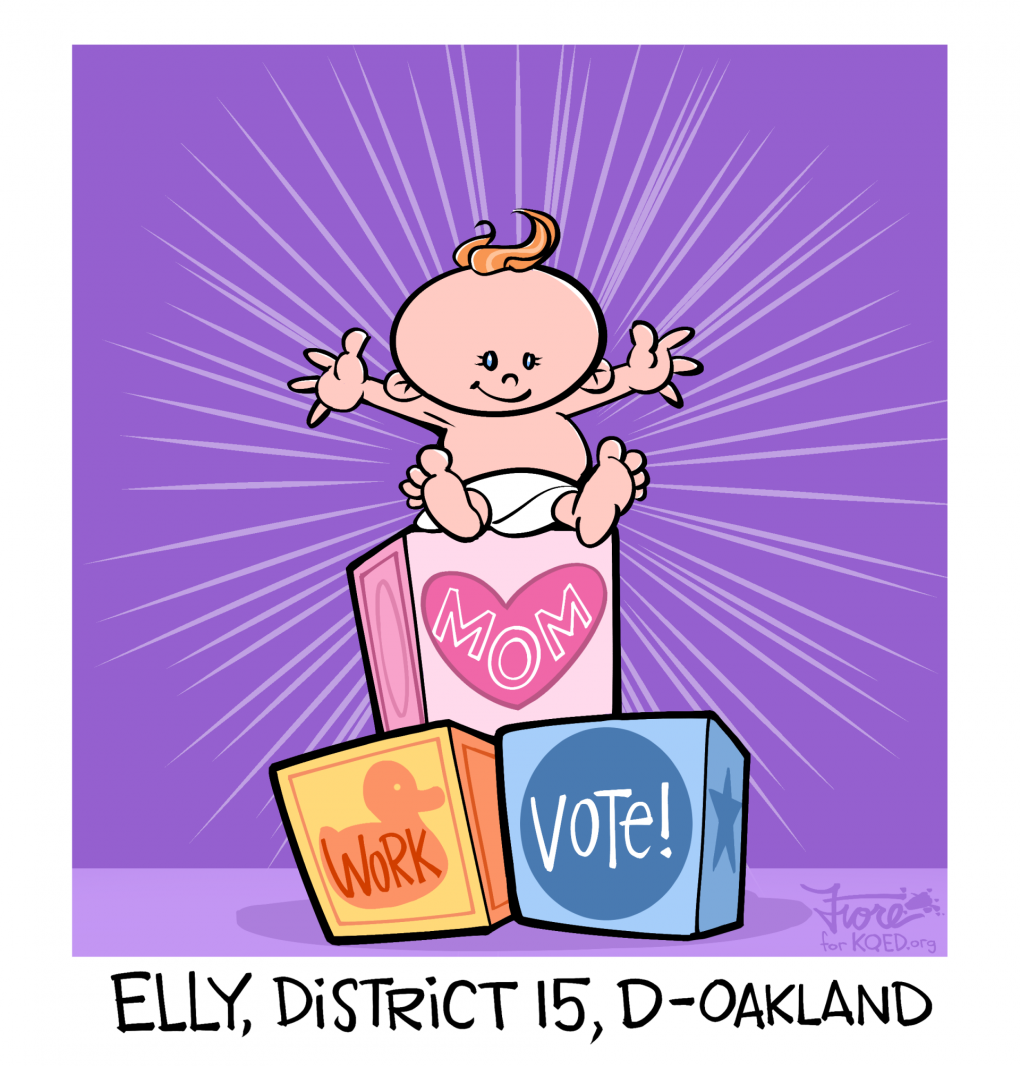
"content": "\u003cp>Highlighting the difficulties of being a working mom, Democratic Assemblywoman Buffy Wicks of Oakland had to \u003ca href=\"http://bit.ly/fiorebuffywicks\">bring her 4-week-old daughter\u003c/a> to the midnight end of the legislative session.\u003c/p>\n\u003cp>Assembly Speaker Anthony Rendon, D-Los Angeles, had informed Wicks that even though proxy voting was allowed in some cases, she had to cast her vote in person — never mind the fact that she was still breastfeeding her newborn and there is a pandemic going on.\u003c/p>\n\u003cp>The rest is \u003ca href=\"https://twitter.com/BuffyWicks/status/1300700999410053125\">viral video history\u003c/a>.\u003c/p>\n\u003cp>Rendon has since apologized to Wicks . . . let's hope with the cries of overtired newborns and stressed moms everywhere ringing in his ears.\u003c/p>\n\u003cp> \u003c/p>\n\u003cp>[ad fullwidth]\u003c/p>\u003cp>\u003c/p>\n",
"disqusIdentifier": "11836426 https://ww2.kqed.org/news/?p=11836426",
"disqusUrl": "https://ww2.kqed.org/news/2020/09/02/babys-first-midnight-legislative-session/",
"stats": {
"hasVideo": false,
"hasChartOrMap": false,
"hasAudio": false,
"hasPolis": false,
"wordCount": 109,
"hasGoogleForm": false,
"hasGallery": false,
"hasHearkenModule": false,
"iframeSrcs": [],
"paragraphCount": 6
},
"modified": 1599088922,
"excerpt": "Highlighting the difficulties of being a working mom, Democratic Assemblywoman Buffy Wicks of Oakland had to bring her 4-week-old daughter to the midnight end of the legislative session.",
"headData": {
"twImgId": "",
"twTitle": "",
"ogTitle": "",
"ogImgId": "",
"twDescription": "",
"description": "Highlighting the difficulties of being a working mom, Democratic Assemblywoman Buffy Wicks of Oakland had to bring her 4-week-old daughter to the midnight end of the legislative session.",
"title": "Baby's First Midnight Legislative Session | KQED",
"ogDescription": "",
"schema": {
"@context": "https://schema.org",
"@type": "NewsArticle",
"headline": "Baby's First Midnight Legislative Session",
"datePublished": "2020-09-02T16:22:02-07:00",
"dateModified": "2020-09-02T16:22:02-07:00",
"image": "https://cdn.kqed.org/wp-content/uploads/2020/02/KQED-OG-Image@1x.png",
"isAccessibleForFree": "True",
"publisher": {
"@type": "NewsMediaOrganization",
"@id": "https://www.kqed.org/#organization",
"name": "KQED",
"logo": "https://cdn.kqed.org/wp-content/uploads/2020/02/KQED-OG-Image@1x.png",
"url": "https://www.kqed.org",
"sameAs": [
"https://www.facebook.com/KQED",
"https://twitter.com/KQED",
"https://www.instagram.com/kqed/",
"https://www.tiktok.com/@kqedofficial",
"https://www.linkedin.com/company/kqed",
"https://www.youtube.com/channel/UCeC0IOo7i1P_61zVUWbJ4nw"
]
}
}
},
"guestAuthors": [],
"slug": "babys-first-midnight-legislative-session",
"status": "publish",
"path": "/news/11836426/babys-first-midnight-legislative-session",
"audioTrackLength": null,
"parsedContent": [
{
"type": "contentString",
"content": "\u003cdiv class=\"post-body\">\u003cp>\u003cp>Highlighting the difficulties of being a working mom, Democratic Assemblywoman Buffy Wicks of Oakland had to \u003ca href=\"http://bit.ly/fiorebuffywicks\">bring her 4-week-old daughter\u003c/a> to the midnight end of the legislative session.\u003c/p>\n\u003cp>Assembly Speaker Anthony Rendon, D-Los Angeles, had informed Wicks that even though proxy voting was allowed in some cases, she had to cast her vote in person — never mind the fact that she was still breastfeeding her newborn and there is a pandemic going on.\u003c/p>\n\u003cp>The rest is \u003ca href=\"https://twitter.com/BuffyWicks/status/1300700999410053125\">viral video history\u003c/a>.\u003c/p>\n\u003cp>Rendon has since apologized to Wicks . . . let's hope with the cries of overtired newborns and stressed moms everywhere ringing in his ears.\u003c/p>\n\u003cp> \u003c/p>\n\u003cp>\u003c/p>\u003c/div>",
"attributes": {
"named": {},
"numeric": []
}
},
{
"type": "component",
"content": "",
"name": "ad",
"attributes": {
"named": {
"label": "fullwidth"
},
"numeric": [
"fullwidth"
]
}
},
{
"type": "contentString",
"content": "\u003cdiv class=\"post-body\">\u003cp>\u003c/p>\u003cp>\u003c/p>\n\u003c/div>\u003c/p>",
"attributes": {
"named": {},
"numeric": []
}
}
],
"link": "/news/11836426/babys-first-midnight-legislative-session",
"authors": [
"3236"
],
"series": [
"news_18515"
],
"categories": [
"news_457",
"news_13"
],
"tags": [
"news_19085",
"news_20179",
"news_913",
"news_2704",
"news_26650",
"news_28486"
],
"featImg": "news_11836432",
"label": "news_18515"
},
"news_11824053": {
"type": "posts",
"id": "news_11824053",
"meta": {
"index": "posts_1716263798",
"site": "news",
"id": "11824053",
"score": null,
"sort": [
1591918764000
]
},
"parent": 0,
"labelTerm": {
"site": "news"
},
"blocks": [],
"publishDate": 1591918764,
"format": "standard",
"disqusTitle": "California Moves a Step Closer to Creating a Reparations Task Force",
"title": "California Moves a Step Closer to Creating a Reparations Task Force",
"headTitle": "KQED News",
"content": "\u003cp>A proposal to establish a task force to study and prepare recommendations for how to give reparations to Black Americans passed the California Assembly on Thursday.\u003c/p>\n\u003cp>The bill advanced with a 56-5 vote as protests nationwide over police brutality re-energized the movement for racial justice and activists pressed for sweeping reforms. It is a top priority for California's Legislative Black Caucus.\u003c/p>\n\u003cp>If the bill passes the state Senate and is signed into law by Gov. Gavin Newsom, eight people with backgrounds in racial justice reforms would lead a study into who would be eligible for compensation due to slavery and how it should be awarded.\u003c/p>\n\u003cp>Assemblywoman Shirley Weber, a Democrat from San Diego who wrote the bill, said the study would reiterate California's history of abetting slavery, even as it joined the union as a \"free state\" in 1850. \u003c/p>\n\u003cp>\"The discriminatory practices of the past echo into the everyday lives of today's Californians,\" said Weber, who leads the Legislative Black Caucus.\u003c/p>\n\u003cp>[ad fullwidth]\u003c/p>\n\u003cp>The panel would start meeting no later than June 2021.\u003c/p>\n\u003cp>The panel's top matter will be how it lays out the case for justifying reparations, 155 years after slavery was abolished, said Lisa Holder, an attorney who teaches about civil rights at UCLA School of Law.\u003c/p>\n\u003cp>\"The response really has to be framed around the issue of continuing racial injustice that started back in 1619 when Africans were stolen from Africa and brought here as enslaved people,\" Holder said, adding that Black people still deal with racial discrimination. \"Then you don't get into this messy, unintelligible notion of who is directly linked to a slave.\"\u003c/p>\n\u003cp>[aside postID=news_11818409,news_11818362 label='Related Coverage']\u003c/p>\n\u003cp>Congress last June held the first hearing on reparations in over a decade about a bill to study providing compensation to atone for the country's history of slavery. But the legislation did not make it to a vote. \u003c/p>\n\u003cp>The federal government has given reparations before. After 120,000 Japanese Americans were held at internment camps during World War II, the U.S. government apologized and in 1988 paid $20,000 to each surviving victim.\u003c/p>\n\u003cp>\"We seem to recognize that justice requires that those who have been treated unjustly need the means to make themselves whole again,\" Weber said.\u003c/p>\n\u003cp>Another priority of California's Legislative Black Caucus passed Wednesday when the Assembly approved a proposal to repeal California's affirmative action ban. \u003c/p>\n\u003cp>Voters will decide on the measure in November if the Senate approves the bill by June 25.\u003c/p>\n\u003cp>\u003c/p>\n",
"disqusIdentifier": "11824053 https://ww2.kqed.org/news/?p=11824053",
"disqusUrl": "https://ww2.kqed.org/news/2020/06/11/california-moves-a-step-closer-to-creating-a-reparations-task-force/",
"stats": {
"hasVideo": false,
"hasChartOrMap": false,
"hasAudio": false,
"hasPolis": false,
"wordCount": 421,
"hasGoogleForm": false,
"hasGallery": false,
"hasHearkenModule": false,
"iframeSrcs": [],
"paragraphCount": 16
},
"modified": 1591918764,
"excerpt": "If the bill passes the Senate and Gov. Newsom signs it, eight people would lead a study into who would be eligible for compensation due to slavery and how it should be awarded.",
"headData": {
"twImgId": "",
"twTitle": "",
"ogTitle": "",
"ogImgId": "",
"twDescription": "",
"description": "Under a bill passed by the Assembly on Thursday, a state panel would be created to study who would be eligible for compensation due to slavery.",
"title": "California Moves a Step Closer to Creating a Reparations Task Force | KQED",
"ogDescription": "",
"schema": {
"@context": "https://schema.org",
"@type": "NewsArticle",
"headline": "California Moves a Step Closer to Creating a Reparations Task Force",
"datePublished": "2020-06-11T16:39:24-07:00",
"dateModified": "2020-06-11T16:39:24-07:00",
"image": "https://cdn.kqed.org/wp-content/uploads/2020/02/KQED-OG-Image@1x.png",
"isAccessibleForFree": "True",
"publisher": {
"@type": "NewsMediaOrganization",
"@id": "https://www.kqed.org/#organization",
"name": "KQED",
"logo": "https://cdn.kqed.org/wp-content/uploads/2020/02/KQED-OG-Image@1x.png",
"url": "https://www.kqed.org",
"sameAs": [
"https://www.facebook.com/KQED",
"https://twitter.com/KQED",
"https://www.instagram.com/kqed/",
"https://www.tiktok.com/@kqedofficial",
"https://www.linkedin.com/company/kqed",
"https://www.youtube.com/channel/UCeC0IOo7i1P_61zVUWbJ4nw"
]
}
}
},
"guestAuthors": [],
"slug": "california-moves-a-step-closer-to-creating-a-reparations-task-force",
"status": "publish",
"nprByline": "Cuneyt Dil \u003cbr> The Associated Press",
"path": "/news/11824053/california-moves-a-step-closer-to-creating-a-reparations-task-force",
"audioTrackLength": null,
"parsedContent": [
{
"type": "contentString",
"content": "\u003cdiv class=\"post-body\">\u003cp>\u003cp>A proposal to establish a task force to study and prepare recommendations for how to give reparations to Black Americans passed the California Assembly on Thursday.\u003c/p>\n\u003cp>The bill advanced with a 56-5 vote as protests nationwide over police brutality re-energized the movement for racial justice and activists pressed for sweeping reforms. It is a top priority for California's Legislative Black Caucus.\u003c/p>\n\u003cp>If the bill passes the state Senate and is signed into law by Gov. Gavin Newsom, eight people with backgrounds in racial justice reforms would lead a study into who would be eligible for compensation due to slavery and how it should be awarded.\u003c/p>\n\u003cp>Assemblywoman Shirley Weber, a Democrat from San Diego who wrote the bill, said the study would reiterate California's history of abetting slavery, even as it joined the union as a \"free state\" in 1850. \u003c/p>\n\u003cp>\"The discriminatory practices of the past echo into the everyday lives of today's Californians,\" said Weber, who leads the Legislative Black Caucus.\u003c/p>\n\u003cp>\u003c/p>\u003c/div>",
"attributes": {
"named": {},
"numeric": []
}
},
{
"type": "component",
"content": "",
"name": "ad",
"attributes": {
"named": {
"label": "fullwidth"
},
"numeric": [
"fullwidth"
]
}
},
{
"type": "contentString",
"content": "\u003cdiv class=\"post-body\">\u003cp>\u003c/p>\n\u003cp>The panel would start meeting no later than June 2021.\u003c/p>\n\u003cp>The panel's top matter will be how it lays out the case for justifying reparations, 155 years after slavery was abolished, said Lisa Holder, an attorney who teaches about civil rights at UCLA School of Law.\u003c/p>\n\u003cp>\"The response really has to be framed around the issue of continuing racial injustice that started back in 1619 when Africans were stolen from Africa and brought here as enslaved people,\" Holder said, adding that Black people still deal with racial discrimination. \"Then you don't get into this messy, unintelligible notion of who is directly linked to a slave.\"\u003c/p>\n\u003cp>\u003c/p>\u003c/div>",
"attributes": {
"named": {},
"numeric": []
}
},
{
"type": "component",
"content": "",
"name": "aside",
"attributes": {
"named": {
"postid": "news_11818409,news_11818362",
"label": "Related Coverage "
},
"numeric": []
}
},
{
"type": "contentString",
"content": "\u003cdiv class=\"post-body\">\u003cp>\u003c/p>\n\u003cp>Congress last June held the first hearing on reparations in over a decade about a bill to study providing compensation to atone for the country's history of slavery. But the legislation did not make it to a vote. \u003c/p>\n\u003cp>The federal government has given reparations before. After 120,000 Japanese Americans were held at internment camps during World War II, the U.S. government apologized and in 1988 paid $20,000 to each surviving victim.\u003c/p>\n\u003cp>\"We seem to recognize that justice requires that those who have been treated unjustly need the means to make themselves whole again,\" Weber said.\u003c/p>\n\u003cp>Another priority of California's Legislative Black Caucus passed Wednesday when the Assembly approved a proposal to repeal California's affirmative action ban. \u003c/p>\n\u003cp>Voters will decide on the measure in November if the Senate approves the bill by June 25.\u003c/p>\n\u003cp>\u003c/p>\n\u003c/div>\u003c/p>",
"attributes": {
"named": {},
"numeric": []
}
}
],
"link": "/news/11824053/california-moves-a-step-closer-to-creating-a-reparations-task-force",
"authors": [
"byline_news_11824053"
],
"categories": [
"news_6188",
"news_8",
"news_13"
],
"tags": [
"news_18538",
"news_913",
"news_17968",
"news_19216",
"news_2923",
"news_25419"
],
"featImg": "news_11824060",
"label": "news"
},
"news_11820866": {
"type": "posts",
"id": "news_11820866",
"meta": {
"index": "posts_1716263798",
"site": "news",
"id": "11820866",
"score": null,
"sort": [
1590538792000
]
},
"parent": 0,
"labelTerm": {
"site": "news",
"term": 72
},
"blocks": [],
"publishDate": 1590538792,
"format": "standard",
"disqusTitle": "Assembly Gives Lukewarm Response to Newsom's Budget Proposal",
"title": "Assembly Gives Lukewarm Response to Newsom's Budget Proposal",
"headTitle": "The California Report | KQED News",
"content": "\u003cp>Gov. Gavin Newsom’s \u003ca href=\"http://www.ebudget.ca.gov/budget/2020-21MR/#/BudgetSummary\">proposed budget\u003c/a> got a lukewarm response from state Assembly members Tuesday during a rare committee of the whole hearing.\u003c/p>\n\u003cp>The Assembly has not convened in that way for 25 years. The process allows all members to comment on the governor's budget proposal before they must vote on a final bill. The Legislature is working with \u003ca href=\"https://www.kqed.org/news/11817853/despite-54-billion-deficit-gov-newsom-to-present-revised-state-budget-today\">a shortened timeline\u003c/a> after taking a long recess \u003ca href=\"https://www.kqed.org/news/11811142/governing-under-coronavirus-state-legislature-contemplates-remote-meetings\">because of COVID-19\u003c/a>.\u003c/p>\n\u003cp>Newsom’s plan attempts to close a projected $54 billion budget deficit brought on by the coronavirus pandemic. Lawmakers acknowledged they’ll have to make difficult choices. But there was criticism over slashes to education and the social safety net, among other things.\u003c/p>\n\u003cp>Assemblyman Jim Wood, D-Santa Rosa, said Newsom’s budget proposes short-term cuts that will cause long-lasting pain.\u003c/p>\n\u003cp>“It feels like we just dusted off the plan from the last recession and are using the same playbook,\" Wood said. \"There also feels like an over dependence on the federal government with an unpredictable administration.”\u003c/p>\n\u003cp>[ad fullwidth]\u003c/p>\n\u003cp>Newsom has proposed $14 billion worth of cuts that could be eliminated if the federal government provides more assistance to the state.\u003c/p>\n\u003cp>“Only the federal government has the capacity to really mitigate the most difficult reductions states and local governments are going to have to make to balance their budgets in the next several years,” said Keely Bosler, Newsom’s chief budget officer.\u003c/p>\n\u003cp>Gabriel Petek, an analyst with the nonpartisan Legislative Analyst's Office, noted that any new money from the federal government would likely run out after one or two years. Petek’s office says the state is facing budget deficits through at least 2024.\u003c/p>\n\u003cp>“In that case, the Legislature will once again be faced with a structural issue when that funding begins to phase out,” Petek said.\u003c/p>\n\u003cp>[aside postID=\"news_11819593,news_11819069,news_11816775\" label=\"Related Stories\"]\u003c/p>\n\u003cp>Assemblyman Jay Obernolte, R-Big Bear, said he's concerned the proposal cedes too much power to the governor. He notes the Legislature gave Newsom more than $1 billion to fight the pandemic before it recessed, which Obernolte said was appropriate.\u003c/p>\n\u003cp>\"However, the governor is asking us today to give him an additional $3 billion of spending authority,\" Obernolte said. \"And in addition to that, to give him authority to spend the $10 billion of federal reimbursement funds that come back from the federal government in ways that he sees fit.\"\u003c/p>\n\u003cp>Obernolte said the Legislature has a constitutional duty to oversee how tax dollars are spent.\u003c/p>\n\u003cp>Assemblyman Adam Gray, D-Merced, said it was wrong for Newsom to slash health care spending during a pandemic.\u003c/p>\n\u003cp>“I consider the proposal put before the Legislature by the governor and (the Department of Finance) to represent a worst-case scenario,” Gray said. “It makes cuts that are perhaps more painful than necessary while offering little in the way of creative revenue generation, conservation or reform.\"\u003c/p>\n\u003cp>Gray was one of the few lawmakers to offer an alternative plan, proposing the Legislature legalize sports betting as a way to generate an extra $2 billion to help eliminate some of the proposed $14 billion in cuts.\u003c/p>\n\u003cp>Lawmakers have until June 15 to pass a balanced budget.\u003c/p>\n\u003cp>\u003c/p>\n\u003cp>\u003cem>The Associated Press contributed to this report.\u003c/em>\u003c/p>\n\n",
"disqusIdentifier": "11820866 https://ww2.kqed.org/news/?p=11820866",
"disqusUrl": "https://ww2.kqed.org/news/2020/05/26/assembly-gives-lukewarm-response-to-newsoms-budget-proposal/",
"stats": {
"hasVideo": false,
"hasChartOrMap": false,
"hasAudio": false,
"hasPolis": false,
"wordCount": 553,
"hasGoogleForm": false,
"hasGallery": false,
"hasHearkenModule": false,
"iframeSrcs": [],
"paragraphCount": 20
},
"modified": 1590541678,
"excerpt": "Assembly members expressed multiple concerns with the governor's proposal as they race to pass a balanced budget.",
"headData": {
"twImgId": "",
"twTitle": "",
"ogTitle": "",
"ogImgId": "",
"twDescription": "",
"description": "Assembly members expressed multiple concerns with the governor's proposal as they race to pass a balanced budget.",
"title": "Assembly Gives Lukewarm Response to Newsom's Budget Proposal | KQED",
"ogDescription": "",
"schema": {
"@context": "https://schema.org",
"@type": "NewsArticle",
"headline": "Assembly Gives Lukewarm Response to Newsom's Budget Proposal",
"datePublished": "2020-05-26T17:19:52-07:00",
"dateModified": "2020-05-26T18:07:58-07:00",
"image": "https://cdn.kqed.org/wp-content/uploads/2020/02/KQED-OG-Image@1x.png",
"isAccessibleForFree": "True",
"publisher": {
"@type": "NewsMediaOrganization",
"@id": "https://www.kqed.org/#organization",
"name": "KQED",
"logo": "https://cdn.kqed.org/wp-content/uploads/2020/02/KQED-OG-Image@1x.png",
"url": "https://www.kqed.org",
"sameAs": [
"https://www.facebook.com/KQED",
"https://twitter.com/KQED",
"https://www.instagram.com/kqed/",
"https://www.tiktok.com/@kqedofficial",
"https://www.linkedin.com/company/kqed",
"https://www.youtube.com/channel/UCeC0IOo7i1P_61zVUWbJ4nw"
]
}
}
},
"guestAuthors": [],
"slug": "assembly-gives-lukewarm-response-to-newsoms-budget-proposal",
"status": "publish",
"path": "/news/11820866/assembly-gives-lukewarm-response-to-newsoms-budget-proposal",
"audioTrackLength": null,
"parsedContent": [
{
"type": "contentString",
"content": "\u003cdiv class=\"post-body\">\u003cp>\u003cp>Gov. Gavin Newsom’s \u003ca href=\"http://www.ebudget.ca.gov/budget/2020-21MR/#/BudgetSummary\">proposed budget\u003c/a> got a lukewarm response from state Assembly members Tuesday during a rare committee of the whole hearing.\u003c/p>\n\u003cp>The Assembly has not convened in that way for 25 years. The process allows all members to comment on the governor's budget proposal before they must vote on a final bill. The Legislature is working with \u003ca href=\"https://www.kqed.org/news/11817853/despite-54-billion-deficit-gov-newsom-to-present-revised-state-budget-today\">a shortened timeline\u003c/a> after taking a long recess \u003ca href=\"https://www.kqed.org/news/11811142/governing-under-coronavirus-state-legislature-contemplates-remote-meetings\">because of COVID-19\u003c/a>.\u003c/p>\n\u003cp>Newsom’s plan attempts to close a projected $54 billion budget deficit brought on by the coronavirus pandemic. Lawmakers acknowledged they’ll have to make difficult choices. But there was criticism over slashes to education and the social safety net, among other things.\u003c/p>\n\u003cp>Assemblyman Jim Wood, D-Santa Rosa, said Newsom’s budget proposes short-term cuts that will cause long-lasting pain.\u003c/p>\n\u003cp>“It feels like we just dusted off the plan from the last recession and are using the same playbook,\" Wood said. \"There also feels like an over dependence on the federal government with an unpredictable administration.”\u003c/p>\n\u003cp>\u003c/p>\u003c/div>",
"attributes": {
"named": {},
"numeric": []
}
},
{
"type": "component",
"content": "",
"name": "ad",
"attributes": {
"named": {
"label": "fullwidth"
},
"numeric": [
"fullwidth"
]
}
},
{
"type": "contentString",
"content": "\u003cdiv class=\"post-body\">\u003cp>\u003c/p>\n\u003cp>Newsom has proposed $14 billion worth of cuts that could be eliminated if the federal government provides more assistance to the state.\u003c/p>\n\u003cp>“Only the federal government has the capacity to really mitigate the most difficult reductions states and local governments are going to have to make to balance their budgets in the next several years,” said Keely Bosler, Newsom’s chief budget officer.\u003c/p>\n\u003cp>Gabriel Petek, an analyst with the nonpartisan Legislative Analyst's Office, noted that any new money from the federal government would likely run out after one or two years. Petek’s office says the state is facing budget deficits through at least 2024.\u003c/p>\n\u003cp>“In that case, the Legislature will once again be faced with a structural issue when that funding begins to phase out,” Petek said.\u003c/p>\n\u003cp>\u003c/p>\u003c/div>",
"attributes": {
"named": {},
"numeric": []
}
},
{
"type": "component",
"content": "",
"name": "aside",
"attributes": {
"named": {
"postid": "news_11819593,news_11819069,news_11816775",
"label": "Related Stories "
},
"numeric": []
}
},
{
"type": "contentString",
"content": "\u003cdiv class=\"post-body\">\u003cp>\u003c/p>\n\u003cp>Assemblyman Jay Obernolte, R-Big Bear, said he's concerned the proposal cedes too much power to the governor. He notes the Legislature gave Newsom more than $1 billion to fight the pandemic before it recessed, which Obernolte said was appropriate.\u003c/p>\n\u003cp>\"However, the governor is asking us today to give him an additional $3 billion of spending authority,\" Obernolte said. \"And in addition to that, to give him authority to spend the $10 billion of federal reimbursement funds that come back from the federal government in ways that he sees fit.\"\u003c/p>\n\u003cp>Obernolte said the Legislature has a constitutional duty to oversee how tax dollars are spent.\u003c/p>\n\u003cp>Assemblyman Adam Gray, D-Merced, said it was wrong for Newsom to slash health care spending during a pandemic.\u003c/p>\n\u003cp>“I consider the proposal put before the Legislature by the governor and (the Department of Finance) to represent a worst-case scenario,” Gray said. “It makes cuts that are perhaps more painful than necessary while offering little in the way of creative revenue generation, conservation or reform.\"\u003c/p>\n\u003cp>Gray was one of the few lawmakers to offer an alternative plan, proposing the Legislature legalize sports betting as a way to generate an extra $2 billion to help eliminate some of the proposed $14 billion in cuts.\u003c/p>\n\u003cp>Lawmakers have until June 15 to pass a balanced budget.\u003c/p>\n\u003cp>\u003c/p>\n\u003cp>\u003cem>The Associated Press contributed to this report.\u003c/em>\u003c/p>\n\n\u003c/div>\u003c/p>",
"attributes": {
"named": {},
"numeric": []
}
}
],
"link": "/news/11820866/assembly-gives-lukewarm-response-to-newsoms-budget-proposal",
"authors": [
"11200"
],
"programs": [
"news_72"
],
"categories": [
"news_8",
"news_13"
],
"tags": [
"news_19113",
"news_913",
"news_2704",
"news_22178"
],
"featImg": "news_11769027",
"label": "news_72"
},
"news_11814184": {
"type": "posts",
"id": "news_11814184",
"meta": {
"index": "posts_1716263798",
"site": "news",
"id": "11814184",
"score": null,
"sort": [
1587765113000
]
},
"parent": 0,
"labelTerm": {},
"blocks": [],
"publishDate": 1587765113,
"format": "standard",
"disqusTitle": "Assembly Members May Get Tested for Coronavirus Before Returning to Sacramento",
"title": "Assembly Members May Get Tested for Coronavirus Before Returning to Sacramento",
"headTitle": "KQED News",
"content": "\u003cp>California Assembly leaders are considering whether to test all of its members and essential staff for the coronavirus before May 4, when the Legislature is scheduled to reconvene in Sacramento.\u003c/p>\n\u003cp>Assembly members are being actively encouraged to request tests from their doctors, and the chamber is also asking Sacramento County’s public health officer to provide tests for essential staff.\u003c/p>\n\u003cp>\"The members of the Democratic caucus have had several discussions about potentially getting tested,\" Assembly Speaker Anthony Rendon, D-Los Angeles, said in a statement. \"Due to the public nature of our work, the Sacramento County Public Health Officer is recommending Members get tested for COVID-19, and we are taking that guidance seriously.\"\u003c/p>\n\u003cp>Assembly Rules Committee Chair Ken Cooley, D-Rancho Cordova,coordinated the effort with Peter Beilenson, the county's Director of Health Services.\u003c/p>\n\u003cp>\"I gave the options of legislators going to be tested by their own doctors in their own districts,\" he said. \"And if they couldn't arrange for that to happen, when they came to Sacramento, they could be tested as UC Davis (Medical Center) or UC Davis staff would come and test them at their offices.\"\u003c/p>\n\u003cp>[ad fullwidth]\u003c/p>\n\u003cp>Beilenson said the same procedure applies for essential Assembly staff. He said the tests are extremely appropriate given that a large number of people will be gathering during Assembly sessions. The county will provide a maximum of 400 tests, which allows for the possibility that the Senate might want to test its members as well.\u003c/p>\n\u003cp>However, in a written statement, Senate leader Toni Atkins, D-San Diego, said there no current plans to provide tests.\u003c/p>\n\u003cp>“We recognize this is a very fluid situation, and we will continue to monitor and assess testing guidelines. The current guidelines make clear where the priorities for scarce tests lie, and the Senate is not recommending testing for Senators and staff unless they fall within those existing categories,\" Atkins said.\u003c/p>\n\u003cp>Assemblyman Cooley acknowledged that it might look bad for Assembly members to be able to get tested while scores of other people still can’t, but he argued that they have a constitutional duty to meet and represent their constituents.\u003c/p>\n\u003cp>[aside postID=\"news_11813179,news_11811142\" label=\"related coverage\"]\"It's a more fundamental public value, which makes me feel it's legitimate to consider,\" he said. \"Is there some additive step that we might take to safeguard all who participate?\"\u003c/p>\n\u003cp>Assembly lawyers believe its members \u003ca href=\"https://www.kqed.org/news/11811142/governing-under-coronavirus-state-legislature-contemplates-remote-meetings\">cannot legally vote\u003c/a> on issues remotely, and must meet in person. In contrast, the state Senate considers remote voting constitutional and has passed a resolution allowing it.\u003c/p>\n\u003cp>But Cooley also acknowledged that testing members and staff now won't ensure they don’t get sick later.\u003c/p>\n\u003cp>He said nothing has been decided yet, and lawyers are still looking into whether testing should go forward. The potential policy also raises several legal questions, including what happens if someone refuses to be tested and whether a positive result would have to be disclosed.\u003c/p>\n\u003cp>\u003c/p>\n\u003cp>\"I don't really have an answer,\" Cooley said. \"I don't really feel I can force the issue. But I honestly feel the lawyers will definitely weigh in on members and employees.\"\u003c/p>\n\n",
"disqusIdentifier": "11814184 https://ww2.kqed.org/news/?p=11814184",
"disqusUrl": "https://ww2.kqed.org/news/2020/04/24/assembly-members-may-have-to-get-tested-for-coronavirus-before-returning-to-sacramento/",
"stats": {
"hasVideo": false,
"hasChartOrMap": false,
"hasAudio": false,
"hasPolis": false,
"wordCount": 533,
"hasGoogleForm": false,
"hasGallery": false,
"hasHearkenModule": false,
"iframeSrcs": [],
"paragraphCount": 16
},
"modified": 1587775306,
"excerpt": "Assembly members, who plan to reconvene in Sacramento on May 4, are being actively encouraged to request tests from their doctors, and the chamber is also asking Sacramento County’s public health officer to provide tests for essential staff.",
"headData": {
"twImgId": "",
"twTitle": "",
"ogTitle": "",
"ogImgId": "",
"twDescription": "",
"description": "Assembly members, who plan to reconvene in Sacramento on May 4, are being actively encouraged to request tests from their doctors, and the chamber is also asking Sacramento County’s public health officer to provide tests for essential staff.",
"title": "Assembly Members May Get Tested for Coronavirus Before Returning to Sacramento | KQED",
"ogDescription": "",
"schema": {
"@context": "https://schema.org",
"@type": "NewsArticle",
"headline": "Assembly Members May Get Tested for Coronavirus Before Returning to Sacramento",
"datePublished": "2020-04-24T14:51:53-07:00",
"dateModified": "2020-04-24T17:41:46-07:00",
"image": "https://cdn.kqed.org/wp-content/uploads/2020/02/KQED-OG-Image@1x.png",
"isAccessibleForFree": "True",
"publisher": {
"@type": "NewsMediaOrganization",
"@id": "https://www.kqed.org/#organization",
"name": "KQED",
"logo": "https://cdn.kqed.org/wp-content/uploads/2020/02/KQED-OG-Image@1x.png",
"url": "https://www.kqed.org",
"sameAs": [
"https://www.facebook.com/KQED",
"https://twitter.com/KQED",
"https://www.instagram.com/kqed/",
"https://www.tiktok.com/@kqedofficial",
"https://www.linkedin.com/company/kqed",
"https://www.youtube.com/channel/UCeC0IOo7i1P_61zVUWbJ4nw"
]
}
}
},
"guestAuthors": [],
"slug": "assembly-members-may-have-to-get-tested-for-coronavirus-before-returning-to-sacramento",
"status": "publish",
"sourceUrl": "https://www.kqed.org/coronavirus",
"source": "coronavirus",
"path": "/news/11814184/assembly-members-may-have-to-get-tested-for-coronavirus-before-returning-to-sacramento",
"audioTrackLength": null,
"parsedContent": [
{
"type": "contentString",
"content": "\u003cdiv class=\"post-body\">\u003cp>\u003cp>California Assembly leaders are considering whether to test all of its members and essential staff for the coronavirus before May 4, when the Legislature is scheduled to reconvene in Sacramento.\u003c/p>\n\u003cp>Assembly members are being actively encouraged to request tests from their doctors, and the chamber is also asking Sacramento County’s public health officer to provide tests for essential staff.\u003c/p>\n\u003cp>\"The members of the Democratic caucus have had several discussions about potentially getting tested,\" Assembly Speaker Anthony Rendon, D-Los Angeles, said in a statement. \"Due to the public nature of our work, the Sacramento County Public Health Officer is recommending Members get tested for COVID-19, and we are taking that guidance seriously.\"\u003c/p>\n\u003cp>Assembly Rules Committee Chair Ken Cooley, D-Rancho Cordova,coordinated the effort with Peter Beilenson, the county's Director of Health Services.\u003c/p>\n\u003cp>\"I gave the options of legislators going to be tested by their own doctors in their own districts,\" he said. \"And if they couldn't arrange for that to happen, when they came to Sacramento, they could be tested as UC Davis (Medical Center) or UC Davis staff would come and test them at their offices.\"\u003c/p>\n\u003cp>\u003c/p>\u003c/div>",
"attributes": {
"named": {},
"numeric": []
}
},
{
"type": "component",
"content": "",
"name": "ad",
"attributes": {
"named": {
"label": "fullwidth"
},
"numeric": [
"fullwidth"
]
}
},
{
"type": "contentString",
"content": "\u003cdiv class=\"post-body\">\u003cp>\u003c/p>\n\u003cp>Beilenson said the same procedure applies for essential Assembly staff. He said the tests are extremely appropriate given that a large number of people will be gathering during Assembly sessions. The county will provide a maximum of 400 tests, which allows for the possibility that the Senate might want to test its members as well.\u003c/p>\n\u003cp>However, in a written statement, Senate leader Toni Atkins, D-San Diego, said there no current plans to provide tests.\u003c/p>\n\u003cp>“We recognize this is a very fluid situation, and we will continue to monitor and assess testing guidelines. The current guidelines make clear where the priorities for scarce tests lie, and the Senate is not recommending testing for Senators and staff unless they fall within those existing categories,\" Atkins said.\u003c/p>\n\u003cp>Assemblyman Cooley acknowledged that it might look bad for Assembly members to be able to get tested while scores of other people still can’t, but he argued that they have a constitutional duty to meet and represent their constituents.\u003c/p>\n\u003cp>\u003c/p>\u003c/div>",
"attributes": {
"named": {},
"numeric": []
}
},
{
"type": "component",
"content": "",
"name": "aside",
"attributes": {
"named": {
"postid": "news_11813179,news_11811142",
"label": "related coverage "
},
"numeric": []
}
},
{
"type": "contentString",
"content": "\u003cdiv class=\"post-body\">\u003cp>\"It's a more fundamental public value, which makes me feel it's legitimate to consider,\" he said. \"Is there some additive step that we might take to safeguard all who participate?\"\u003c/p>\n\u003cp>Assembly lawyers believe its members \u003ca href=\"https://www.kqed.org/news/11811142/governing-under-coronavirus-state-legislature-contemplates-remote-meetings\">cannot legally vote\u003c/a> on issues remotely, and must meet in person. In contrast, the state Senate considers remote voting constitutional and has passed a resolution allowing it.\u003c/p>\n\u003cp>But Cooley also acknowledged that testing members and staff now won't ensure they don’t get sick later.\u003c/p>\n\u003cp>He said nothing has been decided yet, and lawyers are still looking into whether testing should go forward. The potential policy also raises several legal questions, including what happens if someone refuses to be tested and whether a positive result would have to be disclosed.\u003c/p>\n\u003cp>\u003c/p>\n\u003cp>\"I don't really have an answer,\" Cooley said. \"I don't really feel I can force the issue. But I honestly feel the lawyers will definitely weigh in on members and employees.\"\u003c/p>\n\n\u003c/div>\u003c/p>",
"attributes": {
"named": {},
"numeric": []
}
}
],
"link": "/news/11814184/assembly-members-may-have-to-get-tested-for-coronavirus-before-returning-to-sacramento",
"authors": [
"11200"
],
"categories": [
"news_457",
"news_8",
"news_13"
],
"tags": [
"news_19085",
"news_19113",
"news_913",
"news_27350",
"news_27504",
"news_1852",
"news_95",
"news_24721"
],
"featImg": "news_11744216",
"label": "source_news_11814184"
},
"news_11813179": {
"type": "posts",
"id": "news_11813179",
"meta": {
"index": "posts_1716263798",
"site": "news",
"id": "11813179",
"score": null,
"sort": [
1587429043000
]
},
"guestAuthors": [],
"slug": "state-lawmakers-want-more-say-in-californias-covid-19-response",
"title": "State Lawmakers Want More Say in California's COVID-19 Response",
"publishDate": 1587429043,
"format": "standard",
"headTitle": "State Lawmakers Want More Say in California’s COVID-19 Response | KQED",
"labelTerm": {},
"content": "\u003cp>California Assembly members on both sides of the aisle say they want to be more involved in helping the state through the COVID-19 pandemic.\u003c/p>\n\u003cp>At a budget oversight subcommittee hearing at the state Capitol on Monday, lawmakers applauded the job Gov. Gavin Newsom is doing responding to the coronavirus outbreak in California. But Republicans and Democrats both questioned how Newsom is spending some of the money they authorized for the COVID-19 crisis.\u003c/p>\n\u003cp>Assembly Budget Committee Chair Phil Ting, D-San Francisco, said when the Legislature initially gave Newsom broad authority to spend $1 billion to respond to the virus, it was with the assumption that the situation would be short-lived. Now that it’s clear the effects of COVID-19 will be long-lasting, Ting said it’s time for lawmakers to get more involved.\u003c/p>\n\u003cp>“We also feel like we have a very important role to play,” Ting said. “Especially as it comes to the appropriation and the expenditure of these resources.”\u003c/p>\n\u003cp>Assemblyman Jay Obernolte, R-Big Bear Lake, expressed concerns over Newsom using the emergency fund to shore up the state’s social safety net, such as spending on food banks.\u003c/p>\n\u003cp>“Though that may be desirable, though that might even be wise, though that might be something we agree with … that’s not something that I feel [Newsom] was given the authority to allocate money for,” Obernolte said.\u003c/p>\n\u003cp>[ad fullwidth]\u003c/p>\n\u003cp>Earlier this month, the Department of Finance sent lawmakers a letter estimating that \u003ca href=\"http://www.dof.ca.gov/twitterdocs/4-10-20_COVID-19_Interim_Fiscal_Update_JLBC_Letter.pdf\">California could spend $7 billion\u003c/a> on the COVID-19 response in 2020, although the department believes the majority of that money will be reimbursed by the federal government.\u003c/p>\n\u003cp>The Legislature \u003ca href=\"https://www.kqed.org/news/11810709/coronavirus-emergency-funds-in-governors-hands-as-state-legislature-is-postponed-again\">went into recess\u003c/a> in March as the outbreak began. While lawmakers insist they were working from home, their physical distance from Sacramento appears to have hampered their communication with the administration.\u003c/p>\n\u003cp>Assemblyman Jim Wood, D-Santa Rosa, who chairs the Assembly Health Committee, said the administration has resisted his attempts to connect lawmakers with experts in the Legislature who might be able to help in the response.\u003c/p>\n\u003cp>“Getting information that my constituents need has been difficult,” Wood said. “We often, as legislators, hear maybe five minutes before an executive order comes out. Or watch live the governor’s daily updates.”\u003c/p>\n\u003cp>Other Assembly members agreed, citing a lack of communication between the administration and local jurisdictions over issues like when or whether the state will send them the protective equipment they requested.\u003c/p>\n\u003cp>Mark Ghilarducci, director of the California Governor’s Office of Emergency Services, said all counties have received at least some gear, including protective N-95 masks. But he said the situation is constantly evolving and supplies are shifted around as circumstances change.\u003c/p>\n\u003cp>As Monday’s hearing took place, hundreds of people \u003ca href=\"https://www.kqed.org/news/11813190/newsom-urges-caution-as-protesters-push-to-reopen-california\">demonstrated\u003c/a> outside the Capitol calling for an end to Gov. Newsom’s stay-at-home order.\u003c/p>\n\u003cp>[aside postID=news_11813190 hero='https://ww2.kqed.org/app/uploads/sites/10/2020/04/RS42852_GettyImages-1210468812-qut-1020x657.jpg']\u003c/p>\n\u003cp>Some of the protesters, in cars and on foot, carried signs such as “The Media is the Real Virus,” “Make Cali Free Again” and “Liberty is given from God. It’s not man made.”\u003c/p>\n\u003cp>CapRadio in Sacramento \u003ca href=\"https://www.capradio.org/articles/2020/04/20/protest-at-capitol-targets-californias-stay-at-home-order-demonstrators-ignore-social-distancing-guidelines/\">reported\u003c/a> that the rally was organized by the Freedom Angels, which also participated in protests against California’s legislation to tighten exemptions for student vaccines.\u003c/p>\n\u003cp>Many carried U.S. flags, and at least one held a sign reading “Trump 2020.”\u003c/p>\n\u003cp>Asked by a reporter at his daily briefing why the California Highway Patrol granted a permit for 500 people given his social distancing orders, Gov. Newsom punted, saying, “We’ll leave that to the CHP to answer, and we’ll get back to you.”\u003c/p>\n\u003cp>The CHP did not return a call from KQED to answer that question.\u003c/p>\n\u003cp>Newsom said, “My understanding is that the protest … has social distancing that was allowable on the basis of people being in their vehicles and not congregating as a group.”\u003c/p>\n\u003cp>However, CapRadio reported that in fact few protesters practiced social distancing outside their vehicles and many did not have face coverings, which are recommended to slow spread of the coronavirus.\u003c/p>\n\u003cp>The governor also said, “I deeply understand people’s anxieties,” adding that it would “be a mistake to make decisions based on politics and frustration.”\u003c/p>\n\u003cp>\u003cem>Update: At 7:30 pm Monday the CHP finally returned KQED’s call. Officer Rick Turner said the protesters’ violation of social distancing rules at today’s rally “will be taken into account” for future permits. Asked how it would be taken into account he said only “on a case by case basis” and could not be more specific. \u003c/em>\u003c/p>\n\u003cp>\u003c/p>\n",
"blocks": [],
"excerpt": "California Assembly members applauded Gov. Newsom's handling of the coronavirus crisis – but both Republicans and Democrats questioned how Newsom is spending some of the money they authorized.",
"status": "publish",
"parent": 0,
"modified": 1721119049,
"stats": {
"hasAudio": false,
"hasVideo": false,
"hasChartOrMap": false,
"iframeSrcs": [],
"hasGoogleForm": false,
"hasGallery": false,
"hasHearkenModule": false,
"hasPolis": false,
"paragraphCount": 25,
"wordCount": 821
},
"headData": {
"title": "State Lawmakers Want More Say in California's COVID-19 Response | KQED",
"description": "California Assembly members applauded Gov. Newsom's handling of the coronavirus crisis – but both Republicans and Democrats questioned how Newsom is spending some of the money they authorized.",
"ogTitle": "",
"ogDescription": "",
"ogImgId": "",
"twTitle": "",
"twDescription": "",
"twImgId": "",
"schema": {
"@context": "https://schema.org",
"@type": "NewsArticle",
"headline": "State Lawmakers Want More Say in California's COVID-19 Response",
"datePublished": "2020-04-20T17:30:43-07:00",
"dateModified": "2024-07-16T01:37:29-07:00",
"image": "https://cdn.kqed.org/wp-content/uploads/2020/02/KQED-OG-Image@1x.png",
"isAccessibleForFree": "True",
"publisher": {
"@type": "NewsMediaOrganization",
"@id": "https://www.kqed.org/#organization",
"name": "KQED",
"logo": "https://cdn.kqed.org/wp-content/uploads/2020/02/KQED-OG-Image@1x.png",
"url": "https://www.kqed.org",
"sameAs": [
"https://www.facebook.com/KQED",
"https://twitter.com/KQED",
"https://www.instagram.com/kqed/",
"https://www.tiktok.com/@kqedofficial",
"https://www.linkedin.com/company/kqed",
"https://www.youtube.com/channel/UCeC0IOo7i1P_61zVUWbJ4nw"
]
}
}
},
"source": "Coronavirus",
"sourceUrl": "https://www.kqed.org/coronavirus",
"sticky": false,
"path": "/news/11813179/state-lawmakers-want-more-say-in-californias-covid-19-response",
"audioTrackLength": null,
"parsedContent": [
{
"type": "contentString",
"content": "\u003cdiv class=\"post-body\">\u003cp>\u003cp>California Assembly members on both sides of the aisle say they want to be more involved in helping the state through the COVID-19 pandemic.\u003c/p>\n\u003cp>At a budget oversight subcommittee hearing at the state Capitol on Monday, lawmakers applauded the job Gov. Gavin Newsom is doing responding to the coronavirus outbreak in California. But Republicans and Democrats both questioned how Newsom is spending some of the money they authorized for the COVID-19 crisis.\u003c/p>\n\u003cp>Assembly Budget Committee Chair Phil Ting, D-San Francisco, said when the Legislature initially gave Newsom broad authority to spend $1 billion to respond to the virus, it was with the assumption that the situation would be short-lived. Now that it’s clear the effects of COVID-19 will be long-lasting, Ting said it’s time for lawmakers to get more involved.\u003c/p>\n\u003cp>“We also feel like we have a very important role to play,” Ting said. “Especially as it comes to the appropriation and the expenditure of these resources.”\u003c/p>\n\u003cp>Assemblyman Jay Obernolte, R-Big Bear Lake, expressed concerns over Newsom using the emergency fund to shore up the state’s social safety net, such as spending on food banks.\u003c/p>\n\u003cp>“Though that may be desirable, though that might even be wise, though that might be something we agree with … that’s not something that I feel [Newsom] was given the authority to allocate money for,” Obernolte said.\u003c/p>\n\u003cp>\u003c/p>\u003c/div>",
"attributes": {
"named": {},
"numeric": []
}
},
{
"type": "component",
"content": "",
"name": "ad",
"attributes": {
"named": {
"label": "fullwidth"
},
"numeric": [
"fullwidth"
]
}
},
{
"type": "contentString",
"content": "\u003cdiv class=\"post-body\">\u003cp>\u003c/p>\n\u003cp>Earlier this month, the Department of Finance sent lawmakers a letter estimating that \u003ca href=\"http://www.dof.ca.gov/twitterdocs/4-10-20_COVID-19_Interim_Fiscal_Update_JLBC_Letter.pdf\">California could spend $7 billion\u003c/a> on the COVID-19 response in 2020, although the department believes the majority of that money will be reimbursed by the federal government.\u003c/p>\n\u003cp>The Legislature \u003ca href=\"https://www.kqed.org/news/11810709/coronavirus-emergency-funds-in-governors-hands-as-state-legislature-is-postponed-again\">went into recess\u003c/a> in March as the outbreak began. While lawmakers insist they were working from home, their physical distance from Sacramento appears to have hampered their communication with the administration.\u003c/p>\n\u003cp>Assemblyman Jim Wood, D-Santa Rosa, who chairs the Assembly Health Committee, said the administration has resisted his attempts to connect lawmakers with experts in the Legislature who might be able to help in the response.\u003c/p>\n\u003cp>“Getting information that my constituents need has been difficult,” Wood said. “We often, as legislators, hear maybe five minutes before an executive order comes out. Or watch live the governor’s daily updates.”\u003c/p>\n\u003cp>Other Assembly members agreed, citing a lack of communication between the administration and local jurisdictions over issues like when or whether the state will send them the protective equipment they requested.\u003c/p>\n\u003cp>Mark Ghilarducci, director of the California Governor’s Office of Emergency Services, said all counties have received at least some gear, including protective N-95 masks. But he said the situation is constantly evolving and supplies are shifted around as circumstances change.\u003c/p>\n\u003cp>As Monday’s hearing took place, hundreds of people \u003ca href=\"https://www.kqed.org/news/11813190/newsom-urges-caution-as-protesters-push-to-reopen-california\">demonstrated\u003c/a> outside the Capitol calling for an end to Gov. Newsom’s stay-at-home order.\u003c/p>\n\u003cp>\u003c/p>\u003c/div>",
"attributes": {
"named": {},
"numeric": []
}
},
{
"type": "component",
"content": "",
"name": "aside",
"attributes": {
"named": {
"postid": "news_11813190",
"hero": "https://ww2.kqed.org/app/uploads/sites/10/2020/04/RS42852_GettyImages-1210468812-qut-1020x657.jpg",
"label": ""
},
"numeric": []
}
},
{
"type": "contentString",
"content": "\u003cdiv class=\"post-body\">\u003cp>\u003c/p>\n\u003cp>Some of the protesters, in cars and on foot, carried signs such as “The Media is the Real Virus,” “Make Cali Free Again” and “Liberty is given from God. It’s not man made.”\u003c/p>\n\u003cp>CapRadio in Sacramento \u003ca href=\"https://www.capradio.org/articles/2020/04/20/protest-at-capitol-targets-californias-stay-at-home-order-demonstrators-ignore-social-distancing-guidelines/\">reported\u003c/a> that the rally was organized by the Freedom Angels, which also participated in protests against California’s legislation to tighten exemptions for student vaccines.\u003c/p>\n\u003cp>Many carried U.S. flags, and at least one held a sign reading “Trump 2020.”\u003c/p>\n\u003cp>Asked by a reporter at his daily briefing why the California Highway Patrol granted a permit for 500 people given his social distancing orders, Gov. Newsom punted, saying, “We’ll leave that to the CHP to answer, and we’ll get back to you.”\u003c/p>\n\u003cp>The CHP did not return a call from KQED to answer that question.\u003c/p>\n\u003cp>Newsom said, “My understanding is that the protest … has social distancing that was allowable on the basis of people being in their vehicles and not congregating as a group.”\u003c/p>\n\u003cp>However, CapRadio reported that in fact few protesters practiced social distancing outside their vehicles and many did not have face coverings, which are recommended to slow spread of the coronavirus.\u003c/p>\n\u003cp>The governor also said, “I deeply understand people’s anxieties,” adding that it would “be a mistake to make decisions based on politics and frustration.”\u003c/p>\n\u003cp>\u003cem>Update: At 7:30 pm Monday the CHP finally returned KQED’s call. Officer Rick Turner said the protesters’ violation of social distancing rules at today’s rally “will be taken into account” for future permits. Asked how it would be taken into account he said only “on a case by case basis” and could not be more specific. \u003c/em>\u003c/p>\n\u003cp>\u003c/p>\n\u003c/div>\u003c/p>",
"attributes": {
"named": {},
"numeric": []
}
}
],
"link": "/news/11813179/state-lawmakers-want-more-say-in-californias-covid-19-response",
"authors": [
"11200",
"255"
],
"categories": [
"news_457",
"news_8",
"news_13"
],
"tags": [
"news_18538",
"news_913",
"news_2704",
"news_27350",
"news_27504",
"news_16",
"news_20720",
"news_17968",
"news_27851"
],
"featImg": "news_11813247",
"label": "source_news_11813179"
},
"news_11794080": {
"type": "posts",
"id": "news_11794080",
"meta": {
"index": "posts_1716263798",
"site": "news",
"id": "11794080",
"score": null,
"sort": [
1578255640000
]
},
"guestAuthors": [],
"slug": "california-eyes-climate-bond-to-prepare-for-disasters",
"title": "California Eyes Climate Bond to Prepare for Disasters",
"publishDate": 1578255640,
"format": "standard",
"headTitle": "California Eyes Climate Bond to Prepare for Disasters | KQED",
"labelTerm": {},
"content": "\u003cp>In a state burdened by \u003ca href=\"https://www.kqed.org/news/tag/wildfire\" target=\"_blank\" rel=\"noopener noreferrer\">billions of dollars in wildfire damage\u003c/a>, California lawmakers are hoping for an advance loan before the next climate-fueled catastrophe hits.\u003c/p>\n\u003cp>Lawmakers in the Democratic-dominated state Legislature return to work Monday for the second year of a two-year session. Their to-do list includes a $4.2 billion climate bond, an ambitious proposal to borrow money before they need it to prepare for the types of natural disasters that have plagued the state. The disasters are so destructive they forced the nation’s largest utility, Pacific Gas & Electric, \u003ca href=\"https://www.kqed.org/news/tag/pge\" target=\"_blank\" rel=\"noopener noreferrer\">to file for bankruptcy last year\u003c/a>.\u003c/p>\n\u003cp>The borrowing proposal is one of dozens of holdover bills from last year that are still alive in 2020 but must pass at least one legislative chamber by the end of January to have a chance at becoming law. The logjam is complicated by an accelerated election cycle that puts many lawmakers on primary election ballots in March instead of June, making it less likely for politically risky proposals to advance.\u003c/p>\n\u003cp>“We have kind of a perfect storm,” said veteran Democratic political consultant Andrew Acosta.\u003c/p>\n\u003cp>[aside tag='wildfires' label='Related Coverage']\u003c/p>\n\u003cp>Catastrophic wildfires have destroyed thousands of homes, generating billions of dollars \u003ca href=\"https://www.kqed.org/news/11790175/pge-announces-13-5-billion-deal-to-resolve-wildfire-claims\" target=\"_blank\" rel=\"noopener noreferrer\">in insurance claims and costing taxpayers billions more in cleanup costs\u003c/a>. The bulk of the borrowing proposal, detailed in similar efforts authored by Democrat Ben Allen in the Senate and Democrat Eduardo Garcia in the Assembly, would go toward reducing wildfire risk throughout the state. It also includes money to protect farmland from climate change, bolster the state’s scarce water sources and help coastal communities plan for sea level rise.\u003c/p>\n\u003cp>The $4.2 billion price tag could grow as lawmakers discuss adding more projects for things like buying solar batteries and fuel cells to keep the lights on at nursing homes and other vulnerable sites when utility companies preemptively shut off electricity to prevent wildfires during windy conditions.\u003c/p>\n\u003cp>“We’ve been really good about investing in suppression — in other words, firefighters and helicopters,” said Democratic Sen. Henry Stern. “We haven’t done that good of a job in prevention.”\u003c/p>\n\u003cp>Passing the Legislature would be the just first step for the climate bond because California can’t borrow the funds unless voters approve it. Voters could be weary of more bonds because the state has borrowed so much money in recent years that officials are having trouble spending it all. Of the $150 billion in borrowing authorized by voters in recent years, more than $34 billion has yet to be spent.\u003c/p>\n\u003cp>“We cannot spend money until projects are ready,” state Treasurer Fiona Ma said. “Sometimes it takes 10-plus years to spend money that is authorized in a bond act.”\u003c/p>\n\u003cp>Plus, voters will be asked in March to borrow another $15 billion to build more public schools, increasing the chances of spending fatigue — especially as California’s economy continues to grow, producing record budget surpluses.\u003c/p>\n\u003cp>Supporters in the Legislature, including Senate President Pro Tem Toni Atkins, recognize the potential peril of asking the public to add to the state’s debt. But they believe residents of climate-conscious California will embrace borrowing aimed at protecting the environment.\u003c/p>\n\u003cp>“I think if members of the public know that this money is going to issues around climate change, they care about that,” Atkins said.\u003c/p>\n\u003cp>Some Republicans are skeptical, including Assemblyman James Gallagher, whose district includes the town of Paradise, \u003ca href=\"https://www.kqed.org/news/tag/camp-fire\" target=\"_blank\" rel=\"noopener noreferrer\">which was mostly destroyed in the deadly 2018 Camp Fire\u003c/a>.\u003c/p>\n\u003cp>Instead of borrowing more, Gallagher said the state should use some of the billions of dollars generated every year by its cap-and-trade system to reduce wildfire fuel by better managing forests. He also wants to temporarily block a state law that requires utilities to buy more expensive solar and wind power and upgrade their equipment to make it less likely to spark wildfires during windstorms.\u003c/p>\n\u003cp>Gallagher questioned whether borrowing is the best practice “considering the amount of debt we have right now.”\u003c/p>\n\u003cp>“There are existing dollars in government that I think we could just better target,” he said.\u003c/p>\n\u003cp>Other proposals in legislative limbo include a \u003ca href=\"https://www.kqed.org/news/tag/sb-50\" target=\"_blank\" rel=\"noopener noreferrer\">controversial bill by Sen. Scott Wiener to boost housing density near public transportation\u003c/a> by allowing apartment buildings in areas currently zoned for single-family homes. Atkins said Wiener is working on some amendments around “local flexibility” that she said might help the bill make it through the Senate.\u003c/p>\n\u003cp>If it does, it could find a receptive audience in the Assembly.\u003c/p>\n\u003cp>“I don’t like to comment on pending legislation, but I definitely think there is value in increasing housing density along certain corridors,” Assembly Speaker Anthony Rendon said.\u003c/p>\n\u003cp>Potentially overshadowing pending legislation is the fate of Pacific Gas & Electric Co., the nation’s largest electric utility, which filed for bankruptcy after facing up to $30 billion in potential damages from wildfires started by its equipment.\u003c/p>\n\u003cp>Democratic Gov. Gavin Newsom has suggested a potential state takeover if the troubled utility cannot emerge from bankruptcy before the next wildfire season. But legislative leaders have balked at that idea.\u003c/p>\n\u003cp>Atkins said she has concerns about doing anything that lets PG&E off the hook.\u003c/p>\n\u003cp>“Then it just transfers the liability to the ratepayers and the taxpayers,” Atkins said. “Isn’t that what we are trying to avoid?”\u003c/p>\n\u003cp>Other topics generating interest include proposals addressing housing and homelessness, which Republican leaders in both houses say are key goals.\u003c/p>\n\u003cp>“We’re looking at real solutions that are going to make a difference in Californians’ lives,” Republican Senate Leader Shannon Grove said.\u003c/p>\n\u003cp>[ad fullwidth]\u003c/p>\n\u003cp>\u003c/p>\n",
"blocks": [],
"excerpt": "In a state burdened by billions of dollars in wildfire damage, California lawmakers are hoping for an advance loan before the next climate-fueled catastrophe hits.",
"status": "publish",
"parent": 0,
"modified": 1722638387,
"stats": {
"hasAudio": false,
"hasVideo": false,
"hasChartOrMap": false,
"iframeSrcs": [],
"hasGoogleForm": false,
"hasGallery": false,
"hasHearkenModule": false,
"hasPolis": false,
"paragraphCount": 28,
"wordCount": 967
},
"headData": {
"title": "California Eyes Climate Bond to Prepare for Disasters | KQED",
"description": "In a state burdened by billions of dollars in wildfire damage, California lawmakers are hoping for an advance loan before the next climate-fueled catastrophe hits.",
"ogTitle": "",
"ogDescription": "",
"ogImgId": "",
"twTitle": "",
"twDescription": "",
"twImgId": "",
"schema": {
"@context": "https://schema.org",
"@type": "NewsArticle",
"headline": "California Eyes Climate Bond to Prepare for Disasters",
"datePublished": "2020-01-05T12:20:40-08:00",
"dateModified": "2024-08-02T15:39:47-07:00",
"image": "https://cdn.kqed.org/wp-content/uploads/2020/02/KQED-OG-Image@1x.png",
"isAccessibleForFree": "True",
"publisher": {
"@type": "NewsMediaOrganization",
"@id": "https://www.kqed.org/#organization",
"name": "KQED",
"logo": "https://cdn.kqed.org/wp-content/uploads/2020/02/KQED-OG-Image@1x.png",
"url": "https://www.kqed.org",
"sameAs": [
"https://www.facebook.com/KQED",
"https://twitter.com/KQED",
"https://www.instagram.com/kqed/",
"https://www.tiktok.com/@kqedofficial",
"https://www.linkedin.com/company/kqed",
"https://www.youtube.com/channel/UCeC0IOo7i1P_61zVUWbJ4nw"
]
}
}
},
"source": "Associated Press",
"sourceUrl": "https://apnews.com/",
"sticky": false,
"nprByline": "Adam Beam",
"path": "/news/11794080/california-eyes-climate-bond-to-prepare-for-disasters",
"audioTrackLength": null,
"parsedContent": [
{
"type": "contentString",
"content": "\u003cdiv class=\"post-body\">\u003cp>\u003cp>In a state burdened by \u003ca href=\"https://www.kqed.org/news/tag/wildfire\" target=\"_blank\" rel=\"noopener noreferrer\">billions of dollars in wildfire damage\u003c/a>, California lawmakers are hoping for an advance loan before the next climate-fueled catastrophe hits.\u003c/p>\n\u003cp>Lawmakers in the Democratic-dominated state Legislature return to work Monday for the second year of a two-year session. Their to-do list includes a $4.2 billion climate bond, an ambitious proposal to borrow money before they need it to prepare for the types of natural disasters that have plagued the state. The disasters are so destructive they forced the nation’s largest utility, Pacific Gas & Electric, \u003ca href=\"https://www.kqed.org/news/tag/pge\" target=\"_blank\" rel=\"noopener noreferrer\">to file for bankruptcy last year\u003c/a>.\u003c/p>\n\u003cp>The borrowing proposal is one of dozens of holdover bills from last year that are still alive in 2020 but must pass at least one legislative chamber by the end of January to have a chance at becoming law. The logjam is complicated by an accelerated election cycle that puts many lawmakers on primary election ballots in March instead of June, making it less likely for politically risky proposals to advance.\u003c/p>\n\u003cp>“We have kind of a perfect storm,” said veteran Democratic political consultant Andrew Acosta.\u003c/p>\n\u003cp>\u003c/p>\u003c/div>",
"attributes": {
"named": {},
"numeric": []
}
},
{
"type": "component",
"content": "",
"name": "aside",
"attributes": {
"named": {
"tag": "wildfires",
"label": "Related Coverage "
},
"numeric": []
}
},
{
"type": "contentString",
"content": "\u003cdiv class=\"post-body\">\u003cp>\u003c/p>\n\u003cp>Catastrophic wildfires have destroyed thousands of homes, generating billions of dollars \u003ca href=\"https://www.kqed.org/news/11790175/pge-announces-13-5-billion-deal-to-resolve-wildfire-claims\" target=\"_blank\" rel=\"noopener noreferrer\">in insurance claims and costing taxpayers billions more in cleanup costs\u003c/a>. The bulk of the borrowing proposal, detailed in similar efforts authored by Democrat Ben Allen in the Senate and Democrat Eduardo Garcia in the Assembly, would go toward reducing wildfire risk throughout the state. It also includes money to protect farmland from climate change, bolster the state’s scarce water sources and help coastal communities plan for sea level rise.\u003c/p>\n\u003cp>The $4.2 billion price tag could grow as lawmakers discuss adding more projects for things like buying solar batteries and fuel cells to keep the lights on at nursing homes and other vulnerable sites when utility companies preemptively shut off electricity to prevent wildfires during windy conditions.\u003c/p>\n\u003cp>“We’ve been really good about investing in suppression — in other words, firefighters and helicopters,” said Democratic Sen. Henry Stern. “We haven’t done that good of a job in prevention.”\u003c/p>\n\u003cp>Passing the Legislature would be the just first step for the climate bond because California can’t borrow the funds unless voters approve it. Voters could be weary of more bonds because the state has borrowed so much money in recent years that officials are having trouble spending it all. Of the $150 billion in borrowing authorized by voters in recent years, more than $34 billion has yet to be spent.\u003c/p>\n\u003cp>“We cannot spend money until projects are ready,” state Treasurer Fiona Ma said. “Sometimes it takes 10-plus years to spend money that is authorized in a bond act.”\u003c/p>\n\u003cp>Plus, voters will be asked in March to borrow another $15 billion to build more public schools, increasing the chances of spending fatigue — especially as California’s economy continues to grow, producing record budget surpluses.\u003c/p>\n\u003cp>Supporters in the Legislature, including Senate President Pro Tem Toni Atkins, recognize the potential peril of asking the public to add to the state’s debt. But they believe residents of climate-conscious California will embrace borrowing aimed at protecting the environment.\u003c/p>\n\u003cp>“I think if members of the public know that this money is going to issues around climate change, they care about that,” Atkins said.\u003c/p>\n\u003cp>Some Republicans are skeptical, including Assemblyman James Gallagher, whose district includes the town of Paradise, \u003ca href=\"https://www.kqed.org/news/tag/camp-fire\" target=\"_blank\" rel=\"noopener noreferrer\">which was mostly destroyed in the deadly 2018 Camp Fire\u003c/a>.\u003c/p>\n\u003cp>Instead of borrowing more, Gallagher said the state should use some of the billions of dollars generated every year by its cap-and-trade system to reduce wildfire fuel by better managing forests. He also wants to temporarily block a state law that requires utilities to buy more expensive solar and wind power and upgrade their equipment to make it less likely to spark wildfires during windstorms.\u003c/p>\n\u003cp>Gallagher questioned whether borrowing is the best practice “considering the amount of debt we have right now.”\u003c/p>\n\u003cp>“There are existing dollars in government that I think we could just better target,” he said.\u003c/p>\n\u003cp>Other proposals in legislative limbo include a \u003ca href=\"https://www.kqed.org/news/tag/sb-50\" target=\"_blank\" rel=\"noopener noreferrer\">controversial bill by Sen. Scott Wiener to boost housing density near public transportation\u003c/a> by allowing apartment buildings in areas currently zoned for single-family homes. Atkins said Wiener is working on some amendments around “local flexibility” that she said might help the bill make it through the Senate.\u003c/p>\n\u003cp>If it does, it could find a receptive audience in the Assembly.\u003c/p>\n\u003cp>“I don’t like to comment on pending legislation, but I definitely think there is value in increasing housing density along certain corridors,” Assembly Speaker Anthony Rendon said.\u003c/p>\n\u003cp>Potentially overshadowing pending legislation is the fate of Pacific Gas & Electric Co., the nation’s largest electric utility, which filed for bankruptcy after facing up to $30 billion in potential damages from wildfires started by its equipment.\u003c/p>\n\u003cp>Democratic Gov. Gavin Newsom has suggested a potential state takeover if the troubled utility cannot emerge from bankruptcy before the next wildfire season. But legislative leaders have balked at that idea.\u003c/p>\n\u003cp>Atkins said she has concerns about doing anything that lets PG&E off the hook.\u003c/p>\n\u003cp>“Then it just transfers the liability to the ratepayers and the taxpayers,” Atkins said. “Isn’t that what we are trying to avoid?”\u003c/p>\n\u003cp>Other topics generating interest include proposals addressing housing and homelessness, which Republican leaders in both houses say are key goals.\u003c/p>\n\u003cp>“We’re looking at real solutions that are going to make a difference in Californians’ lives,” Republican Senate Leader Shannon Grove said.\u003c/p>\n\u003cp>\u003c/p>\u003c/div>",
"attributes": {
"named": {},
"numeric": []
}
},
{
"type": "component",
"content": "",
"name": "ad",
"attributes": {
"named": {
"label": "fullwidth"
},
"numeric": [
"fullwidth"
]
}
},
{
"type": "contentString",
"content": "\u003cdiv class=\"post-body\">\u003cp>\u003c/p>\n\u003cp>\u003c/p>\n\u003c/div>\u003c/p>",
"attributes": {
"named": {},
"numeric": []
}
}
],
"link": "/news/11794080/california-eyes-climate-bond-to-prepare-for-disasters",
"authors": [
"byline_news_11794080"
],
"categories": [
"news_1758",
"news_8",
"news_13"
],
"tags": [
"news_913",
"news_17725",
"news_212",
"news_140",
"news_4463"
],
"featImg": "news_11794096",
"label": "source_news_11794080"
},
"news_11751060": {
"type": "posts",
"id": "news_11751060",
"meta": {
"index": "posts_1716263798",
"site": "news",
"id": "11751060",
"score": null,
"sort": [
1559232621000
]
},
"guestAuthors": [],
"slug": "a-rare-tenant-win-in-the-capitol-but-why-dont-californias-renters-have-more-political-punch",
"title": "A Rare Tenant Win in the Capitol, But Why Don’t California’s Renters Have More Political Punch?",
"publishDate": 1559232621,
"format": "standard",
"headTitle": "A Rare Tenant Win in the Capitol, But Why Don’t California’s Renters Have More Political Punch? | KQED",
"labelTerm": {},
"content": "\u003cp>California tenants just scored a rare victory in the state Capitol—emphasis on the rare.\u003c/p>\n\u003cp>A high-profile bill passed Wednesday night by the state Assembly would impose \u003ca href=\"https://calmatters.org/articles/rent-control-cap-california-housing-gouging/\" target=\"_blank\" rel=\"noopener\">a “rent-gouging cap” on annual rent increases\u003c/a> for the vast majority of renters. If approved by the state Senate and signed by Gov. Gavin Newsom, it would make California the second state to provide such protections.\u003c/p>\n\u003cp>[aside postID=\"news_11677380,news_11732880,news_11728558\" label=\"More on Renter Protections\"]“I’m thrilled that the Assembly has taken one step forward to providing some relief to millions of tenants one rent increase away from losing their homes,” said Assemblyman David Chiu, Democrat from San Francisco and author of the bill.\u003c/p>\n\u003cp>Tenant rights group can rightfully celebrate today’s vote as an achievement—mostly because of the near-herculean effort it took to get a renter bill this far.\u003c/p>\n\u003cp>\u003ca href=\"http://leginfo.legislature.ca.gov/faces/billNavClient.xhtml?bill_id=201920200AB1482&firstNav=tracking\">AB 1482\u003c/a> was significantly watered down to accommodate reluctant lawmakers and appease opposing interest groups: The proposed rent cap was raised from 5% to 7% plus inflation; it exempts landlords who own less than 10 single family homes; and it would expire in 2023. And it still just squeaked by the Assembly. The fate of a \u003ca href=\"http://leginfo.legislature.ca.gov/faces/billNavClient.xhtml?bill_id=201920200AB1481&firstNav=tracking\">twin bill\u003c/a> that would have mandated landlords evict tenants only for “just cause”—which many argue is necessary for Chiu’s bill to be effective—remains uncertain.\u003c/p>\n\u003cp>You’d expect California’s 17 million renters to have more juice.\u003c/p>\n\u003cp>More than 40% of Californians are tenants, including 12 million of voting age—a major swath of the potential electorate. Rents have soared to alarming highs, causing more than half the state’s tenants to meet the federal definition of “housing-cost burdened.” In one of his first addresses in office, the state’s new progressive governor called on a Democratic supermajority of state lawmakers to send him a package of tenant protection bill as soon as possible. This weekend a recently formed Democratic \u003ca href=\"https://www.eventbrite.com/e/renters-caucus-california-democratic-state-convention-2019-tickets-62122943396\" target=\"_blank\" rel=\"noopener\">“renters caucus”\u003c/a> will host an event at the state party convention.\u003c/p>\n\u003cp>And yet, legislation aimed at helping California’s renters almost always has struggled to get through the state Capitol.\u003c/p>\n\u003cp>[ad fullwidth]\u003c/p>\n\u003cp>Earlier this month, \u003ca href=\"https://www.kqed.org/news/11742791/bill-to-expand-rent-control-in-california-stalls-in-legislature\" target=\"_blank\" rel=\"noopener\">a bill that would have allowed California cities to expand rent control\u003c/a> to more residences was withdrawn by its author when it became clear the bill couldn’t even muster enough support to pass its first committee hearing. A proposal that would have created a \u003ca href=\"https://a15.asmdc.org/press-releases/20190318-california-lawmakers-announce-measures-protect-renters-and-combat-housing\">statewide rental database\u003c/a> to reliably track evictions and prices—data that’s hard to come by for anyone but landlords—was quietly buried before it could advance to a full floor vote.\u003c/p>\n\u003cp>[pullquote align=\"left\" citation=\"Paul Mitchell, Political Data Inc\"]“When you think about renters, you’re looking at a lower socioeconomic status, younger people, people who move more often. That’s all negatively correlated to turnout.”[/pullquote]“We have in California in both houses a supermajority of Democrats, many of whom will tell you that they’re concerned about the housing crisis,” said Brian Augusta, legislative advocate for the California Rural Legal Assistance Foundation and a lobbyist for tenant interests who has watched a handful of tenant protection bills die or get watered down in recent years. “And yet when we go to try to secure their vote for what seem like very reasonable policies, they’re not going up [to vote].”\u003c/p>\n\u003cp>So why can’t tenant groups wield the political muscle you’d think their numbers would warrant?\u003c/p>\n\u003cp>Money is the easy answer: Landlords have it, renters don’t.\u003c/p>\n\u003cp>“We still have to have plausible arguments, and our arguments still have to resonate,” said Deb Carlton, lobbyist for the California Apartment Association.”A lot of these bills are extreme and they’re not willing to compromise on these issues.”\u003c/p>\n\u003cp>But there’s more to it than that.\u003c/p>\n\u003ch3>\u003cstrong>California renters are more likely to be lower income, younger and immigrants—all demographic blocs less likely to vote\u003c/strong>\u003c/h3>\n\u003cp>Who’s your typical California renter?\u003c/p>\n\u003cp>Picture a Latina woman in her early 40s, making around $26,000 a year. There’s about a 1 in 3 chance that’s she’s foreign-born.\u003c/p>\n\u003cp>Contrast that to your typical California homeowner—white, ten years older, making about $12,000 more a year. There’s about a 25% chance she was born in another country.\u003c/p>\n\u003cp>Almost all of the demographic characteristics associated with homeownership—nativity, race and ethnicity, income level, age—make homeowners much more likely to vote than renters. And lawmakers are acutely aware of who votes and who doesn’t.\u003c/p>\n\u003cp>\u003c!-- iframe plugin v.4.3 wordpress.org/plugins/iframe/ -->\u003cbr>\n\u003ciframe loading=\"lazy\" src=\"https://e.infogram.com/17564e7a-9f02-4e29-86e6-a30ac2d19a73?src=embed\" title=\"Renter v homeowner\" width=\"600\" height=\"860\" scrolling=\"no\" frameborder=\"0\" style=\"border:none;\" allowfullscreen=\"allowfullscreen\" class=\"iframe-class\">\u003c/iframe>\u003c/p>\n\u003cp>“When you think about renters, you’re looking at a lower socioeconomic status, younger people, people who move more often. That’s all negatively correlated to turnout,” said Paul Mitchell, a political consultant with Political Data Inc, which provides voter roll services to state political campaigns.\u003c/p>\n\u003cp>Despite comprising more than 40% of the population, renters make up only about 20% of registered California voters, according to data analyzed by the nonpartisan Public Policy Institute of California.\u003c/p>\n\u003cp>Last November, tenant advocates hoped that a rent control initiative put on the ballot would gin up turnout from renters who finally had a clear and compelling economic interest to show up to the polls. Although precise data on the rental status of voters is hard to obtain, an analysis of voters identified as renters by Political Data Inc. shows that registered homeowners were still about 25 percent more likely to vote than registered renters. The \u003ca href=\"https://www.kqed.org/news/11702293/early-results-show-rent-control-measure-trailing-at-polls\">rent control initiative lost\u003c/a> by an overwhelming margin.\u003c/p>\n\u003ch3>\u003cb>It’s not just what’s associated with being a renter that depresses turnout. Just being a renter, itself, makes you less likely to vote.\u003c/b>\u003c/h3>\n\u003cp>In 2016, simply owning a home in California meant you were nearly 6% more likely to be a registered voter than if you rented, even controlling for factors like ethnicity and level of education, according to an analysis by the nonpartisan Public Policy Institute of California.\u003c/p>\n\u003cp>Renting had roughly as strong an impact on your likelihood to register as being unemployed or being single. That disparity in renter-versus-homeowner registration and turnout has persisted election after election, in California and elsewhere.\u003c/p>\n\u003cp>“Once you buy a house, you become settled in a community,” said Eric McGhee, research fellow at the institute. “When you’re settled in a community, you’re more likely to sign up and register to vote, and when you’re registered, you’re more likely to vote.”\u003c/p>\n\u003cp>\u003ca href=\"https://ww2.kqed.org/news/wp-content/uploads/sites/10/2019/05/Screen-Shot-2019-05-30-at-9.07.42-AM.png\">\u003cimg loading=\"lazy\" decoding=\"async\" class=\"alignright wp-image-11751072\" src=\"https://ww2.kqed.org/news/wp-content/uploads/sites/10/2019/05/Screen-Shot-2019-05-30-at-9.07.42-AM-1020x1029.png\" alt=\"\" width=\"450\" height=\"454\" srcset=\"https://cdn.kqed.org/wp-content/uploads/sites/10/2019/05/Screen-Shot-2019-05-30-at-9.07.42-AM-1020x1029.png 1020w, https://cdn.kqed.org/wp-content/uploads/sites/10/2019/05/Screen-Shot-2019-05-30-at-9.07.42-AM-160x161.png 160w, https://cdn.kqed.org/wp-content/uploads/sites/10/2019/05/Screen-Shot-2019-05-30-at-9.07.42-AM-800x807.png 800w, https://cdn.kqed.org/wp-content/uploads/sites/10/2019/05/Screen-Shot-2019-05-30-at-9.07.42-AM.png 1102w\" sizes=\"auto, (max-width: 450px) 100vw, 450px\">\u003c/a>There are some very practical reasons renting keeps Californians from the ballot box. Renters tend to move more, meaning they need to re-register to vote at each new address. Political mailers and turn-out-the-vote campaigns can have a tough time infiltrating apartment complexes and keeping track of who moved where.\u003c/p>\n\u003cp>But beyond these structural barriers, there’s the thorny question of why more renters aren’t more politically organized and active, especially compared to homeowners.\u003c/p>\n\u003cp>Part of the answer–many renters consider their identity as a tenant temporary, and aspire to be homeowners some day. Why spend time on something like campaigning for rent control if you won’t benefit from it in a few years?\u003c/p>\n\u003cp>“Everyone in America and certainly everyone in California, from when you’re born, the expectation is you rent until you have enough money to buy a house,” said Shanti Singh, communications director for Tenants Together, a statewide coalition of local tenants groups.\u003c/p>\n\u003cp>Singh likens the difficulty tenants unions have mobilizing renters to the difficulty labor unions have mobilizing workers who aspire to one day rise to management.\u003c/p>\n\u003cp>[pullquote align=\"left\" citation=\"Brian Augusta, lobbyist for tenant interests\"]“That’s the question we’re always asking ourselves.”[/pullquote]“We’re like 20 to 30 years behind the labor movement, and even the labor movement is always trying to get people to understand their identity as workers,” said Singh. “We’re trying to do the same thing and kind of trying to follow that path.”\u003c/p>\n\u003cp>That dynamic may be changing as the cost of homeownership becomes less and less feasible for younger Californians, who may consider renting less a temporary station and more the only viable means of remaining in the state. In 1970, the average California home \u003ca href=\"https://calmatters.org/articles/digging-data-attainable-california-dream-today/\">cost about three times\u003c/a> the median income for a 25 to 34-year-old family. Today the average home costs about seven times a young family’s earnings.\u003c/p>\n\u003ch3>The money imbalance is important, but it doesn’t explain everything\u003c/h3>\n\u003cp>To many in the tenants rights movement, the answer to why pro-renter bills die in the Capitol is simple: Landlords and their allies have lots of money for campaign contributions, lobbying and independent political expenditures. Tenants don’t.\u003c/p>\n\u003cp>The California Apartment Association, the primary interest group representing large landlords on statewide issues, poured $280,000 into general lobbying in the first three months of this year. The California Association of Realtors, a longtime political ally of the landlords and a staunch opponent of rent control, spent $418,000. In the last election cycle, those interest groups lavished nearly $1 million on campaign contributions to candidates.\u003c/p>\n\u003cp>“When you’re doing your rounds on lobbying, it’s just sort of a black box when you have groups like the realtors and (landlords) on the other side,” said Augusta, the pro-tenant lobbyist.\u003c/p>\n\u003cp>But while certainly important, money doesn’t explain everything about why Democratic lawmakers shy away from tenant bills.\u003c/p>\n\u003cp>[aside postID=\"news_11741220\"]Many legislators who have not supported tenant legislation represent solidly blue legislative districts, and have little fear of losing to a Republican challenger funded by a punitive real estate lobby or a Democratic challenger in a primary.\u003c/p>\n\u003cp>“That’s the question we’re always asking ourselves,” said Augusta. “I don’t know the answer as to why they would run scared in a safe district from a bill that benefits their constituents even though it might upset groups from the industry.”\u003c/p>\n\u003cp>Lawmakers could obviously be worried about rubbing the industry the wrong way if they seek higher office, or have other legislative priorities in need of industry support.\u003c/p>\n\u003cp>But there’s another underlying reason tenant groups believe they have trouble resonating with lawmakers: Almost all the legislators are homeowners, and many are landlords \u003ca href=\"https://www.kqed.org/news/11741220/lawmakers-and-landlords-more-than-a-quarter-of-california-legislators-are-both\">themselves.\u003c/a>\u003c/p>\n\u003cp>CALmatters could only identify one state lawmaker who was not a homeowner—Assemblyman Todd Gloria, Democrat from San Diego.\u003c/p>\n\u003cp>[ad floatright]\u003c/p>\n",
"blocks": [],
"excerpt": "More than 40% of Californians are tenants, including 12 million of voting age. And yet, legislation aimed at helping renters almost always struggles to get through the state Capitol.",
"status": "publish",
"parent": 0,
"modified": 1738786058,
"stats": {
"hasAudio": false,
"hasVideo": false,
"hasChartOrMap": true,
"iframeSrcs": [
"https://e.infogram.com/17564e7a-9f02-4e29-86e6-a30ac2d19a73"
],
"hasGoogleForm": false,
"hasGallery": false,
"hasHearkenModule": false,
"hasPolis": false,
"paragraphCount": 43,
"wordCount": 1840
},
"headData": {
"title": "A Rare Tenant Win in the Capitol, But Why Don’t California’s Renters Have More Political Punch? | KQED",
"description": "More than 40% of Californians are tenants, including 12 million of voting age. And yet, legislation aimed at helping renters almost always struggles to get through the state Capitol.",
"ogTitle": "",
"ogDescription": "",
"ogImgId": "",
"twTitle": "",
"twDescription": "",
"twImgId": "",
"schema": {
"@context": "https://schema.org",
"@type": "NewsArticle",
"headline": "A Rare Tenant Win in the Capitol, But Why Don’t California’s Renters Have More Political Punch?",
"datePublished": "2019-05-30T09:10:21-07:00",
"dateModified": "2025-02-05T12:07:38-08:00",
"image": "https://cdn.kqed.org/wp-content/uploads/2020/02/KQED-OG-Image@1x.png",
"isAccessibleForFree": "True",
"publisher": {
"@type": "NewsMediaOrganization",
"@id": "https://www.kqed.org/#organization",
"name": "KQED",
"logo": "https://cdn.kqed.org/wp-content/uploads/2020/02/KQED-OG-Image@1x.png",
"url": "https://www.kqed.org",
"sameAs": [
"https://www.facebook.com/KQED",
"https://twitter.com/KQED",
"https://www.instagram.com/kqed/",
"https://www.tiktok.com/@kqedofficial",
"https://www.linkedin.com/company/kqed",
"https://www.youtube.com/channel/UCeC0IOo7i1P_61zVUWbJ4nw"
]
}
}
},
"source": "CALmatters",
"sourceUrl": "https://calmatters.org/articles/california-renters-lack-power-despite-rare-tenant-win/",
"sticky": false,
"nprByline": "\u003ca href=\"https://calmatters.org/articles/author/matt-levin/\">Matt Levin\u003c/a>\u003cbr>\u003ca href=\"https://calmatters.org/articles/california-renters-lack-power-despite-rare-tenant-win/\">CALmatters\u003c/a>",
"path": "/news/11751060/a-rare-tenant-win-in-the-capitol-but-why-dont-californias-renters-have-more-political-punch",
"audioTrackLength": null,
"parsedContent": [
{
"type": "contentString",
"content": "\u003cdiv class=\"post-body\">\u003cp>\u003cp>California tenants just scored a rare victory in the state Capitol—emphasis on the rare.\u003c/p>\n\u003cp>A high-profile bill passed Wednesday night by the state Assembly would impose \u003ca href=\"https://calmatters.org/articles/rent-control-cap-california-housing-gouging/\" target=\"_blank\" rel=\"noopener\">a “rent-gouging cap” on annual rent increases\u003c/a> for the vast majority of renters. If approved by the state Senate and signed by Gov. Gavin Newsom, it would make California the second state to provide such protections.\u003c/p>\n\u003cp>\u003c/p>\u003c/div>",
"attributes": {
"named": {},
"numeric": []
}
},
{
"type": "component",
"content": "",
"name": "aside",
"attributes": {
"named": {
"postid": "news_11677380,news_11732880,news_11728558",
"label": "More on Renter Protections "
},
"numeric": []
}
},
{
"type": "contentString",
"content": "\u003cdiv class=\"post-body\">\u003cp>“I’m thrilled that the Assembly has taken one step forward to providing some relief to millions of tenants one rent increase away from losing their homes,” said Assemblyman David Chiu, Democrat from San Francisco and author of the bill.\u003c/p>\n\u003cp>Tenant rights group can rightfully celebrate today’s vote as an achievement—mostly because of the near-herculean effort it took to get a renter bill this far.\u003c/p>\n\u003cp>\u003ca href=\"http://leginfo.legislature.ca.gov/faces/billNavClient.xhtml?bill_id=201920200AB1482&firstNav=tracking\">AB 1482\u003c/a> was significantly watered down to accommodate reluctant lawmakers and appease opposing interest groups: The proposed rent cap was raised from 5% to 7% plus inflation; it exempts landlords who own less than 10 single family homes; and it would expire in 2023. And it still just squeaked by the Assembly. The fate of a \u003ca href=\"http://leginfo.legislature.ca.gov/faces/billNavClient.xhtml?bill_id=201920200AB1481&firstNav=tracking\">twin bill\u003c/a> that would have mandated landlords evict tenants only for “just cause”—which many argue is necessary for Chiu’s bill to be effective—remains uncertain.\u003c/p>\n\u003cp>You’d expect California’s 17 million renters to have more juice.\u003c/p>\n\u003cp>More than 40% of Californians are tenants, including 12 million of voting age—a major swath of the potential electorate. Rents have soared to alarming highs, causing more than half the state’s tenants to meet the federal definition of “housing-cost burdened.” In one of his first addresses in office, the state’s new progressive governor called on a Democratic supermajority of state lawmakers to send him a package of tenant protection bill as soon as possible. This weekend a recently formed Democratic \u003ca href=\"https://www.eventbrite.com/e/renters-caucus-california-democratic-state-convention-2019-tickets-62122943396\" target=\"_blank\" rel=\"noopener\">“renters caucus”\u003c/a> will host an event at the state party convention.\u003c/p>\n\u003cp>And yet, legislation aimed at helping California’s renters almost always has struggled to get through the state Capitol.\u003c/p>\n\u003cp>\u003c/p>\u003c/div>",
"attributes": {
"named": {},
"numeric": []
}
},
{
"type": "component",
"content": "",
"name": "ad",
"attributes": {
"named": {
"label": "fullwidth"
},
"numeric": [
"fullwidth"
]
}
},
{
"type": "contentString",
"content": "\u003cdiv class=\"post-body\">\u003cp>\u003c/p>\n\u003cp>Earlier this month, \u003ca href=\"https://www.kqed.org/news/11742791/bill-to-expand-rent-control-in-california-stalls-in-legislature\" target=\"_blank\" rel=\"noopener\">a bill that would have allowed California cities to expand rent control\u003c/a> to more residences was withdrawn by its author when it became clear the bill couldn’t even muster enough support to pass its first committee hearing. A proposal that would have created a \u003ca href=\"https://a15.asmdc.org/press-releases/20190318-california-lawmakers-announce-measures-protect-renters-and-combat-housing\">statewide rental database\u003c/a> to reliably track evictions and prices—data that’s hard to come by for anyone but landlords—was quietly buried before it could advance to a full floor vote.\u003c/p>\n\u003cp>\u003c/p>\u003c/div>",
"attributes": {
"named": {},
"numeric": []
}
},
{
"type": "component",
"content": "“When you think about renters, you’re looking at a lower socioeconomic status, younger people, people who move more often. That’s all negatively correlated to turnout.”",
"name": "pullquote",
"attributes": {
"named": {
"align": "left",
"citation": "Paul Mitchell, Political Data Inc",
"label": ""
},
"numeric": []
}
},
{
"type": "contentString",
"content": "\u003cdiv class=\"post-body\">\u003cp>“We have in California in both houses a supermajority of Democrats, many of whom will tell you that they’re concerned about the housing crisis,” said Brian Augusta, legislative advocate for the California Rural Legal Assistance Foundation and a lobbyist for tenant interests who has watched a handful of tenant protection bills die or get watered down in recent years. “And yet when we go to try to secure their vote for what seem like very reasonable policies, they’re not going up [to vote].”\u003c/p>\n\u003cp>So why can’t tenant groups wield the political muscle you’d think their numbers would warrant?\u003c/p>\n\u003cp>Money is the easy answer: Landlords have it, renters don’t.\u003c/p>\n\u003cp>“We still have to have plausible arguments, and our arguments still have to resonate,” said Deb Carlton, lobbyist for the California Apartment Association.”A lot of these bills are extreme and they’re not willing to compromise on these issues.”\u003c/p>\n\u003cp>But there’s more to it than that.\u003c/p>\n\u003ch3>\u003cstrong>California renters are more likely to be lower income, younger and immigrants—all demographic blocs less likely to vote\u003c/strong>\u003c/h3>\n\u003cp>Who’s your typical California renter?\u003c/p>\n\u003cp>Picture a Latina woman in her early 40s, making around $26,000 a year. There’s about a 1 in 3 chance that’s she’s foreign-born.\u003c/p>\n\u003cp>Contrast that to your typical California homeowner—white, ten years older, making about $12,000 more a year. There’s about a 25% chance she was born in another country.\u003c/p>\n\u003cp>Almost all of the demographic characteristics associated with homeownership—nativity, race and ethnicity, income level, age—make homeowners much more likely to vote than renters. And lawmakers are acutely aware of who votes and who doesn’t.\u003c/p>\n\u003cp>\u003c!-- iframe plugin v.4.3 wordpress.org/plugins/iframe/ -->\u003cbr>\n\u003ciframe loading=\"lazy\" src=\"https://e.infogram.com/17564e7a-9f02-4e29-86e6-a30ac2d19a73?src=embed\" title=\"Renter v homeowner\" width=\"600\" height=\"860\" scrolling=\"no\" frameborder=\"0\" style=\"border:none;\" allowfullscreen=\"allowfullscreen\" class=\"iframe-class\">\u003c/iframe>\u003c/p>\n\u003cp>“When you think about renters, you’re looking at a lower socioeconomic status, younger people, people who move more often. That’s all negatively correlated to turnout,” said Paul Mitchell, a political consultant with Political Data Inc, which provides voter roll services to state political campaigns.\u003c/p>\n\u003cp>Despite comprising more than 40% of the population, renters make up only about 20% of registered California voters, according to data analyzed by the nonpartisan Public Policy Institute of California.\u003c/p>\n\u003cp>Last November, tenant advocates hoped that a rent control initiative put on the ballot would gin up turnout from renters who finally had a clear and compelling economic interest to show up to the polls. Although precise data on the rental status of voters is hard to obtain, an analysis of voters identified as renters by Political Data Inc. shows that registered homeowners were still about 25 percent more likely to vote than registered renters. The \u003ca href=\"https://www.kqed.org/news/11702293/early-results-show-rent-control-measure-trailing-at-polls\">rent control initiative lost\u003c/a> by an overwhelming margin.\u003c/p>\n\u003ch3>\u003cb>It’s not just what’s associated with being a renter that depresses turnout. Just being a renter, itself, makes you less likely to vote.\u003c/b>\u003c/h3>\n\u003cp>In 2016, simply owning a home in California meant you were nearly 6% more likely to be a registered voter than if you rented, even controlling for factors like ethnicity and level of education, according to an analysis by the nonpartisan Public Policy Institute of California.\u003c/p>\n\u003cp>Renting had roughly as strong an impact on your likelihood to register as being unemployed or being single. That disparity in renter-versus-homeowner registration and turnout has persisted election after election, in California and elsewhere.\u003c/p>\n\u003cp>“Once you buy a house, you become settled in a community,” said Eric McGhee, research fellow at the institute. “When you’re settled in a community, you’re more likely to sign up and register to vote, and when you’re registered, you’re more likely to vote.”\u003c/p>\n\u003cp>\u003ca href=\"https://ww2.kqed.org/news/wp-content/uploads/sites/10/2019/05/Screen-Shot-2019-05-30-at-9.07.42-AM.png\">\u003cimg loading=\"lazy\" decoding=\"async\" class=\"alignright wp-image-11751072\" src=\"https://ww2.kqed.org/news/wp-content/uploads/sites/10/2019/05/Screen-Shot-2019-05-30-at-9.07.42-AM-1020x1029.png\" alt=\"\" width=\"450\" height=\"454\" srcset=\"https://cdn.kqed.org/wp-content/uploads/sites/10/2019/05/Screen-Shot-2019-05-30-at-9.07.42-AM-1020x1029.png 1020w, https://cdn.kqed.org/wp-content/uploads/sites/10/2019/05/Screen-Shot-2019-05-30-at-9.07.42-AM-160x161.png 160w, https://cdn.kqed.org/wp-content/uploads/sites/10/2019/05/Screen-Shot-2019-05-30-at-9.07.42-AM-800x807.png 800w, https://cdn.kqed.org/wp-content/uploads/sites/10/2019/05/Screen-Shot-2019-05-30-at-9.07.42-AM.png 1102w\" sizes=\"auto, (max-width: 450px) 100vw, 450px\">\u003c/a>There are some very practical reasons renting keeps Californians from the ballot box. Renters tend to move more, meaning they need to re-register to vote at each new address. Political mailers and turn-out-the-vote campaigns can have a tough time infiltrating apartment complexes and keeping track of who moved where.\u003c/p>\n\u003cp>But beyond these structural barriers, there’s the thorny question of why more renters aren’t more politically organized and active, especially compared to homeowners.\u003c/p>\n\u003cp>Part of the answer–many renters consider their identity as a tenant temporary, and aspire to be homeowners some day. Why spend time on something like campaigning for rent control if you won’t benefit from it in a few years?\u003c/p>\n\u003cp>“Everyone in America and certainly everyone in California, from when you’re born, the expectation is you rent until you have enough money to buy a house,” said Shanti Singh, communications director for Tenants Together, a statewide coalition of local tenants groups.\u003c/p>\n\u003cp>Singh likens the difficulty tenants unions have mobilizing renters to the difficulty labor unions have mobilizing workers who aspire to one day rise to management.\u003c/p>\n\u003cp>\u003c/p>\u003c/div>",
"attributes": {
"named": {},
"numeric": []
}
},
{
"type": "component",
"content": "“That’s the question we’re always asking ourselves.”",
"name": "pullquote",
"attributes": {
"named": {
"align": "left",
"citation": "Brian Augusta, lobbyist for tenant interests",
"label": ""
},
"numeric": []
}
},
{
"type": "contentString",
"content": "\u003cdiv class=\"post-body\">\u003cp>“We’re like 20 to 30 years behind the labor movement, and even the labor movement is always trying to get people to understand their identity as workers,” said Singh. “We’re trying to do the same thing and kind of trying to follow that path.”\u003c/p>\n\u003cp>That dynamic may be changing as the cost of homeownership becomes less and less feasible for younger Californians, who may consider renting less a temporary station and more the only viable means of remaining in the state. In 1970, the average California home \u003ca href=\"https://calmatters.org/articles/digging-data-attainable-california-dream-today/\">cost about three times\u003c/a> the median income for a 25 to 34-year-old family. Today the average home costs about seven times a young family’s earnings.\u003c/p>\n\u003ch3>The money imbalance is important, but it doesn’t explain everything\u003c/h3>\n\u003cp>To many in the tenants rights movement, the answer to why pro-renter bills die in the Capitol is simple: Landlords and their allies have lots of money for campaign contributions, lobbying and independent political expenditures. Tenants don’t.\u003c/p>\n\u003cp>The California Apartment Association, the primary interest group representing large landlords on statewide issues, poured $280,000 into general lobbying in the first three months of this year. The California Association of Realtors, a longtime political ally of the landlords and a staunch opponent of rent control, spent $418,000. In the last election cycle, those interest groups lavished nearly $1 million on campaign contributions to candidates.\u003c/p>\n\u003cp>“When you’re doing your rounds on lobbying, it’s just sort of a black box when you have groups like the realtors and (landlords) on the other side,” said Augusta, the pro-tenant lobbyist.\u003c/p>\n\u003cp>But while certainly important, money doesn’t explain everything about why Democratic lawmakers shy away from tenant bills.\u003c/p>\n\u003cp>\u003c/p>\u003c/div>",
"attributes": {
"named": {},
"numeric": []
}
},
{
"type": "component",
"content": "",
"name": "aside",
"attributes": {
"named": {
"postid": "news_11741220",
"label": ""
},
"numeric": []
}
},
{
"type": "contentString",
"content": "\u003cdiv class=\"post-body\">\u003cp>Many legislators who have not supported tenant legislation represent solidly blue legislative districts, and have little fear of losing to a Republican challenger funded by a punitive real estate lobby or a Democratic challenger in a primary.\u003c/p>\n\u003cp>“That’s the question we’re always asking ourselves,” said Augusta. “I don’t know the answer as to why they would run scared in a safe district from a bill that benefits their constituents even though it might upset groups from the industry.”\u003c/p>\n\u003cp>Lawmakers could obviously be worried about rubbing the industry the wrong way if they seek higher office, or have other legislative priorities in need of industry support.\u003c/p>\n\u003cp>But there’s another underlying reason tenant groups believe they have trouble resonating with lawmakers: Almost all the legislators are homeowners, and many are landlords \u003ca href=\"https://www.kqed.org/news/11741220/lawmakers-and-landlords-more-than-a-quarter-of-california-legislators-are-both\">themselves.\u003c/a>\u003c/p>\n\u003cp>CALmatters could only identify one state lawmaker who was not a homeowner—Assemblyman Todd Gloria, Democrat from San Diego.\u003c/p>\n\u003cp>\u003c/p>\u003c/div>",
"attributes": {
"named": {},
"numeric": []
}
},
{
"type": "component",
"content": "",
"name": "ad",
"attributes": {
"named": {
"label": "floatright"
},
"numeric": [
"floatright"
]
}
},
{
"type": "contentString",
"content": "\u003cdiv class=\"post-body\">\u003cp>\u003c/p>\n\u003c/div>\u003c/p>",
"attributes": {
"named": {},
"numeric": []
}
}
],
"link": "/news/11751060/a-rare-tenant-win-in-the-capitol-but-why-dont-californias-renters-have-more-political-punch",
"authors": [
"byline_news_11751060"
],
"programs": [
"news_72"
],
"categories": [
"news_6266",
"news_8",
"news_33520",
"news_13"
],
"tags": [
"news_913",
"news_2704",
"news_20967",
"news_3924"
],
"affiliates": [
"news_18481"
],
"featImg": "news_11751068",
"label": "source_news_11751060"
},
"news_11745339": {
"type": "posts",
"id": "news_11745339",
"meta": {
"index": "posts_1716263798",
"site": "news",
"id": "11745339",
"score": null,
"sort": [
1557178001000
]
},
"guestAuthors": [],
"slug": "law-to-keep-the-internet-tap-wide-open-during-wildfires",
"title": "Law to Keep the Internet Tap Wide Open During Wildfires",
"publishDate": 1557178001,
"format": "standard",
"headTitle": "Law to Keep the Internet Tap Wide Open During Wildfires | KQED",
"labelTerm": {
"term": 18515,
"site": "news"
},
"content": "\u003cp>Remember when Verizon \u003ca href=\"https://www.kqed.org/news/11688157/verizon-throttled-firefighters-internet-access-at-outset-of-mendocino-blaze\" target=\"_blank\" rel=\"noopener\">“throttled” firefighters’ internet access\u003c/a> while they were fighting the Mendocino Complex Fire?\u003c/p>\n\u003cp>Lawmakers do, and they’ve got a bill to keep it from happening again.\u003c/p>\n\u003cp>State Assemblyman Marc Levine, a Marin County Democrat, introduced \u003ca href=\"http://leginfo.legislature.ca.gov/faces/billTextClient.xhtml?bill_id=201920200AB1699\" target=\"_blank\" rel=\"noopener\">a bill\u003c/a> that breezed through two committees and is now closer to becoming a law.\u003c/p>\n\u003cp>The tech news site Ars Technica, which broke the throttling story last year, \u003ca href=\"https://arstechnica.com/tech-policy/2019/04/verizon-backed-lobby-group-opposes-ban-on-throttling-of-firefighters/\" target=\"_blank\" rel=\"noopener\">reports\u003c/a> that the mobile industry’s main lobbying group opposes the bill.\u003c/p>\n\u003cp>[ad fullwidth]\u003c/p>\u003cp>\u003c/p>\n",
"blocks": [],
"excerpt": "Remember when Verizon \"throttled\" firefighters' internet access while they were fighting the Mendocino Complex Fire? Lawmakers do, and they've got a bill to keep it from happening again.",
"status": "publish",
"parent": 0,
"modified": 1729028876,
"stats": {
"hasAudio": false,
"hasVideo": false,
"hasChartOrMap": false,
"iframeSrcs": [],
"hasGoogleForm": false,
"hasGallery": false,
"hasHearkenModule": false,
"hasPolis": false,
"paragraphCount": 6,
"wordCount": 85
},
"headData": {
"title": "Law to Keep the Internet Tap Wide Open During Wildfires | KQED",
"description": "Remember when Verizon "throttled" firefighters' internet access while they were fighting the Mendocino Complex Fire? Lawmakers do, and they've got a bill to keep it from happening again.",
"ogTitle": "",
"ogDescription": "",
"ogImgId": "",
"twTitle": "",
"twDescription": "",
"twImgId": "",
"schema": {
"@context": "https://schema.org",
"@type": "NewsArticle",
"headline": "Law to Keep the Internet Tap Wide Open During Wildfires",
"datePublished": "2019-05-06T14:26:41-07:00",
"dateModified": "2024-10-15T14:47:56-07:00",
"image": "https://cdn.kqed.org/wp-content/uploads/2020/02/KQED-OG-Image@1x.png",
"isAccessibleForFree": "True",
"publisher": {
"@type": "NewsMediaOrganization",
"@id": "https://www.kqed.org/#organization",
"name": "KQED",
"logo": "https://cdn.kqed.org/wp-content/uploads/2020/02/KQED-OG-Image@1x.png",
"url": "https://www.kqed.org",
"sameAs": [
"https://www.facebook.com/KQED",
"https://twitter.com/KQED",
"https://www.instagram.com/kqed/",
"https://www.tiktok.com/@kqedofficial",
"https://www.linkedin.com/company/kqed",
"https://www.youtube.com/channel/UCeC0IOo7i1P_61zVUWbJ4nw"
]
}
}
},
"sticky": false,
"path": "/news/11745339/law-to-keep-the-internet-tap-wide-open-during-wildfires",
"audioTrackLength": null,
"parsedContent": [
{
"type": "contentString",
"content": "\u003cdiv class=\"post-body\">\u003cp>\u003cp>Remember when Verizon \u003ca href=\"https://www.kqed.org/news/11688157/verizon-throttled-firefighters-internet-access-at-outset-of-mendocino-blaze\" target=\"_blank\" rel=\"noopener\">“throttled” firefighters’ internet access\u003c/a> while they were fighting the Mendocino Complex Fire?\u003c/p>\n\u003cp>Lawmakers do, and they’ve got a bill to keep it from happening again.\u003c/p>\n\u003cp>State Assemblyman Marc Levine, a Marin County Democrat, introduced \u003ca href=\"http://leginfo.legislature.ca.gov/faces/billTextClient.xhtml?bill_id=201920200AB1699\" target=\"_blank\" rel=\"noopener\">a bill\u003c/a> that breezed through two committees and is now closer to becoming a law.\u003c/p>\n\u003cp>The tech news site Ars Technica, which broke the throttling story last year, \u003ca href=\"https://arstechnica.com/tech-policy/2019/04/verizon-backed-lobby-group-opposes-ban-on-throttling-of-firefighters/\" target=\"_blank\" rel=\"noopener\">reports\u003c/a> that the mobile industry’s main lobbying group opposes the bill.\u003c/p>\n\u003cp>\u003c/p>\u003c/div>",
"attributes": {
"named": {},
"numeric": []
}
},
{
"type": "component",
"content": "",
"name": "ad",
"attributes": {
"named": {
"label": "fullwidth"
},
"numeric": [
"fullwidth"
]
}
},
{
"type": "contentString",
"content": "\u003cdiv class=\"post-body\">\u003cp>\u003c/p>\u003cp>\u003c/p>\n\u003c/div>\u003c/p>",
"attributes": {
"named": {},
"numeric": []
}
}
],
"link": "/news/11745339/law-to-keep-the-internet-tap-wide-open-during-wildfires",
"authors": [
"3236"
],
"series": [
"news_18515"
],
"categories": [
"news_19906",
"news_6188",
"news_8",
"news_13",
"news_248"
],
"tags": [
"news_913",
"news_17774",
"news_20949",
"news_23994",
"news_20252",
"news_1631",
"news_20294",
"news_4463"
],
"featImg": "news_11745352",
"label": "news_18515"
},
"news_11744703": {
"type": "posts",
"id": "news_11744703",
"meta": {
"index": "posts_1716263798",
"site": "news",
"id": "11744703",
"score": null,
"sort": [
1556843357000
]
},
"guestAuthors": [],
"slug": "a-toll-for-san-franciscos-tourist-choked-lombard-street-assembly-oks-pilot-program",
"title": "A Toll for San Francisco’s Tourist-Choked Lombard Street? Assembly OKs Pilot Program",
"publishDate": 1556843357,
"format": "image",
"headTitle": "A Toll for San Francisco’s Tourist-Choked Lombard Street? Assembly OKs Pilot Program | KQED",
"labelTerm": {
"site": "news"
},
"content": "\u003cp>The state Assembly on Thursday voted to approve a pilot toll and reservation program for the famously crooked section of San Francisco’s Lombard Street in a bid to reduce crowds and ease traffic on the world-renowned thoroughfare.\u003c/p>\n\u003cp>The 600-foot-long stretch of Lombard attracts more than 2 million visitors a year, creating lines of cars that stretch for blocks and clog the Russian Hill neighborhood, said Assemblymember Phil Ting, D-San Francisco, who sponsored the bill, \u003ca href=\"https://leginfo.legislature.ca.gov/faces/billTextClient.xhtml?bill_id=201920200AB1605\" rel=\"noopener\" target=\"_blank\">AB 1605\u003c/a>.\u003c/p>\n\u003cp>The new toll system is not expected to be in place before 2020, officials said, and it’s not clear how much the fee would be. San Francisco transportation officials have proposed requiring visitors to make a reservation online and pay $5 for each vehicle — another plan calls for online reservations and a $10 charge on weekends and holidays.\u003c/p>\n\u003cp>[pullquote size='small' align='right' citation='Greg Brundage, Lombard Hill Improvement Association']‘The cars really impact the neighborhood because they line up, they back up, they are sitting idling.’[/pullquote]\u003c/p>\n\u003cp>“It has become increasingly difficult to manage the crowds and traffic congestion at the crooked street,” Ting said in a statement. “Neither the presence of parking enforcement officers, nor the closure of the crooked segment has changed the current situation. AB 1605 offers a solution worth trying to improve public safety and the quality of life for residents.”\u003c/p>\n\u003cp>The Assembly vote 51-18 to pass the bill, which the state Senate will consider next. The legislation was necessary because existing law prohibits a local agency from imposing a tax, permit fee or other charge for the privilege of using its streets or highways, Ting said.\u003c/p>\n\u003cp>Residents say Lombard Street, with its unique hairpin turns, feels more like an overcrowded amusement park than a neighborhood street. For years, they’ve urged officials to deal with the traffic jams, trash and trespassing by visitors.\u003c/p>\n\u003cp>“The cars really impact the neighborhood because they line up, they back up, they are sitting idling,” said Greg Brundage, president of the Lombard Hill Improvement Association.\u003c/p>\n\u003cp>[ad fullwidth]\u003c/p>\n\u003cp>San Francisco Supervisor Catherine Stefani, who represents the district that includes the crooked part of Lombard Street, said the toll would help sustain the reservation system and help pay for more traffic control officers and police patrols in the area, as well as tourism ambassadors.\u003c/p>\n\u003cp>“It’s a pilot program but it’s something we must try to address the traffic congestion,” Stefani said.\u003c/p>\n\u003cp>The San Francisco County Transportation Authority \u003ca href=\"https://www.sfcta.org/projects/lombard-crooked-street-study\" rel=\"noopener\" target=\"_blank\">concluded in a 2017 study\u003c/a> that managing access to Lombard Street had become necessary and recommended a reservation and pricing system. The agency is conducting another study reviewing technology options for the system as well as hours of operation, price level and exemptions.\u003c/p>\n\u003cfigure id=\"attachment_11744765\" class=\"wp-caption aligncenter\" style=\"max-width: 800px\">\u003cimg loading=\"lazy\" decoding=\"async\" src=\"https://ww2.kqed.org/news/wp-content/uploads/sites/10/2019/05/Lombard-Street-Tourists-800x549.jpg\" alt=\"Tourists take photos while driving down Lombard Street on May 20, 2014 in San Francisco.\" width=\"800\" height=\"549\" class=\"size-medium wp-image-11744765\" srcset=\"https://cdn.kqed.org/wp-content/uploads/sites/10/2019/05/Lombard-Street-Tourists-800x549.jpg 800w, https://cdn.kqed.org/wp-content/uploads/sites/10/2019/05/Lombard-Street-Tourists-160x110.jpg 160w, https://cdn.kqed.org/wp-content/uploads/sites/10/2019/05/Lombard-Street-Tourists-1020x700.jpg 1020w, https://cdn.kqed.org/wp-content/uploads/sites/10/2019/05/Lombard-Street-Tourists-1200x824.jpg 1200w, https://cdn.kqed.org/wp-content/uploads/sites/10/2019/05/Lombard-Street-Tourists.jpg 1920w\" sizes=\"(max-width: 800px) 100vw, 800px\">\u003cfigcaption class=\"wp-caption-text\">Tourists take photos while driving down Lombard Street on May 20, 2014, in San Francisco. \u003ccite>(Justin Sullivan/Getty Images)\u003c/cite>\u003c/figcaption>\u003c/figure>\n\u003cp>Residents built the iconic turns on the red brick road in 1922 because its 27-degree grade was too steep for the era’s cars to climb. Neighbors added lush gardens filled with hydrangeas and roses 30 years later.\u003c/p>\n\u003cp>The sweeping views and the fact that a cable car stops at the top of the street contributed to its popularity. Its worldwide fame only grew after it was featured in movies and commercials.\u003c/p>\n\u003cp>Brundage, who has lived on the street for 22 years, said dealing with the traffic jams is half the problem. He also would like to see something done about the buses that drop off tourists, but is glad to see some progress on addressing the traffic situation.\u003c/p>\n\u003cp>\u003cem>KQED’s Miranda Leitsinger contributed to this report.\u003c/em>\u003c/p>\n\u003cp>\u003c/p>\n",
"blocks": [],
"excerpt": "The 600-foot-long section of red brick road attracts more than 2 million visitors a year, creating lines of cars that stretch for blocks, clogging San Francisco’s Russian Hill neighborhood.",
"status": "publish",
"parent": 0,
"modified": 1721113321,
"stats": {
"hasAudio": false,
"hasVideo": false,
"hasChartOrMap": false,
"iframeSrcs": [],
"hasGoogleForm": false,
"hasGallery": false,
"hasHearkenModule": false,
"hasPolis": false,
"paragraphCount": 17,
"wordCount": 619
},
"headData": {
"title": "A Toll for San Francisco’s Tourist-Choked Lombard Street? Assembly OKs Pilot Program | KQED",
"description": "The 600-foot-long section of red brick road attracts more than 2 million visitors a year, creating lines of cars that stretch for blocks, clogging San Francisco’s Russian Hill neighborhood.",
"ogTitle": "",
"ogDescription": "",
"ogImgId": "",
"twTitle": "",
"twDescription": "",
"twImgId": "",
"schema": {
"@context": "https://schema.org",
"@type": "NewsArticle",
"headline": "A Toll for San Francisco’s Tourist-Choked Lombard Street? Assembly OKs Pilot Program",
"datePublished": "2019-05-02T17:29:17-07:00",
"dateModified": "2024-07-16T00:02:01-07:00",
"image": "https://cdn.kqed.org/wp-content/uploads/2020/02/KQED-OG-Image@1x.png",
"isAccessibleForFree": "True",
"publisher": {
"@type": "NewsMediaOrganization",
"@id": "https://www.kqed.org/#organization",
"name": "KQED",
"logo": "https://cdn.kqed.org/wp-content/uploads/2020/02/KQED-OG-Image@1x.png",
"url": "https://www.kqed.org",
"sameAs": [
"https://www.facebook.com/KQED",
"https://twitter.com/KQED",
"https://www.instagram.com/kqed/",
"https://www.tiktok.com/@kqedofficial",
"https://www.linkedin.com/company/kqed",
"https://www.youtube.com/channel/UCeC0IOo7i1P_61zVUWbJ4nw"
]
}
}
},
"sticky": false,
"nprByline": "\u003cstrong>Associated Press\u003c/strong>",
"path": "/news/11744703/a-toll-for-san-franciscos-tourist-choked-lombard-street-assembly-oks-pilot-program",
"audioTrackLength": null,
"parsedContent": [
{
"type": "contentString",
"content": "\u003cdiv class=\"post-body\">\u003cp>\u003cp>The state Assembly on Thursday voted to approve a pilot toll and reservation program for the famously crooked section of San Francisco’s Lombard Street in a bid to reduce crowds and ease traffic on the world-renowned thoroughfare.\u003c/p>\n\u003cp>The 600-foot-long stretch of Lombard attracts more than 2 million visitors a year, creating lines of cars that stretch for blocks and clog the Russian Hill neighborhood, said Assemblymember Phil Ting, D-San Francisco, who sponsored the bill, \u003ca href=\"https://leginfo.legislature.ca.gov/faces/billTextClient.xhtml?bill_id=201920200AB1605\" rel=\"noopener\" target=\"_blank\">AB 1605\u003c/a>.\u003c/p>\n\u003cp>The new toll system is not expected to be in place before 2020, officials said, and it’s not clear how much the fee would be. San Francisco transportation officials have proposed requiring visitors to make a reservation online and pay $5 for each vehicle — another plan calls for online reservations and a $10 charge on weekends and holidays.\u003c/p>\n\u003cp>\u003c/p>\u003c/div>",
"attributes": {
"named": {},
"numeric": []
}
},
{
"type": "component",
"content": "‘The cars really impact the neighborhood because they line up, they back up, they are sitting idling.’",
"name": "pullquote",
"attributes": {
"named": {
"size": "small",
"align": "right",
"citation": "Greg Brundage, Lombard Hill Improvement Association",
"label": ""
},
"numeric": []
}
},
{
"type": "contentString",
"content": "\u003cdiv class=\"post-body\">\u003cp>\u003c/p>\n\u003cp>“It has become increasingly difficult to manage the crowds and traffic congestion at the crooked street,” Ting said in a statement. “Neither the presence of parking enforcement officers, nor the closure of the crooked segment has changed the current situation. AB 1605 offers a solution worth trying to improve public safety and the quality of life for residents.”\u003c/p>\n\u003cp>The Assembly vote 51-18 to pass the bill, which the state Senate will consider next. The legislation was necessary because existing law prohibits a local agency from imposing a tax, permit fee or other charge for the privilege of using its streets or highways, Ting said.\u003c/p>\n\u003cp>Residents say Lombard Street, with its unique hairpin turns, feels more like an overcrowded amusement park than a neighborhood street. For years, they’ve urged officials to deal with the traffic jams, trash and trespassing by visitors.\u003c/p>\n\u003cp>“The cars really impact the neighborhood because they line up, they back up, they are sitting idling,” said Greg Brundage, president of the Lombard Hill Improvement Association.\u003c/p>\n\u003cp>\u003c/p>\u003c/div>",
"attributes": {
"named": {},
"numeric": []
}
},
{
"type": "component",
"content": "",
"name": "ad",
"attributes": {
"named": {
"label": "fullwidth"
},
"numeric": [
"fullwidth"
]
}
},
{
"type": "contentString",
"content": "\u003cdiv class=\"post-body\">\u003cp>\u003c/p>\n\u003cp>San Francisco Supervisor Catherine Stefani, who represents the district that includes the crooked part of Lombard Street, said the toll would help sustain the reservation system and help pay for more traffic control officers and police patrols in the area, as well as tourism ambassadors.\u003c/p>\n\u003cp>“It’s a pilot program but it’s something we must try to address the traffic congestion,” Stefani said.\u003c/p>\n\u003cp>The San Francisco County Transportation Authority \u003ca href=\"https://www.sfcta.org/projects/lombard-crooked-street-study\" rel=\"noopener\" target=\"_blank\">concluded in a 2017 study\u003c/a> that managing access to Lombard Street had become necessary and recommended a reservation and pricing system. The agency is conducting another study reviewing technology options for the system as well as hours of operation, price level and exemptions.\u003c/p>\n\u003cfigure id=\"attachment_11744765\" class=\"wp-caption aligncenter\" style=\"max-width: 800px\">\u003cimg loading=\"lazy\" decoding=\"async\" src=\"https://ww2.kqed.org/news/wp-content/uploads/sites/10/2019/05/Lombard-Street-Tourists-800x549.jpg\" alt=\"Tourists take photos while driving down Lombard Street on May 20, 2014 in San Francisco.\" width=\"800\" height=\"549\" class=\"size-medium wp-image-11744765\" srcset=\"https://cdn.kqed.org/wp-content/uploads/sites/10/2019/05/Lombard-Street-Tourists-800x549.jpg 800w, https://cdn.kqed.org/wp-content/uploads/sites/10/2019/05/Lombard-Street-Tourists-160x110.jpg 160w, https://cdn.kqed.org/wp-content/uploads/sites/10/2019/05/Lombard-Street-Tourists-1020x700.jpg 1020w, https://cdn.kqed.org/wp-content/uploads/sites/10/2019/05/Lombard-Street-Tourists-1200x824.jpg 1200w, https://cdn.kqed.org/wp-content/uploads/sites/10/2019/05/Lombard-Street-Tourists.jpg 1920w\" sizes=\"(max-width: 800px) 100vw, 800px\">\u003cfigcaption class=\"wp-caption-text\">Tourists take photos while driving down Lombard Street on May 20, 2014, in San Francisco. \u003ccite>(Justin Sullivan/Getty Images)\u003c/cite>\u003c/figcaption>\u003c/figure>\n\u003cp>Residents built the iconic turns on the red brick road in 1922 because its 27-degree grade was too steep for the era’s cars to climb. Neighbors added lush gardens filled with hydrangeas and roses 30 years later.\u003c/p>\n\u003cp>The sweeping views and the fact that a cable car stops at the top of the street contributed to its popularity. Its worldwide fame only grew after it was featured in movies and commercials.\u003c/p>\n\u003cp>Brundage, who has lived on the street for 22 years, said dealing with the traffic jams is half the problem. He also would like to see something done about the buses that drop off tourists, but is glad to see some progress on addressing the traffic situation.\u003c/p>\n\u003cp>\u003cem>KQED’s Miranda Leitsinger contributed to this report.\u003c/em>\u003c/p>\n\u003cp>\u003c/p>\n\u003c/div>\u003c/p>",
"attributes": {
"named": {},
"numeric": []
}
}
],
"link": "/news/11744703/a-toll-for-san-franciscos-tourist-choked-lombard-street-assembly-oks-pilot-program",
"authors": [
"byline_news_11744703"
],
"categories": [
"news_8",
"news_13",
"news_1397"
],
"tags": [
"news_913",
"news_25624",
"news_20720",
"news_38",
"news_20517"
],
"featImg": "news_11744763",
"label": "news"
},
"news_11744204": {
"type": "posts",
"id": "news_11744204",
"meta": {
"index": "posts_1716263798",
"site": "news",
"id": "11744204",
"score": null,
"sort": [
1556743940000
]
},
"parent": 0,
"labelTerm": {},
"blocks": [],
"publishDate": 1556743940,
"format": "image",
"disqusTitle": "How Powerful Lawmakers Are Killing California Bills — Without a Peep",
"title": "How Powerful Lawmakers Are Killing California Bills — Without a Peep",
"headTitle": "The California Report | KQED News",
"content": "\u003cp>Gun control, school spending, curbs on greenhouse gases: With Democrats holding more power at the Capitol than they’ve had since the 19th century, California’s legislative pipeline is full this year with big, blue-state ideas.\u003c/p>\n\u003cp>In theory, no Democrat’s bill should be left behind. But that’s not what’s happening, and the reason is roiling both sides of the aisle in Sacramento.\u003c/p>\n\u003cp>The complaint? Democrats who lead legislative committees are using a powerful tool to kill bills before they even get a vote.\u003c/p>\n\u003cp>The tool? Simply doing nothing.\u003c/p>\n\u003cp>[pullquote size=\"medium\" align=”right” citation=\"GOP Assemblywoman Melissa Melendez\"]'When you don’t allow that bill to be heard then you don’t even have the discussion. The opportunity for a healthy debate is taken away.'[/pullquote]\u003c/p>\n\u003cp>Under a rule the California Assembly put in place at the start of the current session, committee chairs can decide whether to bring a bill assigned to their committee up for consideration. As key deadlines came and went this month for bills to move out of committee, chairs used the new power to quash bills by just not scheduling them for a public hearing.\u003c/p>\n\u003cp>No hearing, no debate, no vote.\u003c/p>\n\u003cp>Democrats — who hold all the chairmanships because of their party’s mega-majority in the Legislature — flexed their muscle not only to bury GOP legislation, but also to silently sideline bills by fellow Democrats that might be embarrassing to publicly vote down.\u003c/p>\n\u003cp>Among the victims?\u003c/p>\n\u003cul>\n\u003cli>Democratic legislation to alter the formula for funding public schools to devote more money to low-achieving students (a complex plan that stresses racial inequities)\u003c/li>\n\u003cli>A bill to develop a strategy to phase out sales of gas-powered cars in favor of cleaner vehicles (guaranteed to create conflicts for Democrats whose constituents work in the oil industry)\u003c/li>\n\u003cli>A potentially divisive proposal requiring that gun owners lock up their weapons when they leave home\u003c/li>\n\u003c/ul>\n\u003cp>“I was very frustrated,” said Assemblywoman Laura Friedman, a Democrat from Glendale whose \u003ca href=\"https://calmatters.org/articles/commentary/safe-gun-storage/\">bill on gun storage\u003c/a> was shelved without a hearing.\u003c/p>\n\u003cp>“The committee is there to discuss areas of policy. If the chair has concerns about the policy, it’s my opinion that having it discussed in committee is the right approach.”\u003c/p>\n\u003cp>It’s the latest sign that Democrats’ growing majority in Sacramento \u003ca href=\"https://calmatters.org/articles/blog/dem-domination-california-legislature-is-turning-many-shades-of-blue/\">doesn’t necessarily mean more unity\u003c/a>. Democrats now hold about three-quarters of the Legislature’s seats — a margin that gives the party the potential for great power, but also makes it vulnerable to fracture under the weight of its ideological, geographic and socio-economic diversity.\u003c/p>\n\u003cp>[ad fullwidth]\u003c/p>\n\u003cp>Refusing to set a hearing for a bill isn’t the only way Dems are quietly killing Democratic legislation. Several progressive bills stalled this month because their authors knew they would fail in committee and so opted not to bring them up for a vote. They included measures to expand \u003ca href=\"https://calmatters.org/articles/blog/rent-gouging-bill-advances-california-not-tighter-rent-control/\">rent control\u003c/a>, broaden \u003ca href=\"https://calmatters.org/articles/newsletters/flood-fire-california-pge-snowpack-data-privacy/\">data privacy\u003c/a> protections and ban super-sized servings of \u003ca href=\"https://www.sfchronicle.com/politics/article/No-Big-Gulp-ban-in-California-this-year-SF-13754080.php\">soda\u003c/a>.\u003c/p>\n\u003cp>But lawmakers have long had the face-saving authority to pull their own bill if they could tell it wasn’t going to pass. The change this year is in the Assembly, where members are grappling with the committee chairs’ new authority to not hear a bill. (The state Senate did not enact a similar rule change this year. Its custom has been to let chairs decide whether to set hearings.)\u003c/p>\n\u003cp>The lower house adopted new rules when the legislative session began, explicitly giving committee chairs the power to choose whether to hear legislation. Previously, committees generally heard all bills if the author wanted them heard, and it was unusual for a chair not to extend that courtesy.\u003c/p>\n\u003cp>The Assembly’s move to clarify that chairs can decide whether to set a hearing is in keeping with Speaker Anthony Rendon’s long-stated philosophy that committee chairs should have more power.\u003c/p>\n\u003cfigure id=\"attachment_11654449\" class=\"wp-caption aligncenter\" style=\"max-width: 800px\">\u003cimg src=\"https://ww2.kqed.org/news/wp-content/uploads/sites/10/2018/03/Rendon-1-800x539.jpg\" alt=\"Assembly Speaker Anthony Rendon, right, calls the Assembly to order before the State of the State address at the State Capitol in Sacramento on Jan. 25, 2018.\" width=\"800\" height=\"539\" class=\"size-medium wp-image-11654449\" srcset=\"https://ww2.kqed.org/app/uploads/sites/10/2018/03/Rendon-1-800x539.jpg 800w, https://ww2.kqed.org/app/uploads/sites/10/2018/03/Rendon-1-160x108.jpg 160w, https://ww2.kqed.org/app/uploads/sites/10/2018/03/Rendon-1-1020x687.jpg 1020w, https://ww2.kqed.org/app/uploads/sites/10/2018/03/Rendon-1-960x647.jpg 960w, https://ww2.kqed.org/app/uploads/sites/10/2018/03/Rendon-1-240x162.jpg 240w, https://ww2.kqed.org/app/uploads/sites/10/2018/03/Rendon-1-375x253.jpg 375w, https://ww2.kqed.org/app/uploads/sites/10/2018/03/Rendon-1-520x350.jpg 520w, https://ww2.kqed.org/app/uploads/sites/10/2018/03/Rendon-1.jpg 1164w\" sizes=\"(max-width: 800px) 100vw, 800px\">\u003cfigcaption class=\"wp-caption-text\">Assembly Speaker Anthony Rendon, right, calls the Assembly to order before the State of the State address at the State Capitol in Sacramento on Jan. 25, 2018. \u003ccite>(Max Whittaker/CALmatters)\u003c/cite>\u003c/figcaption>\u003c/figure>\n\u003cp>Assembly Republicans quickly jumped on the change as something that could doom their bills, and voted against the rule.\u003c/p>\n\u003cp>“Chairmen under these new rules would have the power to essentially kill a bill by denying it a hearing,” GOP Assemblyman Jay Obernolte said in December as the Assembly voted on the new rules. “And they would be able to do this… without a vote of the members of that committee and without any testimony from the public. That is a violation not only of the longstanding practice of this chamber, but also of the principles of democracy itself.”\u003c/p>\n\u003cp>Democratic Assemblyman Reggie Jones-Sawyer, who chairs the public safety committee that held Friedman’s gun storage bill, said that by not hearing it he’s giving supporters more time to resolve problems and bring it back next year. He wouldn’t say why he objected to the gun storage policy, though his \u003ca href=\"http://leginfo.legislature.ca.gov/faces/billAnalysisClient.xhtml?bill_id=201920200AB276\">committee’s analysis\u003c/a> says it could conflict with local ordinances.\u003c/p>\n\u003cp>\"I want to see if we can come together and make the bill much better so it’s not a contentious bill and we can get it through,\" Jones-Sawyer said. \"I’m trying to make sure the committee as a whole doesn’t kill the bill.\"\u003c/p>\n\u003cp>[aside postID=news_11741220,news_11717433 label='More from CALmatters']\u003c/p>\n\u003cp>Democratic Assemblywoman Shirley Weber said that in her more than six years in the Legislature — during which she’s carried plenty of controversial legislation — this month was the first time a committee chair has refused to hear one of her bills. Her legislation to \u003ca href=\"http://leginfo.legislature.ca.gov/faces/billTextClient.xhtml?bill_id=201920200AB575\">change the formula\u003c/a> for funding public schools so that more money would be devoted to student groups that post the lowest test scores was one of several measures related to the funding formula that were not heard in the education committee.\u003c/p>\n\u003cp>“Generally even if the chair opposes a bill they will set the bill for a hearing, and then people can vote it up or down,” Weber said.\u003c/p>\n\u003cp>The new way, she said, amounts to “a one-person decision.”\u003c/p>\n\u003cp>It’s striking a nerve across the political spectrum, from a Sierra Club lobbyist who’s angry that a \u003ca href=\"https://calmatters.org/articles/commentary/oil-influence/\">clean-cars bill\u003c/a> wasn’t heard, to a conservative Republican who’s fuming because her campus \u003ca href=\"http://leginfo.legislature.ca.gov/faces/billNavClient.xhtml?bill_id=201920200AB1358\">free-speech bill\u003c/a> — making it harder for colleges to restrict who can speak at campus events — wasn’t brought up for a vote.\u003c/p>\n\u003cp>“When you don’t allow that bill to be heard then you don’t even have the discussion,” said GOP Assemblywoman Melissa Melendez. “The opportunity for a healthy debate is taken away.”\u003c/p>\n\u003cp>\u003ca href=\"http://calmatters.org/\">\u003cem>CALmatters.org\u003c/em>\u003c/a>\u003cem> is a nonprofit, nonpartisan media venture explaining California policies and politics.\u003c/em>\u003c/p>\n\u003cp>[ad floatright]\u003c/p>\n",
"disqusIdentifier": "11744204 https://ww2.kqed.org/news/?p=11744204",
"disqusUrl": "https://ww2.kqed.org/news/2019/05/01/how-powerful-lawmakers-are-killing-california-bills-without-a-peep/",
"stats": {
"hasVideo": false,
"hasChartOrMap": false,
"hasAudio": false,
"hasPolis": false,
"wordCount": 1192,
"hasGoogleForm": false,
"hasGallery": false,
"hasHearkenModule": false,
"iframeSrcs": [],
"paragraphCount": 29
},
"modified": 1556744126,
"excerpt": "Democrats hold more power in Sacramento than they’ve had since the 19th century. In theory, no Democrat’s bill should get left behind. But that’s not what’s happening, and the reason is roiling both sides of the aisle.",
"headData": {
"twImgId": "",
"twTitle": "",
"ogTitle": "",
"ogImgId": "",
"twDescription": "",
"description": "Democrats hold more power in Sacramento than they’ve had since the 19th century. In theory, no Democrat’s bill should get left behind. But that’s not what’s happening, and the reason is roiling both sides of the aisle.",
"title": "How Powerful Lawmakers Are Killing California Bills — Without a Peep | KQED",
"ogDescription": "",
"schema": {
"@context": "https://schema.org",
"@type": "NewsArticle",
"headline": "How Powerful Lawmakers Are Killing California Bills — Without a Peep",
"datePublished": "2019-05-01T13:52:20-07:00",
"dateModified": "2019-05-01T13:55:26-07:00",
"image": "https://cdn.kqed.org/wp-content/uploads/2020/02/KQED-OG-Image@1x.png",
"isAccessibleForFree": "True",
"publisher": {
"@type": "NewsMediaOrganization",
"@id": "https://www.kqed.org/#organization",
"name": "KQED",
"logo": "https://cdn.kqed.org/wp-content/uploads/2020/02/KQED-OG-Image@1x.png",
"url": "https://www.kqed.org",
"sameAs": [
"https://www.facebook.com/KQED",
"https://twitter.com/KQED",
"https://www.instagram.com/kqed/",
"https://www.tiktok.com/@kqedofficial",
"https://www.linkedin.com/company/kqed",
"https://www.youtube.com/channel/UCeC0IOo7i1P_61zVUWbJ4nw"
]
}
}
},
"guestAuthors": [],
"slug": "how-powerful-lawmakers-are-killing-california-bills-without-a-peep",
"status": "publish",
"sourceUrl": "https://calmatters.org/",
"nprByline": "\u003ca href=\"https://calmatters.org/articles/author/laurel-rosenhall/\">Laurel Rosenhall\u003c/a>\u003cbr>\u003ca href=\"https://calmatters.org/\">CALmatters\u003c/a>",
"source": "CALmatters",
"path": "/news/11744204/how-powerful-lawmakers-are-killing-california-bills-without-a-peep",
"audioTrackLength": null,
"parsedContent": [
{
"type": "contentString",
"content": "\u003cdiv class=\"post-body\">\u003cp>\u003cp>Gun control, school spending, curbs on greenhouse gases: With Democrats holding more power at the Capitol than they’ve had since the 19th century, California’s legislative pipeline is full this year with big, blue-state ideas.\u003c/p>\n\u003cp>In theory, no Democrat’s bill should be left behind. But that’s not what’s happening, and the reason is roiling both sides of the aisle in Sacramento.\u003c/p>\n\u003cp>The complaint? Democrats who lead legislative committees are using a powerful tool to kill bills before they even get a vote.\u003c/p>\n\u003cp>The tool? Simply doing nothing.\u003c/p>\n\u003cp>\u003c/p>\u003c/div>",
"attributes": {
"named": {},
"numeric": []
}
},
{
"type": "component",
"content": "'When you don’t allow that bill to be heard then you don’t even have the discussion. The opportunity for a healthy debate is taken away.'",
"name": "pullquote",
"attributes": {
"named": {
"size": "medium",
"align": "”right”",
"citation": "GOP Assemblywoman Melissa Melendez",
"label": ""
},
"numeric": []
}
},
{
"type": "contentString",
"content": "\u003cdiv class=\"post-body\">\u003cp>\u003c/p>\n\u003cp>Under a rule the California Assembly put in place at the start of the current session, committee chairs can decide whether to bring a bill assigned to their committee up for consideration. As key deadlines came and went this month for bills to move out of committee, chairs used the new power to quash bills by just not scheduling them for a public hearing.\u003c/p>\n\u003cp>No hearing, no debate, no vote.\u003c/p>\n\u003cp>Democrats — who hold all the chairmanships because of their party’s mega-majority in the Legislature — flexed their muscle not only to bury GOP legislation, but also to silently sideline bills by fellow Democrats that might be embarrassing to publicly vote down.\u003c/p>\n\u003cp>Among the victims?\u003c/p>\n\u003cul>\n\u003cli>Democratic legislation to alter the formula for funding public schools to devote more money to low-achieving students (a complex plan that stresses racial inequities)\u003c/li>\n\u003cli>A bill to develop a strategy to phase out sales of gas-powered cars in favor of cleaner vehicles (guaranteed to create conflicts for Democrats whose constituents work in the oil industry)\u003c/li>\n\u003cli>A potentially divisive proposal requiring that gun owners lock up their weapons when they leave home\u003c/li>\n\u003c/ul>\n\u003cp>“I was very frustrated,” said Assemblywoman Laura Friedman, a Democrat from Glendale whose \u003ca href=\"https://calmatters.org/articles/commentary/safe-gun-storage/\">bill on gun storage\u003c/a> was shelved without a hearing.\u003c/p>\n\u003cp>“The committee is there to discuss areas of policy. If the chair has concerns about the policy, it’s my opinion that having it discussed in committee is the right approach.”\u003c/p>\n\u003cp>It’s the latest sign that Democrats’ growing majority in Sacramento \u003ca href=\"https://calmatters.org/articles/blog/dem-domination-california-legislature-is-turning-many-shades-of-blue/\">doesn’t necessarily mean more unity\u003c/a>. Democrats now hold about three-quarters of the Legislature’s seats — a margin that gives the party the potential for great power, but also makes it vulnerable to fracture under the weight of its ideological, geographic and socio-economic diversity.\u003c/p>\n\u003cp>\u003c/p>\u003c/div>",
"attributes": {
"named": {},
"numeric": []
}
},
{
"type": "component",
"content": "",
"name": "ad",
"attributes": {
"named": {
"label": "fullwidth"
},
"numeric": [
"fullwidth"
]
}
},
{
"type": "contentString",
"content": "\u003cdiv class=\"post-body\">\u003cp>\u003c/p>\n\u003cp>Refusing to set a hearing for a bill isn’t the only way Dems are quietly killing Democratic legislation. Several progressive bills stalled this month because their authors knew they would fail in committee and so opted not to bring them up for a vote. They included measures to expand \u003ca href=\"https://calmatters.org/articles/blog/rent-gouging-bill-advances-california-not-tighter-rent-control/\">rent control\u003c/a>, broaden \u003ca href=\"https://calmatters.org/articles/newsletters/flood-fire-california-pge-snowpack-data-privacy/\">data privacy\u003c/a> protections and ban super-sized servings of \u003ca href=\"https://www.sfchronicle.com/politics/article/No-Big-Gulp-ban-in-California-this-year-SF-13754080.php\">soda\u003c/a>.\u003c/p>\n\u003cp>But lawmakers have long had the face-saving authority to pull their own bill if they could tell it wasn’t going to pass. The change this year is in the Assembly, where members are grappling with the committee chairs’ new authority to not hear a bill. (The state Senate did not enact a similar rule change this year. Its custom has been to let chairs decide whether to set hearings.)\u003c/p>\n\u003cp>The lower house adopted new rules when the legislative session began, explicitly giving committee chairs the power to choose whether to hear legislation. Previously, committees generally heard all bills if the author wanted them heard, and it was unusual for a chair not to extend that courtesy.\u003c/p>\n\u003cp>The Assembly’s move to clarify that chairs can decide whether to set a hearing is in keeping with Speaker Anthony Rendon’s long-stated philosophy that committee chairs should have more power.\u003c/p>\n\u003cfigure id=\"attachment_11654449\" class=\"wp-caption aligncenter\" style=\"max-width: 800px\">\u003cimg src=\"https://ww2.kqed.org/news/wp-content/uploads/sites/10/2018/03/Rendon-1-800x539.jpg\" alt=\"Assembly Speaker Anthony Rendon, right, calls the Assembly to order before the State of the State address at the State Capitol in Sacramento on Jan. 25, 2018.\" width=\"800\" height=\"539\" class=\"size-medium wp-image-11654449\" srcset=\"https://ww2.kqed.org/app/uploads/sites/10/2018/03/Rendon-1-800x539.jpg 800w, https://ww2.kqed.org/app/uploads/sites/10/2018/03/Rendon-1-160x108.jpg 160w, https://ww2.kqed.org/app/uploads/sites/10/2018/03/Rendon-1-1020x687.jpg 1020w, https://ww2.kqed.org/app/uploads/sites/10/2018/03/Rendon-1-960x647.jpg 960w, https://ww2.kqed.org/app/uploads/sites/10/2018/03/Rendon-1-240x162.jpg 240w, https://ww2.kqed.org/app/uploads/sites/10/2018/03/Rendon-1-375x253.jpg 375w, https://ww2.kqed.org/app/uploads/sites/10/2018/03/Rendon-1-520x350.jpg 520w, https://ww2.kqed.org/app/uploads/sites/10/2018/03/Rendon-1.jpg 1164w\" sizes=\"(max-width: 800px) 100vw, 800px\">\u003cfigcaption class=\"wp-caption-text\">Assembly Speaker Anthony Rendon, right, calls the Assembly to order before the State of the State address at the State Capitol in Sacramento on Jan. 25, 2018. \u003ccite>(Max Whittaker/CALmatters)\u003c/cite>\u003c/figcaption>\u003c/figure>\n\u003cp>Assembly Republicans quickly jumped on the change as something that could doom their bills, and voted against the rule.\u003c/p>\n\u003cp>“Chairmen under these new rules would have the power to essentially kill a bill by denying it a hearing,” GOP Assemblyman Jay Obernolte said in December as the Assembly voted on the new rules. “And they would be able to do this… without a vote of the members of that committee and without any testimony from the public. That is a violation not only of the longstanding practice of this chamber, but also of the principles of democracy itself.”\u003c/p>\n\u003cp>Democratic Assemblyman Reggie Jones-Sawyer, who chairs the public safety committee that held Friedman’s gun storage bill, said that by not hearing it he’s giving supporters more time to resolve problems and bring it back next year. He wouldn’t say why he objected to the gun storage policy, though his \u003ca href=\"http://leginfo.legislature.ca.gov/faces/billAnalysisClient.xhtml?bill_id=201920200AB276\">committee’s analysis\u003c/a> says it could conflict with local ordinances.\u003c/p>\n\u003cp>\"I want to see if we can come together and make the bill much better so it’s not a contentious bill and we can get it through,\" Jones-Sawyer said. \"I’m trying to make sure the committee as a whole doesn’t kill the bill.\"\u003c/p>\n\u003cp>\u003c/p>\u003c/div>",
"attributes": {
"named": {},
"numeric": []
}
},
{
"type": "component",
"content": "",
"name": "aside",
"attributes": {
"named": {
"postid": "news_11741220,news_11717433",
"label": "More from CALmatters "
},
"numeric": []
}
},
{
"type": "contentString",
"content": "\u003cdiv class=\"post-body\">\u003cp>\u003c/p>\n\u003cp>Democratic Assemblywoman Shirley Weber said that in her more than six years in the Legislature — during which she’s carried plenty of controversial legislation — this month was the first time a committee chair has refused to hear one of her bills. Her legislation to \u003ca href=\"http://leginfo.legislature.ca.gov/faces/billTextClient.xhtml?bill_id=201920200AB575\">change the formula\u003c/a> for funding public schools so that more money would be devoted to student groups that post the lowest test scores was one of several measures related to the funding formula that were not heard in the education committee.\u003c/p>\n\u003cp>“Generally even if the chair opposes a bill they will set the bill for a hearing, and then people can vote it up or down,” Weber said.\u003c/p>\n\u003cp>The new way, she said, amounts to “a one-person decision.”\u003c/p>\n\u003cp>It’s striking a nerve across the political spectrum, from a Sierra Club lobbyist who’s angry that a \u003ca href=\"https://calmatters.org/articles/commentary/oil-influence/\">clean-cars bill\u003c/a> wasn’t heard, to a conservative Republican who’s fuming because her campus \u003ca href=\"http://leginfo.legislature.ca.gov/faces/billNavClient.xhtml?bill_id=201920200AB1358\">free-speech bill\u003c/a> — making it harder for colleges to restrict who can speak at campus events — wasn’t brought up for a vote.\u003c/p>\n\u003cp>“When you don’t allow that bill to be heard then you don’t even have the discussion,” said GOP Assemblywoman Melissa Melendez. “The opportunity for a healthy debate is taken away.”\u003c/p>\n\u003cp>\u003ca href=\"http://calmatters.org/\">\u003cem>CALmatters.org\u003c/em>\u003c/a>\u003cem> is a nonprofit, nonpartisan media venture explaining California policies and politics.\u003c/em>\u003c/p>\n\u003cp>\u003c/p>\u003c/div>",
"attributes": {
"named": {},
"numeric": []
}
},
{
"type": "component",
"content": "",
"name": "ad",
"attributes": {
"named": {
"label": "floatright"
},
"numeric": [
"floatright"
]
}
},
{
"type": "contentString",
"content": "\u003cdiv class=\"post-body\">\u003cp>\u003c/p>\n\u003c/div>\u003c/p>",
"attributes": {
"named": {},
"numeric": []
}
}
],
"link": "/news/11744204/how-powerful-lawmakers-are-killing-california-bills-without-a-peep",
"authors": [
"byline_news_11744204"
],
"programs": [
"news_72"
],
"categories": [
"news_457",
"news_6266",
"news_6188",
"news_8",
"news_13"
],
"tags": [
"news_19113",
"news_913",
"news_17041"
],
"affiliates": [
"news_18481"
],
"featImg": "news_11744216",
"label": "source_news_11744204"
},
"news_11738880": {
"type": "posts",
"id": "news_11738880",
"meta": {
"index": "posts_1716263798",
"site": "news",
"id": "11738880",
"score": null,
"sort": [
1554854434000
]
},
"guestAuthors": [],
"slug": "measure-limiting-police-use-of-force-advances-in-state-legislature",
"title": "Bill to Limit Police Use of Force Advances in State Legislature",
"publishDate": 1554854434,
"format": "audio",
"headTitle": "Bill to Limit Police Use of Force Advances in State Legislature | KQED",
"labelTerm": {
"term": 72,
"site": "news"
},
"content": "\u003cp>A controversial measure that would prevent law enforcement officers in California from using deadly force except when absolutely necessary cleared its first legislative hurdle on Monday.\u003c/p>\n\u003cp>[aside label=\"Police Use of Force\" tag=\"police-shootings\"]\u003c/p>\n\u003cp>In a 5-2 vote, the Assembly Committee on Public Safety advanced \u003ca href=\"http://leginfo.legislature.ca.gov/faces/billNavClient.xhtml?bill_id=201920200AB392\">AB 392\u003c/a>, known as the California Act to Save Lives, during a hearing that drew passionate, emotional testimony from supporters and detractors of the measure, including law enforcement officers and the families of police shooting victims.\u003c/p>\n\u003cp>The bill would update the current “reasonable” deadly force standard to “necessary,” and make it easier to file \u003ca href=\"https://www.sacbee.com/news/politics-government/capitol-alert/article225629525.html\" target=\"_self\" rel=\"noopener\">criminal charges\u003c/a> against officers who use lethal force when other options are potentially available.\u003c/p>\n\u003cp>Assemblywoman Shirley Weber, D-San Diego, who introduced the legislation, said it will prevent “unnecessary deaths” by “clarifying law enforcement’s obligations.”\u003c/p>\n\u003cp>“Current law results in officers killing civilians far more often than necessary, leaving many families and communities devastated and the general public less safe,” Weber said during the hearing. “These tragedies disproportionately impact communities of color.”\u003c/p>\n\u003cp>Weber noted that cities that have already implemented stricter use-of-force policies, including San Francisco, have experienced a decrease in officer-involved shootings with no negative impacts to the safety of officers or the public. California’s original use-of-force law, she added, dates back to 1872 and hasn’t been amended since then.\u003c/p>\n\u003cp>Family members of victims filled the hearing room in support of AB 392. Ciara Hamilton’s cousin, Diante Yarber, 26, was shot and killed by police in April 2018 \u003ca href=\"https://www.latimes.com/local/lanow/la-me-ln-barstow-police-shooting-20181129-story.html\">while he drove through a Walmart parking lot\u003c/a> in Barstow (San Bernardino County). Police said he refused to turn off his engine and show them his hands.\u003c/p>\n\u003cp>“He was taken from us because the police in California were and are allowed to shoot people, even when they have alternatives to deadly force,” she said. “That’s why I’m here today, to respectfully ask the committee to pass AB 392. I want to feel protected by law enforcement, not in fear of my life because they might mistake my phone for a gun or may shoot into a vehicle that I’m in because of the color of my skin.”\u003c/p>\n\u003cp>But law enforcement groups say Weber’s bill is misguided. They maintain that shootings often happen in a matter of seconds when officers don’t have time to think through whether deadly force is truly necessary, as opposed to simply reasonable, the current standard.\u003c/p>\n\u003cp>“AB 392 is an impossible standard,” said Shane LaVigne, a legislative advocate with the California Statewide Law Enforcement Association. “Officers are often forced to make split-second judgments in circumstances that are tense, uncertain and rapidly evolving. AB 392 would require superhuman decision-making that is simply not possible.”\u003c/p>\n\u003cp>Sacramento County Deputy Sheriff Julie Robertson also spoke passionately against the legislation, describing an incident last year when she and her partner responded to a \u003ca href=\"https://www.sacbee.com/news/local/crime/article218816465.html\">disturbance at an auto parts store\u003c/a>. The suspect, she said, opened fire immediately after they arrived, killing her partner and wounding her and a store employee.\u003c/p>\n\u003cp>“I was fighting for my life and fighting to protect complete strangers as I chose to stand between the gunman, employees and patrons,” she told the committee. “The thought of having to second-guess my actions in that moment is frightening.”\u003c/p>\n\u003cp>Even as the committee moved to advance the bill, several of its members expressed concern that the current language was too restrictive for law enforcement and encouraged Weber to adopt more moderate legislation.\u003c/p>\n\u003cp>But not all law enforcement officers stand opposed to the measure. Cheryl Dorsey, a retired Los Angeles Police Department sergeant, said too many officers are reluctant to de-escalate contentious situations and often resort to using force when it can be avoided. She cited the \u003ca href=\"https://www.kqed.org/news/11730276/2-sacramento-cops-who-shot-stephon-clark-wont-face-charges\">police shooting death of Stephon Clark\u003c/a>, an explosive incident that provided the necessary political momentum for Weber to introduce her original use of force bill that stalled last year.\u003c/p>\n\u003cp>“Just because an alleged suspect attempts to evade arrest by jumping fences and hiding in a backyard, he should not be executed when cornered,” she said of the young unarmed black man shot to death by Sacramento police in March 2018. “Stephon Clark was chased into a contained area. Officers were aided by the illumination of an air unit. Rather than seek cover … and establish a perimeter, the officers fired 20 rounds at Stephon.”\u003c/p>\n\u003cp>[ad fullwidth]\u003c/p>\n\u003cp>\u003c/p>\n",
"blocks": [],
"excerpt": "The bill would change the current \"reasonable\" deadly force standard to \"necessary.\"",
"status": "publish",
"parent": 0,
"modified": 1721120686,
"stats": {
"hasAudio": false,
"hasVideo": false,
"hasChartOrMap": false,
"iframeSrcs": [],
"hasGoogleForm": false,
"hasGallery": false,
"hasHearkenModule": false,
"hasPolis": false,
"paragraphCount": 18,
"wordCount": 784
},
"headData": {
"title": "Bill to Limit Police Use of Force Advances in State Legislature | KQED",
"description": "The bill would change the current "reasonable" deadly force standard to "necessary."",
"ogTitle": "",
"ogDescription": "",
"ogImgId": "",
"twTitle": "",
"twDescription": "",
"twImgId": "",
"schema": {
"@context": "https://schema.org",
"@type": "NewsArticle",
"headline": "Bill to Limit Police Use of Force Advances in State Legislature",
"datePublished": "2019-04-09T17:00:34-07:00",
"dateModified": "2024-07-16T02:04:46-07:00",
"image": "https://cdn.kqed.org/wp-content/uploads/2020/02/KQED-OG-Image@1x.png",
"isAccessibleForFree": "True",
"publisher": {
"@type": "NewsMediaOrganization",
"@id": "https://www.kqed.org/#organization",
"name": "KQED",
"logo": "https://cdn.kqed.org/wp-content/uploads/2020/02/KQED-OG-Image@1x.png",
"url": "https://www.kqed.org",
"sameAs": [
"https://www.facebook.com/KQED",
"https://twitter.com/KQED",
"https://www.instagram.com/kqed/",
"https://www.tiktok.com/@kqedofficial",
"https://www.linkedin.com/company/kqed",
"https://www.youtube.com/channel/UCeC0IOo7i1P_61zVUWbJ4nw"
]
}
}
},
"audioUrl": "https://www.kqed.org/.stream/anon/radio/tcr/2019/04/OrrUseofForcehearing.mp3",
"sticky": false,
"audioTrackLength": 129,
"path": "/news/11738880/measure-limiting-police-use-of-force-advances-in-state-legislature",
"audioDuration": 127000,
"parsedContent": [
{
"type": "contentString",
"content": "\u003cdiv class=\"post-body\">\u003cp>\u003cp>A controversial measure that would prevent law enforcement officers in California from using deadly force except when absolutely necessary cleared its first legislative hurdle on Monday.\u003c/p>\n\u003cp>\u003c/p>\u003c/div>",
"attributes": {
"named": {},
"numeric": []
}
},
{
"type": "component",
"content": "",
"name": "aside",
"attributes": {
"named": {
"label": "Police Use of Force ",
"tag": "police-shootings"
},
"numeric": []
}
},
{
"type": "contentString",
"content": "\u003cdiv class=\"post-body\">\u003cp>\u003c/p>\n\u003cp>In a 5-2 vote, the Assembly Committee on Public Safety advanced \u003ca href=\"http://leginfo.legislature.ca.gov/faces/billNavClient.xhtml?bill_id=201920200AB392\">AB 392\u003c/a>, known as the California Act to Save Lives, during a hearing that drew passionate, emotional testimony from supporters and detractors of the measure, including law enforcement officers and the families of police shooting victims.\u003c/p>\n\u003cp>The bill would update the current “reasonable” deadly force standard to “necessary,” and make it easier to file \u003ca href=\"https://www.sacbee.com/news/politics-government/capitol-alert/article225629525.html\" target=\"_self\" rel=\"noopener\">criminal charges\u003c/a> against officers who use lethal force when other options are potentially available.\u003c/p>\n\u003cp>Assemblywoman Shirley Weber, D-San Diego, who introduced the legislation, said it will prevent “unnecessary deaths” by “clarifying law enforcement’s obligations.”\u003c/p>\n\u003cp>“Current law results in officers killing civilians far more often than necessary, leaving many families and communities devastated and the general public less safe,” Weber said during the hearing. “These tragedies disproportionately impact communities of color.”\u003c/p>\n\u003cp>Weber noted that cities that have already implemented stricter use-of-force policies, including San Francisco, have experienced a decrease in officer-involved shootings with no negative impacts to the safety of officers or the public. California’s original use-of-force law, she added, dates back to 1872 and hasn’t been amended since then.\u003c/p>\n\u003cp>Family members of victims filled the hearing room in support of AB 392. Ciara Hamilton’s cousin, Diante Yarber, 26, was shot and killed by police in April 2018 \u003ca href=\"https://www.latimes.com/local/lanow/la-me-ln-barstow-police-shooting-20181129-story.html\">while he drove through a Walmart parking lot\u003c/a> in Barstow (San Bernardino County). Police said he refused to turn off his engine and show them his hands.\u003c/p>\n\u003cp>“He was taken from us because the police in California were and are allowed to shoot people, even when they have alternatives to deadly force,” she said. “That’s why I’m here today, to respectfully ask the committee to pass AB 392. I want to feel protected by law enforcement, not in fear of my life because they might mistake my phone for a gun or may shoot into a vehicle that I’m in because of the color of my skin.”\u003c/p>\n\u003cp>But law enforcement groups say Weber’s bill is misguided. They maintain that shootings often happen in a matter of seconds when officers don’t have time to think through whether deadly force is truly necessary, as opposed to simply reasonable, the current standard.\u003c/p>\n\u003cp>“AB 392 is an impossible standard,” said Shane LaVigne, a legislative advocate with the California Statewide Law Enforcement Association. “Officers are often forced to make split-second judgments in circumstances that are tense, uncertain and rapidly evolving. AB 392 would require superhuman decision-making that is simply not possible.”\u003c/p>\n\u003cp>Sacramento County Deputy Sheriff Julie Robertson also spoke passionately against the legislation, describing an incident last year when she and her partner responded to a \u003ca href=\"https://www.sacbee.com/news/local/crime/article218816465.html\">disturbance at an auto parts store\u003c/a>. The suspect, she said, opened fire immediately after they arrived, killing her partner and wounding her and a store employee.\u003c/p>\n\u003cp>“I was fighting for my life and fighting to protect complete strangers as I chose to stand between the gunman, employees and patrons,” she told the committee. “The thought of having to second-guess my actions in that moment is frightening.”\u003c/p>\n\u003cp>Even as the committee moved to advance the bill, several of its members expressed concern that the current language was too restrictive for law enforcement and encouraged Weber to adopt more moderate legislation.\u003c/p>\n\u003cp>But not all law enforcement officers stand opposed to the measure. Cheryl Dorsey, a retired Los Angeles Police Department sergeant, said too many officers are reluctant to de-escalate contentious situations and often resort to using force when it can be avoided. She cited the \u003ca href=\"https://www.kqed.org/news/11730276/2-sacramento-cops-who-shot-stephon-clark-wont-face-charges\">police shooting death of Stephon Clark\u003c/a>, an explosive incident that provided the necessary political momentum for Weber to introduce her original use of force bill that stalled last year.\u003c/p>\n\u003cp>“Just because an alleged suspect attempts to evade arrest by jumping fences and hiding in a backyard, he should not be executed when cornered,” she said of the young unarmed black man shot to death by Sacramento police in March 2018. “Stephon Clark was chased into a contained area. Officers were aided by the illumination of an air unit. Rather than seek cover … and establish a perimeter, the officers fired 20 rounds at Stephon.”\u003c/p>\n\u003cp>\u003c/p>\u003c/div>",
"attributes": {
"named": {},
"numeric": []
}
},
{
"type": "component",
"content": "",
"name": "ad",
"attributes": {
"named": {
"label": "fullwidth"
},
"numeric": [
"fullwidth"
]
}
},
{
"type": "contentString",
"content": "\u003cdiv class=\"post-body\">\u003cp>\u003c/p>\n\u003cp>\u003c/p>\n\u003c/div>\u003c/p>",
"attributes": {
"named": {},
"numeric": []
}
}
],
"link": "/news/11738880/measure-limiting-police-use-of-force-advances-in-state-legislature",
"authors": [
"11200"
],
"programs": [
"news_72"
],
"categories": [
"news_6188",
"news_8",
"news_13"
],
"tags": [
"news_913",
"news_116",
"news_4379",
"news_25419",
"news_22814",
"news_25418"
],
"featImg": "news_11693361",
"label": "news_72"
},
"news_11692504": {
"type": "posts",
"id": "news_11692504",
"meta": {
"index": "posts_1716263798",
"site": "news",
"id": "11692504",
"score": null,
"sort": [
1537804202000
]
},
"parent": 0,
"labelTerm": {
"site": "news",
"term": 72
},
"blocks": [],
"publishDate": 1537804202,
"format": "audio",
"disqusTitle": "Women Juggle Raising Kids and Running for Office as Norms Shift",
"title": "Women Juggle Raising Kids and Running for Office as Norms Shift",
"headTitle": "The California Report | KQED News",
"content": "\u003cp>\u003cem>A record number of women are running for office in 2018. KQED's series \"\u003ca href=\"https://www.kqed.org/news/tag/the-long-run\" target=\"_blank\" rel=\"noopener\">The Long Run\u003c/a>\" focuses on some of them.\u003c/em>\u003c/p>\n\u003cp>There’s a lot to consider when running for political office.\u003c/p>\n\u003cp>How will it affect your job or your family? Can you withstand the negativity and lack of privacy that come with it? Those concerns are relevant to anyone. But women face a specific set of challenges when it comes to raising kids and running for office.\u003c/p>\n\u003cp>In 2011, Buffy Wicks was in her mid-30s and working on President Obama’s re-election campaign in Chicago.\u003c/p>\n\u003cp>“It wasn’t easy,\" she said. \"You work like 100-hour weeks when you’re on a presidential campaign.”\u003c/p>\n\u003cp>[ad fullwidth]\u003c/p>\n\u003cp>Her career was thriving, but, at the same time she began to think about the possibility of having kids. Knowing the moment wasn’t right, Wicks made a very personal decision: She froze her eggs.\u003c/p>\n\u003cp>\"I was doing (hormone) shots every morning, shots every evening at specific times, then layering in different shots,\" she said. \"Physically, my ovaries were getting really big. It was uncomfortable.”\u003c/p>\n\u003cp>But for Wicks, the discomfort was worth it. She saw it as preserving her choice about whether to have children until she was ready.\u003c/p>\n\u003cp>Jean Sinzdak, with the Center for American Women and Politics, said it’s common for women to make these kinds of calculations.\u003c/p>\n\u003caside class=\"alignright\">\n\u003ch3>Read More from KQED's The Long Run\u003c/h3>\n\u003cp>\u003ca href=\"https://www.kqed.org/news/tag/the-long-run\" target=\"_blank\" rel=\"noopener\"> \u003cimg src=\"https://ww2.kqed.org/news/wp-content/uploads/sites/10/2018/07/thelongrun_final01-qut-1180x632.jpg\" width=\"400\" align=\"alignright\"> \u003c/a>\u003cbr>\n\u003c/p>\u003c/aside>\n\u003cp>“For women it’s a challenge because they’re still primarily the caregivers in their families,\" Sinzdak said. \"So they’re balancing maybe a job and caring for young children or caring for elderly parents.”\u003c/p>\n\u003cp>And it’s a challenge even those in the nation’s top political offices have faced. On \u003ca href=\"https://www.kqed.org/news/11688563/nancy-pelosi-on-running-against-a-culture-of-corruption-challenges-to-her-leadership-and-dark-chocolate\">KQED’s Political Breakdown\u003c/a>, House Minority Leader Nancy Pelosi said she was first convinced to run for Congress just as her youngest child was going into her senior year of high school.\u003c/p>\n\u003cp>Pelosi explained to her daughter she’d be gone a lot if she won.\u003c/p>\n\u003cp>\"I said, Alexandra, mommy's been asked to run for Congress. ... I’d be gone like three nights a week, for a certain number of months. But I won’t do it if you want me to be here with you,\" Pelosi shared. \"To which she said, 'Mother, get a life!' ”\u003c/p>\n\u003cp>In other words, she was \u003cem>fine\u003c/em> with her mother being out of the house. As Pelosi noted, \"What teenager wouldn't be?\"\u003c/p>\n\u003cfigure id=\"attachment_11688262\" class=\"wp-caption aligncenter\" style=\"max-width: 800px\">\u003cimg class=\"size-medium wp-image-11688262\" src=\"https://ww2.kqed.org/news/wp-content/uploads/sites/10/2018/08/PelosiEntryway-800x696.jpg\" alt=\"House Minority Leader Nancy Pelosi in the KQED studios on Aug. 22, 2018.\" width=\"800\" height=\"696\" srcset=\"https://ww2.kqed.org/app/uploads/sites/10/2018/08/PelosiEntryway-800x696.jpg 800w, https://ww2.kqed.org/app/uploads/sites/10/2018/08/PelosiEntryway-160x139.jpg 160w, https://ww2.kqed.org/app/uploads/sites/10/2018/08/PelosiEntryway-1020x888.jpg 1020w, https://ww2.kqed.org/app/uploads/sites/10/2018/08/PelosiEntryway-1200x1044.jpg 1200w, https://ww2.kqed.org/app/uploads/sites/10/2018/08/PelosiEntryway.jpg 1920w, https://ww2.kqed.org/app/uploads/sites/10/2018/08/PelosiEntryway-1180x1027.jpg 1180w, https://ww2.kqed.org/app/uploads/sites/10/2018/08/PelosiEntryway-960x836.jpg 960w, https://ww2.kqed.org/app/uploads/sites/10/2018/08/PelosiEntryway-240x209.jpg 240w, https://ww2.kqed.org/app/uploads/sites/10/2018/08/PelosiEntryway-375x326.jpg 375w, https://ww2.kqed.org/app/uploads/sites/10/2018/08/PelosiEntryway-520x453.jpg 520w\" sizes=\"(max-width: 800px) 100vw, 800px\">\u003cfigcaption class=\"wp-caption-text\">House Minority Leader Nancy Pelosi in the KQED studios on Aug. 22, 2018. \u003ccite>(Samantha Shanahan/KQED)\u003c/cite>\u003c/figcaption>\u003c/figure>\n\u003cp>Sinzdak said it makes sense Pelosi was nervous about leaving her daughter. But she says norms are shifting.\u003c/p>\n\u003cp>\"A few decades ago it was just really hard because women were expected to be home with the kids in the way that men were not,\" she said. \"And to some degree that bias still exists today. But it's less so.\"\u003c/p>\n\u003cp>These days, fewer women are waiting until their kids are grown before running for office.\u003c/p>\n\u003cp>That includes Buffy Wicks. She’s running for a state Assembly seat and \u003ca href=\"https://www.kqed.org/news/11156607/clinton-california-campaign-director-expecting-victory-and-a-baby\" target=\"_blank\" rel=\"noopener\">has a nearly 2-year old daughter\u003c/a> with her husband. She didn’t end up using her frozen eggs, but now she's dealing with a different challenge: juggling a toddler while campaigning.\u003c/p>\n\u003caside class=\"alignright\">\n\u003ch3>Jovanka Beckles Hopes to Take 'Corporate Money Free' Message to State Assembly\u003c/h3>\n\u003cp>\u003ca href=\"https://www.kqed.org/news/11655062/jovanka-beckles-hopes-to-take-corporate-money-free-message-to-state-assembly\" target=\"_blank\" rel=\"noopener\"> \u003cimg src=\"https://ww2.kqed.org/wp-content/uploads/sites/10/2018/03/Beckles-1180x885.jpg\" width=\"400\" align=\"alignright\"> \u003c/a>\u003cbr>\n\u003c/p>\u003c/aside>\n\u003cp>\"I've been told not to bring my daughter to events, that won't look good as a mom,\" Wicks said. \"That's implying I'm not being a good mom, I'm choosing my career over being a mom. And I love bringing my daughter to events because it's also how I get to spend time with her.\"\u003c/p>\n\u003cp>Wicks' opponent in the race, \u003ca href=\"https://www.kqed.org/news/11655062/jovanka-beckles-hopes-to-take-corporate-money-free-message-to-state-assembly\" rel=\"noopener\" target=\"_blank\">Jovanka Beckles\u003c/a>, is also a mother. Both candidates are running on platforms to expand California’s paid parental leave law.\u003c/p>\n\u003cp>For candidates that don't like to bring their kids along, or just can't, an increasing number of states, \u003ca href=\"http://www.fppc.ca.gov/content/dam/fppc/NS-Documents/TAD/Campaign%20Manuals/Manual_2/Manual_2_Ch_5_Use_of_Campaign_Funds.pdf\">including California,\u003c/a> allow campaign funds to be used to cover baby-sitting costs. And Sinzdak said the Federal Election Commission recently allowed a congressional candidate to use campaign money for child care.\u003c/p>\n\u003cp>\"The fact that she thought to do it, and that got approved, shows that cultural shift is happening,\" she said.\u003c/p>\n\u003cp>In one of the most visible shifts so far, the U.S. Senate recently changed its rules to allow Illinois Sen. Tammy Duckworth to \u003ca href=\"https://www.npr.org/2018/04/18/603354839/after-lawmaker-gives-birth-senate-poised-to-allow-infants-in-for-votes\">breastfeed her baby on the Senate floor\u003c/a>.\u003c/p>\n\u003cp>In fact, some candidates are beginning to play up the fact they are moms, including several who have \u003ca href=\"https://www.youtube.com/watch?v=F45LpHwczJ0\">featured themselves breastfeeding\u003c/a> in campaign ads.\u003c/p>\n\u003cp>https://www.youtube.com/watch?v=F45LpHwczJ0\u003c/p>\n\u003cp>Wicks said having her daughter inspired her to run for office and influences the policies she wants to pursue.\u003c/p>\n\u003cp>\"We have terrible paid leave policies,\" she said. \"Child care costs are crazy. The zero-to-five system needs a lot of work. It's one of the reasons I'm running for this seat.\"\u003c/p>\n\u003cp>\u003c/p>\n\u003cp>Wicks said it's a sacrifice to miss out on time with her daughter. But she said she wants her to grow up in an environment where it's not unusual to see women take the lead.\u003c/p>\n\n",
"disqusIdentifier": "11692504 https://ww2.kqed.org/news/?p=11692504",
"disqusUrl": "https://ww2.kqed.org/news/2018/09/24/women-juggle-raising-kids-and-running-for-office-as-norms-shift/",
"stats": {
"hasVideo": true,
"hasChartOrMap": false,
"hasAudio": false,
"hasPolis": false,
"wordCount": 896,
"hasGoogleForm": false,
"hasGallery": false,
"hasHearkenModule": false,
"iframeSrcs": [],
"paragraphCount": 31
},
"modified": 1537906248,
"excerpt": "As a record number of women run for office, many must make political calculations about their families, from Assembly candidate Buffy Wicks to House Minority Leader Nancy Pelosi.",
"headData": {
"twImgId": "",
"twTitle": "",
"ogTitle": "",
"ogImgId": "",
"twDescription": "",
"description": "As a record number of women run for office, many must make political calculations about their families, from Assembly candidate Buffy Wicks to House Minority Leader Nancy Pelosi.",
"title": "Women Juggle Raising Kids and Running for Office as Norms Shift | KQED",
"ogDescription": "",
"schema": {
"@context": "https://schema.org",
"@type": "NewsArticle",
"headline": "Women Juggle Raising Kids and Running for Office as Norms Shift",
"datePublished": "2018-09-24T08:50:02-07:00",
"dateModified": "2018-09-25T13:10:48-07:00",
"image": "https://cdn.kqed.org/wp-content/uploads/2020/02/KQED-OG-Image@1x.png",
"isAccessibleForFree": "True",
"publisher": {
"@type": "NewsMediaOrganization",
"@id": "https://www.kqed.org/#organization",
"name": "KQED",
"logo": "https://cdn.kqed.org/wp-content/uploads/2020/02/KQED-OG-Image@1x.png",
"url": "https://www.kqed.org",
"sameAs": [
"https://www.facebook.com/KQED",
"https://twitter.com/KQED",
"https://www.instagram.com/kqed/",
"https://www.tiktok.com/@kqedofficial",
"https://www.linkedin.com/company/kqed",
"https://www.youtube.com/channel/UCeC0IOo7i1P_61zVUWbJ4nw"
]
}
}
},
"guestAuthors": [],
"slug": "women-juggle-raising-kids-and-running-for-office-as-norms-shift",
"status": "publish",
"audioUrl": "https://www.kqed.org/.stream/anon/radio/tcr/2018/09/TCRAM20180924OrrEggFreezing.mp3",
"audioTrackLength": 170,
"path": "/news/11692504/women-juggle-raising-kids-and-running-for-office-as-norms-shift",
"audioDuration": 184000,
"parsedContent": [
{
"type": "contentString",
"content": "\u003cdiv class=\"post-body\">\u003cp>\u003cp>\u003cem>A record number of women are running for office in 2018. KQED's series \"\u003ca href=\"https://www.kqed.org/news/tag/the-long-run\" target=\"_blank\" rel=\"noopener\">The Long Run\u003c/a>\" focuses on some of them.\u003c/em>\u003c/p>\n\u003cp>There’s a lot to consider when running for political office.\u003c/p>\n\u003cp>How will it affect your job or your family? Can you withstand the negativity and lack of privacy that come with it? Those concerns are relevant to anyone. But women face a specific set of challenges when it comes to raising kids and running for office.\u003c/p>\n\u003cp>In 2011, Buffy Wicks was in her mid-30s and working on President Obama’s re-election campaign in Chicago.\u003c/p>\n\u003cp>“It wasn’t easy,\" she said. \"You work like 100-hour weeks when you’re on a presidential campaign.”\u003c/p>\n\u003cp>\u003c/p>\u003c/div>",
"attributes": {
"named": {},
"numeric": []
}
},
{
"type": "component",
"content": "",
"name": "ad",
"attributes": {
"named": {
"label": "fullwidth"
},
"numeric": [
"fullwidth"
]
}
},
{
"type": "contentString",
"content": "\u003cdiv class=\"post-body\">\u003cp>\u003c/p>\n\u003cp>Her career was thriving, but, at the same time she began to think about the possibility of having kids. Knowing the moment wasn’t right, Wicks made a very personal decision: She froze her eggs.\u003c/p>\n\u003cp>\"I was doing (hormone) shots every morning, shots every evening at specific times, then layering in different shots,\" she said. \"Physically, my ovaries were getting really big. It was uncomfortable.”\u003c/p>\n\u003cp>But for Wicks, the discomfort was worth it. She saw it as preserving her choice about whether to have children until she was ready.\u003c/p>\n\u003cp>Jean Sinzdak, with the Center for American Women and Politics, said it’s common for women to make these kinds of calculations.\u003c/p>\n\u003caside class=\"alignright\">\n\u003ch3>Read More from KQED's The Long Run\u003c/h3>\n\u003cp>\u003ca href=\"https://www.kqed.org/news/tag/the-long-run\" target=\"_blank\" rel=\"noopener\"> \u003cimg src=\"https://ww2.kqed.org/news/wp-content/uploads/sites/10/2018/07/thelongrun_final01-qut-1180x632.jpg\" width=\"400\" align=\"alignright\"> \u003c/a>\u003cbr>\n\u003c/p>\u003c/aside>\n\u003cp>“For women it’s a challenge because they’re still primarily the caregivers in their families,\" Sinzdak said. \"So they’re balancing maybe a job and caring for young children or caring for elderly parents.”\u003c/p>\n\u003cp>And it’s a challenge even those in the nation’s top political offices have faced. On \u003ca href=\"https://www.kqed.org/news/11688563/nancy-pelosi-on-running-against-a-culture-of-corruption-challenges-to-her-leadership-and-dark-chocolate\">KQED’s Political Breakdown\u003c/a>, House Minority Leader Nancy Pelosi said she was first convinced to run for Congress just as her youngest child was going into her senior year of high school.\u003c/p>\n\u003cp>Pelosi explained to her daughter she’d be gone a lot if she won.\u003c/p>\n\u003cp>\"I said, Alexandra, mommy's been asked to run for Congress. ... I’d be gone like three nights a week, for a certain number of months. But I won’t do it if you want me to be here with you,\" Pelosi shared. \"To which she said, 'Mother, get a life!' ”\u003c/p>\n\u003cp>In other words, she was \u003cem>fine\u003c/em> with her mother being out of the house. As Pelosi noted, \"What teenager wouldn't be?\"\u003c/p>\n\u003cfigure id=\"attachment_11688262\" class=\"wp-caption aligncenter\" style=\"max-width: 800px\">\u003cimg class=\"size-medium wp-image-11688262\" src=\"https://ww2.kqed.org/news/wp-content/uploads/sites/10/2018/08/PelosiEntryway-800x696.jpg\" alt=\"House Minority Leader Nancy Pelosi in the KQED studios on Aug. 22, 2018.\" width=\"800\" height=\"696\" srcset=\"https://ww2.kqed.org/app/uploads/sites/10/2018/08/PelosiEntryway-800x696.jpg 800w, https://ww2.kqed.org/app/uploads/sites/10/2018/08/PelosiEntryway-160x139.jpg 160w, https://ww2.kqed.org/app/uploads/sites/10/2018/08/PelosiEntryway-1020x888.jpg 1020w, https://ww2.kqed.org/app/uploads/sites/10/2018/08/PelosiEntryway-1200x1044.jpg 1200w, https://ww2.kqed.org/app/uploads/sites/10/2018/08/PelosiEntryway.jpg 1920w, https://ww2.kqed.org/app/uploads/sites/10/2018/08/PelosiEntryway-1180x1027.jpg 1180w, https://ww2.kqed.org/app/uploads/sites/10/2018/08/PelosiEntryway-960x836.jpg 960w, https://ww2.kqed.org/app/uploads/sites/10/2018/08/PelosiEntryway-240x209.jpg 240w, https://ww2.kqed.org/app/uploads/sites/10/2018/08/PelosiEntryway-375x326.jpg 375w, https://ww2.kqed.org/app/uploads/sites/10/2018/08/PelosiEntryway-520x453.jpg 520w\" sizes=\"(max-width: 800px) 100vw, 800px\">\u003cfigcaption class=\"wp-caption-text\">House Minority Leader Nancy Pelosi in the KQED studios on Aug. 22, 2018. \u003ccite>(Samantha Shanahan/KQED)\u003c/cite>\u003c/figcaption>\u003c/figure>\n\u003cp>Sinzdak said it makes sense Pelosi was nervous about leaving her daughter. But she says norms are shifting.\u003c/p>\n\u003cp>\"A few decades ago it was just really hard because women were expected to be home with the kids in the way that men were not,\" she said. \"And to some degree that bias still exists today. But it's less so.\"\u003c/p>\n\u003cp>These days, fewer women are waiting until their kids are grown before running for office.\u003c/p>\n\u003cp>That includes Buffy Wicks. She’s running for a state Assembly seat and \u003ca href=\"https://www.kqed.org/news/11156607/clinton-california-campaign-director-expecting-victory-and-a-baby\" target=\"_blank\" rel=\"noopener\">has a nearly 2-year old daughter\u003c/a> with her husband. She didn’t end up using her frozen eggs, but now she's dealing with a different challenge: juggling a toddler while campaigning.\u003c/p>\n\u003caside class=\"alignright\">\n\u003ch3>Jovanka Beckles Hopes to Take 'Corporate Money Free' Message to State Assembly\u003c/h3>\n\u003cp>\u003ca href=\"https://www.kqed.org/news/11655062/jovanka-beckles-hopes-to-take-corporate-money-free-message-to-state-assembly\" target=\"_blank\" rel=\"noopener\"> \u003cimg src=\"https://ww2.kqed.org/wp-content/uploads/sites/10/2018/03/Beckles-1180x885.jpg\" width=\"400\" align=\"alignright\"> \u003c/a>\u003cbr>\n\u003c/p>\u003c/aside>\n\u003cp>\"I've been told not to bring my daughter to events, that won't look good as a mom,\" Wicks said. \"That's implying I'm not being a good mom, I'm choosing my career over being a mom. And I love bringing my daughter to events because it's also how I get to spend time with her.\"\u003c/p>\n\u003cp>Wicks' opponent in the race, \u003ca href=\"https://www.kqed.org/news/11655062/jovanka-beckles-hopes-to-take-corporate-money-free-message-to-state-assembly\" rel=\"noopener\" target=\"_blank\">Jovanka Beckles\u003c/a>, is also a mother. Both candidates are running on platforms to expand California’s paid parental leave law.\u003c/p>\n\u003cp>For candidates that don't like to bring their kids along, or just can't, an increasing number of states, \u003ca href=\"http://www.fppc.ca.gov/content/dam/fppc/NS-Documents/TAD/Campaign%20Manuals/Manual_2/Manual_2_Ch_5_Use_of_Campaign_Funds.pdf\">including California,\u003c/a> allow campaign funds to be used to cover baby-sitting costs. And Sinzdak said the Federal Election Commission recently allowed a congressional candidate to use campaign money for child care.\u003c/p>\n\u003cp>\"The fact that she thought to do it, and that got approved, shows that cultural shift is happening,\" she said.\u003c/p>\n\u003cp>In one of the most visible shifts so far, the U.S. Senate recently changed its rules to allow Illinois Sen. Tammy Duckworth to \u003ca href=\"https://www.npr.org/2018/04/18/603354839/after-lawmaker-gives-birth-senate-poised-to-allow-infants-in-for-votes\">breastfeed her baby on the Senate floor\u003c/a>.\u003c/p>\n\u003cp>In fact, some candidates are beginning to play up the fact they are moms, including several who have \u003ca href=\"https://www.youtube.com/watch?v=F45LpHwczJ0\">featured themselves breastfeeding\u003c/a> in campaign ads.\u003c/p>\u003c/p>\u003cp>\u003cspan class='utils-parseShortcode-shortcodes-__youtubeShortcode__embedYoutube'>\n \u003cspan class='utils-parseShortcode-shortcodes-__youtubeShortcode__embedYoutubeInside'>\n \u003ciframe\n loading='lazy'\n class='utils-parseShortcode-shortcodes-__youtubeShortcode__youtubePlayer'\n type='text/html'\n src='//www.youtube.com/embed/F45LpHwczJ0'\n title='//www.youtube.com/embed/F45LpHwczJ0'\n allowfullscreen='true'\n style='border:0;'>\u003c/iframe>\n \u003c/span>\n \u003c/span>\u003c/p>\u003cp>\u003cp>Wicks said having her daughter inspired her to run for office and influences the policies she wants to pursue.\u003c/p>\n\u003cp>\"We have terrible paid leave policies,\" she said. \"Child care costs are crazy. The zero-to-five system needs a lot of work. It's one of the reasons I'm running for this seat.\"\u003c/p>\n\u003cp>\u003c/p>\n\u003cp>Wicks said it's a sacrifice to miss out on time with her daughter. But she said she wants her to grow up in an environment where it's not unusual to see women take the lead.\u003c/p>\n\n\u003c/div>\u003c/p>",
"attributes": {
"named": {},
"numeric": []
}
}
],
"link": "/news/11692504/women-juggle-raising-kids-and-running-for-office-as-norms-shift",
"authors": [
"11200"
],
"programs": [
"news_72"
],
"categories": [
"news_8",
"news_13"
],
"tags": [
"news_20179",
"news_913",
"news_20191",
"news_177",
"news_23726",
"news_1932"
],
"featImg": "news_11666638",
"label": "news_72"
}
},
"podcastsReducer": {
"isFetching": false,
"fetchFailed": false,
"hasFetched": false,
"podcasts": {}
},
"radioProgramsReducer": {
"isFetching": false,
"fetchFailed": false,
"hasFetched": false,
"radioPrograms": {}
},
"radioSearchSegmentsReducer": {},
"programsReducer": {
"all-things-considered": {
"id": "all-things-considered",
"title": "All Things Considered",
"info": "Every weekday, \u003cem>All Things Considered\u003c/em> hosts Robert Siegel, Audie Cornish, Ari Shapiro, and Kelly McEvers present the program's trademark mix of news, interviews, commentaries, reviews, and offbeat features. Michel Martin hosts on the weekends.",
"airtime": "MON-FRI 1pm-2pm, 4:30pm-6:30pm\u003cbr />SAT-SUN 5pm-6pm",
"imageSrc": "https://cdn.kqed.org/wp-content/uploads/2024/04/All-Things-Considered-Podcast-Tile-360x360-1.jpg",
"officialWebsiteLink": "https://www.npr.org/programs/all-things-considered/",
"meta": {
"site": "news",
"source": "npr"
},
"link": "/radio/program/all-things-considered"
},
"american-suburb-podcast": {
"id": "american-suburb-podcast",
"title": "American Suburb: The Podcast",
"tagline": "The flip side of gentrification, told through one town",
"info": "Gentrification is changing cities across America, forcing people from neighborhoods they have long called home. Call them the displaced. Now those priced out of the Bay Area are looking for a better life in an unlikely place. American Suburb follows this migration to one California town along the Delta, 45 miles from San Francisco. But is this once sleepy suburb ready for them?",
"imageSrc": "https://cdn.kqed.org/wp-content/uploads/2024/04/American-Suburb-Podcast-Tile-703x703-1.jpg",
"officialWebsiteLink": "/news/series/american-suburb-podcast",
"meta": {
"site": "news",
"source": "kqed",
"order": 19
},
"link": "/news/series/american-suburb-podcast/",
"subscribe": {
"npr": "https://rpb3r.app.goo.gl/RBrW",
"apple": "https://itunes.apple.com/WebObjects/MZStore.woa/wa/viewPodcast?mt=2&id=1287748328",
"tuneIn": "https://tunein.com/radio/American-Suburb-p1086805/",
"rss": "https://ww2.kqed.org/news/series/american-suburb-podcast/feed/podcast",
"google": "https://podcasts.google.com/feed/aHR0cHM6Ly9mZWVkcy5tZWdhcGhvbmUuZm0vS1FJTkMzMDExODgxNjA5"
}
},
"baycurious": {
"id": "baycurious",
"title": "Bay Curious",
"tagline": "Exploring the Bay Area, one question at a time",
"info": "KQED’s new podcast, Bay Curious, gets to the bottom of the mysteries — both profound and peculiar — that give the Bay Area its unique identity. And we’ll do it with your help! You ask the questions. You decide what Bay Curious investigates. And you join us on the journey to find the answers.",
"imageSrc": "https://cdn.kqed.org/wp-content/uploads/2024/04/Bay-Curious-Podcast-Tile-703x703-1.jpg",
"imageAlt": "KQED Bay Curious",
"officialWebsiteLink": "/news/series/baycurious",
"meta": {
"site": "news",
"source": "kqed",
"order": 3
},
"link": "/podcasts/baycurious",
"subscribe": {
"apple": "https://podcasts.apple.com/us/podcast/bay-curious/id1172473406",
"npr": "https://www.npr.org/podcasts/500557090/bay-curious",
"rss": "https://ww2.kqed.org/news/category/bay-curious-podcast/feed/podcast",
"amazon": "https://music.amazon.com/podcasts/9a90d476-aa04-455d-9a4c-0871ed6216d4/bay-curious",
"stitcher": "https://www.stitcher.com/podcast/kqed/bay-curious",
"spotify": "https://open.spotify.com/show/6O76IdmhixfijmhTZLIJ8k"
}
},
"bbc-world-service": {
"id": "bbc-world-service",
"title": "BBC World Service",
"info": "The day's top stories from BBC News compiled twice daily in the week, once at weekends.",
"airtime": "MON-FRI 9pm-10pm, TUE-FRI 1am-2am",
"imageSrc": "https://cdn.kqed.org/wp-content/uploads/2024/04/BBC-World-Service-Podcast-Tile-360x360-1.jpg",
"officialWebsiteLink": "https://www.bbc.co.uk/sounds/play/live:bbc_world_service",
"meta": {
"site": "news",
"source": "BBC World Service"
},
"link": "/radio/program/bbc-world-service",
"subscribe": {
"apple": "https://itunes.apple.com/us/podcast/global-news-podcast/id135067274?mt=2",
"tuneIn": "https://tunein.com/radio/BBC-World-Service-p455581/",
"rss": "https://podcasts.files.bbci.co.uk/p02nq0gn.rss"
}
},
"californiareport": {
"id": "californiareport",
"title": "The California Report",
"tagline": "California, day by day",
"info": "KQED’s statewide radio news program providing daily coverage of issues, trends and public policy decisions.",
"imageSrc": "https://cdn.kqed.org/wp-content/uploads/2024/04/The-California-Report-Podcast-Tile-703x703-1.jpg",
"imageAlt": "KQED The California Report",
"officialWebsiteLink": "/californiareport",
"meta": {
"site": "news",
"source": "kqed",
"order": 8
},
"link": "/californiareport",
"subscribe": {
"apple": "https://podcasts.apple.com/us/podcast/kqeds-the-california-report/id79681292",
"amazon": "https://music.amazon.com/podcasts/26099305-72af-4542-9dde-ac1807fe36d5/kqed-s-the-california-report",
"npr": "https://www.npr.org/podcasts/432285393/the-california-report",
"stitcher": "https://www.stitcher.com/podcast/kqedfm-kqeds-the-california-report-podcast-8838",
"rss": "https://ww2.kqed.org/news/tag/tcram/feed/podcast"
}
},
"californiareportmagazine": {
"id": "californiareportmagazine",
"title": "The California Report Magazine",
"tagline": "Your state, your stories",
"info": "Every week, The California Report Magazine takes you on a road trip for the ears: to visit the places and meet the people who make California unique. The in-depth storytelling podcast from the California Report.",
"airtime": "FRI 4:30pm-5pm, 6:30pm-7pm, 11pm-11:30pm",
"imageSrc": "https://cdn.kqed.org/wp-content/uploads/2024/04/The-California-Report-Magazine-Podcast-Tile-703x703-1.jpg",
"imageAlt": "KQED The California Report Magazine",
"officialWebsiteLink": "/californiareportmagazine",
"meta": {
"site": "news",
"source": "kqed",
"order": 10
},
"link": "/californiareportmagazine",
"subscribe": {
"apple": "https://podcasts.apple.com/us/podcast/the-california-report-magazine/id1314750545",
"google": "https://podcasts.google.com/feed/aHR0cHM6Ly9mZWVkcy5tZWdhcGhvbmUuZm0vS1FJTkM3NjkwNjk1OTAz",
"npr": "https://www.npr.org/podcasts/564733126/the-california-report-magazine",
"stitcher": "https://www.stitcher.com/podcast/kqed/the-california-report-magazine",
"rss": "https://ww2.kqed.org/news/tag/tcrmag/feed/podcast"
}
},
"city-arts": {
"id": "city-arts",
"title": "City Arts & Lectures",
"info": "A one-hour radio program to hear celebrated writers, artists and thinkers address contemporary ideas and values, often discussing the creative process. Please note: tapes or transcripts are not available",
"imageSrc": "https://ww2.kqed.org/radio/wp-content/uploads/sites/50/2018/05/cityartsandlecture-300x300.jpg",
"officialWebsiteLink": "https://www.cityarts.net/",
"airtime": "SUN 1pm-2pm, TUE 10pm, WED 1am",
"meta": {
"site": "news",
"source": "City Arts & Lectures"
},
"link": "https://www.cityarts.net",
"subscribe": {
"tuneIn": "https://tunein.com/radio/City-Arts-and-Lectures-p692/",
"rss": "https://www.cityarts.net/feed/"
}
},
"closealltabs": {
"id": "closealltabs",
"title": "Close All Tabs",
"tagline": "Your irreverent guide to the trends redefining our world",
"info": "Close All Tabs breaks down how digital culture shapes our world through thoughtful insights and irreverent humor.",
"imageSrc": "https://cdn.kqed.org/wp-content/uploads/2025/02/CAT_2_Tile-scaled.jpg",
"imageAlt": "KQED Close All Tabs",
"officialWebsiteLink": "/podcasts/closealltabs",
"meta": {
"site": "news",
"source": "kqed",
"order": 1
},
"link": "/podcasts/closealltabs",
"subscribe": {
"apple": "https://podcasts.apple.com/us/podcast/close-all-tabs/id214663465",
"rss": "https://feeds.megaphone.fm/KQINC6993880386",
"amazon": "https://music.amazon.com/podcasts/92d9d4ac-67a3-4eed-b10a-fb45d45b1ef2/close-all-tabs",
"spotify": "https://open.spotify.com/show/6LAJFHnGK1pYXYzv6SIol6?si=deb0cae19813417c"
}
},
"code-switch-life-kit": {
"id": "code-switch-life-kit",
"title": "Code Switch / Life Kit",
"info": "\u003cem>Code Switch\u003c/em>, which listeners will hear in the first part of the hour, has fearless and much-needed conversations about race. Hosted by journalists of color, the show tackles the subject of race head-on, exploring how it impacts every part of society — from politics and pop culture to history, sports and more.\u003cbr />\u003cbr />\u003cem>Life Kit\u003c/em>, which will be in the second part of the hour, guides you through spaces and feelings no one prepares you for — from finances to mental health, from workplace microaggressions to imposter syndrome, from relationships to parenting. The show features experts with real world experience and shares their knowledge. Because everyone needs a little help being human.\u003cbr />\u003cbr />\u003ca href=\"https://www.npr.org/podcasts/510312/codeswitch\">\u003cem>Code Switch\u003c/em> offical site and podcast\u003c/a>\u003cbr />\u003ca href=\"https://www.npr.org/lifekit\">\u003cem>Life Kit\u003c/em> offical site and podcast\u003c/a>\u003cbr />",
"airtime": "SUN 9pm-10pm",
"imageSrc": "https://cdn.kqed.org/wp-content/uploads/2024/04/Code-Switch-Life-Kit-Podcast-Tile-360x360-1.jpg",
"meta": {
"site": "radio",
"source": "npr"
},
"link": "/radio/program/code-switch-life-kit",
"subscribe": {
"apple": "https://podcasts.apple.com/podcast/1112190608?mt=2&at=11l79Y&ct=nprdirectory",
"google": "https://podcasts.google.com/feed/aHR0cHM6Ly93d3cubnByLm9yZy9yc3MvcG9kY2FzdC5waHA_aWQ9NTEwMzEy",
"spotify": "https://open.spotify.com/show/3bExJ9JQpkwNhoHvaIIuyV",
"rss": "https://feeds.npr.org/510312/podcast.xml"
}
},
"commonwealth-club": {
"id": "commonwealth-club",
"title": "Commonwealth Club of California Podcast",
"info": "The Commonwealth Club of California is the nation's oldest and largest public affairs forum. As a non-partisan forum, The Club brings to the public airwaves diverse viewpoints on important topics. The Club's weekly radio broadcast - the oldest in the U.S., dating back to 1924 - is carried across the nation on public radio stations and is now podcasting. Our website archive features audio of our recent programs, as well as selected speeches from our long and distinguished history. This podcast feed is usually updated twice a week and is always un-edited.",
"airtime": "THU 10pm, FRI 1am",
"imageSrc": "https://cdn.kqed.org/wp-content/uploads/2024/04/Commonwealth-Club-Podcast-Tile-360x360-1.jpg",
"officialWebsiteLink": "https://www.commonwealthclub.org/podcasts",
"meta": {
"site": "news",
"source": "Commonwealth Club of California"
},
"link": "/radio/program/commonwealth-club",
"subscribe": {
"apple": "https://itunes.apple.com/us/podcast/commonwealth-club-of-california-podcast/id976334034?mt=2",
"google": "https://podcasts.google.com/feed/aHR0cDovL3d3dy5jb21tb253ZWFsdGhjbHViLm9yZy9hdWRpby9wb2RjYXN0L3dlZWtseS54bWw",
"tuneIn": "https://tunein.com/radio/Commonwealth-Club-of-California-p1060/"
}
},
"forum": {
"id": "forum",
"title": "Forum",
"tagline": "The conversation starts here",
"info": "KQED’s live call-in program discussing local, state, national and international issues, as well as in-depth interviews.",
"airtime": "MON-FRI 9am-11am, 10pm-11pm",
"imageSrc": "https://cdn.kqed.org/wp-content/uploads/2024/04/Forum-Podcast-Tile-703x703-1.jpg",
"imageAlt": "KQED Forum with Mina Kim and Alexis Madrigal",
"officialWebsiteLink": "/forum",
"meta": {
"site": "news",
"source": "kqed",
"order": 9
},
"link": "/forum",
"subscribe": {
"apple": "https://podcasts.apple.com/us/podcast/kqeds-forum/id73329719",
"google": "https://podcasts.google.com/feed/aHR0cHM6Ly9mZWVkcy5tZWdhcGhvbmUuZm0vS1FJTkM5NTU3MzgxNjMz",
"npr": "https://www.npr.org/podcasts/432307980/forum",
"stitcher": "https://www.stitcher.com/podcast/kqedfm-kqeds-forum-podcast",
"rss": "https://feeds.megaphone.fm/KQINC9557381633"
}
},
"freakonomics-radio": {
"id": "freakonomics-radio",
"title": "Freakonomics Radio",
"info": "Freakonomics Radio is a one-hour award-winning podcast and public-radio project hosted by Stephen Dubner, with co-author Steve Levitt as a regular guest. It is produced in partnership with WNYC.",
"imageSrc": "https://ww2.kqed.org/news/wp-content/uploads/sites/10/2018/05/freakonomicsRadio.png",
"officialWebsiteLink": "http://freakonomics.com/",
"airtime": "SUN 1am-2am, SAT 3pm-4pm",
"meta": {
"site": "radio",
"source": "WNYC"
},
"link": "/radio/program/freakonomics-radio",
"subscribe": {
"npr": "https://rpb3r.app.goo.gl/4s8b",
"apple": "https://itunes.apple.com/us/podcast/freakonomics-radio/id354668519",
"tuneIn": "https://tunein.com/podcasts/WNYC-Podcasts/Freakonomics-Radio-p272293/",
"rss": "https://feeds.feedburner.com/freakonomicsradio"
}
},
"fresh-air": {
"id": "fresh-air",
"title": "Fresh Air",
"info": "Hosted by Terry Gross, \u003cem>Fresh Air from WHYY\u003c/em> is the Peabody Award-winning weekday magazine of contemporary arts and issues. One of public radio's most popular programs, Fresh Air features intimate conversations with today's biggest luminaries.",
"airtime": "MON-FRI 7pm-8pm",
"imageSrc": "https://cdn.kqed.org/wp-content/uploads/2024/04/Fresh-Air-Podcast-Tile-360x360-1.jpg",
"officialWebsiteLink": "https://www.npr.org/programs/fresh-air/",
"meta": {
"site": "radio",
"source": "npr"
},
"link": "/radio/program/fresh-air",
"subscribe": {
"npr": "https://rpb3r.app.goo.gl/4s8b",
"apple": "https://itunes.apple.com/WebObjects/MZStore.woa/wa/viewPodcast?s=143441&mt=2&id=214089682&at=11l79Y&ct=nprdirectory",
"tuneIn": "https://tunein.com/radio/Fresh-Air-p17/",
"rss": "https://feeds.npr.org/381444908/podcast.xml"
}
},
"here-and-now": {
"id": "here-and-now",
"title": "Here & Now",
"info": "A live production of NPR and WBUR Boston, in collaboration with stations across the country, Here & Now reflects the fluid world of news as it's happening in the middle of the day, with timely, in-depth news, interviews and conversation. Hosted by Robin Young, Jeremy Hobson and Tonya Mosley.",
"airtime": "MON-THU 11am-12pm",
"imageSrc": "https://cdn.kqed.org/wp-content/uploads/2024/04/Here-And-Now-Podcast-Tile-360x360-1.jpg",
"officialWebsiteLink": "http://www.wbur.org/hereandnow",
"meta": {
"site": "news",
"source": "npr"
},
"link": "/radio/program/here-and-now",
"subsdcribe": {
"apple": "https://itunes.apple.com/WebObjects/MZStore.woa/wa/viewPodcast?mt=2&id=426698661",
"tuneIn": "https://tunein.com/radio/Here--Now-p211/",
"rss": "https://feeds.npr.org/510051/podcast.xml"
}
},
"hidden-brain": {
"id": "hidden-brain",
"title": "Hidden Brain",
"info": "Shankar Vedantam uses science and storytelling to reveal the unconscious patterns that drive human behavior, shape our choices and direct our relationships.",
"imageSrc": "https://ww2.kqed.org/radio/wp-content/uploads/sites/50/2018/05/hiddenbrain.jpg",
"officialWebsiteLink": "https://www.npr.org/series/423302056/hidden-brain",
"airtime": "SUN 7pm-8pm",
"meta": {
"site": "news",
"source": "NPR"
},
"link": "/radio/program/hidden-brain",
"subscribe": {
"apple": "https://itunes.apple.com/us/podcast/hidden-brain/id1028908750?mt=2",
"tuneIn": "https://tunein.com/podcasts/Science-Podcasts/Hidden-Brain-p787503/",
"rss": "https://feeds.npr.org/510308/podcast.xml"
}
},
"how-i-built-this": {
"id": "how-i-built-this",
"title": "How I Built This with Guy Raz",
"info": "Guy Raz dives into the stories behind some of the world's best known companies. How I Built This weaves a narrative journey about innovators, entrepreneurs and idealists—and the movements they built.",
"imageSrc": "https://ww2.kqed.org/news/wp-content/uploads/sites/10/2018/05/howIBuiltThis.png",
"officialWebsiteLink": "https://www.npr.org/podcasts/510313/how-i-built-this",
"airtime": "SUN 7:30pm-8pm",
"meta": {
"site": "news",
"source": "npr"
},
"link": "/radio/program/how-i-built-this",
"subscribe": {
"npr": "https://rpb3r.app.goo.gl/3zxy",
"apple": "https://itunes.apple.com/us/podcast/how-i-built-this-with-guy-raz/id1150510297?mt=2",
"tuneIn": "https://tunein.com/podcasts/Arts--Culture-Podcasts/How-I-Built-This-p910896/",
"rss": "https://feeds.npr.org/510313/podcast.xml"
}
},
"hyphenacion": {
"id": "hyphenacion",
"title": "Hyphenación",
"tagline": "Where conversation and cultura meet",
"info": "What kind of no sabo word is Hyphenación? For us, it’s about living within a hyphenation. Like being a third-gen Mexican-American from the Texas border now living that Bay Area Chicano life. Like Xorje! Each week we bring together a couple of hyphenated Latinos to talk all about personal life choices: family, careers, relationships, belonging … everything is on the table. ",
"imageSrc": "https://cdn.kqed.org/wp-content/uploads/2025/03/Hyphenacion_FinalAssets_PodcastTile.png",
"imageAlt": "KQED Hyphenación",
"officialWebsiteLink": "/podcasts/hyphenacion",
"meta": {
"site": "news",
"source": "kqed",
"order": 15
},
"link": "/podcasts/hyphenacion",
"subscribe": {
"apple": "https://podcasts.apple.com/us/podcast/hyphenaci%C3%B3n/id1191591838",
"spotify": "https://open.spotify.com/show/2p3Fifq96nw9BPcmFdIq0o?si=39209f7b25774f38",
"youtube": "https://www.youtube.com/c/kqedarts",
"amazon": "https://music.amazon.com/podcasts/6c3dd23c-93fb-4aab-97ba-1725fa6315f1/hyphenaci%C3%B3n",
"rss": "https://feeds.megaphone.fm/KQINC2275451163"
}
},
"jerrybrown": {
"id": "jerrybrown",
"title": "The Political Mind of Jerry Brown",
"tagline": "Lessons from a lifetime in politics",
"info": "The Political Mind of Jerry Brown brings listeners the wisdom of the former Governor, Mayor, and presidential candidate. Scott Shafer interviewed Brown for more than 40 hours, covering the former governor's life and half-century in the political game – and Brown has some lessons he'd like to share. ",
"imageSrc": "https://cdn.kqed.org/wp-content/uploads/2024/04/The-Political-Mind-of-Jerry-Brown-Podcast-Tile-703x703-1.jpg",
"imageAlt": "KQED The Political Mind of Jerry Brown",
"officialWebsiteLink": "/podcasts/jerrybrown",
"meta": {
"site": "news",
"source": "kqed",
"order": 18
},
"link": "/podcasts/jerrybrown",
"subscribe": {
"npr": "https://www.npr.org/podcasts/790253322/the-political-mind-of-jerry-brown",
"apple": "https://itunes.apple.com/us/podcast/id1492194549",
"rss": "https://ww2.kqed.org/news/series/jerrybrown/feed/podcast/",
"tuneIn": "http://tun.in/pjGcK",
"stitcher": "https://www.stitcher.com/podcast/kqed/the-political-mind-of-jerry-brown",
"spotify": "https://open.spotify.com/show/54C1dmuyFyKMFttY6X2j6r?si=K8SgRCoISNK6ZbjpXrX5-w",
"amazon": "https://music.amazon.com/podcasts/44420f75-3b0e-4301-ab3b-16da6b09e543/the-political-mind-of-jerry-brown"
}
},
"latino-usa": {
"id": "latino-usa",
"title": "Latino USA",
"airtime": "MON 1am-2am, SUN 6pm-7pm",
"info": "Latino USA, the radio journal of news and culture, is the only national, English-language radio program produced from a Latino perspective.",
"imageSrc": "https://ww2.kqed.org/radio/wp-content/uploads/sites/50/2018/04/latinoUsa.jpg",
"officialWebsiteLink": "http://latinousa.org/",
"meta": {
"site": "news",
"source": "npr"
},
"link": "/radio/program/latino-usa",
"subscribe": {
"npr": "https://rpb3r.app.goo.gl/xtTd",
"apple": "https://itunes.apple.com/WebObjects/MZStore.woa/wa/viewPodcast?s=143441&mt=2&id=79681317&at=11l79Y&ct=nprdirectory",
"tuneIn": "https://tunein.com/radio/Latino-USA-p621/",
"rss": "https://feeds.npr.org/510016/podcast.xml"
}
},
"marketplace": {
"id": "marketplace",
"title": "Marketplace",
"info": "Our flagship program, helmed by Kai Ryssdal, examines what the day in money delivered, through stories, conversations, newsworthy numbers and more. Updated Monday through Friday at about 3:30 p.m. PT.",
"airtime": "MON-FRI 4pm-4:30pm, MON-WED 6:30pm-7pm",
"imageSrc": "https://cdn.kqed.org/wp-content/uploads/2024/04/Marketplace-Podcast-Tile-360x360-1.jpg",
"officialWebsiteLink": "https://www.marketplace.org/",
"meta": {
"site": "news",
"source": "American Public Media"
},
"link": "/radio/program/marketplace",
"subscribe": {
"apple": "https://itunes.apple.com/WebObjects/MZStore.woa/wa/viewPodcast?s=143441&mt=2&id=201853034&at=11l79Y&ct=nprdirectory",
"tuneIn": "https://tunein.com/radio/APM-Marketplace-p88/",
"rss": "https://feeds.publicradio.org/public_feeds/marketplace-pm/rss/rss"
}
},
"masters-of-scale": {
"id": "masters-of-scale",
"title": "Masters of Scale",
"info": "Masters of Scale is an original podcast in which LinkedIn co-founder and Greylock Partner Reid Hoffman sets out to describe and prove theories that explain how great entrepreneurs take their companies from zero to a gazillion in ingenious fashion.",
"airtime": "Every other Wednesday June 12 through October 16 at 8pm (repeats Thursdays at 2am)",
"imageSrc": "https://cdn.kqed.org/wp-content/uploads/2024/04/Masters-of-Scale-Podcast-Tile-360x360-1.jpg",
"officialWebsiteLink": "https://mastersofscale.com/",
"meta": {
"site": "radio",
"source": "WaitWhat"
},
"link": "/radio/program/masters-of-scale",
"subscribe": {
"apple": "http://mastersofscale.app.link/",
"rss": "https://rss.art19.com/masters-of-scale"
}
},
"mindshift": {
"id": "mindshift",
"title": "MindShift",
"tagline": "A podcast about the future of learning and how we raise our kids",
"info": "The MindShift podcast explores the innovations in education that are shaping how kids learn. Hosts Ki Sung and Katrina Schwartz introduce listeners to educators, researchers, parents and students who are developing effective ways to improve how kids learn. We cover topics like how fed-up administrators are developing surprising tactics to deal with classroom disruptions; how listening to podcasts are helping kids develop reading skills; the consequences of overparenting; and why interdisciplinary learning can engage students on all ends of the traditional achievement spectrum. This podcast is part of the MindShift education site, a division of KQED News. KQED is an NPR/PBS member station based in San Francisco. You can also visit the MindShift website for episodes and supplemental blog posts or tweet us \u003ca href=\"https://twitter.com/MindShiftKQED\">@MindShiftKQED\u003c/a> or visit us at \u003ca href=\"/mindshift\">MindShift.KQED.org\u003c/a>",
"imageSrc": "https://cdn.kqed.org/wp-content/uploads/2024/04/Mindshift-Podcast-Tile-703x703-1.jpg",
"imageAlt": "KQED MindShift: How We Will Learn",
"officialWebsiteLink": "/mindshift/",
"meta": {
"site": "news",
"source": "kqed",
"order": 12
},
"link": "/podcasts/mindshift",
"subscribe": {
"apple": "https://podcasts.apple.com/us/podcast/mindshift-podcast/id1078765985",
"google": "https://podcasts.google.com/feed/aHR0cHM6Ly9mZWVkcy5tZWdhcGhvbmUuZm0vS1FJTkM1NzY0NjAwNDI5",
"npr": "https://www.npr.org/podcasts/464615685/mind-shift-podcast",
"stitcher": "https://www.stitcher.com/podcast/kqed/stories-teachers-share",
"spotify": "https://open.spotify.com/show/0MxSpNYZKNprFLCl7eEtyx"
}
},
"morning-edition": {
"id": "morning-edition",
"title": "Morning Edition",
"info": "\u003cem>Morning Edition\u003c/em> takes listeners around the country and the world with multi-faceted stories and commentaries every weekday. Hosts Steve Inskeep, David Greene and Rachel Martin bring you the latest breaking news and features to prepare you for the day.",
"airtime": "MON-FRI 3am-9am",
"imageSrc": "https://cdn.kqed.org/wp-content/uploads/2024/04/Morning-Edition-Podcast-Tile-360x360-1.jpg",
"officialWebsiteLink": "https://www.npr.org/programs/morning-edition/",
"meta": {
"site": "news",
"source": "npr"
},
"link": "/radio/program/morning-edition"
},
"onourwatch": {
"id": "onourwatch",
"title": "On Our Watch",
"tagline": "Deeply-reported investigative journalism",
"info": "For decades, the process for how police police themselves has been inconsistent – if not opaque. In some states, like California, these proceedings were completely hidden. After a new police transparency law unsealed scores of internal affairs files, our reporters set out to examine these cases and the shadow world of police discipline. On Our Watch brings listeners into the rooms where officers are questioned and witnesses are interrogated to find out who this system is really protecting. Is it the officers, or the public they've sworn to serve?",
"imageSrc": "https://cdn.kqed.org/wp-content/uploads/2024/04/On-Our-Watch-Podcast-Tile-703x703-1.jpg",
"imageAlt": "On Our Watch from NPR and KQED",
"officialWebsiteLink": "/podcasts/onourwatch",
"meta": {
"site": "news",
"source": "kqed",
"order": 11
},
"link": "/podcasts/onourwatch",
"subscribe": {
"apple": "https://podcasts.apple.com/podcast/id1567098962",
"google": "https://podcasts.google.com/feed/aHR0cHM6Ly9mZWVkcy5ucHIub3JnLzUxMDM2MC9wb2RjYXN0LnhtbD9zYz1nb29nbGVwb2RjYXN0cw",
"npr": "https://rpb3r.app.goo.gl/onourwatch",
"spotify": "https://open.spotify.com/show/0OLWoyizopu6tY1XiuX70x",
"tuneIn": "https://tunein.com/radio/On-Our-Watch-p1436229/",
"stitcher": "https://www.stitcher.com/show/on-our-watch",
"rss": "https://feeds.npr.org/510360/podcast.xml"
}
},
"on-the-media": {
"id": "on-the-media",
"title": "On The Media",
"info": "Our weekly podcast explores how the media 'sausage' is made, casts an incisive eye on fluctuations in the marketplace of ideas, and examines threats to the freedom of information and expression in America and abroad. For one hour a week, the show tries to lift the veil from the process of \"making media,\" especially news media, because it's through that lens that we see the world and the world sees us",
"airtime": "SUN 2pm-3pm, MON 12am-1am",
"imageSrc": "https://ww2.kqed.org/radio/wp-content/uploads/sites/50/2018/04/onTheMedia.png",
"officialWebsiteLink": "https://www.wnycstudios.org/shows/otm",
"meta": {
"site": "news",
"source": "wnyc"
},
"link": "/radio/program/on-the-media",
"subscribe": {
"apple": "https://itunes.apple.com/us/podcast/on-the-media/id73330715?mt=2",
"tuneIn": "https://tunein.com/radio/On-the-Media-p69/",
"rss": "http://feeds.wnyc.org/onthemedia"
}
},
"pbs-newshour": {
"id": "pbs-newshour",
"title": "PBS NewsHour",
"info": "Analysis, background reports and updates from the PBS NewsHour putting today's news in context.",
"airtime": "MON-FRI 3pm-4pm",
"imageSrc": "https://cdn.kqed.org/wp-content/uploads/2024/04/PBS-News-Hour-Podcast-Tile-360x360-1.jpg",
"officialWebsiteLink": "https://www.pbs.org/newshour/",
"meta": {
"site": "news",
"source": "pbs"
},
"link": "/radio/program/pbs-newshour",
"subscribe": {
"apple": "https://itunes.apple.com/us/podcast/pbs-newshour-full-show/id394432287?mt=2",
"tuneIn": "https://tunein.com/radio/PBS-NewsHour---Full-Show-p425698/",
"rss": "https://www.pbs.org/newshour/feeds/rss/podcasts/show"
}
},
"perspectives": {
"id": "perspectives",
"title": "Perspectives",
"tagline": "KQED's series of daily listener commentaries since 1991",
"info": "KQED's series of daily listener commentaries since 1991.",
"imageSrc": "https://cdn.kqed.org/wp-content/uploads/2025/01/Perspectives_Tile_Final.jpg",
"imageAlt": "KQED Perspectives",
"officialWebsiteLink": "/perspectives/",
"meta": {
"site": "radio",
"source": "kqed",
"order": 14
},
"link": "/perspectives",
"subscribe": {
"apple": "https://podcasts.apple.com/us/podcast/id73801135",
"npr": "https://www.npr.org/podcasts/432309616/perspectives",
"rss": "https://ww2.kqed.org/perspectives/category/perspectives/feed/",
"google": "https://podcasts.google.com/feed/aHR0cHM6Ly93dzIua3FlZC5vcmcvcGVyc3BlY3RpdmVzL2NhdGVnb3J5L3BlcnNwZWN0aXZlcy9mZWVkLw"
}
},
"planet-money": {
"id": "planet-money",
"title": "Planet Money",
"info": "The economy explained. Imagine you could call up a friend and say, Meet me at the bar and tell me what's going on with the economy. Now imagine that's actually a fun evening.",
"airtime": "SUN 3pm-4pm",
"imageSrc": "https://ww2.kqed.org/radio/wp-content/uploads/sites/50/2018/04/planetmoney.jpg",
"officialWebsiteLink": "https://www.npr.org/sections/money/",
"meta": {
"site": "news",
"source": "npr"
},
"link": "/radio/program/planet-money",
"subscribe": {
"npr": "https://rpb3r.app.goo.gl/M4f5",
"apple": "https://itunes.apple.com/us/podcast/planet-money/id290783428?mt=2",
"tuneIn": "https://tunein.com/podcasts/Business--Economics-Podcasts/Planet-Money-p164680/",
"rss": "https://feeds.npr.org/510289/podcast.xml"
}
},
"politicalbreakdown": {
"id": "politicalbreakdown",
"title": "Political Breakdown",
"tagline": "Politics from a personal perspective",
"info": "Political Breakdown is a new series that explores the political intersection of California and the nation. Each week hosts Scott Shafer and Marisa Lagos are joined with a new special guest to unpack politics -- with personality — and offer an insider’s glimpse at how politics happens.",
"airtime": "THU 6:30pm-7pm",
"imageSrc": "https://cdn.kqed.org/wp-content/uploads/2024/04/Political-Breakdown-2024-Podcast-Tile-703x703-1.jpg",
"imageAlt": "KQED Political Breakdown",
"officialWebsiteLink": "/podcasts/politicalbreakdown",
"meta": {
"site": "radio",
"source": "kqed",
"order": 5
},
"link": "/podcasts/politicalbreakdown",
"subscribe": {
"apple": "https://podcasts.apple.com/us/podcast/political-breakdown/id1327641087",
"amazon": "https://music.amazon.com/podcasts/e0c2d153-ad36-4c8d-901d-f1da6a724824/political-breakdown",
"npr": "https://www.npr.org/podcasts/572155894/political-breakdown",
"stitcher": "https://www.stitcher.com/podcast/kqed/political-breakdown",
"spotify": "https://open.spotify.com/show/07RVyIjIdk2WDuVehvBMoN",
"rss": "https://ww2.kqed.org/news/tag/political-breakdown/feed/podcast"
}
},
"possible": {
"id": "possible",
"title": "Possible",
"info": "Possible is hosted by entrepreneur Reid Hoffman and writer Aria Finger. Together in Possible, Hoffman and Finger lead enlightening discussions about building a brighter collective future. The show features interviews with visionary guests like Trevor Noah, Sam Altman and Janette Sadik-Khan. Possible paints an optimistic portrait of the world we can create through science, policy, business, art and our shared humanity. It asks: What if everything goes right for once? How can we get there? Each episode also includes a short fiction story generated by advanced AI GPT-4, serving as a thought-provoking springboard to speculate how humanity could leverage technology for good.",
"airtime": "SUN 2pm",
"imageSrc": "https://cdn.kqed.org/wp-content/uploads/2024/04/Possible-Podcast-Tile-360x360-1.jpg",
"officialWebsiteLink": "https://www.possible.fm/",
"meta": {
"site": "news",
"source": "Possible"
},
"link": "/radio/program/possible",
"subscribe": {
"apple": "https://podcasts.apple.com/us/podcast/possible/id1677184070",
"spotify": "https://open.spotify.com/show/730YpdUSNlMyPQwNnyjp4k"
}
},
"pri-the-world": {
"id": "pri-the-world",
"title": "PRI's The World: Latest Edition",
"info": "Each weekday, host Marco Werman and his team of producers bring you the world's most interesting stories in an hour of radio that reminds us just how small our planet really is.",
"airtime": "MON-FRI 2pm-3pm",
"imageSrc": "https://cdn.kqed.org/wp-content/uploads/2024/04/The-World-Podcast-Tile-360x360-1.jpg",
"officialWebsiteLink": "https://www.pri.org/programs/the-world",
"meta": {
"site": "news",
"source": "PRI"
},
"link": "/radio/program/pri-the-world",
"subscribe": {
"apple": "https://itunes.apple.com/us/podcast/pris-the-world-latest-edition/id278196007?mt=2",
"tuneIn": "https://tunein.com/podcasts/News--Politics-Podcasts/PRIs-The-World-p24/",
"rss": "http://feeds.feedburner.com/pri/theworld"
}
},
"radiolab": {
"id": "radiolab",
"title": "Radiolab",
"info": "A two-time Peabody Award-winner, Radiolab is an investigation told through sounds and stories, and centered around one big idea. In the Radiolab world, information sounds like music and science and culture collide. Hosted by Jad Abumrad and Robert Krulwich, the show is designed for listeners who demand skepticism, but appreciate wonder. WNYC Studios is the producer of other leading podcasts including Freakonomics Radio, Death, Sex & Money, On the Media and many more.",
"airtime": "SUN 12am-1am, SAT 2pm-3pm",
"imageSrc": "https://ww2.kqed.org/radio/wp-content/uploads/sites/50/2018/04/radiolab1400.png",
"officialWebsiteLink": "https://www.wnycstudios.org/shows/radiolab/",
"meta": {
"site": "science",
"source": "WNYC"
},
"link": "/radio/program/radiolab",
"subscribe": {
"apple": "https://itunes.apple.com/us/podcast/radiolab/id152249110?mt=2",
"tuneIn": "https://tunein.com/radio/RadioLab-p68032/",
"rss": "https://feeds.wnyc.org/radiolab"
}
},
"reveal": {
"id": "reveal",
"title": "Reveal",
"info": "Created by The Center for Investigative Reporting and PRX, Reveal is public radios first one-hour weekly radio show and podcast dedicated to investigative reporting. Credible, fact based and without a partisan agenda, Reveal combines the power and artistry of driveway moment storytelling with data-rich reporting on critically important issues. The result is stories that inform and inspire, arming our listeners with information to right injustices, hold the powerful accountable and improve lives.Reveal is hosted by Al Letson and showcases the award-winning work of CIR and newsrooms large and small across the nation. In a radio and podcast market crowded with choices, Reveal focuses on important and often surprising stories that illuminate the world for our listeners.",
"airtime": "SAT 4pm-5pm",
"imageSrc": "https://ww2.kqed.org/radio/wp-content/uploads/sites/50/2018/04/reveal300px.png",
"officialWebsiteLink": "https://www.revealnews.org/episodes/",
"meta": {
"site": "news",
"source": "npr"
},
"link": "/radio/program/reveal",
"subscribe": {
"apple": "https://itunes.apple.com/us/podcast/reveal/id886009669",
"tuneIn": "https://tunein.com/radio/Reveal-p679597/",
"rss": "http://feeds.revealradio.org/revealpodcast"
}
},
"rightnowish": {
"id": "rightnowish",
"title": "Rightnowish",
"tagline": "Art is where you find it",
"info": "Rightnowish digs into life in the Bay Area right now… ish. Journalist Pendarvis Harshaw takes us to galleries painted on the sides of liquor stores in West Oakland. We'll dance in warehouses in the Bayview, make smoothies with kids in South Berkeley, and listen to classical music in a 1984 Cutlass Supreme in Richmond. Every week, Pen talks to movers and shakers about how the Bay Area shapes what they create, and how they shape the place we call home.",
"imageSrc": "https://cdn.kqed.org/wp-content/uploads/2024/04/Rightnowish-Podcast-Tile-500x500-1.jpg",
"imageAlt": "KQED Rightnowish with Pendarvis Harshaw",
"officialWebsiteLink": "/podcasts/rightnowish",
"meta": {
"site": "arts",
"source": "kqed",
"order": 16
},
"link": "/podcasts/rightnowish",
"subscribe": {
"npr": "https://www.npr.org/podcasts/721590300/rightnowish",
"rss": "https://ww2.kqed.org/arts/programs/rightnowish/feed/podcast",
"apple": "https://podcasts.apple.com/us/podcast/rightnowish/id1482187648",
"stitcher": "https://www.stitcher.com/podcast/kqed/rightnowish",
"google": "https://podcasts.google.com/feed/aHR0cHM6Ly9mZWVkcy5tZWdhcGhvbmUuZm0vS1FJTkMxMjU5MTY3NDc4",
"spotify": "https://open.spotify.com/show/7kEJuafTzTVan7B78ttz1I"
}
},
"science-friday": {
"id": "science-friday",
"title": "Science Friday",
"info": "Science Friday is a weekly science talk show, broadcast live over public radio stations nationwide. Each week, the show focuses on science topics that are in the news and tries to bring an educated, balanced discussion to bear on the scientific issues at hand. Panels of expert guests join host Ira Flatow, a veteran science journalist, to discuss science and to take questions from listeners during the call-in portion of the program.",
"airtime": "FRI 11am-1pm",
"imageSrc": "https://cdn.kqed.org/wp-content/uploads/2024/04/Science-Friday-Podcast-Tile-360x360-1.jpg",
"officialWebsiteLink": "https://www.wnycstudios.org/shows/science-friday",
"meta": {
"site": "news",
"source": "npr"
},
"link": "/radio/program/science-friday",
"subscribe": {
"apple": "https://itunes.apple.com/WebObjects/MZStore.woa/wa/viewPodcast?s=143441&mt=2&id=73329284&at=11l79Y&ct=nprdirectory",
"tuneIn": "https://tunein.com/radio/Science-Friday-p394/",
"rss": "http://feeds.wnyc.org/science-friday"
}
},
"snap-judgment": {
"id": "snap-judgment",
"title": "Snap Judgment",
"tagline": "Real stories with killer beats",
"info": "The Snap Judgment radio show and podcast mixes real stories with killer beats to produce cinematic, dramatic radio. Snap's musical brand of storytelling dares listeners to see the world through the eyes of another. This is storytelling... with a BEAT!! Snap first aired on public radio stations nationwide in July 2010. Today, Snap Judgment airs on over 450 public radio stations and is brought to the airwaves by KQED & PRX.",
"airtime": "SAT 1pm-2pm, 9pm-10pm",
"imageSrc": "https://cdn.kqed.org/wp-content/uploads/2024/05/Snap-Judgment-Podcast-Tile-703x703-1.jpg",
"imageAlt": "KQED Snap Judgment",
"officialWebsiteLink": "https://snapjudgment.org",
"meta": {
"site": "arts",
"source": "kqed",
"order": 4
},
"link": "https://snapjudgment.org",
"subscribe": {
"apple": "https://podcasts.apple.com/us/podcast/snap-judgment/id283657561",
"npr": "https://www.npr.org/podcasts/449018144/snap-judgment",
"stitcher": "https://www.pandora.com/podcast/snap-judgment/PC:241?source=stitcher-sunset",
"spotify": "https://open.spotify.com/show/3Cct7ZWmxHNAtLgBTqjC5v",
"rss": "https://snap.feed.snapjudgment.org/"
}
},
"soldout": {
"id": "soldout",
"title": "SOLD OUT: Rethinking Housing in America",
"tagline": "A new future for housing",
"info": "Sold Out: Rethinking Housing in America",
"imageSrc": "https://cdn.kqed.org/wp-content/uploads/2024/04/Sold-Out-Podcast-Tile-703x703-1.jpg",
"imageAlt": "KQED Sold Out: Rethinking Housing in America",
"officialWebsiteLink": "/podcasts/soldout",
"meta": {
"site": "news",
"source": "kqed",
"order": 13
},
"link": "/podcasts/soldout",
"subscribe": {
"npr": "https://www.npr.org/podcasts/911586047/s-o-l-d-o-u-t-a-new-future-for-housing",
"apple": "https://podcasts.apple.com/us/podcast/introducing-sold-out-rethinking-housing-in-america/id1531354937",
"rss": "https://feeds.megaphone.fm/soldout",
"spotify": "https://open.spotify.com/show/38dTBSk2ISFoPiyYNoKn1X",
"stitcher": "https://www.stitcher.com/podcast/kqed/sold-out-rethinking-housing-in-america",
"tunein": "https://tunein.com/radio/SOLD-OUT-Rethinking-Housing-in-America-p1365871/"
}
},
"spooked": {
"id": "spooked",
"title": "Spooked",
"tagline": "True-life supernatural stories",
"info": "",
"imageSrc": "https://cdn.kqed.org/wp-content/uploads/2024/10/Spooked-Podcast-Tile-703x703-1.jpg",
"imageAlt": "KQED Spooked",
"officialWebsiteLink": "https://spookedpodcast.org/",
"meta": {
"site": "news",
"source": "kqed",
"order": 7
},
"link": "https://spookedpodcast.org/",
"subscribe": {
"apple": "https://podcasts.apple.com/us/podcast/spooked/id1279361017",
"npr": "https://www.npr.org/podcasts/549547848/snap-judgment-presents-spooked",
"spotify": "https://open.spotify.com/show/76571Rfl3m7PLJQZKQIGCT",
"rss": "https://feeds.simplecast.com/TBotaapn"
}
},
"tech-nation": {
"id": "tech-nation",
"title": "Tech Nation Radio Podcast",
"info": "Tech Nation is a weekly public radio program, hosted by Dr. Moira Gunn. Founded in 1993, it has grown from a simple interview show to a multi-faceted production, featuring conversations with noted technology and science leaders, and a weekly science and technology-related commentary.",
"airtime": "FRI 10pm",
"imageSrc": "https://cdn.kqed.org/wp-content/uploads/2024/04/Tech-Nation-Radio-Podcast-Tile-360x360-1.jpg",
"officialWebsiteLink": "http://technation.podomatic.com/",
"meta": {
"site": "science",
"source": "Tech Nation Media"
},
"link": "/radio/program/tech-nation",
"subscribe": {
"rss": "https://technation.podomatic.com/rss2.xml"
}
},
"ted-radio-hour": {
"id": "ted-radio-hour",
"title": "TED Radio Hour",
"info": "The TED Radio Hour is a journey through fascinating ideas, astonishing inventions, fresh approaches to old problems, and new ways to think and create.",
"airtime": "SUN 3pm-4pm, SAT 10pm-11pm",
"imageSrc": "https://ww2.kqed.org/radio/wp-content/uploads/sites/50/2018/04/tedRadioHour.jpg",
"officialWebsiteLink": "https://www.npr.org/programs/ted-radio-hour/?showDate=2018-06-22",
"meta": {
"site": "news",
"source": "npr"
},
"link": "/radio/program/ted-radio-hour",
"subscribe": {
"npr": "https://rpb3r.app.goo.gl/8vsS",
"apple": "https://itunes.apple.com/WebObjects/MZStore.woa/wa/viewPodcast?s=143441&mt=2&id=523121474&at=11l79Y&ct=nprdirectory",
"tuneIn": "https://tunein.com/radio/TED-Radio-Hour-p418021/",
"rss": "https://feeds.npr.org/510298/podcast.xml"
}
},
"thebay": {
"id": "thebay",
"title": "The Bay",
"tagline": "Local news to keep you rooted",
"info": "Host Devin Katayama walks you through the biggest story of the day with reporters and newsmakers.",
"imageSrc": "https://cdn.kqed.org/wp-content/uploads/2024/04/The-Bay-Podcast-Tile-703x703-1.jpg",
"imageAlt": "KQED The Bay",
"officialWebsiteLink": "/podcasts/thebay",
"meta": {
"site": "radio",
"source": "kqed",
"order": 2
},
"link": "/podcasts/thebay",
"subscribe": {
"apple": "https://podcasts.apple.com/us/podcast/the-bay/id1350043452",
"amazon": "https://music.amazon.com/podcasts/d800ea4c-7a2c-42f2-b861-edaf78a5db0b/the-bay",
"npr": "https://www.npr.org/podcasts/586725995/the-bay",
"stitcher": "https://www.stitcher.com/podcast/kqed/the-bay",
"spotify": "https://open.spotify.com/show/4BIKBKIujizLHlIlBNaAqQ",
"rss": "https://feeds.megaphone.fm/KQINC8259786327"
}
},
"thelatest": {
"id": "thelatest",
"title": "The Latest",
"tagline": "Trusted local news in real time",
"info": "",
"imageSrc": "https://cdn.kqed.org/wp-content/uploads/2025/05/The-Latest-2025-Podcast-Tile-703x703-1.jpg",
"imageAlt": "KQED The Latest",
"officialWebsiteLink": "/thelatest",
"meta": {
"site": "news",
"source": "kqed",
"order": 6
},
"link": "/thelatest",
"subscribe": {
"apple": "https://podcasts.apple.com/us/podcast/the-latest-from-kqed/id1197721799",
"npr": "https://www.npr.org/podcasts/1257949365/the-latest-from-k-q-e-d",
"spotify": "https://open.spotify.com/show/5KIIXMgM9GTi5AepwOYvIZ?si=bd3053fec7244dba",
"rss": "https://feeds.megaphone.fm/KQINC9137121918"
}
},
"theleap": {
"id": "theleap",
"title": "The Leap",
"tagline": "What if you closed your eyes, and jumped?",
"info": "Stories about people making dramatic, risky changes, told by award-winning public radio reporter Judy Campbell.",
"imageSrc": "https://cdn.kqed.org/wp-content/uploads/2024/04/The-Leap-Podcast-Tile-703x703-1.jpg",
"imageAlt": "KQED The Leap",
"officialWebsiteLink": "/podcasts/theleap",
"meta": {
"site": "news",
"source": "kqed",
"order": 17
},
"link": "/podcasts/theleap",
"subscribe": {
"apple": "https://podcasts.apple.com/us/podcast/the-leap/id1046668171",
"npr": "https://www.npr.org/podcasts/447248267/the-leap",
"stitcher": "https://www.stitcher.com/podcast/kqed/the-leap",
"spotify": "https://open.spotify.com/show/3sSlVHHzU0ytLwuGs1SD1U",
"rss": "https://ww2.kqed.org/news/programs/the-leap/feed/podcast"
}
},
"the-moth-radio-hour": {
"id": "the-moth-radio-hour",
"title": "The Moth Radio Hour",
"info": "Since its launch in 1997, The Moth has presented thousands of true stories, told live and without notes, to standing-room-only crowds worldwide. Moth storytellers stand alone, under a spotlight, with only a microphone and a roomful of strangers. The storyteller and the audience embark on a high-wire act of shared experience which is both terrifying and exhilarating. Since 2008, The Moth podcast has featured many of our favorite stories told live on Moth stages around the country. For information on all of our programs and live events, visit themoth.org.",
"airtime": "SAT 8pm-9pm and SUN 11am-12pm",
"imageSrc": "https://ww2.kqed.org/radio/wp-content/uploads/sites/50/2018/04/theMoth.jpg",
"officialWebsiteLink": "https://themoth.org/",
"meta": {
"site": "arts",
"source": "prx"
},
"link": "/radio/program/the-moth-radio-hour",
"subscribe": {
"apple": "https://itunes.apple.com/us/podcast/the-moth-podcast/id275699983?mt=2",
"tuneIn": "https://tunein.com/radio/The-Moth-p273888/",
"rss": "http://feeds.themoth.org/themothpodcast"
}
},
"the-new-yorker-radio-hour": {
"id": "the-new-yorker-radio-hour",
"title": "The New Yorker Radio Hour",
"info": "The New Yorker Radio Hour is a weekly program presented by the magazine's editor, David Remnick, and produced by WNYC Studios and The New Yorker. Each episode features a diverse mix of interviews, profiles, storytelling, and an occasional burst of humor inspired by the magazine, and shaped by its writers, artists, and editors. This isn't a radio version of a magazine, but something all its own, reflecting the rich possibilities of audio storytelling and conversation. Theme music for the show was composed and performed by Merrill Garbus of tUnE-YArDs.",
"airtime": "SAT 10am-11am",
"imageSrc": "https://cdn.kqed.org/wp-content/uploads/2024/04/The-New-Yorker-Podcast-Tile-360x360-1.jpg",
"officialWebsiteLink": "https://www.wnycstudios.org/shows/tnyradiohour",
"meta": {
"site": "arts",
"source": "WNYC"
},
"link": "/radio/program/the-new-yorker-radio-hour",
"subscribe": {
"apple": "https://itunes.apple.com/us/podcast/id1050430296",
"tuneIn": "https://tunein.com/podcasts/WNYC-Podcasts/New-Yorker-Radio-Hour-p803804/",
"rss": "https://feeds.feedburner.com/newyorkerradiohour"
}
},
"the-sam-sanders-show": {
"id": "the-sam-sanders-show",
"title": "The Sam Sanders Show",
"info": "One of public radio's most dynamic voices, Sam Sanders helped launch The NPR Politics Podcast and hosted NPR's hit show It's Been A Minute. Now, the award-winning host returns with something brand new, The Sam Sanders Show. Every week, Sam Sanders and friends dig into the culture that shapes our lives: what's driving the biggest trends, how artists really think, and even the memes you can't stop scrolling past. Sam is beloved for his way of unpacking the world and bringing you up close to fresh currents and engaging conversations. The Sam Sanders Show is smart, funny and always a good time.",
"airtime": "FRI 12-1pm AND SAT 11am-12pm",
"imageSrc": "https://cdn.kqed.org/wp-content/uploads/2025/11/The-Sam-Sanders-Show-Podcast-Tile-400x400-1.jpg",
"officialWebsiteLink": "https://www.kcrw.com/shows/the-sam-sanders-show/latest",
"meta": {
"site": "arts",
"source": "KCRW"
},
"link": "https://www.kcrw.com/shows/the-sam-sanders-show/latest",
"subscribe": {
"rss": "https://feed.cdnstream1.com/zjb/feed/download/ac/28/59/ac28594c-e1d0-4231-8728-61865cdc80e8.xml"
}
},
"the-splendid-table": {
"id": "the-splendid-table",
"title": "The Splendid Table",
"info": "\u003cem>The Splendid Table\u003c/em> hosts our nation's conversations about cooking, sustainability and food culture.",
"imageSrc": "https://cdn.kqed.org/wp-content/uploads/2024/04/The-Splendid-Table-Podcast-Tile-360x360-1.jpg",
"officialWebsiteLink": "https://www.splendidtable.org/",
"airtime": "SUN 10-11 pm",
"meta": {
"site": "radio",
"source": "npr"
},
"link": "/radio/program/the-splendid-table"
},
"this-american-life": {
"id": "this-american-life",
"title": "This American Life",
"info": "This American Life is a weekly public radio show, heard by 2.2 million people on more than 500 stations. Another 2.5 million people download the weekly podcast. It is hosted by Ira Glass, produced in collaboration with Chicago Public Media, delivered to stations by PRX The Public Radio Exchange, and has won all of the major broadcasting awards.",
"airtime": "SAT 12pm-1pm, 7pm-8pm",
"imageSrc": "https://ww2.kqed.org/radio/wp-content/uploads/sites/50/2018/04/thisAmericanLife.png",
"officialWebsiteLink": "https://www.thisamericanlife.org/",
"meta": {
"site": "news",
"source": "wbez"
},
"link": "/radio/program/this-american-life",
"subscribe": {
"apple": "https://itunes.apple.com/WebObjects/MZStore.woa/wa/viewPodcast?s=143441&mt=2&id=201671138&at=11l79Y&ct=nprdirectory",
"rss": "https://www.thisamericanlife.org/podcast/rss.xml"
}
},
"tinydeskradio": {
"id": "tinydeskradio",
"title": "Tiny Desk Radio",
"info": "We're bringing the best of Tiny Desk to the airwaves, only on public radio.",
"airtime": "SUN 8pm and SAT 9pm",
"imageSrc": "https://cdn.kqed.org/wp-content/uploads/2025/04/300x300-For-Member-Station-Logo-Tiny-Desk-Radio-@2x.png",
"officialWebsiteLink": "https://www.npr.org/series/g-s1-52030/tiny-desk-radio",
"meta": {
"site": "news",
"source": "npr"
},
"link": "/radio/program/tinydeskradio",
"subscribe": {
"rss": "https://feeds.npr.org/g-s1-52030/rss.xml"
}
},
"wait-wait-dont-tell-me": {
"id": "wait-wait-dont-tell-me",
"title": "Wait Wait... Don't Tell Me!",
"info": "Peter Sagal and Bill Kurtis host the weekly NPR News quiz show alongside some of the best and brightest news and entertainment personalities.",
"airtime": "SUN 10am-11am, SAT 11am-12pm, SAT 6pm-7pm",
"imageSrc": "https://cdn.kqed.org/wp-content/uploads/2024/04/Wait-Wait-Podcast-Tile-300x300-1.jpg",
"officialWebsiteLink": "https://www.npr.org/programs/wait-wait-dont-tell-me/",
"meta": {
"site": "news",
"source": "npr"
},
"link": "/radio/program/wait-wait-dont-tell-me",
"subscribe": {
"npr": "https://rpb3r.app.goo.gl/Xogv",
"apple": "https://itunes.apple.com/WebObjects/MZStore.woa/wa/viewPodcast?s=143441&mt=2&id=121493804&at=11l79Y&ct=nprdirectory",
"tuneIn": "https://tunein.com/radio/Wait-Wait-Dont-Tell-Me-p46/",
"rss": "https://feeds.npr.org/344098539/podcast.xml"
}
},
"weekend-edition-saturday": {
"id": "weekend-edition-saturday",
"title": "Weekend Edition Saturday",
"info": "Weekend Edition Saturday wraps up the week's news and offers a mix of analysis and features on a wide range of topics, including arts, sports, entertainment, and human interest stories. The two-hour program is hosted by NPR's Peabody Award-winning Scott Simon.",
"airtime": "SAT 5am-10am",
"imageSrc": "https://cdn.kqed.org/wp-content/uploads/2024/04/Weekend-Edition-Podcast-Tile-360x360-1.jpg",
"officialWebsiteLink": "https://www.npr.org/programs/weekend-edition-saturday/",
"meta": {
"site": "news",
"source": "npr"
},
"link": "/radio/program/weekend-edition-saturday"
},
"weekend-edition-sunday": {
"id": "weekend-edition-sunday",
"title": "Weekend Edition Sunday",
"info": "Weekend Edition Sunday features interviews with newsmakers, artists, scientists, politicians, musicians, writers, theologians and historians. The program has covered news events from Nelson Mandela's 1990 release from a South African prison to the capture of Saddam Hussein.",
"airtime": "SUN 5am-10am",
"imageSrc": "https://cdn.kqed.org/wp-content/uploads/2024/04/Weekend-Edition-Podcast-Tile-360x360-1.jpg",
"officialWebsiteLink": "https://www.npr.org/programs/weekend-edition-sunday/",
"meta": {
"site": "news",
"source": "npr"
},
"link": "/radio/program/weekend-edition-sunday"
}
},
"racesReducer": {},
"racesGenElectionReducer": {},
"racesGenElection2026Reducer": {},
"radioSchedulesReducer": {},
"listsReducer": {
"posts/news?tag=california-assembly": {
"isFetching": false,
"latestQuery": {
"from": 12,
"size": 12
},
"vitalsOnly": false,
"totalRequested": 12,
"isLoading": false,
"isLoadingMore": true,
"total": {
"value": 49,
"relation": "eq"
},
"items": [
"news_11836426",
"news_11824053",
"news_11820866",
"news_11814184",
"news_11813179",
"news_11794080",
"news_11751060",
"news_11745339",
"news_11744703",
"news_11744204",
"news_11738880",
"news_11692504"
],
"complete": true
}
},
"recallGuideReducer": {
"intros": {},
"policy": {},
"candidates": {}
},
"savedArticleReducer": {
"articles": [],
"status": {}
},
"newslettersReducer": {
"isFetching": false,
"fetchFailed": false,
"hasFetched": false,
"newsletters": {},
"isSubscribing": false,
"isUnsubscribing": false,
"subscribedNewsletters": {}
},
"termsReducer": {
"about": {
"name": "About",
"type": "terms",
"id": "about",
"slug": "about",
"link": "/about",
"taxonomy": "site"
},
"arts": {
"name": "Arts & Culture",
"grouping": [
"arts",
"pop",
"trulyca"
],
"description": "KQED Arts provides daily in-depth coverage of the Bay Area's music, art, film, performing arts, literature and arts news, as well as cultural commentary and criticism.",
"type": "terms",
"id": "arts",
"slug": "arts",
"link": "/arts",
"taxonomy": "site"
},
"artschool": {
"name": "Art School",
"parent": "arts",
"type": "terms",
"id": "artschool",
"slug": "artschool",
"link": "/artschool",
"taxonomy": "site"
},
"bayareabites": {
"name": "KQED food",
"grouping": [
"food",
"bayareabites",
"checkplease"
],
"parent": "food",
"type": "terms",
"id": "bayareabites",
"slug": "bayareabites",
"link": "/food",
"taxonomy": "site"
},
"bayareahiphop": {
"name": "Bay Area Hiphop",
"type": "terms",
"id": "bayareahiphop",
"slug": "bayareahiphop",
"link": "/bayareahiphop",
"taxonomy": "site"
},
"campaign21": {
"name": "Campaign 21",
"type": "terms",
"id": "campaign21",
"slug": "campaign21",
"link": "/campaign21",
"taxonomy": "site"
},
"careers": {
"name": "Careers",
"type": "terms",
"id": "careers",
"slug": "careers",
"link": "/careers",
"taxonomy": "site"
},
"checkplease": {
"name": "KQED food",
"grouping": [
"food",
"bayareabites",
"checkplease"
],
"parent": "food",
"type": "terms",
"id": "checkplease",
"slug": "checkplease",
"link": "/food",
"taxonomy": "site"
},
"education": {
"name": "Education",
"grouping": [
"education"
],
"type": "terms",
"id": "education",
"slug": "education",
"link": "/education",
"taxonomy": "site"
},
"elections": {
"name": "Elections",
"type": "terms",
"id": "elections",
"slug": "elections",
"link": "/elections",
"taxonomy": "site"
},
"events": {
"name": "Events",
"type": "terms",
"id": "events",
"slug": "events",
"link": "/events",
"taxonomy": "site"
},
"event": {
"name": "Event",
"alias": "events",
"type": "terms",
"id": "event",
"slug": "event",
"link": "/event",
"taxonomy": "site"
},
"filmschoolshorts": {
"name": "Film School Shorts",
"type": "terms",
"id": "filmschoolshorts",
"slug": "filmschoolshorts",
"link": "/filmschoolshorts",
"taxonomy": "site"
},
"food": {
"name": "KQED food",
"grouping": [
"food",
"bayareabites",
"checkplease"
],
"type": "terms",
"id": "food",
"slug": "food",
"link": "/food",
"taxonomy": "site"
},
"forum": {
"name": "Forum",
"relatedContentQuery": "posts/forum?",
"parent": "news",
"type": "terms",
"id": "forum",
"slug": "forum",
"link": "/forum",
"taxonomy": "site"
},
"futureofyou": {
"name": "Future of You",
"grouping": [
"science",
"futureofyou"
],
"parent": "science",
"type": "terms",
"id": "futureofyou",
"slug": "futureofyou",
"link": "/futureofyou",
"taxonomy": "site"
},
"jpepinheart": {
"name": "KQED food",
"relatedContentQuery": "posts/food,bayareabites,checkplease",
"parent": "food",
"type": "terms",
"id": "jpepinheart",
"slug": "jpepinheart",
"link": "/food",
"taxonomy": "site"
},
"liveblog": {
"name": "Live Blog",
"type": "terms",
"id": "liveblog",
"slug": "liveblog",
"link": "/liveblog",
"taxonomy": "site"
},
"livetv": {
"name": "Live TV",
"parent": "tv",
"type": "terms",
"id": "livetv",
"slug": "livetv",
"link": "/livetv",
"taxonomy": "site"
},
"lowdown": {
"name": "The Lowdown",
"relatedContentQuery": "posts/lowdown?",
"parent": "news",
"type": "terms",
"id": "lowdown",
"slug": "lowdown",
"link": "/lowdown",
"taxonomy": "site"
},
"mindshift": {
"name": "Mindshift",
"parent": "news",
"description": "MindShift explores the future of education by highlighting the innovative – and sometimes counterintuitive – ways educators and parents are helping all children succeed.",
"type": "terms",
"id": "mindshift",
"slug": "mindshift",
"link": "/mindshift",
"taxonomy": "site"
},
"news": {
"name": "News",
"grouping": [
"news",
"forum"
],
"type": "terms",
"id": "news",
"slug": "news",
"link": "/news",
"taxonomy": "site"
},
"newsletters": {
"name": "newsletters",
"type": "terms",
"id": "newsletters",
"slug": "newsletters",
"link": "/newsletters",
"taxonomy": "site"
},
"perspectives": {
"name": "Perspectives",
"parent": "radio",
"type": "terms",
"id": "perspectives",
"slug": "perspectives",
"link": "/perspectives",
"taxonomy": "site"
},
"podcasts": {
"name": "Podcasts",
"type": "terms",
"id": "podcasts",
"slug": "podcasts",
"link": "/podcasts",
"taxonomy": "site"
},
"pop": {
"name": "Pop",
"parent": "arts",
"type": "terms",
"id": "pop",
"slug": "pop",
"link": "/pop",
"taxonomy": "site"
},
"pressroom": {
"name": "Pressroom",
"type": "terms",
"id": "pressroom",
"slug": "pressroom",
"link": "/pressroom",
"taxonomy": "site"
},
"quest": {
"name": "Quest",
"parent": "science",
"type": "terms",
"id": "quest",
"slug": "quest",
"link": "/quest",
"taxonomy": "site"
},
"radio": {
"name": "Radio",
"grouping": [
"forum",
"perspectives"
],
"description": "Listen to KQED Public Radio – home of Forum and The California Report – on 88.5 FM in San Francisco, 89.3 FM in Sacramento, 88.3 FM in Santa Rosa and 88.1 FM in Martinez.",
"type": "terms",
"id": "radio",
"slug": "radio",
"link": "/radio",
"taxonomy": "site"
},
"root": {
"name": "KQED",
"image": "https://ww2.kqed.org/app/uploads/2020/02/KQED-OG-Image@1x.png",
"imageWidth": 1200,
"imageHeight": 630,
"headData": {
"title": "KQED | News, Radio, Podcasts, TV | Public Media for Northern California",
"description": "KQED provides public radio, television, and independent reporting on issues that matter to the Bay Area. We’re the NPR and PBS member station for Northern California."
},
"type": "terms",
"id": "root",
"slug": "root",
"link": "/root",
"taxonomy": "site"
},
"science": {
"name": "Science",
"grouping": [
"science",
"futureofyou"
],
"description": "KQED Science brings you award-winning science and environment coverage from the Bay Area and beyond.",
"type": "terms",
"id": "science",
"slug": "science",
"link": "/science",
"taxonomy": "site"
},
"stateofhealth": {
"name": "State of Health",
"parent": "science",
"type": "terms",
"id": "stateofhealth",
"slug": "stateofhealth",
"link": "/stateofhealth",
"taxonomy": "site"
},
"support": {
"name": "Support",
"type": "terms",
"id": "support",
"slug": "support",
"link": "/support",
"taxonomy": "site"
},
"thedolist": {
"name": "The Do List",
"parent": "arts",
"type": "terms",
"id": "thedolist",
"slug": "thedolist",
"link": "/thedolist",
"taxonomy": "site"
},
"trulyca": {
"name": "Truly CA",
"grouping": [
"arts",
"pop",
"trulyca"
],
"parent": "arts",
"type": "terms",
"id": "trulyca",
"slug": "trulyca",
"link": "/trulyca",
"taxonomy": "site"
},
"tv": {
"name": "TV",
"type": "terms",
"id": "tv",
"slug": "tv",
"link": "/tv",
"taxonomy": "site"
},
"voterguide": {
"name": "Voter Guide",
"parent": "elections",
"alias": "elections",
"type": "terms",
"id": "voterguide",
"slug": "voterguide",
"link": "/voterguide",
"taxonomy": "site"
},
"guiaelectoral": {
"name": "Guia Electoral",
"parent": "elections",
"alias": "elections",
"type": "terms",
"id": "guiaelectoral",
"slug": "guiaelectoral",
"link": "/guiaelectoral",
"taxonomy": "site"
},
"news_tag_california-assembly": {
"isLoading": true
},
"news_913": {
"type": "terms",
"id": "news_913",
"meta": {
"index": "terms_1716263798",
"site": "news",
"id": "913",
"found": true
},
"relationships": {},
"featImg": null,
"name": "California Assembly",
"description": null,
"taxonomy": "tag",
"headData": {
"twImgId": null,
"twTitle": null,
"ogTitle": null,
"ogImgId": null,
"twDescription": null,
"description": null,
"title": "California Assembly Archives | KQED News",
"ogDescription": null
},
"ttid": 923,
"slug": "california-assembly",
"isLoading": false,
"link": "/news/tag/california-assembly"
},
"source_news_11814184": {
"type": "terms",
"id": "source_news_11814184",
"meta": {
"override": true
},
"name": "coronavirus",
"link": "https://www.kqed.org/coronavirus",
"isLoading": false
},
"source_news_11813179": {
"type": "terms",
"id": "source_news_11813179",
"meta": {
"override": true
},
"name": "Coronavirus",
"link": "https://www.kqed.org/coronavirus",
"isLoading": false
},
"source_news_11794080": {
"type": "terms",
"id": "source_news_11794080",
"meta": {
"override": true
},
"name": "Associated Press",
"link": "https://apnews.com/",
"isLoading": false
},
"source_news_11751060": {
"type": "terms",
"id": "source_news_11751060",
"meta": {
"override": true
},
"name": "CALmatters",
"link": "https://calmatters.org/articles/california-renters-lack-power-despite-rare-tenant-win/",
"isLoading": false
},
"source_news_11744204": {
"type": "terms",
"id": "source_news_11744204",
"meta": {
"override": true
},
"name": "CALmatters",
"link": "https://calmatters.org/",
"isLoading": false
},
"news_18515": {
"type": "terms",
"id": "news_18515",
"meta": {
"index": "terms_1716263798",
"site": "news",
"id": "18515",
"found": true
},
"relationships": {},
"featImg": "https://ww2.kqed.org/app/uploads/sites/10/2015/09/DrawnBayHeader.jpg",
"name": "Mark Fiore: Drawn to the Bay",
"description": "\"Mark Fiore: Drawn to the Bay\" is a look at the Bay Area through the eyes of a longtime local cartoonist. Sometimes current, sometimes quirky, always interesting and engaging, you can find Drawn to the Bay here and on KQED’s Facebook, Twitter and Instagram feeds Monday through Friday. Mark Fiore is a Pulitzer Prize-winning political animator and cartoonist who hatched in California before the Intertubes were even invented.\r\n",
"taxonomy": "series",
"headData": {
"twImgId": null,
"twTitle": null,
"ogTitle": null,
"ogImgId": null,
"twDescription": null,
"description": "\"Mark Fiore: Drawn to the Bay\" is a look at the Bay Area through the eyes of a longtime local cartoonist. Sometimes current, sometimes quirky, always interesting and engaging, you can find Drawn to the Bay here and on KQED’s Facebook, Twitter and Instagram feeds Monday through Friday. Mark Fiore is a Pulitzer Prize-winning political animator and cartoonist who hatched in California before the Intertubes were even invented.",
"title": "Mark Fiore: Drawn to the Bay Archives | KQED News",
"ogDescription": null
},
"ttid": 18549,
"slug": "mark-fiore-drawn-to-the-bay",
"isLoading": false,
"link": "/news/series/mark-fiore-drawn-to-the-bay"
},
"news_457": {
"type": "terms",
"id": "news_457",
"meta": {
"index": "terms_1716263798",
"site": "news",
"id": "457",
"found": true
},
"relationships": {},
"featImg": null,
"name": "Health",
"description": null,
"taxonomy": "category",
"headData": {
"twImgId": null,
"twTitle": null,
"ogTitle": null,
"ogImgId": null,
"twDescription": null,
"description": null,
"title": "Health Archives | KQED News",
"ogDescription": null
},
"ttid": 16998,
"slug": "health",
"isLoading": false,
"link": "/news/category/health"
},
"news_13": {
"type": "terms",
"id": "news_13",
"meta": {
"index": "terms_1716263798",
"site": "news",
"id": "13",
"found": true
},
"relationships": {},
"name": "Politics",
"slug": "politics",
"taxonomy": "category",
"description": null,
"featImg": null,
"headData": {
"title": "Politics | KQED News",
"description": null,
"ogTitle": null,
"ogDescription": null,
"ogImgId": null,
"twTitle": null,
"twDescription": null,
"twImgId": null
},
"ttid": 13,
"isLoading": false,
"link": "/news/category/politics"
},
"news_19085": {
"type": "terms",
"id": "news_19085",
"meta": {
"index": "terms_1716263798",
"site": "news",
"id": "19085",
"found": true
},
"relationships": {},
"featImg": null,
"name": "Anthony Rendon",
"description": null,
"taxonomy": "tag",
"headData": {
"twImgId": null,
"twTitle": null,
"ogTitle": null,
"ogImgId": null,
"twDescription": null,
"description": null,
"title": "Anthony Rendon Archives | KQED News",
"ogDescription": null
},
"ttid": 19102,
"slug": "anthony-rendon",
"isLoading": false,
"link": "/news/tag/anthony-rendon"
},
"news_20179": {
"type": "terms",
"id": "news_20179",
"meta": {
"index": "terms_1716263798",
"site": "news",
"id": "20179",
"found": true
},
"relationships": {},
"featImg": null,
"name": "Buffy Wicks",
"description": null,
"taxonomy": "tag",
"headData": {
"twImgId": null,
"twTitle": null,
"ogTitle": null,
"ogImgId": null,
"twDescription": null,
"description": null,
"title": "Buffy Wicks Archives | KQED News",
"ogDescription": null
},
"ttid": 20196,
"slug": "buffy-wicks",
"isLoading": false,
"link": "/news/tag/buffy-wicks"
},
"news_2704": {
"type": "terms",
"id": "news_2704",
"meta": {
"index": "terms_1716263798",
"site": "news",
"id": "2704",
"found": true
},
"relationships": {},
"featImg": null,
"name": "California Legislature",
"description": null,
"taxonomy": "tag",
"headData": {
"twImgId": null,
"twTitle": null,
"ogTitle": null,
"ogImgId": null,
"twDescription": null,
"description": null,
"title": "California Legislature Archives | KQED News",
"ogDescription": null
},
"ttid": 2722,
"slug": "california-legislature",
"isLoading": false,
"link": "/news/tag/california-legislature"
},
"news_26650": {
"type": "terms",
"id": "news_26650",
"meta": {
"index": "terms_1716263798",
"site": "news",
"id": "26650",
"found": true
},
"relationships": {},
"featImg": null,
"name": "California State Legislature",
"description": null,
"taxonomy": "tag",
"headData": {
"twImgId": null,
"twTitle": null,
"ogTitle": null,
"ogImgId": null,
"twDescription": null,
"description": null,
"title": "California State Legislature Archives | KQED News",
"ogDescription": null
},
"ttid": 26667,
"slug": "california-state-legislature",
"isLoading": false,
"link": "/news/tag/california-state-legislature"
},
"news_28486": {
"type": "terms",
"id": "news_28486",
"meta": {
"index": "terms_1716263798",
"site": "news",
"id": "28486",
"found": true
},
"relationships": {},
"featImg": null,
"name": "working mothers",
"description": null,
"taxonomy": "tag",
"headData": {
"twImgId": null,
"twTitle": null,
"ogTitle": null,
"ogImgId": null,
"twDescription": null,
"description": null,
"title": "working mothers Archives | KQED News",
"ogDescription": null
},
"ttid": 28503,
"slug": "working-mothers",
"isLoading": false,
"link": "/news/tag/working-mothers"
},
"news_6188": {
"type": "terms",
"id": "news_6188",
"meta": {
"index": "terms_1716263798",
"site": "news",
"id": "6188",
"found": true
},
"relationships": {},
"featImg": null,
"name": "Law and Justice",
"description": null,
"taxonomy": "category",
"headData": {
"twImgId": null,
"twTitle": null,
"ogTitle": null,
"ogImgId": null,
"twDescription": null,
"description": null,
"title": "Law and Justice Archives | KQED News",
"ogDescription": null
},
"ttid": 6212,
"slug": "law-and-justice",
"isLoading": false,
"link": "/news/category/law-and-justice"
},
"news_8": {
"type": "terms",
"id": "news_8",
"meta": {
"index": "terms_1716263798",
"site": "news",
"id": "8",
"found": true
},
"relationships": {},
"featImg": null,
"name": "News",
"description": null,
"taxonomy": "category",
"headData": {
"twImgId": null,
"twTitle": null,
"ogTitle": null,
"ogImgId": null,
"twDescription": null,
"description": null,
"title": "News Archives | KQED News",
"ogDescription": null
},
"ttid": 8,
"slug": "news",
"isLoading": false,
"link": "/news/category/news"
},
"news_18538": {
"type": "terms",
"id": "news_18538",
"meta": {
"index": "terms_1716263798",
"site": "news",
"id": "18538",
"found": true
},
"relationships": {},
"featImg": null,
"name": "California",
"description": null,
"taxonomy": "tag",
"headData": {
"twImgId": null,
"twTitle": null,
"ogTitle": null,
"ogImgId": null,
"twDescription": null,
"description": null,
"title": "California Archives | KQED News",
"ogDescription": null
},
"ttid": 31,
"slug": "california",
"isLoading": false,
"link": "/news/tag/california"
},
"news_17968": {
"type": "terms",
"id": "news_17968",
"meta": {
"index": "terms_1716263798",
"site": "news",
"id": "17968",
"found": true
},
"relationships": {},
"name": "Politics",
"slug": "politics",
"taxonomy": "tag",
"description": null,
"featImg": null,
"headData": {
"title": "Politics | KQED News",
"description": null,
"ogTitle": null,
"ogDescription": null,
"ogImgId": null,
"twTitle": null,
"twDescription": null,
"twImgId": null
},
"ttid": 18002,
"isLoading": false,
"link": "/news/tag/politics"
},
"news_19216": {
"type": "terms",
"id": "news_19216",
"meta": {
"index": "terms_1716263798",
"site": "news",
"id": "19216",
"found": true
},
"relationships": {},
"featImg": null,
"name": "racism",
"description": null,
"taxonomy": "tag",
"headData": {
"twImgId": null,
"twTitle": null,
"ogTitle": null,
"ogImgId": null,
"twDescription": null,
"description": null,
"title": "racism Archives | KQED News",
"ogDescription": null
},
"ttid": 19233,
"slug": "racism",
"isLoading": false,
"link": "/news/tag/racism"
},
"news_2923": {
"type": "terms",
"id": "news_2923",
"meta": {
"index": "terms_1716263798",
"site": "news",
"id": "2923",
"found": true
},
"relationships": {},
"featImg": null,
"name": "reparations",
"description": null,
"taxonomy": "tag",
"headData": {
"twImgId": null,
"twTitle": null,
"ogTitle": null,
"ogImgId": null,
"twDescription": null,
"description": null,
"title": "reparations Archives | KQED News",
"ogDescription": null
},
"ttid": 2941,
"slug": "reparations",
"isLoading": false,
"link": "/news/tag/reparations"
},
"news_25419": {
"type": "terms",
"id": "news_25419",
"meta": {
"index": "terms_1716263798",
"site": "news",
"id": "25419",
"found": true
},
"relationships": {},
"featImg": null,
"name": "Shirley Weber",
"description": null,
"taxonomy": "tag",
"headData": {
"twImgId": null,
"twTitle": null,
"ogTitle": null,
"ogImgId": null,
"twDescription": null,
"description": null,
"title": "Shirley Weber Archives | KQED News",
"ogDescription": null
},
"ttid": 25436,
"slug": "shirley-weber",
"isLoading": false,
"link": "/news/tag/shirley-weber"
},
"news_72": {
"type": "terms",
"id": "news_72",
"meta": {
"index": "terms_1716263798",
"site": "news",
"id": "72",
"found": true
},
"relationships": {},
"featImg": "https://ww2.kqed.org/app/uploads/sites/10/2014/10/TCR-2-Logo-Web-Banners-03.png",
"name": "The California Report",
"description": null,
"taxonomy": "program",
"headData": {
"twImgId": null,
"twTitle": null,
"ogTitle": null,
"ogImgId": null,
"twDescription": null,
"description": null,
"title": "The California Report Archives | KQED News",
"ogDescription": null
},
"ttid": 6969,
"slug": "the-california-report",
"isLoading": false,
"link": "/news/program/the-california-report"
},
"news_19113": {
"type": "terms",
"id": "news_19113",
"meta": {
"index": "terms_1716263798",
"site": "news",
"id": "19113",
"found": true
},
"relationships": {},
"featImg": null,
"name": "assembly",
"description": null,
"taxonomy": "tag",
"headData": {
"twImgId": null,
"twTitle": null,
"ogTitle": null,
"ogImgId": null,
"twDescription": null,
"description": null,
"title": "assembly Archives | KQED News",
"ogDescription": null
},
"ttid": 19130,
"slug": "assembly",
"isLoading": false,
"link": "/news/tag/assembly"
},
"news_22178": {
"type": "terms",
"id": "news_22178",
"meta": {
"index": "terms_1716263798",
"site": "news",
"id": "22178",
"found": true
},
"relationships": {},
"featImg": null,
"name": "California State Budget",
"description": null,
"taxonomy": "tag",
"headData": {
"twImgId": null,
"twTitle": null,
"ogTitle": null,
"ogImgId": null,
"twDescription": null,
"description": null,
"title": "California State Budget Archives | KQED News",
"ogDescription": null
},
"ttid": 22195,
"slug": "california-state-budget",
"isLoading": false,
"link": "/news/tag/california-state-budget"
},
"news_27350": {
"type": "terms",
"id": "news_27350",
"meta": {
"index": "terms_1716263798",
"site": "news",
"id": "27350",
"found": true
},
"relationships": {},
"featImg": null,
"name": "coronavirus",
"description": null,
"taxonomy": "tag",
"headData": {
"twImgId": null,
"twTitle": null,
"ogTitle": null,
"ogImgId": null,
"twDescription": null,
"description": null,
"title": "coronavirus Archives | KQED News",
"ogDescription": null
},
"ttid": 27367,
"slug": "coronavirus",
"isLoading": false,
"link": "/news/tag/coronavirus"
},
"news_27504": {
"type": "terms",
"id": "news_27504",
"meta": {
"index": "terms_1716263798",
"site": "news",
"id": "27504",
"found": true
},
"relationships": {},
"featImg": null,
"name": "covid-19",
"description": null,
"taxonomy": "tag",
"headData": {
"twImgId": null,
"twTitle": null,
"ogTitle": null,
"ogImgId": null,
"twDescription": null,
"description": null,
"title": "covid-19 Archives | KQED News",
"ogDescription": null
},
"ttid": 27521,
"slug": "covid-19",
"isLoading": false,
"link": "/news/tag/covid-19"
},
"news_1852": {
"type": "terms",
"id": "news_1852",
"meta": {
"index": "terms_1716263798",
"site": "news",
"id": "1852",
"found": true
},
"relationships": {},
"featImg": null,
"name": "legislature",
"description": null,
"taxonomy": "tag",
"headData": {
"twImgId": null,
"twTitle": null,
"ogTitle": null,
"ogImgId": null,
"twDescription": null,
"description": null,
"title": "legislature Archives | KQED News",
"ogDescription": null
},
"ttid": 1867,
"slug": "legislature",
"isLoading": false,
"link": "/news/tag/legislature"
},
"news_95": {
"type": "terms",
"id": "news_95",
"meta": {
"index": "terms_1716263798",
"site": "news",
"id": "95",
"found": true
},
"relationships": {},
"featImg": null,
"name": "Sacramento",
"description": null,
"taxonomy": "tag",
"headData": {
"twImgId": null,
"twTitle": null,
"ogTitle": null,
"ogImgId": null,
"twDescription": null,
"description": null,
"title": "Sacramento Archives | KQED News",
"ogDescription": null
},
"ttid": 411,
"slug": "sacramento",
"isLoading": false,
"link": "/news/tag/sacramento"
},
"news_24721": {
"type": "terms",
"id": "news_24721",
"meta": {
"index": "terms_1716263798",
"site": "news",
"id": "24721",
"found": true
},
"relationships": {},
"featImg": null,
"name": "testing",
"description": null,
"taxonomy": "tag",
"headData": {
"twImgId": null,
"twTitle": null,
"ogTitle": null,
"ogImgId": null,
"twDescription": null,
"description": null,
"title": "testing Archives | KQED News",
"ogDescription": null
},
"ttid": 24738,
"slug": "testing",
"isLoading": false,
"link": "/news/tag/testing"
},
"news_16": {
"type": "terms",
"id": "news_16",
"meta": {
"index": "terms_1716263798",
"site": "news",
"id": "16",
"found": true
},
"relationships": {},
"featImg": null,
"name": "Gavin Newsom",
"description": null,
"taxonomy": "tag",
"headData": {
"twImgId": null,
"twTitle": null,
"ogTitle": null,
"ogImgId": null,
"twDescription": null,
"description": null,
"title": "Gavin Newsom Archives | KQED News",
"ogDescription": null
},
"ttid": 16,
"slug": "gavin-newsom",
"isLoading": false,
"link": "/news/tag/gavin-newsom"
},
"news_20720": {
"type": "terms",
"id": "news_20720",
"meta": {
"index": "terms_1716263798",
"site": "news",
"id": "20720",
"found": true
},
"relationships": {},
"featImg": null,
"name": "Phil Ting",
"description": null,
"taxonomy": "tag",
"headData": {
"twImgId": null,
"twTitle": null,
"ogTitle": null,
"ogImgId": null,
"twDescription": null,
"description": null,
"title": "Phil Ting Archives | KQED News",
"ogDescription": null
},
"ttid": 20737,
"slug": "phil-ting",
"isLoading": false,
"link": "/news/tag/phil-ting"
},
"news_27851": {
"type": "terms",
"id": "news_27851",
"meta": {
"index": "terms_1716263798",
"site": "news",
"id": "27851",
"found": true
},
"relationships": {},
"featImg": null,
"name": "thebay1a",
"description": null,
"taxonomy": "tag",
"headData": {
"twImgId": null,
"twTitle": null,
"ogTitle": null,
"ogImgId": null,
"twDescription": null,
"description": null,
"title": "thebay1a Archives | KQED News",
"ogDescription": null
},
"ttid": 27868,
"slug": "thebay1a",
"isLoading": false,
"link": "/news/tag/thebay1a"
},
"news_1758": {
"type": "terms",
"id": "news_1758",
"meta": {
"index": "terms_1716263798",
"site": "news",
"id": "1758",
"found": true
},
"relationships": {},
"featImg": null,
"name": "Economy",
"description": null,
"taxonomy": "category",
"headData": {
"twImgId": null,
"twTitle": null,
"ogTitle": null,
"ogImgId": null,
"twDescription": null,
"description": "Full coverage of the economy",
"title": "Economy Archives | KQED News",
"ogDescription": null
},
"ttid": 2648,
"slug": "economy",
"isLoading": false,
"link": "/news/category/economy"
},
"news_17725": {
"type": "terms",
"id": "news_17725",
"meta": {
"index": "terms_1716263798",
"site": "news",
"id": "17725",
"found": true
},
"relationships": {},
"featImg": null,
"name": "criminal justice",
"description": null,
"taxonomy": "tag",
"headData": {
"twImgId": null,
"twTitle": null,
"ogTitle": null,
"ogImgId": null,
"twDescription": null,
"description": null,
"title": "criminal justice Archives | KQED News",
"ogDescription": null
},
"ttid": 17759,
"slug": "criminal-justice",
"isLoading": false,
"link": "/news/tag/criminal-justice"
},
"news_212": {
"type": "terms",
"id": "news_212",
"meta": {
"index": "terms_1716263798",
"site": "news",
"id": "212",
"found": true
},
"relationships": {},
"featImg": null,
"name": "Fire",
"description": null,
"taxonomy": "tag",
"headData": {
"twImgId": null,
"twTitle": null,
"ogTitle": null,
"ogImgId": null,
"twDescription": null,
"description": null,
"title": "Fire Archives | KQED News",
"ogDescription": null
},
"ttid": 220,
"slug": "fire",
"isLoading": false,
"link": "/news/tag/fire"
},
"news_140": {
"type": "terms",
"id": "news_140",
"meta": {
"index": "terms_1716263798",
"site": "news",
"id": "140",
"found": true
},
"relationships": {},
"featImg": null,
"name": "PG&E",
"description": null,
"taxonomy": "tag",
"headData": {
"twImgId": null,
"twTitle": null,
"ogTitle": null,
"ogImgId": null,
"twDescription": null,
"description": null,
"title": "PG&E Archives | KQED News",
"ogDescription": null
},
"ttid": 144,
"slug": "pge",
"isLoading": false,
"link": "/news/tag/pge"
},
"news_4463": {
"type": "terms",
"id": "news_4463",
"meta": {
"index": "terms_1716263798",
"site": "news",
"id": "4463",
"found": true
},
"relationships": {},
"featImg": null,
"name": "wildfires",
"description": null,
"taxonomy": "tag",
"headData": {
"twImgId": null,
"twTitle": null,
"ogTitle": null,
"ogImgId": null,
"twDescription": null,
"description": null,
"title": "wildfires Archives | KQED News",
"ogDescription": null
},
"ttid": 4482,
"slug": "wildfires",
"isLoading": false,
"link": "/news/tag/wildfires"
},
"news_6266": {
"type": "terms",
"id": "news_6266",
"meta": {
"index": "terms_1716263798",
"site": "news",
"id": "6266",
"found": true
},
"relationships": {},
"featImg": null,
"name": "Housing",
"description": null,
"taxonomy": "category",
"headData": {
"twImgId": null,
"twTitle": null,
"ogTitle": null,
"ogImgId": null,
"twDescription": null,
"description": null,
"title": "Housing Archives | KQED News",
"ogDescription": null
},
"ttid": 6290,
"slug": "housing",
"isLoading": false,
"link": "/news/category/housing"
},
"news_33520": {
"type": "terms",
"id": "news_33520",
"meta": {
"index": "terms_1716263798",
"site": "news",
"id": "33520",
"found": true
},
"relationships": {},
"featImg": null,
"name": "Podcast",
"description": null,
"taxonomy": "category",
"headData": {
"twImgId": null,
"twTitle": null,
"ogTitle": null,
"ogImgId": null,
"twDescription": null,
"description": null,
"title": "Podcast Archives | KQED News",
"ogDescription": null
},
"ttid": 33537,
"slug": "podcast",
"isLoading": false,
"link": "/news/category/podcast"
},
"news_20967": {
"type": "terms",
"id": "news_20967",
"meta": {
"index": "terms_1716263798",
"site": "news",
"id": "20967",
"found": true
},
"relationships": {},
"featImg": null,
"name": "Rent",
"description": null,
"taxonomy": "tag",
"headData": {
"twImgId": null,
"twTitle": null,
"ogTitle": null,
"ogImgId": null,
"twDescription": null,
"description": null,
"title": "Rent Archives | KQED News",
"ogDescription": null
},
"ttid": 20984,
"slug": "rent",
"isLoading": false,
"link": "/news/tag/rent"
},
"news_3924": {
"type": "terms",
"id": "news_3924",
"meta": {
"index": "terms_1716263798",
"site": "news",
"id": "3924",
"found": true
},
"relationships": {},
"name": "Rent Control",
"slug": "rent-control",
"taxonomy": "tag",
"description": null,
"featImg": null,
"headData": {
"title": "Rent Control | KQED News",
"description": null,
"ogTitle": null,
"ogDescription": null,
"ogImgId": null,
"twTitle": null,
"twDescription": null,
"twImgId": null
},
"ttid": 3943,
"isLoading": false,
"link": "/news/tag/rent-control"
},
"news_18481": {
"type": "terms",
"id": "news_18481",
"meta": {
"index": "terms_1716263798",
"site": "news",
"id": "18481",
"found": true
},
"relationships": {},
"featImg": null,
"name": "CALmatters",
"description": null,
"taxonomy": "affiliate",
"headData": {
"twImgId": null,
"twTitle": null,
"ogTitle": null,
"ogImgId": null,
"twDescription": null,
"description": null,
"title": "CALmatters Archives | KQED Arts",
"ogDescription": null
},
"ttid": 18515,
"slug": "calmatters",
"isLoading": false,
"link": "/news/affiliate/calmatters"
},
"news_19906": {
"type": "terms",
"id": "news_19906",
"meta": {
"index": "terms_1716263798",
"site": "news",
"id": "19906",
"found": true
},
"relationships": {},
"featImg": null,
"name": "Environment",
"description": null,
"taxonomy": "category",
"headData": {
"twImgId": null,
"twTitle": null,
"ogTitle": null,
"ogImgId": null,
"twDescription": null,
"description": null,
"title": "Environment Archives | KQED News",
"ogDescription": null
},
"ttid": 19923,
"slug": "environment",
"isLoading": false,
"link": "/news/category/environment"
},
"news_248": {
"type": "terms",
"id": "news_248",
"meta": {
"index": "terms_1716263798",
"site": "news",
"id": "248",
"found": true
},
"relationships": {},
"featImg": null,
"name": "Technology",
"description": null,
"taxonomy": "category",
"headData": {
"twImgId": null,
"twTitle": null,
"ogTitle": null,
"ogImgId": null,
"twDescription": null,
"description": null,
"title": "Technology Archives | KQED News",
"ogDescription": null
},
"ttid": 256,
"slug": "technology",
"isLoading": false,
"link": "/news/category/technology"
},
"news_17774": {
"type": "terms",
"id": "news_17774",
"meta": {
"index": "terms_1716263798",
"site": "news",
"id": "17774",
"found": true
},
"relationships": {},
"featImg": null,
"name": "Marc Levine",
"description": null,
"taxonomy": "tag",
"headData": {
"twImgId": null,
"twTitle": null,
"ogTitle": null,
"ogImgId": null,
"twDescription": null,
"description": null,
"title": "Marc Levine Archives | KQED News",
"ogDescription": null
},
"ttid": 17808,
"slug": "marc-levine",
"isLoading": false,
"link": "/news/tag/marc-levine"
},
"news_20949": {
"type": "terms",
"id": "news_20949",
"meta": {
"index": "terms_1716263798",
"site": "news",
"id": "20949",
"found": true
},
"relationships": {},
"featImg": null,
"name": "mark-fiore-drawn-to-the-bay-featured",
"description": null,
"taxonomy": "tag",
"headData": {
"twImgId": null,
"twTitle": null,
"ogTitle": null,
"ogImgId": null,
"twDescription": null,
"description": null,
"title": "mark-fiore-drawn-to-the-bay-featured Archives | KQED News",
"ogDescription": null
},
"ttid": 20966,
"slug": "mark-fiore-drawn-to-the-bay-featured",
"isLoading": false,
"link": "/news/tag/mark-fiore-drawn-to-the-bay-featured"
},
"news_23994": {
"type": "terms",
"id": "news_23994",
"meta": {
"index": "terms_1716263798",
"site": "news",
"id": "23994",
"found": true
},
"relationships": {},
"featImg": null,
"name": "Mendocino Complex Fire",
"description": null,
"taxonomy": "tag",
"headData": {
"twImgId": null,
"twTitle": null,
"ogTitle": null,
"ogImgId": null,
"twDescription": null,
"description": null,
"title": "Mendocino Complex Fire Archives | KQED News",
"ogDescription": null
},
"ttid": 24011,
"slug": "mendocino-complex-fire",
"isLoading": false,
"link": "/news/tag/mendocino-complex-fire"
},
"news_20252": {
"type": "terms",
"id": "news_20252",
"meta": {
"index": "terms_1716263798",
"site": "news",
"id": "20252",
"found": true
},
"relationships": {},
"featImg": null,
"name": "State Assembly",
"description": null,
"taxonomy": "tag",
"headData": {
"twImgId": null,
"twTitle": null,
"ogTitle": null,
"ogImgId": null,
"twDescription": null,
"description": null,
"title": "State Assembly Archives | KQED News",
"ogDescription": null
},
"ttid": 20269,
"slug": "state-assembly",
"isLoading": false,
"link": "/news/tag/state-assembly"
},
"news_1631": {
"type": "terms",
"id": "news_1631",
"meta": {
"index": "terms_1716263798",
"site": "news",
"id": "1631",
"found": true
},
"relationships": {},
"name": "Technology",
"slug": "technology",
"taxonomy": "tag",
"description": null,
"featImg": null,
"headData": {
"title": "Technology | KQED News",
"description": null,
"ogTitle": null,
"ogDescription": null,
"ogImgId": null,
"twTitle": null,
"twDescription": null,
"twImgId": null
},
"ttid": 1643,
"isLoading": false,
"link": "/news/tag/technology"
},
"news_20294": {
"type": "terms",
"id": "news_20294",
"meta": {
"index": "terms_1716263798",
"site": "news",
"id": "20294",
"found": true
},
"relationships": {},
"featImg": null,
"name": "Verizon",
"description": null,
"taxonomy": "tag",
"headData": {
"twImgId": null,
"twTitle": null,
"ogTitle": null,
"ogImgId": null,
"twDescription": null,
"description": null,
"title": "Verizon Archives | KQED News",
"ogDescription": null
},
"ttid": 20311,
"slug": "verizon",
"isLoading": false,
"link": "/news/tag/verizon"
},
"news_1397": {
"type": "terms",
"id": "news_1397",
"meta": {
"index": "terms_1716263798",
"site": "news",
"id": "1397",
"found": true
},
"relationships": {},
"featImg": null,
"name": "Transportation",
"description": null,
"taxonomy": "category",
"headData": {
"twImgId": null,
"twTitle": null,
"ogTitle": null,
"ogImgId": null,
"twDescription": null,
"description": null,
"title": "Transportation Archives | KQED News",
"ogDescription": null
},
"ttid": 1409,
"slug": "transportation",
"isLoading": false,
"link": "/news/category/transportation"
},
"news_25624": {
"type": "terms",
"id": "news_25624",
"meta": {
"index": "terms_1716263798",
"site": "news",
"id": "25624",
"found": true
},
"relationships": {},
"name": "Lombard Street",
"slug": "lombard-street",
"taxonomy": "tag",
"description": null,
"featImg": null,
"headData": {
"title": "Lombard Street | KQED News",
"description": null,
"ogTitle": null,
"ogDescription": null,
"ogImgId": null,
"twTitle": null,
"twDescription": null,
"twImgId": null,
"metaRobotsNoIndex": "noindex"
},
"ttid": 25641,
"isLoading": false,
"link": "/news/tag/lombard-street"
},
"news_38": {
"type": "terms",
"id": "news_38",
"meta": {
"index": "terms_1716263798",
"site": "news",
"id": "38",
"found": true
},
"relationships": {},
"featImg": null,
"name": "San Francisco",
"description": null,
"taxonomy": "tag",
"headData": {
"twImgId": null,
"twTitle": null,
"ogTitle": null,
"ogImgId": null,
"twDescription": null,
"description": null,
"title": "San Francisco Archives | KQED News",
"ogDescription": null
},
"ttid": 58,
"slug": "san-francisco",
"isLoading": false,
"link": "/news/tag/san-francisco"
},
"news_20517": {
"type": "terms",
"id": "news_20517",
"meta": {
"index": "terms_1716263798",
"site": "news",
"id": "20517",
"found": true
},
"relationships": {},
"featImg": null,
"name": "transportation",
"description": null,
"taxonomy": "tag",
"headData": {
"twImgId": null,
"twTitle": null,
"ogTitle": null,
"ogImgId": null,
"twDescription": null,
"description": null,
"title": "transportation Archives | KQED News",
"ogDescription": null
},
"ttid": 20534,
"slug": "transportation",
"isLoading": false,
"link": "/news/tag/transportation"
},
"news_17041": {
"type": "terms",
"id": "news_17041",
"meta": {
"index": "terms_1716263798",
"site": "news",
"id": "17041",
"found": true
},
"relationships": {},
"featImg": null,
"name": "the-california-report-featured",
"description": null,
"taxonomy": "tag",
"headData": {
"twImgId": null,
"twTitle": null,
"ogTitle": null,
"ogImgId": null,
"twDescription": null,
"description": null,
"title": "the-california-report-featured Archives | KQED News",
"ogDescription": null
},
"ttid": 17067,
"slug": "the-california-report-featured",
"isLoading": false,
"link": "/news/tag/the-california-report-featured"
},
"news_116": {
"type": "terms",
"id": "news_116",
"meta": {
"index": "terms_1716263798",
"site": "news",
"id": "116",
"found": true
},
"relationships": {},
"featImg": null,
"name": "police",
"description": null,
"taxonomy": "tag",
"headData": {
"twImgId": null,
"twTitle": null,
"ogTitle": null,
"ogImgId": null,
"twDescription": null,
"description": null,
"title": "police Archives | KQED News",
"ogDescription": null
},
"ttid": 120,
"slug": "police",
"isLoading": false,
"link": "/news/tag/police"
},
"news_4379": {
"type": "terms",
"id": "news_4379",
"meta": {
"index": "terms_1716263798",
"site": "news",
"id": "4379",
"found": true
},
"relationships": {},
"featImg": null,
"name": "police shootings",
"description": null,
"taxonomy": "tag",
"headData": {
"twImgId": null,
"twTitle": null,
"ogTitle": null,
"ogImgId": null,
"twDescription": null,
"description": null,
"title": "police shootings Archives | KQED News",
"ogDescription": null
},
"ttid": 4398,
"slug": "police-shootings",
"isLoading": false,
"link": "/news/tag/police-shootings"
},
"news_22814": {
"type": "terms",
"id": "news_22814",
"meta": {
"index": "terms_1716263798",
"site": "news",
"id": "22814",
"found": true
},
"relationships": {},
"featImg": null,
"name": "Stephon Clark",
"description": null,
"taxonomy": "tag",
"headData": {
"twImgId": null,
"twTitle": null,
"ogTitle": null,
"ogImgId": null,
"twDescription": null,
"description": null,
"title": "Stephon Clark Archives | KQED News",
"ogDescription": null
},
"ttid": 22831,
"slug": "stephon-clark",
"isLoading": false,
"link": "/news/tag/stephon-clark"
},
"news_25418": {
"type": "terms",
"id": "news_25418",
"meta": {
"index": "terms_1716263798",
"site": "news",
"id": "25418",
"found": true
},
"relationships": {},
"featImg": null,
"name": "Use of Force",
"description": null,
"taxonomy": "tag",
"headData": {
"twImgId": null,
"twTitle": null,
"ogTitle": null,
"ogImgId": null,
"twDescription": null,
"description": null,
"title": "Use of Force Archives | KQED News",
"ogDescription": null
},
"ttid": 25435,
"slug": "use-of-force",
"isLoading": false,
"link": "/news/tag/use-of-force"
},
"news_20191": {
"type": "terms",
"id": "news_20191",
"meta": {
"index": "terms_1716263798",
"site": "news",
"id": "20191",
"found": true
},
"relationships": {},
"featImg": null,
"name": "election 2018",
"description": null,
"taxonomy": "tag",
"headData": {
"twImgId": null,
"twTitle": null,
"ogTitle": null,
"ogImgId": null,
"twDescription": null,
"description": null,
"title": "election 2018 Archives | KQED News",
"ogDescription": null
},
"ttid": 20208,
"slug": "election-2018",
"isLoading": false,
"link": "/news/tag/election-2018"
},
"news_177": {
"type": "terms",
"id": "news_177",
"meta": {
"index": "terms_1716263798",
"site": "news",
"id": "177",
"found": true
},
"relationships": {},
"featImg": null,
"name": "Nancy Pelosi",
"description": null,
"taxonomy": "tag",
"headData": {
"twImgId": null,
"twTitle": null,
"ogTitle": null,
"ogImgId": null,
"twDescription": null,
"description": null,
"title": "Nancy Pelosi Archives | KQED News",
"ogDescription": null
},
"ttid": 184,
"slug": "nancy-pelosi",
"isLoading": false,
"link": "/news/tag/nancy-pelosi"
},
"news_23726": {
"type": "terms",
"id": "news_23726",
"meta": {
"index": "terms_1716263798",
"site": "news",
"id": "23726",
"found": true
},
"relationships": {},
"featImg": null,
"name": "The Long Run",
"description": null,
"taxonomy": "tag",
"headData": {
"twImgId": null,
"twTitle": null,
"ogTitle": null,
"ogImgId": null,
"twDescription": null,
"description": null,
"title": "The Long Run Archives | KQED News",
"ogDescription": null
},
"ttid": 23743,
"slug": "the-long-run",
"isLoading": false,
"link": "/news/tag/the-long-run"
},
"news_1932": {
"type": "terms",
"id": "news_1932",
"meta": {
"index": "terms_1716263798",
"site": "news",
"id": "1932",
"found": true
},
"relationships": {},
"featImg": null,
"name": "women in politics",
"description": null,
"taxonomy": "tag",
"headData": {
"twImgId": null,
"twTitle": null,
"ogTitle": null,
"ogImgId": null,
"twDescription": null,
"description": null,
"title": "women in politics Archives | KQED News",
"ogDescription": null
},
"ttid": 1947,
"slug": "women-in-politics",
"isLoading": false,
"link": "/news/tag/women-in-politics"
}
},
"userPermissionsReducer": {
"wpLoggedIn": false
},
"eventsReducer": {},
"fssReducer": {},
"tvDailyScheduleReducer": {},
"tvWeeklyScheduleReducer": {},
"tvPrimetimeScheduleReducer": {},
"tvMonthlyScheduleReducer": {},
"userAccountReducer": {
"user": {
"email": null,
"emailStatus": "EMAIL_UNVALIDATED",
"loggedStatus": "LOGGED_OUT",
"loggingChecked": false,
"articles": [],
"firstName": null,
"lastName": null,
"phoneNumber": null,
"fetchingMembership": false,
"membershipError": false,
"memberships": [
{
"id": null,
"startDate": null,
"firstName": null,
"lastName": null,
"familyNumber": null,
"memberNumber": null,
"memberSince": null,
"expirationDate": null,
"pfsEligible": false,
"isSustaining": false,
"membershipLevel": "Prospect",
"membershipStatus": "Non Member",
"lastGiftDate": null,
"renewalDate": null,
"lastDonationAmount": null
}
]
},
"authModal": {
"isOpen": false,
"view": "LANDING_VIEW"
},
"error": null
},
"youthMediaReducer": {},
"checkPleaseReducer": {
"filterData": {
"region": {
"key": "Restaurant Region",
"filters": [
"Any Region"
]
},
"cuisine": {
"key": "Restaurant Cuisine",
"filters": [
"Any Cuisine"
]
}
},
"restaurantDataById": {},
"restaurantIdsSorted": [],
"error": null
},
"userAgentReducer": {
"userAgent": "Mozilla/5.0 AppleWebKit/537.36 (KHTML, like Gecko; compatible; ClaudeBot/1.0; +claudebot@anthropic.com)",
"isBot": true
},
"requestOutcomesReducer": {
"notFound": []
}
}