window.__IS_SSR__=true
window.__INITIAL_STATE__={
"attachmentsReducer": {
"audio_0": {
"type": "attachments",
"id": "audio_0",
"imgSizes": {
"kqedFullSize": {
"file": "https://ww2.kqed.org/news/wp-content/themes/KQED-unified/img/audio_bgs/background0.jpg"
}
}
},
"audio_1": {
"type": "attachments",
"id": "audio_1",
"imgSizes": {
"kqedFullSize": {
"file": "https://ww2.kqed.org/news/wp-content/themes/KQED-unified/img/audio_bgs/background1.jpg"
}
}
},
"audio_2": {
"type": "attachments",
"id": "audio_2",
"imgSizes": {
"kqedFullSize": {
"file": "https://ww2.kqed.org/news/wp-content/themes/KQED-unified/img/audio_bgs/background2.jpg"
}
}
},
"audio_3": {
"type": "attachments",
"id": "audio_3",
"imgSizes": {
"kqedFullSize": {
"file": "https://ww2.kqed.org/news/wp-content/themes/KQED-unified/img/audio_bgs/background3.jpg"
}
}
},
"audio_4": {
"type": "attachments",
"id": "audio_4",
"imgSizes": {
"kqedFullSize": {
"file": "https://ww2.kqed.org/news/wp-content/themes/KQED-unified/img/audio_bgs/background4.jpg"
}
}
},
"placeholder": {
"type": "attachments",
"id": "placeholder",
"imgSizes": {
"thumbnail": {
"file": "https://cdn.kqed.org/wp-content/uploads/2024/12/KQED-Default-Image-816638274-2000x1333-1-160x107.jpg",
"width": 160,
"height": 107,
"mimeType": "image/jpeg"
},
"medium": {
"file": "https://cdn.kqed.org/wp-content/uploads/2024/12/KQED-Default-Image-816638274-2000x1333-1-800x533.jpg",
"width": 800,
"height": 533,
"mimeType": "image/jpeg"
},
"medium_large": {
"file": "https://cdn.kqed.org/wp-content/uploads/2024/12/KQED-Default-Image-816638274-2000x1333-1-768x512.jpg",
"width": 768,
"height": 512,
"mimeType": "image/jpeg"
},
"large": {
"file": "https://cdn.kqed.org/wp-content/uploads/2024/12/KQED-Default-Image-816638274-2000x1333-1-1020x680.jpg",
"width": 1020,
"height": 680,
"mimeType": "image/jpeg"
},
"1536x1536": {
"file": "https://cdn.kqed.org/wp-content/uploads/2024/12/KQED-Default-Image-816638274-2000x1333-1-1536x1024.jpg",
"width": 1536,
"height": 1024,
"mimeType": "image/jpeg"
},
"fd-lrg": {
"file": "https://cdn.kqed.org/wp-content/uploads/2024/12/KQED-Default-Image-816638274-2000x1333-1-1536x1024.jpg",
"width": 1536,
"height": 1024,
"mimeType": "image/jpeg"
},
"fd-med": {
"file": "https://cdn.kqed.org/wp-content/uploads/2024/12/KQED-Default-Image-816638274-2000x1333-1-1020x680.jpg",
"width": 1020,
"height": 680,
"mimeType": "image/jpeg"
},
"fd-sm": {
"file": "https://cdn.kqed.org/wp-content/uploads/2024/12/KQED-Default-Image-816638274-2000x1333-1-800x533.jpg",
"width": 800,
"height": 533,
"mimeType": "image/jpeg"
},
"post-thumbnail": {
"file": "https://cdn.kqed.org/wp-content/uploads/2024/12/KQED-Default-Image-816638274-2000x1333-1-672x372.jpg",
"width": 672,
"height": 372,
"mimeType": "image/jpeg"
},
"twentyfourteen-full-width": {
"file": "https://cdn.kqed.org/wp-content/uploads/2024/12/KQED-Default-Image-816638274-2000x1333-1-1038x576.jpg",
"width": 1038,
"height": 576,
"mimeType": "image/jpeg"
},
"xxsmall": {
"file": "https://cdn.kqed.org/wp-content/uploads/2024/12/KQED-Default-Image-816638274-2000x1333-1-160x107.jpg",
"width": 160,
"height": 107,
"mimeType": "image/jpeg"
},
"xsmall": {
"file": "https://cdn.kqed.org/wp-content/uploads/2024/12/KQED-Default-Image-816638274-2000x1333-1-672x372.jpg",
"width": 672,
"height": 372,
"mimeType": "image/jpeg"
},
"small": {
"file": "https://cdn.kqed.org/wp-content/uploads/2024/12/KQED-Default-Image-816638274-2000x1333-1-672x372.jpg",
"width": 672,
"height": 372,
"mimeType": "image/jpeg"
},
"xlarge": {
"file": "https://cdn.kqed.org/wp-content/uploads/2024/12/KQED-Default-Image-816638274-2000x1333-1-1020x680.jpg",
"width": 1020,
"height": 680,
"mimeType": "image/jpeg"
},
"full-width": {
"file": "https://cdn.kqed.org/wp-content/uploads/2024/12/KQED-Default-Image-816638274-2000x1333-1-1920x1280.jpg",
"width": 1920,
"height": 1280,
"mimeType": "image/jpeg"
},
"guest-author-32": {
"file": "https://cdn.kqed.org/wp-content/uploads/2025/01/KQED-Default-Image-816638274-1333x1333-1-160x160.jpg",
"width": 32,
"height": 32,
"mimeType": "image/jpeg"
},
"guest-author-50": {
"file": "https://cdn.kqed.org/wp-content/uploads/2025/01/KQED-Default-Image-816638274-1333x1333-1-160x160.jpg",
"width": 50,
"height": 50,
"mimeType": "image/jpeg"
},
"guest-author-64": {
"file": "https://cdn.kqed.org/wp-content/uploads/2025/01/KQED-Default-Image-816638274-1333x1333-1-160x160.jpg",
"width": 64,
"height": 64,
"mimeType": "image/jpeg"
},
"guest-author-96": {
"file": "https://cdn.kqed.org/wp-content/uploads/2025/01/KQED-Default-Image-816638274-1333x1333-1-160x160.jpg",
"width": 96,
"height": 96,
"mimeType": "image/jpeg"
},
"guest-author-128": {
"file": "https://cdn.kqed.org/wp-content/uploads/2025/01/KQED-Default-Image-816638274-1333x1333-1-160x160.jpg",
"width": 128,
"height": 128,
"mimeType": "image/jpeg"
},
"detail": {
"file": "https://cdn.kqed.org/wp-content/uploads/2025/01/KQED-Default-Image-816638274-1333x1333-1-160x160.jpg",
"width": 160,
"height": 160,
"mimeType": "image/jpeg"
},
"kqedFullSize": {
"file": "https://cdn.kqed.org/wp-content/uploads/2024/12/KQED-Default-Image-816638274-2000x1333-1.jpg",
"width": 2000,
"height": 1333
}
}
},
"news_12018947": {
"type": "attachments",
"id": "news_12018947",
"meta": {
"index": "attachments_1716263798",
"site": "news",
"id": "12018947",
"found": true
},
"title": "bird-flu-california",
"publishDate": 1734564246,
"status": "inherit",
"parent": 11990735,
"modified": 1734564284,
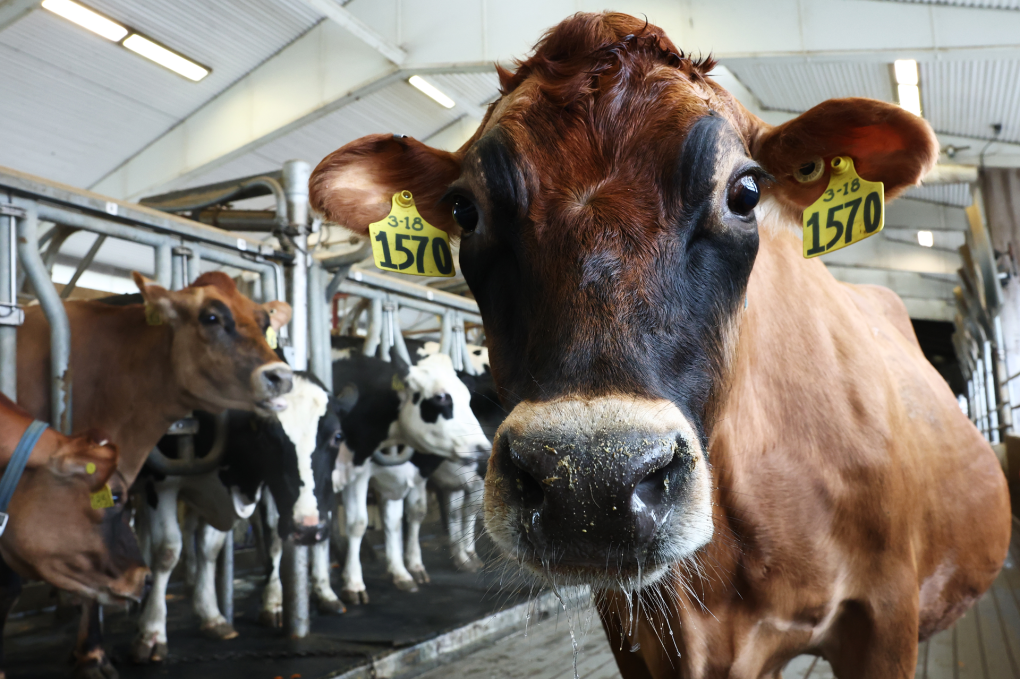
"caption": "ITHACA, NEW YORK - DECEMBER 11: Cows from a non-suspect herd are milked at the Cornell Teaching Dairy Barn at Cornell University on December 11, 2024 in Ithaca, New York. The U.S. Department of Agriculture last week issued a federal order that requires the testing of the nation's milk supply amid increasing concerns over H5N1 (avian flu), which has been raising alarm since it was first detected in a Texas cow. In July 2024, New York lawmakers gave $19.5 million in order to expand the Animal Health Diagnostic Center at Cornell University, after avian flu was confirmed to be spreading to dairy cattle. ",
"credit": "Michael M. Santiago/Getty Images",
"altTag": null,
"description": null,
"imgSizes": {
"medium": {
"file": "https://cdn.kqed.org/wp-content/uploads/sites/10/2024/11/bird-flu-800x533.png",
"width": 800,
"height": 533,
"mimeType": "image/png"
},
"large": {
"file": "https://cdn.kqed.org/wp-content/uploads/sites/10/2024/11/bird-flu-1020x679.png",
"width": 1020,
"height": 679,
"mimeType": "image/png"
},
"thumbnail": {
"file": "https://cdn.kqed.org/wp-content/uploads/sites/10/2024/11/bird-flu-160x107.png",
"width": 160,
"height": 107,
"mimeType": "image/png"
},
"1536x1536": {
"file": "https://cdn.kqed.org/wp-content/uploads/sites/10/2024/11/bird-flu-1536x1023.png",
"width": 1536,
"height": 1023,
"mimeType": "image/png"
},
"post-thumbnail": {
"file": "https://cdn.kqed.org/wp-content/uploads/sites/10/2024/11/bird-flu-672x372.png",
"width": 672,
"height": 372,
"mimeType": "image/png"
},
"twentyfourteen-full-width": {
"file": "https://cdn.kqed.org/wp-content/uploads/sites/10/2024/11/bird-flu-1038x576.png",
"width": 1038,
"height": 576,
"mimeType": "image/png"
},
"kqedFullSize": {
"file": "https://cdn.kqed.org/wp-content/uploads/sites/10/2024/11/bird-flu.png",
"width": 1920,
"height": 1279
}
},
"isLoading": false,
"fetchFailed": false
},
"news_12018839": {
"type": "attachments",
"id": "news_12018839",
"meta": {
"index": "attachments_1716263798",
"site": "news",
"id": "12018839",
"found": true
},
"title": "Governor Gavin Newsom signs legislation related to oversight of oil and gas wells, and community protections",
"publishDate": 1734551670,
"status": "inherit",
"parent": 12018836,
"modified": 1734556744,
"caption": "Gov. Gavin Newsom speaks at a press conference on Sept. 25, 2024, in Los Angeles. ",
"credit": "Jason Armond/Los Angeles Times via Getty Images",
"altTag": null,
"description": null,
"imgSizes": {
"medium": {
"file": "https://cdn.kqed.org/wp-content/uploads/sites/10/2024/12/GavinNewsomGetty-800x555.jpg",
"width": 800,
"height": 555,
"mimeType": "image/jpeg"
},
"large": {
"file": "https://cdn.kqed.org/wp-content/uploads/sites/10/2024/12/GavinNewsomGetty-1020x707.jpg",
"width": 1020,
"height": 707,
"mimeType": "image/jpeg"
},
"thumbnail": {
"file": "https://cdn.kqed.org/wp-content/uploads/sites/10/2024/12/GavinNewsomGetty-160x111.jpg",
"width": 160,
"height": 111,
"mimeType": "image/jpeg"
},
"1536x1536": {
"file": "https://cdn.kqed.org/wp-content/uploads/sites/10/2024/12/GavinNewsomGetty-1536x1065.jpg",
"width": 1536,
"height": 1065,
"mimeType": "image/jpeg"
},
"post-thumbnail": {
"file": "https://cdn.kqed.org/wp-content/uploads/sites/10/2024/12/GavinNewsomGetty-672x372.jpg",
"width": 672,
"height": 372,
"mimeType": "image/jpeg"
},
"twentyfourteen-full-width": {
"file": "https://cdn.kqed.org/wp-content/uploads/sites/10/2024/12/GavinNewsomGetty-1038x576.jpg",
"width": 1038,
"height": 576,
"mimeType": "image/jpeg"
},
"full-width": {
"file": "https://cdn.kqed.org/wp-content/uploads/sites/10/2024/12/GavinNewsomGetty-1920x1332.jpg",
"width": 1920,
"height": 1332,
"mimeType": "image/jpeg"
},
"kqedFullSize": {
"file": "https://cdn.kqed.org/wp-content/uploads/sites/10/2024/12/GavinNewsomGetty.jpg",
"width": 2000,
"height": 1387
}
},
"isLoading": false,
"fetchFailed": false
},
"news_12018077": {
"type": "attachments",
"id": "news_12018077",
"meta": {
"index": "attachments_1716263798",
"site": "news",
"id": "12018077",
"found": true
},
"title": "Gabriellino Tongva Tribal chairman Anthony Morales performs a cleansing ceremony with Sage before to",
"publishDate": 1734104002,
"status": "inherit",
"parent": 12018076,
"modified": 1734104032,
"caption": "Gabriellino Tongva Tribal chairman Anthony Morales performs a cleansing ceremony with Sage before touring the Playa Vista Development where more the remains of more than 100 native americans have been discovered, Thursday, March 4, 2004. Robert Wood of the Native American Heritage Commission (right background) talks with archeologist Jeff Altschul (far left) and an attorney for Latham Watkins representing the developer. ",
"credit": "Photo by Robert Gauthier/Los Angeles Times via Getty Images",
"altTag": null,
"description": null,
"imgSizes": {
"medium": {
"file": "https://cdn.kqed.org/wp-content/uploads/sites/10/2024/12/GettyImages-563614937-800x543.jpg",
"width": 800,
"height": 543,
"mimeType": "image/jpeg"
},
"large": {
"file": "https://cdn.kqed.org/wp-content/uploads/sites/10/2024/12/GettyImages-563614937-1020x692.jpg",
"width": 1020,
"height": 692,
"mimeType": "image/jpeg"
},
"thumbnail": {
"file": "https://cdn.kqed.org/wp-content/uploads/sites/10/2024/12/GettyImages-563614937-160x109.jpg",
"width": 160,
"height": 109,
"mimeType": "image/jpeg"
},
"1536x1536": {
"file": "https://cdn.kqed.org/wp-content/uploads/sites/10/2024/12/GettyImages-563614937-1536x1042.jpg",
"width": 1536,
"height": 1042,
"mimeType": "image/jpeg"
},
"post-thumbnail": {
"file": "https://cdn.kqed.org/wp-content/uploads/sites/10/2024/12/GettyImages-563614937-672x372.jpg",
"width": 672,
"height": 372,
"mimeType": "image/jpeg"
},
"twentyfourteen-full-width": {
"file": "https://cdn.kqed.org/wp-content/uploads/sites/10/2024/12/GettyImages-563614937-1038x576.jpg",
"width": 1038,
"height": 576,
"mimeType": "image/jpeg"
},
"kqedFullSize": {
"file": "https://cdn.kqed.org/wp-content/uploads/sites/10/2024/12/GettyImages-563614937.jpg",
"width": 1800,
"height": 1221
}
},
"isLoading": false,
"fetchFailed": false
},
"news_11990744": {
"type": "attachments",
"id": "news_11990744",
"meta": {
"index": "attachments_1716263798",
"site": "news",
"id": "11990744",
"found": true
},
"title": "GettyImages-2153339140",
"publishDate": 1718655982,
"status": "inherit",
"parent": 11990735,
"modified": 1734114513,
"caption": "Jon Arizti Sanz, Ph.D., Postdoctoral Fellow preparing for the extraction protocol while in the lab. The Broad Institute, Sabeti Lab, is testing purchased milk at area grocery stores for the presence of bird flu. \n",
"credit": "David L. Ryan/The Boston Globe via Getty Images",
"altTag": null,
"description": null,
"imgSizes": {
"medium": {
"file": "https://cdn.kqed.org/wp-content/uploads/sites/10/2024/06/GettyImages-2153339140-800x533.jpg",
"width": 800,
"height": 533,
"mimeType": "image/jpeg"
},
"large": {
"file": "https://cdn.kqed.org/wp-content/uploads/sites/10/2024/06/GettyImages-2153339140-1020x680.jpg",
"width": 1020,
"height": 680,
"mimeType": "image/jpeg"
},
"thumbnail": {
"file": "https://cdn.kqed.org/wp-content/uploads/sites/10/2024/06/GettyImages-2153339140-160x107.jpg",
"width": 160,
"height": 107,
"mimeType": "image/jpeg"
},
"1536x1536": {
"file": "https://cdn.kqed.org/wp-content/uploads/sites/10/2024/06/GettyImages-2153339140-1536x1024.jpg",
"width": 1536,
"height": 1024,
"mimeType": "image/jpeg"
},
"post-thumbnail": {
"file": "https://cdn.kqed.org/wp-content/uploads/sites/10/2024/06/GettyImages-2153339140-672x372.jpg",
"width": 672,
"height": 372,
"mimeType": "image/jpeg"
},
"twentyfourteen-full-width": {
"file": "https://cdn.kqed.org/wp-content/uploads/sites/10/2024/06/GettyImages-2153339140-1038x576.jpg",
"width": 1038,
"height": 576,
"mimeType": "image/jpeg"
},
"kqedFullSize": {
"file": "https://cdn.kqed.org/wp-content/uploads/sites/10/2024/06/GettyImages-2153339140.jpg",
"width": 1920,
"height": 1280
}
},
"isLoading": false,
"fetchFailed": false
},
"news_12017694": {
"type": "attachments",
"id": "news_12017694",
"meta": {
"index": "attachments_1716263798",
"site": "news",
"id": "12017694",
"found": true
},
"title": "A pair of macaws perch on a tree inside the newly renovated South American Tropical Forest exhibit at the San Francisco Zoo in San Francisco, Calif., on Friday, Sept. 17, 2010. The exhibit, which has been closed for over two years due to structural damage",
"publishDate": 1733947061,
"status": "inherit",
"parent": 12017684,
"modified": 1747425467,
"caption": "A pair of macaws perch on a tree inside the newly renovated South American Tropical Forest exhibit at the San Francisco Zoo in San Francisco, California, on Sept. 17, 2010.",
"credit": "Paul Chinn/The San Francisco Chronicle via Getty Images",
"altTag": null,
"description": null,
"imgSizes": {
"medium": {
"file": "https://cdn.kqed.org/wp-content/uploads/sites/10/2024/12/SFZooGetty-800x727.jpg",
"width": 800,
"height": 727,
"mimeType": "image/jpeg"
},
"large": {
"file": "https://cdn.kqed.org/wp-content/uploads/sites/10/2024/12/SFZooGetty-1020x927.jpg",
"width": 1020,
"height": 927,
"mimeType": "image/jpeg"
},
"thumbnail": {
"file": "https://cdn.kqed.org/wp-content/uploads/sites/10/2024/12/SFZooGetty-160x145.jpg",
"width": 160,
"height": 145,
"mimeType": "image/jpeg"
},
"1536x1536": {
"file": "https://cdn.kqed.org/wp-content/uploads/sites/10/2024/12/SFZooGetty-1536x1396.jpg",
"width": 1536,
"height": 1396,
"mimeType": "image/jpeg"
},
"post-thumbnail": {
"file": "https://cdn.kqed.org/wp-content/uploads/sites/10/2024/12/SFZooGetty-672x372.jpg",
"width": 672,
"height": 372,
"mimeType": "image/jpeg"
},
"twentyfourteen-full-width": {
"file": "https://cdn.kqed.org/wp-content/uploads/sites/10/2024/12/SFZooGetty-1038x576.jpg",
"width": 1038,
"height": 576,
"mimeType": "image/jpeg"
},
"full-width": {
"file": "https://cdn.kqed.org/wp-content/uploads/sites/10/2024/12/SFZooGetty-1920x1745.jpg",
"width": 1920,
"height": 1745,
"mimeType": "image/jpeg"
},
"kqedFullSize": {
"file": "https://cdn.kqed.org/wp-content/uploads/sites/10/2024/12/SFZooGetty.jpg",
"width": 2000,
"height": 1818
}
},
"isLoading": false,
"fetchFailed": false
},
"news_12015784": {
"type": "attachments",
"id": "news_12015784",
"meta": {
"index": "attachments_1716263798",
"site": "news",
"id": "12015784",
"found": true
},
"title": "Bird Flu Outbreak On California Farms Spreads To Raw Milk",
"publishDate": 1732562540,
"status": "inherit",
"parent": 12015779,
"modified": 1732562578,
"caption": "Raw Farm raw milk containers are displayed on a shelf at a grocery store on Nov. 25, 2024, in San Anselmo, California. Fresno County dairy Raw Farm has recalled its cream top raw milk after bird flu virus was found in a retail sample of the raw milk product over the weekend. Consumers should avoid milk consumption and are encouraged to return the product to the store where it was purchased.",
"credit": "Justin Sullivan/Getty Images",
"altTag": null,
"description": null,
"imgSizes": {
"medium": {
"file": "https://cdn.kqed.org/wp-content/uploads/sites/10/2024/11/BirdFluMilkFresnoGetty-800x560.jpg",
"width": 800,
"height": 560,
"mimeType": "image/jpeg"
},
"large": {
"file": "https://cdn.kqed.org/wp-content/uploads/sites/10/2024/11/BirdFluMilkFresnoGetty-1020x714.jpg",
"width": 1020,
"height": 714,
"mimeType": "image/jpeg"
},
"thumbnail": {
"file": "https://cdn.kqed.org/wp-content/uploads/sites/10/2024/11/BirdFluMilkFresnoGetty-160x112.jpg",
"width": 160,
"height": 112,
"mimeType": "image/jpeg"
},
"1536x1536": {
"file": "https://cdn.kqed.org/wp-content/uploads/sites/10/2024/11/BirdFluMilkFresnoGetty-1536x1075.jpg",
"width": 1536,
"height": 1075,
"mimeType": "image/jpeg"
},
"post-thumbnail": {
"file": "https://cdn.kqed.org/wp-content/uploads/sites/10/2024/11/BirdFluMilkFresnoGetty-672x372.jpg",
"width": 672,
"height": 372,
"mimeType": "image/jpeg"
},
"twentyfourteen-full-width": {
"file": "https://cdn.kqed.org/wp-content/uploads/sites/10/2024/11/BirdFluMilkFresnoGetty-1038x576.jpg",
"width": 1038,
"height": 576,
"mimeType": "image/jpeg"
},
"full-width": {
"file": "https://cdn.kqed.org/wp-content/uploads/sites/10/2024/11/BirdFluMilkFresnoGetty-1920x1344.jpg",
"width": 1920,
"height": 1344,
"mimeType": "image/jpeg"
},
"kqedFullSize": {
"file": "https://cdn.kqed.org/wp-content/uploads/sites/10/2024/11/BirdFluMilkFresnoGetty.jpg",
"width": 2000,
"height": 1400
}
},
"isLoading": false,
"fetchFailed": false
},
"news_11986068": {
"type": "attachments",
"id": "news_11986068",
"meta": {
"index": "attachments_1716263798",
"site": "news",
"id": "11986068",
"found": true
},
"title": "Raw Milk",
"publishDate": 1715705344,
"status": "inherit",
"parent": 11986062,
"modified": 1733350359,
"caption": "Bottles of raw milk are displayed for sale at a store in Temecula, on May 8, 2024. ",
"credit": "Jonel Aleccia/AP Photo",
"altTag": "Several jugs of milk.",
"description": null,
"imgSizes": {
"medium": {
"file": "https://cdn.kqed.org/wp-content/uploads/sites/10/2024/05/AP24134604431971-800x533.jpg",
"width": 800,
"height": 533,
"mimeType": "image/jpeg"
},
"large": {
"file": "https://cdn.kqed.org/wp-content/uploads/sites/10/2024/05/AP24134604431971-1020x680.jpg",
"width": 1020,
"height": 680,
"mimeType": "image/jpeg"
},
"thumbnail": {
"file": "https://cdn.kqed.org/wp-content/uploads/sites/10/2024/05/AP24134604431971-160x107.jpg",
"width": 160,
"height": 107,
"mimeType": "image/jpeg"
},
"1536x1536": {
"file": "https://cdn.kqed.org/wp-content/uploads/sites/10/2024/05/AP24134604431971-1536x1024.jpg",
"width": 1536,
"height": 1024,
"mimeType": "image/jpeg"
},
"post-thumbnail": {
"file": "https://cdn.kqed.org/wp-content/uploads/sites/10/2024/05/AP24134604431971-672x372.jpg",
"width": 672,
"height": 372,
"mimeType": "image/jpeg"
},
"twentyfourteen-full-width": {
"file": "https://cdn.kqed.org/wp-content/uploads/sites/10/2024/05/AP24134604431971-1038x576.jpg",
"width": 1038,
"height": 576,
"mimeType": "image/jpeg"
},
"kqedFullSize": {
"file": "https://cdn.kqed.org/wp-content/uploads/sites/10/2024/05/AP24134604431971.jpg",
"width": 1920,
"height": 1280
}
},
"isLoading": false,
"fetchFailed": false
},
"news_12015736": {
"type": "attachments",
"id": "news_12015736",
"meta": {
"index": "attachments_1716263798",
"site": "news",
"id": "12015736",
"found": true
},
"title": "imperial-beach-674494827f68d",
"publishDate": 1732547793,
"status": "inherit",
"parent": 12015735,
"modified": 1732547836,
"caption": "Family photographs rest on the wall of Sherman Qualls' home at The Swell apartments, formerly Sussex Gardens, in Imperial Beach, California on Nov. 18, 2024. Qualls, a retired bus driver, has lived in the building for 18 years and has already begun to pack up his belongings to prepare for a potential eviction.",
"credit": "Kori Suzuki/KPBS",
"altTag": "imperial beach",
"description": null,
"imgSizes": {
"medium": {
"file": "https://cdn.kqed.org/wp-content/uploads/sites/10/2024/11/imperial-beach-674494827f68d-800x533.jpg",
"width": 800,
"height": 533,
"mimeType": "image/jpeg"
},
"large": {
"file": "https://cdn.kqed.org/wp-content/uploads/sites/10/2024/11/imperial-beach-674494827f68d-1020x679.jpg",
"width": 1020,
"height": 679,
"mimeType": "image/jpeg"
},
"thumbnail": {
"file": "https://cdn.kqed.org/wp-content/uploads/sites/10/2024/11/imperial-beach-674494827f68d-160x107.jpg",
"width": 160,
"height": 107,
"mimeType": "image/jpeg"
},
"1536x1536": {
"file": "https://cdn.kqed.org/wp-content/uploads/sites/10/2024/11/imperial-beach-674494827f68d-1536x1023.jpg",
"width": 1536,
"height": 1023,
"mimeType": "image/jpeg"
},
"2048x2048": {
"file": "https://cdn.kqed.org/wp-content/uploads/sites/10/2024/11/imperial-beach-674494827f68d-2048x1364.jpg",
"width": 2048,
"height": 1364,
"mimeType": "image/jpeg"
},
"post-thumbnail": {
"file": "https://cdn.kqed.org/wp-content/uploads/sites/10/2024/11/imperial-beach-674494827f68d-672x372.jpg",
"width": 672,
"height": 372,
"mimeType": "image/jpeg"
},
"twentyfourteen-full-width": {
"file": "https://cdn.kqed.org/wp-content/uploads/sites/10/2024/11/imperial-beach-674494827f68d-1038x576.jpg",
"width": 1038,
"height": 576,
"mimeType": "image/jpeg"
},
"full-width": {
"file": "https://cdn.kqed.org/wp-content/uploads/sites/10/2024/11/imperial-beach-674494827f68d-1920x1279.jpg",
"width": 1920,
"height": 1279,
"mimeType": "image/jpeg"
},
"kqedFullSize": {
"file": "https://cdn.kqed.org/wp-content/uploads/sites/10/2024/11/imperial-beach-674494827f68d.jpg",
"width": 2480,
"height": 1652
}
},
"isLoading": false,
"fetchFailed": false
},
"news_12014957": {
"type": "attachments",
"id": "news_12014957",
"meta": {
"index": "attachments_1716263798",
"site": "news",
"id": "12014957",
"found": true
},
"title": "Cage Free Chickens",
"publishDate": 1732038942,
"status": "inherit",
"parent": 12014955,
"modified": 1732039028,
"caption": "California health officials say there has been a possible case of the bird flu virus involving a child in Alameda County. ",
"credit": "Charlie Neibergall/AP Photo",
"altTag": null,
"description": null,
"imgSizes": {
"medium": {
"file": "https://cdn.kqed.org/wp-content/uploads/sites/10/2024/11/BirdFluAP-800x513.jpg",
"width": 800,
"height": 513,
"mimeType": "image/jpeg"
},
"large": {
"file": "https://cdn.kqed.org/wp-content/uploads/sites/10/2024/11/BirdFluAP-1020x654.jpg",
"width": 1020,
"height": 654,
"mimeType": "image/jpeg"
},
"thumbnail": {
"file": "https://cdn.kqed.org/wp-content/uploads/sites/10/2024/11/BirdFluAP-160x103.jpg",
"width": 160,
"height": 103,
"mimeType": "image/jpeg"
},
"1536x1536": {
"file": "https://cdn.kqed.org/wp-content/uploads/sites/10/2024/11/BirdFluAP-1536x985.jpg",
"width": 1536,
"height": 985,
"mimeType": "image/jpeg"
},
"post-thumbnail": {
"file": "https://cdn.kqed.org/wp-content/uploads/sites/10/2024/11/BirdFluAP-672x372.jpg",
"width": 672,
"height": 372,
"mimeType": "image/jpeg"
},
"twentyfourteen-full-width": {
"file": "https://cdn.kqed.org/wp-content/uploads/sites/10/2024/11/BirdFluAP-1038x576.jpg",
"width": 1038,
"height": 576,
"mimeType": "image/jpeg"
},
"full-width": {
"file": "https://cdn.kqed.org/wp-content/uploads/sites/10/2024/11/BirdFluAP-1920x1232.jpg",
"width": 1920,
"height": 1232,
"mimeType": "image/jpeg"
},
"kqedFullSize": {
"file": "https://cdn.kqed.org/wp-content/uploads/sites/10/2024/11/BirdFluAP.jpg",
"width": 2000,
"height": 1283
}
},
"isLoading": false,
"fetchFailed": false
},
"news_12013407": {
"type": "attachments",
"id": "news_12013407",
"meta": {
"index": "attachments_1716263798",
"site": "news",
"id": "12013407",
"found": true
},
"title": "Gavin Newsom, Donald Trump, Jerry Brown",
"publishDate": 1731002743,
"status": "inherit",
"parent": 12013395,
"modified": 1739131345,
"caption": "President Donald Trump talks with Gov. Gavin Newsom (left) during a visit to a neighborhood impacted by the wildfires in Paradise on Nov. 17, 2018.",
"credit": "Evan Vucci/AP Photo",
"altTag": "Two men wearing jackets and the man on the right points while wearing a black hat stand near each other talking.",
"description": null,
"imgSizes": {
"medium": {
"file": "https://cdn.kqed.org/wp-content/uploads/sites/10/2024/11/NewsomTrump2018AP-800x533.jpg",
"width": 800,
"height": 533,
"mimeType": "image/jpeg"
},
"large": {
"file": "https://cdn.kqed.org/wp-content/uploads/sites/10/2024/11/NewsomTrump2018AP-1020x680.jpg",
"width": 1020,
"height": 680,
"mimeType": "image/jpeg"
},
"thumbnail": {
"file": "https://cdn.kqed.org/wp-content/uploads/sites/10/2024/11/NewsomTrump2018AP-160x107.jpg",
"width": 160,
"height": 107,
"mimeType": "image/jpeg"
},
"1536x1536": {
"file": "https://cdn.kqed.org/wp-content/uploads/sites/10/2024/11/NewsomTrump2018AP-1536x1024.jpg",
"width": 1536,
"height": 1024,
"mimeType": "image/jpeg"
},
"post-thumbnail": {
"file": "https://cdn.kqed.org/wp-content/uploads/sites/10/2024/11/NewsomTrump2018AP-672x372.jpg",
"width": 672,
"height": 372,
"mimeType": "image/jpeg"
},
"twentyfourteen-full-width": {
"file": "https://cdn.kqed.org/wp-content/uploads/sites/10/2024/11/NewsomTrump2018AP-1038x576.jpg",
"width": 1038,
"height": 576,
"mimeType": "image/jpeg"
},
"full-width": {
"file": "https://cdn.kqed.org/wp-content/uploads/sites/10/2024/11/NewsomTrump2018AP-1920x1280.jpg",
"width": 1920,
"height": 1280,
"mimeType": "image/jpeg"
},
"kqedFullSize": {
"file": "https://cdn.kqed.org/wp-content/uploads/sites/10/2024/11/NewsomTrump2018AP.jpg",
"width": 2000,
"height": 1333
}
},
"isLoading": false,
"fetchFailed": false
},
"news_12012123": {
"type": "attachments",
"id": "news_12012123",
"meta": {
"index": "attachments_1716263798",
"site": "news",
"id": "12012123",
"found": true
},
"title": "041620_Dairy-Worker_GETTY_CM_01 copy",
"publishDate": 1730486935,
"status": "inherit",
"parent": 12012121,
"modified": 1730488948,
"caption": "A strain of bird flu has infected cattle at California dairies and jumped to farmworkers over the past month. The state has distributed protective gear but has not tested widely for the virus among people.",
"credit": "Ariana Drehsler/AFP via Getty Images",
"altTag": null,
"description": null,
"imgSizes": {
"medium": {
"file": "https://cdn.kqed.org/wp-content/uploads/sites/10/2024/11/041620_Dairy-Worker_GETTY_CM_01-copy-800x533.jpg",
"width": 800,
"height": 533,
"mimeType": "image/jpeg"
},
"large": {
"file": "https://cdn.kqed.org/wp-content/uploads/sites/10/2024/11/041620_Dairy-Worker_GETTY_CM_01-copy-1020x680.jpg",
"width": 1020,
"height": 680,
"mimeType": "image/jpeg"
},
"thumbnail": {
"file": "https://cdn.kqed.org/wp-content/uploads/sites/10/2024/11/041620_Dairy-Worker_GETTY_CM_01-copy-160x107.jpg",
"width": 160,
"height": 107,
"mimeType": "image/jpeg"
},
"1536x1536": {
"file": "https://cdn.kqed.org/wp-content/uploads/sites/10/2024/11/041620_Dairy-Worker_GETTY_CM_01-copy-1536x1024.jpg",
"width": 1536,
"height": 1024,
"mimeType": "image/jpeg"
},
"post-thumbnail": {
"file": "https://cdn.kqed.org/wp-content/uploads/sites/10/2024/11/041620_Dairy-Worker_GETTY_CM_01-copy-672x372.jpg",
"width": 672,
"height": 372,
"mimeType": "image/jpeg"
},
"twentyfourteen-full-width": {
"file": "https://cdn.kqed.org/wp-content/uploads/sites/10/2024/11/041620_Dairy-Worker_GETTY_CM_01-copy-1038x576.jpg",
"width": 1038,
"height": 576,
"mimeType": "image/jpeg"
},
"full-width": {
"file": "https://cdn.kqed.org/wp-content/uploads/sites/10/2024/11/041620_Dairy-Worker_GETTY_CM_01-copy-1920x1280.jpg",
"width": 1920,
"height": 1280,
"mimeType": "image/jpeg"
},
"kqedFullSize": {
"file": "https://cdn.kqed.org/wp-content/uploads/sites/10/2024/11/041620_Dairy-Worker_GETTY_CM_01-copy.jpg",
"width": 2000,
"height": 1333
}
},
"isLoading": false,
"fetchFailed": false
}
},
"audioPlayerReducer": {
"postId": "stream_live",
"isPaused": true,
"isPlaying": false,
"pfsActive": false,
"pledgeModalIsOpen": true,
"playerDrawerIsOpen": false,
"liveAudioPlayStartedAt": 0,
"liveAudioPlayContext": ""
},
"authorsReducer": {
"byline_news_12016664": {
"type": "authors",
"id": "byline_news_12016664",
"meta": {
"override": true
},
"slug": "byline_news_12016664",
"name": "Jonel Aleccia, Associated Press",
"isLoading": false
},
"byline_news_12012121": {
"type": "authors",
"id": "byline_news_12012121",
"meta": {
"override": true
},
"slug": "byline_news_12012121",
"name": "\u003ca href=\"https://calmatters.org/author/kristen-hwang/\">Kristen Hwang\u003c/a>",
"isLoading": false
},
"kqed": {
"type": "authors",
"id": "236",
"meta": {
"index": "authors_1716337520",
"id": "236",
"found": true
},
"name": "KQED News Staff",
"firstName": "KQED News Staff",
"lastName": null,
"slug": "kqed",
"email": "faq@kqed.org",
"display_author_email": false,
"staff_mastheads": [],
"title": null,
"bio": null,
"avatar": "https://secure.gravatar.com/avatar/ef0e801a68c4c54afa9180db14084167?s=600&d=blank&r=g",
"twitter": null,
"facebook": null,
"instagram": null,
"linkedin": null,
"sites": [
{
"site": "arts",
"roles": [
"contributor"
]
},
{
"site": "news",
"roles": [
"editor"
]
},
{
"site": "futureofyou",
"roles": [
"author"
]
}
],
"headData": {
"title": "KQED News Staff | KQED",
"description": null,
"ogImgSrc": "https://secure.gravatar.com/avatar/ef0e801a68c4c54afa9180db14084167?s=600&d=blank&r=g",
"twImgSrc": "https://secure.gravatar.com/avatar/ef0e801a68c4c54afa9180db14084167?s=600&d=blank&r=g"
},
"isLoading": false,
"link": "/author/kqed"
},
"shossaini": {
"type": "authors",
"id": "3214",
"meta": {
"index": "authors_1716337520",
"id": "3214",
"found": true
},
"name": "Sara Hossaini",
"firstName": "Sara",
"lastName": "Hossaini",
"slug": "shossaini",
"email": "shossaini@kqed.org",
"display_author_email": true,
"staff_mastheads": [
"news"
],
"title": "KQED Reporter",
"bio": "Sara Hossaini came to general assignment reporting at KQED in 2013 after two winters reporting at Wyoming Public Radio. She holds a bachelor's degree in broadcast journalism from the University of Nebraska-Lincoln. Her radio romance began after a bitter breakup with documentary film (Ok, maybe it's still complicated). Her first simultaneous jobs in San Francisco were as Associate Producer on a PBS film series through the Center for Asian American Media and as a butler. She likes to trot, plot and make things with her hands.",
"avatar": "https://secure.gravatar.com/avatar/060e9f56b9554e17942e89f413242774?s=600&d=blank&r=g",
"twitter": "mshossaini",
"facebook": null,
"instagram": null,
"linkedin": null,
"sites": [
{
"site": "news",
"roles": [
"author"
]
},
{
"site": "stateofhealth",
"roles": [
"author"
]
}
],
"headData": {
"title": "Sara Hossaini | KQED",
"description": "KQED Reporter",
"ogImgSrc": "https://secure.gravatar.com/avatar/060e9f56b9554e17942e89f413242774?s=600&d=blank&r=g",
"twImgSrc": "https://secure.gravatar.com/avatar/060e9f56b9554e17942e89f413242774?s=600&d=blank&r=g"
},
"isLoading": false,
"link": "/author/shossaini"
},
"lesleymcclurg": {
"type": "authors",
"id": "11229",
"meta": {
"index": "authors_1716337520",
"id": "11229",
"found": true
},
"name": "Lesley McClurg",
"firstName": "Lesley",
"lastName": "McClurg",
"slug": "lesleymcclurg",
"email": "lmcclurg@KQED.org",
"display_author_email": false,
"staff_mastheads": [],
"title": "KQED Health Correspondent",
"bio": "Lesley McClurg is a health correspondent and fill-in host whose work is regularly rebroadcast on NPR and PBS programs. She’s earned multiple regional Emmy awards, a national and a regional Edward R. Murrow award, and was named Best Beat Reporter by the Association of Health Care Journalists. The Society of Professional Journalists has recognized her work several times, and the Society of Environmental Journalists spotlighted her coverage of California’s historic drought.\r\n\r\nBefore joining KQED in 2016, Lesley covered food and sustainability for Capital Public Radio, environmental issues for Colorado Public Radio, and reported for KUOW and KCTS 9 in Seattle. Away from the newsroom, she loves skiing with her daughter, mountain biking with her partner, and playing with Ollie, the family’s goldendoodle. On deadline, she runs almost entirely on chocolate chips.\r\n\r\n ",
"avatar": "https://secure.gravatar.com/avatar/bab49e972ea10c774fe0f5e29dba1722b158f7c0d58a360923d1389d380b2978?s=600&d=blank&r=g",
"twitter": "lesleywmcclurg",
"bluesky": null,
"facebook": null,
"instagram": null,
"linkedin": null,
"sites": [
{
"site": "arts",
"roles": [
"subscriber"
]
},
{
"site": "news",
"roles": [
"subscriber"
]
},
{
"site": "futureofyou",
"roles": [
"subscriber"
]
},
{
"site": "stateofhealth",
"roles": [
"subscriber"
]
},
{
"site": "science",
"roles": [
"subscriber"
]
},
{
"site": "quest",
"roles": [
"subscriber"
]
},
{
"site": "forum",
"roles": [
"subscriber"
]
},
{
"site": "liveblog",
"roles": [
"subscriber"
]
}
],
"headData": {
"title": "Lesley McClurg | KQED",
"description": "KQED Health Correspondent",
"ogImgSrc": "https://secure.gravatar.com/avatar/bab49e972ea10c774fe0f5e29dba1722b158f7c0d58a360923d1389d380b2978?s=600&d=blank&r=g",
"twImgSrc": "https://secure.gravatar.com/avatar/bab49e972ea10c774fe0f5e29dba1722b158f7c0d58a360923d1389d380b2978?s=600&d=blank&r=g"
},
"isLoading": false,
"link": "/author/lesleymcclurg"
},
"dcronin": {
"type": "authors",
"id": "11362",
"meta": {
"index": "authors_1716337520",
"id": "11362",
"found": true
},
"name": "Dana Cronin",
"firstName": "Dana",
"lastName": "Cronin",
"slug": "dcronin",
"email": "dcronin@KQED.org",
"display_author_email": true,
"staff_mastheads": [],
"title": "KQED Contributor",
"bio": "Dana Cronin is a reporter for KQED News. She loves writing stories about climate change, environmental issues, food and agriculture. She's reported across the country, from Colorado to Washington D.C. to Illinois, and has won numerous awards for her coverage. Her work is regularly featured on national broadcasts, including NPR’s Morning Edition, All Things Considered, PBS Newshour and Science Friday. She lives in Oakland and has an avocado tree in her back yard.",
"avatar": "https://secure.gravatar.com/avatar/b242755225e2f85f37c259df1f4cdfa36dc82f17dcf79e697fb392d658d1750b?s=600&d=blank&r=g",
"twitter": "DanaHCronin",
"bluesky": null,
"facebook": null,
"instagram": null,
"linkedin": null,
"sites": [
{
"site": "arts",
"roles": [
"author"
]
},
{
"site": "news",
"roles": [
"editor"
]
},
{
"site": "science",
"roles": [
"author"
]
},
{
"site": "liveblog",
"roles": [
"author"
]
}
],
"headData": {
"title": "Dana Cronin | KQED",
"description": "KQED Contributor",
"ogImgSrc": "https://secure.gravatar.com/avatar/b242755225e2f85f37c259df1f4cdfa36dc82f17dcf79e697fb392d658d1750b?s=600&d=blank&r=g",
"twImgSrc": "https://secure.gravatar.com/avatar/b242755225e2f85f37c259df1f4cdfa36dc82f17dcf79e697fb392d658d1750b?s=600&d=blank&r=g"
},
"isLoading": false,
"link": "/author/dcronin"
},
"kmizuguchi": {
"type": "authors",
"id": "11739",
"meta": {
"index": "authors_1716337520",
"id": "11739",
"found": true
},
"name": "Keith Mizuguchi",
"firstName": "Keith",
"lastName": "Mizuguchi",
"slug": "kmizuguchi",
"email": "kmizuguchi@kqed.org",
"display_author_email": false,
"staff_mastheads": [],
"title": "KQED Contributor",
"bio": null,
"avatar": "https://secure.gravatar.com/avatar/64d8a7de0723d4099b9fe4e915136103febcc20809abce228ee4415bcb237023?s=600&d=blank&r=g",
"twitter": null,
"bluesky": null,
"facebook": null,
"instagram": null,
"linkedin": null,
"sites": [
{
"site": "news",
"roles": [
"editor"
]
},
{
"site": "science",
"roles": [
"editor"
]
}
],
"headData": {
"title": "Keith Mizuguchi | KQED",
"description": "KQED Contributor",
"ogImgSrc": "https://secure.gravatar.com/avatar/64d8a7de0723d4099b9fe4e915136103febcc20809abce228ee4415bcb237023?s=600&d=blank&r=g",
"twImgSrc": "https://secure.gravatar.com/avatar/64d8a7de0723d4099b9fe4e915136103febcc20809abce228ee4415bcb237023?s=600&d=blank&r=g"
},
"isLoading": false,
"link": "/author/kmizuguchi"
},
"jservantez": {
"type": "authors",
"id": "11909",
"meta": {
"index": "authors_1716337520",
"id": "11909",
"found": true
},
"name": "Jared Servantez",
"firstName": "Jared",
"lastName": "Servantez",
"slug": "jservantez",
"email": "jservantez@kqed.org",
"display_author_email": true,
"staff_mastheads": [
"news"
],
"title": "KQED Contributor",
"bio": "Jared Servantez is the editor of KQED's Express Desk, leading the newsroom's online breaking news operation. He most recently worked for the Los Angeles Times, where he served as a breaking news editor, the Metro Desk's night editor, and a copy editor. Jared is a graduate of the USC Annenberg School for Communication and Journalism.",
"avatar": "https://secure.gravatar.com/avatar/f0e317c67bb498c3f077f033d1cc79e62f3bc1303fa20a14e8880d31fbe7e01e?s=600&d=blank&r=g",
"twitter": "jservantez",
"bluesky": null,
"facebook": null,
"instagram": null,
"linkedin": null,
"sites": [
{
"site": "news",
"roles": [
"editor"
]
},
{
"site": "science",
"roles": [
"editor",
"author"
]
},
{
"site": "liveblog",
"roles": [
"editor"
]
}
],
"headData": {
"title": "Jared Servantez | KQED",
"description": "KQED Contributor",
"ogImgSrc": "https://secure.gravatar.com/avatar/f0e317c67bb498c3f077f033d1cc79e62f3bc1303fa20a14e8880d31fbe7e01e?s=600&d=blank&r=g",
"twImgSrc": "https://secure.gravatar.com/avatar/f0e317c67bb498c3f077f033d1cc79e62f3bc1303fa20a14e8880d31fbe7e01e?s=600&d=blank&r=g"
},
"isLoading": false,
"link": "/author/jservantez"
}
},
"pagesReducer": {
"news_tag_bird-flu": {
"type": "terms",
"id": "news_33648",
"meta": {
"index": "terms_1716263798",
"site": "news",
"id": "33648",
"score": 9.560078
},
"featImg": null,
"name": "bird flu",
"description": null,
"taxonomy": "tag",
"headData": {
"twImgId": null,
"twTitle": null,
"ogTitle": null,
"ogImgId": null,
"twDescription": null,
"description": null,
"title": "bird flu Archives | KQED News",
"ogDescription": null
},
"ttid": 33665,
"slug": "bird-flu",
"isLoading": false,
"title": "bird flu",
"pageMeta": {
"site": "news",
"WpPageTemplate": "page-topic-editorial",
"currentPage": 2
},
"blocks": [
{
"blockName": "kqed/post-list",
"attrs": {
"layout": "cardArticle2",
"query": "posts/news?tag=bird-flu",
"seeMore": false,
"paginated": true,
"page": 2
}
},
{
"blockName": "kqed/ad"
}
]
}
},
"pfsSessionReducer": {},
"postsReducer": {
"stream_live": {
"type": "live",
"id": "stream_live",
"audioUrl": "https://hls.kqed.org/hls/kqed_app/playlist.m3u8",
"title": "Live Stream",
"excerpt": "Live Stream information currently unavailable.",
"link": "/radio",
"featImg": "",
"label": {
"name": "KQED Live",
"link": "/"
}
},
"stream_kqedNewscast": {
"type": "posts",
"id": "stream_kqedNewscast",
"audioUrl": "https://www.kqed.org/.stream/anon/radio/RDnews/newscast.mp3?_=1",
"title": "KQED Newscast",
"featImg": "",
"label": {
"name": "88.5 FM",
"link": "/"
}
},
"news_11990735": {
"type": "posts",
"id": "news_11990735",
"meta": {
"index": "posts_1716263798",
"site": "news",
"id": "11990735",
"score": null,
"sort": [
1734564045000
]
},
"guestAuthors": [],
"slug": "avian-flu-what-to-know-about-h5n1-virus-risks-beyond-the-headlines",
"title": "Bird Flu: As California Declares State of Emergency, What to Know About Your H5N1 Virus Risks",
"publishDate": 1734564045,
"format": "standard",
"headTitle": "Bird Flu: As California Declares State of Emergency, What to Know About Your H5N1 Virus Risks | KQED",
"labelTerm": {
"site": "news"
},
"content": "\u003cp>California state officials officials \u003ca href=\"https://www.kqed.org/news/12018836/newsom-declares-bird-flu-emergency-california-us-confirms-1st-severe-case\">have declared a state of emergency across the state in response to the ongoing bird flu outbreak\u003c/a>.\u003c/p>\n\u003cp>On Dec. 18, Gov. Gavin Newsom confirmed that 34 human bird flu cases have been detected in California and pointed to recent cases detected in dairy cows in Southern California as reason to expand monitoring of the virus.\u003c/p>\n\u003cp>Newsom’s announcement comes on the same day the Centers for Disease Control and Prevention reported \u003ca href=\"https://apnews.com/article/bird-flu-severe-louisiana-2b4a5f55a05cf8be9b169c15e8b9582d\">the country’s first case of severe illness in a person with bird flu living in Louisiana.\u003c/a>\u003c/p>\n\u003cp>A human infection was previously detected in the Bay Area in November, \u003ca href=\"https://www.kqed.org/news/12014955/bay-area-potential-first-bird-flu-case-reported-alameda-county-child\">in a child in Alameda County\u003c/a>.\u003c/p>\n\u003cp>Since April 2024, \u003ca href=\"https://www.cdc.gov/bird-flu/situation-summary/index.html\">the Centers for Disease Control and Prevention (CDC) has confirmed 61 bird flu infections among humans nationwide.\u003c/a>\u003c/p>\n\u003ch2>\u003ca id=\"bayareah5n1outbreak\">\u003c/a>\u003cstrong>What does it mean that California declared a state of emergency over the bird flu outbreak?\u003c/strong>\u003c/h2>\n\u003cp>According to the California Government Code, the governor can declare a state of emergency when the state, or part of it, is \u003ca href=\"https://www.caloes.ca.gov/office-of-the-director/operations/recovery-directorate/proclamation-process/#:~:text=Pursuant%20to%20California%20Government%20Code%20Section%208625%2C%20the%20Governor%20may,to%20cope%20with%20the%20emergency.\">“affected by a natural or manmade disaster”\u003c/a> and \u003ca href=\"https://www.caloes.ca.gov/office-of-the-director/operations/recovery-directorate/proclamation-process/#:~:text=Pursuant%20to%20California%20Government%20Code%20Section%208625%2C%20the%20Governor%20may,to%20cope%20with%20the%20emergency.\">“emergency conditions require the combined forces of a mutual aid region or regions to combat.”\u003c/a>\u003c/p>\n\u003cp>In this way, declaring a State of Emergency allows California to free up resources and change or suspend laws to focus on a public health issue, or damage caused by earthquakes or fires.\u003c/p>\n\u003cp>The state of emergency \u003ca href=\"https://www.kqed.org/news/11929285/newsom-to-end-californias-covid-state-of-emergency-in-february\">declared in March 2020 for COVID-19\u003c/a> lasted for almost three years. In that timespan, Newsom was able to dispense hundreds of orders of varying sizes related to the pandemic, ranging from stay-at-home measures to delaying the tax filing deadline.\u003c/p>\n\u003cp>For context, \u003ca href=\"https://www.caloes.ca.gov/office-of-the-director/policy-administration/legal-affairs/emergency-proclamations/\">there are currently over 50 open State of Emergency proclamations in California\u003c/a> — some statewide and some restricted to counties.\u003c/p>\n\u003cp>Health officials say that no person-to-person spread of bird flu has been detected in California, and that the risk of infection for the general public remains low. But almost five years after the start of the COVID-19 pandemic, these alarming headlines can be alarming to read.\u003c/p>\n\u003cp>The public health experts KQED has spoken throughout the bird flu outbreak affirm that having accurate information about a virus is one way we can all better protect ourselves against future potential threats. “H5N1 is really a metaphor for lots of emerging threats in the future where we need to use the lessons we’ve learned during COVID and apply them again,” said Peter Chin-Hong, infectious disease physician at UC San Francisco. “We are being vigilant but not afraid.”\u003c/p>\n\u003cp>Keep reading for the latest on what researchers know about H5N1 — and how you can think realistically about the risks. Or jump straight to:\u003c/p>\n\u003cul>\n\u003cli>\u003cstrong>\u003ca href=\"#avianflu\">What is bird flu?\u003c/a>\u003c/strong>\u003c/li>\n\u003cli>\u003cstrong>\u003ca href=\"#canitinfecthumans\">If H5N1 is spreading among cattle, how easily can it infect humans?\u003c/a>\u003c/strong>\u003c/li>\n\u003cli>\u003cstrong>\u003ca href=\"#whatarethesymptoms\">How dangerous is H5N1 for humans? What are the symptoms?\u003c/a>\u003c/strong>\u003c/li>\n\u003cli>\u003cstrong>\u003ca href=\"#anotherpandemic\">Is this another COVID-style pandemic?\u003c/a>\u003c/strong>\u003c/li>\n\u003cli>\u003cstrong>\u003ca href=\"#whatcanidonow\">Is there anything I should be doing now to lower my risks?\u003c/a>\u003c/strong>\u003c/li>\n\u003c/ul>\n\u003ch2>\u003ca id=\"avianflu\">\u003c/a>What is bird flu?\u003c/h2>\n\u003cp>Bird flu, or avian flu, has existed among different bird species for centuries and is caused by the influenza A virus. Most of the time, the influenza A virus sticks to birds, but some strains can jump to other species. The seasonal flu we see each year, for example, is caused by the influenza A virus strain, while another strain of that same virus type \u003ca href=\"https://www.npr.org/sections/health-shots/2013/11/26/247379604/2009-flu-pandemic-was-10-times-more-deadly-than-previously-thought#:~:text=2009%20Flu%20Pandemic%20Was%2010%20Times%20More%20Deadly%20Than%20Previously%20Thought,-November%2026%2C%202013&text=By%20the%20World%20Health%20Organization's,the%20so%2Dcalled%20swine%20flu.\">caused the 2009 swine flu pandemic that cost tens of thousands of lives around the world\u003c/a>.\u003c/p>\n\u003cp>Since 2023, a strain of the influenza A virus, H5N1, has mutated enough to infect a wide variety of mammals, including \u003ca href=\"https://pubmed.ncbi.nlm.nih.gov/37535475/#:~:text=Abstract,been%20confirmed%20on%2020%20farms.\">foxes in Finland\u003c/a>, \u003ca href=\"https://wwwnc.cdc.gov/eid/article/29/12/23-0192_article\">sea lions in Peru,\u003c/a> and, most recently, \u003ca href=\"https://www.kqed.org/science/1992816/californians-urged-to-avoid-raw-milk-amid-bird-flu-outbreak-on-dairy-farms\">dairy cows in the U.S\u003c/a>.[aside postID=news_11989505 hero='https://cdn.kqed.org/wp-content/uploads/sites/10/2024/06/GettyImages-992012812-copy-1020x680.jpg']The number of infected cattle herds across the country continues to grow. Since March, the Department of Agriculture (USDA) has confirmed more than \u003ca href=\"https://www.cdc.gov/bird-flu/spotlights/h5n1-response-11152024.html\">800 infections among dairy herds\u003c/a> across 16 U.S. states, the majority in California.\u003c/p>\n\u003cp>But the USDA does not require cattle ranchers to test their herds for H5N1, researchers do not even have a complete picture of how far H5N1 may have spread among American cattle.\u003c/p>\n\u003cp>“The concern about H5N1 has always been there,” said Dr. Jennifer Nuzzo, professor of epidemiology and director of the Pandemic Center at the Brown University School of Public Health. “But in the last couple of years, [the virus] started doing things that have been a bit unusual.”\u003c/p>\n\u003cp>“We’ve seen this virus start to infect mammals and a wide range of mammals,” she said, pointing at the different outbreaks throughout the world. “That’s a concern because humans are mammals, and so mammals are more like us than birds are.”\u003c/p>\n\u003cp>What makes this recent outbreak the most concerning for Nuzzo is that the virus is now capable of infecting cows. “Cows are mammals that humans have a lot more contact with than all the other mammals that we’ve seen get infected,” she said.\u003c/p>\n\u003cp>[ad fullwidth]\u003c/p>\n\u003ch2>\u003ca id=\"canitinfecthumans\">\u003c/a>So, if H5N1 spreads among cattle, how easily can it infect humans?\u003c/h2>\n\u003cp>H5N1 \u003ca href=\"https://www.cdc.gov/bird-flu/spotlights/h5n1-analysis-texas.html\">has not yet evolved to effectively spread between humans\u003c/a>, researchers told KQED.\u003c/p>\n\u003cp>At the moment, the vast majority of the confirmed cases among humans were most likely caused by these individuals having previous exposure to an either infected cow or chicken.\u003c/p>\n\u003cp>But if the virus can jump from cow to human, it still needs to evolve a lot more for it to move from human to human. “Certain mutations are necessary for that to happen,” Dr. Abraar Karan, who studies infectious diseases at Stanford University, told KQED in July. Some of those mutations would allow for “the virus remains stable in the air and that it becomes more efficient at infecting certain types of receptors in human lungs.”\u003c/p>\n\u003cfigure id=\"attachment_11990744\" class=\"wp-caption aligncenter\" style=\"max-width: 1920px\">\u003cimg loading=\"lazy\" decoding=\"async\" class=\"size-full wp-image-11990744\" src=\"https://cdn.kqed.org/wp-content/uploads/sites/10/2024/06/GettyImages-2153339140.jpg\" alt=\"\" width=\"1920\" height=\"1280\" srcset=\"https://cdn.kqed.org/wp-content/uploads/sites/10/2024/06/GettyImages-2153339140.jpg 1920w, https://cdn.kqed.org/wp-content/uploads/sites/10/2024/06/GettyImages-2153339140-800x533.jpg 800w, https://cdn.kqed.org/wp-content/uploads/sites/10/2024/06/GettyImages-2153339140-1020x680.jpg 1020w, https://cdn.kqed.org/wp-content/uploads/sites/10/2024/06/GettyImages-2153339140-160x107.jpg 160w, https://cdn.kqed.org/wp-content/uploads/sites/10/2024/06/GettyImages-2153339140-1536x1024.jpg 1536w\" sizes=\"auto, (max-width: 1920px) 100vw, 1920px\">\u003cfigcaption class=\"wp-caption-text\">Jon Arizti Sanz, PhD, Postdoctoral Fellow, is preparing for the extraction protocol while in the lab. The Broad Institute, Sabeti Lab, is testing purchased milk at area grocery stores for the presence of bird flu. \u003ccite>(David L. Ryan/The Boston Globe via Getty Images)\u003c/cite>\u003c/figcaption>\u003c/figure>\n\u003cp>Soon after public health officials announced that they were investigating two new H5N1 cases in California, Karan told KQED that if the virus continues to circulate in farms, that raises the risk of what he refers to as “viral reassortment.”\u003c/p>\n\u003cp>Viral reassortment can happen when a human host gets infected with multiple different strains of the virus at once, such as H5N1 and the seasonal flu virus, which are common among humans. “That allows for those strains to exchange genetic material and potentially become more deadly, more transmissible,” Karan explained. “It’s hard to predict what could occur.”\u003c/p>\n\u003cp>It’s also very complicated for researchers to understand the full extent of the H5N1 virus in the cattle industry. Ranchers aren’t required to test their herds for H5N1, which means experts don’t know how many cows have been exposed to the virus — and consequently, how many humans could now be interacting with infected cattle.\u003c/p>\n\u003cp>“We haven’t really contained the virus within dairy cows yet,” UCSF’s Chin-Hong said. “And the more it continues in the dairy cows, the more it’s going to probably result in contact with dairy workers.”\u003c/p>\n\u003cp>Even before the first confirmed human case of H5N1 back in April, the research community pushed federal officials to prioritize the H5N1 outbreak among cattle, specifically to make testing more accessible. On May 30, the USDA announced that it would transfer $824 million from other existing initiatives \u003ca href=\"https://www.usda.gov/media/press-releases/2024/05/30/usda-announces-824-million-new-funding-protect-livestock-health\">in order to launch the Voluntary H5N1 Dairy Herd Status Pilot Program\u003c/a>.\u003c/p>\n\u003ch2>\u003ca id=\"whatarethesymptoms\">\u003c/a>How dangerous is H5N1 for humans? What are the symptoms?\u003c/h2>\n\u003cp>On Dec. 18, the CDC announced the country’s first case of severe bird flu in Louisiana, in a person who was hospitalized after contracting the virus by being exposed to sick and dead birds from a backyard flock.\u003c/p>\n\u003cp>Maurice Pitesky, a professor at UC Davis’ School of Veterinary Medicine, said there are ways to keep yourself and your animals safe.\u003c/p>\n\u003cp>“Washing your hands. Having dedicated clothing and boots that only get used in our backyard coop and don’t get dragged inside,” Pitesky said. “ Because that’s one of the ways, for example, we can transmit other diseases like salmonella.”\u003c/p>\n\u003cp>In the CDC’s monitoring of three Texas farmworkers infected with bird flu earlier this year, two patients \u003ca href=\"https://www.cdc.gov/media/releases/2024/p0401-avian-flu.html\">reported eye redness as their only symptoms, \u003c/a>but \u003ca href=\"https://www.unmc.edu/healthsecurity/transmission/2024/06/04/the-3rd-human-case-of-bird-flu-in-the-us-has-2-new-and-troubling-symptoms/#:~:text=The%20H5N1%20bird%2Dflu%20virus,now%20through%20US%20cattle%20herds.\">the third case reported new symptoms\u003c/a>: a sore throat and a cough.[aside postID=science_1992816 hero='https://cdn.kqed.org/wp-content/uploads/sites/35/2024/05/240513-RAWMILK-01-BL-KQED-1020x680.jpg']\u003c/p>\n\u003cp>According to the CDC, \u003ca href=\"https://www.cdc.gov/bird-flu/virus-transmission/avian-in-humans.html#cdc_causes_how_it_spreads-signs-and-symptoms\">signs and symptoms of bird flu\u003c/a> have previously included not just conjunctivitis but mild flu-like upper respiratory symptoms, pneumonia requiring hospitalization, fever, cough, sore throat, runny or stuffy nose, muscle or body aches, headaches and fatigue.\u003c/p>\n\u003cp>In April, the CDC\u003ca href=\"https://www.cdc.gov/mmwr/volumes/73/wr/mm7321e1.htm#:~:text=From%201997%20through%20late%20April,including%20seven%20deaths%2C%20since%202022.\"> confirmed over 900 H5N1 human infections worldwide since 1997\u003c/a>. 52% of those total cases have been fatal, confirming that H5N1 indeed has the potential to be very dangerous to humans.\u003c/p>\n\u003cp>However, there’s an important context to this. For one thing, this number is a global total spanning a time period of over 25 years. Outbreaks have been scattered throughout the world, and \u003ca href=\"https://www.npr.org/sections/goats-and-soda/2024/06/12/g-s1-4091/avian-flu-cows-chickens-thailand-biosecurity\">health officials have quickly monitored infected individuals to reduce community spread as much as possible\u003c/a>.\u003c/p>\n\u003cp>It’s also very important to remember that, according to researchers, the avian flu virus cannot currently spread from human to human. Only people who work in very close proximity to infected animals, like cows or chickens, run some risk.\u003c/p>\n\u003cp>“If you’re a farmworker,” Karan said, “and you’re feeling symptoms — or feel like you may have the flu — it’s important that you let your doctor or healthcare provider know, ‘Hey, I work pretty closely with animals.’”\u003c/p>\n\u003ch2>\u003ca id=\"anotherpandemic\">\u003c/a>What do officials say at this stage? Could we be looking at another COVID-style pandemic?\u003c/h2>\n\u003cp>The CDC said that the risk of H5N1 to the general public “remains low.”\u003c/p>\n\u003cp>To understand the risk of H5N1, researchers are working to understand the molecular structure of the virus, the way it moves in the air and how human cells respond to exposure. A big part of this work is looking at the genetic information of the virus.[aside label=\"More Health Stories\" tag=\"cdc\"]In April, the CDC \u003ca href=\"https://www.cdc.gov/bird-flu/spotlights/h5n1-analysis-texas.html\">sequenced the genome of the H5N1 virus found in a dairy worker infected in Texas\u003c/a>. Researchers identified some mutations in the virus but not the necessary mutations that would give the virus the tools to jump from one human to another.\u003c/p>\n\u003cp>Researchers point out that the overwhelming majority of H5N1 cases in the past two decades show humans caught the virus from animals, not other humans.\u003c/p>\n\u003cp>“The thing that we’re most worried about right now is the people who work on dairy farms may be exposed to this virus in the course of doing their jobs,” Nuzzo said.\u003c/p>\n\u003cp>“The challenge in understanding what’s going on right now is that we don’t have very good surveillance on cows,” she said, and “we also don’t have great surveillance on the farms of the people who work there.” She attributed this in part to the fact that “there’s a lot of disincentives for having health officials show up and try to test workers on these farms, [who are] somewhat of a disenfranchised group.”\u003c/p>\n\u003ch2>I heard that someone in Alameda County was infected with bird flu and that the virus has been detected in local wastewater. Does that mean there’s an H5N1 outbreak in the Bay Area?\u003c/h2>\n\u003cp>The short answer: \u003ca href=\"https://www.kqed.org/news/11988972/bay-area-researchers-tracking-bird-flu-in-wastewater-see-no-evidence-of-spread-in-sf\">No, there is no H5N1 outbreak in the Bay Area.\u003c/a>\u003c/p>\n\u003cp>In November, \u003ca href=\"https://www.kqed.org/news/12014955/bay-area-potential-first-bird-flu-case-reported-alameda-county-child\">a child in Alameda County was diagnosed with bird flu\u003c/a> with researchers unable to identify how the child was exposed to the virus. That case, which resulted in mild respiratory symptoms, did not spread inside the family or at school. This is the only human bird flu case confirmed in the Bay Area.\u003c/p>\n\u003cp>In order to measure the levels of certain viruses, like COVID-19, among the population, \u003ca href=\"https://www.kqed.org/news/11987343/covid-bay-area-wastewater-variant-symptoms-isolation-guidance\">researchers regularly test the region’s wastewater\u003c/a>. Since the start of the coronavirus pandemic, high levels of COVID-19 in Bay Area wastewater usually match up with spikes of COVID-19 infections.\u003c/p>\n\u003cp>At the end of May, \u003ca href=\"https://www.kqed.org/news/11988972/bay-area-researchers-tracking-bird-flu-in-wastewater-see-no-evidence-of-spread-in-sf\">researchers did indeed detect the H5N1 virus in San Francisco wastewater\u003c/a>, which set off alarms across social media. And while it makes sense why a headline like that can cause panic, digging deeper into the data shows a different story.[aside postID=news_11988972 hero='https://cdn.kqed.org/wp-content/uploads/sites/10/2023/12/GettyImages-1408473939-1020x680.jpg']San Francisco is one of few hundred cities in the country with a combined sewer system, which means stormwater and sewage flow through the same pipes. When researchers collect wastewater samples, that includes water coming from bathrooms, but it also comes mixed with used water from other parts of the city, including businesses and storm drains.\u003c/p>\n\u003cp>The timing of H5N1 in the wastewater matched up with two cases of H5N1 among chickens at a live animal market—sometimes referred to as a wet market—in San Francisco. The infected chickens, which were identified by California food safety regulators and showed no symptoms at the time of testing, were removed from the market. Public health officials have also monitored the market workers who were in contact with the chickens.\u003c/p>\n\u003cp>San Francisco’s health department does not believe that any of the wastewater hits for bird flu are related to human infection. “No one really thinks at this point that the detections are due to human cases of H5N1,” said Dr. George Han, director of the San Francisco Department of Public Health’s communicable disease prevention and control program.\u003c/p>\n\u003cp>If you go to a live market, will you be exposed to H5N1? The experts KQED spoke to said no. “Surveillance of poultry has been going on for a long time, even before this,” Karan said.\u003c/p>\n\u003cp>But he nonetheless recommends that if folks can avoid direct contact with poultry in these settings, they should. “But if you’re going to be near these kinds of birds or near their feces or any kind of secretions they may have,” he said, “wear masks, eye protection and wash your hands.”\u003c/p>\n\u003ch2>\u003ca id=\"whatcanidonow\">\u003c/a>Is there anything I should practically be doing right now to lower my risks?\u003c/h2>\n\u003cp>Most of the recommendations from the CDC are still just for people who work closely with animals that are vulnerable to H5N1 infections, like cows and chickens. This includes recommending people wear personal protective equipment (PPE) when interacting with infected — or potentially infected — animals.\u003c/p>\n\u003cp>However, some early recommendations for the overall population include avoiding interacting with sick or dead animals you may find, like wild birds and chickens. One big recommendation from the CDC: That folks avoid consuming “raw milk,” or milk that has not been pasteurized.[aside postID=news_11986062 hero='https://cdn.kqed.org/wp-content/uploads/sites/10/2024/05/AP24134604431971-1020x680.jpg']Most milk sold in the U.S. is pasteurized, which means that during production, this milk was briefly heated to a certain temperature in order to kill harmful germs that may be present. In April, the FDA reported that \u003ca href=\"https://www.kqed.org/news/11986062/bird-flu-hits-us-dairy-cows-raw-milk-drinkers-arent-deterred\">1 in 5 pasteurized milk products nationwide tested positive for the H5N1 virus\u003c/a> — but since the pasteurization process kills the virus, any H5N1 found was already dead.\u003c/p>\n\u003cp>\u003ca href=\"https://www.kqed.org/news/12017517/california-investigates-possible-marin-county-bird-flu-case-amid-raw-milk-recalls\">California has issued numerous recalls of raw milk due to bird flu contamination in recent weeks\u003c/a>. And while there aren’t any confirmed cases of humans getting sick with H5N1 after drinking raw milk, pasteurizing milk still remains a best practice in the industry to ensure the safety of dairy products and kill not just the H5N1 virus but many other viruses and bacteria that can spread through cow milk and make humans sick.\u003c/p>\n\u003cp>In California, it is legal to sell raw milk, and data shows that \u003ca href=\"https://www.kqed.org/science/1992816/californians-urged-to-avoid-raw-milk-amid-bird-flu-outbreak-on-dairy-farms\">demand for this product has continued to grow\u003c/a>, even after the CDC’s recommendations. “Everybody in California loves farm-to-table and natural foods,” Chin-Hong said, but he adds that if folks are thinking of consuming raw milk, they should also assess the real risks that come with doing so — especially now, as the U.S. watches for any spread of H5N1.\u003c/p>\n\u003cp>“Is the juice worth the squeeze?” he asked, “If you are very old or very young, particularly babies under six months or those who are older, that risk might be too high at this moment.”\u003c/p>\n\u003cp>\u003cem>This story contains reporting by KQED’s Carlos Cabrera-Lomelí, Carly Severn, Nisa Khan, Keith Mizuguchi and Jared Servantez, and was originally published on June 18.\u003c/em>\u003c/p>\n\u003cp>[ad floatright]\u003c/p>\n",
"blocks": [],
"excerpt": "In 2024, bird flu mutated enough to cause infections among cattle. With dozens of human cases so far in California, and a state of emergency declared, here's how to think about your risks.",
"status": "publish",
"parent": 0,
"modified": 1738185709,
"stats": {
"hasAudio": false,
"hasVideo": false,
"hasChartOrMap": false,
"iframeSrcs": [],
"hasGoogleForm": false,
"hasGallery": false,
"hasHearkenModule": false,
"hasPolis": false,
"paragraphCount": 56,
"wordCount": 2901
},
"headData": {
"title": "Bird Flu: As California Declares State of Emergency, What to Know About Your H5N1 Virus Risks | KQED",
"description": "In 2024, bird flu mutated enough to cause infections among cattle. With dozens of human cases so far in California, and a state of emergency declared, here's how to think about your risks.",
"ogTitle": "",
"ogDescription": "",
"ogImgId": "",
"twTitle": "",
"twDescription": "",
"twImgId": "",
"schema": {
"@context": "https://schema.org",
"@type": "NewsArticle",
"headline": "Bird Flu: As California Declares State of Emergency, What to Know About Your H5N1 Virus Risks",
"datePublished": "2024-12-18T15:20:45-08:00",
"dateModified": "2025-01-29T13:21:49-08:00",
"image": "https://cdn.kqed.org/wp-content/uploads/2020/02/KQED-OG-Image@1x.png",
"isAccessibleForFree": "True",
"publisher": {
"@type": "NewsMediaOrganization",
"@id": "https://www.kqed.org/#organization",
"name": "KQED",
"logo": "https://cdn.kqed.org/wp-content/uploads/2020/02/KQED-OG-Image@1x.png",
"url": "https://www.kqed.org",
"sameAs": [
"https://www.facebook.com/KQED",
"https://twitter.com/KQED",
"https://www.instagram.com/kqed/",
"https://www.tiktok.com/@kqedofficial",
"https://www.linkedin.com/company/kqed",
"https://www.youtube.com/channel/UCeC0IOo7i1P_61zVUWbJ4nw"
]
}
}
},
"sticky": false,
"nprStoryId": "kqed-11990735",
"excludeFromSiteSearch": "Include",
"articleAge": "0",
"path": "/news/11990735/avian-flu-what-to-know-about-h5n1-virus-risks-beyond-the-headlines",
"audioTrackLength": null,
"parsedContent": [
{
"type": "contentString",
"content": "\u003cdiv class=\"post-body\">\u003cp>\u003cp>California state officials officials \u003ca href=\"https://www.kqed.org/news/12018836/newsom-declares-bird-flu-emergency-california-us-confirms-1st-severe-case\">have declared a state of emergency across the state in response to the ongoing bird flu outbreak\u003c/a>.\u003c/p>\n\u003cp>On Dec. 18, Gov. Gavin Newsom confirmed that 34 human bird flu cases have been detected in California and pointed to recent cases detected in dairy cows in Southern California as reason to expand monitoring of the virus.\u003c/p>\n\u003cp>Newsom’s announcement comes on the same day the Centers for Disease Control and Prevention reported \u003ca href=\"https://apnews.com/article/bird-flu-severe-louisiana-2b4a5f55a05cf8be9b169c15e8b9582d\">the country’s first case of severe illness in a person with bird flu living in Louisiana.\u003c/a>\u003c/p>\n\u003cp>A human infection was previously detected in the Bay Area in November, \u003ca href=\"https://www.kqed.org/news/12014955/bay-area-potential-first-bird-flu-case-reported-alameda-county-child\">in a child in Alameda County\u003c/a>.\u003c/p>\n\u003cp>Since April 2024, \u003ca href=\"https://www.cdc.gov/bird-flu/situation-summary/index.html\">the Centers for Disease Control and Prevention (CDC) has confirmed 61 bird flu infections among humans nationwide.\u003c/a>\u003c/p>\n\u003ch2>\u003ca id=\"bayareah5n1outbreak\">\u003c/a>\u003cstrong>What does it mean that California declared a state of emergency over the bird flu outbreak?\u003c/strong>\u003c/h2>\n\u003cp>According to the California Government Code, the governor can declare a state of emergency when the state, or part of it, is \u003ca href=\"https://www.caloes.ca.gov/office-of-the-director/operations/recovery-directorate/proclamation-process/#:~:text=Pursuant%20to%20California%20Government%20Code%20Section%208625%2C%20the%20Governor%20may,to%20cope%20with%20the%20emergency.\">“affected by a natural or manmade disaster”\u003c/a> and \u003ca href=\"https://www.caloes.ca.gov/office-of-the-director/operations/recovery-directorate/proclamation-process/#:~:text=Pursuant%20to%20California%20Government%20Code%20Section%208625%2C%20the%20Governor%20may,to%20cope%20with%20the%20emergency.\">“emergency conditions require the combined forces of a mutual aid region or regions to combat.”\u003c/a>\u003c/p>\n\u003cp>In this way, declaring a State of Emergency allows California to free up resources and change or suspend laws to focus on a public health issue, or damage caused by earthquakes or fires.\u003c/p>\n\u003cp>The state of emergency \u003ca href=\"https://www.kqed.org/news/11929285/newsom-to-end-californias-covid-state-of-emergency-in-february\">declared in March 2020 for COVID-19\u003c/a> lasted for almost three years. In that timespan, Newsom was able to dispense hundreds of orders of varying sizes related to the pandemic, ranging from stay-at-home measures to delaying the tax filing deadline.\u003c/p>\n\u003cp>For context, \u003ca href=\"https://www.caloes.ca.gov/office-of-the-director/policy-administration/legal-affairs/emergency-proclamations/\">there are currently over 50 open State of Emergency proclamations in California\u003c/a> — some statewide and some restricted to counties.\u003c/p>\n\u003cp>Health officials say that no person-to-person spread of bird flu has been detected in California, and that the risk of infection for the general public remains low. But almost five years after the start of the COVID-19 pandemic, these alarming headlines can be alarming to read.\u003c/p>\n\u003cp>The public health experts KQED has spoken throughout the bird flu outbreak affirm that having accurate information about a virus is one way we can all better protect ourselves against future potential threats. “H5N1 is really a metaphor for lots of emerging threats in the future where we need to use the lessons we’ve learned during COVID and apply them again,” said Peter Chin-Hong, infectious disease physician at UC San Francisco. “We are being vigilant but not afraid.”\u003c/p>\n\u003cp>Keep reading for the latest on what researchers know about H5N1 — and how you can think realistically about the risks. Or jump straight to:\u003c/p>\n\u003cul>\n\u003cli>\u003cstrong>\u003ca href=\"#avianflu\">What is bird flu?\u003c/a>\u003c/strong>\u003c/li>\n\u003cli>\u003cstrong>\u003ca href=\"#canitinfecthumans\">If H5N1 is spreading among cattle, how easily can it infect humans?\u003c/a>\u003c/strong>\u003c/li>\n\u003cli>\u003cstrong>\u003ca href=\"#whatarethesymptoms\">How dangerous is H5N1 for humans? What are the symptoms?\u003c/a>\u003c/strong>\u003c/li>\n\u003cli>\u003cstrong>\u003ca href=\"#anotherpandemic\">Is this another COVID-style pandemic?\u003c/a>\u003c/strong>\u003c/li>\n\u003cli>\u003cstrong>\u003ca href=\"#whatcanidonow\">Is there anything I should be doing now to lower my risks?\u003c/a>\u003c/strong>\u003c/li>\n\u003c/ul>\n\u003ch2>\u003ca id=\"avianflu\">\u003c/a>What is bird flu?\u003c/h2>\n\u003cp>Bird flu, or avian flu, has existed among different bird species for centuries and is caused by the influenza A virus. Most of the time, the influenza A virus sticks to birds, but some strains can jump to other species. The seasonal flu we see each year, for example, is caused by the influenza A virus strain, while another strain of that same virus type \u003ca href=\"https://www.npr.org/sections/health-shots/2013/11/26/247379604/2009-flu-pandemic-was-10-times-more-deadly-than-previously-thought#:~:text=2009%20Flu%20Pandemic%20Was%2010%20Times%20More%20Deadly%20Than%20Previously%20Thought,-November%2026%2C%202013&text=By%20the%20World%20Health%20Organization's,the%20so%2Dcalled%20swine%20flu.\">caused the 2009 swine flu pandemic that cost tens of thousands of lives around the world\u003c/a>.\u003c/p>\n\u003cp>Since 2023, a strain of the influenza A virus, H5N1, has mutated enough to infect a wide variety of mammals, including \u003ca href=\"https://pubmed.ncbi.nlm.nih.gov/37535475/#:~:text=Abstract,been%20confirmed%20on%2020%20farms.\">foxes in Finland\u003c/a>, \u003ca href=\"https://wwwnc.cdc.gov/eid/article/29/12/23-0192_article\">sea lions in Peru,\u003c/a> and, most recently, \u003ca href=\"https://www.kqed.org/science/1992816/californians-urged-to-avoid-raw-milk-amid-bird-flu-outbreak-on-dairy-farms\">dairy cows in the U.S\u003c/a>.\u003c/p>\u003c/div>",
"attributes": {
"named": {},
"numeric": []
}
},
{
"type": "component",
"content": "",
"name": "aside",
"attributes": {
"named": {
"postid": "news_11989505",
"hero": "https://cdn.kqed.org/wp-content/uploads/sites/10/2024/06/GettyImages-992012812-copy-1020x680.jpg",
"label": ""
},
"numeric": []
}
},
{
"type": "contentString",
"content": "\u003cdiv class=\"post-body\">\u003cp>The number of infected cattle herds across the country continues to grow. Since March, the Department of Agriculture (USDA) has confirmed more than \u003ca href=\"https://www.cdc.gov/bird-flu/spotlights/h5n1-response-11152024.html\">800 infections among dairy herds\u003c/a> across 16 U.S. states, the majority in California.\u003c/p>\n\u003cp>But the USDA does not require cattle ranchers to test their herds for H5N1, researchers do not even have a complete picture of how far H5N1 may have spread among American cattle.\u003c/p>\n\u003cp>“The concern about H5N1 has always been there,” said Dr. Jennifer Nuzzo, professor of epidemiology and director of the Pandemic Center at the Brown University School of Public Health. “But in the last couple of years, [the virus] started doing things that have been a bit unusual.”\u003c/p>\n\u003cp>“We’ve seen this virus start to infect mammals and a wide range of mammals,” she said, pointing at the different outbreaks throughout the world. “That’s a concern because humans are mammals, and so mammals are more like us than birds are.”\u003c/p>\n\u003cp>What makes this recent outbreak the most concerning for Nuzzo is that the virus is now capable of infecting cows. “Cows are mammals that humans have a lot more contact with than all the other mammals that we’ve seen get infected,” she said.\u003c/p>\n\u003cp>\u003c/p>\u003c/div>",
"attributes": {
"named": {},
"numeric": []
}
},
{
"type": "component",
"content": "",
"name": "ad",
"attributes": {
"named": {
"label": "fullwidth"
},
"numeric": [
"fullwidth"
]
}
},
{
"type": "contentString",
"content": "\u003cdiv class=\"post-body\">\u003cp>\u003c/p>\n\u003ch2>\u003ca id=\"canitinfecthumans\">\u003c/a>So, if H5N1 spreads among cattle, how easily can it infect humans?\u003c/h2>\n\u003cp>H5N1 \u003ca href=\"https://www.cdc.gov/bird-flu/spotlights/h5n1-analysis-texas.html\">has not yet evolved to effectively spread between humans\u003c/a>, researchers told KQED.\u003c/p>\n\u003cp>At the moment, the vast majority of the confirmed cases among humans were most likely caused by these individuals having previous exposure to an either infected cow or chicken.\u003c/p>\n\u003cp>But if the virus can jump from cow to human, it still needs to evolve a lot more for it to move from human to human. “Certain mutations are necessary for that to happen,” Dr. Abraar Karan, who studies infectious diseases at Stanford University, told KQED in July. Some of those mutations would allow for “the virus remains stable in the air and that it becomes more efficient at infecting certain types of receptors in human lungs.”\u003c/p>\n\u003cfigure id=\"attachment_11990744\" class=\"wp-caption aligncenter\" style=\"max-width: 1920px\">\u003cimg loading=\"lazy\" decoding=\"async\" class=\"size-full wp-image-11990744\" src=\"https://cdn.kqed.org/wp-content/uploads/sites/10/2024/06/GettyImages-2153339140.jpg\" alt=\"\" width=\"1920\" height=\"1280\" srcset=\"https://cdn.kqed.org/wp-content/uploads/sites/10/2024/06/GettyImages-2153339140.jpg 1920w, https://cdn.kqed.org/wp-content/uploads/sites/10/2024/06/GettyImages-2153339140-800x533.jpg 800w, https://cdn.kqed.org/wp-content/uploads/sites/10/2024/06/GettyImages-2153339140-1020x680.jpg 1020w, https://cdn.kqed.org/wp-content/uploads/sites/10/2024/06/GettyImages-2153339140-160x107.jpg 160w, https://cdn.kqed.org/wp-content/uploads/sites/10/2024/06/GettyImages-2153339140-1536x1024.jpg 1536w\" sizes=\"auto, (max-width: 1920px) 100vw, 1920px\">\u003cfigcaption class=\"wp-caption-text\">Jon Arizti Sanz, PhD, Postdoctoral Fellow, is preparing for the extraction protocol while in the lab. The Broad Institute, Sabeti Lab, is testing purchased milk at area grocery stores for the presence of bird flu. \u003ccite>(David L. Ryan/The Boston Globe via Getty Images)\u003c/cite>\u003c/figcaption>\u003c/figure>\n\u003cp>Soon after public health officials announced that they were investigating two new H5N1 cases in California, Karan told KQED that if the virus continues to circulate in farms, that raises the risk of what he refers to as “viral reassortment.”\u003c/p>\n\u003cp>Viral reassortment can happen when a human host gets infected with multiple different strains of the virus at once, such as H5N1 and the seasonal flu virus, which are common among humans. “That allows for those strains to exchange genetic material and potentially become more deadly, more transmissible,” Karan explained. “It’s hard to predict what could occur.”\u003c/p>\n\u003cp>It’s also very complicated for researchers to understand the full extent of the H5N1 virus in the cattle industry. Ranchers aren’t required to test their herds for H5N1, which means experts don’t know how many cows have been exposed to the virus — and consequently, how many humans could now be interacting with infected cattle.\u003c/p>\n\u003cp>“We haven’t really contained the virus within dairy cows yet,” UCSF’s Chin-Hong said. “And the more it continues in the dairy cows, the more it’s going to probably result in contact with dairy workers.”\u003c/p>\n\u003cp>Even before the first confirmed human case of H5N1 back in April, the research community pushed federal officials to prioritize the H5N1 outbreak among cattle, specifically to make testing more accessible. On May 30, the USDA announced that it would transfer $824 million from other existing initiatives \u003ca href=\"https://www.usda.gov/media/press-releases/2024/05/30/usda-announces-824-million-new-funding-protect-livestock-health\">in order to launch the Voluntary H5N1 Dairy Herd Status Pilot Program\u003c/a>.\u003c/p>\n\u003ch2>\u003ca id=\"whatarethesymptoms\">\u003c/a>How dangerous is H5N1 for humans? What are the symptoms?\u003c/h2>\n\u003cp>On Dec. 18, the CDC announced the country’s first case of severe bird flu in Louisiana, in a person who was hospitalized after contracting the virus by being exposed to sick and dead birds from a backyard flock.\u003c/p>\n\u003cp>Maurice Pitesky, a professor at UC Davis’ School of Veterinary Medicine, said there are ways to keep yourself and your animals safe.\u003c/p>\n\u003cp>“Washing your hands. Having dedicated clothing and boots that only get used in our backyard coop and don’t get dragged inside,” Pitesky said. “ Because that’s one of the ways, for example, we can transmit other diseases like salmonella.”\u003c/p>\n\u003cp>In the CDC’s monitoring of three Texas farmworkers infected with bird flu earlier this year, two patients \u003ca href=\"https://www.cdc.gov/media/releases/2024/p0401-avian-flu.html\">reported eye redness as their only symptoms, \u003c/a>but \u003ca href=\"https://www.unmc.edu/healthsecurity/transmission/2024/06/04/the-3rd-human-case-of-bird-flu-in-the-us-has-2-new-and-troubling-symptoms/#:~:text=The%20H5N1%20bird%2Dflu%20virus,now%20through%20US%20cattle%20herds.\">the third case reported new symptoms\u003c/a>: a sore throat and a cough.\u003c/p>\u003c/div>",
"attributes": {
"named": {},
"numeric": []
}
},
{
"type": "component",
"content": "",
"name": "aside",
"attributes": {
"named": {
"postid": "science_1992816",
"hero": "https://cdn.kqed.org/wp-content/uploads/sites/35/2024/05/240513-RAWMILK-01-BL-KQED-1020x680.jpg",
"label": ""
},
"numeric": []
}
},
{
"type": "contentString",
"content": "\u003cdiv class=\"post-body\">\u003cp>\u003c/p>\n\u003cp>According to the CDC, \u003ca href=\"https://www.cdc.gov/bird-flu/virus-transmission/avian-in-humans.html#cdc_causes_how_it_spreads-signs-and-symptoms\">signs and symptoms of bird flu\u003c/a> have previously included not just conjunctivitis but mild flu-like upper respiratory symptoms, pneumonia requiring hospitalization, fever, cough, sore throat, runny or stuffy nose, muscle or body aches, headaches and fatigue.\u003c/p>\n\u003cp>In April, the CDC\u003ca href=\"https://www.cdc.gov/mmwr/volumes/73/wr/mm7321e1.htm#:~:text=From%201997%20through%20late%20April,including%20seven%20deaths%2C%20since%202022.\"> confirmed over 900 H5N1 human infections worldwide since 1997\u003c/a>. 52% of those total cases have been fatal, confirming that H5N1 indeed has the potential to be very dangerous to humans.\u003c/p>\n\u003cp>However, there’s an important context to this. For one thing, this number is a global total spanning a time period of over 25 years. Outbreaks have been scattered throughout the world, and \u003ca href=\"https://www.npr.org/sections/goats-and-soda/2024/06/12/g-s1-4091/avian-flu-cows-chickens-thailand-biosecurity\">health officials have quickly monitored infected individuals to reduce community spread as much as possible\u003c/a>.\u003c/p>\n\u003cp>It’s also very important to remember that, according to researchers, the avian flu virus cannot currently spread from human to human. Only people who work in very close proximity to infected animals, like cows or chickens, run some risk.\u003c/p>\n\u003cp>“If you’re a farmworker,” Karan said, “and you’re feeling symptoms — or feel like you may have the flu — it’s important that you let your doctor or healthcare provider know, ‘Hey, I work pretty closely with animals.’”\u003c/p>\n\u003ch2>\u003ca id=\"anotherpandemic\">\u003c/a>What do officials say at this stage? Could we be looking at another COVID-style pandemic?\u003c/h2>\n\u003cp>The CDC said that the risk of H5N1 to the general public “remains low.”\u003c/p>\n\u003cp>To understand the risk of H5N1, researchers are working to understand the molecular structure of the virus, the way it moves in the air and how human cells respond to exposure. A big part of this work is looking at the genetic information of the virus.\u003c/p>\u003c/div>",
"attributes": {
"named": {},
"numeric": []
}
},
{
"type": "component",
"content": "",
"name": "aside",
"attributes": {
"named": {
"label": "More Health Stories ",
"tag": "cdc"
},
"numeric": []
}
},
{
"type": "contentString",
"content": "\u003cdiv class=\"post-body\">\u003cp>In April, the CDC \u003ca href=\"https://www.cdc.gov/bird-flu/spotlights/h5n1-analysis-texas.html\">sequenced the genome of the H5N1 virus found in a dairy worker infected in Texas\u003c/a>. Researchers identified some mutations in the virus but not the necessary mutations that would give the virus the tools to jump from one human to another.\u003c/p>\n\u003cp>Researchers point out that the overwhelming majority of H5N1 cases in the past two decades show humans caught the virus from animals, not other humans.\u003c/p>\n\u003cp>“The thing that we’re most worried about right now is the people who work on dairy farms may be exposed to this virus in the course of doing their jobs,” Nuzzo said.\u003c/p>\n\u003cp>“The challenge in understanding what’s going on right now is that we don’t have very good surveillance on cows,” she said, and “we also don’t have great surveillance on the farms of the people who work there.” She attributed this in part to the fact that “there’s a lot of disincentives for having health officials show up and try to test workers on these farms, [who are] somewhat of a disenfranchised group.”\u003c/p>\n\u003ch2>I heard that someone in Alameda County was infected with bird flu and that the virus has been detected in local wastewater. Does that mean there’s an H5N1 outbreak in the Bay Area?\u003c/h2>\n\u003cp>The short answer: \u003ca href=\"https://www.kqed.org/news/11988972/bay-area-researchers-tracking-bird-flu-in-wastewater-see-no-evidence-of-spread-in-sf\">No, there is no H5N1 outbreak in the Bay Area.\u003c/a>\u003c/p>\n\u003cp>In November, \u003ca href=\"https://www.kqed.org/news/12014955/bay-area-potential-first-bird-flu-case-reported-alameda-county-child\">a child in Alameda County was diagnosed with bird flu\u003c/a> with researchers unable to identify how the child was exposed to the virus. That case, which resulted in mild respiratory symptoms, did not spread inside the family or at school. This is the only human bird flu case confirmed in the Bay Area.\u003c/p>\n\u003cp>In order to measure the levels of certain viruses, like COVID-19, among the population, \u003ca href=\"https://www.kqed.org/news/11987343/covid-bay-area-wastewater-variant-symptoms-isolation-guidance\">researchers regularly test the region’s wastewater\u003c/a>. Since the start of the coronavirus pandemic, high levels of COVID-19 in Bay Area wastewater usually match up with spikes of COVID-19 infections.\u003c/p>\n\u003cp>At the end of May, \u003ca href=\"https://www.kqed.org/news/11988972/bay-area-researchers-tracking-bird-flu-in-wastewater-see-no-evidence-of-spread-in-sf\">researchers did indeed detect the H5N1 virus in San Francisco wastewater\u003c/a>, which set off alarms across social media. And while it makes sense why a headline like that can cause panic, digging deeper into the data shows a different story.\u003c/p>\u003c/div>",
"attributes": {
"named": {},
"numeric": []
}
},
{
"type": "component",
"content": "",
"name": "aside",
"attributes": {
"named": {
"postid": "news_11988972",
"hero": "https://cdn.kqed.org/wp-content/uploads/sites/10/2023/12/GettyImages-1408473939-1020x680.jpg",
"label": ""
},
"numeric": []
}
},
{
"type": "contentString",
"content": "\u003cdiv class=\"post-body\">\u003cp>San Francisco is one of few hundred cities in the country with a combined sewer system, which means stormwater and sewage flow through the same pipes. When researchers collect wastewater samples, that includes water coming from bathrooms, but it also comes mixed with used water from other parts of the city, including businesses and storm drains.\u003c/p>\n\u003cp>The timing of H5N1 in the wastewater matched up with two cases of H5N1 among chickens at a live animal market—sometimes referred to as a wet market—in San Francisco. The infected chickens, which were identified by California food safety regulators and showed no symptoms at the time of testing, were removed from the market. Public health officials have also monitored the market workers who were in contact with the chickens.\u003c/p>\n\u003cp>San Francisco’s health department does not believe that any of the wastewater hits for bird flu are related to human infection. “No one really thinks at this point that the detections are due to human cases of H5N1,” said Dr. George Han, director of the San Francisco Department of Public Health’s communicable disease prevention and control program.\u003c/p>\n\u003cp>If you go to a live market, will you be exposed to H5N1? The experts KQED spoke to said no. “Surveillance of poultry has been going on for a long time, even before this,” Karan said.\u003c/p>\n\u003cp>But he nonetheless recommends that if folks can avoid direct contact with poultry in these settings, they should. “But if you’re going to be near these kinds of birds or near their feces or any kind of secretions they may have,” he said, “wear masks, eye protection and wash your hands.”\u003c/p>\n\u003ch2>\u003ca id=\"whatcanidonow\">\u003c/a>Is there anything I should practically be doing right now to lower my risks?\u003c/h2>\n\u003cp>Most of the recommendations from the CDC are still just for people who work closely with animals that are vulnerable to H5N1 infections, like cows and chickens. This includes recommending people wear personal protective equipment (PPE) when interacting with infected — or potentially infected — animals.\u003c/p>\n\u003cp>However, some early recommendations for the overall population include avoiding interacting with sick or dead animals you may find, like wild birds and chickens. One big recommendation from the CDC: That folks avoid consuming “raw milk,” or milk that has not been pasteurized.\u003c/p>\u003c/div>",
"attributes": {
"named": {},
"numeric": []
}
},
{
"type": "component",
"content": "",
"name": "aside",
"attributes": {
"named": {
"postid": "news_11986062",
"hero": "https://cdn.kqed.org/wp-content/uploads/sites/10/2024/05/AP24134604431971-1020x680.jpg",
"label": ""
},
"numeric": []
}
},
{
"type": "contentString",
"content": "\u003cdiv class=\"post-body\">\u003cp>Most milk sold in the U.S. is pasteurized, which means that during production, this milk was briefly heated to a certain temperature in order to kill harmful germs that may be present. In April, the FDA reported that \u003ca href=\"https://www.kqed.org/news/11986062/bird-flu-hits-us-dairy-cows-raw-milk-drinkers-arent-deterred\">1 in 5 pasteurized milk products nationwide tested positive for the H5N1 virus\u003c/a> — but since the pasteurization process kills the virus, any H5N1 found was already dead.\u003c/p>\n\u003cp>\u003ca href=\"https://www.kqed.org/news/12017517/california-investigates-possible-marin-county-bird-flu-case-amid-raw-milk-recalls\">California has issued numerous recalls of raw milk due to bird flu contamination in recent weeks\u003c/a>. And while there aren’t any confirmed cases of humans getting sick with H5N1 after drinking raw milk, pasteurizing milk still remains a best practice in the industry to ensure the safety of dairy products and kill not just the H5N1 virus but many other viruses and bacteria that can spread through cow milk and make humans sick.\u003c/p>\n\u003cp>In California, it is legal to sell raw milk, and data shows that \u003ca href=\"https://www.kqed.org/science/1992816/californians-urged-to-avoid-raw-milk-amid-bird-flu-outbreak-on-dairy-farms\">demand for this product has continued to grow\u003c/a>, even after the CDC’s recommendations. “Everybody in California loves farm-to-table and natural foods,” Chin-Hong said, but he adds that if folks are thinking of consuming raw milk, they should also assess the real risks that come with doing so — especially now, as the U.S. watches for any spread of H5N1.\u003c/p>\n\u003cp>“Is the juice worth the squeeze?” he asked, “If you are very old or very young, particularly babies under six months or those who are older, that risk might be too high at this moment.”\u003c/p>\n\u003cp>\u003cem>This story contains reporting by KQED’s Carlos Cabrera-Lomelí, Carly Severn, Nisa Khan, Keith Mizuguchi and Jared Servantez, and was originally published on June 18.\u003c/em>\u003c/p>\n\u003cp>\u003c/p>\u003c/div>",
"attributes": {
"named": {},
"numeric": []
}
},
{
"type": "component",
"content": "",
"name": "ad",
"attributes": {
"named": {
"label": "floatright"
},
"numeric": [
"floatright"
]
}
},
{
"type": "contentString",
"content": "\u003cdiv class=\"post-body\">\u003cp>\u003c/p>\n\u003c/div>\u003c/p>",
"attributes": {
"named": {},
"numeric": []
}
}
],
"link": "/news/11990735/avian-flu-what-to-know-about-h5n1-virus-risks-beyond-the-headlines",
"authors": [
"236"
],
"categories": [
"news_34168",
"news_457",
"news_8"
],
"tags": [
"news_260",
"news_32707",
"news_33648",
"news_22221",
"news_18543",
"news_19960"
],
"featImg": "news_12018947",
"label": "news"
},
"news_12018836": {
"type": "posts",
"id": "news_12018836",
"meta": {
"index": "posts_1716263798",
"site": "news",
"id": "12018836",
"score": null,
"sort": [
1734555744000
]
},
"guestAuthors": [],
"slug": "newsom-declares-bird-flu-emergency-california-us-confirms-1st-severe-case",
"title": "Newsom Declares Bird Flu Emergency in California as US Confirms 1st Severe Case",
"publishDate": 1734555744,
"format": "standard",
"headTitle": "Newsom Declares Bird Flu Emergency in California as US Confirms 1st Severe Case | KQED",
"labelTerm": {
"site": "news"
},
"content": "\u003cp>\u003cem>Updated 2:25 p.m. Wednesday\u003c/em>\u003c/p>\n\u003cp>Gov. \u003ca href=\"https://www.kqed.org/news/tag/gavin-newsom\">Gavin Newsom\u003c/a> declared a state of emergency on Wednesday in response to the \u003ca href=\"https://www.kqed.org/news/tag/bird-flu\">bird flu\u003c/a> outbreak, an action meant to allow the state and local agencies additional resources to increase virus surveillance and slow the spread.\u003c/p>\n\u003cp>The declaration comes as new dairy cows in Southern California test positive. The state’s Department of Food and Agriculture has detected the virus at \u003ca href=\"https://www.cdfa.ca.gov/AHFSS/Animal_Health/HPAI.html\">645 dairies\u003c/a>, about half of them in the last month. To date, the virus has not spread from person-to-person in California, and nearly all infected individuals were exposed to infected cattle.\u003c/p>\n\u003cp>Newsom’s announcement coincides with concerning news from Louisiana, where the Centers for Disease Control and Prevention reported the nation’s first severe human case of bird flu. The patient, who was exposed to sick and dead birds in their backyard flock, is currently hospitalized.\u003c/p>\n\u003cp>[ad fullwidth]\u003c/p>\n\u003cp>The U.S. Department of Agriculture started testing the nation’s milk supply for bird flu earlier this month, and the agency alerted dairy processors that they may have to provide samples of raw milk on request.\u003c/p>\n\u003cp>[aside postID=news_12018020 hero='https://cdn.kqed.org/wp-content/uploads/sites/10/2024/06/GettyImages-2153339140-1020x680.jpg']\u003c/p>\n\u003cp>Maurice Pitesky, a professor at UC Davis’ School of Veterinary Medicine, said there are ways to keep yourself and your animals safe.\u003c/p>\n\u003cp>“Washing your hands. Having dedicated clothing and boots that only get used in our backyard coop and don’t get dragged inside,” Pitesky said. “ Because that’s one of the ways, for example, we can transmit other diseases like salmonella.”\u003c/p>\n\u003cp>To date, California has recorded 34 human bird flu cases this year. The virus is present among dairy cattle in 16 states across the country. \u003c/p>\n\u003cp>\u003cem>This is a developing story, and it will be updated. KQED’s \u003ca href=\"https://www.kqed.org/author/kmizuguchi\">Keith Mizuguchi\u003c/a> contributed to this report.\u003c/em>\u003c/p>\n\u003cp>\u003c/p>\n",
"blocks": [],
"excerpt": "The declaration is meant to aid California’s outbreak response after recent cases in dairy cows, the governor said. Meanwhile, Louisiana has the first severe human case in the U.S.",
"status": "publish",
"parent": 0,
"modified": 1734560960,
"stats": {
"hasAudio": false,
"hasVideo": false,
"hasChartOrMap": false,
"iframeSrcs": [],
"hasGoogleForm": false,
"hasGallery": false,
"hasHearkenModule": false,
"hasPolis": false,
"paragraphCount": 12,
"wordCount": 321
},
"headData": {
"title": "Newsom Declares Bird Flu Emergency in California as US Confirms 1st Severe Case | KQED",
"description": "The declaration is meant to aid California’s outbreak response after recent cases in dairy cows, the governor said. Meanwhile, Louisiana has the first severe human case in the U.S.",
"ogTitle": "",
"ogDescription": "",
"ogImgId": "",
"twTitle": "",
"twDescription": "",
"twImgId": "",
"schema": {
"@context": "https://schema.org",
"@type": "NewsArticle",
"headline": "Newsom Declares Bird Flu Emergency in California as US Confirms 1st Severe Case",
"datePublished": "2024-12-18T13:02:24-08:00",
"dateModified": "2024-12-18T14:29:20-08:00",
"image": "https://cdn.kqed.org/wp-content/uploads/2020/02/KQED-OG-Image@1x.png",
"isAccessibleForFree": "True",
"publisher": {
"@type": "NewsMediaOrganization",
"@id": "https://www.kqed.org/#organization",
"name": "KQED",
"logo": "https://cdn.kqed.org/wp-content/uploads/2020/02/KQED-OG-Image@1x.png",
"url": "https://www.kqed.org",
"sameAs": [
"https://www.facebook.com/KQED",
"https://twitter.com/KQED",
"https://www.instagram.com/kqed/",
"https://www.tiktok.com/@kqedofficial",
"https://www.linkedin.com/company/kqed",
"https://www.youtube.com/channel/UCeC0IOo7i1P_61zVUWbJ4nw"
]
}
}
},
"sticky": false,
"nprStoryId": "kqed-12018836",
"excludeFromSiteSearch": "Include",
"articleAge": "0",
"path": "/news/12018836/newsom-declares-bird-flu-emergency-california-us-confirms-1st-severe-case",
"audioTrackLength": null,
"parsedContent": [
{
"type": "contentString",
"content": "\u003cdiv class=\"post-body\">\u003cp>\u003cp>\u003cem>Updated 2:25 p.m. Wednesday\u003c/em>\u003c/p>\n\u003cp>Gov. \u003ca href=\"https://www.kqed.org/news/tag/gavin-newsom\">Gavin Newsom\u003c/a> declared a state of emergency on Wednesday in response to the \u003ca href=\"https://www.kqed.org/news/tag/bird-flu\">bird flu\u003c/a> outbreak, an action meant to allow the state and local agencies additional resources to increase virus surveillance and slow the spread.\u003c/p>\n\u003cp>The declaration comes as new dairy cows in Southern California test positive. The state’s Department of Food and Agriculture has detected the virus at \u003ca href=\"https://www.cdfa.ca.gov/AHFSS/Animal_Health/HPAI.html\">645 dairies\u003c/a>, about half of them in the last month. To date, the virus has not spread from person-to-person in California, and nearly all infected individuals were exposed to infected cattle.\u003c/p>\n\u003cp>Newsom’s announcement coincides with concerning news from Louisiana, where the Centers for Disease Control and Prevention reported the nation’s first severe human case of bird flu. The patient, who was exposed to sick and dead birds in their backyard flock, is currently hospitalized.\u003c/p>\n\u003cp>\u003c/p>\u003c/div>",
"attributes": {
"named": {},
"numeric": []
}
},
{
"type": "component",
"content": "",
"name": "ad",
"attributes": {
"named": {
"label": "fullwidth"
},
"numeric": [
"fullwidth"
]
}
},
{
"type": "contentString",
"content": "\u003cdiv class=\"post-body\">\u003cp>\u003c/p>\n\u003cp>The U.S. Department of Agriculture started testing the nation’s milk supply for bird flu earlier this month, and the agency alerted dairy processors that they may have to provide samples of raw milk on request.\u003c/p>\n\u003cp>\u003c/p>\u003c/div>",
"attributes": {
"named": {},
"numeric": []
}
},
{
"type": "component",
"content": "",
"name": "aside",
"attributes": {
"named": {
"postid": "news_12018020",
"hero": "https://cdn.kqed.org/wp-content/uploads/sites/10/2024/06/GettyImages-2153339140-1020x680.jpg",
"label": ""
},
"numeric": []
}
},
{
"type": "contentString",
"content": "\u003cdiv class=\"post-body\">\u003cp>\u003c/p>\n\u003cp>Maurice Pitesky, a professor at UC Davis’ School of Veterinary Medicine, said there are ways to keep yourself and your animals safe.\u003c/p>\n\u003cp>“Washing your hands. Having dedicated clothing and boots that only get used in our backyard coop and don’t get dragged inside,” Pitesky said. “ Because that’s one of the ways, for example, we can transmit other diseases like salmonella.”\u003c/p>\n\u003cp>To date, California has recorded 34 human bird flu cases this year. The virus is present among dairy cattle in 16 states across the country. \u003c/p>\n\u003cp>\u003cem>This is a developing story, and it will be updated. KQED’s \u003ca href=\"https://www.kqed.org/author/kmizuguchi\">Keith Mizuguchi\u003c/a> contributed to this report.\u003c/em>\u003c/p>\n\u003cp>\u003c/p>\n\u003c/div>\u003c/p>",
"attributes": {
"named": {},
"numeric": []
}
}
],
"link": "/news/12018836/newsom-declares-bird-flu-emergency-california-us-confirms-1st-severe-case",
"authors": [
"11229"
],
"categories": [
"news_31795",
"news_457",
"news_8"
],
"tags": [
"news_33648",
"news_18538",
"news_18543",
"news_22327",
"news_19960"
],
"featImg": "news_12018839",
"label": "news"
},
"news_12018076": {
"type": "posts",
"id": "news_12018076",
"meta": {
"index": "posts_1716263798",
"site": "news",
"id": "12018076",
"score": null,
"sort": [
1734121263000
]
},
"guestAuthors": [],
"slug": "audit-finds-public-universities-failing-to-return-native-american-remains",
"title": "Audit Finds Public Universities Failing To Return Native American Remains",
"publishDate": 1734121263,
"format": "audio",
"headTitle": "Audit Finds Public Universities Failing To Return Native American Remains | KQED",
"labelTerm": {},
"content": "\u003cp>\u003cb>Here are the morning’s top stories on Friday, December 13, 2024…\u003c/b>\u003c/p>\n\u003cul>\n\u003cli style=\"font-weight: 400\">\u003cspan style=\"font-weight: 400\">In 1990, a federal law required universities to return Native American remains to their homes. Many institutions had been using them for research and display. But a recent \u003c/span>\u003ca href=\"https://a45.asmdc.org/press-releases/20240806-state-audits-uc-and-csu-decades-long-failure-return-native-american-human\">\u003cspan style=\"font-weight: 400\">state audit \u003c/span>\u003c/a>\u003cspan style=\"font-weight: 400\">shows many universities have been breaking that law ever since. \u003c/span>\u003c/li>\n\u003cli style=\"font-weight: 400\">\u003cspan style=\"font-weight: 400\">Health officials are investigating the death of two cats in LA County. The cats died \u003c/span>\u003ca href=\"http://publichealth.lacounty.gov/phcommon/public/media/mediapubhpdetail.cfm?prid=4901\">\u003cspan style=\"font-weight: 400\">after consuming raw milk\u003c/span>\u003c/a>\u003cspan style=\"font-weight: 400\"> that was recently recalled after samples tested positive for bird flu.\u003c/span>\u003c/li>\n\u003cli>The season for kissing under the mistletoe has arrived! While there’s no guarantee for holiday smooches, you can get a permit to \u003ca href=\"https://laist.com/news/climate-environment/harvest-your-own-mistletoe-help-trees\">harvest your own mistletoe\u003c/a> this season.\u003c/li>\n\u003c/ul>\n\u003ch2>\u003cstrong>UC, CSU Schools Still Failing In Repatriation Efforts\u003c/strong>\u003c/h2>\n\u003cp>A federal law went into effect in 1990 requiring universities to return Native American human remains and artifacts to the appropriate tribes.\u003c/p>\n\u003cp>The Native American Graves Protection and Repatriation Act and its 2001 California counterpart establish requirements for the protection of Native American graves and the treatment and return of Native American human remains and cultural items from the collections of government agencies and museums. But \u003ca href=\"https://a45.asmdc.org/press-releases/20240806-state-audits-uc-and-csu-decades-long-failure-return-native-american-human\">a recent state audit\u003c/a> shows many universities are not in compliance with the law.\u003c/p>\n\u003cp>California’s state auditor has conducted three audits: a \u003ca href=\"https://information.auditor.ca.gov/reports/2019-047/summary.html\" target=\"_blank\" rel=\"noopener\">UC audit undertaken in 2019\u003c/a>, \u003ca href=\"https://information.auditor.ca.gov/reports/2021-047/index.html\" target=\"_blank\" rel=\"noopener\">a second UC review in 2021\u003c/a>, and a \u003ca href=\"https://information.auditor.ca.gov/reports/2022-107/index.html\" target=\"_blank\" rel=\"noopener\">CSU survey and report in 2022\u003c/a>. The CSU audit revealed collections of more than 700,000, although not all campuses had undertaken required inventories. UC also held sizeable collections, particularly on the UC Berkeley campus, and auditors reported additional collections were found as campuses reviewed their inventories.\u003c/p>\n\u003ch2 class=\"ArticlePage-headline\">\u003ca href=\"https://laist.com/news/health/la-county-cats-bird-flu-cases\">\u003cstrong>Two Cats In LA County Are Suspected Of Dying From Bird Flu\u003c/strong>\u003c/a>\u003c/h2>\n\u003cp>Two cats that died in L.A. County \u003ca href=\"http://publichealth.lacounty.gov/phcommon/public/media/mediapubhpdetail.cfm?prid=4901\">are suspected\u003c/a> of having contracted bird flu after consuming recently recalled raw milk, public health officials said Thursday.\u003c/p>\n\u003cp>[ad fullwidth]\u003c/p>\n\u003cp>The Los Angeles County Department of Public Health is working to confirm the two cases as H5 bird flu infections, which are considered rare in cats.\u003c/p>\n\u003cp>Public health officials said the cats consumed recalled milk from Fresno-based Raw Farm, LLC. Earlier this month, the California Public Health Department\u003ca class=\"Link\" href=\"https://laist.com/news/health/raw-milk-cream-recall-bird-flu-raw-farms-unpasturized-dairy\" data-cms-ai=\"0\"> recalled all Raw Farm brand\u003c/a> milk and cream on store shelves, after milk and cream samples tested positive for bird flu.\u003c/p>\n\u003ch2 class=\"ArticlePage-headline\">\u003ca href=\"https://laist.com/news/climate-environment/harvest-your-own-mistletoe-help-trees\">\u003cstrong>Here’s How To Harvest Your Own Mistletoe\u003c/strong>\u003c/a>\u003c/h2>\n\u003cp>The season for kissing under the mistletoe has arrived, and if you want to harvest those white berries yourself in our local forests, you’re going to need a permit\u003c/p>\n\u003cp>We may associate mistletoe with romance, but it’s actually a parasitic plant that can harm our forest’s trees — severe infestations can even kill them. That’s why the Angeles and San Bernardino National Forests require permits to harvest mistletoe.\u003c/p>\n\u003cp>\u003c/p>\n\u003cp>Found on oaks and pines, the plant siphons nutrients and water. While healthy trees can coexist with mistletoe — and mistletoe can provide a source of food and nesting for local birds and small wildlife — too much of it can weaken trees, especially if they’re already stressed by other impacts such as drought or disease.\u003c/p>\n\n",
"blocks": [],
"excerpt": "In 1990, a federal law required universities to return Native American remains to their homes.",
"status": "publish",
"parent": 0,
"modified": 1734121263,
"stats": {
"hasAudio": false,
"hasVideo": false,
"hasChartOrMap": false,
"iframeSrcs": [],
"hasGoogleForm": false,
"hasGallery": false,
"hasHearkenModule": false,
"hasPolis": false,
"paragraphCount": 12,
"wordCount": 531
},
"headData": {
"title": "Audit Finds Public Universities Failing To Return Native American Remains | KQED",
"description": "In 1990, a federal law required universities to return Native American remains to their homes.",
"ogTitle": "",
"ogDescription": "",
"ogImgId": "",
"twTitle": "",
"twDescription": "",
"twImgId": "",
"schema": {
"@context": "https://schema.org",
"@type": "NewsArticle",
"headline": "Audit Finds Public Universities Failing To Return Native American Remains",
"datePublished": "2024-12-13T12:21:03-08:00",
"dateModified": "2024-12-13T12:21:03-08:00",
"image": "https://cdn.kqed.org/wp-content/uploads/2020/02/KQED-OG-Image@1x.png",
"isAccessibleForFree": "True",
"publisher": {
"@type": "NewsMediaOrganization",
"@id": "https://www.kqed.org/#organization",
"name": "KQED",
"logo": "https://cdn.kqed.org/wp-content/uploads/2020/02/KQED-OG-Image@1x.png",
"url": "https://www.kqed.org",
"sameAs": [
"https://www.facebook.com/KQED",
"https://twitter.com/KQED",
"https://www.instagram.com/kqed/",
"https://www.tiktok.com/@kqedofficial",
"https://www.linkedin.com/company/kqed",
"https://www.youtube.com/channel/UCeC0IOo7i1P_61zVUWbJ4nw"
]
}
}
},
"source": "The California Report",
"sourceUrl": "https://www.kqed.org/news/tag/tcrarchive/",
"audioUrl": "https://www.podtrac.com/pts/redirect.mp3/chrt.fm/track/G6C7C3/traffic.megaphone.fm/KQINC3747573727.mp3?updated=1734104728",
"sticky": false,
"nprStoryId": "kqed-12018076",
"excludeFromSiteSearch": "Include",
"articleAge": "0",
"path": "/news/12018076/audit-finds-public-universities-failing-to-return-native-american-remains",
"audioTrackLength": null,
"parsedContent": [
{
"type": "contentString",
"content": "\u003cdiv class=\"post-body\">\u003cp>\u003cp>\u003cb>Here are the morning’s top stories on Friday, December 13, 2024…\u003c/b>\u003c/p>\n\u003cul>\n\u003cli style=\"font-weight: 400\">\u003cspan style=\"font-weight: 400\">In 1990, a federal law required universities to return Native American remains to their homes. Many institutions had been using them for research and display. But a recent \u003c/span>\u003ca href=\"https://a45.asmdc.org/press-releases/20240806-state-audits-uc-and-csu-decades-long-failure-return-native-american-human\">\u003cspan style=\"font-weight: 400\">state audit \u003c/span>\u003c/a>\u003cspan style=\"font-weight: 400\">shows many universities have been breaking that law ever since. \u003c/span>\u003c/li>\n\u003cli style=\"font-weight: 400\">\u003cspan style=\"font-weight: 400\">Health officials are investigating the death of two cats in LA County. The cats died \u003c/span>\u003ca href=\"http://publichealth.lacounty.gov/phcommon/public/media/mediapubhpdetail.cfm?prid=4901\">\u003cspan style=\"font-weight: 400\">after consuming raw milk\u003c/span>\u003c/a>\u003cspan style=\"font-weight: 400\"> that was recently recalled after samples tested positive for bird flu.\u003c/span>\u003c/li>\n\u003cli>The season for kissing under the mistletoe has arrived! While there’s no guarantee for holiday smooches, you can get a permit to \u003ca href=\"https://laist.com/news/climate-environment/harvest-your-own-mistletoe-help-trees\">harvest your own mistletoe\u003c/a> this season.\u003c/li>\n\u003c/ul>\n\u003ch2>\u003cstrong>UC, CSU Schools Still Failing In Repatriation Efforts\u003c/strong>\u003c/h2>\n\u003cp>A federal law went into effect in 1990 requiring universities to return Native American human remains and artifacts to the appropriate tribes.\u003c/p>\n\u003cp>The Native American Graves Protection and Repatriation Act and its 2001 California counterpart establish requirements for the protection of Native American graves and the treatment and return of Native American human remains and cultural items from the collections of government agencies and museums. But \u003ca href=\"https://a45.asmdc.org/press-releases/20240806-state-audits-uc-and-csu-decades-long-failure-return-native-american-human\">a recent state audit\u003c/a> shows many universities are not in compliance with the law.\u003c/p>\n\u003cp>California’s state auditor has conducted three audits: a \u003ca href=\"https://information.auditor.ca.gov/reports/2019-047/summary.html\" target=\"_blank\" rel=\"noopener\">UC audit undertaken in 2019\u003c/a>, \u003ca href=\"https://information.auditor.ca.gov/reports/2021-047/index.html\" target=\"_blank\" rel=\"noopener\">a second UC review in 2021\u003c/a>, and a \u003ca href=\"https://information.auditor.ca.gov/reports/2022-107/index.html\" target=\"_blank\" rel=\"noopener\">CSU survey and report in 2022\u003c/a>. The CSU audit revealed collections of more than 700,000, although not all campuses had undertaken required inventories. UC also held sizeable collections, particularly on the UC Berkeley campus, and auditors reported additional collections were found as campuses reviewed their inventories.\u003c/p>\n\u003ch2 class=\"ArticlePage-headline\">\u003ca href=\"https://laist.com/news/health/la-county-cats-bird-flu-cases\">\u003cstrong>Two Cats In LA County Are Suspected Of Dying From Bird Flu\u003c/strong>\u003c/a>\u003c/h2>\n\u003cp>Two cats that died in L.A. County \u003ca href=\"http://publichealth.lacounty.gov/phcommon/public/media/mediapubhpdetail.cfm?prid=4901\">are suspected\u003c/a> of having contracted bird flu after consuming recently recalled raw milk, public health officials said Thursday.\u003c/p>\n\u003cp>\u003c/p>\u003c/div>",
"attributes": {
"named": {},
"numeric": []
}
},
{
"type": "component",
"content": "",
"name": "ad",
"attributes": {
"named": {
"label": "fullwidth"
},
"numeric": [
"fullwidth"
]
}
},
{
"type": "contentString",
"content": "\u003cdiv class=\"post-body\">\u003cp>\u003c/p>\n\u003cp>The Los Angeles County Department of Public Health is working to confirm the two cases as H5 bird flu infections, which are considered rare in cats.\u003c/p>\n\u003cp>Public health officials said the cats consumed recalled milk from Fresno-based Raw Farm, LLC. Earlier this month, the California Public Health Department\u003ca class=\"Link\" href=\"https://laist.com/news/health/raw-milk-cream-recall-bird-flu-raw-farms-unpasturized-dairy\" data-cms-ai=\"0\"> recalled all Raw Farm brand\u003c/a> milk and cream on store shelves, after milk and cream samples tested positive for bird flu.\u003c/p>\n\u003ch2 class=\"ArticlePage-headline\">\u003ca href=\"https://laist.com/news/climate-environment/harvest-your-own-mistletoe-help-trees\">\u003cstrong>Here’s How To Harvest Your Own Mistletoe\u003c/strong>\u003c/a>\u003c/h2>\n\u003cp>The season for kissing under the mistletoe has arrived, and if you want to harvest those white berries yourself in our local forests, you’re going to need a permit\u003c/p>\n\u003cp>We may associate mistletoe with romance, but it’s actually a parasitic plant that can harm our forest’s trees — severe infestations can even kill them. That’s why the Angeles and San Bernardino National Forests require permits to harvest mistletoe.\u003c/p>\n\u003cp>\u003c/p>\n\u003cp>Found on oaks and pines, the plant siphons nutrients and water. While healthy trees can coexist with mistletoe — and mistletoe can provide a source of food and nesting for local birds and small wildlife — too much of it can weaken trees, especially if they’re already stressed by other impacts such as drought or disease.\u003c/p>\n\n\u003c/div>\u003c/p>",
"attributes": {
"named": {},
"numeric": []
}
}
],
"link": "/news/12018076/audit-finds-public-universities-failing-to-return-native-american-remains",
"authors": [
"11739"
],
"programs": [
"news_72"
],
"categories": [
"news_33520",
"news_34018"
],
"tags": [
"news_33648",
"news_20181",
"news_21998",
"news_21268",
"news_33765"
],
"featImg": "news_12018077",
"label": "source_news_12018076"
},
"news_12018020": {
"type": "posts",
"id": "news_12018020",
"meta": {
"index": "posts_1716263798",
"site": "news",
"id": "12018020",
"score": null,
"sort": [
1734098452000
]
},
"guestAuthors": [],
"slug": "cdc-clears-california-toddler-after-bird-flu-scare",
"title": "CDC Clears California Toddler After Bird Flu Scare",
"publishDate": 1734098452,
"format": "standard",
"headTitle": "CDC Clears California Toddler After Bird Flu Scare | KQED",
"labelTerm": {
"site": "news"
},
"content": "\u003cp>The Centers for Disease Control and Prevention concluded an investigation into a potential bird flu case involving a \u003ca href=\"https://www.kqed.org/news/tag/marin-county\">Marin County\u003c/a> toddler, finding no evidence of the virus.\u003c/p>\n\u003cp>The child, who was brought to an emergency department with a fever and vomiting, \u003ca href=\"https://www.kqed.org/news/12017517/california-investigates-possible-marin-county-bird-flu-case-amid-raw-milk-recalls\">initially triggered concerns\u003c/a> about possible bird flu transmission because the toddler consumed raw milk.\u003c/p>\n\u003cp>Initial testing revealed that the child had influenza A — a category that includes both seasonal flu and H5 bird flu — and has since recovered.\u003c/p>\n\u003cp>[ad fullwidth]\u003c/p>\n\u003cp>Last month, \u003ca href=\"https://www.kqed.org/news/12014955/bay-area-potential-first-bird-flu-case-reported-alameda-county-child\">a child in Alameda County\u003c/a> was diagnosed with bird flu without a clear exposure pathway. That case, which resulted in mild respiratory symptoms, did not spread inside the family or at school. This follows the trend in other human bird flu cases where patients presented mild symptoms — primarily conjunctivitis and nasal stuffiness.\u003c/p>\n\u003cp>On Thursday, the San Francisco Zoo \u003ca href=\"https://www.kqed.org/news/12017684/san-francisco-zoo-closes-aviaries-after-bird-flu-found-dead-wild-hawk\">temporarily closed its indoor bird exhibits\u003c/a> after a dead hawk found on its grounds tested positive for bird flu. The bird, a red-shouldered hawk, was a wild bird that lived on the grounds, and none of the zoo’s birds have tested positive for the disease so far.[aside postID=news_12015779 hero='https://cdn.kqed.org/wp-content/uploads/sites/10/2024/11/BirdFluMilkFresnoGetty.jpg']\u003c/p>\n\u003cp>There have been \u003ca href=\"https://www.cdc.gov/bird-flu/situation-summary/index.html\">58 recorded bird flu infections\u003c/a> in people in the U.S. this year to date, with most previous cases linked to dairy and poultry workers. The virus can spread from sick cows or birds to people who breathe in droplets of the virus, handle dead animals, drink raw milk or have it splashed on their faces.\u003c/p>\n\u003cp>The raw milk industry finds itself at the center of this unfolding narrative. Mark McAfee of Raw Farm told the \u003cem>Los Angeles Times\u003c/em> that contaminated milk may have reached 90,000 customers. Last month, bird flu genes were found while testing a batch of cream top, whole raw milk \u003ca href=\"https://www.kqed.org/news/12015779/bird-flu-found-raw-milk-sold-santa-clara-county-sparks-public-health-concern\">produced by Raw Farm\u003c/a>, prompting a warning from the California Department of Public Health.\u003c/p>\n\u003cp>State health officials continue to monitor raw milk supplies, having suspended and recalled potentially infected batches. And although the Marin County case did not result in a confirmed infection, the primary recommendations remain consistent: avoid direct contact with infected animals, consume only pasteurized dairy products and seek medical attention if experiencing symptoms consistent with avian influenza.\u003c/p>\n\u003cp>\u003c/p>\n",
"blocks": [],
"excerpt": "The Marin County child was hospitalized with a fever after drinking raw milk.",
"status": "publish",
"parent": 0,
"modified": 1734114689,
"stats": {
"hasAudio": false,
"hasVideo": false,
"hasChartOrMap": false,
"iframeSrcs": [],
"hasGoogleForm": false,
"hasGallery": false,
"hasHearkenModule": false,
"hasPolis": false,
"paragraphCount": 10,
"wordCount": 389
},
"headData": {
"title": "CDC Clears California Toddler After Bird Flu Scare | KQED",
"description": "The Marin County child was hospitalized with a fever after drinking raw milk.",
"ogTitle": "",
"ogDescription": "",
"ogImgId": "",
"twTitle": "",
"twDescription": "",
"twImgId": "",
"schema": {
"@context": "https://schema.org",
"@type": "NewsArticle",
"headline": "CDC Clears California Toddler After Bird Flu Scare",
"datePublished": "2024-12-13T06:00:52-08:00",
"dateModified": "2024-12-13T10:31:29-08:00",
"image": "https://cdn.kqed.org/wp-content/uploads/2020/02/KQED-OG-Image@1x.png",
"isAccessibleForFree": "True",
"publisher": {
"@type": "NewsMediaOrganization",
"@id": "https://www.kqed.org/#organization",
"name": "KQED",
"logo": "https://cdn.kqed.org/wp-content/uploads/2020/02/KQED-OG-Image@1x.png",
"url": "https://www.kqed.org",
"sameAs": [
"https://www.facebook.com/KQED",
"https://twitter.com/KQED",
"https://www.instagram.com/kqed/",
"https://www.tiktok.com/@kqedofficial",
"https://www.linkedin.com/company/kqed",
"https://www.youtube.com/channel/UCeC0IOo7i1P_61zVUWbJ4nw"
]
}
}
},
"sticky": false,
"nprStoryId": "kqed-12018020",
"excludeFromSiteSearch": "Include",
"articleAge": "0",
"path": "/news/12018020/cdc-clears-california-toddler-after-bird-flu-scare",
"audioTrackLength": null,
"parsedContent": [
{
"type": "contentString",
"content": "\u003cdiv class=\"post-body\">\u003cp>\u003cp>The Centers for Disease Control and Prevention concluded an investigation into a potential bird flu case involving a \u003ca href=\"https://www.kqed.org/news/tag/marin-county\">Marin County\u003c/a> toddler, finding no evidence of the virus.\u003c/p>\n\u003cp>The child, who was brought to an emergency department with a fever and vomiting, \u003ca href=\"https://www.kqed.org/news/12017517/california-investigates-possible-marin-county-bird-flu-case-amid-raw-milk-recalls\">initially triggered concerns\u003c/a> about possible bird flu transmission because the toddler consumed raw milk.\u003c/p>\n\u003cp>Initial testing revealed that the child had influenza A — a category that includes both seasonal flu and H5 bird flu — and has since recovered.\u003c/p>\n\u003cp>\u003c/p>\u003c/div>",
"attributes": {
"named": {},
"numeric": []
}
},
{
"type": "component",
"content": "",
"name": "ad",
"attributes": {
"named": {
"label": "fullwidth"
},
"numeric": [
"fullwidth"
]
}
},
{
"type": "contentString",
"content": "\u003cdiv class=\"post-body\">\u003cp>\u003c/p>\n\u003cp>Last month, \u003ca href=\"https://www.kqed.org/news/12014955/bay-area-potential-first-bird-flu-case-reported-alameda-county-child\">a child in Alameda County\u003c/a> was diagnosed with bird flu without a clear exposure pathway. That case, which resulted in mild respiratory symptoms, did not spread inside the family or at school. This follows the trend in other human bird flu cases where patients presented mild symptoms — primarily conjunctivitis and nasal stuffiness.\u003c/p>\n\u003cp>On Thursday, the San Francisco Zoo \u003ca href=\"https://www.kqed.org/news/12017684/san-francisco-zoo-closes-aviaries-after-bird-flu-found-dead-wild-hawk\">temporarily closed its indoor bird exhibits\u003c/a> after a dead hawk found on its grounds tested positive for bird flu. The bird, a red-shouldered hawk, was a wild bird that lived on the grounds, and none of the zoo’s birds have tested positive for the disease so far.\u003c/p>\u003c/div>",
"attributes": {
"named": {},
"numeric": []
}
},
{
"type": "component",
"content": "",
"name": "aside",
"attributes": {
"named": {
"postid": "news_12015779",
"hero": "https://cdn.kqed.org/wp-content/uploads/sites/10/2024/11/BirdFluMilkFresnoGetty.jpg",
"label": ""
},
"numeric": []
}
},
{
"type": "contentString",
"content": "\u003cdiv class=\"post-body\">\u003cp>\u003c/p>\n\u003cp>There have been \u003ca href=\"https://www.cdc.gov/bird-flu/situation-summary/index.html\">58 recorded bird flu infections\u003c/a> in people in the U.S. this year to date, with most previous cases linked to dairy and poultry workers. The virus can spread from sick cows or birds to people who breathe in droplets of the virus, handle dead animals, drink raw milk or have it splashed on their faces.\u003c/p>\n\u003cp>The raw milk industry finds itself at the center of this unfolding narrative. Mark McAfee of Raw Farm told the \u003cem>Los Angeles Times\u003c/em> that contaminated milk may have reached 90,000 customers. Last month, bird flu genes were found while testing a batch of cream top, whole raw milk \u003ca href=\"https://www.kqed.org/news/12015779/bird-flu-found-raw-milk-sold-santa-clara-county-sparks-public-health-concern\">produced by Raw Farm\u003c/a>, prompting a warning from the California Department of Public Health.\u003c/p>\n\u003cp>State health officials continue to monitor raw milk supplies, having suspended and recalled potentially infected batches. And although the Marin County case did not result in a confirmed infection, the primary recommendations remain consistent: avoid direct contact with infected animals, consume only pasteurized dairy products and seek medical attention if experiencing symptoms consistent with avian influenza.\u003c/p>\n\u003cp>\u003c/p>\n\u003c/div>\u003c/p>",
"attributes": {
"named": {},
"numeric": []
}
}
],
"link": "/news/12018020/cdc-clears-california-toddler-after-bird-flu-scare",
"authors": [
"11229"
],
"categories": [
"news_457",
"news_28250",
"news_8"
],
"tags": [
"news_33648",
"news_18543",
"news_3729",
"news_19960"
],
"featImg": "news_11990744",
"label": "news"
},
"news_12017684": {
"type": "posts",
"id": "news_12017684",
"meta": {
"index": "posts_1716263798",
"site": "news",
"id": "12017684",
"score": null,
"sort": [
1734033092000
]
},
"guestAuthors": [],
"slug": "san-francisco-zoo-closes-aviaries-after-bird-flu-found-dead-wild-hawk",
"title": "San Francisco Zoo Closes Aviaries After Bird Flu Is Found in Dead Wild Hawk",
"publishDate": 1734033092,
"format": "standard",
"headTitle": "San Francisco Zoo Closes Aviaries After Bird Flu Is Found in Dead Wild Hawk | KQED",
"labelTerm": {
"site": "news"
},
"content": "\u003cp>The San Francisco Zoo has temporarily closed its indoor bird exhibits after a dead hawk found on its grounds tested positive for \u003ca href=\"https://www.kqed.org/news/tag/bird-flu\">bird flu\u003c/a>.\u003c/p>\n\u003cp>The red-shouldered hawk that died was a wild bird that lived on the grounds, and none of the zoo’s birds have tested positive for the disease so far.\u003c/p>\n\u003cp>“Out of an abundance of caution, we have closed walk-through aviaries to protect the birds and are following biosecurity protocols to minimize the risk of transmission,” the zoo said in a statement \u003ca href=\"https://www.instagram.com/p/DDaAH2BSYJo/\">posted to social media\u003c/a> on Tuesday.\u003c/p>\n\u003cp>The “extra precautionary measures” apply to indoor exhibit areas such as the African Aviary and South American Tropical Rainforest & Aviary, according to the zoo.\u003c/p>\n\u003cp>[ad fullwidth]\u003c/p>\n\u003cp>Zookeepers have moved as many birds inside as possible and are doing everything they can to protect the ones that have to stay outside, such as penguins, said Dr. Adrian Mutlow, the zoo’s chief veterinarian.\u003c/p>\n\u003cp>“Our collection birds are considered at risk because there’s obviously infection on site … so we have to try and take as many precautions as we can to stop the infection getting into our collection,” he said.\u003c/p>\n\u003cp>The biggest risk, Mutlow said, is posed by infected ducks flying into the zoo grounds since waterfowl are a typical carrier of the disease. Another concern was zoo visitors carrying the virus into the indoor bird exhibits on their shoes or clothes, especially if they have birds at home.\u003c/p>\n\u003cp>The dead hawk was found last month, and the zoo closed its aviaries as soon as preliminary results came back positive for avian influenza, Mutlow said. About a week later, he said, further testing confirmed it was the highly pathogenic strain — H5N1 bird flu.\u003c/p>\n\u003cp>Mutlow said he expects the aviaries to reopen in about a month once bird migration season is over.\u003c/p>\n\u003cp>[aside postID=news_12017517 hero='https://cdn.kqed.org/wp-content/uploads/sites/10/2024/11/BirdFluMilkFresnoGetty-1020x714.jpg']\u003c/p>\n\u003cp>“We have sort of less extreme measures when we know there are cases in other parts of the state but not close to us at the time,” he said. “But unfortunately, this is as close as it gets. So we have to take the more drastic measures.”\u003c/p>\n\u003cp>Because of the heightened bird flu risk, the zoo has been routinely testing for the virus, Mutlow said.\u003c/p>\n\u003cp>San Francisco joins a handful of zoos around the country to take similar safety measures in recent weeks, including \u003ca href=\"https://www.kitv.com/news/honolulu-zoo-taking-precautions-after-second-case-of-bird-flu-confirmed-in-wild-duck/article_40b998b4-ac70-11ef-bda9-9f87f606a85b.html\">the Honolulu Zoo\u003c/a> and \u003ca href=\"https://www.fox13seattle.com/news/bird-flu-woodland-park-zoo\">Seattle’s Woodland Park Zoo\u003c/a>, where a rare red-breasted goose died of the disease last month.\u003c/p>\n\u003cp>Bird flu, also known as highly pathogenic avian influenza, is highly contagious and deadly for poultry species, with mortality rates of 90% to 100% in chickens, often within 48 hours, \u003ca href=\"https://www.cdc.gov/bird-flu/virus-transmission/avian-in-birds.html\">according to the Centers for Disease Control and Prevention\u003c/a>.\u003c/p>\n\u003cp>The H5N1 bird flu virus has also infected an increasing number of cattle across the country, but it has not yet evolved to efficiently spread between humans, \u003ca href=\"https://www.kqed.org/news/11990735/avian-flu-what-to-know-about-h5n1-virus-risks-beyond-the-headlines\">researchers previously told KQED\u003c/a>. Public health officials have said the risk to the public is low.\u003c/p>\n\u003cp>So far this year, there have been \u003ca href=\"https://www.cdc.gov/bird-flu/situation-summary/index.html\">58 recorded bird flu infections\u003c/a> in people in the U.S., with most previous cases linked to dairy and poultry workers. The virus can spread from sick cows or birds to people who breathe in droplets of the virus, handle dead animals, drink raw milk or have it splashed on their faces.\u003c/p>\n\u003cp>A potential case in a child in Marin County, who has since recovered, is among 10 reports of illness state officials have received from \u003ca href=\"https://www.kqed.org/news/12017517/california-investigates-possible-marin-county-bird-flu-case-amid-raw-milk-recalls\">people who consumed raw milk\u003c/a>. Additional testing is underway to confirm or rule out whether the influenza case was bird flu.\u003c/p>\n\u003cp>Last month, \u003ca href=\"https://www.kqed.org/news/12014955/bay-area-potential-first-bird-flu-case-reported-alameda-county-child\">a child in Alameda County\u003c/a> was diagnosed with bird flu without a clear exposure pathway. That case, which resulted in mild respiratory symptoms, did not spread inside the family or at school. This follows the trend in other human bird flu cases where patients presented mild symptoms — primarily conjunctivitis and nasal stuffiness.\u003c/p>\n\u003cp>\u003cem>KQED’s \u003ca href=\"https://www.kqed.org/author/lesleymcclurg\">Lesley McClurg\u003c/a> contributed to this report.\u003c/em>\u003c/p>\n\u003cp>\u003c/p>\n",
"blocks": [],
"excerpt": "The hawk, a wild bird that lived on the SF Zoo grounds, was found dead last month. None of the zoo’s birds have tested positive for avian influenza so far.",
"status": "publish",
"parent": 0,
"modified": 1734105198,
"stats": {
"hasAudio": false,
"hasVideo": false,
"hasChartOrMap": false,
"iframeSrcs": [],
"hasGoogleForm": false,
"hasGallery": false,
"hasHearkenModule": false,
"hasPolis": false,
"paragraphCount": 21,
"wordCount": 693
},
"headData": {
"title": "San Francisco Zoo Closes Aviaries After Bird Flu Is Found in Dead Wild Hawk | KQED",
"description": "The hawk, a wild bird that lived on the SF Zoo grounds, was found dead last month. None of the zoo’s birds have tested positive for avian influenza so far.",
"ogTitle": "",
"ogDescription": "",
"ogImgId": "",
"twTitle": "",
"twDescription": "",
"twImgId": "",
"schema": {
"@context": "https://schema.org",
"@type": "NewsArticle",
"headline": "San Francisco Zoo Closes Aviaries After Bird Flu Is Found in Dead Wild Hawk",
"datePublished": "2024-12-12T11:51:32-08:00",
"dateModified": "2024-12-13T07:53:18-08:00",
"image": "https://cdn.kqed.org/wp-content/uploads/2020/02/KQED-OG-Image@1x.png",
"isAccessibleForFree": "True",
"publisher": {
"@type": "NewsMediaOrganization",
"@id": "https://www.kqed.org/#organization",
"name": "KQED",
"logo": "https://cdn.kqed.org/wp-content/uploads/2020/02/KQED-OG-Image@1x.png",
"url": "https://www.kqed.org",
"sameAs": [
"https://www.facebook.com/KQED",
"https://twitter.com/KQED",
"https://www.instagram.com/kqed/",
"https://www.tiktok.com/@kqedofficial",
"https://www.linkedin.com/company/kqed",
"https://www.youtube.com/channel/UCeC0IOo7i1P_61zVUWbJ4nw"
]
}
}
},
"sticky": false,
"nprStoryId": "kqed-12017684",
"excludeFromSiteSearch": "Include",
"articleAge": "0",
"path": "/news/12017684/san-francisco-zoo-closes-aviaries-after-bird-flu-found-dead-wild-hawk",
"audioTrackLength": null,
"parsedContent": [
{
"type": "contentString",
"content": "\u003cdiv class=\"post-body\">\u003cp>\u003cp>The San Francisco Zoo has temporarily closed its indoor bird exhibits after a dead hawk found on its grounds tested positive for \u003ca href=\"https://www.kqed.org/news/tag/bird-flu\">bird flu\u003c/a>.\u003c/p>\n\u003cp>The red-shouldered hawk that died was a wild bird that lived on the grounds, and none of the zoo’s birds have tested positive for the disease so far.\u003c/p>\n\u003cp>“Out of an abundance of caution, we have closed walk-through aviaries to protect the birds and are following biosecurity protocols to minimize the risk of transmission,” the zoo said in a statement \u003ca href=\"https://www.instagram.com/p/DDaAH2BSYJo/\">posted to social media\u003c/a> on Tuesday.\u003c/p>\n\u003cp>The “extra precautionary measures” apply to indoor exhibit areas such as the African Aviary and South American Tropical Rainforest & Aviary, according to the zoo.\u003c/p>\n\u003cp>\u003c/p>\u003c/div>",
"attributes": {
"named": {},
"numeric": []
}
},
{
"type": "component",
"content": "",
"name": "ad",
"attributes": {
"named": {
"label": "fullwidth"
},
"numeric": [
"fullwidth"
]
}
},
{
"type": "contentString",
"content": "\u003cdiv class=\"post-body\">\u003cp>\u003c/p>\n\u003cp>Zookeepers have moved as many birds inside as possible and are doing everything they can to protect the ones that have to stay outside, such as penguins, said Dr. Adrian Mutlow, the zoo’s chief veterinarian.\u003c/p>\n\u003cp>“Our collection birds are considered at risk because there’s obviously infection on site … so we have to try and take as many precautions as we can to stop the infection getting into our collection,” he said.\u003c/p>\n\u003cp>The biggest risk, Mutlow said, is posed by infected ducks flying into the zoo grounds since waterfowl are a typical carrier of the disease. Another concern was zoo visitors carrying the virus into the indoor bird exhibits on their shoes or clothes, especially if they have birds at home.\u003c/p>\n\u003cp>The dead hawk was found last month, and the zoo closed its aviaries as soon as preliminary results came back positive for avian influenza, Mutlow said. About a week later, he said, further testing confirmed it was the highly pathogenic strain — H5N1 bird flu.\u003c/p>\n\u003cp>Mutlow said he expects the aviaries to reopen in about a month once bird migration season is over.\u003c/p>\n\u003cp>\u003c/p>\u003c/div>",
"attributes": {
"named": {},
"numeric": []
}
},
{
"type": "component",
"content": "",
"name": "aside",
"attributes": {
"named": {
"postid": "news_12017517",
"hero": "https://cdn.kqed.org/wp-content/uploads/sites/10/2024/11/BirdFluMilkFresnoGetty-1020x714.jpg",
"label": ""
},
"numeric": []
}
},
{
"type": "contentString",
"content": "\u003cdiv class=\"post-body\">\u003cp>\u003c/p>\n\u003cp>“We have sort of less extreme measures when we know there are cases in other parts of the state but not close to us at the time,” he said. “But unfortunately, this is as close as it gets. So we have to take the more drastic measures.”\u003c/p>\n\u003cp>Because of the heightened bird flu risk, the zoo has been routinely testing for the virus, Mutlow said.\u003c/p>\n\u003cp>San Francisco joins a handful of zoos around the country to take similar safety measures in recent weeks, including \u003ca href=\"https://www.kitv.com/news/honolulu-zoo-taking-precautions-after-second-case-of-bird-flu-confirmed-in-wild-duck/article_40b998b4-ac70-11ef-bda9-9f87f606a85b.html\">the Honolulu Zoo\u003c/a> and \u003ca href=\"https://www.fox13seattle.com/news/bird-flu-woodland-park-zoo\">Seattle’s Woodland Park Zoo\u003c/a>, where a rare red-breasted goose died of the disease last month.\u003c/p>\n\u003cp>Bird flu, also known as highly pathogenic avian influenza, is highly contagious and deadly for poultry species, with mortality rates of 90% to 100% in chickens, often within 48 hours, \u003ca href=\"https://www.cdc.gov/bird-flu/virus-transmission/avian-in-birds.html\">according to the Centers for Disease Control and Prevention\u003c/a>.\u003c/p>\n\u003cp>The H5N1 bird flu virus has also infected an increasing number of cattle across the country, but it has not yet evolved to efficiently spread between humans, \u003ca href=\"https://www.kqed.org/news/11990735/avian-flu-what-to-know-about-h5n1-virus-risks-beyond-the-headlines\">researchers previously told KQED\u003c/a>. Public health officials have said the risk to the public is low.\u003c/p>\n\u003cp>So far this year, there have been \u003ca href=\"https://www.cdc.gov/bird-flu/situation-summary/index.html\">58 recorded bird flu infections\u003c/a> in people in the U.S., with most previous cases linked to dairy and poultry workers. The virus can spread from sick cows or birds to people who breathe in droplets of the virus, handle dead animals, drink raw milk or have it splashed on their faces.\u003c/p>\n\u003cp>A potential case in a child in Marin County, who has since recovered, is among 10 reports of illness state officials have received from \u003ca href=\"https://www.kqed.org/news/12017517/california-investigates-possible-marin-county-bird-flu-case-amid-raw-milk-recalls\">people who consumed raw milk\u003c/a>. Additional testing is underway to confirm or rule out whether the influenza case was bird flu.\u003c/p>\n\u003cp>Last month, \u003ca href=\"https://www.kqed.org/news/12014955/bay-area-potential-first-bird-flu-case-reported-alameda-county-child\">a child in Alameda County\u003c/a> was diagnosed with bird flu without a clear exposure pathway. That case, which resulted in mild respiratory symptoms, did not spread inside the family or at school. This follows the trend in other human bird flu cases where patients presented mild symptoms — primarily conjunctivitis and nasal stuffiness.\u003c/p>\n\u003cp>\u003cem>KQED’s \u003ca href=\"https://www.kqed.org/author/lesleymcclurg\">Lesley McClurg\u003c/a> contributed to this report.\u003c/em>\u003c/p>\n\u003cp>\u003c/p>\n\u003c/div>\u003c/p>",
"attributes": {
"named": {},
"numeric": []
}
}
],
"link": "/news/12017684/san-francisco-zoo-closes-aviaries-after-bird-flu-found-dead-wild-hawk",
"authors": [
"11909",
"11362"
],
"categories": [
"news_31795",
"news_8"
],
"tags": [
"news_33648",
"news_38",
"news_303"
],
"featImg": "news_12017694",
"label": "news"
},
"news_12017517": {
"type": "posts",
"id": "news_12017517",
"meta": {
"index": "posts_1716263798",
"site": "news",
"id": "12017517",
"score": null,
"sort": [
1733876895000
]
},
"guestAuthors": [],
"slug": "california-investigates-possible-marin-county-bird-flu-case-amid-raw-milk-recalls",
"title": "California Investigates Possible Marin County Bird Flu Case Amid Raw Milk Recalls",
"publishDate": 1733876895,
"format": "standard",
"headTitle": "California Investigates Possible Marin County Bird Flu Case Amid Raw Milk Recalls | KQED",
"labelTerm": {
"site": "news"
},
"content": "\u003cp>Since \u003ca href=\"https://www.kqed.org/news/tag/california\">California\u003c/a> issued numerous recalls of raw milk due to bird flu contamination in recent weeks, the state has received 10 reports of illness in people who consumed it, including a child from \u003ca href=\"https://www.kqed.org/news/tag/marin-county\">Marin County\u003c/a>, public health officials say.\u003c/p>\n\u003cp>Initial testing revealed that the child had influenza A — a category that includes both seasonal flu and H5 bird flu — and has since recovered. Marin County Health and Human Services, in collaboration with the California Department of Public Health and the Centers for Disease Control and Prevention, will perform additional testing to confirm or rule out bird flu.\u003c/p>\n\u003cp>The other individuals also did not test positive for bird flu in initial testing.\u003c/p>\n\u003cp>[ad fullwidth]\u003c/p>\n\u003cp>Currently, there have been \u003ca href=\"https://www.cdc.gov/bird-flu/situation-summary/index.html\">58 recorded bird flu infections\u003c/a> in people in the U.S. this year, with most previous cases linked to dairy and poultry workers. The virus can spread from sick cows or birds to people who breathe in droplets of the virus, handle dead animals, drink raw milk or have it splashed on their faces.\u003c/p>\n\u003cp>[aside postID=news_11990735 hero='https://cdn.kqed.org/wp-content/uploads/sites/10/2024/06/CaliforniaCattle082311-1020x656.jpg']\u003c/p>\n\u003cp>Last month, \u003ca href=\"https://www.kqed.org/news/12014955/bay-area-potential-first-bird-flu-case-reported-alameda-county-child\">a child in Alameda County\u003c/a> was diagnosed with bird flu without a clear exposure pathway. That case, which resulted in mild respiratory symptoms, did not spread inside the family or at school. This follows the trend in other human bird flu cases where patients presented mild symptoms — primarily conjunctivitis and nasal stuffiness.\u003c/p>\n\u003cp>\u003ca href=\"https://data.wastewaterscan.org/tracker/?charts=CvgDEAEgAUgAUgY3NGQwMjZSBjA3Y2VkN1IGYjcyM2FlUgYzMDMyYzhSBjI0ZDAzMFIGMTEwN2I2UgY2NTdlYTVSBjY0NzNjMFIGN2NhOTA1UgYxZDYxNDlSBjMyNDllZlIGNWFhNjk5UgYzYTNmYTFSBjc0YjM5YVIGZmEyZDYzUgYwMzI1ZGRSBmI5MjVlN1IGMWE0M2E3UgZhMGZiY2RSBjI1NDgxOVIGNTc1NzM4UgY4YTliNGJSBjI3ODQ3MFIGY2RjZWFkUgYwMmQyNDJSBjcxYTJmNFIGYmNiYjg1UgZiYzc5ZjlSBmU5ZTg3ZVIGMmUwN2U2UgZlZWMyYzJSBjU3OWRhM1IGYTEwODZmUgY3YWExMzZSBmI5YzAyZFIGYzIyMTk3UgY2MjkyMmZSBjM3MzcwMlIGZGRlODhmUgYzMTlhYTZSBjg0ZDQ4OVIGMGM4MDkxUgZhZDg2YTlSBmM4ZDM1N1IGMzE3NDU0UgZlZDlhMWZSBmE4MmNlOVIGY2IwZTFjUgYzNzQzMGFSBjY3YzJlYlIGZGQzNmZiUgZmZWQ5N2ZSBjE4OTFlMFIGZWRlZmI0UgYyOTNiMjVSBjYwOWZjOFIGYzk1ZTY0WgdJbmZBX0g1cgoyMDI0LTEwLTI1cgoyMDI0LTEyLTA2igEGZTA0MjM1&selectedChartId=e04235\">Wastewater surveillance\u003c/a> demonstrates that the virus is widespread throughout the region, including San Francisco, Napa and San José. However, \u003ca href=\"https://www.cdph.ca.gov/Programs/CID/DCDC/Pages/Bird-Flu.aspx\">CDPH says\u003c/a> the current risk of bird flu to the public is low.\u003c/p>\n\u003cp>State health officials continue to monitor raw milk supplies, having suspended and recalled potentially infected batches. Experts recommend pasteurized milk because research shows the process effectively kills bacteria and viruses, including influenza.\u003c/p>\n\u003cp>The raw milk industry finds itself at the center of this unfolding narrative. Mark McAfee of Raw Farm LLC told the \u003cem>Los Angeles Times\u003c/em> that contaminated milk may have reached 90,000 customers.\u003c/p>\n\u003cp>The case underscores the complex and often unpredictable nature of zoonotic disease transmission.\u003c/p>\n\u003cp>\u003c/p>\n",
"blocks": [],
"excerpt": "While no new human cases of bird flu are confirmed, health officials and the CDC are investigating illnesses potentially linked to raw milk consumption.",
"status": "publish",
"parent": 0,
"modified": 1733927628,
"stats": {
"hasAudio": false,
"hasVideo": false,
"hasChartOrMap": false,
"iframeSrcs": [],
"hasGoogleForm": false,
"hasGallery": false,
"hasHearkenModule": false,
"hasPolis": false,
"paragraphCount": 12,
"wordCount": 357
},
"headData": {
"title": "California Investigates Possible Marin County Bird Flu Case Amid Raw Milk Recalls | KQED",
"description": "While no new human cases of bird flu are confirmed, health officials and the CDC are investigating illnesses potentially linked to raw milk consumption.",
"ogTitle": "",
"ogDescription": "",
"ogImgId": "",
"twTitle": "",
"twDescription": "",
"twImgId": "",
"schema": {
"@context": "https://schema.org",
"@type": "NewsArticle",
"headline": "California Investigates Possible Marin County Bird Flu Case Amid Raw Milk Recalls",
"datePublished": "2024-12-10T16:28:15-08:00",
"dateModified": "2024-12-11T06:33:48-08:00",
"image": "https://cdn.kqed.org/wp-content/uploads/2020/02/KQED-OG-Image@1x.png",
"isAccessibleForFree": "True",
"publisher": {
"@type": "NewsMediaOrganization",
"@id": "https://www.kqed.org/#organization",
"name": "KQED",
"logo": "https://cdn.kqed.org/wp-content/uploads/2020/02/KQED-OG-Image@1x.png",
"url": "https://www.kqed.org",
"sameAs": [
"https://www.facebook.com/KQED",
"https://twitter.com/KQED",
"https://www.instagram.com/kqed/",
"https://www.tiktok.com/@kqedofficial",
"https://www.linkedin.com/company/kqed",
"https://www.youtube.com/channel/UCeC0IOo7i1P_61zVUWbJ4nw"
]
}
}
},
"sticky": false,
"nprStoryId": "kqed-12017517",
"excludeFromSiteSearch": "Include",
"articleAge": "0",
"path": "/news/12017517/california-investigates-possible-marin-county-bird-flu-case-amid-raw-milk-recalls",
"audioTrackLength": null,
"parsedContent": [
{
"type": "contentString",
"content": "\u003cdiv class=\"post-body\">\u003cp>\u003cp>Since \u003ca href=\"https://www.kqed.org/news/tag/california\">California\u003c/a> issued numerous recalls of raw milk due to bird flu contamination in recent weeks, the state has received 10 reports of illness in people who consumed it, including a child from \u003ca href=\"https://www.kqed.org/news/tag/marin-county\">Marin County\u003c/a>, public health officials say.\u003c/p>\n\u003cp>Initial testing revealed that the child had influenza A — a category that includes both seasonal flu and H5 bird flu — and has since recovered. Marin County Health and Human Services, in collaboration with the California Department of Public Health and the Centers for Disease Control and Prevention, will perform additional testing to confirm or rule out bird flu.\u003c/p>\n\u003cp>The other individuals also did not test positive for bird flu in initial testing.\u003c/p>\n\u003cp>\u003c/p>\u003c/div>",
"attributes": {
"named": {},
"numeric": []
}
},
{
"type": "component",
"content": "",
"name": "ad",
"attributes": {
"named": {
"label": "fullwidth"
},
"numeric": [
"fullwidth"
]
}
},
{
"type": "contentString",
"content": "\u003cdiv class=\"post-body\">\u003cp>\u003c/p>\n\u003cp>Currently, there have been \u003ca href=\"https://www.cdc.gov/bird-flu/situation-summary/index.html\">58 recorded bird flu infections\u003c/a> in people in the U.S. this year, with most previous cases linked to dairy and poultry workers. The virus can spread from sick cows or birds to people who breathe in droplets of the virus, handle dead animals, drink raw milk or have it splashed on their faces.\u003c/p>\n\u003cp>\u003c/p>\u003c/div>",
"attributes": {
"named": {},
"numeric": []
}
},
{
"type": "component",
"content": "",
"name": "aside",
"attributes": {
"named": {
"postid": "news_11990735",
"hero": "https://cdn.kqed.org/wp-content/uploads/sites/10/2024/06/CaliforniaCattle082311-1020x656.jpg",
"label": ""
},
"numeric": []
}
},
{
"type": "contentString",
"content": "\u003cdiv class=\"post-body\">\u003cp>\u003c/p>\n\u003cp>Last month, \u003ca href=\"https://www.kqed.org/news/12014955/bay-area-potential-first-bird-flu-case-reported-alameda-county-child\">a child in Alameda County\u003c/a> was diagnosed with bird flu without a clear exposure pathway. That case, which resulted in mild respiratory symptoms, did not spread inside the family or at school. This follows the trend in other human bird flu cases where patients presented mild symptoms — primarily conjunctivitis and nasal stuffiness.\u003c/p>\n\u003cp>\u003ca href=\"https://data.wastewaterscan.org/tracker/?charts=CvgDEAEgAUgAUgY3NGQwMjZSBjA3Y2VkN1IGYjcyM2FlUgYzMDMyYzhSBjI0ZDAzMFIGMTEwN2I2UgY2NTdlYTVSBjY0NzNjMFIGN2NhOTA1UgYxZDYxNDlSBjMyNDllZlIGNWFhNjk5UgYzYTNmYTFSBjc0YjM5YVIGZmEyZDYzUgYwMzI1ZGRSBmI5MjVlN1IGMWE0M2E3UgZhMGZiY2RSBjI1NDgxOVIGNTc1NzM4UgY4YTliNGJSBjI3ODQ3MFIGY2RjZWFkUgYwMmQyNDJSBjcxYTJmNFIGYmNiYjg1UgZiYzc5ZjlSBmU5ZTg3ZVIGMmUwN2U2UgZlZWMyYzJSBjU3OWRhM1IGYTEwODZmUgY3YWExMzZSBmI5YzAyZFIGYzIyMTk3UgY2MjkyMmZSBjM3MzcwMlIGZGRlODhmUgYzMTlhYTZSBjg0ZDQ4OVIGMGM4MDkxUgZhZDg2YTlSBmM4ZDM1N1IGMzE3NDU0UgZlZDlhMWZSBmE4MmNlOVIGY2IwZTFjUgYzNzQzMGFSBjY3YzJlYlIGZGQzNmZiUgZmZWQ5N2ZSBjE4OTFlMFIGZWRlZmI0UgYyOTNiMjVSBjYwOWZjOFIGYzk1ZTY0WgdJbmZBX0g1cgoyMDI0LTEwLTI1cgoyMDI0LTEyLTA2igEGZTA0MjM1&selectedChartId=e04235\">Wastewater surveillance\u003c/a> demonstrates that the virus is widespread throughout the region, including San Francisco, Napa and San José. However, \u003ca href=\"https://www.cdph.ca.gov/Programs/CID/DCDC/Pages/Bird-Flu.aspx\">CDPH says\u003c/a> the current risk of bird flu to the public is low.\u003c/p>\n\u003cp>State health officials continue to monitor raw milk supplies, having suspended and recalled potentially infected batches. Experts recommend pasteurized milk because research shows the process effectively kills bacteria and viruses, including influenza.\u003c/p>\n\u003cp>The raw milk industry finds itself at the center of this unfolding narrative. Mark McAfee of Raw Farm LLC told the \u003cem>Los Angeles Times\u003c/em> that contaminated milk may have reached 90,000 customers.\u003c/p>\n\u003cp>The case underscores the complex and often unpredictable nature of zoonotic disease transmission.\u003c/p>\n\u003cp>\u003c/p>\n\u003c/div>\u003c/p>",
"attributes": {
"named": {},
"numeric": []
}
}
],
"link": "/news/12017517/california-investigates-possible-marin-county-bird-flu-case-amid-raw-milk-recalls",
"authors": [
"11229"
],
"categories": [
"news_31795",
"news_457",
"news_8",
"news_356"
],
"tags": [
"news_260",
"news_33648",
"news_18538",
"news_333",
"news_18543",
"news_22327",
"news_3729",
"news_19960"
],
"featImg": "news_12015784",
"label": "news"
},
"news_12016664": {
"type": "posts",
"id": "news_12016664",
"meta": {
"index": "posts_1716263798",
"site": "news",
"id": "12016664",
"score": null,
"sort": [
1733347848000
]
},
"guestAuthors": [],
"slug": "california-recalls-more-raw-milk-citing-bird-flu",
"title": "California Expands Raw Milk Recall After More Bird Flu Virus Detected",
"publishDate": 1733347848,
"format": "standard",
"headTitle": "California Expands Raw Milk Recall After More Bird Flu Virus Detected | KQED",
"labelTerm": {
"site": "news"
},
"content": "\u003cp>A California farm expanded a recall of raw milk sold in stores and halted production after state health and agriculture officials found bird flu virus in more milk samples.\u003c/p>\n\u003cp>Raw Farm, of Fresno, voluntarily recalled all whole milk and cream products from stores late Tuesday after tests found bird flu virus in “multiple” retail samples and dairy storage and bottling sites. The recall covers all Raw Farm milk and cream produced between Nov. 9 and Nov. 27.\u003c/p>\n\u003cp>The California Department of Food and Agriculture quarantined the farm and suspended distribution of raw milk, cream, kefir, butter and cheese products produced on or after Nov. 27.\u003c/p>\n\u003cp>“Californians are strongly encouraged not to consume any raw milk or cream products in their possession or still on store shelves,” officials said in a statement.\u003c/p>\n\u003cp>The move followed recalls of two lots of Raw Farm products after bird flu was first detected in retail milk on Nov. 21.\u003c/p>\n\u003cp>[ad fullwidth]\u003c/p>\n\u003cp>[aside label='Related Coverage' tag='bird-flu']\u003c/p>\n\u003cp>No known cases of bird flu virus have been confirmed in people who drank raw milk, health officials said. Pasteurized milk is heat-treated to kill the virus and remains safe to drink.\u003c/p>\n\u003cp>Pet owners also should avoid feeding Raw Farm products sold nationwide as “pet food topper” or “pet food kefir” to their animals, who can become ill, health officials said. Cats on farms with infected cows have developed brain damage and died after drinking contaminated raw milk.\u003c/p>\n\u003cp>Bird flu virus, also known as Type A H5N1 avian influenza, was detected for the first time in U.S. dairy cows in March. The virus has been spreading rapidly, particularly in California, where nearly 500 of the more than 700 infected U.S. herds have been detected.\u003c/p>\n\u003cp>The virus has infected 57 people in the U.S. this year, including 31 in California, according to the U.S. Centers for Disease Control and Prevention. Mild illnesses have been seen in dairy and poultry workers who had close contact with infected animals. In two cases, an adult in Missouri and a child in California, no known source of the illnesses have been identified. No cases of bird flu spreading between people have been detected in the U.S.\u003c/p>\n\u003cp>Health officials have long warned against drinking raw milk because it can contain germs that cause illnesses that range from mild to life-threatening.\u003c/p>\n\u003cp>Raw Farm’s owner, Mark McAfee, has called for less raw milk regulation. In an Instagram post on Wednesday, farm officials said they were working to restore supply quickly.\u003c/p>\n\u003cp>“There are no illnesses associated with H5N1 in our products. But rather, this is a political issue,” the post said. “There are no food safety issues with our products or consumer safety. We are working towards resolving this political issue while being cooperative with our government regulatory agencies.”\u003c/p>\n\u003cp>\u003c/p>\n\u003cp>Robert F. Kennedy, Jr., who has been tapped as the nation’s top health official, has vowed to allow wider distribution of raw milk. McAfee told The Associated Press that Kennedy is a customer of his products. Kennedy has criticized agriculture departments for cracking down on raw milk and promised that the Food and Drug Administration’s “ aggressive suppression ” of unpasteurized milk would end under President-elect Donald Trump.\u003c/p>\n\n",
"blocks": [],
"excerpt": "A California farm expanded the recall of raw milk sold in stores and halted production after officials found bird flu virus in additional samples.",
"status": "publish",
"parent": 0,
"modified": 1733354210,
"stats": {
"hasAudio": false,
"hasVideo": false,
"hasChartOrMap": false,
"iframeSrcs": [],
"hasGoogleForm": false,
"hasGallery": false,
"hasHearkenModule": false,
"hasPolis": false,
"paragraphCount": 16,
"wordCount": 557
},
"headData": {
"title": "California Expands Raw Milk Recall After More Bird Flu Virus Detected | KQED",
"description": "A California farm expanded the recall of raw milk sold in stores and halted production after officials found bird flu virus in additional samples.",
"ogTitle": "",
"ogDescription": "",
"ogImgId": "",
"twTitle": "",
"twDescription": "",
"twImgId": "",
"schema": {
"@context": "https://schema.org",
"@type": "NewsArticle",
"headline": "California Expands Raw Milk Recall After More Bird Flu Virus Detected",
"datePublished": "2024-12-04T13:30:48-08:00",
"dateModified": "2024-12-04T15:16:50-08:00",
"image": "https://cdn.kqed.org/wp-content/uploads/2020/02/KQED-OG-Image@1x.png",
"isAccessibleForFree": "True",
"publisher": {
"@type": "NewsMediaOrganization",
"@id": "https://www.kqed.org/#organization",
"name": "KQED",
"logo": "https://cdn.kqed.org/wp-content/uploads/2020/02/KQED-OG-Image@1x.png",
"url": "https://www.kqed.org",
"sameAs": [
"https://www.facebook.com/KQED",
"https://twitter.com/KQED",
"https://www.instagram.com/kqed/",
"https://www.tiktok.com/@kqedofficial",
"https://www.linkedin.com/company/kqed",
"https://www.youtube.com/channel/UCeC0IOo7i1P_61zVUWbJ4nw"
]
}
}
},
"sticky": false,
"nprByline": "Jonel Aleccia, Associated Press",
"excludeFromSiteSearch": "Include",
"showOnAuthorArchivePages": "No",
"articleAge": "0",
"path": "/news/12016664/california-recalls-more-raw-milk-citing-bird-flu",
"audioTrackLength": null,
"parsedContent": [
{
"type": "contentString",
"content": "\u003cdiv class=\"post-body\">\u003cp>\u003cp>A California farm expanded a recall of raw milk sold in stores and halted production after state health and agriculture officials found bird flu virus in more milk samples.\u003c/p>\n\u003cp>Raw Farm, of Fresno, voluntarily recalled all whole milk and cream products from stores late Tuesday after tests found bird flu virus in “multiple” retail samples and dairy storage and bottling sites. The recall covers all Raw Farm milk and cream produced between Nov. 9 and Nov. 27.\u003c/p>\n\u003cp>The California Department of Food and Agriculture quarantined the farm and suspended distribution of raw milk, cream, kefir, butter and cheese products produced on or after Nov. 27.\u003c/p>\n\u003cp>“Californians are strongly encouraged not to consume any raw milk or cream products in their possession or still on store shelves,” officials said in a statement.\u003c/p>\n\u003cp>The move followed recalls of two lots of Raw Farm products after bird flu was first detected in retail milk on Nov. 21.\u003c/p>\n\u003cp>\u003c/p>\u003c/div>",
"attributes": {
"named": {},
"numeric": []
}
},
{
"type": "component",
"content": "",
"name": "ad",
"attributes": {
"named": {
"label": "fullwidth"
},
"numeric": [
"fullwidth"
]
}
},
{
"type": "contentString",
"content": "\u003cdiv class=\"post-body\">\u003cp>\u003c/p>\n\u003cp>\u003c/p>\u003c/div>",
"attributes": {
"named": {},
"numeric": []
}
},
{
"type": "component",
"content": "",
"name": "aside",
"attributes": {
"named": {
"label": "Related Coverage ",
"tag": "bird-flu"
},
"numeric": []
}
},
{
"type": "contentString",
"content": "\u003cdiv class=\"post-body\">\u003cp>\u003c/p>\n\u003cp>No known cases of bird flu virus have been confirmed in people who drank raw milk, health officials said. Pasteurized milk is heat-treated to kill the virus and remains safe to drink.\u003c/p>\n\u003cp>Pet owners also should avoid feeding Raw Farm products sold nationwide as “pet food topper” or “pet food kefir” to their animals, who can become ill, health officials said. Cats on farms with infected cows have developed brain damage and died after drinking contaminated raw milk.\u003c/p>\n\u003cp>Bird flu virus, also known as Type A H5N1 avian influenza, was detected for the first time in U.S. dairy cows in March. The virus has been spreading rapidly, particularly in California, where nearly 500 of the more than 700 infected U.S. herds have been detected.\u003c/p>\n\u003cp>The virus has infected 57 people in the U.S. this year, including 31 in California, according to the U.S. Centers for Disease Control and Prevention. Mild illnesses have been seen in dairy and poultry workers who had close contact with infected animals. In two cases, an adult in Missouri and a child in California, no known source of the illnesses have been identified. No cases of bird flu spreading between people have been detected in the U.S.\u003c/p>\n\u003cp>Health officials have long warned against drinking raw milk because it can contain germs that cause illnesses that range from mild to life-threatening.\u003c/p>\n\u003cp>Raw Farm’s owner, Mark McAfee, has called for less raw milk regulation. In an Instagram post on Wednesday, farm officials said they were working to restore supply quickly.\u003c/p>\n\u003cp>“There are no illnesses associated with H5N1 in our products. But rather, this is a political issue,” the post said. “There are no food safety issues with our products or consumer safety. We are working towards resolving this political issue while being cooperative with our government regulatory agencies.”\u003c/p>\n\u003cp>\u003c/p>\n\u003cp>Robert F. Kennedy, Jr., who has been tapped as the nation’s top health official, has vowed to allow wider distribution of raw milk. McAfee told The Associated Press that Kennedy is a customer of his products. Kennedy has criticized agriculture departments for cracking down on raw milk and promised that the Food and Drug Administration’s “ aggressive suppression ” of unpasteurized milk would end under President-elect Donald Trump.\u003c/p>\n\n\u003c/div>\u003c/p>",
"attributes": {
"named": {},
"numeric": []
}
}
],
"link": "/news/12016664/california-recalls-more-raw-milk-citing-bird-flu",
"authors": [
"byline_news_12016664"
],
"categories": [
"news_8",
"news_356"
],
"tags": [
"news_33648",
"news_18538",
"news_333",
"news_18543",
"news_21509"
],
"featImg": "news_11986068",
"label": "news"
},
"news_12015779": {
"type": "posts",
"id": "news_12015779",
"meta": {
"index": "posts_1716263798",
"site": "news",
"id": "12015779",
"score": null,
"sort": [
1732647472000
]
},
"guestAuthors": [],
"slug": "bird-flu-found-raw-milk-sold-santa-clara-county-sparks-public-health-concern",
"title": "Bird Flu Found in Raw Milk Sold in Santa Clara County Sparks Public Health Concern",
"publishDate": 1732647472,
"format": "standard",
"headTitle": "Bird Flu Found in Raw Milk Sold in Santa Clara County Sparks Public Health Concern | KQED",
"labelTerm": {
"site": "news"
},
"content": "\u003cp>Public health experts are using the recent discovery of bird flu genes in raw milk sold in \u003ca href=\"https://www.kqed.org/news/tag/santa-clara\">Santa Clara County\u003c/a> earlier this month to underscore the risks of consuming unpasteurized dairy products.\u003c/p>\n\u003cp>The virus was found while testing a batch of cream top, whole raw milk produced by Raw Farm that prompted a warning from the California Department of Public Health. Fresno-based Raw Farm, which sells raw milk, cream, butter and cheddar cheese, according to the company’s website, issued a voluntary recall.\u003c/p>\n\u003cp>This comes several months after \u003ca href=\"https://www.kqed.org/news/11986062/bird-flu-hits-us-dairy-cows-raw-milk-drinkers-arent-deterred\">bird flu hit dairy cows\u003c/a> and \u003ca href=\"https://www.kqed.org/news/12012121/bird-flu-jumped-from-cows-to-people-now-advocates-want-more-farmworkers-tested\">jumped to people\u003c/a>.\u003c/p>\n\u003cp>“No illnesses associated with this lot of raw milk have been reported,” the Department of Public Health said in a statement. “Out of an abundance of caution, and due to the ongoing spread of bird flu in dairy cows, poultry, and sporadic human cases, consumers should not consume any of the affected raw milk.”\u003c/p>\n\u003cp>[ad fullwidth]\u003c/p>\n\u003cp>Public health experts have repeatedly warned that consuming raw milk or raw milk products leads to elevated risks of foodborne illness because raw milk products are not pasteurized, the federally regulated heating process that kills bacteria and viruses such as bird flu.\u003c/p>\n\u003cp>The guidance might change as raw milk proponents have a champion in Robert F. Kennedy Jr., who President-elect Donald Trump appointed to lead the country’s public health agency.\u003c/p>\n\u003cp>Last month on \u003ca href=\"https://x.com/RobertKennedyJr/status/1849925311586238737?ref_src=twsrc%5Etfw%7Ctwcamp%5Etweetembed%7Ctwterm%5E1849925311586238737%7Ctwgr%5Ec7071085a5b1504b2ef4085f71092668b0776ab5%7Ctwcon%5Es1_&ref_url=https%3A%2F%2Fwww.nytimes.com%2F2024%2F11%2F12%2Fhealth%2Frobert-kennedy-jr-fda.html\">social media\u003c/a>, Kennedy criticized Federal Drug Administration employees for “aggressive suppression” of raw milk, among other products. If Kennedy, who has been a prominent \u003ca href=\"https://www.kqed.org/news/12015810/rfk-jr-fought-californias-vaccine-mandates-and-lost-now-he-could-set-us-health-policy\">anti-vaccine conspiracy theorist\u003c/a>, is confirmed by the Senate as the next secretary of the Department of Health and Human Services, he could shake up the country’s food regulations and shape vaccine and drug policies.\u003c/p>\n\u003cp>[aside postID=news_12015119 hero='https://cdn.kqed.org/wp-content/uploads/sites/10/2024/11/479421059_qed-1020x680.jpg']\u003c/p>\n\u003cp>Once bird flu was detected in the state’s dairy herds, the California Department of Food and Agriculture began weekly testing at farms. With about one-third of California’s dairy herds now affected, local public health officials began inspections of their own.\u003c/p>\n\u003cp>According to CDPH, the County of Santa Clara Public Health Laboratory has been testing raw milk products in retail stores as a second line of consumer protection. On Nov. 21, a PCR test found genetic traces of bird flu in a jug of raw milk.\u003c/p>\n\u003cp>In an interview with KQED, Raw Farm CEO Mark McAfee pointed out that the sample did not contain the live virus. He added that even if the genetic material could be cultured and grown into a live virus, there is no evidence that cow milk transmits bird flu to humans.\u003c/p>\n\u003cp>“Remember, the current thinking from the FDA is that this is a terrible virus. You don’t want to have anything to do with it because it may make you sick,” he said. “Well, there’s no evidence of that. Show me one person that’s gotten sick across the United States from consumption of raw milk.”\u003c/p>\n\u003cp>Kennedy has said that he drinks raw milk. In a May advisory on the \u003ca href=\"https://www.fda.gov/food/buy-store-serve-safe-food/dangers-raw-milk-unpasteurized-milk-can-pose-serious-health-risk\">dangers of raw milk\u003c/a>, the FDA stated that unpasteurized milk “can harbor dangerous germs that can pose serious health risks.”\u003c/p>\n\u003cp>“This is a very inconvenient truth time, as Al Gore would say. This is a time of battle between RFK — Bobby Jr. Kennedy — and the FDA,” insisted McAfee, who said the company’s raw milk continues to sell. “We have never been worse off in America in our health because our gut microbiome, which is 80% of our immune system, is shot. We want to build that back better by building back all the elements found in raw milk.”\u003c/p>\n\u003cp>Maurice Pitesky, a bird flu expert and an associate professor at the UC Davis School of Veterinary Medicine, maintains that raw milk should not be sold.\u003c/p>\n\u003cp>Since 2021, he has witnessed bird flu \u003ca href=\"https://experience.arcgis.com/experience/77e38ab79bfe416ca6d72b796612ee83/\">spread\u003c/a> from a small cluster of cases among wild birds in eastern Canada to the West Coast, evolving along the way. It is now believed to cause not only respiratory symptoms but also conjunctivitis, commonly known as pink eye, which is likely transmitted through close contact with infected animals.\u003c/p>\n\u003cp>“Are we going to put a little warning label that says, ‘Don’t rub this milk accidentally on your eyes?’” Pitesky said. “To me, that just seems like we’re playing with fire a little.”\u003c/p>\n\u003cp>Since early October, California has reported 29 confirmed human cases of bird flu, according to CDPH. Of those cases, 28 people had direct contact with infected dairy cows and all cases had mild symptoms, primarily eye infections. None required hospitalization.\u003c/p>\n\u003cp>Last week, California public health officials identified a \u003ca href=\"https://www.kqed.org/news/12014955/bay-area-potential-first-bird-flu-case-reported-alameda-county-child\">possible case of bird flu in a child\u003c/a> in Alameda County.\u003c/p>\n\u003cp>To date, there has been no person-to-person spread in the state or the country, according to CDPH.\u003c/p>\n\u003cp>\u003c/p>\n",
"blocks": [],
"excerpt": "Public health experts have warned against consuming raw milk, but the guidance could change under Robert F. Kennedy Jr., who President-elect Donald Trump appointed to lead the country’s public health agency.",
"status": "publish",
"parent": 0,
"modified": 1732650039,
"stats": {
"hasAudio": false,
"hasVideo": false,
"hasChartOrMap": false,
"iframeSrcs": [],
"hasGoogleForm": false,
"hasGallery": false,
"hasHearkenModule": false,
"hasPolis": false,
"paragraphCount": 22,
"wordCount": 845
},
"headData": {
"title": "Bird Flu Found in Raw Milk Sold in Santa Clara County Sparks Public Health Concern | KQED",
"description": "Public health experts have warned against consuming raw milk, but the guidance could change under Robert F. Kennedy Jr., who President-elect Donald Trump appointed to lead the country’s public health agency.",
"ogTitle": "",
"ogDescription": "",
"ogImgId": "",
"twTitle": "",
"twDescription": "",
"twImgId": "",
"schema": {
"@context": "https://schema.org",
"@type": "NewsArticle",
"headline": "Bird Flu Found in Raw Milk Sold in Santa Clara County Sparks Public Health Concern",
"datePublished": "2024-11-26T10:57:52-08:00",
"dateModified": "2024-11-26T11:40:39-08:00",
"image": "https://cdn.kqed.org/wp-content/uploads/2020/02/KQED-OG-Image@1x.png",
"isAccessibleForFree": "True",
"publisher": {
"@type": "NewsMediaOrganization",
"@id": "https://www.kqed.org/#organization",
"name": "KQED",
"logo": "https://cdn.kqed.org/wp-content/uploads/2020/02/KQED-OG-Image@1x.png",
"url": "https://www.kqed.org",
"sameAs": [
"https://www.facebook.com/KQED",
"https://twitter.com/KQED",
"https://www.instagram.com/kqed/",
"https://www.tiktok.com/@kqedofficial",
"https://www.linkedin.com/company/kqed",
"https://www.youtube.com/channel/UCeC0IOo7i1P_61zVUWbJ4nw"
]
}
}
},
"sticky": false,
"nprStoryId": "kqed-12015779",
"excludeFromSiteSearch": "Include",
"articleAge": "0",
"path": "/news/12015779/bird-flu-found-raw-milk-sold-santa-clara-county-sparks-public-health-concern",
"audioTrackLength": null,
"parsedContent": [
{
"type": "contentString",
"content": "\u003cdiv class=\"post-body\">\u003cp>\u003cp>Public health experts are using the recent discovery of bird flu genes in raw milk sold in \u003ca href=\"https://www.kqed.org/news/tag/santa-clara\">Santa Clara County\u003c/a> earlier this month to underscore the risks of consuming unpasteurized dairy products.\u003c/p>\n\u003cp>The virus was found while testing a batch of cream top, whole raw milk produced by Raw Farm that prompted a warning from the California Department of Public Health. Fresno-based Raw Farm, which sells raw milk, cream, butter and cheddar cheese, according to the company’s website, issued a voluntary recall.\u003c/p>\n\u003cp>This comes several months after \u003ca href=\"https://www.kqed.org/news/11986062/bird-flu-hits-us-dairy-cows-raw-milk-drinkers-arent-deterred\">bird flu hit dairy cows\u003c/a> and \u003ca href=\"https://www.kqed.org/news/12012121/bird-flu-jumped-from-cows-to-people-now-advocates-want-more-farmworkers-tested\">jumped to people\u003c/a>.\u003c/p>\n\u003cp>“No illnesses associated with this lot of raw milk have been reported,” the Department of Public Health said in a statement. “Out of an abundance of caution, and due to the ongoing spread of bird flu in dairy cows, poultry, and sporadic human cases, consumers should not consume any of the affected raw milk.”\u003c/p>\n\u003cp>\u003c/p>\u003c/div>",
"attributes": {
"named": {},
"numeric": []
}
},
{
"type": "component",
"content": "",
"name": "ad",
"attributes": {
"named": {
"label": "fullwidth"
},
"numeric": [
"fullwidth"
]
}
},
{
"type": "contentString",
"content": "\u003cdiv class=\"post-body\">\u003cp>\u003c/p>\n\u003cp>Public health experts have repeatedly warned that consuming raw milk or raw milk products leads to elevated risks of foodborne illness because raw milk products are not pasteurized, the federally regulated heating process that kills bacteria and viruses such as bird flu.\u003c/p>\n\u003cp>The guidance might change as raw milk proponents have a champion in Robert F. Kennedy Jr., who President-elect Donald Trump appointed to lead the country’s public health agency.\u003c/p>\n\u003cp>Last month on \u003ca href=\"https://x.com/RobertKennedyJr/status/1849925311586238737?ref_src=twsrc%5Etfw%7Ctwcamp%5Etweetembed%7Ctwterm%5E1849925311586238737%7Ctwgr%5Ec7071085a5b1504b2ef4085f71092668b0776ab5%7Ctwcon%5Es1_&ref_url=https%3A%2F%2Fwww.nytimes.com%2F2024%2F11%2F12%2Fhealth%2Frobert-kennedy-jr-fda.html\">social media\u003c/a>, Kennedy criticized Federal Drug Administration employees for “aggressive suppression” of raw milk, among other products. If Kennedy, who has been a prominent \u003ca href=\"https://www.kqed.org/news/12015810/rfk-jr-fought-californias-vaccine-mandates-and-lost-now-he-could-set-us-health-policy\">anti-vaccine conspiracy theorist\u003c/a>, is confirmed by the Senate as the next secretary of the Department of Health and Human Services, he could shake up the country’s food regulations and shape vaccine and drug policies.\u003c/p>\n\u003cp>\u003c/p>\u003c/div>",
"attributes": {
"named": {},
"numeric": []
}
},
{
"type": "component",
"content": "",
"name": "aside",
"attributes": {
"named": {
"postid": "news_12015119",
"hero": "https://cdn.kqed.org/wp-content/uploads/sites/10/2024/11/479421059_qed-1020x680.jpg",
"label": ""
},
"numeric": []
}
},
{
"type": "contentString",
"content": "\u003cdiv class=\"post-body\">\u003cp>\u003c/p>\n\u003cp>Once bird flu was detected in the state’s dairy herds, the California Department of Food and Agriculture began weekly testing at farms. With about one-third of California’s dairy herds now affected, local public health officials began inspections of their own.\u003c/p>\n\u003cp>According to CDPH, the County of Santa Clara Public Health Laboratory has been testing raw milk products in retail stores as a second line of consumer protection. On Nov. 21, a PCR test found genetic traces of bird flu in a jug of raw milk.\u003c/p>\n\u003cp>In an interview with KQED, Raw Farm CEO Mark McAfee pointed out that the sample did not contain the live virus. He added that even if the genetic material could be cultured and grown into a live virus, there is no evidence that cow milk transmits bird flu to humans.\u003c/p>\n\u003cp>“Remember, the current thinking from the FDA is that this is a terrible virus. You don’t want to have anything to do with it because it may make you sick,” he said. “Well, there’s no evidence of that. Show me one person that’s gotten sick across the United States from consumption of raw milk.”\u003c/p>\n\u003cp>Kennedy has said that he drinks raw milk. In a May advisory on the \u003ca href=\"https://www.fda.gov/food/buy-store-serve-safe-food/dangers-raw-milk-unpasteurized-milk-can-pose-serious-health-risk\">dangers of raw milk\u003c/a>, the FDA stated that unpasteurized milk “can harbor dangerous germs that can pose serious health risks.”\u003c/p>\n\u003cp>“This is a very inconvenient truth time, as Al Gore would say. This is a time of battle between RFK — Bobby Jr. Kennedy — and the FDA,” insisted McAfee, who said the company’s raw milk continues to sell. “We have never been worse off in America in our health because our gut microbiome, which is 80% of our immune system, is shot. We want to build that back better by building back all the elements found in raw milk.”\u003c/p>\n\u003cp>Maurice Pitesky, a bird flu expert and an associate professor at the UC Davis School of Veterinary Medicine, maintains that raw milk should not be sold.\u003c/p>\n\u003cp>Since 2021, he has witnessed bird flu \u003ca href=\"https://experience.arcgis.com/experience/77e38ab79bfe416ca6d72b796612ee83/\">spread\u003c/a> from a small cluster of cases among wild birds in eastern Canada to the West Coast, evolving along the way. It is now believed to cause not only respiratory symptoms but also conjunctivitis, commonly known as pink eye, which is likely transmitted through close contact with infected animals.\u003c/p>\n\u003cp>“Are we going to put a little warning label that says, ‘Don’t rub this milk accidentally on your eyes?’” Pitesky said. “To me, that just seems like we’re playing with fire a little.”\u003c/p>\n\u003cp>Since early October, California has reported 29 confirmed human cases of bird flu, according to CDPH. Of those cases, 28 people had direct contact with infected dairy cows and all cases had mild symptoms, primarily eye infections. None required hospitalization.\u003c/p>\n\u003cp>Last week, California public health officials identified a \u003ca href=\"https://www.kqed.org/news/12014955/bay-area-potential-first-bird-flu-case-reported-alameda-county-child\">possible case of bird flu in a child\u003c/a> in Alameda County.\u003c/p>\n\u003cp>To date, there has been no person-to-person spread in the state or the country, according to CDPH.\u003c/p>\n\u003cp>\u003c/p>\n\u003c/div>\u003c/p>",
"attributes": {
"named": {},
"numeric": []
}
}
],
"link": "/news/12015779/bird-flu-found-raw-milk-sold-santa-clara-county-sparks-public-health-concern",
"authors": [
"3214"
],
"categories": [
"news_31795",
"news_457",
"news_8"
],
"tags": [
"news_33648",
"news_18538",
"news_1323",
"news_18543",
"news_34267",
"news_19960",
"news_22456",
"news_33926"
],
"featImg": "news_12015784",
"label": "news"
},
"news_12015735": {
"type": "posts",
"id": "news_12015735",
"meta": {
"index": "posts_1716263798",
"site": "news",
"id": "12015735",
"score": null,
"sort": [
1732560915000
]
},
"guestAuthors": [],
"slug": "san-diego-county-renters-look-for-help-in-stopping-evictions",
"title": "San Diego County Renters Look For Help In Stopping Evictions",
"publishDate": 1732560915,
"format": "audio",
"headTitle": "San Diego County Renters Look For Help In Stopping Evictions | KQED",
"labelTerm": {},
"content": "\u003cp>\u003cb>Here are the morning’s top stories on Monday, November 25, 2024…\u003c/b>\u003c/p>\n\u003cul>\n\u003cli style=\"font-weight: 400\">\u003cspan style=\"font-weight: 400\">Renters in the small, mostly working-class Southern California city of Imperial Beach \u003c/span>\u003ca href=\"https://www.kpbs.org/news/health/2024/11/21/dozens-of-imperial-beach-renters-face-eviction-will-the-city-pass-new-tenant-protections\">\u003cspan style=\"font-weight: 400\">are sounding alarms\u003c/span>\u003c/a>\u003cspan style=\"font-weight: 400\"> after the owners of one apartment complex issued a mass eviction notice. Tenants are now urging the City Council to step in.\u003c/span>\u003c/li>\n\u003cli>The California Department of Public Health is \u003ca href=\"https://www.cdph.ca.gov/Programs/OPA/Pages/NR24-039.aspx\">warning consumers\u003c/a> not to drink a specific type of raw milk due to the detection of bird flu. The affected milk is from Raw Farm LLC of Fresno County. The company has issued a voluntary recall of the affected milk.\u003c/li>\n\u003c/ul>\n\u003ch2 class=\"LongFormPage-headline\">\u003ca href=\"https://www.kpbs.org/news/health/2024/11/21/dozens-of-imperial-beach-renters-face-eviction-will-the-city-pass-new-tenant-protections\">\u003cstrong>Dozens Of Imperial Beach Renters Face Eviction. Will The City Pass New Tenant Protections?\u003c/strong>\u003c/a>\u003c/h2>\n\u003cp>Joshua Lopez is putting up his Christmas lights early this year. But he doesn’t feel like celebrating. Lopez lives with his mother, Rosa Perez, at a small apartment in Imperial Beach. His two-year-old nephew, who Perez watches on weekdays, was sad when Halloween ended. So, even though it was still mid-November, Lopez and Perez decorated their tiny kitchen with lights and tinsel in hopes of cheering him up.\u003c/p>\n\u003cp>The day before Halloween, they received an eviction letter. Their apartment building’s new owner, F&F Properties, was ordering them to move out by the end of January. The company had issued a mass eviction notice to everyone at the 64-unit apartment complex, known as Hawaiian Gardens, just 16 months after purchasing it.\u003c/p>\n\u003cp>The notice said San Diego-based F&F was planning significant renovations to the building — a legal reason for landlords to evict their tenants in California. The company attached permits outlining its plans to add new floors, cabinets, heating and air conditioning systems. But worried residents are now urging city leaders to intervene by passing a local tenant protection law that would halt their evictions before the end of January.\u003c/p>\n\u003ch2>\u003cstrong>Bird Flu Detected In Raw Milk Out Of California \u003c/strong>\u003c/h2>\n\u003cp>State health officials are warning the public about the discovery of bird flu virus in raw milk from a producer in Fresno County.\u003c/p>\n\u003cp>[ad fullwidth]\u003c/p>\n\u003cp>In \u003ca href=\"https://www.cdph.ca.gov/Programs/OPA/Pages/NR24-039.aspx\">a statement\u003c/a>, the Department of Public Health said it’s “warning the public to avoid consuming one batch of cream top, whole raw milk produced and packaged by Raw Farm, LLC of Fresno County due to a detection of bird flu virus in a retail sample. At the state’s request, the company has issued a voluntary recall of the affected raw milk with lot code 20241109 and Best By date of 11/27/2024 printed on the packaging.”\u003c/p>\n\u003cp>\u003c/p>\n\u003cp>No illnesses have been reported from this lot of raw milk. Health officials said \u003ca href=\"https://www.statnews.com/2024/11/24/bird-flu-h5n1-raw-milk-llc-california-virus-testing/\">it’s still unclear\u003c/a> about any potential health implications from drinking raw milk that tests positive for bird flu.\u003c/p>\n\n",
"blocks": [],
"excerpt": "Tenants at an apartment complex in Imperial Beach say they've received mass evictions notices from the new owners.",
"status": "publish",
"parent": 0,
"modified": 1732560915,
"stats": {
"hasAudio": false,
"hasVideo": false,
"hasChartOrMap": false,
"iframeSrcs": [],
"hasGoogleForm": false,
"hasGallery": false,
"hasHearkenModule": false,
"hasPolis": false,
"paragraphCount": 9,
"wordCount": 472
},
"headData": {
"title": "San Diego County Renters Look For Help In Stopping Evictions | KQED",
"description": "Tenants at an apartment complex in Imperial Beach say they've received mass evictions notices from the new owners.",
"ogTitle": "",
"ogDescription": "",
"ogImgId": "",
"twTitle": "",
"twDescription": "",
"twImgId": "",
"schema": {
"@context": "https://schema.org",
"@type": "NewsArticle",
"headline": "San Diego County Renters Look For Help In Stopping Evictions",
"datePublished": "2024-11-25T10:55:15-08:00",
"dateModified": "2024-11-25T10:55:15-08:00",
"image": "https://cdn.kqed.org/wp-content/uploads/2020/02/KQED-OG-Image@1x.png",
"isAccessibleForFree": "True",
"publisher": {
"@type": "NewsMediaOrganization",
"@id": "https://www.kqed.org/#organization",
"name": "KQED",
"logo": "https://cdn.kqed.org/wp-content/uploads/2020/02/KQED-OG-Image@1x.png",
"url": "https://www.kqed.org",
"sameAs": [
"https://www.facebook.com/KQED",
"https://twitter.com/KQED",
"https://www.instagram.com/kqed/",
"https://www.tiktok.com/@kqedofficial",
"https://www.linkedin.com/company/kqed",
"https://www.youtube.com/channel/UCeC0IOo7i1P_61zVUWbJ4nw"
]
}
}
},
"source": "The California Report",
"sourceUrl": "https://www.kqed.org/news/tag/tcrarchive/",
"audioUrl": "https://www.podtrac.com/pts/redirect.mp3/chrt.fm/track/G6C7C3/traffic.megaphone.fm/KQINC9987294939.mp3?updated=1732548396",
"sticky": false,
"nprStoryId": "kqed-12015735",
"excludeFromSiteSearch": "Include",
"articleAge": "0",
"path": "/news/12015735/san-diego-county-renters-look-for-help-in-stopping-evictions",
"audioTrackLength": null,
"parsedContent": [
{
"type": "contentString",
"content": "\u003cdiv class=\"post-body\">\u003cp>\u003cp>\u003cb>Here are the morning’s top stories on Monday, November 25, 2024…\u003c/b>\u003c/p>\n\u003cul>\n\u003cli style=\"font-weight: 400\">\u003cspan style=\"font-weight: 400\">Renters in the small, mostly working-class Southern California city of Imperial Beach \u003c/span>\u003ca href=\"https://www.kpbs.org/news/health/2024/11/21/dozens-of-imperial-beach-renters-face-eviction-will-the-city-pass-new-tenant-protections\">\u003cspan style=\"font-weight: 400\">are sounding alarms\u003c/span>\u003c/a>\u003cspan style=\"font-weight: 400\"> after the owners of one apartment complex issued a mass eviction notice. Tenants are now urging the City Council to step in.\u003c/span>\u003c/li>\n\u003cli>The California Department of Public Health is \u003ca href=\"https://www.cdph.ca.gov/Programs/OPA/Pages/NR24-039.aspx\">warning consumers\u003c/a> not to drink a specific type of raw milk due to the detection of bird flu. The affected milk is from Raw Farm LLC of Fresno County. The company has issued a voluntary recall of the affected milk.\u003c/li>\n\u003c/ul>\n\u003ch2 class=\"LongFormPage-headline\">\u003ca href=\"https://www.kpbs.org/news/health/2024/11/21/dozens-of-imperial-beach-renters-face-eviction-will-the-city-pass-new-tenant-protections\">\u003cstrong>Dozens Of Imperial Beach Renters Face Eviction. Will The City Pass New Tenant Protections?\u003c/strong>\u003c/a>\u003c/h2>\n\u003cp>Joshua Lopez is putting up his Christmas lights early this year. But he doesn’t feel like celebrating. Lopez lives with his mother, Rosa Perez, at a small apartment in Imperial Beach. His two-year-old nephew, who Perez watches on weekdays, was sad when Halloween ended. So, even though it was still mid-November, Lopez and Perez decorated their tiny kitchen with lights and tinsel in hopes of cheering him up.\u003c/p>\n\u003cp>The day before Halloween, they received an eviction letter. Their apartment building’s new owner, F&F Properties, was ordering them to move out by the end of January. The company had issued a mass eviction notice to everyone at the 64-unit apartment complex, known as Hawaiian Gardens, just 16 months after purchasing it.\u003c/p>\n\u003cp>The notice said San Diego-based F&F was planning significant renovations to the building — a legal reason for landlords to evict their tenants in California. The company attached permits outlining its plans to add new floors, cabinets, heating and air conditioning systems. But worried residents are now urging city leaders to intervene by passing a local tenant protection law that would halt their evictions before the end of January.\u003c/p>\n\u003ch2>\u003cstrong>Bird Flu Detected In Raw Milk Out Of California \u003c/strong>\u003c/h2>\n\u003cp>State health officials are warning the public about the discovery of bird flu virus in raw milk from a producer in Fresno County.\u003c/p>\n\u003cp>\u003c/p>\u003c/div>",
"attributes": {
"named": {},
"numeric": []
}
},
{
"type": "component",
"content": "",
"name": "ad",
"attributes": {
"named": {
"label": "fullwidth"
},
"numeric": [
"fullwidth"
]
}
},
{
"type": "contentString",
"content": "\u003cdiv class=\"post-body\">\u003cp>\u003c/p>\n\u003cp>In \u003ca href=\"https://www.cdph.ca.gov/Programs/OPA/Pages/NR24-039.aspx\">a statement\u003c/a>, the Department of Public Health said it’s “warning the public to avoid consuming one batch of cream top, whole raw milk produced and packaged by Raw Farm, LLC of Fresno County due to a detection of bird flu virus in a retail sample. At the state’s request, the company has issued a voluntary recall of the affected raw milk with lot code 20241109 and Best By date of 11/27/2024 printed on the packaging.”\u003c/p>\n\u003cp>\u003c/p>\n\u003cp>No illnesses have been reported from this lot of raw milk. Health officials said \u003ca href=\"https://www.statnews.com/2024/11/24/bird-flu-h5n1-raw-milk-llc-california-virus-testing/\">it’s still unclear\u003c/a> about any potential health implications from drinking raw milk that tests positive for bird flu.\u003c/p>\n\n\u003c/div>\u003c/p>",
"attributes": {
"named": {},
"numeric": []
}
}
],
"link": "/news/12015735/san-diego-county-renters-look-for-help-in-stopping-evictions",
"authors": [
"11739"
],
"programs": [
"news_72"
],
"categories": [
"news_33520",
"news_34018"
],
"tags": [
"news_33648",
"news_18372",
"news_21998",
"news_21268"
],
"featImg": "news_12015736",
"label": "source_news_12015735"
},
"news_12014955": {
"type": "posts",
"id": "news_12014955",
"meta": {
"index": "posts_1716263798",
"site": "news",
"id": "12014955",
"score": null,
"sort": [
1732039661000
]
},
"guestAuthors": [],
"slug": "bay-area-potential-first-bird-flu-case-reported-alameda-county-child",
"title": "Bay Area’s Potential 1st Bird Flu Case Reported in Alameda County Child",
"publishDate": 1732039661,
"format": "standard",
"headTitle": "Bay Area’s Potential 1st Bird Flu Case Reported in Alameda County Child | KQED",
"labelTerm": {
"site": "news"
},
"content": "\u003cp>California public health officials have identified a possible case of bird flu in a child in \u003ca href=\"https://www.kqed.org/news/tag/alameda-county\">Alameda County\u003c/a>, they said Tuesday morning.\u003c/p>\n\u003cp>If confirmed, it could be the first bird flu case in the Bay Area, but the \u003ca href=\"https://www.kqed.org/news/tag/california-department-of-public-health\">California Department of Public Health\u003c/a> cautioned that it was isolated.\u003c/p>\n\u003cp>The child initially tested positive for the virus, has experienced mild respiratory symptoms and is recovering at home, according to the agency.\u003c/p>\n\u003cp>[ad fullwidth]\u003c/p>\n\u003cp>State health officials said the child’s positive test showed a low-level detection of bird flu, indicating that person would not likely infect someone else. None of the child’s relatives tested positive.\u003c/p>\n\u003cp>Subsequent testing on the child four days later showed negative results for the bird flu, so the state is sending the case to the Centers for Disease Control and Prevention for more testing. Additional tests on the child were positive for respiratory viruses that could have been the cause of their symptoms, CDPH said.\u003c/p>\n\u003cp>[aside postID=news_11990735 hero='https://cdn.kqed.org/wp-content/uploads/sites/10/2024/06/CaliforniaCattle082311-1020x656.jpg']\u003c/p>\n\u003cp>The child had no known contact with an infected animal, but public health officials said they are looking into possible exposure to wild birds.\u003c/p>\n\u003cp>“It’s natural for people to be concerned, and we want to reinforce for parents, caregivers and families that based on the information and data we have, we don’t think the child was infectious — and no human-to-human spread of bird flu has been documented in any country for more than 15 years,” CDPH Director Dr. Tomás Aragón said in a statement.\u003c/p>\n\u003cp>Although \u003ca href=\"https://www.kqed.org/news/11990735/avian-flu-what-to-know-about-h5n1-virus-risks-beyond-the-headlines\">human-to-human spread of bird flu is very rare\u003c/a>, state public health officials said they are notifying others who had contact with the child, including caregivers and families at the child’s day care, and offering preventive treatment and testing out of an abundance of caution.\u003c/p>\n\u003cp>Since early last month, there have been 26 confirmed human cases of bird flu in the state, according to CDPH — all of those were from direct contact with infected dairy cows.\u003c/p>\n\u003cp>\u003cem>KQED’s \u003ca href=\"https://www.kqed.org/author/kmizuguchi\">Keith Mizuguchi\u003c/a> and Jared Servantez contributed to this report.\u003c/em>\u003c/p>\n\u003cp>\u003c/p>\n",
"blocks": [],
"excerpt": "California public health officials have identified a possible case of bird flu in a child in Alameda County. The child is recovering, and the case is isolated, officials said.",
"status": "publish",
"parent": 0,
"modified": 1732042258,
"stats": {
"hasAudio": false,
"hasVideo": false,
"hasChartOrMap": false,
"iframeSrcs": [],
"hasGoogleForm": false,
"hasGallery": false,
"hasHearkenModule": false,
"hasPolis": false,
"paragraphCount": 13,
"wordCount": 370
},
"headData": {
"title": "Bay Area’s Potential 1st Bird Flu Case Reported in Alameda County Child | KQED",
"description": "California public health officials have identified a possible case of bird flu in a child in Alameda County. The child is recovering, and the case is isolated, officials said.",
"ogTitle": "",
"ogDescription": "",
"ogImgId": "",
"twTitle": "",
"twDescription": "",
"twImgId": "",
"schema": {
"@context": "https://schema.org",
"@type": "NewsArticle",
"headline": "Bay Area’s Potential 1st Bird Flu Case Reported in Alameda County Child",
"datePublished": "2024-11-19T10:07:41-08:00",
"dateModified": "2024-11-19T10:50:58-08:00",
"image": "https://cdn.kqed.org/wp-content/uploads/2020/02/KQED-OG-Image@1x.png",
"isAccessibleForFree": "True",
"publisher": {
"@type": "NewsMediaOrganization",
"@id": "https://www.kqed.org/#organization",
"name": "KQED",
"logo": "https://cdn.kqed.org/wp-content/uploads/2020/02/KQED-OG-Image@1x.png",
"url": "https://www.kqed.org",
"sameAs": [
"https://www.facebook.com/KQED",
"https://twitter.com/KQED",
"https://www.instagram.com/kqed/",
"https://www.tiktok.com/@kqedofficial",
"https://www.linkedin.com/company/kqed",
"https://www.youtube.com/channel/UCeC0IOo7i1P_61zVUWbJ4nw"
]
}
}
},
"sticky": false,
"nprStoryId": "kqed-12014955",
"excludeFromSiteSearch": "Include",
"articleAge": "0",
"path": "/news/12014955/bay-area-potential-first-bird-flu-case-reported-alameda-county-child",
"audioTrackLength": null,
"parsedContent": [
{
"type": "contentString",
"content": "\u003cdiv class=\"post-body\">\u003cp>\u003cp>California public health officials have identified a possible case of bird flu in a child in \u003ca href=\"https://www.kqed.org/news/tag/alameda-county\">Alameda County\u003c/a>, they said Tuesday morning.\u003c/p>\n\u003cp>If confirmed, it could be the first bird flu case in the Bay Area, but the \u003ca href=\"https://www.kqed.org/news/tag/california-department-of-public-health\">California Department of Public Health\u003c/a> cautioned that it was isolated.\u003c/p>\n\u003cp>The child initially tested positive for the virus, has experienced mild respiratory symptoms and is recovering at home, according to the agency.\u003c/p>\n\u003cp>\u003c/p>\u003c/div>",
"attributes": {
"named": {},
"numeric": []
}
},
{
"type": "component",
"content": "",
"name": "ad",
"attributes": {
"named": {
"label": "fullwidth"
},
"numeric": [
"fullwidth"
]
}
},
{
"type": "contentString",
"content": "\u003cdiv class=\"post-body\">\u003cp>\u003c/p>\n\u003cp>State health officials said the child’s positive test showed a low-level detection of bird flu, indicating that person would not likely infect someone else. None of the child’s relatives tested positive.\u003c/p>\n\u003cp>Subsequent testing on the child four days later showed negative results for the bird flu, so the state is sending the case to the Centers for Disease Control and Prevention for more testing. Additional tests on the child were positive for respiratory viruses that could have been the cause of their symptoms, CDPH said.\u003c/p>\n\u003cp>\u003c/p>\u003c/div>",
"attributes": {
"named": {},
"numeric": []
}
},
{
"type": "component",
"content": "",
"name": "aside",
"attributes": {
"named": {
"postid": "news_11990735",
"hero": "https://cdn.kqed.org/wp-content/uploads/sites/10/2024/06/CaliforniaCattle082311-1020x656.jpg",
"label": ""
},
"numeric": []
}
},
{
"type": "contentString",
"content": "\u003cdiv class=\"post-body\">\u003cp>\u003c/p>\n\u003cp>The child had no known contact with an infected animal, but public health officials said they are looking into possible exposure to wild birds.\u003c/p>\n\u003cp>“It’s natural for people to be concerned, and we want to reinforce for parents, caregivers and families that based on the information and data we have, we don’t think the child was infectious — and no human-to-human spread of bird flu has been documented in any country for more than 15 years,” CDPH Director Dr. Tomás Aragón said in a statement.\u003c/p>\n\u003cp>Although \u003ca href=\"https://www.kqed.org/news/11990735/avian-flu-what-to-know-about-h5n1-virus-risks-beyond-the-headlines\">human-to-human spread of bird flu is very rare\u003c/a>, state public health officials said they are notifying others who had contact with the child, including caregivers and families at the child’s day care, and offering preventive treatment and testing out of an abundance of caution.\u003c/p>\n\u003cp>Since early last month, there have been 26 confirmed human cases of bird flu in the state, according to CDPH — all of those were from direct contact with infected dairy cows.\u003c/p>\n\u003cp>\u003cem>KQED’s \u003ca href=\"https://www.kqed.org/author/kmizuguchi\">Keith Mizuguchi\u003c/a> and Jared Servantez contributed to this report.\u003c/em>\u003c/p>\n\u003cp>\u003c/p>\n\u003c/div>\u003c/p>",
"attributes": {
"named": {},
"numeric": []
}
}
],
"link": "/news/12014955/bay-area-potential-first-bird-flu-case-reported-alameda-county-child",
"authors": [
"236"
],
"categories": [
"news_31795",
"news_457",
"news_8"
],
"tags": [
"news_18848",
"news_260",
"news_33648",
"news_29886",
"news_2496",
"news_19960",
"news_22456"
],
"featImg": "news_12014957",
"label": "news"
},
"news_12014057": {
"type": "posts",
"id": "news_12014057",
"meta": {
"index": "posts_1716263798",
"site": "news",
"id": "12014057",
"score": null,
"sort": [
1731431715000
]
},
"guestAuthors": [],
"slug": "what-a-trump-presidency-means-for-california",
"title": "What a Trump Presidency Means for California",
"publishDate": 1731431715,
"format": "audio",
"headTitle": "What a Trump Presidency Means for California | KQED",
"labelTerm": {},
"content": "\u003cp>\u003cb>Here are the morning’s top stories on Tuesday, November 12, 2024…\u003c/b>\u003c/p>\n\u003cul>\n\u003cli style=\"font-weight: 400\">\u003cspan style=\"font-weight: 400\">President-elect Donald Trump made plenty of promises during his campaign that could affect the state of California. But California is already \u003c/span>\u003ca href=\"https://www.kqed.org/news/12013535/california-and-the-bay-area-took-on-trump-before-theyre-ready-to-do-it-again\">\u003cspan style=\"font-weight: 400\">taking action\u003c/span>\u003c/a>\u003cspan style=\"font-weight: 400\"> to defend itself against potential Trump administration policies. Will it work?\u003c/span>\u003c/li>\n\u003cli style=\"font-weight: 400\">\u003cspan style=\"font-weight: 400\">Federal health officials are making \u003c/span>\u003ca href=\"https://www.kvpr.org/health/2024-11-11/as-feds-recommend-ramping-up-bird-flu-testing-are-human-cases-being-undercounted\">\u003cspan style=\"font-weight: 400\">a new push\u003c/span>\u003c/a>\u003cspan style=\"font-weight: 400\"> to test more workers who might be infected with bird flu. \u003c/span>\u003c/li>\n\u003cli>Republican incumbent Mike Garcia \u003ca href=\"https://apnews.com/article/mike-garcia-california-house-george-whitesides-republicans-98b6a4f98355e21c3b125d1002bc944f\">has conceded\u003c/a> in the closely contested 27th Congressional District race in northern Los Angeles County.\u003c/li>\n\u003c/ul>\n\u003ch2 class=\"routes-Site-routes-Post-Title-__Title__title\">\u003ca href=\"https://www.kqed.org/news/12013535/california-and-the-bay-area-took-on-trump-before-theyre-ready-to-do-it-again\">\u003cstrong>California Took On Trump Before. They’re Ready To Do It Again\u003c/strong>\u003c/a>\u003c/h2>\n\u003cp>Elected officials and legal teams across California are mobilizing after \u003ca href=\"https://www.kqed.org/news/tag/donald-trump\">former President Donald Trump\u003c/a> won back the White House last week.\u003c/p>\n\u003cp>Near-constant battles with the Golden State, \u003ca href=\"https://calmatters.org/justice/2024/11/california-vs-trump-lawsuits/\">which sued him on average about every 12 days\u003c/a>, marked Trump’s first administration, on a wide range of issues including immigration and environmental protection. In the second Trump administration, the state is poised to play a leading role in opposition.\u003c/p>\n\u003cp>Last week in San Francisco, \u003ca href=\"https://www.kqed.org/news/12013588/ag-bonta-pledges-to-protect-california-values-from-trump-presidency\">California Attorney General Rob Bonta\u003c/a> said he’s spent months talking with his department and attorneys general across the country in preparation of a potential second Trump term. “We have thought through all of the possibilities of the attacks on our values, our people, our state, and we expect certain litigation to come or certain actions to come from the federal government and certain litigation that we will take in response,” Bonta said. “There’s a lot of different scenarios on a lot of different topics, from immigration to the environment to civil rights to gun safety … the list goes on, but we are ready.”\u003c/p>\n\u003ch2 class=\"ArtP-headline\">\u003ca href=\"https://www.kvpr.org/health/2024-11-11/as-feds-recommend-ramping-up-bird-flu-testing-are-human-cases-being-undercounted\">\u003cstrong>As Feds Recommend Ramping Up Bird Flu Testing, Are Human Cases Being Undercounted?\u003c/strong>\u003c/a>\u003c/h2>\n\u003cp>Federal health officials have changed their guidance on testing for highly pathogenic avian influenza.\u003c/p>\n\u003cp>[ad fullwidth]\u003c/p>\n\u003cp>The virus, known informally as bird flu, ravaged poultry flocks for years before being found this spring in cattle and, most recently, humans. In California, the virus \u003ca href=\"https://www.cdfa.ca.gov/AHFSS/Animal_Health/HPAI.html\">has been confirmed\u003c/a> in 21 dairy workers — the largest caseload of any of the six states where human cases have been reported — as well as 278 dairies.\u003ca class=\"Link\" href=\"https://www.cdfa.ca.gov/AHFSS/Animal_Health/HPAI.html\" target=\"_blank\" rel=\"noopener\" data-cms-ai=\"0\"> \u003c/a>\u003c/p>\n\u003cp>Until recently, the Centers for Disease Control and Prevention recommended testing only those farmworkers who showed flu symptoms. As of last Thursday, however, \u003ca href=\"https://www.cdc.gov/bird-flu/spotlights/protect-farm-workers-bird-flu.html\">the CDC\u003c/a> changed their guidance to urge any worker to be tested after contact with an infected animal, regardless of symptoms — especially if they were not wearing proper personal protective equipment (PPE).\u003c/p>\n\u003ch2>\u003ca href=\"https://apnews.com/article/mike-garcia-california-house-george-whitesides-republicans-98b6a4f98355e21c3b125d1002bc944f\">\u003cstrong>Republican Congressman Concedes In Race For 27th District Seat\u003c/strong>\u003c/a>\u003c/h2>\n\u003cp>U.S. Rep. Mike Garcia, the last Republican congressman anchored in heavily Democratic Los Angeles County, on Monday conceded to Democrat George Whitesides, ending his reelection bid in a district north of Los Angeles.\u003c/p>\n\u003cp>In a statement, Garcia, a former Navy fighter pilot, said he had congratulated Whitesides and will ensure a smooth handoff of office operations to the former NASA chief of staff.\u003c/p>\n\u003cp>\u003c/p>\n\u003cp>If the results of the race are confirmed, it would be the first House seat in California to flip from Republican to Democrat in this election cycle.\u003c/p>\n\n",
"blocks": [],
"excerpt": "State leaders are already preparing to fight policies from the second Trump administration.",
"status": "publish",
"parent": 0,
"modified": 1738109849,
"stats": {
"hasAudio": false,
"hasVideo": false,
"hasChartOrMap": false,
"iframeSrcs": [],
"hasGoogleForm": false,
"hasGallery": false,
"hasHearkenModule": false,
"hasPolis": false,
"paragraphCount": 12,
"wordCount": 531
},
"headData": {
"title": "What a Trump Presidency Means for California | KQED",
"description": "State leaders are already preparing to fight policies from the second Trump administration.",
"ogTitle": "",
"ogDescription": "",
"ogImgId": "",
"twTitle": "",
"twDescription": "",
"twImgId": "",
"schema": {
"@context": "https://schema.org",
"@type": "NewsArticle",
"headline": "What a Trump Presidency Means for California",
"datePublished": "2024-11-12T09:15:15-08:00",
"dateModified": "2025-01-28T16:17:29-08:00",
"image": "https://cdn.kqed.org/wp-content/uploads/2020/02/KQED-OG-Image@1x.png",
"isAccessibleForFree": "True",
"publisher": {
"@type": "NewsMediaOrganization",
"@id": "https://www.kqed.org/#organization",
"name": "KQED",
"logo": "https://cdn.kqed.org/wp-content/uploads/2020/02/KQED-OG-Image@1x.png",
"url": "https://www.kqed.org",
"sameAs": [
"https://www.facebook.com/KQED",
"https://twitter.com/KQED",
"https://www.instagram.com/kqed/",
"https://www.tiktok.com/@kqedofficial",
"https://www.linkedin.com/company/kqed",
"https://www.youtube.com/channel/UCeC0IOo7i1P_61zVUWbJ4nw"
]
}
}
},
"source": "The California Report",
"sourceUrl": "https://www.kqed.org/news/tag/tcrarchive/",
"audioUrl": "https://www.podtrac.com/pts/redirect.mp3/chrt.fm/track/G6C7C3/traffic.megaphone.fm/KQINC8307398246.mp3?updated=1731424103",
"sticky": false,
"nprStoryId": "kqed-12014057",
"excludeFromSiteSearch": "Include",
"articleAge": "0",
"path": "/news/12014057/what-a-trump-presidency-means-for-california",
"audioTrackLength": null,
"parsedContent": [
{
"type": "contentString",
"content": "\u003cdiv class=\"post-body\">\u003cp>\u003cp>\u003cb>Here are the morning’s top stories on Tuesday, November 12, 2024…\u003c/b>\u003c/p>\n\u003cul>\n\u003cli style=\"font-weight: 400\">\u003cspan style=\"font-weight: 400\">President-elect Donald Trump made plenty of promises during his campaign that could affect the state of California. But California is already \u003c/span>\u003ca href=\"https://www.kqed.org/news/12013535/california-and-the-bay-area-took-on-trump-before-theyre-ready-to-do-it-again\">\u003cspan style=\"font-weight: 400\">taking action\u003c/span>\u003c/a>\u003cspan style=\"font-weight: 400\"> to defend itself against potential Trump administration policies. Will it work?\u003c/span>\u003c/li>\n\u003cli style=\"font-weight: 400\">\u003cspan style=\"font-weight: 400\">Federal health officials are making \u003c/span>\u003ca href=\"https://www.kvpr.org/health/2024-11-11/as-feds-recommend-ramping-up-bird-flu-testing-are-human-cases-being-undercounted\">\u003cspan style=\"font-weight: 400\">a new push\u003c/span>\u003c/a>\u003cspan style=\"font-weight: 400\"> to test more workers who might be infected with bird flu. \u003c/span>\u003c/li>\n\u003cli>Republican incumbent Mike Garcia \u003ca href=\"https://apnews.com/article/mike-garcia-california-house-george-whitesides-republicans-98b6a4f98355e21c3b125d1002bc944f\">has conceded\u003c/a> in the closely contested 27th Congressional District race in northern Los Angeles County.\u003c/li>\n\u003c/ul>\n\u003ch2 class=\"routes-Site-routes-Post-Title-__Title__title\">\u003ca href=\"https://www.kqed.org/news/12013535/california-and-the-bay-area-took-on-trump-before-theyre-ready-to-do-it-again\">\u003cstrong>California Took On Trump Before. They’re Ready To Do It Again\u003c/strong>\u003c/a>\u003c/h2>\n\u003cp>Elected officials and legal teams across California are mobilizing after \u003ca href=\"https://www.kqed.org/news/tag/donald-trump\">former President Donald Trump\u003c/a> won back the White House last week.\u003c/p>\n\u003cp>Near-constant battles with the Golden State, \u003ca href=\"https://calmatters.org/justice/2024/11/california-vs-trump-lawsuits/\">which sued him on average about every 12 days\u003c/a>, marked Trump’s first administration, on a wide range of issues including immigration and environmental protection. In the second Trump administration, the state is poised to play a leading role in opposition.\u003c/p>\n\u003cp>Last week in San Francisco, \u003ca href=\"https://www.kqed.org/news/12013588/ag-bonta-pledges-to-protect-california-values-from-trump-presidency\">California Attorney General Rob Bonta\u003c/a> said he’s spent months talking with his department and attorneys general across the country in preparation of a potential second Trump term. “We have thought through all of the possibilities of the attacks on our values, our people, our state, and we expect certain litigation to come or certain actions to come from the federal government and certain litigation that we will take in response,” Bonta said. “There’s a lot of different scenarios on a lot of different topics, from immigration to the environment to civil rights to gun safety … the list goes on, but we are ready.”\u003c/p>\n\u003ch2 class=\"ArtP-headline\">\u003ca href=\"https://www.kvpr.org/health/2024-11-11/as-feds-recommend-ramping-up-bird-flu-testing-are-human-cases-being-undercounted\">\u003cstrong>As Feds Recommend Ramping Up Bird Flu Testing, Are Human Cases Being Undercounted?\u003c/strong>\u003c/a>\u003c/h2>\n\u003cp>Federal health officials have changed their guidance on testing for highly pathogenic avian influenza.\u003c/p>\n\u003cp>\u003c/p>\u003c/div>",
"attributes": {
"named": {},
"numeric": []
}
},
{
"type": "component",
"content": "",
"name": "ad",
"attributes": {
"named": {
"label": "fullwidth"
},
"numeric": [
"fullwidth"
]
}
},
{
"type": "contentString",
"content": "\u003cdiv class=\"post-body\">\u003cp>\u003c/p>\n\u003cp>The virus, known informally as bird flu, ravaged poultry flocks for years before being found this spring in cattle and, most recently, humans. In California, the virus \u003ca href=\"https://www.cdfa.ca.gov/AHFSS/Animal_Health/HPAI.html\">has been confirmed\u003c/a> in 21 dairy workers — the largest caseload of any of the six states where human cases have been reported — as well as 278 dairies.\u003ca class=\"Link\" href=\"https://www.cdfa.ca.gov/AHFSS/Animal_Health/HPAI.html\" target=\"_blank\" rel=\"noopener\" data-cms-ai=\"0\"> \u003c/a>\u003c/p>\n\u003cp>Until recently, the Centers for Disease Control and Prevention recommended testing only those farmworkers who showed flu symptoms. As of last Thursday, however, \u003ca href=\"https://www.cdc.gov/bird-flu/spotlights/protect-farm-workers-bird-flu.html\">the CDC\u003c/a> changed their guidance to urge any worker to be tested after contact with an infected animal, regardless of symptoms — especially if they were not wearing proper personal protective equipment (PPE).\u003c/p>\n\u003ch2>\u003ca href=\"https://apnews.com/article/mike-garcia-california-house-george-whitesides-republicans-98b6a4f98355e21c3b125d1002bc944f\">\u003cstrong>Republican Congressman Concedes In Race For 27th District Seat\u003c/strong>\u003c/a>\u003c/h2>\n\u003cp>U.S. Rep. Mike Garcia, the last Republican congressman anchored in heavily Democratic Los Angeles County, on Monday conceded to Democrat George Whitesides, ending his reelection bid in a district north of Los Angeles.\u003c/p>\n\u003cp>In a statement, Garcia, a former Navy fighter pilot, said he had congratulated Whitesides and will ensure a smooth handoff of office operations to the former NASA chief of staff.\u003c/p>\n\u003cp>\u003c/p>\n\u003cp>If the results of the race are confirmed, it would be the first House seat in California to flip from Republican to Democrat in this election cycle.\u003c/p>\n\n\u003c/div>\u003c/p>",
"attributes": {
"named": {},
"numeric": []
}
}
],
"link": "/news/12014057/what-a-trump-presidency-means-for-california",
"authors": [
"11739"
],
"programs": [
"news_72"
],
"categories": [
"news_33520",
"news_34018"
],
"tags": [
"news_33648",
"news_18538",
"news_20149",
"news_1323",
"news_21998",
"news_21268",
"news_24721"
],
"featImg": "news_12013407",
"label": "source_news_12014057"
},
"news_12012121": {
"type": "posts",
"id": "news_12012121",
"meta": {
"index": "posts_1716263798",
"site": "news",
"id": "12012121",
"score": null,
"sort": [
1730496618000
]
},
"guestAuthors": [],
"slug": "bird-flu-jumped-from-cows-to-people-now-advocates-want-more-farmworkers-tested",
"title": "Bird Flu Jumped From Cows to People. Now Advocates Want More Farmworkers Tested",
"publishDate": 1730496618,
"format": "standard",
"headTitle": "Bird Flu Jumped From Cows to People. Now Advocates Want More Farmworkers Tested | KQED",
"labelTerm": {},
"content": "\u003cp>In the heart of California’s dairy country, workers kitted in respirators, face shields and gloves are grappling with one of the largest bird flu outbreaks in history. California has reported 16 human cases of bird flu this month, and worker advocates say the state isn’t doing enough to protect dairy workers.\u003c/p>\n\u003cp>Only 39 people have been tested for H5N1, the strain of bird flu ravaging herds of cattle, according to the California Department of Public Health. California’s confirmed cases of sick workers account for almost \u003ca href=\"https://www.cdc.gov/bird-flu/situation-summary/index.html\">all of the country’s cattle-to-human transmissions\u003c/a>, according to the Centers for Disease Control and Prevention.\u003c/p>\n\u003cp>Human cases in California have been mild, with no hospitalizations, officials say. Sick workers have reported \u003ca href=\"https://www.cdph.ca.gov/Programs/CID/DCDC/pages/Bird-Flu.aspx\">flu-like symptoms in addition to pink eye\u003c/a>. There have been no documented cases of human-to-human transmission, state health officials say, and the general public’s risk is low.\u003c/p>\n\u003cp>[ad fullwidth]\u003c/p>\n\u003cp>The current bird flu surveillance strategy places the majority of the responsibility on farmers to self-report disease among animals and employees, which is problematic, said Elizabeth Strater, a spokesperson for United Farm Workers.\u003c/p>\n\u003cp>“Workers are actively avoiding testing, I can assure you,” Strater said. “We have heard directly from farmworker communities and veterinarians that they can see that there are workers out there who are sick.”\u003c/p>\n\u003cp>Workers, who often have low income, can’t afford the 10-day isolation period with no pay if they are positive, Strater said.\u003c/p>\n\u003cp>Millions of poultry have been slaughtered since the virus first took hold in California farms two years ago, and this year, the highly transmissible virus jumped to cattle, posing a new threat to those who work with the animals.\u003c/p>\n\u003cp>Authorities have confirmed bird flu infections at 178 California dairies since it first emerged in August, according to the state Department of Food and Agriculture, and there is no sign of infections among cows slowing. The transmission from cows to humans is thought to occur through close and prolonged contact with sick animals.\u003c/p>\n\u003cp>“The most concerning data we have is how little data we have,” Strater said. “Hundreds of herds have tested positive, and the number of people tested is in the dozens — that’s a problem.”\u003c/p>\n\u003cp>Dr. Erica Pan, chief epidemiologist with the state health department, said about 20 to 30 people are screened weekly for various influenza variants, including bird flu, in the course of routine flu monitoring.\u003c/p>\n\u003cp>The difference between testing for bird flu and COVID-19, which requires widespread surveillance, Pan said, is that the eye needs to be swabbed, which must be done by a clinician.\u003c/p>\n\u003cp>“This is about looking for symptoms and then testing for them instead of testing people without symptoms,” Pan said.\u003c/p>\n\u003ch2>California distributes PPE for bird flu\u003c/h2>\n\u003cp>The state and local health departments are focusing on distributing protective gear and educating workers on how to use it, Pan said. More than 3.3 million pieces of PPE have been distributed to local health departments and farms, according to the state health department.\u003c/p>\n\u003cp>The state also deployed 5,000 doses of seasonal flu vaccine for farm workers. Although that vaccine won’t protect against bird flu, it reduces the chances of a severe coinfection.\u003c/p>\n\u003cp>Last week, \u003ca href=\"https://kffhealthnews.org/news/article/bird-flu-farmworkers-emails-tracking-human-cases-obstacles-california/\">KFF Health News\u003c/a> reported that farmers in other states have refused to cooperate with local health departments and disease investigators.\u003c/p>\n\u003cp>Tricia Stever Blattler, executive director of the Tulare County Farm Bureau, said she has not heard of any instances of local employers refusing to cooperate with authorities.\u003c/p>\n\u003cp>\u003ca href=\"https://tchhsa.org/eng/public-health/avian-influenza-h5n1-bird-flu/\">Tulare County\u003c/a>, the nation’s largest milk producer, has been the epicenter of the outbreak among cattle and dairy workers, reporting the state’s first human cases in early October. Cases have since been reported in surrounding counties.\u003c/p>\n\u003cp>Early in October, when temperatures soared above 100 degrees, it was difficult to get workers to don additional protective equipment, said Stever Blattler, but that concern has abated with cooling temperatures.\u003c/p>\n\u003ch2>Dairies surprised by bird flu\u003c/h2>\n\u003cp>The severity of the disease for cattle and its rapid spread among herds caught the industry off-guard, Stever Blattler said, and has had “a huge economic ripple.”\u003c/p>\n\u003cp>“Our dairies are really trying to fast-track their learning on the situation,” Stever Blattler said. “They’re trying to create an appropriate and safe workplace, and they’re also trying to increase the care and monitoring of the cattle itself.”[aside label=\"Related Stories\" postID=\"news_12007854,news_11990735,news_11993547\"]Carrie Monteiro, a spokesperson for Tulare public health, said farmers in the county have cooperated with efforts to mitigate the spread of the virus.\u003c/p>\n\u003cp>“They really are reporting and making sure we’re getting the care to their workers and the medication to help their employees recover from this illness,” Monteiro said.\u003c/p>\n\u003cp>The county has increased its testing capacity to include 15 community doctors, although they are still relying on people with symptoms coming forward. If someone tests positive, they and their household are monitored for 10 days and given antiviral flu medication, Monteiro said.\u003c/p>\n\u003cp>Still, Strater said she’d like to see the state do more to assure farmworkers, who often work grueling jobs for low pay, that they will be compensated if they get sick on the job. Doing so would encourage workers to come forward if they are sick. The federal government has committed \u003ca href=\"https://www.hhs.gov/about/news/2024/10/24/usda-hhs-fact-sheet-biden-harris-administration-new-action-halt-spread-bird-flu-california-washington.html\">financial assistance to farmers\u003c/a> to help pay for lost milk, PPE and measures to prevent infection, but no such offerings have been made to workers.\u003c/p>\n\u003cp>According to the state Department of Industrial Relations, workers who get sick with bird flu qualify for workers’ compensation regardless of immigration status. Employers are required to give employees a workers’ compensation claim form, and they are also \u003ca href=\"https://www.dir.ca.gov/dosh/avian-flu/For-Employers.html\">required to report cases to the local health department\u003c/a>.\u003c/p>\n\u003cp>“I would like to see public health agencies working together with (industrial relations) and doing a push to reassure people to get tested,” Strater said. “If you test positive, all of your lost wages should be compensated by workers comp.”\u003c/p>\n\u003cp>\u003cem>Supported by the California Health Care Foundation (CHCF), which works to ensure that people have access to the care they need, when they need it, at a price they can afford. Visit www.chcf.org to learn more.\u003c/em>\u003c/p>\n\u003cp>[ad floatright]\u003c/p>\n",
"blocks": [],
"excerpt": "A strain of bird flu that imperiled California poultry and cattle has jumped to people. In humans, the symptoms are mild and the virus has not been transmitted among people.",
"status": "publish",
"parent": 0,
"modified": 1730496735,
"stats": {
"hasAudio": false,
"hasVideo": false,
"hasChartOrMap": false,
"iframeSrcs": [],
"hasGoogleForm": false,
"hasGallery": false,
"hasHearkenModule": false,
"hasPolis": false,
"paragraphCount": 28,
"wordCount": 1077
},
"headData": {
"title": "Bird Flu Jumped From Cows to People. Now Advocates Want More Farmworkers Tested | KQED",
"description": "A strain of bird flu that imperiled California poultry and cattle has jumped to people. In humans, the symptoms are mild and the virus has not been transmitted among people.",
"ogTitle": "",
"ogDescription": "",
"ogImgId": "",
"twTitle": "",
"twDescription": "",
"twImgId": "",
"schema": {
"@context": "https://schema.org",
"@type": "NewsArticle",
"headline": "Bird Flu Jumped From Cows to People. Now Advocates Want More Farmworkers Tested",
"datePublished": "2024-11-01T14:30:18-07:00",
"dateModified": "2024-11-01T14:32:15-07:00",
"image": "https://cdn.kqed.org/wp-content/uploads/2020/02/KQED-OG-Image@1x.png",
"isAccessibleForFree": "True",
"publisher": {
"@type": "NewsMediaOrganization",
"@id": "https://www.kqed.org/#organization",
"name": "KQED",
"logo": "https://cdn.kqed.org/wp-content/uploads/2020/02/KQED-OG-Image@1x.png",
"url": "https://www.kqed.org",
"sameAs": [
"https://www.facebook.com/KQED",
"https://twitter.com/KQED",
"https://www.instagram.com/kqed/",
"https://www.tiktok.com/@kqedofficial",
"https://www.linkedin.com/company/kqed",
"https://www.youtube.com/channel/UCeC0IOo7i1P_61zVUWbJ4nw"
]
}
}
},
"source": "Food",
"sourceUrl": "https://www.kqed.org/food",
"sticky": false,
"nprByline": "\u003ca href=\"https://calmatters.org/author/kristen-hwang/\">Kristen Hwang\u003c/a>",
"nprStoryId": "kqed-12012121",
"excludeFromSiteSearch": "Include",
"showOnAuthorArchivePages": "No",
"articleAge": "0",
"path": "/news/12012121/bird-flu-jumped-from-cows-to-people-now-advocates-want-more-farmworkers-tested",
"audioTrackLength": null,
"parsedContent": [
{
"type": "contentString",
"content": "\u003cdiv class=\"post-body\">\u003cp>\u003cp>In the heart of California’s dairy country, workers kitted in respirators, face shields and gloves are grappling with one of the largest bird flu outbreaks in history. California has reported 16 human cases of bird flu this month, and worker advocates say the state isn’t doing enough to protect dairy workers.\u003c/p>\n\u003cp>Only 39 people have been tested for H5N1, the strain of bird flu ravaging herds of cattle, according to the California Department of Public Health. California’s confirmed cases of sick workers account for almost \u003ca href=\"https://www.cdc.gov/bird-flu/situation-summary/index.html\">all of the country’s cattle-to-human transmissions\u003c/a>, according to the Centers for Disease Control and Prevention.\u003c/p>\n\u003cp>Human cases in California have been mild, with no hospitalizations, officials say. Sick workers have reported \u003ca href=\"https://www.cdph.ca.gov/Programs/CID/DCDC/pages/Bird-Flu.aspx\">flu-like symptoms in addition to pink eye\u003c/a>. There have been no documented cases of human-to-human transmission, state health officials say, and the general public’s risk is low.\u003c/p>\n\u003cp>\u003c/p>\u003c/div>",
"attributes": {
"named": {},
"numeric": []
}
},
{
"type": "component",
"content": "",
"name": "ad",
"attributes": {
"named": {
"label": "fullwidth"
},
"numeric": [
"fullwidth"
]
}
},
{
"type": "contentString",
"content": "\u003cdiv class=\"post-body\">\u003cp>\u003c/p>\n\u003cp>The current bird flu surveillance strategy places the majority of the responsibility on farmers to self-report disease among animals and employees, which is problematic, said Elizabeth Strater, a spokesperson for United Farm Workers.\u003c/p>\n\u003cp>“Workers are actively avoiding testing, I can assure you,” Strater said. “We have heard directly from farmworker communities and veterinarians that they can see that there are workers out there who are sick.”\u003c/p>\n\u003cp>Workers, who often have low income, can’t afford the 10-day isolation period with no pay if they are positive, Strater said.\u003c/p>\n\u003cp>Millions of poultry have been slaughtered since the virus first took hold in California farms two years ago, and this year, the highly transmissible virus jumped to cattle, posing a new threat to those who work with the animals.\u003c/p>\n\u003cp>Authorities have confirmed bird flu infections at 178 California dairies since it first emerged in August, according to the state Department of Food and Agriculture, and there is no sign of infections among cows slowing. The transmission from cows to humans is thought to occur through close and prolonged contact with sick animals.\u003c/p>\n\u003cp>“The most concerning data we have is how little data we have,” Strater said. “Hundreds of herds have tested positive, and the number of people tested is in the dozens — that’s a problem.”\u003c/p>\n\u003cp>Dr. Erica Pan, chief epidemiologist with the state health department, said about 20 to 30 people are screened weekly for various influenza variants, including bird flu, in the course of routine flu monitoring.\u003c/p>\n\u003cp>The difference between testing for bird flu and COVID-19, which requires widespread surveillance, Pan said, is that the eye needs to be swabbed, which must be done by a clinician.\u003c/p>\n\u003cp>“This is about looking for symptoms and then testing for them instead of testing people without symptoms,” Pan said.\u003c/p>\n\u003ch2>California distributes PPE for bird flu\u003c/h2>\n\u003cp>The state and local health departments are focusing on distributing protective gear and educating workers on how to use it, Pan said. More than 3.3 million pieces of PPE have been distributed to local health departments and farms, according to the state health department.\u003c/p>\n\u003cp>The state also deployed 5,000 doses of seasonal flu vaccine for farm workers. Although that vaccine won’t protect against bird flu, it reduces the chances of a severe coinfection.\u003c/p>\n\u003cp>Last week, \u003ca href=\"https://kffhealthnews.org/news/article/bird-flu-farmworkers-emails-tracking-human-cases-obstacles-california/\">KFF Health News\u003c/a> reported that farmers in other states have refused to cooperate with local health departments and disease investigators.\u003c/p>\n\u003cp>Tricia Stever Blattler, executive director of the Tulare County Farm Bureau, said she has not heard of any instances of local employers refusing to cooperate with authorities.\u003c/p>\n\u003cp>\u003ca href=\"https://tchhsa.org/eng/public-health/avian-influenza-h5n1-bird-flu/\">Tulare County\u003c/a>, the nation’s largest milk producer, has been the epicenter of the outbreak among cattle and dairy workers, reporting the state’s first human cases in early October. Cases have since been reported in surrounding counties.\u003c/p>\n\u003cp>Early in October, when temperatures soared above 100 degrees, it was difficult to get workers to don additional protective equipment, said Stever Blattler, but that concern has abated with cooling temperatures.\u003c/p>\n\u003ch2>Dairies surprised by bird flu\u003c/h2>\n\u003cp>The severity of the disease for cattle and its rapid spread among herds caught the industry off-guard, Stever Blattler said, and has had “a huge economic ripple.”\u003c/p>\n\u003cp>“Our dairies are really trying to fast-track their learning on the situation,” Stever Blattler said. “They’re trying to create an appropriate and safe workplace, and they’re also trying to increase the care and monitoring of the cattle itself.”\u003c/p>\u003c/div>",
"attributes": {
"named": {},
"numeric": []
}
},
{
"type": "component",
"content": "",
"name": "aside",
"attributes": {
"named": {
"label": "Related Stories ",
"postid": "news_12007854,news_11990735,news_11993547"
},
"numeric": []
}
},
{
"type": "contentString",
"content": "\u003cdiv class=\"post-body\">\u003cp>Carrie Monteiro, a spokesperson for Tulare public health, said farmers in the county have cooperated with efforts to mitigate the spread of the virus.\u003c/p>\n\u003cp>“They really are reporting and making sure we’re getting the care to their workers and the medication to help their employees recover from this illness,” Monteiro said.\u003c/p>\n\u003cp>The county has increased its testing capacity to include 15 community doctors, although they are still relying on people with symptoms coming forward. If someone tests positive, they and their household are monitored for 10 days and given antiviral flu medication, Monteiro said.\u003c/p>\n\u003cp>Still, Strater said she’d like to see the state do more to assure farmworkers, who often work grueling jobs for low pay, that they will be compensated if they get sick on the job. Doing so would encourage workers to come forward if they are sick. The federal government has committed \u003ca href=\"https://www.hhs.gov/about/news/2024/10/24/usda-hhs-fact-sheet-biden-harris-administration-new-action-halt-spread-bird-flu-california-washington.html\">financial assistance to farmers\u003c/a> to help pay for lost milk, PPE and measures to prevent infection, but no such offerings have been made to workers.\u003c/p>\n\u003cp>According to the state Department of Industrial Relations, workers who get sick with bird flu qualify for workers’ compensation regardless of immigration status. Employers are required to give employees a workers’ compensation claim form, and they are also \u003ca href=\"https://www.dir.ca.gov/dosh/avian-flu/For-Employers.html\">required to report cases to the local health department\u003c/a>.\u003c/p>\n\u003cp>“I would like to see public health agencies working together with (industrial relations) and doing a push to reassure people to get tested,” Strater said. “If you test positive, all of your lost wages should be compensated by workers comp.”\u003c/p>\n\u003cp>\u003cem>Supported by the California Health Care Foundation (CHCF), which works to ensure that people have access to the care they need, when they need it, at a price they can afford. Visit www.chcf.org to learn more.\u003c/em>\u003c/p>\n\u003cp>\u003c/p>\u003c/div>",
"attributes": {
"named": {},
"numeric": []
}
},
{
"type": "component",
"content": "",
"name": "ad",
"attributes": {
"named": {
"label": "floatright"
},
"numeric": [
"floatright"
]
}
},
{
"type": "contentString",
"content": "\u003cdiv class=\"post-body\">\u003cp>\u003c/p>\n\u003c/div>\u003c/p>",
"attributes": {
"named": {},
"numeric": []
}
}
],
"link": "/news/12012121/bird-flu-jumped-from-cows-to-people-now-advocates-want-more-farmworkers-tested",
"authors": [
"byline_news_12012121"
],
"categories": [
"news_31795",
"news_34165",
"news_19906",
"news_24114",
"news_457",
"news_8",
"news_356"
],
"tags": [
"news_33648",
"news_18334",
"news_18269",
"news_34617",
"news_18543"
],
"affiliates": [
"news_18481"
],
"featImg": "news_12012123",
"label": "source_news_12012121"
}
},
"podcastsReducer": {
"isFetching": false,
"fetchFailed": false,
"hasFetched": false,
"podcasts": {}
},
"radioProgramsReducer": {
"isFetching": false,
"fetchFailed": false,
"hasFetched": false,
"radioPrograms": {}
},
"radioSearchSegmentsReducer": {},
"programsReducer": {
"all-things-considered": {
"id": "all-things-considered",
"title": "All Things Considered",
"info": "Every weekday, \u003cem>All Things Considered\u003c/em> hosts Robert Siegel, Audie Cornish, Ari Shapiro, and Kelly McEvers present the program's trademark mix of news, interviews, commentaries, reviews, and offbeat features. Michel Martin hosts on the weekends.",
"airtime": "MON-FRI 1pm-2pm, 4:30pm-6:30pm\u003cbr />SAT-SUN 5pm-6pm",
"imageSrc": "https://cdn.kqed.org/wp-content/uploads/2024/04/All-Things-Considered-Podcast-Tile-360x360-1.jpg",
"officialWebsiteLink": "https://www.npr.org/programs/all-things-considered/",
"meta": {
"site": "news",
"source": "npr"
},
"link": "/radio/program/all-things-considered"
},
"american-suburb-podcast": {
"id": "american-suburb-podcast",
"title": "American Suburb: The Podcast",
"tagline": "The flip side of gentrification, told through one town",
"info": "Gentrification is changing cities across America, forcing people from neighborhoods they have long called home. Call them the displaced. Now those priced out of the Bay Area are looking for a better life in an unlikely place. American Suburb follows this migration to one California town along the Delta, 45 miles from San Francisco. But is this once sleepy suburb ready for them?",
"imageSrc": "https://cdn.kqed.org/wp-content/uploads/2024/04/American-Suburb-Podcast-Tile-703x703-1.jpg",
"officialWebsiteLink": "/news/series/american-suburb-podcast",
"meta": {
"site": "news",
"source": "kqed",
"order": 19
},
"link": "/news/series/american-suburb-podcast/",
"subscribe": {
"npr": "https://rpb3r.app.goo.gl/RBrW",
"apple": "https://itunes.apple.com/WebObjects/MZStore.woa/wa/viewPodcast?mt=2&id=1287748328",
"tuneIn": "https://tunein.com/radio/American-Suburb-p1086805/",
"rss": "https://ww2.kqed.org/news/series/american-suburb-podcast/feed/podcast",
"google": "https://podcasts.google.com/feed/aHR0cHM6Ly9mZWVkcy5tZWdhcGhvbmUuZm0vS1FJTkMzMDExODgxNjA5"
}
},
"baycurious": {
"id": "baycurious",
"title": "Bay Curious",
"tagline": "Exploring the Bay Area, one question at a time",
"info": "KQED’s new podcast, Bay Curious, gets to the bottom of the mysteries — both profound and peculiar — that give the Bay Area its unique identity. And we’ll do it with your help! You ask the questions. You decide what Bay Curious investigates. And you join us on the journey to find the answers.",
"imageSrc": "https://cdn.kqed.org/wp-content/uploads/2024/04/Bay-Curious-Podcast-Tile-703x703-1.jpg",
"imageAlt": "KQED Bay Curious",
"officialWebsiteLink": "/news/series/baycurious",
"meta": {
"site": "news",
"source": "kqed",
"order": 3
},
"link": "/podcasts/baycurious",
"subscribe": {
"apple": "https://podcasts.apple.com/us/podcast/bay-curious/id1172473406",
"npr": "https://www.npr.org/podcasts/500557090/bay-curious",
"rss": "https://ww2.kqed.org/news/category/bay-curious-podcast/feed/podcast",
"amazon": "https://music.amazon.com/podcasts/9a90d476-aa04-455d-9a4c-0871ed6216d4/bay-curious",
"stitcher": "https://www.stitcher.com/podcast/kqed/bay-curious",
"spotify": "https://open.spotify.com/show/6O76IdmhixfijmhTZLIJ8k"
}
},
"bbc-world-service": {
"id": "bbc-world-service",
"title": "BBC World Service",
"info": "The day's top stories from BBC News compiled twice daily in the week, once at weekends.",
"airtime": "MON-FRI 9pm-10pm, TUE-FRI 1am-2am",
"imageSrc": "https://cdn.kqed.org/wp-content/uploads/2024/04/BBC-World-Service-Podcast-Tile-360x360-1.jpg",
"officialWebsiteLink": "https://www.bbc.co.uk/sounds/play/live:bbc_world_service",
"meta": {
"site": "news",
"source": "BBC World Service"
},
"link": "/radio/program/bbc-world-service",
"subscribe": {
"apple": "https://itunes.apple.com/us/podcast/global-news-podcast/id135067274?mt=2",
"tuneIn": "https://tunein.com/radio/BBC-World-Service-p455581/",
"rss": "https://podcasts.files.bbci.co.uk/p02nq0gn.rss"
}
},
"californiareport": {
"id": "californiareport",
"title": "The California Report",
"tagline": "California, day by day",
"info": "KQED’s statewide radio news program providing daily coverage of issues, trends and public policy decisions.",
"imageSrc": "https://cdn.kqed.org/wp-content/uploads/2024/04/The-California-Report-Podcast-Tile-703x703-1.jpg",
"imageAlt": "KQED The California Report",
"officialWebsiteLink": "/californiareport",
"meta": {
"site": "news",
"source": "kqed",
"order": 8
},
"link": "/californiareport",
"subscribe": {
"apple": "https://podcasts.apple.com/us/podcast/kqeds-the-california-report/id79681292",
"amazon": "https://music.amazon.com/podcasts/26099305-72af-4542-9dde-ac1807fe36d5/kqed-s-the-california-report",
"npr": "https://www.npr.org/podcasts/432285393/the-california-report",
"stitcher": "https://www.stitcher.com/podcast/kqedfm-kqeds-the-california-report-podcast-8838",
"rss": "https://ww2.kqed.org/news/tag/tcram/feed/podcast"
}
},
"californiareportmagazine": {
"id": "californiareportmagazine",
"title": "The California Report Magazine",
"tagline": "Your state, your stories",
"info": "Every week, The California Report Magazine takes you on a road trip for the ears: to visit the places and meet the people who make California unique. The in-depth storytelling podcast from the California Report.",
"airtime": "FRI 4:30pm-5pm, 6:30pm-7pm, 11pm-11:30pm",
"imageSrc": "https://cdn.kqed.org/wp-content/uploads/2024/04/The-California-Report-Magazine-Podcast-Tile-703x703-1.jpg",
"imageAlt": "KQED The California Report Magazine",
"officialWebsiteLink": "/californiareportmagazine",
"meta": {
"site": "news",
"source": "kqed",
"order": 10
},
"link": "/californiareportmagazine",
"subscribe": {
"apple": "https://podcasts.apple.com/us/podcast/the-california-report-magazine/id1314750545",
"google": "https://podcasts.google.com/feed/aHR0cHM6Ly9mZWVkcy5tZWdhcGhvbmUuZm0vS1FJTkM3NjkwNjk1OTAz",
"npr": "https://www.npr.org/podcasts/564733126/the-california-report-magazine",
"stitcher": "https://www.stitcher.com/podcast/kqed/the-california-report-magazine",
"rss": "https://ww2.kqed.org/news/tag/tcrmag/feed/podcast"
}
},
"city-arts": {
"id": "city-arts",
"title": "City Arts & Lectures",
"info": "A one-hour radio program to hear celebrated writers, artists and thinkers address contemporary ideas and values, often discussing the creative process. Please note: tapes or transcripts are not available",
"imageSrc": "https://ww2.kqed.org/radio/wp-content/uploads/sites/50/2018/05/cityartsandlecture-300x300.jpg",
"officialWebsiteLink": "https://www.cityarts.net/",
"airtime": "SUN 1pm-2pm, TUE 10pm, WED 1am",
"meta": {
"site": "news",
"source": "City Arts & Lectures"
},
"link": "https://www.cityarts.net",
"subscribe": {
"tuneIn": "https://tunein.com/radio/City-Arts-and-Lectures-p692/",
"rss": "https://www.cityarts.net/feed/"
}
},
"closealltabs": {
"id": "closealltabs",
"title": "Close All Tabs",
"tagline": "Your irreverent guide to the trends redefining our world",
"info": "Close All Tabs breaks down how digital culture shapes our world through thoughtful insights and irreverent humor.",
"imageSrc": "https://cdn.kqed.org/wp-content/uploads/2025/02/CAT_2_Tile-scaled.jpg",
"imageAlt": "KQED Close All Tabs",
"officialWebsiteLink": "/podcasts/closealltabs",
"meta": {
"site": "news",
"source": "kqed",
"order": 1
},
"link": "/podcasts/closealltabs",
"subscribe": {
"apple": "https://podcasts.apple.com/us/podcast/close-all-tabs/id214663465",
"rss": "https://feeds.megaphone.fm/KQINC6993880386",
"amazon": "https://music.amazon.com/podcasts/92d9d4ac-67a3-4eed-b10a-fb45d45b1ef2/close-all-tabs",
"spotify": "https://open.spotify.com/show/6LAJFHnGK1pYXYzv6SIol6?si=deb0cae19813417c"
}
},
"code-switch-life-kit": {
"id": "code-switch-life-kit",
"title": "Code Switch / Life Kit",
"info": "\u003cem>Code Switch\u003c/em>, which listeners will hear in the first part of the hour, has fearless and much-needed conversations about race. Hosted by journalists of color, the show tackles the subject of race head-on, exploring how it impacts every part of society — from politics and pop culture to history, sports and more.\u003cbr />\u003cbr />\u003cem>Life Kit\u003c/em>, which will be in the second part of the hour, guides you through spaces and feelings no one prepares you for — from finances to mental health, from workplace microaggressions to imposter syndrome, from relationships to parenting. The show features experts with real world experience and shares their knowledge. Because everyone needs a little help being human.\u003cbr />\u003cbr />\u003ca href=\"https://www.npr.org/podcasts/510312/codeswitch\">\u003cem>Code Switch\u003c/em> offical site and podcast\u003c/a>\u003cbr />\u003ca href=\"https://www.npr.org/lifekit\">\u003cem>Life Kit\u003c/em> offical site and podcast\u003c/a>\u003cbr />",
"airtime": "SUN 9pm-10pm",
"imageSrc": "https://cdn.kqed.org/wp-content/uploads/2024/04/Code-Switch-Life-Kit-Podcast-Tile-360x360-1.jpg",
"meta": {
"site": "radio",
"source": "npr"
},
"link": "/radio/program/code-switch-life-kit",
"subscribe": {
"apple": "https://podcasts.apple.com/podcast/1112190608?mt=2&at=11l79Y&ct=nprdirectory",
"google": "https://podcasts.google.com/feed/aHR0cHM6Ly93d3cubnByLm9yZy9yc3MvcG9kY2FzdC5waHA_aWQ9NTEwMzEy",
"spotify": "https://open.spotify.com/show/3bExJ9JQpkwNhoHvaIIuyV",
"rss": "https://feeds.npr.org/510312/podcast.xml"
}
},
"commonwealth-club": {
"id": "commonwealth-club",
"title": "Commonwealth Club of California Podcast",
"info": "The Commonwealth Club of California is the nation's oldest and largest public affairs forum. As a non-partisan forum, The Club brings to the public airwaves diverse viewpoints on important topics. The Club's weekly radio broadcast - the oldest in the U.S., dating back to 1924 - is carried across the nation on public radio stations and is now podcasting. Our website archive features audio of our recent programs, as well as selected speeches from our long and distinguished history. This podcast feed is usually updated twice a week and is always un-edited.",
"airtime": "THU 10pm, FRI 1am",
"imageSrc": "https://cdn.kqed.org/wp-content/uploads/2024/04/Commonwealth-Club-Podcast-Tile-360x360-1.jpg",
"officialWebsiteLink": "https://www.commonwealthclub.org/podcasts",
"meta": {
"site": "news",
"source": "Commonwealth Club of California"
},
"link": "/radio/program/commonwealth-club",
"subscribe": {
"apple": "https://itunes.apple.com/us/podcast/commonwealth-club-of-california-podcast/id976334034?mt=2",
"google": "https://podcasts.google.com/feed/aHR0cDovL3d3dy5jb21tb253ZWFsdGhjbHViLm9yZy9hdWRpby9wb2RjYXN0L3dlZWtseS54bWw",
"tuneIn": "https://tunein.com/radio/Commonwealth-Club-of-California-p1060/"
}
},
"forum": {
"id": "forum",
"title": "Forum",
"tagline": "The conversation starts here",
"info": "KQED’s live call-in program discussing local, state, national and international issues, as well as in-depth interviews.",
"airtime": "MON-FRI 9am-11am, 10pm-11pm",
"imageSrc": "https://cdn.kqed.org/wp-content/uploads/2024/04/Forum-Podcast-Tile-703x703-1.jpg",
"imageAlt": "KQED Forum with Mina Kim and Alexis Madrigal",
"officialWebsiteLink": "/forum",
"meta": {
"site": "news",
"source": "kqed",
"order": 9
},
"link": "/forum",
"subscribe": {
"apple": "https://podcasts.apple.com/us/podcast/kqeds-forum/id73329719",
"google": "https://podcasts.google.com/feed/aHR0cHM6Ly9mZWVkcy5tZWdhcGhvbmUuZm0vS1FJTkM5NTU3MzgxNjMz",
"npr": "https://www.npr.org/podcasts/432307980/forum",
"stitcher": "https://www.stitcher.com/podcast/kqedfm-kqeds-forum-podcast",
"rss": "https://feeds.megaphone.fm/KQINC9557381633"
}
},
"freakonomics-radio": {
"id": "freakonomics-radio",
"title": "Freakonomics Radio",
"info": "Freakonomics Radio is a one-hour award-winning podcast and public-radio project hosted by Stephen Dubner, with co-author Steve Levitt as a regular guest. It is produced in partnership with WNYC.",
"imageSrc": "https://ww2.kqed.org/news/wp-content/uploads/sites/10/2018/05/freakonomicsRadio.png",
"officialWebsiteLink": "http://freakonomics.com/",
"airtime": "SUN 1am-2am, SAT 3pm-4pm",
"meta": {
"site": "radio",
"source": "WNYC"
},
"link": "/radio/program/freakonomics-radio",
"subscribe": {
"npr": "https://rpb3r.app.goo.gl/4s8b",
"apple": "https://itunes.apple.com/us/podcast/freakonomics-radio/id354668519",
"tuneIn": "https://tunein.com/podcasts/WNYC-Podcasts/Freakonomics-Radio-p272293/",
"rss": "https://feeds.feedburner.com/freakonomicsradio"
}
},
"fresh-air": {
"id": "fresh-air",
"title": "Fresh Air",
"info": "Hosted by Terry Gross, \u003cem>Fresh Air from WHYY\u003c/em> is the Peabody Award-winning weekday magazine of contemporary arts and issues. One of public radio's most popular programs, Fresh Air features intimate conversations with today's biggest luminaries.",
"airtime": "MON-FRI 7pm-8pm",
"imageSrc": "https://cdn.kqed.org/wp-content/uploads/2024/04/Fresh-Air-Podcast-Tile-360x360-1.jpg",
"officialWebsiteLink": "https://www.npr.org/programs/fresh-air/",
"meta": {
"site": "radio",
"source": "npr"
},
"link": "/radio/program/fresh-air",
"subscribe": {
"npr": "https://rpb3r.app.goo.gl/4s8b",
"apple": "https://itunes.apple.com/WebObjects/MZStore.woa/wa/viewPodcast?s=143441&mt=2&id=214089682&at=11l79Y&ct=nprdirectory",
"tuneIn": "https://tunein.com/radio/Fresh-Air-p17/",
"rss": "https://feeds.npr.org/381444908/podcast.xml"
}
},
"here-and-now": {
"id": "here-and-now",
"title": "Here & Now",
"info": "A live production of NPR and WBUR Boston, in collaboration with stations across the country, Here & Now reflects the fluid world of news as it's happening in the middle of the day, with timely, in-depth news, interviews and conversation. Hosted by Robin Young, Jeremy Hobson and Tonya Mosley.",
"airtime": "MON-THU 11am-12pm",
"imageSrc": "https://cdn.kqed.org/wp-content/uploads/2024/04/Here-And-Now-Podcast-Tile-360x360-1.jpg",
"officialWebsiteLink": "http://www.wbur.org/hereandnow",
"meta": {
"site": "news",
"source": "npr"
},
"link": "/radio/program/here-and-now",
"subsdcribe": {
"apple": "https://itunes.apple.com/WebObjects/MZStore.woa/wa/viewPodcast?mt=2&id=426698661",
"tuneIn": "https://tunein.com/radio/Here--Now-p211/",
"rss": "https://feeds.npr.org/510051/podcast.xml"
}
},
"hidden-brain": {
"id": "hidden-brain",
"title": "Hidden Brain",
"info": "Shankar Vedantam uses science and storytelling to reveal the unconscious patterns that drive human behavior, shape our choices and direct our relationships.",
"imageSrc": "https://ww2.kqed.org/radio/wp-content/uploads/sites/50/2018/05/hiddenbrain.jpg",
"officialWebsiteLink": "https://www.npr.org/series/423302056/hidden-brain",
"airtime": "SUN 7pm-8pm",
"meta": {
"site": "news",
"source": "NPR"
},
"link": "/radio/program/hidden-brain",
"subscribe": {
"apple": "https://itunes.apple.com/us/podcast/hidden-brain/id1028908750?mt=2",
"tuneIn": "https://tunein.com/podcasts/Science-Podcasts/Hidden-Brain-p787503/",
"rss": "https://feeds.npr.org/510308/podcast.xml"
}
},
"how-i-built-this": {
"id": "how-i-built-this",
"title": "How I Built This with Guy Raz",
"info": "Guy Raz dives into the stories behind some of the world's best known companies. How I Built This weaves a narrative journey about innovators, entrepreneurs and idealists—and the movements they built.",
"imageSrc": "https://ww2.kqed.org/news/wp-content/uploads/sites/10/2018/05/howIBuiltThis.png",
"officialWebsiteLink": "https://www.npr.org/podcasts/510313/how-i-built-this",
"airtime": "SUN 7:30pm-8pm",
"meta": {
"site": "news",
"source": "npr"
},
"link": "/radio/program/how-i-built-this",
"subscribe": {
"npr": "https://rpb3r.app.goo.gl/3zxy",
"apple": "https://itunes.apple.com/us/podcast/how-i-built-this-with-guy-raz/id1150510297?mt=2",
"tuneIn": "https://tunein.com/podcasts/Arts--Culture-Podcasts/How-I-Built-This-p910896/",
"rss": "https://feeds.npr.org/510313/podcast.xml"
}
},
"hyphenacion": {
"id": "hyphenacion",
"title": "Hyphenación",
"tagline": "Where conversation and cultura meet",
"info": "What kind of no sabo word is Hyphenación? For us, it’s about living within a hyphenation. Like being a third-gen Mexican-American from the Texas border now living that Bay Area Chicano life. Like Xorje! Each week we bring together a couple of hyphenated Latinos to talk all about personal life choices: family, careers, relationships, belonging … everything is on the table. ",
"imageSrc": "https://cdn.kqed.org/wp-content/uploads/2025/03/Hyphenacion_FinalAssets_PodcastTile.png",
"imageAlt": "KQED Hyphenación",
"officialWebsiteLink": "/podcasts/hyphenacion",
"meta": {
"site": "news",
"source": "kqed",
"order": 15
},
"link": "/podcasts/hyphenacion",
"subscribe": {
"apple": "https://podcasts.apple.com/us/podcast/hyphenaci%C3%B3n/id1191591838",
"spotify": "https://open.spotify.com/show/2p3Fifq96nw9BPcmFdIq0o?si=39209f7b25774f38",
"youtube": "https://www.youtube.com/c/kqedarts",
"amazon": "https://music.amazon.com/podcasts/6c3dd23c-93fb-4aab-97ba-1725fa6315f1/hyphenaci%C3%B3n",
"rss": "https://feeds.megaphone.fm/KQINC2275451163"
}
},
"jerrybrown": {
"id": "jerrybrown",
"title": "The Political Mind of Jerry Brown",
"tagline": "Lessons from a lifetime in politics",
"info": "The Political Mind of Jerry Brown brings listeners the wisdom of the former Governor, Mayor, and presidential candidate. Scott Shafer interviewed Brown for more than 40 hours, covering the former governor's life and half-century in the political game – and Brown has some lessons he'd like to share. ",
"imageSrc": "https://cdn.kqed.org/wp-content/uploads/2024/04/The-Political-Mind-of-Jerry-Brown-Podcast-Tile-703x703-1.jpg",
"imageAlt": "KQED The Political Mind of Jerry Brown",
"officialWebsiteLink": "/podcasts/jerrybrown",
"meta": {
"site": "news",
"source": "kqed",
"order": 18
},
"link": "/podcasts/jerrybrown",
"subscribe": {
"npr": "https://www.npr.org/podcasts/790253322/the-political-mind-of-jerry-brown",
"apple": "https://itunes.apple.com/us/podcast/id1492194549",
"rss": "https://ww2.kqed.org/news/series/jerrybrown/feed/podcast/",
"tuneIn": "http://tun.in/pjGcK",
"stitcher": "https://www.stitcher.com/podcast/kqed/the-political-mind-of-jerry-brown",
"spotify": "https://open.spotify.com/show/54C1dmuyFyKMFttY6X2j6r?si=K8SgRCoISNK6ZbjpXrX5-w",
"amazon": "https://music.amazon.com/podcasts/44420f75-3b0e-4301-ab3b-16da6b09e543/the-political-mind-of-jerry-brown"
}
},
"latino-usa": {
"id": "latino-usa",
"title": "Latino USA",
"airtime": "MON 1am-2am, SUN 6pm-7pm",
"info": "Latino USA, the radio journal of news and culture, is the only national, English-language radio program produced from a Latino perspective.",
"imageSrc": "https://ww2.kqed.org/radio/wp-content/uploads/sites/50/2018/04/latinoUsa.jpg",
"officialWebsiteLink": "http://latinousa.org/",
"meta": {
"site": "news",
"source": "npr"
},
"link": "/radio/program/latino-usa",
"subscribe": {
"npr": "https://rpb3r.app.goo.gl/xtTd",
"apple": "https://itunes.apple.com/WebObjects/MZStore.woa/wa/viewPodcast?s=143441&mt=2&id=79681317&at=11l79Y&ct=nprdirectory",
"tuneIn": "https://tunein.com/radio/Latino-USA-p621/",
"rss": "https://feeds.npr.org/510016/podcast.xml"
}
},
"marketplace": {
"id": "marketplace",
"title": "Marketplace",
"info": "Our flagship program, helmed by Kai Ryssdal, examines what the day in money delivered, through stories, conversations, newsworthy numbers and more. Updated Monday through Friday at about 3:30 p.m. PT.",
"airtime": "MON-FRI 4pm-4:30pm, MON-WED 6:30pm-7pm",
"imageSrc": "https://cdn.kqed.org/wp-content/uploads/2024/04/Marketplace-Podcast-Tile-360x360-1.jpg",
"officialWebsiteLink": "https://www.marketplace.org/",
"meta": {
"site": "news",
"source": "American Public Media"
},
"link": "/radio/program/marketplace",
"subscribe": {
"apple": "https://itunes.apple.com/WebObjects/MZStore.woa/wa/viewPodcast?s=143441&mt=2&id=201853034&at=11l79Y&ct=nprdirectory",
"tuneIn": "https://tunein.com/radio/APM-Marketplace-p88/",
"rss": "https://feeds.publicradio.org/public_feeds/marketplace-pm/rss/rss"
}
},
"masters-of-scale": {
"id": "masters-of-scale",
"title": "Masters of Scale",
"info": "Masters of Scale is an original podcast in which LinkedIn co-founder and Greylock Partner Reid Hoffman sets out to describe and prove theories that explain how great entrepreneurs take their companies from zero to a gazillion in ingenious fashion.",
"airtime": "Every other Wednesday June 12 through October 16 at 8pm (repeats Thursdays at 2am)",
"imageSrc": "https://cdn.kqed.org/wp-content/uploads/2024/04/Masters-of-Scale-Podcast-Tile-360x360-1.jpg",
"officialWebsiteLink": "https://mastersofscale.com/",
"meta": {
"site": "radio",
"source": "WaitWhat"
},
"link": "/radio/program/masters-of-scale",
"subscribe": {
"apple": "http://mastersofscale.app.link/",
"rss": "https://rss.art19.com/masters-of-scale"
}
},
"mindshift": {
"id": "mindshift",
"title": "MindShift",
"tagline": "A podcast about the future of learning and how we raise our kids",
"info": "The MindShift podcast explores the innovations in education that are shaping how kids learn. Hosts Ki Sung and Katrina Schwartz introduce listeners to educators, researchers, parents and students who are developing effective ways to improve how kids learn. We cover topics like how fed-up administrators are developing surprising tactics to deal with classroom disruptions; how listening to podcasts are helping kids develop reading skills; the consequences of overparenting; and why interdisciplinary learning can engage students on all ends of the traditional achievement spectrum. This podcast is part of the MindShift education site, a division of KQED News. KQED is an NPR/PBS member station based in San Francisco. You can also visit the MindShift website for episodes and supplemental blog posts or tweet us \u003ca href=\"https://twitter.com/MindShiftKQED\">@MindShiftKQED\u003c/a> or visit us at \u003ca href=\"/mindshift\">MindShift.KQED.org\u003c/a>",
"imageSrc": "https://cdn.kqed.org/wp-content/uploads/2024/04/Mindshift-Podcast-Tile-703x703-1.jpg",
"imageAlt": "KQED MindShift: How We Will Learn",
"officialWebsiteLink": "/mindshift/",
"meta": {
"site": "news",
"source": "kqed",
"order": 12
},
"link": "/podcasts/mindshift",
"subscribe": {
"apple": "https://podcasts.apple.com/us/podcast/mindshift-podcast/id1078765985",
"google": "https://podcasts.google.com/feed/aHR0cHM6Ly9mZWVkcy5tZWdhcGhvbmUuZm0vS1FJTkM1NzY0NjAwNDI5",
"npr": "https://www.npr.org/podcasts/464615685/mind-shift-podcast",
"stitcher": "https://www.stitcher.com/podcast/kqed/stories-teachers-share",
"spotify": "https://open.spotify.com/show/0MxSpNYZKNprFLCl7eEtyx"
}
},
"morning-edition": {
"id": "morning-edition",
"title": "Morning Edition",
"info": "\u003cem>Morning Edition\u003c/em> takes listeners around the country and the world with multi-faceted stories and commentaries every weekday. Hosts Steve Inskeep, David Greene and Rachel Martin bring you the latest breaking news and features to prepare you for the day.",
"airtime": "MON-FRI 3am-9am",
"imageSrc": "https://cdn.kqed.org/wp-content/uploads/2024/04/Morning-Edition-Podcast-Tile-360x360-1.jpg",
"officialWebsiteLink": "https://www.npr.org/programs/morning-edition/",
"meta": {
"site": "news",
"source": "npr"
},
"link": "/radio/program/morning-edition"
},
"onourwatch": {
"id": "onourwatch",
"title": "On Our Watch",
"tagline": "Deeply-reported investigative journalism",
"info": "For decades, the process for how police police themselves has been inconsistent – if not opaque. In some states, like California, these proceedings were completely hidden. After a new police transparency law unsealed scores of internal affairs files, our reporters set out to examine these cases and the shadow world of police discipline. On Our Watch brings listeners into the rooms where officers are questioned and witnesses are interrogated to find out who this system is really protecting. Is it the officers, or the public they've sworn to serve?",
"imageSrc": "https://cdn.kqed.org/wp-content/uploads/2024/04/On-Our-Watch-Podcast-Tile-703x703-1.jpg",
"imageAlt": "On Our Watch from NPR and KQED",
"officialWebsiteLink": "/podcasts/onourwatch",
"meta": {
"site": "news",
"source": "kqed",
"order": 11
},
"link": "/podcasts/onourwatch",
"subscribe": {
"apple": "https://podcasts.apple.com/podcast/id1567098962",
"google": "https://podcasts.google.com/feed/aHR0cHM6Ly9mZWVkcy5ucHIub3JnLzUxMDM2MC9wb2RjYXN0LnhtbD9zYz1nb29nbGVwb2RjYXN0cw",
"npr": "https://rpb3r.app.goo.gl/onourwatch",
"spotify": "https://open.spotify.com/show/0OLWoyizopu6tY1XiuX70x",
"tuneIn": "https://tunein.com/radio/On-Our-Watch-p1436229/",
"stitcher": "https://www.stitcher.com/show/on-our-watch",
"rss": "https://feeds.npr.org/510360/podcast.xml"
}
},
"on-the-media": {
"id": "on-the-media",
"title": "On The Media",
"info": "Our weekly podcast explores how the media 'sausage' is made, casts an incisive eye on fluctuations in the marketplace of ideas, and examines threats to the freedom of information and expression in America and abroad. For one hour a week, the show tries to lift the veil from the process of \"making media,\" especially news media, because it's through that lens that we see the world and the world sees us",
"airtime": "SUN 2pm-3pm, MON 12am-1am",
"imageSrc": "https://ww2.kqed.org/radio/wp-content/uploads/sites/50/2018/04/onTheMedia.png",
"officialWebsiteLink": "https://www.wnycstudios.org/shows/otm",
"meta": {
"site": "news",
"source": "wnyc"
},
"link": "/radio/program/on-the-media",
"subscribe": {
"apple": "https://itunes.apple.com/us/podcast/on-the-media/id73330715?mt=2",
"tuneIn": "https://tunein.com/radio/On-the-Media-p69/",
"rss": "http://feeds.wnyc.org/onthemedia"
}
},
"pbs-newshour": {
"id": "pbs-newshour",
"title": "PBS NewsHour",
"info": "Analysis, background reports and updates from the PBS NewsHour putting today's news in context.",
"airtime": "MON-FRI 3pm-4pm",
"imageSrc": "https://cdn.kqed.org/wp-content/uploads/2024/04/PBS-News-Hour-Podcast-Tile-360x360-1.jpg",
"officialWebsiteLink": "https://www.pbs.org/newshour/",
"meta": {
"site": "news",
"source": "pbs"
},
"link": "/radio/program/pbs-newshour",
"subscribe": {
"apple": "https://itunes.apple.com/us/podcast/pbs-newshour-full-show/id394432287?mt=2",
"tuneIn": "https://tunein.com/radio/PBS-NewsHour---Full-Show-p425698/",
"rss": "https://www.pbs.org/newshour/feeds/rss/podcasts/show"
}
},
"perspectives": {
"id": "perspectives",
"title": "Perspectives",
"tagline": "KQED's series of daily listener commentaries since 1991",
"info": "KQED's series of daily listener commentaries since 1991.",
"imageSrc": "https://cdn.kqed.org/wp-content/uploads/2025/01/Perspectives_Tile_Final.jpg",
"imageAlt": "KQED Perspectives",
"officialWebsiteLink": "/perspectives/",
"meta": {
"site": "radio",
"source": "kqed",
"order": 14
},
"link": "/perspectives",
"subscribe": {
"apple": "https://podcasts.apple.com/us/podcast/id73801135",
"npr": "https://www.npr.org/podcasts/432309616/perspectives",
"rss": "https://ww2.kqed.org/perspectives/category/perspectives/feed/",
"google": "https://podcasts.google.com/feed/aHR0cHM6Ly93dzIua3FlZC5vcmcvcGVyc3BlY3RpdmVzL2NhdGVnb3J5L3BlcnNwZWN0aXZlcy9mZWVkLw"
}
},
"planet-money": {
"id": "planet-money",
"title": "Planet Money",
"info": "The economy explained. Imagine you could call up a friend and say, Meet me at the bar and tell me what's going on with the economy. Now imagine that's actually a fun evening.",
"airtime": "SUN 3pm-4pm",
"imageSrc": "https://ww2.kqed.org/radio/wp-content/uploads/sites/50/2018/04/planetmoney.jpg",
"officialWebsiteLink": "https://www.npr.org/sections/money/",
"meta": {
"site": "news",
"source": "npr"
},
"link": "/radio/program/planet-money",
"subscribe": {
"npr": "https://rpb3r.app.goo.gl/M4f5",
"apple": "https://itunes.apple.com/us/podcast/planet-money/id290783428?mt=2",
"tuneIn": "https://tunein.com/podcasts/Business--Economics-Podcasts/Planet-Money-p164680/",
"rss": "https://feeds.npr.org/510289/podcast.xml"
}
},
"politicalbreakdown": {
"id": "politicalbreakdown",
"title": "Political Breakdown",
"tagline": "Politics from a personal perspective",
"info": "Political Breakdown is a new series that explores the political intersection of California and the nation. Each week hosts Scott Shafer and Marisa Lagos are joined with a new special guest to unpack politics -- with personality — and offer an insider’s glimpse at how politics happens.",
"airtime": "THU 6:30pm-7pm",
"imageSrc": "https://cdn.kqed.org/wp-content/uploads/2024/04/Political-Breakdown-2024-Podcast-Tile-703x703-1.jpg",
"imageAlt": "KQED Political Breakdown",
"officialWebsiteLink": "/podcasts/politicalbreakdown",
"meta": {
"site": "radio",
"source": "kqed",
"order": 5
},
"link": "/podcasts/politicalbreakdown",
"subscribe": {
"apple": "https://podcasts.apple.com/us/podcast/political-breakdown/id1327641087",
"amazon": "https://music.amazon.com/podcasts/e0c2d153-ad36-4c8d-901d-f1da6a724824/political-breakdown",
"npr": "https://www.npr.org/podcasts/572155894/political-breakdown",
"stitcher": "https://www.stitcher.com/podcast/kqed/political-breakdown",
"spotify": "https://open.spotify.com/show/07RVyIjIdk2WDuVehvBMoN",
"rss": "https://ww2.kqed.org/news/tag/political-breakdown/feed/podcast"
}
},
"possible": {
"id": "possible",
"title": "Possible",
"info": "Possible is hosted by entrepreneur Reid Hoffman and writer Aria Finger. Together in Possible, Hoffman and Finger lead enlightening discussions about building a brighter collective future. The show features interviews with visionary guests like Trevor Noah, Sam Altman and Janette Sadik-Khan. Possible paints an optimistic portrait of the world we can create through science, policy, business, art and our shared humanity. It asks: What if everything goes right for once? How can we get there? Each episode also includes a short fiction story generated by advanced AI GPT-4, serving as a thought-provoking springboard to speculate how humanity could leverage technology for good.",
"airtime": "SUN 2pm",
"imageSrc": "https://cdn.kqed.org/wp-content/uploads/2024/04/Possible-Podcast-Tile-360x360-1.jpg",
"officialWebsiteLink": "https://www.possible.fm/",
"meta": {
"site": "news",
"source": "Possible"
},
"link": "/radio/program/possible",
"subscribe": {
"apple": "https://podcasts.apple.com/us/podcast/possible/id1677184070",
"spotify": "https://open.spotify.com/show/730YpdUSNlMyPQwNnyjp4k"
}
},
"pri-the-world": {
"id": "pri-the-world",
"title": "PRI's The World: Latest Edition",
"info": "Each weekday, host Marco Werman and his team of producers bring you the world's most interesting stories in an hour of radio that reminds us just how small our planet really is.",
"airtime": "MON-FRI 2pm-3pm",
"imageSrc": "https://cdn.kqed.org/wp-content/uploads/2024/04/The-World-Podcast-Tile-360x360-1.jpg",
"officialWebsiteLink": "https://www.pri.org/programs/the-world",
"meta": {
"site": "news",
"source": "PRI"
},
"link": "/radio/program/pri-the-world",
"subscribe": {
"apple": "https://itunes.apple.com/us/podcast/pris-the-world-latest-edition/id278196007?mt=2",
"tuneIn": "https://tunein.com/podcasts/News--Politics-Podcasts/PRIs-The-World-p24/",
"rss": "http://feeds.feedburner.com/pri/theworld"
}
},
"radiolab": {
"id": "radiolab",
"title": "Radiolab",
"info": "A two-time Peabody Award-winner, Radiolab is an investigation told through sounds and stories, and centered around one big idea. In the Radiolab world, information sounds like music and science and culture collide. Hosted by Jad Abumrad and Robert Krulwich, the show is designed for listeners who demand skepticism, but appreciate wonder. WNYC Studios is the producer of other leading podcasts including Freakonomics Radio, Death, Sex & Money, On the Media and many more.",
"airtime": "SUN 12am-1am, SAT 2pm-3pm",
"imageSrc": "https://ww2.kqed.org/radio/wp-content/uploads/sites/50/2018/04/radiolab1400.png",
"officialWebsiteLink": "https://www.wnycstudios.org/shows/radiolab/",
"meta": {
"site": "science",
"source": "WNYC"
},
"link": "/radio/program/radiolab",
"subscribe": {
"apple": "https://itunes.apple.com/us/podcast/radiolab/id152249110?mt=2",
"tuneIn": "https://tunein.com/radio/RadioLab-p68032/",
"rss": "https://feeds.wnyc.org/radiolab"
}
},
"reveal": {
"id": "reveal",
"title": "Reveal",
"info": "Created by The Center for Investigative Reporting and PRX, Reveal is public radios first one-hour weekly radio show and podcast dedicated to investigative reporting. Credible, fact based and without a partisan agenda, Reveal combines the power and artistry of driveway moment storytelling with data-rich reporting on critically important issues. The result is stories that inform and inspire, arming our listeners with information to right injustices, hold the powerful accountable and improve lives.Reveal is hosted by Al Letson and showcases the award-winning work of CIR and newsrooms large and small across the nation. In a radio and podcast market crowded with choices, Reveal focuses on important and often surprising stories that illuminate the world for our listeners.",
"airtime": "SAT 4pm-5pm",
"imageSrc": "https://ww2.kqed.org/radio/wp-content/uploads/sites/50/2018/04/reveal300px.png",
"officialWebsiteLink": "https://www.revealnews.org/episodes/",
"meta": {
"site": "news",
"source": "npr"
},
"link": "/radio/program/reveal",
"subscribe": {
"apple": "https://itunes.apple.com/us/podcast/reveal/id886009669",
"tuneIn": "https://tunein.com/radio/Reveal-p679597/",
"rss": "http://feeds.revealradio.org/revealpodcast"
}
},
"rightnowish": {
"id": "rightnowish",
"title": "Rightnowish",
"tagline": "Art is where you find it",
"info": "Rightnowish digs into life in the Bay Area right now… ish. Journalist Pendarvis Harshaw takes us to galleries painted on the sides of liquor stores in West Oakland. We'll dance in warehouses in the Bayview, make smoothies with kids in South Berkeley, and listen to classical music in a 1984 Cutlass Supreme in Richmond. Every week, Pen talks to movers and shakers about how the Bay Area shapes what they create, and how they shape the place we call home.",
"imageSrc": "https://cdn.kqed.org/wp-content/uploads/2024/04/Rightnowish-Podcast-Tile-500x500-1.jpg",
"imageAlt": "KQED Rightnowish with Pendarvis Harshaw",
"officialWebsiteLink": "/podcasts/rightnowish",
"meta": {
"site": "arts",
"source": "kqed",
"order": 16
},
"link": "/podcasts/rightnowish",
"subscribe": {
"npr": "https://www.npr.org/podcasts/721590300/rightnowish",
"rss": "https://ww2.kqed.org/arts/programs/rightnowish/feed/podcast",
"apple": "https://podcasts.apple.com/us/podcast/rightnowish/id1482187648",
"stitcher": "https://www.stitcher.com/podcast/kqed/rightnowish",
"google": "https://podcasts.google.com/feed/aHR0cHM6Ly9mZWVkcy5tZWdhcGhvbmUuZm0vS1FJTkMxMjU5MTY3NDc4",
"spotify": "https://open.spotify.com/show/7kEJuafTzTVan7B78ttz1I"
}
},
"science-friday": {
"id": "science-friday",
"title": "Science Friday",
"info": "Science Friday is a weekly science talk show, broadcast live over public radio stations nationwide. Each week, the show focuses on science topics that are in the news and tries to bring an educated, balanced discussion to bear on the scientific issues at hand. Panels of expert guests join host Ira Flatow, a veteran science journalist, to discuss science and to take questions from listeners during the call-in portion of the program.",
"airtime": "FRI 11am-1pm",
"imageSrc": "https://cdn.kqed.org/wp-content/uploads/2024/04/Science-Friday-Podcast-Tile-360x360-1.jpg",
"officialWebsiteLink": "https://www.wnycstudios.org/shows/science-friday",
"meta": {
"site": "news",
"source": "npr"
},
"link": "/radio/program/science-friday",
"subscribe": {
"apple": "https://itunes.apple.com/WebObjects/MZStore.woa/wa/viewPodcast?s=143441&mt=2&id=73329284&at=11l79Y&ct=nprdirectory",
"tuneIn": "https://tunein.com/radio/Science-Friday-p394/",
"rss": "http://feeds.wnyc.org/science-friday"
}
},
"snap-judgment": {
"id": "snap-judgment",
"title": "Snap Judgment",
"tagline": "Real stories with killer beats",
"info": "The Snap Judgment radio show and podcast mixes real stories with killer beats to produce cinematic, dramatic radio. Snap's musical brand of storytelling dares listeners to see the world through the eyes of another. This is storytelling... with a BEAT!! Snap first aired on public radio stations nationwide in July 2010. Today, Snap Judgment airs on over 450 public radio stations and is brought to the airwaves by KQED & PRX.",
"airtime": "SAT 1pm-2pm, 9pm-10pm",
"imageSrc": "https://cdn.kqed.org/wp-content/uploads/2024/05/Snap-Judgment-Podcast-Tile-703x703-1.jpg",
"imageAlt": "KQED Snap Judgment",
"officialWebsiteLink": "https://snapjudgment.org",
"meta": {
"site": "arts",
"source": "kqed",
"order": 4
},
"link": "https://snapjudgment.org",
"subscribe": {
"apple": "https://podcasts.apple.com/us/podcast/snap-judgment/id283657561",
"npr": "https://www.npr.org/podcasts/449018144/snap-judgment",
"stitcher": "https://www.pandora.com/podcast/snap-judgment/PC:241?source=stitcher-sunset",
"spotify": "https://open.spotify.com/show/3Cct7ZWmxHNAtLgBTqjC5v",
"rss": "https://snap.feed.snapjudgment.org/"
}
},
"soldout": {
"id": "soldout",
"title": "SOLD OUT: Rethinking Housing in America",
"tagline": "A new future for housing",
"info": "Sold Out: Rethinking Housing in America",
"imageSrc": "https://cdn.kqed.org/wp-content/uploads/2024/04/Sold-Out-Podcast-Tile-703x703-1.jpg",
"imageAlt": "KQED Sold Out: Rethinking Housing in America",
"officialWebsiteLink": "/podcasts/soldout",
"meta": {
"site": "news",
"source": "kqed",
"order": 13
},
"link": "/podcasts/soldout",
"subscribe": {
"npr": "https://www.npr.org/podcasts/911586047/s-o-l-d-o-u-t-a-new-future-for-housing",
"apple": "https://podcasts.apple.com/us/podcast/introducing-sold-out-rethinking-housing-in-america/id1531354937",
"rss": "https://feeds.megaphone.fm/soldout",
"spotify": "https://open.spotify.com/show/38dTBSk2ISFoPiyYNoKn1X",
"stitcher": "https://www.stitcher.com/podcast/kqed/sold-out-rethinking-housing-in-america",
"tunein": "https://tunein.com/radio/SOLD-OUT-Rethinking-Housing-in-America-p1365871/"
}
},
"spooked": {
"id": "spooked",
"title": "Spooked",
"tagline": "True-life supernatural stories",
"info": "",
"imageSrc": "https://cdn.kqed.org/wp-content/uploads/2024/10/Spooked-Podcast-Tile-703x703-1.jpg",
"imageAlt": "KQED Spooked",
"officialWebsiteLink": "https://spookedpodcast.org/",
"meta": {
"site": "news",
"source": "kqed",
"order": 7
},
"link": "https://spookedpodcast.org/",
"subscribe": {
"apple": "https://podcasts.apple.com/us/podcast/spooked/id1279361017",
"npr": "https://www.npr.org/podcasts/549547848/snap-judgment-presents-spooked",
"spotify": "https://open.spotify.com/show/76571Rfl3m7PLJQZKQIGCT",
"rss": "https://feeds.simplecast.com/TBotaapn"
}
},
"tech-nation": {
"id": "tech-nation",
"title": "Tech Nation Radio Podcast",
"info": "Tech Nation is a weekly public radio program, hosted by Dr. Moira Gunn. Founded in 1993, it has grown from a simple interview show to a multi-faceted production, featuring conversations with noted technology and science leaders, and a weekly science and technology-related commentary.",
"airtime": "FRI 10pm",
"imageSrc": "https://cdn.kqed.org/wp-content/uploads/2024/04/Tech-Nation-Radio-Podcast-Tile-360x360-1.jpg",
"officialWebsiteLink": "http://technation.podomatic.com/",
"meta": {
"site": "science",
"source": "Tech Nation Media"
},
"link": "/radio/program/tech-nation",
"subscribe": {
"rss": "https://technation.podomatic.com/rss2.xml"
}
},
"ted-radio-hour": {
"id": "ted-radio-hour",
"title": "TED Radio Hour",
"info": "The TED Radio Hour is a journey through fascinating ideas, astonishing inventions, fresh approaches to old problems, and new ways to think and create.",
"airtime": "SUN 3pm-4pm, SAT 10pm-11pm",
"imageSrc": "https://ww2.kqed.org/radio/wp-content/uploads/sites/50/2018/04/tedRadioHour.jpg",
"officialWebsiteLink": "https://www.npr.org/programs/ted-radio-hour/?showDate=2018-06-22",
"meta": {
"site": "news",
"source": "npr"
},
"link": "/radio/program/ted-radio-hour",
"subscribe": {
"npr": "https://rpb3r.app.goo.gl/8vsS",
"apple": "https://itunes.apple.com/WebObjects/MZStore.woa/wa/viewPodcast?s=143441&mt=2&id=523121474&at=11l79Y&ct=nprdirectory",
"tuneIn": "https://tunein.com/radio/TED-Radio-Hour-p418021/",
"rss": "https://feeds.npr.org/510298/podcast.xml"
}
},
"thebay": {
"id": "thebay",
"title": "The Bay",
"tagline": "Local news to keep you rooted",
"info": "Host Devin Katayama walks you through the biggest story of the day with reporters and newsmakers.",
"imageSrc": "https://cdn.kqed.org/wp-content/uploads/2024/04/The-Bay-Podcast-Tile-703x703-1.jpg",
"imageAlt": "KQED The Bay",
"officialWebsiteLink": "/podcasts/thebay",
"meta": {
"site": "radio",
"source": "kqed",
"order": 2
},
"link": "/podcasts/thebay",
"subscribe": {
"apple": "https://podcasts.apple.com/us/podcast/the-bay/id1350043452",
"amazon": "https://music.amazon.com/podcasts/d800ea4c-7a2c-42f2-b861-edaf78a5db0b/the-bay",
"npr": "https://www.npr.org/podcasts/586725995/the-bay",
"stitcher": "https://www.stitcher.com/podcast/kqed/the-bay",
"spotify": "https://open.spotify.com/show/4BIKBKIujizLHlIlBNaAqQ",
"rss": "https://feeds.megaphone.fm/KQINC8259786327"
}
},
"thelatest": {
"id": "thelatest",
"title": "The Latest",
"tagline": "Trusted local news in real time",
"info": "",
"imageSrc": "https://cdn.kqed.org/wp-content/uploads/2025/05/The-Latest-2025-Podcast-Tile-703x703-1.jpg",
"imageAlt": "KQED The Latest",
"officialWebsiteLink": "/thelatest",
"meta": {
"site": "news",
"source": "kqed",
"order": 6
},
"link": "/thelatest",
"subscribe": {
"apple": "https://podcasts.apple.com/us/podcast/the-latest-from-kqed/id1197721799",
"npr": "https://www.npr.org/podcasts/1257949365/the-latest-from-k-q-e-d",
"spotify": "https://open.spotify.com/show/5KIIXMgM9GTi5AepwOYvIZ?si=bd3053fec7244dba",
"rss": "https://feeds.megaphone.fm/KQINC9137121918"
}
},
"theleap": {
"id": "theleap",
"title": "The Leap",
"tagline": "What if you closed your eyes, and jumped?",
"info": "Stories about people making dramatic, risky changes, told by award-winning public radio reporter Judy Campbell.",
"imageSrc": "https://cdn.kqed.org/wp-content/uploads/2024/04/The-Leap-Podcast-Tile-703x703-1.jpg",
"imageAlt": "KQED The Leap",
"officialWebsiteLink": "/podcasts/theleap",
"meta": {
"site": "news",
"source": "kqed",
"order": 17
},
"link": "/podcasts/theleap",
"subscribe": {
"apple": "https://podcasts.apple.com/us/podcast/the-leap/id1046668171",
"npr": "https://www.npr.org/podcasts/447248267/the-leap",
"stitcher": "https://www.stitcher.com/podcast/kqed/the-leap",
"spotify": "https://open.spotify.com/show/3sSlVHHzU0ytLwuGs1SD1U",
"rss": "https://ww2.kqed.org/news/programs/the-leap/feed/podcast"
}
},
"the-moth-radio-hour": {
"id": "the-moth-radio-hour",
"title": "The Moth Radio Hour",
"info": "Since its launch in 1997, The Moth has presented thousands of true stories, told live and without notes, to standing-room-only crowds worldwide. Moth storytellers stand alone, under a spotlight, with only a microphone and a roomful of strangers. The storyteller and the audience embark on a high-wire act of shared experience which is both terrifying and exhilarating. Since 2008, The Moth podcast has featured many of our favorite stories told live on Moth stages around the country. For information on all of our programs and live events, visit themoth.org.",
"airtime": "SAT 8pm-9pm and SUN 11am-12pm",
"imageSrc": "https://ww2.kqed.org/radio/wp-content/uploads/sites/50/2018/04/theMoth.jpg",
"officialWebsiteLink": "https://themoth.org/",
"meta": {
"site": "arts",
"source": "prx"
},
"link": "/radio/program/the-moth-radio-hour",
"subscribe": {
"apple": "https://itunes.apple.com/us/podcast/the-moth-podcast/id275699983?mt=2",
"tuneIn": "https://tunein.com/radio/The-Moth-p273888/",
"rss": "http://feeds.themoth.org/themothpodcast"
}
},
"the-new-yorker-radio-hour": {
"id": "the-new-yorker-radio-hour",
"title": "The New Yorker Radio Hour",
"info": "The New Yorker Radio Hour is a weekly program presented by the magazine's editor, David Remnick, and produced by WNYC Studios and The New Yorker. Each episode features a diverse mix of interviews, profiles, storytelling, and an occasional burst of humor inspired by the magazine, and shaped by its writers, artists, and editors. This isn't a radio version of a magazine, but something all its own, reflecting the rich possibilities of audio storytelling and conversation. Theme music for the show was composed and performed by Merrill Garbus of tUnE-YArDs.",
"airtime": "SAT 10am-11am",
"imageSrc": "https://cdn.kqed.org/wp-content/uploads/2024/04/The-New-Yorker-Podcast-Tile-360x360-1.jpg",
"officialWebsiteLink": "https://www.wnycstudios.org/shows/tnyradiohour",
"meta": {
"site": "arts",
"source": "WNYC"
},
"link": "/radio/program/the-new-yorker-radio-hour",
"subscribe": {
"apple": "https://itunes.apple.com/us/podcast/id1050430296",
"tuneIn": "https://tunein.com/podcasts/WNYC-Podcasts/New-Yorker-Radio-Hour-p803804/",
"rss": "https://feeds.feedburner.com/newyorkerradiohour"
}
},
"the-sam-sanders-show": {
"id": "the-sam-sanders-show",
"title": "The Sam Sanders Show",
"info": "One of public radio's most dynamic voices, Sam Sanders helped launch The NPR Politics Podcast and hosted NPR's hit show It's Been A Minute. Now, the award-winning host returns with something brand new, The Sam Sanders Show. Every week, Sam Sanders and friends dig into the culture that shapes our lives: what's driving the biggest trends, how artists really think, and even the memes you can't stop scrolling past. Sam is beloved for his way of unpacking the world and bringing you up close to fresh currents and engaging conversations. The Sam Sanders Show is smart, funny and always a good time.",
"airtime": "FRI 12-1pm AND SAT 11am-12pm",
"imageSrc": "https://cdn.kqed.org/wp-content/uploads/2025/11/The-Sam-Sanders-Show-Podcast-Tile-400x400-1.jpg",
"officialWebsiteLink": "https://www.kcrw.com/shows/the-sam-sanders-show/latest",
"meta": {
"site": "arts",
"source": "KCRW"
},
"link": "https://www.kcrw.com/shows/the-sam-sanders-show/latest",
"subscribe": {
"rss": "https://feed.cdnstream1.com/zjb/feed/download/ac/28/59/ac28594c-e1d0-4231-8728-61865cdc80e8.xml"
}
},
"the-splendid-table": {
"id": "the-splendid-table",
"title": "The Splendid Table",
"info": "\u003cem>The Splendid Table\u003c/em> hosts our nation's conversations about cooking, sustainability and food culture.",
"imageSrc": "https://cdn.kqed.org/wp-content/uploads/2024/04/The-Splendid-Table-Podcast-Tile-360x360-1.jpg",
"officialWebsiteLink": "https://www.splendidtable.org/",
"airtime": "SUN 10-11 pm",
"meta": {
"site": "radio",
"source": "npr"
},
"link": "/radio/program/the-splendid-table"
},
"this-american-life": {
"id": "this-american-life",
"title": "This American Life",
"info": "This American Life is a weekly public radio show, heard by 2.2 million people on more than 500 stations. Another 2.5 million people download the weekly podcast. It is hosted by Ira Glass, produced in collaboration with Chicago Public Media, delivered to stations by PRX The Public Radio Exchange, and has won all of the major broadcasting awards.",
"airtime": "SAT 12pm-1pm, 7pm-8pm",
"imageSrc": "https://ww2.kqed.org/radio/wp-content/uploads/sites/50/2018/04/thisAmericanLife.png",
"officialWebsiteLink": "https://www.thisamericanlife.org/",
"meta": {
"site": "news",
"source": "wbez"
},
"link": "/radio/program/this-american-life",
"subscribe": {
"apple": "https://itunes.apple.com/WebObjects/MZStore.woa/wa/viewPodcast?s=143441&mt=2&id=201671138&at=11l79Y&ct=nprdirectory",
"rss": "https://www.thisamericanlife.org/podcast/rss.xml"
}
},
"tinydeskradio": {
"id": "tinydeskradio",
"title": "Tiny Desk Radio",
"info": "We're bringing the best of Tiny Desk to the airwaves, only on public radio.",
"airtime": "SUN 8pm and SAT 9pm",
"imageSrc": "https://cdn.kqed.org/wp-content/uploads/2025/04/300x300-For-Member-Station-Logo-Tiny-Desk-Radio-@2x.png",
"officialWebsiteLink": "https://www.npr.org/series/g-s1-52030/tiny-desk-radio",
"meta": {
"site": "news",
"source": "npr"
},
"link": "/radio/program/tinydeskradio",
"subscribe": {
"rss": "https://feeds.npr.org/g-s1-52030/rss.xml"
}
},
"wait-wait-dont-tell-me": {
"id": "wait-wait-dont-tell-me",
"title": "Wait Wait... Don't Tell Me!",
"info": "Peter Sagal and Bill Kurtis host the weekly NPR News quiz show alongside some of the best and brightest news and entertainment personalities.",
"airtime": "SUN 10am-11am, SAT 11am-12pm, SAT 6pm-7pm",
"imageSrc": "https://cdn.kqed.org/wp-content/uploads/2024/04/Wait-Wait-Podcast-Tile-300x300-1.jpg",
"officialWebsiteLink": "https://www.npr.org/programs/wait-wait-dont-tell-me/",
"meta": {
"site": "news",
"source": "npr"
},
"link": "/radio/program/wait-wait-dont-tell-me",
"subscribe": {
"npr": "https://rpb3r.app.goo.gl/Xogv",
"apple": "https://itunes.apple.com/WebObjects/MZStore.woa/wa/viewPodcast?s=143441&mt=2&id=121493804&at=11l79Y&ct=nprdirectory",
"tuneIn": "https://tunein.com/radio/Wait-Wait-Dont-Tell-Me-p46/",
"rss": "https://feeds.npr.org/344098539/podcast.xml"
}
},
"weekend-edition-saturday": {
"id": "weekend-edition-saturday",
"title": "Weekend Edition Saturday",
"info": "Weekend Edition Saturday wraps up the week's news and offers a mix of analysis and features on a wide range of topics, including arts, sports, entertainment, and human interest stories. The two-hour program is hosted by NPR's Peabody Award-winning Scott Simon.",
"airtime": "SAT 5am-10am",
"imageSrc": "https://cdn.kqed.org/wp-content/uploads/2024/04/Weekend-Edition-Podcast-Tile-360x360-1.jpg",
"officialWebsiteLink": "https://www.npr.org/programs/weekend-edition-saturday/",
"meta": {
"site": "news",
"source": "npr"
},
"link": "/radio/program/weekend-edition-saturday"
},
"weekend-edition-sunday": {
"id": "weekend-edition-sunday",
"title": "Weekend Edition Sunday",
"info": "Weekend Edition Sunday features interviews with newsmakers, artists, scientists, politicians, musicians, writers, theologians and historians. The program has covered news events from Nelson Mandela's 1990 release from a South African prison to the capture of Saddam Hussein.",
"airtime": "SUN 5am-10am",
"imageSrc": "https://cdn.kqed.org/wp-content/uploads/2024/04/Weekend-Edition-Podcast-Tile-360x360-1.jpg",
"officialWebsiteLink": "https://www.npr.org/programs/weekend-edition-sunday/",
"meta": {
"site": "news",
"source": "npr"
},
"link": "/radio/program/weekend-edition-sunday"
}
},
"racesReducer": {},
"racesGenElectionReducer": {},
"racesGenElection2026Reducer": {},
"racesGeneralEl2026Reducer": {},
"radioSchedulesReducer": {},
"listsReducer": {
"posts/news?tag=bird-flu": {
"isFetching": false,
"latestQuery": {
"from": 12,
"size": 12
},
"vitalsOnly": false,
"totalRequested": 12,
"isLoading": false,
"isLoadingMore": true,
"total": {
"value": 36,
"relation": "eq"
},
"items": [
"news_11990735",
"news_12018836",
"news_12018076",
"news_12018020",
"news_12017684",
"news_12017517",
"news_12016664",
"news_12015779",
"news_12015735",
"news_12014955",
"news_12014057",
"news_12012121"
],
"complete": true
}
},
"recallGuideReducer": {
"intros": {},
"policy": {},
"candidates": {}
},
"savedArticleReducer": {
"articles": [],
"status": {}
},
"newslettersReducer": {
"isFetching": false,
"fetchFailed": false,
"hasFetched": false,
"newsletters": {},
"isSubscribing": false,
"isUnsubscribing": false,
"subscribedNewsletters": {}
},
"termsReducer": {
"about": {
"name": "About",
"type": "terms",
"id": "about",
"slug": "about",
"link": "/about",
"taxonomy": "site"
},
"arts": {
"name": "Arts & Culture",
"grouping": [
"arts",
"pop",
"trulyca"
],
"description": "KQED Arts provides daily in-depth coverage of the Bay Area's music, art, film, performing arts, literature and arts news, as well as cultural commentary and criticism.",
"type": "terms",
"id": "arts",
"slug": "arts",
"link": "/arts",
"taxonomy": "site"
},
"artschool": {
"name": "Art School",
"parent": "arts",
"type": "terms",
"id": "artschool",
"slug": "artschool",
"link": "/artschool",
"taxonomy": "site"
},
"bayareabites": {
"name": "KQED food",
"grouping": [
"food",
"bayareabites",
"checkplease"
],
"parent": "food",
"type": "terms",
"id": "bayareabites",
"slug": "bayareabites",
"link": "/food",
"taxonomy": "site"
},
"bayareahiphop": {
"name": "Bay Area Hiphop",
"type": "terms",
"id": "bayareahiphop",
"slug": "bayareahiphop",
"link": "/bayareahiphop",
"taxonomy": "site"
},
"campaign21": {
"name": "Campaign 21",
"type": "terms",
"id": "campaign21",
"slug": "campaign21",
"link": "/campaign21",
"taxonomy": "site"
},
"careers": {
"name": "Careers",
"type": "terms",
"id": "careers",
"slug": "careers",
"link": "/careers",
"taxonomy": "site"
},
"checkplease": {
"name": "KQED food",
"grouping": [
"food",
"bayareabites",
"checkplease"
],
"parent": "food",
"type": "terms",
"id": "checkplease",
"slug": "checkplease",
"link": "/food",
"taxonomy": "site"
},
"education": {
"name": "Education",
"grouping": [
"education"
],
"type": "terms",
"id": "education",
"slug": "education",
"link": "/education",
"taxonomy": "site"
},
"elections": {
"name": "Elections",
"type": "terms",
"id": "elections",
"slug": "elections",
"link": "/elections",
"taxonomy": "site"
},
"events": {
"name": "Events",
"type": "terms",
"id": "events",
"slug": "events",
"link": "/events",
"taxonomy": "site"
},
"event": {
"name": "Event",
"alias": "events",
"type": "terms",
"id": "event",
"slug": "event",
"link": "/event",
"taxonomy": "site"
},
"filmschoolshorts": {
"name": "Film School Shorts",
"type": "terms",
"id": "filmschoolshorts",
"slug": "filmschoolshorts",
"link": "/filmschoolshorts",
"taxonomy": "site"
},
"food": {
"name": "KQED food",
"grouping": [
"food",
"bayareabites",
"checkplease"
],
"type": "terms",
"id": "food",
"slug": "food",
"link": "/food",
"taxonomy": "site"
},
"forum": {
"name": "Forum",
"relatedContentQuery": "posts/forum?",
"parent": "news",
"type": "terms",
"id": "forum",
"slug": "forum",
"link": "/forum",
"taxonomy": "site"
},
"futureofyou": {
"name": "Future of You",
"grouping": [
"science",
"futureofyou"
],
"parent": "science",
"type": "terms",
"id": "futureofyou",
"slug": "futureofyou",
"link": "/futureofyou",
"taxonomy": "site"
},
"jpepinheart": {
"name": "KQED food",
"relatedContentQuery": "posts/food,bayareabites,checkplease",
"parent": "food",
"type": "terms",
"id": "jpepinheart",
"slug": "jpepinheart",
"link": "/food",
"taxonomy": "site"
},
"liveblog": {
"name": "Live Blog",
"type": "terms",
"id": "liveblog",
"slug": "liveblog",
"link": "/liveblog",
"taxonomy": "site"
},
"livetv": {
"name": "Live TV",
"parent": "tv",
"type": "terms",
"id": "livetv",
"slug": "livetv",
"link": "/livetv",
"taxonomy": "site"
},
"lowdown": {
"name": "The Lowdown",
"relatedContentQuery": "posts/lowdown?",
"parent": "news",
"type": "terms",
"id": "lowdown",
"slug": "lowdown",
"link": "/lowdown",
"taxonomy": "site"
},
"mindshift": {
"name": "Mindshift",
"parent": "news",
"description": "MindShift explores the future of education by highlighting the innovative – and sometimes counterintuitive – ways educators and parents are helping all children succeed.",
"type": "terms",
"id": "mindshift",
"slug": "mindshift",
"link": "/mindshift",
"taxonomy": "site"
},
"news": {
"name": "News",
"grouping": [
"news",
"forum"
],
"type": "terms",
"id": "news",
"slug": "news",
"link": "/news",
"taxonomy": "site"
},
"newsletters": {
"name": "newsletters",
"type": "terms",
"id": "newsletters",
"slug": "newsletters",
"link": "/newsletters",
"taxonomy": "site"
},
"perspectives": {
"name": "Perspectives",
"parent": "radio",
"type": "terms",
"id": "perspectives",
"slug": "perspectives",
"link": "/perspectives",
"taxonomy": "site"
},
"podcasts": {
"name": "Podcasts",
"type": "terms",
"id": "podcasts",
"slug": "podcasts",
"link": "/podcasts",
"taxonomy": "site"
},
"pop": {
"name": "Pop",
"parent": "arts",
"type": "terms",
"id": "pop",
"slug": "pop",
"link": "/pop",
"taxonomy": "site"
},
"pressroom": {
"name": "Pressroom",
"type": "terms",
"id": "pressroom",
"slug": "pressroom",
"link": "/pressroom",
"taxonomy": "site"
},
"quest": {
"name": "Quest",
"parent": "science",
"type": "terms",
"id": "quest",
"slug": "quest",
"link": "/quest",
"taxonomy": "site"
},
"radio": {
"name": "Radio",
"grouping": [
"forum",
"perspectives"
],
"description": "Listen to KQED Public Radio – home of Forum and The California Report – on 88.5 FM in San Francisco, 89.3 FM in Sacramento, 88.3 FM in Santa Rosa and 88.1 FM in Martinez.",
"type": "terms",
"id": "radio",
"slug": "radio",
"link": "/radio",
"taxonomy": "site"
},
"root": {
"name": "KQED",
"image": "https://ww2.kqed.org/app/uploads/2020/02/KQED-OG-Image@1x.png",
"imageWidth": 1200,
"imageHeight": 630,
"headData": {
"title": "KQED | News, Radio, Podcasts, TV | Public Media for Northern California",
"description": "KQED provides public radio, television, and independent reporting on issues that matter to the Bay Area. We’re the NPR and PBS member station for Northern California."
},
"type": "terms",
"id": "root",
"slug": "root",
"link": "/root",
"taxonomy": "site"
},
"science": {
"name": "Science",
"grouping": [
"science",
"futureofyou"
],
"description": "KQED Science brings you award-winning science and environment coverage from the Bay Area and beyond.",
"type": "terms",
"id": "science",
"slug": "science",
"link": "/science",
"taxonomy": "site"
},
"stateofhealth": {
"name": "State of Health",
"parent": "science",
"type": "terms",
"id": "stateofhealth",
"slug": "stateofhealth",
"link": "/stateofhealth",
"taxonomy": "site"
},
"support": {
"name": "Support",
"type": "terms",
"id": "support",
"slug": "support",
"link": "/support",
"taxonomy": "site"
},
"thedolist": {
"name": "The Do List",
"parent": "arts",
"type": "terms",
"id": "thedolist",
"slug": "thedolist",
"link": "/thedolist",
"taxonomy": "site"
},
"trulyca": {
"name": "Truly CA",
"grouping": [
"arts",
"pop",
"trulyca"
],
"parent": "arts",
"type": "terms",
"id": "trulyca",
"slug": "trulyca",
"link": "/trulyca",
"taxonomy": "site"
},
"tv": {
"name": "TV",
"type": "terms",
"id": "tv",
"slug": "tv",
"link": "/tv",
"taxonomy": "site"
},
"voterguide": {
"name": "Voter Guide",
"parent": "elections",
"alias": "elections",
"type": "terms",
"id": "voterguide",
"slug": "voterguide",
"link": "/voterguide",
"taxonomy": "site"
},
"guiaelectoral": {
"name": "Guia Electoral",
"parent": "elections",
"alias": "elections",
"type": "terms",
"id": "guiaelectoral",
"slug": "guiaelectoral",
"link": "/guiaelectoral",
"taxonomy": "site"
},
"news_tag_bird-flu": {
"isLoading": true
},
"news_33648": {
"type": "terms",
"id": "news_33648",
"meta": {
"index": "terms_1716263798",
"site": "news",
"id": "33648",
"found": true
},
"relationships": {},
"featImg": null,
"name": "bird flu",
"description": null,
"taxonomy": "tag",
"headData": {
"twImgId": null,
"twTitle": null,
"ogTitle": null,
"ogImgId": null,
"twDescription": null,
"description": null,
"title": "bird flu Archives | KQED News",
"ogDescription": null
},
"ttid": 33665,
"slug": "bird-flu",
"isLoading": false,
"link": "/news/tag/bird-flu"
},
"source_news_12018076": {
"type": "terms",
"id": "source_news_12018076",
"meta": {
"override": true
},
"name": "The California Report",
"link": "https://www.kqed.org/news/tag/tcrarchive/",
"isLoading": false
},
"source_news_12015735": {
"type": "terms",
"id": "source_news_12015735",
"meta": {
"override": true
},
"name": "The California Report",
"link": "https://www.kqed.org/news/tag/tcrarchive/",
"isLoading": false
},
"source_news_12014057": {
"type": "terms",
"id": "source_news_12014057",
"meta": {
"override": true
},
"name": "The California Report",
"link": "https://www.kqed.org/news/tag/tcrarchive/",
"isLoading": false
},
"source_news_12012121": {
"type": "terms",
"id": "source_news_12012121",
"meta": {
"override": true
},
"name": "Food",
"link": "https://www.kqed.org/food",
"isLoading": false
},
"news_34168": {
"type": "terms",
"id": "news_34168",
"meta": {
"index": "terms_1716263798",
"site": "news",
"id": "34168",
"found": true
},
"relationships": {},
"name": "Guides and Explainers",
"slug": "guides-and-explainers",
"taxonomy": "category",
"description": null,
"featImg": null,
"headData": {
"title": "Guides and Explainers Archives | KQED News",
"description": null,
"ogTitle": null,
"ogDescription": null,
"ogImgId": null,
"twTitle": null,
"twDescription": null,
"twImgId": null
},
"ttid": 34185,
"isLoading": false,
"link": "/news/category/guides-and-explainers"
},
"news_457": {
"type": "terms",
"id": "news_457",
"meta": {
"index": "terms_1716263798",
"site": "news",
"id": "457",
"found": true
},
"relationships": {},
"featImg": null,
"name": "Health",
"description": null,
"taxonomy": "category",
"headData": {
"twImgId": null,
"twTitle": null,
"ogTitle": null,
"ogImgId": null,
"twDescription": null,
"description": null,
"title": "Health Archives | KQED News",
"ogDescription": null
},
"ttid": 16998,
"slug": "health",
"isLoading": false,
"link": "/news/category/health"
},
"news_8": {
"type": "terms",
"id": "news_8",
"meta": {
"index": "terms_1716263798",
"site": "news",
"id": "8",
"found": true
},
"relationships": {},
"featImg": null,
"name": "News",
"description": null,
"taxonomy": "category",
"headData": {
"twImgId": null,
"twTitle": null,
"ogTitle": null,
"ogImgId": null,
"twDescription": null,
"description": null,
"title": "News Archives | KQED News",
"ogDescription": null
},
"ttid": 8,
"slug": "news",
"isLoading": false,
"link": "/news/category/news"
},
"news_260": {
"type": "terms",
"id": "news_260",
"meta": {
"index": "terms_1716263798",
"site": "news",
"id": "260",
"found": true
},
"relationships": {},
"featImg": null,
"name": "Alameda County",
"description": null,
"taxonomy": "tag",
"headData": {
"twImgId": null,
"twTitle": null,
"ogTitle": null,
"ogImgId": null,
"twDescription": null,
"description": null,
"title": "Alameda County Archives | KQED News",
"ogDescription": null
},
"ttid": 268,
"slug": "alameda-county",
"isLoading": false,
"link": "/news/tag/alameda-county"
},
"news_32707": {
"type": "terms",
"id": "news_32707",
"meta": {
"index": "terms_1716263798",
"site": "news",
"id": "32707",
"found": true
},
"relationships": {},
"featImg": null,
"name": "audience-news",
"description": null,
"taxonomy": "tag",
"headData": {
"twImgId": null,
"twTitle": null,
"ogTitle": null,
"ogImgId": null,
"twDescription": null,
"description": null,
"title": "audience-news Archives | KQED News",
"ogDescription": null
},
"ttid": 32724,
"slug": "audience-news",
"isLoading": false,
"link": "/news/tag/audience-news"
},
"news_22221": {
"type": "terms",
"id": "news_22221",
"meta": {
"index": "terms_1716263798",
"site": "news",
"id": "22221",
"found": true
},
"relationships": {},
"featImg": null,
"name": "cdc",
"description": null,
"taxonomy": "tag",
"headData": {
"twImgId": null,
"twTitle": null,
"ogTitle": null,
"ogImgId": null,
"twDescription": null,
"description": null,
"title": "cdc Archives | KQED News",
"ogDescription": null
},
"ttid": 22238,
"slug": "cdc",
"isLoading": false,
"link": "/news/tag/cdc"
},
"news_18543": {
"type": "terms",
"id": "news_18543",
"meta": {
"index": "terms_1716263798",
"site": "news",
"id": "18543",
"found": true
},
"relationships": {},
"featImg": null,
"name": "Health",
"description": null,
"taxonomy": "tag",
"headData": {
"twImgId": null,
"twTitle": null,
"ogTitle": null,
"ogImgId": null,
"twDescription": null,
"description": null,
"title": "Health Archives | KQED News",
"ogDescription": null
},
"ttid": 466,
"slug": "health",
"isLoading": false,
"link": "/news/tag/health"
},
"news_19960": {
"type": "terms",
"id": "news_19960",
"meta": {
"index": "terms_1716263798",
"site": "news",
"id": "19960",
"found": true
},
"relationships": {},
"featImg": null,
"name": "public health",
"description": null,
"taxonomy": "tag",
"headData": {
"twImgId": null,
"twTitle": null,
"ogTitle": null,
"ogImgId": null,
"twDescription": null,
"description": null,
"title": "public health Archives | KQED News",
"ogDescription": null
},
"ttid": 19977,
"slug": "public-health",
"isLoading": false,
"link": "/news/tag/public-health"
},
"news_33738": {
"type": "terms",
"id": "news_33738",
"meta": {
"index": "terms_1716263798",
"site": "news",
"id": "33738",
"found": true
},
"relationships": {},
"featImg": null,
"name": "California",
"description": null,
"taxonomy": "interest",
"headData": {
"twImgId": null,
"twTitle": null,
"ogTitle": null,
"ogImgId": null,
"twDescription": null,
"description": null,
"title": "California Archives | KQED News",
"ogDescription": null
},
"ttid": 33755,
"slug": "california",
"isLoading": false,
"link": "/news/interest/california"
},
"news_33741": {
"type": "terms",
"id": "news_33741",
"meta": {
"index": "terms_1716263798",
"site": "news",
"id": "33741",
"found": true
},
"relationships": {},
"featImg": null,
"name": "East Bay",
"description": null,
"taxonomy": "interest",
"headData": {
"twImgId": null,
"twTitle": null,
"ogTitle": null,
"ogImgId": null,
"twDescription": null,
"description": null,
"title": "East Bay Archives | KQED News",
"ogDescription": null
},
"ttid": 33758,
"slug": "east-bay",
"isLoading": false,
"link": "/news/interest/east-bay"
},
"news_33747": {
"type": "terms",
"id": "news_33747",
"meta": {
"index": "terms_1716263798",
"site": "news",
"id": "33747",
"found": true
},
"relationships": {},
"featImg": null,
"name": "Health",
"description": null,
"taxonomy": "interest",
"headData": {
"twImgId": null,
"twTitle": null,
"ogTitle": null,
"ogImgId": null,
"twDescription": null,
"description": null,
"title": "Health Archives | KQED News",
"ogDescription": null
},
"ttid": 33764,
"slug": "health",
"isLoading": false,
"link": "/news/interest/health"
},
"news_33733": {
"type": "terms",
"id": "news_33733",
"meta": {
"index": "terms_1716263798",
"site": "news",
"id": "33733",
"found": true
},
"relationships": {},
"featImg": null,
"name": "News",
"description": null,
"taxonomy": "interest",
"headData": {
"twImgId": null,
"twTitle": null,
"ogTitle": null,
"ogImgId": null,
"twDescription": null,
"description": null,
"title": "News Archives | KQED News",
"ogDescription": null
},
"ttid": 33750,
"slug": "news",
"isLoading": false,
"link": "/news/interest/news"
},
"news_31795": {
"type": "terms",
"id": "news_31795",
"meta": {
"index": "terms_1716263798",
"site": "news",
"id": "31795",
"found": true
},
"relationships": {},
"featImg": null,
"name": "California",
"description": null,
"taxonomy": "category",
"headData": {
"twImgId": null,
"twTitle": null,
"ogTitle": null,
"ogImgId": null,
"twDescription": null,
"description": null,
"title": "California Archives | KQED News",
"ogDescription": null
},
"ttid": 31812,
"slug": "california",
"isLoading": false,
"link": "/news/category/california"
},
"news_18538": {
"type": "terms",
"id": "news_18538",
"meta": {
"index": "terms_1716263798",
"site": "news",
"id": "18538",
"found": true
},
"relationships": {},
"featImg": null,
"name": "California",
"description": null,
"taxonomy": "tag",
"headData": {
"twImgId": null,
"twTitle": null,
"ogTitle": null,
"ogImgId": null,
"twDescription": null,
"description": null,
"title": "California Archives | KQED News",
"ogDescription": null
},
"ttid": 31,
"slug": "california",
"isLoading": false,
"link": "/news/tag/california"
},
"news_22327": {
"type": "terms",
"id": "news_22327",
"meta": {
"index": "terms_1716263798",
"site": "news",
"id": "22327",
"found": true
},
"relationships": {},
"featImg": null,
"name": "influenza",
"description": null,
"taxonomy": "tag",
"headData": {
"twImgId": null,
"twTitle": null,
"ogTitle": null,
"ogImgId": null,
"twDescription": null,
"description": null,
"title": "influenza Archives | KQED News",
"ogDescription": null
},
"ttid": 22344,
"slug": "influenza",
"isLoading": false,
"link": "/news/tag/influenza"
},
"news_72": {
"type": "terms",
"id": "news_72",
"meta": {
"index": "terms_1716263798",
"site": "news",
"id": "72",
"found": true
},
"relationships": {},
"featImg": "https://ww2.kqed.org/app/uploads/sites/10/2014/10/TCR-2-Logo-Web-Banners-03.png",
"name": "The California Report",
"description": null,
"taxonomy": "program",
"headData": {
"twImgId": null,
"twTitle": null,
"ogTitle": null,
"ogImgId": null,
"twDescription": null,
"description": null,
"title": "The California Report Archives | KQED News",
"ogDescription": null
},
"ttid": 6969,
"slug": "the-california-report",
"isLoading": false,
"link": "/news/program/the-california-report"
},
"news_33520": {
"type": "terms",
"id": "news_33520",
"meta": {
"index": "terms_1716263798",
"site": "news",
"id": "33520",
"found": true
},
"relationships": {},
"featImg": null,
"name": "Podcast",
"description": null,
"taxonomy": "category",
"headData": {
"twImgId": null,
"twTitle": null,
"ogTitle": null,
"ogImgId": null,
"twDescription": null,
"description": null,
"title": "Podcast Archives | KQED News",
"ogDescription": null
},
"ttid": 33537,
"slug": "podcast",
"isLoading": false,
"link": "/news/category/podcast"
},
"news_34018": {
"type": "terms",
"id": "news_34018",
"meta": {
"index": "terms_1716263798",
"site": "news",
"id": "34018",
"found": true
},
"relationships": {},
"featImg": null,
"name": "tcr",
"description": null,
"taxonomy": "category",
"headData": {
"twImgId": null,
"twTitle": null,
"ogTitle": null,
"ogImgId": null,
"twDescription": null,
"description": null,
"title": "tcr Archives | KQED News",
"ogDescription": null
},
"ttid": 34035,
"slug": "tcr",
"isLoading": false,
"link": "/news/category/tcr"
},
"news_20181": {
"type": "terms",
"id": "news_20181",
"meta": {
"index": "terms_1716263798",
"site": "news",
"id": "20181",
"found": true
},
"relationships": {},
"featImg": null,
"name": "cats",
"description": null,
"taxonomy": "tag",
"headData": {
"twImgId": null,
"twTitle": null,
"ogTitle": null,
"ogImgId": null,
"twDescription": null,
"description": null,
"title": "cats Archives | KQED News",
"ogDescription": null
},
"ttid": 20198,
"slug": "cats",
"isLoading": false,
"link": "/news/tag/cats"
},
"news_21998": {
"type": "terms",
"id": "news_21998",
"meta": {
"index": "terms_1716263798",
"site": "news",
"id": "21998",
"found": true
},
"relationships": {},
"featImg": null,
"name": "TCRAM",
"description": null,
"taxonomy": "tag",
"headData": {
"twImgId": null,
"twTitle": null,
"ogTitle": null,
"ogImgId": null,
"twDescription": null,
"description": null,
"title": "TCRAM Archives | KQED News",
"ogDescription": null
},
"ttid": 22015,
"slug": "tcram",
"isLoading": false,
"link": "/news/tag/tcram"
},
"news_21268": {
"type": "terms",
"id": "news_21268",
"meta": {
"index": "terms_1716263798",
"site": "news",
"id": "21268",
"found": true
},
"relationships": {},
"featImg": null,
"name": "tcrarchive",
"description": null,
"taxonomy": "tag",
"headData": {
"twImgId": null,
"twTitle": null,
"ogTitle": null,
"ogImgId": null,
"twDescription": null,
"description": null,
"title": "tcrarchive Archives | KQED News",
"ogDescription": null
},
"ttid": 21285,
"slug": "tcrarchive",
"isLoading": false,
"link": "/news/tag/tcrarchive"
},
"news_33765": {
"type": "terms",
"id": "news_33765",
"meta": {
"index": "terms_1716263798",
"site": "news",
"id": "33765",
"found": true
},
"relationships": {},
"featImg": null,
"name": "universities",
"description": null,
"taxonomy": "tag",
"headData": {
"twImgId": null,
"twTitle": null,
"ogTitle": null,
"ogImgId": null,
"twDescription": null,
"description": null,
"title": "universities Archives | KQED News",
"ogDescription": null
},
"ttid": 33782,
"slug": "universities",
"isLoading": false,
"link": "/news/tag/universities"
},
"news_28250": {
"type": "terms",
"id": "news_28250",
"meta": {
"index": "terms_1716263798",
"site": "news",
"id": "28250",
"found": true
},
"relationships": {},
"featImg": null,
"name": "Local",
"description": null,
"taxonomy": "category",
"headData": {
"twImgId": null,
"twTitle": null,
"ogTitle": null,
"ogImgId": null,
"twDescription": null,
"description": null,
"title": "Local Archives | KQED News",
"ogDescription": null
},
"ttid": 28267,
"slug": "local",
"isLoading": false,
"link": "/news/category/local"
},
"news_3729": {
"type": "terms",
"id": "news_3729",
"meta": {
"index": "terms_1716263798",
"site": "news",
"id": "3729",
"found": true
},
"relationships": {},
"featImg": null,
"name": "Marin County",
"description": null,
"taxonomy": "tag",
"headData": {
"twImgId": null,
"twTitle": null,
"ogTitle": null,
"ogImgId": null,
"twDescription": null,
"description": null,
"title": "Marin County Archives | KQED News",
"ogDescription": null
},
"ttid": 3747,
"slug": "marin-county",
"isLoading": false,
"link": "/news/tag/marin-county"
},
"news_38": {
"type": "terms",
"id": "news_38",
"meta": {
"index": "terms_1716263798",
"site": "news",
"id": "38",
"found": true
},
"relationships": {},
"featImg": null,
"name": "San Francisco",
"description": null,
"taxonomy": "tag",
"headData": {
"twImgId": null,
"twTitle": null,
"ogTitle": null,
"ogImgId": null,
"twDescription": null,
"description": null,
"title": "San Francisco Archives | KQED News",
"ogDescription": null
},
"ttid": 58,
"slug": "san-francisco",
"isLoading": false,
"link": "/news/tag/san-francisco"
},
"news_303": {
"type": "terms",
"id": "news_303",
"meta": {
"index": "terms_1716263798",
"site": "news",
"id": "303",
"found": true
},
"relationships": {},
"featImg": null,
"name": "San Francisco Zoo",
"description": null,
"taxonomy": "tag",
"headData": {
"twImgId": null,
"twTitle": null,
"ogTitle": null,
"ogImgId": null,
"twDescription": null,
"description": null,
"title": "San Francisco Zoo Archives | KQED News",
"ogDescription": null
},
"ttid": 311,
"slug": "san-francisco-zoo",
"isLoading": false,
"link": "/news/tag/san-francisco-zoo"
},
"news_33729": {
"type": "terms",
"id": "news_33729",
"meta": {
"index": "terms_1716263798",
"site": "news",
"id": "33729",
"found": true
},
"relationships": {},
"featImg": null,
"name": "San Francisco",
"description": null,
"taxonomy": "interest",
"headData": {
"twImgId": null,
"twTitle": null,
"ogTitle": null,
"ogImgId": null,
"twDescription": null,
"description": null,
"title": "San Francisco Archives | KQED News",
"ogDescription": null
},
"ttid": 33746,
"slug": "san-francisco",
"isLoading": false,
"link": "/news/interest/san-francisco"
},
"news_356": {
"type": "terms",
"id": "news_356",
"meta": {
"index": "terms_1716263798",
"site": "news",
"id": "356",
"found": true
},
"relationships": {},
"featImg": null,
"name": "Science",
"description": null,
"taxonomy": "category",
"headData": {
"twImgId": null,
"twTitle": null,
"ogTitle": null,
"ogImgId": null,
"twDescription": null,
"description": null,
"title": "Science Archives | KQED News",
"ogDescription": null
},
"ttid": 364,
"slug": "science",
"isLoading": false,
"link": "/news/category/science"
},
"news_333": {
"type": "terms",
"id": "news_333",
"meta": {
"index": "terms_1716263798",
"site": "news",
"id": "333",
"found": true
},
"relationships": {},
"featImg": null,
"name": "Food",
"description": null,
"taxonomy": "tag",
"headData": {
"twImgId": null,
"twTitle": null,
"ogTitle": null,
"ogImgId": null,
"twDescription": null,
"description": null,
"title": "Food Archives | KQED News",
"ogDescription": null
},
"ttid": 341,
"slug": "food",
"isLoading": false,
"link": "/news/tag/food"
},
"news_21509": {
"type": "terms",
"id": "news_21509",
"meta": {
"index": "terms_1716263798",
"site": "news",
"id": "21509",
"found": true
},
"relationships": {},
"featImg": null,
"name": "recall",
"description": null,
"taxonomy": "tag",
"headData": {
"twImgId": null,
"twTitle": null,
"ogTitle": null,
"ogImgId": null,
"twDescription": null,
"description": null,
"title": "recall Archives | KQED News",
"ogDescription": null
},
"ttid": 21526,
"slug": "recall",
"isLoading": false,
"link": "/news/tag/recall"
},
"news_1323": {
"type": "terms",
"id": "news_1323",
"meta": {
"index": "terms_1716263798",
"site": "news",
"id": "1323",
"found": true
},
"relationships": {},
"featImg": null,
"name": "Donald Trump",
"description": null,
"taxonomy": "tag",
"headData": {
"twImgId": null,
"twTitle": null,
"ogTitle": null,
"ogImgId": null,
"twDescription": null,
"description": null,
"title": "Donald Trump Archives | KQED News",
"ogDescription": null
},
"ttid": 1335,
"slug": "donald-trump",
"isLoading": false,
"link": "/news/tag/donald-trump"
},
"news_34267": {
"type": "terms",
"id": "news_34267",
"meta": {
"index": "terms_1716263798",
"site": "news",
"id": "34267",
"found": true
},
"relationships": {},
"name": "milk",
"slug": "milk",
"taxonomy": "tag",
"description": null,
"featImg": null,
"headData": {
"title": "milk | KQED News",
"description": null,
"ogTitle": null,
"ogDescription": null,
"ogImgId": null,
"twTitle": null,
"twDescription": null,
"twImgId": null,
"metaRobotsNoIndex": "noindex"
},
"ttid": 34284,
"isLoading": false,
"link": "/news/tag/milk"
},
"news_22456": {
"type": "terms",
"id": "news_22456",
"meta": {
"index": "terms_1716263798",
"site": "news",
"id": "22456",
"found": true
},
"relationships": {},
"featImg": null,
"name": "public safety",
"description": null,
"taxonomy": "tag",
"headData": {
"twImgId": null,
"twTitle": null,
"ogTitle": null,
"ogImgId": null,
"twDescription": null,
"description": null,
"title": "public safety Archives | KQED News",
"ogDescription": null
},
"ttid": 22473,
"slug": "public-safety",
"isLoading": false,
"link": "/news/tag/public-safety"
},
"news_33926": {
"type": "terms",
"id": "news_33926",
"meta": {
"index": "terms_1716263798",
"site": "news",
"id": "33926",
"found": true
},
"relationships": {},
"featImg": null,
"name": "robert f kennedy jr",
"description": null,
"taxonomy": "tag",
"headData": {
"twImgId": null,
"twTitle": null,
"ogTitle": null,
"ogImgId": null,
"twDescription": null,
"description": null,
"title": "robert f kennedy jr Archives | KQED News",
"ogDescription": null
},
"ttid": 33943,
"slug": "robert-f-kennedy-jr",
"isLoading": false,
"link": "/news/tag/robert-f-kennedy-jr"
},
"news_18372": {
"type": "terms",
"id": "news_18372",
"meta": {
"index": "terms_1716263798",
"site": "news",
"id": "18372",
"found": true
},
"relationships": {},
"featImg": null,
"name": "evictions",
"description": null,
"taxonomy": "tag",
"headData": {
"twImgId": null,
"twTitle": null,
"ogTitle": null,
"ogImgId": null,
"twDescription": null,
"description": null,
"title": "evictions Archives | KQED News",
"ogDescription": null
},
"ttid": 18406,
"slug": "evictions",
"isLoading": false,
"link": "/news/tag/evictions"
},
"news_18848": {
"type": "terms",
"id": "news_18848",
"meta": {
"index": "terms_1716263798",
"site": "news",
"id": "18848",
"found": true
},
"relationships": {},
"featImg": null,
"name": "Alameda",
"description": null,
"taxonomy": "tag",
"headData": {
"twImgId": null,
"twTitle": null,
"ogTitle": null,
"ogImgId": null,
"twDescription": null,
"description": null,
"title": "Alameda Archives | KQED News",
"ogDescription": null
},
"ttid": 18865,
"slug": "alameda",
"isLoading": false,
"link": "/news/tag/alameda"
},
"news_29886": {
"type": "terms",
"id": "news_29886",
"meta": {
"index": "terms_1716263798",
"site": "news",
"id": "29886",
"found": true
},
"relationships": {},
"featImg": null,
"name": "children's health",
"description": null,
"taxonomy": "tag",
"headData": {
"twImgId": null,
"twTitle": null,
"ogTitle": null,
"ogImgId": null,
"twDescription": null,
"description": null,
"title": "children's health Archives | KQED News",
"ogDescription": null
},
"ttid": 29903,
"slug": "childrens-health",
"isLoading": false,
"link": "/news/tag/childrens-health"
},
"news_2496": {
"type": "terms",
"id": "news_2496",
"meta": {
"index": "terms_1716263798",
"site": "news",
"id": "2496",
"found": true
},
"relationships": {},
"featImg": null,
"name": "infectious disease",
"description": null,
"taxonomy": "tag",
"headData": {
"twImgId": null,
"twTitle": null,
"ogTitle": null,
"ogImgId": null,
"twDescription": null,
"description": null,
"title": "infectious disease Archives | KQED News",
"ogDescription": null
},
"ttid": 2511,
"slug": "infectious-disease",
"isLoading": false,
"link": "/news/tag/infectious-disease"
},
"news_20149": {
"type": "terms",
"id": "news_20149",
"meta": {
"index": "terms_1716263798",
"site": "news",
"id": "20149",
"found": true
},
"relationships": {},
"featImg": null,
"name": "Congress",
"description": null,
"taxonomy": "tag",
"headData": {
"twImgId": null,
"twTitle": null,
"ogTitle": null,
"ogImgId": null,
"twDescription": null,
"description": null,
"title": "Congress Archives | KQED News",
"ogDescription": null
},
"ttid": 20166,
"slug": "congress",
"isLoading": false,
"link": "/news/tag/congress"
},
"news_24721": {
"type": "terms",
"id": "news_24721",
"meta": {
"index": "terms_1716263798",
"site": "news",
"id": "24721",
"found": true
},
"relationships": {},
"featImg": null,
"name": "testing",
"description": null,
"taxonomy": "tag",
"headData": {
"twImgId": null,
"twTitle": null,
"ogTitle": null,
"ogImgId": null,
"twDescription": null,
"description": null,
"title": "testing Archives | KQED News",
"ogDescription": null
},
"ttid": 24738,
"slug": "testing",
"isLoading": false,
"link": "/news/tag/testing"
},
"news_34165": {
"type": "terms",
"id": "news_34165",
"meta": {
"index": "terms_1716263798",
"site": "news",
"id": "34165",
"found": true
},
"relationships": {},
"name": "Climate",
"slug": "climate",
"taxonomy": "category",
"description": null,
"featImg": null,
"headData": {
"title": "Climate Archives | KQED News",
"description": null,
"ogTitle": null,
"ogDescription": null,
"ogImgId": null,
"twTitle": null,
"twDescription": null,
"twImgId": null
},
"ttid": 34182,
"isLoading": false,
"link": "/news/category/climate"
},
"news_19906": {
"type": "terms",
"id": "news_19906",
"meta": {
"index": "terms_1716263798",
"site": "news",
"id": "19906",
"found": true
},
"relationships": {},
"featImg": null,
"name": "Environment",
"description": null,
"taxonomy": "category",
"headData": {
"twImgId": null,
"twTitle": null,
"ogTitle": null,
"ogImgId": null,
"twDescription": null,
"description": null,
"title": "Environment Archives | KQED News",
"ogDescription": null
},
"ttid": 19923,
"slug": "environment",
"isLoading": false,
"link": "/news/category/environment"
},
"news_24114": {
"type": "terms",
"id": "news_24114",
"meta": {
"index": "terms_1716263798",
"site": "news",
"id": "24114",
"found": true
},
"relationships": {},
"featImg": null,
"name": "Food",
"description": null,
"taxonomy": "category",
"headData": {
"twImgId": null,
"twTitle": null,
"ogTitle": null,
"ogImgId": null,
"twDescription": null,
"description": null,
"title": "Food Archives | KQED News",
"ogDescription": null
},
"ttid": 24131,
"slug": "food",
"isLoading": false,
"link": "/news/category/food"
},
"news_18334": {
"type": "terms",
"id": "news_18334",
"meta": {
"index": "terms_1716263798",
"site": "news",
"id": "18334",
"found": true
},
"relationships": {},
"featImg": null,
"name": "cattle ranchers",
"description": null,
"taxonomy": "tag",
"headData": {
"twImgId": null,
"twTitle": null,
"ogTitle": null,
"ogImgId": null,
"twDescription": null,
"description": null,
"title": "cattle ranchers Archives | KQED News",
"ogDescription": null
},
"ttid": 18368,
"slug": "cattle-ranchers",
"isLoading": false,
"link": "/news/tag/cattle-ranchers"
},
"news_18269": {
"type": "terms",
"id": "news_18269",
"meta": {
"index": "terms_1716263798",
"site": "news",
"id": "18269",
"found": true
},
"relationships": {},
"featImg": null,
"name": "farmworkers",
"description": null,
"taxonomy": "tag",
"headData": {
"twImgId": null,
"twTitle": null,
"ogTitle": null,
"ogImgId": null,
"twDescription": null,
"description": null,
"title": "farmworkers Archives | KQED News",
"ogDescription": null
},
"ttid": 18303,
"slug": "farmworkers",
"isLoading": false,
"link": "/news/tag/farmworkers"
},
"news_34617": {
"type": "terms",
"id": "news_34617",
"meta": {
"index": "terms_1716263798",
"site": "news",
"id": "34617",
"found": true
},
"relationships": {},
"name": "H5N1",
"slug": "h5n1",
"taxonomy": "tag",
"description": null,
"featImg": null,
"headData": {
"title": "H5N1 | KQED News",
"description": null,
"ogTitle": null,
"ogDescription": null,
"ogImgId": null,
"twTitle": null,
"twDescription": null,
"twImgId": null,
"metaRobotsNoIndex": "noindex"
},
"ttid": 34634,
"isLoading": false,
"link": "/news/tag/h5n1"
},
"news_18481": {
"type": "terms",
"id": "news_18481",
"meta": {
"index": "terms_1716263798",
"site": "news",
"id": "18481",
"found": true
},
"relationships": {},
"featImg": null,
"name": "CALmatters",
"description": null,
"taxonomy": "affiliate",
"headData": {
"twImgId": null,
"twTitle": null,
"ogTitle": null,
"ogImgId": null,
"twDescription": null,
"description": null,
"title": "CALmatters Archives | KQED Arts",
"ogDescription": null
},
"ttid": 18515,
"slug": "calmatters",
"isLoading": false,
"link": "/news/affiliate/calmatters"
},
"news_33750": {
"type": "terms",
"id": "news_33750",
"meta": {
"index": "terms_1716263798",
"site": "news",
"id": "33750",
"found": true
},
"relationships": {},
"featImg": null,
"name": "Climate",
"description": null,
"taxonomy": "interest",
"headData": {
"twImgId": null,
"twTitle": null,
"ogTitle": null,
"ogImgId": null,
"twDescription": null,
"description": null,
"title": "Climate Archives | KQED News",
"ogDescription": null
},
"ttid": 33767,
"slug": "climate",
"isLoading": false,
"link": "/news/interest/climate"
},
"news_33737": {
"type": "terms",
"id": "news_33737",
"meta": {
"index": "terms_1716263798",
"site": "news",
"id": "33737",
"found": true
},
"relationships": {},
"featImg": null,
"name": "Science",
"description": null,
"taxonomy": "interest",
"headData": {
"twImgId": null,
"twTitle": null,
"ogTitle": null,
"ogImgId": null,
"twDescription": null,
"description": null,
"title": "Science Archives | KQED News",
"ogDescription": null
},
"ttid": 33754,
"slug": "science",
"isLoading": false,
"link": "/news/interest/science"
}
},
"userPermissionsReducer": {
"wpLoggedIn": false
},
"eventsReducer": {},
"fssReducer": {},
"tvDailyScheduleReducer": {},
"tvWeeklyScheduleReducer": {},
"tvPrimetimeScheduleReducer": {},
"tvMonthlyScheduleReducer": {},
"userAccountReducer": {
"user": {
"email": null,
"emailStatus": "EMAIL_UNVALIDATED",
"loggedStatus": "LOGGED_OUT",
"loggingChecked": false,
"articles": [],
"firstName": null,
"lastName": null,
"phoneNumber": null,
"fetchingMembership": false,
"membershipError": false,
"memberships": [
{
"id": null,
"startDate": null,
"firstName": null,
"lastName": null,
"familyNumber": null,
"memberNumber": null,
"memberSince": null,
"expirationDate": null,
"pfsEligible": false,
"isSustaining": false,
"membershipLevel": "Prospect",
"membershipStatus": "Non Member",
"lastGiftDate": null,
"renewalDate": null,
"lastDonationAmount": null
}
]
},
"authModal": {
"isOpen": false,
"view": "LANDING_VIEW"
},
"error": null
},
"youthMediaReducer": {},
"checkPleaseReducer": {
"filterData": {
"region": {
"key": "Restaurant Region",
"filters": [
"Any Region"
]
},
"cuisine": {
"key": "Restaurant Cuisine",
"filters": [
"Any Cuisine"
]
}
},
"restaurantDataById": {},
"restaurantIdsSorted": [],
"error": null
},
"userAgentReducer": {
"userAgent": "Mozilla/5.0 AppleWebKit/537.36 (KHTML, like Gecko; compatible; ClaudeBot/1.0; +claudebot@anthropic.com)",
"isBot": true
},
"requestOutcomesReducer": {
"notFound": []
},
"navPromosReducer": {
"isFetching": false,
"fetchFailed": false,
"hasFetched": true,
"promos": {
"news": {
"name": "2026 Voter Guide",
"link": "/voterguide",
"imageURL": "https://cdn.kqed.org/wp-content/uploads/2026/10/Nav-News-Nov2026ElectionCoverage@2x-7bd4aad4.png",
"description": "Get informed in minutes with our Voter Guide for California’s November 3 election."
},
"podcasts-radio": {},
"video-tv": {},
"events": {},
"support": {}
}
}
}