window.__IS_SSR__=true
window.__INITIAL_STATE__={
"attachmentsReducer": {
"audio_0": {
"type": "attachments",
"id": "audio_0",
"imgSizes": {
"kqedFullSize": {
"file": "https://ww2.kqed.org/news/wp-content/themes/KQED-unified/img/audio_bgs/background0.jpg"
}
}
},
"audio_1": {
"type": "attachments",
"id": "audio_1",
"imgSizes": {
"kqedFullSize": {
"file": "https://ww2.kqed.org/news/wp-content/themes/KQED-unified/img/audio_bgs/background1.jpg"
}
}
},
"audio_2": {
"type": "attachments",
"id": "audio_2",
"imgSizes": {
"kqedFullSize": {
"file": "https://ww2.kqed.org/news/wp-content/themes/KQED-unified/img/audio_bgs/background2.jpg"
}
}
},
"audio_3": {
"type": "attachments",
"id": "audio_3",
"imgSizes": {
"kqedFullSize": {
"file": "https://ww2.kqed.org/news/wp-content/themes/KQED-unified/img/audio_bgs/background3.jpg"
}
}
},
"audio_4": {
"type": "attachments",
"id": "audio_4",
"imgSizes": {
"kqedFullSize": {
"file": "https://ww2.kqed.org/news/wp-content/themes/KQED-unified/img/audio_bgs/background4.jpg"
}
}
},
"placeholder": {
"type": "attachments",
"id": "placeholder",
"imgSizes": {
"thumbnail": {
"file": "https://cdn.kqed.org/wp-content/uploads/2024/12/KQED-Default-Image-816638274-2000x1333-1-160x107.jpg",
"width": 160,
"height": 107,
"mimeType": "image/jpeg"
},
"medium": {
"file": "https://cdn.kqed.org/wp-content/uploads/2024/12/KQED-Default-Image-816638274-2000x1333-1-800x533.jpg",
"width": 800,
"height": 533,
"mimeType": "image/jpeg"
},
"medium_large": {
"file": "https://cdn.kqed.org/wp-content/uploads/2024/12/KQED-Default-Image-816638274-2000x1333-1-768x512.jpg",
"width": 768,
"height": 512,
"mimeType": "image/jpeg"
},
"large": {
"file": "https://cdn.kqed.org/wp-content/uploads/2024/12/KQED-Default-Image-816638274-2000x1333-1-1020x680.jpg",
"width": 1020,
"height": 680,
"mimeType": "image/jpeg"
},
"1536x1536": {
"file": "https://cdn.kqed.org/wp-content/uploads/2024/12/KQED-Default-Image-816638274-2000x1333-1-1536x1024.jpg",
"width": 1536,
"height": 1024,
"mimeType": "image/jpeg"
},
"fd-lrg": {
"file": "https://cdn.kqed.org/wp-content/uploads/2024/12/KQED-Default-Image-816638274-2000x1333-1-1536x1024.jpg",
"width": 1536,
"height": 1024,
"mimeType": "image/jpeg"
},
"fd-med": {
"file": "https://cdn.kqed.org/wp-content/uploads/2024/12/KQED-Default-Image-816638274-2000x1333-1-1020x680.jpg",
"width": 1020,
"height": 680,
"mimeType": "image/jpeg"
},
"fd-sm": {
"file": "https://cdn.kqed.org/wp-content/uploads/2024/12/KQED-Default-Image-816638274-2000x1333-1-800x533.jpg",
"width": 800,
"height": 533,
"mimeType": "image/jpeg"
},
"post-thumbnail": {
"file": "https://cdn.kqed.org/wp-content/uploads/2024/12/KQED-Default-Image-816638274-2000x1333-1-672x372.jpg",
"width": 672,
"height": 372,
"mimeType": "image/jpeg"
},
"twentyfourteen-full-width": {
"file": "https://cdn.kqed.org/wp-content/uploads/2024/12/KQED-Default-Image-816638274-2000x1333-1-1038x576.jpg",
"width": 1038,
"height": 576,
"mimeType": "image/jpeg"
},
"xxsmall": {
"file": "https://cdn.kqed.org/wp-content/uploads/2024/12/KQED-Default-Image-816638274-2000x1333-1-160x107.jpg",
"width": 160,
"height": 107,
"mimeType": "image/jpeg"
},
"xsmall": {
"file": "https://cdn.kqed.org/wp-content/uploads/2024/12/KQED-Default-Image-816638274-2000x1333-1-672x372.jpg",
"width": 672,
"height": 372,
"mimeType": "image/jpeg"
},
"small": {
"file": "https://cdn.kqed.org/wp-content/uploads/2024/12/KQED-Default-Image-816638274-2000x1333-1-672x372.jpg",
"width": 672,
"height": 372,
"mimeType": "image/jpeg"
},
"xlarge": {
"file": "https://cdn.kqed.org/wp-content/uploads/2024/12/KQED-Default-Image-816638274-2000x1333-1-1020x680.jpg",
"width": 1020,
"height": 680,
"mimeType": "image/jpeg"
},
"full-width": {
"file": "https://cdn.kqed.org/wp-content/uploads/2024/12/KQED-Default-Image-816638274-2000x1333-1-1920x1280.jpg",
"width": 1920,
"height": 1280,
"mimeType": "image/jpeg"
},
"guest-author-32": {
"file": "https://cdn.kqed.org/wp-content/uploads/2025/01/KQED-Default-Image-816638274-1333x1333-1-160x160.jpg",
"width": 32,
"height": 32,
"mimeType": "image/jpeg"
},
"guest-author-50": {
"file": "https://cdn.kqed.org/wp-content/uploads/2025/01/KQED-Default-Image-816638274-1333x1333-1-160x160.jpg",
"width": 50,
"height": 50,
"mimeType": "image/jpeg"
},
"guest-author-64": {
"file": "https://cdn.kqed.org/wp-content/uploads/2025/01/KQED-Default-Image-816638274-1333x1333-1-160x160.jpg",
"width": 64,
"height": 64,
"mimeType": "image/jpeg"
},
"guest-author-96": {
"file": "https://cdn.kqed.org/wp-content/uploads/2025/01/KQED-Default-Image-816638274-1333x1333-1-160x160.jpg",
"width": 96,
"height": 96,
"mimeType": "image/jpeg"
},
"guest-author-128": {
"file": "https://cdn.kqed.org/wp-content/uploads/2025/01/KQED-Default-Image-816638274-1333x1333-1-160x160.jpg",
"width": 128,
"height": 128,
"mimeType": "image/jpeg"
},
"detail": {
"file": "https://cdn.kqed.org/wp-content/uploads/2025/01/KQED-Default-Image-816638274-1333x1333-1-160x160.jpg",
"width": 160,
"height": 160,
"mimeType": "image/jpeg"
},
"kqedFullSize": {
"file": "https://cdn.kqed.org/wp-content/uploads/2024/12/KQED-Default-Image-816638274-2000x1333-1.jpg",
"width": 2000,
"height": 1333
}
}
},
"news_11682719": {
"type": "attachments",
"id": "news_11682719",
"meta": {
"index": "attachments_1716263798",
"site": "news",
"id": "11682719",
"found": true
},
"parent": 11682511,
"imgSizes": {
"small": {
"file": "https://ww2.kqed.org/app/uploads/sites/10/2018/07/RS31897_Fog_BayCurious_AW_13-520x347.jpg",
"width": 520,
"mimeType": "image/jpeg",
"height": 347
},
"twentyfourteen-full-width": {
"file": "https://ww2.kqed.org/app/uploads/sites/10/2018/07/RS31897_Fog_BayCurious_AW_13-1038x576.jpg",
"width": 1038,
"mimeType": "image/jpeg",
"height": 576
},
"thumbnail": {
"file": "https://ww2.kqed.org/app/uploads/sites/10/2018/07/RS31897_Fog_BayCurious_AW_13-160x107.jpg",
"width": 160,
"mimeType": "image/jpeg",
"height": 107
},
"fd-sm": {
"file": "https://ww2.kqed.org/app/uploads/sites/10/2018/07/RS31897_Fog_BayCurious_AW_13-960x640.jpg",
"width": 960,
"mimeType": "image/jpeg",
"height": 640
},
"post-thumbnail": {
"file": "https://ww2.kqed.org/app/uploads/sites/10/2018/07/RS31897_Fog_BayCurious_AW_13-672x372.jpg",
"width": 672,
"mimeType": "image/jpeg",
"height": 372
},
"xsmall": {
"file": "https://ww2.kqed.org/app/uploads/sites/10/2018/07/RS31897_Fog_BayCurious_AW_13-375x250.jpg",
"width": 375,
"mimeType": "image/jpeg",
"height": 250
},
"kqedFullSize": {
"file": "https://ww2.kqed.org/app/uploads/sites/10/2018/07/RS31897_Fog_BayCurious_AW_13.jpg",
"width": 2592,
"height": 1728
},
"large": {
"file": "https://ww2.kqed.org/app/uploads/sites/10/2018/07/RS31897_Fog_BayCurious_AW_13-1020x680.jpg",
"width": 1020,
"mimeType": "image/jpeg",
"height": 680
},
"xlarge": {
"file": "https://ww2.kqed.org/app/uploads/sites/10/2018/07/RS31897_Fog_BayCurious_AW_13-1180x787.jpg",
"width": 1180,
"mimeType": "image/jpeg",
"height": 787
},
"complete_open_graph": {
"file": "https://ww2.kqed.org/app/uploads/sites/10/2018/07/RS31897_Fog_BayCurious_AW_13-1200x800.jpg",
"width": 1200,
"mimeType": "image/jpeg",
"height": 800
},
"guest-author-50": {
"file": "https://ww2.kqed.org/app/uploads/sites/10/2018/07/RS31897_Fog_BayCurious_AW_13-50x50.jpg",
"width": 50,
"mimeType": "image/jpeg",
"height": 50
},
"guest-author-96": {
"file": "https://ww2.kqed.org/app/uploads/sites/10/2018/07/RS31897_Fog_BayCurious_AW_13-96x96.jpg",
"width": 96,
"mimeType": "image/jpeg",
"height": 96
},
"medium": {
"file": "https://ww2.kqed.org/app/uploads/sites/10/2018/07/RS31897_Fog_BayCurious_AW_13-800x533.jpg",
"width": 800,
"mimeType": "image/jpeg",
"height": 533
},
"guest-author-64": {
"file": "https://ww2.kqed.org/app/uploads/sites/10/2018/07/RS31897_Fog_BayCurious_AW_13-64x64.jpg",
"width": 64,
"mimeType": "image/jpeg",
"height": 64
},
"guest-author-32": {
"file": "https://ww2.kqed.org/app/uploads/sites/10/2018/07/RS31897_Fog_BayCurious_AW_13-32x32.jpg",
"width": 32,
"mimeType": "image/jpeg",
"height": 32
},
"fd-lrg": {
"file": "https://ww2.kqed.org/app/uploads/sites/10/2018/07/RS31897_Fog_BayCurious_AW_13-1920x1280.jpg",
"width": 1920,
"mimeType": "image/jpeg",
"height": 1280
},
"fd-med": {
"file": "https://ww2.kqed.org/app/uploads/sites/10/2018/07/RS31897_Fog_BayCurious_AW_13-1180x787.jpg",
"width": 1180,
"mimeType": "image/jpeg",
"height": 787
},
"full-width": {
"file": "https://ww2.kqed.org/app/uploads/sites/10/2018/07/RS31897_Fog_BayCurious_AW_13-1920x1280.jpg",
"width": 1920,
"mimeType": "image/jpeg",
"height": 1280
},
"detail": {
"file": "https://ww2.kqed.org/app/uploads/sites/10/2018/07/RS31897_Fog_BayCurious_AW_13-150x150.jpg",
"width": 150,
"mimeType": "image/jpeg",
"height": 150
},
"guest-author-128": {
"file": "https://ww2.kqed.org/app/uploads/sites/10/2018/07/RS31897_Fog_BayCurious_AW_13-128x128.jpg",
"width": 128,
"mimeType": "image/jpeg",
"height": 128
},
"xxsmall": {
"file": "https://ww2.kqed.org/app/uploads/sites/10/2018/07/RS31897_Fog_BayCurious_AW_13-240x160.jpg",
"width": 240,
"mimeType": "image/jpeg",
"height": 160
}
},
"publishDate": 1532565143,
"modified": 1532565160,
"caption": "Fog settles over Crissy Field in the Marina neighborhood of San Francisco on July 13, 2018.",
"description": "Fog settles over Crissy Field in the Marina neighborhood of San Francisco on July 13, 2018.",
"title": "RS31897_Fog_BayCurious_AW_13",
"credit": "Anne Wernikoff/KQED",
"status": "inherit",
"isLoading": false,
"fetchFailed": false
},
"news_11680939": {
"type": "attachments",
"id": "news_11680939",
"meta": {
"index": "attachments_1716263798",
"site": "news",
"id": "11680939",
"found": true
},
"parent": 11680481,
"imgSizes": {
"small": {
"file": "https://ww2.kqed.org/app/uploads/sites/10/2018/07/RS31871_IMG_0240-qut-520x342.jpg",
"width": 520,
"mimeType": "image/jpeg",
"height": 342
},
"twentyfourteen-full-width": {
"file": "https://ww2.kqed.org/app/uploads/sites/10/2018/07/RS31871_IMG_0240-qut-1038x576.jpg",
"width": 1038,
"mimeType": "image/jpeg",
"height": 576
},
"thumbnail": {
"file": "https://ww2.kqed.org/app/uploads/sites/10/2018/07/RS31871_IMG_0240-qut-160x105.jpg",
"width": 160,
"mimeType": "image/jpeg",
"height": 105
},
"fd-sm": {
"file": "https://ww2.kqed.org/app/uploads/sites/10/2018/07/RS31871_IMG_0240-qut-960x632.jpg",
"width": 960,
"mimeType": "image/jpeg",
"height": 632
},
"post-thumbnail": {
"file": "https://ww2.kqed.org/app/uploads/sites/10/2018/07/RS31871_IMG_0240-qut-672x372.jpg",
"width": 672,
"mimeType": "image/jpeg",
"height": 372
},
"xsmall": {
"file": "https://ww2.kqed.org/app/uploads/sites/10/2018/07/RS31871_IMG_0240-qut-375x247.jpg",
"width": 375,
"mimeType": "image/jpeg",
"height": 247
},
"kqedFullSize": {
"file": "https://ww2.kqed.org/app/uploads/sites/10/2018/07/RS31871_IMG_0240-qut.jpg",
"width": 1920,
"height": 1264
},
"large": {
"file": "https://ww2.kqed.org/app/uploads/sites/10/2018/07/RS31871_IMG_0240-qut-1020x672.jpg",
"width": 1020,
"mimeType": "image/jpeg",
"height": 672
},
"xlarge": {
"file": "https://ww2.kqed.org/app/uploads/sites/10/2018/07/RS31871_IMG_0240-qut-1180x777.jpg",
"width": 1180,
"mimeType": "image/jpeg",
"height": 777
},
"complete_open_graph": {
"file": "https://ww2.kqed.org/app/uploads/sites/10/2018/07/RS31871_IMG_0240-qut-1200x790.jpg",
"width": 1200,
"mimeType": "image/jpeg",
"height": 790
},
"guest-author-50": {
"file": "https://ww2.kqed.org/app/uploads/sites/10/2018/07/RS31871_IMG_0240-qut-50x50.jpg",
"width": 50,
"mimeType": "image/jpeg",
"height": 50
},
"guest-author-96": {
"file": "https://ww2.kqed.org/app/uploads/sites/10/2018/07/RS31871_IMG_0240-qut-96x96.jpg",
"width": 96,
"mimeType": "image/jpeg",
"height": 96
},
"medium": {
"file": "https://ww2.kqed.org/app/uploads/sites/10/2018/07/RS31871_IMG_0240-qut-800x527.jpg",
"width": 800,
"mimeType": "image/jpeg",
"height": 527
},
"guest-author-64": {
"file": "https://ww2.kqed.org/app/uploads/sites/10/2018/07/RS31871_IMG_0240-qut-64x64.jpg",
"width": 64,
"mimeType": "image/jpeg",
"height": 64
},
"guest-author-32": {
"file": "https://ww2.kqed.org/app/uploads/sites/10/2018/07/RS31871_IMG_0240-qut-32x32.jpg",
"width": 32,
"mimeType": "image/jpeg",
"height": 32
},
"fd-lrg": {
"file": "https://ww2.kqed.org/app/uploads/sites/10/2018/07/RS31871_IMG_0240-qut-1920x1264.jpg",
"width": 1920,
"mimeType": "image/jpeg",
"height": 1264
},
"fd-med": {
"file": "https://ww2.kqed.org/app/uploads/sites/10/2018/07/RS31871_IMG_0240-qut-1180x777.jpg",
"width": 1180,
"mimeType": "image/jpeg",
"height": 777
},
"full-width": {
"file": "https://ww2.kqed.org/app/uploads/sites/10/2018/07/RS31871_IMG_0240-qut-1920x1264.jpg",
"width": 1920,
"mimeType": "image/jpeg",
"height": 1264
},
"detail": {
"file": "https://ww2.kqed.org/app/uploads/sites/10/2018/07/RS31871_IMG_0240-qut-150x150.jpg",
"width": 150,
"mimeType": "image/jpeg",
"height": 150
},
"guest-author-128": {
"file": "https://ww2.kqed.org/app/uploads/sites/10/2018/07/RS31871_IMG_0240-qut-128x128.jpg",
"width": 128,
"mimeType": "image/jpeg",
"height": 128
},
"xxsmall": {
"file": "https://ww2.kqed.org/app/uploads/sites/10/2018/07/RS31871_IMG_0240-qut-240x158.jpg",
"width": 240,
"mimeType": "image/jpeg",
"height": 158
}
},
"publishDate": 1531846792,
"modified": 1531847222,
"caption": "California is the only state in the country where it is legal to lane split.",
"description": "California is the only state in the country where it is legal to lane split.",
"title": "RS31871_IMG_0240-qut",
"credit": "Craig Miller/KQED",
"status": "inherit",
"isLoading": false,
"fetchFailed": false
},
"news_11653569": {
"type": "attachments",
"id": "news_11653569",
"meta": {
"index": "attachments_1716263798",
"site": "news",
"id": "11653569",
"found": true
},
"parent": 11652543,
"imgSizes": {
"small": {
"file": "https://ww2.kqed.org/app/uploads/sites/10/2018/03/Image-uploaded-from-iOS-9-copy-e1520040302806-520x293.jpg",
"width": 520,
"mimeType": "image/jpeg",
"height": 293
},
"twentyfourteen-full-width": {
"file": "https://ww2.kqed.org/app/uploads/sites/10/2018/03/Image-uploaded-from-iOS-9-copy-e1520040302806-1038x576.jpg",
"width": 1038,
"mimeType": "image/jpeg",
"height": 576
},
"thumbnail": {
"file": "https://ww2.kqed.org/app/uploads/sites/10/2018/03/Image-uploaded-from-iOS-9-copy-e1520040302806-160x90.jpg",
"width": 160,
"mimeType": "image/jpeg",
"height": 90
},
"fd-sm": {
"file": "https://ww2.kqed.org/app/uploads/sites/10/2018/03/Image-uploaded-from-iOS-9-copy-e1520040302806-960x541.jpg",
"width": 960,
"mimeType": "image/jpeg",
"height": 541
},
"post-thumbnail": {
"file": "https://ww2.kqed.org/app/uploads/sites/10/2018/03/Image-uploaded-from-iOS-9-copy-e1520040302806-672x372.jpg",
"width": 672,
"mimeType": "image/jpeg",
"height": 372
},
"xsmall": {
"file": "https://ww2.kqed.org/app/uploads/sites/10/2018/03/Image-uploaded-from-iOS-9-copy-e1520040302806-375x211.jpg",
"width": 375,
"mimeType": "image/jpeg",
"height": 211
},
"kqedFullSize": {
"file": "https://ww2.kqed.org/app/uploads/sites/10/2018/03/Image-uploaded-from-iOS-9-copy-e1520040302806.jpg",
"width": 3157,
"height": 1778
},
"large": {
"file": "https://ww2.kqed.org/app/uploads/sites/10/2018/03/Image-uploaded-from-iOS-9-copy-e1520040302806-1020x574.jpg",
"width": 1020,
"mimeType": "image/jpeg",
"height": 574
},
"xlarge": {
"file": "https://ww2.kqed.org/app/uploads/sites/10/2018/03/Image-uploaded-from-iOS-9-copy-e1520040302806-1180x665.jpg",
"width": 1180,
"mimeType": "image/jpeg",
"height": 665
},
"guest-author-50": {
"file": "https://ww2.kqed.org/app/uploads/sites/10/2018/03/Image-uploaded-from-iOS-9-copy-e1520040302806-50x50.jpg",
"width": 50,
"mimeType": "image/jpeg",
"height": 50
},
"guest-author-96": {
"file": "https://ww2.kqed.org/app/uploads/sites/10/2018/03/Image-uploaded-from-iOS-9-copy-e1520040302806-96x96.jpg",
"width": 96,
"mimeType": "image/jpeg",
"height": 96
},
"medium": {
"file": "https://ww2.kqed.org/app/uploads/sites/10/2018/03/Image-uploaded-from-iOS-9-copy-e1520040302806-800x451.jpg",
"width": 800,
"mimeType": "image/jpeg",
"height": 451
},
"guest-author-64": {
"file": "https://ww2.kqed.org/app/uploads/sites/10/2018/03/Image-uploaded-from-iOS-9-copy-e1520040302806-64x64.jpg",
"width": 64,
"mimeType": "image/jpeg",
"height": 64
},
"guest-author-32": {
"file": "https://ww2.kqed.org/app/uploads/sites/10/2018/03/Image-uploaded-from-iOS-9-copy-e1520040302806-32x32.jpg",
"width": 32,
"mimeType": "image/jpeg",
"height": 32
},
"fd-lrg": {
"file": "https://ww2.kqed.org/app/uploads/sites/10/2018/03/Image-uploaded-from-iOS-9-copy-e1520040302806-1920x1081.jpg",
"width": 1920,
"mimeType": "image/jpeg",
"height": 1081
},
"fd-med": {
"file": "https://ww2.kqed.org/app/uploads/sites/10/2018/03/Image-uploaded-from-iOS-9-copy-e1520040302806-1180x665.jpg",
"width": 1180,
"mimeType": "image/jpeg",
"height": 665
},
"full-width": {
"file": "https://ww2.kqed.org/app/uploads/sites/10/2018/03/Image-uploaded-from-iOS-9-copy-e1520040302806-1920x1081.jpg",
"width": 1920,
"mimeType": "image/jpeg",
"height": 1081
},
"detail": {
"file": "https://ww2.kqed.org/app/uploads/sites/10/2018/03/Image-uploaded-from-iOS-9-copy-e1520040302806-150x150.jpg",
"width": 150,
"mimeType": "image/jpeg",
"height": 150
},
"guest-author-128": {
"file": "https://ww2.kqed.org/app/uploads/sites/10/2018/03/Image-uploaded-from-iOS-9-copy-e1520040302806-128x128.jpg",
"width": 128,
"mimeType": "image/jpeg",
"height": 128
},
"xxsmall": {
"file": "https://ww2.kqed.org/app/uploads/sites/10/2018/03/Image-uploaded-from-iOS-9-copy-e1520040302806-240x135.jpg",
"width": 240,
"mimeType": "image/jpeg",
"height": 135
}
},
"publishDate": 1520040244,
"modified": 1523059624,
"caption": "A home on Tregloan Court in Alameda. Bay Curious looked into whether this house and similar small-scale residences on the street were built for little people who worked in the Alameda shipbuilding industry during the Second World War.",
"description": null,
"title": "Tregloan",
"credit": "Cy Musiker/KQED",
"status": "inherit",
"isLoading": false,
"fetchFailed": false
},
"news_11677399": {
"type": "attachments",
"id": "news_11677399",
"meta": {
"index": "attachments_1716263798",
"site": "news",
"id": "11677399",
"found": true
},
"parent": 11677380,
"imgSizes": {
"small": {
"file": "https://ww2.kqed.org/app/uploads/sites/10/2018/06/25267941258_635ff7d26e_k-520x347.jpg",
"width": 520,
"mimeType": "image/jpeg",
"height": 347
},
"twentyfourteen-full-width": {
"file": "https://ww2.kqed.org/app/uploads/sites/10/2018/06/25267941258_635ff7d26e_k-1038x576.jpg",
"width": 1038,
"mimeType": "image/jpeg",
"height": 576
},
"thumbnail": {
"file": "https://ww2.kqed.org/app/uploads/sites/10/2018/06/25267941258_635ff7d26e_k-160x107.jpg",
"width": 160,
"mimeType": "image/jpeg",
"height": 107
},
"fd-sm": {
"file": "https://ww2.kqed.org/app/uploads/sites/10/2018/06/25267941258_635ff7d26e_k-960x640.jpg",
"width": 960,
"mimeType": "image/jpeg",
"height": 640
},
"post-thumbnail": {
"file": "https://ww2.kqed.org/app/uploads/sites/10/2018/06/25267941258_635ff7d26e_k-672x372.jpg",
"width": 672,
"mimeType": "image/jpeg",
"height": 372
},
"xsmall": {
"file": "https://ww2.kqed.org/app/uploads/sites/10/2018/06/25267941258_635ff7d26e_k-375x250.jpg",
"width": 375,
"mimeType": "image/jpeg",
"height": 250
},
"kqedFullSize": {
"file": "https://ww2.kqed.org/app/uploads/sites/10/2018/06/25267941258_635ff7d26e_k.jpg",
"width": 2048,
"height": 1365
},
"large": {
"file": "https://ww2.kqed.org/app/uploads/sites/10/2018/06/25267941258_635ff7d26e_k-1020x680.jpg",
"width": 1020,
"mimeType": "image/jpeg",
"height": 680
},
"xlarge": {
"file": "https://ww2.kqed.org/app/uploads/sites/10/2018/06/25267941258_635ff7d26e_k-1180x786.jpg",
"width": 1180,
"mimeType": "image/jpeg",
"height": 786
},
"complete_open_graph": {
"file": "https://ww2.kqed.org/app/uploads/sites/10/2018/06/25267941258_635ff7d26e_k-1200x800.jpg",
"width": 1200,
"mimeType": "image/jpeg",
"height": 800
},
"guest-author-50": {
"file": "https://ww2.kqed.org/app/uploads/sites/10/2018/06/25267941258_635ff7d26e_k-50x50.jpg",
"width": 50,
"mimeType": "image/jpeg",
"height": 50
},
"guest-author-96": {
"file": "https://ww2.kqed.org/app/uploads/sites/10/2018/06/25267941258_635ff7d26e_k-96x96.jpg",
"width": 96,
"mimeType": "image/jpeg",
"height": 96
},
"medium": {
"file": "https://ww2.kqed.org/app/uploads/sites/10/2018/06/25267941258_635ff7d26e_k-800x533.jpg",
"width": 800,
"mimeType": "image/jpeg",
"height": 533
},
"guest-author-64": {
"file": "https://ww2.kqed.org/app/uploads/sites/10/2018/06/25267941258_635ff7d26e_k-64x64.jpg",
"width": 64,
"mimeType": "image/jpeg",
"height": 64
},
"guest-author-32": {
"file": "https://ww2.kqed.org/app/uploads/sites/10/2018/06/25267941258_635ff7d26e_k-32x32.jpg",
"width": 32,
"mimeType": "image/jpeg",
"height": 32
},
"fd-lrg": {
"file": "https://ww2.kqed.org/app/uploads/sites/10/2018/06/25267941258_635ff7d26e_k-1920x1280.jpg",
"width": 1920,
"mimeType": "image/jpeg",
"height": 1280
},
"fd-med": {
"file": "https://ww2.kqed.org/app/uploads/sites/10/2018/06/25267941258_635ff7d26e_k-1180x786.jpg",
"width": 1180,
"mimeType": "image/jpeg",
"height": 786
},
"full-width": {
"file": "https://ww2.kqed.org/app/uploads/sites/10/2018/06/25267941258_635ff7d26e_k-1920x1280.jpg",
"width": 1920,
"mimeType": "image/jpeg",
"height": 1280
},
"detail": {
"file": "https://ww2.kqed.org/app/uploads/sites/10/2018/06/25267941258_635ff7d26e_k-150x150.jpg",
"width": 150,
"mimeType": "image/jpeg",
"height": 150
},
"guest-author-128": {
"file": "https://ww2.kqed.org/app/uploads/sites/10/2018/06/25267941258_635ff7d26e_k-128x128.jpg",
"width": 128,
"mimeType": "image/jpeg",
"height": 128
},
"xxsmall": {
"file": "https://ww2.kqed.org/app/uploads/sites/10/2018/06/25267941258_635ff7d26e_k-240x160.jpg",
"width": 240,
"mimeType": "image/jpeg",
"height": 160
}
},
"publishDate": 1530043643,
"modified": 1530423616,
"caption": "The Painted Ladies in San Francisco.",
"description": "The Painted Ladies in San Francisco.",
"title": "The Painted Ladies in San Francisco",
"credit": "soomness/flickr",
"status": "inherit",
"isLoading": false,
"fetchFailed": false
},
"news_11676176": {
"type": "attachments",
"id": "news_11676176",
"meta": {
"index": "attachments_1716263798",
"site": "news",
"id": "11676176",
"found": true
},
"parent": 11674280,
"imgSizes": {
"small": {
"file": "https://ww2.kqed.org/app/uploads/sites/10/2018/06/pointreyesthing-520x293.jpg",
"width": 520,
"mimeType": "image/jpeg",
"height": 293
},
"thumbnail": {
"file": "https://ww2.kqed.org/app/uploads/sites/10/2018/06/pointreyesthing-160x90.jpg",
"width": 160,
"mimeType": "image/jpeg",
"height": 90
},
"post-thumbnail": {
"file": "https://ww2.kqed.org/app/uploads/sites/10/2018/06/pointreyesthing-672x372.jpg",
"width": 672,
"mimeType": "image/jpeg",
"height": 372
},
"xsmall": {
"file": "https://ww2.kqed.org/app/uploads/sites/10/2018/06/pointreyesthing-375x211.jpg",
"width": 375,
"mimeType": "image/jpeg",
"height": 211
},
"kqedFullSize": {
"file": "https://ww2.kqed.org/app/uploads/sites/10/2018/06/pointreyesthing.jpg",
"width": 796,
"height": 448
},
"guest-author-50": {
"file": "https://ww2.kqed.org/app/uploads/sites/10/2018/06/pointreyesthing-50x50.jpg",
"width": 50,
"mimeType": "image/jpeg",
"height": 50
},
"guest-author-96": {
"file": "https://ww2.kqed.org/app/uploads/sites/10/2018/06/pointreyesthing-96x96.jpg",
"width": 96,
"mimeType": "image/jpeg",
"height": 96
},
"guest-author-64": {
"file": "https://ww2.kqed.org/app/uploads/sites/10/2018/06/pointreyesthing-64x64.jpg",
"width": 64,
"mimeType": "image/jpeg",
"height": 64
},
"detail": {
"file": "https://ww2.kqed.org/app/uploads/sites/10/2018/06/pointreyesthing-150x150.jpg",
"width": 150,
"mimeType": "image/jpeg",
"height": 150
},
"guest-author-32": {
"file": "https://ww2.kqed.org/app/uploads/sites/10/2018/06/pointreyesthing-32x32.jpg",
"width": 32,
"mimeType": "image/jpeg",
"height": 32
},
"guest-author-128": {
"file": "https://ww2.kqed.org/app/uploads/sites/10/2018/06/pointreyesthing-128x128.jpg",
"width": 128,
"mimeType": "image/jpeg",
"height": 128
},
"xxsmall": {
"file": "https://ww2.kqed.org/app/uploads/sites/10/2018/06/pointreyesthing-240x135.jpg",
"width": 240,
"mimeType": "image/jpeg",
"height": 135
}
},
"publishDate": 1529539885,
"modified": 1529539885,
"caption": null,
"description": null,
"title": "pointreyesthing",
"credit": null,
"status": "inherit",
"isLoading": false,
"fetchFailed": false
},
"news_11659531": {
"type": "attachments",
"id": "news_11659531",
"meta": {
"index": "attachments_1716263798",
"site": "news",
"id": "11659531",
"found": true
},
"parent": 11659308,
"imgSizes": {
"small": {
"file": "https://ww2.kqed.org/app/uploads/sites/10/2018/04/RS30212_DSC_1036-2-520x347.jpg",
"width": 520,
"mimeType": "image/jpeg",
"height": 347
},
"twentyfourteen-full-width": {
"file": "https://ww2.kqed.org/app/uploads/sites/10/2018/04/RS30212_DSC_1036-2-1038x576.jpg",
"width": 1038,
"mimeType": "image/jpeg",
"height": 576
},
"thumbnail": {
"file": "https://ww2.kqed.org/app/uploads/sites/10/2018/04/RS30212_DSC_1036-2-160x107.jpg",
"width": 160,
"mimeType": "image/jpeg",
"height": 107
},
"fd-sm": {
"file": "https://ww2.kqed.org/app/uploads/sites/10/2018/04/RS30212_DSC_1036-2-960x640.jpg",
"width": 960,
"mimeType": "image/jpeg",
"height": 640
},
"post-thumbnail": {
"file": "https://ww2.kqed.org/app/uploads/sites/10/2018/04/RS30212_DSC_1036-2-672x372.jpg",
"width": 672,
"mimeType": "image/jpeg",
"height": 372
},
"xsmall": {
"file": "https://ww2.kqed.org/app/uploads/sites/10/2018/04/RS30212_DSC_1036-2-375x250.jpg",
"width": 375,
"mimeType": "image/jpeg",
"height": 250
},
"kqedFullSize": {
"file": "https://ww2.kqed.org/app/uploads/sites/10/2018/04/RS30212_DSC_1036-2.jpg",
"width": 1920,
"height": 1280
},
"large": {
"file": "https://ww2.kqed.org/app/uploads/sites/10/2018/04/RS30212_DSC_1036-2-1020x680.jpg",
"width": 1020,
"mimeType": "image/jpeg",
"height": 680
},
"xlarge": {
"file": "https://ww2.kqed.org/app/uploads/sites/10/2018/04/RS30212_DSC_1036-2-1180x787.jpg",
"width": 1180,
"mimeType": "image/jpeg",
"height": 787
},
"guest-author-50": {
"file": "https://ww2.kqed.org/app/uploads/sites/10/2018/04/RS30212_DSC_1036-2-50x50.jpg",
"width": 50,
"mimeType": "image/jpeg",
"height": 50
},
"guest-author-96": {
"file": "https://ww2.kqed.org/app/uploads/sites/10/2018/04/RS30212_DSC_1036-2-96x96.jpg",
"width": 96,
"mimeType": "image/jpeg",
"height": 96
},
"medium": {
"file": "https://ww2.kqed.org/app/uploads/sites/10/2018/04/RS30212_DSC_1036-2-800x533.jpg",
"width": 800,
"mimeType": "image/jpeg",
"height": 533
},
"guest-author-64": {
"file": "https://ww2.kqed.org/app/uploads/sites/10/2018/04/RS30212_DSC_1036-2-64x64.jpg",
"width": 64,
"mimeType": "image/jpeg",
"height": 64
},
"guest-author-32": {
"file": "https://ww2.kqed.org/app/uploads/sites/10/2018/04/RS30212_DSC_1036-2-32x32.jpg",
"width": 32,
"mimeType": "image/jpeg",
"height": 32
},
"fd-lrg": {
"file": "https://ww2.kqed.org/app/uploads/sites/10/2018/04/RS30212_DSC_1036-2-1920x1280.jpg",
"width": 1920,
"mimeType": "image/jpeg",
"height": 1280
},
"fd-med": {
"file": "https://ww2.kqed.org/app/uploads/sites/10/2018/04/RS30212_DSC_1036-2-1180x787.jpg",
"width": 1180,
"mimeType": "image/jpeg",
"height": 787
},
"full-width": {
"file": "https://ww2.kqed.org/app/uploads/sites/10/2018/04/RS30212_DSC_1036-2-1920x1280.jpg",
"width": 1920,
"mimeType": "image/jpeg",
"height": 1280
},
"detail": {
"file": "https://ww2.kqed.org/app/uploads/sites/10/2018/04/RS30212_DSC_1036-2-150x150.jpg",
"width": 150,
"mimeType": "image/jpeg",
"height": 150
},
"guest-author-128": {
"file": "https://ww2.kqed.org/app/uploads/sites/10/2018/04/RS30212_DSC_1036-2-128x128.jpg",
"width": 128,
"mimeType": "image/jpeg",
"height": 128
},
"xxsmall": {
"file": "https://ww2.kqed.org/app/uploads/sites/10/2018/04/RS30212_DSC_1036-2-240x160.jpg",
"width": 240,
"mimeType": "image/jpeg",
"height": 160
}
},
"publishDate": 1522714018,
"modified": 1522714046,
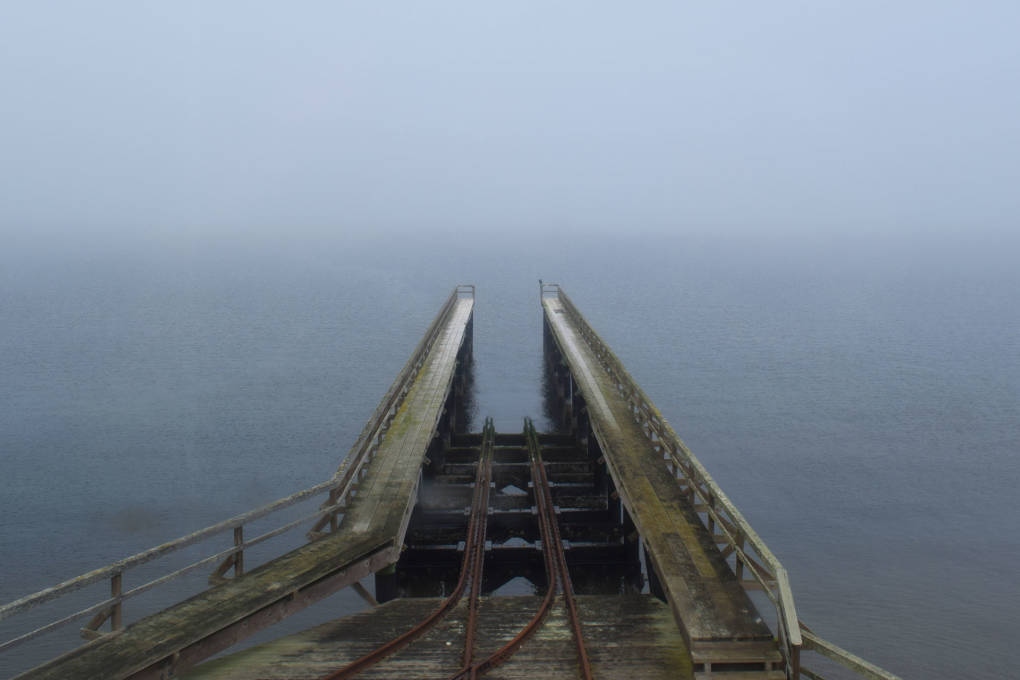
"caption": "A foggy day at the Point Reyes Lifeboat Station",
"description": null,
"title": "RS30212_DSC_1036 2",
"credit": "Carly Severn/KQED",
"status": "inherit",
"isLoading": false,
"fetchFailed": false
},
"news_11668297": {
"type": "attachments",
"id": "news_11668297",
"meta": {
"index": "attachments_1716263798",
"site": "news",
"id": "11668297",
"found": true
},
"parent": 11668265,
"imgSizes": {
"small": {
"file": "https://ww2.kqed.org/app/uploads/sites/10/2018/05/RS30925_Photo-Mar-08-9-47-30-AM-qut-520x390.jpg",
"width": 520,
"mimeType": "image/jpeg",
"height": 390
},
"twentyfourteen-full-width": {
"file": "https://ww2.kqed.org/app/uploads/sites/10/2018/05/RS30925_Photo-Mar-08-9-47-30-AM-qut-1038x576.jpg",
"width": 1038,
"mimeType": "image/jpeg",
"height": 576
},
"thumbnail": {
"file": "https://ww2.kqed.org/app/uploads/sites/10/2018/05/RS30925_Photo-Mar-08-9-47-30-AM-qut-160x120.jpg",
"width": 160,
"mimeType": "image/jpeg",
"height": 120
},
"fd-sm": {
"file": "https://ww2.kqed.org/app/uploads/sites/10/2018/05/RS30925_Photo-Mar-08-9-47-30-AM-qut-960x720.jpg",
"width": 960,
"mimeType": "image/jpeg",
"height": 720
},
"post-thumbnail": {
"file": "https://ww2.kqed.org/app/uploads/sites/10/2018/05/RS30925_Photo-Mar-08-9-47-30-AM-qut-672x372.jpg",
"width": 672,
"mimeType": "image/jpeg",
"height": 372
},
"xsmall": {
"file": "https://ww2.kqed.org/app/uploads/sites/10/2018/05/RS30925_Photo-Mar-08-9-47-30-AM-qut-375x281.jpg",
"width": 375,
"mimeType": "image/jpeg",
"height": 281
},
"kqedFullSize": {
"file": "https://ww2.kqed.org/app/uploads/sites/10/2018/05/RS30925_Photo-Mar-08-9-47-30-AM-qut.jpg",
"width": 1920,
"height": 1440
},
"large": {
"file": "https://ww2.kqed.org/app/uploads/sites/10/2018/05/RS30925_Photo-Mar-08-9-47-30-AM-qut-1020x765.jpg",
"width": 1020,
"mimeType": "image/jpeg",
"height": 765
},
"xlarge": {
"file": "https://ww2.kqed.org/app/uploads/sites/10/2018/05/RS30925_Photo-Mar-08-9-47-30-AM-qut-1180x885.jpg",
"width": 1180,
"mimeType": "image/jpeg",
"height": 885
},
"complete_open_graph": {
"file": "https://ww2.kqed.org/app/uploads/sites/10/2018/05/RS30925_Photo-Mar-08-9-47-30-AM-qut-1200x900.jpg",
"width": 1200,
"mimeType": "image/jpeg",
"height": 900
},
"guest-author-50": {
"file": "https://ww2.kqed.org/app/uploads/sites/10/2018/05/RS30925_Photo-Mar-08-9-47-30-AM-qut-50x50.jpg",
"width": 50,
"mimeType": "image/jpeg",
"height": 50
},
"guest-author-96": {
"file": "https://ww2.kqed.org/app/uploads/sites/10/2018/05/RS30925_Photo-Mar-08-9-47-30-AM-qut-96x96.jpg",
"width": 96,
"mimeType": "image/jpeg",
"height": 96
},
"medium": {
"file": "https://ww2.kqed.org/app/uploads/sites/10/2018/05/RS30925_Photo-Mar-08-9-47-30-AM-qut-800x600.jpg",
"width": 800,
"mimeType": "image/jpeg",
"height": 600
},
"guest-author-64": {
"file": "https://ww2.kqed.org/app/uploads/sites/10/2018/05/RS30925_Photo-Mar-08-9-47-30-AM-qut-64x64.jpg",
"width": 64,
"mimeType": "image/jpeg",
"height": 64
},
"guest-author-32": {
"file": "https://ww2.kqed.org/app/uploads/sites/10/2018/05/RS30925_Photo-Mar-08-9-47-30-AM-qut-32x32.jpg",
"width": 32,
"mimeType": "image/jpeg",
"height": 32
},
"fd-lrg": {
"file": "https://ww2.kqed.org/app/uploads/sites/10/2018/05/RS30925_Photo-Mar-08-9-47-30-AM-qut-1920x1440.jpg",
"width": 1920,
"mimeType": "image/jpeg",
"height": 1440
},
"fd-med": {
"file": "https://ww2.kqed.org/app/uploads/sites/10/2018/05/RS30925_Photo-Mar-08-9-47-30-AM-qut-1180x885.jpg",
"width": 1180,
"mimeType": "image/jpeg",
"height": 885
},
"full-width": {
"file": "https://ww2.kqed.org/app/uploads/sites/10/2018/05/RS30925_Photo-Mar-08-9-47-30-AM-qut-1920x1440.jpg",
"width": 1920,
"mimeType": "image/jpeg",
"height": 1440
},
"detail": {
"file": "https://ww2.kqed.org/app/uploads/sites/10/2018/05/RS30925_Photo-Mar-08-9-47-30-AM-qut-150x150.jpg",
"width": 150,
"mimeType": "image/jpeg",
"height": 150
},
"guest-author-128": {
"file": "https://ww2.kqed.org/app/uploads/sites/10/2018/05/RS30925_Photo-Mar-08-9-47-30-AM-qut-128x128.jpg",
"width": 128,
"mimeType": "image/jpeg",
"height": 128
},
"xxsmall": {
"file": "https://ww2.kqed.org/app/uploads/sites/10/2018/05/RS30925_Photo-Mar-08-9-47-30-AM-qut-240x180.jpg",
"width": 240,
"mimeType": "image/jpeg",
"height": 180
}
},
"publishDate": 1526338762,
"modified": 1526338782,
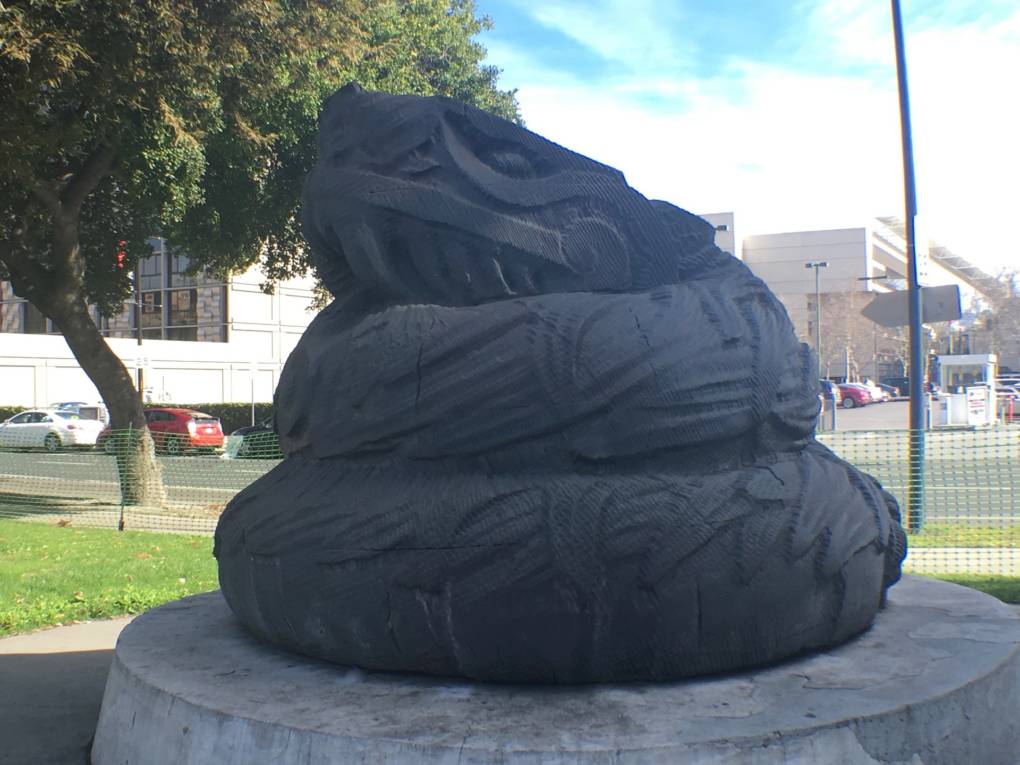
"caption": "\"Quetzalcoatl\" by Robert Graham in San Jose's Plaza de Cesar Chavez. The Aztec god is often depicted as a coiled snake, but people of all ages complain the sculpture looks like something else, something scatological in nature.",
"description": "\"Quetzalcoatl\" by Robert Graham in San Jose's Plaza de Cesar Chavez. The Aztec god is often depicted as a coiled snake, but people of all ages complain the sculpture looks like something else, something scatological in nature.",
"title": "RS30925_Photo Mar 08, 9 47 30 AM-qut",
"credit": "Rachael Myrow/KQED",
"status": "inherit",
"isLoading": false,
"fetchFailed": false
},
"news_11669275": {
"type": "attachments",
"id": "news_11669275",
"meta": {
"index": "attachments_1716263798",
"site": "news",
"id": "11669275",
"found": true
},
"parent": 11669269,
"imgSizes": {
"small": {
"file": "https://ww2.kqed.org/app/uploads/sites/10/2018/05/muni-dogs-illo-final-520x402.jpg",
"width": 520,
"mimeType": "image/jpeg",
"height": 402
},
"twentyfourteen-full-width": {
"file": "https://ww2.kqed.org/app/uploads/sites/10/2018/05/muni-dogs-illo-final-1038x576.jpg",
"width": 1038,
"mimeType": "image/jpeg",
"height": 576
},
"thumbnail": {
"file": "https://ww2.kqed.org/app/uploads/sites/10/2018/05/muni-dogs-illo-final-160x124.jpg",
"width": 160,
"mimeType": "image/jpeg",
"height": 124
},
"fd-sm": {
"file": "https://ww2.kqed.org/app/uploads/sites/10/2018/05/muni-dogs-illo-final-960x742.jpg",
"width": 960,
"mimeType": "image/jpeg",
"height": 742
},
"post-thumbnail": {
"file": "https://ww2.kqed.org/app/uploads/sites/10/2018/05/muni-dogs-illo-final-672x372.jpg",
"width": 672,
"mimeType": "image/jpeg",
"height": 372
},
"xsmall": {
"file": "https://ww2.kqed.org/app/uploads/sites/10/2018/05/muni-dogs-illo-final-375x290.jpg",
"width": 375,
"mimeType": "image/jpeg",
"height": 290
},
"kqedFullSize": {
"file": "https://ww2.kqed.org/app/uploads/sites/10/2018/05/muni-dogs-illo-final-e1526683382689.jpg",
"width": 1920,
"height": 1484
},
"large": {
"file": "https://ww2.kqed.org/app/uploads/sites/10/2018/05/muni-dogs-illo-final-1020x788.jpg",
"width": 1020,
"mimeType": "image/jpeg",
"height": 788
},
"xlarge": {
"file": "https://ww2.kqed.org/app/uploads/sites/10/2018/05/muni-dogs-illo-final-1180x912.jpg",
"width": 1180,
"mimeType": "image/jpeg",
"height": 912
},
"complete_open_graph": {
"file": "https://ww2.kqed.org/app/uploads/sites/10/2018/05/muni-dogs-illo-final-1200x927.jpg",
"width": 1200,
"mimeType": "image/jpeg",
"height": 927
},
"guest-author-50": {
"file": "https://ww2.kqed.org/app/uploads/sites/10/2018/05/muni-dogs-illo-final-50x50.jpg",
"width": 50,
"mimeType": "image/jpeg",
"height": 50
},
"guest-author-96": {
"file": "https://ww2.kqed.org/app/uploads/sites/10/2018/05/muni-dogs-illo-final-96x96.jpg",
"width": 96,
"mimeType": "image/jpeg",
"height": 96
},
"medium": {
"file": "https://ww2.kqed.org/app/uploads/sites/10/2018/05/muni-dogs-illo-final-800x618.jpg",
"width": 800,
"mimeType": "image/jpeg",
"height": 618
},
"guest-author-64": {
"file": "https://ww2.kqed.org/app/uploads/sites/10/2018/05/muni-dogs-illo-final-64x64.jpg",
"width": 64,
"mimeType": "image/jpeg",
"height": 64
},
"guest-author-32": {
"file": "https://ww2.kqed.org/app/uploads/sites/10/2018/05/muni-dogs-illo-final-32x32.jpg",
"width": 32,
"mimeType": "image/jpeg",
"height": 32
},
"fd-lrg": {
"file": "https://ww2.kqed.org/app/uploads/sites/10/2018/05/muni-dogs-illo-final-1920x1484.jpg",
"width": 1920,
"mimeType": "image/jpeg",
"height": 1484
},
"fd-med": {
"file": "https://ww2.kqed.org/app/uploads/sites/10/2018/05/muni-dogs-illo-final-1180x912.jpg",
"width": 1180,
"mimeType": "image/jpeg",
"height": 912
},
"full-width": {
"file": "https://ww2.kqed.org/app/uploads/sites/10/2018/05/muni-dogs-illo-final-1920x1484.jpg",
"width": 1920,
"mimeType": "image/jpeg",
"height": 1484
},
"detail": {
"file": "https://ww2.kqed.org/app/uploads/sites/10/2018/05/muni-dogs-illo-final-150x150.jpg",
"width": 150,
"mimeType": "image/jpeg",
"height": 150
},
"guest-author-128": {
"file": "https://ww2.kqed.org/app/uploads/sites/10/2018/05/muni-dogs-illo-final-128x128.jpg",
"width": 128,
"mimeType": "image/jpeg",
"height": 128
},
"xxsmall": {
"file": "https://ww2.kqed.org/app/uploads/sites/10/2018/05/muni-dogs-illo-final-240x185.jpg",
"width": 240,
"mimeType": "image/jpeg",
"height": 185
}
},
"publishDate": 1526683343,
"modified": 1526944177,
"caption": "How many dogs could fit on a Muni train?",
"description": "How many dogs could fit on a Muni train?",
"title": "How many dogs could fit on a MUNI train?",
"credit": "Maddie Gobbo",
"status": "inherit",
"isLoading": false,
"fetchFailed": false
},
"news_10647433": {
"type": "attachments",
"id": "news_10647433",
"meta": {
"index": "attachments_1716263798",
"site": "news",
"id": "10647433",
"found": true
},
"parent": 11669399,
"imgSizes": {
"twentyfourteen-full-width": {
"file": "https://ww2.kqed.org/app/uploads/sites/10/2015/08/sideshow-via-youtube-1038x576.jpg",
"width": 1038,
"mimeType": "image/jpeg",
"height": 576
},
"thumbnail": {
"file": "https://ww2.kqed.org/app/uploads/sites/10/2015/08/sideshow-via-youtube-400x218.jpg",
"width": 400,
"mimeType": "image/jpeg",
"height": 218
},
"fd-sm": {
"file": "https://ww2.kqed.org/app/uploads/sites/10/2015/08/sideshow-via-youtube-960x523.jpg",
"width": 960,
"mimeType": "image/jpeg",
"height": 523
},
"post-thumbnail": {
"file": "https://ww2.kqed.org/app/uploads/sites/10/2015/08/sideshow-via-youtube-672x372.jpg",
"width": 672,
"mimeType": "image/jpeg",
"height": 372
},
"kqedFullSize": {
"file": "https://ww2.kqed.org/app/uploads/sites/10/2015/08/sideshow-via-youtube.jpg",
"width": 1928,
"height": 1050
},
"large": {
"file": "https://ww2.kqed.org/app/uploads/sites/10/2015/08/sideshow-via-youtube-1440x784.jpg",
"width": 1440,
"mimeType": "image/jpeg",
"height": 784
},
"guest-author-96": {
"file": "https://ww2.kqed.org/app/uploads/sites/10/2015/08/sideshow-via-youtube-96x96.jpg",
"width": 96,
"mimeType": "image/jpeg",
"height": 96
},
"medium": {
"file": "https://ww2.kqed.org/app/uploads/sites/10/2015/08/sideshow-via-youtube-800x436.jpg",
"width": 800,
"mimeType": "image/jpeg",
"height": 436
},
"guest-author-64": {
"file": "https://ww2.kqed.org/app/uploads/sites/10/2015/08/sideshow-via-youtube-64x64.jpg",
"width": 64,
"mimeType": "image/jpeg",
"height": 64
},
"guest-author-32": {
"file": "https://ww2.kqed.org/app/uploads/sites/10/2015/08/sideshow-via-youtube-32x32.jpg",
"width": 32,
"mimeType": "image/jpeg",
"height": 32
},
"jmtc-small-thumb": {
"file": "https://ww2.kqed.org/app/uploads/sites/10/2015/08/sideshow-via-youtube-280x150.jpg",
"width": 280,
"mimeType": "image/jpeg",
"height": 150
},
"fd-lrg": {
"file": "https://ww2.kqed.org/app/uploads/sites/10/2015/08/sideshow-via-youtube-1920x1046.jpg",
"width": 1920,
"mimeType": "image/jpeg",
"height": 1046
},
"fd-med": {
"file": "https://ww2.kqed.org/app/uploads/sites/10/2015/08/sideshow-via-youtube-1180x643.jpg",
"width": 1180,
"mimeType": "image/jpeg",
"height": 643
},
"detail": {
"file": "https://ww2.kqed.org/app/uploads/sites/10/2015/08/sideshow-via-youtube-75x75.jpg",
"width": 75,
"mimeType": "image/jpeg",
"height": 75
},
"guest-author-128": {
"file": "https://ww2.kqed.org/app/uploads/sites/10/2015/08/sideshow-via-youtube-128x128.jpg",
"width": 128,
"mimeType": "image/jpeg",
"height": 128
}
},
"publishDate": 1439856180,
"modified": 1526775098,
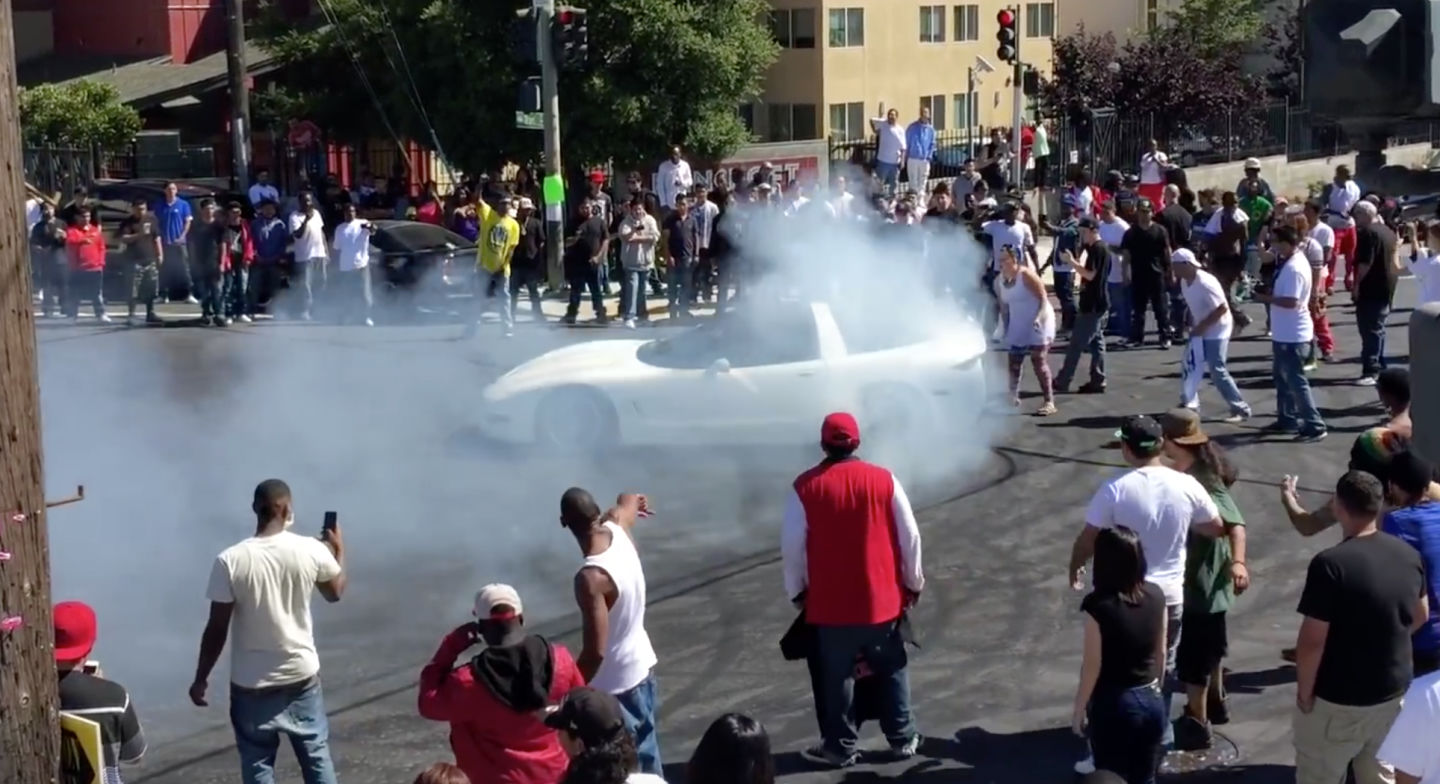
"caption": "Spectators watch a sideshow at Foothill Boulevard and 55th Avenue in East Oakland on June 21, 2015. ",
"description": "Spectators watch a sideshow at Foothill Boulevard and 55th Avenue in East Oakland on June 21, 2015. ",
"title": "sideshow,-via-youtube",
"credit": "Jay Area/YouTube",
"status": "inherit",
"isLoading": false,
"fetchFailed": false
},
"news_11667467": {
"type": "attachments",
"id": "news_11667467",
"meta": {
"index": "attachments_1716263798",
"site": "news",
"id": "11667467",
"found": true
},
"parent": 0,
"imgSizes": {
"small": {
"file": "https://ww2.kqed.org/app/uploads/sites/10/2018/05/SF-Mint-exterior_1920-520x293.jpg",
"width": 520,
"mimeType": "image/jpeg",
"height": 293
},
"twentyfourteen-full-width": {
"file": "https://ww2.kqed.org/app/uploads/sites/10/2018/05/SF-Mint-exterior_1920-1038x576.jpg",
"width": 1038,
"mimeType": "image/jpeg",
"height": 576
},
"thumbnail": {
"file": "https://ww2.kqed.org/app/uploads/sites/10/2018/05/SF-Mint-exterior_1920-160x90.jpg",
"width": 160,
"mimeType": "image/jpeg",
"height": 90
},
"fd-sm": {
"file": "https://ww2.kqed.org/app/uploads/sites/10/2018/05/SF-Mint-exterior_1920-960x540.jpg",
"width": 960,
"mimeType": "image/jpeg",
"height": 540
},
"post-thumbnail": {
"file": "https://ww2.kqed.org/app/uploads/sites/10/2018/05/SF-Mint-exterior_1920-672x372.jpg",
"width": 672,
"mimeType": "image/jpeg",
"height": 372
},
"xsmall": {
"file": "https://ww2.kqed.org/app/uploads/sites/10/2018/05/SF-Mint-exterior_1920-375x211.jpg",
"width": 375,
"mimeType": "image/jpeg",
"height": 211
},
"kqedFullSize": {
"file": "https://ww2.kqed.org/app/uploads/sites/10/2018/05/SF-Mint-exterior_1920.jpg",
"width": 1920,
"height": 1080
},
"large": {
"file": "https://ww2.kqed.org/app/uploads/sites/10/2018/05/SF-Mint-exterior_1920-1020x574.jpg",
"width": 1020,
"mimeType": "image/jpeg",
"height": 574
},
"xlarge": {
"file": "https://ww2.kqed.org/app/uploads/sites/10/2018/05/SF-Mint-exterior_1920-1180x664.jpg",
"width": 1180,
"mimeType": "image/jpeg",
"height": 664
},
"complete_open_graph": {
"file": "https://ww2.kqed.org/app/uploads/sites/10/2018/05/SF-Mint-exterior_1920-1200x675.jpg",
"width": 1200,
"mimeType": "image/jpeg",
"height": 675
},
"guest-author-50": {
"file": "https://ww2.kqed.org/app/uploads/sites/10/2018/05/SF-Mint-exterior_1920-50x50.jpg",
"width": 50,
"mimeType": "image/jpeg",
"height": 50
},
"guest-author-96": {
"file": "https://ww2.kqed.org/app/uploads/sites/10/2018/05/SF-Mint-exterior_1920-96x96.jpg",
"width": 96,
"mimeType": "image/jpeg",
"height": 96
},
"medium": {
"file": "https://ww2.kqed.org/app/uploads/sites/10/2018/05/SF-Mint-exterior_1920-800x450.jpg",
"width": 800,
"mimeType": "image/jpeg",
"height": 450
},
"guest-author-64": {
"file": "https://ww2.kqed.org/app/uploads/sites/10/2018/05/SF-Mint-exterior_1920-64x64.jpg",
"width": 64,
"mimeType": "image/jpeg",
"height": 64
},
"guest-author-32": {
"file": "https://ww2.kqed.org/app/uploads/sites/10/2018/05/SF-Mint-exterior_1920-32x32.jpg",
"width": 32,
"mimeType": "image/jpeg",
"height": 32
},
"fd-lrg": {
"file": "https://ww2.kqed.org/app/uploads/sites/10/2018/05/SF-Mint-exterior_1920-1920x1080.jpg",
"width": 1920,
"mimeType": "image/jpeg",
"height": 1080
},
"fd-med": {
"file": "https://ww2.kqed.org/app/uploads/sites/10/2018/05/SF-Mint-exterior_1920-1180x664.jpg",
"width": 1180,
"mimeType": "image/jpeg",
"height": 664
},
"full-width": {
"file": "https://ww2.kqed.org/app/uploads/sites/10/2018/05/SF-Mint-exterior_1920-1920x1080.jpg",
"width": 1920,
"mimeType": "image/jpeg",
"height": 1080
},
"detail": {
"file": "https://ww2.kqed.org/app/uploads/sites/10/2018/05/SF-Mint-exterior_1920-150x150.jpg",
"width": 150,
"mimeType": "image/jpeg",
"height": 150
},
"guest-author-128": {
"file": "https://ww2.kqed.org/app/uploads/sites/10/2018/05/SF-Mint-exterior_1920-128x128.jpg",
"width": 128,
"mimeType": "image/jpeg",
"height": 128
},
"xxsmall": {
"file": "https://ww2.kqed.org/app/uploads/sites/10/2018/05/SF-Mint-exterior_1920-240x135.jpg",
"width": 240,
"mimeType": "image/jpeg",
"height": 135
}
},
"publishDate": 1525914360,
"modified": 1525914388,
"caption": "The new San Francisco Mint",
"description": null,
"title": "SF-Mint-exterior_1920",
"credit": "Adam Grossberg/KQED",
"status": "inherit",
"isLoading": false,
"fetchFailed": false
},
"news_11665540": {
"type": "attachments",
"id": "news_11665540",
"meta": {
"index": "attachments_1716263798",
"site": "news",
"id": "11665540",
"found": true
},
"parent": 11665527,
"imgSizes": {
"small": {
"file": "https://ww2.kqed.org/app/uploads/sites/10/2018/04/20171217_113056-e1525128581450-520x390.jpg",
"width": 520,
"mimeType": "image/jpeg",
"height": 390
},
"twentyfourteen-full-width": {
"file": "https://ww2.kqed.org/app/uploads/sites/10/2018/04/20171217_113056-e1525128581450-1038x576.jpg",
"width": 1038,
"mimeType": "image/jpeg",
"height": 576
},
"thumbnail": {
"file": "https://ww2.kqed.org/app/uploads/sites/10/2018/04/20171217_113056-e1525128581450-160x120.jpg",
"width": 160,
"mimeType": "image/jpeg",
"height": 120
},
"fd-sm": {
"file": "https://ww2.kqed.org/app/uploads/sites/10/2018/04/20171217_113056-e1525128581450-960x720.jpg",
"width": 960,
"mimeType": "image/jpeg",
"height": 720
},
"post-thumbnail": {
"file": "https://ww2.kqed.org/app/uploads/sites/10/2018/04/20171217_113056-e1525128581450-672x372.jpg",
"width": 672,
"mimeType": "image/jpeg",
"height": 372
},
"xsmall": {
"file": "https://ww2.kqed.org/app/uploads/sites/10/2018/04/20171217_113056-e1525128581450-375x281.jpg",
"width": 375,
"mimeType": "image/jpeg",
"height": 281
},
"kqedFullSize": {
"file": "https://ww2.kqed.org/app/uploads/sites/10/2018/04/20171217_113056-e1525128581450.jpg",
"width": 1920,
"height": 1440
},
"large": {
"file": "https://ww2.kqed.org/app/uploads/sites/10/2018/04/20171217_113056-e1525128581450-1020x765.jpg",
"width": 1020,
"mimeType": "image/jpeg",
"height": 765
},
"xlarge": {
"file": "https://ww2.kqed.org/app/uploads/sites/10/2018/04/20171217_113056-e1525128581450-1180x885.jpg",
"width": 1180,
"mimeType": "image/jpeg",
"height": 885
},
"complete_open_graph": {
"file": "https://ww2.kqed.org/app/uploads/sites/10/2018/04/20171217_113056-e1525128581450-1200x900.jpg",
"width": 1200,
"mimeType": "image/jpeg",
"height": 900
},
"guest-author-50": {
"file": "https://ww2.kqed.org/app/uploads/sites/10/2018/04/20171217_113056-e1525128581450-50x50.jpg",
"width": 50,
"mimeType": "image/jpeg",
"height": 50
},
"guest-author-96": {
"file": "https://ww2.kqed.org/app/uploads/sites/10/2018/04/20171217_113056-e1525128581450-96x96.jpg",
"width": 96,
"mimeType": "image/jpeg",
"height": 96
},
"medium": {
"file": "https://ww2.kqed.org/app/uploads/sites/10/2018/04/20171217_113056-e1525128581450-800x600.jpg",
"width": 800,
"mimeType": "image/jpeg",
"height": 600
},
"guest-author-64": {
"file": "https://ww2.kqed.org/app/uploads/sites/10/2018/04/20171217_113056-e1525128581450-64x64.jpg",
"width": 64,
"mimeType": "image/jpeg",
"height": 64
},
"guest-author-32": {
"file": "https://ww2.kqed.org/app/uploads/sites/10/2018/04/20171217_113056-e1525128581450-32x32.jpg",
"width": 32,
"mimeType": "image/jpeg",
"height": 32
},
"fd-lrg": {
"file": "https://ww2.kqed.org/app/uploads/sites/10/2018/04/20171217_113056-e1525128581450-1920x1440.jpg",
"width": 1920,
"mimeType": "image/jpeg",
"height": 1440
},
"fd-med": {
"file": "https://ww2.kqed.org/app/uploads/sites/10/2018/04/20171217_113056-e1525128581450-1180x885.jpg",
"width": 1180,
"mimeType": "image/jpeg",
"height": 885
},
"full-width": {
"file": "https://ww2.kqed.org/app/uploads/sites/10/2018/04/20171217_113056-e1525128581450-1920x1440.jpg",
"width": 1920,
"mimeType": "image/jpeg",
"height": 1440
},
"detail": {
"file": "https://ww2.kqed.org/app/uploads/sites/10/2018/04/20171217_113056-e1525128581450-150x150.jpg",
"width": 150,
"mimeType": "image/jpeg",
"height": 150
},
"guest-author-128": {
"file": "https://ww2.kqed.org/app/uploads/sites/10/2018/04/20171217_113056-e1525128581450-128x128.jpg",
"width": 128,
"mimeType": "image/jpeg",
"height": 128
},
"xxsmall": {
"file": "https://ww2.kqed.org/app/uploads/sites/10/2018/04/20171217_113056-e1525128581450-240x180.jpg",
"width": 240,
"mimeType": "image/jpeg",
"height": 180
}
},
"publishDate": 1525121968,
"modified": 1525364256,
"caption": "Vy Nguyen and Pam Coates tour the Tenderloin.",
"description": "Vy Nguyen and Pam Coates tour the Tenderloin.",
"title": "20171217_113056",
"credit": "Kelly O'Mara/KQED",
"status": "inherit",
"isLoading": false,
"fetchFailed": false
},
"news_11663202": {
"type": "attachments",
"id": "news_11663202",
"meta": {
"index": "attachments_1716263798",
"site": "news",
"id": "11663202",
"found": true
},
"title": "A guy holding a 420 sign",
"publishDate": 1524089589,
"status": "inherit",
"parent": 11663153,
"modified": 1776282952,
"caption": "A guy holding a 420 sign.",
"credit": "Lars Hagberg/AFP/Getty Images",
"altTag": "A guy holding a 420 sign",
"description": "A guy holding a 420 sign",
"imgSizes": {
"thumbnail": {
"file": "https://cdn.kqed.org/wp-content/uploads/sites/10/2018/04/GettyImages-670837286-160x107.jpg",
"width": 160,
"height": 107,
"mimeType": "image/jpeg"
},
"medium": {
"file": "https://cdn.kqed.org/wp-content/uploads/sites/10/2018/04/GettyImages-670837286-800x533.jpg",
"width": 800,
"height": 533,
"mimeType": "image/jpeg"
},
"large": {
"file": "https://cdn.kqed.org/wp-content/uploads/sites/10/2018/04/GettyImages-670837286-1020x680.jpg",
"width": 1020,
"height": 680,
"mimeType": "image/jpeg"
},
"complete_open_graph": {
"file": "https://cdn.kqed.org/wp-content/uploads/sites/10/2018/04/GettyImages-670837286-1200x800.jpg",
"width": 1200,
"height": 800,
"mimeType": "image/jpeg"
},
"fd-lrg": {
"file": "https://cdn.kqed.org/wp-content/uploads/sites/10/2018/04/GettyImages-670837286-1920x1280.jpg",
"width": 1920,
"height": 1280,
"mimeType": "image/jpeg"
},
"fd-med": {
"file": "https://cdn.kqed.org/wp-content/uploads/sites/10/2018/04/GettyImages-670837286-1180x787.jpg",
"width": 1180,
"height": 787,
"mimeType": "image/jpeg"
},
"fd-sm": {
"file": "https://cdn.kqed.org/wp-content/uploads/sites/10/2018/04/GettyImages-670837286-960x640.jpg",
"width": 960,
"height": 640,
"mimeType": "image/jpeg"
},
"post-thumbnail": {
"file": "https://cdn.kqed.org/wp-content/uploads/sites/10/2018/04/GettyImages-670837286-672x372.jpg",
"width": 672,
"height": 372,
"mimeType": "image/jpeg"
},
"twentyfourteen-full-width": {
"file": "https://cdn.kqed.org/wp-content/uploads/sites/10/2018/04/GettyImages-670837286-1038x576.jpg",
"width": 1038,
"height": 576,
"mimeType": "image/jpeg"
},
"xxsmall": {
"file": "https://cdn.kqed.org/wp-content/uploads/sites/10/2018/04/GettyImages-670837286-240x160.jpg",
"width": 240,
"height": 160,
"mimeType": "image/jpeg"
},
"xsmall": {
"file": "https://cdn.kqed.org/wp-content/uploads/sites/10/2018/04/GettyImages-670837286-375x250.jpg",
"width": 375,
"height": 250,
"mimeType": "image/jpeg"
},
"small": {
"file": "https://cdn.kqed.org/wp-content/uploads/sites/10/2018/04/GettyImages-670837286-520x347.jpg",
"width": 520,
"height": 347,
"mimeType": "image/jpeg"
},
"xlarge": {
"file": "https://cdn.kqed.org/wp-content/uploads/sites/10/2018/04/GettyImages-670837286-1180x787.jpg",
"width": 1180,
"height": 787,
"mimeType": "image/jpeg"
},
"full-width": {
"file": "https://cdn.kqed.org/wp-content/uploads/sites/10/2018/04/GettyImages-670837286-1920x1280.jpg",
"width": 1920,
"height": 1280,
"mimeType": "image/jpeg"
},
"guest-author-32": {
"file": "https://cdn.kqed.org/wp-content/uploads/sites/10/2018/04/GettyImages-670837286-32x32.jpg",
"width": 32,
"height": 32,
"mimeType": "image/jpeg"
},
"guest-author-50": {
"file": "https://cdn.kqed.org/wp-content/uploads/sites/10/2018/04/GettyImages-670837286-50x50.jpg",
"width": 50,
"height": 50,
"mimeType": "image/jpeg"
},
"guest-author-64": {
"file": "https://cdn.kqed.org/wp-content/uploads/sites/10/2018/04/GettyImages-670837286-64x64.jpg",
"width": 64,
"height": 64,
"mimeType": "image/jpeg"
},
"guest-author-96": {
"file": "https://cdn.kqed.org/wp-content/uploads/sites/10/2018/04/GettyImages-670837286-96x96.jpg",
"width": 96,
"height": 96,
"mimeType": "image/jpeg"
},
"guest-author-128": {
"file": "https://cdn.kqed.org/wp-content/uploads/sites/10/2018/04/GettyImages-670837286-128x128.jpg",
"width": 128,
"height": 128,
"mimeType": "image/jpeg"
},
"detail": {
"file": "https://cdn.kqed.org/wp-content/uploads/sites/10/2018/04/GettyImages-670837286-150x150.jpg",
"width": 150,
"height": 150,
"mimeType": "image/jpeg"
},
"kqedFullSize": {
"file": "https://cdn.kqed.org/wp-content/uploads/sites/10/2018/04/GettyImages-670837286-e1524416370324.jpg",
"width": 1920,
"height": 1280
}
},
"isLoading": false,
"fetchFailed": false
}
},
"audioPlayerReducer": {
"postId": "stream_live",
"isPaused": true,
"isPlaying": false,
"pfsActive": false,
"pledgeModalIsOpen": true,
"playerDrawerIsOpen": false,
"liveAudioPlayStartedAt": 0,
"liveAudioPlayContext": ""
},
"authorsReducer": {
"byline_news_11663153": {
"type": "authors",
"id": "byline_news_11663153",
"meta": {
"override": true
},
"slug": "byline_news_11663153",
"name": "Olivia Allen-Price and Emmanuel Hapsis",
"isLoading": false
},
"lisapickoffwhite-2": {
"type": "authors",
"id": "199",
"meta": {
"index": "authors_1716337520",
"id": "199",
"found": true
},
"name": "Lisa Pickoff-White",
"firstName": "Lisa",
"lastName": "Pickoff-White",
"slug": "lisapickoffwhite-2",
"email": "lpickoffwhite@kqed.org",
"display_author_email": false,
"staff_mastheads": [
"news"
],
"title": "Data Journalist, Senior Producer",
"bio": "Lisa Pickoff-White is KQED's data reporter. Lisa specializes in simplifying complex topics and bringing them to life through compelling visuals, including photography and data visualizations. She previously has worked at the Center for Investigative Reporting and other national outlets. Her work has been honored with awards from the Online News Association, Investigative Reporters and Editors, the Society of Professional Journalists and SXSW Interactive. \u003cstrong> \u003c/strong>",
"avatar": "https://secure.gravatar.com/avatar/5513c5f3967df792aa65bee2501e84d6?s=600&d=blank&r=g",
"twitter": "pickoffwhite",
"facebook": null,
"instagram": null,
"linkedin": null,
"sites": [
{
"site": "",
"roles": [
"editor"
]
},
{
"site": "arts",
"roles": []
},
{
"site": "news",
"roles": [
"administrator"
]
},
{
"site": "about",
"roles": [
"editor"
]
},
{
"site": "stateofhealth",
"roles": [
"administrator"
]
},
{
"site": "science",
"roles": [
"editor"
]
},
{
"site": "quest",
"roles": [
"editor"
]
},
{
"site": "forum",
"roles": [
"editor"
]
}
],
"headData": {
"title": "Lisa Pickoff-White | KQED",
"description": "Data Journalist, Senior Producer",
"ogImgSrc": "https://secure.gravatar.com/avatar/5513c5f3967df792aa65bee2501e84d6?s=600&d=blank&r=g",
"twImgSrc": "https://secure.gravatar.com/avatar/5513c5f3967df792aa65bee2501e84d6?s=600&d=blank&r=g"
},
"isLoading": false,
"link": "/author/lisapickoffwhite-2"
},
"rachael-myrow": {
"type": "authors",
"id": "251",
"meta": {
"index": "authors_1716337520",
"id": "251",
"found": true
},
"name": "Rachael Myrow",
"firstName": "Rachael",
"lastName": "Myrow",
"slug": "rachael-myrow",
"email": "rmyrow@kqed.org",
"display_author_email": true,
"staff_mastheads": [
"news"
],
"title": "Senior Editor of KQED's Silicon Valley News Desk",
"bio": "• I write and edit stories about how Silicon Valley power and policies shape everyday life in California. I’m also passionate about making Bay Area history and culture more accessible to a broad public. • I’ve been a journalist for most of my life, starting in high school with The Franklin Press in Los Angeles, where I grew up. While earning my first degree in English at UC Berkeley, I got my start in public radio at KALX-FM. After completing a second degree in journalism at Cal, I landed my first professional job at Marketplace, then moved on to KPCC (now LAist), and then KQED, where I hosted The California Report for more than seven years. • My reporting has appeared on NPR, The World, WBUR’s \u003ci>Here & Now\u003c/i>, and the BBC. I also guest host for KQED’s \u003ci>Forum\u003c/i>, as well as the Commonwealth Club in San Francisco. • I speak periodically on media, democracy and technology issues, and do voiceover work for documentaries and educational video projects. • Outside of the studio, you'll find me hiking Bay Area trails and whipping up Insta-ready meals in my kitchen. • I do not accept gifts, money, or favors from anyone connected to my reporting, I don't pay people for information, and I do not support or donate to political causes. • I strive to treat the people I report on with fairness, honesty, and respect. I also recognize there are often multiple sides to a story and work to verify information through multiple sources and documentation. If I get something wrong, I correct it.",
"avatar": "https://secure.gravatar.com/avatar/3ed8a3c5f26025e4a805ba634cda8cd764906b97438a6d9ce216b044e340da4e?s=600&d=blank&r=g",
"twitter": "rachaelmyrow",
"bluesky": null,
"facebook": null,
"instagram": null,
"linkedin": "https://www.linkedin.com/in/rachaelmyrow/",
"sites": [
{
"site": "arts",
"roles": [
"administrator"
]
},
{
"site": "news",
"roles": [
"edit_others_posts",
"editor"
]
},
{
"site": "futureofyou",
"roles": [
"editor"
]
},
{
"site": "bayareabites",
"roles": [
"editor"
]
},
{
"site": "stateofhealth",
"roles": [
"editor"
]
},
{
"site": "science",
"roles": [
"editor"
]
},
{
"site": "food",
"roles": [
"editor"
]
},
{
"site": "forum",
"roles": [
"editor"
]
},
{
"site": "liveblog",
"roles": [
"author"
]
}
],
"headData": {
"title": "Rachael Myrow | KQED",
"description": "Senior Editor of KQED's Silicon Valley News Desk",
"ogImgSrc": "https://secure.gravatar.com/avatar/3ed8a3c5f26025e4a805ba634cda8cd764906b97438a6d9ce216b044e340da4e?s=600&d=blank&r=g",
"twImgSrc": "https://secure.gravatar.com/avatar/3ed8a3c5f26025e4a805ba634cda8cd764906b97438a6d9ce216b044e340da4e?s=600&d=blank&r=g"
},
"isLoading": false,
"link": "/author/rachael-myrow"
},
"kdomara": {
"type": "authors",
"id": "1459",
"meta": {
"index": "authors_1716337520",
"id": "1459",
"found": true
},
"name": "Kelly O'Mara",
"firstName": "Kelly",
"lastName": "O'Mara",
"slug": "kdomara",
"email": "komara@kqed.org",
"display_author_email": false,
"staff_mastheads": [
"news"
],
"title": "KQED Contributor",
"bio": "Kelly O'Mara is a writer and reporter in the San Francisco Bay Area. She writes about food, health, sports, travel, business and California news. Her work has appeared on KQED, online for Outside Magazine, epsnW, VICE and in Competitor Magazine, among others. Follow Kelly on Twitter \u003ca href=\"https://twitter.com/kellydomara\">@kellydomara\u003c/a>.",
"avatar": "https://secure.gravatar.com/avatar/768fec7412028b72f13bdd0f5f9d8186?s=600&d=blank&r=g",
"twitter": null,
"facebook": null,
"instagram": null,
"linkedin": null,
"sites": [
{
"site": "arts",
"roles": []
},
{
"site": "news",
"roles": []
},
{
"site": "bayareabites",
"roles": []
},
{
"site": "stateofhealth",
"roles": []
},
{
"site": "science",
"roles": []
},
{
"site": "checkplease",
"roles": [
"editor"
]
},
{
"site": "food",
"roles": []
},
{
"site": "forum",
"roles": [
"editor"
]
},
{
"site": "liveblog",
"roles": [
"editor"
]
}
],
"headData": {
"title": "Kelly O'Mara | KQED",
"description": "KQED Contributor",
"ogImgSrc": "https://secure.gravatar.com/avatar/768fec7412028b72f13bdd0f5f9d8186?s=600&d=blank&r=g",
"twImgSrc": "https://secure.gravatar.com/avatar/768fec7412028b72f13bdd0f5f9d8186?s=600&d=blank&r=g"
},
"isLoading": false,
"link": "/author/kdomara"
},
"carlysevern": {
"type": "authors",
"id": "3243",
"meta": {
"index": "authors_1716337520",
"id": "3243",
"found": true
},
"name": "Carly Severn",
"firstName": "Carly",
"lastName": "Severn",
"slug": "carlysevern",
"email": "csevern@kqed.org",
"display_author_email": false,
"staff_mastheads": [
"news"
],
"title": "Senior Editor, Audience News ",
"bio": "Carly is KQED's Senior Editor of Audience News on the Digital News team, and has reported for the California Report Magazine, Bay Curious and KQED Arts. She's formerly the host of \u003ca href=\"http://ww2.kqed.org/pop/category/the-cooler/\" rel=\"noopener noreferrer\">The Cooler\u003c/a> podcast.",
"avatar": "https://secure.gravatar.com/avatar/54037bf5c128fe678f0ef26cec97a93f2e7f220a22d7285703328f12c42c1b1d?s=600&d=blank&r=g",
"twitter": "teacupinthebay",
"bluesky": null,
"facebook": null,
"instagram": null,
"linkedin": null,
"sites": [
{
"site": "",
"roles": [
"editor"
]
},
{
"site": "arts",
"roles": [
"editor"
]
},
{
"site": "news",
"roles": [
"administrator"
]
},
{
"site": "pop",
"roles": [
"editor"
]
},
{
"site": "futureofyou",
"roles": [
"editor"
]
},
{
"site": "about",
"roles": [
"administrator"
]
},
{
"site": "mindshift",
"roles": [
"editor"
]
},
{
"site": "bayareabites",
"roles": [
"editor"
]
},
{
"site": "stateofhealth",
"roles": [
"editor"
]
},
{
"site": "science",
"roles": [
"editor"
]
},
{
"site": "food",
"roles": [
"contributor"
]
},
{
"site": "forum",
"roles": [
"editor"
]
},
{
"site": "perspectives",
"roles": [
"administrator"
]
},
{
"site": "liveblog",
"roles": [
"editor"
]
}
],
"headData": {
"title": "Carly Severn | KQED",
"description": "Senior Editor, Audience News ",
"ogImgSrc": "https://secure.gravatar.com/avatar/54037bf5c128fe678f0ef26cec97a93f2e7f220a22d7285703328f12c42c1b1d?s=600&d=blank&r=g",
"twImgSrc": "https://secure.gravatar.com/avatar/54037bf5c128fe678f0ef26cec97a93f2e7f220a22d7285703328f12c42c1b1d?s=600&d=blank&r=g"
},
"isLoading": false,
"link": "/author/carlysevern"
},
"sdirks": {
"type": "authors",
"id": "7239",
"meta": {
"index": "authors_1716337520",
"id": "7239",
"found": true
},
"name": "Sandhya Dirks",
"firstName": "Sandhya",
"lastName": "Dirks",
"slug": "sdirks",
"email": "sdirks@kqed.org",
"display_author_email": true,
"staff_mastheads": [],
"title": null,
"bio": "Sandhya Dirks was the race and equity reporter at KQED. She approaches race and equity not as a beat, but as a fundamental lens for all investigative and explanatory reporting.\r\n\r\nSandhya covered policing, housing, social justice movements, and the shifting demographics of cities and suburbs.\r\n\r\nShe was the creator and co-host of the podcast American Suburb, about the transformation of suburbia into the most diverse space in American life. She was the editor for Truth Be Told, an advice show for and by people of color. \r\n\r\nHer stories about race, space, and belonging were part of KQED's So Well Spoken project, which won RNDTA's Kaleidoscope award, honoring outstanding achievements in the coverage of diversity.\r\n\r\nPrior to joining KQED in 2015, Sandhya covered the 2012 presidential election from the swing state of Iowa for Iowa Public Radio. At KPBS in San Diego, she broke the story of a sexual harassment scandal that led to the mayor's resignation.\r\n\r\nShe got her start in radio working on documentaries about Oakland that investigated the high drop-out rate in public schools and mistrust between the police and the community.\r\n\r\nSandhya lives in Oakland and believes all stories are stories about power.",
"avatar": "https://secure.gravatar.com/avatar/c0247cb15929cd4c197672fd73d45300?s=600&d=blank&r=g",
"twitter": "audiosand",
"facebook": null,
"instagram": null,
"linkedin": null,
"sites": [
{
"site": "news",
"roles": [
"subscriber"
]
},
{
"site": "stateofhealth",
"roles": [
"author"
]
}
],
"headData": {
"title": "Sandhya Dirks | KQED",
"description": null,
"ogImgSrc": "https://secure.gravatar.com/avatar/c0247cb15929cd4c197672fd73d45300?s=600&d=blank&r=g",
"twImgSrc": "https://secure.gravatar.com/avatar/c0247cb15929cd4c197672fd73d45300?s=600&d=blank&r=g"
},
"isLoading": false,
"link": "/author/sdirks"
},
"jplaczek": {
"type": "authors",
"id": "8606",
"meta": {
"index": "authors_1716337520",
"id": "8606",
"found": true
},
"name": "Jessica Placzek",
"firstName": "Jessica",
"lastName": "Placzek",
"slug": "jplaczek",
"email": "jessicalplaczek@gmail.com",
"display_author_email": false,
"staff_mastheads": [
"news"
],
"title": "KQED Contributor",
"bio": "Jessica Placzek is a former senior editor of podcasts at KQED where she served as the editorial lead of the podcast department. She worked with shows like MindShift, Rightnowish, Consider This, SOLD OUT, Bay Curious and The Bay. She’s also been a reporter and audio producer at KQED, KPFA, and KALW. She taught audio production to men incarcerated at California State Prison Solano and edited pieces they produced for the Uncuffed podcast through KALW. In 2018 she co-hosted and produced the third season of Raw Material for SFMOMA. In New Orleans she wrote for the Nola Defender. Her work has also appeared on Marketplace, All Things Considered, The California Report, and Vice. You can find more at jessicaplaczek.com",
"avatar": "https://secure.gravatar.com/avatar/5ead103b5880f672eceb84ce75eecd1b4b6f74a47edc457684a73ad5b8b158e9?s=600&d=blank&r=g",
"twitter": null,
"bluesky": null,
"facebook": null,
"instagram": null,
"linkedin": null,
"sites": [
{
"site": "arts",
"roles": [
"subscriber"
]
},
{
"site": "news",
"roles": [
"subscriber"
]
},
{
"site": "stateofhealth",
"roles": [
"editor"
]
},
{
"site": "forum",
"roles": [
"editor"
]
}
],
"headData": {
"title": "Jessica Placzek | KQED",
"description": "KQED Contributor",
"ogImgSrc": "https://secure.gravatar.com/avatar/5ead103b5880f672eceb84ce75eecd1b4b6f74a47edc457684a73ad5b8b158e9?s=600&d=blank&r=g",
"twImgSrc": "https://secure.gravatar.com/avatar/5ead103b5880f672eceb84ce75eecd1b4b6f74a47edc457684a73ad5b8b158e9?s=600&d=blank&r=g"
},
"isLoading": false,
"link": "/author/jplaczek"
},
"cveltman": {
"type": "authors",
"id": "8608",
"meta": {
"index": "authors_1716337520",
"id": "8608",
"found": true
},
"name": "Chloe Veltman",
"firstName": "Chloe",
"lastName": "Veltman",
"slug": "cveltman",
"email": "cveltman@kqed.org",
"display_author_email": true,
"staff_mastheads": [],
"title": "Arts and Culture Reporter",
"bio": "Chloe Veltman is a former arts and culture reporter for KQED. Prior to joining the organization, she launched and led the arts bureau at Colorado Public Radio, served as the Bay Area's culture columnist for the New York Times, and was the founder, host and executive producer of VoiceBox, a national award-winning weekly podcast/radio show and live events series all about the human voice. Chloe is the recipient of numerous prizes, grants and fellowships including a Webby Award for her work on interactive storytelling, both the John S Knight Journalism Fellowship and Humanities Center Fellowship at Stanford University, the Sundance Arts Writing Fellowship and a Library of Congress Research Fellowship. She is the author of the book \"On Acting\" and has appeared as a guest lecturer at Yale University and the San Francisco Conservatory of Music among other institutions. She holds a BA in english literature from King's College, Cambridge, and a Masters in Dramaturgy from the Central School of Speech and Drama/Harvard Institute for Advanced Theater Training.\r\n\u003ca href=\"https://www.chloeveltman.com\">www.chloeveltman.com\u003c/a>",
"avatar": "https://secure.gravatar.com/avatar/55403394b00a1ddab683952c2eb2cf85?s=600&d=blank&r=g",
"twitter": "chloeveltman",
"facebook": null,
"instagram": null,
"linkedin": null,
"sites": [
{
"site": "arts",
"roles": []
},
{
"site": "news",
"roles": [
"author"
]
},
{
"site": "pop",
"roles": [
"editor"
]
},
{
"site": "science",
"roles": []
}
],
"headData": {
"title": "Chloe Veltman | KQED",
"description": "Arts and Culture Reporter",
"ogImgSrc": "https://secure.gravatar.com/avatar/55403394b00a1ddab683952c2eb2cf85?s=600&d=blank&r=g",
"twImgSrc": "https://secure.gravatar.com/avatar/55403394b00a1ddab683952c2eb2cf85?s=600&d=blank&r=g"
},
"isLoading": false,
"link": "/author/cveltman"
},
"afont": {
"type": "authors",
"id": "8637",
"meta": {
"index": "authors_1716337520",
"id": "8637",
"found": true
},
"name": "Amanda Font",
"firstName": "Amanda",
"lastName": "Font",
"slug": "afont",
"email": "afont@kqed.org",
"display_author_email": false,
"staff_mastheads": [],
"title": "KQED Contributor",
"bio": "Amanda Font is a producer on \u003cem>The Latest\u003c/em> podcast, and the host and co-producer of the series \u003cem>Audible Cosmos\u003c/em>. She has previously worked as a producer and reporter on the \u003cem>Bay Curious\u003c/em> podcast, and director of \u003cem>The California Report Magazine\u003c/em>. She grew up in the deserts of Southern California and moved north for the trees. Amanda earned a B.A. from the BECA program at San Francisco State, where she worked in the university's radio station. Amanda Font is represented by SAG-AFTRA.",
"avatar": "https://secure.gravatar.com/avatar/d9e81cf0117d5849b9cfb7ab4b1422f1?s=600&d=blank&r=g",
"twitter": null,
"facebook": null,
"instagram": null,
"linkedin": null,
"sites": [
{
"site": "news",
"roles": [
"add_users",
"create_users"
]
},
{
"site": "science",
"roles": []
},
{
"site": "forum",
"roles": [
"administrator"
]
},
{
"site": "perspectives",
"roles": [
"administrator"
]
},
{
"site": "radio",
"roles": [
"administrator"
]
}
],
"headData": {
"title": "Amanda Font | KQED",
"description": "KQED Contributor",
"ogImgSrc": "https://secure.gravatar.com/avatar/d9e81cf0117d5849b9cfb7ab4b1422f1?s=600&d=blank&r=g",
"twImgSrc": "https://secure.gravatar.com/avatar/d9e81cf0117d5849b9cfb7ab4b1422f1?s=600&d=blank&r=g"
},
"isLoading": false,
"link": "/author/afont"
},
"rlevi": {
"type": "authors",
"id": "11260",
"meta": {
"index": "authors_1716337520",
"id": "11260",
"found": true
},
"name": "Ryan Levi",
"firstName": "Ryan",
"lastName": "Levi",
"slug": "rlevi",
"email": "rlevi@KQED.org",
"display_author_email": false,
"staff_mastheads": [],
"title": "KQED Contributor",
"bio": "Ryan Levi was a reporter and podcast producer at KQED News from 2016-2019. He worked on \u003ca href=\"https://www.kqed.org/news/series/baycurious\">Bay Curious\u003c/a>, \u003ca href=\"https://www.kqed.org/news/tag/the-bay/\">The Bay, \u003c/a>and \u003ca href=\"https://podcasts.apple.com/us/podcast/the-california-report-magazine/id1314750545\">The California Report Magazine\u003c/a>, as well as hosting and producing the weekly \u003ca href=\"https://www.kqed.org/news/program/qedup/\">Q'ed Up podcast. \u003c/a>He also helped inaugurate KQED's weekend news coverage in 2017 as one of two original digital producers. Ryan holds degrees in multimedia journalism and Spanish from the University of Missouri.",
"avatar": "https://secure.gravatar.com/avatar/4cb2ddd028ac8807d1adf09609c5555d?s=600&d=blank&r=g",
"twitter": "ryan_levi",
"facebook": null,
"instagram": null,
"linkedin": null,
"sites": [
{
"site": "arts",
"roles": [
"editor"
]
},
{
"site": "news",
"roles": [
"subscriber"
]
},
{
"site": "stateofhealth",
"roles": [
"editor"
]
},
{
"site": "science",
"roles": [
"editor"
]
},
{
"site": "forum",
"roles": [
"administrator"
]
},
{
"site": "perspectives",
"roles": [
"administrator"
]
}
],
"headData": {
"title": "Ryan Levi | KQED",
"description": "KQED Contributor",
"ogImgSrc": "https://secure.gravatar.com/avatar/4cb2ddd028ac8807d1adf09609c5555d?s=600&d=blank&r=g",
"twImgSrc": "https://secure.gravatar.com/avatar/4cb2ddd028ac8807d1adf09609c5555d?s=600&d=blank&r=g"
},
"isLoading": false,
"link": "/author/rlevi"
}
},
"pagesReducer": {
"news_tag_bay-curious": {
"type": "terms",
"id": "news_18426",
"meta": {
"index": "terms_1716263798",
"site": "news",
"id": "18426",
"score": 9.104131
},
"featImg": null,
"name": "Bay Curious",
"description": null,
"taxonomy": "tag",
"headData": {
"twImgId": null,
"twTitle": null,
"ogTitle": null,
"ogImgId": null,
"twDescription": null,
"description": null,
"title": "Bay Curious Archives | KQED News",
"ogDescription": null
},
"ttid": 18460,
"slug": "bay-curious",
"isLoading": false,
"title": "Bay Curious",
"pageMeta": {
"site": "news",
"WpPageTemplate": "page-topic-editorial",
"currentPage": 15
},
"blocks": [
{
"blockName": "kqed/post-list",
"attrs": {
"layout": "cardArticle2",
"query": "posts/news?tag=bay-curious",
"seeMore": false,
"paginated": true,
"page": 15
}
},
{
"blockName": "kqed/ad"
}
]
}
},
"pfsSessionReducer": {},
"postsReducer": {
"stream_live": {
"type": "live",
"id": "stream_live",
"audioUrl": "https://streams.kqed.org/kqedradio",
"title": "Live Stream",
"excerpt": "Live Stream information currently unavailable.",
"link": "/radio",
"featImg": "",
"label": {
"name": "KQED Live",
"link": "/"
}
},
"stream_kqedNewscast": {
"type": "posts",
"id": "stream_kqedNewscast",
"audioUrl": "https://www.kqed.org/.stream/anon/radio/RDnews/newscast.mp3?_=1",
"title": "KQED Newscast",
"featImg": "",
"label": {
"name": "88.5 FM",
"link": "/"
}
},
"news_11682511": {
"type": "posts",
"id": "news_11682511",
"meta": {
"index": "posts_1716263798",
"site": "news",
"id": "11682511",
"score": null,
"sort": [
1532617252000
]
},
"parent": 0,
"labelTerm": {},
"blocks": [],
"publishDate": 1532617252,
"format": "image",
"title": "Why San Francisco Gets So Windy and Foggy in the Summer",
"headTitle": "Why San Francisco Gets So Windy and Foggy in the Summer | KQED",
"content": "\u003cp>Every day Will Pearson bikes from his home in San Francisco’s Marina district to his office in the Financial District. His morning ride along the Embarcadero is pleasant and calm, but he has noticed the wind picks up significantly on his ride home.\u003c/p>\n\u003cp>“I’ve always wondered why different parts of the day have such different levels of wind,” said Pearson.\u003c/p>\n\u003cp>[baycuriouspodcastinfo]\u003c/p>\n\u003cp>Fortunately, it’s not too complicated, said meteorologist \u003ca href=\"http://ggweather.com/resume.html\" target=\"_blank\" rel=\"noopener\">Jan Null\u003c/a>.\u003c/p>\n\u003cp>Here’s the simple explainer from KQED cartoonist Mark Fiore.\u003c/p>\n\u003cp>[ad fullwidth]\u003c/p>\n\u003cp>\u003ca href=\"https://ww2.kqed.org/news/wp-content/uploads/sites/10/2018/07/fogwind_final01-1.jpg\">\u003cimg decoding=\"async\" loading=\"lazy\" class=\"aligncenter size-full wp-image-11682514\" src=\"https://ww2.kqed.org/news/wp-content/uploads/sites/10/2018/07/fogwind_final01-1.jpg\" alt=\"\" width=\"3600\" height=\"8100\" srcset=\"https://ww2.kqed.org/app/uploads/sites/10/2018/07/fogwind_final01-1.jpg 3600w, https://ww2.kqed.org/app/uploads/sites/10/2018/07/fogwind_final01-1-160x360.jpg 160w, https://ww2.kqed.org/app/uploads/sites/10/2018/07/fogwind_final01-1-800x1800.jpg 800w, https://ww2.kqed.org/app/uploads/sites/10/2018/07/fogwind_final01-1-1020x2295.jpg 1020w, https://ww2.kqed.org/app/uploads/sites/10/2018/07/fogwind_final01-1-533x1200.jpg 533w, https://ww2.kqed.org/app/uploads/sites/10/2018/07/fogwind_final01-1-1920x4320.jpg 1920w, https://ww2.kqed.org/app/uploads/sites/10/2018/07/fogwind_final01-1-1180x2655.jpg 1180w, https://ww2.kqed.org/app/uploads/sites/10/2018/07/fogwind_final01-1-960x2160.jpg 960w, https://ww2.kqed.org/app/uploads/sites/10/2018/07/fogwind_final01-1-240x540.jpg 240w, https://ww2.kqed.org/app/uploads/sites/10/2018/07/fogwind_final01-1-375x844.jpg 375w, https://ww2.kqed.org/app/uploads/sites/10/2018/07/fogwind_final01-1-520x1170.jpg 520w\" sizes=\"(max-width: 3600px) 100vw, 3600px\">\u003c/a>\u003c/p>\n\u003cp>For more detail, here’s the breakdown.\u003c/p>\n\u003cp>\u003cstrong>Why it’s windier in the afternoon\u003c/strong>\u003c/p>\n\u003cul>\n\u003cli>Air always moves from areas of high pressure to areas of low pressure.\u003c/li>\n\u003cli>Hot air rises and is less dense, and is typically low pressure, while cold air sinks and is dense, and is typically higher pressure.\u003c/li>\n\u003cli>Over the course of the day, the air inland heats up in California. But air remains cool over the ocean — where the water stays about the same temperature all day.\u003c/li>\n\u003cli>The cold, high-pressure air from over the ocean rushes inland, toward the warm, lower pressure air.\u003c/li>\n\u003cli>It takes the path of least resistance, squeezing through sea-level gaps in the mountains and ridges — the biggest of which is at the Golden Gate.\u003c/li>\n\u003cli>This creates something known as the Bernoulli Effect. “Think about a garden hose. You have the water cranked up all the way and you have the flow coming out of it. Well, you put your thumb over it, you restrict it down, and all of a sudden you shoot 20 yards across the driveway,” said Null. “The same thing happens if you compress air down to a smaller gap like through the Golden Gate or the San Bruno Gap.”\u003c/li>\n\u003c/ul>\n\u003cp>That’s why the winds are strongest on the days where it’s hottest inland and still cool on the coast, when the temperature and pressure difference is the biggest.\u003c/p>\n\u003cp>\u003cstrong>Why it’s foggy in the summer\u003c/strong>\u003c/p>\n\u003cp>The temperature differences also explain why the Bay Area gets so much fog in the summer.\u003c/p>\n\u003cul>\n\u003cli>There is a system of high pressure over the Pacific Ocean called \u003ca href=\"https://earthobservatory.nasa.gov/images/79119\" target=\"_blank\" rel=\"noopener\">the North Pacific High\u003c/a>. In the summer, it gets stronger, creating big clockwise winds over the ocean.\u003c/li>\n\u003cli>Those winds push the surface water of the ocean away from the California coastline.\u003c/li>\n\u003cli>Very cold water from deep in the ocean rises to the surface. This is called \u003ca href=\"https://oceanservice.noaa.gov/facts/upwelling.html\" target=\"_blank\" rel=\"noopener\">upwelling\u003c/a>.\u003c/li>\n\u003cli>Something known as \u003ca href=\"https://ww2.kqed.org/quest/2011/08/08/the-deep-cold-secret-behind-summer-fog/\" target=\"_blank\" rel=\"noopener\">the California Current\u003c/a> also brings cold water south from Alaska.\u003c/li>\n\u003cli>When the sea breeze blows over this much colder water, condensation forms — creating fog.\u003c/li>\n\u003cli>The fog comes inland in the summer for similar reasons as the wind: While it stays cool by the ocean, the high temperatures inland create lower pressure, and the fog is sucked in through gaps in the mountains, like the Golden Gate.\u003c/li>\n\u003c/ul>\n\u003cp>That’s why we see picturesque summer fog rolling in past the Golden Gate Bridge in the afternoon.\u003c/p>\n\u003cp>“Nothing’s going to move them out until the sun comes up the next morning and evaporates it,” said Null.\u003c/p>\n\u003cp>Our topography also explains why one neighborhood can be foggy, like the Sunset, and another warm, like the area in Sausalito known as the Banana Belt. The hills and ridges direct the path of the fog and wind, creating these microclimates.\u003c/p>\n\u003cp>\u003cstrong>Will our fog and wind remain?\u003c/strong>\u003c/p>\n\u003cp>The amount of summer fog has decreased 33 percent over the last century, \u003ca href=\"https://www.ncbi.nlm.nih.gov/pmc/articles/PMC2822705/\" target=\"_blank\" rel=\"noopener\">studies have found\u003c/a>. Warming oceans and climate change could continue to affect the complicated weather systems that create our unique Bay Area fog and wind.\u003c/p>\n\u003cp>\u003c/p>\n\u003cp>[baycuriousquestion]\u003c/p>\n\n",
"stats": {
"hasVideo": false,
"hasChartOrMap": false,
"hasAudio": false,
"hasPolis": false,
"wordCount": 616,
"hasGoogleForm": false,
"hasGallery": false,
"hasHearkenModule": true,
"iframeSrcs": [],
"paragraphCount": 19
},
"modified": 1700596749,
"excerpt": "Every summer, temperature differences and weather patterns cause our classic San Francisco fog and wind.",
"headData": {
"twImgId": "",
"twTitle": "",
"ogTitle": "",
"ogImgId": "",
"twDescription": "",
"description": "Every summer, temperature differences and weather patterns cause our classic San Francisco fog and wind.",
"title": "Why San Francisco Gets So Windy and Foggy in the Summer | KQED",
"ogDescription": "",
"schema": {
"@context": "https://schema.org",
"@type": "NewsArticle",
"headline": "Why San Francisco Gets So Windy and Foggy in the Summer",
"datePublished": "2018-07-26T08:00:52-07:00",
"dateModified": "2023-11-21T11:59:09-08:00",
"image": "https://cdn.kqed.org/wp-content/uploads/2020/02/KQED-OG-Image@1x.png",
"isAccessibleForFree": "True",
"publisher": {
"@type": "NewsMediaOrganization",
"@id": "https://www.kqed.org/#organization",
"name": "KQED",
"logo": "https://cdn.kqed.org/wp-content/uploads/2020/02/KQED-OG-Image@1x.png",
"url": "https://www.kqed.org",
"sameAs": [
"https://www.facebook.com/KQED",
"https://twitter.com/KQED",
"https://www.instagram.com/kqed/",
"https://www.tiktok.com/@kqedofficial",
"https://www.linkedin.com/company/kqed",
"https://www.youtube.com/channel/UCeC0IOo7i1P_61zVUWbJ4nw"
]
}
}
},
"guestAuthors": [],
"slug": "why-san-francisco-gets-so-windy-and-foggy-in-the-summer",
"status": "publish",
"sourceUrl": "https://www.kqed.org/news/series/baycurious",
"audioUrl": "https://www.kqed.org/.stream/anon/radio/new-bay-curious/2018/07/Wind.mp3",
"audioTrackLength": 541,
"source": "Bay Curious",
"path": "/news/11682511/why-san-francisco-gets-so-windy-and-foggy-in-the-summer",
"parsedContent": [
{
"type": "contentString",
"content": "\u003cdiv class=\"post-body\">\u003cp>\u003cp>Every day Will Pearson bikes from his home in San Francisco’s Marina district to his office in the Financial District. His morning ride along the Embarcadero is pleasant and calm, but he has noticed the wind picks up significantly on his ride home.\u003c/p>\n\u003cp>“I’ve always wondered why different parts of the day have such different levels of wind,” said Pearson.\u003c/p>\n\u003cp>\u003c/p>\u003cp>\u003caside class=\"alignleft utils-parseShortcode-shortcodes-__bayCuriousPodcastShortcode__bayCurious\">\u003cimg src=https://cdn.kqed.org/wp-content/uploads/2023/02/bayCuriousLogo.png alt=\"Bay Curious Podcast\" loading=\"lazy\" />\n \u003ca href=\"/news/series/baycurious\">Bay Curious\u003c/a> is a podcast that answers your questions about the Bay Area.\n Subscribe on \u003ca href=\"https://itunes.apple.com/us/podcast/bay-curious/id1172473406\" target=\"_blank\" rel=\"noopener noreferrer\">Apple Podcasts\u003c/a>,\n \u003ca href=\"http://www.npr.org/podcasts/500557090/bay-curious\" target=\"_blank\" rel=\"noopener noreferrer\">NPR One\u003c/a> or your favorite podcast platform.\u003c/aside>\u003c/p>\u003cp>\u003c/p>\n\u003cp>Fortunately, it’s not too complicated, said meteorologist \u003ca href=\"http://ggweather.com/resume.html\" target=\"_blank\" rel=\"noopener\">Jan Null\u003c/a>.\u003c/p>\n\u003cp>Here’s the simple explainer from KQED cartoonist Mark Fiore.\u003c/p>\n\u003cp>\u003c/p>\u003c/div>",
"attributes": {
"named": {},
"numeric": []
}
},
{
"type": "component",
"content": "",
"name": "ad",
"attributes": {
"named": {
"label": "fullwidth"
},
"numeric": [
"fullwidth"
]
}
},
{
"type": "contentString",
"content": "\u003cdiv class=\"post-body\">\u003cp>\u003c/p>\n\u003cp>\u003ca href=\"https://ww2.kqed.org/news/wp-content/uploads/sites/10/2018/07/fogwind_final01-1.jpg\">\u003cimg decoding=\"async\" loading=\"lazy\" class=\"aligncenter size-full wp-image-11682514\" src=\"https://ww2.kqed.org/news/wp-content/uploads/sites/10/2018/07/fogwind_final01-1.jpg\" alt=\"\" width=\"3600\" height=\"8100\" srcset=\"https://ww2.kqed.org/app/uploads/sites/10/2018/07/fogwind_final01-1.jpg 3600w, https://ww2.kqed.org/app/uploads/sites/10/2018/07/fogwind_final01-1-160x360.jpg 160w, https://ww2.kqed.org/app/uploads/sites/10/2018/07/fogwind_final01-1-800x1800.jpg 800w, https://ww2.kqed.org/app/uploads/sites/10/2018/07/fogwind_final01-1-1020x2295.jpg 1020w, https://ww2.kqed.org/app/uploads/sites/10/2018/07/fogwind_final01-1-533x1200.jpg 533w, https://ww2.kqed.org/app/uploads/sites/10/2018/07/fogwind_final01-1-1920x4320.jpg 1920w, https://ww2.kqed.org/app/uploads/sites/10/2018/07/fogwind_final01-1-1180x2655.jpg 1180w, https://ww2.kqed.org/app/uploads/sites/10/2018/07/fogwind_final01-1-960x2160.jpg 960w, https://ww2.kqed.org/app/uploads/sites/10/2018/07/fogwind_final01-1-240x540.jpg 240w, https://ww2.kqed.org/app/uploads/sites/10/2018/07/fogwind_final01-1-375x844.jpg 375w, https://ww2.kqed.org/app/uploads/sites/10/2018/07/fogwind_final01-1-520x1170.jpg 520w\" sizes=\"(max-width: 3600px) 100vw, 3600px\">\u003c/a>\u003c/p>\n\u003cp>For more detail, here’s the breakdown.\u003c/p>\n\u003cp>\u003cstrong>Why it’s windier in the afternoon\u003c/strong>\u003c/p>\n\u003cul>\n\u003cli>Air always moves from areas of high pressure to areas of low pressure.\u003c/li>\n\u003cli>Hot air rises and is less dense, and is typically low pressure, while cold air sinks and is dense, and is typically higher pressure.\u003c/li>\n\u003cli>Over the course of the day, the air inland heats up in California. But air remains cool over the ocean — where the water stays about the same temperature all day.\u003c/li>\n\u003cli>The cold, high-pressure air from over the ocean rushes inland, toward the warm, lower pressure air.\u003c/li>\n\u003cli>It takes the path of least resistance, squeezing through sea-level gaps in the mountains and ridges — the biggest of which is at the Golden Gate.\u003c/li>\n\u003cli>This creates something known as the Bernoulli Effect. “Think about a garden hose. You have the water cranked up all the way and you have the flow coming out of it. Well, you put your thumb over it, you restrict it down, and all of a sudden you shoot 20 yards across the driveway,” said Null. “The same thing happens if you compress air down to a smaller gap like through the Golden Gate or the San Bruno Gap.”\u003c/li>\n\u003c/ul>\n\u003cp>That’s why the winds are strongest on the days where it’s hottest inland and still cool on the coast, when the temperature and pressure difference is the biggest.\u003c/p>\n\u003cp>\u003cstrong>Why it’s foggy in the summer\u003c/strong>\u003c/p>\n\u003cp>The temperature differences also explain why the Bay Area gets so much fog in the summer.\u003c/p>\n\u003cul>\n\u003cli>There is a system of high pressure over the Pacific Ocean called \u003ca href=\"https://earthobservatory.nasa.gov/images/79119\" target=\"_blank\" rel=\"noopener\">the North Pacific High\u003c/a>. In the summer, it gets stronger, creating big clockwise winds over the ocean.\u003c/li>\n\u003cli>Those winds push the surface water of the ocean away from the California coastline.\u003c/li>\n\u003cli>Very cold water from deep in the ocean rises to the surface. This is called \u003ca href=\"https://oceanservice.noaa.gov/facts/upwelling.html\" target=\"_blank\" rel=\"noopener\">upwelling\u003c/a>.\u003c/li>\n\u003cli>Something known as \u003ca href=\"https://ww2.kqed.org/quest/2011/08/08/the-deep-cold-secret-behind-summer-fog/\" target=\"_blank\" rel=\"noopener\">the California Current\u003c/a> also brings cold water south from Alaska.\u003c/li>\n\u003cli>When the sea breeze blows over this much colder water, condensation forms — creating fog.\u003c/li>\n\u003cli>The fog comes inland in the summer for similar reasons as the wind: While it stays cool by the ocean, the high temperatures inland create lower pressure, and the fog is sucked in through gaps in the mountains, like the Golden Gate.\u003c/li>\n\u003c/ul>\n\u003cp>That’s why we see picturesque summer fog rolling in past the Golden Gate Bridge in the afternoon.\u003c/p>\n\u003cp>“Nothing’s going to move them out until the sun comes up the next morning and evaporates it,” said Null.\u003c/p>\n\u003cp>Our topography also explains why one neighborhood can be foggy, like the Sunset, and another warm, like the area in Sausalito known as the Banana Belt. The hills and ridges direct the path of the fog and wind, creating these microclimates.\u003c/p>\n\u003cp>\u003cstrong>Will our fog and wind remain?\u003c/strong>\u003c/p>\n\u003cp>The amount of summer fog has decreased 33 percent over the last century, \u003ca href=\"https://www.ncbi.nlm.nih.gov/pmc/articles/PMC2822705/\" target=\"_blank\" rel=\"noopener\">studies have found\u003c/a>. Warming oceans and climate change could continue to affect the complicated weather systems that create our unique Bay Area fog and wind.\u003c/p>\n\u003cp>\u003c/p>\n\u003cp>\u003c/p>\u003c/div>",
"attributes": {
"named": {},
"numeric": []
}
},
{
"type": "component",
"content": "",
"name": "baycuriousquestion",
"attributes": {
"named": {
"label": ""
},
"numeric": []
}
},
{
"type": "contentString",
"content": "\u003cdiv class=\"post-body\">\u003cp>\u003c/p>\n\n\u003c/div>\u003c/p>",
"attributes": {
"named": {},
"numeric": []
}
}
],
"link": "/news/11682511/why-san-francisco-gets-so-windy-and-foggy-in-the-summer",
"authors": [
"1459"
],
"programs": [
"news_72",
"news_33523"
],
"series": [
"news_17986"
],
"categories": [
"news_8",
"news_33520",
"news_356"
],
"tags": [
"news_20120",
"news_18426",
"news_2192"
],
"featImg": "news_11682719",
"label": "source_news_11682511"
},
"news_11680481": {
"type": "posts",
"id": "news_11680481",
"meta": {
"index": "posts_1716263798",
"site": "news",
"id": "11680481",
"score": null,
"sort": [
1531994428000
]
},
"guestAuthors": [],
"slug": "10-things-you-need-to-know-to-understand-lane-splitting-in-california",
"title": "10 Things to Know About Lane Splitting in California (No. 1? Yes, It's Legal)",
"publishDate": 1531994428,
"format": "image",
"headTitle": "10 Things to Know About Lane Splitting in California (No. 1? Yes, It’s Legal) | KQED",
"labelTerm": {},
"content": "\u003cp>\u003cem>Update: On Sept. 27, 2018, the California Highway Patrol released its “\u003ca href=\"https://www.documentcloud.org/documents/4946461-Lane-Splitting-Press-Release.html\" rel=\"noopener\" target=\"_blank\">Lane Splitting Safety Tips\u003c/a>,” two years after a new state law instructed the agency — along with other stakeholders — to develop guidelines.\u003c/em>\u003c/p>\n\u003cp>If you’ve ever driven in California, you’ve probably had a motorcycle drive between you and another car.\u003c/p>\n\u003cp>This is called lane splitting (also known as lane sharing or filtering), and a \u003ca href=\"http://lanesplittingislegal.com/assets/studies-surveys/OTS-California-Lane-Splitting-Habits-Survey-2014.pdf\" target=\"_blank\" rel=\"noopener\">2014 study\u003c/a> found that 80 percent of California motorcyclists lane split on the freeway, with more than half saying they do it “often” or “always.”\u003cbr>\n[baycuriouspodcastinfo]\u003cbr>\nPeople have a lot of feelings about it, but they don’t always have all the information. So here are 10 things you need to know to understand lane splitting in California.\u003c/p>\n\u003ch2>1. It’s legal\u003c/h2>\n\u003cp>One of the biggest misconceptions is that when motorcyclists are lane splitting, they are breaking the law. They’re not.\u003c/p>\n\u003cp>“The practice of lane splitting or lane sharing has never been prohibited by California law,” said Sgt. Larry Starkey, who runs the California Highway Patrol’s California Motorcyclist Safety Program. “So therefore it’s always been an acceptable practice.”\u003c/p>\n\u003cp>[ad fullwidth]\u003c/p>\n\u003cp>According to the 2014 study, only 60.7 percent of vehicle drivers knew that lane splitting was legal.\u003c/p>\n\u003cp>Motorcyclists who are lane splitting still have to obey speed limits and other rules of the road, and can be ticketed if they don’t lane split responsibly.\u003c/p>\n\u003ch2>2. A new law changed things … sort of\u003c/h2>\n\u003cp>In 2016, Gov. Jerry Brown signed \u003ca href=\"https://leginfo.legislature.ca.gov/faces/billNavClient.xhtml?bill_id=201520160AB51\" target=\"_blank\" rel=\"noopener\">AB 51\u003c/a> into law, which defined lane splitting as “driving a motorcycle … that has two wheels in contact with the ground, between rows of stopped or moving vehicles in the same lane, including on both divided and undivided streets, roads, or highways.”\u003c/p>\n\u003cp>According to the CHP, this didn’t actually change state law. What it did was give CHP the power to develop guidelines around lane splitting.\u003c/p>\n\u003cfigure id=\"attachment_11681406\" class=\"wp-caption aligncenter\" style=\"max-width: 800px\">\u003cimg loading=\"lazy\" decoding=\"async\" class=\"size-medium wp-image-11681406\" src=\"https://ww2.kqed.org/news/wp-content/uploads/sites/10/2018/07/RS31880_IMG_9869-qut-1-800x584.jpg\" alt=\"A motorcyclist lane splits on a California freeway.\" width=\"800\" height=\"584\" srcset=\"https://cdn.kqed.org/wp-content/uploads/sites/10/2018/07/RS31880_IMG_9869-qut-1-800x584.jpg 800w, https://cdn.kqed.org/wp-content/uploads/sites/10/2018/07/RS31880_IMG_9869-qut-1-160x117.jpg 160w, https://cdn.kqed.org/wp-content/uploads/sites/10/2018/07/RS31880_IMG_9869-qut-1-1020x744.jpg 1020w, https://cdn.kqed.org/wp-content/uploads/sites/10/2018/07/RS31880_IMG_9869-qut-1-1200x876.jpg 1200w, https://cdn.kqed.org/wp-content/uploads/sites/10/2018/07/RS31880_IMG_9869-qut-1.jpg 1920w, https://cdn.kqed.org/wp-content/uploads/sites/10/2018/07/RS31880_IMG_9869-qut-1-1180x861.jpg 1180w, https://cdn.kqed.org/wp-content/uploads/sites/10/2018/07/RS31880_IMG_9869-qut-1-960x701.jpg 960w, https://cdn.kqed.org/wp-content/uploads/sites/10/2018/07/RS31880_IMG_9869-qut-1-240x175.jpg 240w, https://cdn.kqed.org/wp-content/uploads/sites/10/2018/07/RS31880_IMG_9869-qut-1-375x274.jpg 375w, https://cdn.kqed.org/wp-content/uploads/sites/10/2018/07/RS31880_IMG_9869-qut-1-520x379.jpg 520w\" sizes=\"(max-width: 800px) 100vw, 800px\">\u003cfigcaption class=\"wp-caption-text\">A motorcyclist lane splits on a California freeway. \u003ccite>(Craig Miller/KQED)\u003c/cite>\u003c/figcaption>\u003c/figure>\n\u003cp>This was important because the CHP put up \u003ca href=\"http://lanesplittingislegal.com/assets/docs/CHP-lane-splitting-guidelines-California.pdf\" target=\"_blank\" rel=\"noopener\">lane splitting guidelines\u003c/a> in 2013, but \u003ca href=\"https://www.sfgate.com/news/article/Motorcyclists-revved-up-about-removal-of-5642436.php\" target=\"_blank\" rel=\"noopener\">took them down\u003c/a> a year later after a complaint was made to the state’s Office of Administrative Law. The guidelines could be seen as CHP establishing a new law.\u003c/p>\n\u003cp>AB 51 officially gave CHP the power to create those guidelines. Starkey said that after the law took effect on Jan. 1, 2017, the CHP worked with Department of Transportation, Department of Motor Vehicles, Office of Traffic Safety and motorcycle safety organizations to create new guidelines, which were \u003ca href=\"https://www.americanmotorcyclist.com/Home/News-Story/california-highway-patrol-releases-lane-splitting-tips\" target=\"_blank\" rel=\"noopener\">released in September 2018\u003c/a>.\u003c/p>\n\u003cp>The “\u003ca href=\"https://www.documentcloud.org/documents/4946467-CHP-Lane-Splitting-Tips.html\" rel=\"noopener\" target=\"_blank\">Lane Splitting Safety Tips\u003c/a>” begin with disclaimer that, “Lane splitting can be dangerous and extreme caution should be exercised. It should not be performed by inexperienced riders.” They include tips for motorcyclists (be aware of your surroundings, avoid lane splitting between large vehicles, danger increases at higher speeds and speed differentials) as well as messages for other vehicle drivers (lane splitting is legal, intentionally blocking a lane splitter is not).\u003c/p>\n\u003cfigure id=\"attachment_11694952\" class=\"wp-caption aligncenter\" style=\"max-width: 513px\">\u003cimg loading=\"lazy\" decoding=\"async\" class=\"wp-image-11694952 size-full\" src=\"https://ww2.kqed.org/news/wp-content/uploads/sites/10/2018/07/Lane-Splitting-Safety-tips-Side-one.jpg\" alt=\"Page one of the 'Lane Splitting Safety Tips' released by the California Highway Patrol on Sept. 27, 2018.\" width=\"513\" height=\"645\" srcset=\"https://cdn.kqed.org/wp-content/uploads/sites/10/2018/07/Lane-Splitting-Safety-tips-Side-one.jpg 513w, https://cdn.kqed.org/wp-content/uploads/sites/10/2018/07/Lane-Splitting-Safety-tips-Side-one-160x201.jpg 160w, https://cdn.kqed.org/wp-content/uploads/sites/10/2018/07/Lane-Splitting-Safety-tips-Side-one-240x302.jpg 240w, https://cdn.kqed.org/wp-content/uploads/sites/10/2018/07/Lane-Splitting-Safety-tips-Side-one-375x471.jpg 375w\" sizes=\"(max-width: 513px) 100vw, 513px\">\u003cfigcaption class=\"wp-caption-text\">Page one of the ‘Lane Splitting Safety Tips’ released by the California Highway Patrol on Sept. 27, 2018. \u003ccite>(California Highway Patrol)\u003c/cite>\u003c/figcaption>\u003c/figure>\n\u003cfigure id=\"attachment_11694953\" class=\"wp-caption aligncenter\" style=\"max-width: 515px\">\u003cimg loading=\"lazy\" decoding=\"async\" class=\"wp-image-11694953 size-full\" src=\"https://ww2.kqed.org/news/wp-content/uploads/sites/10/2018/07/Lane-Splitting-Safety-Tips-Side-two.jpg\" alt=\"Page two of the 'Lane Splitting Safety Tips' released by the California Highway Patrol on Sept. 27, 2018.\" width=\"515\" height=\"657\" srcset=\"https://cdn.kqed.org/wp-content/uploads/sites/10/2018/07/Lane-Splitting-Safety-Tips-Side-two.jpg 515w, https://cdn.kqed.org/wp-content/uploads/sites/10/2018/07/Lane-Splitting-Safety-Tips-Side-two-160x204.jpg 160w, https://cdn.kqed.org/wp-content/uploads/sites/10/2018/07/Lane-Splitting-Safety-Tips-Side-two-240x306.jpg 240w, https://cdn.kqed.org/wp-content/uploads/sites/10/2018/07/Lane-Splitting-Safety-Tips-Side-two-375x478.jpg 375w\" sizes=\"(max-width: 515px) 100vw, 515px\">\u003cfigcaption class=\"wp-caption-text\">Page two of the ‘Lane Splitting Safety Tips’ released by the California Highway Patrol on Sept. 27, 2018. \u003ccite>(California Highway Patrol)\u003c/cite>\u003c/figcaption>\u003c/figure>\n\u003ch2>3. It’s legal only in California\u003c/h2>\n\u003cp>According to the \u003ca href=\"http://www.americanmotorcyclist.com/Rights/State-Laws-Database\" target=\"_blank\" rel=\"noopener\">American Motorcyclist Association’s website\u003c/a>, every state except California bans the practice of lane splitting. Specifically, the states prohibit motorcycles from passing a vehicle in the same lane and riding between lanes of traffic or rows of vehicles.\u003c/p>\n\u003ch2>4. Other states are trying to legalize it\u003c/h2>\n\u003cp>At least nine other states have considered legislation that would allow lane splitting, and some are expected to take up the issue again in the next legislative session, according to Nick Haris, the Western states representative for the American Motorcyclist Association.\u003c/p>\n\u003cp>“I think as a nation, as we see traffic and attempts to address issues with gridlock, I think this is just going to be one of those things that’s identified as a good way to go,” Haris said of the increased interest in legalizing lane splitting.\u003c/p>\n\u003ch2>5. It’s legal in lots of other countries\u003c/h2>\n\u003cfigure id=\"attachment_11680943\" class=\"wp-caption aligncenter\" style=\"max-width: 800px\">\u003cimg loading=\"lazy\" decoding=\"async\" class=\"size-medium wp-image-11680943\" src=\"https://ww2.kqed.org/news/wp-content/uploads/sites/10/2018/07/RS31882_Motorcyclists_lane_splitting_in_Bangkok_Thailand-qut-1-800x532.jpg\" alt=\"Motorcyclists lane split in Bangkok, Thailand. Lane splitting is common practice in much of Asia and Europe.\" width=\"800\" height=\"532\" srcset=\"https://cdn.kqed.org/wp-content/uploads/sites/10/2018/07/RS31882_Motorcyclists_lane_splitting_in_Bangkok_Thailand-qut-1-800x532.jpg 800w, https://cdn.kqed.org/wp-content/uploads/sites/10/2018/07/RS31882_Motorcyclists_lane_splitting_in_Bangkok_Thailand-qut-1-160x106.jpg 160w, https://cdn.kqed.org/wp-content/uploads/sites/10/2018/07/RS31882_Motorcyclists_lane_splitting_in_Bangkok_Thailand-qut-1-1020x678.jpg 1020w, https://cdn.kqed.org/wp-content/uploads/sites/10/2018/07/RS31882_Motorcyclists_lane_splitting_in_Bangkok_Thailand-qut-1-1200x798.jpg 1200w, https://cdn.kqed.org/wp-content/uploads/sites/10/2018/07/RS31882_Motorcyclists_lane_splitting_in_Bangkok_Thailand-qut-1.jpg 1920w, https://cdn.kqed.org/wp-content/uploads/sites/10/2018/07/RS31882_Motorcyclists_lane_splitting_in_Bangkok_Thailand-qut-1-1180x785.jpg 1180w, https://cdn.kqed.org/wp-content/uploads/sites/10/2018/07/RS31882_Motorcyclists_lane_splitting_in_Bangkok_Thailand-qut-1-960x639.jpg 960w, https://cdn.kqed.org/wp-content/uploads/sites/10/2018/07/RS31882_Motorcyclists_lane_splitting_in_Bangkok_Thailand-qut-1-240x160.jpg 240w, https://cdn.kqed.org/wp-content/uploads/sites/10/2018/07/RS31882_Motorcyclists_lane_splitting_in_Bangkok_Thailand-qut-1-375x249.jpg 375w, https://cdn.kqed.org/wp-content/uploads/sites/10/2018/07/RS31882_Motorcyclists_lane_splitting_in_Bangkok_Thailand-qut-1-520x346.jpg 520w\" sizes=\"(max-width: 800px) 100vw, 800px\">\u003cfigcaption class=\"wp-caption-text\">Motorcyclists lane split in Bangkok, Thailand. Lane splitting is common practice in much of Asia and Europe. \u003ccite>(Roland Dobbins via Wikimedia Commons)\u003c/cite>\u003c/figcaption>\u003c/figure>\n\u003cp>Lane splitting is legal and widespread in many European and Asian countries.\u003c/p>\n\u003cp>“It really is a way of life in Europe,” said Emma Booton, who grew up in England and has been riding motorcycles for 41 years.\u003c/p>\n\u003cp>“I’ve ridden in New Zealand where everybody just basically waved you around,” Haris said. “It was kind of surprising if you weren’t lane splitting.”\u003c/p>\n\u003ch2>6. People have been lane splitting in California for a long time\u003c/h2>\n\u003cp>News reports of Californians lane splitting go back to at least the 1960s. Starkey said the practice started as a way for motorcyclists to get through the state’s notoriously bad traffic.\u003c/p>\n\u003cp>“As the traffic got slower and slower throughout the decades, [motorcyclists] began the practice of lane splitting or lane sharing by moving in between the stopped rows of traffic on the highways,” Starkey said, “which prevented their vehicles from overheating, and also helped reduce congestion and ultimately let them get to their destination a little bit quicker as well.”\u003c/p>\n\u003ch2>7. Very little data exists on how safe it is\u003c/h2>\n\u003cp>One of the big problems with lane splitting is the lack of data on it.\u003c/p>\n\u003cp>A \u003ca href=\"http://lanesplittingislegal.com/assets/studies-surveys/lane-splitting-safety-california_may-29-2015.pdf\" target=\"_blank\" rel=\"noopener\">2015 study\u003c/a> from the Safe Transportation Research & Education Center at UC Berkeley found that 17 percent of about 6,000 motorcyclists who crashed between June 2012 through August 2013 were lane splitting at the time of their collision.\u003c/p>\n\u003cp>According to the study, “Lane-splitting appears to be a relatively safe motorcycle riding strategy if done in traffic moving at 50 mph or less and if motorcyclists do not exceed the speed of other vehicles by more than 15 mph.”\u003c/p>\n\u003cp>But the authors also say that the study cannot be used to compare the overall safety of lane splitting:\u003c/p>\n\u003cblockquote>\u003cp>To estimate how the risk of being involved in a collision changes when motorcyclists chose to lane-split, we would require information on both the lane-splitting and non-lane-splitting riding that is done by some identifiable sample of motorcyclists. The collection of these data is fraught with problems, and the current study did not attempt to collect such data.\u003c/p>\u003c/blockquote>\n\u003cp>In other words, researchers would need to collect pre-crash data from motorcyclists who lane split and those who don’t, and see if one population is more likely to get into a crash than the other in order to determine the safety of the practice overall.\u003c/p>\n\u003cp>Data from the \u003ca href=\"https://cdan.nhtsa.gov/STSI.htm\" target=\"_blank\" rel=\"noopener\">National Highway Traffic Safety Administration show\u003c/a> that even though California is the only state in the country where lane splitting is legal, it’s in the middle of the pack when it comes to motorcyclist fatalities per 100,000 registered motorcycles compared to other states. But this doesn’t take into account other differences between state laws, including helmet laws and motorcycle riding culture.\u003c/p>\n\u003cp>At the end of the day, there are no conclusive data on how safe or not safe lane splitting is.\u003c/p>\n\u003ch2>8. Here’s what motorcyclists say\u003c/h2>\n\u003cp>Motorcycle riders say they lane split for two big reasons: speed and safety.\u003c/p>\n\u003cp>Lane splitting allows motorcycles to weave through traffic much more quickly than cars can, and bikers argue it also improves traffic for all commuters.\u003c/p>\n\u003cp>“You’re taking vehicles out of that line, and it’s less of a clog on the highways,” said Liza Miller, who runs a motorcycle repair and community gathering space out of her Santa Cruz home.\u003c/p>\n\u003cfigure id=\"attachment_11680944\" class=\"wp-caption aligncenter\" style=\"max-width: 800px\">\u003cimg loading=\"lazy\" decoding=\"async\" class=\"size-medium wp-image-11680944\" src=\"https://ww2.kqed.org/news/wp-content/uploads/sites/10/2018/07/RS31884_DSC_1467-qut-1-800x530.jpg\" alt=\"Riders work on their motorcycles at Re-Cycle Santa Cruz, a motorcycle garage and community space.\" width=\"800\" height=\"530\" srcset=\"https://cdn.kqed.org/wp-content/uploads/sites/10/2018/07/RS31884_DSC_1467-qut-1-800x530.jpg 800w, https://cdn.kqed.org/wp-content/uploads/sites/10/2018/07/RS31884_DSC_1467-qut-1-160x106.jpg 160w, https://cdn.kqed.org/wp-content/uploads/sites/10/2018/07/RS31884_DSC_1467-qut-1-1020x676.jpg 1020w, https://cdn.kqed.org/wp-content/uploads/sites/10/2018/07/RS31884_DSC_1467-qut-1-1200x795.jpg 1200w, https://cdn.kqed.org/wp-content/uploads/sites/10/2018/07/RS31884_DSC_1467-qut-1.jpg 1920w, https://cdn.kqed.org/wp-content/uploads/sites/10/2018/07/RS31884_DSC_1467-qut-1-1180x782.jpg 1180w, https://cdn.kqed.org/wp-content/uploads/sites/10/2018/07/RS31884_DSC_1467-qut-1-960x636.jpg 960w, https://cdn.kqed.org/wp-content/uploads/sites/10/2018/07/RS31884_DSC_1467-qut-1-240x159.jpg 240w, https://cdn.kqed.org/wp-content/uploads/sites/10/2018/07/RS31884_DSC_1467-qut-1-375x248.jpg 375w, https://cdn.kqed.org/wp-content/uploads/sites/10/2018/07/RS31884_DSC_1467-qut-1-520x345.jpg 520w\" sizes=\"(max-width: 800px) 100vw, 800px\">\u003cfigcaption class=\"wp-caption-text\">Riders work on their motorcycles at Re-Cycle Santa Cruz, a motorcycle garage and community space. \u003ccite>(Ryan Levi/KQED)\u003c/cite>\u003c/figcaption>\u003c/figure>\n\u003cp>A \u003ca href=\"http://www.tmleuven.be/project/motorcyclesandcommuting/20110921_Motorfietsen_eindrapport_Eng.pdf\" target=\"_blank\" rel=\"noopener\">2011 study from Brussels\u003c/a> — where lane splitting is legal — found that if you replaced 10 percent of cars on the road with motorcycles, it could cut the time everyone spends in traffic by 40 percent, in part because of lane splitting.\u003c/p>\n\u003cp>While safety is often used by drivers as a critique of lane splitting, motorcyclists say it actually makes them feel more safe while riding. Getting rear-ended while stationary or in motion is an especially big concern of motorcyclists.\u003cbr>\n[baycuriousbug]\u003cbr>\n“We don’t like to be sitting ducks,” Miller said. “When we’re going faster than the cars, we’re in control, and we’re monitoring and looking at what’s happening.”\u003c/p>\n\u003cp>Miller and Starkey also said motorcycles and motorcyclists can overheat if they are stationary for extended periods of time.\u003c/p>\n\u003cp>Motorcyclists also argue that drivers’ perceptions of lane splitting are skewed because they more clearly remember the times when a motorcyclists does it recklessly, at a high speed, as opposed to when a rider lane splits responsibly at low speeds.\u003c/p>\n\u003cp>“You might have 10 motorcycles go by that you don’t even give a second thought,” Haris said. “And then all of a sudden, either you’re not paying attention or someone goes by at a speed that you consider unsafe. And so that stands out in your mind. ‘Oh my gosh. That was dangerous.’ ”\u003c/p>\n\u003ch2>9. Here’s what drivers say\u003c/h2>\n\u003cp>The 2014 study found that 60 percent of drivers disapproved of lane splitting. More than half of those who disapproved said it was because they felt lane splitting was unsafe. Other reasons include fear that it will lead to a crash, it startles drivers, motorcyclists are going too fast, lane splitting is “unfair” or illegal.\u003c/p>\n\u003cp>“I think it’s rather unsafe,” said Edwin Martinez, who commutes to work across the Bay Bridge. “It’s unsafe for the person riding the motorcycle and also for the drivers of vehicles.”\u003c/p>\n\u003cfigure id=\"attachment_11680938\" class=\"wp-caption aligncenter\" style=\"max-width: 800px\">\u003cimg loading=\"lazy\" decoding=\"async\" class=\"size-medium wp-image-11680938\" src=\"https://ww2.kqed.org/news/wp-content/uploads/sites/10/2018/07/RS31878_IMG_8745-qut-800x593.jpg\" alt=\"Drivers often say they disapprove of lane splitting because they believe it is unsafe.\" width=\"800\" height=\"593\" srcset=\"https://cdn.kqed.org/wp-content/uploads/sites/10/2018/07/RS31878_IMG_8745-qut-800x593.jpg 800w, https://cdn.kqed.org/wp-content/uploads/sites/10/2018/07/RS31878_IMG_8745-qut-160x119.jpg 160w, https://cdn.kqed.org/wp-content/uploads/sites/10/2018/07/RS31878_IMG_8745-qut-1020x755.jpg 1020w, https://cdn.kqed.org/wp-content/uploads/sites/10/2018/07/RS31878_IMG_8745-qut-1200x889.jpg 1200w, https://cdn.kqed.org/wp-content/uploads/sites/10/2018/07/RS31878_IMG_8745-qut.jpg 1920w, https://cdn.kqed.org/wp-content/uploads/sites/10/2018/07/RS31878_IMG_8745-qut-1180x874.jpg 1180w, https://cdn.kqed.org/wp-content/uploads/sites/10/2018/07/RS31878_IMG_8745-qut-960x711.jpg 960w, https://cdn.kqed.org/wp-content/uploads/sites/10/2018/07/RS31878_IMG_8745-qut-240x178.jpg 240w, https://cdn.kqed.org/wp-content/uploads/sites/10/2018/07/RS31878_IMG_8745-qut-375x278.jpg 375w, https://cdn.kqed.org/wp-content/uploads/sites/10/2018/07/RS31878_IMG_8745-qut-520x385.jpg 520w\" sizes=\"(max-width: 800px) 100vw, 800px\">\u003cfigcaption class=\"wp-caption-text\">Drivers often say they disapprove of lane splitting because they believe it is unsafe. \u003ccite>(Craig Miller/KQED)\u003c/cite>\u003c/figcaption>\u003c/figure>\n\u003cp>Drivers have also reported motorcyclists intentionally knocking off side mirrors as they lane split.\u003c/p>\n\u003cp>“I have been clipped by a motorcycle,” said Gaurav Kapur, another daily Bay Bridge commuter, “and they didn’t stop for me. They didn’t stop and look what damage they did to the car.”\u003c/p>\n\u003cp>Kapur — who used to ride a motorcycle himself — said motorcycles can be hard to see when they lane split quickly through slow traffic.\u003c/p>\n\u003cp>“I love bikes,” he said, “but it’s just not safe. It’s highly unpredictable.”\u003c/p>\n\u003ch2>10. Lane splitting misunderstandings can lead to road rage\u003c/h2>\n\u003cp>If you search “lane splitting road rage” on YouTube, you’ll find lots of videos of lane splitting triggering angry reactions from drivers.\u003c/p>\n\u003cp>“For me, it resulted in somebody crossing a double yellow and running me up onto a sidewalk,” said Kat Taylor, who has been riding for about four years. “I ended up crashing trying to get away from them, and I broke 15 bones, and I got road rash over 40 percent of my body.”\u003c/p>\n\u003cp>Taylor said she no longer discusses lane splitting because of the disagreements it provokes, but other riders said they often have productive conversations about lane splitting.\u003c/p>\n\u003cp>“I think half the time they think it’s illegal,” Haris said. “So that oftentimes will change the discussion.”\u003c/p>\n\u003cp>[ad floatright]\u003c/p>\n\u003cp>[baycuriousquestion]\u003c/p>\n\n",
"blocks": [],
"excerpt": "California is the only state in the country where lane splitting is legal, and it always has been.",
"status": "publish",
"parent": 0,
"modified": 1721109513,
"stats": {
"hasAudio": false,
"hasVideo": false,
"hasChartOrMap": false,
"iframeSrcs": [],
"hasGoogleForm": false,
"hasGallery": false,
"hasHearkenModule": true,
"hasPolis": false,
"paragraphCount": 49,
"wordCount": 1972
},
"headData": {
"title": "10 Things to Know About Lane Splitting in California (No. 1? Yes, It's Legal) | KQED",
"description": "California is the only state in the country where lane splitting is legal, and it always has been.",
"ogTitle": "",
"ogDescription": "",
"ogImgId": "",
"twTitle": "",
"twDescription": "",
"twImgId": "",
"schema": {
"@context": "https://schema.org",
"@type": "NewsArticle",
"headline": "10 Things to Know About Lane Splitting in California (No. 1? Yes, It's Legal)",
"datePublished": "2018-07-19T03:00:28-07:00",
"dateModified": "2024-07-15T22:58:33-07:00",
"image": "https://cdn.kqed.org/wp-content/uploads/2020/02/KQED-OG-Image@1x.png",
"isAccessibleForFree": "True",
"publisher": {
"@type": "NewsMediaOrganization",
"@id": "https://www.kqed.org/#organization",
"name": "KQED",
"logo": "https://cdn.kqed.org/wp-content/uploads/2020/02/KQED-OG-Image@1x.png",
"url": "https://www.kqed.org",
"sameAs": [
"https://www.facebook.com/KQED",
"https://twitter.com/KQED",
"https://www.instagram.com/kqed/",
"https://www.tiktok.com/@kqedofficial",
"https://www.linkedin.com/company/kqed",
"https://www.youtube.com/channel/UCeC0IOo7i1P_61zVUWbJ4nw"
]
}
}
},
"source": "Bay Curious",
"sourceUrl": "https://www.kqed.org/news/series/baycurious",
"sticky": false,
"audioTrackLength": 544,
"path": "/news/11680481/10-things-you-need-to-know-to-understand-lane-splitting-in-california",
"audioUrl": "https://www.kqed.org/.stream/anon/radio/new-bay-curious/2018/07/LaneSplitting.mp3",
"audioDuration": 562000,
"parsedContent": [
{
"type": "contentString",
"content": "\u003cdiv class=\"post-body\">\u003cp>\u003cp>\u003cem>Update: On Sept. 27, 2018, the California Highway Patrol released its “\u003ca href=\"https://www.documentcloud.org/documents/4946461-Lane-Splitting-Press-Release.html\" rel=\"noopener\" target=\"_blank\">Lane Splitting Safety Tips\u003c/a>,” two years after a new state law instructed the agency — along with other stakeholders — to develop guidelines.\u003c/em>\u003c/p>\n\u003cp>If you’ve ever driven in California, you’ve probably had a motorcycle drive between you and another car.\u003c/p>\n\u003cp>This is called lane splitting (also known as lane sharing or filtering), and a \u003ca href=\"http://lanesplittingislegal.com/assets/studies-surveys/OTS-California-Lane-Splitting-Habits-Survey-2014.pdf\" target=\"_blank\" rel=\"noopener\">2014 study\u003c/a> found that 80 percent of California motorcyclists lane split on the freeway, with more than half saying they do it “often” or “always.”\u003cbr>\n\u003c/p>\u003cp>\u003caside class=\"alignleft utils-parseShortcode-shortcodes-__bayCuriousPodcastShortcode__bayCurious\">\u003cimg src=https://cdn.kqed.org/wp-content/uploads/2023/02/bayCuriousLogo.png alt=\"Bay Curious Podcast\" loading=\"lazy\" />\n \u003ca href=\"/news/series/baycurious\">Bay Curious\u003c/a> is a podcast that answers your questions about the Bay Area.\n Subscribe on \u003ca href=\"https://itunes.apple.com/us/podcast/bay-curious/id1172473406\" target=\"_blank\" rel=\"noopener noreferrer\">Apple Podcasts\u003c/a>,\n \u003ca href=\"http://www.npr.org/podcasts/500557090/bay-curious\" target=\"_blank\" rel=\"noopener noreferrer\">NPR One\u003c/a> or your favorite podcast platform.\u003c/aside>\u003c/p>\u003cp>\u003cbr>\nPeople have a lot of feelings about it, but they don’t always have all the information. So here are 10 things you need to know to understand lane splitting in California.\u003c/p>\n\u003ch2>1. It’s legal\u003c/h2>\n\u003cp>One of the biggest misconceptions is that when motorcyclists are lane splitting, they are breaking the law. They’re not.\u003c/p>\n\u003cp>“The practice of lane splitting or lane sharing has never been prohibited by California law,” said Sgt. Larry Starkey, who runs the California Highway Patrol’s California Motorcyclist Safety Program. “So therefore it’s always been an acceptable practice.”\u003c/p>\n\u003cp>\u003c/p>\u003c/div>",
"attributes": {
"named": {},
"numeric": []
}
},
{
"type": "component",
"content": "",
"name": "ad",
"attributes": {
"named": {
"label": "fullwidth"
},
"numeric": [
"fullwidth"
]
}
},
{
"type": "contentString",
"content": "\u003cdiv class=\"post-body\">\u003cp>\u003c/p>\n\u003cp>According to the 2014 study, only 60.7 percent of vehicle drivers knew that lane splitting was legal.\u003c/p>\n\u003cp>Motorcyclists who are lane splitting still have to obey speed limits and other rules of the road, and can be ticketed if they don’t lane split responsibly.\u003c/p>\n\u003ch2>2. A new law changed things … sort of\u003c/h2>\n\u003cp>In 2016, Gov. Jerry Brown signed \u003ca href=\"https://leginfo.legislature.ca.gov/faces/billNavClient.xhtml?bill_id=201520160AB51\" target=\"_blank\" rel=\"noopener\">AB 51\u003c/a> into law, which defined lane splitting as “driving a motorcycle … that has two wheels in contact with the ground, between rows of stopped or moving vehicles in the same lane, including on both divided and undivided streets, roads, or highways.”\u003c/p>\n\u003cp>According to the CHP, this didn’t actually change state law. What it did was give CHP the power to develop guidelines around lane splitting.\u003c/p>\n\u003cfigure id=\"attachment_11681406\" class=\"wp-caption aligncenter\" style=\"max-width: 800px\">\u003cimg loading=\"lazy\" decoding=\"async\" class=\"size-medium wp-image-11681406\" src=\"https://ww2.kqed.org/news/wp-content/uploads/sites/10/2018/07/RS31880_IMG_9869-qut-1-800x584.jpg\" alt=\"A motorcyclist lane splits on a California freeway.\" width=\"800\" height=\"584\" srcset=\"https://cdn.kqed.org/wp-content/uploads/sites/10/2018/07/RS31880_IMG_9869-qut-1-800x584.jpg 800w, https://cdn.kqed.org/wp-content/uploads/sites/10/2018/07/RS31880_IMG_9869-qut-1-160x117.jpg 160w, https://cdn.kqed.org/wp-content/uploads/sites/10/2018/07/RS31880_IMG_9869-qut-1-1020x744.jpg 1020w, https://cdn.kqed.org/wp-content/uploads/sites/10/2018/07/RS31880_IMG_9869-qut-1-1200x876.jpg 1200w, https://cdn.kqed.org/wp-content/uploads/sites/10/2018/07/RS31880_IMG_9869-qut-1.jpg 1920w, https://cdn.kqed.org/wp-content/uploads/sites/10/2018/07/RS31880_IMG_9869-qut-1-1180x861.jpg 1180w, https://cdn.kqed.org/wp-content/uploads/sites/10/2018/07/RS31880_IMG_9869-qut-1-960x701.jpg 960w, https://cdn.kqed.org/wp-content/uploads/sites/10/2018/07/RS31880_IMG_9869-qut-1-240x175.jpg 240w, https://cdn.kqed.org/wp-content/uploads/sites/10/2018/07/RS31880_IMG_9869-qut-1-375x274.jpg 375w, https://cdn.kqed.org/wp-content/uploads/sites/10/2018/07/RS31880_IMG_9869-qut-1-520x379.jpg 520w\" sizes=\"(max-width: 800px) 100vw, 800px\">\u003cfigcaption class=\"wp-caption-text\">A motorcyclist lane splits on a California freeway. \u003ccite>(Craig Miller/KQED)\u003c/cite>\u003c/figcaption>\u003c/figure>\n\u003cp>This was important because the CHP put up \u003ca href=\"http://lanesplittingislegal.com/assets/docs/CHP-lane-splitting-guidelines-California.pdf\" target=\"_blank\" rel=\"noopener\">lane splitting guidelines\u003c/a> in 2013, but \u003ca href=\"https://www.sfgate.com/news/article/Motorcyclists-revved-up-about-removal-of-5642436.php\" target=\"_blank\" rel=\"noopener\">took them down\u003c/a> a year later after a complaint was made to the state’s Office of Administrative Law. The guidelines could be seen as CHP establishing a new law.\u003c/p>\n\u003cp>AB 51 officially gave CHP the power to create those guidelines. Starkey said that after the law took effect on Jan. 1, 2017, the CHP worked with Department of Transportation, Department of Motor Vehicles, Office of Traffic Safety and motorcycle safety organizations to create new guidelines, which were \u003ca href=\"https://www.americanmotorcyclist.com/Home/News-Story/california-highway-patrol-releases-lane-splitting-tips\" target=\"_blank\" rel=\"noopener\">released in September 2018\u003c/a>.\u003c/p>\n\u003cp>The “\u003ca href=\"https://www.documentcloud.org/documents/4946467-CHP-Lane-Splitting-Tips.html\" rel=\"noopener\" target=\"_blank\">Lane Splitting Safety Tips\u003c/a>” begin with disclaimer that, “Lane splitting can be dangerous and extreme caution should be exercised. It should not be performed by inexperienced riders.” They include tips for motorcyclists (be aware of your surroundings, avoid lane splitting between large vehicles, danger increases at higher speeds and speed differentials) as well as messages for other vehicle drivers (lane splitting is legal, intentionally blocking a lane splitter is not).\u003c/p>\n\u003cfigure id=\"attachment_11694952\" class=\"wp-caption aligncenter\" style=\"max-width: 513px\">\u003cimg loading=\"lazy\" decoding=\"async\" class=\"wp-image-11694952 size-full\" src=\"https://ww2.kqed.org/news/wp-content/uploads/sites/10/2018/07/Lane-Splitting-Safety-tips-Side-one.jpg\" alt=\"Page one of the 'Lane Splitting Safety Tips' released by the California Highway Patrol on Sept. 27, 2018.\" width=\"513\" height=\"645\" srcset=\"https://cdn.kqed.org/wp-content/uploads/sites/10/2018/07/Lane-Splitting-Safety-tips-Side-one.jpg 513w, https://cdn.kqed.org/wp-content/uploads/sites/10/2018/07/Lane-Splitting-Safety-tips-Side-one-160x201.jpg 160w, https://cdn.kqed.org/wp-content/uploads/sites/10/2018/07/Lane-Splitting-Safety-tips-Side-one-240x302.jpg 240w, https://cdn.kqed.org/wp-content/uploads/sites/10/2018/07/Lane-Splitting-Safety-tips-Side-one-375x471.jpg 375w\" sizes=\"(max-width: 513px) 100vw, 513px\">\u003cfigcaption class=\"wp-caption-text\">Page one of the ‘Lane Splitting Safety Tips’ released by the California Highway Patrol on Sept. 27, 2018. \u003ccite>(California Highway Patrol)\u003c/cite>\u003c/figcaption>\u003c/figure>\n\u003cfigure id=\"attachment_11694953\" class=\"wp-caption aligncenter\" style=\"max-width: 515px\">\u003cimg loading=\"lazy\" decoding=\"async\" class=\"wp-image-11694953 size-full\" src=\"https://ww2.kqed.org/news/wp-content/uploads/sites/10/2018/07/Lane-Splitting-Safety-Tips-Side-two.jpg\" alt=\"Page two of the 'Lane Splitting Safety Tips' released by the California Highway Patrol on Sept. 27, 2018.\" width=\"515\" height=\"657\" srcset=\"https://cdn.kqed.org/wp-content/uploads/sites/10/2018/07/Lane-Splitting-Safety-Tips-Side-two.jpg 515w, https://cdn.kqed.org/wp-content/uploads/sites/10/2018/07/Lane-Splitting-Safety-Tips-Side-two-160x204.jpg 160w, https://cdn.kqed.org/wp-content/uploads/sites/10/2018/07/Lane-Splitting-Safety-Tips-Side-two-240x306.jpg 240w, https://cdn.kqed.org/wp-content/uploads/sites/10/2018/07/Lane-Splitting-Safety-Tips-Side-two-375x478.jpg 375w\" sizes=\"(max-width: 515px) 100vw, 515px\">\u003cfigcaption class=\"wp-caption-text\">Page two of the ‘Lane Splitting Safety Tips’ released by the California Highway Patrol on Sept. 27, 2018. \u003ccite>(California Highway Patrol)\u003c/cite>\u003c/figcaption>\u003c/figure>\n\u003ch2>3. It’s legal only in California\u003c/h2>\n\u003cp>According to the \u003ca href=\"http://www.americanmotorcyclist.com/Rights/State-Laws-Database\" target=\"_blank\" rel=\"noopener\">American Motorcyclist Association’s website\u003c/a>, every state except California bans the practice of lane splitting. Specifically, the states prohibit motorcycles from passing a vehicle in the same lane and riding between lanes of traffic or rows of vehicles.\u003c/p>\n\u003ch2>4. Other states are trying to legalize it\u003c/h2>\n\u003cp>At least nine other states have considered legislation that would allow lane splitting, and some are expected to take up the issue again in the next legislative session, according to Nick Haris, the Western states representative for the American Motorcyclist Association.\u003c/p>\n\u003cp>“I think as a nation, as we see traffic and attempts to address issues with gridlock, I think this is just going to be one of those things that’s identified as a good way to go,” Haris said of the increased interest in legalizing lane splitting.\u003c/p>\n\u003ch2>5. It’s legal in lots of other countries\u003c/h2>\n\u003cfigure id=\"attachment_11680943\" class=\"wp-caption aligncenter\" style=\"max-width: 800px\">\u003cimg loading=\"lazy\" decoding=\"async\" class=\"size-medium wp-image-11680943\" src=\"https://ww2.kqed.org/news/wp-content/uploads/sites/10/2018/07/RS31882_Motorcyclists_lane_splitting_in_Bangkok_Thailand-qut-1-800x532.jpg\" alt=\"Motorcyclists lane split in Bangkok, Thailand. Lane splitting is common practice in much of Asia and Europe.\" width=\"800\" height=\"532\" srcset=\"https://cdn.kqed.org/wp-content/uploads/sites/10/2018/07/RS31882_Motorcyclists_lane_splitting_in_Bangkok_Thailand-qut-1-800x532.jpg 800w, https://cdn.kqed.org/wp-content/uploads/sites/10/2018/07/RS31882_Motorcyclists_lane_splitting_in_Bangkok_Thailand-qut-1-160x106.jpg 160w, https://cdn.kqed.org/wp-content/uploads/sites/10/2018/07/RS31882_Motorcyclists_lane_splitting_in_Bangkok_Thailand-qut-1-1020x678.jpg 1020w, https://cdn.kqed.org/wp-content/uploads/sites/10/2018/07/RS31882_Motorcyclists_lane_splitting_in_Bangkok_Thailand-qut-1-1200x798.jpg 1200w, https://cdn.kqed.org/wp-content/uploads/sites/10/2018/07/RS31882_Motorcyclists_lane_splitting_in_Bangkok_Thailand-qut-1.jpg 1920w, https://cdn.kqed.org/wp-content/uploads/sites/10/2018/07/RS31882_Motorcyclists_lane_splitting_in_Bangkok_Thailand-qut-1-1180x785.jpg 1180w, https://cdn.kqed.org/wp-content/uploads/sites/10/2018/07/RS31882_Motorcyclists_lane_splitting_in_Bangkok_Thailand-qut-1-960x639.jpg 960w, https://cdn.kqed.org/wp-content/uploads/sites/10/2018/07/RS31882_Motorcyclists_lane_splitting_in_Bangkok_Thailand-qut-1-240x160.jpg 240w, https://cdn.kqed.org/wp-content/uploads/sites/10/2018/07/RS31882_Motorcyclists_lane_splitting_in_Bangkok_Thailand-qut-1-375x249.jpg 375w, https://cdn.kqed.org/wp-content/uploads/sites/10/2018/07/RS31882_Motorcyclists_lane_splitting_in_Bangkok_Thailand-qut-1-520x346.jpg 520w\" sizes=\"(max-width: 800px) 100vw, 800px\">\u003cfigcaption class=\"wp-caption-text\">Motorcyclists lane split in Bangkok, Thailand. Lane splitting is common practice in much of Asia and Europe. \u003ccite>(Roland Dobbins via Wikimedia Commons)\u003c/cite>\u003c/figcaption>\u003c/figure>\n\u003cp>Lane splitting is legal and widespread in many European and Asian countries.\u003c/p>\n\u003cp>“It really is a way of life in Europe,” said Emma Booton, who grew up in England and has been riding motorcycles for 41 years.\u003c/p>\n\u003cp>“I’ve ridden in New Zealand where everybody just basically waved you around,” Haris said. “It was kind of surprising if you weren’t lane splitting.”\u003c/p>\n\u003ch2>6. People have been lane splitting in California for a long time\u003c/h2>\n\u003cp>News reports of Californians lane splitting go back to at least the 1960s. Starkey said the practice started as a way for motorcyclists to get through the state’s notoriously bad traffic.\u003c/p>\n\u003cp>“As the traffic got slower and slower throughout the decades, [motorcyclists] began the practice of lane splitting or lane sharing by moving in between the stopped rows of traffic on the highways,” Starkey said, “which prevented their vehicles from overheating, and also helped reduce congestion and ultimately let them get to their destination a little bit quicker as well.”\u003c/p>\n\u003ch2>7. Very little data exists on how safe it is\u003c/h2>\n\u003cp>One of the big problems with lane splitting is the lack of data on it.\u003c/p>\n\u003cp>A \u003ca href=\"http://lanesplittingislegal.com/assets/studies-surveys/lane-splitting-safety-california_may-29-2015.pdf\" target=\"_blank\" rel=\"noopener\">2015 study\u003c/a> from the Safe Transportation Research & Education Center at UC Berkeley found that 17 percent of about 6,000 motorcyclists who crashed between June 2012 through August 2013 were lane splitting at the time of their collision.\u003c/p>\n\u003cp>According to the study, “Lane-splitting appears to be a relatively safe motorcycle riding strategy if done in traffic moving at 50 mph or less and if motorcyclists do not exceed the speed of other vehicles by more than 15 mph.”\u003c/p>\n\u003cp>But the authors also say that the study cannot be used to compare the overall safety of lane splitting:\u003c/p>\n\u003cblockquote>\u003cp>To estimate how the risk of being involved in a collision changes when motorcyclists chose to lane-split, we would require information on both the lane-splitting and non-lane-splitting riding that is done by some identifiable sample of motorcyclists. The collection of these data is fraught with problems, and the current study did not attempt to collect such data.\u003c/p>\u003c/blockquote>\n\u003cp>In other words, researchers would need to collect pre-crash data from motorcyclists who lane split and those who don’t, and see if one population is more likely to get into a crash than the other in order to determine the safety of the practice overall.\u003c/p>\n\u003cp>Data from the \u003ca href=\"https://cdan.nhtsa.gov/STSI.htm\" target=\"_blank\" rel=\"noopener\">National Highway Traffic Safety Administration show\u003c/a> that even though California is the only state in the country where lane splitting is legal, it’s in the middle of the pack when it comes to motorcyclist fatalities per 100,000 registered motorcycles compared to other states. But this doesn’t take into account other differences between state laws, including helmet laws and motorcycle riding culture.\u003c/p>\n\u003cp>At the end of the day, there are no conclusive data on how safe or not safe lane splitting is.\u003c/p>\n\u003ch2>8. Here’s what motorcyclists say\u003c/h2>\n\u003cp>Motorcycle riders say they lane split for two big reasons: speed and safety.\u003c/p>\n\u003cp>Lane splitting allows motorcycles to weave through traffic much more quickly than cars can, and bikers argue it also improves traffic for all commuters.\u003c/p>\n\u003cp>“You’re taking vehicles out of that line, and it’s less of a clog on the highways,” said Liza Miller, who runs a motorcycle repair and community gathering space out of her Santa Cruz home.\u003c/p>\n\u003cfigure id=\"attachment_11680944\" class=\"wp-caption aligncenter\" style=\"max-width: 800px\">\u003cimg loading=\"lazy\" decoding=\"async\" class=\"size-medium wp-image-11680944\" src=\"https://ww2.kqed.org/news/wp-content/uploads/sites/10/2018/07/RS31884_DSC_1467-qut-1-800x530.jpg\" alt=\"Riders work on their motorcycles at Re-Cycle Santa Cruz, a motorcycle garage and community space.\" width=\"800\" height=\"530\" srcset=\"https://cdn.kqed.org/wp-content/uploads/sites/10/2018/07/RS31884_DSC_1467-qut-1-800x530.jpg 800w, https://cdn.kqed.org/wp-content/uploads/sites/10/2018/07/RS31884_DSC_1467-qut-1-160x106.jpg 160w, https://cdn.kqed.org/wp-content/uploads/sites/10/2018/07/RS31884_DSC_1467-qut-1-1020x676.jpg 1020w, https://cdn.kqed.org/wp-content/uploads/sites/10/2018/07/RS31884_DSC_1467-qut-1-1200x795.jpg 1200w, https://cdn.kqed.org/wp-content/uploads/sites/10/2018/07/RS31884_DSC_1467-qut-1.jpg 1920w, https://cdn.kqed.org/wp-content/uploads/sites/10/2018/07/RS31884_DSC_1467-qut-1-1180x782.jpg 1180w, https://cdn.kqed.org/wp-content/uploads/sites/10/2018/07/RS31884_DSC_1467-qut-1-960x636.jpg 960w, https://cdn.kqed.org/wp-content/uploads/sites/10/2018/07/RS31884_DSC_1467-qut-1-240x159.jpg 240w, https://cdn.kqed.org/wp-content/uploads/sites/10/2018/07/RS31884_DSC_1467-qut-1-375x248.jpg 375w, https://cdn.kqed.org/wp-content/uploads/sites/10/2018/07/RS31884_DSC_1467-qut-1-520x345.jpg 520w\" sizes=\"(max-width: 800px) 100vw, 800px\">\u003cfigcaption class=\"wp-caption-text\">Riders work on their motorcycles at Re-Cycle Santa Cruz, a motorcycle garage and community space. \u003ccite>(Ryan Levi/KQED)\u003c/cite>\u003c/figcaption>\u003c/figure>\n\u003cp>A \u003ca href=\"http://www.tmleuven.be/project/motorcyclesandcommuting/20110921_Motorfietsen_eindrapport_Eng.pdf\" target=\"_blank\" rel=\"noopener\">2011 study from Brussels\u003c/a> — where lane splitting is legal — found that if you replaced 10 percent of cars on the road with motorcycles, it could cut the time everyone spends in traffic by 40 percent, in part because of lane splitting.\u003c/p>\n\u003cp>While safety is often used by drivers as a critique of lane splitting, motorcyclists say it actually makes them feel more safe while riding. Getting rear-ended while stationary or in motion is an especially big concern of motorcyclists.\u003cbr>\n\u003c/p>\u003cp>\u003caside class=\"alignleft utils-parseShortcode-shortcodes-__bayCuriousPodcastShortcode__bayCurious\">\u003cimg src=https://cdn.kqed.org/wp-content/uploads/2023/02/bayCuriousLogo.png alt=\"Bay Curious Podcast\" loading=\"lazy\" />\n What do you wonder about the Bay Area, its culture or people that you want KQED to investigate?\n \u003ca href=\"/news/series/baycurious\">Ask Bay Curious.\u003c/a>\u003c/aside>\u003c/p>\u003cp>\u003cbr>\n“We don’t like to be sitting ducks,” Miller said. “When we’re going faster than the cars, we’re in control, and we’re monitoring and looking at what’s happening.”\u003c/p>\n\u003cp>Miller and Starkey also said motorcycles and motorcyclists can overheat if they are stationary for extended periods of time.\u003c/p>\n\u003cp>Motorcyclists also argue that drivers’ perceptions of lane splitting are skewed because they more clearly remember the times when a motorcyclists does it recklessly, at a high speed, as opposed to when a rider lane splits responsibly at low speeds.\u003c/p>\n\u003cp>“You might have 10 motorcycles go by that you don’t even give a second thought,” Haris said. “And then all of a sudden, either you’re not paying attention or someone goes by at a speed that you consider unsafe. And so that stands out in your mind. ‘Oh my gosh. That was dangerous.’ ”\u003c/p>\n\u003ch2>9. Here’s what drivers say\u003c/h2>\n\u003cp>The 2014 study found that 60 percent of drivers disapproved of lane splitting. More than half of those who disapproved said it was because they felt lane splitting was unsafe. Other reasons include fear that it will lead to a crash, it startles drivers, motorcyclists are going too fast, lane splitting is “unfair” or illegal.\u003c/p>\n\u003cp>“I think it’s rather unsafe,” said Edwin Martinez, who commutes to work across the Bay Bridge. “It’s unsafe for the person riding the motorcycle and also for the drivers of vehicles.”\u003c/p>\n\u003cfigure id=\"attachment_11680938\" class=\"wp-caption aligncenter\" style=\"max-width: 800px\">\u003cimg loading=\"lazy\" decoding=\"async\" class=\"size-medium wp-image-11680938\" src=\"https://ww2.kqed.org/news/wp-content/uploads/sites/10/2018/07/RS31878_IMG_8745-qut-800x593.jpg\" alt=\"Drivers often say they disapprove of lane splitting because they believe it is unsafe.\" width=\"800\" height=\"593\" srcset=\"https://cdn.kqed.org/wp-content/uploads/sites/10/2018/07/RS31878_IMG_8745-qut-800x593.jpg 800w, https://cdn.kqed.org/wp-content/uploads/sites/10/2018/07/RS31878_IMG_8745-qut-160x119.jpg 160w, https://cdn.kqed.org/wp-content/uploads/sites/10/2018/07/RS31878_IMG_8745-qut-1020x755.jpg 1020w, https://cdn.kqed.org/wp-content/uploads/sites/10/2018/07/RS31878_IMG_8745-qut-1200x889.jpg 1200w, https://cdn.kqed.org/wp-content/uploads/sites/10/2018/07/RS31878_IMG_8745-qut.jpg 1920w, https://cdn.kqed.org/wp-content/uploads/sites/10/2018/07/RS31878_IMG_8745-qut-1180x874.jpg 1180w, https://cdn.kqed.org/wp-content/uploads/sites/10/2018/07/RS31878_IMG_8745-qut-960x711.jpg 960w, https://cdn.kqed.org/wp-content/uploads/sites/10/2018/07/RS31878_IMG_8745-qut-240x178.jpg 240w, https://cdn.kqed.org/wp-content/uploads/sites/10/2018/07/RS31878_IMG_8745-qut-375x278.jpg 375w, https://cdn.kqed.org/wp-content/uploads/sites/10/2018/07/RS31878_IMG_8745-qut-520x385.jpg 520w\" sizes=\"(max-width: 800px) 100vw, 800px\">\u003cfigcaption class=\"wp-caption-text\">Drivers often say they disapprove of lane splitting because they believe it is unsafe. \u003ccite>(Craig Miller/KQED)\u003c/cite>\u003c/figcaption>\u003c/figure>\n\u003cp>Drivers have also reported motorcyclists intentionally knocking off side mirrors as they lane split.\u003c/p>\n\u003cp>“I have been clipped by a motorcycle,” said Gaurav Kapur, another daily Bay Bridge commuter, “and they didn’t stop for me. They didn’t stop and look what damage they did to the car.”\u003c/p>\n\u003cp>Kapur — who used to ride a motorcycle himself — said motorcycles can be hard to see when they lane split quickly through slow traffic.\u003c/p>\n\u003cp>“I love bikes,” he said, “but it’s just not safe. It’s highly unpredictable.”\u003c/p>\n\u003ch2>10. Lane splitting misunderstandings can lead to road rage\u003c/h2>\n\u003cp>If you search “lane splitting road rage” on YouTube, you’ll find lots of videos of lane splitting triggering angry reactions from drivers.\u003c/p>\n\u003cp>“For me, it resulted in somebody crossing a double yellow and running me up onto a sidewalk,” said Kat Taylor, who has been riding for about four years. “I ended up crashing trying to get away from them, and I broke 15 bones, and I got road rash over 40 percent of my body.”\u003c/p>\n\u003cp>Taylor said she no longer discusses lane splitting because of the disagreements it provokes, but other riders said they often have productive conversations about lane splitting.\u003c/p>\n\u003cp>“I think half the time they think it’s illegal,” Haris said. “So that oftentimes will change the discussion.”\u003c/p>\n\u003cp>\u003c/p>\u003c/div>",
"attributes": {
"named": {},
"numeric": []
}
},
{
"type": "component",
"content": "",
"name": "ad",
"attributes": {
"named": {
"label": "floatright"
},
"numeric": [
"floatright"
]
}
},
{
"type": "contentString",
"content": "\u003cdiv class=\"post-body\">\u003cp>\u003c/p>\n\u003cp>\u003c/p>\u003c/div>",
"attributes": {
"named": {},
"numeric": []
}
},
{
"type": "component",
"content": "",
"name": "baycuriousquestion",
"attributes": {
"named": {
"label": ""
},
"numeric": []
}
},
{
"type": "contentString",
"content": "\u003cdiv class=\"post-body\">\u003cp>\u003c/p>\n\n\u003c/div>\u003c/p>",
"attributes": {
"named": {},
"numeric": []
}
}
],
"link": "/news/11680481/10-things-you-need-to-know-to-understand-lane-splitting-in-california",
"authors": [
"11260"
],
"programs": [
"news_72",
"news_33523"
],
"series": [
"news_17986"
],
"categories": [
"news_8",
"news_33520",
"news_1397"
],
"tags": [
"news_18426",
"news_19542",
"news_2684",
"news_20517"
],
"featImg": "news_11680939",
"label": "source_news_11680481"
},
"news_11652543": {
"type": "posts",
"id": "news_11652543",
"meta": {
"index": "posts_1716263798",
"site": "news",
"id": "11652543",
"score": null,
"sort": [
1530784815000
]
},
"parent": 0,
"labelTerm": {},
"blocks": [],
"publishDate": 1530784815,
"format": "audio",
"title": "Cracking the Bizarre Urban Legend of Alameda's Little People Houses",
"headTitle": "Cracking the Bizarre Urban Legend of Alameda’s Little People Houses | KQED",
"content": "\u003cp>During World War II, shipbuilding was big business along the West Coast. Hundreds of thousands of workers throughout the Bay Area held down jobs at places like the Alameda Works Shipyard.\u003c/p>\n\u003cp>[baycuriouspodcastinfo]\u003c/p>\n\u003cp>This week’s question asker, Kim Kay, lives in Alameda — not far from that old shipyard.\u003c/p>\n\u003cp>A while back, she heard a story from a friend about a handful of small homes tucked away on a little street called Tregloan Court.\u003c/p>\n\u003cp>“I had heard that the houses on that street were built for small people during World War II for shipbuilding,” Kay says.\u003c/p>\n\u003cp>[ad fullwidth]\u003c/p>\n\u003cp>Rumor has it the shipyard employed little people — and these small houses were where they lived. Kay and her friend went to check them out.\u003c/p>\n\u003cp>“You know, when you first look at them you wouldn’t really notice that they were small,” Kay says. “But if you were to walk up to the front door, you would really realize that they are quite small.”\u003c/p>\n\u003cp>She was intrigued, though she had her doubts about the story.\u003c/p>\n\u003cp>“It seemed interesting,” she says. “But then my thought was, Kaiser was building ships in Richmond. Is there a street like this in Richmond? Are there small houses in San Francisco? I mean, if that’s true, there must be little houses up and down the coast of California.”\u003c/p>\n\u003cfigure id=\"attachment_11653547\" class=\"wp-caption alignright\" style=\"max-width: 800px\">\u003cimg decoding=\"async\" loading=\"lazy\" class=\"size-medium wp-image-11653547\" src=\"https://ww2.kqed.org/news/wp-content/uploads/sites/10/2018/03/Facebook-screen-shot-800x768.png\" alt=\"Screenshot from a Facebook page discussion about the little houses on Tregloan Street.\" width=\"800\" height=\"768\" srcset=\"https://ww2.kqed.org/app/uploads/sites/10/2018/03/Facebook-screen-shot-800x768.png 800w, https://ww2.kqed.org/app/uploads/sites/10/2018/03/Facebook-screen-shot-160x154.png 160w, https://ww2.kqed.org/app/uploads/sites/10/2018/03/Facebook-screen-shot-1020x979.png 1020w, https://ww2.kqed.org/app/uploads/sites/10/2018/03/Facebook-screen-shot-960x922.png 960w, https://ww2.kqed.org/app/uploads/sites/10/2018/03/Facebook-screen-shot-240x230.png 240w, https://ww2.kqed.org/app/uploads/sites/10/2018/03/Facebook-screen-shot-375x360.png 375w, https://ww2.kqed.org/app/uploads/sites/10/2018/03/Facebook-screen-shot-520x499.png 520w, https://ww2.kqed.org/app/uploads/sites/10/2018/03/Facebook-screen-shot-32x32.png 32w, https://ww2.kqed.org/app/uploads/sites/10/2018/03/Facebook-screen-shot.png 1054w\" sizes=\"(max-width: 800px) 100vw, 800px\">\u003cfigcaption class=\"wp-caption-text\">Screen shot from a Facebook page discussion about the little houses on Tregloan Street. \u003ccite>(Photo: Facebook)\u003c/cite>\u003c/figcaption>\u003c/figure>\n\u003cp>It turns out Kay and her friend aren’t the only people to have heard the rumor about the little people houses on Tregloan Court. There are mentions about it on Facebook, and quite a few Alameda locals nod in recognition when you ask them about it.\u003c/p>\n\u003cp>“It’s like if you walked into fairyland and you see a home that was designed small,” says Allen Tai, who works for the Alameda Planning Department.\u003c/p>\n\u003cp>The houses in question aren’t exactly miniature homes, though it’s possible that some people might see them that way because of the bucolic setting.\u003c/p>\n\u003cp>Tregloan Court is lined with fruit trees and babbling water fountains. The houses themselves are very cute. They’re made of wood and are smaller in scale than the grand Victorian homes that you also find on the street. They have period details and neat, well-groomed little yards.\u003c/p>\n\u003caside class=\"alignleft\">\n\u003cdiv style=\"text-align: left\">\n\u003ch3>More Bay Area Myths\u003c/h3>\n\u003cfigure id=\"attachment_11678021\" class=\"wp-caption aligncenter\" style=\"max-width: 800px\">\u003cimg decoding=\"async\" loading=\"lazy\" class=\"size-medium wp-image-11678021\" src=\"https://ww2.kqed.org/news/wp-content/uploads/sites/10/2018/06/RS31650_Black_squirrel-Grendelkhan-wikicommons-qut-800x533.jpg\" alt=\"\" width=\"800\" height=\"533\" srcset=\"https://ww2.kqed.org/app/uploads/sites/10/2018/06/RS31650_Black_squirrel-Grendelkhan-wikicommons-qut-800x533.jpg 800w, https://ww2.kqed.org/app/uploads/sites/10/2018/06/RS31650_Black_squirrel-Grendelkhan-wikicommons-qut-160x107.jpg 160w, https://ww2.kqed.org/app/uploads/sites/10/2018/06/RS31650_Black_squirrel-Grendelkhan-wikicommons-qut-1020x680.jpg 1020w, https://ww2.kqed.org/app/uploads/sites/10/2018/06/RS31650_Black_squirrel-Grendelkhan-wikicommons-qut-1200x800.jpg 1200w, https://ww2.kqed.org/app/uploads/sites/10/2018/06/RS31650_Black_squirrel-Grendelkhan-wikicommons-qut.jpg 1920w, https://ww2.kqed.org/app/uploads/sites/10/2018/06/RS31650_Black_squirrel-Grendelkhan-wikicommons-qut-1180x787.jpg 1180w, https://ww2.kqed.org/app/uploads/sites/10/2018/06/RS31650_Black_squirrel-Grendelkhan-wikicommons-qut-960x640.jpg 960w, https://ww2.kqed.org/app/uploads/sites/10/2018/06/RS31650_Black_squirrel-Grendelkhan-wikicommons-qut-240x160.jpg 240w, https://ww2.kqed.org/app/uploads/sites/10/2018/06/RS31650_Black_squirrel-Grendelkhan-wikicommons-qut-375x250.jpg 375w, https://ww2.kqed.org/app/uploads/sites/10/2018/06/RS31650_Black_squirrel-Grendelkhan-wikicommons-qut-520x347.jpg 520w\" sizes=\"(max-width: 800px) 100vw, 800px\">\u003cfigcaption class=\"wp-caption-text\">Grendelkhan/Wikicommons\u003c/figcaption>\u003c/figure>\n\u003cp>\u003cstrong>Myth:\u003c/strong> Palo Alto’s black squirrels are the result of a Stanford experiment gone wrong.\u003cbr>\n\u003cstrong>Busted:\u003c/strong> Those black squirrels are actually eastern gray squirrels whose parents both had a normal gene mutation for fur color. They’re basically the redheads of the squirrel world.\u003cbr>\n\u003cstrong>Question Asker:\u003c/strong> Eyal Cidon\u003c/p>\n\u003c/div>\n\u003c/aside>\n\u003cp>But while the “Middle Earth” quality to these buildings may explain why they’re associated with little people and the like, KQED’s research suggests there’s absolutely no validity to the story about the homes serving as dwellings for little shipyard workers during wartime.\u003c/p>\n\u003cp>Experts we spoke with included people in the Alameda Planning Department, neighbors and a number of local historians. They were unanimous in their debunking of the myth.\u003c/p>\n\u003cp>“I’ve never come across a shred of hard evidence supporting the story,” says Alameda historian Woody Minor.\u003c/p>\n\u003cp>“I don’t believe they were really built for little people,” says Barbara Stuber, who has lived in one of the larger Victorian homes on Tregloan Court since 1975. “I mean we don’t have little leprechauns living in our street, even though you have a little fairy door down there on the telephone pole.”\u003c/p>\n\u003cfigure id=\"attachment_11653560\" class=\"wp-caption aligncenter\" style=\"max-width: 800px\">\u003cimg decoding=\"async\" loading=\"lazy\" class=\"size-medium wp-image-11653560\" src=\"https://ww2.kqed.org/news/wp-content/uploads/sites/10/2018/03/IMG-7647-800x600.jpg\" alt=\"Tregloan Court resident Barbara Stuber has been living on the street since 1975.\" width=\"800\" height=\"600\" srcset=\"https://ww2.kqed.org/app/uploads/sites/10/2018/03/IMG-7647-800x600.jpg 800w, https://ww2.kqed.org/app/uploads/sites/10/2018/03/IMG-7647-160x120.jpg 160w, https://ww2.kqed.org/app/uploads/sites/10/2018/03/IMG-7647-1020x765.jpg 1020w, https://ww2.kqed.org/app/uploads/sites/10/2018/03/IMG-7647-1920x1440.jpg 1920w, https://ww2.kqed.org/app/uploads/sites/10/2018/03/IMG-7647-1180x885.jpg 1180w, https://ww2.kqed.org/app/uploads/sites/10/2018/03/IMG-7647-960x720.jpg 960w, https://ww2.kqed.org/app/uploads/sites/10/2018/03/IMG-7647-240x180.jpg 240w, https://ww2.kqed.org/app/uploads/sites/10/2018/03/IMG-7647-375x281.jpg 375w, https://ww2.kqed.org/app/uploads/sites/10/2018/03/IMG-7647-520x390.jpg 520w\" sizes=\"(max-width: 800px) 100vw, 800px\">\u003cfigcaption class=\"wp-caption-text\">Tregloan Court resident Barbara Stuber has been living on the street since 1975. \u003ccite>(Photo: Chloe Veltman/KQED)\u003c/cite>\u003c/figcaption>\u003c/figure>\n\u003cp>Old building permit records at Alameda City Hall show the homes in question were built some years before the Second World War, in the mid-1930s. And while they’re modest in size, at around 1,000 square feet with two or three bedrooms, the homes are nothing near the scale of the tiny houses that are all the rage these days.\u003c/p>\n\u003cp>That being said, the lots are pretty small. City records show Tregloan Court originally had larger lots that were divided up to get more bang for the buck. Historian Minor puts this in the context of the real estate boom that started in the late 1800s.\u003c/p>\n\u003cfigure id=\"attachment_11653561\" class=\"wp-caption alignright\" style=\"max-width: 800px\">\u003cimg decoding=\"async\" loading=\"lazy\" class=\"size-medium wp-image-11653561\" src=\"https://ww2.kqed.org/news/wp-content/uploads/sites/10/2018/03/IMG_7748-e1520039699868-800x600.jpg\" alt=\"Old city fire insurance records show how the lots on Tregloan Court used to look, prior to being divided up.\" width=\"800\" height=\"600\" srcset=\"https://ww2.kqed.org/app/uploads/sites/10/2018/03/IMG_7748-e1520039699868-800x600.jpg 800w, https://ww2.kqed.org/app/uploads/sites/10/2018/03/IMG_7748-e1520039699868-160x120.jpg 160w, https://ww2.kqed.org/app/uploads/sites/10/2018/03/IMG_7748-e1520039699868-1020x765.jpg 1020w, https://ww2.kqed.org/app/uploads/sites/10/2018/03/IMG_7748-e1520039699868-1920x1440.jpg 1920w, https://ww2.kqed.org/app/uploads/sites/10/2018/03/IMG_7748-e1520039699868-1180x885.jpg 1180w, https://ww2.kqed.org/app/uploads/sites/10/2018/03/IMG_7748-e1520039699868-960x720.jpg 960w, https://ww2.kqed.org/app/uploads/sites/10/2018/03/IMG_7748-e1520039699868-240x180.jpg 240w, https://ww2.kqed.org/app/uploads/sites/10/2018/03/IMG_7748-e1520039699868-375x281.jpg 375w, https://ww2.kqed.org/app/uploads/sites/10/2018/03/IMG_7748-e1520039699868-520x390.jpg 520w\" sizes=\"(max-width: 800px) 100vw, 800px\">\u003cfigcaption class=\"wp-caption-text\">Old city fire insurance records show how the lots on Tregloan Court used to look, prior to being divided up. \u003ccite>(Photo: Courtesy Alameda Planning Department)\u003c/cite>\u003c/figcaption>\u003c/figure>\n\u003cp>“A lot of the old historic Gold Rush-era farms in the east end of Alameda, which is where the town began, began to be subdivided and developed with housing at this time,” Minor says. “Tregloan Court represents sort of a cameo miniature example of this.”\u003c/p>\n\u003cp>The diminutive cottages on Tregloan Court aren’t even all that unique. There are the Stonehenge bungalows on Alameda’s Santa Clara Avenue, built around 1930. There’s also a series of small dwellings at Marion Court on Alameda’s west side. And there are similar developments in other parts of the Bay Area, too.\u003c/p>\n\u003cp>And no historian KQED spoke with had ever heard of shipyards in the area expressly employing little people as part of the workforce. (Though, of course, their employees probably came in all shapes and sizes.)\u003c/p>\n\u003caside class=\"alignleft\">\n\u003cdiv style=\"text-align: left\">\n\u003ch3>More Bay Area Myths\u003c/h3>\n\u003cfigure id=\"attachment_11678019\" class=\"wp-caption aligncenter\" style=\"max-width: 800px\">\u003cimg decoding=\"async\" loading=\"lazy\" class=\"size-medium wp-image-11678019\" src=\"https://ww2.kqed.org/news/wp-content/uploads/sites/10/2018/06/RS31646_3090391989_ce1cf49434_o-qut-800x608.jpg\" alt=\"\" width=\"800\" height=\"608\" srcset=\"https://ww2.kqed.org/app/uploads/sites/10/2018/06/RS31646_3090391989_ce1cf49434_o-qut-800x608.jpg 800w, https://ww2.kqed.org/app/uploads/sites/10/2018/06/RS31646_3090391989_ce1cf49434_o-qut-160x122.jpg 160w, https://ww2.kqed.org/app/uploads/sites/10/2018/06/RS31646_3090391989_ce1cf49434_o-qut-1020x775.jpg 1020w, https://ww2.kqed.org/app/uploads/sites/10/2018/06/RS31646_3090391989_ce1cf49434_o-qut-1200x912.jpg 1200w, https://ww2.kqed.org/app/uploads/sites/10/2018/06/RS31646_3090391989_ce1cf49434_o-qut-1180x897.jpg 1180w, https://ww2.kqed.org/app/uploads/sites/10/2018/06/RS31646_3090391989_ce1cf49434_o-qut-960x729.jpg 960w, https://ww2.kqed.org/app/uploads/sites/10/2018/06/RS31646_3090391989_ce1cf49434_o-qut-240x182.jpg 240w, https://ww2.kqed.org/app/uploads/sites/10/2018/06/RS31646_3090391989_ce1cf49434_o-qut-375x285.jpg 375w, https://ww2.kqed.org/app/uploads/sites/10/2018/06/RS31646_3090391989_ce1cf49434_o-qut-520x395.jpg 520w, https://ww2.kqed.org/app/uploads/sites/10/2018/06/RS31646_3090391989_ce1cf49434_o-qut.jpg 1824w\" sizes=\"(max-width: 800px) 100vw, 800px\">\u003cfigcaption class=\"wp-caption-text\">PhyreWorX/Flickr\u003c/figcaption>\u003c/figure>\n\u003c/div>\n\u003cdiv style=\"text-align: left\">\u003cstrong>Myth:\u003c/strong> It’s illegal to eat an orange in the bathtub in California.\u003cbr>\n\u003cstrong>Busted:\u003c/strong> The word “orange” appears in state law 372 times, but not once does it have anything to do with a bathtub.\u003cbr>\n\u003cstrong>Question Asker:\u003c/strong> Zachary Nemirovsky\u003c/div>\n\u003c/aside>\n\u003cp>No one really has a clue about how the myth got started and spread, though. It was most likely some combination of the houses being cute and on the smaller side, Alameda’s shipbuilding past, and the rumor-spreading power of the internet.\u003c/p>\n\u003cp>Minor says there are a bunch of weird myths relating to Alameda that seem to rise to the surface with the help of the web, like the one he shared about the lunatic asylum located on the shore of the marsh across from Oakland.\u003c/p>\n\u003cp>“We do know from research that there is no such asylum,” Minor says.\u003c/p>\n\u003cp>Still, it’s strange that the little people urban legend about Tregloan Street persists when the houses themselves aren’t even all that small.\u003c/p>\n\u003cp>Yet the tenacity of the myth is what made it hard for KQED to track down any residents of the small homes on Tregloan Court, even after we put hand-delivered letters in mailboxes on headed notepaper. After hearing nothing for weeks, one resident sent us a long email asking if we’d consider dropping the story.\u003c/p>\n\u003cp>The resident, who did not want to be named for privacy reasons but ultimately gave permission to mention his email in this story, says he’s sick of being harassed by what he and his family call “Hobbit Hunters.”\u003c/p>\n\u003cp>“A couple of times, we have actually been sitting eating dinner when people will come right up in our yard to our dining room window and take pictures of us, and the inside of the house,” the resident writes in his email. “Sometimes, whole families will get out of their car just to take their picture on our doorstep.”\u003c/p>\n\u003cfigure id=\"attachment_11653570\" class=\"wp-caption aligncenter\" style=\"max-width: 800px\">\u003cimg decoding=\"async\" loading=\"lazy\" class=\"size-medium wp-image-11653570\" src=\"https://ww2.kqed.org/news/wp-content/uploads/sites/10/2018/03/Image-uploaded-from-iOS-9-800x600.jpg\" alt=\"Another adorable but definitely not undersized house on Tregloan Court.\" width=\"800\" height=\"600\" srcset=\"https://ww2.kqed.org/app/uploads/sites/10/2018/03/Image-uploaded-from-iOS-9-800x600.jpg 800w, https://ww2.kqed.org/app/uploads/sites/10/2018/03/Image-uploaded-from-iOS-9-160x120.jpg 160w, https://ww2.kqed.org/app/uploads/sites/10/2018/03/Image-uploaded-from-iOS-9-1020x765.jpg 1020w, https://ww2.kqed.org/app/uploads/sites/10/2018/03/Image-uploaded-from-iOS-9-1920x1440.jpg 1920w, https://ww2.kqed.org/app/uploads/sites/10/2018/03/Image-uploaded-from-iOS-9-1180x885.jpg 1180w, https://ww2.kqed.org/app/uploads/sites/10/2018/03/Image-uploaded-from-iOS-9-960x720.jpg 960w, https://ww2.kqed.org/app/uploads/sites/10/2018/03/Image-uploaded-from-iOS-9-240x180.jpg 240w, https://ww2.kqed.org/app/uploads/sites/10/2018/03/Image-uploaded-from-iOS-9-375x281.jpg 375w, https://ww2.kqed.org/app/uploads/sites/10/2018/03/Image-uploaded-from-iOS-9-520x390.jpg 520w\" sizes=\"(max-width: 800px) 100vw, 800px\">\u003cfigcaption class=\"wp-caption-text\">Another adorable but definitely not undersized house on Tregloan Court. \u003ccite>(Photo: Cy Musiker/KQED)\u003c/cite>\u003c/figcaption>\u003c/figure>\n\u003cp>He also says he’s 6-foot-3 — and the home he lives in suits him just fine.\u003c/p>\n\u003cp>“None of the houses are ‘two-thirds-sized’ homes,” he writes. “That would infer that doorways, countertops, etc. are built to a smaller scale, less than standard height. Some of the homes, including mine are smaller homes, yes, but are not scaled down, and there are many homes around different parts of Alameda that are very similar. I think you will find that really the only thing that differs is the street itself is smaller than almost all of the other streets.”\u003c/p>\n\u003cfigure id=\"attachment_11653573\" class=\"wp-caption aligncenter\" style=\"max-width: 800px\">\u003cimg decoding=\"async\" loading=\"lazy\" class=\"size-medium wp-image-11653573\" src=\"https://ww2.kqed.org/news/wp-content/uploads/sites/10/2018/03/Image-uploaded-from-iOS-9-1-800x600.jpg\" alt=\"And yet another lovely smallish Tregloan Court home.\" width=\"800\" height=\"600\" srcset=\"https://ww2.kqed.org/app/uploads/sites/10/2018/03/Image-uploaded-from-iOS-9-1-800x600.jpg 800w, https://ww2.kqed.org/app/uploads/sites/10/2018/03/Image-uploaded-from-iOS-9-1-160x120.jpg 160w, https://ww2.kqed.org/app/uploads/sites/10/2018/03/Image-uploaded-from-iOS-9-1-1020x765.jpg 1020w, https://ww2.kqed.org/app/uploads/sites/10/2018/03/Image-uploaded-from-iOS-9-1-1920x1440.jpg 1920w, https://ww2.kqed.org/app/uploads/sites/10/2018/03/Image-uploaded-from-iOS-9-1-1180x885.jpg 1180w, https://ww2.kqed.org/app/uploads/sites/10/2018/03/Image-uploaded-from-iOS-9-1-960x720.jpg 960w, https://ww2.kqed.org/app/uploads/sites/10/2018/03/Image-uploaded-from-iOS-9-1-240x180.jpg 240w, https://ww2.kqed.org/app/uploads/sites/10/2018/03/Image-uploaded-from-iOS-9-1-375x281.jpg 375w, https://ww2.kqed.org/app/uploads/sites/10/2018/03/Image-uploaded-from-iOS-9-1-520x390.jpg 520w\" sizes=\"(max-width: 800px) 100vw, 800px\">\u003cfigcaption class=\"wp-caption-text\">And yet another lovely smallish Tregloan Court home. \u003ccite>(Photo: Cy Musiker/KQED)\u003c/cite>\u003c/figcaption>\u003c/figure>\n\u003cp>[ad floatright]\u003c/p>\n\u003cp>[baycuriousquestion]\u003c/p>\n\n",
"stats": {
"hasVideo": false,
"hasChartOrMap": false,
"hasAudio": false,
"hasPolis": false,
"wordCount": 1400,
"hasGoogleForm": false,
"hasGallery": false,
"hasHearkenModule": true,
"iframeSrcs": [],
"paragraphCount": 35
},
"modified": 1700596784,
"excerpt": "A small street inadvertently becomes ground zero for so-called \"Hobbit Hunters,\" but is there truth in the legends?",
"headData": {
"twImgId": "",
"twTitle": "",
"ogTitle": "",
"ogImgId": "",
"twDescription": "",
"description": "A small street inadvertently becomes ground zero for so-called "Hobbit Hunters," but is there truth in the legends?",
"title": "Cracking the Bizarre Urban Legend of Alameda's Little People Houses | KQED",
"ogDescription": "",
"schema": {
"@context": "https://schema.org",
"@type": "NewsArticle",
"headline": "Cracking the Bizarre Urban Legend of Alameda's Little People Houses",
"datePublished": "2018-07-05T03:00:15-07:00",
"dateModified": "2023-11-21T11:59:44-08:00",
"image": "https://cdn.kqed.org/wp-content/uploads/2020/02/KQED-OG-Image@1x.png",
"isAccessibleForFree": "True",
"publisher": {
"@type": "NewsMediaOrganization",
"@id": "https://www.kqed.org/#organization",
"name": "KQED",
"logo": "https://cdn.kqed.org/wp-content/uploads/2020/02/KQED-OG-Image@1x.png",
"url": "https://www.kqed.org",
"sameAs": [
"https://www.facebook.com/KQED",
"https://twitter.com/KQED",
"https://www.instagram.com/kqed/",
"https://www.tiktok.com/@kqedofficial",
"https://www.linkedin.com/company/kqed",
"https://www.youtube.com/channel/UCeC0IOo7i1P_61zVUWbJ4nw"
]
}
}
},
"guestAuthors": [],
"slug": "cracking-the-bizarre-urban-legend-of-alamedas-little-people-houses",
"status": "publish",
"sourceUrl": "https://www.kqed.org/news/series/baycurious",
"audioUrl": "https://www.kqed.org/.stream/anon/radio/new-bay-curious/2018/07/Myths.mp3",
"source": "Bay Curious",
"path": "/news/11652543/cracking-the-bizarre-urban-legend-of-alamedas-little-people-houses",
"audioDuration": 588000,
"audioTrackLength": null,
"parsedContent": [
{
"type": "contentString",
"content": "\u003cdiv class=\"post-body\">\u003cp>\u003cp>During World War II, shipbuilding was big business along the West Coast. Hundreds of thousands of workers throughout the Bay Area held down jobs at places like the Alameda Works Shipyard.\u003c/p>\n\u003cp>\u003c/p>\u003cp>\u003caside class=\"alignleft utils-parseShortcode-shortcodes-__bayCuriousPodcastShortcode__bayCurious\">\u003cimg src=https://cdn.kqed.org/wp-content/uploads/2023/02/bayCuriousLogo.png alt=\"Bay Curious Podcast\" loading=\"lazy\" />\n \u003ca href=\"/news/series/baycurious\">Bay Curious\u003c/a> is a podcast that answers your questions about the Bay Area.\n Subscribe on \u003ca href=\"https://itunes.apple.com/us/podcast/bay-curious/id1172473406\" target=\"_blank\" rel=\"noopener noreferrer\">Apple Podcasts\u003c/a>,\n \u003ca href=\"http://www.npr.org/podcasts/500557090/bay-curious\" target=\"_blank\" rel=\"noopener noreferrer\">NPR One\u003c/a> or your favorite podcast platform.\u003c/aside>\u003c/p>\u003cp>\u003c/p>\n\u003cp>This week’s question asker, Kim Kay, lives in Alameda — not far from that old shipyard.\u003c/p>\n\u003cp>A while back, she heard a story from a friend about a handful of small homes tucked away on a little street called Tregloan Court.\u003c/p>\n\u003cp>“I had heard that the houses on that street were built for small people during World War II for shipbuilding,” Kay says.\u003c/p>\n\u003cp>\u003c/p>\u003c/div>",
"attributes": {
"named": {},
"numeric": []
}
},
{
"type": "component",
"content": "",
"name": "ad",
"attributes": {
"named": {
"label": "fullwidth"
},
"numeric": [
"fullwidth"
]
}
},
{
"type": "contentString",
"content": "\u003cdiv class=\"post-body\">\u003cp>\u003c/p>\n\u003cp>Rumor has it the shipyard employed little people — and these small houses were where they lived. Kay and her friend went to check them out.\u003c/p>\n\u003cp>“You know, when you first look at them you wouldn’t really notice that they were small,” Kay says. “But if you were to walk up to the front door, you would really realize that they are quite small.”\u003c/p>\n\u003cp>She was intrigued, though she had her doubts about the story.\u003c/p>\n\u003cp>“It seemed interesting,” she says. “But then my thought was, Kaiser was building ships in Richmond. Is there a street like this in Richmond? Are there small houses in San Francisco? I mean, if that’s true, there must be little houses up and down the coast of California.”\u003c/p>\n\u003cfigure id=\"attachment_11653547\" class=\"wp-caption alignright\" style=\"max-width: 800px\">\u003cimg decoding=\"async\" loading=\"lazy\" class=\"size-medium wp-image-11653547\" src=\"https://ww2.kqed.org/news/wp-content/uploads/sites/10/2018/03/Facebook-screen-shot-800x768.png\" alt=\"Screenshot from a Facebook page discussion about the little houses on Tregloan Street.\" width=\"800\" height=\"768\" srcset=\"https://ww2.kqed.org/app/uploads/sites/10/2018/03/Facebook-screen-shot-800x768.png 800w, https://ww2.kqed.org/app/uploads/sites/10/2018/03/Facebook-screen-shot-160x154.png 160w, https://ww2.kqed.org/app/uploads/sites/10/2018/03/Facebook-screen-shot-1020x979.png 1020w, https://ww2.kqed.org/app/uploads/sites/10/2018/03/Facebook-screen-shot-960x922.png 960w, https://ww2.kqed.org/app/uploads/sites/10/2018/03/Facebook-screen-shot-240x230.png 240w, https://ww2.kqed.org/app/uploads/sites/10/2018/03/Facebook-screen-shot-375x360.png 375w, https://ww2.kqed.org/app/uploads/sites/10/2018/03/Facebook-screen-shot-520x499.png 520w, https://ww2.kqed.org/app/uploads/sites/10/2018/03/Facebook-screen-shot-32x32.png 32w, https://ww2.kqed.org/app/uploads/sites/10/2018/03/Facebook-screen-shot.png 1054w\" sizes=\"(max-width: 800px) 100vw, 800px\">\u003cfigcaption class=\"wp-caption-text\">Screen shot from a Facebook page discussion about the little houses on Tregloan Street. \u003ccite>(Photo: Facebook)\u003c/cite>\u003c/figcaption>\u003c/figure>\n\u003cp>It turns out Kay and her friend aren’t the only people to have heard the rumor about the little people houses on Tregloan Court. There are mentions about it on Facebook, and quite a few Alameda locals nod in recognition when you ask them about it.\u003c/p>\n\u003cp>“It’s like if you walked into fairyland and you see a home that was designed small,” says Allen Tai, who works for the Alameda Planning Department.\u003c/p>\n\u003cp>The houses in question aren’t exactly miniature homes, though it’s possible that some people might see them that way because of the bucolic setting.\u003c/p>\n\u003cp>Tregloan Court is lined with fruit trees and babbling water fountains. The houses themselves are very cute. They’re made of wood and are smaller in scale than the grand Victorian homes that you also find on the street. They have period details and neat, well-groomed little yards.\u003c/p>\n\u003caside class=\"alignleft\">\n\u003cdiv style=\"text-align: left\">\n\u003ch3>More Bay Area Myths\u003c/h3>\n\u003cfigure id=\"attachment_11678021\" class=\"wp-caption aligncenter\" style=\"max-width: 800px\">\u003cimg decoding=\"async\" loading=\"lazy\" class=\"size-medium wp-image-11678021\" src=\"https://ww2.kqed.org/news/wp-content/uploads/sites/10/2018/06/RS31650_Black_squirrel-Grendelkhan-wikicommons-qut-800x533.jpg\" alt=\"\" width=\"800\" height=\"533\" srcset=\"https://ww2.kqed.org/app/uploads/sites/10/2018/06/RS31650_Black_squirrel-Grendelkhan-wikicommons-qut-800x533.jpg 800w, https://ww2.kqed.org/app/uploads/sites/10/2018/06/RS31650_Black_squirrel-Grendelkhan-wikicommons-qut-160x107.jpg 160w, https://ww2.kqed.org/app/uploads/sites/10/2018/06/RS31650_Black_squirrel-Grendelkhan-wikicommons-qut-1020x680.jpg 1020w, https://ww2.kqed.org/app/uploads/sites/10/2018/06/RS31650_Black_squirrel-Grendelkhan-wikicommons-qut-1200x800.jpg 1200w, https://ww2.kqed.org/app/uploads/sites/10/2018/06/RS31650_Black_squirrel-Grendelkhan-wikicommons-qut.jpg 1920w, https://ww2.kqed.org/app/uploads/sites/10/2018/06/RS31650_Black_squirrel-Grendelkhan-wikicommons-qut-1180x787.jpg 1180w, https://ww2.kqed.org/app/uploads/sites/10/2018/06/RS31650_Black_squirrel-Grendelkhan-wikicommons-qut-960x640.jpg 960w, https://ww2.kqed.org/app/uploads/sites/10/2018/06/RS31650_Black_squirrel-Grendelkhan-wikicommons-qut-240x160.jpg 240w, https://ww2.kqed.org/app/uploads/sites/10/2018/06/RS31650_Black_squirrel-Grendelkhan-wikicommons-qut-375x250.jpg 375w, https://ww2.kqed.org/app/uploads/sites/10/2018/06/RS31650_Black_squirrel-Grendelkhan-wikicommons-qut-520x347.jpg 520w\" sizes=\"(max-width: 800px) 100vw, 800px\">\u003cfigcaption class=\"wp-caption-text\">Grendelkhan/Wikicommons\u003c/figcaption>\u003c/figure>\n\u003cp>\u003cstrong>Myth:\u003c/strong> Palo Alto’s black squirrels are the result of a Stanford experiment gone wrong.\u003cbr>\n\u003cstrong>Busted:\u003c/strong> Those black squirrels are actually eastern gray squirrels whose parents both had a normal gene mutation for fur color. They’re basically the redheads of the squirrel world.\u003cbr>\n\u003cstrong>Question Asker:\u003c/strong> Eyal Cidon\u003c/p>\n\u003c/div>\n\u003c/aside>\n\u003cp>But while the “Middle Earth” quality to these buildings may explain why they’re associated with little people and the like, KQED’s research suggests there’s absolutely no validity to the story about the homes serving as dwellings for little shipyard workers during wartime.\u003c/p>\n\u003cp>Experts we spoke with included people in the Alameda Planning Department, neighbors and a number of local historians. They were unanimous in their debunking of the myth.\u003c/p>\n\u003cp>“I’ve never come across a shred of hard evidence supporting the story,” says Alameda historian Woody Minor.\u003c/p>\n\u003cp>“I don’t believe they were really built for little people,” says Barbara Stuber, who has lived in one of the larger Victorian homes on Tregloan Court since 1975. “I mean we don’t have little leprechauns living in our street, even though you have a little fairy door down there on the telephone pole.”\u003c/p>\n\u003cfigure id=\"attachment_11653560\" class=\"wp-caption aligncenter\" style=\"max-width: 800px\">\u003cimg decoding=\"async\" loading=\"lazy\" class=\"size-medium wp-image-11653560\" src=\"https://ww2.kqed.org/news/wp-content/uploads/sites/10/2018/03/IMG-7647-800x600.jpg\" alt=\"Tregloan Court resident Barbara Stuber has been living on the street since 1975.\" width=\"800\" height=\"600\" srcset=\"https://ww2.kqed.org/app/uploads/sites/10/2018/03/IMG-7647-800x600.jpg 800w, https://ww2.kqed.org/app/uploads/sites/10/2018/03/IMG-7647-160x120.jpg 160w, https://ww2.kqed.org/app/uploads/sites/10/2018/03/IMG-7647-1020x765.jpg 1020w, https://ww2.kqed.org/app/uploads/sites/10/2018/03/IMG-7647-1920x1440.jpg 1920w, https://ww2.kqed.org/app/uploads/sites/10/2018/03/IMG-7647-1180x885.jpg 1180w, https://ww2.kqed.org/app/uploads/sites/10/2018/03/IMG-7647-960x720.jpg 960w, https://ww2.kqed.org/app/uploads/sites/10/2018/03/IMG-7647-240x180.jpg 240w, https://ww2.kqed.org/app/uploads/sites/10/2018/03/IMG-7647-375x281.jpg 375w, https://ww2.kqed.org/app/uploads/sites/10/2018/03/IMG-7647-520x390.jpg 520w\" sizes=\"(max-width: 800px) 100vw, 800px\">\u003cfigcaption class=\"wp-caption-text\">Tregloan Court resident Barbara Stuber has been living on the street since 1975. \u003ccite>(Photo: Chloe Veltman/KQED)\u003c/cite>\u003c/figcaption>\u003c/figure>\n\u003cp>Old building permit records at Alameda City Hall show the homes in question were built some years before the Second World War, in the mid-1930s. And while they’re modest in size, at around 1,000 square feet with two or three bedrooms, the homes are nothing near the scale of the tiny houses that are all the rage these days.\u003c/p>\n\u003cp>That being said, the lots are pretty small. City records show Tregloan Court originally had larger lots that were divided up to get more bang for the buck. Historian Minor puts this in the context of the real estate boom that started in the late 1800s.\u003c/p>\n\u003cfigure id=\"attachment_11653561\" class=\"wp-caption alignright\" style=\"max-width: 800px\">\u003cimg decoding=\"async\" loading=\"lazy\" class=\"size-medium wp-image-11653561\" src=\"https://ww2.kqed.org/news/wp-content/uploads/sites/10/2018/03/IMG_7748-e1520039699868-800x600.jpg\" alt=\"Old city fire insurance records show how the lots on Tregloan Court used to look, prior to being divided up.\" width=\"800\" height=\"600\" srcset=\"https://ww2.kqed.org/app/uploads/sites/10/2018/03/IMG_7748-e1520039699868-800x600.jpg 800w, https://ww2.kqed.org/app/uploads/sites/10/2018/03/IMG_7748-e1520039699868-160x120.jpg 160w, https://ww2.kqed.org/app/uploads/sites/10/2018/03/IMG_7748-e1520039699868-1020x765.jpg 1020w, https://ww2.kqed.org/app/uploads/sites/10/2018/03/IMG_7748-e1520039699868-1920x1440.jpg 1920w, https://ww2.kqed.org/app/uploads/sites/10/2018/03/IMG_7748-e1520039699868-1180x885.jpg 1180w, https://ww2.kqed.org/app/uploads/sites/10/2018/03/IMG_7748-e1520039699868-960x720.jpg 960w, https://ww2.kqed.org/app/uploads/sites/10/2018/03/IMG_7748-e1520039699868-240x180.jpg 240w, https://ww2.kqed.org/app/uploads/sites/10/2018/03/IMG_7748-e1520039699868-375x281.jpg 375w, https://ww2.kqed.org/app/uploads/sites/10/2018/03/IMG_7748-e1520039699868-520x390.jpg 520w\" sizes=\"(max-width: 800px) 100vw, 800px\">\u003cfigcaption class=\"wp-caption-text\">Old city fire insurance records show how the lots on Tregloan Court used to look, prior to being divided up. \u003ccite>(Photo: Courtesy Alameda Planning Department)\u003c/cite>\u003c/figcaption>\u003c/figure>\n\u003cp>“A lot of the old historic Gold Rush-era farms in the east end of Alameda, which is where the town began, began to be subdivided and developed with housing at this time,” Minor says. “Tregloan Court represents sort of a cameo miniature example of this.”\u003c/p>\n\u003cp>The diminutive cottages on Tregloan Court aren’t even all that unique. There are the Stonehenge bungalows on Alameda’s Santa Clara Avenue, built around 1930. There’s also a series of small dwellings at Marion Court on Alameda’s west side. And there are similar developments in other parts of the Bay Area, too.\u003c/p>\n\u003cp>And no historian KQED spoke with had ever heard of shipyards in the area expressly employing little people as part of the workforce. (Though, of course, their employees probably came in all shapes and sizes.)\u003c/p>\n\u003caside class=\"alignleft\">\n\u003cdiv style=\"text-align: left\">\n\u003ch3>More Bay Area Myths\u003c/h3>\n\u003cfigure id=\"attachment_11678019\" class=\"wp-caption aligncenter\" style=\"max-width: 800px\">\u003cimg decoding=\"async\" loading=\"lazy\" class=\"size-medium wp-image-11678019\" src=\"https://ww2.kqed.org/news/wp-content/uploads/sites/10/2018/06/RS31646_3090391989_ce1cf49434_o-qut-800x608.jpg\" alt=\"\" width=\"800\" height=\"608\" srcset=\"https://ww2.kqed.org/app/uploads/sites/10/2018/06/RS31646_3090391989_ce1cf49434_o-qut-800x608.jpg 800w, https://ww2.kqed.org/app/uploads/sites/10/2018/06/RS31646_3090391989_ce1cf49434_o-qut-160x122.jpg 160w, https://ww2.kqed.org/app/uploads/sites/10/2018/06/RS31646_3090391989_ce1cf49434_o-qut-1020x775.jpg 1020w, https://ww2.kqed.org/app/uploads/sites/10/2018/06/RS31646_3090391989_ce1cf49434_o-qut-1200x912.jpg 1200w, https://ww2.kqed.org/app/uploads/sites/10/2018/06/RS31646_3090391989_ce1cf49434_o-qut-1180x897.jpg 1180w, https://ww2.kqed.org/app/uploads/sites/10/2018/06/RS31646_3090391989_ce1cf49434_o-qut-960x729.jpg 960w, https://ww2.kqed.org/app/uploads/sites/10/2018/06/RS31646_3090391989_ce1cf49434_o-qut-240x182.jpg 240w, https://ww2.kqed.org/app/uploads/sites/10/2018/06/RS31646_3090391989_ce1cf49434_o-qut-375x285.jpg 375w, https://ww2.kqed.org/app/uploads/sites/10/2018/06/RS31646_3090391989_ce1cf49434_o-qut-520x395.jpg 520w, https://ww2.kqed.org/app/uploads/sites/10/2018/06/RS31646_3090391989_ce1cf49434_o-qut.jpg 1824w\" sizes=\"(max-width: 800px) 100vw, 800px\">\u003cfigcaption class=\"wp-caption-text\">PhyreWorX/Flickr\u003c/figcaption>\u003c/figure>\n\u003c/div>\n\u003cdiv style=\"text-align: left\">\u003cstrong>Myth:\u003c/strong> It’s illegal to eat an orange in the bathtub in California.\u003cbr>\n\u003cstrong>Busted:\u003c/strong> The word “orange” appears in state law 372 times, but not once does it have anything to do with a bathtub.\u003cbr>\n\u003cstrong>Question Asker:\u003c/strong> Zachary Nemirovsky\u003c/div>\n\u003c/aside>\n\u003cp>No one really has a clue about how the myth got started and spread, though. It was most likely some combination of the houses being cute and on the smaller side, Alameda’s shipbuilding past, and the rumor-spreading power of the internet.\u003c/p>\n\u003cp>Minor says there are a bunch of weird myths relating to Alameda that seem to rise to the surface with the help of the web, like the one he shared about the lunatic asylum located on the shore of the marsh across from Oakland.\u003c/p>\n\u003cp>“We do know from research that there is no such asylum,” Minor says.\u003c/p>\n\u003cp>Still, it’s strange that the little people urban legend about Tregloan Street persists when the houses themselves aren’t even all that small.\u003c/p>\n\u003cp>Yet the tenacity of the myth is what made it hard for KQED to track down any residents of the small homes on Tregloan Court, even after we put hand-delivered letters in mailboxes on headed notepaper. After hearing nothing for weeks, one resident sent us a long email asking if we’d consider dropping the story.\u003c/p>\n\u003cp>The resident, who did not want to be named for privacy reasons but ultimately gave permission to mention his email in this story, says he’s sick of being harassed by what he and his family call “Hobbit Hunters.”\u003c/p>\n\u003cp>“A couple of times, we have actually been sitting eating dinner when people will come right up in our yard to our dining room window and take pictures of us, and the inside of the house,” the resident writes in his email. “Sometimes, whole families will get out of their car just to take their picture on our doorstep.”\u003c/p>\n\u003cfigure id=\"attachment_11653570\" class=\"wp-caption aligncenter\" style=\"max-width: 800px\">\u003cimg decoding=\"async\" loading=\"lazy\" class=\"size-medium wp-image-11653570\" src=\"https://ww2.kqed.org/news/wp-content/uploads/sites/10/2018/03/Image-uploaded-from-iOS-9-800x600.jpg\" alt=\"Another adorable but definitely not undersized house on Tregloan Court.\" width=\"800\" height=\"600\" srcset=\"https://ww2.kqed.org/app/uploads/sites/10/2018/03/Image-uploaded-from-iOS-9-800x600.jpg 800w, https://ww2.kqed.org/app/uploads/sites/10/2018/03/Image-uploaded-from-iOS-9-160x120.jpg 160w, https://ww2.kqed.org/app/uploads/sites/10/2018/03/Image-uploaded-from-iOS-9-1020x765.jpg 1020w, https://ww2.kqed.org/app/uploads/sites/10/2018/03/Image-uploaded-from-iOS-9-1920x1440.jpg 1920w, https://ww2.kqed.org/app/uploads/sites/10/2018/03/Image-uploaded-from-iOS-9-1180x885.jpg 1180w, https://ww2.kqed.org/app/uploads/sites/10/2018/03/Image-uploaded-from-iOS-9-960x720.jpg 960w, https://ww2.kqed.org/app/uploads/sites/10/2018/03/Image-uploaded-from-iOS-9-240x180.jpg 240w, https://ww2.kqed.org/app/uploads/sites/10/2018/03/Image-uploaded-from-iOS-9-375x281.jpg 375w, https://ww2.kqed.org/app/uploads/sites/10/2018/03/Image-uploaded-from-iOS-9-520x390.jpg 520w\" sizes=\"(max-width: 800px) 100vw, 800px\">\u003cfigcaption class=\"wp-caption-text\">Another adorable but definitely not undersized house on Tregloan Court. \u003ccite>(Photo: Cy Musiker/KQED)\u003c/cite>\u003c/figcaption>\u003c/figure>\n\u003cp>He also says he’s 6-foot-3 — and the home he lives in suits him just fine.\u003c/p>\n\u003cp>“None of the houses are ‘two-thirds-sized’ homes,” he writes. “That would infer that doorways, countertops, etc. are built to a smaller scale, less than standard height. Some of the homes, including mine are smaller homes, yes, but are not scaled down, and there are many homes around different parts of Alameda that are very similar. I think you will find that really the only thing that differs is the street itself is smaller than almost all of the other streets.”\u003c/p>\n\u003cfigure id=\"attachment_11653573\" class=\"wp-caption aligncenter\" style=\"max-width: 800px\">\u003cimg decoding=\"async\" loading=\"lazy\" class=\"size-medium wp-image-11653573\" src=\"https://ww2.kqed.org/news/wp-content/uploads/sites/10/2018/03/Image-uploaded-from-iOS-9-1-800x600.jpg\" alt=\"And yet another lovely smallish Tregloan Court home.\" width=\"800\" height=\"600\" srcset=\"https://ww2.kqed.org/app/uploads/sites/10/2018/03/Image-uploaded-from-iOS-9-1-800x600.jpg 800w, https://ww2.kqed.org/app/uploads/sites/10/2018/03/Image-uploaded-from-iOS-9-1-160x120.jpg 160w, https://ww2.kqed.org/app/uploads/sites/10/2018/03/Image-uploaded-from-iOS-9-1-1020x765.jpg 1020w, https://ww2.kqed.org/app/uploads/sites/10/2018/03/Image-uploaded-from-iOS-9-1-1920x1440.jpg 1920w, https://ww2.kqed.org/app/uploads/sites/10/2018/03/Image-uploaded-from-iOS-9-1-1180x885.jpg 1180w, https://ww2.kqed.org/app/uploads/sites/10/2018/03/Image-uploaded-from-iOS-9-1-960x720.jpg 960w, https://ww2.kqed.org/app/uploads/sites/10/2018/03/Image-uploaded-from-iOS-9-1-240x180.jpg 240w, https://ww2.kqed.org/app/uploads/sites/10/2018/03/Image-uploaded-from-iOS-9-1-375x281.jpg 375w, https://ww2.kqed.org/app/uploads/sites/10/2018/03/Image-uploaded-from-iOS-9-1-520x390.jpg 520w\" sizes=\"(max-width: 800px) 100vw, 800px\">\u003cfigcaption class=\"wp-caption-text\">And yet another lovely smallish Tregloan Court home. \u003ccite>(Photo: Cy Musiker/KQED)\u003c/cite>\u003c/figcaption>\u003c/figure>\n\u003cp>\u003c/p>\u003c/div>",
"attributes": {
"named": {},
"numeric": []
}
},
{
"type": "component",
"content": "",
"name": "ad",
"attributes": {
"named": {
"label": "floatright"
},
"numeric": [
"floatright"
]
}
},
{
"type": "contentString",
"content": "\u003cdiv class=\"post-body\">\u003cp>\u003c/p>\n\u003cp>\u003c/p>\u003c/div>",
"attributes": {
"named": {},
"numeric": []
}
},
{
"type": "component",
"content": "",
"name": "baycuriousquestion",
"attributes": {
"named": {
"label": ""
},
"numeric": []
}
},
{
"type": "contentString",
"content": "\u003cdiv class=\"post-body\">\u003cp>\u003c/p>\n\n\u003c/div>\u003c/p>",
"attributes": {
"named": {},
"numeric": []
}
}
],
"link": "/news/11652543/cracking-the-bizarre-urban-legend-of-alamedas-little-people-houses",
"authors": [
"8608"
],
"programs": [
"news_33523"
],
"series": [
"news_17986"
],
"categories": [
"news_223",
"news_8",
"news_33520"
],
"tags": [
"news_17657",
"news_18426",
"news_22864"
],
"featImg": "news_11653569",
"label": "source_news_11652543"
},
"news_11677380": {
"type": "posts",
"id": "news_11677380",
"meta": {
"index": "posts_1716263798",
"site": "news",
"id": "11677380",
"score": null,
"sort": [
1530180006000
]
},
"parent": 0,
"labelTerm": {},
"blocks": [],
"publishDate": 1530180006,
"format": "audio",
"title": "Is Rent Control Working and Should We Have More or Less of It?",
"headTitle": "Is Rent Control Working and Should We Have More or Less of It? | KQED",
"content": "\u003cp>We all know the refrain: “The rent is too damn high.”\u003c/p>\n\u003cp>[baycuriouspodcastinfo]\u003c/p>\n\u003cp>In San Francisco, the average rent for a one-bedroom apartment is more than $3,000.\u003c/p>\n\u003cp>But some living in rent-controlled apartments pay \u003cem>way less\u003c/em> than that. That’s because their landlords are limited in how much they can raise rental prices each year.\u003c/p>\n\u003cp>As California’s housing crisis continues to roar on, some wonder if expanding rent control could help.\u003c/p>\n\u003cp>[ad fullwidth]\u003c/p>\n\u003cp>But how exactly does it work? And is it effective?\u003c/p>\n\u003ch3>Where You Can Find Rent Control\u003c/h3>\n\u003cp>Right now at least 15 cities in California have some form of rent control. Most of them also have rent control laws that limit when landlords can force tenants to leave.\u003c/p>\n\u003cp>In the Bay Area, San Francisco, San Jose, Oakland and Berkeley have had rent control for decades. But even in those cities, not every home is under rent control because there is this law that limits the reach of rent control.\u003c/p>\n\u003ch3>The Costa-Hawkins Rental Housing Act\u003c/h3>\n\u003cp>In the mid-’90s, California was going through an affordable housing crisis. To encourage more housing development, two politicians, Democratic Sen. Jim Costa of Fresno and Republican Assemblyman Phil Hawkins of Bellflower, wanted to curb rent control.\u003c/p>\n\u003caside class=\"alignright\">\n\u003ch4 style=\"text-align: center\">\u003ca href=\"https://www.kqed.org/news/series/sf-homeless-project\" target=\"_blank\" rel=\"noopener\">\u003cspan style=\"color: #000000\">Read More of KQED’s Coverage for the SF Homeless Project\u003c/span>\u003c/a>\u003c/h4>\n\u003cfigure>\u003ca href=\"https://www.kqed.org/news/series/sf-homeless-project\" target=\"_blank\" rel=\"noopener\">\u003cimg decoding=\"async\" src=\"https://ww2.kqed.org/news/wp-content/uploads/sites/10/2016/06/SFHomeless_long_Horizontal-02-e1467163328567.png\" alt=\"\">\u003c/a>\u003c/figure>\n\u003c/aside>\n\u003cp>They drafted\u003ca href=\"https://leginfo.legislature.ca.gov/faces/codes_displayText.xhtml?lawCode=CIV&division=3.&title=5.&part=4.&chapter=2.7.&article\"> the Costa-Hawkins Rental Housing Act\u003c/a>, and in 1995 it passed by one vote.\u003c/p>\n\u003cp>Costa-Hawkins shaped rent control across the state in two big ways.\u003c/p>\n\u003cp>First, it allowed landlords to raise the rent to whatever they want after a tenant moves out of a rent-controlled apartment. This is called vacancy decontrol.\u003c/p>\n\u003cp>“I see apartments all the time, they’re total pieces of crap. And they’re charging like a bazillion dollars, right? But once you get into that apartment, they’re limited in how much more they can raise it. Every time a person moves out they can reset it,” says Matt Levin, a data reporter for \u003ca href=\"https://calmatters.org/\">CALmatters\u003c/a> and co-host of the housing podcast “\u003ca href=\"https://calmatters.org/articles/category/podcasts/gimme-shelter/\">Gimme Shelter\u003c/a>.”\u003c/p>\n\u003cfigure id=\"attachment_11677412\" class=\"wp-caption alignleft\" style=\"max-width: 640px\">\u003cimg decoding=\"async\" loading=\"lazy\" class=\"wp-image-11677412 size-large\" src=\"https://ww2.kqed.org/news/wp-content/uploads/sites/10/2018/06/FioreBeardoRents-1920x1920-1020x1020.jpg\" alt=\"\" width=\"640\" height=\"640\" srcset=\"https://ww2.kqed.org/app/uploads/sites/10/2018/06/FioreBeardoRents-1920x1920-1020x1020.jpg 1020w, https://ww2.kqed.org/app/uploads/sites/10/2018/06/FioreBeardoRents-1920x1920-160x160.jpg 160w, https://ww2.kqed.org/app/uploads/sites/10/2018/06/FioreBeardoRents-1920x1920-800x800.jpg 800w, https://ww2.kqed.org/app/uploads/sites/10/2018/06/FioreBeardoRents-1920x1920-1200x1200.jpg 1200w, https://ww2.kqed.org/app/uploads/sites/10/2018/06/FioreBeardoRents-1920x1920.jpg 1920w, https://ww2.kqed.org/app/uploads/sites/10/2018/06/FioreBeardoRents-1920x1920-1180x1180.jpg 1180w, https://ww2.kqed.org/app/uploads/sites/10/2018/06/FioreBeardoRents-1920x1920-960x960.jpg 960w, https://ww2.kqed.org/app/uploads/sites/10/2018/06/FioreBeardoRents-1920x1920-240x240.jpg 240w, https://ww2.kqed.org/app/uploads/sites/10/2018/06/FioreBeardoRents-1920x1920-375x375.jpg 375w, https://ww2.kqed.org/app/uploads/sites/10/2018/06/FioreBeardoRents-1920x1920-520x520.jpg 520w, https://ww2.kqed.org/app/uploads/sites/10/2018/06/FioreBeardoRents-1920x1920-32x32.jpg 32w, https://ww2.kqed.org/app/uploads/sites/10/2018/06/FioreBeardoRents-1920x1920-50x50.jpg 50w, https://ww2.kqed.org/app/uploads/sites/10/2018/06/FioreBeardoRents-1920x1920-64x64.jpg 64w, https://ww2.kqed.org/app/uploads/sites/10/2018/06/FioreBeardoRents-1920x1920-96x96.jpg 96w, https://ww2.kqed.org/app/uploads/sites/10/2018/06/FioreBeardoRents-1920x1920-128x128.jpg 128w, https://ww2.kqed.org/app/uploads/sites/10/2018/06/FioreBeardoRents-1920x1920-150x150.jpg 150w\" sizes=\"(max-width: 640px) 100vw, 640px\">\u003cfigcaption class=\"wp-caption-text\">March 25, 2016\u003c/figcaption>\u003c/figure>\n\u003cp>Before Costa-Hawkins was adopted, some cities had vacancy control, which caps the rent on a unit even after a tenant moves out.\u003c/p>\n\u003cp>Second, Costa-Hawkins barred certain kinds of housing, like most single-family homes and condos, from being rent-controlled. It also doesn’t allow rent control on buildings built after Feb. 1, 1995.\u003c/p>\n\u003cp>For the cities that already had rent control on the books, Costa-Hawkins froze their construction cutoff dates where they stood. In Oakland nothing built after 1983 can have rent control, Berkeley is 1980, and in San Jose and San Francisco it’s 1979.\u003c/p>\n\u003cp>“So anything new and nice-looking in San Francisco is not going to have rent control on it,” says Levin.\u003c/p>\n\u003cfigure id=\"attachment_11677426\" class=\"wp-caption aligncenter\" style=\"max-width: 800px\">\u003cimg decoding=\"async\" loading=\"lazy\" class=\"wp-image-11677426 size-medium\" src=\"https://ww2.kqed.org/news/wp-content/uploads/sites/10/2018/06/AptForRent-1020x647-800x507.jpg\" alt=\"\" width=\"800\" height=\"507\" srcset=\"https://ww2.kqed.org/app/uploads/sites/10/2018/06/AptForRent-1020x647-800x507.jpg 800w, https://ww2.kqed.org/app/uploads/sites/10/2018/06/AptForRent-1020x647-160x101.jpg 160w, https://ww2.kqed.org/app/uploads/sites/10/2018/06/AptForRent-1020x647.jpg 1020w, https://ww2.kqed.org/app/uploads/sites/10/2018/06/AptForRent-1020x647-960x609.jpg 960w, https://ww2.kqed.org/app/uploads/sites/10/2018/06/AptForRent-1020x647-240x152.jpg 240w, https://ww2.kqed.org/app/uploads/sites/10/2018/06/AptForRent-1020x647-375x238.jpg 375w, https://ww2.kqed.org/app/uploads/sites/10/2018/06/AptForRent-1020x647-520x330.jpg 520w\" sizes=\"(max-width: 800px) 100vw, 800px\">\u003cfigcaption class=\"wp-caption-text\">Justin Sullivan/Getty Images\u003c/figcaption>\u003c/figure>\n\u003ch3>Studying Rent Control\u003c/h3>\n\u003cp>“There is not as much really great research on the effects of rent control as you might think,” Levin says. “One of the best studies that has been done in my opinion, and in the opinion of a lot of people who research this topic, is a \u003ca href=\"http://conference.nber.org/confer//2017/PEf17/Diamond_McQuade_Qian.pdf\">Stanford University study.”\u003c/a>\u003c/p>\n\u003cp>The study is by Rebecca Diamond, Tim McQuade and Franklin Qian.\u003c/p>\n\u003cp>Diamond says that many arguments for or against rent control are theoretical, but reality doesn’t always match the theory. Diamond, McQuade and Qian got data showing the address changes of San Franciscans over about 18 years, starting in 1994 when rent control expanded to small multifamily housing.\u003c/p>\n\u003ch3>Who Benefits?\u003c/h3>\n\u003cp>“We find for the tenants that were living in San Francisco at the time of the law change, [that became covered by rent control,] they benefit dramatically,” says Diamond.\u003c/p>\n\u003cp>People who ended up in rent-controlled apartments at the time of the law change saved $7 billion over 18 years.\u003c/p>\n\u003cp>People over 40 saved the most, and saw three times the benefit of younger people — probably because young people can’t stay put in the same way. They need to leave those rent-controlled apartments because of new jobs, marriages and growing families.\u003c/p>\n\u003cp>“[Rent control] can create big distortions of forcing people to stay in the ‘wrong’ apartment. You can imagine an old lady living in a four- bedroom apartment because it’s so much cheaper than a one bedroom, and on the flip side you can imagine a young person who has kids staying in a studio because they can’t pay super expensive rent elsewhere,” says Diamond.\u003c/p>\n\u003ch3>Who Does Not Benefit\u003c/h3>\n\u003cp>“Landlords really, really dislike rent control,” says Diamond. “This is a very costly policy for them. It forces them to provide these subsidies.”\u003c/p>\n\u003caside class=\"alignright\">\n\u003ch5>While the price ceiling of rent control limits earnings, rent control cannot impede landlords’ ability to get a “fair market return” on their property. If landlords who own rent controlled properties want to charge tenants more, they need to present reasoning. For example, if the landlord adds a pool and sauna to an apartment building in Berkeley, that landlord could petition the rent board to increase the rent ceiling.\u003c/h5>\n\u003c/aside>\n\u003cp>With their earnings capped, some landlords decided to leave the rental business altogether by selling or converting their apartments. In 18 years of the study, Diamond found that 15 percent of those newly rent-controlled apartments had been taken off the rental market entirely.\u003c/p>\n\u003cp>“That decreases the supply of rental housing,” Diamond says, creating a new group of people who don’t benefit — other renters. “If supply goes down, prices have to go up for supply to equal demand.”\u003c/p>\n\u003cp>With more people trying to get into fewer apartments, landlords can charge more for those apartments. Diamond’s study found that across the city rent went up by 7 percent and cost $5 billion.\u003c/p>\n\u003cp>Meaning newcomers and renters without rent control end up paying more.\u003c/p>\n\u003ch3>Should We Get Rid of Rent Control?\u003c/h3>\n\u003cp>Because our form of rent control can create market distortions and drive costs up for many people, Diamond and her colleagues think it needs to change. They propose that the state find another way to provide cost stability to renters without placing the burden on landlords.\u003c/p>\n\u003cp>Many economists believe rent control should be eliminated, because developers would build more and that new housing would reduce demand and lower prices.\u003c/p>\n\u003cp>\u003cspan style=\"font-weight: 400\">While rent control may worsen affordability in the long term, some say we are in a crisis and low-income renters need these kinds of protections. \u003c/span>\u003c/p>\n\u003cp>[baycuriouspodcastinfo]\u003c/p>\n\u003cp>“The Bay Area Economic Institute — which is not a bastion of socialism but it is more aligned with the business interests of the Bay Area — did a simulation of all these different types of housing policies and what it would do to San Franciscans,” says Levin. “They found if you did away with rent control, that is the worst thing you could do if you wanted to preserve the affordability of the people currently in the city.”\u003c/p>\n\u003cp>The simulation found that getting rid of rent control would mean more than \u003ca href=\"http://www.bayareaeconomy.org/report/solving-the-housing-affordability-crisis-san-francisco/\">16,000 households\u003c/a> would find themselves in unaffordable housing overnight.\u003c/p>\n\u003cp>Tenant advocates say that rent control is important for preserving diversity in cities by protecting vulnerable populations.\u003c/p>\n\u003cp>Tony Samara of the advocacy group Urban Habitat says this is a civil rights issue and that rent control is a frontline defense against resegregation in the Bay Area. “When you look at where the impact [of displacement] is most heavy, it’s disproportionately on black and brown communities,” says Samara.\u003c/p>\n\u003cp>“Renters are generally lower-income than homeowners, so rent control targets the appropriate demographic,” says Leslie Gordon of Urban Habitat. “That said, all renters regardless of income are deserving of stable rents.”\u003c/p>\n\u003ch3>Should We Expand Rent Control?\u003c/h3>\n\u003cp>Samara argues that the problem with rent control causing market rate rents to get more expensive isn’t the result of too much rent control, but not enough.\u003c/p>\n\u003cp>“If you have a city that passes controls on pollution and then the polluting industries pick up and move to the next city, do you blame the regulation against pollution or do you blame the polluter who’s trying to get around the regulation?” Samara asks.\u003c/p>\n\u003cfigure id=\"attachment_11159628\" class=\"wp-caption aligncenter\" style=\"max-width: 640px\">\u003cimg decoding=\"async\" loading=\"lazy\" class=\"size-large wp-image-11159628\" src=\"https://ww2.kqed.org/news/wp-content/uploads/sites/10/2016/11/rent-control-1920a-1020x680.jpg\" alt=\"Giselle Penuela, 10, and Alexander Penuela, 6 attend an October 2015 vigil in Redwood City outside the City Council chamber calling for rent control and other renter protections.\" width=\"640\" height=\"427\" srcset=\"https://ww2.kqed.org/app/uploads/sites/10/2016/11/rent-control-1920a-1020x680.jpg 1020w, https://ww2.kqed.org/app/uploads/sites/10/2016/11/rent-control-1920a-160x107.jpg 160w, https://ww2.kqed.org/app/uploads/sites/10/2016/11/rent-control-1920a-800x533.jpg 800w, https://ww2.kqed.org/app/uploads/sites/10/2016/11/rent-control-1920a.jpg 1920w, https://ww2.kqed.org/app/uploads/sites/10/2016/11/rent-control-1920a-1180x787.jpg 1180w, https://ww2.kqed.org/app/uploads/sites/10/2016/11/rent-control-1920a-960x640.jpg 960w, https://ww2.kqed.org/app/uploads/sites/10/2016/11/rent-control-1920a-240x160.jpg 240w, https://ww2.kqed.org/app/uploads/sites/10/2016/11/rent-control-1920a-375x250.jpg 375w, https://ww2.kqed.org/app/uploads/sites/10/2016/11/rent-control-1920a-520x347.jpg 520w\" sizes=\"(max-width: 640px) 100vw, 640px\">\u003cfigcaption class=\"wp-caption-text\">Giselle Penuela, 10, and Alexander Penuela, 6, attend an October 2015 vigil in Redwood City outside the City Council chamber calling for rent control and other renter protections. \u003ccite>(Farida Jhabvala Romero/KQED)\u003c/cite>\u003c/figcaption>\u003c/figure>\n\u003cp>While landlords of rent controlled apartments don’t earn the maximum possible profit, Gordon believes they are making enough.\u003c/p>\n\u003cp>“In a scarcity rent situation landlords can make tons of money simply because they own a property. It’s not because they’re investing in it or providing a better good to their tenants, it’s because they own property in a period where urban land values are rising rapidly,” says Gordon.\u003c/p>\n\u003cp>Some groups are working to expand rent control. A measure to overturn Costa-Hawkins will be on the November ballot in 2018. If passed, it opens the door for cities to expand rent control to every single unit, if they elect to do so.\u003c/p>\n\u003ch3>Potential Consequences of Expansion\u003c/h3>\n\u003cp>Landlords, developers and their representatives are deeply opposed to the expansion of rent control.\u003c/p>\n\u003cp>“Developers already face a number of hurdles when building, like nimbyism, environmental restrictions and the soaring costs of land and labor,” says Tom Bannon, CEO of the California Apartment Association.\u003c/p>\n\u003caside class=\"pullquote alignright\">\n\u003ch5>Tenant advocates say just building isn’t enough. New luxury housing depreciates too slowly to adequately alleviate the housing burden of low-income people. Some say cities should focus on building low-income housing while preserving and protecting affordable housing that already exists.\u003c/h5>\n\u003c/aside>\n\u003cp>California’s high costs of building disincentivize developers, and Bannon worries that if rent control expands to new construction, investors might leave the state entirely.\u003c/p>\n\u003cp>“You would have a serious reduction in the construction of any new apartments because builders and banks and individuals would not be willing to take the risk,” he says.\u003c/p>\n\u003cp>That’s housing we really need.\u003c/p>\n\u003cp>Just to keep up with population growth California needs 180,000 new homes each year. And California has been averaging less than 80,000 new homes.\u003c/p>\n\u003cfigure id=\"attachment_11677409\" class=\"wp-caption aligncenter\" style=\"max-width: 640px\">\u003cimg decoding=\"async\" loading=\"lazy\" class=\"size-large wp-image-11677409\" src=\"https://ww2.kqed.org/news/wp-content/uploads/sites/10/2018/06/HousingConstruction-1020x642-1020x642.jpg\" alt=\"A construction worker builds a home in Petaluma in March, 2017.\" width=\"640\" height=\"403\" srcset=\"https://ww2.kqed.org/app/uploads/sites/10/2018/06/HousingConstruction-1020x642.jpg 1020w, https://ww2.kqed.org/app/uploads/sites/10/2018/06/HousingConstruction-1020x642-160x101.jpg 160w, https://ww2.kqed.org/app/uploads/sites/10/2018/06/HousingConstruction-1020x642-800x504.jpg 800w, https://ww2.kqed.org/app/uploads/sites/10/2018/06/HousingConstruction-1020x642-960x604.jpg 960w, https://ww2.kqed.org/app/uploads/sites/10/2018/06/HousingConstruction-1020x642-240x151.jpg 240w, https://ww2.kqed.org/app/uploads/sites/10/2018/06/HousingConstruction-1020x642-375x236.jpg 375w, https://ww2.kqed.org/app/uploads/sites/10/2018/06/HousingConstruction-1020x642-520x327.jpg 520w\" sizes=\"(max-width: 640px) 100vw, 640px\">\u003cfigcaption class=\"wp-caption-text\">A construction worker builds a home in Petaluma in March, 2017. \u003ccite>(Justin Sullivan/Getty Images)\u003c/cite>\u003c/figcaption>\u003c/figure>\n\u003cp>[ad floatright]\u003c/p>\n\u003cp>\u003c!-- iframe plugin v.4.3 wordpress.org/plugins/iframe/ -->\u003cbr>\n\u003ciframe loading=\"lazy\" id=\"mv-widget-dFk0bqki2Z8cQ8A86QZvW2Mv7ma\" style=\"width:100%; min-width:280px; height:750px;\" frameborder=\"0\" border=\"none\" src=\"https://api.qzzr.com/widget/poll/dFk0bqki2Z8cQ8A86QZvW2Mv7ma\" width=\"100%\" height=\"500\" scrolling=\"yes\" class=\"iframe-class\">\u003c/iframe>\u003c/p>\n\n",
"stats": {
"hasVideo": false,
"hasChartOrMap": true,
"hasAudio": false,
"hasPolis": false,
"wordCount": 1760,
"hasGoogleForm": false,
"hasGallery": false,
"hasHearkenModule": false,
"iframeSrcs": [
"https://api.qzzr.com/widget/poll/dFk0bqki2Z8cQ8A86QZvW2Mv7ma"
],
"paragraphCount": 52
},
"modified": 1700596795,
"excerpt": "Rent control is in at least 15 California cities, but even in those cities there are many limits on what can be rent controlled. A proposition on the November ballot could get rid of those limits, but should it?",
"headData": {
"twImgId": "",
"twTitle": "",
"ogTitle": "",
"ogImgId": "",
"twDescription": "",
"description": "Rent control is in at least 15 California cities, but even in those cities there are many limits on what can be rent controlled. A proposition on the November ballot could get rid of those limits, but should it?",
"title": "Is Rent Control Working and Should We Have More or Less of It? | KQED",
"ogDescription": "",
"schema": {
"@context": "https://schema.org",
"@type": "NewsArticle",
"headline": "Is Rent Control Working and Should We Have More or Less of It?",
"datePublished": "2018-06-28T03:00:06-07:00",
"dateModified": "2023-11-21T11:59:55-08:00",
"image": "https://cdn.kqed.org/wp-content/uploads/2020/02/KQED-OG-Image@1x.png",
"isAccessibleForFree": "True",
"publisher": {
"@type": "NewsMediaOrganization",
"@id": "https://www.kqed.org/#organization",
"name": "KQED",
"logo": "https://cdn.kqed.org/wp-content/uploads/2020/02/KQED-OG-Image@1x.png",
"url": "https://www.kqed.org",
"sameAs": [
"https://www.facebook.com/KQED",
"https://twitter.com/KQED",
"https://www.instagram.com/kqed/",
"https://www.tiktok.com/@kqedofficial",
"https://www.linkedin.com/company/kqed",
"https://www.youtube.com/channel/UCeC0IOo7i1P_61zVUWbJ4nw"
]
}
}
},
"guestAuthors": [],
"slug": "is-rent-control-working-and-should-we-have-more-or-less-of-it",
"status": "publish",
"sourceUrl": "https://www.kqed.org/news/series/baycurious",
"audioTrackLength": 589,
"source": "Bay Curious",
"path": "/news/11677380/is-rent-control-working-and-should-we-have-more-or-less-of-it",
"audioUrl": "https://www.kqed.org/.stream/anon/radio/new-bay-curious/2018/06/RentControl.mp3",
"audioDuration": 591000,
"parsedContent": [
{
"type": "contentString",
"content": "\u003cdiv class=\"post-body\">\u003cp>\u003cp>We all know the refrain: “The rent is too damn high.”\u003c/p>\n\u003cp>\u003c/p>\u003cp>\u003caside class=\"alignleft utils-parseShortcode-shortcodes-__bayCuriousPodcastShortcode__bayCurious\">\u003cimg src=https://cdn.kqed.org/wp-content/uploads/2023/02/bayCuriousLogo.png alt=\"Bay Curious Podcast\" loading=\"lazy\" />\n \u003ca href=\"/news/series/baycurious\">Bay Curious\u003c/a> is a podcast that answers your questions about the Bay Area.\n Subscribe on \u003ca href=\"https://itunes.apple.com/us/podcast/bay-curious/id1172473406\" target=\"_blank\" rel=\"noopener noreferrer\">Apple Podcasts\u003c/a>,\n \u003ca href=\"http://www.npr.org/podcasts/500557090/bay-curious\" target=\"_blank\" rel=\"noopener noreferrer\">NPR One\u003c/a> or your favorite podcast platform.\u003c/aside>\u003c/p>\u003cp>\u003c/p>\n\u003cp>In San Francisco, the average rent for a one-bedroom apartment is more than $3,000.\u003c/p>\n\u003cp>But some living in rent-controlled apartments pay \u003cem>way less\u003c/em> than that. That’s because their landlords are limited in how much they can raise rental prices each year.\u003c/p>\n\u003cp>As California’s housing crisis continues to roar on, some wonder if expanding rent control could help.\u003c/p>\n\u003cp>\u003c/p>\u003c/div>",
"attributes": {
"named": {},
"numeric": []
}
},
{
"type": "component",
"content": "",
"name": "ad",
"attributes": {
"named": {
"label": "fullwidth"
},
"numeric": [
"fullwidth"
]
}
},
{
"type": "contentString",
"content": "\u003cdiv class=\"post-body\">\u003cp>\u003c/p>\n\u003cp>But how exactly does it work? And is it effective?\u003c/p>\n\u003ch3>Where You Can Find Rent Control\u003c/h3>\n\u003cp>Right now at least 15 cities in California have some form of rent control. Most of them also have rent control laws that limit when landlords can force tenants to leave.\u003c/p>\n\u003cp>In the Bay Area, San Francisco, San Jose, Oakland and Berkeley have had rent control for decades. But even in those cities, not every home is under rent control because there is this law that limits the reach of rent control.\u003c/p>\n\u003ch3>The Costa-Hawkins Rental Housing Act\u003c/h3>\n\u003cp>In the mid-’90s, California was going through an affordable housing crisis. To encourage more housing development, two politicians, Democratic Sen. Jim Costa of Fresno and Republican Assemblyman Phil Hawkins of Bellflower, wanted to curb rent control.\u003c/p>\n\u003caside class=\"alignright\">\n\u003ch4 style=\"text-align: center\">\u003ca href=\"https://www.kqed.org/news/series/sf-homeless-project\" target=\"_blank\" rel=\"noopener\">\u003cspan style=\"color: #000000\">Read More of KQED’s Coverage for the SF Homeless Project\u003c/span>\u003c/a>\u003c/h4>\n\u003cfigure>\u003ca href=\"https://www.kqed.org/news/series/sf-homeless-project\" target=\"_blank\" rel=\"noopener\">\u003cimg decoding=\"async\" src=\"https://ww2.kqed.org/news/wp-content/uploads/sites/10/2016/06/SFHomeless_long_Horizontal-02-e1467163328567.png\" alt=\"\">\u003c/a>\u003c/figure>\n\u003c/aside>\n\u003cp>They drafted\u003ca href=\"https://leginfo.legislature.ca.gov/faces/codes_displayText.xhtml?lawCode=CIV&division=3.&title=5.&part=4.&chapter=2.7.&article\"> the Costa-Hawkins Rental Housing Act\u003c/a>, and in 1995 it passed by one vote.\u003c/p>\n\u003cp>Costa-Hawkins shaped rent control across the state in two big ways.\u003c/p>\n\u003cp>First, it allowed landlords to raise the rent to whatever they want after a tenant moves out of a rent-controlled apartment. This is called vacancy decontrol.\u003c/p>\n\u003cp>“I see apartments all the time, they’re total pieces of crap. And they’re charging like a bazillion dollars, right? But once you get into that apartment, they’re limited in how much more they can raise it. Every time a person moves out they can reset it,” says Matt Levin, a data reporter for \u003ca href=\"https://calmatters.org/\">CALmatters\u003c/a> and co-host of the housing podcast “\u003ca href=\"https://calmatters.org/articles/category/podcasts/gimme-shelter/\">Gimme Shelter\u003c/a>.”\u003c/p>\n\u003cfigure id=\"attachment_11677412\" class=\"wp-caption alignleft\" style=\"max-width: 640px\">\u003cimg decoding=\"async\" loading=\"lazy\" class=\"wp-image-11677412 size-large\" src=\"https://ww2.kqed.org/news/wp-content/uploads/sites/10/2018/06/FioreBeardoRents-1920x1920-1020x1020.jpg\" alt=\"\" width=\"640\" height=\"640\" srcset=\"https://ww2.kqed.org/app/uploads/sites/10/2018/06/FioreBeardoRents-1920x1920-1020x1020.jpg 1020w, https://ww2.kqed.org/app/uploads/sites/10/2018/06/FioreBeardoRents-1920x1920-160x160.jpg 160w, https://ww2.kqed.org/app/uploads/sites/10/2018/06/FioreBeardoRents-1920x1920-800x800.jpg 800w, https://ww2.kqed.org/app/uploads/sites/10/2018/06/FioreBeardoRents-1920x1920-1200x1200.jpg 1200w, https://ww2.kqed.org/app/uploads/sites/10/2018/06/FioreBeardoRents-1920x1920.jpg 1920w, https://ww2.kqed.org/app/uploads/sites/10/2018/06/FioreBeardoRents-1920x1920-1180x1180.jpg 1180w, https://ww2.kqed.org/app/uploads/sites/10/2018/06/FioreBeardoRents-1920x1920-960x960.jpg 960w, https://ww2.kqed.org/app/uploads/sites/10/2018/06/FioreBeardoRents-1920x1920-240x240.jpg 240w, https://ww2.kqed.org/app/uploads/sites/10/2018/06/FioreBeardoRents-1920x1920-375x375.jpg 375w, https://ww2.kqed.org/app/uploads/sites/10/2018/06/FioreBeardoRents-1920x1920-520x520.jpg 520w, https://ww2.kqed.org/app/uploads/sites/10/2018/06/FioreBeardoRents-1920x1920-32x32.jpg 32w, https://ww2.kqed.org/app/uploads/sites/10/2018/06/FioreBeardoRents-1920x1920-50x50.jpg 50w, https://ww2.kqed.org/app/uploads/sites/10/2018/06/FioreBeardoRents-1920x1920-64x64.jpg 64w, https://ww2.kqed.org/app/uploads/sites/10/2018/06/FioreBeardoRents-1920x1920-96x96.jpg 96w, https://ww2.kqed.org/app/uploads/sites/10/2018/06/FioreBeardoRents-1920x1920-128x128.jpg 128w, https://ww2.kqed.org/app/uploads/sites/10/2018/06/FioreBeardoRents-1920x1920-150x150.jpg 150w\" sizes=\"(max-width: 640px) 100vw, 640px\">\u003cfigcaption class=\"wp-caption-text\">March 25, 2016\u003c/figcaption>\u003c/figure>\n\u003cp>Before Costa-Hawkins was adopted, some cities had vacancy control, which caps the rent on a unit even after a tenant moves out.\u003c/p>\n\u003cp>Second, Costa-Hawkins barred certain kinds of housing, like most single-family homes and condos, from being rent-controlled. It also doesn’t allow rent control on buildings built after Feb. 1, 1995.\u003c/p>\n\u003cp>For the cities that already had rent control on the books, Costa-Hawkins froze their construction cutoff dates where they stood. In Oakland nothing built after 1983 can have rent control, Berkeley is 1980, and in San Jose and San Francisco it’s 1979.\u003c/p>\n\u003cp>“So anything new and nice-looking in San Francisco is not going to have rent control on it,” says Levin.\u003c/p>\n\u003cfigure id=\"attachment_11677426\" class=\"wp-caption aligncenter\" style=\"max-width: 800px\">\u003cimg decoding=\"async\" loading=\"lazy\" class=\"wp-image-11677426 size-medium\" src=\"https://ww2.kqed.org/news/wp-content/uploads/sites/10/2018/06/AptForRent-1020x647-800x507.jpg\" alt=\"\" width=\"800\" height=\"507\" srcset=\"https://ww2.kqed.org/app/uploads/sites/10/2018/06/AptForRent-1020x647-800x507.jpg 800w, https://ww2.kqed.org/app/uploads/sites/10/2018/06/AptForRent-1020x647-160x101.jpg 160w, https://ww2.kqed.org/app/uploads/sites/10/2018/06/AptForRent-1020x647.jpg 1020w, https://ww2.kqed.org/app/uploads/sites/10/2018/06/AptForRent-1020x647-960x609.jpg 960w, https://ww2.kqed.org/app/uploads/sites/10/2018/06/AptForRent-1020x647-240x152.jpg 240w, https://ww2.kqed.org/app/uploads/sites/10/2018/06/AptForRent-1020x647-375x238.jpg 375w, https://ww2.kqed.org/app/uploads/sites/10/2018/06/AptForRent-1020x647-520x330.jpg 520w\" sizes=\"(max-width: 800px) 100vw, 800px\">\u003cfigcaption class=\"wp-caption-text\">Justin Sullivan/Getty Images\u003c/figcaption>\u003c/figure>\n\u003ch3>Studying Rent Control\u003c/h3>\n\u003cp>“There is not as much really great research on the effects of rent control as you might think,” Levin says. “One of the best studies that has been done in my opinion, and in the opinion of a lot of people who research this topic, is a \u003ca href=\"http://conference.nber.org/confer//2017/PEf17/Diamond_McQuade_Qian.pdf\">Stanford University study.”\u003c/a>\u003c/p>\n\u003cp>The study is by Rebecca Diamond, Tim McQuade and Franklin Qian.\u003c/p>\n\u003cp>Diamond says that many arguments for or against rent control are theoretical, but reality doesn’t always match the theory. Diamond, McQuade and Qian got data showing the address changes of San Franciscans over about 18 years, starting in 1994 when rent control expanded to small multifamily housing.\u003c/p>\n\u003ch3>Who Benefits?\u003c/h3>\n\u003cp>“We find for the tenants that were living in San Francisco at the time of the law change, [that became covered by rent control,] they benefit dramatically,” says Diamond.\u003c/p>\n\u003cp>People who ended up in rent-controlled apartments at the time of the law change saved $7 billion over 18 years.\u003c/p>\n\u003cp>People over 40 saved the most, and saw three times the benefit of younger people — probably because young people can’t stay put in the same way. They need to leave those rent-controlled apartments because of new jobs, marriages and growing families.\u003c/p>\n\u003cp>“[Rent control] can create big distortions of forcing people to stay in the ‘wrong’ apartment. You can imagine an old lady living in a four- bedroom apartment because it’s so much cheaper than a one bedroom, and on the flip side you can imagine a young person who has kids staying in a studio because they can’t pay super expensive rent elsewhere,” says Diamond.\u003c/p>\n\u003ch3>Who Does Not Benefit\u003c/h3>\n\u003cp>“Landlords really, really dislike rent control,” says Diamond. “This is a very costly policy for them. It forces them to provide these subsidies.”\u003c/p>\n\u003caside class=\"alignright\">\n\u003ch5>While the price ceiling of rent control limits earnings, rent control cannot impede landlords’ ability to get a “fair market return” on their property. If landlords who own rent controlled properties want to charge tenants more, they need to present reasoning. For example, if the landlord adds a pool and sauna to an apartment building in Berkeley, that landlord could petition the rent board to increase the rent ceiling.\u003c/h5>\n\u003c/aside>\n\u003cp>With their earnings capped, some landlords decided to leave the rental business altogether by selling or converting their apartments. In 18 years of the study, Diamond found that 15 percent of those newly rent-controlled apartments had been taken off the rental market entirely.\u003c/p>\n\u003cp>“That decreases the supply of rental housing,” Diamond says, creating a new group of people who don’t benefit — other renters. “If supply goes down, prices have to go up for supply to equal demand.”\u003c/p>\n\u003cp>With more people trying to get into fewer apartments, landlords can charge more for those apartments. Diamond’s study found that across the city rent went up by 7 percent and cost $5 billion.\u003c/p>\n\u003cp>Meaning newcomers and renters without rent control end up paying more.\u003c/p>\n\u003ch3>Should We Get Rid of Rent Control?\u003c/h3>\n\u003cp>Because our form of rent control can create market distortions and drive costs up for many people, Diamond and her colleagues think it needs to change. They propose that the state find another way to provide cost stability to renters without placing the burden on landlords.\u003c/p>\n\u003cp>Many economists believe rent control should be eliminated, because developers would build more and that new housing would reduce demand and lower prices.\u003c/p>\n\u003cp>\u003cspan style=\"font-weight: 400\">While rent control may worsen affordability in the long term, some say we are in a crisis and low-income renters need these kinds of protections. \u003c/span>\u003c/p>\n\u003cp>\u003c/p>\u003cp>\u003caside class=\"alignleft utils-parseShortcode-shortcodes-__bayCuriousPodcastShortcode__bayCurious\">\u003cimg src=https://cdn.kqed.org/wp-content/uploads/2023/02/bayCuriousLogo.png alt=\"Bay Curious Podcast\" loading=\"lazy\" />\n \u003ca href=\"/news/series/baycurious\">Bay Curious\u003c/a> is a podcast that answers your questions about the Bay Area.\n Subscribe on \u003ca href=\"https://itunes.apple.com/us/podcast/bay-curious/id1172473406\" target=\"_blank\" rel=\"noopener noreferrer\">Apple Podcasts\u003c/a>,\n \u003ca href=\"http://www.npr.org/podcasts/500557090/bay-curious\" target=\"_blank\" rel=\"noopener noreferrer\">NPR One\u003c/a> or your favorite podcast platform.\u003c/aside>\u003c/p>\u003cp>\u003c/p>\n\u003cp>“The Bay Area Economic Institute — which is not a bastion of socialism but it is more aligned with the business interests of the Bay Area — did a simulation of all these different types of housing policies and what it would do to San Franciscans,” says Levin. “They found if you did away with rent control, that is the worst thing you could do if you wanted to preserve the affordability of the people currently in the city.”\u003c/p>\n\u003cp>The simulation found that getting rid of rent control would mean more than \u003ca href=\"http://www.bayareaeconomy.org/report/solving-the-housing-affordability-crisis-san-francisco/\">16,000 households\u003c/a> would find themselves in unaffordable housing overnight.\u003c/p>\n\u003cp>Tenant advocates say that rent control is important for preserving diversity in cities by protecting vulnerable populations.\u003c/p>\n\u003cp>Tony Samara of the advocacy group Urban Habitat says this is a civil rights issue and that rent control is a frontline defense against resegregation in the Bay Area. “When you look at where the impact [of displacement] is most heavy, it’s disproportionately on black and brown communities,” says Samara.\u003c/p>\n\u003cp>“Renters are generally lower-income than homeowners, so rent control targets the appropriate demographic,” says Leslie Gordon of Urban Habitat. “That said, all renters regardless of income are deserving of stable rents.”\u003c/p>\n\u003ch3>Should We Expand Rent Control?\u003c/h3>\n\u003cp>Samara argues that the problem with rent control causing market rate rents to get more expensive isn’t the result of too much rent control, but not enough.\u003c/p>\n\u003cp>“If you have a city that passes controls on pollution and then the polluting industries pick up and move to the next city, do you blame the regulation against pollution or do you blame the polluter who’s trying to get around the regulation?” Samara asks.\u003c/p>\n\u003cfigure id=\"attachment_11159628\" class=\"wp-caption aligncenter\" style=\"max-width: 640px\">\u003cimg decoding=\"async\" loading=\"lazy\" class=\"size-large wp-image-11159628\" src=\"https://ww2.kqed.org/news/wp-content/uploads/sites/10/2016/11/rent-control-1920a-1020x680.jpg\" alt=\"Giselle Penuela, 10, and Alexander Penuela, 6 attend an October 2015 vigil in Redwood City outside the City Council chamber calling for rent control and other renter protections.\" width=\"640\" height=\"427\" srcset=\"https://ww2.kqed.org/app/uploads/sites/10/2016/11/rent-control-1920a-1020x680.jpg 1020w, https://ww2.kqed.org/app/uploads/sites/10/2016/11/rent-control-1920a-160x107.jpg 160w, https://ww2.kqed.org/app/uploads/sites/10/2016/11/rent-control-1920a-800x533.jpg 800w, https://ww2.kqed.org/app/uploads/sites/10/2016/11/rent-control-1920a.jpg 1920w, https://ww2.kqed.org/app/uploads/sites/10/2016/11/rent-control-1920a-1180x787.jpg 1180w, https://ww2.kqed.org/app/uploads/sites/10/2016/11/rent-control-1920a-960x640.jpg 960w, https://ww2.kqed.org/app/uploads/sites/10/2016/11/rent-control-1920a-240x160.jpg 240w, https://ww2.kqed.org/app/uploads/sites/10/2016/11/rent-control-1920a-375x250.jpg 375w, https://ww2.kqed.org/app/uploads/sites/10/2016/11/rent-control-1920a-520x347.jpg 520w\" sizes=\"(max-width: 640px) 100vw, 640px\">\u003cfigcaption class=\"wp-caption-text\">Giselle Penuela, 10, and Alexander Penuela, 6, attend an October 2015 vigil in Redwood City outside the City Council chamber calling for rent control and other renter protections. \u003ccite>(Farida Jhabvala Romero/KQED)\u003c/cite>\u003c/figcaption>\u003c/figure>\n\u003cp>While landlords of rent controlled apartments don’t earn the maximum possible profit, Gordon believes they are making enough.\u003c/p>\n\u003cp>“In a scarcity rent situation landlords can make tons of money simply because they own a property. It’s not because they’re investing in it or providing a better good to their tenants, it’s because they own property in a period where urban land values are rising rapidly,” says Gordon.\u003c/p>\n\u003cp>Some groups are working to expand rent control. A measure to overturn Costa-Hawkins will be on the November ballot in 2018. If passed, it opens the door for cities to expand rent control to every single unit, if they elect to do so.\u003c/p>\n\u003ch3>Potential Consequences of Expansion\u003c/h3>\n\u003cp>Landlords, developers and their representatives are deeply opposed to the expansion of rent control.\u003c/p>\n\u003cp>“Developers already face a number of hurdles when building, like nimbyism, environmental restrictions and the soaring costs of land and labor,” says Tom Bannon, CEO of the California Apartment Association.\u003c/p>\n\u003caside class=\"pullquote alignright\">\n\u003ch5>Tenant advocates say just building isn’t enough. New luxury housing depreciates too slowly to adequately alleviate the housing burden of low-income people. Some say cities should focus on building low-income housing while preserving and protecting affordable housing that already exists.\u003c/h5>\n\u003c/aside>\n\u003cp>California’s high costs of building disincentivize developers, and Bannon worries that if rent control expands to new construction, investors might leave the state entirely.\u003c/p>\n\u003cp>“You would have a serious reduction in the construction of any new apartments because builders and banks and individuals would not be willing to take the risk,” he says.\u003c/p>\n\u003cp>That’s housing we really need.\u003c/p>\n\u003cp>Just to keep up with population growth California needs 180,000 new homes each year. And California has been averaging less than 80,000 new homes.\u003c/p>\n\u003cfigure id=\"attachment_11677409\" class=\"wp-caption aligncenter\" style=\"max-width: 640px\">\u003cimg decoding=\"async\" loading=\"lazy\" class=\"size-large wp-image-11677409\" src=\"https://ww2.kqed.org/news/wp-content/uploads/sites/10/2018/06/HousingConstruction-1020x642-1020x642.jpg\" alt=\"A construction worker builds a home in Petaluma in March, 2017.\" width=\"640\" height=\"403\" srcset=\"https://ww2.kqed.org/app/uploads/sites/10/2018/06/HousingConstruction-1020x642.jpg 1020w, https://ww2.kqed.org/app/uploads/sites/10/2018/06/HousingConstruction-1020x642-160x101.jpg 160w, https://ww2.kqed.org/app/uploads/sites/10/2018/06/HousingConstruction-1020x642-800x504.jpg 800w, https://ww2.kqed.org/app/uploads/sites/10/2018/06/HousingConstruction-1020x642-960x604.jpg 960w, https://ww2.kqed.org/app/uploads/sites/10/2018/06/HousingConstruction-1020x642-240x151.jpg 240w, https://ww2.kqed.org/app/uploads/sites/10/2018/06/HousingConstruction-1020x642-375x236.jpg 375w, https://ww2.kqed.org/app/uploads/sites/10/2018/06/HousingConstruction-1020x642-520x327.jpg 520w\" sizes=\"(max-width: 640px) 100vw, 640px\">\u003cfigcaption class=\"wp-caption-text\">A construction worker builds a home in Petaluma in March, 2017. \u003ccite>(Justin Sullivan/Getty Images)\u003c/cite>\u003c/figcaption>\u003c/figure>\n\u003cp>\u003c/p>\u003c/div>",
"attributes": {
"named": {},
"numeric": []
}
},
{
"type": "component",
"content": "",
"name": "ad",
"attributes": {
"named": {
"label": "floatright"
},
"numeric": [
"floatright"
]
}
},
{
"type": "contentString",
"content": "\u003cdiv class=\"post-body\">\u003cp>\u003c/p>\n\u003cp>\u003c!-- iframe plugin v.4.3 wordpress.org/plugins/iframe/ -->\u003cbr>\n\u003ciframe loading=\"lazy\" id=\"mv-widget-dFk0bqki2Z8cQ8A86QZvW2Mv7ma\" style=\"width:100%; min-width:280px; height:750px;\" frameborder=\"0\" border=\"none\" src=\"https://api.qzzr.com/widget/poll/dFk0bqki2Z8cQ8A86QZvW2Mv7ma\" width=\"100%\" height=\"500\" scrolling=\"yes\" class=\"iframe-class\">\u003c/iframe>\u003c/p>\n\n\u003c/div>\u003c/p>",
"attributes": {
"named": {},
"numeric": []
}
}
],
"link": "/news/11677380/is-rent-control-working-and-should-we-have-more-or-less-of-it",
"authors": [
"8606"
],
"programs": [
"news_72",
"news_33523"
],
"series": [
"news_17986",
"news_19491"
],
"categories": [
"news_6266",
"news_8",
"news_33520"
],
"tags": [
"news_18426",
"news_23068",
"news_23547",
"news_19542",
"news_1775",
"news_3924",
"news_17041"
],
"featImg": "news_11677399",
"label": "source_news_11677380"
},
"news_11674280": {
"type": "posts",
"id": "news_11674280",
"meta": {
"index": "posts_1716263798",
"site": "news",
"id": "11674280",
"score": null,
"sort": [
1529575228000
]
},
"guestAuthors": [],
"slug": "map-how-75-bay-area-places-got-their-names",
"title": "MAP: How 75 Bay Area Places Got Their Names",
"publishDate": 1529575228,
"format": "aside",
"headTitle": "MAP: How 75 Bay Area Places Got Their Names | KQED",
"labelTerm": {},
"content": "\u003cp>[audio src=\"https://www.kqed.org/.stream/anon/radio/new-bay-curious/2018/06/Etymologies.mp3\" Image=\"https://ww2.kqed.org/news/wp-content/uploads/sites/10/2018/06/ladycropcredit.jpg\" Title=\"LISTEN: The Origins of Bay Area Place Names\" program=\"Bay Curious\"]\u003c/p>\n\u003cp>Every name has a story.\u003c/p>\n\u003cp>Take “California” for example. The name comes from a best-selling romance novel written in 1510 called “Las Sergas de Esplandián” or “The Deeds of Esplandián.”\u003c/p>\n\u003cp>[baycuriouspodcastinfo]\u003c/p>\n\u003cp>In the book, the author describes California as a remote island full of gold and precious stones. The island was protected by beautiful black warrior women who lived like the Amazons and served their ruler, Queen Calafia. The novel was so popular that when Spanish explorers arrived, they named their discovery after the mythical island of California.\u003c/p>\n\u003cp>[ad fullwidth]\u003c/p>\n\u003cp>Bay Curious listener Shridhar Ramachandran was wondering about how other California places got their names — specifically those in the Bay Area. He turned to the Bay Curious team for help, and so we got to work researching more than 70 Bay Area place names. Below is an interactive map and list to explore.\u003c/p>\n\u003cp>\u003c!-- iframe plugin v.4.3 wordpress.org/plugins/iframe/ -->\u003cbr>\n\u003ciframe loading=\"lazy\" title=\"How Bay Area cities got their names \" aria-label=\"Locator map\" id=\"datawrapper-chart-fCyHX\" src=\"https://datawrapper.dwcdn.net/fCyHX/4/\" scrolling=\"no\" frameborder=\"0\" style=\"border: none;\" width=\"800\" height=\"700\" data-external=\"1\" class=\"iframe-class\">\u003c/iframe>\u003c/p>\n\u003ch4>Alameda\u003c/h4>\n\u003cp>It is Spanish for “grove of poplar (or cottonwood) trees” or “tree-lined avenue.” By 1795, the southern part of the region was already referred to as la Alameda.\u003c/p>\n\u003ch4>Albany\u003c/h4>\n\u003cp>When the town was incorporated in 1908, it took the name Ocean View, though it was jokingly known as O’Shean’s View. The name was changed the following year because a nearby section of Berkeley was also called Ocean View. The town became Albany because the first mayor, Frank J. Roberts, was born in Albany, New York.\u003c/p>\n\u003ch4>Alcatraz\u003c/h4>\n\u003cp>It is Spanish for “pelican.” The name Isla de Los Alcatraces was first given to what is now Yerba Buena Island because there were so many pelicans there. Later the name was transferred to the Alcatraz Island of today.\u003c/p>\n\u003ch4>Angel Island\u003c/h4>\n\u003cp>Juan Manuel de Ayala named it Isla de los Ángeles in 1775.\u003c/p>\n\u003ch4>Antioch\u003c/h4>\n\u003cp>In 1849 the place was called Smith’s Landing because it had been settled by twin brothers with the surname Smith. One of the brothers was a minister and invited a group of New Englanders to settle on his property. On July 4, 1851, the new citizens had a picnic and decided to rename the land Antioch, after a Biblical city in Syria.\u003c/p>\n\u003ch4>Atherton\u003c/h4>\n\u003cp>The town was named after the businessman Faxon D. Atherton, who first visited California in 1836. Years later he acquired 500 acres where the town now sits.\u003c/p>\n\u003ch4>Benicia\u003c/h4>\n\u003cp>The land was to be named Francisca, after the wife of Gen. Mariano Vallejo. But when the chief magistrate of Yerba Buena registered the name for the town, he decided to call his growing settlement San Francisco. Francisca became too similar to San Francisco, and thus the name was changed to another one of Señora Vallejo’s names, Benicia.\u003c/p>\n\u003ch4>Berkeley\u003c/h4>\n\u003cp>On May 24, 1866, the trustees of the College of California chose the name Berkeley. Frederick Billings proposed the name, inspired by a poem from George Berkeley, bishop of Cloyne. Berkeley had written the poem in 1728 while sailing to Rhode Island with the ultimate goal of founding a school in Bermuda: “Westward the course of Empire takes its way / The four first acts already past, / A fifth shall close the drama with the day / Time’s noblest offspring is the last.” Less known is that Berkeley bought slaves to work on his plantation during his stay in Rhode Island.\u003c/p>\n\u003ch4>Bolinas\u003c/h4>\n\u003cp>In 1834, Ignacio Martinez mentioned a valley that people call “Baulenes.” The name probably comes from a Coast Miwok word. The name was misspelled as Ballenas from 1852 to 1910 on Coast Survey charts, an accidental analogy to the Spanish word for whale. Then in 1896, George Davidson falsely assumed the bay had been named for Francisco de Bolaños from Sebastián Vizcaíno’s expedition. This caused the spelling to change to Bolanos and Boliñas. By 1873, the USGS adopted the spelling Bolinas.\u003c/p>\n\u003ch4>Burlingame\u003c/h4>\n\u003cp>Named in 1868 by William Ralston. He named it after his friend, Anson Burlingame, a lawyer and politician. Notably, Burlingame had been President Abraham Lincoln’s U.S. minister to the Qing Empire in China.\u003c/p>\n\u003ch4>Castro Valley\u003c/h4>\n\u003cp>Named after Guillermo Castro, a rancher.\u003c/p>\n\u003ch4>Concord\u003c/h4>\n\u003cp>Salvio Pacheco, owner of the Monte del Diablo rancho, selected the site for a town in 1862. He named the settlement Todos Santos, but many of the new residents were from New England with Anglo sensibilities. By 1869, the town was known as Concord, probably referring to the Concord in Massachusetts.\u003c/p>\n\u003ch4>Cupertino\u003c/h4>\n\u003cp>The town took the name from Cupertino Creek, which had been named for St. Joseph of Cupertino.\u003c/p>\n\u003ch4>Daly City\u003c/h4>\n\u003cp>John Daly arrived in California when he was 13 in the 1850s. His mother had died on the Panama Canal crossing. The boy found work on a dairy farm and rose quickly. By 1868 he owned 250 acres. After the 1906 earthquake, many San Franciscans took refuge on Daly’s dairy farm. When the land was incorporated in 1911, the town was named in his honor.\u003c/p>\n\u003ch4>Danville\u003c/h4>\n\u003cp>It was named in the 1860s, possibly after Danville, Kentucky.\u003c/p>\n\u003ch4>Dublin\u003c/h4>\n\u003cp>James Witt Dougherty bought a large parcel of land in the area. By the 1870s many Irish immigrants had moved nearby. It is rumored that Dougherty said “There are so many Irish here, you might as well call it Dublin.”\u003cbr>\n[baycuriouspodcastinfo]\u003c/p>\n\u003ch4>El Cerrito\u003c/h4>\n\u003cp>It means “little hill” in Spanish. The hill it refers to is actually in Albany and is now called Albany Hill. The first record of the name was when the area was referred to as Cerrito de San Antonio in 1820, possibly to honor Anthony of Padua, a patron saint of the Franciscans.\u003c/p>\n\u003ch4>Emeryville\u003c/h4>\n\u003cp>Named for Joseph Emery, who came to California in 1850 and bought 185 acres in 1859. He is known for overseeing the dredging of the Oakland estuary. He was also the president of the Mountain View Cemetery in Oakland.\u003c/p>\n\u003ch4>Fairfield\u003c/h4>\n\u003cp>In the 1850s, a famous clipper ship captain, Robert H. Waterman, moved to the area, where he lived in a house modeled after the prow of a ship. When he gave the land up in order to found a new city, he named it after his hometown of Fairfield, Connecticut.\u003c/p>\n\u003ch4>Foster City\u003c/h4>\n\u003cp>Named after T. Jack Foster, who gave land to the county.\u003c/p>\n\u003ch4>Fremont\u003c/h4>\n\u003cp>John C. Fremont was a soldier, explorer and politician. He was also the first Republican candidate to run for president in 1856.\u003c/p>\n\u003ch4>Gilroy\u003c/h4>\n\u003cp>It was named after the Scottish sailor, John Gilroy who was not actually named John Gilroy. His name was John Cameron. He went by Gilroy, his mothers maiden name, because he’d been a minor when he left home and was in danger of being sent back. In 1814 he was left ashore in Monterey. He became one of the first non-Spanish non-native permanent settlers in California.\u003c/p>\n\u003ch4>Half Moon Bay\u003c/h4>\n\u003cp>It was named for the shape of the bay.\u003c/p>\n\u003ch4>Hayward\u003c/h4>\n\u003cp>The city is named after William Hayward, who opened a hotel there in 1852.\u003c/p>\n\u003ch4>Hercules\u003c/h4>\n\u003cp>It’s actually named after explosives. In 1881, the California Powder Works company began producing dynamite out of the area. It made a product called Hercules Powder. When the town became incorporated, community leaders decided to name it Hercules.\u003c/p>\n\u003ch4>Hillsborough\u003c/h4>\n\u003cp>The former owner of the area was W. D. M. Howard, who was from Hillsborough, New Hampshire.\u003c/p>\n\u003ch4>Lafayette\u003c/h4>\n\u003cp>It was named in honor of the Marquis de Lafayette, a French general who fought in the U.S. War of Independence.\u003c/p>\n\u003ch4>Larkspur\u003c/h4>\n\u003cp>The area was subdivided by Charles W. Wright in 1887, and his wife, Georgina, named the town. She allegedly saw flowers blooming on a hill and thought the lupine was larkspur.\u003c/p>\n\u003ch4>Livermore\u003c/h4>\n\u003cp>Named after the English sailor, Robert Livermore, who came to California in the 1820s, became a Mexican citizen and got a huge land grant.\u003c/p>\n\u003ch4>Los Altos\u003c/h4>\n\u003cp>It is Spanish for “the heights.”\u003c/p>\n\u003ch4>Los Gatos\u003c/h4>\n\u003cp>It is Spanish for “cats.” The Santa Cruz Mountains were once called Cuesta de los Gatos. When the railroad created a station nearby in 1878, it was named Los Gatos Creek.\u003c/p>\n\u003ch4>Martinez\u003c/h4>\n\u003cp>Named after the landowner Ignacio Martínez, who had been comandante at the Presidio of San Francisco from 1822-1827.\u003c/p>\n\u003ch4>Menlo Park\u003c/h4>\n\u003cp>There were two brothers-in-law, Dennis J. Oliver and D. C. McGlynn. They came from the village of Menlough in County Galway, Ireland. Between their two ranches they built an arched gate with the inscription “Menlo Park.” When the San Francisco and San Jose Railroad reached the place in 1863, they adopted the name for the station.\u003c/p>\n\u003ch4>Mill Valley\u003c/h4>\n\u003cp>In 1834 a sawmill was built in the area.\u003c/p>\n\u003ch4>Milpitas\u003c/h4>\n\u003cp>In Mexican Spanish milpas means “cornfields.” The family of Máximo Martínez, as well as local Native Americans, had once worked in nearby cornfields.\u003c/p>\n\u003ch4>\u003ca id=\"moraga\">\u003c/a>Moraga\u003c/h4>\n\u003cp>Named after Joaquín Moraga, a soldier in the San Francisco Company. His father was the explorer Gabriel Moraga.\u003c/p>\n\u003ch4>Morgan Hill\u003c/h4>\n\u003cp>It was named after Morgan Hill, a ranch owner.\u003c/p>\n\u003ch4>Mountain View\u003c/h4>\n\u003cp>Named for a stage station that had views of the Santa Cruz Mountains, Mount Diablo and Mount Hamilton.\u003c/p>\n\u003ch4>Napa\u003c/h4>\n\u003cp>There are many theories for what Napa could mean. According to some, Napa is Southern Patwin for “grizzly bear.” Others think it comes from the Eastern and Central Pomo, who have the word naphó, which means “people family.” A third theory is that it comes from the Suisun Patwin and could mean “near mother,” “near home” or “motherland.”\u003c/p>\n\u003ch4>Newark\u003c/h4>\n\u003cp>In 1876, the South Pacific Coast Railroad Co. named the railroad station after the New Jersey home of A.E. Davis and his brother.\u003c/p>\n\u003ch4>Nicasio\u003c/h4>\n\u003cp>It’s believed that Nicasio was a Native American who was baptized with the name of one of several saints named Nicasius.\u003c/p>\n\u003ch4>Novato\u003c/h4>\n\u003cp>The name is probably from a chief of the Hookooeko or Miwok. Historians believe the chief had probably been baptized with the name of St. Novatus.\u003c/p>\n\u003ch4>Oakland\u003c/h4>\n\u003cp>In Spanish times, part of the area had been called Encinal del Temescal or “Oak Grove by the Sweathouse” because of a beautiful oak grove. When the area was incorporated as a town, the name was spontaneously chosen.\u003c/p>\n\u003ch4>Orinda\u003c/h4>\n\u003cp>The sheriff and landowner William Camron was married to Alice M. Camron. Mrs. Camron chose to name their home in honor of her favorite poet, Katherine Fowler Philips, who was known as “The Matchless Orinda.”*\u003c/p>\n\u003ch4>Pacifica\u003c/h4>\n\u003cp>Because the city is next to the Pacific Ocean.\u003c/p>\n\u003ch4>Palo Alto\u003c/h4>\n\u003cp>Palo means stick in Spanish, but in Spanish California it meant tree. It may refer to a specific redwood tree seen by the Anza expedition, that “appears from a distance like a tower.”\u003c/p>\n\u003ch4>Pescadero\u003c/h4>\n\u003cp>In Spanish it means “fishing place” because people caught salmon there.\u003c/p>\n\u003ch4>Petaluma\u003c/h4>\n\u003cp>In Coast Miwok, péta lúuma means “hillside back” or “hillside ridge.”\u003c/p>\n\u003ch4>Piedmont\u003c/h4>\n\u003cp>It was inspired either by the French word piedmont or the Italian word piemonte, both meaning “foot (of the) mountain.”\u003c/p>\n\u003ch4>Pleasanton\u003c/h4>\n\u003cp>The name has nothing to do with “pleasant town.” It’s named after Gen. Alfred Pleasonton. The name was misspelled by a U.S. Postal Service worker.\u003c/p>\n\u003ch4>Pittsburg\u003c/h4>\n\u003cp>Named after the Pittsburg Coal Co., which was named after the city in Pennsylvania.\u003c/p>\n\u003ch4>Point Reyes\u003c/h4>\n\u003cp>An expedition led by Sebastian Vizcaíno passed the point on Jan 6, 1603, the Day of the Three Holy Kings. The expedition members found shelter in present-day Drakes Bay and named it Puerto de los Reyes. That name did not stick, but on maps Punta de los Reyes continued to be used.\u003c/p>\n\u003ch4>Redwood City\u003c/h4>\n\u003cp>There had been a forest and lumber industry nearby. The site has also been called Red Woods City, Red Woods Embarcadero and the Redwoods.\u003c/p>\n\u003ch4>Richmond\u003c/h4>\n\u003cp>It was named Richmond in 1852. It’s a popular place name in the United States.\u003c/p>\n\u003ch4>San Bruno\u003c/h4>\n\u003cp>It was named for St. Bruno of Cologne, founder of the Carthusian Order.\u003c/p>\n\u003ch4>San Francisco\u003c/h4>\n\u003cp>The area was originally called Yerba Buena in the 1700s by Spanish-speaking explorers. It was officially changed to San Francisco in 1847. The namesake was Mission San Francisco de Asís a la Laguna de los Dolores or “The mission of our seraphic father Saint Francis of Assisi at the Lake of the Sorrows.”\u003c/p>\n\u003ch4>San Jose\u003c/h4>\n\u003cp>On November 29, 1777, \u003cem>Pueblo de San Jose\u003c/em> was founded as California’s first civilian settlement. This Pueblo, and eventually the city, were both named after Saint Joseph, husband of the Virgin Mary.*\u003c/p>\n\u003ch4>San Leandro\u003c/h4>\n\u003cp>The city got its name from Arroyo de San Leandro. The name probably honors Saint Leander, archbishop of Seville.\u003c/p>\n\u003ch4>San Mateo\u003c/h4>\n\u003cp>It honors St. Matthew, the evangelist and apostle.\u003c/p>\n\u003ch4>San Pablo\u003c/h4>\n\u003cp>It honors Paul the Apostle.\u003c/p>\n\u003cp>[baycuriousbug]\u003c/p>\n\u003ch4>San Rafael\u003c/h4>\n\u003cp>The name honors the archangel Raphael, the guardian angel of humanity.\u003c/p>\n\u003ch4>San Ramon\u003c/h4>\n\u003cp>The name doesn’t honor a saint. It actually honors a sheep herder named Ramón. A creek was named after Ramón and then the city took that name. The “San” was added to make it conform to surrounding name conventions.\u003c/p>\n\u003ch4>Saratoga\u003c/h4>\n\u003cp>Named because the waters of nearby Pacific Congress Spring look similar to Congress Spring in Saratoga, New York.\u003c/p>\n\u003ch4>Santa Clara\u003c/h4>\n\u003cp>In 1769 the area was named in honor of Saint Clare of Assisi, co-founder of the Franciscan Order of Poor Clares.\u003c/p>\n\u003ch4>Santa Rosa\u003c/h4>\n\u003cp>Named for either the Dominican St. Rose of Lima or for the Italian Franciscan St. Rose of Viterbo.\u003c/p>\n\u003ch4>Sausalito\u003c/h4>\n\u003cp>In Spanish sauzalito means “little willow grove.” Earlier the area had been called Horseshoe Bay. It was first called Sausalito on land grants in 1826.\u003c/p>\n\u003ch4>Sonoma\u003c/h4>\n\u003cp>In baptismal records from 1815, the name of the local Native American tribe was the “Chucuines o Sonomas.” In 1816, a botanist called them the “Sonomi.” According to the book, “California Place Names” by Erwin Gudde, it comes from a Patwin word for “nose.” Gudde writes there was either an Native American chief with a prominent nose, or a nose-shaped mountain. While the “valley of the moon” is poetic, Gudde finds it less credible.\u003c/p>\n\u003ch4>Sunnyvale\u003c/h4>\n\u003cp>It was named by W. E. Crossman around 1900.\u003c/p>\n\u003ch4>Tiburon\u003c/h4>\n\u003cp>It means “shark” in Spanish. Punta de Tiburón, or “shark’s point,” was first mentioned in the diary of José Sánchez on July 6, 1823.\u003c/p>\n\u003ch4>Treasure Island\u003c/h4>\n\u003cp>The name was chosen in 1936 because it “perfectly expressed a glamorous, beautiful, almost fabulous island that would present the treasures of the world during the 1939 World’s Fair.”\u003c/p>\n\u003ch4>Union City\u003c/h4>\n\u003cp>Union City got its name from a steamboat called “The Union” owned by settlers John and William Horner. They established the settlement following the Gold Rush.\u003c/p>\n\u003ch4>Vacaville\u003c/h4>\n\u003cp>The area was named after Juan Manuel Vaca, who sold the land in the 1840s.\u003c/p>\n\u003ch4>Vallejo\u003c/h4>\n\u003cp>It was named after a Monterey-born general, Mariano Vallejo. He laid out the city in 1850 and established the state capital there from 1851 to 1852.\u003c/p>\n\u003ch4>Walnut Creek\u003c/h4>\n\u003cp>In 1810 it was called Arroyo de los Nogales or “creek of the walnut trees” by Padre Viader. In 1834 land grants called the stream Arroyo de las Nueces.\u003c/p>\n\u003ch4>Yerba Buena\u003c/h4>\n\u003cp>It means “good herb” in Spanish and refers to the sweet-scented creeper Micromeria chamissonis. The plant was found near Mountain Lake in San Francisco in 1776. By 1792 it became a place name. Before the island was called Yerba Buena Island, it was known as Isla de Alcatraces.\u003c/p>\n\u003cp>\u003cem>This post heavily references the book “California Place Names” by Erwin G. Gudde.\u003c/em>\u003c/p>\n\u003cp>\u003cem>Thanks to Werner Weiss, the creator of \u003ca href=\"http://www.yesterland.com/\">Yesterland.com,\u003c/a> for his 2007 photo of Queen Calafia as portrayed by Disney outside the discontinued cinematic ride, Golden Dreams.\u003c/em>\u003c/p>\n\u003cp>*An earlier version of this post incorrectly gave credit to the U.S. surveyor general of California for choosing the name “Orinda” and attributed the naming of San Jose to the establishment of Mission San Jose.\u003c/p>\n\u003cp>[ad floatright]\u003c/p>\n\u003cp>[baycuriousquestion]\u003c/p>\n\n",
"blocks": [],
"excerpt": "California was named after a fictional island for black Amazon-like warrior women, ruled by Queen Calafia. What about Bay Area names?",
"status": "publish",
"parent": 0,
"modified": 1740164045,
"stats": {
"hasAudio": true,
"hasVideo": false,
"hasChartOrMap": true,
"iframeSrcs": [
"https://datawrapper.dwcdn.net/fCyHX/4/"
],
"hasGoogleForm": false,
"hasGallery": false,
"hasHearkenModule": true,
"hasPolis": false,
"paragraphCount": 88,
"wordCount": 2775
},
"headData": {
"title": "MAP: How 75 Bay Area Places Got Their Names | KQED",
"description": "California was named after a fictional island for black Amazon-like warrior women, ruled by Queen Calafia. What about Bay Area names?",
"ogTitle": "",
"ogDescription": "",
"ogImgId": "",
"twTitle": "",
"twDescription": "",
"twImgId": "",
"schema": {
"@context": "https://schema.org",
"@type": "NewsArticle",
"headline": "MAP: How 75 Bay Area Places Got Their Names",
"datePublished": "2018-06-21T03:00:28-07:00",
"dateModified": "2025-02-21T10:54:05-08:00",
"image": "https://cdn.kqed.org/wp-content/uploads/2020/02/KQED-OG-Image@1x.png",
"isAccessibleForFree": "True",
"publisher": {
"@type": "NewsMediaOrganization",
"@id": "https://www.kqed.org/#organization",
"name": "KQED",
"logo": "https://cdn.kqed.org/wp-content/uploads/2020/02/KQED-OG-Image@1x.png",
"url": "https://www.kqed.org",
"sameAs": [
"https://www.facebook.com/KQED",
"https://twitter.com/KQED",
"https://www.instagram.com/kqed/",
"https://www.tiktok.com/@kqedofficial",
"https://www.linkedin.com/company/kqed",
"https://www.youtube.com/channel/UCeC0IOo7i1P_61zVUWbJ4nw"
]
}
}
},
"source": "Bay Curious",
"sourceUrl": "https://www.kqed.org/news/series/baycurious",
"sticky": false,
"nprStoryId": "kqed-11674280",
"excludeFromSiteSearch": "Include",
"articleAge": "0",
"path": "/news/11674280/map-how-75-bay-area-places-got-their-names",
"audioTrackLength": null,
"parsedContent": [
{
"type": "contentString",
"content": "\u003cdiv class=\"post-body\">\u003cp>\u003cp>\u003c/p>\u003c/div>",
"attributes": {
"named": {},
"numeric": []
}
},
{
"type": "component",
"content": "",
"name": "audio",
"attributes": {
"named": {
"src": "https://www.kqed.org/.stream/anon/radio/new-bay-curious/2018/06/Etymologies.mp3",
"image": "https://ww2.kqed.org/news/wp-content/uploads/sites/10/2018/06/ladycropcredit.jpg",
"title": "LISTEN: The Origins of Bay Area Place Names",
"program": "Bay Curious",
"label": ""
},
"numeric": []
}
},
{
"type": "contentString",
"content": "\u003cdiv class=\"post-body\">\u003cp>\u003c/p>\n\u003cp>Every name has a story.\u003c/p>\n\u003cp>Take “California” for example. The name comes from a best-selling romance novel written in 1510 called “Las Sergas de Esplandián” or “The Deeds of Esplandián.”\u003c/p>\n\u003cp>\u003c/p>\u003cp>\u003caside class=\"alignleft utils-parseShortcode-shortcodes-__bayCuriousPodcastShortcode__bayCurious\">\u003cimg src=https://cdn.kqed.org/wp-content/uploads/2023/02/bayCuriousLogo.png alt=\"Bay Curious Podcast\" loading=\"lazy\" />\n \u003ca href=\"/news/series/baycurious\">Bay Curious\u003c/a> is a podcast that answers your questions about the Bay Area.\n Subscribe on \u003ca href=\"https://itunes.apple.com/us/podcast/bay-curious/id1172473406\" target=\"_blank\" rel=\"noopener noreferrer\">Apple Podcasts\u003c/a>,\n \u003ca href=\"http://www.npr.org/podcasts/500557090/bay-curious\" target=\"_blank\" rel=\"noopener noreferrer\">NPR One\u003c/a> or your favorite podcast platform.\u003c/aside>\u003c/p>\u003cp>\u003c/p>\n\u003cp>In the book, the author describes California as a remote island full of gold and precious stones. The island was protected by beautiful black warrior women who lived like the Amazons and served their ruler, Queen Calafia. The novel was so popular that when Spanish explorers arrived, they named their discovery after the mythical island of California.\u003c/p>\n\u003cp>\u003c/p>\u003c/div>",
"attributes": {
"named": {},
"numeric": []
}
},
{
"type": "component",
"content": "",
"name": "ad",
"attributes": {
"named": {
"label": "fullwidth"
},
"numeric": [
"fullwidth"
]
}
},
{
"type": "contentString",
"content": "\u003cdiv class=\"post-body\">\u003cp>\u003c/p>\n\u003cp>Bay Curious listener Shridhar Ramachandran was wondering about how other California places got their names — specifically those in the Bay Area. He turned to the Bay Curious team for help, and so we got to work researching more than 70 Bay Area place names. Below is an interactive map and list to explore.\u003c/p>\n\u003cp>\u003c!-- iframe plugin v.4.3 wordpress.org/plugins/iframe/ -->\u003cbr>\n\u003ciframe loading=\"lazy\" title=\"How Bay Area cities got their names \" aria-label=\"Locator map\" id=\"datawrapper-chart-fCyHX\" src=\"https://datawrapper.dwcdn.net/fCyHX/4/\" scrolling=\"no\" frameborder=\"0\" style=\"border: none;\" width=\"800\" height=\"700\" data-external=\"1\" class=\"iframe-class\">\u003c/iframe>\u003c/p>\n\u003ch4>Alameda\u003c/h4>\n\u003cp>It is Spanish for “grove of poplar (or cottonwood) trees” or “tree-lined avenue.” By 1795, the southern part of the region was already referred to as la Alameda.\u003c/p>\n\u003ch4>Albany\u003c/h4>\n\u003cp>When the town was incorporated in 1908, it took the name Ocean View, though it was jokingly known as O’Shean’s View. The name was changed the following year because a nearby section of Berkeley was also called Ocean View. The town became Albany because the first mayor, Frank J. Roberts, was born in Albany, New York.\u003c/p>\n\u003ch4>Alcatraz\u003c/h4>\n\u003cp>It is Spanish for “pelican.” The name Isla de Los Alcatraces was first given to what is now Yerba Buena Island because there were so many pelicans there. Later the name was transferred to the Alcatraz Island of today.\u003c/p>\n\u003ch4>Angel Island\u003c/h4>\n\u003cp>Juan Manuel de Ayala named it Isla de los Ángeles in 1775.\u003c/p>\n\u003ch4>Antioch\u003c/h4>\n\u003cp>In 1849 the place was called Smith’s Landing because it had been settled by twin brothers with the surname Smith. One of the brothers was a minister and invited a group of New Englanders to settle on his property. On July 4, 1851, the new citizens had a picnic and decided to rename the land Antioch, after a Biblical city in Syria.\u003c/p>\n\u003ch4>Atherton\u003c/h4>\n\u003cp>The town was named after the businessman Faxon D. Atherton, who first visited California in 1836. Years later he acquired 500 acres where the town now sits.\u003c/p>\n\u003ch4>Benicia\u003c/h4>\n\u003cp>The land was to be named Francisca, after the wife of Gen. Mariano Vallejo. But when the chief magistrate of Yerba Buena registered the name for the town, he decided to call his growing settlement San Francisco. Francisca became too similar to San Francisco, and thus the name was changed to another one of Señora Vallejo’s names, Benicia.\u003c/p>\n\u003ch4>Berkeley\u003c/h4>\n\u003cp>On May 24, 1866, the trustees of the College of California chose the name Berkeley. Frederick Billings proposed the name, inspired by a poem from George Berkeley, bishop of Cloyne. Berkeley had written the poem in 1728 while sailing to Rhode Island with the ultimate goal of founding a school in Bermuda: “Westward the course of Empire takes its way / The four first acts already past, / A fifth shall close the drama with the day / Time’s noblest offspring is the last.” Less known is that Berkeley bought slaves to work on his plantation during his stay in Rhode Island.\u003c/p>\n\u003ch4>Bolinas\u003c/h4>\n\u003cp>In 1834, Ignacio Martinez mentioned a valley that people call “Baulenes.” The name probably comes from a Coast Miwok word. The name was misspelled as Ballenas from 1852 to 1910 on Coast Survey charts, an accidental analogy to the Spanish word for whale. Then in 1896, George Davidson falsely assumed the bay had been named for Francisco de Bolaños from Sebastián Vizcaíno’s expedition. This caused the spelling to change to Bolanos and Boliñas. By 1873, the USGS adopted the spelling Bolinas.\u003c/p>\n\u003ch4>Burlingame\u003c/h4>\n\u003cp>Named in 1868 by William Ralston. He named it after his friend, Anson Burlingame, a lawyer and politician. Notably, Burlingame had been President Abraham Lincoln’s U.S. minister to the Qing Empire in China.\u003c/p>\n\u003ch4>Castro Valley\u003c/h4>\n\u003cp>Named after Guillermo Castro, a rancher.\u003c/p>\n\u003ch4>Concord\u003c/h4>\n\u003cp>Salvio Pacheco, owner of the Monte del Diablo rancho, selected the site for a town in 1862. He named the settlement Todos Santos, but many of the new residents were from New England with Anglo sensibilities. By 1869, the town was known as Concord, probably referring to the Concord in Massachusetts.\u003c/p>\n\u003ch4>Cupertino\u003c/h4>\n\u003cp>The town took the name from Cupertino Creek, which had been named for St. Joseph of Cupertino.\u003c/p>\n\u003ch4>Daly City\u003c/h4>\n\u003cp>John Daly arrived in California when he was 13 in the 1850s. His mother had died on the Panama Canal crossing. The boy found work on a dairy farm and rose quickly. By 1868 he owned 250 acres. After the 1906 earthquake, many San Franciscans took refuge on Daly’s dairy farm. When the land was incorporated in 1911, the town was named in his honor.\u003c/p>\n\u003ch4>Danville\u003c/h4>\n\u003cp>It was named in the 1860s, possibly after Danville, Kentucky.\u003c/p>\n\u003ch4>Dublin\u003c/h4>\n\u003cp>James Witt Dougherty bought a large parcel of land in the area. By the 1870s many Irish immigrants had moved nearby. It is rumored that Dougherty said “There are so many Irish here, you might as well call it Dublin.”\u003cbr>\n\u003c/p>\u003cp>\u003caside class=\"alignleft utils-parseShortcode-shortcodes-__bayCuriousPodcastShortcode__bayCurious\">\u003cimg src=https://cdn.kqed.org/wp-content/uploads/2023/02/bayCuriousLogo.png alt=\"Bay Curious Podcast\" loading=\"lazy\" />\n \u003ca href=\"/news/series/baycurious\">Bay Curious\u003c/a> is a podcast that answers your questions about the Bay Area.\n Subscribe on \u003ca href=\"https://itunes.apple.com/us/podcast/bay-curious/id1172473406\" target=\"_blank\" rel=\"noopener noreferrer\">Apple Podcasts\u003c/a>,\n \u003ca href=\"http://www.npr.org/podcasts/500557090/bay-curious\" target=\"_blank\" rel=\"noopener noreferrer\">NPR One\u003c/a> or your favorite podcast platform.\u003c/aside>\u003c/p>\u003cp>\u003c/p>\n\u003ch4>El Cerrito\u003c/h4>\n\u003cp>It means “little hill” in Spanish. The hill it refers to is actually in Albany and is now called Albany Hill. The first record of the name was when the area was referred to as Cerrito de San Antonio in 1820, possibly to honor Anthony of Padua, a patron saint of the Franciscans.\u003c/p>\n\u003ch4>Emeryville\u003c/h4>\n\u003cp>Named for Joseph Emery, who came to California in 1850 and bought 185 acres in 1859. He is known for overseeing the dredging of the Oakland estuary. He was also the president of the Mountain View Cemetery in Oakland.\u003c/p>\n\u003ch4>Fairfield\u003c/h4>\n\u003cp>In the 1850s, a famous clipper ship captain, Robert H. Waterman, moved to the area, where he lived in a house modeled after the prow of a ship. When he gave the land up in order to found a new city, he named it after his hometown of Fairfield, Connecticut.\u003c/p>\n\u003ch4>Foster City\u003c/h4>\n\u003cp>Named after T. Jack Foster, who gave land to the county.\u003c/p>\n\u003ch4>Fremont\u003c/h4>\n\u003cp>John C. Fremont was a soldier, explorer and politician. He was also the first Republican candidate to run for president in 1856.\u003c/p>\n\u003ch4>Gilroy\u003c/h4>\n\u003cp>It was named after the Scottish sailor, John Gilroy who was not actually named John Gilroy. His name was John Cameron. He went by Gilroy, his mothers maiden name, because he’d been a minor when he left home and was in danger of being sent back. In 1814 he was left ashore in Monterey. He became one of the first non-Spanish non-native permanent settlers in California.\u003c/p>\n\u003ch4>Half Moon Bay\u003c/h4>\n\u003cp>It was named for the shape of the bay.\u003c/p>\n\u003ch4>Hayward\u003c/h4>\n\u003cp>The city is named after William Hayward, who opened a hotel there in 1852.\u003c/p>\n\u003ch4>Hercules\u003c/h4>\n\u003cp>It’s actually named after explosives. In 1881, the California Powder Works company began producing dynamite out of the area. It made a product called Hercules Powder. When the town became incorporated, community leaders decided to name it Hercules.\u003c/p>\n\u003ch4>Hillsborough\u003c/h4>\n\u003cp>The former owner of the area was W. D. M. Howard, who was from Hillsborough, New Hampshire.\u003c/p>\n\u003ch4>Lafayette\u003c/h4>\n\u003cp>It was named in honor of the Marquis de Lafayette, a French general who fought in the U.S. War of Independence.\u003c/p>\n\u003ch4>Larkspur\u003c/h4>\n\u003cp>The area was subdivided by Charles W. Wright in 1887, and his wife, Georgina, named the town. She allegedly saw flowers blooming on a hill and thought the lupine was larkspur.\u003c/p>\n\u003ch4>Livermore\u003c/h4>\n\u003cp>Named after the English sailor, Robert Livermore, who came to California in the 1820s, became a Mexican citizen and got a huge land grant.\u003c/p>\n\u003ch4>Los Altos\u003c/h4>\n\u003cp>It is Spanish for “the heights.”\u003c/p>\n\u003ch4>Los Gatos\u003c/h4>\n\u003cp>It is Spanish for “cats.” The Santa Cruz Mountains were once called Cuesta de los Gatos. When the railroad created a station nearby in 1878, it was named Los Gatos Creek.\u003c/p>\n\u003ch4>Martinez\u003c/h4>\n\u003cp>Named after the landowner Ignacio Martínez, who had been comandante at the Presidio of San Francisco from 1822-1827.\u003c/p>\n\u003ch4>Menlo Park\u003c/h4>\n\u003cp>There were two brothers-in-law, Dennis J. Oliver and D. C. McGlynn. They came from the village of Menlough in County Galway, Ireland. Between their two ranches they built an arched gate with the inscription “Menlo Park.” When the San Francisco and San Jose Railroad reached the place in 1863, they adopted the name for the station.\u003c/p>\n\u003ch4>Mill Valley\u003c/h4>\n\u003cp>In 1834 a sawmill was built in the area.\u003c/p>\n\u003ch4>Milpitas\u003c/h4>\n\u003cp>In Mexican Spanish milpas means “cornfields.” The family of Máximo Martínez, as well as local Native Americans, had once worked in nearby cornfields.\u003c/p>\n\u003ch4>\u003ca id=\"moraga\">\u003c/a>Moraga\u003c/h4>\n\u003cp>Named after Joaquín Moraga, a soldier in the San Francisco Company. His father was the explorer Gabriel Moraga.\u003c/p>\n\u003ch4>Morgan Hill\u003c/h4>\n\u003cp>It was named after Morgan Hill, a ranch owner.\u003c/p>\n\u003ch4>Mountain View\u003c/h4>\n\u003cp>Named for a stage station that had views of the Santa Cruz Mountains, Mount Diablo and Mount Hamilton.\u003c/p>\n\u003ch4>Napa\u003c/h4>\n\u003cp>There are many theories for what Napa could mean. According to some, Napa is Southern Patwin for “grizzly bear.” Others think it comes from the Eastern and Central Pomo, who have the word naphó, which means “people family.” A third theory is that it comes from the Suisun Patwin and could mean “near mother,” “near home” or “motherland.”\u003c/p>\n\u003ch4>Newark\u003c/h4>\n\u003cp>In 1876, the South Pacific Coast Railroad Co. named the railroad station after the New Jersey home of A.E. Davis and his brother.\u003c/p>\n\u003ch4>Nicasio\u003c/h4>\n\u003cp>It’s believed that Nicasio was a Native American who was baptized with the name of one of several saints named Nicasius.\u003c/p>\n\u003ch4>Novato\u003c/h4>\n\u003cp>The name is probably from a chief of the Hookooeko or Miwok. Historians believe the chief had probably been baptized with the name of St. Novatus.\u003c/p>\n\u003ch4>Oakland\u003c/h4>\n\u003cp>In Spanish times, part of the area had been called Encinal del Temescal or “Oak Grove by the Sweathouse” because of a beautiful oak grove. When the area was incorporated as a town, the name was spontaneously chosen.\u003c/p>\n\u003ch4>Orinda\u003c/h4>\n\u003cp>The sheriff and landowner William Camron was married to Alice M. Camron. Mrs. Camron chose to name their home in honor of her favorite poet, Katherine Fowler Philips, who was known as “The Matchless Orinda.”*\u003c/p>\n\u003ch4>Pacifica\u003c/h4>\n\u003cp>Because the city is next to the Pacific Ocean.\u003c/p>\n\u003ch4>Palo Alto\u003c/h4>\n\u003cp>Palo means stick in Spanish, but in Spanish California it meant tree. It may refer to a specific redwood tree seen by the Anza expedition, that “appears from a distance like a tower.”\u003c/p>\n\u003ch4>Pescadero\u003c/h4>\n\u003cp>In Spanish it means “fishing place” because people caught salmon there.\u003c/p>\n\u003ch4>Petaluma\u003c/h4>\n\u003cp>In Coast Miwok, péta lúuma means “hillside back” or “hillside ridge.”\u003c/p>\n\u003ch4>Piedmont\u003c/h4>\n\u003cp>It was inspired either by the French word piedmont or the Italian word piemonte, both meaning “foot (of the) mountain.”\u003c/p>\n\u003ch4>Pleasanton\u003c/h4>\n\u003cp>The name has nothing to do with “pleasant town.” It’s named after Gen. Alfred Pleasonton. The name was misspelled by a U.S. Postal Service worker.\u003c/p>\n\u003ch4>Pittsburg\u003c/h4>\n\u003cp>Named after the Pittsburg Coal Co., which was named after the city in Pennsylvania.\u003c/p>\n\u003ch4>Point Reyes\u003c/h4>\n\u003cp>An expedition led by Sebastian Vizcaíno passed the point on Jan 6, 1603, the Day of the Three Holy Kings. The expedition members found shelter in present-day Drakes Bay and named it Puerto de los Reyes. That name did not stick, but on maps Punta de los Reyes continued to be used.\u003c/p>\n\u003ch4>Redwood City\u003c/h4>\n\u003cp>There had been a forest and lumber industry nearby. The site has also been called Red Woods City, Red Woods Embarcadero and the Redwoods.\u003c/p>\n\u003ch4>Richmond\u003c/h4>\n\u003cp>It was named Richmond in 1852. It’s a popular place name in the United States.\u003c/p>\n\u003ch4>San Bruno\u003c/h4>\n\u003cp>It was named for St. Bruno of Cologne, founder of the Carthusian Order.\u003c/p>\n\u003ch4>San Francisco\u003c/h4>\n\u003cp>The area was originally called Yerba Buena in the 1700s by Spanish-speaking explorers. It was officially changed to San Francisco in 1847. The namesake was Mission San Francisco de Asís a la Laguna de los Dolores or “The mission of our seraphic father Saint Francis of Assisi at the Lake of the Sorrows.”\u003c/p>\n\u003ch4>San Jose\u003c/h4>\n\u003cp>On November 29, 1777, \u003cem>Pueblo de San Jose\u003c/em> was founded as California’s first civilian settlement. This Pueblo, and eventually the city, were both named after Saint Joseph, husband of the Virgin Mary.*\u003c/p>\n\u003ch4>San Leandro\u003c/h4>\n\u003cp>The city got its name from Arroyo de San Leandro. The name probably honors Saint Leander, archbishop of Seville.\u003c/p>\n\u003ch4>San Mateo\u003c/h4>\n\u003cp>It honors St. Matthew, the evangelist and apostle.\u003c/p>\n\u003ch4>San Pablo\u003c/h4>\n\u003cp>It honors Paul the Apostle.\u003c/p>\n\u003cp>\u003c/p>\u003cp>\u003caside class=\"alignleft utils-parseShortcode-shortcodes-__bayCuriousPodcastShortcode__bayCurious\">\u003cimg src=https://cdn.kqed.org/wp-content/uploads/2023/02/bayCuriousLogo.png alt=\"Bay Curious Podcast\" loading=\"lazy\" />\n What do you wonder about the Bay Area, its culture or people that you want KQED to investigate?\n \u003ca href=\"/news/series/baycurious\">Ask Bay Curious.\u003c/a>\u003c/aside>\u003c/p>\u003cp>\u003c/p>\n\u003ch4>San Rafael\u003c/h4>\n\u003cp>The name honors the archangel Raphael, the guardian angel of humanity.\u003c/p>\n\u003ch4>San Ramon\u003c/h4>\n\u003cp>The name doesn’t honor a saint. It actually honors a sheep herder named Ramón. A creek was named after Ramón and then the city took that name. The “San” was added to make it conform to surrounding name conventions.\u003c/p>\n\u003ch4>Saratoga\u003c/h4>\n\u003cp>Named because the waters of nearby Pacific Congress Spring look similar to Congress Spring in Saratoga, New York.\u003c/p>\n\u003ch4>Santa Clara\u003c/h4>\n\u003cp>In 1769 the area was named in honor of Saint Clare of Assisi, co-founder of the Franciscan Order of Poor Clares.\u003c/p>\n\u003ch4>Santa Rosa\u003c/h4>\n\u003cp>Named for either the Dominican St. Rose of Lima or for the Italian Franciscan St. Rose of Viterbo.\u003c/p>\n\u003ch4>Sausalito\u003c/h4>\n\u003cp>In Spanish sauzalito means “little willow grove.” Earlier the area had been called Horseshoe Bay. It was first called Sausalito on land grants in 1826.\u003c/p>\n\u003ch4>Sonoma\u003c/h4>\n\u003cp>In baptismal records from 1815, the name of the local Native American tribe was the “Chucuines o Sonomas.” In 1816, a botanist called them the “Sonomi.” According to the book, “California Place Names” by Erwin Gudde, it comes from a Patwin word for “nose.” Gudde writes there was either an Native American chief with a prominent nose, or a nose-shaped mountain. While the “valley of the moon” is poetic, Gudde finds it less credible.\u003c/p>\n\u003ch4>Sunnyvale\u003c/h4>\n\u003cp>It was named by W. E. Crossman around 1900.\u003c/p>\n\u003ch4>Tiburon\u003c/h4>\n\u003cp>It means “shark” in Spanish. Punta de Tiburón, or “shark’s point,” was first mentioned in the diary of José Sánchez on July 6, 1823.\u003c/p>\n\u003ch4>Treasure Island\u003c/h4>\n\u003cp>The name was chosen in 1936 because it “perfectly expressed a glamorous, beautiful, almost fabulous island that would present the treasures of the world during the 1939 World’s Fair.”\u003c/p>\n\u003ch4>Union City\u003c/h4>\n\u003cp>Union City got its name from a steamboat called “The Union” owned by settlers John and William Horner. They established the settlement following the Gold Rush.\u003c/p>\n\u003ch4>Vacaville\u003c/h4>\n\u003cp>The area was named after Juan Manuel Vaca, who sold the land in the 1840s.\u003c/p>\n\u003ch4>Vallejo\u003c/h4>\n\u003cp>It was named after a Monterey-born general, Mariano Vallejo. He laid out the city in 1850 and established the state capital there from 1851 to 1852.\u003c/p>\n\u003ch4>Walnut Creek\u003c/h4>\n\u003cp>In 1810 it was called Arroyo de los Nogales or “creek of the walnut trees” by Padre Viader. In 1834 land grants called the stream Arroyo de las Nueces.\u003c/p>\n\u003ch4>Yerba Buena\u003c/h4>\n\u003cp>It means “good herb” in Spanish and refers to the sweet-scented creeper Micromeria chamissonis. The plant was found near Mountain Lake in San Francisco in 1776. By 1792 it became a place name. Before the island was called Yerba Buena Island, it was known as Isla de Alcatraces.\u003c/p>\n\u003cp>\u003cem>This post heavily references the book “California Place Names” by Erwin G. Gudde.\u003c/em>\u003c/p>\n\u003cp>\u003cem>Thanks to Werner Weiss, the creator of \u003ca href=\"http://www.yesterland.com/\">Yesterland.com,\u003c/a> for his 2007 photo of Queen Calafia as portrayed by Disney outside the discontinued cinematic ride, Golden Dreams.\u003c/em>\u003c/p>\n\u003cp>*An earlier version of this post incorrectly gave credit to the U.S. surveyor general of California for choosing the name “Orinda” and attributed the naming of San Jose to the establishment of Mission San Jose.\u003c/p>\n\u003cp>\u003c/p>\u003c/div>",
"attributes": {
"named": {},
"numeric": []
}
},
{
"type": "component",
"content": "",
"name": "ad",
"attributes": {
"named": {
"label": "floatright"
},
"numeric": [
"floatright"
]
}
},
{
"type": "contentString",
"content": "\u003cdiv class=\"post-body\">\u003cp>\u003c/p>\n\u003cp>\u003c/p>\u003c/div>",
"attributes": {
"named": {},
"numeric": []
}
},
{
"type": "component",
"content": "",
"name": "baycuriousquestion",
"attributes": {
"named": {
"label": ""
},
"numeric": []
}
},
{
"type": "contentString",
"content": "\u003cdiv class=\"post-body\">\u003cp>\u003c/p>\n\n\u003c/div>\u003c/p>",
"attributes": {
"named": {},
"numeric": []
}
}
],
"link": "/news/11674280/map-how-75-bay-area-places-got-their-names",
"authors": [
"8606"
],
"programs": [
"news_34552",
"news_28779",
"news_72"
],
"series": [
"news_21844",
"news_17986"
],
"categories": [
"news_223",
"news_8",
"news_33520"
],
"tags": [
"news_3631",
"news_18426"
],
"featImg": "news_11676176",
"label": "source_news_11674280"
},
"news_11673429": {
"type": "posts",
"id": "news_11673429",
"meta": {
"index": "posts_1716263798",
"site": "news",
"id": "11673429",
"score": null,
"sort": [
1528970443000
]
},
"guestAuthors": [],
"slug": "bay-curious-point-reyes-cemetery",
"title": "The Forgotten Men of the Point Reyes Life Saving Service",
"publishDate": 1528970443,
"format": "audio",
"headTitle": "The Forgotten Men of the Point Reyes Life Saving Service | KQED",
"labelTerm": {
"term": 33523,
"site": "news"
},
"content": "\u003cp>\u003cstrong>\u003cem>[baycuriouspodcastinfo] \u003c/em>\u003c/strong>\u003c/p>\n\u003cp>\u003cstrong>\u003cem>“You have to go out, but you don’t have to come back” — motto attributed to the Life Saving Service, 19th century\u003c/em>\u003c/strong>\u003c/p>\n\u003cp>The words “California coast” conjure a certain image — sun-drenched beaches, warm waters — in the popular imagination. Point Reyes National Seashore, 50 miles north of San Francisco, does not fit that image.\u003c/p>\n\u003cp>One of the foggiest, windiest places in North America, for hundreds of years this stretch of the Pacific Ocean has posed incredible danger to seafarers. And hidden away inland, just off the road to Point Reyes’ famous lighthouse, there’s a tiny burial ground that conveys the human cost of this rugged, treacherous coastline.\u003c/p>\n\u003cfigure id=\"attachment_11659314\" class=\"wp-caption aligncenter\" style=\"max-width: 1920px\">\u003cimg loading=\"lazy\" decoding=\"async\" class=\"wp-image-11659314 size-full\" src=\"https://ww2.kqed.org/news/wp-content/uploads/sites/10/2018/04/RS30221_DSC_0965-qut.jpg\" alt=\"\" width=\"1920\" height=\"1280\" srcset=\"https://cdn.kqed.org/wp-content/uploads/sites/10/2018/04/RS30221_DSC_0965-qut.jpg 1920w, https://cdn.kqed.org/wp-content/uploads/sites/10/2018/04/RS30221_DSC_0965-qut-160x107.jpg 160w, https://cdn.kqed.org/wp-content/uploads/sites/10/2018/04/RS30221_DSC_0965-qut-800x533.jpg 800w, https://cdn.kqed.org/wp-content/uploads/sites/10/2018/04/RS30221_DSC_0965-qut-1020x680.jpg 1020w, https://cdn.kqed.org/wp-content/uploads/sites/10/2018/04/RS30221_DSC_0965-qut-1180x787.jpg 1180w, https://cdn.kqed.org/wp-content/uploads/sites/10/2018/04/RS30221_DSC_0965-qut-960x640.jpg 960w, https://cdn.kqed.org/wp-content/uploads/sites/10/2018/04/RS30221_DSC_0965-qut-240x160.jpg 240w, https://cdn.kqed.org/wp-content/uploads/sites/10/2018/04/RS30221_DSC_0965-qut-375x250.jpg 375w, https://cdn.kqed.org/wp-content/uploads/sites/10/2018/04/RS30221_DSC_0965-qut-520x347.jpg 520w\" sizes=\"(max-width: 1920px) 100vw, 1920px\">\u003cfigcaption class=\"wp-caption-text\">The graves of the four “surfmen” in Point Reyes at the Historic Life-Saving Station Cemetery \u003ccite>(Carly Severn/KQED)\u003c/cite>\u003c/figcaption>\u003c/figure>\n\u003cp>The Historic Life-Saving Station Cemetery is concealed within a knoll of cypress and eucalyptus trees, and most visitors drive right past it. Here, simple headstones mark the bodies of four young immigrants from Sweden, Finland and Germany. Known as “surfmen”, they were members of what was then called the Life Saving Service — what we now know as the United States Coast Guard. All four lost their lives working in Point Reyes in the 1890s.\u003c/p>\n\u003cp>[ad fullwidth]\u003c/p>\n\u003cp>From the cemetery, you can just see the exact stretch of coastline on which those surfmen spent their last months at Point Reyes’ very first Life-Saving Station. This area is known as the Great Beach.\u003c/p>\n\u003cp>“That is the most treacherous stretch of water out here,” says John Dell’Osso, who has worked in Point Reyes for the National Park Service for 35 years.\u003c/p>\n\u003cfigure id=\"attachment_11659318\" class=\"wp-caption aligncenter\" style=\"max-width: 1920px\">\u003cimg loading=\"lazy\" decoding=\"async\" class=\"wp-image-11659318 size-full\" src=\"https://ww2.kqed.org/news/wp-content/uploads/sites/10/2018/04/RS30208_DSC_1071-qut.jpg\" alt=\"\" width=\"1920\" height=\"1280\" srcset=\"https://cdn.kqed.org/wp-content/uploads/sites/10/2018/04/RS30208_DSC_1071-qut.jpg 1920w, https://cdn.kqed.org/wp-content/uploads/sites/10/2018/04/RS30208_DSC_1071-qut-160x107.jpg 160w, https://cdn.kqed.org/wp-content/uploads/sites/10/2018/04/RS30208_DSC_1071-qut-800x533.jpg 800w, https://cdn.kqed.org/wp-content/uploads/sites/10/2018/04/RS30208_DSC_1071-qut-1020x680.jpg 1020w, https://cdn.kqed.org/wp-content/uploads/sites/10/2018/04/RS30208_DSC_1071-qut-1180x787.jpg 1180w, https://cdn.kqed.org/wp-content/uploads/sites/10/2018/04/RS30208_DSC_1071-qut-960x640.jpg 960w, https://cdn.kqed.org/wp-content/uploads/sites/10/2018/04/RS30208_DSC_1071-qut-240x160.jpg 240w, https://cdn.kqed.org/wp-content/uploads/sites/10/2018/04/RS30208_DSC_1071-qut-375x250.jpg 375w, https://cdn.kqed.org/wp-content/uploads/sites/10/2018/04/RS30208_DSC_1071-qut-520x347.jpg 520w\" sizes=\"(max-width: 1920px) 100vw, 1920px\">\u003cfigcaption class=\"wp-caption-text\">The 12-mile stretch of coastline known as the Great Beach, where Point Reyes’ first-ever Life-Saving Station was built \u003ccite>(Carly Severn/KQED)\u003c/cite>\u003c/figcaption>\u003c/figure>\n\u003cp>Point Reyes stretches out 10 miles from the mainland into the Pacific Ocean, resulting in its infamous high coastal winds and thick shrouding fogs. Even the logbooks of Sir Francis Drake’s ship in 1579 complain of “the stinking fogges” here.\u003c/p>\n\u003cp>This is where the first recorded shipwreck on the West Coast occurred: a Spanish galleon, torn on the rocks in 1595. Until the lighthouse was built in 1870, sailors on these waters making the turn into San Francisco Bay had no warning of the jagged land they were about to strike.\u003c/p>\n\u003cp>The Park Service says that before the Life-Saving Station was built around 1890, the beaches were littered with shipwrecks — that residents often had to watch as those passengers and crew drowned in the waters in front of them. They couldn’t go in because in a place like Point Reyes, the surf is the thing that will kill you.\u003c/p>\n\u003cfigure id=\"attachment_11659483\" class=\"wp-caption aligncenter\" style=\"max-width: 1710px\">\u003cimg loading=\"lazy\" decoding=\"async\" class=\"wp-image-11659483 size-full\" src=\"https://ww2.kqed.org/news/wp-content/uploads/sites/10/2018/04/RS30223_surfmen-in-front-of-life-saving-stn-qut.jpg\" alt=\"\" width=\"1710\" height=\"1060\" srcset=\"https://cdn.kqed.org/wp-content/uploads/sites/10/2018/04/RS30223_surfmen-in-front-of-life-saving-stn-qut.jpg 1710w, https://cdn.kqed.org/wp-content/uploads/sites/10/2018/04/RS30223_surfmen-in-front-of-life-saving-stn-qut-160x99.jpg 160w, https://cdn.kqed.org/wp-content/uploads/sites/10/2018/04/RS30223_surfmen-in-front-of-life-saving-stn-qut-800x496.jpg 800w, https://cdn.kqed.org/wp-content/uploads/sites/10/2018/04/RS30223_surfmen-in-front-of-life-saving-stn-qut-1020x632.jpg 1020w, https://cdn.kqed.org/wp-content/uploads/sites/10/2018/04/RS30223_surfmen-in-front-of-life-saving-stn-qut-1180x731.jpg 1180w, https://cdn.kqed.org/wp-content/uploads/sites/10/2018/04/RS30223_surfmen-in-front-of-life-saving-stn-qut-960x595.jpg 960w, https://cdn.kqed.org/wp-content/uploads/sites/10/2018/04/RS30223_surfmen-in-front-of-life-saving-stn-qut-240x149.jpg 240w, https://cdn.kqed.org/wp-content/uploads/sites/10/2018/04/RS30223_surfmen-in-front-of-life-saving-stn-qut-375x232.jpg 375w, https://cdn.kqed.org/wp-content/uploads/sites/10/2018/04/RS30223_surfmen-in-front-of-life-saving-stn-qut-520x322.jpg 520w\" sizes=\"(max-width: 1710px) 100vw, 1710px\">\u003cfigcaption class=\"wp-caption-text\">The original Point Reyes Life-Saving Station (1889-1927) at which the four surfmen would have served \u003ccite>(Point Reyes National Seashore Archives)\u003c/cite>\u003c/figcaption>\u003c/figure>\n\u003cp>We don’t know a lot about the young men lying in the cemetery, but we know how dangerous, punishing and isolating their work was in the Life Saving Service. At the Point Reyes Lighthouse, says Dell’Osso, winds “have been clocked at 133 miles per hour. We close the [visitor] stairs at 40 miles per hour because you can barely stand in that condition.” Regardless, he says, “if there was a rescue to be done, these individuals did it.”\u003c/p>\n\u003cp>There were no motorized boats, or radios, or powerful searchlights like the Coast Guard has today. These men were dragging their small lifeboats across the hard sand, through mounds of driftwood, and rowing out to shipwrecks by hand, in swells that could reach as high as 12 feet.\u003c/p>\n\u003cp>“If you’ve ever seen some of the stormy conditions in the Point Reyes Seashore when we have pounding surf coming in,” says Dell’Osso, “it’s frightening to think that they did that.”\u003c/p>\n\u003cfigure id=\"attachment_11659487\" class=\"wp-caption aligncenter\" style=\"max-width: 1920px\">\u003cimg loading=\"lazy\" decoding=\"async\" class=\"size-full wp-image-11659487\" src=\"https://ww2.kqed.org/news/wp-content/uploads/sites/10/2018/04/RS30226_Launching-lifeboat-7930-qut.jpg\" alt=\"\" width=\"1920\" height=\"1261\" srcset=\"https://cdn.kqed.org/wp-content/uploads/sites/10/2018/04/RS30226_Launching-lifeboat-7930-qut.jpg 1920w, https://cdn.kqed.org/wp-content/uploads/sites/10/2018/04/RS30226_Launching-lifeboat-7930-qut-160x105.jpg 160w, https://cdn.kqed.org/wp-content/uploads/sites/10/2018/04/RS30226_Launching-lifeboat-7930-qut-800x525.jpg 800w, https://cdn.kqed.org/wp-content/uploads/sites/10/2018/04/RS30226_Launching-lifeboat-7930-qut-1020x670.jpg 1020w, https://cdn.kqed.org/wp-content/uploads/sites/10/2018/04/RS30226_Launching-lifeboat-7930-qut-1180x775.jpg 1180w, https://cdn.kqed.org/wp-content/uploads/sites/10/2018/04/RS30226_Launching-lifeboat-7930-qut-960x631.jpg 960w, https://cdn.kqed.org/wp-content/uploads/sites/10/2018/04/RS30226_Launching-lifeboat-7930-qut-240x158.jpg 240w, https://cdn.kqed.org/wp-content/uploads/sites/10/2018/04/RS30226_Launching-lifeboat-7930-qut-375x246.jpg 375w, https://cdn.kqed.org/wp-content/uploads/sites/10/2018/04/RS30226_Launching-lifeboat-7930-qut-520x342.jpg 520w\" sizes=\"(max-width: 1920px) 100vw, 1920px\">\u003cfigcaption class=\"wp-caption-text\">A surfboat launch at Drakes Bay in Point Reyes, circa 1900 \u003ccite>(Point Reyes National Seashore Archives)\u003c/cite>\u003c/figcaption>\u003c/figure>\n\u003cp>Often, when the waves prevented the surfmen’s rowboat from reaching a sinking ship, they would have to rescue the passengers one by one using a “breeches buoy”: a pair of thick, wide pants sewn into a life-ring.\u003c/p>\n\u003cp>It was into this that exhausted, freezing, wet survivors would slide their legs and be hauled over to safety, high above the raging waves.\u003c/p>\n\u003cfigure id=\"attachment_11659319\" class=\"wp-caption aligncenter\" style=\"max-width: 1920px\">\u003cimg loading=\"lazy\" decoding=\"async\" class=\"size-full wp-image-11659319\" src=\"https://ww2.kqed.org/news/wp-content/uploads/sites/10/2018/04/RS30203_DSC_1049-qut.jpg\" alt=\"\" width=\"1920\" height=\"1280\" srcset=\"https://cdn.kqed.org/wp-content/uploads/sites/10/2018/04/RS30203_DSC_1049-qut.jpg 1920w, https://cdn.kqed.org/wp-content/uploads/sites/10/2018/04/RS30203_DSC_1049-qut-160x107.jpg 160w, https://cdn.kqed.org/wp-content/uploads/sites/10/2018/04/RS30203_DSC_1049-qut-800x533.jpg 800w, https://cdn.kqed.org/wp-content/uploads/sites/10/2018/04/RS30203_DSC_1049-qut-1020x680.jpg 1020w, https://cdn.kqed.org/wp-content/uploads/sites/10/2018/04/RS30203_DSC_1049-qut-1180x787.jpg 1180w, https://cdn.kqed.org/wp-content/uploads/sites/10/2018/04/RS30203_DSC_1049-qut-960x640.jpg 960w, https://cdn.kqed.org/wp-content/uploads/sites/10/2018/04/RS30203_DSC_1049-qut-240x160.jpg 240w, https://cdn.kqed.org/wp-content/uploads/sites/10/2018/04/RS30203_DSC_1049-qut-375x250.jpg 375w, https://cdn.kqed.org/wp-content/uploads/sites/10/2018/04/RS30203_DSC_1049-qut-520x347.jpg 520w\" sizes=\"(max-width: 1920px) 100vw, 1920px\">\u003cfigcaption class=\"wp-caption-text\">An original “breeches buoy” in the Point Reyes Lifeboat Station at Chimney Rock \u003ccite>(Carly Severn/KQED)\u003c/cite>\u003c/figcaption>\u003c/figure>\n\u003cp>When they weren’t making rescues, these men were relentlessly training — ready to launch themselves into the ocean at a moment’s notice. So dangerous was their work that the four surfmen lying in the cemetery didn’t even die making a rescue, but in training.\u003c/p>\n\u003cp>Fred Carstens, of Germany, and Andrew Anderson, a Swede, died on a freezing December morning in 1890, as they were pulling their training boat back onto shore. According to the station’s logbooks, a huge breaker rose and overturned the vessel onto them, inflicting massive internal injuries.\u003c/p>\n\u003cp>The account of the accident in the Sausalito News relates how Anderson in particular was dragged from the surf “insensible, with the blood pouring from his mouth.” Both men died within hours.\u003c/p>\n\u003cfigure id=\"attachment_11659497\" class=\"wp-caption aligncenter\" style=\"max-width: 1920px\">\u003cimg loading=\"lazy\" decoding=\"async\" class=\"size-full wp-image-11659497\" src=\"https://ww2.kqed.org/news/wp-content/uploads/sites/10/2018/04/RS30227_14970-Samoa-shipwreck-large-200-dpi-qut.jpg\" alt=\"\" width=\"1920\" height=\"1123\" srcset=\"https://cdn.kqed.org/wp-content/uploads/sites/10/2018/04/RS30227_14970-Samoa-shipwreck-large-200-dpi-qut.jpg 1920w, https://cdn.kqed.org/wp-content/uploads/sites/10/2018/04/RS30227_14970-Samoa-shipwreck-large-200-dpi-qut-160x94.jpg 160w, https://cdn.kqed.org/wp-content/uploads/sites/10/2018/04/RS30227_14970-Samoa-shipwreck-large-200-dpi-qut-800x468.jpg 800w, https://cdn.kqed.org/wp-content/uploads/sites/10/2018/04/RS30227_14970-Samoa-shipwreck-large-200-dpi-qut-1020x597.jpg 1020w, https://cdn.kqed.org/wp-content/uploads/sites/10/2018/04/RS30227_14970-Samoa-shipwreck-large-200-dpi-qut-1180x690.jpg 1180w, https://cdn.kqed.org/wp-content/uploads/sites/10/2018/04/RS30227_14970-Samoa-shipwreck-large-200-dpi-qut-960x562.jpg 960w, https://cdn.kqed.org/wp-content/uploads/sites/10/2018/04/RS30227_14970-Samoa-shipwreck-large-200-dpi-qut-240x140.jpg 240w, https://cdn.kqed.org/wp-content/uploads/sites/10/2018/04/RS30227_14970-Samoa-shipwreck-large-200-dpi-qut-375x219.jpg 375w, https://cdn.kqed.org/wp-content/uploads/sites/10/2018/04/RS30227_14970-Samoa-shipwreck-large-200-dpi-qut-520x304.jpg 520w\" sizes=\"(max-width: 1920px) 100vw, 1920px\">\u003cfigcaption class=\"wp-caption-text\">A “breeches buoy’ rescue, circa 1912 \u003ccite>(Point Reyes National Seashore Archives)\u003c/cite>\u003c/figcaption>\u003c/figure>\n\u003cp>Over two years later, the second Swede, George Larson, died in the same spot, in exactly the same way. Yet their Finnish crewmate, John Korpala, wasn’t anywhere near a boat when he died in 1891. After hours patrolling the freezing wet beach, he went to bed with chills and never woke up. The coroner’s verdict was a hemorrhage in his lungs.\u003c/p>\n\u003cp>“I think they were kind of a different breed of individuals,” says Dell’Osso. “So I’m not sure if they were frightened, or they were, like, gung-ho to go out.”\u003c/p>\n\u003cp>Regardless, he says, their story is one “about lives of sacrifice and service. And that’s exactly what they did.”\u003c/p>\n\u003cfigure id=\"attachment_11659494\" class=\"wp-caption aligncenter\" style=\"max-width: 1920px\">\u003cimg loading=\"lazy\" decoding=\"async\" class=\"wp-image-11659494 size-full\" src=\"https://ww2.kqed.org/news/wp-content/uploads/sites/10/2018/04/RS30225_Surfmen-qut.jpg\" alt=\"\" width=\"1920\" height=\"1094\" srcset=\"https://cdn.kqed.org/wp-content/uploads/sites/10/2018/04/RS30225_Surfmen-qut.jpg 1920w, https://cdn.kqed.org/wp-content/uploads/sites/10/2018/04/RS30225_Surfmen-qut-160x91.jpg 160w, https://cdn.kqed.org/wp-content/uploads/sites/10/2018/04/RS30225_Surfmen-qut-800x456.jpg 800w, https://cdn.kqed.org/wp-content/uploads/sites/10/2018/04/RS30225_Surfmen-qut-1020x581.jpg 1020w, https://cdn.kqed.org/wp-content/uploads/sites/10/2018/04/RS30225_Surfmen-qut-1180x672.jpg 1180w, https://cdn.kqed.org/wp-content/uploads/sites/10/2018/04/RS30225_Surfmen-qut-960x547.jpg 960w, https://cdn.kqed.org/wp-content/uploads/sites/10/2018/04/RS30225_Surfmen-qut-240x137.jpg 240w, https://cdn.kqed.org/wp-content/uploads/sites/10/2018/04/RS30225_Surfmen-qut-375x214.jpg 375w, https://cdn.kqed.org/wp-content/uploads/sites/10/2018/04/RS30225_Surfmen-qut-520x296.jpg 520w\" sizes=\"(max-width: 1920px) 100vw, 1920px\">\u003cfigcaption class=\"wp-caption-text\">Life-Saving team at Point Reyes, date unknown \u003ccite>(National Maritime Museum, San Francisco/Point Reyes National Seashore Archives)\u003c/cite>\u003c/figcaption>\u003c/figure>\n\u003cp>At the turn of the century, the Life Saving Service was combined with the United States Revenue Cutter Service to form the Coast Guard we know today. In 1927, the station was moved to Chimney Rock, away from the deadly surf of the Great Beach.\u003c/p>\n\u003cp>[baycuriouspodcastinfo]\u003c/p>\n\u003cp>This Lifeboat Station still stands today, complete with pier and “marine railway” tracks used to launch the agency’s new motorized lifeboats. Although it demonstrates just a few decades’ technological advancement, this newer building is a world away from the hand-dragged rowboats commanded by the earlier surfmen.\u003c/p>\n\u003cp>Today, only the tiny cemetery a few miles away bears witness to the life and work of those first rescuers. Yet the reason that the four surfmen are buried here, of all places, lies a little further up that hill in the form of \u003cem>more\u003c/em> headstones — all belonging to a local Swedish family.\u003c/p>\n\u003cfigure id=\"attachment_11659323\" class=\"wp-caption aligncenter\" style=\"max-width: 1920px\">\u003cimg loading=\"lazy\" decoding=\"async\" class=\"size-full wp-image-11659323\" src=\"https://ww2.kqed.org/news/wp-content/uploads/sites/10/2018/04/RS30207_DSC_1074-qut.jpg\" alt=\"\" width=\"1920\" height=\"1280\" srcset=\"https://cdn.kqed.org/wp-content/uploads/sites/10/2018/04/RS30207_DSC_1074-qut.jpg 1920w, https://cdn.kqed.org/wp-content/uploads/sites/10/2018/04/RS30207_DSC_1074-qut-160x107.jpg 160w, https://cdn.kqed.org/wp-content/uploads/sites/10/2018/04/RS30207_DSC_1074-qut-800x533.jpg 800w, https://cdn.kqed.org/wp-content/uploads/sites/10/2018/04/RS30207_DSC_1074-qut-1020x680.jpg 1020w, https://cdn.kqed.org/wp-content/uploads/sites/10/2018/04/RS30207_DSC_1074-qut-1180x787.jpg 1180w, https://cdn.kqed.org/wp-content/uploads/sites/10/2018/04/RS30207_DSC_1074-qut-960x640.jpg 960w, https://cdn.kqed.org/wp-content/uploads/sites/10/2018/04/RS30207_DSC_1074-qut-240x160.jpg 240w, https://cdn.kqed.org/wp-content/uploads/sites/10/2018/04/RS30207_DSC_1074-qut-375x250.jpg 375w, https://cdn.kqed.org/wp-content/uploads/sites/10/2018/04/RS30207_DSC_1074-qut-520x347.jpg 520w\" sizes=\"(max-width: 1920px) 100vw, 1920px\">\u003cfigcaption class=\"wp-caption-text\">Driftwood on the Great Beach of Point Reyes. On foggy days like this, visibility is minimal. \u003ccite>(Carly Severn/KQED)\u003c/cite>\u003c/figcaption>\u003c/figure>\n\u003cp>Back when the surfmen died, the land belonged to a dairy rancher called Peter Henry Claussen. This is the Claussen family graveyard, on the historic G Ranch, and he made space here “realizing that there was no [other] place to bury these individuals — and they were for the most part very young men,” according to Dell’Osso. Claussen himself is buried here, too.\u003c/p>\n\u003cp>Claussen’s gift doesn’t attract too much attention these days, and it’s often mistakenly attributed to his own father, Hinrik, who by then had been dead for several decades.\u003c/p>\n\u003cfigure id=\"attachment_11659320\" class=\"wp-caption alignright\" style=\"max-width: 800px\">\u003cimg loading=\"lazy\" decoding=\"async\" class=\"wp-image-11659320 size-medium\" src=\"https://ww2.kqed.org/news/wp-content/uploads/sites/10/2018/04/RS30218_DSC_0986-qut-800x533.jpg\" alt=\"\" width=\"800\" height=\"533\" srcset=\"https://cdn.kqed.org/wp-content/uploads/sites/10/2018/04/RS30218_DSC_0986-qut-800x533.jpg 800w, https://cdn.kqed.org/wp-content/uploads/sites/10/2018/04/RS30218_DSC_0986-qut-160x107.jpg 160w, https://cdn.kqed.org/wp-content/uploads/sites/10/2018/04/RS30218_DSC_0986-qut-1020x680.jpg 1020w, https://cdn.kqed.org/wp-content/uploads/sites/10/2018/04/RS30218_DSC_0986-qut.jpg 1920w, https://cdn.kqed.org/wp-content/uploads/sites/10/2018/04/RS30218_DSC_0986-qut-1180x787.jpg 1180w, https://cdn.kqed.org/wp-content/uploads/sites/10/2018/04/RS30218_DSC_0986-qut-960x640.jpg 960w, https://cdn.kqed.org/wp-content/uploads/sites/10/2018/04/RS30218_DSC_0986-qut-240x160.jpg 240w, https://cdn.kqed.org/wp-content/uploads/sites/10/2018/04/RS30218_DSC_0986-qut-375x250.jpg 375w, https://cdn.kqed.org/wp-content/uploads/sites/10/2018/04/RS30218_DSC_0986-qut-520x347.jpg 520w\" sizes=\"(max-width: 800px) 100vw, 800px\">\u003cfigcaption class=\"wp-caption-text\">John Dell’Osso, National Park Service chief interpretation officer, in front of Point Reyes’ Historic Life-Saving Cemetery \u003ccite>(Carly Severn/KQED)\u003c/cite>\u003c/figcaption>\u003c/figure>\n\u003cp>As for Claussen’s motives for donating this land on his own family’s burial plot, a place he’d already buried his father and his wife, it’s generally assumed he felt a sense of duty to fellow immigrants — the community’s young local heroes with no real family in the United States.\u003c/p>\n\u003cp>Only a tribute to him in the Marin Journal, written by a friend in 1915 just after his death, may offer a little further insight.\u003c/p>\n\u003cp>In it we learn that Claussen himself had been a sailor, from the age of 15 — that it was men like him that the surfmen sacrificed their lives to rescue. He was also no stranger to the terror of life-saving, having assisted in the rescue effort when a British ship called the \u003cem>Warrior Queen\u003c/em> ran aground in Point Reyes back in 1874.\u003c/p>\n\u003cfigure id=\"attachment_11659316\" class=\"wp-caption aligncenter\" style=\"max-width: 1920px\">\u003cimg loading=\"lazy\" decoding=\"async\" class=\"size-full wp-image-11659316\" src=\"https://ww2.kqed.org/news/wp-content/uploads/sites/10/2018/04/RS30219_DSC_0982-qut.jpg\" alt=\"\" width=\"1920\" height=\"1280\" srcset=\"https://cdn.kqed.org/wp-content/uploads/sites/10/2018/04/RS30219_DSC_0982-qut.jpg 1920w, https://cdn.kqed.org/wp-content/uploads/sites/10/2018/04/RS30219_DSC_0982-qut-160x107.jpg 160w, https://cdn.kqed.org/wp-content/uploads/sites/10/2018/04/RS30219_DSC_0982-qut-800x533.jpg 800w, https://cdn.kqed.org/wp-content/uploads/sites/10/2018/04/RS30219_DSC_0982-qut-1020x680.jpg 1020w, https://cdn.kqed.org/wp-content/uploads/sites/10/2018/04/RS30219_DSC_0982-qut-1180x787.jpg 1180w, https://cdn.kqed.org/wp-content/uploads/sites/10/2018/04/RS30219_DSC_0982-qut-960x640.jpg 960w, https://cdn.kqed.org/wp-content/uploads/sites/10/2018/04/RS30219_DSC_0982-qut-240x160.jpg 240w, https://cdn.kqed.org/wp-content/uploads/sites/10/2018/04/RS30219_DSC_0982-qut-375x250.jpg 375w, https://cdn.kqed.org/wp-content/uploads/sites/10/2018/04/RS30219_DSC_0982-qut-520x347.jpg 520w\" sizes=\"(max-width: 1920px) 100vw, 1920px\">\u003cfigcaption class=\"wp-caption-text\">A sign off the highway points to the knoll of trees that hides the Historic Life-Saving Station Cemetery \u003ccite>(Carly Severn/KQED)\u003c/cite>\u003c/figcaption>\u003c/figure>\n\u003cp>The tribute also makes clear how tight-knit the Scandinavian community at Point Reyes was in those days, asserting that “all the Scandinavians on Point Reyes called him not Captain but ‘Papa Claussen.’ They came to him for advice, sympathy, and comfort, which he never denied them.”\u003c/p>\n\u003cp>So perhaps the four immigrant surfmen weren’t just courageous strangers to Claussen. These young men may have been his friends.\u003c/p>\n\u003cp>But perhaps it’s right that a place as hidden and still as this keeps a few secrets yet.\u003c/p>\n\u003cp>[ad floatright]\u003c/p>\n\u003cp>[baycuriousquestion]\u003c/p>\n\n",
"blocks": [],
"excerpt": "A tiny hidden cemetery reveals the brutal realities of saving shipwrecked sailors in the 19th century.",
"status": "publish",
"parent": 0,
"modified": 1721115351,
"stats": {
"hasAudio": false,
"hasVideo": false,
"hasChartOrMap": false,
"iframeSrcs": [],
"hasGoogleForm": false,
"hasGallery": false,
"hasHearkenModule": true,
"hasPolis": false,
"paragraphCount": 36,
"wordCount": 1622
},
"headData": {
"title": "The Forgotten Men of the Point Reyes Life Saving Service | KQED",
"description": "A tiny hidden cemetery reveals the brutal realities of saving shipwrecked sailors in the 19th century.",
"ogTitle": "",
"ogDescription": "",
"ogImgId": "",
"twTitle": "",
"twDescription": "",
"twImgId": "",
"schema": {
"@context": "https://schema.org",
"@type": "NewsArticle",
"headline": "The Forgotten Men of the Point Reyes Life Saving Service",
"datePublished": "2018-06-14T03:00:43-07:00",
"dateModified": "2024-07-16T00:35:51-07:00",
"image": "https://cdn.kqed.org/wp-content/uploads/2020/02/KQED-OG-Image@1x.png",
"isAccessibleForFree": "True",
"publisher": {
"@type": "NewsMediaOrganization",
"@id": "https://www.kqed.org/#organization",
"name": "KQED",
"logo": "https://cdn.kqed.org/wp-content/uploads/2020/02/KQED-OG-Image@1x.png",
"url": "https://www.kqed.org",
"sameAs": [
"https://www.facebook.com/KQED",
"https://twitter.com/KQED",
"https://www.instagram.com/kqed/",
"https://www.tiktok.com/@kqedofficial",
"https://www.linkedin.com/company/kqed",
"https://www.youtube.com/channel/UCeC0IOo7i1P_61zVUWbJ4nw"
]
}
}
},
"sticky": false,
"path": "/news/11673429/bay-curious-point-reyes-cemetery",
"audioUrl": "https://www.kqed.org/.stream/anon/radio/new-bay-curious/2018/06/BayCurious_PointReyesCemetery.mp3",
"audioDuration": 706000,
"audioTrackLength": null,
"parsedContent": [
{
"type": "contentString",
"content": "\u003cdiv class=\"post-body\">\u003cp>\u003cp>\u003cstrong>\u003cem>\u003c/p>\u003cp>\u003caside class=\"alignleft utils-parseShortcode-shortcodes-__bayCuriousPodcastShortcode__bayCurious\">\u003cimg src=https://cdn.kqed.org/wp-content/uploads/2023/02/bayCuriousLogo.png alt=\"Bay Curious Podcast\" loading=\"lazy\" />\n \u003ca href=\"/news/series/baycurious\">Bay Curious\u003c/a> is a podcast that answers your questions about the Bay Area.\n Subscribe on \u003ca href=\"https://itunes.apple.com/us/podcast/bay-curious/id1172473406\" target=\"_blank\" rel=\"noopener noreferrer\">Apple Podcasts\u003c/a>,\n \u003ca href=\"http://www.npr.org/podcasts/500557090/bay-curious\" target=\"_blank\" rel=\"noopener noreferrer\">NPR One\u003c/a> or your favorite podcast platform.\u003c/aside>\u003c/p>\u003cp> \u003c/em>\u003c/strong>\u003c/p>\n\u003cp>\u003cstrong>\u003cem>“You have to go out, but you don’t have to come back” — motto attributed to the Life Saving Service, 19th century\u003c/em>\u003c/strong>\u003c/p>\n\u003cp>The words “California coast” conjure a certain image — sun-drenched beaches, warm waters — in the popular imagination. Point Reyes National Seashore, 50 miles north of San Francisco, does not fit that image.\u003c/p>\n\u003cp>One of the foggiest, windiest places in North America, for hundreds of years this stretch of the Pacific Ocean has posed incredible danger to seafarers. And hidden away inland, just off the road to Point Reyes’ famous lighthouse, there’s a tiny burial ground that conveys the human cost of this rugged, treacherous coastline.\u003c/p>\n\u003cfigure id=\"attachment_11659314\" class=\"wp-caption aligncenter\" style=\"max-width: 1920px\">\u003cimg loading=\"lazy\" decoding=\"async\" class=\"wp-image-11659314 size-full\" src=\"https://ww2.kqed.org/news/wp-content/uploads/sites/10/2018/04/RS30221_DSC_0965-qut.jpg\" alt=\"\" width=\"1920\" height=\"1280\" srcset=\"https://cdn.kqed.org/wp-content/uploads/sites/10/2018/04/RS30221_DSC_0965-qut.jpg 1920w, https://cdn.kqed.org/wp-content/uploads/sites/10/2018/04/RS30221_DSC_0965-qut-160x107.jpg 160w, https://cdn.kqed.org/wp-content/uploads/sites/10/2018/04/RS30221_DSC_0965-qut-800x533.jpg 800w, https://cdn.kqed.org/wp-content/uploads/sites/10/2018/04/RS30221_DSC_0965-qut-1020x680.jpg 1020w, https://cdn.kqed.org/wp-content/uploads/sites/10/2018/04/RS30221_DSC_0965-qut-1180x787.jpg 1180w, https://cdn.kqed.org/wp-content/uploads/sites/10/2018/04/RS30221_DSC_0965-qut-960x640.jpg 960w, https://cdn.kqed.org/wp-content/uploads/sites/10/2018/04/RS30221_DSC_0965-qut-240x160.jpg 240w, https://cdn.kqed.org/wp-content/uploads/sites/10/2018/04/RS30221_DSC_0965-qut-375x250.jpg 375w, https://cdn.kqed.org/wp-content/uploads/sites/10/2018/04/RS30221_DSC_0965-qut-520x347.jpg 520w\" sizes=\"(max-width: 1920px) 100vw, 1920px\">\u003cfigcaption class=\"wp-caption-text\">The graves of the four “surfmen” in Point Reyes at the Historic Life-Saving Station Cemetery \u003ccite>(Carly Severn/KQED)\u003c/cite>\u003c/figcaption>\u003c/figure>\n\u003cp>The Historic Life-Saving Station Cemetery is concealed within a knoll of cypress and eucalyptus trees, and most visitors drive right past it. Here, simple headstones mark the bodies of four young immigrants from Sweden, Finland and Germany. Known as “surfmen”, they were members of what was then called the Life Saving Service — what we now know as the United States Coast Guard. All four lost their lives working in Point Reyes in the 1890s.\u003c/p>\n\u003cp>\u003c/p>\u003c/div>",
"attributes": {
"named": {},
"numeric": []
}
},
{
"type": "component",
"content": "",
"name": "ad",
"attributes": {
"named": {
"label": "fullwidth"
},
"numeric": [
"fullwidth"
]
}
},
{
"type": "contentString",
"content": "\u003cdiv class=\"post-body\">\u003cp>\u003c/p>\n\u003cp>From the cemetery, you can just see the exact stretch of coastline on which those surfmen spent their last months at Point Reyes’ very first Life-Saving Station. This area is known as the Great Beach.\u003c/p>\n\u003cp>“That is the most treacherous stretch of water out here,” says John Dell’Osso, who has worked in Point Reyes for the National Park Service for 35 years.\u003c/p>\n\u003cfigure id=\"attachment_11659318\" class=\"wp-caption aligncenter\" style=\"max-width: 1920px\">\u003cimg loading=\"lazy\" decoding=\"async\" class=\"wp-image-11659318 size-full\" src=\"https://ww2.kqed.org/news/wp-content/uploads/sites/10/2018/04/RS30208_DSC_1071-qut.jpg\" alt=\"\" width=\"1920\" height=\"1280\" srcset=\"https://cdn.kqed.org/wp-content/uploads/sites/10/2018/04/RS30208_DSC_1071-qut.jpg 1920w, https://cdn.kqed.org/wp-content/uploads/sites/10/2018/04/RS30208_DSC_1071-qut-160x107.jpg 160w, https://cdn.kqed.org/wp-content/uploads/sites/10/2018/04/RS30208_DSC_1071-qut-800x533.jpg 800w, https://cdn.kqed.org/wp-content/uploads/sites/10/2018/04/RS30208_DSC_1071-qut-1020x680.jpg 1020w, https://cdn.kqed.org/wp-content/uploads/sites/10/2018/04/RS30208_DSC_1071-qut-1180x787.jpg 1180w, https://cdn.kqed.org/wp-content/uploads/sites/10/2018/04/RS30208_DSC_1071-qut-960x640.jpg 960w, https://cdn.kqed.org/wp-content/uploads/sites/10/2018/04/RS30208_DSC_1071-qut-240x160.jpg 240w, https://cdn.kqed.org/wp-content/uploads/sites/10/2018/04/RS30208_DSC_1071-qut-375x250.jpg 375w, https://cdn.kqed.org/wp-content/uploads/sites/10/2018/04/RS30208_DSC_1071-qut-520x347.jpg 520w\" sizes=\"(max-width: 1920px) 100vw, 1920px\">\u003cfigcaption class=\"wp-caption-text\">The 12-mile stretch of coastline known as the Great Beach, where Point Reyes’ first-ever Life-Saving Station was built \u003ccite>(Carly Severn/KQED)\u003c/cite>\u003c/figcaption>\u003c/figure>\n\u003cp>Point Reyes stretches out 10 miles from the mainland into the Pacific Ocean, resulting in its infamous high coastal winds and thick shrouding fogs. Even the logbooks of Sir Francis Drake’s ship in 1579 complain of “the stinking fogges” here.\u003c/p>\n\u003cp>This is where the first recorded shipwreck on the West Coast occurred: a Spanish galleon, torn on the rocks in 1595. Until the lighthouse was built in 1870, sailors on these waters making the turn into San Francisco Bay had no warning of the jagged land they were about to strike.\u003c/p>\n\u003cp>The Park Service says that before the Life-Saving Station was built around 1890, the beaches were littered with shipwrecks — that residents often had to watch as those passengers and crew drowned in the waters in front of them. They couldn’t go in because in a place like Point Reyes, the surf is the thing that will kill you.\u003c/p>\n\u003cfigure id=\"attachment_11659483\" class=\"wp-caption aligncenter\" style=\"max-width: 1710px\">\u003cimg loading=\"lazy\" decoding=\"async\" class=\"wp-image-11659483 size-full\" src=\"https://ww2.kqed.org/news/wp-content/uploads/sites/10/2018/04/RS30223_surfmen-in-front-of-life-saving-stn-qut.jpg\" alt=\"\" width=\"1710\" height=\"1060\" srcset=\"https://cdn.kqed.org/wp-content/uploads/sites/10/2018/04/RS30223_surfmen-in-front-of-life-saving-stn-qut.jpg 1710w, https://cdn.kqed.org/wp-content/uploads/sites/10/2018/04/RS30223_surfmen-in-front-of-life-saving-stn-qut-160x99.jpg 160w, https://cdn.kqed.org/wp-content/uploads/sites/10/2018/04/RS30223_surfmen-in-front-of-life-saving-stn-qut-800x496.jpg 800w, https://cdn.kqed.org/wp-content/uploads/sites/10/2018/04/RS30223_surfmen-in-front-of-life-saving-stn-qut-1020x632.jpg 1020w, https://cdn.kqed.org/wp-content/uploads/sites/10/2018/04/RS30223_surfmen-in-front-of-life-saving-stn-qut-1180x731.jpg 1180w, https://cdn.kqed.org/wp-content/uploads/sites/10/2018/04/RS30223_surfmen-in-front-of-life-saving-stn-qut-960x595.jpg 960w, https://cdn.kqed.org/wp-content/uploads/sites/10/2018/04/RS30223_surfmen-in-front-of-life-saving-stn-qut-240x149.jpg 240w, https://cdn.kqed.org/wp-content/uploads/sites/10/2018/04/RS30223_surfmen-in-front-of-life-saving-stn-qut-375x232.jpg 375w, https://cdn.kqed.org/wp-content/uploads/sites/10/2018/04/RS30223_surfmen-in-front-of-life-saving-stn-qut-520x322.jpg 520w\" sizes=\"(max-width: 1710px) 100vw, 1710px\">\u003cfigcaption class=\"wp-caption-text\">The original Point Reyes Life-Saving Station (1889-1927) at which the four surfmen would have served \u003ccite>(Point Reyes National Seashore Archives)\u003c/cite>\u003c/figcaption>\u003c/figure>\n\u003cp>We don’t know a lot about the young men lying in the cemetery, but we know how dangerous, punishing and isolating their work was in the Life Saving Service. At the Point Reyes Lighthouse, says Dell’Osso, winds “have been clocked at 133 miles per hour. We close the [visitor] stairs at 40 miles per hour because you can barely stand in that condition.” Regardless, he says, “if there was a rescue to be done, these individuals did it.”\u003c/p>\n\u003cp>There were no motorized boats, or radios, or powerful searchlights like the Coast Guard has today. These men were dragging their small lifeboats across the hard sand, through mounds of driftwood, and rowing out to shipwrecks by hand, in swells that could reach as high as 12 feet.\u003c/p>\n\u003cp>“If you’ve ever seen some of the stormy conditions in the Point Reyes Seashore when we have pounding surf coming in,” says Dell’Osso, “it’s frightening to think that they did that.”\u003c/p>\n\u003cfigure id=\"attachment_11659487\" class=\"wp-caption aligncenter\" style=\"max-width: 1920px\">\u003cimg loading=\"lazy\" decoding=\"async\" class=\"size-full wp-image-11659487\" src=\"https://ww2.kqed.org/news/wp-content/uploads/sites/10/2018/04/RS30226_Launching-lifeboat-7930-qut.jpg\" alt=\"\" width=\"1920\" height=\"1261\" srcset=\"https://cdn.kqed.org/wp-content/uploads/sites/10/2018/04/RS30226_Launching-lifeboat-7930-qut.jpg 1920w, https://cdn.kqed.org/wp-content/uploads/sites/10/2018/04/RS30226_Launching-lifeboat-7930-qut-160x105.jpg 160w, https://cdn.kqed.org/wp-content/uploads/sites/10/2018/04/RS30226_Launching-lifeboat-7930-qut-800x525.jpg 800w, https://cdn.kqed.org/wp-content/uploads/sites/10/2018/04/RS30226_Launching-lifeboat-7930-qut-1020x670.jpg 1020w, https://cdn.kqed.org/wp-content/uploads/sites/10/2018/04/RS30226_Launching-lifeboat-7930-qut-1180x775.jpg 1180w, https://cdn.kqed.org/wp-content/uploads/sites/10/2018/04/RS30226_Launching-lifeboat-7930-qut-960x631.jpg 960w, https://cdn.kqed.org/wp-content/uploads/sites/10/2018/04/RS30226_Launching-lifeboat-7930-qut-240x158.jpg 240w, https://cdn.kqed.org/wp-content/uploads/sites/10/2018/04/RS30226_Launching-lifeboat-7930-qut-375x246.jpg 375w, https://cdn.kqed.org/wp-content/uploads/sites/10/2018/04/RS30226_Launching-lifeboat-7930-qut-520x342.jpg 520w\" sizes=\"(max-width: 1920px) 100vw, 1920px\">\u003cfigcaption class=\"wp-caption-text\">A surfboat launch at Drakes Bay in Point Reyes, circa 1900 \u003ccite>(Point Reyes National Seashore Archives)\u003c/cite>\u003c/figcaption>\u003c/figure>\n\u003cp>Often, when the waves prevented the surfmen’s rowboat from reaching a sinking ship, they would have to rescue the passengers one by one using a “breeches buoy”: a pair of thick, wide pants sewn into a life-ring.\u003c/p>\n\u003cp>It was into this that exhausted, freezing, wet survivors would slide their legs and be hauled over to safety, high above the raging waves.\u003c/p>\n\u003cfigure id=\"attachment_11659319\" class=\"wp-caption aligncenter\" style=\"max-width: 1920px\">\u003cimg loading=\"lazy\" decoding=\"async\" class=\"size-full wp-image-11659319\" src=\"https://ww2.kqed.org/news/wp-content/uploads/sites/10/2018/04/RS30203_DSC_1049-qut.jpg\" alt=\"\" width=\"1920\" height=\"1280\" srcset=\"https://cdn.kqed.org/wp-content/uploads/sites/10/2018/04/RS30203_DSC_1049-qut.jpg 1920w, https://cdn.kqed.org/wp-content/uploads/sites/10/2018/04/RS30203_DSC_1049-qut-160x107.jpg 160w, https://cdn.kqed.org/wp-content/uploads/sites/10/2018/04/RS30203_DSC_1049-qut-800x533.jpg 800w, https://cdn.kqed.org/wp-content/uploads/sites/10/2018/04/RS30203_DSC_1049-qut-1020x680.jpg 1020w, https://cdn.kqed.org/wp-content/uploads/sites/10/2018/04/RS30203_DSC_1049-qut-1180x787.jpg 1180w, https://cdn.kqed.org/wp-content/uploads/sites/10/2018/04/RS30203_DSC_1049-qut-960x640.jpg 960w, https://cdn.kqed.org/wp-content/uploads/sites/10/2018/04/RS30203_DSC_1049-qut-240x160.jpg 240w, https://cdn.kqed.org/wp-content/uploads/sites/10/2018/04/RS30203_DSC_1049-qut-375x250.jpg 375w, https://cdn.kqed.org/wp-content/uploads/sites/10/2018/04/RS30203_DSC_1049-qut-520x347.jpg 520w\" sizes=\"(max-width: 1920px) 100vw, 1920px\">\u003cfigcaption class=\"wp-caption-text\">An original “breeches buoy” in the Point Reyes Lifeboat Station at Chimney Rock \u003ccite>(Carly Severn/KQED)\u003c/cite>\u003c/figcaption>\u003c/figure>\n\u003cp>When they weren’t making rescues, these men were relentlessly training — ready to launch themselves into the ocean at a moment’s notice. So dangerous was their work that the four surfmen lying in the cemetery didn’t even die making a rescue, but in training.\u003c/p>\n\u003cp>Fred Carstens, of Germany, and Andrew Anderson, a Swede, died on a freezing December morning in 1890, as they were pulling their training boat back onto shore. According to the station’s logbooks, a huge breaker rose and overturned the vessel onto them, inflicting massive internal injuries.\u003c/p>\n\u003cp>The account of the accident in the Sausalito News relates how Anderson in particular was dragged from the surf “insensible, with the blood pouring from his mouth.” Both men died within hours.\u003c/p>\n\u003cfigure id=\"attachment_11659497\" class=\"wp-caption aligncenter\" style=\"max-width: 1920px\">\u003cimg loading=\"lazy\" decoding=\"async\" class=\"size-full wp-image-11659497\" src=\"https://ww2.kqed.org/news/wp-content/uploads/sites/10/2018/04/RS30227_14970-Samoa-shipwreck-large-200-dpi-qut.jpg\" alt=\"\" width=\"1920\" height=\"1123\" srcset=\"https://cdn.kqed.org/wp-content/uploads/sites/10/2018/04/RS30227_14970-Samoa-shipwreck-large-200-dpi-qut.jpg 1920w, https://cdn.kqed.org/wp-content/uploads/sites/10/2018/04/RS30227_14970-Samoa-shipwreck-large-200-dpi-qut-160x94.jpg 160w, https://cdn.kqed.org/wp-content/uploads/sites/10/2018/04/RS30227_14970-Samoa-shipwreck-large-200-dpi-qut-800x468.jpg 800w, https://cdn.kqed.org/wp-content/uploads/sites/10/2018/04/RS30227_14970-Samoa-shipwreck-large-200-dpi-qut-1020x597.jpg 1020w, https://cdn.kqed.org/wp-content/uploads/sites/10/2018/04/RS30227_14970-Samoa-shipwreck-large-200-dpi-qut-1180x690.jpg 1180w, https://cdn.kqed.org/wp-content/uploads/sites/10/2018/04/RS30227_14970-Samoa-shipwreck-large-200-dpi-qut-960x562.jpg 960w, https://cdn.kqed.org/wp-content/uploads/sites/10/2018/04/RS30227_14970-Samoa-shipwreck-large-200-dpi-qut-240x140.jpg 240w, https://cdn.kqed.org/wp-content/uploads/sites/10/2018/04/RS30227_14970-Samoa-shipwreck-large-200-dpi-qut-375x219.jpg 375w, https://cdn.kqed.org/wp-content/uploads/sites/10/2018/04/RS30227_14970-Samoa-shipwreck-large-200-dpi-qut-520x304.jpg 520w\" sizes=\"(max-width: 1920px) 100vw, 1920px\">\u003cfigcaption class=\"wp-caption-text\">A “breeches buoy’ rescue, circa 1912 \u003ccite>(Point Reyes National Seashore Archives)\u003c/cite>\u003c/figcaption>\u003c/figure>\n\u003cp>Over two years later, the second Swede, George Larson, died in the same spot, in exactly the same way. Yet their Finnish crewmate, John Korpala, wasn’t anywhere near a boat when he died in 1891. After hours patrolling the freezing wet beach, he went to bed with chills and never woke up. The coroner’s verdict was a hemorrhage in his lungs.\u003c/p>\n\u003cp>“I think they were kind of a different breed of individuals,” says Dell’Osso. “So I’m not sure if they were frightened, or they were, like, gung-ho to go out.”\u003c/p>\n\u003cp>Regardless, he says, their story is one “about lives of sacrifice and service. And that’s exactly what they did.”\u003c/p>\n\u003cfigure id=\"attachment_11659494\" class=\"wp-caption aligncenter\" style=\"max-width: 1920px\">\u003cimg loading=\"lazy\" decoding=\"async\" class=\"wp-image-11659494 size-full\" src=\"https://ww2.kqed.org/news/wp-content/uploads/sites/10/2018/04/RS30225_Surfmen-qut.jpg\" alt=\"\" width=\"1920\" height=\"1094\" srcset=\"https://cdn.kqed.org/wp-content/uploads/sites/10/2018/04/RS30225_Surfmen-qut.jpg 1920w, https://cdn.kqed.org/wp-content/uploads/sites/10/2018/04/RS30225_Surfmen-qut-160x91.jpg 160w, https://cdn.kqed.org/wp-content/uploads/sites/10/2018/04/RS30225_Surfmen-qut-800x456.jpg 800w, https://cdn.kqed.org/wp-content/uploads/sites/10/2018/04/RS30225_Surfmen-qut-1020x581.jpg 1020w, https://cdn.kqed.org/wp-content/uploads/sites/10/2018/04/RS30225_Surfmen-qut-1180x672.jpg 1180w, https://cdn.kqed.org/wp-content/uploads/sites/10/2018/04/RS30225_Surfmen-qut-960x547.jpg 960w, https://cdn.kqed.org/wp-content/uploads/sites/10/2018/04/RS30225_Surfmen-qut-240x137.jpg 240w, https://cdn.kqed.org/wp-content/uploads/sites/10/2018/04/RS30225_Surfmen-qut-375x214.jpg 375w, https://cdn.kqed.org/wp-content/uploads/sites/10/2018/04/RS30225_Surfmen-qut-520x296.jpg 520w\" sizes=\"(max-width: 1920px) 100vw, 1920px\">\u003cfigcaption class=\"wp-caption-text\">Life-Saving team at Point Reyes, date unknown \u003ccite>(National Maritime Museum, San Francisco/Point Reyes National Seashore Archives)\u003c/cite>\u003c/figcaption>\u003c/figure>\n\u003cp>At the turn of the century, the Life Saving Service was combined with the United States Revenue Cutter Service to form the Coast Guard we know today. In 1927, the station was moved to Chimney Rock, away from the deadly surf of the Great Beach.\u003c/p>\n\u003cp>\u003c/p>\u003cp>\u003caside class=\"alignleft utils-parseShortcode-shortcodes-__bayCuriousPodcastShortcode__bayCurious\">\u003cimg src=https://cdn.kqed.org/wp-content/uploads/2023/02/bayCuriousLogo.png alt=\"Bay Curious Podcast\" loading=\"lazy\" />\n \u003ca href=\"/news/series/baycurious\">Bay Curious\u003c/a> is a podcast that answers your questions about the Bay Area.\n Subscribe on \u003ca href=\"https://itunes.apple.com/us/podcast/bay-curious/id1172473406\" target=\"_blank\" rel=\"noopener noreferrer\">Apple Podcasts\u003c/a>,\n \u003ca href=\"http://www.npr.org/podcasts/500557090/bay-curious\" target=\"_blank\" rel=\"noopener noreferrer\">NPR One\u003c/a> or your favorite podcast platform.\u003c/aside>\u003c/p>\u003cp>\u003c/p>\n\u003cp>This Lifeboat Station still stands today, complete with pier and “marine railway” tracks used to launch the agency’s new motorized lifeboats. Although it demonstrates just a few decades’ technological advancement, this newer building is a world away from the hand-dragged rowboats commanded by the earlier surfmen.\u003c/p>\n\u003cp>Today, only the tiny cemetery a few miles away bears witness to the life and work of those first rescuers. Yet the reason that the four surfmen are buried here, of all places, lies a little further up that hill in the form of \u003cem>more\u003c/em> headstones — all belonging to a local Swedish family.\u003c/p>\n\u003cfigure id=\"attachment_11659323\" class=\"wp-caption aligncenter\" style=\"max-width: 1920px\">\u003cimg loading=\"lazy\" decoding=\"async\" class=\"size-full wp-image-11659323\" src=\"https://ww2.kqed.org/news/wp-content/uploads/sites/10/2018/04/RS30207_DSC_1074-qut.jpg\" alt=\"\" width=\"1920\" height=\"1280\" srcset=\"https://cdn.kqed.org/wp-content/uploads/sites/10/2018/04/RS30207_DSC_1074-qut.jpg 1920w, https://cdn.kqed.org/wp-content/uploads/sites/10/2018/04/RS30207_DSC_1074-qut-160x107.jpg 160w, https://cdn.kqed.org/wp-content/uploads/sites/10/2018/04/RS30207_DSC_1074-qut-800x533.jpg 800w, https://cdn.kqed.org/wp-content/uploads/sites/10/2018/04/RS30207_DSC_1074-qut-1020x680.jpg 1020w, https://cdn.kqed.org/wp-content/uploads/sites/10/2018/04/RS30207_DSC_1074-qut-1180x787.jpg 1180w, https://cdn.kqed.org/wp-content/uploads/sites/10/2018/04/RS30207_DSC_1074-qut-960x640.jpg 960w, https://cdn.kqed.org/wp-content/uploads/sites/10/2018/04/RS30207_DSC_1074-qut-240x160.jpg 240w, https://cdn.kqed.org/wp-content/uploads/sites/10/2018/04/RS30207_DSC_1074-qut-375x250.jpg 375w, https://cdn.kqed.org/wp-content/uploads/sites/10/2018/04/RS30207_DSC_1074-qut-520x347.jpg 520w\" sizes=\"(max-width: 1920px) 100vw, 1920px\">\u003cfigcaption class=\"wp-caption-text\">Driftwood on the Great Beach of Point Reyes. On foggy days like this, visibility is minimal. \u003ccite>(Carly Severn/KQED)\u003c/cite>\u003c/figcaption>\u003c/figure>\n\u003cp>Back when the surfmen died, the land belonged to a dairy rancher called Peter Henry Claussen. This is the Claussen family graveyard, on the historic G Ranch, and he made space here “realizing that there was no [other] place to bury these individuals — and they were for the most part very young men,” according to Dell’Osso. Claussen himself is buried here, too.\u003c/p>\n\u003cp>Claussen’s gift doesn’t attract too much attention these days, and it’s often mistakenly attributed to his own father, Hinrik, who by then had been dead for several decades.\u003c/p>\n\u003cfigure id=\"attachment_11659320\" class=\"wp-caption alignright\" style=\"max-width: 800px\">\u003cimg loading=\"lazy\" decoding=\"async\" class=\"wp-image-11659320 size-medium\" src=\"https://ww2.kqed.org/news/wp-content/uploads/sites/10/2018/04/RS30218_DSC_0986-qut-800x533.jpg\" alt=\"\" width=\"800\" height=\"533\" srcset=\"https://cdn.kqed.org/wp-content/uploads/sites/10/2018/04/RS30218_DSC_0986-qut-800x533.jpg 800w, https://cdn.kqed.org/wp-content/uploads/sites/10/2018/04/RS30218_DSC_0986-qut-160x107.jpg 160w, https://cdn.kqed.org/wp-content/uploads/sites/10/2018/04/RS30218_DSC_0986-qut-1020x680.jpg 1020w, https://cdn.kqed.org/wp-content/uploads/sites/10/2018/04/RS30218_DSC_0986-qut.jpg 1920w, https://cdn.kqed.org/wp-content/uploads/sites/10/2018/04/RS30218_DSC_0986-qut-1180x787.jpg 1180w, https://cdn.kqed.org/wp-content/uploads/sites/10/2018/04/RS30218_DSC_0986-qut-960x640.jpg 960w, https://cdn.kqed.org/wp-content/uploads/sites/10/2018/04/RS30218_DSC_0986-qut-240x160.jpg 240w, https://cdn.kqed.org/wp-content/uploads/sites/10/2018/04/RS30218_DSC_0986-qut-375x250.jpg 375w, https://cdn.kqed.org/wp-content/uploads/sites/10/2018/04/RS30218_DSC_0986-qut-520x347.jpg 520w\" sizes=\"(max-width: 800px) 100vw, 800px\">\u003cfigcaption class=\"wp-caption-text\">John Dell’Osso, National Park Service chief interpretation officer, in front of Point Reyes’ Historic Life-Saving Cemetery \u003ccite>(Carly Severn/KQED)\u003c/cite>\u003c/figcaption>\u003c/figure>\n\u003cp>As for Claussen’s motives for donating this land on his own family’s burial plot, a place he’d already buried his father and his wife, it’s generally assumed he felt a sense of duty to fellow immigrants — the community’s young local heroes with no real family in the United States.\u003c/p>\n\u003cp>Only a tribute to him in the Marin Journal, written by a friend in 1915 just after his death, may offer a little further insight.\u003c/p>\n\u003cp>In it we learn that Claussen himself had been a sailor, from the age of 15 — that it was men like him that the surfmen sacrificed their lives to rescue. He was also no stranger to the terror of life-saving, having assisted in the rescue effort when a British ship called the \u003cem>Warrior Queen\u003c/em> ran aground in Point Reyes back in 1874.\u003c/p>\n\u003cfigure id=\"attachment_11659316\" class=\"wp-caption aligncenter\" style=\"max-width: 1920px\">\u003cimg loading=\"lazy\" decoding=\"async\" class=\"size-full wp-image-11659316\" src=\"https://ww2.kqed.org/news/wp-content/uploads/sites/10/2018/04/RS30219_DSC_0982-qut.jpg\" alt=\"\" width=\"1920\" height=\"1280\" srcset=\"https://cdn.kqed.org/wp-content/uploads/sites/10/2018/04/RS30219_DSC_0982-qut.jpg 1920w, https://cdn.kqed.org/wp-content/uploads/sites/10/2018/04/RS30219_DSC_0982-qut-160x107.jpg 160w, https://cdn.kqed.org/wp-content/uploads/sites/10/2018/04/RS30219_DSC_0982-qut-800x533.jpg 800w, https://cdn.kqed.org/wp-content/uploads/sites/10/2018/04/RS30219_DSC_0982-qut-1020x680.jpg 1020w, https://cdn.kqed.org/wp-content/uploads/sites/10/2018/04/RS30219_DSC_0982-qut-1180x787.jpg 1180w, https://cdn.kqed.org/wp-content/uploads/sites/10/2018/04/RS30219_DSC_0982-qut-960x640.jpg 960w, https://cdn.kqed.org/wp-content/uploads/sites/10/2018/04/RS30219_DSC_0982-qut-240x160.jpg 240w, https://cdn.kqed.org/wp-content/uploads/sites/10/2018/04/RS30219_DSC_0982-qut-375x250.jpg 375w, https://cdn.kqed.org/wp-content/uploads/sites/10/2018/04/RS30219_DSC_0982-qut-520x347.jpg 520w\" sizes=\"(max-width: 1920px) 100vw, 1920px\">\u003cfigcaption class=\"wp-caption-text\">A sign off the highway points to the knoll of trees that hides the Historic Life-Saving Station Cemetery \u003ccite>(Carly Severn/KQED)\u003c/cite>\u003c/figcaption>\u003c/figure>\n\u003cp>The tribute also makes clear how tight-knit the Scandinavian community at Point Reyes was in those days, asserting that “all the Scandinavians on Point Reyes called him not Captain but ‘Papa Claussen.’ They came to him for advice, sympathy, and comfort, which he never denied them.”\u003c/p>\n\u003cp>So perhaps the four immigrant surfmen weren’t just courageous strangers to Claussen. These young men may have been his friends.\u003c/p>\n\u003cp>But perhaps it’s right that a place as hidden and still as this keeps a few secrets yet.\u003c/p>\n\u003cp>\u003c/p>\u003c/div>",
"attributes": {
"named": {},
"numeric": []
}
},
{
"type": "component",
"content": "",
"name": "ad",
"attributes": {
"named": {
"label": "floatright"
},
"numeric": [
"floatright"
]
}
},
{
"type": "contentString",
"content": "\u003cdiv class=\"post-body\">\u003cp>\u003c/p>\n\u003cp>\u003c/p>\u003c/div>",
"attributes": {
"named": {},
"numeric": []
}
},
{
"type": "component",
"content": "",
"name": "baycuriousquestion",
"attributes": {
"named": {
"label": ""
},
"numeric": []
}
},
{
"type": "contentString",
"content": "\u003cdiv class=\"post-body\">\u003cp>\u003c/p>\n\n\u003c/div>\u003c/p>",
"attributes": {
"named": {},
"numeric": []
}
}
],
"link": "/news/11673429/bay-curious-point-reyes-cemetery",
"authors": [
"3243"
],
"programs": [
"news_33523"
],
"series": [
"news_17986"
],
"categories": [
"news_223",
"news_8",
"news_33520"
],
"tags": [
"news_18426",
"news_3286",
"news_4569"
],
"featImg": "news_11659531",
"label": "news_33523"
},
"news_11668265": {
"type": "posts",
"id": "news_11668265",
"meta": {
"index": "posts_1716263798",
"site": "news",
"id": "11668265",
"score": null,
"sort": [
1528365654000
]
},
"guestAuthors": [],
"slug": "the-serpent-statue-in-san-jose-that-people-think-is-something-else",
"title": "The Serpent Statue in San Jose That People Think Is Something Else",
"publishDate": 1528365654,
"format": "audio",
"headTitle": "The Serpent Statue in San Jose That People Think Is Something Else | KQED",
"labelTerm": {},
"content": "\u003cp>In recent years, there have been a lot of political battles over public sculptures, mostly because those sculptures lionize figures from a past we’re not so proud of anymore. But in San Jose, debate has bubbled for decades over a sculpture that was intended to celebrate the city’s Mexican-American heritage.\u003c/p>\n\u003cp>[baycuriouspodcastinfo]\u003c/p>\n\u003cp>It’s a coiled snake made of Plaster of Paris and colored a dull earthy black. The snake is prominently placed on the south end of the Plaza de Cesar Chavez, a place where San Jose locals come to party, protest and just hang out.\u003c/p>\n\u003cp>If you stand near the sculpture long enough, local children will walk by and do a double take, before asking their parents, “Is that … poop?”\u003c/p>\n\u003cp>“I probably heard this story before, but it hasn’t stick [sic] to me and I keep wondering what it means,” says Daniel Fonseca. He is an interior designer and musician originally from Columbia who has lived in downtown San Jose for 20 years.\u003c/p>\n\u003cfigure id=\"attachment_11668307\" class=\"wp-caption aligncenter\" style=\"max-width: 800px\">\u003cimg loading=\"lazy\" decoding=\"async\" class=\"size-medium wp-image-11668307\" src=\"https://ww2.kqed.org/news/wp-content/uploads/sites/10/2018/05/RS30926_Photo-Mar-08-9-43-06-AM-qut-800x450.jpg\" alt=\""Quetzalcoatl" by Robert Graham in San Jose's Plaza de Cesar Chavez, seen from behind.\" width=\"800\" height=\"450\" srcset=\"https://cdn.kqed.org/wp-content/uploads/sites/10/2018/05/RS30926_Photo-Mar-08-9-43-06-AM-qut-800x450.jpg 800w, https://cdn.kqed.org/wp-content/uploads/sites/10/2018/05/RS30926_Photo-Mar-08-9-43-06-AM-qut-160x90.jpg 160w, https://cdn.kqed.org/wp-content/uploads/sites/10/2018/05/RS30926_Photo-Mar-08-9-43-06-AM-qut-1020x574.jpg 1020w, https://cdn.kqed.org/wp-content/uploads/sites/10/2018/05/RS30926_Photo-Mar-08-9-43-06-AM-qut-1200x675.jpg 1200w, https://cdn.kqed.org/wp-content/uploads/sites/10/2018/05/RS30926_Photo-Mar-08-9-43-06-AM-qut.jpg 1920w, https://cdn.kqed.org/wp-content/uploads/sites/10/2018/05/RS30926_Photo-Mar-08-9-43-06-AM-qut-1180x664.jpg 1180w, https://cdn.kqed.org/wp-content/uploads/sites/10/2018/05/RS30926_Photo-Mar-08-9-43-06-AM-qut-960x540.jpg 960w, https://cdn.kqed.org/wp-content/uploads/sites/10/2018/05/RS30926_Photo-Mar-08-9-43-06-AM-qut-240x135.jpg 240w, https://cdn.kqed.org/wp-content/uploads/sites/10/2018/05/RS30926_Photo-Mar-08-9-43-06-AM-qut-375x211.jpg 375w, https://cdn.kqed.org/wp-content/uploads/sites/10/2018/05/RS30926_Photo-Mar-08-9-43-06-AM-qut-520x293.jpg 520w\" sizes=\"(max-width: 800px) 100vw, 800px\">\u003cfigcaption class=\"wp-caption-text\">“Quetzalcoatl” by Robert Graham in San Jose’s Plaza de Cesar Chavez, seen from behind. \u003ccite>(Rachael Myrow/KQED)\u003c/cite>\u003c/figcaption>\u003c/figure>\n\u003cp>“I have a little bit of sense. I mean, it’s related to the Mexican-American community, to the Aztec community, I want to think. But I never really stared at it and spend time with it and find out what the significance of it is,” says Fonseca.\u003c/p>\n\u003ch3>The Winged Serpent God\u003c/h3>\n\u003cp>The sculpture is of Quetzalcoatl (say que-tzal-coh-what-l), the Aztec god of wind and wisdom, commonly referred to as “the feathered serpent.” This iconic, dragonlike deity hails from Mesoamerican Teotihuacan, an ancient metropolis that once flourished northeast of modern-day Mexico City. Teotihuacan dominated the regional cultural landscape for centuries, and the art from Teotihuacan continues to resonate today throughout the Americas.\u003c/p>\n\u003cp>[ad fullwidth]\u003c/p>\n\u003cp>You’ve seen Quetzalcoatl or his name, whether you realize it or not, all over the place, including on some Aeromexico planes.\u003c/p>\n\u003cp>[youtube https://www.youtube.com/watch?v=YF745ZrUDys]\u003c/p>\n\u003cp>Quetzalcoatl also shows up as a colorful monster in video games, and there’s a chocolate bar by Bay Area confectioners Guittard that is named \u003ca href=\"https://www.guittard.com/our-chocolate/detail/quetzalcoatl-bittersweet-chocolate-72-cacao\" target=\"_blank\" rel=\"noopener\">Quetzalcoatl\u003c/a>. (I tasted one for research purposes, and it was good.)\u003c/p>\n\u003cp>In fact, there are so many gorgeous depictions of Quetzalcoatl many people wonder how a sculpture that invites laughter plopped down in San Jose.\u003c/p>\n\u003ch3>How It Came To Be\u003c/h3>\n\u003cp>There is a plaque by the base of this sculpture, but as we’ll explain shortly, it doesn’t really do a good job of describing the sculpture. Instead, we ask for the backstory from Scott Herhold, a retired columnist for the \u003ca href=\"https://www.mercurynews.com/author/scott-herhold/\" target=\"_blank\" rel=\"noopener\">Mercury News\u003c/a> who periodically conducts tours of the public art in downtown San Jose.\u003c/p>\n\u003cp>He tells us that, back in the 1980s, San Jose’s Redevelopment Agency wanted a statue to honor Thomas Fallon, the 10th mayor of San Jose.\u003c/p>\n\u003cp>“He was an adventurer, an Irishman, one of the first Anglo settlers here,” Herhold says. “In 1846, he raised the flag, the American flag. Remember, this was part of Mexico still. From that point on, of course, San Jose really has been Anglo rather than Mexican.”\u003c/p>\n\u003cp>Well, it’s been Anglo \u003cem>and\u003c/em> Mexican-American, but Anglos dominated San Jose’s civic narrative for more than 100 years. But by 1988, when artist Robert Glen was commissioned to create a tribute to the Anglo hero, attitudes had changed. The Redevelopment Agency got blowback from the Mexican-American community. A new committee was established to pick a new artist.\u003c/p>\n\u003cp>Herhold continues, “They eventually settled on a man by the name of \u003ca href=\"http://www.robertgraham-artist.com/biography/bio.html\" target=\"_blank\" rel=\"noopener\">Robert Graham\u003c/a>. Graham had originally designed some work for the Redevelopment Agency. He was also part Latino himself.”\u003c/p>\n\u003cp>The San Jose State alum was highly regarded nationwide. His sculptures are on view all over the United States, including a commanding bronze memorial to \u003cspan class=\"bold\">Duke Ellington in New York’s Central Park and \u003c/span>a couple diminutive nudes outside the Federal Building in San Jose.\u003c/p>\n\u003cfigure id=\"attachment_11668300\" class=\"wp-caption aligncenter\" style=\"max-width: 800px\">\u003cimg loading=\"lazy\" decoding=\"async\" class=\"size-medium wp-image-11668300\" src=\"https://ww2.kqed.org/news/wp-content/uploads/sites/10/2018/05/RS30924_Photo-Mar-12-12-59-55-PM-qut-800x600.jpg\" alt=\"Two bronze nudes by Robert Graham at the western entrance of the federal building at 300 S. First Street in San Jose.\" width=\"800\" height=\"600\" srcset=\"https://cdn.kqed.org/wp-content/uploads/sites/10/2018/05/RS30924_Photo-Mar-12-12-59-55-PM-qut-800x600.jpg 800w, https://cdn.kqed.org/wp-content/uploads/sites/10/2018/05/RS30924_Photo-Mar-12-12-59-55-PM-qut-160x120.jpg 160w, https://cdn.kqed.org/wp-content/uploads/sites/10/2018/05/RS30924_Photo-Mar-12-12-59-55-PM-qut-1020x765.jpg 1020w, https://cdn.kqed.org/wp-content/uploads/sites/10/2018/05/RS30924_Photo-Mar-12-12-59-55-PM-qut-1200x900.jpg 1200w, https://cdn.kqed.org/wp-content/uploads/sites/10/2018/05/RS30924_Photo-Mar-12-12-59-55-PM-qut.jpg 1920w, https://cdn.kqed.org/wp-content/uploads/sites/10/2018/05/RS30924_Photo-Mar-12-12-59-55-PM-qut-1180x885.jpg 1180w, https://cdn.kqed.org/wp-content/uploads/sites/10/2018/05/RS30924_Photo-Mar-12-12-59-55-PM-qut-960x720.jpg 960w, https://cdn.kqed.org/wp-content/uploads/sites/10/2018/05/RS30924_Photo-Mar-12-12-59-55-PM-qut-240x180.jpg 240w, https://cdn.kqed.org/wp-content/uploads/sites/10/2018/05/RS30924_Photo-Mar-12-12-59-55-PM-qut-375x281.jpg 375w, https://cdn.kqed.org/wp-content/uploads/sites/10/2018/05/RS30924_Photo-Mar-12-12-59-55-PM-qut-520x390.jpg 520w\" sizes=\"(max-width: 800px) 100vw, 800px\">\u003cfigcaption class=\"wp-caption-text\">Two bronze nudes by Robert Graham at the western entrance of the Federal Building on S. First Street in San Jose. \u003ccite>(Rachael Myrow/KQED)\u003c/cite>\u003c/figcaption>\u003c/figure>\n\u003cp>Graham’s first drawings of Quetzalcoatl were of a winged creature. “They liked it very much,” Herhold says, pausing for effect. “It came out differently than they thought.”\u003c/p>\n\u003cp>There is a plaque at the base of the sculpture, but it doesn’t describe what you’re looking at. It describes a concept that was killed. “The winged serpent showed him sort of upright, with the wings out. Think almost of a peacock. It had that kind of feel to it,” Herhold says.\u003c/p>\n\u003cp>About six weeks before the unveiling, he says, Graham told the Redevelopment Agency that his concept had changed. “It was just a change in his artist conception.”\u003c/p>\n\u003ch3>Conflicting Stories\u003c/h3>\n\u003cp>I should stop here and tell you that’s not what Blanca Alvarado remembers. The retired San Jose politician was on the committee that worked with Graham, and her story differs from Herhold’s.\u003c/p>\n\u003cp>“I think Scott and I need a little bit of time, and he needs a little more education, so that as he describes the piece on his tour, he’ll be better informed,” she says.\u003c/p>\n\u003cfigure id=\"attachment_11668278\" class=\"wp-caption aligncenter\" style=\"max-width: 800px\">\u003cimg loading=\"lazy\" decoding=\"async\" class=\"size-medium wp-image-11668278\" src=\"https://ww2.kqed.org/news/wp-content/uploads/sites/10/2018/05/file-13-800x491.jpg\" alt=\"The plaque at the base of the sculpture talks about the “plumed serpent,” but this is no plumed serpent. Confusing. Former Mercury News columnist Scott Herhold explains the plaque is referring to artist Robert Graham’s original concept. \" width=\"800\" height=\"491\" srcset=\"https://cdn.kqed.org/wp-content/uploads/sites/10/2018/05/file-13-800x491.jpg 800w, https://cdn.kqed.org/wp-content/uploads/sites/10/2018/05/file-13-160x98.jpg 160w, https://cdn.kqed.org/wp-content/uploads/sites/10/2018/05/file-13-1020x626.jpg 1020w, https://cdn.kqed.org/wp-content/uploads/sites/10/2018/05/file-13-1200x737.jpg 1200w, https://cdn.kqed.org/wp-content/uploads/sites/10/2018/05/file-13-1180x724.jpg 1180w, https://cdn.kqed.org/wp-content/uploads/sites/10/2018/05/file-13-960x589.jpg 960w, https://cdn.kqed.org/wp-content/uploads/sites/10/2018/05/file-13-240x147.jpg 240w, https://cdn.kqed.org/wp-content/uploads/sites/10/2018/05/file-13-375x230.jpg 375w, https://cdn.kqed.org/wp-content/uploads/sites/10/2018/05/file-13-520x319.jpg 520w, https://cdn.kqed.org/wp-content/uploads/sites/10/2018/05/file-13.jpg 1898w\" sizes=\"(max-width: 800px) 100vw, 800px\">\u003cfigcaption class=\"wp-caption-text\">The plaque at the base of the sculpture talks about the “plumed serpent,” but this is no plumed serpent. Confusing. Former Mercury News columnist Scott Herhold explains the plaque is referring to artist Robert Graham’s original concept. \u003ccite>(Photo: Courtesy of Michael Ogilvie)\u003c/cite>\u003c/figcaption>\u003c/figure>\n\u003cp>Alvarado says she also preferred Graham’s first, winged take on Quetzalcoatl. “It was quite elegant. It was a very, very beautiful piece.”\u003c/p>\n\u003cp>Alvarado says that Graham’s original sculpture was axed by the Redevelopment Agency. They worried that the domed pedestal he proposed would become an attractive place to sleep for homeless people.\u003c/p>\n\u003cp>“He was very frustrated by that objection. So he went to Mexico, and he stood there for three months at Teotihuacan, and he studied the stonework,” says Alvarado.\u003c/p>\n\u003cp>His second proposal stems directly from that study. The coiled, stylized rattlesnake version of Queztecoatl was a thing, is a thing. \u003cem>Coatl\u003c/em>, after all, means serpent in the Aztec language Nahuatl.\u003c/p>\n\u003cp>Graham made a small version of his final sculpture as a gift for Alvarado. She doesn’t know what material he used, but it’s green, the color of oxidized copper. It now sits in her backyard and it’s quite lovely.\u003c/p>\n\u003cfigure id=\"attachment_11668293\" class=\"wp-caption aligncenter\" style=\"max-width: 800px\">\u003cimg loading=\"lazy\" decoding=\"async\" class=\"wp-image-11668293 size-medium\" src=\"https://ww2.kqed.org/news/wp-content/uploads/sites/10/2018/05/RS30923_IMG_6491-2-qut-800x898.jpg\" alt=\"She doesn’t know what material he used but it’s green, the color of oxidized copper, and it’s quite lovely.\" width=\"800\" height=\"898\" srcset=\"https://cdn.kqed.org/wp-content/uploads/sites/10/2018/05/RS30923_IMG_6491-2-qut-800x898.jpg 800w, https://cdn.kqed.org/wp-content/uploads/sites/10/2018/05/RS30923_IMG_6491-2-qut-160x180.jpg 160w, https://cdn.kqed.org/wp-content/uploads/sites/10/2018/05/RS30923_IMG_6491-2-qut-1020x1145.jpg 1020w, https://cdn.kqed.org/wp-content/uploads/sites/10/2018/05/RS30923_IMG_6491-2-qut-1069x1200.jpg 1069w, https://cdn.kqed.org/wp-content/uploads/sites/10/2018/05/RS30923_IMG_6491-2-qut.jpg 1920w, https://cdn.kqed.org/wp-content/uploads/sites/10/2018/05/RS30923_IMG_6491-2-qut-1180x1324.jpg 1180w, https://cdn.kqed.org/wp-content/uploads/sites/10/2018/05/RS30923_IMG_6491-2-qut-960x1078.jpg 960w, https://cdn.kqed.org/wp-content/uploads/sites/10/2018/05/RS30923_IMG_6491-2-qut-240x269.jpg 240w, https://cdn.kqed.org/wp-content/uploads/sites/10/2018/05/RS30923_IMG_6491-2-qut-375x421.jpg 375w, https://cdn.kqed.org/wp-content/uploads/sites/10/2018/05/RS30923_IMG_6491-2-qut-520x584.jpg 520w\" sizes=\"(max-width: 800px) 100vw, 800px\">\u003cfigcaption class=\"wp-caption-text\">Blanca Alvarado doesn’t know what material was used but it’s green, the color of oxidized copper, and it’s quite lovely. \u003ccite>(Rachael Myrow/KQED)\u003c/cite>\u003c/figcaption>\u003c/figure>\n\u003cp>The thing is, Graham opted for his sculpture in the park to be that earthy black and, coiled as it is, it suggests something else. Intentionally so? That’s an open question.\u003c/p>\n\u003ch3>Graham’s (Possible) Revenge\u003c/h3>\n\u003cp>“I think it’s fundamentally an act of revenge,” Herhold says.\u003c/p>\n\u003cp>Is Herhold telling us Graham wanted revenge because his fabulous proposal for a winged serpent got the ax? No. Herhold thinks it’s revenge for an entirely different project.\u003c/p>\n\u003cp>“Robert Graham had designed, as I mentioned, some work for the Redevelopment Agenc\u003cspan style=\"color: #000000\">y. The initial idea was to build gateways on the four sides of the city. So one on the south, one on the north, one on the west and one on the e\u003c/span>ast. And the Redevelopment Agency showed the media some pictures of this, and the Mercury News in particular sort of said thumbs-down to this. This is a silly idea, these gateways. So Graham had to withdraw that idea. And the feeling, at least among the Redevelopment Agency people I know, was that this was his act of revenge for the loss of that earlier commission,” says Herhold.\u003c/p>\n\u003cp>[baycuriouspodcastinfo]\u003c/p>\n\u003cp>He has written about this in the \u003ca href=\"https://www.mercurynews.com/2017/10/16/quetzalcoatl-sculpture-back-in-the-public-eye/\" target=\"_blank\" rel=\"noopener\">Mercury News\u003c/a>.\u003c/p>\n\u003cp>How can he be so sure that the Quetzalcoatl sculpture is indeed an act of revenge?\u003c/p>\n\u003cp>Herhold acknowledges, “I don’t think you can be sure. Graham is now dead, and as far as I know, he never specifically said this was an act of revenge. But I can tell you the people that I know who were very well placed in the Redevelopment Agency, and even his mother, say this was his revenge.”\u003c/p>\n\u003cp>That prompts this response from our Bay Curious question asker Daniel Fonseca. “If it was an act of revenge, I think it was very well captured, you know, because that is the first reaction: poop!”\u003c/p>\n\u003cp>But then Fonseca adds, “There must be a way to elevate this sculpture, to not have ‘poop’ be the first thing that you think. Like add some gardens around. Something that will bring out its significance. It’s set on a pedestal, so even the pedestal could be painted. It clearly needs some work.”\u003c/p>\n\u003cp>On that score, at least, Blanca Alvarado agrees. “It needs some sprucing up,” she says.\u003c/p>\n\u003cp>The sculpture was recently power-washed, but that’s it for the foreseeable future, according to San Jose’s \u003ca href=\"http://www.sanjoseculture.org/Facilities/Facility/Details/Public-Art-Plumed-Serpent-Plaza-de-Csar--498\" target=\"_blank\" rel=\"noopener\">Office of Cultural Affairs, \u003c/a>which maintains the installation.\u003c/p>\n\u003cp>That said, Alvarado is a veteran political activist, and she says she’s fixing to get busy at City Hall, pushing for some imaginative improvement to San Jose’s Queztecoatl.\u003c/p>\n\u003cp>[ad floatright]\u003c/p>\n\u003cp>[baycuriousquestion]\u003c/p>\n\n",
"blocks": [],
"excerpt": "Is the Quetzalcoatl sculpture in San Jose the best tribute to the city's Mexican heritage? It's a matter of debate.",
"status": "publish",
"parent": 0,
"modified": 1721110501,
"stats": {
"hasAudio": false,
"hasVideo": true,
"hasChartOrMap": false,
"iframeSrcs": [],
"hasGoogleForm": false,
"hasGallery": false,
"hasHearkenModule": true,
"hasPolis": false,
"paragraphCount": 43,
"wordCount": 1620
},
"headData": {
"title": "The Serpent Statue in San Jose That People Think Is Something Else | KQED",
"description": "Is the Quetzalcoatl sculpture in San Jose the best tribute to the city's Mexican heritage? It's a matter of debate.",
"ogTitle": "",
"ogDescription": "",
"ogImgId": "",
"twTitle": "",
"twDescription": "",
"twImgId": "",
"schema": {
"@context": "https://schema.org",
"@type": "NewsArticle",
"headline": "The Serpent Statue in San Jose That People Think Is Something Else",
"datePublished": "2018-06-07T03:00:54-07:00",
"dateModified": "2024-07-15T23:15:01-07:00",
"image": "https://cdn.kqed.org/wp-content/uploads/2020/02/KQED-OG-Image@1x.png",
"isAccessibleForFree": "True",
"publisher": {
"@type": "NewsMediaOrganization",
"@id": "https://www.kqed.org/#organization",
"name": "KQED",
"logo": "https://cdn.kqed.org/wp-content/uploads/2020/02/KQED-OG-Image@1x.png",
"url": "https://www.kqed.org",
"sameAs": [
"https://www.facebook.com/KQED",
"https://twitter.com/KQED",
"https://www.instagram.com/kqed/",
"https://www.tiktok.com/@kqedofficial",
"https://www.linkedin.com/company/kqed",
"https://www.youtube.com/channel/UCeC0IOo7i1P_61zVUWbJ4nw"
]
}
}
},
"source": "Bay Curious",
"sourceUrl": "https://www.kqed.org/news/series/baycurious",
"sticky": false,
"path": "/news/11668265/the-serpent-statue-in-san-jose-that-people-think-is-something-else",
"audioTrackLength": null,
"parsedContent": [
{
"type": "contentString",
"content": "\u003cdiv class=\"post-body\">\u003cp>\u003cp>In recent years, there have been a lot of political battles over public sculptures, mostly because those sculptures lionize figures from a past we’re not so proud of anymore. But in San Jose, debate has bubbled for decades over a sculpture that was intended to celebrate the city’s Mexican-American heritage.\u003c/p>\n\u003cp>\u003c/p>\u003cp>\u003caside class=\"alignleft utils-parseShortcode-shortcodes-__bayCuriousPodcastShortcode__bayCurious\">\u003cimg src=https://cdn.kqed.org/wp-content/uploads/2023/02/bayCuriousLogo.png alt=\"Bay Curious Podcast\" loading=\"lazy\" />\n \u003ca href=\"/news/series/baycurious\">Bay Curious\u003c/a> is a podcast that answers your questions about the Bay Area.\n Subscribe on \u003ca href=\"https://itunes.apple.com/us/podcast/bay-curious/id1172473406\" target=\"_blank\" rel=\"noopener noreferrer\">Apple Podcasts\u003c/a>,\n \u003ca href=\"http://www.npr.org/podcasts/500557090/bay-curious\" target=\"_blank\" rel=\"noopener noreferrer\">NPR One\u003c/a> or your favorite podcast platform.\u003c/aside>\u003c/p>\u003cp>\u003c/p>\n\u003cp>It’s a coiled snake made of Plaster of Paris and colored a dull earthy black. The snake is prominently placed on the south end of the Plaza de Cesar Chavez, a place where San Jose locals come to party, protest and just hang out.\u003c/p>\n\u003cp>If you stand near the sculpture long enough, local children will walk by and do a double take, before asking their parents, “Is that … poop?”\u003c/p>\n\u003cp>“I probably heard this story before, but it hasn’t stick [sic] to me and I keep wondering what it means,” says Daniel Fonseca. He is an interior designer and musician originally from Columbia who has lived in downtown San Jose for 20 years.\u003c/p>\n\u003cfigure id=\"attachment_11668307\" class=\"wp-caption aligncenter\" style=\"max-width: 800px\">\u003cimg loading=\"lazy\" decoding=\"async\" class=\"size-medium wp-image-11668307\" src=\"https://ww2.kqed.org/news/wp-content/uploads/sites/10/2018/05/RS30926_Photo-Mar-08-9-43-06-AM-qut-800x450.jpg\" alt=\""Quetzalcoatl" by Robert Graham in San Jose's Plaza de Cesar Chavez, seen from behind.\" width=\"800\" height=\"450\" srcset=\"https://cdn.kqed.org/wp-content/uploads/sites/10/2018/05/RS30926_Photo-Mar-08-9-43-06-AM-qut-800x450.jpg 800w, https://cdn.kqed.org/wp-content/uploads/sites/10/2018/05/RS30926_Photo-Mar-08-9-43-06-AM-qut-160x90.jpg 160w, https://cdn.kqed.org/wp-content/uploads/sites/10/2018/05/RS30926_Photo-Mar-08-9-43-06-AM-qut-1020x574.jpg 1020w, https://cdn.kqed.org/wp-content/uploads/sites/10/2018/05/RS30926_Photo-Mar-08-9-43-06-AM-qut-1200x675.jpg 1200w, https://cdn.kqed.org/wp-content/uploads/sites/10/2018/05/RS30926_Photo-Mar-08-9-43-06-AM-qut.jpg 1920w, https://cdn.kqed.org/wp-content/uploads/sites/10/2018/05/RS30926_Photo-Mar-08-9-43-06-AM-qut-1180x664.jpg 1180w, https://cdn.kqed.org/wp-content/uploads/sites/10/2018/05/RS30926_Photo-Mar-08-9-43-06-AM-qut-960x540.jpg 960w, https://cdn.kqed.org/wp-content/uploads/sites/10/2018/05/RS30926_Photo-Mar-08-9-43-06-AM-qut-240x135.jpg 240w, https://cdn.kqed.org/wp-content/uploads/sites/10/2018/05/RS30926_Photo-Mar-08-9-43-06-AM-qut-375x211.jpg 375w, https://cdn.kqed.org/wp-content/uploads/sites/10/2018/05/RS30926_Photo-Mar-08-9-43-06-AM-qut-520x293.jpg 520w\" sizes=\"(max-width: 800px) 100vw, 800px\">\u003cfigcaption class=\"wp-caption-text\">“Quetzalcoatl” by Robert Graham in San Jose’s Plaza de Cesar Chavez, seen from behind. \u003ccite>(Rachael Myrow/KQED)\u003c/cite>\u003c/figcaption>\u003c/figure>\n\u003cp>“I have a little bit of sense. I mean, it’s related to the Mexican-American community, to the Aztec community, I want to think. But I never really stared at it and spend time with it and find out what the significance of it is,” says Fonseca.\u003c/p>\n\u003ch3>The Winged Serpent God\u003c/h3>\n\u003cp>The sculpture is of Quetzalcoatl (say que-tzal-coh-what-l), the Aztec god of wind and wisdom, commonly referred to as “the feathered serpent.” This iconic, dragonlike deity hails from Mesoamerican Teotihuacan, an ancient metropolis that once flourished northeast of modern-day Mexico City. Teotihuacan dominated the regional cultural landscape for centuries, and the art from Teotihuacan continues to resonate today throughout the Americas.\u003c/p>\n\u003cp>\u003c/p>\u003c/div>",
"attributes": {
"named": {},
"numeric": []
}
},
{
"type": "component",
"content": "",
"name": "ad",
"attributes": {
"named": {
"label": "fullwidth"
},
"numeric": [
"fullwidth"
]
}
},
{
"type": "contentString",
"content": "\u003cdiv class=\"post-body\">\u003cp>\u003c/p>\n\u003cp>You’ve seen Quetzalcoatl or his name, whether you realize it or not, all over the place, including on some Aeromexico planes.\u003c/p>\n\u003cp>\u003c/p>\u003cp>\u003cspan class='utils-parseShortcode-shortcodes-__youtubeShortcode__embedYoutube'>\n \u003cspan class='utils-parseShortcode-shortcodes-__youtubeShortcode__embedYoutubeInside'>\n \u003ciframe\n loading='lazy'\n class='utils-parseShortcode-shortcodes-__youtubeShortcode__youtubePlayer'\n type='text/html'\n src='//www.youtube.com/embed/YF745ZrUDys'\n title='//www.youtube.com/embed/YF745ZrUDys'\n allowfullscreen='true'\n style='border:0;'>\u003c/iframe>\n \u003c/span>\n \u003c/span>\u003c/p>\u003cp>\u003c/p>\n\u003cp>Quetzalcoatl also shows up as a colorful monster in video games, and there’s a chocolate bar by Bay Area confectioners Guittard that is named \u003ca href=\"https://www.guittard.com/our-chocolate/detail/quetzalcoatl-bittersweet-chocolate-72-cacao\" target=\"_blank\" rel=\"noopener\">Quetzalcoatl\u003c/a>. (I tasted one for research purposes, and it was good.)\u003c/p>\n\u003cp>In fact, there are so many gorgeous depictions of Quetzalcoatl many people wonder how a sculpture that invites laughter plopped down in San Jose.\u003c/p>\n\u003ch3>How It Came To Be\u003c/h3>\n\u003cp>There is a plaque by the base of this sculpture, but as we’ll explain shortly, it doesn’t really do a good job of describing the sculpture. Instead, we ask for the backstory from Scott Herhold, a retired columnist for the \u003ca href=\"https://www.mercurynews.com/author/scott-herhold/\" target=\"_blank\" rel=\"noopener\">Mercury News\u003c/a> who periodically conducts tours of the public art in downtown San Jose.\u003c/p>\n\u003cp>He tells us that, back in the 1980s, San Jose’s Redevelopment Agency wanted a statue to honor Thomas Fallon, the 10th mayor of San Jose.\u003c/p>\n\u003cp>“He was an adventurer, an Irishman, one of the first Anglo settlers here,” Herhold says. “In 1846, he raised the flag, the American flag. Remember, this was part of Mexico still. From that point on, of course, San Jose really has been Anglo rather than Mexican.”\u003c/p>\n\u003cp>Well, it’s been Anglo \u003cem>and\u003c/em> Mexican-American, but Anglos dominated San Jose’s civic narrative for more than 100 years. But by 1988, when artist Robert Glen was commissioned to create a tribute to the Anglo hero, attitudes had changed. The Redevelopment Agency got blowback from the Mexican-American community. A new committee was established to pick a new artist.\u003c/p>\n\u003cp>Herhold continues, “They eventually settled on a man by the name of \u003ca href=\"http://www.robertgraham-artist.com/biography/bio.html\" target=\"_blank\" rel=\"noopener\">Robert Graham\u003c/a>. Graham had originally designed some work for the Redevelopment Agency. He was also part Latino himself.”\u003c/p>\n\u003cp>The San Jose State alum was highly regarded nationwide. His sculptures are on view all over the United States, including a commanding bronze memorial to \u003cspan class=\"bold\">Duke Ellington in New York’s Central Park and \u003c/span>a couple diminutive nudes outside the Federal Building in San Jose.\u003c/p>\n\u003cfigure id=\"attachment_11668300\" class=\"wp-caption aligncenter\" style=\"max-width: 800px\">\u003cimg loading=\"lazy\" decoding=\"async\" class=\"size-medium wp-image-11668300\" src=\"https://ww2.kqed.org/news/wp-content/uploads/sites/10/2018/05/RS30924_Photo-Mar-12-12-59-55-PM-qut-800x600.jpg\" alt=\"Two bronze nudes by Robert Graham at the western entrance of the federal building at 300 S. First Street in San Jose.\" width=\"800\" height=\"600\" srcset=\"https://cdn.kqed.org/wp-content/uploads/sites/10/2018/05/RS30924_Photo-Mar-12-12-59-55-PM-qut-800x600.jpg 800w, https://cdn.kqed.org/wp-content/uploads/sites/10/2018/05/RS30924_Photo-Mar-12-12-59-55-PM-qut-160x120.jpg 160w, https://cdn.kqed.org/wp-content/uploads/sites/10/2018/05/RS30924_Photo-Mar-12-12-59-55-PM-qut-1020x765.jpg 1020w, https://cdn.kqed.org/wp-content/uploads/sites/10/2018/05/RS30924_Photo-Mar-12-12-59-55-PM-qut-1200x900.jpg 1200w, https://cdn.kqed.org/wp-content/uploads/sites/10/2018/05/RS30924_Photo-Mar-12-12-59-55-PM-qut.jpg 1920w, https://cdn.kqed.org/wp-content/uploads/sites/10/2018/05/RS30924_Photo-Mar-12-12-59-55-PM-qut-1180x885.jpg 1180w, https://cdn.kqed.org/wp-content/uploads/sites/10/2018/05/RS30924_Photo-Mar-12-12-59-55-PM-qut-960x720.jpg 960w, https://cdn.kqed.org/wp-content/uploads/sites/10/2018/05/RS30924_Photo-Mar-12-12-59-55-PM-qut-240x180.jpg 240w, https://cdn.kqed.org/wp-content/uploads/sites/10/2018/05/RS30924_Photo-Mar-12-12-59-55-PM-qut-375x281.jpg 375w, https://cdn.kqed.org/wp-content/uploads/sites/10/2018/05/RS30924_Photo-Mar-12-12-59-55-PM-qut-520x390.jpg 520w\" sizes=\"(max-width: 800px) 100vw, 800px\">\u003cfigcaption class=\"wp-caption-text\">Two bronze nudes by Robert Graham at the western entrance of the Federal Building on S. First Street in San Jose. \u003ccite>(Rachael Myrow/KQED)\u003c/cite>\u003c/figcaption>\u003c/figure>\n\u003cp>Graham’s first drawings of Quetzalcoatl were of a winged creature. “They liked it very much,” Herhold says, pausing for effect. “It came out differently than they thought.”\u003c/p>\n\u003cp>There is a plaque at the base of the sculpture, but it doesn’t describe what you’re looking at. It describes a concept that was killed. “The winged serpent showed him sort of upright, with the wings out. Think almost of a peacock. It had that kind of feel to it,” Herhold says.\u003c/p>\n\u003cp>About six weeks before the unveiling, he says, Graham told the Redevelopment Agency that his concept had changed. “It was just a change in his artist conception.”\u003c/p>\n\u003ch3>Conflicting Stories\u003c/h3>\n\u003cp>I should stop here and tell you that’s not what Blanca Alvarado remembers. The retired San Jose politician was on the committee that worked with Graham, and her story differs from Herhold’s.\u003c/p>\n\u003cp>“I think Scott and I need a little bit of time, and he needs a little more education, so that as he describes the piece on his tour, he’ll be better informed,” she says.\u003c/p>\n\u003cfigure id=\"attachment_11668278\" class=\"wp-caption aligncenter\" style=\"max-width: 800px\">\u003cimg loading=\"lazy\" decoding=\"async\" class=\"size-medium wp-image-11668278\" src=\"https://ww2.kqed.org/news/wp-content/uploads/sites/10/2018/05/file-13-800x491.jpg\" alt=\"The plaque at the base of the sculpture talks about the “plumed serpent,” but this is no plumed serpent. Confusing. Former Mercury News columnist Scott Herhold explains the plaque is referring to artist Robert Graham’s original concept. \" width=\"800\" height=\"491\" srcset=\"https://cdn.kqed.org/wp-content/uploads/sites/10/2018/05/file-13-800x491.jpg 800w, https://cdn.kqed.org/wp-content/uploads/sites/10/2018/05/file-13-160x98.jpg 160w, https://cdn.kqed.org/wp-content/uploads/sites/10/2018/05/file-13-1020x626.jpg 1020w, https://cdn.kqed.org/wp-content/uploads/sites/10/2018/05/file-13-1200x737.jpg 1200w, https://cdn.kqed.org/wp-content/uploads/sites/10/2018/05/file-13-1180x724.jpg 1180w, https://cdn.kqed.org/wp-content/uploads/sites/10/2018/05/file-13-960x589.jpg 960w, https://cdn.kqed.org/wp-content/uploads/sites/10/2018/05/file-13-240x147.jpg 240w, https://cdn.kqed.org/wp-content/uploads/sites/10/2018/05/file-13-375x230.jpg 375w, https://cdn.kqed.org/wp-content/uploads/sites/10/2018/05/file-13-520x319.jpg 520w, https://cdn.kqed.org/wp-content/uploads/sites/10/2018/05/file-13.jpg 1898w\" sizes=\"(max-width: 800px) 100vw, 800px\">\u003cfigcaption class=\"wp-caption-text\">The plaque at the base of the sculpture talks about the “plumed serpent,” but this is no plumed serpent. Confusing. Former Mercury News columnist Scott Herhold explains the plaque is referring to artist Robert Graham’s original concept. \u003ccite>(Photo: Courtesy of Michael Ogilvie)\u003c/cite>\u003c/figcaption>\u003c/figure>\n\u003cp>Alvarado says she also preferred Graham’s first, winged take on Quetzalcoatl. “It was quite elegant. It was a very, very beautiful piece.”\u003c/p>\n\u003cp>Alvarado says that Graham’s original sculpture was axed by the Redevelopment Agency. They worried that the domed pedestal he proposed would become an attractive place to sleep for homeless people.\u003c/p>\n\u003cp>“He was very frustrated by that objection. So he went to Mexico, and he stood there for three months at Teotihuacan, and he studied the stonework,” says Alvarado.\u003c/p>\n\u003cp>His second proposal stems directly from that study. The coiled, stylized rattlesnake version of Queztecoatl was a thing, is a thing. \u003cem>Coatl\u003c/em>, after all, means serpent in the Aztec language Nahuatl.\u003c/p>\n\u003cp>Graham made a small version of his final sculpture as a gift for Alvarado. She doesn’t know what material he used, but it’s green, the color of oxidized copper. It now sits in her backyard and it’s quite lovely.\u003c/p>\n\u003cfigure id=\"attachment_11668293\" class=\"wp-caption aligncenter\" style=\"max-width: 800px\">\u003cimg loading=\"lazy\" decoding=\"async\" class=\"wp-image-11668293 size-medium\" src=\"https://ww2.kqed.org/news/wp-content/uploads/sites/10/2018/05/RS30923_IMG_6491-2-qut-800x898.jpg\" alt=\"She doesn’t know what material he used but it’s green, the color of oxidized copper, and it’s quite lovely.\" width=\"800\" height=\"898\" srcset=\"https://cdn.kqed.org/wp-content/uploads/sites/10/2018/05/RS30923_IMG_6491-2-qut-800x898.jpg 800w, https://cdn.kqed.org/wp-content/uploads/sites/10/2018/05/RS30923_IMG_6491-2-qut-160x180.jpg 160w, https://cdn.kqed.org/wp-content/uploads/sites/10/2018/05/RS30923_IMG_6491-2-qut-1020x1145.jpg 1020w, https://cdn.kqed.org/wp-content/uploads/sites/10/2018/05/RS30923_IMG_6491-2-qut-1069x1200.jpg 1069w, https://cdn.kqed.org/wp-content/uploads/sites/10/2018/05/RS30923_IMG_6491-2-qut.jpg 1920w, https://cdn.kqed.org/wp-content/uploads/sites/10/2018/05/RS30923_IMG_6491-2-qut-1180x1324.jpg 1180w, https://cdn.kqed.org/wp-content/uploads/sites/10/2018/05/RS30923_IMG_6491-2-qut-960x1078.jpg 960w, https://cdn.kqed.org/wp-content/uploads/sites/10/2018/05/RS30923_IMG_6491-2-qut-240x269.jpg 240w, https://cdn.kqed.org/wp-content/uploads/sites/10/2018/05/RS30923_IMG_6491-2-qut-375x421.jpg 375w, https://cdn.kqed.org/wp-content/uploads/sites/10/2018/05/RS30923_IMG_6491-2-qut-520x584.jpg 520w\" sizes=\"(max-width: 800px) 100vw, 800px\">\u003cfigcaption class=\"wp-caption-text\">Blanca Alvarado doesn’t know what material was used but it’s green, the color of oxidized copper, and it’s quite lovely. \u003ccite>(Rachael Myrow/KQED)\u003c/cite>\u003c/figcaption>\u003c/figure>\n\u003cp>The thing is, Graham opted for his sculpture in the park to be that earthy black and, coiled as it is, it suggests something else. Intentionally so? That’s an open question.\u003c/p>\n\u003ch3>Graham’s (Possible) Revenge\u003c/h3>\n\u003cp>“I think it’s fundamentally an act of revenge,” Herhold says.\u003c/p>\n\u003cp>Is Herhold telling us Graham wanted revenge because his fabulous proposal for a winged serpent got the ax? No. Herhold thinks it’s revenge for an entirely different project.\u003c/p>\n\u003cp>“Robert Graham had designed, as I mentioned, some work for the Redevelopment Agenc\u003cspan style=\"color: #000000\">y. The initial idea was to build gateways on the four sides of the city. So one on the south, one on the north, one on the west and one on the e\u003c/span>ast. And the Redevelopment Agency showed the media some pictures of this, and the Mercury News in particular sort of said thumbs-down to this. This is a silly idea, these gateways. So Graham had to withdraw that idea. And the feeling, at least among the Redevelopment Agency people I know, was that this was his act of revenge for the loss of that earlier commission,” says Herhold.\u003c/p>\n\u003cp>\u003c/p>\u003cp>\u003caside class=\"alignleft utils-parseShortcode-shortcodes-__bayCuriousPodcastShortcode__bayCurious\">\u003cimg src=https://cdn.kqed.org/wp-content/uploads/2023/02/bayCuriousLogo.png alt=\"Bay Curious Podcast\" loading=\"lazy\" />\n \u003ca href=\"/news/series/baycurious\">Bay Curious\u003c/a> is a podcast that answers your questions about the Bay Area.\n Subscribe on \u003ca href=\"https://itunes.apple.com/us/podcast/bay-curious/id1172473406\" target=\"_blank\" rel=\"noopener noreferrer\">Apple Podcasts\u003c/a>,\n \u003ca href=\"http://www.npr.org/podcasts/500557090/bay-curious\" target=\"_blank\" rel=\"noopener noreferrer\">NPR One\u003c/a> or your favorite podcast platform.\u003c/aside>\u003c/p>\u003cp>\u003c/p>\n\u003cp>He has written about this in the \u003ca href=\"https://www.mercurynews.com/2017/10/16/quetzalcoatl-sculpture-back-in-the-public-eye/\" target=\"_blank\" rel=\"noopener\">Mercury News\u003c/a>.\u003c/p>\n\u003cp>How can he be so sure that the Quetzalcoatl sculpture is indeed an act of revenge?\u003c/p>\n\u003cp>Herhold acknowledges, “I don’t think you can be sure. Graham is now dead, and as far as I know, he never specifically said this was an act of revenge. But I can tell you the people that I know who were very well placed in the Redevelopment Agency, and even his mother, say this was his revenge.”\u003c/p>\n\u003cp>That prompts this response from our Bay Curious question asker Daniel Fonseca. “If it was an act of revenge, I think it was very well captured, you know, because that is the first reaction: poop!”\u003c/p>\n\u003cp>But then Fonseca adds, “There must be a way to elevate this sculpture, to not have ‘poop’ be the first thing that you think. Like add some gardens around. Something that will bring out its significance. It’s set on a pedestal, so even the pedestal could be painted. It clearly needs some work.”\u003c/p>\n\u003cp>On that score, at least, Blanca Alvarado agrees. “It needs some sprucing up,” she says.\u003c/p>\n\u003cp>The sculpture was recently power-washed, but that’s it for the foreseeable future, according to San Jose’s \u003ca href=\"http://www.sanjoseculture.org/Facilities/Facility/Details/Public-Art-Plumed-Serpent-Plaza-de-Csar--498\" target=\"_blank\" rel=\"noopener\">Office of Cultural Affairs, \u003c/a>which maintains the installation.\u003c/p>\n\u003cp>That said, Alvarado is a veteran political activist, and she says she’s fixing to get busy at City Hall, pushing for some imaginative improvement to San Jose’s Queztecoatl.\u003c/p>\n\u003cp>\u003c/p>\u003c/div>",
"attributes": {
"named": {},
"numeric": []
}
},
{
"type": "component",
"content": "",
"name": "ad",
"attributes": {
"named": {
"label": "floatright"
},
"numeric": [
"floatright"
]
}
},
{
"type": "contentString",
"content": "\u003cdiv class=\"post-body\">\u003cp>\u003c/p>\n\u003cp>\u003c/p>\u003c/div>",
"attributes": {
"named": {},
"numeric": []
}
},
{
"type": "component",
"content": "",
"name": "baycuriousquestion",
"attributes": {
"named": {
"label": ""
},
"numeric": []
}
},
{
"type": "contentString",
"content": "\u003cdiv class=\"post-body\">\u003cp>\u003c/p>\n\n\u003c/div>\u003c/p>",
"attributes": {
"named": {},
"numeric": []
}
}
],
"link": "/news/11668265/the-serpent-statue-in-san-jose-that-people-think-is-something-else",
"authors": [
"251"
],
"programs": [
"news_33523"
],
"series": [
"news_17986"
],
"categories": [
"news_223",
"news_8",
"news_33520"
],
"tags": [
"news_19133",
"news_18426",
"news_2011",
"news_18541"
],
"featImg": "news_11668297",
"label": "source_news_11668265"
},
"news_11669269": {
"type": "posts",
"id": "news_11669269",
"meta": {
"index": "posts_1716263798",
"site": "news",
"id": "11669269",
"score": null,
"sort": [
1527156048000
]
},
"parent": 0,
"labelTerm": {},
"blocks": [],
"publishDate": 1527156048,
"format": "audio",
"title": "Are There Really More Dogs Than Children in S.F.?",
"headTitle": "Are There Really More Dogs Than Children in S.F.? | KQED",
"content": "\u003cp>[baycuriouspodcastinfo]You see them everywhere in San Francisco: luxury doggy daycares and hotels, dog gyms, dog spas, even dog bakeries.\u003c/p>\n\u003cp>It’s pretty clear that San Francisco loves dogs.\u003c/p>\n\u003cp>Today, in honor of our furry companions, we’re going to be answering a few questions about dogs.\u003c/p>\n\u003ch2>Do San Franciscans Have More Dogs or Children?\u003c/h2>\n\u003cp>If you’ve lived in San Francisco for more than a few months, you’ve probably heard the oft-repeated line: There are more dogs than children in San Francisco. But is it true?\u003c/p>\n\u003cp>“I think that there are less children in San Francisco than a typical city due to the many reasons it’s hard to raise them in the city,” says Bay Curious listener Michele Speck. “But I also think it’s hard to have a dog in this city. So that’s what makes me question if there are actually more dogs than children.”\u003c/p>\n\u003ch3>The Answer\u003c/h3>\n\u003cp>The saying is true! There are more dogs than children in San Francisco.\u003c/p>\n\u003cp>[ad fullwidth]\u003c/p>\n\u003cp>According to \u003ca href=\"https://www.census.gov/programs-surveys/acs/\">the American Community Survey\u003c/a>, in 2016 there were about 115,000 children under 18 living in the city. At the same time, San Francisco Animal Care and Control estimated there were about 120,000 to 150,000 dogs in the city.\u003c/p>\n\u003cp>However, getting into why there are more dogs than children in San Francisco is a bit more complicated.\u003c/p>\n\u003ch3>There Aren’t Many Children in S.F.\u003c/h3>\n\u003cp>Turns out that San Francisco is not barking mad for dogs. It actually just doesn’t have very many children. San Francisco has the lowest percentage of children of any major city, according to U.S. census data.\u003c/p>\n\u003cp>About 18 percent of households in San Francisco have children under 19, whereas nationwide the average is 29.4 percent. You might think it has to do with city life, but that isn’t the case. In Los Angeles, 33.4 percent of households have children, and in New York City it’s 30.5 percent. The only other city where fewer than 20 percent of households have kids is Seattle.\u003c/p>\n\u003cp>But this could change.\u003c/p>\n\u003cfigure id=\"attachment_11669286\" class=\"wp-caption alignright\" style=\"max-width: 640px\">\u003cimg decoding=\"async\" loading=\"lazy\" class=\"size-large wp-image-11669286\" src=\"https://ww2.kqed.org/news/wp-content/uploads/sites/10/2018/05/5612081436_f92472496a_b-1020x678.jpg\" alt=\"A child hugs a pug.\" width=\"640\" height=\"425\" srcset=\"https://ww2.kqed.org/app/uploads/sites/10/2018/05/5612081436_f92472496a_b-1020x678.jpg 1020w, https://ww2.kqed.org/app/uploads/sites/10/2018/05/5612081436_f92472496a_b-160x106.jpg 160w, https://ww2.kqed.org/app/uploads/sites/10/2018/05/5612081436_f92472496a_b-800x532.jpg 800w, https://ww2.kqed.org/app/uploads/sites/10/2018/05/5612081436_f92472496a_b-960x638.jpg 960w, https://ww2.kqed.org/app/uploads/sites/10/2018/05/5612081436_f92472496a_b-240x160.jpg 240w, https://ww2.kqed.org/app/uploads/sites/10/2018/05/5612081436_f92472496a_b-375x249.jpg 375w, https://ww2.kqed.org/app/uploads/sites/10/2018/05/5612081436_f92472496a_b-520x346.jpg 520w, https://ww2.kqed.org/app/uploads/sites/10/2018/05/5612081436_f92472496a_b.jpg 1024w\" sizes=\"(max-width: 640px) 100vw, 640px\">\u003cfigcaption class=\"wp-caption-text\">A child hugs a pug. \u003ccite>(Liz Randall/Flickr)\u003c/cite>\u003c/figcaption>\u003c/figure>\n\u003cp>Since 2010 there has been a slight increase in the number of children under 5, according to the U.S. Census Bureau. The question is whether or not the families of these newborns will stay in San Francisco.\u003c/p>\n\u003cp>Housing is one factor that might determine whether young families stay.\u003c/p>\n\u003cp>Since 2010, 61 percent of new market rate development has been studios and one-bedroom units, predominantly in larger buildings, according to the \u003ca href=\"http://default.sfplanning.org/publications_reports/Family_Friendly_Briefing_01-17-17_FINAL.pdf\">San Francisco Planning Department\u003c/a>. So, despite the creation of new housing, the majority of it isn’t built for families. As for the family-friendly housing that already exists — which includes dwellings of all kinds, from apartments to detached single-family homes — currently only 30 percent of units with three or more bedrooms are occupied by families with children.\u003c/p>\n\u003ch3>Has S.F. gone to the dogs?\u003c/h3>\n\u003cp>While we have solid data on kids, the data on dogs are harder to come by. Though owners are required to register dogs, very few do. Deb Campbell, spokeswoman for Animal Care and Control, says it estimates that fewer than 30 percent of dogs in the city are registered.\u003c/p>\n\u003cp>To calculate the number of dogs in San Francisco, Animal Care and Control relies on an estimate based on how many people live in San Francisco. The American Veterinary Medical Association puts out one such \u003ca href=\"https://www.avma.org/KB/Resources/Statistics/Pages/US-pet-ownership-calculator.aspx\">tool. \u003c/a>It uses \u003ca href=\"https://www.avma.org/KB/Resources/Statistics/Pages/Market-research-statistics-US-pet-ownership.aspx\">survey data\u003c/a> and census data to measure the percentage of people who are likely to own a cat, dog, horse or bird. Every few years it updates the formula, and is currently working on that now, said Assistant Director Sharon Granskog.\u003c/p>\n\u003cp>However, such tools often rely heavily on national data. For instance, they estimate that about 1.5 percent of households in a community own horses, but there are probably not 13,408 horses in San Francisco. To get San Francisco dog estimates, Animal Care and Control uses several formulas to determine how many dogs are in the city.\u003c/p>\n\u003cfigure id=\"attachment_11669287\" class=\"wp-caption alignright\" style=\"max-width: 640px\">\u003cimg decoding=\"async\" loading=\"lazy\" class=\"size-large wp-image-11669287\" src=\"https://ww2.kqed.org/news/wp-content/uploads/sites/10/2018/05/2348384871_16a9e9466c_b-1020x765.jpg\" alt=\"A child and a dog.\" width=\"640\" height=\"480\" srcset=\"https://ww2.kqed.org/app/uploads/sites/10/2018/05/2348384871_16a9e9466c_b-1020x765.jpg 1020w, https://ww2.kqed.org/app/uploads/sites/10/2018/05/2348384871_16a9e9466c_b-160x120.jpg 160w, https://ww2.kqed.org/app/uploads/sites/10/2018/05/2348384871_16a9e9466c_b-800x600.jpg 800w, https://ww2.kqed.org/app/uploads/sites/10/2018/05/2348384871_16a9e9466c_b-960x720.jpg 960w, https://ww2.kqed.org/app/uploads/sites/10/2018/05/2348384871_16a9e9466c_b-240x180.jpg 240w, https://ww2.kqed.org/app/uploads/sites/10/2018/05/2348384871_16a9e9466c_b-375x281.jpg 375w, https://ww2.kqed.org/app/uploads/sites/10/2018/05/2348384871_16a9e9466c_b-520x390.jpg 520w, https://ww2.kqed.org/app/uploads/sites/10/2018/05/2348384871_16a9e9466c_b.jpg 1024w\" sizes=\"(max-width: 640px) 100vw, 640px\">\u003cfigcaption class=\"wp-caption-text\">A child and a dog. \u003ccite>(mliu92/flickr)\u003c/cite>\u003c/figcaption>\u003c/figure>\n\u003cp>And lucky for us, there are other researchers looking into pet data, too.\u003c/p>\n\u003cp>A \u003ca href=\"http://www.nielsen.com/us/en/solutions/capabilities/scarborough-local.html\">Scarborough Research 2017 survey\u003c/a> (a branch of \u003ca href=\"http://www.nielsen.com/us/en.html\">Nielsen\u003c/a>) found that while San Franciscans are certainly dog enthusiasts, they are less likely to own a dog than the average American. Tulsa, Oklahoma, may actually be the dog ownership capital of the United States.\u003c/p>\n\u003ch3>Our Cat-Loving Neighbors to the North\u003c/h3>\n\u003cp>Meanwhile, Seattle is in a similar situation — but with cats. The Emerald City has more households with cats than with children. It’s the only other city in the United States where less than 20 percent of households have children. Seattleites are 25 percent more likely to own a cat than the average American, according to the Scarborough Research survey.\u003c/p>\n\u003cp>The Pacific Northwest as a whole seems to be the cat’s meow, with Spokane, Seattle/Tacoma and Portland all in the top 10 metro areas with the highest cat ownership rates.\u003c/p>\n\u003ch3>How Many Dogs Could You Fit on a Muni Train?\u003c/h3>\n\u003cp>This isn’t a totally random question.\u003c/p>\n\u003cp>Bay Curious listener Rona Kremer rides Muni Metro almost every day, and she often finds herself pondering one of the signs on the train.\u003c/p>\n\u003cp>“[The sign] basically says that any number of service signal or guide dogs are allowed on the train free and unmuzzled,” Kremer says. For years, she has wondered about this sign: Why is it there? And how many dogs could you actually fit onto a train?\u003c/p>\n\u003cfigure id=\"attachment_11669768\" class=\"wp-caption alignright\" style=\"max-width: 800px\">\u003cimg decoding=\"async\" loading=\"lazy\" class=\"size-medium wp-image-11669768\" src=\"https://ww2.kqed.org/news/wp-content/uploads/sites/10/2018/05/Rona-e1526943786940-800x1067.jpg\" alt=\"Bay Curious listener Rona Kramer stands next to a sign on the Muni Metro that says any number of service dogs can ride Muni.\" width=\"800\" height=\"1067\" srcset=\"https://ww2.kqed.org/app/uploads/sites/10/2018/05/Rona-e1526943786940-800x1067.jpg 800w, https://ww2.kqed.org/app/uploads/sites/10/2018/05/Rona-e1526943786940-160x213.jpg 160w, https://ww2.kqed.org/app/uploads/sites/10/2018/05/Rona-e1526943786940-900x1200.jpg 900w, https://ww2.kqed.org/app/uploads/sites/10/2018/05/Rona-e1526943786940.jpg 960w, https://ww2.kqed.org/app/uploads/sites/10/2018/05/Rona-e1526943786940-240x320.jpg 240w, https://ww2.kqed.org/app/uploads/sites/10/2018/05/Rona-e1526943786940-375x500.jpg 375w, https://ww2.kqed.org/app/uploads/sites/10/2018/05/Rona-e1526943786940-520x693.jpg 520w\" sizes=\"(max-width: 800px) 100vw, 800px\">\u003cfigcaption class=\"wp-caption-text\">Bay Curious listener Rona Kremer stands next to a sign on the Muni Metro that says any number of service dogs can ride Muni. \u003ccite>(Rona Kramer)\u003c/cite>\u003c/figcaption>\u003c/figure>\n\u003cp>“There’s got to be some limit to how many dogs you could stuff the train full of,” she reasons.\u003c/p>\n\u003cp>The sign itself is there for two reasons. One, it’s the law. Both \u003ca href=\"http://leginfo.legislature.ca.gov/faces/codes_displaySection.xhtml?lawCode=CIV§ionNum=54.2\" target=\"_blank\" rel=\"noopener\">state\u003c/a> and \u003ca href=\"https://www.law.cornell.edu/uscode/text/29/794\" target=\"_blank\" rel=\"noopener\">federal law\u003c/a> prohibit public agencies from denying service or charging a person with a disability more to use their service, which means service animals must be allowed onto public transit.\u003c/p>\n\u003cp>So if all public transit agencies are covered by the same laws, why does only Muni have such a sign while BART and Caltrain don’t?\u003c/p>\n\u003cp>Representatives at the SFMTA can’t remember the specific incident that led the agency to put up the signs, but spokesman Paul Rose says it was likely the result of someone being told they couldn’t bring their service dog on board because there were already other service dogs on the bus.\u003c/p>\n\u003cp>“Muni likely wanted to make it clear that all service dogs were welcome by installing additional signage,” Rose says.\u003c/p>\n\u003cp>But what Kremer really wants to know is how many dogs we could fit inside a Muni train. She imagines it like a seven-layer dip of dogs.\u003c/p>\n\u003cp>To figure this out, we’re going to use Bay Curious producer Suzie Racho’s yorkie terrier pup, Luna. (You can follow Luna on Instagram \u003ca href=\"https://www.instagram.com/sflunapup/\" target=\"_blank\" rel=\"noopener\">@sflunapup\u003c/a>.)\u003c/p>\n\u003cp>https://www.instagram.com/p/Bg6kYn7BoAO/?taken-by=sflunapup\u003c/p>\n\u003cp>There are two ways to do this math: by weight and by volume. A Muni train can hold up to 50,000 lbs. Luna is about 12 lbs. That gives us more than 4,160 Lunas.\u003c/p>\n\u003cp>To do it by volume, we have to imagine the seats have been taken out of the train and that Luna is a very flexible pup. With that in mind, the volume of a standard Muni train is 7,762.5 cubic feet. Luna is just a smidge over 1 cubic foot. This means we could fit 7,350 Lunas inside one train.\u003c/p>\n\u003cp>“That’s a solid number,” Kremer says. “I like that number.”\u003c/p>\n\u003cp>[ad floatright]\u003c/p>\n\u003cp>[baycuriousquestion]\u003c/p>\n\n",
"stats": {
"hasVideo": false,
"hasChartOrMap": false,
"hasAudio": false,
"hasPolis": false,
"wordCount": 1340,
"hasGoogleForm": false,
"hasGallery": false,
"hasHearkenModule": true,
"iframeSrcs": [],
"paragraphCount": 37
},
"modified": 1700596833,
"excerpt": "PLUS: How many of those dogs could fit on a Muni train ... and other pressing canine questions.",
"headData": {
"twImgId": "",
"twTitle": "",
"ogTitle": "",
"ogImgId": "",
"twDescription": "",
"description": "PLUS: How many of those dogs could fit on a Muni train ... and other pressing canine questions.",
"title": "Are There Really More Dogs Than Children in S.F.? | KQED",
"ogDescription": "",
"schema": {
"@context": "https://schema.org",
"@type": "NewsArticle",
"headline": "Are There Really More Dogs Than Children in S.F.?",
"datePublished": "2018-05-24T03:00:48-07:00",
"dateModified": "2023-11-21T12:00:33-08:00",
"image": "https://cdn.kqed.org/wp-content/uploads/2020/02/KQED-OG-Image@1x.png",
"isAccessibleForFree": "True",
"publisher": {
"@type": "NewsMediaOrganization",
"@id": "https://www.kqed.org/#organization",
"name": "KQED",
"logo": "https://cdn.kqed.org/wp-content/uploads/2020/02/KQED-OG-Image@1x.png",
"url": "https://www.kqed.org",
"sameAs": [
"https://www.facebook.com/KQED",
"https://twitter.com/KQED",
"https://www.instagram.com/kqed/",
"https://www.tiktok.com/@kqedofficial",
"https://www.linkedin.com/company/kqed",
"https://www.youtube.com/channel/UCeC0IOo7i1P_61zVUWbJ4nw"
]
}
}
},
"guestAuthors": [],
"slug": "are-there-really-more-dogs-than-children-in-s-f",
"status": "publish",
"sourceUrl": "https://www.kqed.org/news/series/baycurious",
"audioUrl": "https://www.kqed.org/.stream/anon/radio/new-bay-curious/2018/05/BCDogsandChildren.mp3",
"source": "Bay Curious",
"path": "/news/11669269/are-there-really-more-dogs-than-children-in-s-f",
"audioDuration": 601000,
"audioTrackLength": null,
"parsedContent": [
{
"type": "contentString",
"content": "\u003cdiv class=\"post-body\">\u003cp>\u003cp>\u003c/p>\u003cp>\u003caside class=\"alignleft utils-parseShortcode-shortcodes-__bayCuriousPodcastShortcode__bayCurious\">\u003cimg src=https://cdn.kqed.org/wp-content/uploads/2023/02/bayCuriousLogo.png alt=\"Bay Curious Podcast\" loading=\"lazy\" />\n \u003ca href=\"/news/series/baycurious\">Bay Curious\u003c/a> is a podcast that answers your questions about the Bay Area.\n Subscribe on \u003ca href=\"https://itunes.apple.com/us/podcast/bay-curious/id1172473406\" target=\"_blank\" rel=\"noopener noreferrer\">Apple Podcasts\u003c/a>,\n \u003ca href=\"http://www.npr.org/podcasts/500557090/bay-curious\" target=\"_blank\" rel=\"noopener noreferrer\">NPR One\u003c/a> or your favorite podcast platform.\u003c/aside>\u003c/p>\u003cp>You see them everywhere in San Francisco: luxury doggy daycares and hotels, dog gyms, dog spas, even dog bakeries.\u003c/p>\n\u003cp>It’s pretty clear that San Francisco loves dogs.\u003c/p>\n\u003cp>Today, in honor of our furry companions, we’re going to be answering a few questions about dogs.\u003c/p>\n\u003ch2>Do San Franciscans Have More Dogs or Children?\u003c/h2>\n\u003cp>If you’ve lived in San Francisco for more than a few months, you’ve probably heard the oft-repeated line: There are more dogs than children in San Francisco. But is it true?\u003c/p>\n\u003cp>“I think that there are less children in San Francisco than a typical city due to the many reasons it’s hard to raise them in the city,” says Bay Curious listener Michele Speck. “But I also think it’s hard to have a dog in this city. So that’s what makes me question if there are actually more dogs than children.”\u003c/p>\n\u003ch3>The Answer\u003c/h3>\n\u003cp>The saying is true! There are more dogs than children in San Francisco.\u003c/p>\n\u003cp>\u003c/p>\u003c/div>",
"attributes": {
"named": {},
"numeric": []
}
},
{
"type": "component",
"content": "",
"name": "ad",
"attributes": {
"named": {
"label": "fullwidth"
},
"numeric": [
"fullwidth"
]
}
},
{
"type": "contentString",
"content": "\u003cdiv class=\"post-body\">\u003cp>\u003c/p>\n\u003cp>According to \u003ca href=\"https://www.census.gov/programs-surveys/acs/\">the American Community Survey\u003c/a>, in 2016 there were about 115,000 children under 18 living in the city. At the same time, San Francisco Animal Care and Control estimated there were about 120,000 to 150,000 dogs in the city.\u003c/p>\n\u003cp>However, getting into why there are more dogs than children in San Francisco is a bit more complicated.\u003c/p>\n\u003ch3>There Aren’t Many Children in S.F.\u003c/h3>\n\u003cp>Turns out that San Francisco is not barking mad for dogs. It actually just doesn’t have very many children. San Francisco has the lowest percentage of children of any major city, according to U.S. census data.\u003c/p>\n\u003cp>About 18 percent of households in San Francisco have children under 19, whereas nationwide the average is 29.4 percent. You might think it has to do with city life, but that isn’t the case. In Los Angeles, 33.4 percent of households have children, and in New York City it’s 30.5 percent. The only other city where fewer than 20 percent of households have kids is Seattle.\u003c/p>\n\u003cp>But this could change.\u003c/p>\n\u003cfigure id=\"attachment_11669286\" class=\"wp-caption alignright\" style=\"max-width: 640px\">\u003cimg decoding=\"async\" loading=\"lazy\" class=\"size-large wp-image-11669286\" src=\"https://ww2.kqed.org/news/wp-content/uploads/sites/10/2018/05/5612081436_f92472496a_b-1020x678.jpg\" alt=\"A child hugs a pug.\" width=\"640\" height=\"425\" srcset=\"https://ww2.kqed.org/app/uploads/sites/10/2018/05/5612081436_f92472496a_b-1020x678.jpg 1020w, https://ww2.kqed.org/app/uploads/sites/10/2018/05/5612081436_f92472496a_b-160x106.jpg 160w, https://ww2.kqed.org/app/uploads/sites/10/2018/05/5612081436_f92472496a_b-800x532.jpg 800w, https://ww2.kqed.org/app/uploads/sites/10/2018/05/5612081436_f92472496a_b-960x638.jpg 960w, https://ww2.kqed.org/app/uploads/sites/10/2018/05/5612081436_f92472496a_b-240x160.jpg 240w, https://ww2.kqed.org/app/uploads/sites/10/2018/05/5612081436_f92472496a_b-375x249.jpg 375w, https://ww2.kqed.org/app/uploads/sites/10/2018/05/5612081436_f92472496a_b-520x346.jpg 520w, https://ww2.kqed.org/app/uploads/sites/10/2018/05/5612081436_f92472496a_b.jpg 1024w\" sizes=\"(max-width: 640px) 100vw, 640px\">\u003cfigcaption class=\"wp-caption-text\">A child hugs a pug. \u003ccite>(Liz Randall/Flickr)\u003c/cite>\u003c/figcaption>\u003c/figure>\n\u003cp>Since 2010 there has been a slight increase in the number of children under 5, according to the U.S. Census Bureau. The question is whether or not the families of these newborns will stay in San Francisco.\u003c/p>\n\u003cp>Housing is one factor that might determine whether young families stay.\u003c/p>\n\u003cp>Since 2010, 61 percent of new market rate development has been studios and one-bedroom units, predominantly in larger buildings, according to the \u003ca href=\"http://default.sfplanning.org/publications_reports/Family_Friendly_Briefing_01-17-17_FINAL.pdf\">San Francisco Planning Department\u003c/a>. So, despite the creation of new housing, the majority of it isn’t built for families. As for the family-friendly housing that already exists — which includes dwellings of all kinds, from apartments to detached single-family homes — currently only 30 percent of units with three or more bedrooms are occupied by families with children.\u003c/p>\n\u003ch3>Has S.F. gone to the dogs?\u003c/h3>\n\u003cp>While we have solid data on kids, the data on dogs are harder to come by. Though owners are required to register dogs, very few do. Deb Campbell, spokeswoman for Animal Care and Control, says it estimates that fewer than 30 percent of dogs in the city are registered.\u003c/p>\n\u003cp>To calculate the number of dogs in San Francisco, Animal Care and Control relies on an estimate based on how many people live in San Francisco. The American Veterinary Medical Association puts out one such \u003ca href=\"https://www.avma.org/KB/Resources/Statistics/Pages/US-pet-ownership-calculator.aspx\">tool. \u003c/a>It uses \u003ca href=\"https://www.avma.org/KB/Resources/Statistics/Pages/Market-research-statistics-US-pet-ownership.aspx\">survey data\u003c/a> and census data to measure the percentage of people who are likely to own a cat, dog, horse or bird. Every few years it updates the formula, and is currently working on that now, said Assistant Director Sharon Granskog.\u003c/p>\n\u003cp>However, such tools often rely heavily on national data. For instance, they estimate that about 1.5 percent of households in a community own horses, but there are probably not 13,408 horses in San Francisco. To get San Francisco dog estimates, Animal Care and Control uses several formulas to determine how many dogs are in the city.\u003c/p>\n\u003cfigure id=\"attachment_11669287\" class=\"wp-caption alignright\" style=\"max-width: 640px\">\u003cimg decoding=\"async\" loading=\"lazy\" class=\"size-large wp-image-11669287\" src=\"https://ww2.kqed.org/news/wp-content/uploads/sites/10/2018/05/2348384871_16a9e9466c_b-1020x765.jpg\" alt=\"A child and a dog.\" width=\"640\" height=\"480\" srcset=\"https://ww2.kqed.org/app/uploads/sites/10/2018/05/2348384871_16a9e9466c_b-1020x765.jpg 1020w, https://ww2.kqed.org/app/uploads/sites/10/2018/05/2348384871_16a9e9466c_b-160x120.jpg 160w, https://ww2.kqed.org/app/uploads/sites/10/2018/05/2348384871_16a9e9466c_b-800x600.jpg 800w, https://ww2.kqed.org/app/uploads/sites/10/2018/05/2348384871_16a9e9466c_b-960x720.jpg 960w, https://ww2.kqed.org/app/uploads/sites/10/2018/05/2348384871_16a9e9466c_b-240x180.jpg 240w, https://ww2.kqed.org/app/uploads/sites/10/2018/05/2348384871_16a9e9466c_b-375x281.jpg 375w, https://ww2.kqed.org/app/uploads/sites/10/2018/05/2348384871_16a9e9466c_b-520x390.jpg 520w, https://ww2.kqed.org/app/uploads/sites/10/2018/05/2348384871_16a9e9466c_b.jpg 1024w\" sizes=\"(max-width: 640px) 100vw, 640px\">\u003cfigcaption class=\"wp-caption-text\">A child and a dog. \u003ccite>(mliu92/flickr)\u003c/cite>\u003c/figcaption>\u003c/figure>\n\u003cp>And lucky for us, there are other researchers looking into pet data, too.\u003c/p>\n\u003cp>A \u003ca href=\"http://www.nielsen.com/us/en/solutions/capabilities/scarborough-local.html\">Scarborough Research 2017 survey\u003c/a> (a branch of \u003ca href=\"http://www.nielsen.com/us/en.html\">Nielsen\u003c/a>) found that while San Franciscans are certainly dog enthusiasts, they are less likely to own a dog than the average American. Tulsa, Oklahoma, may actually be the dog ownership capital of the United States.\u003c/p>\n\u003ch3>Our Cat-Loving Neighbors to the North\u003c/h3>\n\u003cp>Meanwhile, Seattle is in a similar situation — but with cats. The Emerald City has more households with cats than with children. It’s the only other city in the United States where less than 20 percent of households have children. Seattleites are 25 percent more likely to own a cat than the average American, according to the Scarborough Research survey.\u003c/p>\n\u003cp>The Pacific Northwest as a whole seems to be the cat’s meow, with Spokane, Seattle/Tacoma and Portland all in the top 10 metro areas with the highest cat ownership rates.\u003c/p>\n\u003ch3>How Many Dogs Could You Fit on a Muni Train?\u003c/h3>\n\u003cp>This isn’t a totally random question.\u003c/p>\n\u003cp>Bay Curious listener Rona Kremer rides Muni Metro almost every day, and she often finds herself pondering one of the signs on the train.\u003c/p>\n\u003cp>“[The sign] basically says that any number of service signal or guide dogs are allowed on the train free and unmuzzled,” Kremer says. For years, she has wondered about this sign: Why is it there? And how many dogs could you actually fit onto a train?\u003c/p>\n\u003cfigure id=\"attachment_11669768\" class=\"wp-caption alignright\" style=\"max-width: 800px\">\u003cimg decoding=\"async\" loading=\"lazy\" class=\"size-medium wp-image-11669768\" src=\"https://ww2.kqed.org/news/wp-content/uploads/sites/10/2018/05/Rona-e1526943786940-800x1067.jpg\" alt=\"Bay Curious listener Rona Kramer stands next to a sign on the Muni Metro that says any number of service dogs can ride Muni.\" width=\"800\" height=\"1067\" srcset=\"https://ww2.kqed.org/app/uploads/sites/10/2018/05/Rona-e1526943786940-800x1067.jpg 800w, https://ww2.kqed.org/app/uploads/sites/10/2018/05/Rona-e1526943786940-160x213.jpg 160w, https://ww2.kqed.org/app/uploads/sites/10/2018/05/Rona-e1526943786940-900x1200.jpg 900w, https://ww2.kqed.org/app/uploads/sites/10/2018/05/Rona-e1526943786940.jpg 960w, https://ww2.kqed.org/app/uploads/sites/10/2018/05/Rona-e1526943786940-240x320.jpg 240w, https://ww2.kqed.org/app/uploads/sites/10/2018/05/Rona-e1526943786940-375x500.jpg 375w, https://ww2.kqed.org/app/uploads/sites/10/2018/05/Rona-e1526943786940-520x693.jpg 520w\" sizes=\"(max-width: 800px) 100vw, 800px\">\u003cfigcaption class=\"wp-caption-text\">Bay Curious listener Rona Kremer stands next to a sign on the Muni Metro that says any number of service dogs can ride Muni. \u003ccite>(Rona Kramer)\u003c/cite>\u003c/figcaption>\u003c/figure>\n\u003cp>“There’s got to be some limit to how many dogs you could stuff the train full of,” she reasons.\u003c/p>\n\u003cp>The sign itself is there for two reasons. One, it’s the law. Both \u003ca href=\"http://leginfo.legislature.ca.gov/faces/codes_displaySection.xhtml?lawCode=CIV§ionNum=54.2\" target=\"_blank\" rel=\"noopener\">state\u003c/a> and \u003ca href=\"https://www.law.cornell.edu/uscode/text/29/794\" target=\"_blank\" rel=\"noopener\">federal law\u003c/a> prohibit public agencies from denying service or charging a person with a disability more to use their service, which means service animals must be allowed onto public transit.\u003c/p>\n\u003cp>So if all public transit agencies are covered by the same laws, why does only Muni have such a sign while BART and Caltrain don’t?\u003c/p>\n\u003cp>Representatives at the SFMTA can’t remember the specific incident that led the agency to put up the signs, but spokesman Paul Rose says it was likely the result of someone being told they couldn’t bring their service dog on board because there were already other service dogs on the bus.\u003c/p>\n\u003cp>“Muni likely wanted to make it clear that all service dogs were welcome by installing additional signage,” Rose says.\u003c/p>\n\u003cp>But what Kremer really wants to know is how many dogs we could fit inside a Muni train. She imagines it like a seven-layer dip of dogs.\u003c/p>\n\u003cp>To figure this out, we’re going to use Bay Curious producer Suzie Racho’s yorkie terrier pup, Luna. (You can follow Luna on Instagram \u003ca href=\"https://www.instagram.com/sflunapup/\" target=\"_blank\" rel=\"noopener\">@sflunapup\u003c/a>.)\u003c/p>\u003c/p>\u003c/div>",
"attributes": {
"named": {},
"numeric": []
}
},
{
"type": "component",
"content": "",
"name": "instagramLink",
"attributes": {
"named": {
"instagramUrl": "https://www.instagram.com/p/Bg6kYn7BoAO/?taken-by=sflunapup"
},
"numeric": []
}
},
{
"type": "contentString",
"content": "\u003cdiv class=\"post-body\">\u003cp>\u003cp>There are two ways to do this math: by weight and by volume. A Muni train can hold up to 50,000 lbs. Luna is about 12 lbs. That gives us more than 4,160 Lunas.\u003c/p>\n\u003cp>To do it by volume, we have to imagine the seats have been taken out of the train and that Luna is a very flexible pup. With that in mind, the volume of a standard Muni train is 7,762.5 cubic feet. Luna is just a smidge over 1 cubic foot. This means we could fit 7,350 Lunas inside one train.\u003c/p>\n\u003cp>“That’s a solid number,” Kremer says. “I like that number.”\u003c/p>\n\u003cp>\u003c/p>\u003c/div>",
"attributes": {
"named": {},
"numeric": []
}
},
{
"type": "component",
"content": "",
"name": "ad",
"attributes": {
"named": {
"label": "floatright"
},
"numeric": [
"floatright"
]
}
},
{
"type": "contentString",
"content": "\u003cdiv class=\"post-body\">\u003cp>\u003c/p>\n\u003cp>\u003c/p>\u003c/div>",
"attributes": {
"named": {},
"numeric": []
}
},
{
"type": "component",
"content": "",
"name": "baycuriousquestion",
"attributes": {
"named": {
"label": ""
},
"numeric": []
}
},
{
"type": "contentString",
"content": "\u003cdiv class=\"post-body\">\u003cp>\u003c/p>\n\n\u003c/div>\u003c/p>",
"attributes": {
"named": {},
"numeric": []
}
}
],
"link": "/news/11669269/are-there-really-more-dogs-than-children-in-s-f",
"authors": [
"199",
"11260"
],
"programs": [
"news_72",
"news_33523"
],
"series": [
"news_17986"
],
"categories": [
"news_223",
"news_8",
"news_33520"
],
"tags": [
"news_18426",
"news_19201",
"news_38",
"news_1334"
],
"featImg": "news_11669275",
"label": "source_news_11669269"
},
"news_11668394": {
"type": "posts",
"id": "news_11668394",
"meta": {
"index": "posts_1716263798",
"site": "news",
"id": "11668394",
"score": null,
"sort": [
1526572820000
]
},
"guestAuthors": [],
"slug": "spinning-rims-spinning-cars-the-history-of-the-oakland-sideshow",
"title": "Spinning Rims, Spinning Cars: the History of the Oakland Sideshow",
"publishDate": 1526572820,
"format": "audio",
"headTitle": "Spinning Rims, Spinning Cars: the History of the Oakland Sideshow | KQED",
"labelTerm": {},
"content": "\u003cp>Cars swerving back and forth, spinning in circles; the sound of tires screeching against concrete; the smell of burnt rubber. The cheers of those standing on the sidelines.\u003c/p>\n\u003cp>[baycuriouspodcastinfo] It’s not NASCAR. It’s not “The Fast and the Furious.”\u003c/p>\n\u003cp>This is the sideshow. And it started in Oakland.\u003c/p>\n\u003cp>Bay Curious listener Shirley Yuen moved to Oakland six years ago and has seen sideshows only on the news.\u003c/p>\n\u003cp>“I had to do a Wikipedia search after the news just to see what this is about. Why are people taking their cars out and doing all these crazy stunts?” asks Shirley.\u003c/p>\n\u003cp>[ad fullwidth]\u003c/p>\n\u003cp>Now Shirley wants to know …\u003c/p>\n\u003cp>“What’s up with sideshows? Why are they in Oakland? And how did crime become associated with them?”\u003c/p>\n\u003cp>https://www.youtube.com/watch?v=BpjIy3rvfX4\u003c/p>\n\u003ch3>Sideshow Beginnings\u003c/h3>\n\u003cp>The original sideshows were not dangerous or nefarious. They were pop-up parties — part car show, part block party.\u003c/p>\n\u003cp>They first bubbled up in mall parking lots of Deep East Oakland in the 1980s, says Sean Kennedy, a multimedia producer and local hip-hop historian.\u003c/p>\n\u003cp>“It seems like it started when hip-hop first got out here,” Kennedy says.\u003c/p>\n\u003cp>I meet him at the entrance to the Foods Co in Foothill Square. It’s so deep into East Oakland it is almost San Leandro. Kennedy says \u003cem>this\u003c/em> is where it all began.\u003c/p>\n\u003cp>“There was a carnival that used to exist right here in Foothill Square, because there was a skating rink right here,” he says. “All the people would come down here to the skating rink and the carnival. They would bring their best cars and just cruise.”\u003c/p>\n\u003cp>https://www.instagram.com/p/BiSRaXAnKGt/\u003c/p>\n\u003cp>Kennedy says that what many people think of as a sideshow these days, all doughnuts and destruction, was not the way it began. Back then, “no one did doughnuts or spun their cars.” It was just peacocking, showing off the cars that were the pride and joy of many — mostly male — residents. “That,” Kennedy says, “was the original sideshow of East Oakland.”\u003c/p>\n\u003cp>People had cruised around in their souped-up Chevys before, but it was as if the introduction of the new music taught the cars to dance.\u003c/p>\n\u003cp>As sideshows spread, Kennedy says, they became a sort of cultural marketplace. People repped parties, hawked homemade fashion lines and shared the latest beats and music.\u003c/p>\n\u003cp>It was always firmly rooted in a sense of place, Kennedy says. “It’s in the soil. For some reason the air here in East Oakland breeds that kind of creativity.”\u003c/p>\n\u003ch3 style=\"line-height: 1.09091\">The Sideshow as Cultural Marketplace\u003c/h3>\n\u003cp>Yakpasua Zazaboi documented sideshows across East Oakland for his documentary series “Sydewayz.”\u003c/p>\n\u003cp>According to Zazaboi, sideshows were part craft fair, part improv performance, and always a place to catch the cultural zeitgeist. The sideshows, he says, were not just part of Oakland’s unique hyphy culture: They formed the space in which \u003ca href=\"https://youtu.be/djs_t8MSvfw?t=58\">hyphy\u003c/a> was born.\u003c/p>\n\u003cp>“You would come out and you would really understand what is popular in Oakland,” Zazaboi says. A key part of that was the music. “I think for about three or four years straight, we used to hear this song by a group called 3X Krazy.”\u003c/p>\n\u003cp>\u003ciframe loading=\"lazy\" title=\"3x Krazy- Keep It On The Real\" width=\"500\" height=\"375\" src=\"https://www.youtube.com/embed/elVWQn_b1-M?feature=oembed\" frameborder=\"0\" allow=\"accelerometer; autoplay; clipboard-write; encrypted-media; gyroscope; picture-in-picture; web-share\" referrerpolicy=\"strict-origin-when-cross-origin\" allowfullscreen>\u003c/iframe>\u003c/p>\n\u003cp>“It was just a baseline and it was so popular and would sound so good on really nice audio systems, it was almost like a sideshow theme,” Zazaboi says.\u003c/p>\n\u003cp>When asked to name his pick for the theme of the sideshows, Sean Kennedy says there is really only one: Richie Rich’s sideshow song.\u003c/p>\n\u003cp>“Now that’s a classic when it comes to explaining the sideshow, in the early days,” says Kennedy.\u003c/p>\n\u003cp>You can hear the whole sideshow in Richie Rich’s deep and sonorous voice. “In Oakland, California,” he raps, “every Saturday night brothers be riding, straight-laced zeniths, drop-tops, buckets, high performance.”\u003c/p>\n\u003cp>Music might have been the lifeblood of the sideshow but, according to Kennedy, the heart pumping that blood was the neighborhood’s deep-rooted car culture.\u003c/p>\n\u003ch3>Car Culture and the Sideshow\u003c/h3>\n\u003cfigure id=\"attachment_11668427\" class=\"wp-caption alignleft\" style=\"max-width: 640px\">\u003cimg loading=\"lazy\" decoding=\"async\" class=\"size-large wp-image-11668427\" src=\"https://ww2.kqed.org/news/wp-content/uploads/sites/10/2018/05/Screen-Shot-2018-05-15-at-12.23.57-PM-1020x1020.png\" alt=\"A car sitting outside A-1 Spring Service\" width=\"640\" height=\"640\" srcset=\"https://cdn.kqed.org/wp-content/uploads/sites/10/2018/05/Screen-Shot-2018-05-15-at-12.23.57-PM-1020x1020.png 1020w, https://cdn.kqed.org/wp-content/uploads/sites/10/2018/05/Screen-Shot-2018-05-15-at-12.23.57-PM-160x160.png 160w, https://cdn.kqed.org/wp-content/uploads/sites/10/2018/05/Screen-Shot-2018-05-15-at-12.23.57-PM-800x800.png 800w, https://cdn.kqed.org/wp-content/uploads/sites/10/2018/05/Screen-Shot-2018-05-15-at-12.23.57-PM-1180x1180.png 1180w, https://cdn.kqed.org/wp-content/uploads/sites/10/2018/05/Screen-Shot-2018-05-15-at-12.23.57-PM-960x960.png 960w, https://cdn.kqed.org/wp-content/uploads/sites/10/2018/05/Screen-Shot-2018-05-15-at-12.23.57-PM-240x240.png 240w, https://cdn.kqed.org/wp-content/uploads/sites/10/2018/05/Screen-Shot-2018-05-15-at-12.23.57-PM-375x375.png 375w, https://cdn.kqed.org/wp-content/uploads/sites/10/2018/05/Screen-Shot-2018-05-15-at-12.23.57-PM-520x520.png 520w, https://cdn.kqed.org/wp-content/uploads/sites/10/2018/05/Screen-Shot-2018-05-15-at-12.23.57-PM-32x32.png 32w, https://cdn.kqed.org/wp-content/uploads/sites/10/2018/05/Screen-Shot-2018-05-15-at-12.23.57-PM-50x50.png 50w, https://cdn.kqed.org/wp-content/uploads/sites/10/2018/05/Screen-Shot-2018-05-15-at-12.23.57-PM-64x64.png 64w, https://cdn.kqed.org/wp-content/uploads/sites/10/2018/05/Screen-Shot-2018-05-15-at-12.23.57-PM-96x96.png 96w, https://cdn.kqed.org/wp-content/uploads/sites/10/2018/05/Screen-Shot-2018-05-15-at-12.23.57-PM-128x128.png 128w, https://cdn.kqed.org/wp-content/uploads/sites/10/2018/05/Screen-Shot-2018-05-15-at-12.23.57-PM-150x150.png 150w, https://cdn.kqed.org/wp-content/uploads/sites/10/2018/05/Screen-Shot-2018-05-15-at-12.23.57-PM.png 1196w\" sizes=\"(max-width: 640px) 100vw, 640px\">\u003cfigcaption class=\"wp-caption-text\">A car sitting outside A-1 Spring Service \u003ccite>(@a1springservice/Instagram)\u003c/cite>\u003c/figcaption>\u003c/figure>\n\u003cp>Ruben Flores greets a customer whose car he has just modified at A-1 Spring Service.\u003c/p>\n\u003cp>This was — and still is — the go-to place to bring your car for modifications.\u003c/p>\n\u003cp>Flores, who went to Castlemont, the neighborhood high school, got the job straight out of school.\u003c/p>\n\u003cp>“The owner of the shop, he was losing a man, a mechanic, so he came down to the high school to ask about the auto shop program,” Flores says. He was hired on the spot, and has been here ever since. Now he owns the place.\u003c/p>\n\u003cp>“The first day of work became the longest day of work, 38 years later,” Flores says, laughing as he shakes his head. Those years have given him a passenger seat to car culture in Deep East Oakland. He confirms what Sean Kennedy told me — that in the beginning, it wasn’t about souping up cars to go fast.\u003c/p>\n\u003cp>“It was going lower,” Flores says. “Low and slow.” The best way to show off the beauty of your car.\u003c/p>\n\u003cp>Flores says his shop became known for fixing up cars in a signature style.\u003c/p>\n\u003cp>“What A-1 means, in the car culture, is the stance is higher in the front and lower in the back,” Flores says. “So they have that pointing-towards-the-moon type of look.”\u003c/p>\n\u003cp>[baycuriouspodcastinfo]\u003c/p>\n\u003cp>Yakpasua Zazaboi says everyone knew about A-1.\u003c/p>\n\u003cp>“That was the place to go,” he says. “People would say, I have my car sitting A-1.’ It was because of the name of the shop.”\u003c/p>\n\u003cp>Over time the sideshows began to change. They went from low and slow to fast and loose, with drivers performing tricks with increasing levels of difficulty and danger. The Oakland Police Department began to take notice.\u003c/p>\n\u003cfigure id=\"attachment_11668672\" class=\"wp-caption alignright\" style=\"max-width: 640px\">\u003cimg loading=\"lazy\" decoding=\"async\" class=\"size-full wp-image-11668672\" src=\"https://ww2.kqed.org/news/wp-content/uploads/sites/10/2018/05/8137508395_3324bca931_z.jpg\" alt=\"Sideshow at the Port of Oakland\" width=\"640\" height=\"480\" srcset=\"https://cdn.kqed.org/wp-content/uploads/sites/10/2018/05/8137508395_3324bca931_z.jpg 640w, https://cdn.kqed.org/wp-content/uploads/sites/10/2018/05/8137508395_3324bca931_z-160x120.jpg 160w, https://cdn.kqed.org/wp-content/uploads/sites/10/2018/05/8137508395_3324bca931_z-240x180.jpg 240w, https://cdn.kqed.org/wp-content/uploads/sites/10/2018/05/8137508395_3324bca931_z-375x281.jpg 375w, https://cdn.kqed.org/wp-content/uploads/sites/10/2018/05/8137508395_3324bca931_z-520x390.jpg 520w\" sizes=\"(max-width: 640px) 100vw, 640px\">\u003cfigcaption class=\"wp-caption-text\">Sideshow at the Port of Oakland \u003ccite>(Steve/Flickr)\u003c/cite>\u003c/figcaption>\u003c/figure>\n\u003ch3>Sideshows Run Into the Law\u003c/h3>\n\u003cp>Everyone has a story about when and how things got out of hand. Zazaboi says it was when guys with cheap cars started doing doughnuts to get attention.\u003c/p>\n\u003cp>Sean Kennedy says it was when the new built-for-speed Mustangs came on the market in the 1980s.\u003c/p>\n\u003cp>Maybe it was the death of a young girl during a police chase after a sideshow got busted in the mid-’90s.\u003c/p>\n\u003cp>Whatever the exact moment, the crackdown by Oakland police and the city were swift. New laws were introduced that criminalized sideshow spectators, you could be fined, even arrested, for just watching. Then came a 2005 ordinance, which allowed police to permanently confiscate any car directly involved in a sideshow. According to Zazaboi, that made it personal.\u003c/p>\n\u003cp>“Their car is an extension of their ego,” Zazaboi says of sideshow participants. “You take away their car, you kill their ego, and that is exactly what they did out here in Oakland.”\u003c/p>\n\u003cp>Sean Kennedy says that response complicated the already tense relationship between police and the community.\u003c/p>\n\u003cp>“Does that create an animosity to the police?” Kennedy asks. “It becomes a war at that point. And then it becomes a situation where the rebellion is, ‘We’re going to have sideshows anyway.’ ”\u003c/p>\n\u003cp>Both Kennedy and Zazaboi say that while local politicians criminalized the sideshow, local media demonized it, with story after story of violent, out-of-control youth taking over the streets.\u003c/p>\n\u003cp>\u003ciframe loading=\"lazy\" title=\"East Oakland Sideshow Smack - Gun Falls Out\" width=\"500\" height=\"281\" src=\"https://www.youtube.com/embed/FfuzDz9XCxc?feature=oembed\" frameborder=\"0\" allow=\"accelerometer; autoplay; clipboard-write; encrypted-media; gyroscope; picture-in-picture; web-share\" referrerpolicy=\"strict-origin-when-cross-origin\" allowfullscreen>\u003c/iframe>\u003c/p>\n\u003cp>Kennedy admits that bad stuff did go down, and there was by necessity a kind of nomadic, extra-legal element to the sideshows. People brought guns and sold drugs; sometimes fights broke out. And yes, young men acted stupid. But he says all that was just as likely to happen at a Raiders game.\u003c/p>\n\u003cp>Kennedy says despite all that, the sideshow did not breed criminal behavior.\u003c/p>\n\u003cp>“It’s not about a car show,” he says. “At that point, it’s about arresting black youth in Oakland.”\u003c/p>\n\u003cp>He says the sideshow made it easy to paint East Oakland youth into an already-made stereotype: “Young black kids who don’t have anything to do with their lives, out there playing around in these cars, carrying guns and selling drugs.”\u003c/p>\n\u003caside class=\"alignright\">\n\u003c!-- iframe plugin v.4.3 wordpress.org/plugins/iframe/ -->\u003cbr>\n\u003ciframe loading=\"lazy\" src=\"https://embed.spotify.com/?uri=spotify%3Auser%3Ad2ga1i8mr0izb1f4mhgc2p7an%3Aplaylist%3A0HccHh51NHruDrhD313Aca\" width=\"300\" height=\"380\" frameborder=\"0\" allowtransparency=\"true\" scrolling=\"yes\" class=\"iframe-class\">\u003c/iframe>\u003cbr>\n\u003c/aside>\n\u003ch3>Celebrating the Sideshow\u003c/h3>\n\u003cp>What was lost in that narrative, Kennedy says, was the ingenuity of the sideshow: the mechanical skills it took to work on the cars, the driving skills it took to get them moving and dancing, the coordination to plan what are in essence the Bay Area’s first pop-up events. Long before pop-up events was even a term.\u003c/p>\n\u003cp>Kennedy acknowledges his perspective has changed with age. Now that he has a few years on him, he is a little more weary of making cars spin like whirling dervishes.\u003c/p>\n\u003cp>“As much as I love sideshows,” he says, “it’s a dangerous culture when it comes to spinning around a half-a-ton vehicle with no barriers and people standing there.”\u003c/p>\n\u003cp>That is why Kennedy, among others, supported a push to legalize sideshows that gained some ground in the late 2000s. The suggestion was to bring sideshows out of the shadows and turn them into neighborhood street parties. They could even make money, proponents argued.\u003c/p>\n\u003cp>But opponents, like City Councilman Larry Reid, who represents Deep East Oakland, countered that it was folly for the city to sanction an illegal activity.\u003c/p>\n\u003cp>Reid says the sideshows slowed down for a bit, but they seem to have picked up once again.\u003c/p>\n\u003cp>If you ask Yakpasua Zazaboi, he will say what is happening now is not even a real sideshow.\u003c/p>\n\u003cp>“I break it down like this now,” Zazaboi says. “This is how you know it’s a sideshow. If there are clean cars and women out there, you might have a sideshow. If it’s a bunch of buckets and a whole bunch of dudes clowning around looking at each other — you do not have sideshow.”\u003c/p>\n\u003cp>The definition of just what makes a sideshow is constantly in flux. Every generation has its own version, just like every sideshow has people who say it is either a criminal act or a space for the creation of culture. Maybe, just maybe, there is a little bit of both, hanging out at the sideshow.\u003c/p>\n\u003cp>[ad floatright]\u003c/p>\n\u003cp>[baycuriousquestion]\u003c/p>\n\n",
"blocks": [],
"excerpt": "Sideshows have a bad reputation, but they are also a long-standing tradition in Oakland with deep ties to the hyphy movement.",
"status": "publish",
"parent": 0,
"modified": 1721152913,
"stats": {
"hasAudio": true,
"hasVideo": true,
"hasChartOrMap": false,
"iframeSrcs": [],
"hasGoogleForm": false,
"hasGallery": false,
"hasHearkenModule": true,
"hasPolis": false,
"paragraphCount": 62,
"wordCount": 1790
},
"headData": {
"title": "Spinning Rims, Spinning Cars: the History of the Oakland Sideshow | KQED",
"description": "Sideshows have a bad reputation, but they are also a long-standing tradition in Oakland with deep ties to the hyphy movement.",
"ogTitle": "",
"ogDescription": "",
"ogImgId": "",
"twTitle": "",
"twDescription": "",
"twImgId": "",
"schema": {
"@context": "https://schema.org",
"@type": "NewsArticle",
"headline": "Spinning Rims, Spinning Cars: the History of the Oakland Sideshow",
"datePublished": "2018-05-17T09:00:20-07:00",
"dateModified": "2024-07-16T11:01:53-07:00",
"image": "https://cdn.kqed.org/wp-content/uploads/2020/02/KQED-OG-Image@1x.png",
"isAccessibleForFree": "True",
"publisher": {
"@type": "NewsMediaOrganization",
"@id": "https://www.kqed.org/#organization",
"name": "KQED",
"logo": "https://cdn.kqed.org/wp-content/uploads/2020/02/KQED-OG-Image@1x.png",
"url": "https://www.kqed.org",
"sameAs": [
"https://www.facebook.com/KQED",
"https://twitter.com/KQED",
"https://www.instagram.com/kqed/",
"https://www.tiktok.com/@kqedofficial",
"https://www.linkedin.com/company/kqed",
"https://www.youtube.com/channel/UCeC0IOo7i1P_61zVUWbJ4nw"
]
}
}
},
"source": "Bay Curious",
"sourceUrl": "https://www.kqed.org/news/series/baycurious",
"sticky": false,
"path": "/news/11668394/spinning-rims-spinning-cars-the-history-of-the-oakland-sideshow",
"audioUrl": "https://www.kqed.org/.stream/anon/radio/new-bay-curious/2018/05/BCSideshows.mp3",
"audioDuration": 633000,
"audioTrackLength": null,
"parsedContent": [
{
"type": "contentString",
"content": "\u003cdiv class=\"post-body\">\u003cp>\u003cp>Cars swerving back and forth, spinning in circles; the sound of tires screeching against concrete; the smell of burnt rubber. The cheers of those standing on the sidelines.\u003c/p>\n\u003cp>\u003c/p>\u003cp>\u003caside class=\"alignleft utils-parseShortcode-shortcodes-__bayCuriousPodcastShortcode__bayCurious\">\u003cimg src=https://cdn.kqed.org/wp-content/uploads/2023/02/bayCuriousLogo.png alt=\"Bay Curious Podcast\" loading=\"lazy\" />\n \u003ca href=\"/news/series/baycurious\">Bay Curious\u003c/a> is a podcast that answers your questions about the Bay Area.\n Subscribe on \u003ca href=\"https://itunes.apple.com/us/podcast/bay-curious/id1172473406\" target=\"_blank\" rel=\"noopener noreferrer\">Apple Podcasts\u003c/a>,\n \u003ca href=\"http://www.npr.org/podcasts/500557090/bay-curious\" target=\"_blank\" rel=\"noopener noreferrer\">NPR One\u003c/a> or your favorite podcast platform.\u003c/aside>\u003c/p>\u003cp> It’s not NASCAR. It’s not “The Fast and the Furious.”\u003c/p>\n\u003cp>This is the sideshow. And it started in Oakland.\u003c/p>\n\u003cp>Bay Curious listener Shirley Yuen moved to Oakland six years ago and has seen sideshows only on the news.\u003c/p>\n\u003cp>“I had to do a Wikipedia search after the news just to see what this is about. Why are people taking their cars out and doing all these crazy stunts?” asks Shirley.\u003c/p>\n\u003cp>\u003c/p>\u003c/div>",
"attributes": {
"named": {},
"numeric": []
}
},
{
"type": "component",
"content": "",
"name": "ad",
"attributes": {
"named": {
"label": "fullwidth"
},
"numeric": [
"fullwidth"
]
}
},
{
"type": "contentString",
"content": "\u003cdiv class=\"post-body\">\u003cp>\u003c/p>\n\u003cp>Now Shirley wants to know …\u003c/p>\n\u003cp>“What’s up with sideshows? Why are they in Oakland? And how did crime become associated with them?”\u003c/p>\u003c/p>\u003cp>\u003cspan class='utils-parseShortcode-shortcodes-__youtubeShortcode__embedYoutube'>\n \u003cspan class='utils-parseShortcode-shortcodes-__youtubeShortcode__embedYoutubeInside'>\n \u003ciframe\n loading='lazy'\n class='utils-parseShortcode-shortcodes-__youtubeShortcode__youtubePlayer'\n type='text/html'\n src='//www.youtube.com/embed/BpjIy3rvfX4'\n title='//www.youtube.com/embed/BpjIy3rvfX4'\n allowfullscreen='true'\n style='border:0;'>\u003c/iframe>\n \u003c/span>\n \u003c/span>\u003c/p>\u003cp>\u003ch3>Sideshow Beginnings\u003c/h3>\n\u003cp>The original sideshows were not dangerous or nefarious. They were pop-up parties — part car show, part block party.\u003c/p>\n\u003cp>They first bubbled up in mall parking lots of Deep East Oakland in the 1980s, says Sean Kennedy, a multimedia producer and local hip-hop historian.\u003c/p>\n\u003cp>“It seems like it started when hip-hop first got out here,” Kennedy says.\u003c/p>\n\u003cp>I meet him at the entrance to the Foods Co in Foothill Square. It’s so deep into East Oakland it is almost San Leandro. Kennedy says \u003cem>this\u003c/em> is where it all began.\u003c/p>\n\u003cp>“There was a carnival that used to exist right here in Foothill Square, because there was a skating rink right here,” he says. “All the people would come down here to the skating rink and the carnival. They would bring their best cars and just cruise.”\u003c/p>\u003c/p>\u003c/div>",
"attributes": {
"named": {},
"numeric": []
}
},
{
"type": "component",
"content": "",
"name": "instagramLink",
"attributes": {
"named": {
"instagramUrl": "https://www.instagram.com/p/BiSRaXAnKGt/"
},
"numeric": []
}
},
{
"type": "contentString",
"content": "\u003cdiv class=\"post-body\">\u003cp>\u003cp>Kennedy says that what many people think of as a sideshow these days, all doughnuts and destruction, was not the way it began. Back then, “no one did doughnuts or spun their cars.” It was just peacocking, showing off the cars that were the pride and joy of many — mostly male — residents. “That,” Kennedy says, “was the original sideshow of East Oakland.”\u003c/p>\n\u003cp>People had cruised around in their souped-up Chevys before, but it was as if the introduction of the new music taught the cars to dance.\u003c/p>\n\u003cp>As sideshows spread, Kennedy says, they became a sort of cultural marketplace. People repped parties, hawked homemade fashion lines and shared the latest beats and music.\u003c/p>\n\u003cp>It was always firmly rooted in a sense of place, Kennedy says. “It’s in the soil. For some reason the air here in East Oakland breeds that kind of creativity.”\u003c/p>\n\u003ch3 style=\"line-height: 1.09091\">The Sideshow as Cultural Marketplace\u003c/h3>\n\u003cp>Yakpasua Zazaboi documented sideshows across East Oakland for his documentary series “Sydewayz.”\u003c/p>\n\u003cp>According to Zazaboi, sideshows were part craft fair, part improv performance, and always a place to catch the cultural zeitgeist. The sideshows, he says, were not just part of Oakland’s unique hyphy culture: They formed the space in which \u003ca href=\"https://youtu.be/djs_t8MSvfw?t=58\">hyphy\u003c/a> was born.\u003c/p>\n\u003cp>“You would come out and you would really understand what is popular in Oakland,” Zazaboi says. A key part of that was the music. “I think for about three or four years straight, we used to hear this song by a group called 3X Krazy.”\u003c/p>\n\u003cp>\u003ciframe loading=\"lazy\" title=\"3x Krazy- Keep It On The Real\" width=\"500\" height=\"375\" src=\"https://www.youtube.com/embed/elVWQn_b1-M?feature=oembed\" frameborder=\"0\" allow=\"accelerometer; autoplay; clipboard-write; encrypted-media; gyroscope; picture-in-picture; web-share\" referrerpolicy=\"strict-origin-when-cross-origin\" allowfullscreen>\u003c/iframe>\u003c/p>\n\u003cp>“It was just a baseline and it was so popular and would sound so good on really nice audio systems, it was almost like a sideshow theme,” Zazaboi says.\u003c/p>\n\u003cp>When asked to name his pick for the theme of the sideshows, Sean Kennedy says there is really only one: Richie Rich’s sideshow song.\u003c/p>\n\u003cp>“Now that’s a classic when it comes to explaining the sideshow, in the early days,” says Kennedy.\u003c/p>\n\u003cp>You can hear the whole sideshow in Richie Rich’s deep and sonorous voice. “In Oakland, California,” he raps, “every Saturday night brothers be riding, straight-laced zeniths, drop-tops, buckets, high performance.”\u003c/p>\n\u003cp>Music might have been the lifeblood of the sideshow but, according to Kennedy, the heart pumping that blood was the neighborhood’s deep-rooted car culture.\u003c/p>\n\u003ch3>Car Culture and the Sideshow\u003c/h3>\n\u003cfigure id=\"attachment_11668427\" class=\"wp-caption alignleft\" style=\"max-width: 640px\">\u003cimg loading=\"lazy\" decoding=\"async\" class=\"size-large wp-image-11668427\" src=\"https://ww2.kqed.org/news/wp-content/uploads/sites/10/2018/05/Screen-Shot-2018-05-15-at-12.23.57-PM-1020x1020.png\" alt=\"A car sitting outside A-1 Spring Service\" width=\"640\" height=\"640\" srcset=\"https://cdn.kqed.org/wp-content/uploads/sites/10/2018/05/Screen-Shot-2018-05-15-at-12.23.57-PM-1020x1020.png 1020w, https://cdn.kqed.org/wp-content/uploads/sites/10/2018/05/Screen-Shot-2018-05-15-at-12.23.57-PM-160x160.png 160w, https://cdn.kqed.org/wp-content/uploads/sites/10/2018/05/Screen-Shot-2018-05-15-at-12.23.57-PM-800x800.png 800w, https://cdn.kqed.org/wp-content/uploads/sites/10/2018/05/Screen-Shot-2018-05-15-at-12.23.57-PM-1180x1180.png 1180w, https://cdn.kqed.org/wp-content/uploads/sites/10/2018/05/Screen-Shot-2018-05-15-at-12.23.57-PM-960x960.png 960w, https://cdn.kqed.org/wp-content/uploads/sites/10/2018/05/Screen-Shot-2018-05-15-at-12.23.57-PM-240x240.png 240w, https://cdn.kqed.org/wp-content/uploads/sites/10/2018/05/Screen-Shot-2018-05-15-at-12.23.57-PM-375x375.png 375w, https://cdn.kqed.org/wp-content/uploads/sites/10/2018/05/Screen-Shot-2018-05-15-at-12.23.57-PM-520x520.png 520w, https://cdn.kqed.org/wp-content/uploads/sites/10/2018/05/Screen-Shot-2018-05-15-at-12.23.57-PM-32x32.png 32w, https://cdn.kqed.org/wp-content/uploads/sites/10/2018/05/Screen-Shot-2018-05-15-at-12.23.57-PM-50x50.png 50w, https://cdn.kqed.org/wp-content/uploads/sites/10/2018/05/Screen-Shot-2018-05-15-at-12.23.57-PM-64x64.png 64w, https://cdn.kqed.org/wp-content/uploads/sites/10/2018/05/Screen-Shot-2018-05-15-at-12.23.57-PM-96x96.png 96w, https://cdn.kqed.org/wp-content/uploads/sites/10/2018/05/Screen-Shot-2018-05-15-at-12.23.57-PM-128x128.png 128w, https://cdn.kqed.org/wp-content/uploads/sites/10/2018/05/Screen-Shot-2018-05-15-at-12.23.57-PM-150x150.png 150w, https://cdn.kqed.org/wp-content/uploads/sites/10/2018/05/Screen-Shot-2018-05-15-at-12.23.57-PM.png 1196w\" sizes=\"(max-width: 640px) 100vw, 640px\">\u003cfigcaption class=\"wp-caption-text\">A car sitting outside A-1 Spring Service \u003ccite>(@a1springservice/Instagram)\u003c/cite>\u003c/figcaption>\u003c/figure>\n\u003cp>Ruben Flores greets a customer whose car he has just modified at A-1 Spring Service.\u003c/p>\n\u003cp>This was — and still is — the go-to place to bring your car for modifications.\u003c/p>\n\u003cp>Flores, who went to Castlemont, the neighborhood high school, got the job straight out of school.\u003c/p>\n\u003cp>“The owner of the shop, he was losing a man, a mechanic, so he came down to the high school to ask about the auto shop program,” Flores says. He was hired on the spot, and has been here ever since. Now he owns the place.\u003c/p>\n\u003cp>“The first day of work became the longest day of work, 38 years later,” Flores says, laughing as he shakes his head. Those years have given him a passenger seat to car culture in Deep East Oakland. He confirms what Sean Kennedy told me — that in the beginning, it wasn’t about souping up cars to go fast.\u003c/p>\n\u003cp>“It was going lower,” Flores says. “Low and slow.” The best way to show off the beauty of your car.\u003c/p>\n\u003cp>Flores says his shop became known for fixing up cars in a signature style.\u003c/p>\n\u003cp>“What A-1 means, in the car culture, is the stance is higher in the front and lower in the back,” Flores says. “So they have that pointing-towards-the-moon type of look.”\u003c/p>\n\u003cp>\u003c/p>\u003cp>\u003caside class=\"alignleft utils-parseShortcode-shortcodes-__bayCuriousPodcastShortcode__bayCurious\">\u003cimg src=https://cdn.kqed.org/wp-content/uploads/2023/02/bayCuriousLogo.png alt=\"Bay Curious Podcast\" loading=\"lazy\" />\n \u003ca href=\"/news/series/baycurious\">Bay Curious\u003c/a> is a podcast that answers your questions about the Bay Area.\n Subscribe on \u003ca href=\"https://itunes.apple.com/us/podcast/bay-curious/id1172473406\" target=\"_blank\" rel=\"noopener noreferrer\">Apple Podcasts\u003c/a>,\n \u003ca href=\"http://www.npr.org/podcasts/500557090/bay-curious\" target=\"_blank\" rel=\"noopener noreferrer\">NPR One\u003c/a> or your favorite podcast platform.\u003c/aside>\u003c/p>\u003cp>\u003c/p>\n\u003cp>Yakpasua Zazaboi says everyone knew about A-1.\u003c/p>\n\u003cp>“That was the place to go,” he says. “People would say, I have my car sitting A-1.’ It was because of the name of the shop.”\u003c/p>\n\u003cp>Over time the sideshows began to change. They went from low and slow to fast and loose, with drivers performing tricks with increasing levels of difficulty and danger. The Oakland Police Department began to take notice.\u003c/p>\n\u003cfigure id=\"attachment_11668672\" class=\"wp-caption alignright\" style=\"max-width: 640px\">\u003cimg loading=\"lazy\" decoding=\"async\" class=\"size-full wp-image-11668672\" src=\"https://ww2.kqed.org/news/wp-content/uploads/sites/10/2018/05/8137508395_3324bca931_z.jpg\" alt=\"Sideshow at the Port of Oakland\" width=\"640\" height=\"480\" srcset=\"https://cdn.kqed.org/wp-content/uploads/sites/10/2018/05/8137508395_3324bca931_z.jpg 640w, https://cdn.kqed.org/wp-content/uploads/sites/10/2018/05/8137508395_3324bca931_z-160x120.jpg 160w, https://cdn.kqed.org/wp-content/uploads/sites/10/2018/05/8137508395_3324bca931_z-240x180.jpg 240w, https://cdn.kqed.org/wp-content/uploads/sites/10/2018/05/8137508395_3324bca931_z-375x281.jpg 375w, https://cdn.kqed.org/wp-content/uploads/sites/10/2018/05/8137508395_3324bca931_z-520x390.jpg 520w\" sizes=\"(max-width: 640px) 100vw, 640px\">\u003cfigcaption class=\"wp-caption-text\">Sideshow at the Port of Oakland \u003ccite>(Steve/Flickr)\u003c/cite>\u003c/figcaption>\u003c/figure>\n\u003ch3>Sideshows Run Into the Law\u003c/h3>\n\u003cp>Everyone has a story about when and how things got out of hand. Zazaboi says it was when guys with cheap cars started doing doughnuts to get attention.\u003c/p>\n\u003cp>Sean Kennedy says it was when the new built-for-speed Mustangs came on the market in the 1980s.\u003c/p>\n\u003cp>Maybe it was the death of a young girl during a police chase after a sideshow got busted in the mid-’90s.\u003c/p>\n\u003cp>Whatever the exact moment, the crackdown by Oakland police and the city were swift. New laws were introduced that criminalized sideshow spectators, you could be fined, even arrested, for just watching. Then came a 2005 ordinance, which allowed police to permanently confiscate any car directly involved in a sideshow. According to Zazaboi, that made it personal.\u003c/p>\n\u003cp>“Their car is an extension of their ego,” Zazaboi says of sideshow participants. “You take away their car, you kill their ego, and that is exactly what they did out here in Oakland.”\u003c/p>\n\u003cp>Sean Kennedy says that response complicated the already tense relationship between police and the community.\u003c/p>\n\u003cp>“Does that create an animosity to the police?” Kennedy asks. “It becomes a war at that point. And then it becomes a situation where the rebellion is, ‘We’re going to have sideshows anyway.’ ”\u003c/p>\n\u003cp>Both Kennedy and Zazaboi say that while local politicians criminalized the sideshow, local media demonized it, with story after story of violent, out-of-control youth taking over the streets.\u003c/p>\n\u003cp>\u003ciframe loading=\"lazy\" title=\"East Oakland Sideshow Smack - Gun Falls Out\" width=\"500\" height=\"281\" src=\"https://www.youtube.com/embed/FfuzDz9XCxc?feature=oembed\" frameborder=\"0\" allow=\"accelerometer; autoplay; clipboard-write; encrypted-media; gyroscope; picture-in-picture; web-share\" referrerpolicy=\"strict-origin-when-cross-origin\" allowfullscreen>\u003c/iframe>\u003c/p>\n\u003cp>Kennedy admits that bad stuff did go down, and there was by necessity a kind of nomadic, extra-legal element to the sideshows. People brought guns and sold drugs; sometimes fights broke out. And yes, young men acted stupid. But he says all that was just as likely to happen at a Raiders game.\u003c/p>\n\u003cp>Kennedy says despite all that, the sideshow did not breed criminal behavior.\u003c/p>\n\u003cp>“It’s not about a car show,” he says. “At that point, it’s about arresting black youth in Oakland.”\u003c/p>\n\u003cp>He says the sideshow made it easy to paint East Oakland youth into an already-made stereotype: “Young black kids who don’t have anything to do with their lives, out there playing around in these cars, carrying guns and selling drugs.”\u003c/p>\n\u003caside class=\"alignright\">\n\u003c!-- iframe plugin v.4.3 wordpress.org/plugins/iframe/ -->\u003cbr>\n\u003ciframe loading=\"lazy\" src=\"https://embed.spotify.com/?uri=spotify%3Auser%3Ad2ga1i8mr0izb1f4mhgc2p7an%3Aplaylist%3A0HccHh51NHruDrhD313Aca\" width=\"300\" height=\"380\" frameborder=\"0\" allowtransparency=\"true\" scrolling=\"yes\" class=\"iframe-class\">\u003c/iframe>\u003cbr>\n\u003c/aside>\n\u003ch3>Celebrating the Sideshow\u003c/h3>\n\u003cp>What was lost in that narrative, Kennedy says, was the ingenuity of the sideshow: the mechanical skills it took to work on the cars, the driving skills it took to get them moving and dancing, the coordination to plan what are in essence the Bay Area’s first pop-up events. Long before pop-up events was even a term.\u003c/p>\n\u003cp>Kennedy acknowledges his perspective has changed with age. Now that he has a few years on him, he is a little more weary of making cars spin like whirling dervishes.\u003c/p>\n\u003cp>“As much as I love sideshows,” he says, “it’s a dangerous culture when it comes to spinning around a half-a-ton vehicle with no barriers and people standing there.”\u003c/p>\n\u003cp>That is why Kennedy, among others, supported a push to legalize sideshows that gained some ground in the late 2000s. The suggestion was to bring sideshows out of the shadows and turn them into neighborhood street parties. They could even make money, proponents argued.\u003c/p>\n\u003cp>But opponents, like City Councilman Larry Reid, who represents Deep East Oakland, countered that it was folly for the city to sanction an illegal activity.\u003c/p>\n\u003cp>Reid says the sideshows slowed down for a bit, but they seem to have picked up once again.\u003c/p>\n\u003cp>If you ask Yakpasua Zazaboi, he will say what is happening now is not even a real sideshow.\u003c/p>\n\u003cp>“I break it down like this now,” Zazaboi says. “This is how you know it’s a sideshow. If there are clean cars and women out there, you might have a sideshow. If it’s a bunch of buckets and a whole bunch of dudes clowning around looking at each other — you do not have sideshow.”\u003c/p>\n\u003cp>The definition of just what makes a sideshow is constantly in flux. Every generation has its own version, just like every sideshow has people who say it is either a criminal act or a space for the creation of culture. Maybe, just maybe, there is a little bit of both, hanging out at the sideshow.\u003c/p>\n\u003cp>\u003c/p>\u003c/div>",
"attributes": {
"named": {},
"numeric": []
}
},
{
"type": "component",
"content": "",
"name": "ad",
"attributes": {
"named": {
"label": "floatright"
},
"numeric": [
"floatright"
]
}
},
{
"type": "contentString",
"content": "\u003cdiv class=\"post-body\">\u003cp>\u003c/p>\n\u003cp>\u003c/p>\u003c/div>",
"attributes": {
"named": {},
"numeric": []
}
},
{
"type": "component",
"content": "",
"name": "baycuriousquestion",
"attributes": {
"named": {
"label": ""
},
"numeric": []
}
},
{
"type": "contentString",
"content": "\u003cdiv class=\"post-body\">\u003cp>\u003c/p>\n\n\u003c/div>\u003c/p>",
"attributes": {
"named": {},
"numeric": []
}
}
],
"link": "/news/11668394/spinning-rims-spinning-cars-the-history-of-the-oakland-sideshow",
"authors": [
"7239"
],
"programs": [
"news_72",
"news_33523"
],
"series": [
"news_17986"
],
"categories": [
"news_223",
"news_8",
"news_33520"
],
"tags": [
"news_18426",
"news_20013"
],
"featImg": "news_10647433",
"label": "source_news_11668394"
},
"news_11667314": {
"type": "posts",
"id": "news_11667314",
"meta": {
"index": "posts_1716263798",
"site": "news",
"id": "11667314",
"score": null,
"sort": [
1525946432000
]
},
"guestAuthors": [],
"slug": "this-s-f-fortress-is-full-of-money-that-will-never-be-spent",
"title": "This S.F. Fortress Is Full of Money That Will Never Be Spent",
"publishDate": 1525946432,
"format": "audio",
"headTitle": "This S.F. Fortress Is Full of Money That Will Never Be Spent | KQED",
"labelTerm": {},
"content": "\u003cp>[baycuriouspodcastinfo]\u003c/p>\n\u003cp>The Transamerica Pyramid, the Ferry Building, the Palace of Fine Arts — these buildings are iconic San Francisco architecture. But there’s one imposing building you might have passed without taking much time to admire.\u003c/p>\n\u003cp>It’s a big, gray building sitting up on a hill behind the Safeway at Church and Market Streets. The building is surrounded by high fences, topped with barbed wire and cameras. Bay Curious listener Spencer Barton sees it on his way to work. “It has very small windows,” he says. “It definitely looks government.”\u003c/p>\n\u003cp>Spencer wants to know: What is that big gray building?\u003c/p>\n\u003ch3>That Makes Cents\u003c/h3>\n\u003cp>It’s a U.S. Mint.\u003c/p>\n\u003cp>There are six U.S. Mint facilities in the U.S., and each branch has its own role. The Washington, D.C. Mint is the Mint headquarters, the West Point Mint makes gold bullion coins, and the Fort Knox Mint has vast, heavily guarded gold reserves. The Denver and Philadelphia Mints make the circulation coins you’d find in your pocket. San Francisco used to make circulation coins, but not anymore.\u003c/p>\n\u003cp>\u003ciframe loading=\"lazy\" title=\"The San Francisco Mint: A Fortress Full of Money That Will Never Be Spent | Bay Curious\" width=\"500\" height=\"281\" src=\"https://www.youtube.com/embed/_v_ci4g0rss?feature=oembed\" frameborder=\"0\" allow=\"accelerometer; autoplay; clipboard-write; encrypted-media; gyroscope; picture-in-picture; web-share\" referrerpolicy=\"strict-origin-when-cross-origin\" allowfullscreen>\u003c/iframe>\u003c/p>\n\u003ch3>Manufacturing Perfection\u003c/h3>\n\u003cp>These days, the San Francisco Mint manufactures and packages commemorative coins and medals, as well as collector-quality clad and silver proof coins. Proof coins are the highest-quality coins made. They have a mirror finish and frosted details.\u003c/p>\n\u003cp>There are four main steps to creating this kind of coin:\u003c/p>\n\u003ch4>Coining\u003c/h4>\n\u003cp>Pre-cut metal discs, called blanks, arrive at the facility and go through inspection. The blanks that pass inspection are heated to 1500 °F to soften the metal, and are then washed and polished to give them a mirror finish.\u003c/p>\n\u003ch4>Die Preparation\u003c/h4>\n\u003cp>The stamps (called dies) used to press images onto the coins arrive unfinished from the Denver facility. The final product must have a mirror finish background, so the artwork is carefully protected before the dies are put into a polishing machine. Frosted details are laser-etched onto the image, and then the die is put into a machine that bonds a thin layer of chrome to strengthen the die.\u003c/p>\n\u003ch4>The Pressroom\u003c/h4>\n\u003cp>This is where the coins are actually stamped. The machines can be adjusted to apply the appropriate pressure to mint every coin denomination. A penny needs 54 metric tons of pressure, whereas larger coins can require up to 110 metric tons of pressure. Each coin is stamped one at a time.\u003c/p>\n\u003ch4>Packaging\u003c/h4>\n\u003cp>A series of 13 robotic arms and eyes inspect and package the coins. Human hands will not mar the gloss of these perfect coins.\u003c/p>\n\u003cp>Coin collectors, also known as numismatists, can purchase the coins on the U.S. Mint website.\u003c/p>\n\u003cp>[gallery ids=\"11667433,11667431,11667435,11667432,11667436,11667439,11667481\"]\u003c/p>\n\u003ch3>Moving On Up\u003c/h3>\n\u003cp>The big gray building on Market St. was not always the location of the San Francisco Mint. It’s actually the third location. The first building, called the Branch Mint, opened in 1854 in response to the California Gold Rush. The discovery of the Nevada Comstock Lode and a growing population increased demand on this Mint, and so a new one was constructed.\u003c/p>\n\u003cp>In 1874, the Mint moved into a larger building on Fifth Street in the city’s South of Market neighborhood. This location is now called the “Old Mint” or the “Granite Lady.”\u003c/p>\n\u003cp>When the 1906 earthquake struck, the Old Mint was the only financial institution to survive. It became integral to the reconstruction of the city.\u003c/p>\n\u003cp>In 1937 the Mint moved to its present location. It made circulating coins up until 1974, with a special run of Susan B. Anthony dollar coins produced between 1979 and 1981. If you dig through your change jar, you may be able to find some coins made in the city. They’ll have a small “S” mint mark on the front. Coins with a “D” were manufactured in Denver, and those with a “P” or no mint mark were manufactured in Philadelphia.\u003c/p>\n\u003cfigure id=\"attachment_11667474\" class=\"wp-caption alignnone\" style=\"max-width: 800px\">\u003cimg loading=\"lazy\" decoding=\"async\" class=\"size-medium wp-image-11667474\" src=\"https://ww2.kqed.org/news/wp-content/uploads/sites/10/2018/05/Mint-Marks-800x869.jpg\" alt=\"\" width=\"800\" height=\"869\" srcset=\"https://cdn.kqed.org/wp-content/uploads/sites/10/2018/05/Mint-Marks-800x869.jpg 800w, https://cdn.kqed.org/wp-content/uploads/sites/10/2018/05/Mint-Marks-160x174.jpg 160w, https://cdn.kqed.org/wp-content/uploads/sites/10/2018/05/Mint-Marks-1020x1108.jpg 1020w, https://cdn.kqed.org/wp-content/uploads/sites/10/2018/05/Mint-Marks-1105x1200.jpg 1105w, https://cdn.kqed.org/wp-content/uploads/sites/10/2018/05/Mint-Marks.jpg 1920w, https://cdn.kqed.org/wp-content/uploads/sites/10/2018/05/Mint-Marks-1180x1282.jpg 1180w, https://cdn.kqed.org/wp-content/uploads/sites/10/2018/05/Mint-Marks-960x1043.jpg 960w, https://cdn.kqed.org/wp-content/uploads/sites/10/2018/05/Mint-Marks-240x261.jpg 240w, https://cdn.kqed.org/wp-content/uploads/sites/10/2018/05/Mint-Marks-375x407.jpg 375w, https://cdn.kqed.org/wp-content/uploads/sites/10/2018/05/Mint-Marks-520x565.jpg 520w\" sizes=\"(max-width: 800px) 100vw, 800px\">\u003cfigcaption class=\"wp-caption-text\">Mint marks: A Philadelphia quarter, Denver dime, and a penny made right in San Francisco. \u003ccite>(Amanda Font/KQED)\u003c/cite>\u003c/figcaption>\u003c/figure>\n\u003cp>[baycuriousquestion]\u003c/p>\n\u003cp>[ad fullwidth]\u003c/p>\n\u003cp>\u003c/p>\n",
"blocks": [],
"excerpt": "The prettiest pennies are made in San Francisco. Take a trip inside the S.F. Mint.",
"status": "publish",
"parent": 0,
"modified": 1721116247,
"stats": {
"hasAudio": false,
"hasVideo": true,
"hasChartOrMap": false,
"iframeSrcs": [],
"hasGoogleForm": false,
"hasGallery": true,
"hasHearkenModule": true,
"hasPolis": false,
"paragraphCount": 22,
"wordCount": 695
},
"headData": {
"title": "This S.F. Fortress Is Full of Money That Will Never Be Spent | KQED",
"description": "The prettiest pennies are made in San Francisco. Take a trip inside the S.F. Mint.",
"ogTitle": "",
"ogDescription": "",
"ogImgId": "",
"twTitle": "",
"twDescription": "",
"twImgId": "",
"schema": {
"@context": "https://schema.org",
"@type": "NewsArticle",
"headline": "This S.F. Fortress Is Full of Money That Will Never Be Spent",
"datePublished": "2018-05-10T03:00:32-07:00",
"dateModified": "2024-07-16T00:50:47-07:00",
"image": "https://cdn.kqed.org/wp-content/uploads/2020/02/KQED-OG-Image@1x.png",
"isAccessibleForFree": "True",
"publisher": {
"@type": "NewsMediaOrganization",
"@id": "https://www.kqed.org/#organization",
"name": "KQED",
"logo": "https://cdn.kqed.org/wp-content/uploads/2020/02/KQED-OG-Image@1x.png",
"url": "https://www.kqed.org",
"sameAs": [
"https://www.facebook.com/KQED",
"https://twitter.com/KQED",
"https://www.instagram.com/kqed/",
"https://www.tiktok.com/@kqedofficial",
"https://www.linkedin.com/company/kqed",
"https://www.youtube.com/channel/UCeC0IOo7i1P_61zVUWbJ4nw"
]
}
}
},
"videoEmbed": "https://youtu.be/_v_ci4g0rss",
"source": "Bay Curious",
"sourceUrl": "https://www.kqed.org/news/series/baycurious",
"sticky": false,
"audioTrackLength": 646,
"path": "/news/11667314/this-s-f-fortress-is-full-of-money-that-will-never-be-spent",
"audioUrl": "https://www.kqed.org/.stream/anon/radio/new-bay-curious/2018/05/BCMint.mp3",
"audioDuration": 649000,
"parsedContent": [
{
"type": "contentString",
"content": "\u003cdiv class=\"post-body\">\u003cp>\u003cp>\u003c/p>\u003cp>\u003caside class=\"alignleft utils-parseShortcode-shortcodes-__bayCuriousPodcastShortcode__bayCurious\">\u003cimg src=https://cdn.kqed.org/wp-content/uploads/2023/02/bayCuriousLogo.png alt=\"Bay Curious Podcast\" loading=\"lazy\" />\n \u003ca href=\"/news/series/baycurious\">Bay Curious\u003c/a> is a podcast that answers your questions about the Bay Area.\n Subscribe on \u003ca href=\"https://itunes.apple.com/us/podcast/bay-curious/id1172473406\" target=\"_blank\" rel=\"noopener noreferrer\">Apple Podcasts\u003c/a>,\n \u003ca href=\"http://www.npr.org/podcasts/500557090/bay-curious\" target=\"_blank\" rel=\"noopener noreferrer\">NPR One\u003c/a> or your favorite podcast platform.\u003c/aside>\u003c/p>\u003cp>\u003c/p>\n\u003cp>The Transamerica Pyramid, the Ferry Building, the Palace of Fine Arts — these buildings are iconic San Francisco architecture. But there’s one imposing building you might have passed without taking much time to admire.\u003c/p>\n\u003cp>It’s a big, gray building sitting up on a hill behind the Safeway at Church and Market Streets. The building is surrounded by high fences, topped with barbed wire and cameras. Bay Curious listener Spencer Barton sees it on his way to work. “It has very small windows,” he says. “It definitely looks government.”\u003c/p>\n\u003cp>Spencer wants to know: What is that big gray building?\u003c/p>\n\u003ch3>That Makes Cents\u003c/h3>\n\u003cp>It’s a U.S. Mint.\u003c/p>\n\u003cp>There are six U.S. Mint facilities in the U.S., and each branch has its own role. The Washington, D.C. Mint is the Mint headquarters, the West Point Mint makes gold bullion coins, and the Fort Knox Mint has vast, heavily guarded gold reserves. The Denver and Philadelphia Mints make the circulation coins you’d find in your pocket. San Francisco used to make circulation coins, but not anymore.\u003c/p>\n\u003cp>\u003ciframe loading=\"lazy\" title=\"The San Francisco Mint: A Fortress Full of Money That Will Never Be Spent | Bay Curious\" width=\"500\" height=\"281\" src=\"https://www.youtube.com/embed/_v_ci4g0rss?feature=oembed\" frameborder=\"0\" allow=\"accelerometer; autoplay; clipboard-write; encrypted-media; gyroscope; picture-in-picture; web-share\" referrerpolicy=\"strict-origin-when-cross-origin\" allowfullscreen>\u003c/iframe>\u003c/p>\n\u003ch3>Manufacturing Perfection\u003c/h3>\n\u003cp>These days, the San Francisco Mint manufactures and packages commemorative coins and medals, as well as collector-quality clad and silver proof coins. Proof coins are the highest-quality coins made. They have a mirror finish and frosted details.\u003c/p>\n\u003cp>There are four main steps to creating this kind of coin:\u003c/p>\n\u003ch4>Coining\u003c/h4>\n\u003cp>Pre-cut metal discs, called blanks, arrive at the facility and go through inspection. The blanks that pass inspection are heated to 1500 °F to soften the metal, and are then washed and polished to give them a mirror finish.\u003c/p>\n\u003ch4>Die Preparation\u003c/h4>\n\u003cp>The stamps (called dies) used to press images onto the coins arrive unfinished from the Denver facility. The final product must have a mirror finish background, so the artwork is carefully protected before the dies are put into a polishing machine. Frosted details are laser-etched onto the image, and then the die is put into a machine that bonds a thin layer of chrome to strengthen the die.\u003c/p>\n\u003ch4>The Pressroom\u003c/h4>\n\u003cp>This is where the coins are actually stamped. The machines can be adjusted to apply the appropriate pressure to mint every coin denomination. A penny needs 54 metric tons of pressure, whereas larger coins can require up to 110 metric tons of pressure. Each coin is stamped one at a time.\u003c/p>\n\u003ch4>Packaging\u003c/h4>\n\u003cp>A series of 13 robotic arms and eyes inspect and package the coins. Human hands will not mar the gloss of these perfect coins.\u003c/p>\n\u003cp>Coin collectors, also known as numismatists, can purchase the coins on the U.S. Mint website.\u003c/p>\n\u003cp>\u003c/p>\u003c/div>",
"attributes": {
"named": {},
"numeric": []
}
},
{
"type": "component",
"content": "",
"name": "gallery",
"attributes": {
"named": {
"ids": "11667433,11667431,11667435,11667432,11667436,11667439,11667481",
"label": ""
},
"numeric": []
}
},
{
"type": "contentString",
"content": "\u003cdiv class=\"post-body\">\u003cp>\u003c/p>\n\u003ch3>Moving On Up\u003c/h3>\n\u003cp>The big gray building on Market St. was not always the location of the San Francisco Mint. It’s actually the third location. The first building, called the Branch Mint, opened in 1854 in response to the California Gold Rush. The discovery of the Nevada Comstock Lode and a growing population increased demand on this Mint, and so a new one was constructed.\u003c/p>\n\u003cp>In 1874, the Mint moved into a larger building on Fifth Street in the city’s South of Market neighborhood. This location is now called the “Old Mint” or the “Granite Lady.”\u003c/p>\n\u003cp>When the 1906 earthquake struck, the Old Mint was the only financial institution to survive. It became integral to the reconstruction of the city.\u003c/p>\n\u003cp>In 1937 the Mint moved to its present location. It made circulating coins up until 1974, with a special run of Susan B. Anthony dollar coins produced between 1979 and 1981. If you dig through your change jar, you may be able to find some coins made in the city. They’ll have a small “S” mint mark on the front. Coins with a “D” were manufactured in Denver, and those with a “P” or no mint mark were manufactured in Philadelphia.\u003c/p>\n\u003cfigure id=\"attachment_11667474\" class=\"wp-caption alignnone\" style=\"max-width: 800px\">\u003cimg loading=\"lazy\" decoding=\"async\" class=\"size-medium wp-image-11667474\" src=\"https://ww2.kqed.org/news/wp-content/uploads/sites/10/2018/05/Mint-Marks-800x869.jpg\" alt=\"\" width=\"800\" height=\"869\" srcset=\"https://cdn.kqed.org/wp-content/uploads/sites/10/2018/05/Mint-Marks-800x869.jpg 800w, https://cdn.kqed.org/wp-content/uploads/sites/10/2018/05/Mint-Marks-160x174.jpg 160w, https://cdn.kqed.org/wp-content/uploads/sites/10/2018/05/Mint-Marks-1020x1108.jpg 1020w, https://cdn.kqed.org/wp-content/uploads/sites/10/2018/05/Mint-Marks-1105x1200.jpg 1105w, https://cdn.kqed.org/wp-content/uploads/sites/10/2018/05/Mint-Marks.jpg 1920w, https://cdn.kqed.org/wp-content/uploads/sites/10/2018/05/Mint-Marks-1180x1282.jpg 1180w, https://cdn.kqed.org/wp-content/uploads/sites/10/2018/05/Mint-Marks-960x1043.jpg 960w, https://cdn.kqed.org/wp-content/uploads/sites/10/2018/05/Mint-Marks-240x261.jpg 240w, https://cdn.kqed.org/wp-content/uploads/sites/10/2018/05/Mint-Marks-375x407.jpg 375w, https://cdn.kqed.org/wp-content/uploads/sites/10/2018/05/Mint-Marks-520x565.jpg 520w\" sizes=\"(max-width: 800px) 100vw, 800px\">\u003cfigcaption class=\"wp-caption-text\">Mint marks: A Philadelphia quarter, Denver dime, and a penny made right in San Francisco. \u003ccite>(Amanda Font/KQED)\u003c/cite>\u003c/figcaption>\u003c/figure>\n\u003cp>\u003c/p>\u003c/div>",
"attributes": {
"named": {},
"numeric": []
}
},
{
"type": "component",
"content": "",
"name": "baycuriousquestion",
"attributes": {
"named": {
"label": ""
},
"numeric": []
}
},
{
"type": "contentString",
"content": "\u003cdiv class=\"post-body\">\u003cp>\u003c/p>\n\u003cp>\u003c/p>\u003c/div>",
"attributes": {
"named": {},
"numeric": []
}
},
{
"type": "component",
"content": "",
"name": "ad",
"attributes": {
"named": {
"label": "fullwidth"
},
"numeric": [
"fullwidth"
]
}
},
{
"type": "contentString",
"content": "\u003cdiv class=\"post-body\">\u003cp>\u003c/p>\n\u003cp>\u003c/p>\n\u003c/div>\u003c/p>",
"attributes": {
"named": {},
"numeric": []
}
}
],
"link": "/news/11667314/this-s-f-fortress-is-full-of-money-that-will-never-be-spent",
"authors": [
"8637"
],
"programs": [
"news_33523"
],
"series": [
"news_17986"
],
"categories": [
"news_223",
"news_8",
"news_33520"
],
"tags": [
"news_18426",
"news_23201",
"news_19542",
"news_2619",
"news_150"
],
"featImg": "news_11667467",
"label": "source_news_11667314"
},
"news_11665527": {
"type": "posts",
"id": "news_11665527",
"meta": {
"index": "posts_1716263798",
"site": "news",
"id": "11665527",
"score": null,
"sort": [
1525341622000
]
},
"parent": 0,
"labelTerm": {},
"blocks": [],
"publishDate": 1525341622,
"format": "audio",
"title": "Why Hasn't the Tenderloin Gentrified Like the Rest of San Francisco?",
"headTitle": "Why Hasn’t the Tenderloin Gentrified Like the Rest of San Francisco? | KQED",
"content": "\u003cp>San Francisco’s Tenderloin neighborhood is located downtown, bordered by some of the wealthiest neighborhoods in the city. Yet, it has a bad reputation. Tourists are told to avoid the area. You can often see drug dealing out in the open, and garbage on the streets.\u003c/p>\n\u003cp>[baycuriouspodcastinfo]\u003c/p>\n\u003cp>“Growing up we always knew the Tenderloin’s kind of a more seedy place,” said this week’s question asker, Vy Nguyen. She’s lived in the Bay Area since she was a kid, but three years ago she moved to an apartment on the edge of the Tenderloin.\u003c/p>\n\u003cp>Since then, she’s gotten to know her new neighborhood. She loves the Vietnamese food, and she volunteers, serving the poor and homeless at St. Anthony’s. But she’s noticed one big thing: While the rest of San Francisco is getting fancier and more expensive, that isn’t really the case in the Tenderloin. There are a few new hip coffee shops and young people moving into the area, she said, but for the most part it hasn’t developed like the rest of the city. Nguyen wants to know why.\u003c/p>\n\u003cp>\u003cb>‘Why is the Tenderloin so resistant to gentrification when the rest of San Francisco isn’t?’\u003c/b>\u003c/p>\n\u003cfigure id=\"attachment_11665590\" class=\"wp-caption aligncenter\" style=\"max-width: 2014px\">\u003ca href=\"https://ww2.kqed.org/news/wp-content/uploads/sites/10/2018/04/Screen-Shot-2018-04-30-at-3.28.30-PM.png\">\u003cimg decoding=\"async\" loading=\"lazy\" class=\"wp-image-11665590 size-full\" src=\"https://ww2.kqed.org/news/wp-content/uploads/sites/10/2018/04/Screen-Shot-2018-04-30-at-3.28.30-PM.png\" alt=\"\" width=\"2014\" height=\"1054\" srcset=\"https://ww2.kqed.org/app/uploads/sites/10/2018/04/Screen-Shot-2018-04-30-at-3.28.30-PM.png 2014w, https://ww2.kqed.org/app/uploads/sites/10/2018/04/Screen-Shot-2018-04-30-at-3.28.30-PM-160x84.png 160w, https://ww2.kqed.org/app/uploads/sites/10/2018/04/Screen-Shot-2018-04-30-at-3.28.30-PM-800x419.png 800w, https://ww2.kqed.org/app/uploads/sites/10/2018/04/Screen-Shot-2018-04-30-at-3.28.30-PM-1020x534.png 1020w, https://ww2.kqed.org/app/uploads/sites/10/2018/04/Screen-Shot-2018-04-30-at-3.28.30-PM-1200x628.png 1200w, https://ww2.kqed.org/app/uploads/sites/10/2018/04/Screen-Shot-2018-04-30-at-3.28.30-PM-1920x1005.png 1920w, https://ww2.kqed.org/app/uploads/sites/10/2018/04/Screen-Shot-2018-04-30-at-3.28.30-PM-1180x618.png 1180w, https://ww2.kqed.org/app/uploads/sites/10/2018/04/Screen-Shot-2018-04-30-at-3.28.30-PM-960x502.png 960w, https://ww2.kqed.org/app/uploads/sites/10/2018/04/Screen-Shot-2018-04-30-at-3.28.30-PM-240x126.png 240w, https://ww2.kqed.org/app/uploads/sites/10/2018/04/Screen-Shot-2018-04-30-at-3.28.30-PM-375x196.png 375w, https://ww2.kqed.org/app/uploads/sites/10/2018/04/Screen-Shot-2018-04-30-at-3.28.30-PM-520x272.png 520w\" sizes=\"(max-width: 2014px) 100vw, 2014px\">\u003c/a>\u003cfigcaption class=\"wp-caption-text\">The Tenderloin borders as defined by Coates.\u003c/figcaption>\u003c/figure>\n\u003cp>To answer the question, Nguyen and I took a tour of the Tenderloin with Pam Coates — a long-time resident who now leads \u003ca href=\"http://www.tlwalkingtours.com/\" target=\"_blank\" rel=\"noopener\">Tenderloin Walking Tours\u003c/a>.\u003c/p>\n\u003cp>[ad fullwidth]\u003c/p>\n\u003cp>While the borders of the Tenderloin are generally agreed upon, not everyone defines the neighborhood the same way. “It’s nebulous,” Coates said. “I mean the Hilton up there is in the Tenderloin, but it calls itself the Union Square Hilton.”\u003c/p>\n\u003cp>To understand the Tenderloin now, we first have to understand what it was like before.\u003c/p>\n\u003ch3>How the Tenderloin of the past became the Tenderloin of today\u003c/h3>\n\u003cp>When prospectors and immigrants came to San Francisco in the 1800s, they started to develop the Tenderloin and nearby Chinatown, because they were flat. “The rich guys went up the hill, like they do, you know,” Coates said.\u003c/p>\n\u003cp>The neighborhood quickly became known as an entertainment district — of both the legal and illegal kind.\u003c/p>\n\u003cp>During the Gold Rush, the Tenderloin was the spot to spend your money on a night out: at brothels, theaters, restaurants and hotels. After the earthquake in 1906, many of the modern hotels were rebuilt closer to Union Square, but for decades visitors still flocked to the Tenderloin’s speakeasies, jazz clubs, billiard halls and especially the gambling parlors.\u003c/p>\n\u003cfigure id=\"attachment_11665957\" class=\"wp-caption aligncenter\" style=\"max-width: 1024px\">\u003ca href=\"https://www.flickr.com/photos/sfplsanfranciscohistoricalphotographcollection/8000928739/\">\u003cimg decoding=\"async\" loading=\"lazy\" class=\"size-full wp-image-11665957\" src=\"https://ww2.kqed.org/news/wp-content/uploads/sites/10/2018/05/8000928739_c9955a67ab_b.jpg\" alt=\"\" width=\"1024\" height=\"841\" srcset=\"https://ww2.kqed.org/app/uploads/sites/10/2018/05/8000928739_c9955a67ab_b.jpg 1024w, https://ww2.kqed.org/app/uploads/sites/10/2018/05/8000928739_c9955a67ab_b-160x131.jpg 160w, https://ww2.kqed.org/app/uploads/sites/10/2018/05/8000928739_c9955a67ab_b-800x657.jpg 800w, https://ww2.kqed.org/app/uploads/sites/10/2018/05/8000928739_c9955a67ab_b-1020x838.jpg 1020w, https://ww2.kqed.org/app/uploads/sites/10/2018/05/8000928739_c9955a67ab_b-960x788.jpg 960w, https://ww2.kqed.org/app/uploads/sites/10/2018/05/8000928739_c9955a67ab_b-240x197.jpg 240w, https://ww2.kqed.org/app/uploads/sites/10/2018/05/8000928739_c9955a67ab_b-375x308.jpg 375w, https://ww2.kqed.org/app/uploads/sites/10/2018/05/8000928739_c9955a67ab_b-520x427.jpg 520w\" sizes=\"(max-width: 1024px) 100vw, 1024px\">\u003c/a>\u003cfigcaption class=\"wp-caption-text\">The Black Hawk on the corner of Turk and Hyde, the day after a raid for violation of liquor law in 1961. Front entrance has sign posted “Young Adults Under 21 Please Use 216 Hyde Entrance.” \u003ccite>(SAN FRANCISCO HISTORY CENTER, SAN FRANCISCO PUBLIC LIBRARY)\u003c/cite>\u003c/figcaption>\u003c/figure>\n\u003cp>“The Tenderloin from 1907 into the ’50s, was one of the most prosperous San Francisco neighborhoods,” said Randy Shaw, who has worked in the neighborhood since founding the \u003ca href=\"https://www.thclinic.org/\" target=\"_blank\" rel=\"noopener\">Tenderloin Housing Clinic\u003c/a> in 1980. He also wrote \u003ca href=\"https://books.google.com/books/about/The_Tenderloin.html?id=r5bTrQEACAAJ\" target=\"_blank\" rel=\"noopener\">“The Tenderloin: Sex, Crime, and Resistance in the Heart of San Francisco.”\u003c/a>\u003c/p>\n\u003cp>“People came to the movie theaters in mid-Market, and then they ate dinner or went to the bars in the Tenderloin,” Shaw said.\u003c/p>\n\u003cp>But then, in the middle of the 20th century, the movie industry collapsed in San Francisco, gutting the mid-Market area. Famous recording studios closed. And in the late 1950s, the city started cracking down on the Tenderloin’s \u003cem>quasi-legal\u003c/em> businesses.\u003c/p>\n\u003cp>“City Hall intentionally wrecked the Tenderloin. They eliminated our gambling operation, which they had to do. They changed our street configuration. They took away our cable cars,” Shaw said.\u003c/p>\n\u003cp>Without foot traffic or businesses, crime and drug dealing filled the void, and the Tenderloin became a pass-through neighborhood.\u003c/p>\n\u003cp>“Everything was geared to ‘how do we get people to Union Square, and we don’t care what happens between Union Square and the Civic Center,'” Shaw said.\u003c/p>\n\u003cp>https://www.youtube.com/watch?v=NE6PpolDjvQ\u003c/p>\n\u003ch3>A New Beginning\u003c/h3>\n\u003cp>But many of the residents found a community in this ignored neighborhood. In the 1960s and ’70s, the Tenderloin was a haven for gay and lesbian San Franciscans. They supported each other and started to speak out to gain political recognition. \u003ca href=\"https://www.youtube.com/watch?v=G-WASW9dRBU\" target=\"_blank\" rel=\"noopener\">The riot at Compton’s Cafeteria in 1966\u003c/a> started when a police officer attempted to arrest a drag queen — predating the Stonewall riots in Manhattan in 1969.\u003c/p>\n\u003cp>Many people who couldn’t find a home elsewhere found affordable housing in the Tenderloin’s old hotels that had long ago been repurposed.\u003c/p>\n\u003cp>“People started renting them out to low-income people, or people who needed a week’s rent, so they became sort of low-income housing,” Coates said.\u003c/p>\n\u003cp>[baycuriousbug]\u003c/p>\n\u003cp>For nine years, Coates lived in an SRO — a single-room occupancy residential hotel.\u003c/p>\n\u003cp>“It’s a room, usually with a shared bathroom, and little washbasin in it, and that’s it. No cooking facilities. You have to sort of make your own,” she said.\u003c/p>\n\u003cp>Today, these SROs define the neighborhood. They might not be the nicest places and can sometimes have \u003ca href=\"https://www.sfdph.org/dph/files/opp/SFDPH-SROHIA-FinalDraftv3.pdf\" target=\"_blank\" rel=\"noopener\">health and safety risks\u003c/a>, but they often offer a second chance for recovering addicts, domestic abuse survivors and people getting off the streets — people like Coates.\u003c/p>\n\u003cp>“I was on the street for 10 months. I’m a domestic violence survivor, but I had a good worker at the general assistance office, and I was a good worker. I got into the Tenderloin SRO, the Tenderloin Housing Clinic,” she said. “So that’s how I found peace. This neighborhood offers that. It’s new beginnings.”\u003c/p>\n\u003cp>That “new beginning” was what residents found themselves wanting to save — even if it had its problems. Tenderloin residents saw how redevelopment changed the Western Addition and Yerba Buena neighborhoods in the 1960s and ’70s and worried they would be next.\u003c/p>\n\u003cp>By the 1980s, they started to organize.\u003c/p>\n\u003cp>“The Tenderloin is really a model for how communities across the country can stop gentrification,” Shaw said.\u003c/p>\n\u003cfigure id=\"attachment_11665534\" class=\"wp-caption aligncenter\" style=\"max-width: 5760px\">\u003cimg decoding=\"async\" loading=\"lazy\" class=\"size-full wp-image-11665534\" src=\"https://ww2.kqed.org/news/wp-content/uploads/sites/10/2018/04/RS30610_jeff-in-SRO.jpg\" alt=\"\" width=\"5760\" height=\"3840\" srcset=\"https://ww2.kqed.org/app/uploads/sites/10/2018/04/RS30610_jeff-in-SRO.jpg 5760w, https://ww2.kqed.org/app/uploads/sites/10/2018/04/RS30610_jeff-in-SRO-160x107.jpg 160w, https://ww2.kqed.org/app/uploads/sites/10/2018/04/RS30610_jeff-in-SRO-800x533.jpg 800w, https://ww2.kqed.org/app/uploads/sites/10/2018/04/RS30610_jeff-in-SRO-1020x680.jpg 1020w, https://ww2.kqed.org/app/uploads/sites/10/2018/04/RS30610_jeff-in-SRO-1200x800.jpg 1200w, https://ww2.kqed.org/app/uploads/sites/10/2018/04/RS30610_jeff-in-SRO-1920x1280.jpg 1920w, https://ww2.kqed.org/app/uploads/sites/10/2018/04/RS30610_jeff-in-SRO-1180x787.jpg 1180w, https://ww2.kqed.org/app/uploads/sites/10/2018/04/RS30610_jeff-in-SRO-960x640.jpg 960w, https://ww2.kqed.org/app/uploads/sites/10/2018/04/RS30610_jeff-in-SRO-240x160.jpg 240w, https://ww2.kqed.org/app/uploads/sites/10/2018/04/RS30610_jeff-in-SRO-375x250.jpg 375w, https://ww2.kqed.org/app/uploads/sites/10/2018/04/RS30610_jeff-in-SRO-520x347.jpg 520w\" sizes=\"(max-width: 5760px) 100vw, 5760px\">\u003cfigcaption class=\"wp-caption-text\">A resident in his SRO at the Boyd Hotel. \u003ccite>(Samantha Shanahan/KQED)\u003c/cite>\u003c/figcaption>\u003c/figure>\n\u003ch3>What We Talk About When We Talk About Gentrification\u003c/h3>\n\u003cp>What do we mean by “gentrification?”\u003c/p>\n\u003cp>While the word means a lot of things to a lot of people, for our purposes here, we’re focusing on the cost of housing and the residents’ ability to stay in their homes.\u003c/p>\n\u003cp>And in terms of housing, the Tenderloin is \u003cem>relatively\u003c/em> affordable. \u003ca href=\"https://www.zumper.com/blog/2017/12/san-francisco-neighborhood-prices-mapped-this-winter-2017/\" target=\"_blank\" rel=\"noopener\">According to the rental website Zumper\u003c/a>, the median one-bedroom in the Tenderloin cost $2,345 to rent this past winter. The median price for the city overall was significantly more: $3,390.\u003c/p>\n\u003cp>A rent-controlled SRO can cost as little as $200 to 300 per month. (Though that would be a \u003cem>find\u003c/em>.)\u003c/p>\n\u003cp>One-bedroom apartments, studios and SROs make up a large portion of the housing stock in the neighborhood. According to Shaw, there simply aren’t many single-family homes and fancier townhouses that would attract “the gentry.”\u003c/p>\n\u003cfigure id=\"attachment_11665533\" class=\"wp-caption aligncenter\" style=\"max-width: 1024px\">\u003ca href=\"https://ww2.kqed.org/news/wp-content/uploads/sites/10/2018/04/RS30608_JeffersonHotel.jpg\">\u003cimg decoding=\"async\" loading=\"lazy\" class=\"size-full wp-image-11665533\" src=\"https://ww2.kqed.org/news/wp-content/uploads/sites/10/2018/04/RS30608_JeffersonHotel.jpg\" alt=\"\" width=\"1024\" height=\"1545\" srcset=\"https://ww2.kqed.org/app/uploads/sites/10/2018/04/RS30608_JeffersonHotel.jpg 1024w, https://ww2.kqed.org/app/uploads/sites/10/2018/04/RS30608_JeffersonHotel-160x241.jpg 160w, https://ww2.kqed.org/app/uploads/sites/10/2018/04/RS30608_JeffersonHotel-800x1207.jpg 800w, https://ww2.kqed.org/app/uploads/sites/10/2018/04/RS30608_JeffersonHotel-1020x1539.jpg 1020w, https://ww2.kqed.org/app/uploads/sites/10/2018/04/RS30608_JeffersonHotel-795x1200.jpg 795w, https://ww2.kqed.org/app/uploads/sites/10/2018/04/RS30608_JeffersonHotel-960x1448.jpg 960w, https://ww2.kqed.org/app/uploads/sites/10/2018/04/RS30608_JeffersonHotel-240x362.jpg 240w, https://ww2.kqed.org/app/uploads/sites/10/2018/04/RS30608_JeffersonHotel-375x566.jpg 375w, https://ww2.kqed.org/app/uploads/sites/10/2018/04/RS30608_JeffersonHotel-520x785.jpg 520w\" sizes=\"(max-width: 1024px) 100vw, 1024px\">\u003c/a>\u003cfigcaption class=\"wp-caption-text\">The Jefferson Hotel at 440 Eddy St., is a residential hotel managed by nonprofit Tenderloin Housing Clinic. The hotel has 108 units of affordable permanent housing for single occupants. \u003ccite>(Samantha Shanahan/KQED)\u003c/cite>\u003c/figcaption>\u003c/figure>\n\u003ch3>The Policies That Got Us Here\u003c/h3>\n\u003cp>There are actually specific policy reasons the Tenderloin has remained relatively affordable and hasn’t gentrified to the same degree as the rest of the city.\u003c/p>\n\u003cp>\u003cstrong>Nonprofit land acquisition\u003c/strong>\u003c/p>\n\u003cp>“There was an aggressive nonprofit acquisition of land when land was still cheap,” Shaw said.\u003c/p>\n\u003cp>Today, nonprofits have held onto much of that property, and many of them run affordable housing programs — preserving that land at below-market rates.\u003c/p>\n\u003cp>\u003cb>Zoning policies to prevent high-rise building\u003c/b>\u003c/p>\n\u003cp>Back when the Tenderloin residents organized in the early 1980s, one of the things they focused on was preventing luxury condos from coming in.\u003c/p>\n\u003cp>“In 1985, we rezoned the neighborhood to prevent any building over 13 stories, so someone could not pick up a piece of land and build a 35-story luxury condominium in the Tenderloin because the zoning prohibits it,” Shaw said. Non-residential uses above the second floor are also specifically regulated.\u003c/p>\n\u003cp>These limits make it unappealing for developers who have to weigh the costs of building with the potential for profit. While higher density could also lead to more affordable housing, residents considered the risk of luxury development to be more likely.\u003c/p>\n\u003cp>\u003cstrong>Protections for those SROs\u003c/strong>\u003c/p>\n\u003cp>The city also made it very hard to get rid of SROs and their tenants. The Tenderloin and nearby Chinatown have the most SROs of all the neighborhoods in San Francisco.\u003c/p>\n\u003cp>“So we now have all of this housing stock, which again is protected for low income,” Shaw said. “The gentry don’t want to move into a room without a kitchen or private bath, so SROs are pretty immune to gentrification.”\u003c/p>\n\u003cp>\u003cstrong>Historic protections\u003c/strong>\u003c/p>\n\u003cp>Much of the neighborhood is a historic district, and many of the buildings are protected. Many also predate the passage of the city’s rent-control ordinance, which comes with a number of its own protections.\u003c/p>\n\u003cp>“Their goal was to protect the neighborhood from the speculative real estate market,” said Jeff Buckley, the mayor’s senior adviser on housing policy. All of those policies add up and have made 25 to 29 percent of the housing units in the Tenderloin permanently affordable, he said.\u003c/p>\n\u003cfigure id=\"attachment_11665536\" class=\"wp-caption aligncenter\" style=\"max-width: 1545px\">\u003ca href=\"https://ww2.kqed.org/news/wp-content/uploads/sites/10/2018/04/RS30603_BoedekkerPark.jpg\">\u003cimg decoding=\"async\" loading=\"lazy\" class=\"size-full wp-image-11665536\" src=\"https://ww2.kqed.org/news/wp-content/uploads/sites/10/2018/04/RS30603_BoedekkerPark.jpg\" alt=\"\" width=\"1545\" height=\"1024\" srcset=\"https://ww2.kqed.org/app/uploads/sites/10/2018/04/RS30603_BoedekkerPark.jpg 1545w, https://ww2.kqed.org/app/uploads/sites/10/2018/04/RS30603_BoedekkerPark-160x106.jpg 160w, https://ww2.kqed.org/app/uploads/sites/10/2018/04/RS30603_BoedekkerPark-800x530.jpg 800w, https://ww2.kqed.org/app/uploads/sites/10/2018/04/RS30603_BoedekkerPark-1020x676.jpg 1020w, https://ww2.kqed.org/app/uploads/sites/10/2018/04/RS30603_BoedekkerPark-1200x795.jpg 1200w, https://ww2.kqed.org/app/uploads/sites/10/2018/04/RS30603_BoedekkerPark-1180x782.jpg 1180w, https://ww2.kqed.org/app/uploads/sites/10/2018/04/RS30603_BoedekkerPark-960x636.jpg 960w, https://ww2.kqed.org/app/uploads/sites/10/2018/04/RS30603_BoedekkerPark-240x159.jpg 240w, https://ww2.kqed.org/app/uploads/sites/10/2018/04/RS30603_BoedekkerPark-375x249.jpg 375w, https://ww2.kqed.org/app/uploads/sites/10/2018/04/RS30603_BoedekkerPark-520x345.jpg 520w\" sizes=\"(max-width: 1545px) 100vw, 1545px\">\u003c/a>\u003cfigcaption class=\"wp-caption-text\">A kid plays at the renovated Boeddeker Park. \u003ccite>(Samantha Shanahan/KQED)\u003c/cite>\u003c/figcaption>\u003c/figure>\n\u003ch3>Did It Work?\u003c/h3>\n\u003cp>For the most part, there haven’t been as many people forced out of their homes compared to other parts of the city.\u003c/p>\n\u003cp>“We have seen, whether it’s the Ellis Act or the owner move-in or the no-fault evictions that have occurred at fairly high rates throughout San Francisco in the last 20 years, they have not happened in Tenderloin,” Buckley said.\u003c/p>\n\u003cp>Still, the Tenderloin has some long-standing problems. Last year, the Tenderloin had more violent crime than almost any other neighborhood in San Francisco — though it \u003cem>is\u003c/em> dropping. And drug dealing is still common, especially on certain street corners. We certainly saw some while out in the neighborhood. In fact, when I was walking to meet Shaw, someone tried to sell me morphine.\u003c/p>\n\u003cp>Many of the residents are understandably unhappy about these issues and have been working to fix up their neighborhood, with a community benefit district and community programs.\u003c/p>\n\u003cp>“The first thing the business owners in the neighborhood wanted was clean streets, so they established a program called Clean City,” Coates said.\u003c/p>\n\u003cp>Coates’ historical walking tours are also part of the effort to show people what they’re missing in the Tenderloin. She’s seen signs of change: new murals, parks, clubs, and bars — where, if you’re lucky, you might see her sing.\u003c/p>\n\u003cp>“For me that’s great, because I perform at PianoFight. I perform at the museum and the jazz club and various other places around here,” she said. And she argues that once people come in, they come back again.\u003c/p>\n\u003cfigure id=\"attachment_11665541\" class=\"wp-caption aligncenter\" style=\"max-width: 1920px\">\u003ca href=\"https://ww2.kqed.org/news/wp-content/uploads/sites/10/2018/04/20171217_122920-e1525151195732.jpg\">\u003cimg decoding=\"async\" loading=\"lazy\" class=\"size-full wp-image-11665541\" src=\"https://ww2.kqed.org/news/wp-content/uploads/sites/10/2018/04/20171217_122920-e1525151195732.jpg\" alt=\"\" width=\"1920\" height=\"1440\">\u003c/a>\u003cfigcaption class=\"wp-caption-text\">Nguyen admires one of the new murals in the neighborhood. \u003ccite>(Kelly O'Mara/KQED)\u003c/cite>\u003c/figcaption>\u003c/figure>\n\u003cp>The city is working on improvement projects, too.\u003c/p>\n\u003cp>“We’ve attracted over 40 new businesses to the neighborhood, 15 arts organizations, 10 existing arts organizations being stabilized,” said Joaquin Torres, deputy director at the city’s Office of Economic and Workforce Development.\u003c/p>\n\u003cp>The city’s installing a bunch of new street lights, and Boeddeker Park, the neighborhood’s main park, was remodeled. There’s a new history museum and after-school programs. Three major housing projects are coming in on Market Street in the next few years. Fancier restaurants are opening too, like the Black Cat Jazz Club.\u003c/p>\n\u003cp>Of course, that all starts to sound like gentrification. Can the neighborhood get nicer parks, new businesses and more housing, without pricing out existing residents?\u003c/p>\n\u003cp>“Absolutely. I mean that’s the vision that we’re implementing right now. It’s an opportunity to have a truly mixed and diverse neighborhood,” Torres said.\u003c/p>\n\u003cp>Shaw hears people say it’s not possible to get rid of crime and keep the neighborhood affordable.\u003c/p>\n\u003cp>“I’ve had people say to me, ‘Well, the drug dealing keeps gentrification away.’ That should be the price of it,” he said. But Shaw disagrees. He doesn’t think the 31,000 residents who live there should have to pay that price.\u003c/p>\n\u003cp>So we end this Bay Curious answer with another question: \u003cstrong>Can the TL get nicer parks and safer streets without forcing out current residents? \u003c/strong>\u003c/p>\n\u003cp>[ad floatright]\u003c/p>\n\u003cp>[baycuriousquestion]\u003c/p>\n\n",
"stats": {
"hasVideo": true,
"hasChartOrMap": false,
"hasAudio": false,
"hasPolis": false,
"wordCount": 2202,
"hasGoogleForm": false,
"hasGallery": false,
"hasHearkenModule": true,
"iframeSrcs": [],
"paragraphCount": 65
},
"modified": 1700596872,
"excerpt": "Tenderloin neighborhood residents wanted to preserve its affordability. But will they be forced out as improvements come to the neighborhood?",
"headData": {
"twImgId": "",
"twTitle": "",
"ogTitle": "",
"ogImgId": "",
"twDescription": "",
"description": "Tenderloin neighborhood residents wanted to preserve its affordability. But will they be forced out as improvements come to the neighborhood?",
"title": "Why Hasn't the Tenderloin Gentrified Like the Rest of San Francisco? | KQED",
"ogDescription": "",
"schema": {
"@context": "https://schema.org",
"@type": "NewsArticle",
"headline": "Why Hasn't the Tenderloin Gentrified Like the Rest of San Francisco?",
"datePublished": "2018-05-03T03:00:22-07:00",
"dateModified": "2023-11-21T12:01:12-08:00",
"image": "https://cdn.kqed.org/wp-content/uploads/2020/02/KQED-OG-Image@1x.png",
"isAccessibleForFree": "True",
"publisher": {
"@type": "NewsMediaOrganization",
"@id": "https://www.kqed.org/#organization",
"name": "KQED",
"logo": "https://cdn.kqed.org/wp-content/uploads/2020/02/KQED-OG-Image@1x.png",
"url": "https://www.kqed.org",
"sameAs": [
"https://www.facebook.com/KQED",
"https://twitter.com/KQED",
"https://www.instagram.com/kqed/",
"https://www.tiktok.com/@kqedofficial",
"https://www.linkedin.com/company/kqed",
"https://www.youtube.com/channel/UCeC0IOo7i1P_61zVUWbJ4nw"
]
}
}
},
"guestAuthors": [],
"slug": "why-hasnt-the-tenderloin-gentrified-like-the-rest-of-san-francisco",
"status": "publish",
"sourceUrl": "https://www.kqed.org/news/series/baycurious",
"source": "Bay Curious",
"path": "/news/11665527/why-hasnt-the-tenderloin-gentrified-like-the-rest-of-san-francisco",
"audioUrl": "https://www.kqed.org/.stream/anon/radio/new-bay-curious/2018/05/BCTenderloin.mp3",
"audioDuration": 657000,
"audioTrackLength": null,
"parsedContent": [
{
"type": "contentString",
"content": "\u003cdiv class=\"post-body\">\u003cp>\u003cp>San Francisco’s Tenderloin neighborhood is located downtown, bordered by some of the wealthiest neighborhoods in the city. Yet, it has a bad reputation. Tourists are told to avoid the area. You can often see drug dealing out in the open, and garbage on the streets.\u003c/p>\n\u003cp>\u003c/p>\u003cp>\u003caside class=\"alignleft utils-parseShortcode-shortcodes-__bayCuriousPodcastShortcode__bayCurious\">\u003cimg src=https://cdn.kqed.org/wp-content/uploads/2023/02/bayCuriousLogo.png alt=\"Bay Curious Podcast\" loading=\"lazy\" />\n \u003ca href=\"/news/series/baycurious\">Bay Curious\u003c/a> is a podcast that answers your questions about the Bay Area.\n Subscribe on \u003ca href=\"https://itunes.apple.com/us/podcast/bay-curious/id1172473406\" target=\"_blank\" rel=\"noopener noreferrer\">Apple Podcasts\u003c/a>,\n \u003ca href=\"http://www.npr.org/podcasts/500557090/bay-curious\" target=\"_blank\" rel=\"noopener noreferrer\">NPR One\u003c/a> or your favorite podcast platform.\u003c/aside>\u003c/p>\u003cp>\u003c/p>\n\u003cp>“Growing up we always knew the Tenderloin’s kind of a more seedy place,” said this week’s question asker, Vy Nguyen. She’s lived in the Bay Area since she was a kid, but three years ago she moved to an apartment on the edge of the Tenderloin.\u003c/p>\n\u003cp>Since then, she’s gotten to know her new neighborhood. She loves the Vietnamese food, and she volunteers, serving the poor and homeless at St. Anthony’s. But she’s noticed one big thing: While the rest of San Francisco is getting fancier and more expensive, that isn’t really the case in the Tenderloin. There are a few new hip coffee shops and young people moving into the area, she said, but for the most part it hasn’t developed like the rest of the city. Nguyen wants to know why.\u003c/p>\n\u003cp>\u003cb>‘Why is the Tenderloin so resistant to gentrification when the rest of San Francisco isn’t?’\u003c/b>\u003c/p>\n\u003cfigure id=\"attachment_11665590\" class=\"wp-caption aligncenter\" style=\"max-width: 2014px\">\u003ca href=\"https://ww2.kqed.org/news/wp-content/uploads/sites/10/2018/04/Screen-Shot-2018-04-30-at-3.28.30-PM.png\">\u003cimg decoding=\"async\" loading=\"lazy\" class=\"wp-image-11665590 size-full\" src=\"https://ww2.kqed.org/news/wp-content/uploads/sites/10/2018/04/Screen-Shot-2018-04-30-at-3.28.30-PM.png\" alt=\"\" width=\"2014\" height=\"1054\" srcset=\"https://ww2.kqed.org/app/uploads/sites/10/2018/04/Screen-Shot-2018-04-30-at-3.28.30-PM.png 2014w, https://ww2.kqed.org/app/uploads/sites/10/2018/04/Screen-Shot-2018-04-30-at-3.28.30-PM-160x84.png 160w, https://ww2.kqed.org/app/uploads/sites/10/2018/04/Screen-Shot-2018-04-30-at-3.28.30-PM-800x419.png 800w, https://ww2.kqed.org/app/uploads/sites/10/2018/04/Screen-Shot-2018-04-30-at-3.28.30-PM-1020x534.png 1020w, https://ww2.kqed.org/app/uploads/sites/10/2018/04/Screen-Shot-2018-04-30-at-3.28.30-PM-1200x628.png 1200w, https://ww2.kqed.org/app/uploads/sites/10/2018/04/Screen-Shot-2018-04-30-at-3.28.30-PM-1920x1005.png 1920w, https://ww2.kqed.org/app/uploads/sites/10/2018/04/Screen-Shot-2018-04-30-at-3.28.30-PM-1180x618.png 1180w, https://ww2.kqed.org/app/uploads/sites/10/2018/04/Screen-Shot-2018-04-30-at-3.28.30-PM-960x502.png 960w, https://ww2.kqed.org/app/uploads/sites/10/2018/04/Screen-Shot-2018-04-30-at-3.28.30-PM-240x126.png 240w, https://ww2.kqed.org/app/uploads/sites/10/2018/04/Screen-Shot-2018-04-30-at-3.28.30-PM-375x196.png 375w, https://ww2.kqed.org/app/uploads/sites/10/2018/04/Screen-Shot-2018-04-30-at-3.28.30-PM-520x272.png 520w\" sizes=\"(max-width: 2014px) 100vw, 2014px\">\u003c/a>\u003cfigcaption class=\"wp-caption-text\">The Tenderloin borders as defined by Coates.\u003c/figcaption>\u003c/figure>\n\u003cp>To answer the question, Nguyen and I took a tour of the Tenderloin with Pam Coates — a long-time resident who now leads \u003ca href=\"http://www.tlwalkingtours.com/\" target=\"_blank\" rel=\"noopener\">Tenderloin Walking Tours\u003c/a>.\u003c/p>\n\u003cp>\u003c/p>\u003c/div>",
"attributes": {
"named": {},
"numeric": []
}
},
{
"type": "component",
"content": "",
"name": "ad",
"attributes": {
"named": {
"label": "fullwidth"
},
"numeric": [
"fullwidth"
]
}
},
{
"type": "contentString",
"content": "\u003cdiv class=\"post-body\">\u003cp>\u003c/p>\n\u003cp>While the borders of the Tenderloin are generally agreed upon, not everyone defines the neighborhood the same way. “It’s nebulous,” Coates said. “I mean the Hilton up there is in the Tenderloin, but it calls itself the Union Square Hilton.”\u003c/p>\n\u003cp>To understand the Tenderloin now, we first have to understand what it was like before.\u003c/p>\n\u003ch3>How the Tenderloin of the past became the Tenderloin of today\u003c/h3>\n\u003cp>When prospectors and immigrants came to San Francisco in the 1800s, they started to develop the Tenderloin and nearby Chinatown, because they were flat. “The rich guys went up the hill, like they do, you know,” Coates said.\u003c/p>\n\u003cp>The neighborhood quickly became known as an entertainment district — of both the legal and illegal kind.\u003c/p>\n\u003cp>During the Gold Rush, the Tenderloin was the spot to spend your money on a night out: at brothels, theaters, restaurants and hotels. After the earthquake in 1906, many of the modern hotels were rebuilt closer to Union Square, but for decades visitors still flocked to the Tenderloin’s speakeasies, jazz clubs, billiard halls and especially the gambling parlors.\u003c/p>\n\u003cfigure id=\"attachment_11665957\" class=\"wp-caption aligncenter\" style=\"max-width: 1024px\">\u003ca href=\"https://www.flickr.com/photos/sfplsanfranciscohistoricalphotographcollection/8000928739/\">\u003cimg decoding=\"async\" loading=\"lazy\" class=\"size-full wp-image-11665957\" src=\"https://ww2.kqed.org/news/wp-content/uploads/sites/10/2018/05/8000928739_c9955a67ab_b.jpg\" alt=\"\" width=\"1024\" height=\"841\" srcset=\"https://ww2.kqed.org/app/uploads/sites/10/2018/05/8000928739_c9955a67ab_b.jpg 1024w, https://ww2.kqed.org/app/uploads/sites/10/2018/05/8000928739_c9955a67ab_b-160x131.jpg 160w, https://ww2.kqed.org/app/uploads/sites/10/2018/05/8000928739_c9955a67ab_b-800x657.jpg 800w, https://ww2.kqed.org/app/uploads/sites/10/2018/05/8000928739_c9955a67ab_b-1020x838.jpg 1020w, https://ww2.kqed.org/app/uploads/sites/10/2018/05/8000928739_c9955a67ab_b-960x788.jpg 960w, https://ww2.kqed.org/app/uploads/sites/10/2018/05/8000928739_c9955a67ab_b-240x197.jpg 240w, https://ww2.kqed.org/app/uploads/sites/10/2018/05/8000928739_c9955a67ab_b-375x308.jpg 375w, https://ww2.kqed.org/app/uploads/sites/10/2018/05/8000928739_c9955a67ab_b-520x427.jpg 520w\" sizes=\"(max-width: 1024px) 100vw, 1024px\">\u003c/a>\u003cfigcaption class=\"wp-caption-text\">The Black Hawk on the corner of Turk and Hyde, the day after a raid for violation of liquor law in 1961. Front entrance has sign posted “Young Adults Under 21 Please Use 216 Hyde Entrance.” \u003ccite>(SAN FRANCISCO HISTORY CENTER, SAN FRANCISCO PUBLIC LIBRARY)\u003c/cite>\u003c/figcaption>\u003c/figure>\n\u003cp>“The Tenderloin from 1907 into the ’50s, was one of the most prosperous San Francisco neighborhoods,” said Randy Shaw, who has worked in the neighborhood since founding the \u003ca href=\"https://www.thclinic.org/\" target=\"_blank\" rel=\"noopener\">Tenderloin Housing Clinic\u003c/a> in 1980. He also wrote \u003ca href=\"https://books.google.com/books/about/The_Tenderloin.html?id=r5bTrQEACAAJ\" target=\"_blank\" rel=\"noopener\">“The Tenderloin: Sex, Crime, and Resistance in the Heart of San Francisco.”\u003c/a>\u003c/p>\n\u003cp>“People came to the movie theaters in mid-Market, and then they ate dinner or went to the bars in the Tenderloin,” Shaw said.\u003c/p>\n\u003cp>But then, in the middle of the 20th century, the movie industry collapsed in San Francisco, gutting the mid-Market area. Famous recording studios closed. And in the late 1950s, the city started cracking down on the Tenderloin’s \u003cem>quasi-legal\u003c/em> businesses.\u003c/p>\n\u003cp>“City Hall intentionally wrecked the Tenderloin. They eliminated our gambling operation, which they had to do. They changed our street configuration. They took away our cable cars,” Shaw said.\u003c/p>\n\u003cp>Without foot traffic or businesses, crime and drug dealing filled the void, and the Tenderloin became a pass-through neighborhood.\u003c/p>\n\u003cp>“Everything was geared to ‘how do we get people to Union Square, and we don’t care what happens between Union Square and the Civic Center,'” Shaw said.\u003c/p>\u003c/p>\u003cp>\u003cspan class='utils-parseShortcode-shortcodes-__youtubeShortcode__embedYoutube'>\n \u003cspan class='utils-parseShortcode-shortcodes-__youtubeShortcode__embedYoutubeInside'>\n \u003ciframe\n loading='lazy'\n class='utils-parseShortcode-shortcodes-__youtubeShortcode__youtubePlayer'\n type='text/html'\n src='//www.youtube.com/embed/NE6PpolDjvQ'\n title='//www.youtube.com/embed/NE6PpolDjvQ'\n allowfullscreen='true'\n style='border:0;'>\u003c/iframe>\n \u003c/span>\n \u003c/span>\u003c/p>\u003cp>\u003ch3>A New Beginning\u003c/h3>\n\u003cp>But many of the residents found a community in this ignored neighborhood. In the 1960s and ’70s, the Tenderloin was a haven for gay and lesbian San Franciscans. They supported each other and started to speak out to gain political recognition. \u003ca href=\"https://www.youtube.com/watch?v=G-WASW9dRBU\" target=\"_blank\" rel=\"noopener\">The riot at Compton’s Cafeteria in 1966\u003c/a> started when a police officer attempted to arrest a drag queen — predating the Stonewall riots in Manhattan in 1969.\u003c/p>\n\u003cp>Many people who couldn’t find a home elsewhere found affordable housing in the Tenderloin’s old hotels that had long ago been repurposed.\u003c/p>\n\u003cp>“People started renting them out to low-income people, or people who needed a week’s rent, so they became sort of low-income housing,” Coates said.\u003c/p>\n\u003cp>\u003c/p>\u003cp>\u003caside class=\"alignleft utils-parseShortcode-shortcodes-__bayCuriousPodcastShortcode__bayCurious\">\u003cimg src=https://cdn.kqed.org/wp-content/uploads/2023/02/bayCuriousLogo.png alt=\"Bay Curious Podcast\" loading=\"lazy\" />\n What do you wonder about the Bay Area, its culture or people that you want KQED to investigate?\n \u003ca href=\"/news/series/baycurious\">Ask Bay Curious.\u003c/a>\u003c/aside>\u003c/p>\u003cp>\u003c/p>\n\u003cp>For nine years, Coates lived in an SRO — a single-room occupancy residential hotel.\u003c/p>\n\u003cp>“It’s a room, usually with a shared bathroom, and little washbasin in it, and that’s it. No cooking facilities. You have to sort of make your own,” she said.\u003c/p>\n\u003cp>Today, these SROs define the neighborhood. They might not be the nicest places and can sometimes have \u003ca href=\"https://www.sfdph.org/dph/files/opp/SFDPH-SROHIA-FinalDraftv3.pdf\" target=\"_blank\" rel=\"noopener\">health and safety risks\u003c/a>, but they often offer a second chance for recovering addicts, domestic abuse survivors and people getting off the streets — people like Coates.\u003c/p>\n\u003cp>“I was on the street for 10 months. I’m a domestic violence survivor, but I had a good worker at the general assistance office, and I was a good worker. I got into the Tenderloin SRO, the Tenderloin Housing Clinic,” she said. “So that’s how I found peace. This neighborhood offers that. It’s new beginnings.”\u003c/p>\n\u003cp>That “new beginning” was what residents found themselves wanting to save — even if it had its problems. Tenderloin residents saw how redevelopment changed the Western Addition and Yerba Buena neighborhoods in the 1960s and ’70s and worried they would be next.\u003c/p>\n\u003cp>By the 1980s, they started to organize.\u003c/p>\n\u003cp>“The Tenderloin is really a model for how communities across the country can stop gentrification,” Shaw said.\u003c/p>\n\u003cfigure id=\"attachment_11665534\" class=\"wp-caption aligncenter\" style=\"max-width: 5760px\">\u003cimg decoding=\"async\" loading=\"lazy\" class=\"size-full wp-image-11665534\" src=\"https://ww2.kqed.org/news/wp-content/uploads/sites/10/2018/04/RS30610_jeff-in-SRO.jpg\" alt=\"\" width=\"5760\" height=\"3840\" srcset=\"https://ww2.kqed.org/app/uploads/sites/10/2018/04/RS30610_jeff-in-SRO.jpg 5760w, https://ww2.kqed.org/app/uploads/sites/10/2018/04/RS30610_jeff-in-SRO-160x107.jpg 160w, https://ww2.kqed.org/app/uploads/sites/10/2018/04/RS30610_jeff-in-SRO-800x533.jpg 800w, https://ww2.kqed.org/app/uploads/sites/10/2018/04/RS30610_jeff-in-SRO-1020x680.jpg 1020w, https://ww2.kqed.org/app/uploads/sites/10/2018/04/RS30610_jeff-in-SRO-1200x800.jpg 1200w, https://ww2.kqed.org/app/uploads/sites/10/2018/04/RS30610_jeff-in-SRO-1920x1280.jpg 1920w, https://ww2.kqed.org/app/uploads/sites/10/2018/04/RS30610_jeff-in-SRO-1180x787.jpg 1180w, https://ww2.kqed.org/app/uploads/sites/10/2018/04/RS30610_jeff-in-SRO-960x640.jpg 960w, https://ww2.kqed.org/app/uploads/sites/10/2018/04/RS30610_jeff-in-SRO-240x160.jpg 240w, https://ww2.kqed.org/app/uploads/sites/10/2018/04/RS30610_jeff-in-SRO-375x250.jpg 375w, https://ww2.kqed.org/app/uploads/sites/10/2018/04/RS30610_jeff-in-SRO-520x347.jpg 520w\" sizes=\"(max-width: 5760px) 100vw, 5760px\">\u003cfigcaption class=\"wp-caption-text\">A resident in his SRO at the Boyd Hotel. \u003ccite>(Samantha Shanahan/KQED)\u003c/cite>\u003c/figcaption>\u003c/figure>\n\u003ch3>What We Talk About When We Talk About Gentrification\u003c/h3>\n\u003cp>What do we mean by “gentrification?”\u003c/p>\n\u003cp>While the word means a lot of things to a lot of people, for our purposes here, we’re focusing on the cost of housing and the residents’ ability to stay in their homes.\u003c/p>\n\u003cp>And in terms of housing, the Tenderloin is \u003cem>relatively\u003c/em> affordable. \u003ca href=\"https://www.zumper.com/blog/2017/12/san-francisco-neighborhood-prices-mapped-this-winter-2017/\" target=\"_blank\" rel=\"noopener\">According to the rental website Zumper\u003c/a>, the median one-bedroom in the Tenderloin cost $2,345 to rent this past winter. The median price for the city overall was significantly more: $3,390.\u003c/p>\n\u003cp>A rent-controlled SRO can cost as little as $200 to 300 per month. (Though that would be a \u003cem>find\u003c/em>.)\u003c/p>\n\u003cp>One-bedroom apartments, studios and SROs make up a large portion of the housing stock in the neighborhood. According to Shaw, there simply aren’t many single-family homes and fancier townhouses that would attract “the gentry.”\u003c/p>\n\u003cfigure id=\"attachment_11665533\" class=\"wp-caption aligncenter\" style=\"max-width: 1024px\">\u003ca href=\"https://ww2.kqed.org/news/wp-content/uploads/sites/10/2018/04/RS30608_JeffersonHotel.jpg\">\u003cimg decoding=\"async\" loading=\"lazy\" class=\"size-full wp-image-11665533\" src=\"https://ww2.kqed.org/news/wp-content/uploads/sites/10/2018/04/RS30608_JeffersonHotel.jpg\" alt=\"\" width=\"1024\" height=\"1545\" srcset=\"https://ww2.kqed.org/app/uploads/sites/10/2018/04/RS30608_JeffersonHotel.jpg 1024w, https://ww2.kqed.org/app/uploads/sites/10/2018/04/RS30608_JeffersonHotel-160x241.jpg 160w, https://ww2.kqed.org/app/uploads/sites/10/2018/04/RS30608_JeffersonHotel-800x1207.jpg 800w, https://ww2.kqed.org/app/uploads/sites/10/2018/04/RS30608_JeffersonHotel-1020x1539.jpg 1020w, https://ww2.kqed.org/app/uploads/sites/10/2018/04/RS30608_JeffersonHotel-795x1200.jpg 795w, https://ww2.kqed.org/app/uploads/sites/10/2018/04/RS30608_JeffersonHotel-960x1448.jpg 960w, https://ww2.kqed.org/app/uploads/sites/10/2018/04/RS30608_JeffersonHotel-240x362.jpg 240w, https://ww2.kqed.org/app/uploads/sites/10/2018/04/RS30608_JeffersonHotel-375x566.jpg 375w, https://ww2.kqed.org/app/uploads/sites/10/2018/04/RS30608_JeffersonHotel-520x785.jpg 520w\" sizes=\"(max-width: 1024px) 100vw, 1024px\">\u003c/a>\u003cfigcaption class=\"wp-caption-text\">The Jefferson Hotel at 440 Eddy St., is a residential hotel managed by nonprofit Tenderloin Housing Clinic. The hotel has 108 units of affordable permanent housing for single occupants. \u003ccite>(Samantha Shanahan/KQED)\u003c/cite>\u003c/figcaption>\u003c/figure>\n\u003ch3>The Policies That Got Us Here\u003c/h3>\n\u003cp>There are actually specific policy reasons the Tenderloin has remained relatively affordable and hasn’t gentrified to the same degree as the rest of the city.\u003c/p>\n\u003cp>\u003cstrong>Nonprofit land acquisition\u003c/strong>\u003c/p>\n\u003cp>“There was an aggressive nonprofit acquisition of land when land was still cheap,” Shaw said.\u003c/p>\n\u003cp>Today, nonprofits have held onto much of that property, and many of them run affordable housing programs — preserving that land at below-market rates.\u003c/p>\n\u003cp>\u003cb>Zoning policies to prevent high-rise building\u003c/b>\u003c/p>\n\u003cp>Back when the Tenderloin residents organized in the early 1980s, one of the things they focused on was preventing luxury condos from coming in.\u003c/p>\n\u003cp>“In 1985, we rezoned the neighborhood to prevent any building over 13 stories, so someone could not pick up a piece of land and build a 35-story luxury condominium in the Tenderloin because the zoning prohibits it,” Shaw said. Non-residential uses above the second floor are also specifically regulated.\u003c/p>\n\u003cp>These limits make it unappealing for developers who have to weigh the costs of building with the potential for profit. While higher density could also lead to more affordable housing, residents considered the risk of luxury development to be more likely.\u003c/p>\n\u003cp>\u003cstrong>Protections for those SROs\u003c/strong>\u003c/p>\n\u003cp>The city also made it very hard to get rid of SROs and their tenants. The Tenderloin and nearby Chinatown have the most SROs of all the neighborhoods in San Francisco.\u003c/p>\n\u003cp>“So we now have all of this housing stock, which again is protected for low income,” Shaw said. “The gentry don’t want to move into a room without a kitchen or private bath, so SROs are pretty immune to gentrification.”\u003c/p>\n\u003cp>\u003cstrong>Historic protections\u003c/strong>\u003c/p>\n\u003cp>Much of the neighborhood is a historic district, and many of the buildings are protected. Many also predate the passage of the city’s rent-control ordinance, which comes with a number of its own protections.\u003c/p>\n\u003cp>“Their goal was to protect the neighborhood from the speculative real estate market,” said Jeff Buckley, the mayor’s senior adviser on housing policy. All of those policies add up and have made 25 to 29 percent of the housing units in the Tenderloin permanently affordable, he said.\u003c/p>\n\u003cfigure id=\"attachment_11665536\" class=\"wp-caption aligncenter\" style=\"max-width: 1545px\">\u003ca href=\"https://ww2.kqed.org/news/wp-content/uploads/sites/10/2018/04/RS30603_BoedekkerPark.jpg\">\u003cimg decoding=\"async\" loading=\"lazy\" class=\"size-full wp-image-11665536\" src=\"https://ww2.kqed.org/news/wp-content/uploads/sites/10/2018/04/RS30603_BoedekkerPark.jpg\" alt=\"\" width=\"1545\" height=\"1024\" srcset=\"https://ww2.kqed.org/app/uploads/sites/10/2018/04/RS30603_BoedekkerPark.jpg 1545w, https://ww2.kqed.org/app/uploads/sites/10/2018/04/RS30603_BoedekkerPark-160x106.jpg 160w, https://ww2.kqed.org/app/uploads/sites/10/2018/04/RS30603_BoedekkerPark-800x530.jpg 800w, https://ww2.kqed.org/app/uploads/sites/10/2018/04/RS30603_BoedekkerPark-1020x676.jpg 1020w, https://ww2.kqed.org/app/uploads/sites/10/2018/04/RS30603_BoedekkerPark-1200x795.jpg 1200w, https://ww2.kqed.org/app/uploads/sites/10/2018/04/RS30603_BoedekkerPark-1180x782.jpg 1180w, https://ww2.kqed.org/app/uploads/sites/10/2018/04/RS30603_BoedekkerPark-960x636.jpg 960w, https://ww2.kqed.org/app/uploads/sites/10/2018/04/RS30603_BoedekkerPark-240x159.jpg 240w, https://ww2.kqed.org/app/uploads/sites/10/2018/04/RS30603_BoedekkerPark-375x249.jpg 375w, https://ww2.kqed.org/app/uploads/sites/10/2018/04/RS30603_BoedekkerPark-520x345.jpg 520w\" sizes=\"(max-width: 1545px) 100vw, 1545px\">\u003c/a>\u003cfigcaption class=\"wp-caption-text\">A kid plays at the renovated Boeddeker Park. \u003ccite>(Samantha Shanahan/KQED)\u003c/cite>\u003c/figcaption>\u003c/figure>\n\u003ch3>Did It Work?\u003c/h3>\n\u003cp>For the most part, there haven’t been as many people forced out of their homes compared to other parts of the city.\u003c/p>\n\u003cp>“We have seen, whether it’s the Ellis Act or the owner move-in or the no-fault evictions that have occurred at fairly high rates throughout San Francisco in the last 20 years, they have not happened in Tenderloin,” Buckley said.\u003c/p>\n\u003cp>Still, the Tenderloin has some long-standing problems. Last year, the Tenderloin had more violent crime than almost any other neighborhood in San Francisco — though it \u003cem>is\u003c/em> dropping. And drug dealing is still common, especially on certain street corners. We certainly saw some while out in the neighborhood. In fact, when I was walking to meet Shaw, someone tried to sell me morphine.\u003c/p>\n\u003cp>Many of the residents are understandably unhappy about these issues and have been working to fix up their neighborhood, with a community benefit district and community programs.\u003c/p>\n\u003cp>“The first thing the business owners in the neighborhood wanted was clean streets, so they established a program called Clean City,” Coates said.\u003c/p>\n\u003cp>Coates’ historical walking tours are also part of the effort to show people what they’re missing in the Tenderloin. She’s seen signs of change: new murals, parks, clubs, and bars — where, if you’re lucky, you might see her sing.\u003c/p>\n\u003cp>“For me that’s great, because I perform at PianoFight. I perform at the museum and the jazz club and various other places around here,” she said. And she argues that once people come in, they come back again.\u003c/p>\n\u003cfigure id=\"attachment_11665541\" class=\"wp-caption aligncenter\" style=\"max-width: 1920px\">\u003ca href=\"https://ww2.kqed.org/news/wp-content/uploads/sites/10/2018/04/20171217_122920-e1525151195732.jpg\">\u003cimg decoding=\"async\" loading=\"lazy\" class=\"size-full wp-image-11665541\" src=\"https://ww2.kqed.org/news/wp-content/uploads/sites/10/2018/04/20171217_122920-e1525151195732.jpg\" alt=\"\" width=\"1920\" height=\"1440\">\u003c/a>\u003cfigcaption class=\"wp-caption-text\">Nguyen admires one of the new murals in the neighborhood. \u003ccite>(Kelly O'Mara/KQED)\u003c/cite>\u003c/figcaption>\u003c/figure>\n\u003cp>The city is working on improvement projects, too.\u003c/p>\n\u003cp>“We’ve attracted over 40 new businesses to the neighborhood, 15 arts organizations, 10 existing arts organizations being stabilized,” said Joaquin Torres, deputy director at the city’s Office of Economic and Workforce Development.\u003c/p>\n\u003cp>The city’s installing a bunch of new street lights, and Boeddeker Park, the neighborhood’s main park, was remodeled. There’s a new history museum and after-school programs. Three major housing projects are coming in on Market Street in the next few years. Fancier restaurants are opening too, like the Black Cat Jazz Club.\u003c/p>\n\u003cp>Of course, that all starts to sound like gentrification. Can the neighborhood get nicer parks, new businesses and more housing, without pricing out existing residents?\u003c/p>\n\u003cp>“Absolutely. I mean that’s the vision that we’re implementing right now. It’s an opportunity to have a truly mixed and diverse neighborhood,” Torres said.\u003c/p>\n\u003cp>Shaw hears people say it’s not possible to get rid of crime and keep the neighborhood affordable.\u003c/p>\n\u003cp>“I’ve had people say to me, ‘Well, the drug dealing keeps gentrification away.’ That should be the price of it,” he said. But Shaw disagrees. He doesn’t think the 31,000 residents who live there should have to pay that price.\u003c/p>\n\u003cp>So we end this Bay Curious answer with another question: \u003cstrong>Can the TL get nicer parks and safer streets without forcing out current residents? \u003c/strong>\u003c/p>\n\u003cp>\u003c/p>\u003c/div>",
"attributes": {
"named": {},
"numeric": []
}
},
{
"type": "component",
"content": "",
"name": "ad",
"attributes": {
"named": {
"label": "floatright"
},
"numeric": [
"floatright"
]
}
},
{
"type": "contentString",
"content": "\u003cdiv class=\"post-body\">\u003cp>\u003c/p>\n\u003cp>\u003c/p>\u003c/div>",
"attributes": {
"named": {},
"numeric": []
}
},
{
"type": "component",
"content": "",
"name": "baycuriousquestion",
"attributes": {
"named": {
"label": ""
},
"numeric": []
}
},
{
"type": "contentString",
"content": "\u003cdiv class=\"post-body\">\u003cp>\u003c/p>\n\n\u003c/div>\u003c/p>",
"attributes": {
"named": {},
"numeric": []
}
}
],
"link": "/news/11665527/why-hasnt-the-tenderloin-gentrified-like-the-rest-of-san-francisco",
"authors": [
"1459"
],
"programs": [
"news_72",
"news_33523"
],
"series": [
"news_17986"
],
"categories": [
"news_1758",
"news_6266",
"news_8",
"news_33520"
],
"tags": [
"news_18426",
"news_4613",
"news_3181"
],
"featImg": "news_11665540",
"label": "source_news_11665527"
},
"news_11663153": {
"type": "posts",
"id": "news_11663153",
"meta": {
"index": "posts_1716263798",
"site": "news",
"id": "11663153",
"score": null,
"sort": [
1524132049000
]
},
"guestAuthors": [],
"slug": "420-started-in-the-bay-area-meet-the-guys-who-invented-it",
"title": "420 Started in the Bay Area. Meet the Guys Who Invented It",
"publishDate": 1524132049,
"format": "audio",
"headTitle": "420 Started in the Bay Area. Meet the Guys Who Invented It | KQED",
"labelTerm": {},
"content": "\u003cp>You might call April 20 a Bay Area holiday. Every year on 4/20, at 4:20 p.m., thousands of marijuana users honor the drug, 420, with a celebratory smoke.\u003c/p>\n\u003cp>[baycuriouspodcastinfo]\u003c/p>\n\u003cp>But where did the term “420” come from anyway?\u003c/p>\n\u003cp>Bay Curious listener Jess Lyons grew up in Marin County and always heard the code name had local roots. She asked Bay Curious: \u003cem>Did 420 originate in the Bay Area?\u003c/em>\u003c/p>\n\u003cp>In short, the answer is yes.\u003c/p>\n\u003ch3>The History\u003c/h3>\n\u003cp>The story starts in 1971 with a group of five guys nicknamed the “Waldos.”\u003c/p>\n\u003cp>“We’re all good friends and we used to hang out on this wall at San Rafael High School on campus, and that’s why we’re called the Waldos,” says Dave Reddix, better known as Waldo Dave.\u003c/p>\n\u003cfigure id=\"attachment_11663134\" class=\"wp-caption aligncenter\" style=\"max-width: 447px\">\u003cimg loading=\"lazy\" decoding=\"async\" class=\"wp-image-11663134 size-full\" src=\"https://ww2.kqed.org/app/uploads/sites/10/2018/02/WaldosattheMet.jpeg\" alt=\"The young Waldos visiting the Metropolitan Museum of Art\" width=\"447\" height=\"302\" srcset=\"https://cdn.kqed.org/wp-content/uploads/sites/10/2018/02/WaldosattheMet.jpeg 447w, https://cdn.kqed.org/wp-content/uploads/sites/10/2018/02/WaldosattheMet-160x108.jpeg 160w, https://cdn.kqed.org/wp-content/uploads/sites/10/2018/02/WaldosattheMet-240x162.jpeg 240w, https://cdn.kqed.org/wp-content/uploads/sites/10/2018/02/WaldosattheMet-375x253.jpeg 375w\" sizes=\"(max-width: 447px) 100vw, 447px\">\u003cfigcaption class=\"wp-caption-text\">The young Waldos visiting the Metropolitan Museum of Art in New York. \u003ccite>(Courtesy of the Waldos)\u003c/cite>\u003c/figcaption>\u003c/figure>\n\u003cp>The Waldos were the jokesters of the school. They were always laughing, playing pranks, impersonating strangers and having a good time. And they got high … a lot.\u003c/p>\n\u003cp>“We were the guys under the high school grandstands during Friday night football games, smoking a doobie,” Reddix says.\u003c/p>\n\u003cp>But they weren’t the deadbeat stoners you might be imagining. The Waldos were a curious bunch, who would go on unofficial field trips after school. One time they trekked down to Silicon Valley to see groundbreaking hologram technology. On another trip, they ventured to an off-limits portion of the Golden Gate Bridge. They started calling these adventures “Waldo Safaris.”\u003c/p>\n\u003cfigure id=\"attachment_11663135\" class=\"wp-caption aligncenter\" style=\"max-width: 640px\">\u003cimg loading=\"lazy\" decoding=\"async\" class=\"wp-image-11663135 size-full\" src=\"https://ww2.kqed.org/app/uploads/sites/10/2018/02/WaldosSafariMobile.jpg\" alt=\"The Waldos Safari Mobile\" width=\"640\" height=\"478\" srcset=\"https://cdn.kqed.org/wp-content/uploads/sites/10/2018/02/WaldosSafariMobile.jpg 640w, https://cdn.kqed.org/wp-content/uploads/sites/10/2018/02/WaldosSafariMobile-160x120.jpg 160w, https://cdn.kqed.org/wp-content/uploads/sites/10/2018/02/WaldosSafariMobile-240x179.jpg 240w, https://cdn.kqed.org/wp-content/uploads/sites/10/2018/02/WaldosSafariMobile-375x280.jpg 375w, https://cdn.kqed.org/wp-content/uploads/sites/10/2018/02/WaldosSafariMobile-520x388.jpg 520w\" sizes=\"(max-width: 640px) 100vw, 640px\">\u003cfigcaption class=\"wp-caption-text\">The Waldos’ Safari Mobile \u003ccite>(Courtesy of the Waldos)\u003c/cite>\u003c/figcaption>\u003c/figure>\n\u003cp>One day the Waldos got a tip from a high school friend about some marijuana plants ripe for the picking. A few men in the Coast Guard, based out in Point Reyes, were growing the crop but had gotten spooked.\u003c/p>\n\u003cp>“They thought that their commanding officer was going to bust them,” says Steve Capper, or Waldo Steve. “They didn’t want to get busted. They decided, ‘We’re going to abandon this growing project.’”\u003c/p>\n\u003cp>[ad fullwidth]\u003c/p>\n\u003cp>The Coast Guardsmen drew a crude map guiding the way to the plants, and it ended up in the hands of the Waldos. Now the friends had a mission for their next Waldo Safari.\u003c/p>\n\u003cp>“It was a no-brainer. I mean, we’re 16 years old. We have no money. It’s free weed,” says Reddix.“We decided we’d meet at 4:20 p.m., on the campus of San Rafael High School, in front of the statue of \u003ca href=\"https://www.britannica.com/biography/Louis-Pasteur\">Louis Pasteur\u003c/a>.”\u003c/p>\n\u003cfigure id=\"attachment_11663136\" class=\"wp-caption alignright\" style=\"max-width: 337px\">\u003cimg loading=\"lazy\" decoding=\"async\" class=\"wp-image-11663136 size-full\" src=\"https://ww2.kqed.org/app/uploads/sites/10/2018/02/WaldoLarry.jpg\" alt=\"Waldo Larry\" width=\"337\" height=\"253\" srcset=\"https://cdn.kqed.org/wp-content/uploads/sites/10/2018/02/WaldoLarry.jpg 337w, https://cdn.kqed.org/wp-content/uploads/sites/10/2018/02/WaldoLarry-160x120.jpg 160w, https://cdn.kqed.org/wp-content/uploads/sites/10/2018/02/WaldoLarry-240x180.jpg 240w\" sizes=\"(max-width: 337px) 100vw, 337px\">\u003cfigcaption class=\"wp-caption-text\">Waldo Larry \u003ccite>(Courtesy of the Waldos)\u003c/cite>\u003c/figcaption>\u003c/figure>\n\u003cp>They got high, hopped into Waldo Steve’s 1966 Chevy Impala and drove out to Point Reyes to search for the crop.\u003c/p>\n\u003cp>On their first trip they didn’t find any plants. But they kept trying, again and again, for weeks.\u003c/p>\n\u003cp>“We would remind each other in the hallways all day long. We’d say ‘420 Louis.’ It was a private joke,” says Capper. “After a few weeks we dropped ‘Louis.’ ”\u003c/p>\n\u003cp>The Waldos eventually abandoned their hunt for the mythical marijuana patch. But the code 420 stuck around. It was useful. After all, smoking pot was a crime.\u003c/p>\n\u003cp>“We started using 420 as a code for weed,” says Reddix. “We could use it around our teachers, parents, cops, anybody. They didn’t know what it was. It was our own little secret code.”\u003c/p>\n\u003cp>For a while, 420 was just a Waldos thing, but soon other students at San Rafael High started to pick up on it.\u003c/p>\n\u003cfigure id=\"attachment_11663138\" class=\"wp-caption alignleft\" style=\"max-width: 478px\">\u003cimg loading=\"lazy\" decoding=\"async\" class=\"size-full wp-image-11663138\" src=\"https://ww2.kqed.org/news/wp-content/uploads/sites/10/2018/02/420flag.jpg\" alt=\"A flag made by a friend of the Waldos.\" width=\"478\" height=\"639\" srcset=\"https://cdn.kqed.org/wp-content/uploads/sites/10/2018/02/420flag.jpg 478w, https://cdn.kqed.org/wp-content/uploads/sites/10/2018/02/420flag-160x214.jpg 160w, https://cdn.kqed.org/wp-content/uploads/sites/10/2018/02/420flag-240x321.jpg 240w, https://cdn.kqed.org/wp-content/uploads/sites/10/2018/02/420flag-375x501.jpg 375w\" sizes=\"(max-width: 478px) 100vw, 478px\">\u003cfigcaption class=\"wp-caption-text\">A flag made by a friend of the Waldos. \u003ccite>(Courtesy of the Waldos)\u003c/cite>\u003c/figcaption>\u003c/figure>\n\u003cp>Eventually it made its way to the Grateful Dead, who were rehearsing in San Rafael at the time. Reddix’s brother was managing Phil Lesh’s side bands, and another Waldo’s dad helped the band with real estate.\u003c/p>\n\u003cp>“We used to shoot baskets outside their rehearsal hall, because the doors would be open and they’d be practicing,” says Reddix. “We could listen to them playing music. It was awesome.”\u003c/p>\n\u003cp>Once the Dead started saying 420, it was here to stay.\u003c/p>\n\u003ch3>Proving It\u003c/h3>\n\u003cp>Finding the origin of a word or slang term can be a murky business, but the Waldos have the documentation to back up their story.\u003c/p>\n\u003cp>There are letters that reference 420, postmarked in the 1970s, which was before the term had widespread use. There’s an art project done by a friend of the Waldos that includes the word 420 next to a marijuana leaf. There’s the mention in the high school newspaper.\u003c/p>\n\u003cp>Last year the Oxford English Dictionary took a hard look at all this evidence, and now its online dictionary entry for “420” credits “students from San Rafael.”\u003c/p>\n\u003cp>\u003cem>Bay Curious partnered with \u003ca href=\"https://www.kqed.org/pop/category/the-cooler?gclid=CjwKCAjwiPbWBRBtEiwAJakcpMtaZ26aiuHb2nWS-ZwWr5ZWN7jq_zjtDIRHDP6Un08-ZZUbkClEAhoCzyYQAvD_BwE\" target=\"_blank\" rel=\"noopener noreferrer\">The Cooler podcast\u003c/a> for this story. Be sure to catch their episode, “\u003ca href=\"https://www.kqed.org/pop/103141/how-did-420-become-a-phenomenon-we-tracked-down-the-guys-who-invented-it\" target=\"_blank\" rel=\"noopener noreferrer\">How Did 420 Become a Phenomenon? We Tracked Down the Guys Who Invented It\u003c/a>” for even more about 420.\u003c/em>\u003c/p>\n\u003cp>[baycuriousquestion]\u003c/p>\n\u003cp>\u003c/p>\n",
"blocks": [],
"excerpt": "It all began with a treasure map to secret weed plants abandoned somewhere in Point Reyes.",
"status": "publish",
"parent": 0,
"modified": 1721153588,
"stats": {
"hasAudio": false,
"hasVideo": false,
"hasChartOrMap": false,
"iframeSrcs": [],
"hasGoogleForm": false,
"hasGallery": false,
"hasHearkenModule": true,
"hasPolis": false,
"paragraphCount": 30,
"wordCount": 879
},
"headData": {
"title": "420 Started in the Bay Area. Meet the Guys Who Invented It | KQED",
"description": "It all began with a treasure map to secret weed plants abandoned somewhere in Point Reyes.",
"ogTitle": "",
"ogDescription": "",
"ogImgId": "",
"twTitle": "",
"twDescription": "",
"twImgId": "",
"schema": {
"@context": "https://schema.org",
"@type": "NewsArticle",
"headline": "420 Started in the Bay Area. Meet the Guys Who Invented It",
"datePublished": "2018-04-19T03:00:49-07:00",
"dateModified": "2024-07-16T11:13:08-07:00",
"image": "https://cdn.kqed.org/wp-content/uploads/2020/02/KQED-OG-Image@1x.png",
"isAccessibleForFree": "True",
"publisher": {
"@type": "NewsMediaOrganization",
"@id": "https://www.kqed.org/#organization",
"name": "KQED",
"logo": "https://cdn.kqed.org/wp-content/uploads/2020/02/KQED-OG-Image@1x.png",
"url": "https://www.kqed.org",
"sameAs": [
"https://www.facebook.com/KQED",
"https://twitter.com/KQED",
"https://www.instagram.com/kqed/",
"https://www.tiktok.com/@kqedofficial",
"https://www.linkedin.com/company/kqed",
"https://www.youtube.com/channel/UCeC0IOo7i1P_61zVUWbJ4nw"
]
}
}
},
"source": "Bay Curious",
"sourceUrl": "https://www.kqed.org/news/series/baycurious",
"sticky": false,
"nprByline": "Olivia Allen-Price and Emmanuel Hapsis",
"path": "/news/11663153/420-started-in-the-bay-area-meet-the-guys-who-invented-it",
"audioTrackLength": null,
"parsedContent": [
{
"type": "contentString",
"content": "\u003cdiv class=\"post-body\">\u003cp>\u003cp>You might call April 20 a Bay Area holiday. Every year on 4/20, at 4:20 p.m., thousands of marijuana users honor the drug, 420, with a celebratory smoke.\u003c/p>\n\u003cp>\u003c/p>\u003cp>\u003caside class=\"alignleft utils-parseShortcode-shortcodes-__bayCuriousPodcastShortcode__bayCurious\">\u003cimg src=https://cdn.kqed.org/wp-content/uploads/2023/02/bayCuriousLogo.png alt=\"Bay Curious Podcast\" loading=\"lazy\" />\n \u003ca href=\"/news/series/baycurious\">Bay Curious\u003c/a> is a podcast that answers your questions about the Bay Area.\n Subscribe on \u003ca href=\"https://itunes.apple.com/us/podcast/bay-curious/id1172473406\" target=\"_blank\" rel=\"noopener noreferrer\">Apple Podcasts\u003c/a>,\n \u003ca href=\"http://www.npr.org/podcasts/500557090/bay-curious\" target=\"_blank\" rel=\"noopener noreferrer\">NPR One\u003c/a> or your favorite podcast platform.\u003c/aside>\u003c/p>\u003cp>\u003c/p>\n\u003cp>But where did the term “420” come from anyway?\u003c/p>\n\u003cp>Bay Curious listener Jess Lyons grew up in Marin County and always heard the code name had local roots. She asked Bay Curious: \u003cem>Did 420 originate in the Bay Area?\u003c/em>\u003c/p>\n\u003cp>In short, the answer is yes.\u003c/p>\n\u003ch3>The History\u003c/h3>\n\u003cp>The story starts in 1971 with a group of five guys nicknamed the “Waldos.”\u003c/p>\n\u003cp>“We’re all good friends and we used to hang out on this wall at San Rafael High School on campus, and that’s why we’re called the Waldos,” says Dave Reddix, better known as Waldo Dave.\u003c/p>\n\u003cfigure id=\"attachment_11663134\" class=\"wp-caption aligncenter\" style=\"max-width: 447px\">\u003cimg loading=\"lazy\" decoding=\"async\" class=\"wp-image-11663134 size-full\" src=\"https://ww2.kqed.org/app/uploads/sites/10/2018/02/WaldosattheMet.jpeg\" alt=\"The young Waldos visiting the Metropolitan Museum of Art\" width=\"447\" height=\"302\" srcset=\"https://cdn.kqed.org/wp-content/uploads/sites/10/2018/02/WaldosattheMet.jpeg 447w, https://cdn.kqed.org/wp-content/uploads/sites/10/2018/02/WaldosattheMet-160x108.jpeg 160w, https://cdn.kqed.org/wp-content/uploads/sites/10/2018/02/WaldosattheMet-240x162.jpeg 240w, https://cdn.kqed.org/wp-content/uploads/sites/10/2018/02/WaldosattheMet-375x253.jpeg 375w\" sizes=\"(max-width: 447px) 100vw, 447px\">\u003cfigcaption class=\"wp-caption-text\">The young Waldos visiting the Metropolitan Museum of Art in New York. \u003ccite>(Courtesy of the Waldos)\u003c/cite>\u003c/figcaption>\u003c/figure>\n\u003cp>The Waldos were the jokesters of the school. They were always laughing, playing pranks, impersonating strangers and having a good time. And they got high … a lot.\u003c/p>\n\u003cp>“We were the guys under the high school grandstands during Friday night football games, smoking a doobie,” Reddix says.\u003c/p>\n\u003cp>But they weren’t the deadbeat stoners you might be imagining. The Waldos were a curious bunch, who would go on unofficial field trips after school. One time they trekked down to Silicon Valley to see groundbreaking hologram technology. On another trip, they ventured to an off-limits portion of the Golden Gate Bridge. They started calling these adventures “Waldo Safaris.”\u003c/p>\n\u003cfigure id=\"attachment_11663135\" class=\"wp-caption aligncenter\" style=\"max-width: 640px\">\u003cimg loading=\"lazy\" decoding=\"async\" class=\"wp-image-11663135 size-full\" src=\"https://ww2.kqed.org/app/uploads/sites/10/2018/02/WaldosSafariMobile.jpg\" alt=\"The Waldos Safari Mobile\" width=\"640\" height=\"478\" srcset=\"https://cdn.kqed.org/wp-content/uploads/sites/10/2018/02/WaldosSafariMobile.jpg 640w, https://cdn.kqed.org/wp-content/uploads/sites/10/2018/02/WaldosSafariMobile-160x120.jpg 160w, https://cdn.kqed.org/wp-content/uploads/sites/10/2018/02/WaldosSafariMobile-240x179.jpg 240w, https://cdn.kqed.org/wp-content/uploads/sites/10/2018/02/WaldosSafariMobile-375x280.jpg 375w, https://cdn.kqed.org/wp-content/uploads/sites/10/2018/02/WaldosSafariMobile-520x388.jpg 520w\" sizes=\"(max-width: 640px) 100vw, 640px\">\u003cfigcaption class=\"wp-caption-text\">The Waldos’ Safari Mobile \u003ccite>(Courtesy of the Waldos)\u003c/cite>\u003c/figcaption>\u003c/figure>\n\u003cp>One day the Waldos got a tip from a high school friend about some marijuana plants ripe for the picking. A few men in the Coast Guard, based out in Point Reyes, were growing the crop but had gotten spooked.\u003c/p>\n\u003cp>“They thought that their commanding officer was going to bust them,” says Steve Capper, or Waldo Steve. “They didn’t want to get busted. They decided, ‘We’re going to abandon this growing project.’”\u003c/p>\n\u003cp>\u003c/p>\u003c/div>",
"attributes": {
"named": {},
"numeric": []
}
},
{
"type": "component",
"content": "",
"name": "ad",
"attributes": {
"named": {
"label": "fullwidth"
},
"numeric": [
"fullwidth"
]
}
},
{
"type": "contentString",
"content": "\u003cdiv class=\"post-body\">\u003cp>\u003c/p>\n\u003cp>The Coast Guardsmen drew a crude map guiding the way to the plants, and it ended up in the hands of the Waldos. Now the friends had a mission for their next Waldo Safari.\u003c/p>\n\u003cp>“It was a no-brainer. I mean, we’re 16 years old. We have no money. It’s free weed,” says Reddix.“We decided we’d meet at 4:20 p.m., on the campus of San Rafael High School, in front of the statue of \u003ca href=\"https://www.britannica.com/biography/Louis-Pasteur\">Louis Pasteur\u003c/a>.”\u003c/p>\n\u003cfigure id=\"attachment_11663136\" class=\"wp-caption alignright\" style=\"max-width: 337px\">\u003cimg loading=\"lazy\" decoding=\"async\" class=\"wp-image-11663136 size-full\" src=\"https://ww2.kqed.org/app/uploads/sites/10/2018/02/WaldoLarry.jpg\" alt=\"Waldo Larry\" width=\"337\" height=\"253\" srcset=\"https://cdn.kqed.org/wp-content/uploads/sites/10/2018/02/WaldoLarry.jpg 337w, https://cdn.kqed.org/wp-content/uploads/sites/10/2018/02/WaldoLarry-160x120.jpg 160w, https://cdn.kqed.org/wp-content/uploads/sites/10/2018/02/WaldoLarry-240x180.jpg 240w\" sizes=\"(max-width: 337px) 100vw, 337px\">\u003cfigcaption class=\"wp-caption-text\">Waldo Larry \u003ccite>(Courtesy of the Waldos)\u003c/cite>\u003c/figcaption>\u003c/figure>\n\u003cp>They got high, hopped into Waldo Steve’s 1966 Chevy Impala and drove out to Point Reyes to search for the crop.\u003c/p>\n\u003cp>On their first trip they didn’t find any plants. But they kept trying, again and again, for weeks.\u003c/p>\n\u003cp>“We would remind each other in the hallways all day long. We’d say ‘420 Louis.’ It was a private joke,” says Capper. “After a few weeks we dropped ‘Louis.’ ”\u003c/p>\n\u003cp>The Waldos eventually abandoned their hunt for the mythical marijuana patch. But the code 420 stuck around. It was useful. After all, smoking pot was a crime.\u003c/p>\n\u003cp>“We started using 420 as a code for weed,” says Reddix. “We could use it around our teachers, parents, cops, anybody. They didn’t know what it was. It was our own little secret code.”\u003c/p>\n\u003cp>For a while, 420 was just a Waldos thing, but soon other students at San Rafael High started to pick up on it.\u003c/p>\n\u003cfigure id=\"attachment_11663138\" class=\"wp-caption alignleft\" style=\"max-width: 478px\">\u003cimg loading=\"lazy\" decoding=\"async\" class=\"size-full wp-image-11663138\" src=\"https://ww2.kqed.org/news/wp-content/uploads/sites/10/2018/02/420flag.jpg\" alt=\"A flag made by a friend of the Waldos.\" width=\"478\" height=\"639\" srcset=\"https://cdn.kqed.org/wp-content/uploads/sites/10/2018/02/420flag.jpg 478w, https://cdn.kqed.org/wp-content/uploads/sites/10/2018/02/420flag-160x214.jpg 160w, https://cdn.kqed.org/wp-content/uploads/sites/10/2018/02/420flag-240x321.jpg 240w, https://cdn.kqed.org/wp-content/uploads/sites/10/2018/02/420flag-375x501.jpg 375w\" sizes=\"(max-width: 478px) 100vw, 478px\">\u003cfigcaption class=\"wp-caption-text\">A flag made by a friend of the Waldos. \u003ccite>(Courtesy of the Waldos)\u003c/cite>\u003c/figcaption>\u003c/figure>\n\u003cp>Eventually it made its way to the Grateful Dead, who were rehearsing in San Rafael at the time. Reddix’s brother was managing Phil Lesh’s side bands, and another Waldo’s dad helped the band with real estate.\u003c/p>\n\u003cp>“We used to shoot baskets outside their rehearsal hall, because the doors would be open and they’d be practicing,” says Reddix. “We could listen to them playing music. It was awesome.”\u003c/p>\n\u003cp>Once the Dead started saying 420, it was here to stay.\u003c/p>\n\u003ch3>Proving It\u003c/h3>\n\u003cp>Finding the origin of a word or slang term can be a murky business, but the Waldos have the documentation to back up their story.\u003c/p>\n\u003cp>There are letters that reference 420, postmarked in the 1970s, which was before the term had widespread use. There’s an art project done by a friend of the Waldos that includes the word 420 next to a marijuana leaf. There’s the mention in the high school newspaper.\u003c/p>\n\u003cp>Last year the Oxford English Dictionary took a hard look at all this evidence, and now its online dictionary entry for “420” credits “students from San Rafael.”\u003c/p>\n\u003cp>\u003cem>Bay Curious partnered with \u003ca href=\"https://www.kqed.org/pop/category/the-cooler?gclid=CjwKCAjwiPbWBRBtEiwAJakcpMtaZ26aiuHb2nWS-ZwWr5ZWN7jq_zjtDIRHDP6Un08-ZZUbkClEAhoCzyYQAvD_BwE\" target=\"_blank\" rel=\"noopener noreferrer\">The Cooler podcast\u003c/a> for this story. Be sure to catch their episode, “\u003ca href=\"https://www.kqed.org/pop/103141/how-did-420-become-a-phenomenon-we-tracked-down-the-guys-who-invented-it\" target=\"_blank\" rel=\"noopener noreferrer\">How Did 420 Become a Phenomenon? We Tracked Down the Guys Who Invented It\u003c/a>” for even more about 420.\u003c/em>\u003c/p>\n\u003cp>\u003c/p>\u003c/div>",
"attributes": {
"named": {},
"numeric": []
}
},
{
"type": "component",
"content": "",
"name": "baycuriousquestion",
"attributes": {
"named": {
"label": ""
},
"numeric": []
}
},
{
"type": "contentString",
"content": "\u003cdiv class=\"post-body\">\u003cp>\u003c/p>\n\u003cp>\u003c/p>\n\u003c/div>\u003c/p>",
"attributes": {
"named": {},
"numeric": []
}
}
],
"link": "/news/11663153/420-started-in-the-bay-area-meet-the-guys-who-invented-it",
"authors": [
"byline_news_11663153"
],
"programs": [
"news_72",
"news_33523"
],
"series": [
"news_17986"
],
"categories": [
"news_223",
"news_8",
"news_33520"
],
"tags": [
"news_22586",
"news_18426",
"news_102",
"news_18584"
],
"featImg": "news_11663202",
"label": "source_news_11663153"
}
},
"podcastsReducer": {
"isFetching": false,
"fetchFailed": false,
"hasFetched": false,
"podcasts": {}
},
"radioProgramsReducer": {
"isFetching": false,
"fetchFailed": false,
"hasFetched": false,
"radioPrograms": {}
},
"radioSearchSegmentsReducer": {},
"programsReducer": {
"all-things-considered": {
"id": "all-things-considered",
"title": "All Things Considered",
"info": "Every weekday, \u003cem>All Things Considered\u003c/em> hosts Robert Siegel, Audie Cornish, Ari Shapiro, and Kelly McEvers present the program's trademark mix of news, interviews, commentaries, reviews, and offbeat features. Michel Martin hosts on the weekends.",
"airtime": "MON-FRI 1pm-2pm, 4:30pm-6:30pm\u003cbr />SAT-SUN 5pm-6pm",
"imageSrc": "https://cdn.kqed.org/wp-content/uploads/2024/04/All-Things-Considered-Podcast-Tile-360x360-1.jpg",
"officialWebsiteLink": "https://www.npr.org/programs/all-things-considered/",
"meta": {
"site": "news",
"source": "npr"
},
"link": "/radio/program/all-things-considered"
},
"american-suburb-podcast": {
"id": "american-suburb-podcast",
"title": "American Suburb: The Podcast",
"tagline": "The flip side of gentrification, told through one town",
"info": "Gentrification is changing cities across America, forcing people from neighborhoods they have long called home. Call them the displaced. Now those priced out of the Bay Area are looking for a better life in an unlikely place. American Suburb follows this migration to one California town along the Delta, 45 miles from San Francisco. But is this once sleepy suburb ready for them?",
"imageSrc": "https://cdn.kqed.org/wp-content/uploads/2024/04/American-Suburb-Podcast-Tile-703x703-1.jpg",
"officialWebsiteLink": "/news/series/american-suburb-podcast",
"meta": {
"site": "news",
"source": "kqed",
"order": 19
},
"link": "/news/series/american-suburb-podcast/",
"subscribe": {
"npr": "https://rpb3r.app.goo.gl/RBrW",
"apple": "https://itunes.apple.com/WebObjects/MZStore.woa/wa/viewPodcast?mt=2&id=1287748328",
"tuneIn": "https://tunein.com/radio/American-Suburb-p1086805/",
"rss": "https://ww2.kqed.org/news/series/american-suburb-podcast/feed/podcast",
"google": "https://podcasts.google.com/feed/aHR0cHM6Ly9mZWVkcy5tZWdhcGhvbmUuZm0vS1FJTkMzMDExODgxNjA5"
}
},
"baycurious": {
"id": "baycurious",
"title": "Bay Curious",
"tagline": "Exploring the Bay Area, one question at a time",
"info": "KQED’s new podcast, Bay Curious, gets to the bottom of the mysteries — both profound and peculiar — that give the Bay Area its unique identity. And we’ll do it with your help! You ask the questions. You decide what Bay Curious investigates. And you join us on the journey to find the answers.",
"imageSrc": "https://cdn.kqed.org/wp-content/uploads/2024/04/Bay-Curious-Podcast-Tile-703x703-1.jpg",
"imageAlt": "KQED Bay Curious",
"officialWebsiteLink": "/news/series/baycurious",
"meta": {
"site": "news",
"source": "kqed",
"order": 3
},
"link": "/podcasts/baycurious",
"subscribe": {
"apple": "https://podcasts.apple.com/us/podcast/bay-curious/id1172473406",
"npr": "https://www.npr.org/podcasts/500557090/bay-curious",
"rss": "https://ww2.kqed.org/news/category/bay-curious-podcast/feed/podcast",
"amazon": "https://music.amazon.com/podcasts/9a90d476-aa04-455d-9a4c-0871ed6216d4/bay-curious",
"stitcher": "https://www.stitcher.com/podcast/kqed/bay-curious",
"spotify": "https://open.spotify.com/show/6O76IdmhixfijmhTZLIJ8k"
}
},
"bbc-world-service": {
"id": "bbc-world-service",
"title": "BBC World Service",
"info": "The day's top stories from BBC News compiled twice daily in the week, once at weekends.",
"airtime": "MON-FRI 9pm-10pm, TUE-FRI 1am-2am",
"imageSrc": "https://cdn.kqed.org/wp-content/uploads/2024/04/BBC-World-Service-Podcast-Tile-360x360-1.jpg",
"officialWebsiteLink": "https://www.bbc.co.uk/sounds/play/live:bbc_world_service",
"meta": {
"site": "news",
"source": "BBC World Service"
},
"link": "/radio/program/bbc-world-service",
"subscribe": {
"apple": "https://itunes.apple.com/us/podcast/global-news-podcast/id135067274?mt=2",
"tuneIn": "https://tunein.com/radio/BBC-World-Service-p455581/",
"rss": "https://podcasts.files.bbci.co.uk/p02nq0gn.rss"
}
},
"californiareport": {
"id": "californiareport",
"title": "The California Report",
"tagline": "California, day by day",
"info": "KQED’s statewide radio news program providing daily coverage of issues, trends and public policy decisions.",
"imageSrc": "https://cdn.kqed.org/wp-content/uploads/2024/04/The-California-Report-Podcast-Tile-703x703-1.jpg",
"imageAlt": "KQED The California Report",
"officialWebsiteLink": "/californiareport",
"meta": {
"site": "news",
"source": "kqed",
"order": 8
},
"link": "/californiareport",
"subscribe": {
"apple": "https://podcasts.apple.com/us/podcast/kqeds-the-california-report/id79681292",
"amazon": "https://music.amazon.com/podcasts/26099305-72af-4542-9dde-ac1807fe36d5/kqed-s-the-california-report",
"npr": "https://www.npr.org/podcasts/432285393/the-california-report",
"stitcher": "https://www.stitcher.com/podcast/kqedfm-kqeds-the-california-report-podcast-8838",
"rss": "https://ww2.kqed.org/news/tag/tcram/feed/podcast"
}
},
"californiareportmagazine": {
"id": "californiareportmagazine",
"title": "The California Report Magazine",
"tagline": "Your state, your stories",
"info": "Every week, The California Report Magazine takes you on a road trip for the ears: to visit the places and meet the people who make California unique. The in-depth storytelling podcast from the California Report.",
"airtime": "FRI 4:30pm-5pm, 6:30pm-7pm, 11pm-11:30pm",
"imageSrc": "https://cdn.kqed.org/wp-content/uploads/2024/04/The-California-Report-Magazine-Podcast-Tile-703x703-1.jpg",
"imageAlt": "KQED The California Report Magazine",
"officialWebsiteLink": "/californiareportmagazine",
"meta": {
"site": "news",
"source": "kqed",
"order": 10
},
"link": "/californiareportmagazine",
"subscribe": {
"apple": "https://podcasts.apple.com/us/podcast/the-california-report-magazine/id1314750545",
"google": "https://podcasts.google.com/feed/aHR0cHM6Ly9mZWVkcy5tZWdhcGhvbmUuZm0vS1FJTkM3NjkwNjk1OTAz",
"npr": "https://www.npr.org/podcasts/564733126/the-california-report-magazine",
"stitcher": "https://www.stitcher.com/podcast/kqed/the-california-report-magazine",
"rss": "https://ww2.kqed.org/news/tag/tcrmag/feed/podcast"
}
},
"city-arts": {
"id": "city-arts",
"title": "City Arts & Lectures",
"info": "A one-hour radio program to hear celebrated writers, artists and thinkers address contemporary ideas and values, often discussing the creative process. Please note: tapes or transcripts are not available",
"imageSrc": "https://ww2.kqed.org/radio/wp-content/uploads/sites/50/2018/05/cityartsandlecture-300x300.jpg",
"officialWebsiteLink": "https://www.cityarts.net/",
"airtime": "SUN 1pm-2pm, TUE 10pm, WED 1am",
"meta": {
"site": "news",
"source": "City Arts & Lectures"
},
"link": "https://www.cityarts.net",
"subscribe": {
"tuneIn": "https://tunein.com/radio/City-Arts-and-Lectures-p692/",
"rss": "https://www.cityarts.net/feed/"
}
},
"closealltabs": {
"id": "closealltabs",
"title": "Close All Tabs",
"tagline": "Your irreverent guide to the trends redefining our world",
"info": "Close All Tabs breaks down how digital culture shapes our world through thoughtful insights and irreverent humor.",
"imageSrc": "https://cdn.kqed.org/wp-content/uploads/2025/02/CAT_2_Tile-scaled.jpg",
"imageAlt": "KQED Close All Tabs",
"officialWebsiteLink": "/podcasts/closealltabs",
"meta": {
"site": "news",
"source": "kqed",
"order": 1
},
"link": "/podcasts/closealltabs",
"subscribe": {
"apple": "https://podcasts.apple.com/us/podcast/close-all-tabs/id214663465",
"rss": "https://feeds.megaphone.fm/KQINC6993880386",
"amazon": "https://music.amazon.com/podcasts/92d9d4ac-67a3-4eed-b10a-fb45d45b1ef2/close-all-tabs",
"spotify": "https://open.spotify.com/show/6LAJFHnGK1pYXYzv6SIol6?si=deb0cae19813417c"
}
},
"code-switch-life-kit": {
"id": "code-switch-life-kit",
"title": "Code Switch / Life Kit",
"info": "\u003cem>Code Switch\u003c/em>, which listeners will hear in the first part of the hour, has fearless and much-needed conversations about race. Hosted by journalists of color, the show tackles the subject of race head-on, exploring how it impacts every part of society — from politics and pop culture to history, sports and more.\u003cbr />\u003cbr />\u003cem>Life Kit\u003c/em>, which will be in the second part of the hour, guides you through spaces and feelings no one prepares you for — from finances to mental health, from workplace microaggressions to imposter syndrome, from relationships to parenting. The show features experts with real world experience and shares their knowledge. Because everyone needs a little help being human.\u003cbr />\u003cbr />\u003ca href=\"https://www.npr.org/podcasts/510312/codeswitch\">\u003cem>Code Switch\u003c/em> offical site and podcast\u003c/a>\u003cbr />\u003ca href=\"https://www.npr.org/lifekit\">\u003cem>Life Kit\u003c/em> offical site and podcast\u003c/a>\u003cbr />",
"airtime": "SUN 9pm-10pm",
"imageSrc": "https://cdn.kqed.org/wp-content/uploads/2024/04/Code-Switch-Life-Kit-Podcast-Tile-360x360-1.jpg",
"meta": {
"site": "radio",
"source": "npr"
},
"link": "/radio/program/code-switch-life-kit",
"subscribe": {
"apple": "https://podcasts.apple.com/podcast/1112190608?mt=2&at=11l79Y&ct=nprdirectory",
"google": "https://podcasts.google.com/feed/aHR0cHM6Ly93d3cubnByLm9yZy9yc3MvcG9kY2FzdC5waHA_aWQ9NTEwMzEy",
"spotify": "https://open.spotify.com/show/3bExJ9JQpkwNhoHvaIIuyV",
"rss": "https://feeds.npr.org/510312/podcast.xml"
}
},
"commonwealth-club": {
"id": "commonwealth-club",
"title": "Commonwealth Club of California Podcast",
"info": "The Commonwealth Club of California is the nation's oldest and largest public affairs forum. As a non-partisan forum, The Club brings to the public airwaves diverse viewpoints on important topics. The Club's weekly radio broadcast - the oldest in the U.S., dating back to 1924 - is carried across the nation on public radio stations and is now podcasting. Our website archive features audio of our recent programs, as well as selected speeches from our long and distinguished history. This podcast feed is usually updated twice a week and is always un-edited.",
"airtime": "THU 10pm, FRI 1am",
"imageSrc": "https://cdn.kqed.org/wp-content/uploads/2024/04/Commonwealth-Club-Podcast-Tile-360x360-1.jpg",
"officialWebsiteLink": "https://www.commonwealthclub.org/podcasts",
"meta": {
"site": "news",
"source": "Commonwealth Club of California"
},
"link": "/radio/program/commonwealth-club",
"subscribe": {
"apple": "https://itunes.apple.com/us/podcast/commonwealth-club-of-california-podcast/id976334034?mt=2",
"google": "https://podcasts.google.com/feed/aHR0cDovL3d3dy5jb21tb253ZWFsdGhjbHViLm9yZy9hdWRpby9wb2RjYXN0L3dlZWtseS54bWw",
"tuneIn": "https://tunein.com/radio/Commonwealth-Club-of-California-p1060/"
}
},
"forum": {
"id": "forum",
"title": "Forum",
"tagline": "The conversation starts here",
"info": "KQED’s live call-in program discussing local, state, national and international issues, as well as in-depth interviews.",
"airtime": "MON-FRI 9am-11am, 10pm-11pm",
"imageSrc": "https://cdn.kqed.org/wp-content/uploads/2024/04/Forum-Podcast-Tile-703x703-1.jpg",
"imageAlt": "KQED Forum with Mina Kim and Alexis Madrigal",
"officialWebsiteLink": "/forum",
"meta": {
"site": "news",
"source": "kqed",
"order": 9
},
"link": "/forum",
"subscribe": {
"apple": "https://podcasts.apple.com/us/podcast/kqeds-forum/id73329719",
"google": "https://podcasts.google.com/feed/aHR0cHM6Ly9mZWVkcy5tZWdhcGhvbmUuZm0vS1FJTkM5NTU3MzgxNjMz",
"npr": "https://www.npr.org/podcasts/432307980/forum",
"stitcher": "https://www.stitcher.com/podcast/kqedfm-kqeds-forum-podcast",
"rss": "https://feeds.megaphone.fm/KQINC9557381633"
}
},
"freakonomics-radio": {
"id": "freakonomics-radio",
"title": "Freakonomics Radio",
"info": "Freakonomics Radio is a one-hour award-winning podcast and public-radio project hosted by Stephen Dubner, with co-author Steve Levitt as a regular guest. It is produced in partnership with WNYC.",
"imageSrc": "https://ww2.kqed.org/news/wp-content/uploads/sites/10/2018/05/freakonomicsRadio.png",
"officialWebsiteLink": "http://freakonomics.com/",
"airtime": "SUN 1am-2am, SAT 3pm-4pm",
"meta": {
"site": "radio",
"source": "WNYC"
},
"link": "/radio/program/freakonomics-radio",
"subscribe": {
"npr": "https://rpb3r.app.goo.gl/4s8b",
"apple": "https://itunes.apple.com/us/podcast/freakonomics-radio/id354668519",
"tuneIn": "https://tunein.com/podcasts/WNYC-Podcasts/Freakonomics-Radio-p272293/",
"rss": "https://feeds.feedburner.com/freakonomicsradio"
}
},
"fresh-air": {
"id": "fresh-air",
"title": "Fresh Air",
"info": "Hosted by Terry Gross, \u003cem>Fresh Air from WHYY\u003c/em> is the Peabody Award-winning weekday magazine of contemporary arts and issues. One of public radio's most popular programs, Fresh Air features intimate conversations with today's biggest luminaries.",
"airtime": "MON-FRI 7pm-8pm",
"imageSrc": "https://cdn.kqed.org/wp-content/uploads/2024/04/Fresh-Air-Podcast-Tile-360x360-1.jpg",
"officialWebsiteLink": "https://www.npr.org/programs/fresh-air/",
"meta": {
"site": "radio",
"source": "npr"
},
"link": "/radio/program/fresh-air",
"subscribe": {
"npr": "https://rpb3r.app.goo.gl/4s8b",
"apple": "https://itunes.apple.com/WebObjects/MZStore.woa/wa/viewPodcast?s=143441&mt=2&id=214089682&at=11l79Y&ct=nprdirectory",
"tuneIn": "https://tunein.com/radio/Fresh-Air-p17/",
"rss": "https://feeds.npr.org/381444908/podcast.xml"
}
},
"here-and-now": {
"id": "here-and-now",
"title": "Here & Now",
"info": "A live production of NPR and WBUR Boston, in collaboration with stations across the country, Here & Now reflects the fluid world of news as it's happening in the middle of the day, with timely, in-depth news, interviews and conversation. Hosted by Robin Young, Jeremy Hobson and Tonya Mosley.",
"airtime": "MON-THU 11am-12pm",
"imageSrc": "https://cdn.kqed.org/wp-content/uploads/2024/04/Here-And-Now-Podcast-Tile-360x360-1.jpg",
"officialWebsiteLink": "http://www.wbur.org/hereandnow",
"meta": {
"site": "news",
"source": "npr"
},
"link": "/radio/program/here-and-now",
"subsdcribe": {
"apple": "https://itunes.apple.com/WebObjects/MZStore.woa/wa/viewPodcast?mt=2&id=426698661",
"tuneIn": "https://tunein.com/radio/Here--Now-p211/",
"rss": "https://feeds.npr.org/510051/podcast.xml"
}
},
"hidden-brain": {
"id": "hidden-brain",
"title": "Hidden Brain",
"info": "Shankar Vedantam uses science and storytelling to reveal the unconscious patterns that drive human behavior, shape our choices and direct our relationships.",
"imageSrc": "https://ww2.kqed.org/radio/wp-content/uploads/sites/50/2018/05/hiddenbrain.jpg",
"officialWebsiteLink": "https://www.npr.org/series/423302056/hidden-brain",
"airtime": "SUN 7pm-8pm",
"meta": {
"site": "news",
"source": "NPR"
},
"link": "/radio/program/hidden-brain",
"subscribe": {
"apple": "https://itunes.apple.com/us/podcast/hidden-brain/id1028908750?mt=2",
"tuneIn": "https://tunein.com/podcasts/Science-Podcasts/Hidden-Brain-p787503/",
"rss": "https://feeds.npr.org/510308/podcast.xml"
}
},
"how-i-built-this": {
"id": "how-i-built-this",
"title": "How I Built This with Guy Raz",
"info": "Guy Raz dives into the stories behind some of the world's best known companies. How I Built This weaves a narrative journey about innovators, entrepreneurs and idealists—and the movements they built.",
"imageSrc": "https://ww2.kqed.org/news/wp-content/uploads/sites/10/2018/05/howIBuiltThis.png",
"officialWebsiteLink": "https://www.npr.org/podcasts/510313/how-i-built-this",
"airtime": "SUN 7:30pm-8pm",
"meta": {
"site": "news",
"source": "npr"
},
"link": "/radio/program/how-i-built-this",
"subscribe": {
"npr": "https://rpb3r.app.goo.gl/3zxy",
"apple": "https://itunes.apple.com/us/podcast/how-i-built-this-with-guy-raz/id1150510297?mt=2",
"tuneIn": "https://tunein.com/podcasts/Arts--Culture-Podcasts/How-I-Built-This-p910896/",
"rss": "https://feeds.npr.org/510313/podcast.xml"
}
},
"hyphenacion": {
"id": "hyphenacion",
"title": "Hyphenación",
"tagline": "Where conversation and cultura meet",
"info": "What kind of no sabo word is Hyphenación? For us, it’s about living within a hyphenation. Like being a third-gen Mexican-American from the Texas border now living that Bay Area Chicano life. Like Xorje! Each week we bring together a couple of hyphenated Latinos to talk all about personal life choices: family, careers, relationships, belonging … everything is on the table. ",
"imageSrc": "https://cdn.kqed.org/wp-content/uploads/2025/03/Hyphenacion_FinalAssets_PodcastTile.png",
"imageAlt": "KQED Hyphenación",
"officialWebsiteLink": "/podcasts/hyphenacion",
"meta": {
"site": "news",
"source": "kqed",
"order": 15
},
"link": "/podcasts/hyphenacion",
"subscribe": {
"apple": "https://podcasts.apple.com/us/podcast/hyphenaci%C3%B3n/id1191591838",
"spotify": "https://open.spotify.com/show/2p3Fifq96nw9BPcmFdIq0o?si=39209f7b25774f38",
"youtube": "https://www.youtube.com/c/kqedarts",
"amazon": "https://music.amazon.com/podcasts/6c3dd23c-93fb-4aab-97ba-1725fa6315f1/hyphenaci%C3%B3n",
"rss": "https://feeds.megaphone.fm/KQINC2275451163"
}
},
"jerrybrown": {
"id": "jerrybrown",
"title": "The Political Mind of Jerry Brown",
"tagline": "Lessons from a lifetime in politics",
"info": "The Political Mind of Jerry Brown brings listeners the wisdom of the former Governor, Mayor, and presidential candidate. Scott Shafer interviewed Brown for more than 40 hours, covering the former governor's life and half-century in the political game – and Brown has some lessons he'd like to share. ",
"imageSrc": "https://cdn.kqed.org/wp-content/uploads/2024/04/The-Political-Mind-of-Jerry-Brown-Podcast-Tile-703x703-1.jpg",
"imageAlt": "KQED The Political Mind of Jerry Brown",
"officialWebsiteLink": "/podcasts/jerrybrown",
"meta": {
"site": "news",
"source": "kqed",
"order": 18
},
"link": "/podcasts/jerrybrown",
"subscribe": {
"npr": "https://www.npr.org/podcasts/790253322/the-political-mind-of-jerry-brown",
"apple": "https://itunes.apple.com/us/podcast/id1492194549",
"rss": "https://ww2.kqed.org/news/series/jerrybrown/feed/podcast/",
"tuneIn": "http://tun.in/pjGcK",
"stitcher": "https://www.stitcher.com/podcast/kqed/the-political-mind-of-jerry-brown",
"spotify": "https://open.spotify.com/show/54C1dmuyFyKMFttY6X2j6r?si=K8SgRCoISNK6ZbjpXrX5-w",
"amazon": "https://music.amazon.com/podcasts/44420f75-3b0e-4301-ab3b-16da6b09e543/the-political-mind-of-jerry-brown"
}
},
"latino-usa": {
"id": "latino-usa",
"title": "Latino USA",
"airtime": "MON 1am-2am, SUN 6pm-7pm",
"info": "Latino USA, the radio journal of news and culture, is the only national, English-language radio program produced from a Latino perspective.",
"imageSrc": "https://ww2.kqed.org/radio/wp-content/uploads/sites/50/2018/04/latinoUsa.jpg",
"officialWebsiteLink": "http://latinousa.org/",
"meta": {
"site": "news",
"source": "npr"
},
"link": "/radio/program/latino-usa",
"subscribe": {
"npr": "https://rpb3r.app.goo.gl/xtTd",
"apple": "https://itunes.apple.com/WebObjects/MZStore.woa/wa/viewPodcast?s=143441&mt=2&id=79681317&at=11l79Y&ct=nprdirectory",
"tuneIn": "https://tunein.com/radio/Latino-USA-p621/",
"rss": "https://feeds.npr.org/510016/podcast.xml"
}
},
"marketplace": {
"id": "marketplace",
"title": "Marketplace",
"info": "Our flagship program, helmed by Kai Ryssdal, examines what the day in money delivered, through stories, conversations, newsworthy numbers and more. Updated Monday through Friday at about 3:30 p.m. PT.",
"airtime": "MON-FRI 4pm-4:30pm, MON-WED 6:30pm-7pm",
"imageSrc": "https://cdn.kqed.org/wp-content/uploads/2024/04/Marketplace-Podcast-Tile-360x360-1.jpg",
"officialWebsiteLink": "https://www.marketplace.org/",
"meta": {
"site": "news",
"source": "American Public Media"
},
"link": "/radio/program/marketplace",
"subscribe": {
"apple": "https://itunes.apple.com/WebObjects/MZStore.woa/wa/viewPodcast?s=143441&mt=2&id=201853034&at=11l79Y&ct=nprdirectory",
"tuneIn": "https://tunein.com/radio/APM-Marketplace-p88/",
"rss": "https://feeds.publicradio.org/public_feeds/marketplace-pm/rss/rss"
}
},
"masters-of-scale": {
"id": "masters-of-scale",
"title": "Masters of Scale",
"info": "Masters of Scale is an original podcast in which LinkedIn co-founder and Greylock Partner Reid Hoffman sets out to describe and prove theories that explain how great entrepreneurs take their companies from zero to a gazillion in ingenious fashion.",
"airtime": "Every other Wednesday June 12 through October 16 at 8pm (repeats Thursdays at 2am)",
"imageSrc": "https://cdn.kqed.org/wp-content/uploads/2024/04/Masters-of-Scale-Podcast-Tile-360x360-1.jpg",
"officialWebsiteLink": "https://mastersofscale.com/",
"meta": {
"site": "radio",
"source": "WaitWhat"
},
"link": "/radio/program/masters-of-scale",
"subscribe": {
"apple": "http://mastersofscale.app.link/",
"rss": "https://rss.art19.com/masters-of-scale"
}
},
"mindshift": {
"id": "mindshift",
"title": "MindShift",
"tagline": "A podcast about the future of learning and how we raise our kids",
"info": "The MindShift podcast explores the innovations in education that are shaping how kids learn. Hosts Ki Sung and Katrina Schwartz introduce listeners to educators, researchers, parents and students who are developing effective ways to improve how kids learn. We cover topics like how fed-up administrators are developing surprising tactics to deal with classroom disruptions; how listening to podcasts are helping kids develop reading skills; the consequences of overparenting; and why interdisciplinary learning can engage students on all ends of the traditional achievement spectrum. This podcast is part of the MindShift education site, a division of KQED News. KQED is an NPR/PBS member station based in San Francisco. You can also visit the MindShift website for episodes and supplemental blog posts or tweet us \u003ca href=\"https://twitter.com/MindShiftKQED\">@MindShiftKQED\u003c/a> or visit us at \u003ca href=\"/mindshift\">MindShift.KQED.org\u003c/a>",
"imageSrc": "https://cdn.kqed.org/wp-content/uploads/2024/04/Mindshift-Podcast-Tile-703x703-1.jpg",
"imageAlt": "KQED MindShift: How We Will Learn",
"officialWebsiteLink": "/mindshift/",
"meta": {
"site": "news",
"source": "kqed",
"order": 12
},
"link": "/podcasts/mindshift",
"subscribe": {
"apple": "https://podcasts.apple.com/us/podcast/mindshift-podcast/id1078765985",
"google": "https://podcasts.google.com/feed/aHR0cHM6Ly9mZWVkcy5tZWdhcGhvbmUuZm0vS1FJTkM1NzY0NjAwNDI5",
"npr": "https://www.npr.org/podcasts/464615685/mind-shift-podcast",
"stitcher": "https://www.stitcher.com/podcast/kqed/stories-teachers-share",
"spotify": "https://open.spotify.com/show/0MxSpNYZKNprFLCl7eEtyx"
}
},
"morning-edition": {
"id": "morning-edition",
"title": "Morning Edition",
"info": "\u003cem>Morning Edition\u003c/em> takes listeners around the country and the world with multi-faceted stories and commentaries every weekday. Hosts Steve Inskeep, David Greene and Rachel Martin bring you the latest breaking news and features to prepare you for the day.",
"airtime": "MON-FRI 3am-9am",
"imageSrc": "https://cdn.kqed.org/wp-content/uploads/2024/04/Morning-Edition-Podcast-Tile-360x360-1.jpg",
"officialWebsiteLink": "https://www.npr.org/programs/morning-edition/",
"meta": {
"site": "news",
"source": "npr"
},
"link": "/radio/program/morning-edition"
},
"onourwatch": {
"id": "onourwatch",
"title": "On Our Watch",
"tagline": "Deeply-reported investigative journalism",
"info": "For decades, the process for how police police themselves has been inconsistent – if not opaque. In some states, like California, these proceedings were completely hidden. After a new police transparency law unsealed scores of internal affairs files, our reporters set out to examine these cases and the shadow world of police discipline. On Our Watch brings listeners into the rooms where officers are questioned and witnesses are interrogated to find out who this system is really protecting. Is it the officers, or the public they've sworn to serve?",
"imageSrc": "https://cdn.kqed.org/wp-content/uploads/2024/04/On-Our-Watch-Podcast-Tile-703x703-1.jpg",
"imageAlt": "On Our Watch from NPR and KQED",
"officialWebsiteLink": "/podcasts/onourwatch",
"meta": {
"site": "news",
"source": "kqed",
"order": 11
},
"link": "/podcasts/onourwatch",
"subscribe": {
"apple": "https://podcasts.apple.com/podcast/id1567098962",
"google": "https://podcasts.google.com/feed/aHR0cHM6Ly9mZWVkcy5ucHIub3JnLzUxMDM2MC9wb2RjYXN0LnhtbD9zYz1nb29nbGVwb2RjYXN0cw",
"npr": "https://rpb3r.app.goo.gl/onourwatch",
"spotify": "https://open.spotify.com/show/0OLWoyizopu6tY1XiuX70x",
"tuneIn": "https://tunein.com/radio/On-Our-Watch-p1436229/",
"stitcher": "https://www.stitcher.com/show/on-our-watch",
"rss": "https://feeds.npr.org/510360/podcast.xml"
}
},
"on-the-media": {
"id": "on-the-media",
"title": "On The Media",
"info": "Our weekly podcast explores how the media 'sausage' is made, casts an incisive eye on fluctuations in the marketplace of ideas, and examines threats to the freedom of information and expression in America and abroad. For one hour a week, the show tries to lift the veil from the process of \"making media,\" especially news media, because it's through that lens that we see the world and the world sees us",
"airtime": "SUN 2pm-3pm, MON 12am-1am",
"imageSrc": "https://ww2.kqed.org/radio/wp-content/uploads/sites/50/2018/04/onTheMedia.png",
"officialWebsiteLink": "https://www.wnycstudios.org/shows/otm",
"meta": {
"site": "news",
"source": "wnyc"
},
"link": "/radio/program/on-the-media",
"subscribe": {
"apple": "https://itunes.apple.com/us/podcast/on-the-media/id73330715?mt=2",
"tuneIn": "https://tunein.com/radio/On-the-Media-p69/",
"rss": "http://feeds.wnyc.org/onthemedia"
}
},
"pbs-newshour": {
"id": "pbs-newshour",
"title": "PBS NewsHour",
"info": "Analysis, background reports and updates from the PBS NewsHour putting today's news in context.",
"airtime": "MON-FRI 3pm-4pm",
"imageSrc": "https://cdn.kqed.org/wp-content/uploads/2024/04/PBS-News-Hour-Podcast-Tile-360x360-1.jpg",
"officialWebsiteLink": "https://www.pbs.org/newshour/",
"meta": {
"site": "news",
"source": "pbs"
},
"link": "/radio/program/pbs-newshour",
"subscribe": {
"apple": "https://itunes.apple.com/us/podcast/pbs-newshour-full-show/id394432287?mt=2",
"tuneIn": "https://tunein.com/radio/PBS-NewsHour---Full-Show-p425698/",
"rss": "https://www.pbs.org/newshour/feeds/rss/podcasts/show"
}
},
"perspectives": {
"id": "perspectives",
"title": "Perspectives",
"tagline": "KQED's series of daily listener commentaries since 1991",
"info": "KQED's series of daily listener commentaries since 1991.",
"imageSrc": "https://cdn.kqed.org/wp-content/uploads/2025/01/Perspectives_Tile_Final.jpg",
"imageAlt": "KQED Perspectives",
"officialWebsiteLink": "/perspectives/",
"meta": {
"site": "radio",
"source": "kqed",
"order": 14
},
"link": "/perspectives",
"subscribe": {
"apple": "https://podcasts.apple.com/us/podcast/id73801135",
"npr": "https://www.npr.org/podcasts/432309616/perspectives",
"rss": "https://ww2.kqed.org/perspectives/category/perspectives/feed/",
"google": "https://podcasts.google.com/feed/aHR0cHM6Ly93dzIua3FlZC5vcmcvcGVyc3BlY3RpdmVzL2NhdGVnb3J5L3BlcnNwZWN0aXZlcy9mZWVkLw"
}
},
"planet-money": {
"id": "planet-money",
"title": "Planet Money",
"info": "The economy explained. Imagine you could call up a friend and say, Meet me at the bar and tell me what's going on with the economy. Now imagine that's actually a fun evening.",
"airtime": "SUN 3pm-4pm",
"imageSrc": "https://ww2.kqed.org/radio/wp-content/uploads/sites/50/2018/04/planetmoney.jpg",
"officialWebsiteLink": "https://www.npr.org/sections/money/",
"meta": {
"site": "news",
"source": "npr"
},
"link": "/radio/program/planet-money",
"subscribe": {
"npr": "https://rpb3r.app.goo.gl/M4f5",
"apple": "https://itunes.apple.com/us/podcast/planet-money/id290783428?mt=2",
"tuneIn": "https://tunein.com/podcasts/Business--Economics-Podcasts/Planet-Money-p164680/",
"rss": "https://feeds.npr.org/510289/podcast.xml"
}
},
"politicalbreakdown": {
"id": "politicalbreakdown",
"title": "Political Breakdown",
"tagline": "Politics from a personal perspective",
"info": "Political Breakdown is a new series that explores the political intersection of California and the nation. Each week hosts Scott Shafer and Marisa Lagos are joined with a new special guest to unpack politics -- with personality — and offer an insider’s glimpse at how politics happens.",
"airtime": "THU 6:30pm-7pm",
"imageSrc": "https://cdn.kqed.org/wp-content/uploads/2024/04/Political-Breakdown-2024-Podcast-Tile-703x703-1.jpg",
"imageAlt": "KQED Political Breakdown",
"officialWebsiteLink": "/podcasts/politicalbreakdown",
"meta": {
"site": "radio",
"source": "kqed",
"order": 5
},
"link": "/podcasts/politicalbreakdown",
"subscribe": {
"apple": "https://podcasts.apple.com/us/podcast/political-breakdown/id1327641087",
"amazon": "https://music.amazon.com/podcasts/e0c2d153-ad36-4c8d-901d-f1da6a724824/political-breakdown",
"npr": "https://www.npr.org/podcasts/572155894/political-breakdown",
"stitcher": "https://www.stitcher.com/podcast/kqed/political-breakdown",
"spotify": "https://open.spotify.com/show/07RVyIjIdk2WDuVehvBMoN",
"rss": "https://ww2.kqed.org/news/tag/political-breakdown/feed/podcast"
}
},
"possible": {
"id": "possible",
"title": "Possible",
"info": "Possible is hosted by entrepreneur Reid Hoffman and writer Aria Finger. Together in Possible, Hoffman and Finger lead enlightening discussions about building a brighter collective future. The show features interviews with visionary guests like Trevor Noah, Sam Altman and Janette Sadik-Khan. Possible paints an optimistic portrait of the world we can create through science, policy, business, art and our shared humanity. It asks: What if everything goes right for once? How can we get there? Each episode also includes a short fiction story generated by advanced AI GPT-4, serving as a thought-provoking springboard to speculate how humanity could leverage technology for good.",
"airtime": "SUN 2pm",
"imageSrc": "https://cdn.kqed.org/wp-content/uploads/2024/04/Possible-Podcast-Tile-360x360-1.jpg",
"officialWebsiteLink": "https://www.possible.fm/",
"meta": {
"site": "news",
"source": "Possible"
},
"link": "/radio/program/possible",
"subscribe": {
"apple": "https://podcasts.apple.com/us/podcast/possible/id1677184070",
"spotify": "https://open.spotify.com/show/730YpdUSNlMyPQwNnyjp4k"
}
},
"pri-the-world": {
"id": "pri-the-world",
"title": "PRI's The World: Latest Edition",
"info": "Each weekday, host Marco Werman and his team of producers bring you the world's most interesting stories in an hour of radio that reminds us just how small our planet really is.",
"airtime": "MON-FRI 2pm-3pm",
"imageSrc": "https://cdn.kqed.org/wp-content/uploads/2024/04/The-World-Podcast-Tile-360x360-1.jpg",
"officialWebsiteLink": "https://www.pri.org/programs/the-world",
"meta": {
"site": "news",
"source": "PRI"
},
"link": "/radio/program/pri-the-world",
"subscribe": {
"apple": "https://itunes.apple.com/us/podcast/pris-the-world-latest-edition/id278196007?mt=2",
"tuneIn": "https://tunein.com/podcasts/News--Politics-Podcasts/PRIs-The-World-p24/",
"rss": "http://feeds.feedburner.com/pri/theworld"
}
},
"radiolab": {
"id": "radiolab",
"title": "Radiolab",
"info": "A two-time Peabody Award-winner, Radiolab is an investigation told through sounds and stories, and centered around one big idea. In the Radiolab world, information sounds like music and science and culture collide. Hosted by Jad Abumrad and Robert Krulwich, the show is designed for listeners who demand skepticism, but appreciate wonder. WNYC Studios is the producer of other leading podcasts including Freakonomics Radio, Death, Sex & Money, On the Media and many more.",
"airtime": "SUN 12am-1am, SAT 2pm-3pm",
"imageSrc": "https://ww2.kqed.org/radio/wp-content/uploads/sites/50/2018/04/radiolab1400.png",
"officialWebsiteLink": "https://www.wnycstudios.org/shows/radiolab/",
"meta": {
"site": "science",
"source": "WNYC"
},
"link": "/radio/program/radiolab",
"subscribe": {
"apple": "https://itunes.apple.com/us/podcast/radiolab/id152249110?mt=2",
"tuneIn": "https://tunein.com/radio/RadioLab-p68032/",
"rss": "https://feeds.wnyc.org/radiolab"
}
},
"reveal": {
"id": "reveal",
"title": "Reveal",
"info": "Created by The Center for Investigative Reporting and PRX, Reveal is public radios first one-hour weekly radio show and podcast dedicated to investigative reporting. Credible, fact based and without a partisan agenda, Reveal combines the power and artistry of driveway moment storytelling with data-rich reporting on critically important issues. The result is stories that inform and inspire, arming our listeners with information to right injustices, hold the powerful accountable and improve lives.Reveal is hosted by Al Letson and showcases the award-winning work of CIR and newsrooms large and small across the nation. In a radio and podcast market crowded with choices, Reveal focuses on important and often surprising stories that illuminate the world for our listeners.",
"airtime": "SAT 4pm-5pm",
"imageSrc": "https://ww2.kqed.org/radio/wp-content/uploads/sites/50/2018/04/reveal300px.png",
"officialWebsiteLink": "https://www.revealnews.org/episodes/",
"meta": {
"site": "news",
"source": "npr"
},
"link": "/radio/program/reveal",
"subscribe": {
"apple": "https://itunes.apple.com/us/podcast/reveal/id886009669",
"tuneIn": "https://tunein.com/radio/Reveal-p679597/",
"rss": "http://feeds.revealradio.org/revealpodcast"
}
},
"rightnowish": {
"id": "rightnowish",
"title": "Rightnowish",
"tagline": "Art is where you find it",
"info": "Rightnowish digs into life in the Bay Area right now… ish. Journalist Pendarvis Harshaw takes us to galleries painted on the sides of liquor stores in West Oakland. We'll dance in warehouses in the Bayview, make smoothies with kids in South Berkeley, and listen to classical music in a 1984 Cutlass Supreme in Richmond. Every week, Pen talks to movers and shakers about how the Bay Area shapes what they create, and how they shape the place we call home.",
"imageSrc": "https://cdn.kqed.org/wp-content/uploads/2024/04/Rightnowish-Podcast-Tile-500x500-1.jpg",
"imageAlt": "KQED Rightnowish with Pendarvis Harshaw",
"officialWebsiteLink": "/podcasts/rightnowish",
"meta": {
"site": "arts",
"source": "kqed",
"order": 16
},
"link": "/podcasts/rightnowish",
"subscribe": {
"npr": "https://www.npr.org/podcasts/721590300/rightnowish",
"rss": "https://ww2.kqed.org/arts/programs/rightnowish/feed/podcast",
"apple": "https://podcasts.apple.com/us/podcast/rightnowish/id1482187648",
"stitcher": "https://www.stitcher.com/podcast/kqed/rightnowish",
"google": "https://podcasts.google.com/feed/aHR0cHM6Ly9mZWVkcy5tZWdhcGhvbmUuZm0vS1FJTkMxMjU5MTY3NDc4",
"spotify": "https://open.spotify.com/show/7kEJuafTzTVan7B78ttz1I"
}
},
"science-friday": {
"id": "science-friday",
"title": "Science Friday",
"info": "Science Friday is a weekly science talk show, broadcast live over public radio stations nationwide. Each week, the show focuses on science topics that are in the news and tries to bring an educated, balanced discussion to bear on the scientific issues at hand. Panels of expert guests join host Ira Flatow, a veteran science journalist, to discuss science and to take questions from listeners during the call-in portion of the program.",
"airtime": "FRI 11am-1pm",
"imageSrc": "https://cdn.kqed.org/wp-content/uploads/2024/04/Science-Friday-Podcast-Tile-360x360-1.jpg",
"officialWebsiteLink": "https://www.wnycstudios.org/shows/science-friday",
"meta": {
"site": "news",
"source": "npr"
},
"link": "/radio/program/science-friday",
"subscribe": {
"apple": "https://itunes.apple.com/WebObjects/MZStore.woa/wa/viewPodcast?s=143441&mt=2&id=73329284&at=11l79Y&ct=nprdirectory",
"tuneIn": "https://tunein.com/radio/Science-Friday-p394/",
"rss": "http://feeds.wnyc.org/science-friday"
}
},
"snap-judgment": {
"id": "snap-judgment",
"title": "Snap Judgment",
"tagline": "Real stories with killer beats",
"info": "The Snap Judgment radio show and podcast mixes real stories with killer beats to produce cinematic, dramatic radio. Snap's musical brand of storytelling dares listeners to see the world through the eyes of another. This is storytelling... with a BEAT!! Snap first aired on public radio stations nationwide in July 2010. Today, Snap Judgment airs on over 450 public radio stations and is brought to the airwaves by KQED & PRX.",
"airtime": "SAT 1pm-2pm, 9pm-10pm",
"imageSrc": "https://cdn.kqed.org/wp-content/uploads/2024/05/Snap-Judgment-Podcast-Tile-703x703-1.jpg",
"imageAlt": "KQED Snap Judgment",
"officialWebsiteLink": "https://snapjudgment.org",
"meta": {
"site": "arts",
"source": "kqed",
"order": 4
},
"link": "https://snapjudgment.org",
"subscribe": {
"apple": "https://podcasts.apple.com/us/podcast/snap-judgment/id283657561",
"npr": "https://www.npr.org/podcasts/449018144/snap-judgment",
"stitcher": "https://www.pandora.com/podcast/snap-judgment/PC:241?source=stitcher-sunset",
"spotify": "https://open.spotify.com/show/3Cct7ZWmxHNAtLgBTqjC5v",
"rss": "https://snap.feed.snapjudgment.org/"
}
},
"soldout": {
"id": "soldout",
"title": "SOLD OUT: Rethinking Housing in America",
"tagline": "A new future for housing",
"info": "Sold Out: Rethinking Housing in America",
"imageSrc": "https://cdn.kqed.org/wp-content/uploads/2024/04/Sold-Out-Podcast-Tile-703x703-1.jpg",
"imageAlt": "KQED Sold Out: Rethinking Housing in America",
"officialWebsiteLink": "/podcasts/soldout",
"meta": {
"site": "news",
"source": "kqed",
"order": 13
},
"link": "/podcasts/soldout",
"subscribe": {
"npr": "https://www.npr.org/podcasts/911586047/s-o-l-d-o-u-t-a-new-future-for-housing",
"apple": "https://podcasts.apple.com/us/podcast/introducing-sold-out-rethinking-housing-in-america/id1531354937",
"rss": "https://feeds.megaphone.fm/soldout",
"spotify": "https://open.spotify.com/show/38dTBSk2ISFoPiyYNoKn1X",
"stitcher": "https://www.stitcher.com/podcast/kqed/sold-out-rethinking-housing-in-america",
"tunein": "https://tunein.com/radio/SOLD-OUT-Rethinking-Housing-in-America-p1365871/"
}
},
"spooked": {
"id": "spooked",
"title": "Spooked",
"tagline": "True-life supernatural stories",
"info": "",
"imageSrc": "https://cdn.kqed.org/wp-content/uploads/2024/10/Spooked-Podcast-Tile-703x703-1.jpg",
"imageAlt": "KQED Spooked",
"officialWebsiteLink": "https://spookedpodcast.org/",
"meta": {
"site": "news",
"source": "kqed",
"order": 7
},
"link": "https://spookedpodcast.org/",
"subscribe": {
"apple": "https://podcasts.apple.com/us/podcast/spooked/id1279361017",
"npr": "https://www.npr.org/podcasts/549547848/snap-judgment-presents-spooked",
"spotify": "https://open.spotify.com/show/76571Rfl3m7PLJQZKQIGCT",
"rss": "https://feeds.simplecast.com/TBotaapn"
}
},
"tech-nation": {
"id": "tech-nation",
"title": "Tech Nation Radio Podcast",
"info": "Tech Nation is a weekly public radio program, hosted by Dr. Moira Gunn. Founded in 1993, it has grown from a simple interview show to a multi-faceted production, featuring conversations with noted technology and science leaders, and a weekly science and technology-related commentary.",
"airtime": "FRI 10pm",
"imageSrc": "https://cdn.kqed.org/wp-content/uploads/2024/04/Tech-Nation-Radio-Podcast-Tile-360x360-1.jpg",
"officialWebsiteLink": "http://technation.podomatic.com/",
"meta": {
"site": "science",
"source": "Tech Nation Media"
},
"link": "/radio/program/tech-nation",
"subscribe": {
"rss": "https://technation.podomatic.com/rss2.xml"
}
},
"ted-radio-hour": {
"id": "ted-radio-hour",
"title": "TED Radio Hour",
"info": "The TED Radio Hour is a journey through fascinating ideas, astonishing inventions, fresh approaches to old problems, and new ways to think and create.",
"airtime": "SUN 3pm-4pm, SAT 10pm-11pm",
"imageSrc": "https://ww2.kqed.org/radio/wp-content/uploads/sites/50/2018/04/tedRadioHour.jpg",
"officialWebsiteLink": "https://www.npr.org/programs/ted-radio-hour/?showDate=2018-06-22",
"meta": {
"site": "news",
"source": "npr"
},
"link": "/radio/program/ted-radio-hour",
"subscribe": {
"npr": "https://rpb3r.app.goo.gl/8vsS",
"apple": "https://itunes.apple.com/WebObjects/MZStore.woa/wa/viewPodcast?s=143441&mt=2&id=523121474&at=11l79Y&ct=nprdirectory",
"tuneIn": "https://tunein.com/radio/TED-Radio-Hour-p418021/",
"rss": "https://feeds.npr.org/510298/podcast.xml"
}
},
"thebay": {
"id": "thebay",
"title": "The Bay",
"tagline": "Local news to keep you rooted",
"info": "Host Devin Katayama walks you through the biggest story of the day with reporters and newsmakers.",
"imageSrc": "https://cdn.kqed.org/wp-content/uploads/2024/04/The-Bay-Podcast-Tile-703x703-1.jpg",
"imageAlt": "KQED The Bay",
"officialWebsiteLink": "/podcasts/thebay",
"meta": {
"site": "radio",
"source": "kqed",
"order": 2
},
"link": "/podcasts/thebay",
"subscribe": {
"apple": "https://podcasts.apple.com/us/podcast/the-bay/id1350043452",
"amazon": "https://music.amazon.com/podcasts/d800ea4c-7a2c-42f2-b861-edaf78a5db0b/the-bay",
"npr": "https://www.npr.org/podcasts/586725995/the-bay",
"stitcher": "https://www.stitcher.com/podcast/kqed/the-bay",
"spotify": "https://open.spotify.com/show/4BIKBKIujizLHlIlBNaAqQ",
"rss": "https://feeds.megaphone.fm/KQINC8259786327"
}
},
"thelatest": {
"id": "thelatest",
"title": "The Latest",
"tagline": "Trusted local news in real time",
"info": "",
"imageSrc": "https://cdn.kqed.org/wp-content/uploads/2025/05/The-Latest-2025-Podcast-Tile-703x703-1.jpg",
"imageAlt": "KQED The Latest",
"officialWebsiteLink": "/thelatest",
"meta": {
"site": "news",
"source": "kqed",
"order": 6
},
"link": "/thelatest",
"subscribe": {
"apple": "https://podcasts.apple.com/us/podcast/the-latest-from-kqed/id1197721799",
"npr": "https://www.npr.org/podcasts/1257949365/the-latest-from-k-q-e-d",
"spotify": "https://open.spotify.com/show/5KIIXMgM9GTi5AepwOYvIZ?si=bd3053fec7244dba",
"rss": "https://feeds.megaphone.fm/KQINC9137121918"
}
},
"theleap": {
"id": "theleap",
"title": "The Leap",
"tagline": "What if you closed your eyes, and jumped?",
"info": "Stories about people making dramatic, risky changes, told by award-winning public radio reporter Judy Campbell.",
"imageSrc": "https://cdn.kqed.org/wp-content/uploads/2024/04/The-Leap-Podcast-Tile-703x703-1.jpg",
"imageAlt": "KQED The Leap",
"officialWebsiteLink": "/podcasts/theleap",
"meta": {
"site": "news",
"source": "kqed",
"order": 17
},
"link": "/podcasts/theleap",
"subscribe": {
"apple": "https://podcasts.apple.com/us/podcast/the-leap/id1046668171",
"npr": "https://www.npr.org/podcasts/447248267/the-leap",
"stitcher": "https://www.stitcher.com/podcast/kqed/the-leap",
"spotify": "https://open.spotify.com/show/3sSlVHHzU0ytLwuGs1SD1U",
"rss": "https://ww2.kqed.org/news/programs/the-leap/feed/podcast"
}
},
"the-moth-radio-hour": {
"id": "the-moth-radio-hour",
"title": "The Moth Radio Hour",
"info": "Since its launch in 1997, The Moth has presented thousands of true stories, told live and without notes, to standing-room-only crowds worldwide. Moth storytellers stand alone, under a spotlight, with only a microphone and a roomful of strangers. The storyteller and the audience embark on a high-wire act of shared experience which is both terrifying and exhilarating. Since 2008, The Moth podcast has featured many of our favorite stories told live on Moth stages around the country. For information on all of our programs and live events, visit themoth.org.",
"airtime": "SAT 8pm-9pm and SUN 11am-12pm",
"imageSrc": "https://ww2.kqed.org/radio/wp-content/uploads/sites/50/2018/04/theMoth.jpg",
"officialWebsiteLink": "https://themoth.org/",
"meta": {
"site": "arts",
"source": "prx"
},
"link": "/radio/program/the-moth-radio-hour",
"subscribe": {
"apple": "https://itunes.apple.com/us/podcast/the-moth-podcast/id275699983?mt=2",
"tuneIn": "https://tunein.com/radio/The-Moth-p273888/",
"rss": "http://feeds.themoth.org/themothpodcast"
}
},
"the-new-yorker-radio-hour": {
"id": "the-new-yorker-radio-hour",
"title": "The New Yorker Radio Hour",
"info": "The New Yorker Radio Hour is a weekly program presented by the magazine's editor, David Remnick, and produced by WNYC Studios and The New Yorker. Each episode features a diverse mix of interviews, profiles, storytelling, and an occasional burst of humor inspired by the magazine, and shaped by its writers, artists, and editors. This isn't a radio version of a magazine, but something all its own, reflecting the rich possibilities of audio storytelling and conversation. Theme music for the show was composed and performed by Merrill Garbus of tUnE-YArDs.",
"airtime": "SAT 10am-11am",
"imageSrc": "https://cdn.kqed.org/wp-content/uploads/2024/04/The-New-Yorker-Podcast-Tile-360x360-1.jpg",
"officialWebsiteLink": "https://www.wnycstudios.org/shows/tnyradiohour",
"meta": {
"site": "arts",
"source": "WNYC"
},
"link": "/radio/program/the-new-yorker-radio-hour",
"subscribe": {
"apple": "https://itunes.apple.com/us/podcast/id1050430296",
"tuneIn": "https://tunein.com/podcasts/WNYC-Podcasts/New-Yorker-Radio-Hour-p803804/",
"rss": "https://feeds.feedburner.com/newyorkerradiohour"
}
},
"the-sam-sanders-show": {
"id": "the-sam-sanders-show",
"title": "The Sam Sanders Show",
"info": "One of public radio's most dynamic voices, Sam Sanders helped launch The NPR Politics Podcast and hosted NPR's hit show It's Been A Minute. Now, the award-winning host returns with something brand new, The Sam Sanders Show. Every week, Sam Sanders and friends dig into the culture that shapes our lives: what's driving the biggest trends, how artists really think, and even the memes you can't stop scrolling past. Sam is beloved for his way of unpacking the world and bringing you up close to fresh currents and engaging conversations. The Sam Sanders Show is smart, funny and always a good time.",
"airtime": "FRI 12-1pm AND SAT 11am-12pm",
"imageSrc": "https://cdn.kqed.org/wp-content/uploads/2025/11/The-Sam-Sanders-Show-Podcast-Tile-400x400-1.jpg",
"officialWebsiteLink": "https://www.kcrw.com/shows/the-sam-sanders-show/latest",
"meta": {
"site": "arts",
"source": "KCRW"
},
"link": "https://www.kcrw.com/shows/the-sam-sanders-show/latest",
"subscribe": {
"rss": "https://feed.cdnstream1.com/zjb/feed/download/ac/28/59/ac28594c-e1d0-4231-8728-61865cdc80e8.xml"
}
},
"the-splendid-table": {
"id": "the-splendid-table",
"title": "The Splendid Table",
"info": "\u003cem>The Splendid Table\u003c/em> hosts our nation's conversations about cooking, sustainability and food culture.",
"imageSrc": "https://cdn.kqed.org/wp-content/uploads/2024/04/The-Splendid-Table-Podcast-Tile-360x360-1.jpg",
"officialWebsiteLink": "https://www.splendidtable.org/",
"airtime": "SUN 10-11 pm",
"meta": {
"site": "radio",
"source": "npr"
},
"link": "/radio/program/the-splendid-table"
},
"this-american-life": {
"id": "this-american-life",
"title": "This American Life",
"info": "This American Life is a weekly public radio show, heard by 2.2 million people on more than 500 stations. Another 2.5 million people download the weekly podcast. It is hosted by Ira Glass, produced in collaboration with Chicago Public Media, delivered to stations by PRX The Public Radio Exchange, and has won all of the major broadcasting awards.",
"airtime": "SAT 12pm-1pm, 7pm-8pm",
"imageSrc": "https://ww2.kqed.org/radio/wp-content/uploads/sites/50/2018/04/thisAmericanLife.png",
"officialWebsiteLink": "https://www.thisamericanlife.org/",
"meta": {
"site": "news",
"source": "wbez"
},
"link": "/radio/program/this-american-life",
"subscribe": {
"apple": "https://itunes.apple.com/WebObjects/MZStore.woa/wa/viewPodcast?s=143441&mt=2&id=201671138&at=11l79Y&ct=nprdirectory",
"rss": "https://www.thisamericanlife.org/podcast/rss.xml"
}
},
"tinydeskradio": {
"id": "tinydeskradio",
"title": "Tiny Desk Radio",
"info": "We're bringing the best of Tiny Desk to the airwaves, only on public radio.",
"airtime": "SUN 8pm and SAT 9pm",
"imageSrc": "https://cdn.kqed.org/wp-content/uploads/2025/04/300x300-For-Member-Station-Logo-Tiny-Desk-Radio-@2x.png",
"officialWebsiteLink": "https://www.npr.org/series/g-s1-52030/tiny-desk-radio",
"meta": {
"site": "news",
"source": "npr"
},
"link": "/radio/program/tinydeskradio",
"subscribe": {
"rss": "https://feeds.npr.org/g-s1-52030/rss.xml"
}
},
"wait-wait-dont-tell-me": {
"id": "wait-wait-dont-tell-me",
"title": "Wait Wait... Don't Tell Me!",
"info": "Peter Sagal and Bill Kurtis host the weekly NPR News quiz show alongside some of the best and brightest news and entertainment personalities.",
"airtime": "SUN 10am-11am, SAT 11am-12pm, SAT 6pm-7pm",
"imageSrc": "https://cdn.kqed.org/wp-content/uploads/2024/04/Wait-Wait-Podcast-Tile-300x300-1.jpg",
"officialWebsiteLink": "https://www.npr.org/programs/wait-wait-dont-tell-me/",
"meta": {
"site": "news",
"source": "npr"
},
"link": "/radio/program/wait-wait-dont-tell-me",
"subscribe": {
"npr": "https://rpb3r.app.goo.gl/Xogv",
"apple": "https://itunes.apple.com/WebObjects/MZStore.woa/wa/viewPodcast?s=143441&mt=2&id=121493804&at=11l79Y&ct=nprdirectory",
"tuneIn": "https://tunein.com/radio/Wait-Wait-Dont-Tell-Me-p46/",
"rss": "https://feeds.npr.org/344098539/podcast.xml"
}
},
"weekend-edition-saturday": {
"id": "weekend-edition-saturday",
"title": "Weekend Edition Saturday",
"info": "Weekend Edition Saturday wraps up the week's news and offers a mix of analysis and features on a wide range of topics, including arts, sports, entertainment, and human interest stories. The two-hour program is hosted by NPR's Peabody Award-winning Scott Simon.",
"airtime": "SAT 5am-10am",
"imageSrc": "https://cdn.kqed.org/wp-content/uploads/2024/04/Weekend-Edition-Podcast-Tile-360x360-1.jpg",
"officialWebsiteLink": "https://www.npr.org/programs/weekend-edition-saturday/",
"meta": {
"site": "news",
"source": "npr"
},
"link": "/radio/program/weekend-edition-saturday"
},
"weekend-edition-sunday": {
"id": "weekend-edition-sunday",
"title": "Weekend Edition Sunday",
"info": "Weekend Edition Sunday features interviews with newsmakers, artists, scientists, politicians, musicians, writers, theologians and historians. The program has covered news events from Nelson Mandela's 1990 release from a South African prison to the capture of Saddam Hussein.",
"airtime": "SUN 5am-10am",
"imageSrc": "https://cdn.kqed.org/wp-content/uploads/2024/04/Weekend-Edition-Podcast-Tile-360x360-1.jpg",
"officialWebsiteLink": "https://www.npr.org/programs/weekend-edition-sunday/",
"meta": {
"site": "news",
"source": "npr"
},
"link": "/radio/program/weekend-edition-sunday"
}
},
"racesReducer": {},
"racesGenElectionReducer": {},
"racesGenElection2026Reducer": {},
"radioSchedulesReducer": {},
"listsReducer": {
"posts/news?tag=bay-curious": {
"isFetching": false,
"latestQuery": {
"from": 168,
"size": 12
},
"vitalsOnly": false,
"totalRequested": 12,
"isLoading": false,
"isLoadingMore": true,
"total": {
"value": 198,
"relation": "eq"
},
"items": [
"news_11682511",
"news_11680481",
"news_11652543",
"news_11677380",
"news_11674280",
"news_11673429",
"news_11668265",
"news_11669269",
"news_11668394",
"news_11667314",
"news_11665527",
"news_11663153"
],
"complete": true
}
},
"recallGuideReducer": {
"intros": {},
"policy": {},
"candidates": {}
},
"savedArticleReducer": {
"articles": [],
"status": {}
},
"newslettersReducer": {
"isFetching": false,
"fetchFailed": false,
"hasFetched": false,
"newsletters": {},
"isSubscribing": false,
"isUnsubscribing": false,
"subscribedNewsletters": {}
},
"termsReducer": {
"about": {
"name": "About",
"type": "terms",
"id": "about",
"slug": "about",
"link": "/about",
"taxonomy": "site"
},
"arts": {
"name": "Arts & Culture",
"grouping": [
"arts",
"pop",
"trulyca"
],
"description": "KQED Arts provides daily in-depth coverage of the Bay Area's music, art, film, performing arts, literature and arts news, as well as cultural commentary and criticism.",
"type": "terms",
"id": "arts",
"slug": "arts",
"link": "/arts",
"taxonomy": "site"
},
"artschool": {
"name": "Art School",
"parent": "arts",
"type": "terms",
"id": "artschool",
"slug": "artschool",
"link": "/artschool",
"taxonomy": "site"
},
"bayareabites": {
"name": "KQED food",
"grouping": [
"food",
"bayareabites",
"checkplease"
],
"parent": "food",
"type": "terms",
"id": "bayareabites",
"slug": "bayareabites",
"link": "/food",
"taxonomy": "site"
},
"bayareahiphop": {
"name": "Bay Area Hiphop",
"type": "terms",
"id": "bayareahiphop",
"slug": "bayareahiphop",
"link": "/bayareahiphop",
"taxonomy": "site"
},
"campaign21": {
"name": "Campaign 21",
"type": "terms",
"id": "campaign21",
"slug": "campaign21",
"link": "/campaign21",
"taxonomy": "site"
},
"careers": {
"name": "Careers",
"type": "terms",
"id": "careers",
"slug": "careers",
"link": "/careers",
"taxonomy": "site"
},
"checkplease": {
"name": "KQED food",
"grouping": [
"food",
"bayareabites",
"checkplease"
],
"parent": "food",
"type": "terms",
"id": "checkplease",
"slug": "checkplease",
"link": "/food",
"taxonomy": "site"
},
"education": {
"name": "Education",
"grouping": [
"education"
],
"type": "terms",
"id": "education",
"slug": "education",
"link": "/education",
"taxonomy": "site"
},
"elections": {
"name": "Elections",
"type": "terms",
"id": "elections",
"slug": "elections",
"link": "/elections",
"taxonomy": "site"
},
"events": {
"name": "Events",
"type": "terms",
"id": "events",
"slug": "events",
"link": "/events",
"taxonomy": "site"
},
"event": {
"name": "Event",
"alias": "events",
"type": "terms",
"id": "event",
"slug": "event",
"link": "/event",
"taxonomy": "site"
},
"filmschoolshorts": {
"name": "Film School Shorts",
"type": "terms",
"id": "filmschoolshorts",
"slug": "filmschoolshorts",
"link": "/filmschoolshorts",
"taxonomy": "site"
},
"food": {
"name": "KQED food",
"grouping": [
"food",
"bayareabites",
"checkplease"
],
"type": "terms",
"id": "food",
"slug": "food",
"link": "/food",
"taxonomy": "site"
},
"forum": {
"name": "Forum",
"relatedContentQuery": "posts/forum?",
"parent": "news",
"type": "terms",
"id": "forum",
"slug": "forum",
"link": "/forum",
"taxonomy": "site"
},
"futureofyou": {
"name": "Future of You",
"grouping": [
"science",
"futureofyou"
],
"parent": "science",
"type": "terms",
"id": "futureofyou",
"slug": "futureofyou",
"link": "/futureofyou",
"taxonomy": "site"
},
"jpepinheart": {
"name": "KQED food",
"relatedContentQuery": "posts/food,bayareabites,checkplease",
"parent": "food",
"type": "terms",
"id": "jpepinheart",
"slug": "jpepinheart",
"link": "/food",
"taxonomy": "site"
},
"liveblog": {
"name": "Live Blog",
"type": "terms",
"id": "liveblog",
"slug": "liveblog",
"link": "/liveblog",
"taxonomy": "site"
},
"livetv": {
"name": "Live TV",
"parent": "tv",
"type": "terms",
"id": "livetv",
"slug": "livetv",
"link": "/livetv",
"taxonomy": "site"
},
"lowdown": {
"name": "The Lowdown",
"relatedContentQuery": "posts/lowdown?",
"parent": "news",
"type": "terms",
"id": "lowdown",
"slug": "lowdown",
"link": "/lowdown",
"taxonomy": "site"
},
"mindshift": {
"name": "Mindshift",
"parent": "news",
"description": "MindShift explores the future of education by highlighting the innovative – and sometimes counterintuitive – ways educators and parents are helping all children succeed.",
"type": "terms",
"id": "mindshift",
"slug": "mindshift",
"link": "/mindshift",
"taxonomy": "site"
},
"news": {
"name": "News",
"grouping": [
"news",
"forum"
],
"type": "terms",
"id": "news",
"slug": "news",
"link": "/news",
"taxonomy": "site"
},
"newsletters": {
"name": "newsletters",
"type": "terms",
"id": "newsletters",
"slug": "newsletters",
"link": "/newsletters",
"taxonomy": "site"
},
"perspectives": {
"name": "Perspectives",
"parent": "radio",
"type": "terms",
"id": "perspectives",
"slug": "perspectives",
"link": "/perspectives",
"taxonomy": "site"
},
"podcasts": {
"name": "Podcasts",
"type": "terms",
"id": "podcasts",
"slug": "podcasts",
"link": "/podcasts",
"taxonomy": "site"
},
"pop": {
"name": "Pop",
"parent": "arts",
"type": "terms",
"id": "pop",
"slug": "pop",
"link": "/pop",
"taxonomy": "site"
},
"pressroom": {
"name": "Pressroom",
"type": "terms",
"id": "pressroom",
"slug": "pressroom",
"link": "/pressroom",
"taxonomy": "site"
},
"quest": {
"name": "Quest",
"parent": "science",
"type": "terms",
"id": "quest",
"slug": "quest",
"link": "/quest",
"taxonomy": "site"
},
"radio": {
"name": "Radio",
"grouping": [
"forum",
"perspectives"
],
"description": "Listen to KQED Public Radio – home of Forum and The California Report – on 88.5 FM in San Francisco, 89.3 FM in Sacramento, 88.3 FM in Santa Rosa and 88.1 FM in Martinez.",
"type": "terms",
"id": "radio",
"slug": "radio",
"link": "/radio",
"taxonomy": "site"
},
"root": {
"name": "KQED",
"image": "https://ww2.kqed.org/app/uploads/2020/02/KQED-OG-Image@1x.png",
"imageWidth": 1200,
"imageHeight": 630,
"headData": {
"title": "KQED | News, Radio, Podcasts, TV | Public Media for Northern California",
"description": "KQED provides public radio, television, and independent reporting on issues that matter to the Bay Area. We’re the NPR and PBS member station for Northern California."
},
"type": "terms",
"id": "root",
"slug": "root",
"link": "/root",
"taxonomy": "site"
},
"science": {
"name": "Science",
"grouping": [
"science",
"futureofyou"
],
"description": "KQED Science brings you award-winning science and environment coverage from the Bay Area and beyond.",
"type": "terms",
"id": "science",
"slug": "science",
"link": "/science",
"taxonomy": "site"
},
"stateofhealth": {
"name": "State of Health",
"parent": "science",
"type": "terms",
"id": "stateofhealth",
"slug": "stateofhealth",
"link": "/stateofhealth",
"taxonomy": "site"
},
"support": {
"name": "Support",
"type": "terms",
"id": "support",
"slug": "support",
"link": "/support",
"taxonomy": "site"
},
"thedolist": {
"name": "The Do List",
"parent": "arts",
"type": "terms",
"id": "thedolist",
"slug": "thedolist",
"link": "/thedolist",
"taxonomy": "site"
},
"trulyca": {
"name": "Truly CA",
"grouping": [
"arts",
"pop",
"trulyca"
],
"parent": "arts",
"type": "terms",
"id": "trulyca",
"slug": "trulyca",
"link": "/trulyca",
"taxonomy": "site"
},
"tv": {
"name": "TV",
"type": "terms",
"id": "tv",
"slug": "tv",
"link": "/tv",
"taxonomy": "site"
},
"voterguide": {
"name": "Voter Guide",
"parent": "elections",
"alias": "elections",
"type": "terms",
"id": "voterguide",
"slug": "voterguide",
"link": "/voterguide",
"taxonomy": "site"
},
"guiaelectoral": {
"name": "Guia Electoral",
"parent": "elections",
"alias": "elections",
"type": "terms",
"id": "guiaelectoral",
"slug": "guiaelectoral",
"link": "/guiaelectoral",
"taxonomy": "site"
},
"news_tag_bay-curious": {
"isLoading": true
},
"news_18426": {
"type": "terms",
"id": "news_18426",
"meta": {
"index": "terms_1716263798",
"site": "news",
"id": "18426",
"found": true
},
"relationships": {},
"featImg": null,
"name": "Bay Curious",
"description": null,
"taxonomy": "tag",
"headData": {
"twImgId": null,
"twTitle": null,
"ogTitle": null,
"ogImgId": null,
"twDescription": null,
"description": null,
"title": "Bay Curious Archives | KQED News",
"ogDescription": null
},
"ttid": 18460,
"slug": "bay-curious",
"isLoading": false,
"link": "/news/tag/bay-curious"
},
"source_news_11682511": {
"type": "terms",
"id": "source_news_11682511",
"meta": {
"override": true
},
"name": "Bay Curious",
"link": "https://www.kqed.org/news/series/baycurious",
"isLoading": false
},
"source_news_11680481": {
"type": "terms",
"id": "source_news_11680481",
"meta": {
"override": true
},
"name": "Bay Curious",
"link": "https://www.kqed.org/news/series/baycurious",
"isLoading": false
},
"source_news_11652543": {
"type": "terms",
"id": "source_news_11652543",
"meta": {
"override": true
},
"name": "Bay Curious",
"link": "https://www.kqed.org/news/series/baycurious",
"isLoading": false
},
"source_news_11677380": {
"type": "terms",
"id": "source_news_11677380",
"meta": {
"override": true
},
"name": "Bay Curious",
"link": "https://www.kqed.org/news/series/baycurious",
"isLoading": false
},
"source_news_11674280": {
"type": "terms",
"id": "source_news_11674280",
"meta": {
"override": true
},
"name": "Bay Curious",
"link": "https://www.kqed.org/news/series/baycurious",
"isLoading": false
},
"source_news_11668265": {
"type": "terms",
"id": "source_news_11668265",
"meta": {
"override": true
},
"name": "Bay Curious",
"link": "https://www.kqed.org/news/series/baycurious",
"isLoading": false
},
"source_news_11669269": {
"type": "terms",
"id": "source_news_11669269",
"meta": {
"override": true
},
"name": "Bay Curious",
"link": "https://www.kqed.org/news/series/baycurious",
"isLoading": false
},
"source_news_11668394": {
"type": "terms",
"id": "source_news_11668394",
"meta": {
"override": true
},
"name": "Bay Curious",
"link": "https://www.kqed.org/news/series/baycurious",
"isLoading": false
},
"source_news_11667314": {
"type": "terms",
"id": "source_news_11667314",
"meta": {
"override": true
},
"name": "Bay Curious",
"link": "https://www.kqed.org/news/series/baycurious",
"isLoading": false
},
"source_news_11665527": {
"type": "terms",
"id": "source_news_11665527",
"meta": {
"override": true
},
"name": "Bay Curious",
"link": "https://www.kqed.org/news/series/baycurious",
"isLoading": false
},
"source_news_11663153": {
"type": "terms",
"id": "source_news_11663153",
"meta": {
"override": true
},
"name": "Bay Curious",
"link": "https://www.kqed.org/news/series/baycurious",
"isLoading": false
},
"news_72": {
"type": "terms",
"id": "news_72",
"meta": {
"index": "terms_1716263798",
"site": "news",
"id": "72",
"found": true
},
"relationships": {},
"featImg": "https://ww2.kqed.org/app/uploads/sites/10/2014/10/TCR-2-Logo-Web-Banners-03.png",
"name": "The California Report",
"description": null,
"taxonomy": "program",
"headData": {
"twImgId": null,
"twTitle": null,
"ogTitle": null,
"ogImgId": null,
"twDescription": null,
"description": null,
"title": "The California Report Archives | KQED News",
"ogDescription": null
},
"ttid": 6969,
"slug": "the-california-report",
"isLoading": false,
"link": "/news/program/the-california-report"
},
"news_33523": {
"type": "terms",
"id": "news_33523",
"meta": {
"index": "terms_1716263798",
"site": "news",
"id": "33523",
"found": true
},
"relationships": {},
"featImg": null,
"name": "Bay Curious",
"description": null,
"taxonomy": "program",
"headData": {
"twImgId": null,
"twTitle": null,
"ogTitle": null,
"ogImgId": null,
"twDescription": null,
"description": null,
"title": "Bay Curious Archives | KQED News",
"ogDescription": null
},
"ttid": 33540,
"slug": "bay-curious",
"isLoading": false,
"link": "/news/program/bay-curious"
},
"news_17986": {
"type": "terms",
"id": "news_17986",
"meta": {
"index": "terms_1716263798",
"site": "news",
"id": "17986",
"found": true
},
"relationships": {},
"featImg": "https://ww2.kqed.org/app/uploads/sites/10/2016/11/BayCuriousLogoFinal01-e1493662037229.png",
"name": "Bay Curious",
"description": "\u003ch2>A podcast exploring the Bay Area one question at a time\u003c/h2>\r\n\r\n\u003caside>\r\n\u003cdiv style=\"width: 100%; padding-right: 20px;\">\r\n\r\nKQED’s \u003cstrong>Bay Curious\u003c/strong> gets to the bottom of the mysteries — both profound and peculiar — that give the Bay Area its unique identity. And we’ll do it with your help! You ask the questions. You decide what Bay Curious investigates. And you join us on the journey to find the answers.\r\n\u003cbr />\r\n\u003cspan class=\"alignleft\">\u003ca href=\"https://itunes.apple.com/us/podcast/id1172473406\">\u003cimg width=\"75px\" src=\"https://ww2.kqed.org/news/wp-content/uploads/sites/10/2016/11/DownloadOniTunes_100x100.png\">\u003c/a> \u003ca href=\"https://goo.gl/app/playmusic?ibi=com.google.PlayMusic&isi=691797987&ius=googleplaymusic&link=https://play.google.com/music/m/Ipi2mc5aqfen4nr2daayiziiyuy?t%3DBay_Curious\">\u003cimg width=\"75px\" src=\"https://ww2.kqed.org/news/wp-content/uploads/sites/10/2016/11/Google_Play_100x100.png\">\u003c/a>\u003c/span>\u003c/div>\r\n\u003c/aside> \r\n\u003ch2>What's your question?\u003c/h2>\r\n\u003cdiv id=\"huxq6\" class=\"curiosity-module\" data-pym-src=\"//modules.wearehearken.com/kqed/curiosity_modules/133\">\u003c/div>\r\n\u003cscript src=\"//assets.wearehearken.com/production/thirdparty/p.m.js\">\u003c/script>\r\n\u003ch2>Bay Curious monthly newsletter\u003c/h2>\r\nWe're launching it soon! \u003ca href=\"https://docs.google.com/forms/d/e/1FAIpQLSdEtzbyNbSQkRHCCAkKhoGiAl3Bd0zWxhk0ZseJ1KH_o_ZDjQ/viewform\" target=\"_blank\">Sign up\u003c/a> so you don't miss it when it drops.\r\n",
"taxonomy": "series",
"headData": {
"twImgId": null,
"twTitle": null,
"ogTitle": null,
"ogImgId": null,
"twDescription": null,
"description": "A podcast exploring the Bay Area one question at a time KQED’s Bay Curious gets to the bottom of the mysteries — both profound and peculiar — that give the Bay Area its unique identity. And we’ll do it with your help! You ask the questions. You decide what Bay Curious investigates. And you join us on the journey to find the answers. What's your question? Bay Curious monthly newsletter We're launching it soon! Sign up so you don't miss it when it drops.",
"title": "Bay Curious Archives | KQED News",
"ogDescription": null
},
"ttid": 18020,
"slug": "baycurious",
"isLoading": false,
"link": "/news/series/baycurious"
},
"news_8": {
"type": "terms",
"id": "news_8",
"meta": {
"index": "terms_1716263798",
"site": "news",
"id": "8",
"found": true
},
"relationships": {},
"featImg": null,
"name": "News",
"description": null,
"taxonomy": "category",
"headData": {
"twImgId": null,
"twTitle": null,
"ogTitle": null,
"ogImgId": null,
"twDescription": null,
"description": null,
"title": "News Archives | KQED News",
"ogDescription": null
},
"ttid": 8,
"slug": "news",
"isLoading": false,
"link": "/news/category/news"
},
"news_33520": {
"type": "terms",
"id": "news_33520",
"meta": {
"index": "terms_1716263798",
"site": "news",
"id": "33520",
"found": true
},
"relationships": {},
"featImg": null,
"name": "Podcast",
"description": null,
"taxonomy": "category",
"headData": {
"twImgId": null,
"twTitle": null,
"ogTitle": null,
"ogImgId": null,
"twDescription": null,
"description": null,
"title": "Podcast Archives | KQED News",
"ogDescription": null
},
"ttid": 33537,
"slug": "podcast",
"isLoading": false,
"link": "/news/category/podcast"
},
"news_356": {
"type": "terms",
"id": "news_356",
"meta": {
"index": "terms_1716263798",
"site": "news",
"id": "356",
"found": true
},
"relationships": {},
"featImg": null,
"name": "Science",
"description": null,
"taxonomy": "category",
"headData": {
"twImgId": null,
"twTitle": null,
"ogTitle": null,
"ogImgId": null,
"twDescription": null,
"description": null,
"title": "Science Archives | KQED News",
"ogDescription": null
},
"ttid": 364,
"slug": "science",
"isLoading": false,
"link": "/news/category/science"
},
"news_2192": {
"type": "terms",
"id": "news_2192",
"meta": {
"index": "terms_1716263798",
"site": "news",
"id": "2192",
"found": true
},
"relationships": {},
"featImg": null,
"name": "fog",
"description": null,
"taxonomy": "tag",
"headData": {
"twImgId": null,
"twTitle": null,
"ogTitle": null,
"ogImgId": null,
"twDescription": null,
"description": null,
"title": "fog Archives | KQED News",
"ogDescription": null
},
"ttid": 2207,
"slug": "fog",
"isLoading": false,
"link": "/news/tag/fog"
},
"news_1397": {
"type": "terms",
"id": "news_1397",
"meta": {
"index": "terms_1716263798",
"site": "news",
"id": "1397",
"found": true
},
"relationships": {},
"featImg": null,
"name": "Transportation",
"description": null,
"taxonomy": "category",
"headData": {
"twImgId": null,
"twTitle": null,
"ogTitle": null,
"ogImgId": null,
"twDescription": null,
"description": null,
"title": "Transportation Archives | KQED News",
"ogDescription": null
},
"ttid": 1409,
"slug": "transportation",
"isLoading": false,
"link": "/news/category/transportation"
},
"news_19542": {
"type": "terms",
"id": "news_19542",
"meta": {
"index": "terms_1716263798",
"site": "news",
"id": "19542",
"found": true
},
"relationships": {},
"featImg": null,
"name": "featured",
"description": null,
"taxonomy": "tag",
"headData": {
"twImgId": null,
"twTitle": null,
"ogTitle": null,
"ogImgId": null,
"twDescription": null,
"description": null,
"title": "featured Archives | KQED News",
"ogDescription": null
},
"ttid": 19559,
"slug": "featured",
"isLoading": false,
"link": "/news/tag/featured"
},
"news_2684": {
"type": "terms",
"id": "news_2684",
"meta": {
"index": "terms_1716263798",
"site": "news",
"id": "2684",
"found": true
},
"relationships": {},
"featImg": null,
"name": "transit",
"description": null,
"taxonomy": "tag",
"headData": {
"twImgId": null,
"twTitle": null,
"ogTitle": null,
"ogImgId": null,
"twDescription": null,
"description": null,
"title": "transit Archives | KQED News",
"ogDescription": null
},
"ttid": 2701,
"slug": "transit",
"isLoading": false,
"link": "/news/tag/transit"
},
"news_20517": {
"type": "terms",
"id": "news_20517",
"meta": {
"index": "terms_1716263798",
"site": "news",
"id": "20517",
"found": true
},
"relationships": {},
"featImg": null,
"name": "transportation",
"description": null,
"taxonomy": "tag",
"headData": {
"twImgId": null,
"twTitle": null,
"ogTitle": null,
"ogImgId": null,
"twDescription": null,
"description": null,
"title": "transportation Archives | KQED News",
"ogDescription": null
},
"ttid": 20534,
"slug": "transportation",
"isLoading": false,
"link": "/news/tag/transportation"
},
"news_223": {
"type": "terms",
"id": "news_223",
"meta": {
"index": "terms_1716263798",
"site": "news",
"id": "223",
"found": true
},
"relationships": {},
"featImg": null,
"name": "Arts and Culture",
"description": null,
"taxonomy": "category",
"headData": {
"twImgId": null,
"twTitle": null,
"ogTitle": null,
"ogImgId": null,
"twDescription": null,
"description": null,
"title": "Arts and Culture Archives | KQED News",
"ogDescription": null
},
"ttid": 231,
"slug": "arts-and-culture",
"isLoading": false,
"link": "/news/category/arts-and-culture"
},
"news_17657": {
"type": "terms",
"id": "news_17657",
"meta": {
"index": "terms_1716263798",
"site": "news",
"id": "17657",
"found": true
},
"relationships": {},
"featImg": null,
"name": "architecture",
"description": null,
"taxonomy": "tag",
"headData": {
"twImgId": null,
"twTitle": null,
"ogTitle": null,
"ogImgId": null,
"twDescription": null,
"description": null,
"title": "architecture Archives | KQED News",
"ogDescription": null
},
"ttid": 17691,
"slug": "architecture",
"isLoading": false,
"link": "/news/tag/architecture"
},
"news_22864": {
"type": "terms",
"id": "news_22864",
"meta": {
"index": "terms_1716263798",
"site": "news",
"id": "22864",
"found": true
},
"relationships": {},
"featImg": null,
"name": "Tiny Homes",
"description": null,
"taxonomy": "tag",
"headData": {
"twImgId": null,
"twTitle": null,
"ogTitle": null,
"ogImgId": null,
"twDescription": null,
"description": null,
"title": "Tiny Homes Archives | KQED News",
"ogDescription": null
},
"ttid": 22881,
"slug": "tiny-homes",
"isLoading": false,
"link": "/news/tag/tiny-homes"
},
"news_19491": {
"type": "terms",
"id": "news_19491",
"meta": {
"index": "terms_1716263798",
"site": "news",
"id": "19491",
"found": true
},
"relationships": {},
"featImg": "https://ww2.kqed.org/app/uploads/sites/10/2016/06/SFHomeless_long_Horizontal-02-e1467163328567.png",
"name": "SF Homeless Project",
"description": "Thousands of people are homeless in San Francisco, and even more throughout the Bay Area. Despite years of concern and millions of dollars of investment, the problem persists.\r\n\r\nWho are the people who live on the streets and on the edge of homelessness? Why have we failed to create lasting change? And are there solutions that offer hope for the future? \u003cstrong>As part of a collaboration with dozens of Bay Area news organizations, KQED is exploring these questions, and more.\u003c/strong>",
"taxonomy": "series",
"headData": {
"twImgId": null,
"twTitle": null,
"ogTitle": null,
"ogImgId": null,
"twDescription": null,
"description": "KQED's SF Homeless Project is an in-depth look at homelessness in SF. We explore the causes, the challenges, and the efforts being made to address this crisis.",
"title": "SF Homeless Project: Diving into Homelessness in SF | KQED",
"ogDescription": null
},
"ttid": 19508,
"slug": "sf-homeless-project",
"isLoading": false,
"link": "/news/series/sf-homeless-project"
},
"news_6266": {
"type": "terms",
"id": "news_6266",
"meta": {
"index": "terms_1716263798",
"site": "news",
"id": "6266",
"found": true
},
"relationships": {},
"featImg": null,
"name": "Housing",
"description": null,
"taxonomy": "category",
"headData": {
"twImgId": null,
"twTitle": null,
"ogTitle": null,
"ogImgId": null,
"twDescription": null,
"description": null,
"title": "Housing Archives | KQED News",
"ogDescription": null
},
"ttid": 6290,
"slug": "housing",
"isLoading": false,
"link": "/news/category/housing"
},
"news_23068": {
"type": "terms",
"id": "news_23068",
"meta": {
"index": "terms_1716263798",
"site": "news",
"id": "23068",
"found": true
},
"relationships": {},
"featImg": null,
"name": "Costa-Hawkins",
"description": null,
"taxonomy": "tag",
"headData": {
"twImgId": null,
"twTitle": null,
"ogTitle": null,
"ogImgId": null,
"twDescription": null,
"description": null,
"title": "Costa-Hawkins Archives | KQED News",
"ogDescription": null
},
"ttid": 23085,
"slug": "costa-hawkins",
"isLoading": false,
"link": "/news/tag/costa-hawkins"
},
"news_23547": {
"type": "terms",
"id": "news_23547",
"meta": {
"index": "terms_1716263798",
"site": "news",
"id": "23547",
"found": true
},
"relationships": {},
"featImg": null,
"name": "Costa-Hawkins Rental Housing Act",
"description": null,
"taxonomy": "tag",
"headData": {
"twImgId": null,
"twTitle": null,
"ogTitle": null,
"ogImgId": null,
"twDescription": null,
"description": null,
"title": "Costa-Hawkins Rental Housing Act Archives | KQED News",
"ogDescription": null
},
"ttid": 23564,
"slug": "costa-hawkins-rental-housing-act",
"isLoading": false,
"link": "/news/tag/costa-hawkins-rental-housing-act"
},
"news_1775": {
"type": "terms",
"id": "news_1775",
"meta": {
"index": "terms_1716263798",
"site": "news",
"id": "1775",
"found": true
},
"relationships": {},
"featImg": null,
"name": "housing",
"description": null,
"taxonomy": "tag",
"headData": {
"twImgId": null,
"twTitle": null,
"ogTitle": null,
"ogImgId": null,
"twDescription": null,
"description": null,
"title": "housing Archives | KQED News",
"ogDescription": null
},
"ttid": 1790,
"slug": "housing",
"isLoading": false,
"link": "/news/tag/housing"
},
"news_3924": {
"type": "terms",
"id": "news_3924",
"meta": {
"index": "terms_1716263798",
"site": "news",
"id": "3924",
"found": true
},
"relationships": {},
"name": "Rent Control",
"slug": "rent-control",
"taxonomy": "tag",
"description": null,
"featImg": null,
"headData": {
"title": "Rent Control | KQED News",
"description": null,
"ogTitle": null,
"ogDescription": null,
"ogImgId": null,
"twTitle": null,
"twDescription": null,
"twImgId": null
},
"ttid": 3943,
"isLoading": false,
"link": "/news/tag/rent-control"
},
"news_17041": {
"type": "terms",
"id": "news_17041",
"meta": {
"index": "terms_1716263798",
"site": "news",
"id": "17041",
"found": true
},
"relationships": {},
"featImg": null,
"name": "the-california-report-featured",
"description": null,
"taxonomy": "tag",
"headData": {
"twImgId": null,
"twTitle": null,
"ogTitle": null,
"ogImgId": null,
"twDescription": null,
"description": null,
"title": "the-california-report-featured Archives | KQED News",
"ogDescription": null
},
"ttid": 17067,
"slug": "the-california-report-featured",
"isLoading": false,
"link": "/news/tag/the-california-report-featured"
},
"news_34552": {
"type": "terms",
"id": "news_34552",
"meta": {
"index": "terms_1716263798",
"site": "news",
"id": "34552",
"found": true
},
"relationships": {},
"name": "baycurious",
"slug": "baycurious",
"taxonomy": "program",
"description": null,
"featImg": null,
"headData": {
"title": "baycurious | KQED News",
"description": null,
"ogTitle": null,
"ogDescription": null,
"ogImgId": null,
"twTitle": null,
"twDescription": null,
"twImgId": null
},
"ttid": 34569,
"isLoading": false,
"link": "/news/program/baycurious"
},
"news_28779": {
"type": "terms",
"id": "news_28779",
"meta": {
"index": "terms_1716263798",
"site": "news",
"id": "28779",
"found": true
},
"relationships": {},
"featImg": null,
"name": "The Bay",
"description": null,
"taxonomy": "program",
"headData": {
"twImgId": null,
"twTitle": null,
"ogTitle": null,
"ogImgId": null,
"twDescription": null,
"description": "The Bay is a daily news and culture program from KQED that covers the latest headlines, trends, and stories that matter to the Bay Area.",
"title": "The Bay Area Archives | KQED",
"ogDescription": null
},
"ttid": 28796,
"slug": "the-bay",
"isLoading": false,
"link": "/news/program/the-bay"
},
"news_21844": {
"type": "terms",
"id": "news_21844",
"meta": {
"index": "terms_1716263798",
"site": "news",
"id": "21844",
"found": true
},
"relationships": {},
"featImg": null,
"name": "A Place Called What?!",
"description": "We Californians like to hit the open road, explore miles of highway and venture off onto some back roads. \r\n\r\nSometimes, we come across towns with some pretty bizarre and surprising names. \r\n\r\nKnow an unusual place name in California? Tell us about it! Send a note to calreport@kqed.org.",
"taxonomy": "series",
"headData": {
"twImgId": null,
"twTitle": null,
"ogTitle": null,
"ogImgId": null,
"twDescription": null,
"description": "We Californians like to hit the open road, explore miles of highway and venture off onto some back roads. Sometimes, we come across towns with some pretty bizarre and surprising names. Know an unusual place name in California? Tell us about it! Send a note to calreport@kqed.org.",
"title": "A Place Called What?! Archives | KQED News",
"ogDescription": null
},
"ttid": 21861,
"slug": "a-place-called-what",
"isLoading": false,
"link": "/news/series/a-place-called-what"
},
"news_3631": {
"type": "terms",
"id": "news_3631",
"meta": {
"index": "terms_1716263798",
"site": "news",
"id": "3631",
"found": true
},
"relationships": {},
"featImg": null,
"name": "Bay Area History",
"description": null,
"taxonomy": "tag",
"headData": {
"twImgId": null,
"twTitle": null,
"ogTitle": null,
"ogImgId": null,
"twDescription": null,
"description": null,
"title": "Bay Area History Archives | KQED News",
"ogDescription": null
},
"ttid": 3649,
"slug": "bay-area-history",
"isLoading": false,
"link": "/news/tag/bay-area-history"
},
"news_3286": {
"type": "terms",
"id": "news_3286",
"meta": {
"index": "terms_1716263798",
"site": "news",
"id": "3286",
"found": true
},
"relationships": {},
"featImg": null,
"name": "Point Reyes",
"description": null,
"taxonomy": "tag",
"headData": {
"twImgId": null,
"twTitle": null,
"ogTitle": null,
"ogImgId": null,
"twDescription": null,
"description": null,
"title": "Point Reyes Archives | KQED News",
"ogDescription": null
},
"ttid": 3304,
"slug": "point-reyes",
"isLoading": false,
"link": "/news/tag/point-reyes"
},
"news_4569": {
"type": "terms",
"id": "news_4569",
"meta": {
"index": "terms_1716263798",
"site": "news",
"id": "4569",
"found": true
},
"relationships": {},
"featImg": null,
"name": "Workers",
"description": null,
"taxonomy": "tag",
"headData": {
"twImgId": null,
"twTitle": null,
"ogTitle": null,
"ogImgId": null,
"twDescription": null,
"description": null,
"title": "Workers Archives | KQED News",
"ogDescription": null
},
"ttid": 4588,
"slug": "workers",
"isLoading": false,
"link": "/news/tag/workers"
},
"news_19133": {
"type": "terms",
"id": "news_19133",
"meta": {
"index": "terms_1716263798",
"site": "news",
"id": "19133",
"found": true
},
"relationships": {},
"featImg": null,
"name": "Arts",
"description": null,
"taxonomy": "tag",
"headData": {
"twImgId": null,
"twTitle": null,
"ogTitle": null,
"ogImgId": null,
"twDescription": null,
"description": null,
"title": "Arts Archives | KQED News",
"ogDescription": null
},
"ttid": 19150,
"slug": "arts",
"isLoading": false,
"link": "/news/tag/arts"
},
"news_2011": {
"type": "terms",
"id": "news_2011",
"meta": {
"index": "terms_1716263798",
"site": "news",
"id": "2011",
"found": true
},
"relationships": {},
"featImg": null,
"name": "Rachael Myrow",
"description": null,
"taxonomy": "tag",
"headData": {
"twImgId": null,
"twTitle": null,
"ogTitle": null,
"ogImgId": null,
"twDescription": null,
"description": null,
"title": "Rachael Myrow Archives | KQED News",
"ogDescription": null
},
"ttid": 2026,
"slug": "rachael-myrow-2",
"isLoading": false,
"link": "/news/tag/rachael-myrow-2"
},
"news_18541": {
"type": "terms",
"id": "news_18541",
"meta": {
"index": "terms_1716263798",
"site": "news",
"id": "18541",
"found": true
},
"relationships": {},
"featImg": null,
"name": "San Jose",
"description": null,
"taxonomy": "tag",
"headData": {
"twImgId": null,
"twTitle": null,
"ogTitle": null,
"ogImgId": null,
"twDescription": null,
"description": null,
"title": "San Jose Archives | KQED News",
"ogDescription": null
},
"ttid": 91,
"slug": "san-jose",
"isLoading": false,
"link": "/news/tag/san-jose"
},
"news_19201": {
"type": "terms",
"id": "news_19201",
"meta": {
"index": "terms_1716263798",
"site": "news",
"id": "19201",
"found": true
},
"relationships": {},
"featImg": null,
"name": "Dogs",
"description": null,
"taxonomy": "tag",
"headData": {
"twImgId": null,
"twTitle": null,
"ogTitle": null,
"ogImgId": null,
"twDescription": null,
"description": null,
"title": "Dogs Archives | KQED News",
"ogDescription": null
},
"ttid": 19218,
"slug": "dogs",
"isLoading": false,
"link": "/news/tag/dogs"
},
"news_38": {
"type": "terms",
"id": "news_38",
"meta": {
"index": "terms_1716263798",
"site": "news",
"id": "38",
"found": true
},
"relationships": {},
"featImg": null,
"name": "San Francisco",
"description": null,
"taxonomy": "tag",
"headData": {
"twImgId": null,
"twTitle": null,
"ogTitle": null,
"ogImgId": null,
"twDescription": null,
"description": null,
"title": "San Francisco Archives | KQED News",
"ogDescription": null
},
"ttid": 58,
"slug": "san-francisco",
"isLoading": false,
"link": "/news/tag/san-francisco"
},
"news_1334": {
"type": "terms",
"id": "news_1334",
"meta": {
"index": "terms_1716263798",
"site": "news",
"id": "1334",
"found": true
},
"relationships": {},
"featImg": null,
"name": "SFMTA",
"description": null,
"taxonomy": "tag",
"headData": {
"twImgId": null,
"twTitle": null,
"ogTitle": null,
"ogImgId": null,
"twDescription": null,
"description": null,
"title": "SFMTA Archives | KQED News",
"ogDescription": null
},
"ttid": 1346,
"slug": "sfmta",
"isLoading": false,
"link": "/news/tag/sfmta"
},
"news_20013": {
"type": "terms",
"id": "news_20013",
"meta": {
"index": "terms_1716263798",
"site": "news",
"id": "20013",
"found": true
},
"relationships": {},
"featImg": null,
"name": "education",
"description": null,
"taxonomy": "tag",
"headData": {
"twImgId": null,
"twTitle": null,
"ogTitle": null,
"ogImgId": null,
"twDescription": null,
"description": null,
"title": "education Archives | KQED News",
"ogDescription": null
},
"ttid": 20030,
"slug": "education",
"isLoading": false,
"link": "/news/tag/education"
},
"news_23201": {
"type": "terms",
"id": "news_23201",
"meta": {
"index": "terms_1716263798",
"site": "news",
"id": "23201",
"found": true
},
"relationships": {},
"featImg": null,
"name": "Bay Curious Video",
"description": null,
"taxonomy": "tag",
"headData": {
"twImgId": null,
"twTitle": null,
"ogTitle": null,
"ogImgId": null,
"twDescription": null,
"description": null,
"title": "Bay Curious Video Archives | KQED News",
"ogDescription": null
},
"ttid": 23218,
"slug": "bay-curious-video",
"isLoading": false,
"link": "/news/tag/bay-curious-video"
},
"news_2619": {
"type": "terms",
"id": "news_2619",
"meta": {
"index": "terms_1716263798",
"site": "news",
"id": "2619",
"found": true
},
"relationships": {},
"featImg": null,
"name": "finance",
"description": null,
"taxonomy": "tag",
"headData": {
"twImgId": null,
"twTitle": null,
"ogTitle": null,
"ogImgId": null,
"twDescription": null,
"description": null,
"title": "finance Archives | KQED News",
"ogDescription": null
},
"ttid": 2635,
"slug": "finance",
"isLoading": false,
"link": "/news/tag/finance"
},
"news_150": {
"type": "terms",
"id": "news_150",
"meta": {
"index": "terms_1716263798",
"site": "news",
"id": "150",
"found": true
},
"relationships": {},
"featImg": null,
"name": "video",
"description": null,
"taxonomy": "tag",
"headData": {
"twImgId": null,
"twTitle": null,
"ogTitle": null,
"ogImgId": null,
"twDescription": null,
"description": null,
"title": "video Archives | KQED News",
"ogDescription": null
},
"ttid": 157,
"slug": "video",
"isLoading": false,
"link": "/news/tag/video"
},
"news_1758": {
"type": "terms",
"id": "news_1758",
"meta": {
"index": "terms_1716263798",
"site": "news",
"id": "1758",
"found": true
},
"relationships": {},
"featImg": null,
"name": "Economy",
"description": null,
"taxonomy": "category",
"headData": {
"twImgId": null,
"twTitle": null,
"ogTitle": null,
"ogImgId": null,
"twDescription": null,
"description": "Full coverage of the economy",
"title": "Economy Archives | KQED News",
"ogDescription": null
},
"ttid": 2648,
"slug": "economy",
"isLoading": false,
"link": "/news/category/economy"
},
"news_4613": {
"type": "terms",
"id": "news_4613",
"meta": {
"index": "terms_1716263798",
"site": "news",
"id": "4613",
"found": true
},
"relationships": {},
"featImg": null,
"name": "gentrification",
"description": null,
"taxonomy": "tag",
"headData": {
"twImgId": null,
"twTitle": null,
"ogTitle": null,
"ogImgId": null,
"twDescription": null,
"description": null,
"title": "gentrification Archives | KQED News",
"ogDescription": null
},
"ttid": 4632,
"slug": "gentrification",
"isLoading": false,
"link": "/news/tag/gentrification"
},
"news_3181": {
"type": "terms",
"id": "news_3181",
"meta": {
"index": "terms_1716263798",
"site": "news",
"id": "3181",
"found": true
},
"relationships": {},
"featImg": null,
"name": "Tenderloin",
"description": null,
"taxonomy": "tag",
"headData": {
"twImgId": null,
"twTitle": null,
"ogTitle": null,
"ogImgId": null,
"twDescription": null,
"description": null,
"title": "Tenderloin Archives | KQED News",
"ogDescription": null
},
"ttid": 3199,
"slug": "tenderloin",
"isLoading": false,
"link": "/news/tag/tenderloin"
},
"news_22586": {
"type": "terms",
"id": "news_22586",
"meta": {
"index": "terms_1716263798",
"site": "news",
"id": "22586",
"found": true
},
"relationships": {},
"name": "_2018_lp",
"slug": "_2018_lp",
"taxonomy": "tag",
"description": null,
"featImg": null,
"headData": {
"title": "_2018_lp | KQED News",
"description": null,
"ogTitle": null,
"ogDescription": null,
"ogImgId": null,
"twTitle": null,
"twDescription": null,
"twImgId": null,
"metaRobotsNoIndex": "noindex"
},
"ttid": 22603,
"isLoading": false,
"link": "/news/tag/_2018_lp"
},
"news_102": {
"type": "terms",
"id": "news_102",
"meta": {
"index": "terms_1716263798",
"site": "news",
"id": "102",
"found": true
},
"relationships": {},
"featImg": null,
"name": "marijuana",
"description": null,
"taxonomy": "tag",
"headData": {
"twImgId": null,
"twTitle": null,
"ogTitle": null,
"ogImgId": null,
"twDescription": null,
"description": null,
"title": "marijuana Archives | KQED News",
"ogDescription": null
},
"ttid": 106,
"slug": "marijuana",
"isLoading": false,
"link": "/news/tag/marijuana"
},
"news_18584": {
"type": "terms",
"id": "news_18584",
"meta": {
"index": "terms_1716263798",
"site": "news",
"id": "18584",
"found": true
},
"relationships": {},
"featImg": null,
"name": "marijuana legalization",
"description": null,
"taxonomy": "tag",
"headData": {
"twImgId": null,
"twTitle": null,
"ogTitle": null,
"ogImgId": null,
"twDescription": null,
"description": null,
"title": "marijuana legalization Archives | KQED News",
"ogDescription": null
},
"ttid": 18601,
"slug": "marijuana-legalization",
"isLoading": false,
"link": "/news/tag/marijuana-legalization"
}
},
"userPermissionsReducer": {
"wpLoggedIn": false
},
"eventsReducer": {},
"fssReducer": {},
"tvDailyScheduleReducer": {},
"tvWeeklyScheduleReducer": {},
"tvPrimetimeScheduleReducer": {},
"tvMonthlyScheduleReducer": {},
"userAccountReducer": {
"user": {
"email": null,
"emailStatus": "EMAIL_UNVALIDATED",
"loggedStatus": "LOGGED_OUT",
"loggingChecked": false,
"articles": [],
"firstName": null,
"lastName": null,
"phoneNumber": null,
"fetchingMembership": false,
"membershipError": false,
"memberships": [
{
"id": null,
"startDate": null,
"firstName": null,
"lastName": null,
"familyNumber": null,
"memberNumber": null,
"memberSince": null,
"expirationDate": null,
"pfsEligible": false,
"isSustaining": false,
"membershipLevel": "Prospect",
"membershipStatus": "Non Member",
"lastGiftDate": null,
"renewalDate": null,
"lastDonationAmount": null
}
]
},
"authModal": {
"isOpen": false,
"view": "LANDING_VIEW"
},
"error": null
},
"youthMediaReducer": {},
"checkPleaseReducer": {
"filterData": {
"region": {
"key": "Restaurant Region",
"filters": [
"Any Region"
]
},
"cuisine": {
"key": "Restaurant Cuisine",
"filters": [
"Any Cuisine"
]
}
},
"restaurantDataById": {},
"restaurantIdsSorted": [],
"error": null
},
"userAgentReducer": {
"userAgent": "Mozilla/5.0 AppleWebKit/537.36 (KHTML, like Gecko; compatible; ClaudeBot/1.0; +claudebot@anthropic.com)",
"isBot": true
},
"requestOutcomesReducer": {
"notFound": []
}
}