window.__IS_SSR__=true
window.__INITIAL_STATE__={
"attachmentsReducer": {
"audio_0": {
"type": "attachments",
"id": "audio_0",
"imgSizes": {
"kqedFullSize": {
"file": "https://ww2.kqed.org/news/wp-content/themes/KQED-unified/img/audio_bgs/background0.jpg"
}
}
},
"audio_1": {
"type": "attachments",
"id": "audio_1",
"imgSizes": {
"kqedFullSize": {
"file": "https://ww2.kqed.org/news/wp-content/themes/KQED-unified/img/audio_bgs/background1.jpg"
}
}
},
"audio_2": {
"type": "attachments",
"id": "audio_2",
"imgSizes": {
"kqedFullSize": {
"file": "https://ww2.kqed.org/news/wp-content/themes/KQED-unified/img/audio_bgs/background2.jpg"
}
}
},
"audio_3": {
"type": "attachments",
"id": "audio_3",
"imgSizes": {
"kqedFullSize": {
"file": "https://ww2.kqed.org/news/wp-content/themes/KQED-unified/img/audio_bgs/background3.jpg"
}
}
},
"audio_4": {
"type": "attachments",
"id": "audio_4",
"imgSizes": {
"kqedFullSize": {
"file": "https://ww2.kqed.org/news/wp-content/themes/KQED-unified/img/audio_bgs/background4.jpg"
}
}
},
"placeholder": {
"type": "attachments",
"id": "placeholder",
"imgSizes": {
"thumbnail": {
"file": "https://cdn.kqed.org/wp-content/uploads/2024/12/KQED-Default-Image-816638274-2000x1333-1-160x107.jpg",
"width": 160,
"height": 107,
"mimeType": "image/jpeg"
},
"medium": {
"file": "https://cdn.kqed.org/wp-content/uploads/2024/12/KQED-Default-Image-816638274-2000x1333-1-800x533.jpg",
"width": 800,
"height": 533,
"mimeType": "image/jpeg"
},
"medium_large": {
"file": "https://cdn.kqed.org/wp-content/uploads/2024/12/KQED-Default-Image-816638274-2000x1333-1-768x512.jpg",
"width": 768,
"height": 512,
"mimeType": "image/jpeg"
},
"large": {
"file": "https://cdn.kqed.org/wp-content/uploads/2024/12/KQED-Default-Image-816638274-2000x1333-1-1020x680.jpg",
"width": 1020,
"height": 680,
"mimeType": "image/jpeg"
},
"1536x1536": {
"file": "https://cdn.kqed.org/wp-content/uploads/2024/12/KQED-Default-Image-816638274-2000x1333-1-1536x1024.jpg",
"width": 1536,
"height": 1024,
"mimeType": "image/jpeg"
},
"fd-lrg": {
"file": "https://cdn.kqed.org/wp-content/uploads/2024/12/KQED-Default-Image-816638274-2000x1333-1-1536x1024.jpg",
"width": 1536,
"height": 1024,
"mimeType": "image/jpeg"
},
"fd-med": {
"file": "https://cdn.kqed.org/wp-content/uploads/2024/12/KQED-Default-Image-816638274-2000x1333-1-1020x680.jpg",
"width": 1020,
"height": 680,
"mimeType": "image/jpeg"
},
"fd-sm": {
"file": "https://cdn.kqed.org/wp-content/uploads/2024/12/KQED-Default-Image-816638274-2000x1333-1-800x533.jpg",
"width": 800,
"height": 533,
"mimeType": "image/jpeg"
},
"post-thumbnail": {
"file": "https://cdn.kqed.org/wp-content/uploads/2024/12/KQED-Default-Image-816638274-2000x1333-1-672x372.jpg",
"width": 672,
"height": 372,
"mimeType": "image/jpeg"
},
"twentyfourteen-full-width": {
"file": "https://cdn.kqed.org/wp-content/uploads/2024/12/KQED-Default-Image-816638274-2000x1333-1-1038x576.jpg",
"width": 1038,
"height": 576,
"mimeType": "image/jpeg"
},
"xxsmall": {
"file": "https://cdn.kqed.org/wp-content/uploads/2024/12/KQED-Default-Image-816638274-2000x1333-1-160x107.jpg",
"width": 160,
"height": 107,
"mimeType": "image/jpeg"
},
"xsmall": {
"file": "https://cdn.kqed.org/wp-content/uploads/2024/12/KQED-Default-Image-816638274-2000x1333-1-672x372.jpg",
"width": 672,
"height": 372,
"mimeType": "image/jpeg"
},
"small": {
"file": "https://cdn.kqed.org/wp-content/uploads/2024/12/KQED-Default-Image-816638274-2000x1333-1-672x372.jpg",
"width": 672,
"height": 372,
"mimeType": "image/jpeg"
},
"xlarge": {
"file": "https://cdn.kqed.org/wp-content/uploads/2024/12/KQED-Default-Image-816638274-2000x1333-1-1020x680.jpg",
"width": 1020,
"height": 680,
"mimeType": "image/jpeg"
},
"full-width": {
"file": "https://cdn.kqed.org/wp-content/uploads/2024/12/KQED-Default-Image-816638274-2000x1333-1-1920x1280.jpg",
"width": 1920,
"height": 1280,
"mimeType": "image/jpeg"
},
"guest-author-32": {
"file": "https://cdn.kqed.org/wp-content/uploads/2025/01/KQED-Default-Image-816638274-1333x1333-1-160x160.jpg",
"width": 32,
"height": 32,
"mimeType": "image/jpeg"
},
"guest-author-50": {
"file": "https://cdn.kqed.org/wp-content/uploads/2025/01/KQED-Default-Image-816638274-1333x1333-1-160x160.jpg",
"width": 50,
"height": 50,
"mimeType": "image/jpeg"
},
"guest-author-64": {
"file": "https://cdn.kqed.org/wp-content/uploads/2025/01/KQED-Default-Image-816638274-1333x1333-1-160x160.jpg",
"width": 64,
"height": 64,
"mimeType": "image/jpeg"
},
"guest-author-96": {
"file": "https://cdn.kqed.org/wp-content/uploads/2025/01/KQED-Default-Image-816638274-1333x1333-1-160x160.jpg",
"width": 96,
"height": 96,
"mimeType": "image/jpeg"
},
"guest-author-128": {
"file": "https://cdn.kqed.org/wp-content/uploads/2025/01/KQED-Default-Image-816638274-1333x1333-1-160x160.jpg",
"width": 128,
"height": 128,
"mimeType": "image/jpeg"
},
"detail": {
"file": "https://cdn.kqed.org/wp-content/uploads/2025/01/KQED-Default-Image-816638274-1333x1333-1-160x160.jpg",
"width": 160,
"height": 160,
"mimeType": "image/jpeg"
},
"kqedFullSize": {
"file": "https://cdn.kqed.org/wp-content/uploads/2024/12/KQED-Default-Image-816638274-2000x1333-1.jpg",
"width": 2000,
"height": 1333
}
}
},
"news_12038428": {
"type": "attachments",
"id": "news_12038428",
"meta": {
"index": "attachments_1716263798",
"site": "news",
"id": "12038428",
"found": true
},
"title": "Going through a rough patch",
"publishDate": 1746129114,
"status": "inherit",
"parent": 12038426,
"modified": 1747260537,
"caption": "KQED’s Love Lab blends science with real stories to explore our most intimate patterns. Do you want to share your story?",
"credit": "iStock/Getty Images Plus",
"altTag": null,
"description": null,
"imgSizes": {
"medium": {
"file": "https://cdn.kqed.org/wp-content/uploads/sites/10/2025/05/LoveLabGetty-800x534.jpg",
"width": 800,
"height": 534,
"mimeType": "image/jpeg"
},
"large": {
"file": "https://cdn.kqed.org/wp-content/uploads/sites/10/2025/05/LoveLabGetty-1020x680.jpg",
"width": 1020,
"height": 680,
"mimeType": "image/jpeg"
},
"thumbnail": {
"file": "https://cdn.kqed.org/wp-content/uploads/sites/10/2025/05/LoveLabGetty-160x107.jpg",
"width": 160,
"height": 107,
"mimeType": "image/jpeg"
},
"1536x1536": {
"file": "https://cdn.kqed.org/wp-content/uploads/sites/10/2025/05/LoveLabGetty-1536x1025.jpg",
"width": 1536,
"height": 1025,
"mimeType": "image/jpeg"
},
"post-thumbnail": {
"file": "https://cdn.kqed.org/wp-content/uploads/sites/10/2025/05/LoveLabGetty-672x372.jpg",
"width": 672,
"height": 372,
"mimeType": "image/jpeg"
},
"twentyfourteen-full-width": {
"file": "https://cdn.kqed.org/wp-content/uploads/sites/10/2025/05/LoveLabGetty-1038x576.jpg",
"width": 1038,
"height": 576,
"mimeType": "image/jpeg"
},
"full-width": {
"file": "https://cdn.kqed.org/wp-content/uploads/sites/10/2025/05/LoveLabGetty-1920x1281.jpg",
"width": 1920,
"height": 1281,
"mimeType": "image/jpeg"
},
"kqedFullSize": {
"file": "https://cdn.kqed.org/wp-content/uploads/sites/10/2025/05/LoveLabGetty.jpg",
"width": 2000,
"height": 1334
}
},
"isLoading": false,
"fetchFailed": false
},
"news_12038382": {
"type": "attachments",
"id": "news_12038382",
"meta": {
"index": "attachments_1716263798",
"site": "news",
"id": "12038382",
"found": true
},
"title": "Kamala Harris Speaks At The Emerge Gala In San Francisco",
"publishDate": 1746118359,
"status": "inherit",
"parent": 12030198,
"modified": 1751318190,
"caption": "Former Vice President Kamala Harris delivers a keynote address during the Emerge 20th anniversary gala at the Palace Hotel on April 30, 2025, in San Francisco. It was her first major political speech since leaving office in January.",
"credit": "Justin Sullivan/Getty Images",
"altTag": null,
"description": null,
"imgSizes": {
"medium": {
"file": "https://cdn.kqed.org/wp-content/uploads/sites/10/2025/05/GETTYIMAGES-2212828202-KQED-800x530.jpg",
"width": 800,
"height": 530,
"mimeType": "image/jpeg"
},
"large": {
"file": "https://cdn.kqed.org/wp-content/uploads/sites/10/2025/05/GETTYIMAGES-2212828202-KQED-1020x676.jpg",
"width": 1020,
"height": 676,
"mimeType": "image/jpeg"
},
"thumbnail": {
"file": "https://cdn.kqed.org/wp-content/uploads/sites/10/2025/05/GETTYIMAGES-2212828202-KQED-160x106.jpg",
"width": 160,
"height": 106,
"mimeType": "image/jpeg"
},
"1536x1536": {
"file": "https://cdn.kqed.org/wp-content/uploads/sites/10/2025/05/GETTYIMAGES-2212828202-KQED-1536x1018.jpg",
"width": 1536,
"height": 1018,
"mimeType": "image/jpeg"
},
"post-thumbnail": {
"file": "https://cdn.kqed.org/wp-content/uploads/sites/10/2025/05/GETTYIMAGES-2212828202-KQED-672x372.jpg",
"width": 672,
"height": 372,
"mimeType": "image/jpeg"
},
"twentyfourteen-full-width": {
"file": "https://cdn.kqed.org/wp-content/uploads/sites/10/2025/05/GETTYIMAGES-2212828202-KQED-1038x576.jpg",
"width": 1038,
"height": 576,
"mimeType": "image/jpeg"
},
"full-width": {
"file": "https://cdn.kqed.org/wp-content/uploads/sites/10/2025/05/GETTYIMAGES-2212828202-KQED-1920x1273.jpg",
"width": 1920,
"height": 1273,
"mimeType": "image/jpeg"
},
"kqedFullSize": {
"file": "https://cdn.kqed.org/wp-content/uploads/sites/10/2025/05/GETTYIMAGES-2212828202-KQED.jpg",
"width": 2000,
"height": 1326
}
},
"isLoading": false,
"fetchFailed": false
},
"news_12037387": {
"type": "attachments",
"id": "news_12037387",
"meta": {
"index": "attachments_1716263798",
"site": "news",
"id": "12037387",
"found": true
},
"title": "May Day Protests",
"publishDate": 1745447079,
"status": "inherit",
"parent": 12037376,
"modified": 1765486756,
"caption": "Protesters walk during a march in San Francisco on May 1, 2017. ",
"credit": "Jeff Chiu/AP Photo",
"altTag": null,
"description": "Protesters walk during a march in San Francisco on May 1, 2017. Immigrant groups and their allies have joined forces to carry out marches, rallies and protests in cities nationwide to mark May Day, saying there's renewed momentum to fight back against Trump administration policies. ",
"imgSizes": {
"medium": {
"file": "https://cdn.kqed.org/wp-content/uploads/sites/10/2025/04/SanctuaryCitySFTrumpAP-800x569.jpg",
"width": 800,
"height": 569,
"mimeType": "image/jpeg"
},
"large": {
"file": "https://cdn.kqed.org/wp-content/uploads/sites/10/2025/04/SanctuaryCitySFTrumpAP-1020x725.jpg",
"width": 1020,
"height": 725,
"mimeType": "image/jpeg"
},
"thumbnail": {
"file": "https://cdn.kqed.org/wp-content/uploads/sites/10/2025/04/SanctuaryCitySFTrumpAP-160x114.jpg",
"width": 160,
"height": 114,
"mimeType": "image/jpeg"
},
"1536x1536": {
"file": "https://cdn.kqed.org/wp-content/uploads/sites/10/2025/04/SanctuaryCitySFTrumpAP-1536x1092.jpg",
"width": 1536,
"height": 1092,
"mimeType": "image/jpeg"
},
"post-thumbnail": {
"file": "https://cdn.kqed.org/wp-content/uploads/sites/10/2025/04/SanctuaryCitySFTrumpAP-672x372.jpg",
"width": 672,
"height": 372,
"mimeType": "image/jpeg"
},
"twentyfourteen-full-width": {
"file": "https://cdn.kqed.org/wp-content/uploads/sites/10/2025/04/SanctuaryCitySFTrumpAP-1038x576.jpg",
"width": 1038,
"height": 576,
"mimeType": "image/jpeg"
},
"full-width": {
"file": "https://cdn.kqed.org/wp-content/uploads/sites/10/2025/04/SanctuaryCitySFTrumpAP-1920x1365.jpg",
"width": 1920,
"height": 1365,
"mimeType": "image/jpeg"
},
"kqedFullSize": {
"file": "https://cdn.kqed.org/wp-content/uploads/sites/10/2025/04/SanctuaryCitySFTrumpAP.jpg",
"width": 2000,
"height": 1422
}
},
"isLoading": false,
"fetchFailed": false
},
"news_12037997": {
"type": "attachments",
"id": "news_12037997",
"meta": {
"index": "attachments_1716263798",
"site": "news",
"id": "12037997",
"found": true
},
"title": "The Oakland Unified School District Offices in Oakland on April 28, 2025.",
"publishDate": 1745884016,
"status": "inherit",
"parent": 12038078,
"modified": 1745954220,
"caption": "The Oakland Unified School District Offices in Oakland on April 28, 2025.",
"credit": "Martin do Nascimento/KQED",
"altTag": null,
"description": null,
"imgSizes": {
"medium": {
"file": "https://cdn.kqed.org/wp-content/uploads/sites/10/2025/04/250428-OUSD-OFFICE-FILE-MD-01-KQED-800x533.jpg",
"width": 800,
"height": 533,
"mimeType": "image/jpeg"
},
"large": {
"file": "https://cdn.kqed.org/wp-content/uploads/sites/10/2025/04/250428-OUSD-OFFICE-FILE-MD-01-KQED-1020x680.jpg",
"width": 1020,
"height": 680,
"mimeType": "image/jpeg"
},
"thumbnail": {
"file": "https://cdn.kqed.org/wp-content/uploads/sites/10/2025/04/250428-OUSD-OFFICE-FILE-MD-01-KQED-160x107.jpg",
"width": 160,
"height": 107,
"mimeType": "image/jpeg"
},
"1536x1536": {
"file": "https://cdn.kqed.org/wp-content/uploads/sites/10/2025/04/250428-OUSD-OFFICE-FILE-MD-01-KQED-1536x1024.jpg",
"width": 1536,
"height": 1024,
"mimeType": "image/jpeg"
},
"post-thumbnail": {
"file": "https://cdn.kqed.org/wp-content/uploads/sites/10/2025/04/250428-OUSD-OFFICE-FILE-MD-01-KQED-672x372.jpg",
"width": 672,
"height": 372,
"mimeType": "image/jpeg"
},
"twentyfourteen-full-width": {
"file": "https://cdn.kqed.org/wp-content/uploads/sites/10/2025/04/250428-OUSD-OFFICE-FILE-MD-01-KQED-1038x576.jpg",
"width": 1038,
"height": 576,
"mimeType": "image/jpeg"
},
"full-width": {
"file": "https://cdn.kqed.org/wp-content/uploads/sites/10/2025/04/250428-OUSD-OFFICE-FILE-MD-01-KQED-1920x1280.jpg",
"width": 1920,
"height": 1280,
"mimeType": "image/jpeg"
},
"kqedFullSize": {
"file": "https://cdn.kqed.org/wp-content/uploads/sites/10/2025/04/250428-OUSD-OFFICE-FILE-MD-01-KQED.jpg",
"width": 2000,
"height": 1333
}
},
"isLoading": false,
"fetchFailed": false
},
"news_12037244": {
"type": "attachments",
"id": "news_12037244",
"meta": {
"index": "attachments_1716263798",
"site": "news",
"id": "12037244",
"found": true
},
"title": "250421-CHINATOWNTARIFFS-30-BL-KQED",
"publishDate": 1745410870,
"status": "inherit",
"parent": 0,
"modified": 1745411036,
"caption": "Jian Wen Ma, owner of Powell Trading Company, stands in the shop in San Francisco’s Chinatown neighborhood on April 21, 2025.",
"credit": "Beth LaBerge/KQED",
"altTag": null,
"description": null,
"imgSizes": {
"medium": {
"file": "https://cdn.kqed.org/wp-content/uploads/sites/10/2025/04/250421-CHINATOWNTARIFFS-30-BL-KQED-800x533.jpg",
"width": 800,
"height": 533,
"mimeType": "image/jpeg"
},
"large": {
"file": "https://cdn.kqed.org/wp-content/uploads/sites/10/2025/04/250421-CHINATOWNTARIFFS-30-BL-KQED-1020x680.jpg",
"width": 1020,
"height": 680,
"mimeType": "image/jpeg"
},
"thumbnail": {
"file": "https://cdn.kqed.org/wp-content/uploads/sites/10/2025/04/250421-CHINATOWNTARIFFS-30-BL-KQED-160x107.jpg",
"width": 160,
"height": 107,
"mimeType": "image/jpeg"
},
"1536x1536": {
"file": "https://cdn.kqed.org/wp-content/uploads/sites/10/2025/04/250421-CHINATOWNTARIFFS-30-BL-KQED-1536x1024.jpg",
"width": 1536,
"height": 1024,
"mimeType": "image/jpeg"
},
"post-thumbnail": {
"file": "https://cdn.kqed.org/wp-content/uploads/sites/10/2025/04/250421-CHINATOWNTARIFFS-30-BL-KQED-672x372.jpg",
"width": 672,
"height": 372,
"mimeType": "image/jpeg"
},
"twentyfourteen-full-width": {
"file": "https://cdn.kqed.org/wp-content/uploads/sites/10/2025/04/250421-CHINATOWNTARIFFS-30-BL-KQED-1038x576.jpg",
"width": 1038,
"height": 576,
"mimeType": "image/jpeg"
},
"full-width": {
"file": "https://cdn.kqed.org/wp-content/uploads/sites/10/2025/04/250421-CHINATOWNTARIFFS-30-BL-KQED-1920x1280.jpg",
"width": 1920,
"height": 1280,
"mimeType": "image/jpeg"
},
"kqedFullSize": {
"file": "https://cdn.kqed.org/wp-content/uploads/sites/10/2025/04/250421-CHINATOWNTARIFFS-30-BL-KQED.jpg",
"width": 2000,
"height": 1333
}
},
"isLoading": false,
"fetchFailed": false
},
"news_12000413": {
"type": "attachments",
"id": "news_12000413",
"meta": {
"index": "attachments_1716263798",
"site": "news",
"id": "12000413",
"found": true
},
"title": "240815-CITYATTORNEYDEEPFAKES-06-BL-KQED",
"publishDate": 1723748842,
"status": "inherit",
"parent": 12046379,
"modified": 1751062554,
"caption": "City Attorney David Chiu speaks during a press conference at City Hall in San Francisco on Aug. 15, 2024.",
"credit": "Beth LaBerge/KQED",
"altTag": null,
"description": null,
"imgSizes": {
"medium": {
"file": "https://cdn.kqed.org/wp-content/uploads/sites/10/2024/08/240815-CITYATTORNEYDEEPFAKES-06-BL-KQED-800x533.jpg",
"width": 800,
"height": 533,
"mimeType": "image/jpeg"
},
"large": {
"file": "https://cdn.kqed.org/wp-content/uploads/sites/10/2024/08/240815-CITYATTORNEYDEEPFAKES-06-BL-KQED-1020x680.jpg",
"width": 1020,
"height": 680,
"mimeType": "image/jpeg"
},
"thumbnail": {
"file": "https://cdn.kqed.org/wp-content/uploads/sites/10/2024/08/240815-CITYATTORNEYDEEPFAKES-06-BL-KQED-160x107.jpg",
"width": 160,
"height": 107,
"mimeType": "image/jpeg"
},
"1536x1536": {
"file": "https://cdn.kqed.org/wp-content/uploads/sites/10/2024/08/240815-CITYATTORNEYDEEPFAKES-06-BL-KQED-1536x1024.jpg",
"width": 1536,
"height": 1024,
"mimeType": "image/jpeg"
},
"post-thumbnail": {
"file": "https://cdn.kqed.org/wp-content/uploads/sites/10/2024/08/240815-CITYATTORNEYDEEPFAKES-06-BL-KQED-672x372.jpg",
"width": 672,
"height": 372,
"mimeType": "image/jpeg"
},
"twentyfourteen-full-width": {
"file": "https://cdn.kqed.org/wp-content/uploads/sites/10/2024/08/240815-CITYATTORNEYDEEPFAKES-06-BL-KQED-1038x576.jpg",
"width": 1038,
"height": 576,
"mimeType": "image/jpeg"
},
"full-width": {
"file": "https://cdn.kqed.org/wp-content/uploads/sites/10/2024/08/240815-CITYATTORNEYDEEPFAKES-06-BL-KQED-1920x1280.jpg",
"width": 1920,
"height": 1280,
"mimeType": "image/jpeg"
},
"kqedFullSize": {
"file": "https://cdn.kqed.org/wp-content/uploads/sites/10/2024/08/240815-CITYATTORNEYDEEPFAKES-06-BL-KQED.jpg",
"width": 2000,
"height": 1333
}
},
"isLoading": false,
"fetchFailed": false
},
"news_12037950": {
"type": "attachments",
"id": "news_12037950",
"meta": {
"index": "attachments_1716263798",
"site": "news",
"id": "12037950",
"found": true
},
"title": "Paris-By-Night-Ilo_3",
"publishDate": 1745872938,
"status": "inherit",
"parent": 12037891,
"modified": 1745873008,
"caption": "Paris By Night is a Vietnamese variety show that became a central part of the Vietnamese diaspora. The author (left) and his grandmother in 2001; VHS cover; Paris By Night creator Tô Văn Lai (right).",
"credit": "Illustration by Darren Tu",
"altTag": null,
"description": null,
"imgSizes": {
"medium": {
"file": "https://cdn.kqed.org/wp-content/uploads/sites/10/2025/04/Paris-By-Night-Ilo_3-800x517.jpg",
"width": 800,
"height": 517,
"mimeType": "image/jpeg"
},
"large": {
"file": "https://cdn.kqed.org/wp-content/uploads/sites/10/2025/04/Paris-By-Night-Ilo_3-1020x659.jpg",
"width": 1020,
"height": 659,
"mimeType": "image/jpeg"
},
"thumbnail": {
"file": "https://cdn.kqed.org/wp-content/uploads/sites/10/2025/04/Paris-By-Night-Ilo_3-160x103.jpg",
"width": 160,
"height": 103,
"mimeType": "image/jpeg"
},
"1536x1536": {
"file": "https://cdn.kqed.org/wp-content/uploads/sites/10/2025/04/Paris-By-Night-Ilo_3-1536x992.jpg",
"width": 1536,
"height": 992,
"mimeType": "image/jpeg"
},
"post-thumbnail": {
"file": "https://cdn.kqed.org/wp-content/uploads/sites/10/2025/04/Paris-By-Night-Ilo_3-672x372.jpg",
"width": 672,
"height": 372,
"mimeType": "image/jpeg"
},
"twentyfourteen-full-width": {
"file": "https://cdn.kqed.org/wp-content/uploads/sites/10/2025/04/Paris-By-Night-Ilo_3-1038x576.jpg",
"width": 1038,
"height": 576,
"mimeType": "image/jpeg"
},
"kqedFullSize": {
"file": "https://cdn.kqed.org/wp-content/uploads/sites/10/2025/04/Paris-By-Night-Ilo_3.jpg",
"width": 1920,
"height": 1240
}
},
"isLoading": false,
"fetchFailed": false
},
"news_10846895": {
"type": "attachments",
"id": "news_10846895",
"meta": {
"index": "attachments_1716263798",
"site": "news",
"id": "10846895",
"found": true
},
"title": "California Voters Participate In The State's Pivotal Primary",
"publishDate": 1453931158,
"status": "inherit",
"parent": 10845688,
"modified": 1745886676,
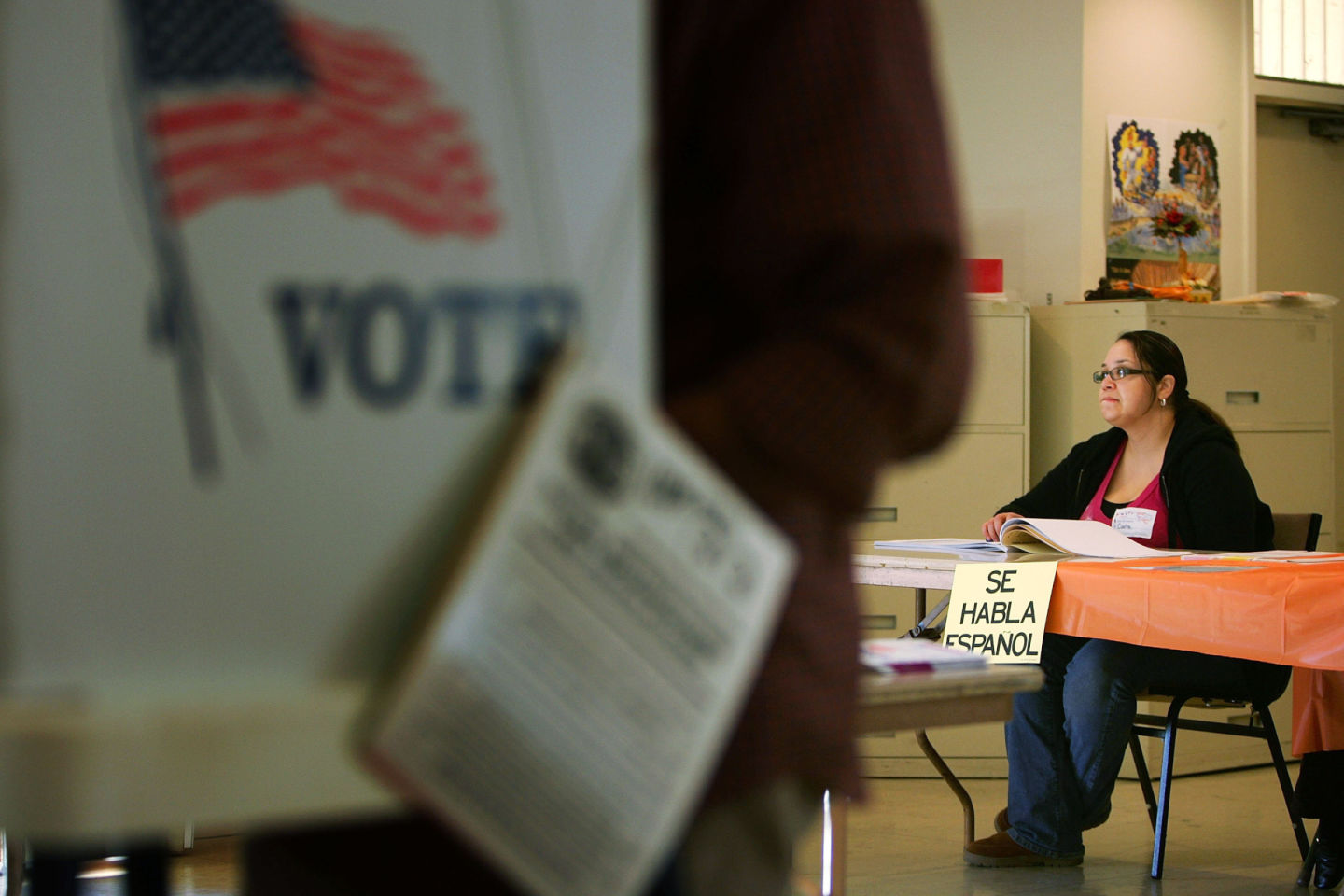
"caption": "A \"Se Habla Español\" sign identifies a bilingual election official in the predominantly Latino neighborhood of Boyle Heights on Feb. 5, 2008, in Los Angeles.",
"credit": "David McNew/Getty Images",
"altTag": "A \"Se Habla Español\" sign identifies a bilingual election official in the predominantly Latino neighborhood of Boyle Heights on Feb. 5, 2008, in Los Angeles.",
"description": "A \"Se habla Espanol\" sign identifies a bilingual election official in the predominantly Latino neighborhood of Boyle Heights on Feb. 5, 2008, in Los Angeles.",
"imgSizes": {
"thumbnail": {
"file": "https://cdn.kqed.org/wp-content/uploads/sites/10/2016/01/3527_transform-400x267.jpg",
"width": 400,
"height": 267,
"mimeType": "image/jpeg"
},
"medium": {
"file": "https://cdn.kqed.org/wp-content/uploads/sites/10/2016/01/3527_transform-800x533.jpg",
"width": 800,
"height": 533,
"mimeType": "image/jpeg"
},
"medium_large": {
"file": "https://cdn.kqed.org/wp-content/uploads/sites/10/2016/01/3527_transform-768x512.jpg",
"width": 768,
"height": 512,
"mimeType": "image/jpeg"
},
"large": {
"file": "https://cdn.kqed.org/wp-content/uploads/sites/10/2016/01/3527_transform-1440x960.jpg",
"width": 1440,
"height": 960,
"mimeType": "image/jpeg"
},
"fd-lrg": {
"file": "https://cdn.kqed.org/wp-content/uploads/sites/10/2016/01/3527_transform-1920x1280.jpg",
"width": 1920,
"height": 1280,
"mimeType": "image/jpeg"
},
"fd-med": {
"file": "https://cdn.kqed.org/wp-content/uploads/sites/10/2016/01/3527_transform-1180x787.jpg",
"width": 1180,
"height": 787,
"mimeType": "image/jpeg"
},
"fd-sm": {
"file": "https://cdn.kqed.org/wp-content/uploads/sites/10/2016/01/3527_transform-960x640.jpg",
"width": 960,
"height": 640,
"mimeType": "image/jpeg"
},
"post-thumbnail": {
"file": "https://cdn.kqed.org/wp-content/uploads/sites/10/2016/01/3527_transform-672x372.jpg",
"width": 672,
"height": 372,
"mimeType": "image/jpeg"
},
"twentyfourteen-full-width": {
"file": "https://cdn.kqed.org/wp-content/uploads/sites/10/2016/01/3527_transform-1038x576.jpg",
"width": 1038,
"height": 576,
"mimeType": "image/jpeg"
},
"guest-author-32": {
"file": "https://cdn.kqed.org/wp-content/uploads/sites/10/2016/01/3527_transform-32x32.jpg",
"width": 32,
"height": 32,
"mimeType": "image/jpeg"
},
"guest-author-64": {
"file": "https://cdn.kqed.org/wp-content/uploads/sites/10/2016/01/3527_transform-64x64.jpg",
"width": 64,
"height": 64,
"mimeType": "image/jpeg"
},
"guest-author-96": {
"file": "https://cdn.kqed.org/wp-content/uploads/sites/10/2016/01/3527_transform-96x96.jpg",
"width": 96,
"height": 96,
"mimeType": "image/jpeg"
},
"guest-author-128": {
"file": "https://cdn.kqed.org/wp-content/uploads/sites/10/2016/01/3527_transform-128x128.jpg",
"width": 128,
"height": 128,
"mimeType": "image/jpeg"
},
"detail": {
"file": "https://cdn.kqed.org/wp-content/uploads/sites/10/2016/01/3527_transform-75x75.jpg",
"width": 75,
"height": 75,
"mimeType": "image/jpeg"
},
"jmtc-small-thumb": {
"file": "https://cdn.kqed.org/wp-content/uploads/sites/10/2016/01/3527_transform-280x150.jpg",
"width": 280,
"height": 150,
"mimeType": "image/jpeg"
},
"kqedFullSize": {
"file": "https://cdn.kqed.org/wp-content/uploads/sites/10/2016/01/3527_transform.jpg",
"width": 1920,
"height": 1280
}
},
"isLoading": false,
"fetchFailed": false
},
"news_12037935": {
"type": "attachments",
"id": "news_12037935",
"meta": {
"index": "attachments_1716263798",
"site": "news",
"id": "12037935",
"found": true
},
"title": "US-TECH-LAND",
"publishDate": 1745868501,
"status": "inherit",
"parent": 12037889,
"modified": 1745931977,
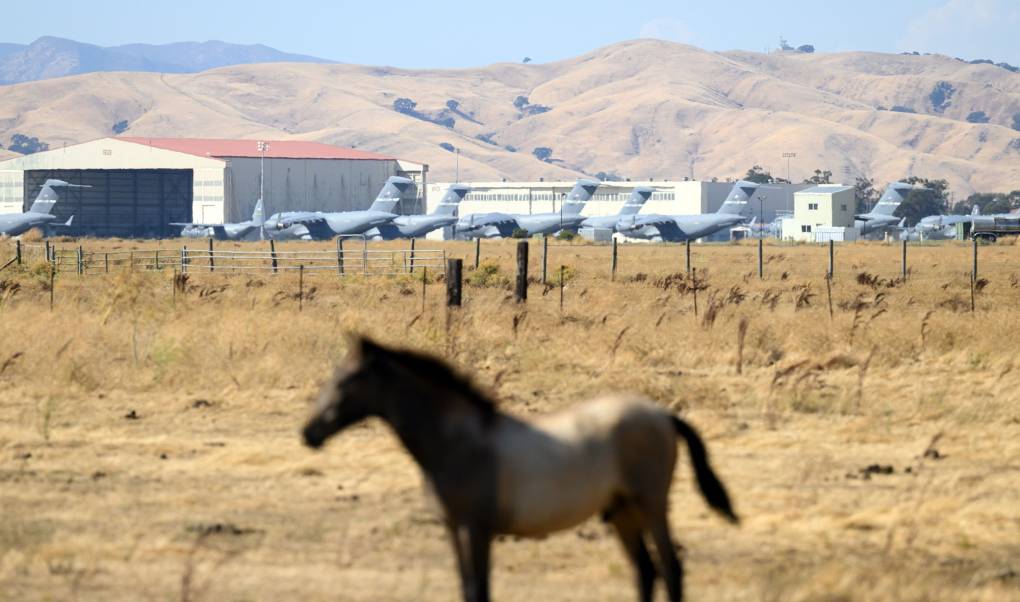
"caption": "Travis Air Force Base in Fairfield on Sept. 15, 2023. Rep. John Garamendi said he has “serious opposition” to using Travis Air Force base to lock up immigrants for deportation, a move he says would compromise military readiness and national security.",
"credit": "Josh Edelson/AFP via Getty Images",
"altTag": null,
"description": null,
"imgSizes": {
"medium": {
"file": "https://cdn.kqed.org/wp-content/uploads/sites/10/2025/04/TravisAirForceBaseGetty-800x472.jpg",
"width": 800,
"height": 472,
"mimeType": "image/jpeg"
},
"large": {
"file": "https://cdn.kqed.org/wp-content/uploads/sites/10/2025/04/TravisAirForceBaseGetty-1020x602.jpg",
"width": 1020,
"height": 602,
"mimeType": "image/jpeg"
},
"thumbnail": {
"file": "https://cdn.kqed.org/wp-content/uploads/sites/10/2025/04/TravisAirForceBaseGetty-160x94.jpg",
"width": 160,
"height": 94,
"mimeType": "image/jpeg"
},
"1536x1536": {
"file": "https://cdn.kqed.org/wp-content/uploads/sites/10/2025/04/TravisAirForceBaseGetty-1536x907.jpg",
"width": 1536,
"height": 907,
"mimeType": "image/jpeg"
},
"post-thumbnail": {
"file": "https://cdn.kqed.org/wp-content/uploads/sites/10/2025/04/TravisAirForceBaseGetty-672x372.jpg",
"width": 672,
"height": 372,
"mimeType": "image/jpeg"
},
"twentyfourteen-full-width": {
"file": "https://cdn.kqed.org/wp-content/uploads/sites/10/2025/04/TravisAirForceBaseGetty-1038x576.jpg",
"width": 1038,
"height": 576,
"mimeType": "image/jpeg"
},
"full-width": {
"file": "https://cdn.kqed.org/wp-content/uploads/sites/10/2025/04/TravisAirForceBaseGetty-1920x1134.jpg",
"width": 1920,
"height": 1134,
"mimeType": "image/jpeg"
},
"kqedFullSize": {
"file": "https://cdn.kqed.org/wp-content/uploads/sites/10/2025/04/TravisAirForceBaseGetty.jpg",
"width": 2000,
"height": 1181
}
},
"isLoading": false,
"fetchFailed": false
},
"news_12029336": {
"type": "attachments",
"id": "news_12029336",
"meta": {
"index": "attachments_1716263798",
"site": "news",
"id": "12029336",
"found": true
},
"title": "California Police-Racist Texts",
"publishDate": 1740785734,
"status": "inherit",
"parent": 12029300,
"modified": 1740785775,
"caption": "The Antioch Police headquarters in Antioch, California, on April 19, 2023. ",
"credit": "Terry Chea/AP Photo",
"altTag": null,
"description": null,
"imgSizes": {
"medium": {
"file": "https://cdn.kqed.org/wp-content/uploads/sites/10/2025/02/AntiochPoliceDepartmentAP-800x533.jpg",
"width": 800,
"height": 533,
"mimeType": "image/jpeg"
},
"large": {
"file": "https://cdn.kqed.org/wp-content/uploads/sites/10/2025/02/AntiochPoliceDepartmentAP-1020x680.jpg",
"width": 1020,
"height": 680,
"mimeType": "image/jpeg"
},
"thumbnail": {
"file": "https://cdn.kqed.org/wp-content/uploads/sites/10/2025/02/AntiochPoliceDepartmentAP-160x107.jpg",
"width": 160,
"height": 107,
"mimeType": "image/jpeg"
},
"1536x1536": {
"file": "https://cdn.kqed.org/wp-content/uploads/sites/10/2025/02/AntiochPoliceDepartmentAP-1536x1024.jpg",
"width": 1536,
"height": 1024,
"mimeType": "image/jpeg"
},
"post-thumbnail": {
"file": "https://cdn.kqed.org/wp-content/uploads/sites/10/2025/02/AntiochPoliceDepartmentAP-672x372.jpg",
"width": 672,
"height": 372,
"mimeType": "image/jpeg"
},
"twentyfourteen-full-width": {
"file": "https://cdn.kqed.org/wp-content/uploads/sites/10/2025/02/AntiochPoliceDepartmentAP-1038x576.jpg",
"width": 1038,
"height": 576,
"mimeType": "image/jpeg"
},
"full-width": {
"file": "https://cdn.kqed.org/wp-content/uploads/sites/10/2025/02/AntiochPoliceDepartmentAP-1920x1280.jpg",
"width": 1920,
"height": 1280,
"mimeType": "image/jpeg"
},
"kqedFullSize": {
"file": "https://cdn.kqed.org/wp-content/uploads/sites/10/2025/02/AntiochPoliceDepartmentAP.jpg",
"width": 2000,
"height": 1333
}
},
"isLoading": false,
"fetchFailed": false
},
"news_12037949": {
"type": "attachments",
"id": "news_12037949",
"meta": {
"index": "attachments_1716263798",
"site": "news",
"id": "12037949",
"found": true
},
"title": "20250428_WARRANTLESSSEARCHES_GC-19-KQED",
"publishDate": 1745872932,
"status": "inherit",
"parent": 12053019,
"modified": 1755735334,
"caption": "San Francisco Sheriff Paul Miyamoto, center, speaks during a press conference announcing the San Francisco Sheriff’s Office’s plan to resume warrantless searches of criminal defendants who have been released and awaiting trial, outside of City Hall on April 28, 2025.",
"credit": "Gina Castro/KQED",
"altTag": null,
"description": null,
"imgSizes": {
"medium": {
"file": "https://cdn.kqed.org/wp-content/uploads/sites/10/2025/04/20250428_WARRANTLESSSEARCHES_GC-19-KQED-800x533.jpg",
"width": 800,
"height": 533,
"mimeType": "image/jpeg"
},
"large": {
"file": "https://cdn.kqed.org/wp-content/uploads/sites/10/2025/04/20250428_WARRANTLESSSEARCHES_GC-19-KQED-1020x680.jpg",
"width": 1020,
"height": 680,
"mimeType": "image/jpeg"
},
"thumbnail": {
"file": "https://cdn.kqed.org/wp-content/uploads/sites/10/2025/04/20250428_WARRANTLESSSEARCHES_GC-19-KQED-160x107.jpg",
"width": 160,
"height": 107,
"mimeType": "image/jpeg"
},
"1536x1536": {
"file": "https://cdn.kqed.org/wp-content/uploads/sites/10/2025/04/20250428_WARRANTLESSSEARCHES_GC-19-KQED-1536x1024.jpg",
"width": 1536,
"height": 1024,
"mimeType": "image/jpeg"
},
"post-thumbnail": {
"file": "https://cdn.kqed.org/wp-content/uploads/sites/10/2025/04/20250428_WARRANTLESSSEARCHES_GC-19-KQED-672x372.jpg",
"width": 672,
"height": 372,
"mimeType": "image/jpeg"
},
"twentyfourteen-full-width": {
"file": "https://cdn.kqed.org/wp-content/uploads/sites/10/2025/04/20250428_WARRANTLESSSEARCHES_GC-19-KQED-1038x576.jpg",
"width": 1038,
"height": 576,
"mimeType": "image/jpeg"
},
"full-width": {
"file": "https://cdn.kqed.org/wp-content/uploads/sites/10/2025/04/20250428_WARRANTLESSSEARCHES_GC-19-KQED-1920x1280.jpg",
"width": 1920,
"height": 1280,
"mimeType": "image/jpeg"
},
"kqedFullSize": {
"file": "https://cdn.kqed.org/wp-content/uploads/sites/10/2025/04/20250428_WARRANTLESSSEARCHES_GC-19-KQED.jpg",
"width": 2000,
"height": 1333
}
},
"isLoading": false,
"fetchFailed": false
},
"news_12037800": {
"type": "attachments",
"id": "news_12037800",
"meta": {
"index": "attachments_1716263798",
"site": "news",
"id": "12037800",
"found": true
},
"title": "The Valero refinery in Benicia on Sept. 21, 2023.",
"publishDate": 1745627579,
"status": "inherit",
"parent": 12037668,
"modified": 1745627596,
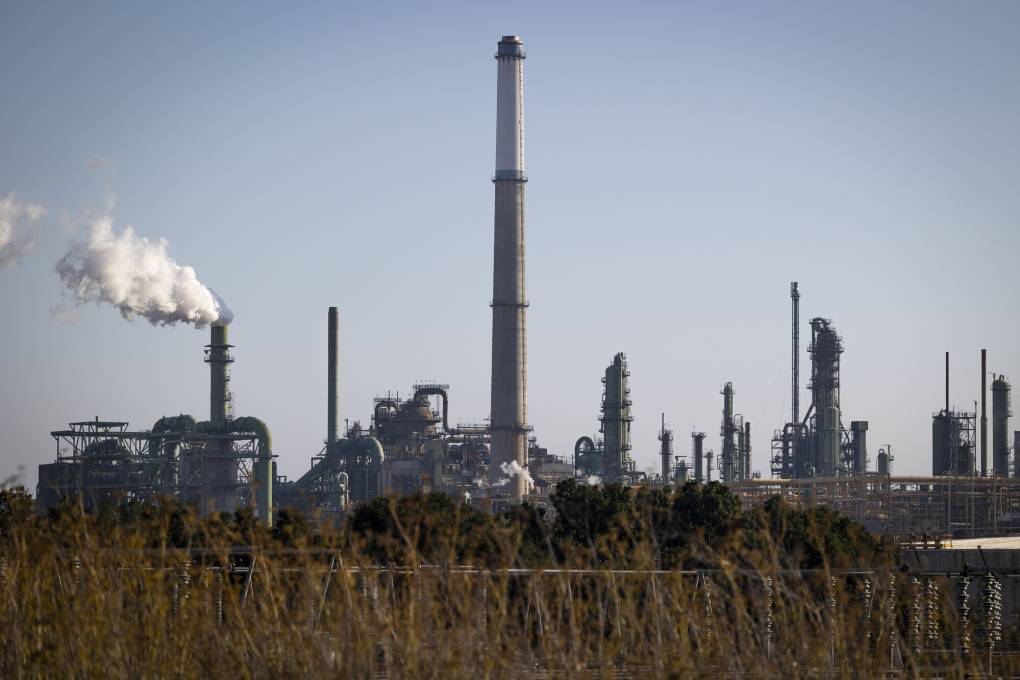
"caption": "The Valero refinery in Benicia on Sept. 21, 2023.",
"credit": "Martin do Nascimento/KQED",
"altTag": null,
"description": null,
"imgSizes": {
"medium": {
"file": "https://cdn.kqed.org/wp-content/uploads/sites/10/2025/04/230921-VALERO-BENICIA-REFINERY-MD-01_qed-800x533.jpg",
"width": 800,
"height": 533,
"mimeType": "image/jpeg"
},
"large": {
"file": "https://cdn.kqed.org/wp-content/uploads/sites/10/2025/04/230921-VALERO-BENICIA-REFINERY-MD-01_qed-1020x680.jpg",
"width": 1020,
"height": 680,
"mimeType": "image/jpeg"
},
"thumbnail": {
"file": "https://cdn.kqed.org/wp-content/uploads/sites/10/2025/04/230921-VALERO-BENICIA-REFINERY-MD-01_qed-160x107.jpg",
"width": 160,
"height": 107,
"mimeType": "image/jpeg"
},
"1536x1536": {
"file": "https://cdn.kqed.org/wp-content/uploads/sites/10/2025/04/230921-VALERO-BENICIA-REFINERY-MD-01_qed-1536x1024.jpg",
"width": 1536,
"height": 1024,
"mimeType": "image/jpeg"
},
"post-thumbnail": {
"file": "https://cdn.kqed.org/wp-content/uploads/sites/10/2025/04/230921-VALERO-BENICIA-REFINERY-MD-01_qed-672x372.jpg",
"width": 672,
"height": 372,
"mimeType": "image/jpeg"
},
"twentyfourteen-full-width": {
"file": "https://cdn.kqed.org/wp-content/uploads/sites/10/2025/04/230921-VALERO-BENICIA-REFINERY-MD-01_qed-1038x576.jpg",
"width": 1038,
"height": 576,
"mimeType": "image/jpeg"
},
"full-width": {
"file": "https://cdn.kqed.org/wp-content/uploads/sites/10/2025/04/230921-VALERO-BENICIA-REFINERY-MD-01_qed-1920x1280.jpg",
"width": 1920,
"height": 1280,
"mimeType": "image/jpeg"
},
"kqedFullSize": {
"file": "https://cdn.kqed.org/wp-content/uploads/sites/10/2025/04/230921-VALERO-BENICIA-REFINERY-MD-01_qed.jpg",
"width": 1999,
"height": 1333
}
},
"isLoading": false,
"fetchFailed": false
}
},
"audioPlayerReducer": {
"postId": "stream_live",
"isPaused": true,
"isPlaying": false,
"pfsActive": false,
"pledgeModalIsOpen": true,
"playerDrawerIsOpen": false,
"liveAudioPlayStartedAt": 0,
"liveAudioPlayContext": ""
},
"authorsReducer": {
"scottshafer": {
"type": "authors",
"id": "255",
"meta": {
"index": "authors_1716337520",
"id": "255",
"found": true
},
"name": "Scott Shafer",
"firstName": "Scott",
"lastName": "Shafer",
"slug": "scottshafer",
"email": "sshafer@kqed.org",
"display_author_email": false,
"staff_mastheads": [
"news"
],
"title": "KQED Contributor",
"bio": "Scott Shafer is a senior editor with the KQED Politics and Government desk. He is co-host of Political Breakdown, the award-winning radio show and podcast with a personal take on the world of politics. Scott came to KQED in 1998 to host the statewide\u003cem> California Report\u003c/em>. Prior to that he had extended stints in politics and government\u003cem>.\u003c/em> He uses that inside experience at KQED in his, reporting, hosting and analysis for the politics desk. Scott collaborated \u003cem>Political Breakdown a\u003c/em>nd on \u003cem>The Political Mind of Jerry Brown, \u003c/em>an eight-part series about the life and extraordinary political career of the former governor. For fun, he plays water polo with the San Francisco Tsunami.",
"avatar": "https://secure.gravatar.com/avatar/a62ebae45b79d7aed1a39a0e3bf68104?s=600&d=blank&r=g",
"twitter": "scottshafer",
"bluesky": null,
"facebook": null,
"instagram": null,
"linkedin": null,
"sites": [
{
"site": "news",
"roles": [
"editor"
]
},
{
"site": "stateofhealth",
"roles": [
"author"
]
},
{
"site": "science",
"roles": [
"author"
]
},
{
"site": "forum",
"roles": [
"subscriber"
]
},
{
"site": "liveblog",
"roles": [
"author"
]
}
],
"headData": {
"title": "Scott Shafer | KQED",
"description": "KQED Contributor",
"ogImgSrc": "https://secure.gravatar.com/avatar/a62ebae45b79d7aed1a39a0e3bf68104?s=600&d=blank&r=g",
"twImgSrc": "https://secure.gravatar.com/avatar/a62ebae45b79d7aed1a39a0e3bf68104?s=600&d=blank&r=g"
},
"isLoading": false,
"link": "/author/scottshafer"
},
"tychehendricks": {
"type": "authors",
"id": "259",
"meta": {
"index": "authors_1716337520",
"id": "259",
"found": true
},
"name": "Tyche Hendricks",
"firstName": "Tyche",
"lastName": "Hendricks",
"slug": "tychehendricks",
"email": "thendricks@kqed.org",
"display_author_email": true,
"staff_mastheads": [
"news"
],
"title": "KQED Senior Editor, Immigration",
"bio": "\u003cspan style=\"font-weight: 400;\">Tyche Hendricks is KQED’s senior editor for immigration, leading coverage of the policy and politics that affect California’s immigrant communities. Her work for KQED’s radio and online audiences is also carried on NPR and other national outlets. She has been recognized with awards from the Radio and Television News Directors Association, the Society for Professional Journalists; the Education Writers Association; the Best of the West and the National Federation of Community Broadcasters. Before joining KQED in 2010, Tyche spent more than a dozen years as a newspaper reporter, notably at the \u003c/span>\u003ci>\u003cspan style=\"font-weight: 400;\">San Francisco Chronicle\u003c/span>\u003c/i>\u003cspan style=\"font-weight: 400;\">. At different times she has covered criminal justice, government and politics and urban planning. Tyche has taught in the MFA Creative Writing program at the University of San Francisco and at UC Berkeley’s Graduate School of Journalism, where she was co-director of a national immigration symposium for professional journalists. She is the author of \u003c/span>\u003ci>\u003cspan style=\"font-weight: 400;\">The Wind Doesn't Need a Passport: Stories from the U.S.-Mexico Borderlands\u003c/span>\u003c/i>\u003cspan style=\"font-weight: 400;\"> (University of California Press). \u003c/span>",
"avatar": "https://secure.gravatar.com/avatar/b8ee458e2731c2d43df86882ce17267e?s=600&d=blank&r=g",
"twitter": "tychehendricks",
"facebook": null,
"instagram": null,
"linkedin": null,
"sites": [
{
"site": "news",
"roles": [
"editor"
]
},
{
"site": "stateofhealth",
"roles": [
"editor"
]
}
],
"headData": {
"title": "Tyche Hendricks | KQED",
"description": "KQED Senior Editor, Immigration",
"ogImgSrc": "https://secure.gravatar.com/avatar/b8ee458e2731c2d43df86882ce17267e?s=600&d=blank&r=g",
"twImgSrc": "https://secure.gravatar.com/avatar/b8ee458e2731c2d43df86882ce17267e?s=600&d=blank&r=g"
},
"isLoading": false,
"link": "/author/tychehendricks"
},
"matthewgreen": {
"type": "authors",
"id": "1263",
"meta": {
"index": "authors_1716337520",
"id": "1263",
"found": true
},
"name": "Matthew Green",
"firstName": "Matthew",
"lastName": "Green",
"slug": "matthewgreen",
"email": "mgreen@kqed.org",
"display_author_email": false,
"staff_mastheads": [],
"title": "KQED Editor/Reporter",
"bio": "Matthew Green is a digital media producer for KQED News. He previously produced \u003ca href=\"http://www.kqed.org/lowdown\">The Lowdown\u003c/a>, KQED’s multimedia news education blog. Matthew's written for numerous Bay Area publications, including the Oakland Tribune and San Francisco Chronicle. He also taught journalism classes at Fremont High School in East Oakland.\r\n\r\nEmail: mgreen@kqed.org; Twitter: @MGreenKQED",
"avatar": "https://secure.gravatar.com/avatar/3bf498d1267ca02c8494f33d8cfc575e?s=600&d=blank&r=g",
"twitter": "MGreenKQED",
"facebook": null,
"instagram": null,
"linkedin": null,
"sites": [
{
"site": "news",
"roles": []
},
{
"site": "lowdown",
"roles": []
},
{
"site": "science",
"roles": []
},
{
"site": "education",
"roles": []
},
{
"site": "quest",
"roles": []
},
{
"site": "liveblog",
"roles": []
}
],
"headData": {
"title": "Matthew Green | KQED",
"description": "KQED Editor/Reporter",
"ogImgSrc": "https://secure.gravatar.com/avatar/3bf498d1267ca02c8494f33d8cfc575e?s=600&d=blank&r=g",
"twImgSrc": "https://secure.gravatar.com/avatar/3bf498d1267ca02c8494f33d8cfc575e?s=600&d=blank&r=g"
},
"isLoading": false,
"link": "/author/matthewgreen"
},
"lesleymcclurg": {
"type": "authors",
"id": "11229",
"meta": {
"index": "authors_1716337520",
"id": "11229",
"found": true
},
"name": "Lesley McClurg",
"firstName": "Lesley",
"lastName": "McClurg",
"slug": "lesleymcclurg",
"email": "lmcclurg@KQED.org",
"display_author_email": false,
"staff_mastheads": [
"news",
"science"
],
"title": "KQED Health Correspondent",
"bio": "Lesley McClurg is a health correspondent and fill-in host whose work is regularly rebroadcast on NPR and PBS programs. She’s earned multiple regional Emmy awards, a national and a regional Edward R. Murrow award, and was named Best Beat Reporter by the Association of Health Care Journalists. The Society of Professional Journalists has recognized her work several times, and the Society of Environmental Journalists spotlighted her coverage of California’s historic drought.\r\n\r\nBefore joining KQED in 2016, Lesley covered food and sustainability for Capital Public Radio, environmental issues for Colorado Public Radio, and reported for KUOW and KCTS 9 in Seattle. Away from the newsroom, she loves skiing with her daughter, mountain biking with her partner, and playing with Ollie, the family’s goldendoodle. On deadline, she runs almost entirely on chocolate chips.\r\n\r\n ",
"avatar": "https://secure.gravatar.com/avatar/bab49e972ea10c774fe0f5e29dba1722b158f7c0d58a360923d1389d380b2978?s=600&d=blank&r=g",
"twitter": "lesleywmcclurg",
"bluesky": null,
"facebook": null,
"instagram": null,
"linkedin": null,
"sites": [
{
"site": "arts",
"roles": [
"author"
]
},
{
"site": "news",
"roles": [
"editor"
]
},
{
"site": "futureofyou",
"roles": [
"editor"
]
},
{
"site": "stateofhealth",
"roles": [
"author"
]
},
{
"site": "science",
"roles": [
"editor"
]
},
{
"site": "quest",
"roles": [
"subscriber"
]
},
{
"site": "forum",
"roles": [
"administrator"
]
},
{
"site": "liveblog",
"roles": [
"author"
]
}
],
"headData": {
"title": "Lesley McClurg | KQED",
"description": "KQED Health Correspondent",
"ogImgSrc": "https://secure.gravatar.com/avatar/bab49e972ea10c774fe0f5e29dba1722b158f7c0d58a360923d1389d380b2978?s=600&d=blank&r=g",
"twImgSrc": "https://secure.gravatar.com/avatar/bab49e972ea10c774fe0f5e29dba1722b158f7c0d58a360923d1389d380b2978?s=600&d=blank&r=g"
},
"isLoading": false,
"link": "/author/lesleymcclurg"
},
"darrentu": {
"type": "authors",
"id": "11815",
"meta": {
"index": "authors_1716337520",
"id": "11815",
"found": true
},
"name": "Darren Tu",
"firstName": "Darren",
"lastName": "Tu",
"slug": "darrentu",
"email": "dtu@kqed.org",
"display_author_email": false,
"staff_mastheads": [],
"title": "KQED Contributor",
"bio": null,
"avatar": "https://secure.gravatar.com/avatar/70a59ab0a3f48b09ab6893b30ba92c6ee6c07b40bcdfcd051e80442e2126fad9?s=600&d=blank&r=g",
"twitter": null,
"bluesky": null,
"facebook": null,
"instagram": null,
"linkedin": null,
"sites": [
{
"site": "news",
"roles": [
"author",
"read_private_posts",
"edit_others_posts"
]
}
],
"headData": {
"title": "Darren Tu | KQED",
"description": "KQED Contributor",
"ogImgSrc": "https://secure.gravatar.com/avatar/70a59ab0a3f48b09ab6893b30ba92c6ee6c07b40bcdfcd051e80442e2126fad9?s=600&d=blank&r=g",
"twImgSrc": "https://secure.gravatar.com/avatar/70a59ab0a3f48b09ab6893b30ba92c6ee6c07b40bcdfcd051e80442e2126fad9?s=600&d=blank&r=g"
},
"isLoading": false,
"link": "/author/darrentu"
},
"kdebenedetti": {
"type": "authors",
"id": "11913",
"meta": {
"index": "authors_1716337520",
"id": "11913",
"found": true
},
"name": "Katie DeBenedetti",
"firstName": "Katie",
"lastName": "DeBenedetti",
"slug": "kdebenedetti",
"email": "kdebenedetti@kqed.org",
"display_author_email": false,
"staff_mastheads": [
"news",
"science"
],
"title": "KQED Contributor",
"bio": "Katie DeBenedetti is a digital reporter covering daily news for the Express Desk. Prior to joining KQED as a culture reporting intern in January 2024, she covered education and city government for the Napa Valley Register.",
"avatar": "https://secure.gravatar.com/avatar/6e31073cb8f7e4214ab03f42771d0f45?s=600&d=blank&r=g",
"twitter": null,
"facebook": null,
"instagram": null,
"linkedin": null,
"sites": [
{
"site": "news",
"roles": [
"author"
]
},
{
"site": "science",
"roles": [
"author"
]
},
{
"site": "liveblog",
"roles": [
"author"
]
}
],
"headData": {
"title": "Katie DeBenedetti | KQED",
"description": "KQED Contributor",
"ogImgSrc": "https://secure.gravatar.com/avatar/6e31073cb8f7e4214ab03f42771d0f45?s=600&d=blank&r=g",
"twImgSrc": "https://secure.gravatar.com/avatar/6e31073cb8f7e4214ab03f42771d0f45?s=600&d=blank&r=g"
},
"isLoading": false,
"link": "/author/kdebenedetti"
},
"bkrans": {
"type": "authors",
"id": "11923",
"meta": {
"index": "authors_1716337520",
"id": "11923",
"found": true
},
"name": "Brian Krans",
"firstName": "Brian",
"lastName": "Krans",
"slug": "bkrans",
"email": "bkrans@kqed.org",
"display_author_email": false,
"staff_mastheads": [
"news"
],
"title": "KQED Contributing Reporter",
"bio": "Brian Krans is an award-winning local news and investigative reporter who has been proudly working as a general assignment reporter for KQED since August 2023. He lives in Richmond, where he also reports on air pollution for Richmondside. He is also a founding member of the Vallejo Sun.",
"avatar": "https://secure.gravatar.com/avatar/d1014d604089314a94807d2c4f2d3e06?s=600&d=blank&r=g",
"twitter": "citizenkrans",
"facebook": null,
"instagram": null,
"linkedin": null,
"sites": [
{
"site": "news",
"roles": [
"editor"
]
}
],
"headData": {
"title": "Brian Krans | KQED",
"description": "KQED Contributing Reporter",
"ogImgSrc": "https://secure.gravatar.com/avatar/d1014d604089314a94807d2c4f2d3e06?s=600&d=blank&r=g",
"twImgSrc": "https://secure.gravatar.com/avatar/d1014d604089314a94807d2c4f2d3e06?s=600&d=blank&r=g"
},
"isLoading": false,
"link": "/author/bkrans"
}
},
"pagesReducer": {
"news_tag_bay-area": {
"type": "terms",
"id": "news_1386",
"meta": {
"index": "terms_1716263798",
"site": "news",
"id": "1386",
"score": 7.788453
},
"featImg": null,
"name": "Bay Area",
"description": null,
"taxonomy": "tag",
"headData": {
"twImgId": null,
"twTitle": null,
"ogTitle": null,
"ogImgId": null,
"twDescription": null,
"description": null,
"title": "Bay Area Archives | KQED News",
"ogDescription": null
},
"ttid": 1398,
"slug": "bay-area",
"isLoading": false,
"title": "Bay Area",
"pageMeta": {
"site": "news",
"WpPageTemplate": "page-topic-editorial",
"currentPage": 71
},
"blocks": [
{
"blockName": "kqed/post-list",
"attrs": {
"layout": "cardArticle2",
"query": "posts/news?tag=bay-area",
"seeMore": false,
"paginated": true,
"page": 71
}
},
{
"blockName": "kqed/ad"
}
]
}
},
"pfsSessionReducer": {},
"postsReducer": {
"stream_live": {
"type": "live",
"id": "stream_live",
"audioUrl": "https://streams.kqed.org/kqedradio",
"title": "Live Stream",
"excerpt": "Live Stream information currently unavailable.",
"link": "/radio",
"featImg": "",
"label": {
"name": "KQED Live",
"link": "/"
}
},
"stream_kqedNewscast": {
"type": "posts",
"id": "stream_kqedNewscast",
"audioUrl": "https://www.kqed.org/.stream/anon/radio/RDnews/newscast.mp3?_=1",
"title": "KQED Newscast",
"featImg": "",
"label": {
"name": "88.5 FM",
"link": "/"
}
},
"news_12038426": {
"type": "posts",
"id": "news_12038426",
"meta": {
"index": "posts_1716263798",
"site": "news",
"id": "12038426",
"score": null,
"sort": [
1746198014000
]
},
"guestAuthors": [],
"slug": "why-do-i-keep-dating-the-same-type-tell-us-your-story",
"title": "Why Do I Keep Dating the Same Type?! Tell Us Your Story",
"publishDate": 1746198014,
"format": "standard",
"headTitle": "Why Do I Keep Dating the Same Type?! Tell Us Your Story | KQED",
"labelTerm": {
"site": "news"
},
"content": "\u003cp>You swore you were done with the emotionally unavailable type. Or the fixers. Or the charmers who vanish when things get real. But somehow you’re back in the same dynamic.\u003c/p>\n\u003cp>Again.\u003c/p>\n\u003cp>If this sounds familiar, we want to hear from you.\u003c/p>\n\u003cp>KQED’s \u003cem>Love Lab\u003c/em> blends science with real stories to explore our most intimate patterns. This month’s question: Why do we keep dating the same kind of person even when we know better?\u003c/p>\n\u003cp>If that question hits a nerve — or brings up a story — we’d love to hear it. Your voice could be featured in an upcoming episode — with your permission, of course.\u003c/p>\n\u003cp>[ad fullwidth]\u003c/p>\n\u003ch2>Here are three ways to share your story:\u003c/h2>\n\u003cul>\n\u003cli>Fill out the short form below\u003c/li>\n\u003cli>Record a one-minute voice memo and email it to lmcclurg@kqed.org\u003c/li>\n\u003cli>Or leave us a voicemail at 415-553-3300\u003c/li>\n\u003c/ul>\n\u003cp>Please include your name, location, age and the best way to reach you. The information you share will only be used by KQED journalists who may follow up for a deeper conversation.\u003c/p>\n\u003cp>Thank you for your honesty. We will try to help you untangle the pattern.\u003c/p>\n\u003cp>https://docs.google.com/forms/d/e/1FAIpQLSf_XJQvTlrSYP5Q77_0CBRYaQ2dW9EFLycRR_-rquBrs4-k7A/viewform?embedded=true\u003c/p>\n\u003cp>\u003c/p>\n",
"blocks": [],
"excerpt": "KQED’s Love Lab blends science with real stories to explore our most intimate patterns. Do you want to share your story?",
"status": "publish",
"parent": 0,
"modified": 1746133399,
"stats": {
"hasAudio": false,
"hasVideo": false,
"hasChartOrMap": false,
"iframeSrcs": [],
"hasGoogleForm": true,
"hasGallery": false,
"hasHearkenModule": false,
"hasPolis": false,
"paragraphCount": 9,
"wordCount": 211
},
"headData": {
"title": "Why Do I Keep Dating the Same Type?! Tell Us Your Story | KQED",
"description": "KQED’s Love Lab blends science with real stories to explore our most intimate patterns. Do you want to share your story?",
"ogTitle": "",
"ogDescription": "",
"ogImgId": "",
"twTitle": "",
"twDescription": "",
"twImgId": "",
"schema": {
"@context": "https://schema.org",
"@type": "NewsArticle",
"headline": "Why Do I Keep Dating the Same Type?! Tell Us Your Story",
"datePublished": "2025-05-02T08:00:14-07:00",
"dateModified": "2025-05-01T14:03:19-07:00",
"image": "https://cdn.kqed.org/wp-content/uploads/2020/02/KQED-OG-Image@1x.png",
"isAccessibleForFree": "True",
"publisher": {
"@type": "NewsMediaOrganization",
"@id": "https://www.kqed.org/#organization",
"name": "KQED",
"logo": "https://cdn.kqed.org/wp-content/uploads/2020/02/KQED-OG-Image@1x.png",
"url": "https://www.kqed.org",
"sameAs": [
"https://www.facebook.com/KQED",
"https://twitter.com/KQED",
"https://www.instagram.com/kqed/",
"https://www.tiktok.com/@kqedofficial",
"https://www.linkedin.com/company/kqed",
"https://www.youtube.com/channel/UCeC0IOo7i1P_61zVUWbJ4nw"
]
}
}
},
"sticky": false,
"templateType": "standard",
"featuredImageType": "standard",
"excludeFromSiteSearch": "Include",
"articleAge": "0",
"path": "/news/12038426/why-do-i-keep-dating-the-same-type-tell-us-your-story",
"audioTrackLength": null,
"parsedContent": [
{
"type": "contentString",
"content": "\u003cdiv class=\"post-body\">\u003cp>\u003cp>You swore you were done with the emotionally unavailable type. Or the fixers. Or the charmers who vanish when things get real. But somehow you’re back in the same dynamic.\u003c/p>\n\u003cp>Again.\u003c/p>\n\u003cp>If this sounds familiar, we want to hear from you.\u003c/p>\n\u003cp>KQED’s \u003cem>Love Lab\u003c/em> blends science with real stories to explore our most intimate patterns. This month’s question: Why do we keep dating the same kind of person even when we know better?\u003c/p>\n\u003cp>If that question hits a nerve — or brings up a story — we’d love to hear it. Your voice could be featured in an upcoming episode — with your permission, of course.\u003c/p>\n\u003cp>\u003c/p>\u003c/div>",
"attributes": {
"named": {},
"numeric": []
}
},
{
"type": "component",
"content": "",
"name": "ad",
"attributes": {
"named": {
"label": "fullwidth"
},
"numeric": [
"fullwidth"
]
}
},
{
"type": "contentString",
"content": "\u003cdiv class=\"post-body\">\u003cp>\u003c/p>\n\u003ch2>Here are three ways to share your story:\u003c/h2>\n\u003cul>\n\u003cli>Fill out the short form below\u003c/li>\n\u003cli>Record a one-minute voice memo and email it to lmcclurg@kqed.org\u003c/li>\n\u003cli>Or leave us a voicemail at 415-553-3300\u003c/li>\n\u003c/ul>\n\u003cp>Please include your name, location, age and the best way to reach you. The information you share will only be used by KQED journalists who may follow up for a deeper conversation.\u003c/p>\n\u003cp>Thank you for your honesty. We will try to help you untangle the pattern.\u003c/p>\u003c/p>\u003cp>\u003cdiv class='utils-parseShortcode-shortcodes-__shortcodes__shortcodeWrapper'>\n \u003ciframe\n src='https://docs.google.com/forms/d/e/1FAIpQLSf_XJQvTlrSYP5Q77_0CBRYaQ2dW9EFLycRR_-rquBrs4-k7A/viewform?embedded=true?embedded=true'\n title='https://docs.google.com/forms/d/e/1FAIpQLSf_XJQvTlrSYP5Q77_0CBRYaQ2dW9EFLycRR_-rquBrs4-k7A/viewform?embedded=true'\n width='760' height='500'\n frameborder='0'\n marginheight='0' marginwidth='0'>\u003c/iframe>\u003c/div>\u003c/p>\u003cp>\u003cp>\u003c/p>\n\u003c/div>\u003c/p>",
"attributes": {
"named": {},
"numeric": []
}
}
],
"link": "/news/12038426/why-do-i-keep-dating-the-same-type-tell-us-your-story",
"authors": [
"11229"
],
"categories": [
"news_31795",
"news_457",
"news_8",
"news_356"
],
"tags": [
"news_32707",
"news_1386",
"news_18538",
"news_28199",
"news_18543",
"news_25020",
"news_3187"
],
"featImg": "news_12038428",
"label": "news"
},
"news_12037919": {
"type": "posts",
"id": "news_12037919",
"meta": {
"index": "posts_1716263798",
"site": "news",
"id": "12037919",
"score": null,
"sort": [
1746110875000
]
},
"guestAuthors": [],
"slug": "san-francisco-kamala-harris-speech-warns-constitutional-crisis",
"title": "In SF, Kamala Harris Retakes Political Stage to Warn of Constitutional Crisis",
"publishDate": 1746110875,
"format": "standard",
"headTitle": "In SF, Kamala Harris Retakes Political Stage to Warn of Constitutional Crisis | KQED",
"labelTerm": {
"site": "news"
},
"content": "\u003cp>In her first major political speech since leaving office in January, former \u003ca href=\"https://www.kqed.org/news/tag/kamala-harris\">Vice President Kamala Harris\u003c/a> warned that in the first 100 days of the Trump administration, the constitutional system of checks and balances “have begun to buckle.”\u003c/p>\n\u003cp>“And if that happens,” she said, warning of a constitutional crisis, “the one check, the balance, the power that must not fail is the voice of the people.”\u003c/p>\n\u003cp>Her remarks at the Palace Hotel in San Francisco on Wednesday night were delivered at the 20th anniversary gala of Emerge America, a nonprofit that recruits and trains Democratic women to run for political office.\u003c/p>\n\u003cp>[ad fullwidth]\u003c/p>\n\u003cp>“What we are, in fact, witnessing is a high-velocity event,” Harris said. “Where a vessel is being used for the swift implementation of an agenda that has been decades in the making.”\u003c/p>\n\u003cp>Harris sharply criticized Trump’s “reckless” tariffs and said they are \u003ca href=\"https://www.kqed.org/news/12037850/how-trump-tariffs-could-upend-california-farms-wine-businesses-and-ports\">hurting workers and families,\u003c/a> calling it “the greatest man-made economic crisis in modern presidential history.”\u003c/p>\n\u003cp>She told the crowd that Trump and his allies are counting on fear to divide the country.\u003c/p>\n\u003cp>“But what they’re overlooking, what they have overlooked, is that fear is not the only thing that’s contagious,” she said. “Courage is contagious.”\u003c/p>\n\u003cp>She pointed to examples of resistance she found inspiring — including Americans protesting possible cuts to Social Security and Medicaid, and elected officials like Sens. Cory Booker and Bernie Sanders and Rep. Alexandria Ocasio-Cortez, who have been vocal against Trump’s policies.\u003c/p>\n\u003cp>Harris did not reveal what her political future holds, but in a surprise appearance at a national conference of Black women leaders in Orange County earlier this month, she said: “I’ll see you out there. I’m not going anywhere.”\u003c/p>\n\u003cp>Sources close to Harris say she’s \u003ca href=\"https://www.kqed.org/news/12026900/could-kamala-harris-shake-up-californias-governor-race-democrats-weigh-in\">mulling a run for California governor\u003c/a>. \u003ca href=\"https://www.politico.com/news/2025/03/07/kamala-harris-california-governor-decision-deadline-00216737\">Politico reported\u003c/a> last month that she plans to make a decision by the end of summer.\u003c/p>\n\u003cp>A run for governor would preclude another race for president in 2028, since the presidential campaign will be well underway by the time Californians vote for governor in 2026.\u003c/p>\n\u003cp>Amanda Gallo of Oakland, who attended the San Francisco event, said that she liked the speech and that the message of uniting against Trump’s agenda resonated with her.\u003c/p>\n\u003cp>“She didn’t win the office, but she’s still leading — by example, leading by the values of our country,” Gallo said. “I can’t wait to see what she does next.” Gallo added that she hopes Harris runs for governor.\u003c/p>\n\u003cp>Andrea Dew Steele, who founded Emerge America in 2005, helped Harris in her first run for office, a successful campaign for San Francisco district attorney in 2003. That same year, she co-founded Emerge California, whose graduates include former San Francisco Mayor London Breed and former Oakland Mayor Libby Schaff.\u003c/p>\n\u003cp>Steele said she’s excited by the prospect of Harris running for governor.\u003c/p>\n\u003cp>[aside postID=news_12037185 hero='https://cdn.kqed.org/wp-content/uploads/sites/10/2025/04/gettyimages-2210243092-1020x680.jpeg']\u003c/p>\n\u003cp>“We need somebody who can go toe-to-toe with Donald Trump,” Steele said. “And we saw her do that during the election, during the debate. She is a prosecutor. I think she could really prosecute that case — as governor of California. I certainly would love to see her run.”\u003c/p>\n\u003cp>If Harris runs, it could upend the gubernatorial campaign for one Emerge graduate: Lt. Gov. Eleni Kounalakis.\u003c/p>\n\u003cp>“I adore Eleni and I’d love to see her as governor as well,” said Steele, but “it’s going to be really tough” to run against Harris’ statewide name recognition, fundraising network and history of electoral wins.\u003c/p>\n\u003cp>Kounalakis, who attended the Emerge event, called Harris a close friend, adding that “it’s absolutely appropriate that she have time to get readjusted and figure out what her leadership can mean to the country and in the state of California.”\u003c/p>\n\u003cp>Two other Democrats already in the governor’s race — former Health and Human Services Secretary \u003ca href=\"https://www.kqed.org/news/12034105/xavier-becerra-enters-california-governors-race-citing-break-glass-moment\">Xavier Becerra\u003c/a> and former Los Angeles Mayor Antonio Villaraigosa — have signaled they’ll remain in the race whether or not Harris decides to run. Another announced candidate, \u003ca href=\"https://www.kqed.org/news/12030744/porter-enters-crowded-field-for-california-governor-as-kamala-harris-weighs-run\">former Rep. Katie Porter\u003c/a>, attended Wednesday night’s event. Her campaign has indicated she would not run against Harris.\u003c/p>\n\u003cp>A \u003ca href=\"https://emersoncollegepolling.com/february-2025-california-poll-kamala-harris-emerges-as-democratic-frontrunner-for-governor/\">recent poll\u003c/a> by Emerson College Polling/Inside California Politics/The Hill shows Harris would be an instant front-runner if she enters the gubernatorial race. But, as \u003ca href=\"https://www.youtube.com/watch?v=Eu7gRDFfuA8\">Richard Nixon\u003c/a> discovered in 1962, being vice president does not guarantee you can run for governor of California and win.\u003c/p>\n\u003cp>Harris’ choice to deliver remarks in San Francisco, the city that launched her political career, also represented something of a homecoming. She has kept a relatively low profile since losing the November election, with Wednesday’s speech marking her strongest rebuke of Trump’s presidency.\u003c/p>\n\u003cp>“Things are probably going to get worse before they get better,” Harris told the crowd in closing. “But we are ready for it.”\u003c/p>\n\u003cp>\u003c/p>\n",
"blocks": [],
"excerpt": "In her first major speech since leaving office, Harris delivered a sharp critique of President Trump and rallied Democrats to fight back.",
"status": "publish",
"parent": 0,
"modified": 1746131857,
"stats": {
"hasAudio": false,
"hasVideo": false,
"hasChartOrMap": false,
"iframeSrcs": [],
"hasGoogleForm": false,
"hasGallery": false,
"hasHearkenModule": false,
"hasPolis": false,
"paragraphCount": 26,
"wordCount": 886
},
"headData": {
"title": "In SF, Kamala Harris Retakes Political Stage to Warn of Constitutional Crisis | KQED",
"description": "In her first major speech since leaving office, Harris delivered a sharp critique of President Trump and rallied Democrats to fight back.",
"ogTitle": "",
"ogDescription": "",
"ogImgId": "",
"twTitle": "",
"twDescription": "",
"twImgId": "",
"schema": {
"@context": "https://schema.org",
"@type": "NewsArticle",
"headline": "In SF, Kamala Harris Retakes Political Stage to Warn of Constitutional Crisis",
"datePublished": "2025-05-01T07:47:55-07:00",
"dateModified": "2025-05-01T13:37:37-07:00",
"image": "https://cdn.kqed.org/wp-content/uploads/2020/02/KQED-OG-Image@1x.png",
"isAccessibleForFree": "True",
"publisher": {
"@type": "NewsMediaOrganization",
"@id": "https://www.kqed.org/#organization",
"name": "KQED",
"logo": "https://cdn.kqed.org/wp-content/uploads/2020/02/KQED-OG-Image@1x.png",
"url": "https://www.kqed.org",
"sameAs": [
"https://www.facebook.com/KQED",
"https://twitter.com/KQED",
"https://www.instagram.com/kqed/",
"https://www.tiktok.com/@kqedofficial",
"https://www.linkedin.com/company/kqed",
"https://www.youtube.com/channel/UCeC0IOo7i1P_61zVUWbJ4nw"
]
}
}
},
"sticky": false,
"nprStoryId": "kqed-12037919",
"templateType": "standard",
"featuredImageType": "standard",
"excludeFromSiteSearch": "Include",
"articleAge": "0",
"path": "/news/12037919/san-francisco-kamala-harris-speech-warns-constitutional-crisis",
"audioTrackLength": null,
"parsedContent": [
{
"type": "contentString",
"content": "\u003cdiv class=\"post-body\">\u003cp>\u003cp>In her first major political speech since leaving office in January, former \u003ca href=\"https://www.kqed.org/news/tag/kamala-harris\">Vice President Kamala Harris\u003c/a> warned that in the first 100 days of the Trump administration, the constitutional system of checks and balances “have begun to buckle.”\u003c/p>\n\u003cp>“And if that happens,” she said, warning of a constitutional crisis, “the one check, the balance, the power that must not fail is the voice of the people.”\u003c/p>\n\u003cp>Her remarks at the Palace Hotel in San Francisco on Wednesday night were delivered at the 20th anniversary gala of Emerge America, a nonprofit that recruits and trains Democratic women to run for political office.\u003c/p>\n\u003cp>\u003c/p>\u003c/div>",
"attributes": {
"named": {},
"numeric": []
}
},
{
"type": "component",
"content": "",
"name": "ad",
"attributes": {
"named": {
"label": "fullwidth"
},
"numeric": [
"fullwidth"
]
}
},
{
"type": "contentString",
"content": "\u003cdiv class=\"post-body\">\u003cp>\u003c/p>\n\u003cp>“What we are, in fact, witnessing is a high-velocity event,” Harris said. “Where a vessel is being used for the swift implementation of an agenda that has been decades in the making.”\u003c/p>\n\u003cp>Harris sharply criticized Trump’s “reckless” tariffs and said they are \u003ca href=\"https://www.kqed.org/news/12037850/how-trump-tariffs-could-upend-california-farms-wine-businesses-and-ports\">hurting workers and families,\u003c/a> calling it “the greatest man-made economic crisis in modern presidential history.”\u003c/p>\n\u003cp>She told the crowd that Trump and his allies are counting on fear to divide the country.\u003c/p>\n\u003cp>“But what they’re overlooking, what they have overlooked, is that fear is not the only thing that’s contagious,” she said. “Courage is contagious.”\u003c/p>\n\u003cp>She pointed to examples of resistance she found inspiring — including Americans protesting possible cuts to Social Security and Medicaid, and elected officials like Sens. Cory Booker and Bernie Sanders and Rep. Alexandria Ocasio-Cortez, who have been vocal against Trump’s policies.\u003c/p>\n\u003cp>Harris did not reveal what her political future holds, but in a surprise appearance at a national conference of Black women leaders in Orange County earlier this month, she said: “I’ll see you out there. I’m not going anywhere.”\u003c/p>\n\u003cp>Sources close to Harris say she’s \u003ca href=\"https://www.kqed.org/news/12026900/could-kamala-harris-shake-up-californias-governor-race-democrats-weigh-in\">mulling a run for California governor\u003c/a>. \u003ca href=\"https://www.politico.com/news/2025/03/07/kamala-harris-california-governor-decision-deadline-00216737\">Politico reported\u003c/a> last month that she plans to make a decision by the end of summer.\u003c/p>\n\u003cp>A run for governor would preclude another race for president in 2028, since the presidential campaign will be well underway by the time Californians vote for governor in 2026.\u003c/p>\n\u003cp>Amanda Gallo of Oakland, who attended the San Francisco event, said that she liked the speech and that the message of uniting against Trump’s agenda resonated with her.\u003c/p>\n\u003cp>“She didn’t win the office, but she’s still leading — by example, leading by the values of our country,” Gallo said. “I can’t wait to see what she does next.” Gallo added that she hopes Harris runs for governor.\u003c/p>\n\u003cp>Andrea Dew Steele, who founded Emerge America in 2005, helped Harris in her first run for office, a successful campaign for San Francisco district attorney in 2003. That same year, she co-founded Emerge California, whose graduates include former San Francisco Mayor London Breed and former Oakland Mayor Libby Schaff.\u003c/p>\n\u003cp>Steele said she’s excited by the prospect of Harris running for governor.\u003c/p>\n\u003cp>\u003c/p>\u003c/div>",
"attributes": {
"named": {},
"numeric": []
}
},
{
"type": "component",
"content": "",
"name": "aside",
"attributes": {
"named": {
"postid": "news_12037185",
"hero": "https://cdn.kqed.org/wp-content/uploads/sites/10/2025/04/gettyimages-2210243092-1020x680.jpeg",
"label": ""
},
"numeric": []
}
},
{
"type": "contentString",
"content": "\u003cdiv class=\"post-body\">\u003cp>\u003c/p>\n\u003cp>“We need somebody who can go toe-to-toe with Donald Trump,” Steele said. “And we saw her do that during the election, during the debate. She is a prosecutor. I think she could really prosecute that case — as governor of California. I certainly would love to see her run.”\u003c/p>\n\u003cp>If Harris runs, it could upend the gubernatorial campaign for one Emerge graduate: Lt. Gov. Eleni Kounalakis.\u003c/p>\n\u003cp>“I adore Eleni and I’d love to see her as governor as well,” said Steele, but “it’s going to be really tough” to run against Harris’ statewide name recognition, fundraising network and history of electoral wins.\u003c/p>\n\u003cp>Kounalakis, who attended the Emerge event, called Harris a close friend, adding that “it’s absolutely appropriate that she have time to get readjusted and figure out what her leadership can mean to the country and in the state of California.”\u003c/p>\n\u003cp>Two other Democrats already in the governor’s race — former Health and Human Services Secretary \u003ca href=\"https://www.kqed.org/news/12034105/xavier-becerra-enters-california-governors-race-citing-break-glass-moment\">Xavier Becerra\u003c/a> and former Los Angeles Mayor Antonio Villaraigosa — have signaled they’ll remain in the race whether or not Harris decides to run. Another announced candidate, \u003ca href=\"https://www.kqed.org/news/12030744/porter-enters-crowded-field-for-california-governor-as-kamala-harris-weighs-run\">former Rep. Katie Porter\u003c/a>, attended Wednesday night’s event. Her campaign has indicated she would not run against Harris.\u003c/p>\n\u003cp>A \u003ca href=\"https://emersoncollegepolling.com/february-2025-california-poll-kamala-harris-emerges-as-democratic-frontrunner-for-governor/\">recent poll\u003c/a> by Emerson College Polling/Inside California Politics/The Hill shows Harris would be an instant front-runner if she enters the gubernatorial race. But, as \u003ca href=\"https://www.youtube.com/watch?v=Eu7gRDFfuA8\">Richard Nixon\u003c/a> discovered in 1962, being vice president does not guarantee you can run for governor of California and win.\u003c/p>\n\u003cp>Harris’ choice to deliver remarks in San Francisco, the city that launched her political career, also represented something of a homecoming. She has kept a relatively low profile since losing the November election, with Wednesday’s speech marking her strongest rebuke of Trump’s presidency.\u003c/p>\n\u003cp>“Things are probably going to get worse before they get better,” Harris told the crowd in closing. “But we are ready for it.”\u003c/p>\n\u003cp>\u003c/p>\n\u003c/div>\u003c/p>",
"attributes": {
"named": {},
"numeric": []
}
}
],
"link": "/news/12037919/san-francisco-kamala-harris-speech-warns-constitutional-crisis",
"authors": [
"255"
],
"categories": [
"news_28250",
"news_8",
"news_13"
],
"tags": [
"news_1386",
"news_1323",
"news_34377",
"news_61",
"news_17968",
"news_38"
],
"featImg": "news_12038382",
"label": "news"
},
"news_12038280": {
"type": "posts",
"id": "news_12038280",
"meta": {
"index": "posts_1716263798",
"site": "news",
"id": "12038280",
"score": null,
"sort": [
1746104456000
]
},
"guestAuthors": [],
"slug": "on-may-day-bay-area-workers-protest-trump-labor-battles",
"title": "Bay Area Workers Defend Labor, Protest Trump on May Day",
"publishDate": 1746104456,
"format": "standard",
"headTitle": "Bay Area Workers Defend Labor, Protest Trump on May Day | KQED",
"labelTerm": {
"site": "news"
},
"content": "\u003cp>The Bay Area will be bustling with labor actions on Thursday, with thousands of workers and activists expected to take to the streets and picket lines across the region on a \u003ca href=\"https://www.kqed.org/news/tag/may-day\">May Day\u003c/a> that, for many, carries a heightened sense of urgency.\u003c/p>\n\u003cp>From Santa Rosa to San José, more than 50 marches and strikes are slated to take place — among thousands nationwide — many taking aim at the Trump administration’s bold efforts to fundamentally reshape American government and society.\u003c/p>\n\u003cp>“We want to work freely,” said Socorro Diaz, a housekeeper in Sonoma County. Diaz said she felt compelled to start organizing fellow workers, many of them immigrants, when the administration launched its sweeping immigration crackdown.\u003c/p>\n\u003cp>[ad fullwidth]\u003c/p>\n\u003cp>“Our rights as immigrants are human rights, and we want worker rights to be respected,” Diaz said.\u003c/p>\n\u003cp>Many demonstrations are being organized by \u003ca href=\"https://maydaystrong.org/\">May Day Strong\u003c/a>, a national coalition of more than 160 grassroots organizations united in their opposition to the administration’s right-wing policies on everything from immigration and labor issues to health care access and education.\u003c/p>\n\u003cp>In San Francisco, demonstrators are planning to march in the late afternoon from City Hall to the U.S. Immigration and Customs Enforcement office downtown to show “we are all together as a working class and that immigrant workers are the backbone of our economy,” said Maria Moreno, an organizer for Jobs with Justice San Francisco.\u003c/p>\n\u003cfigure id=\"attachment_12032407\" class=\"wp-caption aligncenter\" style=\"max-width: 1024px\">\u003ca href=\"https://cdn.kqed.org/wp-content/uploads/sites/10/2025/03/GettyImages-2201544551.jpg\">\u003cimg loading=\"lazy\" decoding=\"async\" class=\"size-full wp-image-12032407\" src=\"https://cdn.kqed.org/wp-content/uploads/sites/10/2025/03/GettyImages-2201544551.jpg\" alt=\"\" width=\"1024\" height=\"732\" srcset=\"https://cdn.kqed.org/wp-content/uploads/sites/10/2025/03/GettyImages-2201544551.jpg 1024w, https://cdn.kqed.org/wp-content/uploads/sites/10/2025/03/GettyImages-2201544551-800x572.jpg 800w, https://cdn.kqed.org/wp-content/uploads/sites/10/2025/03/GettyImages-2201544551-1020x729.jpg 1020w, https://cdn.kqed.org/wp-content/uploads/sites/10/2025/03/GettyImages-2201544551-160x114.jpg 160w\" sizes=\"auto, (max-width: 1024px) 100vw, 1024px\">\u003c/a>\u003cfigcaption class=\"wp-caption-text\">Members of University Professional and Technical Employees-CWA Local 9119 and AFSCME Local 3299 protest on West Chapman Avenue in front of UC Irvine Medical Center in Orange, California, on Feb. 26, 2025. AFSCME Local 3299 President Liz Perlman said Wednesday, ‘It’s the weight at the top that’s crushing the system,’ blaming the UC top brass for the hiring freeze. \u003ccite>(Paul Bersebach/MediaNews Group/Orange County Register via Getty Images)\u003c/cite>\u003c/figcaption>\u003c/figure>\n\u003cp>“One historic thing that we’re doing this year is marching with every union in the city,” said Moreno, predicting that many workers who have never marched before will be galvanized to show up this year. “It’s to show solidarity across the movement.”\u003c/p>\n\u003cp>Meanwhile, at UC Berkeley and UCSF, thousands of health care, research and technical workers are planning a one-day strike, accusing the University of California of unfair labor practices following last month’s announcement of a \u003ca href=\"https://www.kqed.org/news/12032232/head-of-ucs-largest-union-blasts-top-brass-for-hiring-freeze-amid-massive-vacancy-crisis\">systemwide hiring freeze\u003c/a>. Some 60,000 workers in the UPTE-CWA 9119 and AFSCME Local 3299 — which includes social workers, pharmacists and IT workers — are expected to walk off their jobs at all 10 UC campuses across the state — in what will be their fourth strike since November.\u003c/p>\n\u003cp>The two unions have negotiated unsuccessfully with the UC system for months over new contracts. Both recently filed separate complaints to state workforce regulators alleging, among other things, that UC failed to provide notice of the hiring freeze or allow the unions to bargain over it in advance.\u003c/p>\n\u003cp>Dan Russell, UPTE’s president and chief negotiator, and an IT worker at UC Berkeley, said the stalled contract negotiations and hiring freeze come amid a severe shortage of frontline workers at UC medical centers and other facilities.\u003c/p>\n\u003cp>“Our workers have seen the impacts of short staffing for years now, with clinical trials being canceled or paused, clinics closing their doors to new patients, students waiting longer and longer for appointments with therapists, patients waiting longer and longer in emergency rooms,” he said.\u003c/p>\n\u003cp>[aside postID=news_12038227 hero='https://cdn.kqed.org/wp-content/uploads/sites/10/2025/04/250428-OUSD-OFFICE-FILE-MD-01-KQED-1020x680.jpg']\u003c/p>\n\u003cp>Russell said UC’s hiring freeze was ostensibly prompted by the Trump administration’s bid to slash billions in federal grants to universities. But, he noted, those cuts have so far been blocked by the courts.\u003c/p>\n\u003cp>“This is the university using ‘storm clouds’ on the horizon, even though there have not been significant financial cuts yet, as an excuse to deepen a crisis that they have created,” he said. “As a way to hoard billions in reserves and expand their market share.”\u003c/p>\n\u003cp>For its part, UC officials emphasized that the hiring freeze applies to future hires only and does not in any way impact the status of current employees. They also said they have consistently tried to negotiate “mutually beneficial contracts” with both unions.\u003c/p>\n\u003cp>“We are disappointed by the union’s continued choice of striking as a negotiation tactic,” UC said in a statement. “These strikes cost union members a full day of pay, and they cost the University system millions of dollars. This is especially harmful considering the current economic and fiscal uncertainty in higher education and nationally.”\u003c/p>\n\u003cp>On a brighter note, the Oakland teachers union \u003ca href=\"https://www.kqed.org/news/12038227/oakland-teachers-strike-called-off-after-union-reaches-deal-school-district\">called off its planned May Day walkout\u003c/a> after reaching a last-minute tentative deal with the city’s school district.\u003c/p>\n\u003cp>In a statement, the Oakland Education Association said the district agreed to maintain contracts for 120 high school teachers whose hours would have been reduced in next year’s budget to shrink the district’s deficit.\u003c/p>\n\u003cp>Campus-based substitute teachers, whose roles would have been centralized after this year as part of the proposed budget cuts, will also remain at their assigned school sites under the new $2.5 million deal with the Oakland Unified School District.\u003c/p>\n\u003cp>“This outcome reflects the power of educators standing together against cuts harmful to our goal of retaining experienced teachers in Oakland’s hardest-to-staff classrooms,” OEA President Kampala Taiz-Rancifer said.\u003c/p>\n\u003cp>The averted walkout would have been the fourth Oakland teachers’ strike since 2019.\u003c/p>\n\u003cp>KQED’s \u003ca href=\"https://www.kqed.org/author/fjhabvala\">\u003cem>Farida Jhabvala Romero\u003c/em>\u003c/a>\u003cem> and \u003c/em>\u003ca href=\"https://www.kqed.org/author/kdebenedetti\">\u003cem>Katie DeBenedetti\u003c/em>\u003c/a>\u003cem> contributed reporting.\u003c/em>\u003c/p>\n\u003cp>\u003c/p>\n",
"blocks": [],
"excerpt": "Immigrant and labor groups are planning actions from Santa Rosa to San José, including walkouts on two UC campuses.\r\n",
"status": "publish",
"parent": 0,
"modified": 1746127732,
"stats": {
"hasAudio": false,
"hasVideo": false,
"hasChartOrMap": false,
"iframeSrcs": [],
"hasGoogleForm": false,
"hasGallery": false,
"hasHearkenModule": false,
"hasPolis": false,
"paragraphCount": 24,
"wordCount": 976
},
"headData": {
"title": "Bay Area Workers Defend Labor, Protest Trump on May Day | KQED",
"description": "Immigrant and labor groups are planning actions from Santa Rosa to San José, including walkouts on two UC campuses.\r\n",
"ogTitle": "",
"ogDescription": "",
"ogImgId": "",
"twTitle": "",
"twDescription": "",
"twImgId": "",
"schema": {
"@context": "https://schema.org",
"@type": "NewsArticle",
"headline": "Bay Area Workers Defend Labor, Protest Trump on May Day",
"datePublished": "2025-05-01T06:00:56-07:00",
"dateModified": "2025-05-01T12:28:52-07:00",
"image": "https://cdn.kqed.org/wp-content/uploads/2020/02/KQED-OG-Image@1x.png",
"isAccessibleForFree": "True",
"publisher": {
"@type": "NewsMediaOrganization",
"@id": "https://www.kqed.org/#organization",
"name": "KQED",
"logo": "https://cdn.kqed.org/wp-content/uploads/2020/02/KQED-OG-Image@1x.png",
"url": "https://www.kqed.org",
"sameAs": [
"https://www.facebook.com/KQED",
"https://twitter.com/KQED",
"https://www.instagram.com/kqed/",
"https://www.tiktok.com/@kqedofficial",
"https://www.linkedin.com/company/kqed",
"https://www.youtube.com/channel/UCeC0IOo7i1P_61zVUWbJ4nw"
]
}
}
},
"sticky": false,
"nprStoryId": "kqed-12038280",
"templateType": "standard",
"featuredImageType": "standard",
"excludeFromSiteSearch": "Include",
"articleAge": "0",
"path": "/news/12038280/on-may-day-bay-area-workers-protest-trump-labor-battles",
"audioTrackLength": null,
"parsedContent": [
{
"type": "contentString",
"content": "\u003cdiv class=\"post-body\">\u003cp>\u003cp>The Bay Area will be bustling with labor actions on Thursday, with thousands of workers and activists expected to take to the streets and picket lines across the region on a \u003ca href=\"https://www.kqed.org/news/tag/may-day\">May Day\u003c/a> that, for many, carries a heightened sense of urgency.\u003c/p>\n\u003cp>From Santa Rosa to San José, more than 50 marches and strikes are slated to take place — among thousands nationwide — many taking aim at the Trump administration’s bold efforts to fundamentally reshape American government and society.\u003c/p>\n\u003cp>“We want to work freely,” said Socorro Diaz, a housekeeper in Sonoma County. Diaz said she felt compelled to start organizing fellow workers, many of them immigrants, when the administration launched its sweeping immigration crackdown.\u003c/p>\n\u003cp>\u003c/p>\u003c/div>",
"attributes": {
"named": {},
"numeric": []
}
},
{
"type": "component",
"content": "",
"name": "ad",
"attributes": {
"named": {
"label": "fullwidth"
},
"numeric": [
"fullwidth"
]
}
},
{
"type": "contentString",
"content": "\u003cdiv class=\"post-body\">\u003cp>\u003c/p>\n\u003cp>“Our rights as immigrants are human rights, and we want worker rights to be respected,” Diaz said.\u003c/p>\n\u003cp>Many demonstrations are being organized by \u003ca href=\"https://maydaystrong.org/\">May Day Strong\u003c/a>, a national coalition of more than 160 grassroots organizations united in their opposition to the administration’s right-wing policies on everything from immigration and labor issues to health care access and education.\u003c/p>\n\u003cp>In San Francisco, demonstrators are planning to march in the late afternoon from City Hall to the U.S. Immigration and Customs Enforcement office downtown to show “we are all together as a working class and that immigrant workers are the backbone of our economy,” said Maria Moreno, an organizer for Jobs with Justice San Francisco.\u003c/p>\n\u003cfigure id=\"attachment_12032407\" class=\"wp-caption aligncenter\" style=\"max-width: 1024px\">\u003ca href=\"https://cdn.kqed.org/wp-content/uploads/sites/10/2025/03/GettyImages-2201544551.jpg\">\u003cimg loading=\"lazy\" decoding=\"async\" class=\"size-full wp-image-12032407\" src=\"https://cdn.kqed.org/wp-content/uploads/sites/10/2025/03/GettyImages-2201544551.jpg\" alt=\"\" width=\"1024\" height=\"732\" srcset=\"https://cdn.kqed.org/wp-content/uploads/sites/10/2025/03/GettyImages-2201544551.jpg 1024w, https://cdn.kqed.org/wp-content/uploads/sites/10/2025/03/GettyImages-2201544551-800x572.jpg 800w, https://cdn.kqed.org/wp-content/uploads/sites/10/2025/03/GettyImages-2201544551-1020x729.jpg 1020w, https://cdn.kqed.org/wp-content/uploads/sites/10/2025/03/GettyImages-2201544551-160x114.jpg 160w\" sizes=\"auto, (max-width: 1024px) 100vw, 1024px\">\u003c/a>\u003cfigcaption class=\"wp-caption-text\">Members of University Professional and Technical Employees-CWA Local 9119 and AFSCME Local 3299 protest on West Chapman Avenue in front of UC Irvine Medical Center in Orange, California, on Feb. 26, 2025. AFSCME Local 3299 President Liz Perlman said Wednesday, ‘It’s the weight at the top that’s crushing the system,’ blaming the UC top brass for the hiring freeze. \u003ccite>(Paul Bersebach/MediaNews Group/Orange County Register via Getty Images)\u003c/cite>\u003c/figcaption>\u003c/figure>\n\u003cp>“One historic thing that we’re doing this year is marching with every union in the city,” said Moreno, predicting that many workers who have never marched before will be galvanized to show up this year. “It’s to show solidarity across the movement.”\u003c/p>\n\u003cp>Meanwhile, at UC Berkeley and UCSF, thousands of health care, research and technical workers are planning a one-day strike, accusing the University of California of unfair labor practices following last month’s announcement of a \u003ca href=\"https://www.kqed.org/news/12032232/head-of-ucs-largest-union-blasts-top-brass-for-hiring-freeze-amid-massive-vacancy-crisis\">systemwide hiring freeze\u003c/a>. Some 60,000 workers in the UPTE-CWA 9119 and AFSCME Local 3299 — which includes social workers, pharmacists and IT workers — are expected to walk off their jobs at all 10 UC campuses across the state — in what will be their fourth strike since November.\u003c/p>\n\u003cp>The two unions have negotiated unsuccessfully with the UC system for months over new contracts. Both recently filed separate complaints to state workforce regulators alleging, among other things, that UC failed to provide notice of the hiring freeze or allow the unions to bargain over it in advance.\u003c/p>\n\u003cp>Dan Russell, UPTE’s president and chief negotiator, and an IT worker at UC Berkeley, said the stalled contract negotiations and hiring freeze come amid a severe shortage of frontline workers at UC medical centers and other facilities.\u003c/p>\n\u003cp>“Our workers have seen the impacts of short staffing for years now, with clinical trials being canceled or paused, clinics closing their doors to new patients, students waiting longer and longer for appointments with therapists, patients waiting longer and longer in emergency rooms,” he said.\u003c/p>\n\u003cp>\u003c/p>\u003c/div>",
"attributes": {
"named": {},
"numeric": []
}
},
{
"type": "component",
"content": "",
"name": "aside",
"attributes": {
"named": {
"postid": "news_12038227",
"hero": "https://cdn.kqed.org/wp-content/uploads/sites/10/2025/04/250428-OUSD-OFFICE-FILE-MD-01-KQED-1020x680.jpg",
"label": ""
},
"numeric": []
}
},
{
"type": "contentString",
"content": "\u003cdiv class=\"post-body\">\u003cp>\u003c/p>\n\u003cp>Russell said UC’s hiring freeze was ostensibly prompted by the Trump administration’s bid to slash billions in federal grants to universities. But, he noted, those cuts have so far been blocked by the courts.\u003c/p>\n\u003cp>“This is the university using ‘storm clouds’ on the horizon, even though there have not been significant financial cuts yet, as an excuse to deepen a crisis that they have created,” he said. “As a way to hoard billions in reserves and expand their market share.”\u003c/p>\n\u003cp>For its part, UC officials emphasized that the hiring freeze applies to future hires only and does not in any way impact the status of current employees. They also said they have consistently tried to negotiate “mutually beneficial contracts” with both unions.\u003c/p>\n\u003cp>“We are disappointed by the union’s continued choice of striking as a negotiation tactic,” UC said in a statement. “These strikes cost union members a full day of pay, and they cost the University system millions of dollars. This is especially harmful considering the current economic and fiscal uncertainty in higher education and nationally.”\u003c/p>\n\u003cp>On a brighter note, the Oakland teachers union \u003ca href=\"https://www.kqed.org/news/12038227/oakland-teachers-strike-called-off-after-union-reaches-deal-school-district\">called off its planned May Day walkout\u003c/a> after reaching a last-minute tentative deal with the city’s school district.\u003c/p>\n\u003cp>In a statement, the Oakland Education Association said the district agreed to maintain contracts for 120 high school teachers whose hours would have been reduced in next year’s budget to shrink the district’s deficit.\u003c/p>\n\u003cp>Campus-based substitute teachers, whose roles would have been centralized after this year as part of the proposed budget cuts, will also remain at their assigned school sites under the new $2.5 million deal with the Oakland Unified School District.\u003c/p>\n\u003cp>“This outcome reflects the power of educators standing together against cuts harmful to our goal of retaining experienced teachers in Oakland’s hardest-to-staff classrooms,” OEA President Kampala Taiz-Rancifer said.\u003c/p>\n\u003cp>The averted walkout would have been the fourth Oakland teachers’ strike since 2019.\u003c/p>\n\u003cp>KQED’s \u003ca href=\"https://www.kqed.org/author/fjhabvala\">\u003cem>Farida Jhabvala Romero\u003c/em>\u003c/a>\u003cem> and \u003c/em>\u003ca href=\"https://www.kqed.org/author/kdebenedetti\">\u003cem>Katie DeBenedetti\u003c/em>\u003c/a>\u003cem> contributed reporting.\u003c/em>\u003c/p>\n\u003cp>\u003c/p>\n\u003c/div>\u003c/p>",
"attributes": {
"named": {},
"numeric": []
}
}
],
"link": "/news/12038280/on-may-day-bay-area-workers-protest-trump-labor-battles",
"authors": [
"1263"
],
"categories": [
"news_31795",
"news_34551",
"news_8"
],
"tags": [
"news_1386",
"news_18538",
"news_27626",
"news_19904",
"news_2494"
],
"featImg": "news_12037387",
"label": "news"
},
"news_12038227": {
"type": "posts",
"id": "news_12038227",
"meta": {
"index": "posts_1716263798",
"site": "news",
"id": "12038227",
"score": null,
"sort": [
1746039255000
]
},
"guestAuthors": [],
"slug": "oakland-teachers-strike-called-off-after-union-reaches-deal-school-district",
"title": "Oakland Teachers Strike Is Called Off After Union Reaches Deal With School District",
"publishDate": 1746039255,
"format": "standard",
"headTitle": "Oakland Teachers Strike Is Called Off After Union Reaches Deal With School District | KQED",
"labelTerm": {
"site": "news"
},
"content": "\u003cp>\u003cem>Updated 3:46 p.m. Wednesday\u003c/em>\u003c/p>\n\u003cp>Oakland public school teachers reached a tentative deal with the city’s school district on Wednesday to \u003ca href=\"https://www.kqed.org/news/12038078/oakland-teachers-set-strike-this-week-union-tells-school-district\">avoid a one-day strike\u003c/a> scheduled for May Day.\u003c/p>\n\u003cp>In a statement, the Oakland Education Association said the district agreed to maintain contracts for 120 high school teachers whose hours \u003ca href=\"https://www.kqed.org/news/12029001/oakland-school-board-approves-over-100-layoffs-a-day-after-similar-vote-in-sf\">would have been reduced\u003c/a> in next year’s budget to shrink the district’s deficit.\u003c/p>\n\u003cp>Campus-based substitute teachers, whose roles would have been centralized after this year as part of the proposed budget cuts, will also remain at their assigned school sites under the new $2.5 million deal with the \u003ca href=\"https://www.kqed.org/news/tag/oakland-unified-school-district\">Oakland Unified School District\u003c/a>.\u003c/p>\n\u003cp>[ad fullwidth]\u003c/p>\n\u003cp>“This outcome reflects the power of educators standing together against cuts harmful to our goal of retaining experienced teachers in Oakland’s hardest-to-staff classrooms,” OEA President Kampala Taiz-Rancifer said.\u003c/p>\n\u003cp>The district said Wednesday that it reached an agreement with the union after extensive negotiations throughout the beginning of the week.\u003c/p>\n\u003cp>“It was a process that ended with both sides putting students first, and keeping all of our young people in school through the end of the academic year, which is now less than a month away,” a spokesperson said in a midday email to families.\u003c/p>\n\u003cfigure id=\"attachment_12019083\" class=\"wp-caption aligncenter\" style=\"max-width: 2560px\">\u003cimg loading=\"lazy\" decoding=\"async\" class=\"size-full wp-image-12019083\" src=\"https://cdn.kqed.org/wp-content/uploads/sites/10/2024/12/21_240517-TKBilingualLearners-80-BL-scaled.jpg\" alt=\"\" width=\"2560\" height=\"1707\" srcset=\"https://cdn.kqed.org/wp-content/uploads/sites/10/2024/12/21_240517-TKBilingualLearners-80-BL-scaled.jpg 2560w, https://cdn.kqed.org/wp-content/uploads/sites/10/2024/12/21_240517-TKBilingualLearners-80-BL-800x533.jpg 800w, https://cdn.kqed.org/wp-content/uploads/sites/10/2024/12/21_240517-TKBilingualLearners-80-BL-1020x680.jpg 1020w, https://cdn.kqed.org/wp-content/uploads/sites/10/2024/12/21_240517-TKBilingualLearners-80-BL-160x107.jpg 160w, https://cdn.kqed.org/wp-content/uploads/sites/10/2024/12/21_240517-TKBilingualLearners-80-BL-1536x1024.jpg 1536w, https://cdn.kqed.org/wp-content/uploads/sites/10/2024/12/21_240517-TKBilingualLearners-80-BL-2048x1365.jpg 2048w, https://cdn.kqed.org/wp-content/uploads/sites/10/2024/12/21_240517-TKBilingualLearners-80-BL-1920x1280.jpg 1920w\" sizes=\"auto, (max-width: 2560px) 100vw, 2560px\">\u003cfigcaption class=\"wp-caption-text\">Transitional kindergarten students play outside during recess at the International Community School in Oakland on May 17, 2024. \u003ccite>(Beth LaBerge/KQED)\u003c/cite>\u003c/figcaption>\u003c/figure>\n\u003cp>More than 2,500 educators were poised to walk off the job for a single day on Thursday in \u003ca href=\"https://www.kqed.org/news/12037661/oakland-teachers-ok-a-may-day-strike-amid-districts-budget-cuts\">protest of unfair labor practices\u003c/a>, the union informed OUSD on Tuesday, after the district failed to deliver transparent financial information, according to Taiz-Rancifer.\u003c/p>\n\u003cp>The union had previously accused the district of manufacturing its budget shortfall, which was estimated as high as \u003ca href=\"https://www.kqed.org/news/12017719/oaklands-school-merger-plan-stalled-districts-huge-deficit-remains\">$95 million in December\u003c/a>, to justify cutting teachers while inflating the district’s administrative overhead.\u003c/p>\n\u003cp>In February, the district proposed reducing more than 100 teacher positions from 11-month to 10-month roles, which would have cut hours they worked over the summer with students on college readiness and curriculum development, according to the union. It said the cuts would have resulted in lower pay for employees and harmed students.[aside postID=news_12037315 hero='https://cdn.kqed.org/wp-content/uploads/sites/10/2025/04/20250423_OUSDSupe_GC-11_qed-1020x656.jpg']The district also proposed centralizing substitute teaching positions that had been allocated to individual school sites during the COVID-19 pandemic, to give students more continuity in who their substitutes are when their teachers miss school or have to attend meetings.\u003c/p>\n\u003cp>OUSD’s school board also gave staff permission to incorporate a \u003ca href=\"https://www.kqed.org/news/12017719/oaklands-school-merger-plan-stalled-districts-huge-deficit-remains\">laundry list of other cuts\u003c/a> in next year’s budget, including centralizing contracts and reducing campus discretionary spending.\u003c/p>\n\u003cp>Projections of the district’s deficit for the 2025–26 academic year have swung wildly in recent months, shrinking from the December high to $12 million after factoring in some of those cuts. This year, the district is operating at a deficit of $70 million, it said.\u003c/p>\n\u003cp>Now, where the deficit stands is unclear. Board director Mike Hutchinson said the deal, which is subject to county approval, doesn’t specify where the funding will come from.\u003c/p>\n\u003cp>“Either we’re going to have to find someplace else to cut — and at this point, it’s going to really impact a lot of things to cut this way — or there’s also a really good chance that either the trustee will stay this decision because we have not identified how to pay for it,” he said. … “The contracts still have to be approved by the county as well, and I will expect the county not to approve this either.”\u003c/p>\n\u003cfigure id=\"attachment_12038298\" class=\"wp-caption aligncenter\" style=\"max-width: 1958px\">\u003cimg loading=\"lazy\" decoding=\"async\" class=\"size-full wp-image-12038298\" src=\"https://cdn.kqed.org/wp-content/uploads/sites/10/2025/04/20250423_OUSDSupe_GC-14_qed.jpg\" alt=\"\" width=\"1958\" height=\"1333\" srcset=\"https://cdn.kqed.org/wp-content/uploads/sites/10/2025/04/20250423_OUSDSupe_GC-14_qed.jpg 1958w, https://cdn.kqed.org/wp-content/uploads/sites/10/2025/04/20250423_OUSDSupe_GC-14_qed-800x545.jpg 800w, https://cdn.kqed.org/wp-content/uploads/sites/10/2025/04/20250423_OUSDSupe_GC-14_qed-1020x694.jpg 1020w, https://cdn.kqed.org/wp-content/uploads/sites/10/2025/04/20250423_OUSDSupe_GC-14_qed-160x109.jpg 160w, https://cdn.kqed.org/wp-content/uploads/sites/10/2025/04/20250423_OUSDSupe_GC-14_qed-1536x1046.jpg 1536w, https://cdn.kqed.org/wp-content/uploads/sites/10/2025/04/20250423_OUSDSupe_GC-14_qed-1920x1307.jpg 1920w\" sizes=\"auto, (max-width: 1958px) 100vw, 1958px\">\u003cfigcaption class=\"wp-caption-text\">Oakland Unified School District board member, Mike Hutchinson, speaks during a meeting at Metwest High School in Oakland on April 23, 2025. \u003ccite>(Gina Castro/KQED)\u003c/cite>\u003c/figcaption>\u003c/figure>\n\u003cp>The deal did not make mention of the financial transparency requests that the union said spurred the strike. On Friday, spokesperson John Sasaki said the district had been committed to delivering those documents.\u003c/p>\n\u003cp>“[The union] acknowledged that the district has fully responded to all but two complex, budget-related [requests for information] that were recently submitted,” he wrote in an email to families.\u003c/p>\n\u003cp>Hutchinson believes that the union’s claim that the district hasn’t been financially transparent was not the reason it proposed the strike.\u003c/p>\n\u003cp>“It was very clear that this was all just an effort and a threat to our whole community just to leverage a payout from their friendly school board directors.”\u003c/p>\n\u003cp>Just last week, he said, the same school board members voted to\u003ca href=\"https://www.kqed.org/news/12037315/oakland-school-board-votes-remove-superintendent-sparking-worries-instability\"> push out the district’s longtime superintendent \u003c/a>two years before the end of her term. Kyla Johnson-Trammell, who has been credited for the district’s impending exit from state receivership, often butted heads with the union as the district has navigated layoffs and possible school closures in recent years.\u003c/p>\n\u003cp>The district said in a statement Tuesday that the planned strike, which would have been the fourth by OUSD teachers in recent years, would have worsened mistrust and instability at a tenuous time for the city’s public schools.\u003c/p>\n\u003cp>“This ongoing turmoil puts the entire district at risk — including the very real threat of returning to state receivership,” OUSD wrote in a statement urging families to oppose the strike at a special Tuesday night school board meeting discussing the potential action. “Every strike weakens our ability to deliver stable services and sustain improvements families and students deserve.”\u003c/p>\n\u003cp>\u003c/p>\n",
"blocks": [],
"excerpt": "More than 2,500 educators in the Oakland Unified School District were poised to walk out Thursday before a deal was struck on teacher contracts and campus-based substitutes.",
"status": "publish",
"parent": 0,
"modified": 1746053800,
"stats": {
"hasAudio": false,
"hasVideo": false,
"hasChartOrMap": false,
"iframeSrcs": [],
"hasGoogleForm": false,
"hasGallery": false,
"hasHearkenModule": false,
"hasPolis": false,
"paragraphCount": 23,
"wordCount": 944
},
"headData": {
"title": "Oakland Teachers Strike Is Called Off After Union Reaches Deal With School District | KQED",
"description": "More than 2,500 educators in the Oakland Unified School District were poised to walk out Thursday before a deal was struck on teacher contracts and campus-based substitutes.",
"ogTitle": "",
"ogDescription": "",
"ogImgId": "",
"twTitle": "",
"twDescription": "",
"twImgId": "",
"schema": {
"@context": "https://schema.org",
"@type": "NewsArticle",
"headline": "Oakland Teachers Strike Is Called Off After Union Reaches Deal With School District",
"datePublished": "2025-04-30T11:54:15-07:00",
"dateModified": "2025-04-30T15:56:40-07:00",
"image": "https://cdn.kqed.org/wp-content/uploads/2020/02/KQED-OG-Image@1x.png",
"isAccessibleForFree": "True",
"publisher": {
"@type": "NewsMediaOrganization",
"@id": "https://www.kqed.org/#organization",
"name": "KQED",
"logo": "https://cdn.kqed.org/wp-content/uploads/2020/02/KQED-OG-Image@1x.png",
"url": "https://www.kqed.org",
"sameAs": [
"https://www.facebook.com/KQED",
"https://twitter.com/KQED",
"https://www.instagram.com/kqed/",
"https://www.tiktok.com/@kqedofficial",
"https://www.linkedin.com/company/kqed",
"https://www.youtube.com/channel/UCeC0IOo7i1P_61zVUWbJ4nw"
]
}
}
},
"sticky": false,
"nprStoryId": "kqed-12038227",
"templateType": "standard",
"featuredImageType": "standard",
"excludeFromSiteSearch": "Include",
"articleAge": "0",
"path": "/news/12038227/oakland-teachers-strike-called-off-after-union-reaches-deal-school-district",
"audioTrackLength": null,
"parsedContent": [
{
"type": "contentString",
"content": "\u003cdiv class=\"post-body\">\u003cp>\u003cp>\u003cem>Updated 3:46 p.m. Wednesday\u003c/em>\u003c/p>\n\u003cp>Oakland public school teachers reached a tentative deal with the city’s school district on Wednesday to \u003ca href=\"https://www.kqed.org/news/12038078/oakland-teachers-set-strike-this-week-union-tells-school-district\">avoid a one-day strike\u003c/a> scheduled for May Day.\u003c/p>\n\u003cp>In a statement, the Oakland Education Association said the district agreed to maintain contracts for 120 high school teachers whose hours \u003ca href=\"https://www.kqed.org/news/12029001/oakland-school-board-approves-over-100-layoffs-a-day-after-similar-vote-in-sf\">would have been reduced\u003c/a> in next year’s budget to shrink the district’s deficit.\u003c/p>\n\u003cp>Campus-based substitute teachers, whose roles would have been centralized after this year as part of the proposed budget cuts, will also remain at their assigned school sites under the new $2.5 million deal with the \u003ca href=\"https://www.kqed.org/news/tag/oakland-unified-school-district\">Oakland Unified School District\u003c/a>.\u003c/p>\n\u003cp>\u003c/p>\u003c/div>",
"attributes": {
"named": {},
"numeric": []
}
},
{
"type": "component",
"content": "",
"name": "ad",
"attributes": {
"named": {
"label": "fullwidth"
},
"numeric": [
"fullwidth"
]
}
},
{
"type": "contentString",
"content": "\u003cdiv class=\"post-body\">\u003cp>\u003c/p>\n\u003cp>“This outcome reflects the power of educators standing together against cuts harmful to our goal of retaining experienced teachers in Oakland’s hardest-to-staff classrooms,” OEA President Kampala Taiz-Rancifer said.\u003c/p>\n\u003cp>The district said Wednesday that it reached an agreement with the union after extensive negotiations throughout the beginning of the week.\u003c/p>\n\u003cp>“It was a process that ended with both sides putting students first, and keeping all of our young people in school through the end of the academic year, which is now less than a month away,” a spokesperson said in a midday email to families.\u003c/p>\n\u003cfigure id=\"attachment_12019083\" class=\"wp-caption aligncenter\" style=\"max-width: 2560px\">\u003cimg loading=\"lazy\" decoding=\"async\" class=\"size-full wp-image-12019083\" src=\"https://cdn.kqed.org/wp-content/uploads/sites/10/2024/12/21_240517-TKBilingualLearners-80-BL-scaled.jpg\" alt=\"\" width=\"2560\" height=\"1707\" srcset=\"https://cdn.kqed.org/wp-content/uploads/sites/10/2024/12/21_240517-TKBilingualLearners-80-BL-scaled.jpg 2560w, https://cdn.kqed.org/wp-content/uploads/sites/10/2024/12/21_240517-TKBilingualLearners-80-BL-800x533.jpg 800w, https://cdn.kqed.org/wp-content/uploads/sites/10/2024/12/21_240517-TKBilingualLearners-80-BL-1020x680.jpg 1020w, https://cdn.kqed.org/wp-content/uploads/sites/10/2024/12/21_240517-TKBilingualLearners-80-BL-160x107.jpg 160w, https://cdn.kqed.org/wp-content/uploads/sites/10/2024/12/21_240517-TKBilingualLearners-80-BL-1536x1024.jpg 1536w, https://cdn.kqed.org/wp-content/uploads/sites/10/2024/12/21_240517-TKBilingualLearners-80-BL-2048x1365.jpg 2048w, https://cdn.kqed.org/wp-content/uploads/sites/10/2024/12/21_240517-TKBilingualLearners-80-BL-1920x1280.jpg 1920w\" sizes=\"auto, (max-width: 2560px) 100vw, 2560px\">\u003cfigcaption class=\"wp-caption-text\">Transitional kindergarten students play outside during recess at the International Community School in Oakland on May 17, 2024. \u003ccite>(Beth LaBerge/KQED)\u003c/cite>\u003c/figcaption>\u003c/figure>\n\u003cp>More than 2,500 educators were poised to walk off the job for a single day on Thursday in \u003ca href=\"https://www.kqed.org/news/12037661/oakland-teachers-ok-a-may-day-strike-amid-districts-budget-cuts\">protest of unfair labor practices\u003c/a>, the union informed OUSD on Tuesday, after the district failed to deliver transparent financial information, according to Taiz-Rancifer.\u003c/p>\n\u003cp>The union had previously accused the district of manufacturing its budget shortfall, which was estimated as high as \u003ca href=\"https://www.kqed.org/news/12017719/oaklands-school-merger-plan-stalled-districts-huge-deficit-remains\">$95 million in December\u003c/a>, to justify cutting teachers while inflating the district’s administrative overhead.\u003c/p>\n\u003cp>In February, the district proposed reducing more than 100 teacher positions from 11-month to 10-month roles, which would have cut hours they worked over the summer with students on college readiness and curriculum development, according to the union. It said the cuts would have resulted in lower pay for employees and harmed students.\u003c/p>\u003c/div>",
"attributes": {
"named": {},
"numeric": []
}
},
{
"type": "component",
"content": "",
"name": "aside",
"attributes": {
"named": {
"postid": "news_12037315",
"hero": "https://cdn.kqed.org/wp-content/uploads/sites/10/2025/04/20250423_OUSDSupe_GC-11_qed-1020x656.jpg",
"label": ""
},
"numeric": []
}
},
{
"type": "contentString",
"content": "\u003cdiv class=\"post-body\">\u003cp>The district also proposed centralizing substitute teaching positions that had been allocated to individual school sites during the COVID-19 pandemic, to give students more continuity in who their substitutes are when their teachers miss school or have to attend meetings.\u003c/p>\n\u003cp>OUSD’s school board also gave staff permission to incorporate a \u003ca href=\"https://www.kqed.org/news/12017719/oaklands-school-merger-plan-stalled-districts-huge-deficit-remains\">laundry list of other cuts\u003c/a> in next year’s budget, including centralizing contracts and reducing campus discretionary spending.\u003c/p>\n\u003cp>Projections of the district’s deficit for the 2025–26 academic year have swung wildly in recent months, shrinking from the December high to $12 million after factoring in some of those cuts. This year, the district is operating at a deficit of $70 million, it said.\u003c/p>\n\u003cp>Now, where the deficit stands is unclear. Board director Mike Hutchinson said the deal, which is subject to county approval, doesn’t specify where the funding will come from.\u003c/p>\n\u003cp>“Either we’re going to have to find someplace else to cut — and at this point, it’s going to really impact a lot of things to cut this way — or there’s also a really good chance that either the trustee will stay this decision because we have not identified how to pay for it,” he said. … “The contracts still have to be approved by the county as well, and I will expect the county not to approve this either.”\u003c/p>\n\u003cfigure id=\"attachment_12038298\" class=\"wp-caption aligncenter\" style=\"max-width: 1958px\">\u003cimg loading=\"lazy\" decoding=\"async\" class=\"size-full wp-image-12038298\" src=\"https://cdn.kqed.org/wp-content/uploads/sites/10/2025/04/20250423_OUSDSupe_GC-14_qed.jpg\" alt=\"\" width=\"1958\" height=\"1333\" srcset=\"https://cdn.kqed.org/wp-content/uploads/sites/10/2025/04/20250423_OUSDSupe_GC-14_qed.jpg 1958w, https://cdn.kqed.org/wp-content/uploads/sites/10/2025/04/20250423_OUSDSupe_GC-14_qed-800x545.jpg 800w, https://cdn.kqed.org/wp-content/uploads/sites/10/2025/04/20250423_OUSDSupe_GC-14_qed-1020x694.jpg 1020w, https://cdn.kqed.org/wp-content/uploads/sites/10/2025/04/20250423_OUSDSupe_GC-14_qed-160x109.jpg 160w, https://cdn.kqed.org/wp-content/uploads/sites/10/2025/04/20250423_OUSDSupe_GC-14_qed-1536x1046.jpg 1536w, https://cdn.kqed.org/wp-content/uploads/sites/10/2025/04/20250423_OUSDSupe_GC-14_qed-1920x1307.jpg 1920w\" sizes=\"auto, (max-width: 1958px) 100vw, 1958px\">\u003cfigcaption class=\"wp-caption-text\">Oakland Unified School District board member, Mike Hutchinson, speaks during a meeting at Metwest High School in Oakland on April 23, 2025. \u003ccite>(Gina Castro/KQED)\u003c/cite>\u003c/figcaption>\u003c/figure>\n\u003cp>The deal did not make mention of the financial transparency requests that the union said spurred the strike. On Friday, spokesperson John Sasaki said the district had been committed to delivering those documents.\u003c/p>\n\u003cp>“[The union] acknowledged that the district has fully responded to all but two complex, budget-related [requests for information] that were recently submitted,” he wrote in an email to families.\u003c/p>\n\u003cp>Hutchinson believes that the union’s claim that the district hasn’t been financially transparent was not the reason it proposed the strike.\u003c/p>\n\u003cp>“It was very clear that this was all just an effort and a threat to our whole community just to leverage a payout from their friendly school board directors.”\u003c/p>\n\u003cp>Just last week, he said, the same school board members voted to\u003ca href=\"https://www.kqed.org/news/12037315/oakland-school-board-votes-remove-superintendent-sparking-worries-instability\"> push out the district’s longtime superintendent \u003c/a>two years before the end of her term. Kyla Johnson-Trammell, who has been credited for the district’s impending exit from state receivership, often butted heads with the union as the district has navigated layoffs and possible school closures in recent years.\u003c/p>\n\u003cp>The district said in a statement Tuesday that the planned strike, which would have been the fourth by OUSD teachers in recent years, would have worsened mistrust and instability at a tenuous time for the city’s public schools.\u003c/p>\n\u003cp>“This ongoing turmoil puts the entire district at risk — including the very real threat of returning to state receivership,” OUSD wrote in a statement urging families to oppose the strike at a special Tuesday night school board meeting discussing the potential action. “Every strike weakens our ability to deliver stable services and sustain improvements families and students deserve.”\u003c/p>\n\u003cp>\u003c/p>\n\u003c/div>\u003c/p>",
"attributes": {
"named": {},
"numeric": []
}
}
],
"link": "/news/12038227/oakland-teachers-strike-called-off-after-union-reaches-deal-school-district",
"authors": [
"11913"
],
"categories": [
"news_18540",
"news_34551",
"news_28250",
"news_8"
],
"tags": [
"news_1386",
"news_18352",
"news_20013",
"news_24590",
"news_34054",
"news_2432",
"news_24851",
"news_31016",
"news_1826",
"news_3366",
"news_31988"
],
"featImg": "news_12037997",
"label": "news"
},
"news_12038033": {
"type": "posts",
"id": "news_12038033",
"meta": {
"index": "posts_1716263798",
"site": "news",
"id": "12038033",
"score": null,
"sort": [
1746018040000
]
},
"guestAuthors": [],
"slug": "san-francisco-chinatown-leaders-push-back-against-trumps-trade-war",
"title": "San Francisco Chinatown Leaders Push Back Against Trump’s Trade War",
"publishDate": 1746018040,
"format": "standard",
"headTitle": "San Francisco Chinatown Leaders Push Back Against Trump’s Trade War | KQED",
"labelTerm": {
"site": "news"
},
"content": "\u003cp>The Trump administration’s \u003ca href=\"https://www.kqed.org/news/12036939/san-francisco-chinatown-businesses-survival-mode-trade-war\">trade war\u003c/a> with China could prove to be even more devastating to businesses in San Francisco’s Chinatown than the pandemic.\u003c/p>\n\u003cp>That’s according to Donald Luu, president of the San Francisco Chinese Chamber of Commerce, who told KQED \u003ca href=\"https://www.kqed.org/news/tag/donald-trump\">the administration’s\u003c/a> steep tariffs on Chinese goods — of up to 145% — are creating a nearly impossible situation for the more than 1,000 mostly small businesses in this historic immigrant community.\u003c/p>\n\u003cp>Speaking at a Tuesday press event on Clay Street, in the heart of Chinatown, Luu said about 90% of goods sold there are from China, and the tariffs have already forced many merchants to raise their prices by at least 30%.\u003c/p>\n\u003cp>[ad fullwidth]\u003c/p>\n\u003cp>“With this economic trade war, we feel that the effect’s going to be long-lasting and it’s going to threaten the very fabric of Chinatown,” said Luu, flanked by local business leaders and state Assemblymember Matt Haney, who represents the community.\u003c/p>\n\u003cp>Magan Li, the owner of Lion Trading, which sells religious and spiritual items, said nearly all the products lining her shelves come from China. As costs skyrocket, she said she can only increase prices so much before customers refuse to pay.\u003c/p>\n\u003cfigure id=\"attachment_12037241\" class=\"wp-caption aligncenter\" style=\"max-width: 2000px\">\u003cimg loading=\"lazy\" decoding=\"async\" class=\"size-full wp-image-12037241\" src=\"https://cdn.kqed.org/wp-content/uploads/sites/10/2025/04/250421-CHINATOWNTARIFFS-22-BL-KQED.jpg\" alt=\"\" width=\"2000\" height=\"1333\" srcset=\"https://cdn.kqed.org/wp-content/uploads/sites/10/2025/04/250421-CHINATOWNTARIFFS-22-BL-KQED.jpg 2000w, https://cdn.kqed.org/wp-content/uploads/sites/10/2025/04/250421-CHINATOWNTARIFFS-22-BL-KQED-800x533.jpg 800w, https://cdn.kqed.org/wp-content/uploads/sites/10/2025/04/250421-CHINATOWNTARIFFS-22-BL-KQED-1020x680.jpg 1020w, https://cdn.kqed.org/wp-content/uploads/sites/10/2025/04/250421-CHINATOWNTARIFFS-22-BL-KQED-160x107.jpg 160w, https://cdn.kqed.org/wp-content/uploads/sites/10/2025/04/250421-CHINATOWNTARIFFS-22-BL-KQED-1536x1024.jpg 1536w, https://cdn.kqed.org/wp-content/uploads/sites/10/2025/04/250421-CHINATOWNTARIFFS-22-BL-KQED-1920x1280.jpg 1920w\" sizes=\"auto, (max-width: 2000px) 100vw, 2000px\">\u003cfigcaption class=\"wp-caption-text\">Grant Avenue in San Francisco’s Chinatown neighborhood on April 21, 2025. \u003ccite>(Beth LaBerge/KQED)\u003c/cite>\u003c/figcaption>\u003c/figure>\n\u003cp>“This is a very, very big blow to our small business,” said Li in Cantonese. “We’re at risk of losing the traditions that the community has spent so much time protecting. And so I hope that the government will work something out and help small businesses like us to continue to thrive.”\u003c/p>\n\u003cp>Chinese exports to the U.S. have plummeted amid the administration’s outsized tariffs (and China’s reciprocal 125% import duties on U.S. products), prompting major U.S. retailers and small businesses alike to sound the alarm about imminent \u003ca href=\"https://www.cbsnews.com/news/china-exports-to-us-drop-sharply/\">supply shortages\u003c/a>. The Port of Los Angeles, a major entry point for Chinese goods, has seen that drop firsthand, leading its director to recently predict that cargo shipments to the port will drop by 35% within a few weeks.\u003c/p>\n\u003cp>None of that bodes well for businesses in San Francisco’s Chinatown, the oldest and largest of its kind in the country, which has been reluctantly thrust onto the frontlines of Trump’s escalating trade war.[aside postID=news_12036939 hero='https://cdn.kqed.org/wp-content/uploads/sites/10/2025/04/250421-CHINATOWNTARIFFS-32-BL-KQED-1020x680.jpg']“I think Chinatown is at the center of why these tariffs are so harmful and how devastating they’re going to be — not to another country’s government, but to us here, in our country,” Haney said on Tuesday.\u003c/p>\n\u003cp>Many products sold here can’t be found anywhere else in the city, he said.\u003c/p>\n\u003cp>“This is a direct attack on these businesses, and it’s a direct attack on our residents who rely on this community,” Haney said. “This is where they get their medicine. This is where they get their clothing. This is where they get their goods to cook.”\u003c/p>\n\u003cp>Haney said that if the administration refuses to relent on the tariffs, \u003ca href=\"https://www.kqed.org/news/tag/gavin-newsom\">Gov. Gavin Newsom\u003c/a> has indicated he would begin negotiating directly with China on a California trade agreement.\u003c/p>\n\u003cp>“It’s unfortunate that California is increasingly having to act like our own country, negotiating trade agreements with countries and trying to find ways to reduce the cost of these imports,” said Haney, who noted California’s \u003ca href=\"https://www.kqed.org/news/12036199/trumps-tariffs-could-wreck-californias-economy-the-state-is-suing\">recent lawsuit\u003c/a> against the administration over the tariffs. “Because our businesses, our economy, cannot survive without these imports, especially coming from Asia.”\u003c/p>\n\u003cp>The trade war has pushed Chinatown merchants into an existential crisis, Malcolm Yeung, executive director of the Chinatown Community Development Center, \u003ca href=\"https://www.kqed.org/news/12036939/san-francisco-chinatown-businesses-survival-mode-trade-war\">told KQED\u003c/a> for a recent story profiling several local business owners.\u003c/p>\n\u003cp>“ This has always been a community that has been built around trade,” he said, noting the resiliency of the district throughout its long history. “Trade created an opportunity for upward economic mobility for people through owning stores, or by leveraging relationships that they have back in China.”\u003c/p>\n\u003cp>\u003cem>KQED’s \u003c/em>\u003ca href=\"https://twitter.com/camiiddominguez\">\u003cem>Cami Dominguez\u003c/em>\u003c/a>\u003cem> and \u003c/em>\u003ca href=\"https://www.kqed.org/author/adahlstromeckman\">\u003cem>Azul Dahlstrom-Eckman\u003c/em>\u003c/a>\u003cem> contributed reporting.\u003c/em>\u003c/p>\n\u003cp>\u003c/p>\n",
"blocks": [],
"excerpt": "Chinese American small business owners say that the Trump administration’s tariffs will hurt the local economy, not China. ",
"status": "publish",
"parent": 0,
"modified": 1746021647,
"stats": {
"hasAudio": false,
"hasVideo": false,
"hasChartOrMap": false,
"iframeSrcs": [],
"hasGoogleForm": false,
"hasGallery": false,
"hasHearkenModule": false,
"hasPolis": false,
"paragraphCount": 17,
"wordCount": 728
},
"headData": {
"title": "San Francisco Chinatown Leaders Push Back Against Trump’s Trade War | KQED",
"description": "Chinese American small business owners say that the Trump administration’s tariffs will hurt the local economy, not China. ",
"ogTitle": "",
"ogDescription": "",
"ogImgId": "",
"twTitle": "",
"twDescription": "",
"twImgId": "",
"schema": {
"@context": "https://schema.org",
"@type": "NewsArticle",
"headline": "San Francisco Chinatown Leaders Push Back Against Trump’s Trade War",
"datePublished": "2025-04-30T06:00:40-07:00",
"dateModified": "2025-04-30T07:00:47-07:00",
"image": "https://cdn.kqed.org/wp-content/uploads/2020/02/KQED-OG-Image@1x.png",
"isAccessibleForFree": "True",
"publisher": {
"@type": "NewsMediaOrganization",
"@id": "https://www.kqed.org/#organization",
"name": "KQED",
"logo": "https://cdn.kqed.org/wp-content/uploads/2020/02/KQED-OG-Image@1x.png",
"url": "https://www.kqed.org",
"sameAs": [
"https://www.facebook.com/KQED",
"https://twitter.com/KQED",
"https://www.instagram.com/kqed/",
"https://www.tiktok.com/@kqedofficial",
"https://www.linkedin.com/company/kqed",
"https://www.youtube.com/channel/UCeC0IOo7i1P_61zVUWbJ4nw"
]
}
}
},
"sticky": false,
"nprStoryId": "kqed-12038033",
"templateType": "standard",
"featuredImageType": "standard",
"excludeFromSiteSearch": "Include",
"articleAge": "0",
"path": "/news/12038033/san-francisco-chinatown-leaders-push-back-against-trumps-trade-war",
"audioTrackLength": null,
"parsedContent": [
{
"type": "contentString",
"content": "\u003cdiv class=\"post-body\">\u003cp>\u003cp>The Trump administration’s \u003ca href=\"https://www.kqed.org/news/12036939/san-francisco-chinatown-businesses-survival-mode-trade-war\">trade war\u003c/a> with China could prove to be even more devastating to businesses in San Francisco’s Chinatown than the pandemic.\u003c/p>\n\u003cp>That’s according to Donald Luu, president of the San Francisco Chinese Chamber of Commerce, who told KQED \u003ca href=\"https://www.kqed.org/news/tag/donald-trump\">the administration’s\u003c/a> steep tariffs on Chinese goods — of up to 145% — are creating a nearly impossible situation for the more than 1,000 mostly small businesses in this historic immigrant community.\u003c/p>\n\u003cp>Speaking at a Tuesday press event on Clay Street, in the heart of Chinatown, Luu said about 90% of goods sold there are from China, and the tariffs have already forced many merchants to raise their prices by at least 30%.\u003c/p>\n\u003cp>\u003c/p>\u003c/div>",
"attributes": {
"named": {},
"numeric": []
}
},
{
"type": "component",
"content": "",
"name": "ad",
"attributes": {
"named": {
"label": "fullwidth"
},
"numeric": [
"fullwidth"
]
}
},
{
"type": "contentString",
"content": "\u003cdiv class=\"post-body\">\u003cp>\u003c/p>\n\u003cp>“With this economic trade war, we feel that the effect’s going to be long-lasting and it’s going to threaten the very fabric of Chinatown,” said Luu, flanked by local business leaders and state Assemblymember Matt Haney, who represents the community.\u003c/p>\n\u003cp>Magan Li, the owner of Lion Trading, which sells religious and spiritual items, said nearly all the products lining her shelves come from China. As costs skyrocket, she said she can only increase prices so much before customers refuse to pay.\u003c/p>\n\u003cfigure id=\"attachment_12037241\" class=\"wp-caption aligncenter\" style=\"max-width: 2000px\">\u003cimg loading=\"lazy\" decoding=\"async\" class=\"size-full wp-image-12037241\" src=\"https://cdn.kqed.org/wp-content/uploads/sites/10/2025/04/250421-CHINATOWNTARIFFS-22-BL-KQED.jpg\" alt=\"\" width=\"2000\" height=\"1333\" srcset=\"https://cdn.kqed.org/wp-content/uploads/sites/10/2025/04/250421-CHINATOWNTARIFFS-22-BL-KQED.jpg 2000w, https://cdn.kqed.org/wp-content/uploads/sites/10/2025/04/250421-CHINATOWNTARIFFS-22-BL-KQED-800x533.jpg 800w, https://cdn.kqed.org/wp-content/uploads/sites/10/2025/04/250421-CHINATOWNTARIFFS-22-BL-KQED-1020x680.jpg 1020w, https://cdn.kqed.org/wp-content/uploads/sites/10/2025/04/250421-CHINATOWNTARIFFS-22-BL-KQED-160x107.jpg 160w, https://cdn.kqed.org/wp-content/uploads/sites/10/2025/04/250421-CHINATOWNTARIFFS-22-BL-KQED-1536x1024.jpg 1536w, https://cdn.kqed.org/wp-content/uploads/sites/10/2025/04/250421-CHINATOWNTARIFFS-22-BL-KQED-1920x1280.jpg 1920w\" sizes=\"auto, (max-width: 2000px) 100vw, 2000px\">\u003cfigcaption class=\"wp-caption-text\">Grant Avenue in San Francisco’s Chinatown neighborhood on April 21, 2025. \u003ccite>(Beth LaBerge/KQED)\u003c/cite>\u003c/figcaption>\u003c/figure>\n\u003cp>“This is a very, very big blow to our small business,” said Li in Cantonese. “We’re at risk of losing the traditions that the community has spent so much time protecting. And so I hope that the government will work something out and help small businesses like us to continue to thrive.”\u003c/p>\n\u003cp>Chinese exports to the U.S. have plummeted amid the administration’s outsized tariffs (and China’s reciprocal 125% import duties on U.S. products), prompting major U.S. retailers and small businesses alike to sound the alarm about imminent \u003ca href=\"https://www.cbsnews.com/news/china-exports-to-us-drop-sharply/\">supply shortages\u003c/a>. The Port of Los Angeles, a major entry point for Chinese goods, has seen that drop firsthand, leading its director to recently predict that cargo shipments to the port will drop by 35% within a few weeks.\u003c/p>\n\u003cp>None of that bodes well for businesses in San Francisco’s Chinatown, the oldest and largest of its kind in the country, which has been reluctantly thrust onto the frontlines of Trump’s escalating trade war.\u003c/p>\u003c/div>",
"attributes": {
"named": {},
"numeric": []
}
},
{
"type": "component",
"content": "",
"name": "aside",
"attributes": {
"named": {
"postid": "news_12036939",
"hero": "https://cdn.kqed.org/wp-content/uploads/sites/10/2025/04/250421-CHINATOWNTARIFFS-32-BL-KQED-1020x680.jpg",
"label": ""
},
"numeric": []
}
},
{
"type": "contentString",
"content": "\u003cdiv class=\"post-body\">\u003cp>“I think Chinatown is at the center of why these tariffs are so harmful and how devastating they’re going to be — not to another country’s government, but to us here, in our country,” Haney said on Tuesday.\u003c/p>\n\u003cp>Many products sold here can’t be found anywhere else in the city, he said.\u003c/p>\n\u003cp>“This is a direct attack on these businesses, and it’s a direct attack on our residents who rely on this community,” Haney said. “This is where they get their medicine. This is where they get their clothing. This is where they get their goods to cook.”\u003c/p>\n\u003cp>Haney said that if the administration refuses to relent on the tariffs, \u003ca href=\"https://www.kqed.org/news/tag/gavin-newsom\">Gov. Gavin Newsom\u003c/a> has indicated he would begin negotiating directly with China on a California trade agreement.\u003c/p>\n\u003cp>“It’s unfortunate that California is increasingly having to act like our own country, negotiating trade agreements with countries and trying to find ways to reduce the cost of these imports,” said Haney, who noted California’s \u003ca href=\"https://www.kqed.org/news/12036199/trumps-tariffs-could-wreck-californias-economy-the-state-is-suing\">recent lawsuit\u003c/a> against the administration over the tariffs. “Because our businesses, our economy, cannot survive without these imports, especially coming from Asia.”\u003c/p>\n\u003cp>The trade war has pushed Chinatown merchants into an existential crisis, Malcolm Yeung, executive director of the Chinatown Community Development Center, \u003ca href=\"https://www.kqed.org/news/12036939/san-francisco-chinatown-businesses-survival-mode-trade-war\">told KQED\u003c/a> for a recent story profiling several local business owners.\u003c/p>\n\u003cp>“ This has always been a community that has been built around trade,” he said, noting the resiliency of the district throughout its long history. “Trade created an opportunity for upward economic mobility for people through owning stores, or by leveraging relationships that they have back in China.”\u003c/p>\n\u003cp>\u003cem>KQED’s \u003c/em>\u003ca href=\"https://twitter.com/camiiddominguez\">\u003cem>Cami Dominguez\u003c/em>\u003c/a>\u003cem> and \u003c/em>\u003ca href=\"https://www.kqed.org/author/adahlstromeckman\">\u003cem>Azul Dahlstrom-Eckman\u003c/em>\u003c/a>\u003cem> contributed reporting.\u003c/em>\u003c/p>\n\u003cp>\u003c/p>\n\u003c/div>\u003c/p>",
"attributes": {
"named": {},
"numeric": []
}
}
],
"link": "/news/12038033/san-francisco-chinatown-leaders-push-back-against-trumps-trade-war",
"authors": [
"1263"
],
"categories": [
"news_31795",
"news_8",
"news_13"
],
"tags": [
"news_1386",
"news_18538",
"news_393",
"news_1323",
"news_34377",
"news_35341",
"news_29160",
"news_17968",
"news_30076",
"news_27734",
"news_23908"
],
"featImg": "news_12037244",
"label": "news"
},
"news_12038026": {
"type": "posts",
"id": "news_12038026",
"meta": {
"index": "posts_1716263798",
"site": "news",
"id": "12038026",
"score": null,
"sort": [
1745951361000
]
},
"guestAuthors": [],
"slug": "san-francisco-santa-clara-counties-sue-trump-over-mass-doge-led-firings",
"title": "San Francisco, Santa Clara Counties Sue Trump Over Mass DOGE-Led Firings",
"publishDate": 1745951361,
"format": "standard",
"headTitle": "San Francisco, Santa Clara Counties Sue Trump Over Mass DOGE-Led Firings | KQED",
"labelTerm": {
"site": "news"
},
"content": "\u003cp>\u003cem>Updated 1:05 p.m. Tuesday\u003c/em>\u003c/p>\n\u003cp>Two Bay Area counties are suing the \u003ca href=\"https://www.kqed.org/news/tag/donald-trump\">Trump administration\u003c/a> over its reorganization and \u003ca href=\"https://www.kqed.org/news/12034478/federal-workers-fired-thousands-california-wants-hire-them\">downsizing of the federal government\u003c/a> without congressional approval, their top attorneys announced Tuesday.\u003c/p>\n\u003cp>San Francisco City Attorney David Chiu and Santa Clara County Counsel Tony LoPresti joined cities and counties in Texas, Illinois, Washington and Maryland, as well as labor unions representing affected workers, to bring the suit alleging that the mass restructuring violates the constitutional principle of separation of powers.\u003c/p>\n\u003cp>The suit, which names President Donald Trump, the Department of Government Efficiency, the Office of Personnel Management and the Office of Management and Budget, was filed Monday evening in the U.S. District Court of Northern California.\u003c/p>\n\u003cp>[ad fullwidth]\u003c/p>\n\u003cp>“This case really boils down to the basic civics that we all learned in high school. There are three co-equal branches of government,” LoPresti said at a Tuesday press conference in San José. “The president’s job is to execute the laws, not to make the laws. When the president attempts to take the legislative power away from the legislative branch and claim it as his own, we are facing an existential threat to democracy.”\u003c/p>\n\u003cp>The plaintiffs allege that Trump’s executive orders, which demand reductions in the function and workforce of federal departments, exceed his executive authority and illegally take away Congress’ exclusive authority to create U.S. law.\u003c/p>\n\u003cp>Chiu and LoPresti argue that Trump needs the legislative branch’s permission to make these significant changes to the size and structure of the federal government — a rule he should know, the lawsuit said, since he “tried and failed to obtain that authorization during his first term in office.”\u003c/p>\n\u003cfigure id=\"attachment_12028373\" class=\"wp-caption aligncenter\" style=\"max-width: 2000px\">\u003cimg loading=\"lazy\" decoding=\"async\" class=\"size-full wp-image-12028373\" src=\"https://cdn.kqed.org/wp-content/uploads/sites/10/2025/02/GettyImages-2195560285-scaled-e1745951058371.jpg\" alt=\"\" width=\"2000\" height=\"1334\">\u003cfigcaption class=\"wp-caption-text\">President Donald Trump holds up a signed executive order in the Oval Office of the White House on Jan. 23. \u003ccite>(Anna Moneymaker/Getty Images)\u003c/cite>\u003c/figcaption>\u003c/figure>\n\u003cp>“President Trump determined that in his second term, he would proceed without Congress,” the lawsuit alleges.\u003c/p>\n\u003cp>In his first weeks in office, Trump created the \u003ca href=\"https://www.kqed.org/news/12033139/doge-says-it-needs-to-know-the-governments-most-sensitive-data-but-cant-say-why\">Department of Government Efficiency\u003c/a>, which, despite its name, is set up as a White House executive office, not an official Cabinet-level department. Headed by Elon Musk, DOGE was tasked with carrying out an 18-month agenda to reduce the government’s “waste, bloat, and insularity.”\u003c/p>\n\u003cp>In February, Trump introduced an \u003ca href=\"https://www.whitehouse.gov/presidential-actions/2025/02/implementing-the-presidents-department-of-government-efficiency-workforce-optimization-initiative/\">executive order on his “Workforce Optimization Initiative,”\u003c/a> which required all government agencies to submit downsizing plans to DOGE, along with the offices of Management and Budget, and Personnel Management.\u003c/p>\n\u003cp>So far, more than 58,000 employees have been fired as part of the DOGE-led restructuring, while 76,000 more took a buyout offered by the Trump administration in January, \u003ca href=\"https://www.nytimes.com/interactive/2025/03/28/us/politics/trump-doge-federal-job-cuts.html\">according to data tracked by the \u003cem>New York Times\u003c/em>\u003c/a>\u003cem>. \u003c/em>(The federal government has kept no official tally of the number of affected workers.)\u003cem> \u003c/em>\u003c/p>\n\u003cp>Planned cuts could hit more than 148,000 additional federal workers, according to the \u003cem>Times\u003c/em> tracker, and multiple government agencies have been all but shut down through hiring and funding freezes and executive orders from the president.\u003c/p>\n\u003cp>“Our federal government has been decimated and thrown into complete disarray,” Chiu said Tuesday. “These dramatic and illegal changes have made it extremely difficult for local communities and local governments to effectively deliver our programs and services, as massive layoffs and staffing shortages have ground intergovernmental work to a halt.”[aside postID=news_12037889 hero='https://cdn.kqed.org/wp-content/uploads/sites/10/2025/04/TravisAirForceBaseGetty-1020x602.jpg']This week’s lawsuit alleges that Trump’s executive order on the federal workforce and three others targeting a dozen specific government agencies — including the \u003ca href=\"https://www.kqed.org/mindshift/65308/the-education-department-is-being-cut-in-half-heres-whats-being-lost\">Department of Education\u003c/a>, the Institute of Peace, and the \u003ca href=\"https://www.kqed.org/news/12027864/trump-moves-slash-presidio-trust-agency-runs-historic-sf-park\">Presidio Trust\u003c/a> in San Francisco — violate the requirement for congressional approval.\u003c/p>\n\u003cp>“The Workforce Executive Order does not simply suggest or encourage agencies to exercise their own statutory authority to effectuate a government-wide reorganization: it orders them to act according to the President’s vision, regardless of that statutory authority,” the lawsuit reads.\u003c/p>\n\u003cp>The local governments and labor unions are requesting that a federal judge vacate the executive order to downsize the federal workforce and declare that Trump acted unconstitutionally. It also asks the judge to find that departments carrying out Trump’s requests have acted unlawfully and outside the authority granted to them by Congress.\u003c/p>\n\u003cp>“When the president takes for himself the legislative power of Congress to recreate federal agencies in the manner he sees fit, he violates the Constitution,” the suit said. “And when the president does so across every federal agency, he threatens the very constitutional foundation of this nation.”\u003c/p>\n\u003cp>If successful, the parties aim to halt future reduction-in-force plans at federal agencies and reverse cuts they say were made unconstitutionally, which have already affected Bay Area \u003ca href=\"https://www.kqed.org/news/12029178/trumps-mass-layoffs-noaa-cut-into-bay-area-weather-service\">National Oceanic and Atmospheric Administration\u003c/a> workers, \u003ca href=\"https://www.kqed.org/news/12033338/bay-area-air-traffic-control-is-down-to-1-meteorologist-after-trumps-hiring-freeze\">air traffic controllers\u003c/a>, and \u003ca href=\"https://www.kqed.org/news/12034527/meals-on-wheels-child-welfare-hhs-staff-sf-woke-up-our-jobs-gone\">Health and Human Services \u003c/a>employees.\u003c/p>\n\u003cp>“As far as I know, we still live in a democracy, and what is happening is illegal and authoritarian,” Chiu said. “This is why San Francisco stands with this coalition and this lawsuit to stand up for the constitution and our rule of law while it still exists.”\u003c/p>\n\u003cp>\u003c/p>\n",
"blocks": [],
"excerpt": "The Bay Area counties join other cities, counties and labor unions in the lawsuit alleging that the mass federal downsizing without congressional approval violates the Constitution.",
"status": "publish",
"parent": 0,
"modified": 1745960703,
"stats": {
"hasAudio": false,
"hasVideo": false,
"hasChartOrMap": false,
"iframeSrcs": [],
"hasGoogleForm": false,
"hasGallery": false,
"hasHearkenModule": false,
"hasPolis": false,
"paragraphCount": 20,
"wordCount": 886
},
"headData": {
"title": "San Francisco, Santa Clara Counties Sue Trump Over Mass DOGE-Led Firings | KQED",
"description": "The Bay Area counties join other cities, counties and labor unions in the lawsuit alleging that the mass federal downsizing without congressional approval violates the Constitution.",
"ogTitle": "",
"ogDescription": "",
"ogImgId": "",
"twTitle": "",
"twDescription": "",
"twImgId": "",
"schema": {
"@context": "https://schema.org",
"@type": "NewsArticle",
"headline": "San Francisco, Santa Clara Counties Sue Trump Over Mass DOGE-Led Firings",
"datePublished": "2025-04-29T11:29:21-07:00",
"dateModified": "2025-04-29T14:05:03-07:00",
"image": "https://cdn.kqed.org/wp-content/uploads/2020/02/KQED-OG-Image@1x.png",
"isAccessibleForFree": "True",
"publisher": {
"@type": "NewsMediaOrganization",
"@id": "https://www.kqed.org/#organization",
"name": "KQED",
"logo": "https://cdn.kqed.org/wp-content/uploads/2020/02/KQED-OG-Image@1x.png",
"url": "https://www.kqed.org",
"sameAs": [
"https://www.facebook.com/KQED",
"https://twitter.com/KQED",
"https://www.instagram.com/kqed/",
"https://www.tiktok.com/@kqedofficial",
"https://www.linkedin.com/company/kqed",
"https://www.youtube.com/channel/UCeC0IOo7i1P_61zVUWbJ4nw"
]
}
}
},
"sticky": false,
"nprStoryId": "kqed-12038026",
"templateType": "standard",
"featuredImageType": "standard",
"excludeFromSiteSearch": "Include",
"articleAge": "0",
"path": "/news/12038026/san-francisco-santa-clara-counties-sue-trump-over-mass-doge-led-firings",
"audioTrackLength": null,
"parsedContent": [
{
"type": "contentString",
"content": "\u003cdiv class=\"post-body\">\u003cp>\u003cp>\u003cem>Updated 1:05 p.m. Tuesday\u003c/em>\u003c/p>\n\u003cp>Two Bay Area counties are suing the \u003ca href=\"https://www.kqed.org/news/tag/donald-trump\">Trump administration\u003c/a> over its reorganization and \u003ca href=\"https://www.kqed.org/news/12034478/federal-workers-fired-thousands-california-wants-hire-them\">downsizing of the federal government\u003c/a> without congressional approval, their top attorneys announced Tuesday.\u003c/p>\n\u003cp>San Francisco City Attorney David Chiu and Santa Clara County Counsel Tony LoPresti joined cities and counties in Texas, Illinois, Washington and Maryland, as well as labor unions representing affected workers, to bring the suit alleging that the mass restructuring violates the constitutional principle of separation of powers.\u003c/p>\n\u003cp>The suit, which names President Donald Trump, the Department of Government Efficiency, the Office of Personnel Management and the Office of Management and Budget, was filed Monday evening in the U.S. District Court of Northern California.\u003c/p>\n\u003cp>\u003c/p>\u003c/div>",
"attributes": {
"named": {},
"numeric": []
}
},
{
"type": "component",
"content": "",
"name": "ad",
"attributes": {
"named": {
"label": "fullwidth"
},
"numeric": [
"fullwidth"
]
}
},
{
"type": "contentString",
"content": "\u003cdiv class=\"post-body\">\u003cp>\u003c/p>\n\u003cp>“This case really boils down to the basic civics that we all learned in high school. There are three co-equal branches of government,” LoPresti said at a Tuesday press conference in San José. “The president’s job is to execute the laws, not to make the laws. When the president attempts to take the legislative power away from the legislative branch and claim it as his own, we are facing an existential threat to democracy.”\u003c/p>\n\u003cp>The plaintiffs allege that Trump’s executive orders, which demand reductions in the function and workforce of federal departments, exceed his executive authority and illegally take away Congress’ exclusive authority to create U.S. law.\u003c/p>\n\u003cp>Chiu and LoPresti argue that Trump needs the legislative branch’s permission to make these significant changes to the size and structure of the federal government — a rule he should know, the lawsuit said, since he “tried and failed to obtain that authorization during his first term in office.”\u003c/p>\n\u003cfigure id=\"attachment_12028373\" class=\"wp-caption aligncenter\" style=\"max-width: 2000px\">\u003cimg loading=\"lazy\" decoding=\"async\" class=\"size-full wp-image-12028373\" src=\"https://cdn.kqed.org/wp-content/uploads/sites/10/2025/02/GettyImages-2195560285-scaled-e1745951058371.jpg\" alt=\"\" width=\"2000\" height=\"1334\">\u003cfigcaption class=\"wp-caption-text\">President Donald Trump holds up a signed executive order in the Oval Office of the White House on Jan. 23. \u003ccite>(Anna Moneymaker/Getty Images)\u003c/cite>\u003c/figcaption>\u003c/figure>\n\u003cp>“President Trump determined that in his second term, he would proceed without Congress,” the lawsuit alleges.\u003c/p>\n\u003cp>In his first weeks in office, Trump created the \u003ca href=\"https://www.kqed.org/news/12033139/doge-says-it-needs-to-know-the-governments-most-sensitive-data-but-cant-say-why\">Department of Government Efficiency\u003c/a>, which, despite its name, is set up as a White House executive office, not an official Cabinet-level department. Headed by Elon Musk, DOGE was tasked with carrying out an 18-month agenda to reduce the government’s “waste, bloat, and insularity.”\u003c/p>\n\u003cp>In February, Trump introduced an \u003ca href=\"https://www.whitehouse.gov/presidential-actions/2025/02/implementing-the-presidents-department-of-government-efficiency-workforce-optimization-initiative/\">executive order on his “Workforce Optimization Initiative,”\u003c/a> which required all government agencies to submit downsizing plans to DOGE, along with the offices of Management and Budget, and Personnel Management.\u003c/p>\n\u003cp>So far, more than 58,000 employees have been fired as part of the DOGE-led restructuring, while 76,000 more took a buyout offered by the Trump administration in January, \u003ca href=\"https://www.nytimes.com/interactive/2025/03/28/us/politics/trump-doge-federal-job-cuts.html\">according to data tracked by the \u003cem>New York Times\u003c/em>\u003c/a>\u003cem>. \u003c/em>(The federal government has kept no official tally of the number of affected workers.)\u003cem> \u003c/em>\u003c/p>\n\u003cp>Planned cuts could hit more than 148,000 additional federal workers, according to the \u003cem>Times\u003c/em> tracker, and multiple government agencies have been all but shut down through hiring and funding freezes and executive orders from the president.\u003c/p>\n\u003cp>“Our federal government has been decimated and thrown into complete disarray,” Chiu said Tuesday. “These dramatic and illegal changes have made it extremely difficult for local communities and local governments to effectively deliver our programs and services, as massive layoffs and staffing shortages have ground intergovernmental work to a halt.”\u003c/p>\u003c/div>",
"attributes": {
"named": {},
"numeric": []
}
},
{
"type": "component",
"content": "",
"name": "aside",
"attributes": {
"named": {
"postid": "news_12037889",
"hero": "https://cdn.kqed.org/wp-content/uploads/sites/10/2025/04/TravisAirForceBaseGetty-1020x602.jpg",
"label": ""
},
"numeric": []
}
},
{
"type": "contentString",
"content": "\u003cdiv class=\"post-body\">\u003cp>This week’s lawsuit alleges that Trump’s executive order on the federal workforce and three others targeting a dozen specific government agencies — including the \u003ca href=\"https://www.kqed.org/mindshift/65308/the-education-department-is-being-cut-in-half-heres-whats-being-lost\">Department of Education\u003c/a>, the Institute of Peace, and the \u003ca href=\"https://www.kqed.org/news/12027864/trump-moves-slash-presidio-trust-agency-runs-historic-sf-park\">Presidio Trust\u003c/a> in San Francisco — violate the requirement for congressional approval.\u003c/p>\n\u003cp>“The Workforce Executive Order does not simply suggest or encourage agencies to exercise their own statutory authority to effectuate a government-wide reorganization: it orders them to act according to the President’s vision, regardless of that statutory authority,” the lawsuit reads.\u003c/p>\n\u003cp>The local governments and labor unions are requesting that a federal judge vacate the executive order to downsize the federal workforce and declare that Trump acted unconstitutionally. It also asks the judge to find that departments carrying out Trump’s requests have acted unlawfully and outside the authority granted to them by Congress.\u003c/p>\n\u003cp>“When the president takes for himself the legislative power of Congress to recreate federal agencies in the manner he sees fit, he violates the Constitution,” the suit said. “And when the president does so across every federal agency, he threatens the very constitutional foundation of this nation.”\u003c/p>\n\u003cp>If successful, the parties aim to halt future reduction-in-force plans at federal agencies and reverse cuts they say were made unconstitutionally, which have already affected Bay Area \u003ca href=\"https://www.kqed.org/news/12029178/trumps-mass-layoffs-noaa-cut-into-bay-area-weather-service\">National Oceanic and Atmospheric Administration\u003c/a> workers, \u003ca href=\"https://www.kqed.org/news/12033338/bay-area-air-traffic-control-is-down-to-1-meteorologist-after-trumps-hiring-freeze\">air traffic controllers\u003c/a>, and \u003ca href=\"https://www.kqed.org/news/12034527/meals-on-wheels-child-welfare-hhs-staff-sf-woke-up-our-jobs-gone\">Health and Human Services \u003c/a>employees.\u003c/p>\n\u003cp>“As far as I know, we still live in a democracy, and what is happening is illegal and authoritarian,” Chiu said. “This is why San Francisco stands with this coalition and this lawsuit to stand up for the constitution and our rule of law while it still exists.”\u003c/p>\n\u003cp>\u003c/p>\n\u003c/div>\u003c/p>",
"attributes": {
"named": {},
"numeric": []
}
}
],
"link": "/news/12038026/san-francisco-santa-clara-counties-sue-trump-over-mass-doge-led-firings",
"authors": [
"11913"
],
"categories": [
"news_31795",
"news_34551",
"news_8",
"news_13"
],
"tags": [
"news_1386",
"news_167",
"news_34975",
"news_1323",
"news_3897",
"news_34377",
"news_34974",
"news_19904",
"news_21891",
"news_17968",
"news_38",
"news_18188"
],
"featImg": "news_12000413",
"label": "news"
},
"news_12037891": {
"type": "posts",
"id": "news_12037891",
"meta": {
"index": "posts_1716263798",
"site": "news",
"id": "12037891",
"score": null,
"sort": [
1745935256000
]
},
"guestAuthors": [],
"slug": "how-paris-by-night-became-the-spirit-of-vietnamese-american-life",
"title": "How ‘Paris by Night’ Became the Spirit of Vietnamese American Life",
"publishDate": 1745935256,
"format": "standard",
"headTitle": "How ‘Paris by Night’ Became the Spirit of Vietnamese American Life | KQED",
"labelTerm": {
"site": "news"
},
"content": "\u003cp>\u003cem>Updated 10:26 a.m. Tuesday\u003c/em>\u003c/p>\n\u003cp>In the days before smartphones and personalized feeds, every family had their regular shows they watched on the living room TV.\u003c/p>\n\u003cp>Some sat down to watch the nightly news, others tuned in to a game show or rooted for the winning basketball team. However, if your family is Vietnamese, one show has always played for everyone in practically every household: \u003cem>Paris By Night\u003c/em>.\u003c/p>\n\u003cp>Growing up in East San José, my grandma’s house was the center for all family functions. My extended family would show up in droves, bringing platters of egg rolls, roasted pork, fried rice and more.\u003c/p>\n\u003cp>[ad fullwidth]\u003c/p>\n\u003cp>While the aunts and uncles gleefully hollered over food and gossip, \u003cem>Paris by Night\u003c/em> consistently permeated through the clamor. And that’s a common experience.\u003c/p>\n\u003cp>“Oh my God, that was the soundtrack of my life; it still is,” Santa Clara County Supervisor Betty Duong said. “As a kid, it was the only time that you saw cool Asians on TV,” adding that there was excitement in her entire family about getting the latest episode. “It was, like, religious. Any time the newest \u003cem>Paris by Night\u003c/em> came out, when the VHS tape dropped, that was a day that was marked on the calendar.”[aside postID=news_12037893 hero='https://cdn.kqed.org/wp-content/uploads/sites/10/2025/04/20250412_MIENGAMEMORIES_19-KQED-1020x680.jpg']What did we see?\u003c/p>\n\u003cp>A Vietnamese folk singer belting out a ballad with gravitas or a euro-dance pop number booming through the big living room TV speakers.\u003c/p>\n\u003cp>Occasionally, the “grown-ups” would pause their conversation to listen in and reminisce.\u003c/p>\n\u003cp>Elders, like my grandma, would have a front-row seat, tuning out the buzz and tuning into this larger-than-life display of Vietnamese culture.\u003c/p>\n\u003cp>\u003cem>Paris By Night \u003c/em>is a flashy variety show with musical acts, dance numbers, interviews and vaudeville-style comedy skits. For many decades, it was the cultural anchor for “Viet Kieu,” or Vietnamese people who had fled their homeland.\u003c/p>\n\u003cp>And that’s the purpose of \u003cem>Paris By Night\u003c/em>: to reconnect the Vietnamese diaspora, like my grandma, to the culture that was left behind.\u003c/p>\n\u003ch2>Fleeing to Paris, recreating Vietnam in California\u003c/h2>\n\u003cp>The show’s beginnings can be traced back to Tô Văn Lai, who \u003ca href=\"https://saigoneer.com/saigon-music-art/25830-a-brief-history-of-paris-by-night,-the-anchor-of-vietnamese-culture-abroad\">sold cassette tapes in their Saigon record shop of local singers\u003c/a>, like Thaí Thanh.\u003c/p>\n\u003cp>When he and his wife Thuy \u003ca href=\"https://thesmartlocal.com/vietnam/to-van-lai/\">fled to Paris\u003c/a> in 1976, they brought their collection of tapes and records to remind them of Vietnam.\u003c/p>\n\u003cp>Under the Paris night skies, Tô, who deeply missed his homeland, dreamt of recapturing the melodies that would bring him the warmth of Vietnam. And so, \u003cem>Paris By Night\u003c/em> was conceived.\u003c/p>\n\u003cfigure id=\"attachment_12037955\" class=\"wp-caption aligncenter\" style=\"max-width: 960px\">\u003cimg loading=\"lazy\" decoding=\"async\" class=\"size-full wp-image-12037955\" src=\"https://cdn.kqed.org/wp-content/uploads/sites/10/2025/04/Thuy.jpg\" alt=\"\" width=\"960\" height=\"613\" srcset=\"https://cdn.kqed.org/wp-content/uploads/sites/10/2025/04/Thuy.jpg 960w, https://cdn.kqed.org/wp-content/uploads/sites/10/2025/04/Thuy-800x511.jpg 800w, https://cdn.kqed.org/wp-content/uploads/sites/10/2025/04/Thuy-160x102.jpg 160w\" sizes=\"auto, (max-width: 960px) 100vw, 960px\">\u003cfigcaption class=\"wp-caption-text\">Photo of Thuy taken by Lai at the Saigon Zoo and Botanical Garden. \u003ccite>(Courtesy of Marie Tô)\u003c/cite>\u003c/figcaption>\u003c/figure>\n\u003cfigure id=\"attachment_12037956\" class=\"wp-caption aligncenter\" style=\"max-width: 960px\">\u003cimg loading=\"lazy\" decoding=\"async\" class=\"size-full wp-image-12037956\" src=\"https://cdn.kqed.org/wp-content/uploads/sites/10/2025/04/To-Van-Lai.jpg\" alt=\"\" width=\"960\" height=\"651\" srcset=\"https://cdn.kqed.org/wp-content/uploads/sites/10/2025/04/To-Van-Lai.jpg 960w, https://cdn.kqed.org/wp-content/uploads/sites/10/2025/04/To-Van-Lai-800x543.jpg 800w, https://cdn.kqed.org/wp-content/uploads/sites/10/2025/04/To-Van-Lai-160x109.jpg 160w\" sizes=\"auto, (max-width: 960px) 100vw, 960px\">\u003cfigcaption class=\"wp-caption-text\">Photo of Tô Văn Lai in Saigon in front of the Central Post Office. \u003ccite>(Courtesy of Marie Tô)\u003c/cite>\u003c/figcaption>\u003c/figure>\n\u003cfigure id=\"attachment_12037957\" class=\"wp-caption aligncenter\" style=\"max-width: 2000px\">\u003cimg loading=\"lazy\" decoding=\"async\" class=\"size-full wp-image-12037957\" src=\"https://cdn.kqed.org/wp-content/uploads/sites/10/2025/04/To-Van-Lai-Thuy-Marie.jpg\" alt=\"\" width=\"2000\" height=\"1448\" srcset=\"https://cdn.kqed.org/wp-content/uploads/sites/10/2025/04/To-Van-Lai-Thuy-Marie.jpg 2000w, https://cdn.kqed.org/wp-content/uploads/sites/10/2025/04/To-Van-Lai-Thuy-Marie-800x579.jpg 800w, https://cdn.kqed.org/wp-content/uploads/sites/10/2025/04/To-Van-Lai-Thuy-Marie-1020x738.jpg 1020w, https://cdn.kqed.org/wp-content/uploads/sites/10/2025/04/To-Van-Lai-Thuy-Marie-160x116.jpg 160w, https://cdn.kqed.org/wp-content/uploads/sites/10/2025/04/To-Van-Lai-Thuy-Marie-1536x1112.jpg 1536w, https://cdn.kqed.org/wp-content/uploads/sites/10/2025/04/To-Van-Lai-Thuy-Marie-1920x1390.jpg 1920w\" sizes=\"auto, (max-width: 2000px) 100vw, 2000px\">\u003cfigcaption class=\"wp-caption-text\">Lai and Thuy with their daughter Marie in Saigon. \u003ccite>(Courtesy of Marie Tô)\u003c/cite>\u003c/figcaption>\u003c/figure>\n\u003cp>Nearly 22 episodes of the show were produced for the Vietnamese community in France before expanding internationally and relocating to \u003ca href=\"https://saigoneer.com/saigon-music-art/25830-a-brief-history-of-paris-by-night,-the-anchor-of-vietnamese-culture-abroad\">Orange County, California\u003c/a>. Tô and Thuy’s daughter, Marie Tô Ngoc Thuy, now serves as the executive producer with her husband, Paul Huynh, at Thuy Nga Productions, the company that owns \u003cem>Paris By Night\u003c/em>.\u003c/p>\n\u003cp>“In \u003cem>Paris by Night\u003c/em>, we have 138 volumes. And then beside that, we produce comedies, live concerts, so anything related to Vietnamese music,” Marie Tô said, not to mention the 600 CDs they have produced.\u003c/p>\n\u003cfigure id=\"attachment_12037958\" class=\"wp-caption aligncenter\" style=\"max-width: 1593px\">\u003cimg loading=\"lazy\" decoding=\"async\" class=\"wp-image-12037958 size-full\" src=\"https://cdn.kqed.org/wp-content/uploads/sites/10/2025/04/Marie-To-and-husband-Paul-Huynh-with-singer-Thanh-Ha-in-Paris-for-the-70th-episode.jpg\" alt=\"\" width=\"1593\" height=\"1196\" srcset=\"https://cdn.kqed.org/wp-content/uploads/sites/10/2025/04/Marie-To-and-husband-Paul-Huynh-with-singer-Thanh-Ha-in-Paris-for-the-70th-episode.jpg 1593w, https://cdn.kqed.org/wp-content/uploads/sites/10/2025/04/Marie-To-and-husband-Paul-Huynh-with-singer-Thanh-Ha-in-Paris-for-the-70th-episode-800x601.jpg 800w, https://cdn.kqed.org/wp-content/uploads/sites/10/2025/04/Marie-To-and-husband-Paul-Huynh-with-singer-Thanh-Ha-in-Paris-for-the-70th-episode-1020x766.jpg 1020w, https://cdn.kqed.org/wp-content/uploads/sites/10/2025/04/Marie-To-and-husband-Paul-Huynh-with-singer-Thanh-Ha-in-Paris-for-the-70th-episode-160x120.jpg 160w, https://cdn.kqed.org/wp-content/uploads/sites/10/2025/04/Marie-To-and-husband-Paul-Huynh-with-singer-Thanh-Ha-in-Paris-for-the-70th-episode-1536x1153.jpg 1536w\" sizes=\"auto, (max-width: 1593px) 100vw, 1593px\">\u003cfigcaption class=\"wp-caption-text\">Marie Tô and her husband, Paul Huynh, with singer Thanh Hà in Paris for the 70th episode. \u003ccite>(Courtesy of Marie Tô)\u003c/cite>\u003c/figcaption>\u003c/figure>\n\u003cp>Back when videotapes and DVDs were a hot commodity, \u003cem>Paris By Night\u003c/em> flourished. The shift from France to Southern California also proved to be the right business move since there was a pool of Hollywood producers, designers and choreographers next door. As a result, production levels soared and became more sophisticated.\u003c/p>\n\u003cp>Shanda Sawyer was one of those Hollywood choreographers who came into \u003cem>Paris By Night\u003c/em>. Sawyer is an L.A.-based creative director and choreographer and works closely with Marie Tô to come up with set pieces and musical numbers.\u003c/p>\n\u003cp>“It’s such a long creative relationship, but we really create well together,” said Sawyer, who has been with \u003cem>Paris By Night \u003c/em>for over 20 years.\u003c/p>\n\u003cp>Before every show is filmed, Sawyer has two weeks to work with the Vietnamese artists and backup dancers to rehearse their numbers. She said, “I was able to really connect with the Vietnamese artists in a way that I could help them not only realize their individual songs, but recreate a lot of the culture that had been lost.”\u003c/p>\n\u003cfigure id=\"attachment_12037959\" class=\"wp-caption aligncenter\" style=\"max-width: 2000px\">\u003cimg loading=\"lazy\" decoding=\"async\" class=\"wp-image-12037959 size-full\" src=\"https://cdn.kqed.org/wp-content/uploads/sites/10/2025/04/Nhu-Quynh.jpg\" alt=\"\" width=\"2000\" height=\"1086\" srcset=\"https://cdn.kqed.org/wp-content/uploads/sites/10/2025/04/Nhu-Quynh.jpg 2000w, https://cdn.kqed.org/wp-content/uploads/sites/10/2025/04/Nhu-Quynh-800x434.jpg 800w, https://cdn.kqed.org/wp-content/uploads/sites/10/2025/04/Nhu-Quynh-1020x554.jpg 1020w, https://cdn.kqed.org/wp-content/uploads/sites/10/2025/04/Nhu-Quynh-160x87.jpg 160w, https://cdn.kqed.org/wp-content/uploads/sites/10/2025/04/Nhu-Quynh-1536x834.jpg 1536w, https://cdn.kqed.org/wp-content/uploads/sites/10/2025/04/Nhu-Quynh-1920x1043.jpg 1920w\" sizes=\"auto, (max-width: 2000px) 100vw, 2000px\">\u003cfigcaption class=\"wp-caption-text\">Singer Như Quỳnh performs at the 129th episode of “Paris By Night.” Shanda Sawyer is the creative director and choreographer behind this and many other performances. \u003ccite>(\"Paris By Night\" Official YouTube)\u003c/cite>\u003c/figcaption>\u003c/figure>\n\u003cp>In addition to creating videos, the company performed live in multiple cities, including San José in 2003, and cemented the household name it is today.\u003c/p>\n\u003cp>My parents attended that show, and when I asked my mom about it, she paused in a daze, trying to remember those long-ago memories. She said watching it live was so much better than viewing it at home on DVDs. She also recalled the music, dancing, choreography, the banners and even her favorite singers, Ý Lan and Khánh Ly.\u003c/p>\n\u003cp>https://www.youtube.com/watch?v=RRlHV9V4Ip0\u003c/p>\n\u003cp>Duong told KQED that her mother would wait in line at the Lion Plaza in San José to get the newest videotapes and her whole family would excitedly sit down to watch them on repeat.\u003c/p>\n\u003cp>“On Saturdays and Sundays, it would just play in the background nonstop,” she said. “For my parents, the more classical songs would give them a sense of home.”\u003c/p>\n\u003ch2>A contrast to representation in American media\u003c/h2>\n\u003cp>For the Vietnamese diaspora, \u003cem>Paris By Night\u003c/em> was a welcome contrast to how we were represented in Western visual media. Most depictions of Vietnam have centered around the war, typically from the perspective of American soldiers, like \u003cem>Platoon\u003c/em>, \u003cem>The Deer Hunter\u003c/em> and \u003cem>Casualties of War\u003c/em>.\u003c/p>\n\u003cp>Rarely has there been a piece of visual media about the Vietnam War (also known in Vietnam as the American War) that has centered on the Vietnamese perspective. That is, until last year’s HBO mini-series, \u003cem>The Sympathizer\u003c/em>, based on the Pulitzer Prize-winning book of the same title written by Viet Thanh Nguyen, who fled Vietnam when he was 4 years old.\u003c/p>\n\u003cfigure id=\"attachment_12037960\" class=\"wp-caption alignright\" style=\"max-width: 800px\">\u003cimg loading=\"lazy\" decoding=\"async\" class=\"size-medium wp-image-12037960\" src=\"https://cdn.kqed.org/wp-content/uploads/sites/10/2025/04/The-Sympathizer-Poster-800x1185.jpg\" alt=\"\" width=\"800\" height=\"1185\" srcset=\"https://cdn.kqed.org/wp-content/uploads/sites/10/2025/04/The-Sympathizer-Poster-800x1185.jpg 800w, https://cdn.kqed.org/wp-content/uploads/sites/10/2025/04/The-Sympathizer-Poster-160x237.jpg 160w, https://cdn.kqed.org/wp-content/uploads/sites/10/2025/04/The-Sympathizer-Poster.jpg 1000w\" sizes=\"auto, (max-width: 800px) 100vw, 800px\">\u003cfigcaption class=\"wp-caption-text\">“The Sympathizer” poster. \u003ccite>(HBO Max)\u003c/cite>\u003c/figcaption>\u003c/figure>\n\u003cp>“It’s a war that continues to need to be grappled with, but it’s also exhausting that everything is concentrated so much around this horrific experience of colonialism and war,” explained Nguyen. “It’s something that we should remember, but we shouldn’t pass on. How do we do that? That’s a balancing act.”\u003c/p>\n\u003cp>For a lot of the Vietnamese diaspora, we wanted to find a representation of home that didn’t just depict graphic violence or Asian stereotypes of a war-torn country, but rather showcased our joy, resilience, nostalgia, music, performing arts, comedy, etc. Paris By Night was able to fill that tall order — weaving this complicated tapestry of emotions and politics into an at-home experience.\u003c/p>\n\u003cp>Nguyen explained that his parents were culturally conservative, but still found \u003cem>Paris by Night\u003c/em> entertaining. He called it the Hollywood of the Vietnamese diaspora.\u003c/p>\n\u003cp>“I wasn’t particularly infatuated with \u003cem>Paris by Night\u003c/em>, but I knew it. I knew who they were,” he remarked. “I knew the music that they were singing and somehow that rubbed off on me.”\u003c/p>\n\u003cp>Which meant that even if you weren’t into the show, it still influenced the burgeoning Vietnamese American culture in unexpected ways, such as knowing how to do outdated dances from the late 1980s.\u003c/p>\n\u003cp>“When I went to college, I learned how to do the cha-cha,” he told me. “You could do the cha-cha if you’re a Vietnamese American,” Nguyen said. “This was all wrapped up with the idea of\u003cem> Paris by Night \u003c/em>that we had a distinct Vietnamese American youth culture, pop culture and subculture.”\u003c/p>\n\u003ch2>Full circle to Vietnam\u003c/h2>\n\u003cp>By the late 1990s and early 2000s, counterfeit DVDs and videotapes helped \u003cem>Paris by Night\u003c/em> reach a wider audience, including viewers in Vietnam, but the illegal copies also undermined the show’s ability to make a profit. \u003ca href=\"https://www.ocregister.com/2015/07/29/sold-out-shows-and-thousands-of-dvds-sold-so-why-is-little-saigons-popular-paris-by-night-fighting-to-survive/\">Bootlegs were sold in the thousands at video stores. \u003c/a>\u003c/p>\n\u003cp>\u003ca href=\"https://www.rajraf.org/article/paris-by-nightand-the-making-of-vietnamese-american-music/1162\">In Vietnam, official merchandise of \u003cem>Paris By Night\u003c/em> is banned due to its occasional political messaging\u003c/a>; however, the underground piracy market allowed locals to access the show, and they have expressed gratitude and excitement for its cultural impact. In a full-circle moment, \u003cem>Paris by Night\u003c/em> still manages to reach Vietnamese audiences not only internationally, but also in the homeland — the longing for which inspired the show.\u003c/p>\n\u003cfigure id=\"attachment_12037954\" class=\"wp-caption alignleft\" style=\"max-width: 500px\">\u003cimg loading=\"lazy\" decoding=\"async\" class=\"size-full wp-image-12037954\" src=\"https://cdn.kqed.org/wp-content/uploads/sites/10/2025/04/Paris-By-Night-100-e1745875653968.jpg\" alt=\"\" width=\"500\" height=\"723\">\u003cfigcaption class=\"wp-caption-text\">Poster of the 100th episode of “Paris By Night.” \u003ccite>(Thuy Nga \"Paris By Night\" Fandom Encyclopedia)\u003c/cite>\u003c/figcaption>\u003c/figure>\n\u003cp>One time, when Tô was traveling in Da Nang, a taxi driver recognized her as “chị Thuy” (sister Thuy) and expressed his gratitude. “They thank us for preserving the culture, preserving the song, that all those \u003cem>Paris by Night\u003c/em> would be the success,” Tô added about the people she met in Vietnam. “That was the happiest moment for them, watching with their family.”\u003c/p>\n\u003cp>Through music and performing, the Vietnamese diaspora felt more united. “There’s this beautiful connection of all of the artists who left Vietnam paying homage to their culture and then that culture returning to Vietnam,” Sawyer said.\u003c/p>\n\u003cp>Some of the piracy troubles nearly put the company \u003ca href=\"https://www.pressenterprise.com/2015/08/02/media-vietnamese-juggernaut-paris-by-night-struggles-to-survive/\">out of business in 2010\u003c/a>, but community support and new business strategies managed to salvage it. However, operating the company is still a struggle, and Tô has to find a way to reach a new generation of audiences.\u003c/p>\n\u003cp>“Because this is the digital era, the income from all the digital platforms are not enough for you to produce a quality show,” Marie Tô said. “Our talented singers, now they’re getting older … I think if we want to continue \u003cem>Paris by Night\u003c/em>, we have to renew our blood, like do a talent show, looking for new singers. So we have to start a new road again.”\u003c/p>\n\u003cp>In an effort to fight piracy and achieve a larger digital reach, Thuy Nga archived many of \u003cem>Paris By Night\u003c/em>’s older episodes on its official YouTube channel. While I was watching \u003cem>Paris By Night \u003c/em>episodes on YouTube, I noticed that most, if not all, of the comments are in Vietnamese.\u003c/p>\n\u003cp>https://www.youtube.com/watch?v=M6_y55GpOq8\u003c/p>\n\u003cp>The comments under the Têt-themed episode ranged from nostalgic, like, “I miss my family, I miss my hometown, I miss my grandparents, I miss old memories when my family was still full,” to curious, “I’m 10 years old, but I really like Vietnamese Tet. I’m trying to learn Vietnamese and preserve Vietnamese culture.”\u003c/p>\n\u003cp>It appears that the older generation is still seeking out cultural comfort, while some in the younger generation feel connected to the show.\u003c/p>\n\u003cp>Even Marie Tô gets nostalgic for \u003cem>Paris By Night\u003c/em>, thinking about the opening song in the 40th Anniversary of the “Fall of Saigon” episode (#114) in 2015. “I watched that performance the other day, and I had tears in my eyes,” she said. “That’s the sweetest memory for me. Because that, I think, tells what \u003cem>Paris By Night\u003c/em> wants to achieve.”\u003c/p>\n\u003cp>https://www.youtube.com/watch?v=F0UJkbyzJ2E\u003c/p>\n\u003ch2>\u003cem>Paris by Night\u003c/em> for the next generations\u003c/h2>\n\u003cp>For Vietnamese Americans like me who grew up primarily in the U.S., language barriers still exist.\u003c/p>\n\u003cp>I have a basic understanding of the language — I can ask grandma what she ate that morning and if she slept well the previous night — but going deeper and asking about her childhood is a challenge.\u003c/p>\n\u003cp>Watching \u003cem>Paris By Night\u003c/em>, there was a lot I didn’t quite grasp. Like, why did this MC make a joke that had my family falling out of their seats, while I was sitting there feeling left out? Or, when a musical performance would make references to an old folktale, I’d have to ask my aunt for a full backstory.[aside postID=news_12037680 hero='https://cdn.kqed.org/wp-content/uploads/sites/10/2025/04/20240403_BETTYDUONG_GC-12-KQED-1020x680.jpg']In my mind, this show has been something for the “grown-ups.” This was made for my parents’ generation, by my parents’ generation.\u003c/p>\n\u003cp>Older generations are still tuning in as new episodes become available on DVD or drop on the Thuy Nga YouTube channel. My mom and aunts will gossip about which singer on the show recently got divorced with the same fervor as when my friends and I talk about the latest \u003cem>The White Lotus\u003c/em> episode. As our parents’ generation ages, so does the show, but \u003cem>Paris By Night \u003c/em>isn’t something that could be passed down the same way an heirloom might when a relative dies.\u003c/p>\n\u003cp>These days, I find myself wondering how I will continue to engage in my own culture. It might be the food I make, the Viet pop songs I listen to every now and then or the phrases I’d say when my cat is stinky (con mèo thúi). I think a lot of us are still trying to reconnect with what was left behind — or, in my case, something I’ve never fully known.\u003c/p>\n\u003cp>\u003cem>Paris By Night \u003c/em>was built on memories over many decades and continues to be a cultural throughline for a lot of the Vietnamese diaspora.\u003c/p>\n\u003cp>No matter where we live, my whole family still gravitates to my grandma’s house every year during Têt. Of course, \u003cem>Paris By Night \u003c/em>still plays on the big living room TV, as if to remind us that this is home, in so many ways. And that’s when I feel the same warmth that Tô yearned for way back when in Paris, right here in my grandma’s home in San José.\u003c/p>\n\u003cp>[ad floatright]\u003c/p>\n",
"blocks": [],
"excerpt": "If your family’s Vietnamese, one show has always played for everyone in practically every household: Paris By Night, a variety show that became the cultural anchor for the diasporic experience. ",
"status": "publish",
"parent": 0,
"modified": 1746219767,
"stats": {
"hasAudio": false,
"hasVideo": true,
"hasChartOrMap": false,
"iframeSrcs": [],
"hasGoogleForm": false,
"hasGallery": false,
"hasHearkenModule": false,
"hasPolis": false,
"paragraphCount": 51,
"wordCount": 2478
},
"headData": {
"title": "How ‘Paris by Night’ Became the Spirit of Vietnamese American Life | KQED",
"description": "If your family’s Vietnamese, one show has always played for everyone in practically every household: Paris By Night, a variety show that became the cultural anchor for the diasporic experience. ",
"ogTitle": "",
"ogDescription": "",
"ogImgId": "",
"twTitle": "",
"twDescription": "",
"twImgId": "",
"schema": {
"@context": "https://schema.org",
"@type": "NewsArticle",
"headline": "How ‘Paris by Night’ Became the Spirit of Vietnamese American Life",
"datePublished": "2025-04-29T07:00:56-07:00",
"dateModified": "2025-05-02T14:02:47-07:00",
"image": "https://cdn.kqed.org/wp-content/uploads/2020/02/KQED-OG-Image@1x.png",
"isAccessibleForFree": "True",
"publisher": {
"@type": "NewsMediaOrganization",
"@id": "https://www.kqed.org/#organization",
"name": "KQED",
"logo": "https://cdn.kqed.org/wp-content/uploads/2020/02/KQED-OG-Image@1x.png",
"url": "https://www.kqed.org",
"sameAs": [
"https://www.facebook.com/KQED",
"https://twitter.com/KQED",
"https://www.instagram.com/kqed/",
"https://www.tiktok.com/@kqedofficial",
"https://www.linkedin.com/company/kqed",
"https://www.youtube.com/channel/UCeC0IOo7i1P_61zVUWbJ4nw"
]
}
}
},
"audioUrl": "https://traffic.omny.fm/d/clips/0af137ef-751e-4b19-a055-aaef00d2d578/ffca7e9f-6831-41c5-bcaf-aaef00f5a073/6668ebe4-56ff-470f-aab7-b2d101127034/audio.mp3",
"sticky": false,
"nprStoryId": "kqed-12037891",
"templateType": "standard",
"featuredImageType": "standard",
"excludeFromSiteSearch": "Include",
"articleAge": "0",
"path": "/news/12037891/how-paris-by-night-became-the-spirit-of-vietnamese-american-life",
"audioTrackLength": null,
"parsedContent": [
{
"type": "contentString",
"content": "\u003cdiv class=\"post-body\">\u003cp>\u003cp>\u003cem>Updated 10:26 a.m. Tuesday\u003c/em>\u003c/p>\n\u003cp>In the days before smartphones and personalized feeds, every family had their regular shows they watched on the living room TV.\u003c/p>\n\u003cp>Some sat down to watch the nightly news, others tuned in to a game show or rooted for the winning basketball team. However, if your family is Vietnamese, one show has always played for everyone in practically every household: \u003cem>Paris By Night\u003c/em>.\u003c/p>\n\u003cp>Growing up in East San José, my grandma’s house was the center for all family functions. My extended family would show up in droves, bringing platters of egg rolls, roasted pork, fried rice and more.\u003c/p>\n\u003cp>\u003c/p>\u003c/div>",
"attributes": {
"named": {},
"numeric": []
}
},
{
"type": "component",
"content": "",
"name": "ad",
"attributes": {
"named": {
"label": "fullwidth"
},
"numeric": [
"fullwidth"
]
}
},
{
"type": "contentString",
"content": "\u003cdiv class=\"post-body\">\u003cp>\u003c/p>\n\u003cp>While the aunts and uncles gleefully hollered over food and gossip, \u003cem>Paris by Night\u003c/em> consistently permeated through the clamor. And that’s a common experience.\u003c/p>\n\u003cp>“Oh my God, that was the soundtrack of my life; it still is,” Santa Clara County Supervisor Betty Duong said. “As a kid, it was the only time that you saw cool Asians on TV,” adding that there was excitement in her entire family about getting the latest episode. “It was, like, religious. Any time the newest \u003cem>Paris by Night\u003c/em> came out, when the VHS tape dropped, that was a day that was marked on the calendar.”\u003c/p>\u003c/div>",
"attributes": {
"named": {},
"numeric": []
}
},
{
"type": "component",
"content": "",
"name": "aside",
"attributes": {
"named": {
"postid": "news_12037893",
"hero": "https://cdn.kqed.org/wp-content/uploads/sites/10/2025/04/20250412_MIENGAMEMORIES_19-KQED-1020x680.jpg",
"label": ""
},
"numeric": []
}
},
{
"type": "contentString",
"content": "\u003cdiv class=\"post-body\">\u003cp>What did we see?\u003c/p>\n\u003cp>A Vietnamese folk singer belting out a ballad with gravitas or a euro-dance pop number booming through the big living room TV speakers.\u003c/p>\n\u003cp>Occasionally, the “grown-ups” would pause their conversation to listen in and reminisce.\u003c/p>\n\u003cp>Elders, like my grandma, would have a front-row seat, tuning out the buzz and tuning into this larger-than-life display of Vietnamese culture.\u003c/p>\n\u003cp>\u003cem>Paris By Night \u003c/em>is a flashy variety show with musical acts, dance numbers, interviews and vaudeville-style comedy skits. For many decades, it was the cultural anchor for “Viet Kieu,” or Vietnamese people who had fled their homeland.\u003c/p>\n\u003cp>And that’s the purpose of \u003cem>Paris By Night\u003c/em>: to reconnect the Vietnamese diaspora, like my grandma, to the culture that was left behind.\u003c/p>\n\u003ch2>Fleeing to Paris, recreating Vietnam in California\u003c/h2>\n\u003cp>The show’s beginnings can be traced back to Tô Văn Lai, who \u003ca href=\"https://saigoneer.com/saigon-music-art/25830-a-brief-history-of-paris-by-night,-the-anchor-of-vietnamese-culture-abroad\">sold cassette tapes in their Saigon record shop of local singers\u003c/a>, like Thaí Thanh.\u003c/p>\n\u003cp>When he and his wife Thuy \u003ca href=\"https://thesmartlocal.com/vietnam/to-van-lai/\">fled to Paris\u003c/a> in 1976, they brought their collection of tapes and records to remind them of Vietnam.\u003c/p>\n\u003cp>Under the Paris night skies, Tô, who deeply missed his homeland, dreamt of recapturing the melodies that would bring him the warmth of Vietnam. And so, \u003cem>Paris By Night\u003c/em> was conceived.\u003c/p>\n\u003cfigure id=\"attachment_12037955\" class=\"wp-caption aligncenter\" style=\"max-width: 960px\">\u003cimg loading=\"lazy\" decoding=\"async\" class=\"size-full wp-image-12037955\" src=\"https://cdn.kqed.org/wp-content/uploads/sites/10/2025/04/Thuy.jpg\" alt=\"\" width=\"960\" height=\"613\" srcset=\"https://cdn.kqed.org/wp-content/uploads/sites/10/2025/04/Thuy.jpg 960w, https://cdn.kqed.org/wp-content/uploads/sites/10/2025/04/Thuy-800x511.jpg 800w, https://cdn.kqed.org/wp-content/uploads/sites/10/2025/04/Thuy-160x102.jpg 160w\" sizes=\"auto, (max-width: 960px) 100vw, 960px\">\u003cfigcaption class=\"wp-caption-text\">Photo of Thuy taken by Lai at the Saigon Zoo and Botanical Garden. \u003ccite>(Courtesy of Marie Tô)\u003c/cite>\u003c/figcaption>\u003c/figure>\n\u003cfigure id=\"attachment_12037956\" class=\"wp-caption aligncenter\" style=\"max-width: 960px\">\u003cimg loading=\"lazy\" decoding=\"async\" class=\"size-full wp-image-12037956\" src=\"https://cdn.kqed.org/wp-content/uploads/sites/10/2025/04/To-Van-Lai.jpg\" alt=\"\" width=\"960\" height=\"651\" srcset=\"https://cdn.kqed.org/wp-content/uploads/sites/10/2025/04/To-Van-Lai.jpg 960w, https://cdn.kqed.org/wp-content/uploads/sites/10/2025/04/To-Van-Lai-800x543.jpg 800w, https://cdn.kqed.org/wp-content/uploads/sites/10/2025/04/To-Van-Lai-160x109.jpg 160w\" sizes=\"auto, (max-width: 960px) 100vw, 960px\">\u003cfigcaption class=\"wp-caption-text\">Photo of Tô Văn Lai in Saigon in front of the Central Post Office. \u003ccite>(Courtesy of Marie Tô)\u003c/cite>\u003c/figcaption>\u003c/figure>\n\u003cfigure id=\"attachment_12037957\" class=\"wp-caption aligncenter\" style=\"max-width: 2000px\">\u003cimg loading=\"lazy\" decoding=\"async\" class=\"size-full wp-image-12037957\" src=\"https://cdn.kqed.org/wp-content/uploads/sites/10/2025/04/To-Van-Lai-Thuy-Marie.jpg\" alt=\"\" width=\"2000\" height=\"1448\" srcset=\"https://cdn.kqed.org/wp-content/uploads/sites/10/2025/04/To-Van-Lai-Thuy-Marie.jpg 2000w, https://cdn.kqed.org/wp-content/uploads/sites/10/2025/04/To-Van-Lai-Thuy-Marie-800x579.jpg 800w, https://cdn.kqed.org/wp-content/uploads/sites/10/2025/04/To-Van-Lai-Thuy-Marie-1020x738.jpg 1020w, https://cdn.kqed.org/wp-content/uploads/sites/10/2025/04/To-Van-Lai-Thuy-Marie-160x116.jpg 160w, https://cdn.kqed.org/wp-content/uploads/sites/10/2025/04/To-Van-Lai-Thuy-Marie-1536x1112.jpg 1536w, https://cdn.kqed.org/wp-content/uploads/sites/10/2025/04/To-Van-Lai-Thuy-Marie-1920x1390.jpg 1920w\" sizes=\"auto, (max-width: 2000px) 100vw, 2000px\">\u003cfigcaption class=\"wp-caption-text\">Lai and Thuy with their daughter Marie in Saigon. \u003ccite>(Courtesy of Marie Tô)\u003c/cite>\u003c/figcaption>\u003c/figure>\n\u003cp>Nearly 22 episodes of the show were produced for the Vietnamese community in France before expanding internationally and relocating to \u003ca href=\"https://saigoneer.com/saigon-music-art/25830-a-brief-history-of-paris-by-night,-the-anchor-of-vietnamese-culture-abroad\">Orange County, California\u003c/a>. Tô and Thuy’s daughter, Marie Tô Ngoc Thuy, now serves as the executive producer with her husband, Paul Huynh, at Thuy Nga Productions, the company that owns \u003cem>Paris By Night\u003c/em>.\u003c/p>\n\u003cp>“In \u003cem>Paris by Night\u003c/em>, we have 138 volumes. And then beside that, we produce comedies, live concerts, so anything related to Vietnamese music,” Marie Tô said, not to mention the 600 CDs they have produced.\u003c/p>\n\u003cfigure id=\"attachment_12037958\" class=\"wp-caption aligncenter\" style=\"max-width: 1593px\">\u003cimg loading=\"lazy\" decoding=\"async\" class=\"wp-image-12037958 size-full\" src=\"https://cdn.kqed.org/wp-content/uploads/sites/10/2025/04/Marie-To-and-husband-Paul-Huynh-with-singer-Thanh-Ha-in-Paris-for-the-70th-episode.jpg\" alt=\"\" width=\"1593\" height=\"1196\" srcset=\"https://cdn.kqed.org/wp-content/uploads/sites/10/2025/04/Marie-To-and-husband-Paul-Huynh-with-singer-Thanh-Ha-in-Paris-for-the-70th-episode.jpg 1593w, https://cdn.kqed.org/wp-content/uploads/sites/10/2025/04/Marie-To-and-husband-Paul-Huynh-with-singer-Thanh-Ha-in-Paris-for-the-70th-episode-800x601.jpg 800w, https://cdn.kqed.org/wp-content/uploads/sites/10/2025/04/Marie-To-and-husband-Paul-Huynh-with-singer-Thanh-Ha-in-Paris-for-the-70th-episode-1020x766.jpg 1020w, https://cdn.kqed.org/wp-content/uploads/sites/10/2025/04/Marie-To-and-husband-Paul-Huynh-with-singer-Thanh-Ha-in-Paris-for-the-70th-episode-160x120.jpg 160w, https://cdn.kqed.org/wp-content/uploads/sites/10/2025/04/Marie-To-and-husband-Paul-Huynh-with-singer-Thanh-Ha-in-Paris-for-the-70th-episode-1536x1153.jpg 1536w\" sizes=\"auto, (max-width: 1593px) 100vw, 1593px\">\u003cfigcaption class=\"wp-caption-text\">Marie Tô and her husband, Paul Huynh, with singer Thanh Hà in Paris for the 70th episode. \u003ccite>(Courtesy of Marie Tô)\u003c/cite>\u003c/figcaption>\u003c/figure>\n\u003cp>Back when videotapes and DVDs were a hot commodity, \u003cem>Paris By Night\u003c/em> flourished. The shift from France to Southern California also proved to be the right business move since there was a pool of Hollywood producers, designers and choreographers next door. As a result, production levels soared and became more sophisticated.\u003c/p>\n\u003cp>Shanda Sawyer was one of those Hollywood choreographers who came into \u003cem>Paris By Night\u003c/em>. Sawyer is an L.A.-based creative director and choreographer and works closely with Marie Tô to come up with set pieces and musical numbers.\u003c/p>\n\u003cp>“It’s such a long creative relationship, but we really create well together,” said Sawyer, who has been with \u003cem>Paris By Night \u003c/em>for over 20 years.\u003c/p>\n\u003cp>Before every show is filmed, Sawyer has two weeks to work with the Vietnamese artists and backup dancers to rehearse their numbers. She said, “I was able to really connect with the Vietnamese artists in a way that I could help them not only realize their individual songs, but recreate a lot of the culture that had been lost.”\u003c/p>\n\u003cfigure id=\"attachment_12037959\" class=\"wp-caption aligncenter\" style=\"max-width: 2000px\">\u003cimg loading=\"lazy\" decoding=\"async\" class=\"wp-image-12037959 size-full\" src=\"https://cdn.kqed.org/wp-content/uploads/sites/10/2025/04/Nhu-Quynh.jpg\" alt=\"\" width=\"2000\" height=\"1086\" srcset=\"https://cdn.kqed.org/wp-content/uploads/sites/10/2025/04/Nhu-Quynh.jpg 2000w, https://cdn.kqed.org/wp-content/uploads/sites/10/2025/04/Nhu-Quynh-800x434.jpg 800w, https://cdn.kqed.org/wp-content/uploads/sites/10/2025/04/Nhu-Quynh-1020x554.jpg 1020w, https://cdn.kqed.org/wp-content/uploads/sites/10/2025/04/Nhu-Quynh-160x87.jpg 160w, https://cdn.kqed.org/wp-content/uploads/sites/10/2025/04/Nhu-Quynh-1536x834.jpg 1536w, https://cdn.kqed.org/wp-content/uploads/sites/10/2025/04/Nhu-Quynh-1920x1043.jpg 1920w\" sizes=\"auto, (max-width: 2000px) 100vw, 2000px\">\u003cfigcaption class=\"wp-caption-text\">Singer Như Quỳnh performs at the 129th episode of “Paris By Night.” Shanda Sawyer is the creative director and choreographer behind this and many other performances. \u003ccite>(\"Paris By Night\" Official YouTube)\u003c/cite>\u003c/figcaption>\u003c/figure>\n\u003cp>In addition to creating videos, the company performed live in multiple cities, including San José in 2003, and cemented the household name it is today.\u003c/p>\n\u003cp>My parents attended that show, and when I asked my mom about it, she paused in a daze, trying to remember those long-ago memories. She said watching it live was so much better than viewing it at home on DVDs. She also recalled the music, dancing, choreography, the banners and even her favorite singers, Ý Lan and Khánh Ly.\u003c/p>\u003c/p>\u003cp>\u003cspan class='utils-parseShortcode-shortcodes-__youtubeShortcode__embedYoutube'>\n \u003cspan class='utils-parseShortcode-shortcodes-__youtubeShortcode__embedYoutubeInside'>\n \u003ciframe\n loading='lazy'\n class='utils-parseShortcode-shortcodes-__youtubeShortcode__youtubePlayer'\n type='text/html'\n src='//www.youtube.com/embed/RRlHV9V4Ip0'\n title='//www.youtube.com/embed/RRlHV9V4Ip0'\n allowfullscreen='true'\n style='border:0;'>\u003c/iframe>\n \u003c/span>\n \u003c/span>\u003c/p>\u003cp>\u003cp>Duong told KQED that her mother would wait in line at the Lion Plaza in San José to get the newest videotapes and her whole family would excitedly sit down to watch them on repeat.\u003c/p>\n\u003cp>“On Saturdays and Sundays, it would just play in the background nonstop,” she said. “For my parents, the more classical songs would give them a sense of home.”\u003c/p>\n\u003ch2>A contrast to representation in American media\u003c/h2>\n\u003cp>For the Vietnamese diaspora, \u003cem>Paris By Night\u003c/em> was a welcome contrast to how we were represented in Western visual media. Most depictions of Vietnam have centered around the war, typically from the perspective of American soldiers, like \u003cem>Platoon\u003c/em>, \u003cem>The Deer Hunter\u003c/em> and \u003cem>Casualties of War\u003c/em>.\u003c/p>\n\u003cp>Rarely has there been a piece of visual media about the Vietnam War (also known in Vietnam as the American War) that has centered on the Vietnamese perspective. That is, until last year’s HBO mini-series, \u003cem>The Sympathizer\u003c/em>, based on the Pulitzer Prize-winning book of the same title written by Viet Thanh Nguyen, who fled Vietnam when he was 4 years old.\u003c/p>\n\u003cfigure id=\"attachment_12037960\" class=\"wp-caption alignright\" style=\"max-width: 800px\">\u003cimg loading=\"lazy\" decoding=\"async\" class=\"size-medium wp-image-12037960\" src=\"https://cdn.kqed.org/wp-content/uploads/sites/10/2025/04/The-Sympathizer-Poster-800x1185.jpg\" alt=\"\" width=\"800\" height=\"1185\" srcset=\"https://cdn.kqed.org/wp-content/uploads/sites/10/2025/04/The-Sympathizer-Poster-800x1185.jpg 800w, https://cdn.kqed.org/wp-content/uploads/sites/10/2025/04/The-Sympathizer-Poster-160x237.jpg 160w, https://cdn.kqed.org/wp-content/uploads/sites/10/2025/04/The-Sympathizer-Poster.jpg 1000w\" sizes=\"auto, (max-width: 800px) 100vw, 800px\">\u003cfigcaption class=\"wp-caption-text\">“The Sympathizer” poster. \u003ccite>(HBO Max)\u003c/cite>\u003c/figcaption>\u003c/figure>\n\u003cp>“It’s a war that continues to need to be grappled with, but it’s also exhausting that everything is concentrated so much around this horrific experience of colonialism and war,” explained Nguyen. “It’s something that we should remember, but we shouldn’t pass on. How do we do that? That’s a balancing act.”\u003c/p>\n\u003cp>For a lot of the Vietnamese diaspora, we wanted to find a representation of home that didn’t just depict graphic violence or Asian stereotypes of a war-torn country, but rather showcased our joy, resilience, nostalgia, music, performing arts, comedy, etc. Paris By Night was able to fill that tall order — weaving this complicated tapestry of emotions and politics into an at-home experience.\u003c/p>\n\u003cp>Nguyen explained that his parents were culturally conservative, but still found \u003cem>Paris by Night\u003c/em> entertaining. He called it the Hollywood of the Vietnamese diaspora.\u003c/p>\n\u003cp>“I wasn’t particularly infatuated with \u003cem>Paris by Night\u003c/em>, but I knew it. I knew who they were,” he remarked. “I knew the music that they were singing and somehow that rubbed off on me.”\u003c/p>\n\u003cp>Which meant that even if you weren’t into the show, it still influenced the burgeoning Vietnamese American culture in unexpected ways, such as knowing how to do outdated dances from the late 1980s.\u003c/p>\n\u003cp>“When I went to college, I learned how to do the cha-cha,” he told me. “You could do the cha-cha if you’re a Vietnamese American,” Nguyen said. “This was all wrapped up with the idea of\u003cem> Paris by Night \u003c/em>that we had a distinct Vietnamese American youth culture, pop culture and subculture.”\u003c/p>\n\u003ch2>Full circle to Vietnam\u003c/h2>\n\u003cp>By the late 1990s and early 2000s, counterfeit DVDs and videotapes helped \u003cem>Paris by Night\u003c/em> reach a wider audience, including viewers in Vietnam, but the illegal copies also undermined the show’s ability to make a profit. \u003ca href=\"https://www.ocregister.com/2015/07/29/sold-out-shows-and-thousands-of-dvds-sold-so-why-is-little-saigons-popular-paris-by-night-fighting-to-survive/\">Bootlegs were sold in the thousands at video stores. \u003c/a>\u003c/p>\n\u003cp>\u003ca href=\"https://www.rajraf.org/article/paris-by-nightand-the-making-of-vietnamese-american-music/1162\">In Vietnam, official merchandise of \u003cem>Paris By Night\u003c/em> is banned due to its occasional political messaging\u003c/a>; however, the underground piracy market allowed locals to access the show, and they have expressed gratitude and excitement for its cultural impact. In a full-circle moment, \u003cem>Paris by Night\u003c/em> still manages to reach Vietnamese audiences not only internationally, but also in the homeland — the longing for which inspired the show.\u003c/p>\n\u003cfigure id=\"attachment_12037954\" class=\"wp-caption alignleft\" style=\"max-width: 500px\">\u003cimg loading=\"lazy\" decoding=\"async\" class=\"size-full wp-image-12037954\" src=\"https://cdn.kqed.org/wp-content/uploads/sites/10/2025/04/Paris-By-Night-100-e1745875653968.jpg\" alt=\"\" width=\"500\" height=\"723\">\u003cfigcaption class=\"wp-caption-text\">Poster of the 100th episode of “Paris By Night.” \u003ccite>(Thuy Nga \"Paris By Night\" Fandom Encyclopedia)\u003c/cite>\u003c/figcaption>\u003c/figure>\n\u003cp>One time, when Tô was traveling in Da Nang, a taxi driver recognized her as “chị Thuy” (sister Thuy) and expressed his gratitude. “They thank us for preserving the culture, preserving the song, that all those \u003cem>Paris by Night\u003c/em> would be the success,” Tô added about the people she met in Vietnam. “That was the happiest moment for them, watching with their family.”\u003c/p>\n\u003cp>Through music and performing, the Vietnamese diaspora felt more united. “There’s this beautiful connection of all of the artists who left Vietnam paying homage to their culture and then that culture returning to Vietnam,” Sawyer said.\u003c/p>\n\u003cp>Some of the piracy troubles nearly put the company \u003ca href=\"https://www.pressenterprise.com/2015/08/02/media-vietnamese-juggernaut-paris-by-night-struggles-to-survive/\">out of business in 2010\u003c/a>, but community support and new business strategies managed to salvage it. However, operating the company is still a struggle, and Tô has to find a way to reach a new generation of audiences.\u003c/p>\n\u003cp>“Because this is the digital era, the income from all the digital platforms are not enough for you to produce a quality show,” Marie Tô said. “Our talented singers, now they’re getting older … I think if we want to continue \u003cem>Paris by Night\u003c/em>, we have to renew our blood, like do a talent show, looking for new singers. So we have to start a new road again.”\u003c/p>\n\u003cp>In an effort to fight piracy and achieve a larger digital reach, Thuy Nga archived many of \u003cem>Paris By Night\u003c/em>’s older episodes on its official YouTube channel. While I was watching \u003cem>Paris By Night \u003c/em>episodes on YouTube, I noticed that most, if not all, of the comments are in Vietnamese.\u003c/p>\u003c/p>\u003cp>\u003cspan class='utils-parseShortcode-shortcodes-__youtubeShortcode__embedYoutube'>\n \u003cspan class='utils-parseShortcode-shortcodes-__youtubeShortcode__embedYoutubeInside'>\n \u003ciframe\n loading='lazy'\n class='utils-parseShortcode-shortcodes-__youtubeShortcode__youtubePlayer'\n type='text/html'\n src='//www.youtube.com/embed/M6_y55GpOq8'\n title='//www.youtube.com/embed/M6_y55GpOq8'\n allowfullscreen='true'\n style='border:0;'>\u003c/iframe>\n \u003c/span>\n \u003c/span>\u003c/p>\u003cp>\u003cp>The comments under the Têt-themed episode ranged from nostalgic, like, “I miss my family, I miss my hometown, I miss my grandparents, I miss old memories when my family was still full,” to curious, “I’m 10 years old, but I really like Vietnamese Tet. I’m trying to learn Vietnamese and preserve Vietnamese culture.”\u003c/p>\n\u003cp>It appears that the older generation is still seeking out cultural comfort, while some in the younger generation feel connected to the show.\u003c/p>\n\u003cp>Even Marie Tô gets nostalgic for \u003cem>Paris By Night\u003c/em>, thinking about the opening song in the 40th Anniversary of the “Fall of Saigon” episode (#114) in 2015. “I watched that performance the other day, and I had tears in my eyes,” she said. “That’s the sweetest memory for me. Because that, I think, tells what \u003cem>Paris By Night\u003c/em> wants to achieve.”\u003c/p>\u003c/p>\u003cp>\u003cspan class='utils-parseShortcode-shortcodes-__youtubeShortcode__embedYoutube'>\n \u003cspan class='utils-parseShortcode-shortcodes-__youtubeShortcode__embedYoutubeInside'>\n \u003ciframe\n loading='lazy'\n class='utils-parseShortcode-shortcodes-__youtubeShortcode__youtubePlayer'\n type='text/html'\n src='//www.youtube.com/embed/F0UJkbyzJ2E'\n title='//www.youtube.com/embed/F0UJkbyzJ2E'\n allowfullscreen='true'\n style='border:0;'>\u003c/iframe>\n \u003c/span>\n \u003c/span>\u003c/p>\u003cp>\u003ch2>\u003cem>Paris by Night\u003c/em> for the next generations\u003c/h2>\n\u003cp>For Vietnamese Americans like me who grew up primarily in the U.S., language barriers still exist.\u003c/p>\n\u003cp>I have a basic understanding of the language — I can ask grandma what she ate that morning and if she slept well the previous night — but going deeper and asking about her childhood is a challenge.\u003c/p>\n\u003cp>Watching \u003cem>Paris By Night\u003c/em>, there was a lot I didn’t quite grasp. Like, why did this MC make a joke that had my family falling out of their seats, while I was sitting there feeling left out? Or, when a musical performance would make references to an old folktale, I’d have to ask my aunt for a full backstory.\u003c/p>\u003c/div>",
"attributes": {
"named": {},
"numeric": []
}
},
{
"type": "component",
"content": "",
"name": "aside",
"attributes": {
"named": {
"postid": "news_12037680",
"hero": "https://cdn.kqed.org/wp-content/uploads/sites/10/2025/04/20240403_BETTYDUONG_GC-12-KQED-1020x680.jpg",
"label": ""
},
"numeric": []
}
},
{
"type": "contentString",
"content": "\u003cdiv class=\"post-body\">\u003cp>In my mind, this show has been something for the “grown-ups.” This was made for my parents’ generation, by my parents’ generation.\u003c/p>\n\u003cp>Older generations are still tuning in as new episodes become available on DVD or drop on the Thuy Nga YouTube channel. My mom and aunts will gossip about which singer on the show recently got divorced with the same fervor as when my friends and I talk about the latest \u003cem>The White Lotus\u003c/em> episode. As our parents’ generation ages, so does the show, but \u003cem>Paris By Night \u003c/em>isn’t something that could be passed down the same way an heirloom might when a relative dies.\u003c/p>\n\u003cp>These days, I find myself wondering how I will continue to engage in my own culture. It might be the food I make, the Viet pop songs I listen to every now and then or the phrases I’d say when my cat is stinky (con mèo thúi). I think a lot of us are still trying to reconnect with what was left behind — or, in my case, something I’ve never fully known.\u003c/p>\n\u003cp>\u003cem>Paris By Night \u003c/em>was built on memories over many decades and continues to be a cultural throughline for a lot of the Vietnamese diaspora.\u003c/p>\n\u003cp>No matter where we live, my whole family still gravitates to my grandma’s house every year during Têt. Of course, \u003cem>Paris By Night \u003c/em>still plays on the big living room TV, as if to remind us that this is home, in so many ways. And that’s when I feel the same warmth that Tô yearned for way back when in Paris, right here in my grandma’s home in San José.\u003c/p>\n\u003cp>\u003c/p>\u003c/div>",
"attributes": {
"named": {},
"numeric": []
}
},
{
"type": "component",
"content": "",
"name": "ad",
"attributes": {
"named": {
"label": "floatright"
},
"numeric": [
"floatright"
]
}
},
{
"type": "contentString",
"content": "\u003cdiv class=\"post-body\">\u003cp>\u003c/p>\n\u003c/div>\u003c/p>",
"attributes": {
"named": {},
"numeric": []
}
}
],
"link": "/news/12037891/how-paris-by-night-became-the-spirit-of-vietnamese-american-life",
"authors": [
"11815"
],
"categories": [
"news_223",
"news_31795",
"news_8"
],
"tags": [
"news_1386",
"news_18538",
"news_22973",
"news_20043"
],
"featImg": "news_12037950",
"label": "news"
},
"news_12037900": {
"type": "posts",
"id": "news_12037900",
"meta": {
"index": "posts_1716263798",
"site": "news",
"id": "12037900",
"score": null,
"sort": [
1745931610000
]
},
"guestAuthors": [],
"slug": "latino-voters-say-trump-is-missing-the-mark-in-first-100-days-new-poll-finds",
"title": "Trump Is ‘Missing the Mark’ With Latino Voters in First 100 Days, New Poll Finds",
"publishDate": 1745931610,
"format": "standard",
"headTitle": "Trump Is ‘Missing the Mark’ With Latino Voters in First 100 Days, New Poll Finds | KQED",
"labelTerm": {
"site": "news"
},
"content": "\u003cp>“Worried, angry and afraid.”\u003c/p>\n\u003cp>That’s how most Latino voters say they’re feeling about President Donald Trump’s frenetic first 100 days in office, according to \u003ca href=\"https://latinocf.org/wp-content/uploads/2025/04/FULL-RESULTS_LCF_VL_Poll-Results-1.pdf\">a new nationwide poll\u003c/a> out this week from the San Francisco-based Latino Community Foundation and Voto Latino.\u003c/p>\n\u003cp>“The poll reflects that there’s a lot of anxiety, disappointment, and sometimes anger, especially around the economy,” said Julián Castro, CEO of the Latino Community Foundation. “People feel like the administration has made things worse in a lot of instances. And also they feel like he’s gone too far on immigration enforcement.”\u003c/p>\n\u003cp>[ad fullwidth]\u003c/p>\n\u003cp>The survey — of 1,000 Latino voters across the country who cast ballots in the 2024 election — found inflation and the cost of living to be the top concern (66%), followed by the economy and jobs (50%), and the cost of health care (34%).\u003c/p>\n\u003cp>“Across the board, whether you’re talking about the Latino community or just all Americans, people are giving him low marks for his handling of the economy,” said Castro, a Democratic presidential candidate in 2020, who previously served as U.S. secretary of housing and urban development during President Barack Obama’s second term.\u003c/p>\n\u003cfigure id=\"attachment_12037989\" class=\"wp-caption aligncenter\" style=\"max-width: 2000px\">\u003cimg loading=\"lazy\" decoding=\"async\" class=\"size-full wp-image-12037989\" src=\"https://cdn.kqed.org/wp-content/uploads/sites/10/2025/04/Julian-Castro-AP.jpg\" alt=\"\" width=\"2000\" height=\"1312\" srcset=\"https://cdn.kqed.org/wp-content/uploads/sites/10/2025/04/Julian-Castro-AP.jpg 2000w, https://cdn.kqed.org/wp-content/uploads/sites/10/2025/04/Julian-Castro-AP-800x525.jpg 800w, https://cdn.kqed.org/wp-content/uploads/sites/10/2025/04/Julian-Castro-AP-1020x669.jpg 1020w, https://cdn.kqed.org/wp-content/uploads/sites/10/2025/04/Julian-Castro-AP-160x105.jpg 160w, https://cdn.kqed.org/wp-content/uploads/sites/10/2025/04/Julian-Castro-AP-1536x1008.jpg 1536w, https://cdn.kqed.org/wp-content/uploads/sites/10/2025/04/Julian-Castro-AP-1920x1260.jpg 1920w\" sizes=\"auto, (max-width: 2000px) 100vw, 2000px\">\u003cfigcaption class=\"wp-caption-text\">Former Housing and Urban Development Secretary and Democratic presidential candidate Julian Castro speaks at the Iowa Democratic Wing Ding at the Surf Ballroom on Aug. 9, 2019, in Clear Lake, Iowa. \u003ccite>(John Locher/AP Photo)\u003c/cite>\u003c/figcaption>\u003c/figure>\n\u003cp>The chaos and instability Trump has injected into the economy, through a barrage of tariffs and trade wars, have left voters feeling deeply concerned about “their own pocketbook and their family’s future,” Castro added.\u003c/p>\n\u003cp>“Time and again, when people have said they support him, it was because they believed that he could make the economy better. He’s not doing it. They feel like he’s made the economy worse,” Castro added, noting that continued economic instability could spell serious trouble for Republicans heading into the 2026 midterm elections.\u003c/p>\n\u003cp>The poll, conducted in mid-April, also found that the surge in support for Trump among Latino voters, especially among young men, that helped propel him to the White House in November, had fallen considerably — from 46% in November to under 40%. That roughly tracks with the president’s overall approval rating of just 41%, the lowest for any newly elected president at the 100-day mark in at least seven decades, \u003ca href=\"https://www.cnn.com/2025/04/27/politics/approval-rating-trump-100-days/index.html\">according to CNN\u003c/a>.[aside postID=news_12037247 hero='https://cdn.kqed.org/wp-content/uploads/sites/10/2025/04/download-6808ee26cc542-1020x574.jpg']More than 36 million Hispanic citizens in the U.S. \u003ca href=\"https://www.pewresearch.org/short-reads/2024/01/10/key-facts-about-hispanic-eligible-voters-in-2024/\">were eligible to vote\u003c/a> in 2024 — up 12% since 2020 — accounting for nearly 15% of the electorate.\u003c/p>\n\u003cp>Inflation and the cost of living were a serious concern for Latino voters before the election, and a big reason why many who didn’t vote for Trump in 2020 chose to back him this time around, said Elizabeth Sena of the polling firm GQR, which helped conduct the survey.\u003c/p>\n\u003cp>“The fact that he hasn’t been able to reduce that level of concern, I think, is really a standout issue,” she said. “So he’s very much missing the mark with what Latino voters want.”\u003c/p>\n\u003cp>A significant majority also said they were critical of the Trump administration’s aggressive immigration crackdown, with 63% saying it had gone too far in trying to stop illegal immigration and deport undocumented migrants.\u003c/p>\n\u003cp>More than 1 in 10 people surveyed said they know someone who has been deported since Trump took office, and nearly half said they feared for people in their communities.\u003c/p>\n\u003cp>Despite Trump’s campaign pledge to conduct the largest mass deportation in U.S. history, Castro said most Latino voters thought that the crackdown would be largely focused on people who had committed serious offenses.\u003c/p>\n\u003cp>“They convinced a large segment of the Latino community that who they really meant in terms of deporting people were people who were rapists and murderers and committed major crimes,” he said. “Not that they were going to deport people regardless of what they’ve done, even people that don’t have any kind of criminal record in the United States.”\u003c/p>\n\u003cp>A majority also had negative views of both major political parties, although Democrats fared slightly better, garnering 43% approval, compared to just 37% for Republicans.\u003c/p>\n\u003cp>In reviewing a list of political figures on the national stage, respondents had the most favorable impression of Bernie Sanders, the 83-year-old independent senator from Vermont who has drawn huge crowds across the country on his \u003ca href=\"https://www.nytimes.com/2025/04/16/us/politics/bernie-sanders-aoc-trump-democrats.html\">“Fighting Oligarchy” tour\u003c/a>. More than 50% said they appreciated the self-described democratic socialist and the message he was delivering. (By contrast, just 33% held a favorable view of Vice President JD Vance, 31% of Elon Musk, and 18% of Sen. Minority Leader Chuck Schumer.)\u003c/p>\n\u003cp>“A lot of what Bernie’s talking about resonates with not only Latinos, but [all] Americans these days — about billionaires running the United States at the expense of regular everyday Americans,” Castro said. “Perhaps there’s no politician right now whose message more meets the moment, in some ways, than Bernie Sanders.”\u003c/p>\n\u003cp>\u003c/p>\n",
"blocks": [],
"excerpt": "Latino voters nationwide said inflation, the cost of living and the economy are their top concerns, with many reporting that Trump’s policies have made conditions worse. ",
"status": "publish",
"parent": 0,
"modified": 1745948665,
"stats": {
"hasAudio": false,
"hasVideo": false,
"hasChartOrMap": false,
"iframeSrcs": [],
"hasGoogleForm": false,
"hasGallery": false,
"hasHearkenModule": false,
"hasPolis": false,
"paragraphCount": 19,
"wordCount": 905
},
"headData": {
"title": "Trump Is ‘Missing the Mark’ With Latino Voters in First 100 Days, New Poll Finds | KQED",
"description": "Latino voters nationwide said inflation, the cost of living and the economy are their top concerns, with many reporting that Trump’s policies have made conditions worse. ",
"ogTitle": "",
"ogDescription": "",
"ogImgId": "",
"twTitle": "",
"twDescription": "",
"twImgId": "",
"schema": {
"@context": "https://schema.org",
"@type": "NewsArticle",
"headline": "Trump Is ‘Missing the Mark’ With Latino Voters in First 100 Days, New Poll Finds",
"datePublished": "2025-04-29T06:00:10-07:00",
"dateModified": "2025-04-29T10:44:25-07:00",
"image": "https://cdn.kqed.org/wp-content/uploads/2020/02/KQED-OG-Image@1x.png",
"isAccessibleForFree": "True",
"publisher": {
"@type": "NewsMediaOrganization",
"@id": "https://www.kqed.org/#organization",
"name": "KQED",
"logo": "https://cdn.kqed.org/wp-content/uploads/2020/02/KQED-OG-Image@1x.png",
"url": "https://www.kqed.org",
"sameAs": [
"https://www.facebook.com/KQED",
"https://twitter.com/KQED",
"https://www.instagram.com/kqed/",
"https://www.tiktok.com/@kqedofficial",
"https://www.linkedin.com/company/kqed",
"https://www.youtube.com/channel/UCeC0IOo7i1P_61zVUWbJ4nw"
]
}
}
},
"sticky": false,
"nprStoryId": "kqed-12037900",
"templateType": "standard",
"featuredImageType": "standard",
"excludeFromSiteSearch": "Include",
"articleAge": "0",
"path": "/news/12037900/latino-voters-say-trump-is-missing-the-mark-in-first-100-days-new-poll-finds",
"audioTrackLength": null,
"parsedContent": [
{
"type": "contentString",
"content": "\u003cdiv class=\"post-body\">\u003cp>\u003cp>“Worried, angry and afraid.”\u003c/p>\n\u003cp>That’s how most Latino voters say they’re feeling about President Donald Trump’s frenetic first 100 days in office, according to \u003ca href=\"https://latinocf.org/wp-content/uploads/2025/04/FULL-RESULTS_LCF_VL_Poll-Results-1.pdf\">a new nationwide poll\u003c/a> out this week from the San Francisco-based Latino Community Foundation and Voto Latino.\u003c/p>\n\u003cp>“The poll reflects that there’s a lot of anxiety, disappointment, and sometimes anger, especially around the economy,” said Julián Castro, CEO of the Latino Community Foundation. “People feel like the administration has made things worse in a lot of instances. And also they feel like he’s gone too far on immigration enforcement.”\u003c/p>\n\u003cp>\u003c/p>\u003c/div>",
"attributes": {
"named": {},
"numeric": []
}
},
{
"type": "component",
"content": "",
"name": "ad",
"attributes": {
"named": {
"label": "fullwidth"
},
"numeric": [
"fullwidth"
]
}
},
{
"type": "contentString",
"content": "\u003cdiv class=\"post-body\">\u003cp>\u003c/p>\n\u003cp>The survey — of 1,000 Latino voters across the country who cast ballots in the 2024 election — found inflation and the cost of living to be the top concern (66%), followed by the economy and jobs (50%), and the cost of health care (34%).\u003c/p>\n\u003cp>“Across the board, whether you’re talking about the Latino community or just all Americans, people are giving him low marks for his handling of the economy,” said Castro, a Democratic presidential candidate in 2020, who previously served as U.S. secretary of housing and urban development during President Barack Obama’s second term.\u003c/p>\n\u003cfigure id=\"attachment_12037989\" class=\"wp-caption aligncenter\" style=\"max-width: 2000px\">\u003cimg loading=\"lazy\" decoding=\"async\" class=\"size-full wp-image-12037989\" src=\"https://cdn.kqed.org/wp-content/uploads/sites/10/2025/04/Julian-Castro-AP.jpg\" alt=\"\" width=\"2000\" height=\"1312\" srcset=\"https://cdn.kqed.org/wp-content/uploads/sites/10/2025/04/Julian-Castro-AP.jpg 2000w, https://cdn.kqed.org/wp-content/uploads/sites/10/2025/04/Julian-Castro-AP-800x525.jpg 800w, https://cdn.kqed.org/wp-content/uploads/sites/10/2025/04/Julian-Castro-AP-1020x669.jpg 1020w, https://cdn.kqed.org/wp-content/uploads/sites/10/2025/04/Julian-Castro-AP-160x105.jpg 160w, https://cdn.kqed.org/wp-content/uploads/sites/10/2025/04/Julian-Castro-AP-1536x1008.jpg 1536w, https://cdn.kqed.org/wp-content/uploads/sites/10/2025/04/Julian-Castro-AP-1920x1260.jpg 1920w\" sizes=\"auto, (max-width: 2000px) 100vw, 2000px\">\u003cfigcaption class=\"wp-caption-text\">Former Housing and Urban Development Secretary and Democratic presidential candidate Julian Castro speaks at the Iowa Democratic Wing Ding at the Surf Ballroom on Aug. 9, 2019, in Clear Lake, Iowa. \u003ccite>(John Locher/AP Photo)\u003c/cite>\u003c/figcaption>\u003c/figure>\n\u003cp>The chaos and instability Trump has injected into the economy, through a barrage of tariffs and trade wars, have left voters feeling deeply concerned about “their own pocketbook and their family’s future,” Castro added.\u003c/p>\n\u003cp>“Time and again, when people have said they support him, it was because they believed that he could make the economy better. He’s not doing it. They feel like he’s made the economy worse,” Castro added, noting that continued economic instability could spell serious trouble for Republicans heading into the 2026 midterm elections.\u003c/p>\n\u003cp>The poll, conducted in mid-April, also found that the surge in support for Trump among Latino voters, especially among young men, that helped propel him to the White House in November, had fallen considerably — from 46% in November to under 40%. That roughly tracks with the president’s overall approval rating of just 41%, the lowest for any newly elected president at the 100-day mark in at least seven decades, \u003ca href=\"https://www.cnn.com/2025/04/27/politics/approval-rating-trump-100-days/index.html\">according to CNN\u003c/a>.\u003c/p>\u003c/div>",
"attributes": {
"named": {},
"numeric": []
}
},
{
"type": "component",
"content": "",
"name": "aside",
"attributes": {
"named": {
"postid": "news_12037247",
"hero": "https://cdn.kqed.org/wp-content/uploads/sites/10/2025/04/download-6808ee26cc542-1020x574.jpg",
"label": ""
},
"numeric": []
}
},
{
"type": "contentString",
"content": "\u003cdiv class=\"post-body\">\u003cp>More than 36 million Hispanic citizens in the U.S. \u003ca href=\"https://www.pewresearch.org/short-reads/2024/01/10/key-facts-about-hispanic-eligible-voters-in-2024/\">were eligible to vote\u003c/a> in 2024 — up 12% since 2020 — accounting for nearly 15% of the electorate.\u003c/p>\n\u003cp>Inflation and the cost of living were a serious concern for Latino voters before the election, and a big reason why many who didn’t vote for Trump in 2020 chose to back him this time around, said Elizabeth Sena of the polling firm GQR, which helped conduct the survey.\u003c/p>\n\u003cp>“The fact that he hasn’t been able to reduce that level of concern, I think, is really a standout issue,” she said. “So he’s very much missing the mark with what Latino voters want.”\u003c/p>\n\u003cp>A significant majority also said they were critical of the Trump administration’s aggressive immigration crackdown, with 63% saying it had gone too far in trying to stop illegal immigration and deport undocumented migrants.\u003c/p>\n\u003cp>More than 1 in 10 people surveyed said they know someone who has been deported since Trump took office, and nearly half said they feared for people in their communities.\u003c/p>\n\u003cp>Despite Trump’s campaign pledge to conduct the largest mass deportation in U.S. history, Castro said most Latino voters thought that the crackdown would be largely focused on people who had committed serious offenses.\u003c/p>\n\u003cp>“They convinced a large segment of the Latino community that who they really meant in terms of deporting people were people who were rapists and murderers and committed major crimes,” he said. “Not that they were going to deport people regardless of what they’ve done, even people that don’t have any kind of criminal record in the United States.”\u003c/p>\n\u003cp>A majority also had negative views of both major political parties, although Democrats fared slightly better, garnering 43% approval, compared to just 37% for Republicans.\u003c/p>\n\u003cp>In reviewing a list of political figures on the national stage, respondents had the most favorable impression of Bernie Sanders, the 83-year-old independent senator from Vermont who has drawn huge crowds across the country on his \u003ca href=\"https://www.nytimes.com/2025/04/16/us/politics/bernie-sanders-aoc-trump-democrats.html\">“Fighting Oligarchy” tour\u003c/a>. More than 50% said they appreciated the self-described democratic socialist and the message he was delivering. (By contrast, just 33% held a favorable view of Vice President JD Vance, 31% of Elon Musk, and 18% of Sen. Minority Leader Chuck Schumer.)\u003c/p>\n\u003cp>“A lot of what Bernie’s talking about resonates with not only Latinos, but [all] Americans these days — about billionaires running the United States at the expense of regular everyday Americans,” Castro said. “Perhaps there’s no politician right now whose message more meets the moment, in some ways, than Bernie Sanders.”\u003c/p>\n\u003cp>\u003c/p>\n\u003c/div>\u003c/p>",
"attributes": {
"named": {},
"numeric": []
}
}
],
"link": "/news/12037900/latino-voters-say-trump-is-missing-the-mark-in-first-100-days-new-poll-finds",
"authors": [
"1263"
],
"categories": [
"news_28250",
"news_8",
"news_13"
],
"tags": [
"news_1386",
"news_18538",
"news_1323",
"news_34377",
"news_20202",
"news_31420",
"news_27600",
"news_18142",
"news_25409",
"news_17968",
"news_38"
],
"featImg": "news_10846895",
"label": "news"
},
"news_12037889": {
"type": "posts",
"id": "news_12037889",
"meta": {
"index": "posts_1716263798",
"site": "news",
"id": "12037889",
"score": null,
"sort": [
1745924447000
]
},
"guestAuthors": [],
"slug": "trump-administration-considers-immigration-detention-bay-area-military-base-records-show",
"title": "Trump Administration Considers Immigration Detention on Bay Area Military Base, Records Show",
"publishDate": 1745924447,
"format": "standard",
"headTitle": "Trump Administration Considers Immigration Detention on Bay Area Military Base, Records Show | KQED",
"labelTerm": {
"site": "news"
},
"content": "\u003cp>The Trump administration is looking to build an immigration detention facility at Travis Air Force Base in Fairfield, California, and pushing to speed up a review process, according to internal government communications obtained by KQED.\u003c/p>\n\u003cp>The proposed installation is part of \u003ca href=\"https://www.kqed.org/news/12016823/ice-plans-new-detention-center-near-san-francisco-can-california-stop-it\">an aggressive effort to expand immigration detention \u003c/a>nationally, and specifically to use property owned by the U.S. Department of Defense in service of President Donald Trump’s stated goal of deporting 1 million people in his first year in office.\u003c/p>\n\u003cp>In the early April emails, federal officials discussed efforts to evaluate several military installations, including Travis Air Force Base, for Homeland Security’s immigration detention and removal operations — and tee them up for approval by Defense Secretary Pete Hegseth.\u003c/p>\n\u003cp>[ad fullwidth]\u003c/p>\n\u003cp>The emails show significant coordination among Department of Defense and Homeland Security officials to expedite the plans. The emails do not describe the scope or design of the proposed detention compound at Travis Air Force Base, nor how many people it would be expected to hold.\u003c/p>\n\u003cp>A spokesperson for U.S. Immigration and Customs Enforcement did not respond directly to questions about Travis Air Force Base, but he did affirm that ICE is actively working to expand detention capacity.\u003c/p>\n\u003cp>\u003cstrong>“\u003c/strong>While we cannot confirm individual pre-decisional conversations, we can confirm that ICE is exploring all options in California to meet its current and future detention requirements, which include new detention facilities and possible support from partner agencies,” a written statement from the agency said.\u003c/p>\n\u003cfigure id=\"attachment_12037937\" class=\"wp-caption aligncenter\" style=\"max-width: 2000px\">\u003cimg loading=\"lazy\" decoding=\"async\" class=\"size-full wp-image-12037937\" src=\"https://cdn.kqed.org/wp-content/uploads/sites/10/2025/04/TravisAirForceBaseGetty3.jpg\" alt=\"\" width=\"2000\" height=\"1182\" srcset=\"https://cdn.kqed.org/wp-content/uploads/sites/10/2025/04/TravisAirForceBaseGetty3.jpg 2000w, https://cdn.kqed.org/wp-content/uploads/sites/10/2025/04/TravisAirForceBaseGetty3-800x473.jpg 800w, https://cdn.kqed.org/wp-content/uploads/sites/10/2025/04/TravisAirForceBaseGetty3-1020x603.jpg 1020w, https://cdn.kqed.org/wp-content/uploads/sites/10/2025/04/TravisAirForceBaseGetty3-160x95.jpg 160w, https://cdn.kqed.org/wp-content/uploads/sites/10/2025/04/TravisAirForceBaseGetty3-1536x908.jpg 1536w, https://cdn.kqed.org/wp-content/uploads/sites/10/2025/04/TravisAirForceBaseGetty3-1920x1135.jpg 1920w\" sizes=\"auto, (max-width: 2000px) 100vw, 2000px\">\u003cfigcaption class=\"wp-caption-text\">A U.S. Air Force C-5 Galaxy and a C-17 Globemaster sit on the tarmac at Travis Air Force Base in Fairfield, California, on July 17, 2008. \u003ccite>(Saul Loeb/AFP via Getty Images)\u003c/cite>\u003c/figcaption>\u003c/figure>\n\u003cp>Officials at Travis Air Force Base declined to comment, and the Department of Defense did not respond to KQED’s request for comment by press time.\u003c/p>\n\u003cp>Homeland Security officials have been considering at least 10 military bases around the country for immigration detention, \u003ca href=\"https://www.npr.org/2025/02/24/nx-s1-5307156/immigration-dhs-memo-trump-migrant-detention-military-bases\">NPR has reported\u003c/a>. A February Homeland Security memo obtained by NPR described a plan to use Fort Bliss, near El Paso, TX, as a model for other facilities, with up to 1,000 people initially detained there, eventually expanding to as many as 10,000.\u003c/p>\n\u003cp>The revelation that Travis is on the list of military facilities came as a shock to East Bay Rep. John Garamendi, a Democrat and senior member of the House Armed Services Committee whose district includes the Fairfield base.\u003c/p>\n\u003cp>“Travis Air Force Base is absolutely inappropriate for an immigration detention facility,” Garamendi told KQED. “Travis has a critical national security role of providing worldwide transportation services for personnel and material around the world. An immigration facility would significantly hamper the national security work that Travis is responsible for.”[aside postID=news_12037508 hero='https://cdn.kqed.org/wp-content/uploads/sites/10/2021/12/026_SanJose_Immigration_08232021-1020x680.jpg']Earlier this year, Garamendi and other members of Congress \u003ca href=\"https://garamendi.house.gov/media/press-releases/garamendi-sends-letter-demanding-answers-pentagon-over-use-military-assets-0\">raised strenuous opposition\u003c/a> when military aircraft from the base — C-17 planes typically meant for troops or cargo — were used for deportation flights to remove immigrants from the country.\u003c/p>\n\u003cp>“Just in terms of the cost factor, to say nothing of the readiness, every time you take a military aircraft and you use it for purposes that are not directly related to the national security work, that degrades the ability of the military to do what it’s supposed to do,” he said.\u003c/p>\n\u003cp>Meanwhile, \u003ca href=\"https://www.whitehouse.gov/presidential-actions/2025/01/expanding-migrant-operations-center-at-naval-station-guantanamo-bay-to-full-capacity/\">a plan to use the U.S. naval base at Guantanamo Bay, Cuba\u003c/a>, to detain as many as 30,000 immigrants appears to have been \u003ca href=\"https://www.nbcnews.com/politics/national-security/trump-admin-rethinking-guantanamo-immigrant-detention-plan-rcna194274\">scaled back drastically\u003c/a> in the face of obstacles, including public outcry over the \u003ca href=\"https://www.kqed.org/news/12033989/guantanamo-ice-detention-costs-40-million-in-1st-month-padilla-calls-spending-exorbitant\">$40 million pricetag\u003c/a> to lock up a couple of hundred men during its first month of operation.\u003c/p>\n\u003cp>ICE is currently holding nearly 48,000 immigrants in detention facilities nationwide. Last year, ICE’s detention capacity was 41,500 beds. However, last month, \u003ca href=\"https://www.americanimmigrationcouncil.org/news/congress-approves-even-more-funding-detention-deportation\">Congress added $430,000\u003c/a> to ICE’s current-year detention budget, allowing the agency to \u003ca href=\"https://www.migrationpolicy.org/article/trump-2-immigration-first-100-days\">increase capacity to 54,500 beds\u003c/a>.\u003c/p>\n\u003cp>The number of detention beds is one factor limiting the Trump administration’s ability to increase deportations. ICE would also need to increase staffing and other resources, beyond last year’s $3.4 billion detention budget, which \u003ca href=\"https://nipnlg.org/news/press-releases/200-ngos-oppose-bidens-historic-expansion-ice-detention-system-detention-should\">advocates say was already a historic high\u003c/a>. The administration is looking to the Republican-controlled Congress to vastly expand the Homeland Security budget, and \u003ca href=\"https://www.nytimes.com/2025/04/07/us/politics/trump-administration-immigrant-detention-facilities-services.html\">\u003cem>The New York Times\u003c/em> has reported\u003c/a> that ICE has already solicited proposals from contractors worth as much as $45 billion for the next two years.\u003c/p>\n\u003cfigure id=\"attachment_12037936\" class=\"wp-caption aligncenter\" style=\"max-width: 2000px\">\u003cimg loading=\"lazy\" decoding=\"async\" class=\"size-full wp-image-12037936\" src=\"https://cdn.kqed.org/wp-content/uploads/sites/10/2025/04/TravisAirForceBaseGetty2.jpg\" alt=\"\" width=\"2000\" height=\"1334\" srcset=\"https://cdn.kqed.org/wp-content/uploads/sites/10/2025/04/TravisAirForceBaseGetty2.jpg 2000w, https://cdn.kqed.org/wp-content/uploads/sites/10/2025/04/TravisAirForceBaseGetty2-800x534.jpg 800w, https://cdn.kqed.org/wp-content/uploads/sites/10/2025/04/TravisAirForceBaseGetty2-1020x680.jpg 1020w, https://cdn.kqed.org/wp-content/uploads/sites/10/2025/04/TravisAirForceBaseGetty2-160x107.jpg 160w, https://cdn.kqed.org/wp-content/uploads/sites/10/2025/04/TravisAirForceBaseGetty2-1536x1025.jpg 1536w, https://cdn.kqed.org/wp-content/uploads/sites/10/2025/04/TravisAirForceBaseGetty2-1920x1281.jpg 1920w\" sizes=\"auto, (max-width: 2000px) 100vw, 2000px\">\u003cfigcaption class=\"wp-caption-text\">A KC-10 Extender is parked on the ramp as a C-5M Super Galaxy takes off at Travis Air Force Base, California, March 16, 2017. \u003ccite>(Hum Images/Universal Images Group via Getty Images)\u003c/cite>\u003c/figcaption>\u003c/figure>\n\u003cp>Previous administrations have \u003ca href=\"https://www.congress.gov/crs-product/IN10937\">used military bases to temporarily house \u003c/a>arriving refugees and have \u003ca href=\"https://cis.org/Arthur/Brief-History-Military-Assistance-Immigration-Enforcement\">deployed soldiers to provide logistical support to the U.S. Border Patrol\u003c/a>. But the plan to use Travis and other military facilities for ICE detention represents a more substantial move toward militarizing immigration enforcement.\u003c/p>\n\u003cp>Trump’s “border czar,” Tom Homan, has called the Department of Defense a \u003ca href=\"https://www.facebook.com/watch/?v=1712826589498788\">“force multiplier”\u003c/a> for his deportation plans.\u003c/p>\n\u003cp>However, Jehan Laner, a senior staff attorney at the Immigrant Legal Resource Center in San Francisco, argues that using military bases for ICE detention violates the Posse Comitatus Act, a 19th-century law that limits the use of military personnel to enforce domestic policies within the U.S.\u003c/p>\n\u003cp>“Our country is kind of turning towards authoritarianism when you have the military starting to do civil law enforcement,” she said. “It becomes a very scary prospect.”\u003c/p>\n\u003cp>\u003cem>\u003ca href=\"https://www.kqed.org/californianewsroom#:~:text=About%20the%20California%20Newsroom&text=The%20California%20Newsroom%3A&text=provides%20one%2Don%2Done%20mentorship,UC%20Berkeley%20Journalism%20Fellows%20program.\">The California Newsroom\u003c/a> provided editorial support for this story\u003c/em>.\u003c/p>\n\u003cp>\u003c/p>\n",
"blocks": [],
"excerpt": "Rep. John Garamendi said he has “serious opposition” to using Travis Air Force base to lock up immigrants for deportation, a move he says would compromise military readiness and national security.",
"status": "publish",
"parent": 0,
"modified": 1745947735,
"stats": {
"hasAudio": false,
"hasVideo": false,
"hasChartOrMap": false,
"iframeSrcs": [],
"hasGoogleForm": false,
"hasGallery": false,
"hasHearkenModule": false,
"hasPolis": false,
"paragraphCount": 21,
"wordCount": 966
},
"headData": {
"title": "Trump Administration Considers Immigration Detention on Bay Area Military Base, Records Show | KQED",
"description": "Rep. John Garamendi said he has “serious opposition” to using Travis Air Force base to lock up immigrants for deportation, a move he says would compromise military readiness and national security.",
"ogTitle": "",
"ogDescription": "",
"ogImgId": "",
"twTitle": "",
"twDescription": "",
"twImgId": "",
"schema": {
"@context": "https://schema.org",
"@type": "NewsArticle",
"headline": "Trump Administration Considers Immigration Detention on Bay Area Military Base, Records Show",
"datePublished": "2025-04-29T04:00:47-07:00",
"dateModified": "2025-04-29T10:28:55-07:00",
"image": "https://cdn.kqed.org/wp-content/uploads/2020/02/KQED-OG-Image@1x.png",
"isAccessibleForFree": "True",
"publisher": {
"@type": "NewsMediaOrganization",
"@id": "https://www.kqed.org/#organization",
"name": "KQED",
"logo": "https://cdn.kqed.org/wp-content/uploads/2020/02/KQED-OG-Image@1x.png",
"url": "https://www.kqed.org",
"sameAs": [
"https://www.facebook.com/KQED",
"https://twitter.com/KQED",
"https://www.instagram.com/kqed/",
"https://www.tiktok.com/@kqedofficial",
"https://www.linkedin.com/company/kqed",
"https://www.youtube.com/channel/UCeC0IOo7i1P_61zVUWbJ4nw"
]
}
}
},
"audioUrl": "https://traffic.omny.fm/d/clips/0af137ef-751e-4b19-a055-aaef00d2d578/ffca7e9f-6831-4[…]f-aaef00f5a073/6bbe2594-1697-41f6-ac22-b2ce00fc61aa/audio.mp3",
"sticky": false,
"nprStoryId": "kqed-12037889",
"templateType": "standard",
"featuredImageType": "standard",
"excludeFromSiteSearch": "Include",
"articleAge": "0",
"path": "/news/12037889/trump-administration-considers-immigration-detention-bay-area-military-base-records-show",
"audioTrackLength": null,
"parsedContent": [
{
"type": "contentString",
"content": "\u003cdiv class=\"post-body\">\u003cp>\u003cp>The Trump administration is looking to build an immigration detention facility at Travis Air Force Base in Fairfield, California, and pushing to speed up a review process, according to internal government communications obtained by KQED.\u003c/p>\n\u003cp>The proposed installation is part of \u003ca href=\"https://www.kqed.org/news/12016823/ice-plans-new-detention-center-near-san-francisco-can-california-stop-it\">an aggressive effort to expand immigration detention \u003c/a>nationally, and specifically to use property owned by the U.S. Department of Defense in service of President Donald Trump’s stated goal of deporting 1 million people in his first year in office.\u003c/p>\n\u003cp>In the early April emails, federal officials discussed efforts to evaluate several military installations, including Travis Air Force Base, for Homeland Security’s immigration detention and removal operations — and tee them up for approval by Defense Secretary Pete Hegseth.\u003c/p>\n\u003cp>\u003c/p>\u003c/div>",
"attributes": {
"named": {},
"numeric": []
}
},
{
"type": "component",
"content": "",
"name": "ad",
"attributes": {
"named": {
"label": "fullwidth"
},
"numeric": [
"fullwidth"
]
}
},
{
"type": "contentString",
"content": "\u003cdiv class=\"post-body\">\u003cp>\u003c/p>\n\u003cp>The emails show significant coordination among Department of Defense and Homeland Security officials to expedite the plans. The emails do not describe the scope or design of the proposed detention compound at Travis Air Force Base, nor how many people it would be expected to hold.\u003c/p>\n\u003cp>A spokesperson for U.S. Immigration and Customs Enforcement did not respond directly to questions about Travis Air Force Base, but he did affirm that ICE is actively working to expand detention capacity.\u003c/p>\n\u003cp>\u003cstrong>“\u003c/strong>While we cannot confirm individual pre-decisional conversations, we can confirm that ICE is exploring all options in California to meet its current and future detention requirements, which include new detention facilities and possible support from partner agencies,” a written statement from the agency said.\u003c/p>\n\u003cfigure id=\"attachment_12037937\" class=\"wp-caption aligncenter\" style=\"max-width: 2000px\">\u003cimg loading=\"lazy\" decoding=\"async\" class=\"size-full wp-image-12037937\" src=\"https://cdn.kqed.org/wp-content/uploads/sites/10/2025/04/TravisAirForceBaseGetty3.jpg\" alt=\"\" width=\"2000\" height=\"1182\" srcset=\"https://cdn.kqed.org/wp-content/uploads/sites/10/2025/04/TravisAirForceBaseGetty3.jpg 2000w, https://cdn.kqed.org/wp-content/uploads/sites/10/2025/04/TravisAirForceBaseGetty3-800x473.jpg 800w, https://cdn.kqed.org/wp-content/uploads/sites/10/2025/04/TravisAirForceBaseGetty3-1020x603.jpg 1020w, https://cdn.kqed.org/wp-content/uploads/sites/10/2025/04/TravisAirForceBaseGetty3-160x95.jpg 160w, https://cdn.kqed.org/wp-content/uploads/sites/10/2025/04/TravisAirForceBaseGetty3-1536x908.jpg 1536w, https://cdn.kqed.org/wp-content/uploads/sites/10/2025/04/TravisAirForceBaseGetty3-1920x1135.jpg 1920w\" sizes=\"auto, (max-width: 2000px) 100vw, 2000px\">\u003cfigcaption class=\"wp-caption-text\">A U.S. Air Force C-5 Galaxy and a C-17 Globemaster sit on the tarmac at Travis Air Force Base in Fairfield, California, on July 17, 2008. \u003ccite>(Saul Loeb/AFP via Getty Images)\u003c/cite>\u003c/figcaption>\u003c/figure>\n\u003cp>Officials at Travis Air Force Base declined to comment, and the Department of Defense did not respond to KQED’s request for comment by press time.\u003c/p>\n\u003cp>Homeland Security officials have been considering at least 10 military bases around the country for immigration detention, \u003ca href=\"https://www.npr.org/2025/02/24/nx-s1-5307156/immigration-dhs-memo-trump-migrant-detention-military-bases\">NPR has reported\u003c/a>. A February Homeland Security memo obtained by NPR described a plan to use Fort Bliss, near El Paso, TX, as a model for other facilities, with up to 1,000 people initially detained there, eventually expanding to as many as 10,000.\u003c/p>\n\u003cp>The revelation that Travis is on the list of military facilities came as a shock to East Bay Rep. John Garamendi, a Democrat and senior member of the House Armed Services Committee whose district includes the Fairfield base.\u003c/p>\n\u003cp>“Travis Air Force Base is absolutely inappropriate for an immigration detention facility,” Garamendi told KQED. “Travis has a critical national security role of providing worldwide transportation services for personnel and material around the world. An immigration facility would significantly hamper the national security work that Travis is responsible for.”\u003c/p>\u003c/div>",
"attributes": {
"named": {},
"numeric": []
}
},
{
"type": "component",
"content": "",
"name": "aside",
"attributes": {
"named": {
"postid": "news_12037508",
"hero": "https://cdn.kqed.org/wp-content/uploads/sites/10/2021/12/026_SanJose_Immigration_08232021-1020x680.jpg",
"label": ""
},
"numeric": []
}
},
{
"type": "contentString",
"content": "\u003cdiv class=\"post-body\">\u003cp>Earlier this year, Garamendi and other members of Congress \u003ca href=\"https://garamendi.house.gov/media/press-releases/garamendi-sends-letter-demanding-answers-pentagon-over-use-military-assets-0\">raised strenuous opposition\u003c/a> when military aircraft from the base — C-17 planes typically meant for troops or cargo — were used for deportation flights to remove immigrants from the country.\u003c/p>\n\u003cp>“Just in terms of the cost factor, to say nothing of the readiness, every time you take a military aircraft and you use it for purposes that are not directly related to the national security work, that degrades the ability of the military to do what it’s supposed to do,” he said.\u003c/p>\n\u003cp>Meanwhile, \u003ca href=\"https://www.whitehouse.gov/presidential-actions/2025/01/expanding-migrant-operations-center-at-naval-station-guantanamo-bay-to-full-capacity/\">a plan to use the U.S. naval base at Guantanamo Bay, Cuba\u003c/a>, to detain as many as 30,000 immigrants appears to have been \u003ca href=\"https://www.nbcnews.com/politics/national-security/trump-admin-rethinking-guantanamo-immigrant-detention-plan-rcna194274\">scaled back drastically\u003c/a> in the face of obstacles, including public outcry over the \u003ca href=\"https://www.kqed.org/news/12033989/guantanamo-ice-detention-costs-40-million-in-1st-month-padilla-calls-spending-exorbitant\">$40 million pricetag\u003c/a> to lock up a couple of hundred men during its first month of operation.\u003c/p>\n\u003cp>ICE is currently holding nearly 48,000 immigrants in detention facilities nationwide. Last year, ICE’s detention capacity was 41,500 beds. However, last month, \u003ca href=\"https://www.americanimmigrationcouncil.org/news/congress-approves-even-more-funding-detention-deportation\">Congress added $430,000\u003c/a> to ICE’s current-year detention budget, allowing the agency to \u003ca href=\"https://www.migrationpolicy.org/article/trump-2-immigration-first-100-days\">increase capacity to 54,500 beds\u003c/a>.\u003c/p>\n\u003cp>The number of detention beds is one factor limiting the Trump administration’s ability to increase deportations. ICE would also need to increase staffing and other resources, beyond last year’s $3.4 billion detention budget, which \u003ca href=\"https://nipnlg.org/news/press-releases/200-ngos-oppose-bidens-historic-expansion-ice-detention-system-detention-should\">advocates say was already a historic high\u003c/a>. The administration is looking to the Republican-controlled Congress to vastly expand the Homeland Security budget, and \u003ca href=\"https://www.nytimes.com/2025/04/07/us/politics/trump-administration-immigrant-detention-facilities-services.html\">\u003cem>The New York Times\u003c/em> has reported\u003c/a> that ICE has already solicited proposals from contractors worth as much as $45 billion for the next two years.\u003c/p>\n\u003cfigure id=\"attachment_12037936\" class=\"wp-caption aligncenter\" style=\"max-width: 2000px\">\u003cimg loading=\"lazy\" decoding=\"async\" class=\"size-full wp-image-12037936\" src=\"https://cdn.kqed.org/wp-content/uploads/sites/10/2025/04/TravisAirForceBaseGetty2.jpg\" alt=\"\" width=\"2000\" height=\"1334\" srcset=\"https://cdn.kqed.org/wp-content/uploads/sites/10/2025/04/TravisAirForceBaseGetty2.jpg 2000w, https://cdn.kqed.org/wp-content/uploads/sites/10/2025/04/TravisAirForceBaseGetty2-800x534.jpg 800w, https://cdn.kqed.org/wp-content/uploads/sites/10/2025/04/TravisAirForceBaseGetty2-1020x680.jpg 1020w, https://cdn.kqed.org/wp-content/uploads/sites/10/2025/04/TravisAirForceBaseGetty2-160x107.jpg 160w, https://cdn.kqed.org/wp-content/uploads/sites/10/2025/04/TravisAirForceBaseGetty2-1536x1025.jpg 1536w, https://cdn.kqed.org/wp-content/uploads/sites/10/2025/04/TravisAirForceBaseGetty2-1920x1281.jpg 1920w\" sizes=\"auto, (max-width: 2000px) 100vw, 2000px\">\u003cfigcaption class=\"wp-caption-text\">A KC-10 Extender is parked on the ramp as a C-5M Super Galaxy takes off at Travis Air Force Base, California, March 16, 2017. \u003ccite>(Hum Images/Universal Images Group via Getty Images)\u003c/cite>\u003c/figcaption>\u003c/figure>\n\u003cp>Previous administrations have \u003ca href=\"https://www.congress.gov/crs-product/IN10937\">used military bases to temporarily house \u003c/a>arriving refugees and have \u003ca href=\"https://cis.org/Arthur/Brief-History-Military-Assistance-Immigration-Enforcement\">deployed soldiers to provide logistical support to the U.S. Border Patrol\u003c/a>. But the plan to use Travis and other military facilities for ICE detention represents a more substantial move toward militarizing immigration enforcement.\u003c/p>\n\u003cp>Trump’s “border czar,” Tom Homan, has called the Department of Defense a \u003ca href=\"https://www.facebook.com/watch/?v=1712826589498788\">“force multiplier”\u003c/a> for his deportation plans.\u003c/p>\n\u003cp>However, Jehan Laner, a senior staff attorney at the Immigrant Legal Resource Center in San Francisco, argues that using military bases for ICE detention violates the Posse Comitatus Act, a 19th-century law that limits the use of military personnel to enforce domestic policies within the U.S.\u003c/p>\n\u003cp>“Our country is kind of turning towards authoritarianism when you have the military starting to do civil law enforcement,” she said. “It becomes a very scary prospect.”\u003c/p>\n\u003cp>\u003cem>\u003ca href=\"https://www.kqed.org/californianewsroom#:~:text=About%20the%20California%20Newsroom&text=The%20California%20Newsroom%3A&text=provides%20one%2Don%2Done%20mentorship,UC%20Berkeley%20Journalism%20Fellows%20program.\">The California Newsroom\u003c/a> provided editorial support for this story\u003c/em>.\u003c/p>\n\u003cp>\u003c/p>\n\u003c/div>\u003c/p>",
"attributes": {
"named": {},
"numeric": []
}
}
],
"link": "/news/12037889/trump-administration-considers-immigration-detention-bay-area-military-base-records-show",
"authors": [
"259"
],
"categories": [
"news_31795",
"news_1169",
"news_8",
"news_13"
],
"tags": [
"news_1386",
"news_18538",
"news_27240",
"news_1323",
"news_27626",
"news_34944",
"news_22215",
"news_20202",
"news_20857",
"news_21140"
],
"featImg": "news_12037935",
"label": "news"
},
"news_12037887": {
"type": "posts",
"id": "news_12037887",
"meta": {
"index": "posts_1716263798",
"site": "news",
"id": "12037887",
"score": null,
"sort": [
1745882079000
]
},
"guestAuthors": [],
"slug": "former-antioch-cop-testifies-about-selling-illegal-steroids-to-fellow-law-enforcement",
"title": "Former Antioch Cop Testifies About Selling Illegal Steroids to Fellow Law Enforcement",
"publishDate": 1745882079,
"format": "standard",
"headTitle": "Former Antioch Cop Testifies About Selling Illegal Steroids to Fellow Law Enforcement | KQED",
"labelTerm": {
"site": "news"
},
"content": "\u003cp>In the first day of a former Antioch police officer’s federal trial on charges of \u003ca href=\"https://www.kqed.org/news/12037299/former-antioch-cop-faces-drug-charges-in-second-conspiracy-trial\">conspiring to illegally distribute anabolic steroids\u003c/a>, his former co-defendant testified about selling the drugs to law enforcement in the East Bay and beyond.\u003c/p>\n\u003cp>After taking a plea deal with prosecutors, Daniel Harris took the stand Monday in an Oakland federal courtroom to testify against Devon Wenger, a fellow former Antioch officer who Harris called a friend and who sold him his Discovery Bay home before federal authorities descended upon it in March 2022.\u003c/p>\n\u003cp>Both were among the more than a dozen officers implicated in several scandals unearthed within the \u003ca href=\"https://www.kqed.org/news/tag/antioch-police-department\">Antioch Police Department\u003c/a> over the following year, including allegations that a small group of officers — including Wenger — \u003ca href=\"https://www.kqed.org/news/12029300/former-antioch-officers-face-trial-for-alleged-conspiracy-civil-rights-violations\">conspired to use excessive force on residents\u003c/a> without cause. That case against Wenger \u003ca href=\"https://www.kqed.org/news/12029643/bay-area-police-conspiracy-trial-shaken-up-by-mistrial-for-1-of-2-former-officers\">ended in a mistrial\u003c/a> last month, but he’s scheduled to be retried in that case later this summer.\u003c/p>\n\u003cp>[ad fullwidth]\u003c/p>\n\u003cp>In his current trial, Wenger is charged with conspiracy to distribute and possess with intent to distribute anabolic steroids as well as destruction, alteration and falsification of records in a federal investigation.\u003c/p>\n\u003cp>Harris testified Monday that he began using anabolic steroids to help recover from an injury, then later used them as he trained to be a competitive bodybuilder, all while on medical leave from the Antioch Police Department. He said he’d buy the steroids from “an underground lab” in Florida and distribute them to “clients” in other states, most of whom were former or current law enforcement.\u003c/p>\n\u003cfigure id=\"attachment_12029718\" class=\"wp-caption aligncenter\" style=\"max-width: 2000px\">\u003ca href=\"https://cdn.kqed.org/wp-content/uploads/sites/10/2025/03/250303-ANTIOCHPOLICE-10-BL-KQED.jpg\">\u003cimg loading=\"lazy\" decoding=\"async\" class=\"size-full wp-image-12029718\" src=\"https://cdn.kqed.org/wp-content/uploads/sites/10/2025/03/250303-ANTIOCHPOLICE-10-BL-KQED.jpg\" alt=\"\" width=\"2000\" height=\"1333\" srcset=\"https://cdn.kqed.org/wp-content/uploads/sites/10/2025/03/250303-ANTIOCHPOLICE-10-BL-KQED.jpg 2000w, https://cdn.kqed.org/wp-content/uploads/sites/10/2025/03/250303-ANTIOCHPOLICE-10-BL-KQED-800x533.jpg 800w, https://cdn.kqed.org/wp-content/uploads/sites/10/2025/03/250303-ANTIOCHPOLICE-10-BL-KQED-1020x680.jpg 1020w, https://cdn.kqed.org/wp-content/uploads/sites/10/2025/03/250303-ANTIOCHPOLICE-10-BL-KQED-160x107.jpg 160w, https://cdn.kqed.org/wp-content/uploads/sites/10/2025/03/250303-ANTIOCHPOLICE-10-BL-KQED-1536x1024.jpg 1536w, https://cdn.kqed.org/wp-content/uploads/sites/10/2025/03/250303-ANTIOCHPOLICE-10-BL-KQED-1920x1280.jpg 1920w\" sizes=\"auto, (max-width: 2000px) 100vw, 2000px\">\u003c/a>\u003cfigcaption class=\"wp-caption-text\">An Antioch Police vehicle drives through Antioch on March 3, 2025. \u003ccite>(Beth LaBerge/KQED)\u003c/cite>\u003c/figcaption>\u003c/figure>\n\u003cp>“People love the stuff I get from you so there are no complaints,” Harris testified to emailing his dealer, known as “True Shot Pharmaceuticals.”\u003c/p>\n\u003cp>One of those people was allegedly Wenger.\u003c/p>\n\u003cp>During his time with Antioch police, Wenger had aspirations of training to become a Green Beret, the nickname for the elite U.S. Army Special Forces.\u003c/p>\n\u003cp>“I need some test or growth shit in my life,” Wenger texted Harris in February 2023, with Harris explaining on the witness stand that “test” is slang for testosterone.\u003c/p>\n\u003cp>“I’m tired of being lean bro,” Wenger texted. “I just want to be a fucking animal.”\u003c/p>\n\u003cp>“You already are an animal,” Harris replied.\u003c/p>\n\u003cp>In opening statements, Assistant U.S. Attorney Eric Cheng called Wenger “a sworn police officer who agreed to distribute anabolic steroids to someone else, and when he got caught, he destroyed the evidence.”\u003c/p>\n\u003cp>Wenger’s attorney, Dena Young, agreed in her opening statement that the trial was about a police officer who distributed steroids.\u003c/p>\n\u003cp>[aside postID=news_12037299 hero='https://cdn.kqed.org/wp-content/uploads/sites/10/2025/03/IMG_5881-KQED-1020x574.jpg']\u003c/p>\n\u003cp>“But that’s not Mr. Wenger. That’s Daniel Harris,” Young said, adding that there was no evidence of Wenger possessing steroids. Wenger sat next to his attorney in court in a dark suit, sometimes nodding or shaking his head as people testified about his alleged involvement in the steroid conspiracy.\u003c/p>\n\u003cp>Young pointed to Harris’ plea agreement with federal authorities, saying he has agreed to testify truthfully “in the eyes of the government.”\u003c/p>\n\u003cp>“His fate is in the hands of the government,” Young said, asking jurors to pay attention to inconsistencies in his testimony.\u003c/p>\n\u003cp>Following opening statements, prosecutors called a slew of federal government employees, including\u003cbr>\nforensic chemists from the Drug Enforcement Administration in Pleasanton who testified that testing showed the substances seized were variations of anabolic steroids, which are Schedule 3 controlled substances.\u003c/p>\n\u003cp>As prosecutors laid out their case against Wenger, they pointed to digital evidence, including text messages and Venmo records, which they say Wenger used to pay Harris for steroids. Harris replied with “GET HUGE BRO” after their first of only two transactions, the Venmo records showed.\u003c/p>\n\u003cp>Shortly after allegedly using the anabolic steroids, Wenger texted Harris: “Feeling juicy bro.”\u003c/p>\n\u003cfigure id=\"attachment_11959228\" class=\"wp-caption aligncenter\" style=\"max-width: 2000px\">\u003ca href=\"https://cdn.kqed.org/wp-content/uploads/sites/10/2023/08/230825-ANTIOCH-RACIAL-JUSTICE-HEARING-MD-01-KQED.jpg\">\u003cimg loading=\"lazy\" decoding=\"async\" class=\"size-full wp-image-11959228\" src=\"https://cdn.kqed.org/wp-content/uploads/sites/10/2023/08/230825-ANTIOCH-RACIAL-JUSTICE-HEARING-MD-01-KQED.jpg\" alt=\"Signage on a large building reads A.F. Bray Courts Buidling.\" width=\"2000\" height=\"1333\" srcset=\"https://cdn.kqed.org/wp-content/uploads/sites/10/2023/08/230825-ANTIOCH-RACIAL-JUSTICE-HEARING-MD-01-KQED.jpg 2000w, https://cdn.kqed.org/wp-content/uploads/sites/10/2023/08/230825-ANTIOCH-RACIAL-JUSTICE-HEARING-MD-01-KQED-800x533.jpg 800w, https://cdn.kqed.org/wp-content/uploads/sites/10/2023/08/230825-ANTIOCH-RACIAL-JUSTICE-HEARING-MD-01-KQED-1020x680.jpg 1020w, https://cdn.kqed.org/wp-content/uploads/sites/10/2023/08/230825-ANTIOCH-RACIAL-JUSTICE-HEARING-MD-01-KQED-160x107.jpg 160w, https://cdn.kqed.org/wp-content/uploads/sites/10/2023/08/230825-ANTIOCH-RACIAL-JUSTICE-HEARING-MD-01-KQED-1536x1024.jpg 1536w, https://cdn.kqed.org/wp-content/uploads/sites/10/2023/08/230825-ANTIOCH-RACIAL-JUSTICE-HEARING-MD-01-KQED-1920x1280.jpg 1920w\" sizes=\"auto, (max-width: 2000px) 100vw, 2000px\">\u003c/a>\u003cfigcaption class=\"wp-caption-text\">The A.F. Bray Courthouse in Martinez on Aug. 25, 2023. \u003ccite>(Martin do Nascimento/KQED)\u003c/cite>\u003c/figcaption>\u003c/figure>\n\u003cp>“Welcome to the anabolic club!” Harris responded, later adding that the two should be quiet about it so that people at the Police Department didn’t find out.\u003c/p>\n\u003cp>Prosecutors allege that Wenger soon introduced Harris to Brendon Mahoney, another potential customer, in February 2022. “Wenger acted in the middle,” Cheng said.\u003c/p>\n\u003cp>Mahoney, a medic with the U.S. Army’s Special Forces, testified to meeting Wenger at a Special Forces training in 2021 and subsequently becoming friends. Wenger told him about Harris because of the “line of work we’re in, it’s physically demanding,” he said.\u003c/p>\n\u003cp>“I was interested in purchasing testosterone,” Mahoney said. “Mr. Harris seemed like the individual who would facilitate that.”\u003c/p>\n\u003cp>Mahoney testified that he assumed payment and delivery of the testosterone would have “come through Devon,” but he never actually paid for or received anything from Wenger and had easily directly contacted Harris himself.\u003c/p>\n\u003cp>Young asked Mahoney if he needed Wenger to buy steroids from Harris. “I don’t believe so,” Mahoney replied.\u003c/p>\n\u003cp>On March 1, 2022, federal law enforcement agents seized a Priority Mail package with a tracking number from the clandestine Florida lab, which a postal inspector testified was a fictitious business name tied to a single-family residence. The package was addressed to “Danny Moore” at Harris’ home in Discovery Bay.\u003c/p>\n\u003cp>[aside postID=news_12037346 hero='https://cdn.kqed.org/wp-content/uploads/sites/10/2025/04/AntiochHousingDevelopmentGetty-1020x680.jpg']\u003c/p>\n\u003cp>“No one named Danny Moore lived at that address,” said Sukhdeep Singh, a postal inspector with the U.S. Postal Inspection Service, the law enforcement arm of the USPS.\u003c/p>\n\u003cp>Instead, it was meant for Harris, who was allegedly going to distribute them to Wenger, who would deliver them to Mahoney.\u003c/p>\n\u003cp>Soon, authorities searched Harris’ residence, finding drawers full of steroids, needles and other contraband. They seized his iPhone, which allegedly showed his text messages about steroid dealing with Wenger and others.\u003c/p>\n\u003cp>In his questioning of Harris, Cheng asked him what oath he took as a police officer.\u003c/p>\n\u003cp>Laughing, Harris said, “To uphold the constitution and protect and serve the community.”\u003c/p>\n\u003cp>“Do you regret what you did? Cheng asked.\u003c/p>\n\u003cp>“Every day,” Harris replied.\u003c/p>\n\u003cp>Federal authorities soon went to Wenger’s home, where he hung up on them when they called his phone. Cheng said FBI agents texted with Wenger, who indicated he may have believed it was a potential scam.\u003c/p>\n\u003cp>“We are trying to give you a professional courtesy of a low profile,” Teak Wilson, then a crisis negotiator with the FBI in San Francisco, testified to texting Wenger that morning.\u003c/p>\n\u003cp>They texted for nearly an hour before Wenger agreed to meet agents at a nearby parking lot. Cheng said Wenger surrendered his phone, but he had already deleted relevant information, including text messages with Harris and his contact on the Venmo app.\u003c/p>\n\u003cp>Cheng told the court that the government intends to rest its case on Tuesday.\u003c/p>\n\u003cp>\u003cem>KQED’s \u003c/em>\u003ca href=\"https://www.kqed.org/author/shossaini\">\u003cem>Sara Hossaini\u003c/em>\u003c/a>\u003cem> contributed to this report.\u003c/em>\u003c/p>\n\u003cp>[ad floatright]\u003c/p>\n",
"blocks": [],
"excerpt": "In the first day of the Oakland federal trial of Devon Wenger on charges of conspiring to distribute anabolic steroids, his former co-defendant took the stand to testify against him. \r\n",
"status": "publish",
"parent": 0,
"modified": 1745887172,
"stats": {
"hasAudio": false,
"hasVideo": false,
"hasChartOrMap": false,
"iframeSrcs": [],
"hasGoogleForm": false,
"hasGallery": false,
"hasHearkenModule": false,
"hasPolis": false,
"paragraphCount": 42,
"wordCount": 1228
},
"headData": {
"title": "Former Antioch Cop Testifies About Selling Illegal Steroids to Fellow Law Enforcement | KQED",
"description": "In the first day of the Oakland federal trial of Devon Wenger on charges of conspiring to distribute anabolic steroids, his former co-defendant took the stand to testify against him. \r\n",
"ogTitle": "",
"ogDescription": "",
"ogImgId": "",
"twTitle": "",
"twDescription": "",
"twImgId": "",
"schema": {
"@context": "https://schema.org",
"@type": "NewsArticle",
"headline": "Former Antioch Cop Testifies About Selling Illegal Steroids to Fellow Law Enforcement",
"datePublished": "2025-04-28T16:14:39-07:00",
"dateModified": "2025-04-28T17:39:32-07:00",
"image": "https://cdn.kqed.org/wp-content/uploads/2020/02/KQED-OG-Image@1x.png",
"isAccessibleForFree": "True",
"publisher": {
"@type": "NewsMediaOrganization",
"@id": "https://www.kqed.org/#organization",
"name": "KQED",
"logo": "https://cdn.kqed.org/wp-content/uploads/2020/02/KQED-OG-Image@1x.png",
"url": "https://www.kqed.org",
"sameAs": [
"https://www.facebook.com/KQED",
"https://twitter.com/KQED",
"https://www.instagram.com/kqed/",
"https://www.tiktok.com/@kqedofficial",
"https://www.linkedin.com/company/kqed",
"https://www.youtube.com/channel/UCeC0IOo7i1P_61zVUWbJ4nw"
]
}
}
},
"sticky": false,
"nprStoryId": "kqed-12037887",
"templateType": "standard",
"featuredImageType": "standard",
"excludeFromSiteSearch": "Include",
"articleAge": "0",
"path": "/news/12037887/former-antioch-cop-testifies-about-selling-illegal-steroids-to-fellow-law-enforcement",
"audioTrackLength": null,
"parsedContent": [
{
"type": "contentString",
"content": "\u003cdiv class=\"post-body\">\u003cp>\u003cp>In the first day of a former Antioch police officer’s federal trial on charges of \u003ca href=\"https://www.kqed.org/news/12037299/former-antioch-cop-faces-drug-charges-in-second-conspiracy-trial\">conspiring to illegally distribute anabolic steroids\u003c/a>, his former co-defendant testified about selling the drugs to law enforcement in the East Bay and beyond.\u003c/p>\n\u003cp>After taking a plea deal with prosecutors, Daniel Harris took the stand Monday in an Oakland federal courtroom to testify against Devon Wenger, a fellow former Antioch officer who Harris called a friend and who sold him his Discovery Bay home before federal authorities descended upon it in March 2022.\u003c/p>\n\u003cp>Both were among the more than a dozen officers implicated in several scandals unearthed within the \u003ca href=\"https://www.kqed.org/news/tag/antioch-police-department\">Antioch Police Department\u003c/a> over the following year, including allegations that a small group of officers — including Wenger — \u003ca href=\"https://www.kqed.org/news/12029300/former-antioch-officers-face-trial-for-alleged-conspiracy-civil-rights-violations\">conspired to use excessive force on residents\u003c/a> without cause. That case against Wenger \u003ca href=\"https://www.kqed.org/news/12029643/bay-area-police-conspiracy-trial-shaken-up-by-mistrial-for-1-of-2-former-officers\">ended in a mistrial\u003c/a> last month, but he’s scheduled to be retried in that case later this summer.\u003c/p>\n\u003cp>\u003c/p>\u003c/div>",
"attributes": {
"named": {},
"numeric": []
}
},
{
"type": "component",
"content": "",
"name": "ad",
"attributes": {
"named": {
"label": "fullwidth"
},
"numeric": [
"fullwidth"
]
}
},
{
"type": "contentString",
"content": "\u003cdiv class=\"post-body\">\u003cp>\u003c/p>\n\u003cp>In his current trial, Wenger is charged with conspiracy to distribute and possess with intent to distribute anabolic steroids as well as destruction, alteration and falsification of records in a federal investigation.\u003c/p>\n\u003cp>Harris testified Monday that he began using anabolic steroids to help recover from an injury, then later used them as he trained to be a competitive bodybuilder, all while on medical leave from the Antioch Police Department. He said he’d buy the steroids from “an underground lab” in Florida and distribute them to “clients” in other states, most of whom were former or current law enforcement.\u003c/p>\n\u003cfigure id=\"attachment_12029718\" class=\"wp-caption aligncenter\" style=\"max-width: 2000px\">\u003ca href=\"https://cdn.kqed.org/wp-content/uploads/sites/10/2025/03/250303-ANTIOCHPOLICE-10-BL-KQED.jpg\">\u003cimg loading=\"lazy\" decoding=\"async\" class=\"size-full wp-image-12029718\" src=\"https://cdn.kqed.org/wp-content/uploads/sites/10/2025/03/250303-ANTIOCHPOLICE-10-BL-KQED.jpg\" alt=\"\" width=\"2000\" height=\"1333\" srcset=\"https://cdn.kqed.org/wp-content/uploads/sites/10/2025/03/250303-ANTIOCHPOLICE-10-BL-KQED.jpg 2000w, https://cdn.kqed.org/wp-content/uploads/sites/10/2025/03/250303-ANTIOCHPOLICE-10-BL-KQED-800x533.jpg 800w, https://cdn.kqed.org/wp-content/uploads/sites/10/2025/03/250303-ANTIOCHPOLICE-10-BL-KQED-1020x680.jpg 1020w, https://cdn.kqed.org/wp-content/uploads/sites/10/2025/03/250303-ANTIOCHPOLICE-10-BL-KQED-160x107.jpg 160w, https://cdn.kqed.org/wp-content/uploads/sites/10/2025/03/250303-ANTIOCHPOLICE-10-BL-KQED-1536x1024.jpg 1536w, https://cdn.kqed.org/wp-content/uploads/sites/10/2025/03/250303-ANTIOCHPOLICE-10-BL-KQED-1920x1280.jpg 1920w\" sizes=\"auto, (max-width: 2000px) 100vw, 2000px\">\u003c/a>\u003cfigcaption class=\"wp-caption-text\">An Antioch Police vehicle drives through Antioch on March 3, 2025. \u003ccite>(Beth LaBerge/KQED)\u003c/cite>\u003c/figcaption>\u003c/figure>\n\u003cp>“People love the stuff I get from you so there are no complaints,” Harris testified to emailing his dealer, known as “True Shot Pharmaceuticals.”\u003c/p>\n\u003cp>One of those people was allegedly Wenger.\u003c/p>\n\u003cp>During his time with Antioch police, Wenger had aspirations of training to become a Green Beret, the nickname for the elite U.S. Army Special Forces.\u003c/p>\n\u003cp>“I need some test or growth shit in my life,” Wenger texted Harris in February 2023, with Harris explaining on the witness stand that “test” is slang for testosterone.\u003c/p>\n\u003cp>“I’m tired of being lean bro,” Wenger texted. “I just want to be a fucking animal.”\u003c/p>\n\u003cp>“You already are an animal,” Harris replied.\u003c/p>\n\u003cp>In opening statements, Assistant U.S. Attorney Eric Cheng called Wenger “a sworn police officer who agreed to distribute anabolic steroids to someone else, and when he got caught, he destroyed the evidence.”\u003c/p>\n\u003cp>Wenger’s attorney, Dena Young, agreed in her opening statement that the trial was about a police officer who distributed steroids.\u003c/p>\n\u003cp>\u003c/p>\u003c/div>",
"attributes": {
"named": {},
"numeric": []
}
},
{
"type": "component",
"content": "",
"name": "aside",
"attributes": {
"named": {
"postid": "news_12037299",
"hero": "https://cdn.kqed.org/wp-content/uploads/sites/10/2025/03/IMG_5881-KQED-1020x574.jpg",
"label": ""
},
"numeric": []
}
},
{
"type": "contentString",
"content": "\u003cdiv class=\"post-body\">\u003cp>\u003c/p>\n\u003cp>“But that’s not Mr. Wenger. That’s Daniel Harris,” Young said, adding that there was no evidence of Wenger possessing steroids. Wenger sat next to his attorney in court in a dark suit, sometimes nodding or shaking his head as people testified about his alleged involvement in the steroid conspiracy.\u003c/p>\n\u003cp>Young pointed to Harris’ plea agreement with federal authorities, saying he has agreed to testify truthfully “in the eyes of the government.”\u003c/p>\n\u003cp>“His fate is in the hands of the government,” Young said, asking jurors to pay attention to inconsistencies in his testimony.\u003c/p>\n\u003cp>Following opening statements, prosecutors called a slew of federal government employees, including\u003cbr>\nforensic chemists from the Drug Enforcement Administration in Pleasanton who testified that testing showed the substances seized were variations of anabolic steroids, which are Schedule 3 controlled substances.\u003c/p>\n\u003cp>As prosecutors laid out their case against Wenger, they pointed to digital evidence, including text messages and Venmo records, which they say Wenger used to pay Harris for steroids. Harris replied with “GET HUGE BRO” after their first of only two transactions, the Venmo records showed.\u003c/p>\n\u003cp>Shortly after allegedly using the anabolic steroids, Wenger texted Harris: “Feeling juicy bro.”\u003c/p>\n\u003cfigure id=\"attachment_11959228\" class=\"wp-caption aligncenter\" style=\"max-width: 2000px\">\u003ca href=\"https://cdn.kqed.org/wp-content/uploads/sites/10/2023/08/230825-ANTIOCH-RACIAL-JUSTICE-HEARING-MD-01-KQED.jpg\">\u003cimg loading=\"lazy\" decoding=\"async\" class=\"size-full wp-image-11959228\" src=\"https://cdn.kqed.org/wp-content/uploads/sites/10/2023/08/230825-ANTIOCH-RACIAL-JUSTICE-HEARING-MD-01-KQED.jpg\" alt=\"Signage on a large building reads A.F. Bray Courts Buidling.\" width=\"2000\" height=\"1333\" srcset=\"https://cdn.kqed.org/wp-content/uploads/sites/10/2023/08/230825-ANTIOCH-RACIAL-JUSTICE-HEARING-MD-01-KQED.jpg 2000w, https://cdn.kqed.org/wp-content/uploads/sites/10/2023/08/230825-ANTIOCH-RACIAL-JUSTICE-HEARING-MD-01-KQED-800x533.jpg 800w, https://cdn.kqed.org/wp-content/uploads/sites/10/2023/08/230825-ANTIOCH-RACIAL-JUSTICE-HEARING-MD-01-KQED-1020x680.jpg 1020w, https://cdn.kqed.org/wp-content/uploads/sites/10/2023/08/230825-ANTIOCH-RACIAL-JUSTICE-HEARING-MD-01-KQED-160x107.jpg 160w, https://cdn.kqed.org/wp-content/uploads/sites/10/2023/08/230825-ANTIOCH-RACIAL-JUSTICE-HEARING-MD-01-KQED-1536x1024.jpg 1536w, https://cdn.kqed.org/wp-content/uploads/sites/10/2023/08/230825-ANTIOCH-RACIAL-JUSTICE-HEARING-MD-01-KQED-1920x1280.jpg 1920w\" sizes=\"auto, (max-width: 2000px) 100vw, 2000px\">\u003c/a>\u003cfigcaption class=\"wp-caption-text\">The A.F. Bray Courthouse in Martinez on Aug. 25, 2023. \u003ccite>(Martin do Nascimento/KQED)\u003c/cite>\u003c/figcaption>\u003c/figure>\n\u003cp>“Welcome to the anabolic club!” Harris responded, later adding that the two should be quiet about it so that people at the Police Department didn’t find out.\u003c/p>\n\u003cp>Prosecutors allege that Wenger soon introduced Harris to Brendon Mahoney, another potential customer, in February 2022. “Wenger acted in the middle,” Cheng said.\u003c/p>\n\u003cp>Mahoney, a medic with the U.S. Army’s Special Forces, testified to meeting Wenger at a Special Forces training in 2021 and subsequently becoming friends. Wenger told him about Harris because of the “line of work we’re in, it’s physically demanding,” he said.\u003c/p>\n\u003cp>“I was interested in purchasing testosterone,” Mahoney said. “Mr. Harris seemed like the individual who would facilitate that.”\u003c/p>\n\u003cp>Mahoney testified that he assumed payment and delivery of the testosterone would have “come through Devon,” but he never actually paid for or received anything from Wenger and had easily directly contacted Harris himself.\u003c/p>\n\u003cp>Young asked Mahoney if he needed Wenger to buy steroids from Harris. “I don’t believe so,” Mahoney replied.\u003c/p>\n\u003cp>On March 1, 2022, federal law enforcement agents seized a Priority Mail package with a tracking number from the clandestine Florida lab, which a postal inspector testified was a fictitious business name tied to a single-family residence. The package was addressed to “Danny Moore” at Harris’ home in Discovery Bay.\u003c/p>\n\u003cp>\u003c/p>\u003c/div>",
"attributes": {
"named": {},
"numeric": []
}
},
{
"type": "component",
"content": "",
"name": "aside",
"attributes": {
"named": {
"postid": "news_12037346",
"hero": "https://cdn.kqed.org/wp-content/uploads/sites/10/2025/04/AntiochHousingDevelopmentGetty-1020x680.jpg",
"label": ""
},
"numeric": []
}
},
{
"type": "contentString",
"content": "\u003cdiv class=\"post-body\">\u003cp>\u003c/p>\n\u003cp>“No one named Danny Moore lived at that address,” said Sukhdeep Singh, a postal inspector with the U.S. Postal Inspection Service, the law enforcement arm of the USPS.\u003c/p>\n\u003cp>Instead, it was meant for Harris, who was allegedly going to distribute them to Wenger, who would deliver them to Mahoney.\u003c/p>\n\u003cp>Soon, authorities searched Harris’ residence, finding drawers full of steroids, needles and other contraband. They seized his iPhone, which allegedly showed his text messages about steroid dealing with Wenger and others.\u003c/p>\n\u003cp>In his questioning of Harris, Cheng asked him what oath he took as a police officer.\u003c/p>\n\u003cp>Laughing, Harris said, “To uphold the constitution and protect and serve the community.”\u003c/p>\n\u003cp>“Do you regret what you did? Cheng asked.\u003c/p>\n\u003cp>“Every day,” Harris replied.\u003c/p>\n\u003cp>Federal authorities soon went to Wenger’s home, where he hung up on them when they called his phone. Cheng said FBI agents texted with Wenger, who indicated he may have believed it was a potential scam.\u003c/p>\n\u003cp>“We are trying to give you a professional courtesy of a low profile,” Teak Wilson, then a crisis negotiator with the FBI in San Francisco, testified to texting Wenger that morning.\u003c/p>\n\u003cp>They texted for nearly an hour before Wenger agreed to meet agents at a nearby parking lot. Cheng said Wenger surrendered his phone, but he had already deleted relevant information, including text messages with Harris and his contact on the Venmo app.\u003c/p>\n\u003cp>Cheng told the court that the government intends to rest its case on Tuesday.\u003c/p>\n\u003cp>\u003cem>KQED’s \u003c/em>\u003ca href=\"https://www.kqed.org/author/shossaini\">\u003cem>Sara Hossaini\u003c/em>\u003c/a>\u003cem> contributed to this report.\u003c/em>\u003c/p>\n\u003cp>\u003c/p>\u003c/div>",
"attributes": {
"named": {},
"numeric": []
}
},
{
"type": "component",
"content": "",
"name": "ad",
"attributes": {
"named": {
"label": "floatright"
},
"numeric": [
"floatright"
]
}
},
{
"type": "contentString",
"content": "\u003cdiv class=\"post-body\">\u003cp>\u003c/p>\n\u003c/div>\u003c/p>",
"attributes": {
"named": {},
"numeric": []
}
}
],
"link": "/news/12037887/former-antioch-cop-testifies-about-selling-illegal-steroids-to-fellow-law-enforcement",
"authors": [
"11923"
],
"categories": [
"news_31795",
"news_34167",
"news_8"
],
"tags": [
"news_19122",
"news_32621",
"news_1386",
"news_17626",
"news_17725",
"news_18352",
"news_19954"
],
"featImg": "news_12029336",
"label": "news"
},
"news_12037898": {
"type": "posts",
"id": "news_12037898",
"meta": {
"index": "posts_1716263798",
"site": "news",
"id": "12037898",
"score": null,
"sort": [
1745878612000
]
},
"guestAuthors": [],
"slug": "sf-to-bring-back-warrantless-searches-and-gps-monitoring-for-pretrial-release",
"title": "SF to Bring Back Warrantless Searches and GPS Monitoring for Pretrial Release",
"publishDate": 1745878612,
"format": "standard",
"headTitle": "SF to Bring Back Warrantless Searches and GPS Monitoring for Pretrial Release | KQED",
"labelTerm": {
"site": "news"
},
"content": "\u003cp>The \u003ca href=\"https://www.kqed.org/news/tag/san-francisco-sheriff\">San Francisco Sheriff’s Office\u003c/a> will resume warrantless searches and GPS monitoring of criminal defendants in its pretrial release program “as soon as possible,” officials announced Monday after an appellate court overturned a block on the controversial practice.\u003c/p>\n\u003cp>A panel of three U.S. 9th Circuit Court of Appeals judges ruled 2–1 last week to reverse a preliminary injunction ordering the sheriff to stop conducting the warrantless searches and sharing defendants’ GPS information with other law enforcement agencies. The program \u003ca href=\"https://www.kqed.org/news/12008089/san-francisco-appeals-federal-court-injunction-on-warrantless-searches-shuts-down-pretrial-release-program\">was suspended for new enrollees in October\u003c/a>, a week after a federal judge found that the sheriff’s office had been \u003ca href=\"https://www.kqed.org/news/12006835/federal-judge-san-francisco-could-be-held-in-contempt-for-violating-warrantless-search-ban\">routinely violating that order\u003c/a>.\u003c/p>\n\u003cp>After the GPS monitoring program was suspended, advocates and authorities prepared for an increase in the jail population due to fewer people being released pretrial.\u003c/p>\n\u003cp>“We can now reopen this program and move forward,” Sheriff Paul Miyamoto said during a press conference on Monday. “We’re currently in the planning process, conferring with Superior Court first and making sure our next steps are consistent with the opinion. Our priority is to roll out new enrollments in a thoughtful and deliberate way.”\u003c/p>\n\u003cp>[ad fullwidth]\u003c/p>\n\u003cp>The appellate ruling stems from a class action lawsuit filed by the American Civil Liberties Union of Northern California in 2022 on behalf of three criminal defendants. The suit alleged that the defendants had their Fourth Amendment right to privacy violated when they enrolled in the sheriff’s pretrial electronic monitoring program, which requires consenting to searches of their person and property without probable cause.\u003c/p>\n\u003cp>The ACLU argued that the monitoring program’s warrantless search requirement oversteps the sheriff department’s authority in cases where the trial court judge does not specifically order such a condition for pretrial release.\u003c/p>\n\u003cfigure id=\"attachment_11827707\" class=\"wp-caption aligncenter\" style=\"max-width: 1920px\">\u003ca href=\"https://cdn.kqed.org/wp-content/uploads/sites/10/2020/07/RS24072_RS6733_2504549-qut.jpg\">\u003cimg loading=\"lazy\" decoding=\"async\" class=\"size-full wp-image-11827707\" src=\"https://cdn.kqed.org/wp-content/uploads/sites/10/2020/07/RS24072_RS6733_2504549-qut.jpg\" alt=\"\" width=\"1920\" height=\"1324\" srcset=\"https://cdn.kqed.org/wp-content/uploads/sites/10/2020/07/RS24072_RS6733_2504549-qut.jpg 1920w, https://cdn.kqed.org/wp-content/uploads/sites/10/2020/07/RS24072_RS6733_2504549-qut-800x552.jpg 800w, https://cdn.kqed.org/wp-content/uploads/sites/10/2020/07/RS24072_RS6733_2504549-qut-1020x703.jpg 1020w, https://cdn.kqed.org/wp-content/uploads/sites/10/2020/07/RS24072_RS6733_2504549-qut-160x110.jpg 160w, https://cdn.kqed.org/wp-content/uploads/sites/10/2020/07/RS24072_RS6733_2504549-qut-1536x1059.jpg 1536w\" sizes=\"auto, (max-width: 1920px) 100vw, 1920px\">\u003c/a>\u003cfigcaption class=\"wp-caption-text\">The United States Court of Appeals for the Ninth Circuit building is seen Feb. 6, 2017, in San Francisco, California. \u003ccite>(Justin Sullivan/Getty Images)\u003c/cite>\u003c/figcaption>\u003c/figure>\n\u003cp>After the 9th Circuit panel declared the search requirement legal, Mayor Daniel Lurie said the ruling will bolster public safety efforts in San Francisco.\u003c/p>\n\u003cp>“This federal ruling reinstates an important tool for our law enforcement partners,” he said. “If you are charged with a serious crime and are released before trial, the public has a right to expect that there are safeguards in place. The pretrial electronic monitoring program will help keep neighborhoods safer while offering people a pathway to succeed outside of jail.”\u003c/p>\n\u003cp>9th Circuit Judge Jay S. Bybee wrote in last week’s majority opinion that the monitoring program’s requirements do not exceed the sheriff’s authority because the Superior Court maintains the right to order the release conditions it deems appropriate. Enrollment in the pretrial electronic monitoring program, which he called a “standardized program,” is one option.\u003c/p>\n\u003cp>[aside postID=news_12037299 hero='https://cdn.kqed.org/wp-content/uploads/sites/10/2025/03/IMG_5881-KQED-1020x574.jpg']\u003c/p>\n\u003cp>“The sheriff’s office has designed a program, complete with a set of clear, mandatory rules that it believes it can reasonably administer,” the decision reads. “The sheriff, therefore, has some control over the set-up and administration of the … program, but no control over whether the courts will actually order any defendants to participate as a condition of release.”\u003c/p>\n\u003cp>Judge Salvador Mendoza dissented, saying the program’s requirements “defeat” and “impair” the court’s power to order that released defendants enroll in GPS monitoring.\u003c/p>\n\u003cp>“When the Sheriff requires and enforces his conditions-on-conditions, he unequivocally ‘undermine[s] the authority and independence’ of the Superior Court to decide how far a pretrial defendant’s liberty ought to be curtailed to accomplish the goals of own recognizance release,” he wrote.\u003c/p>\n\u003cp>The ACLU of Northern California said in a statement last week that it plans to appeal the 9th Circuit’s decision.\u003c/p>\n\u003cp>“It is notable that the court did not reach consensus,” said Shilpi Agarwal, the organization’s legal director. “We disagree with the majority’s opinion and maintain that the San Francisco Sheriff’s Office exceeded its authority by intruding on the privacy of people released pretrial on electronic monitoring.”\u003c/p>\n\u003cp>\u003c/p>\n",
"blocks": [],
"excerpt": "The San Francisco Sheriff’s Office will resume its pretrial release program after 9th Circuit judges ruled that the requirement for warrantless searches and ankle monitors is legal.\r\n",
"status": "publish",
"parent": 0,
"modified": 1745881892,
"stats": {
"hasAudio": false,
"hasVideo": false,
"hasChartOrMap": false,
"iframeSrcs": [],
"hasGoogleForm": false,
"hasGallery": false,
"hasHearkenModule": false,
"hasPolis": false,
"paragraphCount": 17,
"wordCount": 721
},
"headData": {
"title": "SF to Bring Back Warrantless Searches and GPS Monitoring for Pretrial Release | KQED",
"description": "The San Francisco Sheriff’s Office will resume its pretrial release program after 9th Circuit judges ruled that the requirement for warrantless searches and ankle monitors is legal.\r\n",
"ogTitle": "",
"ogDescription": "",
"ogImgId": "",
"twTitle": "",
"twDescription": "",
"twImgId": "",
"schema": {
"@context": "https://schema.org",
"@type": "NewsArticle",
"headline": "SF to Bring Back Warrantless Searches and GPS Monitoring for Pretrial Release",
"datePublished": "2025-04-28T15:16:52-07:00",
"dateModified": "2025-04-28T16:11:32-07:00",
"image": "https://cdn.kqed.org/wp-content/uploads/2020/02/KQED-OG-Image@1x.png",
"isAccessibleForFree": "True",
"publisher": {
"@type": "NewsMediaOrganization",
"@id": "https://www.kqed.org/#organization",
"name": "KQED",
"logo": "https://cdn.kqed.org/wp-content/uploads/2020/02/KQED-OG-Image@1x.png",
"url": "https://www.kqed.org",
"sameAs": [
"https://www.facebook.com/KQED",
"https://twitter.com/KQED",
"https://www.instagram.com/kqed/",
"https://www.tiktok.com/@kqedofficial",
"https://www.linkedin.com/company/kqed",
"https://www.youtube.com/channel/UCeC0IOo7i1P_61zVUWbJ4nw"
]
}
}
},
"sticky": false,
"nprStoryId": "kqed-12037898",
"templateType": "standard",
"featuredImageType": "standard",
"excludeFromSiteSearch": "Include",
"articleAge": "0",
"path": "/news/12037898/sf-to-bring-back-warrantless-searches-and-gps-monitoring-for-pretrial-release",
"audioTrackLength": null,
"parsedContent": [
{
"type": "contentString",
"content": "\u003cdiv class=\"post-body\">\u003cp>\u003cp>The \u003ca href=\"https://www.kqed.org/news/tag/san-francisco-sheriff\">San Francisco Sheriff’s Office\u003c/a> will resume warrantless searches and GPS monitoring of criminal defendants in its pretrial release program “as soon as possible,” officials announced Monday after an appellate court overturned a block on the controversial practice.\u003c/p>\n\u003cp>A panel of three U.S. 9th Circuit Court of Appeals judges ruled 2–1 last week to reverse a preliminary injunction ordering the sheriff to stop conducting the warrantless searches and sharing defendants’ GPS information with other law enforcement agencies. The program \u003ca href=\"https://www.kqed.org/news/12008089/san-francisco-appeals-federal-court-injunction-on-warrantless-searches-shuts-down-pretrial-release-program\">was suspended for new enrollees in October\u003c/a>, a week after a federal judge found that the sheriff’s office had been \u003ca href=\"https://www.kqed.org/news/12006835/federal-judge-san-francisco-could-be-held-in-contempt-for-violating-warrantless-search-ban\">routinely violating that order\u003c/a>.\u003c/p>\n\u003cp>After the GPS monitoring program was suspended, advocates and authorities prepared for an increase in the jail population due to fewer people being released pretrial.\u003c/p>\n\u003cp>“We can now reopen this program and move forward,” Sheriff Paul Miyamoto said during a press conference on Monday. “We’re currently in the planning process, conferring with Superior Court first and making sure our next steps are consistent with the opinion. Our priority is to roll out new enrollments in a thoughtful and deliberate way.”\u003c/p>\n\u003cp>\u003c/p>\u003c/div>",
"attributes": {
"named": {},
"numeric": []
}
},
{
"type": "component",
"content": "",
"name": "ad",
"attributes": {
"named": {
"label": "fullwidth"
},
"numeric": [
"fullwidth"
]
}
},
{
"type": "contentString",
"content": "\u003cdiv class=\"post-body\">\u003cp>\u003c/p>\n\u003cp>The appellate ruling stems from a class action lawsuit filed by the American Civil Liberties Union of Northern California in 2022 on behalf of three criminal defendants. The suit alleged that the defendants had their Fourth Amendment right to privacy violated when they enrolled in the sheriff’s pretrial electronic monitoring program, which requires consenting to searches of their person and property without probable cause.\u003c/p>\n\u003cp>The ACLU argued that the monitoring program’s warrantless search requirement oversteps the sheriff department’s authority in cases where the trial court judge does not specifically order such a condition for pretrial release.\u003c/p>\n\u003cfigure id=\"attachment_11827707\" class=\"wp-caption aligncenter\" style=\"max-width: 1920px\">\u003ca href=\"https://cdn.kqed.org/wp-content/uploads/sites/10/2020/07/RS24072_RS6733_2504549-qut.jpg\">\u003cimg loading=\"lazy\" decoding=\"async\" class=\"size-full wp-image-11827707\" src=\"https://cdn.kqed.org/wp-content/uploads/sites/10/2020/07/RS24072_RS6733_2504549-qut.jpg\" alt=\"\" width=\"1920\" height=\"1324\" srcset=\"https://cdn.kqed.org/wp-content/uploads/sites/10/2020/07/RS24072_RS6733_2504549-qut.jpg 1920w, https://cdn.kqed.org/wp-content/uploads/sites/10/2020/07/RS24072_RS6733_2504549-qut-800x552.jpg 800w, https://cdn.kqed.org/wp-content/uploads/sites/10/2020/07/RS24072_RS6733_2504549-qut-1020x703.jpg 1020w, https://cdn.kqed.org/wp-content/uploads/sites/10/2020/07/RS24072_RS6733_2504549-qut-160x110.jpg 160w, https://cdn.kqed.org/wp-content/uploads/sites/10/2020/07/RS24072_RS6733_2504549-qut-1536x1059.jpg 1536w\" sizes=\"auto, (max-width: 1920px) 100vw, 1920px\">\u003c/a>\u003cfigcaption class=\"wp-caption-text\">The United States Court of Appeals for the Ninth Circuit building is seen Feb. 6, 2017, in San Francisco, California. \u003ccite>(Justin Sullivan/Getty Images)\u003c/cite>\u003c/figcaption>\u003c/figure>\n\u003cp>After the 9th Circuit panel declared the search requirement legal, Mayor Daniel Lurie said the ruling will bolster public safety efforts in San Francisco.\u003c/p>\n\u003cp>“This federal ruling reinstates an important tool for our law enforcement partners,” he said. “If you are charged with a serious crime and are released before trial, the public has a right to expect that there are safeguards in place. The pretrial electronic monitoring program will help keep neighborhoods safer while offering people a pathway to succeed outside of jail.”\u003c/p>\n\u003cp>9th Circuit Judge Jay S. Bybee wrote in last week’s majority opinion that the monitoring program’s requirements do not exceed the sheriff’s authority because the Superior Court maintains the right to order the release conditions it deems appropriate. Enrollment in the pretrial electronic monitoring program, which he called a “standardized program,” is one option.\u003c/p>\n\u003cp>\u003c/p>\u003c/div>",
"attributes": {
"named": {},
"numeric": []
}
},
{
"type": "component",
"content": "",
"name": "aside",
"attributes": {
"named": {
"postid": "news_12037299",
"hero": "https://cdn.kqed.org/wp-content/uploads/sites/10/2025/03/IMG_5881-KQED-1020x574.jpg",
"label": ""
},
"numeric": []
}
},
{
"type": "contentString",
"content": "\u003cdiv class=\"post-body\">\u003cp>\u003c/p>\n\u003cp>“The sheriff’s office has designed a program, complete with a set of clear, mandatory rules that it believes it can reasonably administer,” the decision reads. “The sheriff, therefore, has some control over the set-up and administration of the … program, but no control over whether the courts will actually order any defendants to participate as a condition of release.”\u003c/p>\n\u003cp>Judge Salvador Mendoza dissented, saying the program’s requirements “defeat” and “impair” the court’s power to order that released defendants enroll in GPS monitoring.\u003c/p>\n\u003cp>“When the Sheriff requires and enforces his conditions-on-conditions, he unequivocally ‘undermine[s] the authority and independence’ of the Superior Court to decide how far a pretrial defendant’s liberty ought to be curtailed to accomplish the goals of own recognizance release,” he wrote.\u003c/p>\n\u003cp>The ACLU of Northern California said in a statement last week that it plans to appeal the 9th Circuit’s decision.\u003c/p>\n\u003cp>“It is notable that the court did not reach consensus,” said Shilpi Agarwal, the organization’s legal director. “We disagree with the majority’s opinion and maintain that the San Francisco Sheriff’s Office exceeded its authority by intruding on the privacy of people released pretrial on electronic monitoring.”\u003c/p>\n\u003cp>\u003c/p>\n\u003c/div>\u003c/p>",
"attributes": {
"named": {},
"numeric": []
}
}
],
"link": "/news/12037898/sf-to-bring-back-warrantless-searches-and-gps-monitoring-for-pretrial-release",
"authors": [
"11913"
],
"categories": [
"news_34167",
"news_28250",
"news_8"
],
"tags": [
"news_1386",
"news_17725",
"news_19954",
"news_38",
"news_34766"
],
"featImg": "news_12037949",
"label": "news"
},
"news_12037668": {
"type": "posts",
"id": "news_12037668",
"meta": {
"index": "posts_1716263798",
"site": "news",
"id": "12037668",
"score": null,
"sort": [
1745677833000
]
},
"guestAuthors": [],
"slug": "potential-valero-refinery-closure-leaves-benicia-state-officials-scrambling-to-pick-up-pieces",
"title": "Potential Valero Refinery Closure Leaves Benicia, State Officials Scrambling for Alternatives",
"publishDate": 1745677833,
"format": "standard",
"headTitle": "Potential Valero Refinery Closure Leaves Benicia, State Officials Scrambling for Alternatives | KQED",
"labelTerm": {
"site": "news"
},
"content": "\u003cp>A week after Valero \u003ca href=\"https://www.kqed.org/news/12036695/shocking-news-valero-announces-plans-to-end-operations-at-benicia-refinery\">announced plans\u003c/a> to “idle, restructure or cease” operations at its massive Benicia oil refinery by next April, company executives said that while the plant’s closure was more than likely, it was not yet a foregone conclusion.\u003c/p>\n\u003cp>In an \u003ca href=\"https://seekingalpha.com/article/4777736-valero-energy-corporation-vlo-q1-2025-earnings-call-transcript\">earnings call\u003c/a> Thursday, Valero executives left open the possibility of a Hail Mary, saying they had plans to meet with state and local officials to discuss potential options.\u003c/p>\n\u003cp>“I do think there’s a genuine interest in California to avoid the closure,” Richard Walsh, Valero’s executive vice president, said during the call. But he quickly added, “Our current intent right now is to close the refinery.”\u003c/p>\n\u003cp>[ad fullwidth]\u003c/p>\n\u003cp>Valero CEO Lane Riggs cited California’s tough “regulatory and enforcement environment” as the main driver behind the company’s intent to cease operations at the sprawling North Bay facility. The sixth-largest refinery in the state, it currently produces up to 145,000 barrels of crude oil a day, accounting for \u003ca href=\"https://www.energy.ca.gov/data-reports/energy-almanac/californias-petroleum-market/californias-oil-refineries\">about 9%\u003c/a> of the state’s production.\u003c/p>\n\u003cp>“California has been pursuing policies to move away from fossil fuels for really the past 20 years,” Riggs said, calling the state’s regulations “the most stringent and difficult of anywhere else in North America.”\u003c/p>\n\u003cp>Benicia Mayor Steve Young doesn’t disagree with the assessment, but said he wishes the company had provided more lead time.\u003c/p>\n\u003cp>[aside postID=news_12036242 hero='https://cdn.kqed.org/wp-content/uploads/sites/10/2025/03/ValeroBenicia-1020x765.jpg']\u003c/p>\n\u003cp>“We need to get moving on this quickly because 12 months is not a long time given the severity of the economic impact,” said Young, noting that nearly 20% of Benicia’s $60 million budget comes from the refinery. “I think that’s part of my frustration, is how little time we have to try to plan for some kind of an alternative.”\u003c/p>\n\u003cp>Shutting down the facility, he added, would also be a major blow to the hundreds of residents who work there, not to mention the scores of restaurants, hotels and other businesses that provide services to those workers in this city of some 27,000 residents.\u003c/p>\n\u003cp>The Valero refinery is also the exclusive supplier of jet fuel to nearby Travis Air Force Base, which it delivers through a direct pipeline.\u003c/p>\n\u003cp>“If that is stopped, what does that mean to the base?” Young said. “Travis uses an amazing amount of fuel to fly all their planes, much more than can be easily replaced, and certainly not replaced within a year. So I think that this becomes a matter of real concern to the Defense Department and it’s potentially a national security issue.”\u003c/p>\n\u003cp>Valero dropped its bombshell April 16 announcement roughly six months after regional and state air regulators fined the company a \u003ca href=\"https://www.kqed.org/news/12011785/bay-area-air-district-hits-valeros-benicia-refinery-with-historic-82-million-fine\">record $82 million\u003c/a> for secretly exceeding toxic emissions standards for at least 15 years. And last month, city leaders voted unanimously to impose moderate \u003ca href=\"https://www.kqed.org/news/12029845/benicia-moves-toward-tougher-oversight-of-valero-refinery\">new safety regulations\u003c/a> on the facility.\u003c/p>\n\u003cfigure id=\"attachment_11906319\" class=\"wp-caption alignright\" style=\"max-width: 345px\">\u003cimg loading=\"lazy\" decoding=\"async\" class=\" wp-image-11906319\" src=\"https://cdn.kqed.org/wp-content/uploads/sites/10/2022/02/BeniciaRefinery.png\" alt=\"Map showing location of Valero's Benicia refinery\" width=\"345\" height=\"362\" srcset=\"https://cdn.kqed.org/wp-content/uploads/sites/10/2022/02/BeniciaRefinery.png 940w, https://cdn.kqed.org/wp-content/uploads/sites/10/2022/02/BeniciaRefinery-800x839.png 800w, https://cdn.kqed.org/wp-content/uploads/sites/10/2022/02/BeniciaRefinery-160x168.png 160w\" sizes=\"auto, (max-width: 345px) 100vw, 345px\">\u003cfigcaption class=\"wp-caption-text\">\u003ci>Map by Matthew Green/KQED\u003c/i>\u003c/figcaption>\u003c/figure>\n\u003cp>“I suspect that compared to other refinery operators, they’re a pretty good business operator. But they’ve also had a pretty bad track record on public safety,” said Terry Mollica, who leads a group of residents that pushed for the city’s new safety rules to increase oversight of the refinery.\u003c/p>\n\u003cp>But Mollica said that he doesn’t think anybody in his group is particularly excited about the possibility of the facility closing altogether.\u003c/p>\n\u003cp>“There would be long-term and short-term impacts on the community,” he said. “People would lose their jobs. None of us want to see that happen particularly.”\u003c/p>\n\u003cp>Valero has owned and operated the Benicia refinery since 2000. The refinery was originally built in 1968 for Humble Oil, later called Exxon, and began operations the following year.\u003c/p>\n\u003cp>Its possible closure comes amid a growing exodus of traditional oil refiners in California. \u003ca href=\"https://biodieselmagazine.com/articles/phillips-66-rodeo-conversion-project-to-begin-operations-in-q1\">Phillips 66’s refinery in Rodeo\u003c/a> and \u003ca href=\"https://biodieselmagazine.com/articles/marathon-martinez-biorefinery-to-reach-full-capacity-by-year-end\">Marathon’s facility in Martinez \u003c/a>both recently converted operations to biofuel production. Phillips 66 also \u003ca href=\"https://www.latimes.com/business/story/2024-10-16/phillips-66-will-shut-historic-wilmington-refinery\">plans to close\u003c/a> its Los Angeles-area refinery — the seventh largest in the state — later this year.[aside postID=news_12011785 hero='https://ww2.kqed.org/app/uploads/sites/10/2016/10/Refinery-1920x1440.jpg']And Valero executives, in this week’s earnings call, hinted that they may also soon consider “strategic alternatives” for the company’s only other California refinery, located near Los Angeles, which accounts for more than 5% of the state’s crude oil supply.\u003c/p>\n\u003cp>“California is phasing out its gasoline consumption and refiners see that coming,” said Severin Borenstein, a UC Berkeley energy economist. “We should be seriously concerned about how all that gasoline supply is going to get replaced.”\u003c/p>\n\u003cp>California has dramatically reduced its reliance on fossil fuels in recent decades, but most residents still drive gas-powered cars and will continue to do so for years to come, Borenstein said, even though the state already has some of the highest gas prices in the nation.\u003c/p>\n\u003cp>Gov. Gavin Newsom underscored that sense of urgency this week \u003ca href=\"https://cdn.kqed.org/wp-content/uploads/sites/10/2025/04/GovNewsomLetterCECGunda.pdf\" target=\"_blank\" rel=\"noopener\">in a letter (PDF)\u003c/a> to California Energy Commission Vice Chair Siva Gunda. He urged the commission to “redouble” its efforts to ensure refiners “continue to see the value in serving the California market, even as demand for fossil fuels continues its gradual decline over the coming decades.”\u003c/p>\n\u003cp>“I am directing you … to reinforce the State’s openness to a collaborative relationship and our firm belief that Californians can be protected from price spikes and refiners can profitably operate in California — a market where demand for gasoline will still exist for years to come,” Newsom wrote.\u003c/p>\n\u003cfigure id=\"attachment_12037805\" class=\"wp-caption aligncenter\" style=\"max-width: 1947px\">\u003cimg loading=\"lazy\" decoding=\"async\" class=\"size-full wp-image-12037805\" src=\"https://cdn.kqed.org/wp-content/uploads/sites/10/2025/04/174246469_qed.jpg\" alt=\"\" width=\"1947\" height=\"1333\" srcset=\"https://cdn.kqed.org/wp-content/uploads/sites/10/2025/04/174246469_qed.jpg 1947w, https://cdn.kqed.org/wp-content/uploads/sites/10/2025/04/174246469_qed-800x548.jpg 800w, https://cdn.kqed.org/wp-content/uploads/sites/10/2025/04/174246469_qed-1020x698.jpg 1020w, https://cdn.kqed.org/wp-content/uploads/sites/10/2025/04/174246469_qed-160x110.jpg 160w, https://cdn.kqed.org/wp-content/uploads/sites/10/2025/04/174246469_qed-1536x1052.jpg 1536w, https://cdn.kqed.org/wp-content/uploads/sites/10/2025/04/174246469_qed-1920x1315.jpg 1920w\" sizes=\"auto, (max-width: 1947px) 100vw, 1947px\">\u003cfigcaption class=\"wp-caption-text\">A customer prepares to pump gas into his truck at a Valero gas station on July 22, 2013 in Mill Valley. \u003ccite>(Justin Sullivan/Getty Images)\u003c/cite>\u003c/figcaption>\u003c/figure>\n\u003cp>Almost immediately after Valero’s announcement, Newsom was lambasted by state Assembly Republicans, who said the potential closure was among the growing number of “real-world consequences” of [his] war on California energy producers that was “becoming clearer by the day.”\u003c/p>\n\u003cp>In his letter, Newsom defended two different laws he signed in the last two years that give the state more oversight of the oil industry and regulate backup supply when refineries go offline in order to prevent market irregularities. He also asked state energy and environmental officials to produce a report by July 1 on “any changes in the State’s approach that are needed to ensure adequate supply during this transition.”\u003c/p>\n\u003cp>“The California Energy Commission continues to be committed to working with stakeholders to explore options to ensure an affordable, reliable, and safe transportation fuel supply,” Sandy Louey, a spokesperson for the commission, said in an email in response to Newsom’s letter.\u003c/p>\n\u003cp>Young, whose city has long felt the health impacts of the refinery’s toxic releases, said he understands the motivation behind California’s ambitious regulations.\u003c/p>\n\u003cp>“I think certainly [California’s] done them for lots of good environmental reasons, and that obviously climate change is a real thing and burning fossil fuels is a direct contributor to it,” he said. “Did they go too far? I don’t want to say that. But it certainly has created an environment where oil companies feel that either they’ve been unfairly targeted or they are just seeing this as perhaps a way to negotiate some rollbacks of some of those things.”\u003c/p>\n\u003cp>Young acknowledged that the refinery’s closure would yield some “net benefit” to the health and safety of his community.\u003c/p>\n\u003cp>“And so from an environmental point of view, sure, it’s certainly possible to look at it as a silver lining,” he said. “But overall, given how quick this is unfolding, I’m certainly not celebrating it by any means.”\u003c/p>\n\u003cp>[ad floatright]\u003c/p>\n",
"blocks": [],
"excerpt": "The potential closure of the massive Benicia oil refinery by next April would have a major impact on the city’s economy and the state’s oil supply. ",
"status": "publish",
"parent": 0,
"modified": 1746894360,
"stats": {
"hasAudio": false,
"hasVideo": false,
"hasChartOrMap": false,
"iframeSrcs": [],
"hasGoogleForm": false,
"hasGallery": false,
"hasHearkenModule": false,
"hasPolis": false,
"paragraphCount": 30,
"wordCount": 1369
},
"headData": {
"title": "Potential Valero Refinery Closure Leaves Benicia, State Officials Scrambling for Alternatives | KQED",
"description": "The potential closure of the massive Benicia oil refinery by next April would have a major impact on the city’s economy and the state’s oil supply. ",
"ogTitle": "",
"ogDescription": "",
"ogImgId": "",
"twTitle": "",
"twDescription": "",
"twImgId": "",
"schema": {
"@context": "https://schema.org",
"@type": "NewsArticle",
"headline": "Potential Valero Refinery Closure Leaves Benicia, State Officials Scrambling for Alternatives",
"datePublished": "2025-04-26T07:30:33-07:00",
"dateModified": "2025-05-10T09:26:00-07:00",
"image": "https://cdn.kqed.org/wp-content/uploads/2020/02/KQED-OG-Image@1x.png",
"isAccessibleForFree": "True",
"publisher": {
"@type": "NewsMediaOrganization",
"@id": "https://www.kqed.org/#organization",
"name": "KQED",
"logo": "https://cdn.kqed.org/wp-content/uploads/2020/02/KQED-OG-Image@1x.png",
"url": "https://www.kqed.org",
"sameAs": [
"https://www.facebook.com/KQED",
"https://twitter.com/KQED",
"https://www.instagram.com/kqed/",
"https://www.tiktok.com/@kqedofficial",
"https://www.linkedin.com/company/kqed",
"https://www.youtube.com/channel/UCeC0IOo7i1P_61zVUWbJ4nw"
]
}
}
},
"sticky": false,
"nprStoryId": "kqed-12037668",
"templateType": "standard",
"featuredImageType": "standard",
"excludeFromSiteSearch": "Include",
"articleAge": "0",
"path": "/news/12037668/potential-valero-refinery-closure-leaves-benicia-state-officials-scrambling-to-pick-up-pieces",
"audioTrackLength": null,
"parsedContent": [
{
"type": "contentString",
"content": "\u003cdiv class=\"post-body\">\u003cp>\u003cp>A week after Valero \u003ca href=\"https://www.kqed.org/news/12036695/shocking-news-valero-announces-plans-to-end-operations-at-benicia-refinery\">announced plans\u003c/a> to “idle, restructure or cease” operations at its massive Benicia oil refinery by next April, company executives said that while the plant’s closure was more than likely, it was not yet a foregone conclusion.\u003c/p>\n\u003cp>In an \u003ca href=\"https://seekingalpha.com/article/4777736-valero-energy-corporation-vlo-q1-2025-earnings-call-transcript\">earnings call\u003c/a> Thursday, Valero executives left open the possibility of a Hail Mary, saying they had plans to meet with state and local officials to discuss potential options.\u003c/p>\n\u003cp>“I do think there’s a genuine interest in California to avoid the closure,” Richard Walsh, Valero’s executive vice president, said during the call. But he quickly added, “Our current intent right now is to close the refinery.”\u003c/p>\n\u003cp>\u003c/p>\u003c/div>",
"attributes": {
"named": {},
"numeric": []
}
},
{
"type": "component",
"content": "",
"name": "ad",
"attributes": {
"named": {
"label": "fullwidth"
},
"numeric": [
"fullwidth"
]
}
},
{
"type": "contentString",
"content": "\u003cdiv class=\"post-body\">\u003cp>\u003c/p>\n\u003cp>Valero CEO Lane Riggs cited California’s tough “regulatory and enforcement environment” as the main driver behind the company’s intent to cease operations at the sprawling North Bay facility. The sixth-largest refinery in the state, it currently produces up to 145,000 barrels of crude oil a day, accounting for \u003ca href=\"https://www.energy.ca.gov/data-reports/energy-almanac/californias-petroleum-market/californias-oil-refineries\">about 9%\u003c/a> of the state’s production.\u003c/p>\n\u003cp>“California has been pursuing policies to move away from fossil fuels for really the past 20 years,” Riggs said, calling the state’s regulations “the most stringent and difficult of anywhere else in North America.”\u003c/p>\n\u003cp>Benicia Mayor Steve Young doesn’t disagree with the assessment, but said he wishes the company had provided more lead time.\u003c/p>\n\u003cp>\u003c/p>\u003c/div>",
"attributes": {
"named": {},
"numeric": []
}
},
{
"type": "component",
"content": "",
"name": "aside",
"attributes": {
"named": {
"postid": "news_12036242",
"hero": "https://cdn.kqed.org/wp-content/uploads/sites/10/2025/03/ValeroBenicia-1020x765.jpg",
"label": ""
},
"numeric": []
}
},
{
"type": "contentString",
"content": "\u003cdiv class=\"post-body\">\u003cp>\u003c/p>\n\u003cp>“We need to get moving on this quickly because 12 months is not a long time given the severity of the economic impact,” said Young, noting that nearly 20% of Benicia’s $60 million budget comes from the refinery. “I think that’s part of my frustration, is how little time we have to try to plan for some kind of an alternative.”\u003c/p>\n\u003cp>Shutting down the facility, he added, would also be a major blow to the hundreds of residents who work there, not to mention the scores of restaurants, hotels and other businesses that provide services to those workers in this city of some 27,000 residents.\u003c/p>\n\u003cp>The Valero refinery is also the exclusive supplier of jet fuel to nearby Travis Air Force Base, which it delivers through a direct pipeline.\u003c/p>\n\u003cp>“If that is stopped, what does that mean to the base?” Young said. “Travis uses an amazing amount of fuel to fly all their planes, much more than can be easily replaced, and certainly not replaced within a year. So I think that this becomes a matter of real concern to the Defense Department and it’s potentially a national security issue.”\u003c/p>\n\u003cp>Valero dropped its bombshell April 16 announcement roughly six months after regional and state air regulators fined the company a \u003ca href=\"https://www.kqed.org/news/12011785/bay-area-air-district-hits-valeros-benicia-refinery-with-historic-82-million-fine\">record $82 million\u003c/a> for secretly exceeding toxic emissions standards for at least 15 years. And last month, city leaders voted unanimously to impose moderate \u003ca href=\"https://www.kqed.org/news/12029845/benicia-moves-toward-tougher-oversight-of-valero-refinery\">new safety regulations\u003c/a> on the facility.\u003c/p>\n\u003cfigure id=\"attachment_11906319\" class=\"wp-caption alignright\" style=\"max-width: 345px\">\u003cimg loading=\"lazy\" decoding=\"async\" class=\" wp-image-11906319\" src=\"https://cdn.kqed.org/wp-content/uploads/sites/10/2022/02/BeniciaRefinery.png\" alt=\"Map showing location of Valero's Benicia refinery\" width=\"345\" height=\"362\" srcset=\"https://cdn.kqed.org/wp-content/uploads/sites/10/2022/02/BeniciaRefinery.png 940w, https://cdn.kqed.org/wp-content/uploads/sites/10/2022/02/BeniciaRefinery-800x839.png 800w, https://cdn.kqed.org/wp-content/uploads/sites/10/2022/02/BeniciaRefinery-160x168.png 160w\" sizes=\"auto, (max-width: 345px) 100vw, 345px\">\u003cfigcaption class=\"wp-caption-text\">\u003ci>Map by Matthew Green/KQED\u003c/i>\u003c/figcaption>\u003c/figure>\n\u003cp>“I suspect that compared to other refinery operators, they’re a pretty good business operator. But they’ve also had a pretty bad track record on public safety,” said Terry Mollica, who leads a group of residents that pushed for the city’s new safety rules to increase oversight of the refinery.\u003c/p>\n\u003cp>But Mollica said that he doesn’t think anybody in his group is particularly excited about the possibility of the facility closing altogether.\u003c/p>\n\u003cp>“There would be long-term and short-term impacts on the community,” he said. “People would lose their jobs. None of us want to see that happen particularly.”\u003c/p>\n\u003cp>Valero has owned and operated the Benicia refinery since 2000. The refinery was originally built in 1968 for Humble Oil, later called Exxon, and began operations the following year.\u003c/p>\n\u003cp>Its possible closure comes amid a growing exodus of traditional oil refiners in California. \u003ca href=\"https://biodieselmagazine.com/articles/phillips-66-rodeo-conversion-project-to-begin-operations-in-q1\">Phillips 66’s refinery in Rodeo\u003c/a> and \u003ca href=\"https://biodieselmagazine.com/articles/marathon-martinez-biorefinery-to-reach-full-capacity-by-year-end\">Marathon’s facility in Martinez \u003c/a>both recently converted operations to biofuel production. Phillips 66 also \u003ca href=\"https://www.latimes.com/business/story/2024-10-16/phillips-66-will-shut-historic-wilmington-refinery\">plans to close\u003c/a> its Los Angeles-area refinery — the seventh largest in the state — later this year.\u003c/p>\u003c/div>",
"attributes": {
"named": {},
"numeric": []
}
},
{
"type": "component",
"content": "",
"name": "aside",
"attributes": {
"named": {
"postid": "news_12011785",
"hero": "https://ww2.kqed.org/app/uploads/sites/10/2016/10/Refinery-1920x1440.jpg",
"label": ""
},
"numeric": []
}
},
{
"type": "contentString",
"content": "\u003cdiv class=\"post-body\">\u003cp>And Valero executives, in this week’s earnings call, hinted that they may also soon consider “strategic alternatives” for the company’s only other California refinery, located near Los Angeles, which accounts for more than 5% of the state’s crude oil supply.\u003c/p>\n\u003cp>“California is phasing out its gasoline consumption and refiners see that coming,” said Severin Borenstein, a UC Berkeley energy economist. “We should be seriously concerned about how all that gasoline supply is going to get replaced.”\u003c/p>\n\u003cp>California has dramatically reduced its reliance on fossil fuels in recent decades, but most residents still drive gas-powered cars and will continue to do so for years to come, Borenstein said, even though the state already has some of the highest gas prices in the nation.\u003c/p>\n\u003cp>Gov. Gavin Newsom underscored that sense of urgency this week \u003ca href=\"https://cdn.kqed.org/wp-content/uploads/sites/10/2025/04/GovNewsomLetterCECGunda.pdf\" target=\"_blank\" rel=\"noopener\">in a letter (PDF)\u003c/a> to California Energy Commission Vice Chair Siva Gunda. He urged the commission to “redouble” its efforts to ensure refiners “continue to see the value in serving the California market, even as demand for fossil fuels continues its gradual decline over the coming decades.”\u003c/p>\n\u003cp>“I am directing you … to reinforce the State’s openness to a collaborative relationship and our firm belief that Californians can be protected from price spikes and refiners can profitably operate in California — a market where demand for gasoline will still exist for years to come,” Newsom wrote.\u003c/p>\n\u003cfigure id=\"attachment_12037805\" class=\"wp-caption aligncenter\" style=\"max-width: 1947px\">\u003cimg loading=\"lazy\" decoding=\"async\" class=\"size-full wp-image-12037805\" src=\"https://cdn.kqed.org/wp-content/uploads/sites/10/2025/04/174246469_qed.jpg\" alt=\"\" width=\"1947\" height=\"1333\" srcset=\"https://cdn.kqed.org/wp-content/uploads/sites/10/2025/04/174246469_qed.jpg 1947w, https://cdn.kqed.org/wp-content/uploads/sites/10/2025/04/174246469_qed-800x548.jpg 800w, https://cdn.kqed.org/wp-content/uploads/sites/10/2025/04/174246469_qed-1020x698.jpg 1020w, https://cdn.kqed.org/wp-content/uploads/sites/10/2025/04/174246469_qed-160x110.jpg 160w, https://cdn.kqed.org/wp-content/uploads/sites/10/2025/04/174246469_qed-1536x1052.jpg 1536w, https://cdn.kqed.org/wp-content/uploads/sites/10/2025/04/174246469_qed-1920x1315.jpg 1920w\" sizes=\"auto, (max-width: 1947px) 100vw, 1947px\">\u003cfigcaption class=\"wp-caption-text\">A customer prepares to pump gas into his truck at a Valero gas station on July 22, 2013 in Mill Valley. \u003ccite>(Justin Sullivan/Getty Images)\u003c/cite>\u003c/figcaption>\u003c/figure>\n\u003cp>Almost immediately after Valero’s announcement, Newsom was lambasted by state Assembly Republicans, who said the potential closure was among the growing number of “real-world consequences” of [his] war on California energy producers that was “becoming clearer by the day.”\u003c/p>\n\u003cp>In his letter, Newsom defended two different laws he signed in the last two years that give the state more oversight of the oil industry and regulate backup supply when refineries go offline in order to prevent market irregularities. He also asked state energy and environmental officials to produce a report by July 1 on “any changes in the State’s approach that are needed to ensure adequate supply during this transition.”\u003c/p>\n\u003cp>“The California Energy Commission continues to be committed to working with stakeholders to explore options to ensure an affordable, reliable, and safe transportation fuel supply,” Sandy Louey, a spokesperson for the commission, said in an email in response to Newsom’s letter.\u003c/p>\n\u003cp>Young, whose city has long felt the health impacts of the refinery’s toxic releases, said he understands the motivation behind California’s ambitious regulations.\u003c/p>\n\u003cp>“I think certainly [California’s] done them for lots of good environmental reasons, and that obviously climate change is a real thing and burning fossil fuels is a direct contributor to it,” he said. “Did they go too far? I don’t want to say that. But it certainly has created an environment where oil companies feel that either they’ve been unfairly targeted or they are just seeing this as perhaps a way to negotiate some rollbacks of some of those things.”\u003c/p>\n\u003cp>Young acknowledged that the refinery’s closure would yield some “net benefit” to the health and safety of his community.\u003c/p>\n\u003cp>“And so from an environmental point of view, sure, it’s certainly possible to look at it as a silver lining,” he said. “But overall, given how quick this is unfolding, I’m certainly not celebrating it by any means.”\u003c/p>\n\u003cp>\u003c/p>\u003c/div>",
"attributes": {
"named": {},
"numeric": []
}
},
{
"type": "component",
"content": "",
"name": "ad",
"attributes": {
"named": {
"label": "floatright"
},
"numeric": [
"floatright"
]
}
},
{
"type": "contentString",
"content": "\u003cdiv class=\"post-body\">\u003cp>\u003c/p>\n\u003c/div>\u003c/p>",
"attributes": {
"named": {},
"numeric": []
}
}
],
"link": "/news/12037668/potential-valero-refinery-closure-leaves-benicia-state-officials-scrambling-to-pick-up-pieces",
"authors": [
"1263"
],
"categories": [
"news_31795",
"news_19906",
"news_457",
"news_28250",
"news_8"
],
"tags": [
"news_2036",
"news_1386",
"news_20389",
"news_20902",
"news_21826",
"news_18538",
"news_20023",
"news_31830",
"news_27626",
"news_18543",
"news_19960",
"news_22456",
"news_26179",
"news_20022",
"news_21030"
],
"featImg": "news_12037800",
"label": "news"
}
},
"podcastsReducer": {
"isFetching": false,
"fetchFailed": false,
"hasFetched": false,
"podcasts": {}
},
"radioProgramsReducer": {
"isFetching": false,
"fetchFailed": false,
"hasFetched": false,
"radioPrograms": {}
},
"radioSearchSegmentsReducer": {},
"programsReducer": {
"all-things-considered": {
"id": "all-things-considered",
"title": "All Things Considered",
"info": "Every weekday, \u003cem>All Things Considered\u003c/em> hosts Robert Siegel, Audie Cornish, Ari Shapiro, and Kelly McEvers present the program's trademark mix of news, interviews, commentaries, reviews, and offbeat features. Michel Martin hosts on the weekends.",
"airtime": "MON-FRI 1pm-2pm, 4:30pm-6:30pm\u003cbr />SAT-SUN 5pm-6pm",
"imageSrc": "https://cdn.kqed.org/wp-content/uploads/2024/04/All-Things-Considered-Podcast-Tile-360x360-1.jpg",
"officialWebsiteLink": "https://www.npr.org/programs/all-things-considered/",
"meta": {
"site": "news",
"source": "npr"
},
"link": "/radio/program/all-things-considered"
},
"american-suburb-podcast": {
"id": "american-suburb-podcast",
"title": "American Suburb: The Podcast",
"tagline": "The flip side of gentrification, told through one town",
"info": "Gentrification is changing cities across America, forcing people from neighborhoods they have long called home. Call them the displaced. Now those priced out of the Bay Area are looking for a better life in an unlikely place. American Suburb follows this migration to one California town along the Delta, 45 miles from San Francisco. But is this once sleepy suburb ready for them?",
"imageSrc": "https://cdn.kqed.org/wp-content/uploads/2024/04/American-Suburb-Podcast-Tile-703x703-1.jpg",
"officialWebsiteLink": "/news/series/american-suburb-podcast",
"meta": {
"site": "news",
"source": "kqed",
"order": 19
},
"link": "/news/series/american-suburb-podcast/",
"subscribe": {
"npr": "https://rpb3r.app.goo.gl/RBrW",
"apple": "https://itunes.apple.com/WebObjects/MZStore.woa/wa/viewPodcast?mt=2&id=1287748328",
"tuneIn": "https://tunein.com/radio/American-Suburb-p1086805/",
"rss": "https://ww2.kqed.org/news/series/american-suburb-podcast/feed/podcast",
"google": "https://podcasts.google.com/feed/aHR0cHM6Ly9mZWVkcy5tZWdhcGhvbmUuZm0vS1FJTkMzMDExODgxNjA5"
}
},
"baycurious": {
"id": "baycurious",
"title": "Bay Curious",
"tagline": "Exploring the Bay Area, one question at a time",
"info": "KQED’s new podcast, Bay Curious, gets to the bottom of the mysteries — both profound and peculiar — that give the Bay Area its unique identity. And we’ll do it with your help! You ask the questions. You decide what Bay Curious investigates. And you join us on the journey to find the answers.",
"imageSrc": "https://cdn.kqed.org/wp-content/uploads/2024/04/Bay-Curious-Podcast-Tile-703x703-1.jpg",
"imageAlt": "KQED Bay Curious",
"officialWebsiteLink": "/news/series/baycurious",
"meta": {
"site": "news",
"source": "kqed",
"order": 3
},
"link": "/podcasts/baycurious",
"subscribe": {
"apple": "https://podcasts.apple.com/us/podcast/bay-curious/id1172473406",
"npr": "https://www.npr.org/podcasts/500557090/bay-curious",
"rss": "https://ww2.kqed.org/news/category/bay-curious-podcast/feed/podcast",
"amazon": "https://music.amazon.com/podcasts/9a90d476-aa04-455d-9a4c-0871ed6216d4/bay-curious",
"stitcher": "https://www.stitcher.com/podcast/kqed/bay-curious",
"spotify": "https://open.spotify.com/show/6O76IdmhixfijmhTZLIJ8k"
}
},
"bbc-world-service": {
"id": "bbc-world-service",
"title": "BBC World Service",
"info": "The day's top stories from BBC News compiled twice daily in the week, once at weekends.",
"airtime": "MON-FRI 9pm-10pm, TUE-FRI 1am-2am",
"imageSrc": "https://cdn.kqed.org/wp-content/uploads/2024/04/BBC-World-Service-Podcast-Tile-360x360-1.jpg",
"officialWebsiteLink": "https://www.bbc.co.uk/sounds/play/live:bbc_world_service",
"meta": {
"site": "news",
"source": "BBC World Service"
},
"link": "/radio/program/bbc-world-service",
"subscribe": {
"apple": "https://itunes.apple.com/us/podcast/global-news-podcast/id135067274?mt=2",
"tuneIn": "https://tunein.com/radio/BBC-World-Service-p455581/",
"rss": "https://podcasts.files.bbci.co.uk/p02nq0gn.rss"
}
},
"californiareport": {
"id": "californiareport",
"title": "The California Report",
"tagline": "California, day by day",
"info": "KQED’s statewide radio news program providing daily coverage of issues, trends and public policy decisions.",
"imageSrc": "https://cdn.kqed.org/wp-content/uploads/2024/04/The-California-Report-Podcast-Tile-703x703-1.jpg",
"imageAlt": "KQED The California Report",
"officialWebsiteLink": "/californiareport",
"meta": {
"site": "news",
"source": "kqed",
"order": 8
},
"link": "/californiareport",
"subscribe": {
"apple": "https://podcasts.apple.com/us/podcast/kqeds-the-california-report/id79681292",
"amazon": "https://music.amazon.com/podcasts/26099305-72af-4542-9dde-ac1807fe36d5/kqed-s-the-california-report",
"npr": "https://www.npr.org/podcasts/432285393/the-california-report",
"stitcher": "https://www.stitcher.com/podcast/kqedfm-kqeds-the-california-report-podcast-8838",
"rss": "https://ww2.kqed.org/news/tag/tcram/feed/podcast"
}
},
"californiareportmagazine": {
"id": "californiareportmagazine",
"title": "The California Report Magazine",
"tagline": "Your state, your stories",
"info": "Every week, The California Report Magazine takes you on a road trip for the ears: to visit the places and meet the people who make California unique. The in-depth storytelling podcast from the California Report.",
"airtime": "FRI 4:30pm-5pm, 6:30pm-7pm, 11pm-11:30pm",
"imageSrc": "https://cdn.kqed.org/wp-content/uploads/2024/04/The-California-Report-Magazine-Podcast-Tile-703x703-1.jpg",
"imageAlt": "KQED The California Report Magazine",
"officialWebsiteLink": "/californiareportmagazine",
"meta": {
"site": "news",
"source": "kqed",
"order": 10
},
"link": "/californiareportmagazine",
"subscribe": {
"apple": "https://podcasts.apple.com/us/podcast/the-california-report-magazine/id1314750545",
"google": "https://podcasts.google.com/feed/aHR0cHM6Ly9mZWVkcy5tZWdhcGhvbmUuZm0vS1FJTkM3NjkwNjk1OTAz",
"npr": "https://www.npr.org/podcasts/564733126/the-california-report-magazine",
"stitcher": "https://www.stitcher.com/podcast/kqed/the-california-report-magazine",
"rss": "https://ww2.kqed.org/news/tag/tcrmag/feed/podcast"
}
},
"city-arts": {
"id": "city-arts",
"title": "City Arts & Lectures",
"info": "A one-hour radio program to hear celebrated writers, artists and thinkers address contemporary ideas and values, often discussing the creative process. Please note: tapes or transcripts are not available",
"imageSrc": "https://ww2.kqed.org/radio/wp-content/uploads/sites/50/2018/05/cityartsandlecture-300x300.jpg",
"officialWebsiteLink": "https://www.cityarts.net/",
"airtime": "SUN 1pm-2pm, TUE 10pm, WED 1am",
"meta": {
"site": "news",
"source": "City Arts & Lectures"
},
"link": "https://www.cityarts.net",
"subscribe": {
"tuneIn": "https://tunein.com/radio/City-Arts-and-Lectures-p692/",
"rss": "https://www.cityarts.net/feed/"
}
},
"closealltabs": {
"id": "closealltabs",
"title": "Close All Tabs",
"tagline": "Your irreverent guide to the trends redefining our world",
"info": "Close All Tabs breaks down how digital culture shapes our world through thoughtful insights and irreverent humor.",
"imageSrc": "https://cdn.kqed.org/wp-content/uploads/2025/02/CAT_2_Tile-scaled.jpg",
"imageAlt": "KQED Close All Tabs",
"officialWebsiteLink": "/podcasts/closealltabs",
"meta": {
"site": "news",
"source": "kqed",
"order": 1
},
"link": "/podcasts/closealltabs",
"subscribe": {
"apple": "https://podcasts.apple.com/us/podcast/close-all-tabs/id214663465",
"rss": "https://feeds.megaphone.fm/KQINC6993880386",
"amazon": "https://music.amazon.com/podcasts/92d9d4ac-67a3-4eed-b10a-fb45d45b1ef2/close-all-tabs",
"spotify": "https://open.spotify.com/show/6LAJFHnGK1pYXYzv6SIol6?si=deb0cae19813417c"
}
},
"code-switch-life-kit": {
"id": "code-switch-life-kit",
"title": "Code Switch / Life Kit",
"info": "\u003cem>Code Switch\u003c/em>, which listeners will hear in the first part of the hour, has fearless and much-needed conversations about race. Hosted by journalists of color, the show tackles the subject of race head-on, exploring how it impacts every part of society — from politics and pop culture to history, sports and more.\u003cbr />\u003cbr />\u003cem>Life Kit\u003c/em>, which will be in the second part of the hour, guides you through spaces and feelings no one prepares you for — from finances to mental health, from workplace microaggressions to imposter syndrome, from relationships to parenting. The show features experts with real world experience and shares their knowledge. Because everyone needs a little help being human.\u003cbr />\u003cbr />\u003ca href=\"https://www.npr.org/podcasts/510312/codeswitch\">\u003cem>Code Switch\u003c/em> offical site and podcast\u003c/a>\u003cbr />\u003ca href=\"https://www.npr.org/lifekit\">\u003cem>Life Kit\u003c/em> offical site and podcast\u003c/a>\u003cbr />",
"airtime": "SUN 9pm-10pm",
"imageSrc": "https://cdn.kqed.org/wp-content/uploads/2024/04/Code-Switch-Life-Kit-Podcast-Tile-360x360-1.jpg",
"meta": {
"site": "radio",
"source": "npr"
},
"link": "/radio/program/code-switch-life-kit",
"subscribe": {
"apple": "https://podcasts.apple.com/podcast/1112190608?mt=2&at=11l79Y&ct=nprdirectory",
"google": "https://podcasts.google.com/feed/aHR0cHM6Ly93d3cubnByLm9yZy9yc3MvcG9kY2FzdC5waHA_aWQ9NTEwMzEy",
"spotify": "https://open.spotify.com/show/3bExJ9JQpkwNhoHvaIIuyV",
"rss": "https://feeds.npr.org/510312/podcast.xml"
}
},
"commonwealth-club": {
"id": "commonwealth-club",
"title": "Commonwealth Club of California Podcast",
"info": "The Commonwealth Club of California is the nation's oldest and largest public affairs forum. As a non-partisan forum, The Club brings to the public airwaves diverse viewpoints on important topics. The Club's weekly radio broadcast - the oldest in the U.S., dating back to 1924 - is carried across the nation on public radio stations and is now podcasting. Our website archive features audio of our recent programs, as well as selected speeches from our long and distinguished history. This podcast feed is usually updated twice a week and is always un-edited.",
"airtime": "THU 10pm, FRI 1am",
"imageSrc": "https://cdn.kqed.org/wp-content/uploads/2024/04/Commonwealth-Club-Podcast-Tile-360x360-1.jpg",
"officialWebsiteLink": "https://www.commonwealthclub.org/podcasts",
"meta": {
"site": "news",
"source": "Commonwealth Club of California"
},
"link": "/radio/program/commonwealth-club",
"subscribe": {
"apple": "https://itunes.apple.com/us/podcast/commonwealth-club-of-california-podcast/id976334034?mt=2",
"google": "https://podcasts.google.com/feed/aHR0cDovL3d3dy5jb21tb253ZWFsdGhjbHViLm9yZy9hdWRpby9wb2RjYXN0L3dlZWtseS54bWw",
"tuneIn": "https://tunein.com/radio/Commonwealth-Club-of-California-p1060/"
}
},
"forum": {
"id": "forum",
"title": "Forum",
"tagline": "The conversation starts here",
"info": "KQED’s live call-in program discussing local, state, national and international issues, as well as in-depth interviews.",
"airtime": "MON-FRI 9am-11am, 10pm-11pm",
"imageSrc": "https://cdn.kqed.org/wp-content/uploads/2024/04/Forum-Podcast-Tile-703x703-1.jpg",
"imageAlt": "KQED Forum with Mina Kim and Alexis Madrigal",
"officialWebsiteLink": "/forum",
"meta": {
"site": "news",
"source": "kqed",
"order": 9
},
"link": "/forum",
"subscribe": {
"apple": "https://podcasts.apple.com/us/podcast/kqeds-forum/id73329719",
"google": "https://podcasts.google.com/feed/aHR0cHM6Ly9mZWVkcy5tZWdhcGhvbmUuZm0vS1FJTkM5NTU3MzgxNjMz",
"npr": "https://www.npr.org/podcasts/432307980/forum",
"stitcher": "https://www.stitcher.com/podcast/kqedfm-kqeds-forum-podcast",
"rss": "https://feeds.megaphone.fm/KQINC9557381633"
}
},
"freakonomics-radio": {
"id": "freakonomics-radio",
"title": "Freakonomics Radio",
"info": "Freakonomics Radio is a one-hour award-winning podcast and public-radio project hosted by Stephen Dubner, with co-author Steve Levitt as a regular guest. It is produced in partnership with WNYC.",
"imageSrc": "https://ww2.kqed.org/news/wp-content/uploads/sites/10/2018/05/freakonomicsRadio.png",
"officialWebsiteLink": "http://freakonomics.com/",
"airtime": "SUN 1am-2am, SAT 3pm-4pm",
"meta": {
"site": "radio",
"source": "WNYC"
},
"link": "/radio/program/freakonomics-radio",
"subscribe": {
"npr": "https://rpb3r.app.goo.gl/4s8b",
"apple": "https://itunes.apple.com/us/podcast/freakonomics-radio/id354668519",
"tuneIn": "https://tunein.com/podcasts/WNYC-Podcasts/Freakonomics-Radio-p272293/",
"rss": "https://feeds.feedburner.com/freakonomicsradio"
}
},
"fresh-air": {
"id": "fresh-air",
"title": "Fresh Air",
"info": "Hosted by Terry Gross, \u003cem>Fresh Air from WHYY\u003c/em> is the Peabody Award-winning weekday magazine of contemporary arts and issues. One of public radio's most popular programs, Fresh Air features intimate conversations with today's biggest luminaries.",
"airtime": "MON-FRI 7pm-8pm",
"imageSrc": "https://cdn.kqed.org/wp-content/uploads/2024/04/Fresh-Air-Podcast-Tile-360x360-1.jpg",
"officialWebsiteLink": "https://www.npr.org/programs/fresh-air/",
"meta": {
"site": "radio",
"source": "npr"
},
"link": "/radio/program/fresh-air",
"subscribe": {
"npr": "https://rpb3r.app.goo.gl/4s8b",
"apple": "https://itunes.apple.com/WebObjects/MZStore.woa/wa/viewPodcast?s=143441&mt=2&id=214089682&at=11l79Y&ct=nprdirectory",
"tuneIn": "https://tunein.com/radio/Fresh-Air-p17/",
"rss": "https://feeds.npr.org/381444908/podcast.xml"
}
},
"here-and-now": {
"id": "here-and-now",
"title": "Here & Now",
"info": "A live production of NPR and WBUR Boston, in collaboration with stations across the country, Here & Now reflects the fluid world of news as it's happening in the middle of the day, with timely, in-depth news, interviews and conversation. Hosted by Robin Young, Jeremy Hobson and Tonya Mosley.",
"airtime": "MON-THU 11am-12pm",
"imageSrc": "https://cdn.kqed.org/wp-content/uploads/2024/04/Here-And-Now-Podcast-Tile-360x360-1.jpg",
"officialWebsiteLink": "http://www.wbur.org/hereandnow",
"meta": {
"site": "news",
"source": "npr"
},
"link": "/radio/program/here-and-now",
"subsdcribe": {
"apple": "https://itunes.apple.com/WebObjects/MZStore.woa/wa/viewPodcast?mt=2&id=426698661",
"tuneIn": "https://tunein.com/radio/Here--Now-p211/",
"rss": "https://feeds.npr.org/510051/podcast.xml"
}
},
"hidden-brain": {
"id": "hidden-brain",
"title": "Hidden Brain",
"info": "Shankar Vedantam uses science and storytelling to reveal the unconscious patterns that drive human behavior, shape our choices and direct our relationships.",
"imageSrc": "https://ww2.kqed.org/radio/wp-content/uploads/sites/50/2018/05/hiddenbrain.jpg",
"officialWebsiteLink": "https://www.npr.org/series/423302056/hidden-brain",
"airtime": "SUN 7pm-8pm",
"meta": {
"site": "news",
"source": "NPR"
},
"link": "/radio/program/hidden-brain",
"subscribe": {
"apple": "https://itunes.apple.com/us/podcast/hidden-brain/id1028908750?mt=2",
"tuneIn": "https://tunein.com/podcasts/Science-Podcasts/Hidden-Brain-p787503/",
"rss": "https://feeds.npr.org/510308/podcast.xml"
}
},
"how-i-built-this": {
"id": "how-i-built-this",
"title": "How I Built This with Guy Raz",
"info": "Guy Raz dives into the stories behind some of the world's best known companies. How I Built This weaves a narrative journey about innovators, entrepreneurs and idealists—and the movements they built.",
"imageSrc": "https://ww2.kqed.org/news/wp-content/uploads/sites/10/2018/05/howIBuiltThis.png",
"officialWebsiteLink": "https://www.npr.org/podcasts/510313/how-i-built-this",
"airtime": "SUN 7:30pm-8pm",
"meta": {
"site": "news",
"source": "npr"
},
"link": "/radio/program/how-i-built-this",
"subscribe": {
"npr": "https://rpb3r.app.goo.gl/3zxy",
"apple": "https://itunes.apple.com/us/podcast/how-i-built-this-with-guy-raz/id1150510297?mt=2",
"tuneIn": "https://tunein.com/podcasts/Arts--Culture-Podcasts/How-I-Built-This-p910896/",
"rss": "https://feeds.npr.org/510313/podcast.xml"
}
},
"hyphenacion": {
"id": "hyphenacion",
"title": "Hyphenación",
"tagline": "Where conversation and cultura meet",
"info": "What kind of no sabo word is Hyphenación? For us, it’s about living within a hyphenation. Like being a third-gen Mexican-American from the Texas border now living that Bay Area Chicano life. Like Xorje! Each week we bring together a couple of hyphenated Latinos to talk all about personal life choices: family, careers, relationships, belonging … everything is on the table. ",
"imageSrc": "https://cdn.kqed.org/wp-content/uploads/2025/03/Hyphenacion_FinalAssets_PodcastTile.png",
"imageAlt": "KQED Hyphenación",
"officialWebsiteLink": "/podcasts/hyphenacion",
"meta": {
"site": "news",
"source": "kqed",
"order": 15
},
"link": "/podcasts/hyphenacion",
"subscribe": {
"apple": "https://podcasts.apple.com/us/podcast/hyphenaci%C3%B3n/id1191591838",
"spotify": "https://open.spotify.com/show/2p3Fifq96nw9BPcmFdIq0o?si=39209f7b25774f38",
"youtube": "https://www.youtube.com/c/kqedarts",
"amazon": "https://music.amazon.com/podcasts/6c3dd23c-93fb-4aab-97ba-1725fa6315f1/hyphenaci%C3%B3n",
"rss": "https://feeds.megaphone.fm/KQINC2275451163"
}
},
"jerrybrown": {
"id": "jerrybrown",
"title": "The Political Mind of Jerry Brown",
"tagline": "Lessons from a lifetime in politics",
"info": "The Political Mind of Jerry Brown brings listeners the wisdom of the former Governor, Mayor, and presidential candidate. Scott Shafer interviewed Brown for more than 40 hours, covering the former governor's life and half-century in the political game – and Brown has some lessons he'd like to share. ",
"imageSrc": "https://cdn.kqed.org/wp-content/uploads/2024/04/The-Political-Mind-of-Jerry-Brown-Podcast-Tile-703x703-1.jpg",
"imageAlt": "KQED The Political Mind of Jerry Brown",
"officialWebsiteLink": "/podcasts/jerrybrown",
"meta": {
"site": "news",
"source": "kqed",
"order": 18
},
"link": "/podcasts/jerrybrown",
"subscribe": {
"npr": "https://www.npr.org/podcasts/790253322/the-political-mind-of-jerry-brown",
"apple": "https://itunes.apple.com/us/podcast/id1492194549",
"rss": "https://ww2.kqed.org/news/series/jerrybrown/feed/podcast/",
"tuneIn": "http://tun.in/pjGcK",
"stitcher": "https://www.stitcher.com/podcast/kqed/the-political-mind-of-jerry-brown",
"spotify": "https://open.spotify.com/show/54C1dmuyFyKMFttY6X2j6r?si=K8SgRCoISNK6ZbjpXrX5-w",
"amazon": "https://music.amazon.com/podcasts/44420f75-3b0e-4301-ab3b-16da6b09e543/the-political-mind-of-jerry-brown"
}
},
"latino-usa": {
"id": "latino-usa",
"title": "Latino USA",
"airtime": "MON 1am-2am, SUN 6pm-7pm",
"info": "Latino USA, the radio journal of news and culture, is the only national, English-language radio program produced from a Latino perspective.",
"imageSrc": "https://ww2.kqed.org/radio/wp-content/uploads/sites/50/2018/04/latinoUsa.jpg",
"officialWebsiteLink": "http://latinousa.org/",
"meta": {
"site": "news",
"source": "npr"
},
"link": "/radio/program/latino-usa",
"subscribe": {
"npr": "https://rpb3r.app.goo.gl/xtTd",
"apple": "https://itunes.apple.com/WebObjects/MZStore.woa/wa/viewPodcast?s=143441&mt=2&id=79681317&at=11l79Y&ct=nprdirectory",
"tuneIn": "https://tunein.com/radio/Latino-USA-p621/",
"rss": "https://feeds.npr.org/510016/podcast.xml"
}
},
"marketplace": {
"id": "marketplace",
"title": "Marketplace",
"info": "Our flagship program, helmed by Kai Ryssdal, examines what the day in money delivered, through stories, conversations, newsworthy numbers and more. Updated Monday through Friday at about 3:30 p.m. PT.",
"airtime": "MON-FRI 4pm-4:30pm, MON-WED 6:30pm-7pm",
"imageSrc": "https://cdn.kqed.org/wp-content/uploads/2024/04/Marketplace-Podcast-Tile-360x360-1.jpg",
"officialWebsiteLink": "https://www.marketplace.org/",
"meta": {
"site": "news",
"source": "American Public Media"
},
"link": "/radio/program/marketplace",
"subscribe": {
"apple": "https://itunes.apple.com/WebObjects/MZStore.woa/wa/viewPodcast?s=143441&mt=2&id=201853034&at=11l79Y&ct=nprdirectory",
"tuneIn": "https://tunein.com/radio/APM-Marketplace-p88/",
"rss": "https://feeds.publicradio.org/public_feeds/marketplace-pm/rss/rss"
}
},
"masters-of-scale": {
"id": "masters-of-scale",
"title": "Masters of Scale",
"info": "Masters of Scale is an original podcast in which LinkedIn co-founder and Greylock Partner Reid Hoffman sets out to describe and prove theories that explain how great entrepreneurs take their companies from zero to a gazillion in ingenious fashion.",
"airtime": "Every other Wednesday June 12 through October 16 at 8pm (repeats Thursdays at 2am)",
"imageSrc": "https://cdn.kqed.org/wp-content/uploads/2024/04/Masters-of-Scale-Podcast-Tile-360x360-1.jpg",
"officialWebsiteLink": "https://mastersofscale.com/",
"meta": {
"site": "radio",
"source": "WaitWhat"
},
"link": "/radio/program/masters-of-scale",
"subscribe": {
"apple": "http://mastersofscale.app.link/",
"rss": "https://rss.art19.com/masters-of-scale"
}
},
"mindshift": {
"id": "mindshift",
"title": "MindShift",
"tagline": "A podcast about the future of learning and how we raise our kids",
"info": "The MindShift podcast explores the innovations in education that are shaping how kids learn. Hosts Ki Sung and Katrina Schwartz introduce listeners to educators, researchers, parents and students who are developing effective ways to improve how kids learn. We cover topics like how fed-up administrators are developing surprising tactics to deal with classroom disruptions; how listening to podcasts are helping kids develop reading skills; the consequences of overparenting; and why interdisciplinary learning can engage students on all ends of the traditional achievement spectrum. This podcast is part of the MindShift education site, a division of KQED News. KQED is an NPR/PBS member station based in San Francisco. You can also visit the MindShift website for episodes and supplemental blog posts or tweet us \u003ca href=\"https://twitter.com/MindShiftKQED\">@MindShiftKQED\u003c/a> or visit us at \u003ca href=\"/mindshift\">MindShift.KQED.org\u003c/a>",
"imageSrc": "https://cdn.kqed.org/wp-content/uploads/2024/04/Mindshift-Podcast-Tile-703x703-1.jpg",
"imageAlt": "KQED MindShift: How We Will Learn",
"officialWebsiteLink": "/mindshift/",
"meta": {
"site": "news",
"source": "kqed",
"order": 12
},
"link": "/podcasts/mindshift",
"subscribe": {
"apple": "https://podcasts.apple.com/us/podcast/mindshift-podcast/id1078765985",
"google": "https://podcasts.google.com/feed/aHR0cHM6Ly9mZWVkcy5tZWdhcGhvbmUuZm0vS1FJTkM1NzY0NjAwNDI5",
"npr": "https://www.npr.org/podcasts/464615685/mind-shift-podcast",
"stitcher": "https://www.stitcher.com/podcast/kqed/stories-teachers-share",
"spotify": "https://open.spotify.com/show/0MxSpNYZKNprFLCl7eEtyx"
}
},
"morning-edition": {
"id": "morning-edition",
"title": "Morning Edition",
"info": "\u003cem>Morning Edition\u003c/em> takes listeners around the country and the world with multi-faceted stories and commentaries every weekday. Hosts Steve Inskeep, David Greene and Rachel Martin bring you the latest breaking news and features to prepare you for the day.",
"airtime": "MON-FRI 3am-9am",
"imageSrc": "https://cdn.kqed.org/wp-content/uploads/2024/04/Morning-Edition-Podcast-Tile-360x360-1.jpg",
"officialWebsiteLink": "https://www.npr.org/programs/morning-edition/",
"meta": {
"site": "news",
"source": "npr"
},
"link": "/radio/program/morning-edition"
},
"onourwatch": {
"id": "onourwatch",
"title": "On Our Watch",
"tagline": "Deeply-reported investigative journalism",
"info": "For decades, the process for how police police themselves has been inconsistent – if not opaque. In some states, like California, these proceedings were completely hidden. After a new police transparency law unsealed scores of internal affairs files, our reporters set out to examine these cases and the shadow world of police discipline. On Our Watch brings listeners into the rooms where officers are questioned and witnesses are interrogated to find out who this system is really protecting. Is it the officers, or the public they've sworn to serve?",
"imageSrc": "https://cdn.kqed.org/wp-content/uploads/2024/04/On-Our-Watch-Podcast-Tile-703x703-1.jpg",
"imageAlt": "On Our Watch from NPR and KQED",
"officialWebsiteLink": "/podcasts/onourwatch",
"meta": {
"site": "news",
"source": "kqed",
"order": 11
},
"link": "/podcasts/onourwatch",
"subscribe": {
"apple": "https://podcasts.apple.com/podcast/id1567098962",
"google": "https://podcasts.google.com/feed/aHR0cHM6Ly9mZWVkcy5ucHIub3JnLzUxMDM2MC9wb2RjYXN0LnhtbD9zYz1nb29nbGVwb2RjYXN0cw",
"npr": "https://rpb3r.app.goo.gl/onourwatch",
"spotify": "https://open.spotify.com/show/0OLWoyizopu6tY1XiuX70x",
"tuneIn": "https://tunein.com/radio/On-Our-Watch-p1436229/",
"stitcher": "https://www.stitcher.com/show/on-our-watch",
"rss": "https://feeds.npr.org/510360/podcast.xml"
}
},
"on-the-media": {
"id": "on-the-media",
"title": "On The Media",
"info": "Our weekly podcast explores how the media 'sausage' is made, casts an incisive eye on fluctuations in the marketplace of ideas, and examines threats to the freedom of information and expression in America and abroad. For one hour a week, the show tries to lift the veil from the process of \"making media,\" especially news media, because it's through that lens that we see the world and the world sees us",
"airtime": "SUN 2pm-3pm, MON 12am-1am",
"imageSrc": "https://ww2.kqed.org/radio/wp-content/uploads/sites/50/2018/04/onTheMedia.png",
"officialWebsiteLink": "https://www.wnycstudios.org/shows/otm",
"meta": {
"site": "news",
"source": "wnyc"
},
"link": "/radio/program/on-the-media",
"subscribe": {
"apple": "https://itunes.apple.com/us/podcast/on-the-media/id73330715?mt=2",
"tuneIn": "https://tunein.com/radio/On-the-Media-p69/",
"rss": "http://feeds.wnyc.org/onthemedia"
}
},
"pbs-newshour": {
"id": "pbs-newshour",
"title": "PBS NewsHour",
"info": "Analysis, background reports and updates from the PBS NewsHour putting today's news in context.",
"airtime": "MON-FRI 3pm-4pm",
"imageSrc": "https://cdn.kqed.org/wp-content/uploads/2024/04/PBS-News-Hour-Podcast-Tile-360x360-1.jpg",
"officialWebsiteLink": "https://www.pbs.org/newshour/",
"meta": {
"site": "news",
"source": "pbs"
},
"link": "/radio/program/pbs-newshour",
"subscribe": {
"apple": "https://itunes.apple.com/us/podcast/pbs-newshour-full-show/id394432287?mt=2",
"tuneIn": "https://tunein.com/radio/PBS-NewsHour---Full-Show-p425698/",
"rss": "https://www.pbs.org/newshour/feeds/rss/podcasts/show"
}
},
"perspectives": {
"id": "perspectives",
"title": "Perspectives",
"tagline": "KQED's series of daily listener commentaries since 1991",
"info": "KQED's series of daily listener commentaries since 1991.",
"imageSrc": "https://cdn.kqed.org/wp-content/uploads/2025/01/Perspectives_Tile_Final.jpg",
"imageAlt": "KQED Perspectives",
"officialWebsiteLink": "/perspectives/",
"meta": {
"site": "radio",
"source": "kqed",
"order": 14
},
"link": "/perspectives",
"subscribe": {
"apple": "https://podcasts.apple.com/us/podcast/id73801135",
"npr": "https://www.npr.org/podcasts/432309616/perspectives",
"rss": "https://ww2.kqed.org/perspectives/category/perspectives/feed/",
"google": "https://podcasts.google.com/feed/aHR0cHM6Ly93dzIua3FlZC5vcmcvcGVyc3BlY3RpdmVzL2NhdGVnb3J5L3BlcnNwZWN0aXZlcy9mZWVkLw"
}
},
"planet-money": {
"id": "planet-money",
"title": "Planet Money",
"info": "The economy explained. Imagine you could call up a friend and say, Meet me at the bar and tell me what's going on with the economy. Now imagine that's actually a fun evening.",
"airtime": "SUN 3pm-4pm",
"imageSrc": "https://ww2.kqed.org/radio/wp-content/uploads/sites/50/2018/04/planetmoney.jpg",
"officialWebsiteLink": "https://www.npr.org/sections/money/",
"meta": {
"site": "news",
"source": "npr"
},
"link": "/radio/program/planet-money",
"subscribe": {
"npr": "https://rpb3r.app.goo.gl/M4f5",
"apple": "https://itunes.apple.com/us/podcast/planet-money/id290783428?mt=2",
"tuneIn": "https://tunein.com/podcasts/Business--Economics-Podcasts/Planet-Money-p164680/",
"rss": "https://feeds.npr.org/510289/podcast.xml"
}
},
"politicalbreakdown": {
"id": "politicalbreakdown",
"title": "Political Breakdown",
"tagline": "Politics from a personal perspective",
"info": "Political Breakdown is a new series that explores the political intersection of California and the nation. Each week hosts Scott Shafer and Marisa Lagos are joined with a new special guest to unpack politics -- with personality — and offer an insider’s glimpse at how politics happens.",
"airtime": "THU 6:30pm-7pm",
"imageSrc": "https://cdn.kqed.org/wp-content/uploads/2024/04/Political-Breakdown-2024-Podcast-Tile-703x703-1.jpg",
"imageAlt": "KQED Political Breakdown",
"officialWebsiteLink": "/podcasts/politicalbreakdown",
"meta": {
"site": "radio",
"source": "kqed",
"order": 5
},
"link": "/podcasts/politicalbreakdown",
"subscribe": {
"apple": "https://podcasts.apple.com/us/podcast/political-breakdown/id1327641087",
"amazon": "https://music.amazon.com/podcasts/e0c2d153-ad36-4c8d-901d-f1da6a724824/political-breakdown",
"npr": "https://www.npr.org/podcasts/572155894/political-breakdown",
"stitcher": "https://www.stitcher.com/podcast/kqed/political-breakdown",
"spotify": "https://open.spotify.com/show/07RVyIjIdk2WDuVehvBMoN",
"rss": "https://ww2.kqed.org/news/tag/political-breakdown/feed/podcast"
}
},
"possible": {
"id": "possible",
"title": "Possible",
"info": "Possible is hosted by entrepreneur Reid Hoffman and writer Aria Finger. Together in Possible, Hoffman and Finger lead enlightening discussions about building a brighter collective future. The show features interviews with visionary guests like Trevor Noah, Sam Altman and Janette Sadik-Khan. Possible paints an optimistic portrait of the world we can create through science, policy, business, art and our shared humanity. It asks: What if everything goes right for once? How can we get there? Each episode also includes a short fiction story generated by advanced AI GPT-4, serving as a thought-provoking springboard to speculate how humanity could leverage technology for good.",
"airtime": "SUN 2pm",
"imageSrc": "https://cdn.kqed.org/wp-content/uploads/2024/04/Possible-Podcast-Tile-360x360-1.jpg",
"officialWebsiteLink": "https://www.possible.fm/",
"meta": {
"site": "news",
"source": "Possible"
},
"link": "/radio/program/possible",
"subscribe": {
"apple": "https://podcasts.apple.com/us/podcast/possible/id1677184070",
"spotify": "https://open.spotify.com/show/730YpdUSNlMyPQwNnyjp4k"
}
},
"pri-the-world": {
"id": "pri-the-world",
"title": "PRI's The World: Latest Edition",
"info": "Each weekday, host Marco Werman and his team of producers bring you the world's most interesting stories in an hour of radio that reminds us just how small our planet really is.",
"airtime": "MON-FRI 2pm-3pm",
"imageSrc": "https://cdn.kqed.org/wp-content/uploads/2024/04/The-World-Podcast-Tile-360x360-1.jpg",
"officialWebsiteLink": "https://www.pri.org/programs/the-world",
"meta": {
"site": "news",
"source": "PRI"
},
"link": "/radio/program/pri-the-world",
"subscribe": {
"apple": "https://itunes.apple.com/us/podcast/pris-the-world-latest-edition/id278196007?mt=2",
"tuneIn": "https://tunein.com/podcasts/News--Politics-Podcasts/PRIs-The-World-p24/",
"rss": "http://feeds.feedburner.com/pri/theworld"
}
},
"radiolab": {
"id": "radiolab",
"title": "Radiolab",
"info": "A two-time Peabody Award-winner, Radiolab is an investigation told through sounds and stories, and centered around one big idea. In the Radiolab world, information sounds like music and science and culture collide. Hosted by Jad Abumrad and Robert Krulwich, the show is designed for listeners who demand skepticism, but appreciate wonder. WNYC Studios is the producer of other leading podcasts including Freakonomics Radio, Death, Sex & Money, On the Media and many more.",
"airtime": "SUN 12am-1am, SAT 2pm-3pm",
"imageSrc": "https://ww2.kqed.org/radio/wp-content/uploads/sites/50/2018/04/radiolab1400.png",
"officialWebsiteLink": "https://www.wnycstudios.org/shows/radiolab/",
"meta": {
"site": "science",
"source": "WNYC"
},
"link": "/radio/program/radiolab",
"subscribe": {
"apple": "https://itunes.apple.com/us/podcast/radiolab/id152249110?mt=2",
"tuneIn": "https://tunein.com/radio/RadioLab-p68032/",
"rss": "https://feeds.wnyc.org/radiolab"
}
},
"reveal": {
"id": "reveal",
"title": "Reveal",
"info": "Created by The Center for Investigative Reporting and PRX, Reveal is public radios first one-hour weekly radio show and podcast dedicated to investigative reporting. Credible, fact based and without a partisan agenda, Reveal combines the power and artistry of driveway moment storytelling with data-rich reporting on critically important issues. The result is stories that inform and inspire, arming our listeners with information to right injustices, hold the powerful accountable and improve lives.Reveal is hosted by Al Letson and showcases the award-winning work of CIR and newsrooms large and small across the nation. In a radio and podcast market crowded with choices, Reveal focuses on important and often surprising stories that illuminate the world for our listeners.",
"airtime": "SAT 4pm-5pm",
"imageSrc": "https://ww2.kqed.org/radio/wp-content/uploads/sites/50/2018/04/reveal300px.png",
"officialWebsiteLink": "https://www.revealnews.org/episodes/",
"meta": {
"site": "news",
"source": "npr"
},
"link": "/radio/program/reveal",
"subscribe": {
"apple": "https://itunes.apple.com/us/podcast/reveal/id886009669",
"tuneIn": "https://tunein.com/radio/Reveal-p679597/",
"rss": "http://feeds.revealradio.org/revealpodcast"
}
},
"rightnowish": {
"id": "rightnowish",
"title": "Rightnowish",
"tagline": "Art is where you find it",
"info": "Rightnowish digs into life in the Bay Area right now… ish. Journalist Pendarvis Harshaw takes us to galleries painted on the sides of liquor stores in West Oakland. We'll dance in warehouses in the Bayview, make smoothies with kids in South Berkeley, and listen to classical music in a 1984 Cutlass Supreme in Richmond. Every week, Pen talks to movers and shakers about how the Bay Area shapes what they create, and how they shape the place we call home.",
"imageSrc": "https://cdn.kqed.org/wp-content/uploads/2024/04/Rightnowish-Podcast-Tile-500x500-1.jpg",
"imageAlt": "KQED Rightnowish with Pendarvis Harshaw",
"officialWebsiteLink": "/podcasts/rightnowish",
"meta": {
"site": "arts",
"source": "kqed",
"order": 16
},
"link": "/podcasts/rightnowish",
"subscribe": {
"npr": "https://www.npr.org/podcasts/721590300/rightnowish",
"rss": "https://ww2.kqed.org/arts/programs/rightnowish/feed/podcast",
"apple": "https://podcasts.apple.com/us/podcast/rightnowish/id1482187648",
"stitcher": "https://www.stitcher.com/podcast/kqed/rightnowish",
"google": "https://podcasts.google.com/feed/aHR0cHM6Ly9mZWVkcy5tZWdhcGhvbmUuZm0vS1FJTkMxMjU5MTY3NDc4",
"spotify": "https://open.spotify.com/show/7kEJuafTzTVan7B78ttz1I"
}
},
"science-friday": {
"id": "science-friday",
"title": "Science Friday",
"info": "Science Friday is a weekly science talk show, broadcast live over public radio stations nationwide. Each week, the show focuses on science topics that are in the news and tries to bring an educated, balanced discussion to bear on the scientific issues at hand. Panels of expert guests join host Ira Flatow, a veteran science journalist, to discuss science and to take questions from listeners during the call-in portion of the program.",
"airtime": "FRI 11am-1pm",
"imageSrc": "https://cdn.kqed.org/wp-content/uploads/2024/04/Science-Friday-Podcast-Tile-360x360-1.jpg",
"officialWebsiteLink": "https://www.wnycstudios.org/shows/science-friday",
"meta": {
"site": "news",
"source": "npr"
},
"link": "/radio/program/science-friday",
"subscribe": {
"apple": "https://itunes.apple.com/WebObjects/MZStore.woa/wa/viewPodcast?s=143441&mt=2&id=73329284&at=11l79Y&ct=nprdirectory",
"tuneIn": "https://tunein.com/radio/Science-Friday-p394/",
"rss": "http://feeds.wnyc.org/science-friday"
}
},
"snap-judgment": {
"id": "snap-judgment",
"title": "Snap Judgment",
"tagline": "Real stories with killer beats",
"info": "The Snap Judgment radio show and podcast mixes real stories with killer beats to produce cinematic, dramatic radio. Snap's musical brand of storytelling dares listeners to see the world through the eyes of another. This is storytelling... with a BEAT!! Snap first aired on public radio stations nationwide in July 2010. Today, Snap Judgment airs on over 450 public radio stations and is brought to the airwaves by KQED & PRX.",
"airtime": "SAT 1pm-2pm, 9pm-10pm",
"imageSrc": "https://cdn.kqed.org/wp-content/uploads/2024/05/Snap-Judgment-Podcast-Tile-703x703-1.jpg",
"imageAlt": "KQED Snap Judgment",
"officialWebsiteLink": "https://snapjudgment.org",
"meta": {
"site": "arts",
"source": "kqed",
"order": 4
},
"link": "https://snapjudgment.org",
"subscribe": {
"apple": "https://podcasts.apple.com/us/podcast/snap-judgment/id283657561",
"npr": "https://www.npr.org/podcasts/449018144/snap-judgment",
"stitcher": "https://www.pandora.com/podcast/snap-judgment/PC:241?source=stitcher-sunset",
"spotify": "https://open.spotify.com/show/3Cct7ZWmxHNAtLgBTqjC5v",
"rss": "https://snap.feed.snapjudgment.org/"
}
},
"soldout": {
"id": "soldout",
"title": "SOLD OUT: Rethinking Housing in America",
"tagline": "A new future for housing",
"info": "Sold Out: Rethinking Housing in America",
"imageSrc": "https://cdn.kqed.org/wp-content/uploads/2024/04/Sold-Out-Podcast-Tile-703x703-1.jpg",
"imageAlt": "KQED Sold Out: Rethinking Housing in America",
"officialWebsiteLink": "/podcasts/soldout",
"meta": {
"site": "news",
"source": "kqed",
"order": 13
},
"link": "/podcasts/soldout",
"subscribe": {
"npr": "https://www.npr.org/podcasts/911586047/s-o-l-d-o-u-t-a-new-future-for-housing",
"apple": "https://podcasts.apple.com/us/podcast/introducing-sold-out-rethinking-housing-in-america/id1531354937",
"rss": "https://feeds.megaphone.fm/soldout",
"spotify": "https://open.spotify.com/show/38dTBSk2ISFoPiyYNoKn1X",
"stitcher": "https://www.stitcher.com/podcast/kqed/sold-out-rethinking-housing-in-america",
"tunein": "https://tunein.com/radio/SOLD-OUT-Rethinking-Housing-in-America-p1365871/"
}
},
"spooked": {
"id": "spooked",
"title": "Spooked",
"tagline": "True-life supernatural stories",
"info": "",
"imageSrc": "https://cdn.kqed.org/wp-content/uploads/2024/10/Spooked-Podcast-Tile-703x703-1.jpg",
"imageAlt": "KQED Spooked",
"officialWebsiteLink": "https://spookedpodcast.org/",
"meta": {
"site": "news",
"source": "kqed",
"order": 7
},
"link": "https://spookedpodcast.org/",
"subscribe": {
"apple": "https://podcasts.apple.com/us/podcast/spooked/id1279361017",
"npr": "https://www.npr.org/podcasts/549547848/snap-judgment-presents-spooked",
"spotify": "https://open.spotify.com/show/76571Rfl3m7PLJQZKQIGCT",
"rss": "https://feeds.simplecast.com/TBotaapn"
}
},
"tech-nation": {
"id": "tech-nation",
"title": "Tech Nation Radio Podcast",
"info": "Tech Nation is a weekly public radio program, hosted by Dr. Moira Gunn. Founded in 1993, it has grown from a simple interview show to a multi-faceted production, featuring conversations with noted technology and science leaders, and a weekly science and technology-related commentary.",
"airtime": "FRI 10pm",
"imageSrc": "https://cdn.kqed.org/wp-content/uploads/2024/04/Tech-Nation-Radio-Podcast-Tile-360x360-1.jpg",
"officialWebsiteLink": "http://technation.podomatic.com/",
"meta": {
"site": "science",
"source": "Tech Nation Media"
},
"link": "/radio/program/tech-nation",
"subscribe": {
"rss": "https://technation.podomatic.com/rss2.xml"
}
},
"ted-radio-hour": {
"id": "ted-radio-hour",
"title": "TED Radio Hour",
"info": "The TED Radio Hour is a journey through fascinating ideas, astonishing inventions, fresh approaches to old problems, and new ways to think and create.",
"airtime": "SUN 3pm-4pm, SAT 10pm-11pm",
"imageSrc": "https://ww2.kqed.org/radio/wp-content/uploads/sites/50/2018/04/tedRadioHour.jpg",
"officialWebsiteLink": "https://www.npr.org/programs/ted-radio-hour/?showDate=2018-06-22",
"meta": {
"site": "news",
"source": "npr"
},
"link": "/radio/program/ted-radio-hour",
"subscribe": {
"npr": "https://rpb3r.app.goo.gl/8vsS",
"apple": "https://itunes.apple.com/WebObjects/MZStore.woa/wa/viewPodcast?s=143441&mt=2&id=523121474&at=11l79Y&ct=nprdirectory",
"tuneIn": "https://tunein.com/radio/TED-Radio-Hour-p418021/",
"rss": "https://feeds.npr.org/510298/podcast.xml"
}
},
"thebay": {
"id": "thebay",
"title": "The Bay",
"tagline": "Local news to keep you rooted",
"info": "Host Devin Katayama walks you through the biggest story of the day with reporters and newsmakers.",
"imageSrc": "https://cdn.kqed.org/wp-content/uploads/2024/04/The-Bay-Podcast-Tile-703x703-1.jpg",
"imageAlt": "KQED The Bay",
"officialWebsiteLink": "/podcasts/thebay",
"meta": {
"site": "radio",
"source": "kqed",
"order": 2
},
"link": "/podcasts/thebay",
"subscribe": {
"apple": "https://podcasts.apple.com/us/podcast/the-bay/id1350043452",
"amazon": "https://music.amazon.com/podcasts/d800ea4c-7a2c-42f2-b861-edaf78a5db0b/the-bay",
"npr": "https://www.npr.org/podcasts/586725995/the-bay",
"stitcher": "https://www.stitcher.com/podcast/kqed/the-bay",
"spotify": "https://open.spotify.com/show/4BIKBKIujizLHlIlBNaAqQ",
"rss": "https://feeds.megaphone.fm/KQINC8259786327"
}
},
"thelatest": {
"id": "thelatest",
"title": "The Latest",
"tagline": "Trusted local news in real time",
"info": "",
"imageSrc": "https://cdn.kqed.org/wp-content/uploads/2025/05/The-Latest-2025-Podcast-Tile-703x703-1.jpg",
"imageAlt": "KQED The Latest",
"officialWebsiteLink": "/thelatest",
"meta": {
"site": "news",
"source": "kqed",
"order": 6
},
"link": "/thelatest",
"subscribe": {
"apple": "https://podcasts.apple.com/us/podcast/the-latest-from-kqed/id1197721799",
"npr": "https://www.npr.org/podcasts/1257949365/the-latest-from-k-q-e-d",
"spotify": "https://open.spotify.com/show/5KIIXMgM9GTi5AepwOYvIZ?si=bd3053fec7244dba",
"rss": "https://feeds.megaphone.fm/KQINC9137121918"
}
},
"theleap": {
"id": "theleap",
"title": "The Leap",
"tagline": "What if you closed your eyes, and jumped?",
"info": "Stories about people making dramatic, risky changes, told by award-winning public radio reporter Judy Campbell.",
"imageSrc": "https://cdn.kqed.org/wp-content/uploads/2024/04/The-Leap-Podcast-Tile-703x703-1.jpg",
"imageAlt": "KQED The Leap",
"officialWebsiteLink": "/podcasts/theleap",
"meta": {
"site": "news",
"source": "kqed",
"order": 17
},
"link": "/podcasts/theleap",
"subscribe": {
"apple": "https://podcasts.apple.com/us/podcast/the-leap/id1046668171",
"npr": "https://www.npr.org/podcasts/447248267/the-leap",
"stitcher": "https://www.stitcher.com/podcast/kqed/the-leap",
"spotify": "https://open.spotify.com/show/3sSlVHHzU0ytLwuGs1SD1U",
"rss": "https://ww2.kqed.org/news/programs/the-leap/feed/podcast"
}
},
"the-moth-radio-hour": {
"id": "the-moth-radio-hour",
"title": "The Moth Radio Hour",
"info": "Since its launch in 1997, The Moth has presented thousands of true stories, told live and without notes, to standing-room-only crowds worldwide. Moth storytellers stand alone, under a spotlight, with only a microphone and a roomful of strangers. The storyteller and the audience embark on a high-wire act of shared experience which is both terrifying and exhilarating. Since 2008, The Moth podcast has featured many of our favorite stories told live on Moth stages around the country. For information on all of our programs and live events, visit themoth.org.",
"airtime": "SAT 8pm-9pm and SUN 11am-12pm",
"imageSrc": "https://ww2.kqed.org/radio/wp-content/uploads/sites/50/2018/04/theMoth.jpg",
"officialWebsiteLink": "https://themoth.org/",
"meta": {
"site": "arts",
"source": "prx"
},
"link": "/radio/program/the-moth-radio-hour",
"subscribe": {
"apple": "https://itunes.apple.com/us/podcast/the-moth-podcast/id275699983?mt=2",
"tuneIn": "https://tunein.com/radio/The-Moth-p273888/",
"rss": "http://feeds.themoth.org/themothpodcast"
}
},
"the-new-yorker-radio-hour": {
"id": "the-new-yorker-radio-hour",
"title": "The New Yorker Radio Hour",
"info": "The New Yorker Radio Hour is a weekly program presented by the magazine's editor, David Remnick, and produced by WNYC Studios and The New Yorker. Each episode features a diverse mix of interviews, profiles, storytelling, and an occasional burst of humor inspired by the magazine, and shaped by its writers, artists, and editors. This isn't a radio version of a magazine, but something all its own, reflecting the rich possibilities of audio storytelling and conversation. Theme music for the show was composed and performed by Merrill Garbus of tUnE-YArDs.",
"airtime": "SAT 10am-11am",
"imageSrc": "https://cdn.kqed.org/wp-content/uploads/2024/04/The-New-Yorker-Podcast-Tile-360x360-1.jpg",
"officialWebsiteLink": "https://www.wnycstudios.org/shows/tnyradiohour",
"meta": {
"site": "arts",
"source": "WNYC"
},
"link": "/radio/program/the-new-yorker-radio-hour",
"subscribe": {
"apple": "https://itunes.apple.com/us/podcast/id1050430296",
"tuneIn": "https://tunein.com/podcasts/WNYC-Podcasts/New-Yorker-Radio-Hour-p803804/",
"rss": "https://feeds.feedburner.com/newyorkerradiohour"
}
},
"the-sam-sanders-show": {
"id": "the-sam-sanders-show",
"title": "The Sam Sanders Show",
"info": "One of public radio's most dynamic voices, Sam Sanders helped launch The NPR Politics Podcast and hosted NPR's hit show It's Been A Minute. Now, the award-winning host returns with something brand new, The Sam Sanders Show. Every week, Sam Sanders and friends dig into the culture that shapes our lives: what's driving the biggest trends, how artists really think, and even the memes you can't stop scrolling past. Sam is beloved for his way of unpacking the world and bringing you up close to fresh currents and engaging conversations. The Sam Sanders Show is smart, funny and always a good time.",
"airtime": "FRI 12-1pm AND SAT 11am-12pm",
"imageSrc": "https://cdn.kqed.org/wp-content/uploads/2025/11/The-Sam-Sanders-Show-Podcast-Tile-400x400-1.jpg",
"officialWebsiteLink": "https://www.kcrw.com/shows/the-sam-sanders-show/latest",
"meta": {
"site": "arts",
"source": "KCRW"
},
"link": "https://www.kcrw.com/shows/the-sam-sanders-show/latest",
"subscribe": {
"rss": "https://feed.cdnstream1.com/zjb/feed/download/ac/28/59/ac28594c-e1d0-4231-8728-61865cdc80e8.xml"
}
},
"the-splendid-table": {
"id": "the-splendid-table",
"title": "The Splendid Table",
"info": "\u003cem>The Splendid Table\u003c/em> hosts our nation's conversations about cooking, sustainability and food culture.",
"imageSrc": "https://cdn.kqed.org/wp-content/uploads/2024/04/The-Splendid-Table-Podcast-Tile-360x360-1.jpg",
"officialWebsiteLink": "https://www.splendidtable.org/",
"airtime": "SUN 10-11 pm",
"meta": {
"site": "radio",
"source": "npr"
},
"link": "/radio/program/the-splendid-table"
},
"this-american-life": {
"id": "this-american-life",
"title": "This American Life",
"info": "This American Life is a weekly public radio show, heard by 2.2 million people on more than 500 stations. Another 2.5 million people download the weekly podcast. It is hosted by Ira Glass, produced in collaboration with Chicago Public Media, delivered to stations by PRX The Public Radio Exchange, and has won all of the major broadcasting awards.",
"airtime": "SAT 12pm-1pm, 7pm-8pm",
"imageSrc": "https://ww2.kqed.org/radio/wp-content/uploads/sites/50/2018/04/thisAmericanLife.png",
"officialWebsiteLink": "https://www.thisamericanlife.org/",
"meta": {
"site": "news",
"source": "wbez"
},
"link": "/radio/program/this-american-life",
"subscribe": {
"apple": "https://itunes.apple.com/WebObjects/MZStore.woa/wa/viewPodcast?s=143441&mt=2&id=201671138&at=11l79Y&ct=nprdirectory",
"rss": "https://www.thisamericanlife.org/podcast/rss.xml"
}
},
"tinydeskradio": {
"id": "tinydeskradio",
"title": "Tiny Desk Radio",
"info": "We're bringing the best of Tiny Desk to the airwaves, only on public radio.",
"airtime": "SUN 8pm and SAT 9pm",
"imageSrc": "https://cdn.kqed.org/wp-content/uploads/2025/04/300x300-For-Member-Station-Logo-Tiny-Desk-Radio-@2x.png",
"officialWebsiteLink": "https://www.npr.org/series/g-s1-52030/tiny-desk-radio",
"meta": {
"site": "news",
"source": "npr"
},
"link": "/radio/program/tinydeskradio",
"subscribe": {
"rss": "https://feeds.npr.org/g-s1-52030/rss.xml"
}
},
"wait-wait-dont-tell-me": {
"id": "wait-wait-dont-tell-me",
"title": "Wait Wait... Don't Tell Me!",
"info": "Peter Sagal and Bill Kurtis host the weekly NPR News quiz show alongside some of the best and brightest news and entertainment personalities.",
"airtime": "SUN 10am-11am, SAT 11am-12pm, SAT 6pm-7pm",
"imageSrc": "https://cdn.kqed.org/wp-content/uploads/2024/04/Wait-Wait-Podcast-Tile-300x300-1.jpg",
"officialWebsiteLink": "https://www.npr.org/programs/wait-wait-dont-tell-me/",
"meta": {
"site": "news",
"source": "npr"
},
"link": "/radio/program/wait-wait-dont-tell-me",
"subscribe": {
"npr": "https://rpb3r.app.goo.gl/Xogv",
"apple": "https://itunes.apple.com/WebObjects/MZStore.woa/wa/viewPodcast?s=143441&mt=2&id=121493804&at=11l79Y&ct=nprdirectory",
"tuneIn": "https://tunein.com/radio/Wait-Wait-Dont-Tell-Me-p46/",
"rss": "https://feeds.npr.org/344098539/podcast.xml"
}
},
"weekend-edition-saturday": {
"id": "weekend-edition-saturday",
"title": "Weekend Edition Saturday",
"info": "Weekend Edition Saturday wraps up the week's news and offers a mix of analysis and features on a wide range of topics, including arts, sports, entertainment, and human interest stories. The two-hour program is hosted by NPR's Peabody Award-winning Scott Simon.",
"airtime": "SAT 5am-10am",
"imageSrc": "https://cdn.kqed.org/wp-content/uploads/2024/04/Weekend-Edition-Podcast-Tile-360x360-1.jpg",
"officialWebsiteLink": "https://www.npr.org/programs/weekend-edition-saturday/",
"meta": {
"site": "news",
"source": "npr"
},
"link": "/radio/program/weekend-edition-saturday"
},
"weekend-edition-sunday": {
"id": "weekend-edition-sunday",
"title": "Weekend Edition Sunday",
"info": "Weekend Edition Sunday features interviews with newsmakers, artists, scientists, politicians, musicians, writers, theologians and historians. The program has covered news events from Nelson Mandela's 1990 release from a South African prison to the capture of Saddam Hussein.",
"airtime": "SUN 5am-10am",
"imageSrc": "https://cdn.kqed.org/wp-content/uploads/2024/04/Weekend-Edition-Podcast-Tile-360x360-1.jpg",
"officialWebsiteLink": "https://www.npr.org/programs/weekend-edition-sunday/",
"meta": {
"site": "news",
"source": "npr"
},
"link": "/radio/program/weekend-edition-sunday"
}
},
"racesReducer": {},
"racesGenElectionReducer": {},
"racesGenElection2026Reducer": {},
"radioSchedulesReducer": {},
"listsReducer": {
"posts/news?tag=bay-area": {
"isFetching": false,
"latestQuery": {
"from": 840,
"size": 12
},
"vitalsOnly": false,
"totalRequested": 12,
"isLoading": false,
"isLoadingMore": true,
"total": {
"value": 1216,
"relation": "eq"
},
"items": [
"news_12038426",
"news_12037919",
"news_12038280",
"news_12038227",
"news_12038033",
"news_12038026",
"news_12037891",
"news_12037900",
"news_12037889",
"news_12037887",
"news_12037898",
"news_12037668"
],
"complete": true
}
},
"recallGuideReducer": {
"intros": {},
"policy": {},
"candidates": {}
},
"savedArticleReducer": {
"articles": [],
"status": {}
},
"newslettersReducer": {
"isFetching": false,
"fetchFailed": false,
"hasFetched": false,
"newsletters": {},
"isSubscribing": false,
"isUnsubscribing": false,
"subscribedNewsletters": {}
},
"termsReducer": {
"about": {
"name": "About",
"type": "terms",
"id": "about",
"slug": "about",
"link": "/about",
"taxonomy": "site"
},
"arts": {
"name": "Arts & Culture",
"grouping": [
"arts",
"pop",
"trulyca"
],
"description": "KQED Arts provides daily in-depth coverage of the Bay Area's music, art, film, performing arts, literature and arts news, as well as cultural commentary and criticism.",
"type": "terms",
"id": "arts",
"slug": "arts",
"link": "/arts",
"taxonomy": "site"
},
"artschool": {
"name": "Art School",
"parent": "arts",
"type": "terms",
"id": "artschool",
"slug": "artschool",
"link": "/artschool",
"taxonomy": "site"
},
"bayareabites": {
"name": "KQED food",
"grouping": [
"food",
"bayareabites",
"checkplease"
],
"parent": "food",
"type": "terms",
"id": "bayareabites",
"slug": "bayareabites",
"link": "/food",
"taxonomy": "site"
},
"bayareahiphop": {
"name": "Bay Area Hiphop",
"type": "terms",
"id": "bayareahiphop",
"slug": "bayareahiphop",
"link": "/bayareahiphop",
"taxonomy": "site"
},
"campaign21": {
"name": "Campaign 21",
"type": "terms",
"id": "campaign21",
"slug": "campaign21",
"link": "/campaign21",
"taxonomy": "site"
},
"careers": {
"name": "Careers",
"type": "terms",
"id": "careers",
"slug": "careers",
"link": "/careers",
"taxonomy": "site"
},
"checkplease": {
"name": "KQED food",
"grouping": [
"food",
"bayareabites",
"checkplease"
],
"parent": "food",
"type": "terms",
"id": "checkplease",
"slug": "checkplease",
"link": "/food",
"taxonomy": "site"
},
"education": {
"name": "Education",
"grouping": [
"education"
],
"type": "terms",
"id": "education",
"slug": "education",
"link": "/education",
"taxonomy": "site"
},
"elections": {
"name": "Elections",
"type": "terms",
"id": "elections",
"slug": "elections",
"link": "/elections",
"taxonomy": "site"
},
"events": {
"name": "Events",
"type": "terms",
"id": "events",
"slug": "events",
"link": "/events",
"taxonomy": "site"
},
"event": {
"name": "Event",
"alias": "events",
"type": "terms",
"id": "event",
"slug": "event",
"link": "/event",
"taxonomy": "site"
},
"filmschoolshorts": {
"name": "Film School Shorts",
"type": "terms",
"id": "filmschoolshorts",
"slug": "filmschoolshorts",
"link": "/filmschoolshorts",
"taxonomy": "site"
},
"food": {
"name": "KQED food",
"grouping": [
"food",
"bayareabites",
"checkplease"
],
"type": "terms",
"id": "food",
"slug": "food",
"link": "/food",
"taxonomy": "site"
},
"forum": {
"name": "Forum",
"relatedContentQuery": "posts/forum?",
"parent": "news",
"type": "terms",
"id": "forum",
"slug": "forum",
"link": "/forum",
"taxonomy": "site"
},
"futureofyou": {
"name": "Future of You",
"grouping": [
"science",
"futureofyou"
],
"parent": "science",
"type": "terms",
"id": "futureofyou",
"slug": "futureofyou",
"link": "/futureofyou",
"taxonomy": "site"
},
"jpepinheart": {
"name": "KQED food",
"relatedContentQuery": "posts/food,bayareabites,checkplease",
"parent": "food",
"type": "terms",
"id": "jpepinheart",
"slug": "jpepinheart",
"link": "/food",
"taxonomy": "site"
},
"liveblog": {
"name": "Live Blog",
"type": "terms",
"id": "liveblog",
"slug": "liveblog",
"link": "/liveblog",
"taxonomy": "site"
},
"livetv": {
"name": "Live TV",
"parent": "tv",
"type": "terms",
"id": "livetv",
"slug": "livetv",
"link": "/livetv",
"taxonomy": "site"
},
"lowdown": {
"name": "The Lowdown",
"relatedContentQuery": "posts/lowdown?",
"parent": "news",
"type": "terms",
"id": "lowdown",
"slug": "lowdown",
"link": "/lowdown",
"taxonomy": "site"
},
"mindshift": {
"name": "Mindshift",
"parent": "news",
"description": "MindShift explores the future of education by highlighting the innovative – and sometimes counterintuitive – ways educators and parents are helping all children succeed.",
"type": "terms",
"id": "mindshift",
"slug": "mindshift",
"link": "/mindshift",
"taxonomy": "site"
},
"news": {
"name": "News",
"grouping": [
"news",
"forum"
],
"type": "terms",
"id": "news",
"slug": "news",
"link": "/news",
"taxonomy": "site"
},
"newsletters": {
"name": "newsletters",
"type": "terms",
"id": "newsletters",
"slug": "newsletters",
"link": "/newsletters",
"taxonomy": "site"
},
"perspectives": {
"name": "Perspectives",
"parent": "radio",
"type": "terms",
"id": "perspectives",
"slug": "perspectives",
"link": "/perspectives",
"taxonomy": "site"
},
"podcasts": {
"name": "Podcasts",
"type": "terms",
"id": "podcasts",
"slug": "podcasts",
"link": "/podcasts",
"taxonomy": "site"
},
"pop": {
"name": "Pop",
"parent": "arts",
"type": "terms",
"id": "pop",
"slug": "pop",
"link": "/pop",
"taxonomy": "site"
},
"pressroom": {
"name": "Pressroom",
"type": "terms",
"id": "pressroom",
"slug": "pressroom",
"link": "/pressroom",
"taxonomy": "site"
},
"quest": {
"name": "Quest",
"parent": "science",
"type": "terms",
"id": "quest",
"slug": "quest",
"link": "/quest",
"taxonomy": "site"
},
"radio": {
"name": "Radio",
"grouping": [
"forum",
"perspectives"
],
"description": "Listen to KQED Public Radio – home of Forum and The California Report – on 88.5 FM in San Francisco, 89.3 FM in Sacramento, 88.3 FM in Santa Rosa and 88.1 FM in Martinez.",
"type": "terms",
"id": "radio",
"slug": "radio",
"link": "/radio",
"taxonomy": "site"
},
"root": {
"name": "KQED",
"image": "https://ww2.kqed.org/app/uploads/2020/02/KQED-OG-Image@1x.png",
"imageWidth": 1200,
"imageHeight": 630,
"headData": {
"title": "KQED | News, Radio, Podcasts, TV | Public Media for Northern California",
"description": "KQED provides public radio, television, and independent reporting on issues that matter to the Bay Area. We’re the NPR and PBS member station for Northern California."
},
"type": "terms",
"id": "root",
"slug": "root",
"link": "/root",
"taxonomy": "site"
},
"science": {
"name": "Science",
"grouping": [
"science",
"futureofyou"
],
"description": "KQED Science brings you award-winning science and environment coverage from the Bay Area and beyond.",
"type": "terms",
"id": "science",
"slug": "science",
"link": "/science",
"taxonomy": "site"
},
"stateofhealth": {
"name": "State of Health",
"parent": "science",
"type": "terms",
"id": "stateofhealth",
"slug": "stateofhealth",
"link": "/stateofhealth",
"taxonomy": "site"
},
"support": {
"name": "Support",
"type": "terms",
"id": "support",
"slug": "support",
"link": "/support",
"taxonomy": "site"
},
"thedolist": {
"name": "The Do List",
"parent": "arts",
"type": "terms",
"id": "thedolist",
"slug": "thedolist",
"link": "/thedolist",
"taxonomy": "site"
},
"trulyca": {
"name": "Truly CA",
"grouping": [
"arts",
"pop",
"trulyca"
],
"parent": "arts",
"type": "terms",
"id": "trulyca",
"slug": "trulyca",
"link": "/trulyca",
"taxonomy": "site"
},
"tv": {
"name": "TV",
"type": "terms",
"id": "tv",
"slug": "tv",
"link": "/tv",
"taxonomy": "site"
},
"voterguide": {
"name": "Voter Guide",
"parent": "elections",
"alias": "elections",
"type": "terms",
"id": "voterguide",
"slug": "voterguide",
"link": "/voterguide",
"taxonomy": "site"
},
"guiaelectoral": {
"name": "Guia Electoral",
"parent": "elections",
"alias": "elections",
"type": "terms",
"id": "guiaelectoral",
"slug": "guiaelectoral",
"link": "/guiaelectoral",
"taxonomy": "site"
},
"news_tag_bay-area": {
"isLoading": true
},
"news_1386": {
"type": "terms",
"id": "news_1386",
"meta": {
"index": "terms_1716263798",
"site": "news",
"id": "1386",
"found": true
},
"relationships": {},
"featImg": null,
"name": "Bay Area",
"description": null,
"taxonomy": "tag",
"headData": {
"twImgId": null,
"twTitle": null,
"ogTitle": null,
"ogImgId": null,
"twDescription": null,
"description": null,
"title": "Bay Area Archives | KQED News",
"ogDescription": null
},
"ttid": 1398,
"slug": "bay-area",
"isLoading": false,
"link": "/news/tag/bay-area"
},
"news_31795": {
"type": "terms",
"id": "news_31795",
"meta": {
"index": "terms_1716263798",
"site": "news",
"id": "31795",
"found": true
},
"relationships": {},
"featImg": null,
"name": "California",
"description": null,
"taxonomy": "category",
"headData": {
"twImgId": null,
"twTitle": null,
"ogTitle": null,
"ogImgId": null,
"twDescription": null,
"description": null,
"title": "California Archives | KQED News",
"ogDescription": null
},
"ttid": 31812,
"slug": "california",
"isLoading": false,
"link": "/news/category/california"
},
"news_457": {
"type": "terms",
"id": "news_457",
"meta": {
"index": "terms_1716263798",
"site": "news",
"id": "457",
"found": true
},
"relationships": {},
"featImg": null,
"name": "Health",
"description": null,
"taxonomy": "category",
"headData": {
"twImgId": null,
"twTitle": null,
"ogTitle": null,
"ogImgId": null,
"twDescription": null,
"description": null,
"title": "Health Archives | KQED News",
"ogDescription": null
},
"ttid": 16998,
"slug": "health",
"isLoading": false,
"link": "/news/category/health"
},
"news_8": {
"type": "terms",
"id": "news_8",
"meta": {
"index": "terms_1716263798",
"site": "news",
"id": "8",
"found": true
},
"relationships": {},
"featImg": null,
"name": "News",
"description": null,
"taxonomy": "category",
"headData": {
"twImgId": null,
"twTitle": null,
"ogTitle": null,
"ogImgId": null,
"twDescription": null,
"description": null,
"title": "News Archives | KQED News",
"ogDescription": null
},
"ttid": 8,
"slug": "news",
"isLoading": false,
"link": "/news/category/news"
},
"news_356": {
"type": "terms",
"id": "news_356",
"meta": {
"index": "terms_1716263798",
"site": "news",
"id": "356",
"found": true
},
"relationships": {},
"featImg": null,
"name": "Science",
"description": null,
"taxonomy": "category",
"headData": {
"twImgId": null,
"twTitle": null,
"ogTitle": null,
"ogImgId": null,
"twDescription": null,
"description": null,
"title": "Science Archives | KQED News",
"ogDescription": null
},
"ttid": 364,
"slug": "science",
"isLoading": false,
"link": "/news/category/science"
},
"news_32707": {
"type": "terms",
"id": "news_32707",
"meta": {
"index": "terms_1716263798",
"site": "news",
"id": "32707",
"found": true
},
"relationships": {},
"featImg": null,
"name": "audience-news",
"description": null,
"taxonomy": "tag",
"headData": {
"twImgId": null,
"twTitle": null,
"ogTitle": null,
"ogImgId": null,
"twDescription": null,
"description": null,
"title": "audience-news Archives | KQED News",
"ogDescription": null
},
"ttid": 32724,
"slug": "audience-news",
"isLoading": false,
"link": "/news/tag/audience-news"
},
"news_18538": {
"type": "terms",
"id": "news_18538",
"meta": {
"index": "terms_1716263798",
"site": "news",
"id": "18538",
"found": true
},
"relationships": {},
"featImg": null,
"name": "California",
"description": null,
"taxonomy": "tag",
"headData": {
"twImgId": null,
"twTitle": null,
"ogTitle": null,
"ogImgId": null,
"twDescription": null,
"description": null,
"title": "California Archives | KQED News",
"ogDescription": null
},
"ttid": 31,
"slug": "california",
"isLoading": false,
"link": "/news/tag/california"
},
"news_28199": {
"type": "terms",
"id": "news_28199",
"meta": {
"index": "terms_1716263798",
"site": "news",
"id": "28199",
"found": true
},
"relationships": {},
"featImg": null,
"name": "featured-science",
"description": null,
"taxonomy": "tag",
"headData": {
"twImgId": null,
"twTitle": null,
"ogTitle": null,
"ogImgId": null,
"twDescription": null,
"description": null,
"title": "featured-science Archives | KQED News",
"ogDescription": null
},
"ttid": 28216,
"slug": "featured-science",
"isLoading": false,
"link": "/news/tag/featured-science"
},
"news_18543": {
"type": "terms",
"id": "news_18543",
"meta": {
"index": "terms_1716263798",
"site": "news",
"id": "18543",
"found": true
},
"relationships": {},
"featImg": null,
"name": "Health",
"description": null,
"taxonomy": "tag",
"headData": {
"twImgId": null,
"twTitle": null,
"ogTitle": null,
"ogImgId": null,
"twDescription": null,
"description": null,
"title": "Health Archives | KQED News",
"ogDescription": null
},
"ttid": 466,
"slug": "health",
"isLoading": false,
"link": "/news/tag/health"
},
"news_25020": {
"type": "terms",
"id": "news_25020",
"meta": {
"index": "terms_1716263798",
"site": "news",
"id": "25020",
"found": true
},
"relationships": {},
"featImg": null,
"name": "relationships",
"description": null,
"taxonomy": "tag",
"headData": {
"twImgId": null,
"twTitle": null,
"ogTitle": null,
"ogImgId": null,
"twDescription": null,
"description": null,
"title": "relationships Archives | KQED News",
"ogDescription": null
},
"ttid": 25037,
"slug": "relationships",
"isLoading": false,
"link": "/news/tag/relationships"
},
"news_3187": {
"type": "terms",
"id": "news_3187",
"meta": {
"index": "terms_1716263798",
"site": "news",
"id": "3187",
"found": true
},
"relationships": {},
"featImg": null,
"name": "science",
"description": null,
"taxonomy": "tag",
"headData": {
"twImgId": null,
"twTitle": null,
"ogTitle": null,
"ogImgId": null,
"twDescription": null,
"description": null,
"title": "science Archives | KQED News",
"ogDescription": null
},
"ttid": 3205,
"slug": "science-2",
"isLoading": false,
"link": "/news/tag/science-2"
},
"news_33738": {
"type": "terms",
"id": "news_33738",
"meta": {
"index": "terms_1716263798",
"site": "news",
"id": "33738",
"found": true
},
"relationships": {},
"featImg": null,
"name": "California",
"description": null,
"taxonomy": "interest",
"headData": {
"twImgId": null,
"twTitle": null,
"ogTitle": null,
"ogImgId": null,
"twDescription": null,
"description": null,
"title": "California Archives | KQED News",
"ogDescription": null
},
"ttid": 33755,
"slug": "california",
"isLoading": false,
"link": "/news/interest/california"
},
"news_33747": {
"type": "terms",
"id": "news_33747",
"meta": {
"index": "terms_1716263798",
"site": "news",
"id": "33747",
"found": true
},
"relationships": {},
"featImg": null,
"name": "Health",
"description": null,
"taxonomy": "interest",
"headData": {
"twImgId": null,
"twTitle": null,
"ogTitle": null,
"ogImgId": null,
"twDescription": null,
"description": null,
"title": "Health Archives | KQED News",
"ogDescription": null
},
"ttid": 33764,
"slug": "health",
"isLoading": false,
"link": "/news/interest/health"
},
"news_33733": {
"type": "terms",
"id": "news_33733",
"meta": {
"index": "terms_1716263798",
"site": "news",
"id": "33733",
"found": true
},
"relationships": {},
"featImg": null,
"name": "News",
"description": null,
"taxonomy": "interest",
"headData": {
"twImgId": null,
"twTitle": null,
"ogTitle": null,
"ogImgId": null,
"twDescription": null,
"description": null,
"title": "News Archives | KQED News",
"ogDescription": null
},
"ttid": 33750,
"slug": "news",
"isLoading": false,
"link": "/news/interest/news"
},
"news_28250": {
"type": "terms",
"id": "news_28250",
"meta": {
"index": "terms_1716263798",
"site": "news",
"id": "28250",
"found": true
},
"relationships": {},
"featImg": null,
"name": "Local",
"description": null,
"taxonomy": "category",
"headData": {
"twImgId": null,
"twTitle": null,
"ogTitle": null,
"ogImgId": null,
"twDescription": null,
"description": null,
"title": "Local Archives | KQED News",
"ogDescription": null
},
"ttid": 28267,
"slug": "local",
"isLoading": false,
"link": "/news/category/local"
},
"news_13": {
"type": "terms",
"id": "news_13",
"meta": {
"index": "terms_1716263798",
"site": "news",
"id": "13",
"found": true
},
"relationships": {},
"name": "Politics",
"slug": "politics",
"taxonomy": "category",
"description": null,
"featImg": null,
"headData": {
"title": "Politics | KQED News",
"description": null,
"ogTitle": null,
"ogDescription": null,
"ogImgId": null,
"twTitle": null,
"twDescription": null,
"twImgId": null
},
"ttid": 13,
"isLoading": false,
"link": "/news/category/politics"
},
"news_1323": {
"type": "terms",
"id": "news_1323",
"meta": {
"index": "terms_1716263798",
"site": "news",
"id": "1323",
"found": true
},
"relationships": {},
"featImg": null,
"name": "Donald Trump",
"description": null,
"taxonomy": "tag",
"headData": {
"twImgId": null,
"twTitle": null,
"ogTitle": null,
"ogImgId": null,
"twDescription": null,
"description": null,
"title": "Donald Trump Archives | KQED News",
"ogDescription": null
},
"ttid": 1335,
"slug": "donald-trump",
"isLoading": false,
"link": "/news/tag/donald-trump"
},
"news_34377": {
"type": "terms",
"id": "news_34377",
"meta": {
"index": "terms_1716263798",
"site": "news",
"id": "34377",
"found": true
},
"relationships": {},
"name": "featured-politics",
"slug": "featured-politics",
"taxonomy": "tag",
"description": null,
"featImg": null,
"headData": {
"title": "featured-politics Archives | KQED News",
"description": null,
"ogTitle": null,
"ogDescription": null,
"ogImgId": null,
"twTitle": null,
"twDescription": null,
"twImgId": null
},
"ttid": 34394,
"isLoading": false,
"link": "/news/tag/featured-politics"
},
"news_61": {
"type": "terms",
"id": "news_61",
"meta": {
"index": "terms_1716263798",
"site": "news",
"id": "61",
"found": true
},
"relationships": {},
"name": "Kamala Harris",
"slug": "kamala-harris",
"taxonomy": "tag",
"description": "Browse all our stories on Vice President Kamala Harris, including archive coverage of her accomplishments — and controversies — during her time in Bay Area and California politics before 2020.\r\n\r\nThe Oakland-born, Berkeley-raised Harris was San Francisco district attorney from 2004–10, California attorney general from 2011–17 and United States senator for California from 2017–21. In 2020, she became the first woman, the first Black woman and the first South Asian woman to be elected to vice president.",
"featImg": null,
"headData": {
"title": "Kamala Harris Archives | KQED News",
"description": "Browse all our stories on Vice President Kamala Harris, including archive coverage of her accomplishments — and controversies — during her time in Bay Area and California politics before 2020. The Oakland-born, Berkeley-raised Harris was San Francisco district attorney from 2004–10, California attorney general from 2011–17 and United States senator for California from 2017–21. In 2020, she became the first woman, the first Black woman and the first South Asian woman to be elected to vice president.",
"ogTitle": null,
"ogDescription": null,
"ogImgId": null,
"twTitle": null,
"twDescription": null,
"twImgId": null
},
"ttid": 62,
"isLoading": false,
"link": "/news/tag/kamala-harris"
},
"news_17968": {
"type": "terms",
"id": "news_17968",
"meta": {
"index": "terms_1716263798",
"site": "news",
"id": "17968",
"found": true
},
"relationships": {},
"name": "Politics",
"slug": "politics",
"taxonomy": "tag",
"description": null,
"featImg": null,
"headData": {
"title": "Politics | KQED News",
"description": null,
"ogTitle": null,
"ogDescription": null,
"ogImgId": null,
"twTitle": null,
"twDescription": null,
"twImgId": null
},
"ttid": 18002,
"isLoading": false,
"link": "/news/tag/politics"
},
"news_38": {
"type": "terms",
"id": "news_38",
"meta": {
"index": "terms_1716263798",
"site": "news",
"id": "38",
"found": true
},
"relationships": {},
"featImg": null,
"name": "San Francisco",
"description": null,
"taxonomy": "tag",
"headData": {
"twImgId": null,
"twTitle": null,
"ogTitle": null,
"ogImgId": null,
"twDescription": null,
"description": null,
"title": "San Francisco Archives | KQED News",
"ogDescription": null
},
"ttid": 58,
"slug": "san-francisco",
"isLoading": false,
"link": "/news/tag/san-francisco"
},
"news_33734": {
"type": "terms",
"id": "news_33734",
"meta": {
"index": "terms_1716263798",
"site": "news",
"id": "33734",
"found": true
},
"relationships": {},
"featImg": null,
"name": "Local Politics",
"description": null,
"taxonomy": "interest",
"headData": {
"twImgId": null,
"twTitle": null,
"ogTitle": null,
"ogImgId": null,
"twDescription": null,
"description": null,
"title": "Local Politics Archives | KQED News",
"ogDescription": null
},
"ttid": 33751,
"slug": "local-politics",
"isLoading": false,
"link": "/news/interest/local-politics"
},
"news_33729": {
"type": "terms",
"id": "news_33729",
"meta": {
"index": "terms_1716263798",
"site": "news",
"id": "33729",
"found": true
},
"relationships": {},
"featImg": null,
"name": "San Francisco",
"description": null,
"taxonomy": "interest",
"headData": {
"twImgId": null,
"twTitle": null,
"ogTitle": null,
"ogImgId": null,
"twDescription": null,
"description": null,
"title": "San Francisco Archives | KQED News",
"ogDescription": null
},
"ttid": 33746,
"slug": "san-francisco",
"isLoading": false,
"link": "/news/interest/san-francisco"
},
"news_34551": {
"type": "terms",
"id": "news_34551",
"meta": {
"index": "terms_1716263798",
"site": "news",
"id": "34551",
"found": true
},
"relationships": {},
"name": "Labor",
"slug": "labor",
"taxonomy": "category",
"description": "We examine worker safety, workplace regulation, employment trends and union organizing.",
"featImg": null,
"headData": {
"title": "Labor | KQED News",
"description": "We examine worker safety, workplace regulation, employment trends and union organizing.",
"ogTitle": null,
"ogDescription": null,
"ogImgId": null,
"twTitle": null,
"twDescription": null,
"twImgId": null
},
"ttid": 34568,
"isLoading": false,
"link": "/news/category/labor"
},
"news_27626": {
"type": "terms",
"id": "news_27626",
"meta": {
"index": "terms_1716263798",
"site": "news",
"id": "27626",
"found": true
},
"relationships": {},
"featImg": null,
"name": "featured-news",
"description": null,
"taxonomy": "tag",
"headData": {
"twImgId": null,
"twTitle": null,
"ogTitle": null,
"ogImgId": null,
"twDescription": null,
"description": null,
"title": "featured-news Archives | KQED News",
"ogDescription": null
},
"ttid": 27643,
"slug": "featured-news",
"isLoading": false,
"link": "/news/tag/featured-news"
},
"news_19904": {
"type": "terms",
"id": "news_19904",
"meta": {
"index": "terms_1716263798",
"site": "news",
"id": "19904",
"found": true
},
"relationships": {},
"name": "Labor",
"slug": "labor",
"taxonomy": "tag",
"description": null,
"featImg": null,
"headData": {
"title": "Labor | KQED News",
"description": null,
"ogTitle": null,
"ogDescription": null,
"ogImgId": null,
"twTitle": null,
"twDescription": null,
"twImgId": null
},
"ttid": 19921,
"isLoading": false,
"link": "/news/tag/labor"
},
"news_2494": {
"type": "terms",
"id": "news_2494",
"meta": {
"index": "terms_1716263798",
"site": "news",
"id": "2494",
"found": true
},
"relationships": {},
"featImg": null,
"name": "May Day",
"description": null,
"taxonomy": "tag",
"headData": {
"twImgId": null,
"twTitle": null,
"ogTitle": null,
"ogImgId": null,
"twDescription": null,
"description": null,
"title": "May Day Archives | KQED News",
"ogDescription": null
},
"ttid": 2509,
"slug": "may-day",
"isLoading": false,
"link": "/news/tag/may-day"
},
"news_18540": {
"type": "terms",
"id": "news_18540",
"meta": {
"index": "terms_1716263798",
"site": "news",
"id": "18540",
"found": true
},
"relationships": {},
"featImg": null,
"name": "Education",
"description": null,
"taxonomy": "category",
"headData": {
"twImgId": null,
"twTitle": null,
"ogTitle": null,
"ogImgId": null,
"twDescription": null,
"description": null,
"title": "Education Archives | KQED News",
"ogDescription": null
},
"ttid": 2595,
"slug": "education",
"isLoading": false,
"link": "/news/category/education"
},
"news_18352": {
"type": "terms",
"id": "news_18352",
"meta": {
"index": "terms_1716263798",
"site": "news",
"id": "18352",
"found": true
},
"relationships": {},
"featImg": null,
"name": "East Bay",
"description": null,
"taxonomy": "tag",
"headData": {
"twImgId": null,
"twTitle": null,
"ogTitle": null,
"ogImgId": null,
"twDescription": null,
"description": null,
"title": "East Bay Archives | KQED News",
"ogDescription": null
},
"ttid": 18386,
"slug": "east-bay",
"isLoading": false,
"link": "/news/tag/east-bay"
},
"news_20013": {
"type": "terms",
"id": "news_20013",
"meta": {
"index": "terms_1716263798",
"site": "news",
"id": "20013",
"found": true
},
"relationships": {},
"featImg": null,
"name": "education",
"description": null,
"taxonomy": "tag",
"headData": {
"twImgId": null,
"twTitle": null,
"ogTitle": null,
"ogImgId": null,
"twDescription": null,
"description": null,
"title": "education Archives | KQED News",
"ogDescription": null
},
"ttid": 20030,
"slug": "education",
"isLoading": false,
"link": "/news/tag/education"
},
"news_24590": {
"type": "terms",
"id": "news_24590",
"meta": {
"index": "terms_1716263798",
"site": "news",
"id": "24590",
"found": true
},
"relationships": {},
"featImg": null,
"name": "labor strikes",
"description": null,
"taxonomy": "tag",
"headData": {
"twImgId": null,
"twTitle": null,
"ogTitle": null,
"ogImgId": null,
"twDescription": null,
"description": null,
"title": "labor strikes Archives | KQED News",
"ogDescription": null
},
"ttid": 24607,
"slug": "labor-strikes",
"isLoading": false,
"link": "/news/tag/labor-strikes"
},
"news_34054": {
"type": "terms",
"id": "news_34054",
"meta": {
"index": "terms_1716263798",
"site": "news",
"id": "34054",
"found": true
},
"relationships": {},
"featImg": null,
"name": "oakland",
"description": null,
"taxonomy": "tag",
"headData": {
"twImgId": null,
"twTitle": null,
"ogTitle": null,
"ogImgId": null,
"twDescription": null,
"description": null,
"title": "oakland Archives | KQED News",
"ogDescription": null
},
"ttid": 34071,
"slug": "oakland",
"isLoading": false,
"link": "/news/tag/oakland"
},
"news_2432": {
"type": "terms",
"id": "news_2432",
"meta": {
"index": "terms_1716263798",
"site": "news",
"id": "2432",
"found": true
},
"relationships": {},
"featImg": null,
"name": "Oakland Education Association",
"description": null,
"taxonomy": "tag",
"headData": {
"twImgId": null,
"twTitle": null,
"ogTitle": null,
"ogImgId": null,
"twDescription": null,
"description": null,
"title": "Oakland Education Association Archives | KQED News",
"ogDescription": null
},
"ttid": 2447,
"slug": "oakland-education-association",
"isLoading": false,
"link": "/news/tag/oakland-education-association"
},
"news_24851": {
"type": "terms",
"id": "news_24851",
"meta": {
"index": "terms_1716263798",
"site": "news",
"id": "24851",
"found": true
},
"relationships": {},
"featImg": null,
"name": "Oakland teachers",
"description": null,
"taxonomy": "tag",
"headData": {
"twImgId": null,
"twTitle": null,
"ogTitle": null,
"ogImgId": null,
"twDescription": null,
"description": null,
"title": "Oakland teachers Archives | KQED News",
"ogDescription": null
},
"ttid": 24868,
"slug": "oakland-teachers",
"isLoading": false,
"link": "/news/tag/oakland-teachers"
},
"news_31016": {
"type": "terms",
"id": "news_31016",
"meta": {
"index": "terms_1716263798",
"site": "news",
"id": "31016",
"found": true
},
"relationships": {},
"featImg": null,
"name": "oakland teachers strike",
"description": null,
"taxonomy": "tag",
"headData": {
"twImgId": null,
"twTitle": null,
"ogTitle": null,
"ogImgId": null,
"twDescription": null,
"description": null,
"title": "oakland teachers strike Archives | KQED News",
"ogDescription": null
},
"ttid": 31033,
"slug": "oakland-teachers-strike",
"isLoading": false,
"link": "/news/tag/oakland-teachers-strike"
},
"news_1826": {
"type": "terms",
"id": "news_1826",
"meta": {
"index": "terms_1716263798",
"site": "news",
"id": "1826",
"found": true
},
"relationships": {},
"featImg": null,
"name": "Oakland Unified School District",
"description": null,
"taxonomy": "tag",
"headData": {
"twImgId": null,
"twTitle": null,
"ogTitle": null,
"ogImgId": null,
"twDescription": null,
"description": null,
"title": "Oakland Unified School District Archives | KQED News",
"ogDescription": null
},
"ttid": 1841,
"slug": "oakland-unified-school-district",
"isLoading": false,
"link": "/news/tag/oakland-unified-school-district"
},
"news_3366": {
"type": "terms",
"id": "news_3366",
"meta": {
"index": "terms_1716263798",
"site": "news",
"id": "3366",
"found": true
},
"relationships": {},
"featImg": null,
"name": "OUSD",
"description": null,
"taxonomy": "tag",
"headData": {
"twImgId": null,
"twTitle": null,
"ogTitle": null,
"ogImgId": null,
"twDescription": null,
"description": null,
"title": "OUSD Archives | KQED News",
"ogDescription": null
},
"ttid": 3384,
"slug": "ousd",
"isLoading": false,
"link": "/news/tag/ousd"
},
"news_31988": {
"type": "terms",
"id": "news_31988",
"meta": {
"index": "terms_1716263798",
"site": "news",
"id": "31988",
"found": true
},
"relationships": {},
"featImg": null,
"name": "teachers union",
"description": null,
"taxonomy": "tag",
"headData": {
"twImgId": null,
"twTitle": null,
"ogTitle": null,
"ogImgId": null,
"twDescription": null,
"description": null,
"title": "teachers union Archives | KQED News",
"ogDescription": null
},
"ttid": 32005,
"slug": "teachers-union",
"isLoading": false,
"link": "/news/tag/teachers-union"
},
"news_33746": {
"type": "terms",
"id": "news_33746",
"meta": {
"index": "terms_1716263798",
"site": "news",
"id": "33746",
"found": true
},
"relationships": {},
"featImg": null,
"name": "Education",
"description": null,
"taxonomy": "interest",
"headData": {
"twImgId": null,
"twTitle": null,
"ogTitle": null,
"ogImgId": null,
"twDescription": null,
"description": null,
"title": "Education Archives | KQED News",
"ogDescription": null
},
"ttid": 33763,
"slug": "education",
"isLoading": false,
"link": "/news/interest/education"
},
"news_33730": {
"type": "terms",
"id": "news_33730",
"meta": {
"index": "terms_1716263798",
"site": "news",
"id": "33730",
"found": true
},
"relationships": {},
"featImg": null,
"name": "Oakland",
"description": null,
"taxonomy": "interest",
"headData": {
"twImgId": null,
"twTitle": null,
"ogTitle": null,
"ogImgId": null,
"twDescription": null,
"description": null,
"title": "Oakland Archives | KQED News",
"ogDescription": null
},
"ttid": 33747,
"slug": "oakland",
"isLoading": false,
"link": "/news/interest/oakland"
},
"news_393": {
"type": "terms",
"id": "news_393",
"meta": {
"index": "terms_1716263798",
"site": "news",
"id": "393",
"found": true
},
"relationships": {},
"featImg": null,
"name": "Chinatown",
"description": null,
"taxonomy": "tag",
"headData": {
"twImgId": null,
"twTitle": null,
"ogTitle": null,
"ogImgId": null,
"twDescription": null,
"description": null,
"title": "Chinatown Archives | KQED News",
"ogDescription": null
},
"ttid": 401,
"slug": "chinatown",
"isLoading": false,
"link": "/news/tag/chinatown"
},
"news_35341": {
"type": "terms",
"id": "news_35341",
"meta": {
"index": "terms_1716263798",
"site": "news",
"id": "35341",
"found": true
},
"relationships": {},
"name": "imports",
"slug": "imports",
"taxonomy": "tag",
"description": null,
"featImg": null,
"headData": {
"title": "imports | KQED News",
"description": null,
"ogTitle": null,
"ogDescription": null,
"ogImgId": null,
"twTitle": null,
"twDescription": null,
"twImgId": null
},
"ttid": 35358,
"isLoading": false,
"link": "/news/tag/imports"
},
"news_29160": {
"type": "terms",
"id": "news_29160",
"meta": {
"index": "terms_1716263798",
"site": "news",
"id": "29160",
"found": true
},
"relationships": {},
"featImg": null,
"name": "Oakland Chinatown",
"description": null,
"taxonomy": "tag",
"headData": {
"twImgId": null,
"twTitle": null,
"ogTitle": null,
"ogImgId": null,
"twDescription": null,
"description": null,
"title": "Oakland Chinatown Archives | KQED News",
"ogDescription": null
},
"ttid": 29177,
"slug": "oakland-chinatown",
"isLoading": false,
"link": "/news/tag/oakland-chinatown"
},
"news_30076": {
"type": "terms",
"id": "news_30076",
"meta": {
"index": "terms_1716263798",
"site": "news",
"id": "30076",
"found": true
},
"relationships": {},
"featImg": null,
"name": "San Francisco Chinatown",
"description": null,
"taxonomy": "tag",
"headData": {
"twImgId": null,
"twTitle": null,
"ogTitle": null,
"ogImgId": null,
"twDescription": null,
"description": null,
"title": "San Francisco Chinatown Archives | KQED News",
"ogDescription": null
},
"ttid": 30093,
"slug": "san-francisco-chinatown",
"isLoading": false,
"link": "/news/tag/san-francisco-chinatown"
},
"news_27734": {
"type": "terms",
"id": "news_27734",
"meta": {
"index": "terms_1716263798",
"site": "news",
"id": "27734",
"found": true
},
"relationships": {},
"featImg": null,
"name": "small businesses",
"description": null,
"taxonomy": "tag",
"headData": {
"twImgId": null,
"twTitle": null,
"ogTitle": null,
"ogImgId": null,
"twDescription": null,
"description": null,
"title": "small businesses Archives | KQED News",
"ogDescription": null
},
"ttid": 27751,
"slug": "small-businesses",
"isLoading": false,
"link": "/news/tag/small-businesses"
},
"news_23908": {
"type": "terms",
"id": "news_23908",
"meta": {
"index": "terms_1716263798",
"site": "news",
"id": "23908",
"found": true
},
"relationships": {},
"featImg": null,
"name": "tariffs",
"description": null,
"taxonomy": "tag",
"headData": {
"twImgId": null,
"twTitle": null,
"ogTitle": null,
"ogImgId": null,
"twDescription": null,
"description": null,
"title": "tariffs Archives | KQED News",
"ogDescription": null
},
"ttid": 23925,
"slug": "tariffs",
"isLoading": false,
"link": "/news/tag/tariffs"
},
"news_167": {
"type": "terms",
"id": "news_167",
"meta": {
"index": "terms_1716263798",
"site": "news",
"id": "167",
"found": true
},
"relationships": {},
"featImg": null,
"name": "David Chiu",
"description": null,
"taxonomy": "tag",
"headData": {
"twImgId": null,
"twTitle": null,
"ogTitle": null,
"ogImgId": null,
"twDescription": null,
"description": null,
"title": "David Chiu Archives | KQED News",
"ogDescription": null
},
"ttid": 174,
"slug": "david-chiu",
"isLoading": false,
"link": "/news/tag/david-chiu"
},
"news_34975": {
"type": "terms",
"id": "news_34975",
"meta": {
"index": "terms_1716263798",
"site": "news",
"id": "34975",
"found": true
},
"relationships": {},
"name": "doge",
"slug": "doge",
"taxonomy": "tag",
"description": null,
"featImg": null,
"headData": {
"title": "doge | KQED News",
"description": null,
"ogTitle": null,
"ogDescription": null,
"ogImgId": null,
"twTitle": null,
"twDescription": null,
"twImgId": null
},
"ttid": 34992,
"isLoading": false,
"link": "/news/tag/doge"
},
"news_3897": {
"type": "terms",
"id": "news_3897",
"meta": {
"index": "terms_1716263798",
"site": "news",
"id": "3897",
"found": true
},
"relationships": {},
"featImg": null,
"name": "Elon Musk",
"description": null,
"taxonomy": "tag",
"headData": {
"twImgId": null,
"twTitle": null,
"ogTitle": null,
"ogImgId": null,
"twDescription": null,
"description": null,
"title": "Elon Musk Archives | KQED News",
"ogDescription": null
},
"ttid": 3916,
"slug": "elon-musk",
"isLoading": false,
"link": "/news/tag/elon-musk"
},
"news_34974": {
"type": "terms",
"id": "news_34974",
"meta": {
"index": "terms_1716263798",
"site": "news",
"id": "34974",
"found": true
},
"relationships": {},
"name": "federal workers",
"slug": "federal-workers",
"taxonomy": "tag",
"description": null,
"featImg": null,
"headData": {
"title": "federal workers | KQED News",
"description": null,
"ogTitle": null,
"ogDescription": null,
"ogImgId": null,
"twTitle": null,
"twDescription": null,
"twImgId": null
},
"ttid": 34991,
"isLoading": false,
"link": "/news/tag/federal-workers"
},
"news_21891": {
"type": "terms",
"id": "news_21891",
"meta": {
"index": "terms_1716263798",
"site": "news",
"id": "21891",
"found": true
},
"relationships": {},
"featImg": null,
"name": "lawsuits",
"description": null,
"taxonomy": "tag",
"headData": {
"twImgId": null,
"twTitle": null,
"ogTitle": null,
"ogImgId": null,
"twDescription": null,
"description": null,
"title": "lawsuits Archives | KQED News",
"ogDescription": null
},
"ttid": 21908,
"slug": "lawsuits",
"isLoading": false,
"link": "/news/tag/lawsuits"
},
"news_18188": {
"type": "terms",
"id": "news_18188",
"meta": {
"index": "terms_1716263798",
"site": "news",
"id": "18188",
"found": true
},
"relationships": {},
"featImg": null,
"name": "Santa Clara County",
"description": null,
"taxonomy": "tag",
"headData": {
"twImgId": null,
"twTitle": null,
"ogTitle": null,
"ogImgId": null,
"twDescription": null,
"description": null,
"title": "Santa Clara County Archives | KQED News",
"ogDescription": null
},
"ttid": 18222,
"slug": "santa-clara-county",
"isLoading": false,
"link": "/news/tag/santa-clara-county"
},
"news_33731": {
"type": "terms",
"id": "news_33731",
"meta": {
"index": "terms_1716263798",
"site": "news",
"id": "33731",
"found": true
},
"relationships": {},
"featImg": null,
"name": "South Bay",
"description": null,
"taxonomy": "interest",
"headData": {
"twImgId": null,
"twTitle": null,
"ogTitle": null,
"ogImgId": null,
"twDescription": null,
"description": null,
"title": "South Bay Archives | KQED News",
"ogDescription": null
},
"ttid": 33748,
"slug": "south-bay",
"isLoading": false,
"link": "/news/interest/south-bay"
},
"news_223": {
"type": "terms",
"id": "news_223",
"meta": {
"index": "terms_1716263798",
"site": "news",
"id": "223",
"found": true
},
"relationships": {},
"featImg": null,
"name": "Arts and Culture",
"description": null,
"taxonomy": "category",
"headData": {
"twImgId": null,
"twTitle": null,
"ogTitle": null,
"ogImgId": null,
"twDescription": null,
"description": null,
"title": "Arts and Culture Archives | KQED News",
"ogDescription": null
},
"ttid": 231,
"slug": "arts-and-culture",
"isLoading": false,
"link": "/news/category/arts-and-culture"
},
"news_22973": {
"type": "terms",
"id": "news_22973",
"meta": {
"index": "terms_1716263798",
"site": "news",
"id": "22973",
"found": true
},
"relationships": {},
"featImg": null,
"name": "culture",
"description": null,
"taxonomy": "tag",
"headData": {
"twImgId": null,
"twTitle": null,
"ogTitle": null,
"ogImgId": null,
"twDescription": null,
"description": null,
"title": "culture Archives | KQED News",
"ogDescription": null
},
"ttid": 22990,
"slug": "culture",
"isLoading": false,
"link": "/news/tag/culture"
},
"news_20043": {
"type": "terms",
"id": "news_20043",
"meta": {
"index": "terms_1716263798",
"site": "news",
"id": "20043",
"found": true
},
"relationships": {},
"featImg": null,
"name": "Vietnamese-Americans",
"description": null,
"taxonomy": "tag",
"headData": {
"twImgId": null,
"twTitle": null,
"ogTitle": null,
"ogImgId": null,
"twDescription": null,
"description": null,
"title": "Vietnamese-Americans Archives | KQED News",
"ogDescription": null
},
"ttid": 20060,
"slug": "vietnamese-americans",
"isLoading": false,
"link": "/news/tag/vietnamese-americans"
},
"news_33736": {
"type": "terms",
"id": "news_33736",
"meta": {
"index": "terms_1716263798",
"site": "news",
"id": "33736",
"found": true
},
"relationships": {},
"featImg": null,
"name": "Arts and Culture",
"description": null,
"taxonomy": "interest",
"headData": {
"twImgId": null,
"twTitle": null,
"ogTitle": null,
"ogImgId": null,
"twDescription": null,
"description": null,
"title": "Arts and Culture Archives | KQED News",
"ogDescription": null
},
"ttid": 33753,
"slug": "arts-and-culture",
"isLoading": false,
"link": "/news/interest/arts-and-culture"
},
"news_20202": {
"type": "terms",
"id": "news_20202",
"meta": {
"index": "terms_1716263798",
"site": "news",
"id": "20202",
"found": true
},
"relationships": {},
"featImg": null,
"name": "immigration",
"description": null,
"taxonomy": "tag",
"headData": {
"twImgId": null,
"twTitle": null,
"ogTitle": null,
"ogImgId": null,
"twDescription": null,
"description": null,
"title": "immigration Archives | KQED News",
"ogDescription": null
},
"ttid": 20219,
"slug": "immigration",
"isLoading": false,
"link": "/news/tag/immigration"
},
"news_31420": {
"type": "terms",
"id": "news_31420",
"meta": {
"index": "terms_1716263798",
"site": "news",
"id": "31420",
"found": true
},
"relationships": {},
"featImg": null,
"name": "latino community",
"description": null,
"taxonomy": "tag",
"headData": {
"twImgId": null,
"twTitle": null,
"ogTitle": null,
"ogImgId": null,
"twDescription": null,
"description": null,
"title": "latino community Archives | KQED News",
"ogDescription": null
},
"ttid": 31437,
"slug": "latino-community",
"isLoading": false,
"link": "/news/tag/latino-community"
},
"news_27600": {
"type": "terms",
"id": "news_27600",
"meta": {
"index": "terms_1716263798",
"site": "news",
"id": "27600",
"found": true
},
"relationships": {},
"featImg": null,
"name": "Latino voters",
"description": null,
"taxonomy": "tag",
"headData": {
"twImgId": null,
"twTitle": null,
"ogTitle": null,
"ogImgId": null,
"twDescription": null,
"description": null,
"title": "Latino voters Archives | KQED News",
"ogDescription": null
},
"ttid": 27617,
"slug": "latino-voters",
"isLoading": false,
"link": "/news/tag/latino-voters"
},
"news_18142": {
"type": "terms",
"id": "news_18142",
"meta": {
"index": "terms_1716263798",
"site": "news",
"id": "18142",
"found": true
},
"relationships": {},
"featImg": null,
"name": "Latinos",
"description": null,
"taxonomy": "tag",
"headData": {
"twImgId": null,
"twTitle": null,
"ogTitle": null,
"ogImgId": null,
"twDescription": null,
"description": null,
"title": "Latinos Archives | KQED News",
"ogDescription": null
},
"ttid": 18176,
"slug": "latinos",
"isLoading": false,
"link": "/news/tag/latinos"
},
"news_25409": {
"type": "terms",
"id": "news_25409",
"meta": {
"index": "terms_1716263798",
"site": "news",
"id": "25409",
"found": true
},
"relationships": {},
"featImg": null,
"name": "Latinx",
"description": null,
"taxonomy": "tag",
"headData": {
"twImgId": null,
"twTitle": null,
"ogTitle": null,
"ogImgId": null,
"twDescription": null,
"description": null,
"title": "Latinx Archives | KQED News",
"ogDescription": null
},
"ttid": 25426,
"slug": "latinx",
"isLoading": false,
"link": "/news/tag/latinx"
},
"news_1169": {
"type": "terms",
"id": "news_1169",
"meta": {
"index": "terms_1716263798",
"site": "news",
"id": "1169",
"found": true
},
"relationships": {},
"featImg": null,
"name": "Immigration",
"description": null,
"taxonomy": "category",
"headData": {
"twImgId": null,
"twTitle": null,
"ogTitle": null,
"ogImgId": null,
"twDescription": null,
"description": null,
"title": "Immigration Archives | KQED News",
"ogDescription": null
},
"ttid": 1180,
"slug": "immigration",
"isLoading": false,
"link": "/news/category/immigration"
},
"news_27240": {
"type": "terms",
"id": "news_27240",
"meta": {
"index": "terms_1716263798",
"site": "news",
"id": "27240",
"found": true
},
"relationships": {},
"featImg": null,
"name": "detention centers",
"description": null,
"taxonomy": "tag",
"headData": {
"twImgId": null,
"twTitle": null,
"ogTitle": null,
"ogImgId": null,
"twDescription": null,
"description": null,
"title": "detention centers Archives | KQED News",
"ogDescription": null
},
"ttid": 27257,
"slug": "detention-centers",
"isLoading": false,
"link": "/news/tag/detention-centers"
},
"news_34944": {
"type": "terms",
"id": "news_34944",
"meta": {
"index": "terms_1716263798",
"site": "news",
"id": "34944",
"found": true
},
"relationships": {},
"name": "ICE detention facility",
"slug": "ice-detention-facility",
"taxonomy": "tag",
"description": null,
"featImg": null,
"headData": {
"title": "ICE detention facility | KQED News",
"description": null,
"ogTitle": null,
"ogDescription": null,
"ogImgId": null,
"twTitle": null,
"twDescription": null,
"twImgId": null
},
"ttid": 34961,
"isLoading": false,
"link": "/news/tag/ice-detention-facility"
},
"news_22215": {
"type": "terms",
"id": "news_22215",
"meta": {
"index": "terms_1716263798",
"site": "news",
"id": "22215",
"found": true
},
"relationships": {},
"featImg": null,
"name": "immigrant detention centers",
"description": null,
"taxonomy": "tag",
"headData": {
"twImgId": null,
"twTitle": null,
"ogTitle": null,
"ogImgId": null,
"twDescription": null,
"description": null,
"title": "immigrant detention centers Archives | KQED News",
"ogDescription": null
},
"ttid": 22232,
"slug": "immigrant-detention-centers",
"isLoading": false,
"link": "/news/tag/immigrant-detention-centers"
},
"news_20857": {
"type": "terms",
"id": "news_20857",
"meta": {
"index": "terms_1716263798",
"site": "news",
"id": "20857",
"found": true
},
"relationships": {},
"featImg": null,
"name": "Immigration Customs and Enforcement",
"description": null,
"taxonomy": "tag",
"headData": {
"twImgId": null,
"twTitle": null,
"ogTitle": null,
"ogImgId": null,
"twDescription": null,
"description": null,
"title": "Immigration Customs and Enforcement Archives | KQED News",
"ogDescription": null
},
"ttid": 20874,
"slug": "immigration-customs-and-enforcement",
"isLoading": false,
"link": "/news/tag/immigration-customs-and-enforcement"
},
"news_21140": {
"type": "terms",
"id": "news_21140",
"meta": {
"index": "terms_1716263798",
"site": "news",
"id": "21140",
"found": true
},
"relationships": {},
"featImg": null,
"name": "Travis Air Force Base",
"description": null,
"taxonomy": "tag",
"headData": {
"twImgId": null,
"twTitle": null,
"ogTitle": null,
"ogImgId": null,
"twDescription": null,
"description": null,
"title": "Travis Air Force Base Archives | KQED News",
"ogDescription": null
},
"ttid": 21157,
"slug": "travis-air-force-base",
"isLoading": false,
"link": "/news/tag/travis-air-force-base"
},
"news_33748": {
"type": "terms",
"id": "news_33748",
"meta": {
"index": "terms_1716263798",
"site": "news",
"id": "33748",
"found": true
},
"relationships": {},
"featImg": null,
"name": "Immigration",
"description": null,
"taxonomy": "interest",
"headData": {
"twImgId": null,
"twTitle": null,
"ogTitle": null,
"ogImgId": null,
"twDescription": null,
"description": null,
"title": "Immigration Archives | KQED News",
"ogDescription": null
},
"ttid": 33765,
"slug": "immigration",
"isLoading": false,
"link": "/news/interest/immigration"
},
"news_34167": {
"type": "terms",
"id": "news_34167",
"meta": {
"index": "terms_1716263798",
"site": "news",
"id": "34167",
"found": true
},
"relationships": {},
"name": "Criminal Justice",
"slug": "criminal-justice",
"taxonomy": "category",
"description": null,
"featImg": null,
"headData": {
"title": "Criminal Justice Archives | KQED News",
"description": null,
"ogTitle": null,
"ogDescription": null,
"ogImgId": null,
"twTitle": null,
"twDescription": null,
"twImgId": null
},
"ttid": 34184,
"isLoading": false,
"link": "/news/category/criminal-justice"
},
"news_19122": {
"type": "terms",
"id": "news_19122",
"meta": {
"index": "terms_1716263798",
"site": "news",
"id": "19122",
"found": true
},
"relationships": {},
"featImg": null,
"name": "Antioch",
"description": null,
"taxonomy": "tag",
"headData": {
"twImgId": null,
"twTitle": null,
"ogTitle": null,
"ogImgId": null,
"twDescription": null,
"description": null,
"title": "Antioch Archives | KQED News",
"ogDescription": null
},
"ttid": 19139,
"slug": "antioch",
"isLoading": false,
"link": "/news/tag/antioch"
},
"news_32621": {
"type": "terms",
"id": "news_32621",
"meta": {
"index": "terms_1716263798",
"site": "news",
"id": "32621",
"found": true
},
"relationships": {},
"featImg": null,
"name": "Antioch Police Department",
"description": null,
"taxonomy": "tag",
"headData": {
"twImgId": null,
"twTitle": null,
"ogTitle": null,
"ogImgId": null,
"twDescription": null,
"description": null,
"title": "Antioch Police Department Archives | KQED News",
"ogDescription": null
},
"ttid": 32638,
"slug": "antioch-police-department",
"isLoading": false,
"link": "/news/tag/antioch-police-department"
},
"news_17626": {
"type": "terms",
"id": "news_17626",
"meta": {
"index": "terms_1716263798",
"site": "news",
"id": "17626",
"found": true
},
"relationships": {},
"featImg": null,
"name": "crime",
"description": null,
"taxonomy": "tag",
"headData": {
"twImgId": null,
"twTitle": null,
"ogTitle": null,
"ogImgId": null,
"twDescription": null,
"description": null,
"title": "crime Archives | KQED News",
"ogDescription": null
},
"ttid": 17660,
"slug": "crime",
"isLoading": false,
"link": "/news/tag/crime"
},
"news_17725": {
"type": "terms",
"id": "news_17725",
"meta": {
"index": "terms_1716263798",
"site": "news",
"id": "17725",
"found": true
},
"relationships": {},
"featImg": null,
"name": "criminal justice",
"description": null,
"taxonomy": "tag",
"headData": {
"twImgId": null,
"twTitle": null,
"ogTitle": null,
"ogImgId": null,
"twDescription": null,
"description": null,
"title": "criminal justice Archives | KQED News",
"ogDescription": null
},
"ttid": 17759,
"slug": "criminal-justice",
"isLoading": false,
"link": "/news/tag/criminal-justice"
},
"news_19954": {
"type": "terms",
"id": "news_19954",
"meta": {
"index": "terms_1716263798",
"site": "news",
"id": "19954",
"found": true
},
"relationships": {},
"featImg": null,
"name": "Law and Justice",
"description": null,
"taxonomy": "tag",
"headData": {
"twImgId": null,
"twTitle": null,
"ogTitle": null,
"ogImgId": null,
"twDescription": null,
"description": null,
"title": "Law and Justice Archives | KQED News",
"ogDescription": null
},
"ttid": 19971,
"slug": "law-and-justice",
"isLoading": false,
"link": "/news/tag/law-and-justice"
},
"news_33745": {
"type": "terms",
"id": "news_33745",
"meta": {
"index": "terms_1716263798",
"site": "news",
"id": "33745",
"found": true
},
"relationships": {},
"featImg": null,
"name": "Criminal Justice",
"description": null,
"taxonomy": "interest",
"headData": {
"twImgId": null,
"twTitle": null,
"ogTitle": null,
"ogImgId": null,
"twDescription": null,
"description": null,
"title": "Criminal Justice Archives | KQED News",
"ogDescription": null
},
"ttid": 33762,
"slug": "criminal-justice",
"isLoading": false,
"link": "/news/interest/criminal-justice"
},
"news_33741": {
"type": "terms",
"id": "news_33741",
"meta": {
"index": "terms_1716263798",
"site": "news",
"id": "33741",
"found": true
},
"relationships": {},
"featImg": null,
"name": "East Bay",
"description": null,
"taxonomy": "interest",
"headData": {
"twImgId": null,
"twTitle": null,
"ogTitle": null,
"ogImgId": null,
"twDescription": null,
"description": null,
"title": "East Bay Archives | KQED News",
"ogDescription": null
},
"ttid": 33758,
"slug": "east-bay",
"isLoading": false,
"link": "/news/interest/east-bay"
},
"news_34766": {
"type": "terms",
"id": "news_34766",
"meta": {
"index": "terms_1716263798",
"site": "news",
"id": "34766",
"found": true
},
"relationships": {},
"name": "san francisco sheriff's department",
"slug": "san-francisco-sheriffs-department",
"taxonomy": "tag",
"description": null,
"featImg": null,
"headData": {
"title": "san francisco sheriff's department | KQED News",
"description": null,
"ogTitle": null,
"ogDescription": null,
"ogImgId": null,
"twTitle": null,
"twDescription": null,
"twImgId": null
},
"ttid": 34783,
"isLoading": false,
"link": "/news/tag/san-francisco-sheriffs-department"
},
"news_19906": {
"type": "terms",
"id": "news_19906",
"meta": {
"index": "terms_1716263798",
"site": "news",
"id": "19906",
"found": true
},
"relationships": {},
"featImg": null,
"name": "Environment",
"description": null,
"taxonomy": "category",
"headData": {
"twImgId": null,
"twTitle": null,
"ogTitle": null,
"ogImgId": null,
"twDescription": null,
"description": null,
"title": "Environment Archives | KQED News",
"ogDescription": null
},
"ttid": 19923,
"slug": "environment",
"isLoading": false,
"link": "/news/category/environment"
},
"news_2036": {
"type": "terms",
"id": "news_2036",
"meta": {
"index": "terms_1716263798",
"site": "news",
"id": "2036",
"found": true
},
"relationships": {},
"featImg": null,
"name": "air pollution",
"description": null,
"taxonomy": "tag",
"headData": {
"twImgId": null,
"twTitle": null,
"ogTitle": null,
"ogImgId": null,
"twDescription": null,
"description": null,
"title": "air pollution Archives | KQED News",
"ogDescription": null
},
"ttid": 2051,
"slug": "air-pollution",
"isLoading": false,
"link": "/news/tag/air-pollution"
},
"news_20389": {
"type": "terms",
"id": "news_20389",
"meta": {
"index": "terms_1716263798",
"site": "news",
"id": "20389",
"found": true
},
"relationships": {},
"featImg": null,
"name": "Bay Area refineries",
"description": null,
"taxonomy": "tag",
"headData": {
"twImgId": null,
"twTitle": null,
"ogTitle": null,
"ogImgId": null,
"twDescription": null,
"description": null,
"title": "Bay Area refineries Archives | KQED News",
"ogDescription": null
},
"ttid": 20406,
"slug": "bay-area-refineries",
"isLoading": false,
"link": "/news/tag/bay-area-refineries"
},
"news_20902": {
"type": "terms",
"id": "news_20902",
"meta": {
"index": "terms_1716263798",
"site": "news",
"id": "20902",
"found": true
},
"relationships": {},
"featImg": null,
"name": "Benicia",
"description": null,
"taxonomy": "tag",
"headData": {
"twImgId": null,
"twTitle": null,
"ogTitle": null,
"ogImgId": null,
"twDescription": null,
"description": null,
"title": "Benicia Archives | KQED News",
"ogDescription": null
},
"ttid": 20919,
"slug": "benicia",
"isLoading": false,
"link": "/news/tag/benicia"
},
"news_21826": {
"type": "terms",
"id": "news_21826",
"meta": {
"index": "terms_1716263798",
"site": "news",
"id": "21826",
"found": true
},
"relationships": {},
"featImg": null,
"name": "Benicia Refinery",
"description": null,
"taxonomy": "tag",
"headData": {
"twImgId": null,
"twTitle": null,
"ogTitle": null,
"ogImgId": null,
"twDescription": null,
"description": null,
"title": "Benicia Refinery Archives | KQED News",
"ogDescription": null
},
"ttid": 21843,
"slug": "benicia-refinery",
"isLoading": false,
"link": "/news/tag/benicia-refinery"
},
"news_20023": {
"type": "terms",
"id": "news_20023",
"meta": {
"index": "terms_1716263798",
"site": "news",
"id": "20023",
"found": true
},
"relationships": {},
"featImg": null,
"name": "environment",
"description": null,
"taxonomy": "tag",
"headData": {
"twImgId": null,
"twTitle": null,
"ogTitle": null,
"ogImgId": null,
"twDescription": null,
"description": null,
"title": "environment Archives | KQED News",
"ogDescription": null
},
"ttid": 20040,
"slug": "environment",
"isLoading": false,
"link": "/news/tag/environment"
},
"news_31830": {
"type": "terms",
"id": "news_31830",
"meta": {
"index": "terms_1716263798",
"site": "news",
"id": "31830",
"found": true
},
"relationships": {},
"featImg": null,
"name": "environmental pollution",
"description": null,
"taxonomy": "tag",
"headData": {
"twImgId": null,
"twTitle": null,
"ogTitle": null,
"ogImgId": null,
"twDescription": null,
"description": null,
"title": "environmental pollution Archives | KQED News",
"ogDescription": null
},
"ttid": 31847,
"slug": "environmental-pollution",
"isLoading": false,
"link": "/news/tag/environmental-pollution"
},
"news_19960": {
"type": "terms",
"id": "news_19960",
"meta": {
"index": "terms_1716263798",
"site": "news",
"id": "19960",
"found": true
},
"relationships": {},
"featImg": null,
"name": "public health",
"description": null,
"taxonomy": "tag",
"headData": {
"twImgId": null,
"twTitle": null,
"ogTitle": null,
"ogImgId": null,
"twDescription": null,
"description": null,
"title": "public health Archives | KQED News",
"ogDescription": null
},
"ttid": 19977,
"slug": "public-health",
"isLoading": false,
"link": "/news/tag/public-health"
},
"news_22456": {
"type": "terms",
"id": "news_22456",
"meta": {
"index": "terms_1716263798",
"site": "news",
"id": "22456",
"found": true
},
"relationships": {},
"featImg": null,
"name": "public safety",
"description": null,
"taxonomy": "tag",
"headData": {
"twImgId": null,
"twTitle": null,
"ogTitle": null,
"ogImgId": null,
"twDescription": null,
"description": null,
"title": "public safety Archives | KQED News",
"ogDescription": null
},
"ttid": 22473,
"slug": "public-safety",
"isLoading": false,
"link": "/news/tag/public-safety"
},
"news_26179": {
"type": "terms",
"id": "news_26179",
"meta": {
"index": "terms_1716263798",
"site": "news",
"id": "26179",
"found": true
},
"relationships": {},
"featImg": null,
"name": "refineries",
"description": null,
"taxonomy": "tag",
"headData": {
"twImgId": null,
"twTitle": null,
"ogTitle": null,
"ogImgId": null,
"twDescription": null,
"description": null,
"title": "refineries Archives | KQED News",
"ogDescription": null
},
"ttid": 26196,
"slug": "refineries",
"isLoading": false,
"link": "/news/tag/refineries"
},
"news_20022": {
"type": "terms",
"id": "news_20022",
"meta": {
"index": "terms_1716263798",
"site": "news",
"id": "20022",
"found": true
},
"relationships": {},
"featImg": null,
"name": "Valero",
"description": null,
"taxonomy": "tag",
"headData": {
"twImgId": null,
"twTitle": null,
"ogTitle": null,
"ogImgId": null,
"twDescription": null,
"description": null,
"title": "Valero Archives | KQED News",
"ogDescription": null
},
"ttid": 20039,
"slug": "valero",
"isLoading": false,
"link": "/news/tag/valero"
},
"news_21030": {
"type": "terms",
"id": "news_21030",
"meta": {
"index": "terms_1716263798",
"site": "news",
"id": "21030",
"found": true
},
"relationships": {},
"featImg": null,
"name": "Valero Refinery",
"description": null,
"taxonomy": "tag",
"headData": {
"twImgId": null,
"twTitle": null,
"ogTitle": null,
"ogImgId": null,
"twDescription": null,
"description": null,
"title": "Valero Refinery Archives | KQED News",
"ogDescription": null
},
"ttid": 21047,
"slug": "valero-refinery",
"isLoading": false,
"link": "/news/tag/valero-refinery"
}
},
"userPermissionsReducer": {
"wpLoggedIn": false
},
"eventsReducer": {},
"fssReducer": {},
"tvDailyScheduleReducer": {},
"tvWeeklyScheduleReducer": {},
"tvPrimetimeScheduleReducer": {},
"tvMonthlyScheduleReducer": {},
"userAccountReducer": {
"user": {
"email": null,
"emailStatus": "EMAIL_UNVALIDATED",
"loggedStatus": "LOGGED_OUT",
"loggingChecked": false,
"articles": [],
"firstName": null,
"lastName": null,
"phoneNumber": null,
"fetchingMembership": false,
"membershipError": false,
"memberships": [
{
"id": null,
"startDate": null,
"firstName": null,
"lastName": null,
"familyNumber": null,
"memberNumber": null,
"memberSince": null,
"expirationDate": null,
"pfsEligible": false,
"isSustaining": false,
"membershipLevel": "Prospect",
"membershipStatus": "Non Member",
"lastGiftDate": null,
"renewalDate": null,
"lastDonationAmount": null
}
]
},
"authModal": {
"isOpen": false,
"view": "LANDING_VIEW"
},
"error": null
},
"youthMediaReducer": {},
"checkPleaseReducer": {
"filterData": {
"region": {
"key": "Restaurant Region",
"filters": [
"Any Region"
]
},
"cuisine": {
"key": "Restaurant Cuisine",
"filters": [
"Any Cuisine"
]
}
},
"restaurantDataById": {},
"restaurantIdsSorted": [],
"error": null
},
"userAgentReducer": {
"userAgent": "Mozilla/5.0 AppleWebKit/537.36 (KHTML, like Gecko; compatible; ClaudeBot/1.0; +claudebot@anthropic.com)",
"isBot": true
},
"requestOutcomesReducer": {
"notFound": []
}
}